AB 374: K–14 classified employees: payment of wages: itemized statements.
- Session Year: 2025-2026
- House: Assembly
- Latest Version Date: 2025-09-12
Current Status:
Failed
(2026-01-22: Consideration of Governor's veto stricken from file.)
Introduced
In Committee
Awaiting First Chamber Vote
Passed First Chamber
In Committee
Awaiting Second Chamber Vote
Passed Second Chamber
Enacted
Existing law requires the governing board of a school district and the governing board of a community college district, except as provided, to employ persons for positions not requiring certification qualifications or that are not academic positions, respectively, and to classify all of these employees and positions. Under existing law, those employees and positions are known as the classified service. Existing law requires the governing board of any school district, including city boards of education, and the governing board of any community college district, including city boards of education, to fix and order paid the compensation of persons a part of the classified service, as provided.
Beginning with the 202627 school year, this bill would require a public school employer, defined to include the governing board of a school district, a school district, a county board of education, a county superintendent of schools, a charter school, an auxiliary organization, or a joint powers agency, as specified, and a community college district to (1) furnish to a classified school employee at the time of each payment of wages an accurate statement in writing and in a specified format that shows specified information, including, among other things, gross wages earned, all deductions, and all applicable hourly rates in effect during the payroll reporting period, as provided, (2) record the deductions made from the payment of wages and keep the record on file for at least 3 years at a specified location, and (3) afford current and former classified school employees the right to inspect or receive a copy of records pertaining to their employment, as provided.
Existing law requires the governing board of a school district and the governing board of a community college district, except as provided, to employ persons for positions not requiring certification qualifications or that are not academic positions, respectively, and to classify all of these employees and positions. Under existing law, those employees and positions are known as the classified service. Existing law requires the governing board of any school district, including city boards of education, and the governing board of any community college district, including city boards of education, to fix and order paid the compensation of persons a part of the classified service, as provided.
ThisBeginning with the 202627 school year, this bill would require a public school employer, defined to include the governing board of a school district, a school district, a county board of education, a county superintendent of schools, a charter school, an auxiliary organization, or a joint powers agency, as specified, and a community college district to (1) furnish to a classified school employee at the time of each payment of wages an accurate statement in writing and in a specified format that shows specified information, including, among other things, gross wages earned, all deductions, and all applicable hourly rates in effect during the pay payroll reporting period, as provided, (2) record the deductions made from the payment of wages and keep the record on file for at least 3 years at a specified location, and (3) afford current and former classified school employees the right to inspect or receive a copy of records pertaining to their employment, as provided.
Existing law requires the governing board of a school district and the governing board of a community college district, except as provided, to employ persons for positions not requiring certification qualifications or that are not academic positions, respectively, and to classify all of these employees and positions. Under existing law, those employees and positions are known as the classified service. Existing law requires the governing board of any school district, including city boards of education, and the governing board of any community college district, including city boards of education, to fix and order paid the compensation of persons a part of the classified service, as provided.
This bill would require a public school employer, defined to include the governing board of a school district, a school district, a county board of education, a county superintendent of schools, a charter school, an auxiliary organization, or a joint powers agency, as specified, and a community college district to (1) furnish to a classified school employee at the time of each payment of wages as a detachable part of the check an accurate statement in writing and in a specified format that shows specified information, including, among other things, gross wages earned, all deductions, and all applicable hourly rates in effect during the pay period, as provided, (2) record the deductions made from the payment of wages and keep the record on file for at least 3 years at a specified location, and (3) afford current and former classified school employees the right to inspect or receive a copy of records pertaining to their employment, as provided.
Existing law requires the governing board of a school district and the governing board of a community college district, except as provided, to employ persons for positions not requiring certification qualifications or that are not academic positions, respectively, and to classify all of these employees and positions. Under existing law, those employees and positions are known as the classified service. Existing law requires the governing board of any school district, including city boards of education, and the governing board of any community college district, including city boards of education, to fix and order paid the compensation of persons a part of the classified service, as provided.
This bill would require a public school employer, defined to include the governing board of a school district, a school district, a county board of education, a county superintendent of schools, a charter school, an auxiliary organization, or a joint powers agency, as specified, and a community college district to (1) furnish to a classified school employee at the time of each payment of wages as a detachable part of the check an accurate statement in writing that shows specified information, including, among other things, gross wages earned, all deductions, and all applicable hourly rates in effect during the pay period, as provided, (2) record the deductions made from the payment of wages and keep the record on file for at least 3 years at a specified location, and (3) afford current and former classified school employees the right to inspect or receive a copy of records pertaining to their employment, as provided.
It is the intent of the Legislature to provide classified public school employees and classified community college district school employees with the same information guaranteed to private sector employees on their paychecks.
SEC. 2.Section 45170 is added to the Education Code, immediately following Section 45169, to read:45170.(a)(1)Beginning with the 202627 school year, a public school employer, at the time of each payment of wages, shall furnish to a classified school employee an accurate itemized statement in writing showing all of the following:
(A)Gross wages earned.
(B)Except as provided in subdivision (d), the total hours worked by the employee.
(C)All deductions, provided that all deductions made on written orders of the employee may be aggregated and shown as one item.
(D)Net wages earned.
(E)The inclusive dates of the period for which the employee is paid.
(F)The name of the employee and only the last four digits of their social security number or an employee identification number other than a social security number.
(G)The name and address of the public school employer.
(H)All applicable hourly rates in effect during the payroll reporting period and the corresponding number of hours worked at each hourly rate by the employee, or the units of full-time equivalent.
(I)(i)The total hours of paid and unpaid leave taken during the payroll reporting period and the applicable hourly rates for any paid leave taken.
(ii)The leave time described in clause (i) may be reported separately on a supplemental itemized statement so long as it is provided at the same frequency as the statement of wages.
(2)The deductions made from the payment of wages shall be recorded in ink or other indelible form, properly dated, showing the month, day, and year, and a copy of the statement and the record of the deductions shall be kept on file by the public school employer for at least three years at the public school employer or at a central location within the State of California.
(3)The itemized statement shall be provided in at least one of the following formats:
(A)As a detachable part of the check.
(B)As a printed statement issued concurrently with direct deposit, provided it is readily accessible to a classified school employee.
(C)As a digital statement made available through a secure employee portal that allows a classified school employee to view, download, and print current and past wage statements at no cost to the employee, provided it is readily accessible to the employee.
(b)A public school employer that is required by this section or any regulation adopted pursuant to this section to keep the information required by subdivision (a) shall afford current and former classified school employees the right to inspect or receive a copy of records pertaining to their employment, upon reasonable request to the public school employer. The public school employer may take reasonable steps to ensure the identity of a current or former classified school employee. If the public school employer provides copies of the records, the actual cost of reproduction may be charged to the current or former classified school employee.
(c)A public school employer who receives a written or oral request to inspect or receive a copy of records pursuant to subdivision (b) pertaining to a current or former classified school employee shall comply with the request as soon as practicable, but no later than 21 calendar days from the date of the request. Impossibility of performance, not caused by or a result of a violation of law, shall be an affirmative defense for a public school employer in any action alleging a violation of this subdivision. A public school employer may designate the person to whom a request under this subdivision will be made.
(d)An itemized wage statement furnished by a public school employer pursuant to subdivision (a) shall not be required to show the classified school employees hourly rates or total hours worked if any of the following apply:
(1)The employees compensation is based on a monthly or yearly salary.
(2)The employee is exempt from the payment of minimum wage and overtime under any of the following:
(A)The exemption for persons employed in an executive, administrative, or professional capacity provided in any applicable order of the Industrial Welfare Commission.
(B)The exemption for outside salespersons provided in any applicable order of the Industrial Welfare Commission.
(C)The overtime exemption for computer software professionals paid on a salaried basis provided in Section 515.5 of the Labor Code.
(D)The exemption for individuals who are the parent, spouse, child, or legally adopted child of the public school employer provided in any applicable order of the Industrial Welfare Commission.
(e)For purposes of this section, the following definitions apply:
(1)Classified school employee means a person employed on a full-time or a part-time basis as a classified school employee at a public school employer.
(2)Public school employer has the same meaning as defined in Section 3540.1 of the Government Code.
SEC. 3.Section 88169 is added to the Education Code, immediately following Section 88168, to read:88169.(a)(1)Beginning with the 202627 school year, a community college district, at the time of each payment of wages, shall furnish to a classified school employee an accurate itemized statement in writing showing all of the following:
(A)Gross wages earned.
(B)Except as provided in subdivision (d), the total hours worked by the employee.
(C)All deductions, provided that all deductions made on written orders of the employee may be aggregated and shown as one item.
(D)Net wages earned.
(E)The inclusive dates of the period for which the employee is paid.
(F)The name of the employee and only the last four digits of their social security number or an employee identification number other than a social security number.
(G)The name and address of the community college district.
(H)All applicable hourly rates in effect during the payroll reporting period and the corresponding number of hours worked at each hourly rate by the employee, or the units of full-time equivalent.
(I)(i)The total hours of paid and unpaid leave taken during the payroll reporting period and the applicable hourly rates for any paid leave taken.
(ii)The leave time described in clause (i) may be reported separately on a supplemental itemized statement so long as it is provided at the same frequency as the statement of wages.
(2)The deductions made from the payment of wages shall be recorded in ink or other indelible form, properly dated, showing the month, day, and year, and a copy of the statement and the record of the deductions shall be kept on file by the community college district for at least three years at the community college district or at a central location within the State of California.
(3)The itemized statement shall be provided in at least one of the following formats:
(A)As a detachable part of the check.
(B)As a printed statement issued concurrently with direct deposit, provided it is readily accessible to a classified school employee.
(C)As a digital statement made available through a secure employee portal that allows a classified school employee to view, download, and print current and past wage statements at no cost to the employee, provided it is readily accessible to the employee.
(b)A community college district that is required by this section or any regulation adopted pursuant to this section to keep the information required by subdivision (a) shall afford current and former classified school employees the right to inspect or receive a copy of records pertaining to their employment, upon reasonable request to the community college district. The community college district may take reasonable steps to ensure the identity of a current or former classified school employee. If the community college district provides copies of the records, the actual cost of reproduction may be charged to the current or former classified school employee.
(c)A community college district who receives a written or oral request to inspect or receive a copy of records pursuant to subdivision (b) pertaining to a current or former classified school employee shall comply with the request as soon as practicable, but no later than 21 calendar days from the date of the request. Impossibility of performance, not caused by or a result of a violation of law, shall be an affirmative defense for a community college district in any action alleging a violation of this subdivision. A community college district may designate the person to whom a request under this subdivision will be made.
(d)An itemized wage statement furnished by a community college district pursuant to subdivision (a) shall not be required to show the classified school employees hourly rates or total hours worked if any of the following apply:
(1)The employees compensation is based on a monthly or yearly salary.
(2)The employee is exempt from the payment of minimum wage and overtime under any of the following:
(A)The exemption for persons employed in an executive, administrative, or professional capacity provided in any applicable order of the Industrial Welfare Commission.
(B)The exemption for outside salespersons provided in any applicable order of the Industrial Welfare Commission.
(C)The overtime exemption for computer software professionals paid on a salaried basis provided in Section 515.5 of the Labor Code.
(D)The exemption for individuals who are the parent, spouse, child, or legally adopted child of the community college district provided in any applicable order of the Industrial Welfare Commission.
(e)For purposes of this section, classified school employee means a person employed by a community college district for a position that is not an academic position.
It is the intent of the Legislature to provide classified public school employees and classified community college district school employees with the same information guaranteed to private sector employees on their paychecks.
SEC. 2.Section 45170 is added to the Education Code, immediately following Section 45169, to read:45170.(a)(1)A Beginning with the 202627 school year, a public school employer, at the time of each payment of wages, shall furnish to a classified school employee an accurate itemized statement in writing showing all of the following:
(A)Gross wages earned.
(B)Except as provided in subdivision (d), the total hours worked by the employee.
(C)All deductions, provided that all deductions made on written orders of the employee may be aggregated and shown as one item.
(D)Net wages earned.
(E)The inclusive dates of the period for which the employee is paid.
(F)The name of the employee and only the last four digits of their social security number or an employee identification number other than a social security number.
(G)The name and address of the public school employer.
(H)All applicable hourly rates in effect during the pay payroll reporting period and the corresponding number of hours worked at each hourly rate by the employee. employee, or the units of full-time equivalent.
(I)(i)The total hours of paid and unpaid leave taken during the pay payroll reporting period and the applicable hourly rates for any paid leave taken.
(ii)The leave time described in clause (i) may be reported separately on a supplemental itemized statement so long as it is provided at the same frequency as the statement of wages.
(2)The deductions made from the payment of wages shall be recorded in ink or other indelible form, properly dated, showing the month, day, and year, and a copy of the statement and the record of the deductions shall be kept on file by the public school employer for at least three years at the public school employer or at a central location within the State of California.
(3)The itemized statement shall be provided in at least one of the following formats:
(A)As a detachable part of the check.
(B)As a printed statement issued concurrently with direct deposit, provided it is readily accessible to a classified school employee.
(C)As a digital statement made available through a secure employee portal that allows a classified school employee to view, download, and print current and past wage statements at no cost to the employee, provided it is readily accessible to the employee.
(b)A public school employer that is required by this section or any regulation adopted pursuant to this section to keep the information required by subdivision (a) shall afford current and former classified school employees the right to inspect or receive a copy of records pertaining to their employment, upon reasonable request to the public school employer. The public school employer may take reasonable steps to ensure the identity of a current or former classified school employee. If the public school employer provides copies of the records, the actual cost of reproduction may be charged to the current or former classified school employee.
(c)A public school employer who receives a written or oral request to inspect or receive a copy of records pursuant to subdivision (b) pertaining to a current or former classified school employee shall comply with the request as soon as practicable, but no later than 21 calendar days from the date of the request. Impossibility of performance, not caused by or a result of a violation of law, shall be an affirmative defense for a public school employer in any action alleging a violation of this subdivision. A public school employer may designate the person to whom a request under this subdivision will be made.
(d)An itemized wage statement furnished by a public school employer pursuant to subdivision (a) shall not be required to show the classified school employees hourly rates or total hours worked by the classified school employee if any of the following apply:
(1)The employees compensation is solely based on salary and the employee is exempt from payment of overtime under subdivision (a) of Section 515 of the Labor Code or any applicable order of the Industrial Welfare Commission. a monthly or yearly salary.
(2)The employee is exempt from the payment of minimum wage and overtime under any of the following:
(A)The exemption for persons employed in an executive, administrative, or professional capacity provided in any applicable order of the Industrial Welfare Commission.
(B)The exemption for outside salespersons provided in any applicable order of the Industrial Welfare Commission.
(C)The overtime exemption for computer software professionals paid on a salaried basis provided in Section 515.5 of the Labor Code.
(D)The exemption for individuals who are the parent, spouse, child, or legally adopted child of the public school employer provided in any applicable order of the Industrial Welfare Commission.
(e)For purposes of this section, the following definitions apply:
(1)Classified school employee means a person employed on a full-time or a part-time basis as a classified school employee at a public school employer.
(2)Public school employer has the same meaning as defined in Section 3540.1 of the Government Code.
SEC. 3.Section 88169 is added to the Education Code, immediately following Section 88168, to read:88169.(a)(1)A Beginning with the 202627 school year, a community college district, at the time of each payment of wages, shall furnish to a classified school employee an accurate itemized statement in writing showing all of the following:
(A)Gross wages earned.
(B)Except as provided in subdivision (d), the total hours worked by the employee.
(C)All deductions, provided that all deductions made on written orders of the employee may be aggregated and shown as one item.
(D)Net wages earned.
(E)The inclusive dates of the period for which the employee is paid.
(F)The name of the employee and only the last four digits of their social security number or an employee identification number other than a social security number.
(G)The name and address of the community college district.
(H)All applicable hourly rates in effect during the pay payroll reporting period and the corresponding number of hours worked at each hourly rate by the employee. employee, or the units of full-time equivalent.
(I)(i)The total hours of paid and unpaid leave taken during the pay payroll reporting period and the applicable hourly rates for any paid leave taken.
(ii)The leave time described in clause (i) may be reported separately on a supplemental itemized statement so long as it is provided at the same frequency as the statement of wages.
(2)The deductions made from the payment of wages shall be recorded in ink or other indelible form, properly dated, showing the month, day, and year, and a copy of the statement and the record of the deductions shall be kept on file by the community college district for at least three years at the community college district or at a central location within the State of California.
(3)The itemized statement shall be provided in at least one of the following formats:
(A)As a detachable part of the check.
(B)As a printed statement issued concurrently with direct deposit, provided it is readily accessible to a classified school employee.
(C)As a digital statement made available through a secure employee portal that allows a classified school employee to view, download, and print current and past wage statements at no cost to the employee, provided it is readily accessible to the employee.
(b)A community college district that is required by this section or any regulation adopted pursuant to this section to keep the information required by subdivision (a) shall afford current and former classified school employees the right to inspect or receive a copy of records pertaining to their employment, upon reasonable request to the community college district. The community college district may take reasonable steps to ensure the identity of a current or former classified school employee. If the community college district provides copies of the records, the actual cost of reproduction may be charged to the current or former classified school employee.
(c)A community college district who receives a written or oral request to inspect or receive a copy of records pursuant to subdivision (b) pertaining to a current or former classified school employee shall comply with the request as soon as practicable, but no later than 21 calendar days from the date of the request. Impossibility of performance, not caused by or a result of a violation of law, shall be an affirmative defense for a community college district in any action alleging a violation of this subdivision. A community college district may designate the person to whom a request under this subdivision will be made.
(d)An itemized wage statement furnished by a community college district pursuant to subdivision (a) shall not be required to show the classified school employees hourly rates or total hours worked by the classified school employee if any of the following apply:
(1)The employees compensation is solely based on salary and the employee is exempt from payment of overtime under subdivision (a) of Section 515 of the Labor Code or any applicable order of the Industrial Welfare Commission. a monthly or yearly salary.
(2)The employee is exempt from the payment of minimum wage and overtime under any of the following:
(A)The exemption for persons employed in an executive, administrative, or professional capacity provided in any applicable order of the Industrial Welfare Commission.
(B)The exemption for outside salespersons provided in any applicable order of the Industrial Welfare Commission.
(C)The overtime exemption for computer software professionals paid on a salaried basis provided in Section 515.5 of the Labor Code.
(D)The exemption for individuals who are the parent, spouse, child, or legally adopted child of the community college district provided in any applicable order of the Industrial Welfare Commission.
(e)For purposes of this section, classified school employee means a person employed by a community college district for a position that is not an academic position.
It is the intent of the Legislature to provide classified public school employees and classified community college district school employees with the same information guaranteed to private sector employees on their paychecks.
SEC. 2.Section 45170 is added to the Education Code, immediately following Section 45169, to read:45170.(a)(1)A public school employer, at the time of each payment of wages, shall furnish to a classified school employee as a detachable part of the check an accurate itemized statement in writing showing all of the following:
(A)Gross wages earned.
(B)Except as provided in subdivision (d), the total hours worked by the employee.
(C)All deductions, provided that all deductions made on written orders of the employee may be aggregated and shown as one item.
(D)Net wages earned.
(E)The inclusive dates of the period for which the employee is paid.
(F)The name of the employee and only the last four digits of their social security number or an employee identification number other than a social security number.
(G)The name and address of the public school employer.
(H)All applicable hourly rates in effect during the pay period and the corresponding number of hours worked at each hourly rate by the employee.
(I)The total hours of paid and unpaid leave taken during the pay period and the applicable hourly rates for any paid leave taken.
(2)The deductions made from the payment of wages shall be recorded in ink or other indelible form, properly dated, showing the month, day, and year, and a copy of the statement and the record of the deductions shall be kept on file by the public school employer for at least three years at the public school employer or at a central location within the State of California.
(3)The itemized statement shall be provided in at least one of the following formats:
(A)As a detachable part of the check.
(B)As a printed statement issued concurrently with direct deposit, provided it is readily accessible to a classified school employee.
(C)As a digital statement made available through a secure employee portal that allows a classified school employee to view, download, and print current and past wage statements at no cost to the employee, provided it is readily accessible to the employee.
(b)A public school employer that is required by this section or any regulation adopted pursuant to this section to keep the information required by subdivision (a) shall afford current and former classified school employees the right to inspect or receive a copy of records pertaining to their employment, upon reasonable request to the public school employer. The public school employer may take reasonable steps to ensure the identity of a current or former classified school employee. If the public school employer provides copies of the records, the actual cost of reproduction may be charged to the current or former classified school employee.
(c)A public school employer who receives a written or oral request to inspect or receive a copy of records pursuant to subdivision (b) pertaining to a current or former classified school employee shall comply with the request as soon as practicable, but no later than 21 calendar days from the date of the request. Impossibility of performance, not caused by or a result of a violation of law, shall be an affirmative defense for a public school employer in any action alleging a violation of this subdivision. A public school employer may designate the person to whom a request under this subdivision will be made.
(d)An itemized wage statement furnished by a public school employer pursuant to subdivision (a) shall not be required to show total hours worked by the classified school employee if any of the following apply:
(1)The employees compensation is solely based on salary and the employee is exempt from payment of overtime under subdivision (a) of Section 515 of the Labor Code or any applicable order of the Industrial Welfare Commission.
(2)The employee is exempt from the payment of minimum wage and overtime under any of the following:
(A)The exemption for persons employed in an executive, administrative, or professional capacity provided in any applicable order of the Industrial Welfare Commission.
(B)The exemption for outside salespersons provided in any applicable order of the Industrial Welfare Commission.
(C)The overtime exemption for computer software professionals paid on a salaried basis provided in Section 515.5 of the Labor Code.
(D)The exemption for individuals who are the parent, spouse, child, or legally adopted child of the public school employer provided in any applicable order of the Industrial Welfare Commission.
(e)For purposes of this section, the following definitions apply:
(1)Classified school employee means a person employed on a full-time or a part-time basis as a classified school employee at a public school employer.
(2)Public school employer has the same meaning as defined in Section 3540.1 of the Government Code.
SEC. 3.Section 88169 is added to the Education Code, immediately following Section 88168, to read:88169.(a)(1)A community college district, at the time of each payment of wages, shall furnish to a classified school employee as a detachable part of the check an accurate itemized statement in writing showing all of the following:
(A)Gross wages earned.
(B)Except as provided in subdivision (d), the total hours worked by the employee.
(C)All deductions, provided that all deductions made on written orders of the employee may be aggregated and shown as one item.
(D)Net wages earned.
(E)The inclusive dates of the period for which the employee is paid.
(F)The name of the employee and only the last four digits of their social security number or an employee identification number other than a social security number.
(G)The name and address of the community college district.
(H)All applicable hourly rates in effect during the pay period and the corresponding number of hours worked at each hourly rate by the employee.
(I)The total hours of paid and unpaid leave taken during the pay period and the applicable hourly rates for any paid leave taken.
(2)The deductions made from the payment of wages shall be recorded in ink or other indelible form, properly dated, showing the month, day, and year, and a copy of the statement and the record of the deductions shall be kept on file by the community college district for at least three years at the community college district or at a central location within the State of California.
(3)The itemized statement shall be provided in at least one of the following formats:
(A)As a detachable part of the check.
(B)As a printed statement issued concurrently with direct deposit, provided it is readily accessible to a classified school employee.
(C)As a digital statement made available through a secure employee portal that allows a classified school employee to view, download, and print current and past wage statements at no cost to the employee, provided it is readily accessible to the employee.
(b)A community college district that is required by this section or any regulation adopted pursuant to this section to keep the information required by subdivision (a) shall afford current and former classified school employees the right to inspect or receive a copy of records pertaining to their employment, upon reasonable request to the community college district. The community college district may take reasonable steps to ensure the identity of a current or former classified school employee. If the community college district provides copies of the records, the actual cost of reproduction may be charged to the current or former classified school employee.
(c)A community college district who receives a written or oral request to inspect or receive a copy of records pursuant to subdivision (b) pertaining to a current or former classified school employee shall comply with the request as soon as practicable, but no later than 21 calendar days from the date of the request. Impossibility of performance, not caused by or a result of a violation of law, shall be an affirmative defense for a community college district in any action alleging a violation of this subdivision. A community college district may designate the person to whom a request under this subdivision will be made.
(d)An itemized wage statement furnished by a community college district pursuant to subdivision (a) shall not be required to show total hours worked by the classified school employee if any of the following apply:
(1)The employees compensation is solely based on salary and the employee is exempt from payment of overtime under subdivision (a) of Section 515 of the Labor Code or any applicable order of the Industrial Welfare Commission.
(2)The employee is exempt from the payment of minimum wage and overtime under any of the following:
(A)The exemption for persons employed in an executive, administrative, or professional capacity provided in any applicable order of the Industrial Welfare Commission.
(B)The exemption for outside salespersons provided in any applicable order of the Industrial Welfare Commission.
(C)The overtime exemption for computer software professionals paid on a salaried basis provided in Section 515.5 of the Labor Code.
(D)The exemption for individuals who are the parent, spouse, child, or legally adopted child of the community college district provided in any applicable order of the Industrial Welfare Commission.
(e)For purposes of this section, classified school employee means a person employed by a community college district for a position that is not an academic position.
It is the intent of the Legislature to provide classified public school employees and classified community college district school employees with the same information guaranteed to private sector employees on their paychecks.
SEC. 2.Section 45170 is added to the Education Code, immediately following Section 45169, to read:45170.(a)(1)A public school employer, at the time of each payment of wages, shall furnish to a classified school employee as a detachable part of the check an accurate itemized statement in writing showing all of the following:
(A)Gross wages earned.
(B)Except as provided in subdivision (d), the total hours worked by the employee.
(C)All deductions, provided that all deductions made on written orders of the employee may be aggregated and shown as one item.
(D)Net wages earned.
(E)The inclusive dates of the period for which the employee is paid.
(F)The name of the employee and only the last four digits of their social security number or an employee identification number other than a social security number.
(G)The name and address of the public school employer.
(H)All applicable hourly rates in effect during the pay period and the corresponding number of hours worked at each hourly rate by the employee.
(I)The total hours of paid and unpaid leave taken during the pay period and the applicable hourly rates for any paid leave taken.
(2)The deductions made from the payment of wages shall be recorded in ink or other indelible form, properly dated, showing the month, day, and year, and a copy of the statement and the record of the deductions shall be kept on file by the public school employer for at least three years at the public school employer or at a central location within the State of California.
(b)A public school employer that is required by this section or any regulation adopted pursuant to this section to keep the information required by subdivision (a) shall afford current and former classified school employees the right to inspect or receive a copy of records pertaining to their employment, upon reasonable request to the public school employer. The public school employer may take reasonable steps to ensure the identity of a current or former classified school employee. If the public school employer provides copies of the records, the actual cost of reproduction may be charged to the current or former classified school employee.
(c)A public school employer who receives a written or oral request to inspect or receive a copy of records pursuant to subdivision (b) pertaining to a current or former classified school employee shall comply with the request as soon as practicable, but no later than 21 calendar days from the date of the request. Impossibility of performance, not caused by or a result of a violation of law, shall be an affirmative defense for a public school employer in any action alleging a violation of this subdivision. A public school employer may designate the person to whom a request under this subdivision will be made.
(d)An itemized wage statement furnished by a public school employer pursuant to subdivision (a) shall not be required to show total hours worked by the classified school employee if any of the following apply:
(1)The employees compensation is solely based on salary and the employee is exempt from payment of overtime under subdivision (a) of Section 515 of the Labor Code or any applicable order of the Industrial Welfare Commission.
(2)The employee is exempt from the payment of minimum wage and overtime under any of the following:
(A)The exemption for persons employed in an executive, administrative, or professional capacity provided in any applicable order of the Industrial Welfare Commission.
(B)The exemption for outside salespersons provided in any applicable order of the Industrial Welfare Commission.
(C)The overtime exemption for computer software professionals paid on a salaried basis provided in Section 515.5 of the Labor Code.
(D)The exemption for individuals who are the parent, spouse, child, or legally adopted child of the public school employer provided in any applicable order of the Industrial Welfare Commission.
(e)For purposes of this section, the following definitions apply:
(1)Classified school employee means a person employed on a full-time or a part-time basis as a classified school employee at a public school employer.
(2)Public school employer has the same meaning as defined in Section 3540.1 of the Government Code.
SEC. 3.Section 88169 is added to the Education Code, immediately following Section 88168, to read:88169.(a)(1)A community college district, at the time of each payment of wages, shall furnish to a classified school employee as a detachable part of the check an accurate itemized statement in writing showing all of the following:
(A)Gross wages earned.
(B)Except as provided in subdivision (d), the total hours worked by the employee.
(C)All deductions, provided that all deductions made on written orders of the employee may be aggregated and shown as one item.
(D)Net wages earned.
(E)The inclusive dates of the period for which the employee is paid.
(F)The name of the employee and only the last four digits of their social security number or an employee identification number other than a social security number.
(G)The name and address of the community college district.
(H)All applicable hourly rates in effect during the pay period and the corresponding number of hours worked at each hourly rate by the employee.
(I)The total hours of paid and unpaid leave taken during the pay period and the applicable hourly rates for any paid leave taken.
(2)The deductions made from the payment of wages shall be recorded in ink or other indelible form, properly dated, showing the month, day, and year, and a copy of the statement and the record of the deductions shall be kept on file by the community college district for at least three years at the community college district or at a central location within the State of California.
(b)A community college district that is required by this section or any regulation adopted pursuant to this section to keep the information required by subdivision (a) shall afford current and former classified school employees the right to inspect or receive a copy of records pertaining to their employment, upon reasonable request to the community college district. The community college district may take reasonable steps to ensure the identity of a current or former classified school employee. If the community college district provides copies of the records, the actual cost of reproduction may be charged to the current or former classified school employee.
(c)A community college district who receives a written or oral request to inspect or receive a copy of records pursuant to subdivision (b) pertaining to a current or former classified school employee shall comply with the request as soon as practicable, but no later than 21 calendar days from the date of the request. Impossibility of performance, not caused by or a result of a violation of law, shall be an affirmative defense for a community college district in any action alleging a violation of this subdivision. A community college district may designate the person to whom a request under this subdivision will be made.
(d)An itemized wage statement furnished by a community college district pursuant to subdivision (a) shall not be required to show total hours worked by the classified school employee if any of the following apply:
(1)The employees compensation is solely based on salary and the employee is exempt from payment of overtime under subdivision (a) of Section 515 of the Labor Code or any applicable order of the Industrial Welfare Commission.
(2)The employee is exempt from the payment of minimum wage and overtime under any of the following:
(A)The exemption for persons employed in an executive, administrative, or professional capacity provided in any applicable order of the Industrial Welfare Commission.
(B)The exemption for outside salespersons provided in any applicable order of the Industrial Welfare Commission.
(C)The overtime exemption for computer software professionals paid on a salaried basis provided in Section 515.5 of the Labor Code.
(D)The exemption for individuals who are the parent, spouse, child, or legally adopted child of the community college district provided in any applicable order of the Industrial Welfare Commission.
(e)For purposes of this section, classified school employee means a person employed by a community college district for a position that is not an academic position.
REVISIONS: HeadingLine 2.|
Date
|
Status
|
|---|---|
| Jan 22, 2026 | Consideration of Governor's veto stricken from file. |
| Oct 3, 2025 | Consideration of Governor's veto pending. |
| Oct 3, 2025 | Vetoed by Governor. |
| Sep 22, 2025 | Enrolled and presented to the Governor at 3 p.m. |
| Sep 10, 2025 | Senate amendments concurred in. To Engrossing and Enrolling. (Ayes 79. Noes 0. Page 3216.). |
| Sep 9, 2025 | In Assembly. Concurrence in Senate amendments pending. |
| Sep 9, 2025 | Read third time. Passed. Ordered to the Assembly. (Ayes 40. Noes 0. Page 2659.). |
| Sep 2, 2025 | Read second time. Ordered to third reading. |
| Aug 29, 2025 | Read second time and amended. Ordered returned to second reading. |
| Aug 29, 2025 | From committee: Amend, and do pass as amended. (Ayes 7. Noes 0.) (August 29). |
| Jun 23, 2025 | In committee: Referred to suspense file. |
| Jun 11, 2025 | From committee: Do pass and re-refer to Com. on APPR. (Ayes 5. Noes 0.) (June 11). Re-referred to Com. on APPR. |
| May 21, 2025 | Referred to Coms. on L., P.E. & R. and APPR. |
| May 8, 2025 | In Senate. Read first time. To Com. on RLS. for assignment. |
| May 8, 2025 | Read third time. Passed. Ordered to the Senate. (Ayes 73. Noes 0. Page 1476.) |
| Apr 24, 2025 | Read second time. Ordered to third reading. |
| Apr 23, 2025 | From committee: Do pass. (Ayes 8. Noes 0.) (April 22). |
| Apr 10, 2025 | Re-referred to Com. on HIGHER ED. |
| Apr 9, 2025 | From committee chair, with author's amendments: Amend, and re-refer to Com. on HIGHER ED. Read second time and amended. |
| Mar 19, 2025 | From committee: Do pass and re-refer to Com. on HIGHER ED. (Ayes 6. Noes 0.) (March 19). Re-referred to Com. on HIGHER ED. |
| Mar 19, 2025 | Coauthors revised. |
| Feb 18, 2025 | Referred to Coms. on P. E. & R. and HIGHER ED. |
| Feb 4, 2025 | From printer. May be heard in committee March 6. |
| Feb 3, 2025 | Read first time. To print. |
|
Date
|
Description
|
Location
|
Votes
|
|
|---|---|---|---|---|
| Sep 10, 2025 | AB 374 Nguyen Concurrence in Senate Amendments | Assembly Floor |
Passed |
|
| Sep 9, 2025 | Assembly 3rd Reading AB374 Nguyen et al. By Cervantes | Senate Floor |
Passed |
|
| Aug 29, 2025 | Do pass as amended | Senate Standing Committee on Appropriations |
Passed |
|
| Jun 23, 2025 | Placed on suspense file | Senate Standing Committee on Appropriations |
Passed |
|
| Jun 11, 2025 | Do pass, but first be re-referred to the Committee on [Appropriations] | Senate Standing Committee on Labor, Public Employment and Retirement |
Passed |
|
| May 8, 2025 | AB 374 Nguyen Assembly Third Reading | Assembly Floor |
Passed |
|
| Apr 22, 2025 | Do pass. | Assembly Standing Committee on Higher Education |
Passed |
|
| Mar 19, 2025 | Do pass and be re-referred to the Committee on [Higher Education] | Assembly Standing Committee on Public Employment and Retirement |
Passed |
This list shows positions taken on this bill by organizations on the date displayed, which is linked to the original source.
Positions by individuals are not included.
|
Organization
|
Position
|
Date
|
|---|---|---|
| AFL-CIO | ** Support | |
| American Federation of State, County and Municipal Employees | ** Support | |
| Association Of California School Administrators | ** Against | |
| California Association Of School Business Officials | ** Against | |
| California County Superintendents | ** Against | |
| California Federation of Labor Unions | ** Support | |
| California Federation of Teachers (Co-source) | ** Support | |
| California School Employees Association (Co-source) | ** Support | |
| California State Safety and Legislative Board of Sheet Metal, Air, Rail, and Transportation – Transportation Division | ** Support | |
| California Teachers Association | ** Support | |
| California Teamsters Public Affairs Council | ** Support | |
| Community College League of California | ** Against | |
| Office of the Riverside County Superintendent of Schools | ** Against | |
| San Bernardino Community College District | ** Against | |
| Service Employees International Union, California | ** Support |
GOVERNOR'S VETO
GV Bill Id:AB 374
Author:(Nguyen)
As Enrolled Ver:September 12, 2025
2/3 vote
SUMMARY
Requires, similar to the Labor Code as applicable to private sector employers, public school employers, as defined, to provide classified school employees certain information regarding their wages at the time of each payment, and as a detachable part of the check, among other provisions.
- Declares the Legislature's intent to provide classified public school employees and classified community college district school employees with the same information guaranteed to private sector employees on their paychecks.
- Beginning with the 2026-27 school year, requires a public school employer, including a community college district (CCD), at the time of each wage payment, to provide a classified school employee an accurate itemized statement showing all of the following:
- Gross wages earned;
- Total hours worked by the employee unless the employee is: (i) salaried only and exempt from overtime, or (ii)) exempt from minimum wage and overtime, as provided.
- All deductions (provided that all deductions made on written orders of the employee may be aggregated and shown as one item);
- Net wages earned;
- Inclusive dates of the period for which the employee is paid;
- The employee's name and last four digits of their social security number or employee identification number;
- The name and address of the employer;
- All applicable hourly rates in effect during the payroll reporting period and corresponding number of hours worked at each hourly rate, or the units of full-time equivalent; and,
- The total number of hours of paid and unpaid leave taken during the payroll reporting period and applicable hourly rates for any paid leave taken. School employers may report this leave time separately on a supplemental itemized statement if they provide it at the same frequency as the wage statement.
- Requires the employer to record the deductions made from the payment of wages in ink or other indelible form, properly dated, showing the month, day, and year.
- Requires the employer to keep a copy of the statement and the record of the deductions on file for at least three years at their location or a central location within the state.
- Requires the employer to provide the itemized statement in at least one of the following formats:
- As a detachable part of the check;
- As a printed statement issued concurrently with direct deposit, provided it is readily accessible to a classified school employee; and,
- As a digital statement made available through a secure employee portal that allows a classified school employee to view, download, and print current and past wage statements at no cost to the employee, provided it is readily accessible to the employee.
- Affords current or former classified school employees the right to inspect or receive a copy of their employment records upon reasonable request and permits the employer to take reasonable steps to ensure the identity of the current or former classified school employee.
- Authorizes the employer to charge the employee for the actual cost of records reproduction.
- Requires the employer to comply with the request as soon as practicable, but not later than 21 calendar days from the request date.
- Provides that impossibility of performance is an affirmative defense for the employer if the employer does not cause the impossibility or the impossibility is not a result of the employer's unlawful actions.
- Authorizes the employer to designate the person to whom the employee must make the request for their employee records.
- The wage statement does not have to show the classified school employee's hourly rates or total hours worked if any of the following apply:
- The employee's compensation is based on a monthly or yearly salary.
- The employee is exempt from minimum wage and overtime payments, as specified.
- Defines "Classified school employee" for K-12 school employers, to mean a person employed on full- or part-time basis as a classified employee at a public school employer.
- Defines "Public school employer" and "classified school employee," respectively, for these purposes.
Governor's Veto Message
"While the author's goal is laudable, the associated costs of implementation are estimated at the tens of millions of dollars and are not accounted for in the state budget. The bill's sponsors have identified a problem with some employers not providing their classified employees with timely wage and leave information and I encourage them to work with school employers to find a less costly solution. In partnership with the Legislature this year, my Administration has enacted a balanced budget that recognizes the challenging fiscal landscape our state faces while maintaining our commitment to working families and our must vulnerable communities. With significant fiscal pressures and the federal government's hostile economic policies, it is vital that we remain disciplined when considering bills with significant fiscal implications that are not include in the budget, such as this measure.
COMMENTS
While the Labor Code establishes certain standards regarding information provided to employees as part of their paycheck, the Education Code is devoid of such explicit standards, which has resulted in variation, and substantial variation in some instances, among the multitude of school districts throughout the state in providing the same type of information to classified school employees.
Similarly modeled after Section 226 (id.), this bill proposes to standardize throughout the state, information reported to TK-14 classified school employees via their paychecks that would increasingly inform these employees – many of whom are employed part-time – as to other important matters directly related to their employment at the time of wage payment.
Please see the various policy committee analyses for a full discussion of this bill.
According to the Author
"[Over 250,000] classified employees… have been denied basic rights around transparency in their wages. There is no consistent standard about what information must be provided on our members' pay stubs, which creates a meaningful inequity between public and private sector employees. In material terms, it makes it unnecessarily difficult for classified employees to determine if they have been paid appropriately for holidays, out of class work, paid leaves, and even overtime. Even when this information is requested by [a classified employee], or [their] exclusive representative, districts are often slow and inaccurate in the information that they provide. This has resulted in multiple pay discrepancy cases [… that] drag out for years longer than necessary. This bill would empower individual employees and their unions to better track employee pay, including [California Public Employees' Retirement System] contributions, so that issues can be addressed in a timely manner."
Arguments in Support
"Generally, supporters of this bill state that because classified employees are hourly workers who often work out of class and are pay at different rates throughout the month, this bill will help them track their pay where having accurate information about their rate of pay is critical. Further, by providing a clear standard for paystub information, similarly to private sector employers that are required to do so under Section 226 of the Labor Code, such information will be helpful to employer and classified employee to expeditiously resolve wage issues.
Arguments in Opposition
Generally, opponents of this bill articulate several concerns regarding this bill. Namely, they contend that: i) there are better formats than a detachable paystub such as a printed summary of benefit balances, and access to an employee portal; ii) calculating leave time could delay paychecks as this which does not take into account long-standing payroll practices to ensure timely paycheck distribution where accounting for time is in arrears; iii) because this bill requires a new service, it adds new costs; and, iv) there is a lack of pervasiveness that necessitates statewide changes proposed by this bill.
FISCAL COMMENTS
According to the Senate Committee on Appropriations, by requiring affected public school employers to provide specified information to employees at the time of wage payment, this bill potentially creates a state-mandated local program. To the extent the Commission on State Mandates determines that the provisions of this bill create a new program or impose a higher level of service on local agencies, local agencies could claim reimbursement of those costs. The magnitude is unknown (General Fund).
VOTES
ASM PUBLIC EMPLOYMENT AND RETIREMENT: 6-0-1
YES: McKinnor, Alanis, Boerner, Elhawary, Garcia, Nguyen
ABS, ABST OR NV: Lackey
ASM HIGHER EDUCATION: 8-0-2
YES: Fong, DeMaio, Boerner, Jeff Gonzalez, Jackson, Muratsuchi, Patel, Celeste Rodriguez
ABS, ABST OR NV: Sharp-Collins, Tangipa
ASSEMBLY FLOOR: 73-0-6
YES: Addis, Aguiar-Curry, Ahrens, Alanis, Alvarez, Ávila Farías, Bains, Bauer-Kahan, Bennett, Berman, Bonta, Bryan, Calderon, Caloza, Carrillo, Castillo, Chen, Connolly, Davies, DeMaio, Dixon, Elhawary, Ellis, Flora, Fong, Gabriel, Gallagher, Garcia, Gipson, Mark González, Hadwick, Haney, Harabedian, Hart, Hoover, Jackson, Kalra, Krell, Lackey, Lee, Lowenthal, Macedo, McKinnor, Muratsuchi, Nguyen, Ortega, Pacheco, Papan, Patel, Patterson, Pellerin, Petrie-Norris, Quirk-Silva, Ramos, Ransom, Michelle Rodriguez, Rogers, Blanca Rubio, Sanchez, Schiavo, Schultz, Sharp-Collins, Solache, Soria, Stefani, Ta, Valencia, Wallis, Ward, Wicks, Wilson, Zbur, Rivas
ABS, ABST OR NV: Arambula, Boerner, Jeff Gonzalez, Irwin, Celeste Rodriguez, Tangipa
SENATE FLOOR: 40-0-0
YES: Allen, Alvarado-Gil, Archuleta, Arreguín, Ashby, Becker, Blakespear, Cabaldon, Caballero, Cervantes, Choi, Cortese, Dahle, Durazo, Gonzalez, Grayson, Grove, Hurtado, Jones, Laird, Limón, McGuire, McNerney, Menjivar, Niello, Ochoa Bogh, Padilla, Pérez, Reyes, Richardson, Rubio, Seyarto, Smallwood-Cuevas, Stern, Strickland, Umberg, Valladares, Wahab, Weber Pierson, Wiener
ASSEMBLY FLOOR: 79-0-1
YES: Addis, Aguiar-Curry, Ahrens, Alanis, Alvarez, Arambula, Ávila Farías, Bains, Bauer-Kahan, Bennett, Berman, Boerner, Bonta, Bryan, Calderon, Caloza, Carrillo, Castillo, Chen, Connolly, Davies, DeMaio, Dixon, Elhawary, Ellis, Flora, Fong, Gabriel, Gallagher, Garcia, Gipson, Jeff Gonzalez, Mark González, Hadwick, Haney, Harabedian, Hart, Hoover, Irwin, Jackson, Johnson, Kalra, Krell, Lackey, Lee, Lowenthal, Macedo, McKinnor, Muratsuchi, Nguyen, Ortega, Pacheco, Papan, Patel, Patterson, Pellerin, Petrie-Norris, Quirk-Silva, Ramos, Ransom, Celeste Rodriguez, Michelle Rodriguez, Rogers, Blanca Rubio, Sanchez, Schiavo, Schultz, Sharp-Collins, Solache, Soria, Stefani, Ta, Valencia, Wallis, Ward, Wicks, Wilson, Zbur, Rivas
ABS, ABST OR NV: Tangipa
UPDATED
VERSION: September 12, 2025
CONSULTANT: Michael Bolden / P. E. & R. / (916) 319-3957 FN: 0002139
CONCURRENCE IN SENATE AMENDMENTS
CSA1 Bill Id:AB 374
Author:(Nguyen)
As Amended Ver:August 29, 2025
Majority vote
SUMMARY
Requires, similar to the Labor Code as applicable to private sector employers, public school employers, as defined, to provide classified school employees certain information regarding their wages at the time of each payment, and as a detachable part of the check, among other provisions.
Senate Amendments
- Delay implementation to the beginning of the 2026-27 school year, and clarify that certain leave may be reported separately on a supplemental itemized statement, provided that the frequency is the same as the statement of wages.
- Make other technical and clarifying changes.
COMMENTS
While the Labor Code establishes certain standards regarding information provided to employees as part of their paycheck, the Education Code is devoid of such explicit standards, which has resulted in variation, and substantial variation in some instances, among the multitude of school districts throughout the state in providing the same type of information to classified school employees.
Similarly modeled after Section 226 (id.), this bill proposes to standardize throughout the state, information reported to TK-14 classified school employees via their paychecks that would increasingly inform these employees – many of whom are employed part-time – as to other important matters directly related to their employment at the time of wage payment.
Please see the various policy committee analyses for a full discussion of this bill.
According to the Author
"[Over 250,000] classified employees… have been denied basic rights around transparency in their wages. There is no consistent standard about what information must be provided on our members' pay stubs, which creates a meaningful inequity between public and private sector employees. In material terms, it makes it unnecessarily difficult for classified employees to determine if they have been paid appropriately for holidays, out of class work, paid leaves, and even overtime. Even when this information is requested by [a classified employee], or [their] exclusive representative, districts are often slow and inaccurate in the information that they provide. This has resulted in multiple pay discrepancy cases [… that] drag out for years longer than necessary. This bill would empower individual employees and their unions to better track employee pay, including [California Public Employees' Retirement System] contributions, so that issues can be addressed in a timely manner."
Arguments in Support
Generally, supporters of this bill state that because classified employees are hourly workers who often work out of class and are pay at different rates throughout the month, this bill will help them track their pay where having accurate information about their rate of pay is critical. Further, by providing a clear standard for paystub information, similarly to private sector employers that are required to do so under Section 226 of the Labor Code, such information will be helpful to employer and classified employee to expeditiously resolve wage issues.
Arguments in Opposition
Generally, opponents of this bill articulate several concerns regarding this bill. Namely, they contend that: i) there are better formats than a detachable paystub such as a printed summary of benefit balances, and access to an employee portal; ii) calculating leave time could delay paychecks as this which does not take into account long-standing payroll practices to ensure timely paycheck distribution where accounting for time is in arrears; iii) because this bill requires a new service, it adds new costs; and, iv) there is a lack of pervasiveness that necessitates statewide changes proposed by this bill.
FISCAL COMMENTS
According to the Senate Committee on Appropriations, by requiring affected public school employers to provide specified information to employees at the time of wage payment, this bill potentially creates a state-mandated local program. To the extent the Commission on State Mandates determines that the provisions of this bill create a new program or impose a higher level of service on local agencies, local agencies could claim reimbursement of those costs. The magnitude is unknown (General Fund).
VOTES:
ASM PUBLIC EMPLOYMENT AND RETIREMENT: 6-0-1
YES: McKinnor, Alanis, Boerner, Elhawary, Garcia, Nguyen
ABS, ABST OR NV: Lackey
ASM HIGHER EDUCATION: 8-0-2
YES: Fong, DeMaio, Boerner, Jeff Gonzalez, Jackson, Muratsuchi, Patel, Celeste Rodriguez
ABS, ABST OR NV: Sharp-Collins, Tangipa
ASSEMBLY FLOOR: 73-0-6
YES: Addis, Aguiar-Curry, Ahrens, Alanis, Alvarez, Ávila Farías, Bains, Bauer-Kahan, Bennett, Berman, Bonta, Bryan, Calderon, Caloza, Carrillo, Castillo, Chen, Connolly, Davies, DeMaio, Dixon, Elhawary, Ellis, Flora, Fong, Gabriel, Gallagher, Garcia, Gipson, Mark González, Hadwick, Haney, Harabedian, Hart, Hoover, Jackson, Kalra, Krell, Lackey, Lee, Lowenthal, Macedo, McKinnor, Muratsuchi, Nguyen, Ortega, Pacheco, Papan, Patel, Patterson, Pellerin, Petrie-Norris, Quirk-Silva, Ramos, Ransom, Michelle Rodriguez, Rogers, Blanca Rubio, Sanchez, Schiavo, Schultz, Sharp-Collins, Solache, Soria, Stefani, Ta, Valencia, Wallis, Ward, Wicks, Wilson, Zbur, Rivas
ABS, ABST OR NV: Arambula, Boerner, Jeff Gonzalez, Irwin, Celeste Rodriguez, Tangipa
UPDATED
VERSION: August 29, 2025
CONSULTANT: Michael Bolden / P. E. & R. / (916) 319-3957 FN: 0001931
SENATE RULES COMMITTEE Office of Senate Floor Analyses (916) 651-1520 Fax: (916) 327-4478 | AB 374 |
THIRD READING
Bill No: AB 374
Author: Nguyen (D), et al.
Amended: 8/29/25 in Senate
Vote: 21
SENATE LABOR, PUB. EMP. & RET. COMMITTEE: 5-0, 6/11/25
AYES: Smallwood-Cuevas, Strickland, Cortese, Durazo, Laird
ASSEMBLY FLOOR: 73-0, 5/8/25 - See last page for vote
SENATE APPROPRIATIONS COMMITTEE: 7-0, 8/29/25
AYES: Caballero, Seyarto, Cabaldon, Dahle, Grayson, Richardson, Wahab
SUBJECT: K–14 classified employees: payment of wages: itemized statements
SOURCE: California Federation of Teachers
California School Employees Association
DIGEST:
This bill applies Labor Code provisions that require private sector employers to provide accurate, itemized statements of their wages at the time of each payment to their employee, as specified, to public school and California Community College (CCC) employers for their classified school employees beginning with the 2026-27 school year.
ANALYSIS:
Existing law:
- Requires a private sector employer, semi-monthly or at the time of payment of wages, to furnish an employee an accurate, itemized, written statement generally containing specified information regarding the amounts earned, hours worked, and the employee’s identity, among other information. An itemized wage statement furnished by an employer is not required to show total hours worked by the employee if, among other things, the employee is exempt from the payment of minimum wage and overtime, and provides rights to the inspection and copying of records. (Labor Code §226)
- Specifies that the provisions of Labor Code §226 do not apply to public employers except to restrict the use of any social security number on a paycheck or stub, if issued, to the social security number’s last four. (Labor Code §226(i))
- Establishes general provisions relating to orders for wage payment and payroll of full-time employees in positions not requiring certification qualification in which they are to be drawn. (Education Code §§42644 - 42646)
- Requires school district and CCD governing boards to employ persons not requiring certification qualifications and to classify these employees and positions as the “classified service.” (Education Code §§45100 et seq. and 88000 et seq.)
- Provides for the time of payment of compensation to employees who are part of the classified service in any public school system. (Education Code §45166)
- Sets forth the obligations of an appointing authority in the event of an error made to calculate or report payroll or payment of salary to a classified employee. (Education Code §§45167)
This bill:
- Declares the Legislature’s intent to provide classified public school employees and classified community college district school employees with the same information guaranteed to private sector employees on their paychecks.
- Beginning with the 2026-27 school year, requires a public school employer, including a community college district (CCD), at the time of each wage payment, to provide a classified school employee an accurate itemized statement showing all of the following:
- Gross wages earned;
- Total hours worked by the employee unless the employee is 1) salaried only and exempt from overtime or 2) exempt from minimum wage and overtime, as specified;
- All deductions (provided that all deductions made on written orders of the employee may be aggregated and shown as one item);
- Net wages earned;
- Inclusive dates of the period for which the employee is paid;
- The employee’s name and last four digits of their social security number or employee identification number;
- The name and address of the employer;
- All applicable hourly rates in effect during the payroll reporting period and corresponding number of hours worked at each hourly rate, or the units of full-time equivalent; and,
- The total number of hours of paid and unpaid leave taken during the payroll reporting period and applicable hourly rates for any paid leave taken. School employers may report this leave time separately on a supplemental itemized statement if they provide it at the same frequency as the wage statement.
- Requires the employer to record the deductions made from the payment of wages in ink or other indelible form, properly dated, showing the month, day, and year.
- Requires the employer to keep a copy of the statement and the record of the deductions on file for at least three years at their location or a central location within the state.
- Requires the employer to provide the itemized statement in at least one of the following formats:
- As a detachable part of the check;
- As a printed statement issued concurrently with direct deposit, provided it is readily accessible to a classified school employee; and,
- As a digital statement made available through a secure employee portal that allows a classified school employee to view, download, and print current and past wage statements at no cost to the employee, provided it is readily accessible to the employee.
- Affords current or former classified school employees the right to inspect or receive a copy of their employment records upon reasonable request and permits the employer to take reasonable steps to ensure the identity of the current or former classified school employee.
- Authorizes the employer to charge the employee for the actual cost of records reproduction.
- Requires the employer to comply with the request as soon as practicable, but not later than 21 calendar days from the request date.
- Provides that impossibility of performance is an affirmative defense for the employer if the employer does not cause the impossibility or the impossibility is not a result of the employer’s unlawful actions.
- Authorizes the employer to designate the person to whom the employee must make the request for their employee records.
- The wage statement does not have to show the classified school employee’s hourly rates or total hours worked if any of the following apply:
- The employee’s compensation is based on a monthly or yearly salary.
- The employee is exempt from minimum wage and overtime payments, as specified.
- Defines “Classified school employee” for K-12 school employers, to mean a person employed on full- or part-time basis as a classified employee at a public school employer.
- Defines “Public school employer” to mean the governing board of a school district; a school district; county board of education; county superintendent of schools; a public charter school, as specified; a CCC auxiliary organization, as specified; or a joint powers authority (JPA), as specified.
- Defines “Classified school employee” for CCC employers to mean a person employed by a CCC district for a non-academic position.
Comments
Need for this bill? According to the author:
“The over 250,000 classified employees represented by CSEA have been denied basic rights around transparency in their wages. There is no consistent standard about what information must be provided on our members’ pay stubs, which creates a meaningful inequity between public and private sector employees.
In material terms, it makes it unnecessarily difficult for classified employees to determine if they have been paid appropriately for holidays, out of class work, paid leaves, and even overtime. Even when this information is requested by the member, or the exclusive representative, Districts are often slow and inaccurate in the information that they provide. This has resulted in multiple pay discrepancy cases pursued by CSEA to drag out for years longer than necessary.
This bill would empower individual employees and their unions to better track employee pay, including CalPERS’s contributions, so that issues can be addressed in a timely manner.”
Related/Prior Legislation:
SB 913 (Hertzberg, Chapter 920, Statutes of 2022) required, inter alia, school district governing boards to transmit a classified employee’s union dues to the employee’s authorized union within 15 days of issuing the paycheck containing the deduction to the employee, provided that the provision does not limit the union’s right to sue the employer for failure to transmit the dues, as specified, and prohibited the state board from waiving compliance with this provision.
SB 866 (Committee on Budget and Fiscal Review, Chapter 53, Statutes of 2018) provided, inter alia, that a certified or recognized employee organization that certifies that it has and will maintain individual employee authorizations shall not be required to submit to the governing board of a public school employer a copy of the employee’s written authorization in order for the payroll deductions described in this section to be effective, unless a dispute arises about the existence or terms of the written authorization. The employee organization shall indemnify the public school employer for any claims made by the employee for deductions made in reliance on its notification.
FISCAL EFFECT: Appropriation: No Fiscal Com.: No Local: No
According to the Senate Appropriations Committee:
“By requiring affected public school employers to provide specified information to employees at the time of wage payment, this bill potentially creates a state-mandated local program. To the extent the Commission on State Mandates determines that the provisions of this bill create a new program or impose a higher level of service on local agencies, local agencies could claim reimbursement of those costs. The magnitude is unknown (General Fund).”
SUPPORT: (Verified 8/29/25)
California Federation of Teachers (Co-source)
California School Employees Association (Co-source)
American Federation of State, County and Municipal Employees
California Federation of Labor Unions
California State Safety and Legislative Board of Sheet Metal, Air, Rail, and Transportation – Transportation Division
California Teachers Association
California Teamsters Public Affairs Council
Service Employees International Union, California
OPPOSITION: (Verified 8/29/25)
Association of California School Administrators
California Association of School Business Officials
California County Superintendents
Office of the Riverside County Superintendent of Schools
San Bernardino Community College District
Community College League of California
ARGUMENTS IN SUPPORT: According to the California School Employees’ Association:
“Labor Code 226 requires private employers to provide their employees with an accurate itemized statement on their paystub including: gross wages earned, total hours worked, all deductions, net wages earned and inclusive dates for which the employee was paid. There is no such standard for classified employees. This glaring inequity means the amount of information classified employees receive on their paystub varies greatly from district to district. Additionally, this lack of information makes it unnecessarily difficult for classified employees to determine if they have been paid appropriately for holidays, out of class work, paid leave or overtime.”
ARGUMENTS IN OPPOSITION: According to the California Association of School Business Officials:
“Many of the details required by AB 374 are already in the pay stubs. However, the challenge stems from being able to provide accurate leave usage, which often cannot be reflected in real-time. Currently, leave balances are shown on the pay stub, but the actual usage of leave within the same month typically lags by at least one pay cycle, depending on the district’s systems and processes. This is due to system limitations and variations in payroll software.
For districts whose systems don’t have integrated leave-tracking capabilities, compliance could require significant programming costs or labor-intensive manual entry, which would be both inefficient and expensive.
Additionally, the bill’s requirement to provide employee records within 21 days upon request, while reasonable for recent payrolls, poses logistical challenges for older records.”
ASSEMBLY FLOOR: 73-0, 5/8/25
AYES: Addis, Aguiar-Curry, Ahrens, Alanis, Alvarez, Ávila Farías, Bains, Bauer-Kahan, Bennett, Berman, Bonta, Bryan, Calderon, Caloza, Carrillo, Castillo, Chen, Connolly, Davies, DeMaio, Dixon, Elhawary, Ellis, Flora, Fong, Gabriel, Gallagher, Garcia, Gipson, Mark González, Hadwick, Haney, Harabedian, Hart, Hoover, Jackson, Kalra, Krell, Lackey, Lee, Lowenthal, Macedo, McKinnor, Muratsuchi, Nguyen, Ortega, Pacheco, Papan, Patel, Patterson, Pellerin, Petrie-Norris, Quirk-Silva, Ramos, Ransom, Michelle Rodriguez, Rogers, Blanca Rubio, Sanchez, Schiavo, Schultz, Sharp-Collins, Solache, Soria, Stefani, Ta, Valencia, Wallis, Ward, Wicks, Wilson, Zbur, Rivas
NO VOTE RECORDED: Arambula, Boerner, Jeff Gonzalez, Irwin, Celeste Rodriguez, Tangipa
Prepared by: Glenn Miles / L., P.E. & R. / (916) 651-1556
9/2/25 17:56:26
**** END ****
SENATE COMMITTEE ON
Senator Anna Caballero, Chair
2025 - 2026 Regular Session
AB 374 (Nguyen) - K–14 classified employees: payment of wages: itemized statements
Version: | Policy Vote: |
Urgency: | Mandate: |
Hearing Date: | Consultant: |
Bill Summary:
AB 374 would require public school employers, as defined, to provide classified school employees certain information regarding their wages at the time of each payment.
*********** ANALYSIS ADDENDUM – SUSPENSE FILE ***********
The following information is revised to reflect amendments
adopted by the committee on August 29, 2025
Fiscal Impact:
By requiring affected public school employers to provide specified information to employees at the time of wage payment, this bill potentially creates a state-mandated local program. To the extent the Commission on State Mandates determines that the provisions of this bill create a new program or impose a higher level of service on local agencies, local agencies could claim reimbursement of those costs. The magnitude is unknown (General Fund).
Author Amendments:
- Delay implementation to the 2026-27 school year.
- Add a coauthor.
- Specify that paid and unpaid leave information may be reported on a separate, itemized statement so as long as it is provided at the same frequency as the statement of wages.
-- END --
SENATE COMMITTEE ON APPROPRIATIONS
Senator Anna Caballero, Chair
2025 - 2026 Regular Session
AB 374 (Nguyen) - K–14 classified employees: payment of wages: itemized statements
Version: April 9, 2025 | Policy Vote: L., P.E. & R. 5 - 0 |
Urgency: No | Mandate: No |
Hearing Date: June 23, 2025 | Consultant: Robert Ingenito |
Bill Summary:
AB 374 would require public school employers, as defined, to provide classified school employees certain information regarding their wages at the time of each payment.
Fiscal Impact:
By requiring affected public school employers to provide specified information to employees at the time of wage payment, this bill potentially creates a state-mandated local program. To the extent the Commission on State Mandates determines that the provisions of this bill create a new program or impose a higher level of service on local agencies, local agencies could claim reimbursement of those costs. The magnitude is unknown (General Fund, see Staff Comments).
Background:
Generally, classified employees are staff at schools, school districts, County Offices of Education, or community college districts (CCD) who are not in a position that requires certification. These employees provide custodial and maintenance, transportation, office and technical support, food service, and school safety services to students.
While the Labor Code establishes certain standards regarding information provided to employees as part of their paycheck, the Education Code is devoid of such explicit standards; consequently, variation exists among the State’s 1,050 K-12 and community college districts with respect to providing the same information to classified school employees.
Proposed Law:
This bill, among other things, would do the following:
- Require a public school employer (as defined), including a CCD at the time of wage payment, to provide a classified school employee (as defined) an accurate itemized statement showing (1) gross wages earned, (2) total hours worked by the employee (except net wages earned), (3) all deductions (provided that all deductions made on written orders of the employee may be aggregated and shown as one item), (4) net wages earned, (5) inclusive dates of the period for which the employee is paid, (6) the employee’s name and last four digits of their social security number or employee identification number, (7) the name and address of the employer, (8) all applicable hourly rates in effect during the pay period and corresponding number of hours worked at each hourly rate, and (9) the total number of hours of paid and unpaid leave taken during the pay period and applicable hourly rates for any paid leave taken.
- Prescribe the manner in which the required information must be displayed, and require the employer to keep such information on file for at least three years at their location or a central location within the State.
- Specify that the itemized statement will be provided in at least one of the following formats: (1) as a detachable part of the check, (2) as a printed statement issued concurrently with direct deposit, provided it is readily accessible to a classified school employee, or (3) as a digital statement made available through a secure employee portal that allows a classified school employee to view, download, and print current and past wage statements at no cost to the employee, provided it is readily accessible to the employee.
- Require the employer to (1) afford current or former classified school employees the right to inspect or receive a copy of records pertaining to their employment, and upon their reasonable request to the employer, the employer is authorized to take reasonable steps to ensure the identity of the current or former classified school employee, and (2) authorize the employer to charge the employee for the actual cost of records reproduction, and designate the person to whom such requests will be made. Require the employer to comply with the request as soon as practicable, but not later than 21 calendar days from the request date.
Related Legislation:
- SB 913 (Hertzberg, Chapter 920, Statutes of 2022) required, among other things, school district governing boards to transmit a classified employee’s union dues to the employee’s authorized union within 15 days of issuing the paycheck containing the deduction to the employee, provided that the provision does not limit the union’s right to sue the employer for failure to transmit the dues, as specified, and prohibited the state board from waiving compliance with this provision.
- SB 866 (Committee on Budget and Fiscal Review, Chapter 53, Statutes of 2018) provided, among other things, that a certified or recognized employee organization that certifies that it has and will maintain individual employee authorizations shall not be required to submit to the governing board of a public school employer a copy of the employee’s written authorization in order for the payroll deductions described in this section to be effective, unless a dispute arises about the existence or terms of the written authorization. The employee organization shall indemnify the public school employer for any claims made by the employee for deductions made in reliance on its notification.
Staff Comments: The Office of the Legislative Counsel has keyed this bill “non-fiscal.” However, the purview of this Committee, pursuant to Joint Rule 10.5, is to review and analyze bills that would, among other things, result in a substantial expenditure of state money. Thus, even though the bill was keyed “non-fiscal,” the Committee requested the bill to examine the extent to which it might potentially increase costs to the State.
Under this bill, school districts could incur unknown costs to update their payroll systems to reflect the required information on leave balances, as that data is typically tracked in a different system. Specifically, this bill could result in increased one-time and ongoing costs in the following areas:
- Overhauls to Payroll System. Many legacy systems reportedly do not currently track or display all of the required fields (e.g., “hours at each applicable rate,” “hours of paid/unpaid leave per period”). Payroll systems used by school districts may require custom development, various upgrades, or third-party integrations. To comply with digital delivery and data retention standards, districts would need to expand secure portals for employee access, enhance data storage capacity, implement security protocols to verify employee identity and manage requests. For districts whose systems do not have integrated leave-tracking capabilities, compliance could require significant programming costs or labor-intensive manual entry.
- Labor and Training Costs. Staff may need training related to (1) interpreting and reviewing new paycheck formats, and (2) responding to record requests within 21 days. The latter is generally more costly for small or rural districts without dedicated payroll IT support.
- Audit and Legal Exposure. Non-compliance with the bill could lead to litigation, increasing risk management costs. Districts may invest in legal review of paycheck templates and policy development to ensure defensibility.
To the extent that school districts are already planning to upgrade payroll systems, some of the bill’s requirement could be included in those projects. However, these upgrades often have long procurement cycles; consequently, the bill’s compliance timelines may be incompatible with currently planned upgrade timelines.
It is possible that the Commission on State Mandates could deem the bill’s requirements (in whole or in part) to be a state reimbursable mandate. The total magnitude of one-time and ongoing potentially reimbursable costs across all 1,050 school districts is unknown, but could reach the tens of millions of dollars or higher. Given that the annual K-14 education spending level is set pursuant to Proposition 98, increases in education spending for a specific area must come from the overall Proposition 98 budget. Because this budget is fixed by a constitutional formula, directing more dollars to one area reduces the funds available for other K–14 education priorities.
-- END --
SENATE COMMITTEE ON LABOR, PUBLIC EMPLOYMENT AND RETIREMENT
Senator Lola Smallwood-Cuevas, Chair
2025 - 2026 Regular
Bill No: AB 374 Hearing Date: June 11, 2025
Author: | Nguyen | ||
Version: | April 9, 2025 | ||
Urgency: | No | Fiscal: | No |
Consultant: | Glenn Miles | ||
SUBJECT: K–14 classified employees: payment of wages: itemized statements
KEY ISSUE
This bill applies Labor Code provisions that require private sector employers to provide accurate, itemized statements of their wages at the time of each payment to their employee, as specified, to public school and California Community College (CCC) employers for their classified school employees.
ANALYSIS
Existing law:
- Requires a private sector employer, semi-monthly or at the time of payment of wages, to furnish an employee an accurate, itemized, written statement generally containing specified information regarding the amounts earned, hours worked, and the employee’s identity, among other information. An itemized wage statement furnished by an employer is not required to show total hours worked by the employee if, among other things, the employee is exempt from the payment of minimum wage and overtime, and provides rights to the inspection and copying of records. (Labor Code §226)
- Specifies that the provisions of Labor Code §226 do not apply to public employers except to restrict the use of any social security number on a paycheck or stub, if issued, to the social security number’s last four. (Labor Code §226(i))
- Establishes general provisions relating to orders for wage payment and payroll of full-time employees in positions not requiring certification qualification in which they are to be drawn. (Education Code §§42644-42646)
- Requires school district and CCD governing boards to employ persons not requiring certification qualifications and to classify these employees and positions as the “classified service.” (Education Code §§45100 et seq. and 88000 et seq.)
- Provides for the time of payment of compensation to employees who are part of the classified service in any public school system. (Education Code §45166)
- Sets forth the obligations of an appointing authority in the event of an error made to calculate or report payroll or payment of salary to a classified employee. (Education Code §§45167)
This bill:
- Declares the Legislature’s intent to provide classified public school employees and classified community college district school employees with the same information guaranteed to private sector employees on their paychecks.
- Requires a public school employer, including a community college district (CCD) at the time of wage payment, to provide a classified school employee an accurate itemized statement showing all of the following:
- Gross wages earned;
- Total hours worked by the employee unless the employee is 1) salaried only and exempt from overtime or 2) exempt from minimum wage and overtime, as specified;
- All deductions (provided that all deductions made on written orders of the employee may be aggregated and shown as one item);
- Net wages earned;
- Inclusive dates of the period for which the employee is paid;
- The employee’s name and last four digits of their social security number or employee identification number;
- The name and address of the employer;
- All applicable hourly rates in effect during the pay period and corresponding number of hours worked at each hourly rate; and,
- The total number of hours of paid and unpaid leave taken during the pay period and applicable hourly rates for any paid leave taken.
- Requires the employer to record the deductions made from the payment of wages in ink or other indelible form, properly dated, showing the month, day, and year.
- Requires the employer to keep a copy of the statement and the record of the deductions on file for at least three years at their location or a central location within the state.
- Requires the employer to provide the itemized statement in at least one of the following formats:
- As a detachable part of the check;
- As a printed statement issued concurrently with direct deposit, provided it is readily accessible to a classified school employee; and,
- As a digital statement made available through a secure employee portal that allows a classified school employee to view, download, and print current and past wage statements at no cost to the employee, provided it is readily accessible to the employee.
- Affords current or former classified school employees the right to inspect or receive a copy of their employment records upon reasonable request and permits the employer to take reasonable steps to ensure the identity of the current or former classified school employee.
- Authorizes the employer to charge the employee for the actual cost of records reproduction.
- Requires the employer to comply with the request as soon as practicable, but not later than 21 calendar days from the request date.
- Provides that impossibility of performance is an affirmative defense for the employer if the employer does not cause the impossibility or the impossibility is not a result of the employer’s unlawful actions.
- Authorizes the employer to designate the person to whom the employee must make the request for their employee records.
- Defines “Classified school employee” for K-12 school employers, to mean a person employed on full- or part-time basis as a classified employee at a public school employer.
- Defines “Public school employer” to mean the governing board of a school district; a school district; county board of education; county superintendent of schools; a public charter school, as specified; a CCC auxiliary organization, as specified; or a joint powers authority (JPA), as specified.
- Defines “Classified school employee” for CCC employers to mean a person employed by a CCC district for a non-academic position.
COMMENTS
1. Background
School employer payroll systems deal with significantly different aspects of working conditions regulated under the Education and Government Code than private sector employers regulated under the Labor Code. Additionally, changes in state and federal support and regulation significantly affect public school employers’ ability to acquire and implement the latest payroll innovations or contract for private payroll services whose economies of scale help mitigate private employers’ costs associated with complying with Labor Code requirements.
Hours defining full-time employment, policies determining leave accumulation, tracking of deferred compensation and other post-employment benefits, employees’ mixed employment among multiple school employers, and other negotiable qualifying factors for compensation and benefits create a complicated compensation structure in the public school employment sector for which specific payroll rules and practices have developed. These practices also reflect policies that seek to minimize administrative outlays and maximize school resources for support of classroom activities.
School employers raise reasonable concerns that the bill’s proposed requirements will increase costs without necessarily providing employees the payroll clarity the bill’s supporters seek. They raise the following concerns:
- The inability to accurately report leave time taken in the time between payroll reporting period deadline and the paycheck issuance deadline.
- The difficulty tracking and reporting pay and leave time across multiple school employers.
- The inapplicability of the Labor Code’s exemption for salaried employee who are exempt from overtime since many school employees who are salaried are not exempt from overtime requirements and do receive overtime.
- The apparent requirement to convert special compensation categories into hourly rates (e.g., longevity pay) that upon conversion will present as rates significantly less than minimum wage requirements, creating greater employee confusion regarding payroll information.
On the other hand, school employee representatives present multiple examples of egregious pay disputes or inability for employees to obtain clear payroll information reflecting their earnings and leave balances. This bill clearly seeks to address those issues. The parties have communicated to the committee that they are negotiating potential amendments to address the school employers’ concerns. Those negotiations are ongoing at this time.
2. Need for this bill?
According to the author:
“The over 250,000 classified employees represented by CSEA have been denied basic rights around transparency in their wages. There is no consistent standard about what information must be provided on our members’ pay stubs, which creates a meaningful inequity between public and private sector employees.
In material terms, it makes it unnecessarily difficult for classified employees to determine if they have been paid appropriately for holidays, out of class work, paid leaves, and even overtime. Even when this information is requested by the member, or the exclusive representative, Districts are often slow and inaccurate in the information that they provide. This has resulted in multiple pay discrepancy cases pursued by CSEA to drag out for years longer than necessary.
This bill would empower individual employees and their unions to better track employee pay, including CalPERS’s contributions, so that issues can be addressed in a timely manner.”
2. Proponent Arguments
According to the California School Employees’ Association:
“Labor Code 226 requires private employers to provide their employees with an accurate itemized statement on their paystub including: gross wages earned, total hours worked, all deductions, net wages earned and inclusive dates for which the employee was paid. There is no such standard for classified employees. This glaring inequity means the amount of information classified employees receive on their paystub varies greatly from district to district. Additionally, this lack of information makes it unnecessarily difficult for classified employees to determine if they have been paid appropriately for holidays, out of class work, paid leave or overtime.”
3. Opponent Arguments:
According to the California Association of School Business Officials (CASBO):
“Many of the details required by AB 374 are already in the pay stubs. However, the challenge stems from being able to provide accurate leave usage, which often cannot be reflected in real-time. Currently, leave balances are shown on the pay stub, but the actual usage of leave within the same month typically lags by at least one pay cycle, depending on the district’s systems and processes. This is due to system limitations and variations in payroll software.
For districts whose systems don’t have integrated leave-tracking capabilities, compliance could require significant programming costs or labor-intensive manual entry, which would be both inefficient and expensive.
Additionally, the bill’s requirement to provide employee records within 21 days upon request, while reasonable for recent payrolls, poses logistical challenges for older records.”
4. Dual Referral:
The Senate Rules Committee referred this bill to the Senate Labor, Public Employment and Retirement Committee and the Senate Appropriations Committee.
5. Prior Legislation:
SB 913 (Hertzberg, Chapter 920, Statutes of 2022) required, inter alia, school district governing boards to transmit a classified employee’s union dues to the employee’s authorized union within 15 days of issuing the paycheck containing the deduction to the employee, provided that the provision does not limit the union’s right to sue the employer for failure to transmit the dues, as specified, and prohibited the state board from waiving compliance with this provision.
SB 866 (Committee on Budget and Fiscal Review, Chapter 53, Statutes of 2018) provided, inter alia, that a certified or recognized employee organization that certifies that it has and will maintain individual employee authorizations shall not be required to submit to the governing board of a public school employer a copy of the employee’s written authorization in order for the payroll deductions described in this section to be effective, unless a dispute arises about the existence or terms of the written authorization. The employee organization shall indemnify the public school employer for any claims made by the employee for deductions made in reliance on its notification.
SUPPORT
California Federation of Teachers (Co-sponsor)
California School Employees Association (Co-Sponsor)
American Federation of State, County and Municipal Employees
California Federation of Labor Unions
California State Safety and Legislative Board of Sheet Metal, Air, Rail, and Transportation – Transportation Division
California Teachers Association
California Teamsters Public Affairs Council
Service Employees International Union, California
OPPOSITION
Association of California School Administrators
California Association of School Business Officials
Community College League of California
-- END --
ASSEMBLY THIRD READING
ATR Bill Id:AB 374
Author:(Nguyen)
As Amended Ver:April 9, 2025
Majority vote
SUMMARY
Requires public school employers, as defined, to provide classified school employees certain information regarding their wages at the time of each payment.
Major Provisions
- Requires a public school employer, including a community college district (CCD) at the time of wage payment, to provide a classified school employee an accurate itemized statement.
- Requires the statement to show: (a) gross wages earned; (b) total hours worked by the employee (except net wages earned); (c) all deductions (provided that all deductions made on written orders of the employee may be aggregated and shown as one item); (d) net wages earned; (e) inclusive dates of the period for which the employee is paid; (f) the employee′s name and last four digits of their social security number or employee identification number; (g) the name and address of the employer; (h) all applicable hourly rates in effect during the pay period and corresponding number of hours worked at each hourly rate; and, (i) the total number of hours of paid and unpaid leave taken during the pay period and applicable hourly rates for any paid leave taken.
- Prescribes the manner in which the required information must be displayed, and requires the employer to keep such information on file for at least three (3) years at their location or a central location within the state.
- Specifies that the itemized statement will be provided in at least one of the following formats: (a) as a detachable part of the check; (b) as a printed statement issued concurrently with direct deposit, provided it is readily accessible to a classified school employee; or, (c) as a digital statement made available through a secure employee portal that allows a classified school employee to view, download, and print current and past wage statements at no cost to the employee, provided it is readily accessible to the employee.
- Requires the employer to: (a) afford current or former classified school employees the right to inspect or receive a copy of records pertaining to their employment, and upon their reasonable request to the employer, the employer is authorized to take reasonable steps to ensure the identity of the current or former classified school employee; and, (b) authorizes the employer to charge the employee for the actual cost of records reproduction, and designate the person to whom such requests will be made.
- Requires the employer that receives the written or oral request in 5), above, to comply with the request as soon as practicable, but not later than 21 calendar days from the date of the request, and that impossibility of performance not caused by, or a result of, a violation of law, must be an affirmative defense for the employer in an action alleging a violation of this proposed statute.
- Provides that, under certain enumerated conditions, the total hours worked by a classified employee need not be shown on the itemized statement furnished by the employer.
COMMENTS
Generally, classified employees are staff at schools, school districts, County Offices of Education, or CCD who are not in a position that requires certification. These employees provide custodial and maintenance, transportation, office and technical support, food service, and school safety services to students. In some instances, classified employees also may serve as paraeducators where students may require personalized educational support while the paraeducator is under the tutelage of a certificated employee, i.e., teacher.
Individuals in this classification provide basic needs, and help to maintain the social and emotional support of students in school districts. These employees help to keep students safe and schools operational.
While the Labor Code establishes certain standards regarding information provided to employees as part of their paycheck, the Education Code is devoid of such explicit standards, which has resulted in variation, and substantial variation in some instances, among the multitude of school districts throughout the state in providing the same type of information to classified school employees.
Similarly modeled after Section 226 of the Labor Code, this bill proposes to standardize throughout the state, information reported to TK-14 classified school employees via their paychecks that would increasingly inform these employees many of whom are employed part-time as to other important matters directly related to their employment at the time of wage payment.
According to the Author
″Classified employees are the backbone of California′s public education system, yet, they are not provided with standardized pay stub information. Without clear records, these dedicated workers struggle to verify their earnings, leading to unnecessary stress, payroll disputes, and delays in resolving issues related to holidays, out-of-class work, paid leave, and overtime. [This bill] will fix this by establishing clear and consistent pay stub requirements for all public TK 14 education providers, ensuring classified employees can track their pay accurately and get the wages they have rightfully earned on time and without confusion.″
Arguments in Support
Among other things, the California School Employees Association states that, ″[current law] requires private employers to provide their employees with ′an accurate itemized statement′ on their paystub including: gross wages earned, total hours worked, all deductions, net wages earned and inclusive dates for which the employee was paid. There is no such standard for classified employees,″ and ″[this] glaring inequity means the amount of information classified employees receive on their paystub varies greatly from district to district. Additionally, this lack of information makes it unnecessarily difficult for classified employees to determine if they have been paid appropriately for holidays, out of class work, paid leave or overtime.″
″[This bill] will enable classified employees to track their pay and solve issues of over or underpayment. Classified employees are hourly workers, and they often work out of class, meaning they are paid at different rates throughout the month so having accurate information about their rate of pay is critical. Providing a clear standard for paystub information will be helpful for both the district and classified employees in resolving wage issues expeditiously.″
Arguments in Opposition
In part, the Association of California School Administrators states, ″[this bill] would require the total hours of paid and unpaid leave taken during the pay period, along with the applicable hourly rates for any paid leave taken, to be included in the payment reports. This does not take into consideration long-standing payroll practices that ensure on-time paycheck distribution. For example, leave reporting for July is due to payroll on July 24. Any absences that come in between July 24 and July 31 are accounted for but allocated in arrears in the next ″pay period.″ Also, the type of leave may change. For instance, an employee may take time off for a medical appointment or due to illness and they provide a doctor′s note after the absence and leave has been taken. To resolve this, we suggest changing ′pay period′ to ′payroll reporting period′ or similar language to that effect.″
Further, ″[w]e hope the application of [this bill] to school-based employees can be clarified to ensure salaried employees, who are paid monthly, are not included. We believe the intent is to exempt employee′s whose compensation is ′solely based on salary and the employee is exempt from payment of overtime.′ However, in creating parity with the private sector, current language also states the exemption is contingent on the conditions provided for in Labor Code Section 515 all being met clarification that all salaried, exempt employees are not subject to hourly wage reporting requirements will assure local educational agencies that they do not need to institute new hourly reporting processes.″
FISCAL COMMENTS
None. This bill is keyed nonfiscal by the Office of Legislative Counsel.
VOTES
ASM PUBLIC EMPLOYMENT AND RETIREMENT: 6-0-1
YES: McKinnor, Alanis, Boerner, Elhawary, Garcia, Nguyen
ABS, ABST OR NV: Lackey
ASM HIGHER EDUCATION: 8-0-2
YES: Fong, DeMaio, Boerner, Jeff Gonzalez, Jackson, Muratsuchi, Patel, Celeste Rodriguez
ABS, ABST OR NV: Sharp-Collins, Tangipa
UPDATED
VERSION: April 9, 2025
CONSULTANT: Michael Bolden / P. E. & R. / (916) 319-3957 FN: 0000287
Date of Hearing: April 22, 2025
ASSEMBLY COMMITTEE ON HIGHER EDUCATION
Mike Fong, Chair
ABPCA Bill Id:AB 374 (
Author:Nguyen) – As Amended Ver:April 9, 2025
SUBJECT: K–14 classified employees: payment of wages: itemized statements
SUMMARY: Requires public school employers, as defined, to provide classified school employees certain information regarding their wages at the time of each payment. Specifically, this bill:
- Requires a public school employer, including a community college district (CCD) at the time of wage payment, to provide a classified school employee an accurate itemized statement.
- Requires the statement to show:
- Gross wages earned;
- Total hours worked by the employee (except net wages earned);
- All deductions (provided that all deductions made on written orders of the employee may be aggregated and shown as one item);
- Net wages earned;
- Inclusive dates of the period for which the employee is paid;
- The employee’s name and last four digits of their social security number or employee identification number;
- The name and address of the employer;
- All applicable hourly rates in effect during the pay period and corresponding number of hours worked at each hourly rate; and,
- The total number of hours of paid and unpaid leave taken during the pay period and applicable hourly rates for any paid leave taken.
- Prescribes the manner in which the required information must be displayed, and requires the employer to keep such information on file for at least three years at their location or a central location within the state.
- Specifies that the itemized statement will be provided in at least one of the following formats:
- As a detachable part of the check;
- As a printed statement issued concurrently with direct deposit, provided it is readily accessible to a classified school employee; and,
- As a digital statement made available through a secure employee portal that allows a classified school employee to view, download, and print current and past wage statements at no cost to the employee, provided it is readily accessible to the employee.
- Requires the employer to:
- Afford current or former classified school employees the right to inspect or receive a copy of records pertaining to their employment, and upon their reasonable request to the employer, the employer is authorized to take reasonable steps to ensure the identity of the current or former classified school employee; and,
- Authorizes the employer to charge the employee for the actual cost of records reproduction, and designate the person to whom such requests will be made.
- Requires the employer that receives the written or oral request in 5), above, to comply with the request as soon as practicable, but not later than 21 calendar days from the date of the request, and that impossibility of performance not caused by, or a result of, a violation of law, must be an affirmative defense for the employer in an action alleging a violation of this proposed statute.
- Provides that, under certain enumerated conditions, the total hours worked by a classified employee need not be shown on the itemized statement furnished by the employer.
- Defines the following terms:
- “Classified school employee” to mean a person employed on full- or part-time basis as a classified employee at a public school employer. Further, as applied to CCDs, this term is defined to mean a person employed by a CCD for a non-academic position.
- “Public school employer” to mean the governing board of a school district; a school district; county board of education; county superintendent of schools; a charter school that has declared itself a public school employer, as provided; an auxiliary organization, as defined (except such an organization solely formed as, or operating, a student body association or student union), established by a community college district; or, a joint powers authority (JPA), as specified, except a JPA established solely to provide certain services.
EXISTING LAW:
- Requires an employer, semimonthly or at the time of payment of wages, to furnish an employee an accurate, itemized, written statement generally containing specified information regarding the amounts earned, hours worked, and the employee’s identity, among other information. An itemized wage statement furnished by an employer is not required to show total hours worked by the employee if, among other things, the employee is exempt from the payment of minimum wage and overtime, and provides rights to the inspection and copying of records. (Labor Code Section 226)
- Establishes general provisions relating to orders for wage payment and payroll of full-time employees in positions not requiring certification qualification in which they are to be drawn. (Education Code (EDC) Sections 42644-42646)
- Requires the governing board of a school district and CCD, respectively, and except as provided, to employ persons not requiring certification qualifications or that are not academic positions, and to classify these employees and positions known as the “classified service.” (EDC Sections 45100 et seq. and 88000 et seq.)
- Provides for the time of payment of compensation to employees who are part of the classified service in any public school system. (EDC Section 45166)
- Sets forth the obligations of an appointing authority in the event of an error made to calculate or report payroll or payment of salary to a classified employee. (EDC Section 45167)
FISCAL EFFECT: Unknown. This bill was keyed non-fiscal by Legislative Counsel.
COMMENTS: Double-referral. AB 374 (Nguyen) was heard in the Assembly Committee on Public Employment and Retirement on March 19th, 2025, where it passed out with a 6-0 vote.
Purpose. According to the author, “Classified employees in California’s public education system, which includes transitional kindergarten (TK), K-12 schools, and community colleges, currently are not provided with standardized pay stub information. Classified employees are the backbone of California’s public education system, yet…without clear records, these dedicated workers struggle to verify their earnings, leading to unnecessary stress, payroll disputes, and delays in resolving issues related to holidays, out-of-class work, paid leave, and overtime. AB 374 will fix this by establishing clear and consistent pay stub requirements for all public TK-14 education providers, ensuring classified employees can track their pay accurately and get the wages they have rightfully earned on time and without confusion.”
Classified employees. Traditionally, classified employees are staff at schools, school districts, County Offices of Education or California Community Colleges (CCC) and CCDs who are in a position not requiring certification. Classified staff include paraprofessionals, office and technical support staff, as well as, custodians, bus drivers, and business managers. In some instances, classified employees also may serve as paraeducators where students may require personalized educational support while the paraeducator is under the tutelage of a certificated employee (i.e., a teacher).
Committee comments. As noted in existing law, a private sector employer is required, semimonthly or at the time of payment of wages, to furnish an employee an accurate, itemized, written statement generally containing specified information regarding the amounts earned, hours worked, and the employee’s identity, among other information.
The author contends that existing law, “establishes a clear standard for information private sector employees must receive on their paystub. No such standard exists in the [EDC]. This creates a wide gap in the amount of information that classified public education employees receive on their paychecks from district to district. Some districts provide so little information that classified employees are not aware of basic information like the number of hours worked or rate of pay.”
Arguments in support. The California School Employees Association (CSEA), the sponsor of AB 374 (Nguyen) writes that current law, “requires private employers to provide their employees with ‘an accurate itemized statement’ on their paystub including: gross wages earned, total hours worked, all deductions, net wages earned and inclusive dates for which the employee was paid. There is no such standard for classified employees. This glaring inequity means the amount of information classified employees receive on their paystub varies greatly from district to district. Additionally, this lack of information makes it unnecessarily difficult for classified employees to determine if they have been paid appropriately for holidays, out of class work, paid leave or overtime.”
CSEA further argues that the information required in AB 374 (Nguyen), “will enable classified employees to track their pay and solve issues of over or underpayment. Classified employees are hourly workers, and they often work out of class, meaning they are paid at different rates throughout the month so having accurate information about their rate of pay is critical. Providing a clear standard for paystub information will be helpful for both the district and classified employees in resolving wage issues expeditiously.”
Arguments in opposition. The Association of California School Administrators (ACSA) wrote in opposition, noting that “AB 374 would require the total hours of paid and unpaid leave taken during the pay period, along with the applicable hourly rates for any paid leave taken, to be included in the payment reports. This does not take into consideration long-standing payroll practices that ensure on-time paycheck distribution. For example, leave reporting for July is due to payroll on July 24. Any absences that come in between July 24 and July 31 are accounted for but allocated in arrears in the next “pay period.” Also, the type of leave may change. For instance, an employee may take time off for a medical appointment or due to illness and they provide a doctor’s note after the absence and leave has been taken. To resolve this, we suggest changing ‘pay period’ to ‘payroll reporting period’ or similar language to that effect.”
They continued that, “we hope the application of AB 374 to school-based employees can be clarified to ensure salaried employees, who are paid monthly, are not included. We believe the intent is to exempt employee’s whose compensation is ‘solely based on salary and the employee is exempt from payment of overtime.’ However, in creating parity with the private sector, current language also states the exemption is contingent on the conditions provided for in Labor Code Section 515 all being met…clarification that all salaried, exempt employees are not subject to hourly wage reporting requirements will assure local educational agencies that they do not need to institute new hourly reporting processes.”
REGISTERED SUPPORT / OPPOSITION:
Support
American Federation of State, County and Municipal Employees, Afl-cio
California Federation of Labor Unions, Afl-cio
California Safety and Legislative Board of Smart – Transportation Division (smart – Td)
California School Employees Association
Cft- a Union of Educators & Classified Professionals, Aft, Afl-cio
Service Employees International Union, California
Opposition
Association of California School Administrators
California Association of School Business Officials (CASBO)
Analysis Prepared by: Kevin J. Powers / HIGHER ED. / (916) 319-3960
Date of Hearing: March 19, 2025
ASSEMBLY COMMITTEE ON PUBLIC EMPLOYMENT AND RETIREMENT
Tina S. McKinnor, Chair
ABPCA Bill Id:AB 374 (
Author:Nguyen) – As Introduced Ver:February 3, 2025
SUBJECT: K–14 classified employees: payment of wages: itemized statements
SUMMARY: Requires public school employers, as defined, to provide classified school employees certain information regarding their wages at the time of each payment, and as a detachable part of the check, among other provisions. Specifically, this bill:
- Requires a public school employer, at the time of wage payment, to provide a classified school employee an accurate itemized statement in writing as a detachable part of the check.
- Requires the statement to show: (a) gross wages earned; (b) total hours worked by the employee (except net wages earned); (c) all deductions (provided that all deductions made on written orders of the employee may be aggregated and shown as one item); (d) net wages earned; (e) inclusive dates of the period for which the employee is paid; (f) the employee’s name and last four digits of their social security number or employee identification number; (g) the name and address of the employer; (h) all applicable hourly rates in effect during the pay period and corresponding number of hours worked at each hourly rate; and, (i) the total number of hours of paid and unpaid leave taken during the pay period and applicable hourly rates for any paid leave taken.
- Prescribes the manner in which the required information must be displayed, and requires the employer to keep such information on file for at least three (3) years at their location or a central location within the state.
- Requires the employer to: (a) afford current or former classified school employees the right to inspect or receive a copy of records pertaining to their employment, and upon their reasonable request to the employer, the employer is authorized to take reasonable steps to ensure the identity of the current or former classified school employee; and, (b) authorizes the employer to charge the employee for the actual cost of records reproduction, and designate the person to whom such requests will be made.
- Requires the employer that receives the written or oral request in 4), above, to comply with the request as soon as practicable, but not later than 21 calendar days from the date of the request, and that impossibility of performance not caused by, or a result of, a violation of law, must be an affirmative defense for the employer in an action alleging a violation of this proposed statute.
- Provides that, under certain enumerated conditions, the total hours worked by a classified employee need not be shown on the itemized statement furnished by the employer.
- Defines the following terms:
- “Classified school employee” to mean a person employed on full- or part-time basis as a classified employee at a public school employer.[1] Further, as applied to community college districts (CCDs), this term is defined to mean a person employed by a CCD for a non-academic position.
- “Public school employer” to mean the governing board of a school district; a school district; county board of education; county superintendent of schools; a charter school that has declared itself a public school employer, as provided; an auxiliary organization, as defined (except such an organization solely formed as, or operating, a student body association or student union), established by a community college district; or, a joint powers authority (JPA), as specified, except a JPA established solely to provide certain services.
EXISTING LAW:
- Requires an employer, semimonthly or at the time of payment of wages, to furnish an employee an accurate, itemized, written statement generally containing specified information regarding the amounts earned, hours worked, and the employee’s identity, among other information. An itemized wage statement furnished by an employer is not required to show total hours worked by the employee if, among other things, the employee is exempt from the payment of minimum wage and overtime, and provides rights to the inspection and copying of records. (Section 226 of the Labor Code.)
- Establishes general provisions relating to orders for wage payment and payroll of full-time employees in positions not requiring certification qualification in which they are to be drawn. (Sections 42644 through 42646 of the Education (Educ.) Code.)
- Requires the governing board of a school district and CCD, respectively, and except as provided, to employ persons not requiring certification qualifications or that are not academic positions, and to classify these employees and positions known as the “classified service.” (Sections 45100 et seq. and 88000 et seq. of the Educ. Code.)
- Provides for the time of payment of compensation to employees who are part of the classified service in any public school system. (Section 45166 of the Educ. Code.)
- Sets forth the obligations of an appointing authority in the event of an error made to calculate or report payroll or payment of salary to a classified employee. (Section 45167 of the Educ.
Code.)
FISCAL EFFECT: None. This bill is keyed nonfiscal by Legislative Counsel.
COMMENTS:
- Dual Referral
The committee is informed that this bill is also referred to the Assembly Committee on Higher Education.
- Background
Generally, classified employees in the state’s public education system are those who are not required to hold certification qualifications and who provide custodial and maintenance, transportation, office and technical support, food service, and school safety services to students. Individuals in this classification provide basic needs, and help to maintain the social and emotional support of students in school districts. These employees help to keep students safe and schools operational.
In some instances, classified employees also may serve as paraeducators where students may require personalized educational support while the paraeducator is under the tutelage of a certificated employee (i.e., teacher).
- This Bill
While the Labor Code establishes certain standards regarding information provided to employees as part of their paycheck, the Education Code is devoid of such explicit standards, which has resulted in variation, and substantial variation in some instances, among the multitude of school districts throughout the state in providing the same type of information to classified school employees.
Similarly modeled after Section 226 (id.), this bill proposes to standardize throughout the state, information reported to TK-14 classified school employees via their paychecks that would increasingly inform these employees – many of whom are employed part-time – as to other important matters directly related to their employment at the time of wage payment.
- Statement by the Author
“Classified employees are the backbone of California’s public education system, yet, they are not provided with standardized pay stub information. Without clear records, these dedicated workers struggle to verify their earnings, leading to unnecessary stress, payroll disputes, and delays in resolving issues related to holidays, out-of-class work, paid leave, and overtime. [This bill] will fix this by establishing clear and consistent pay stub requirements for all public TK 14 education providers, ensuring classified employees can track their pay accurately and get the wages they have rightfully earned on time and without confusion.”
- Comments by Supporters
Among other things, the California School Employees Association (CSEA) states that, “Labor Code 226 requires private employers to provide their employees with “an accurate itemized statement” on their paystub including: gross wages earned, total hours worked, all deductions, net wages earned and inclusive dates for which the employee was paid. There is no such standard for classified employees. This glaring inequity means the amount of information classified employees receive on their paystub varies greatly from district to district. Additionally, this lack of information makes it unnecessarily difficult for classified employees to determine if they have been paid appropriately for holidays, out of class work, paid leave or overtime. This information [required by this bill] will enable classified employees to track their pay and solve issues of over- or underpayment. Classified employees are hourly workers, and they often work out of class, meaning they are paid at different rates throughout the month so having accurate information about their rate of pay is critical. Providing a clear standard for paystub information will be helpful for both the district and classified employees in resolving wage issues expeditiously.”
Other supporters offer statements similar to those of the CSEA.
- Comments by Opponents
The Association of California School Administrators (ACSA) states, among other things, that, “[this bill] creates technical issues with long-established payroll processes and will create new costs for compliance when alternative methods already exist to provide the same information.” The ACSA offers that there are “better formats than a detachable paystub,” and “many school employers offer the convenience and timeliness of direct deposit in lieu of a physical check, [which] may include a printed summary of benefit balances, [and] access to an employee portal that provides current and historical data. [This bill] would not allow for this flexibility…. Further, the ACSA offers that “leave time calculations could delay paychecks, [which] does not take into consideration long-standing payroll practices that ensure on-time paycheck distribution by accounting for time in arrears. […] some local education agencies may process leave time through a time management system that is separate from the payroll system and provide those reports through other communications. Finally, the ACSA asserts that, as a new mandated program or new service, this bill comes with costs, and the ACSA is working to understand the specific cost burdens since payroll functions will vary by county office of education and school district. “[….] to preserve critical school resources, all employees could potentially be transferred to the system required by [this bill], rather than maintaining two separate systems. It is not clear if the paper statement and physical check are the right fit for certificated positions and the preference of all classified employees.”
- Prior or Related Legislation
None.
REGISTERED SUPPORT / OPPOSITION:
Support
California School Employees Association, AFL-CIO (Sponsor)
California Federation of Teachers, A Union of Educators and Classified Professionals, AFT,
AFL-CIO (Co-sponsor)
American Federation of State, County and Municipal Employees, AFL-CIO
California Federation of Labor Unions, AFL-CIO
California State Safety and Legislative Board of Sheet Metal, Air, Rail, and Transportation –
Transportation Division
Service Employees International Union, California
Opposition
Association of California School Administrators
Analysis Prepared by: Michael Bolden / P. E. & R. / (916) 319-3957
Here, Section 3540.1 of the Government Code within the Education Employment Relations Act is incorporated by reference. ↑
Discussed in Hearing
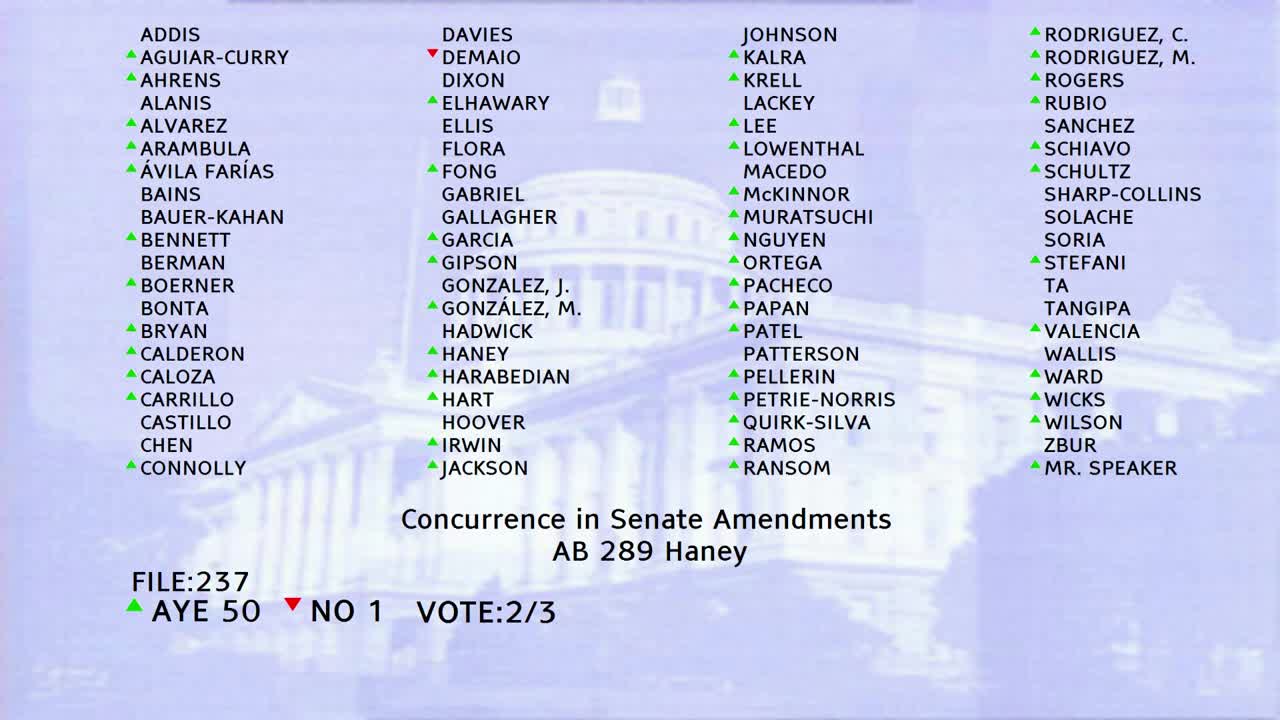 44SEC
Assembly Floor
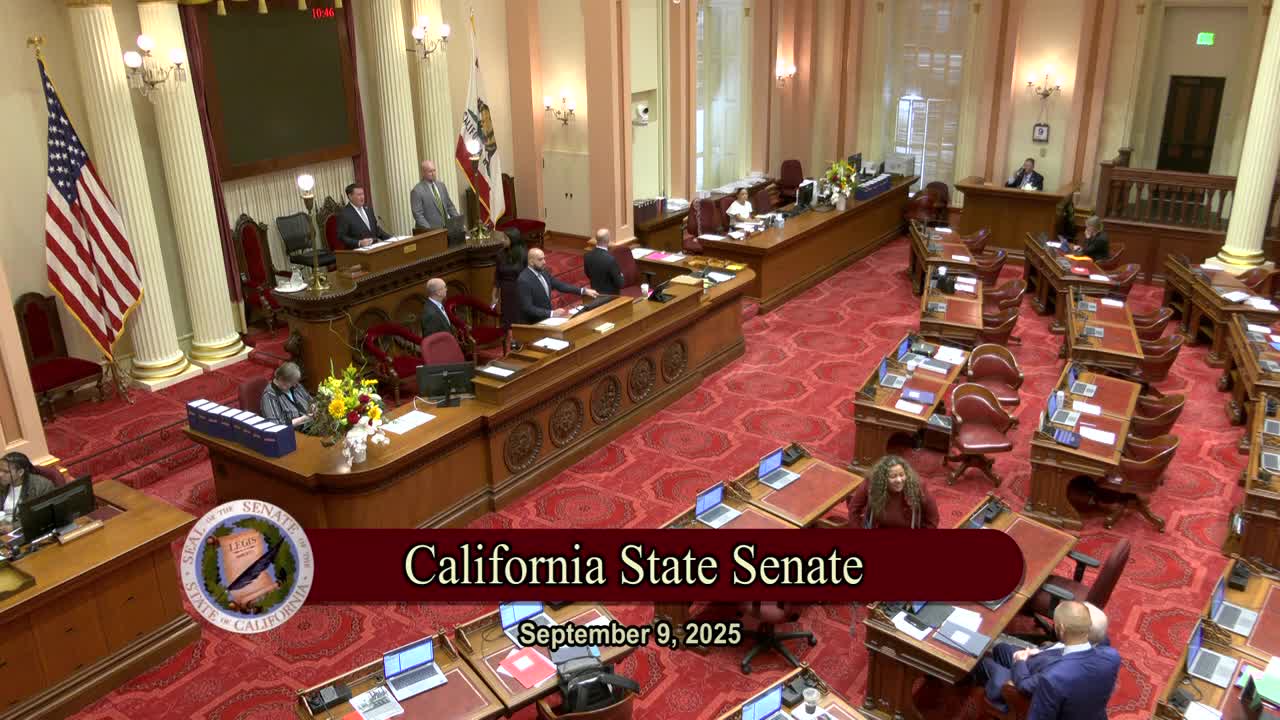 2MIN
Senate Floor
 14MIN
Senate Standing Committee on Labor, Public Employment and Retirement
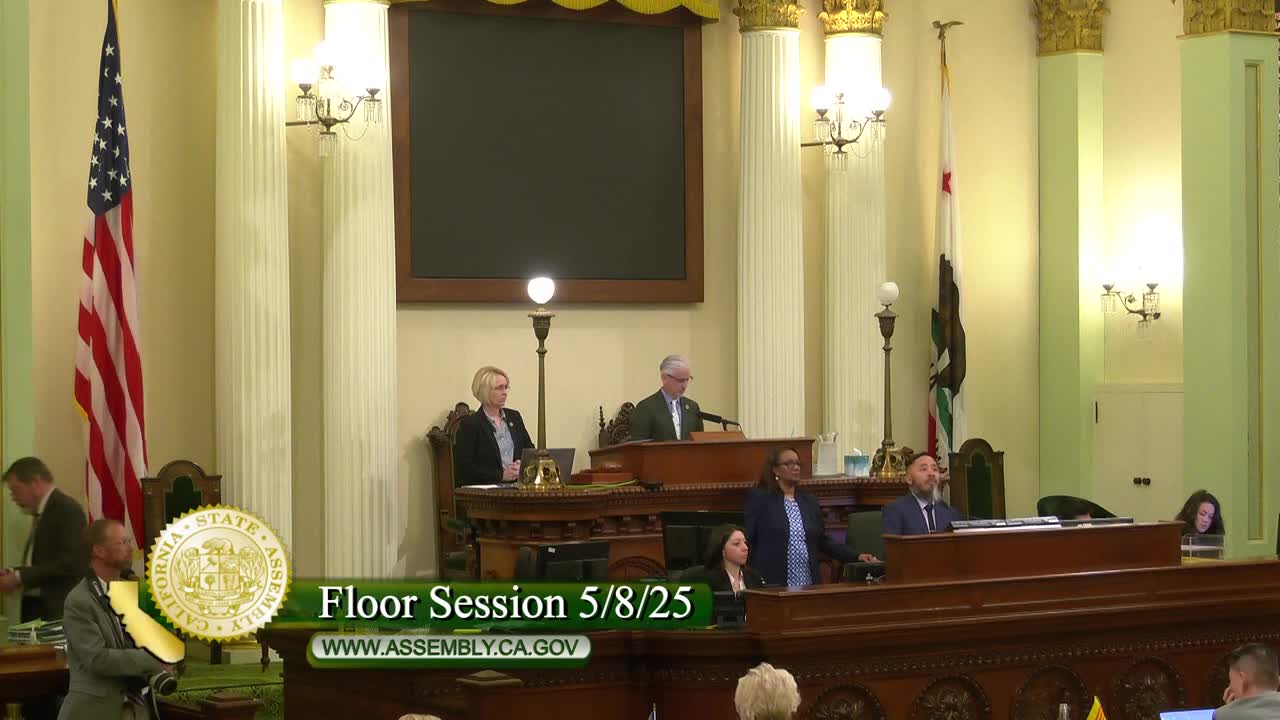 54SEC
Assembly Floor
 11MIN
Assembly Standing Committee on Higher Education
 12MIN
Assembly Standing Committee on Public Employment and Retirement
Bill Author