AB 383: Firearms: prohibition: minors.
- Session Year: 2025-2026
- House: Assembly
- Latest Version Date: 2025-10-06
Current Status:
Passed
(2025-10-06: Chaptered by Secretary of State - Chapter 362, Statutes of 2025.)
Introduced
In Committee
Awaiting First Chamber Vote
Passed First Chamber
In Committee
Awaiting Second Chamber Vote
Passed Second Chamber
Enacted
Existing law prohibits a juvenile who is adjudged a ward of the juvenile court due to the commission of specified serious or violent offenses from subsequently owning, possessing, or having under their custody or control a firearm until they are 30 years of age. A violation of this prohibition is punishable as a misdemeanor or as a felony.
Existing law also prohibits certain other persons, including a person who is convicted of a felony offense, from owning, possessing, or having under their custody or control a firearm or ammunition. Existing law requires a person subject to those orders to relinquish any firearms or ammunition they own, possess, or have under their custody or control and specifies the procedures to be used to relinquish those firearms or ammunition. Those procedures, among other things, require the court to provide specific instructions to the defendant and to assign the matter to a probation officer to investigate whether the defendant owns, possesses, or has under their custody or control any firearms, require a law enforcement agency to update the Automated Firearms System to reflect any firearms that were relinquished to the agency pursuant to these procedures, and require a defendant to timely file a completed Prohibited Persons Relinquishment Form. Existing law makes it an infraction for a defendant to fail to timely file that form.
This bill would make those procedures to relinquish firearms or ammunition applicable to a juvenile who is prohibited from owning, possessing, or having under their custody or control a firearm until they are 30 years of age. By expanding the scope of a crime and expanding the duties of local probation departments and law enforcement agencies, this bill would impose a state-mandated local program.
Existing law allows a search warrant to be issued upon probable cause, supported by affidavit, naming or describing the person to be searched or searched for, and particularly describing the property, thing, or things and the place to be searched. Existing law also specifies the grounds upon which a search warrant may be issued, including, among other grounds, that the property or things to be seized include a firearm that is owned by, or in the possession of, or in the custody or control of, a person prohibited from owning, possessing, or having the custody and control of a firearm pursuant to specified provisions of law, and the court has made a finding that the person has failed to relinquish the firearm as required by law.
This bill would additionally allow a search warrant to be issued when the property or things to be seized include a firearm that is owned by, or in the possession of, or in the custody or control of, a juvenile who is subject to the prohibition on owning or possessing a firearm until they are 30 years of age when the court has made a finding that the person has failed to relinquish the firearm as required by law.
This bill would declare that its provisions are severable.
The California Constitution requires the state to reimburse local agencies and school districts for certain costs mandated by the state. Statutory provisions establish procedures for making that reimbursement.
This bill would provide that with regard to certain mandates no reimbursement is required by this act for a specified reason.
With regard to any other mandates, this bill would provide that, if the Commission on State Mandates determines that the bill contains costs so mandated by the state, reimbursement for those costs shall be made pursuant to the statutory provisions noted above.
Existing law prohibits a juvenile who is adjudged a ward of the juvenile court due to the commission of specified serious or violent offenses from subsequently owning or possessing a firearm until they are 30 years of age. A violation of this prohibition is punishable as a misdemeanor or as a felony.
Existing law also prohibits certain others other persons, including a person who is convicted of a felony offense, from owning a firearm or ammunition. Existing law requires a person subject to those orders to relinquish any firearms or ammunition they own and specifies the procedures to be used to relinquish those firearms or ammunition. Those procedures, among other things, require the court to provide specific instructions to the defendant and to assign the matter to a probation officer to investigate whether the defendant owns, possesses, or has under their custody or control any firearms, require a law enforcement agency to update the Automated Firearms System to reflect any firearms that were relinquished to the agency pursuant to these procedures, and require a defendant to timely file a completed Prohibited Persons Relinquishment Form. Existing law makes it an infraction for a defendant to fail to timely file that form.
This bill would expand the prohibition on juveniles subsequently owning or possessing firearms until 30 years of age by making that prohibition applicable to juveniles who are adjudged a ward of the juvenile court due to the commission of certain offenses relating to the possession of firearms or ammunition by a minor, except that juveniles who are adjudged a ward of the juvenile court due to unlawfully possessing a handgun would subsequently be prohibited from owning or possessing firearms until 25 years of age. The bill would also make those procedures to relinquish firearms or ammunition applicable to a juvenile who is prohibited from owning or possessing a firearm until they are 25 or 30 years of age, as applicable. 30 years of age. By expanding the scope of a crime and expanding the duties of local probation departments and law enforcement agencies, this bill would impose a state-mandated local program.
Existing law allows a search warrant to be issued upon probable cause, supported by affidavit, naming or describing the person to be searched or searched for, and particularly describing the property, thing, or things and the place to be searched. Existing law also specifies the grounds upon which a search warrant may be issued, including, among other grounds, that the property or things to be seized include a firearm that is owned by, or in the possession of, or in the custody or control of, a person prohibited from owning that firearm due to a domestic violence restraining order, as specified.
This bill would additionally allow a search warrant to be issued when the property or things to be seized include a firearm that is owned by, or in the possession of, or in the custody or control of, a juvenile who is subject to the prohibition on owning or possessing a firearm until they are 25 or 30 years of age, as applicable, 30 years of age when the court has made a finding that the person has failed to relinquish the firearm as required by law.
This bill would declare that its provisions are severable.
The California Constitution requires the state to reimburse local agencies and school districts for certain costs mandated by the state. Statutory provisions establish procedures for making that reimbursement.
This bill would provide that with regard to certain mandates no reimbursement is required by this act for a specified reason.
With regard to any other mandates, this bill would provide that, if the Commission on State Mandates determines that the bill contains costs so mandated by the state, reimbursement for those costs shall be made pursuant to the statutory provisions noted above.
Existing law prohibits a juvenile who is adjudged a ward of the juvenile court due to the commission of specified serious or violent offenses from subsequently owning or possessing a firearm until they are 30 years of age. A violation of this prohibition is punishable as a misdemeanor or as a felony.
Existing law also prohibits certain others persons, including a person who is convicted of a felony offense, from owning a firearm or ammunition. Existing law requires a person subject to those orders to relinquish any firearms or ammunition they own and specifies the procedures to be used to relinquish those firearms or ammunition. Those procedures, among other things, require the court to provide specific instructions to the defendant and to assign the matter to a probation officer to investigate whether the defendant owns, possesses, or has under their custody or control any firearms, require a law enforcement agency to update the Automated Firearms System to reflect any firearms that were relinquished to the agency pursuant to these procedures, and require a defendant to timely file a completed Prohibited Persons Relinquishment Form. Existing law makes it an infraction for a defendant to fail to timely file that form.
This bill would expand the prohibition on juveniles subsequently owning or possessing firearms until 30 years of age by making that prohibition applicable to juveniles who are adjudged a ward of the juvenile court due to the commission of certain offenses relating to the possession of firearms or ammunition by a minor. minor, except that juveniles who are adjudged a ward of the juvenile court due to unlawfully possessing a handgun would subsequently be prohibited from owning or possessing firearms until 25 years of age. The bill would also make those procedures to relinquish firearms or ammunition applicable to a juvenile who is prohibited from owning or possessing a firearm until they are 25 or 30 years of age. age, as applicable. By expanding the scope of a crime and expanding the duties of local probation departments and law enforcement agencies, this bill would impose a state-mandated local program.
Existing law allows a search warrant to be issued upon probable cause, supported by affidavit, naming or describing the person to be searched or searched for, and particularly describing the property, thing, or things and the place to be searched. Existing law also specifies the grounds upon which a search warrant may be issued, including, among other grounds, that the property or things to be seized include a firearm that is owned by, or in the possession of, or in the custody or control of, a person prohibited from owning that firearm due to a domestic violence restraining order, as specified.
This bill would additionally allow a search warrant to be issued when the property or things to be seized include a firearm that is owned by, or in the possession of, or in the custody or control of, a juvenile who is subject to the prohibition on owning or possessing a firearm until they are 25 or 30 years of age age, as applicable, when the court has made a finding that the person has failed to relinquish the firearm as required by law.
This bill would declare that its provisions are severable.
The California Constitution requires the state to reimburse local agencies and school districts for certain costs mandated by the state. Statutory provisions establish procedures for making that reimbursement.
This bill would provide that with regard to certain mandates no reimbursement is required by this act for a specified reason.
With regard to any other mandates, this bill would provide that, if the Commission on State Mandates determines that the bill contains costs so mandated by the state, reimbursement for those costs shall be made pursuant to the statutory provisions noted above.
Existing law prohibits a juvenile who is adjudged a ward of the juvenile court due to the commission of specified serious or violent offenses from subsequently owning or possessing a firearm until they are 30 years of age. A violation of this prohibition is punishable as a misdemeanor or as a felony.
Existing law also prohibits certain others persons, including a person who is convicted of a felony offense, from owning a firearm or ammunition. Existing law requires a person subject to those orders to relinquish any firearms or ammunition they own and specifies the procedures to be used to relinquish those firearms or ammunition. Those procedures, among other things, require the court to provide specific instructions to the defendant and to assign the matter to a probation officer to investigate whether the defendant owns, possesses, or has under their custody or control any firearms, require a law enforcement agency to update the Automated Firearms System to reflect any firearms that were relinquished to the agency pursuant to these procedures, and require a defendant to timely file a completed Prohibited Persons Relinquishment Form. Existing law makes it an infraction for a defendant to fail to timely file that form.
This bill would expand the prohibition on juveniles subsequently owning or possessing firearms until 30 years of age by making that prohibition applicable to juveniles who are adjudged a ward of the juvenile court due to the commission of certain offenses relating to the possession of firearms or ammunition by a minor. The bill would also make those procedures to relinquish firearms or ammunition applicable to a juvenile who is prohibited from owning or possessing a firearm until they are 30 years of age. By expanding the scope of a crime and expanding the duties of local probation departments and law enforcement agencies, this bill would impose a state-mandated local program.
Existing law allows a search warrant to be issued upon probable cause, supported by affidavit, naming or describing the person to be searched or searched for, and particularly describing the property, thing, or things and the place to be searched. Existing law also specifies the grounds upon which a search warrant may be issued, including, among other grounds, that the property or things to be seized include a firearm that is owned by, or in the possession of, or in the custody or control of, a person prohibited from owning that firearm due to a domestic violence restraining order, as specified.
This bill would additionally allow a search warrant to be issued when the property or things to be seized include a firearm that is owned by, or in the possession of, or in the custody or control of, a juvenile who is subject to the prohibition on owning or possessing a firearm until they are 30 years of age when the court has made a finding that the person has failed to relinquish the firearm as required by law.
This bill would declare that its provisions are severable.
The California Constitution requires the state to reimburse local agencies and school districts for certain costs mandated by the state. Statutory provisions establish procedures for making that reimbursement.
This bill would provide that with regard to certain mandates no reimbursement is required by this act for a specified reason.
With regard to any other mandates, this bill would provide that, if the Commission on State Mandates determines that the bill contains costs so mandated by the state, reimbursement for those costs shall be made pursuant to the statutory provisions noted above.
(a)A search warrant may be issued upon any of the following grounds:
(1)When the property was stolen or embezzled.
(2)When the property or things were used as the means of committing a felony.
(3)When the property or things are in the possession of a person with the intent to use them as a means of committing a public offense, or in the possession of another to whom that person may have delivered them for the purpose of concealing them or preventing them from being discovered.
(4)When the property or things to be seized consist of an item or constitute evidence that tends to show a felony has been committed, or tends to show that a particular person has committed a felony.
(5)When the property or things to be seized consist of evidence that tends to show that sexual exploitation of a child, in violation of Section 311.3, or possession of matter depicting sexual conduct of a person under 18 years of age, in violation of Section 311.11, has occurred or is occurring.
(6)When there is a warrant to arrest a person.
(7)When a provider of electronic communication service or remote computing service has records or evidence, as specified in Section 1524.3, showing that property was stolen or embezzled constituting a misdemeanor, or that property or things are in the possession of a person with the intent to use them as a means of committing a misdemeanor public offense, or in the possession of another to whom that person may have delivered them for the purpose of concealing them or preventing their discovery.
(8)When the property or things to be seized include an item or evidence that tends to show a violation of Section 3700.5 of the Labor Code or tends to show that a particular person has violated Section 3700.5 of the Labor Code.
(9)When the property or things to be seized include a firearm or other deadly weapon at the scene of, or at the premises occupied or under the control of the person arrested in connection with, a domestic violence incident involving a threat to human life or a physical assault as provided in Section 18250. This section does not affect warrantless seizures otherwise authorized by Section 18250.
(10)When the property or things to be seized include a firearm or other deadly weapon that is owned by, or in the possession of, or in the custody or control of, a person described in subdivision (a) of Section 8102 of the Welfare and Institutions Code.
(11)When the property or things to be seized include a firearm that is owned by, or in the possession of, or in the custody or control of, a person who is subject to the prohibitions regarding firearms or ammunition or both pursuant to Section 6389 of the Family Code, if a prohibited firearm or ammunition or both is possessed, owned, in the custody of, or controlled by a person against whom a protective order has been issued pursuant to Section 6218 of the Family Code, the person has been lawfully served with that order, and the person has failed to relinquish the firearm or ammunition or both as required by law.
(12)When the information to be received from the use of a tracking device constitutes evidence that tends to show that either a felony, a misdemeanor violation of the Fish and Game Code, or a misdemeanor violation of the Public Resources Code has been committed or is being committed, tends to show that a particular person has committed a felony, a misdemeanor violation of the Fish and Game Code, or a misdemeanor violation of the Public Resources Code, or is committing a felony, a misdemeanor violation of the Fish and Game Code, or a misdemeanor violation of the Public Resources Code, or will assist in locating an individual who has committed or is committing a felony, a misdemeanor violation of the Fish and Game Code, or a misdemeanor violation of the Public Resources Code. A tracking device search warrant issued pursuant to this paragraph shall be executed in a manner meeting the requirements specified in subdivision (b) of Section 1534.
(13)When a sample of the blood of a person constitutes evidence that tends to show a violation of Section 23140, 23152, or 23153 of the Vehicle Code and the person from whom the sample is being sought has refused an officers request to submit to, or has failed to complete, a blood test as required by Section 23612 of the Vehicle Code, and the sample will be drawn from the person in a reasonable, medically approved manner. This paragraph is not intended to abrogate a courts mandate to determine the propriety of the issuance of a search warrant on a case-by-case basis.
(14)Beginning January 1, 2016, the property or things to be seized are firearms or ammunition or both that are owned by, in the possession of, or in the custody or control of a person who is the subject of a gun violence restraining order that has been issued pursuant to Division 3.2 (commencing with Section 18100) of Title 2 of Part 6, if a prohibited firearm or ammunition or both is possessed, owned, in the custody of, or controlled by a person against whom a gun violence restraining order has been issued, the person has been lawfully served with that order, and the person has failed to relinquish the firearm as required by law.
(15)Beginning January 1, 2018, the property or things to be seized include a firearm that is owned by, or in the possession of, or in the custody or control of, a person who is subject to the prohibitions regarding firearms pursuant to Section 29800, 29805, 29815, 29820, or 29825, and the court has made a finding pursuant to subdivision (c) of Section 29810 that the person has failed to relinquish the firearm as required by law.
(16)When the property or things to be seized are controlled substances or a device, contrivance, instrument, or paraphernalia used for unlawfully using or administering a controlled substance pursuant to the authority described in Section 11472 of the Health and Safety Code.
(17)(A)When all of the following apply:
(i)A sample of the blood of a person constitutes evidence that tends to show a violation of subdivision (b), (c), (d), (e), or (f) of Section 655 of the Harbors and Navigation Code.
(ii)The person from whom the sample is being sought has refused an officers request to submit to, or has failed to complete, a blood test as required by Section 655.1 of the Harbors and Navigation Code.
(iii)The sample will be drawn from the person in a reasonable, medically approved manner.
(B)This paragraph is not intended to abrogate a courts mandate to determine the propriety of the issuance of a search warrant on a case-by-case basis.
(18)When the property or things to be seized consists of evidence that tends to show that a violation of paragraph (1), (2), or (3) of subdivision (j) of Section 647 has occurred or is occurring.
(19)(A)When the property or things to be seized are data, from a recording device installed by the manufacturer of a motor vehicle, that constitutes evidence that tends to show the commission of a felony or misdemeanor offense involving a motor vehicle, resulting in death or serious bodily injury to a person. The data accessed by a warrant pursuant to this paragraph shall not exceed the scope of the data that is directly related to the offense for which the warrant is issued.
(B)For the purposes of this paragraph, recording device has the same meaning as defined in subdivision (b) of Section 9951 of the Vehicle Code. The scope of the data accessible by a warrant issued pursuant to this paragraph shall be limited to the information described in subdivision (b) of Section 9951 of the Vehicle Code.
(C)For the purposes of this paragraph, serious bodily injury has the same meaning as defined in paragraph (4) of subdivision (f) of Section 243.
(20)When the property or things to be seized consists of evidence that tends to show that a violation of Section 647.9 has occurred or is occurring. Evidence to be seized pursuant to this paragraph shall be limited to evidence of a violation of Section 647.9 and shall not include evidence of a violation of a departmental rule or guideline that is not a public offense under California law.
(21)If the property to be seized includes ammunition and all of the following criteria are satisfied:
(A)The property is owned by, in the possession of, or in the custody or control of a person who is subject to the prohibition set forth in Section 8103 of the Welfare and Institutions Code.
(B)The person has been lawfully served with the order required by Section 8103 of the Welfare and Institutions Code.
(C)The person has failed to relinquish the ammunition as required by law.
(22)When the property or things to be seized include a firearm or ammunition or both that is owned by, or in the possession of, or in the custody or control of, a person who is subject to the prohibitions regarding firearms pursuant to Section 527.9 of the Code of Civil Procedure, the person has been lawfully served with that order, and the person has failed to relinquish the firearm or ammunition or both as required by law.
(b)The property, things, person, or persons described in subdivision (a) may be taken on the warrant from a place or from a person in whose possession the property or things may be.
(c)Notwithstanding subdivision (a) or (b), a search warrant shall not be issued for documentary evidence in the possession or under the control of a person who is a lawyer as defined in Section 950 of the Evidence Code, a physician as defined in Section 990 of the Evidence Code, a psychotherapist as defined in Section 1010 of the Evidence Code, or a member of the clergy as defined in Section 1030 of the Evidence Code, and who is not reasonably suspected of engaging or having engaged in criminal activity related to the documentary evidence for which a warrant is requested unless the following procedure has been complied with:
(1)At the time of the issuance of the warrant, the court shall appoint a special master in accordance with subdivision (d) to accompany the person who will serve the warrant. Upon service of the warrant, the special master shall inform the party served of the specific items being sought and that the party shall have the opportunity to provide the items requested. If the party, in the judgment of the special master, fails to provide the items requested, the special master shall conduct a search for the items in the areas indicated in the search warrant.
(2)(A)If the party who has been served states that an item or items should not be disclosed, they shall be sealed by the special master and taken to court for a hearing.
(B)At the hearing, the party searched shall be entitled to raise an issue that may be raised pursuant to Section 1538.5 as well as a claim that the item or items are privileged, as provided by law. The hearing shall be held in the superior court. The court shall provide sufficient time for the parties to obtain counsel and make motions or present evidence. The hearing shall be held within three days of the service of the warrant unless the court makes a finding that the expedited hearing is impracticable. In that case, the matter shall be heard at the earliest possible time.
(C)If an item or items are taken to court for a hearing, a limitation of time prescribed in Chapter 2 (commencing with Section 799) of Title 3 shall be tolled from the time of the seizure until the final conclusion of the hearing, including an associated writ or appellate proceedings.
(3)The warrant shall, whenever practicable, be served during normal business hours. In addition, the warrant shall be served upon a party who appears to have possession or control of the items sought. If, after reasonable efforts, the party serving the warrant is unable to locate the person, the special master shall seal and return to the court, for determination by the court, an item that appears to be privileged as provided by law.
(d)(1)As used in this section, a special master is an attorney who is a member in good standing of the California State Bar and who has been selected from a list of qualified attorneys that is maintained by the State Bar particularly for the purposes of conducting the searches described in this section. These attorneys shall serve without compensation. A special master shall be considered a public employee, and the governmental entity that caused the search warrant to be issued shall be considered the employer of the special master and the applicable public entity, for purposes of Division 3.6 (commencing with Section 810) of Title 1 of the Government Code, relating to claims and actions against public entities and public employees. In selecting the special master, the court shall make every reasonable effort to ensure that the person selected has no relationship with any of the parties involved in the pending matter. Information obtained by the special master shall be confidential and may not be divulged except in direct response to inquiry by the court.
(2)In a case in which the magistrate determines that, after reasonable efforts have been made to obtain a special master, a special master is not available and would not be available within a reasonable period of time, the magistrate may direct the party seeking the order to conduct the search in the manner described in this section in lieu of the special master.
(e)A search conducted pursuant to this section by a special master may be conducted in a manner that permits the party serving the warrant or that partys designee to accompany the special master as the special master conducts the search. However, that party or that partys designee may not participate in the search nor shall they examine any of the items being searched by the special master except upon agreement of the party upon whom the warrant has been served.
(f)As used in this section, documentary evidence includes, but is not limited to, writings, documents, blueprints, drawings, photographs, computer printouts, microfilms, x-rays, files, diagrams, ledgers, books, tapes, audio and video recordings, films, and papers of any type or description.
(g)No warrant shall issue for an item or items described in Section 1070 of the Evidence Code.
(h)No warrant shall issue for an item or items that pertain to an investigation into a prohibited violation, as defined in Section 629.51.
(i)Notwithstanding any other law, no claim of attorney work product as described in Chapter 4 (commencing with Section 2018.010) of Title 4 of Part 4 of the Code of Civil Procedure shall be sustained where there is probable cause to believe that the lawyer is engaging or has engaged in criminal activity related to the documentary evidence for which a warrant is requested unless it is established at the hearing with respect to the documentary evidence seized under the warrant that the services of the lawyer were not sought or obtained to enable or aid anyone to commit or plan to commit a crime or a fraud.
(j)Nothing in this section is intended to limit an attorneys ability to request an in-camera hearing pursuant to the holding of the Supreme Court of California in People v. Superior Court (Laff) (2001) 25 Cal.4th 703.
(k)In addition to any other circumstance permitting a magistrate to issue a warrant for a person or property in another county, when the property or things to be seized consist of any item or constitute evidence that tends to show a violation of Section 530.5, the magistrate may issue a warrant to search a person or property located in another county if the person whose identifying information was taken or used resides in the same county as the issuing court.
(l)This section does not create a cause of action against a foreign or California corporation, its officers, employees, agents, or other specified persons for providing location information.
(m)This section shall become operative on January 1, 2026.
SEC. 2.Section 29615 of the Penal Code is amended to read:29615.Section 29610 shall not apply if one of the following circumstances exists:
(a)The minor is accompanied by a parent or legal guardian, and the minor is actively engaged in, or is in direct transit to or from, a lawful, recreational sport, including, but not limited to, competitive shooting, or agricultural, ranching, or hunting activity or hunting education, or a motion picture, television, or video production, or entertainment or theatrical event, the nature of which involves this use of a firearm.
(b)The minor is accompanied by a responsible adult, the minor has the prior written consent of a parent or legal guardian, and the minor is actively engaged in, or is in direct transit to or from, a lawful, recreational sport, including, but not limited to, competitive shooting, or agricultural, ranching, or hunting activity or hunting education, or a motion picture, television, or video production, or entertainment or theatrical event, the nature of which involves the use of a firearm.
(c)The minor is at least 16 years of age, the minor has the prior written consent of a parent or legal guardian, and the minor is actively engaged in, or is in direct transit to or from, a lawful recreational sport, including, but not limited to, competitive shooting, or agricultural, ranching, or hunting activity or hunting education, or a motion picture, television, or video production, or entertainment or theatrical event, the nature of which involves the use of a firearm.
(d)The minor has the prior written consent of a parent or legal guardian, the minor is on lands owned or lawfully possessed by the parent or legal guardian, and the minor is actively engaged in, or is in direct transit to or from, a lawful, recreational sport, including, but not limited to, competitive shooting, or agricultural, ranching, or hunting activity or hunting education, or a motion picture, television, or video production, or entertainment or theatrical event, the nature of which involves the use of a firearm.
(e)The minor possesses, with the express permission of their parent or legal guardian, a firearm, other than a handgun or semiautomatic centerfire rifle, and both of the following are true:
(1)The minor is actively engaged in, or in direct transit to or from, a lawful, recreational sport, including, but not limited to, competitive shooting, or an agricultural, ranching, or hunting activity or hunting education, the nature of which involves the use of a firearm.
(2)The minor is 16 years of age or older or is accompanied by a responsible adult at all times while the minor is possessing the firearm.
SEC. 3.Section 29810 of the Penal Code, as added by Section 28 of Chapter 544 of the Statutes of 2024, is amended to read:29810.(a)(1)Upon conviction of, or adjudication for, any offense that renders a person subject to Section 29800, 29805, 29815, 29820, or 29825, the person shall relinquish all firearms they own, possess, or have under their custody or control in the manner provided in this section within 48 hours of the conviction or adjudication if the person remains out of custody or within 14 days of the conviction or adjudication if the person is in custody.
(2)The court shall, upon conviction or adjudication of a person for an offense described in subdivision (a), instruct the person that they are prohibited from owning, purchasing, receiving, possessing, or having under their custody or control, any firearms, ammunition, and ammunition feeding devices, including, but not limited to, magazines, and shall order the person to relinquish all firearms in the manner provided in this section. The court shall also provide the person with a Prohibited Persons Relinquishment Form developed by the Department of Justice.
(3)Using the Prohibited Persons Relinquishment Form, the person shall name a designee and grant the designee power of attorney for the purpose of transferring or disposing of any firearms. The designee shall be either a local law enforcement agency or a consenting third party who is not prohibited from possessing firearms under state or federal law. The designee shall, within the time periods specified in subdivisions (d) and (e), surrender the firearms to the control of a local law enforcement agency, sell the firearms to a licensed firearms dealer, or transfer the firearms for storage to a firearms dealer pursuant to Section 29830.
(b)The Prohibited Persons Relinquishment Form shall do all of the following:
(1)Inform the person that they are prohibited from owning, purchasing, receiving, possessing, or having under their custody or control, any firearms, ammunition, and, if applicable, ammunition feeding devices, including, but not limited to, magazines, and that they shall relinquish all firearms through a designee within the time periods set forth in subdivision (d) or (e) by surrendering the firearms to the control of a local law enforcement agency, selling the firearms to a licensed firearms dealer, or transferring the firearms for storage to a firearms dealer pursuant to Section 29830.
(2)Inform the person that any cohabitant of the person who owns firearms must store those firearms in accordance with Section 25135.
(3)Require the person to declare any firearms that they owned, possessed, or had under their custody or control at the time of their conviction or adjudication, and require the person to describe the firearms and provide all reasonably available information about the location of the firearms to enable a designee or law enforcement officials to locate the firearms.
(4)Require the person to name a designee, if the person declares that they owned, possessed, or had under their custody or control any firearms at the time of their conviction or adjudication, and grant the designee power of attorney for the purpose of transferring or disposing of all firearms.
(5)Require the designee to indicate their consent to the designation and, except a designee that is a law enforcement agency, to declare under penalty of perjury that they are not prohibited from possessing any firearms under state or federal law.
(6)Require the designee to state the date each firearm was relinquished and the name of the party to whom it was relinquished, and to attach receipts from the law enforcement officer or licensed firearms dealer who took possession of the relinquished firearms.
(7)Inform the person and the designee of the obligation to submit the completed Prohibited Persons Relinquishment Form to the assigned probation officer within the time periods specified in subdivisions (d) and (e).
(c)(1)When a person is convicted of, or adjudicated for, an offense described in subdivision (a), the court shall immediately assign the matter to a probation officer to investigate whether the Automated Firearms System or other credible information, such as a police report, reveals that the person owns, possesses, or has under their custody or control any firearms. The assigned probation officer shall receive the Prohibited Persons Relinquishment Form from the person or the persons designee, as applicable, and ensure that the Automated Firearms System has been properly updated to indicate that the person has relinquished those firearms.
(2)Prior to final disposition or sentencing in the case, the assigned probation officer shall report to the court and the prosecuting attorney whether the person has properly complied with the requirements of this section by relinquishing all firearms identified by the probation officers investigation or declared by the person on the Prohibited Persons Relinquishment Form, and by timely submitting a completed Prohibited Persons Relinquishment Form. The probation officer shall also report to the Department of Justice on a form to be developed by the department whether the Automated Firearms System has been updated to indicate which firearms have been relinquished by the person.
(3)If the report of the probation officer does not confirm relinquishment of firearms the court shall take one of the following actions:
(A)If the court finds probable cause, after a warrant request has been submitted pursuant to Section 1524, that the person has failed to relinquish any firearms as required, the court shall order a search warrant for, and removal of, any firearms at any location where the judge has probable cause to believe the persons firearms are located. The court shall set a court date to confirm relinquishment of all firearms. The search warrant shall be executed within 10 days pursuant to subdivision (a) of Section 1534.
(B)If the court finds good cause to extend the time for providing proof of relinquishment, the court shall set a court date within 14 days for the person to provide proof of relinquishment.
(C)If the court finds additional investigation is needed, the court shall refer the matter to the prosecuting attorney and set a court date within 14 days for status review.
(4)Prior to final disposition or sentencing in the case, the court shall confirm that the person has relinquished all firearms as required, and that the court has received a completed Prohibited Persons Relinquishment Form, along with the receipts described in paragraph (1) of subdivision (d) or paragraph (1) of subdivision (e). The court shall ensure that these findings are included in the abstract of judgment. If necessary to avoid a delay in sentencing, the court may make and enter these findings within 14 days of sentencing.
(5)Failure by a person to timely file the completed Prohibited Persons Relinquishment Form with the assigned probation officer shall constitute an infraction punishable by a fine not exceeding one hundred dollars ($100).
(d)The following procedures shall apply to any person who is a prohibited person within the meaning of paragraph (1) of subdivision (a) who does not remain in custody at any time within the 48-hour period following conviction or adjudication:
(1)The designee shall dispose of any firearms the person owns, possesses, or has under their custody or control within 48 hours of the conviction or adjudication by surrendering the firearms to the control of a local law enforcement agency, selling the firearms to a licensed firearms dealer, or transferring the firearms for storage to a firearms dealer pursuant to Section 29830, in accordance with the wishes of the person. Any proceeds from the sale of the firearms shall become the property of the person. The law enforcement officer or licensed dealer taking possession of any firearms pursuant to this subdivision shall issue a receipt to the designee describing the firearms and listing any serial number or other identification on the firearms at the time of surrender.
(2)If the person owns, possesses, or has under their custody or control any firearms to relinquish, the persons designee shall submit the completed Prohibited Persons Relinquishment Form to the assigned probation officer within 48 hours following the conviction or adjudication, along with the receipts described in paragraph (1) of subdivision (d) showing the persons firearms were surrendered to a local law enforcement agency or sold or transferred to a licensed firearms dealer.
(3)If the person does not own, possess, or have under their custody or control any firearms to relinquish, they shall, within 48 hours following conviction or adjudication, submit the completed Prohibited Persons Relinquishment Form to the assigned probation officer, with a statement affirming that they have no firearms to be relinquished.
(e)The following procedures shall apply to any person who is a prohibited person within the meaning of paragraph (1) of subdivision (a) who is in custody at any point within the 48-hour period following conviction or adjudication:
(1)The designee shall dispose of any firearms the person owns, possesses, or has under their custody or control within 14 days of the conviction or adjudication by surrendering the firearms to the control of a local law enforcement agency, selling the firearms to a licensed firearms dealer, or transferring the firearms for storage to a firearms dealer pursuant to Section 29830, in accordance with the wishes of the person. Any proceeds from the sale of the firearms shall become the property of the person. The law enforcement officer or licensed dealer taking possession of any firearms pursuant to this subdivision shall issue a receipt to the designee describing the firearms and listing any serial number or other identification on the firearms at the time of surrender.
(2)If the person owns, possesses, or has under their custody or control any firearms to relinquish, the persons designee shall submit the completed Prohibited Persons Relinquishment Form to the assigned probation officer, within 14 days following conviction or adjudication, along with the receipts described in paragraph (1) of subdivision (e) showing the persons firearms were surrendered to a local law enforcement agency or sold or transferred to a licensed firearms dealer.
(3)If the person does not own, possess, or have under their custody or control any firearms to relinquish, they shall, within 14 days following conviction or adjudication, submit the completed Prohibited Persons Relinquishment Form to the assigned probation officer, with a statement affirming that they have no firearms to be relinquished.
(4)If the person is released from custody during the 14 days following conviction or adjudication and a designee has not yet taken temporary possession of each firearm to be relinquished as described above, the person shall, within 5 days following their release, relinquish each firearm required to be relinquished pursuant to paragraph (1) of subdivision (d).
(f)For good cause, the court may shorten or enlarge the time periods specified in subdivisions (d) and (e), enlarge the time period specified in paragraph (3) of subdivision (c), or allow an alternative method of relinquishment.
(g)The person shall not be subject to prosecution for unlawful possession of any firearms declared on the Prohibited Persons Relinquishment Form if the firearms are relinquished as required.
(h)Any firearms that would otherwise be subject to relinquishment by a person under this section, but which are lawfully owned by a cohabitant of the person, shall be exempt from relinquishment, provided the person is notified that the cohabitant must store the firearm in accordance with Section 25135.
(i)A law enforcement agency shall update the Automated Firearms System to reflect any firearms that were relinquished to the agency pursuant to this section. A law enforcement agency shall retain a firearm that was relinquished to the agency pursuant to this section for 30 days after the date the firearm was relinquished. After the 30-day period has expired, the firearm is subject to destruction, retention, or other transfer by the agency, except upon the certificate of a judge of a court of record, or of the district attorney of the county, that the retention of the firearm is necessary or proper to the ends of justice, or if the person provides written notice of an intent to appeal a conviction or adjudication for an offense described in subdivision (a), or if the Automated Firearms System indicates that the firearm was reported lost or stolen by the lawful owner. If the firearm was reported lost or stolen, the firearm shall be restored to the lawful owner, as soon as its use as evidence has been served, upon the lawful owners identification of the weapon and proof of ownership, and after the law enforcement agency has complied with Chapter 2 (commencing with Section 33850) of Division 11 of Title 4. The agency shall notify the Department of Justice of the disposition of relinquished firearms pursuant to Section 34010.
(j)A city, county, or city and county, or a state agency may adopt a regulation, ordinance, or resolution imposing a charge equal to its administrative costs relating to the seizure, impounding, storage, or release of a firearm pursuant to Section 33880.
(k)If a person declines to relinquish possession of a firearm or ammunition based on the assertion of the right against self-incrimination, as provided by the Fifth Amendment to the United States Constitution and Section 15 of Article I of the California Constitution, the court may grant use immunity for the act of relinquishing the firearm or ammunition required under this section.
(l)This section shall become operative on January 1, 2026.
SEC. 4.The provisions of this act are severable. If any provision of this act or its application is held invalid, that invalidity shall not affect other provisions or applications that can be given effect without the invalid provision or application.
SEC. 5.No reimbursement is required by this act pursuant to Section 6 of Article XIIIB of the California Constitution for certain costs that may be incurred by a local agency or school district because, in that regard, this act creates a new crime or infraction, eliminates a crime or infraction, or changes the penalty for a crime or infraction, within the meaning of Section 17556 of the Government Code, or changes the definition of a crime within the meaning of Section 6 of Article XIIIB of the California Constitution.
However, if the Commission on State Mandates determines that this act contains other costs mandated by the state, reimbursement to local agencies and school districts for those costs shall be made pursuant to Part 7 (commencing with Section 17500) of Division 4 of Title 2 of the Government Code.
(a)A search warrant may be issued upon any of the following grounds:
(1)When the property was stolen or embezzled.
(2)When the property or things were used as the means of committing a felony.
(3)When the property or things are in the possession of a person with the intent to use them as a means of committing a public offense, or in the possession of another to whom that person may have delivered them for the purpose of concealing them or preventing them from being discovered.
(4)When the property or things to be seized consist of an item or constitute evidence that tends to show a felony has been committed, or tends to show that a particular person has committed a felony.
(5)When the property or things to be seized consist of evidence that tends to show that sexual exploitation of a child, in violation of Section 311.3, or possession of matter depicting sexual conduct of a person under 18 years of age, in violation of Section 311.11, has occurred or is occurring.
(6)When there is a warrant to arrest a person.
(7)When a provider of electronic communication service or remote computing service has records or evidence, as specified in Section 1524.3, showing that property was stolen or embezzled constituting a misdemeanor, or that property or things are in the possession of a person with the intent to use them as a means of committing a misdemeanor public offense, or in the possession of another to whom that person may have delivered them for the purpose of concealing them or preventing their discovery.
(8)When the property or things to be seized include an item or evidence that tends to show a violation of Section 3700.5 of the Labor Code or tends to show that a particular person has violated Section 3700.5 of the Labor Code.
(9)When the property or things to be seized include a firearm or other deadly weapon at the scene of, or at the premises occupied or under the control of the person arrested in connection with, a domestic violence incident involving a threat to human life or a physical assault as provided in Section 18250. This section does not affect warrantless seizures otherwise authorized by Section 18250.
(10)When the property or things to be seized include a firearm or other deadly weapon that is owned by, or in the possession of, or in the custody or control of, a person described in subdivision (a) of Section 8102 of the Welfare and Institutions Code.
(11)When the property or things to be seized include a firearm that is owned by, or in the possession of, or in the custody or control of, a person who is subject to the prohibitions regarding firearms or ammunition or both pursuant to Section 6389 of the Family Code, if a prohibited firearm or ammunition or both is possessed, owned, in the custody of, or controlled by a person against whom a protective order has been issued pursuant to Section 6218 of the Family Code, the person has been lawfully served with that order, and the person has failed to relinquish the firearm or ammunition or both as required by law.
(12)When the information to be received from the use of a tracking device constitutes evidence that tends to show that either a felony, a misdemeanor violation of the Fish and Game Code, or a misdemeanor violation of the Public Resources Code has been committed or is being committed, tends to show that a particular person has committed a felony, a misdemeanor violation of the Fish and Game Code, or a misdemeanor violation of the Public Resources Code, or is committing a felony, a misdemeanor violation of the Fish and Game Code, or a misdemeanor violation of the Public Resources Code, or will assist in locating an individual who has committed or is committing a felony, a misdemeanor violation of the Fish and Game Code, or a misdemeanor violation of the Public Resources Code. A tracking device search warrant issued pursuant to this paragraph shall be executed in a manner meeting the requirements specified in subdivision (b) of Section 1534.
(13)When a sample of the blood of a person constitutes evidence that tends to show a violation of Section 23140, 23152, or 23153 of the Vehicle Code and the person from whom the sample is being sought has refused an officers request to submit to, or has failed to complete, a blood test as required by Section 23612 of the Vehicle Code, and the sample will be drawn from the person in a reasonable, medically approved manner. This paragraph is not intended to abrogate a courts mandate to determine the propriety of the issuance of a search warrant on a case-by-case basis.
(14)Beginning January 1, 2016, the property or things to be seized are firearms or ammunition or both that are owned by, in the possession of, or in the custody or control of a person who is the subject of a gun violence restraining order that has been issued pursuant to Division 3.2 (commencing with Section 18100) of Title 2 of Part 6, if a prohibited firearm or ammunition or both is possessed, owned, in the custody of, or controlled by a person against whom a gun violence restraining order has been issued, the person has been lawfully served with that order, and the person has failed to relinquish the firearm as required by law.
(15)Beginning January 1, 2018, the property or things to be seized include a firearm that is owned by, or in the possession of, or in the custody or control of, a person who is subject to the prohibitions regarding firearms pursuant to Section 29800, 29805, 29815, 29820, or 29825, and the court has made a finding pursuant to subdivision (c) of Section 29810 that the person has failed to relinquish the firearm as required by law.
(16)When the property or things to be seized are controlled substances or a device, contrivance, instrument, or paraphernalia used for unlawfully using or administering a controlled substance pursuant to the authority described in Section 11472 of the Health and Safety Code.
(17)(A)When all of the following apply:
(i)A sample of the blood of a person constitutes evidence that tends to show a violation of subdivision (b), (c), (d), (e), or (f) of Section 655 of the Harbors and Navigation Code.
(ii)The person from whom the sample is being sought has refused an officers request to submit to, or has failed to complete, a blood test as required by Section 655.1 of the Harbors and Navigation Code.
(iii)The sample will be drawn from the person in a reasonable, medically approved manner.
(B)This paragraph is not intended to abrogate a courts mandate to determine the propriety of the issuance of a search warrant on a case-by-case basis.
(18)When the property or things to be seized consists of evidence that tends to show that a violation of paragraph (1), (2), or (3) of subdivision (j) of Section 647 has occurred or is occurring.
(19)(A)When the property or things to be seized are data, from a recording device installed by the manufacturer of a motor vehicle, that constitutes evidence that tends to show the commission of a felony or misdemeanor offense involving a motor vehicle, resulting in death or serious bodily injury to a person. The data accessed by a warrant pursuant to this paragraph shall not exceed the scope of the data that is directly related to the offense for which the warrant is issued.
(B)For the purposes of this paragraph, recording device has the same meaning as defined in subdivision (b) of Section 9951 of the Vehicle Code. The scope of the data accessible by a warrant issued pursuant to this paragraph shall be limited to the information described in subdivision (b) of Section 9951 of the Vehicle Code.
(C)For the purposes of this paragraph, serious bodily injury has the same meaning as defined in paragraph (4) of subdivision (f) of Section 243.
(20)When the property or things to be seized consists of evidence that tends to show that a violation of Section 647.9 has occurred or is occurring. Evidence to be seized pursuant to this paragraph shall be limited to evidence of a violation of Section 647.9 and shall not include evidence of a violation of a departmental rule or guideline that is not a public offense under California law.
(21)If the property to be seized includes ammunition and all of the following criteria are satisfied:
(A)The property is owned by, in the possession of, or in the custody or control of a person who is subject to the prohibition set forth in Section 8103 of the Welfare and Institutions Code.
(B)The person has been lawfully served with the order required by Section 8103 of the Welfare and Institutions Code.
(C)The person has failed to relinquish the ammunition as required by law.
(22)When the property or things to be seized include a firearm or ammunition or both that is owned by, or in the possession of, or in the custody or control of, a person who is subject to the prohibitions regarding firearms pursuant to Section 527.9 of the Code of Civil Procedure, the person has been lawfully served with that order, and the person has failed to relinquish the firearm or ammunition or both as required by law.
(b)The property, things, person, or persons described in subdivision (a) may be taken on the warrant from a place or from a person in whose possession the property or things may be.
(c)Notwithstanding subdivision (a) or (b), a search warrant shall not be issued for documentary evidence in the possession or under the control of a person who is a lawyer as defined in Section 950 of the Evidence Code, a physician as defined in Section 990 of the Evidence Code, a psychotherapist as defined in Section 1010 of the Evidence Code, or a member of the clergy as defined in Section 1030 of the Evidence Code, and who is not reasonably suspected of engaging or having engaged in criminal activity related to the documentary evidence for which a warrant is requested unless the following procedure has been complied with:
(1)At the time of the issuance of the warrant, the court shall appoint a special master in accordance with subdivision (d) to accompany the person who will serve the warrant. Upon service of the warrant, the special master shall inform the party served of the specific items being sought and that the party shall have the opportunity to provide the items requested. If the party, in the judgment of the special master, fails to provide the items requested, the special master shall conduct a search for the items in the areas indicated in the search warrant.
(2)(A)If the party who has been served states that an item or items should not be disclosed, they shall be sealed by the special master and taken to court for a hearing.
(B)At the hearing, the party searched shall be entitled to raise an issue that may be raised pursuant to Section 1538.5 as well as a claim that the item or items are privileged, as provided by law. The hearing shall be held in the superior court. The court shall provide sufficient time for the parties to obtain counsel and make motions or present evidence. The hearing shall be held within three days of the service of the warrant unless the court makes a finding that the expedited hearing is impracticable. In that case, the matter shall be heard at the earliest possible time.
(C)If an item or items are taken to court for a hearing, a limitation of time prescribed in Chapter 2 (commencing with Section 799) of Title 3 shall be tolled from the time of the seizure until the final conclusion of the hearing, including an associated writ or appellate proceedings.
(3)The warrant shall, whenever practicable, be served during normal business hours. In addition, the warrant shall be served upon a party who appears to have possession or control of the items sought. If, after reasonable efforts, the party serving the warrant is unable to locate the person, the special master shall seal and return to the court, for determination by the court, an item that appears to be privileged as provided by law.
(d)(1)As used in this section, a special master is an attorney who is a member in good standing of the California State Bar and who has been selected from a list of qualified attorneys that is maintained by the State Bar particularly for the purposes of conducting the searches described in this section. These attorneys shall serve without compensation. A special master shall be considered a public employee, and the governmental entity that caused the search warrant to be issued shall be considered the employer of the special master and the applicable public entity, for purposes of Division 3.6 (commencing with Section 810) of Title 1 of the Government Code, relating to claims and actions against public entities and public employees. In selecting the special master, the court shall make every reasonable effort to ensure that the person selected has no relationship with any of the parties involved in the pending matter. Information obtained by the special master shall be confidential and may not be divulged except in direct response to inquiry by the court.
(2)In a case in which the magistrate determines that, after reasonable efforts have been made to obtain a special master, a special master is not available and would not be available within a reasonable period of time, the magistrate may direct the party seeking the order to conduct the search in the manner described in this section in lieu of the special master.
(e)A search conducted pursuant to this section by a special master may be conducted in a manner that permits the party serving the warrant or that partys designee to accompany the special master as the special master conducts the search. However, that party or that partys designee may not participate in the search nor shall they examine any of the items being searched by the special master except upon agreement of the party upon whom the warrant has been served.
(f)As used in this section, documentary evidence includes, but is not limited to, writings, documents, blueprints, drawings, photographs, computer printouts, microfilms, x-rays, files, diagrams, ledgers, books, tapes, audio and video recordings, films, and papers of any type or description.
(g)No warrant shall issue for an item or items described in Section 1070 of the Evidence Code.
(h)No warrant shall issue for an item or items that pertain to an investigation into a prohibited violation, as defined in Section 629.51.
(i)Notwithstanding any other law, no claim of attorney work product as described in Chapter 4 (commencing with Section 2018.010) of Title 4 of Part 4 of the Code of Civil Procedure shall be sustained where there is probable cause to believe that the lawyer is engaging or has engaged in criminal activity related to the documentary evidence for which a warrant is requested unless it is established at the hearing with respect to the documentary evidence seized under the warrant that the services of the lawyer were not sought or obtained to enable or aid anyone to commit or plan to commit a crime or a fraud.
(j)Nothing in this section is intended to limit an attorneys ability to request an in-camera hearing pursuant to the holding of the Supreme Court of California in People v. Superior Court (Laff) (2001) 25 Cal.4th 703.
(k)In addition to any other circumstance permitting a magistrate to issue a warrant for a person or property in another county, when the property or things to be seized consist of any item or constitute evidence that tends to show a violation of Section 530.5, the magistrate may issue a warrant to search a person or property located in another county if the person whose identifying information was taken or used resides in the same county as the issuing court.
(l)This section does not create a cause of action against a foreign or California corporation, its officers, employees, agents, or other specified persons for providing location information.
(m)This section shall become operative on January 1, 2026.
SEC. 2.Section 29615 of the Penal Code is amended to read:29615.Section 29610 shall not apply if one of the following circumstances exists:
(a)The minor is accompanied by a parent or legal guardian, and the minor is actively engaged in, or is in direct transit to or from, a lawful, recreational sport, including, but not limited to, competitive shooting, or agricultural, ranching, or hunting activity or hunting education, or a motion picture, television, or video production, or entertainment or theatrical event, the nature of which involves this use of a firearm.
(b)The minor is accompanied by a responsible adult, the minor has the prior written consent of a parent or legal guardian, and the minor is actively engaged in, or is in direct transit to or from, a lawful, recreational sport, including, but not limited to, competitive shooting, or agricultural, ranching, or hunting activity or hunting education, or a motion picture, television, or video production, or entertainment or theatrical event, the nature of which involves the use of a firearm.
(c)The minor is at least 16 years of age, the minor has the prior written consent of a parent or legal guardian, and the minor is actively engaged in, or is in direct transit to or from, a lawful recreational sport, including, but not limited to, competitive shooting, or agricultural, ranching, or hunting activity or hunting education, or a motion picture, television, or video production, or entertainment or theatrical event, the nature of which involves the use of a firearm.
(d)The minor has the prior written consent of a parent or legal guardian, the minor is on lands owned or lawfully possessed by the parent or legal guardian, and the minor is actively engaged in, or is in direct transit to or from, a lawful, recreational sport, including, but not limited to, competitive shooting, or agricultural, ranching, or hunting activity or hunting education, or a motion picture, television, or video production, or entertainment or theatrical event, the nature of which involves the use of a firearm.
(e)The minor possesses, with the express permission of their parent or legal guardian, a firearm, other than a handgun or semiautomatic centerfire rifle, and both of the following are true:
(1)The minor is actively engaged in, or in direct transit to or from, a lawful, recreational sport, including, but not limited to, competitive shooting, or an agricultural, ranching, or hunting activity or hunting education, the nature of which involves the use of a firearm.
(2)The minor is 16 years of age or older or is accompanied by a responsible adult at all times while the minor is possessing the firearm.
SEC. 3.Section 29810 of the Penal Code, as added by Section 28 of Chapter 544 of the Statutes of 2024, is amended to read:29810.(a)(1)Upon conviction of, or adjudication for, any offense that renders a person subject to Section 29800, 29805, 29815, 29820, or 29825, the person shall relinquish all firearms they own, possess, or have under their custody or control in the manner provided in this section within 48 hours of the conviction or adjudication if the person remains out of custody or within 14 days of the conviction or adjudication if the person is in custody.
(2)The court shall, upon conviction or adjudication of a person for an offense described in subdivision (a), instruct the person that they are prohibited from owning, purchasing, receiving, possessing, or having under their custody or control, any firearms, ammunition, and ammunition feeding devices, including, but not limited to, magazines, and shall order the person to relinquish all firearms in the manner provided in this section. The court shall also provide the person with a Prohibited Persons Relinquishment Form developed by the Department of Justice.
(3)Using the Prohibited Persons Relinquishment Form, the person shall name a designee and grant the designee power of attorney for the purpose of transferring or disposing of any firearms. The designee shall be either a local law enforcement agency or a consenting third party who is not prohibited from possessing firearms under state or federal law. The designee shall, within the time periods specified in subdivisions (d) and (e), surrender the firearms to the control of a local law enforcement agency, sell the firearms to a licensed firearms dealer, or transfer the firearms for storage to a firearms dealer pursuant to Section 29830.
(b)The Prohibited Persons Relinquishment Form shall do all of the following:
(1)Inform the person that they are prohibited from owning, purchasing, receiving, possessing, or having under their custody or control, any firearms, ammunition, and, if applicable, ammunition feeding devices, including, but not limited to, magazines, and that they shall relinquish all firearms through a designee within the time periods set forth in subdivision (d) or (e) by surrendering the firearms to the control of a local law enforcement agency, selling the firearms to a licensed firearms dealer, or transferring the firearms for storage to a firearms dealer pursuant to Section 29830.
(2)Inform the person that any cohabitant of the person who owns firearms must store those firearms in accordance with Section 25135.
(3)Require the person to declare any firearms that they owned, possessed, or had under their custody or control at the time of their conviction or adjudication, and require the person to describe the firearms and provide all reasonably available information about the location of the firearms to enable a designee or law enforcement officials to locate the firearms.
(4)Require the person to name a designee, if the person declares that they owned, possessed, or had under their custody or control any firearms at the time of their conviction or adjudication, and grant the designee power of attorney for the purpose of transferring or disposing of all firearms.
(5)Require the designee to indicate their consent to the designation and, except a designee that is a law enforcement agency, to declare under penalty of perjury that they are not prohibited from possessing any firearms under state or federal law.
(6)Require the designee to state the date each firearm was relinquished and the name of the party to whom it was relinquished, and to attach receipts from the law enforcement officer or licensed firearms dealer who took possession of the relinquished firearms.
(7)Inform the person and the designee of the obligation to submit the completed Prohibited Persons Relinquishment Form to the assigned probation officer within the time periods specified in subdivisions (d) and (e).
(c)(1)When a person is convicted of, or adjudicated for, an offense described in subdivision (a), the court shall immediately assign the matter to a probation officer to investigate whether the Automated Firearms System or other credible information, such as a police report, reveals that the person owns, possesses, or has under their custody or control any firearms. The assigned probation officer shall receive the Prohibited Persons Relinquishment Form from the person or the persons designee, as applicable, and ensure that the Automated Firearms System has been properly updated to indicate that the person has relinquished those firearms.
(2)Prior to final disposition or sentencing in the case, the assigned probation officer shall report to the court and the prosecuting attorney whether the person has properly complied with the requirements of this section by relinquishing all firearms identified by the probation officers investigation or declared by the person on the Prohibited Persons Relinquishment Form, and by timely submitting a completed Prohibited Persons Relinquishment Form. The probation officer shall also report to the Department of Justice on a form to be developed by the department whether the Automated Firearms System has been updated to indicate which firearms have been relinquished by the person.
(3)If the report of the probation officer does not confirm relinquishment of firearms the court shall take one of the following actions:
(A)If the court finds probable cause, after a warrant request has been submitted pursuant to Section 1524, that the person has failed to relinquish any firearms as required, the court shall order a search warrant for, and removal of, any firearms at any location where the judge has probable cause to believe the persons firearms are located. The court shall set a court date to confirm relinquishment of all firearms. The search warrant shall be executed within 10 days pursuant to subdivision (a) of Section 1534.
(B)If the court finds good cause to extend the time for providing proof of relinquishment, the court shall set a court date within 14 days for the person to provide proof of relinquishment.
(C)If the court finds additional investigation is needed, the court shall refer the matter to the prosecuting attorney and set a court date within 14 days for status review.
(4)Prior to final disposition or sentencing in the case, the court shall confirm that the person has relinquished all firearms as required, and that the court has received a completed Prohibited Persons Relinquishment Form, along with the receipts described in paragraph (1) of subdivision (d) or paragraph (1) of subdivision (e). The court shall ensure that these findings are included in the abstract of judgment. If necessary to avoid a delay in sentencing, the court may make and enter these findings within 14 days of sentencing.
(5)Failure by a person to timely file the completed Prohibited Persons Relinquishment Form with the assigned probation officer shall constitute an infraction punishable by a fine not exceeding one hundred dollars ($100).
(d)The following procedures shall apply to any person who is a prohibited person within the meaning of paragraph (1) of subdivision (a) who does not remain in custody at any time within the 48-hour period following conviction or adjudication:
(1)The designee shall dispose of any firearms the person owns, possesses, or has under their custody or control within 48 hours of the conviction or adjudication by surrendering the firearms to the control of a local law enforcement agency, selling the firearms to a licensed firearms dealer, or transferring the firearms for storage to a firearms dealer pursuant to Section 29830, in accordance with the wishes of the person. Any proceeds from the sale of the firearms shall become the property of the person. The law enforcement officer or licensed dealer taking possession of any firearms pursuant to this subdivision shall issue a receipt to the designee describing the firearms and listing any serial number or other identification on the firearms at the time of surrender.
(2)If the person owns, possesses, or has under their custody or control any firearms to relinquish, the persons designee shall submit the completed Prohibited Persons Relinquishment Form to the assigned probation officer within 48 hours following the conviction or adjudication, along with the receipts described in paragraph (1) of subdivision (d) showing the persons firearms were surrendered to a local law enforcement agency or sold or transferred to a licensed firearms dealer.
(3)If the person does not own, possess, or have under their custody or control any firearms to relinquish, they shall, within 48 hours following conviction or adjudication, submit the completed Prohibited Persons Relinquishment Form to the assigned probation officer, with a statement affirming that they have no firearms to be relinquished.
(e)The following procedures shall apply to any person who is a prohibited person within the meaning of paragraph (1) of subdivision (a) who is in custody at any point within the 48-hour period following conviction or adjudication:
(1)The designee shall dispose of any firearms the person owns, possesses, or has under their custody or control within 14 days of the conviction or adjudication by surrendering the firearms to the control of a local law enforcement agency, selling the firearms to a licensed firearms dealer, or transferring the firearms for storage to a firearms dealer pursuant to Section 29830, in accordance with the wishes of the person. Any proceeds from the sale of the firearms shall become the property of the person. The law enforcement officer or licensed dealer taking possession of any firearms pursuant to this subdivision shall issue a receipt to the designee describing the firearms and listing any serial number or other identification on the firearms at the time of surrender.
(2)If the person owns, possesses, or has under their custody or control any firearms to relinquish, the persons designee shall submit the completed Prohibited Persons Relinquishment Form to the assigned probation officer, within 14 days following conviction or adjudication, along with the receipts described in paragraph (1) of subdivision (e) showing the persons firearms were surrendered to a local law enforcement agency or sold or transferred to a licensed firearms dealer.
(3)If the person does not own, possess, or have under their custody or control any firearms to relinquish, they shall, within 14 days following conviction or adjudication, submit the completed Prohibited Persons Relinquishment Form to the assigned probation officer, with a statement affirming that they have no firearms to be relinquished.
(4)If the person is released from custody during the 14 days following conviction or adjudication and a designee has not yet taken temporary possession of each firearm to be relinquished as described above, the person shall, within 5 days following their release, relinquish each firearm required to be relinquished pursuant to paragraph (1) of subdivision (d).
(f)For good cause, the court may shorten or enlarge the time periods specified in subdivisions (d) and (e), enlarge the time period specified in paragraph (3) of subdivision (c), or allow an alternative method of relinquishment.
(g)The person shall not be subject to prosecution for unlawful possession of any firearms declared on the Prohibited Persons Relinquishment Form if the firearms are relinquished as required.
(h)Any firearms that would otherwise be subject to relinquishment by a person under this section, but which are lawfully owned by a cohabitant of the person, shall be exempt from relinquishment, provided the person is notified that the cohabitant must store the firearm in accordance with Section 25135.
(i)A law enforcement agency shall update the Automated Firearms System to reflect any firearms that were relinquished to the agency pursuant to this section. A law enforcement agency shall retain a firearm that was relinquished to the agency pursuant to this section for 30 days after the date the firearm was relinquished. After the 30-day period has expired, the firearm is subject to destruction, retention, or other transfer by the agency, except upon the certificate of a judge of a court of record, or of the district attorney of the county, that the retention of the firearm is necessary or proper to the ends of justice, or if the person provides written notice of an intent to appeal a conviction or adjudication for an offense described in subdivision (a), or if the Automated Firearms System indicates that the firearm was reported lost or stolen by the lawful owner. If the firearm was reported lost or stolen, the firearm shall be restored to the lawful owner, as soon as its use as evidence has been served, upon the lawful owners identification of the weapon and proof of ownership, and after the law enforcement agency has complied with Chapter 2 (commencing with Section 33850) of Division 11 of Title 4. The agency shall notify the Department of Justice of the disposition of relinquished firearms pursuant to Section 34010.
(j)A city, county, or city and county, or a state agency may adopt a regulation, ordinance, or resolution imposing a charge equal to its administrative costs relating to the seizure, impounding, storage, or release of a firearm pursuant to Section 33880.
(k)If a person declines to relinquish possession of a firearm or ammunition based on the assertion of the right against self-incrimination, as provided by the Fifth Amendment to the United States Constitution and Section 15 of Article I of the California Constitution, the court may grant use immunity for the act of relinquishing the firearm or ammunition required under this section.
(l)This section shall become operative on January 1, 2026.
SEC. 4.Section 29820 of the Penal Code is amended to read:29820.(a)Subdivision (b) applies to a person who satisfies both of the following requirements:(1)The person meets one of the following:(A)The person is alleged to have committed an offense listed in subdivision (b) of Section 707 of the Welfare and Institutions Code.(B)The person was convicted of violating Section 11351 or 11351.5 of the Health and Safety Code by possessing for sale, or Section 11352 of the Health and Safety Code by selling, a substance containing 28.5 grams or more of cocaine as specified in paragraph (6) of subdivision (b) of Section 11055 of, or cocaine base as specified in paragraph (1) of subdivision (f) of Section 11054 of, the Health and Safety Code, or 57 grams or more of a substance containing at least 5 grams of cocaine as specified in paragraph (6) of subdivision (b) of Section 11055 of, or cocaine base as specified in paragraph (1) of subdivision (f) of Section 11054 of, the Health and Safety Code.(C)The person was convicted of violating Section 11378 of the Health and Safety Code by possessing for sale, or Section 11379 of the Health and Safety Code by selling, a substance containing 28.5 grams or more of methamphetamine or 57 grams or more of a substance containing methamphetamine.(D)The person was convicted of violating subdivision (a) of Section 11379.6 of the Health and Safety Code, except those who manufacture phencyclidine, or who is convicted of an act that is punishable under subdivision (b) of Section 11379.6 of the Health and Safety Code, except those who offer to perform an act that aids in the manufacture of phencyclidine.(E)Except as otherwise provided in Section 1203.07, the person was convicted of violating Section 11353 or 11380 of the Health and Safety Code by using, soliciting, inducing, encouraging, or intimidating a minor to manufacture, compound, or sell heroin, cocaine base as specified in paragraph (1) of subdivision (f) of Section 11054 of the Health and Safety Code, cocaine as specified in paragraph (6) of subdivision (b) of Section 11055 of the Health and Safety Code, or methamphetamine.(F)The person was convicted of violating Section 11379.6, 11382, or 11383 of the Health and Safety Code with respect to methamphetamine, if the person has one or more prior convictions for a violation of Section 11378, 11379, 11379.6, 11380, 11382, or 11383 of the Health and Safety Code with respect to methamphetamine.(G)The person was alleged to have committed an offense enumerated in Section 29805 or an offense described in Section 25850, subdivision (a) of Section 25400, or subdivision (a) of Section 26100.(H)Commencing January 1, 2026, the person committed an offense punishable pursuant to paragraph (1) or (2) of subdivision (a) of Section 29700.(2)The person is subsequently adjudged a ward of the juvenile court within the meaning of Section 602 of the Welfare and Institutions Code because the person committed an offense listed in paragraph (1).(b)A person described in subdivision (a) shall not own, or have in possession or under custody or control, a firearm until the person is 30 years of age or older.(c)(1)This subdivision applies to a person who satisfies both of the following requirements:(A)Commencing January 1, 2026, the person committed an offense punishable pursuant to paragraph (3) of subdivision (a) of Section 29700.(B)The person is subsequently adjudged a ward of the juvenile court within the meaning of Section 602 of the Welfare and Institutions Code because the person committed the offense in subparagraph (A).(2)A person described in paragraph (1) shall not own, or have in possession or under custody or control, a firearm until the person is 25 years of age or older.(d)A violation of this section shall be punishable by imprisonment in a county jail not exceeding one year or in the state prison, by a fine not exceeding one thousand dollars ($1,000), or by both that imprisonment and fine.(e)The juvenile court, on forms prescribed by the Department of Justice, shall notify the department of persons subject to this section. Notwithstanding any other law, the forms required to be submitted to the department pursuant to this section may be used to determine eligibility to acquire a firearm.SEC. 5.SEC. 4.The provisions of this act are severable. If any provision of this act or its application is held invalid, that invalidity shall not affect other provisions or applications that can be given effect without the invalid provision or application.
SEC. 6.SEC. 5.No reimbursement is required by this act pursuant to Section 6 of Article XIIIB of the California Constitution for certain costs that may be incurred by a local agency or school district because, in that regard, this act creates a new crime or infraction, eliminates a crime or infraction, or changes the penalty for a crime or infraction, within the meaning of Section 17556 of the Government Code, or changes the definition of a crime within the meaning of Section 6 of Article XIIIB of the California Constitution.
However, if the Commission on State Mandates determines that this act contains other costs mandated by the state, reimbursement to local agencies and school districts for those costs shall be made pursuant to Part 7 (commencing with Section 17500) of Division 4 of Title 2 of the Government Code.
(a)A search warrant may be issued upon any of the following grounds:
(1)When the property was stolen or embezzled.
(2)When the property or things were used as the means of committing a felony.
(3)When the property or things are in the possession of a person with the intent to use them as a means of committing a public offense, or in the possession of another to whom that person may have delivered them for the purpose of concealing them or preventing them from being discovered.
(4)When the property or things to be seized consist of an item or constitute evidence that tends to show a felony has been committed, or tends to show that a particular person has committed a felony.
(5)When the property or things to be seized consist of evidence that tends to show that sexual exploitation of a child, in violation of Section 311.3, or possession of matter depicting sexual conduct of a person under 18 years of age, in violation of Section 311.11, has occurred or is occurring.
(6)When there is a warrant to arrest a person.
(7)When a provider of electronic communication service or remote computing service has records or evidence, as specified in Section 1524.3, showing that property was stolen or embezzled constituting a misdemeanor, or that property or things are in the possession of a person with the intent to use them as a means of committing a misdemeanor public offense, or in the possession of another to whom that person may have delivered them for the purpose of concealing them or preventing their discovery.
(8)When the property or things to be seized include an item or evidence that tends to show a violation of Section 3700.5 of the Labor Code or tends to show that a particular person has violated Section 3700.5 of the Labor Code.
(9)When the property or things to be seized include a firearm or other deadly weapon at the scene of, or at the premises occupied or under the control of the person arrested in connection with, a domestic violence incident involving a threat to human life or a physical assault as provided in Section 18250. This section does not affect warrantless seizures otherwise authorized by Section 18250.
(10)When the property or things to be seized include a firearm or other deadly weapon that is owned by, or in the possession of, or in the custody or control of, a person described in subdivision (a) of Section 8102 of the Welfare and Institutions Code.
(11)When the property or things to be seized include a firearm that is owned by, or in the possession of, or in the custody or control of, a person who is subject to the prohibitions regarding firearms or ammunition or both pursuant to Section 6389 of the Family Code, if a prohibited firearm or ammunition or both is possessed, owned, in the custody of, or controlled by a person against whom a protective order has been issued pursuant to Section 6218 of the Family Code, the person has been lawfully served with that order, and the person has failed to relinquish the firearm or ammunition or both as required by law.
(12)When the information to be received from the use of a tracking device constitutes evidence that tends to show that either a felony, a misdemeanor violation of the Fish and Game Code, or a misdemeanor violation of the Public Resources Code has been committed or is being committed, tends to show that a particular person has committed a felony, a misdemeanor violation of the Fish and Game Code, or a misdemeanor violation of the Public Resources Code, or is committing a felony, a misdemeanor violation of the Fish and Game Code, or a misdemeanor violation of the Public Resources Code, or will assist in locating an individual who has committed or is committing a felony, a misdemeanor violation of the Fish and Game Code, or a misdemeanor violation of the Public Resources Code. A tracking device search warrant issued pursuant to this paragraph shall be executed in a manner meeting the requirements specified in subdivision (b) of Section 1534.
(13)When a sample of the blood of a person constitutes evidence that tends to show a violation of Section 23140, 23152, or 23153 of the Vehicle Code and the person from whom the sample is being sought has refused an officers request to submit to, or has failed to complete, a blood test as required by Section 23612 of the Vehicle Code, and the sample will be drawn from the person in a reasonable, medically approved manner. This paragraph is not intended to abrogate a courts mandate to determine the propriety of the issuance of a search warrant on a case-by-case basis.
(14)Beginning January 1, 2016, the property or things to be seized are firearms or ammunition or both that are owned by, in the possession of, or in the custody or control of a person who is the subject of a gun violence restraining order that has been issued pursuant to Division 3.2 (commencing with Section 18100) of Title 2 of Part 6, if a prohibited firearm or ammunition or both is possessed, owned, in the custody of, or controlled by a person against whom a gun violence restraining order has been issued, the person has been lawfully served with that order, and the person has failed to relinquish the firearm as required by law.
(15)Beginning January 1, 2018, the property or things to be seized include a firearm that is owned by, or in the possession of, or in the custody or control of, a person who is subject to the prohibitions regarding firearms pursuant to Section 29800, 29805, 29815, 29820, or 29825, and the court has made a finding pursuant to subdivision (c) of Section 29810 that the person has failed to relinquish the firearm as required by law.
(16)When the property or things to be seized are controlled substances or a device, contrivance, instrument, or paraphernalia used for unlawfully using or administering a controlled substance pursuant to the authority described in Section 11472 of the Health and Safety Code.
(17)(A)When all of the following apply:
(i)A sample of the blood of a person constitutes evidence that tends to show a violation of subdivision (b), (c), (d), (e), or (f) of Section 655 of the Harbors and Navigation Code.
(ii)The person from whom the sample is being sought has refused an officers request to submit to, or has failed to complete, a blood test as required by Section 655.1 of the Harbors and Navigation Code.
(iii)The sample will be drawn from the person in a reasonable, medically approved manner.
(B)This paragraph is not intended to abrogate a courts mandate to determine the propriety of the issuance of a search warrant on a case-by-case basis.
(18)When the property or things to be seized consists of evidence that tends to show that a violation of paragraph (1), (2), or (3) of subdivision (j) of Section 647 has occurred or is occurring.
(19)(A)When the property or things to be seized are data, from a recording device installed by the manufacturer of a motor vehicle, that constitutes evidence that tends to show the commission of a felony or misdemeanor offense involving a motor vehicle, resulting in death or serious bodily injury to a person. The data accessed by a warrant pursuant to this paragraph shall not exceed the scope of the data that is directly related to the offense for which the warrant is issued.
(B)For the purposes of this paragraph, recording device has the same meaning as defined in subdivision (b) of Section 9951 of the Vehicle Code. The scope of the data accessible by a warrant issued pursuant to this paragraph shall be limited to the information described in subdivision (b) of Section 9951 of the Vehicle Code.
(C)For the purposes of this paragraph, serious bodily injury has the same meaning as defined in paragraph (4) of subdivision (f) of Section 243.
(20)When the property or things to be seized consists of evidence that tends to show that a violation of Section 647.9 has occurred or is occurring. Evidence to be seized pursuant to this paragraph shall be limited to evidence of a violation of Section 647.9 and shall not include evidence of a violation of a departmental rule or guideline that is not a public offense under California law.
(21)If the property to be seized includes ammunition and all of the following criteria are satisfied:
(A)The property is owned by, in the possession of, or in the custody or control of a person who is subject to the prohibition set forth in Section 8103 of the Welfare and Institutions Code.
(B)The person has been lawfully served with the order required by Section 8103 of the Welfare and Institutions Code.
(C)The person has failed to relinquish the ammunition as required by law.
(22)When the property or things to be seized include a firearm or ammunition or both that is owned by, or in the possession of, or in the custody or control of, a person who is subject to the prohibitions regarding firearms pursuant to Section 527.9 of the Code of Civil Procedure, the person has been lawfully served with that order, and the person has failed to relinquish the firearm or ammunition or both as required by law.
(b)The property, things, person, or persons described in subdivision (a) may be taken on the warrant from a place or from a person in whose possession the property or things may be.
(c)Notwithstanding subdivision (a) or (b), a search warrant shall not be issued for documentary evidence in the possession or under the control of a person who is a lawyer as defined in Section 950 of the Evidence Code, a physician as defined in Section 990 of the Evidence Code, a psychotherapist as defined in Section 1010 of the Evidence Code, or a member of the clergy as defined in Section 1030 of the Evidence Code, and who is not reasonably suspected of engaging or having engaged in criminal activity related to the documentary evidence for which a warrant is requested unless the following procedure has been complied with:
(1)At the time of the issuance of the warrant, the court shall appoint a special master in accordance with subdivision (d) to accompany the person who will serve the warrant. Upon service of the warrant, the special master shall inform the party served of the specific items being sought and that the party shall have the opportunity to provide the items requested. If the party, in the judgment of the special master, fails to provide the items requested, the special master shall conduct a search for the items in the areas indicated in the search warrant.
(2)(A)If the party who has been served states that an item or items should not be disclosed, they shall be sealed by the special master and taken to court for a hearing.
(B)At the hearing, the party searched shall be entitled to raise an issue that may be raised pursuant to Section 1538.5 as well as a claim that the item or items are privileged, as provided by law. The hearing shall be held in the superior court. The court shall provide sufficient time for the parties to obtain counsel and make motions or present evidence. The hearing shall be held within three days of the service of the warrant unless the court makes a finding that the expedited hearing is impracticable. In that case, the matter shall be heard at the earliest possible time.
(C)If an item or items are taken to court for a hearing, a limitation of time prescribed in Chapter 2 (commencing with Section 799) of Title 3 shall be tolled from the time of the seizure until the final conclusion of the hearing, including an associated writ or appellate proceedings.
(3)The warrant shall, whenever practicable, be served during normal business hours. In addition, the warrant shall be served upon a party who appears to have possession or control of the items sought. If, after reasonable efforts, the party serving the warrant is unable to locate the person, the special master shall seal and return to the court, for determination by the court, an item that appears to be privileged as provided by law.
(d)(1)As used in this section, a special master is an attorney who is a member in good standing of the California State Bar and who has been selected from a list of qualified attorneys that is maintained by the State Bar particularly for the purposes of conducting the searches described in this section. These attorneys shall serve without compensation. A special master shall be considered a public employee, and the governmental entity that caused the search warrant to be issued shall be considered the employer of the special master and the applicable public entity, for purposes of Division 3.6 (commencing with Section 810) of Title 1 of the Government Code, relating to claims and actions against public entities and public employees. In selecting the special master, the court shall make every reasonable effort to ensure that the person selected has no relationship with any of the parties involved in the pending matter. Information obtained by the special master shall be confidential and may not be divulged except in direct response to inquiry by the court.
(2)In a case in which the magistrate determines that, after reasonable efforts have been made to obtain a special master, a special master is not available and would not be available within a reasonable period of time, the magistrate may direct the party seeking the order to conduct the search in the manner described in this section in lieu of the special master.
(e)A search conducted pursuant to this section by a special master may be conducted in a manner that permits the party serving the warrant or that partys designee to accompany the special master as the special master conducts the search. However, that party or that partys designee may not participate in the search nor shall they examine any of the items being searched by the special master except upon agreement of the party upon whom the warrant has been served.
(f)As used in this section, documentary evidence includes, but is not limited to, writings, documents, blueprints, drawings, photographs, computer printouts, microfilms, x-rays, files, diagrams, ledgers, books, tapes, audio and video recordings, films, and papers of any type or description.
(g)No warrant shall issue for an item or items described in Section 1070 of the Evidence Code.
(h)No warrant shall issue for an item or items that pertain to an investigation into a prohibited violation, as defined in Section 629.51.
(i)Notwithstanding any other law, no claim of attorney work product as described in Chapter 4 (commencing with Section 2018.010) of Title 4 of Part 4 of the Code of Civil Procedure shall be sustained where there is probable cause to believe that the lawyer is engaging or has engaged in criminal activity related to the documentary evidence for which a warrant is requested unless it is established at the hearing with respect to the documentary evidence seized under the warrant that the services of the lawyer were not sought or obtained to enable or aid anyone to commit or plan to commit a crime or a fraud.
(j)Nothing in this section is intended to limit an attorneys ability to request an in-camera hearing pursuant to the holding of the Supreme Court of California in People v. Superior Court (Laff) (2001) 25 Cal.4th 703.
(k)In addition to any other circumstance permitting a magistrate to issue a warrant for a person or property in another county, when the property or things to be seized consist of any item or constitute evidence that tends to show a violation of Section 530.5, the magistrate may issue a warrant to search a person or property located in another county if the person whose identifying information was taken or used resides in the same county as the issuing court.
(l)This section does not create a cause of action against a foreign or California corporation, its officers, employees, agents, or other specified persons for providing location information.
(m)This section shall become operative on January 1, 2026.
SEC. 2.Section 29615 of the Penal Code is amended to read:29615.Section 29610 shall not apply if one of the following circumstances exists:
(a)The minor is accompanied by a parent or legal guardian, and the minor is actively engaged in, or is in direct transit to or from, a lawful, recreational sport, including, but not limited to, competitive shooting, or agricultural, ranching, or hunting activity or hunting education, or a motion picture, television, or video production, or entertainment or theatrical event, the nature of which involves this use of a firearm.
(b)The minor is accompanied by a responsible adult, the minor has the prior written consent of a parent or legal guardian, and the minor is actively engaged in, or is in direct transit to or from, a lawful, recreational sport, including, but not limited to, competitive shooting, or agricultural, ranching, or hunting activity or hunting education, or a motion picture, television, or video production, or entertainment or theatrical event, the nature of which involves the use of a firearm.
(c)The minor is at least 16 years of age, the minor has the prior written consent of a parent or legal guardian, and the minor is actively engaged in, or is in direct transit to or from, a lawful recreational sport, including, but not limited to, competitive shooting, or agricultural, ranching, or hunting activity or hunting education, or a motion picture, television, or video production, or entertainment or theatrical event, the nature of which involves the use of a firearm.
(d)The minor has the prior written consent of a parent or legal guardian, the minor is on lands owned or lawfully possessed by the parent or legal guardian, and the minor is actively engaged in, or is in direct transit to or from, a lawful, recreational sport, including, but not limited to, competitive shooting, or agricultural, ranching, or hunting activity or hunting education, or a motion picture, television, or video production, or entertainment or theatrical event, the nature of which involves the use of a firearm.
(e)The minor possesses, with the express permission of their parent or legal guardian, a firearm, other than a handgun or semiautomatic centerfire rifle, and both of the following are true:
(1)The minor is actively engaged in, or in direct transit to or from, a lawful, recreational sport, including, but not limited to, competitive shooting, or an agricultural, ranching, or hunting activity or hunting education, the nature of which involves the use of a firearm.
(2)The minor is 16 years of age or older or is accompanied by a responsible adult at all times while the minor is possessing the firearm.
SEC. 3.Section 29810 of the Penal Code is amended to read:29810.SEC. 3.Section 29810 of the Penal Code, as added by Section 28 of Chapter 544 of the Statutes of 2024, is amended to read:29810.(a)(1)Upon conviction of, or adjudication for, any offense that renders a person subject to Section 29800, 29805, 29815, 29820, or 29825, the person shall relinquish all firearms they own, possess, or have under their custody or control in the manner provided in this section within 48 hours of the conviction or adjudication if the person remains out of custody or within 14 days of the conviction or adjudication if the person is in custody.
(2)The court shall, upon conviction or adjudication of a person for an offense described in subdivision (a), instruct the person that they are prohibited from owning, purchasing, receiving, possessing, or having under their custody or control, any firearms, ammunition, and ammunition feeding devices, including, but not limited to, magazines, and shall order the person to relinquish all firearms in the manner provided in this section. The court shall also provide the person with a Prohibited Persons Relinquishment Form developed by the Department of Justice.
(3)Using the Prohibited Persons Relinquishment Form, the person shall name a designee and grant the designee power of attorney for the purpose of transferring or disposing of any firearms. The designee shall be either a local law enforcement agency or a consenting third party who is not prohibited from possessing firearms under state or federal law. The designee shall, within the time periods specified in subdivisions (d) and (e), surrender the firearms to the control of a local law enforcement agency, sell the firearms to a licensed firearms dealer, or transfer the firearms for storage to a firearms dealer pursuant to Section 29830.
(b)The Prohibited Persons Relinquishment Form shall do all of the following:
(1)Inform the person that they are prohibited from owning, purchasing, receiving, possessing, or having under their custody or control, any firearms, ammunition, and, if applicable, ammunition feeding devices, including, but not limited to, magazines, and that they shall relinquish all firearms through a designee within the time periods set forth in subdivision (d) or (e) by surrendering the firearms to the control of a local law enforcement agency, selling the firearms to a licensed firearms dealer, or transferring the firearms for storage to a firearms dealer pursuant to Section 29830.
(2)Inform the person that any cohabitant of the defendant person who owns firearms must store those firearms in accordance with Section 25135.
(3)Require the person to declare any firearms that they owned, possessed, or had under their custody or control at the time of their conviction or adjudication, and require the person to describe the firearms and provide all reasonably available information about the location of the firearms to enable a designee or law enforcement officials to locate the firearms.
(4)Require the person to name a designee, if the person declares that they owned, possessed, or had under their custody or control any firearms at the time of their conviction or adjudication, and grant the designee power of attorney for the purpose of transferring or disposing of all firearms.
(5)Require the designee to indicate their consent to the designation and, except a designee that is a law enforcement agency, to declare under penalty of perjury that they are not prohibited from possessing any firearms under state or federal law.
(6)Require the designee to state the date each firearm was relinquished and the name of the party to whom it was relinquished, and to attach receipts from the law enforcement officer or licensed firearms dealer who took possession of the relinquished firearms.
(7)Inform the person and the designee of the obligation to submit the completed Prohibited Persons Relinquishment Form to the assigned probation officer within the time periods specified in subdivisions (d) and (e).
(c)(1)When a person is convicted of, or adjudicated for, an offense described in subdivision (a), the court shall immediately assign the matter to a probation officer to investigate whether the Automated Firearms System or other credible information, such as a police report, reveals that the person owns, possesses, or has under their custody or control any firearms. The assigned probation officer shall receive the Prohibited Persons Relinquishment Form from the person or the persons designee, as applicable, and ensure that the Automated Firearms System has been properly updated to indicate that the person has relinquished those firearms.
(2)Prior to final disposition or sentencing in the case, the assigned probation officer shall report to the court and the prosecuting attorney whether the person has properly complied with the requirements of this section by relinquishing all firearms identified by the probation officers investigation or declared by the person on the Prohibited Persons Relinquishment Form, and by timely submitting a completed Prohibited Persons Relinquishment Form. The probation officer shall also report to the Department of Justice on a form to be developed by the department whether the Automated Firearms System has been updated to indicate which firearms have been relinquished by the person.
(3)If the report of the probation officer does not confirm relinquishment of firearms the court shall take one of the following actions:
(A)If the court finds probable cause, after a warrant request has been submitted pursuant to Section 1524, that the person has failed to relinquish any firearms as required, the court shall order a search warrant for, and removal of, any firearms at any location where the judge has probable cause to believe the persons firearms are located. The court shall set a court date to confirm relinquishment of all firearms. The search warrant shall be executed within 10 days pursuant to subdivision (a) of Section 1534.
(B)If the court finds good cause to extend the time for providing proof of relinquishment, the court shall set a court date within 14 days for the person to provide proof of relinquishment.
(C)If the court finds additional investigation is needed, the court shall refer the matter to the prosecuting attorney and set a court date within 14 days for status review.
(4)Prior to final disposition or sentencing in the case, the court shall confirm that the person has relinquished all firearms as required, and that the court has received a completed Prohibited Persons Relinquishment Form, along with the receipts described in paragraph (1) of subdivision (d) or paragraph (1) of subdivision (e). The court shall ensure that these findings are included in the abstract of judgment. If necessary to avoid a delay in sentencing, the court may make and enter these findings within 14 days of sentencing.
(5)Failure by a person to timely file the completed Prohibited Persons Relinquishment Form with the assigned probation officer shall constitute an infraction punishable by a fine not exceeding one hundred dollars ($100).
(d)The following procedures shall apply to any person who is a prohibited person within the meaning of paragraph (1) of subdivision (a) who does not remain in custody at any time within the 48-hour period following conviction or adjudication:
(1)The designee shall dispose of any firearms the person owns, possesses, or has under their custody or control within 48 hours of the conviction or adjudication by surrendering the firearms to the control of a local law enforcement agency, selling the firearms to a licensed firearms dealer, or transferring the firearms for storage to a firearms dealer pursuant to Section 29830, in accordance with the wishes of the person. Any proceeds from the sale of the firearms shall become the property of the person. The law enforcement officer or licensed dealer taking possession of any firearms pursuant to this subdivision shall issue a receipt to the designee describing the firearms and listing any serial number or other identification on the firearms at the time of surrender.
(2)If the person owns, possesses, or has under their custody or control any firearms to relinquish, the persons designee shall submit the completed Prohibited Persons Relinquishment Form to the assigned probation officer within 48 hours following the conviction or adjudication, along with the receipts described in paragraph (1) of subdivision (d) showing the persons firearms were surrendered to a local law enforcement agency or sold or transferred to a licensed firearms dealer.
(3)If the person does not own, possess, or have under their custody or control any firearms to relinquish, they shall, within 48 hours following conviction or adjudication adjudication, submit the completed Prohibited Persons Relinquishment Form to the assigned probation officer, with a statement affirming that they have no firearms to be relinquished.
(e)The following procedures shall apply to any person who is a prohibited person within the meaning of paragraph (1) of subdivision (a) who is in custody at any point within the 48-hour period following conviction or adjudication. adjudication:
(1)The designee shall dispose of any firearms the person owns, possesses, or has under their custody or control within 14 days of the conviction or adjudication by surrendering the firearms to the control of a local law enforcement agency, selling the firearms to a licensed firearms dealer, or transferring the firearms for storage to a firearms dealer pursuant to Section 29830, in accordance with the wishes of the person. Any proceeds from the sale of the firearms shall become the property of the person. The law enforcement officer or licensed dealer taking possession of any firearms pursuant to this subdivision shall issue a receipt to the designee describing the firearms and listing any serial number or other identification on the firearms at the time of surrender.
(2)If the person owns, possesses, or has under their custody or control any firearms to relinquish, the persons designee shall submit the completed Prohibited Persons Relinquishment Form to the assigned probation officer, within 14 days following conviction or adjudication, along with the receipts described in paragraph (1) of subdivision (e) showing the persons firearms were surrendered to a local law enforcement agency or sold or transferred to a licensed firearms dealer.
(3)If the person does not own, possess, or have under their custody or control any firearms to relinquish, they shall, within 14 days following conviction or adjudication, submit the completed Prohibited Persons Relinquishment Form to the assigned probation officer, with a statement affirming that they have no firearms to be relinquished.
(4)If the person is released from custody during the 14 days following conviction or adjudication and a designee has not yet taken temporary possession of each firearm to be relinquished as described above, the person shall, within five 5 days following their release, relinquish each firearm required to be relinquished pursuant to paragraph (1) of subdivision (d).
(f)For good cause, the court may shorten or enlarge the time periods specified in subdivisions (d) and (e), enlarge the time period specified in paragraph (3) of subdivision (c), or allow an alternative method of relinquishment.
(g)The person shall not be subject to prosecution for unlawful possession of any firearms declared on the Prohibited Persons Relinquishment Form if the firearms are relinquished as required.
(h)Any firearms that would otherwise be subject to relinquishment by a person under this section, but which are lawfully owned by a cohabitant of the person, shall be exempt from relinquishment, provided the person is notified that the cohabitant must store the firearm in accordance with Section 25135.
(i)A law enforcement agency shall update the Automated Firearms System to reflect any firearms that were relinquished to the agency pursuant to this section. A law enforcement agency shall retain a firearm that was relinquished to the agency pursuant to this section for 30 days after the date the firearm was relinquished. After the 30-day period has expired, the firearm is subject to destruction, retention, or other transfer by the agency, except upon the certificate of a judge of a court of record, or of the district attorney of the county, that the retention of the firearm is necessary or proper to the ends of justice, or if the person provides written notice of an intent to appeal a conviction or adjudication for an offense described in subdivision (a), or if the Automated Firearms System indicates that the firearm was reported lost or stolen by the lawful owner. If the firearm was reported lost or stolen, the firearm shall be restored to the lawful owner, as soon as its use as evidence has been served, upon the lawful owners identification of the weapon and proof of ownership, and after the law enforcement agency has complied with Chapter 2 (commencing with Section 33850) of Division 11 of Title 4. The agency shall notify the Department of Justice of the disposition of relinquished firearms pursuant to Section 34010.
(j)A city, county, or city and county, or a state agency may adopt a regulation, ordinance, or resolution imposing a charge equal to its administrative costs relating to the seizure, impounding, storage, or release of a firearm pursuant to Section 33880.
(k)If a person declines to relinquish possession of a firearm or ammunition based on the assertion of the right against self-incrimination, as provided by the Fifth Amendment to the United States Constitution and Section 15 of Article I of the California Constitution, the court may grant use immunity for the act of relinquishing the firearm or ammunition required under this section.
(l)This section shall become operative on January 1, 2026.
SEC. 4.Section 29820 of the Penal Code is amended to read:29820.(a)This section Subdivision (b) applies to a person who satisfies both of the following requirements:
(1)The person meets one of the following:
(A)The person is alleged to have committed an offense listed in subdivision (b) of Section 707 of the Welfare and Institutions Code.
(B)The person was convicted of violating Section 11351 or 11351.5 of the Health and Safety Code by possessing for sale, or Section 11352 of the Health and Safety Code by selling, a substance containing 28.5 grams or more of cocaine as specified in paragraph (6) of subdivision (b) of Section 11055 of, or cocaine base as specified in paragraph (1) of subdivision (f) of Section 11054 of, the Health and Safety Code, or 57 grams or more of a substance containing at least 5 grams of cocaine as specified in paragraph (6) of subdivision (b) of Section 11055 of, or cocaine base as specified in paragraph (1) of subdivision (f) of Section 11054 of, the Health and Safety Code.
(C)The person was convicted of violating Section 11378 of the Health and Safety Code by possessing for sale, or Section 11379 of the Health and Safety Code by selling, a substance containing 28.5 grams or more of methamphetamine or 57 grams or more of a substance containing methamphetamine.
(D)The person was convicted of violating subdivision (a) of Section 11379.6 of the Health and Safety Code, except those who manufacture phencyclidine, or who is convicted of an act that is punishable under subdivision (b) of Section 11379.6 of the Health and Safety Code, except those who offer to perform an act that aids in the manufacture of phencyclidine.
(E)Except as otherwise provided in Section 1203.07, the person was convicted of violating Section 11353 or 11380 of the Health and Safety Code by using, soliciting, inducing, encouraging, or intimidating a minor to manufacture, compound, or sell heroin, cocaine base as specified in paragraph (1) of subdivision (f) of Section 11054 of the Health and Safety Code, cocaine as specified in paragraph (6) of subdivision (b) of Section 11055 of the Health and Safety Code, or methamphetamine.
(F)The person was convicted of violating Section 11379.6, 11382, or 11383 of the Health and Safety Code with respect to methamphetamine, if the person has one or more prior convictions for a violation of Section 11378, 11379, 11379.6, 11380, 11382, or 11383 of the Health and Safety Code with respect to methamphetamine.
(G)The person was alleged to have committed an offense enumerated in Section 29805 or an offense described in Section 25850, subdivision (a) of Section 25400, or subdivision (a) of Section 26100.
(H)Commencing January 1, 2026, the person committed an offense punishable pursuant to paragraph (1) or (2) of subdivision (a) of Section 29700.
(2)The person is subsequently adjudged a ward of the juvenile court within the meaning of Section 602 of the Welfare and Institutions Code because the person committed an offense listed in paragraph (1).
(b)A person described in subdivision (a) shall not own, or have in possession or under custody or control, a firearm until the person is 30 years of age or older.
(c)(1)This subdivision applies to a person who satisfies both of the following requirements:
(A)Commencing January 1, 2026, the person committed an offense punishable pursuant to paragraph (3) of subdivision (a) of Section 29700.
(B)The person is subsequently adjudged a ward of the juvenile court within the meaning of Section 602 of the Welfare and Institutions Code because the person committed the offense in subparagraph (A).
(2)A person described in paragraph (1) shall not own, or have in possession or under custody or control, a firearm until the person is 25 years of age or older.
(c)(d)A violation of this section shall be punishable by imprisonment in a county jail not exceeding one year or in the state prison, by a fine not exceeding one thousand dollars ($1,000), or by both that imprisonment and fine.
(d)(e)The juvenile court, on forms prescribed by the Department of Justice, shall notify the department of persons subject to this section. Notwithstanding any other law, the forms required to be submitted to the department pursuant to this section may be used to determine eligibility to acquire a firearm.
SEC. 5.The provisions of this act are severable. If any provision of this act or its application is held invalid, that invalidity shall not affect other provisions or applications that can be given effect without the invalid provision or application.
SEC. 6.No reimbursement is required by this act pursuant to Section 6 of Article XIIIB of the California Constitution for certain costs that may be incurred by a local agency or school district because, in that regard, this act creates a new crime or infraction, eliminates a crime or infraction, or changes the penalty for a crime or infraction, within the meaning of Section 17556 of the Government Code, or changes the definition of a crime within the meaning of Section 6 of Article XIIIB of the California Constitution.
However, if the Commission on State Mandates determines that this act contains other costs mandated by the state, reimbursement to local agencies and school districts for those costs shall be made pursuant to Part 7 (commencing with Section 17500) of Division 4 of Title 2 of the Government Code.
(a)A search warrant may be issued upon any of the following grounds:
(1)When the property was stolen or embezzled.
(2)When the property or things were used as the means of committing a felony.
(3)When the property or things are in the possession of a person with the intent to use them as a means of committing a public offense, or in the possession of another to whom that person may have delivered them for the purpose of concealing them or preventing them from being discovered.
(4)When the property or things to be seized consist of an item or constitute evidence that tends to show a felony has been committed, or tends to show that a particular person has committed a felony.
(5)When the property or things to be seized consist of evidence that tends to show that sexual exploitation of a child, in violation of Section 311.3, or possession of matter depicting sexual conduct of a person under 18 years of age, in violation of Section 311.11, has occurred or is occurring.
(6)When there is a warrant to arrest a person.
(7)When a provider of electronic communication service or remote computing service has records or evidence, as specified in Section 1524.3, showing that property was stolen or embezzled constituting a misdemeanor, or that property or things are in the possession of a person with the intent to use them as a means of committing a misdemeanor public offense, or in the possession of another to whom that person may have delivered them for the purpose of concealing them or preventing their discovery.
(8)When the property or things to be seized include an item or evidence that tends to show a violation of Section 3700.5 of the Labor Code or tends to show that a particular person has violated Section 3700.5 of the Labor Code.
(9)When the property or things to be seized include a firearm or other deadly weapon at the scene of, or at the premises occupied or under the control of the person arrested in connection with, a domestic violence incident involving a threat to human life or a physical assault as provided in Section 18250. This section does not affect warrantless seizures otherwise authorized by Section 18250.
(10)When the property or things to be seized include a firearm or other deadly weapon that is owned by, or in the possession of, or in the custody or control of, a person described in subdivision (a) of Section 8102 of the Welfare and Institutions Code.
(11)When the property or things to be seized include a firearm that is owned by, or in the possession of, or in the custody or control of, a person who is subject to the prohibitions regarding firearms or ammunition or both pursuant to Section 6389 of the Family Code, if a prohibited firearm or ammunition or both is possessed, owned, in the custody of, or controlled by a person against whom a protective order has been issued pursuant to Section 6218 of the Family Code, the person has been lawfully served with that order, and the person has failed to relinquish the firearm or ammunition or both as required by law.
(12)When the information to be received from the use of a tracking device constitutes evidence that tends to show that either a felony, a misdemeanor violation of the Fish and Game Code, or a misdemeanor violation of the Public Resources Code has been committed or is being committed, tends to show that a particular person has committed a felony, a misdemeanor violation of the Fish and Game Code, or a misdemeanor violation of the Public Resources Code, or is committing a felony, a misdemeanor violation of the Fish and Game Code, or a misdemeanor violation of the Public Resources Code, or will assist in locating an individual who has committed or is committing a felony, a misdemeanor violation of the Fish and Game Code, or a misdemeanor violation of the Public Resources Code. A tracking device search warrant issued pursuant to this paragraph shall be executed in a manner meeting the requirements specified in subdivision (b) of Section 1534.
(13)When a sample of the blood of a person constitutes evidence that tends to show a violation of Section 23140, 23152, or 23153 of the Vehicle Code and the person from whom the sample is being sought has refused an officers request to submit to, or has failed to complete, a blood test as required by Section 23612 of the Vehicle Code, and the sample will be drawn from the person in a reasonable, medically approved manner. This paragraph is not intended to abrogate a courts mandate to determine the propriety of the issuance of a search warrant on a case-by-case basis.
(14)Beginning January 1, 2016, the property or things to be seized are firearms or ammunition or both that are owned by, in the possession of, or in the custody or control of a person who is the subject of a gun violence restraining order that has been issued pursuant to Division 3.2 (commencing with Section 18100) of Title 2 of Part 6, if a prohibited firearm or ammunition or both is possessed, owned, in the custody of, or controlled by a person against whom a gun violence restraining order has been issued, the person has been lawfully served with that order, and the person has failed to relinquish the firearm as required by law.
(15)Beginning January 1, 2018, the property or things to be seized include a firearm that is owned by, or in the possession of, or in the custody or control of, a person who is subject to the prohibitions regarding firearms pursuant to Section 29800, 29805, 29815, 29820, or 29825, and the court has made a finding pursuant to subdivision (c) of Section 29810 that the person has failed to relinquish the firearm as required by law.
(16)When the property or things to be seized are controlled substances or a device, contrivance, instrument, or paraphernalia used for unlawfully using or administering a controlled substance pursuant to the authority described in Section 11472 of the Health and Safety Code.
(17)(A)When all of the following apply:
(i)A sample of the blood of a person constitutes evidence that tends to show a violation of subdivision (b), (c), (d), (e), or (f) of Section 655 of the Harbors and Navigation Code.
(ii)The person from whom the sample is being sought has refused an officers request to submit to, or has failed to complete, a blood test as required by Section 655.1 of the Harbors and Navigation Code.
(iii)The sample will be drawn from the person in a reasonable, medically approved manner.
(B)This paragraph is not intended to abrogate a courts mandate to determine the propriety of the issuance of a search warrant on a case-by-case basis.
(18)When the property or things to be seized consists of evidence that tends to show that a violation of paragraph (1), (2), or (3) of subdivision (j) of Section 647 has occurred or is occurring.
(19)(A)When the property or things to be seized are data, from a recording device installed by the manufacturer of a motor vehicle, that constitutes evidence that tends to show the commission of a felony or misdemeanor offense involving a motor vehicle, resulting in death or serious bodily injury to a person. The data accessed by a warrant pursuant to this paragraph shall not exceed the scope of the data that is directly related to the offense for which the warrant is issued.
(B)For the purposes of this paragraph, recording device has the same meaning as defined in subdivision (b) of Section 9951 of the Vehicle Code. The scope of the data accessible by a warrant issued pursuant to this paragraph shall be limited to the information described in subdivision (b) of Section 9951 of the Vehicle Code.
(C)For the purposes of this paragraph, serious bodily injury has the same meaning as defined in paragraph (4) of subdivision (f) of Section 243.
(20)When the property or things to be seized consists of evidence that tends to show that a violation of Section 647.9 has occurred or is occurring. Evidence to be seized pursuant to this paragraph shall be limited to evidence of a violation of Section 647.9 and shall not include evidence of a violation of a departmental rule or guideline that is not a public offense under California law.
(21)If the property to be seized includes ammunition and all of the following criteria are satisfied:
(A)The property is owned by, in the possession of, or in the custody or control of a person who is subject to the prohibition set forth in Section 8103 of the Welfare and Institutions Code.
(B)The person has been lawfully served with the order required by Section 8103 of the Welfare and Institutions Code.
(C)The person has failed to relinquish the ammunition as required by law.
(22)When the property or things to be seized include a firearm or ammunition or both that is owned by, or in the possession of, or in the custody or control of, a person who is subject to the prohibitions regarding firearms pursuant to Section 527.9 of the Code of Civil Procedure, the person has been lawfully served with that order, and the person has failed to relinquish the firearm or ammunition or both as required by law.
(b)The property, things, person, or persons described in subdivision (a) may be taken on the warrant from a place or from a person in whose possession the property or things may be.
(c)Notwithstanding subdivision (a) or (b), a search warrant shall not be issued for documentary evidence in the possession or under the control of a person who is a lawyer as defined in Section 950 of the Evidence Code, a physician as defined in Section 990 of the Evidence Code, a psychotherapist as defined in Section 1010 of the Evidence Code, or a member of the clergy as defined in Section 1030 of the Evidence Code, and who is not reasonably suspected of engaging or having engaged in criminal activity related to the documentary evidence for which a warrant is requested unless the following procedure has been complied with:
(1)At the time of the issuance of the warrant, the court shall appoint a special master in accordance with subdivision (d) to accompany the person who will serve the warrant. Upon service of the warrant, the special master shall inform the party served of the specific items being sought and that the party shall have the opportunity to provide the items requested. If the party, in the judgment of the special master, fails to provide the items requested, the special master shall conduct a search for the items in the areas indicated in the search warrant.
(2)(A)If the party who has been served states that an item or items should not be disclosed, they shall be sealed by the special master and taken to court for a hearing.
(B)At the hearing, the party searched shall be entitled to raise an issue that may be raised pursuant to Section 1538.5 as well as a claim that the item or items are privileged, as provided by law. The hearing shall be held in the superior court. The court shall provide sufficient time for the parties to obtain counsel and make motions or present evidence. The hearing shall be held within three days of the service of the warrant unless the court makes a finding that the expedited hearing is impracticable. In that case, the matter shall be heard at the earliest possible time.
(C)If an item or items are taken to court for a hearing, a limitation of time prescribed in Chapter 2 (commencing with Section 799) of Title 3 shall be tolled from the time of the seizure until the final conclusion of the hearing, including an associated writ or appellate proceedings.
(3)The warrant shall, whenever practicable, be served during normal business hours. In addition, the warrant shall be served upon a party who appears to have possession or control of the items sought. If, after reasonable efforts, the party serving the warrant is unable to locate the person, the special master shall seal and return to the court, for determination by the court, an item that appears to be privileged as provided by law.
(d)(1)As used in this section, a special master is an attorney who is a member in good standing of the California State Bar and who has been selected from a list of qualified attorneys that is maintained by the State Bar particularly for the purposes of conducting the searches described in this section. These attorneys shall serve without compensation. A special master shall be considered a public employee, and the governmental entity that caused the search warrant to be issued shall be considered the employer of the special master and the applicable public entity, for purposes of Division 3.6 (commencing with Section 810) of Title 1 of the Government Code, relating to claims and actions against public entities and public employees. In selecting the special master, the court shall make every reasonable effort to ensure that the person selected has no relationship with any of the parties involved in the pending matter. Information obtained by the special master shall be confidential and may not be divulged except in direct response to inquiry by the court.
(2)In a case in which the magistrate determines that, after reasonable efforts have been made to obtain a special master, a special master is not available and would not be available within a reasonable period of time, the magistrate may direct the party seeking the order to conduct the search in the manner described in this section in lieu of the special master.
(e)A search conducted pursuant to this section by a special master may be conducted in a manner that permits the party serving the warrant or that partys designee to accompany the special master as the special master conducts the search. However, that party or that partys designee may not participate in the search nor shall they examine any of the items being searched by the special master except upon agreement of the party upon whom the warrant has been served.
(f)As used in this section, documentary evidence includes, but is not limited to, writings, documents, blueprints, drawings, photographs, computer printouts, microfilms, x-rays, files, diagrams, ledgers, books, tapes, audio and video recordings, films, and papers of any type or description.
(g)No warrant shall issue for an item or items described in Section 1070 of the Evidence Code.
(h)No warrant shall issue for an item or items that pertain to an investigation into a prohibited violation, as defined in Section 629.51.
(i)Notwithstanding any other law, no claim of attorney work product as described in Chapter 4 (commencing with Section 2018.010) of Title 4 of Part 4 of the Code of Civil Procedure shall be sustained where there is probable cause to believe that the lawyer is engaging or has engaged in criminal activity related to the documentary evidence for which a warrant is requested unless it is established at the hearing with respect to the documentary evidence seized under the warrant that the services of the lawyer were not sought or obtained to enable or aid anyone to commit or plan to commit a crime or a fraud.
(j)Nothing in this section is intended to limit an attorneys ability to request an in-camera hearing pursuant to the holding of the Supreme Court of California in People v. Superior Court (Laff) (2001) 25 Cal.4th 703.
(k)In addition to any other circumstance permitting a magistrate to issue a warrant for a person or property in another county, when the property or things to be seized consist of any item or constitute evidence that tends to show a violation of Section 530.5, the magistrate may issue a warrant to search a person or property located in another county if the person whose identifying information was taken or used resides in the same county as the issuing court.
(l)This section does not create a cause of action against a foreign or California corporation, its officers, employees, agents, or other specified persons for providing location information.
(m)This section shall become operative on January 1, 2026.
SEC. 2.Section 29615 of the Penal Code is amended to read:29615.Section 29610 shall not apply if one of the following circumstances exists:
(a)The minor is accompanied by a parent or legal guardian, and the minor is actively engaged in, or is in direct transit to or from, a lawful, recreational sport, including, but not limited to, competitive shooting, or agricultural, ranching, or hunting activity or hunting education, or a motion picture, television, or video production, or entertainment or theatrical event, the nature of which involves this use of a firearm.
(b)The minor is accompanied by a responsible adult, the minor has the prior written consent of a parent or legal guardian, and the minor is actively engaged in, or is in direct transit to or from, a lawful, recreational sport, including, but not limited to, competitive shooting, or agricultural, ranching, or hunting activity or hunting education, or a motion picture, television, or video production, or entertainment or theatrical event, the nature of which involves the use of a firearm.
(c)The minor is at least 16 years of age, the minor has the prior written consent of a parent or legal guardian, and the minor is actively engaged in, or is in direct transit to or from, a lawful recreational sport, including, but not limited to, competitive shooting, or agricultural, ranching, or hunting activity or hunting education, or a motion picture, television, or video production, or entertainment or theatrical event, the nature of which involves the use of a firearm.
(d)The minor has the prior written consent of a parent or legal guardian, the minor is on lands owned or lawfully possessed by the parent or legal guardian, and the minor is actively engaged in, or is in direct transit to or from, a lawful, recreational sport, including, but not limited to, competitive shooting, or agricultural, ranching, or hunting activity, activity or hunting education, or a motion picture, television, or video production, or entertainment or theatrical event, the nature of which involves the use of a firearm.
(e)The minor possesses, with the express permission of their parent or legal guardian, a firearm, other than a handgun or semiautomatic centerfire rifle, and both of the following are true:
(1)The minor is actively engaged in, or in direct transit to or from, a lawful, recreational sport, including, but not limited to, competitive shooting, or an agricultural, ranching, or hunting activity or hunting education, the nature of which involves the use of a firearm.
(2)The minor is 16 years of age or older or is accompanied by a responsible adult at all times while the minor is possessing the firearm.
SEC. 3.Section 29810 of the Penal Code is amended to read:29810.(a)(1)Upon conviction of of, or adjudication for, any offense that renders a person subject to Section 29800, 29805, or 29815, 29820, or 29825, the person shall relinquish all firearms they own, possess, or have under their custody or control in the manner provided in this section within 48 hours of the conviction or adjudication if the defendant person remains out of custody or within 14 days of the conviction or adjudication if the defendant person is in custody.
(2)The court shall, upon conviction or adjudication of a defendant person for an offense described in subdivision (a), instruct the defendant person that they are prohibited from owning, purchasing, receiving, possessing, or having under their custody or control, any firearms, ammunition, and ammunition feeding devices, including, but not limited to, magazines, and shall order the defendant person to relinquish all firearms in the manner provided in this section. The court shall also provide the defendant person with a Prohibited Persons Relinquishment Form developed by the Department of Justice.
(3)Using the Prohibited Persons Relinquishment Form, the defendant person shall name a designee and grant the designee power of attorney for the purpose of transferring or disposing of any firearms. The designee shall be either a local law enforcement agency or a consenting third party who is not prohibited from possessing firearms under state or federal law. The designee shall, within the time periods specified in subdivisions (d) and (e), surrender the firearms to the control of a local law enforcement agency, sell the firearms to a licensed firearms dealer, or transfer the firearms for storage to a firearms dealer pursuant to Section 29830.
(b)The Prohibited Persons Relinquishment Form shall do all of the following:
(1)Inform the defendant person that they are prohibited from owning, purchasing, receiving, possessing, or having under their custody or control, any firearms, ammunition, and, if applicable, ammunition feeding devices, including, but not limited to, magazines, and that they shall relinquish all firearms through a designee within the time periods set forth in subdivision (d) or (e) by surrendering the firearms to the control of a local law enforcement agency, selling the firearms to a licensed firearms dealer, or transferring the firearms for storage to a firearms dealer pursuant to Section 29830.
(2)Inform the defendant person that any cohabitant of the defendant who owns firearms must store those firearms in accordance with Section 25135.
(3)Require the defendant person to declare any firearms that they owned, possessed, or had under their custody or control at the time of their conviction, conviction or adjudication, and require the defendant person to describe the firearms and provide all reasonably available information about the location of the firearms to enable a designee or law enforcement officials to locate the firearms.
(4)Require the defendant person to name a designee, if the defendant person declares that they owned, possessed, or had under their custody or control any firearms at the time of their conviction, conviction or adjudication, and grant the designee power of attorney for the purpose of transferring or disposing of all firearms.
(5)Require the designee to indicate their consent to the designation and, except a designee that is a law enforcement agency, to declare under penalty of perjury that they are not prohibited from possessing any firearms under state or federal law.
(6)Require the designee to state the date each firearm was relinquished and the name of the party to whom it was relinquished, and to attach receipts from the law enforcement officer or licensed firearms dealer who took possession of the relinquished firearms.
(7)Inform the defendant person and the designee of the obligation to submit the completed Prohibited Persons Relinquishment Form to the assigned probation officer within the time periods specified in subdivisions (d) and (e).
(c)(1)When a defendant person is convicted of of, or adjudicated for, an offense described in subdivision (a), the court shall immediately assign the matter to a probation officer to investigate whether the Automated Firearms System or other credible information, such as a police report, reveals that the defendant person owns, possesses, or has under their custody or control any firearms. The assigned probation officer shall receive the Prohibited Persons Relinquishment Form from the defendant person or the defendants persons designee, as applicable, and ensure that the Automated Firearms System has been properly updated to indicate that the defendant person has relinquished those firearms.
(2)Prior to final disposition or sentencing in the case, the assigned probation officer shall report to the court and the prosecuting attorney whether the defendant person has properly complied with the requirements of this section by relinquishing all firearms identified by the probation officers investigation or declared by the defendant person on the Prohibited Persons Relinquishment Form, and by timely submitting a completed Prohibited Persons Relinquishment Form. The probation officer shall also report to the Department of Justice on a form to be developed by the department whether the Automated Firearms System has been updated to indicate which firearms have been relinquished by the defendant. person.
(3)If the report of the probation officer does not confirm relinquishment of firearms the court shall take one of the following actions:
(A)If the court finds probable cause, after a warrant request has been submitted pursuant to Section 1524, that the defendant person has failed to relinquish any firearms as required, the court shall order a search warrant for, and removal of, any firearms at any location where the judge has probable cause to believe the defendants persons firearms are located. The court shall set a court date to confirm relinquishment of all firearms. The search warrant shall be executed within 10 days pursuant to subdivision (a) of Section 1534.
(B)If the court finds good cause to extend the time for providing proof of relinquishment, the court shall set a court date within 14 days for the defendant person to provide proof of relinquishment.
(C)If the court finds additional investigation is needed, the court shall refer the matter to the prosecuting attorney and set a court date within 14 days for status review.
(4)Prior to final disposition or sentencing in the case, the court shall confirm that the defendant person has relinquished all firearms as required, and that the court has received a completed Prohibited Persons Relinquishment Form, along with the receipts described in paragraph (1) of subdivision (d) or paragraph (1) of subdivision (e). The court shall ensure that these findings are included in the abstract of judgment. If necessary to avoid a delay in sentencing, the court may make and enter these findings within 14 days of sentencing.
(5)Failure by a defendant person to timely file the completed Prohibited Persons Relinquishment Form with the assigned probation officer shall constitute an infraction punishable by a fine not exceeding one hundred dollars ($100).
(d)The following procedures shall apply to any defendant person who is a prohibited person within the meaning of paragraph (1) of subdivision (a) who does not remain in custody at any time within the 48-hour period following conviction: conviction or adjudication:
(1)The designee shall dispose of any firearms the defendant person owns, possesses, or has under their custody or control within 48 hours of the conviction or adjudication by surrendering the firearms to the control of a local law enforcement agency, selling the firearms to a licensed firearms dealer, or transferring the firearms for storage to a firearms dealer pursuant to Section 29830, in accordance with the wishes of the defendant. person. Any proceeds from the sale of the firearms shall become the property of the defendant. person. The law enforcement officer or licensed dealer taking possession of any firearms pursuant to this subdivision shall issue a receipt to the designee describing the firearms and listing any serial number or other identification on the firearms at the time of surrender.
(2)If the defendant person owns, possesses, or has under their custody or control any firearms to relinquish, the defendants persons designee shall submit the completed Prohibited Persons Relinquishment Form to the assigned probation officer within 48 hours following the conviction, conviction or adjudication, along with the receipts described in paragraph (1) of subdivision (d) showing the defendants persons firearms were surrendered to a local law enforcement agency or sold or transferred to a licensed firearms dealer.
(3)If the defendant person does not own, possess, or have under their custody or control any firearms to relinquish, they shall, within 48 hours following conviction, conviction or adjudication submit the completed Prohibited Persons Relinquishment Form to the assigned probation officer, with a statement affirming that they have no firearms to be relinquished.
(e)The following procedures shall apply to any defendant person who is a prohibited person within the meaning of paragraph (1) of subdivision (a) who is in custody at any point within the 48-hour period following conviction: conviction or adjudication.
(1)The designee shall dispose of any firearms the defendant person owns, possesses, or has under their custody or control within 14 days of the conviction or adjudication by surrendering the firearms to the control of a local law enforcement agency, selling the firearms to a licensed firearms dealer, or transferring the firearms for storage to a firearms dealer pursuant to Section 29830, in accordance with the wishes of the defendant. person. Any proceeds from the sale of the firearms shall become the property of the defendant. person. The law enforcement officer or licensed dealer taking possession of any firearms pursuant to this subdivision shall issue a receipt to the designee describing the firearms and listing any serial number or other identification on the firearms at the time of surrender.
(2)If the defendant person owns, possesses, or has under their custody or control any firearms to relinquish, the defendants persons designee shall submit the completed Prohibited Persons Relinquishment Form to the assigned probation officer, within 14 days following conviction, conviction or adjudication, along with the receipts described in paragraph (1) of subdivision (e) showing the defendants persons firearms were surrendered to a local law enforcement agency or sold or transferred to a licensed firearms dealer.
(3)If the defendant person does not own, possess, or have under their custody or control any firearms to relinquish, they shall, within 14 days following conviction, conviction or adjudication, submit the completed Prohibited Persons Relinquishment Form to the assigned probation officer, with a statement affirming that they have no firearms to be relinquished.
(4)If the defendant person is released from custody during the 14 days following conviction or adjudication and a designee has not yet taken temporary possession of each firearm to be relinquished as described above, the defendant person shall, within five days following their release, relinquish each firearm required to be relinquished pursuant to paragraph (1) of subdivision (d).
(f)For good cause, the court may shorten or enlarge the time periods specified in subdivisions (d) and (e), enlarge the time period specified in paragraph (3) of subdivision (c), or allow an alternative method of relinquishment.
(g)The defendant person shall not be subject to prosecution for unlawful possession of any firearms declared on the Prohibited Persons Relinquishment Form if the firearms are relinquished as required.
(h)Any firearms that would otherwise be subject to relinquishment by a defendant person under this section, but which are lawfully owned by a cohabitant of the defendant, person, shall be exempt from relinquishment, provided the defendant person is notified that the cohabitant must store the firearm in accordance with Section 25135.
(i)A law enforcement agency shall update the Automated Firearms System to reflect any firearms that were relinquished to the agency pursuant to this section. A law enforcement agency shall retain a firearm that was relinquished to the agency pursuant to this section for 30 days after the date the firearm was relinquished. After the 30-day period has expired, the firearm is subject to destruction, retention, or other transfer by the agency, except upon the certificate of a judge of a court of record, or of the district attorney of the county, that the retention of the firearm is necessary or proper to the ends of justice, or if the defendant person provides written notice of an intent to appeal a conviction or adjudication for an offense described in subdivision (a), or if the Automated Firearms System indicates that the firearm was reported lost or stolen by the lawful owner. If the firearm was reported lost or stolen, the firearm shall be restored to the lawful owner, as soon as its use as evidence has been served, upon the lawful owners identification of the weapon and proof of ownership, and after the law enforcement agency has complied with Chapter 2 (commencing with Section 33850) of Division 11 of Title 4. The agency shall notify the Department of Justice of the disposition of relinquished firearms pursuant to Section 34010.
(j)A city, county, or city and county, or a state agency may adopt a regulation, ordinance, or resolution imposing a charge equal to its administrative costs relating to the seizure, impounding, storage, or release of a firearm pursuant to Section 33880.
(k)If a person declines to relinquish possession of a firearm or ammunition based on the assertion of the right against self-incrimination, as provided by the Fifth Amendment to the United States Constitution and Section 15 of Article I of the California Constitution, the court may grant use immunity for the act of relinquishing the firearm or ammunition required under this section.
(l)This section shall become operative on January 1, 2026.
SEC. 4.Section 29820 of the Penal Code is amended to read:29820.(a)This section applies to a person who satisfies both of the following requirements:
(1)The person meets one of the following:
(A)The person is alleged to have committed an offense listed in subdivision (b) of Section 707 of the Welfare and Institutions Code.
(B)The person was convicted of violating Section 11351 or 11351.5 of the Health and Safety Code by possessing for sale, or Section 11352 of the Health and Safety Code by selling, a substance containing 28.5 grams or more of cocaine as specified in paragraph (6) of subdivision (b) of Section 11055 of, or cocaine base as specified in paragraph (1) of subdivision (f) of Section 11054 of, the Health and Safety Code, or 57 grams or more of a substance containing at least 5 grams of cocaine as specified in paragraph (6) of subdivision (b) of Section 11055 of, or cocaine base as specified in paragraph (1) of subdivision (f) of Section 11054 of, the Health and Safety Code.
(C)The person was convicted of violating Section 11378 of the Health and Safety Code by possessing for sale, or Section 11379 of the Health and Safety Code by selling, a substance containing 28.5 grams or more of methamphetamine or 57 grams or more of a substance containing methamphetamine.
(D)The person was convicted of violating subdivision (a) of Section 11379.6 of the Health and Safety Code, except those who manufacture phencyclidine, or who is convicted of an act that is punishable under subdivision (b) of Section 11379.6 of the Health and Safety Code, except those who offer to perform an act that aids in the manufacture of phencyclidine.
(E)Except as otherwise provided in Section 1203.07, the person was convicted of violating Section 11353 or 11380 of the Health and Safety Code by using, soliciting, inducing, encouraging, or intimidating a minor to manufacture, compound, or sell heroin, cocaine base as specified in paragraph (1) of subdivision (f) of Section 11054 of the Health and Safety Code, cocaine as specified in paragraph (6) of subdivision (b) of Section 11055 of the Health and Safety Code, or methamphetamine.
(F)The person was convicted of violating Section 11379.6, 11382, or 11383 of the Health and Safety Code with respect to methamphetamine, if the person has one or more prior convictions for a violation of Section 11378, 11379, 11379.6, 11380, 11382, or 11383 of the Health and Safety Code with respect to methamphetamine.
(G)The person was alleged to have committed an offense enumerated in Section 29805 or an offense described in Section 25850, subdivision (a) of Section 25400, or subdivision (a) of Section 26100.
(H)Commencing January 1, 2026, the person committed an offense punishable pursuant to subdivision (a) of Section 29700.
(2)The person is subsequently adjudged a ward of the juvenile court within the meaning of Section 602 of the Welfare and Institutions Code because the person committed an offense listed in paragraph (1).
(b)A person described in subdivision (a) shall not own, or have in possession or under custody or control, a firearm until the person is 30 years of age or older.
(c)A violation of this section shall be punishable by imprisonment in a county jail not exceeding one year or in the state prison, by a fine not exceeding one thousand dollars ($1,000), or by both that imprisonment and fine.
(d)The juvenile court, on forms prescribed by the Department of Justice, shall notify the department of persons subject to this section. Notwithstanding any other law, the forms required to be submitted to the department pursuant to this section may be used to determine eligibility to acquire a firearm.
SEC. 5.The provisions of this act are severable. If any provision of this act or its application is held invalid, that invalidity shall not affect other provisions or applications that can be given effect without the invalid provision or application.
SEC. 6.No reimbursement is required by this act pursuant to Section 6 of Article XIIIB of the California Constitution for certain costs that may be incurred by a local agency or school district because, in that regard, this act creates a new crime or infraction, eliminates a crime or infraction, or changes the penalty for a crime or infraction, within the meaning of Section 17556 of the Government Code, or changes the definition of a crime within the meaning of Section 6 of Article XIIIB of the California Constitution.
However, if the Commission on State Mandates determines that this act contains other costs mandated by the state, reimbursement to local agencies and school districts for those costs shall be made pursuant to Part 7 (commencing with Section 17500) of Division 4 of Title 2 of the Government Code.
|
Date
|
Status
|
|---|---|
| Oct 6, 2025 | Chaptered by Secretary of State - Chapter 362, Statutes of 2025. |
| Oct 6, 2025 | Approved by the Governor. |
| Sep 24, 2025 | Enrolled and presented to the Governor at 3 p.m. |
| Sep 13, 2025 | Senate amendments concurred in. To Engrossing and Enrolling. (Ayes 70. Noes 0. Page 3492.). |
| Sep 13, 2025 | Joint Rules 61(a)(14) and 51(a)(1) suspended. (Ayes 59. Noes 20. Page 3413.) |
| Sep 8, 2025 | In Assembly. Concurrence in Senate amendments pending. |
| Sep 8, 2025 | Read third time. Passed. Ordered to the Assembly. (Ayes 39. Noes 0. Page 2611.). |
| Aug 29, 2025 | From committee: Do pass. (Ayes 7. Noes 0.) (August 29). |
| Aug 29, 2025 | Read second time. Ordered to third reading. |
| Aug 18, 2025 | In committee: Referred to suspense file. |
| Jul 16, 2025 | Read second time and amended. Re-referred to Com. on APPR. |
| Jul 15, 2025 | From committee: Amend, and do pass as amended and re-refer to Com. on APPR. (Ayes 6. Noes 0.) (July 15). |
| Jun 18, 2025 | Referred to Com. on PUB. S. |
| Jun 9, 2025 | In Senate. Read first time. To Com. on RLS. for assignment. |
| Jun 5, 2025 | Read third time. Passed. Ordered to the Senate. (Ayes 69. Noes 1. Page 2105.) |
| May 27, 2025 | Read second time. Ordered to third reading. |
| May 23, 2025 | From committee: Do pass. (Ayes 14. Noes 0.) (May 23). |
| Apr 9, 2025 | In committee: Set, first hearing. Referred to APPR. suspense file. |
| Mar 13, 2025 | Re-referred to Com. on APPR. |
| Mar 12, 2025 | Read second time and amended. |
| Mar 11, 2025 | From committee: Amend, and do pass as amended and re-refer to Com. on APPR. (Ayes 8. Noes 0.) (March 11). |
| Feb 18, 2025 | Referred to Com. on PUB. S. |
| Feb 4, 2025 | From printer. May be heard in committee March 6. |
| Feb 3, 2025 | Read first time. To print. |
|
Date
|
Description
|
Location
|
Votes
|
|
|---|---|---|---|---|
| Sep 13, 2025 | AB 383 Davies Concurrence in Senate Amendments | Assembly Floor |
Passed |
|
| Sep 8, 2025 | Assembly 3rd Reading AB383 Davies By Ochoa Bogh | Senate Floor |
Passed |
|
| Aug 29, 2025 | Do pass | Senate Standing Committee on Appropriations |
Passed |
|
| Aug 18, 2025 | Placed on suspense file | Senate Standing Committee on Appropriations |
Passed |
|
| Jul 15, 2025 | Do pass as amended, but first amend, and re-refer to the Committee on [Appropriations] | Senate Standing Committee on Public Safety |
Passed |
|
| Jun 5, 2025 | AB 383 Davies Assembly Third Reading | Assembly Floor |
Passed |
|
| May 23, 2025 | Do pass. | Assembly Standing Committee on Appropriations |
Passed |
|
| Mar 11, 2025 | Do pass as amended and be re-referred to the Committee on [Appropriations] | Assembly Standing Committee on Public Safety |
Passed |
This list shows positions taken on this bill by organizations on the date displayed, which is linked to the original source.
Positions by individuals are not included.
|
Organization
|
Position
|
Date
|
|---|---|---|
| Aclu California Action | ** Against | |
| Arcadia Police Officers' Association | ** Support | |
| Brea Police Association | ** Support | |
| Burbank Police Officers' Association | ** Support | |
| California Association of School Police Chiefs | ** Support | |
| California Attorneys For Criminal Justice | ** Against | |
| California Coalition of School Safety Professionals | ** Support | |
| California District Attorneys Association | ** Support | |
| California Narcotic Officers' Association | ** Support | |
| Californians United for a Responsible Budget | ** Against | |
| California Public Defenders Association | ** Against | |
| California Reserve Peace Officers Association | ** Support | |
| California Rifle And Pistol Association Inc | ** Against | |
| California State Sheriffs Association | ** Support | |
| CFT- a Union of Educators & Classified Professionals, Aft, Afl-cio | ** Support | |
| CLAREMONT POLICE OFFICERS ASSOCIATION | ** Support | |
| County of Orange, Through its Office of The District Attorney/public Administrator | ** Support | |
| Culver City Police Officers' Association | ** Support | |
| Ella Baker Center For Human Rights | ** Against | |
| Fullerton Police Officers' Association | ** Support | |
| Initiate Justice | ** Against | |
| Local 148 La County Public Defenders Union | ** Against | |
| Los Angeles School Police Management Association | ** Support | |
| los angeles school police officers association | ** Support | |
| Murrieta Police Officers' Association | ** Support | |
| Newport Beach Police Association | ** Support | |
| orange county district attorney's office | ** Support | |
| Palos Verdes Police Officers Association | ** Support | |
| PLACER COUNTY DEPUTY SHERIFFS ASSOCIATION | ** Support | |
| Pomona Police Officers' Association | ** Support | |
| RIVERSIDE POLICE OFFICERS ASSOCIATION | ** Support | |
| Riverside Sheriffs' Association | ** Support | |
| San Diego County District Attorneys Office | ** Support | |
| San Francisco Public Defender | ** Against | |
| Santa Ana Police Officers Association | ** Support |
CONCURRENCE IN SENATE AMENDMENTS
CSA1 Bill Id:AB 383
Author:(Davies)
As Amended Ver:July 16, 2025
Majority vote
SUMMARY
This bill would authorize the issuance of a search warrant for minors unlawfully in possession of a firearm, expand the exemptions prohibiting minors from possessing firearms, apply existing firearms relinquishment procedures to adjudicated minors, and disarm certain adjudicated minors until age 30.
Senate Amendments
Clarify that existing, defined firearms relinquishment laws apply to adjudicated minors, while disarming certain adjudicated minors until age 30.
COMMENTS
As passed by the Assembly: This bill would authorize the issuance of a search warrant for minors unlawfully in possession of a firearm, expand the exemptions prohibiting minors from possessing firearms, apply existing firearms relinquishment procedures to adjudicated minors, and disarm certain adjudicated minors until age 25 or age 30.
Major Provisions
- Stated that a search warrant may be issued when property to be seized includes "ammunition" and "ammunition and firearm", the person owning or possessing those items is subject to a protective order, and the person has not relinquished the items pursuant to a court order.
- Stated that a search warrant may be issued when property to be seized includes a firearm or ammunition or both that is owned by, or in the possession of, a person subject to a prohibition of firearms and has failed to relinquish the firearm pursuant to a court order, where the person is subject to a valid temporary restraining order, injunction, or protective order, as defined, from any jurisdiction.
- Exempted minors taking part in "hunting activities or hunting education" from the law prohibiting minors from possessing any firearm, where the minor has the prior written consent of a parent or legal guardian, the minor is on lands owned or lawfully possessed by the parent or legal guardian, and the minor is actively engaged in, or is in direct transit to or from, a lawful, recreational activity.
- Included minors adjudicated for various offenses, as defined, in the existing statute that requires a person convicted of those offenses to relinquish all firearms they own, possess, or have under their custody or control within 48 hours of the conviction or adjudication if the person remains out of custody, or within 14 days of the conviction or adjudication if the defendant person is in custody.
- Requires the court to instruct minors adjudicated for various offenses, as defined, that they are prohibited from owning, purchasing, receiving, possessing, or having under their custody or control, any firearms, ammunition, and ammunition feeding devices, and magazines, and shall order the person to relinquish all firearms.
- Required retention of a relinquished firearm when an adjudicated minor provides written notice of an intent to appeal an adjudication.
- Authorized the courts to grant use immunity where a person refuses to relinquish possession of a firearm or ammunition based on assertion of the right against self-incrimination, as provided by the Fifth Amendment to the United States Constitution and Section 15 of Article I of the California Constitution.
- Mandated that a minor be dispossessed of a firearm until age 30, where the minor is adjudicated for certain felony violations, as defined, certain misdemeanor offenses, as defined, certain repeat misdemeanors, specific violent offenses, illegally transporting a machine gun, and illegally modifying a firearm.
- Mandated that a minor be dispossessed of a firearm until age 25, where the minor is adjudicated for minor in possession of a handgun.
- Clarified that the provisions of this bill are severable, to maintain the validity of remaining provisions should any of this bill be deemed invalid.
According to the Author
"Minors who break the law may not have the maturity or responsibility needed to handle firearms safely. In many cases, young people might not fully understand the consequences of their actions with firearms, increasing the risk of harm to themselves and others. AB 383 is a common-sense measure to guarantee that our justice system truly does have a blind eye and ensures that no matter where a minor is adjudicated or convicted, they have the same consequences as someone who is convicted of the same crime. This bill is necessary to keep our neighborhoods and communities safe from those who threaten or do not respect our firearm laws."
Arguments in Support
According to the Orange County District Attorney's Office, which is the sponsor of the bill, "This bill is a necessary step to close a loophole in existing law and ensure consistency in firearm restrictions for both juvenile and adult offenders.
"Currently, individuals convicted of a felony in California are prohibited from owning or possessing firearms under Penal Code Section 29810. However, this restriction does not apply equally to juveniles, as their cases are categorized as adjudications rather than convictions. AB 383 would address this gap by amending Penal Code Section 29810 to include juvenile adjudications, thereby extending firearm prohibitions to these individuals and to help protect public safety.
"Ensuring that juveniles who have committed serious offenses are prohibited from possessing firearms until the age of 30 is a crucial measure to enhance community safety. By preventing access to firearms, AB 383 helps reduce the risk of gun violence among this demographic."
Arguments in Opposition
According to the California Public Defenders Association (CDFA), "AB 383 would expand the firearm possession prohibition until age 30 to include youth who are adjudged wards for simple possession of live ammunition without anything more. This offense is typically a misdemeanor offense, unless the youth is a repeat offender.
"While AB 383 may be a well-intentioned effort to enhance public safety, this bill fails to adequately consider the collateral consequences for youth who become justice-involved for a relatively minor offense. Critically, this bill would negatively impact youth who want to pursue careers in law enforcement, the military, or security. Such careers which would not be otherwise barred by a juvenile misdemeanor possession of ammunition, would be barred by AB 383. There is no exception for youth once the prohibition on firearms is in effect and last until the youth turns 30 years old.
"Additionally, by extending restrictions to juveniles who are not engaged in violent conduct, AB 383 may contribute to the over-criminalization of youth. Rather than imposing harsher penalties and broader restrictions, we should focus on alternative interventions that address the root causes of gun violence and reduce the likelihood of reoffending, such as mental health services, educational opportunities, and community-based youth programs."
FISCAL COMMENTS
According to the Senate Appropriations Committee:
- Unknown, potentially significant costs to the state funded trial court system (Trial Court Trust Fund, General Fund) to adjudicate the criminal penalties in this bill. Defendants are constitutionally guaranteed certain rights during criminal proceedings, including the right to a jury trial and the right to counsel (at public expense if the defendants are unable to afford the costs of representation). Increasing penalties leads to lengthier and more complex court proceedings with attendant workload and resource costs to the court. The fiscal impact of this bill to the courts will depend on many unknowns, including the numbers of people charged with an offense and the factors unique to each case. An eight-hour court day costs approximately $10,500 in staff in workload. This is a conservative estimate, based on the hourly rate of court personnel including at minimum the judge, clerk, bailiff, court reporter, jury administrator, administrative staff, and jury per-diems. If court days exceed 10, costs to the trial courts could reach hundreds of thousands of dollars. While the courts are not funded on a workload basis, an increase in workload could result in delayed court services and would put pressure on the General Fund to fund additional staff and resources and to increase the amount appropriated to backfill for trial court operations.
- Unknown, potentially significant costs (General Fund) to the Department of Corrections and Rehabilitation (CDCR) to incarcerate people for the crimes created by this bill. The Legislative Analyst's Office (LAO) estimates the average annual cost to incarcerate one person in state prison is $133,000. The annual cost of operating a mental health crisis bed at CDCR is around $400,000. As part of the ongoing Coleman court case, CDCR has been incurring fines monthly since April 2023 for failing to reduce vacancy rates for five mental health classifications. The state has paid over $200 million in fines to date, and is still accruing fines. Thus, if even if just one person is sentenced to state prison for one year under this bill, it will add significant costs pressures to CDCR.
- Unknown, potentially significant costs (local funds, General Fund) to the counties to incarcerate people for the crimes in this bill. The average annual cost to incarcerate one person in county jail varies by county, but likely ranges from $70,000 to $90,000 per year. For example, in 2021, Los Angeles County budgeted $1.3 billion for jail spending, including $89,580 per incarcerated person. Actual incarceration costs to counties will depend on the number of convictions and the length of each sentence. Generally, county incarceration costs are not reimbursable state mandates pursuant to Proposition 30 (2012).
- The Department of Justice indicates no fiscal impact. The DOJ notes that while the impact of AB 383 would not pose a significant impact to the DOJ, as numerous bills this session may result in no significant impact to the DOJ, should an aggregate of these bills chapter, the DOJ would submit a workload BCP for additional resources to process the increase to the DOJ workload.
VOTES:
ASM PUBLIC SAFETY: 8-0-1
YES: Schultz, Alanis, Mark González, Haney, Harabedian, Lackey, Nguyen, Sharp-Collins
ABS, ABST OR NV: Ramos
ASM APPROPRIATIONS: 14-0-1
YES: Wicks, Arambula, Calderon, Caloza, Dixon, Elhawary, Fong, Mark González, Hart, Pacheco, Pellerin, Solache, Ta, Tangipa
ABS, ABST OR NV: Sanchez
ASSEMBLY FLOOR: 69-1-9
YES: Addis, Aguiar-Curry, Ahrens, Alanis, Alvarez, Arambula, Ávila Farías, Bains, Bauer-Kahan, Bennett, Berman, Boerner, Calderon, Caloza, Carrillo, Castillo, Chen, Connolly, Davies, Dixon, Ellis, Flora, Fong, Gabriel, Gallagher, Garcia, Gipson, Jeff Gonzalez, Mark González, Haney, Harabedian, Hart, Hoover, Irwin, Jackson, Krell, Lackey, Lowenthal, Macedo, Muratsuchi, Nguyen, Pacheco, Papan, Patel, Patterson, Pellerin, Petrie-Norris, Quirk-Silva, Ramos, Ransom, Michelle Rodriguez, Rogers, Blanca Rubio, Sanchez, Schiavo, Schultz, Sharp-Collins, Solache, Soria, Stefani, Ta, Tangipa, Valencia, Wallis, Ward, Wicks, Wilson, Zbur, Rivas
NO: McKinnor
ABS, ABST OR NV: Bonta, Bryan, DeMaio, Elhawary, Hadwick, Kalra, Lee, Ortega, Celeste Rodriguez
UPDATED
VERSION: July 16, 2025
CONSULTANT: Dustin Weber / PUB. S. / (916) 319-3744 FN: 0001864
SENATE RULES COMMITTEE Office of Senate Floor Analyses (916) 651-1520 Fax: (916) 327-4478 | AB 383 |
THIRD READING
Bill No: AB 383
Author: Davies (R)
Amended: 7/16/25 in Senate
Vote: 21
SENATE PUBLIC SAFETY COMMITTEE: 6-0, 7/15/25
AYES: Arreguín, Seyarto, Caballero, Gonzalez, Pérez, Wiener
SENATE APPROPRIATIONS COMMITTEE: 7-0, 8/29/25
AYES: Caballero, Seyarto, Cabaldon, Dahle, Grayson, Richardson, Wahab
ASSEMBLY FLOOR: 69-1, 6/5/25 - See last page for vote
SUBJECT: Firearms: prohibition: minors
SOURCE: Author
DIGEST:
This bill expands exemptions to the prohibition against the purchase and possession of firearms by minors for specified activities related to hunting education, applies existing post-conviction firearm relinquishment procedures to minors adjudicated to have committed a crime and individuals subject to specified restraining orders, and authorizes the issuance of a search warrant for minors unlawfully in possession of a firearm.
ANALYSIS:
Existing law:
- Prohibits, generally, minors from possessing any firearm. (Penal (Pen.) Code, § 29610.)
- Exempts from this prohibition a minor who has the prior written consent of a parent or legal guardian, who is on lands owned or lawfully possessed by the parent or legal guardian, and who is actively engaged in, or is in direct transit to or from, a lawful, recreational sport, including, but not limited to, competitive shooting, or agricultural, ranching, or hunting activity, or a motion picture, television, or video production, or entertainment or theatrical event, the nature of which involves the use of a firearm. (Pen. Code, § 29615, subd. (d).)
- Prohibits minors from possessing live ammunition. (Pen. Code, § 29650.)
- Provides that every minor who violates prohibitions against the possession of firearms or ammunition is guilty of a wobbler if the firearm was a handgun, or if they have previously been found guilty of those prohibitions or other specified offenses. (Pen. Code, § 29700, subd. (a).)
- Provides that any other violation of the prohibitions against the possession of firearms or ammunition by minors is punishable as a misdemeanor. (Pen. Code, § 29700, subd. (b).)
- Requires any person subject to a firearm prohibition based on a conviction of a felony or specified misdemeanor to relinquish any firearms they own, possess or have under their control or custody within 48 hours if the defendant is out of custody or within 14 days if the defendant is in custody. (Pen. Code, § 29810, subd. (a).)
- Sets forth a process that a court must follow to ensure that all firearms subject to relinquishment have indeed been relinquished. (Pen. Code, § 29810, subds. (c)-(e).)
- Provides that any person who purchases or receives a firearm, knowing that they are prohibited from doing so due to a restraining order, as specified, is guilty of a wobbler. (Pen. Code, § 29825, subd. (a).)
- Provides that any person who owns or possesses a firearm, knowing that they are prohibited from doing so due to a restraining order, as specified, is guilty of a misdemeanor. (Pen. Code, § 29825, subd. (b).)
- Defines a “search warrant” as a written order in the name of the people, signed by a magistrate, directed to a peace officer, commanding him or her to search for a person or persons, a thing or things, or personal property, and, in the case of a thing or things or personal property, bring the same before the magistrate. (Pen. Code, § 1523.)
- Authorizes issuance of a search warrant when a prohibited person owns or possesses a firearm because the person has a protective order issued against them. (Pen. Code, § 1524, subd. (a)(11).)
- Authorizes the issuance of a search warrant when the property or things to be seized are firearms or ammunition or both that are owned by, in the possession of, or in the custody or control of a person who is the subject of a gun violence restraining order, as specified. (Pen. Code, § 1524, subd. (a)(14).)
This bill:
- Exempts from the prohibitions against the possession of firearms and ammunition by a minor minors who have prior written consent of a parent or legal guardian, are on lands owned or lawfully possessed by the parent or legal guardian, and are actively engaged in hunting education, the nature of which involves use of a firearm.
- Applies post-conviction firearm relinquishment procedures to juveniles adjudicated of or alleged to have committed specified offenses and adult persons convicted of purchasing, possessing, receiving or owning a firearm knowing that they are prohibited from doing so by a restraining order.
- Makes conforming changes to post-conviction relinquishment procedures.
- Authorizes a search warrant to be issued when the property or things to be seized include a firearm owned by or in the possession of a juvenile who is subject to owning or possessing a firearm until they are 25 or 30 years of age, as applicable, when the court has made a finding that the person has filed to relinquish the firearm as required by law.
- Includes a severability clause.
Comments
Existing state and federal law contains a myriad of prohibitions on the possession and attempted purchase of firearms by certain individuals. Under both state and federal law, all felony convictions lead to a lifetime prohibition. A violation of this prohibition is a felony under state law. California law goes further than federal law and imposes a 10-year prohibition on the possession and purchase of firearms for individuals convicted of numerous misdemeanor offenses that involve either violence or threat of violence as well as certain firearm-related crimes. Since the 10-year firearm prohibition for certain misdemeanor convictions was enacted in 1991, a myriad of bills over the past several decades have sought to add offenses to the “10-year list,” which now includes roughly 50 misdemeanor offenses. Notably, existing law includes some exemptions to these prohibitions, primarily relating to transportation of a firearm by a prohibited person for the purposes of surrendering the firearm and to peace officers whose employment is dependent on the ability to legally possess a firearm but were convicted of a crime on the 10-year list.
Upon being convicted of a felony or a crime on the 10-year list, the defendant and the court overseeing their case must follow a specific process to ensure that all firearms owned or possessed by the defendant have been relinquished. Existing law requires that relinquishment must be completed within 48 hours for defendants out of custody and within 14 days for defendants in custody. Upon conviction, a judge must instruct the defendant of the prohibition against possessing firearms and ammunition and provide the defendant with a Prohibited Persons Relinquishment Form, which is developed by the Department of Justice. Existing law then requires the judge to assign a probation officer to the case to ensure that all firearms have been properly relinquished and verify that the firearms have in fact been relinquished prior to the final disposition of the defendant’s case, and issue a report to that effect. If the judge finds probable cause that the defendant failed to relinquish all firearms, it is authorized to order the search for and removal of those firearms from any location where there is probable cause to search. The penalty for not complying with the deadline requirements of these relinquishment provisions is an infraction punishable by a maximum fine of $100.
This bill applies existing post-conviction firearm relinquishment procedures to minors who are adjudicated to have committed an offense rendering them prohibited from possessing firearms, and makes conforming changes to that effect. The bill also applies these procedures to adult persons convicted of purchasing, possessing, receiving or owning a firearm knowing that they are prohibited from doing so by a restraining order.
Penal Code section 1524 provides the statutory grounds for the issuance of warrants. Under these provisions, a search warrant may be issued for a variety of reasons, some being as broad as “[w]hen property or things were used as the means to commit a felony.” There are other enumerated circumstances that authorize a search warrant regardless of whether the crime was a felony or misdemeanor, such as when the property or things to be seized include a firearm that is owned by or in the possession of a person who is subject to prohibitions regarding firearms due to various criminal convictions, many of which are discussed above. This bill specifies a search warrant may also be issued when the property or things to be seized include a firearm owned by or in the possession of a person prohibited from owning or possessing firearms until age 30.
FISCAL EFFECT: Appropriation: No Fiscal Com.: Yes Local: Yes
According to the Senate Appropriations Committee:
- Unknown, potentially significant costs to the state funded trial court system (Trial Court Trust Fund, General Fund) to adjudicate the criminal penalties in this bill. Defendants are constitutionally guaranteed certain rights during criminal proceedings, including the right to a jury trial and the right to counsel (at public expense if the defendants are unable to afford the costs of representation). Increasing penalties leads to lengthier and more complex court proceedings with attendant workload and resource costs to the court.
- Unknown, potentially significant costs (General Fund) to the Department of Corrections and Rehabilitation (CDCR) to incarcerate people for the crimes created by this bill.
- Unknown, potentially significant costs (local funds, General Fund) to the counties to incarcerate people for the crimes in this bill.
- The Department of Justice indicates no fiscal impact.
SUPPORT: (Verified 8/29/25)
California District Attorneys Association
California State Sheriffs’ Association
CFT- A Union of Educators & Classified Professional, AFT, AFT-CIO
San Diego County District Attorney’s Office
OPPOSITION: (Verified 8/29/25)
ACLU California Action
California Rifle and Pistol Association, INC
Ella Baker Center for Human Rights
Initiate Justice
Local 148 LA County Public Defenders Union
ASSEMBLY FLOOR: 69-1, 6/5/25
AYES: Addis, Aguiar-Curry, Ahrens, Alanis, Alvarez, Arambula, Ávila Farías, Bains, Bauer-Kahan, Bennett, Berman, Boerner, Calderon, Caloza, Carrillo, Castillo, Chen, Connolly, Davies, Dixon, Ellis, Flora, Fong, Gabriel, Gallagher, Garcia, Gipson, Jeff Gonzalez, Mark González, Haney, Harabedian, Hart, Hoover, Irwin, Jackson, Krell, Lackey, Lowenthal, Macedo, Muratsuchi, Nguyen, Pacheco, Papan, Patel, Patterson, Pellerin, Petrie-Norris, Quirk-Silva, Ramos, Ransom, Michelle Rodriguez, Rogers, Blanca Rubio, Sanchez, Schiavo, Schultz, Sharp-Collins, Solache, Soria, Stefani, Ta, Tangipa, Valencia, Wallis, Ward, Wicks, Wilson, Zbur, Rivas
NOES: McKinnor
NO VOTE RECORDED: Bonta, Bryan, DeMaio, Elhawary, Hadwick, Kalra, Lee, Ortega, Celeste Rodriguez
Prepared by: Alex Barnett / PUB. S. /
8/30/25 12:04:22
**** END ****
SENATE COMMITTEE ON APPROPRIATIONS
Senator Anna Caballero, Chair
2025 - 2026 Regular Session
AB 383 (Davies) - Firearms: prohibition: minors
Version: July 16, 2025 | Policy Vote: PUB. S. 6 - 0 |
Urgency: No | Mandate: Yes |
Hearing Date: August 18, 2025 | Consultant: Liah Burnley |
Bill Summary:
AB 383 would authorize the issuance of a search warrant for minors unlawfully in possession of a firearm, expand the exemptions prohibiting minors from possessing firearms, apply existing firearms relinquishment procedures to adjudicated minors, and disarm certain adjudicated minors until age 30.
Fiscal Impact:
- Unknown, potentially significant costs to the state funded trial court system (Trial Court Trust Fund, General Fund) to adjudicate the criminal penalties in this bill. Defendants are constitutionally guaranteed certain rights during criminal proceedings, including the right to a jury trial and the right to counsel (at public expense if the defendants are unable to afford the costs of representation). Increasing penalties leads to lengthier and more complex court proceedings with attendant workload and resource costs to the court. The fiscal impact of this bill to the courts will depend on many unknowns, including the numbers of people charged with an offense and the factors unique to each case. An eight-hour court day costs approximately $10,500 in staff in workload. This is a conservative estimate, based on the hourly rate of court personnel including at minimum the judge, clerk, bailiff, court reporter, jury administrator, administrative staff, and jury per-diems. If court days exceed 10, costs to the trial courts could reach hundreds of thousands of dollars. While the courts are not funded on a workload basis, an increase in workload could result in delayed court services and would put pressure on the General Fund to fund additional staff and resources and to increase the amount appropriated to backfill for trial court operations.
- Unknown, potentially significant costs (General Fund) to the Department of Corrections and Rehabilitation (CDCR) to incarcerate people for the crimes created by this bill. The Legislative Analyst’s Office (LAO) estimates the average annual cost to incarcerate one person in state prison is $133,000. The annual cost of operating a mental health crisis bed at CDCR is around $400,000. As part of the ongoing Coleman court case, CDCR has been incurring fines monthly since April 2023 for failing to reduce vacancy rates for five mental health classifications. The state has paid over $200 million in fines to date, and is still accruing fines. Thus, if even if just one person is sentenced to state prison for one year under this bill, it will add significant costs pressures to CDCR.
- Unknown, potentially significant costs (local funds, General Fund) to the counties to incarcerate people for the crimes in this bill. The average annual cost to incarcerate one person in county jail varies by county, but likely ranges from $70,000 to $90,000 per year. For example, in 2021, Los Angeles County budgeted $1.3 billion for jail spending, including $89,580 per incarcerated person. Actual incarceration costs to counties will depend on the number of convictions and the length of each sentence. Generally, county incarceration costs are not reimbursable state mandates pursuant to Proposition 30 (2012).
- The Department of Justice indicates no fiscal impact. The DOJ notes that while the impact of AB 383 would not pose a significant impact to the DOJ, as numerous bills this session may result in no significant impact to the DOJ, should an aggregate of these bills chapter, the DOJ would submit a workload BCP for additional resources to process the increase to the DOJ workload.
Background:
In juvenile court, the final disposition of a criminal case is called an adjudication. Under existing law, some adult convictions and juvenile adjudications require the courts to impose a mandatory prohibition on owning or possessing a firearm. For example, a juvenile who is adjudicated for murder, attempted murder, or voluntary manslaughter may not own or possess a firearm until they reach the age of 30. An adult convicted of any of these offenses is prohibition from owning or possessing firearms for the rest of their life. Most adult misdemeanor convictions result in a 10-year firearms prohibition.
The question of whether a person convicted of a crime can be prohibited from owning a firearm is being actively litigated both within the state and nationally. California’s existing firearms prohibitions for juveniles have been upheld by the courts. Courts have also recognized that there are limits to the constitutionality of the state’s ability to prohibit felons from possessing firearms. However, since those cases were decided, the U.S. Supreme Court has significantly changed the standard for determining whether a firearm restriction is constitutional. In 2022, the U.S. Supreme Court held that a court should uphold a restriction on someone’s right to bear arms only if there is a tradition of similar regulation in U.S. history. (NYSRPA v. Bruen (2022) 142 S.Ct. 2111.)
Proposed Law:
- States that a search warrant may be issued when property to be seized includes "ammunition" and "ammunition and firearm", the person owning or possessing those items is subject to a protective order, and the person has not relinquished the items pursuant to a court order.
- States that a search warrant may be issued when property to be seized includes a firearm or ammunition or both that is owned by, or in the possession of, a person subject to a prohibition of firearms and has failed to relinquish the firearm pursuant to a court order, where the person is subject to a valid temporary restraining order, injunction, or protective order, as defined, from any jurisdiction.
- Exempts minors taking part in "hunting activities or hunting education" from the law prohibiting minors from possessing any firearm, where the minor has the prior written consent of a parent or legal guardian, the minor is on lands owned or lawfully possessed by the parent or legal guardian, and the minor is actively engaged in, or is in direct transit to or from, a lawful, recreational activity.
- Includes minors adjudicated for various offenses, as defined, in the existing statute that requires a person convicted of those offenses to relinquish all firearms they own, possess, or have under their custody or control within 48 hours of the conviction or adjudication if the person remains out of custody, or within 14 days of the conviction or adjudication if the defendant person is in custody.
- Requires the court to instruct minors adjudicated for various offenses, as defined, that they are prohibited from owning, purchasing, receiving, possessing, or having under their custody or control, any firearms, ammunition, and ammunition feeding devices, and magazines, and shall order the person to relinquish all firearms.
- Requires retention of a relinquished firearm when an adjudicated minor provides written notice of an intent to appeal an adjudication.
- Authorizes the courts to grant use immunity where a person refuses to relinquish possession of a firearm or ammunition based on assertion of the right against self-incrimination, as provided by the Fifth Amendment to the United States Constitution and Section 15 of Article I of the California Constitution.
- Mandates that a minor be dispossessed of a firearm until age 30, where the minor is adjudicated for certain felony violations, as defined, certain misdemeanor offenses, as defined, certain repeat misdemeanors, specific violent offenses, illegally transporting a machine gun, and illegally modifying a firearm.
- Clarifies that the provisions of this bill are severable, to maintain the validity of remaining provisions should any of this bill be deemed invalid.
Related Legislation:
SB 899 (Skinner), Chapter 544, Statutes of 2024, among other provisions, established uniform firearm relinquishment procedures for each adult subject to a firearms prohibition due to a criminal conviction.
-- END --
SENATE COMMITTEE ON PUBLIC SAFETY
Senator Jesse Arreguín, Chair
2025 - 2026 Regular
Bill No: AB 383 Hearing Date: July 15, 2025
Author: | Davies | ||
Version: | March 12, 2025 | ||
Urgency: | No | Fiscal: | Yes |
Consultant: | AB | ||
Subject: Firearms: prohibition: minors
HISTORY
Source: Author
Prior Legislation: SB 1002 (Blakespear), Ch. 526, Stats. of 2024
AB 2518 (Davies), held in Senate Appropriations, 2024
AB 178 (Ting), Ch. 45, Stats. of 2022
SB 129 (Skinner), Ch. 69, Stats. of 2021
SB 73 (Wiener), Ch. 537, Stats. of 2021
SB 94 (Committee on Public Safety), Ch. 25, Stats. of 2019
AB 809 (Feuer), Ch. 745, Stats. of 2011
Support: California District Attorneys Association; California State Sheriffs’ Association; CFT- A Union of Educators & Classified Professional, AFT, AFT-CIO; San Diego County District Attorney’s Office
Opposition: ACLU California Action; California Rifle and Pistol Association, INC; Ella Baker Center for Human Rights; Initiate Justice; Local 148 LA County Public Defenders Union
Assembly Floor Vote: 69 - 1
PURPOSE
The purpose of this bill is to add to the list of crimes committed by minors resulting in firearm ownership and possession prohibitions; expand exemptions to the prohibition against the purchase and possession of firearms by minors; apply existing post-conviction firearm relinquishment procedures to minors adjudicated to have committed a crime and individuals subject to specified restraining orders; and authorize the issuance of a search warrant for minors unlawfully in possession of a firearm.
Existing law generally prohibits minors from possessing any firearm. (Pen. Code, § 29610.)
Existing law exempts from this prohibition a minor who has the prior written consent of a parent or legal guardian, who is on lands owned or lawfully possessed by the parent or legal guardian, and who is actively engaged in, or is in direct transit to or from, a lawful, recreational sport, including, but not limited to, competitive shooting, or agricultural, ranching, or hunting activity, or a motion picture, television, or video production, or entertainment or theatrical event, the nature of which involves the use of a firearm. (Pen. Code, § 29615, subd. (d).)
This bill additionally exempts minors who have prior written consent of a parent or legal guardian, are on lands owned or lawfully possessed by the parent or legal guardian, and are actively engaged in hunting education, the nature of which involves use of a firearm.
Existing law prohibits minors from possessing live ammunition. (Pen. Code, § 29650.)
Existing law provides that every minor who violates prohibitions against the possession of firearms or ammunition is guilty of a wobbler if the firearm was a handgun, or if they have previously been found guilty of those prohibitions or other specified offenses. (Pen. Code, § 29700, subd. (a).)
Existing law provides that any other violation of the prohibitions against the possession of firearms or ammunition by minors is punishable as a misdemeanor. (Pen. Code, § 29700, subd. (b).)
Existing law requires any person subject to a firearm prohibition based on a conviction of a felony or specified misdemeanor to relinquish any firearms they own, possess or have under their control or custody within 48 hours if the defendant is out of custody or within 14 days if the defendant is in custody. (Pen. Code, § 29810, subd. (a).)
Existing law sets forth a process that a court must follow to ensure that all firearms subject to relinquishment have indeed been relinquished. (Pen. Code, § 29810, subds. (c)-(e).)
Existing law provides that a juvenile who was adjudicated of or alleged to have committed specified offenses and is subsequently adjudged a ward of the juvenile court shall not own, or have in possession or under custody or control, a firearm until the person is 30 years of age or older, a violation of which is punishable as a misdemeanor. (Pen. Code, § 29820, subds. (a)-(b).)
Existing law provides that a violation of the prohibition against the ownership and possession of a firearm until age 30 is punishable as a wobbler, or by a fine of $1,000, or both. (Pen. Code, § 29820, subd. (c).)
Existing law provides that any person who purchases or receives a firearm, knowing that they are prohibited from doing so due to a restraining order, as specified, is guilty of a wobbler. (Pen. Code, § 29825, subd. (a).)
Existing law provides that any person who owns or possesses a firearm, knowing that they are prohibited from doing so due to a restraining order, as specified, is guilty of a misdemeanor. (Pen. Code, § 29825, subd. (b).)
This bill applies post-conviction firearm relinquishment procedures to juveniles adjudicated of or alleged to have committed specified offenses and adult persons convicted of purchasing, possessing, receiving or owning a firearm knowing that they are prohibited from doing so by a restraining order.
This bill makes conforming changes to post-conviction relinquishment procedures.
This bill expands the prohibition on juveniles owning firearms until age 30 to juveniles who are adjudged a ward of the court due to the unlawful possession of a firearm or ammunition or the commission of other specified violent offenses.
This bill prohibits juveniles who are adjudged a ward of the court due to unlawfully possessing a handgun from owning or possessing firearms until 25 years of age.
Existing law defines a “search warrant” as a written order in the name of the people, signed by a magistrate, directed to a peace officer, commanding him or her to search for a person or persons, a thing or things, or personal property, and, in the case of a thing or things or personal property, bring the same before the magistrate. (Pen. Code, § 1523.)
Existing law authorizes issuance of a search warrant when a prohibited person owns or possesses a firearm because the person has a protective order issued against them. (Pen. Code, § 1524, subd. (a)(11).)
Existing law authorizes the issuance of a search warrant when the property or things to be seized are firearms or ammunition or both that are owned by, in the possession of, or in the custody or control of a person who is the subject of a gun violence restraining order, as specified. (Pen. Code, § 1524, subd. (a)(14).)
Existing law authorizes issuance of a search warrant for a firearm when a prohibited person owns or possesses the firearm due to a felony conviction, an express probation condition, certain misdemeanor convictions, as defined, certain drug offenses, as defined, and certain violent crimes, as defined, and the person has not relinquished the items pursuant to a court order. (Pen. Code, § 1524, subd. (a)(15).)
This bill additionally authorizes a search warrant to be issued when the property or things to be seized include a firearm owned by or in the possession of a juvenile who is subject to owning or possessing a firearm until they are 25 or 30 years of age, as applicable, when the court has made a finding that the person has filed to relinquish the firearm as required by law.
This bill includes a severability clause.
COMMENTS
- Need for This Bill
According to the Author:
AB 383 is a common-sense measure to guarantee that our justice system truly does have a blind eye and ensures that no matter where a minor is adjudicated or convicted, they have the same consequences as someone who is convicted of the same crime. This bill is necessary to keep our neighborhoods and communities safe from those who threaten or do not respect our firearm laws. Furthermore, AB 383 helps to clean-up various firearm related code-sections so that our law enforcement professionals may do their jobs and keeping firearms out of the hands of people with current restraining orders.
- Juvenile Wards of the Court
In California, if a juvenile court finds that a minor has violated any law or ordinance, or engaged in other specified conduct, it may adjudge the minor to be a ward of the court, which means that the court assumes primary responsibility for the control and treatment of a minor, and may limit control of the minor by their parents. In 2018, the Legislature enacted SB 439 (Mitchell, Chapter 1006, Statutes of 2018) which established 12 years of age as the minimum age for which the juvenile court has jurisdiction and may adjudge a person a ward of the court. However, existing law provides an exception to this general minimum age of jurisdiction for a minor under 12 years of age who is alleged to have committed any of the following offenses is within the jurisdiction of the juvenile court: murder; rape by force, violence, duress, menace, or fear of immediate and unlawful bodily injury; sodomy by force, violence, duress, menace, or fear of immediate and unlawful bodily injury; oral copulation by force, violence, duress, menace, or fear of immediate and unlawful bodily injury; and sexual penetration by force, violence, duress, menace, or fear of immediate and unlawful bodily injury.[1] The purpose of SB 439 was to keep young children out of the juvenile justice system and to employ developmentally appropriate, non-criminal responses to their behavior.
Juvenile courts have an array of options with regard to managing wards of the court, including placing the juvenile on one of several types of probation, placement away from home, and even committing the juvenile to the Office of Youth and Community Restoration (formerly DJJ). A wardship may last for a specified period of probation or until further order of the court. Probation for juveniles who are wards of the court may involve unsupervised probation, where the minor remains at home but must abide by specified conditions, or, if the ward has committed specified offenses, supervised probation involving visitation by a probation officer.
- Firearm Possession Prohibitions for Criminal Convictions and Relinquishment Requirements Generally
Existing state and federal law contains a myriad of prohibitions on the possession and attempted purchase of firearms by certain individuals. Under both state and federal law, all felony convictions lead to a lifetime prohibition.[2] A violation of this prohibition is a felony under state law. California law goes further than federal law and imposes a 10-year prohibition on the possession and purchase of firearms for individuals convicted of numerous misdemeanor offenses that involve either violence or threat of violence as well as certain firearm-related crimes.[3] Since the 10-year firearm prohibition for certain misdemeanor convictions was enacted in 1991, a myriad of bills over the past several decades have sought to add offenses to the “10-year list,” which now includes roughly 50 misdemeanor offenses. Notably, existing law includes some exemptions to these prohibitions, primarily relating to transportation of a firearm by a prohibited person for the purposes of surrendering the firearm and to peace officers whose employment is dependent on the ability to legally possess a firearm but were convicted of a crime on the 10-year list.
Upon being convicted of a felony or a crime on the 10-year list, the defendant and the court overseeing their case must follow a specific process to ensure that all firearms owned or possessed by the defendant have been relinquished.[4] Existing law requires that relinquishment must be completed within 48 hours for defendants out of custody and within 14 days for defendants in custody.[5] Upon conviction, a judge must instruct the defendant of the prohibition against possessing firearms and ammunition and provide the defendant with a Prohibited Persons Relinquishment Form, which is developed by the Department of Justice.[6] Existing law then requires the judge to assign a probation officer to the case to ensure that all firearms have been properly relinquished and verify that the firearms have in fact been relinquished prior to the final disposition of the defendant’s case, and issue a report to that effect. If the judge finds probable cause that the defendant failed to relinquish all firearms, it is authorized to order the search for and removal of those firearms from any location where there is probable cause to search.[7] The penalty for not complying with the deadline requirements of these relinquishment provisions is an infraction punishable by a maximum fine of $100.
- Juvenile Firearm Prohibitions and Effect of This Bill
As a blanket rule, existing law prohibits persons under 18 years old from possessing any firearm or ammunition. Generally, violations of this prohibition are punishable as a misdemeanor, but the penalty increases to a wobbler if 1) the minor has previously been found guilty of violating the prohibition, 2) has been found guilty of specified violent offenses or crimes related to prohibited weapons, or 3) if the minor is found guilty of possessing a handgun.[8] Though if a minor satisfies specified conditions, primarily related to having prior written consent from a parent as well as adult accompaniment, they may be exempt from the prohibition against possessing firearms if they are engaged in competitive shooting, hunting, agricultural, or video production activities. One such exemption provides that a minor may possess firearms if they have the prior written consent of a parent or legal guardian, are on lands owned by the parent or legal guardian, and are engaged in these exempt activities. For the purposes of this particular exemption, this bill adds “hunting education” to the list of exempt activities.
As is the case with most other provisions of California criminal law, firearm possession prohibitions imposed due to the commission or alleged commission of a crime apply differently to juvenile offenders than to adult offenders. Preliminarily, it is important to note that unlike adult offenders, who are “convicted” of crimes, juveniles are “adjudicated” to have committed crimes.[9] Under Penal Code section 29820, a juvenile who has been adjudicated to have committed of one of several drug-related offenses or has been alleged to have committed one of several enumerated serious, violent and firearm-related offenses, and is subsequently adjudged a ward of the court is prohibited from owning or possessing a firearm until they are 30 years old.[10] The firearm-related offenses that trigger this prohibition include carrying a loaded firearm in public or in a vehicle, carrying a concealed firearm, and all of the crimes on the 10-year list.[11] A violation of this prohibition is punishable as a wobbler.
This bill provides that any minor who violates the prohibition against possession of a firearm or ammunition and has previously been found guilty of violating that prohibition, or has previously found guilty of specified violent offenses or offenses related to specified prohibited weapons, and is later adjudged to be a ward of the court, is additionally prohibited from owning or possessing firearms until they are 30 years old. Further, the bill provides that a minor who violates the prohibition against possession of a firearm by possessing a handgun, and is subsequently adjudged a ward of the court, is forbidden from owning or possessing a firearm until the age of 25. In addition, the bill applies existing post-conviction firearm relinquishment procedures to minors who are adjudicated to have committed an offense rendering them prohibited from possessing firearms, and makes conforming changes to that effect.
- Search Warrants and Effect of This Bill
Both the United States and the California Constitutions guarantee the right of all persons to be secure from unreasonable searches and seizures. (U.S. Const., amend. IV; Cal. Const., art. 1, sec. 13.) This protection applies to all unreasonable government intrusions into legitimate expectations of privacy. (United States v. Chadwick (1977) 433 U.S. 1, 7, overruled on other grounds by California v. Acevedo (1991) 500 U.S. 565.) In general, a search is not valid unless it is conducted pursuant to a warrant. A search warrant may not be issued without probable cause. "Reasonable and probable cause exists if a man of ordinary care and prudence would be led to conscientiously entertain an honest and strong suspicion that the accused is guilty." (People v. Alvarado (1967) 250 Cal.App.2d 584, 591.) The mere reasonableness of a search, assessed in light of the surrounding circumstances, is not a substitute for the warrant required by the Constitution. (Arkansas v. Sanders (1979) 442 U.S. 753, 758, overruled on other grounds by California v. Acevedo, supra.) There are exceptions to the warrant requirement, but the burden of establishing an exception is on the party seeking one. (Arkansas v. Sanders (1979) 442 U.S. 753, 760, overruled on other grounds by California v. Acevedo, supra.)
Penal Code section 1524 provides the statutory grounds for the issuance of warrants. Under these provisions, a search warrant may be issued for a variety of reasons, some being as broad as “[w]hen property or things were used as the means to commit a felony.”[12] There are other enumerated circumstances that authorize a search warrant regardless of whether the crime was a felony or misdemeanor, such as when the property or things to be seized include a firearm that is owned by or in the possession of a person who is subject to prohibitions regarding firearms due to various criminal convictions, many of which are discussed above. This bill specifies a search warrant may also be issued when the property or things to be seized include a firearm owned by or in the possession of a person prohibited from owning or possessing firearms until age 30.
- Author’s Amendments to Be Taken in Committee
In an effort to address concerns raised by groups opposed to the bill, the author has agreed to take amendments in committee removing the provisions of the bill expanding the list of offenses committed as a juvenile that render a person prohibited from possessing a firearm until age 25 or 30. Thus, as amended, this bill would leave Penal Code section 29820 unaltered, preserving the existing list of crimes rendering an individual prohibited from possessing a firearm until age 30. The amendments would not modify the search warrant provision or the application of existing post-conviction relinquishment procedures to individuals who are subject to the age 30 prohibition.
- Argument in Support
According to the San Diego District Attorney’s Office:
AB 383 ensures minors who have committed violent or firearm-related offenses do not retain legal access to guns as they transition into adulthood. In doing so, the bill advances the broader effort to reduce gun violence in our communities. AB 383 addresses discrepancies between how firearm possession prohibitions apply to adults versus juveniles. Under Penal Code Section 29810, adults convicted of a felony are prohibited from owning and possessing firearms in California. In contrast, youths who have been adjudicated for serious offenses are not subject to the same long-term firearm restrictions that adults face under their conviction. PC 29810 would be amended by AB 383 to include juvenile adjudications of serious offenses and minors would be subject to firearm prohibitions up to age 25 or 30, depending on the severity of their conduct.
AB 383 also enhances the enforceability of existing firearm surrender laws. It allows for the issuance of search warrants when an individual under a domestic violence restraining or protective order fails to surrender firearms or ammunition as required. This provision empowers law enforcement with a necessary tool to ensure compliance and prevent immediate safety threats from escalating. […]
It is also important to note that AB 383 upholds due process and the rehabilitative goals of our juvenile justice system. Youths who demonstrate successful rehabilitation can reverse their firearm prohibition under Welfare and Institutions Code Section 782, which allows for the dismissal of adjudications and the removal of related legal consequences. This ensures that young people who turn their lives around are not indefinitely penalized and are able to pursue future opportunities, including careers in law enforcement, the military, or other fields requiring firearm access.
- Argument in Opposition
According to ACLU California Action:
[This bill] would expand the list of offenses committed as a juvenile that render a person illegible to possess a firearm until age 25 or 30 to include repeated possession of an unloaded handgun or repeated possession of live ammunition. Such youthful indiscretion is already criminalized and adding on a firearms ban until age 25 or 30 only exposes rehabilitated adults to additional criminal sanctions. The existing list of crimes that triggers a firearm ban for youth already covers most, if not all, of the motivating circumstances for this bill. The existing list covers a broad range of serious crimes, violent crimes, and drug crimes. Moreover, the list of offenses that triggers a youth to be banned from possessing a firearm until age 30 already includes the catchall, “carr[ying] a loaded firearm on the person or in a vehicle while in any public place or on any public street”. Existing law is sufficient.
Additionally, individuals already face a myriad of penalties for illegal gun possession or use. For example, a person may be imprisoned for up to five years for possessing a firearm on school grounds, or up to three years for brandishing a firearm during a fight. As relevant to AB 383, first time possession of an unloaded handgun or live ammunition by a minor is already a misdemeanor, and repeated offenses are felonies. The bill’s expansion of the list of crimes that triggers a firearm ban simply adds another punishment to this scheme as violating the ban is its own crime, punishable as a misdemeanor or felony. Extensive research has shown that increased sentences do not deter or prevent crime, thus, there is little reason to believe AB 383 will reduce gun violence.
-- END –
Welf. & Inst. Code, § 602 ↑
18 U.S.C. § 922(g); Pen. Code, § 29800 ↑
Pen. Code, § 29805 ↑
These relinquishment provisions also apply to any person who is prohibited from possessing, owning, purchasing or receiving firearms as an express condition of probation. See Pen. Code, § 29815. ↑
Pen. Code, § 29810 ↑
See the form here: bof1022.pdf (ca.gov) ; the defendant can designate a law enforcement or a third party to take control of the firearms in their possession. See Pen. Code, § 29810, subd. (a)(3). ↑
See Pen. Code § 29810, subd. (c) ↑
Pen. Code, § 29700 ↑
The terms “convicted” and “adjudicated” are functionally equivalent, except that juvenile adjudication does not have the same direct and collateral consequences as a criminal conviction. ↑
For the full list of offenses for which a juvenile is subject to this prohibition, see Welfare and Institutions Code § 707, subd. (b), and Pen. Code §29820, subd. (a). ↑
Pen. Code, § 29820, subd. (a)(1)(G). ↑
Pen. Code, § 1524, subd. (a)(2) ↑
ASSEMBLY THIRD READING
ATR Bill Id:AB 383
Author:(Davies)
As Amended Ver:March 12, 2025
Majority vote
SUMMARY
This bill would authorize the issuance of a search warrant for minors unlawfully in possession of a firearm, expand the exemptions prohibiting minors from possessing firearms, apply existing firearms relinquishment procedures to adjudicated minors, and disarm certain adjudicated minors until age 25 or age 30.
Major Provisions
- States that a search warrant may be issued when property to be seized includes "ammunition" and "ammunition and firearm", the person owning or possessing those items is subject to a protective order, and the person has not relinquished the items pursuant to a court order.
- States that a search warrant may be issued when property to be seized includes a firearm or ammunition or both that is owned by, or in the possession of, a person subject to a prohibition of firearms and has failed to relinquish the firearm pursuant to a court order, where the person is subject to a valid temporary restraining order, injunction, or protective order, as defined, from any jurisdiction.
- Exempts minors taking part in "hunting activities or hunting education" from the law prohibiting minors from possessing any firearm, where the minor has the prior written consent of a parent or legal guardian, the minor is on lands owned or lawfully possessed by the parent or legal guardian, and the minor is actively engaged in, or is in direct transit to or from, a lawful, recreational activity.
- Includes minors adjudicated for various offenses, as defined, in the existing statute that requires a person convicted of those offenses to relinquish all firearms they own, possess, or have under their custody or control within 48 hours of the conviction or adjudication if the person remains out of custody, or within 14 days of the conviction or adjudication if the defendant person is in custody.
- Requires the court to instruct minors adjudicated for various offenses, as defined, that they are prohibited from owning, purchasing, receiving, possessing, or having under their custody or control, any firearms, ammunition, and ammunition feeding devices, and magazines, and shall order the person to relinquish all firearms.
- Requires retention of a relinquished firearm when an adjudicated minor provides written notice of an intent to appeal an adjudication.
- Authorizes the courts to grant use immunity where a person refuses to relinquish possession of a firearm or ammunition based on assertion of the right against self-incrimination, as provided by the Fifth Amendment to the United States Constitution and Section 15 of Article I of the California Constitution.
- Mandates that a minor be dispossessed of a firearm until age 30, where the minor is adjudicated for certain felony violations, as defined, certain misdemeanor offenses, as defined, certain repeat misdemeanors, specific violent offenses, illegally transporting a machine gun, and illegally modifying a firearm.
- Mandates that a minor be dispossessed of a firearm until age 25, where the minor is adjudicated for minor in possession of a handgun.
- Clarifies that the provisions of this bill are severable, to maintain the validity of remaining provisions should any of this bill be deemed invalid.
COMMENTS
According to the Author
"Minors who break the law may not have the maturity or responsibility needed to handle firearms safely. In many cases, young people might not fully understand the consequences of their actions with firearms, increasing the risk of harm to themselves and others. AB 383 is a common-sense measure to guarantee that our justice system truly does have a blind eye and ensures that no matter where a minor is adjudicated or convicted, they have the same consequences as someone who is convicted of the same crime. This bill is necessary to keep our neighborhoods and communities safe from those who threaten or do not respect our firearm laws."
Arguments in Support
According to the Orange County District Attorney's Office, which is the sponsor of the bill, "This bill is a necessary step to close a loophole in existing law and ensure consistency in firearm restrictions for both juvenile and adult offenders.
"Currently, individuals convicted of a felony in California are prohibited from owning or possessing firearms under Penal Code Section 29810. However, this restriction does not apply equally to juveniles, as their cases are categorized as adjudications rather than convictions. AB 383 would address this gap by amending Penal Code Section 29810 to include juvenile adjudications, thereby extending firearm prohibitions to these individuals and to help protect public safety.
"Ensuring that juveniles who have committed serious offenses are prohibited from possessing firearms until the age of 30 is a crucial measure to enhance community safety. By preventing access to firearms, AB 383 helps reduce the risk of gun violence among this demographic."
Arguments in Opposition
According to the California Public Defenders Association (CDFA), "AB 383 would expand the firearm possession prohibition until age 30 to include youth who are adjudged wards for simple possession of live ammunition without anything more. This offense is typically a misdemeanor offense, unless the youth is a repeat offender.
"While AB 383 may be a well-intentioned effort to enhance public safety, this bill fails to adequately consider the collateral consequences for youth who become justice-involved for a relatively minor offense. Critically, this bill would negatively impact youth who want to pursue careers in law enforcement, the military, or security. Such careers which would not be otherwise barred by a juvenile misdemeanor possession of ammunition, would be barred by AB 383. There is no exception for youth once the prohibition on firearms is in effect and last until the youth turns 30 years old.
"Additionally, by extending restrictions to juveniles who are not engaged in violent conduct, AB 383 may contribute to the over-criminalization of youth. Rather than imposing harsher penalties and broader restrictions, we should focus on alternative interventions that address the root causes of gun violence and reduce the likelihood of reoffending, such as mental health services, educational opportunities, and community-based youth programs."
FISCAL COMMENTS
According to the Assembly Appropriations Committee:
- Costs (General Fund (GF)) of an unknown but potentially significant amount to the Department of Justice (DOJ), to update its Armed and Prohibited Persons System to reflect this bill's firearms prohibitions and to enforce the prohibitions. DOJ was unable to provide a cost estimate in advance of this hearing. Based on costs reported by DOJ for prior bills pertaining to firearms prohibitions, costs may be in the low hundreds of thousands of dollars.
- Cost pressure (Trial Court Trust Fund, GF) to the courts to adjudicate violations of the firearms prohibitions expanded by this bill. A violation of a firearm prohibition may be charged as a misdemeanor or felony. A person charged with a misdemeanor or felony is entitled to legal representation provided by the government and a jury trial. Actual court costs will depend on the number of violations, prosecutorial discretion, and the amount of court time needed to adjudicate each case. Although courts are not funded on the basis of workload, increased pressure on the Trial Court Trust Fund may create a demand for increased funding for courts from the GF. The fiscal year 2024-25 state budget provides $37.3 million ongoing GF to backfill declining revenue to the Trial Court Trust Fund.
- Costs (local funds, GF) of an unknown but potentially significant amount to the counties and the Department of Corrections and Rehabilitation to incarcerate people convicted of a violation of this bill's firearms prohibitions. A misdemeanor violation is punishable by incarceration in county jail, and a felony violation is punishable by incarceration in state prison. Actual incarceration costs will depend on the number of convictions, the length of each sentence, and whether each sentence must be served in county jail or state prison. The average annual cost to incarcerate one person in county jail is approximately $29,000. The Legislative Analyst's Office estimates the average annual cost to incarcerate one person in state prison is $133,000. Although county incarceration costs are generally not considered reimbursable state mandates pursuant to Proposition 30 (2012), overcrowding in county jails creates cost pressure on the GF because the state has historically granted new funding to counties to offset overcrowding resulting from 2011 public safety realignment.
VOTES
ASM PUBLIC SAFETY: 8-0-1
YES: Schultz, Alanis, Mark González, Haney, Harabedian, Lackey, Nguyen, Sharp-Collins
ABS, ABST OR NV: Ramos
ASM APPROPRIATIONS: 14-0-1
YES: Wicks, Arambula, Calderon, Caloza, Dixon, Elhawary, Fong, Mark González, Hart, Pacheco, Pellerin, Solache, Ta, Tangipa
ABS, ABST OR NV: Sanchez
UPDATED
VERSION: March 12, 2025…
CONSULTANT: Dustin Weber / PUB. S. / (916) 319-3744 FN: 0000706
Date of Hearing: April 9, 2025
ASSEMBLY COMMITTEE ON APPROPRIATIONS
Buffy Wicks, Chair
ABPCA Bill Id:AB 383
Author:(Davies) – As Amended Ver:March 12, 2025
Policy Committee: | Public Safety | Vote: | 8 - 0 |
|
| ||
|
|
Urgency: No State Mandated Local Program: Yes Reimbursable: No
SUMMARY:
This bill expands firearm prohibitions for a juvenile adjudicated a ward of the court for certain firearms offenses and subjects juveniles to firearm relinquishment requirements established for adults.
Specifically, among other provisions, this bill:
- Subjects a juvenile who is prohibited from possessing a firearm due to an adjudication to the same firearm relinquishment requirements as adults with similar firearms prohibitions, including a requirement to relinquish all firearms within 48 hours of adjudication if the juvenile is not in custody and within 14 days of the adjudication if the juvenile is in custody.
- Imposes, until age 25, a mandatory prohibition on owning or possessing a firearm for a juvenile adjudicated for minor in possession of a handgun.
- Increases, from 25 to 30, the age at which a mandatory firearms prohibition ends for a juvenile adjudicated for possession of a firearm or ammunition who also has certain prior adjudications, including specified violent offenses and firearms-related offenses.
FISCAL EFFECT:
- Costs (General Fund (GF)) of an unknown but potentially significant amount to the Department of Justice (DOJ), to update its Armed and Prohibited Persons System to reflect this bill’s firearms prohibitions and to enforce the prohibitions. DOJ was unable to provide a cost estimate in advance of this hearing. Based on costs reported by DOJ for prior bills pertaining to firearms prohibitions, costs may be in the low hundreds of thousands of dollars.
- Cost pressure (Trial Court Trust Fund, GF) to the courts to adjudicate violations of the firearms prohibitions expanded by this bill. A violation of a firearm prohibition may be charged as a misdemeanor or felony. A person charged with a misdemeanor or felony is entitled to legal representation provided by the government and a jury trial. Actual court costs will depend on the number of violations, prosecutorial discretion, and the amount of court time needed to adjudicate each case. Although courts are not funded on the basis of workload, increased pressure on the Trial Court Trust Fund may create a demand for increased funding for courts from the GF. The fiscal year 2024-25 state budget provides $37.3 million ongoing GF to backfill declining revenue to the Trial Court Trust Fund.
- Costs (local funds, GF) of an unknown but potentially significant amount to the counties and the Department of Corrections and Rehabilitation to incarcerate people convicted of a violation of this bill’s firearms prohibitions. A misdemeanor violation is punishable by incarceration in county jail, and a felony violation is punishable by incarceration in state prison. Actual incarceration costs will depend on the number of convictions, the length of each sentence, and whether each sentence must be served in county jail or state prison. The average annual cost to incarcerate one person in county jail is approximately $29,000. The Legislative Analyst’s Office estimates the average annual cost to incarcerate one person in state prison is $133,000. Although county incarceration costs are generally not considered reimbursable state mandates pursuant to Proposition 30 (2012), overcrowding in county jails creates cost pressure on the GF because the state has historically granted new funding to counties to offset overcrowding resulting from 2011 public safety realignment.
COMMENTS:
- Purpose. According to the author:
Minors who break the law may not have the maturity or responsibility needed to handle firearms safely. In many cases, young people might not fully understand the consequences of their actions with firearms, increasing the risk of harm to themselves and others. AB 383 is a common-sense measure to guarantee that our justice system truly does have a blind eye and ensures that no matter where a minor is adjudicated or convicted, they have the same consequences as someone who is convicted of the same crime.
- Background. In juvenile court, the final disposition of a criminal case is called an adjudication. Under existing law, some convictions and adjudications require the courts to impose a mandatory prohibition on owning or possessing a firearm. For example, a juvenile who is adjudicated for murder, attempted murder, or voluntary manslaughter may not own or possess a firearm until they reach the age of 30. An adult convicted of any of these offenses is prohibition from owning or possessing firearms for the rest of their life. Most adult misdemeanor convictions result in a 10-year firearms prohibition. This bill adds new firearm prohibitions for juveniles and extends an existing juvenile firearm prohibition.
This is an area of law that is actively litigated both within the state and nationally. California’s existing firearms prohibitions for juveniles have been upheld by the courts. However, courts have also recognized that there are limits to the constitutionality of the state’s ability to prohibit felons from possessing firearms. Since those cases were decided, the U.S. Supreme Court has significantly changed the standard for determining whether a firearm restriction is constitutional. In 2022, the U.S. Supreme Court held that a court should uphold a restriction on someone’s right to bear arms only if there is a tradition of similar regulation in U.S. history. (NYSRPA v. Bruen (2022) 142 S.Ct. 2111.)
- Prior Legislation. SB 899 (Skinner), Chapter 544, Statutes of 2024, among other provisions, established uniform firearm relinquishment procedures for each adult subject to a firearms prohibition due to a criminal conviction.
Analysis Prepared by: Annika Carlson / APPR. / (916) 319-2081
Date of Hearing: March 11, 2025
Counsel: Dustin Weber
ASSEMBLY COMMITTEE ON
Nick Schultz, Chair
ABPCA Bill Id:
Author:() – As Ver:
As Proposed to be Amended in Committee
SUMMARY:
This bill would authorize the issuance of a search warrant for minors unlawfully in possession of a firearm, expand the exemptions prohibiting minors from possessing firearms, apply existing firearms relinquishment procedures to adjudicated minors, and disarm certain adjudicated minors until age 25 or age 30. Specifically, this bill:
- States that a search warrant may be issued when property to be seized includes “ammunition” and “ammunition and firearm”, the person owning or possessing those items is subject to a protective order, and the person has not relinquished the items pursuant to a court order.
- States that a search warrant may be issued when property to be seized includes a firearm or ammunition or both that is owned by, or in the possession of, a person subject to a prohibition of firearms and has failed to relinquish the firearm pursuant to a court order, where the person is subject to a valid temporary restraining order, injunction, or protective order, as defined, from any jurisdiction.
- Exempts minors taking part in “hunting activities or hunting education” from the law prohibiting minors from possessing any firearm, where the minor has the prior written consent of a parent or legal guardian, the minor is on lands owned or lawfully possessed by the parent or legal guardian, and the minor is actively engaged in, or is in direct transit to or from, a lawful, recreational activity.
- Includes minors adjudicated for various offenses, as defined, in the existing statute that requires a person convicted of those offenses to relinquish all firearms they own, possess, or have under their custody or control within 48 hours of the conviction or adjudication if the person remains out of custody, or within 14 days of the conviction or adjudication if the defendant person is in custody.
- Requires the court to instruct minors adjudicated for various offenses, as defined, that they are prohibited from owning, purchasing, receiving, possessing, or having under their custody or control, any firearms, ammunition, and ammunition feeding devices, and magazines, and shall order the person to relinquish all firearms.
- Requires retention of a relinquished firearm when an adjudicated minor provides written notice of an intent to appeal an adjudication.
- Authorizes the courts to grant use immunity where a person refuses to relinquish possession of a firearm or ammunition based on assertion of the right against self-incrimination, as provided by the Fifth Amendment to the United States Constitution and Section 15 of Article I of the California Constitution.
- Mandates that a minor be dispossessed of a firearm until age 30, where the minor is adjudicated for certain felony violations, as defined, certain misdemeanor offenses, as defined, certain repeat misdemeanors, specific violent offenses, illegally transporting a machine gun, and illegally modifying a firearm.
- Mandates that a minor be dispossessed of a firearm until age 25, where the minor is adjudicated for minor in possession of a handgun.
- Clarifies that the provisions of this bill are severable, to maintain the validity of remaining provisions should any of this bill be deemed invalid.
EXISTING LAW:
- Authorizes issuance of a search warrant when a prohibited person owns or possesses a firearm because the person has a protective order issued against them. (Pen. Code, § 1524, subd. (a)(11).)
- Authorizes issuance of a search warrant when a prohibited person owns or possesses a firearm due to a felony conviction, an express probation condition, certain misdemeanor convictions, as defined, certain drug offenses, as defined, and certain violent crimes, as defined, and the person has not relinquished the items pursuant to a court order. (Pen. Code, § 1524, subd. (a)(15).)
- Exempts minors from the prohibition on owning a firearm when the minor is taking part in lawful recreational sport, competitive shooting, agriculture, ranching, hunting activities, film, television, or video production, or entertainment or theatrical events, where the minor has the prior written consent of a parent or legal guardian, the minor is on lands owned or lawfully possessed by the parent or legal guardian, and the minor is actively engaged in, or is in direct transit to or from, a lawful, recreational activity. (Pen. Code, § 29615, subd. (d).)
- Requires people prohibited from owning a firearm due to a felony conviction, an express probation condition, certain misdemeanor convictions, as defined, certain drug offenses, as defined, and certain violent crimes, as defined to relinquish all firearms they own, possess, or control within 48 hours of the conviction if the person remains out of custody, or within 14 days of the conviction if the person is in custody. (Pen. Code, § 29810, subd. (a)(1).)
- Requires the court to instruct defendants convicted for various offenses, as defined, that they are prohibited from owning, purchasing, receiving, possessing, or having under their custody or control, any firearms, ammunition, and ammunition feeding devices, and magazines, and order the person to relinquish all firearms. (Pen. Code, § 29810, subd. (a)(2).)
- Requires retention of a relinquished firearm when a defendant provides written notice of an intent to appeal their conviction. (Pen. Code, § 29810, subd. (i).)
- Mandates a minor be dispossessed of a firearm until age 30, where the minor is adjudicated for certain felony violations and adjudged a ward of the juvenile court, as defined. (Pen. Code, § 29820, subds. (a)-(b).)
- Mandates a minor be dispossessed of a firearm for 10 years following conviction or adjudication, where the minor is adjudicated for certain misdemeanor or felony offenses, as defined, and adjudged a ward of the juvenile court. (Pen. Code, § 29820, subds. (a)(1)(A), (G), & (b), Pen. Code, § 29805, subd. (a)(1).)))
FISCAL EFFECT:
Unknown
COMMENTS:
- Author's Statement: According to the author, “Minors who break the law may not have the maturity or responsibility needed to handle firearms safely. In many cases, young people might not fully understand the consequences of their actions with firearms, increasing the risk of harm to themselves and others. AB 383 is a common-sense measure to guarantee that our justice system truly does have a blind eye and ensures that no matter where a minor is adjudicated or convicted, they have the same consequences as someone who is convicted of the same crime. This bill is necessary to keep our neighborhoods and communities safe from those who threaten or do not respect our firearm laws.”
- Effect of the Bill: This bill adds further conditions upon which a search warrant may be issued and property seized.
Due to incorporation of the Fourth Amendment to the States through the Fourteenth Amendment (Mapp v. Ohio, (1961) 367 U.S. 643), it is important to be mindful of legal areas where State leadership may require a more nuanced legislative or constitutional approach. The narrow addition this bill authorizes for issuance of a search warrant, however, is unlikely to encroach on any Fourth Amendment boundaries.
This bill would additionally include “hunting activity” as a qualifying possession exemption for minors. This appears to be a logical addition to this statute’s defined exemptions for minors possessing firearms. Likewise, this bill would extend the firearm relinquishment statute to certain adjudicated minors, which appears to be consistent with the law’s intent of removing firearms from those who have committed certain firearms-related offenses.
This bill would also expand and clarify the offenses, which subject adjudicated juveniles to firearm dispossession until age 25 or age 30. This is the part of the bill likely to draw the most scrutiny.
- The Bruen Analysis: This bill would disarm certain adjudicated minors until age thirty (30). Since this bill would regulate plain text Second Amendment conduct, a person’s right to keep and bear arms, completing a Bruen analysis should help evaluate the law’s constitutionality.
To justify a law or regulation that purports to place restrictions on protected Second Amendment conduct, the government must demonstrate the law is “consistent with the nation’s historical tradition of firearms regulation.” (New York State Rifle & Pistol Association, Inc. v. Bruen, (2022) 597 U.S. 1.) A firearms regulation is constitutional under the Second Amendment if the government establishes the proposed law is “relevantly similar” to historical laws, regulations, and traditions. (Ibid.) Relevantly similar means laws that have historical analogues, how the proposed law comparatively burdens a person’s Second Amendment rights, and how the proposed law comparatively burdens a person’s Second Amendment rights. (Ibid.)
American history is replete with relevantly similar examples prohibiting minors from possessing, purchasing, and owning weapons of all kinds, including firearms.[1] Since this bill proposes comparable burdens on Second Amendment conduct, which is age-delayed authorization for arms possession, this bill constitutionally seems to fit within the nation’s historical tradition of Second Amendment regulations.
- Minors and the Criminal Justice System: This bill expands the number of offenses for which an adjudicated minor can be disarmed until age 30. While adults in California face lifetime prohibitions against firearm ownership or possession, minors endure less punitive responses.
Treating minors differently from adults in the criminal justice system has sound scientific foundations. The U.S. Supreme Court acknowledged this approximately twenty years ago when it wrote: “Three general differences between juveniles under 18 and adults demonstrate [important reasons for subjecting them to reduced punishment]: First, ‘[a] lack of maturity . . . often result[s] in impetuous and ill-considered actions and decisions, juveniles are more vulnerable or susceptible to negative influences and outside pressures, [and] the character of a juvenile is not as well formed as that of an adult. (Roper v. Simmons, (2013) 543 U.S. 551, 569.) It is for these and other reasons that our criminal justice system has evolved to direct more concerted efforts at rehabilitating minors.
It may be debatable whether the length of dispossession in this bill for adjudicated minors is sufficient, but more certain is a minor’s capacity for rehabilitation. Minors subject to effective rehabilitative efforts are much less likely to reoffend upon release.[2] Reducing recidivism improves public safety.[3] By retaining the option for adjudicated minors to one day restore their ability to own a firearm, this bill both embraces the rehabilitative capacity of juvenile offenders and appears to stay within the confines of the Second Amendment.
- Committee Amendment: Under the amended proposal, a minor adjudicated for possession of a handgun by a minor would be dispossessed of a firearm until age 25. This amendment would commence on January 1, 2026.
- Argument in Support: According to the Orange County District Attorney’s Office, which is the sponsor of the bill, “This bill is a necessary step to close a loophole in existing law and ensure consistency in firearm restrictions for both juvenile and adult offenders.
“Currently, individuals convicted of a felony in California are prohibited from owning or possessing firearms under Penal Code §29810. However, this restriction does not apply equally to juveniles, as their cases are categorized as adjudications rather than convictions. AB 383 would address this gap by amending Penal Code §29810 to include juvenile adjudications, thereby extending firearm prohibitions to these individuals and to help protect public safety.
“Ensuring that juveniles who have committed serious offenses are prohibited from possessing firearms until the age of 30 is a crucial measure to enhance community safety. By preventing access to firearms, AB 383 helps reduce the risk of gun violence among this demographic.”
- Argument in Opposition: According to the California Public Defenders Association (CDFA), “AB 383 would expand the firearm possession prohibition until age 30 to include youth who are adjudged wards for simple possession of live ammunition without anything more. This offense is typically a misdemeanor offense, unless the youth is a repeat offender.
“While AB 383 may be a well-intentioned effort to enhance public safety, this bill fails to adequately consider the collateral consequences for youth who become justice-involved for a relatively minor offense. Critically, this bill would negatively impact youth who want to pursue careers in law enforcement, the military, or security. Such careers which would not be otherwise barred by a juvenile misdemeanor possession of ammunition, would be barred by AB 383. There is no exception for youth once the prohibition on firearms is in effect and last until the youth turns 30 years old.
“Additionally, by extending restrictions to juveniles who are not engaged in violent conduct, AB 383 may contribute to the over-criminalization of youth. Rather than imposing harsher penalties and broader restrictions, we should focus on alternative interventions that address the root causes of gun violence and reduce the likelihood of reoffending, such as mental health services, educational opportunities, and community-based youth programs.”
- Related Legislation:
- AB 824 (Stefani), would make clarifying changes to the procedures relating to the protective or restraining orders by explicitly requiring the restrained person to relinquish, in addition to any firearm, any ammunition in that person’s immediate possession or control. Beginning January 1, 2026, AB 824 would also require the Judicial Council to include, on the petition form for the protective or restraining orders, a statement that any party or witness may request to appear remotely at a hearing. This bill is pending referral in the Assembly.
- AB 1078 (Berman), would require the review of the California Restraining and Protective Order System to include information concerning whether the applicant is reasonably likely to be a danger to self, others, or the community at large. AB 1078 would additionally exempt from the licensure prohibition for applicants previously subject to a restraining order, protective order, or other type of court order, applicants who were previously subject to an above-described order that did not receive notice and an opportunity to be heard before the order was issued. AB 1078 is pending referral in the Assembly.
- SB 320 (Limon) would require the Department of Justice to develop and launch a system to allow a person who resides in California to voluntarily add their own name to, and subsequently remove their own name from, the California Do Not Sell List, to prevent the sale or transfer of a firearm to a person who adds their name. SB 320 is pending hearing in the Senate Public Safety Committee.
- Prior Legislation:
- SB 1002 (Blakespear), Chapter 526, Statutes of 2024, expands prohibitions for the ownership, possession, custody, or control of ammunition. Requires a person subject to the prohibition, because they are a danger to themselves or others as a result of a mental health disorder, to relinquish a firearm, other deadly weapon, or ammunition they own, possess, or control within 72 hours of discharge from a facility. Additionally, this law requires a person subject to the prohibition, because they are a person who has been adjudicated to be a danger to others as a result of a mental disorder or mental illness, or who has been adjudicated to be a mentally disordered sex offender, or a person who has been found not guilty by reason of insanity of committing specified crimes, to relinquish to law enforcement a firearm, other deadly weapon, or ammunition in their custody or control within 14 days of the court order finding the person to be a person as described.
- SB 899 (Skinner), Chapter 544, Statutes of 2024, requires the court, when issuing protective orders, to provide the person how any firearms or ammunition still in their possession to be relinquished. Requires the court to review the file to determine whether the receipt was filed and inquire whether the person complied with the requirement.
- AB 2518 (Davies), of the 2023-2024 Legislative Session, would have any minor adjudicated or convicted of murder, attempted murder or manslaughter lose all firearm privileges for life. This bill was held in the Senate Appropriations Committee.
- SB 715 (Portantino), Chapter 250, Statutes of 2021, amended the available exceptions to include new requirements for loans based upon the type of firearm and the age of the minor. Prohibits the dealer from returning a firearm to the person making the sale, transfer, or loan, if that person was prohibited from obtaining a firearm. Extends the exceptions to include a manufacturer of ammunition, and certain transfers to minors. Prohibits the possession of a semiautomatic centerfire rifle and, commencing July 1, 2023, the possession of any firearm, by a minor.
REGISTERED SUPPORT / OPPOSITION:
Support
Arcadia Police Officers' Association
Brea Police Association
Burbank Police Officers' Association
California Association of School Police Chiefs
California Coalition of School Safety Professionals
California District Attorneys Association
California Narcotic Officers' Association
California Reserve Peace Officers Association
Claremont Police Officers Association
County of Orange, Through its Office of The District Attorney/public Administrator
Culver City Police Officers' Association
Fullerton Police Officers' Association
Los Angeles School Police Management Association
Los Angeles School Police Officers Association
Murrieta Police Officers' Association
Newport Beach Police Association
Palos Verdes Police Officers Association
Placer County Deputy Sheriffs' Association
Pomona Police Officers' Association
Riverside Police Officers Association
Riverside Sheriffs' Association
Santa Ana Police Officers Association
Oppose
ACLU California Action
California Attorneys for Criminal Justice
California Public Defenders Association (CPDA)
Californians United for A Responsible Budget
Ella Baker Center for Human Rights
Initiate Justice
Local 148 LA County Public Defenders Union
San Francisco Public Defender
Analysis Prepared by:
Kopel & Greenlee, The History on Bans of Types of Arms Before 1900 (2024) University of Denver Journal of Legislation <https://scholarship.law.nd.edu/jleg/vol50/iss2/3/> [as of Mar. 6, 2025]. ↑
Hansen, Rehabilitation Over Reincarceration: Reducing Juvenile Recidivism, Justice Education Project <https://www.justiceeducationproject.org/post/rehabilitation-over-reincarceration-reducing-juvenile-recidivism> [as of Mar. 6, 2025]. ↑
Reducing Recidivism in Released Offenders Improves Public Safety (June 10, 2019) Office of Justice Programs <https://www.ojp.gov/archives/ojp-blogs/2019/reducing-recidivism-released-offenders-improves-public-safety> [as of Mar. 6, 2025]. ↑
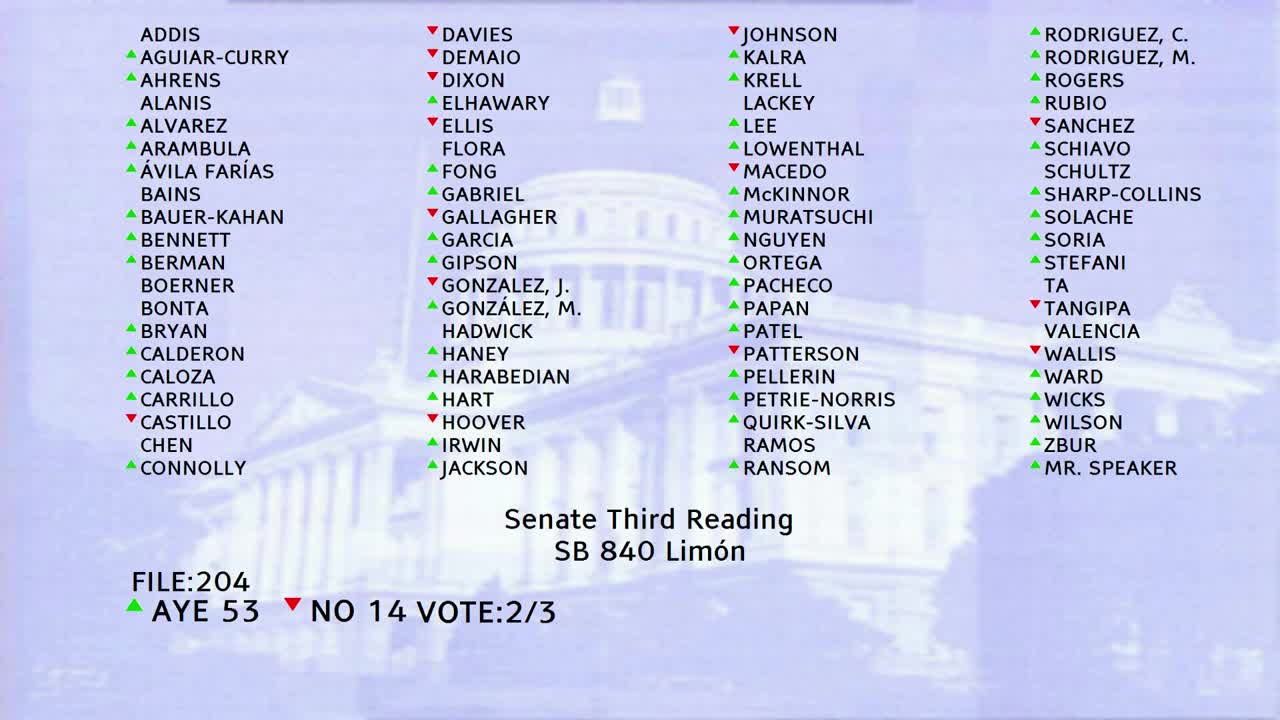
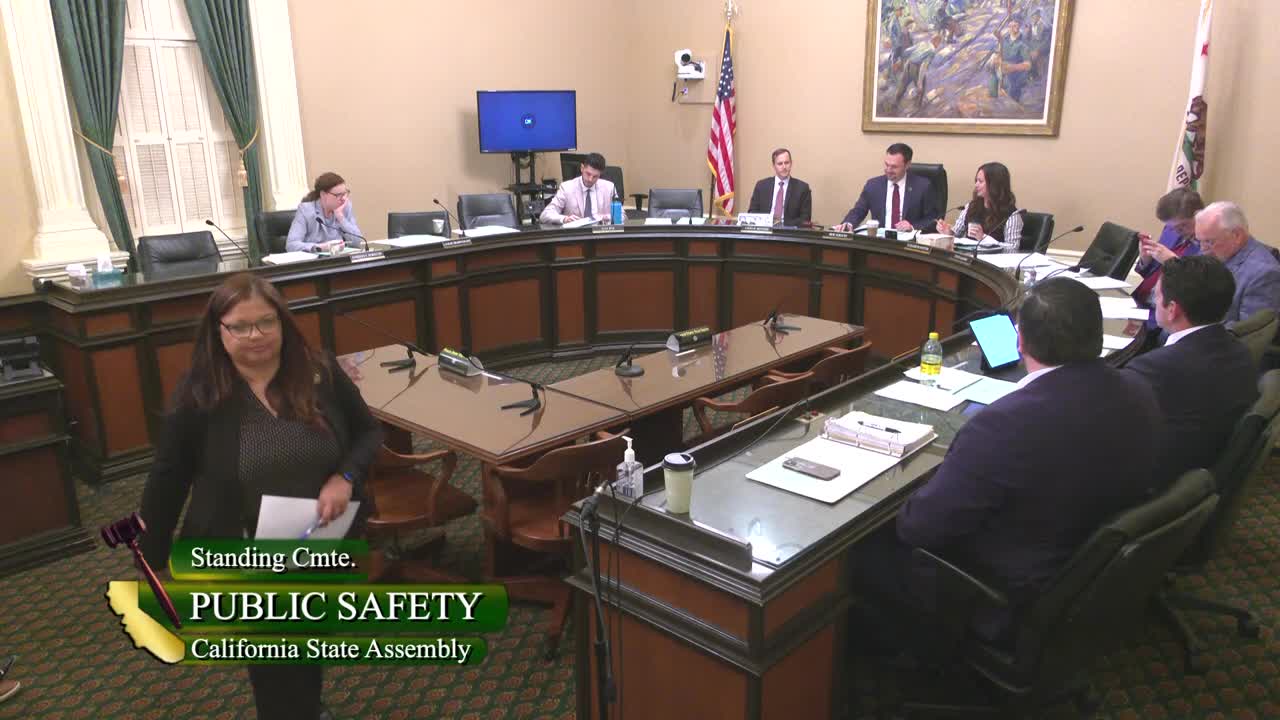
Bill Author

Bill Co-Author(s):