AB 393: Personal services contracts: state employees: physician and psychologist positions.
- Session Year: 2025-2026
- House: Assembly
- Latest Version Date: 2025-09-11
Current Status:
Failed
(2026-01-22: Consideration of Governor's veto stricken from file.)
Introduced
In Committee
Awaiting First Chamber Vote
Passed First Chamber
In Committee
Awaiting Second Chamber Vote
Passed Second Chamber
Enacted
Existing law, the State Civil Service Act, regulates employment with the state and vests in the Department of Human Resources all powers, duties, and authority necessary to operate the state civil service system. Existing law establishes standards for the use of personal services contracts by state agencies. Existing law permits personal services contracting to achieve cost savings when specified conditions are met, including that the contract does not cause the displacement of civil service employees.
Existing law establishes the Department of Corrections and Rehabilitation in state government, with jurisdiction over persons committed to the state prison. Existing law also establishes the State Department of State Hospitals within the California Health and Human Services Agency, with jurisdiction over specified facilities for the treatment of persons with mental health disorders.
This bill would require the Department of Corrections and Rehabilitation and the State Department of State Hospitals, before entering into a personal services contract to have a contractor fill a budgeted State Bargaining Unit 16 (BU-16) physician position or a State Bargaining Unit 19 (BU-19) psychologist position, to take specified actions. Among others, these actions would include preparing an analysis comparing the hourly cost of a contractor to a civil service BU-16 physician or BU-19 psychologist. The bill would require these departments to submit an annual report detailing certain information about contractors and civil service physicians and psychologists to BU-16, BU-19, and specified legislative committees.
Existing law, the State Civil Service Act, regulates employment with the state and vests in the Department of Human Resources all powers, duties, and authority necessary to operate the state civil service system. Existing law establishes standards for the use of personal services contracts by state agencies. Existing law permits personal services contracting to achieve cost savings when specified conditions are met, including that the contract does not cause the displacement of civil service employees.
Existing law establishes the Department of Corrections and Rehabilitation in state government, with jurisdiction over persons committed to the state prison. Existing law also establishes the State Department of State Hospitals within the California Health and Human Services Agency, with jurisdiction over specified facilities for the treatment of persons with mental health disorders.
This bill would require the Department of Corrections and Rehabilitation and the State Department of State Hospitals, before entering into a personal services contract to have a contractor fill a budgeted State Bargaining Unit 16 (BU-16) physician position, position or a State Bargaining Unit 19 (BU-19) psychologist position, to take specified actions. Among others, these actions would include preparing an analysis comparing the hourly cost of a contractor to a civil service BU-16 physician. physician or BU-19 psychologist. The bill would require these departments to submit an annual report detailing certain information about contractors and civil service physicians and psychologists to BU-16 BU-16, BU-19, and specified legislative committees.
Existing law, the State Civil Service Act, regulates employment with the state and vests in the Department of Human Resources all powers, duties, and authority necessary to operate the state civil service system. Existing law establishes standards for the use of personal services contracts by state agencies. Existing law permits personal services contracting to achieve cost savings when specified conditions are met, including that the contract does not cause the displacement of civil service employees.
Existing law establishes the Department of Corrections and Rehabilitation in state government, with jurisdiction over persons committed to the state prison. Existing law also establishes the State Department of State Hospitals within the California Health and Human Services Agency, with jurisdiction over specified facilities for the treatment of persons with mental health disorders.
This bill would require the Department of Corrections and Rehabilitation and the State Department of State Hospitals, before entering into a personal services contract to have a contractor fill a budgeted State Bargaining Unit 16 (BU-16) physician position, to take specified actions. Among others, these actions would include preparing an analysis comparing the hourly cost of a contractor to a civil service BU-16 physician. The bill would require these departments to submit an annual report detailing information about contractors and civil service physicians to BU-16 and specified legislative committees.
Before entering into a personal services contract to have a contractor fill a budgeted State Bargaining Unit 16 (BU-16) physician position, including a psychiatrist, or a State Bargaining Unit 19 (BU-19) psychologist position, the Department of Corrections and Rehabilitation and the State Department of State Hospitals, as applicable, shall do all of the following:
(a)Prepare an analysis comparing the hourly cost of a contractor to a civil service BU-16 physician or BU-19 psychologist.
(b)For purposes of the analysis in subdivision (a), the applicable department shall utilize current civil service physicians or psychologists set forth in the collective bargaining agreements between the State of California and BU-16 or BU-19 when arriving at the cost of civil service physicians or psychologists.
(c)If the cost of a contractor exceeds that of a civil service physician or psychologist, then the applicable department shall utilize an available civil service physician or psychologist before hiring a contractor.
(d)(1)No later than January 15 of each year, the Department of Corrections and Rehabilitation and the State Department of State Hospitals shall provide a report to BU-16, BU-19, the Senate Committee on Budget and Fiscal Review, and the Assembly Committee on Budget a report, as set forth in paragraph (2).
(2)The report shall contain details regarding the number of required analyses completed in the prior fiscal year, the number and cost of contractors employed, and the number of civil service physicians and psychologists utilized in extra shifts and the cost thereof.
(3)The report submitted to the legislative committees pursuant to paragraph (1) shall be submitted in compliance with Section 9795.
Before entering into a personal services contract to have a contractor fill a budgeted State Bargaining Unit 16 (BU-16) physician position, including a psychiatrist, or a State Bargaining Unit 19 (BU-19) pyschologist psychologist position, the Department of Corrections and Rehabilitation and the State Department of State Hospitals, as applicable, shall do all of the following:
(a)Prepare an analysis comparing the hourly cost of a contractor to a civil service BU-16 physician or BU-19 psychologist.
(b)For purposes of the analysis in subdivision (a), the applicable department shall utilize current civil service physicians or psychologists set forth in the collective bargaining agreements between the State of California and BU-16 or BU-19 when arriving at the cost of civil service physicians or psychologists.
(c)If the cost of a contractor exceeds that of a civil service physician or psychologist, then the applicable department shall utilize an available civil service physician or psychologist before hiring a contractor.
(d)(1)No later than January 15 of each year, the Department of Corrections and Rehabilitation and the State Department of State Hospitals shall provide a report to BU-16, BU-19, the Senate Committee on Budget and Fiscal Review, and the Assembly Committee on Budget a report, as set forth in paragraph (2).
(2)The report shall contain details regarding the number of required analyses completed in the prior fiscal year, the number and cost of contractors employed, and the number of civil service physicians and psychologists utilized in extra shifts and the cost thereof.
(3)The report submitted to the legislative committees pursuant to paragraph (1) shall be submitted in compliance with Section 9795.
Before entering into a personal services contract to have a contractor fill a budgeted State Bargaining Unit 16 (BU-16) physician position, including a psychiatrist, or a State Bargaining Unit 19 (BU-19) pyschologist position, the Department of Corrections and Rehabilitation and the State Department of State Hospitals, as applicable, shall do all of the following:
(a)Prepare an analysis comparing the hourly cost of a contractor to a civil service BU-16 physician. physician or BU-19 psychologist.
(b)For purposes of the analysis in subdivision (a), the applicable department shall utilize current civil service physicians or psychologists set forth in the collective bargaining agreement agreements between the State of California and BU-16, BU-16 or BU-19 when arriving at the cost of civil service physicians. physicians or psychologists.
(c)If the cost of a contractor exceeds that of a civil service physician, physician or psychologist, then the applicable department shall utilize an available civil service physician or psychologist before hiring a contractor.
(d)(1)No later than January 15 of each year, the Department of Corrections and Rehabilitation and the State Department of State Hospitals shall provide a report to BU-16, BU-19, the Senate Committee on Budget and Fiscal Review, and the Assembly Committee on Budget a report, as set forth in paragraph (2).
(2)The report shall contain details regarding the number of required analyses completed in the prior fiscal year, the number and cost of contractors employed, and the number of civil service physicians and psychologists utilized in extra shifts and the cost thereof.
(3)The report submitted to the legislative committees pursuant to paragraph (1) shall be submitted in compliance with Section 9795.
Before entering into a personal services contract to have a contractor fill a budgeted State Bargaining Unit 16 (BU-16) physician position, including a psychiatrist, the Department of Corrections and Rehabilitation and the State Department of State Hospitals, as applicable, shall do all of the following:
(a)Prepare an analysis comparing the hourly cost of a contractor to a civil service BU-16 physician, including a civil service psychiatrist. physician.
(b)For purposes of the analysis in subdivision (a), the applicable department shall utilize the physician registry, current civil service physicians set forth in the collective bargaining agreement between the State of California and BU-16, when arriving at the cost of civil service physicians, including psychiatrists. physicians.
(c)If the cost of a contractor exceeds that of a physician on the registry, civil service physician, then the applicable department shall hire from the registry before utilizing a contractor. utilize an available civil service physician before hiring a contractor.
(d)(1)No later than January 15 of each year, the Department of Corrections and Rehabilitation and the State Department of State Hospitals shall provide a report to BU-16, the Senate Committee on Budget and Fiscal Review, and the Assembly Committee on Budget a report, as set forth in paragraph (2).
(2)The report shall contain details regarding the number of required analyses completed in the prior fiscal year, the number and cost of contractors employed, and the number of civil service physicians and psychiatrists employed utilized in extra shifts from the registry and the cost thereof.
(3)The report submitted to the legislative committees pursuant to paragraph (1) shall be submitted in compliance with Section 9795.
Before entering into a personal services contract to have a contractor fill a budgeted State Bargaining Unit 16 (BU-16) physician position, including a psychiatrist, the Department of Corrections and Rehabilitation and the State Department of State Hospitals, as applicable, shall do all of the following:
(a)Prepare an analysis comparing the hourly cost of a contractor to a civil service BU-16 physician, including a civil service psychiatrist.
(b)For purposes of the analysis in subdivision (a), the applicable department shall utilize the physician registry, set forth in the collective bargaining agreement between the State of California and BU-16, when arriving at the cost of civil service physicians, including psychiatrists.
(c)If the cost of a contractor exceeds that of a physician on the registry, then the applicable department shall hire from the registry before utilizing a contractor.
(d)(1)No later than January 15 of each year, the Department of Corrections and Rehabilitation and the State Department of State Hospitals shall provide a report to BU-16, the Senate Committee on Budget and Fiscal Review, and the Assembly Committee on Budget a report, as set forth in paragraph (2).
(2)The report shall contain details regarding the number of required analyses completed in the prior fiscal year, the number and cost of contractors employed, and the number of civil service physicians and psychiatrists employed in extra shifts from the registry and the cost thereof.
(3)The report submitted to the legislative committees pursuant to paragraph (1) shall be submitted in compliance with Section 9795.
|
Date
|
Status
|
|---|---|
| Jan 22, 2026 | Consideration of Governor's veto stricken from file. |
| Oct 3, 2025 | Consideration of Governor's veto pending. |
| Oct 3, 2025 | Vetoed by Governor. |
| Sep 16, 2025 | Enrolled and presented to the Governor at 2 p.m. |
| Sep 9, 2025 | Senate amendments concurred in. To Engrossing and Enrolling. (Ayes 60. Noes 9. Page 3105.). |
| Sep 8, 2025 | In Assembly. Concurrence in Senate amendments pending. |
| Sep 8, 2025 | Read third time. Passed. Ordered to the Assembly. (Ayes 29. Noes 10. Page 2625.). |
| Sep 4, 2025 | Read second time. Ordered to third reading. |
| Sep 3, 2025 | Read third time and amended. Ordered to second reading. |
| Aug 29, 2025 | Read second time. Ordered to third reading. |
| Aug 29, 2025 | From committee: Do pass. (Ayes 5. Noes 2.) (August 29). |
| Jun 30, 2025 | In committee: Referred to APPR. suspense file. |
| Jun 19, 2025 | Read second time and amended. Re-referred to Com. on APPR. |
| Jun 18, 2025 | From committee: Amend, and do pass as amended and re-refer to Com. on APPR. (Ayes 4. Noes 1.) (June 18). |
| Jun 11, 2025 | Referred to Com. on L., P.E. & R. |
| Jun 3, 2025 | In Senate. Read first time. To Com. on RLS. for assignment. |
| Jun 2, 2025 | Read third time. Passed. Ordered to the Senate. (Ayes 62. Noes 7. Page 1900.) |
| May 27, 2025 | Read second time. Ordered to third reading. |
| May 23, 2025 | Read second time and amended. Ordered returned to second reading. |
| May 23, 2025 | From committee: Amend, and do pass as amended. (Ayes 11. Noes 1.) (May 23). |
| May 23, 2025 | Assembly Rule 63 suspended. (Ayes 51. Noes 16. Page 1644.) |
| Apr 9, 2025 | In committee: Set, first hearing. Referred to APPR. suspense file. |
| Mar 19, 2025 | From committee: Do pass and re-refer to Com. on APPR. (Ayes 6. Noes 0.) (March 19). Re-referred to Com. on APPR. |
| Feb 18, 2025 | Referred to Com. on P. E. & R. |
| Feb 4, 2025 | From printer. May be heard in committee March 6. |
| Feb 3, 2025 | Read first time. To print. |
|
Date
|
Description
|
Location
|
Votes
|
|
|---|---|---|---|---|
| Sep 9, 2025 | AB 393 Connolly Concurrence in Senate Amendments | Assembly Floor |
Passed |
|
| Sep 8, 2025 | Assembly 3rd Reading AB393 Connolly et al. By Richardson | Senate Floor |
Passed |
|
| Aug 29, 2025 | Do pass | Senate Standing Committee on Appropriations |
Passed |
|
| Jun 30, 2025 | Placed on suspense file | Senate Standing Committee on Appropriations |
Passed |
|
| Jun 18, 2025 | Do pass as amended, but first amend, and re-refer to the Committee on [Appropriations] | Senate Standing Committee on Labor, Public Employment and Retirement |
Passed |
|
| Jun 2, 2025 | AB 393 Connolly Assembly Third Reading | Assembly Floor |
Passed |
|
| May 23, 2025 | Do pass as amended. | Assembly Standing Committee on Appropriations |
Passed |
|
| Mar 19, 2025 | Do pass and be re-referred to the Committee on [Appropriations] | Assembly Standing Committee on Public Employment and Retirement |
Passed |
This list shows positions taken on this bill by organizations on the date displayed, which is linked to the original source.
Positions by individuals are not included.
|
Organization
|
Position
|
Date
|
|---|---|---|
| American Federation Of State, County And Municipal Employees, Afl-Cio | ** Support | |
| California Association Of Psychiatric Technicians | ** Support | |
| California Neurology Society | ** Support | |
| Union of American Physicians and Dentists (Co-source) | ** Support |
GOVERNOR'S VETO
GV Bill Id:AB 393
Author:(Connolly and Addis)
As Enrolled Ver:September 11, 2025
2/3 vote
SUMMARY
Requires the California Department of Corrections and Rehabilitation (CDCR) and the Department of State Hospitals (DSH) to take specified actions before entering into a personal services contract to fill a Bargaining Unit 16 (BU 16) physician position or a Bargaining Unit 19 (BU 19) psychologist position.
- Require the CDCR and DSH, as applicable, to prepare an analysis comparing the hourly cost of a contractor to a civil service BU 16 physician or BU 19 psychologist.
- Require, for purposes the aforementioned analysis, the CDCR and DSH, as applicable, to utilize current civil service physicians or psychologists set forth in the collective bargaining agreement between the State and BU 16 when arriving at the cost of civil service physicians or psychologists.
- Provide that if the cost of a contractor exceeds that of a civil service physician or psychologist, the applicable department must utilize an available civil service physician or psychologist before hiring a contractor.
- Require the CDCR and DSH to provide a report no later than January 15 each year to BU 16, Bu 19, the Senate Committee on Budget and Fiscal Review, and the Assembly Committee on Budget, and the report to: a) contain details regarding the number of required analyses completed in the prior fiscal year; b) the number and cost of contractors employed; and, c) the number of civil service physicians utilized in extra shifts, including costs. In addition, the report must be submitted to the legislative committees pursuant to existing law.
Governor's Veto Message
"While I am supportive of the ideas to reduce state reliance on contracts, this measure circumvents the collective bargaining process and limits the ability of these departments to deliver critical services. The matters contemplated by this bill are more appropriately handled through the budget and labor negotiations processes."
COMMENTS
Bargaining Units 16 and 19
BU 16 represents approximately 1,700 state physicians, surgeons, and psychiatrists who work in institutionalized settings, such as prisons and state hospitals. Nearly three-fourths of these employees work for the CDCR, California Correctional Health Care Services CCHCS, or the DSH. Represented by the Union of American Physicians and Dentists, AFL-CIO, BU 16's current memorandum of understanding (MOU) became effective on July 1, 2025 and expires on July 1, 2028. According to a recent CalHR compensation study, both the wages and total compensation earned by state dentists and family medicine physicians are significantly above market. However, state psychiatrists' compensation is about 6% below market when comparing total compensation. The Legislative Analyst's Office (LAO) estimates a vacancy rate of about 46 percent among psychiatrists. Among the factors contributing to this high vacancy rate are an increase in authorized positions and high turnover.
BU 19 represents approximately 5,700 state health and social services professionals, including psychologists and rehabilitation therapists. Nearly three-fifths of these employees work for either the CDCR or the DSH. Represented by the American Federation of State, County and Municipal Employees, AFL-CIO, BU 19's current MOU became effective on July 1, 2025 and expires on June 30, 2028.
The State Personnel Board (SPB) and Personal Services Contracts
Existing law establishes strict standards for the use of personal services contracts. Agencies can enter into a personal services contract to achieve cost savings or for specified, non-cost related reasons. However, contracts intended to achieve cost savings are only permissible if certain specified conditions are satisfied. For example, contracts cannot cause the displacement of civil service employees. Non-cost savings personal services contracts are only permissible in a limited number of situations, such as when the services in question are not available within the civil service or cannot be satisfactorily performed by civil service employees. These standards exist to limit the state's reliance on contractors and to ensure civil service employees perform state work.
Any state agency proposing to execute a personal services contract must notify all organizations that represent state employees who perform the type of work covered by the contract. The SPB has the authority to review proposed contracts to ensure compliance with existing law. Upon request by an employee organization, the SPB must direct a state agency to transmit the proposed or executed contract for review. The SPB delegates the review of personal services contracts to its Executive Officer. However, if an employee organization requests it, the Executive Officer must grant the organization the opportunity to present its case against the contract and the reasons why the contract should be referred to the SPB for a hearing. Upon a showing of good cause by the organization, the Executive Officer must schedule the disputed contract for a hearing before the SPB. Contracts subject to review must not become effective unless the SPB grants its approval.
This Bill
This bill proposes to address long-standing operating, financial, and documented issues relating to contracting out at the CDCR and DSH regarding physicians and psychologists positions to achieve state budgetary savings; thus, generating taxpayer savings, while maintaining continuity in the standards of care for those under the charge of the CDCR and DSH, respectively.
Please see the various policy committee analyses for a full discussion of this bill.
According to the Author
"[This bill] will help promote a more effective and cost-saving use of civil service physicians and psychiatrists within the most recent MOU. This bill also contains a robust reporting requirement that will allow both BU 16 and BU 19 physicians and psychologists, [the] CDCR, [the DSH], and the Legislature to evaluate the cost-effectiveness of current practices regarding contracting out…."part, the American Federation of State, County and Municipal Employees, AFL-CIO, states that, "[…] to fill gaps in vacancies, the state has relied on contracting out the work traditionally done by staff to outside contractors at three times the amount of the rate it pays its civil service employees. This pervasive outsourcing has continued for so long that the size and the true costs of this hidden workforce are now unknown and have mushroomed beyond any intent of the Legislature. The state's reliance on outsourced medical and mental health contractors has reached an alarming point of abuse. While the state has always utilized private contractors, its reliance spiked to an all-time high during the COVID-19 pandemic. Regrettably, even after the state of emergency concluded, the utilization of private physicians, psychiatrists, psychiatrists, nurses, licensed clinical social workers, and psychiatric technicians persisted, indicating a sustained trend that necessitates rectification. Furthermore, the state employee unions operating within [the] CDCR and DSH have encountered challenges in obtaining accurate information concerning the use of private sector medical and mental health staff. This includes data on the cost comparison between outsourced staff and their state employee counterparts and the quality-of-care metrics employed to evaluate the effectiveness of contracted employees. The need for transparency and comprehensive data is crucial to informed decision-making and optimizing the effectiveness of our healthcare services."
Arguments in Support
In part, the American Federation of State, County and Municipal Employees, AFL-CIO, states that, "[…] to fill gaps in vacancies, the state has relied on contracting out the work traditionally done by staff to outside contractors at three times the amount of the rate it pays its civil service employees. This pervasive outsourcing has continued for so long that the size and the true costs of this hidden workforce are now unknown and have mushroomed beyond any intent of the Legislature. The state's reliance on outsourced medical and mental health contractors has reached an alarming point of abuse. While the state has always utilized private contractors, its reliance spiked to an all-time high during the COVID-19 pandemic. Regrettably, even after the state of emergency concluded, the utilization of private physicians, psychiatrists, psychiatrists, nurses, licensed clinical social workers, and psychiatric technicians persisted, indicating a sustained trend that necessitates rectification. Furthermore, the state employee unions operating within [the] CDCR and DSH have encountered challenges in obtaining accurate information concerning the use of private sector medical and mental health staff. This includes data on the cost comparison between outsourced staff and their state employee counterparts and the quality-of-care metrics employed to evaluate the effectiveness of contracted employees. The need for transparency and comprehensive data is crucial to informed decision-making and optimizing the effectiveness of our healthcare services.
Arguments in Opposition
None.
FISCAL COMMENTS
According to the Senate Committee on Appropriations, the CDCR indicates that it would incur annual General Fund costs in the low millions of dollars to implement its provisions, and the DSH anticipates that this bill would result in increased annual General Fund administrative costs of $572,000.
VOTES
ASM PUBLIC EMPLOYMENT AND RETIREMENT: 6-0-1
YES: McKinnor, Alanis, Boerner, Elhawary, Garcia, Nguyen
ABS, ABST OR NV: Lackey
ASM APPROPRIATIONS: 11-1-3
YES: Wicks, Arambula, Calderon, Caloza, Elhawary, Fong, Mark González, Hart, Pacheco, Pellerin, Solache
NO: Dixon
ABS, ABST OR NV: Sanchez, Ta, Tangipa
ASSEMBLY FLOOR: 62-7-10
YES: Addis, Aguiar-Curry, Ahrens, Alvarez, Arambula, Ávila Farías, Bains, Bauer-Kahan, Bennett, Berman, Boerner, Bonta, Bryan, Calderon, Caloza, Carrillo, Connolly, Davies, Elhawary, Fong, Gabriel, Garcia, Gipson, Mark González, Haney, Harabedian, Hart, Irwin, Jackson, Kalra, Krell, Lee, Lowenthal, McKinnor, Muratsuchi, Nguyen, Ortega, Pacheco, Papan, Patel, Pellerin, Petrie-Norris, Quirk-Silva, Ramos, Ransom, Celeste Rodriguez, Michelle Rodriguez, Rogers, Blanca Rubio, Schiavo, Schultz, Sharp-Collins, Solache, Soria, Stefani, Ta, Valencia, Ward, Wicks, Wilson, Zbur, Rivas
NO: DeMaio, Dixon, Ellis, Gallagher, Hadwick, Macedo, Sanchez
ABS, ABST OR NV: Alanis, Castillo, Chen, Flora, Jeff Gonzalez, Hoover, Lackey, Patterson, Tangipa, Wallis
SENATE FLOOR: 29-10-1
YES: Allen, Archuleta, Arreguín, Ashby, Becker, Blakespear, Cabaldon, Caballero, Cervantes, Cortese, Durazo, Gonzalez, Grayson, Hurtado, Laird, Limón, McGuire, McNerney, Menjivar, Padilla, Pérez, Reyes, Richardson, Rubio, Smallwood-Cuevas, Umberg, Wahab, Weber Pierson, Wiener
NO: Alvarado-Gil, Choi, Dahle, Grove, Jones, Niello, Ochoa Bogh, Seyarto, Strickland, Valladares
ABS, ABST OR NV: Stern
ASSEMBLY FLOOR: 60-9-11
YES: Addis, Aguiar-Curry, Ahrens, Alvarez, Arambula, Ávila Farías, Bains, Bauer-Kahan, Bennett, Berman, Boerner, Bonta, Bryan, Calderon, Caloza, Carrillo, Connolly, Davies, Elhawary, Fong, Gabriel, Garcia, Gipson, Mark González, Haney, Harabedian, Hart, Irwin, Jackson, Kalra, Krell, Lee, Lowenthal, McKinnor, Muratsuchi, Nguyen, Ortega, Pacheco, Papan, Patel, Pellerin, Petrie-Norris, Quirk-Silva, Ransom, Celeste Rodriguez, Michelle Rodriguez, Rogers, Blanca Rubio, Schiavo, Schultz, Sharp-Collins, Solache, Soria, Stefani, Valencia, Ward, Wicks, Wilson, Zbur, Rivas
NO: DeMaio, Dixon, Ellis, Gallagher, Hadwick, Johnson, Macedo, Tangipa, Wallis
ABS, ABST OR NV: Alanis, Castillo, Chen, Flora, Jeff Gonzalez, Hoover, Lackey, Patterson, Ramos, Sanchez, Ta
UPDATED
VERSION: September 11, 2025
CONSULTANT: Michael Bolden / P. E. & R. / (916) 319-3957 FN: 0002138
CONCURRENCE IN SENATE AMENDMENTS
CSA1 Bill Id:AB 393
Author:(Connolly and Addis)
As Amended Ver:September 3, 2025
Majority vote
SUMMARY
Requires the California Department of Corrections and Rehabilitation (CDCR) and the Department of State Hospitals (DSH) to take specified actions before entering into a personal services contract to fill a Bargaining Unit 16 (BU 16) physician position or a Bargaining Unit 19 (BU 19) psychologist position.
Senate Amendments
Include BU 19 psychologists and make technical, clarifying, and typographical changes for this purpose.
COMMENTS
Bargaining Units 16 and 19
BU 16 represents approximately 1,700 state physicians, surgeons, and psychiatrists who work in institutionalized settings, such as prisons and state hospitals. Nearly three-fourths of these employees work for the CDCR, California Correctional Health Care Services CCHCS, or the DSH. Represented by the Union of American Physicians and Dentists, AFL-CIO, BU 16's current memorandum of understanding (MOU) became effective on July 1, 2025 and expires on July 1, 2028. According to a recent CalHR compensation study, both the wages and total compensation earned by state dentists and family medicine physicians are significantly above market. However, state psychiatrists' compensation is about 6% below market when comparing total compensation. The Legislative Analyst's Office (LAO) estimates a vacancy rate of about 46 percent among psychiatrists. Among the factors contributing to this high vacancy rate are an increase in authorized positions and high turnover.
BU 19 represents approximately 5,700 state health and social services professionals, including psychologists and rehabilitation therapists. Nearly three-fifths of these employees work for either the CDCR or the DSH. Represented by the American Federation of State, County and Municipal Employees, AFL-CIO, BU 19's current MOU became effective on July 1, 2025 and expires on June 30, 2028.
The State Personnel Board (SPB) and Personal Services Contracts
Existing law establishes strict standards for the use of personal services contracts. Agencies can enter into a personal services contract to achieve cost savings or for specified, non-cost related reasons. However, contracts intended to achieve cost savings are only permissible if certain specified conditions are satisfied. For example, contracts cannot cause the displacement of civil service employees. Non-cost savings personal services contracts are only permissible in a limited number of situations, such as when the services in question are not available within the civil service or cannot be satisfactorily performed by civil service employees. These standards exist to limit the state's reliance on contractors and to ensure civil service employees perform state work.
Any state agency proposing to execute a personal services contract must notify all organizations that represent state employees who perform the type of work covered by the contract. The SPB has the authority to review proposed contracts to ensure compliance with existing law. Upon request by an employee organization, the SPB must direct a state agency to transmit the proposed or executed contract for review. The SPB delegates the review of personal services contracts to its Executive Officer. However, if an employee organization requests it, the Executive Officer must grant the organization the opportunity to present its case against the contract and the reasons why the contract should be referred to the SPB for a hearing. Upon a showing of good cause by the organization, the Executive Officer must schedule the disputed contract for a hearing before the SPB. Contracts subject to review must not become effective unless the SPB grants its approval.
This Bill
This bill proposes to address long-standing operating, financial, and documented issues relating to contracting out at the CDCR and DSH regarding physicians and psychologists positions to achieve state budgetary savings; thus, generating taxpayer savings, while maintaining continuity in the standards of care for those under the charge of the CDCR and DSH, respectively.
Please see the various policy committee analyses for a full discussion of this bill.
According to the Author
"Historically, California has contracted out civil service positions within the [CDCR and CCHCS] at exorbitant rates that are two to three times the average compensation for civil service positions within the department. For example, in a 2020 ruling the [SPB] found that CCHCS had failed to justify several contracts and violated the prohibition on state agencies contracting out work that civil service employees can perform adequately and competently. The [SPB] found that 'even if considerable effort is necessary in order to recruit civil service staff, the CCHCS is legally obligated to do so.' In one of the contracts, the [SPB] found that '[the] CCHCS knew…staffing levels were inadequate to service the needs of the prison inmate population, yet it did not take any action to obtain addition positions. Instead, it resorted to a private contractor to fill its needs at a higher cost.'
"[This bill] will help promote a more effective and cost-saving use of civil service physicians and psychiatrists within the most recent MOU. This bill also contains a robust reporting requirement that will allow both BU 16 and BU 19 physicians and psychologists, [the] CDCR, [the DSH], and the Legislature to evaluate the cost-effectiveness of current practices regarding contracting out…."part, the American Federation of State, County and Municipal Employees, AFL-CIO, states that, "[…] to fill gaps in vacancies, the state has relied on contracting out the work traditionally done by staff to outside contractors at three times the amount of the rate it pays its civil service employees. This pervasive outsourcing has continued for so long that the size and the true costs of this hidden workforce are now unknown and have mushroomed beyond any intent of the Legislature. The state's reliance on outsourced medical and mental health contractors has reached an alarming point of abuse. While the state has always utilized private contractors, its reliance spiked to an all-time high during the COVID-19 pandemic. Regrettably, even after the state of emergency concluded, the utilization of private physicians, psychiatrists, psychiatrists, nurses, licensed clinical social workers, and psychiatric technicians persisted, indicating a sustained trend that necessitates rectification. Furthermore, the state employee unions operating within [the] CDCR and DSH have encountered challenges in obtaining accurate information concerning the use of private sector medical and mental health staff. This includes data on the cost comparison between outsourced staff and their state employee counterparts and the quality-of-care metrics employed to evaluate the effectiveness of contracted employees. The need for transparency and comprehensive data is crucial to informed decision-making and optimizing the effectiveness of our healthcare services.
Arguments in Support
In part, the American Federation of State, County and Municipal Employees, AFL-CIO, states that, "[…] to fill gaps in vacancies, the state has relied on contracting out the work traditionally done by staff to outside contractors at three times the amount of the rate it pays its civil service employees. This pervasive outsourcing has continued for so long that the size and the true costs of this hidden workforce are now unknown and have mushroomed beyond any intent of the Legislature. The state's reliance on outsourced medical and mental health contractors has reached an alarming point of abuse. While the state has always utilized private contractors, its reliance spiked to an all-time high during the COVID-19 pandemic. Regrettably, even after the state of emergency concluded, the utilization of private physicians, psychiatrists, psychiatrists, nurses, licensed clinical social workers, and psychiatric technicians persisted, indicating a sustained trend that necessitates rectification. Furthermore, the state employee unions operating within [the] CDCR and DSH have encountered challenges in obtaining accurate information concerning the use of private sector medical and mental health staff. This includes data on the cost comparison between outsourced staff and their state employee counterparts and the quality-of-care metrics employed to evaluate the effectiveness of contracted employees. The need for transparency and comprehensive data is crucial to informed decision-making and optimizing the effectiveness of our healthcare services.
Arguments in Opposition
None.
FISCAL COMMENTS
According to the Senate Committee on Appropriations, the CDCR indicates that it would incur annual General Fund costs in the low millions of dollars to implement its provisions, and the DSH anticipates that this bill would result in increased annual General Fund administrative costs of $572,000.
VOTES:
ASM PUBLIC EMPLOYMENT AND RETIREMENT: 6-0-1
YES: McKinnor, Alanis, Boerner, Elhawary, Garcia, Nguyen
ABS, ABST OR NV: Lackey
ASM APPROPRIATIONS: 11-1-3
YES: Wicks, Arambula, Calderon, Caloza, Elhawary, Fong, Mark González, Hart, Pacheco, Pellerin, Solache
NO: Dixon
ABS, ABST OR NV: Sanchez, Ta, Tangipa
ASSEMBLY FLOOR: 62-7-10
YES: Addis, Aguiar-Curry, Ahrens, Alvarez, Arambula, Ávila Farías, Bains, Bauer-Kahan, Bennett, Berman, Boerner, Bonta, Bryan, Calderon, Caloza, Carrillo, Connolly, Davies, Elhawary, Fong, Gabriel, Garcia, Gipson, Mark González, Haney, Harabedian, Hart, Irwin, Jackson, Kalra, Krell, Lee, Lowenthal, McKinnor, Muratsuchi, Nguyen, Ortega, Pacheco, Papan, Patel, Pellerin, Petrie-Norris, Quirk-Silva, Ramos, Ransom, Celeste Rodriguez, Michelle Rodriguez, Rogers, Blanca Rubio, Schiavo, Schultz, Sharp-Collins, Solache, Soria, Stefani, Ta, Valencia, Ward, Wicks, Wilson, Zbur, Rivas
NO: DeMaio, Dixon, Ellis, Gallagher, Hadwick, Macedo, Sanchez
ABS, ABST OR NV: Alanis, Castillo, Chen, Flora, Jeff Gonzalez, Hoover, Lackey, Patterson, Tangipa, Wallis
UPDATED
VERSION: September 3, 2025
CONSULTANT: Michael Bolden / P. E. & R. / (916) 319-3957 FN: 0001898
SENATE RULES COMMITTEE Office of Senate Floor Analyses (916) 651-1520 Fax: (916) 327-4478 | AB 393 |
THIRD READING
Bill No: AB 393
Author: Connolly (D) and Addis (D)
Amended: 9/3/25 in Senate
Vote: 21
SENATE LABOR, PUB. EMP. & RET. COMMITTEE: 4-1, 6/18/25
AYES: Smallwood-Cuevas, Cortese, Durazo, Laird
NOES: Strickland
SENATE APPROPRIATIONS COMMITTEE: 5-2, 8/29/25
AYES: Caballero, Cabaldon, Grayson, Richardson, Wahab
NOES: Seyarto, Dahle
ASSEMBLY FLOOR: 62-7, 6/2/25 - See last page for vote
SUBJECT: Personal services contracts: state employees: physician and psychologist positions
SOURCE: American Federation of State, County and Municipal Employees Union of American Physicians and Dentists
DIGEST:
This bill requires the California Department of Corrections and Rehabilitation (CDCR) and the Department of State Hospitals (DSH) to take specified actions before entering into a personal services contract to fill a Bargaining Unit 16 (BU-16) physician position or a Bargaining Unit 19 (BU-19) psychologist position.
Senate Floor Amendments of 9/3/25 correct a drafting error.
ANALYSIS:
Existing law:
- Creates the state civil service that includes every officer and employee of the state except a limited number of specified, exempted officers and employees. Existing law also requires that the state make “permanent appointment and promotion in the civil service under a general system based on merit ascertained by competitive examination.” Case law and custom refer to this provision as the merit principle and it governs the administration of the state’s civil service system. (California Constitution (CA CONST.) art. VII, §1 and §4)
- Establishes the State Personnel Board (SPB) to enforce the civil service statutes and prescribe probationary periods and classifications, adopt other rules authorized by statute, and review disciplinary actions. (CA CONST. art. VII, §2 and §3)
- Establishes the State Civil Service Act to provide a comprehensive personnel system for the state in which appointments are based upon merit and fitness ascertained through practical and competitive examination (Government Code §18500)
- Creates, under the Dills Act, a system of collective bargaining between the state and its employees’ exclusive representatives to negotiate for terms and conditions of employment (Government Code §3512 et seq.)
- Establishes strict standards for the use of personal services contracts to achieve cost savings. Among others, all of the following conditions must be met:
- The contracting agency must clearly demonstrate that the proposed contract will result in overall cost savings to the state.
- The contract does not cause the displacement of civil service employees.
- The savings are large enough to ensure that they will not be eliminated by private sector and state cost fluctuations that could normally be expected during the contracting period.
- The amount of savings clearly justify the size and duration of the contracting agreement.
- The contract is awarded through a publicized, competitive bidding process.
(Government Code §19130(a))
- Provides that personal services contracting, for non-cost savings reasons, shall also be permissible when specified conditions are met, including when the services contracted are not available within civil service, cannot be performed satisfactorily by civil service employees, or are of such a highly specialized or technical nature that the necessary expert knowledge, experience, and ability are not available through the civil service system. (Government Code §19130(b))
- Requires any state agency proposing to execute a personal services contract to achieve cost savings to notify the SPB of its intention. All organizations that represent employees who perform the type of work to be contracted and any person or organization which has filed with the SPB a request for notice shall be contacted, as specified, and given a reasonable opportunity to comment on the proposed contract. (Government Code §19131)
- Authorizes any employee organization to request, within 10 days of being notified, the SPB to review any contract proposed to achieve cost savings. Upon such a request, the SPB shall review the contract, as specified. (Government Code §19131)
- Requires the SPB, at the request of an employee organization that represents state employees, to review the adequacy of any non-cost savings proposed or executed contract. (Government Code §19132)
- Provides that unless a non-cost savings personal services contract is necessary due to a sudden and unexpected occurrence that poses a clear and imminent danger, requiring immediate action to prevent or mitigate the loss or impairment of life, health, property, or essential public services, the contract shall not be executed until the state agency proposing to execute the contract has notified all organizations that represent state employees who perform the type of work to be contracted. (Government Code §19132)
- Authorizes the SPB to establish necessary standards and controls over DGS’ approval of contracts to assure that the approval is consistent with the merit employment principles and requirements contained in Article VII of the California Constitution. The SPB shall have discretion to establish the substantive provisions of the standards. However, the SPB and DGS shall establish the specific procedures for contract review pursuant to such standards jointly. (Public Contracting Code §10337)
This bill requires CDCR and DSH, before entering into a personal services contract to fill a BU-16 physician position, including a psychiatrist, or a BU-19 psychologist position, to do all of the following:
- Prepare an analysis comparing the hourly cost of a contractor to a civil service BU-16 physician or BU-19 psychologist:
- Specifies that for purposes of the above-mentioned analysis, the applicable department shall utilize current civil service physicians or psychologists set forth in the collective bargaining agreements between the State of California and BU-16 or BU-19 when arriving at the cost of civil service physicians or psychologists.
- Utilize an available civil service physician or psychologist before hiring a contractor, if the cost of the contractor exceeds that of a civil service physician or psychologist.
- Provide a report, no later than January 15 of each year, to BU-16, BU-19, the Senate Committee on Budget and Fiscal Review, and the Assembly Committee on Budget:
- Specifies the report shall contain details regarding the number of required analyses completed in the prior fiscal year, the number and cost of contractors employed, and the number of civil service physicians and psychologists utilized in extra shifts and the cost thereof.
Background
BU-16. BU-16 represents roughly 1,700 state physicians, surgeons, and psychiatrists who work in institutionalized settings, such as prisons and state hospitals. Nearly three-fourths of these employees work for CDCR, CCHCS, or DSH. BU-16’s current memorandum of understanding (MOU) went into effect on July 1, 2025 and expires on July 1, 2028. The Union of American Physicians and Dentists (UAPD) represents BU-16.
According to a recent CalHR compensation study, both the wages and total compensation earned by state dentists and family medicine physicians are significantly above market. However, state psychiatrists’ compensation is about 6 percent below market when comparing total compensation. The Legislative Analyst’s Office (LAO) estimates a vacancy rate of about 46 percent among psychiatrists. Among the factors contributing to this high vacancy rate are an increase in authorized positions and high turnover.
Bargaining Unit 19 (BU-19). BU-19 represents roughly 5,700 state health and social services professionals, including psychologists and rehabilitation therapists. Nearly three-fifths of these employees work for either CDCR or DSH. BU-19’s current MOU went into effect on July 1, 2025 and expires on June 30, 2028. The American Federation of State, County and Municipal Employees represents BU-19.
SPB and Personal Services Contracts. Existing law establishes strict standards for the use of personal services contracts. Agencies can enter into a personal services contract to achieve cost savings or for specified, non-cost related reasons. Contracts intended to achieve cost savings are only permissible if 11 different conditions are satisfied. For example, contracts cannot cause the displacement of civil service employees. Non-cost savings personal services contracts are only permissible in a limited number of situations, such as when the services in question are not available within the civil service or cannot be performed satisfactorily by civil service employees. These standards exist to limit the state’s reliance on contractors and to ensure civil service employees perform state work.
Any state agency proposing to execute a personal services contract must notify all organizations that represent state employees who perform the type of work covered by the contract. The SPB has the authority to review proposed contracts to ensure compliance with existing law. Upon request by an employee organization, the SPB must direct a state agency to transmit the proposed or executed contract for review. The SPB delegates the review of personal services contracts to its Executive Officer. However, if an employee organization requests it, the Executive Officer must grant the organization the opportunity to present its case against the contract and the reasons why the contract should be referred to the SPB for a hearing. Upon a showing of good cause by the organization, the Executive Officer must schedule the disputed contract for a hearing before the SPB. Contracts subject to review shall not become effective unless the SPB grants its approval.
Related/Prior Legislation
AB 339 (Ortega, 2025) would require public agencies regulated by the Meyers-Milias-Brown Act (MMBA) to give a recognized employee organization no less than 60 days’ written notice regarding contracts to perform services that are within the scope of work of job classifications represented by the recognized employee organization. AB 339 is pending on the Senate Floor.
AB 775 (Arambula, 2024) would have amended existing law authorizing state agencies to use personal services contracts under specified circumstances to require the DSH to establish a physician registry for the Patton State Hospital under a three-year pilot program. This bill was held in Senate Appropriations Committee.
AB 2860 (Arambula, 2023) would have required DSH and CDCR to only fill a vacant supervisor position overseeing healthcare employees in State Bargaining Units 16, 17, 18, 19, or 20, with a permanent full-time civil service employee. This bill was held in Assembly Appropriations Committee.
SB 422 (Pan, 2022, Vetoed) would have required DSH to establish, by January 1, 2024, a physician registry as a three-year pilot program for the Patton State Hospital to be maintained by DSH and composed of members of State Bargaining Unit 16, who may elect to join the registry. The Governor vetoed the bill stating:
“This bill is unclear on implementation and does not demonstrate how it would significantly reduce DSH’s reliance on contractors. While I am supportive of ideas to reduce state reliance on contractors, the creation of the registry and the determination of associated compensation are matters that are more appropriately handled through the budget and labor negotiations processes.”
AB 657 (Cooper, 2021) would have prohibited specified professionals (generally medical personnel) employed under personal service contracts with state agencies from being under contract for a period that exceeds 365 consecutive days or 365 nonconsecutive days in a 24-month period. This bill was amended into another issue area.
FISCAL EFFECT: Appropriation: No Fiscal Com.: Yes Local: No
According to the Senate Appropriations Committee:
- CDCR indicates that it would incur annual General Fund costs in the low millions of dollars to implement its provisions of the bill (see Staff Comments).
- DSH anticipates that this bill would result in increased annual General Fund administrative costs of $572,000.
SUPPORT: (Verified 9/3/25)
American Federation of State, County and Municipal Employees (Co-source)
Union of American Physicians and Dentists (Co-source)
California Association of Psychiatric Technicians
California Neurology Society
OPPOSITION: (Verified 9/3/25)
None received
ARGUMENTS IN SUPPORT:
“Historically, California has contracted out civil service positions within the California Department of Corrections and Rehabilitation (CDCR) and California Correction Health Care Services (CCHCS) at exorbitant rates that are two to three times the average compensation for civil service positions within the department.
For example, in a 2020 ruling the California State Personnel Board found that CCHCS had failed to justify several contracts and violated the prohibition on state agencies contracting out work that civil service employees can perform adequately and competently. The Board found that ‘even if considerable effort is necessary in order to recruit civil service staff, CCHCS is legally obligated to do so.’ In one of the contracts, the board found that ‘CCHCS knew…staffing levels were inadequate to service the needs of the prison inmate population, yet it did not take any action to obtain addition positions. Instead, it resorted to a private contractor to fill its needs at a higher cost.’
AB 393 will help promote a more effective and cost-saving use of civil service physicians and psychiatrists within the most recent MOU. This bill also contains a robust reporting requirement that will allow both BU-16 and BU-19 physicians and psychologists, CDCR, and the Legislature to evaluate the cost-effectiveness of current practices regarding contracting out for physicians within CDCR”
ASSEMBLY FLOOR: 62-7, 6/2/25
AYES: Addis, Aguiar-Curry, Ahrens, Alvarez, Arambula, Ávila Farías, Bains, Bauer-Kahan, Bennett, Berman, Boerner, Bonta, Bryan, Calderon, Caloza, Carrillo, Connolly, Davies, Elhawary, Fong, Gabriel, Garcia, Gipson, Mark González, Haney, Harabedian, Hart, Irwin, Jackson, Kalra, Krell, Lee, Lowenthal, McKinnor, Muratsuchi, Nguyen, Ortega, Pacheco, Papan, Patel, Pellerin, Petrie-Norris, Quirk-Silva, Ramos, Ransom, Celeste Rodriguez, Michelle Rodriguez, Rogers, Blanca Rubio, Schiavo, Schultz, Sharp-Collins, Solache, Soria, Stefani, Ta, Valencia, Ward, Wicks, Wilson, Zbur, Rivas
NOES: DeMaio, Dixon, Ellis, Gallagher, Hadwick, Macedo, Sanchez
NO VOTE RECORDED: Alanis, Castillo, Chen, Flora, Jeff Gonzalez, Hoover, Lackey, Patterson, Tangipa, Wallis
Prepared by: Emma Bruce / L., P.E. & R. / (916) 651-1556
9/6/25 10:24:27
SENATE RULES COMMITTEE Office of Senate Floor Analyses (916) 651-1520 Fax: (916) 327-4478 | AB 393 |
THIRD READING
Bill No: AB 393
Author: Connolly (D) and Addis (D)
Amended: 6/19/25 in Senate
Vote: 21
SENATE LABOR, PUB. EMP. & RET. COMMITTEE: 4-1, 6/18/25
AYES: Smallwood-Cuevas, Cortese, Durazo, Laird
NOES: Strickland
SENATE APPROPRIATIONS COMMITTEE: 5-2, 8/29/25
AYES: Caballero, Cabaldon, Grayson, Richardson, Wahab
NOES: Seyarto, Dahle
ASSEMBLY FLOOR: 62-7, 6/2/25 - See last page for vote
SUBJECT: Personal services contracts: state employees: physician and psychologist positions
SOURCE: American Federation of State, County and Municipal Employees Union of American Physicians and Dentists
DIGEST:
This bill requires the California Department of Corrections and Rehabilitation (CDCR) and the Department of State Hospitals (DSH) to take specified actions before entering into a personal services contract to fill a Bargaining Unit 16 (BU-16) physician position or a Bargaining Unit 19 (BU-19) psychologist position.
ANALYSIS:
Existing law:
- Creates the state civil service that includes every officer and employee of the state except a limited number of specified, exempted officers and employees. Existing law also requires that the state make “permanent appointment and promotion in the civil service under a general system based on merit ascertained by competitive examination.” Case law and custom refer to this provision as the merit principle and it governs the administration of the state’s civil service system. (California Constitution (CA CONST.) art. VII, §1 and §4)
- Establishes the State Personnel Board (SPB) to enforce the civil service statutes and prescribe probationary periods and classifications, adopt other rules authorized by statute, and review disciplinary actions. (CA CONST. art. VII, §2 and §3)
- Establishes the State Civil Service Act to provide a comprehensive personnel system for the state in which appointments are based upon merit and fitness ascertained through practical and competitive examination (Government Code §18500)
- Creates, under the Dills Act, a system of collective bargaining between the state and its employees’ exclusive representatives to negotiate for terms and conditions of employment (Government Code §3512 et seq.)
- Establishes strict standards for the use of personal services contracts to achieve cost savings. Among others, all of the following conditions must be met:
- The contracting agency must clearly demonstrate that the proposed contract will result in overall cost savings to the state.
- The contract does not cause the displacement of civil service employees.
- The savings are large enough to ensure that they will not be eliminated by private sector and state cost fluctuations that could normally be expected during the contracting period.
- The amount of savings clearly justify the size and duration of the contracting agreement.
- The contract is awarded through a publicized, competitive bidding process.
(Government Code §19130(a))
- Provides that personal services contracting, for non-cost savings reasons, shall also be permissible when specified conditions are met, including when the services contracted are not available within civil service, cannot be performed satisfactorily by civil service employees, or are of such a highly specialized or technical nature that the necessary expert knowledge, experience, and ability are not available through the civil service system. (Government Code §19130(b))
- Requires any state agency proposing to execute a personal services contract to achieve cost savings to notify the SPB of its intention. All organizations that represent employees who perform the type of work to be contracted and any person or organization which has filed with the SPB a request for notice shall be contacted, as specified, and given a reasonable opportunity to comment on the proposed contract. (Government Code §19131)
- Authorizes any employee organization to request, within 10 days of being notified, the SPB to review any contract proposed to achieve cost savings. Upon such a request, the SPB shall review the contract, as specified. (Government Code §19131)
- Requires the SPB, at the request of an employee organization that represents state employees, to review the adequacy of any non-cost savings proposed or executed contract. (Government Code §19132)
- Provides that unless a non-cost savings personal services contract is necessary due to a sudden and unexpected occurrence that poses a clear and imminent danger, requiring immediate action to prevent or mitigate the loss or impairment of life, health, property, or essential public services, the contract shall not be executed until the state agency proposing to execute the contract has notified all organizations that represent state employees who perform the type of work to be contracted. (Government Code §19132)
- Authorizes the SPB to establish necessary standards and controls over DGS’ approval of contracts to assure that the approval is consistent with the merit employment principles and requirements contained in Article VII of the California Constitution. The SPB shall have discretion to establish the substantive provisions of the standards. However, the SPB and DGS shall establish the specific procedures for contract review pursuant to such standards jointly. (Public Contracting Code §10337)
This bill:
- Requires CDCR and DSH, before entering into a personal services contract to fill a BU-16 physician position, including a psychiatrist, or a BU-19 psychologist position, to do all of the following:
- Prepare an analysis comparing the hourly cost of a contractor to a civil service BU-16 physician or BU-19 psychologist.
- Specifies that for purposes of the above-mentioned analysis, the applicable department shall utilize current civil service physicians or psychologists set forth in the collective bargaining agreements between the State of California and BU-16 or BU-19 when arriving at the cost of civil service physicians or psychologists.
- Utilize an available civil service physician or psychologist before hiring a contractor, if the cost of the contractor exceeds that of a civil service physician or psychologist.
- Provide a report, no later than January 15 of each year, to BU-16, BU-19, the Senate Committee on Budget and Fiscal Review, and the Assembly Committee on Budget.
- Specifies the report shall contain details regarding the number of required analyses completed in the prior fiscal year, the number and cost of contractors employed, and the number of civil service physicians and psychologists utilized in extra shifts and the cost thereof.
Background
Bargaining Unit 16 (BU-16). BU-16 represents roughly 1,700 state physicians, surgeons, and psychiatrists who work in institutionalized settings, such as prisons and state hospitals. Nearly three-fourths of these employees work for CDCR, CCHCS, or DSH. BU-16’s current memorandum of understanding (MOU) went into effect on July 1, 2025 and expires on July 1, 2028. The Union of American Physicians and Dentists (UAPD) represents BU-16.
According to a recent CalHR compensation study, both the wages and total compensation earned by state dentists and family medicine physicians are significantly above market. However, state psychiatrists’ compensation is about 6 percent below market when comparing total compensation. The Legislative Analyst’s Office (LAO) estimates a vacancy rate of about 46 percent among psychiatrists. Among the factors contributing to this high vacancy rate are an increase in authorized positions and high turnover.
Bargaining Unit 19 (BU-19). BU-19 represents roughly 5,700 state health and social services professionals, including psychologists and rehabilitation therapists. Nearly three-fifths of these employees work for either CDCR or DSH. BU-19’s current MOU went into effect on July 1, 2025 and expires on June 30, 2028. The American Federation of State, County and Municipal Employees represents BU-19.
State Personnel Board (SPB) and Personal Services Contracts. Existing law establishes strict standards for the use of personal services contracts. Agencies can enter into a personal services contract to achieve cost savings or for specified, non-cost related reasons. Contracts intended to achieve cost savings are only permissible if 11 different conditions are satisfied. For example, contracts cannot cause the displacement of civil service employees. Non-cost savings personal services contracts are only permissible in a limited number of situations, such as when the services in question are not available within the civil service or cannot be performed satisfactorily by civil service employees. These standards exist to limit the state’s reliance on contractors and to ensure civil service employees perform state work.
Any state agency proposing to execute a personal services contract must notify all organizations that represent state employees who perform the type of work covered by the contract. The SPB has the authority to review proposed contracts to ensure compliance with existing law. Upon request by an employee organization, the SPB must direct a state agency to transmit the proposed or executed contract for review. The SPB delegates the review of personal services contracts to its Executive Officer. However, if an employee organization requests it, the Executive Officer must grant the organization the opportunity to present its case against the contract and the reasons why the contract should be referred to the SPB for a hearing. Upon a showing of good cause by the organization, the Executive Officer must schedule the disputed contract for a hearing before the SPB. Contracts subject to review shall not become effective unless the SPB grants its approval.
Related/Prior Legislation
AB 339 (Ortega, 2025) would require public agencies regulated by the Meyers-Milias-Brown Act (MMBA) to give a recognized employee organization no less than 60 days’ written notice regarding contracts to perform services that are within the scope of work of job classifications represented by the recognized employee organization. AB 339 is pending on the Senate Floor.
AB 775 (Arambula, 2024) would have amended existing law authorizing state agencies to use personal services contracts under specified circumstances to require the DSH to establish a physician registry for the Patton State Hospital under a three-year pilot program. This bill was held in Senate Appropriations Committee.
AB 2860 (Arambula, 2023) would have required DSH and CDCR to only fill a vacant supervisor position overseeing healthcare employees in State Bargaining Units 16, 17, 18, 19, or 20, with a permanent full-time civil service employee. This bill was held in Assembly Appropriations Committee.
SB 422 (Pan, 2022, Vetoed) would have required DSH to establish, by January 1, 2024, a physician registry as a three-year pilot program for the Patton State Hospital to be maintained by DSH and composed of members of State Bargaining Unit 16, who may elect to join the registry. The Governor vetoed the bill stating:
“This bill is unclear on implementation and does not demonstrate how it would significantly reduce DSH’s reliance on contractors. While I am supportive of ideas to reduce state reliance on contractors, the creation of the registry and the determination of associated compensation are matters that are more appropriately handled through the budget and labor negotiations processes.”
AB 657 (Cooper, 2021) would have prohibited specified professionals (generally medical personnel) employed under personal service contracts with state agencies from being under contract for a period that exceeds 365 consecutive days or 365 nonconsecutive days in a 24-month period. This bill was amended into another issue area.
FISCAL EFFECT: Appropriation: No Fiscal Com.: Yes Local: No
According to the Senate Appropriations Committee:
- CDCR indicates that it would incur annual General Fund costs in the low millions of dollars to implement its provisions of the bill (see Staff Comments).
- DSH anticipates that this bill would result in increased annual General Fund administrative costs of $572,000.
SUPPORT: (Verified 8/29/25)
American Federation of State, County and Municipal Employees (Co-source)
Union of American Physicians and Dentists (Co-source)
California Association of Psychiatric Technicians
California Neurology Society
OPPOSITION: (Verified 8/29/25)
None received
ARGUMENTS IN SUPPORT:
“Historically, California has contracted out civil service positions within the California Department of Corrections and Rehabilitation (CDCR) and California Correction Health Care Services (CCHCS) at exorbitant rates that are two to three times the average compensation for civil service positions within the department.
For example, in a 2020 ruling the California State Personnel Board found that CCHCS had failed to justify several contracts and violated the prohibition on state agencies contracting out work that civil service employees can perform adequately and competently. The Board found that ‘even if considerable effort is necessary in order to recruit civil service staff, CCHCS is legally obligated to do so.’ In one of the contracts, the board found that ‘CCHCS knew…staffing levels were inadequate to service the needs of the prison inmate population, yet it did not take any action to obtain addition positions. Instead, it resorted to a private contractor to fill its needs at a higher cost.’
AB 393 will help promote a more effective and cost-saving use of civil service physicians and psychiatrists within the most recent MOU. This bill also contains a robust reporting requirement that will allow both BU-16 and BU-19 physicians and psychologists, CDCR, and the Legislature to evaluate the cost-effectiveness of current practices regarding contracting out for physicians within CDCR”
ASSEMBLY FLOOR: 62-7, 6/2/25
AYES: Addis, Aguiar-Curry, Ahrens, Alvarez, Arambula, Ávila Farías, Bains, Bauer-Kahan, Bennett, Berman, Boerner, Bonta, Bryan, Calderon, Caloza, Carrillo, Connolly, Davies, Elhawary, Fong, Gabriel, Garcia, Gipson, Mark González, Haney, Harabedian, Hart, Irwin, Jackson, Kalra, Krell, Lee, Lowenthal, McKinnor, Muratsuchi, Nguyen, Ortega, Pacheco, Papan, Patel, Pellerin, Petrie-Norris, Quirk-Silva, Ramos, Ransom, Celeste Rodriguez, Michelle Rodriguez, Rogers, Blanca Rubio, Schiavo, Schultz, Sharp-Collins, Solache, Soria, Stefani, Ta, Valencia, Ward, Wicks, Wilson, Zbur, Rivas
NOES: DeMaio, Dixon, Ellis, Gallagher, Hadwick, Macedo, Sanchez
NO VOTE RECORDED: Alanis, Castillo, Chen, Flora, Jeff Gonzalez, Hoover, Lackey, Patterson, Tangipa, Wallis
Prepared by: Emma Bruce / L., P.E. & R. / (916) 651-1556
8/29/25 20:33:28
SENATE COMMITTEE ON APPROPRIATIONS
Senator Anna Caballero, Chair
2025 - 2026 Regular Session
AB 393 (Connolly) - Personal services contracts: state employees: physician and psychologist positions
Version: June 19, 2025 | Policy Vote: L., P.E. & R. 4 - 1 |
Urgency: No | Mandate: No |
Hearing Date: June 30, 2025 | Consultant: Robert Ingenito |
Bill Summary:
AB 393 would require the California Department of Corrections and Rehabilitation (CDCR) and the Department of State Hospitals (DSH) to take specified actions before entering into a personal services contract to fill (1) a Bargaining Unit 16 (BU-16) physician, or (2) a Bargaining Unit 19 (BU-19) psychologist position.
Fiscal Impact:
- CDCR indicates that it would incur annual General Fund costs in the low millions of dollars to implement its provisions of the bill (see Staff Comments).
- DSH anticipates that this bill would result in increased annual General Fund administrative costs of $572,000.
Background:
The State Civil Service Act provides a comprehensive personnel system where state employment is based on the merit principle and fitness ascertained through practical and competitive examination. However, cxisting law also authorizes state agencies to contract for personal services under certain conditions, such as when the services contracted are (1) not available within civil service, (2) cannot be performed satisfactorily by civil service employees, or (3) are of such a highly specialized or technical nature not available through the civil service system. State employment also provides for a limited-term appointment, which cannot exceed two years and is not of permanent status, and out-of-class work, defined as performing the duties and responsibilities of a classification, to which the person is not appointed, more than half of the time.
BU-16 represents roughly 1,600 state physicians, surgeons, and psychiatrists who work in institutionalized settings, such as prisons and state hospitals. Nearly three-fourths of these employees work for either CDCR or DSH. BU-16’s current memorandum of understanding (MOU) went into effect on July 1, 2023 and expires on July 1, 2025. According to the Legislative Analyst’s Office’s 2023 analysis of BU-16’s current MOU, BU-16 had a 26 percent vacancy rate at CDCR, increasing to 46 percent for unit psychiatrists, indicating the State is likely having significant difficulty recruiting and retaining physicians.
BU-19 consists of roughly 5,600 state employees who provide evaluations and assessments of client counseling and consultation or client follow-up service of a health, social, or employment nature. Nearly 60 percent of its members work for either CDCR or DSH. BU-19’s current MOU went into effect on July 2, 2023 and expires on July 1, 2025.
Proposed Law:
This bill would do the following:
- Require CDCR and DSH, before entering into a personal services contract to have a contractor fill a budgeted BU-16 physician position or BU-19 psychologist position, to take specified actions, including preparing an analysis comparing the hourly cost of a contractor to a civil service BU-16 physician or BU-19 psychologist.
- Require CDCR and DSH to submit an annual report detailing specified information about contractors and civil service physicians and psychologists to BU-16, BU-19, and the Legislature.
Related Legislation:
- AB 339 (Ortega, 2025) would require a local agency to give a recognized employee organization no less than 120 days’ written notice before issuing a request for proposals, request for quotes, or renewing or extending an existing contract, to perform services that are within the scope of work of the job classifications represented by the recognized employee organization; and also provides a process to reopen the parties’ memorandum of understanding in response to the contract. The bill is currently pending in the Senate Labor, Public Employment and Retirement Committee.
- AB 775 (Arambula, 2024) would have amended existing law authorizing state agencies to use personal services contracts under specified circumstances to require the DSH to establish a physician registry for the Patton State Hospital under a three-year pilot program. This bill was held under submission on the Suspense File of this Committee.
- AB 2860 (Arambula, 2023) would have required DSH and CDCR to only fill a vacant supervisor position overseeing healthcare employees in State Bargaining Units 16, 17, 18, 19, or 20, with a permanent full-time civil service employee. This bill was held under submission on the Suspense File of the Assembly Appropriations Committee.
- SB 422 (Pan, 2022) would have required DSH to establish, by January 1, 2024, a physician registry as a three-year pilot program for the Patton State Hospital to be maintained by DSH and composed of members of State Bargaining Unit 16, who may elect to join the registry. Governor Newsom vetoed the bill.
- AB 657 (Cooper, 2021) would have prohibited specified professionals (generally medical personnel) employed under personal service contracts with state agencies from being under contract for a period that exceeds 365 consecutive days or 365 nonconsecutive days in a 24-month period. This bill was amended into another issue area.
Staff Comments:
CDCR indicates that this bill would result in costs in the low millions of dollars annually for conducting an analysis comparing the hourly costs of a contractor to civil service BU-16 physicians and BU-19 psychologists. The department notes that physician and psychologist salaries would vary based on multiple factors, so each comparison may need to be made individually. Since civil service physicians and psychologists already work full-time on set schedules, it is unclear how the registry would function if those same professionals were expected to take on additional registry shifts. CDCR additionally indicates that requests for reports to be provided directly to unions are typically addressed through the collective bargaining process.
The DSH fiscal estimate of this bill includes workload to conduct the hourly cost analysis, including workload associated with conducting individual case-by-case analyses and developing related policies and procedures in collaboration with each hospital, and prepare the annual report.
-- END --
SENATE COMMITTEE ON LABOR, PUBLIC EMPLOYMENT AND RETIREMENT
Senator Lola Smallwood-Cuevas, Chair
2025 - 2026 Regular
Bill No: AB 393 Hearing Date: June 18, 2025
Author: | Connolly | ||
Version: | May 23, 2025 | ||
Urgency: | No | Fiscal: | Yes |
Consultant: | Emma Bruce | ||
SUBJECT: Personal services contracts: state employees: physician positions
KEY ISSUE
This bill requires the California Department of Corrections and Rehabilitation (CDCR) and the Department of State Hospitals (DSH) to take specified actions before entering into a personal services contract to fill a Bargaining Unit 16 (BU-16) physician position.
ANALYSIS
Existing law:
- Creates the state civil service that includes every officer and employee of the state except a limited number of specified, exempted officers and employees. Existing law also requires that the state make “permanent appointment and promotion in the civil service under a general system based on merit ascertained by competitive examination.” Case law and custom refer to this provision as the merit principle and it governs the administration of the state’s civil service system. (CA CONST. art. VII, §1 and §4)
- Establishes the State Personnel Board (SPB) to enforce the civil service statutes and prescribe probationary periods and classifications, adopt other rules authorized by statute, and review disciplinary actions. (CA CONST. art. VII, §2 and §3)
- Establishes the State Civil Service Act to provide a comprehensive personnel system for the state in which appointments are based upon merit and fitness ascertained through practical and competitive examination (Government Code §18500)
- Creates, under the Dills Act, a system of collective bargaining between the state and its employees’ exclusive representatives to negotiate for terms and conditions of employment (Government Code §3512 et seq.)
- Establishes strict standards for the use of personal services contracts to achieve cost savings. Among others, all of the following conditions must be met:
- The contracting agency must clearly demonstrate that the proposed contract will result in overall cost savings to the state.
- The contract does not cause the displacement of civil service employees.
- The savings are large enough to ensure that they will not be eliminated by private sector and state cost fluctuations that could normally be expected during the contracting period.
- The amount of savings clearly justify the size and duration of the contracting agreement.
- The contract is awarded through a publicized, competitive bidding process.
(Government Code §19130(a))
- Provides that personal services contracting, for non-cost savings reasons, shall also be permissible when specified conditions are met, including when the services contracted are not available within civil service, cannot be performed satisfactorily by civil service employees, or are of such a highly specialized or technical nature that the necessary expert knowledge, experience, and ability are not available through the civil service system. (Government Code §19130(b))
- Requires any state agency proposing to execute a personal services contract to achieve cost savings to notify the SPB of its intention. All organizations that represent employees who perform the type of work to be contracted and any person or organization which has filed with the SPB a request for notice shall be contacted, as specified, and given a reasonable opportunity to comment on the proposed contract. (Government Code §19131)
- Authorizes any employee organization to request, within 10 days of being notified, the SPB to review any contract proposed to achieve cost savings. Upon such a request, the SPB shall review the contract, as specified. (Government Code §19131)
- Requires the SPB, at the request of an employee organization that represents state employees, to review the adequacy of any non-cost savings proposed or executed contract. (Government Code §19132)
- Provides that unless a non-cost savings personal services contract is necessary due to a sudden and unexpected occurrence that poses a clear and imminent danger, requiring immediate action to prevent or mitigate the loss or impairment of life, health, property, or essential public services, the contract shall not be executed until the state agency proposing to execute the contract has notified all organizations that represent state employees who perform the type of work to be contracted. (Government Code §19132)
- Authorizes the SPB to establish necessary standards and controls over DGS’ approval of contracts to assure that the approval is consistent with the merit employment principles and requirements contained in Article VII of the California Constitution. The SPB shall have discretion to establish the substantive provisions of the standards. However, the SPB and DGS shall establish the specific procedures for contract review pursuant to such standards jointly. (Public Contracting Code §10337)
This bill:
- Requires CDCR and DSH, before entering into a personal services contract to fill a BU-16 physician position, including a psychiatrist, to do all of the following:
- Prepare an analysis comparing the hourly cost of a contractor to a civil service BU-16 physician.
- Specifies that for purposes of the above-mentioned analysis, the applicable department shall utilize current civil service physicians set forth in the collective bargaining agreement between the State of California and BU-16, when arriving at the cost of civil service physicians.
- Utilize an available civil service physician before hiring a contractor, if the cost of the contractor exceeds that of a civil service physician.
- Provide a report, no later than January 15 of each year, to BU-16, the Senate Committee on Budget and Fiscal Review, and the Assembly Committee on Budget.
- Specifies the report shall contain details regarding the number of required analyses completed in the prior fiscal year, the number and cost of contractors employed, and the number of civil service physicians utilized in extra shifts and the cost thereof.
COMMENTS
1. Background:
Bargaining Unit 16 (BU-16)
BU-16 represents roughly 1,600 state physicians, surgeons, and psychiatrists who work in institutionalized settings, such as prisons and state hospitals. Nearly three-fourths of these employees work for either CDCR or DSH.[1] BU-16’s current memorandum of understanding (MOU) went into effect on July 1, 2023 and expires next month on July 1, 2025. Negotiations between the Union of American Physicians and Dentists (UAPD), which represents BU-16, and the Sate are ongoing.
According to the Legislative Analyst’s Office (LAO), BU-16 had a vacancy rate of about 32 percent in 2023.[2] This was substantially higher than the statewide average vacancy rate of about 20 percent.[3] The LAO also found that BU-16’s vacancy rates varied across facilities and occupations. For example, the vacancy rate for psychiatrists was 46 percent compared to 23 percent for family medicine physicians.[4] Overall, the LAO concluded that the state has significant challenges recruiting and retaining physicians and psychiatrists.
State Personnel Board (SPB) and Personal Services Contracts
Existing law establishes strict standards for the use of personal services contracts. Agencies can enter into a personal services contract to achieve cost savings or for specified, non-cost related reasons. Contracts intended to achieve cost savings are only permissible if 11 different conditions are satisfied. For example, contracts cannot cause the displacement of civil service employees. Non-cost savings personal services contracts are only permissible in a limited number of situations, such as when the services in question are not available within the civil service or cannot be performed satisfactorily by civil service employees. These standards exist to limit the state’s reliance on contractors and to ensure civil service employees perform state work.
Any state agency proposing to execute a personal services contract must notify all organizations that represent state employees who perform the type of work covered by the contract. The SPB has the authority to review proposed contracts to ensure compliance with existing law. Upon request by an employee organization, the SPB must direct a state agency to transmit the proposed or executed contract for review. The SPB delegates the review of personal services contracts to its Executive Officer. However, if an employee organization requests it, the Executive Officer must grant the organization the opportunity to present its case against the contract and the reasons why the contract should be referred to the SPB for a hearing. Upon a showing of good cause by the organization, the Executive Officer must schedule the disputed contract for a hearing before the SPB. Contracts subject to review shall not become effective unless the SPB grants its approval.
This bill
AB 393 would require CDCR and DSH to take the following actions before entering into a personal services contract to fill a BU-16 physician position.
- Prepare an analysis comparing the hourly cost of a contractor to a civil service BU-16 physician, as specified.
- Utilize an available civil service physician before hiring a contractor, if the cost of the contractor exceeds that of a civil service physician.
- Provide a report, no later than January 15 of each year, to BU-16, the Senate Committee on Budget and Fiscal Review, and the Assembly Committee on Budget on the number and costs of contractors employed in the prior fiscal year.
2. Author Amendments:
The author plans to amend the bill in committee to include psychologists represented by Bargaining Unit 19. As amended CDCR and DSH would be required to take specified actions before entering into a personal services contract to fill a BU-16 physician position or a BU-19 psychologist position.
3. Need for this bill?
According to the author:
“Historically, California has contracted out civil service positions within the California Department of Corrections and Rehabilitation (CDCR) and California Correction Health Care Services (CCHCS) at exorbitant rates that are two to three times the average compensation for civil service positions within the department.
For example, in a 2020 ruling the California State Personnel Board found that CCHCS had failed to justify several contracts and violated the prohibition on state agencies contracting out work that civil service employees can perform adequately and competently. The Board found that ‘even if considerable effort is necessary in order to recruit civil service staff, CCHCS is legally obligated to do so.’ In one of the contracts, the board found that ‘CCHCS knew…staffing levels were inadequate to service the needs of the prison inmate population, yet it did not take any action to obtain addition positions. Instead, it resorted to a private contractor to fill its needs at a higher cost.’
AB 393 will help promote a more effective and cost-saving use of civil service physicians and psychiatrists within the most recent MOU. This bill also contains a robust reporting requirement that will allow both BU-16 and BU-19 physicians and psychologists, CDCR, and the Legislature to evaluate the cost-effectiveness of current practices regarding contracting out for physicians within CDCR”
4. Proponent Arguments:
The American Federation of State, County and Municipal Employees, co-sponsors of the measure, argue:
“In order to fill gaps in vacancies, the state has relied on contracting out the work traditionally done by staff to outside contractors at three times the amount of the rate it pays its civil service employees. This pervasive outsourcing has continued for so long that the size and the true costs of this hidden workforce are now unknown and have mushroomed beyond any intent of the Legislature.
According to the Legislative Analyst's Office (LAO), ‘A decade or so ago, the average state vacancy rate hovered between 10 percent and 15 percent. While there is a significant range of vacancy rates across the bargaining units, the share of vacant positions has grown significantly for all bargaining units.’ This presents many challenges for these employees who are often forced to work mandatory overtime, or take on more caseloads, or shift their job duties to perform work that these employees do not traditionally do.
The state's reliance on outsourced medical and mental health contractors has reached an alarming point of abuse. While the state has always utilized private contractors, its reliance spiked to an all-time high during the COVID-19 pandemic. Regrettably, even after the state of emergency concluded, the utilization of private physicians, psychiatrists, psychiatrists, nurses, licensed clinical social workers, and psychiatric technicians persisted, indicating a sustained trend that necessitates rectification.
Furthermore, the state employee unions operating within CDCR and DSH have encountered challenges in obtaining accurate information concerning the use of private sector medical and mental health staff. This includes data on the cost comparison between outsourced staff and their state employee counterparts and the quality-of-care metrics employed to evaluate the effectiveness of contracted employees. The need for transparency and comprehensive data is crucial to informed decision-making and optimizing the effectiveness of our healthcare services.
For these reasons we support AB 393 (Connolly and Addis) and urge an ‘AYE’ vote…”
5. Opponent Arguments:
None received.
6. Prior Legislation:
AB 339 (Ortega, 2025) would require a local agency to give a recognized employee organization no less than 120 days’ written notice before issuing a request for proposals, request for quotes, or renewing or extending an existing contract, to perform services that are within the scope of work of the job classifications represented by the recognized employee organization; and also provides a process to reopen the parties’ memorandum of understanding in response to the contract. AB 339 is pending hearing in Senate Labor, Public Employment and Retirement Committee.
AB 775 (Arambula, 2024) would have amended existing law authorizing state agencies to use personal services contracts under specified circumstances to require the DSH to establish a physician registry for the Patton State Hospital under a three-year pilot program. This bill was held in Senate Appropriations Committee.
AB 2860 (Arambula, 2023) would have required DSH and CDCR to only fill a vacant supervisor position overseeing healthcare employees in State Bargaining Units 16, 17, 18, 19, or 20, with a permanent full-time civil service employee. This bill was held in Assembly Appropriations Committee.
SB 422 (Pan, 2022, Vetoed) would have required DSH to establish, by January 1, 2024, a physician registry as a three-year pilot program for the Patton State Hospital to be maintained by DSH and composed of members of State Bargaining Unit 16, who may elect to join the registry. The Governor vetoed the bill stating:
“This bill is unclear on implementation and does not demonstrate how it would significantly reduce DSH’s reliance on contractors. While I am supportive of ideas to reduce state reliance on contractors, the creation of the registry and the determination of associated compensation are matters that are more appropriately handled through the budget and labor negotiations processes.”
AB 657 (Cooper, 2021) would have prohibited specified professionals (generally medical personnel) employed under personal service contracts with state agencies from being under contract for a period that exceeds 365 consecutive days or 365 nonconsecutive days in a 24-month period. This bill was amended into another issue area.
SUPPORT
American Federation of State, County and Municipal Employees (Co-sponsor)
Union of American Physicians and Dentists (Co-sponsor)
California Association of Psychiatric Technicians
OPPOSITION
None received.
-- END --
“State Workforce: Bargaining Unit Profiles,” Legislative Analyst’s Office, https://www.lao.ca.gov/stateworkforce/BargainingUnits?unit=16#:~:text=Profile%3A%20Employees%20represented%20by%20Unit,as%20prisons%20and%20state%20hospitals. ↑
Nick Schroeder, “MOU Fiscal Analysis: Bargaining Unit 16 (Physicians, Dentists, and Podiatrists),” September 7, 2023, https://lao.ca.gov/Publications/Report/4801 ↑
Ibid. ↑
Ibid. ↑
ASSEMBLY THIRD READING
ATR Bill Id:AB 393
Author:(Connolly and Addis)
As Amended Ver:May 23, 2025
Majority vote
SUMMARY
Requires the California Department of Corrections and Rehabilitation (CDCR) and the Department of State Hospitals (DSH) to take certain actions before entering into a personal services contract to have a contractor fill a budgeted State Bargaining Unit 16 (BU 16) physician position.
Major Provisions
- Require the CDCR and DSH, as applicable, to prepare an analysis comparing the hourly cost of a contractor to a civil service BU 16 physician.
- Require, for purposes the aforementioned analysis, the CDCR and DSH, as applicable, to utilize current civil service physicians set forth in the collective bargaining agreement between the State and BU 16 when arriving at the cost of civil service physicians.
- Provide that if the cost of a contractor exceeds that of a civil service physician, the applicable department must utilize an available civil service physician before hiring a contractor.
- Require the CDCR and DSH to provide a report no later than January 15 each year to BU 16, the Senate Committee on Budget and Fiscal Review, and the Assembly Committee on Budget, and the report to: (a) contain details regarding the number of required analyses completed in the prior fiscal year; (b) the number and cost of contractors employed; and, (c) the number of civil service physicians utilized in extra shifts, including costs. In addition, the report must be submitted to the legislative committees pursuant to existing law.
COMMENTS
Government Contracting Public Services: Ongoing Questions and Concerns Regarding the Use of Public Funds, Transparency, Accountability, and Quality of Service Delivery
Government contracting of public services, generally, is to provide a particular service for a common public need. For example, in California, to address significant wildfires, the state may, and does, regularly contract with a private company or companies to operate specialized aircraft for firefighting purposes to cover terrain that is difficult to access by traditional ground equipment and personnel.
Governments also contract with nonprofits to provide services to individuals or communities where it lacks sufficient or cost-effective access, and nonprofits may help to fill a void for an otherwise deficiency in access to, or absence of, such services. In this instance, nonprofits help serve a critical role to assist government in needed access and service provision where many nonprofits can, and do, fulfill not only their mission with the financial support of public or private monies, or both, but also work to adhere to the mandates of governmental contract performance requirements while providing a service. However, there have been instances where, for example, the nonprofit sector has not been immune from engaging in questionable practices; thus, raising concerns regarding transparency, accountability, and service provision.
"Government transparency strengthens democracy, promotes fiscal responsibility, checks corruption, and bolsters public confidence. Sunshine laws enshrine transparency into the fabric of government by guaranteeing citizens access to information regarding government expenditures and policies. When government contractors assume control of public services, in many cases they are able to circumvent sunshine laws and shield important information from disclosure. Corporations may refuse to release records that would otherwise be available by claiming that transparency would hurt their bottom lines. Many times, contractors claim that the information is a "trade secret" or "proprietary" and legally protected from public review. To protect the public's right-to-information, decision-makers should adopt strong sunshine laws that require government contractors to follow the same disclosure rules as government entities. As an additional protection, state and local governments should also include disclosure requirements in contracts." ("Closing the Books: How Government Contractors Hid Public Records," at p 2. In the Public Interest (ITPI), March 2015.)
Nexus to State Public Employment Relations
Existing law, the State Employer-Employee Relations Act (commonly referred to as the "Ralph C. Dills Act," or the "Dills Act"), regulates public employment relations between the state, as an employer, and its employees represented by a recognized employee organization by providing a reasonable of resolving disputes regarding wages, hours, and other terms and conditions of employment. In addition, the scope of representation is limited to wages, hours, and other terms and conditions of employment, while excluding other specified items. (Sections. 3512 et seq., Gov. Code).
Where a state agency contracts for services and its represented employees perform the same or similar services, indeed, such contracting that may or does impact those employees, more likely than not, may be within the scope of representation under the Dills Act; thereby, being subject to bargaining under that act.
Some Existing Laws Applicable to the State Relating to Contracting
Section 10337 (c) of the Public Contract Code (PCC) requires the State Personnel Board (SPB) to review a proposed or executed contract if it receives a request to conduct a review from an employee organization representing state employees. However, the review is restricted to the question as to whether the contract complies with existing law, as provided. Further, if the employee organizations requests, the SPB Executive Officer must grant the employee organization the opportunity to present its case against the contract and the reasons why it should be referred to the board for a hearing, and upon a showing of good cause by an employee organization, SPB Executive Officer must schedule the disputed contract for a hearing before the board for the purposes of receiving evidence and hearing arguments concerning the propriety of the disputed contract. Section 10337 (a) of the PCC authorizes the SPB to direct a state agency to transmit a contract to an employee organization for review when it has reason to believe that a proposed contract is not compliant with existing law. However, if requested to do so by an employee organization, the SPB must direct a state agency to transmit the contract for it to review. In addition, Section 19132 of the Gov. Code requires the SPB to review the adequacy of any proposed or executed contract, as provided, at the request of an employee organization that represents state employees, but need not review the contract again after its execution. Further, unless certain prescribed circumstances exist (e.g., an emergency), a state agency that proposes to execute a contract must first notify all organizations that represent state employees who perform the type of work to be contracted before executing the contract, among other provisions.
This Bill
This bill specifically targets state contracting that impacts the scope of representation by requiring the CDCR and DSH, respectively, to take certain prescribed actions regarding contracts to fill a budgeted BU 16 position and in a manner that may help to promote and ensure transparency, accountability, and efficacy relating to the prudent expenditure of limited taxpayer monies.
Please see the policy committee analysis for a full discussion of this bill.
According to the Author
"[This bill] will require [the] CDCR and the [DSH], before entering into a personal services contract to have a contractor fill a BU-16 physician position, to do an analysis of the cost and hire from the registry, if possible. This will provide the state with valuable data on the cost of contracting-out this work. This bill will also require CDCR to report to BU-16 and to the Legislature details of their analysis for the previous year no later than January 15 of each year."
Arguments in Support
Among other things, the American Federation of State, County and Municipal Employees (AFSCME), AFL-CIO, states that, " [in] order to fill gaps in vacancies, the state has relied on contracting out the work traditionally done by staff to outside contractors at three times the amount of the rate it pays its civil service employees. This pervasive outsourcing has continued for so long that the size and the true costs of this hidden workforce are now unknown and have mushroomed beyond any intent of the Legislature. The state's reliance on outsourced medical and mental health contractors has reached an alarming point of abuse. While the state has always utilized private contractors, its reliance spiked to an all-time high during the COVID-19 pandemic. Regrettably, even after the state of emergency concluded, the utilization of private physicians, psychiatrists, psychiatrists, nurses, licensed clinical social workers, and psychiatric technicians persisted, indicating a sustained trend that necessitates rectification. Furthermore, the state employee unions operating within CDCR and DSH have encountered challenges in obtaining accurate information concerning the use of private sector medical and mental health staff. This includes data on the cost comparison between outsourced staff and their state employee counterparts and the quality-of-care metrics employed to evaluate the effectiveness of contracted employees. The need for transparency and comprehensive data is crucial to informed decision-making and optimizing the effectiveness of our healthcare services."
The Union of American Physicians and Dentists / AFSCME Local 206, and others offer similar statements in support of this bill.
Arguments in Opposition
None.
FISCAL COMMENTS
According to the Assembly Committee on Appropriations, this bill would result in the following:
- Costs of an unknown amount to CDCR to conduct the hourly cost analysis
,and prepare the annual report (General Fund). CDCR notes that the hourly salary costs of a civil service physician would vary based on multiple factors, so each comparison of a physician against a contractor would need to be made on an individual basis. CDCR also notes that a request to provide a report directly to a union is typically addressed through the collective bargaining process. - Annual costs of approximately $286,000 to DSH to conduct the hourly cost analysis, including workload associated with conducting individual case-by-case analyses and developing related policies and procedures in collaboration with each hospital, and prepare the annual report (General Fund).
VOTES
ASM PUBLIC EMPLOYMENT AND RETIREMENT: 6-0-1
YES: McKinnor, Alanis, Boerner, Elhawary, Garcia, Nguyen
ABS, ABST OR NV: Lackey
ASM APPROPRIATIONS: 11-1-3
YES: Wicks, Arambula, Calderon, Caloza, Elhawary, Fong, Mark González, Hart, Pacheco, Pellerin, Solache
NO: Dixon
ABS, ABST OR NV: Sanchez, Ta, Tangipa
UPDATED
VERSION: May 23, 2025
CONSULTANT: Michael Bolden / P. E. & R. / (916) 319-3957 FN: 0000859
Date of Hearing: April 9, 2025
ASSEMBLY COMMITTEE ON APPROPRIATIONS
Buffy Wicks, Chair
ABPCA Bill Id:AB 393
Author:(Connolly) – As Introduced Ver:February 3, 2025
Policy Committee: | Public Employment and Retirement | Vote: | 6 - 0 |
|
| ||
|
|
Urgency: No State Mandated Local Program: No Reimbursable: No
SUMMARY:
This bill requires the Department of Corrections and Rehabilitation (CDCR) and Department of State Hospitals (DSH) to take certain actions before entering into a personal services contract to fill a State Bargaining Unit 16 (BU-16) physician position.
Specifically, this bill:
- Requires CDCR and DSH, before entering into a personal services contract to fill a BU-16 physician position, including a psychiatrist, to:
- Prepare an analysis comparing the hourly cost of a contractor to a civil service BU-16 physician on the physician registry.
- Hire from the BU-16 registry if the cost of the contractor exceeds that of a physician on the registry.
- Requires CDCR and DSH to submit an annual report about the required analyses completed and related hiring practices to BU-16 and legislative budget committees.
FISCAL EFFECT:
- Costs of an unknown amount, potentially in the low millions of dollars annually, to CDCR to establish and maintain a physician registry, conduct the hourly cost analysis, and prepare the annual report (General Fund). CDCR notes that the hourly salary costs of a civil service physician would vary based on multiple factors, so each comparison of a physician against a contractor would need to be made on an individual basis. CDCR also notes that a request to provide a report directly to a union is typically addressed through the collective bargaining process.
- Similarly, costs of a significant amount to DSH for the reasons outlined by CDCR (General Fund). DSH estimates annual costs of approximately $286,000 to conduct the hourly cost analysis, including workload associated with conducting individual case-by-case analyses and developing related policies and procedures in collaboration with each hospital, and prepare the annual report. DSH also notes that this bill makes an unclear reference to a physician registry, as BU-16’s current Memorandum of Understanding (MOU) does not specifically reference such a registry. Although the MOU outlines a process for psychiatrists to work additional caseload, the process applies specifically to psychiatrists and no other BU-16 physicians, such as primary care doctors, dentists, or podiatrists. DSH anticipates additional costs of an unknown amount if this bill is interpreted to create a civil service physician registry that DSH must implement.
COMMENTS:
- Purpose. According to the author, requiring CDCR and DSH “to do an analysis of the cost and hire from the registry, if possible” before entering into a personal services contract to fill a BU-16 position “will provide the state with valuable data on the cost of contracting-out this work. This bill is sponsored by the Union of American Physicians and Dentists and co-sponsored and supported by other labor organizations.
- Background.
State Civil Service. The State Civil Service Act provides a comprehensive personnel system where state employment is based on the merit principle and fitness ascertained through practical and competitive examination. However, existing law also authorizes state agencies to contract for personal services under certain conditions, such as when the services contracted are not available within civil service, cannot be performed satisfactorily by civil service employees, or are of such a highly specialized or technical nature not available through the civil service system.
Physician Registry. According to the Legislative Analyst’s Office’s 2023 analysis of BU-16’s current MOU, BU-16 had a 26% vacancy rate at CDCR, increasing to 46% for unit psychiatrists, indicating the state is likely having significant challenges recruiting and retaining physicians. Thus, the ratified MOU includes Article 10.15 regarding psychiatrists’ additional caseload at CDCR and DSH. The provision outlines the physician registry concept, and states:
Management will determine when there are additional caseload needs beyond the normal psychiatrist caseload. In such cases, management may authorize the psychiatrist to work additional hours to work the additional caseload…the psychiatrist shall be compensated at 135% of their base hourly rate in increments of not less than one (1) hour for the additional caseload responsibilities.
However, since use of a physician registry to support additional caseload is not required by the MOU, no such registry has been created. Before contracting for services to meet additional caseload, this bill requires CDCR and DSH to: (a) analyze the hourly cost of utilizing a civil service physician on the registry compared to utilizing a personal services contract to fill a BU-16 physician position, and (b) hire (in practice, fill the position) from the physician registry if the analysis concludes utilizing the contractor would be more costly. Thus, this bill also effectively requires CDCR and DSH to establish a physician registry.
- Prior Legislation. AB 2860 (Arambula), of the 2021-22 Legislative Session, would have prohibited CDCR and DSH from filling a vacant supervisor position overseeing healthcare employees in BU-16, -17, -18, -19 or -20, unless a permanent full-time civil service employee was appointed to the position. AB 2860 was held on this committee’s suspense file.
Analysis Prepared by: Irene Ho / APPR. / (916) 319-2081
Date of Hearing: March 19, 2025
ASSEMBLY COMMITTEE ON PUBLIC EMPLOYMENT AND RETIREMENT
Tina S. McKinnor, Chair
ABPCA Bill Id:AB 393 (
Author:Connolly) – As Introduced Ver:February 3, 2025
SUBJECT: Personal services contracts: state employees: physician positions
SUMMARY: Requires the California Department of Corrections and Rehabilitation (CDCR) and the Department of State Hospitals (DSH) to take specified actions before entering into a personal services contract to have a contractor fill a budgeted State Bargaining Unit 16 (BU 16) physician or civil service psychiatrist position. Specifically, this bill:
- Requires the CDCR and DSH, as applicable, to prepare an analysis comparing the hourly cost of a contractor to a civil service BU 16 physician, including a civil service psychiatrist.
- Requires, for purposes the aforementioned analysis the CDCR and DSH, as applicable, to utilize the physician registry set forth in the collective bargaining agreement between the State and BU 16 when arriving at the cost of civil service physicians, including psychiatrists.
- Provides that if the cost of a contractor exceeds that of a physician on the registry, the applicable department must hire from the registry before utilizing a contractor.
- Requires the CDCR and DSH to provide a report no later than January 15 each year to BU 16, the Senate Committee on Budget and Fiscal Review, and the Assembly Committee on Budget, and requires the report to: (a) contain details regarding the number of required analyses completed in the prior fiscal year; (b) the number and cost of contractors employed; and, (c) the number of civil service physicians and psychiatrists employed in extra shifts from the registry, including costs. In addition, the report must be submitted to legislative committees pursuant to existing law, as specified.
EXISTING LAW:
- Authorizes the state, county free libraries, school districts, and community college districts, respectively, to enter into personal services contracts, and establishes the conditions that must be met when procuring such contracts. (Sections 19130 et seq. of the Government (Gov.) Code. relating to the state, and Sections 19104.5 et seq., 45103.1 et seq., and 88003.1 et seq. of the Education Code related to county free libraries, school districts, and community college districts, respectively.
- Authorizes county Boards of Supervisors (BOS) to contract for special services on behalf of the county, county officers or departments, or district courts in the county, and requires that the contract be with persons specially trained, experienced, and have expertise and competence to perform the special services, and establishes that special services consist of services, advice, education or training for financial, economic, accounting (including the preparation and issuance of payroll checks or warrants), engineering, legal, medical, therapeutic, administrative, architectural, airport or building security matters, laundry services, or linen services, and may include maintenance or custodial matters, as prescribed, among other provisions. (Section 31000 of the Gov. Code.)
- Authorizes the BOS to contract with temporary help firms for temporary help to assist county agencies, departments, or offices during any peak load, temporary absence, or emergency other than a labor dispute, provided that the BOS determines that is in the county’s economic interest to provide temporary help, rather than employ individuals for that purposes, and limits temporary help to 90 days or less for any single peak load, temporary absence, or emergency situation. (Section 31000.4 of the Gov. Code.)
- Authorizes the legislative body of cities to contract with any specially trained and experienced person, firm or corporation for special services and advice in financial, economic, accounting, engineering, legal, or administrative matters. (Section 37103 of the Gov. Code.)
- Authorizes the legislative body of any public or municipal corporation to contract with, and employ any persons for district special services and advice in financial, economic, accounting, engineering, legal, or administrative matters if such persons are specially trained, experienced and competent to perform the special services required, among other provisions. (Section 53060 of the Gov. Code.)
FISCAL EFFECT: Unknown. This bill is flagged as fiscal by Legislative Counsel.
COMMENTS:
- Background
Information provided by the author states that, “[h]istorically, California has contracted out civil service positions within the California Department of Corrections and Rehabilitation (CDCR) and California Correction Health Care Services (CCHCS) at exorbitant rates that are two to three times the average compensation for civil service positions within the department.
“In a 2020 ruling, the State Personnel Board (SPB) found that [the] CCHCS had failed to justify several contracts and violated the prohibition on state agencies contracting out work that civil service employees can perform adequately and competently. The Board found that ‘even if considerable effort is necessary in order to recruit civil service staff, CCHCS is legally obligated to do so.’ In one of the contracts, the board found that ‘CCHCS knew…staffing levels were inadequate to service the needs of the prison inmate population, yet it did not take any action to obtain addition positions. Instead, it resorted to a private contractor to fill its needs at a higher cost.’”[1]
In addition, “[a]ccording to the Legislative Analyst’s Office 2023 fiscal analysis of BU-16’s MOU, BU-16 had a vacancy rate of 26 percent within CDCR, higher than the state’s average rate. For Family Medicine Physicians the vacancy rate was 23 percent, while for psychiatrists the vacancy rate was 46 percent. The analysis also found that the high turnover and vacancy rates within BU-16 show that the state ‘likely is having significant challenges recruiting and retaining physicians and psychiatrists.’ In the most recent MOU with California, BU-16 has a clause that authorizes a physician registry, to allow civil service physicians the opportunity to work extra hours for additional compensation. This compensation equals 135 percent of their standard rate, without benefits. However, the State requires management approval of using physicians from the registry. This has limited the effectiveness of the registry, and reduced another incentive that would help lower turnover among civil service physicians, psychiatrists, and dentists.”[2]
- Government Contracting Public Services: Ongoing Questions and Concerns Regarding the Use of Public Funds, Transparency, Accountability, and Quality of Service Delivery
Government contracting of public services, generally, is to provide a particular service for a common public need. For example, in California, to address significant wildfires, the state regularly contracts with private companies to operate specialized aircraft to cover terrain that is difficult to access by traditional ground equipment or personnel.
Governments also contract with nonprofits to provide services to individuals or communities where it lacks sufficient or cost-effective access, and nonprofits may help to fill a void for an otherwise absence of such services. In this instance, nonprofits help serve a critical role to assist government in needed access and service provision where many nonprofits can, and do, fulfill not only their mission with the financial support of public monies, but also work to adhere to the mandates of governmental contract performance requirements. However, there are instances where, for example, the nonprofit sector has not been immune from engaging in questionable practices; thus, raising concerns regarding transparency, accountability, and service provision.[3]
“Government transparency strengthens democracy, promotes fiscal responsibility, checks corruption, and bolsters public confidence. Sunshine laws enshrine transparency into the fabric of government by guaranteeing citizens access to information regarding government expenditures and policies. When government contractors assume control of public services, in many cases they are able to circumvent sunshine laws and shield important information from disclosure. Corporations may refuse to release records that would otherwise be available by claiming that transparency would hurt their bottom lines. Many times, contractors claim that the information is a “trade secret” or “proprietary” and legally protected from public review.
“To protect the public’s right-to-information, decision maker should adopt strong sunshine laws that require government contractors to follow the same disclosure rules as government entities. As an additional protection, state and local governments should also include disclosure requirements in contracts.” (“Closing the Books: How Government Contractors Hid Public Records,” at p 2. In the Public Interest (ITPI), March 2015.)
In this report, ITPI reviewed government contracting practices in several states. Generally, the report specifically identifies among the various states reviewed, how government contractors: a) can hide their fees; b) hide how they spend public funds; and, c) hide indicators of service quality.
In another ITPI report, it’s analysis of 22 specific case studies of government contracting in a variety of sectors found that, companies: a) reduce the quality and accessibility of the service for its users and recipients; b) reduce the number of workers, eliminate staff trainings, lower employee compensation, and neglect worker safety (these profit-making measures not only harm employees, but also can impact the service itself); c) remove or fail to implement protections for the general public; and, d) remove or fail to implement protections for the environment.[4]
Additionally, an ITPI memo in 2019, “Protecting the Common Good in Public Services,” among other things, notes that, “[as] local and state policymakers look for ways to balance their government budgets, some consider privatization of important public services as a way to save money. But, as shown repeatedly in many localities, privatization is not a cure for financial woes. [It] can actually increase costs for a city, compromise the quality of critical services relied on by residents, and harm the local community and economy. Policy makers may also lose the ability to ensure accountability and exercise critical oversight over public services. Privatization can also outsource responsibilities traditionally performed by government that can have long-lasting negative consequences for residents and undermine the very idea of the common good.”
Some of the public services privatization risks identified in the memo are: a) little or no cost savings; b) reduced service quality; loss of middle-class jobs; c) loss of accountability and transparency; lack of adequate monitoring and oversight; and, d) money leaves the community.
In the ITPI reports and memo, suggested approaches to address the common findings center on the overall theme of contractual performance, and more specifically, the need for increased transparency, accountability, and better monitoring for efficacy by government officials.
- Increasing Reliance by Public Employers on Contracting Out for Services
The committee is reminded of its informational hearing on May 10, 2023, titled “Strengthening California through the Public Sector and Its Workforce,” which focused on various subjects, including contracting out of public employee work.
During that hearing, the committee heard from a number of panelists, including experts from the University of California at Berkeley Labor Center, where data was provided and substantial concerns were expressed by other panelists about the ongoing and increasing reliance by public employers, including the state – as an employer, on a contingent, part-time, temporary, contracted out, or retired annuitant workforce to fill public sector vacancies, or to perform the duties of willing and capable existing and prospective public employees. These concerns also detailed how public employers are increasingly relying on these forms of employment and in a manner that has deleterious effects on wage growth, employee morale, employer-employee relations, and the need to ensure operational consistency and quality in the provision of services to the public that could be performed by permanent employees.
These concerns also detailed how public employers are increasingly relying on these forms of employment and in a manner that has deleterious effects on wage growth, employee morale, employer-employee relations, and the need to ensure operational consistency and quality in the provision of services to the public that could be performed by permanent employees.
Following the committee’s hearing last year, on April 17, 2024, the committee held another information relating to that subject titled: “Public Service Delivery and Workforce Wellbeing – Addressing the Vacancy Crisis in Local Government,” where civil service vacancies, impacts of vacancies on the civil service workforce and services, and collaborative solutions to address civil service vacancies, were discussed.
- Nexus to State Public Employment Relations
Existing law, the State Employer-Employee Relations Act (commonly referred to as the “Ralph C. Dills Act,” or the “Dills Act”), regulates public employment relations between the state, as an employer, and its employees represented by a recognized employee organization by providing a reasonable of resolving disputes regarding wages, hours, and other terms and conditions of employment. In addition, the scope of representation is limited to wages, hours, and other terms and conditions of employment, while excluding other specified items. (Sections. 3512 et seq. of the Gov. Code).
Where a state agency contracts for services and its represented employees perform the same or similar services, indeed, such contracting that may or does impact those employees, more likely than not, may be within the scope of representation under the Dills Act; thereby, being subject to bargaining under that act.
- Some Existing Laws Applicable to the State Relating to Contracting
Section 10337 (c) of the Public Contract Code (PCC) requires the State Personnel Board (SPB) to review a proposed or executed contract if it receives a request to conduct a review from an employee organization representing state employees. However, the review is restricted to the question as to whether the contract complies with existing law, as provided. Further, if the employee organizations requests, the SPB Executive Officer must grant the employee organization the opportunity to present its case against the contract and the reasons why it should be referred to the board for a hearing, and upon a showing of good cause by an employee organization, SPB Executive Officer must schedule the disputed contract for a hearing before the board for the purposes of receiving evidence and hearing arguments concerning the propriety of the disputed contract. Section 10337 (a) authorizes the SPB to direct a state agency to transmit a contract to an employee organization for review when it has reason to believe that a proposed contract is not compliant with existing law. However, if requested to do so by an employee organization, the SPB must direct a state agency to transmit the contract for it to review.
In addition, Section 19132 of the Gov. Code requires the SPB to review the adequacy of any proposed or executed contract, as provided, at the request of an employee organization that represents state employees, but need not review the contract again after its execution. Further, unless certain prescribed circumstances exist (e.g., an emergency), a state agency that proposes to execute a contract must first notify all organizations that represent state employees who perform the type of work to be contracted before executing the contract, among other provisions.
- This Bill
This bill specifically targets state contracting that impacts the scope of representation by requiring the CDCR and DSH, respectively, to take certain prescribed actions regarding contracts to fill a budgeted BU 16 position and in a manner that may help to promote and ensure transparency, accountability, and efficacy relating to the prudent expenditure of limited taxpayer monies.
- Statement by the Author
“[This bill] will require [the] CDCR and the [DSH], before entering into a personal services contract to have a contractor fill a BU-16 physician position, to do an analysis of the cost and hire from the registry, if possible. This will provide the state with valuable data on the cost of contracting-out this work. This bill will also require CDCR to report to BU-16 and to the Legislature details of their analysis for the previous year no later than January 15 of each year.”
- Comments by Supporters
Among other things, including similar statements offered, and information provided by, the author, the American Federation of State, County and Municipal Employees, AFL-CIO, states that, “ [in] order to fill gaps in vacancies, the state has relied on contracting out the work traditionally done by staff to outside contractors at three times the amount of the rate it pays its civil service employees. This pervasive outsourcing has continued for so long that the size and the true costs of this hidden workforce are now unknown and have mushroomed beyond any intent of the Legislature. The state's reliance on outsourced medical and mental health contractors has reached an alarming point of abuse. While the state has always utilized private contractors, its reliance spiked to an all-time high during the COVID-19 pandemic. Regrettably, even after the state of emergency concluded, the utilization of private physicians, psychiatrists, psychiatrists, nurses, licensed clinical social workers, and psychiatric technicians persisted, indicating a sustained trend that necessitates rectification. Furthermore, the state employee unions operating within CDCR and DSH have encountered challenges in obtaining accurate information concerning the use of private sector medical and mental health staff. This includes data on the cost comparison between outsourced staff and their state employee counterparts and the quality-of-care metrics employed to evaluate the effectiveness of contracted employees. The need for transparency and comprehensive data is crucial to informed decision-making and optimizing the effectiveness of our healthcare services.”
- Comments by Opponents
None.
- Prior or Related Legislation
Assembly Bill 339 (Ortega, 2025) proposes to requires the governing body of a public agency, board, and commission to give a recognized employee organization written notice regarding contracts to perform services that are within the scope of work of job classifications represented by the recognized employee organization. This bill is currently pending in the Assembly Committee on Public Employment and Retirement.
Assembly Bill 24 (DeMaio, 2025) establishes legislative intent to enact a constitutional amendment to achieve cost savings for the state and balance the budget by, among other things, requiring state government agencies to competitively source or contract out services. This bill is currently pending in the Assembly Committee on Rules.
Chapter 409, Statutes of 2024 (Assembly Bill 2561, McKinnor) requires certain actions by local public agencies and provides certain entitlements to recognized employee organizations relating to employment vacancies, recruitment, and retention efforts, among other provisions.
Assembly Bill 2557 (Ortega, 2024) proposes to makes changes to existing law relating to contracts by local governments (i.e., counties, cities, local public agencies, and municipal corporations) for certain services by requiring such contracts to include specific standards and requirements, among other provisions. This bill is currently pending in the Assembly Committee on Public Employment and Retirement. This bill was held in the Senate Appropriations Committee.
Assembly Bill 2489 (Ward, 2024) proposed to makes changes to existing law relating to contracts by local governments, i.e., counties, cities, local public agencies, and municipal corporations, for certain services by requiring the local governing body, as prescribed, to provide written notice to the exclusive representative of the workforce affected by the contract, among other provisions. This bill was held in the Assembly Appropriations Committee.
Assembly Bill 775 (Arambula, 2023) proposed to require the DSH to establish a physician registry for the Patton State Hospital under a three-year pilot program by January 1, 2025, among other provisions. This bill was held in the Senate Appropriations Committee.
Senate Bill 422 (Pan, 2022) proposed to amend existing law relating to the use of personal services contracts by the state by establishing a health professional registry consisting of existing state employees for supplemental, temporary work that would otherwise be performed by health contractors from private company medical registries, among other provisions. This bill was vetoed by the Governor who stated that:
“This bill is unclear on implementation and does not demonstrate how it would significantly reduce DSH’s reliance on contractors. While I am supportive of ideas to reduce state reliance on contractors, the creation of the registry and the determination of associated compensation are matters that are more appropriately handled through the budget and labor negotiations processes.”
Assembly Bill 657 (Cooper, 2021) originally proposed to establish certain prohibitions and reporting requirements relating to a state agency contracting with a professional, as defined, among other provisions. This bill was substantially amended to address an unrelated subject.
Assembly Bill 1250 (Jones-Sawyer, 2017) proposed to establish specific standards for the use of personal service contracts by counties and cities, among other provisions. This bill was held by the Senate Committee on Rules.
Chapter 504, Statues of 2014 (Assembly Bill 2387, Pan) exempted the Commission on Peace Officer Standards and Training (POST) from certain notification requirements when entering into personal services contracts, as specified, and exempts both the POST and the Office of Emergency Services from the requirement of obtaining three competitive bids when those contracts are solely for the services of instructors for public safety training.
Chapter 196, Statutes of 2013 (Assembly Bill 583, Gomez) requires the board of trustees, common council, or other legislative body of a city or the board of trustees of a library district in which a withdrawal from the county free library system becomes effective on or after January 1, 2012 to comply with specified requirements before entering into a contract to operate the city’s or the district’s libraries with a private contractor that will employ library staff to achieve cost savings, among other provisions.
Chapter 611, Statutes of 2011 (Assembly Bill 438, Williams) imposed specified requirements, until January 1, 2019, on a city or library district that intends to withdraw from a county free library system and operate libraries with a private contractor that will employ library staff to achieve cost savings.
Senate Bill 906 (Alarcon, 2003) proposed to establish standards for the use of personal service contracts by local government, similar to those of state government and school districts, for work currently or customarily performed by civil service employees. This bill failed passage by the Assembly.
Chapter 894, Statutes of 2002 (Senate Bill 1419, Alarcon) establishes standards for the use of personal service contracts in school and community college districts.
REGISTERED SUPPORT / OPPOSITION:
Support
American Federation of State, County and Municipal Employees, AFL-CIO (Co-Sponsor)
Opposition
None on file.
Analysis Prepared by: Michael Bolden / P. E. & R. / (916) 319-3957
In the Matter of Appels by California Department of Corrections and Rehabilitation, California Correctional Health Care Services, Receiver’s Office of Legal Affairs and American Federation of State, County, and Municipal Employees, Local 2620. State Personnel Board Case No. 19-0015(b). ↑
“MOU Fiscal Analysis: Bargaining Unit 16 (Physicians, Dentists, and Podiatrists).” Legislative Analyst’s Office, September 7, 2023. ↑
See, “San Francisco police poised to cut contract of scandal-ridding SF SAFE nonprofit.” The San Francisco Standard, February 16, 2024; “Performance Audit of the City of Oakland’s Homelessness Services: Better Strategy and data are needed for more effective and accountable service delivery and positive outcomes for Oakland’s homeless residents.” Oakland City Auditor, September 2022; and, “Exclusive” How Sacramento’s NAACP branch leaders mismanaged county funds and hired themselves.” The Sacramento Bee, January 8, 2024. ↑
“Cutting Corners: How Government Contractors Harm the Public an Pursuit of Profit, ITPI, April 2016. ↑
Discussed in Hearing
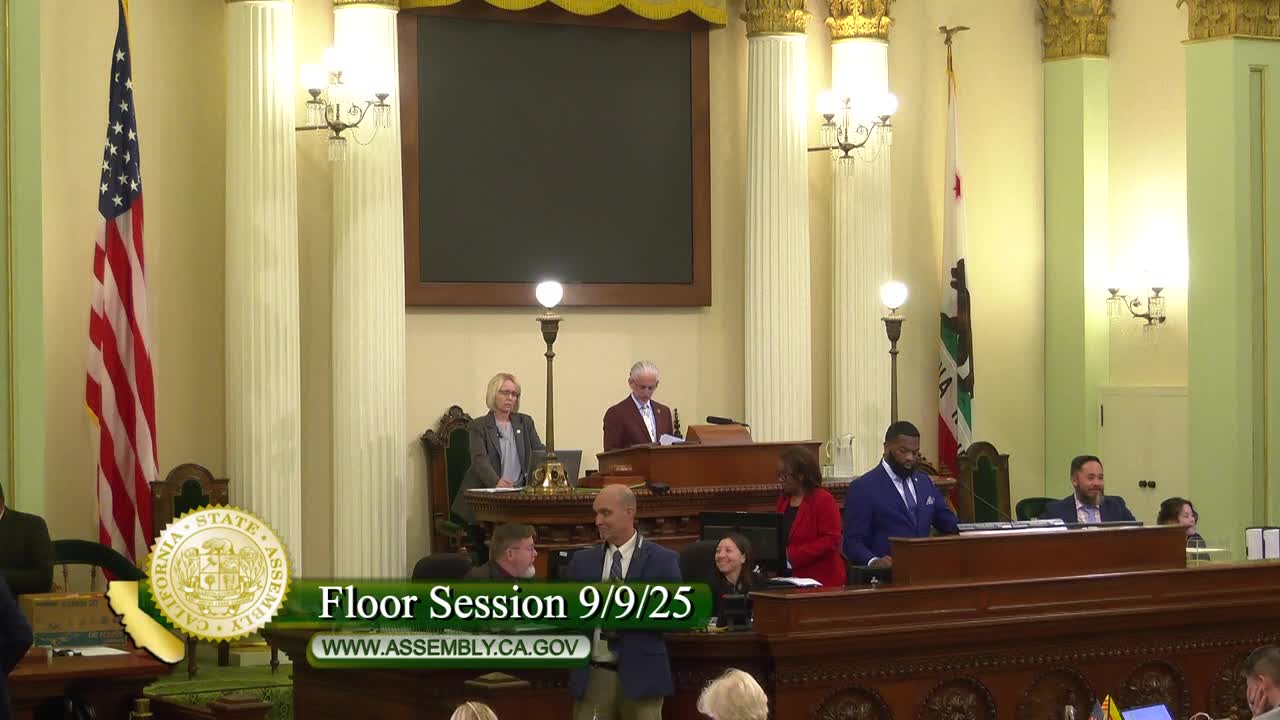 59SEC
Assembly Floor
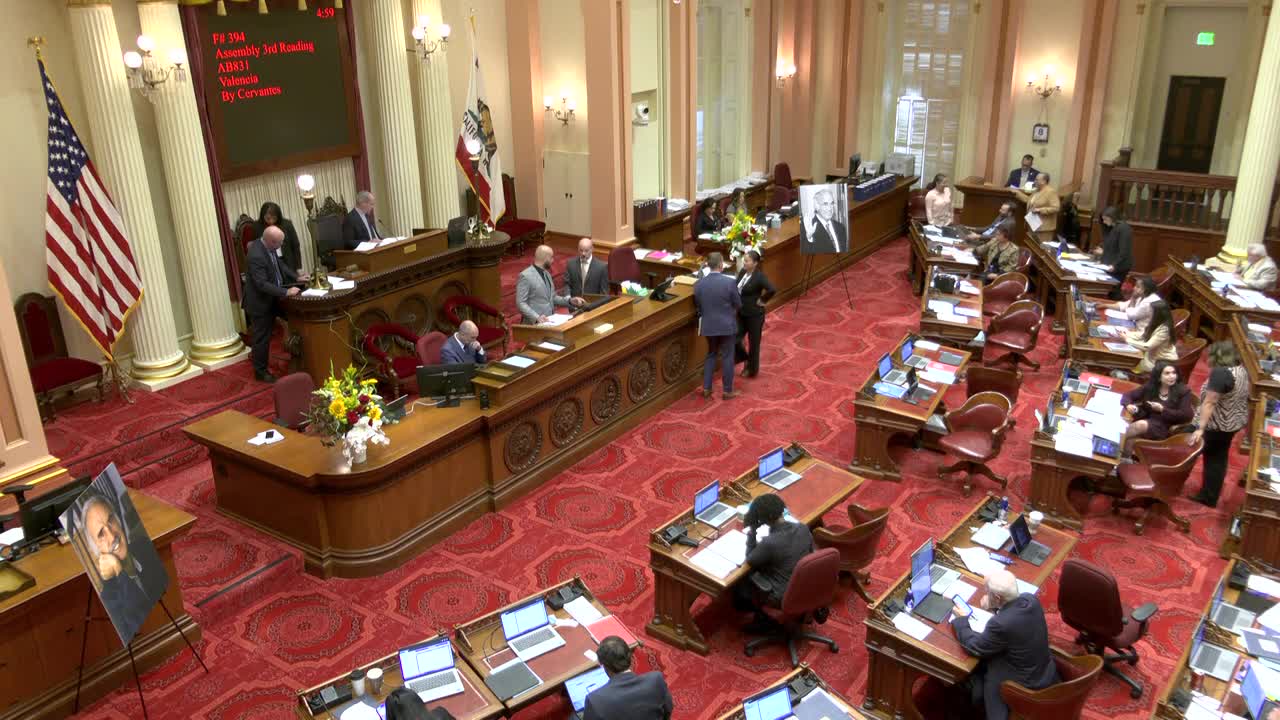 2MIN
Senate Floor
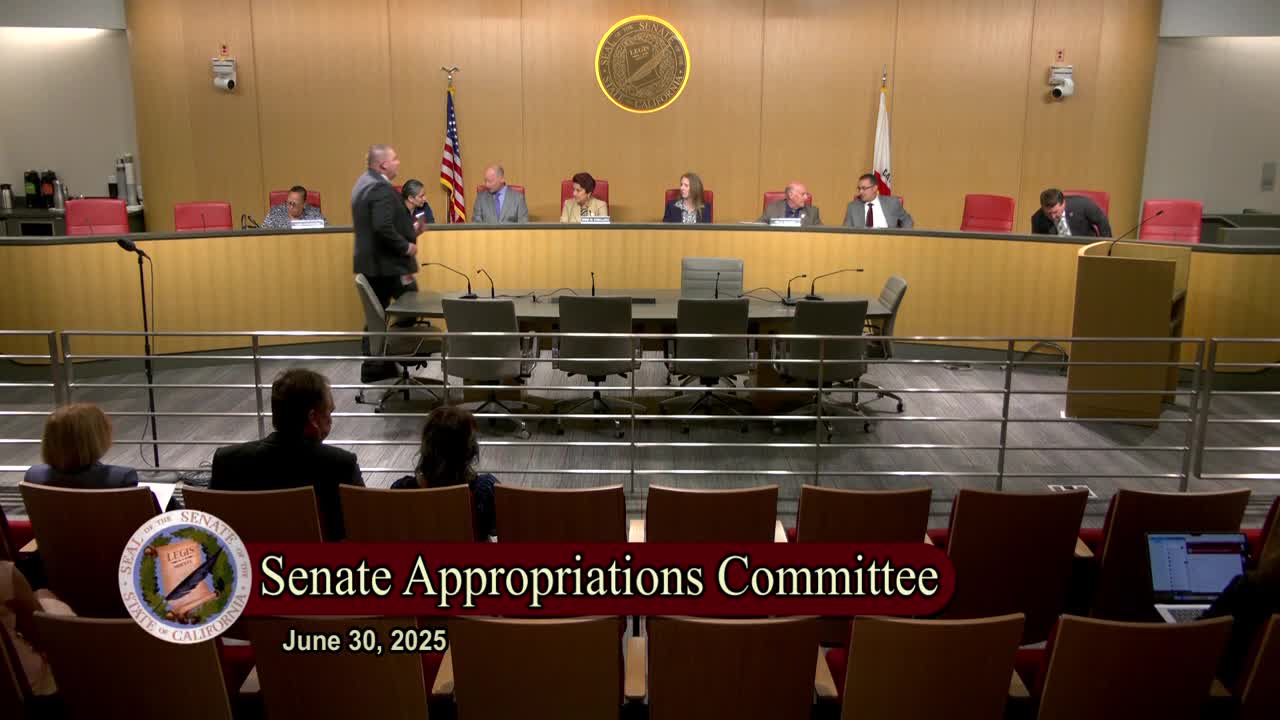 6SEC
Senate Standing Committee on Appropriations
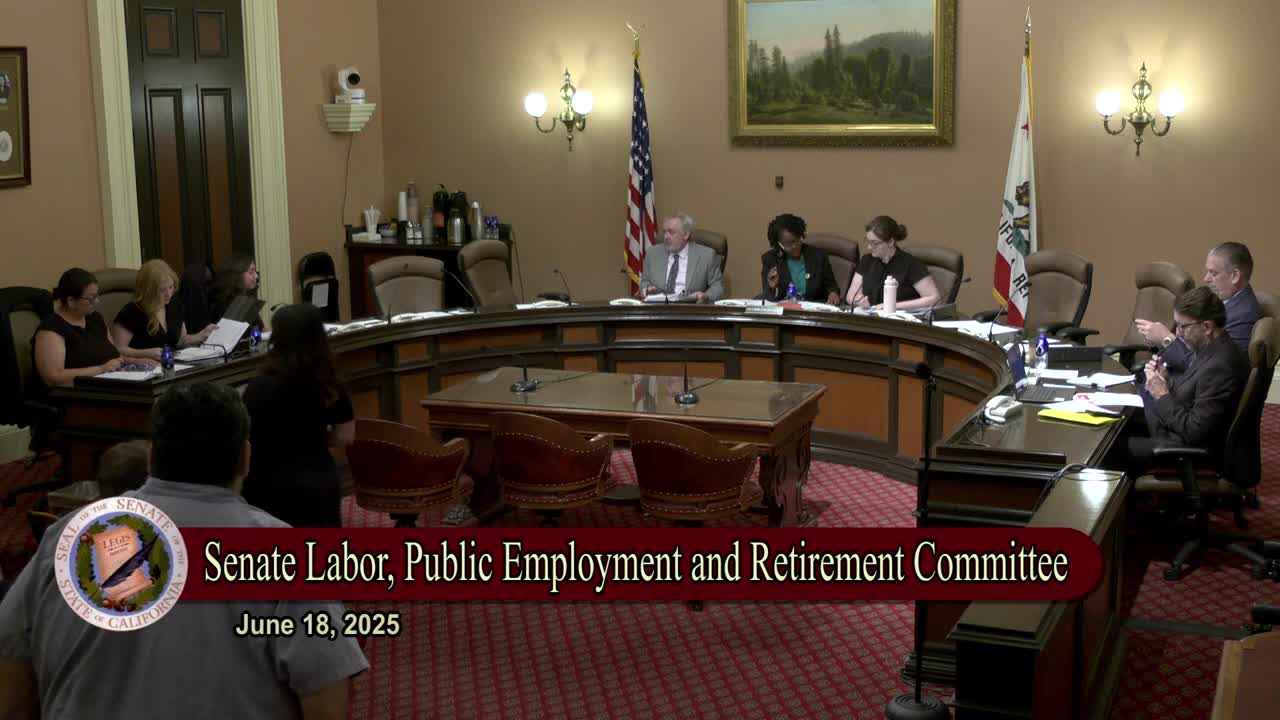 7MIN
Senate Standing Committee on Labor, Public Employment and Retirement
 1MIN
Assembly Floor
 8MIN
Assembly Standing Committee on Public Employment and Retirement


Bill Co-Author(s):