AB 395: Holidays.
- Session Year: 2025-2026
- House: Assembly
- Latest Version Date: 2026-09-30
Current Status:
Passed
(2026-09-30: Chaptered by Secretary of State - Chapter 865, Statutes of 2026.)
Introduced
In Committee
Awaiting First Chamber Vote
Passed First Chamber
In Committee
Awaiting Second Chamber Vote
Passed Second Chamber
Enacted
Existing law designates specific days as holidays in this state. Existing law designates holidays on which public schools are required to close.
This bill would require, commencing with the 202728 school year, the governing board of a school district, a county office of education, or the governing body of a charter school to consider making efforts to avoid scheduling the first day of class and high school graduation, if applicable, on a date for which the governing board of the school district, the county office of education, or the governing body of the charter school knows, or has reason to know, that members of the public would be unable to participate or be present due to the ritual observance of a religious, cultural, or ancestral holiday. The bill would require the governing board of a school district, a county office of education, or the governing body of a charter school, in considering and making a determination of which dates to avoid, to actively seek input from the affected community and consider any other relevant sources to ensure inclusive public participation.
The Donahoe Higher Education Act sets forth the missions and functions of Californias public segments of higher education and their respective institutions of higher education. The California State University, under the administration of the Trustees of the California State University, the California Community Colleges, under the administration of the Board of Governors of the California Community Colleges, and the University of California, under the administration of the Regents of the University of California, are 3 of the segments. Provisions of the act apply to the University of California only to the extent that the Regents of the University of California act, by appropriate resolution, to make them applicable.
This bill would require, commencing with the 202728 academic year, the governing board of a community college and the California State University, and would request the University of California, to make good faith, reasonable efforts, when developing academic calendars, to avoid calendaring an institutional event, as defined, on a date for which the institution of higher education knows, or has reason to know, that members of the public would be unable to participate or be present due to the ritual observance of a religious, cultural, or ancestral holiday. The bill would require the governing board of a community college and the California State University, and would request the University of California, in considering and making a determination of which dates to avoid, to seek input from the student and faculty organizations on campus.
The Bagley-Keene Open Meeting Act and the Ralph M. Brown Act require, with specified exceptions, that all meetings of specified governmental bodies be open and public and all persons be permitted to attend. Existing law prohibits a state agency, as defined, or a legislative body of a local agency, as defined, from conducting any meeting, conference, or other function in any facility that prohibits the admittance of any person, or persons, on the basis of ancestry or a specified characteristic, that is inaccessible to disabled persons, or where members of the public may not be present without making a payment or purchase.
This bill would require a state agency to make good faith, reasonable efforts to avoid conducting any meeting, conference, or other function on a date for which the state agency knows, or has reason to know, that members of the public would be unable to participate or be present due to the ritual observance of a religious, cultural, or ancestral holiday, including, among others, Eid al-Adha, Rosh Hashanah, and Diwali. The bill would also encourage a legislative body of a local agency to consider making efforts to avoid conducting any meeting, conference, or other function on a date for which the legislative body knows, or has reason to know, that members of the public would be unable to participate or be present due to the ritual observance of a religious, cultural, or ancestral holiday, including, among others, the holidays listed above.
By imposing new duties on school districts and community college districts, the bill would impose a state-mandated local program.
This bill would authorize a person who has suffered harm as a result of a violation of certain of the above provisions to bring a civil action for injunctive relief, as provided.
The California Constitution requires local agencies, for the purpose of ensuring public access to the meetings of public bodies and the writings of public officials and agencies, to comply with a statutory enactment that amends or enacts laws relating to public records or open meetings and contains findings demonstrating that the enactment furthers the constitutional requirements relating to this purpose.
This bill would make legislative findings to that effect.
The California Constitution requires the state to reimburse local agencies and school districts for certain costs mandated by the state. Statutory provisions establish procedures for making that reimbursement.
This bill would provide that, if the Commission on State Mandates determines that the bill contains costs mandated by the state, reimbursement for those costs shall be made pursuant to the statutory provisions noted above.
Existing law designates specific days as holidays in this state. Existing law designates holidays on which public schools are required to close.
This bill would require, commencing with the 202627 202728 school year, the governing board of a school district, a county office of education, or the governing body of a charter school to consider making efforts to avoid scheduling the first day of class and high school graduation, if applicable, on a date for which the governing board of the school district, the county office of education, or the governing body of the charter school knows, or has reason to know, that members of the public would be unable to participate or be present due to the ritual observance of a religious, cultural, or ancestral holiday. The bill would require the governing board of a school district, a county office of education, or the governing body of a charter school, in considering and making a determination of which dates to avoid, to actively seek input from the affected community and consider any other relevant sources to ensure inclusive public participation.
The Donahoe Higher Education Act sets forth the missions and functions of Californias public segments of higher education and their respective institutions of higher education. The California State University, under the administration of the Trustees of the California State University, the California Community Colleges, under the administration of the Board of Governors of the California Community Colleges, and the University of California, under the administration of the Regents of the University of California, are 3 of the segments. Provisions of the act apply to the University of California only to the extent that the Regents of the University of California act, by appropriate resolution, to make them applicable.
This bill would require, commencing with the 20262027 202728 academic year, the governing board of a community college and the California State University, and would request the University of California, to make good faith, reasonable efforts, when developing academic calendars, to avoid calendaring an institutional event, as defined, on a date for which the institution of higher education knows, or has reason to know, that members of the public would be unable to participate or be present due to the ritual observance of a religious, cultural, or ancestral holiday. The bill would require the governing board of a community college and the California State University, and would request the University of California, in considering and making a determination of which dates to avoid, to seek input from the student and faculty organizations on campus.
The Bagley-Keene Open Meeting Act and the Ralph M. Brown Act require, with specified exceptions, that all meetings of specified governmental bodies be open and public and all persons be permitted to attend. Existing law prohibits a state agency, as defined, or a legislative body of a local agency, as defined, from conducting any meeting, conference, or other function in any facility that prohibits the admittance of any person, or persons, on the basis of ancestry or a specified characteristic, that is inaccessible to disabled persons, or where members of the public may not be present without making a payment or purchase.
This bill would require a state agency to make good faith, reasonable efforts to avoid conducting any meeting, conference, or other function on a date for which the state agency knows, or has reason to know, that members of the public would be unable to participate or be present due to the ritual observance of a religious, cultural, or ancestral holiday, including, among others, Eid al-Adha, Rosh Hashanah, and Diwali. The bill would also encourage a legislative body of a local agency to consider making efforts to avoid conducting any meeting, conference, or other function on a date for which the legislative body knows, or has reason to know, that members of the public would be unable to participate or be present due to the ritual observance of a religious, cultural, or ancestral holiday, including, among others, the holidays listed above.
By imposing new duties on school districts and community college districts, the bill would impose a state-mandated local program.
This bill would authorize a person who has suffered harm as a result of a violation of certain of the above provisions to bring a civil action for injunctive relief, as provided.
The California Constitution requires local agencies, for the purpose of ensuring public access to the meetings of public bodies and the writings of public officials and agencies, to comply with a statutory enactment that amends or enacts laws relating to public records or open meetings and contains findings demonstrating that the enactment furthers the constitutional requirements relating to this purpose.
This bill would make legislative findings to that effect.
The California Constitution requires the state to reimburse local agencies and school districts for certain costs mandated by the state. Statutory provisions establish procedures for making that reimbursement.
This bill would provide that, if the Commission on State Mandates determines that the bill contains costs mandated by the state, reimbursement for those costs shall be made pursuant to the statutory provisions noted above.
Existing law designates specific days as holidays in this state. Existing law designates holidays on which public schools are required to close.
This bill would require, commencing with the 202627 school year, the governing board of a school district, a county office of education, or the governing body of a charter school to consider making efforts to avoid scheduling the first day of class and high school graduation, if applicable, on a date for which the governing board of the school district, the county office of education, or the governing body of the charter school knows, or has reason to know, that members of the public would be unable to participate or be present due to the ritual observance of a religious, cultural, or ancestral holiday. The bill would require the governing board of a school district, a county office of education, or the governing body of a charter school, in considering and making a determination of which dates to avoid, to actively seek input from the affected community and consider any other relevant sources to ensure inclusive public participation.
The Donahoe Higher Education Act sets forth the missions and functions of Californias public segments of higher education and their respective institutions of higher education. The California State University, under the administration of the Trustees of the California State University, the California Community Colleges, under the administration of the Board of Governors of the California Community Colleges, and the University of California, under the administration of the Regents of the University of California, are 3 of the segments. Provisions of the act apply to the University of California only to the extent that the Regents of the University of California act, by appropriate resolution, to make them applicable.
This bill would require, commencing with the 20262027 academic year, the governing board of a community college and the California State University, and would request the University of California, to make every good faith, reasonable effort, efforts, when developing academic calendars, to avoid calendaring an institutional event, as defined, on a date for which the institution of higher education knows, or has reason to know, that members of the public would be unable to participate or be present due to the ritual observance of a religious, cultural, or ancestral holiday. The bill would require the governing board of a community college and the California State University, and would request the University of California, in considering and making a determination of which dates to avoid, to seek input from the student and faculty organizations on campus.
The Bagley-Keene Open Meeting Act and the Ralph M. Brown Act require, with specified exceptions, that all meetings of specified governmental bodies be open and public and all persons be permitted to attend. Existing law prohibits a state agency, as defined, or a legislative body of a local agency, as defined, from conducting any meeting, conference, or other function in any facility that prohibits the admittance of any person, or persons, on the basis of ancestry or a specified characteristic, that is inaccessible to disabled persons, or where members of the public may not be present without making a payment or purchase.
This bill would require a state agency to make every good faith, reasonable effort efforts to avoid conducting any meeting, conference, or other function on a date for which the state agency knows, or has reason to know, that members of the public would be unable to participate or be present due to the ritual observance of a religious, cultural, or ancestral holiday, including, among others, Eid al-Adha, Rosh Hashanah, and Diwali. The bill would also encourage a legislative body of a local agency to consider making efforts to avoid conducting any meeting, conference, or other function on a date for which the legislative body knows, or has reason to know, that members of the public would be unable to participate or be present due to the ritual observance of a religious, cultural, or ancestral holiday, including, among others, the holidays listed above.
By imposing new duties on school districts and community college districts, the bill would impose a state-mandated local program.
This bill would authorize a person who has suffered harm as a result of a violation of certain of the above provisions to bring a civil action for injunctive relief, as provided.
The California Constitution requires local agencies, for the purpose of ensuring public access to the meetings of public bodies and the writings of public officials and agencies, to comply with a statutory enactment that amends or enacts laws relating to public records or open meetings and contains findings demonstrating that the enactment furthers the constitutional requirements relating to this purpose.
This bill would make legislative findings to that effect.
The California Constitution requires the state to reimburse local agencies and school districts for certain costs mandated by the state. Statutory provisions establish procedures for making that reimbursement.
This bill would provide that, if the Commission on State Mandates determines that the bill contains costs mandated by the state, reimbursement for those costs shall be made pursuant to the statutory provisions noted above.
Existing law designates specific days as holidays in this state. Existing law designates holidays on which public schools are required to close.
This bill would require, commencing with the 202627 school year, the governing board of a school district, a county office of education, or the governing body of a charter school to consider making efforts to avoid scheduling the first day of class and high school graduation, if applicable, on a date for which the governing board or of the school district, the county office of education education, or the governing body of the charter school knows, or has reason to know, that members of the public would be unable to participate or be present due to the ritual observance of a religious, cultural, or ancestral holiday. The bill would require the governing board or the of a school district, a county office of education, education, or the governing body of a charter school, in considering and making a determination of which dates to avoid, to actively seek input from the affected community and consider any other relevant sources to ensure inclusive public participation.
The Donahoe Higher Education Act sets forth the missions and functions of Californias public segments of higher education and their respective institutions of higher education. The California State University, under the administration of the Trustees of the California State University, the California Community Colleges, under the administration of the Board of Governors of the California Community Colleges, and the University of California, under the administration of the Regents of the University of California, are 3 of the segments. Provisions of the act apply to the University of California only to the extent that the Regents of the University of California act, by appropriate resolution, to make them applicable.
This bill would require, commencing with the 20262027 academic year, the governing board of a community college and the California State University, and would request the University of California, to make every reasonable effort, when developing academic calendars, to avoid calendaring an institutional event, as defined, on a date for which the institution of higher education knows, or has reason to know, that members of the public would be unable to participate or be present due to the ritual observance of a religious, cultural, or ancestral holiday. The bill would require the governing board of a community college and the California State University, and would request the University of California, in considering and making a determination of which dates to avoid, to seek input from the student and faculty organizations on campus.
The Bagley-Keene Open Meeting Act and the Ralph M. Brown Act require, with specified exceptions, that all meetings of specified governmental bodies be open and public and all persons be permitted to attend. Existing law prohibits a state agency, as defined, or a legislative body of a local agency, as defined, from conducting any meeting, conference, or other function in any facility that prohibits the admittance of any person, or persons, on the basis of ancestry or a specified characteristic, that is inaccessible to disabled persons, or where members of the public may not be present without making a payment or purchase.
This bill would require a state agency to make every reasonable effort to avoid conducting any meeting, conference, or other function on a date for which the state agency knows, or has reason to know, that members of the public would be unable to participate or be present due to the ritual observance of a religious, cultural, or ancestral holiday, including, among others, Eid al-Adha, Rosh Hashanah, and Diwali. The bill would also encourage a legislative body of a local agency to consider making efforts to avoid conducting any meeting, conference, or other function on a date for which the legislative body knows, or has reason to know, that members of the public would be unable to participate or be present due to the ritual observance of a religious, cultural, or ancestral holiday, including, among others, the holidays listed above.
By imposing new duties on school districts and community college districts, the bill would impose a state-mandated local program.
The California Constitution requires local agencies, for the purpose of ensuring public access to the meetings of public bodies and the writings of public officials and agencies, to comply with a statutory enactment that amends or enacts laws relating to public records or open meetings and contains findings demonstrating that the enactment furthers the constitutional requirements relating to this purpose.
This bill would make legislative findings to that effect.
The California Constitution requires the state to reimburse local agencies and school districts for certain costs mandated by the state. Statutory provisions establish procedures for making that reimbursement.
This bill would provide that, if the Commission on State Mandates determines that the bill contains costs mandated by the state, reimbursement for those costs shall be made pursuant to the statutory provisions noted above.
Existing law designates specific days as holidays in this state. Existing law designates holidays on which public schools are required to close.
This bill would require, commencing with the 202627 school year, the governing board of a school district, a county office of education, or the governing body of a charter school to consider making efforts to avoid scheduling the first day of class and high school graduation, if applicable, on a date for which the governing board or county office of education knows, or has reason to know, that members of the public would be unable to participate or be present due to the ritual observance of a religious, cultural, or ancestral holiday. The bill would require the governing board or the county office of education, in considering and making a determination of which dates to avoid, to actively seek input from the affected community and consider any other relevant sources to ensure inclusive public participation.
The Donahoe Higher Education Act sets forth the missions and functions of Californias public segments of higher education and their respective institutions of higher education. The California State University, under the administration of the Trustees of the California State University, the California Community Colleges, under the administration of the Board of Governors of the California Community Colleges, and the University of California, under the administration of the Regents of the University of California, are 3 of the segments. Provisions of the act apply to the University of California only to the extent that the Regents of the University of California act, by appropriate resolution, to make them applicable.
This bill would require, commencing with the 20262027 academic year, the California State University and the California Community Colleges, governing board of a community college and the California State University, and would request the University of California, to make every reasonable effort, when developing academic calendars, to avoid commencing an academic term calendaring an institutional event, as defined, on a date for which the institution of higher education knows, or has reason to know, that members of the public would be unable to participate or be present due to the ritual observance of a religious, cultural, or ancestral holiday. The bill would require the governing board of a community college and the California State University, and would request the University of California, in considering and making a determination of which dates to avoid, to seek input from the student and faculty organizations on campus.
The Bagley-Keene Open Meeting Act and the Ralph M. Brown Act require, with specified exceptions, that all meetings of specified governmental bodies be open and public and all persons be permitted to attend. Existing law prohibits a state agency, as defined, or a legislative body of a local agency, as defined, from conducting any meeting, conference, or other function in any facility that prohibits the admittance of any person, or persons, on the basis of ancestry or a specified characteristic, that is inaccessible to disabled persons, or where members of the public may not be present without making a payment or purchase.
This bill would require a state agency to make every reasonable effort to avoid conducting any meeting, conference, or other function on a date for which the state agency knows, or has reason to know, that members of the public would be unable to participate or be present due to the ritual observance of a religious, cultural, or ancestral holiday, including, among others, Eid al-Adha, Rosh Hashanah, and Diwali. The bill would also encourage a legislative body of a local agency to consider making efforts to avoid conducting any meeting, conference, or other function on a date for which the legislative body knows, or has reason to know, that members of the public would be unable to participate or be present due to the ritual observance of a religious, cultural, or ancestral holiday, including, among others, the holidays listed above.
By imposing new duties on school districts and community college districts, the bill would impose a state-mandated local program.
The California Constitution requires local agencies, for the purpose of ensuring public access to the meetings of public bodies and the writings of public officials and agencies, to comply with a statutory enactment that amends or enacts laws relating to public records or open meetings and contains findings demonstrating that the enactment furthers the constitutional requirements relating to this purpose.
This bill would make legislative findings to that effect.
The California Constitution requires the state to reimburse local agencies and school districts for certain costs mandated by the state. Statutory provisions establish procedures for making that reimbursement.
This bill would provide that, if the Commission on State Mandates determines that the bill contains costs mandated by the state, reimbursement for those costs shall be made pursuant to the statutory provisions noted above.
Existing law designates specific days as holidays in this state. Existing law designates holidays on which public schools are required to close.
This bill would require require, commencing with the 202627 school year, the governing board of a school district or charter school, district, or a county office of education, or the governing body of a charter school to consider making efforts to avoid scheduling the first day of class and high school graduation, if applicable, on a date for which the governing board or county office of education knows, or has reason to know, that members of the public would be unable to participate or be present due to the ritual observance of a religious, cultural, or ancestral holiday, including, among others, Eid al-Adha, Rosh Hashanah, and Diwali. holiday. The bill would require the governing board or the county office of education, in considering and making a determination of which dates to avoid, to actively seek input from the affected community and consider any other relevant sources to ensure inclusive public participation.
The Donahoe Higher Education Act sets forth the missions and functions of Californias public segments of higher education and their respective institutions of higher education. The California State University, under the administration of the Trustees of the California State University, the California Community Colleges, under the administration of the Board of Governors of the California Community Colleges, and the University of California, under the administration of the Regents of the University of California, are 3 of the segments. Provisions of the act apply to the University of California only to the extent that the Regents of the University of California act, by appropriate resolution, to make them applicable.
This bill would require require, commencing with the 20262027 academic year, the California State University and the California Community Colleges, and would request the University of California, to make every reasonable effort, when developing academic calendars, to avoid commencing an academic term on a date for which the institution of higher education knows, or has reason to know, that members of the public would be unable to participate or be present due to the ritual observance of a religious, cultural, or ancestral holiday, including, among others, the holidays listed above. holiday.
The Bagley-Keene Open Meeting Act and the Ralph M. Brown Act require, with specified exceptions, that all meetings of specified governmental bodies be open and public and all persons be permitted to attend. Existing law prohibits a state agency, as defined, or a legislative body of a local agency, as defined, from conducting any meeting, conference, or other function in any facility that prohibits the admittance of any person, or persons, on the basis of ancestry or a specified characteristic, that is inaccessible to disabled persons, or where members of the public may not be present without making a payment or purchase.
This bill would require a state agency to make every reasonable effort to avoid conducting any meeting, conference, or other function on a date for which the state agency knows, or has reason to know, that members of the public would be unable to participate or be present due to the ritual observance of a religious, cultural, or ancestral holiday, including, among others, the holidays listed above. Eid al-Adha, Rosh Hashanah, and Diwali. The bill would also encourage a legislative body of a local agency to consider making efforts to avoid conducting any meeting, conference, or other function on a date for which the legislative body knows, or has reason to know, that members of the public would be unable to participate or be present due to the ritual observance of a religious, cultural, or ancestral holiday, including, among others, the holidays listed above.
By imposing new duties on school districts and community college districts, the bill would impose a state-mandated local program.
The California Constitution requires local agencies, for the purpose of ensuring public access to the meetings of public bodies and the writings of public officials and agencies, to comply with a statutory enactment that amends or enacts laws relating to public records or open meetings and contains findings demonstrating that the enactment furthers the constitutional requirements relating to this purpose.
This bill would make legislative findings to that effect.
The California Constitution requires the state to reimburse local agencies and school districts for certain costs mandated by the state. Statutory provisions establish procedures for making that reimbursement.
This bill would provide that, if the Commission on State Mandates determines that the bill contains costs mandated by the state, reimbursement for those costs shall be made pursuant to the statutory provisions noted above.
Existing law designates specific days as holidays in this state. Existing law designates holidays on which public schools are required to close.
This bill would require the governing board of a school district or charter school, or a county office of education, to consider making efforts to avoid scheduling the first day of class and high school graduation, if applicable, on a date for which the governing board or county office of education knows, or has reason to know, that members of the public would be unable to participate or be present due to the ritual observance of a religious, cultural, or ancestral holiday, including, among others, Eid al-Adha, Rosh Hashanah, and Diwali. The bill would require the governing board or the county office of education, in considering and making a determination of which dates to avoid, to actively seek input from the affected community and consider any other relevant sources to ensure inclusive public participation.
The Donahoe Higher Education Act sets forth the missions and functions of Californias public segments of higher education and their respective institutions of higher education. The California State University, under the administration of the Trustees of the California State University, the California Community Colleges, under the administration of the Board of Governors of the California Community Colleges, and the University of California, under the administration of the Regents of the University of California, are 3 of the segments. Provisions of the act apply to the University of California only to the extent that the Regents of the University of California act, by appropriate resolution, to make them applicable.
This bill would require the California State University and the California Community Colleges, and would request the University of California, to make every reasonable effort, when developing academic calendars, to avoid commencing an academic term on a date for which the institution of higher education knows, or has reason to know, that members of the public would be unable to participate or be present due to the ritual observance of a religious, cultural, or ancestral holiday, including, among others, the holidays listed above.
The Bagley-Keene Open Meeting Act and the Ralph M. Brown Act require, with specified exceptions, that all meetings of specified governmental bodies be open and public and all persons be permitted to attend. Existing law prohibits a state agency, as defined, or a legislative body of a local agency, as defined, from conducting any meeting, conference, or other function in any facility that prohibits the admittance of any person, or persons, on the basis of ancestry or a specified characteristic, that is inaccessible to disabled persons, or where members of the public may not be present without making a payment or purchase.
This bill would require a state agency to make every reasonable effort to avoid conducting any meeting, conference, or other function on a date for which the state agency knows, or has reason to know, that members of the public would be unable to participate or be present due to the ritual observance of a religious, cultural, or ancestral holiday, including, among others, the holidays listed above. The bill would also encourage a legislative body of a local agency to consider making efforts to avoid conducting any meeting, conference, or other function on a date for which the legislative body knows, or has reason to know, that members of the public would be unable to participate or be present due to the ritual observance of a religious, cultural, or ancestral holiday, including, among others, the holidays listed above.
By imposing new duties on school districts and community college districts, the bill would impose a state-mandated local program.
The California Constitution requires local agencies, for the purpose of ensuring public access to the meetings of public bodies and the writings of public officials and agencies, to comply with a statutory enactment that amends or enacts laws relating to public records or open meetings and contains findings demonstrating that the enactment furthers the constitutional requirements relating to this purpose.
This bill would make legislative findings to that effect.
The California Constitution requires the state to reimburse local agencies and school districts for certain costs mandated by the state. Statutory provisions establish procedures for making that reimbursement.
This bill would provide that, if the Commission on State Mandates determines that the bill contains costs mandated by the state, reimbursement for those costs shall be made pursuant to the statutory provisions noted above.
Existing law prohibits the unlawful denial of full and equal access to the benefits of, or the unlawful discrimination under, any program or activity that is conducted, operated, or administered by the state or by any state agency, that is funded directly by the state, or that receives any financial assistance from the state, for a person on the basis of sex, race, color, religion, ancestry, national origin, ethnic group identification, age, mental disability, physical disability, medical condition, genetic information, marital status, or sexual orientation.This bill would declare the intent of the Legislature to subsequently amend this bill to include provisions that would defend accessibility to state agency programs.Existing law prohibits the unlawful denial of full and equal access to the benefits of, or the unlawful discrimination under, any program or activity that is conducted, operated, or administered by the state or by any state agency, that is funded directly by the state, or that receives any financial assistance from the state, for a person on the basis of sex, race, color, religion, ancestry, national origin, ethnic group identification, age, mental disability, physical disability, medical condition, genetic information, marital status, or sexual orientation.
This bill would declare the intent of the Legislature to subsequently amend this bill to include provisions that would defend accessibility to state agency programs.
(a)Commencing with the 202728 school year, the governing board of a school district, a county office of education, or the governing body of a charter school shall consider making efforts to avoid scheduling the first day of class and high school graduation, if applicable, on a date for which the governing board of the school district, the county office of education, or the governing body of the charter school knows, or has reason to know, that members of the public would be unable to participate or be present due to the ritual observance of a religious, cultural, or ancestral holiday.
(b)In considering and making a determination of which dates to avoid, the governing board of a school district, a county office of education, or the governing body of a charter school shall actively seek input from the affected community and consider any other relevant sources to ensure inclusive public participation.
SEC. 2.Article 12 (commencing with Section 66095) is added to Chapter 2 of Part 40 of Division 5 of Title 3 of the Education Code, to read:12.Academic Calendar66095.(a)Commencing with the 202728 academic year, the governing board of a community college and the California State University shall, and the University of California is requested to, make good faith, reasonable efforts when developing academic calendars to avoid calendaring an institutional event on a date for which the institution of higher education knows, or has reason to know, that members of the public would be unable to participate or be present due to the ritual observance of a religious, cultural, or ancestral holiday.
(b)As used in this section, institutional event means an event on the academic or institutional calendar for which students are mandated to attend, including, but not limited to, all of the following:
(1)Student orientation.
(2)Student housing move-in day.
(3)Final exam week.
(4)The beginning or ending of an academic term.
(5)Commencement ceremonies.
(c)In considering and making a determination of which dates to avoid, the governing board of a community college and the California State University shall, and the University of California is requested to, seek input from the student and faculty organizations on campus prior to the calendaring of institutional events.
(d)(1)A person who has suffered harm as a result of a violation of this section may bring a civil action. The sole remedy available in that action shall be injunctive relief.
(2)Before filing a lawsuit brought pursuant to paragraph (1), a person who believes that the institution has not made good faith, reasonable efforts to implement this section shall request that the institution provide in writing the specific basis for the institutions determination that it could not avoid scheduling an institutional event that may conflict with the ritual observance of a religious, cultural, or ancestral holiday.
(3)To prevail in an action for injunctive relief brought pursuant to paragraph (1), the plaintiff shall demonstrate by clear and convincing evidence that the violation was due to bad faith, willful misconduct, or callous disregard on the part of the respondent.
SEC. 3.Section 11131 of the Government Code is amended to read:11131.(a)As used in this section, state agency means and includes every state body, office, officer, department, division, bureau, board, council, commission, or other state agency.
(b)A state agency shall not conduct any meeting, conference, or other function in any facility that prohibits the admittance of any person, or persons, on the basis of ancestry or any characteristic listed or defined in Section 11135, that is inaccessible to disabled persons, or where members of the public may not be present without making a payment or purchase.
(c)A state agency shall make good faith, reasonable efforts to avoid conducting any meeting, conference, or other function on a date for which the state agency knows, or has reason to know, that members of the public would be unable to participate or be present due to the ritual observance of a religious, cultural, or ancestral holiday, including, but not limited to, all of the following:
(1)Eid al-Adha.
(2)Eid al-Fitr.
(3)Feast of the Nativity.
(4)Maha Shivaratri.
(5)The first and last two days of Pesach, also known as Passover.
(6)Rosh Hashanah.
(7)Yom Kippur.
(8)Diwali.
(9)Dussehra.
(d)(1)A person who has suffered harm as a result of a violation of subdivision (c) may bring a civil action. The sole remedy available in that action shall be injunctive relief.
(2)Before filing a lawsuit brought pursuant to paragraph (1), a person who believes that the state agency has not made good faith, reasonable efforts to implement this section shall request that the state agency provide in writing the specific basis for the state agencys determination that it could not avoid scheduling a meeting, conference, or other function that may conflict with the ritual observance of a religious, cultural, or ancestral holiday.
(3)To prevail in an action for injunctive relief brought pursuant to paragraph (1), the plaintiff shall demonstrate by clear and convincing evidence that the violation was due to bad faith, willful misconduct, or callous disregard on the part of the respondent.
SEC. 4.Section 54961 of the Government Code is amended to read:54961.(a)A legislative body of a local agency shall not conduct any meeting in any facility that prohibits the admittance of any person, or persons, on the basis of ancestry or any characteristic listed or defined in Section 11135, that is inaccessible to disabled persons, or where members of the public may not be present without making a payment or purchase. This section applies to every local agency as defined in Section 54951.
(b)A legislative body of a local agency is encouraged to consider making efforts to avoid conducting any meeting, conference, or other function on a date for which the legislative body knows, or has reason to know, that members of the public would be unable to participate or be present due to the ritual observance of a religious, cultural, or ancestral holiday, including, but not limited to, all of the following:
(1)Eid al-Adha.
(2)Eid al-Fitr.
(3)Feast of the Nativity.
(4)Maha Shivaratri.
(5)The first and last two days of Pesach, also known as Passover.
(6)Rosh Hashanah.
(7)Yom Kippur.
(8)Diwali.
(9)Dussehra.
(c)No notice, agenda, announcement, or report required under this chapter need identify any victim or alleged victim of tortious sexual conduct or child abuse unless the identity of the person has been publicly disclosed.
SEC. 5.The Legislature finds and declares that Section 4 of this act, which amends Section 54961 of the Government Code, furthers, within the meaning of paragraph (7) of subdivision (b) of Section 3 of Article I of the California Constitution, the purposes of that constitutional section as it relates to the right of public access to the meetings of local public bodies or the writings of local public officials and local agencies. Pursuant to paragraph (7) of subdivision (b) of Section 3 of Article I of the California Constitution, the Legislature makes the following findings:
By encouraging local agencies to avoid conducting any meeting, conference, or other function on a religious, cultural, or ancestral holiday, this act furthers the purpose of the Civil Rights Act of 1964, and promotes greater public access to the public meetings of local agencies.
SEC. 6.If the Commission on State Mandates determines that this act contains costs mandated by the state, reimbursement to local agencies and school districts for those costs shall be made pursuant to Part 7 (commencing with Section 17500) of Division 4 of Title 2 of the Government Code.
(a)Commencing with the 202728 school year, the governing board of a school district, a county office of education, or the governing body of a charter school shall consider making efforts to avoid scheduling the first day of class and high school graduation, if applicable, on a date for which the governing board of the school district, the county office of education, or the governing body of the charter school knows, or has reason to know, that members of the public would be unable to participate or be present due to the ritual observance of a religious, cultural, or ancestral holiday.
(b)In considering and making a determination of which dates to avoid, the governing board of a school district, a county office of education, or the governing body of a charter school shall actively seek input from the affected community and consider any other relevant sources to ensure inclusive public participation.
SEC. 2.Article 12 (commencing with Section 66095) is added to Chapter 2 of Part 40 of Division 5 of Title 3 of the Education Code, to read:12.Academic Calendar66095.(a)Commencing with the 202728 academic year, the governing board of a community college and the California State University shall, and the University of California is requested to, make good faith, reasonable efforts when developing academic calendars to avoid calendaring an institutional event on a date for which the institution of higher education knows, or has reason to know, that members of the public would be unable to participate or be present due to the ritual observance of a religious, cultural, or ancestral holiday.
(b)As used in this section, institutional event means an event on the academic or institutional calendar for which students are mandated to attend, including, but not limited to, all of the following:
(1)Student orientation.
(2)Student housing move-in day.
(3)Academic examination days. Final exam week.
(4)The beginning or ending of an academic term.
(5)Commencement ceremonies.
(c)In considering and making a determination of which dates to avoid, the governing board of a community college and the California State University shall, and the University of California is requested to, seek input from the student and faculty organizations on campus prior to the calendaring of institutional events.
(d)(1)A person who has suffered harm as a result of a violation of this section may bring a civil action. The sole remedy available in that action shall be injunctive relief.
(2)Before filing a lawsuit brought pursuant to paragraph (1), a person who believes that the institution has not made good faith, reasonable efforts to implement this section shall request that the institution provide in writing the specific basis for the institutions determination that it could not avoid scheduling an institutional event that may conflict with the ritual observance of a religious, cultural, or ancestral holiday.
(2)(3)To prevail in an action for injunctive relief brought pursuant to paragraph (1), the plaintiff shall demonstrate by clear and convincing evidence that the violation was due to bad faith, willful misconduct, or callous disregard on the part of the respondent.
SEC. 3.Section 11131 of the Government Code is amended to read:11131.(a)As used in this section, state agency means and includes every state body, office, officer, department, division, bureau, board, council, commission, or other state agency.
(b)A state agency shall not conduct any meeting, conference, or other function in any facility that prohibits the admittance of any person, or persons, on the basis of ancestry or any characteristic listed or defined in Section 11135, that is inaccessible to disabled persons, or where members of the public may not be present without making a payment or purchase.
(c)A state agency shall make good faith, reasonable efforts to avoid conducting any meeting, conference, or other function on a date for which the state agency knows, or has reason to know, that members of the public would be unable to participate or be present due to the ritual observance of a religious, cultural, or ancestral holiday, including, but not limited to, all of the following:
(1)Eid al-Adha.
(2)Eid al-Fitr.
(3)Feast of the Nativity.
(4)Maha Shivaratri.
(5)The first and last two days of Pesach, also known as Passover.
(6)Rosh Hashanah.
(7)Yom Kippur.
(8)Diwali.
(9)Dussehra.
(d)(1)A person who has suffered harm as a result of a violation of subdivision (c) may bring a civil action. The sole remedy available in that action shall be injunctive relief.
(2)Before filing a lawsuit brought pursuant to paragraph (1), a person who believes that the state agency has not made good faith, reasonable efforts to implement this section shall request that the state agency provide in writing the specific basis for the state agencys determination that it could not avoid scheduling a meeting, conference, or other function that may conflict with the ritual observance of a religious, cultural, or ancestral holiday.
(2)(3)To prevail in an action for injunctive relief brought pursuant to paragraph (1), the plaintiff shall demonstrate by clear and convincing evidence that the violation was due to bad faith, willful misconduct, or callous disregard on the part of the respondent.
SEC. 4.Section 54961 of the Government Code is amended to read:54961.(a)A legislative body of a local agency shall not conduct any meeting in any facility that prohibits the admittance of any person, or persons, on the basis of ancestry or any characteristic listed or defined in Section 11135, that is inaccessible to disabled persons, or where members of the public may not be present without making a payment or purchase. This section applies to every local agency as defined in Section 54951.
(b)A legislative body of a local agency is encouraged to consider making efforts to avoid conducting any meeting, conference, or other function on a date for which the legislative body knows, or has reason to know, that members of the public would be unable to participate or be present due to the ritual observance of a religious, cultural, or ancestral holiday, including, but not limited to, all of the following:
(1)Eid al-Adha.
(2)Eid al-Fitr.
(3)Feast of the Nativity.
(4)Maha Shivaratri.
(5)The first and last two days of Pesach, also known as Passover.
(6)Rosh Hashanah.
(7)Yom Kippur.
(8)Diwali.
(9)Dussehra.
(c)No notice, agenda, announcement, or report required under this chapter need identify any victim or alleged victim of tortious sexual conduct or child abuse unless the identity of the person has been publicly disclosed.
SEC. 5.The Legislature finds and declares that Section 4 of this act, which amends Section 54961 of the Government Code, furthers, within the meaning of paragraph (7) of subdivision (b) of Section 3 of Article I of the California Constitution, the purposes of that constitutional section as it relates to the right of public access to the meetings of local public bodies or the writings of local public officials and local agencies. Pursuant to paragraph (7) of subdivision (b) of Section 3 of Article I of the California Constitution, the Legislature makes the following findings:
By encouraging local agencies to avoid conducting any meeting, conference, or other function on a religious, cultural, or ancestral holiday, this act furthers the purpose of the Civil Rights Act of 1964, and promotes greater public access to the public meetings of local agencies.
SEC. 6.If the Commission on State Mandates determines that this act contains costs mandated by the state, reimbursement to local agencies and school districts for those costs shall be made pursuant to Part 7 (commencing with Section 17500) of Division 4 of Title 2 of the Government Code.
(a)Commencing with the 202627 202728 school year, the governing board of a school district, a county office of education, or the governing body of a charter school shall consider making efforts to avoid scheduling the first day of class and high school graduation, if applicable, on a date for which the governing board of the school district, the county office of education, or the governing body of the charter school knows, or has reason to know, that members of the public would be unable to participate or be present due to the ritual observance of a religious, cultural, or ancestral holiday.
(b)In considering and making a determination of which dates to avoid, the governing board of a school district, a county office of education, or the governing body of a charter school shall actively seek input from the affected community and consider any other relevant sources to ensure inclusive public participation.
SEC. 2.Article 12 (commencing with Section 66095) is added to Chapter 2 of Part 40 of Division 5 of Title 3 of the Education Code, to read:12.Academic Calendar66095.(a)Commencing with the 202627 202728 academic year, the governing board of a community college and the California State University shall, and the University of California is requested to, make good faith, reasonable efforts when developing academic calendars to avoid calendaring an institutional event on a date for which the institution of higher education knows, or has reason to know, that members of the public would be unable to participate or be present due to the ritual observance of a religious, cultural, or ancestral holiday.
(b)As used in this section, institutional event means an event on the academic or institutional calendar for which students are mandated to attend, including, but not limited to, all of the following:
(1)Student orientation.
(2)Student housing move-in day.
(3)Academic examination days.
(4)The beginning or ending of an academic term.
(5)Commencement ceremonies.
(c)In considering and making a determination of which dates to avoid, the governing board of a community college and the California State University shall, and the University of California is requested to, seek input from the student and faculty organizations on campus prior to the calendaring of institutional events.
(d)(1)A person who has suffered harm as a result of a violation of this section may bring a civil action. The sole remedy available in that action shall be injunctive relief.
(2)To prevail in an action for injunctive relief brought pursuant to paragraph (1), the plaintiff shall demonstrate by clear and convincing evidence that the violation was due to bad faith, willful misconduct, or callous disregard on the part of the respondent.
SEC. 3.Section 11131 of the Government Code is amended to read:11131.(a)As used in this section, state agency means and includes every state body, office, officer, department, division, bureau, board, council, commission, or other state agency.
(b)A state agency shall not conduct any meeting, conference, or other function in any facility that prohibits the admittance of any person, or persons, on the basis of ancestry or any characteristic listed or defined in Section 11135, that is inaccessible to disabled persons, or where members of the public may not be present without making a payment or purchase.
(c)A state agency shall make good faith, reasonable efforts to avoid conducting any meeting, conference, or other function on a date for which the state agency knows, or has reason to know, that members of the public would be unable to participate or be present due to the ritual observance of a religious, cultural, or ancestral holiday, including, but not limited to, all of the following:
(1)Eid al-Adha.
(2)Eid al-Fitr.
(3)Feast of the Nativity.
(4)Maha Shivaratri.
(5)The first and last two days of Pesach, also known as Passover.
(6)Rosh Hashanah.
(7)Yom Kippur.
(8)Diwali.
(9)Dussehra.
(d)(1)A person who has suffered harm as a result of a violation of subdivision (c) may bring a civil action. The sole remedy available in that action shall be injunctive relief.
(2)To prevail in an action for injunctive relief brought pursuant to paragraph (1), the plaintiff shall demonstrate by clear and convincing evidence that the violation was due to bad faith, willful misconduct, or callous disregard on the part of the respondent.
SEC. 4.Section 54961 of the Government Code is amended to read:54961.(a)A legislative body of a local agency shall not conduct any meeting in any facility that prohibits the admittance of any person, or persons, on the basis of ancestry or any characteristic listed or defined in Section 11135, that is inaccessible to disabled persons, or where members of the public may not be present without making a payment or purchase. This section applies to every local agency as defined in Section 54951.
(b)A legislative body of a local agency is encouraged to consider making efforts to avoid conducting any meeting, conference, or other function on a date for which the legislative body knows, or has reason to know, that members of the public would be unable to participate or be present due to the ritual observance of a religious, cultural, or ancestral holiday, including, but not limited to, all of the following:
(1)Eid al-Adha.
(2)Eid al-Fitr.
(3)Feast of the Nativity.
(4)Maha Shivaratri.
(5)The first and last two days of Pesach, also known as Passover.
(6)Rosh Hashanah.
(7)Yom Kippur.
(8)Diwali.
(9)Dussehra.
(c)No notice, agenda, announcement, or report required under this chapter need identify any victim or alleged victim of tortious sexual conduct or child abuse unless the identity of the person has been publicly disclosed.
SEC. 5.The Legislature finds and declares that Section 4 of this act, which amends Section 54961 of the Government Code, furthers, within the meaning of paragraph (7) of subdivision (b) of Section 3 of Article I of the California Constitution, the purposes of that constitutional section as it relates to the right of public access to the meetings of local public bodies or the writings of local public officials and local agencies. Pursuant to paragraph (7) of subdivision (b) of Section 3 of Article I of the California Constitution, the Legislature makes the following findings:
By encouraging local agencies to avoid conducting any meeting, conference, or other function on a religious, cultural, or ancestral holiday, this act furthers the purpose of the Civil Rights Act of 1964, and promotes greater public access to the public meetings of local agencies.
SEC. 6.If the Commission on State Mandates determines that this act contains costs mandated by the state, reimbursement to local agencies and school districts for those costs shall be made pursuant to Part 7 (commencing with Section 17500) of Division 4 of Title 2 of the Government Code.
(a)Commencing with the 202627 school year, the governing board of a school district, a county office of education, or the governing body of a charter school shall consider making efforts to avoid scheduling the first day of class and high school graduation, if applicable, on a date for which the governing board of the school district, the county office of education, or the governing body of the charter school knows, or has reason to know, that members of the public would be unable to participate or be present due to the ritual observance of a religious, cultural, or ancestral holiday.
(b)In considering and making a determination of which dates to avoid, the governing board of a school district, a county office of education, or the governing body of a charter school shall actively seek input from the affected community and consider any other relevant sources to ensure inclusive public participation.
SEC. 2.Article 12 (commencing with Section 66095) is added to Chapter 2 of Part 40 of Division 5 of Title 3 of the Education Code, to read:12.Academic Calendar66095.(a)Commencing with the 202627 academic year, the governing board of a community college and the California State University shall, and the University of California is requested to, make every good faith, reasonable effort efforts when developing academic calendars to avoid calendaring an institutional event on a date for which the institution of higher education knows, or has reason to know, that members of the public would be unable to participate or be present due to the ritual observance of a religious, cultural, or ancestral holiday.
(b)As used in this section, institutional event means an event on the academic or institutional calendar for which students are mandated to attend, including, but not limited to, all of the following:
(1)Student orientation.
(2)Student housing move-in day.
(3)Academic examination days.
(4)The beginning or ending of an academic term.
(5)Commencement ceremonies.
(c)In considering and making a determination of which dates to avoid, the governing board of a community college and the California State University shall, and the University of California is requested to, seek input from the student and faculty organizations on campus prior to the calendaring of institutional events.
(d)(1)A person who has suffered harm as a result of a violation of this section may bring a civil action. The sole remedy available in that action shall be injunctive relief.
(2)To prevail in an action for injunctive relief brought pursuant to paragraph (1), the plaintiff shall demonstrate by clear and convincing evidence that the violation was due to bad faith, willful misconduct, or callous disregard on the part of the respondent.
SEC. 3.Section 11131 of the Government Code is amended to read:11131.(a)As used in this section, state agency means and includes every state body, office, officer, department, division, bureau, board, council, commission, or other state agency.
(b)A state agency shall not conduct any meeting, conference, or other function in any facility that prohibits the admittance of any person, or persons, on the basis of ancestry or any characteristic listed or defined in Section 11135, that is inaccessible to disabled persons, or where members of the public may not be present without making a payment or purchase.
(c)A state agency shall make every good faith, reasonable effort efforts to avoid conducting any meeting, conference, or other function on a date for which the state agency knows, or has reason to know, that members of the public would be unable to participate or be present due to the ritual observance of a religious, cultural, or ancestral holiday, including, but not limited to, all of the following:
(1)Eid al-Adha.
(2)Eid al-Fitr.
(3)Feast of the Nativity.
(4)Maha Shivaratri.
(5)The first and last two days of Pesach, also known as Passover.
(6)Rosh Hashanah.
(7)Yom Kippur.
(8)Diwali.
(9)Dussehra.
(d)(1)A person who has suffered harm as a result of a violation of subdivision (c) may bring a civil action. The sole remedy available in that action shall be injunctive relief.
(2)To prevail in an action for injunctive relief brought pursuant to paragraph (1), the plaintiff shall demonstrate by clear and convincing evidence that the violation was due to bad faith, willful misconduct, or callous disregard on the part of the respondent.
SEC. 4.Section 54961 of the Government Code is amended to read:54961.(a)A legislative body of a local agency shall not conduct any meeting in any facility that prohibits the admittance of any person, or persons, on the basis of ancestry or any characteristic listed or defined in Section 11135, that is inaccessible to disabled persons, or where members of the public may not be present without making a payment or purchase. This section applies to every local agency as defined in Section 54951.
(b)A legislative body of a local agency is encouraged to consider making efforts to avoid conducting any meeting, conference, or other function on a date for which the legislative body knows, or has reason to know, that members of the public would be unable to participate or be present due to the ritual observance of a religious, cultural, or ancestral holiday, including, but not limited to, all of the following:
(1)Eid al-Adha.
(2)Eid al-Fitr.
(3)Feast of the Nativity.
(4)Maha Shivaratri.
(5)The first and last two days of Pesach, also known as Passover.
(6)Rosh Hashanah.
(7)Yom Kippur.
(8)Diwali.
(9)Dussehra.
(c)No notice, agenda, announcement, or report required under this chapter need identify any victim or alleged victim of tortious sexual conduct or child abuse unless the identity of the person has been publicly disclosed.
SEC. 5.The Legislature finds and declares that Section 4 of this act, which amends Section 54961 of the Government Code, furthers, within the meaning of paragraph (7) of subdivision (b) of Section 3 of Article I of the California Constitution, the purposes of that constitutional section as it relates to the right of public access to the meetings of local public bodies or the writings of local public officials and local agencies. Pursuant to paragraph (7) of subdivision (b) of Section 3 of Article I of the California Constitution, the Legislature makes the following findings:
By encouraging local agencies to avoid conducting any meeting, conference, or other function on a religious, cultural, or ancestral holiday, this act furthers the purpose of the Civil Rights Act of 1964, and promotes greater public access to the public meetings of local agencies.
SEC. 6.If the Commission on State Mandates determines that this act contains costs mandated by the state, reimbursement to local agencies and school districts for those costs shall be made pursuant to Part 7 (commencing with Section 17500) of Division 4 of Title 2 of the Government Code.
(a)Commencing with the 202627 school year, the governing board of a school district, a county office of education, or the governing body of a charter school shall consider making efforts to avoid scheduling the first day of class and high school graduation, if applicable, on a date for which the governing board or of the school district, the county office of education education, or the governing body of the charter school knows, or has reason to know, that members of the public would be unable to participate or be present due to the ritual observance of a religious, cultural, or ancestral holiday.
(b)In considering and making a determination of which dates to avoid, the governing board or of a school district, a county office of education education, or the governing body of a charter school shall actively seek input from the affected community and consider any other relevant sources to ensure inclusive public participation.
SEC. 2.Article 12 (commencing with Section 66095) is added to Chapter 2 of Part 40 of Division 5 of Title 3 of the Education Code, to read:12.Academic Calendar66095.(a)Commencing with the 202627 academic year, the governing board of a community college and the California State University shall, and the University of California is requested to, make every reasonable effort when developing academic calendars to avoid calendaring an institutional event on a date for which the institution of higher education knows, or has reason to know, that members of the public would be unable to participate or be present due to the ritual observance of a religious, cultural, or ancestral holiday.
(b)As used in this section, institutional event means an event on the academic or institutional calendar for which students are mandated to attend, including, but not limited to, all of the following:
(1)Student orientation.
(2)Student housing move-in day.
(3)Academic examination days.
(4)The beginning or ending of an academic term.
(5)Commencement ceremonies.
(c)In considering and making a determination of which dates to avoid, the governing board of a community college and the California State University shall, and the University of California is requested to, seek input from the student and faculty organizations on campus prior to the calendaring of institutional events.
SEC. 3.Section 11131 of the Government Code is amended to read:11131.(a)As used in this section, state agency means and includes every state body, office, officer, department, division, bureau, board, council, commission, or other state agency.
(b)A state agency shall not conduct any meeting, conference, or other function in any facility that prohibits the admittance of any person, or persons, on the basis of ancestry or any characteristic listed or defined in Section 11135, that is inaccessible to disabled persons, or where members of the public may not be present without making a payment or purchase.
(c)A state agency shall make every reasonable effort to avoid conducting any meeting, conference, or other function on a date for which the state agency knows, or has reason to know, that members of the public would be unable to participate or be present due to the ritual observance of a religious, cultural, or ancestral holiday, including, but not limited to, all of the following:
(1)Eid al-Adha.
(2)Eid al-Fitr.
(3)Feast of the Nativity.
(4)Maha Shivaratri.
(5)The first and last two days of Pesach, also known as Passover.
(6)Rosh Hashanah.
(7)Yom Kippur.
(8)Diwali.
(9)Dussehra.
SEC. 4.Section 54961 of the Government Code is amended to read:54961.(a)A legislative body of a local agency shall not conduct any meeting in any facility that prohibits the admittance of any person, or persons, on the basis of ancestry or any characteristic listed or defined in Section 11135, that is inaccessible to disabled persons, or where members of the public may not be present without making a payment or purchase. This section applies to every local agency as defined in Section 54951.
(b)A legislative body of a local agency is encouraged to consider making efforts to avoid conducting any meeting, conference, or other function on a date for which the legislative body knows, or has reason to know, that members of the public would be unable to participate or be present due to the ritual observance of a religious, cultural, or ancestral holiday, including, but not limited to, all of the following:
(1)Eid al-Adha.
(2)Eid al-Fitr.
(3)Feast of the Nativity.
(4)Maha Shivaratri.
(5)The first and last two days of Pesach, also known as Passover.
(6)Rosh Hashanah.
(7)Yom Kippur.
(8)Diwali.
(9)Dussehra.
(c)No notice, agenda, announcement, or report required under this chapter need identify any victim or alleged victim of tortious sexual conduct or child abuse unless the identity of the person has been publicly disclosed.
SEC. 5.The Legislature finds and declares that Section 4 of this act, which amends Section 54961 of the Government Code, furthers, within the meaning of paragraph (7) of subdivision (b) of Section 3 of Article I of the California Constitution, the purposes of that constitutional section as it relates to the right of public access to the meetings of local public bodies or the writings of local public officials and local agencies. Pursuant to paragraph (7) of subdivision (b) of Section 3 of Article I of the California Constitution, the Legislature makes the following findings:
By encouraging local agencies to avoid conducting any meeting, conference, or other function on a religious, cultural, or ancestral holiday, this act furthers the purpose of the Civil Rights Act of 1964, and promotes greater public access to the public meetings of local agencies.
SEC. 6.If the Commission on State Mandates determines that this act contains costs mandated by the state, reimbursement to local agencies and school districts for those costs shall be made pursuant to Part 7 (commencing with Section 17500) of Division 4 of Title 2 of the Government Code.
(a)Commencing with the 202627 school year, the governing board of a school district, a county office of education, or the governing body of a charter school shall consider making efforts to avoid scheduling the first day of class and high school graduation, if applicable, on a date for which the governing board or county office of education knows, or has reason to know, that members of the public would be unable to participate or be present due to the ritual observance of a religious, cultural, or ancestral holiday.
(b)In considering and making a determination of which dates to avoid, the governing board or county office of education shall actively seek input from the affected community and consider any other relevant sources to ensure inclusive public participation.
SEC. 2.Article 12 (commencing with Section 66095) is added to Chapter 2 of Part 40 of Division 5 of Title 3 of the Education Code, to read:12.Academic Calendar66095.(a)Commencing with the 202627 academic year, the governing board of a community college and the California State University and the California Community Colleges shall, and the University of California is requested to, make every reasonable effort when developing academic calendars to avoid commencing an academic term calendaring an institutional event on a date for which the institution of higher education knows, or has reason to know, that members of the public would be unable to participate or be present due to the ritual observance of a religious, cultural, or ancestral holiday.
(b)As used in this section, institutional event means an event on the academic or institutional calendar for which students are mandated to attend, including, but not limited to, all of the following:
(1)Student orientation.
(2)Student housing move-in day.
(3)Academic examination days.
(4)The beginning or ending of an academic term.
(5)Commencement ceremonies.
(c)In considering and making a determination of which dates to avoid, the governing board of a community college and the California State University shall, and the University of California is requested to, seek input from the student and faculty organizations on campus prior to the calendaring of institutional events.
SEC. 3.Section 11131 of the Government Code is amended to read:11131.(a)As used in this section, state agency means and includes every state body, office, officer, department, division, bureau, board, council, commission, or other state agency.
(b)A state agency shall not conduct any meeting, conference, or other function in any facility that prohibits the admittance of any person, or persons, on the basis of ancestry or any characteristic listed or defined in Section 11135, that is inaccessible to disabled persons, or where members of the public may not be present without making a payment or purchase.
(c)A state agency shall make every reasonable effort to avoid conducting any meeting, conference, or other function on a date for which the state agency knows, or has reason to know, that members of the public would be unable to participate or be present due to the ritual observance of a religious, cultural, or ancestral holiday, including, but not limited to, all of the following:
(1)Eid al-Adha.
(2)Eid al-Fitr.
(3)Feast of the Nativity.
(4)Maha Shivaratri.
(5)The first and last two days of Pesach, also known as Passover.
(6)Rosh Hashanah.
(7)Yom Kippur.
(8)Diwali.
(9)Dussehra.
SEC. 4.Section 54961 of the Government Code is amended to read:54961.(a)A legislative body of a local agency shall not conduct any meeting in any facility that prohibits the admittance of any person, or persons, on the basis of ancestry or any characteristic listed or defined in Section 11135, that is inaccessible to disabled persons, or where members of the public may not be present without making a payment or purchase. This section applies to every local agency as defined in Section 54951.
(b)A legislative body of a local agency is encouraged to consider making efforts to avoid conducting any meeting, conference, or other function on a date for which the legislative body knows, or has reason to know, that members of the public would be unable to participate or be present due to the ritual observance of a religious, cultural, or ancestral holiday, including, but not limited to, all of the following:
(1)Eid al-Adha.
(2)Eid al-Fitr.
(3)Feast of the Nativity.
(4)Maha Shivaratri.
(5)The first and last two days of Pesach, also known as Passover.
(6)Rosh Hashanah.
(7)Yom Kippur.
(8)Diwali.
(9)Dussehra.
(c)No notice, agenda, announcement, or report required under this chapter need identify any victim or alleged victim of tortious sexual conduct or child abuse unless the identity of the person has been publicly disclosed.
SEC. 5.The Legislature finds and declares that Section 4 of this act, which amends Section 54961 of the Government Code, furthers, within the meaning of paragraph (7) of subdivision (b) of Section 3 of Article I of the California Constitution, the purposes of that constitutional section as it relates to the right of public access to the meetings of local public bodies or the writings of local public officials and local agencies. Pursuant to paragraph (7) of subdivision (b) of Section 3 of Article I of the California Constitution, the Legislature makes the following findings:
By encouraging local agencies to avoid conducting any meeting, conference, or other function on a religious, cultural, or ancestral holiday, this act furthers the purpose of the Civil Rights Act of 1964, and promotes greater public access to the public meetings of local agencies.
SEC. 6.If the Commission on State Mandates determines that this act contains costs mandated by the state, reimbursement to local agencies and school districts for those costs shall be made pursuant to Part 7 (commencing with Section 17500) of Division 4 of Title 2 of the Government Code.
(a)The Commencing with the 202627 school year, the governing board of a school district or charter school, or district, a county office of education, or the governing body of a charter school shall consider making efforts to avoid scheduling the first day of class and high school graduation, if applicable, on a date for which the governing board or county office of education knows, or has reason to know, that members of the public would be unable to participate or be present due to the ritual observance of a religious, cultural, or ancestral holiday, including, but not limited to, any of the following: holiday.
(1)Eid al-Adha.(2)Eid al-Fitr.(3)Feast of the Nativity.(4)Maha Shivaratri.(5)The first and last two days of Pesach, also known as Passover.(6)Rosh Hashanah.(7)Yom Kippur.(8)Diwali.(9)Dussehra.(b)In considering and making a determination of which dates to avoid, the governing board or county office of education shall actively seek input from the affected community and consider any other relevant sources to ensure inclusive public participation.
SEC. 2.Article 12 (commencing with Section 66095) is added to Chapter 2 of Part 40 of Division 5 of Title 3 of the Education Code, to read:12.Academic Calendar66095.The Commencing with the 202627 academic year, the California State University and the California Community Colleges shall, and the University of California is requested to, make every reasonable effort when developing academic calendars to avoid commencing an academic term on a date for which the institution of higher education knows, or has reason to know, that members of the public would be unable to participate or be present due to the ritual observance of a religious, cultural, or ancestral holiday, including, but not limited to, all of the following: holiday.
(a)Eid al-Adha.(b)Eid al-Fitr.(c)Feast of the Nativity.(d)Maha Shivaratri.(e)The first and last two days of Pesach, also known as Passover.(f)Rosh Hashanah.(g)Yom Kippur.(h)Diwali.(i)Dussehra.SEC. 3.Section 11131 of the Government Code is amended to read:11131.(a)As used in this section, state agency means and includes every state body, office, officer, department, division, bureau, board, council, commission, or other state agency.
(b)A state agency shall not conduct any meeting, conference, or other function in any facility that prohibits the admittance of any person, or persons, on the basis of ancestry or any characteristic listed or defined in Section 11135, that is inaccessible to disabled persons, or where members of the public may not be present without making a payment or purchase.
(c)A state agency shall make every reasonable effort to avoid conducting any meeting, conference, or other function on a date for which the state agency knows, or has reason to know, that members of the public would be unable to participate or be present due to the ritual observance of a religious, cultural, or ancestral holiday, including, but not limited to, all of the following:
(1)Eid al-Adha.
(2)Eid al-Fitr.
(3)Feast of the Nativity.
(4)Maha Shivaratri.
(5)The first and last two days of Pesach, also known as Passover.
(6)Rosh Hashanah.
(7)Yom Kippur.
(8)Diwali.
(9)Dussehra.
SEC. 4.Section 54961 of the Government Code is amended to read:54961.(a)A legislative body of a local agency shall not conduct any meeting in any facility that prohibits the admittance of any person, or persons, on the basis of ancestry or any characteristic listed or defined in Section 11135, that is inaccessible to disabled persons, or where members of the public may not be present without making a payment or purchase. This section applies to every local agency as defined in Section 54951.
(b)A legislative body is encouraged to consider making efforts to avoid conducting any meeting, conference, or other function on a date for which the legislative body knows, or has reason to know, that members of the public would be unable to participate or be present due to the ritual observance of a religious, cultural, or ancestral holiday, including, but not limited to, all of the following:
(1)Eid al-Adha.
(2)Eid al-Fitr.
(3)Feast of the Nativity.
(4)Maha Shivaratri.
(5)The first and last two days of Pesach, also known as Passover.
(6)Rosh Hashanah.
(7)Yom Kippur.
(8)Diwali.
(9)Dussehra.
(c)No notice, agenda, announcement, or report required under this chapter need identify any victim or alleged victim of tortious sexual conduct or child abuse unless the identity of the person has been publicly disclosed.
SEC. 5.The Legislature finds and declares that Section 4 of this act, which amends Section 54961 of the Government Code, furthers, within the meaning of paragraph (7) of subdivision (b) of Section 3 of Article I of the California Constitution, the purposes of that constitutional section as it relates to the right of public access to the meetings of local public bodies or the writings of local public officials and local agencies. Pursuant to paragraph (7) of subdivision (b) of Section 3 of Article I of the California Constitution, the Legislature makes the following findings:
By encouraging local agencies to avoid conducting any meeting, conference, or other function on a religious, cultural, or ancestral holiday, this act furthers the purpose of the Civil Rights Act of 1964, and promotes greater public access to the public meetings of local agencies.
SEC. 6.If the Commission on State Mandates determines that this act contains costs mandated by the state, reimbursement to local agencies and school districts for those costs shall be made pursuant to Part 7 (commencing with Section 17500) of Division 4 of Title 2 of the Government Code.
(a)The governing board of a school district or charter school, or a county office of education, shall consider making efforts to avoid scheduling the first day of class and high school graduation, if applicable, on a date for which the governing board or county office of education knows, or has reason to know, that members of the public would be unable to participate or be present due to the ritual observance of a religious, cultural, or ancestral holiday, including, but not limited to, any of the following:
(1)Eid al-Adha.
(2)Eid al-Fitr.
(3)Feast of the Nativity.
(4)Maha Shivaratri.
(5)The first and last two days of Pesach, also known as Passover.
(6)Rosh Hashanah.
(7)Yom Kippur.
(8)Diwali.
(9)Dussehra.
(b)In considering and making a determination of which dates to avoid, the governing board or county office of education shall actively seek input from the affected community and consider any other relevant sources to ensure inclusive public participation.
SEC. 2.Article 12 (commencing with Section 66095) is added to Chapter 2 of Part 40 of Division 5 of Title 3 of the Education Code, to read:12.Academic Calendar66095.The California State University and the California Community Colleges shall, and the University of California is requested to, make every reasonable effort when developing academic calendars to avoid commencing an academic term on a date for which the institution of higher education knows, or has reason to know, that members of the public would be unable to participate or be present due to the ritual observance of a religious, cultural, or ancestral holiday, including, but not limited to, all of the following:
(a)Eid al-Adha.
(b)Eid al-Fitr.
(c)Feast of the Nativity.
(d)Maha Shivaratri.
(e)The first and last two days of Pesach, also known as Passover.
(f)Rosh Hashanah.
(g)Yom Kippur.
(h)Diwali.
(i)Dussehra.
SEC. 3.Section 11131 of the Government Code is amended to read:11131.(a)As used in this section, state agency means and includes every state body, office, officer, department, division, bureau, board, council, commission, or other state agency.
No(b)A state agency shall not conduct any meeting, conference, or other function in any facility that prohibits the admittance of any person, or persons, on the basis of ancestry or any characteristic listed or defined in Section 11135, or that is inaccessible to disabled persons, or where members of the public may not be present without making a payment or purchase. As used in this section, state agency means and includes every state body, office, officer, department, division, bureau, board, council, commission, or other state agency.
(c)A state agency shall make every reasonable effort to avoid conducting any meeting, conference, or other function on a date for which the state agency knows, or has reason to know, that members of the public would be unable to participate or be present due to the ritual observance of a religious, cultural, or ancestral holiday, including, but not limited to, all of the following:
(1)Eid al-Adha.
(2)Eid al-Fitr.
(3)Feast of the Nativity.
(4)Maha Shivaratri.
(5)The first and last two days of Pesach, also known as Passover.
(6)Rosh Hashanah.
(7)Yom Kippur.
(8)Diwali.
(9)Dussehra.
SEC. 4.Section 54961 of the Government Code is amended to read:54961.(a)No A legislative body of a local agency shall not conduct any meeting in any facility that prohibits the admittance of any person, or persons, on the basis of ancestry or any characteristic listed or defined in Section 11135, or which that is inaccessible to disabled persons, or where members of the public may not be present without making a payment or purchase. This section shall apply applies to every local agency as defined in Section 54951.
(b)A legislative body is encouraged to consider making efforts to avoid conducting any meeting, conference, or other function on a date for which the legislative body knows, or has reason to know, that members of the public would be unable to participate or be present due to the ritual observance of a religious, cultural, or ancestral holiday, including, but not limited to, all of the following:
(1)Eid al-Adha.
(2)Eid al-Fitr.
(3)Feast of the Nativity.
(4)Maha Shivaratri.
(5)The first and last two days of Pesach, also known as Passover.
(6)Rosh Hashanah.
(7)Yom Kippur.
(8)Diwali.
(9)Dussehra.
(b)(c)No notice, agenda, announcement, or report required under this chapter need identify any victim or alleged victim of tortious sexual conduct or child abuse unless the identity of the person has been publicly disclosed.
SEC. 5.The Legislature finds and declares that Section 4 of this act, which amends Section 54961 of the Government Code, furthers, within the meaning of paragraph (7) of subdivision (b) of Section 3 of Article I of the California Constitution, the purposes of that constitutional section as it relates to the right of public access to the meetings of local public bodies or the writings of local public officials and local agencies. Pursuant to paragraph (7) of subdivision (b) of Section 3 of Article I of the California Constitution, the Legislature makes the following findings:
By encouraging local agencies to avoid conducting any meeting, conference, or other function on a religious, cultural, or ancestral holiday, this act furthers the purpose of the Civil Rights Act of 1964, and promotes greater public access to the public meetings of local agencies.
SEC. 6.If the Commission on State Mandates determines that this act contains costs mandated by the state, reimbursement to local agencies and school districts for those costs shall be made pursuant to Part 7 (commencing with Section 17500) of Division 4 of Title 2 of the Government Code.
SECTION 1.It is the intent of the Legislature to subsequently amend this bill to include provisions that would defend accessibility to state agency programs.It is the intent of the Legislature to subsequently amend this bill to include provisions that would defend accessibility to state agency programs.
|
Date
|
Status
|
|---|---|
| Sep 30, 2026 | Chaptered by Secretary of State - Chapter 865, Statutes of 2026. |
| Sep 30, 2026 | Approved by the Governor. |
| Sep 4, 2026 | Enrolled and presented to the Governor at 4 p.m. |
| Aug 27, 2026 | Senate amendments concurred in. To Engrossing and Enrolling. (Ayes 77. Noes 0. Page 6698.). |
| Aug 27, 2026 | Senate amendments concurred in. To Engrossing and Enrolling. (Ayes 77. Noes 0.). |
| Aug 25, 2026 | In Assembly. Concurrence in Senate amendments pending. |
| Aug 25, 2026 | Read third time. Passed. Ordered to the Assembly. (Ayes 40. Noes 0. Page 5774.). |
| Aug 25, 2026 | Read third time. Passed. Ordered to the Assembly. (Ayes 39. Noes 0.). |
| Aug 20, 2026 | Read second time. Ordered to third reading. |
| Aug 19, 2026 | Read third time and amended. Ordered to second reading. |
| Aug 17, 2026 | Read second time. Ordered to third reading. |
| Aug 13, 2026 | Read second time and amended. Ordered returned to second reading. |
| Aug 13, 2026 | From committee: Amend, and do pass as amended. (Ayes 7. Noes 0.) (August 13). |
| Aug 3, 2026 | In committee: Referred to APPR. suspense file. |
| Jul 8, 2026 | Read second time and amended. Re-referred to Com. on APPR. |
| Jul 8, 2026 | From committee: Amend, and do pass as amended and re-refer to Com. on APPR. with recommendation: To Consent Calendar. (Ayes 13. Noes 0.) (June 30). |
| Jul 14, 2025 | In committee: Set, first hearing. Hearing canceled at the request of author. |
| Jul 7, 2025 | In committee: Hearing postponed by committee. |
| Jun 26, 2025 | Read second time and amended. Re-referred to Com. on JUD. |
| Jun 25, 2025 | From committee: Amend, and do pass as amended and re-refer to Com. on JUD. with recommendation: To Consent Calendar. (Ayes 7. Noes 0.) (June 25). |
| Jun 11, 2025 | Referred to Coms. on ED. and JUD. |
| Jun 3, 2025 | In Senate. Read first time. To Com. on RLS. for assignment. |
| Jun 2, 2025 | Read third time. Passed. Ordered to the Senate. (Ayes 79. Noes 0. Page 1824.) |
| May 27, 2025 | Read second time. Ordered to third reading. |
| May 23, 2025 | From committee: Do pass. (Ayes 14. Noes 0.) (May 23). |
| May 14, 2025 | In committee: Set, first hearing. Referred to suspense file. |
| May 5, 2025 | Re-referred to Com. on APPR. |
| May 1, 2025 | Read second time and amended. |
| Apr 30, 2025 | From committee: Amend, and do pass as amended and re-refer to Com. on APPR. with recommendation: To Consent Calendar. (Ayes 10. Noes 0.) (April 29). |
| Apr 22, 2025 | Re-referred to Com. on HIGHER ED. |
| Apr 21, 2025 | Read second time and amended. |
| Apr 10, 2025 | From committee: Amend, and do pass as amended and re-refer to Com. on HIGHER ED. with recommendation: To Consent Calendar. (Ayes 9. Noes 0.) (April 9). |
| Apr 1, 2025 | Re-referred to Com. on ED. |
| Mar 28, 2025 | From committee chair, with author's amendments: Amend, and re-refer to Com. on ED. Read second time and amended. |
| Mar 28, 2025 | Referred to Coms. on ED. and HIGHER ED. |
| Feb 4, 2025 | From printer. May be heard in committee March 6. |
| Feb 3, 2025 | Read first time. To print. |
|
Date
|
Description
|
Location
|
Votes
|
|
|---|---|---|---|---|
| Aug 27, 2026 | AB 395 Gabriel Concurrence in Senate Amendments | Assembly Floor |
Passed |
|
| Aug 25, 2026 | Assembly 3rd Reading AB395 Gabriel et al. By Ashby | Senate Floor |
Passed |
|
| Aug 13, 2026 | Do pass as amended | Senate Standing Committee on Appropriations |
Passed |
|
| Aug 3, 2026 | Placed on suspense file | Senate Standing Committee on Appropriations |
Passed |
|
| Jun 30, 2026 | Do pass as amended, but first amend, and re-refer to the Committee on [Appropriations] with the recommendation: To Consent Calendar | Senate Standing Committee on Judiciary |
Passed |
|
| Jun 25, 2025 | Do pass as amended, but first amend, and re-refer to the Committee on [Judiciary] with the recommendation: To Consent Calendar | Senate Standing Committee on Education |
Passed |
|
| Jun 2, 2025 | AB 395 Gabriel Assembly Third Reading | Assembly Floor |
Passed |
|
| May 23, 2025 | Do pass. | Assembly Standing Committee on Appropriations |
Passed |
|
| Apr 29, 2025 | Do pass as amended, and be re-referred to the Committee on [Appropriations] with recommendation: To Consent Calendar | Assembly Standing Committee on Higher Education |
Passed |
|
| Apr 9, 2025 | Do pass as amended, and be re-referred to the Committee on [Higher Education] with recommendation: To Consent Calendar | Assembly Standing Committee on Education |
Passed |
This list shows positions taken on this bill by organizations on the date displayed, which is linked to the original source.
Positions by individuals are not included.
|
Organization
|
Position
|
Date
|
|---|---|---|
| 30 Years After | ** Support | |
| Adat Shalom Los Angeles | ** Support | |
| ADL | ** Support | |
| Agudath Israel Of America | ** Support | |
| Agudath Israel Of California | ** Support | |
| AJC Los Angeles | ** Support | |
| AJC Northern California | ** Support | |
| AJC San Diego | ** Support | |
| American Federation of State, County, and Municipal Employees | ** Support | |
| Armenian National Committee of American Western Region | ** Support | |
| Armenian National Committee of America - Western Region | ** Support | |
| Bay Area Center to Counter Antisemitism | ** Support | |
| Bay Area Jewish Coalition Education & Advocacy | ** Support | |
| Beverly Hills Synagogue | ** Support | |
| Board of Rabbis of Southern California | ** Support | |
| California Catholic Conference | ** Support | |
| California Charter Schools Association | ** Support | |
| California Federation Of Teachers | ** Support | |
| California Jewish Democrats | ** Support | |
| California Religious Action Center Of Reform Judaism | ** Support | |
| California School Employees Association | ** Support | |
| California Zoroastrian Association, Los Angeles | ** Support | |
| CFT - a Union of Educators & Classified Professionals, AFT, AFL-CIO | ** Support | |
| Chai Marin | ** Support | |
| Church State Council | ** Support | |
| Coalition of Hindus of North America | ** Support | |
| Contra Costa Jewish Democrats | ** Support | |
| Dawoodi Bohras of Los Angeles | ** Support | |
| Democrats for Israel - Los Angeles | ** Support | |
| Democrats for Israel – Los Angeles | ** Support | |
| Fresno Unified School District | ** Support | |
| GENup | ** Support | |
| Hadassah | ** Support | |
| Hadassah, The Women’s Zionist Organization of America | ** Support | |
| Hillel of San Diego | ** Support | |
| Hindu American Foundation, INC. | ** Support | |
| Holocaust Museum LA | ** Support | |
| Individual | ** Support | |
| Inland and Desert Hillel | ** Support | |
| Intercultural Network Group | ** Support | |
| Intercultural Networks Group | ** Support | |
| JCAN | ** Support | |
| JCC-Federation of San Luis Obispo | ** Support | |
| JCRC Bay Area | ** Support | |
| JCRC, Jewish Long Beach | ** Support | |
| JCRC of Greater Santa Barbara | ** Support | |
| JCRC Santa Barbara County | ** Support | |
| Jewish California | ** Support | |
| Jewish Center for Justice | ** Support | |
| Jewish Center of Berkeley | ** Support | |
| Jewish Coalition of Berkeley | ** Support | |
| Jewish Community Federation and Endowment Fund | ** Support | |
| Jewish Community Relations Council, Sacramento Region | ** Support | |
| Jewish Community Relations Council, Santa Barbara | ** Support | |
| Jewish Council for Public Affairs | ** Support | |
| Jewish Democratic Club of Marin | ** Support | |
| Jewish Democratic Coalition of the Bay Area | ** Support | |
| Jewish Family and Children’s Services of Long Beach and Orange County | ** Support | |
| Jewish Family and Children’s Services of San Francisco, the Peninsula, Marin and Sonoma Counties | ** Support | |
| Jewish Family Service LA | ** Support | |
| Jewish Family Service of San Diego | ** Support | |
| Jewish Family Service of the Desert | ** Support | |
| Jewish Family Services of San Francisco, the Peninsula, Marin and Sonoma Counties | ** Support | |
| Jewish Family Services of Silicon Valley | ** Support | |
| Jewish Federation Bay Area | ** Support | |
| Jewish Federation Los Angeles | ** Support | |
| Jewish Federation of Greater Santa Barbara | ** Support | |
| Jewish Federation of Orange County | ** Support | |
| Jewish Federation of San Diego | ** Support | |
| Jewish Federation of the Desert | ** Support | |
| Jewish Federation of The Greater San Gabriel and Pomona Valleys | ** Support | |
| Jewish Federation Of The Sacramento Region | ** Support | |
| Jewish Federation of Ventura County | ** Support | |
| Jewish Free Loan Association | ** Support | |
| Jewish Long Beach | ** Support | |
| Jewish Partisan Educational Foundation | ** Support | |
| Jewish Political Action Committee of California | ** Support | |
| Jewish Public Affairs Committee | ** Support | |
| Jewish Silicon Valley | ** Support | |
| Jewish War Veterans, Department of California | ** Support | |
| Jewish War Veterans of the USA, Department of California | ** Support | |
| JFCS East Bay | ** Support | |
| JFCS Long Beach and Orange County | ** Support | |
| JVS SoCal | ** Support | |
| Muslim Public Affairs Council | ** Support | |
| National Council Of Jewish Women San Francisco | ** Support | |
| Northern California Jewish Labor Committee | ** Support | |
| Oakland Jewish Alliance | ** Support | |
| Palo Alto Jewish Alliance | ** Support | |
| Progressive Zionists of California | ** Support | |
| Sf Jews in School | ** Support | |
| Simon Wiesenthal Center | ** Support | |
| StandWithUs | ** Support | |
| Student Senate for California Community Colleges | ** Support | |
| Teach Coalition | ** Support | |
| Valley Beth Shalom | ** Support |
CONCURRENCE IN SENATE AMENDMENTS
CSA1 Bill Id:AB 395
Author:(Gabriel)
As Amended Ver:August 19, 2026
Majority vote
SUMMARY
Requires specified state and local entities, including local educational agencies (LEAs), the California Community Colleges (CCCs) and the California State University (CSU), and requests the University of California (UC), to make efforts to avoid calendaring events and meetings on days observed as religious, cultural, or ancestral holidays.
Senate Amendments
- Require specified state and local entities to make a good faith effort, rather than every effort, to avoid calendaring events and meetings on days observed as religious, cultural, or ancestral holidays.
- Authorize a person who has suffered harm as a result of a violation of calendaring events and meetings, as specified in sections related to CCCs, CSUs, UCs, and state agencies, to bring a civil action for injunctive relief.
- Require, before filing a lawsuit, a person who believes that the institution has not made good faith, reasonable efforts to request that the institution provide in writing the specific basis for the institution's determination that it could not avoid scheduling an institutional event that may conflict with the ritual observance of a religious, cultural, or ancestral holiday.
- Require, in order to prevail in an action for injunctive relief, the plaintiff to demonstrate by clear and convincing evidence that the violation was due to bad faith, willful misconduct, or callous disregard on the part of the respondent.
- Related to CCCs, CSUs, and UCs, within the definition of "institutional event" replace "academic examination days" with "final exam week".
- Delay implementation of the bill's provisions for LEAs, community colleges, the CSU, and UC to the 2027-28 school year.
- Make other technical changes.
COMMENTS
K-12 school calendar establishment. School district, charter school, and county office of education (COE) academic calendars are established by the local governing board or body. The school calendar is often bargained locally. Current law requires that the school year begins July 1 and ends June 30 of the following year. Current law further requires, for school districts, the school year to be at least 180 days. Public schools are required to close on a number of holidays, including January 1, Dr. Martin Luther King, Jr. Day, Lincoln Day, Washington Day, Memorial Day, July 4, Labor Day, Veterans Day, Thanksgiving Day, December 25, all days appointed by the Governor or the President of the United States for a public fast, Thanksgiving or holiday, and any other day designated as a holiday by the governing board of the school district. Beyond those requirements, school districts, COEs, and charter schools have the discretion to adopt calendars that fit the needs of their communities, including when to schedule, for example, the first and last days of school, winter or spring breaks, and events such as graduation ceremonies.
As it relates to K-12 public schools, this bill would not require public schools to change their calendars but rather require them to consider making efforts to avoid scheduling the first day of class and high school graduation on a date that members of the public would be unable to participate or be present due to the ritual observance of a religious, cultural, or ancestral holiday. As noted in the author's statement, many cultural, religious, or ancestral holidays follow a lunar calendar; therefore resulting in those dates shifting annually in the Gregorian, or solar calendar of January to December. Although the bill lists several holidays as examples, the bill would require a governing board to consider any ritual observance of a religious, cultural, or ancestral holiday for which the public would be unable to participate or be present.
Public institutions of higher education calendar establishment. The governing board of each community college district determines the district's academic calendar, including the holidays it will observe. The California Code of Regulations provide that a "college year" begins on the first day of July and ends on the last day of June. The "academic year" must include 175 days of instruction and does not include summer or other intersession terms.
The CSU does not have a systemwide policy for how academic calendars are created for the 23 campuses. According to the Assembly Higher Education Committee's analysis, each campus' President has the authority to create an academic calendar in collaboration with academic faculty, which is reviewed and endorsed by the Chancellor's Office (to ensure each calendar meets the requirements described next). Each academic calendar must have a minimum of 147 instructional days and 170 work days which must align with the monthly payroll schedule set by the California Department of Finance.
The academic calendar for all UC general campuses is set by the Provost at the UC Office of the President. The campus Chancellors have authority for setting calendars for professional schools and certain professional programs for working adults. UC general campuses are required to have common start dates for all quarters and semesters, 146 instructional days per academic year, and to avoid calendaring residence hall move-in dates on religious holidays during the fall term.
This bill does not require public postsecondary educational institutions to change their calendars but rather requires community college districts and CSU, and requests UC, make efforts when developing academic calendars to avoid calendaring an institutional event on a date for which the institution of higher education knows, or has reason to know, that members of the public would be unable to participate or be present due to the ritual observance of a religious, cultural, or ancestral holiday.
Input from the Senate Governmental Organization Committee. This bill touches on matters within the Senate Governmental Organization Committee's jurisdiction, but in the Senate the bill was referred only to the Senate Education Committee and the Senate Judiciary Committee. The Senate Governmental Organization Committee offered these comments in the Senate Judiciary Committee's analysis of the bill:
Regarding the proposed amendments to Government Code Section 11131, these changes could significantly and adversely impact the ability of state agencies to carry out even their most fundamental functions. For instance, the bill's broad definition of "state agency" appears to encompass every state entity, including the California State Legislature. Under this legislation, the Legislature would be required to make every reasonable effort to avoid scheduling any meeting on dates where it has reason to believe that members of the public might be unable to participate due to the observance of any religious, cultural, or ancestral holiday.
The language of the bill is so expansive that, in practice, the Legislature may be compelled to refrain from conducting any function if a single member of the public could be prevented from attending because of an observance—not only of a religious holiday but also of any cultural or ancestral holiday. Applying this standard, the bill appears to prioritize avoiding scheduling conflicts related to religious, cultural, or ancestral holidays over the Legislature's ability to perform its essential duties. Given the existence of critical legislative deadlines, this raises serious concerns.
For example, in 2025, the deadline for each house to pass bills is September 12. The preceding day, September 11, is federally recognized as Patriot Day, commemorating the nearly 3,000 victims of the September 11, 2001, terrorist attacks. Should this bill become law, the California Legislature would be obligated to make every reasonable effort to avoid conducting floor sessions on September 11 in recognition of this cultural observance. It is reasonable to infer that "every reasonable effort" would include attempting to conduct all necessary business either on September 10 or September 12. However, it is important to note that the holiday of Rosh Hashanah—explicitly referenced in the bill—often occurs in September. For instance, in 2018, Rosh Hashanah was observed over two days from September 9 through September 11.
This example illustrates only one scenario involving a single state entity. Given that the bill applies to all state agencies and encompasses every religious, ancestral, and cultural holiday, its implementation could render many state agencies unable to fulfill some of their most basic operational responsibilities.
According to the Author
"No one should have to choose between practicing their faith and their education. Unfortunately, this has been an ongoing dilemma for minority communities when important meetings and academic milestones are scheduled on significant religious or cultural holidays. AB 395 takes a proactive approach to respecting the diverse traditions of Californians, and furthers the intent and purpose of the Civil Rights Act of 1964 by ensuring that state institutions work for all communities."
Arguments in Support
The California Federation of Teachers writes, "Many religious and cultural communities in California observe holidays that prevent them from working or participating in public events. When schools start classes or hold major events like high school graduations on such holidays, students from affected communities are put at a disadvantage. Likewise, when state agencies schedule important meetings on those dates, entire communities are effectively excluded from public participation. AB 395 takes a proactive approach by requiring state agencies to make a reasonable effort to avoid holding meetings, conferences, or other functions on dates when they know religious or cultural observances would prevent public participation. This bill also guides schools to consider these important dates for their students when scheduling the first day of class or major events like high school graduation.
Arguments in Opposition
None on file
FISCAL COMMENTS
According to the Senate Appropriation Committee:
- By authorizing a person who has suffered harm as a result of a violation of the bill's provisions to bring a civil action for injunctive relief, this bill could result in additional, unknown cost pressures to the courts to adjudicate these cases (Trial Court Trust Fund, General Fund). The actual costs will depend on the number of cases filed and the amount of court time needed to resolve each case. It typically costs about $1,000 to operate a courtroom for one hour. While the courts are not funded on a workload basis, an increase in workload could result in delayed court services and put pressure on the General Fund to fund additional staff and resources.
- The Chancellor's Office for the CCCs estimates Proposition 98 General Fund costs in the low thousands of dollars for each community college district per year to make the necessary updates to academic calendars and additional state operations costs in the low thousands of dollars to update guidance on academic calendars.
- The UC indicates that any costs resulting from the bill would be minor and absorbable.
VOTES:
ASM EDUCATION: 9-0-0
YES: Muratsuchi, Hoover, Addis, Alvarez, Bonta, Castillo, Garcia, Lowenthal, Patel
ASM HIGHER EDUCATION: 10-0-0
YES: Fong, DeMaio, Boerner, Jeff Gonzalez, Jackson, Muratsuchi, Patel, Celeste Rodriguez, Sharp-Collins, Tangipa
ASM APPROPRIATIONS: 14-0-1
YES: Wicks, Arambula, Calderon, Caloza, Dixon, Elhawary, Fong, Mark González, Hart, Pacheco, Pellerin, Solache, Ta, Tangipa
ABS, ABST OR NV: Sanchez
ASSEMBLY FLOOR: 79-0-0
YES: Addis, Aguiar-Curry, Ahrens, Alanis, Alvarez, Arambula, Ávila Farías, Bains, Bauer-Kahan, Bennett, Berman, Boerner, Bonta, Bryan, Calderon, Caloza, Carrillo, Castillo, Chen, Connolly, Davies, DeMaio, Dixon, Elhawary, Ellis, Flora, Fong, Gabriel, Gallagher, Garcia, Gipson, Jeff Gonzalez, Mark González, Hadwick, Haney, Harabedian, Hart, Hoover, Irwin, Jackson, Kalra, Krell, Lackey, Lee, Lowenthal, Macedo, McKinnor, Muratsuchi, Nguyen, Ortega, Pacheco, Papan, Patel, Patterson, Pellerin, Petrie-Norris, Quirk-Silva, Ramos, Ransom, Celeste Rodriguez, Michelle Rodriguez, Rogers, Blanca Rubio, Sanchez, Schiavo, Schultz, Sharp-Collins, Solache, Soria, Stefani, Ta, Tangipa, Valencia, Wallis, Ward, Wicks, Wilson, Zbur, Rivas
UPDATED
VERSION: August 19, 2026
CONSULTANT: Marguerite Ries / ED. / (916) 319-2087 FN: 0004170
SENATE RULES COMMITTEE Office of Senate Floor Analyses (916) 651-4171 | AB 395 |
THIRD READING
Bill No: AB 395
Author: Gabriel (D), et al.
Amended: 8/19/26 in Senate
Vote: 21
SENATE EDUCATION COMMITTEE: 7-0, 6/25/25
AYES: Pérez, Ochoa Bogh, Cabaldon, Choi, Cortese, Gonzalez, Laird
SENATE JUDICIARY COMMITTEE: 13-0, 6/30/26
AYES: Umberg, Niello, Allen, Ashby, Caballero, Durazo, Laird, Reyes, Stern, Valladares, Wahab, Weber Pierson, Wiener
SENATE APPROPRIATIONS COMMITTEE: 7-0, 8/13/26
AYES: Cervantes, Seyarto, Cabaldon, Dahle, Grayson, Richardson, Wahab
ASSEMBLY FLOOR: 79-0, 6/2/25 - See last page for vote
SUBJECT: Holidays
SOURCE: Author
DIGEST:
This bill (1) requires, beginning with the 2027-28 school year, K-12 schools, community college districts, the California State University (CSU), and requests the University of California (UC), to make efforts to avoid scheduling specified events on a date for which the school, college, or university knows that members of the public would be unable to participate or be present due to the ritual observance of a religious, cultural, or ancestral holiday; and (2) requires state agencies, and encourages the legislative bodies of local agencies, to make efforts to avoid conducting specified business on such dates.
Senate Floor Amendments of 8/19/26 require a person who believes that a governing board of a community college, the CSU, the UC, or a state agency has not made good faith, reasonable efforts to implement the provisions of this bill to request that the entity provide in writing the specific basis for the entity’s determination that it could not avoid scheduling a specified event that may conflict with the ritual observance of a religious, cultural, or ancestral holiday, before filing a lawsuit. The amendments also revise part of the definition of an institutional event for specified postsecondary educational institutions by replacing “academic examination days” with “final exam week”.
ANALYSIS: Existing law:
- Title VII of the federal Civil Rights Act of 1964 prohibits discrimination in employment based on race, color, religion, sex, or national origin. Title VII also requires employers to make reasonable accommodations for employees’ religious beliefs and practices, unless doing so causes an undue hardship on the employers. (United States Code, Title 42, § 2000e et seq.)
- Establishes the state holidays as: every Sunday; January 1; the third Monday in January, known as “Dr. Martin Luther King, Jr. Day”; the date corresponding with the second new moon following the winter solstice, or the third new moon following the winter solstice should an intercalary month intervene, known as “Lunar New Year”; February 12, known as “Lincoln Day”; the third Monday in February; March 31, known as “Cesar Chavez Day”; April 24, known as “Genocide Remembrance Day”; the last Monday in May; June 19, known as “Juneteenth”; July 4; the first Monday in September; September 9, known as “Admission Day”; the fourth Friday in September, known as “Native American Day”; the second Monday in October, known as “Columbus Day”; November 11, known as “Veterans Day”; December 25; Good Friday from 12 noon until 3 p.m.; and, every day appointed by the President or Governor for a public fast, thanksgiving, or holiday. (Government Code (GOV) § 6700)
- Allows a state employee to choose to receive eight hours of holiday credit specifically for observance of a holiday or ceremony of the state employee’s religion, culture, or heritage in lieu of receiving eight hours of personal holiday credit. (GOV § 19853.2)
- Provides that the school year begins on the first day of July and ends on the last day of June. (Education Code (EC) § 37200)
- Requires public K-12 schools to close on specified holidays, including: January 1; Dr. Martin Luther King, Jr. Day; Lincoln Day; Washington Day; Memorial Day; July 4; Labor Day; Veterans Day; Thanksgiving Day; December 25; all days appointed by the Governor or the President of the United States for a public fast, thanksgiving or holiday; and, any other day designated as a holiday by the governing board of the school district. (EC § 37220)
- Provides that every community college district is to be under the control of a board of trustees, known as the governing board, which has the authority to establish, maintain, operate, and govern one or more community colleges within its district as specified. Requires the governing board of each community college district to take numerous actions, including to determine the district’s academic calendar, including the holidays it will observe. (EC § 70902)
- Establishes the CSU system, made of 23 campuses, and bestows upon the CSU Trustees, through the Board of Trustees, the power, duties, and functions with respect to the management, administration, and control of the CSU system. (EC § 66606 and § 89030 et. seq.)
- Establishes the UC as a public trust to be administered by the Regents and grants the Regents full powers of organization and governance subject only to legislative control as necessary to ensure the security of funds, compliance with terms of its endowments, and the statutory requirements around competitive bidding and contracts, sales of property, and the purchase of materials, goods, and services. (Article IX, § (9) (a) of the California Constitution)
This bill:
K-12 governing boards and bodies
- Requires, beginning with the 2027–28 school year, the governing board of a school district, a county office of education, or the governing body of a charter school, to consider making efforts to avoid scheduling the first day of class and high school graduation, if applicable, on a date for which the governing board or county office of education knows, or has reason to know, that members of the public would be unable to participate or be present due to the ritual observance of a religious, cultural, or ancestral holiday.
- Requires the governing board or county office of education, in considering and making a determination of which dates to avoid, to actively seek input from the affected community and consider any other relevant sources to ensure inclusive public participation.
Community college districts, CSU, and UC
- Requires the governing board of a community college and the CSU, and requests the UC, beginning with the 2027–28 academic year, to make good faith, reasonable efforts when developing academic calendars to avoid calendaring an institutional event on a date for which the institution of higher education knows, or has reason to know, that members of the public would be unable to participate or be present due to the ritual observance of a religious, cultural, or ancestral holiday.
- Defines “institutional event” to mean an event on the academic or institutional calendar for which students are mandated to attend, including, but not limited to, all of the following:
- Student orientation.
- Student housing move-in day.
- Final exam week.
- The beginning or ending of an academic term.
- Commencement ceremonies.
- Student orientation.
- Requires the governing board of a community college and the CSU, and requests the UC, in considering and making a determination of which dates to avoid, to seek input from the student and faculty organizations on campus prior to the calendaring of institutional events.
- Provides that a person who has suffered harm as a result of a violation of the provisions of this bill may bring a civil action, and requires that the sole remedy available in that action be injunctive relief.
- Requires a person who believes that the institution has not made good faith, reasonable efforts to implement the provisions of this bill to request that the institution provide in writing the specific basis for the institution’s determination that it could not avoid scheduling an institutional event that may conflict with the ritual observance of a religious, cultural, or ancestral holiday, before filing a lawsuit.
- Requires the plaintiff, in order to prevail in an action for the specified injunctive relief, to demonstrate by clear and convincing evidence that the violation was due to bad faith, willful misconduct, or callous disregard on the part of the respondent.
State agencies
- Requires a state agency to make good faith, reasonable efforts to avoid conducting any meeting, conference, or other function on a date for which the state agency knows, or has reason to know, that members of the public would be unable to participate or be present due to the ritual observance of a religious, cultural, or ancestral holiday, including, but not limited to, all of the following:
- Eid al-Adha.
- Eid al-Fitr.
- Feast of the Nativity.
- Maha Shivaratri.
- The first and last two days of Pesach, also known as Passover.
- Rosh Hashanah.
- Yom Kippur.
- Diwali.
- Dussehra.
- Eid al-Adha.
- Provides that a person who has suffered harm as a result of a violation of the provisions of this bill may bring a civil action, and requires that the sole remedy available in that action be injunctive relief.
- Requires a person who believes that the state agency has not made good faith, reasonable efforts to implement the provisions of this bill to request that the state agency provide in writing the specific basis for the state agency’s determination that it could not avoid scheduling a meeting, conference, or other function that may conflict with the ritual observance of a religious, cultural, or ancestral holiday, before filing a lawsuit.
- Requires the plaintiff, in order to prevail in an action for the specified injunctive relief, to demonstrate by clear and convincing evidence that the violation was due to bad faith, willful misconduct, or callous disregard on the part of the respondent.
Local agencies
- Encourages a legislative body of a local agency to consider making efforts to avoid conducting any meeting, conference, or other function on a date for which the legislative body knows, or has reason to know, that members of the public would be unable to participate or be present due to the ritual observance of a religious, cultural, or ancestral holiday, including, but not limited to, all of the holidays listed in #9 above.
Comments
Need for the bill. According to the author, “No one should have to choose between practicing their faith and their education. Unfortunately, this has been an ongoing dilemma for minority communities when important meetings and academic milestones are scheduled on significant religious or cultural holidays. AB 395 takes a proactive approach to respecting the diverse traditions of Californians, and furthers the intent and purpose of the Civil Rights Act of 1964 by ensuring that state institutions work for all communities.”
K-12 school calendars. School district, charter school, and county office of education academic calendars are established by the local governing board or body. The school calendar is often bargained locally. Current law requires that the school year begins July 1 and ends June 30 of the following year. Current law further requires, for school districts, the school year to be at least 180 days. Public schools are required to close on a number of holidays. Beyond those requirements, school districts, county offices of education, and charter schools have the discretion to adopt calendars that fit the needs of their communities, including when to schedule, for example, the first and last days of school, winter or spring breaks, and events such as graduation ceremonies.
This bill does not require K-12 schools to change their calendars but rather requires them to consider making efforts to avoid scheduling the first day of class and high school graduation on a date that members of the public would be unable to participate or be present due to the ritual observance of a religious, cultural, or ancestral holiday.
Public postsecondary educational institution calendars. The governing board of each community college district determines the district’s academic calendar, including the holidays it will observe. The California Code of Regulations provide that a “college year” begins on the first day of July and ends on the last day of June. The “academic year” must include 175 days of instruction and does not include summer or other intersession terms.
The CSU does not have a systemwide policy for how academic calendars are created for the 23 campuses. According to the Assembly Higher Education Committee’s analysis, each campus’ President has the authority to create an academic calendar in collaboration with academic faculty, which is reviewed and endorsed by the Chancellor’s Office (to ensure each calendar meets the requirements described next). Each academic calendar must have a minimum of 147 instructional days and 170 work days, which must align with the monthly payroll schedule set by the California Department of Finance.
The academic calendar for all UC general campuses is set by the Provost at the UC Office of the President. The campus Chancellors have authority for setting calendars for professional schools and certain professional programs for working adults. UC general campuses are required to have common start dates for all quarters and semesters, 146 instructional days per academic year, and to avoid calendaring residence hall move-in dates on religious holidays during the fall term.
This bill does not require public postsecondary educational institutions to change their calendars but rather requires community college districts and CSU, and requests UC, make good faith, reasonable efforts when developing academic calendars to avoid calendaring an institutional event on a date for which the institution of higher education knows, or has reason to know, that members of the public would be unable to participate or be present due to the ritual observance of a religious, cultural, or ancestral holiday.
FISCAL EFFECT: Appropriation: No Fiscal Com.: Yes Local: Yes
According to the Senate Appropriations Committee:
- By authorizing a person who has suffered harm as a result of a violation of the bill’s provisions to bring a civil action for injunctive relief, this bill could result in additional, unknown cost pressures to the courts to adjudicate these cases (Trial Court Trust Fund, General Fund). The actual costs will depend on the number of cases filed and the amount of court time needed to resolve each case. It typically costs about $1,000 to operate a courtroom for one hour. While the courts are not funded on a workload basis, an increase in workload could result in delayed court services and put pressure on the General Fund to fund additional staff and resources.
- The Chancellor’s Office for the CCCs estimates Proposition 98 General Fund costs in the low thousands of dollars for each community college district per year to make the necessary updates to academic calendars and additional state operations costs in the low thousands of dollars to update guidance on academic calendars.
- The UC indicates that any costs resulting from the bill would be minor and absorbable.
SUPPORT: (Verified 8/19/26)
30 Years After
Adat Shalom Los Angeles
ADL
Agudath Israel of America
Agudath Israel of California
AJC Los Angeles
AJC Northern California
AJC San Diego
American Federation of State, County, and Municipal Employees
Armenian National Committee of America - Western Region
Bay Area Center to Counter Antisemitism
Bay Area Jewish Coalition Education & Advocacy
Beverly Hills Synagogue
Board of Rabbis of Southern California
California Catholic Conference
California Charter Schools Association
California Jewish Democrats
California Religious Action Center of Reform Judaism
California School Employees Association
CFT - A Union of Educators & Classified Professionals, AFT, AFL-CIO
CHAI Marin
Church State Council
Coalition of Hindus of North America
Contra Costa Jewish Democrats
Democrats for Israel - Los Angeles
Fresno Unified School District
Hadassah
Hadassah, The Women’s Zionist Organization of America
Hillel of San Diego
Holocaust Museum LA
Inland and Desert Hillel
Intercultural Networks Group
JCAN
JCC-Federation of San Luis Obispo
JCRC Bay Area
JCRC Santa Barbara County
JCRC, Jewish Long Beach
Jewish California
Jewish Center for Justice
Jewish Center of Berkeley
Jewish Coalition of Berkeley
Jewish Community Federation and Endowment Fund
Jewish Community Relations Council, Sacramento Region
Jewish Community Relations Council, Santa Barbara
Jewish Council for Public Affairs
Jewish Democratic Club of Marin
Jewish Democratic Coalition of the Bay Area
Jewish Family and Children’s Services of Long Beach and Orange County
Jewish Family and Children’s Services of San Francisco, the Peninsula, Marin and Sonoma Counties
Jewish Family Service LA
Jewish Family Service of San Diego
Jewish Family Service of the Desert
Jewish Family Services of Silicon Valley
Jewish Federation Bay Area
Jewish Federation Los Angeles
Jewish Federation of Greater Santa Barbara
Jewish Federation of Orange County
Jewish Federation of San Diego
Jewish Federation of the Desert
Jewish Federation of the Greater San Gabriel and Pomona Valleys
Jewish Federation of the Sacramento Region
Jewish Federation of Ventura County
Jewish Free Loan Association
Jewish Long Beach
Jewish Partisan Educational Foundation
Jewish Public Affairs Committee
Jewish Silicon Valley
Jewish War Veterans, Department of California
JFCS East Bay
JFCS Long Beach and Orange County
JVS SoCal
Muslim Public Affairs Council
National Council of Jewish Women San Francisco
Northern California Jewish Labor Committee
Oakland Jewish Alliance
Palo Alto Jewish Alliance
Progressive Zionists of California
SF Jews in School
Simon Wiesenthal Center
StandWithUs
Student Senate for California Community Colleges
Teach Coalition
Valley Beth Shalom
OPPOSITION: (Verified 8/19/26)
None received
ASSEMBLY FLOOR: 79-0, 6/2/25
AYES: Addis, Aguiar-Curry, Ahrens, Alanis, Alvarez, Arambula, Ávila Farías, Bains, Bauer-Kahan, Bennett, Berman, Boerner, Bonta, Bryan, Calderon, Caloza, Carrillo, Castillo, Chen, Connolly, Davies, DeMaio, Dixon, Elhawary, Ellis, Flora, Fong, Gabriel, Gallagher, Garcia, Gipson, Jeff Gonzalez, Mark González, Hadwick, Haney, Harabedian, Hart, Hoover, Irwin, Jackson, Kalra, Krell, Lackey, Lee, Lowenthal, Macedo, McKinnor, Muratsuchi, Nguyen, Ortega, Pacheco, Papan, Patel, Patterson, Pellerin, Petrie-Norris, Quirk-Silva, Ramos, Ransom, Celeste Rodriguez, Michelle Rodriguez, Rogers, Blanca Rubio, Sanchez, Schiavo, Schultz, Sharp-Collins, Solache, Soria, Stefani, Ta, Tangipa, Valencia, Wallis, Ward, Wicks, Wilson, Zbur, Rivas
Prepared by: Michelle Nguyen / ED. / (916) 651-4105
8/20/26 10:57:55
SENATE RULES COMMITTEE Office of Senate Floor Analyses (916) 651-4171 | AB 395 |
THIRD READING
Bill No: AB 395
Author: Gabriel (D), et al.
Amended: 8/13/26 in Senate
Vote: 21
SENATE EDUCATION COMMITTEE: 7-0, 6/25/25
AYES: Pérez, Ochoa Bogh, Cabaldon, Choi, Cortese, Gonzalez, Laird
SENATE JUDICIARY COMMITTEE: 13-0, 6/30/26
AYES: Umberg, Niello, Allen, Ashby, Caballero, Durazo, Laird, Reyes, Stern, Valladares, Wahab, Weber Pierson, Wiener
SENATE APPROPRIATIONS COMMITTEE: 7-0, 8/13/26
AYES: Cervantes, Seyarto, Cabaldon, Dahle, Grayson, Richardson, Wahab
ASSEMBLY FLOOR: 79-0, 6/2/25 - See last page for vote
SUBJECT: Holidays
SOURCE: Author
DIGEST:
This bill (1) requires, beginning with the 2027-28 school year, K-12 schools, community college districts, the California State University (CSU), and requests the University of California (UC), to make efforts to avoid scheduling specified events on a date for which the school, college, or university knows that members of the public would be unable to participate or be present due to the ritual observance of a religious, cultural, or ancestral holiday; and (2) requires state agencies, and encourages the legislative bodies of local agencies, to make efforts to avoid conducting specified business on such dates.
ANALYSIS:
Existing law:
- Title VII of the federal Civil Rights Act of 1964 prohibits discrimination in employment based on race, color, religion, sex, or national origin. Title VII also requires employers to make reasonable accommodations for employees’ religious beliefs and practices, unless doing so causes an undue hardship on the employers. (United States Code, Title 42, § 2000e et seq.)
- Establishes the state holidays as: every Sunday; January 1; the third Monday in January, known as “Dr. Martin Luther King, Jr. Day”; the date corresponding with the second new moon following the winter solstice, or the third new moon following the winter solstice should an intercalary month intervene, known as “Lunar New Year”; February 12, known as “Lincoln Day”; the third Monday in February; March 31, known as “Cesar Chavez Day”; April 24, known as “Genocide Remembrance Day”; the last Monday in May; June 19, known as “Juneteenth”; July 4; the first Monday in September; September 9, known as “Admission Day”; the fourth Friday in September, known as “Native American Day”; the second Monday in October, known as “Columbus Day”; November 11, known as “Veterans Day”; December 25; Good Friday from 12 noon until 3 p.m.; and, every day appointed by the President or Governor for a public fast, thanksgiving, or holiday. (Government Code (GOV) § 6700)
- Allows a state employee to choose to receive eight hours of holiday credit specifically for observance of a holiday or ceremony of the state employee’s religion, culture, or heritage in lieu of receiving eight hours of personal holiday credit. (GOV § 19853.2)
- Provides that the school year begins on the first day of July and ends on the last day of June. (Education Code (EC) § 37200)
- Requires public K-12 schools to close on specified holidays, including: January 1; Dr. Martin Luther King, Jr. Day; Lincoln Day; Washington Day; Memorial Day; July 4; Labor Day; Veterans Day; Thanksgiving Day; December 25; all days appointed by the Governor or the President of the United States for a public fast, thanksgiving or holiday; and, any other day designated as a holiday by the governing board of the school district. (EC § 37220)
- Provides that every community college district is to be under the control of a board of trustees, known as the governing board, which has the authority to establish, maintain, operate, and govern one or more community colleges within its district as specified. Requires the governing board of each community college district to take numerous actions, including to determine the district’s academic calendar, including the holidays it will observe. (EC § 70902)
- Establishes the CSU system, made of 23 campuses, and bestows upon the CSU Trustees, through the Board of Trustees, the power, duties, and functions with respect to the management, administration, and control of the CSU system. (EC § 66606 and § 89030 et. seq.)
- Establishes the UC as a public trust to be administered by the Regents and grants the Regents full powers of organization and governance subject only to legislative control as necessary to ensure the security of funds, compliance with terms of its endowments, and the statutory requirements around competitive bidding and contracts, sales of property, and the purchase of materials, goods, and services. (Article IX, § (9) (a) of the California Constitution)
This bill:
K-12 governing boards and bodies
- Requires, beginning with the 2027–28 school year, the governing board of a school district, a county office of education, or the governing body of a charter school, to consider making efforts to avoid scheduling the first day of class and high school graduation, if applicable, on a date for which the governing board or county office of education knows, or has reason to know, that members of the public would be unable to participate or be present due to the ritual observance of a religious, cultural, or ancestral holiday.
- Requires the governing board or county office of education, in considering and making a determination of which dates to avoid, to actively seek input from the affected community and consider any other relevant sources to ensure inclusive public participation.
Community college districts, CSU, and UC
- Requires the governing board of a community college and the CSU, and requests the UC, beginning with the 2027–28 academic year, to make good faith, reasonable efforts when developing academic calendars to avoid calendaring an institutional event on a date for which the institution of higher education knows, or has reason to know, that members of the public would be unable to participate or be present due to the ritual observance of a religious, cultural, or ancestral holiday.
- Defines “institutional event” to mean an event on the academic or institutional calendar for which students are mandated to attend, including, but not limited to, all of the following:
- Student orientation.
- Student housing move-in day.
- Academic examination days.
- The beginning or ending of an academic term.
- Commencement ceremonies.
- Student orientation.
- Requires the governing board of a community college and the CSU, and requests the UC, in considering and making a determination of which dates to avoid, to seek input from the student and faculty organizations on campus prior to the calendaring of institutional events.
- Provides that a person who has suffered harm as a result of a violation of the provisions of this bill may bring a civil action, and requires that the sole remedy available in that action be injunctive relief.
- Requires the plaintiff, in order to prevail in an action for the specified injunctive relief, to demonstrate by clear and convincing evidence that the violation was due to bad faith, willful misconduct, or callous disregard on the part of the respondent.
State agencies
- Requires a state agency to make good faith, reasonable efforts to avoid conducting any meeting, conference, or other function on a date for which the state agency knows, or has reason to know, that members of the public would be unable to participate or be present due to the ritual observance of a religious, cultural, or ancestral holiday, including, but not limited to, all of the following:
- Eid al-Adha.
- Eid al-Fitr.
- Feast of the Nativity.
- Maha Shivaratri.
- The first and last two days of Pesach, also known as Passover.
- Rosh Hashanah.
- Yom Kippur.
- Diwali.
- Dussehra.
- Eid al-Adha.
- Provides that a person who has suffered harm as a result of a violation of the provisions of this bill may bring a civil action, and requires that the sole remedy available in that action be injunctive relief.
- Requires the plaintiff, in order to prevail in an action for the specified injunctive relief, to demonstrate by clear and convincing evidence that the violation was due to bad faith, willful misconduct, or callous disregard on the part of the respondent.
Local agencies
- Encourages a legislative body of a local agency to consider making efforts to avoid conducting any meeting, conference, or other function on a date for which the legislative body knows, or has reason to know, that members of the public would be unable to participate or be present due to the ritual observance of a religious, cultural, or ancestral holiday, including, but not limited to, all of the holidays listed in #8 above.
Comments
Need for the bill. According to the author, “No one should have to choose between practicing their faith and their education. Unfortunately, this has been an ongoing dilemma for minority communities when important meetings and academic milestones are scheduled on significant religious or cultural holidays. AB 395 takes a proactive approach to respecting the diverse traditions of Californians, and furthers the intent and purpose of the Civil Rights Act of 1964 by ensuring that state institutions work for all communities.”
K-12 school calendars. School district, charter school, and county office of education academic calendars are established by the local governing board or body. The school calendar is often bargained locally. Current law requires that the school year begins July 1 and ends June 30 of the following year. Current law further requires, for school districts, the school year to be at least 180 days. Public schools are required to close on a number of holidays. Beyond those requirements, school districts, county offices of education, and charter schools have the discretion to adopt calendars that fit the needs of their communities, including when to schedule, for example, the first and last days of school, winter or spring breaks, and events such as graduation ceremonies.
This bill does not require K-12 schools to change their calendars but rather requires them to consider making efforts to avoid scheduling the first day of class and high school graduation on a date that members of the public would be unable to participate or be present due to the ritual observance of a religious, cultural, or ancestral holiday.
Public postsecondary educational institution calendars. The governing board of each community college district determines the district’s academic calendar, including the holidays it will observe. The California Code of Regulations provide that a “college year” begins on the first day of July and ends on the last day of June. The “academic year” must include 175 days of instruction and does not include summer or other intersession terms.
The CSU does not have a systemwide policy for how academic calendars are created for the 23 campuses. According to the Assembly Higher Education Committee’s analysis, each campus’ President has the authority to create an academic calendar in collaboration with academic faculty, which is reviewed and endorsed by the Chancellor’s Office (to ensure each calendar meets the requirements described next). Each academic calendar must have a minimum of 147 instructional days and 170 work days, which must align with the monthly payroll schedule set by the California Department of Finance.
The academic calendar for all UC general campuses is set by the Provost at the UC Office of the President. The campus Chancellors have authority for setting calendars for professional schools and certain professional programs for working adults. UC general campuses are required to have common start dates for all quarters and semesters, 146 instructional days per academic year, and to avoid calendaring residence hall move-in dates on religious holidays during the fall term.
This bill does not require public postsecondary educational institutions to change their calendars but rather requires community college districts and CSU, and requests UC, make good faith, reasonable efforts when developing academic calendars to avoid calendaring an institutional event on a date for which the institution of higher education knows, or has reason to know, that members of the public would be unable to participate or be present due to the ritual observance of a religious, cultural, or ancestral holiday.
FISCAL EFFECT: Appropriation: No Fiscal Com.: Yes Local: Yes
According to the Senate Appropriations Committee:
- By authorizing a person who has suffered harm as a result of a violation of the bill’s provisions to bring a civil action for injunctive relief, this bill could result in additional, unknown cost pressures to the courts to adjudicate these cases (Trial Court Trust Fund, General Fund). The actual costs will depend on the number of cases filed and the amount of court time needed to resolve each case. It typically costs about $1,000 to operate a courtroom for one hour. While the courts are not funded on a workload basis, an increase in workload could result in delayed court services and put pressure on the General Fund to fund additional staff and resources.
- The Chancellor’s Office for the CCCs estimates Proposition 98 General Fund costs in the low thousands of dollars for each community college district per year to make the necessary updates to academic calendars and additional state operations costs in the low thousands of dollars to update guidance on academic calendars.
- The UC indicates that any costs resulting from the bill would be minor and absorbable.
SUPPORT: (Verified 8/15/26)
30 Years After
Adat Shalom Los Angeles
ADL
Agudath Israel of America
Agudath Israel of California
AJC Los Angeles
AJC Northern California
AJC San Diego
American Federation of State, County, and Municipal Employees
Armenian National Committee of America - Western Region
Bay Area Center to Counter Antisemitism
Bay Area Jewish Coalition Education & Advocacy
Beverly Hills Synagogue
Board of Rabbis of Southern California
California Catholic Conference
California Charter Schools Association
California Jewish Democrats
California Religious Action Center of Reform Judaism
California School Employees Association
CFT - A Union of Educators & Classified Professionals, AFT, AFL-CIO
CHAI Marin
Church State Council
Coalition of Hindus of North America
Contra Costa Jewish Democrats
Democrats for Israel - Los Angeles
Fresno Unified School District
Hadassah
Hadassah, The Women’s Zionist Organization of America
Hillel of San Diego
Holocaust Museum LA
Inland and Desert Hillel
Intercultural Networks Group
JCAN
JCC-Federation of San Luis Obispo
JCRC Bay Area
JCRC Santa Barbara County
JCRC, Jewish Long Beach
Jewish California
Jewish Center for Justice
Jewish Center of Berkeley
Jewish Coalition of Berkeley
Jewish Community Federation and Endowment Fund
Jewish Community Relations Council, Sacramento Region
Jewish Community Relations Council, Santa Barbara
Jewish Council for Public Affairs
Jewish Democratic Club of Marin
Jewish Democratic Coalition of the Bay Area
Jewish Family and Children’s Services of Long Beach and Orange County
Jewish Family and Children’s Services of San Francisco, the Peninsula, Marin and Sonoma Counties
Jewish Family Service LA
Jewish Family Service of San Diego
Jewish Family Service of the Desert
Jewish Family Services of Silicon Valley
Jewish Federation Bay Area
Jewish Federation Los Angeles
Jewish Federation of Greater Santa Barbara
Jewish Federation of Orange County
Jewish Federation of San Diego
Jewish Federation of the Desert
Jewish Federation of the Greater San Gabriel and Pomona Valleys
Jewish Federation of the Sacramento Region
Jewish Federation of Ventura County
Jewish Free Loan Association
Jewish Long Beach
Jewish Partisan Educational Foundation
Jewish Public Affairs Committee
Jewish Silicon Valley
Jewish War Veterans, Department of California
JFCS East Bay
JFCS Long Beach and Orange County
JVS SoCal
Muslim Public Affairs Council
National Council of Jewish Women San Francisco
Northern California Jewish Labor Committee
Oakland Jewish Alliance
Palo Alto Jewish Alliance
Progressive Zionists of California
SF Jews in School
Simon Wiesenthal Center
StandWithUs
Student Senate for California Community Colleges
Teach Coalition
Valley Beth Shalom
OPPOSITION: (Verified 8/15/26)
None received
ASSEMBLY FLOOR: 79-0, 6/2/25
AYES: Addis, Aguiar-Curry, Ahrens, Alanis, Alvarez, Arambula, Ávila Farías, Bains, Bauer-Kahan, Bennett, Berman, Boerner, Bonta, Bryan, Calderon, Caloza, Carrillo, Castillo, Chen, Connolly, Davies, DeMaio, Dixon, Elhawary, Ellis, Flora, Fong, Gabriel, Gallagher, Garcia, Gipson, Jeff Gonzalez, Mark González, Hadwick, Haney, Harabedian, Hart, Hoover, Irwin, Jackson, Kalra, Krell, Lackey, Lee, Lowenthal, Macedo, McKinnor, Muratsuchi, Nguyen, Ortega, Pacheco, Papan, Patel, Patterson, Pellerin, Petrie-Norris, Quirk-Silva, Ramos, Ransom, Celeste Rodriguez, Michelle Rodriguez, Rogers, Blanca Rubio, Sanchez, Schiavo, Schultz, Sharp-Collins, Solache, Soria, Stefani, Ta, Tangipa, Valencia, Wallis, Ward, Wicks, Wilson, Zbur, Rivas
Prepared by: Michelle Nguyen / ED. / (916) 651-4105
8/17/26 10:34:19
**** END ****
SENATE COMMITTEE ON
Senator Sabrina Cervantes, Chair
2025 - 2026 Regular Session
AB 395 (Gabriel) - Holidays
Version: | Policy Vote: |
Urgency: | Mandate: |
Hearing Date: | Consultant: |
Bill Summary:
This bill requires specified state and local entities, including local educational agencies (LEAs), the California Community Colleges (CCCs) and the California State University (CSU), and requests the University of California (UC), to make efforts to avoid calendaring events and meetings on days observed as religious, cultural, or ancestral holidays.
*********** ANALYSIS ADDENDUM – SUSPENSE FILE ***********
The following information is revised to reflect amendments
adopted by the committee on August 13, 2026
Fiscal Impact:
- By authorizing a person who has suffered harm as a result of a violation of the bill’s provisions to bring a civil action for injunctive relief, this bill could result in additional, unknown cost pressures to the courts to adjudicate these cases (Trial Court Trust Fund, General Fund). The actual costs will depend on the number of cases filed and the amount of court time needed to resolve each case. It typically costs about $1,000 to operate a courtroom for one hour. While the courts are not funded on a workload basis, an increase in workload could result in delayed court services and put pressure on the General Fund to fund additional staff and resources.
- The Chancellor’s Office for the CCCs estimates Proposition 98 General Fund costs in the low thousands of dollars for each community college district per year to make the necessary updates to academic calendars and additional state operations costs in the low thousands of dollars to update guidance on academic calendars.
- The UC indicates that any costs resulting from the bill would be minor and absorbable.
Author Amendments:
Delay implementation of the bill’s provisions for LEAs, community colleges, the CSU, and UC to the 2027-28 school year.
-- END --
SENATE COMMITTEE ON
Senator Sabrina Cervantes, Chair
2025 - 2026 Regular Session
AB 395 (Gabriel) - Holidays
Version: | Policy Vote: |
Urgency: | Mandate: |
Hearing Date: | Consultant: |
Bill Summary:
This bill requires specified state and local entities, including local educational agencies, the California Community Colleges (CCCs) and the California State University (CSU), and requests the University of California (UC), to make efforts to avoid calendaring events and meetings on days observed as religious, cultural, or ancestral holidays.
Fiscal Impact:
- By authorizing a person who has suffered harm as a result of a violation of the bill’s provisions to bring a civil action for injunctive relief, this bill could result in additional, unknown cost pressures to the courts to adjudicate these cases (Trial Court Trust Fund, General Fund). The actual costs will depend on the number of cases filed and the amount of court time needed to resolve each case. It typically costs about $1,000 to operate a courtroom for one hour. While the courts are not funded on a workload basis, an increase in workload could result in delayed court services and put pressure on the General Fund to fund additional staff and resources.
- The Chancellor’s Office for the CCCs estimates Proposition 98 General Fund costs in the low thousands of dollars for each community college district per year to make the necessary updates to academic calendars and additional state operations costs in the low thousands of dollars to update guidance on academic calendars.
- The UC indicates that any costs resulting from the bill would be minor and absorbable.
Background:
Existing law provides that the school year begins on the first day of July and ends on the last day of June. It requires public K-12 schools to close on specified holidays, including: January 1; Dr. Martin Luther King, Jr. Day; Lincoln Day; Washington Day; Memorial Day; July 4; Labor Day; Veterans Day; Thanksgiving Day; December 25; all days appointed by the Governor or the President of the United States for a public fast, thanksgiving or holiday; and, any other day designated as a holiday by the governing board of the school district.
Existing law provides that every community college district is to be under the control of a board of trustees, known as the governing board, which has the authority to establish, maintain, operate, and govern one or more community colleges within its district as specified. Requires the governing board of each community college district to take numerous actions, including to determine the district’s academic calendar, including the holidays it will observe.
Existing law establishes the CSU system, made of 23 campuses, and bestows upon the CSU Trustees, through the Board of Trustees, the power, duties, and functions with respect to the management, administration, and control of the CSU system.
Existing law establishes the UC as a public trust to be administered by the Regents and grants the Regents full powers of organization and governance subject only to legislative control as necessary to ensure the security of funds, compliance with terms of its endowments, and the statutory requirements around competitive bidding and contracts, sales of property, and the purchase of materials, goods, and services.
Proposed Law:
This bill provides that, commencing with the 2026-27 school year, the governing board of a school district, a county office of education, or the governing body of a charter school shall consider making efforts to avoid rescheduling the first day of class and high school graduation, if applicable, on a date for which the governing board of the school district, the county office of education, or the governing body of the charter school knows, or has reason to know, that members of the public would be unable to participate or be present due to the ritual observance of a religious, cultural, or ancestral holiday.
This bill requires a governing board of a school district, a county office of education, or the governing body of a charter school to actively seek input from the affected community and consider any other relevant sources to ensure inclusive public participation in considering and making the determination in 1).
This bill provides that, commencing with the 2026-27 academic year, the governing board of a community college and the CSU shall, and the UC is requested to, make good faith, reasonable efforts when developing academic calendars to avoid calendaring an institutional event on a date for which the institution of higher education knows, or has reason to know, that members of the public would be unable to participate or be present due to the ritual observance of a religious, cultural, or ancestral holiday. This bill allows a person who has suffered harm as a result of a violation of this section may bring a civil action and provides that the remedy available in that action shall be injunctive relief. The bill specifies that to prevail in an action for injunctive relief, the plaintiff shall demonstrate by clear and convincing evidence that the violation was due to bad faith, willful misconduct, or callous disregard on the part of the defendant.
This bill provides that “institutional event” means an event on the academic or institutional calendar for which students are mandated to attend, including, but not limited to: student orientation, student housing move-in day, academic examination days, the beginning or ending of an academic term, and commencement ceremonies.
The bill provides that, in considering and making a determination of which dates to avoid, the governing board of a community college and the CSU shall, and the UC is requested to, seek input from the student and faculty organizations on campus prior to the calendaring of institutional events.
This bill requires a state agency to make every reasonable effort to avoid conducting any meeting, conference, or other function on a date for which the state agency knows, or has reason to know, that members of the public would be unable to participate due to the ritual observance of a religious, cultural, or ancestral holiday, including, but not limited to: Eid-al-Adha, Eid-al-Fitr, Feast of the Nativity, Maha Shivaratri, the first and last two days of Pesach, also known as Passover, Rosh Hashana, Yom Kippur, Diwali, and Dussehra. This bill allows a person who has suffered harm as a result of a violation of this section may bring a civil action and provides that the remedy available in that action shall be injunctive relief. The bill specifies that to prevail in an action for injunctive relief, the plaintiff shall demonstrate by clear and convincing evidence that the violation was due to bad faith, willful misconduct, or callous disregard on the part of the defendant.
This bill provides that a legislative body is encouraged to make efforts to avoid conducting any meeting, conference, or other function on a date for which the legislative body knows, or has reason to know, that members of the public would be unable to participate or be present due to the ritual observance of a religious, cultural, or ancestral holiday, including, but not limited to, the holidays specified above.
Related Legislation:
AB 268 (Kalra, Chapter 358, Statutes of 2025) adds Diwali to the list of state holidays, and authorizes public schools to close and state employees to take a certain type of leave in recognition of Diwali.
AB 2883 (Low, Chapter 972, Statutes of 2023) authorizes each campus of the CSU, and requested each campus of the UC, to observe a specified date, known as “Lunar New Year,” as a holiday, and be closed on that day.
Staff Comments:
This bill does not require K-12 schools to change their calendars but rather requires them to consider making efforts to avoid scheduling the first day of class and high school graduation on a date that members of the public would be unable to participate or be present due to the ritual observance of a religious, cultural, or ancestral holiday. Postsecondary educational institutions would be required to make good faith, reasonable efforts when developing academic calendars to avoid calendaring an institutional event on a date for which the institution of higher education knows that members of the public would be unable to participate or be present due to the ritual observance of a religious, cultural, or ancestral holiday. This bill also requires state agencies, and encourages local agencies, to make good faith, reasonable efforts to avoid scheduling specified business on dates that the agencies know that members of the public would be unable to participate or be present due to the ritual observance of a religious, cultural, or ancestral holiday, including, but not limited to, specified holidays. According to the author, “No one should have to choose between practicing their faith and their education. Unfortunately, this has been an ongoing dilemma for minority communities when important meetings and academic milestones are scheduled on significant religious or cultural holidays. AB 395 takes a proactive approach to respecting the diverse traditions of Californians, and furthers the intent and purpose of the Civil Rights Act of 1964 by ensuring that state institutions work for all communities.”
-- END --
Senator Thomas Umberg, Chair
2025-2026 Regular Session
Bill No: AB 395 (Author:Gabriel)
Version: June 26, 2025
Hearing Date: June 30, 2026
Fiscal: Yes
Urgency: No
Consultant: AWM
SUBJECT
Holidays
DIGEST
This bill requires specified state and local entities, including the California Community Colleges (CCC) and the California State University (CSU), and requests the University of California (UC), to make reasonable efforts to avoid calendaring events and meetings on days observed as religious, cultural, or ancestral holidays.
EXECUTIVE SUMMARY
California is remarkably culturally and religiously diverse. Our existing state holidays reflect this diversity, recognizing dates such as Lunar New Year, Cesar Chavez Day, Genocide Remembrance Day, Juneteenth, Native American Day, Veterans Day, and Good Friday from noon to 3:00 p.m. The existing list of state holidays does not, of course, represent a complete list of holidays which Californians celebrate. State and local agencies, schools, and California’s public colleges and universities have broad inherent discretion to plan meeting dates and events around dates which they have reason to know will create conflicts for members of their community.
This bill codifies the extent to which state and local agencies, schools, and public colleges and universities must account for days of religious, cultural, or ancestral significance when calendaring official events. Public and charter elementary and secondary schools, and legislative bodies of local agencies, are “encouraged to consider making efforts” to avoid setting events and meetings on dates which the entity knows, or has reason to know, members of the public will be able to participate or be present due to ritual observance of a religious, cultural, or ancestral holiday. The CSU and the CCCs, and state agencies, are required to “make every reasonable effort” to avoid setting institutional events, meetings, or other functions on dates which the entity knows, or has reason to know, members of the public will be unable to participate or be present due to ritual observance of a religious, cultural, or ancestral holiday. The author has agreed to amend the bill to modify the standard of effort required for state agencies and public colleges and universities, and to specify that the only available remedy for a violation is injunctive relief, as specified.
This bill is sponsored by Jewish California and is supported by a number of organizations, including labor organizations, school districts, and religious groups. The Committee has not received timely opposition to this bill. The Senate Education Committee passed this bill with a vote of 7-0.
PROPOSED CHANGES TO THE LAW
Existing constitutional law:
- Provides that Congress shall make no law respecting an establishment of religion, or prohibiting the free exercise thereof. (U.S. Const., 1st amend.; Cantwell v. Connecticut (1940) 310 U.S. 296 (free exercise clause applies to states); Everson v. Bd. of Education (1947) 330 U.S. 1 (establishment clause applies to the states).)
- Provides that free exercise and enjoyment of religion without discrimination or preference are guaranteed; that this liberty of conscience does not excuse acts that are licentious or inconsistent with the peace or safety of the state; and that the Legislature shall make no law respecting an establishment of religion. (Cal. Const., art. I, § 4.)
Existing state law:
- Provides that no person shall be subjected to discrimination on the basis of disability, gender, gender identity, gender expression, nationality, race or ethnicity, religion, sexual orientation, or other specified bases, including immigration status, in any program or activity conducted by an educational institution that receives, or benefits from, state financial assistance, or enrolls pupils who receive state financial aid. (Ed. Code, §§ 200, 220.)
- Provides that the school year for an elementary or secondary school in this state begins on the first day of July and ends on the last day of June. (Ed. Code, § 37200.)
- Provides that, except as otherwise specified, the public schools shall close on the following holidays:
- January 1.
- The third Monday in January or the Monday or Friday in which January 15 occurs, known as “Martin Luther King, Jr. Day.”
- The Monday or Friday of the week in which February 12 occurs, known as “Lincoln Day.”
- The third Monday in February, known as “Washington Day.”
- The last Monday in May, known as “Memorial Day.”
- July 4.
- The first Monday in September, known as “Labor Day.”
- November 11, known as “Veterans Day.”
- That Thursday in November proclaimed by the President as “Thanksgiving Day.”
- December 25.
- All days appointed by the Governor for a public fast, thanksgiving, or holiday, and all special or limited holidays on which the Governor provides that the schools shall close.
- All days appointed by the president as a public fast, thanksgiving, or holiday, unless it is a special or limited holiday.
- Any other day designated as a holiday by the governing board of the school district. (Ed. Code, § 37220(a).)
- Provides that, except for Veterans Day, the governing board of a school district, by adoption of a resolution, may revise the date upon which the schools of the district close in observance of any of the holidays identified in 3). (Ed. Code, § 37220(e).)
- Permits public schools to be closed, in addition to the days listed in 3), if the governing board of the school follows specific procedures:
- March 31, known as “Cesar Chavez Day,” or the appropriate Monday or Friday following or preceding that date. (Ed. Code, § 37720.5.)
- April 24, known as “Genocide Remembrance Day.” (Ed. Code, § 37220.7.)
- The fourth Friday in September, known as “Native American Day.” (Ed. Code, § 37220.7.)
- Requires each campus of the CCC to be closed on the same dates and holidays set forth in 3); permits a campus to be closed on the days listed in 4); and permits a campus to replace the closure for specified holidays with a closure for Lunar New Year. (Ed. Code, § 79020.)
- Requires the CSU to observe November 11, known as “Veterans Day,” and be closed on that day. (Ed. Code, § 89005.7(a).)
- Permits each campus of the CSU to observe the date corresponding with the second new moon following the winter solstice, or the third new moon following the winter solstice should an intercalary month intervene, known as “Lunar New Year,” as a holiday and be closed on that day; the campus may replace observing another prescribed holiday with observing Lunar New Year. (Ed. Code, § 89005.7(b).)
- Requests that each campus of the UC be authorized to observe Lunar New Year and be closed on that day. (Ed. Code, § 92689.)
- Provides that the holidays in this state are:
- Every Sunday.
- January 1.
- The third Monday in January, known as “Martin Luther King,” Jr. Day.
- Lunar New Year.
- February 12, known as “Lincoln Day.”
- The third Monday in February.
- March 31, known as “Cesar Chavez Day.”
- April 24, known as “Genocide Remembrance Day.”
- The last Monday in May.
- June 19, known as “Juneteenth.”
- July 4.
- The first Monday in September.
- September 9, known as “Admission Day.”
- The Fourth Friday in September, known as “Native American Day.”
- The second Monday in October, known as “Columbus Day.”
- November 11, known as “Veterans Day.”
- December 25.
- Good Friday from noon to 3:00 pm.
- Every day appointed by the governor for a public fast, thanksgiving, or holiday. (Gov. Code, § 6700.)
- Provides that no person in the State of California shall, on the basis of sex, including gender expression and gender identity; race, color, religion, ancestry, national origin, ethnic group identification, age, mental disability, physical disability, medical condition, genetic information, marital status, or sexual orientation, be unlawfully denied full and equal access to the benefits of, or be unlawfully be subjected to discrimination under, any program or activity that is conducted, operated, or administered by the state or by any state agency, is funded directly by the state, or receives any financial assistance from the state, including the CSU. (Gov. Code, § 11135; see id., § 12926.)
- Provides that no state agency, and no legislative body of a local agency, shall conduct any meeting, conference, or other function in any facility that prohibits the admittance of any person, or persons, on the basis of ancestry or any characteristic listed in 10), or that is inaccessible to disabled persons, or where members of the public may not be present without making a payment or purchase. (Gov. Code §§ 11131, 54961.)
- “State agency” means and includes every state body, office, officer, department, division, bureau, board, council, commission, or other state agency. (Gov. Code, § 11131.)
- “Local agency” includes every local agency as defined in Government Code section 54591. (Gov. Code, § 54961.)
This bill:
- Provides that, commencing with the 2026-27 school year, the governing board of a school district, a county office of education, or the governing body of a charter school shall consider making efforts to avoid rescheduling the first day of class and high school graduation, if applicable, on a date for which the governing board of the school district, the county office of education, or the governing body of the charter school knows, or has reason to know, that members of the public would be unable to participate or be present due to the ritual observance of a religious, cultural, or ancestral holiday.
- Requires a governing board of a school district, a county office of education, or the governing body of a charter school to actively seek input from the affected community and consider any other relevant sources to ensure inclusive public participation in considering and making the determination in 1).
- Provides that, commencing with the 2026-27 academic year, the governing board of a community college and the CSU shall, and the UC is requested to, make every reasonable effort when developing academic calendars to avoid calendaring an institutional event on a date for which the institution of higher education knows, or has reason to know, that members of the public would be unable to participate or be present due to the ritual observance of a religious, cultural, or ancestral holiday.
- Provides that, for purposes of 3), “institutional event” means an event on the academic or institutional calendar for which students are mandated to attend, including, but not limited to:
- Student orientation.
- Student housing move-in day.
- Academic examination days.
- The beginning or ending of an academic term.
- Commencement ceremonies.
- Provides that, in considering and making a determination of which dates to avoid under 3), the governing board of a community college and the CSU shall, and the UC is requested to, seek input from the student and faculty organizations on campus prior to the calendaring of institutional events.
- Requires a state agency to make every reasonable effort to avoid conducting any meeting, conference, or other function on a date for which the state agency knows, or has reason to know, that members of the public would be unable to participate due to the ritual observance of a religious, cultural, or ancestral holiday, including, but not limited to:
- Eid-al-Adha.
- Eid-al-Fitr.
- Feast of the Nativity.
- Maha Shivaratri.
- The first and last two days of Pesach, also known as Passover.
- Rosh Hashana.
- Yom Kippur.
- Diwali.
- Dussehra.
- Provides that a legislative body is encouraged to make efforts to avoid conducting any meeting, conference, or other function on a date for which the legislative body knows, or has reason to know, that members of the public would be unable to participate or be present due to the ritual observance of a religious, cultural, or ancestral holiday, including, but not limited to, the holidays listed in 6).
COMMENTS
- Author’s comment
According to the author:
No one should have to choose between practicing their faith and their education. Unfortunately, this has been an ongoing dilemma for minority communities when important meetings and academic milestones are scheduled on significant religious or cultural holidays. AB 395 takes a proactive approach to respecting the diverse traditions of Californians, and furthers the intent and purpose of the Civil Rights Act of 1964 by ensuring that state institutions work for all communities.
2. This bill requires schools, California’s public colleges and universities, and state and local agencies to make efforts to avoid scheduling events on dates of cultural or religious significance
California is remarkably culturally and religiously diverse.[1] Our existing state holidays reflect this diversity, recognizing dates such as Lunar New Year, Cesar Chavez Day, Genocide Remembrance Day, Juneteenth, Native American Day, Veterans Day, and Good Friday from noon to 3:00 p.m.[2] The existing list of state holidays does not, of course, represent a complete list of holidays which Californians celebrate—far from it.
The state and local entities have a variety of tools to ensure that Californians can celebrate days of religious or cultural significance that aren’t also state holidays. The state allows its employees to receive eight hours of holiday credit, rather than personal holiday credit, when they take a day off to observe a holiday or ceremony of the employee’s religion, culture, or heritage.[3] At the local level, some entities plan days off around dates known to have significance in the community; for example, the Los Angeles Unified School District often schedules unassigned days to align with Rosh Hashanah and Yom Kippur.
This bill encourages other state and local entities, including schools and public colleges and universities, to give similar consideration to the cultural and religious practices of their communities when scheduling meetings, conferences, and days of significance, such as the first day of school and move-in day.
The degree of the consideration required under the bill varies by institution type:
- The governing board of a school district, county office of education, or governing body of a charter school “shall consider making efforts” to avoid scheduling the first day of classes and high school graduation on dates which the school knows, or has reason to know, that members of the public would be unable to participate or be present due to the ritual observance of a religious, cultural, or ancestral holiday.
- The governing board of a CCC and the CSU are required to, and the UC is requested to, “make every reasonable effort” to avoid scheduling conflicts with religious, cultural, or ancestral holidays when developing their academic calendars.
- State agencies are similarly required to “make every reasonable effort” to avoid scheduling meetings and functions on religious, cultural, or ancestral holidays; the bill includes a non-exhaustive list of the holidays that should be given consideration.
- Local agencies are “encouraged to consider making efforts” to avoid scheduling conflicts when they know or should know that the date will conflict with the ritual observances of members of the public, and the bill includes the same non-exhaustive list of holidays that should be given consideration. The schools, colleges, and universities are also required—except for the UC, which is requested—to seek input from the student and faculty organizations on campus prior to calendaring institutional events.
The author has agreed to amend the “make every reasonable effort” requirement for state agencies and public colleges and universities to instead require “good faith reasonable efforts,” which should help concerns raised by the Senate Governmental Organizations Committee set forth in Comment 4, below. The author has also agreed to amendments to specify that the only recourse for a violation is injunctive relief, and that to prevail on an such an action, a person who was harmed must demonstrate, by clear and convincing evidence, that the violation was due to bad faith, willful misconduct, or callous disregard on the part of the defendant. This high bar for relief should insulate public officials from frivolous suits while protecting the rights of persons targeted by bad faith actors.
3. First Amendment questions
The First Amendment to the United States Constitution protects religious freedom in two ways: by providing that Congress shall make no law respecting an establishment of a religion (the establishment clause) and that Congress shall make no law prohibiting the free exercise of religion (the free exercise clause).[4] Both clauses were applied to the states in the 1940s.[5] As commentators have noted, there is “often a tension between the establishment and free exercise clauses” because “[g]overnment actions to facilitate free exercise might be challenged as impermissible establishments, and government efforts to restrain from establishing religion might be objected to as denying the free exercise of religion.”[6]
The framework for analyzing whether government action is protected under the establishment clause or the free exercise clause is in flux. Prior to the 2010s, the question of whether a government action violated the establishment clause would be examined under the “Lemon test,” a three-step inquiry to determine whether a government action resulted in excessive “entanglement” with, or apparent endorsement of, religion;[7] and a free exercise claim was subjected to the “Smith test,” which provided that neutral laws of general applicability did not, absent a motivation to interfere with religion, violate the First Amendment.[8] Since the mid-2010s, however, there has been a significant shift in this area of law, including the Supreme Court abrogating Lemon without a formal holding to that effect,[9] and the Supreme Court relying on other parts of the First Amendment—such as its protection of speech—to strike down neutral laws of general applicability that prohibited, e.g., discrimination which the plaintiff claimed was required by their religion.[10] Additionally, the Supreme Court now appears far more likely to interpret the free exercise clause to trump the establishment clause, repeatedly holding that the government cannot make funds available only to secular sources on the basis that “the [f]ree [e]xercise [c]lause forbids discrimination on the basis of religious status.”[11]
One establishment clause rule that appears to still be good law is that, “[w]hen a state establishes a denominational preference, courts must ‘treat the law as suspect’ and ‘apply ‘strict scrutiny in adjudging its constitutionality.’ ”[12] Under this rule, “the government may not prefer one religion over another.”[13]
Facially, this bill does not require a school board, institution of higher education, or state or local agency to favor any specific holidays or faiths when creating a calendar; it simply asks these entities to do their best to avoid scheduling events on religious, cultural, or ancestral holidays. The amendments agreed to by the author appear to significantly reduce the risk of First Amendment challenges—“good faith efforts” is less concerning than “every reasonable effort” in terms of the degree of effort an entity is required to make to avoid scheduling conflicts.
4. Input from the Senate Governmental Organization Committee
This bill touches on matters within the Senate Governmental Organization Committee’s jurisdiction, but the bill was referred only to the Senate Education Committee and this Committee. The Senate Governmental Organization Committee therefore offers these comments:
Regarding the proposed amendments to Government Code Section 11131, these changes could significantly and adversely impact the ability of state agencies to carry out even their most fundamental functions. For instance, the bill’s broad definition of “state agency” appears to encompass every state entity, including the California State Legislature. Under this legislation, the Legislature would be required to make every reasonable effort to avoid scheduling any meeting on dates where it has reason to believe that members of the public might be unable to participate due to the observance of any religious, cultural, or ancestral holiday.
The language of the bill is so expansive that, in practice, the Legislature may be compelled to refrain from conducting any function if a single member of the public could be prevented from attending because of an observance—not only of a religious holiday but also of any cultural or ancestral holiday. Applying this standard, the bill appears to prioritize avoiding scheduling conflicts related to religious, cultural, or ancestral holidays over the Legislature’s ability to perform its essential duties. Given the existence of critical legislative deadlines, this raises serious concerns.
For example, in 2025, the deadline for each house to pass bills is September 12. The preceding day, September 11, is federally recognized as Patriot Day, commemorating the nearly 3,000 victims of the September 11, 2001, terrorist attacks. Should this bill become law, the California Legislature would be obligated to make every reasonable effort to avoid conducting floor sessions on September 11 in recognition of this cultural observance. It is reasonable to infer that “every reasonable effort” would include attempting to conduct all necessary business either on September 10 or September 12. However, it is important to note that the holiday of Rosh Hashanah—explicitly referenced in the bill—often occurs in September. For instance, in 2018, Rosh Hashanah was observed over two days from September 9 through September 11.
This example illustrates only one scenario involving a single state entity. Given that the bill applies to all state agencies and encompasses every religious, ancestral, and cultural holiday, its implementation could render many state agencies unable to fulfill some of their most basic operational responsibilities.
5. Amendments
As noted above, the author has agreed to amendments to modify the standard of effort required for state agencies and public colleges and universities, and to establish an injunctive relief process as the only available remedy for a violation. The amendments are set forth below, subject to any nonsubstantive changes the Office of Legislative Counsel may make.
Amendment 1
At page 4, in line 20, delete “make every reasonable effort” and insert “make good faith reasonable efforts”
Amendment 2
At page 4, after line 40, insert:
(d) (1) A person who has suffered harm as a result of a violation of this section may bring a civil action. The sole remedy available in that action shall be injunctive relief.
(2) To prevail in an action for injunctive relief brought pursuant to paragraph (1), the plaintiff shall demonstrate by clear and convincing evidence that the violation was due to bad faith, willful misconduct, or callous disregard on the part of the defendant.
Amendment 3
At page 5, in line 12, delete “every reasonable effort” and insert “make good faith reasonable efforts”
Amendment 4
At page 5, between lines 27 and 28, insert:
(d) (1) A person who has suffered harm as a result of a violation of subdivision (c) may bring a civil action. The sole remedy available in that action shall be injunctive relief.
(2) To prevail in an action for injunctive relief brought pursuant to paragraph (1), the plaintiff shall demonstrate by clear and convincing evidence that the violation was due to bad faith, willful misconduct, or callous disregard on the part of the defendant.
6. Arguments in support
According to the Student Senate of the California Community Colleges:
This bill would require the governing board of a school district, charter school, or a county office of education to consider making efforts to avoid scheduling the first day of class and high school graduation on a date for which the governing board knows, or has reason to know, that members of the public would be unable to participate or be present due to the ritual observance of a religious, cultural, or ancestral holiday. The bill also would establish similar provisions for public institutions of higher education, state agencies, and legislative bodies to make every reasonable effort to avoid conducting any meeting, conference, or other function on a date for which the entity knows or has reason to know, that members of the public would be unable to participate or be present.
This bill would not require public schools to change their calendars, but rather require them to consider making efforts to avoid scheduling the first day of class and high school graduation on a date that members of the public would be unable to participate or be present due to the ritual observance of a religious, cultural, or ancestral holiday. As noted by the author, many cultural, religious, or ancestral holidays follow a lunar calendar; therefore resulting in those dates shifting annually in the Gregorian, or solar calendar of January to December.
No one should have to choose between practicing their faith and their education. Unfortunately, this has been an ongoing dilemma for minority communities when important meetings and academic milestones are scheduled on significant religious or cultural holidays. AB 395 takes a proactive approach to respecting the diverse traditions of Californians, and furthers the intent and purpose of the Civil Rights Act of 1964 by ensuring that state institutions work for all communities.
According to a statewide coalition of Jewish organizations, including Jewish California:
AB 395 seeks to uphold the spirit of the Civil Rights Act of 1964 by ensuring that religious and cultural minorities are not systemically excluded from state processes due to the scheduling of public meetings or academic events on days of religious observance. Currently, when a state agency holds a public meeting or a university schedules its first day of classes on a religious or cultural holiday, individuals who cannot work or participate on such days – including observant members of Jewish, Muslim, Hindu, and other communities – are placed at a significant disadvantage. This is a quiet but persistent form of exclusion.
This bill would require state agencies to make every reasonable effort to avoid holding public meetings on major religious and cultural holidays that prevent participation. It would also encourage public colleges, universities, K–12 districts, and local governments to adopt similar inclusive scheduling practices. In doing so, AB 395 fosters a state culture where Californians of all backgrounds can fully engage in civic life and public education without compromising their identity or beliefs.
As a Jewish community, we know firsthand the challenges of balancing religious observance with civic participation. When government agencies or public institutions hold key events on Shabbat or Jewish holidays, observant Jews are forced to choose between faith and participation – a choice no Californian should have to make. AB 395 ensures our public systems reflect the diversity of the people they serve.
SUPPORT
Jewish California (sponsor)
30 Years After
Adat Shalom Los Angeles
ADL
Agudath Israel of America
AJC Los Angeles
AJC Northern California
AJC San Diego
American Federation of State, County, and Municipal Employees, AFL-CIO
Armenian National Committee of American Western Region
Bay Area Center to Counter Antisemitism
Bay Area Jewish Coalition Education & Advocacy
Beverly Hills Synagogue
Board of Rabbis of Southern California
California Charter Schools Association
California Jewish Democrats
California Religious Action Center of Reform Judaism
California School Employees Association (CSEA), AFL-CIO
CHAI Marin
Church State Council
Coalition of Hindus of North America
Contra Costa Jewish Democrats
Democrats for Israel – Los Angeles
Fresno Unified School District
Hadassah
Hillel of San Diego
Holocaust Museum LA
Inland and Desert Hillel
Intercultural Network Group
JCAN
JCC - Federation of San Luis Obispo
JCRC Bay Area
JCRC of Greater Santa Barbara
JCRC, Jewish Long Beach
Jewish Center for Justice
Jewish Coalition of Berkeley
Jewish Community Federation and Endowment Fund
Jewish Community Relations Council, Sacramento Region
Jewish Council for Public Affairs
Jewish Democratic Club of Marin
Jewish Democratic Coalition of the Bay Area
Jewish Family & Children’s Services of San Francisco, the Peninsula, Marin & Sonoma Counties
Jewish Family Service LA
Jewish Family Service of San Diego
Jewish Family Service of the Desert
Jewish Family Services of Silicon Valley
Jewish Federation Los Angeles
Jewish Federation of Greater Santa Barbara
Jewish Federation of Orange County
Jewish Federation of San Diego
Jewish Federation of the Desert
Jewish Federation of the Greater San Gabriel and Pomona Valleys
Jewish Federation of the Sacramento Region
Jewish Federation of Ventura County
Jewish Free Loan Association
Jewish Partisan Educational Foundation
Jewish Political Action Committee of California
Jewish Long Beach
Jewish Silicon Valley
Jewish War Veterans of the USA, Department of California
JFCS East Bay
JFCS Long Beach and Orange County
JVS SoCal
Muslim Public Affairs Council
National Council of Jewish Women San Francisco
Northern California Jewish Labor Committee
Oakland Jewish Alliance
Palo Alto Jewish Alliance
SF Jews in School
Simon Wiesenthal Center
StandWithUs
Student Senate for California Community Colleges
Teach Coalition
Valley Beth Shalom
One individual
OPPOSITION
None received
RELATED LEGISLATION
Pending legislation: None known.
Prior legislation:
AB 989 (Ramos, 2025) adds the fourth Friday in September, known as “Native American Day,” as a paid holiday for state employees, as defined. AB 989 died in the Assembly Appropriations Committee.
AB 268 (Kalra, Ch. 358, Stats. 2025) added Diwali to the list of state holidays, and authorizes public schools to close and state employees to take a certain type of leave in recognition of Diwali.
SB 461 (Wahab, Ch. 398, Stats. 2023) authorized a state employee to choose to receive eight hours of holiday credit specifically for observance of a holiday or ceremony of the state employee’s religion, culture, or heritage in lieu of receiving eight hours of personal holiday credit.
AB 2883 (Low, Ch. 972, Stats. 2023) authorized each campus of the CSU, and requested each campus of the UC, to observe a specified date, known as “Lunar New Year,” as a holiday, and be closed on that day.
AB 264 (Ting, Ch. 517, Stats. 2023) authorized a community college to close to observe Lunar New Year, as specified.
AB 2596 (Low, Ch. 792, Stats. 2022) recognizes Lunar New Year as a state holiday and authorizes eligible state employees to elect to receive eight hours of holiday credit for that date in lieu of receiving eight hours of personal credit, as specified.
AB 1801 (Nazarian, Ch. 761, Stats. 2022) added April 24, known as “Genocide Remembrance Day,” to the list of state holidays; authorized state employees to elect to take time off with pay in recognition of Genocide Remembrance Day, as specified; and authorized community colleges and public schools to close on Genocide Remembrance Day, as specified.
AB 1655 (Jones-Sawyer, Ch. 753, Stats. 2022) added June 19, known as “Juneteenth,” to the list of state holidays and authorized state employees to elect to take time off with pay in recognition of Juneteenth, as specified.
PRIOR VOTES:
Senate Education Committee (Ayes 7, Noes 0)
Assembly Floor (Ayes 79, Noes 0)
Assembly Appropriations Committee (Ayes 14, Noes 0)
Assembly Higher Education Committee (Ayes 10, Noes 0)
Assembly Education Committee (Ayes 9, Noes 0)
**************
See, e.g., Pew Research Center, Religious Landscape Study: People in California, 2023-2024 (2025) https://www.pewresearch.org/religious-landscape-study/state/california/; Public Policy Institute of California, California’s Population (Jan. 2025) https://www.ppic.org/publication/californias-population/. All links in this analysis are current as of June 28, 2026. ↑
Gov. Code, § 6700. ↑
Id., § 19853.2. ↑
U.S. Const., 1st amend. ↑
See Cantwell v. Connecticut (1940) 310 U.S. 296 (free exercise clause); Everson v. Bd. of Education (1947) 330 U.S. 1 (establishment clause). ↑
Chemerinsky, Constitutional Law: Principles and Policies (5th ed. 2015) p. 1249. ↑
Lemon v. Kurtzman (1971) 403 U.S. 602, abrogation recognized in Groff v. DeJoy (2023) 600 U.S. 447. ↑
Employment Division v. Smith (1990) 494 U.S. 872. ↑
E.g., Groff v. DeJoy (2023) 600 U.S. 447, 460 n. 7; Kennedy v. Bremerton School Dist. (2022) 597 U.S. 507, 535-536. ↑
E.g., 303 Creative LLC v. Elenis (2023) 600 U.S. 570, 593-595. ↑
Carson as next friend of O.C. v. Makin (2022) 596 U.S. 767, 787; see, e.g., Espinoza v. Montana Dept. of Revenue (2020) 591 U.S. 464, 484. ↑
Catholic Charities Bureau, Inc. v. Wisconsin Labor & Industry Review Commission (2025) 605 U.S. —, 145 S.Ct. 1583, 1591. ↑
Id. at p. 1592. ↑
SENATE COMMITTEE ON EDUCATION
Senator Sasha Renée Pérez, Chair
2025 - 2026 Regular
Bill No: Hearing Date: June 25, 2025
Author: | Gabriel | ||
Version: |
| ||
Urgency: | Fiscal: | ||
Consultant: | |||
Subject: .
NOTE: This bill has been referred to the Committees on Education and Judiciary. A “do pass” motion should include referral to the Committee on Judiciary.
SUMMARY
This bill (1) requires, beginning with the 2026-27 school year, K-12 schools, community college districts, the California State University (CSU), and requests the University of California (UC), to make efforts to avoid scheduling specified events on a date for which the school, college, or university knows that members of the public would be unable to participate or be present due to the ritual observance of a religious, cultural, or ancestral holiday; and, (2) requires state agencies, and encourages local agencies, to make efforts to avoid conducting specified business on such dates.
BACKGROUND
Existing law:
- Title VII of the federal Civil Rights Act of 1964 prohibits discrimination in employment based on race, color, religion, sex, or national origin. Title VII also requires employers to make reasonable accommodations for employees’ religious beliefs and practices, unless doing so causes an undue hardship on the employers. (United States Code, Title 42, § 2000e et seq.)
- Establishes the state holidays as: every Sunday; January 1; the third Monday in January, known as “Dr. Martin Luther King, Jr. Day”; the date corresponding with the second new moon following the winter solstice, or the third new moon following the winter solstice should an intercalary month intervene, known as “Lunar New Year”; February 12, known as “Lincoln Day”; the third Monday in February; March 31, known as “Cesar Chavez Day”; April 24, known as “Genocide Remembrance Day”; the last Monday in May; June 19, known as “Juneteenth”; July 4; the first Monday in September; September 9, known as “Admission Day”; the fourth Friday in September, known as “Native American Day”; the second Monday in October, known as “Columbus Day”; November 11, known as “Veterans Day”; December 25; Good Friday from 12 noon until 3 p.m.; and, every day appointed by the President or Governor for a public fast, thanksgiving, or holiday. (Government Code (GOV) § 6700)
- Allows a state employee to choose to receive eight hours of holiday credit specifically for observance of a holiday or ceremony of the state employee’s religion, culture, or heritage in lieu of receiving eight hours of personal holiday credit. (GOV § 19853.2)
- Provides that the school year begins on the first day of July and ends on the last day of June. (Education Code (EC) § 37200)
- Requires public K-12 schools to close on specified holidays, including: January 1; Dr. Martin Luther King, Jr. Day; Lincoln Day; Washington Day; Memorial Day; July 4; Labor Day; Veterans Day; Thanksgiving Day; December 25; all days appointed by the Governor or the President of the United States for a public fast, thanksgiving or holiday; and, any other day designated as a holiday by the governing board of the school district. (EC § 37220)
- Provides that every community college district is to be under the control of a board of trustees, known as the governing board, which has the authority to establish, maintain, operate, and govern one or more community colleges within its district as specified. Requires the governing board of each community college district to take numerous actions, including to determine the district’s academic calendar, including the holidays it will observe. (EC § 70902)
- Establishes the CSU system, made of 23 campuses, and bestows upon the CSU Trustees, through the Board of Trustees, the power, duties, and functions with respect to the management, administration, and control of the CSU system. (EC § 66606 and § 89030 et. seq.)
- Establishes the UC as a public trust to be administered by the Regents and grants the Regents full powers of organization and governance subject only to legislative control as necessary to ensure the security of funds, compliance with terms of its endowments, and the statutory requirements around competitive bidding and contracts, sales of property, and the purchase of materials, goods, and services. (Article IX, § (9) (a) of the California Constitution)
ANALYSIS
This bill:
K-12 governing boards and bodies
- Requires, beginning with the 2026–27 school year, the governing board of a school district, a county office of education, or the governing body of a charter school, to consider making efforts to avoid scheduling the first day of class and high school graduation, if applicable, on a date for which the governing board or county office of education knows, or has reason to know, that members of the public would be unable to participate or be present due to the ritual observance of a religious, cultural, or ancestral holiday.
- Requires the governing board or county office of education, in considering and making a determination of which dates to avoid, to actively seek input from the affected community and consider any other relevant sources to ensure inclusive public participation.
Community college districts, CSU, and UC
- Requires the governing board of a community college and the CSU, and requests the UC, beginning with the 2026–27 academic year, to make every reasonable effort when developing academic calendars to avoid calendaring an institutional event on a date for which the institution of higher education knows, or has reason to know, that members of the public would be unable to participate or be present due to the ritual observance of a religious, cultural, or ancestral holiday.
- Defines “institutional event” to mean an event on the academic or institutional calendar for which students are mandated to attend, including, but not limited to, all of the following:
- Student orientation.
- Student housing move-in day.
- Academic examination days.
- The beginning or ending of an academic term.
- Commencement ceremonies.
- Student orientation.
- Requires the governing board of a community college and the CSU, and requests the UC, in considering and making a determination of which dates to avoid, to seek input from the student and faculty organizations on campus prior to the calendaring of institutional events.
State and local agencies
- Requires a state agency to make every reasonable effort to avoid conducting any meeting, conference, or other function on a date for which the state agency knows, or has reason to know, that members of the public would be unable to participate or be present due to the ritual observance of a religious, cultural, or ancestral holiday, including, but not limited to, all of the following:
- Eid al-Adha.
- Eid al-Fitr.
- Feast of the Nativity.
- Maha Shivaratri.
- The first and last two days of Pesach, also known as Passover.
- Rosh Hashanah.
- Yom Kippur.
- Diwali.
- Dussehra.
- Eid al-Adha.
- Encourages a legislative body of a local agency to consider making efforts to avoid conducting any meeting, conference, or other function on a date for which the legislative body knows, or has reason to know, that members of the public would be unable to participate or be present due to the ritual observance of a religious, cultural, or ancestral holiday, including, but not limited to, all of the holidays listed in # 6 above.
STAFF COMMENTS
- Need for the bill. According to the author, “No one should have to choose between practicing their faith and their education. Unfortunately, this has been an ongoing dilemma for minority communities when important meetings and academic milestones are scheduled on significant religious or cultural holidays. AB 395 takes a proactive approach to respecting the diverse traditions of Californians, and furthers the intent and purpose of the Civil Rights Act of 1964 by ensuring that state institutions work for all communities.”
- K-12 school calendars. School district, charter school, and county office of education academic calendars are established by the local governing board or body. The school calendar is often bargained locally. Current law requires that the school year begins July 1 and ends June 30 of the following year. Current law further requires, for school districts, the school year to be at least 180 days. Public schools are required to close on a number of holidays. Beyond those requirements, school districts, county offices of education, and charter schools have the discretion to adopt calendars that fit the needs of their communities, including when to schedule, for example, the first and last days of school, winter or spring breaks, and events such as graduation ceremonies.
This bill does not require K-12 schools to change their calendars but rather requires them to consider making efforts to avoid scheduling the first day of class and high school graduation on a date that members of the public would be unable to participate or be present due to the ritual observance of a religious, cultural, or ancestral holiday. - Public postsecondary educational institution calendars. The governing board of each community college district determines the district’s academic calendar, including the holidays it will observe. The California Code of Regulations provide that a “college year” begins on the first day of July and ends on the last day of June. The “academic year” must include 175 days of instruction and does not include summer or other intersession terms.
The CSU does not have a systemwide policy for how academic calendars are created for the 23 campuses. According to the Assembly Higher Education Committee’s analysis, each campus’ President has the authority to create an academic calendar in collaboration with academic faculty, which is reviewed and endorsed by the Chancellor’s Office (to ensure each calendar meets the requirements described next). Each academic calendar must have a minimum of 147 instructional days and 170 work days which must align with the monthly payroll schedule set by the California Department of Finance.
The academic calendar for all UC general campuses is set by the Provost at the UC Office of the President. The campus Chancellors have authority for setting calendars for professional schools and certain professional programs for working adults. UC general campuses are required to have common start dates for all quarters and semesters, 146 instructional days per academic year, and to avoid calendaring residence hall move-in dates on religious holidays during the fall term.
This bill does not require public postsecondary educational institutions to change their calendars but rather requires community college districts and CSU, and requests UC, make every reasonable effort when developing academic calendars to avoid calendaring an institutional event on a date for which the institution of higher education knows, or has reason to know, that members of the public would be unable to participate or be present due to the ritual observance of a religious, cultural, or ancestral holiday. - Technical amendments needed. Technical amendments are needed to clarify the requirement that schools seek input from affected communities and other relevant sources. Staff recommends amendments as follows:
On page 3, lines 3-9: (a) Commencing with the 2026–27 school year, the governing board of a school district, a county office of education, or the governing body of a charter school shall consider making efforts to avoid scheduling the first day of class and high school graduation, if applicable, on a date for which the governing board of a school district,orcounty office of education, or governing body of a charter school knows, or has reason to know, that members of the public would be unable to participate or be present”
On page 4, lines 3-6: (b) In considering and making a determination of which dates to avoid, the governing board of a school district,orcounty office of education, or governing body of a charter school shall actively seek input from the affected community and consider any other relevant sources to ensure inclusive public participation. - Double-referred. This bill requires state agencies, and encourages local agencies, to make effort to avoid scheduling specified business on dates that the agencies know, or have reason to know, that members of the public would be unable to participate or be present due to the ritual observance of a religious, cultural, or ancestral holiday, including, but not limited to, specified holidays. This bill is double-referred to the Senate Judiciary Committee for consideration of this bill’s provisions relative to state and local agencies.
- Related legislation.
AB 268 (Kalra, 2025) adds Diwali to the list of state holidays, and authorizes public schools to close and state employees to take a certain type of leave in recognition of Diwali. AB 268 is scheduled to be heard in the Senate Governmental Organization Committee on June 24.
SUPPORT
Agudath Israel of America
AJC - Los Angeles
AJC - San Diego
AJC Northern California
American Federation of State, County, and Municipal Employees
Armenian National Committee of America - Western Region
California Charter Schools Association
California School Employees Association
CFT - A Union of Educators & Classified Professionals, AFT, AFL-CIO
Coalition of Hindus of North America
Hadassah
Inland and Desert Hillel
JCC/Federation of San Luis Obispo
JCRC Bay Area
Jewish Community Federation and Endowment Fund
Jewish Community Relations Council, Santa Barbara
Jewish Council for Public Affairs
Jewish Democratic Club of Marin
Jewish Family and Children’s Service of Long Beach and Orange County
Jewish Family and Children’s Services of San Francisco, the Peninsula, Marin and Sonoma Counties
Jewish Family Service LA
Jewish Family Service of San Diego
Jewish Family Service of the Desert
Jewish Family Services of Silicon Valley
Jewish Federation Los Angeles
Jewish Federation of Orange County
Jewish Federation of San Diego
Jewish Federation of the Greater San Gabriel and Pomona Valleys
Jewish Free Loan Association
Jewish Long Beach
Jewish Public Affairs Committee
Jewish Silicon Valley
JVS SoCal
Muslim Public Affairs Council
Student Senate for California Community Colleges
Teach Coalition
OPPOSITION
None received
-- END --
ASSEMBLY THIRD READING
ATR Bill Id:AB 395
Author:(Gabriel)
As Amended Ver:May 1, 2025
Majority vote
SUMMARY
Requires public schools to consider making efforts to avoid scheduling the first day of class and high school graduation on a date for which the governing board knows, or has reason to know, that members of the public would be unable to participate or be present due to the ritual observance of a religious, cultural, or ancestral holiday. Establishes similar provisions for public institutions of higher education, state agencies, and legislative bodies to make every reasonable effort to avoid conducting any meeting, conference, or other function on a date for which the entity knows, or has reason to know, that members of the public would be unable to participate or be present.
Major Provisions
- Requires, commencing with the 2026-27 school year, the governing board of a school district or charter school, or a county office of education (COE) to consider making efforts to avoid scheduling the first day of class and high school graduation, if applicable, on a date for which the governing board or COE knows, or has reason to know, that members of the public would be unable to participate or be present due to the ritual observance of a religious, cultural, or ancestral holiday.
- Requires, in considering and making a determination of which dates to avoid, the governing board or COE to actively seek input from the affected community and consider any other relevant sources to ensure inclusive public participation.
- Requires, commencing with the 2026-27 academic year, the governing board of a community college and the California State University (CSU) to, and the University of California (UC) is requested to, make every reasonable effort when developing academic calendars to avoid calendaring an institutional event on a date for which the institution of higher education knows, or has reason to know, that members of the public would be unable to participate or be present due to the ritual observance of a religious, cultural, or ancestral holiday. Requires, in considering and making a determination of which dates to avoid, the governing board of a community college and the CSU to, and requests the UC to, seek input from the student and faculty organizations on campus prior to the calendaring of institutional events.
- Defines "institutional event" to mean an event on the academic or institutional calendar for which students are mandated to attend, including, but not limited to, all of the following: student orientation, student housing move-in day, academic examination days, the beginning or ending of an academic term, and commencement ceremonies.
- Requires a state agency to make every reasonable effort to avoid conducting any meeting, conference, or other function on a date for which the state agency knows, or has reason to know, that members of the public would be unable to participate or be present due to the ritual observance of any religious, cultural, or ancestral holiday, including but not limited to, a list of specified holidays.
- Encourages a legislative body to consider making efforts to avoid conducting any meeting, conference, or other function on a date for which the legislative body knows, or has reason to know, that members of the public would be unable to participate or be present due to the ritual observance of any religious, cultural, or ancestral holiday, including but not limited to, a list of specified holidays.
- States that the Legislature finds and declares that by encouraging local agencies to avoid conducting any meeting, conference, or other function on a religious, cultural, or ancestral holiday, this act furthers the purpose of the Civil Rights Act of 1964, and promotes greater public access to the public meetings of local agencies.
COMMENTS
Key provisions of the bill. This bill would require the governing board of a school district, charter school, or a COE to consider making efforts to avoid scheduling the first day of class and high school graduation on a date for which the governing board knows or has reason to know that members of the public would be unable to participate or be present due to the ritual observance of a religious, cultural, or ancestral holiday. The bill also would establish similar provisions for public institutions of higher education, state agencies, and legislative bodies to make every reasonable effort to avoid conducting any meeting, conference, or other function on a date for which the entity knows or has reason to know, that members of the public would be unable to participate or be present.
School calendar establishment. School district, charter school, and COE academic calendars are established by the local governing board or body. The school calendar is often bargained locally. Current law requires that the school year begins July 1 and ends June 30 of the following year. Current law further requires, for school districts, the school year to be at least 180 days. Public schools are required to close on a number of holidays, including January 1, Dr. Martin Luther King, Jr. Day, Lincoln Day, Washington Day, Memorial Day, July 4, Labor Day, Veterans Day, Thanksgiving Day, December 25, all days appointed by the Governor or the President of the United States for a public fast, thanksgiving or holiday, and any other day designated as a holiday by the governing board of the school district. Beyond those requirements, school districts, COEs, and charter schools have the discretion to adopt calendars that fit the needs of their communities, including when to schedule, for example, the first and last days of school, winter or spring breaks, and events such as graduation ceremonies.
As it relates to K-12 public schools, this bill would not require public schools to change their calendars but rather require them to consider making efforts to avoid scheduling the first day of class and high school graduation on a date that members of the public would be unable to participate or be present due to the ritual observance of a religious, cultural, or ancestral holiday. As noted in the author's statement, many cultural, religious, or ancestral holidays follow a lunar calendar; therefore resulting in those dates shifting annually in the Gregorian, or solar calendar of January to December.
According to the Author
According to the author, "Both the Jewish and Islamic calendars follow a lunar cycle, so the dates of Eid similarly shift each year, making them easy to overlook by school administrators who default to Gregorian-based academic schedules or school calendars within a Christian hegemony. Muslim holidays, particularly Eid al-Fitr and Eid al-Adha, are still frequently ignored during planning and schools schedule graduation ceremonies on these significant holidays, which includes strict fasting and observance of prayer. When graduations are planned during Eid or Pesach (also known as Passover), Muslim and Jewish families are put at a disadvantage and forced to choose between compromising their religious beliefs or missing one of the most significant milestones of their lives.
It is important to note that Jewish and Muslim students are not the only communities impacted by this, however, their most significant holidays are typically overlooked when administrators are planning future academic years. Unlike Christian holidays, which are built into most school calendars, Jewish and Muslim holidays shift with the lunar calendar and frequently require individual requests for accommodation, placing the burden on students and families rather than the institutions meant to serve them. These requests are not always granted, and students miss out on important moments in their academic lives.
No one should have to choose between practicing their faith and their education. Unfortunately, this has been an ongoing dilemma for minority communities when important meetings and academic milestones are scheduled on significant religious or cultural holidays. AB 395 takes a proactive approach to respecting the diverse traditions of Californians, and furthers the intent and purpose of the Civil Rights Act of 1964 by ensuring that state institutions work for all communities."
Arguments in Support
The Hindu American Foundation writes, "Many religious and cultural communities in California observe holidays that prevent them from working or participating in public events. When schools start classes or hold major events like high school graduations on such holidays, students from affected communities are put at a disadvantage. Likewise, when state agencies schedule important meetings on these dates, entire communities are effectively excluded from public participation.
AB 395 takes a proactive approach by requiring state agencies to make a reasonable effort to avoid holding meetings, conferences, or other functions on dates when they know religious or cultural observances would prevent public participation. This bill also guides schools to consider these important dates for their students when scheduling the first day of class or major events like high school graduation. To ensure these decisions reflect the needs of the community, this bill states that school boards and county offices of education should actively seek input from affected communities and consider all relevant factors to make public participation as inclusive as possible. California already has legal protections that align with this effort, such as Title VII of the Civil Rights Act and the Bagley-Keene Open Meeting Act, which uphold equal access to public programs. AB 395 builds on these principles to create a more inclusive and equitable environment for all Californians."
Arguments in Opposition
None on file
FISCAL COMMENTS
According to the Assembly Appropriations Committee:
- Minor Proposition 98 General Fund cost pressures to school districts and California Community College districts that make any calendar updates to comply with the provisions of this bill.
- One-time General Fund cost pressures of an unknown amount, but potentially in the millions of dollars, for the CSU campuses, collectively statewide, to potentially rearrange the academic calendar to avoid scheduling institutional events, as defined, and Board of Trustee meetings on non-federally recognized holidays.
- One-time General Fund cost pressures of an unknown amount, potentially in the millions of dollars, for UC Office of the President and all 10 campuses to revisit eight academic calendars. UC has calendars established up to the 2033-34 academic year, after which point the bill would not create additional cost pressures since the UC would incorporate the bill's requirements as part of its process for future calendars.
VOTES
ASM EDUCATION: 9-0-0
YES: Muratsuchi, Hoover, Addis, Alvarez, Bonta, Castillo, Garcia, Lowenthal, Patel
ASM HIGHER EDUCATION: 10-0-0
YES: Fong, DeMaio, Boerner, Jeff Gonzalez, Jackson, Muratsuchi, Patel, Celeste Rodriguez, Sharp-Collins, Tangipa
ASM APPROPRIATIONS: 14-0-1
YES: Wicks, Arambula, Calderon, Caloza, Dixon, Elhawary, Fong, Mark González, Hart, Pacheco, Pellerin, Solache, Ta, Tangipa
ABS, ABST OR NV: Sanchez
UPDATED
VERSION: May 1, 2025
CONSULTANT: Marguerite Ries / ED. / (916) 319-2087 FN: 0000601
Date of Hearing: May 14, 2025
ASSEMBLY COMMITTEE ON APPROPRIATIONS
Buffy Wicks, Chair
ABPCA Bill Id:AB 395
Author:(Gabriel) – As Amended Ver:May 1, 2025
Policy Committee: | Education | Vote: | 9 - 0 |
Higher Education | 10 - 0 | ||
|
|
Urgency: No State Mandated Local Program: Yes Reimbursable: Yes
SUMMARY:
This bill requires a California Community College (CCC), the California State University (CSU), and a state or local agency (including a school district), and requests the University of California (UC), to make every reasonable effort to avoid calendaring an institutional event, meeting, or a conference, on a date that members of the public may be unable to participate or be present due to the ritual observance of a religious, cultural, or ancestral holiday.
FISCAL EFFECT:
- Minor Proposition 98 General Fund cost pressures to school districts and CCC districts that make any calendar updates to comply with the provisions of this bill.
- One-time General Fund cost pressures of an unknown amount, but potentially in the millions of dollars, for the CSU campuses, collectively statewide, to potentially rearrange the academic calendar to avoid scheduling institutional events, as defined, and Board of Trustee meetings on non-federally recognized holidays.
- One-time General Fund cost pressures of an unknown amount, potentially in the millions of dollars, for UC Office of the President and all 10 campuses to revisit eight academic calendars. UC has calendars established up to the 2033-34 academic year, after which point the bill would not create additional cost pressures since the UC would incorporate the bill’s requirements as part of its process for future calendars.
COMMENTS:
- Purpose. According to the author:
This bill would help mitigate chronic absenteeism by ensuring that certain students do not have to miss school for religious, cultural, or ancestral observances, and by providing these students a sense of belonging by respecting their cultural heritage. Additionally, this bill would impact academic performance by making sure that the first days of school do not exclude certain communities and contribute to a disadvantaged start to their school year. Finally, by encouraging higher education institutions to accommodate religious observances when setting academic calendars, the bill may support smoother transitions for students from diverse backgrounds into postsecondary education.
- Background. The First Amendment of the United States Constitution expressly forbids Congress from promoting one religion over another and from restricting an individual’s religious practices. On June 29, 2023, the U.S. Supreme Court announced a unanimous opinion in Groff v. DeJoy, No.22-174 600 U.S. (2023), which stated an employer has a legal obligation to prove a hardship in granting a religious accommodation, and specifically that an employer must show the hardship would result in substantial increased cost in relations to the conduct of the business. While the legal premise for the decision resided under the employers’ obligation under Title VII, the premise of providing for religious accommodations may be transposed to the academic calendar for higher education institutions, school districts, and local or state agencies. In the case of K-12 schools and institutes of higher education, the entire campus population and much of the community relies on the academic calendar for work and academic responsibilities. Therefore, as an example, providing a “reasonable accommodation” by moving the start of the beginning of the academic term to a non-holiday, the campus would be adhering to the decision.
Analysis Prepared by: Aaron Heredia / APPR. / (916) 319-2081
Date of Hearing: April 29, 2025
ASSEMBLY COMMITTEE ON HIGHER EDUCATION
Mike Fong, Chair
ABPCA Bill Id:AB 395 (
Author:Gabriel) – As Amended Ver:April 21, 2025
SUBJECT: Holidays
SUMMARY: Requires the California Community Colleges (CCC) and the California State University (CSU), and requests the University of California (UC) to make a reasonable effort to avoid calendaring the beginning of an academic term on a date that is observed as a religious, cultural, or ancestral holiday. Establishes similar provisions for public K-12 schools, state agencies, and local legislative bodies to make an effort to avoid scheduling events, as specified, on dates that are typically observed as a religious, cultural, or ancestral holiday, as defined. Specifically, this bill:
- Requires the county office of education and/or the governing board of K-12 school district or charter school to make a considered effort to avoid scheduling the first day of class and high school graduation on a date which either the governing board or the county office of education knows or has reason to know is a ritual observance of a religious, cultural, or ancestral holiday by which the observance will result in lack of participation by the public. Requires the governing board or the county office of education to actively seek input from the affected communities, who will be unable to attend the first day of school or high school graduation due to the observance of the ritual observance of a religious, culture, or ancestral holiday, to ensure inclusive public participation.
- Requires the CCC and the CSU and requests the UC, to make a reasonable effort when developing academic calendars to avoid calendaring the beginning of the academic term on a date the institution knows or has reason to know that members of the public would be unable to attend due to the ritual observance of a religious, cultural, or ancestral holiday.
- Requires a state agency to make every reasonable effort to avoid conducting any meeting, conference, or other function on a date the state agency, knows or has reason to know that members of the public would be unable to attend due to the ritual observance of a religious, cultural, or ancestral holiday. The ritual observance of a religious, cultural, or ancestral holidays include, but are not limited to: Eid al-Adha, Eid al-Fitr, Feast of the Nativity, Maha Shivaratri, the first and last two days of Pesach (Passover), Rosh Hashanah, Yom Kippur, Diwali, and Dussehra.
- Encourages a legislative body of a local agency to consider making effort to avoid conducting any meeting, conference, or other function on a date the legislative body, knows or has reason to know that members of the public would be unable to attend due to the ritual observance of a religious, cultural, or ancestral holiday. The ritual observance of a religious, cultural, or ancestral holidays include, but are not limited to: Eid al-Adha, Eid al-Fitr, Feast of the Nativity, Maha Shivaratri, the first and last two days of Pesach (Passover), Rosh Hashanah, Yom Kippur, Diwali, and Dussehra.
- Makes technical and conforming changes to existing law.
- Makes a Legislative finding and declaration that amendments to Section 54961 of the Government Code further the meaning of paragraph (7) of subdivision (b) of Section 3 of Article I of the California Constitution, the purpose of the constitutional section as it relates to the right of public access to meetings of local public bodies or the writing of local public officials and local agencies. Specifically the Legislature makes the following findings pursuant to paragraph (7) of subdivision (b) of Section 3 of Article I of the California Constitution: by encouraging local agencies to avoid conducting any meetings, conferences, or other functions on a religious, cultural, or ancestral holiday this act further the purpose of the Civil Rights Act of 1964 and promotes greater public access to the public meetings of local agencies.
- States that if the Commission on State Mandates determines the provisions of the measure incur a cost requirement, the State is mandated to reimburse local agencies and school districts for those costs.
EXISTING LAW: Federal law.
- Congress shall make no law respecting an establishment of religion, or prohibiting the free exercise thereof; or abridging the freedom of speech, or of the press, or the right of the people to peaceably to assemble, and to petition the Government for a redress of grievances (Amendment I of the Constitution of the United States of America; Bill of Rights ratified 1791).
- Prohibits discrimination on the basis of race, color, or/and national origin in programs and activities receiving federal assistance (42 USC 2000d et seq…Title VI of the Civil Rights Act of 1964).
- Prohibits discrimination in employment based on race, color, religion, sex or national origin and prohibits retaliation against employees who evoke their rights under Title VII of the Civil Rights Act of 1964 (42 USC 2000e…Title VII of the Civil Rights Act).
State law.
- States no person is to be subjected to discrimination on the basis of disability, gender, gender identity, gender expression, nationality, race or ethnicity, religion, sexual orientation, or any characteristic listed or defined in Section 11135 of the Government Code or any other characteristic that is contained in the prohibition of hate crimes, as defined in subdivision (a) of Section 422.6 of the Penal Code, including immigration status. States the prohibition on the discrimination on the basis of the listed characteristics is extended to programs or activities conducted by any postsecondary education institution that receives or benefits from, state financial assistance or enrolls students who receive state financial aid (Education Code Section 66270).
- Establishes the UC as a public trust to be administered by the Regents and grants the Regents full powers of organization and governance subject only to legislative control as necessary to ensure the security of funds, compliance with terms of its endowments, and the statutory requirements around competitive bidding and contracts, sales of property, and the purchase of materials, goods, and services (Article IX, Section (9) (a) of the California Constitution).
- Stipulates no provision of the Donahue Higher Education Act shall apply to the UC unless the UC Regents adopts the provision (Education Code (EDC) Section 67400).
- Establishes the CSU system, made of 23 campuses, and bestows upon the CSU Trustees, through the Board of Trustees, the power, duties, and functions with respect to the management, administration, and control of the CSU system (EDC Section 66606 and 89030 et. Seq.).
- Establishes the CCC under the administration of the Board of Governors of the CCC (BOG), as one of the segments of public postsecondary education in this state. The CCC shall be comprised of community college districts (Education Code (EDC) Section 70900).
- Establishes that CCC districts are under the control of a board of trustees, known as the governing board, who has the authority to establish, maintain, operate, and govern one or more community colleges, within its district as specified. Authorizes the governing board to adopt the academic calendar, including the holiday (EDC Section 70902).
- Authorizes a community college district (CCD), upon approval by the BOG, is permitted to offer courses under a flexible calendar in accordance with rules and regulations adopted by the BOG (EDC Section 84890).
- Authorizes the California Student Aid Commission to provide an advance payment of a Cal Grant award for eligible students to the higher education institution that the student has indicated they will attend. The funds are provided by CSAC per term per the academic calendar of the higher education institution. Each higher education institution will disperse the funds according to the agreement between CSAC and the institution (EDC Section 69432.8).
FISCAL EFFECT: Unknown, this measure has not been reviewed by the Assembly Committee on Appropriations.
COMMENTS: Double referral. AB 395 (Gabriel) was heard in the Assembly Committee on Education on April 09, 2025, where it passed with a 9-0 vote on consent.
Purpose. As purported by the author, “no one should have to choose between practicing their faith and their education. Unfortunately, this has been an ongoing dilemma for minority communities when important meetings and academic milestones are scheduled on significant religious or cultural holidays. AB 395 takes a proactive approach to respecting the diverse traditions of Californians, and furthers the intent and purpose of the Civil Rights Act of 1964 by ensuring that state institutions work for all communities.”
The author adds, the measure, “aims to promote equity in education by reducing barriers that disproportionately affect religious and cultural minorities. This bill would help mitigate chronic absenteeism by ensuring that certain students do not have to miss school for religious, cultural, or ancestral observances, and by providing these students a sense of belonging by respecting their cultural heritage. Additionally, this bill would impact academic performance by making sure that the first days of school do not exclude certain communities and contribute to a
disadvantaged start to their school year. Finally, by encouraging higher education institutions to accommodate religious observances when setting academic calendars, the bill may support smoother transitions for students from diverse backgrounds into postsecondary education.”
Academic calendars at public higher education institutions. CCC. California is home to the largest two-year college system in the United States. In fall 2024, the 116 colleges of the CCC enrolled over two million students.[1] Each community college is assigned to a geographical boundary (district) which is overseen by a locally elected governing board. Comprised of five to seven locally elected officials, the governing board of a CCD authorizes the regulation or policy which govern the day-to-day operations of the colleges. The policy or regulation is often based on the governing board’s interpretation of Federal law, Education Code, California Code of Regulations, or guidance issued by the CCC Chancellor’s Office. Education Code Section 70902 endows the governing board of a community college district the ability to adopt an academic calendar and to determine which days are a holiday for staff and students.
The Board of Governors, which oversees the all 116 colleges and the 73 CCD establishes the California Code of Regulations which stipulates how districts are to implement aspects of the operations of a community college. Included within the regulations are the terms for how a governing board can issue an academic calendar:
- 5 CCR 55700.1 – Authorizes the Chancellor of the CCC to approve a program of study for a quarter system, trimester basis, or a flexible calendar at the behest of a CCD.
- 5 CCR 55701 – Stipulates a “college year” begins on the first day of July and ends on the last day of June. The “academic year” will include 175 days of instruction and does not include summer or other intersessions terms. A CCD is not permitted to adopt an academic calendar that has less than 32 weeks of instruction nor can a CCD adopt a calendar that is less than the required hours of instruction required for the units of credit assigned to the courses.
- 5 CCR 55702 – Prior to the chance in an academic year configuration including, adding, deleting, shortening, or lengthening any primary term, the governing board of a CCD, must obtain approval from the Chancellor.
Committee staff note the requirements contained within the California Code of Regulation to seek approval from the Chancellor of the CCC for changes to an academic calendar is only for existing calendars where a “term” would be deleted and not for the creation of new calendars or the movement of academic days to address the ritual observance of a religious, cultural, or ancestral holiday.
Committee staff note the “college year” is not the same as “academic year” and therefore a governing board of a CCD could adopt a start date of the academic term that is in compliance with the provisions of AB 395 without a violation of the existing regulations.
CSU. The CSU system includes 23 campuses throughout all the regions of California with the largest concentration of colleges in Southern California. In fall 2024, the CSU enrolled 461,612 students.[2] The governance of the CSU resides with the CSU Board of Trustees (trustees), who are appointed by the Governor and approve by the California State Senate. The trustees delegate much of their operational authority to the Chancellor’s Office of the CSU. Each campus is managed by a President who oversees the day to day operations while adhering to the policies and regulations authorized by the Chancellor and the trustees. The CSU system does not have a systemwide policy for how academic calendars are created for the 23 campuses. According to the Chancellor’s Office of the CSU, each campus’ President has the authority to create an academic calendar in collaboration with academic faculty, which is reviewed and endorsed by the Chancellor’s Office. Each academic calendar must have a minimum of 147 instructional days and 170 work days which must align with the monthly payroll schedule set by the California Department of Finance.
Furthermore, the CSU trustees have adopted a regulation within the California Code of Regulations for the “fixing of college year, semesters, quarters, and academic holidays;” which includes specifications around the college year, academic holidays, pay periods for academic employees, the beginning and ends dates for semesters/quarters, and the method for revising an academic calendar. The regulations states the Chancellor of the CSU must approve specific changes made to an existing academic calendar after the beginning of the college year, if those changes are (1) a change to the beginning of the college year, a change to any semester or quarter, or a change to any academic holiday (5 CCR 42800).
Committee staff note the requirements contained within the California Code of Regulation to seek approval from the Chancellor of the CSU for changes to an academic calendar is only for an existing academic calendars and not for the creation of new calendars to address the ritual observance of a religious, cultural, or ancestral holiday.
UC. The UC is California’s land-grant university and is constitutionally autonomous in its governance. The ten campuses of the UC are administered by the Regents of the University of California (Regents) who have the full powers of organization and governance over the system. The Regents delegate a majority of the management authority to the UC Office of the President (UCOP). Each campus of the UC is managed by a Chancellor, who follow the policies issued by the UC Regents and administered by UCOP. According to UCOP, based on policies adopted by the UC Regents, “the academic calendar for all UC general campuses is set by the Provost at the UCOP. The campus Chancellors have authority for setting calendars for professional schools and certain professional programs for working adults. UC general campuses are required to have common start dates for all quarters, semesters, 146 instructional days per academic year, and to avoid calendaring residence hall move-in dates on religious holidays during the fall term.”[3]
Committee staff note the UC already identifies a Rosh Hashanah and Yom Kippur as a religious holiday for purposes of the academic calendar and requires UC campuses to avoid scheduling move –in day on those dates. Committee staff also note the UC Provost has already approved the academic calendar(s) through academic year 2028-2029 with move in and instructional start dates.
The below graphic shows the approved academic calendar for all UC campuses through academic year 2028-2029:

Ritual observance of a religious, cultural, or ancestral holidays. As amended in the Assembly Committee on Education, the measure only includes a list of religious, cultural, or ancestral holidays in the sections of the measure which address the legislative body of a local agency and state agencies. The holidays include the following:
Holiday | Significance | Date differing by year |
Eid al-Adha | Begins at sundown. Islamic Festival of Sacrifice. The day after Arafat, the most important day in the Hajj ritual. A three-day festival recalling Abraham’s willingness to sacrifice his son in obedience to Allah.[4] | June 7, 2025 vs. May 27, 2026. |
Eid al-Fitr | Festival of the breaking of the fast of Ramadan.4 | March 31, 2025 vs. March 21, 2026. |
Feast of the Nativity | The Armenian church celebrates the holy birth of Jesus Christ.[5] | January 6. |
Maha Shivaratri | Maha Shivaratri is a Hindu festival celebrating Lord Shiva and literally translates as “The Great Night of Shiva.” The festival signifies several events important to devotees, and is a time of fasting, prayer, meditation, and blessings. Shivaratri commemorates the wedding night of Lord Shiva to his consort Parvati. Thus it is a festival particularly marked by married couples.[6] | February 26, 2025 vs. Sunday, February 15, 2026 – Monday, February 16, 2026. |
The first and last two days of Pesach, known as Passover | Marks the deliverance of the Jews from slavery in Egypt; “Seder” ceremonies emphasize the concept of freedom.4 | April 12, 2025 at sundown – nightfall on April 20, 2025 vs. April 1, 2026 at sundown – nightfall on April 9, 2026. |
Rosh Hashanah | Jewish New Year. Begins at sundown. A time of introspection, abstinence, prayer and penitence. The story of Abraham is read, the ram’s horn is sounded, and special foods are prepared and shared.4 | October 2, 2024 at sundown – nightfall on October 4, 2024 vs. September 22, 2025 at sundown – nightfall on September 24, 2025. |
Yom Kippur | Begins at sundown. Jewish Day of Atonement. The holiest day of the Jewish year is observed with strict fasting and ceremonial repentance.4 | October 11, 2024 sundown – nightfall October 14, 2024 vs. October 1, 2025 at sundown – nightfall on October 2, 2025. |
Diwali | Hindu Festival of Lights symbolizing the human urge to move toward the light. Gift exchanges, fireworks and festive meals.4 | November 1, 2024 vs October 21, 2025. |
Dussehra (Dasara) | Hindu celebration of victory and valor. Lord Rama is remembered as winning a victory over evil.4 | October 12, 2024 vs. October 2, 2025. |
Civil Rights Act of 1964 and higher education institutions. Part of the landmark Civil Rights Act of 1964, Title VI, “prohibits discrimination on the basis of race, color, and national origin in programs and activities receiving federal financial assistance.”[7] The law applies to higher education institutions who receive federal financial assistance, including, but not limited to student financial aid and research grants. The U.S. Department of Education Office for Civil Rights (OCR) is endowed with the responsibility of enforcing the protections afforded to students by federal law. As interpreted by the OCR, the protections in Title VI are extended to “protect students of any religion form discrimination, including harassment based on a student’s actual or perceived: (1) shared ancestry or ethnic characteristics, or citizenship or residency in a country with a dominant religion or distinct religious identity.”[8] In the most recent “Dear Colleague Letter” from the U.S. Department of Education, regarding Title VI, the department illuminated their interpretation of the protections afforded to students:
“I write to share information about federal civil rights obligations of schools and other recipients of federal financial assistance from the U.S. Department of Education (Department) to ensure nondiscrimination based on race, color, or national origin, including shared ancestry or ethnic characteristics, under Title VI of the Civil Rights Act of 1964 and its implementing regulations (Title VI). These protections extend to students and school community members who are or are perceived because of their shared ancestry or ethnic characteristics to be Jewish, Israeli, Muslim, Arab, Sikh, South Asian, Hindu, Palestinian, or any other faith or ancestry.”[9]
The “Dear College Letter” continues to state that while Title VI does not protect against discrimination on the sole basis of religion, it does create an obligation for higher education institutions to address discriminatory behavior that creates a hostile environment for a student or students based on their actual or perceived shared ancestry and ethnic characteristic. Specifically,
“Title VI’s protection from race, color, and national origin discrimination extends to students who experience discrimination, including harassment, based on their actual or perceived: (i) shared ancestry or ethnic characteristics; or (ii) citizenship or residency in a country with a dominant religion or distinct religious identity.”10
By providing the option for public higher education to avoid scheduling the beginning of an academic term on a ritual observance of a religious, cultural, or ancestral holiday, AB 395, aligns with the spirit of the Title VI by removing a barrier and providing students the agency to observe the holiday without interrupting their academic schedule.
As stated in the existing law section of this analysis, the First Amendment of the United States Constitution expressly forbids Congress from promoting one religion over another and from restricting an individual’s religious practices.[10] Questions have been raised as to whether providing for the religious observance of religious, cultural, or ancestral holiday would be a violation of the U.S. Constitution. According to a New York Law Review from 2018, the U.S. Supreme Court has never ruled on a case regarding whether the observation of Good Friday by States as a holiday is constitutional and cases in the lower courts have upheld the practice as constitutional.[11] On June 29, 2023, the U.S. Supreme Court announced an unanimous opinion in Groff v. DeJoy, No.22-174 600 U.S. (2023), which stated an employer has a legal obligation to prove a hardship in granting a religious accommodating, specifically that the hardship would result in substantial increased cost in relations to the conduct of the business.[12] While the legal premise for the decision resided under the employers’ obligation under Title VII, the premise of providing for religious accommodations could be transposed to the academic calendar for higher education institutions. The entire campus population relies on the academic calendar for work and academic responsibilities; therefore by providing a “reasonable accommodation” moving the start of the beginning of the academic term to a non-holiday, the campus would be adhering to the decision.
In adhering to the spirit of Title VI and Title VII, the author may wish to expand the dates the public higher education institutions are encouraged to avoid calendaring on religious, cultural, or ancestral holidays to include graduation, academic testing dates (midterms and finals), move-in day, and/or orientation.
Arguments in support. As stated by the American Federation of State, County, and Municipal Employees, “AB 395 takes a proactive approach by requiring state agencies to make a reasonable effort to avoid holding meetings, conferences, or other functions on dates when they know religious or cultural observances would prevent public participation. This bill also guides schools to consider these important dates for their students when scheduling the first day of class or major events like high school graduation. To ensure these decisions reflect the needs of the community, this bill states that school boards and county offices of education should actively seek input from affected communities and consider all relevant factors to make public participation as inclusive as possible. California already has legal protections that align with this effort, such as Title VII of the Civil Rights Act and the Bagley-Keene Open Meeting Act, which uphold equal access to public programs. AB 395 builds on these principles to create a more inclusive and equitable environment for all Californians.”
Amendments. To align the measure with how academic calendars are created on CCC, CSU, and UC campuses, to expand the scope of the bill beyond the beginning of the academic term, to provide encourage campus engagement in the list of observed holidays, and to incorporate more holidays at the request of the author, the Committee has suggested and the author has agreed to the following amendments:
- Amends Section 66095 to read as follows:
(a) Commencing with the 2026–27 academic year, the governing board of a community college and the California State University shall and University of California is requested to, the California State University and the California Community Colleges shall, and the University of California is requested to, make every reasonable effort when developing academic calendars to avoid calendaring institutional events on a date commencing an academic term on a date for which the institution of higher education knows, or has reason to know, that members of the public would be unable to participate or be present due to the ritual observance of a religious, cultural, or ancestral holiday.
(b) As used in this section, the following definitions apply:
(1) “Institutional events” means any event on the academic or institutional calendar where students are mandated to attend. Institutional events shall include, but are not limited to:
(A) Student Orientation
(B) Student housing move in day
(C) Academic examination days
(D) The beginning or ending of an academic term.
(E) Commencement ceremonies.
(c) In considering and making a determination of which dates to avoid, the governing board of a community college and the California State University shall, and the University of California is requested to seek input from the student and faculty organizations on campus prior to the calendaring of the institutional events.
- Amends Section 1131 of the Government Code, subdivision (c) to include paragraph (10) Armenian Christmas.
- Amends Section 54961 of the Government Code, subdivision (b) to read as follows:
(b) A legislative body of a local agency is encouraged to consider making efforts to avoid conducting any meeting, conference, or other function on a date for which the legislative body knows, or has reason to know, that members of the public would be unable to participate or be present due to the ritual observance of a religious, cultural, or ancestral holiday, including, but not limited to, all of the following:
(1) Eid al-Adha.
(2) Eid al-Fitr.
(3) Feast of the Nativity.
(4) Maha Shivaratri.
(5) The first and last two days of Pesach, also known as Passover.
(6) Rosh Hashanah.
(7) Yom Kippur.
(8) Diwali.
(9) Dussehra.
(10) Armenian Christmas
REGISTERED SUPPORT / OPPOSITION:
Support
Agudath Israel of America
American Federation of State, County and Municipal Employees, Afl-cio
Armenian National Committee of America - Western Region
California Charter Schools Association
California School Employees Association
California Zoroastrian Association, Los Angeles (CZC-LA)
Cft- a Union of Educators & Classified Professionals, Aft, Afl-cio
Coalition of Hindus of N. America (COHNA)
Dawoodi Bohras of Los Angeles
Genup (generation Up)
Hindu American Foundation, INC.
Individual
Jewish Community Relations Council Bay Area
Muslim Public Affairs Council
Teach Coalition
Opposition
None on file.
Analysis Prepared by: Ellen Cesaretti-Monroy / HIGHER ED. / (916) 319-3960
https://datamart.cccco.edu/Students/Student_Headcount_Term_Annual.aspx ↑
https://www.calstate.edu/csu-system/about-the-csu/facts-about-the-csu/enrollment ↑
https://www.ucop.edu/institutional-research-academic-planning/content-analysis/academic-planning/academic-calendar-policies.html ↑
https://orsl.usc.edu/life/calendar/ ↑
https://armenianchurch.us/the-lord/nativity-and-theophany-of-our-lord-and-the-feast-of-the-naming-of-jesus/#:~:text=The%20Armenian%20Church%20celebrates%20the,baptism%20by%20John%20the%20Baptist. ↑
https://hindulife.yale.edu/maha-shivaratri ↑
https://www.justice.gov/crt/fcs/TitleVI ↑
https://www.ed.gov/laws-and-policy/civil-rights-laws/race-color-and-national-origin-discrimination/race-color-and-national-origin-discrimination-key-issues/discrimination-based-shared-ancestry ↑
https://www.ed.gov/about/offices/list/ocr/letters/colleague-202405-shared-ancestry.pdf ↑
https://www.law.cornell.edu/constitution/first_amendment ↑
https://www.nyulawreview.org/wp-content/uploads/2018/08/NYULawReview-73-1-Brookman.pdf ↑
https://www.employmentlawworldview.com/u-s-supreme-court-clarifies-employers-religious-accommodation-obligations/ ↑
Date of Hearing: April 9, 2025
ASSEMBLY COMMITTEE ON EDUCATION
Al Muratsuchi, Chair
ABPCA Bill Id:AB 395 (
Author:Gabriel) – As Amended Ver:March 28, 2025
[Note: This bill is double referred to the Assembly Higher Education Committee and will be heard by that Committee as it relates to issues under its jurisdiction.]
SUBJECT: Holidays.
SUMMARY: Requires public schools to consider making efforts to avoid scheduling the first day of class and high school graduation on a date for which the governing board knows, or has reason to know, that members of the public would be unable to participate or be present due to the ritual observance of a religious, cultural, or ancestral holiday. Establish similar provisions for public institutions of higher education, state agencies, and legislative bodies to make every reasonable effort to avoid conducting any meeting, conference, or other function on a date for which the entity knows, or has reason to know, that members of the public would be unable to participate or be present. Specifically, this bill:
- Requires the governing board of a school district or charter school, or a county office of education (COE) to consider making efforts to avoid scheduling the first day of class and high school graduation, if applicable, on a date for which the governing board or COE knows, or has reason to know, that members of the public would be unable to participate or be present due to the ritual observance of a religious, cultural, or ancestral holiday, including, but not limited to, any of the following:
- Eid al-Adha;
- Eid al-Fitr;
- Feast of the Nativity;
- Maha Shivaratri;
- The first and last two days of Pesach, also known as Passover;
- Rosh Hashanah;
- Yom Kippur;
- Diwali; and
- Dussehra.
- Requires, in considering and making a determination of which dates to avoid, the governing board or COE to actively seek input from the affected community and consider any other relevant sources to ensure inclusive public participation.
- Requires the California State University and the California Community Colleges to, and the University of California is requested to, make every reasonable effort when developing academic calendars to avoid commencing an academic term on a date for which the institution of higher education knows, or has reason to know, that members of the public would be unable to participate or be present due to the ritual observance of a religious, cultural, or ancestral holiday, including, but not limited to, all of the holidays listed above.
- Requires a state agency to make every reasonable effort to avoid conducting any meeting, conference, or other function on a date for which the state agency knows, or has reason to know, that members of the public would be unable to participate or be present due to the ritual observance of any religious, cultural, or ancestral holiday, including but not limited to, all of the holidays listed above.
- Encourages a legislative body to consider making efforts to avoid conducting any meeting, conference, or other function on a date for which the legislative body knows, or has reason to know, that members of the public would be unable to participate or be present due to the ritual observance of any religious, cultural, or ancestral holiday, including but not limited to, all of the holidays listed above.
- States that the Legislature finds and declares that by encouraging local agencies to avoid conducting any meeting, conference, or other function on a religious, cultural, or ancestral holiday, this act furthers the purpose of the Civil Rights Act of 1964, and promotes greater public access to the public meetings of local agencies.
- Requires, if the Commission on State Mandates determines that this act contains costs mandated by the state, reimbursement to local agencies and school districts for those costs to be made pursuant to Part 7 (commencing with Section 17500) of Division 4 of Title 2 of the Government Code.
EXISTING LAW:
- States that the school year begins on the first day of July and ends on the last day of June. (Education Code (EC 37200)
- Requires public schools to close on a number of holidays, including January 1, Dr. Martin Luther King, Jr. Day, Lincoln Day, Washington Day, Memorial Day, July 4, Labor Day, Veterans Day, Thanksgiving Day, December 25, all days appointed by the Governor or the President of the United States for a public fast, thanksgiving or holiday, and any other day designated as a holiday by the governing board of the school district. (EC 37220)
- Creates, designates, or celebrates, but does establish a holiday for which schools are required to close, for the following: Cesar Chavez Day of Service and Learning (EC 37220.6), Genocide Remembrance Day (EC 37220.7), the anniversary of the adoption of the Constitution of the United States (EC 37221), Conservation, Bird, and Arbor Day (EC 37221), Susan B. Anthony Day (EC 37221), Black American Day (EC 37221), Day of the Teacher (EC 37222.10), John Muir Day (EC 37222.11), California Poppy Day (EC 37222.12), Harvey Milk Day (EC 37222.13), Welcome Home Vietnam Veterans Day (EC 37222.14), Fred Korematsu Day of Civil Liberties and the Constitution (EC 37222.15), Ronald Reagan Day (EC 37222.16), Ed Roberts Day (EC 37222.17), Larry Itliong Day (EC 37222.18), Lunar New Year (EC 37222.19), Dolores Huerta Day (37222.20), and September 11th Remembrance Day (EC 37222.21).
- Establishes the state holidays to include:
- Every Sunday;
- January 1;
- The third Monday in January, known as “Dr. Martin Luther King, Jr. Day;”
- The date corresponding with the second new moon following the winter solstice, or the third new moon following the winter solstice should an intercalary month intervene, known as “Lunar New Year;”
- February 12, known as “Lincoln Day;”
- The third Monday in February;
- March 31, known as “Cesar Chavez Day;”
- April 24, known as “Genocide Remembrance Day;”
- The last Monday in May;
- June 19, known as “Juneteenth;”
- July 4;
- The first Monday in September;
- September 9, known as “Admission Day;”
- The fourth Friday in September, known as “Native American Day;”
- The second Monday in October, known as “Columbus Day;”
- November 11, known as “Veterans Day;”
- December 25;
- Good Friday from 12 noon until 3 p.m.; and
- Every day appointed by the President or Governor for a public fast, thanksgiving, or holiday. (Government Code 6700)
FISCAL EFFECT: This bill has been keyed as a possible state-mandated local program by the Office of Legislative Counsel.
COMMENTS:
Need for the bill. According to the author, “Both the Jewish and Islamic calendars follow a lunar cycle, so the dates of Eid similarly shift each year, making them easy to overlook by school administrators who default to Gregorian-based academic schedules or school calendars within a Christian hegemony. Muslim holidays, particularly Eid al-Fitr and Eid al-Adha, are still frequently ignored during planning and schools schedule graduation ceremonies on these significant holidays, which includes strict fasting and observance of prayer. When graduations are planned during Eid or Pesach (also known as Passover), Muslim and Jewish families are put at a disadvantage and forced to choose between compromising their religious beliefs or missing one of the most significant milestones of their lives.
It is important to note that Jewish and Muslim students are not the only communities impacted by this, however, their most significant holidays are typically overlooked when administrators are planning future academic years. Unlike Christian holidays, which are built into most school calendars, Jewish and Muslim holidays shift with the lunar calendar and frequently require individual requests for accommodation, placing the burden on students and families rather than the institutions meant to serve them. These requests are not always granted, and students miss out on important moments in their academic lives.
No one should have to choose between practicing their faith and their education. Unfortunately, this has been an ongoing dilemma for minority communities when important meetings and academic milestones are scheduled on significant religious or cultural holidays. AB 395 takes a proactive approach to respecting the diverse traditions of Californians, and furthers the intent and purpose of the Civil Rights Act of 1964 by ensuring that state institutions work for all communities.”
Key provisions of the bill. This bill would require the governing board of a school district, charter school, or a COE to consider making efforts to avoid scheduling the first day of class and high school graduation on a date for which the governing board knows or has reason to know that members of the public would be unable to participate or be present due to the ritual observance of a religious, cultural, or ancestral holiday. The bill also would establish similar provisions for public institutions of higher education, state agencies, and legislative bodies to make every reasonable effort to avoid conducting any meeting, conference, or other function on a date for which the entity knows or has reason to know, that members of the public would be unable to participate or be present.
School calendar establishment. School district, charter school, and COE academic calendars are established by the local governing board or body. The school calendar is often bargained locally. Current law requires that the school year begins July 1 and ends June 30 of the following year. Current law further requires, for school districts, the school year to be at least 180 days. Public schools are required to close on a number of holidays, including January 1, Dr. Martin Luther King, Jr. Day, Lincoln Day, Washington Day, Memorial Day, July 4, Labor Day, Veterans Day, Thanksgiving Day, December 25, all days appointed by the Governor or the President of the United States for a public fast, thanksgiving or holiday, and any other day designated as a holiday by the governing board of the school district. Beyond those requirements, school districts, COEs, and charter schools have the discretion to adopt calendars that fit the needs of their communities, including when to schedule, for example, the first and last days of school, winter or spring breaks, and events such as graduation ceremonies.
As it relates to K-12 public schools, this bill would not require public schools to change their calendars but rather require them to consider making efforts to avoid scheduling the first day of class and high school graduation on a date that members of the public would be unable to participate or be present due to the ritual observance of a religious, cultural, or ancestral holiday. As noted in the author’s statement, many cultural, religious, or ancestral holidays follow a lunar calendar; therefore resulting in those dates shifting annually in the Gregorian, or solar calendar of January to December. Although the bill lists several holidays as examples, the bill would require a governing board to consider any ritual observance of a religious, cultural, or ancestral holiday for which the public would be unable to participate or be present.
Arguments in support. The Hindu American Foundation writes, “Many religious and cultural communities in California observe holidays that prevent them from working or participating in public events. When schools start classes or hold major events like high school graduations on such holidays, students from affected communities are put at a disadvantage. Likewise, when state agencies schedule important meetings on these dates, entire communities are effectively excluded from public participation.
AB 395 takes a proactive approach by requiring state agencies to make a reasonable effort to avoid holding meetings, conferences, or other functions on dates when they know religious or cultural observances would prevent public participation. This bill also guides schools to consider these important dates for their students when scheduling the first day of class or major events like high school graduation. To ensure these decisions reflect the needs of the community, this bill states that school boards and county offices of education should actively seek input from affected communities and consider all relevant factors to make public participation as inclusive as possible. California already has legal protections that align with this effort, such as Title VII of the Civil Rights Act and the Bagley-Keene Open Meeting Act, which uphold equal access to public programs. AB 395 builds on these principles to create a more inclusive and equitable environment for all Californians.”
Recommended Committee Amendments. Staff recommends that the bill be amended as follows:
- Establish an effective date of the 2026-27 school/academic year for school districts, COEs, charter schools, the California State University, the California Community Colleges, and the University of California in order to not disrupt a school or academic calendar mid-year.
- Clarify that the governing body of a charter school, rather than the governing board of a charter school, is required to consider making efforts to avoid scheduling the first day of class and high school graduation.
- Remove the specified list of holidays to be considered in the Education Code, but retain the requirement to consider not scheduling events on dates that members of the public would be unable to participate or be present due to the ritual observance of a religious, cultural, or ancestral holiday.
Related legislation. AB 2377 (Luz Rivas), Chapter 960, Statutes of 2024, requires pupils to be granted an accommodation in connection with any physical activity components of a physical education (PE) course during a period of religious fasting with written notification from the pupil’s parent or guardian.
SB 461 (Wahab), Chapter 398, Statures of 2023, authorizes a state employee to choose to receive eight hours of holiday credit specifically for observance of a holiday or ceremony of the state employee’s religion, culture, or heritage in lieu of receiving eight hours of personal holiday credit.
AB 1655 (Jones-Sawyer), Chapter 753, Statutes of 2022, adds June 19, known as "Juneteenth," to the list of state holidays, requires public schools, as specified, to close on June 19, and authorizes specified state employees to elect to take time off with pay in recognition of Juneteenth, as specified.
AB 2596 (Low), Chapter 792, Statutes of 2022, recognizes Lunar New Year as a state holiday and authorizes eligible state employees to elect to receive eight hours of holiday credit for that date in lieu of receiving eight hours of personal credit.
REGISTERED SUPPORT / OPPOSITION:
Support
Agudath Israel of America
California Charter Schools Association
California School Employees Association
California Zoroastrian Association, Los Angeles (CZC-LA)
CFT - a Union of Educators & Classified Professionals, Aft, AFL-CIO
Coalition of Hindus of N. America (COHNA)
Hindu American Foundation, INC.
Jewish Community Relations Council Bay Area
Muslim Public Affairs Council
Teach Coalition
Opposition
None on file
Analysis Prepared by: Marguerite Ries / ED. / (916) 319-2087
Discussed in Hearing
View Older Hearings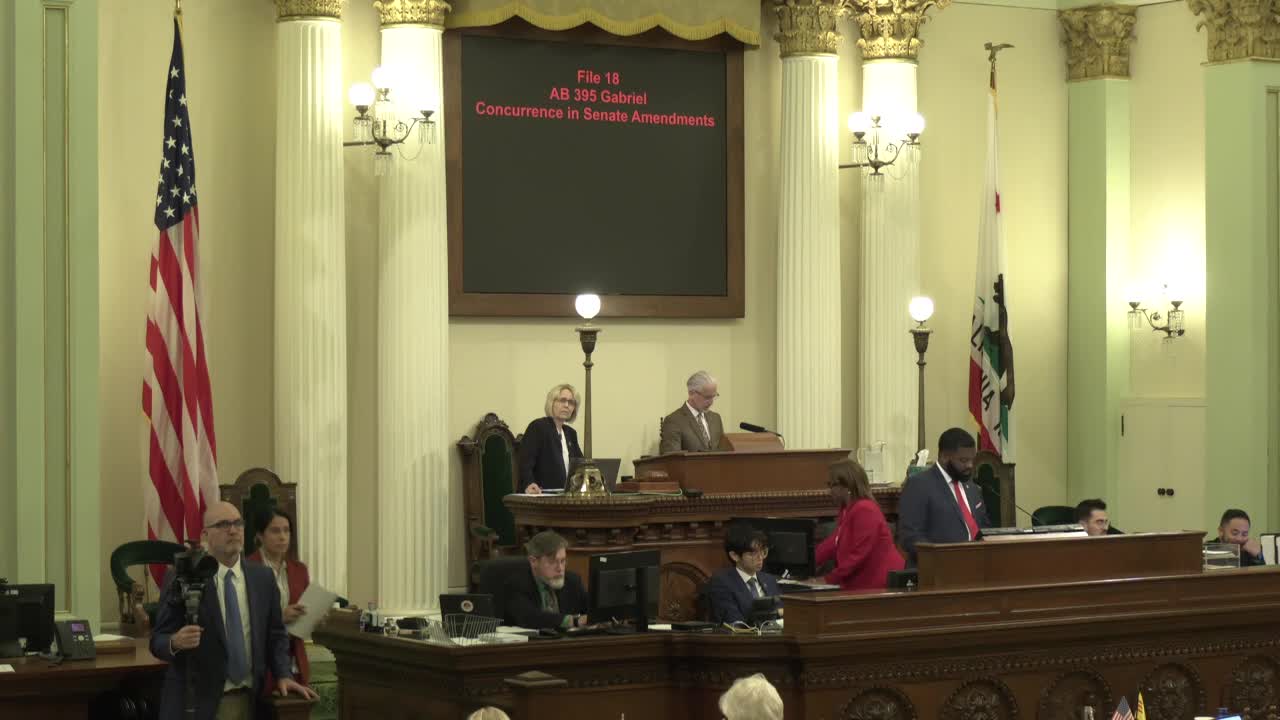
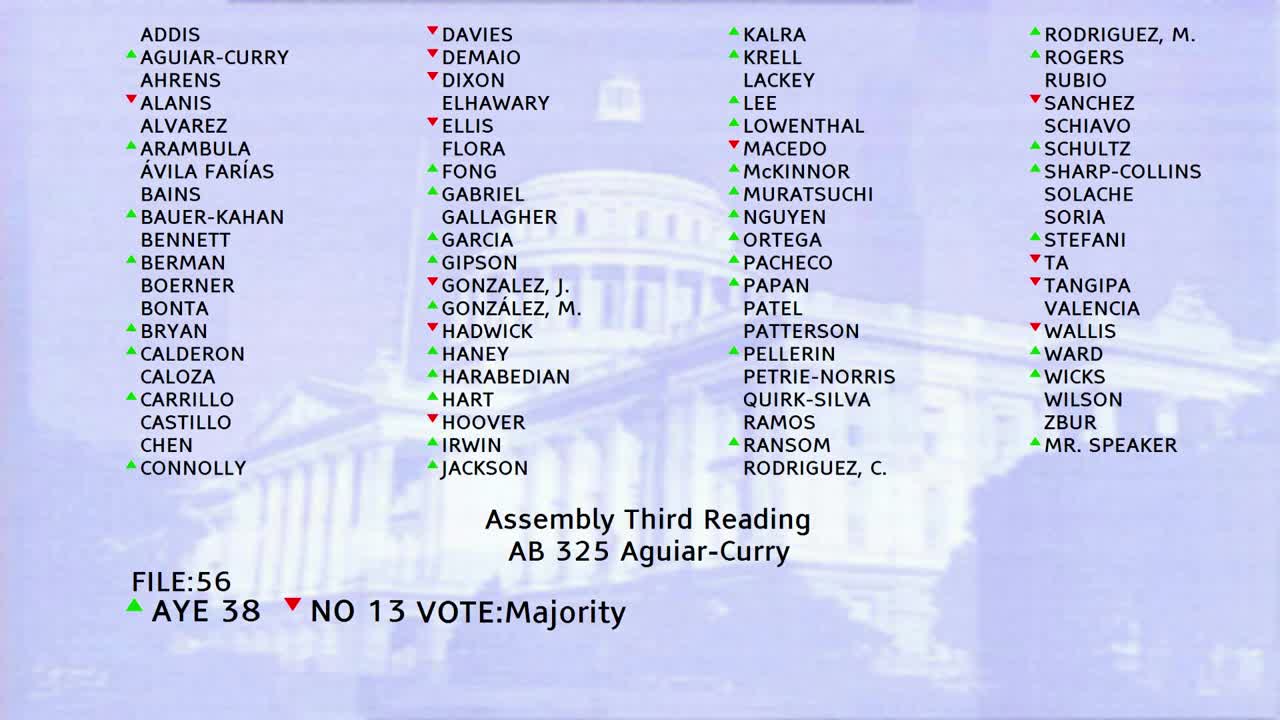
Bill Author