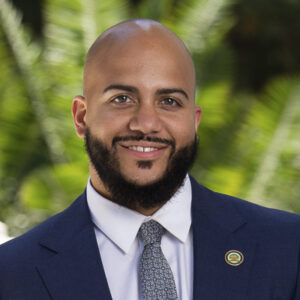
AB 397: Personal Income Tax Law: young child tax credit.
- Session Year: 2025-2026
- House: Assembly
- Latest Version Date: 2025-02-03
Current Status:
Failed
(2026-02-02: From committee: Filed with the Chief Clerk pursuant to Joint Rule 56.)
Introduced
In Committee
Awaiting First Chamber Vote
Passed First Chamber
In Committee
Awaiting Second Chamber Vote
Passed Second Chamber
Enacted
The Personal Income Tax Law allows various credits against the taxes imposed by that law, including a young child tax credit to a qualified taxpayer in a specified amount multiplied by the earned income tax credit adjustment factor, as provided. That law also allows a payment from the continuously appropriated Tax Relief and Refund Account for an amount in excess of tax liability. Existing law defines qualified taxpayer for this purpose to include an eligible individual, as defined, who has a qualifying child, defined to be a child younger than 6 years of age as of the last day of the taxable year, and who meets other specified criteria.
This bill, for taxable years beginning on or after January 1, 2025, would instead define a qualifying child to mean a child younger than a specified age as of the last day of the taxable year, as described. By increasing the payments from the Tax Relief and Refund Account, a continuously appropriated fund, the bill would make an appropriation.
Existing law requires any bill authorizing a new tax expenditure to contain, among other things, specific goals that the tax expenditure will achieve, detailed performance indicators, and data collection requirements.
This bill would include additional information required for any bill authorizing a new tax expenditure.
(a)(1)For each taxable year beginning on or after January 1, 2019, there shall be allowed against the net tax, as defined by Section 17039, a young child tax credit to a qualified taxpayer, in an amount as determined under paragraph (2).
(2)(A)(i)The amount of the young child tax credit shall be equal to one thousand one hundred seventy-six dollars ($1,176), multiplied by the earned income tax credit adjustment factor for the taxable year as specified for in Section 17052.
(ii)The amount of the young child tax credit specified under clause (i) shall be recomputed annually in the same manner as the recomputation of income tax brackets under subdivision (h) of Section 17041.
(B)The young child tax credit allowable in any taxable year to any qualified taxpayer shall be limited to the maximum amount specified in clause (i) of subparagraph (A) as recomputed under clause (ii) of subparagraph (A).
(C)(i)The young child tax credit shall be reduced by twenty dollars ($20) for each one hundred dollars ($100), or fraction thereof, by which the qualified taxpayers earned income, as defined in Section 17052, exceeds the threshold amount. For purposes of this section, the threshold amount shall be twenty-five thousand dollars ($25,000).
(ii)(I)For each taxable year beginning on or after January 1, 2022, and before January 1, 2023, the twenty dollars ($20) in clause (i) shall be recomputed annually in the same manner as the recomputation of income tax brackets under subdivision (h) of Section 17041, except that the resulting products shall be rounded off to the nearest cent.
(II)For taxable years beginning after the taxable year in which the minimum wage, as defined in paragraph (1) of subdivision (b) of Section 1182.12 of the Labor Code, is set at fifteen dollars ($15) per hour, and before January 1, 2024, the amount calculated under subclause (I) shall substitute for the twenty dollars ($20) in clause (i).
(III)The Franchise Tax Board shall calculate a graduated reduction amount in such a manner that, for a qualified taxpayer with earned income of one dollar ($1) or more in excess of the maximum earned income that results in a credit amount greater than zero dollars ($0) pursuant to Section 17052, the amount of the credit under this section is equal to zero. For taxable years beginning on or after January 1, 2024, the graduated reduction amount calculated pursuant to this subclause shall be substituted for the twenty dollars ($20) in clause (i).
(iii)For taxable years beginning after the taxable year in which the minimum wage, as defined in paragraph (1) of subdivision (b) of Section 1182.12 of the Labor Code, is set at fifteen dollars ($15) per hour, the threshold amount in this subparagraph shall be recomputed annually in the same manner as the recomputation of income tax brackets under subdivision (h) of Section 17041.
(D)The young child tax credit authorized by this section shall only be operative for taxable years for which resources are authorized in the annual Budget Act for the Franchise Tax Board to oversee and audit returns associated with the credit allowed under Section 17052.
(b)(1)Qualified taxpayer means an eligible individual who has at least one qualifying child and who satisfies either of the following:
(A)Has been allowed a tax credit under Section 17052.
(B)Meets all of the following requirements:
(i)Would otherwise have been allowed a tax credit under Section 17052, but has earned income, as defined in Section 32(c)(2) of the Internal Revenue Code, as modified by Section 17052, of zero dollars ($0) or less.
(ii)Does not have net losses in excess of thirty thousand dollars ($30,000) in the taxable year.
(iii)Does not have wages, salaries, tips, and other employee compensation in excess of thirty thousand dollars ($30,000) in the taxable year.
(2)For each taxable year beginning on or after January 1, 2022, the amounts specified under clauses (ii) and (iii) of subparagraph(B) shall be recomputed annually in the same manner as the recomputation of income tax brackets under subdivision (h) of Section 17041.
(c)Qualifying child shall have the same following meaning:
(1)For taxable years beginning before January 1, 2025, qualifying child shall have the same meaning as under Section 17052, except that the child shall be younger than six years of age as of the last day of the taxable year.
(2)For each taxable year beginning on or after January 1, 2025, and before January 1, 2026, qualifying child, shall have the same meaning as under Section 17052 except that the child shall be younger than 10 years of age as of the last day of the taxable year.
(3)For each taxable year beginning on or after January 1, 2026, and before January 1, 2027, qualifying child shall have the same meaning as under Section 17052 except that the child shall be younger than 13 years of age as of the last day of the taxable year.
(4)For each taxable year beginning on or after January 1, 2027, and before January 1, 2028, qualifying child shall have the same meaning as under Section 17052 except that the child shall be younger than 16 years of age as of the last day of the taxable year.
(5)For each taxable year beginning on or after January 1, 2028, qualifying child shall have the same meaning as under 17052.
(d)(1)The Franchise Tax Board may prescribe rules, guidelines, procedures, or other guidance to carry out the purposes of this section. Chapter 3.5 (commencing with Section 11340) of Part 1 of Division 3 of Title 2 of the Government Code shall not apply to any rule, guideline, or procedure prescribed by the Franchise Tax Board pursuant to this section.
(2)(A)The Franchise Tax Board may prescribe any regulations necessary or appropriate to carry out the purposes of this section, including any regulations to prevent improper claims from being filed or improper payments from being made with respect to net earnings from self-employment.
(B)The adoption of any regulations pursuant to subparagraph (A) may be adopted as emergency regulations in accordance with the rulemaking provisions of the Administrative Procedure Act (Chapter 3.5 (commencing with Section 11340) of Part 1 of Division 3 of Title 2 of the Government Code) and shall be deemed an emergency and necessary for the immediate preservation of the public peace, health and safety, or general welfare. Notwithstanding Chapter 3.5 (commencing with Section 11340) of Part 1 of Division 3 of Title 2 of the Government Code, these emergency regulations shall not be subject to the review and approval of the Office of Administrative Law. The regulations shall become effective immediately upon filing with the Secretary of State, and shall remain in effect until revised or repealed by the Franchise Tax Board.
(e)If the amount allowable as a credit under this section exceeds the tax liability computed under this part for the taxable year, the excess shall be credited against other amounts due, if any, and the balance, if any, shall be paid from the Tax Relief and Refund Account and refunded to the qualified taxpayer.
(f)Notwithstanding any other law, amounts refunded pursuant to this section shall be treated in the same manner as the federal earned income refund for the purpose of determining eligibility to receive benefits under Division 9 (commencing with Section 10000) of the Welfare and Institutions Code or amounts of those benefits.
(g)(1)In accordance with Section 41, the purpose of the Young Child Tax Credit is to reduce poverty among Californias poorest working families and young children. To measure whether the credit achieves its intended purpose, the Franchise Tax Board shall annually prepare a written report on the following:
(A)The number of tax returns claiming the credit.
(B)The number of qualifying children represented on tax returns claiming the credit.
(C)The average credit amount on tax returns claiming the credit.
(2)The Franchise Tax Board shall provide the written report to the Senate Committee on Budget and Fiscal Review, the Assembly Committee on Budget, the Senate and Assembly Committees on Appropriations, the Senate Committee on Governance and Finance, the Assembly Committee on Revenue and Taxation, and the Senate and Assembly Committees on Human Services.
(3)(A)The Legislature finds and declares that the purpose of the amendments to this section made by the act adding this paragraph is to reduce poverty among Californias poorest working families and children.
(B)For those years in which the report described in paragraph (2) includes information relating to taxable years beginning on or after January 1, 2025, the Franchise Tax Board shall separately state the details required by paragraph (1), and an estimate for what those details would be if not for the amendments made to this section by the act adding this paragraph.
(h)The Legislature finds and declares that, to the extent they are otherwise qualified for a credit under this section, undocumented persons are eligible for the tax credit authorized by this section within the meaning of subsection (d) of Section 1621 of Title 8 of the United States Code.
(i)The amendments made to this section by the act adding this subdivision shall apply for taxable years beginning on or after January 1, 2022, except as provided in subparagraph (C) of paragraph (2) of subdivision (a).
REVISIONS: HeadingLines 4, 5, and 6.|
Date
|
Status
|
|---|---|
| Feb 2, 2026 | From committee: Filed with the Chief Clerk pursuant to Joint Rule 56. |
| Jan 31, 2026 | Died pursuant to Art. IV, Sec. 10(c) of the Constitution. |
| May 23, 2025 | In committee: Held under submission. |
| May 21, 2025 | Joint Rule 62(a), file notice suspended. (Page 1627.) |
| May 21, 2025 | In committee: Set, first hearing. Referred to APPR. suspense file. |
| May 14, 2025 | In committee: Hearing postponed by committee. |
| Apr 29, 2025 | From committee: Do pass and re-refer to Com. on APPR. (Ayes 5. Noes 1.) (April 28). Re-referred to Com. on APPR. |
| Apr 29, 2025 | Coauthors revised. |
| Mar 10, 2025 | In committee: Set, first hearing. Referred to REV. & TAX. suspense file. |
| Feb 18, 2025 | Referred to Com. on REV. & TAX. |
| Feb 4, 2025 | From printer. May be heard in committee March 6. |
| Feb 3, 2025 | Read first time. To print. |
|
Date
|
Description
|
Location
|
Votes
|
|
|---|---|---|---|---|
| Apr 28, 2025 | Do pass and be re-referred to the Committee on [Appropriations] | Assembly Standing Committee on Revenue and Taxation |
Passed |
This list shows positions taken on this bill by organizations on the date displayed, which is linked to the original source.
Positions by individuals are not included.
|
Organization
|
Position
|
Date
|
|---|---|---|
| All for Kids | ** Support | |
| American Federation Of State, County And Municipal Employees, Afl-Cio | ** Support | |
| California Association Of Food Banks | ** Support | |
| California Behavioral Health Association | ** Support | |
| California Catholic Conference | ** Support | |
| California Immigrant Policy Center | ** Support | |
| California State PTA | ** Support | |
| California Wic Association | ** Support | |
| Community Action Partnership of Kern | ** Support | |
| Compass Family Services | ** Support | |
| Courage California | ** Support | |
| Economic Security California Action | ** Support | |
| Economic Security Project Action | ** Support | |
| Equal Rights Advocates | ** Support | |
| First 5 California | ** Support | |
| Friends Committee On Legislation Of California | ** Support | |
| Glide | ** Support | |
| Golden State Opportunity | ** Support | |
| Grace Institute - End Child Poverty in Ca | ** Support | |
| Inland Southern California United Way | ** Support | |
| John Burton Advocates for Youth | ** Support | |
| National Council Of Jewish Women Los Angeles | ** Support | |
| Orange County United Way | ** Support | |
| Parent Voices California | ** Support | |
| PolicyLink | ** Support | |
| Prosper CA Coalition | ** Support | |
| San Diego for Every Child | ** Support | |
| Sbx Youth & Family Services | ** Support | |
| Second Harvest Food Bank of Orange County | ** Support | |
| United Way California Capital Region | ** Support | |
| United Way Fresno Madera Counties | ** Support | |
| United Ways Of California | ** Support | |
| western center on law & poverty | ** Support | |
| Young Invincibles | ** Support |
Date of Hearing: May 21, 2025
ASSEMBLY COMMITTEE ON APPROPRIATIONS
Buffy Wicks, Chair
ABPCA Bill Id:AB 397
Author:(Mark González) – As Introduced Ver:February 3, 2025
Policy Committee: | Revenue and Taxation | Vote: | 5 - 1 |
|
| ||
|
|
Urgency: No State Mandated Local Program: No Reimbursable: No
SUMMARY:
This bill expands the number of taxpayers eligible for the California Young Child Tax Credit (YCTC) by gradually modifying the definition of a “qualifying child” to include children over the age of five.
Specifically, this bill:
- Provides that a “qualifying child” under the YCTC means:
- For taxable years beginning on or after January 1, 2025, and before January 1, 2026, a child of less than 10 years of age as of the last day of the taxable year.
- For taxable years beginning on or after January 1, 2026, and before January 1, 2027, a child of less than 13 years of age as of the last day of the taxable year.
- For taxable years beginning on or after January 1, 2027, and before January 1, 2028, a child of less than 16 years of age as of the last day of the taxable year.
- For taxable years beginning on or after January 1, 2028, a child of less than 19 years of age, or, if the child is a student, less than 24 years of age, as of the last day of the taxable year, which is the same definition of “qualifying child” under the federal and state Earned Income Tax Credit (EITC).
- Declares the purpose of this tax expenditure and modifies the Franchise Tax Board’s (FTB’s) existing reporting requirement regarding YCTC data to separately, for comparison purposes, provide data for YCTC claimants as if these YCTC changes were not in effect.
FISCAL EFFECT:
- General Fund (GF) revenue loss of approximately $220 million in fiscal year (FY) 2025-26, $370 million in FY 2026-27, and $550 million in FY 2027-28. By decreasing Personal Income Tax revenue, this bill also likely decreases Proposition 98 GF spending by approximately 40% of the GF revenue loss (the exact amount depends on the specific amount of the annual Proposition 98 guarantee).
- GF costs of an unknown, but potentially significant, amount to FTB to reprogram systems, revise forms, conduct taxpayer outreach, and provide additional reporting for an expanded YCTC.
COMMENTS:
- Purpose. According to the author:
Growing up, I lived in Section 8 housing – I saw my mom working over 12 hours a day to put food on the table, and I remember myself having to cash soda cans to help make ends meet. Children should not be worrying about if there will be enough food on the table, if their parents can pay rent, or if they have access to water. AB 397 will provide relief to communities facing the same hardships I experienced firsthand.
This bill is sponsored by the Prosper California Coalition, co-sponsored by Golden State Opportunity, GRACE – End Child Poverty California, and United Ways of California, and supported by a large coalition of economic and social justice groups.
- Anti-poverty Tax Credit Expansion. In 2016, California began offering its own California Earned Income Tax Credit (CalEITC), modeled off the federal earned income tax credit, to put money back in the pockets of low-income, working families who file tax returns. The Budget Act of 2019 significantly expanded the CalEITC and also enacted the YCTC to provide an additional $1,000 credit for every family who qualifies for the CalEITC and has at least one child younger than age six. The Budget Act of 2020 subsequently extended the CalEITC to undocumented taxpayers who file using an Individual Taxpayer Identification Number. Most recently, the Budget Act of 2022 extended the YCTC to zero-income filers, indexed the credit amount and earned income threshold for inflation, and created a Foster Youth Tax Credit, an additional $1,000 credit for current and former foster youth ages 18 to 25 who qualify for the CalEITC and were in California foster care at age 13 or older. This bill further expands the YCTC by gradually raising the qualifying child’s age limitation to the same limitation for a qualifying child under the CalEITC, which is less than 19 years of age, or, if the child is a student, less than 24 years of age, as of the last day of the taxable year.
- Related Legislation. AB 398 (Ahrens) establishes a minimum CalEITC amount of approximately $300. AB 398 is pending hearing by this committee.
- Prior Legislation. AB 1128 (Santiago), of the 2023-24 Legislative Session, was similar to this bill, but would have expanded YCTC eligibility immediately, instead of gradually phasing in older children. AB 1128 was held in this committee’s suspense file.
AB 2977 (Jackson), of the 2023-24 Legislative Session, would have expanded the YCTC by increasing the earned income threshold from $25,000 to $50,000, and covering children up to 18 years of age. AB 2977 was held in this committee’s suspense file.
AB 2589 (Santiago), of the 2021-22 Legislative Session, would have, upon appropriation, increased the YCTC to $2,000, extended the YCTC to zero-income filers, and set a minimum CalEITC amount of $255. AB 2589 was not set for hearing in the Senate Committee on Governance and Finance at the request of the author.
Analysis Prepared by: Irene Ho / APPR. / (916) 319-2081
Date of Hearing: April 28, 2025
ASSEMBLY COMMITTEE ON REVENUE AND TAXATION
Mike Gipson, Chair
ABPCA Bill Id:AB 397 (
Author:Mark González, et al.) – As Introduced Ver:February 3, 2025
SUSPENSE
2/3 vote. Fiscal committee.
SUBJECT: Personal Income Tax Law: young child tax credit.
SUMMARY: Expands the number of taxpayers eligible for the California Young Child Tax Credit (YCTC) by gradually modifying the definition of "qualifying child" to include children over the age of five, as specified. Specifically, this bill:
- Provides that the term "qualifying child", for purposes of the YCTC, means the following:
- For taxable years beginning on or after January 1, 2025, and before January 1, 2026, less than 10 years of age as of the last day of the taxable year;
- For taxable years beginning on or after January 1, 2026, and before January 1, 2027, less than 13 years of age as of the last day of the taxable year;
- For taxable years beginning on or after January 1, 2027, and before January 1, 2028, less than 16 years of age as of the last day of the taxable year; and,
- For taxable years beginning on or after January 1, 2028, less than 19 years of age as of the last day of the taxable year, or, if they are a student, 24 years of age as of the last day of the taxable year.
- Finds and declares that, for purposes of satisfying the requirements of Revenue and Taxation Code (R&TC) Section 41, the purpose of this bill is to reduce poverty among California's poorest working families and children.
- Requires the Franchise Tax Board (FTB) to separately state in its annual written report to the Legislature on the YCTC all of the following:
- The number of tax returns claiming the expanded credit;
- The number of qualifying children under the expanded credit;
- The average credit amount on tax returns claiming the credit, and;
- An estimate of the three data points listed above if the requirements for the credit had not been expanded.
EXISTING FEDERAL LAW:
- Allows a refundable Earned Income Tax Credit (EITC) for certain low-income individuals who have earned income and meet certain requirements. (Internal Revenue Code (IRC) Section 32.)
- Defines a "qualifying child" as an individual that satisfies all of the following:
- Is a child of the taxpayer or a descendant of such a child, or a brother, sister, stepbrother, or stepsister of the taxpayer or a descendant of any such relative;
- Has the same principal place of abode as the taxpayer for more than one-half of such taxable year;
- Has not attained the age of 19 at the close of the calendar year or is a student who has not attained the age of 24 as of the close of such calendar year;
- Has not provided over one-half of such individual's own support for the calendar year in which the taxable year of the taxpayer begins; and,
- Has not filed a joint return (other than only for a claim of refund) with the individual's spouse for the taxable year beginning in the calendar year in which the taxable year of the taxpayer begins. (IRC Section 32(c).)
- Provides that the age requirements for a "qualifying child" are waived for individuals who are permanently and totally disabled. (IRC Section 32(c)(3).)
- Defines a "qualifying child" as an individual that satisfies all of the following:
EXISTING STATE LAW:
- Allows, for each taxable year beginning on or after January 1, 2015, in modified conformity with federal law, a CalEITC against the Personal Income Tax (PIT). The CalEITC is a refundable credit based on the taxpayer's amount of federal EITC multiplied by California's "adjustment factor." The adjustment factor equals zero unless otherwise specified in the Budget Act. Additionally, the CalEITC is only operative for taxable years when the Budget Act authorizes resources for the FTB to oversee and audit returns associated with the credit. (R&TC Section 17052.)
- Provides, for each taxable year beginning on or after January 1, 2019, the YCTC under the PIT. To qualify for the credit, a taxpayer must have a child under the age of 6 at the end of the taxable year and the taxpayer must have been allowed a CalEITC. The credit may be allowed up to $1,176, multiplied by the annual adjustment factor, and reduced by $20 for each $100 (or fraction thereof) that the taxpayer's income exceeds $25,000. (R&TC Section 17052.1.)
FISCAL EFFECT: The FTB estimates General Fund revenue losses of $220 million in fiscal year (FY) 2025-26, $370 million in FY 2026-27, and $550 million in FY 2027-28.
COMMENTS:
- The author has provided the following statement in support of this bill:
Growing up, I lived in Section 8 housing – I saw my mom working over 12 hours a day to put food on the table, and I remember myself having to cash soda cans to help make ends meet. Children should not be worrying about if there will be enough food on the table, if their parents can pay rent, or if they have access to water. AB 397 will provide relief to communities facing the same hardships I experienced firsthand.
Too many Californians are struggling to make ends meet. Under the current system, families lose access to the Young Child Tax Credit when their child turns 6 years old. The cost of raising a child does not stop there, and we need to support low-incomes in any way we can. This credit helps lift communities out of poverty, offers relief from economic stresses, and provides a pathway to financial stability.
- This bill is sponsored by the Prosper California Coalition, which notes, in part:
Currently, the YCTC is only available to families with a child under six years old, despite the fact that the financial challenges of raising a child extend well beyond early childhood. Families earning between $0 and $31,950 annually can receive up to $1,154 through the YCTC, but those with children over the age of five are ineligible for the YCTC, leaving them with less financial support and a greater risk of falling into poverty. Expanding access to this critical credit would help struggling households cover basic necessities – 91% of low-income families rely on these funds for food, clothing, housing, utilities, and education.
- This bill is supported by the United Way of California, which notes, in part:
Previous federal expansions to the Child Tax Credit successfully reduced child poverty by 46%, but when these temporary measures ended, poverty rates surged, forcing 1.7 million children back into hardship. This demonstrates the urgent need for permanent, state-level solutions to protect our most vulnerable families. Moreover, research shows that the YCTC has significantly reduced poverty, particularly among more than eight in ten families of color. According to the Franchise Tax Board, when low-income households benefit from both the YCTC and California Earned Income Tax Credit, they can be lifted above deep poverty.
- Committee Staff Comments:
- What does this bill do? This bill gradually increases the age cap for the YCTC over several years, expanding the number of taxpayers that qualify for the credit:
Taxable Year | Qualifying Age of Dependent(s) |
2024 | Less than 6 years of age as of the last day of the taxable year |
2025 | Less than 10 years of age as of the last day of the taxable year |
2026 | Less than 13 years of age as of the last day of the taxable year |
2027 | Less than 16 years of age as of the last day of the taxable year |
2028 | Less than 19 years of age as of the last day of the taxable year |
For the 2028 taxable year onwards, this bill replaces the definition of "qualifying child" for the YCTC with the same definition that is used for purposes of the CalEITC. In other words, if a taxpayer receives additional amounts under the CalEITC because they claim one or more qualifying children on their tax return, this bill would also allow that taxpayer an additional credit under the YCTC for the 2028 taxable years onward.
- Who benefits from this bill? This bill would primarily benefit qualified low-income taxpayers with at least one child over the age of five. By gradually increasing the age limit for qualifying children, this bill would increase the availability of this credit to more taxpayers over several years. Additionally, this bill would ensure that individuals who previously claimed the YCTC but whose child or children are now older than the cutoff age could continue to receive the credit.
- Background on the EITC and CalEITC: The federal government created the anti-poverty EITC program in 1975 for both adults and children in lower income working families. The program's primary purpose is to lift people out of poverty and encourage labor market participation by providing additional tax benefits for those who earn wages or compensation from employment or entrepreneur business operations. California created its own CalEITC at the state level in 2015. The EITCs, unlike other anti-poverty programs, are administered through the tax system and require the filing of a tax return with the federal government and California to claim the credits.
To qualify for the CalEITC, taxpayers must:
- Have taxable earned income, which are W-2 wages, self-employment income, and other types of income with California withholdings;
- Have a valid social security number (SSN) or individual taxpayer identification number (ITIN) for all eligible persons;
- Live in California for more than half the year; and,
- Not use married/registered domestic partner (RDP) if filing separately unless an exception applies.
- California's YCTC: Beginning in 2019, California started providing the refundable YCTC for taxpayers that qualified for the CalEITC and claimed at least one qualifying dependent that was less than six years old as of the last day of the taxable year. The amount of the YCTC is equal to $1,176, multiplied by the earned income tax credit adjustment factor specified for the CalEITC. The maximum credit is limited to $1,000 per taxable year. The credit amount is reduced by $20 for every $100 by which the qualified taxpayer's earned income exceeds the threshold amount, initially set at $25,000.
For the 2024 taxable year, taxpayers qualified for and received a CalEITC and YCTC amount based on the following chart:

Source: FTB.[1]
- ITIN Filers: Unlike the Federal EITC, which is only available to taxpayers with a SSN, California has allowed taxpayers who file using an ITIN to claim the CalEITC and YCTC since 2021. An ITIN is a tax processing number issued by the Internal Revenue Service (IRS) that is issued regardless of immigration status because both citizens and noncitizens may have a tax filing or reporting requirement under the IRC. While an ITIN does not authorize an individual to work in the U.S. or provide eligibility for Social Security benefits, it allows individuals to report their earnings to the IRS, open interest-bearing bank accounts with certain banks, and conduct business in the U.S. This filing option increases overall revenues and enables noncitizens to prove that they are paying the taxes they owe, which can be an important criterion when applying for U.S. citizenship.
ITIN information is partially protected by IRC Section 6103, which generally prohibits the IRS from disclosing taxpayer information, including to other federal agencies. However, there are important exceptions to this rule. In general, the IRS is required to disclose taxpayer information to state agencies responsible for tax administration, to powers of attorney and other designees, and to law enforcement agencies for investigation and prosecution of non-tax criminal laws.[2] Historically, the IRS has been very invested in maintaining the confidentiality of its information because doing so promotes confidence in the tax system, which prioritizes voluntary compliance. - 2021 expansion of federal credits: The American Rescue Plan (ARP), signed into law by President Biden in March 2021, significantly expanded tax credits that benefitted many lower income and middle-income filers, including the Federal EITC and the CTC. The ARP made two significant changes to the EITC for 2021 only: (i) it increased the credit amounts available to childless workers, and (ii) it broadened the age range for eligible filers from 24 to 65 years old to 19 and over.
In addition to the EITC expansion, the ARP also significantly expanded the CTC for 2021 only: for single filers with income of up to $75,000 ($112,500 for heads of household, $150,000 for joint filers), the maximum credit rose to $3,600 for dependents from ages 0 to 5 and $3,000 for dependents ages 6 to 17. The increased benefit amount phased out up to an income of $95,000 ($132,500 for heads of household, $170,000 for joint filers). For 2021 only, the credit amount was fully refundable for all eligible filers regardless of their earned income amounts. The ARP also directed the IRS to pay one-twelfth of eligible filers' credit amounts each month from July to December 2021.
- Challenges with uptake: Some individuals in poverty with children who could benefit from the CalEITC and YCTC do not actually receive these benefits even though they are eligible. One significant barrier is that individuals must actually file their income taxes to claim these benefits. Some low-income people – and families in particular – do not earn enough on an annual basis to trigger an income tax filing requirement, meaning they are not required to file a state income tax return at all. The threshold for filing a California tax return varies by filing status, age, number of dependents, and gross income:

Source: FTB.[3]
As noted above, the maximum income any taxpayer may earn and still qualify for the CalEITC in 2024 was $31,950. The filing requirement threshold for a single filer under the age of 65 with one dependent was $37,640 in 2024. This means that single filers without dependents are the only category of taxpayer that may cross the filing threshold and still be eligible for the CalEITC. Conversely, any family – including a single parent family – that qualifies for the CalEITC based on their income is not required to file a tax return.
Some qualifying individuals who choose not to file a return may not be aware of the tax refunds they could receive. Additionally, some individuals may believe that submitting a tax return will open them up to paying additional amounts of tax rather than enabling them to claim the benefits that they are entitled. Others may simply not believe the time and effort of filing their taxes is worth it even if they are aware of the benefits they are eligible for.
Another significant barrier to the uptake of the CalEITC and YCTC is the cost of paid tax preparation services, either by a professional or through licensed software applications. As the number of dependents that a filer may claim increases, the complexity of preparing a return generally increases, which subsequently increases the cost for preparation. While there are free filing options for which CalEITC eligible households would qualify – namely Direct File and CalFile – the greater complexity of preparing a return as household size increases can push households towards a professional preparer, which can be costly. Finding assistance with tax returns may also be complicated by language barriers. The Volunteer Income Tax Assistance (VITA) programs provide free assistance in multiple languages to eligible, low-income filers, but these programs are often over-subscribed and cannot support all households that seek their assistance.
- Outreach efforts: California has engaged in numerous outreach efforts to encourage potentially eligible federal EITC and CalEITC taxpayers to file income tax returns and claim these credits. The FTB and California Department of Social Services (CDSS) worked with the California Policy Lab on several outreach campaigns using low-cost text messages and letters to increase awareness and claims of the federal EITC and the CalEITC in 2018 and 2019, but none of the outreach efforts led to an increase in tax filings.
In 2022, AB 158 (Budget), Chapter 737, Statutes of 2022, allows the FTB and the CDSS to share data for purposes of informing state residents of the availability of VITA, CalFile, the federal EITC, the CalEITC, and other federal and state antipoverty tax credits that are designed to alleviate poverty and tax burdens of low-income households. CDSS worked with the FTB and Code for America to implement a fall outreach campaign that included text messages, email messages, and voice recordings. Additionally, CDSS launched a new helpline to provide callers with live support and resources. Similarly, in 2023, the CDSS led a two-phased outreach campaign, including text messages in the spring, and text, voice, and email messages in the fall. CDSS also provided higher touch supports from their Outreach Helpline and proactively reached out to individuals and families to provide additional information and support.[4]
- Related legislation:
i) AB 398 (Ahrens) establishes a minimum CalEITC amount of approximately $300. AB 398 is set for a hearing by this Committee on March 10, 2025.
ii) AB 1402 (McKinnor) would replace the CalEITC and YCTC with a new grant program administered by county welfare departments, as specified. AB 1402 has not yet been set for a hearing by this Committee.
- Prior legislation:
i) AB 2977 (Jackson), of the 2023-24 Legislative Session, would have expanded the YCTC by increasing the earned income threshold from $25,000 to $50,000 and modify the definition of a qualifying child from younger than 6 years of age to younger than 18 years of age. AB 2977 was held on the Assembly Appropriation Committee's Suspense File.
ii) AB 1128 (Santiago), of the 2023-24 Legislative Session, was similar to this bill, but proposed to expand the eligibility of the YCTC by immediately including children up to 18 years of age. AB 1128 was held on the Assembly Appropriations Committee's Suspense File.
iii) AB 2589 (Santiago), of the 2021-22 Legislative Session, modified the CalEITC by allowing a minimum credit amount of $255 and modified the YCTC to allow the credit for any CalEITC dependent and to those individuals that have zero earned income. AB 2589 was not heard by the Senate Committee on Governance and Finance.
REGISTERED SUPPORT / OPPOSITION:
Support
All for Kids
American Federation of State, County and Municipal Employees, AFL-CIO
California Association of Food Banks
California Behavioral Health Association
California Catholic Conference
California Immigrant Policy Center
California State PTA
California WIC Association
Community Action Partnership of Kern
Compass Family Services
Courage California
Economic Security California Action
Economic Security Project Action
Equal Rights Advocates
First 5 California
Friends Committee on Legislation of California
Glide
Golden State Opportunity
Grace Institute - End Child Poverty in CA
Inland Southern California United Way
John Burton Advocates for Youth
National Council of Jewish Women Los Angeles
Orange County United Way
Parent Voices California
Policylink
Prosper CA Coalition (formerly CalEITC Coalition)
San Diego for Every Child
Sbx Youth & Family Services
Second Harvest Food Bank of Orange County
United Way California Capital Region (UNREG)
United Way Fresno Madera Counties
United Ways of California (UWCA)
Western Center on Law & Poverty
Young Invincibles
60 individuals
Opposition
None on file
Analysis Prepared by: Wesley Whitaker / REV. & TAX. / (916) 319-2098
California Earned Income Tax Credit and Young Child Tax Credit (2024), Franchise Tax Board. https://www.ftb.ca.gov/file/personal/credits/california-earned-income-tax-credit.html. ↑
Disclosure laws, Internal Revenue Service. https://www.irs.gov/government-entities/federal-state-local-governments/disclosure-laws. ↑
Residents – Do I need to file?, Franchise Tax Board. https://www.ftb.ca.gov/file/personal/residency-status/index.html#Do-I-need-to-file-. ↑
California Earned Income Tax Credit, Young Child Tax Credit, and Foster Youth Tax Credit 2022 Report, Franchise Tax Board (January 2025). https://www.ftb.ca.gov/about-ftb/data-reports-plans/California-Earned-Income-Tax-Credit-and-Young-Child-Tax-credit-Report-2022.pdf. ↑
Date of Hearing: March 10, 2025
ASSEMBLY COMMITTEE ON REVENUE AND TAXATION
Mike Gipson, Chair
ABPCA Bill Id:AB 397 (
Author:Mark González, et al.) – As Introduced Ver:February 3, 2025
2/3 vote. Fiscal committee.
SUBJECT: Personal Income Tax Law: young child tax credit.
SUMMARY: Expands the number of taxpayers eligible for the California Young Child Tax Credit (YCTC) by gradually modifying the definition of "qualifying child" to include children over the age of five, as specified. Specifically, this bill:
- Provides that the term "qualifying child", for purposes of the YCTC, means the following:
- For taxable years beginning on or after January 1, 2025, and before January 1, 2026, less than 10 years of age as of the last day of the taxable year;
- For taxable years beginning on or after January 1, 2026, and before January 1, 2027, less than 13 years of age as of the last day of the taxable year;
- For taxable years beginning on or after January 1, 2027, and before January 1, 2028, less than 16 years of age as of the last day of the taxable year; and,
- For taxable years beginning on or after January 1, 2028, less than 19 years of age as of the last day of the taxable year, or, if they are a student, 24 years of age as of the last day of the taxable year.
- Finds and declares that, for purposes of satisfying the requirements of Revenue and Taxation Code (R&TC) Section 41, the purpose of this bill is to reduce poverty among California's poorest working families and children.
- Requires the Franchise Tax Board (FTB) to separately state in its annual written report to the Legislature on the YCTC all of the following:
- The number of tax returns claiming the expanded credit;
- The number of qualifying children under the expanded credit;
- The average credit amount on tax returns claiming the credit, and;
- An estimate of the three data points listed above if the requirements for the credit had not been expanded.
EXISTING FEDERAL LAW:
- Allows a refundable Earned Income Tax Credit (EITC) for certain low-income individuals who have earned income and meet certain requirements. (Internal Revenue Code (IRC) Section 32.)
- Defines a "qualifying child" as an individual that satisfies all of the following:
- Is a child of the taxpayer or a descendant of such a child, or a brother, sister, stepbrother, or stepsister of the taxpayer or a descendant of any such relative;
- Has the same principal place of abode as the taxpayer for more than one-half of such taxable year;
- Has not attained the age of 19 at the close of the calendar year or is a student who has not attained the age of 24 as of the close of such calendar year;
- Has not provided over one-half of such individual's own support for the calendar year in which the taxable year of the taxpayer begins; and,
- Has not filed a joint return (other than only for a claim of refund) with the individual's spouse for the taxable year beginning in the calendar year in which the taxable year of the taxpayer begins. (IRC Section 32(c).)
- Provides that the age requirements for a "qualifying child" are waived for individuals who are permanently and totally disabled. (IRC Section 32(c)(3).)
- Defines a "qualifying child" as an individual that satisfies all of the following:
EXISTING STATE LAW:
- Allows, for each taxable year beginning on or after January 1, 2015, in modified conformity with federal law, a CalEITC against the Personal Income Tax (PIT). The CalEITC is a refundable credit based on the taxpayer's amount of federal EITC multiplied by California's "adjustment factor." The adjustment factor equals zero unless otherwise specified in the Budget Act. Additionally, the CalEITC is only operative for taxable years when the Budget Act authorizes resources for the FTB to oversee and audit returns associated with the credit. (R&TC Section 17052.)
- Provides, for each taxable year beginning on or after January 1, 2019, the YCTC under the PIT. To qualify for the credit, a taxpayer must have a child under the age of 6 at the end of the taxable year and the taxpayer must have been allowed a CalEITC. The credit may be allowed up to $1,176, multiplied by the annual adjustment factor, and reduced by $20 for each $100 (or fraction thereof) that the taxpayer's income exceeds $25,000. (R&TC Section 17052.1.)
FISCAL EFFECT: The FTB estimates General Fund revenue losses of $220 million in fiscal year (FY) 2025-26, $370 million in FY 2026-27, and $550 million in FY 2027-28.
COMMENTS:
- The author has provided the following statement in support of this bill:
Growing up, I lived in Section 8 housing – I saw my mom working over 12 hours a day to put food on the table, and I remember myself having to cash soda cans to help make ends meet. Children should not be worrying about if there will be enough food on the table, if their parents can pay rent, or if they have access to water. AB 397 will provide relief to communities facing the same hardships I experienced firsthand.
Too many Californians are struggling to make ends meet. Under the current system, families lose access to the Young Child Tax Credit when their child turns 6 years old. The cost of raising a child does not stop there, and we need to support low-incomes in any way we can. This credit helps lift communities out of poverty, offers relief from economic stresses, and provides a pathway to financial stability.
- This bill is sponsored by the Prosper California Coalition, which notes, in part:
Currently, the YCTC is only available to families with a child under six years old, despite the fact that the financial challenges of raising a child extend well beyond early childhood. Families earning between $0 and $31,950 annually can receive up to $1,154 through the YCTC, but those with children over the age of five are ineligible for the YCTC, leaving them with less financial support and a greater risk of falling into poverty. Expanding access to this critical credit would help struggling households cover basic necessities – 91% of low-income families rely on these funds for food, clothing, housing, utilities, and education.
- This bill is supported by the United Way of California, which notes, in part:
Previous federal expansions to the Child Tax Credit successfully reduced child poverty by 46%, but when these temporary measures ended, poverty rates surged, forcing 1.7 million children back into hardship. This demonstrates the urgent need for permanent, state-level solutions to protect our most vulnerable families. Moreover, research shows that the YCTC has significantly reduced poverty, particularly among more than eight in ten families of color. According to the Franchise Tax Board, when low-income households benefit from both the YCTC and California Earned Income Tax Credit, they can be lifted above deep poverty.
- Committee Staff Comments:
- What does this bill do? This bill gradually increases the age cap for the YCTC over several years, expanding the number of taxpayers that qualify for the credit:
Taxable Year | Qualifying Age of Dependent(s) |
2024 | Less than 6 years of age as of the last day of the taxable year |
2025 | Less than 10 years of age as of the last day of the taxable year |
2026 | Less than 13 years of age as of the last day of the taxable year |
2027 | Less than 16 years of age as of the last day of the taxable year |
2028 | Less than 19 years of age as of the last day of the taxable year |
For the 2028 taxable year onwards, this bill replaces the definition of "qualifying child" for the YCTC with the same definition that is used for purposes of the CalEITC. In other words, if a taxpayer receives additional amounts under the CalEITC because they claim one or more qualifying children on their tax return, this bill would also allow that taxpayer an additional credit under the YCTC for the 2028 taxable years onward.
- Who benefits from this bill? This bill would primarily benefit qualified low-income taxpayers with at least one child over the age of five. By gradually increasing the age limit for qualifying children, this bill would increase the availability of this credit to more taxpayers over several years. Additionally, this bill would ensure that individuals who previously claimed the YCTC but whose child or children are now older than the cutoff age could continue to receive the credit.
- Background on the EITC and CalEITC: The federal government created the anti-poverty EITC program in 1975 for both adults and children in lower income working families. The program's primary purpose is to lift people out of poverty and encourage labor market participation by providing additional tax benefits for those who earn wages or compensation from employment or entrepreneur business operations. California created its own CalEITC at the state level in 2015. The EITCs, unlike other anti-poverty programs, are administered through the tax system and require the filing of a tax return with the federal government and California to claim the credits.
To qualify for the CalEITC, taxpayers must:
- Have taxable earned income, which are W-2 wages, self-employment income, and other types of income with California withholdings;
- Have a valid social security number (SSN) or individual taxpayer identification number (ITIN) for all eligible persons;
- Live in California for more than half the year; and,
- Not use married/registered domestic partner (RDP) if filing separately unless an exception applies.
- California's YCTC: Beginning in 2019, California started providing the refundable YCTC for taxpayers that qualified for the CalEITC and claimed at least one qualifying dependent that was less than six years old as of the last day of the taxable year. The amount of the YCTC is equal to $1,176, multiplied by the earned income tax credit adjustment factor specified for the CalEITC. The maximum credit is limited to $1,000 per taxable year. The credit amount is reduced by $20 for every $100 by which the qualified taxpayer's earned income exceeds the threshold amount, initially set at $25,000.
For the 2024 taxable year, taxpayers qualified for and received a CalEITC and YCTC amount based on the following chart:
Source: FTB.[1]
- ITIN Filers: Unlike the Federal EITC, which is only available to taxpayers with a SSN, California has allowed taxpayers who file using an ITIN to claim the CalEITC and YCTC since 2021. An ITIN is a tax processing number issued by the Internal Revenue Service (IRS) that is issued regardless of immigration status because both citizens and noncitizens may have a tax filing or reporting requirement under the IRC. While an ITIN does not authorize an individual to work in the U.S. or provide eligibility for Social Security benefits, it allows individuals to report their earnings to the IRS, open interest-bearing bank accounts with certain banks, and conduct business in the U.S. This filing option increases overall revenues and enables noncitizens to prove that they are paying the taxes they owe, which can be an important criterion when applying for U.S. citizenship.
ITIN information is partially protected by IRC Section 6103, which generally prohibits the IRS from disclosing taxpayer information, including to other federal agencies. However, there are important exceptions to this rule. In general, the IRS is required to disclose taxpayer information to state agencies responsible for tax administration, to powers of attorney and other designees, and to law enforcement agencies for investigation and prosecution of non-tax criminal laws.[2] Historically, the IRS has been very invested in maintaining the confidentiality of its information because doing so promotes confidence in the tax system, which prioritizes voluntary compliance. - 2021 expansion of federal credits: The American Rescue Plan (ARP), signed into law by President Biden in March 2021, significantly expanded tax credits that benefitted many lower income and middle-income filers, including the Federal EITC and the CTC. The ARP made two significant changes to the EITC for 2021 only: (i) it increased the credit amounts available to childless workers, and (ii) it broadened the age range for eligible filers from 24 to 65 years old to 19 and over.
In addition to the EITC expansion, the ARP also significantly expanded the CTC for 2021 only: for single filers with income of up to $75,000 ($112,500 for heads of household, $150,000 for joint filers), the maximum credit rose to $3,600 for dependents from ages 0 to 5 and $3,000 for dependents ages 6 to 17. The increased benefit amount phased out up to an income of $95,000 ($132,500 for heads of household, $170,000 for joint filers). For 2021 only, the credit amount was fully refundable for all eligible filers regardless of their earned income amounts. The ARP also directed the IRS to pay one-twelfth of eligible filers' credit amounts each month from July to December 2021.
- Challenges with uptake: Some individuals in poverty with children who could benefit from the CalEITC and YCTC do not actually receive these benefits even though they are eligible. One significant barrier is that individuals must actually file their income taxes to claim these benefits. Some low-income people – and families in particular – do not earn enough on an annual basis to trigger an income tax filing requirement, meaning they are not required to file a state income tax return at all. The threshold for filing a California tax return varies by filing status, age, number of dependents, and gross income:
Source: FTB.[3]
As noted above, the maximum income any taxpayer may earn and still qualify for the CalEITC in 2024 was $31,950. The filing requirement threshold for a single filer under the age of 65 with one dependent was $37,640 in 2024. This means that single filers without dependents are the only category of taxpayer that may cross the filing threshold and still be eligible for the CalEITC. Conversely, any family – including a single parent family – that qualifies for the CalEITC based on their income is not required to file a tax return.
Some qualifying individuals who choose not to file a return may not be aware of the tax refunds they could receive. Additionally, some individuals may believe that submitting a tax return will open them up to paying additional amounts of tax rather than enabling them to claim the benefits that they are entitled. Others may simply not believe the time and effort of filing their taxes is worth it even if they are aware of the benefits they are eligible for.
Another significant barrier to the uptake of the CalEITC and YCTC is the cost of paid tax preparation services, either by a professional or through licensed software applications. As the number of dependents that a filer may claim increases, the complexity of preparing a return generally increases, which subsequently increases the cost for preparation. While there are free filing options for which CalEITC eligible households would qualify – namely Direct File and CalFile – the greater complexity of preparing a return as household size increases can push households towards a professional preparer, which can be costly. Finding assistance with tax returns may also be complicated by language barriers. The Volunteer Income Tax Assistance (VITA) programs provide free assistance in multiple languages to eligible, low-income filers, but these programs are often over-subscribed and cannot support all households that seek their assistance.
- Outreach efforts: California has engaged in numerous outreach efforts to encourage potentially eligible federal EITC and CalEITC taxpayers to file income tax returns and claim these credits. The FTB and California Department of Social Services (CDSS) worked with the California Policy Lab on several outreach campaigns using low-cost text messages and letters to increase awareness and claims of the federal EITC and the CalEITC in 2018 and 2019, but none of the outreach efforts led to an increase in tax filings.
In 2022, AB 158 (Budget), Chapter 737, Statutes of 2022, allows the FTB and the CDSS to share data for purposes of informing state residents of the availability of VITA, CalFile, the federal EITC, the CalEITC, and other federal and state antipoverty tax credits that are designed to alleviate poverty and tax burdens of low-income households. CDSS worked with the FTB and Code for America to implement a fall outreach campaign that included text messages, email messages, and voice recordings. Additionally, CDSS launched a new helpline to provide callers with live support and resources. Similarly, in 2023, the CDSS led a two-phased outreach campaign, including text messages in the spring, and text, voice, and email messages in the fall. CDSS also provided higher touch supports from their Outreach Helpline and proactively reached out to individuals and families to provide additional information and support.[4]
- Related legislation:
i) AB 398 (Ahrens) establishes a minimum CalEITC amount of approximately $300. AB 398 is set for a hearing by this Committee on March 10, 2025.
ii) AB 1402 (McKinnor) would replace the CalEITC and YCTC with a new grant program administered by county welfare departments, as specified. AB 1402 has not yet been set for a hearing by this Committee.
- Prior legislation:
i) AB 2977 (Jackson), of the 2023-24 Legislative Session, would have expanded the YCTC by increasing the earned income threshold from $25,000 to $50,000 and modify the definition of a qualifying child from younger than 6 years of age to younger than 18 years of age. AB 2977 was held on the Assembly Appropriation Committee's Suspense File.
ii) AB 1128 (Santiago), of the 2023-24 Legislative Session, was similar to this bill, but proposed to expand the eligibility of the YCTC by immediately including children up to 18 years of age. AB 1128 was held on the Assembly Appropriations Committee's Suspense File.
iii) AB 2589 (Santiago), of the 2021-22 Legislative Session, modified the CalEITC by allowing a minimum credit amount of $255 and modified the YCTC to allow the credit for any CalEITC dependent and to those individuals that have zero earned income. AB 2589 was not heard by the Senate Committee on Governance and Finance.
REGISTERED SUPPORT / OPPOSITION:
Support
All for Kids
California Association of Food Banks
California Catholic Conference
Community Action Partnership of Kern
Compass Family Services
Courage California
Economic Security California Action
Economic Security Project Action
Friends Committee on Legislation of California
Glide
Golden State Opportunity
Grace Institute - End Child Poverty in CA
John Burton Advocates for Youth
Policylink
Prosper CA Coalition (formerly CalEITC Coalition)
San Diego for Every Child
Sbx Youth & Family Services
United Way Fresno Madera Counties
United Ways of California (UWCA)
Western Center on Law & Poverty
Young Invincibles
60 individuals
Opposition
None on file
Analysis Prepared by: Wesley Whitaker / REV. & TAX. / (916) 319-2098
California Earned Income Tax Credit and Young Child Tax Credit (2024), Franchise Tax Board. https://www.ftb.ca.gov/file/personal/credits/california-earned-income-tax-credit.html. ↑
Disclosure laws, Internal Revenue Service. https://www.irs.gov/government-entities/federal-state-local-governments/disclosure-laws. ↑
Residents – Do I need to file?, Franchise Tax Board. https://www.ftb.ca.gov/file/personal/residency-status/index.html#Do-I-need-to-file-. ↑
California Earned Income Tax Credit, Young Child Tax Credit, and Foster Youth Tax Credit 2022 Report, Franchise Tax Board (January 2025). https://www.ftb.ca.gov/about-ftb/data-reports-plans/California-Earned-Income-Tax-Credit-and-Young-Child-Tax-credit-Report-2022.pdf. ↑
Discussed in Hearing
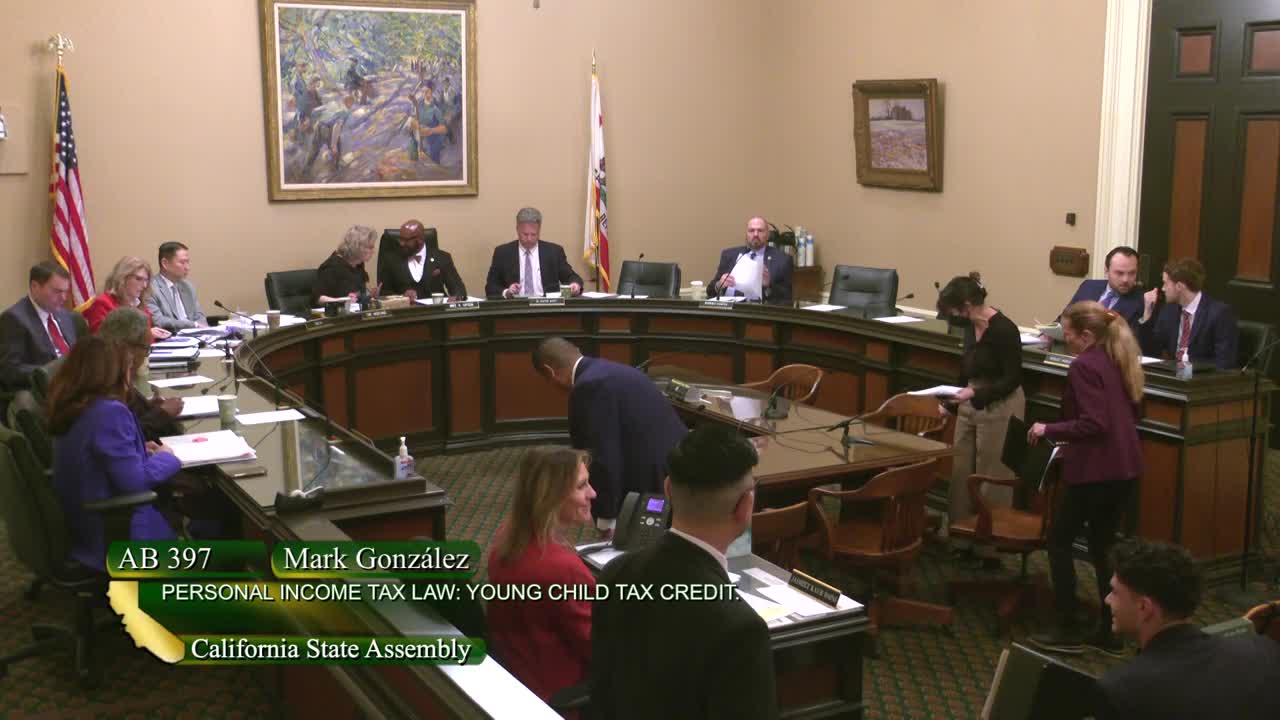 11MIN
Assembly Standing Committee on Revenue and Taxation



Bill Co-Author(s):