AB 411: Livestock carcasses: disposal: composting.
- Session Year: 2025-2026
- House: Assembly
- Latest Version Date: 2025-10-11
Current Status:
Passed
(2025-10-11: Chaptered by Secretary of State - Chapter 613, Statutes of 2025.)
Introduced
In Committee
Awaiting First Chamber Vote
Passed First Chamber
In Committee
Awaiting Second Chamber Vote
Passed Second Chamber
Enacted
Existing law prohibits a dead animal hauler or any other person from transporting a dead animal to any place, other than to certain specified facilities or destinations, unless a certain waiver is granted by the State Veterinarian, as specified.
Existing law requires the Department of Resources Recycling and Recovery to adopt and revise minimum standards for solid waste handling, transfer, composting, transformation, and disposal, as prescribed. Pursuant to this authority, the department has adopted a regulation that prohibits the composting of unprocessed mammalian tissue except when received from certain sources.
This bill would, notwithstanding those prohibitions, authorize any part of a livestock carcass resulting from a routine livestock mortality event or on-farm processing to be composted if certain requirements are met, including, among others, that the composting is conducted in accordance with best management practices for livestock composting adopted by the Secretary of Food and Agriculture, as specified.
Existing law prohibits a dead animal hauler or any other person from transporting a dead animal to any place, other than to certain specified facilities or destinations, unless a certain waiver is granted by the State Veterinarian, as specified.
Existing law requires the Department of Resources Recycling and Recovery to adopt and revise minimum standards for solid waste handling, transfer, composting, transformation, and disposal, as prescribed. Pursuant to this authority, the department has adopted a regulation that prohibits the composting of unprocessed mammalian tissue except when received from certain sources.
This bill would, notwithstanding those prohibitions, authorize any part of a livestock carcass resulting from a routine livestock mortality event or on-farm processing to be composted if certain requirements are met, including, among others, that the composting is conducted in accordance with best management practices for livestock composting approved adopted by the Secretary of Food and Agriculture. Agriculture, as specified.
Existing law prohibits a dead animal hauler or any other person from transporting a dead animal to any place, other than to certain specified facilities or destinations, unless a certain waiver is granted by the State Veterinarian, as specified.
Existing law requires the Department of Resources Recycling and Recovery to adopt and revise minimum standards for solid waste handling, transfer, composting, transformation, and disposal, as prescribed. Pursuant to this authority, the department has adopted a regulation that prohibits the composting of unprocessed mammalian tissue except when received from certain sources.
This bill would, notwithstanding those prohibitions, authorize any part of a livestock carcass resulting from a routine livestock mortality event or on-farm processing to be composted if certain requirements are met, including, among others, that the composting is conducted in accordance with best management practices for livestock composting approved by the Secretary of Food and Agriculture.
This act shall be known, and may be cited, as the Caring About The Terrain, Livestock, and Ecosystems (C.A.T.T.L.E) Act.
SEC. 2.Section 19348.2 is added to the Food and Agricultural Code, to read:19348.2.(a)Notwithstanding Section 19348 and regulations adopted by the Department of Resources Recycling and Recovery pursuant to Section 43020 of the Public Resources Code, including, but not limited to, Section 17855.2 of Title 14 of the California Code of Regulations, any part of a livestock carcass resulting from a routine livestock mortality event or on-farm processing may be composted if all of the following requirements are met:
(1)The composting of the carcass is conducted in accordance with best management practices for livestock composting adopted by the secretary in collaboration with the Department of Resources Recycling and Recovery and the State Water Resources Control Board. The best management practices shall include, but not be limited to, all of the following specifications:
(A)Protection protocols for groundwater.
(B)Protection of public health and food supply.
(C)Proper management of compost piles.
(D)Collaboration procedures with local enforcement agencies.
(E)Enforcement and penalties for failing to follow the best management practices.
(2)The total amount of composting material onsite at any one time does not exceed 100 cubic yards, inclusive of livestock carcasses.
(3)All composting material, including livestock carcasses, comes from an agricultural site or sites owned or leased by the owner of the livestock carcasses.
(4)The composting activity occurs on an agricultural site owned or leased by the owner of the livestock carcasses. If the activity occurs on an agricultural site owned or leased by the owner that is not the site where the carcasses were generated:
(A)The activity shall occur in the county in which the carcass was generated or within an adjacent county.
(B)The transport of the carcasses shall comply with all applicable state and local laws and regulations.
(5)After the composting material is converted into cured compost, the cured compost is applied to an agricultural site owned or leased by the owner of the livestock carcasses that produced the cured compost and in compliance with the best management practices adopted pursuant to paragraph (1).
(6)The operator of the composting operation notifies the applicable local enforcement agency and the regional water quality control board of the facility within 30 days of commencing operation, including the location and operator contact information.
(b) For purposes of this section, the following definitions apply:
(1)Livestock means any mammalian animal described in Section 19201.
(2)On-farm processing means the slaughter of the livestock under circumstances authorized by subdivision (c) of Section 19020.
(3)Routine livestock mortality event means the death of the livestock from a natural cause. Routine livestock mortality event does not include any of the following:
(A)The death of the livestock due to being euthanized using barbiturates.
(B)The death of the livestock from a disease listed on the departments List of Reportable Conditions for Animals and Animal Products published pursuant to Section 9101.
(C)The death of the livestock in a location that is under a quarantine imposed pursuant to Section 9562.
This act shall be known, and may be cited, as the Caring About The Terrain, Livestock, and Ecosystems (C.A.T.T.L.E) Act.
SEC. 2.Section 19348.2 is added to the Food and Agricultural Code, to read:19348.2.(a)Notwithstanding Section 19348 and regulations adopted by the Department of Resources Recycling and Recovery pursuant to Section 43020 of the Public Resources Code, including, but not limited to, Section 17855.2 of Title 14 of the California Code of Regulations, any part of a livestock carcass resulting from a routine livestock mortality event or on-farm processing may be composted if all of the following requirements are met:
(1)The composting of the carcass is conducted in accordance with best management practices for livestock composting approved adopted by the secretary in consultation collaboration with the Department of Resources Recycling and Recovery and the State Water Resources Control Board.
(2)The total amount of composting material onsite at any one time does not exceed 100 cubic yards, inclusive of livestock carcasses.
(3)All composting material, including livestock carcasses, comes from an agricultural site or sites owned or leased by the owner of the livestock carcasses.
(4)The composting activity occurs on an agricultural site owned or leased by the owner of the livestock carcasses. If the activity occurs on an agricultural site owned or leased by the owner that is not the site where the carcasses were generated:
(A)The activity shall occur in the county in which the carcass was generated or within an adjacent county.
(B)The transport of the carcasses shall comply with all applicable state and local laws and regulations.
(5)After the composting material is converted into cured compost, the cured compost is disposed of through either of following methods: applied to an agricultural site owned or leased by the owner of the livestock carcasses that produced the cured compost and in compliance with the best management practices adopted pursuant to paragraph (1).
(A)The cured compost is applied to an agricultural site owned or leased by the owner of the livestock carcasses that produced the cured compost.(B)The cured compost is taken to a landfill approved by the Department of Resources Recycling and Recovery to receive cured compost.(6)The operator of the composting operation notifies the applicable local enforcement agency of the facility within 30 days of commencing operation, including the location and operator contact information.
(b) For purposes of this section, the following definitions apply:
(1)Livestock means any mammalian animal described in Section 19201.
(2)On-farm processing means the slaughter of the livestock under circumstances authorized by subdivision (c) of Section 19020.
(3)Routine livestock mortality event means the death of the livestock from a natural cause. Routine livestock mortality event does not include any of the following:
(A)The death of the livestock due to being euthanized using barbiturates.
(B)The death of the livestock from a disease listed on the departments List of Reportable Conditions for Animals and Animal Products published pursuant to Section 9101.
(C)The death of the livestock in a location that is under a quarantine imposed pursuant to Section 9562.
This act shall may be known, and may be cited, as the Caring About The Terrain, Livestock, and Ecosystems (C.A.T.T.L.E) Act.
SEC. 2.Section 19348.2 is added to the Food and Agricultural Code, to read:19348.2.(a)Notwithstanding Section 19348 and regulations adopted by the Department of Resources Recycling and Recovery pursuant to Section 43020 of the Public Resources Code, including, but not limited to, Section 17855.2 of Title 14 of the California Code of Regulations, any part of a livestock carcass resulting from a routine livestock mortality event or on-farm processing may be composted if all of the following requirements are met:
(1)The composting of the carcass is conducted in accordance with best management practices for livestock composting approved by the secretary in consultation with the Department of Resources Recycling and Recovery and the State Water Resources Control Board.
(2)No more than The total amount of composting material onsite at any one time does not exceed 100 cubic yards yards, inclusive of livestock carcasses are composted at a site at any one time. carcasses.
(3)All composting material material, including livestock carcasses, comes from an agricultural site or sites owned or leased agricultural site. by the owner of the livestock carcasses.
(4)If the livestock carcass is composted at a place other than the agricultural site where the livestock died, any cured compost returns to the agricultural site or is taken to a source approved by the Department of Resources Recycling and Recovery to receive cured compost.(4)The composting activity occurs on an agricultural site owned or leased by the owner of the livestock carcasses.
(5)After the composting material is converted into cured compost, the cured compost is disposed of through either of following methods:
(A)The cured compost is applied to an agricultural site owned or leased by the owner of the livestock carcasses that produced the cured compost.
(B)The cured compost is taken to a landfill approved by the Department of Resources Recycling and Recovery to receive cured compost.
(b)For purposes of this section, the following definitions apply:
(1)Livestock means any mammalian animal described in Section 19201.
(2)On-farm processing means the slaughter of the livestock under circumstances authorized by subdivision (c) of Section 19020.
(3)Routine livestock mortality event means the death of the livestock from a natural cause. Routine livestock mortality event does not include any of the following:
(A)The death of the livestock due to being euthanized using barbiturates.
(B)The death of the livestock from a disease listed on the departments List of Reportable Conditions for Animals and Animal Products published pursuant to Section 9101.
(C)The death of the livestock in a location that is under a quarantine imposed pursuant to Section 9562.
This act shall may known, and may be cited, as the Caring About The Terrain, Livestock, and Ecosystems (C.A.T.T.L.E) Act.
SECTION 1.SEC. 2.Section 19348.2 is added to the Food and Agricultural Code, to read:19348.2.(a)Notwithstanding Section 19348 and regulations adopted by the Department of Resources Recycling and Recovery pursuant to Section 43020 of the Public Resources Code, including, but not limited to, Section 17855.2 of Title 14 of the California Code of Regulations, any part of a livestock carcass resulting from a routine livestock mortality event or on-farm processing may be composted if all of the following requirements are met:
(1)The composting of the carcass is conducted in accordance with best management practices for livestock composting approved by the secretary in consultation with the Department of Resources Recycling and Recovery and the State Water Resources Control Board.
(2)No more than 100 cubic yards of livestock carcasses are composted at a site at any one time.
(3)All composting material comes from an owned or leased agricultural site.
(4)If the livestock carcass is composted at a place other than the agricultural site where the livestock died, any cured compost returns to the agricultural site or is taken to a source approved by the Department of Resources Recycling and Recovery to receive cured compost.
(b)For purposes of this section, the following definitions apply:
(1)Livestock means any mammalian animal described in Section 19201.
(2)On-farm processing means the slaughter of the livestock under circumstances authorized by subdivision (c) of Section 19020.
(3)Routine livestock mortality event means the death of the livestock from a natural cause. Routine livestock mortality event does not include any of the following:
(A)The death of the livestock due to being euthanized using barbiturates.
(B)The death of the livestock from a disease listed on the departments List of Reportable Conditions for Animals and Animal Products published pursuant to Section 9101.
(C)The death of the livestock in a location that is under a quarantine imposed pursuant to Section 9562.
(a)Notwithstanding Section 19348 and regulations adopted by the Department of Resources Recycling and Recovery pursuant to Section 43020 of the Public Resources Code, including, but not limited to, Section 17855.2 of Title 14 of the California Code of Regulations, any part of a livestock carcass resulting from a routine livestock mortality event or on-farm processing may be composted if all of the following requirements are met:
(1)The composting of the carcass is conducted in accordance with best management practices for livestock composting approved by the secretary in consultation with the Department of Resources Recycling and Recovery and the State Water Resources Control Board.
(2)No more than 100 cubic yards of livestock carcasses are composted at a site at any one time.
(3)All composting material comes from an owned or leased agricultural site.
(4)If the livestock carcass is composted at a place other than the agricultural site where the livestock died, any cured compost returns to the agricultural site or is taken to a source approved by the Department of Resources Recycling and Recovery to receive cured compost.
(b)For purposes of this section, the following definitions apply:
(1)Livestock means any mammalian animal described in Section 19201.
(2)On-farm processing means the slaughter of the livestock under circumstances authorized by subdivision (c) of Section 19020.
(3)Routine livestock mortality event means the death of the livestock from a natural cause. Routine livestock mortality event does not include any of the following:
(A)The death of the livestock due to being euthanized using barbiturates.
(B)The death of the livestock from a disease listed on the departments List of Reportable Conditions for Animals and Animal Products published pursuant to Section 9101.
(C)The death of the livestock in a location that is under a quarantine imposed pursuant to Section 9562.
|
Date
|
Status
|
|---|---|
| Oct 11, 2025 | Chaptered by Secretary of State - Chapter 613, Statutes of 2025. |
| Oct 11, 2025 | Approved by the Governor. |
| Sep 16, 2025 | Enrolled and presented to the Governor at 2 p.m. |
| Sep 9, 2025 | Senate amendments concurred in. To Engrossing and Enrolling. (Ayes 77. Noes 0. Page 3105.). |
| Sep 8, 2025 | In Assembly. Concurrence in Senate amendments pending. |
| Sep 8, 2025 | Read third time. Passed. Ordered to the Assembly. (Ayes 39. Noes 0. Page 2612.). |
| Aug 29, 2025 | Read second time. Ordered to third reading. |
| Aug 29, 2025 | From committee: Do pass. (Ayes 7. Noes 0.) (August 29). |
| Aug 18, 2025 | In committee: Referred to suspense file. |
| Jul 17, 2025 | Read second time and amended. Re-referred to Com. on APPR. |
| Jul 16, 2025 | From committee: Amend, and do pass as amended and re-refer to Com. on APPR. (Ayes 8. Noes 0.) (July 16). |
| Jul 1, 2025 | From committee: Do pass and re-refer to Com. on E.Q. (Ayes 5. Noes 0.) (July 1). Re-referred to Com. on E.Q. |
| Jun 11, 2025 | Referred to Coms. on AGRI. and E.Q. |
| Jun 3, 2025 | In Senate. Read first time. To Com. on RLS. for assignment. |
| Jun 2, 2025 | Read third time. Passed. Ordered to the Senate. (Ayes 79. Noes 0. Page 1826.) |
| May 27, 2025 | Read second time. Ordered to third reading. |
| May 23, 2025 | From committee: Do pass. (Ayes 14. Noes 0.) (May 23). |
| May 7, 2025 | In committee: Set, first hearing. Referred to APPR. suspense file. |
| Apr 24, 2025 | Re-referred to Com. on APPR. |
| Apr 23, 2025 | Read second time and amended. |
| Apr 22, 2025 | From committee: Amend, and do pass as amended and re-refer to Com. on APPR. (Ayes 14. Noes 0.) (April 21). |
| Apr 3, 2025 | Re-referred to Com. on NAT. RES. |
| Apr 2, 2025 | From committee chair, with author's amendments: Amend, and re-refer to Com. on NAT. RES. Read second time and amended. |
| Mar 27, 2025 | From committee: Do pass and re-refer to Com. on NAT. RES. (Ayes 8. Noes 0.) (March 26). Re-referred to Com. on NAT. RES. |
| Feb 25, 2025 | Re-referred to Com. on AGRI. |
| Feb 24, 2025 | From committee chair, with author's amendments: Amend, and re-refer to Com. on AGRI. Read second time and amended. |
| Feb 24, 2025 | Referred to Coms. on AGRI. and NAT. RES. |
| Feb 5, 2025 | From printer. May be heard in committee March 7. |
| Feb 4, 2025 | Read first time. To print. |
|
Date
|
Description
|
Location
|
Votes
|
|
|---|---|---|---|---|
| Sep 9, 2025 | AB 411 Papan Concurrence in Senate Amendments | Assembly Floor |
Passed |
|
| Sep 8, 2025 | Assembly 3rd Reading AB411 Papan et al. By Blakespear | Senate Floor |
Passed |
|
| Aug 29, 2025 | Do pass | Senate Standing Committee on Appropriations |
Passed |
|
| Aug 18, 2025 | Placed on suspense file | Senate Standing Committee on Appropriations |
Passed |
|
| Jul 16, 2025 | Do pass as amended, but first amend, and re-refer to the Committee on [Appropriations] | Senate Standing Committee on Environmental Quality |
Passed |
|
| Jul 1, 2025 | Do pass, but first be re-referred to the Committee on [Environmental Quality] | Senate Standing Committee on Agriculture |
Passed |
|
| Jun 2, 2025 | AB 411 Papan Assembly Third Reading | Assembly Floor |
Passed |
|
| May 23, 2025 | Do pass. | Assembly Standing Committee on Appropriations |
Passed |
|
| Apr 21, 2025 | Do pass as amended and be re-referred to the Committee on [Appropriations] | Assembly Standing Committee on Natural Resources |
Passed |
|
| Mar 26, 2025 | Do pass and be re-referred to the Committee on [Natural Resources] | Assembly Standing Committee on Agriculture |
Passed |
This list shows positions taken on this bill by organizations on the date displayed, which is linked to the original source.
Positions by individuals are not included.
|
Organization
|
Position
|
Date
|
|---|---|---|
| Agricultural Council Of California | ** Support | |
| Butte County Local Food Network | ** Support | |
| California Association of Environmental Health Administrators | ** Support | |
| California Cattlemen'S Association | ** Support | |
| California Cattlemen's Association (co-source) | ** Support | |
| California Certified Organic Farmers | ** Support | |
| California Climate & Agriculture Network | ** Support | |
| California Department of Food and Agriculture (CDFA) | ** Support | |
| California Department of Resources Recycling and Recovery (CalRecycle) | ** Support | |
| California Farm Bureau Federation | ** Support | |
| California Federation of Labor Unions, Afl-cio | ** Against | |
| California Grain and Feed Association | ** Against | |
| Californians Against Waste | ** Support | |
| California Wool Growers Association | ** Support | |
| Community Alliance With Family Farmers | ** Support | |
| County of Humboldt | ** Support | |
| CSU Chico | ** Support | |
| Defenders Of Wildlife | ** Support | |
| Modoc County Board of Supervisors | ** Support | |
| Pacific Coast Renderers Association | ** Against | |
| People Food and Land Foundation | ** Support | |
| Public Health Institute | ** Support | |
| Roots of Change | ** Support | |
| Slow Food, Sonoma County North | ** Support | |
| Tomkat Ranch | ** Support | |
| U.C. Cooperative Extension | ** Support | |
| UC Cooperative Extension | ** Support | |
| Water Boards | ** Support | |
| Western United Dairies | ** Support |
CONCURRENCE IN SENATE AMENDMENTS
CSA1 Bill Id:AB 411
Author:(Papan)
As Amended Ver:July 17, 2025
Majority vote
SUMMARY
Establishes the Caring About the Terrain, Livestock, and Ecosystems (CATTLE) Act, which permits livestock carcasses resulting from a routine livestock mortality event or on-farm processing to be composted under specified circumstances.
Senate Amendments
Define best management practices to include, but not be limited to, all of the following specifications:
- Protection protocols for groundwater.
- Protection of public health and food supply.
- Proper management of compost piles.
- Collaboration procedures with local enforcement agencies.
- Enforcement and penalties for failing to follow the best management practices.
COMMENTS
This bill allows for on-farm composting of routine livestock mortalities and slaughter waste, which is an effective, environmentally friendly, and economically viable solution to current, unfeasible carcass and slaughter-waste disposal options. Composting has been scientifically demonstrated to drastically reduce conflicts between livestock and predators (compared to bone piles). This bill will thus benefit ranchers and wildlife alike, in addition to reducing environmental health hazards and nuisances and improving the economic viability of small family ranches and those that utilize small-scale slaughter operations.
Regulatory complexity and a lack of effective carcass disposal infrastructure has resulted in an extremely burdensome process for those seeking to dispose of livestock. Many ranchers are left with just two options: they can leave carcasses to decompose naturally, or move them to carcass disposal pits, also known as bone piles. Unfortunately, both of these options can lead to unwanted livestock-predator interactions, as bone piles can be a food source for predators and effectively draw predators to the area, where they may pray upon live animals, creating a vicious cycle. Additionally, leaving a carcass to decompose naturally can pose health or environmental hazards or public nuisance.
According to the Author
This bill offers ranchers a practical and environmentally friendly method of handling livestock carcasses by allowing them to compost the remains on-site. Currently, composting is not allowed. As such, many ranchers face significant challenges disposing of livestock remains. While they can transmit the remains to a rendering facility, often such facilities are out of reach, leaving ranchers with limited and less-than-ideal options. They can let carcasses decompose naturally, move them to disposal pits or bone piles or bury them. Unfortunately, decomposition and bone piles attract predators, leading to dangerous interactions with live animals. Decomposition can also lead to serious health and environmental concerns. Bone burial is subject to complex regional regulations that make the method costly. On-site composting is a sustainable, cost-effective option that allows ranchers to manage their operations efficiently, safely, and responsibly. This bill offers a proactive approach to protecting both livestock and the environment.
Arguments in Support
Composting of routine livestock mortalities is currently allowed in 42 other states, with at least one other state moving to authorize the practice this year. In California, the practice can already be employed under a waiver granted during declared emergencies for extreme heat, natural disasters, or other emergency conditions. For more than seven years, researchers at CSU Chico and the U.C. Cooperative Extension have conducted pilot research into the feasibility, efficacy, and safety of routine mortality composting in California under the supervision of CDFA, CalRecycle, and the Water Boards. The body of research from California and elsewhere has demonstrated that livestock mortality composting does not pose a health risk to humans or animals and is ecologically sound when implemented using standard BMPs.
Arguments in Opposition
None on file.
FISCAL COMMENTS
This bill CDFA estimates, at a minimum, General Fund costs of approximately $225,000 for one-limited term senior environmental scientist in fiscal years 2025-26 and 2026-27 to develop a one-time, static best management practices document for livestock composting.
CDFA notes, however, that there are outstanding questions about the scope of the bill's requirements. For example, it is unclear if the development of the best management practices is to be a one-time activity or something that would need to be maintained and evolve as new data and science become available. In addition, if the author's intent is for CDFA to ensure published best management practices are adhered to and to provide site review and on-site technical support, CDFA notes it would incur additional ongoing costs of approximately $393,000 for two environmental scientists. Similarly, if the author intends the bill to fill research or outreach gaps when sufficient information is unavailable to develop or modify best practices, CDFA would require contract funds in the amount of $100,000.
CalRecycle and the State Water Board report minor and absorbable costs.
VOTES:
ASM AGRICULTURE: 8-0-0
YES: Soria, Alanis, Aguiar-Curry, Connolly, Jeff Gonzalez, Hadwick, Irwin, Ransom
ASM NATURAL RESOURCES: 14-0-0
YES: Bryan, Alanis, Connolly, Ellis, Flora, Garcia, Haney, Hoover, Kalra, Muratsuchi, Pellerin, Schultz, Wicks, Zbur
ASM APPROPRIATIONS: 14-0-1
YES: Wicks, Arambula, Calderon, Caloza, Dixon, Elhawary, Fong, Mark González, Hart, Pacheco, Pellerin, Solache, Ta, Tangipa
ABS, ABST OR NV: Sanchez
ASSEMBLY FLOOR: 79-0-0
YES: Addis, Aguiar-Curry, Ahrens, Alanis, Alvarez, Arambula, Ávila Farías, Bains, Bauer-Kahan, Bennett, Berman, Boerner, Bonta, Bryan, Calderon, Caloza, Carrillo, Castillo, Chen, Connolly, Davies, DeMaio, Dixon, Elhawary, Ellis, Flora, Fong, Gabriel, Gallagher, Garcia, Gipson, Jeff Gonzalez, Mark González, Hadwick, Haney, Harabedian, Hart, Hoover, Irwin, Jackson, Kalra, Krell, Lackey, Lee, Lowenthal, Macedo, McKinnor, Muratsuchi, Nguyen, Ortega, Pacheco, Papan, Patel, Patterson, Pellerin, Petrie-Norris, Quirk-Silva, Ramos, Ransom, Celeste Rodriguez, Michelle Rodriguez, Rogers, Blanca Rubio, Sanchez, Schiavo, Schultz, Sharp-Collins, Solache, Soria, Stefani, Ta, Tangipa, Valencia, Wallis, Ward, Wicks, Wilson, Zbur, Rivas
UPDATED
VERSION: July 17, 2025
CONSULTANT: Victor Francovich / AGRI. / (916) 319-2084 FN: 0001862
CONCURRENCE IN SENATE AMENDMENTS
CSA1 Bill Id:AB 411
Author:(Papan)
As Amended Ver:July 17, 2025
Majority vote
SUMMARY
Establishes the Caring About the Terrain, Livestock, and Ecosystems (CATTLE) Act, which permits livestock carcasses resulting from a routine livestock mortality event or on-farm processing to be composted under specified circumstances.
Senate Amendments
Define best management practices to include, but not be limited to, all of the following specifications:
(A) Protection protocols for groundwater.
(B) Protection of public health and food supply.
(C) Proper management of compost piles.
(D) Collaboration procedures with local enforcement agencies.
(E) Enforcement and penalties for failing to follow the best management practices.
COMMENTS
This bill allows for on-farm composting of routine livestock mortalities and slaughter waste, which is an effective, environmentally friendly, and economically viable solution to current, unfeasible carcass and slaughter-waste disposal options. Composting has been scientifically demonstrated to drastically reduce conflicts between livestock and predators (compared to bone piles). This bill will thus benefit ranchers and wildlife alike, in addition to reducing environmental health hazards and nuisances and improving the economic viability of small family ranches and those that utilize small-scale slaughter operations.
Regulatory complexity and a lack of effective carcass disposal infrastructure has resulted in an extremely burdensome process for those seeking to dispose of livestock. Many ranchers are left with just two options: they can leave carcasses to decompose naturally, or move them to carcass disposal pits, also known as bone piles. Unfortunately, both of these options can lead to unwanted livestock-predator interactions, as bone piles can be a food source for predators and effectively draw predators to the area, where they may pray upon live animals, creating a vicious cycle. Additionally, leaving a carcass to decompose naturally can pose health or environmental hazards or public nuisance.
According to the Author
This bill offers ranchers a practical and environmentally friendly method of handling livestock carcasses by allowing them to compost the remains on-site. Currently, composting is not allowed. As such, many ranchers face significant challenges disposing of livestock remains. While they can transmit the remains to a rendering facility, often such facilities are out of reach, leaving ranchers with limited and less-than-ideal options. They can let carcasses decompose naturally, move them to disposal pits or bone piles or bury them. Unfortunately, decomposition and bone piles attract predators, leading to dangerous interactions with live animals. Decomposition can also lead to serious health and environmental concerns. Bone burial is subject to complex regional regulations that make the method costly. On-site composting is a sustainable, cost-effective option that allows ranchers to manage their operations efficiently, safely, and responsibly. This bill offers a proactive approach to protecting both livestock and the environment.
Arguments in Support
Composting of routine livestock mortalities is currently allowed in 42 other states, with at least one other state moving to authorize the practice this year. In California, the practice can already be employed under a waiver granted during declared emergencies for extreme heat, natural disasters, or other emergency conditions. For more than seven years, researchers at CSU Chico and the U.C. Cooperative Extension have conducted pilot research into the feasibility, efficacy, and safety of routine mortality composting in California under the supervision of CDFA, CalRecycle, and the Water Boards. The body of research from California and elsewhere has demonstrated that livestock mortality composting does not pose a health risk to humans or animals and is ecologically sound when implemented using standard BMPs.
Arguments in Opposition
In an "Oppose Unless Amended" letter from the Pacific Coast Renderers Association and the California Grain and Feed Association states:
"While we empathize with farmers and ranchers who face challenges in managing livestock mortalities where rendering services are unavailable, we are concerned that AB 411 is overly broad in its application, bypassing existing law and creating the potential for unregulated composting operations statewide, even where they could harm public health and safety or where rendering services are available. As such, we suggest the bill should be narrowed to address legitimate concerns in rural Northern California counties or areas with limited access to rendering facilities. We look forward to working with you and the sponsors to responsibly address these concerns."
The opponents requests several amendments that would limit the scope to only farmers and ranchers, reduce the allowable amount of mammalian tissue, mandate composting facility requirements and best management practices, and limit applicability to mortalities occurring outside of existing rendering facility service areas.
FISCAL COMMENTS
This bill CDFA estimates, at a minimum, General Fund costs of approximately $225,000 for one-limited term senior environmental scientist in fiscal years 2025-26 and 2026-27 to develop a one-time, static best management practices document for livestock composting.
CDFA notes, however, that there are outstanding questions about the scope of the bill's requirements. For example, it is unclear if the development of the best management practices is to be a one-time activity or something that would need to be maintained and evolve as new data and science become available. In addition, if the author's intent is for CDFA to ensure published best management practices are adhered to and to provide site review and on-site technical support, CDFA notes it would incur additional ongoing costs of approximately $393,000 for two environmental scientists. Similarly, if the author intends the bill to fill research or outreach gaps when sufficient information is unavailable to develop or modify best practices, CDFA would require contract funds in the amount of $100,000.
CalRecycle and the State Water Board report minor and absorbable costs.
VOTES:
ASM AGRICULTURE: 8-0-0
YES: Soria, Alanis, Aguiar-Curry, Connolly, Jeff Gonzalez, Hadwick, Irwin, Ransom
ASM NATURAL RESOURCES: 14-0-0
YES: Bryan, Alanis, Connolly, Ellis, Flora, Garcia, Haney, Hoover, Kalra, Muratsuchi, Pellerin, Schultz, Wicks, Zbur
ASM APPROPRIATIONS: 14-0-1
YES: Wicks, Arambula, Calderon, Caloza, Dixon, Elhawary, Fong, Mark González, Hart, Pacheco, Pellerin, Solache, Ta, Tangipa
ABS, ABST OR NV: Sanchez
ASSEMBLY FLOOR: 79-0-0
YES: Addis, Aguiar-Curry, Ahrens, Alanis, Alvarez, Arambula, Ávila Farías, Bains, Bauer‑Kahan, Bennett, Berman, Boerner, Bonta, Bryan, Calderon, Caloza, Carrillo, Castillo, Chen, Connolly, Davies, DeMaio, Dixon, Elhawary, Ellis, Flora, Fong, Gabriel, Gallagher, Garcia, Gipson, Jeff Gonzalez, Mark González, Hadwick, Haney, Harabedian, Hart, Hoover, Irwin, Jackson, Kalra, Krell, Lackey, Lee, Lowenthal, Macedo, McKinnor, Muratsuchi, Nguyen, Ortega, Pacheco, Papan, Patel, Patterson, Pellerin, Petrie-Norris, Quirk-Silva, Ramos, Ransom, Celeste Rodriguez, Michelle Rodriguez, Rogers, Blanca Rubio, Sanchez, Schiavo, Schultz, Sharp-Collins, Solache, Soria, Stefani, Ta, Tangipa, Valencia, Wallis, Ward, Wicks, Wilson, Zbur, Rivas
UPDATED
VERSION: July 17, 2025
CONSULTANT: Victor Francovich / AGRI. / (916) 319-2084 FN: 0001872
SENATE RULES COMMITTEE Office of Senate Floor Analyses (916) 651-1520 Fax: (916) 327-4478 | AB 411 |
THIRD READING
Bill No: AB 411
Author: Papan (D), et al.
Amended: 7/17/25 in Senate
Vote: 21
SENATE AGRICULTURE COMMITTEE: 5-0, 7/1/25
AYES: Hurtado, Alvarado-Gil, Cortese, McNerney, Padilla
SENATE ENVIRONMENTAL QUALITY COMMITTEE: 8-0, 7/16/25
AYES: Blakespear, Valladares, Dahle, Gonzalez, Hurtado, Menjivar, Padilla, Pérez
SENATE APPROPRIATIONS COMMITTEE: 7-0, 8/29/25
AYES: Caballero, Seyarto, Cabaldon, Dahle, Grayson, Richardson, Wahab
ASSEMBLY FLOOR: 79-0, 6/2/25 - See last page for vote
SUBJECT: Livestock carcasses: disposal: composting
SOURCE: California Cattlemen's Association
Roots of Change
DIGEST:
This bill authorizes, notwithstanding existing prohibitions, a livestock carcass resulting from a routine livestock mortality event or on-farm processing to be composted if certain conditions are met. This bill outlines best management practices for livestock composting, developed by the secretary with Department of Resources Recycling and Recovery (CalRecycle) and the State Water Resources Control Board. These practices shall include, but not be limited to, protecting groundwater, public health, and the food supply; properly managing compost piles; collaborating with local enforcement agencies; and enforcing penalties for failing to follow the best management practices. This bill also requires operators to notify the local enforcement agency and regional water board within 30 days of starting operations, providing location and contact information.
ANALYSIS:
Existing law:
- Establishes the Meat, Poultry & Egg Safety Branch (MPES) under the California Department of Food and Agriculture (CDFA): Licenses and inspects renderers who recycle animal carcasses, packing house waste and inedible kitchen grease.
- Establishes the Rendering Advisory Board: The Board is responsible for advising the secretary of CDFA on matters related to the rendering industry.
- Establishes the CalRecycle: Responsible for establishing minimum standards for solid waste handling, transfer, composting, transformation, and disposal, as specified, including livestock carcasses.
- Establishes the composting of unprocessed mammalian tissue (e.g. cattle, goats, sheep), including but not limited to, flesh, organs, hide, blood, bone and marrow is prohibited.
- States animal carcasses from animals on pasture or rangeland shall be managed so as to prevent the creation of excessive vectors or other adverse public health/well-being conditions. This language aligns with many local county ordinances.
- Establishes that the state veterinarian shall impose a quarantine if he or she believes, upon any basis reasonably supportable by standard epidemiological practice or credible scientific research, that a population of domestic animals or food product from animals has contracted, or may carry, an illness, infection, pathogen, contagion, toxin, or condition that, without intervention, could transmit illness that could kill or seriously damage other animals or humans, including, in addition to the original condition, those clinically plausible secondary illnesses, infections, pathogens, contagions, toxins, or conditions arising from effects of the original.
- Allows animal owners to bury an animal that has passed from a routine mortality on the owner’s property after the animal dies if the burial is within three miles of where the animal died.
- States if an animal dies from a contagious disease, the animal shall not be used for the food of any human being, domestic animal, or fowl.
- States the carcasses of animals with any contagious disease shall be disposed of by means prescribed by CDFA, Division of Animal Industry.
- States during an emergency, CDFA may work with California Environmental Protection Agency (Cal EPA), including CalRecycle and the water boards, and local jurisdictions to allow temporary disposal at permitted landfills.
- Defines "Animals" to mean burros, cattle, goats, horses, mules, sheep, swine and other large domesticated animals and poultry.
- Defines "Rendering" to mean all recycling, processing, and conversion of animal and fish materials and carcasses and inedible kitchen grease into fats, oils, proteins, and other products that are used in the animal, poultry, and pet food industries and other industries.
This bill:
- Allows any part of a livestock carcass resulting from a routine livestock mortality event or on-farm processing may be composted on-farm if all of the following requirements are met:
- The composting of the carcass is conducted in accordance with best management practices for livestock composting adopted by the secretary in collaboration with the CalRecycle and the State Water Resources Control Board.
- The best management practices shall include specifications on protection protocol for groundwater, proper management of compost piles, enforcement, and penalties for failing to follow best practices.
- The best management practices shall be established in collaboration with local enforcement agencies, and protection of public health and food supply practices.
- The total amount of composting material onsite at any one time does not exceed 100 cubic yards, inclusive of livestock carcasses.
- All composting material, including livestock carcasses, comes from an agricultural site or sites owned or leased by the owner of the livestock carcasses.
- The composting activity occurs on an agricultural site owned or leased by the owner of the livestock carcasses.
- If the activity occurs on an agricultural site owned or leased by the owner that is not the site where the carcasses were generated:
- The activity shall occur in the county in which the carcass was generated or within an adjacent county;
- The transport of the carcasses shall comply with all applicable state and local laws and regulations.
- If the activity occurs on an agricultural site owned or leased by the owner that is not the site where the carcasses were generated:
- After the composting material is converted into cured compost, the cured compost is applied to an agricultural site owned or leased by the owner of the livestock carcasses that produced the cured compost and is in compliance with the best management practices adopted pursuant to paragraph (1).
- The operator of the composting operation notifies the applicable local enforcement agencies, including the regional and water control board of any on-farm composting operations of the facility within 30 days of commencing operation, including the location and operator contact information.
- The composting of the carcass is conducted in accordance with best management practices for livestock composting adopted by the secretary in collaboration with the CalRecycle and the State Water Resources Control Board.
- Defines the following:
- “Livestock” to mean any mammalian animal described in Section 19201.
- “On-farm processing” means the slaughter of the livestock under circumstances authorized by subdivision (c) of Section 19020.
- “Routine livestock mortality event” means the death of the livestock from a natural cause. It does not include any of the following:
- The death of the livestock due to being euthanized using barbiturates.
- The death of the livestock from a disease listed on the department’s List of Reportable Conditions for Animals and Animal Products published pursuant to Section 9101.
- The death of the livestock in a location that is under a quarantine imposed pursuant to Section 9562.
FISCAL EFFECT: Appropriation: No Fiscal Com.: Yes Local: No
SUPPORT: (Verified 9/3/25)
California Cattlemen's Association (co-source)
Roots of Change (co-source)
Agricultural Council of California
Butte County Local Food Network
California Association of Environmental Health Administrators
California Certified Organic Farmers
California Climate & Agriculture Network
California Farm Bureau Federation
California Wool Growers Association
Californians Against Waste
Community Alliance with Family Farmers
Defenders of Wildlife
Modoc County Board of Supervisors
People Food and Land Foundation
Slow Food Sonoma County North
Tomkat Ranch
Western United Dairies
OPPOSITION: (Verified 9/3/25)
California Federation of Labor Unions, AFL-CIO
California Grain & Feed Association
Pacific Coast Renderers Association
ARGUMENTS IN SUPPORT: According to the author:
“Assembly Bill (AB) 411 offers ranchers a practical and environmentally friendly method of handling livestock carcasses by allowing them to compost the remains on-site.
“Currently, composting is not allowed. As such, many ranchers face significant challenges disposing of livestock remains. While they can transmit the remains to a rendering facility, often such facilities are out of reach, leaving ranchers with limited and less-than-ideal options. They can let carcasses decompose naturally, move them to disposal pits or bone piles, or bury them. Unfortunately, decomposition and bone piles attract predators, leading to dangerous interactions with live animals. Decomposition can also lead to serious health and environmental concerns. Bone burial is subject to complex regional regulations that make the method costly.
“On-site composting is a sustainable, cost-effective option that allows ranchers to manage their operations efficiently, safely, and responsibly. AB 411 offers a proactive approach to protecting both livestock and the environment.”
The California Cattlemen's Association and Roots of Change, co-sponsors of the bill, and others write in support of the bill stating:
“Many ranchers without adequate access to rendering facilities, landfills, or burial elect to allow carcasses to decompose in large “bone piles,” which are attractants for predators such as gray wolves, bears, mountain lions, and coyotes, and can result in increased livestock-predator interactions that risk the loss of additional livestock or the take of depredating predators.”
ARGUMENTS IN OPPOSITION: In an “Oppose Unless Amended” letter from the Pacific Coast Renderers Association and the California Grain and Feed Association states:
“While we empathize with farmers and ranchers who face challenges in managing livestock mortalities where rendering services are unavailable, we are concerned that AB 411 is overly broad in its application, bypassing existing law and creating the potential for unregulated composting operations statewide, even where they could harm public health and safety or where rendering services are available. As such, we suggest the bill should be narrowed to address legitimate concerns in rural Northern California counties or areas with limited access to rendering facilities. We look forward to working with you and the sponsors to responsibly address these concerns.”
The letter requests several amendments that would limit the scope to only farmers and ranchers, reduce the allowable amount of mammalian tissue, mandate composting facility requirements and best management practices, and limit applicability to mortalities occurring outside of existing rendering facility service areas.
ASSEMBLY FLOOR: 79-0, 6/2/25
AYES: Addis, Aguiar-Curry, Ahrens, Alanis, Alvarez, Arambula, Ávila Farías, Bains, Bauer-Kahan, Bennett, Berman, Boerner, Bonta, Bryan, Calderon, Caloza, Carrillo, Castillo, Chen, Connolly, Davies, DeMaio, Dixon, Elhawary, Ellis, Flora, Fong, Gabriel, Gallagher, Garcia, Gipson, Jeff Gonzalez, Mark González, Hadwick, Haney, Harabedian, Hart, Hoover, Irwin, Jackson, Kalra, Krell, Lackey, Lee, Lowenthal, Macedo, McKinnor, Muratsuchi, Nguyen, Ortega, Pacheco, Papan, Patel, Patterson, Pellerin, Petrie-Norris, Quirk-Silva, Ramos, Ransom, Celeste Rodriguez, Michelle Rodriguez, Rogers, Blanca Rubio, Sanchez, Schiavo, Schultz, Sharp-Collins, Solache, Soria, Stefani, Ta, Tangipa, Valencia, Wallis, Ward, Wicks, Wilson, Zbur, Rivas
Prepared by: Reichel Everhart / AGRI. / (916) 651-1508
9/3/25 15:55:05
**** END ****
SENATE RULES COMMITTEE Office of Senate Floor Analyses (916) 651-1520 Fax: (916) 327-4478 | AB 411 |
THIRD READING
Bill No: AB 411
Author: Papan (D), et al.
Amended: 7/17/25 in Senate
Vote: 21
SENATE AGRICULTURE COMMITTEE: 5-0, 7/1/25
AYES: Hurtado, Alvarado-Gil, Cortese, McNerney, Padilla
SENATE ENVIRONMENTAL QUALITY COMMITTEE: 8-0, 7/16/25
AYES: Blakespear, Valladares, Dahle, Gonzalez, Hurtado, Menjivar, Padilla, Pérez
SENATE APPROPRIATIONS COMMITTEE: 7-0, 8/29/25
AYES: Caballero, Seyarto, Cabaldon, Dahle, Grayson, Richardson, Wahab
ASSEMBLY FLOOR: 79-0, 6/2/25 - See last page for vote
SUBJECT: Livestock carcasses: disposal: composting
SOURCE: California Cattlemen's Association
Roots of Change
DIGEST:
This bill authorizes, notwithstanding existing prohibitions, a livestock carcass resulting from a routine livestock mortality event or on-farm processing to be composted if certain conditions are met. This bill outlines best management practices for livestock composting, developed by the secretary with Department of Resources Recycling and Recovery (CalRecycle) and the State Water Resources Control Board. These practices shall include, but not be limited to, protecting groundwater, public health, and the food supply; properly managing compost piles; collaborating with local enforcement agencies; and enforcing penalties for failing to follow the best management practices. This bill also requires operators to notify the local enforcement agency and regional water board within 30 days of starting operations, providing location and contact information.
ANALYSIS:
Existing law:
- Establishes the Meat, Poultry & Egg Safety Branch (MPES) under the California Department of Food and Agriculture (CDFA): Licenses and inspects renderers who recycle animal carcasses, packing house waste and inedible kitchen grease.
- Establishes the Rendering Advisory Board: The Board is responsible for advising the secretary of CDFA on matters related to the rendering industry.
- Establishes the CalRecycle: Responsible for establishing minimum standards for solid waste handling, transfer, composting, transformation, and disposal, as specified, including livestock carcasses.
- Establishes the composting of unprocessed mammalian tissue (e.g. cattle, goats, sheep), including but not limited to, flesh, organs, hide, blood, bone and marrow is prohibited.
- States animal carcasses from animals on pasture or rangeland shall be managed so as to prevent the creation of excessive vectors or other adverse public health/well-being conditions. This language aligns with many local county ordinances.
- Establishes that the state veterinarian shall impose a quarantine if he or she believes, upon any basis reasonably supportable by standard epidemiological practice or credible scientific research, that a population of domestic animals or food product from animals has contracted, or may carry, an illness, infection, pathogen, contagion, toxin, or condition that, without intervention, could transmit illness that could kill or seriously damage other animals or humans, including, in addition to the original condition, those clinically plausible secondary illnesses, infections, pathogens, contagions, toxins, or conditions arising from effects of the original.
- Allows animal owners to bury an animal that has passed from a routine mortality on the owner’s property after the animal dies if the burial is within three miles of where the animal died.
- States if an animal dies from a contagious disease, the animal shall not be used for the food of any human being, domestic animal, or fowl.
- States the carcasses of animals with any contagious disease shall be disposed of by means prescribed by CDFA, Division of Animal Industry.
- States during an emergency, CDFA may work with California Environmental Protection Agency (Cal EPA), including CalRecycle and the water boards, and local jurisdictions to allow temporary disposal at permitted landfills.
- Defines "Animals" to mean burros, cattle, goats, horses, mules, sheep, swine and other large domesticated animals and poultry.
- Defines "Rendering" to mean all recycling, processing, and conversion of animal and fish materials and carcasses and inedible kitchen grease into fats, oils, proteins, and other products that are used in the animal, poultry, and pet food industries and other industries.
This bill:
- Allows any part of a livestock carcass resulting from a routine livestock mortality event or on-farm processing may be composted on-farm if all of the following requirements are met:
- The composting of the carcass is conducted in accordance with best management practices for livestock composting adopted by the secretary in collaboration with the CalRecycle and the State Water Resources Control Board.
- The best management practices shall include specifications on protection protocol for groundwater, proper management of compost piles, enforcement, and penalties for failing to follow best practices.
- The best management practices shall be established in collaboration with local enforcement agencies, and protection of public health and food supply practices.
- The total amount of composting material onsite at any one time does not exceed 100 cubic yards, inclusive of livestock carcasses.
- All composting material, including livestock carcasses, comes from an agricultural site or sites owned or leased by the owner of the livestock carcasses.
- The composting activity occurs on an agricultural site owned or leased by the owner of the livestock carcasses.
- If the activity occurs on an agricultural site owned or leased by the owner that is not the site where the carcasses were generated:
- The activity shall occur in the county in which the carcass was generated or within an adjacent county;
- The transport of the carcasses shall comply with all applicable state and local laws and regulations.
- If the activity occurs on an agricultural site owned or leased by the owner that is not the site where the carcasses were generated:
- After the composting material is converted into cured compost, the cured compost is applied to an agricultural site owned or leased by the owner of the livestock carcasses that produced the cured compost and is in compliance with the best management practices adopted pursuant to paragraph (1).
- The operator of the composting operation notifies the applicable local enforcement agencies, including the regional and water control board of any on-farm composting operations of the facility within 30 days of commencing operation, including the location and operator contact information.
- The composting of the carcass is conducted in accordance with best management practices for livestock composting adopted by the secretary in collaboration with the CalRecycle and the State Water Resources Control Board.
- Defines the following:
- “Livestock” to mean any mammalian animal described in Section 19201.
- “On-farm processing” means the slaughter of the livestock under circumstances authorized by subdivision (c) of Section 19020.
- “Routine livestock mortality event” means the death of the livestock from a natural cause. It does not include any of the following:
- The death of the livestock due to being euthanized using barbiturates.
- The death of the livestock from a disease listed on the department’s List of Reportable Conditions for Animals and Animal Products published pursuant to Section 9101.
- The death of the livestock in a location that is under a quarantine imposed pursuant to Section 9562.
FISCAL EFFECT: Appropriation: No Fiscal Com.: Yes Local: No
SUPPORT: (Verified 8/29/25)
California Cattlemen's Association (co-source)
Roots of Change (co-source)
Agricultural Council of California
Butte County Local Food Network
California Association of Environmental Health Administrators
California Certified Organic Farmers
California Climate & Agriculture Network
California Farm Bureau Federation
California Wool Growers Association
Californians Against Waste
Community Alliance with Family Farmers
Defenders of Wildlife
Modoc County Board of Supervisors
People Food and Land Foundation
Slow Food Sonoma County North
Tomkat Ranch
Western United Dairies
OPPOSITION: (Verified 8/29/25)
California Grain & Feed Association
Pacific Coast Renderers Association
ARGUMENTS IN SUPPORT: According to the author:
“Assembly Bill (AB) 411 offers ranchers a practical and environmentally friendly method of handling livestock carcasses by allowing them to compost the remains on-site.
“Currently, composting is not allowed. As such, many ranchers face significant challenges disposing of livestock remains. While they can transmit the remains to a rendering facility, often such facilities are out of reach, leaving ranchers with limited and less-than-ideal options. They can let carcasses decompose naturally, move them to disposal pits or bone piles, or bury them. Unfortunately, decomposition and bone piles attract predators, leading to dangerous interactions with live animals. Decomposition can also lead to serious health and environmental concerns. Bone burial is subject to complex regional regulations that make the method costly.
“On-site composting is a sustainable, cost-effective option that allows ranchers to manage their operations efficiently, safely, and responsibly. AB 411 offers a proactive approach to protecting both livestock and the environment.”
The California Cattlemen's Association and Roots of Change, co-sponsors of the bill, and others write in support of the bill stating:
“Many ranchers without adequate access to rendering facilities, landfills, or burial elect to allow carcasses to decompose in large “bone piles,” which are attractants for predators such as gray wolves, bears, mountain lions, and coyotes, and can result in increased livestock-predator interactions that risk the loss of additional livestock or the take of depredating predators.”
ARGUMENTS IN OPPOSITION: In an “Oppose Unless Amended” letter from the Pacific Coast Renderers Association and the California Grain and Feed Association states:
“While we empathize with farmers and ranchers who face challenges in managing livestock mortalities where rendering services are unavailable, we are concerned that AB 411 is overly broad in its application, bypassing existing law and creating the potential for unregulated composting operations statewide, even where they could harm public health and safety or where rendering services are available. As such, we suggest the bill should be narrowed to address legitimate concerns in rural Northern California counties or areas with limited access to rendering facilities. We look forward to working with you and the sponsors to responsibly address these concerns.”
The letter requests several amendments that would limit the scope to only farmers and ranchers, reduce the allowable amount of mammalian tissue, mandate composting facility requirements and best management practices, and limit applicability to mortalities occurring outside of existing rendering facility service areas.
ASSEMBLY FLOOR: 79-0, 6/2/25
AYES: Addis, Aguiar-Curry, Ahrens, Alanis, Alvarez, Arambula, Ávila Farías, Bains, Bauer-Kahan, Bennett, Berman, Boerner, Bonta, Bryan, Calderon, Caloza, Carrillo, Castillo, Chen, Connolly, Davies, DeMaio, Dixon, Elhawary, Ellis, Flora, Fong, Gabriel, Gallagher, Garcia, Gipson, Jeff Gonzalez, Mark González, Hadwick, Haney, Harabedian, Hart, Hoover, Irwin, Jackson, Kalra, Krell, Lackey, Lee, Lowenthal, Macedo, McKinnor, Muratsuchi, Nguyen, Ortega, Pacheco, Papan, Patel, Patterson, Pellerin, Petrie-Norris, Quirk-Silva, Ramos, Ransom, Celeste Rodriguez, Michelle Rodriguez, Rogers, Blanca Rubio, Sanchez, Schiavo, Schultz, Sharp-Collins, Solache, Soria, Stefani, Ta, Tangipa, Valencia, Wallis, Ward, Wicks, Wilson, Zbur, Rivas
Prepared by: Reichel Everhart / AGRI. / (916) 651-1508
8/29/25 20:33:29
**** END ****
SENATE COMMITTEE ON
Senator Anna Caballero, Chair
2025 - 2026 Regular Session
AB 411 (Papan) - Livestock carcasses: disposal: composting
Version: | Policy Vote: |
Urgency: | Mandate: |
Hearing Date: | Consultant: |
Bill Summary:
AB 411 would permit any part of a livestock carcass resulting from a routine livestock mortality event or on-farm processing to be composted under specified circumstances.
Fiscal Impact:
- The California Department of Food and Agriculture (CDFA) indicates that this bill would result in annual General Fund costs of $225,000 to develop best management practices for livestock composting, including coordination with agencies that have environmental and health oversight, and review and approve adjusted practices to specific environments or available compost inputs. The department notes that the development of best management practices for the State is an on-going responsibility due to (1) region-specific considerations, (2) on-going needs for technical assistance when practices are questioned, and (3) the requirement to update practices as tangential laws and regulations or scientific understanding evolve.
- The Department of Resources Recycling and Recovery (CalRecycle) and the State Water Resources Control Board (State Water Board) would incur minor and absorbable costs to collaborate with CDFA.
Background:
Farmers and ranchers have limited options when it comes to disposing of on-ranch animal mortalities and butcher waste resulting from on-farm slaughter operations. The two most common carcass disposal options include rendering and on-site burial. Other options include landfilling, composting, thermal disposal (incineration), and bone piles (disposal pits). CDFA indicates that there are 21 traditional rendering facilities (though not all accept all carcasses) in California, 57 collection centers, and a limited number of licensed haulers legally permitted to haul carcasses to those facilities. Distance to these facilities puts them out of reach for some ranchers (particularly in the northern region of the state) and hauling is prohibitively expensive for many others.
In addition to state requirements, counties have restrictions on where carcasses may be buried, such as distance from waterways and groundwater. Additionally, rugged terrain, seasonal climatic challenges, and the need for equipment suitable to bury a carcass six to seven feet below the surface present logistical challenges to effective burial in some cases. Consequently, many ranchers are left with just two options: they can leave carcasses to decompose naturally or dump them in bone piles (piles where carcasses are allowed to decompose).
Both of these options can lead to unwanted vectors and livestock-predator interactions. Specifically, bone piles can be a food source for predators (wolves and mountain lions) and effectively draw them to the area, putting living livestock at risk. Additionally, leaving a carcass to decompose naturally can pose health or environmental hazards and create a public nuisance.
In 2022, a study titled “Livestock Mortality Composting to Mitigate Livestock Predator Interactions” provided data on the composting of four adult cows versus nearby bone piles using wildlife trail cameras. The results showed that “Bone piles attracted an average of 390 predator visits in year one and 292 in year two. In contrast, the compost pile had only 8 visits total across both years. The study demonstrated that composting livestock mortalities dramatically reduces the attraction of large predators (e.g., wolves, mountain lions, bears) compared to untreated bone piles.” Additionally, the study documented consistent high temperatures (≥ 131 °F for ≥ 72 hours) in the compost piles correlate with pathogen reduction.
Proposed Law:
This bill, among other things, would allow any part of a livestock carcass resulting from a routine livestock mortality event or on-farm processing to be composted if all of the following requirements are met:
- The composting of the carcass is conducted in accordance with best management practices for livestock composting adopted by CDFA in collaboration with CalRecycle and the State Water Board. Specify that the best management practices shall include, but not be limited to, all of the following specifications: (1) protection protocols for groundwater, (2) protection of public health and food supply, (3) proper management of compost piles, (4) collaboration procedures with local enforcement agencies, and (5) enforcement and penalties for failing to follow the best management practices.
- The total amount of composting material onsite at any one time does not exceed 100 cubic yards, inclusive of livestock carcasses.
- All composting material, including livestock carcasses, comes from an agricultural site or sites owned or leased by the owner of the livestock carcasses.
- The composting activity occurs on an agricultural site owned or leased by the owner of the livestock carcasses, and if the activity occurs on an agricultural site owned or leased by the owner that is not the site where the carcasses were generated.
- The activity shall occur in the county in which the carcass was generated or within an adjacent county.
- The transport of the carcasses shall comply with all applicable state and local laws and regulations.
- After the composting material is converted into cured compost, the cured compost is applied to an agricultural site owned or leased by the owner of the livestock carcasses that produced the cured compost and in compliance with the best management practices adopted, as specified.
- The operator of the composting operation notifies the applicable local enforcement agency of the facility within 30 days of commencing operation, including the location and operator contact information.
Related Legislation:
SB 279 (McNerney) would reduce the regulatory requirements for certain composting operations, including for agricultural operations that do not include large-scale animal die off events. This bill is currently pending in the Assembly Appropriations Committee.
Staff Comments:
CDFA notes that current law does not direct it to develop best management practices for livestock composting. Consequently, this bill would create new work by mandating the establishment of technical requirements and development of best management practices that would provide completely new and previously unavailable options for managing ruminant mortalities.
-- END --
SENATE COMMITTEE ON APPROPRIATIONS
Senator Anna Caballero, Chair
2025 - 2026 Regular Session
AB 411 (Papan) - Livestock carcasses: disposal: composting
Version: July 17, 2025 | Policy Vote: AGRI. 5 - 0, E.Q. 8 - 0 |
Urgency: No | Mandate: No |
Hearing Date: August 18, 2025 | Consultant: Robert Ingenito |
Bill Summary:
AB 411 would permit any part of a livestock carcass resulting from a routine livestock mortality event or on-farm processing to be composted under specified circumstances.
Fiscal Impact:
- The California Department of Food and Agriculture (CDFA) indicates that this bill would result in annual General Fund costs of $225,000 to develop best management practices for livestock composting, including coordination with agencies that have environmental and health oversight, and review and approve adjusted practices to specific environments or available compost inputs. The department notes that the development of best management practices for the State is an on-going responsibility due to (1) region-specific considerations, (2) on-going needs for technical assistance when practices are questioned, and (3) the requirement to update practices as tangential laws and regulations or scientific understanding evolve.
- The Department of Resources Recycling and Recovery (CalRecycle) and the State Water Resources Control Board (State Water Board) would incur minor and absorbable costs to collaborate with CDFA.
Background:
Farmers and ranchers have limited options when it comes to disposing of on-ranch animal mortalities and butcher waste resulting from on-farm slaughter operations. The two most common carcass disposal options include rendering and on-site burial. Other options include landfilling, composting, thermal disposal (incineration), and bone piles (disposal pits). CDFA indicates that there are 21 traditional rendering facilities (though not all accept all carcasses) in California, 57 collection centers, and a limited number of licensed haulers legally permitted to haul carcasses to those facilities. Distance to these facilities puts them out of reach for some ranchers (particularly in the northern region of the state) and hauling is prohibitively expensive for many others.
In addition to state requirements, counties have restrictions on where carcasses may be buried, such as distance from waterways and groundwater. Additionally, rugged terrain, seasonal climatic challenges, and the need for equipment suitable to bury a carcass six to seven feet below the surface present logistical challenges to effective burial in some cases. Consequently, many ranchers are left with just two options: they can leave carcasses to decompose naturally or dump them in bone piles (piles where carcasses are allowed to decompose).
Both of these options can lead to unwanted vectors and livestock-predator interactions. Specifically, bone piles can be a food source for predators (wolves and mountain lions) and effectively draw them to the area, putting living livestock at risk. Additionally, leaving a carcass to decompose naturally can pose health or environmental hazards and create a public nuisance.
In 2022, a study titled “Livestock Mortality Composting to Mitigate Livestock Predator Interactions” provided data on the composting of four adult cows versus nearby bone piles using wildlife trail cameras. The results showed that “Bone piles attracted an average of 390 predator visits in year one and 292 in year two. In contrast, the compost pile had only 8 visits total across both years. The study demonstrated that composting livestock mortalities dramatically reduces the attraction of large predators (e.g., wolves, mountain lions, bears) compared to untreated bone piles.” Additionally, the study documented consistent high temperatures (≥ 131 °F for ≥ 72 hours) in the compost piles correlate with pathogen reduction.
Proposed Law:
This bill, among other things, would allow any part of a livestock carcass resulting from a routine livestock mortality event or on-farm processing to be composted if all of the following requirements are met:
- The composting of the carcass is conducted in accordance with best management practices for livestock composting adopted by CDFA in collaboration with CalRecycle and the State Water Board. Specify that the best management practices shall include, but not be limited to, all of the following specifications: (1) protection protocols for groundwater, (2) protection of public health and food supply, (3) proper management of compost piles, (4) collaboration procedures with local enforcement agencies, and (5) enforcement and penalties for failing to follow the best management practices.
- The total amount of composting material onsite at any one time does not exceed 100 cubic yards, inclusive of livestock carcasses.
- All composting material, including livestock carcasses, comes from an agricultural site or sites owned or leased by the owner of the livestock carcasses.
- The composting activity occurs on an agricultural site owned or leased by the owner of the livestock carcasses, and if the activity occurs on an agricultural site owned or leased by the owner that is not the site where the carcasses were generated.
- The activity shall occur in the county in which the carcass was generated or within an adjacent county.
- The transport of the carcasses shall comply with all applicable state and local laws and regulations.
- After the composting material is converted into cured compost, the cured compost is applied to an agricultural site owned or leased by the owner of the livestock carcasses that produced the cured compost and in compliance with the best management practices adopted, as specified.
- The operator of the composting operation notifies the applicable local enforcement agency of the facility within 30 days of commencing operation, including the location and operator contact information.
Related Legislation:
SB 279 (McNearny) would reduce the regulatory requirements for certain composting operations, including for agricultural operations that do not include large-scale animal die off events. This bill is currently pending in the Assembly Appropriations Committee.
Staff Comments:
CDFA notes that current law does not direct it to develop best management practices for livestock composting. Consequently, this bill would create new work by mandating the establishment of technical requirements and development of best management practices that would provide completely new and previously unavailable options for managing ruminant mortalities.
-- END --
SENATE COMMITTEE ON ENVIRONMENTAL QUALITY
Senator Blakespear, Chair
2025 - 2026 Regular
Bill No: AB 411
Author: | Papan | ||
Version: | 4/23/2025 | Hearing Date: | 7/16/25 |
Urgency: | No | Fiscal: | Yes |
Consultant: | Brynn Cook | ||
SUBJECT: Livestock carcasses: disposal: composting
DIGEST: Allows composting livestock carcasses on farms if specified criteria are met.
ANALYSIS:
Existing law:
- Requires the Department of Resources Recycling and Recovery (CalRecycle) to adopt regulations establishing minimum standards for solid waste handling, transfer, composting, transformation, and disposal, as specified. (Public Resources Code (PRC) § 42030)
- Pursuant to regulations adopted by CalRecycle under PRC § 42030, establishes requirements for the siting and operation of compost facilities in the state, including:
- Establishing regulatory tiers based on the size and operations of compost facilities, including an excluded tier, an enforcement agency notification tier, a registration permit tier, and a full solid waste facility permit (SWFP) tier.
- Prohibiting the composting of mammalian tissue, including flesh, organs, hide, blood, bone, and marrow, except when received from a food facility, as part of a research composting operation, or from a source approved by CalRecycle, the State Water Resources Control Board (SWRCB), and the California Department of Food and Agriculture (CDFA). (Chapter 3.1 of Division 7 of Title 14 of the California Code of Regulations)
- Prohibits a dead animal hauler or other person from transporting any dead animal to any place other than a licensed rendering plant, a licensed collection center, an animal disease diagnostic laboratory, the nearest crematory, or to a destination in another state that has been approved for that purpose. (Food and Agriculture Code (FAC) § 19348)
- Defines “animals” as burros, cattle, goats, horses, sheep, swine, other large domesticated animals, and poultry. (FAC § 19201)
- Requires CDFA to publish a list, known as the List of Reportable Conditions for Animals and Animal Products, of reportable conditions that pose or may pose a significant threat to public health, animal health, the environment, or food supply, as specified. (FAC § 9101)
- Establishes, pursuant to CalRecycle regulations, siting and operating requirements for compost operations; four regulatory tiers, from notification to a full SWFP, based on the feedstock and size of the facility; and a prohibition on the composting of mammalian tissue, except as specified. (Chapter 3.1 of Division 7 of Title 14 of the California Code of Regulations)
This bill:
- Allows livestock carcasses on farms to be composted if all of the following requirements are met:
- The composting of the carcass is conducted in accordance with best management practices for livestock composting adopted by the Secretary of Food and Agriculture, in collaboration with CalRecycle and SWRCB.
- The total amount of composting material onsite at any one time does not exceed 100 cubic yards, including all livestock carcasses.
- All composting material, including livestock carcasses, comes from an agricultural site or sites owned or leased by the owner of the livestock carcasses.
- The composting activity occurs on an agricultural site owned or leased by the owner of the livestock carcasses. If the activity occurs on an agricultural site owned or leased by the owner that is not the site where the carcasses were generated:
- The activity shall occur in the county in which the carcass was generated or within an adjacent county; and
- The transport of the carcasses shall comply with all applicable state and local laws and regulations.
- After the composting material is converted into cured compost, the cured compost is applied to an agricultural site owned or leased by the owner of the livestock carcasses that produced the cured compost and that meets the best management practices adopted pursuant to paragraph.
- The operator of the composting operation notifies the applicable local enforcement agency of the facility within 30 days of commencing operation, including the location and operator contact information.
Background
- Organic Waste and Short-Lived Climate Pollutants. By weight, organic waste makes up 48% of the annual material added to landfills in California.
When organic materials are discarded in a landfill, bacteria break down that material anaerobically (without oxygen), a process that releases methane, a potent greenhouse gas (GHG). While modern landfills have systems in place to capture this methane, significant amounts of methane and other short-lived climate pollutants (SLCPs) continue to escape from older landfills into the atmosphere. According to CalRecycle, landfills are the third largest source of methane in California, and organic waste in landfills emits 20% of the state's methane. Approximately 8.5 million tons of carbon dioxide equivalent were released by landfills in 2020[1].
To reduce SLCPs, the Legislature passed SB 1383 (Lara, Chapter 395, Statutes of 2016) which set a target to reduce methane emissions by 40% relative to 2014 levels by 2030. SB 1383 targeted SLCPs emitted from landfills, and set a goal to reduce the landfill disposal of organic waste by 50% by 2020 and 75% by 2025 relative to the 2014 disposal level. Under SB 1383, the organic waste diverted from landfills must go to organics recovery facilities to be recycled into products like compost, mulch, or biogas.
- What is composting and how is it done? Composting is the aerobic decomposition of organic waste (grass clippings, food waste, bones, etc.) into a humus material. Composting relies on microbes to break down organic materials in a process that generates heat and reduces pathogens. A succession of microbes and fungi, which thrive on different materials and at different temperature ranges in the compost heap, are essential to the composting process. As the organic material decomposes, it must be continually exposed to oxygen, which the microbes require to consume the organic materials for energy[2]. Compost facilities have significantly fewer emissions from organic waste compared to landfills, since aerobic (with oxygen) decomposition of this material does not produce methane.
- Regulatory tiers for composting. In addition to reducing SLCP, composting has environmental benefits by recycling organic materials into a nutrient-rich soil amendment. Composting also has the potential, however, to cause nuisances to surrounding communities, including odors, pathogen vectors, and water and soil contamination if it is managed improperly. In order to minimize the potential risks associated with composting, the state has developed various statutes and regulatory processes to govern composting operations.
CalRecycle has established different regulatory tiers for composting facilities that have different requirements[3]. Facilities are slotted into tiers based on their size, activities, and the materials they process. These tiers are[4]:- Excluded tier: Operations under this tier are not considered compostable material handling operations and are not subject to CalRecycle regulations. It includes operations that handle agricultural material, derived from an agricultural site, and returns a similar amount of material to that same site, or an agricultural site owned or leased by the owner; vermicomposting; mushroom farming; composting green material agricultural material, food material, and vegetative food material if the total amount of feedstock and compost onsite does not exceed 100 cubic yards and 750 square feet at any one time.
- Notification tier: Operations under this tier are required to notify the appropriate solid waste local enforcement agency (LEA) of their operation and comply with specified requirements. This tier includes agricultural materials composting operations, green material composting operations under 12,500 cubic yards, biosolids composting operations, research composting operations under 5,000 cubic yards, chipping and grinding operations under 200 tons per day, and authorized land application activities. Notification operations can require submittal of an “operation plan” or an “odor impact minimization plan” (OIMP).[5]
- Registration permit tier: Operations under this tier are required to have a registration permit, which is less stringent and has fewer requirements than a full SWFP. This tier includes vegetative food material compost facilities under 12,500 cubic yards and chipping and grinding facilities between 200 and 500 tons per day.
- Full SWFP tier: Operations under this tier are required to have a full SWFP. Operations under this tier include composting facilities handling biosolids, digestate, food material, mixed material, etc., green material composting facilities over 12,500 cubic yards, vegetative food material composting facilities over 12,500 cubic yards, and chipping and grinding facilities over 500 tons per day.
None of the tiers permit established by CalRecycle’s regulations allow the composting of mammalian tissue, but locally-approved, temporary waivers to do so exist during a local or state emergency.
- Livestock carcass management. Managing livestock carcasses is regulated at the federal, state, and local level. Under existing laws, if livestock die, the carcasses can be sent off site to a rending facility, to a landfill, or to an incinerator. On site, animal carcasses may be buried, following specified requirements. In practice, animal carcasses may also be disposed of onsite in ‘bone piles’, where carcasses are put into a designated area to decompose naturally.
Rendering happens at a rending facility that heats and dries the carcass to kill pathogens and converts the by-products to usable commodities, like animal feed, pet food, biofuels, fertilizers, and oleochemicals. According to CDFA, there are 21 traditional rendering facilities (though not all accept all carcasses) in California, served by 57 collection centers. Hauling carcasses to those facilities must be done by licensed haulers legally permitted to do so.
Disposing of animal carcasses in municipal landfills is generally allowed under permits and Water Discharge Requirements issued for the landfills, and usually represents only a small volume of deadstock. In the event of a large animal mortality event, the person shipping the deadstock and the landfill operator are required to consult with a regional water quality control board staff prior to shipment and follow CDFA and local health agency restrictions on transportation of deadstock.
Animal burying is, according to Emergency Animal Disposal Guidance (Guidance) put out by CalEPA, “the least desirable and environmentally safe alternative” that is legally permitted for dealing with animal carcasses in California. According to the Guidance, “On-site disposal should only be attempted after consideration of proximity to ground and surface water including domestic wells, drinking water reservoirs, and surface waters.”
The Guidance also includes recommendations on how carcasses should be buried, although burying carcasses on site is regulated by local jurisdictions. Each county in California has unique restrictions on where carcasses can be buried (i.e., distance from waterways, groundwater etc.). The Guidance also cautions that carcasses buried in this matter not only pose a risk to water quality, but can also affect future uses of the property, and that farmers should keep records of burial sites in case the location needs to be excavated in the future to remedy any groundwater threat or to support foundations, etc.
Bone piles, while a common solution for farmers to deal with animal carcasses on site, attract predators. One study, Livestock Mortality Composting to Mitigate Livestock Predator Interactions, found bone piles attracted an average of 390 predator visits in the first year and 292 in the second year.
- Risks and rewards of composting deadstock. Composting animal carcasses, especially on farms outside of professionally managed composting facilities, can pose a risk of pathogen exposure to environmental and human health –especially if the composting is not done correctly to reach prolonged high temperatures or is not properly aerated. Microbial pathogens that cause illness in humans and other animals (such as various species of Salmonella[6], Campylobacter[7], Escherichia coli, and Listeria monocytogenes) can survive in composted material if the compost is not properly managed. Additionally, prions associated with ‘transmissible spongiform encephalopathies’ (also known as mad cow disease) have been shown in some studies to resist conventional composting, although other studies show that when done correctly, composting can cause these prions to fully degrade[8].
If present in the compost pile, these potentially dangerous pathogens can spread, either by leaching into groundwater, or by being vectored by insect, birds, rodents, and other animals. Some pathogens can even aerosolize during compost handling and spread through the air.[9]
However, it bears repeating that these concerns around fostering and spreading pathogens in carcass composting are primarily related to improper composting, which can result if the compost piles are not properly managed to reach ideal temperature, moisture, and aeration parameters. Composting, if done correctly, can lead to a useable product that fully degrades pathogens. In addition, a study comparing the number of predator visits to bone piles and compost piles found that while bone piles attracted hundreds of predators per year, compost piles only attracted eight predators per year[10].
- Composting carcasses in California. Currently, composting carcasses on farm sites is illegal, except under declared states of emergency that cause a large number of animals to die off, such as extreme heat and drought. Even in that scenario, CDFA’s Emergency Mortality Disposal Advisory lists on-site composting as a last resort –only to be used if rending facilities are no longer accepting carcasses, if storing the bodies at cold temperatures is not an option, and if landfilling is not a viable option. In this scenario, the advisory provides guidance for on-site composting, specifying that, “Compost must always be performed in a controlled manner by trained and experienced personnel. Proper site security measures such as fencing should be installed to protect the compost piles from predators, vermin, or other unwanted animals.”
The advisory further states that, “Producers should consult with the Regional Water Quality Control Board before starting the composting process and inquire about requirements for land application. It is likely that land application will require a management plan with monitoring and testing that shows the composted material will not be a threat to water quality. The producers should plan for the possibility that the only disposal option for the composted material is landfill. …Bones should be removed and properly disposed of prior to land applying the compost materials.”
Properly composting carcasses requires controlling a number of parameters. For instance, a compost site should have an impervious layer at the bottom such as a concrete pad or a waterproof liner to protect groundwater from infiltration. Adult carcasses should be placed on a 3-foot bed of dairy manure and covered with 3 feet of the same material. The compost pile should be protected from inundation, washout, runoff, ponding, and scavenging wild animals. The compost pile should be at least 50 feet from any domestic well.
If done correctly, composting caracasses can be a low-impact way to, also according to the Advisory, composting can: “mitigate the immediate issue of decomposing animal carcasses by the roadside, control common human and animal pathogens, and create a more manageable material.”
Deadstock composting is currently allowed in 42 states. Researchers at California State University Chico and the University of California Agriculture and Natural Resources Cooperative Extension (UC Cooperative Extension) have conducted pilot research into the feasibility, efficacy, and safety of routine mortality composting in California under the supervision of CDFA, CalRecycle, and regional water boards. In September 2023, the UC Cooperative Extension published Best Management Practices for Routine On-Farm Livestock Mortality and Animal By-Product Composting. According to the BMP document, “routine on-farm composting is an effective, environmentally-friendly, and economically viable alternative to current, unfeasible carcass disposal options.”
Comments
- Purpose of Bill. According to the author, “This bill offers ranchers a practical and environmentally friendly method of handling livestock carcasses by allowing them to compost the remains on-site. Currently, composting is not allowed. As such, many ranchers face significant challenges disposing of livestock remains. While they can transmit the remains to a rendering facility, often such facilities are out of reach, leaving ranchers with limited and less-than-ideal options. They can let carcasses decompose naturally, move them to disposal pits or bone piles or bury them. Unfortunately, decomposition and bone piles attract predators, leading to dangerous interactions with live animals. Decomposition can also lead to serious health and environmental concerns. Bone burial is subject to complex regional regulations that make the method costly. On-site composting is a sustainable, cost-effective option that allows ranchers to manage their operations efficiently, safely, and responsibly. This bill offers a proactive approach to protecting both livestock and the environment”
- Getting rid of the bodies. When cattle or other livestock, such as chickens or goats, die on a farm, the farmer has a number of options to deal with the carcass. Shipping carcasses off to rending facilities is often the best solution for carcass management from a human and environmental health perspective. However, while there are many rendering facilities in the state overall, they may be out of reach for some ranchers, particularly in northern areas of the state. Shipping carcasses to rendering facilities may also be expensive for ranchers, given that carcasses are relatively heavy and thus expensive to haul long distances. Another disposal option—sending deadstock to landfills—also requires hauling the bodies off site.
If hauling to a rendering facility or landfill is not a viable or attractive option, either because of distance to those facilities or the price associated with disposal, farmers may opt to deal with the carcasses on site. Burying carcasses on site is allowed under current regulations, but the burial must meet certain standards including distance from water sources and other requirements such as depth that carcasses should be buried; burying animal carcasses also does not result in a usable product, like compost.
Due to these challenges, many ranchers choose to leave carcasses to decompose naturally, typically in bone piles. This unmanaged decomposition can attract predators and scavengers, and can pose health or environmental hazards and create a public nuisance.
Compared to other on-site options, controlled composting—which follows a set protocol to minimize presence of pathogens, contamination, and odors—can be a good option for farmers.
AB 411 opens the door to composting deadstock on farms, adding some appropriate guardrails, including a requirement to prioritize best management practices, critically requiring that compost that resulting compost be applied on the land of the deadstock owner, and limiting the size of the compost pile to 100 tons (according to the author, this is between 6-12 cattle carcasses).
Given the potential risk of incorrectly done composting to water resources, the author and committee may wish to require the ranchers to notify the regional and water control board of any on farm carcass composting operations pursuant to this bill.
The author and committee may also wish to clarify that the best management practices for carcass composting required in this bill include specifications on protection protocol for groundwater, proper management of compost piles, enforcement and penalties for failing to follow best practices, collaboration with local enforcement agencies, and protection of public health and food supply practices.
- Committee amendments. Staff recommends the committee adopt the bolded amendments contained in comments 3 above.
DOUBLE REFERRAL:
This measure was heard in Senate Agricultural Committee on July 1, 2025, and passed out of committee with a vote of 5-0.
Related/Prior Legislation
AB 279 (McNearny, 2025) reduces the regulatory requirements for certain composting operations, including for agricultural operations that do not include large-scale animal die off events. This bill is pending hearing in the Assembly Natural Resources committee.
SOURCE:
The California Cattlemen’s Association
SUPPORT:
Agricultural Council of California
Butte County Local Food Network
California Association of Environmental Health Administrators (CAEHA)
California Cattlemen's Association
California Certified Organic Farmers (CCOF)
California Climate & Agriculture Network (CALCAN)
California Farm Bureau Federation
California Wool Growers Association
Californians Against Waste
Community Alliance With Family Farmers
Defenders of Wildlife
Modoc County Board of Supervisors
People Food and Land Foundation
Public Health Institute
Roots of Change
Slow Food Sonoma County North
Tomkat Ranch
Western United Dairies
OPPOSITION:
None received
-- END --
California’s Short-Lived Climate Pollutant Reduction Strategy - CalRecycle Home Page ↑
August 2018 Discussion Paper COMPOSTING IN CALIFORNIA Addressing Air Quality Permitting and Regulatory Issues for Expanding Infrastructure ↑
Sunar, N. M., Stentiford, E. I., Stewart, D. I., & Flecther, L. A. (2014). Survival of Salmonella spp. in composting using vial and direct inoculums technique. arXiv preprint arXiv:1404.5212. ↑
Inglis, G. D., McAllister, T. A., Larney, F. J., & Topp, E. (2010). Prolonged survival of Campylobacter species in bovine manure compost. Applied and Environmental Microbiology, 76(4), 1110-1119. ↑
Xu, S., Abeysekara, S., Dudas, S. et al. Biodegradation of bovine spongiform encephalopathy prions in compost. Sci Rep 12, 22233 (2022). https://doi.org/10.1038/s41598-022-26201-2 ↑
Yang, S., Yin, Y., Zhang, W., Li, H., Wang, X., & Chen, R. (2024). Advances in understanding bioaerosol release characteristics and potential hazards during aerobic composting. Science of the Total Environment, 171796. ↑
Stevens, N. O., DeAtley, K. L., Woodmansee, G. L., & Snell, L. K. (2022). Livestock Mortality Composting to Mitigate Livestock Predator Interactions. In Proceedings of the Vertebrate Pest Conference (Vol. 30, No. 30). ↑
SENATE COMMITTEE ON AGRICULTURE
Senator Melissa Hurtado, Chair
2025 - 2026 Regular
Bill No: AB 411 Hearing Date: 7/1/25
Author: | Papan | ||
Version: | 4/23/25 | ||
Urgency: | No | Fiscal: | Yes |
Consultant: | Reichel Everhart | ||
Subject: Livestock carcasses: disposal: composting
SUMMARY
:
This bill authorizes, notwithstanding existing prohibitions, a livestock carcass resulting from a routine livestock mortality event or on-farm processing to be composted if certain conditions are met.
BACKGROUND AND EXISTING LAW
:
Existing law:
- Establishes the Meat, Poultry & Egg Safety Branch (MPES) under CDFA:
- Licenses and inspects renderers who recycle animal carcasses, packing house waste and inedible kitchen grease.[1]
- Establishes the Rendering Advisory Board:
- The Board is responsible for advising the Secretary of CDFA on matters related to the rendering industry.[2]
- Establishes the Department of Resources Recycling and Recovery (CalRecycle):
- Responsible for establishing minimum standards for solid waste handling, transfer, composting, transformation, and disposal, as specified, including livestock carcasses.[3]
- Establishes the composting of unprocessed mammalian tissue (e.g. cattle, goats, sheep), including but not limited to, flesh, organs, hide, blood, bone and marrow is prohibited.[4]
- States animal carcasses from animals on pasture or rangeland shall be managed so as to prevent the creation of excessive vectors or other adverse public health/well-being conditions. This language aligns with many local county ordinances.[5]
- Establishes that the State Veterinarian shall impose a quarantine if he or she believes, upon any basis reasonably supportable by standard epidemiological practice or credible scientific research, that a population of domestic animals or food product from animals has contracted, or may carry, an illness, infection, pathogen, contagion, toxin, or condition that, without intervention, could transmit illness that could kill or seriously damage other animals or humans, including, in addition to the original condition, those clinically plausible secondary illnesses, infections, pathogens, contagions, toxins, or conditions arising from effects of the original.[6]
- Allows animal owners to bury an animal that has passed from a routine mortality on the owner’s property after the animal dies if the burial is within 3 miles of where the animal died.[7]
- States if an animal dies from a contagious disease, the animal shall not be used for the food of any human being, domestic animal, or fowl.[8]
- States the carcasses of animals with any contagious disease shall be disposed of by means prescribed by the California Department of Food and Agriculture, Division of Animal Industry.[9]
- States during an emergency, CDFA may work with Cal EPA, including CalRecycle and the water boards, and local jurisdictions to allow temporary disposal at permitted landfills.[10]
- Defines "Animals" to mean burros, cattle, goats, horses, mules, sheep, swine and other large domesticated animals and poultry.[11]
- Defines "Rendering" to mean all recycling, processing, and conversion of animal and fish materials and carcasses and inedible kitchen grease into fats, oils, proteins, and other products that are used in the animal, poultry, and pet food industries and other industries.[12]
PROPOSED LAW
:
This bill:
- Adds, notwithstanding Section 19348 and regulations adopted by the Department of Resources Recycling and Recovery, any part of a livestock carcass resulting from a routine livestock mortality event or on-farm processing may be composted if all of the following requirements are met:
- The composting of the carcass is conducted in accordance with best management practices for livestock composting adopted by the secretary in collaboration with the Department of Resources Recycling and Recovery and the State Water Resources Control Board.
- The total amount of composting material onsite at any one time does not exceed 100 cubic yards, inclusive of livestock carcasses.
- All composting material, including livestock carcasses, comes from an agricultural site or sites owned or leased by the owner of the livestock carcasses.
- The composting activity occurs on an agricultural site owned or leased by the owner of the livestock carcasses.
- If the activity occurs on an agricultural site owned or leased by the owner that is not the site where the carcasses were generated:
- The activity shall occur in the county in which the carcass was generated or within an adjacent county;
- The transport of the carcasses shall comply with all applicable state and local laws and regulations.
- If the activity occurs on an agricultural site owned or leased by the owner that is not the site where the carcasses were generated:
- After the composting material is converted into cured compost, the cured compost is applied to an agricultural site owned or leased by the owner of the livestock carcasses that produced the cured compost and in compliance with the best management practices adopted pursuant to paragraph (1).
- The operator of the composting operation notifies the applicable local enforcement agency of the facility within 30 days of commencing operation, including the location and operator contact information.
- Defines the following:
- “Livestock” to mean any mammalian animal described in Section 19201.
- “On-farm processing” means the slaughter of the livestock under circumstances authorized by subdivision (c) of Section 19020.
- “Routine livestock mortality event” means the death of the livestock from a natural cause. It does not include any of the following:
- The death of the livestock due to being euthanized using barbiturates.
- The death of the livestock from a disease listed on the department’s List of Reportable Conditions for Animals and Animal Products published pursuant to Section 9101.
- The death of the livestock in a location that is under a quarantine imposed pursuant to Section 9562.
ARGUMENTS IN SUPPORT: According to the author:
“Assembly Bill (AB) 411 offers ranchers a practical and environmentally friendly method of handling livestock carcasses by allowing them to compost the remains on-site.
“Currently, composting is not allowed. As such, many ranchers face significant challenges disposing of livestock remains. While they can transmit the remains to a rendering facility, often such facilities are out of reach, leaving ranchers with limited and less-than-ideal options. They can let carcasses decompose naturally, move them to disposal pits or bone piles, or bury them. Unfortunately, decomposition and bone piles attract predators, leading to dangerous interactions with live animals. Decomposition can also lead to serious health and environmental concerns. Bone burial is subject to complex regional regulations that make the method costly.
“On-site composting is a sustainable, cost-effective option that allows ranchers to manage their operations efficiently, safely, and responsibly. AB 411 offers a proactive approach to protecting both livestock and the environment.”
The California Cattlemen's Association, and Roots of Change, co-sponsors of the bill, and others write in support of the bill stating:
“Many ranchers without adequate access to rendering facilities, landfills, or burial elect to allow carcasses to decompose in large “bone piles,” which are attractants for predators such as gray wolves, bears, mountain lions, and coyotes, and can result in increased livestock-predator interactions that risk the loss of additional livestock or the take of depredating predators.”
ARGUMENTS IN OPPOSITION:
In an “Oppose Unless Amended” letter from the Pacific Coast Renderers Association and the California Grain and Feed Association States:
“While we empathize with farmers and ranchers who face challenges in managing livestock mortalities where rendering services are unavailable, we are concerned that AB 411 is overly broad in its application, bypassing existing law and creating the potential for unregulated composting operations statewide, even where they could harm public health and safety or where rendering services are available. As such, we suggest the bill should be narrowed to address legitimate concerns in rural Northern California counties or areas with limited access to rendering facilities. We look forward to working with you and the sponsors to responsibly address these concerns.”
The letter requests several amendments that would limit the scope to only farmers and ranchers, reduce the allowable amount of mammalian tissue, mandate composting facility requirements and best management practices, and limit applicability to mortalities occurring outside of existing rendering facility service areas. The amendments are outlined under the “Comments” section below.
COMMENTS
:
Farmers and ranchers have limited options when it comes to disposing of on-ranch animal mortalities and butcher waste resulting from on-farm slaughter operations. Unfortunately, some farmers and ranchers may not have access to rendering plants or they have to go to great lengths to have a few caucuses hauled to a rendering plant or collection centers.
Farmers and ranchers located in a rural area with no access to a rendering plant or collection center are often opting to utilize “bone piles.” These are piles where carcasses are allowed to decompose. Unfortunately, bone piles attract predators such as wolves and mountain lions, putting all livestock and people on the farm or ranch at risk of being attacked.
In 2022, a study titled “Livestock Mortality Composting to Mitigate Livestock Predator Interactions” provided data on the composting of four adult cows versus nearby bone piles using wildlife trail cameras. The results showed:
Bone piles attracted an average of 390 predator visits in year one and 292 in year two. In contrast, the compost pile had only 8 visits total across both years. The study demonstrated that composting livestock mortalities dramatically reduces the attraction of large predators (e.g., wolves, mountain lions, bears) compared to untreated bone piles.[13]
Additionally, the study documented consistent high temperatures (≥ 131 °F for ≥ 72 hours) in the compost piles—ensuring pathogen reduction—while best management practices were followed.
The USDA (United States Department of Agriculture) recognizes composting as a viable method for disposing of livestock mortality. It involves decomposing animal carcasses using a mixture of manure, carcasses, and coarse plant material, like straw, peanut hulls, or soybean hulls. This process, when properly managed, can effectively reduce pathogens and create a usable soil amendment. APHIS hosts an online Carcass Management Course Composting Module.
APHIS created this module because the department recognizes effective management of carcasses and associated materials is a critical component of a successful response during an animal health emergency.[14] Carcass management measures contain, treat, or destroy contaminated or potentially contaminated materials in order to:
- Prevent spread of disease outbreak
- Protect the environment by preventing contamination of soil, water, and air by carcasses
- Protect decaying carcasses from insects and scavengers which can transport pathogens to other locations
- Safeguard public health by removing potentially contaminated food products from the human food supply
- Safeguard animal health by removing potentially contaminated feed from the animal feed supply
Does composting degrade pathogens? CalRecycle recognizes composting can be an effective means of reducing pathogens to acceptable levels in organic soil amendments. High temperatures associated with the composting process are responsible for killing pathogens.[15]
During composting, beneficial bacteria and fungi use organic feedstock as a source of energy. They grow and reproduce quickly, releasing an enormous amount of heat that warms the compost pile. Under thermophilic (hot) conditions of 135–165 degrees Fahrenheit, biochemical processes accelerate and beneficial microbes quickly deplete the compost of needed oxygen.
USDA recognizes rendering as a valuable tool: APHIS acknowledges that rendering is an efficient way to dispose of carcasses while also providing other benefits, such as a source of protein for animal feed.[16]
Rendering of livestock carcasses: Rendering of animal carcasses has many benefits such as, but not limited to:
- Reducing food waste by turning animal byproducts into animal feed, pet food and biofuels
- Reducing the carbon footprint compared to other disposal methods
- Reducing the number of decaying organic matter out of landfills
- Reducing five times more greenhouse gases
- Conserving 3.7 billion gallons of water each year[17]
- Killing pathogens and promoting biosecurity as a result of high temperatures associated with rendering
- Providing an accelerated timeline for the disposal of livestock carcasses
How many rendering facilities and collection centers are there in California?
There are five extreme heat rendering facilities (EHRF) in California as of 2024, located in the central valley (Fresno to Sacramento), San Bernardino County, and Sonoma County. There are 47 dead animal hauler companies licensed by the California Department of Food and Agriculture (CDFA) as of 2024. These haulers are involved in collecting animal carcasses for transport to licensed rendering plants or other disposal methods. CDFA licenses and inspects rendering facilities and dead animal haulers through its Meat, Poultry, and Egg Safety (MPES) Branch.
When is composting preferable to rendering? There are certain circumstances when composting would be the preferred method in disposing of a livestock carcass. These include, but are not limited to:
- Disease considerations: When managed properly, composting can kill most livestock pathogens due to the heat generated by microbial activity.[18]
- Logistical considerations: composting can be useful for on-farm mortality management whether it is for a few animals or during an emergency as declared by the state veterinarian. Some farms and ranches find it difficult to access rendering services.
- Affordability: Some smaller farms may find the cost of rendering a hindrance, opting for bone piles instead of rendering. Costs for rendering can range from $350 to $600 per carcass.[19]
On June 23, 2025, the committee received a letter from the Pacific Coast Renderers Association and the California Grain and Feed Association that states they have taken an “Oppose Unless Amended” position on the bill stating:
“Rendering has been recognized in the state of California as “vital to public health and welfare” because if effectively eliminates bacteria and disease while recycling organic waste into nutrient-rich and other high-value products.”
Their letter continues:
“While we empathize with farmers and ranchers who face challenges in managing livestock mortalities where rendering services are unavailable, we are concerned that AB 411 is overly broad in its application, bypassing existing law and creating the potential for unregulated composting operations statewide, even where they could harm public health and safety or where rendering services are available. As such, we suggest the bill should be narrowed to address legitimate concerns in rural Northern California counties or areas with limited access to rendering facilities. We look forward to working with you and the sponsors to responsibly address these concerns.”
The letter provides recommended amendments to address their concerns:
- Limit the scope to farmers and ranchers. The bill currently includes mobile animal harvesting facilities, which generate significant amounts of offal, meat, and bone scraps. These operations have specialized equipment and should follow established disposal methods through licensed facilities rather than on-site composting.
- Reduce the allowable amount of mammalian tissue. The bill permits composting up to 100 cubic yards of composting, which can contain 10 full size cows, resulting in up to 40 cows a year in a concentrated, unregulated composting area.
- Limit applicability to mortalities occurring outside of existing rendering facility service areas. Focus the additional management options to Northern California counties where service is severely limited.
The Committee considers this bill to be laying the foundation of a viable alternative for farmers and ranchers, however, there are areas that could see improvements. Moving forward, the Committee would encourage the author’s office to clarify in the bill that best management practices will include:
- Protection protocol for groundwater
- Recharge areas
- Setbacks from wells[20]
- Proper management of compost piles
- Enforcement and penalties for failing to follow best practices
- Collaboration with local enforcement agencies
- Protection of public health
- Protection of food supply
The Senate Rules Committee has double referred this bill to the Senate Environmental Quality Committee as the second committee of referral. Therefore, if this measure is approved by this committee, the motion should include an action to re-refer the bill to the Senate Committee on Environmental Quality.
PRIOR ACTIONS
:
Assembly Floor: | 79 - 0 |
Assembly Appropriations Committee: | 14 - 0 |
Assembly Agriculture Committee: | 8 - 0 |
SUPPORT
:
California Cattlemen's Association (Co-Sponsor)
Roots of Change (Co-Sponsor)
Agricultural Council of California
Butte County Local Food Network
California Association of Environmental Health Administrators (CAEHA)
California Certified Organic Farmers (CCOF)
California Climate & Agriculture Network (CALCAN)
California Farm Bureau Federation
California Wool Growers Association
Californians Against Waste
Community Alliance With Family Farmers
Defenders of Wildlife
Modoc County Board of Supervisors
People Food and Land Foundation
Slow Food Sonoma County North
Tomkat Ranch
Western United Dairies
OPPOSITION
:
California Grain & Feed Association
Pacific Coast Renderers Association
-- END --
https://www.cdfa.ca.gov/AHFSS/MPES/ ↑
https://www.cdfa.ca.gov/ahfss/MPES/Rendering/RIAB.html ↑
California Public Resources Code, Section 43020 ↑
California Code of Regulations Title 14 Section 17855.2 ↑
California Code of Regulations Title 14 section 17823.5 ↑
Food and Agricultural Code Section 9562 ↑
Food and Agricultural Code Section 19348 ↑
Food and Agricultural Code Section 9143 ↑
Natural Resources Code § 17823.5 ↑
Food and Agricultural Code Section 19348(b) ↑
Food and Agricultural Code Section 19201 ↑
Food and Agricultural Code Section 19213 ↑
https://escholarship.org/uc/item/84p5h3fk ↑
https://www.aphis.usda.gov/sites/default/files/9-composting.pdf ↑
https://www2.calrecycle.ca.gov/Publications/Download/378?opt=dln ↑
https://www.aphis.usda.gov/sites/default/files/7-rendering.pdf ↑
https://thesustainabilityalliance.us/cattle-rendering-sustainability-success-story/#:~:text=Rendering%20reclaims%20and%20conserves%203.7,5%2C604%20Olympic%2Dsized%20swimming%20pools. ↑
https://www.ndsu.edu/agriculture/extension/publications/animal-carcass-disposal-options-rendering-incineration-burial-composting#:~:text=Also%2C%20starting%20a%20fresh%20compost,digging%20into%20the%20frozen%20ground. ↑
https://www.bplivestockremoval.com/services.html ↑
https://www.waterboards.ca.gov/rwqcb5//water_issues/confined_animal_facilities/general_order_guidance/dairy/setbacks_and_buffers/setbacks_and_buffers.pdf ↑
ASSEMBLY THIRD READING
ATR Bill Id:AB 411
Author:(Papan)
As Amended Ver:April 23, 2025
Majority vote
SUMMARY
Establishes the Caring About the Terrain, Livestock, and Ecosystems (CATTLE) Act, which permits livestock carcasses resulting from a routine livestock mortality event or on-farm processing to be composted under specified circumstances.
Major Provisions
- Specifies that, notwithstanding FAC 19348 and composting regulations adopted by CalRecycle, any part of a livestock carcass resulting from a routine livestock mortality event or on-farm processing may be composted if all of the following requirements are met:
- The composting of the carcass is conducted in accordance with best management practices for livestock composting adopted by the secretary in collaboration with the Department of Resources Recycling and Recovery and the State Water Resources Control Board.
- The total amount of composting material onsite at any one time does not exceed 100 cubic yards, inclusive of livestock carcasses.
- All composting material, including livestock carcasses, comes from an agricultural site or sites owned or leased by the owner of the livestock carcasses.
- The composting activity occurs on an agricultural site owned or leased by the owner of the livestock carcasses. If the activity occurs on an agricultural site owned or leased by the owner that is not the site where the carcasses were generated:
- The activity shall occur in the county in which the carcass was generated or within an adjacent county.
- The transport of the carcasses shall comply with all applicable state and local laws and regulations.
- After the composting material is converted into cured compost, the cured compost is applied to an agricultural site owned or leased by the owner of the livestock carcasses that produced the cured compost and in compliance with the best management practices adopted pursuant to paragraph.
- The operator of the composting operation notifies the applicable local enforcement agency of the facility within 30 days of commencing operation, including the location and operator contact information.
COMMENTS
This bill allows for on-farm composting of routine livestock mortalities and slaughter waste, which is an effective, environmentally friendly, and economically viable solution to current, unfeasible carcass and slaughter-waste disposal options. Composting has been scientifically demonstrated to drastically reduce conflicts between livestock and predators (compared to bone piles). This bill will thus benefit ranchers and wildlife alike, in addition to reducing environmental health hazards and nuisances and improving the economic viability of small family ranches and those that utilize small-scale slaughter operations.
Regulatory complexity and a lack of effective carcass disposal infrastructure has resulted in an extremely burdensome process for those seeking to dispose of livestock. Many ranchers are left with just two options: they can leave carcasses to decompose naturally, or move them to carcass disposal pits, also known as bone piles. Unfortunately, both of these options can lead to unwanted livestock-predator interactions, as bone piles can be a food source for predators and effectively draw predators to the area, where they may pray upon live animals, creating a vicious cycle. Additionally, leaving a carcass to decompose naturally can pose health or environmental hazards or public nuisance.
According to the Author
This bill offers ranchers a practical and environmentally friendly method of handling livestock carcasses by allowing them to compost the remains on-site. Currently, composting is not allowed. As such, many ranchers face significant challenges disposing of livestock remains. While they can transmit the remains to a rendering facility, often such facilities are out of reach, leaving ranchers with limited and less-than-ideal options. They can let carcasses decompose naturally, move them to disposal pits or bone piles or bury them. Unfortunately, decomposition and bone piles attract predators, leading to dangerous interactions with live animals. Decomposition can also lead to serious health and environmental concerns. Bone burial is subject to complex regional regulations that make the method costly. On-site composting is a sustainable, cost-effective option that allows ranchers to manage their operations efficiently, safely, and responsibly. This bill offers a proactive approach to protecting both livestock and the environment.
Arguments in Support
Composting of routine livestock mortalities is currently allowed in 42 other states, with at least one other state moving to authorize the practice this year. In California, the practice can already be employed under a waiver granted during declared emergencies for extreme heat, natural disasters, or other emergency conditions. For more than seven years, researchers at CSU Chico and the U.C. Cooperative Extension have conducted pilot research into the feasibility, efficacy, and safety of routine mortality composting in California under the supervision of CDFA, CalRecycle, and the Water Boards. The body of research from California and elsewhere has demonstrated that livestock mortality composting does not pose a health risk to humans or animals and is ecologically sound when implemented using standard BMPs.
Arguments in Opposition
Opponent's state while they empathize with farmers and ranchers who face challenges in managing livestock mortalities where rendering services are unavailable, they are concerned that this is overly broad in its application, bypassing existing law and creating the potential for unregulated composting operations statewide, even where they could harm public health and safety or where rendering services are available. As such, opponents suggest the bill should be narrowed to address legitimate concerns in rural Northern California counties or areas with limited access to rendering facilities.
Opponents recommend the following amendments:
- Limit the scope to farmers and ranchers. The bill currently includes mobile animal harvesting facilities, which generate significant amounts of offal, meat, and bone scraps. These operations have specialized equipment and should follow established disposal methods through licensed facilities rather than on-site composting.
- Ensure compliance with the law by requiring the Director of CDFA to license on-farm composting operations, contingent on inspections and the unavailability of rendering services. The bill currently permits on-farm composting at any farming operation without oversight by CDFA, the agency otherwise tasked with ensuring the integrity of the human and pet food supply chain. Requiring CDFA to license a facility engaging in composting operations will not only continue the Department's proper oversight of these areas but will also ensure adherence to the bill's requirements.
- Reduce the allowable amount of mammalian tissue. The bill permits composting up to 100 cubic yards of tissue—far exceeding what is necessary for individual ranch mortalities. A single bovine produces 1.5–2 cubic yards of material, requiring 3–5 times that volume in composting medium. This could amount to 400–600 cubic yards of compost, equivalent to 35–45 dump truckloads—a scale posing significant environmental and food safety risks.
- Mandate composting facility requirements and best management practices. Unlike yard waste, mammalian tissue presents far greater risks. Yet, the bill sidesteps composting facility regulations in favor of undefined best management practices. Proper facility oversight is essential to mitigate threats to the environment and food supply.
- Limit applicability to mortalities occurring outside of existing rendering facility service areas. Focus the additional management options to Northern California counties where service is severely limited.
FISCAL COMMENTS
This bill CDFA estimates, at a minimum, General Fund costs of approximately $225,000 for one-limited term senior environmental scientist in fiscal years 2025-26 and 2026-27 to develop a one-time, static best management practices document for livestock composting.
CDFA notes, however, that there are outstanding questions about the scope of the bill's requirements. For example, it is unclear if the development of the best management practices is to be a one-time activity or something that would need to be maintained and evolve as new data and science become available. In addition, if the author's intent is for CDFA to ensure published best management practices are adhered to and to provide site review and on-site technical support, CDFA notes it would incur additional ongoing costs of approximately $393,000 for two environmental scientists. Similarly, if the author intends the bill to fill research or outreach gaps when sufficient information is unavailable to develop or modify best practices, CDFA would require contract funds in the amount of $100,000.
2) CalRecycle and the State Water Board report minor and absorbable costs.
VOTES
ASM AGRICULTURE: 8-0-0
YES: Soria, Alanis, Aguiar-Curry, Connolly, Jeff Gonzalez, Hadwick, Irwin, Ransom
ASM NATURAL RESOURCES: 14-0-0
YES: Bryan, Alanis, Connolly, Ellis, Flora, Garcia, Haney, Hoover, Kalra, Muratsuchi, Pellerin, Schultz, Wicks, Zbur
ASM APPROPRIATIONS: 14-0-1
YES: Wicks, Arambula, Calderon, Caloza, Dixon, Elhawary, Fong, Mark González, Hart, Pacheco, Pellerin, Solache, Ta, Tangipa
ABS, ABST OR NV: Sanchez
UPDATED
VERSION: April 23, 2025
CONSULTANT: Victor Francovich / AGRI. / (916) 319-2084 FN: 0000532
Date of Hearing: May 7, 2025
ASSEMBLY COMMITTEE ON APPROPRIATIONS
Buffy Wicks, Chair
ABPCA Bill Id:AB 411
Author:(Papan) – As Amended Ver:April 23, 2025
Policy Committee: | Agriculture | Vote: | 8 - 0 |
Natural Resources | 14 - 0 | ||
|
|
Urgency: No State Mandated Local Program: No Reimbursable: No
SUMMARY:
This bill permits any part of a livestock carcass resulting from a routine livestock mortality event or on-farm processing to be composted under specified circumstances.
Specifically, this bill, among other things, allows any part of a livestock carcass resulting from a routine livestock mortality event or on-farm processing to be composted if all of the following requirements are met:
1) The composting of the carcass is conducted in accordance with best management practices for livestock composting adopted by the secretary of the California Department of Food and Agriculture (CDFA) in collaboration with the Department of Resources Recycling and Recovery (CalRecycle) and the State Water Resources Control Board (State Water Board).
2) The total amount of composting material onsite at any one time does not exceed 100 cubic yards, inclusive of livestock carcasses.
3) All composting material, including livestock carcasses, comes from an agricultural site or sites owned or leased by the owner of the livestock carcasses.
4) The composting activity occurs on an agricultural site owned or leased by the owner of the livestock carcasses, and if the activity occurs on an agricultural site owned or leased by the owner that is not the site where the carcasses were generated:
a) The activity shall occur in the county in which the carcass was generated or within an adjacent county.
b) The transport of the carcasses shall comply with all applicable state and local laws and regulations.
5) After the composting material is converted into cured compost, the cured compost is applied to an agricultural site owned or leased by the owner of the livestock carcasses that produced the cured compost and in compliance with the best management practices adopted pursuant to item 1, above.
6) The operator of the composting operation notifies the applicable local enforcement agency of the facility within 30 days of commencing operation, including the location and operator contact information.
FISCAL EFFECT:
1) CDFA estimates, at a minimum, General Fund costs of approximately $225,000 for one-limited term senior environmental scientist in fiscal years 2025-26 and 2026-27 to develop a one-time, static best management practices document for livestock composting.
CDFA notes, however, that there are outstanding questions about the scope of the bill’s requirements. For example, it is unclear if the development of the best management practices is to be a one-time activity or something that would need to be maintained and evolve as new data and science become available. In addition, if the author’s intent is for CDFA to ensure published best management practices are adhered to and to provide site review and on-site technical support, CDFA notes it would incur additional ongoing costs of approximately $393,000 for two environmental scientists. Similarly, if the author intends the bill to fill research or outreach gaps when sufficient information is unavailable to develop or modify best practices, CDFA would require contract funds in the amount of $100,000.
2) CalRecycle and the State Water Board report minor and absorbable costs.
COMMENTS:
1) Purpose. According to the author:
Currently, composting [livestock carcasses] is not allowed. As such, many ranchers face significant challenges disposing of livestock remains. While they can transmit the remains to a rendering facility, often such facilities are out of reach, leaving ranchers with limited and less-than-ideal options…On-site composting is a sustainable, cost-effective option that allows ranchers to manage their operations efficiently, safely, and responsibly. AB 411 offers a proactive approach to protecting both livestock and the environment.
2) Background. The two most common carcass disposal options include rendering and on-site burial. Other options include landfilling, composting, thermal disposal (incineration), and bone piles (disposal pits). According to CDFA, there are 21 traditional rendering facilities (though not all accept all carcasses) in California, 57 collection centers, and a limited number of licensed haulers legally permitted to haul carcasses to those facilities. Distance to these facilities makes them out of reach for some ranchers (particularly in the northern region of the state) and hauling is prohibitively expensive for many others.
In addition to state requirements, counties have restrictions on where carcasses may be buried, such as distance from waterways and groundwater. Additionally, rugged terrain, seasonal climatic challenges, and the need for equipment suitable to bury a carcass six to seven feet below the surface present logistical challenges to effective burial in some cases. Due to these challenges, many ranchers are left with just two options: they can leave carcasses to decompose naturally or dump them in bone piles. Unfortunately, both of these options can lead to unwanted vectors and livestock-predator interactions – as bone piles can be a food source for predators and effectively draw predators to the area, putting living livestock at risk of predation. Additionally, leaving a carcass to decompose naturally can pose health or environmental hazards and create a public nuisance.
A coalition of organizations writing in support of the bill note that composting of routine livestock mortalities is allowed in 42 other states. In California, the practice may be employed under a waiver granted during certain declared emergencies. Supporters note that for more than seven years, researchers at California State University Chico and University of California Cooperative Extension have conducted pilot research into the feasibility, efficacy, and safety of routine mortality composting in California under the supervision of CDFA, CalRecycle, and the Water Board:
The body of research from California and elsewhere has demonstrated that livestock mortality composting does not pose a health risk to humans or animals and is ecologically sound when implemented using standard BMPs. Moreover, the practice provides livestock producers with an affordable alternative for carcass disposal, results in a soil amendment that can improve soil health, and decreases predator-livestock interactions to the benefit of ranchers and wildlife alike.
Writing in an oppose-unless-amended position, the Pacific Coast Renderers Association and California Grain and Feed Association state:
While we empathize with farmers and ranchers who face challenges in managing livestock mortalities where rendering services are unavailable, we are concerned that AB 411 is overly broad in its application, bypassing existing law and creating the potential for unregulated composting operations statewide, even where they could harm public health and safety or where rendering services are available. As such, we suggest the bill should be narrowed to address legitimate concerns in rural Northern California counties or areas with limited access to rendering facilities.
Analysis Prepared by: Nikita Koraddi / APPR. / (916) 319-2081
Date of Hearing: April 21, 2025
ASSEMBLY COMMITTEE ON NATURAL RESOURCES
Isaac G. Bryan, Chair
ABPCA Bill Id:AB 411 (
Author:Papan) – As Amended Ver:April 2, 2025
SUBJECT: Livestock carcasses: disposal: composting
SUMMARY: Establishes the Caring About the Terrain, Livestock, and Ecosystems (CATTLE) Act, which permits livestock carcasses resulting from a routine livestock mortality event or on-farm processing to be composted under specified circumstances.
EXISTING LAW:
- Requires the Department of Resources Recycling and Recovery (CalRecycle) to adopt regulations establishing minimum standards for solid waste handling, transfer, composting, transformation, and disposal, as specified. (Public Resources Code (PRC) 42030)
- Pursuant to regulations adopted by CalRecycle under PRC 42030, establishes requirements for the siting and operation of compost facilities in the state, including:
- Establishing regulatory tiers based on the size and operations of compost facilities, including an excluded tier, an enforcement agency notification tier, a registration permit tier, and a full solid waste facility permit (SWFP) tier.
- Prohibiting the composting of mammalian tissue, including flesh, organs, hide, blood, bone, and marrow, except when received from a food facility, as part of a research composting operation, or from a source approved by CalRecycle, the State Water Resources Control Board (SWRCB), and the California Department of Food and Agriculture (CDFA). (Chapter 3.1 of Division 7 of Title 14 of the California Code of Regulations)
- Prohibits a dead animal hauler or other person from transporting any dead animal to any place other than a licensed rendering plant, a licensed collection center, an animal disease diagnostic laboratory, the nearest crematory, or to a destination in another state that has been approved for that purpose. (Food and Agriculture Code (FAC) 19348)
- Defines “animals” as burros, cattle, goats, horses, sheep, swine, other large domesticated animals, and poultry. (FAC 19201)
- Authorizes the on-farm slaughter of livestock if the slaughter occurs under specified circumstances. (FAC 19020)
- Requires CDFA to publish a list, known as the List of Reportable Conditions for Animals and Animal Products, of reportable conditions that pose or may pose a significant threat to public health, animal health, the environment, or food supply, as specified. (FAC 9101)
- Requires the State Veterinarian to impose a quarantine if a population of domestic animals or food product from animals has contracted, or may carry, an illness, infection, pathogen, contagion, toxin, or condition that could transmit an illness that could kill or seriously damage other animals or humans, as specified. (FAC 9562)
- Pursuant to CalRecycle regulations, establishes siting and operating requirements for compost operations. Establish four regulatory tiers, from notification to a full SWFP, based on the feedstock and size of the facility. Prohibit the composting of mammalian tissue, except as specified. (Chapter 3.1 of Division 7 of Title 14 of the California Code of Regulations)
- Pursuant to General Waste Discharge Requirements for Commercial Composting Operations, establishes waste discharge requirements for the operation of commercial compost facilities. (SWRCB General Order WQ 2020-0012-DWQ)
THIS BILL:
- Specifies that, notwithstanding FAC 19348 and composting regulations adopted by CalRecycle, any part of a livestock carcass resulting from a routine livestock mortality event or on-farm processing may be composted if all of the following requirements are met:
- The composting of the carcass is conducted in accordance with best management practices (BMPs) for livestock composting approved by the Secretary of Food and Agriculture in consultation with CalRecycle and SWRCB.
- The total amount of composting material onsite at any one time does not exceed 100 cubic yards.
- All composting material, including livestock carcasses, comes from an agricultural site(s) owned or leased by the owner of the livestock carcasses.
- The composting activity occurs on an agricultural site owned or leased by the owner of the livestock carcasses.
- After composting, the cured (i.e., finished) compost is disposed through either:
- Application to an agricultural site owned or leased by the owner of the livestock carcasses; or,
- Disposed in a landfill approved by CalRecycle to receive cured compost.
- Defines the following terms:
- “Livestock” as any mammalian animal described in FAC 19201;
- “On-farm processing” as the slaughter of the livestock under circumstances authorized by FAC 19020;
- “Routine livestock mortality event” as the death of the livestock from a natural cause. Specifies that a routine livestock mortality event does not include:
- The death of the livestock due to being euthanized using barbiturates;
- The death of the livestock from a disease listed on the CDFA’s List of Reportable Conditions for Animals and Animal Products; or,
- The death of the livestock in a location that is under a quarantine imposed pursuant to FAC 9562.
FISCAL EFFECT: Unknown
COMMENTS:
- Organic waste. Nearly 40 million tons of waste are disposed of in California's landfills annually. Nearly half of those materials are organics (~48%). Organic waste includes food, yard, paper, and other organic materials. As that material decomposes in landfills, it generates significant amounts of methane, a potent greenhouse gas (GHG) with 84 times the climate impact as carbon dioxide. The Air Resources Board (ARB) states that about 20% of methane emissions in California comes from landfills.
SB 1383 (Lara), Chapter 395, Statutes of 2016, requires ARB to approve and implement a comprehensive SLCP strategy to achieve, from 2013 levels, a 40% reduction in methane, a 40% reduction in hydrofluorocarbon gases, and a 50% reduction in anthropogenic black carbon, by 2030. In order to accomplish these goals, the law specifies that the methane emission reduction goals include targets to reduce the landfill disposal of organic waste, including food, 50% by 2020 and 75% by 2025 from the 2014 level. SB 1383 also requires that by 2025, 20% of edible food that would otherwise be sent to landfills is redirected to feed people. Specifically, the law requires: jurisdictions to establish food recovery programs and strengthen existing food recovery networks; food donors to arrange to recover the maximum amount of edible food; and, food recovery organizations and services that participate in SB 1383 to maintain specified records.
- Composting. One of the primary recycling options for organic waste in California is composting, which recycles organic materials into a nutrient-rich soil amendment that is beneficial for plant health, reduces erosion, and conserves water. When done correctly under controlled conditions, composting is an environmentally-beneficial process. However, it also has the potential to cause nuisances to surrounding communities, including odors, vectors, and fires. In order to minimize the potential risks associated with composting, the state has developed various statutes and regulatory processes to govern composting operations.
CalRecycle’s regulations that govern the operation of compost facilities establish four tiers of regulatory oversight, based on the size and type of facility:
- Excluded tier: Operations under this tier are not considered compostable material handling operations and are not subject to CalRecycle regulations. It includes operations that handle agricultural material, derived from an agricultural site, and returns a similar amount of material to that same site, or an agricultural site owned or leased by the owner; vermicomposting; mushroom farming; composting green material agricultural material, food material, and vegetative food material if the total amount of feedstock and compost onsite does not exceed 100 cubic yards and 750 square feet at any one time.
- Notification tier: Operations under this tier are required to notify the appropriate solid waste local enforcement agency (LEA) of their operation and comply with specified requirements. This tier includes agricultural materials composting operations, green material composting operations under 12,500 cubic yards, biosolids composting operations, research composting operations under 5,000 cubic yards, chipping and grinding operations under 200 tons per day, and authorized land application activities.
- Registration permit tier: Operations under this tier are required to have a registration permit, which is less stringent and has fewer requirements than a full SWFP. This tier includes vegetative food material compost facilities under 12,500 cubic yards and chipping and grinding facilities between 200 and 500 tons per day.
- Full SWFP tier: Operations under this tier are required to have a full SWFP. Operations under this tier include composting facilities handling biosolids, digestate, food material, mixed material, etc., green material composting facilities over 12,500 cubic yards, vegetative food material composting facilities over 12, 500 cubic yards, and chipping and grinding facilities over 500 tons per day.
- Emergency waiver: CalRecycle’s regulations generally prohibit the composting of mammalian tissue, but locally-approved, temporary waivers exist during a local or state emergency.
- Livestock. The two most common carcass disposal options include rendering, a commercial process that heats and dries the carcass to kill pathogens and converts the by-products to usable commodities, and on-site burial. Other options include landfilling, composting, thermal disposal (e.g., incineration), and bone piles (e.g., disposal pits). According to CDFA, there are 21 traditional rendering facilities (though not all accept all carcasses) in California, 57 collection centers, and a limited number of licensed haulers legally permitted to haul carcasses to those facilities. Distance to these facilities makes them out of reach for some ranchers (particularly in the northern region of the state) and hauling is prohibitively expensive for many others.
In addition to state requirements, counties have restrictions on where carcasses can be buried, such as distance from waterways and groundwater. Additionally, rugged terrain, seasonal climatic challenges, and the need for equipment suitable to bury a carcass 6-7 feet below the surface present incredible logistical challenges to effective burial in some cases. Due to these challenges, many ranchers are left with just two options: they can leave carcasses to decompose naturally, or dump them in bone piles. Unfortunately, both of these options can lead to unwanted vectors and livestock-predator interactions, as bone piles can be a food source for predators and effectively draw predators to the area, putting living livestock at risk of predation. Additionally, leaving a carcass to decompose naturally can pose health or environmental hazards and create a public nuisance.
Livestock composting is allowed in 42 states but is prohibited in California, except under declared states of emergency that cause a large number of animals to die off, such as extreme heat and drought. Researchers at California State University Chico and the University of California Agriculture and Natural Resources Cooperative Extension (UC Cooperative Extension) have conducted pilot research into the feasibility, efficacy, and safety of routine mortality composting in California under the supervision of CDFA, CalRecycle, and regional water boards. In September, 2023, the UC Cooperative Extension published Best Management Practices for Routine On-Farm Livestock Mortality and Animal By-Product Composting. According to the BMP document, “routine on-farm composting is an effective, environmentally-friendly, and economically viable alternative to current, unfeasible carcass disposal options.” The BMPs include requirements for location, accessibility, leachate control, site construction, and pile construction and maintenance. The BMPs also provide guidance related to the on-farm application of the cured compost.
In order for composting to be a viable option that ensures pathogen reduction and prevents a public nuisance, it is crucial that the compost pile be operated properly. For example, the site must be well drained and away from water sources, proper bedding material and cover material must be used, and the site must be allowed to process for an adequate length of time. Even with good practices, according to the Cornell Waste Management Institute, “odor is a big issue most of the time.” Some diseases, such as neurological diseases, can be caused by pathogens that may not be destroyed during the composting process. CDFA should take into account the potential pathogen risks associated with composting and the use of cured compost when developing the BCPs.
- Author’s Statement:
AB 411 offers ranchers a practical and environmentally friendly method of handling livestock carcasses by allowing them to compost the remains on-site.
Currently, composting is not allowed. As such, many ranchers face significant challenges disposing of livestock remains. While they can transmit the remains to a rendering facility, often such facilities are out of reach, leaving ranchers with limited and less-than-ideal options. They can let carcasses decompose naturally, move them to disposal pits or bone piles or bury them. Unfortunately, decomposition and bone piles attract predators, leading to dangerous interactions with live animals. Decomposition can also lead to serious health and environmental concerns. Bone burial is subject to complex regional regulations that make the method costly.
On-site composting is a sustainable, cost-effective option that allows ranchers to manage their operations efficiently, safely, and responsibly. AB 411 offers a proactive approach to protecting both livestock and the environment.
- Suggested amendments: The committee may wish to amend the bill to:
- Ensure CalRecycle and SWRCB are adequately involved in the adoption of the best management practices by specifying that they must be developed in collaboration with those entities, rather than in consultation with them.
- Require that carcasses transported offsite for composting must be composted in the same county, or an adjacent county, in which they were generated and must be transported in compliance with all applicable state and local laws and regulations.
- Limit the application of cured compost to an agricultural site owned or leased by the owner and in compliance with the best management practices.
- Make related technical corrections.
- Double referral. This bill was approved by the Assembly Agriculture Committee on March 26th with a vote of 8-0.
REGISTERED SUPPORT / OPPOSITION:
Support
Butte County Local Food Network
California Cattlemen's Association
California Certified Organic Farmers
California Climate & Agriculture Network
California Farm Bureau Federation
California Wool Growers Association
Californians Against Waste
County of Humboldt
Defenders of Wildlife
People Food and Land Foundation
Roots of Change
Tomkat Ranch
Western United Dairies
Opposition
Pacific Coast Renderers Association
Analysis Prepared by: Elizabeth MacMillan / NAT. RES. /
Date of Hearing: March 26, 2025
ASSEMBLY COMMITTEE ON AGRICULTURE
Esmeralda Soria, Chair
ABPCA Bill Id:AB 411
Author:(Papan) – As Amended Ver:February 24, 2025
SUBJECT: Livestock carcasses: disposal: composting
SUMMARY: This bill would allow any part of a livestock carcass resulting from a routine livestock mortality event or on-farm processing to be composted if certain requirements are met, including, among others, that the composting is conducted in accordance with best management practices for livestock composting approved by the Secretary of Food and Agriculture (CDFA). Specifically, this bill:
- Allows any part of a livestock carcass resulting from a routine livestock mortality event or on-farm processing may be composted if all of the following requirements are met:
- The composting of the carcass is conducted in accordance with best management practices for livestock composting approved by the secretary in consultation with the Department of Resources Recycling and Recovery and the State Water Resources Control Board.
- No more than 100 cubic yards of livestock carcasses are composted at a site at any one time.
- All composting material comes from an owned or leased agricultural site.
- If the livestock carcass is composted at a place other than the agricultural site where the livestock died, any cured compost returns to the agricultural site or is taken to a source approved by the Department of Resources Recycling and Recovery to receive cured compost.
- The composting of the carcass is conducted in accordance with best management practices for livestock composting approved by the secretary in consultation with the Department of Resources Recycling and Recovery and the State Water Resources Control Board.
- Defines the following:
- “Livestock” means burros, cattle, goats, horses, mules, sheep, swine and other large domesticated animals and poultry, per section 19201.
- “On-farm processing” means the slaughter of the livestock under circumstances authorized by subdivision (c) of Section 19020 dealing with mobile slaughter operators.
- “Routine livestock mortality event” means the death of the livestock from a natural cause. “Routine livestock mortality event” does not include any of the following:
- The death of the livestock due to being euthanized using barbiturates.
- The death of the livestock from a disease listed on the department’s List of Reportable Conditions for Animals and Animal Products.
- The death of the livestock in a location that is under a quarantine imposed by the State Veterinarian.
- “Livestock” means burros, cattle, goats, horses, mules, sheep, swine and other large domesticated animals and poultry, per section 19201.
EXISTING LAW:
- Prohibits a dead animal hauler or any other person from transporting a dead animal to any place, other than to certain specified facilities or destinations, unless a certain waiver is granted by the State Veterinarian, as specified.
- Requires the Department of Resources Recycling and Recovery (DRRR) to adopt and revise minimum standards for solid waste handling, transfer, composting, transformation, and disposal, as prescribed.
FISCAL EFFECT: Unknown
COMMENTS: This bill allows for on-farm composting of routine livestock mortalities and slaughter waste, which is an effective, environmentally friendly, and economically viable solution to current, unfeasible carcass and slaughter-waste disposal options. Composting has been scientifically demonstrated to drastically reduce conflicts between livestock and predators (compared to bone piles). This bill will thus benefit ranchers and wildlife alike, in addition to reducing environmental health hazards and nuisances and improving the economic viability of small family ranches and those that utilize small-scale slaughter operations.
Regulations approved by CalRecycle currently prohibit “composting of unprocessed mammalian tissue, including but not limited to, flesh, organs, hide, blood, bone and marrow” (14 CCR § 17855.2(a). As a result of this prohibition, current options for disposing of livestock carcasses resulting from routine on-ranch mortalities are limited.
The preferred methods of disposal are shipping to a rendering facility or burial. With only three major rendering facilities remaining in California and a limited number of licensed haulers legally permitted to haul carcasses to those facilities, rendering facilities are entirely out of reach for many ranchers (particularly in the northern region of the state) and hauling is prohibitively expensive for many others.
In addition to state and regional water board regulations, each county in California has unique restrictions on where carcasses can be buried (distance from waterways, groundwater, etc.). Additionally, rugged terrain, seasonal climatic challenges, and the need for equipment suitable to bury a carcass 6-7 feet below the surface present incredible logistical challenges to effective burial for many ranchers.
Regulatory complexity and a lack of effective carcass disposal infrastructure has resulted in an extremely burdensome process for those seeking to dispose of livestock. Many ranchers are left with just two options: they can leave carcasses to decompose naturally, or move them to carcass disposal pits, also known as bone piles. Unfortunately, both of these options can lead to unwanted livestock-predator interactions, as bone piles can be a food source for predators and effectively draw predators to the area, where they may pray upon live animals, creating a vicious cycle. Additionally, leaving a carcass to decompose naturally can pose health or environmental hazards or public nuisance.
According to the author, this bill offers ranchers a practical and environmentally friendly method of handling livestock carcasses by allowing them to compost the remains on-site. Currently, composting is not allowed. As such, many ranchers face significant challenges disposing of livestock remains. While they can transmit the remains to a rendering facility, often such facilities are out of reach, leaving ranchers with limited and less-than-ideal options. They can let carcasses decompose naturally, move them to disposal pits or bone piles or bury them. Unfortunately, decomposition and bone piles attract predators, leading to dangerous interactions with live animals. Decomposition can also lead to serious health and environmental concerns. Bone burial is subject to complex regional regulations that make the method costly. On-site composting is a sustainable, cost-effective option that allows ranchers to manage their operations efficiently, safely, and responsibly. This bill offers a proactive approach to protecting both livestock and the environment.
Supporter’s state composting of routine livestock mortalities is currently allowed in 42 other states, with at least one other state moving to authorize the practice this year. In California, the practice can already be employed under a waiver granted during declared emergencies for extreme heat, natural disasters, or other emergency conditions. For more than seven years, researchers at CSU Chico and the U.C. Cooperative Extension have conducted pilot research into the feasibility, efficacy, and safety of routine mortality composting in California under the supervision of CDFA, CalRecycle, and the Water Boards. The body of research from California and elsewhere has demonstrated that livestock mortality composting does not pose a health risk to humans or animals and is ecologically sound when implemented using standard BMPs.
Opponent’s state while they empathize with farmers and ranchers who face challenges in managing livestock mortalities where rendering services are unavailable, they are concerned that this is overly broad in its application, bypassing existing law and creating the potential for unregulated composting operations statewide, even where they could harm public health and safety or where rendering services are available. As such, opponents suggest the bill should be narrowed to address legitimate concerns in rural Northern California counties or areas with limited access to rendering facilities.
Opponents recommend the following amendments:
- Limit the scope to farmers and ranchers. The bill currently includes mobile animal harvesting facilities, which generate significant amounts of offal, meat, and bone scraps. These operations have specialized equipment and should follow established disposal methods through licensed facilities rather than on-site composting.
- Ensure compliance with the law by requiring the Director of CDFA to license on-farm composting operations, contingent on inspections and the unavailability of rendering services. The bill currently permits on-farm composting at any farming operation without oversight by CDFA, the agency otherwise tasked with ensuring the integrity of the human and pet food supply chain. Requiring CDFA to license a facility engaging in composting operations will not only continue the Department’s proper oversight of these areas but will also ensure adherence to the bill’s requirements.
- Reduce the allowable amount of mammalian tissue. The bill permits composting up to 100 cubic yards of tissue—far exceeding what is necessary for individual ranch mortalities. A single bovine produces 1.5–2 cubic yards of material, requiring 3–5 times that volume in composting medium. This could amount to 400–600 cubic yards of compost, equivalent to 35–45 dump truckloads—a scale posing significant environmental and food safety risks.
- Mandate composting facility requirements and best management practices. Unlike yard waste, mammalian tissue presents far greater risks. Yet, the bill sidesteps composting facility regulations in favor of undefined best management practices. Proper facility oversight is essential to mitigate threats to the environment and food supply.
- Limit applicability to mortalities occurring outside of existing rendering facility service areas. Focus the additional management options to Northern California counties where service is severely limited.
Rendering
Rendering is the process of converting recently deceased livestock and other inedible materials, such as inedible kitchen grease (IKG) into useful byproducts such as feed protein. Rendering converts low value material into stable useable materials. Most of this material comes from slaughterhouses (packinghouse waste), food processing facilities and restaurants (in the form of Inedible Kitchen Grease (IKG) commonly called Used Cooking Oil (UKO)). Safe rendered products are used in the manufacturing of many products from pet foods to cosmetics and other everyday products. The Meat, Poultry and Egg Safety Branch (MPES) licenses and inspects rendering facilities throughout the state for compliance with regulations to ensure that the associated inedible products are handled in a safe manner, protecting human health, animal health, the environment so that this material is not allowed to enter the human food supply.
As of 2024, there are 47 dead animal hauler companies licensed in California and five extreme heat rendering facilities (EHRF). Three of the facilities are located in the central valley (Fresno to Sacramento, one in San Bernardino County and one in Sonoma County. There are only five dead animal hauler companies between Sacramento and the Oregon border.
Burial on farm or ranch
According to FAC 19348, for routine livestock mortality, animal owners can choose to bury the animal on the owner’s property after the animal dies if the burial is within three (3) miles of where the animal died. If to be disposed of offsite, routine mortality carcasses shall be transported by a CDFA licensed dead animal hauler to a licensed rendering plant, a licensed collection center, an animal disease diagnostic laboratory acceptable to the department, the nearest crematory, or to a destination in another state that has been approved for that purpose by the appropriate authorities in that state.
If an animal dies from a contagious disease, FAC 9143 states that the animal shall not be used for the food of any human being, domestic animal, or fowl. Also, the Natural Resources Code 17823.5 states the carcasses of animals with any contagious disease shall be disposed of by means prescribed by the CDFA’s Division of Animal Industry. Additionally, during an emergency, the CDFA may work with Cal EPA, including CalRecycle, the water boards, and local jurisdictions to allow temporary disposal at permitted landfills. This was allowed in 2018 due to the Camp Fire in Butte County and the 2006 heat wave in San Joaquin Valley.
These procedures apply only if there are no local prohibitions or regulations. Additionally, on-site burial of animals must have died on the owner's property and will be buried on the same property, no off-site transportation. This is the least desired option, but it is recognized in remote locations on-site burial may be the only method available. Unconsolidated waste buried in this matter not only poses a risk to water quality, but also can affect future use of your property. Procedures for onsite burial include:
- Burial should take place more than 150 feet downslope of nearest domestic well.
- Burial should not be near streams, swales, ponds or in saturated soils.
- Carcasses should be buried in a shallow trench and if available apply lime to the carcass. Excavate at least 7 feet to allow 5 feet of soil cover. Do not put carcass on soil surface and mound soil.
- Keep a record on-site of animals buried, depth of pit, depth of cover and location on property.
- Do not irrigate over the disposal pits.
- Do not bury an animal where you may intend to build a structure in the future.
The committee may wish to consider the following issues:
- How long will it take for CDFA to create best management practices for livestock composting?
- Should local governments have the ability to pass ordinances related to livestock composting, similar to local ordinances related to livestock burial on a farm or ranch?
REGISTERED SUPPORT / OPPOSITION:
Support
Butte County Local Food Network
California Cattlemen's Association
California Certified Organic Farmers (CCOF)
California Climate & Agriculture Network (CALCAN)
California Farm Bureau
California Farm Bureau Federation
California Wool Growers Association
Californians Against Waste
Defenders of Wildlife
People Food and Land Foundation
Roots of Change
Tomkat Ranch
Western United Dairies
Oppose Unless Amended
Pacific Coast Renderers Association
Analysis Prepared by: Victor Francovich / AGRI. / (916) 319-2084
Discussed in Hearing
 41SEC
Assembly Floor
 3MIN
Senate Floor
 23MIN
Senate Standing Committee on Environmental Quality
 32MIN
Senate Standing Committee on Agriculture
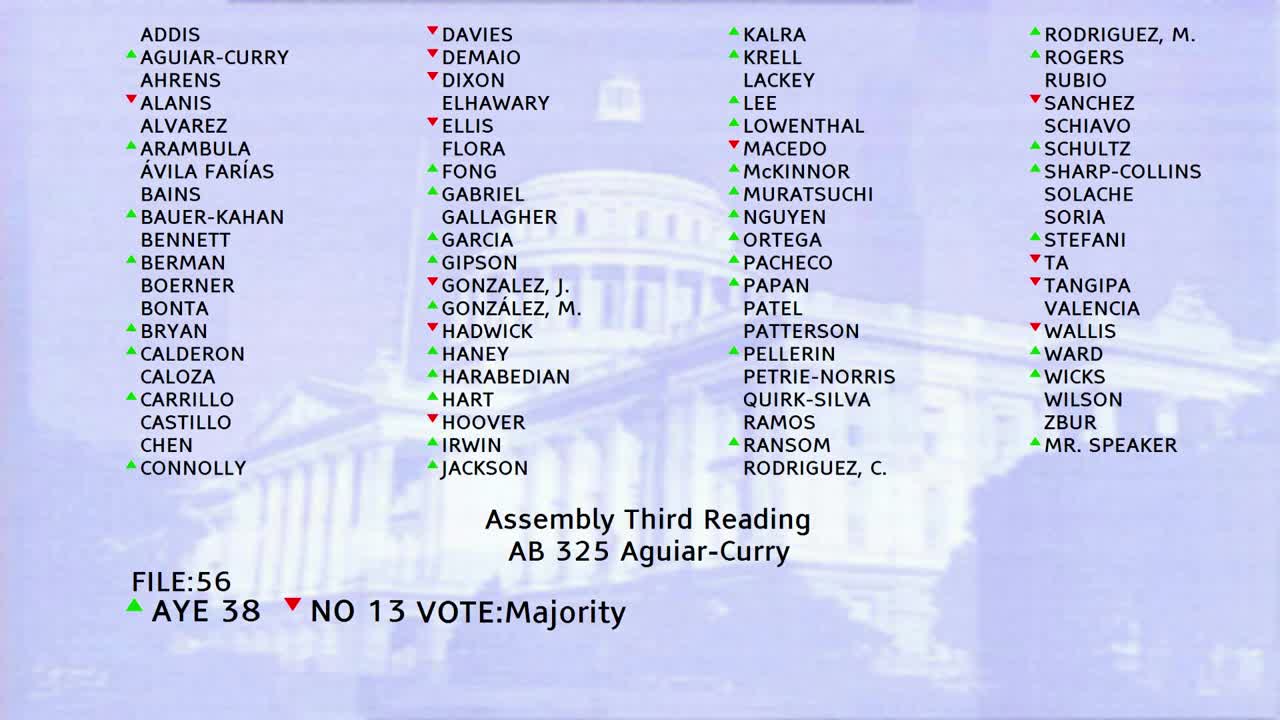 2MIN
Assembly Floor
 10MIN
Assembly Standing Committee on Natural Resources
 17MIN
Assembly Standing Committee on Agriculture
Bill Author

Bill Co-Author(s):
