AB 414: Residential tenancies: return of security.
- Session Year: 2025-2026
- House: Assembly
- Latest Version Date: 2025-10-06
Current Status:
Passed
(2025-10-06: Chaptered by Secretary of State - Chapter 340, Statutes of 2025.)
Introduced
In Committee
Awaiting First Chamber Vote
Passed First Chamber
In Committee
Awaiting Second Chamber Vote
Passed Second Chamber
Enacted
Existing law regulates the terms and conditions of residential tenancies, including generally limiting the amount of security that a landlord may demand or receive to an amount or value equivalent to one months rent, as provided, and allowing a landlord to claim of the security only those amounts as are reasonably necessary for specified purposes. Existing law defines a security for these purposes as any payment, fee, deposit, or charge, including any payment, fee, deposit, or charge, except as specified, that is imposed at a tenancys beginning to reimburse a landlord for costs associated with processing a new tenant or that is imposed as an advance payment of rent, used for any purpose. Existing law requires a landlord to provide a tenant a copy of an itemized statement, as specified, and return the securitys remaining portion to the tenant by personal delivery or by first-class mail, postage prepaid, no later than 21 calendar days after the tenant has vacated the premises, as specified. Existing law authorizes a landlord and tenant to mutually agree to have the landlord deposit electronically the securitys remaining portion to a bank account or other financial institution designated by the tenant or provide a copy of the itemized statement to an email account provided by the tenant.
This bill would revise these provisions to generally require the landlord to return the security by personal delivery or by check made payable to the tenant. If the landlord received the security or rental payments from the tenant electronically, the bill would instead require the landlord to return the remainder of the security electronically, as specified, unless the landlord and tenant designated another method of return, by written agreement. If the landlord received the security or rental payments from the tenant electronically, the bill would require the landlord to notify the tenant in writing of the tenants right to receive the security electronically pursuant to these provisions, as specified. The bill would also instead authorize the landlord and tenant to mutually agree, as specified, to provide the itemized statement by either email to an email account provided by the tenant or mail by first-class mail, postage prepaid, to an address provided by the tenant.
If multiple adult tenants reside in the unit, the bill would require the landlord to return the remainder of the security by a check made payable to all adult tenants, as specified, and provide the itemized statement by personal delivery or first-class mail, postage prepaid, to any one of the adult tenants chosen by the landlord, unless the landlord and all adult tenants, at the commencement of the tenancy or at any time during or after the tenancy, enter into a mutual written agreement containing specified provisions.
Existing law regulates the terms and conditions of residential tenancies, including generally limiting the amount of security that a landlord may demand or receive to an amount or value equivalent to one months rent, as provided, and allowing a landlord to claim of the security only those amounts as are reasonably necessary for specified purposes. Existing law defines a security for these purposes as any payment, fee, deposit, or charge, including any payment, fee, deposit, or charge, except as specified, that is imposed at a tenancys beginning to reimburse a landlord for costs associated with processing a new tenant or that is imposed as an advance payment of rent, used for any purpose. Existing law requires a landlord to provide a tenant a copy of an itemized statement, as specified, and return the securitys remaining portion to the tenant by personal delivery or by first-class mail, postage prepaid, no later than 21 calendar days after the tenant has vacated the premises, as specified. Existing law authorizes a landlord and tenant to mutually agree to have the landlord deposit electronically the securitys remaining portion to a bank account or other financial institution designated by the tenant or provide a copy of the itemized statement to an email account provided by the tenant.
This bill would revise these provisions to generally require the landlord to return the security by personal delivery or by check made payable to the tenant. If the landlord received the security or rental payments from the tenant electronically, the bill would instead require the tenant landlord to return the remainder of the security electronically, as specified, unless the landlord and tenant designated another method of return, by written agreement. If the landlord received the security or rental payments from the tenant electronically, the bill would require the landlord to notify the tenant in writing of the tenants right to receive the security electronically pursuant to these provisions, as specified. The bill would also instead authorize the landlord and tenant to mutually agree, as specified, to provide the itemized statement by either email to an email account provided by the tenant or mail by first-class mail, postage prepaid, to an address provided by the tenant.
If multiple adult tenants reside in the unit, the bill would require the landlord to return the remainder of the security by a check made payable to all adult tenants, as specified, and provide the itemized statement by personal delivery or first-class mail, postage prepaid, to any one of the adult tenants chosen by the landlord, unless the landlord and all adult tenants, at the commencement of the tenancy or at any time during or after the tenancy, enter into a mutual written agreement containing specified provisions.
Existing law regulates the terms and conditions of residential tenancies, including generally limiting the amount of security that a landlord may demand or receive to an amount or value equivalent to one months rent, as provided, and allowing a landlord to claim of the security only those amounts as are reasonably necessary for specified purposes. Existing law defines a security for these purposes as any payment, fee, deposit, or charge, including any payment, fee, deposit, or charge, except as specified, that is imposed at a tenancys beginning to reimburse a landlord for costs associated with processing a new tenant or that is imposed as an advance payment of rent, used for any purpose. Existing law requires a landlord to provide a tenant a copy of an itemized statement, as specified, and return the securitys remaining portion to the tenant by personal delivery or by first-class mail, postage prepaid, no later than 21 calendar days after the tenant has vacated the premises, as specified. Existing law authorizes a landlord and tenant to mutually agree to have the landlord deposit electronically the securitys remaining portion to a bank account or other financial institution designated by the tenant or provide a copy of the itemized statement to an email account provided by the tenant.
This bill would revise these provisions to generally require the landlord to return the security by personal delivery or by check made payable to the tenant. If the landlord received the security or rental payments from the tenant electronically, the bill would instead require the tenant to return the remainder of the security electronically, as specified, unless the landlord and tenant designated another method of return, by written agreement. If the landlord received the security or rental payments from the tenant electronically, the bill would require the landlord to notify the tenant in writing of the tenants right to receive the security electronically pursuant to these provisions, as specified. The bill would also instead authorize the landlord and tenant to mutually agree, as specified, to provide the itemized statement by either email to an email account provided by the tenant or mail by first-class mail, postage prepaid, to an address provided by the tenant. If
If multiple adult tenants reside in the unit, the bill would require the landlord to return the remainder of the security by a check made payable to all adult tenants, as specified, and provide the itemized statement by personal delivery or first-class mail, postage prepaid, to any one of the adult tenants chosen by the landlord, unless the landlord and all adult tenants, at the commencement of the tenancy or at any time during or after the tenancy, enter into a mutual written agreement containing specified provisions.
Existing law regulates the terms and conditions of residential tenancies, including generally limiting the amount of security that a landlord may demand or receive to an amount or value equivalent to one months rent, as provided, and allowing a landlord to claim of the security only those amounts as are reasonably necessary for specified purposes. Existing law defines a security for these purposes as any payment, fee, deposit, or charge, including any payment, fee, deposit, or charge, except as specified, that is imposed at a tenancys beginning to reimburse a landlord for costs associated with processing a new tenant or that is imposed as an advance payment of rent, used for any purpose. Existing law requires a landlord to provide a tenant a copy of an itemized statement, as specified, and return the securitys remaining portion to the tenant by personal delivery or by first-class mail, postage prepaid, no later than 21 calendar days after the tenant has vacated the premises, as specified. Existing law authorizes a landlord and tenant to mutually agree to have the landlord deposit electronically the securitys remaining portion to a bank account or other financial institution designated by the tenant or provide a copy of the itemized statement to an email account provided by the tenant.
This bill would revise these provisions to generally require the landlord to return the security by personal delivery or by check made payable to the tenant. If the landlord received the security or rental payments from the tenant electronically, the bill would instead require the tenant to return the remainder of the security electronically, as specified, unless the landlord and tenant designated another method of return, by written agreement. If the landlord received the security or rental payments from the tenant electronically, the bill would require the landlord to notify the tenant in writing of the tenants right to receive the security electronically pursuant to these provisions, as specified. The bill would also instead authorize the landlord and tenant to mutually agree, as specified, to provide the itemized statement by either email to an email account provided by the tenant or mail by first-class mail, postage prepaid, to an address provided by the tenant. If multiple adult tenants reside in the unit, the bill would require the landlord to return the remainder of the security by a check made payable to all adult tenants, as specified, and provide the itemized statement by first class personal delivery or first-class mail, postage prepaid, to any one of the adult tenants chosen by the landlord, unless the landlord and all adult tenants, at the commencement of the tenancy or at any time during or after the tenancy, enter into a mutual written agreement containing specified provisions.
Existing law regulates the terms and conditions of residential tenancies, including generally limiting the amount of security that a landlord may demand or receive to an amount or value equivalent to one months rent, as provided, and allowing a landlord to claim of the security only those amounts as are reasonably necessary for specified purposes. Existing law defines a security for these purposes as any payment, fee, deposit, or charge, including any payment, fee, deposit, or charge, except as specified, that is imposed at a tenancys beginning to reimburse a landlord for costs associated with processing a new tenant or that is imposed as an advance payment of rent, used for any purpose. Existing law requires a landlord to provide a tenant a copy of an itemized statement, as specified, and return the securitys remaining portion to the tenant by personal delivery or by first-class mail, postage prepaid, no later than 21 calendar days after the tenant has vacated the premises, as specified. Existing law authorizes a landlord and tenant to mutually agree to have the landlord deposit electronically the securitys remaining portion to a bank account or other financial institution designated by the tenant or provide a copy of the itemized statement to an email account provided by the tenant.
This bill would instead require a landlord to provide the tenant a copy of the itemized statement and return the securitys remaining portion in the manner the security was received or requested by the tenant for the return of the securitys remaining portion. If returning the securitys remaining portion by mail, the bill would require the landlord to return the securitys remaining portion and provide a copy of the itemized statement by certified mail. If returning the securitys remaining portion by electronic funds transfer, the bill would require the landlord to deposit the securitys remaining portion to a bank account or other financial institution designated by the tenant and provide a copy of the itemized statement to an email account provided by the tenant. If the landlord received the security by electronic funds transfer, the bill would require the landlord to return the securitys remaining portion by electronic funds transfer and provide the tenant the copy of the itemized statement pursuant to these provisions, upon the tenants request.This bill would revise these provisions to generally require the landlord to return the security by personal delivery or by check made payable to the tenant. If the landlord received the security or rental payments from the tenant electronically, the bill would instead require the tenant to return the remainder of the security electronically, as specified, unless the landlord and tenant designated another method of return, by written agreement. The bill would also instead authorize the landlord and tenant to mutually agree, as specified, to provide the itemized statement by either email to an email account provided by the tenant or mail by first-class mail, postage prepaid, to an address provided by the tenant. If multiple adult tenants reside in the unit, the bill would require the landlord to return the remainder of the security by a check made payable to all adult tenants, as specified, and provide the itemized statement by first class mail, postage prepaid, to any one of the adult tenants chosen by the landlord, unless the landlord and all adult tenants, at the commencement of the tenancy or at any time during or after the tenancy, enter into a mutual agreement containing specified provisions.
Existing law regulates the terms and conditions of residential tenancies, including generally limiting the amount of security that a landlord may demand or receive to an amount or value equivalent to one months rent, as provided, and allowing a landlord to claim of the security only those amounts as are reasonably necessary for specified purposes. Existing law defines a security for these purposes as any payment, fee, deposit, or charge, including any payment, fee, deposit, or charge, except as specified, that is imposed at a tenancys beginning to reimburse a landlord for costs associated with processing a new tenant or that is imposed as an advance payment of rent, used for any purpose. Existing law requires a landlord to provide a tenant a copy of an itemized statement, as specified, and return the securitys remaining portion to the tenant by personal delivery or by first-class mail, postage prepaid, no later than 21 calendar days after the tenant has vacated the premises, as specified. Existing law authorizes a landlord and tenant to mutually agree to have the landlord deposit electronically the securitys remaining portion to a bank account or other financial institution designated by the tenant or provide a copy of the itemized statement to an email account provided by the tenant.
This bill would instead require a landlord to provide the tenant a copy of the itemized statement and return the securitys remaining portion in the manner the security was received or requested by the tenant for the return of the securitys remaining portion. If returning the securitys remaining portion by mail, the bill would require the landlord to return the securitys remaining portion and provide a copy of the itemized statement by certified mail. If returning the securitys remaining portion by electronic funds transfer, the bill would require the landlord to deposit the securitys remaining portion to a bank account or other financial institution designated by the tenant and provide a copy of the itemized statement to an email account provided by the tenant. If the landlord received the security by electronic funds transfer, the bill would require the landlord to return the securitys remaining portion by electronic funds transfer and provide the tenant the copy of the itemized statement pursuant to these provisions, upon the tenants request.
(a)This section applies to security for a rental agreement for residential property that is used as the dwelling of the tenant.
(b)As used in this section, security means any payment, fee, deposit, or charge, including, but not limited to, any payment, fee, deposit, or charge, except as provided in Section 1950.6, that is imposed at the beginning of the tenancy to be used to reimburse the landlord for costs associated with processing a new tenant or that is imposed as an advance payment of rent, used or to be used for any purpose, including, but not limited to, any of the following:
(1)The compensation of a landlord for a tenants default in the payment of rent.
(2)The repair of damages to the premises, exclusive of ordinary wear and tear, caused by the tenant or by a guest or licensee of the tenant.
(3)The cleaning of the premises upon termination of the tenancy necessary to return the unit to the same level of cleanliness it was in at the inception of the tenancy. The amendments to this paragraph enacted by the act adding this sentence shall apply only to tenancies for which the tenants right to occupy begins after January 1, 2003.
(4)To remedy future defaults by the tenant in any obligation under the rental agreement to restore, replace, or return personal property or appurtenances, exclusive of ordinary wear and tear, if the security deposit is authorized to be applied thereto by the rental agreement.
(c)(1)Except as provided in paragraph (2), (3), or (5), a landlord shall not demand or receive security, however denominated, in an amount or value in excess of an amount equal to one months rent, in addition to any rent for the first month paid on or before initial occupancy.
(2)This subdivision does not prohibit an advance payment of not less than six months rent if the term of the lease is six months or longer.
(3)This subdivision does not preclude a landlord and a tenant from entering into a mutual agreement for the landlord, at the request of the tenant and for a specified fee or charge, to make structural, decorative, furnishing, or other similar alterations, if the alterations are other than cleaning or repairing for which the landlord may charge the previous tenant as provided by subdivision (e).
(4)On or after April 1, 2025, if a landlord or its agent charges a service member who rents residential property in which the service member will reside a higher than standard or advertised security pursuant to paragraph (1) due to the credit history, credit score, housing history, or other factor related to the tenant, the landlord shall provide the tenant with a written statement, on or before the date the lease is signed, of the amount of the higher security and an explanation why the higher security amount is being charged. The additional amount of security shall be returned to the tenant after no more than six months of residency if the tenant is not in arrears for any rent due during that period. The date for return of the additional amount of security shall be included in the lease agreement. For purposes of this paragraph, service member has the same meaning as in Section 400 of the Military and Veterans Code.
(5)(A)Notwithstanding paragraph (1), a landlord shall not demand or receive security, however denominated, in an amount or value in excess of an amount equal to two months rent, in addition to any rent for the first month paid on or before initial occupancy if the landlord meets both of the following requirements:
(i)The landlord is a natural person or a limited liability company in which all members are natural persons.
(ii)The landlord owns no more than two residential rental properties that collectively include no more than four dwelling units offered for rent.
(B)Subparagraph (A) shall not apply if the prospective tenant is a service member. A landlord shall not refuse to enter into a rental agreement for residential property with a prospective tenant who is a service member because this subparagraph prohibits the landlord from demanding or receiving a greater amount of security than that which is established in paragraph (1). For purposes of this subparagraph, service member has the same meaning as in Section 400 of the Military and Veterans Code.
(C)For purposes of this paragraph:
(i)Natural person includes any natural person who is a settlor or beneficiary of a family trust.
(ii)Family trust means a revocable living trust or irrevocable trust in which the settlors and beneficiaries of the trust are persons who are related to each other as sibling, spouse, domestic partner, child, parent, grandparent, or grandchild.
(6)This subdivision shall not apply to a security collected or demanded by the landlord before July 1, 2024.
(d)Any security shall be held by the landlord for the tenant who is party to the lease or agreement. The claim of a tenant to the security shall be prior to the claim of any creditor of the landlord.
(e)(1)Subject to paragraph (2), the landlord may claim of the security only those amounts as are reasonably necessary for the purposes specified in subdivision (b).
(2)(A)The landlord shall not assert a claim against the tenant or the security for damages to the premises or any defective conditions that preexisted the tenancy, for ordinary wear and tear or the effects thereof, whether the wear and tear preexisted the tenancy or occurred during the tenancy, or for the cumulative effects of ordinary wear and tear occurring during any one or more tenancies.
(B)Claims against the tenant or the security for materials or supplies and for work performed by a contractor, the landlord, or the landlords employee shall be limited to a reasonable amount necessary to restore the premises back to the condition it was in at the inception of the tenancy, exclusive of ordinary wear and tear.
(C)The landlord shall not require a tenant to pay for, or assert a claim against the tenant or the security for, professional carpet cleaning or other professional cleaning services, unless reasonably necessary to return the premises to the condition it was in at the inception of tenancy, exclusive of ordinary wear and tear.
(f)(1)Within a reasonable time after notification of either partys intention to terminate the tenancy, or before the end of the lease term, the landlord shall notify the tenant in writing of the tenants option to request an initial inspection and of the tenants right to be present at the inspection. At a reasonable time, but no earlier than two weeks before the termination or the end of lease date, the landlord, or an agent of the landlord, shall, upon the request of the tenant, make an initial inspection of the premises prior to any final inspection the landlord makes after the tenant has vacated the premises. The purpose of the initial inspection shall be to allow the tenant an opportunity to remedy identified deficiencies, in a manner consistent with the rights and obligations of the parties under the rental agreement, in order to avoid deductions from the security. If a tenant chooses not to request an initial inspection, the duties of the landlord under this subdivision are discharged. If an inspection is requested, the parties shall attempt to schedule the inspection at a mutually acceptable date and time. The landlord shall give at least 48 hours prior written notice of the date and time of the inspection if either a mutual time is agreed upon, or if a mutually agreed time cannot be scheduled but the tenant still wishes an inspection. The tenant and landlord may agree to forgo the 48-hour prior written notice by both signing a written waiver. The landlord shall proceed with the inspection whether the tenant is present or not, unless the tenant previously withdrew their request for the inspection. Written notice by the landlord shall contain, in substantially the same form, the following:
State law permits former tenants to reclaim abandoned personal property left at the former address of the tenant, subject to certain conditions. You may or may not be able to reclaim property without incurring additional costs, depending on the cost of storing the property and the length of time before it is reclaimed. In general, these costs will be lower the sooner you contact your former landlord after being notified that property belonging to you was left behind after you moved out.
(2)Based on the inspection, the landlord shall give the tenant an itemized statement specifying repairs or cleanings that are proposed to be the basis of any deductions from the security the landlord intends to make pursuant to paragraphs (1) to (4), inclusive, of subdivision (b). This statement shall also include the texts of paragraphs (1) to (4), inclusive, of subdivision (b). The statement shall be given to the tenant, if the tenant is present for the inspection, or shall be left inside the premises.
(3)The tenant shall have the opportunity during the period following the initial inspection until termination of the tenancy to remedy identified deficiencies, in a manner consistent with the rights and obligations of the parties under the rental agreement, in order to avoid deductions from the security.
(4)Subject to paragraphs (5) and (6), if an initial inspection is conducted pursuant to this subdivision and, at the time of inspection, the premises do not contain tenant possessions that prevent the landlord from identifying repairs or cleanings due to the presence of those possessions, the landlord shall not use the security for deductions for repairs or cleanings that are not identified in the itemized statement described in paragraph (2).
(5)Nothing in this subdivision shall prevent a landlord from using the security for deductions itemized in the statement provided for in paragraph (2) that were not cured by the tenant so long as the deductions are for damages authorized by this section.
(6)Nothing in this subdivision shall prevent a landlord from using the security for any purpose specified in paragraphs (1) to (4), inclusive, of subdivision (b) that occurs between completion of the initial inspection when possession of the unit is returned to the landlord or that was not identified during the initial inspection due to the presence of a tenants possessions.
(7)The requirements of this subdivision do not apply when the tenancy is terminated pursuant to subdivision (2), (3), or (4) of Section 1161 of the Code of Civil Procedure.
(g)(1)For tenancies that begin on or after July 1, 2025, the landlord shall take photographs of the unit immediately before, or at the inception of, the tenancy.
(2)Beginning April 1, 2025, the landlord shall take photographs of the unit within a reasonable time after the possession of the unit is returned to the landlord, but prior to any repairs or cleanings for which the landlord will make a deduction from or claim against the security deposit pursuant to this section, and shall also take photographs of the unit within a reasonable time after such repairs or cleanings are completed.
(h)(1)No later than 21 calendar days after the tenant has vacated the premises, but not earlier than the time that either the landlord or the tenant provides a notice to terminate the tenancy under Section 1946 or 1946.1, Section 1161 of the Code of Civil Procedure, or not earlier than 60 calendar days prior to the expiration of a fixed-term lease, the landlord shall furnish the tenant, a copy of an itemized statement indicating the basis for, and the amount of, any security received and the disposition of the security, and shall return any remaining portion of the security to the tenant as follows:
(A)(i)Subject to subparagraph (C), and except as provided by clause (ii), the landlord shall return the remainder of the security by personal delivery or by a check made payable to the tenant and mailed by first-class mail, postage prepaid.
(ii)(I)If the landlord received the security or rental payments from the tenant electronically, the landlord shall return the remainder of the security electronically to a bank account or other financial institution designated by the tenant in writing, or by any electronic or virtual method available to the landlord if agreed to in writing by the tenant. Alternatively, the landlord and tenant may, by written agreement, designate another method of return, including, but not limited to, by personal delivery or by a check made payable to the tenant and mailed by first-class mail, postage prepaid, to an address provided by the tenant. Upon the termination of a landlords interest in the premises and the transfer of the security to the landlords successor in interest as provided in subdivision (i), the landlords successor in interest shall return the remainder of the security electronically to a bank account or other financial institution designated by the tenant in writing or by any electronic or virtual method available to the landlords successor in interest if agreed to in writing by the tenant only if the landlords successor in interest received rental payments electronically from the tenant.
(II)Pursuant to subclause (I), if the landlord received the security or rental payments from the tenant electronically or the landlords successor in interest received rental payments from the tenant electronically, the landlord or the landlords successor in interest shall, within a reasonable time after notification of either partys intention to terminate the tenancy, or before the end of the lease term, notify the tenant in writing of the tenants right to receive the security electronically to a bank account or other financial institution designated by the tenant, or by any electronic or virtual method available to the landlord or the landlords successor in interest, if agreed to in writing by the tenant, pursuant to subclause (I). The requirements of this subclause do not apply when the landlord or the landlords successor in interest and tenant have previously entered into a written agreement designating another method of return of the security pursuant to subclause (I) or when the tenancy is terminated pursuant to subdivision (2), (3), or (4) of Section 1161 of the Code of Civil Procedure.
(B)(i)Subject to subparagraph (C), and except as provided by clause (ii), the landlord shall furnish the itemized statement by personal delivery or first-class mail, postage prepaid.
(ii)Upon mutual agreement between the landlord and tenant entered into at the commencement of the tenancy or at any time during or after the tenancy, the itemized statement may be furnished by either of the following:
(I)Emailed to an account provided by the tenant.
(II)Mailed to an address provided by the tenant by first-class mail, postage prepaid.
(C)(i)Except as provided in clause (iii) and unless the landlord and all adult tenants residing in the unit enter into a written mutual agreement pursuant to clause (ii), if multiple adult tenants reside in the unit, the landlord shall return the remainder of the security by a check made payable to all adult tenants on the rental or lease agreement at the time the tenancy terminates and furnish the itemized statement by personal delivery or first-class mail, postage prepaid, to any one of the adult tenants chosen by the landlord.
(ii)If multiple adult tenants reside in the unit, the landlord may enter into a mutual written agreement between the landlord and all adult tenants, at the commencement of the tenancy or at any time during or after the tenancy, that specifies both of the following:
(I)How any remaining portion of the security will be returned, including whether it will be returned to a specific adult tenant or divided among multiple tenants, with the allocation percentages. If any remaining portion of the security is to be returned to multiple adult tenants, the landlord may return the security by either a check by first-class mail, postage prepaid, or an electronic deposit to a bank account or other financial institution designated by each adult tenant, as specified in the written agreement.
(II)For each adult tenant, whether the landlord will furnish the itemized statement by email or first-class mail, postage prepaid, along with a forwarding address or email account.
(iii)If multiple adult tenants reside in a unit and a tenant terminates the lease pursuant to Section 1946.7 and no written mutual agreement was entered into by the landlord and all adult tenants pursuant to clause (ii), and the tenant who terminated the lease pursuant to Section 1946.7 requests that the security be disbursed in a manner other than by check made payable to all adult tenants, the landlord may return the security in a manner other than by check made payable to all adult tenants.
(2)The landlord shall also include, along with and at the same time the itemized statement is sent, copies of documents showing charges incurred and deducted by the landlord to repair or clean the premises, as follows:
(A)If the landlord or landlords employee did the work, the itemized statement shall reasonably describe the work performed. The itemized statement shall include the time spent and the reasonable hourly rate charged.
(B)If the landlord or landlords employee did not do the work, the landlord shall provide the tenant a copy of the bill, invoice, or receipt supplied by the person or entity performing the work. The itemized statement shall provide the tenant with the name, address, and telephone number of the person or entity, if the bill, invoice, or receipt does not include that information.
(C)If a deduction is made for materials or supplies, the landlord shall provide a copy of the bill, invoice, or receipt. If a particular material or supply item is purchased by the landlord on an ongoing basis, the landlord may document the cost of the item by providing a copy of a bill, invoice, receipt, vendor price list, or other vendor document that reasonably documents the cost of the item used in the repair or cleaning of the unit.
(D)If a deduction is made for repairs or cleanings allowed by this section, the landlord shall provide photographs taken pursuant to subdivision (g), along with a written explanation of the cost of the allowable repairs or cleanings, as described in subparagraphs (A) to (C), inclusive. The landlord may provide such photographs to the tenant by mail, email, computer flash drive, or by providing a link where the tenant may view the photographs online.
(3)If a repair to be done by the landlord or the landlords employee cannot reasonably be completed within 21 calendar days after the tenant has vacated the premises, or if the documents from a person or entity providing services, materials, or supplies are not in the landlords possession within 21 calendar days after the tenant has vacated the premises, the landlord may deduct the amount of a good faith estimate of the charges that will be incurred and provide that estimate with the itemized statement. If the reason for the estimate is because the documents from a person or entity providing services, materials, or supplies are not in the landlords possession, the itemized statement shall include the name, address, and telephone number of the person or entity. Within 14 calendar days of completing the repair or receiving the documentation, the landlord shall complete the requirements in paragraphs (1) and (2) in the manner specified.
(4)The landlord need not comply with paragraph (2) or (3) if either of the following applies:
(A)The deductions for repairs and cleaning together do not exceed one hundred twenty-five dollars ($125).
(B)The tenant waived the rights specified in paragraphs (2) and (3). The waiver shall only be effective if it is signed by the tenant at the same time or after a notice to terminate a tenancy under Section 1946 or 1946.1 has been given, a notice under Section 1161 of the Code of Civil Procedure has been given, or no earlier than 60 calendar days prior to the expiration of a fixed-term lease. The waiver shall substantially include the text of paragraph (2).
(5)Notwithstanding paragraph (4), the landlord shall comply with paragraphs (2) and (3) when a tenant makes a request for documentation within 14 calendar days after receiving the itemized statement specified in paragraph (1). The landlord shall comply within 14 calendar days after receiving the request from the tenant.
(6)Any mailings to the tenant pursuant to this subdivision shall be sent to the address provided by the tenant. If the tenant does not provide an address, mailings pursuant to this subdivision shall be sent to the unit that has been vacated.
(7)The landlord shall not be entitled to claim any amount of the security if the landlord, in bad faith, fails to comply with this subdivision.
(i)Upon termination of the landlords interest in the premises, whether by sale, assignment, death, appointment of receiver, or otherwise, the landlord or the landlords agent shall, within a reasonable time, do one of the following acts, either of which shall relieve the landlord of further liability with respect to the security held:
(1)Transfer the portion of the security remaining after any lawful deductions are made under subdivision (e) to the landlords successor in interest. The landlord shall thereafter notify the tenant by personal delivery or by first-class mail, postage prepaid, of the transfer, of any claims made against the security, of the amount of the security deposited, and of the names of the successors in interest, their addresses, and their telephone numbers. If the notice to the tenant is made by personal delivery, the tenant shall acknowledge receipt of the notice and sign their name on the landlords copy of the notice.
(2)Return the portion of the security remaining after any lawful deductions are made under subdivision (e) to the tenant, together with an accounting as provided in subdivision (h).
(j)Prior to the voluntary transfer of a landlords interest in the premises, the landlord shall deliver to the landlords successor in interest a written statement indicating the following:
(1)The security remaining after any lawful deductions are made.
(2)An itemization of any lawful deductions from any security received.
(3)Their election under paragraph (1) or (2) of subdivision (i).
This subdivision does not affect the validity of title to the real property transferred in violation of this subdivision.
(k)(1)In the event of noncompliance with subdivision (i), the landlords successors in interest shall be jointly and severally liable with the landlord for repayment of the security, or that portion thereof to which the tenant is entitled, when and as provided in subdivisions (e) and (h). A successor in interest of a landlord may not require the tenant to post any security to replace that amount not transferred to the tenant or successors in interest as provided in subdivision (i), unless and until the successor in interest first makes restitution of the initial security as provided in paragraph (2) of subdivision (i) or provides the tenant with an accounting as provided in subdivision (h).
(2)This subdivision does not preclude a successor in interest from recovering from the tenant compensatory damages that are in excess of the security received from the landlord previously paid by the tenant to the landlord.
(3)Notwithstanding this subdivision, if, upon inquiry and reasonable investigation, a landlords successor in interest has a good faith belief that the lawfully remaining security deposit is transferred to the successor in interest or returned to the tenant pursuant to subdivision (i), the successor in interest is not liable for damages as provided in subdivision (m), or any security not transferred pursuant to subdivision (i).
(l)Upon receipt of any portion of the security under paragraph (1) of subdivision (i), the landlords successors in interest shall have all of the rights and obligations of a landlord holding the security with respect to the security.
(m)The bad faith claim or retention by a landlord or the landlords successors in interest of the security or any portion thereof in violation of this section, or the bad faith demand of replacement of security in violation of subdivision (k), may subject the landlord or the landlords successors in interest to statutory damages of up to twice the amount of the security, in addition to actual damages. The court may award damages for bad faith whenever the facts warrant that award, regardless of whether the injured party has specifically requested relief. In an action under this section, the landlord or the landlords successors in interest shall have the burden of proof as to the reasonableness of the amounts claimed or the authority pursuant to this section to demand additional security deposits.
(n)A lease or rental agreement shall not contain a provision characterizing any security as nonrefundable.
(o)An action under this section may be maintained in small claims court if the damages claimed, whether actual, statutory, or both, are within the jurisdictional amount allowed by Section 116.220 or 116.221 of the Code of Civil Procedure.
(p)Proof of the existence of and the amount of a security deposit may be established by any credible evidence, including, but not limited to, a canceled check, a receipt, a lease indicating the requirement of a deposit as well as the amount, prior consistent statements or actions of the landlord or tenant, or a statement under penalty of perjury that satisfies the credibility requirements set forth in Section 780 of the Evidence Code.
(q)The amendments to this section made during the 1985 portion of the 198586 Regular Session of the Legislature that are set forth in subdivision (e) are declaratory of existing law.
(r)The amendments to this section made during the 2003 portion of the 200304 Regular Session of the Legislature that are set forth in paragraph (1) of subdivision (f) are declaratory of existing law.
(a)This section applies to security for a rental agreement for residential property that is used as the dwelling of the tenant.
(b)As used in this section, security means any payment, fee, deposit, or charge, including, but not limited to, any payment, fee, deposit, or charge, except as provided in Section 1950.6, that is imposed at the beginning of the tenancy to be used to reimburse the landlord for costs associated with processing a new tenant or that is imposed as an advance payment of rent, used or to be used for any purpose, including, but not limited to, any of the following:
(1)The compensation of a landlord for a tenants default in the payment of rent.
(2)The repair of damages to the premises, exclusive of ordinary wear and tear, caused by the tenant or by a guest or licensee of the tenant.
(3)The cleaning of the premises upon termination of the tenancy necessary to return the unit to the same level of cleanliness it was in at the inception of the tenancy. The amendments to this paragraph enacted by the act adding this sentence shall apply only to tenancies for which the tenants right to occupy begins after January 1, 2003.
(4)To remedy future defaults by the tenant in any obligation under the rental agreement to restore, replace, or return personal property or appurtenances, exclusive of ordinary wear and tear, if the security deposit is authorized to be applied thereto by the rental agreement.
(c)(1)Except as provided in paragraph (2), (3), or (5), a landlord shall not demand or receive security, however denominated, in an amount or value in excess of an amount equal to one months rent, in addition to any rent for the first month paid on or before initial occupancy.
(2)This subdivision does not prohibit an advance payment of not less than six months rent if the term of the lease is six months or longer.
(3)This subdivision does not preclude a landlord and a tenant from entering into a mutual agreement for the landlord, at the request of the tenant and for a specified fee or charge, to make structural, decorative, furnishing, or other similar alterations, if the alterations are other than cleaning or repairing for which the landlord may charge the previous tenant as provided by subdivision (e).
(4)On or after April 1, 2025, if a landlord or its agent charges a service member who rents residential property in which the service member will reside a higher than standard or advertised security pursuant to paragraph (1) due to the credit history, credit score, housing history, or other factor related to the tenant, the landlord shall provide the tenant with a written statement, on or before the date the lease is signed, of the amount of the higher security and an explanation why the higher security amount is being charged. The additional amount of security shall be returned to the tenant after no more than six months of residency if the tenant is not in arrears for any rent due during that period. The date for return of the additional amount of security shall be included in the lease agreement. For purposes of this paragraph, service member has the same meaning as in Section 400 of the Military and Veterans Code.
(5)(A)Notwithstanding paragraph (1), a landlord shall not demand or receive security, however denominated, in an amount or value in excess of an amount equal to two months rent, in addition to any rent for the first month paid on or before initial occupancy if the landlord meets both of the following requirements:
(i)The landlord is a natural person or a limited liability company in which all members are natural persons.
(ii)The landlord owns no more than two residential rental properties that collectively include no more than four dwelling units offered for rent.
(B)Subparagraph (A) shall not apply if the prospective tenant is a service member. A landlord shall not refuse to enter into a rental agreement for residential property with a prospective tenant who is a service member because this subparagraph prohibits the landlord from demanding or receiving a greater amount of security than that which is established in paragraph (1). For purposes of this subparagraph, service member has the same meaning as in Section 400 of the Military and Veterans Code.
(C)For purposes of this paragraph:
(i)Natural person includes any natural person who is a settlor or beneficiary of a family trust.
(ii)Family trust means a revocable living trust or irrevocable trust in which the settlors and beneficiaries of the trust are persons who are related to each other as sibling, spouse, domestic partner, child, parent, grandparent, or grandchild.
(6)This subdivision shall not apply to a security collected or demanded by the landlord before July 1, 2024.
(d)Any security shall be held by the landlord for the tenant who is party to the lease or agreement. The claim of a tenant to the security shall be prior to the claim of any creditor of the landlord.
(e)(1)Subject to paragraph (2), the landlord may claim of the security only those amounts as are reasonably necessary for the purposes specified in subdivision (b).
(2)(A)The landlord shall not assert a claim against the tenant or the security for damages to the premises or any defective conditions that preexisted the tenancy, for ordinary wear and tear or the effects thereof, whether the wear and tear preexisted the tenancy or occurred during the tenancy, or for the cumulative effects of ordinary wear and tear occurring during any one or more tenancies.
(B)Claims against the tenant or the security for materials or supplies and for work performed by a contractor, the landlord, or the landlords employee shall be limited to a reasonable amount necessary to restore the premises back to the condition it was in at the inception of the tenancy, exclusive of ordinary wear and tear.
(C)The landlord shall not require a tenant to pay for, or assert a claim against the tenant or the security for, professional carpet cleaning or other professional cleaning services, unless reasonably necessary to return the premises to the condition it was in at the inception of tenancy, exclusive of ordinary wear and tear.
(f)(1)Within a reasonable time after notification of either partys intention to terminate the tenancy, or before the end of the lease term, the landlord shall notify the tenant in writing of the tenants option to request an initial inspection and of the tenants right to be present at the inspection. At a reasonable time, but no earlier than two weeks before the termination or the end of lease date, the landlord, or an agent of the landlord, shall, upon the request of the tenant, make an initial inspection of the premises prior to any final inspection the landlord makes after the tenant has vacated the premises. The purpose of the initial inspection shall be to allow the tenant an opportunity to remedy identified deficiencies, in a manner consistent with the rights and obligations of the parties under the rental agreement, in order to avoid deductions from the security. If a tenant chooses not to request an initial inspection, the duties of the landlord under this subdivision are discharged. If an inspection is requested, the parties shall attempt to schedule the inspection at a mutually acceptable date and time. The landlord shall give at least 48 hours prior written notice of the date and time of the inspection if either a mutual time is agreed upon, or if a mutually agreed time cannot be scheduled but the tenant still wishes an inspection. The tenant and landlord may agree to forgo the 48-hour prior written notice by both signing a written waiver. The landlord shall proceed with the inspection whether the tenant is present or not, unless the tenant previously withdrew their request for the inspection. Written notice by the landlord shall contain, in substantially the same form, the following:
State law permits former tenants to reclaim abandoned personal property left at the former address of the tenant, subject to certain conditions. You may or may not be able to reclaim property without incurring additional costs, depending on the cost of storing the property and the length of time before it is reclaimed. In general, these costs will be lower the sooner you contact your former landlord after being notified that property belonging to you was left behind after you moved out.
(2)Based on the inspection, the landlord shall give the tenant an itemized statement specifying repairs or cleanings that are proposed to be the basis of any deductions from the security the landlord intends to make pursuant to paragraphs (1) to (4), inclusive, of subdivision (b). This statement shall also include the texts of paragraphs (1) to (4), inclusive, of subdivision (b). The statement shall be given to the tenant, if the tenant is present for the inspection, or shall be left inside the premises.
(3)The tenant shall have the opportunity during the period following the initial inspection until termination of the tenancy to remedy identified deficiencies, in a manner consistent with the rights and obligations of the parties under the rental agreement, in order to avoid deductions from the security.
(4)Subject to paragraphs (5) and (6), if an initial inspection is conducted pursuant to this subdivision and, at the time of inspection, the premises do not contain tenant possessions that prevent the landlord from identifying repairs or cleanings due to the presence of those possessions, the landlord shall not use the security for deductions for repairs or cleanings that are not identified in the itemized statement described in paragraph (2).
(5)Nothing in this subdivision shall prevent a landlord from using the security for deductions itemized in the statement provided for in paragraph (2) that were not cured by the tenant so long as the deductions are for damages authorized by this section.
(6)Nothing in this subdivision shall prevent a landlord from using the security for any purpose specified in paragraphs (1) to (4), inclusive, of subdivision (b) that occurs between completion of the initial inspection when possession of the unit is returned to the landlord or that was not identified during the initial inspection due to the presence of a tenants possessions.
(7)The requirements of this subdivision do not apply when the tenancy is terminated pursuant to subdivision (2), (3), or (4) of Section 1161 of the Code of Civil Procedure.
(g)(1)For tenancies that begin on or after July 1, 2025, the landlord shall take photographs of the unit immediately before, or at the inception of, the tenancy.
(2)Beginning April 1, 2025, the landlord shall take photographs of the unit within a reasonable time after the possession of the unit is returned to the landlord, but prior to any repairs or cleanings for which the landlord will make a deduction from or claim against the security deposit pursuant to this section, and shall also take photographs of the unit within a reasonable time after such repairs or cleanings are completed.
(h)(1)No later than 21 calendar days after the tenant has vacated the premises, but not earlier than the time that either the landlord or the tenant provides a notice to terminate the tenancy under Section 1946 or 1946.1, Section 1161 of the Code of Civil Procedure, or not earlier than 60 calendar days prior to the expiration of a fixed-term lease, the landlord shall furnish the tenant, a copy of an itemized statement indicating the basis for, and the amount of, any security received and the disposition of the security, and shall return any remaining portion of the security to the tenant as follows:
(A)(i)Subject to subparagraph (C), and except as provided by clause (ii), the landlord shall return the remainder of the security by personal delivery or by a check made payable to the tenant and mailed by first-class mail, postage prepaid.
(ii)(I)If the landlord received the security or rental payments from the tenant electronically, the landlord shall return the remainder of the security electronically to a bank account or other financial institution designated by the tenant in writing, or by any electronic or virtual method available to the landlord if agreed to in writing by the tenant. Alternatively, the landlord and tenant may, by written agreement, designate another method of return, including, but not limited to, by personal delivery or by a check made payable to the tenant and mailed by first-class mail, postage prepaid, to an address provided by the tenant. Upon the termination of a landlords interest in the premises and the transfer of the security to the landlords successor in interest as provided in subdivision (i), the landlords successor in interest shall return the remainder of the security electronically to a bank account or other financial institution designated by the tenant in writing or by any electronic or virtual method available to the landlords successor if agreed to in writing by the tenant only if the landlords successor in interest received rental payments electronically from the tenant.
(II)Pursuant to subclause (I), if the landlord received the security or rental payments from the tenant electronically or the landlords successor in interest received rental payments from the tenant electronically, the landlord shall, within a reasonable time after notification of either partys intention to terminate the tenancy, or before the end of the lease term, notify the tenant in writing of the tenants right to receive the security electronically to a bank account or other financial institution designated by the tenant, or by any electronic or virtual method available to the landlord pursuant to subclause (I). The requirements of this subclause do not apply when the landlord and tenant have previously entered into a written agreement designating another method of return of the security pursuant to subclause (I). (I) or when the tenancy is terminated pursuant to subdivision (2), (3), or (4) of Section 1161 of the Code of Civil Procedure.
(B)(i)Subject to subparagraph (C), and except as provided by clause (ii), the landlord shall furnish the itemized statement by personal delivery or first-class mail, postage prepaid.
(ii)Upon mutual agreement between the landlord and tenant entered into at the commencement of the tenancy or at any time during or after the tenancy, the itemized statement may be furnished by either of the following:
(I)Emailed to an account provided by the tenant.
(II)Mailed to an address provided by the tenant by first-class mail, postage prepaid.
(C)(i)Unless Except as provided in clause (iii) and unless the landlord and all adult tenants residing in the unit enter into a written mutual agreement pursuant to clause (ii), if multiple adult tenants reside in the unit, the landlord shall return the remainder of the security by a check made payable to all adult tenants on the rental or lease agreement at the time the tenancy terminates and furnish the itemized statement by personal delivery or first-class mail, postage prepaid, to any one of the adult tenants chosen by the landlord.
(ii)If multiple adult tenants reside in the unit, the landlord may enter into a mutual written agreement between the landlord and all adult tenants, at the commencement of the tenancy or at any time during or after the tenancy, that specifies both of the following:
(I)How any remaining portion of the security will be returned, including whether it will be returned to a specific adult tenant or divided among multiple tenants, with the allocation percentages. If any remaining portion of the security is to be returned to multiple adult tenants, the landlord may return the security by either a check by first-class mail, postage prepaid, or an electronic deposit to a bank account or other financial institution designated by each adult tenant, as specified in the written agreement.
(II)For each adult tenant, whether the landlord will furnish the itemized statement by email or first-class mail, postage prepaid, along with a forwarding address or email account.
(iii)If multiple adult tenants reside in a unit and a tenant terminates the lease pursuant to Section 1946.7 and no written mutual agreement was entered into by the landlord and all adult tenants pursuant to clause (ii), and the tenant who terminated the lease pursuant to Section 1946.7 requests that the security be disbursed in a manner other than by check made payable to all adult tenants, the landlord may return the security in a manner other than by check made payable to all adult tenants.
(2)The landlord shall also include, along with and at the same time the itemized statement is sent, copies of documents showing charges incurred and deducted by the landlord to repair or clean the premises, as follows:
(A)If the landlord or landlords employee did the work, the itemized statement shall reasonably describe the work performed. The itemized statement shall include the time spent and the reasonable hourly rate charged.
(B)If the landlord or landlords employee did not do the work, the landlord shall provide the tenant a copy of the bill, invoice, or receipt supplied by the person or entity performing the work. The itemized statement shall provide the tenant with the name, address, and telephone number of the person or entity, if the bill, invoice, or receipt does not include that information.
(C)If a deduction is made for materials or supplies, the landlord shall provide a copy of the bill, invoice, or receipt. If a particular material or supply item is purchased by the landlord on an ongoing basis, the landlord may document the cost of the item by providing a copy of a bill, invoice, receipt, vendor price list, or other vendor document that reasonably documents the cost of the item used in the repair or cleaning of the unit.
(D)If a deduction is made for repairs or cleanings allowed by this section, the landlord shall provide photographs taken pursuant to subdivision (g), along with a written explanation of the cost of the allowable repairs or cleanings, as described in subparagraphs (A) to (C), inclusive. The landlord may provide such photographs to the tenant by mail, email, computer flash drive, or by providing a link where the tenant may view the photographs online.
(3)If a repair to be done by the landlord or the landlords employee cannot reasonably be completed within 21 calendar days after the tenant has vacated the premises, or if the documents from a person or entity providing services, materials, or supplies are not in the landlords possession within 21 calendar days after the tenant has vacated the premises, the landlord may deduct the amount of a good faith estimate of the charges that will be incurred and provide that estimate with the itemized statement. If the reason for the estimate is because the documents from a person or entity providing services, materials, or supplies are not in the landlords possession, the itemized statement shall include the name, address, and telephone number of the person or entity. Within 14 calendar days of completing the repair or receiving the documentation, the landlord shall complete the requirements in paragraphs (1) and (2) in the manner specified.
(4)The landlord need not comply with paragraph (2) or (3) if either of the following applies:
(A)The deductions for repairs and cleaning together do not exceed one hundred twenty-five dollars ($125).
(B)The tenant waived the rights specified in paragraphs (2) and (3). The waiver shall only be effective if it is signed by the tenant at the same time or after a notice to terminate a tenancy under Section 1946 or 1946.1 has been given, a notice under Section 1161 of the Code of Civil Procedure has been given, or no earlier than 60 calendar days prior to the expiration of a fixed-term lease. The waiver shall substantially include the text of paragraph (2).
(5)Notwithstanding paragraph (4), the landlord shall comply with paragraphs (2) and (3) when a tenant makes a request for documentation within 14 calendar days after receiving the itemized statement specified in paragraph (1). The landlord shall comply within 14 calendar days after receiving the request from the tenant.
(6)Any mailings to the tenant pursuant to this subdivision shall be sent to the address provided by the tenant. If the tenant does not provide an address, mailings pursuant to this subdivision shall be sent to the unit that has been vacated.
(7)The landlord shall not be entitled to claim any amount of the security if the landlord, in bad faith, fails to comply with this subdivision.
(i)Upon termination of the landlords interest in the premises, whether by sale, assignment, death, appointment of receiver, or otherwise, the landlord or the landlords agent shall, within a reasonable time, do one of the following acts, either of which shall relieve the landlord of further liability with respect to the security held:
(1)Transfer the portion of the security remaining after any lawful deductions are made under subdivision (e) to the landlords successor in interest. The landlord shall thereafter notify the tenant by personal delivery or by first-class mail, postage prepaid, of the transfer, of any claims made against the security, of the amount of the security deposited, and of the names of the successors in interest, their addresses, and their telephone numbers. If the notice to the tenant is made by personal delivery, the tenant shall acknowledge receipt of the notice and sign their name on the landlords copy of the notice.
(2)Return the portion of the security remaining after any lawful deductions are made under subdivision (e) to the tenant, together with an accounting as provided in subdivision (h).
(j)Prior to the voluntary transfer of a landlords interest in the premises, the landlord shall deliver to the landlords successor in interest a written statement indicating the following:
(1)The security remaining after any lawful deductions are made.
(2)An itemization of any lawful deductions from any security received.
(3)Their election under paragraph (1) or (2) of subdivision (i).
This subdivision does not affect the validity of title to the real property transferred in violation of this subdivision.
(k)(1)In the event of noncompliance with subdivision (i), the landlords successors in interest shall be jointly and severally liable with the landlord for repayment of the security, or that portion thereof to which the tenant is entitled, when and as provided in subdivisions (e) and (h). A successor in interest of a landlord may not require the tenant to post any security to replace that amount not transferred to the tenant or successors in interest as provided in subdivision (i), unless and until the successor in interest first makes restitution of the initial security as provided in paragraph (2) of subdivision (i) or provides the tenant with an accounting as provided in subdivision (h).
(2)This subdivision does not preclude a successor in interest from recovering from the tenant compensatory damages that are in excess of the security received from the landlord previously paid by the tenant to the landlord.
(3)Notwithstanding this subdivision, if, upon inquiry and reasonable investigation, a landlords successor in interest has a good faith belief that the lawfully remaining security deposit is transferred to the successor in interest or returned to the tenant pursuant to subdivision (i), the successor in interest is not liable for damages as provided in subdivision (m), or any security not transferred pursuant to subdivision (i).
(l)Upon receipt of any portion of the security under paragraph (1) of subdivision (i), the landlords successors in interest shall have all of the rights and obligations of a landlord holding the security with respect to the security.
(m)The bad faith claim or retention by a landlord or the landlords successors in interest of the security or any portion thereof in violation of this section, or the bad faith demand of replacement of security in violation of subdivision (k), may subject the landlord or the landlords successors in interest to statutory damages of up to twice the amount of the security, in addition to actual damages. The court may award damages for bad faith whenever the facts warrant that award, regardless of whether the injured party has specifically requested relief. In an action under this section, the landlord or the landlords successors in interest shall have the burden of proof as to the reasonableness of the amounts claimed or the authority pursuant to this section to demand additional security deposits.
(n)A lease or rental agreement shall not contain a provision characterizing any security as nonrefundable.
(o)An action under this section may be maintained in small claims court if the damages claimed, whether actual, statutory, or both, are within the jurisdictional amount allowed by Section 116.220 or 116.221 of the Code of Civil Procedure.
(p)Proof of the existence of and the amount of a security deposit may be established by any credible evidence, including, but not limited to, a canceled check, a receipt, a lease indicating the requirement of a deposit as well as the amount, prior consistent statements or actions of the landlord or tenant, or a statement under penalty of perjury that satisfies the credibility requirements set forth in Section 780 of the Evidence Code.
(q)The amendments to this section made during the 1985 portion of the 198586 Regular Session of the Legislature that are set forth in subdivision (e) are declaratory of existing law.
(r)The amendments to this section made during the 2003 portion of the 200304 Regular Session of the Legislature that are set forth in paragraph (1) of subdivision (f) are declaratory of existing law.
(a)This section applies to security for a rental agreement for residential property that is used as the dwelling of the tenant.
(b)As used in this section, security means any payment, fee, deposit, or charge, including, but not limited to, any payment, fee, deposit, or charge, except as provided in Section 1950.6, that is imposed at the beginning of the tenancy to be used to reimburse the landlord for costs associated with processing a new tenant or that is imposed as an advance payment of rent, used or to be used for any purpose, including, but not limited to, any of the following:
(1)The compensation of a landlord for a tenants default in the payment of rent.
(2)The repair of damages to the premises, exclusive of ordinary wear and tear, caused by the tenant or by a guest or licensee of the tenant.
(3)The cleaning of the premises upon termination of the tenancy necessary to return the unit to the same level of cleanliness it was in at the inception of the tenancy. The amendments to this paragraph enacted by the act adding this sentence shall apply only to tenancies for which the tenants right to occupy begins after January 1, 2003.
(4)To remedy future defaults by the tenant in any obligation under the rental agreement to restore, replace, or return personal property or appurtenances, exclusive of ordinary wear and tear, if the security deposit is authorized to be applied thereto by the rental agreement.
(c)(1)Except as provided in paragraph (2), (3), or (5), a landlord shall not demand or receive security, however denominated, in an amount or value in excess of an amount equal to one months rent, in addition to any rent for the first month paid on or before initial occupancy.
(2)This subdivision does not prohibit an advance payment of not less than six months rent if the term of the lease is six months or longer.
(3)This subdivision does not preclude a landlord and a tenant from entering into a mutual agreement for the landlord, at the request of the tenant and for a specified fee or charge, to make structural, decorative, furnishing, or other similar alterations, if the alterations are other than cleaning or repairing for which the landlord may charge the previous tenant as provided by subdivision (e).
(4)On or after April 1, 2025, if a landlord or its agent charges a service member who rents residential property in which the service member will reside a higher than standard or advertised security pursuant to paragraph (1) due to the credit history, credit score, housing history, or other factor related to the tenant, the landlord shall provide the tenant with a written statement, on or before the date the lease is signed, of the amount of the higher security and an explanation why the higher security amount is being charged. The additional amount of security shall be returned to the tenant after no more than six months of residency if the tenant is not in arrears for any rent due during that period. The date for return of the additional amount of security shall be included in the lease agreement. For purposes of this paragraph, service member has the same meaning as in Section 400 of the Military and Veterans Code.
(5)(A)Notwithstanding paragraph (1), a landlord shall not demand or receive security, however denominated, in an amount or value in excess of an amount equal to two months rent, in addition to any rent for the first month paid on or before initial occupancy if the landlord meets both of the following requirements:
(i)The landlord is a natural person or a limited liability company in which all members are natural persons.
(ii)The landlord owns no more than two residential rental properties that collectively include no more than four dwelling units offered for rent.
(B)Subparagraph (A) shall not apply if the prospective tenant is a service member. A landlord shall not refuse to enter into a rental agreement for residential property with a prospective tenant who is a service member because this subparagraph prohibits the landlord from demanding or receiving a greater amount of security than that which is established in paragraph (1). For purposes of this subparagraph, service member has the same meaning as in Section 400 of the Military and Veterans Code.
(C)For purposes of this paragraph:
(i)Natural person includes any natural person who is a settlor or beneficiary of a family trust.
(ii)Family trust means a revocable living trust or irrevocable trust in which the settlors and beneficiaries of the trust are persons who are related to each other as sibling, spouse, domestic partner, child, parent, grandparent, or grandchild.
(6)This subdivision shall not apply to a security collected or demanded by the landlord before July 1, 2024.
(d)Any security shall be held by the landlord for the tenant who is party to the lease or agreement. The claim of a tenant to the security shall be prior to the claim of any creditor of the landlord.
(e)(1)Subject to paragraph (2), the landlord may claim of the security only those amounts as are reasonably necessary for the purposes specified in subdivision (b).
(2)(A)The landlord shall not assert a claim against the tenant or the security for damages to the premises or any defective conditions that preexisted the tenancy, for ordinary wear and tear or the effects thereof, whether the wear and tear preexisted the tenancy or occurred during the tenancy, or for the cumulative effects of ordinary wear and tear occurring during any one or more tenancies.
(B)Claims against the tenant or the security for materials or supplies and for work performed by a contractor, the landlord, or the landlords employee shall be limited to a reasonable amount necessary to restore the premises back to the condition it was in at the inception of the tenancy, exclusive of ordinary wear and tear.
(C)The landlord shall not require a tenant to pay for, or assert a claim against the tenant or the security for, professional carpet cleaning or other professional cleaning services, unless reasonably necessary to return the premises to the condition it was in at the inception of tenancy, exclusive of ordinary wear and tear.
(f)(1)Within a reasonable time after notification of either partys intention to terminate the tenancy, or before the end of the lease term, the landlord shall notify the tenant in writing of the tenants option to request an initial inspection and of the tenants right to be present at the inspection. At a reasonable time, but no earlier than two weeks before the termination or the end of lease date, the landlord, or an agent of the landlord, shall, upon the request of the tenant, make an initial inspection of the premises prior to any final inspection the landlord makes after the tenant has vacated the premises. The purpose of the initial inspection shall be to allow the tenant an opportunity to remedy identified deficiencies, in a manner consistent with the rights and obligations of the parties under the rental agreement, in order to avoid deductions from the security. If a tenant chooses not to request an initial inspection, the duties of the landlord under this subdivision are discharged. If an inspection is requested, the parties shall attempt to schedule the inspection at a mutually acceptable date and time. The landlord shall give at least 48 hours prior written notice of the date and time of the inspection if either a mutual time is agreed upon, or if a mutually agreed time cannot be scheduled but the tenant still wishes an inspection. The tenant and landlord may agree to forgo the 48-hour prior written notice by both signing a written waiver. The landlord shall proceed with the inspection whether the tenant is present or not, unless the tenant previously withdrew their request for the inspection. Written notice by the landlord shall contain, in substantially the same form, the following:
State law permits former tenants to reclaim abandoned personal property left at the former address of the tenant, subject to certain conditions. You may or may not be able to reclaim property without incurring additional costs, depending on the cost of storing the property and the length of time before it is reclaimed. In general, these costs will be lower the sooner you contact your former landlord after being notified that property belonging to you was left behind after you moved out.
(2)Based on the inspection, the landlord shall give the tenant an itemized statement specifying repairs or cleanings that are proposed to be the basis of any deductions from the security the landlord intends to make pursuant to paragraphs (1) to (4), inclusive, of subdivision (b). This statement shall also include the texts of paragraphs (1) to (4), inclusive, of subdivision (b). The statement shall be given to the tenant, if the tenant is present for the inspection, or shall be left inside the premises.
(3)The tenant shall have the opportunity during the period following the initial inspection until termination of the tenancy to remedy identified deficiencies, in a manner consistent with the rights and obligations of the parties under the rental agreement, in order to avoid deductions from the security.
(4)Subject to paragraphs (5) and (6), if an initial inspection is conducted pursuant to this subdivision and, at the time of inspection, the premises do not contain tenant possessions that prevent the landlord from identifying repairs or cleanings due to the presence of those possessions, the landlord shall not use the security for deductions for repairs or cleanings that are not identified in the itemized statement described in paragraph (2).
(5)Nothing in this subdivision shall prevent a landlord from using the security for deductions itemized in the statement provided for in paragraph (2) that were not cured by the tenant so long as the deductions are for damages authorized by this section.
(6)Nothing in this subdivision shall prevent a landlord from using the security for any purpose specified in paragraphs (1) to (4), inclusive, of subdivision (b) that occurs between completion of the initial inspection when possession of the unit is returned to the landlord or that was not identified during the initial inspection due to the presence of a tenants possessions.
(7)The requirements of this subdivision do not apply when the tenancy is terminated pursuant to subdivision (2), (3), or (4) of Section 1161 of the Code of Civil Procedure.
(g)(1)For tenancies that begin on or after July 1, 2025, the landlord shall take photographs of the unit immediately before, or at the inception of, the tenancy.
(2)Beginning April 1, 2025, the landlord shall take photographs of the unit within a reasonable time after the possession of the unit is returned to the landlord, but prior to any repairs or cleanings for which the landlord will make a deduction from or claim against the security deposit pursuant to this section, and shall also take photographs of the unit within a reasonable time after such repairs or cleanings are completed.
(h)(1)No later than 21 calendar days after the tenant has vacated the premises, but not earlier than the time that either the landlord or the tenant provides a notice to terminate the tenancy under Section 1946 or 1946.1, Section 1161 of the Code of Civil Procedure, or not earlier than 60 calendar days prior to the expiration of a fixed-term lease, the landlord shall furnish the tenant, a copy of an itemized statement indicating the basis for, and the amount of, any security received and the disposition of the security, and shall return any remaining portion of the security to the tenant as follows:
(A)(i)Subject to subparagraph (C), and except as provided by clause (ii), the landlord shall return the remainder of the security by personal delivery or by a check made payable to the tenant and mailed by first-class mail, postage prepaid.
(ii)(I)If the landlord received the security or rental payments from the tenant electronically, the landlord shall return the remainder of the security electronically to a bank account or other financial institution designated by the tenant, tenant in writing, or by any electronic or virtual method available to the landlord. landlord if agreed to in writing by the tenant. Alternatively, the landlord and tenant may, by written agreement, designate another method of return, including, but not limited to, by personal delivery or by a check made payable to the tenant and mailed by first-class mail, postage prepaid, to an address provided by the tenant. Upon the termination of a landlords interest in the premises and the transfer of the security to the landlords successor in interest as provided in subdivision (i), the landlords successor in interest shall return the remainder of the security electronically to a bank account or other financial institution designated by the tenant in writing or by any electronic or virtual method available to the landlords successor if agreed to in writing by the tenant only if the landlords successor in interest received rental payments electronically from the tenant.
(II)Pursuant to subclause (I), if the landlord received the security or rental payments from the tenant electronically or the landlords successor in interest received rental payments from the tenant electronically, the landlord shall, within a reasonable time after notification of either partys intention to terminate the tenancy, or before the end of the lease term, notify the tenant in writing of the tenants right to receive the security electronically to a bank account or other financial institution designated by the tenant, or by any electronic or virtual method available to the landlord pursuant to subclause (I). The requirements of this subclause do not apply when the landlord and tenant have previously entered into a written agreement designating another method of return of the security pursuant to subclause (I).
(B)(i)Subject to subparagraph (C), and except as provided by clause (ii), the landlord shall furnish the itemized statement by personal delivery or first-class mail, postage prepaid.
(ii)Upon mutual agreement between the landlord and tenant entered into at the commencement of the tenancy or at any time during or after the tenancy, the itemized statement may be furnished by either of the following:
(I)Emailed to an account provided by the tenant.
(II)Mailed to an address provided by the tenant by first-class mail, postage prepaid.
(C)(i)Except as provided by Unless the landlord and all adult tenants residing in the unit enter into a written mutual agreement pursuant to clause (ii), if multiple adult tenants reside in the unit, the landlord shall return the remainder of the security by a check made payable to all adult tenants on the rental or lease agreement at the time the tenancy terminates and furnish the itemized statement by first class personal delivery or first-class mail, postage prepaid, to any one of the adult tenants chosen by the landlord.
(ii)If multiple adult tenants reside in the unit, the landlord may return the remainder of the security and furnish the itemized statement pursuant to enter into a mutual written agreement between the landlord and all adult tenants, at the commencement of the tenancy or at any time during or after the tenancy, that specifies both of the following:
(I)How any remaining portion of the security will be returned, including whether it will be returned to a specific adult tenant or divided among multiple tenants, with the allocation percentages. If any remaining portion of the security is to be returned to multiple adult tenants, the landlord may return the security by either a check by first-class mail, postage prepaid, or an electronic deposit to a bank account or other financial institution designated by each adult tenant, as specified in the written agreement.
(II)For each adult tenant, whether the landlord will furnish the itemized statement by email or first-class mail, postage prepaid, along with a forwarding address or email account.
(2)The landlord shall also include, along with and at the same time the itemized statement is sent, copies of documents showing charges incurred and deducted by the landlord to repair or clean the premises, as follows:
(A)If the landlord or landlords employee did the work, the itemized statement shall reasonably describe the work performed. The itemized statement shall include the time spent and the reasonable hourly rate charged.
(B)If the landlord or landlords employee did not do the work, the landlord shall provide the tenant a copy of the bill, invoice, or receipt supplied by the person or entity performing the work. The itemized statement shall provide the tenant with the name, address, and telephone number of the person or entity, if the bill, invoice, or receipt does not include that information.
(C)If a deduction is made for materials or supplies, the landlord shall provide a copy of the bill, invoice, or receipt. If a particular material or supply item is purchased by the landlord on an ongoing basis, the landlord may document the cost of the item by providing a copy of a bill, invoice, receipt, vendor price list, or other vendor document that reasonably documents the cost of the item used in the repair or cleaning of the unit.
(D)If a deduction is made for repairs or cleanings allowed by this section, the landlord shall provide photographs taken pursuant to subdivision (g), along with a written explanation of the cost of the allowable repairs or cleanings, as described in subparagraphs (A) to (C), inclusive. The landlord may provide such photographs to the tenant by mail, email, computer flash drive, or by providing a link where the tenant may view the photographs online.
(3)If a repair to be done by the landlord or the landlords employee cannot reasonably be completed within 21 calendar days after the tenant has vacated the premises, or if the documents from a person or entity providing services, materials, or supplies are not in the landlords possession within 21 calendar days after the tenant has vacated the premises, the landlord may deduct the amount of a good faith estimate of the charges that will be incurred and provide that estimate with the itemized statement. If the reason for the estimate is because the documents from a person or entity providing services, materials, or supplies are not in the landlords possession, the itemized statement shall include the name, address, and telephone number of the person or entity. Within 14 calendar days of completing the repair or receiving the documentation, the landlord shall complete the requirements in paragraphs (1) and (2) in the manner specified.
(4)The landlord need not comply with paragraph (2) or (3) if either of the following applies:
(A)The deductions for repairs and cleaning together do not exceed one hundred twenty-five dollars ($125).
(B)The tenant waived the rights specified in paragraphs (2) and (3). The waiver shall only be effective if it is signed by the tenant at the same time or after a notice to terminate a tenancy under Section 1946 or 1946.1 has been given, a notice under Section 1161 of the Code of Civil Procedure has been given, or no earlier than 60 calendar days prior to the expiration of a fixed-term lease. The waiver shall substantially include the text of paragraph (2).
(5)Notwithstanding paragraph (4), the landlord shall comply with paragraphs (2) and (3) when a tenant makes a request for documentation within 14 calendar days after receiving the itemized statement specified in paragraph (1). The landlord shall comply within 14 calendar days after receiving the request from the tenant.
(6)Any mailings to the tenant pursuant to this subdivision shall be sent to the address provided by the tenant. If the tenant does not provide an address, mailings pursuant to this subdivision shall be sent to the unit that has been vacated.
(7)The landlord shall not be entitled to claim any amount of the security if the landlord, in bad faith, fails to comply with this subdivision.
(i)Upon termination of the landlords interest in the premises, whether by sale, assignment, death, appointment of receiver, or otherwise, the landlord or the landlords agent shall, within a reasonable time, do one of the following acts, either of which shall relieve the landlord of further liability with respect to the security held:
(1)Transfer the portion of the security remaining after any lawful deductions are made under subdivision (e) to the landlords successor in interest. The landlord shall thereafter notify the tenant by personal delivery or by first-class mail, postage prepaid, of the transfer, of any claims made against the security, of the amount of the security deposited, and of the names of the successors in interest, their addresses, and their telephone numbers. If the notice to the tenant is made by personal delivery, the tenant shall acknowledge receipt of the notice and sign their name on the landlords copy of the notice.
(2)Return the portion of the security remaining after any lawful deductions are made under subdivision (e) to the tenant, together with an accounting as provided in subdivision (h).
(j)Prior to the voluntary transfer of a landlords interest in the premises, the landlord shall deliver to the landlords successor in interest a written statement indicating the following:
(1)The security remaining after any lawful deductions are made.
(2)An itemization of any lawful deductions from any security received.
(3)Their election under paragraph (1) or (2) of subdivision (i).
This subdivision does not affect the validity of title to the real property transferred in violation of this subdivision.
(k)(1)In the event of noncompliance with subdivision (i), the landlords successors in interest shall be jointly and severally liable with the landlord for repayment of the security, or that portion thereof to which the tenant is entitled, when and as provided in subdivisions (e) and (h). A successor in interest of a landlord may not require the tenant to post any security to replace that amount not transferred to the tenant or successors in interest as provided in subdivision (i), unless and until the successor in interest first makes restitution of the initial security as provided in paragraph (2) of subdivision (i) or provides the tenant with an accounting as provided in subdivision (h).
(2)This subdivision does not preclude a successor in interest from recovering from the tenant compensatory damages that are in excess of the security received from the landlord previously paid by the tenant to the landlord.
(3)Notwithstanding this subdivision, if, upon inquiry and reasonable investigation, a landlords successor in interest has a good faith belief that the lawfully remaining security deposit is transferred to the successor in interest or returned to the tenant pursuant to subdivision (i), the successor in interest is not liable for damages as provided in subdivision (m), or any security not transferred pursuant to subdivision (i).
(l)Upon receipt of any portion of the security under paragraph (1) of subdivision (i), the landlords successors in interest shall have all of the rights and obligations of a landlord holding the security with respect to the security.
(m)The bad faith claim or retention by a landlord or the landlords successors in interest of the security or any portion thereof in violation of this section, or the bad faith demand of replacement of security in violation of subdivision (k), may subject the landlord or the landlords successors in interest to statutory damages of up to twice the amount of the security, in addition to actual damages. The court may award damages for bad faith whenever the facts warrant that award, regardless of whether the injured party has specifically requested relief. In an action under this section, the landlord or the landlords successors in interest shall have the burden of proof as to the reasonableness of the amounts claimed or the authority pursuant to this section to demand additional security deposits.
(n)A lease or rental agreement shall not contain a provision characterizing any security as nonrefundable.
(o)An action under this section may be maintained in small claims court if the damages claimed, whether actual, statutory, or both, are within the jurisdictional amount allowed by Section 116.220 or 116.221 of the Code of Civil Procedure.
(p)Proof of the existence of and the amount of a security deposit may be established by any credible evidence, including, but not limited to, a canceled check, a receipt, a lease indicating the requirement of a deposit as well as the amount, prior consistent statements or actions of the landlord or tenant, or a statement under penalty of perjury that satisfies the credibility requirements set forth in Section 780 of the Evidence Code.
(q)The amendments to this section made during the 1985 portion of the 198586 Regular Session of the Legislature that are set forth in subdivision (e) are declaratory of existing law.
(r)The amendments to this section made during the 2003 portion of the 200304 Regular Session of the Legislature that are set forth in paragraph (1) of subdivision (f) are declaratory of existing law.
(a)This section applies to security for a rental agreement for residential property that is used as the dwelling of the tenant.
(b)As used in this section, security means any payment, fee, deposit, or charge, including, but not limited to, any payment, fee, deposit, or charge, except as provided in Section 1950.6, that is imposed at the beginning of the tenancy to be used to reimburse the landlord for costs associated with processing a new tenant or that is imposed as an advance payment of rent, used or to be used for any purpose, including, but not limited to, any of the following:
(1)The compensation of a landlord for a tenants default in the payment of rent.
(2)The repair of damages to the premises, exclusive of ordinary wear and tear, caused by the tenant or by a guest or licensee of the tenant.
(3)The cleaning of the premises upon termination of the tenancy necessary to return the unit to the same level of cleanliness it was in at the inception of the tenancy. The amendments to this paragraph enacted by the act adding this sentence shall apply only to tenancies for which the tenants right to occupy begins after January 1, 2003.
(4)To remedy future defaults by the tenant in any obligation under the rental agreement to restore, replace, or return personal property or appurtenances, exclusive of ordinary wear and tear, if the security deposit is authorized to be applied thereto by the rental agreement.
(c)(1)Except as provided in paragraph (2), (3), or (5), a landlord shall not demand or receive security, however denominated, in an amount or value in excess of an amount equal to one months rent, in addition to any rent for the first month paid on or before initial occupancy.
(2)This subdivision does not prohibit an advance payment of not less than six months rent if the term of the lease is six months or longer.
(3)This subdivision does not preclude a landlord and a tenant from entering into a mutual agreement for the landlord, at the request of the tenant and for a specified fee or charge, to make structural, decorative, furnishing, or other similar alterations, if the alterations are other than cleaning or repairing for which the landlord may charge the previous tenant as provided by subdivision (e).
(4)On or after April 1, 2025, if a landlord or its agent charges a service member who rents residential property in which the service member will reside a higher than standard or advertised security pursuant to paragraph (1) due to the credit history, credit score, housing history, or other factor related to the tenant, the landlord shall provide the tenant with a written statement, on or before the date the lease is signed, of the amount of the higher security and an explanation why the higher security amount is being charged. The additional amount of security shall be returned to the tenant after no more than six months of residency if the tenant is not in arrears for any rent due during that period. The date for return of the additional amount of security shall be included in the lease agreement. For purposes of this paragraph, service member has the same meaning as in Section 400 of the Military and Veterans Code.
(5)(A)Notwithstanding paragraph (1), a landlord shall not demand or receive security, however denominated, in an amount or value in excess of an amount equal to two months rent, in addition to any rent for the first month paid on or before initial occupancy if the landlord meets both of the following requirements:
(i)The landlord is a natural person or a limited liability company in which all members are natural persons.
(ii)The landlord owns no more than two residential rental properties that collectively include no more than four dwelling units offered for rent.
(B)Subparagraph (A) shall not apply if the prospective tenant is a service member. A landlord shall not refuse to enter into a rental agreement for residential property with a prospective tenant who is a service member because this subparagraph prohibits the landlord from demanding or receiving a greater amount of security than that which is established in paragraph (1). For purposes of this subparagraph, service member has the same meaning as in Section 400 of the Military and Veterans Code.
(C)For purposes of this paragraph:
(i)Natural person includes any natural person who is a settlor or beneficiary of a family trust.
(ii)Family trust means a revocable living trust or irrevocable trust in which the settlors and beneficiaries of the trust are persons who are related to each other as sibling, spouse, domestic partner, child, parent, grandparent, or grandchild.
(6)This subdivision shall not apply to a security collected or demanded by the landlord before July 1, 2024.
(d)Any security shall be held by the landlord for the tenant who is party to the lease or agreement. The claim of a tenant to the security shall be prior to the claim of any creditor of the landlord.
(e)(1)Subject to paragraph (2), the landlord may claim of the security only those amounts as are reasonably necessary for the purposes specified in subdivision (b).
(2)(A)The landlord shall not assert a claim against the tenant or the security for damages to the premises or any defective conditions that preexisted the tenancy, for ordinary wear and tear or the effects thereof, whether the wear and tear preexisted the tenancy or occurred during the tenancy, or for the cumulative effects of ordinary wear and tear occurring during any one or more tenancies.
(B)Claims against the tenant or the security for materials or supplies and for work performed by a contractor, the landlord, or the landlords employee shall be limited to a reasonable amount necessary to restore the premises back to the condition it was in at the inception of the tenancy, exclusive of ordinary wear and tear.
(C)The landlord shall not require a tenant to pay for, or assert a claim against the tenant or the security for, professional carpet cleaning or other professional cleaning services, unless reasonably necessary to return the premises to the condition it was in at the inception of tenancy, exclusive of ordinary wear and tear.
(f)(1)Within a reasonable time after notification of either partys intention to terminate the tenancy, or before the end of the lease term, the landlord shall notify the tenant in writing of the tenants option to request an initial inspection and of the tenants right to be present at the inspection. At a reasonable time, but no earlier than two weeks before the termination or the end of lease date, the landlord, or an agent of the landlord, shall, upon the request of the tenant, make an initial inspection of the premises prior to any final inspection the landlord makes after the tenant has vacated the premises. The purpose of the initial inspection shall be to allow the tenant an opportunity to remedy identified deficiencies, in a manner consistent with the rights and obligations of the parties under the rental agreement, in order to avoid deductions from the security. If a tenant chooses not to request an initial inspection, the duties of the landlord under this subdivision are discharged. If an inspection is requested, the parties shall attempt to schedule the inspection at a mutually acceptable date and time. The landlord shall give at least 48 hours prior written notice of the date and time of the inspection if either a mutual time is agreed upon, or if a mutually agreed time cannot be scheduled but the tenant still wishes an inspection. The tenant and landlord may agree to forgo the 48-hour prior written notice by both signing a written waiver. The landlord shall proceed with the inspection whether the tenant is present or not, unless the tenant previously withdrew their request for the inspection. Written notice by the landlord shall contain, in substantially the same form, the following:
State law permits former tenants to reclaim abandoned personal property left at the former address of the tenant, subject to certain conditions. You may or may not be able to reclaim property without incurring additional costs, depending on the cost of storing the property and the length of time before it is reclaimed. In general, these costs will be lower the sooner you contact your former landlord after being notified that property belonging to you was left behind after you moved out.
(2)Based on the inspection, the landlord shall give the tenant an itemized statement specifying repairs or cleanings that are proposed to be the basis of any deductions from the security the landlord intends to make pursuant to paragraphs (1) to (4), inclusive, of subdivision (b). This statement shall also include the texts of paragraphs (1) to (4), inclusive, of subdivision (b). The statement shall be given to the tenant, if the tenant is present for the inspection, or shall be left inside the premises.
(3)The tenant shall have the opportunity during the period following the initial inspection until termination of the tenancy to remedy identified deficiencies, in a manner consistent with the rights and obligations of the parties under the rental agreement, in order to avoid deductions from the security.
(4)Subject to paragraphs (5) and (6), if an initial inspection is conducted pursuant to this subdivision and, at the time of inspection, the premises do not contain tenant possessions that prevent the landlord from identifying repairs or cleanings due to the presence of those possessions, the landlord shall not use the security for deductions for repairs or cleanings that are not identified in the itemized statement described in paragraph (2).
(5)Nothing in this subdivision shall prevent a landlord from using the security for deductions itemized in the statement provided for in paragraph (2) that were not cured by the tenant so long as the deductions are for damages authorized by this section.
(6)Nothing in this subdivision shall prevent a landlord from using the security for any purpose specified in paragraphs (1) to (4), inclusive, of subdivision (b) that occurs between completion of the initial inspection when possession of the unit is returned to the landlord or that was not identified during the initial inspection due to the presence of a tenants possessions.
(7)The requirements of this subdivision do not apply when the tenancy is terminated pursuant to subdivision (2), (3), or (4) of Section 1161 of the Code of Civil Procedure.
(g)(1)For tenancies that begin on or after July 1, 2025, the landlord shall take photographs of the unit immediately before, or at the inception of, the tenancy.
(2)Beginning April 1, 2025, the landlord shall take photographs of the unit within a reasonable time after the possession of the unit is returned to the landlord, but prior to any repairs or cleanings for which the landlord will make a deduction from or claim against the security deposit pursuant to this section, and shall also take photographs of the unit within a reasonable time after such repairs or cleanings are completed.
(h)(1)(A)No later than 21 calendar days after the tenant has vacated the premises, but not earlier than the time that either the landlord or the tenant provides a notice to terminate the tenancy under Section 1946 or 1946.1, Section 1161 of the Code of Civil Procedure, or not earlier than 60 calendar days prior to the expiration of a fixed-term lease, the landlord shall furnish the tenant, in the manner the security was received or requested by the tenant for the return of any remaining portion of the security, a copy of an itemized statement indicating the basis for, and the amount of, any security received and the disposition of the security, and shall return any remaining portion of the security to the tenant. tenant as follows:
(B)If returning the remaining portion of the security by mail, the landlord shall return the remaining portion of the security and provide a copy of the itemized statement by certified mail. The landlord shall not deduct from the security the cost of postage. (C)(i)If returning the remaining portion of the security by electronic funds transfer, the landlord shall deposit the remaining portion of the security to a bank account or other financial institution designated by the tenant and provide a copy of the itemized statement along with copies required by paragraph (2) to an email account provided by the tenant.(ii)If the landlord received the security by electronic funds transfer, the landlord shall return the remaining portion of the security by electronic funds transfer and provide the tenant the itemized statement along with copies required by paragraph (2) pursuant to clause (i), upon the tenants request. (iii)For the purposes of this subparagraph, electronic funds transfer means any transfer of funds, other than a transaction originated by check, draft, or similar paper instrument, that is initiated through an electronic terminal, telephonic instrument, computer, or magnetic tape so as to order, instruct, or authorize a financial institution to debit or credit an account. Electronic funds transfer includes, but is not limited to, point-of-sale transfers, direct deposits or withdrawals of funds, transfers initiated by telephone, transfers via an automated clearinghouse, transfers initiated electronically that deliver a paper instrument, and transfers authorized in advance to recur at substantially regular intervals.(A)(i)Subject to subparagraph (C), and except as provided by clause (ii), the landlord shall return the remainder of the security by personal delivery or by a check made payable to the tenant and mailed by first-class mail, postage prepaid.
(ii)If the landlord received the security or rental payments from the tenant electronically, the landlord shall return the remainder of the security electronically to a bank account or other financial institution designated by the tenant, or by any electronic or virtual method available to the landlord. Alternatively, the landlord and tenant may, by written agreement, designate another method of return, including, but not limited to, by personal delivery or by a check made payable to the tenant and mailed by first-class mail, postage prepaid, to an address provided by tenant.
(B)(i)Subject to subparagraph (C), and except as provided by clause (ii), the landlord shall furnish the itemized statement by personal delivery or first-class mail, postage prepaid.
(ii)Upon mutual agreement between the landlord and tenant entered into at the commencement of the tenancy or at any time during or after the tenancy, the itemized statement may be furnished by either of the following:
(I)Emailed to an account provided by the tenant.
(II)Mailed to an address provided by the tenant by first-class mail, postage prepaid.
(C)(i)Except as provided by clause (ii), if multiple adult tenants reside in the unit, the landlord shall return the remainder of the security by a check made payable to all adult tenants on the rental or lease agreement at the time the tenancy terminates and furnish the itemized statement by first class mail, postage prepaid, to any one of the adult tenants chosen by the landlord.
(ii)If multiple adult tenants reside in the unit, the landlord may return the remainder of the security and furnish the itemized statement pursuant to a mutual agreement between the landlord and all adult tenants, at the commencement of the tenancy or at any time during or after the tenancy, that specifies both of the following:
(I)How any remaining portion of the security will be returned, including whether it will be returned to a specific adult tenant or divided among multiple tenants, with the allocation percentages. If any remaining portion of the security is to be returned to multiple adult tenants, the landlord may return the security by either a check by first-class mail, postage prepaid, or an electronic deposit to a bank account or other financial institution designated by each adult tenant, as specified in the written agreement.
(II)For each adult tenant, whether the landlord will furnish the itemized statement by email or first-class mail, postage prepaid, along with a forwarding address or email account.
(2)The landlord shall also include, along with and at the same time the itemized statement is sent, copies of documents showing charges incurred and deducted by the landlord to repair or clean the premises, as follows:
(A)If the landlord or landlords employee did the work, the itemized statement shall reasonably describe the work performed. The itemized statement shall include the time spent and the reasonable hourly rate charged.
(B)If the landlord or landlords employee did not do the work, the landlord shall provide the tenant a copy of the bill, invoice, or receipt supplied by the person or entity performing the work. The itemized statement shall provide the tenant with the name, address, and telephone number of the person or entity, if the bill, invoice, or receipt does not include that information.
(C)If a deduction is made for materials or supplies, the landlord shall provide a copy of the bill, invoice, or receipt. If a particular material or supply item is purchased by the landlord on an ongoing basis, the landlord may document the cost of the item by providing a copy of a bill, invoice, receipt, vendor price list, or other vendor document that reasonably documents the cost of the item used in the repair or cleaning of the unit.
(D)If a deduction is made for repairs or cleanings allowed by this section, the landlord shall provide photographs taken pursuant to subdivision (g), along with a written explanation of the cost of the allowable repairs or cleanings, as described in subparagraphs (A) to (C), inclusive. The landlord may provide such photographs to the tenant by mail, email, computer flash drive, or by providing a link where the tenant may view the photographs online.
(3)If a repair to be done by the landlord or the landlords employee cannot reasonably be completed within 21 calendar days after the tenant has vacated the premises, or if the documents from a person or entity providing services, materials, or supplies are not in the landlords possession within 21 calendar days after the tenant has vacated the premises, the landlord may deduct the amount of a good faith estimate of the charges that will be incurred and provide that estimate with the itemized statement. If the reason for the estimate is because the documents from a person or entity providing services, materials, or supplies are not in the landlords possession, the itemized statement shall include the name, address, and telephone number of the person or entity. Within 14 calendar days of completing the repair or receiving the documentation, the landlord shall complete the requirements in paragraphs (1) and (2) in the manner specified.
(4)The landlord need not comply with paragraph (2) or (3) if either of the following applies:
(A)The deductions for repairs and cleaning together do not exceed one hundred twenty-five dollars ($125).
(B)The tenant waived the rights specified in paragraphs (2) and (3). The waiver shall only be effective if it is signed by the tenant at the same time or after a notice to terminate a tenancy under Section 1946 or 1946.1 has been given, a notice under Section 1161 of the Code of Civil Procedure has been given, or no earlier than 60 calendar days prior to the expiration of a fixed-term lease. The waiver shall substantially include the text of paragraph (2).
(5)Notwithstanding paragraph (4), the landlord shall comply with paragraphs (2) and (3) when a tenant makes a request for documentation within 14 calendar days after receiving the itemized statement specified in paragraph (1). The landlord shall comply within 14 calendar days after receiving the request from the tenant.
(6)Any mailings to the tenant pursuant to this subdivision shall be sent to the address provided by the tenant. If the tenant does not provide an address, mailings pursuant to this subdivision shall be sent to the unit that has been vacated.
(7)The landlord shall not be entitled to claim any amount of the security if the landlord, in bad faith, fails to comply with this subdivision.
(i)Upon termination of the landlords interest in the premises, whether by sale, assignment, death, appointment of receiver, or otherwise, the landlord or the landlords agent shall, within a reasonable time, do one of the following acts, either of which shall relieve the landlord of further liability with respect to the security held:
(1)Transfer the portion of the security remaining after any lawful deductions are made under subdivision (e) to the landlords successor in interest. The landlord shall thereafter notify the tenant by personal delivery or by first-class mail, postage prepaid, of the transfer, of any claims made against the security, of the amount of the security deposited, and of the names of the successors in interest, their addresses, and their telephone numbers. If the notice to the tenant is made by personal delivery, the tenant shall acknowledge receipt of the notice and sign their name on the landlords copy of the notice.
(2)Return the portion of the security remaining after any lawful deductions are made under subdivision (e) to the tenant, together with an accounting as provided in subdivision (h).
(j)Prior to the voluntary transfer of a landlords interest in the premises, the landlord shall deliver to the landlords successor in interest a written statement indicating the following:
(1)The security remaining after any lawful deductions are made.
(2)An itemization of any lawful deductions from any security received.
(3)Their election under paragraph (1) or (2) of subdivision (i).
This subdivision does not affect the validity of title to the real property transferred in violation of this subdivision.
(k)(1)In the event of noncompliance with subdivision (i), the landlords successors in interest shall be jointly and severally liable with the landlord for repayment of the security, or that portion thereof to which the tenant is entitled, when and as provided in subdivisions (e) and (h). A successor in interest of a landlord may not require the tenant to post any security to replace that amount not transferred to the tenant or successors in interest as provided in subdivision (i), unless and until the successor in interest first makes restitution of the initial security as provided in paragraph (2) of subdivision (i) or provides the tenant with an accounting as provided in subdivision (h).
(2)This subdivision does not preclude a successor in interest from recovering from the tenant compensatory damages that are in excess of the security received from the landlord previously paid by the tenant to the landlord.
(3)Notwithstanding this subdivision, if, upon inquiry and reasonable investigation, a landlords successor in interest has a good faith belief that the lawfully remaining security deposit is transferred to the successor in interest or returned to the tenant pursuant to subdivision (i), the successor in interest is not liable for damages as provided in subdivision (m), or any security not transferred pursuant to subdivision (i).
(l)Upon receipt of any portion of the security under paragraph (1) of subdivision (i), the landlords successors in interest shall have all of the rights and obligations of a landlord holding the security with respect to the security.
(m)The bad faith claim or retention by a landlord or the landlords successors in interest of the security or any portion thereof in violation of this section, or the bad faith demand of replacement of security in violation of subdivision (k), may subject the landlord or the landlords successors in interest to statutory damages of up to twice the amount of the security, in addition to actual damages. The court may award damages for bad faith whenever the facts warrant that award, regardless of whether the injured party has specifically requested relief. In an action under this section, the landlord or the landlords successors in interest shall have the burden of proof as to the reasonableness of the amounts claimed or the authority pursuant to this section to demand additional security deposits.
(n)A lease or rental agreement shall not contain a provision characterizing any security as nonrefundable.
(o)An action under this section may be maintained in small claims court if the damages claimed, whether actual, statutory, or both, are within the jurisdictional amount allowed by Section 116.220 or 116.221 of the Code of Civil Procedure.
(p)Proof of the existence of and the amount of a security deposit may be established by any credible evidence, including, but not limited to, a canceled check, a receipt, a lease indicating the requirement of a deposit as well as the amount, prior consistent statements or actions of the landlord or tenant, or a statement under penalty of perjury that satisfies the credibility requirements set forth in Section 780 of the Evidence Code.
(q)The amendments to this section made during the 1985 portion of the 198586 Regular Session of the Legislature that are set forth in subdivision (e) are declaratory of existing law.
(r)The amendments to this section made during the 2003 portion of the 200304 Regular Session of the Legislature that are set forth in paragraph (1) of subdivision (f) are declaratory of existing law.
(a)This section applies to security for a rental agreement for residential property that is used as the dwelling of the tenant.
(b)As used in this section, security means any payment, fee, deposit, or charge, including, but not limited to, any payment, fee, deposit, or charge, except as provided in Section 1950.6, that is imposed at the beginning of the tenancy to be used to reimburse the landlord for costs associated with processing a new tenant or that is imposed as an advance payment of rent, used or to be used for any purpose, including, but not limited to, any of the following:
(1)The compensation of a landlord for a tenants default in the payment of rent.
(2)The repair of damages to the premises, exclusive of ordinary wear and tear, caused by the tenant or by a guest or licensee of the tenant.
(3)The cleaning of the premises upon termination of the tenancy necessary to return the unit to the same level of cleanliness it was in at the inception of the tenancy. The amendments to this paragraph enacted by the act adding this sentence shall apply only to tenancies for which the tenants right to occupy begins after January 1, 2003.
(4)To remedy future defaults by the tenant in any obligation under the rental agreement to restore, replace, or return personal property or appurtenances, exclusive of ordinary wear and tear, if the security deposit is authorized to be applied thereto by the rental agreement.
(c)(1)Except as provided in paragraph (2), (3), or (5), a landlord shall not demand or receive security, however denominated, in an amount or value in excess of an amount equal to one months rent, in addition to any rent for the first month paid on or before initial occupancy.
(2)This subdivision does not prohibit an advance payment of not less than six months rent if the term of the lease is six months or longer.
(3)This subdivision does not preclude a landlord and a tenant from entering into a mutual agreement for the landlord, at the request of the tenant and for a specified fee or charge, to make structural, decorative, furnishing, or other similar alterations, if the alterations are other than cleaning or repairing for which the landlord may charge the previous tenant as provided by subdivision (e).
(4)On or after April 1, 2025, if a landlord or its agent charges a service member who rents residential property in which the service member will reside a higher than standard or advertised security pursuant to paragraph (1) due to the credit history, credit score, housing history, or other factor related to the tenant, the landlord shall provide the tenant with a written statement, on or before the date the lease is signed, of the amount of the higher security and an explanation why the higher security amount is being charged. The additional amount of security shall be returned to the tenant after no more than six months of residency if the tenant is not in arrears for any rent due during that period. The date for return of the additional amount of security shall be included in the lease agreement. For purposes of this paragraph, service member has the same meaning as in Section 400 of the Military and Veterans Code.
(5)(A)Notwithstanding paragraph (1), a landlord shall not demand or receive security, however denominated, in an amount or value in excess of an amount equal to two months rent, in addition to any rent for the first month paid on or before initial occupancy if the landlord meets both of the following requirements:
(i)The landlord is a natural person or a limited liability company in which all members are natural persons.
(ii)The landlord owns no more than two residential rental properties that collectively include no more than four dwelling units offered for rent.
(B)Subparagraph (A) shall not apply if the prospective tenant is a service member. A landlord shall not refuse to enter into a rental agreement for residential property with a prospective tenant who is a service member because this subparagraph prohibits the landlord from demanding or receiving a greater amount of security than that which is established in paragraph (1). For purposes of this subparagraph, service member has the same meaning as in Section 400 of the Military and Veterans Code.
(C)For purposes of this paragraph:
(i)Natural person includes any natural person who is a settlor or beneficiary of a family trust.
(ii)Family trust means a revocable living trust or irrevocable trust in which the settlors and beneficiaries of the trust are persons who are related to each other as sibling, spouse, domestic partner, child, parent, grandparent, or grandchild.
(6)This subdivision shall not apply to a security collected or demanded by the landlord before July 1, 2024.
(d)Any security shall be held by the landlord for the tenant who is party to the lease or agreement. The claim of a tenant to the security shall be prior to the claim of any creditor of the landlord.
(e)(1)Subject to paragraph (2), the landlord may claim of the security only those amounts as are reasonably necessary for the purposes specified in subdivision (b).
(2)(A)The landlord shall not assert a claim against the tenant or the security for damages to the premises or any defective conditions that preexisted the tenancy, for ordinary wear and tear or the effects thereof, whether the wear and tear preexisted the tenancy or occurred during the tenancy, or for the cumulative effects of ordinary wear and tear occurring during any one or more tenancies.
(B)Claims against the tenant or the security for materials or supplies and for work performed by a contractor, the landlord, or the landlords employee shall be limited to a reasonable amount necessary to restore the premises back to the condition it was in at the inception of the tenancy, exclusive of ordinary wear and tear.
(C)The landlord shall not require a tenant to pay for, or assert a claim against the tenant or the security for, professional carpet cleaning or other professional cleaning services, unless reasonably necessary to return the premises to the condition it was in at the inception of tenancy, exclusive of ordinary wear and tear.
(f)(1)Within a reasonable time after notification of either partys intention to terminate the tenancy, or before the end of the lease term, the landlord shall notify the tenant in writing of the tenants option to request an initial inspection and of the tenants right to be present at the inspection. At a reasonable time, but no earlier than two weeks before the termination or the end of lease date, the landlord, or an agent of the landlord, shall, upon the request of the tenant, make an initial inspection of the premises prior to any final inspection the landlord makes after the tenant has vacated the premises. The purpose of the initial inspection shall be to allow the tenant an opportunity to remedy identified deficiencies, in a manner consistent with the rights and obligations of the parties under the rental agreement, in order to avoid deductions from the security. If a tenant chooses not to request an initial inspection, the duties of the landlord under this subdivision are discharged. If an inspection is requested, the parties shall attempt to schedule the inspection at a mutually acceptable date and time. The landlord shall give at least 48 hours prior written notice of the date and time of the inspection if either a mutual time is agreed upon, or if a mutually agreed time cannot be scheduled but the tenant still wishes an inspection. The tenant and landlord may agree to forgo the 48-hour prior written notice by both signing a written waiver. The landlord shall proceed with the inspection whether the tenant is present or not, unless the tenant previously withdrew their request for the inspection. Written notice by the landlord shall contain, in substantially the same form, the following:
State law permits former tenants to reclaim abandoned personal property left at the former address of the tenant, subject to certain conditions. You may or may not be able to reclaim property without incurring additional costs, depending on the cost of storing the property and the length of time before it is reclaimed. In general, these costs will be lower the sooner you contact your former landlord after being notified that property belonging to you was left behind after you moved out.
(2)Based on the inspection, the landlord shall give the tenant an itemized statement specifying repairs or cleanings that are proposed to be the basis of any deductions from the security the landlord intends to make pursuant to paragraphs (1) to (4), inclusive, of subdivision (b). This statement shall also include the texts of paragraphs (1) to (4), inclusive, of subdivision (b). The statement shall be given to the tenant, if the tenant is present for the inspection, or shall be left inside the premises.
(3)The tenant shall have the opportunity during the period following the initial inspection until termination of the tenancy to remedy identified deficiencies, in a manner consistent with the rights and obligations of the parties under the rental agreement, in order to avoid deductions from the security.
(4)Subject to paragraphs (5) and (6), if an initial inspection is conducted pursuant to this subdivision and, at the time of inspection, the premises do not contain tenant possessions that prevent the landlord from identifying repairs or cleanings due to the presence of those possessions, the landlord shall not use the security for deductions for repairs or cleanings that are not identified in the itemized statement described in paragraph (2).
(5)Nothing in this subdivision shall prevent a landlord from using the security for deductions itemized in the statement provided for in paragraph (2) that were not cured by the tenant so long as the deductions are for damages authorized by this section.
(6)Nothing in this subdivision shall prevent a landlord from using the security for any purpose specified in paragraphs (1) to (4), inclusive, of subdivision (b) that occurs between completion of the initial inspection when possession of the unit is returned to the landlord or that was not identified during the initial inspection due to the presence of a tenants possessions.
(7)The requirements of this subdivision do not apply when the tenancy is terminated pursuant to subdivision (2), (3), or (4) of Section 1161 of the Code of Civil Procedure.
(g)(1)For tenancies that begin on or after July 1, 2025, the landlord shall take photographs of the unit immediately before, or at the inception of, the tenancy.
(2)Beginning April 1, 2025, the landlord shall take photographs of the unit within a reasonable time after the possession of the unit is returned to the landlord, but prior to any repairs or cleanings for which the landlord will make a deduction from or claim against the security deposit pursuant to this section, and shall also take photographs of the unit within a reasonable time after such repairs or cleanings are completed.
(h)(1)(A)No later than 21 calendar days after the tenant has vacated the premises, but not earlier than the time that either the landlord or the tenant provides a notice to terminate the tenancy under Section 1946 or 1946.1, Section 1161 of the Code of Civil Procedure, or not earlier than 60 calendar days prior to the expiration of a fixed-term lease, the landlord shall furnish the tenant, by personal delivery or by first-class mail, postage prepaid, in the manner the security was received or requested by the tenant for the return of any remaining portion of the security, a copy of an itemized statement indicating the basis for, and the amount of, any security received and the disposition of the security, and shall return any remaining portion of the security to the tenant. After either the landlord or the tenant provides notice to terminate the tenancy, the landlord and tenant may mutually agree to have the landlord deposit any remaining portion of the security deposit electronically to a bank account or other financial institution designated by the tenant. After either the landlord or the tenant provides notice to terminate the tenancy, the landlord and the tenant may also agree to have the landlord provide a copy of the itemized statement along with the copies required by paragraph (2) to an email account provided by the tenant.
(B)If returning the remaining portion of the security by mail, the landlord shall return the remaining portion of the security and provide a copy of the itemized statement by certified mail. The landlord shall not deduct from the security the cost of postage.
(C)(i)If returning the remaining portion of the security by electronic funds transfer, the landlord shall deposit the remaining portion of the security to a bank account or other financial institution designated by the tenant and provide a copy of the itemized statement along with copies required by paragraph (2) to an email account provided by the tenant.
(ii)If the landlord received the security by electronic funds transfer, the landlord shall return the remaining portion of the security by electronic funds transfer and provide the tenant the itemized statement along with copies required by paragraph (2) pursuant to clause (i), upon the tenants request.
(iii)For the purposes of this subparagraph, electronic funds transfer means any transfer of funds, other than a transaction originated by check, draft, or similar paper instrument, that is initiated through an electronic terminal, telephonic instrument, computer, or magnetic tape so as to order, instruct, or authorize a financial institution to debit or credit an account. Electronic funds transfer includes, but is not limited to, point-of-sale transfers, direct deposits or withdrawals of funds, transfers initiated by telephone, transfers via an automated clearinghouse, transfers initiated electronically that deliver a paper instrument, and transfers authorized in advance to recur at substantially regular intervals.
(2)The landlord shall also include, along with and at the same time the itemized statement is sent, copies of documents showing charges incurred and deducted by the landlord to repair or clean the premises, as follows:
(A)If the landlord or landlords employee did the work, the itemized statement shall reasonably describe the work performed. The itemized statement shall include the time spent and the reasonable hourly rate charged.
(B)If the landlord or landlords employee did not do the work, the landlord shall provide the tenant a copy of the bill, invoice, or receipt supplied by the person or entity performing the work. The itemized statement shall provide the tenant with the name, address, and telephone number of the person or entity, if the bill, invoice, or receipt does not include that information.
(C)If a deduction is made for materials or supplies, the landlord shall provide a copy of the bill, invoice, or receipt. If a particular material or supply item is purchased by the landlord on an ongoing basis, the landlord may document the cost of the item by providing a copy of a bill, invoice, receipt, vendor price list, or other vendor document that reasonably documents the cost of the item used in the repair or cleaning of the unit.
(D)If a deduction is made for repairs or cleanings allowed by this section, the landlord shall provide photographs taken pursuant to subdivision (g), along with a written explanation of the cost of the allowable repairs or cleanings, as described in subparagraphs (A) to (C), inclusive. The landlord may provide such photographs to the tenant by mail, email, computer flash drive, or by providing a link where the tenant may view the photographs online.
(3)If a repair to be done by the landlord or the landlords employee cannot reasonably be completed within 21 calendar days after the tenant has vacated the premises, or if the documents from a person or entity providing services, materials, or supplies are not in the landlords possession within 21 calendar days after the tenant has vacated the premises, the landlord may deduct the amount of a good faith estimate of the charges that will be incurred and provide that estimate with the itemized statement. If the reason for the estimate is because the documents from a person or entity providing services, materials, or supplies are not in the landlords possession, the itemized statement shall include the name, address, and telephone number of the person or entity. Within 14 calendar days of completing the repair or receiving the documentation, the landlord shall complete the requirements in paragraphs (1) and (2) in the manner specified.
(4)The landlord need not comply with paragraph (2) or (3) if either of the following applies:
(A)The deductions for repairs and cleaning together do not exceed one hundred twenty-five dollars ($125).
(B)The tenant waived the rights specified in paragraphs (2) and (3). The waiver shall only be effective if it is signed by the tenant at the same time or after a notice to terminate a tenancy under Section 1946 or 1946.1 has been given, a notice under Section 1161 of the Code of Civil Procedure has been given, or no earlier than 60 calendar days prior to the expiration of a fixed-term lease. The waiver shall substantially include the text of paragraph (2).
(5)Notwithstanding paragraph (4), the landlord shall comply with paragraphs (2) and (3) when a tenant makes a request for documentation within 14 calendar days after receiving the itemized statement specified in paragraph (1). The landlord shall comply within 14 calendar days after receiving the request from the tenant.
(6)Any mailings to the tenant pursuant to this subdivision shall be sent to the address provided by the tenant. If the tenant does not provide an address, mailings pursuant to this subdivision shall be sent to the unit that has been vacated.
(7)The landlord shall not be entitled to claim any amount of the security if the landlord, in bad faith, fails to comply with this subdivision.
(i)Upon termination of the landlords interest in the premises, whether by sale, assignment, death, appointment of receiver, or otherwise, the landlord or the landlords agent shall, within a reasonable time, do one of the following acts, either of which shall relieve the landlord of further liability with respect to the security held:
(1)Transfer the portion of the security remaining after any lawful deductions made under subdivision (e) to the landlords successor in interest. The landlord shall thereafter notify the tenant by personal delivery or by first-class mail, postage prepaid, of the transfer, of any claims made against the security, of the amount of the security deposited, and of the names of the successors in interest, their addresses, and their telephone numbers. If the notice to the tenant is made by personal delivery, the tenant shall acknowledge receipt of the notice and sign their name on the landlords copy of the notice.
(2)Return the portion of the security remaining after any lawful deductions made under subdivision (e) to the tenant, together with an accounting as provided in subdivision (h).
(j)Prior to the voluntary transfer of a landlords interest in the premises, the landlord shall deliver to the landlords successor in interest a written statement indicating the following:
(1)The security remaining after any lawful deductions are made.
(2)An itemization of any lawful deductions from any security received.
(3)Their election under paragraph (1) or (2) of subdivision (i).
This subdivision does not affect the validity of title to the real property transferred in violation of this subdivision.
(j)(k)(1)In the event of noncompliance with subdivision (i), the landlords successors in interest shall be jointly and severally liable with the landlord for repayment of the security, or that portion thereof to which the tenant is entitled, when and as provided in subdivisions (e) and (h). A successor in interest of a landlord may not require the tenant to post any security to replace that amount not transferred to the tenant or successors in interest as provided in subdivision (i), unless and until the successor in interest first makes restitution of the initial security as provided in paragraph (2) of subdivision (i) or provides the tenant with an accounting as provided in subdivision (h).
(2)This subdivision does not preclude a successor in interest from recovering from the tenant compensatory damages that are in excess of the security received from the landlord previously paid by the tenant to the landlord.
(3)Notwithstanding this subdivision, if, upon inquiry and reasonable investigation, a landlords successor in interest has a good faith belief that the lawfully remaining security deposit is transferred to the successor in interest or returned to the tenant pursuant to subdivision (i), the successor in interest is not liable for damages as provided in subdivision (m), or any security not transferred pursuant to subdivision (i).
(l)Upon receipt of any portion of the security under paragraph (1) of subdivision (i), the landlords successors in interest shall have all of the rights and obligations of a landlord holding the security with respect to the security.
(m)The bad faith claim or retention by a landlord or the landlords successors in interest of the security or any portion thereof in violation of this section, or the bad faith demand of replacement of security in violation of subdivision (k), may subject the landlord or the landlords successors in interest to statutory damages of up to twice the amount of the security, in addition to actual damages. The court may award damages for bad faith whenever the facts warrant that award, regardless of whether the injured party has specifically requested relief. In an action under this section, the landlord or the landlords successors in interest shall have the burden of proof as to the reasonableness of the amounts claimed or the authority pursuant to this section to demand additional security deposits.
(n)A lease or rental agreement shall not contain a provision characterizing any security as nonrefundable.
(o)An action under this section may be maintained in small claims court if the damages claimed, whether actual, statutory, or both, are within the jurisdictional amount allowed by Section 116.220 or 116.221 of the Code of Civil Procedure.
(p)Proof of the existence of and the amount of a security deposit may be established by any credible evidence, including, but not limited to, a canceled check, a receipt, a lease indicating the requirement of a deposit as well as the amount, prior consistent statements or actions of the landlord or tenant, or a statement under penalty of perjury that satisfies the credibility requirements set forth in Section 780 of the Evidence Code.
(q)The amendments to this section made during the 1985 portion of the 198586 Regular Session of the Legislature that are set forth in subdivision (e) are declaratory of existing law.
(r)The amendments to this section made during the 2003 portion of the 200304 Regular Session of the Legislature that are set forth in paragraph (1) of subdivision (f) are declaratory of existing law.
(s)This section shall become operative on July 1, 2024.|
Date
|
Status
|
|---|---|
| Oct 6, 2025 | Chaptered by Secretary of State - Chapter 340, Statutes of 2025. |
| Oct 6, 2025 | Approved by the Governor. |
| Sep 9, 2025 | Enrolled and presented to the Governor at 3 p.m. |
| Sep 3, 2025 | Senate amendments concurred in. To Engrossing and Enrolling. (Ayes 76. Noes 0. Page 2874.). |
| Sep 2, 2025 | In Assembly. Concurrence in Senate amendments pending. |
| Sep 2, 2025 | Read third time. Passed. Ordered to the Assembly. (Ayes 39. Noes 0. Page 2395.). |
| Aug 20, 2025 | Read second time. Ordered to third reading. |
| Aug 19, 2025 | Read third time and amended. Ordered to second reading. |
| Jul 9, 2025 | Read second time. Ordered to third reading. |
| Jul 8, 2025 | Read third time and amended. Ordered to second reading. |
| Jun 26, 2025 | Read second time. Ordered to third reading. |
| Jun 25, 2025 | From committee: Do pass. (Ayes 11. Noes 0.) (June 24). |
| Jun 11, 2025 | From committee chair, with author's amendments: Amend, and re-refer to committee. Read second time, amended, and re-referred to Com. on JUD. |
| May 7, 2025 | Referred to Com. on JUD. |
| Mar 20, 2025 | In Senate. Read first time. To Com. on RLS. for assignment. |
| Mar 20, 2025 | Read third time. Passed. Ordered to the Senate. (Ayes 66. Noes 1. Page 773.) |
| Mar 13, 2025 | Read second time. Ordered to Consent Calendar. |
| Mar 12, 2025 | Read second time and amended. Ordered returned to second reading. |
| Mar 11, 2025 | From committee: Amend, and do pass as amended. To Consent Calendar. (Ayes 12. Noes 0.) (March 11). |
| Feb 18, 2025 | Referred to Com. on JUD. |
| Feb 5, 2025 | From printer. May be heard in committee March 7. |
| Feb 4, 2025 | Read first time. To print. |
|
Date
|
Description
|
Location
|
Votes
|
|
|---|---|---|---|---|
| Sep 3, 2025 | AB 414 Pellerin Concurrence in Senate Amendments | Assembly Floor |
Passed |
|
| Sep 2, 2025 | The committee on CPC recommend that the measure be PASSED, UNAMENDED | Senate Floor |
Passed |
|
| Jun 24, 2025 | Do pass | Senate Standing Committee on Judiciary |
Passed |
|
| Mar 20, 2025 | AB 414 Pellerin Consent Calendar Second Day | Assembly Floor |
Passed |
|
| Mar 11, 2025 | Do pass as amended. To Consent Calendar. | Assembly Standing Committee on Judiciary |
Passed |
This list shows positions taken on this bill by organizations on the date displayed, which is linked to the original source.
Positions by individuals are not included.
|
Organization
|
Position
|
Date
|
|---|---|---|
| Apartment Association, California Southern Cities | ** Against | |
| Apartment Association of Greater Los Angeles | ** Against | |
| Apartment Association Of Orange County | ** Against | |
| Association | ** Against | |
| Berkeley Property Owners Association | ** Against | |
| California Apartment Association | ** Support | |
| California Rental Housing Association | ** Against | |
| East Bay Rental Housing Association | ** Against | |
| NorCal Rental Property Association | ** Against | |
| North Valley Property Owners Association | ** Against | |
| Santa Barbara Apartment Association, Inc. DBA Santa Barbara Rental Property | ** Against | |
| Southern California Rental Housing Association | ** Against |
CONCURRENCE IN SENATE AMENDMENTS
CSA1 Bill Id:AB 414
Author:(Pellerin)
As Amended Ver:August 19, 2025
Majority vote
SUMMARY
Requires a landlord who receives a security deposit or rental payments by means of electronic transfer to return the security deposit by electronic transfer, unless the landlord and tenant agree to a different method of returning the security deposit.
Major Provisions
- Provides that if the landlord received the security deposit or rental payments from the tenant electronically, then the landlord shall furnish the remainder of the security deposit electronically to a bank account or other financial institution designated by the tenant, or by any electronic or virtual method available to the landlord. Alternatively, the landlord and tenant may, by written agreement, designate another method of return, including, but not limited to, by personal delivery or by a check made payable to the tenant and mailed to an address provided by tenant.
- Provides that upon mutual agreement between the landlord and tenant entered into at the commencement of the tenancy or at any time during or after the tenancy, the landlord may send the itemized statement by either: (a) email to an account provided by the tenant, or (b) mailed to an address provided by the tenant by first-class mail, postage prepaid. If no agreement is reached, the default method shall be mailing via first-class mail, postage prepaid.
- Specifies the manner for sending the itemized statement and returning the security deposit when multiple adult tenants reside in the unit.
Senate Amendments
- Clarify that if the landlord received the security or rental payments from the tenant electronically, the bill would require the landlord to notify the tenant in writing of the tenant's right to receive the any remaining amount of the security deposit electronically.
- Clarify the process for returning any remainder of the security deposit if there are multiple adult tenants residing in the unit.
COMMENTS
Security Deposits. Landlords typically demand from a new tenant a fee or deposit as a "security" to protect the landlord should the tenant default in the payment of rent, damage the property beyond the normal wear and tear, or fail to leave the unit as clean as they found it. Recently AB 12 (Haney0, Chapter 733, Statutes of 2023 limited the amount that the landlord could charge for the security deposit to the equivalent of one month's rent. However, given the rising costs of rental housing in California, one month's rent can sometimes represent a significant amount of money, especially for a tenant who must come up with first month's rent and a security deposit at another residence. As such, California law regulates not only the amount of security deposit that the landlord can lawfully charge; it also limits the kinds of expenses that the landlord can deduct from the security deposit before returning the remainder, if any, to the tenant. In addition, existing law requires the landlord to provide the tenant with an itemized statement, with supporting receipts and documentation, detailing why the landlord is withholding all or part of the security deposit.
This bill addresses the manner in which the landlord must provide the tenant with the itemized statement and any portion of the security deposit owed to the tenant. Existing law requires that the refund and statement be provided to the tenant either by 1) personal delivery or 2) by first class mail, postage prepaid. The author contends that this requirement fails to take account of the increasing practice of paying rents and security deposits by electronic transfer, whether that is by setting up automated payments via a bank's unique routing numbers or using mobile banking applications such as Zelle. However, existing law does, in fact, take account of this. Specifically, existing law expressly authorizes the landlord and tenant, by mutual agreement, to have the landlord transfer the remaining security deposit electronically to an account designated by the tenant. This bill would effectively make return by electronic means the default method if the landlord received the security deposit or rental payments from the tenant electronically.
In sum this bill makes a very modest change to existing law. While existing law may make sending the itemized statement and security deposit by old-fashioned mail the default position, it already expressly authorizes the landlord and tenant to mutually agree to transfer the deposit and itemized statement electronically if both parties have the desire and capacity for electronic transfers. This bill will simply make electronic transfer the default if payments were made electronically. Specifically, the bill would specify that if the landlord received the security or rental payments from the tenant electronically, the then the landlord shall return the remainder of the security electronically, unless the landlord and tenant designated another method of return, by written agreement. The bill would require the landlord to notify the tenant in writing of their right to receive the security electronically. The bill would also authorize the landlord and tenant to mutually agree, as specified, to provide the itemized statement by either email to an email account provided by the tenant or mail by first-class mail, postage prepaid, to an address provided by the tenant. Finally, the bill specifies for returning any remainder of the security deposit if there are multiple adult tenants residing in the unit.
According to the Author
According to the author, an increasing proportion of tenants are submitting rental deposits and paying their rent through electronic funds transfers, such as online property management portals, through bank transfers such as Zelle, or other online payment platforms." The author contends that "California's Civil Code has not reflected these changes," as it still requires the landlord to return the deposit via personal delivery or first-class mail. The author claims that there is "extensive anecdotal evidence" of checks not arriving in the mail, though it is unclear whether this is due to the landlord "maliciously and purposefully withholding security deposits" or some other reason. Whatever the reasons, the author contends, "these instances underscore the need to update the Civil Code to reflect the realities of rental transactions in the 21st century.
Arguments in Support
This bill is supported by the California Apartment Association (CAA). They write:
We appreciate your collaboration with CAA in developing provisions that offer flexibility for returning security deposits in a manner agreed upon by both the owner and tenant, including the option of electronically transferring any remaining funds. The bill's added guidance on how to handle the return of a security deposit when multiple tenants are vacating a unit is particularly beneficial. We believe AB 414 thoughtfully balances the interests of both property owners and tenants.
Arguments in Opposition
None on file
FISCAL COMMENTS
None
VOTES:
ASM JUDICIARY: 12-0-0
YES: Kalra, Dixon, Bauer-Kahan, Bryan, Connolly, Essayli, Harabedian, Pacheco, Papan, Sanchez, Stefani, Zbur
ASSEMBLY FLOOR: 66-1-13
YES: Addis, Aguiar-Curry, Alanis, Arambula, Ávila Farías, Bains, Bennett, Berman, Boerner, Bonta, Bryan, Caloza, Carrillo, Chen, Connolly, Dixon, Elhawary, Ellis, Flora, Fong, Gabriel, Garcia, Gipson, Jeff Gonzalez, Mark González, Haney, Harabedian, Hart, Hoover, Irwin, Jackson, Kalra, Lackey, Lee, Lowenthal, McKinnor, Muratsuchi, Nguyen, Ortega, Pacheco, Patel, Patterson, Pellerin, Petrie-Norris, Quirk-Silva, Ramos, Ransom, Celeste Rodriguez, Michelle Rodriguez, Rogers, Blanca Rubio, Sanchez, Schiavo, Schultz, Sharp-Collins, Solache, Soria, Stefani, Ta, Tangipa, Valencia, Ward, Wicks, Wilson, Zbur, Rivas
NO: DeMaio
ABS, ABST OR NV: Ahrens, Alvarez, Bauer-Kahan, Calderon, Castillo, Davies, Essayli, Gallagher, Hadwick, Krell, Macedo, Papan, Wallis
SENATE FLOOR: 39-0-1
YES: Allen, Alvarado-Gil, Archuleta, Arreguín, Ashby, Becker, Blakespear, Cabaldon, Caballero, Cervantes, Cortese, Dahle, Durazo, Gonzalez, Grayson, Grove, Hurtado, Jones, Laird, Limón, McGuire, McNerney, Menjivar, Niello, Ochoa Bogh, Padilla, Pérez, Reyes, Richardson, Rubio, Seyarto, Smallwood-Cuevas, Stern, Strickland, Umberg, Valladares, Wahab, Weber Pierson, Wiener
ABS, ABST OR NV: Choi
UPDATED
VERSION: June 11, 2025
CONSULTANT: Tom Clark / JUD. / (916) 319-2334 FN: 0001528
SENATE RULES COMMITTEE Office of Senate Floor Analyses (916) 651-1520 Fax: (916) 327-4478 | AB 414 |
THIRD READING
Bill No: AB 414
Author: Pellerin (D)
Amended: 8/19/25 in Senate
Vote: 21
SENATE JUDICIARY COMMITTEE: 11-0, 6/24/25
AYES: Umberg, Allen, Arreguín, Ashby, Caballero, Durazo, Laird, Stern, Wahab, Weber Pierson, Wiener
NO VOTE RECORDED: Niello, Valladares
ASSEMBLY FLOOR: 66-1, 3/20/25 (Consent) - See last page for vote
SUBJECT: Residential tenancies: return of security
SOURCE: Author
DIGEST:
This bill requires a landlord or the landlord’s successor in interest to provide tenants notice of their right to receive remainders of their security deposit electronically in specified circumstances and to return any remaining security deposit at the end of a residential tenancy to the tenant electronically if the landlord received rent or the deposit electronically, or if the landlord’s successor in interest received rent electronically, and amends the process by which the remaining deposit and required itemized statement of deductions is delivered to the tenant or tenants, as specified.
Senate Floor amendments of 8/19/25 clarify that the landlord or the landlord’s successor in interest must provide tenants with the bill’s specified notice of their right to receive the remainder of their security deposit electronically to a bank account or other financial institution designated by the tenant, or to receive the remainder of the security deposit by any electronic or virtual method available to the landlord or the landlord’s successor in interest, if agreed to in writing by the tenant.
ANALYSIS:
Existing law:
- Defines “security” for the rental of residential property as a payment, fee, deposit, or charge, that is imposed at the beginning of the tenancy to be used for any purpose by the landlord, including but not limited to:
- Processing a new tenant;
- Ensuring advance payment of rent;
- Compensating for nonpayment of rent;
- Repairing damages to the property, other than ordinary wear and tear, caused by the tenant or the tenant’s guest or licensee;
- For tenancies beginning on or after January 1, 2003, cleaning the property upon termination of the tenancy in order to restore the same level of cleanliness the property had at the beginning of the tenancy; or
- Cover any obligation, as established by the rental agreement, to restore, replace, or return personal property or accessories, other than due to ordinary wear and tear. (Civil (Civ.) Code § 1950.5 (b).)
- Excludes from the definition of “security” any permissible application screening fee that a landlord charges a prospective tenant. (Civ. Code § 1950.6.)
- Limits the amount of a security deposit a landlord can collect for a residential tenancy to no more than one month's rent, regardless of whether the property is furnished or unfurnished. (Civ. Code § 1950.5 (c)(1).)
- Establishes that, notwithstanding (3), above, small landlords who meet the following requirements may demand or receive a security deposit of up to two months’ rent:
- The landlord is a natural person or a limited liability company in which all members are natural persons; and
- The landlord owns no more than two residential rental properties that collectively include no more than four dwelling units offered for rent. (Civ. Code § 1950.5 (c)(5)(A).)
- Clarifies that notwithstanding (4), above, service members, as defined, may not be required to pay more than one month’s rent in security deposit. (Civ. Code § 1950.5 (c)(5)(B).)
- Permits a landlord to claim only that portion of the security deposit reasonably necessary for the purposes set forth in 1) above. Prohibits a landlord from asserting a claim against the tenant or the security for damages or defective conditions that preexisted the tenancy, ordinary wear and tear, or the cumulative effects of wear and tear. Limits any claims against the tenant or the deposit for materials or supplies for work on the property to a reasonable amount necessary to restore the premises back to the condition it was in at the inception of the tenancy, exclusive of ordinary wear and tear. Prohibits a landlord from requiring a tenant to pay for, or from asserting against the tenant or the deposit, professional carpet cleaning or other professional cleaning services, unless they are reasonably necessary to return the premises to the condition it was at the start of the tenancy, less ordinary wear and tear. (Civ. Code § 1950.5 (e).)
- Provides that, within a reasonable time after notification of either party’s intention to terminate the tenancy, or before the end of the lease term, the landlord must notify the tenant in writing, as specified, of the tenant’s option to request an initial inspection where the tenant may be present, so that the tenant can have the opportunity to remedy any deficiencies to avoid deductions from their deposit. (Civ. Code § 1950.5 (f)(1).)
- Establishes that a landlord must provide the tenant with an itemized statement, based on the inspection, specifying repairs or cleanings that are proposed to be the basis of any deductions from the security the landlord intends to make, as permitted. Provides that the landlord must give the statement to the tenant at the inspection, if the tenant is present, or must be left inside the unit, and that the statement must include the text of Civil Code Section 1950.5(b)(1)-(4). (Civ. Code § 1950.5 (f)(2).)
- Provides that, during the period following the initial inspection until termination of the tenancy, the tenant has the opportunity to remedy identified deficiencies in order to avoid deductions from their security deposit, and permits a landlord to use the security deposit for itemized deductions that were not cured by the tenant, as provided. Also permits a landlord to use the security deposit for any permitted purposes, as provided, that occurs between completion of the initial inspection and termination of the tenancy, or that was not identified during the initial inspection due to the presence of a tenant’s possessions on the premises. (Civ. Code § 1950.5 (f)(3)-(5).)
- Establishes that, no later than 21 calendar days after the tenant has vacated the premises, but not earlier than the time that either the landlord or the tenant provides a notice to terminate the tenancy or not earlier than 60 calendar days prior to the expiration of a fixed-term lease, the landlord must furnish the tenant, by personal delivery or by pre-paid first-class mail, a copy of an itemized statement, along with specified supporting documents, indicating the basis for, and the amount of, any security received and the disposition of the security, and must return any remaining portion of the security to the tenant. After either the tenant or the landlord provides the other notice of their intent to terminate the tenancy, they may mutually agree to have the remainder of the deposit returned electronically to a bank account or other financial institution designated by the tenant, and the landlord and tenant may agree to have the itemized statement and all required documents emailed to the tenant instead. (Civ. Code § 1950.5 (h)(1).)
- If the tenant requests specified documentation within 14 calendar days of receiving the itemized statement, the landlord must provide the required documentation within 14 calendar days of the request from the tenant. (Civ. Code § 1950.5(h)(5).)
- Requires the landlord to provide to the tenant, along with the itemized statement, copies of documents showing charges incurred and deducted by the landlord to repair or clean the premises, as follows:
- If the landlord or landlord’s employee did the work, the itemized statement must reasonably describe the work performed. The itemized statement must include the time spent and the reasonable hourly rate charged;
- If the landlord or landlord’s employee did not do the work, the landlord must provide the tenant a copy of the bill, invoice, or receipt supplied by the person or entity performing the work. The itemized statement must provide the tenant with the name, address, and telephone number of the person or entity, if the bill, invoice, or receipt does not include that information;
- If a deduction is made for materials or supplies, the landlord shall provide a copy of the bill, invoice, or receipt. If a particular material or supply item is purchased by the landlord on an ongoing basis, the landlord may document the cost of the item by providing a copy of a bill, invoice, receipt, vendor price list, or other vendor document that reasonably documents the cost of the item used in the repair or cleaning of the unit; and
- If the deduction is made for repairs or cleanings permitted by these provisions, the landlord must provide photographs taken as provided, along with a written explanation of the cost of the allowable repairs or cleanings. (Civ. Code § 1950.5 (h)(2).)
- Permits, if a repair cannot reasonably be completed within 21 days after the tenant vacates the premises, or if the required documents from a person or entity providing services, materials, or supplies are not given to the landlord within the 21-day period, the landlord to deduct from the tenant’s deposit the amount of a good faith estimate of the charges that will be incurred, and provide that estimate to the tenant with the itemized statement, as specified. (Civ. Code § 1950.5(h)(3).)
- Requires a landlord or their agent, within a reasonable time upon the termination of the landlord’s interest in the premises, to either transfer the portion of the security remaining after any lawful deductions to the landlord’s successor in interest and notify the tenant, or return the portion of the security deposit remaining after any lawful deductions to the tenant, with the required accounting of those deductions. (Civ. Code § 1950.5(i).)
- Requires the landlord to deliver to the landlord’s successor in interest, prior to any voluntary transfer of the landlord’s interest a written statement indicating: the security remaining after any lawful deductions; an itemization of those lawful deductions; and whether the landlord intends to return the remaining deposit to the tenant or transfer it to the landlord’s successor in interest. (Civ. Code § 1950.5(j).)
- Specifies that a tenant may receive statutory damages of up to twice the amount of the security deposit, in addition to actual damages, if the landlord retains or claims the tenant’s deposit or any portion thereof in bad faith violation of the above provisions, and specifies that a landlord is not entitled to any deductions from a tenant’s deposit if they violate the above provisions in bad faith. Provides that, in any action under Section 1950.5, the landlord has the burden of proof as to the reasonableness or lawfulness of the amounts claimed. (Civ. Code §§ 1950.5(h)(7), (m).
- Specifies that an action under Civil Code Section 1950.5 may be brought in small claims court, if the damages claimed are within the jurisdictional amount allowed for small claims court cases. (Civ. Code § 1950.5(n).)
This bill:
- Requires a landlord that received a tenant’s security deposit or rental payments electronically to return the remainder of the tenant’s deposit electronically to a bank account or other financial institution designated by the tenant in writing, or by any electronic or virtual method available to the landlord if agreed to in writing by the tenant. Permits the landlord and tenant agree in writing that the remainder of the deposit be returned by another method, including but not limited to, by personal delivery or by a check mailed by first-class mail.
- Specifies that, upon the termination of the landlord’s interest in the rental property and the transfer of the security to the landlord’s successor in interest, as permitted by law, the landlord’s successor in interest must return the remainder of the security electronically to a bank account or other financial institution designated by the tenant in writing or by any electronic or virtual method available to the landlord’s successor in interest if agreed to in writing by the tenant only if the landlord’s successor in interest received rental payments from the tenant electronically.
- Requires, if the landlord received the security deposit or any rental payments from the tenant electronically, or the landlord’s successor in interest received rental payments electronically, the landlord or the landlord’s successor in interest must, within a reasonable time after notification of either party’s intent to terminate the tenancy, or before the end of the lease term, notify the tenant in writing of their right to receive the security deposit back electronically. Specifies that the notice must notify tenants of their right to receive the security electronically to a bank account or other financial institution designated by the tenant, or by any electronic or virtual method available to the landlord or the landlord’s successor in interest, if agreed to in writing by the tenant. Specifies that this notice requirement does not apply if the landlord or the landlord’s successor in interest and tenant previously entered into an agreement designating another method of delivery.
- Requires the landlord, except as provided in (5), below, to provide the itemized statement to the tenant by personal delivery or first-class mail with prepaid postage.
- Permits the itemized statement to be provided to the tenant by email to an account provided by the tenant, or by mail to an address provided by the tenant, through a mutual agreement between the landlord and the tenant entered into at the beginning of the tenancy, or at any time during or after the tenancy.
- Requires that, if there are multiple adult tenants residing in the unit, the landlord return the remainder of the security deposit by check payable to all adult tenants listed on the rental or lease agreement at the time that the tenancy is terminated, and requires the landlord to provide the itemized statement by personal delivery or by first-class mail with prepaid postage to any adult tenant the landlord chooses.
- Permits the landlord and all adult tenants to enter into a mutual written agreement at the commencement of the tenancy or any time during or after the tenancy, to specify:
- How the remaining deposit will be returned, including whether it will be returned to a specific tenant or divided among multiple tenants, with allocation percentages, and that the deposit is either returned by check by first-class mail with prepaid postage, or by an electronic deposit to a bank or other financial institute designated by each adult tenant; and
- For each adult tenant, whether the landlord will provide the itemized statement by email or first-class mail, with prepaid postage, along with a forwarding address or email account for doing so.
- Exempts, from the requirement in (6), above, when there is no mutual agreement pursuant to (7), and a tenant terminates the lease pursuant to Civil Code section 1946.7 and requests that the security be disbursed in a manner other than by check made payable to all tenants, and permits in such a circumstance that a landlord disburse the security in a manner other than by check made payable to all adult tenants.
Note: Previous opposition to AB 414 have moved to neutral with recent amendments.
FISCAL EFFECT: Appropriation: No Fiscal Com.: No Local: No
SUPPORT: (Verified 8/18/25)
California Apartment Association
OPPOSITION: (Verified 8/18/25)
None received
ARGUMENTS IN SUPPORT:
According to the California Apartment Association, which supports AB 414:
[AB 414] provides important clarity regarding the return of security deposits in residential tenancies.
We appreciate [the author’s] collaboration with CAA in developing provisions that offer flexibility for returning security deposits in a manner agreed upon by both the owner and tenant, including the option of electronically transferring any remaining funds. The bill’s added guidance on how to handle the return of a security deposit when multiple tenants are vacating a unit is particularly beneficial. We believe AB 414 thoughtfully balances the interests of both property owners and tenants.
ASSEMBLY FLOOR: 66-1, 3/20/25
AYES: Addis, Aguiar-Curry, Alanis, Arambula, Ávila Farías, Bains, Bennett, Berman, Boerner, Bonta, Bryan, Caloza, Carrillo, Chen, Connolly, Dixon, Elhawary, Ellis, Flora, Fong, Gabriel, Garcia, Gipson, Jeff Gonzalez, Mark González, Haney, Harabedian, Hart, Hoover, Irwin, Jackson, Kalra, Lackey, Lee, Lowenthal, McKinnor, Muratsuchi, Nguyen, Ortega, Pacheco, Patel, Patterson, Pellerin, Petrie-Norris, Quirk-Silva, Ramos, Ransom, Celeste Rodriguez, Michelle Rodriguez, Rogers, Blanca Rubio, Sanchez, Schiavo, Schultz, Sharp-Collins, Solache, Soria, Stefani, Ta, Tangipa, Valencia, Ward, Wicks, Wilson, Zbur, Rivas
NOES: DeMaio
NO VOTE RECORDED: Ahrens, Alvarez, Bauer-Kahan, Calderon, Castillo, Davies, Essayli, Gallagher, Hadwick, Krell, Macedo, Papan, Wallis
Prepared by: Ian Dougherty / JUD. / (916) 651-4113
8/20/25 23:41:32
**** END ****
SENATE RULES COMMITTEE Office of Senate Floor Analyses (916) 651-1520 Fax: (916) 327-4478 | AB 414 |
THIRD READING
Bill No: AB 414
Author: Pellerin (D)
Amended: 7/8/25 in Senate
Vote: 21
SENATE JUDICIARY COMMITTEE: 11-0, 6/24/25
AYES: Umberg, Allen, Arreguín, Ashby, Caballero, Durazo, Laird, Stern, Wahab, Weber Pierson, Wiener
NO VOTE RECORDED: Niello, Valladares
ASSEMBLY FLOOR: 66-1, 3/20/25 (Consent) - See last page for vote
SUBJECT: Residential tenancies: return of security
SOURCE: Author
DIGEST:
This bill requires a landlord to return any remaining security deposit at the end of a residential tenancy to the tenant electronically if the tenant paid rent or the deposit electronically, and amends the process by which the remaining deposit and required itemized statement of deductions is delivered to the tenant or tenants, as specified.
Senate floor amendments of 7/8/25 add an exception to the requirement that when multiple adult tenants reside in the residential rental property, the landlord must return the remainder of any security deposit by check payable to all adult tenants and furnish the itemized statement to any one of the adult tenants, as specified, for when no written mutual agreement has been entered into by the landlord and the adult tenants, and the tenancy is terminated by a tenant pursuant to a specified statute related to instances of domestic violence, and the tenant who terminated the lease requests that the security be disbursed in a manner other than by check made payable to all adult tenants.
ANALYSIS:
Existing law:
- Defines “security” for the rental of residential property as a payment, fee, deposit, or charge, that is imposed at the beginning of the tenancy to be used for any purpose by the landlord, including but not limited to:
- Processing a new tenant;
- Ensuring advance payment of rent;
- Compensating for nonpayment of rent;
- Repairing damages to the property, other than ordinary wear and tear, caused by the tenant or the tenant’s guest or licensee;
- For tenancies beginning on or after January 1, 2003, cleaning the property upon termination of the tenancy in order to restore the same level of cleanliness the property had at the beginning of the tenancy; or
- Cover any obligation, as established by the rental agreement, to restore, replace, or return personal property or accessories, other than due to ordinary wear and tear. (Civil (Civ.) Code § 1950.5 (b).)
- Excludes from the definition of “security” any permissible application screening fee that a landlord charges a prospective tenant. (Civ. Code § 1950.6.)
- Limits the amount of a security deposit a landlord can collect for a residential tenancy to no more than one month's rent, regardless of whether the property is furnished or unfurnished. (Civ. Code § 1950.5 (c)(1).)
- Establishes that, notwithstanding (3), above, small landlords who meet the following requirements may demand or receive a security deposit of up to two months’ rent:
- The landlord is a natural person or a limited liability company in which all members are natural persons; and
- The landlord owns no more than two residential rental properties that collectively include no more than four dwelling units offered for rent. (Civ. Code § 1950.5 (c)(5)(A).)
- Clarifies that notwithstanding (4), above, service members, as defined, may not be required to pay more than one month’s rent in security deposit. (Civ. Code § 1950.5 (c)(5)(B).)
- Permits a landlord to claim only that portion of the security deposit reasonably necessary for the purposes set forth in 1) above. Prohibits a landlord from asserting a claim against the tenant or the security for damages or defective conditions that preexisted the tenancy, ordinary wear and tear, or the cumulative effects of wear and tear. Limits any claims against the tenant or the deposit for materials or supplies for work on the property to a reasonable amount necessary to restore the premises back to the condition it was in at the inception of the tenancy, exclusive of ordinary wear and tear. Prohibits a landlord from requiring a tenant to pay for, or from asserting against the tenant or the deposit, professional carpet cleaning or other professional cleaning services, unless they are reasonably necessary to return the premises to the condition it was at the start of the tenancy, less ordinary wear and tear. (Civ. Code § 1950.5 (e).)
- Provides that, within a reasonable time after notification of either party’s intention to terminate the tenancy, or before the end of the lease term, the landlord must notify the tenant in writing, as specified, of the tenant’s option to request an initial inspection where the tenant may be present, so that the tenant can have the opportunity to remedy any deficiencies to avoid deductions from their deposit. (Civ. Code § 1950.5 (f)(1).)
- Establishes that a landlord must provide the tenant with an itemized statement, based on the inspection, specifying repairs or cleanings that are proposed to be the basis of any deductions from the security the landlord intends to make, as permitted. Provides that the landlord must give the statement to the tenant at the inspection, if the tenant is present, or must be left inside the unit, and that the statement must include the text of Civil Code Section 1950.5(b)(1)-(4). (Civ. Code § 1950.5 (f)(2).)
- Provides that, during the period following the initial inspection until termination of the tenancy, the tenant has the opportunity to remedy identified deficiencies in order to avoid deductions from their security deposit, and permits a landlord to use the security deposit for itemized deductions that were not cured by the tenant, as provided. Also permits a landlord to use the security deposit for any permitted purposes, as provided, that occurs between completion of the initial inspection and termination of the tenancy, or that was not identified during the initial inspection due to the presence of a tenant’s possessions on the premises. (Civ. Code § 1950.5 (f)(3)-(5).)
- Establishes that, no later than 21 calendar days after the tenant has vacated the premises, but not earlier than the time that either the landlord or the tenant provides a notice to terminate the tenancy or not earlier than 60 calendar days prior to the expiration of a fixed-term lease, the landlord must furnish the tenant, by personal delivery or by pre-paid first-class mail, a copy of an itemized statement, along with specified supporting documents, indicating the basis for, and the amount of, any security received and the disposition of the security, and must return any remaining portion of the security to the tenant. After either the tenant or the landlord provides the other notice of their intent to terminate the tenancy, they may mutually agree to have the remainder of the deposit returned electronically to a bank account or other financial institution designated by the tenant, and the landlord and tenant may agree to have the itemized statement and all required documents emailed to the tenant instead. (Civ. Code § 1950.5 (h)(1).)
- If the tenant requests specified documentation within 14 calendar days of receiving the itemized statement, the landlord must provide the required documentation within 14 calendar days of the request from the tenant. (Civ. Code § 1950.5(h)(5).)
- Requires the landlord to provide to the tenant, along with the itemized statement, copies of documents showing charges incurred and deducted by the landlord to repair or clean the premises, as follows:
- If the landlord or landlord’s employee did the work, the itemized statement must reasonably describe the work performed. The itemized statement must include the time spent and the reasonable hourly rate charged;
- If the landlord or landlord’s employee did not do the work, the landlord must provide the tenant a copy of the bill, invoice, or receipt supplied by the person or entity performing the work. The itemized statement must provide the tenant with the name, address, and telephone number of the person or entity, if the bill, invoice, or receipt does not include that information;
- If a deduction is made for materials or supplies, the landlord shall provide a copy of the bill, invoice, or receipt. If a particular material or supply item is purchased by the landlord on an ongoing basis, the landlord may document the cost of the item by providing a copy of a bill, invoice, receipt, vendor price list, or other vendor document that reasonably documents the cost of the item used in the repair or cleaning of the unit; and
- If the deduction is made for repairs or cleanings permitted by these provisions, the landlord must provide photographs taken as provided, along with a written explanation of the cost of the allowable repairs or cleanings. (Civ. Code § 1950.5 (h)(2).)
- Permits, if a repair cannot reasonably be completed within 21 days after the tenant vacates the premises, or if the required documents from a person or entity providing services, materials, or supplies are not given to the landlord within the 21-day period, the landlord to deduct from the tenant’s deposit the amount of a good faith estimate of the charges that will be incurred, and provide that estimate to the tenant with the itemized statement, as specified. (Civ. Code § 1950.5(h)(3).)
- Requires a landlord or their agent, within a reasonable time upon the termination of the landlord’s interest in the premises, to either transfer the portion of the security remaining after any lawful deductions to the landlord’s successor in interest and notify the tenant, or return the portion of the security deposit remaining after any lawful deductions to the tenant, with the required accounting of those deductions. (Civ. Code § 1950.5(i).)
- Requires the landlord to deliver to the landlord’s successor in interest, prior to any voluntary transfer of the landlord’s interest a written statement indicating: the security remaining after any lawful deductions; an itemization of those lawful deductions; and whether the landlord intends to return the remaining deposit to the tenant or transfer it to the landlord’s successor in interest. (Civ. Code § 1950.5(j).)
- Specifies that a tenant may receive statutory damages of up to twice the amount of the security deposit, in addition to actual damages, if the landlord retains or claims the tenant’s deposit or any portion thereof in bad faith violation of the above provisions, and specifies that a landlord is not entitled to any deductions from a tenant’s deposit if they violate the above provisions in bad faith. Provides that, in any action under Section 1950.5, the landlord has the burden of proof as to the reasonableness or lawfulness of the amounts claimed. (Civ. Code §§ 1950.5(h)(7), (m).
- Specifies that an action under Civil Code Section 1950.5 may be brought in small claims court, if the damages claimed are within the jurisdictional amount allowed for small claims court cases. (Civ. Code § 1950.5(n).)
This bill:
- Requires a landlord that received a tenant’s security deposit or rental payments electronically to return the remainder of the tenant’s deposit electronically to a bank account or other financial institution designated by the tenant in writing, or by any electronic or virtual method available to the landlord if agreed to in writing by the tenant. Permits the landlord and tenant agree in writing that the remainder of the deposit be returned by another method, including but not limited to, by personal delivery or by a check mailed by first-class mail.
- Specifies that, upon the termination of the landlord’s interest in the rental property and the transfer of the security to the landlord’s successor in interest, as permitted by law, the landlord’s successor in interest must return the remainder of the security electronically only if the landlord’s successor in interest received rental payments from the tenant electronically.
- Requires, if the landlord or the landlord’s successor in interest received the security deposit or any rental payments from the tenant electronically, the landlord must, within a reasonable time after notification of either party’s intent to terminate the tenancy, or before the end of the lease term, notify the tenant in writing of their right to receive the security deposit back electronically. Specifies that this notice requirement does not apply if the landlord and tenant previously entered into an agreement designating another method of delivery.
- Requires the landlord, except as provided in (5), below, to provide the itemized statement to the tenant by personal delivery or first-class mail with prepaid postage.
- Permits the itemized statement to be provided to the tenant by email to an account provided by the tenant, or by mail to an address provided by the tenant, through a mutual agreement between the landlord and the tenant entered into at the beginning of the tenancy, or at any time during or after the tenancy.
- Requires that, if there are multiple adult tenants residing in the unit, the landlord return the remainder of the security deposit by check payable to all adult tenants listed on the rental or lease agreement at the time that the tenancy is terminated, and requires the landlord to provide the itemized statement by personal delivery or by first-class mail with prepaid postage to any adult tenant the landlord chooses.
- Permits the landlord and all adult tenants to enter into a mutual written agreement at the commencement of the tenancy or any time during or after the tenancy, to specify:
- How the remaining deposit will be returned, including whether it will be returned to a specific tenant or divided among multiple tenants, with allocation percentages, and that the deposit is either returned by check by first-class mail with prepaid postage, or by an electronic deposit to a bank or other financial institute designated by each adult tenant; and
- For each adult tenant, whether the landlord will provide the itemized statement by email or first-class mail, with prepaid postage, along with a forwarding address or email account for doing so.
- Exempts, from the requirement in (6), above, when there is no mutual agreement pursuant to (7), and a tenant terminates the lease pursuant to Civil Code section 1946.7 and requests that the security be disbursed in a manner other than by check made payable to all tenants, and permits in such a circumstance that a landlord disburse the security in a manner other than by check made payable to all adult tenants.
FISCAL EFFECT: Appropriation: No Fiscal Com.: No Local: No
SUPPORT: (Verified 7/16/25)
California Apartment Association
OPPOSITION: (Verified 7/16/25)
ARGUMENTS IN SUPPORT: According to the California Apartment Association, which supports AB 414:
[AB 414] provides important clarity regarding the return of security deposits in residential tenancies.
We appreciate [the author’s] collaboration with CAA in developing provisions that offer flexibility for returning security deposits in a manner agreed upon by both the owner and tenant, including the option of electronically transferring any remaining funds. The bill’s added guidance on how to handle the return of a security deposit when multiple tenants are vacating a unit is particularly beneficial. We believe AB 414 thoughtfully balances the interests of both property owners and tenants.
ASSEMBLY FLOOR: 66-1, 3/20/25
AYES: Addis, Aguiar-Curry, Alanis, Arambula, Ávila Farías, Bains, Bennett, Berman, Boerner, Bonta, Bryan, Caloza, Carrillo, Chen, Connolly, Dixon, Elhawary, Ellis, Flora, Fong, Gabriel, Garcia, Gipson, Jeff Gonzalez, Mark González, Haney, Harabedian, Hart, Hoover, Irwin, Jackson, Kalra, Lackey, Lee, Lowenthal, McKinnor, Muratsuchi, Nguyen, Ortega, Pacheco, Patel, Patterson, Pellerin, Petrie-Norris, Quirk-Silva, Ramos, Ransom, Celeste Rodriguez, Michelle Rodriguez, Rogers, Blanca Rubio, Sanchez, Schiavo, Schultz, Sharp-Collins, Solache, Soria, Stefani, Ta, Tangipa, Valencia, Ward, Wicks, Wilson, Zbur, Rivas
NOES: DeMaio
NO VOTE RECORDED: Ahrens, Alvarez, Bauer-Kahan, Calderon, Castillo, Davies, Essayli, Gallagher, Hadwick, Krell, Macedo, Papan, Wallis
Prepared by: Ian Dougherty / JUD. / (916) 651-4113
7/16/25 12:21:25
SENATE RULES COMMITTEE Office of Senate Floor Analyses (916) 651-1520 Fax: (916) 327-4478 | AB 414 |
THIRD READING
Bill No: AB 414
Author: Pellerin (D)
Amended: 7/8/25 in Senate
Vote: 21
SENATE JUDICIARY COMMITTEE: 11-0, 6/24/25
AYES: Umberg, Allen, Arreguín, Ashby, Caballero, Durazo, Laird, Stern, Wahab, Weber Pierson, Wiener
NO VOTE RECORDED: Niello, Valladares
ASSEMBLY FLOOR: 66-1, 3/20/25 (Consent) - See last page for vote
SUBJECT: Residential tenancies: return of security
SOURCE: Author
DIGEST:
This bill requires a landlord to return any remaining security deposit at the end of a residential tenancy to the tenant electronically if the tenant paid rent or the deposit electronically, and amends the process by which the remaining deposit and required itemized statement of deductions is delivered to the tenant or tenants, as specified.
Senate floor amendments of 7/8/25 add an exception to the requirement that when multiple adult tenants reside in the residential rental property, the landlord must return the remainder of any security deposit by check payable to all adult tenants and furnish the itemized statement to any one of the adult tenants, as specified, for when no written mutual agreement has been entered into by the landlord and the adult tenants, and the tenancy is terminated by a tenant pursuant to a specified statute related to instances of domestic violence, and the tenant who terminated the lease requests that the security be disbursed in a manner other than by check made payable to all adult tenants.
ANALYSIS:
Existing law:
- Defines “security” for the rental of residential property as a payment, fee, deposit, or charge, that is imposed at the beginning of the tenancy to be used for any purpose by the landlord, including but not limited to:
- Processing a new tenant;
- Ensuring advance payment of rent;
- Compensating for nonpayment of rent;
- Repairing damages to the property, other than ordinary wear and tear, caused by the tenant or the tenant’s guest or licensee;
- For tenancies beginning on or after January 1, 2003, cleaning the property upon termination of the tenancy in order to restore the same level of cleanliness the property had at the beginning of the tenancy; or
- Cover any obligation, as established by the rental agreement, to restore, replace, or return personal property or accessories, other than due to ordinary wear and tear. (Civil (Civ.) Code § 1950.5 (b).)
- Excludes from the definition of “security” any permissible application screening fee that a landlord charges a prospective tenant. (Civ. Code § 1950.6.)
- Limits the amount of a security deposit a landlord can collect for a residential tenancy to no more than one month's rent, regardless of whether the property is furnished or unfurnished. (Civ. Code § 1950.5 (c)(1).)
- Establishes that, notwithstanding (3), above, small landlords who meet the following requirements may demand or receive a security deposit of up to two months’ rent:
- the landlord is a natural person or a limited liability company in which all members are natural persons; and
- the landlord owns no more than two residential rental properties that collectively include no more than four dwelling units offered for rent. (Civ. Code § 1950.5 (c)(5)(A).)
- Clarifies that notwithstanding (4), above, service members, as defined, may not be required to pay more than one month’s rent in security deposit. (Civ. Code § 1950.5 (c)(5)(B).)
- Permits a landlord to claim only that portion of the security deposit reasonably necessary for the purposes set forth in 1) above. Prohibits a landlord from asserting a claim against the tenant or the security for damages or defective conditions that preexisted the tenancy, ordinary wear and tear, or the cumulative effects of wear and tear. Limits any claims against the tenant or the deposit for materials or supplies for work on the property to a reasonable amount necessary to restore the premises back to the condition it was in at the inception of the tenancy, exclusive of ordinary wear and tear. Prohibits a landlord from requiring a tenant to pay for, or from asserting against the tenant or the deposit, professional carpet cleaning or other professional cleaning services, unless they are reasonably necessary to return the premises to the condition it was at the start of the tenancy, less ordinary wear and tear. (Civ. Code § 1950.5 (e).)
- Provides that, within a reasonable time after notification of either party’s intention to terminate the tenancy, or before the end of the lease term, the landlord must notify the tenant in writing, as specified, of the tenant’s option to request an initial inspection where the tenant may be present, so that the tenant can have the opportunity to remedy any deficiencies to avoid deductions from their deposit. (Civ. Code § 1950.5 (f)(1).)
- Establishes that a landlord must provide the tenant with an itemized statement, based on the inspection, specifying repairs or cleanings that are proposed to be the basis of any deductions from the security the landlord intends to make, as permitted. Provides that the landlord must give the statement to the tenant at the inspection, if the tenant is present, or must be left inside the unit, and that the statement must include the text of Civil Code Section 1950.5(b)(1)-(4). (Civ. Code § 1950.5 (f)(2).)
- Provides that, during the period following the initial inspection until termination of the tenancy, the tenant has the opportunity to remedy identified deficiencies in order to avoid deductions from their security deposit, and permits a landlord to use the security deposit for itemized deductions that were not cured by the tenant, as provided. Also permits a landlord to use the security deposit for any permitted purposes, as provided, that occurs between completion of the initial inspection and termination of the tenancy, or that was not identified during the initial inspection due to the presence of a tenant’s possessions on the premises. (Civ. Code § 1950.5 (f)(3)-(5).)
- Establishes that, no later than 21 calendar days after the tenant has vacated the premises, but not earlier than the time that either the landlord or the tenant provides a notice to terminate the tenancy or not earlier than 60 calendar days prior to the expiration of a fixed-term lease, the landlord must furnish the tenant, by personal delivery or by pre-paid first-class mail, a copy of an itemized statement, along with specified supporting documents, indicating the basis for, and the amount of, any security received and the disposition of the security, and must return any remaining portion of the security to the tenant. After either the tenant or the landlord provides the other notice of their intent to terminate the tenancy, they may mutually agree to have the remainder of the deposit returned electronically to a bank account or other financial institution designated by the tenant, and the landlord and tenant may agree to have the itemized statement and all required documents emailed to the tenant instead. (Civ. Code § 1950.5 (h)(1).)
- If the tenant requests specified documentation within 14 calendar days of receiving the itemized statement, the landlord must provide the required documentation within 14 calendar days of the request from the tenant. (Civ. Code § 1950.5(h)(5).)
- Requires the landlord to provide to the tenant, along with the itemized statement, copies of documents showing charges incurred and deducted by the landlord to repair or clean the premises, as follows:
- If the landlord or landlord’s employee did the work, the itemized statement must reasonably describe the work performed. The itemized statement must include the time spent and the reasonable hourly rate charged;
- If the landlord or landlord’s employee did not do the work, the landlord must provide the tenant a copy of the bill, invoice, or receipt supplied by the person or entity performing the work. The itemized statement must provide the tenant with the name, address, and telephone number of the person or entity, if the bill, invoice, or receipt does not include that information;
- If a deduction is made for materials or supplies, the landlord shall provide a copy of the bill, invoice, or receipt. If a particular material or supply item is purchased by the landlord on an ongoing basis, the landlord may document the cost of the item by providing a copy of a bill, invoice, receipt, vendor price list, or other vendor document that reasonably documents the cost of the item used in the repair or cleaning of the unit; and
- If the deduction is made for repairs or cleanings permitted by these provisions, the landlord must provide photographs taken as provided, along with a written explanation of the cost of the allowable repairs or cleanings. (Civ. Code § 1950.5 (h)(2).)
- Permits, if a repair cannot reasonably be completed within 21 days after the tenant vacates the premises, or if the required documents from a person or entity providing services, materials, or supplies are not given to the landlord within the 21-day period, the landlord to deduct from the tenant’s deposit the amount of a good faith estimate of the charges that will be incurred, and provide that estimate to the tenant with the itemized statement, as specified. (Civ. Code § 1950.5(h)(3).)
- Requires a landlord or their agent, within a reasonable time upon the termination of the landlord’s interest in the premises, to either transfer the portion of the security remaining after any lawful deductions to the landlord’s successor in interest and notify the tenant, or return the portion of the security deposit remaining after any lawful deductions to the tenant, with the required accounting of those deductions. (Civ. Code § 1950.5(i).)
- Requires the landlord to deliver to the landlord’s successor in interest, prior to any voluntary transfer of the landlord’s interest a written statement indicating: the security remaining after any lawful deductions; an itemization of those lawful deductions; and whether the landlord intends to return the remaining deposit to the tenant or transfer it to the landlord’s successor in interest. (Civ. Code § 1950.5(j).)
- Specifies that a tenant may receive statutory damages of up to twice the amount of the security deposit, in addition to actual damages, if the landlord retains or claims the tenant’s deposit or any portion thereof in bad faith violation of the above provisions, and specifies that a landlord is not entitled to any deductions from a tenant’s deposit if they violate the above provisions in bad faith. Provides that, in any action under Section 1950.5, the landlord has the burden of proof as to the reasonableness or lawfulness of the amounts claimed. (Civ. Code §§ 1950.5(h)(7), (m).
- Specifies that an action under Civil Code Section 1950.5 may be brought in small claims court, if the damages claimed are within the jurisdictional amount allowed for small claims court cases. (Civ. Code § 1950.5(n).)
This bill:
- Requires a landlord that received a tenant’s security deposit or rental payments electronically to return the remainder of the tenant’s deposit electronically to a bank account or other financial institution designated by the tenant in writing, or by any electronic or virtual method available to the landlord if agreed to in writing by the tenant. Permits the landlord and tenant agree in writing that the remainder of the deposit be returned by another method, including but not limited to, by personal delivery or by a check mailed by first-class mail.
- Specifies that, upon the termination of the landlord’s interest in the rental property and the transfer of the security to the landlord’s successor in interest, as permitted by law, the landlord’s successor in interest must return the remainder of the security electronically only if the landlord’s successor in interest received rental payments from the tenant electronically.
- Requires, if the landlord or the landlord’s successor in interest received the security deposit or any rental payments from the tenant electronically, the landlord must, within a reasonable time after notification of either party’s intent to terminate the tenancy, or before the end of the lease term, notify the tenant in writing of their right to receive the security deposit back electronically. Specifies that this notice requirement does not apply if the landlord and tenant previously entered into an agreement designating another method of delivery.
- Requires the landlord, except as provided in (5), below, to provide the itemized statement to the tenant by personal delivery or first-class mail with prepaid postage.
- Permits the itemized statement to be provided to the tenant by email to an account provided by the tenant, or by mail to an address provided by the tenant, through a mutual agreement between the landlord and the tenant entered into at the beginning of the tenancy, or at any time during or after the tenancy.
- Requires that, if there are multiple adult tenants residing in the unit, the landlord return the remainder of the security deposit by check payable to all adult tenants listed on the rental or lease agreement at the time that the tenancy is terminated, and requires the landlord to provide the itemized statement by personal delivery or by first-class mail with prepaid postage to any adult tenant the landlord chooses.
- Permits the landlord and all adult tenants to enter into a mutual written agreement at the commencement of the tenancy or any time during or after the tenancy, to specify:
- how the remaining deposit will be returned, including whether it will be returned to a specific tenant or divided among multiple tenants, with allocation percentages, and that the deposit is either returned by check by first-class mail with prepaid postage, or by an electronic deposit to a bank or other financial institute designated by each adult tenant; and
- for each adult tenant, whether the landlord will provide the itemized statement by email or first-class mail, with prepaid postage, along with a forwarding address or email account for doing so.
- Exempts, from the requirement in (6), above, when there is no mutual agreement pursuant to (7), and a tenant terminates the lease pursuant to Civil Code section 1946.7 and requests that the security be disbursed in a manner other than by check made payable to all tenants, and permits in such a circumstance that a landlord disburse the security in a manner other than by check made payable to all adult tenants.
FISCAL EFFECT: Appropriation: No Fiscal Com.: No Local: No
SUPPORT: (Verified 6/26/2025)
California Apartment Association
OPPOSITION: (Verified 6/26/2025)
Apartment Association of Greater Los Angeles
Apartment Association of Orange County
Apartment Association, California Southern Cities
Berkeley Property Owner's Association
California Rental Housing Association
East Bay Rental Housing Association
NorCal Rental Property Association
North Valley Property Owners Association
Santa Barbara Apartment Association, INC. Dba Santa Barbara Rental Property
Association
Southern California Rental Housing Association
ARGUMENTS IN SUPPORT: According to the California Apartment Association, which supports AB 414:
[AB 414] provides important clarity regarding the return of security deposits in residential tenancies.
We appreciate [the author’s] collaboration with CAA in developing provisions that offer flexibility for returning security deposits in a manner agreed upon by both the owner and tenant, including the option of electronically transferring any remaining funds. The bill’s added guidance on how to handle the return of a security deposit when multiple tenants are vacating a unit is particularly beneficial. We believe AB 414 thoughtfully balances the interests of both property owners and tenants.
ARGUMENTS IN OPPOSITION: According to the California Rental Housing Association, which opposes AB 414:
AB 414’s requirement that security deposit refunds be processed electronically if originally received by a landlord electronically, unless otherwise mutually agreed, is overly prescriptive. This provision disregards the operational realities and sophistication of many of today’s landlords, particularly small, independent housing providers, who might accept a singular electronic payment but lack the consistent infrastructure or preference for processing electronic refunds, and thereby forcing them to utilize unfamiliar processes.
By imposing a requirement on housing providers to refund security deposits electronically may expose unsuspecting property owners to a variety of online fraud schemes. Payment fraud is a growing fraud type that involves the use of false or stolen payment information to obtain money and can occur in a variety of ways, but it often includes fraudulent actors stealing bank account information to make unauthorized transactions. Inexperienced housing providers can easily fall prey to phishing attacks that may appear to be requested by renters, or money could mistakenly be directed to the wrong person or account other than the tenant who is eligible for a refund.
Also, the ambiguity surrounding what constitutes "received electronically" further opens the door to disputes and legal interpretation. Further, AB 414’s proposed new mandate requiring written notification to tenants about their right to an electronic refund, when applicable, adds another layer of administrative burden to an already regulated process.
The most significant concern lies with the stipulation that if multiple adult tenants reside in a unit, the security deposit must be returned via a single check made payable to all adult tenants. While seemingly equitable on the surface, this can lead to considerable logistical complications for tenants. It creates the potential for delays in accessing funds due to the practical challenges of securing multiple endorsements, especially if tenants have moved to different locations or have strained relationships. Banks may require all named payees to be present, presenting a significant logistical nightmare for tenants to simply cash that check and obtain the portion of the security deposit they are entitled to. This provision also inadvertently inserts landlords into potential disputes between co-tenants regarding the division of funds, which is outside the scope of their typical responsibilities.
Lastly, current law already allows for mutual agreement on electronic deposits and email statements, providing sufficient flexibility without the need for these new, potentially burdensome, and often impractical requirements. Clearly, AB 414 appears to attempt to create solutions for problems that simply do not exist while adding unnecessary red tape, exposing tenants and landlords to fraud, causing disputes among multiple tenants on a lease, and creating potential for increased litigation, thereby impacting both landlord operating costs and the efficiency of processing security deposit refunds.
ASSEMBLY FLOOR: 66-1, 3/20/25
AYES: Addis, Aguiar-Curry, Alanis, Arambula, Ávila Farías, Bains, Bennett, Berman, Boerner, Bonta, Bryan, Caloza, Carrillo, Chen, Connolly, Dixon, Elhawary, Ellis, Flora, Fong, Gabriel, Garcia, Gipson, Jeff Gonzalez, Mark González, Haney, Harabedian, Hart, Hoover, Irwin, Jackson, Kalra, Lackey, Lee, Lowenthal, McKinnor, Muratsuchi, Nguyen, Ortega, Pacheco, Patel, Patterson, Pellerin, Petrie-Norris, Quirk-Silva, Ramos, Ransom, Celeste Rodriguez, Michelle Rodriguez, Rogers, Blanca Rubio, Sanchez, Schiavo, Schultz, Sharp-Collins, Solache, Soria, Stefani, Ta, Tangipa, Valencia, Ward, Wicks, Wilson, Zbur, Rivas
NOES: DeMaio
NO VOTE RECORDED: Ahrens, Alvarez, Bauer-Kahan, Calderon, Castillo, Davies, Essayli, Gallagher, Hadwick, Krell, Macedo, Papan, Wallis
Prepared by: Ian Dougherty / JUD. / (916) 651-4113
7/9/25 16:03:26
SENATE RULES COMMITTEE Office of Senate Floor Analyses (916) 651-1520 Fax: (916) 327-4478 | AB 414 |
THIRD READING
Bill No: AB 414
Author: Pellerin (D)
Amended: 6/11/25 in Senate
Vote: 21
SENATE JUDICIARY COMMITTEE: 11-0, 6/24/25
AYES: Umberg, Allen, Arreguín, Ashby, Caballero, Durazo, Laird, Stern, Wahab, Weber Pierson, Wiener
NO VOTE RECORDED: Niello, Valladares
ASSEMBLY FLOOR: 66-1, 3/20/25 (Consent) - See last page for vote
SUBJECT: Residential tenancies: return of security
SOURCE: Author
DIGEST:
This bill (1) requires a landlord to return any remaining security deposit at the end of a residential tenancy to the tenant electronically if the tenant paid rent or the deposit electronically, and (2) amends the process by which the remaining deposit and required itemized statement of deductions is delivered to the tenant or tenants, as specified.
ANALYSIS:
Existing law:
- Defines “security” for the rental of residential property as a payment, fee, deposit, or charge, that is imposed at the beginning of the tenancy to be used for any purpose by the landlord, including but not limited to:
- Processing a new tenant;
- Ensuring advance payment of rent;
- Compensating for nonpayment of rent;
- Repairing damages to the property, other than ordinary wear and tear, caused by the tenant or the tenant’s guest or licensee;
- For tenancies beginning on or after January 1, 2003, cleaning the property upon termination of the tenancy in order to restore the same level of cleanliness the property had at the beginning of the tenancy; or
- Cover any obligation, as established by the rental agreement, to restore, replace, or return personal property or accessories, other than due to ordinary wear and tear. (Civil (Civ.) Code § 1950.5 (b).)
- Excludes from the definition of “security” any permissible application screening fee that a landlord charges a prospective tenant. (Civ. Code § 1950.6.)
- Limits the amount of a security deposit a landlord can collect for a residential tenancy to no more than one month's rent, regardless of whether the property is furnished or unfurnished. (Civ. Code § 1950.5 (c)(1).)
- Establishes that, notwithstanding (3), above, small landlords who meet the following requirements may demand or receive a security deposit of up to two months’ rent:
- The landlord is a natural person or a limited liability company in which all members are natural persons; and
- The landlord owns no more than two residential rental properties that collectively include no more than four dwelling units offered for rent. (Civ. Code § 1950.5 (c)(5)(A).)
- Clarifies that notwithstanding 4), above, service members, as defined, may not be required to pay more than one month’s rent in security deposit. (Civ. Code § 1950.5 (c)(5)(B).)
- Permits a landlord to claim only that portion of the security deposit reasonably necessary for the purposes set forth in 1) above. Prohibits a landlord from asserting a claim against the tenant or the security for damages or defective conditions that preexisted the tenancy, ordinary wear and tear, or the cumulative effects of wear and tear. Limits any claims against the tenant or the deposit for materials or supplies for work on the property to a reasonable amount necessary to restore the premises back to the condition it was in at the inception of the tenancy, exclusive of ordinary wear and tear. Prohibits a landlord from requiring a tenant to pay for, or from asserting against the tenant or the deposit, professional carpet cleaning or other professional cleaning services, unless they are reasonably necessary to return the premises to the condition it was at the start of the tenancy, less ordinary wear and tear. (Civ. Code § 1950.5 (e).)
- Provides that, within a reasonable time after notification of either party’s intention to terminate the tenancy, or before the end of the lease term, the landlord must notify the tenant in writing, as specified, of the tenant’s option to request an initial inspection where the tenant may be present, so that the tenant can have the opportunity to remedy any deficiencies to avoid deductions from their deposit. (Civ. Code § 1950.5 (f)(1).)
- Establishes that a landlord must provide the tenant with an itemized statement, based on the inspection, specifying repairs or cleanings that are proposed to be the basis of any deductions from the security the landlord intends to make, as permitted. Provides that the landlord must give the statement to the tenant at the inspection, if the tenant is present, or must be left inside the unit, and that the statement must include the text of Civil Code Section 1950.5(b)(1)-(4). (Civ. Code § 1950.5 (f)(2).)
- Provides that, during the period following the initial inspection until termination of the tenancy, the tenant has the opportunity to remedy identified deficiencies in order to avoid deductions from their security deposit, and permits a landlord to use the security deposit for itemized deductions that were not cured by the tenant, as provided. Also permits a landlord to use the security deposit for any permitted purposes, as provided, that occurs between completion of the initial inspection and termination of the tenancy, or that was not identified during the initial inspection due to the presence of a tenant’s possessions on the premises. (Civ. Code § 1950.5 (f)(3)-(5).)
- Establishes that, no later than 21 calendar days after the tenant has vacated the premises, but not earlier than the time that either the landlord or the tenant provides a notice to terminate the tenancy or not earlier than 60 calendar days prior to the expiration of a fixed-term lease, the landlord must furnish the tenant, by personal delivery or by pre-paid first-class mail, a copy of an itemized statement, along with specified supporting documents, indicating the basis for, and the amount of, any security received and the disposition of the security, and must return any remaining portion of the security to the tenant. After either the tenant or the landlord provides the other notice of their intent to terminate the tenancy, they may mutually agree to have the remainder of the deposit returned electronically to a bank account or other financial institution designated by the tenant, and the landlord and tenant may agree to have the itemized statement and all required documents emailed to the tenant instead. (Civ. Code § 1950.5 (h)(1).)
- If the tenant requests specified documentation within 14 calendar days of receiving the itemized statement, the landlord must provide the required documentation within 14 calendar days of the request from the tenant. (Civ. Code § 1950.5(h)(5).)
- Requires the landlord to provide to the tenant, along with the itemized statement, copies of documents showing charges incurred and deducted by the landlord to repair or clean the premises, as follows:
- If the landlord or landlord’s employee did the work, the itemized statement must reasonably describe the work performed. The itemized statement must include the time spent and the reasonable hourly rate charged;
- If the landlord or landlord’s employee did not do the work, the landlord must provide the tenant a copy of the bill, invoice, or receipt supplied by the person or entity performing the work. The itemized statement must provide the tenant with the name, address, and telephone number of the person or entity, if the bill, invoice, or receipt does not include that information;
- If a deduction is made for materials or supplies, the landlord shall provide a copy of the bill, invoice, or receipt. If a particular material or supply item is purchased by the landlord on an ongoing basis, the landlord may document the cost of the item by providing a copy of a bill, invoice, receipt, vendor price list, or other vendor document that reasonably documents the cost of the item used in the repair or cleaning of the unit; and
- If the deduction is made for repairs or cleanings permitted by these provisions, the landlord must provide photographs taken as provided, along with a written explanation of the cost of the allowable repairs or cleanings. (Civ. Code § 1950.5 (h)(2).)
- Permits, if a repair cannot reasonably be completed within 21 days after the tenant vacates the premises, or if the required documents from a person or entity providing services, materials, or supplies are not given to the landlord within the 21-day period, the landlord to deduct from the tenant’s deposit the amount of a good faith estimate of the charges that will be incurred, and provide that estimate to the tenant with the itemized statement, as specified. (Civ. Code § 1950.5(h)(3).)
- Requires a landlord or their agent, within a reasonable time upon the termination of the landlord’s interest in the premises, to either transfer the portion of the security remaining after any lawful deductions to the landlord’s successor in interest and notify the tenant, or return the portion of the security deposit remaining after any lawful deductions to the tenant, with the required accounting of those deductions. (Civ. Code § 1950.5(i).)
- Requires the landlord to deliver to the landlord’s successor in interest, prior to any voluntary transfer of the landlord’s interest a written statement indicating: the security remaining after any lawful deductions; an itemization of those lawful deductions; and whether the landlord intends to return the remaining deposit to the tenant or transfer it to the landlord’s successor in interest. (Civ. Code § 1950.5(j).)
- Specifies that a tenant may receive statutory damages of up to twice the amount of the security deposit, in addition to actual damages, if the landlord retains or claims the tenant’s deposit or any portion thereof in bad faith violation of the above provisions, and specifies that a landlord is not entitled to any deductions from a tenant’s deposit if they violate the above provisions in bad faith. Provides that, in any action under Section 1950.5, the landlord has the burden of proof as to the reasonableness or lawfulness of the amounts claimed. (Civ. Code §§ 1950.5(h)(7), (m).
- Specifies that an action under Civil Code Section 1950.5 may be brought in small claims court, if the damages claimed are within the jurisdictional amount allowed for small claims court cases. (Civ. Code § 1950.5(n).)
This bill:
- Requires a landlord that received a tenant’s security deposit or rental payments electronically to return the remainder of the tenant’s deposit electronically to a bank account or other financial institution designated by the tenant in writing, or by any electronic or virtual method available to the landlord if agreed to in writing by the tenant. Permits the landlord and tenant agree in writing that the remainder of the deposit be returned by another method, including but not limited to, by personal delivery or by a check mailed by first-class mail.
- Specifies that, upon the termination of the landlord’s interest in the rental property and the transfer of the security to the landlord’s successor in interest, as permitted by law, the landlord’s successor in interest must return the remainder of the security electronically only if the landlord’s successor in interest received rental payments from the tenant electronically.
- Requires, if the landlord or the landlord’s successor in interest received the security deposit or any rental payments from the tenant electronically, the landlord must, within a reasonable time after notification of either party’s intent to terminate the tenancy, or before the end of the lease term, notify the tenant in writing of their right to receive the security deposit back electronically. Specifies that this notice requirement does not apply if the landlord and tenant previously entered into an agreement designating another method of delivery.
- Requires the landlord, except as provided in (5), below, to provide the itemized statement to the tenant by personal delivery or first-class mail with prepaid postage.
- Permits the itemized statement to be provided to the tenant by email to an account provided by the tenant, or by mail to an address provided by the tenant, through a mutual agreement between the landlord and the tenant entered into at the beginning of the tenancy, or at any time during or after the tenancy.
- Requires that, if there are multiple adult tenants residing in the unit, the landlord return the remainder of the security deposit by check payable to all adult tenants listed on the rental or lease agreement at the time that the tenancy is terminated, and requires the landlord to provide the itemized statement by personal delivery or by first-class mail with prepaid postage to any adult tenant the landlord chooses.
- Permits the landlord and all adult tenants to enter into a mutual written agreement at the commencement of the tenancy or any time during or after the tenancy, to specify:
- How the remaining deposit will be returned, including whether it will be returned to a specific tenant or divided among multiple tenants, with allocation percentages, and that the deposit is either returned by check by first-class mail with prepaid postage, or by an electronic deposit to a bank or other financial institute designated by each adult tenant; and
- For each adult tenant, whether the landlord will provide the itemized statement by email or first-class mail, with prepaid postage, along with a forwarding address or email account for doing so.
FISCAL EFFECT: Appropriation: No Fiscal Com.: No Local: No
SUPPORT: (Verified 6/26/25)
California Apartment Association
OPPOSITION: (Verified 6/26/25)
Apartment Association of Greater Los Angeles
Apartment Association of Orange County
Apartment Association, California Southern Cities
Berkeley Property Owner's Association
California Rental Housing Association
East Bay Rental Housing Association
NorCal Rental Property Association
North Valley Property Owners Association
Santa Barbara Apartment Association, INC. Dba Santa Barbara Rental Property
Association
Southern California Rental Housing Association
ARGUMENTS IN SUPPORT:
According to the California Apartment Association, which supports AB 414:
[AB 414] provides important clarity regarding the return of security deposits in residential tenancies.
We appreciate [the author’s] collaboration with CAA in developing provisions that offer flexibility for returning security deposits in a manner agreed upon by both the owner and tenant, including the option of electronically transferring any remaining funds. The bill’s added guidance on how to handle the return of a security deposit when multiple tenants are vacating a unit is particularly beneficial. We believe AB 414 thoughtfully balances the interests of both property owners and tenants.
ARGUMENTS IN OPPOSITION:
According to the California Rental Housing Association, which opposes AB 414:
AB 414’s requirement that security deposit refunds be processed electronically if originally received by a landlord electronically, unless otherwise mutually agreed, is overly prescriptive. This provision disregards the operational realities and sophistication of many of today’s landlords, particularly small, independent housing providers, who might accept a singular electronic payment but lack the consistent infrastructure or preference for processing electronic refunds, and thereby forcing them to utilize unfamiliar processes.
By imposing a requirement on housing providers to refund security deposits electronically may expose unsuspecting property owners to a variety of online fraud schemes. Payment fraud is a growing fraud type that involves the use of false or stolen payment information to obtain money and can occur in a variety of ways, but it often includes fraudulent actors stealing bank account information to make unauthorized transactions. Inexperienced housing providers can easily fall prey to phishing attacks that may appear to be requested by renters, or money could mistakenly be directed to the wrong person or account other than the tenant who is eligible for a refund.
Also, the ambiguity surrounding what constitutes "received electronically" further opens the door to disputes and legal interpretation. Further, AB 414’s proposed new mandate requiring written notification to tenants about their right to an electronic refund, when applicable, adds another layer of administrative burden to an already regulated process.
The most significant concern lies with the stipulation that if multiple adult tenants reside in a unit, the security deposit must be returned via a single check made payable to all adult tenants. While seemingly equitable on the surface, this can lead to considerable logistical complications for tenants. It creates the potential for delays in accessing funds due to the practical challenges of securing multiple endorsements, especially if tenants have moved to different locations or have strained relationships. Banks may require all named payees to be present, presenting a significant logistical nightmare for tenants to simply cash that check and obtain the portion of the security deposit they are entitled to. This provision also inadvertently inserts landlords into potential disputes between co-tenants regarding the division of funds, which is outside the scope of their typical responsibilities.
Lastly, current law already allows for mutual agreement on electronic deposits and email statements, providing sufficient flexibility without the need for these new, potentially burdensome, and often impractical requirements. Clearly, AB 414 appears to attempt to create solutions for problems that simply do not exist while adding unnecessary red tape, exposing tenants and landlords to fraud, causing disputes among multiple tenants on a lease, and creating potential for increased litigation, thereby impacting both landlord operating costs and the efficiency of processing security deposit refunds.
ASSEMBLY FLOOR: 66-1, 3/20/25
AYES: Addis, Aguiar-Curry, Alanis, Arambula, Ávila Farías, Bains, Bennett, Berman, Boerner, Bonta, Bryan, Caloza, Carrillo, Chen, Connolly, Dixon, Elhawary, Ellis, Flora, Fong, Gabriel, Garcia, Gipson, Jeff Gonzalez, Mark González, Haney, Harabedian, Hart, Hoover, Irwin, Jackson, Kalra, Lackey, Lee, Lowenthal, McKinnor, Muratsuchi, Nguyen, Ortega, Pacheco, Patel, Patterson, Pellerin, Petrie-Norris, Quirk-Silva, Ramos, Ransom, Celeste Rodriguez, Michelle Rodriguez, Rogers, Blanca Rubio, Sanchez, Schiavo, Schultz, Sharp-Collins, Solache, Soria, Stefani, Ta, Tangipa, Valencia, Ward, Wicks, Wilson, Zbur, Rivas
NOES: DeMaio
NO VOTE RECORDED: Ahrens, Alvarez, Bauer-Kahan, Calderon, Castillo, Davies, Essayli, Gallagher, Hadwick, Krell, Macedo, Papan, Wallis
Prepared by: Ian Dougherty / JUD. / (916) 651-4113
6/26/25 16:11:39
**** END ****
Senator Thomas Umberg, Chair
2025-2026 Regular Session
Bill No: AB 414 (Author:Pellerin)
Version: June 11, 2025
Hearing Date: June 24, 2025
Fiscal: No
Urgency: No
Consultant: ID
SUBJECT
Residential tenancies: return of security
DIGEST
This bill requires a landlord to return any remaining security deposit at the end of a residential tenancy to the tenant electronically if the tenant paid rent or the deposit electronically, and amends the process by which the remaining deposit and required itemized statement of deductions is delivered to the tenant or tenants, as specified.
EXECUTIVE SUMMARY
Renting housing in California is incredibly expensive. In addition to rent, landlords often require tenants to provide an amount of money as security for the unit before they can move in. Under California law, landlords may only require specified amounts for deposits, and landlords must return the deposit within 21 days of the end of the tenancy, less any specified, allowable deductions. Deposits pose significant burdens on prospective tenants, and the unlawful withholding or delay of a tenant’s deposit after the tenancy has ended threatens a tenant’s financial well-being. Moreover, under current law, the landlord must return the remaining deposit and provide an itemized statement of any deductions by personal delivery to the tenant, by first-class mail, or electronically upon agreement with the tenant. AB 414 aims to limit delays in the return of deposits caused by returning such deposits by mail by requiring a landlord to return the remaining deposit electronically if they received any rental payments or the security deposit from the tenant electronically. AB 414 also amends various provisions regarding how the itemized statement is delivered to the tenant, and adds provisions specifying how the landlord must return the remaining deposit and provide the itemized statement when there are multiple adult tenants in the unit. AB 414 is author-sponsored, and is supported by the California Apartment Association. It is opposed by the Southern California Rental Housing Association and a variety of other, regional apartment and rental housing associations.
PROPOSED CHANGES TO THE LAW
Existing law:
- Defines “security” for the rental of residential property as a payment, fee, deposit, or charge, that is imposed at the beginning of the tenancy to be used for any purpose by the landlord, including but not limited to:
- Processing a new tenant;
- Ensuring advance payment of rent;
- Compensating for nonpayment of rent;
- Repairing damages to the property, other than ordinary wear and tear, caused by the tenant or the tenant’s guest or licensee;
- For tenancies beginning on or after January 1, 2003, cleaning the property upon termination of the tenancy in order to restore the same level of cleanliness the property had at the beginning of the tenancy; or
- Cover any obligation, as established by the rental agreement, to restore, replace, or return personal property or accessories, other than due to ordinary wear and tear. (Civ. Code § 1950.5 (b).)
- Excludes from the definition of “security” any permissible application screening fee that a landlord charges a prospective tenant. (Civ. Code § 1950.6.)
- Limits the amount of a security deposit a landlord can collect for a residential tenancy to no more than one month's rent, regardless of whether the property is furnished or unfurnished. (Civ. Code § 1950.5 (c)(1).)
- Establishes that, notwithstanding (3), above, small landlords who meet the following requirements may demand or receive a security deposit of up to two months’ rent:
- the landlord is a natural person or a limited liability company in which all members are natural persons; and
- the landlord owns no more than two residential rental properties that collectively include no more than four dwelling units offered for rent. (Civ. Code § 1950.5 (c)(5)(A).)
- Clarifies that notwithstanding (4), above, service members, as defined, may not be required to pay more than one month’s rent in security deposit. (Civ. Code § 1950.5 (c)(5)(B).)
- Permits a landlord to claim only that portion of the security deposit reasonably necessary for the purposes set forth in 1) above. Prohibits a landlord from asserting a claim against the tenant or the security for damages or defective conditions that preexisted the tenancy, ordinary wear and tear, or the cumulative effects of wear and tear. Limits any claims against the tenant or the deposit for materials or supplies for work on the property to a reasonable amount necessary to restore the premises back to the condition it was in at the inception of the tenancy, exclusive of ordinary wear and tear. Prohibits a landlord from requiring a tenant to pay for, or from asserting against the tenant or the deposit, professional carpet cleaning or other professional cleaning services, unless they are reasonably necessary to return the premises to the condition it was at the start of the tenancy, less ordinary wear and tear. (Civ. Code § 1950.5 (e).)
- Provides that, within a reasonable time after notification of either party’s intention to terminate the tenancy, or before the end of the lease term, the landlord must notify the tenant in writing, as specified, of the tenant’s option to request an initial inspection where the tenant may be present, so that the tenant can have the opportunity to remedy any deficiencies to avoid deductions from their deposit. (Civ. Code § 1950.5 (f)(1).)
- Establishes that a landlord must provide the tenant with an itemized statement, based on the inspection, specifying repairs or cleanings that are proposed to be the basis of any deductions from the security the landlord intends to make, as permitted. Provides that the landlord must give the statement to the tenant at the inspection, if the tenant is present, or must be left inside the unit, and that the statement must include the text of Civil Code Section 1950.5(b)(1)-(4). (Civ. Code § 1950.5 (f)(2).)
- Provides that, during the period following the initial inspection until termination of the tenancy, the tenant has the opportunity to remedy identified deficiencies in order to avoid deductions from their security deposit, and permits a landlord to use the security deposit for itemized deductions that were not cured by the tenant, as provided. Also permits a landlord to use the security deposit for any permitted purposes, as provided, that occurs between completion of the initial inspection and termination of the tenancy, or that was not identified during the initial inspection due to the presence of a tenant’s possessions on the premises. (Civ. Code § 1950.5 (f)(3)-(5).)
- Establishes that, no later than 21 calendar days after the tenant has vacated the premises, but not earlier than the time that either the landlord or the tenant provides a notice to terminate the tenancy or not earlier than 60 calendar days prior to the expiration of a fixed-term lease, the landlord must furnish the tenant, by personal delivery or by pre-paid first-class mail, a copy of an itemized statement, along with specified supporting documents, indicating the basis for, and the amount of, any security received and the disposition of the security, and must return any remaining portion of the security to the tenant. After either the tenant or the landlord provides the other notice of their intent to terminate the tenancy, they may mutually agree to have the remainder of the deposit returned electronically to a bank account or other financial institution designated by the tenant, and the landlord and tenant may agree to have the itemized statement and all required documents emailed to the tenant instead. (Civ. Code § 1950.5 (h)(1).)
- If the tenant requests specified documentation within 14 calendar days of receiving the itemized statement, the landlord must provide the required documentation within 14 calendar days of the request from the tenant. (Civ. Code § 1950.5(h)(5).)
- Requires the landlord to provide to the tenant, along with the itemized statement, copies of documents showing charges incurred and deducted by the landlord to repair or clean the premises, as follows:
- If the landlord or landlord’s employee did the work, the itemized statement must reasonably describe the work performed. The itemized statement must include the time spent and the reasonable hourly rate charged;
- If the landlord or landlord’s employee did not do the work, the landlord must provide the tenant a copy of the bill, invoice, or receipt supplied by the person or entity performing the work. The itemized statement must provide the tenant with the name, address, and telephone number of the person or entity, if the bill, invoice, or receipt does not include that information;
- If a deduction is made for materials or supplies, the landlord shall provide a copy of the bill, invoice, or receipt. If a particular material or supply item is purchased by the landlord on an ongoing basis, the landlord may document the cost of the item by providing a copy of a bill, invoice, receipt, vendor price list, or other vendor document that reasonably documents the cost of the item used in the repair or cleaning of the unit; and
- If the deduction is made for repairs or cleanings permitted by these provisions, the landlord must provide photographs taken as provided, along with a written explanation of the cost of the allowable repairs or cleanings. (Civ. Code § 1950.5 (h)(2).)
- Permits, if a repair cannot reasonably be completed within 21 days after the tenant vacates the premises, or if the required documents from a person or entity providing services, materials, or supplies are not given to the landlord within the 21-day period, the landlord to deduct from the tenant’s deposit the amount of a good faith estimate of the charges that will be incurred, and provide that estimate to the tenant with the itemized statement, as specified. (Civ. Code § 1950.5(h)(3).)
- Requires a landlord or their agent, within a reasonable time upon the termination of the landlord’s interest in the premises, to either transfer the portion of the security remaining after any lawful deductions to the landlord’s successor in interest and notify the tenant, or return the portion of the security deposit remaining after any lawful deductions to the tenant, with the required accounting of those deductions. (Civ. Code § 1950.5(i).)
- Requires the landlord to deliver to the landlord’s successor in interest, prior to any voluntary transfer of the landlord’s interest a written statement indicating: the security remaining after any lawful deductions; an itemization of those lawful deductions; and whether the landlord intends to return the remaining deposit to the tenant or transfer it to the landlord’s successor in interest. (Civ. Code § 1950.5(j).)
- Specifies that a tenant may receive statutory damages of up to twice the amount of the security deposit, in addition to actual damages, if the landlord retains or claims the tenant’s deposit or any portion thereof in bad faith violation of the above provisions, and specifies that a landlord is not entitled to any deductions from a tenant’s deposit if they violate the above provisions in bad faith. Provides that, in any action under Section 1950.5, the landlord has the burden of proof as to the reasonableness or lawfulness of the amounts claimed. (Civ. Code §§ 1950.5(h)(7), (m).
- Specifies that an action under Civil Code Section 1950.5 may be brought in small claims court, if the damages claimed are within the jurisdictional amount allowed for small claims court cases. (Civ. Code § 1950.5(n).)
This bill:
- Requires a landlord that received a tenant’s security deposit or rental payments electronically to return the remainder of the tenant’s deposit electronically to a bank account or other financial institution designated by the tenant in writing, or by any electronic or virtual method available to the landlord if agreed to in writing by the tenant. Permits the landlord and tenant agree in writing that the remainder of the deposit be returned by another method, including but not limited to, by personal delivery or by a check mailed by first-class mail.
- Specifies that, upon the termination of the landlord’s interest in the rental property and the transfer of the security to the landlord’s successor in interest, as permitted by law, the landlord’s successor in interest must return the remainder of the security electronically only if the landlord’s successor in interest received rental payments from the tenant electronically.
- Requires, if the landlord or the landlord’s successor in interest received the security deposit or any rental payments from the tenant electronically, the landlord must, within a reasonable time after notification of either party’s intent to terminate the tenancy, or before the end of the lease term, notify the tenant in writing of their right to receive the security deposit back electronically. Specifies that this notice requirement does not apply if the landlord and tenant previously entered into an agreement designating another method of delivery.
- Requires the landlord, except as provided in (5), below, to provide the itemized statement to the tenant by personal delivery or first-class mail with prepaid postage.
- Permits the itemized statement to be provided to the tenant by email to an account provided by the tenant, or by mail to an address provided by the tenant, through a mutual agreement between the landlord and the tenant entered into at the beginning of the tenancy, or at any time during or after the tenancy.
- Requires that, if there are multiple adult tenants residing in the unit, the landlord return the remainder of the security deposit by check payable to all adult tenants listed on the rental or lease agreement at the time that the tenancy is terminated, and requires the landlord to provide the itemized statement by personal delivery or by first-class mail with prepaid postage to any adult tenant the landlord chooses.
- Permits the landlord and all adult tenants to enter into a mutual written agreement at the commencement of the tenancy or any time during or after the tenancy, to specify:
- how the remaining deposit will be returned, including whether it will be returned to a specific tenant or divided among multiple tenants, with allocation percentages, and that the deposit is either returned by check by first-class mail with prepaid postage, or by an electronic deposit to a bank or other financial institute designated by each adult tenant; and
- for each adult tenant, whether the landlord will provide the itemized statement by email or first-class mail, with prepaid postage, along with a forwarding address or email account for doing so.
COMMENTS
- Author’s statement
According to the author:
As the cost of living continues to increase, delays in security deposit returns and tenants’ anxiety about when checks will arrive via mail increasingly force tenants into precarious financial situations. With deposits usually equal to one month’s rent, the speed with which they are returned to renters is of great importance. AB 414 makes a common sense update to equalize the relationship between tenant and landlord.
Specifically, AB 414 will require that a landlord return a security deposit to a tenant via electronic means if the tenant originally paid the security deposit electronically or made rental payments via electronic means. By updating the Civil Code to reflect the prevalence of electronic payments and make their electronic return to the default, AB 414 ensures the timely return of security deposits and increases accountability regarding the 21 day timeline.
- With California’s housing crisis, timely return of tenants’ deposits is essential
Almost 17 million Californians rent their apartments or homes, accounting for about 44 percent of all individuals in the state.[1] Yet at the same time, California is experiencing record high prices for homes and rent. In the past decade, median rents in the state have increased dramatically. In 2022, the median gross rent in the state was $1,870, which represented about an eight percent increase per year from the median gross rent in 2019.[2] As a result for these high rents, significant numbers of California renters pay a disproportionate amount of their income toward rent and struggle to make ends meet. In 2019, 51.8 percent of California renters were cost-burdened, in which their rent costs exceeded 30 percent of their household income, and 27.3 percent were severely cost-burdened, in which their rent costs exceeded 50 percent of their household income.[3] Moreover, 78 percent of extremely low-income households are severely cost burdened, meaning that they spend more than half of their income on housing costs, and 52 percent of low-income households are severely cost burdened.[4] The state’s high rents significantly affect people of color, who disproportionately account for the state’s renters.[5]
The financial strain of the high cost of renting in California is made worse by the fact that most rentals require a substantial security deposit in order to begin the tenancy. Security deposits are typically paid to ensure that the landlord will be covered in the case that the tenant fails to pay rent or causes significant damage to the property, and are required to be paid up front before the tenancy may start. Given how high rents in California are, this deposit often represents a significant outlay of money for a renter. In theory, the tenant will receive their deposit back at the end of the tenancy, less any costs for which the deposit was held as security. However, a tenant does not always receive their deposit back, or does not receive their deposit back in a timely manner. At the same time, landlords get to hold onto tenants’ deposits for the duration of their tenancy, and keep any interest that accrues on those funds during that time. Thus, for lower income renters, the security deposit, and any delay in its return at the end of their lease, may be a major barrier to accessing housing or moving between rental units, and may cause significant financial strain.
- California’s landlord-tenant laws
Recognizing the importance of housing and the significant financial impact that the high costs of housing has on Californians, the state has enacted a variety of laws to protect the state’s renters and their security deposits. In 2023, the Legislature enacted AB 12, which prohibits most landlords from requiring a deposit of greater than one month’s rent. (AB 12 (Haney), Ch. 733, Stats. 2023). In addition, existing law limits what landlords can deduct from a tenant’s security deposit at the end of the tenancy. Landlords may only deduct from a tenant’s deposit costs related to: the compensation of a landlord for a tenant’s default in the payment of rent; the repair of damages to the property, except for ordinary wear and tear, caused by the tenant or their guests; the cleaning of the premises upon termination of the tenancy necessary to return the unit to the same cleanliness it was in at the beginning of the tenancy, and to remedy future defaults by the tenant in any obligation under the rental agreement to restore, replace, or return personal property. (Civ. Code § 1950(b).) The landlord may only deduct from the deposit those amounts reasonably necessary for those purposes, and may not deduct or claim any amount of the deposit to cover damages to the property that existed prior to the beginning of the tenancy or to cover ordinary wear and tear. (Civ. Code § 1950(e).)
In addition to these limitations on what a landlord may deduct from a tenant’s deposit, the law outlines a process by which the tenant can be made aware of any repairs or costs that may be needed before the lease ends. The landlord must notify the tenant in writing that they may request an “initial inspection” prior to their vacating the unit to document the condition of the unit and potential repairs needed for which the landlord would deduct costs from the deposit, and the tenant may request this initial inspection in writing. (Civ. Code § 1950.5(f).) This inspection must take place no earlier than two weeks before the end of the lease, and provides the tenant the opportunity to fix any deficiencies or damage to the unit before the lease ends in order to avoid deductions from their deposit. The landlord must give the tenant an itemized statement of the repairs and cleanings that the landlord intends to make and deduct from the deposit, and the tenant is allowed to try to remedy the deficiencies before the end of the tenancy. The landlord may still deduct from the tenant’s deposit the costs of any deficiency identified in the inspection that was not remedied by the tenant, or the costs of deficiencies that either arose between the initial inspection and the end of the lease or that were not discovered during the inspection because of the presence of the tenant’s possessions. (Id.) Exempt from this initial inspection requirement are circumstances in which the tenancy is terminated through an unlawful detainer action in court.
Within 21 calendar days of the tenant vacating the unit, the landlord must return the full deposit, or provide the tenant with a detailed, itemized statement describing the original reason for the deposit, the deposit amount received, and how much the landlord is returning. (Civ. Code § 1950.5(g).) Along with the statement, the landlord must include copies of documents showing the charges incurred and deducted from the deposit to clean or repair the unit, including a copy of any bill, invoice, or receipt for materials or supplies. (Id.) If the tenant requests documentation to support the itemized statement within 14 days of receiving the statement, the landlord must provide the documentation within 14 days. (Id.) The law includes an exception to this documentation requirement for deductions for repairs and cleaning that together are not more than $125.
The landlord must return the remaining deposit and provide the itemized statement to the tenant by personal delivery, or by first-class mail with prepaid postage. (Civ. Code § 1950.5(h)(1).) The deposit is thus typically returned by check. However, the parties may mutually agree when either provides the other notice of their intent to terminate the tenancy to have the landlord deposit the remaining portion of the deposit electronically to a bank account or financial institution designated by the tenant, and they also may mutually agree that the landlord provide the itemized statement by email.
Failure by the landlord to return the remaining deposit and provide the itemized statement within the 21-day timeline can expose the landlord to liability. If the landlord fails in bad faith to comply with the inspection and notice requirements or to return the deposit within 21 days, they forfeit their ability to claim any deductions from the deposit. (Civ. Code § 1950.5(h)(7).) In addition, if the landlord claims prohibited deductions from the deposit or retains the deposit in violation of these provisions, including by withholding the deposit beyond the 21-day period, and this was done in bad faith, they can be liable to the tenant for actual damages and an amount up to twice the deposit. (Civ. Code § 1950.5(m).)
- AB 414 aims to require landlords to return the remaining deposit electronically if the tenant made payments electronically
Despite these requirements, tenants do not always receive their deposits back in a timely manner. According to the author, these delays sometimes can happen because the deposit is being returned by mail, per current law. As previously discussed, delays in tenants receiving their deposits back can have serious consequences and financial strain for the tenant. Moreover, the author asserts that, in current times, more and more tenants are making payments for their rent or for deposits electronically, whether through electronic funds transfers, online property management portals, or through the wide array of applications like Zelle and other online services that allow for electronic payments. Despite these facts, absent an agreement between the landlord and tenant, the deposit must be returned by mail or in person by law.
AB 414 proposes to re-work these requirements for the return of a tenant’s deposit so that, if electronic payments have been utilized and relied upon by the landlord and tenant, the landlord must return the deposit electronically as well. According to the author, this will ensure that tenants receive their deposits back in a timely manner. AB 414 also permits the deposit to be returned through another method, including through mail, if the landlord and tenant mutually agree to that other method. It should be noted that, if a landlord returns a deposit after the 21 days, regardless of the method by which they are returning the deposit, they are in violation of current law. Still, AB 414 provides tenants more certainty regarding how their deposit will be returned, and may provide a more expedient return of the deposit when the parties have already transacted together electronically.
- AB 414 makes other changes to how the itemized statement may be delivered and for circumstances in which there are multiple tenants
AB 414 makes minor changes to the law regarding how the itemized statement is delivered to a tenant. Current law requires the itemized statement to be delivered by personal delivery or by first-clast mail, or by email if the tenant and landlord mutually agree after either provides notice to the other of the termination of the tenancy. AB 414 would slightly rework these provisions to allow a landlord and tenant to agree, at the commencement of the tenancy or at any time during or after it, to have the itemized statement emailed or mailed to a specific address provided by the tenant.
AB 414 also includes provisions relating to circumstances in which there is more than one adult tenant residing in the unit. It requires that, when there are multiple adult tenants living in the unit, the landlord return the remainder of the security by check payable to all adult tenants that were listed on the rental or lease agreement. This would mean that all adult tenants would have to sign the check in order for it to be cashed. For the itemized statement, when there are multiple adult tenants, the landlord would be required to deliver the itemized statement either by personal delivery or by first-class mail to the adult tenant of the landlord’s choice. However, AB 414 also would permit a landlord and all adult tenants to enter into an agreement at any point in the tenancy to specify how the security deposit will be returned and allocated between the tenants, and whether the landlord will provide the itemized statement by email or first-class mail to each adult tenant.
- Arguments in support
According to the California Apartment Association, which supports AB 414:
[AB 414] provides important clarity regarding the return of security deposits in residential tenancies.
We appreciate [the author’s] collaboration with CAA in developing provisions that offer flexibility for returning security deposits in a manner agreed upon by both the owner and tenant, including the option of electronically transferring any remaining funds. The bill’s added guidance on how to handle the return of a security deposit when multiple tenants are vacating a unit is particularly beneficial. We believe AB 414 thoughtfully balances the interests of both property owners and tenants.
- Arguments in opposition
According to the California Rental Housing Association, which opposes AB 414:
AB 414’s requirement that security deposit refunds be processed electronically if originally received by a landlord electronically, unless otherwise mutually agreed, is overly prescriptive. This provision disregards the operational realities and sophistication of many of today’s landlords, particularly small, independent housing providers, who might accept a singular electronic payment but lack the consistent infrastructure or preference for processing electronic refunds, and thereby forcing them to utilize unfamiliar processes.
By imposing a requirement on housing providers to refund security deposits electronically may expose unsuspecting property owners to a variety of online fraud schemes. Payment fraud is a growing fraud type that involves the use of false or stolen payment information to obtain money and can occur in a variety of ways, but it often includes fraudulent actors stealing bank account information to make unauthorized transactions. Inexperienced housing providers can easily fall prey to phishing attacks that may appear to be requested by renters, or money could mistakenly be directed to the wrong person or account other than the tenant who is eligible for a refund.
Also, the ambiguity surrounding what constitutes "received electronically" further opens the door to disputes and legal interpretation. Further, AB 414’s proposed new mandate requiring written notification to tenants about their right to an electronic refund, when applicable, adds another layer of administrative burden to an already regulated process.
The most significant concern lies with the stipulation that if multiple adult tenants reside in a unit, the security deposit must be returned via a single check made payable to all adult tenants. While seemingly equitable on the surface, this can lead to considerable logistical complications for tenants. It creates the potential for delays in accessing funds due to the practical challenges of securing multiple endorsements, especially if tenants have moved to different locations or have strained relationships. Banks may require all named payees to be present, presenting a significant logistical nightmare for tenants to simply cash that check and obtain the portion of the security deposit they are entitled to. This provision also inadvertently inserts landlords into potential disputes between co-tenants regarding the division of funds, which is outside the scope of their typical responsibilities.
Lastly, current law already allows for mutual agreement on electronic deposits and email statements, providing sufficient flexibility without the need for these new, potentially burdensome, and often impractical requirements. Clearly, AB 414 appears to attempt to create solutions for problems that simply do not exist while adding unnecessary red tape, exposing tenants and landlords to fraud, causing disputes among multiple tenants on a lease, and creating potential for increased litigation, thereby impacting both landlord operating costs and the efficiency of processing security deposit refunds.
SUPPORT
California Apartment Association
OPPOSITION
Apartment Association of Greater Los Angeles
Apartment Association of Orange County
Apartment Association, California Southern Cities
Berkeley Property Owner's Association
California Rental Housing Association
East Bay Rental Housing Association
Nor Cal Rental Property Association
North Valley Property Owners Association
Santa Barbara Apartment Association, Inc. DBA Santa Barbara Rental Property
Association
Southern California Rental Housing Association
RELATED LEGISLATION
Pending Legislation:
AB 1365 (Garcia, 2025) requires a landlord to accept payment of rent or a security deposit by a tenant by an electronic funds transfer from a CalAccount created by the bill to provide every Californian with access to a voluntary, zero-fee, zero-penalty, federally insured transaction account and related payment services at no cost. AB 1365 is currently pending in the Assembly Appropriations Committee.
AB 924 (Davies, 2025) requires a landlord to pay a calculated share of the security deposit to a tenant who terminated the tenancy because they, a household member, or an immediate family member was a victim of an act of domestic violence or similar violent crime if there are multiple tenants on the lease, and a tenant states on their written notice that they are terminating the lease because another tenant committed the specified crime, as specified. AB 924 is currently pending before the Assembly Judiciary Committee.
Prior Legislation:
AB 2785 (Wilson, 2024) would have required that, when a landlord deposits a tenant’s security deposit into a bank account or other financial institution, this account only contain deposit funds, and that, if the account is interest-bearing, the interest be paid to the tenant. AB 2785 died on the Assembly’s inactive file.
AB 611 (Menjivar, Ch. 287, Stats. 2023) amended, among other things, a prohibition on landlords requiring security deposits of more than one month’s rent from a service member, requiring the landlord to specify in the rental agreement that a higher deposit is being required because of the tenant’s poor credit score, and requiring that the additional amount of deposit be returned after six months if the tenant does not owe rent or the higher amount is not because of the tenant’s prior history of residential property damage.
AB 12 (Haney, Ch. 733, Stats. 2023) limited allowable security deposits that a landlord may charge a residential tenant to the amount equal to one month of rent, with exceptions.
AB 2297 (Wicks, 2022) would have required a landlord who offers a tenant the option of paying a fee in lieu of the security deposit to take certain action, including offering the tenant the option of paying a deposit, and would allow a tenant paying a fee in lieu of a deposit to stop paying the fee and pay a deposit at any time. AB 2297 died in the Assembly Judiciary Committee.
AB 3260 (Wicks, 2020) would have required a landlord of residential property to authorize a tenant, in place of paying the full amount of a security deposit, to satisfy security through obtaining and maintaining rental security insurance coverage, by obtaining a surety bond, or paying the security in monthly installments. AB 3260 died on the Assembly Third Reading file.
SB 644 (Glazer, Ch. 602, Stats. 2019) prohibited a landlord from demanding or receiving security from a service member who rents residential property in excess of one month’s rent, or in excess of two month’s rent if the unit is furnished.
PRIOR VOTES:
Assembly Floor (Ayes 66, Noes 1)
Assembly Judiciary Committee (Ayes 12, Noes 0)
**************
Monica Davalos et al, California’s 17 Million Renters Face Housing Instability and Inequity Before and After COVID-19, California Budget & Policy Center (Jan. 2021), available at https://calbudgetcenter.org/resources/renters-face-housing-instability-and-inequity-before-and-after-covid-19/. ↑
U.S. Census Bureau, Table: Median Gross Rent by Bedroom, American Community Survey (multiple years) (accessed May 29, 2024), available at https://data.census.gov/. ↑
Davalos supra note 1, p. 3. ↑
California Housing Partnership, “Housing Needs Dashboard,” Mar. 2024, available at https://chpc.net/housingneeds/. ↑
Davalos supra note 1, p. 6. ↑
Date of Hearing: March 11, 2025
ASSEMBLY COMMITTEE ON JUDICIARY
Ash Kalra, Chair
ABPCA Bill Id:AB 414
Author:(Pellerin) – As Introduced Ver:February 4, 2025
PROPOSED CONSENT (As Proposed to be Amended)
SUBJECT: Residential tenancies: return of security
KEY ISSUE: should a landlord who receives a security deposit or rental payment by means of electronic transfer be required to return the security deposit by electronic transfer, as specified, unless the landlord and tenant agree in writing to a different method of returning the security deposit?
SYNOPSIS
Existing law requires a landlord, within 21 days of a tenant vacating the property, to refund any portion of the security deposit that is owed to the tenant, along with an itemized statement detailing the justification for any amount the landlord has deducted. Existing law requires that the refund and statement be provided to the tenant either by (1) personal delivery, or (2) by first class mail, postage prepaid. However, like everyone else, landlords and tenants increasingly rely upon electronic transfer of funds, using a bank’s unique routing and account numbers or via popular mobile banking applications such as Zelle. In response to this new reality, this bill would provide that, if the landlord received the security deposit or rental payments from the tenant electronically, then the landlord shall furnish the remainder of the security deposit electronically, unless the landlord and tenant agree to a different method of transfering funds. In addition, the bill would require the landlord to send the itemized statement either by electronic mail to an account provided by the tenant, or by first-class mail to an address provided by the tenant. Existing law already permits the landlord and tenant, by mutual agreement, to have the security deposit returned electronically. This bill would effectively make electronic return the default means if the tenant had submitted the deposit and rental payments electronically.
According to the author, anecdotal evidence suggests that when a landlord returns the security deposit by mail, the check does not always reach its intended destination. Whether this is because the landlord purposefully withholds the security deposit, or because the check is simply lost in the mail, the author believes that the problem would be addressed by updating existing law “to reflect the realities of rental transactions in the 21st century.” At the time of this writing, there is neither registered support, nor registered opposition, to this author-sponsored bill. The author will take clarifying amendments in this Committee, some of which were suggested by the California Apartment Association, which is neutral on the bill. Those amendments are reflected in the bill summary below and discussed in the analysis.
SUMMARY: Requires a landlord who receives a security deposit or rental payments by means of electronic transfer to return the security deposit by electronic transfer, unless the landlord and tenant agree to a different method of returning the security deposit. Specifically, this bill:
- Provides that if the landlord received the security deposit or rental payments from the tenant electronically, then the landlord shall furnish the remainder of the security deposit electronically to a bank account or other financial institution designated by the tenant, or by any electronic or virtual method available to the landlord. Alternatively, the landlord and tenant may, by written agreement, designate another method of return, including, but not limited to, by personal delivery or by a check made payable to the tenant and mailed to an address provided by tenant.
- Provides that upon mutual agreement between the landlord and tenant entered into at the commencement of the tenancy or at any time during or after the tenancy, the landlord may send the itemized statement by either: (a) email to an account provided by the tenant, or (b) mailed to an address provided by the tenant by first-class mail, postage prepaid. If no agreement is reached, the default method shall be mailing via first-class mail, postage prepaid.
- Specifies the manner for sending the itemized statement and returning the security deposit when multiple adult tenants reside in the unit.
EXISTING LAW:
- Limits the amount of security deposit that a landlord may demand or receive to an amount equal to one month’s rent, except as provided, and allows the landlord to withhold amounts reasonable necessary for specified purposes, including compensation for unpaid rent, repair of damages caused by the tenant or guest, exclusive of ordinary wear and tear, or returning the premises to the same level of cleanliness it was at the inception of the tenancy. (Civil Code Section 1950.5 (a)-(e).)
- Requires the landlord, no later than 21 days after the tenant has vacated the premises, to furnish the tenant with an itemized statement detailing the basis for the disposition of the security deposit, and to return any remaining portion of the security deposit to the tenant by personal delivery or by first-class mail, postage prepaid. Provides, however, that landlord and tenant may mutually agree to have the landlord deposit any remaining portion of the security deposit electronically, as specified, to a bank account or other financial institution designated by the tenant. After either the landlord or the tenant provides notice to terminate the tenancy, the landlord and the tenant may also agree to have the landlord provide a copy of the itemized statement, and any required documentation, to an email account provided by the tenant. (Civil Code Section 1950.5(h).)
FISCAL EFFECT: As currently in print this bill is keyed non-fiscal.
COMMENTS: According to the author, “an increasing proportion of tenants are submitting rental deposits and paying their rent through electronic funds transfers, such as online property management portals, through bank transfers such as Zelle, or other online payment platforms.” The author contends that “California’s Civil Code has not reflected these changes,” as it still requires the landlord to return the deposit via personal delivery or first-class mail. The author claims that there is “extensive anecdotal evidence” of checks not arriving in the mail, though it is unclear whether this is due to the landlord “maliciously and purposefully withholding security deposits” or some other reason. Whatever the reasons, the author contends, “these instances underscore the need to update the Civil Code to reflect the realities of rental transactions in the 21st century.”
Security Deposits. Landlords typically demand from a new tenant a fee or deposit as a “security” to protect the landlord should the tenant default in the payment of rent, damage the property beyond the normal wear and tear, or fail to leave the unit as clean as they found it. Recently AB 12 (Chap. 722, Stats. 2023) limited the amount that the landlord could charge for the security deposit to the equivalent of one month’s rent. However, given the rising costs of rental housing in California, one month’s rent can sometimes represent a significant amount of money, especially for a tenant who must come up with first month’s rent and a security deposit at another residence. As such, California law regulates not only the amount of security deposit that the landlord can lawfully charge; it also limits the kinds of expenses that the landlord can deduct from the security deposit before returning the remainder, if any, to the tenant. In addition, existing law requires the landlord to provide the tenant with an itemized statement, with supporting receipts and documentation, detailing why the landlord is withholding all or part of the security deposit.
This bill addresses the manner in which the landlord must provide the tenant with the itemized statement and any portion of the security deposit owed to the tenant. Existing law requires that the refund and statement be provided to the tenant either by (1) personal delivery or (2) by first class mail, postage prepaid. The author contends that this requirement fails to take account of the increasing practice of paying rents and security deposits by electronic transfer, whether that is by setting up automated payments via a bank’s unique routing numbers or using mobile banking applications such as Zelle. However, existing law does, in fact, take account of this. Specifically, existing law expressly authorizes the landlord and tenant, by mutual agreement, to have the landlord transfer the remaining security deposit electronically to an account designated by the tenant. This bill would effectively make return by electronic means the default method if the landlord received the security deposit or rental payments from the tenant electronically.
In sum this bill makes a very modest change to existing law. While existing law may make sending the itemized statement and security deposit by old-fashioned mail the default position, it already expressly authorizes the landlord and tenant to mutually agree to transfer the deposit and itemized statement electronically if both parties have the desire and capacity for electronic transfers. This bill will simply make electronic transfer the default if payments were made electronically. Though it would still allow the landlord and tenant to mutually agree to any other arrangement for their mutual convenience.
The quaint anachronism of “postage prepaid.” The existing law requirement (carried over as an option in this bill) that the landlord send the security deposit and itemized statement by first-class mail, “postage prepaid,” simply means that the envelope must have a stamp affixed to it. Apparently, the language of this requirement harkens back to a time when mail sometimes could travel and be delivered without a stamp. According to historian John F. Ross, mail once traveled “postage due” so that, to claim a letter, the addressee, rather than the addressor, would have to pay its postage. The innovation of the adhesive postage stamp, first issued by the U.S. Post Office in 1847, shifted the burden to the sender. Notwithstanding this sticky innovation, many people stuck to the old method and sent letters without stamps, making the addressee pay the postage. (John F. Ross, “Stamps, What an Idea!,” Smithsonian Magazine, January 1998.) Indeed, until fairly recently the U.S. Post Office sometimes delivered mail with “insufficient postage” and required the recipient to pay the difference. Today, however, the U.S. Post Office returns an envelope with insufficient postage to the sender. (Businesses and public entities sometimes include an envelope with “prepaid postage” if the recipient is expected to return something to the sender, but in the context of Civil Code Section 1950.5, “postage prepaid” simply requires that an envelope have a stamp.)
Proposed Amendments. The author has agreed to take the amendments listed below in this Committee. The bill in print creates some confusion, as pointed out in communications by the California Apartment Association to the Committee, as to whether the landlord must return the deposit “in the manner the security was received” or in any manner “requested” by the tenant. In other words, the bill in print could be read to permit the tenant to demand an electronic transfer even if the landlord had not received the security deposit or rental payments by electronic means, and perhaps lacked capacity to do so. The amendments will clarify that the landlord is only required to furnish the security deposit electronically if they received payments electronically. If the landlord had not received payments electronically, then the default method would be as it is in existing law: “by personal delivery or by first class mail, postage prepaid.” As in existing law, the amendments would also allow the landlord and tenant to mutually agree to any alternative arrangement, no matter how the security deposit and rental payments had been made. In addition to this clarification, the amendments also clarify that the landlord and tenant can agree to send the itemized statement, with supporting documentation, either by electronic mail to an email address provided by the tenant, or by first-mail, postage prepaid to an address provided by the tenant. Finally, the amendments will clarify the means for sending the itemized statement and security deposit where there are more than one adult tenants.
Specifically, the amendments change subparagraphs (A), (B), and (C) in paragraph (1) of subdivision (h) of Section 1950.5 – on pages 7-8 of the bill in print – as follows:
(A) If the landlord received the security deposit or rental payments from the tenant electronically, then the landlord shall furnish the remainder of the security deposit electronically to a bank account or other financial institution designated by tenant, or by any electronic or virtual method available to the landlord. If the landlord has not received the deposit or rental payments electronically, the default method shall be mailing via first-class mail, postage prepaid. Alternatively, the landlord and tenant may, by written agreement, designate another method of return, including, but not limited to, by personal delivery or by a check made payable to the tenant and mailed to an address provided by tenant.
(B) Upon mutual agreement between the landlord and tenant entered into at the commencement of the tenancy or at any time during or after the tenancy, the itemized statement by either: (i) email to an account provided by the tenant, or (ii) mailed to an address provided by the tenant by first-class mail, postage prepaid. If no agreement is reached, the default method shall be mailing via first-class mail, postage prepaid.
(C) If multiple adult tenants reside in the unit, upon mutual agreement between the landlord and all adult tenants at the commencement of the tenancy or at any time thereafter specifying: (i) for each adult tenant, whether the landlord shall furnish the itemized statement by email or first-class mail, postage prepaid, along with a forwarding address or email account; and (ii) how any remaining portion of the security shall be returned, including whether it will be returned to a specific adult tenant or divided among multiple tenants, with the allocation percentages. If any remaining portion of the security is to be returned to multiple adult tenants, the landlord may return the security by either a check mailed by first-class mail, postage prepaid, or an electronic deposit to a bank account or other financial institution designated by each adult tenant, as specified in the written agreement. If no agreement is reached between the landlord and all adult tenants, the default method shall be return of any remaining portion of the security by a check made payable to all adult tenants on the rental or lease agreement at the time the tenancy terminates and the itemized statement mailed via first-class mail, postage prepaid to any one of the adult tenants as chosen by the landlord.
REGISTERED SUPPORT / OPPOSITION:
Support
None on file
Opposition
None on file
Analysis Prepared by: Tom Clark / JUD. / (916) 319-2334
Discussed in Hearing
 51SEC
Assembly Floor
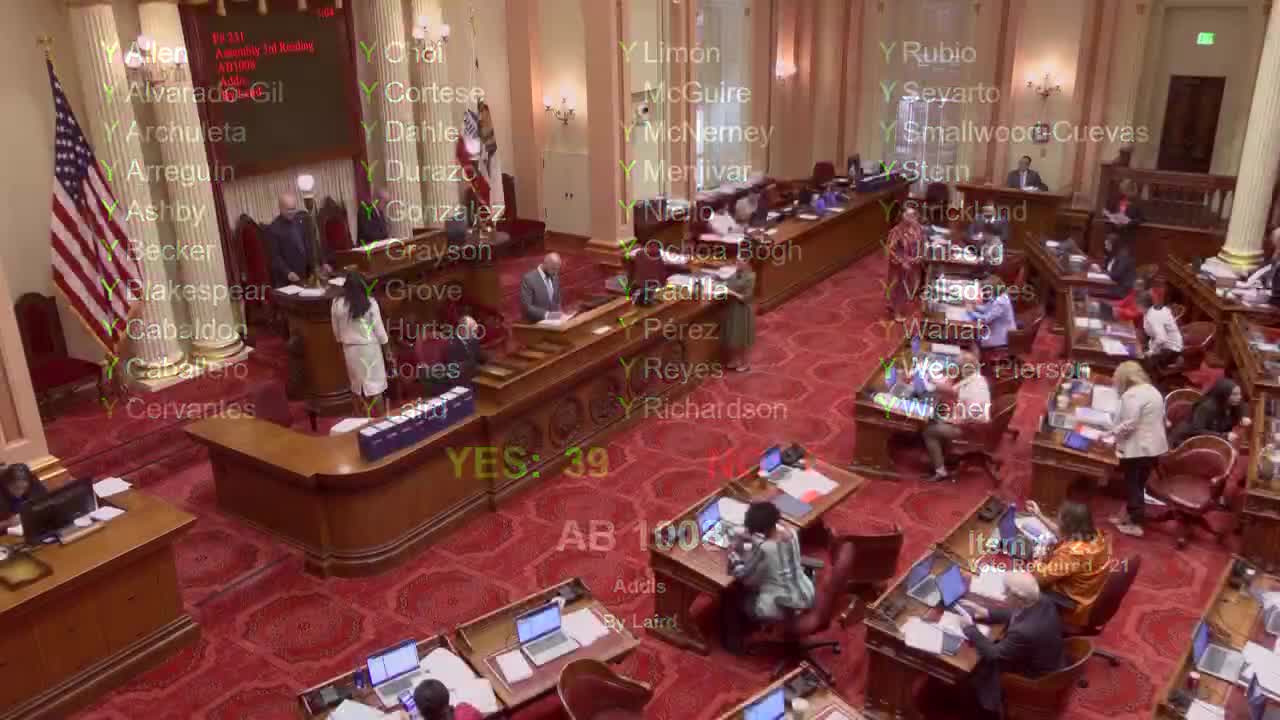 1MIN
Senate Floor
 3MIN
Senate Standing Committee on Judiciary
Bill Author

Bill Co-Author(s):