AB 419: Educational equity: immigration enforcement.
- Session Year: 2025-2026
- House: Assembly
- Latest Version Date: 2025-10-12
Current Status:
Passed
(2025-10-12: Chaptered by Secretary of State - Chapter 663, Statutes of 2025.)
Introduced
In Committee
Awaiting First Chamber Vote
Passed First Chamber
In Committee
Awaiting Second Chamber Vote
Passed Second Chamber
Enacted
Existing law prohibits, except as required by state or federal law or as required to administer a state or federally supported educational program, school officials and employees of a local educational agency from collecting information or documents regarding citizenship or immigration status of pupils or their family members. Existing law requires the governing board or body of a school district, county office of education, or charter school to perform specified actions relating to pupils and immigration status, including, among others, providing information to parents and guardians, as appropriate, regarding their childrens right to a free public education, regardless of immigration status or religious beliefs.
This bill would require the governing board or body of a local educational agency to post specified information related to immigration enforcement in the administrative buildings and on the internet websites of the local educational agency and each of its schoolsites, as provided. To the extent the bill imposes additional duties on local educational agencies, the bill would impose a state-mandated local program.
This bill would incorporate additional changes to Section 234.7 of the Education Code proposed by AB 49 to be operative only if this bill and AB 49 are enacted and this bill is enacted last.
The California Constitution requires the state to reimburse local agencies and school districts for certain costs mandated by the state. Statutory provisions establish procedures for making that reimbursement.
This bill would provide that, if the Commission on State Mandates determines that the bill contains costs mandated by the state, reimbursement for those costs shall be made pursuant to the statutory provisions noted above.
Existing law prohibits, except as required by state or federal law or as required to administer a state or federally supported educational program, school officials and employees of a local educational agency from collecting information or documents regarding citizenship or immigration status of pupils or their family members. Existing law requires the governing board or body of a school district, county office of education, or charter school to perform specified actions relating to pupils and immigration status, including, among others, providing information to parents and guardians, as appropriate, regarding their childrens right to a free public education, regardless of immigration status or religious beliefs.
This bill would require the governing board or body of a local educational agency to post specified information related to immigration enforcement in the administrative buildings and on the internet websites of the local educational agency and each of its schoolsites, as provided. To the extent the bill imposes additional duties on local educational agencies, the bill would impose a state-mandated local program.
The California Constitution requires the state to reimburse local agencies and school districts for certain costs mandated by the state. Statutory provisions establish procedures for making that reimbursement.
This bill would provide that, if the Commission on State Mandates determines that the bill contains costs mandated by the state, reimbursement for those costs shall be made pursuant to the statutory provisions noted above.
Existing law prohibits, except as required by state or federal law or as required to administer a state or federally supported educational program, school officials and employees of a local educational agency from collecting information or documents regarding citizenship or immigration status of pupils or their family members. Existing law requires the governing board or body of a school district, county office of education, or charter school to perform specified actions relating to pupils and immigration status, including, among others, providing information to parents and guardians, as appropriate, regarding their childrens right to a free public education, regardless of immigration status or religious beliefs.
This bill would require the governing board or body of a local educational agency to post specified information related to immigration enforcement in the administrative building buildings and on the internet website websites of the local educational agency. agency and each of its schoolsites, as provided. To the extent the bill imposes additional duties on local educational agencies, the bill would impose a state-mandated local program.
The California Constitution requires the state to reimburse local agencies and school districts for certain costs mandated by the state. Statutory provisions establish procedures for making that reimbursement.
This bill would provide that, if the Commission on State Mandates determines that the bill contains costs mandated by the state, reimbursement for those costs shall be made pursuant to the statutory provisions noted above.
Existing law prohibits, except as required by state or federal law or as required to administer a state or federally supported educational program, school officials and employees of a local educational agency from collecting information or documents regarding citizenship or immigration status of pupils or their family members. Existing law requires the governing board or body of a school district, county office of education, or charter school to perform specified actions relating to pupils and immigration status, including, among others, providing information to parents and guardians, as appropriate, regarding their childrens right to a free public education, regardless of immigration status or religious beliefs.
This bill would require the governing board or body of a local educational agency to post specified information related to immigration enforcement in the administrative building and on the internet website of the local educational agency. To the extent the bill imposes additional duties on local educational agencies, the bill would impose a state-mandated local program.
The California Constitution requires the state to reimburse local agencies and school districts for certain costs mandated by the state. Statutory provisions establish procedures for making that reimbursement.
This bill would provide that, if the Commission on State Mandates determines that the bill contains costs mandated by the state, reimbursement for those costs shall be made pursuant to the statutory provisions noted above.
(a)Except as required by state or federal law or as required to administer a state or federally supported educational program, school officials and employees of a local educational agency shall not collect information or documents regarding citizenship or immigration status of pupils or their family members.
(b)The superintendent of a school district, the superintendent of a county office of education, and the principal of a charter school, as applicable, shall report to the respective governing board or body of the local educational agency in a timely manner any requests for information or access to a schoolsite by an officer or employee of a law enforcement agency for the purpose of enforcing the immigration laws in a manner that ensures the confidentiality and privacy of any potentially identifying information.
(c)If an employee of a school is aware that a pupils parent or guardian is not available to care for the pupil, the school shall first exhaust any parental instruction relating to the pupils care in the emergency contact information it has for the pupil to arrange for the pupils care. A school is encouraged to work with parents or guardians to update the emergency contact information and not to contact a child protective services agency to arrange for the pupils care unless the school is unable to arrange for care through the use of emergency contact information or other information or instructions provided by the parent or guardian.
(d)The governing board or body of a local educational agency shall do all of the following:
(1)(A)Provide information to parents and guardians, as appropriate, regarding their childrens right to a free public education, regardless of immigration status or religious beliefs. This information shall include information relating to the Immigration-Enforcement Actions at California Schools Guide for Students and Families, also known as Know Your Educational Rights, developed by the Attorney General and may be provided in the annual notification to parents and guardians pursuant to Section 48980 or any other cost-effective means determined by the local educational agency.
(B)Post the guide specified in subparagraph (A) in the administrative buildings and on the internet websites of the local educational agency and each of its schoolsites. The guide shall be posted in every language that the Attorney General provides and shall be updated the school year following any updates published by the Attorney General.
(2)Educate pupils about the negative impact of bullying other pupils based on their actual or perceived immigration status or their religious beliefs and customs.
(e)This section does not prohibit the governing board or body of a local educational agency from establishing stronger standards and protections.
(f)(1)The Attorney General, by April 1, 2018, in consultation with the appropriate stakeholders, shall publish model policies limiting assistance with immigration enforcement at public schools, to the fullest extent possible consistent with federal and state law, and ensuring that public schools remain safe and accessible to all California residents, regardless of immigration status. The Attorney General shall, at a minimum, consider all of the following issues when developing the model policies:
(A)Procedures related to requests for access to school grounds for purposes related to immigration enforcement.
(B)Procedures for local educational agency employees to notify the superintendent of the school district or their designee, the superintendent of the county office of education or their designee, or the principal of the charter school or their designee, as applicable, if an individual requests or gains access to school grounds for purposes related to immigration enforcement.
(C)Procedures for responding to requests for personal information about pupils or their family members for purposes of immigration enforcement.
(2)Notwithstanding the rulemaking provisions of the Administrative Procedure Act (Chapter 3.5 (commencing with Section 11340) of Part 1 of Division 3 of Title 2 of the Government Code), the Department of Justice may implement, interpret, or make specific this section without taking any regulatory action.
(g)All local educational agencies shall adopt the model policies developed pursuant to subdivision (f), or equivalent policies, by July 1, 2018.
(h)For purposes of this section, local educational agency means a school district, county office of education, or charter school.
SEC. 1.5.Section 234.7 of the Education Code is amended to read:234.7.(a)Except as required by state or federal law, or as required to administer a state or federally supported educational program, school officials and employees of a local educational agency shall not do either of the following:
(1)Collect information or documents regarding citizenship or immigration status of pupils or their family members.
(2)Allow an officer or employee of an agency conducting immigration enforcement to enter a nonpublic area of a schoolsite for any purpose without being presented with a valid judicial warrant or judicial subpoena, or a court order. Any school official or employee of a local educational agency shall, to the extent practicable, request a valid identification from an officer or employee of an agency conducting immigration enforcement seeking to enter a nonpublic area of a schoolsite. This subdivision shall not be construed to limit a local educational agencys or school officials right to consult with counsel or challenge the validity of a warrant, subpoena, or court order in a court of competent jurisdiction.
(b)A local educational agency and its personnel, to the extent practicable, shall not disclose or provide in writing, verbally, or in any other manner, the education records of or any information about a pupil or a pupils family and household without the pupils parents or guardians written consent, a school employee, or a teacher, including, but not limited to, personal information as defined in subdivision (a) of Section 1798.3 of the Civil Code, information about a pupils home, and information about a pupils travel schedule, to an officer or employee of an agency conducting immigration enforcement absent a valid judicial warrant or judicial subpoena, or court order directing the local educational agency or its personnel to do so. Any disclosure of a pupils education records pursuant to a valid judicial warrant or judicial subpoena, or court order shall be in accordance with the parent notification requirements set forth in Section 99.31(a)(9)(ii) of Title 34 of the Code of Federal Regulations.
(c)The superintendent of a school district, the superintendent of a county office of education, and the principal of a charter school, as applicable, shall report to the respective governing board or body of the local educational agency in a timely manner any requests for information or access to a schoolsite by an officer or employee of a law enforcement agency for the purpose of enforcing the immigration laws in a manner that ensures the confidentiality and privacy of any potentially identifying information.
(d)If an employee of a school is aware that a pupils parent or guardian is not available to care for the pupil, the school shall first exhaust any parental instruction relating to the pupils care in the emergency contact information it has for the pupil to arrange for the pupils care. A school is encouraged to work with parents or guardians to update the emergency contact information and not to contact a child protective services agency to arrange for the pupils care unless the school is unable to arrange for care through the use of emergency contact information or other information or instructions provided by the parent or guardian.
(e)The governing board or body of a local educational agency shall do all of the following:
(1)(A)Provide information to parents and guardians, as appropriate, regarding their childrens right to a free public education, regardless of immigration status or religious beliefs. This information shall include information relating to the Immigration-Enforcement Actions at California Schools Guide for Students and Families, also known as Know Your Educational Rights, developed by the Attorney General and may be provided in the annual notification to parents and guardians pursuant to Section 48980 or any other cost-effective means determined by the local educational agency.
(B)Post the guide specified in subparagraph (A) in the administrative buildings and on the internet websites of the local educational agency and each of its schoolsites. The guide shall be posted in every language that the Attorney General provides and shall be updated the school year following any updates published by the Attorney General.
(2)Educate pupils about the negative impact of bullying other pupils based on their actual or perceived immigration status or their religious beliefs and customs.
(f)This section does not prohibit the governing board or body of a local educational agency from establishing stronger standards and protections.
(g)(1)The Attorney General, by April 1, 2018, in consultation with the appropriate stakeholders, shall publish model policies limiting assistance with immigration enforcement at public schools, to the fullest extent possible consistent with federal and state law, and ensuring that public schools remain safe and accessible to all California residents, regardless of immigration status. The Attorney General shall, at a minimum, consider all of the following issues when developing the model policies:
(A)Procedures related to requests for access to school grounds for purposes related to immigration enforcement.
(B)Procedures for local educational agency employees to notify the superintendent of the school district or their designee, the superintendent of the county office of education or their designee, or the principal of the charter school or their designee, as applicable, if an individual requests or gains access to school grounds for purposes related to immigration enforcement.
(C)Procedures for responding to requests for personal information about pupils or their family members for purposes of immigration enforcement.
(2)The Attorney General shall, no later than December 1, 2025, update the model policies described in paragraph (1) to ensure that these policies align with the prohibition applicable to school officials and employees of local educational agencies as described in paragraph (2) of subdivision (a), and the requirements for local educational agencies, as described in this section.
(3)Notwithstanding the rulemaking provisions of the Administrative Procedure Act (Chapter 3.5 (commencing with Section 11340) of Part 1 of Division 3 of Title 2 of the Government Code), the Department of Justice may implement, interpret, or make specific this section without taking any regulatory action.
(h)All local educational agencies shall adopt the model policies developed pursuant to paragraph (1) of subdivision (g), or equivalent policies, by July 1, 2018, and shall update those policies to align with this section, including paragraph (2) of subdivision (g), by March 1, 2026.
(i)This section does not prohibit or restrict any governmental entity or official from sending to, or receiving from, federal immigration authorities, information regarding the citizenship or immigration status, lawful or unlawful, of an individual, or from requesting from federal immigration authorities immigration status information, lawful or unlawful, of any individual, or maintaining or exchanging that information with any other federal, state, or local governmental entity, pursuant to Sections 1373 and 1644 of Title 8 of the United States Code.
(j)A local educational agency shall maintain its policy adopted pursuant to subdivision (h) and make the policy available to the department upon request.
(k)Local educational agencies may be subject to monitoring and auditing by the department to ensure compliance with the requirements of subdivisions (h) and (j).
(l)For purposes of this section, the following definitions apply:
(1)Immigration enforcement includes any and all efforts to investigate, enforce, or assist in the investigation or enforcement of any federal civil immigration law, and any and all efforts to investigate, enforce, or assist in the investigation or enforcement of any federal criminal immigration law that penalizes a persons presence in, entry, or reentry to, or employment in, the United States.
(2)Local educational agency means a school district, county office of education, or charter school.
(3)Schoolsite means an individual school campus of a school district, county office of education, or charter school, an area where a local educational agencys school-sponsored activity is currently being held, or a schoolbus or other transportation provided by a local educational agency.
SEC. 2.Section 1.5 of this bill incorporates amendments to Section 234.7 of the Education Code proposed by both this bill and Assembly Bill 49. That section of this bill shall only become operative if (1) both bills are enacted and become effective on or before January 1, 2026, (2) each bill amends Section 234.7 of the Education Code, and (3) this bill is enacted after Assembly Bill 49, in which case Section 234.7 of the Education Code, as amended by Assembly Bill 49, shall remain operative only until the operative date of this bill, at which time Section 1.5 of this bill shall become operative, and Section 1 of this bill shall not become operative.
SEC. 3.If the Commission on State Mandates determines that this act contains costs mandated by the state, reimbursement to local agencies and school districts for those costs shall be made pursuant to Part 7 (commencing with Section 17500) of Division 4 of Title 2 of the Government Code.
(a)Except as required by state or federal law or as required to administer a state or federally supported educational program, school officials and employees of a local educational agency shall not collect information or documents regarding citizenship or immigration status of pupils or their family members.
(b)The superintendent of a school district, the superintendent of a county office of education, and the principal of a charter school, as applicable, shall report to the respective governing board or body of the local educational agency in a timely manner any requests for information or access to a schoolsite by an officer or employee of a law enforcement agency for the purpose of enforcing the immigration laws in a manner that ensures the confidentiality and privacy of any potentially identifying information.
(c)If an employee of a school is aware that a pupils parent or guardian is not available to care for the pupil, the school shall first exhaust any parental instruction relating to the pupils care in the emergency contact information it has for the pupil to arrange for the pupils care. A school is encouraged to work with parents or guardians to update the emergency contact information and not to contact Child Protective Services a child protective services agency to arrange for the pupils care unless the school is unable to arrange for care through the use of emergency contact information or other information or instructions provided by the parent or guardian.
(d)The governing board or body of a local educational agency shall do all of the following:
(1)(A)Provide information to parents and guardians, as appropriate, regarding their childrens right to a free public education, regardless of immigration status or religious beliefs. This information shall include information relating to the Immigration-Enforcement Actions at California Schools Guide for Students and Families, also known as Know Your Educational Rights, developed by the Attorney General and may be provided in the annual notification to parents and guardians pursuant to Section 48980 or any other cost-effective means determined by the local educational agency.
(B)Post the guide specified in subparagraph (A) in the administrative buildings and on the internet websites of the local educational agency and each of its schoolsites. The guide shall be posted in every language that the Attorney General provides. provides and shall be updated the school year following any updates published by the Attorney General.
(2)Educate pupils about the negative impact of bullying other pupils based on their actual or perceived immigration status or their religious beliefs and customs.
(e)This section does not prohibit the governing board or body of a local educational agency from establishing stronger standards and protections.
(f)(1)The Attorney General, by April 1, 2018, in consultation with the appropriate stakeholders, shall publish model policies limiting assistance with immigration enforcement at public schools, to the fullest extent possible consistent with federal and state law, and ensuring that public schools remain safe and accessible to all California residents, regardless of immigration status. The Attorney General shall, at a minimum, consider all of the following issues when developing the model policies:
(A)Procedures related to requests for access to school grounds for purposes related to immigration enforcement.
(B)Procedures for local educational agency employees to notify the superintendent of the school district or the superintendents their designee, the superintendent of the county office of education or the superintendents their designee, or the principal of the charter school or the principals their designee, as applicable, if an individual requests or gains access to school grounds for purposes related to immigration enforcement.
(C)Procedures for responding to requests for personal information about pupils or their family members for purposes of immigration enforcement.
(2)Notwithstanding the rulemaking provisions of the Administrative Procedure Act (Chapter 3.5 (commencing with Section 11340) of Part 1 of Division 3 of Title 2 of the Government Code), the Department of Justice may implement, interpret, or make specific this section without taking any regulatory action.
(g)All local educational agencies shall adopt the model policies developed pursuant to subdivision (f), or equivalent policies, by July 1, 2018.
(h)For purposes of this section, local educational agency means a school district, county office of education, or charter school.
SEC. 1.5.Section 234.7 of the Education Code is amended to read:234.7.(a)Except as required by state or federal law law, or as required to administer a state or federally supported educational program, school officials and employees of a local educational agency shall not collect information or documents regarding citizenship or immigration status of pupils or their family members. do either of the following:
(1)Collect information or documents regarding citizenship or immigration status of pupils or their family members.
(2)Allow an officer or employee of an agency conducting immigration enforcement to enter a nonpublic area of a schoolsite for any purpose without being presented with a valid judicial warrant or judicial subpoena, or a court order. Any school official or employee of a local educational agency shall, to the extent practicable, request a valid identification from an officer or employee of an agency conducting immigration enforcement seeking to enter a nonpublic area of a schoolsite. This subdivision shall not be construed to limit a local educational agencys or school officials right to consult with counsel or challenge the validity of a warrant, subpoena, or court order in a court of competent jurisdiction.
(b)A local educational agency and its personnel, to the extent practicable, shall not disclose or provide in writing, verbally, or in any other manner, the education records of or any information about a pupil or a pupils family and household without the pupils parents or guardians written consent, a school employee, or a teacher, including, but not limited to, personal information as defined in subdivision (a) of Section 1798.3 of the Civil Code, information about a pupils home, and information about a pupils travel schedule, to an officer or employee of an agency conducting immigration enforcement absent a valid judicial warrant or judicial subpoena, or court order directing the local educational agency or its personnel to do so. Any disclosure of a pupils education records pursuant to a valid judicial warrant or judicial subpoena, or court order shall be in accordance with the parent notification requirements set forth in Section 99.31(a)(9)(ii) of Title 34 of the Code of Federal Regulations.
(b)(c)The superintendent of a school district, the superintendent of a county office of education, and the principal of a charter school, as applicable, shall report to the respective governing board or body of the local educational agency in a timely manner any requests for information or access to a schoolsite by an officer or employee of a law enforcement agency for the purpose of enforcing the immigration laws in a manner that ensures the confidentiality and privacy of any potentially identifying information.
(c)(d)If an employee of a school is aware that a pupils parent or guardian is not available to care for the pupil, the school shall first exhaust any parental instruction relating to the pupils care in the emergency contact information it has for the pupil to arrange for the pupils care. A school is encouraged to work with parents or guardians to update the emergency contact information and not to contact Child Protective Services a child protective services agency to arrange for the pupils care unless the school is unable to arrange for care through the use of emergency contact information or other information or instructions provided by the parent or guardian.
(d)(e)The governing board or body of a local educational agency shall do both all of the following:
(1)(A)Provide information to parents and guardians, as appropriate, regarding their childrens right to a free public education, regardless of immigration status or religious beliefs. This information shall include information relating to know your rights immigration enforcement established the Immigration-Enforcement Actions at California Schools Guide for Students and Families, also known as Know Your Educational Rights, developed by the Attorney General and may be provided in the annual notification to parents and guardians pursuant to Section 48980 or any other cost-effective means determined by the local educational agency.
(B)Post the guide specified in subparagraph (A) in the administrative buildings and on the internet websites of the local educational agency and each of its schoolsites. The guide shall be posted in every language that the Attorney General provides and shall be updated the school year following any updates published by the Attorney General.
(2)Educate pupils about the negative impact of bullying other pupils based on their actual or perceived immigration status or their religious beliefs and customs.
(e)Nothing in this section prohibits(f)This section does not prohibit the governing board or body of a local educational agency from establishing stronger standards and protections.
(f)(g)(1)The Attorney General, by April 1, 2018, in consultation with the appropriate stakeholders, shall publish model policies limiting assistance with immigration enforcement at public schools, to the fullest extent possible consistent with federal and state law, and ensuring that public schools remain safe and accessible to all California residents, regardless of immigration status. The Attorney General shall, at a minimum, consider all of the following issues when developing the model policies:
(A)Procedures related to requests for access to school grounds for purposes related to immigration enforcement.
(B)Procedures for local educational agency employees to notify the superintendent of the school district or his or her their designee, the superintendent of the county office of education or his or her their designee, or the principal of the charter school or his or her their designee, as applicable, if an individual requests or gains access to school grounds for purposes related to immigration enforcement.
(C)Procedures for responding to requests for personal information about pupils or their family members for purposes of immigration enforcement.
(2)The Attorney General shall, no later than December 1, 2025, update the model policies described in paragraph (1) to ensure that these policies align with the prohibition applicable to school officials and employees of local educational agencies as described in paragraph (2) of subdivision (a), and the requirements for local educational agencies, as described in this section.
(2)(3)Notwithstanding the rulemaking provisions of the Administrative Procedure Act (Chapter 3.5 (commencing with Section 11340) of Part 1 of Division 3 of Title 2 of the Government Code), the Department of Justice may implement, interpret, or make specific this section without taking any regulatory action.
(g)(h)All local educational agencies shall adopt the model policies developed pursuant to subdivision (f), paragraph (1) of subdivision (g), or equivalent policies, by July 1, 2018. 2018, and shall update those policies to align with this section, including paragraph (2) of subdivision (g), by March 1, 2026.
(i)This section does not prohibit or restrict any governmental entity or official from sending to, or receiving from, federal immigration authorities, information regarding the citizenship or immigration status, lawful or unlawful, of an individual, or from requesting from federal immigration authorities immigration status information, lawful or unlawful, of any individual, or maintaining or exchanging that information with any other federal, state, or local governmental entity, pursuant to Sections 1373 and 1644 of Title 8 of the United States Code.
(j)A local educational agency shall maintain its policy adopted pursuant to subdivision (h) and make the policy available to the department upon request.
(k)Local educational agencies may be subject to monitoring and auditing by the department to ensure compliance with the requirements of subdivisions (h) and (j).
(h)(l)For purposes of this section, local the following definitions apply:
(1)Immigration enforcement includes any and all efforts to investigate, enforce, or assist in the investigation or enforcement of any federal civil immigration law, and any and all efforts to investigate, enforce, or assist in the investigation or enforcement of any federal criminal immigration law that penalizes a persons presence in, entry, or reentry to, or employment in, the United States.
(2)Local educational agency means a school district, county office of education, or charter school.
(3)Schoolsite means an individual school campus of a school district, county office of education, or charter school, an area where a local educational agencys school-sponsored activity is currently being held, or a schoolbus or other transportation provided by a local educational agency.
SEC. 2.Section 1.5 of this bill incorporates amendments to Section 234.7 of the Education Code proposed by both this bill and Assembly Bill 49. That section of this bill shall only become operative if (1) both bills are enacted and become effective on or before January 1, 2026, (2) each bill amends Section 234.7 of the Education Code, and (3) this bill is enacted after Assembly Bill 49, in which case Section 234.7 of the Education Code, as amended by Assembly Bill 49, shall remain operative only until the operative date of this bill, at which time Section 1.5 of this bill shall become operative, and Section 1 of this bill shall not become operative.
SEC. 2.SEC. 3.If the Commission on State Mandates determines that this act contains costs mandated by the state, reimbursement to local agencies and school districts for those costs shall be made pursuant to Part 7 (commencing with Section 17500) of Division 4 of Title 2 of the Government Code.
(a)Except as required by state or federal law or as required to administer a state or federally supported educational program, school officials and employees of a local educational agency shall not collect information or documents regarding citizenship or immigration status of pupils or their family members.
(b)The superintendent of a school district, the superintendent of a county office of education, and the principal of a charter school, as applicable, shall report to the respective governing board or body of the local educational agency in a timely manner any requests for information or access to a schoolsite by an officer or employee of a law enforcement agency for the purpose of enforcing the immigration laws in a manner that ensures the confidentiality and privacy of any potentially identifying information.
(c)If an employee of a school is aware that a pupils parent or guardian is not available to care for the pupil, the school shall first exhaust any parental instruction relating to the pupils care in the emergency contact information it has for the pupil to arrange for the pupils care. A school is encouraged to work with parents or guardians to update the emergency contact information and not to contact Child Protective Services to arrange for the pupils care unless the school is unable to arrange for care through the use of emergency contact information or other information or instructions provided by the parent or guardian.
(d)The governing board or body of a local educational agency shall do all of the following:
(1)(A)Provide information to parents and guardians, as appropriate, regarding their childrens right to a free public education, regardless of immigration status or religious beliefs. This information shall include information relating to the Immigration-Enforcement Actions at California Schools Guide for Students and Families, also known as Know Your Educational Rights, developed by the Attorney General and may be provided in the annual notification to parents and guardians pursuant to Section 48980 or any other cost-effective means determined by the local educational agency.
(B)Post the guide specified in subparagraph (A) in the administrative buildings and on the internet websites of the local educational agency and each of its schoolsites, as follows: schoolsites. The guide shall be posted in every language that the Attorney General provides.
(i)For a schoolsite, the guide shall be posted in English and each language other than English that a school is required to translate documents into, as determined by Section 48985.(ii)For a local educational agency, the guide shall be posted in English and each language other than English that one or more of its schoolsites are required to post the guide in pursuant to clause (ii).(2)Educate pupils about the negative impact of bullying other pupils based on their actual or perceived immigration status or their religious beliefs and customs.
(e)This section does not prohibit the governing board or body of a local educational agency from establishing stronger standards and protections.
(f)(1)The Attorney General, by April 1, 2018, in consultation with the appropriate stakeholders, shall publish model policies limiting assistance with immigration enforcement at public schools, to the fullest extent possible consistent with federal and state law, and ensuring that public schools remain safe and accessible to all California residents, regardless of immigration status. The Attorney General shall, at a minimum, consider all of the following issues when developing the model policies:
(A)Procedures related to requests for access to school grounds for purposes related to immigration enforcement.
(B)Procedures for local educational agency employees to notify the superintendent of the school district or the superintendents designee, the superintendent of the county office of education or the superintendents designee, or the principal of the charter school or the principals designee, as applicable, if an individual requests or gains access to school grounds for purposes related to immigration enforcement.
(C)Procedures for responding to requests for personal information about pupils or their family members for purposes of immigration enforcement.
(2)Notwithstanding the rulemaking provisions of the Administrative Procedure Act (Chapter 3.5 (commencing with Section 11340) of Part 1 of Division 3 of Title 2 of the Government Code), the Department of Justice may implement, interpret, or make specific this section without taking any regulatory action.
(g)All local educational agencies shall adopt the model policies developed pursuant to subdivision (f), or equivalent policies, by July 1, 2018.
(h)For purposes of this section, local educational agency means a school district, county office of education, or charter school.
SEC. 2.If the Commission on State Mandates determines that this act contains costs mandated by the state, reimbursement to local agencies and school districts for those costs shall be made pursuant to Part 7 (commencing with Section 17500) of Division 4 of Title 2 of the Government Code.
(a)Except as required by state or federal law or as required to administer a state or federally supported educational program, school officials and employees of a local educational agency shall not collect information or documents regarding citizenship or immigration status of pupils or their family members.
(b)The superintendent of a school district, the superintendent of a county office of education, and the principal of a charter school, as applicable, shall report to the respective governing board or body of the local educational agency in a timely manner any requests for information or access to a schoolsite by an officer or employee of a law enforcement agency for the purpose of enforcing the immigration laws in a manner that ensures the confidentiality and privacy of any potentially identifying information.
(c)If an employee of a school is aware that a pupils parent or guardian is not available to care for the pupil, the school shall first exhaust any parental instruction relating to the pupils care in the emergency contact information it has for the pupil to arrange for the pupils care. A school is encouraged to work with parents or guardians to update the emergency contact information and not to contact Child Protective Services to arrange for the pupils care unless the school is unable to arrange for care through the use of emergency contact information or other information or instructions provided by the parent or guardian.
(d)The governing board or body of a local educational agency shall do all of the following:
(1)(A)Provide information to parents and guardians, as appropriate, regarding their childrens right to a free public education, regardless of immigration status or religious beliefs. This information shall include information relating to the Immigration-Enforcement Actions at California Schools Guide for Students and Families, also known as Know Your Educational Rights, developed by the Attorney General and may be provided in the annual notification to parents and guardians pursuant to Section 48980 or any other cost-effective means determined by the local educational agency.
(B)Post the guide specified in subparagraph (A) in the administrative building buildings and on the internet website websites of the local educational agency. The agency and each of its schoolsites, as follows:
(i)For a schoolsite, the guide shall be posted in English and Spanish. each language other than English that a school is required to translate documents into, as determined by Section 48985.
(ii)For a local educational agency, the guide shall be posted in English and each language other than English that one or more of its schoolsites are required to post the guide in pursuant to clause (ii).
(2)Educate pupils about the negative impact of bullying other pupils based on their actual or perceived immigration status or their religious beliefs and customs.
(e)This section does not prohibit the governing board or body of a local educational agency from establishing stronger standards and protections.
(f)(1)The Attorney General, by April 1, 2018, in consultation with the appropriate stakeholders, shall publish model policies limiting assistance with immigration enforcement at public schools, to the fullest extent possible consistent with federal and state law, and ensuring that public schools remain safe and accessible to all California residents, regardless of immigration status. The Attorney General shall, at a minimum, consider all of the following issues when developing the model policies:
(A)Procedures related to requests for access to school grounds for purposes related to immigration enforcement.
(B)Procedures for local educational agency employees to notify the superintendent of the school district or the superintendents designee, the superintendent of the county office of education or the superintendents designee, or the principal of the charter school or the principals designee, as applicable, if an individual requests or gains access to school grounds for purposes related to immigration enforcement.
(C)Procedures for responding to requests for personal information about pupils or their family members for purposes of immigration enforcement.
(2)Notwithstanding the rulemaking provisions of the Administrative Procedure Act (Chapter 3.5 (commencing with Section 11340) of Part 1 of Division 3 of Title 2 of the Government Code), the Department of Justice may implement, interpret, or make specific this section without taking any regulatory action.
(g)All local educational agencies shall adopt the model policies developed pursuant to subdivision (f), or equivalent policies, by July 1, 2018.
(h)For purposes of this section, local educational agency means a school district, county office of education, or charter school.
SEC. 2.If the Commission on State Mandates determines that this act contains costs mandated by the state, reimbursement to local agencies and school districts for those costs shall be made pursuant to Part 7 (commencing with Section 17500) of Division 4 of Title 2 of the Government Code.
(a)Except as required by state or federal law or as required to administer a state or federally supported educational program, school officials and employees of a local educational agency shall not collect information or documents regarding citizenship or immigration status of pupils or their family members.
(b)The superintendent of a school district, the superintendent of a county office of education, and the principal of a charter school, as applicable, shall report to the respective governing board or body of the local educational agency in a timely manner any requests for information or access to a schoolsite by an officer or employee of a law enforcement agency for the purpose of enforcing the immigration laws in a manner that ensures the confidentiality and privacy of any potentially identifying information.
(c)If an employee of a school is aware that a pupils parent or guardian is not available to care for the pupil, the school shall first exhaust any parental instruction relating to the pupils care in the emergency contact information it has for the pupil to arrange for the pupils care. A school is encouraged to work with parents or guardians to update the emergency contact information and not to contact Child Protective Services to arrange for the pupils care unless the school is unable to arrange for care through the use of emergency contact information or other information or instructions provided by the parent or guardian.
(d)The governing board or body of a local educational agency shall do both all of the following:
(1)(A)Provide information to parents and guardians, as appropriate, regarding their childrens right to a free public education, regardless of immigration status or religious beliefs. This information shall include information relating to know your rights immigration enforcement established the Immigration-Enforcement Actions at California Schools Guide for Students and Families, also known as Know Your Educational Rights, developed by the Attorney General and may be provided in the annual notification to parents and guardians pursuant to Section 48980 or any other cost-effective means determined by the local educational agency.
(B)Post the guide specified in subparagraph (A) in the administrative building and on the internet website of the local educational agency. The guide shall be posted in English and Spanish.
(2)Educate pupils about the negative impact of bullying other pupils based on their actual or perceived immigration status or their religious beliefs and customs.
(e)Nothing in this This section prohibits does not prohibit the governing board or body of a local educational agency from establishing stronger standards and protections.
(f)(1)The Attorney General, by April 1, 2018, in consultation with the appropriate stakeholders, shall publish model policies limiting assistance with immigration enforcement at public schools, to the fullest extent possible consistent with federal and state law, and ensuring that public schools remain safe and accessible to all California residents, regardless of immigration status. The Attorney General shall, at a minimum, consider all of the following issues when developing the model policies:
(A)Procedures related to requests for access to school grounds for purposes related to immigration enforcement.
(B)Procedures for local educational agency employees to notify the superintendent of the school district or his or her the superintendents designee, the superintendent of the county office of education or his or her the superintendents designee, or the principal of the charter school or his or her the principals designee, as applicable, if an individual requests or gains access to school grounds for purposes related to immigration enforcement.
(C)Procedures for responding to requests for personal information about pupils or their family members for purposes of immigration enforcement.
(2)Notwithstanding the rulemaking provisions of the Administrative Procedure Act (Chapter 3.5 (commencing with Section 11340) of Part 1 of Division 3 of Title 2 of the Government Code), the Department of Justice may implement, interpret, or make specific this section without taking any regulatory action.
(g)All local educational agencies shall adopt the model policies developed pursuant to subdivision (f), or equivalent policies, by July 1, 2018.
(h)For purposes of this section, local educational agency means a school district, county office of education, or charter school.
SEC. 2.If the Commission on State Mandates determines that this act contains costs mandated by the state, reimbursement to local agencies and school districts for those costs shall be made pursuant to Part 7 (commencing with Section 17500) of Division 4 of Title 2 of the Government Code.
|
Date
|
Status
|
|---|---|
| Oct 12, 2025 | Chaptered by Secretary of State - Chapter 663, Statutes of 2025. |
| Oct 12, 2025 | Approved by the Governor. |
| Sep 23, 2025 | Enrolled and presented to the Governor at 4 p.m. |
| Sep 11, 2025 | Senate amendments concurred in. To Engrossing and Enrolling. (Ayes 63. Noes 9. Page 3292.). |
| Sep 10, 2025 | In Assembly. Concurrence in Senate amendments pending. |
| Sep 10, 2025 | Read third time. Passed. Ordered to the Assembly. (Ayes 31. Noes 8. Page 2809.). |
| Sep 8, 2025 | Read second time. Ordered to third reading. |
| Sep 4, 2025 | Read third time and amended. Ordered to second reading. |
| Aug 29, 2025 | Read second time. Ordered to third reading. |
| Aug 29, 2025 | From committee: Do pass. (Ayes 5. Noes 2.) (August 29). |
| Aug 18, 2025 | In committee: Referred to suspense file. |
| Jul 9, 2025 | From committee: Do pass and re-refer to Com. on APPR. (Ayes 11. Noes 1.) (July 8). Re-referred to Com. on APPR. |
| Jun 25, 2025 | From committee: Do pass and re-refer to Com. on JUD. (Ayes 6. Noes 1.) (June 25). Re-referred to Com. on JUD. |
| Jun 11, 2025 | Referred to Coms. on ED. and JUD. |
| Jun 3, 2025 | In Senate. Read first time. To Com. on RLS. for assignment. |
| Jun 2, 2025 | Read third time. Passed. Ordered to the Senate. (Ayes 64. Noes 8. Page 1827.) |
| May 27, 2025 | Read second time. Ordered to third reading. |
| May 23, 2025 | From committee: Do pass. (Ayes 11. Noes 1.) (May 23). |
| Apr 23, 2025 | In committee: Set, first hearing. Referred to suspense file. |
| Apr 8, 2025 | From committee: Do pass and re-refer to Com. on APPR. (Ayes 9. Noes 1.) (April 8). Re-referred to Com. on APPR. |
| Mar 28, 2025 | Re-referred to Com. on JUD. |
| Mar 27, 2025 | From committee chair, with author's amendments: Amend, and re-refer to Com. on JUD. Read second time and amended. |
| Mar 27, 2025 | From committee: Do pass and re-refer to Com. on JUD. (Ayes 7. Noes 2.) (March 26). Re-referred to Com. on JUD. |
| Feb 20, 2025 | Re-referred to Com. on ED. |
| Feb 19, 2025 | From committee chair, with author's amendments: Amend, and re-refer to Com. on ED. Read second time and amended. |
| Feb 18, 2025 | Referred to Coms. on ED. and JUD. |
| Feb 6, 2025 | From printer. May be heard in committee March 8. |
| Feb 5, 2025 | Read first time. To print. |
|
Date
|
Description
|
Location
|
Votes
|
|
|---|---|---|---|---|
| Sep 11, 2025 | AB 419 Connolly Concurrence in Senate Amendments | Assembly Floor |
Passed |
|
| Sep 10, 2025 | Assembly 3rd Reading AB419 Connolly By Pérez | Senate Floor |
Passed |
|
| Aug 29, 2025 | Do pass | Senate Standing Committee on Appropriations |
Passed |
|
| Aug 18, 2025 | Placed on suspense file | Senate Standing Committee on Appropriations |
Passed |
|
| Jul 8, 2025 | Do pass, but first be re-referred to the Committee on [Appropriations] | Senate Standing Committee on Judiciary |
Passed |
|
| Jun 25, 2025 | Do pass, but first be re-referred to the Committee on [Judiciary] | Senate Standing Committee on Education |
Passed |
|
| Jun 2, 2025 | AB 419 Connolly Assembly Third Reading | Assembly Floor |
Passed |
|
| May 23, 2025 | Do pass. | Assembly Standing Committee on Appropriations |
Passed |
|
| Apr 8, 2025 | Do pass and be re-referred to the Committee on [Appropriations] | Assembly Standing Committee on Judiciary |
Passed |
|
| Mar 26, 2025 | Do pass and be re-referred to the Committee on [Judiciary] | Assembly Standing Committee on Education |
Passed |
This list shows positions taken on this bill by organizations on the date displayed, which is linked to the original source.
Positions by individuals are not included.
|
Organization
|
Position
|
Date
|
|---|---|---|
| Administrators Association of San Diego City Schools | ** Support | |
| Administrators Association Sweetwater Union | ** Support | |
| California Academy of Child and Adolescent Psychiatry | ** Support | |
| California Alliance Of Child And Family Services | ** Support | |
| California Association For Bilingual Education | ** Support | |
| California Catholic Conference | ** Support | |
| California Federation of Labor Unions | ** Support | |
| Californians Together | ** Support | |
| California State Council of Service Employees International Union | ** Support | |
| California Teachers Association | ** Support | |
| California Undocumented Higher Education Coalition | ** Support | |
| CFT- a Union of Educators & Classified Professionals, Aft, Afl-cio | ** Support | |
| Chinese for Affirmative Action | ** Support | |
| County of Marin | ** Support | |
| Delta Kappa Gamma International - Chi State | ** Support | |
| Fresno Unified School District | ** Support | |
| Los Angeles County Office Of Education | ** Support | |
| Partnership for Los Angeles Schools | ** Support | |
| Secure Justice | ** Support | |
| Teach Plus - Calfornia | ** Support | |
| The Multicultural Center of Marin | ** Support |
CONCURRENCE IN SENATE AMENDMENTS
CSA1 Bill Id:AB 419
Author:(Connolly)
As Amended Ver:September 4, 2025
Majority vote
SUMMARY
Requires local educational agencies (LEA) to post the "Know Your Educational Rights," Immigration-Enforcement Action at California Schools Guide (Guide), in the administrative building of each schoolsite and to post the guide on its website and on the websites of each school site in every language that the Attorney General (AG) provides.
Senate Amendments
- Requires the governing board or body of an LEA to update the website posting of the Guide the school year following any updates published by the AG.
- Incorporate additional changes proposed by AB 49 (Muratsuchi) of this Session to be operative only if this bill and AB 49 are enacted and this bill is enacted last.
COMMENTS
Key provisions of the bill. On January 6, 2025, the AG issued guidance advising immigrant students and their families of their educational rights and protections under the law, including the right to receive a free public education and to confidentiality of their personal information. The guidance is a two-page document available on the AG's website. This bill requires that this guidance be publicly posted on school websites and buildings in every available language.
Enforcement actions in or near protected areas. On January 20, 2025, the acting director of the US Department of Homeland Security issued a memo, effectively rescinding special protection of immigration enforcement activity in or near certain areas. The formerly protected areas included, among other areas, places where children gather, such as schools, daycares, preschools, and other early learning programs, primary and secondary schools, college campuses, as well as education-related activities. Months after the announcement, a team of homeland security agents entered the front office of two Los Angeles Unified School District (LAUSD) campuses—Russell Elementary School and Lillian Street Elementary School seeking to question students they identified as unaccompanied minors. In both cases, principals followed LAUSD protocols and AG's guidance by requesting identification and judicial warrants. The principals denied access, citing student privacy protections under federal law, including FERPA. Current law requires LEAs to inform families of their right to a free public education regardless of immigration status including through the Guide. This bill seeks to make that information more visible and accessible to immigrant students and their families.
Right to public education. As cited in the AG's "Guidance and Model Policies to Assist California's K-12 Schools in Responding to Immigration Issues," although California cannot control the actions of federal immigration-enforcement agencies, federal and California laws empower schools to welcome all students and to reassure them of their educational rights and opportunities. Further, under the U.S. Constitution, all students have a right to receive an education without discrimination based on immigration status. In Plyler v. Doe, the U.S. Supreme Court recognized that undocumented immigrants are guaranteed due-process and equal-protection rights under the U.S. Constitution and that children cannot be denied equal access to a public education on the basis of their immigration status. Therefore, K-12 schools must provide free public education to all students regardless of their immigration status and regardless of the citizenship status of the students' parents or guardians. Similarly, California law affirms the equal educational rights of immigrant students. It further affirms that all students and staff, regardless of immigration status, have the right to attend campuses that are safe, secure, and peaceful. Further, the education code prohibits discrimination on the basis of a student's immigration status.
According to the Author
According to the author, "Every child in California deserves to pursue a public education without fear. In light of recent federal direction to conduct immigration enforcement even in locations like schools, hospitals, and places of worship, students should be aware of the confidentiality of their personal information and armed with resources for emergencies. This legislation will ensure that immigrant students and families know what their rights are, what information is required for school enrollment, and what steps can be taken to protect sensitive information about students and families."
Arguments in Support
Californians Together writes, "When students are removed from school or placed in a different academic environment due to fear of immigration action, academic performance, attendance, and student achievement often suffer. Aggressive immigration policy can set back educational achievement, and this is exacerbated in situations where students already need extra support. Undocumented students and students in mixed-status families often already face disadvantages related to language and income, and these struggles are worsened by the added obstacle of adjusting to a new academic environment. Every child deserves a public education without fear, and this bill is a step to give immigrant students and families the tools needed to navigate these changing times."
Arguments in Opposition
None on file
FISCAL COMMENTS
According to the Senate Appropriations Committee:
- This bill could result in one-time Proposition 98 General Fund costs in the hundreds of thousands of dollars statewide for LEAs to post the "Know Your Educational Rights" guide at every schoolsite, administrative building, and on their internet websites. There are approximately 2,300 LEAs and 10,000 schoolsites in the state. Additionally, the bill's requirements could be deemed to be a reimbursable state mandate which could put pressure on the state to provide additional funding through the K-12 Mandate Block Grant.
VOTES:
ASM EDUCATION: 7-2-0
YES: Muratsuchi, Addis, Alvarez, Bonta, Garcia, Lowenthal, Patel
NO: Hoover, Castillo
ASM JUDICIARY: 9-1-2
YES: Kalra, Wicks, Bryan, Connolly, Harabedian, Pacheco, Papan, Stefani, Zbur
NO: Sanchez
ABS, ABST OR NV: Dixon, Tangipa
ASM APPROPRIATIONS: 11-1-3
YES: Wicks, Arambula, Calderon, Caloza, Elhawary, Fong, Mark González, Hart, Pacheco, Pellerin, Solache
NO: Dixon
ABS, ABST OR NV: Sanchez, Ta, Tangipa
ASSEMBLY FLOOR: 64-8-7
YES: Addis, Aguiar-Curry, Ahrens, Alanis, Alvarez, Arambula, Ávila Farías, Bains, Bauer-Kahan, Bennett, Berman, Boerner, Bonta, Bryan, Calderon, Caloza, Carrillo, Connolly, Davies, Elhawary, Fong, Gabriel, Garcia, Gipson, Jeff Gonzalez, Mark González, Haney, Harabedian, Hart, Irwin, Jackson, Kalra, Krell, Lee, Lowenthal, McKinnor, Muratsuchi, Nguyen, Ortega, Pacheco, Papan, Patel, Pellerin, Petrie-Norris, Quirk-Silva, Ramos, Ransom, Celeste Rodriguez, Michelle Rodriguez, Rogers, Blanca Rubio, Schiavo, Schultz, Sharp-Collins, Solache, Soria, Stefani, Valencia, Wallis, Ward, Wicks, Wilson, Zbur, Rivas
NO: DeMaio, Dixon, Ellis, Gallagher, Hadwick, Hoover, Patterson, Sanchez
ABS, ABST OR NV: Castillo, Chen, Flora, Lackey, Macedo, Ta, Tangipa
UPDATED
VERSION: September 4, 2025
CONSULTANT: Debbie Look / ED. / (916) 319-2087 FN: 0001991
SENATE RULES COMMITTEE Office of Senate Floor Analyses (916) 651-1520 Fax: (916) 327-4478 | AB 419 |
THIRD READING
Bill No: AB 419
Author: Connolly (D)
Amended: 9/4/25 in Senate
Vote: 21
SENATE EDUCATION COMMITTEE: 6-1, 6/25/25
AYES: Pérez, Ochoa Bogh, Cabaldon, Cortese, Gonzalez, Laird
NOES: Choi
SENATE JUDICIARY COMMITTEE: 11-1, 7/8/25
AYES: Umberg, Allen, Arreguín, Ashby, Caballero, Durazo, Laird, Stern, Wahab, Weber Pierson, Wiener
NOES: Niello
NO VOTE RECORDED: Valladares
SENATE APPROPRIATIONS COMMITTEE: 5-2, 8/29/25
AYES: Caballero, Cabaldon, Grayson, Richardson, Wahab
NOES: Seyarto, Dahle
ASSEMBLY FLOOR: 64-8, 6/2/25 - See last page for vote
SUBJECT: Educational equity: immigration enforcement
SOURCE: Author
DIGEST:
This bill requires local educational agencies (LEA) to post the “Know Your Educational Rights,” Immigration-Enforcement Action at California Schools Guide, in the administrative building of each schoolsite and to post the guide on its website and on the websites of each school site in every language that the Attorney General (AG) provides.
Senate Floor Amendments of 9/4/25 require that the guide be updated in the school year following any updates published by the AG’s office and add language to avoid chaptering conflicts with AB 49 (Muratsuchi, 2025).
ANALYSIS:
Existing law:
- States that it is the policy of the State of California to afford all persons in public schools, regardless of their disability, gender, gender identity, gender expression, nationality, race or ethnicity, religion, sexual orientation, or any other characteristic that is contained in the definition of hate crimes set forth in Section 422.55 of the Penal Code, including immigration status, equal rights and opportunities in the educational institutions of the state. (Education Code (EC) § 200)
- Prohibits discrimination on the basis of disability, gender, gender identity, gender expression, nationality, race or ethnicity, religion, sexual orientation, or any other characteristic that is contained in the definition of hate crimes set forth in Section 422.55 of the Penal Code, including immigration status, in any program or activity conducted by an educational institution that receives, or benefits from, state financial assistance or enrolls students who receive state student financial aid. (EC § 220)
- Establishes the Safe Place to Learn Act which requires the California Department of Education (CDE) to assess whether LEAs have adopted a policy prohibiting discrimination, harassment, intimidation, and bullying based on specified characteristics, including immigration status, and establish a process for receiving and investigating complaints of discrimination, harassment, intimidation, and bullying based on those characteristics. (EC § 234.1)
- Prohibits school officials and employees of an LEA from collecting information or documents regarding citizenship or immigration status of students or their family members except as required by state or federal law, or as required to administer a state or federally supported educational program. (EC § 234.7)
- Requires a superintendent of a school district or county office of education (COE), or principal of a charter school to report to their respective governing board or body of the LEA of any requests for information or access to a schoolsite by an officer or employee of a law enforcement agency for the purpose of enforcing the immigration laws and requires the reporting to ensure the confidentiality and privacy of any identifying information. (EC § 234.7)
- Requires schools to exhaust any parental instruction relating to a student’s care in the emergency contact information it has for the student in the event that a student’s parent or guardian is not available to care for the student. (EC § 234.7)
- Encourages schools to work with parents or guardians to update the emergency contact information and not to contact Child Protective Services (CPS) to arrange for the pupil’s care when the parent or guardian is unavailable, unless the school is unable to arrange for care through the use of emergency contact information or other information or instructions provided by the parent or guardian. (EC § 234.7)
8) Requires LEAs to:
a) Provide information to parents and guardians regarding their children’s right to a free public education, regardless of immigration status or religious beliefs. This includes information relating to “know your rights” immigration enforcement established by the AG and may be provided in the annual notification to parents and guardians or any other cost-effective means determined by the LEA; and
b) Educate pupils about the negative impact of bullying other pupils based on their actual or perceived immigration status or their religious beliefs and customs.
9) Requires the AG, in consultation with stakeholders, to publish model policies limiting assistance with immigration enforcement at public schools, to the fullest extent possible consistent with federal and state law by April 1, 2018. Requires the AG to consider all of the following issues in developing the model policies:
a) Procedures related to requests for access to school grounds for purposes related to immigration enforcement;
b) Procedures for LEA employees to notify the superintendent of the school district, or the COE, or the principal of the charter school if an individual requests or gains access to school grounds for purposes related to immigration enforcement; and
c) Procedures for responding to requests for personal information about students or their family members for purposes of immigration enforcement. (EC § 234.7)
10) Requires all LEAs to adopt the model policies developed by the AG by July 1, 2018. (EC § 234.7)
11) Requires schools and school districts to provide all notices, reports, statements, or records sent to parents or guardians of enrolled students to be written in the primary language of the family if 15% or more of the students enrolled in the school speak a language other than English. (EC § 48985)
This bill:
- Requires the governing body of a LEA to provide information to parents and guardians relating to the Immigration-Enforcement Actions at California Schools Guide for Students and Families, also known as “Know Your Educational Rights,” developed by the AG and allows that information to be provided in the annual notification to parents and guardians or any other cost-effective means determined by the LEA.
- Requires that the “Know Your Educational Rights” guide be posted in the administrative buildings and on the LEA’s website and each of its schoolsites in every language that the AG provides and be updated the school year following any updates published by the AG.
- Includes language to avoid chaptering conflicts with AB 49 (Muratsuchi, 2025).
Comments
Need for this bill. According to the author, “Every child in California deserves to pursue a public education without fear. In light of recent federal direction to conduct immigration enforcement even in locations like schools, hospitals, and places of worship, students should be aware of the confidentiality of their personal information and armed with resources for emergencies. This legislation will ensure that immigrant students and families know what their rights are, what information is required for school enrollment, and what steps can be taken to protect sensitive information about students and families.”
What is it? On January 6, 2025, the AG issued guidance advising immigrant students and their families of their educational rights and protections under the law, including the right to receive a free public education and to confidentiality of their personal information. The guidance is a two-page document available on the AG’s website. This bill requires that this guidance be publicly posted on school websites and buildings in every available language.
Enforcement actions in or near protected areas. On January 20, 2025, the acting director of the US Department of Homeland Security issued a memo, effectively rescinding special protection of immigration enforcement activity in or near certain areas. The formerly protected areas included, among other areas, places where children gather, such as schools, daycares, preschools, and other early learning programs, primary and secondary schools, college campuses, as well as education-related activities. Months after the announcement, a team of homeland security agents entered the front office of two Los Angeles Unified School District (LAUSD) campuses—Russell Elementary School and Lillian Street Elementary School seeking to question students they identified as unaccompanied minors. In both cases, principals followed LAUSD protocols and AG’s guidance by requesting identification and judicial warrants. The principals denied access, citing student privacy protections under federal law, including FERPA. Current law requires LEAs to inform families of their right to a free public education regardless of immigration status including through the “Know Your Educational Rights” document. This bill seeks to make that information more visible and accessible to immigrant students and their families.
Right to public education. As cited in the AG’s “Guidance and Model Policies to Assist California’s K-12 Schools in Responding to Immigration Issues,” although California cannot control the actions of federal immigration-enforcement agencies, federal and California laws empower schools to welcome all students and to reassure them of their educational rights and opportunities. Further, under the U.S. Constitution, all students have a right to receive an education without discrimination based on immigration status. In Plyler v. Doe, the U.S. Supreme Court recognized that undocumented immigrants are guaranteed due process and equal-protection rights under the U.S. Constitution and that children cannot be denied equal access to a public education on the basis of their immigration status. Therefore, K-12 schools must provide free public education to all students regardless of their immigration status and regardless of the citizenship status of the students’ parents or guardians. Similarly, California law affirms the equal educational rights of immigrant students. It further affirms that all students and staff, regardless of immigration status, have the right to attend campuses that are safe, secure, and peaceful. Further, the education code prohibits discrimination on the basis of a student’s immigration status.
FISCAL EFFECT: Appropriation: No Fiscal Com.: Yes Local: Yes
According to the Senate Appropriations Committee analysis, this bill would have the following fiscal impact:
- This bill could result in one-time Proposition 98 General Fund costs in the hundreds of thousands of dollars statewide for LEAs to post the “Know Your Educational Rights” guide at every schoolsite, administrative building, and on their internet websites. There are approximately 2,300 LEAs and 10,000 schoolsites in the state. Additionally, the bill’s requirements could be deemed to be a reimbursable state mandate which could put pressure on the state to provide additional funding through the K-12 Mandate Block Grant.
SUPPORT: (Verified 9/4/25)
California Academy of Child and Adolescent Psychiatry
California Alliance of Child and Family Services
California Association for Bilingual Education
California Federation of Labor Unions
California State Council of Service Employees International Union
California Teachers Association
California Undocumented Higher Education Coalition
Californians Together
CFT- A Union of Educators & Classified Professionals, AFT, AFL-CIO
Chinese for Affirmative Action
Delta Kappa Gamma International - Chi State
Fresno Unified School District
Los Angeles County Office of Education
Partnership for Los Angeles Schools
Teach Plus - California
OPPOSITION: (Verified 9/4/25)
None received
ASSEMBLY FLOOR: 64-8, 6/2/25
AYES: Addis, Aguiar-Curry, Ahrens, Alanis, Alvarez, Arambula, Ávila Farías, Bains, Bauer-Kahan, Bennett, Berman, Boerner, Bonta, Bryan, Calderon, Caloza, Carrillo, Connolly, Davies, Elhawary, Fong, Gabriel, Garcia, Gipson, Jeff Gonzalez, Mark González, Haney, Harabedian, Hart, Irwin, Jackson, Kalra, Krell, Lee, Lowenthal, McKinnor, Muratsuchi, Nguyen, Ortega, Pacheco, Papan, Patel, Pellerin, Petrie-Norris, Quirk-Silva, Ramos, Ransom, Celeste Rodriguez, Michelle Rodriguez, Rogers, Blanca Rubio, Schiavo, Schultz, Sharp-Collins, Solache, Soria, Stefani, Valencia, Wallis, Ward, Wicks, Wilson, Zbur, Rivas
NOES: DeMaio, Dixon, Ellis, Gallagher, Hadwick, Hoover, Patterson, Sanchez
NO VOTE RECORDED: Castillo, Chen, Flora, Lackey, Macedo, Ta, Tangipa
Prepared by: Olgalilia Ramirez / ED. / (916) 651-4105
9/8/25 21:10:21
**** END ****
SENATE RULES COMMITTEE Office of Senate Floor Analyses (916) 651-1520 Fax: (916) 327-4478 | AB 419 |
THIRD READING
Bill No: AB 419
Author: Connolly (D)
Amended: 3/27/25 in Assembly
Vote: 21
SENATE EDUCATION COMMITTEE: 6-1, 6/25/25
AYES: Pérez, Ochoa Bogh, Cabaldon, Cortese, Gonzalez, Laird
NOES: Choi
SENATE JUDICIARY COMMITTEE: 11-1, 7/8/25
AYES: Umberg, Allen, Arreguín, Ashby, Caballero, Durazo, Laird, Stern, Wahab, Weber Pierson, Wiener
NOES: Niello
NO VOTE RECORDED: Valladares
SENATE APPROPRIATIONS COMMITTEE: 5-2, 8/29/25
AYES: Caballero, Cabaldon, Grayson, Richardson, Wahab
NOES: Seyarto, Dahle
ASSEMBLY FLOOR: 64-8, 6/2/25 - See last page for vote
SUBJECT: Educational equity: immigration enforcement
SOURCE: Author
DIGEST:
This bill requires local educational agencies (LEA) to post the “Know Your Educational Rights,” Immigration-Enforcement Action at California Schools Guide, in the administrative building of each schoolsite and to post the guide on its website and on the websites of each school site in every language that the Attorney General (AG) provides.
ANALYSIS:
Existing law:
- States that it is the policy of the State of California to afford all persons in public schools, regardless of their disability, gender, gender identity, gender expression, nationality, race or ethnicity, religion, sexual orientation, or any other characteristic that is contained in the definition of hate crimes set forth in Section 422.55 of the Penal Code, including immigration status, equal rights and opportunities in the educational institutions of the state. (Education Code (EC) § 200)
- Prohibits discrimination on the basis of disability, gender, gender identity, gender expression, nationality, race or ethnicity, religion, sexual orientation, or any other characteristic that is contained in the definition of hate crimes set forth in Section 422.55 of the Penal Code, including immigration status, in any program or activity conducted by an educational institution that receives, or benefits from, state financial assistance or enrolls students who receive state student financial aid. (EC § 220)
- Establishes the Safe Place to Learn Act which requires the California Department of Education (CDE) to assess whether LEAs have adopted a policy prohibiting discrimination, harassment, intimidation, and bullying based on specified characteristics, including immigration status, and established a process for receiving and investigating complaints of discrimination, harassment, intimidation and bullying based on those characteristics. (EC § 234.1)
- Prohibits school officials and employees of an LEA from collecting information or documents regarding citizenship or immigration status of students or their family members except as required by state or federal law, or as required to administer a state or federally supported educational program. (EC § 234.7)
- Requires a superintendent of a school district or county office of education (COE), or principal of a charter school to report to their respective governing board or body of the LEA of any requests for information or access to a schoolsite by an officer or employee of a law enforcement agency for the purpose of enforcing the immigration laws and requires the reporting to ensure the confidentiality and privacy of any identifying information. (EC § 234.7)
- Requires schools to exhaust any parental instruction relating to a student’s care in the emergency contact information it has for the student in the event that a student’s parent or guardian is not available to care for the student. (EC § 234.7)
- Encourages schools to work with parents or guardians to update the emergency contact information and not to contact Child Protective Services (CPS) to arrange for the pupil’s care when the parent or guardian is unavailable, unless the school is unable to arrange for care through the use of emergency contact information or other information or instructions provided by the parent or guardian. (EC § 234.7)
8) Requires LEAs to:
a) Provide information to parents and guardians regarding their children’s right to a free public education, regardless of immigration status or religious beliefs. This includes information relating to “know your rights” immigration enforcement established by the AG and may be provided in the annual notification to parents and guardians or any other cost-effective means determined by the LEA; and
b) Educate pupils about the negative impact of bullying other pupils based on their actual or perceived immigration status or their religious beliefs and customs.
9) Requires the AG, in consultation with stakeholders, to publish model policies limiting assistance with immigration enforcement at public schools, to the fullest extent possible consistent with federal and state law by April 1, 2018. Requires the AG to consider all of the following issues in developing the model policies:
a) Procedures related to requests for access to school grounds for purposes related to immigration enforcement;
b) Procedures for LEA employees to notify the superintendent of the school district, or the COE, or the principal of the charter school if an individual requests or gains access to school grounds for purposes related to immigration enforcement; and
c) Procedures for responding to requests for personal information about students or their family members for purposes of immigration enforcement. (EC § 234.7)
10) Requires all LEAs to adopt the model policies developed by the AG by July 1, 2018. (EC § 234.7)
11) Requires schools and school districts to provide all notices, reports, statements, or records sent to parents or guardians of enrolled students to be written in the primary language of the family if 15% or more of the students enrolled in the school speak a language other than English. (EC § 48985)
This bill:
- Requires the governing body of a LEA to provide information to parents and guardians relating to the Immigration-Enforcement Actions at California Schools Guide for Students and Families, also known as “Know Your Educational Rights,” developed by the AG.
- Authorizes the information to be provided in the annual notification to parents and guardians or any other cost-effective means determined by the LEA.
- Requires that the “Know Your Educational Rights” guide be posted in the administrative buildings and on the LEA’s website and each of its schoolsites in every language that the AG provides.
Comments
- Need for this bill. According to the author, “Every child in California deserves to pursue a public education without fear. In light of recent federal direction to conduct immigration enforcement even in locations like schools, hospitals, and places of worship, students should be aware of the confidentiality of their personal information and armed with resources for emergencies. This legislation will ensure that immigrant students and families know what their rights are, what information is required for school enrollment, and what steps can be taken to protect sensitive information about students and families.”
- What is it? On January 6, 2025, the AG issued guidance advising immigrant students and their families of their educational rights and protections under the law, including the right to receive a free public education and to confidentiality of their personal information. The guidance is a two-page document available on the AG’s website. This bill requires that this guidance be publicly posted on school websites and buildings in every available language.
- Enforcement actions in or near protected areas. On January 20, 2025, the acting director of the US Department of Homeland Security issued a memo, effectively rescinding special protection of immigration enforcement activity in or near certain areas. The formerly protected areas included, among other areas, places where children gather, such as schools, daycares, preschools, and other early learning programs, primary and secondary schools, college campuses, as well as education-related activities. Months after the announcement, a team of homeland security agents entered the front office of two Los Angeles Unified School District (LAUSD) campuses—Russell Elementary School and Lillian Street Elementary School seeking to question students they identified as unaccompanied minors. In both cases, principals followed LAUSD protocols and AG’s guidance by requesting identification and judicial warrants. The principals denied access, citing student privacy protections under federal law, including FERPA. Current law requires LEAs to inform families of their right to a free public education regardless of immigration status including through the “Know Your Educational Rights” document. This bill seeks to make that information more visible and accessible to immigrant students and their families.
- Right to public education. As cited in the AG’s “Guidance and Model Policies to Assist California’s K-12 Schools in Responding to Immigration Issues,” although California cannot control the actions of federal immigration-enforcement agencies, federal and California laws empower schools to welcome all students and to reassure them of their educational rights and opportunities. Further, under the U.S. Constitution, all students have a right to receive an education without discrimination based on immigration status. In Plyler v. Doe, the U.S. Supreme Court recognized that undocumented immigrants are guaranteed due-process and equal-protection rights under the U.S. Constitution and that children cannot be denied equal access to a public education on the basis of their immigration status. Therefore, K-12 schools must provide free public education to all students regardless of their immigration status and regardless of the citizenship status of the students’ parents or guardians. Similarly, California law affirms the equal educational rights of immigrant students. It further affirms that all students and staff, regardless of immigration status, have the right to attend campuses that are safe, secure, and peaceful. Further, the education code prohibits discrimination on the basis of a student’s immigration status.
FISCAL EFFECT: Appropriation: No Fiscal Com.: Yes Local: Yes
According to the Senate Appropriations Committee analysis, this bill would have the following fiscal impact:
- This bill could result in one-time Proposition 98 General Fund costs in the hundreds of thousands of dollars statewide for LEAs to post the “Know Your Educational Rights” guide at every schoolsite, administrative building, and on their internet websites. There are approximately 2,300 LEAs and 10,000 schoolsites in the state. Additionally, the bill’s requirements could be deemed to be a reimbursable state mandate which could put pressure on the state to provide additional funding through the K-12 Mandate Block Grant.
SUPPORT: (Verified 8/29/25)
California Academy of Child and Adolescent Psychiatry
California Alliance of Child and Family Services
California Association for Bilingual Education
California Federation of Labor Unions
California State Council of Service Employees International Union
California Teachers Association
California Undocumented Higher Education Coalition
Californians Together
CFT- A Union of Educators & Classified Professionals, AFT, AFL-CIO
Chinese for Affirmative Action
Delta Kappa Gamma International - Chi State
Fresno Unified School District
Los Angeles County Office of Education
Partnership for Los Angeles Schools
Teach Plus - California
OPPOSITION: (Verified 8/29/25)
None received
ASSEMBLY FLOOR: 64-8, 6/2/25
AYES: Addis, Aguiar-Curry, Ahrens, Alanis, Alvarez, Arambula, Ávila Farías, Bains, Bauer-Kahan, Bennett, Berman, Boerner, Bonta, Bryan, Calderon, Caloza, Carrillo, Connolly, Davies, Elhawary, Fong, Gabriel, Garcia, Gipson, Jeff Gonzalez, Mark González, Haney, Harabedian, Hart, Irwin, Jackson, Kalra, Krell, Lee, Lowenthal, McKinnor, Muratsuchi, Nguyen, Ortega, Pacheco, Papan, Patel, Pellerin, Petrie-Norris, Quirk-Silva, Ramos, Ransom, Celeste Rodriguez, Michelle Rodriguez, Rogers, Blanca Rubio, Schiavo, Schultz, Sharp-Collins, Solache, Soria, Stefani, Valencia, Wallis, Ward, Wicks, Wilson, Zbur, Rivas
NOES: DeMaio, Dixon, Ellis, Gallagher, Hadwick, Hoover, Patterson, Sanchez
NO VOTE RECORDED: Castillo, Chen, Flora, Lackey, Macedo, Ta, Tangipa
Prepared by: Olgalilia Ramirez / ED. / (916) 651-4105
8/29/25 20:33:32
**** END ****
SENATE COMMITTEE ON
Senator Anna Caballero, Chair
2025 - 2026 Regular Session
AB 419 (Connolly) - Educational equity: immigration enforcement
Version: | Policy Vote: |
Urgency: | Mandate: |
Hearing Date: | Consultant: |
Bill Summary:
This bill requires local educational agencies (LEA) to post the “Know Your Educational Rights,” Immigration-Enforcement Action at California Schools Guide, in the administrative building of each schoolsite and to post the guide on its website and on the websites of each school site in every language that the Attorney General (AG) provides.
Fiscal Impact:
This bill could result in one-time Proposition 98 General Fund costs in the hundreds of thousands of dollars statewide for LEAs to post the “Know Your Educational Rights” guide at every schoolsite, administrative building, and on their internet websites. There are approximately 2,300 LEAs and 10,000 schoolsites in the state. Additionally, the bill’s requirements could be deemed to be a reimbursable state mandate which could put pressure on the state to provide additional funding through the K-12 Mandate Block Grant.
Background:
Existing law prohibits, except as required by state or federal law, or as required to administer a state- or federally supported educational program, school officials and employees of a school district, county office of education, or charter school, from collecting information or documents regarding citizenship or immigration status of students or their family members.
Existing law requires the superintendent of a school district, the superintendent of a county office of education, and the principal of a charter school, as applicable, to report to the respective governing board or body of the LEA in a timely manner any requests for information or access to a schoolsite by an officer or employee of a law enforcement agency for the purpose of enforcing the immigration laws in a manner that ensures the confidentiality and privacy of any potentially identifying information.
Existing law requires the Attorney General to publish model policies limiting assistance with immigration enforcement at public schools, to the fullest extent possible consistent with federal and state law, and ensure that public schools remain safe and accessible to all California residents, regardless of immigration status. Existing law requires that the AG, in developing the model policies, consider specified procedures, including those related to requests for access to school grounds for purposes related to immigration enforcement and procedures for LEA employees to notify the superintendent of the school district or their designee, the superintendent of the county office of education or their designee, or the principal of the charter school or their designee, as applicable, if an individual requests or gains access to school grounds for purposes related to immigration enforcement.
Existing law requires all school districts, county offices of education, and charter schools to adopt the AG’s model policies or equivalent policies limiting assistance with immigration enforcement.
Proposed Law:
This bill requires the governing body of an LEA to provide information to parents and guardians relating to the Immigration-Enforcement Actions at California Schools Guide for Students and Families and developed by the AG. The bill authorizes the information to be provided in the annual notification to parents and guardians or any other cost-effective means determined by the LEA. This bill also requires that the guide be posted in the administrative buildings and on the LEA’s website and each of its schoolsites in every language that the AG provides.
Related Legislation:
SB 48 (Gonzalez, 2025) prohibits LEAs from granting US immigration authorities access to a schoolsite or its pupils or consenting to searches without a valid judicial warrant or court order. SB 48 is pending in the Assembly Judiciary Committee.
SB 98 (Pérez, 2025) requires the governing boards of LEAs, CSU, community college districts, and each Cal Grant qualifying independent institution of higher education, and requests the UC Regents, to issue a notification to specified individuals when the presence of immigration enforcement is confirmed on their respective campuses or schoolsites. SB 48 is pending in the Assembly Appropriations Committee.
AB 49 (Muratsuchi, 2025) establishes the California Safe Haven Schools Act and prohibits, except as required by state or federal law, school officials and employees of an LEA from allowing immigration enforcement officers to enter a school site without providing valid identification and documentation. SB 48 is scheduled to be heard in this Committee on August 18, 2025.
Staff Comments:
On January 6, 2025, the AG issued guidance advising immigrant students and their families of their educational rights and protections under the law, including the right to receive a free public education and to confidentiality of their personal information. The guidance is a two-page document that is available on the AG’s website. This bill requires that this guidance be publicly posted on school websites and buildings in every available language. According to the author, “Every child in California deserves to pursue a public education without fear. In light of recent federal direction to conduct immigration enforcement even in locations like schools, hospitals, and places of worship, students should be aware of the confidentiality of their personal information and armed with resources for emergencies. This legislation will ensure that immigrant students and families know what their rights are, what information is required for school enrollment, and what steps can be taken to protect sensitive information about students and families.”
-- END --
SENATE COMMITTEE ON EDUCATION
Senator Sasha Renée Pérez, Chair
2025 - 2026 Regular
Bill No: Hearing Date: June 25, 2025
Author: | Connolly | ||
Version: |
| ||
Urgency: | Fiscal: | ||
Consultant: | |||
Subject:
NOTE: This bill has been referred to the Committees on Education and Judiciary. A “do pass” motion should include referral to the Committee on Judiciary.
SUMMARY
This bill requires local educational agencies (LEA) to post the “Know Your Educational Rights,” Immigration-Enforcement Action at California Schools Guide, in the administrative building of each schoolsite and to post the guide on its website and on the websites of each school site in every language that the Attorney General (AG) provides.
BACKGROUND
- States that it is the policy of the State of California to afford all persons in public schools, regardless of their disability, gender, gender identity, gender expression, nationality, race or ethnicity, religion, sexual orientation, or any other characteristic that is contained in the definition of hate crimes set forth in Section 422.55 of the Penal Code, including immigration status, equal rights and opportunities in the educational institutions of the state. (Education Code (EC) § 200)
- Prohibits discrimination on the basis of disability, gender, gender identity, gender expression, nationality, race or ethnicity, religion, sexual orientation, or any other characteristic that is contained in the definition of hate crimes set forth in Section 422.55 of the Penal Code, including immigration status, in any program or activity conducted by an educational institution that receives, or benefits from, state financial assistance or enrolls students who receive state student financial aid. (EC § 220)
- Establishes the Safe Place to Learn Act which requires the California Department of Education (CDE) to assess whether LEAs have adopted a policy prohibiting discrimination, harassment, intimidation, and bullying based on specified characteristics, including immigration status, and established a process for receiving and investigating complaints of discrimination, harassment, intimidation and bullying based on those characteristics. (EC § 234.1)
- Prohibits school officials and employees of an LEA from collecting information or documents regarding citizenship or immigration status of students or their family members except as required by state or federal law, or as required to administer a state or federally supported educational program. (EC § 234.7)
- Requires a superintendent of a school district or county office of education (COE), or principal of a charter school to report to their respective governing board or body of the LEA of any requests for information or access to a schoolsite by an officer or employee of a law enforcement agency for the purpose of enforcing the immigration laws and requires the reporting to ensure the confidentiality and privacy of any identifying information. (EC § 234.7)
- Requires schools to exhaust any parental instruction relating to a student’s care in the emergency contact information it has for the student in the event that a student’s parent or guardian is not available to care for the student. (EC § 234.7)
- Encourages schools to work with parents or guardians to update the emergency contact information and not to contact Child Protective Services (CPS) to arrange for the pupil’s care when the parent or guardian is unavailable, unless the school is unable to arrange for care through the use of emergency contact information or other information or instructions provided by the parent or guardian. (EC § 234.7)
8) Requires LEAs to:
a) Provide information to parents and guardians regarding their children’s right to a free public education, regardless of immigration status or religious beliefs. This includes information relating to “know your rights” immigration enforcement established by the AG and may be provided in the annual notification to parents and guardians or any other cost-effective means determined by the LEA; and
b) Educate pupils about the negative impact of bullying other pupils based on their actual or perceived immigration status or their religious beliefs and customs.
9) Requires the AG, in consultation with stakeholders, to publish model policies limiting assistance with immigration enforcement at public schools, to the fullest extent possible consistent with federal and state law by April 1, 2018. Requires the AG to consider all of the following issues in developing the model policies:
a) Procedures related to requests for access to school grounds for purposes related to immigration enforcement;
b) Procedures for LEA employees to notify the superintendent of the school district, or the COE, or the principal of the charter school if an individual requests or gains access to school grounds for purposes related to immigration enforcement; and
c) Procedures for responding to requests for personal information about students or their family members for purposes of immigration enforcement. (EC § 234.7)
10) Requires all LEAs to adopt the model policies developed by the AG by July 1, 2018. (EC § 234.7)
11) Requires schools and school districts to provide all notices, reports, statements, or records sent to parents or guardians of enrolled students to be written in the primary language of the family if 15% or more of the students enrolled in the school speak a language other than English. (EC § 48985)
ANALYSIS
This bill:
- Requires the governing body of a LEA to provide information to parents and guardians relating to the Immigration-Enforcement Actions at California Schools Guide for Students and Families, also known as “Know Your Educational Rights,” developed by the AG.
- Authorizes the information to be provided in the annual notification to parents and guardians or any other cost-effective means determined by the LEA.
- Requires that the “Know Your Educational Rights” guide be posted in the administrative buildings and on the LEA’s website and each of its schoolsites in every language that the AG provides.
STAFF COMMENTS
- Need for the bill. According to the author, “Every child in California deserves to pursue a public education without fear. In light of recent federal direction to conduct immigration enforcement even in locations like schools, hospitals, and places of worship, students should be aware of the confidentiality of their personal information and armed with resources for emergencies. This legislation will ensure that immigrant students and families know what their rights are, what information is required for school enrollment, and what steps can be taken to protect sensitive information about students and families.”
- What is it? On January 6, 2025, the AG l issued guidance advising immigrant students and their families of their educational rights and protections under the law, including the right to receive a free public education and to confidentiality of their personal information. The guidance is a two-page document available on the AG’s website. This bill requires that this guidance be publicly posted on school websites and buildings in every available language.
- Enforcement actions in or near protected areas. On January 20, 2025, the acting director of the US Department of Homeland Security issued a memo, effectively rescinding special protection of immigration enforcement activity in or near certain areas. The formerly protected areas included, among other areas, places where children gather, such as schools, daycares, preschools, and other early learning programs, primary and secondary schools, college campuses, as well as education-related activities. In April of 2025, a team of homeland security agents entered the front office of two Los Angeles Unified School District (LAUSD) campuses—Russell Elementary School and Lillian Street Elementary School. The agents requested information about the welfare of four students attending Russell Elementary that they identified as unaccompanied minors (which has been reported as not true), and in the second incident at Lillian Elementary, they were looking to speak with one student. The two school principals followed LAUSD policy and protocols requesting to see the identification of the agents and documentation, including a judicial warrant. These protocols are also included in the AG’s issued guidance to school officials. Documentation was not provided, which prompted the principals to decline the request based on confidential student information laws, including the federal Family Educational Rights and Privacy Act. Current law requires LEAs to provide information to parents regarding their children’s right to a free public education, regardless of immigration status or religious beliefs, including the “Know Your Educational Rights” document. This bill seeks to ensure that information about the educational rights of immigrant students and their families is more easily accessible in schools.
- Right to education. As cited in the AG’s “Guidance and Model Policies to Assist California’s K-12 Schools in Responding to Immigration Issues,” although California cannot control the actions of federal immigration-enforcement agencies, federal and California laws empower schools to welcome all students and to reassure them of their educational rights and opportunities. Further, under the U.S. Constitution, all students have a right to receive an education without discrimination based on immigration status. In Plyler v. Doe, the U.S. Supreme Court recognized that undocumented immigrants are guaranteed due-process and equal-protection rights under the U.S. Constitution and that children cannot be denied equal access to a public education on the basis of their immigration status. Therefore, K-12 schools must provide free public education to all students regardless of their immigration status and regardless of the citizenship status of the students’ parents or guardians. Similarly, California law affirms the equal educational rights of immigrant students. It further affirms that all students and staff, regardless of immigration status, have the right to attend campuses that are safe, secure, and peaceful. Further, the education code prohibits discrimination on the basis of a student’s immigration status.
- Related legislation
SB 48 (Gonzalez, 2025), similar to this bill, an urgency measure, prohibits a LEA, to the extent possible, from granting US immigration authorities access to a schoolsite or its pupils or consenting to searches without a valid judicial warrant or court order. It further specifies how an LEA is to respond to requests from immigration authorities with or without a valid judicial warrant or court order. Unlike SB 48, limits access to school facilities where pupils are not present when valid documentation is presented. SB 48 has been referred to the Assembly Committees on Education and Judiciary and is pending a hearing in the Assembly Education Committee.
SB 98 (Pérez, 2025) requires the governing boards of LEAs, CSU, each California Community College District, and each Cal Grant qualifying independent institution of higher education and requests the UC Regents to issue a notification to specified individuals when the presence of immigration enforcement is confirmed on their respective campuses or schoolsites. SB 48 has been referred to the Assembly Committees on Education and Higher Education and is pending a hearing in the Assembly Education Committee.
AB 49 (Muratsuchi, 2025), an urgency measure, establishes the California Safe Haven Schools Act and prohibits, except as required by state or federal law, school officials and employees of a Local Educational Agency (LEA) from allowing immigration enforcement officers to enter a school site without providing valid identification and documentation. It further requires LEAs to limit access to facilities where students are not present when provided with valid identification and documentation. AB 49 has been referred to and is pending hearing in this committee.
SUPPORT
California Academy of Child and Adolescent Psychiatry
California Association for Bilingual Education
California Federation of Labor Unions
California State Council of Service Employees International Union
California Teachers Association
California Undocumented Higher Education Coalition
Californians Together
CFT- A Union of Educators & Classified Professionals, AFT, AFL-CIO
Chinese for Affirmative Action
Delta Kappa Gamma International - Chi State
Los Angeles County Office of Education
OPPOSITION
None received
-- END --
ASSEMBLY THIRD READING
ATR Bill Id:AB 419
Author:(Connolly)
As Amended Ver:March 27, 2025
Majority vote
SUMMARY
Requires local educational agencies (LEAs) to post specified information about immigration enforcement actions at California schools on its website and the website of each school within the LEA in English and any additional languages that the California Attorney General (AG) provides.
Major Provisions
- Requires LEAs, in providing information to parents and guardians regarding their child's rights to a free public education regardless of immigration status, to include a document developed by the AG known as "Know Your Education Rights: Immigration-Enforcement Actions at California Schools: Guide for Students and Families."
- Authorizes this information to be provided as part of the annual notification process or any other cost-effective means, as determined by the LEA.
- Requires each LEA to post the guide in the administrative buildings of each schoolsite and to post the guide on its website and on the websites of each of its schools in every language that the AG provides.
COMMENTS
Immigration status among California children and parents. Approximately 4.2 million children in California had at least one immigrant parent in 2017-18, according to the Urban Institute. Of these children, 93% are U.S. citizens. Over one million children in California have at least one undocumented parent.
Right to public education. The U.S. Supreme Court, in a 1982 decision, Plyler v. Doe, upheld the right of undocumented children to free public education. The lawsuit stemmed from a 1975 Texas law that authorized school districts to deny enrollment of children and withhold state funds for the education of children not legally admitted to the U.S. The Supreme Court argued that the denial of public education would be a violation of the U.S. Constitution's Fourteenth Amendment, which does not allow states to deprive any person of life, liberty, or property without due process of law; nor deny to any person within its jurisdiction the equal protection of the laws.
Immigration enforcement changes. A 2021 memo from the U.S. Department of Homeland Security (DHS) reiterated guidance for Immigration and Customs Enforcement (ICE) and Customs and Border Protection (CBP) in or near sensitive locations and included the following statement:
To the fullest extent possible, we should not take an enforcement action in or near a location that would restrain people's access to essential services or engagement in essential activities. Such a location is referred to as a protected area.
The memo includes examples of protected areas, including "a school, such as a pre-school, primary or secondary school, vocational or trade school, or college or university." It also included "a place where children gather, such as a playground, recreation center, childcare center, before- or after-school care center, foster care facility, group home for children, or school bus stop."
An updated memo from the U.S. Department of Justice was issued on January 21, 2025 rescinding guidelines for ICE and CBP enforcement actions that prohibit law enforcement activity in or near so-called "sensitive areas." The memo notes that federal law prohibits state and local actors from resisting, obstructing, and otherwise failing to comply with lawful immigration-related commands and requests. A DHS spokesperson noted, "Criminals will no longer be able to hide in America's schools and churches to avoid arrest. The Trump Administration will not tie the hands of our brave law enforcement, and instead trusts them to use common sense."
Harm to children from immigration enforcement. It is not simply enforcement actions themselves, such as detentions, deportations, raids, or traffic stops, that affect undocumented immigrants and their communities, but it is also the fear of enforcement actions. The expansion of immigration enforcement pushes even those with legal status to fear that their loved ones could be deported. This fear can take many forms, such as individuals refusing to leave their houses or take their children to school because of an impending raid. Within the school, these actions make young people and their families fear schools as a place where family members may be detained. In some cases, ICE officers detained parents after they dropped their children off at school. Students may underperform or exit school early based on fears of detention or the knowledge that without legal status, higher education and a good job are inaccessible. (Center for American Progress, 2012)
California AG's guidance to schools regarding immigration enforcement. In response to concerns regarding immigration enforcement at schools, the California AG released updated guidance to students, families, and school officials on February 4, 2025, noting that "schools are meant to be a safe place for children to learn and grow. Unfortunately, the President's recent orders have created fear and uncertainty in our immigrant communities. My office is committed to ensuring our educators have the tools and knowledge they need to respond appropriately if immigration officers come to their campus – and that immigrant students and families understand their rights and protections under the law."
According to the Author
"Every child in California deserves to pursue a public education without fear. In light of recent federal direction to conduct immigration enforcement even in locations like schools, hospitals, and places of worship, students should be aware of the confidentiality of their personal information and armed with resources for emergencies. This legislation will ensure that immigrant students and families know what their rights are, what information is required for school enrollment, and what steps can be taken to protect sensitive information about students and families."
Arguments in Support
The Multicultural Center of Marin writes, "When students are removed from school or placed in a different academic environment due to fear of immigration action, academic performance, attendance, and student achievement offer suffer. Aggressive immigration policy can set back educational achievement, and this is exacerbated in situations where students already need extra support. Undocumented students and students in mixed-status families often already face disadvantages related to language and income, and these struggles are worsened by the added obstacle of adjusting to a new academic environment. Every child deserves a public education without fear, and this bill is a step to give immigrant students and families the tools needed to navigate these changing times."
Arguments in Opposition
None on file
FISCAL COMMENTS
According to the Assembly Appropriations Committee:
One-time Proposition 98 General Fund costs potentially in the hundreds of thousands to low millions of dollars, collectively statewide, for LEAs to post the "Know Your Educational Rights" guide at every schoolsite, administrative building, and on their internet websites. There are approximately 2,300 LEAs in the state, and about 10,000 individual schoolsites. Assuming an average LEA cost of $500 to comply with the requirements of this bill, the bill results in a $1.1 million total cost to LEAs.
If the Commission on State Mandates determines the bill's requirements to be a reimbursable state mandate, the state would need to reimburse these costs to LEAs or provide funding through the K-12 Mandate Block Grant.
VOTES
ASM EDUCATION: 7-2-0
YES: Muratsuchi, Addis, Alvarez, Bonta, Garcia, Lowenthal, Patel
NO: Hoover, Castillo
ASM JUDICIARY: 9-1-2
YES: Kalra, Wicks, Bryan, Connolly, Harabedian, Pacheco, Papan, Stefani, Zbur
NO: Sanchez
ABS, ABST OR NV: Dixon, Tangipa
ASM APPROPRIATIONS: 11-1-3
YES: Wicks, Arambula, Calderon, Caloza, Elhawary, Fong, Mark González, Hart, Pacheco, Pellerin, Solache
NO: Dixon
ABS, ABST OR NV: Sanchez, Ta, Tangipa
UPDATED
VERSION: March 27, 2025
CONSULTANT: Debbie Look / ED. / (916) 319-2087 FN: 0000693
Date of Hearing: April 23, 2025
ASSEMBLY COMMITTEE ON APPROPRIATIONS
Buffy Wicks, Chair
ABPCA Bill Id:AB 419
Author:(Connolly) – As Amended Ver:March 27, 2025
Policy Committee: | Education | Vote: | 7 - 2 |
Judiciary | 9 - 1 | ||
|
|
Urgency: No State Mandated Local Program: Yes Reimbursable: Yes
SUMMARY:
This bill requires local educational agencies (LEAs) to post the “Know Your Educational Rights” immigration-enforcement action guide in all schoolsites, administrative buildings, and on their internet websites.
Specifically, this bill requires LEAs post the Attorney General-developed Immigration-Enforcement Actions at California Schools Guide for Students and Families, known as “Know Your Educational Rights,” at every schoolsite, administrative building, and on each LEA’s internet website. The bill requires LEAs post the guide in every language the Attorney General (AG) provides it in.
FISCAL EFFECT:
One-time Proposition 98 General Fund costs potentially in the hundreds of thousands to low millions of dollars, collectively statewide, for LEAs to post the “Know Your Educational Rights” guide at every schoolsite, administrative building, and on their internet websites. There are approximately 2,300 LEAs in the state, and about 10,000 individual schoolsites. Assuming an average LEA cost of $500 to comply with the requirements of this bill, the bill results in a $1.1 million total cost to LEAs.
If the Commission on State Mandates determines the bill’s requirements to be a reimbursable state mandate, the state would need to reimburse these costs to LEAs or provide funding through the K-12 Mandate Block Grant.
COMMENTS:
- Purpose. According to the author:
In light of recent federal direction to conduct immigration enforcement even in locations like schools, hospitals, and places of worship, students should be aware of the confidentiality of their personal information and armed with resources for emergencies. This legislation will ensure that immigrant students and families know what their rights are, what information is required for school enrollment, and what steps can be taken to protect sensitive information about students and families.
- Background.
California Families and Immigration Status. According to the Urban Institute, approximately 4.2 million children in California had at least one immigrant parent in 2017-18. Of these children, 93% are U.S. citizens. Over 1 million children in California have at least one undocumented parent. While previous guidance from the U.S Department of Homeland Security (DHS) treated schools as “protected areas” from immigration enforcement actions, an updated memo from the U.S. Department of Justice issued on January 21, 2025, rescinded that guidance.
California AG’s Guidance to Schools. In response to concerns regarding immigration enforcement at schools, the California AG released updated guidance to students, families, and school officials on February 4, 2025, noting:
Schools are meant to be a safe place for children to learn and grow. Unfortunately, the President’s recent orders have created fear and uncertainty in our immigrant communities. My office is committed to ensuring our educators have the tools and knowledge they need to respond appropriately if immigration officers come to their campus – and that immigrant students and families understand their rights and protections under the law.
The California Department of Justice’s website includes a guide for students and families in multiple languages. This bill requires LEAs post this guide at schoolsites, administrative buildings, and on LEA websites.
Analysis Prepared by: Aaron Heredia / APPR. / (916) 319-2081
Date of Hearing: April 8, 2025
ASSEMBLY COMMITTEE ON JUDICIARY
Ash Kalra, Chair
ABPCA Bill Id:AB 419
Author:(Connolly) – As Amended Ver:March 27, 2025
SUBJECT: Educational equity: immigration enforcement
KEY ISSUE: SHOULD LOCAL EDUCATIONAL AGENCIES AND SCHOOLSITES BE REQUIRED TO POST SPECIFIED INFORMATION RELATED TO IMMIGRATION-ENFORCEMENT ACTIONS AND STUDENTS RIGHTS DEVELOPED BY THE ATTORNEY GENERAL ONLINE AND AT EACH SCHOOLSITE?
SYNOPSIS
In 1982, the United States Supreme Court cemented the right of every student to access public education, regardless of their immigration status. Despite this 40 year old legal precedent, recent policy changes by the Trump Administration have heightened fears of immigration enforcement actions in and around schools. These fears are increasing the risk of reduced attendance by students from immigrant families, regardless of whether or not they are themselves citizens. As with many potential threats to these at-risk communities, knowledge of ones’ rights can often serve as the key to protecting the most vulnerable. In recognition of that fact, this bill would require schoolsites and local educational agencies (LEAs) to post know-your-rights information developed by the Attorney General related to immigration enforcement actions at schools. The bill requires the information to be posted in every language in which the Attorney General publishes the guidance documents, ensuring the information can reach as many families as possible.
This author-driven bill is sponsored by a large coalition of school districts, labor organizations, affinity organizations, and immigrants’ rights advocates. There is no opposition on file. The bill was previously heard by the Assembly Committee on Education and approved by a vote of 7-2.
SUMMARY: Requires schoolsites and local educational agencies (LEAs) to post specified immigration-related know your rights information. Specifically, this bill:
- Requires information regarding a students’ right to a free public education, irrespective of immigration status or beliefs, presently required to be provided to parents to be posted at each of a local education agency’s school site as follows:
- Requires information relating to the Immigrant-Enforcement Actions at California Schools Guide for Students and Families, also known as “Know Your Educational Rights,” developed by the Attorney General to be posted in the administrative buildings and on the internet websites of the local educational agency and each of its school sites.
- Requires the information in a) to be posted in every language that the Attorney General provides.
EXISTING LAW:
- Provides that, notwithstanding any other provision of federal, state, or local law, a federal, state, or local government entity or official may not prohibit, or in any way restrict, any government entity or official from sending to, or receiving from, the Immigration and Naturalization Service information regarding the citizenship or immigration status, lawful or unlawful, of any individual. (8 U.S.C. 1373 (a).)
- Provides that, notwithstanding any other provision of federal, state, or local law, no person or agency may prohibit, or in any way restrict, a federal, state, or local government entity from doing any of the following with respect to information regarding the immigration status, lawful or unlawful, of any individual: (a) sending such information to, or requesting or receiving such information from, the Immigration and Naturalization Service; (b) maintaining such information; and (c) exchanging such information with any other federal, state, or local government entity. (8 U.S.C. 1373 (b).)
- Pursuant to the Family Educational Rights and Privacy Act (FERPA), generally prohibits schools from disclosing information contained in a student's education records to a third party without the student's written consent, except in certain circumstances, including in order to comply with a judicial order or lawfully issued subpoena. (20 U.S.C. Sec. 1232g (a).)
- Pursuant to the Tenth Amendment, limits the power of Congress to directly compel states to enact and enforce a federal regulatory program. (New York v. United States (1992) 505 U.S. 144, 161.)
- Provides that all children have a constitutional right to attend public school regardless of their immigration status. (Plyler v. Doe (1982) 457 U.S. 202.)
- Establishes, in state law, the Donohoe Higher Education Act, which states that public elementary and secondary schools, the California Community Colleges, the California State University, the University of California, and independent institutions of higher education share goals designed to provide educational opportunity and success to the broadest possible range of California citizens, and requires these institutions provide the following:
- Access to education and the opportunity for educational success, for all qualified Californians.
- Quality teaching and programs of excellence for their students.
- Educational equity not only through a diverse and representative student body and faculty but also through educational environments in which each person, regardless of race, gender, gender identity, gender expression, sexual orientation, age, disability, or economic circumstances, has a reasonable chance to fully develop his or her potential. (Education Code Section 66010 et seq. All further references are to the Education Code unless otherwise stated.)
- Declares that it is the policy of the State of California to afford all persons in public schools, regardless of their disability, gender, gender identity, gender expression, nationality, race or ethnicity, religion, sexual orientation, or any other characteristic that is contained in the definition of hate crimes set forth in the Penal Code, equal rights and opportunities in the educational institutions of the state. (Section 200.)
- Guarantees all pupils the right to participate fully in the educational process, free from discrimination and harassment, and declares that California’s public schools have an affirmative obligation to combat racism, sexism, and other forms of bias, and a responsibility to provide equal educational opportunity. (Section 201.)
- Declares that no person is to be subjected to discrimination on the basis of disability, gender, gender identity, gender expression, nationality, race or ethnicity, religion, sexual orientation, or any other characteristic that is contained in the definition of hate crimes set forth in the Penal Code in any program or activity conducted by an educational institution that receives, or benefits from, state financial assistance or enrolls pupils who receive state student financial aid. (Section 220.)
- Prohibits a school district, county office of education, or charter school from collecting or soliciting social security numbers or the last four digits of social security numbers from pupils or their parents or guardians unless otherwise required to do so by state or federal law. (Section 49076.7 (b).)
- Prohibits school officials and employees of a local educational agency (LEA) from collecting information or documents regarding citizenship or immigration status of pupils or their family members, except as required by state or federal law or as required to administer a state or federally supported educational program. (Section 234.7 (a).)
- Requires the superintendent of a school district, the superintendent of a county office of education, and the principal of a charter school, as applicable, to report to the respective governing board or body of the local educational agency in a timely manner any requests for information or access to a schoolsite by an officer or employee of a law enforcement agency for the purpose of enforcing the immigration laws in a manner that ensures the confidentiality and privacy of any potentially identifying information. (Section 234.7 (b).)
- Requires the school, if an employee of a school is a aware that a pupil’s parent or guardian is not available to care for the pupil, to first exhaust any parental instruction relating to the pupil’s care in the emergency contact information it has for the pupil to arrange for the pupil’s care. (Section 234.7 (c).)
- Requires the governing board or body of a local educational agency to do all of the following:
- Provide information to parents and guardians, as appropriate, regarding their children’s right to a free public education, regardless of immigration status or religious beliefs. Requires the information to include information relating to the Immigration-Enforcement Actions at California Schools Guide for Students and Families, also known as “Know Your Educational Rights,” developed by the Attorney General and may be provided in the annual notification to parents and guardians pursuant to Section 48980 of the Education Code or any other cost-effective means determined by the local educational agency;
- Post the guide specified in a) in the administrative building and on the internet website of the local educational agency. (Section 234.7 (d).)
- Clarifies that nothing in 1) – 9) prohibit the governing board or body of a local educational agency from establishing stronger standards and protections. (Section 234.7 (e).)
- Requires the Attorney General, by April 1, 2018, in consultation with the appropriate stakeholders, to publish model policies limiting assistance with immigration enforcement at public schools, to the fullest extent possible consistent with federal and state law, and ensuring that public schools remain safe and accessible to all California residents, regardless of immigration status and requires the Attorney General to, at a minimum, consider specified issues when developing the model policies. (Section 234.7 (f).)
FISCAL EFFECT: As currently in print this bill is keyed fiscal.
COMMENTS: In 1982, the United States Supreme Court cemented the right of every student to access public education, regardless of their immigration status. Recent policy changes by the Trump Administration have heightened fears of immigration enforcement actions in and around schools risking reduced attendance by students from immigrant families, regardless of whether or not they are themselves citizens. According to the author:
Every child in California deserves to pursue a public education without fear. In light of recent federal direction to conduct immigration enforcement even in locations like schools, hospitals, and places of worship, students should be aware of the confidentiality of their personal information and armed with resources for emergencies. This legislation will ensure that immigrant students and families know what their rights are, what information is required for school enrollment, and what steps can be taken to protect sensitive information about students and families.
Plyler v. Doe. In 1982 the Supreme Court issued a landmark ruling in Plyer v. Doe, holding that a state could not prohibit or prevent undocumented students from attending public schools, absent a substantial state interest. The case arose from a Texas law which withheld funding from districts to be used for students that were not “legally admitted” into the United States, and authorized districts to refuse to reimburse local school boards for the cost allocated to educating undocumented students enrolled in the district. In reaching its conclusion the Court stated:
Denial of education to some isolated group of children poses an affront to one of the goals of the Equal Protection Clause: the abolition of governmental barriers presenting unreasonable obstacles to advancement on the basis of individual merit. Paradoxically, by depriving the children of any disfavored group of an education, we foreclose the means by which that group might raise the level of esteem in which it is held by the majority. But more directly, ‘education prepares individuals to be self-reliant and self-sufficient participants in society.’ […] The inability to read and write will handicap the individual deprived of a basic education each and every day of his life. The inestimable toll of that deprivation on the social, economic, intellectual, and psychological well-being of the individual, and the obstacle it poses to individual achievement, make it most difficult to reconcile the cost or the principle of a status-based denial of basic education with the framework of equality embodied in the Equal Protection Clause. […] By denying these children a basic education, we deny them the ability to live within the structure of our civic institutions, and foreclose any realistic possibility that they will contribute in even the smallest way to the progress of our Nation. […] In light of these countervailing costs, the discrimination contained in [the Texas statute] can hardly be considered rational unless it furthers some substantial goal of the State. (Plyer v. Doe (1982) 457 U.S. 202, 221 - 224)
The Court concluded by dismissing the State of Texas’ proffered “substantial goals.” It reasoned that there was no evidence that the challenged statute would decrease the number of undocumented immigrants in the state, or that undocumented immigrants overburdened the State’s resources including public education, and that there was no indication that undocumented students would not enrich their own communities in Texas as a result of their public education. (Id. at 228 – 230.) The Court thus held that Texas had failed to demonstrate a sufficiently substantial state interest that justified denying all undocumented students within its borders access to a public education, and thus the statute was an unconstitutional violation of the Fourteenth Amendment.
The “sensitive locations” memo and its impact on students. Since at least 2007, Immigrations and Customs Enforcement (ICE) had considered schools to be “sensitive locations,” and sharply restricted ICE activity at or surrounding schools absent exigent circumstances. The Biden administration reiterated that restriction in a 2021 memo that directed “[t]o the fullest extent possible, [ICE and CBP] should not take enforcement action in or near a location that would restrain people’s access to essential services or engagement in essential activities. Such a location is referred to as a ‘protected area.’” The memo went on to describe a number of protected areas, including “a school, such as a pre-school, primary or secondary school, vocational or trade school, or college or university.” In justifying the directive, the memo stated the “need to consider the fact that an enforcement action taken near – and not necessarily in—the protected area can have the same restraining impact on an individual’s access to the protected area itself. […] The fundamental question is whether our enforcement action would restrain people from accessing the protected area to receive essential services or engage in essential activities.” (U.S. Department of Homeland Security, Guidelines for Enforcement Actions in or Near Protected Areas, October 27, 2021 available at: https://www.dhs.gov/sites/default/files/2022-06/ICE%20-%20Immigration%20Enforcement%20at%20Sensitive%20Locations.pdf.)
On January 21, 2025, the first full day of the Trump administration, Acting Department of Homeland Security (DHS) Secretary Benjamine Huffman rescinded the Biden directive stating that it “thwart[ed] law enforcement in or near so-called ‘sensitive’ areas.’” (U.S. Department of Homeland Security, Statement from a DHS Spokesperson on Directives Expanding Law Enforcement and Ending the Abuse of Humanitarian Parole, January 21, 2025 available at: https://www.dhs.gov/news/2025/01/21/statement-dhs-spokesperson-directives-expanding-law-enforcement-and-ending-abuse.) On January 31, 2025, DHS issued a new directive stating they were “not issuing rules regarding where immigration laws are permitted to be enforced. Instead […] the ICE Director charges Assistant Field Office Directors and Assistant Special Agents in Charge with responsibility for making case-by-case determinations regarding whether, where and when to conduct an immigration enforcement action in or near a protected area.” (U.S. Department of Homeland Security, ICE Directive Common Sense Enforcement Actions in or Near Protected Areas, January 31, 2025 available at: https://www.ice.gov/about-ice/ero/protected-areas.) In March, the Department issued yet another directive reverting back to the 2021 policy only in relation to places of worship. (U.S. Department of Homeland Security, Enforcement Actions in or Near Places of Worship – Injunction, March 2025 available at: https://www.ice.gov/about-ice/ero/protected-areas.)
In sum, the last three months have seen administrative whiplash on the issue of immigration enforcement actions in and around sensitive areas, including schools. The result is a heightened level of anxiety and fear within immigrant communities about the threat of ICE activity.
The threat of immigration enforcement activity in and around schools has already impacted students in California. According to one report, attendance at the Salinas City Elementary School District decreased by four percent compared to August of last year. In a district with fewer than 10,000 students, a seemingly minor drop like that reflects a total of more than 700 students who were losing time in classrooms with teachers and their peers in one school district alone. (Carolyn Jones, ‘Afraid to go to school’: Immigrant families in the Salinas Valley are gripped by fear, CalMatters (Feb. 20, 2025) available at: https://calmatters.org/education/k-12-education/2025/02/deportation/.)
Another study that analyzed data on national school enrollment rates from the National Center for Education Statistics revealed an apparent correlation between local governments that established collaborative relationships with ICE and decreased school attendance rates. Using demographic trends in Hispanic populations as a proxy based on the prevalence of undocumented immigrants from Latin American countries, the report found that in localities that collaborated with ICE, Hispanic enrollment dropped 7.3 percent. Enrollment dropped 9.4 percent in elementary schools, and for both elementary and secondary schools, enrollment rates continued to fall the longer collaborative agreements were in place. (Thomas S. Dee, Mark Murphy, How Strict Immigration Enforcement Harms Schoolchildren, Stanford Institute for Economic Policy Research (SIEPR), (Oct., 2018) available at: https://siepr.stanford.edu/publications/policy-brief/how-strict-immigration-enforcement-harms-schoolchildren.)
It seems evident that even the threat of immigration enforcement actions engender significant and understandable fear in already vulnerable communities. Immigrant parents and their children become less likely to risk leaving their homes, regardless of the student’s immigration status. Thus, these policies effectively impede students of immigrant families from accessing their constitutionally protected public education.
In order to ensure to the greatest extent possible that every student and their family is aware of their rights in a public school setting and acknowledging the incredible diversity of the state’s immigrant population, this bill would require schoolsites and local educational agencies, as specified, to post the Attorney General’s “Immigration-Enforcement Actions at California Schools Guide for Students and Families” (aka “Know Your Educational Rights”) in the LEA and each school sites’ administrative buildings and on their websites.
Additionally, the bill would require that each schoolsite post the guide in every language provided by the Attorney General. The vast majority of California’s immigrant families speak Spanish in addition to English. Other common languages are Chinese, Hindi, Tagolog, Vietnamese, and Korean. (Public Policy Institute of California, Immigrants in California, available at: https://www.ppic.org/publication/immigrants-in-california/.) Considering the importance that families, not just students, understand the rights afforded to them in order to pursue an education, ensuring access in their dominant language seems a reasonable and necessary step.
The Attorney General’s “Know your Rights” documents. The Attorney General-developed notice referenced in the bill summarizes the rights held by students and their families with relation to immigration enforcement activity. In particular, the notice highlights the following:
- Every child has a right to equal access to a free public education, regardless of theirs or their parents’ immigration status;
- Schools are required to accept a variety of documents from the students’ parent or guardian to establish proof of the student’s age or residency;
- Schools are never required to gather information regarding students’ immigration status for enrollment;
- Numerous federal and state laws protect student education records and personal information, and require consent from parents or guardians prior to releasing any information to third parties;
- Parents and guardians can update a student’s emergency contact information to identify a trusted adult who may care for their student if the parent or guardian is detained or deported;
- Parents and guardians can complete a Caregiver’s Authorization Affidavit or a Petition for Appointment of Temporary Guardian of the person to give another adult authority to make educational and medical decisions for their student;
- Students have a right to report a hate crime or file a complaint to the LEA or district if they have been discriminated against, harassed, intimidated, or bullied because of an actual or perceived nationality, ethnicity or immigration status.
By ensuring that all California families of school aged children are able to access information regarding their rights, this bill should help prevent education loss among California’s most vulnerable school children.
ARGUMENTS IN SUPPORT: This bill is supported by a diverse coalition of school districts, child services advocates, labor unions, and affinity organizations. The Los Angeles County Office of Education (LACOE) submits:
LACOE recognizes the importance of ensuring that all families, regardless of immigration status, have access to accurate and clear information about their rights and resources. By requiring LEAs to make this information easily accessible both physically and online, this bill will significantly enhance families’ ability to understand their rights and access necessary support.
[…]
Additionally, making this information publicly available will empower parents and guardians with the knowledge they need to advocate for their children’s education and ensure their children are able to attend school without fear or confusion. This transparency is crucial in building trust between families and schools, especially in communities with large immigrant populations.”
REGISTERED SUPPORT / OPPOSITION:
Support
Administrators Association San Diego City Schools
Administrators Association Sweetwater Union
California Alliance of Child and Family Services
California Association for Bilingual Education (CABE)
California Catholic Conference
California Federation of Labor Unions, AFL-CIO
California State Council of Service Employees International Union (SEIU California)
California Undocumented Higher Education Coalition
Californians Together
CFT - A Union of Educators & Classified Professionals, AFT, AFL-CIO
Chinese for Affirmative Action/AACRE
County of Marin
Los Angeles County Office of Education
Secure Justice
The Multicultural Center of Marin
Opposition
None on file
Analysis Prepared by: Manuela Boucher-de la Cadena / JUD. / (916) 319-2334
Date of Hearing: March 26, 2025
ASSEMBLY COMMITTEE ON EDUCATION
Al Muratsuchi, Chair
ABPCA Bill Id:AB 419 (
Author:Connolly) – As Amended Ver:February 19, 2025
[Note: This bill is double referred to the Assembly Judiciary Committee and will be heard by that Committee as it relates to issues under its jurisdiction.]
SUBJECT: Educational equity: immigration enforcement
SUMMARY: Requires local educational agencies (LEAs) to post specified information about immigration enforcement actions at California schools on its website and the website of each school within the LEA in English and any additional languages that a school is required to provide translated documents. Specifically, this bill:
- Requires LEAs, in providing information to parents and guardians regarding their child’s rights to a free public education regardless of immigration status, to include a document developed by the Attorney General (AG) known as “Know Your Education Rights: Immigration-Enforcement Actions at California Schools: Guide for Students and Families.”
- Authorizes this information to be provided as part of the annual notification process or any other cost-effective means, as determined by the LEA.
- Requires each LEA to post the guide in the administrative buildings of each schoolsite and to post the guide on its website and on the websites of each of its schools in English and any languages other than English that a school is required to provide translated documents.
EXISTING LAW:
- States that it is the policy of the State of California to afford all persons in public schools, regardless of their disability, gender, gender identity, gender expression, nationality, race or ethnicity, religion, sexual orientation, or any other characteristic that is contained in the definition of hate crimes set forth in Section 422.55 of the Penal Code, including immigration status, equal rights and opportunities in the educational institutions of the state. (Education Code (EC) 200)
- Prohibits discrimination on the basis of disability, gender, gender identity, gender expression, nationality, race or ethnicity, religion, sexual orientation, or any other characteristic that is contained in the definition of hate crimes set forth in Section 422.55 of the Penal Code, including immigration status, in any program or activity conducted by an educational institution that receives, or benefits from, state financial assistance or enrolls students who receive state student financial aid. (EC 220)
- Establishes the Safe Place to Learn Act which requires the California Department of Education (CDE) to assess whether LEAs have adopted a policy prohibiting discrimination, harassment, intimidation, and bullying based on specified characteristics, including immigration status, and established a process for receiving and investigating complaints of discrimination, harassment, intimidation and bullying based on those characteristics. (EC 234.1)
- Prohibits school officials and employees of an LEA from collecting information or documents regarding citizenship or immigration status of students or their family members except as required by state or federal law, or as required to administer a state or federally supported educational program. (EC 234.7)
- Requires a superintendent of a school district or county office of education (COE), or principal of a charter school to report to their respective governing board or body of the LEA of any requests for information or access to a schoolsite by an officer or employee of a law enforcement agency for the purpose of enforcing the immigration laws and requires the reporting to ensure the confidentiality and privacy of any identifying information. (EC 234.7)
- Requires schools to exhaust any parental instruction relating to a student’s care in the emergency contact information it has for the student in the event that a student’s parent or guardian is not available to care for the student. (EC 234.7)
- Encourages schools to work with parents or guardians to update the emergency contact information and not to contact Child Protective Services (CPS) to arrange for the pupil’s care when the parent or guardian is unavailable, unless the school is unable to arrange for care through the use of emergency contact information or other information or instructions provided by the parent or guardian. (EC 234.7)
- Requires LEAs to:
- Provide information to parents and guardians regarding their children’s right to a free public education, regardless of immigration status or religious beliefs. This includes information relating to “know your rights” immigration enforcement established by the AG and may be provided in the annual notification to parents and guardians or any other cost-effective means determined by the LEA; and
- Educate pupils about the negative impact of bullying other pupils based on their actual or perceived immigration status or their religious beliefs and customs.
- Requires the AG, in consultation with stakeholders, to publish model policies limiting assistance with immigration enforcement at public schools, to the fullest extent possible consistent with federal and state law by April 1, 2018. Requires the AG to consider all of the following issues in developing the model policies:
- Procedures related to requests for access to school grounds for purposes related to immigration enforcement;
- Procedures for LEA employees to notify the superintendent of the school district or the COE or the principal of the charter school if an individual requests or gains access to school grounds for purposes related to immigration enforcement; and
- Procedures for responding to requests for personal information about students or their family members for purposes of immigration enforcement. (EC 234.7)
- Requires all LEAs to adopt the model policies developed by the AG by July 1, 2018. (EC 234.7)
- Requires schools and school districts to provide all notices, reports, statements, or records sent to parents or guardians of enrolled students to be written in the primary language of the family if 15% or more of the students enrolled in the school speak a language other than English. (EC 48985)
FISCAL EFFECT: The Office of Legislative Counsel has keyed this as a possible state-mandated local program.
COMMENTS:
Need for the bill. According to the author, “Every child in California deserves to pursue a public education without fear. In light of recent federal direction to conduct immigration enforcement even in locations like schools, hospitals, and places of worship, students should be aware of the confidentiality of their personal information and armed with resources for emergencies. This legislation will ensure that immigrant students and families know what their rights are, what information is required for school enrollment, and what steps can be taken to protect sensitive information about students and families.”
This bill would require LEAs to provide information to parents regarding their childrens’ rights to a free public education regardless of immigration status as an informational guide, “Know Your Education Rights: Immigration-Enforcement Actions at California Schools: Guide for Students and Families. Would also require schools to post this information on their websites, including in major languages spoken by students enrolled in the school.
Immigration status among California children and parents. Approximately 4.2 million children in California had at least one immigrant parent in 2017-18, according to the Urban Institute. Of these children, 93% are U.S. citizens. Over 1 million children in California have at least one undocumented parent.
Right to public education. The U.S. Supreme Court, in a 1982 decision, Plyler v. Doe, upheld the right of undocumented children to free public education. The lawsuit stemmed from a 1975 Texas law that authorized school districts to deny enrollment of children and withhold state funds for the education of children not legally admitted to the U.S. The Supreme Court argued that the denial of public education would be a violation of the U.S. Constitution's Fourteenth Amendment, which does not allow states to deprive any person of life, liberty, or property without due process of law; nor deny to any person within its jurisdiction the equal protection of the laws.
In 1994, Proposition 187 was a statewide initiative that would have prohibited public health, social services, and education to undocumented immigrants and would have required law enforcement, teachers, social service, and healthcare workers to verify a person's immigration status. A federal judge found the initiative unconstitutional.
Immigration enforcement changes. A 2021 memo from the U.S. Department of Homeland Security (DHS) reiterated guidance for Immigration and Customs Enforcement (ICE) and Customs and Border Protection (CBP) in or near sensitive locations and included the following statement:
To the fullest extent possible, we should not take an enforcement action in or near a location that would restrain people’s access to essential services or engagement in essential activities. Such a location is referred to as a protected area.
The memo includes examples of protected areas, including “a school, such as a pre-school, primary or secondary school, vocational or trade school, or college or university.” It also included “a place where children gather, such as a playground, recreation center, childcare center, before- or after-school care center, foster care facility, group home for children, or school bus stop.”
An updated memo from the U.S. Department of Justice was issued on January 21, 2025 rescinding guidelines for ICE and CBP enforcement actions that prohibit law enforcement activity in or near so-called “sensitive areas.” The memo notes that federal law prohibits state and local actors from resisting, obstructing, and otherwise failing to comply with lawful immigration-related commands and requests. A DHS spokesperson noted, “criminals will no longer be able to hide in America’s schools and churches to avoid arrest. The Trump Administration will not tie the hands of our brave law enforcement, and instead trusts them to use common sense.”
Harm to children from immigration enforcement. It is not simply enforcement actions themselves, such as detentions, deportations, raids, or traffic stops, that affect undocumented immigrants and their communities, but it is also the fear of enforcement actions. The expansion of immigration enforcement pushes even those with legal status to fear that their loved ones could be deported. This fear can take many forms, such as individuals refusing to leave their houses or take their children to school because of an impending raid. Within the school, these actions make young people and their families fear schools as a place where family members may be detained. In some cases, ICE officers detained parents after they dropped their children off at school. Students may underperform or exit school early based on fears of detention or the knowledge that without legal status, higher education and a good job are inaccessible. (Center for American Progress, 2012)
This report further notes that “some youth, particularly those whose parents are undocumented, learn early on that their undocumented status makes them different, vulnerable, and even suspect. This is especially driven home by nervous parents who, when fearful of deportation, may not take their children, including U.S.-born children, to school. Even though research by the Urban Institute found that schools provide a “safe haven” for children who have lost a family member to immigration enforcement, helping these students cope and adjust, the schools can only provide these functions when parents feel comfortable enough to send their children, not fearing immigration reprisal.” (Center for American Progress, 2012)
In addition to impacts on a child’s schooling, “families may avoid interacting with officials in social service agencies, even when this means denying children the social, medical, and educational services they need and are entitled to. In the process, children learn to be fearful of authorities who may, at any moment during a regular activity such as attending school, separate them from their families or send them to a country they do not remember or simply do not know.” (Center for American Progress, 2012)
California AG’s guidance to schools regarding immigration enforcement. In response to concerns regarding immigration enforcement at schools, the California AG released updated guidance to students, families, and school officials on February 4, 2025, noting that “schools are meant to be a safe place for children to learn and grow. Unfortunately, the President’s recent orders have created fear and uncertainty in our immigrant communities. My office is committed to ensuring our educators have the tools and knowledge they need to respond appropriately if immigration officers come to their campus – and that immigrant students and families understand their rights and protections under the law.”
The guidance advises the following actions if an immigration officer comes to campus:
- Notify the designated LEA administrator of the request, and advise the immigration officer that, before proceeding with the request, and absent exigent circumstances, you must first receive direction from the LEA administrator;
- Ask to see, and make a copy of or note, the officer’s credentials (name and badge number), and the phone number of his/her supervisor;
- Ask the officer for his/her reason for being on school grounds and to produce any documentation that authorizes school access. Make a copy of all documents provided by the officer;
- If the officer does not declare that exigent circumstances exist, respond according to the requirements of the officer’s documentation;
- While you should not consent to access by an immigration enforcement officer unless he/she declares exigent circumstances or has a federal judicial warrant, do not attempt to physically impede an officer, even if he/she appears to lack authorization to enter. If an officer enters the premises without consent, document his/her actions while on campus;
- Notify parents or guardians as soon as possible (unless prevented by a judicial warrant or subpoena), and do so before an officer questions or removes a student for immigration-enforcement purposes (unless a judicial warrant has been presented);
- Provide a copy of those notes, and associated documents collected from the officer to the LEA’s legal counsel, Superintendent, or other designated administrator; and
- Apprise the California Department of Justice (DOJ) of any attempt by a law-enforcement officer to access a school site or a student for immigration-enforcement purposes.
The California DOJ’s website includes a guide for students and families in multiple languages. This bill would require that this guide be posted on school and school district websites.
Arguments in support. The Multicultural Center of Marin writes, “When students are removed from school or placed in a different academic environment due to fear of immigration action, academic performance, attendance, and student achievement offer suffer. Aggressive immigration policy can set back educational achievement, and this is exacerbated in situations where students already need extra support. Undocumented students and students in mixed-status families often already face disadvantages related to language and income, and these struggles are worsened by the added obstacle of adjusting to a new academic environment. Every child deserves a public education without fear, and this bill is a step to give immigrant students and families the tools needed to navigate these changing times.”
Related legislation. AB 49 (Muratsuchi) of the 2025-26 Session would prohibit public school employees and officials from allowing United States Immigration and Customs Enforcement (ICE) officers or employees from entering schoolsites or childcare centers without valid identification, a written statement of purpose, a valid judicial warrant, and permission from the superintendent of the school district or county office of education, the principal of a charter school, or the director of the childcare center. Also requires that ICE officers meeting these requirements be limited to accessing facilities where children are not present.
SB 48 (Lena Gonzalez) of the 2025-26 Session, would prohibit an LEA and its personnel from granting permission to a United States Immigration and Customs Enforcement (ICE) officer or other federal official engaged in immigration enforcement to access a school campus without a judicial warrant, requires the LEA to have the denial of permission for access witnessed and documented, and prohibits an LEA from disclosing the education records of a student or information about a student’s family, school employee to an ICE officer without a judicial warrant and the written consent of the student’s parent. Also prohibits California law enforcement agencies from collaborating with, or providing information on students or school employees to, immigration authorities within one mile of a schoolsite.
SB 98 (Pérez) of the 2025-26 Session would require the governing boards of LEAs, the California State University, each California Community College District, and each Cal Grant qualifying independent institution of higher education and requests the University of California Regents to issue a notification to specified individuals when the presence of immigration enforcement is confirmed on their respective campuses or schoolsites.
AB 1348 (Bains) of the 2025-26 Session, would add immigration enforcement activities to the list of specified emergency situations a school district, COE, or charter school may use to obtain approval of attendance and instructional time credit from the SPI when one or more schools are closed, when schools are kept open but experienced a material decrease in attendance, or when attendance records are lost or destroyed.
AB 699 (O’Donnell) Chapter 493, Statutes of 2017, requires the AG to publish model policies limiting assistance with immigration enforcement at public schools, requires LEAs to adopt the model policies or equivalent policies, and provides education and support to immigrant students and their families.
SB 54 (De León) Chapter 495, Statutes of 2017, limits the involvement of state and local law enforcement agencies in federal immigration enforcement.
REGISTERED SUPPORT / OPPOSITION:
Support
California Alliance of Child and Family Services
California Association for Bilingual Education
California Catholic Conference
California Federation of Labor Unions
California State Council of Service Employees International Union
California Undocumented Higher Education Coalition
Californians Together
CFT- a Union of Educators & Classified Professionals
County of Marin
Los Angeles County Office of Education
The Multicultural Center of Marin
Opposition
None on file
Analysis Prepared by: Debbie Look / ED. / (916) 319-2087
Discussed in Hearing
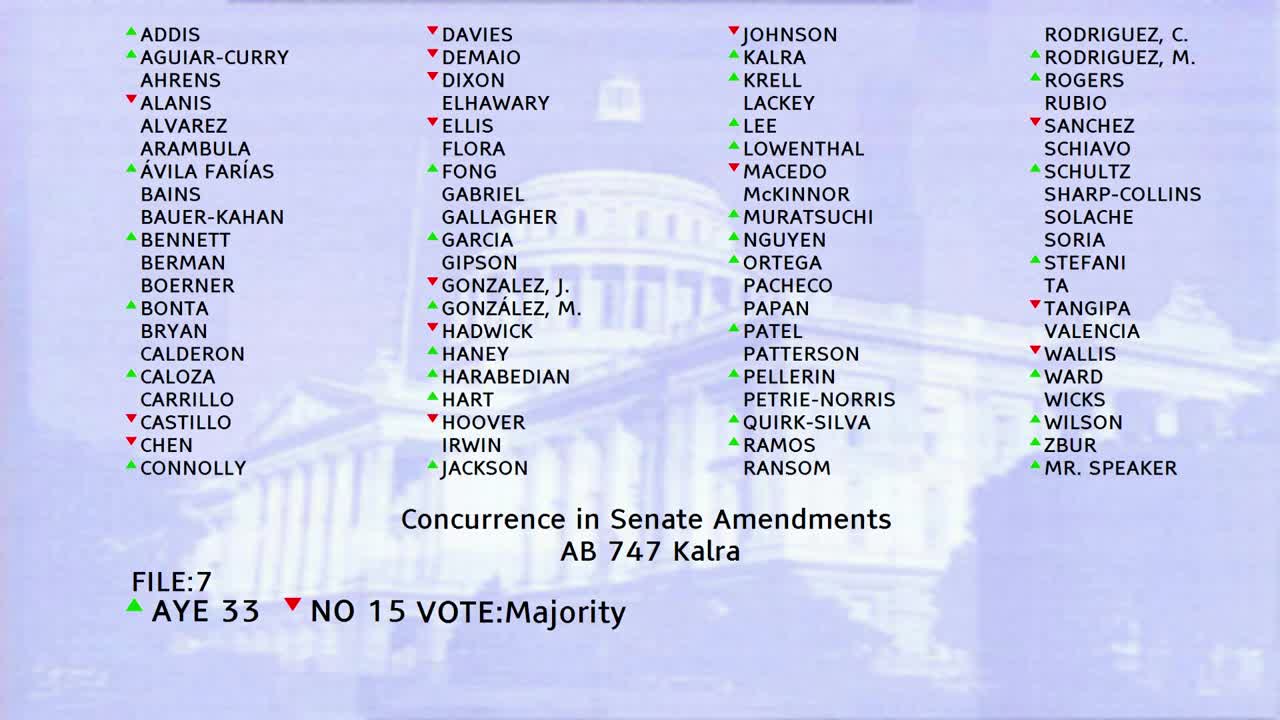 1MIN
Assembly Floor
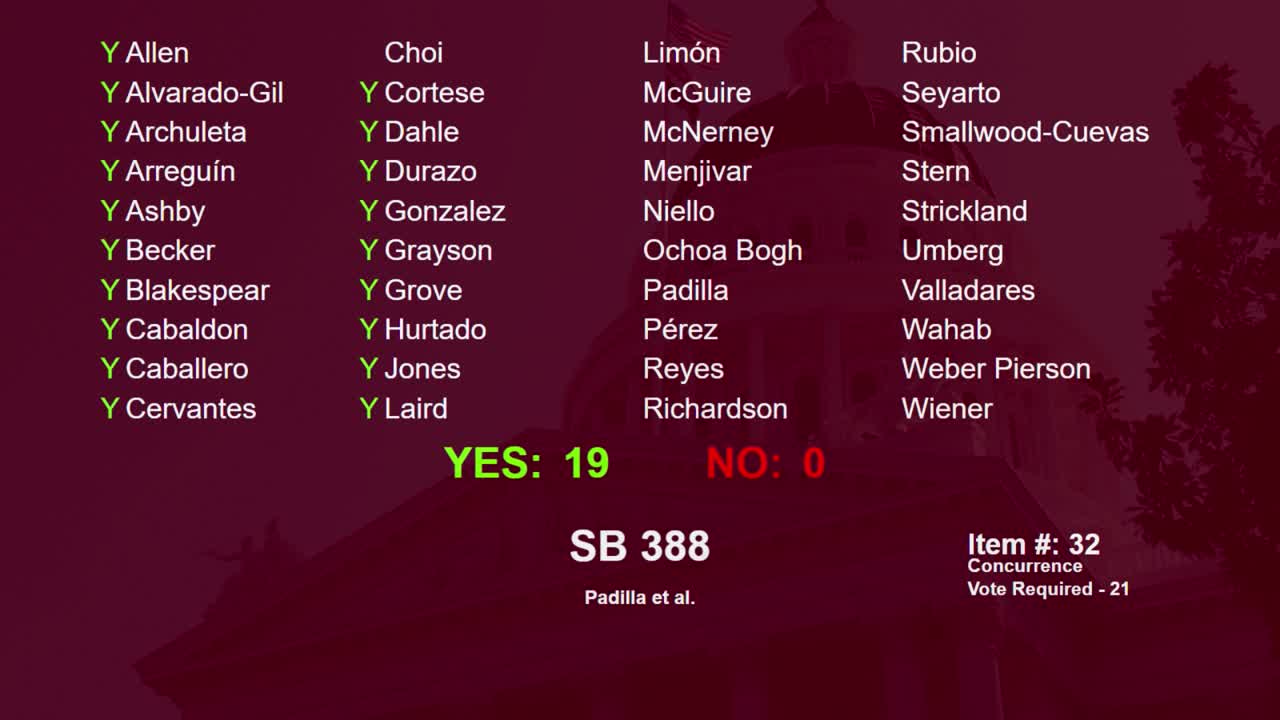 2MIN
Senate Floor
 38SEC
Senate Standing Committee on Appropriations
 7MIN
Senate Standing Committee on Judiciary
 7MIN
Senate Standing Committee on Education
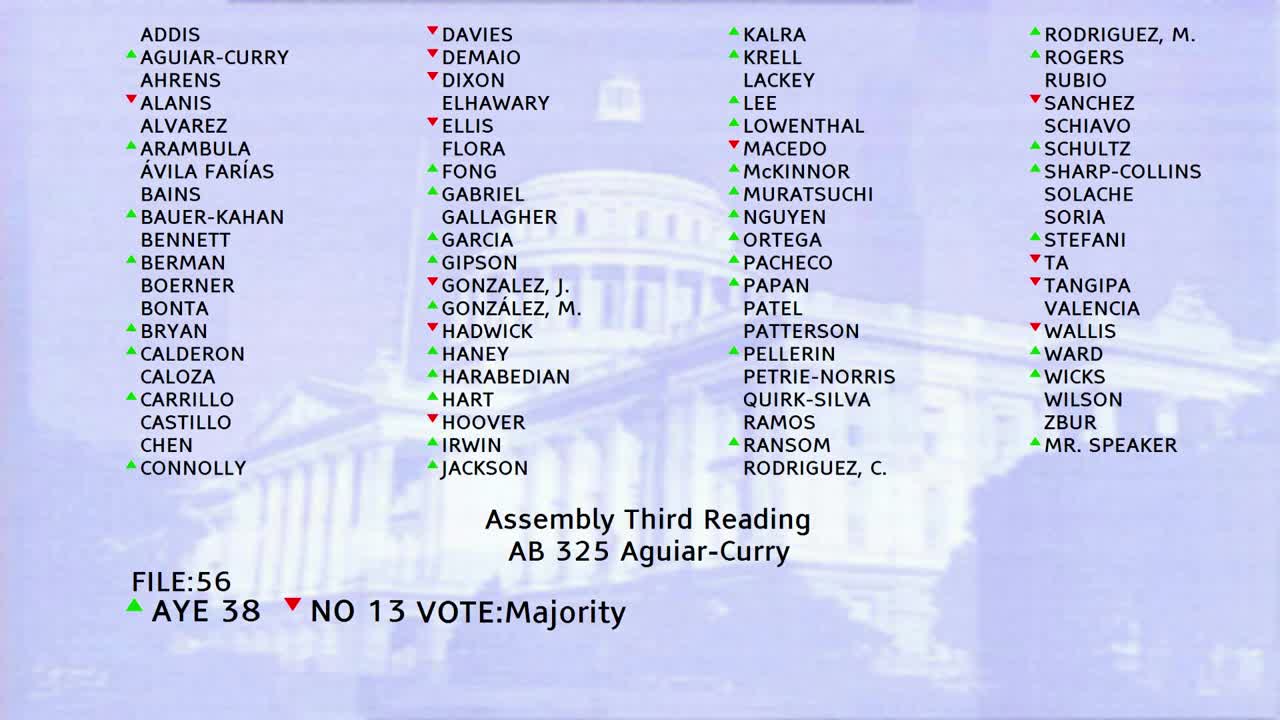 1MIN
Assembly Floor
 6MIN
Assembly Standing Committee on Judiciary
 7MIN
Assembly Standing Committee on Education
Bill Author

Bill Co-Author(s):