AB 430: State Water Resources Control Board: emergency regulations.
- Session Year: 2025-2026
- House: Assembly
- Latest Version Date: 2025-05-01
Current Status:
Failed
(2026-02-02: From committee: Filed with the Chief Clerk pursuant to Joint Rule 56.)
Introduced
In Committee
Awaiting First Chamber Vote
Passed First Chamber
In Committee
Awaiting Second Chamber Vote
Passed Second Chamber
Enacted
Existing law provides that an emergency regulation adopted by the State Water Resources Control Board following a Governors proclamation of a state of emergency based on drought conditions, for which the board makes specified findings, may remain in effect for up to one year, as provided, and may be renewed if the board determines that specified conditions relating to precipitation are still in effect.
This bill would require the board, within 180 days of the 2nd renewal, and any subsequent and consecutive renewal, of any nonfee emergency regulation or upon its repeal, following a finding by the board that a nonfee emergency regulation is no longer necessary, as provided, to conduct a comprehensive economic study assessing the impacts of the regulation, as specified. The bill would require the board to make the study publicly available on its internet website no later than 30 days after completion.
Existing law provides that an emergency regulation adopted by the State Water Resources Control Board following a Governors proclamation of a state of emergency based on drought conditions, for which the board makes specified findings, may remain in effect for up to one year, as provided, and may be renewed if the board determines that specified conditions relating to precipitation are still in effect.
This bill would require the board, before within 180 days of the 2nd renewal renewal, and any subsequent and consecutive renewal, of any nonfee emergency regulation or upon its repeal, to conduct a comprehensive economic study assessing the impacts of the regulation, as specified. The bill would require the board to make the study publicly available on its internet website no later than 30 days before the date of the subsequent renewal, or one year from the date of the repeal of the emergency regulation. after completion.
Existing law provides that an emergency regulation adopted by the State Water Resources Control Board following a Governors proclamation of a state of emergency based on drought conditions, for which the board makes specified findings, may remain in effect for up to one year, as provided, and may be renewed if the board determines that specified conditions relating to precipitation are still in effect.
This bill would require the board, before the 2nd renewal of any emergency regulation or upon its repeal, to conduct a comprehensive economic study assessing the impacts of the regulation, as specified. The bill would require the board to make the study publicly available on its internet website no later than 30 days before the date of the subsequent renewal, or one year from the date of the repeal of the emergency regulation.
(a)This section applies to any emergency regulation adopted by the board for which the board makes both of the following findings:
(1)The emergency regulation is adopted to prevent the waste, unreasonable use, unreasonable method of use, or unreasonable method of diversion, of water, to promote water recycling or water conservation, to require curtailment of diversions when water is not available under the diverters priority of right, or in furtherance of any of the foregoing, to require reporting of diversion or use or the preparation of monitoring reports.
(2)The emergency regulation is adopted in response to conditions which exist, or are threatened, in a critically dry year immediately preceded by two or more consecutive below normal, dry, or critically dry years or during a period for which the Governor has issued a proclamation of a state of emergency under the California Emergency Services Act (Chapter 7 (commencing with Section 8550) of Division 1 of Title 2 of the Government Code) based on drought conditions.
(b)Notwithstanding Sections 11346.1 and 11349.6 of the Government Code, any findings of emergency adopted by the board, in connection with the adoption of an emergency regulation under this section, are not subject to review by the Office of Administrative Law.
(c)(1)An emergency regulation adopted by the board pursuant to this section may remain in effect for up to one year, as determined by the board, and is deemed repealed immediately upon a finding by the board that due to changed conditions it is no longer necessary for the regulation to remain in effect. An emergency regulation adopted by the board pursuant to this section may be renewed if the board determines that the conditions specified in paragraph (2) of subdivision (a) are still in effect.
(2)Within 180 days of the second renewal, and any subsequent and consecutive renewal, of any nonfee emergency regulation or upon its repeal, following a finding by the board that a nonfee emergency regulation is no longer necessary pursuant to paragraph (1), the board shall conduct a comprehensive economic study assessing the impacts of the regulation. The study shall include, but is not limited to, an analysis of fiscal and economic effects on affected industries, fisheries, communities, and water users. The board shall make the study publicly available on its internet website no later than 30 days after completion.
(d)In addition to any other applicable civil or criminal penalties, any person or entity that violates a regulation adopted by the board pursuant to this section is guilty of an infraction punishable by a fine of up to five hundred dollars ($500) for each day in which the violation occurs.
(e)(1)Notwithstanding subdivision (b) of Section 1551 or subdivision (e) of Section 1848, a civil liability imposed under Chapter 12 (commencing with Section 1825) of Part 2 of Division 2 by the board or a court for a violation of an emergency conservation regulation adopted pursuant to this section shall be deposited, and separately accounted for, in the Water Rights Fund. Funds deposited in accordance with this subdivision shall be available, upon appropriation, for water conservation activities and programs.
(2)For purposes of this subdivision, an emergency conservation regulation means an emergency regulation that requires an end user of water, a water retailer, or a water wholesaler to conserve water or report to the board on water conservation. Water conservation includes restrictions or limitations on particular uses of water or a reduction in the amount of water used or served, but does not include curtailment of diversions when water is not available under the diverters priority of right or reporting requirements related to curtailments.
(a)This section applies to any emergency regulation adopted by the board for which the board makes both of the following findings:
(1)The emergency regulation is adopted to prevent the waste, unreasonable use, unreasonable method of use, or unreasonable method of diversion, of water, to promote water recycling or water conservation, to require curtailment of diversions when water is not available under the diverters priority of right, or in furtherance of any of the foregoing, to require reporting of diversion or use or the preparation of monitoring reports.
(2)The emergency regulation is adopted in response to conditions which exist, or are threatened, in a critically dry year immediately preceded by two or more consecutive below normal, dry, or critically dry years or during a period for which the Governor has issued a proclamation of a state of emergency under the California Emergency Services Act (Chapter 7 (commencing with Section 8550) of Division 1 of Title 2 of the Government Code) based on drought conditions.
(b)Notwithstanding Sections 11346.1 and 11349.6 of the Government Code, any findings of emergency adopted by the board, in connection with the adoption of an emergency regulation under this section, are not subject to review by the Office of Administrative Law.
(c)(1)An emergency regulation adopted by the board pursuant to this section may remain in effect for up to one year, as determined by the board, and is deemed repealed immediately upon a finding by the board that due to changed conditions it is no longer necessary for the regulation to remain in effect. An emergency regulation adopted by the board pursuant to this section may be renewed if the board determines that the conditions specified in paragraph (2) of subdivision (a) are still in effect.
(2)Before Within 180 days of the second renewal renewal, and any subsequent and consecutive renewal, of any nonfee emergency regulation or upon its repeal, the board shall conduct a comprehensive economic study assessing the impacts of the regulation. The study shall include, but is not limited to, an analysis of fiscal and economic effects on affected industries, fisheries, communities, and water users. The board shall make the study publicly available on its internet website no later than 30 days before the date of the subsequent renewal, or one year from the date of the repeal of the emergency regulation. after completion.
(d)In addition to any other applicable civil or criminal penalties, any person or entity that violates a regulation adopted by the board pursuant to this section is guilty of an infraction punishable by a fine of up to five hundred dollars ($500) for each day in which the violation occurs.
(e)(1)Notwithstanding subdivision (b) of Section 1551 or subdivision (e) of Section 1848, a civil liability imposed under Chapter 12 (commencing with Section 1825) of Part 2 of Division 2 by the board or a court for a violation of an emergency conservation regulation adopted pursuant to this section shall be deposited, and separately accounted for, in the Water Rights Fund. Funds deposited in accordance with this subdivision shall be available, upon appropriation, for water conservation activities and programs.
(2)For purposes of this subdivision, an emergency conservation regulation means an emergency regulation that requires an end user of water, a water retailer, or a water wholesaler to conserve water or report to the board on water conservation. Water conservation includes restrictions or limitations on particular uses of water or a reduction in the amount of water used or served, but does not include curtailment of diversions when water is not available under the diverters priority of right or reporting requirements related to curtailments.
(a)This section applies to any emergency regulation adopted by the board for which the board makes both of the following findings:
(1)The emergency regulation is adopted to prevent the waste, unreasonable use, unreasonable method of use, or unreasonable method of diversion, of water, to promote water recycling or water conservation, to require curtailment of diversions when water is not available under the diverters priority of right, or in furtherance of any of the foregoing, to require reporting of diversion or use or the preparation of monitoring reports.
(2)The emergency regulation is adopted in response to conditions which exist, or are threatened, in a critically dry year immediately preceded by two or more consecutive below normal, dry, or critically dry years or during a period for which the Governor has issued a proclamation of a state of emergency under the California Emergency Services Act (Chapter 7 (commencing with Section 8550) of Division 1 of Title 2 of the Government Code) based on drought conditions.
(b)Notwithstanding Sections 11346.1 and 11349.6 of the Government Code, any findings of emergency adopted by the board, in connection with the adoption of an emergency regulation under this section, are not subject to review by the Office of Administrative Law.
(c)(1)An emergency regulation adopted by the board under pursuant to this section may remain in effect for up to one year, as determined by the board, and is deemed repealed immediately upon a finding by the board that due to changed conditions it is no longer necessary for the regulation to remain in effect. An emergency regulation adopted by the board under pursuant to this section may be renewed if the board determines that the conditions specified in paragraph (2) of subdivision (a) are still in effect.
(2)Before the second renewal of any emergency regulation or upon its repeal, the board shall conduct a comprehensive economic study assessing the impacts of the regulation. The study shall include, but is not limited to, an analysis of fiscal and economic effects on affected industries, fisheries, communities, and water users. The board shall make the study publicly available on its internet website no later than 30 days before the date of the subsequent renewal, or one year from the date of the repeal of the emergency regulation.
(d)In addition to any other applicable civil or criminal penalties, any person or entity that violates a regulation adopted by the board pursuant to this section is guilty of an infraction punishable by a fine of up to five hundred dollars ($500) for each day in which the violation occurs.
(e)(1)Notwithstanding subdivision (b) of Section 1551 or subdivision (e) of Section 1848, a civil liability imposed under Chapter 12 (commencing with Section 1825) of Part 2 of Division 2 by the board or a court for a violation of an emergency conservation regulation adopted pursuant to this section shall be deposited, and separately accounted for, in the Water Rights Fund. Funds deposited in accordance with this subdivision shall be available, upon appropriation, for water conservation activities and programs.
(2)For purposes of this subdivision, an emergency conservation regulation means an emergency regulation that requires an end user of water, a water retailer, or a water wholesaler to conserve water or report to the board on water conservation. Water conservation includes restrictions or limitations on particular uses of water or a reduction in the amount of water used or served, but does not include curtailment of diversions when water is not available under the diverters priority of right or reporting requirements related to curtailments.
|
Date
|
Status
|
|---|---|
| Feb 2, 2026 | From committee: Filed with the Chief Clerk pursuant to Joint Rule 56. |
| Jan 31, 2026 | Died pursuant to Art. IV, Sec. 10(c) of the Constitution. |
| May 23, 2025 | In committee: Held under submission. |
| May 14, 2025 | In committee: Set, first hearing. Referred to suspense file. |
| May 5, 2025 | Re-referred to Com. on APPR. |
| May 1, 2025 | Read second time and amended. |
| Apr 30, 2025 | From committee: Amend, and do pass as amended and re-refer to Com. on APPR. (Ayes 12. Noes 0.) (April 29). |
| Apr 22, 2025 | Re-referred to Com. on W. P., & W. |
| Apr 21, 2025 | From committee chair, with author's amendments: Amend, and re-refer to Com. on W. P., & W. Read second time and amended. |
| Apr 7, 2025 | In committee: Set, first hearing. Hearing canceled at the request of author. |
| Feb 18, 2025 | Referred to Com. on W. P., & W. |
| Feb 6, 2025 | From printer. May be heard in committee March 8. |
| Feb 5, 2025 | Read first time. To print. |
|
Date
|
Description
|
Location
|
Votes
|
|
|---|---|---|---|---|
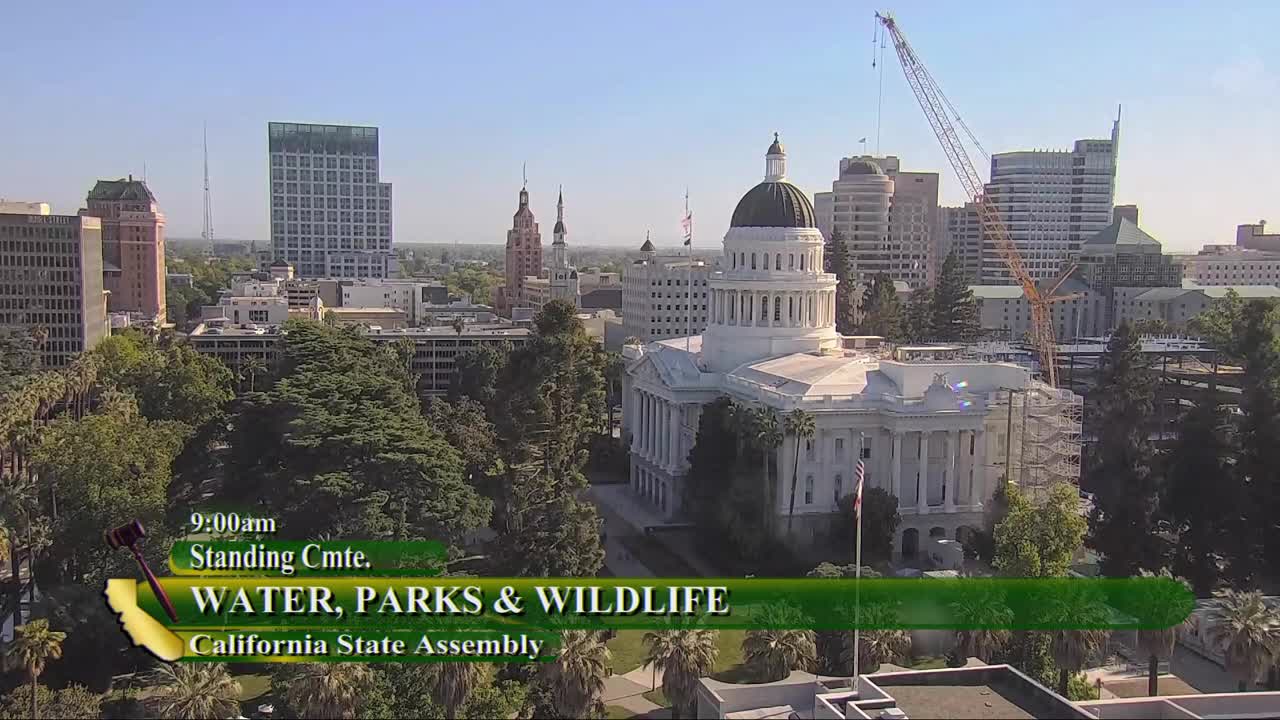
| Apr 29, 2025 | Do pass as amended and be re-referred to the Committee on [Appropriations] | Assembly Standing Committee on Water, Parks, and Wildlife |
Passed |
This list shows positions taken on this bill by organizations on the date displayed, which is linked to the original source.
Positions by individuals are not included.
|
Organization
|
Position
|
Date
|
|---|---|---|
| California Chamber Of Commerce | ** Support | |
| California Farm Bureau Federation | ** Support | |
| California Municipal Utilities Association | ** Support | |
| Northern California Water Association | ** Support | |
| Rural County Representatives of California | ** Support | |
| Sierra Club | ** Against | |
| Western Growers Association | ** Support |
Date of Hearing: May 14, 2025
ASSEMBLY COMMITTEE ON APPROPRIATIONS
Buffy Wicks, Chair
ABPCA Bill Id:AB 430
Author:(Alanis) – As Amended Ver:May 1, 2025
Policy Committee: | Water, Parks and Wildlife | Vote: | 12 - 0 |
|
| ||
|
|
Urgency: No State Mandated Local Program: No Reimbursable: No
SUMMARY:
This bill requires the State Water Resources Control Board (State Water Board), within 180 days following a finding by the board that a non-fee emergency regulation is no longer necessary, as provided, to conduct a comprehensive economic study assessing the impacts of the regulation. The bill requires the State Water Board to make the study publicly available on its website no later than 30 days after completion.
FISCAL EFFECT:
The State Water Board notes it lacks internal expertise and staff resources to undertake the type of comprehensive economic analysis this bill requires and estimates contracting costs of at least $1 million (General Fund) for each analysis it conducts.
COMMENTS:
Under state law, a state agency may adopt an emergency regulation in response to a situation that calls for immediate action to avoid serious harm to the public peace, health, safety, or general welfare, or if a statute deems a situation to be an emergency under the Administrative Procedures Act. Water Code section 1058.5 further authorizes the State Water Board to adopt an emergency regulation during certain conditions, including a declared drought emergency.
According to a coalition of business, agricultural, and water associations writing in support of this bill, the emergency rulemaking process is very abbreviated compared to the standard rulemaking process, which includes comprehensive public notice, a minimum 45-day comment period, and other provisions. A standard rulemaking process also requires that the agency developing the rule release for public review all the documents and evidence it plans to use in making its decision. The coalition notes the process to adopt emergency regulations lacks these requirements because emergency regulations are meant to be adopted quickly and for a short period of time.
The coalition contends that in some watersheds, such as the Scott River and Shasta River watersheds, “the State Water Board has recently been using emergency regulations as a watershed management tool for several years consecutively, extending them well beyond the end of a hydrologic drought.”
This bill requires the State Water Board, within 180 days following a finding by the board that a non-fee emergency regulation is no longer necessary, as provided, to conduct a comprehensive economic study assessing the impacts of the regulation. The bill requires the study to include an analysis of fiscal and economic effects on affected industries, fisheries, communities, and water users.
Analysis Prepared by: Nikita Koraddi / APPR. / (916) 319-2081
Date of Hearing: April 29, 2025
ASSEMBLY COMMITTEE ON WATER, PARKS, AND WILDLIFE
Diane Papan, Chair
ABPCA Bill Id:AB 430 (
Author:Alanis) – As Amended Ver:April 21, 2025
SUBJECT: State Water Resources Control Board: emergency regulations
SUMMARY: Requires the State Water Resources Control Board (State Water Board) to conduct a comprehensive economic study assessing the impacts of a non-fee emergency regulation within 180 days of renewing the regulation for the second time and upon any subsequent and consecutive renewal of the regulation. Provides the economic study shall cover fiscal impacts to affected industries, fisheries, communities, and water users and requires the State Water Board to make the study publicly available on its website no later than 30 days after its completion.
EXISTING LAW:
- Authorizes the State Water Board to adopt emergency regulations during times of drought to enforce the reasonable use doctrine, promote water recycling or conservation, curtail diversions due to lack of water availability, or to require reporting on water use. Provides such emergency regulations are not subject to review by the Office of Administrative Law (OAL) and may only remain in effect for one year. Sets penalties for violations of emergency regulations at $500 per day (Water Code § 1058.5).
- Provides the adoption, amendment, or repeal of an emergency regulation is not subject to review by OAL. An emergency regulation must still be filed with OAL and takes effect once such filing occurs. Requires the adopting agency to notify interested parties of the pending adoption of an emergency regulation at least five days before submitting the emergency regulation to OAL (Government Code § 11346.1).
- Requires a notice of the adoption, amendment, or repeal of an emergency regulation to include specified information including: the time, place, and nature of proceeding relative to the adoption, amendment, or repeal; reference to the authority for the emergency regulation; a digest summarizing the emergency regulation and explaining the objectives and benefits of the emergency regulation, among other information; and an estimate of the costs or savings to any state or local agency resulting from the emergency regulation (Government Code § 11346.5).
FISCAL EFFECT: Unknown. This bill is keyed fiscal.
COMMENTS:
- Purpose of this bill. According to the author, “This [bill] is essential for promoting the well-being of California’s agriculture, water resources, and communities. By requiring the [State Water Board] to conduct and publicly release an economic and environmental impact study before renewing or repealing emergency water regulations, it ensures transparency and accountability in water management decisions. Providing this information allows consumers, farmers, and businesses to better understand and prepare for the impacts of water curtailments. This approach supports the long-term sustainability of California’s agricultural industry and ensures that water resources are managed effectively and equitably.”
- Background. On May 10, 2021, Governor Newsom declared a drought emergency for 41 counties, including Siskiyou County, where accelerated action was needed to protect public health, safety, as well as the environment. Due to the drought emergency, the State Water Board adopted emergency regulations setting minimum flows on the Scott and Shasta Rivers in August 2021 to protect fish and maintain water quality. These emergency regulations have been re-adopted four times since 2021 (emergency regulations can remain in effect for up to one year). While Governor Newsom signed an executive order removing emergency drought provisions in many counties on September 5, 2024, the drought emergency in Siskiyou County remained in place due to continuing dry conditions in the region. On January 7, 2025, the State Water Board readopted an emergency regulation for the Scott and Shasta River Watersheds. OAL approved the emergency regulation on January 27, 2025 and the emergency regulation will remain in effect through January 27, 2026, unless re-adopted or rescinded.
According to the State Water Board’s fiscal impact analysis of the emergency regulations, “the estimated loss in revenue (income before expenses are subtracted) to municipal water suppliers from the proposed Emergency Regulation is estimated to be $765,752 ($1629.26 per acre-feet of water multiplied by 470 acre-feet) for the expected-range scenario, $972,668 ($1629.26 per acre-feet of water multiplied by 597 acre-feet) for the extreme-drought scenario, and $286,750 ($1629.26 per acre-feet of water multiplied by 176 acre-feet) for the above-average scenario. “The loss in crop sales revenue in 2024 in the Scott and Shasta River watersheds is estimated to be $5,994,000 for the expected-range scenario, $10,014,122 for the extreme-drought scenario, and $152,393 for the above-average scenario.” (Out of an estimated total crop revenue of $316,125,604.) - Arguments in support. The California Farm Bureau supports this bill and argues that it will better inform the public and policymakers in situations where emergency regulations are used as “a water management tool for more than one year.” The Farm Bureau cites the case of emergency regulations adopted on the Scott and Shasta rivers in 2021 as a reason why this bill is needed: “Such is the case in the Scott River and Shasta River watersheds, where the State Water Board first adopted one-year emergency regulations requiring instream flows in both rivers under Governor Newsom’s May 10, 2021 drought proclamation and has readopted them annually since, effectively establishing a long-term regulation without the benefit of the detailed study and robust public engagement that would occur through a standard regulatory process.” The Farm Bureau maintains that this bill addresses this and other situations by providing important information regarding the impacts of an emergency regulation to the public and affected stakeholders.
- Arguments in opposition. The Sierra Club opposes this bill and contends that it will impede the State Water Board’s adoption of timely regulations to address emergency situations in a time of climate crisis. The Sierra Club states: “The State Water Board has their hands full doing important and timely work. Let’s not further burden their already-strained workload with this mandate.”
- Policy consideration. This bill contradicts the purpose of emergency regulations – to quickly take action to address an urgent crisis or situation – by placing additional requirements on the re-adoption of emergency regulations. Further, adopting an emergency regulation is only one step in responding to a crisis; monitoring compliance with the emergency regulation and enforcing against violations also require significant staff time. By adding an additional analysis, this bill will increase the burden on the State Water Board when it is in the midst of responding to a crisis (e.g., a multi-year drought). The Committee may wish to consider whether this is advisable given the state’s recent experience with multi-year droughts in the past decade and a half and projections for more severe droughts in the future under a warmer and warming climate.
- Related legislation. AB 263 (Rogers) of the current legislative session provides that emergency drought regulations for the Scott and Shasta Rivers shall remain in effect until the State Water Board adopts permanent regulations to implement long-term instream flow requirements for these rivers. AB 263 is pending on the Assembly Floor.
REGISTERED SUPPORT / OPPOSITION:
Support
California Chamber of Commerce
California Farm Bureau Federation
California Municipal Utilities Association
Northern California Water Association
Rural County Representatives of California
Western Growers Association
Opposition
Sierra Club
Analysis Prepared by: Pablo Garza / W., P., & W. / (916) 319-2096
Date of Hearing: April 29, 2025
ASSEMBLY COMMITTEE ON WATER, PARKS, AND WILDLIFE
Diane Papan, Chair
ABPCA Bill Id:AB 430 (
Author:Alanis) – As Amended Ver:April 21, 2025
SUBJECT: State Water Resources Control Board: emergency regulations
SUMMARY: Requires the State Water Resources Control Board (State Water Board) to conduct a comprehensive economic study assessing the impacts of a non-fee emergency regulation within 180 days of renewing the regulation for the second time and upon any subsequent and consecutive renewal of the regulation. Provides the economic study shall cover fiscal impacts to affected industries, fisheries, communities, and water users and requires the State Water Board to make the study publicly available on its website no later than 30 days after its completion.
EXISTING LAW:
- Authorizes the State Water Board to adopt emergency regulations during times of drought to enforce the reasonable use doctrine, promote water recycling or conservation, curtail diversions due to lack of water availability, or to require reporting on water use. Provides such emergency regulations are not subject to review by the Office of Administrative Law (OAL) and may only remain in effect for one year. Sets penalties for violations of emergency regulations at $500 per day (Water Code § 1058.5).
- Provides the adoption, amendment, or repeal of an emergency regulation is not subject to review by OAL. An emergency regulation must still be filed with OAL and takes effect once such filing occurs. Requires the adopting agency to notify interested parties of the pending adoption of an emergency regulation at least five days before submitting the emergency regulation to OAL (Government Code § 11346.1).
- Requires a notice of the adoption, amendment, or repeal of an emergency regulation to include specified information including: the time, place, and nature of proceeding relative to the adoption, amendment, or repeal; reference to the authority for the emergency regulation; a digest summarizing the emergency regulation and explaining the objectives and benefits of the emergency regulation, among other information; and an estimate of the costs or savings to any state or local agency resulting from the emergency regulation (Government Code § 11346.5).
FISCAL EFFECT: Unknown. This bill is keyed fiscal.
COMMENTS:
- Purpose of this bill. According to the author, “This [bill] is essential for promoting the well-being of California’s agriculture, water resources, and communities. By requiring the [State Water Board] to conduct and publicly release an economic and environmental impact study before renewing or repealing emergency water regulations, it ensures transparency and accountability in water management decisions. Providing this information allows consumers, farmers, and businesses to better understand and prepare for the impacts of water curtailments. This approach supports the long-term sustainability of California’s agricultural industry and ensures that water resources are managed effectively and equitably.”
- Background. On May 10, 2021, Governor Newsom declared a drought emergency for 41 counties, including Siskiyou County, where accelerated action was needed to protect public health, safety, as well as the environment. Due to the drought emergency, the State Water Board adopted emergency regulations setting minimum flows on the Scott and Shasta Rivers in August 2021 to protect fish and maintain water quality. These emergency regulations have been re-adopted four times since 2021 (emergency regulations can remain in effect for up to one year). While Governor Newsom signed an executive order removing emergency drought provisions in many counties on September 5, 2024, the drought emergency in Siskiyou County remained in place due to continuing dry conditions in the region. On January 7, 2025, the State Water Board readopted an emergency regulation for the Scott and Shasta River Watersheds. OAL approved the emergency regulation on January 27, 2025 and the emergency regulation will remain in effect through January 27, 2026, unless re-adopted or rescinded.
According to the State Water Board’s fiscal impact analysis of the emergency regulations, “the estimated loss in revenue (income before expenses are subtracted) to municipal water suppliers from the proposed Emergency Regulation is estimated to be $765,752 ($1629.26 per acre-feet of water multiplied by 470 acre-feet) for the expected-range scenario, $972,668 ($1629.26 per acre-feet of water multiplied by 597 acre-feet) for the extreme-drought scenario, and $286,750 ($1629.26 per acre-feet of water multiplied by 176 acre-feet) for the above-average scenario. “The loss in crop sales revenue in 2024 in the Scott and Shasta River watersheds is estimated to be $5,994,000 for the expected-range scenario, $10,014,122 for the extreme-drought scenario, and $152,393 for the above-average scenario.” (Out of an estimated total crop revenue of $316,125,604.) - Arguments in support. The California Farm Bureau supports this bill and argues that it will better inform the public and policymakers in situations where emergency regulations are used as “a water management tool for more than one year.” The Farm Bureau cites the case of emergency regulations adopted on the Scott and Shasta rivers in 2021 as a reason why this bill is needed: “Such is the case in the Scott River and Shasta River watersheds, where the State Water Board first adopted one-year emergency regulations requiring instream flows in both rivers under Governor Newsom’s May 10, 2021 drought proclamation and has readopted them annually since, effectively establishing a long-term regulation without the benefit of the detailed study and robust public engagement that would occur through a standard regulatory process.” The Farm Bureau maintains that this bill addresses this and other situations by providing important information regarding the impacts of an emergency regulation to the public and affected stakeholders.
- Arguments in opposition. The Sierra Club opposes this bill and contends that it will impede the State Water Board’s adoption of timely regulations to address emergency situations in a time of climate crisis. The Sierra Club states: “The State Water Board has their hands full doing important and timely work. Let’s not further burden their already-strained workload with this mandate.”
- Policy consideration. This bill contradicts the purpose of emergency regulations – to quickly take action to address an urgent crisis or situation – by placing additional requirements on the re-adoption of emergency regulations. Further, adopting an emergency regulation is only one step in responding to a crisis; monitoring compliance with the emergency regulation and enforcing against violations also require significant staff time. By adding an additional analysis, this bill will increase the burden on the State Water Board when it is in the midst of responding to a crisis (e.g., a multi-year drought). The Committee may wish to consider whether this is advisable given the state’s recent experience with multi-year droughts in the past decade and a half and projections for more severe droughts in the future under a warmer and warming climate.
- Proposed committee amendment. To address the policy consideration raised above, the Committee may wish to request that the author amend this bill to require a single comprehensive economic analysis upon the final expiration of the emergency regulations. This way the State Water Board will not have to divert staff and resources to complete the analysis until after the urgent situation requiring emergency regulations has passed.
Amendment 1
Water Code 1058.5….(c) (1) An emergency regulation adopted by the board pursuant to this section may remain in effect for up to one year, as determined by the board, and is deemed repealed immediately upon a finding by the board that due to changed conditions it is no longer necessary for the regulation to remain in effect. An emergency regulation adopted by the board pursuant to this section may be renewed if the board determines that the conditions specified in paragraph (2) of subdivision (a) are still in effect.
(2) Within 180 days of following a finding by the board that a nonfee emergency regulation is no longer necessary pursuant to subdivision (c)(1) of Section 1058.5the second renewal, and any subsequent and consecutive renewal, of any nonfee emergency regulation or upon its repeal, the board shall conduct a comprehensive economic study assessing the impacts of the regulation. The study shall include, but is not limited to, an analysis of fiscal and economic effects on affected industries, fisheries, communities, and water users. The board shall make the study publicly available on its internet website no later than 30 days after completion.
- Related legislation. AB 263 (Rogers) of the current legislative session provides that emergency drought regulations for the Scott and Shasta Rivers shall remain in effect until the State Water Board adopts permanent regulations to implement long-term instream flow requirements for these rivers. AB 263 is pending on the Assembly Floor.
REGISTERED SUPPORT / OPPOSITION:
Support
California Chamber of Commerce
California Farm Bureau Federation
California Municipal Utilities Association
Northern California Water Association
Rural County Representatives of California
Western Growers Association
Opposition
Sierra Club
Analysis Prepared by: Pablo Garza / W., P., & W. / (916) 319-2096
Discussed in Hearing
 4MIN
Assembly Standing Committee on Water, Parks, and Wildlife
Bill Author

Bill Co-Author(s):