AB 436: Composting facilities: zoning.
- Session Year: 2025-2026
- House: Assembly
- Latest Version Date: 2025-03-10
Current Status:
Failed
(2026-02-02: From committee: Filed with the Chief Clerk pursuant to Joint Rule 56.)
Introduced
In Committee
Awaiting First Chamber Vote
Passed First Chamber
In Committee
Awaiting Second Chamber Vote
Passed Second Chamber
Enacted
Existing law provides that the Office of Planning and Research Land Use and Climate Innovation serves the Governor and the Governors Cabinet as staff for long-range planning and research, and constitute the comprehensive state planning agency. In that capacity, existing law requires the office to, among other things, assist local governments in land use planning. Existing law, the California Integrated Waste Management Act of 1989, establishes the Department of Resources Recycling and Recovery to administer an integrated waste management program. Existing law establishes a goal that statewide landfill disposal of organic waste be reduced from the 2014 level by 75% by 2025.
This bill, on or before June 1, 2027, would require the Office of Planning and Research, Land Use and Climate Innovation, in consultation with the Department of Resources Recycling and Recovery, to develop and post on the offices internet website, a technical advisory, as provided, reflecting best practices to facilitate the siting of composting facilities to meet the organic waste reduction goals. The bill would require the office to consult with specified entities throughout the development of the technical advisory.
The Planning and Zoning Law requires each county and city to adopt a comprehensive, long-term general plan for its physical development, and the development of certain lands outside its boundaries, that includes, among other mandatory elements, a land use element that designates the proposed general distribution and general location and extent of the uses of the land for housing, business, solid and liquid waste disposal facilities, and other categories of public and private uses of land, as prescribed.
This bill, upon a substantive revision of the land use element, as specified, on or after January 1, 2029, would require a city, county, or city and county to consider, among other things, the best practices practices, sample general plan, and model ordinance reflected in the technical advisory and to consider updating the land use element to identify areas where composting facilities may be appropriate as an allowable use. By increasing duties on a city, county, or city and county, the bill would impose a state-mandated local program.
The California Constitution requires the state to reimburse local agencies and school districts for certain costs mandated by the state. Statutory provisions establish procedures for making that reimbursement.
This bill would provide that no reimbursement is required by this act for a specified reason.
Existing law provides that the Office of Planning and Research serves the Governor and the Governors Cabinet as staff for long-range planning and research, and constitute the comprehensive state planning agency. In that capacity, existing law requires the office to, among other things, assist local governments in land use planning. Existing law, the California Integrated Waste Management Act of 1989, establishes the Department of Resources Recycling and Recovery to administer an integrated waste management program. Existing law establishes a goal that statewide landfill disposal of organic waste be reduced from the 2014 level by 75% by 2025.
This bill, on or before June 1, 2027, would require the Office of Planning and Research, in consultation with the Department of Resources Recycling and Recovery, to develop and post on the offices internet website, a technical advisory, as provided, reflecting best practices to facilitate the siting of composting facilities to meet the organic waste reduction goals. The bill would require the office to consult with specified entities throughout the development of the technical advisory.
The Planning and Zoning Law requires each county and city to adopt a comprehensive, long-term general plan for its physical development, and the development of certain lands outside its boundaries, that includes, among other mandatory elements, a land use element that designates the proposed general distribution and general location and extent of the uses of the land for housing, business, solid and liquid waste disposal facilities, and other categories of public and private uses of land, as prescribed.
This bill, upon a substantive revision of the land use element, as specified, on or after January 1, 2029, would require a city, county, or city and county to consider, among other things, the best practices reflected in the technical advisory and to consider updating the land use element to identify areas where composting facilities may be appropriate as an allowable use. By increasing duties on a city, county, or city and county, the bill would impose a state-mandated local program.
The California Constitution requires the state to reimburse local agencies and school districts for certain costs mandated by the state. Statutory provisions establish procedures for making that reimbursement.
This bill would provide that no reimbursement is required by this act for a specified reason.
(a)On or before June 1, 2027, the office shall develop, in consultation with the Department of Resources Recycling and Recovery, and post on the offices internet website, a technical advisory, reflecting best practices to facilitate the siting of composting facilities to meet the organic waste reduction goals established in Section 39730.6 of the Health and Safety Code.
(b)The technical advisory developed pursuant to subdivision (a) shall include both of the following, which shall be suitable for adoption or modification by a city, county, or city and county:
(1)Sample general plan goals, policies, and implementation measures.
(2)A model ordinance.
(c)The office shall consult with representatives of urban, suburban, and rural counties and cities, operators of composting facilities, and private and public waste services throughout the development of the technical advisory.
SEC. 2.Section 65302.16 is added to the Government Code, to read:65302.16.(a)Upon a substantive revision of the land use element on or after January 1, 2029, a city, county, or city and county shall consider both of the following:
(1)The best practices practices, sample general plan, and model ordinance reflected in the technical advisory.
(2)Updating the land use element to identify areas where composting facilities may be appropriate as an allowable use, which may vary based on different types or sizes of composting facilities.
(b)Subdivision (a) shall only apply to revisions of a land use element that occur after the Office of Planning and Research Land Use and Climate Innovation publicly posts the technical advisory required by Section 65040.19.
SEC. 3.No reimbursement is required by this act pursuant to Section 6 of Article XIIIB of the California Constitution because a local agency or school district has the authority to levy service charges, fees, or assessments sufficient to pay for the program or level of service mandated by this act, within the meaning of Section 17556 of the Government Code.
(a)On or before June 1, 2027, the office shall develop, in consultation with the Department of Resources Recycling and Recovery, and post on the offices internet website, a technical advisory, reflecting best practices to facilitate the siting of composting facilities to meet the organic waste reduction goals established in Section 39730.6 of the Health and Safety Code.
(b)The technical advisory developed pursuant to subdivision (a) shall include both of the following, which shall be suitable for adoption or modification by a city, county, or city and county:
(1)Sample general plan goals, policies, and implementation measures.
(2)A model ordinance.
(c)The office shall consult with representatives of urban, suburban, and rural counties and cities, operators of composting facilities, and private and public waste services throughout the development of the technical advisory.
SEC. 2.Section 65302.16 is added to the Government Code, to read:65302.16.(a)Upon a substantive revision of the land use element on or after January 1, 2029, a city, county, or city and county shall consider both of the following:
(1)The best practices reflected in the technical advisory.
(2)Updating the land use element to identify areas where composting facilities may be appropriate as an allowable use, which may vary based on different types or sizes of composting facilities.
(b)Subdivision (a) shall only apply to revisions of a land use element that occur after the Office of Planning and Research publicly posts the technical advisory required by Section 65040.19.
SEC. 3.No reimbursement is required by this act pursuant to Section 6 of Article XIIIB of the California Constitution because a local agency or school district has the authority to levy service charges, fees, or assessments sufficient to pay for the program or level of service mandated by this act, within the meaning of Section 17556 of the Government Code.
|
Date
|
Status
|
|---|---|
| Feb 2, 2026 | From committee: Filed with the Chief Clerk pursuant to Joint Rule 56. |
| Jan 31, 2026 | Died pursuant to Art. IV, Sec. 10(c) of the Constitution. |
| May 23, 2025 | In committee: Held under submission. |
| Apr 23, 2025 | In committee: Set, first hearing. Referred to suspense file. |
| Apr 10, 2025 | From committee: Do pass and re-refer to Com. on APPR. (Ayes 10. Noes 0.) (April 9). Re-referred to Com. on APPR. |
| Mar 25, 2025 | From committee: Do pass and re-refer to Com. on L. GOV. (Ayes 13. Noes 0.) (March 24). Re-referred to Com. on L. GOV. |
| Mar 11, 2025 | Re-referred to Com. on NAT. RES. |
| Mar 10, 2025 | From committee chair, with author's amendments: Amend, and re-refer to Com. on NAT. RES. Read second time and amended. |
| Feb 18, 2025 | Referred to Coms. on NAT. RES. and L. GOV. |
| Feb 7, 2025 | From printer. May be heard in committee March 9. |
| Feb 6, 2025 | Read first time. To print. |
|
Date
|
Description
|
Location
|
Votes
|
|
|---|---|---|---|---|
| Apr 9, 2025 | Do pass and be re-referred to the Committee on [Appropriations] | Assembly Standing Committee on Local Government |
Passed |
|
| Mar 24, 2025 | Do pass and be re-referred to the Committee on [Local Government] | Assembly Standing Committee on Natural Resources |
Passed |
This list shows positions taken on this bill by organizations on the date displayed, which is linked to the original source.
Positions by individuals are not included.
|
Organization
|
Position
|
Date
|
|---|---|---|
| California Compost Coalition | ** Support | |
| California State Association Of Counties | ** Support | |
| California State Grange | ** Support | |
| Cr&R | ** Support | |
| Cr&R, Inc. | ** Support | |
| Housing and Economic Rights Advocates | ** Support | |
| League Of California Cities | ** Support | |
| Recology Waste Zero | ** Support | |
| Republic Services Inc. | ** Support | |
| Resource Recovery Coalition Of California | ** Support | |
| Rethink Waste | ** Support | |
| Rural County Representatives of California | ** Support | |
| Waste Connections, Inc. | ** Support |
Date of Hearing: April 23, 2025
ASSEMBLY COMMITTEE ON APPROPRIATIONS
Buffy Wicks, Chair
ABPCA Bill Id:AB 436
Author:(Ransom) – As Amended Ver:March 10, 2025
Policy Committee: | Natural Resources | Vote: | 13 - 0 |
Local Government | 10 - 0 | ||
|
|
Urgency: No State Mandated Local Program: Yes Reimbursable: No
SUMMARY:
This bill requires the Office of Land Use and Climate Innovation (LCI) to develop a technical advisory on best practices to facilitate the siting of composting facilities, and requires cities and counties to consider incorporating the best practices in their land use elements.
Specifically, this bill, among other things:
- Requires LCI, by June 1, 2027 and in consultation with the Department of Resources Recycling and Recovery (CalRecycle), to develop and post on its website a technical advisory that reflects best practices to facilitate the siting of composting facilities to meet the state’s organic waste reduction goals.
- Requires the technical advisory to include sample general plan goals, policies, and implementation measures as well as a model ordinance.
- Requires LCI to consult with representatives of urban, suburban, and rural counties and cities, operators of composting facilities, and private and public waste services throughout the development of the technical advisory.
- Upon a substantive revision of the land use element on or after January 1, 2029, and after the technical advisory is posted, requires a city, county, or city and county to consider:
- The best practices, sample general plan, and model ordinance reflected in the technical advisory.
- Updating the land use element to identify areas where composting facilities may be appropriate as an allowable use, as specified.
FISCAL EFFECT:
1) LCI estimates one-time costs of $448,000 (General Fund) for two positions until the technical advisory is complete – namely one Staff Air Pollution Specialist to draft the technical advisory and provide technical assistance to facilitate the siting of composting facilities as well as one Associate Governmental Program Analyst to assist with outreach to the representatives specified in the bill throughout the development of the technical advisory.
2) CalRecycle reports minor and absorbable costs.
3) Local costs of an unknown amount for cities and counties to implement the requirements in the bill. These local costs are not state-reimbursable as local agencies have the authority to charge various fees and charges to offset the costs of new planning mandates (local funds).
COMMENTS:
1) Purpose. According to the author:
AB 436 will assist local jurisdictions in California in meeting our organic waste diversion targets by expediting the siting and permitting of composting facilities. AB 436 would provide local governments with an additional tool to help more easily site these facilities, mitigating an existing permitting barrier that does not impact environmental standards. This is a common sense approach that assists local government and helps achieve our environmental goals.
2) Background. SB 1383 (Lara), Chapter 395, Statutes of 2016, requires the Air Resources Board to approve and implement a comprehensive short-lived climate pollutant strategy to achieve, by 2030, the following reductions from 2013 levels: a 40% reduction in methane, a 40% reduction in hydrofluorocarbon gases, and a 50% reduction in anthropogenic black carbon. In order to accomplish these goals, the law specifies that the methane emission reduction goals include the following targets to reduce the landfill disposal of organic waste, including food: 50% from the 2014 level by 2020 and 75% from the 2014 level by 2025.
To achieve the goals of SB 1383, CalRecycle estimates the state needs between 50 and 100 new or expanded organic waste recycling facilities to annually recycle an additional 20 million to 25 million tons of organic waste. According to the Assembly Natural Resources Committee analysis of this bill, in addition to California Environmental Quality Act review, a new composting facility, depending on its size and feedstock, is required to obtain various local and state permits to operate. A coalition of organizations in support of the bill argues that the siting and permitting of composting facilities is “unnecessarily complicated and time-consuming – taking over a decade to finalize, in some cases.” The coalition contends that local governments establish zoning requirements that dictate land uses within their jurisdictions, which could include the siting of composting facilities, and that “building critical SB 1383 infrastructure in a timely manner will require the state to mitigate existing permitting barriers that do not impact our environmental standards.”
3) Prior Legislation. SB 1045 (Blakespear), of the 2023-24 Legislative Session, was nearly identical to this bill and was held in this committee.
Analysis Prepared by: Nikita Koraddi / APPR. / (916) 319-2081
Date of Hearing: April 9, 2025
ASSEMBLY COMMITTEE ON LOCAL GOVERNMENT
Juan Carrillo, Chair
ABPCA Bill Id:AB 436 (
Author:Ransom) – As Amended Ver:March 10, 2025
SUBJECT: Composting facilities: zoning
SUMMARY: Requires the Office of Land Use and Climate Innovation (LCI) to develop and post on its website a technical advisory on best practices to facilitate the siting of compost facilities, and requires cities and counties to consider updating the land use element to identify areas where it may be appropriate for compost facilities to be an allowable use. Specifically, this bill:
- Requires LCI to develop, in consultation with the Department of Resources Recycling and Recovery (CalRecycle), a technical advisory that reflects best practices to facilitate the siting of composting facilities to meet the state’s organic waste reduction goals, and to post the advisory on LCI’s website, by June 1, 2027.
- Specifies that the technical advisory must include sample general plan goals, policies, and implementation measures and a model ordinance, all of which shall be suitable for adoption or modification by a city, county, or city and county.
- Requires LCI to consult with representatives of urban, suburban, and rural counties and cities, operators of composting facilities, and private and public waste services throughout the development of the technical advisory.
- Requires, upon a substantive revision of the land use element on or after January 1, 2029 and after the technical advisory is publically posted, a city, county, or city and county to consider:
- The best practices, sample general plan, and model ordinance reflected in the technical advisory; and,
- Updating the land use element to identify areas where composting facilities may be appropriate as an allowable use, which may vary based on the types or sizes of the facilities.
- Specifies that no reimbursement is required by the bill pursuant to Section 6 of Article XIIIB of the California Constitution, as specified.
EXISTING LAW:
- Allows, under the California Constitution, cities and counties to “make and enforce within its limits, all local, police, sanitary and other ordinances and regulations not in conflict with general laws.” (California Constitution, Article XI, Section 7)
- Requires every county and city to adopt a general plan with seven mandatory elements: land use, circulation, housing, conservation, open space, noise, and safety. General plans must also either include an eighth element on environmental justice, or incorporate environmental justice concerns throughout the other elements. (Government Code Section 65300 et seq.)
- Establishes, as part of a broader strategy to reduce short-lived climate pollutants, targets to achieve a 50% reduction in the level of statewide disposal of organic waste from the 2014 level by 2020, and a 75% reduction by 2025. (Health and Safety Code Section 39730.6)
- Requires CalRecycle, in consultation with the California Air Resources Board (CARB), to adopt regulations to achieve those targets for reducing organic waste in landfills. (Public Resources Code Section 42652.5)
- Creates LCI as the state’s comprehensive planning agency and allows LCI to offer technical assistance and information to local agencies regarding land use planning. (Government Code Section 65040)
FISCAL EFFECT: This bill is keyed fiscal and contains a state-mandated local program.
COMMENTS:
- Bill Summary. This bill requires LCI to develop a technical advisory, in consultation with CalRecycle, and to post the advisory on LCI’s website, by June 1, 2027. This advisory must reflect best practices for siting composting facilities to meet California's organic waste reduction goals. It must include sample general plan goals, policies, and implementation measures, and a model ordinance. LCI must consult with representatives from various counties and cities, composting facility operators, and waste services during this process.
Starting January 1, 2029, upon any substantive revision of a land use element, cities and counties must consider the best practices, sample general plan, and model ordinance reflected in the technical advisory and must consider updating their land use elements to identify suitable areas for composting facilities.
This bill is sponsored by the California Compost Coalition.
- Author’s Statement. According to the author, “California’s ambitious organic waste diversion goals require local jurisdictions to divert 75% of organic waste from landfills. CalRecycle estimates that the state needs around 100 new or expanded organic waste recycling facilities to ensure enough capacity to actually divert 75% of organic waste.
“Assembly Bill 436 (AB 436) will assist local jurisdictions in California in meeting our organic waste diversion targets by expediting the siting and permitting of composting facilities. AB 436 would provide local governments with an additional tool to help more easily site these facilities, mitigating an existing permitting barrier that does not impact environmental standards. This is a commonsense approach that assists local government and helps achieve our environmental goals.”
- Land Use Authority. The California Constitution allows cities and counties to “make and enforce within its limits, all local, police, sanitary and other ordinances and regulations not in conflict with general laws.” It is from this fundamental power (commonly called the police power) that cities and counties derive their authority to regulate behavior to preserve the health, safety, and welfare of the public—including land use authority.
Every county and city must adopt a general plan with seven mandatory elements: land use, circulation, housing, conservation, open space, noise, and safety. General plans must also either include an eighth element on environmental justice, or incorporate environmental justice concerns throughout the other elements. Cities’ and counties’ major land use decisions—including zoning ordinances and development permitting—must be consistent with their general plans. In this way, the general plan is a blueprint for future development.
To help local officials interpret these statutory requirements, LCI publishes General Plan Guidelines. LCI’s General Plan Guidelines recommend the information that local planners should collect, suggest goals, policies, and objectives that local general plans could adopt, and list a wide range of potential implementation measures to carry out those local goals. State law requires LCI to periodically revise the General Plan Guidelines. LCI’s last comprehensive update of the General Plan Guidelines occurred in 2017. LCI also releases subject-specific updates and technical advisories.
- Organic Waste. Organic material accounts for more than a third of California’s waste stream: food waste accounts for approximately 18% of landfilled material, and yard waste accounts for another 7% of the total waste stream. According to CalRecycle, methane emissions from decomposing organic waste in landfills account for approximately 20% of the state’s total methane emissions. Methane is 84 times more potent than carbon dioxide as a climate pollutant over a 20-year timescale.
- SB 1383 Regulations. In 2016, the Legislature enacted SB 1383 (Lara), Chapter 395, Statutes of 2016, which established emission reduction targets for short-lived climate pollutants, including hydrofluorocarbon gasses, anthropogenic black carbon, and methane. Among other requirements, SB 1383 directed CARB to approve and implement a comprehensive short-lived climate pollutant strategy that included a 2030 target of reducing methane emissions by 40% relative to 2013 levels. In order to achieve these reductions in methane emissions, SB 1383 set goals of reducing landfill disposal of organic waste by 50% before 2020 and by 75% before 2025 from 2014 levels, and redirecting at least 20% of currently disposed of surplus food for meals by 2025. SB 1383 gave CalRecycle the authority to adopt regulations to meet these organic waste reduction requirements, which were finalized in November 2020 and became effective on January 1, 2022.
- City and County Responsibilities under SB 1383. Local governments play a key role in achieving the SB 1383 targets, as outlined in the regulations developed by CalRecycle (California Code of Regulations, Title 14, Division 7, chapter 12). These regulations require cities, counties, and special districts that provide solid waste collection services to take a variety of actions, including to, among other things:
- Establish an organic waste collection program, including mandatory curbside collections for certain waste generators, that require sorting of organic waste into proper containers; and
- Enforce organic waste collection requirements by monitoring and inspecting commercial businesses and reviewing waste routes for compliance, notifying entities in violation, providing a deadline to comply, and if necessary, assessing penalties and fines for continuous violations.
Local governments must also plan for adequate capacity to ensure that there are sufficient facilities for processing the organic waste collected. Specifically, every city, county, special district, and regional agency that provides waste collection services must:
- Estimate the amount of organic waste that will be disposed of within its jurisdiction annually;
- Identify the amount of existing organic waste recycling infrastructure capacity that is verifiably available to the jurisdiction through a contract or other similar means of documentation; and
- Estimate the amount of new capacity needed to process all of the estimated organic waste from the jurisdiction. If there isn’t enough capacity, local governments must also submit an implementation schedule to reach sufficient capacity, including a schedule of actions needed to obtain funding for the necessary organic waste recycling infrastructure and identifying the facilities and activities that could be used to provide additional capacity.
Counties are further responsible for compiling the data above for local governments within their boundaries and filing capacity reports with CalRecycle on a prescribed schedule.
Local governments that don’t comply with the SB 1383 regulations are subject to fines ranging from $500 to $10,000 per day, depending on the severity of the violation. However, CalRecycle must first attempt to work with local governments to bring them into compliance. Additionally, a local government may be eligible for an exemption or temporary waiver from some portions of the SB 1383 regulations if they have small populations, are located in rural areas or at high elevations, or generate small amounts of waste.
- Organic Waste Recycling Facilities. CalRecyle’s SB 1383 regulations require local governments to divert organic waste from landfills to other facilities to process that waste in accordance with the law. These facilities can include composting, mulching, biomass energy plants, and anaerobic digestion facilities that break organic waste down and recycle it into usable products. The state currently does not possess sufficient capacity to process the amount of waste that needs to be diverted from landfills to meet the SB 1383 goals. Specifically, the Little Hoover Commission, in a June 2023 report on the status of SB 1383 implementation, noted that the state currently only has the capacity to process a little over half of the estimated 18 million tons of organic waste that will need to be diverted to organic waste recycling facilities in 2025. According to CalRecycle, the state needs approximately 50-100 new or expanded facilities to process the organic waste diverted from landfills under SB 1383.
- Arguments in Support. The California Compost Coalition, the sponsor of this bill, writes, “The siting and permitting of composting facilities is currently unnecessarily complicated and time-consuming – taking over a decade to finalize, in some cases. Composters recognize that state and local officials are balancing a complex web of important environmental regulations. However, building critical SB 1383 infrastructure in a timely manner will require the state to mitigate existing permitting barriers that do not impact our environmental standards.
“Meeting the state’s SB 1383 targets will require state and local regulators to recognize that building new organic waste recycling infrastructure is essential, and to remove permitting barriers where possible. Otherwise, the state risks sending thousands of tons of recyclable food waste to our landfills to decompose and release damaging methane into the atmosphere for years to come.”
- Arguments in Opposition. None on file.
- Previous Legislation. SB 1045 (Blakespear) of 2024 was nearly identical to this bill. SB 1045 was held in the Assembly Appropriations Committee.
- Double-Referral. This bill is double-referred to the Natural Resources Committee, where it passed on a 13-0 vote on March 24, 2025.
REGISTERED SUPPORT / OPPOSITION:
Support
California Compost Coalition [SPONSOR]
California State Grange
CR&R, Inc.
Housing and Economic Rights Advocates
Recology Waste Zero
Republic Services INC.
Resource Recovery Coalition of California
Rethink Waste
Waste Connections, INC.
Opposition
None on file
Analysis Prepared by: Julia Mouat / L. GOV. / (916) 319-3958
Date of Hearing: March 24, 2025
ASSEMBLY COMMITTEE ON NATURAL RESOURCES
Isaac G. Bryan, Chair
ABPCA Bill Id:AB 436 (
Author:Ransom) – As Amended Ver:March 10, 2025
SUBJECT: Composting facilities: zoning
SUMMARY: Requires the Office of Land Use and Climate Innovation (LUCI) to develop a technical advisory on best practices to facilitate the siting of compost facilities and requires cities and counties to consider incorporating the best practices in their land use elements.
EXISTING LAW:
- Requires the Air Resources Board (ARB) to develop a comprehensive strategy to reduce the emissions of short-lived climate pollutants (SLCP) to achieve a 40% reduction in methane emissions, 40% reduction in hydrofluorocarbon gases, and 50% reduction in anthropogenic black carbon below 2013 levels by 2030. (Health and Safety Code (HSC) 39730-39730.5)
- Requires the state to reduce the disposal of organic waste by 40% from the 2014 level by 2020 and 75% by 2025 to help achieve the state's methane reduction goal. (HSC 39730.6)
- Requires the Department of Resources Recycling and Recovery (CalRecycle), in consultation with ARB, to adopt regulations to achieve the targets for reducing the disposal of organic waste in landfills. (Public Resources Code (PRC) 42652.5)
- Establishes the Permit Streamlining Act (PSA), which requires each public agency to provide a development project applicant with a list that specifies the information that will be required from any applicant for a development project. (Government Code (GC) 65921)
- Establishes timelines for agencies responding to permits under the PSA, including:
- An agency has 30 days after an application is submitted to inform an applicant whether or not the application is complete. If the agency does not inform the applicant within that 30-day period, the application is "deemed complete." The 30-day period restarts with a re-submission of an application. (GC 65943).
- Once an aplication is deemed complete, specified public agencies must approve or disapprove the permit within a specified time limit (between 60 and 180 days), or the permit is "deemed approved." (GC 65956).
- An agency has 30 days after an application is submitted to inform an applicant whether or not the application is complete. If the agency does not inform the applicant within that 30-day period, the application is "deemed complete." The 30-day period restarts with a re-submission of an application. (GC 65943).
- Establishes timelines for agencies responding to permits under the PSA, including:
- Requires, under the California Environmental Quality Act (CEQA), lead agencies with the principal responsibility for carrying out or approving a project to prepare a negative declaration (ND), mitigated negative declaration (MND), or environmental impact report (EIR) for the project, unless the project is exempt from CEQA. (PRC 21000 et seq.)
THIS BILL:
- Requires LCI to develop, in consultation with CalRecycle, a technical advisory that reflects best practices to facilitate the siting of composting facilities to meet the state’s organic waste reduction goals by June 1, 2027.
- Specifies that the technical advisory include sample general plan goals, policies, and implementation measures and a model ordinance.
- Requires LCI to consult with representatives of urban, suburban, and rural counties and cities, operators of composting facilities, and private and public waste services throughout the development of the technical advisory.
- Upon a substantive revision of a land use element on or after January 1, 2029, and after the technical advisory is posted, requires a city, county, or city and county to consider:
- The best practices, sample general plan, and model ordinance reflected in the technical advisory; and,
- Updating the land use element to identify areas where composting facilities may be appropriate as an allowable use, which may vary based on the types or sizes of the facilities.
- Specifies that no reimbursement is required by the bill pursuant to Section 6 of Article XIIIB of the California Constitution, as specified.
FISCAL EFFECT: Unknown; however, for a substantially similar bill last session , SB 1045, (Blakespear), the Assembly Appropriations Committee identified the following costs:
- Office of Planning and Research (now LCI) estimated General Fund one-time costs of $448,000 for two full-time positions until the technical advisory is complete for one Attorney III position to draft the technical advisory and provide technical assistance to facilitate siting of composting facilities and one Associate Governmental Policy Analyst to support the Attorney III and assist with required outreach.
- CalRecycle reported minor and absorbable costs from the Greenhouse Gas Reduction Fund.
COMMENTS:
- Organic waste recycling. Nearly 40 million tons of waste are disposed of in California's landfills annually. Nearly half of those materials are organics (~48%). Organic waste includes food, yard waste, paper, and other organic materials. As that material decomposes in landfills, it generates significant amounts of methane, a potent greenhouse gas (GHG) with 84 times the climate impact as carbon dioxide. ARB states that about 20% of methane emissions in California comes from landfills.
SB 1383 (Lara), Chapter 395, Statutes of 2016, requires ARB to approve and implement a comprehensive SLCP strategy to achieve, from 2013 levels, a 40% reduction in methane, a 40% reduction in hydrofluorocarbon gases, and a 50% reduction in anthropogenic black carbon, by 2030. In order to accomplish these goals, the law specifies that the methane emission reduction goals include targets to reduce the landfill disposal of organic waste, including food, by 50% by 2020 and 75% by 2025 from the 2014 level. SB 1383 also requires that by 2025, 20% of edible food that would otherwise be sent to landfills be redirected to feed people. Specifically, the law requires: jurisdictions to establish food recovery programs and strengthen existing food recovery networks; food donors to arrange to recover the maximum amount of edible food; and, food recovery organizations and services that participate in SB 1383 to maintain specified records.
To achieve this, California’s waste management infrastructure is going to have to process and recycle much greater quantities of organic materials, involving significant investments in additional processing infrastructure. Organic waste is primarily recycled by composting the material, which generates compost that can be used in gardening and agriculture as a soil amendment and engineering purposes for things like slope stabilization. Anaerobic digestion is also widely used to recycle organic wastes. This technology uses bacteria to break down the material in the absence of oxygen and produces biogas, which can be used as fuel, and digestate, which can also be used as a soil amendment. Tree trimmings and prunings can also be mulched.
In order to ensure that there are adequate markets for the state’s increasing quantities of products made from organic waste, like mulch, compost, and digestate, CalRecycle established procurement requirements for local jurisdictions. The procurement targets are based on the average amount of organic waste generated by Californians annually multiplied by the population of a jurisdiction. Jurisdictions can meet the target by procuring, giving away, or arranging for the use of the material through contracts with direct service providers. Eligible materials include compost, mulch, biomass electricity, or renewable gas, as specified.
- CEQA. CEQA is intended to make government agencies and the public aware of the environmental impacts of a proposed project, ensure the public can take part in the review process, and identify measures to mitigate a project’s environmental impacts. CEQA is enforced by civil lawsuits.
The CEQA process begins with an initial study to determine the level of environmental review required for a project. If a project has no significant effects on the environment, or if those effects can be fully mitigated, the project can move forward with a ND or MND. If the initial study finds that the project has potential significant effects on the environment, an EIR is conducted to analyze the significant environmental impacts of a project and to identify mitigation measures for any significant effects identified.
- Compost facility permitting. In addition to CEQA review, new composting facilities, depending on size and feedstock, are required to obtain local and state permits to operate. While these various permits provide important environmental protections, the layers of regulatory oversight and overlapping requirements make siting new compost facilities complex and costly. According to the California Compost Coalition, siting new compost facilities can take more than a decade to complete. Moreover, many local governments have not incorporated organic waste recycling facilities into their land use planning.
Local air districts regulate stationary sources of air pollution. Actively composting piles of organic feedstock emit volatile organic compounds (VOCs), which can react in the atmosphere with oxides of nitrogen (NOx) to make ground-level ozone, a criteria pollutant. VOCs can also react with ammonia to create particulate matter (PM 2.5), another criteria pollutant. The amount of emissions released during composting appears to be highly variable, and is influenced by the types of feedstock, types of facilities, and even climate. The relationships between the types of gases being emitted at any one time are complicated and remain poorly understood. Air districts rules and regulations for compost facilities can include detailed operational criteria, such as temperature and pressure requirements for composting aeration systems, and control efficiency rates for VOC and ammonia emissions.
The State Water Resources Control Board and regional boards are charged with issuing waste discharge requirements (WDRs) for composting facilities. In 2015, the Water Board developed and adopted its General Waste Discharge Requirements for Composting Operations (Composting General Order), which is intended to protect against potential threats to water quality from discharges from composting operations, and establishes general criteria that can be applied to composting facilities across the state in order to streamline the permitting process for composting operations that have similar materials and operations.
- Permit Streamlining Act. The PSA was enacted in 1977 to expedite permit processing for development projects. The PSA sets timelines for government agencies to approve or deny permits. Under the PSA, an agency has 30 days after an application is submitted to respond to the applicant and tell them whether or not the application is complete. If the agency doesn't respond to the applicant in that timeframe, the application is deemed complete.
After an application is deemed complete, the PSA sets time limits for development project permit applications. The timeline depends on the level of environmental review required under CEQA for the project. If a project is eligible for an exemption from CEQA, the lead agency has 60 days to approve or deny the development permit. If the project requires more environmental review than needed for an exemption, the lead agency has 30 days after the project application is completed to conduct an initial study, which determines whether to require the preparation of an EIR or ND. Following the completion of the initial study, the lead agency has 60 days for a ND or 180 days for an EIR. The time limits for approval of applications may be extended up to 90 days by mutual agreement between the applicant and the public agency. If the agency fails to act within the specified timeline, the permits are deemed approved.
- Author’s statement:
California’s ambitious organic waste diversion goals require local jurisdictions to divert 75% of organic waste from landfills. CalRecycle estimates that the state needs around 100 new or expanded organic waste recycling facilities to ensure enough capacity to actually divert 75% of organic waste.
AB 436 will assist local jurisdictions in California in meeting our organic waste diversion targets by expediting the siting and permitting of composting facilities. AB 436 would provide local governments with an additional tool to help more easily site these facilities, mitigating an existing permitting barrier that does not impact environmental standards. This is a common sense approach that assists local government and helps achieve our environmental goals.
- Previous legislation. This bill is nearly identical to SB 1045 (Blakespear, 2024), which was held in the Assembly Appropriations Committee.
- Double referral. This bill has also been referred to the Assembly Local Government Committee.
REGISTERED SUPPORT / OPPOSITION:
Support
California Compost Coalition
California State Association of Counties
California State Grange
CR&R
League of California Cities
Recology Waste Zero
Republic Services
Resource Recovery Coalition of California
Rethink Waste
Rural County Representatives of California
Waste Connections
Opposition
None on file
Analysis Prepared by: Elizabeth MacMillan / NAT. RES. /
Discussed in Hearing
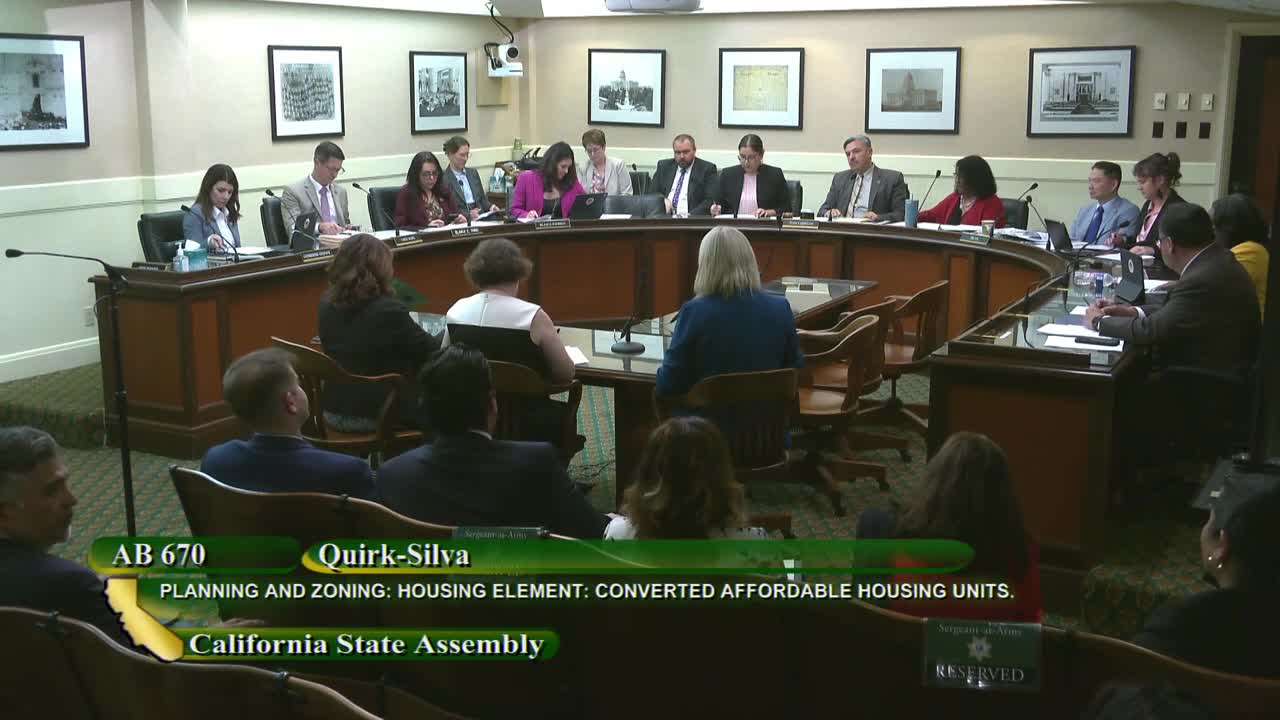 7MIN
Assembly Standing Committee on Local Government
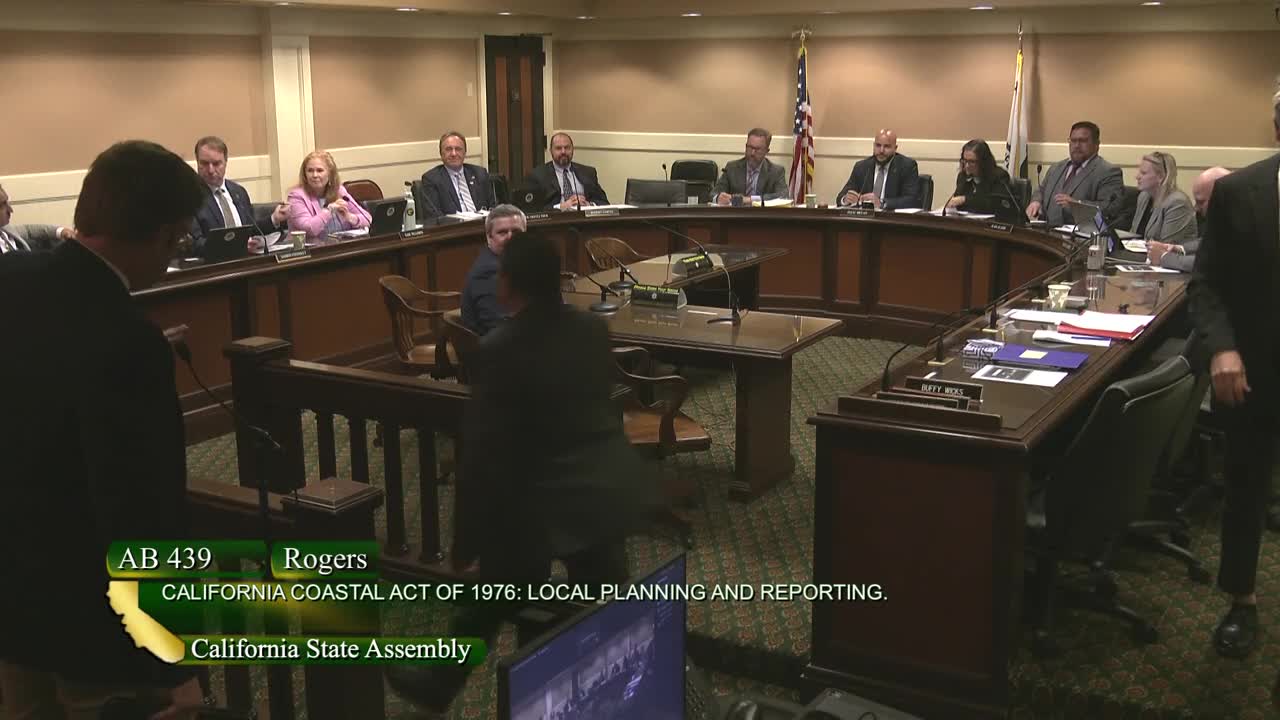 8MIN
Assembly Standing Committee on Natural Resources
Bill Author

Bill Co-Author(s):