AB 450: Public social services: support for older and aging immigrants.
- Session Year: 2025-2026
- House: Assembly
- Latest Version Date: 2025-10-06
Current Status:
Passed
(2025-10-06: Chaptered by Secretary of State - Chapter 364, Statutes of 2025.)
Introduced
In Committee
Awaiting First Chamber Vote
Passed First Chamber
In Committee
Awaiting Second Chamber Vote
Passed Second Chamber
Enacted
Existing law, the Mello-Granlund Older Californians Act, establishes the California Department of Aging and states that the mission of the department is to provide leadership to the area agencies on aging in developing systems of home- and community-based services that maintain individuals in their own homes or least restrictive homelike environments.
This bill would, subject to an appropriation for these purposes, require the department to oversee a stakeholder process to support findings and recommendations on how to best support older and aging immigrants, as defined, regardless of their immigration status, in California through the establishment of a panel. The bill would authorize the director of the department to modify an existing panel for these purposes, if applicable. The bill would require the panel to include representatives from the State Department of Social Services and invite specified stakeholder and subject matter experts to participate. The bill would require the department and panel to consider specified issues, including affordability and access to social services and housing. The bill would require the first meeting to occur no later than 120 days after funding for the panel becomes available and would authorize the department to contract with academic research entities to supplement the stakeholder process.
The bill would require the panel to issue findings and recommendations to both departments by July 1, 2028, on the most effective ways to implement policies and programs to support older and aging immigrants in California, regardless of their immigration status. The bill would require the departments to jointly submit a report containing the panels findings to the Legislature on or before December 1, 2028.
The bill would repeal these provisions on January 1, 2029. The bill makes relating findings and declarations.
Existing law, the Mello-Granlund Older Californians Act, establishes the California Department of Aging and states that the mission of the department is to provide leadership to the area agencies on aging in developing systems of home- and community-based services that maintain individuals in their own homes or least restrictive homelike environments.
This bill would, subject to an appropriation for these purposes, require the department, in conjunction with the State Department of Social Services, department to oversee a stakeholder process to support findings and recommendations on how to best support older and aging immigrants, as defined, regardless of their immigration status, in California through the establishment of a panel. The bill would authorize the director of the department to modify an existing panel for these purposes, if applicable. The bill would require the panel to include representatives from the State Department of Social Services and invite specified stakeholder and subject matter experts to participate. The bill would require the department and panel to consider specified issues, including affordability and access to social services and housing. The bill would require the first meeting to occur no later than 120 days after funding for the panel becomes available and would authorize the department to contract with academic research entities to supplement the stakeholder process.
The bill would require the panel to issue findings and recommendations to both departments by July 1, 2028, on the most effective ways to implement policies and programs to support older and aging immigrants in California, regardless of their immigration status. The bill would require the departments to jointly submit a report containing the panels findings to the Legislature on or before December 1, 2028.
The bill would repeal these provisions on January 1, 2029. The bill makes relating findings and declarations.
Existing law, the Mello-Granlund Older Californians Act, establishes the California Department of Aging and states that the mission of the department is to provide leadership to the area agencies on aging in developing systems of home- and community-based services that maintain individuals in their own homes or least restrictive homelike environments.
This bill would, subject to an appropriation for these purposes, require the department, in conjunction with the State Department of Social Services, to oversee a stakeholder process to support findings and recommendations on how to best support older and aging immigrants, as defined, regardless of their immigration status, in California. California through the establishment of a panel. The bill would authorize the director of the department to modify an existing panel for these purposes, if applicable. The bill would require the departments to jointly establish a panel, as specified, and would require the panel to invite specified stakeholder and subject matter experts to participate. The bill would require the panel to consider specified issues, including affordability and access to social services and housing. The bill would require the first meeting to occur no later than 90 120 days after funding for the panel becomes available and authorizes both departments would authorize the department to contract with academic research entities to supplement the stakeholder process.
The bill would require the panel to issue findings and recommendations to both departments by July 1, 2028, on the most effective ways to implement policies and programs to support older and aging immigrants, immigrants in California, regardless of their immigration status. The bill would require the departments to jointly submit a report containing the panels findings to the Legislature on or before December 1, 2028. The bill would also require the departments to jointly provide any policy recommendations the panel makes to the California Health and Human Services Agency to include in their Master Plan for Aging.
The bill would repeal these provisions on January 1, 2029. The bill makes relating findings and declarations.
Existing law, the Mello-Granlund Older Californians Act, establishes the California Department of Aging and states that the mission of the department is to provide leadership to the area agencies on aging in developing systems of home- and community-based services that maintain individuals in their own homes or least restrictive homelike environments.
This bill would, subject to an appropriation for these purposes, require the department, in conjunction with the State Department of Social Services, to oversee a stakeholder process to support findings and recommendations on how to best support older and aging immigrants, as defined, regardless of their immigration status, in California. The bill would require the departments to jointly establish a panel, as specified, and would require the panel to invite stakeholder and subject matter experts to participate. The bill would require the panel to consider specified issues, including affordability and access to social services and housing. The bill would require the first meeting to occur no later than 90 days after funding for the panel becomes available and authorizes both departments to contract with academic research entities to supplement the process.
The bill would require the panel to issue findings and recommendations to both departments by July 1, 2028, on the most effective ways to implement policies and programs to support older and aging immigrants, regardless of their immigration status. The bill would require the departments to jointly submit a report containing the panels findings to the Legislature on or before December 1, 2028. The bill would also require the departments to jointly provide any policy recommendations the panel makes to the California Health and Human Services Agency to include in their Master Plan for Aging.
The bill would repeal these provisions on January 1, 2029. The bill makes relating findings and declarations.
Existing law, the Mello-Granlund Older Californians Act, establishes the California Department of Aging and states that the mission of the department is to provide leadership to the area agencies on aging in developing systems of home- and community-based services that maintain individuals in their own homes or least restrictive homelike environments.
This bill would, subject to an appropriation for these purposes, require the department department, in conjunction with the State Department of Social Services, to oversee a stakeholder process to support findings and recommendations on how to best support undocumented older adults, as defined, as they age older and aging immigrants, as defined, regardless of their immigration status, in California. The bill would require the department to departments to jointly establish a panel, as specified, and would require the panel to invite stakeholder and subject matter experts to participate. The bill would require the panel to consider specified issues, including affordability and access to social services and housing. The bill would require the first meeting to occur no later than 90 days after funding for the panel becomes available and authorizes the department both departments to contract with academic research entities to supplement the process.
The bill would require the panel to issue findings and recommendations to the department both departments by July 1, 2028, on the most effective ways to implement policies and programs to support aging immigrant and undocumented older adults. older and aging immigrants, regardless of their immigration status. The bill would require the department to departments to jointly submit a report containing the panels findings to the Legislature on or before December 1, 2028. The bill would also require the department to departments to jointly provide any policy recommendations the panel makes to the California Health and Human Services Agency to include in their Master Plan for Aging.
The bill would repeal these provisions on January 1, 2029. The bill makes relating findings and declarations.
Existing law, the Mello-Granlund Older Californians Act, establishes the California Department of Aging and states that the mission of the department is to provide leadership to the area agencies on aging in developing systems of home- and community-based services that maintain individuals in their own homes or least restrictive homelike environments.
This bill would, subject to an appropriation for these purposes, require the department to oversee a stakeholder process to support findings and recommendations on how to best support undocumented older adults, as defined, as they age in California. The bill would require the department to establish a panel, as specified, and would require the panel to invite stakeholder and subject matter experts to participate. The bill would require the panel to consider specified issues, including affordability and access to social services and housing. The bill would require the first meeting to occur no later than 90 days after funding for the panel becomes available and authorizes the department to contract with academic research entities to supplement the process.
The bill would require the panel to issue findings and recommendations to the department by July 1, 2028, on the most effective ways to implement policies and programs to support aging immigrant and undocumented older adults. The bill would require the department to submit a report containing the panels findings to the Legislature on or before December 1, 2028. The bill would also require the department to provide any policy recommendations the panel makes to the California Health and Human Services Agency to include in their Master Plan for Aging.
The bill would repeal these provisions on January 1, 2029. The bill makes relating findings and declarations.
Existing law requires the State Department of Social Services to establish and supervise a county- or county consortia-administered program to provide cash assistance to aged, blind, and disabled legal immigrants who are not citizens and who successfully complete an application process, except as specified. Existing law requires the department to conduct disability evaluations for the program. Existing law requires the department to contract with the federal government to administer the program, if the federal government agrees to do so.This bill would make technical, nonsubstantive changes to those provisions.Existing law requires the State Department of Social Services to establish and supervise a county- or county consortia-administered program to provide cash assistance to aged, blind, and disabled legal immigrants who are not citizens and who successfully complete an application process, except as specified. Existing law requires the department to conduct disability evaluations for the program. Existing law requires the department to contract with the federal government to administer the program, if the federal government agrees to do so.
This bill would make technical, nonsubstantive changes to those provisions.
The Legislature finds and declares all of the following:
(a)Addressing the needs of the aging population in California is of the utmost importance.
(b)The Governors Master Plan for Aging established pursuant to Executive Order No. N-14-19 includes a goal of inclusion and equity, not isolation, which emphasizes both the need for lifelong opportunities for work, volunteering, engagement, and leadership, and protection against isolation, discrimination, abuse, neglect, and exploitation.
(c)Policies to ensure that older adults in California are able to meet their needs as they age must be inclusive of older and aging immigrants, including those who may, as a result of their immigration status, be unable to access critical social services intended to assist older adults.
SEC. 2.Article 6 (commencing with Section 9170) is added to Chapter 2 of Division 8.5 of the Welfare and Institutions Code, to read:6.Support for Older and Aging Immigrants Regardless of Immigration Status9170.(a)The department shall oversee a stakeholder process to support the development of findings and recommendations on how to best support older and aging immigrants in California, regardless of their immigration status. To help inform the stakeholder process, the department shall establish a panel. The director may, if appropriate, modify an existing panel for purposes of this article, subject to the requirements described in Section 9171.
(b)The department may contract with academic research entities to commission expert research and testimony to supplement the stakeholder process and support the development of findings and recommendations required by this article.
9171.(a)The panel established pursuant to Section 9170 shall invite stakeholders and subject matter experts, including representatives from the State Department of Social Services, clinics, researchers, housing advocates, trusted community partners, and nonprofit organizations to participate in the stakeholder process. As appropriate, the costs of the panel and the stakeholder process may be reduced by in-kind or other contributions from third parties.
(b)During the stakeholder process, the department and members of the panel shall consider issues including, but not limited to, affordability and guaranteed basic income, access to social services and housing, and access to health care services, including specialty care and language access.
(c)The first meeting of the panel shall be held no later than 120 days after funding becomes available for purposes of this section.
9172.(a)Upon completion of the stakeholder process required by this article, but by no later than July 1, 2028, the panel shall issue findings and recommendations to the department and the State Department of Social Services on the most effective ways to implement policies and programs to support older and aging immigrants in California, regardless of their immigration status.
(b)On or before December 31, 2028, the department and the State Department of Social Services shall jointly present a report including the findings and recommendations provided by the panel under subdivision (a) to the Legislature.
9173.For purposes of this article, older and aging means an adult 60 years of age or older.
9174.This article shall be implemented upon appropriation by the Legislature for purposes of this article.
9175.This article shall remain in effect only until January 1, 2029, and as of that date is repealed.
The Legislature finds and declares all of the following:
(a)Addressing the needs of the aging population in California is of the utmost importance.
(b)The Governors Master Plan for Aging established pursuant to Executive Order No. N-14-19 includes a goal of inclusion and equity, not isolation, which emphasizes both the need for lifelong opportunities for work, volunteering, engagement, and leadership, and protection against isolation, discrimination, abuse, neglect, and exploitation.
(c)Policies to ensure that older adults in California are able to meet their needs as they age must be inclusive of older and aging immigrants, including those who may, as a result of their immigration status, be unable to access critical social services intended to assist older adults.
SEC. 2.Article 6 (commencing with Section 9170) is added to Chapter 2 of Division 8.5 of the Welfare and Institutions Code, to read:6.Support for Older and Aging Immigrants Regardless of Immigration Status9170.(a)(1)The department, in conjunction with the State Department of Social Services, The department shall oversee a stakeholder process to support the development of findings and recommendations on how to best support older and aging immigrants in California, regardless of their immigration status. To help inform the stakeholder process, the department shall establish a panel. The director may, if appropriate, modify an existing panel for purposes of this article, subject to the requirements described in Section 9171.
(b)The department may contract with academic research entities to commission expert research and testimony to supplement the stakeholder process and support the development of findings and recommendations required by this article.
9171.(a)The panel established pursuant to Section 9170 shall invite stakeholders and subject matter experts, including representatives from the State Department of Social Services, clinics, researchers, housing advocates, trusted community partners, and nonprofit organizations to participate in the stakeholder process. As appropriate, the costs of the panel and the stakeholder process may be reduced by in-kind or other contributions from third parties.
(b)During the stakeholder process, representatives from the department and the State Department of Social Services, and members of the panel, the department and members of the panel shall consider issues including, but not limited to, affordability and guaranteed basic income, access to social services and housing, and access to health care services, including specialty care and language access.
(c)The first meeting of the panel shall be held no later than 120 days after funding becomes available for purposes of this section.
9172.(a)Upon completion of the stakeholder process required by this article, but by no later than July 1, 2028, the panel shall issue findings and recommendations to the department and the State Department of Social Services on the most effective ways to implement policies and programs to support older and aging immigrants in California, regardless of their immigration status.
(b)On or before December 31, 2028, the department and the State Department of Social Services shall jointly present a report including the findings and recommendations provided by the panel under subdivision (a) to the Legislature.
9173.For purposes of this article, older and aging means an adult 60 years of age or older.
9174.This article shall be implemented upon appropriation by the Legislature for purposes of this article.
9175.This article shall remain in effect only until January 1, 2029, and as of that date is repealed.
The Legislature finds and declares all of the following:
(a)Addressing the needs of the aging population in California is of the utmost importance.
(b)The Governors Master Plan for Aging established pursuant to Executive Order No. N-14-19 includes a goal of inclusion and equity, not isolation, which emphasizes both the need for lifelong opportunities for work, volunteering, engagement, and leadership, and protection against isolation, discrimination, abuse, neglect, and exploitation.
(c)Policies to ensure that older adults in California are able to meet their needs as they age must be inclusive of older and aging immigrants, including those who may, as a result of their immigration status, be unable to access critical social services intended to assist older adults.
SEC. 2.Article 6 (commencing with Section 9170) is added to Chapter 2 of Division 8.5 of the Welfare and Institutions Code, to read:6.Support for Older and Aging Immigrants Regardless of Immigration Status9170.(a)(1)The department, in conjunction with the State Department of Social Services, shall oversee a stakeholder process to support the development of findings and recommendations on how to best support older and aging immigrants, immigrants in California, regardless of their immigration status, in California. status. To help inform the stakeholder process, the department and the State Department of Social Services shall jointly establish a panel consisting of the following members: shall establish a panel. The director may, if appropriate, modify an existing panel for purposes of this article, subject to the requirements described in Section 9171.
(A)Six members appointed by the department as follows:(i)Three members from nonprofit organizations that represent aging or immigrant populations.(ii)Three members from the clinical or health care space that serve rural and under-resourced communities.(B)One member appointed by the Speaker of the Assembly with experience in aging advocacy.(C)One member appointed by the President pro Tempore of the Senate with experience in aging advocacy.(D)Two members appointed by the State Department of Social Services with experience in administering social services.(2)Each member shall be appointed to a term of two years.(b)A member who fails to attend two panel meetings in one calendar year shall be deemed removed from the panel, and the appointing power for that member shall appoint a new member to fill the vacancy.(c)Panel members shall not receive per diem or other similar compensation for serving as a panel member.(b)The department may contract with academic research entities to commission expert research and testimony to supplement the stakeholder process and support the development of findings and recommendations required by this article.
9171.(a)The panel created established pursuant to Section 9170 shall invite stakeholders and subject matter experts, including clinics, researchers, housing advocates, trusted community partners, and nonprofit organizations to participate in the stakeholder process. As appropriate, the costs of the panel and the stakeholder process may be reduced by in-kind or other contributions from third parties.
(b)During the process, representatives from the department and the State Department of Social Services, and members of the panel, shall consider issues including, but not limited to, affordability and guaranteed basic income, access to social services and housing, and access to health care services, including specialist specialty care and language access.
(c)The first meeting of the stakeholder process panel shall be held no later than 90 120 days after the funding becomes available for the purposes of this section.
(d)The department and the State Department of Social Services may contract with academic research entities to commission expert research and testimony to supplement the stakeholder process and support the development of findings and recommendations pursuant to this section.9172.(a)Upon completion of the stakeholder process pursuant to Section 9171, required by this article, but by no later than July 1, 2028, the panel shall issue findings and recommendations to the department and the State Department of Social Services on the most effective ways to implement policies and programs to support older and aging immigrants, regardless of immigration status, in California. immigrants in California, regardless of their immigration status.
(b)On or before December 31, 2028, the department and the State Department of Social Services shall jointly present a report including the findings and recommendations provided by the panel under subdivision (a) to the Legislature.
(c)The department and the State Department of Social Services shall jointly provide any policy recommendations made by the panel under subdivision (a) to the California Health and Human Services Agency to be included in the Master Plan for Aging established pursuant to Executive Order No. N-14-19.9173.For purposes of this article, older and aging means an adult 55 60 years of age or older.
9174.This article shall be implemented upon appropriation by the Legislature for purposes of this article.
9175.This article shall remain in effect only until January 1, 2029, and as of that date is repealed.
The Legislature finds and declares that addressing the needs of the aging population of California is of utmost importance to ensure that older adults in California are able to meet their needs as they age. Moreover, the Legislature also finds that it is important that policies be inclusive of older and aging immigrants, regardless of their immigration status, who have lived, worked, and contributed to California, but who may, as a result of their immigration status, be unable to access critical social services intended to assist older adults.
SEC. 2.Article 6 (commencing with Section 9170) is added to Chapter 2 of Division 8.5 of the Welfare and Institutions Code, to read:6.Support for Older and Aging Immigrants Regardless of Immigration Status9170.(a)(1)The department, in conjunction with the State Department of Social Services, shall oversee a stakeholder process to support the development of findings and recommendations on how to best support older and aging immigrants, regardless of their immigration status, in California. To help inform the stakeholder process, the department and the State Department of Social Services shall jointly establish a panel consisting of the following members:
(A)Six members appointed by the department as follows:
(i)Three members from nonprofit organizations that represent aging or immigrant populations.
(ii)Three members from the clinical or health care space that serve rural and under-resourced communities.
(B)One member appointed by the Speaker of the Assembly with experience in immigrant rights or aging advocacy.
(C)One member appointed by the Senate Committee on Rules President pro Tempore of the Senate with experience in immigrant rights or aging advocacy.
(D)Two members appointed by the State Department of Social Services with experience in administering social services.
(2)Each member shall be appointed to a term of two years.
(b)A member who fails to attend two panel meetings in one calendar year shall be deemed removed from the panel, and the appointing power for that member shall appoint a new member to fill the vacancy.
(c)Panel members shall not receive per diem or other similar compensation for serving as a panel member.
9171.(a)The panel created pursuant to Section 9170 shall invite stakeholders and subject matter experts, including clinics, researchers, housing advocates, and nonprofit organizations to participate in the stakeholder process. As appropriate, the costs of the panel and the stakeholder process may be reduced by in-kind or other contributions from third parties.
(b)During the process, representatives from the department and the State Department of Social Services, and members of the panel, shall consider issues including, but not limited to, affordability and guaranteed basic income, access to social services and housing, and access to health care services, including specialist and language access.
(c)The first meeting of the stakeholder process shall be held no later than 90 days after the funding becomes available for the purposes of this section.
(d)The department and the State Department of Social Services may contract with academic research entities to commission expert research and testimony to supplement the stakeholder process and support the development of findings and recommendations pursuant to this section.
9172.(a)Upon completion of the stakeholder process pursuant to Section 9171, but by no later than July 1, 2028, the panel shall issue findings and recommendations to the department and the State Department of Social Services on the most effective ways to implement policies and programs to support older and aging immigrants, regardless of immigration status, in California.
(b)On or before December 31, 2028, the department and the State Department of Social Services shall jointly present a report including the findings and recommendations provided by the panel under subdivision (a) to the Legislature.
(c)The department and the State Department of Social Services shall jointly provide any policy recommendations made by the panel under subdivision (a) to the California Health and Human Services Agency to be included in the Master Plan for Aging established pursuant to Executive Order No. N-14-19.
9173.For purposes of this article, older and aging means an adult 55 years of age or older.
9174.This article shall be implemented upon appropriation by the Legislature for purposes of this article.
9175.This article shall remain in effect only until January 1, 2029, and as of that date is repealed.
The Legislature finds and declares that addressing the needs of the aging California population of California is of upmost utmost importance to ensure that older adults in California are able to meet their needs as they age. Moreover, the Legislature also finds that ensuring policy is it is important that policies be inclusive of immigrant and undocumented older adults in California older and aging immigrants, regardless of their immigration status, who have lived, worked worked, and contributed to California, but as who may, as a result of their immigration status are status, be unable to access critical social services intended to assist older adults is important. adults.
SEC. 2.Article 6 (commencing with Section 9170) is added to Chapter 2 of Division 8.5 of the Welfare and Institutions Code, to read:6.Support for Older and Aging Immigrant and Undocumented Older Adults Immigrants Regardless of Immigration Status9170.(a)(1)The department department, in conjunction with the State Department of Social Services, shall oversee a stakeholder process to support the development of findings and recommendations on how to best support undocumented older adults as they age in older and aging immigrants, regardless of their immigration status, in California. To help inform the stakeholder process, the department and the State Department of Social Services shall jointly establish a panel consisting of the following members:
(A)Six members appointed by the department as follows:
(i)Three members from nonprofit organizations that represent aging or immigrant populations.
(ii)Three members from the clinical or health care space that serve rural and under-resourced communities.
(B)One member appointed by the Speaker of the Assembly with experience in immigrant rights or aging advocacy.
(C)One member appointed by the Senate Committee on Rules with experience in immigrant rights or aging advocacy.
(D)Two members appointed by the State Department of Social Services with experience in administering social services.
(2)Each member shall be appointed to a term of two years.
(b)A member who fails to attend two panel meetings in one calendar year shall be deemed removed from the panel, and the appointing power for that member shall appoint a new member to fill the vacancy.
(c)Panel members shall not receive per diem or other similar compensation for serving as a panel member.
9171.(a)The panel created pursuant to Section 9170 shall invite stakeholders and subject matter experts, including clinics, researchers, housing advocates, and nonprofit organizations to participate in the stakeholder process. As appropriate, the costs of the panel and the stakeholder process may be reduced by in-kind or other contributions from third parties.
(b)During the process, representatives from the department and the State Department of Social Services, and members of the panel panel, shall consider issues including, but not limited to, affordability and guaranteed basic income, access to social services and housing, and access to health care services, including specialist and language access.
(c)The first meeting of the stakeholder process shall be held no later than 90 days after the funding becomes available for the purposes of this section.
(d)The department and the State Department of Social Services may contract with academic research entities to commission expert research and testimony to supplement the stakeholder process and support the development of findings and recommendations pursuant to this section.
9172.(a)Upon completion of the stakeholder process pursuant to Section 9171, but by no later than July 1, 2028, the panel shall issue findings and recommendations to the department and the State Department of Social Services on the most effective ways to implement policies and programs to support older and aging immigrant and undocumented older adults immigrants, regardless of immigration status, in California.
(b)On or before December 31, 2028, the department and the State Department of Social Services shall jointly present a report including the findings and recommendations provided by the panel under subdivision (a) to the Legislature.
(c)The department and the State Department of Social Services shall jointly provide any policy recommendations made by the panel under subdivision (a) to the California Health and Human Services Agency to be included in the Master Plan for Aging established pursuant to Executive Order No. N-14-19.
9173.For purposes of this article, older adult older and aging means an adult 55 years of age or older.
9174.This article shall be implemented upon appropriation by the Legislature for purposes of this article.
9175.This article shall remain in effect only until January 1, 2029, and as of that date is repealed.
The Legislature finds and declares that addressing the needs of the aging California population is of upmost importance to ensure older adults in California are able to meet their needs as they age. Moreover, the Legislature also finds that ensuring policy is inclusive of immigrant and undocumented older adults in California who have lived, worked and contributed to California, but as a result of their immigration status are unable to access critical social services intended to assist older adults is important.
SEC. 2.Article 6 (commencing with Section 9170) is added to Chapter 2 of Division 8.5 of the Welfare and Institutions Code, to read:6.Support for Aging Immigrant and Undocumented Older Adults9170.(a)(1)The department shall oversee a stakeholder process to support the development of findings and recommendations on how to best support undocumented older adults as they age in California. To help inform the stakeholder process, the department shall establish a panel consisting of the following members:
(A)Six members appointed by the department as follows:
(i)Three members from nonprofit organizations that represent aging or immigrant populations.
(ii)Three members from the clinical or health care space that serve rural and under-resourced communities.
(B)One member appointed by the Speaker of the Assembly with experience in immigrant rights or aging advocacy.
(C)One member appointed by the Senate Committee on Rules with experience in immigrant rights or aging advocacy.
(2)Each member shall be appointed to a term of two years.
(b)A member who fails to attend two panel meetings in one calendar year shall be deemed removed from the panel, and the appointing power for that member shall appoint a new member to fill the vacancy.
(c)Panel members shall not receive per diem or other similar compensation for serving as a panel member.
9171.(a)The panel created pursuant to Section 9170 shall invite stakeholders and subject matter experts, including clinics, researchers, housing advocates, and nonprofit organizations to participate in the stakeholder process. As appropriate, the costs of the panel and the stakeholder process may be reduced by in-kind or other contributions from third parties.
(b)During the process, representatives from the department and members of the panel shall consider issues including, but not limited to, affordability and guaranteed basic income, access to social services and housing, and access to health care services, including specialist and language access.
(c)The first meeting of the stakeholder process shall be held no later than 90 days after the funding becomes available for the purposes of this section.
(d)The department may contract with academic research entities to commission expert research and testimony to supplement the stakeholder process and support the development of findings and recommendations pursuant to this section.
9172.(a)Upon completion of the stakeholder process pursuant to Section 9171, but by no later than July 1, 2028, the panel shall issue findings and recommendations to the department on the most effective ways to implement policies and programs to support aging immigrant and undocumented older adults in California.
(b)On or before December 31, 2028, the department shall present a report including the findings and recommendations provided by the panel under subdivision (a) to the Legislature.
(c)The department shall provide any policy recommendations made by the panel under subdivision (a) to the California Health and Human Services Agency to be included in the Master Plan for Aging established pursuant to Executive Order No. N-14-19.
9173.For purposes of this article, older adult means an adult 55 years of age or older.
9174.This article shall be implemented upon appropriation by the Legislature for purposes of this article.
9175.This article shall remain in effect only until January 1, 2029, and as of that date is repealed.
SECTION 1.Section 18937 of the Welfare and Institutions Code is amended to read:18937.The State Department of Social Services shall establish and supervise a county- or county consortia-administered program to provide cash assistance to aged, blind, and disabled legal immigrants who are not citizens and who successfully complete an application process. An application shall not be required of individuals described in paragraph (1) of subdivision (b) of Section 18944. The department shall conduct the disability evaluations for the program. If the federal government agrees to administer the program, the department shall contract with the federal government for this purpose, and the county responsibilities shall be reduced by the duties and responsibilities the federal government undertakes.The State Department of Social Services shall establish and supervise a county- or county consortia-administered program to provide cash assistance to aged, blind, and disabled legal immigrants who are not citizens and who successfully complete an application process. No application shall An application shall not be required of individuals described in paragraph (1) of subdivision (b) of Section 18944. The department shall conduct the evaluations of disability disability evaluations for the program. If the federal government agrees to administer the program, the department shall contract with the federal government for this purpose, and the county responsibilities shall be reduced by the duties and responsibilities undertaken by the federal government. the federal government undertakes.
|
Date
|
Status
|
|---|---|
| Oct 6, 2025 | Chaptered by Secretary of State - Chapter 364, Statutes of 2025. |
| Oct 6, 2025 | Approved by the Governor. |
| Sep 22, 2025 | Enrolled and presented to the Governor at 3 p.m. |
| Sep 10, 2025 | Senate amendments concurred in. To Engrossing and Enrolling. (Ayes 65. Noes 7. Page 3217.). |
| Sep 9, 2025 | In Assembly. Concurrence in Senate amendments pending. |
| Sep 9, 2025 | Read third time. Passed. Ordered to the Assembly. (Ayes 31. Noes 8. Page 2668.). |
| Sep 8, 2025 | Read second time. Ordered to third reading. |
| Sep 4, 2025 | Read third time and amended. Ordered to second reading. |
| Sep 2, 2025 | Read second time. Ordered to third reading. |
| Aug 29, 2025 | Read second time and amended. Ordered returned to second reading. |
| Aug 29, 2025 | From committee: Amend, and do pass as amended. (Ayes 5. Noes 2.) (August 29). |
| Aug 18, 2025 | In committee: Referred to suspense file. |
| Jul 9, 2025 | Read second time and amended. Re-referred to Com. on APPR. |
| Jul 8, 2025 | From committee: Amend, and do pass as amended and re-refer to Com. on APPR. (Ayes 4. Noes 0.) (July 7). |
| Jun 11, 2025 | Referred to Com. on HUMAN S. |
| Jun 3, 2025 | In Senate. Read first time. To Com. on RLS. for assignment. |
| Jun 2, 2025 | Read third time. Passed. Ordered to the Senate. (Ayes 64. Noes 7. Page 1830.) |
| May 27, 2025 | Read second time. Ordered to third reading. |
| May 23, 2025 | From committee: Do pass. (Ayes 11. Noes 2.) (May 23). |
| May 14, 2025 | In committee: Set, first hearing. Referred to suspense file. |
| May 5, 2025 | Re-referred to Com. on APPR. |
| May 1, 2025 | Read second time and amended. |
| Apr 30, 2025 | From committee: Amend, and do pass as amended and re-refer to Com. on APPR. (Ayes 5. Noes 2.) (April 29). |
| Apr 23, 2025 | From committee: Do pass and re-refer to Com. on HUM. S. (Ayes 6. Noes 1.) (April 22). Re-referred to Com. on HUM. S. |
| Mar 17, 2025 | Re-referred to Com. on AGING & L.T.C. |
| Mar 13, 2025 | From committee chair, with author's amendments: Amend, and re-refer to Com. on AGING & L.T.C. Read second time and amended. |
| Mar 13, 2025 | Referred to Coms. on AGING & L.T.C and HUM. S. |
| Feb 7, 2025 | From printer. May be heard in committee March 9. |
| Feb 6, 2025 | Read first time. To print. |
|
Date
|
Description
|
Location
|
Votes
|
|
|---|---|---|---|---|
| Sep 10, 2025 | AB 450 Carrillo Concurrence in Senate Amendments | Assembly Floor |
Passed |
|
| Sep 9, 2025 | Assembly 3rd Reading AB450 Carrillo et al. By Padilla | Senate Floor |
Passed |
|
| Aug 29, 2025 | Do pass as amended | Senate Standing Committee on Appropriations |
Passed |
|
| Aug 18, 2025 | Placed on suspense file | Senate Standing Committee on Appropriations |
Passed |
|
| Jul 7, 2025 | Do pass as amended, but first amend, and re-refer to the Committee on [Appropriations] | Senate Standing Committee on Human Services |
Passed |
|
| Jun 2, 2025 | AB 450 Carrillo Assembly Third Reading | Assembly Floor |
Passed |
|
| May 23, 2025 | Do pass. | Assembly Standing Committee on Appropriations |
Passed |
|
| Apr 29, 2025 | Do pass as amended and be re-referred to the Committee on [Appropriations] | Assembly Standing Committee on Human Services |
Passed |
|
| Apr 22, 2025 | Do pass and be re-referred to the Committee on [Human Services] | Assembly Standing Committee on Aging and Long-Term Care |
Passed |
This list shows positions taken on this bill by organizations on the date displayed, which is linked to the original source.
Positions by individuals are not included.
|
Organization
|
Position
|
Date
|
|---|---|---|
| Access Reproductive Justice | ** Support | |
| Aclu California Action | ** Support | |
| Asian Americans Advancing Justice Southern California | ** Support | |
| Autism Business Association | ** Support | |
| Autism Heroes | ** Support | |
| Autism Society Inland Empire | ** Support | |
| Autism Speaks | ** Support | |
| California Alliance For Retired Americans | ** Support | |
| California Immigrant Policy Center | ** Support | |
| California Indian Nations College | ** Support | |
| California State Association of Psychiatrists | ** Support | |
| California State Council on Developmental Disabilities | ** Support | |
| Coalition for Humane Immigrant Rights | ** Support | |
| Courage California | ** Support | |
| Easterseals Northern California | ** Support | |
| Hand in Hand: The Domestic Employers Network | ** Support | |
| Having Our Say Coalition | ** Support | |
| Healthy Contra Costa | ** Support | |
| Inland Coalition for Immigrant Justice | ** Support | |
| Marin Center for Independent Living | ** Support | |
| Moonbow | ** Support | |
| pilipino workers center | ** Support | |
| San Francisco Senior and Disability Action | ** Support | |
| Sisters of St. Joseph of Orange Justice Center | ** Support | |
| Vision y Compromiso | ** Support | |
| western center on law & poverty | ** Support |
CONCURRENCE IN SENATE AMENDMENTS
CSA1 Bill Id:AB 450
Author:(Carrillo)
As Amended Ver:September 4, 2025
Majority vote
SUMMARY
This bill requires the California Department of Aging (CDA), upon appropriation, to oversee a stakeholder process to support the development of findings and recommendations on how to best support older and aging immigrants in California, regardless of their immigration status and to inform the stakeholder process, CDA shall establish a panel or modify an existing panel.
Senate Amendments
Removed the California Department of Social Services (CDSS) as one of the two departments responsible for oversight of the stakeholder process. A representative from CDSS is included as a stakeholder or subject matter expert. Amendments removed specific members to the stakeholder panel and allow CDA to modify an existing panel if appropriate. Additional clarifying amendments related to the stakeholder process, timelines and definitions were taken in the Senate.
COMMENTS
Aging Population data: California's aging population is growing faster than any other age group. By 2030, over 25% of the population in California will be 60 and older.[1]
California is projected to be one of the fastest growing States in the nation in total population. In 2016, California comprised 12% of the nation's population[2] and is expected to grow 30% by the year 2060 (an increase of 11.7 million people).[3] In California, the population aged 60 years and over is expected to grow more than three times as fast as the total population and this growth will vary by region.
Immigrants: Immigrants with legal standing in the U.S., both temporary and permanent, are those who have been granted to live and work in the country by obtaining a visa or other legal status, such as legal permanent residency, being granted asylum, admitted as a refugee, a parolee, and conditional entrants, among others. Once in the country, these immigrants are entitled to certain rights and protections under the law, including access to government benefits and services, such as healthcare, education, and public social services.
On the other hand, undocumented immigrants (also referred to as unauthorized immigrants) are individuals who enter or reside in a country without legal authorization. These individuals often fear deportation and lack access to basic rights and protections afforded to legal residents. They typically face significant barriers to accessing government services and may be vulnerable to exploitation and abuse in the workplace and elsewhere. Undocumented immigrants are not directly identified in any representative national or state surveys.[4]
As reported by the Public Policy Institute of California (PPIC) California is home to 10.6 million immigrants—22% of the foreign-born population nationwide. In 2023, the most current year of data, 27% of California's population was foreign born, the highest share of any state and more than double the share in the rest of the country (12%). Almost half (45%) of California children have at least one immigrant parent. And a third (34%) of prime-working-age adults—those 25 to 54—are foreign born; with half (52%) of all foreign-born Californians in this age group.[5]
According to 2019 data analyzed by the Migration Policy Institute, California was home to over 2.7 million undocumented immigrants, with 293,000 being 55 years of age or older. The top countries of birth were Mexico (61%), El Salvador (7%), Guatemala (6%), Philippines (6%), and India (4%).[6]
Of these undocumented immigrants, the Center for Migration Studies estimates that over 856,000 lived in California for over 20 years; over 375,000 indicated they were at or below the poverty level; and, 522,000 were between 45 and 54 years of age, and 293,000 were 55 years of age or older. [7]
In 2023, the California Poverty Measure, a research effort by PPIC and the Stanford Center on Poverty and Inequality, reported poverty was markedly higher for seniors a change from pre-pandemic years, when child poverty was highest. Additionally, the Latino older adult poverty rate increased to 16.9% (from 13.5% in fall 2021). Latinos remained disproportionately poor—comprising about half (50.7%) of poor Californians, but 39.7% of all Californians. About 13.6% of African Americans, 11.5% of Asian Americans/Pacific Islanders, and 10.2% of whites lived in poverty. The poverty rate for foreign-born older Californians was 17.6%, compared to 11.5% for US-born residents; poverty among undocumented immigrants was 29.6%.[8]
According to the California Budget and Policy Center, Undocumented Californians paid nearly $8.5 billion in state and local taxes in 2022, according to estimates from the Institute on Taxation and Economic Policy (ITEP). [9] This includes the sales and excise taxes paid on purchases, the property taxes paid on homes or indirectly through rents, individual and business income taxes, unemployment taxes, and other types of taxes.[10]
Despite these contributions, undocumented immigrants are not afforded the same rights or benefits, facing significant barriers to accessing government services. This causes them to continue working even after they reach retirement age.
In 2021, more than 1.1 million older adults in California spoke limited English or no English at all, so services in multiple languages are critical and expanding.[11]
Master Plan for Aging: As part of the Executive Order, 78 members from local government, healthcare providers, health pans, employers, community–based organizations, academia, researchers and users populated a Stakeholder Advisory Committee (SAC), and two subcommittees (Research and Long-Tem Services and Supports). A year after work began on the MPA, an additional working group was created by the SAC.
Recognizing the diversity of California's population – both the strong and varied cultural traditions around aging as well as the need to address life-long disparities and inequities faced by Black, Indigenous, and People of Color (BIPOC) and Lesbian, Gay, Bisexual, Transgender, Queer (LGBTQ+), and other Californians – the SAC formed an Equity Work Group in December 2020 tasked with ensuring that equity is fully "baked in" to the Master Plan.[12]
In January of 2021, the Governor released his Master Plan for Aging (MPA). The MPA prioritizes the health and well-being of older Californians and the need for policies that promote healthy aging. The MPA serves as a blueprint for state government, local government, the private sector, and philanthropy to prepare the state for the coming demographic changes and continue California's leadership in aging, disability, and equity.
In 2025-26, the MPA outlines five bold goals and currently seeks to advance 81 initiatives to build a California for All Ages by 2030:
- Goal One: Housing for All Ages and Stages
- Goal Two: Health Reimagined
- Goal Three: Inclusion and Equity, Not Isolation
- Goal Four: Caregiving That Works
- Goal Five: Affording Aging
According to the Author
"The number of undocumented older adults in California is growing, and amid current federal policies, support for this community is more critical than ever. While undocumented Californians now have access to healthcare through Medi-Cal, many essential services remain out of reach. Barriers to government services limit their ability to retire, support their families, and contribute to their communities. AB 450 establishes a task force within the Department of Aging to develop strategies that uplift undocumented older adults. True inclusivity means recognizing and supporting all aging residents, including our immigrant community, so they can age with dignity and justice."
Arguments in Support
The Coalition for Humane Immigrant Rights, the sponsor of the bill, writes "In recent years, California has opened access to state funded benefits, such as Medi-Cal and the California Food Assistance Program (CFAP) which have greatly benefited all Californians. However, undocumented older adults continue to face challenges, such as access to specialized healthcare, language access, and affordable house. AB 450 will bring together experts who understand both the needs of older adults as well as the unique challenges undocumented immigrants face. AB 450 will help ensure we are meeting the needs of undocumented immigrants who have contributed immensely to the state's economy by providing policy recommendations that can be used to create effective solutions to the needs of undocumented older adults. Every Californian, including undocumented older adults deserve the right to age with dignity and respect and AB 450 would help California understand the needs of undocumented older adults to better serve this population."
Arguments in Opposition
None on file.
FISCAL COMMENTS
According to the Senate Appropriations Committee analysis:
Unknown one-time General Fund costs, likely hundreds of thousands, for the CDA and the CDSS to oversee the stakeholder process and support the development of findings and recommendations.
VOTES:
ASM AGING AND LONG-TERM CARE: 6-1-0
YES: Bains, Ahrens, Ávila Farías, Jeff Gonzalez, Blanca Rubio, Sharp-Collins
NO: Ellis
ASM HUMAN SERVICES: 5-2-0
YES: Lee, Calderon, Elhawary, Jackson, Celeste Rodriguez
NO: Castillo, Tangipa
ASM APPROPRIATIONS: 11-2-2
YES: Wicks, Arambula, Calderon, Caloza, Elhawary, Fong, Mark González, Hart, Pacheco, Pellerin, Solache
NO: Dixon, Tangipa
ABS, ABST OR NV: Sanchez, Ta
ASSEMBLY FLOOR: 64-7-8
YES: Addis, Aguiar-Curry, Ahrens, Alanis, Alvarez, Arambula, Ávila Farías, Bains, Bauer-Kahan, Bennett, Berman, Boerner, Bonta, Bryan, Calderon, Caloza, Carrillo, Connolly, Davies, Elhawary, Fong, Gabriel, Garcia, Gipson, Jeff Gonzalez, Mark González, Haney, Harabedian, Hart, Irwin, Jackson, Kalra, Krell, Lee, Lowenthal, McKinnor, Muratsuchi, Nguyen, Ortega, Pacheco, Papan, Patel, Pellerin, Petrie-Norris, Quirk-Silva, Ramos, Ransom, Celeste Rodriguez, Michelle Rodriguez, Rogers, Blanca Rubio, Schiavo, Schultz, Sharp-Collins, Solache, Soria, Stefani, Valencia, Wallis, Ward, Wicks, Wilson, Zbur, Rivas
NO: DeMaio, Dixon, Gallagher, Hadwick, Patterson, Sanchez, Tangipa
ABS, ABST OR NV: Castillo, Chen, Ellis, Flora, Hoover, Lackey, Macedo, Ta
UPDATED
VERSION: September 4, 2025
CONSULTANT: Elizabeth Fuller / AGING & L.T.C. / (916) 319-3990 FN: 0001938
Projections | Department of Finance (ca.gov) ↑
https://factfinder.census.gov ↑
http://www.dof.ca.gov/Forecasting/Demographics/Projections ↑
https://www.ppic.org/publication/undocumented-immigrants-in-california/ ↑
Immigrants in California - Public Policy Institute of California ↑
Profile of the Unauthorized Population - CA | migrationpolicy.org ↑
https://www.migrationpolicy.org/data/unauthorized-immigrant-population/state/CA ↑
Poverty in California - Public Policy Institute of California ↑
Tax Payments by Undocumented Immigrants – ITEP ↑
California's Undocumented Residents Make Significant Tax Contributions - California Budget and Policy Center ↑
2021-25 California OAA State Plan on Aging ↑
https://mpa.aging.ca.gov/StakeholderProcess/ ↑
SENATE RULES COMMITTEE Office of Senate Floor Analyses (916) 651-1520 Fax: (916) 327-4478 | AB 450 |
THIRD READING
Bill No: AB 450
Author: Carrillo (D), et al.
Amended: 9/4/25 in Senate
Vote: 21
SENATE HUMAN SERVICES COMMITTEE: 4-0, 7/7/25
AYES: Arreguín, Becker, Durazo, Limón
NO VOTE RECORDED: Ochoa Bogh
SENATE APPROPRIATIONS COMMITTEE: 5-2, 8/29/25
AYES: Caballero, Cabaldon, Grayson, Richardson, Wahab
NOES: Seyarto, Dahle
ASSEMBLY FLOOR: 64-7, 6/2/25 - See last page for vote
SUBJECT: Public social services: support for older and aging immigrants
SOURCE: Coalition for Humane Immigrant Rights
DIGEST:
This bill requires the California Department of Aging (CDA) to oversee a stakeholder process to support the development of findings and recommendations on how to best support older and aging immigrants in California, regardless of their immigration status and to inform the stakeholder process, CDA shall establish a panel or modify an existing panel.
Senate Floor Amendments of 9/4/25 are technical amendments from the California Department of Social Services (CDSS).
ANALYSIS:
Existing law:
- Establishes the Older Americans Act, which promotes the well-being of Americans 60 years old and above through services and programs designed to meet their needs. (42 USC 3001 et seq.)
- Establishes, within the Older Americans Act, the Office of the Long-Term Care Ombudsman Program and requires states to establish and operate a Long-Term Care Ombudsman program for the purpose of identifying, investigating, and resolving complaints that may adversely affect the health, safety, welfare, or rights of residents of long-term care facilities. (42 USC 3058(g))
- Establishes the Mello-Granlund Older Californians Act, which establishes the CDA and sets forth its duties and powers, including, among other things, entering into a contract for the development of information and materials to educate Californians on the concept of “aging in place.” (Welfare and Institutions Code (WIC) 9100 et seq.)
- Requires the Secretary of California Health and Human Services (CalHHS), in coordination with the Director of CDA, to lead the development and implementation of the Master Plan on Aging. (WIC 9850)
- Requires benefits provided under the Cash Assistance Program for Immigrants (CAPI) program to be equivalent to the benefits provided under the Supplemental Security Income/State Supplementary Payment (SSI/SSP) program. (WIC 18941)
This bill:
- Makes legislative findings and declarations regarding the importance of meeting the needs of aging Californians, including the needs of older and aging immigrants, regardless of immigration status.
- Requires CDA to oversee a stakeholder process to support the development of findings and recommendations on how to best support older and aging immigrants in California, regardless of their immigration status.
- Provides that to inform the stakeholder process, CDA shall establish a panel and if appropriate, may modify an existing panel for these purposes.
- Provides that CDA may contract with academic research entities to commission expert research and testimony to supplement the stakeholder process and support the development of findings and recommendations.
- Requires the panel to invite stakeholders and subject matter experts, including representatives from CDSS, clinics, researchers, housing advocates, trusted community partners, and nonprofit organizations to participate in the stakeholder process. As appropriate, the costs of the panel and the stakeholder process may be reduced by in-kind or other contributions from third parties.
- Provides that during the stakeholder process, CDA and members of the panel, shall consider issues including, but not limited to, affordability and guaranteed basic income, access to social services and housing, and access to health care services, including specialty care and language access.
- Provides that the first meeting of the panel shall be held no later than 120 days after the funding becomes available for the purposes of this section.
- Provides that upon completion of the stakeholder process, but no later than July 1, 2028, the panel shall issue findings and recommendations to CDA and CDSS on the most effective ways to implement policies and programs to support older and aging immigrants in California, regardless of immigration status.
- Provides that on or before December 31, 2028, CDA and CDSS shall jointly present a report including the findings and recommendations provided by the panel to the Legislature.
- Defines “older and aging” as an adult 60 years of age or older.
- Provides that these provisions shall be implemented upon appropriation by the Legislature.
- Provides these provisions shall remain in effect only until January 1, 2029, and as of that date are repealed.
Comments
According to the author. “California is home to 10.6 million immigrants, representing 22 percent of the nation’s foreign-born population and making up about 27 percent of the state’s residents. Roughly a third of the state’s workforce is made up of immigrants. As this population ages, especially in the face of a challenging federal climate, support for immigrant communities is more important than ever. Aging immigrants often face significant barriers to accessing Page 2 of 8 government services, which impacts their ability to retire with dignity and continue supporting their families and communities.
“AB 450 aims to address these challenges by establishing a task force within the Department of Aging in conjunction with the California the Department of Social Services to develop recommendations to better supporting aging immigrants. California cannot lead on equity and aging if we continue to leave behind the very people who helped build our economy, care for our families, and sustain our communities. AB 450 is a step toward honoring their lifelong contributions and ensuring they are not forgotten.”
Master Plan for Aging. California is projected to be home to 11.4 million people age 60 and older by 2040. This is nearly twice as many people age 60 and older as there were in 2010. In January 2021, the Newsom Administration published its Master Plan for Aging, which is intended to be a ten year blueprint for state government, local government, the private sector, and philanthropy to prepare the state for the coming demographic changes and to “continue California’s leadership in aging, disability, and equity.” The Master Plan for Aging outlines five goals, twenty-three strategies, and over 100 initiatives. The five goals of the Master Plan are: housing for all ages and stages; health reimagined; inclusion and equity, not isolation; caregiving that works; and affording aging.
The January 2025 Fourth Master Plan for Aging Annual Report highlights the progress that has been made in achieving the goals of the Master Plan for Aging. The report notes that progress was made on all 95 initiatives from the past two years of the Master Plan for Aging implementation. Listed among the achievements from 2024 were:
- Delivering Housing – making progress to reduce chronic homelessness through programs such as Community Care Expansion Program and Home Safe Program.
- Expanding Medi-Cal Health Insurance – 47,000 older adults and people with disabilities with the lowest incomes benefited from the California Advancing and Innovating Medi-Cal program in the last 12 months.
- Advancing Emergency Preparedness – the Governor’s Office of Emergency Services partnered with California Disability Services Association and the Department of Rehabilitation to develop California’s first-ever Emergency Preparedness Guide specifically for older adults and people with disabilities.
- Training Caregivers – CalGrows trained 30,884 direct care works and the In-Home Supportive Services Career Pathways Program through CDSS trained 58,505 unique learners.
- Combating Loneliness – the Friendship Line California assisted 117,673 callers in seven languages.
- Closing the Digital Divide – to reduce isolation, CDA provided a combined 89,000 digital devices and related training to older adults and Californians with disabilities, who are among those most in need of social connection to remain healthy.
- Groundbreaking LGBTQIA+ Study – CDA and its partners administered California’s first survey of LGBTQIA+ older adults, gathering baseline data to better understand and serve this population.
- Improving Mobility – $51.7 million was awarded to over 100 nonprofit organizations and public agencies for projects to improve mobility for and meet special transportation needs of older adults and people with disabilities.
- Supporting Home and Community Living – 2,152 people aged 65 and older were helped to transition out of skilled nursing.
- Strengthening Retirement for All – the CalSavers retirement savings program, for workers who previously had no way to save for retirement, reached $1 billion in assets. More than 50,000 employers have established 519,000 savers fund accounts since a 2019 pilot.
These highlight a wide range of achievements across multiple populations of older Californians and addressing a multitude of aspects of their lives. However, contained within the January 2025 annual report is only one program specifically targeted to immigrants – CAPI. CAPI is a state-funded program to provide monthly cash benefits to aged, blind, and disabled non-citizens who are ineligible for SSI/SSP. California is home to over 10 million immigrants. This bill seeks to establish a task force specifically focused on how to best support older and aging adults within this population.
California Department of Aging. Under CalHHS, CDA administers programs that serve older adults, adults with disabilities, family caregivers, and residents in long-term care facilities throughout the state. CDA administers programs serving older adults through contracts with local Area Agencies on Aging (AAAs). These agencies provide a wide array of services on a community level to adults age 60 and over. AAA programs often include long-term care ombudsman services, nutrition services, caregiver support and respite, Medicare counseling, legal referrals, transportation, and case management. There are 33 AAAs across the state and each county is required to have an AAA, so some agencies serve multiple counties.
The Master Plan on Aging has six stakeholder advisory committees currently working to address the needs of California’s aging population. These committees are as follows:
- Implementing the Master Plan on Aging in California Together Stakeholder Committee
- Equity Advisory Committee on Aging and Disability
- California Aging and Disability Research Partnership
- Disability and Aging Community Living Advisory Committee
- California Elder and Disability Justice Coordinating Council
- Alzheimer’s Disease and Related Conditions Advisory Committee
CDA works to support all older Californians regardless of immigration status. There is currently no specific committee or council that addresses the specific needs of older immigrants currently living in California.
Related/Prior Legislation
AB 2415 (Carrillo, 2023) would have, upon an appropriation, expanded eligibility for the CAPI program to all eligible individuals regardless of immigration status, and waived the requirement that an applicant must apply and be denied SSI/SSP before being eligible for benefits under CAPI. The bill was held in the Assembly Appropriations Committee.
FISCAL EFFECT: Appropriation: No Fiscal Com.: Yes Local: No
According to the Senate Appropriations Committee analysis:
Unknown one-time General Fund costs, likely hundreds of thousands, for the CDA and the CDSS to oversee the stakeholder process and support the development of findings and recommendations.
SUPPORT: (Verified 8/29/25)
Coalition for Humane Immigrant Rights (source)
Access Reproductive Justice
ACLU California Action
Asian Americans Advancing Justice-southern California
California Alliance for Retired Americans
California Immigrant Policy Center
Courage California
Having Our Say Coalition
Healthy Contra Costa
Inland Coalition for Immigrant Justice
Moonbow
Sisters of St. Joseph of Orange Justice Center
Vision Y Compromiso
Western Center on Law & Poverty
OPPOSITION: (Verified 8/29/25)
None received
ASSEMBLY FLOOR: 64-7, 6/2/25
AYES: Addis, Aguiar-Curry, Ahrens, Alanis, Alvarez, Arambula, Ávila Farías, Bains, Bauer-Kahan, Bennett, Berman, Boerner, Bonta, Bryan, Calderon, Caloza, Carrillo, Connolly, Davies, Elhawary, Fong, Gabriel, Garcia, Gipson, Jeff Gonzalez, Mark González, Haney, Harabedian, Hart, Irwin, Jackson, Kalra, Krell, Lee, Lowenthal, McKinnor, Muratsuchi, Nguyen, Ortega, Pacheco, Papan, Patel, Pellerin, Petrie-Norris, Quirk-Silva, Ramos, Ransom, Celeste Rodriguez, Michelle Rodriguez, Rogers, Blanca Rubio, Schiavo, Schultz, Sharp-Collins, Solache, Soria, Stefani, Valencia, Wallis, Ward, Wicks, Wilson, Zbur, Rivas
NOES: DeMaio, Dixon, Gallagher, Hadwick, Patterson, Sanchez, Tangipa
NO VOTE RECORDED: Castillo, Chen, Ellis, Flora, Hoover, Lackey, Macedo, Ta
Prepared by: Heather Hopkins / HUMAN S. / (916) 651-1524
9/8/25 21:10:24
**** END ****
SENATE RULES COMMITTEE Office of Senate Floor Analyses (916) 651-1520 Fax: (916) 327-4478 | AB 450 |
THIRD READING
Bill No: AB 450
Author: Carrillo (D), et al.
Amended: 8/29/25 in Senate
Vote: 21
SENATE HUMAN SERVICES COMMITTEE: 4-0, 7/7/25
AYES: Arreguín, Becker, Durazo, Limón
NO VOTE RECORDED: Ochoa Bogh
SENATE APPROPRIATIONS COMMITTEE: 5-2, 8/29/25
AYES: Caballero, Cabaldon, Grayson, Richardson, Wahab
NOES: Seyarto, Dahle
ASSEMBLY FLOOR: 64-7, 6/2/25 - See last page for vote
SUBJECT: Public social services: support for older and aging immigrants
SOURCE: Coalition for Humane Immigrant Rights
DIGEST:
This bill requires the California Department of Aging (CDA) and the California Department of Social Services (CDSS) to oversee a stakeholder process to support the development of findings and recommendations on how to best support older and aging immigrants in California, regardless of their immigration status and to inform the stakeholder process, CDA shall establish a panel or modify an existing panel.
ANALYSIS:
Existing Law:
- Establishes the Older Americans Act, which promotes the well-being of Americans 60 years old and above through services and programs designed to meet their needs. (42 United States Code (USC) 3001 et seq.)
- Establishes, within the Older Americans Act, the Office of the Long-Term Care Ombudsman Program and requires states to establish and operate a Long-Term Care Ombudsman program for the purpose of identifying, investigating, and resolving complaints that may adversely affect the health, safety, welfare, or rights of residents of long-term care facilities. (42 USC 3058(g))
- Establishes the Mello-Granlund Older Californians Act, which establishes the CDA and sets forth its duties and powers, including, among other things, entering into a contract for the development of information and materials to educate Californians on the concept of “aging in place.” (Welfare and Institutions Code (WIC) 9100 et seq.)
- Requires the Secretary of California Health and Human Services (CalHHS), in coordination with the Director of CDA, to lead the development and implementation of the Master Plan on Aging. (WIC 9850)
- Requires benefits provided under the Cash Assistance Program for Immigrants (CAPI) program to be equivalent to the benefits provided under the Supplemental Security Income/State Supplementary Payment (SSI/SSP) program. (WIC 18941)
This bill:
- Makes legislative findings and declarations regarding the importance of meeting the needs of aging Californians, including the needs of older and aging immigrants, regardless of immigration status.
- Requires CDA and CDSS to oversee a stakeholder process to support the development of findings and recommendations on how to best support older and aging immigrants in California, regardless of their immigration status.
- Provides that to inform the stakeholder process, CDA shall establish a panel and if appropriate, may modify an existing panel for these purposes.
- Provides that CDA may contract with academic research entities to commission expert research and testimony to supplement the stakeholder process and support the development of findings and recommendations.
- Requires the panel to invite stakeholders and subject matter experts, including clinics, researchers, housing advocates, trusted community partners, and nonprofit organizations to participate in the stakeholder process. As appropriate, the costs of the panel and the stakeholder process may be reduced by in-kind or other contributions from third parties.
- Provides that representatives from CDA and CDSS, and members of the panel, shall consider issues including, but not limited to, affordability and guaranteed basic income, access to social services and housing, and access to health care services, including specialty care and language access.
- Provides that the first meeting of the panel shall be held no later than 120 days after the funding becomes available for the purposes of this section.
- Provides that upon completion of the stakeholder process, but no later than July 1, 2028, the panel shall issue findings and recommendations to CDA and CDSS on the most effective ways to implement policies and programs to support older and aging immigrants in California, regardless of immigration status.
- Provides that on or before December 31, 2028, CDA and CDSS shall jointly present a report including the findings and recommendations provided by the panel to the Legislature.
- Defines “older and aging” as an adult 60 years of age or older.
- Provides that these provisions shall be implemented upon appropriation by the Legislature.
- Provides these provisions shall remain in effect only until January 1, 2029, and as of that date are repealed.
Comments
According to the author. “California is home to 10.6 million immigrants, representing 22 percent of the nation’s foreign-born population and making up about 27 percent of the state’s residents. Roughly a third of the state’s workforce is made up of immigrants. As this population ages, especially in the face of a challenging federal climate, support for immigrant communities is more important than ever. Aging immigrants often face significant barriers to accessing Page 2 of 8 government services, which impacts their ability to retire with dignity and continue supporting their families and communities.
“AB 450 aims to address these challenges by establishing a task force within the Department of Aging in conjunction with the California the Department of Social Services to develop recommendations to better supporting aging immigrants. California cannot lead on equity and aging if we continue to leave behind the very people who helped build our economy, care for our families, and sustain our communities. AB 450 is a step toward honoring their lifelong contributions and ensuring they are not forgotten.”
Master Plan for Aging. California is projected to be home to 11.4 million people age 60 and older by 2040. This is nearly twice as many people age 60 and older as there were in 2010. In January 2021, the Newsom Administration published its Master Plan for Aging, which is intended to be a ten year blueprint for state government, local government, the private sector, and philanthropy to prepare the state for the coming demographic changes and to “continue California’s leadership in aging, disability, and equity.” The Master Plan for Aging outlines five goals, twenty-three strategies, and over 100 initiatives. The five goals of the Master Plan are: housing for all ages and stages; health reimagined; inclusion and equity, not isolation; caregiving that works; and affording aging.
The January 2025 Fourth Master Plan for Aging Annual Report highlights the progress that has been made in achieving the goals of the Master Plan for Aging. The report notes that progress was made on all 95 initiatives from the past two years of the Master Plan for Aging implementation. Listed among the achievements from 2024 were:
- Delivering Housing – making progress to reduce chronic homelessness through programs such as Community Care Expansion Program and Home Safe Program.
- Expanding Medi-Cal Health Insurance – 47,000 older adults and people with disabilities with the lowest incomes benefited from the California Advancing and Innovating Medi-Cal program in the last 12 months.
- Advancing Emergency Preparedness – the Governor’s Office of Emergency Services partnered with California Disability Services Association and the Department of Rehabilitation to develop California’s first-ever Emergency Preparedness Guide specifically for older adults and people with disabilities.
- Training Caregivers – CalGrows trained 30,884 direct care works and the In-Home Supportive Services Career Pathways Program through CDSS trained 58,505 unique learners.
- Combating Loneliness – the Friendship Line California assisted 117,673 callers in seven languages.
- Closing the Digital Divide – to reduce isolation, CDA provided a combined 89,000 digital devices and related training to older adults and Californians with disabilities, who are among those most in need of social connection to remain healthy.
- Groundbreaking LGBTQIA+ Study – CDA and its partners administered California’s first survey of LGBTQIA+ older adults, gathering baseline data to better understand and serve this population.
- Improving Mobility – $51.7 million was awarded to over 100 nonprofit organizations and public agencies for projects to improve mobility for and meet special transportation needs of older adults and people with disabilities.
- Supporting Home and Community Living – 2,152 people aged 65 and older were helped to transition out of skilled nursing.
- Strengthening Retirement for All – the CalSavers retirement savings program, for workers who previously had no way to save for retirement, reached $1 billion in assets. More than 50,000 employers have established 519,000 savers fund accounts since a 2019 pilot.
These highlight a wide range of achievements across multiple populations of older Californians and addressing a multitude of aspects of their lives. However, contained within the January 2025 annual report is only one program specifically targeted to immigrants – CAPI. CAPI is a state-funded program to provide monthly cash benefits to aged, blind, and disabled non-citizens who are ineligible for SSI/SSP. California is home to over 10 million immigrants. This bill seeks to establish a task force specifically focused on how to best support older and aging adults within this population.
California Department of Aging. Under CalHHS, CDA administers programs that serve older adults, adults with disabilities, family caregivers, and residents in long-term care facilities throughout the state. CDA administers programs serving older adults through contracts with local Area Agencies on Aging (AAAs). These agencies provide a wide array of services on a community level to adults age 60 and over. AAA programs often include long-term care ombudsman services, nutrition services, caregiver support and respite, Medicare counseling, legal referrals, transportation, and case management. There are 33 AAAs across the state and each county is required to have an AAA, so some agencies serve multiple counties.
The Master Plan on Aging has six stakeholder advisory committees currently working to address the needs of California’s aging population. These committees are as follows:
- Implementing the Master Plan on Aging in California Together Stakeholder Committee
- Equity Advisory Committee on Aging and Disability
- California Aging and Disability Research Partnership
- Disability and Aging Community Living Advisory Committee
- California Elder and Disability Justice Coordinating Council
- Alzheimer’s Disease and Related Conditions Advisory Committee
CDA works to support all older Californians regardless of immigration status. There is currently no specific committee or council that addresses the specific needs of older immigrants currently living in California.
Related/Prior Legislation:
AB 2415 (Carrillo, 2023) would have, upon an appropriation, expanded eligibility for the CAPI program to all eligible individuals regardless of immigration status, and waived the requirement that an applicant must apply and be denied SSI/SSP before being eligible for benefits under CAPI. This bill was held in the Assembly Appropriations Committee.
FISCAL EFFECT: Appropriation: No Fiscal Com.: Yes Local: No
According to the Senate Appropriations Committee analysis:
Unknown one-time General Fund costs, likely hundreds of thousands, for the CDA and the CDSS to oversee the stakeholder process and support the development of findings and recommendations.
SUPPORT: (Verified 8/29/25)
Coalition for Humane Immigrant Rights (Source)
Access Reproductive Justice
ACLU California Action
Asian Americans Advancing Justice-southern California
California Alliance for Retired Americans
California Immigrant Policy Center
Courage California
Having Our Say Coalition
Healthy Contra Costa
Inland Coalition for Immigrant Justice
Moonbow
Sisters of St. Joseph of Orange Justice Center
Vision Y Compromiso (UNREG)
Western Center on Law & Poverty
OPPOSITION: (Verified 8/29/25)
None received
ASSEMBLY FLOOR: 64-7, 6/2/25
AYES: Addis, Aguiar-Curry, Ahrens, Alanis, Alvarez, Arambula, Ávila Farías, Bains, Bauer-Kahan, Bennett, Berman, Boerner, Bonta, Bryan, Calderon, Caloza, Carrillo, Connolly, Davies, Elhawary, Fong, Gabriel, Garcia, Gipson, Jeff Gonzalez, Mark González, Haney, Harabedian, Hart, Irwin, Jackson, Kalra, Krell, Lee, Lowenthal, McKinnor, Muratsuchi, Nguyen, Ortega, Pacheco, Papan, Patel, Pellerin, Petrie-Norris, Quirk-Silva, Ramos, Ransom, Celeste Rodriguez, Michelle Rodriguez, Rogers, Blanca Rubio, Schiavo, Schultz, Sharp-Collins, Solache, Soria, Stefani, Valencia, Wallis, Ward, Wicks, Wilson, Zbur, Rivas
NOES: DeMaio, Dixon, Gallagher, Hadwick, Patterson, Sanchez, Tangipa
NO VOTE RECORDED: Castillo, Chen, Ellis, Flora, Hoover, Lackey, Macedo, Ta
Prepared by: Heather Hopkins / HUMAN S. / (916) 651-1524
9/2/25 17:56:30
**** END ****
SENATE COMMITTEE ON APPROPRIATIONS
Senator Anna Caballero, Chair
2025 - 2026 Regular Session
AB 450 (Carrillo) - Public social services: support for older and aging immigrants
Version: July 9, 2025 | Policy Vote: HUMAN S. 4 - 0 |
Urgency: No | Mandate: No |
Hearing Date: August 29, 2025 | Consultant: Agnes Lee |
Bill Summary:
AB 450 would require the California Department of Aging (CDA), in conjunction with the California Department of Social Services (CDSS), to oversee a stakeholder process to support the development of findings and recommendations on how to best support older and aging immigrants, regardless of their immigration status.
*********** ANALYSIS ADDENDUM – SUSPENSE FILE ***********
The following information is revised to reflect amendments
adopted by the committee on August 29, 2025
Fiscal Impact:
Unknown one-time General Fund costs, likely hundreds of thousands, for the CDA and the CDSS to oversee the stakeholder process and support the development of findings and recommendations.
Author Amendments:
Remove provisions specifying the composition of a new panel and instead authorize the director of the CDA to modify an existing panel for purposes of the stakeholder process, and remove provisions requiring policy recommendations to be provided to the California Health and Human Services Agency to be included in the Master Plan for Aging.
-- END --
SENATE COMMITTEE ON APPROPRIATIONS
Senator Anna Caballero, Chair
2025 - 2026 Regular Session
AB 450 (Carrillo) - Public social services: support for older and aging immigrants
Version: July 9, 2025 | Policy Vote: HUMAN S. 4 - 0 |
Urgency: No | Mandate: No |
Hearing Date: August 18, 2025 | Consultant: Agnes Lee |
Bill Summary:
AB 450 would require the California Department of Aging (CDA), in conjunction with the California Department of Social Services (CDSS), to oversee a stakeholder process to support the development of findings and recommendations on how to best support older and aging immigrants, regardless of their immigration status.
Fiscal Impact:
- The CDA estimates one-time General Fund costs of $662,000 in 2026-27 and $162,000 in 2027-28 for state operations. This includes $500,000 for a consultant to facilitate meetings by assisting in the development of the workgroup’s findings and recommendations and drafting the workgroup’s report to the Legislature.
- The CDSS estimates one-time General Fund costs of $207,000 in 2025-26, $201,000 in 2026-27, and $201,000 in 2027-28 for state operations. This includes costs for staffing resources to coordinate with the CDA to oversee the stakeholder process, any potential contracts that arise from soliciting input from academic research entities, and support for the work of the panel.
Background:
The CDA administers programs that serve older adults, adults with disabilities, family caregivers, and residents in long-term care facilities throughout the state. CDA contracts with a network of 33 Area Agencies on Aging, which directly manage a wide array of federal and state-funded services that provide meals, help find employment, assist older individuals to live as independently as possible, promote healthy aging and community involvement, and support family caregivers.
The CDSS oversees various social services programs that serve older adults, including In-Home Supportive Services, Adult Protective Services, CalFresh, California Food Assistance Program, Supplemental Security Income/State Supplementary Payment (SSI/SSP), and the Cash Assistance Program for Immigrants.
In January of 2021, the Governor released a Master Plan for Aging. The plan prioritizes the health and well-being of older Californians and the need for policies that promote healthy aging. The plan serves as a blueprint for state government, local government, the private sector, and philanthropy to prepare the state for the coming demographic changes.
Proposed Law:
Specific provisions of the bill would:
- Require CDA, in conjunction with the CDSS, to oversee a stakeholder process to support the development of findings and recommendations on how to best support older and aging immigrants, regardless of their immigration status, in California.
- Require CDA and CDSS to jointly establish a panel, as specified.
- Require the panel to invite stakeholders and subject matter experts, including clinics, researchers, housing advocates, and nonprofit organizations to participate in the stakeholder process; and provide that, as appropriate, the costs of the panel and the stakeholder process may be reduced by in-kind or other contributions from third parties.
- Require the first meeting of the stakeholder process to be held no later than 90 days after the funding becomes available for these purposes.
- Allow CDA and CDSS to contract with academic research entities to commission expert research and testimony to supplement the stakeholder process and support the development of findings and recommendations.
- Require, upon completion of the stakeholder process, but by no later than July 1, 2028, the panel to issue findings and recommendations to the CDA and CDSS on the most effective ways to implement policies and programs to support older and aging immigrants, regardless of immigration status, in California.
- Require, on or before December 31, 2028, the CDA and CDSS to jointly present a report to the Legislature.
- Require CDA and CDSS to jointly provide any policy recommendations made by the panel to the California Health and Human Services Agency to be included in the Master Plan for Aging.
- State that the bill’s provisions are to be implemented upon appropriation by the Legislature.
- Repeal the bill’s provisions on January 1, 2029.
-- END --
ASSEMBLY THIRD READING
ATR Bill Id:AB 450
Author:(Carrillo)
As Amended Ver:May 1, 2025
Majority vote
SUMMARY
This bill requires the Department of Aging (CDA), in conjunction with the California Department of Social Services (CDSS), to oversee a stakeholder process to provide recommendations to the Legislature on how best to support older and aging immigrants, regardless of immigration status.
Major Provisions
- Upon appropriation by the Legislature, requires CDA, in conjunction with CDSS, to oversee a stakeholder process to develop findings and recommendations on how to best support older and aging immigrants, regardless of immigration status, in California.
- Requires CDA and CDSS, to inform the stakeholder process, to jointly establish a panel consisting of 10 specified members with experience with immigrant populations, immigrant rights, aging advocacy, and health care service in rural areas, as specified, each appointed to a two-year term, without per diem or similar compensation.
- Requires the panel to invite stakeholders and subject matter experts to participate in the stakeholder process. Permits, as appropriate, the costs of the panel and the stakeholder process to be reduced by in-kind or other contributions from third parties.
- Requires representatives from CDA, CDSS, and members of the panel to consider issues including, but not limited to, affordability and guaranteed basic income, access to social services and housing, and access to health care services, including specialist and language access.
- Requires the first meeting of the stakeholder process to be held no later than 90 days after the funding becomes available.
- Authorizes CDA and CDSS to each contract with academic research entities to commission expert research and testimony to supplement the stakeholder process and support the development of findings and recommendations.
- Requires the panel, upon completion of the stakeholder process, but no later than July 1, 2028, to issue findings and recommendations to CDA and CDSS on the most effective ways to implement policies and programs to support older and aging immigrants, regardless of immigration status.
- Requires CDA and CDSS, by December 31, 2028, to jointly present a report, including the findings and recommendations provided by the panel, to the Legislature.
- Requires CDA and CDSS to jointly provide any policy recommendations made by the panel to the California Health and Human Services Agency for inclusion in the Master Plan for Aging (MPA).
COMMENTS
Aging Population data: California's aging population is growing faster than any other age group. By 2030, over 25 percent of the population in California will be 60 and older.[1]
California is projected to be one of the fastest growing States in the nation in total population. In 2016, California comprised 12 percent of the nation's population[2] and is expected to grow 30 percent by the year 2060 (an increase of 11.7 million people).[3] In California, the population aged 60 years and over is expected to grow more than three times as fast as the total population and this growth will vary by region.
Immigrants: Immigrants with legal standing in the U.S., both temporary and permanent, are those who have been granted to live and work in the country by obtaining a visa or other legal status, such as legal permanent residency, being granted asylum, admitted as a refugee, a parolee, and conditional entrants, among others. Once in the country, these immigrants are entitled to certain rights and protections under the law, including access to government benefits and services, such as healthcare, education, and public social services.
On the other hand, undocumented immigrants (also referred to as unauthorized immigrants) are individuals who enter or reside in a country without legal authorization. These individuals often fear deportation and lack access to basic rights and protections afforded to legal residents. They typically face significant barriers to accessing government services and may be vulnerable to exploitation and abuse in the workplace and elsewhere. Undocumented immigrants are not directly identified in any representative national or state surveys.[4]
As reported by the Public Policy Institute of California (PPIC) California is home to 10.6 million immigrants—22% of the foreign-born population nationwide. In 2023, the most current year of data, 27% of California's population was foreign born, the highest share of any state and more than double the share in the rest of the country (12%). Almost half (45%) of California children have at least one immigrant parent. And a third (34%) of prime-working-age adults—those 25 to 54—are foreign born; with half (52%) of all foreign-born Californians in this age group.[5]
According to 2019 data analyzed by the Migration Policy Institute, California was home to over 2.7 million undocumented immigrants, with 293,000 being 55 years of age or older. The top countries of birth were Mexico (61%), El Salvador (7%), Guatemala (6%), Philippines (6%), and India (4%).[6]
Of these undocumented immigrants, the Center for Migration Studies estimates that over 856,000 lived in California for over 20 years; over 375,000 indicated they were at or below the poverty level; and, 522,000 were between 45 and 54 years of age, and 293,000 were 55 years of age or older. [7]
In 2023, the California Poverty Measure, a research effort by PPIC and the Stanford Center on Poverty and Inequality, reported poverty was markedly higher for seniors a change from pre-pandemic years, when child poverty was highest. Additionally, the Latino older adult poverty rate increased to 16.9% (from 13.5% in fall 2021). Latinos remained disproportionately poor—comprising about half (50.7%) of poor Californians, but 39.7% of all Californians. About 13.6% of African Americans, 11.5% of Asian Americans/Pacific Islanders, and 10.2% of whites lived in poverty. The poverty rate for foreign-born older Californians was 17.6%, compared to 11.5% for US-born residents; poverty among undocumented immigrants was 29.6%.[8]
According to the California Budget and Policy Center, Undocumented Californians paid nearly $8.5 billion in state and local taxes in 2022, according to estimates from the Institute on Taxation and Economic Policy (ITEP). [9] This includes the sales and excise taxes paid on purchases, the property taxes paid on homes or indirectly through rents, individual and business income taxes, unemployment taxes, and other types of taxes.[10]
Despite these contributions, undocumented immigrants are not afforded the same rights or benefits, facing significant barriers to accessing government services. This causes them to continue working even after they reach retirement age.
In 2021, more than 1.1 million older adults in California spoke limited English or no English at all, so services in multiple languages are critical and expanding.[11]
Master Plan for Aging: As part of the Executive Order, 78 members from local government, healthcare providers, health pans, employers, community–based organizations, academia, researchers and users populated a Stakeholder Advisory Committee (SAC), and two subcommittees (Research and Long-Tem Services and Supports). A year after work began on the MPA, an additional working group was created by the SAC.
Recognizing the diversity of California's population – both the strong and varied cultural traditions around aging as well as the need to address life-long disparities and inequities faced by Black, Indigenous, and People of Color (BIPOC) and Lesbian, Gay, Bisexual, Transgender, Queer (LGBTQ+), and other Californians – the SAC formed an Equity Work Group in December 2020 tasked with ensuring that equity is fully "baked in" to the Master Plan.[12]
In January of 2021, the Governor released his Master Plan for Aging (MPA). The MPA prioritizes the health and well-being of older Californians and the need for policies that promote healthy aging. The MPA serves as a blueprint for state government, local government, the private sector, and philanthropy to prepare the state for the coming demographic changes and continue California's leadership in aging, disability, and equity.
In 2025-26, the MPA outlines five bold goals and currently seeks to advance 81 initiatives to build a California for All Ages by 2030:
- Goal One: Housing for All Ages and Stages
- Goal Two: Health Reimagined
- Goal Three: Inclusion and Equity, Not Isolation
- Goal Four: Caregiving That Works
- Goal Five: Affording Aging
According to the Author
"The number of undocumented older adults in California is growing, and amid current federal policies, support for this community is more critical than ever. While undocumented Californians now have access to healthcare through Medi-Cal, many essential services remain out of reach. Barriers to government services limit their ability to retire, support their families, and contribute to their communities. AB 450 establishes a task force within the Department of Aging to develop strategies that uplift undocumented older adults. True inclusivity means recognizing and supporting all aging residents, including our immigrant community, so they can age with dignity and justice."
Arguments in Support
The Coalition for Humane Immigrant Rights, the sponsor of the bill, writes "In recent years, California has opened access to state funded benefits, such as Medi-Cal and the California Food Assistance Program (CFAP) which have greatly benefited all Californians. However, undocumented older adults continue to face challenges, such as access to specialized healthcare, language access, and affordable house. AB 450 will bring together experts who understand both the needs of older adults as well as the unique challenges undocumented immigrants face. AB 450 will help ensure we are meeting the needs of undocumented immigrants who have contributed immensely to the state's economy by providing policy recommendations that can be used to create effective solutions to the needs of undocumented older adults. Every Californian, including undocumented older adults deserve the right to age with dignity and respect and AB 450 would help California understand the needs of undocumented older adults to better serve this population."
Arguments in Opposition
None.
FISCAL COMMENTS
- CDA estimates General Fund costs of $662,000 in fiscal year (FY) 2026-27, and $162,000 in FY 2027-28, to oversee a workgroup charged with developing findings and recommendations regarding the most effective ways to implement policies and programs to support aging immigrant and undocumented older adults in California. This estimate includes one limited-term position to support the appointed stakeholders in participating in the process, facilitate in drafting the report to the Legislature, and manage the consultant's contract.
In addition, CDA estimates a one-time GF cost of $500,000 for a consultant to facilitate meetings, assist in the development of the workgroup's findings and recommendations, and draft the workgroup's report to the Legislature.
- Costs to CDSS are unknown, but are likely in the range of $100,000 to $200,000 for one position to partner with CDA in the stakeholder process. The bill also authorizes CDSS to contract with outside entities, but it seems unlikely both CDSS and CDA would do so.
CDA's cost estimate was developed on a prior version of the bill. Recent amendments added CDSS to collaborate with CDA in overseeing the stakeholder process and changed the focus of the workgroup to "older and aging immigrants, regardless of their immigration status." It is unclear if and how these changes affect CDA's cost estimate.
VOTES
ASM AGING AND LONG-TERM CARE: 6-1-0
YES: Bains, Ahrens, Ávila Farías, Jeff Gonzalez, Blanca Rubio, Sharp-Collins
NO: Ellis
ASM HUMAN SERVICES: 5-2-0
YES: Lee, Calderon, Elhawary, Jackson, Celeste Rodriguez
NO: Castillo, Tangipa
ASM APPROPRIATIONS: 11-2-2
YES: Wicks, Arambula, Calderon, Caloza, Elhawary, Fong, Mark González, Hart, Pacheco, Pellerin, Solache
NO: Dixon, Tangipa
ABS, ABST OR NV: Sanchez, Ta
UPDATED
VERSION: May 1, 2025
CONSULTANT: Elizabeth Fuller / AGING & L.T.C. / (916) 319-3990 FN: 0000702
Projections | Department of Finance (ca.gov) ↑
https://factfinder.census.gov ↑
http://www.dof.ca.gov/Forecasting/Demographics/Projections ↑
https://www.ppic.org/publication/undocumented-immigrants-in-california/ ↑
Immigrants in California - Public Policy Institute of California ↑
Profile of the Unauthorized Population - CA | migrationpolicy.org ↑
https://www.migrationpolicy.org/data/unauthorized-immigrant-population/state/CA ↑
Poverty in California - Public Policy Institute of California ↑
Tax Payments by Undocumented Immigrants – ITEP ↑
California's Undocumented Residents Make Significant Tax Contributions - California Budget and Policy Center ↑
2021-25 California OAA State Plan on Aging ↑
https://mpa.aging.ca.gov/StakeholderProcess/ ↑
Date of Hearing: May 14, 2025
ASSEMBLY COMMITTEE ON APPROPRIATIONS
Buffy Wicks, Chair
ABPCA Bill Id:AB 450
Author:(Carrillo) – As Amended Ver:May 1, 2025
Policy Committee: | Aging and Long Term Care | Vote: | 6 - 1 |
Human Services | 5 - 2 | ||
|
|
Urgency: No State Mandated Local Program: No Reimbursable: No
SUMMARY:
This bill requires the Department of Aging (CDA), in conjunction with the California Department of Social Services (CDSS), to oversee a stakeholder process to provide recommendations to the Legislature on how best to support older and aging immigrants, regardless of immigration status.
Specifically, this bill:
- Upon appropriation by the Legislature, requires CDA, in conjunction with CDSS, to oversee a stakeholder process to develop findings and recommendations on how to best support older and aging immigrants, regardless of immigration status, in California.
- Requires CDA and CDSS, to inform the stakeholder process, to jointly establish a panel consisting of 10 specified members with experience with immigrant populations, immigrant rights, aging advocacy, and health care service in rural areas, as specified, each appointed to a two-year term, without per diem or similar compensation.
- Requires the panel to invite stakeholders and subject matter experts to participate in the stakeholder process. Permits, as appropriate, the costs of the panel and the stakeholder process to be reduced by in-kind or other contributions from third parties.
- Requires representatives from CDA, CDSS, and members of the panel to consider issues including, but not limited to, affordability and guaranteed basic income, access to social services and housing, and access to health care services, including specialist and language access.
- Requires the first meeting of the stakeholder process to be held no later than 90 days after the funding becomes available.
- Authorizes CDA and CDSS to each contract with academic research entities to commission expert research and testimony to supplement the stakeholder process and support the development of findings and recommendations.
- Requires the panel, upon completion of the stakeholder process, but no later than July 1, 2028, to issue findings and recommendations to CDA and CDSS on the most effective ways to implement policies and programs to support older and aging immigrants, regardless of immigration status.
- Requires CDA and CDSS, by December 31, 2028, to jointly present a report, including the findings and recommendations provided by the panel, to the Legislature.
- Requires CDA and CDSS to jointly provide any policy recommendations made by the panel to the California Health and Human Services Agency for inclusion in the Master Plan for Aging (MPA).
- Sunsets these provisions on January 1, 2029.
FISCAL EFFECT:
- CDA estimates General Fund costs of $662,000 in fiscal year (FY) 2026-27, and $162,000 in FY 2027-28, to oversee a workgroup charged with developing findings and recommendations regarding the most effective ways to implement policies and programs to support aging immigrant and undocumented older adults in California. This estimate includes one limited-term position to support the appointed stakeholders in participating in the process, facilitate in drafting the report to the Legislature, and manage the consultant’s contract.
In addition, CDA estimates a one-time GF cost of $500,000 for a consultant to facilitate meetings, assist in the development of the workgroup’s findings and recommendations, and draft the workgroup’s report to the Legislature.
- Costs to CDSS are unknown, but are likely in the range of $100,000 to $200,000 for one position to partner with CDA in the stakeholder process. The bill also authorizes CDSS to contract with outside entities, but it seems unlikely both CDSS and CDA would do so.
CDA’s cost estimate was developed on a prior version of the bill. Recent amendments added CDSS to collaborate with CDA in overseeing the stakeholder process and changed the focus of the workgroup to “older and aging immigrants, regardless of their immigration status.” It is unclear if and how these changes affect CDA’s cost estimate.
Regardless of the cost, and in keeping with this committee’s custom and practice, any bill that has the primary purpose of creating a “workgroup” will move to the suspense file.
COMMENTS:
- Purpose. This bill is sponsored by the Coalition for Humane Immigrant Rights. According to the author:
The number of undocumented older adults in California is growing, and amid current federal policies, support for this community is more critical than ever. While undocumented Californians now have access to healthcare through Medi-Cal, many essential services remain out of reach. Barriers to government services limit their ability to retire, support their families, and contribute to their communities.
[This bill] establishes a task force within the Department of Aging to develop strategies that uplift undocumented older adults. True inclusivity means recognizing and supporting all aging residents, including our immigrant community, so they can age with dignity and justice.
- Background. California’s aging population is growing faster than any other age group. By 2030, over 25% of the population in California will be aged 60 and older. The Public Policy Institute of California reports California is home to 10.6 million immigrants, 27% of California’s population in 2023, and almost half (45%) of California children have at least one immigrant parent. According the Migration Policy Institute, in 2019, California was home to over 2.7 million undocumented immigrants, 293,000 of whom are aged 55 years of age or older. Studies suggest approximately 856,000 have lived in California for over 20 years and over 40% are at or below the poverty level. Undocumented immigrants typically face significant barriers to accessing government services.
According to the California Budget and Policy Center, undocumented Californians paid nearly $8.5 billion in state and local taxes in 2022, based on estimates from the Institute on Taxation and Economic Policy.
In January of 2021, the Governor released his MPA, which prioritizes the health and well-being of older Californians and the need for policies that promote healthy aging. The MPA serves as a blueprint for the state and local governments, the private sector, and philanthropy to prepare the state for the coming demographic changes and continue California’s leadership in aging, disability, and equity. In FY 2025-26, the MPA outlines five goals and currently seeks to advance 81 initiatives to build a California for All Ages by 2030.
This bill creates a stakeholder panel to focus on the unique challenges faced by aging immigrant and undocumented older adults, and requires the recommendations of the panel to be formally integrated into the MPA, ensuring aging policies explicitly consider immigrant communities.
Analysis Prepared by: Jennifer Swenson / APPR. / (916) 319-2081
Date of Hearing: April 29, 2025
ASSEMBLY COMMITTEE ON HUMAN SERVICES
Alex Lee, Chair
ABPCA Bill Id:AB 450 (
Author:Carrillo) – As Amended Ver:March 13, 2025
REVISED
SUBJECT: Public social services: support for aging immigrant and undocumented older adults
SUMMARY: Establishes a stakeholder-driven process overseen by the California Department of Aging (CDA) to provide recommendations on supporting aging immigrant and undocumented older adults. Requires CDA to establish a panel tasked with examining affordability and guaranteed basic income, housing, healthcare access, and language barriers. Requires findings and recommendations to be reported to the Legislature and the California Health and Human Services Agency (CalHHS) and integrated into the Master Plan for Aging (Master Plan). Specifically, this bill:
- Requires CDA to oversee a stakeholder process to support the development of findings and recommendations on how to best support undocumented older adults as they age in California.
- Requires CDA, to help inform the stakeholder process, to establish a panel consisting of the following members, appointed to a two-year term:
- Six members appointed by CDA as follows:
- Three members from nonprofit organizations that represent aging or immigrant populations;
- Three members form clinical or health care space that serve rural and under-resourced communities;
- One member appointed by the Speaker of the Assembly with experience in immigrant rights or aging advocacy; and,
- One member appointed by the Senate Committee on Rules with experience in immigrant rights or aging advocacy.
- Six members appointed by CDA as follows:
- Requires a member who fails to attend two panel meetings in one calendar year to be deemed removed from the panel, and the appointing power for that member to appoint a new member to fill that vacancy.
- Prohibits panel members from receiving per diem or other similar compensation for serving as a panel member.
- Requires the panel to invite stakeholders and subject matter experts, including clinics, researchers, housing advocates, and nonprofit organizations to participate in the stakeholder process. Permits, as appropriate, the costs of the panel and the stakeholder process to be reduced by in-kind or other contributions from third parties.
- Requires, during the process, representatives from CDA and members of the panel to consider issues including, but not limited to, affordability and guaranteed basic income, access to social services and housing, and access to health care services, including specialist and language access.
- Requires the first meeting of the stakeholder process to be held no later than 90 days after the funding becomes available for the purposes of these provisions.
- Authorizes CDA to contract with academic research entities to commission expert research and testimony to supplement the stakeholder process and support the development of findings and recommendations.
- Requires the panel, upon completion of the stakeholder process, but by no later than July 1, 2028, to issue findings and recommendations to CDA on the most effective ways to implement policies and programs to support aging immigrant and undocumented older adults in California.
- Requires CDA, on or before December 31, 2028, to present a report including the findings and recommendations provided by the panel under 9) above, to the Legislature.
- Requires CDA to provide any policy recommendations made by the panel under 9) above, to CalHHS to be included in the Master Plan established pursuant to Executive Order No. N-14-19.
- Defines, for the purposes of these provisions, “older adult” to mean an adult 55 years of age or older.
- Requires these provisions to be implemented upon appropriation by the Legislature.
- Sunsets these provisions on January 1, 2029.
- Makes the following findings and declarations: addressing the needs of the aging California population is of upmost importance to ensure older adults in California are able to meet their needs as they age. Ensuring policy is inclusive of immigrant and undocumented older adults in California who have lived, worked, and contributed to California, but as a result of their immigration status are unable to access critical social services intended to assist older adults is important.
EXISTING LAW:
State law:
- Requires the California Department of Social Services (CDSS) to establish the California Food Assistance Program (CFAP) to provide assistance for persons who are not eligible for federal Supplemental Nutrition Assistance Program (SNAP) benefits solely due to their immigration status. Requires, when possible, that the income, resources, and deductible expenses of those who receive CFAP benefits to be excluded when calculating CalFresh benefits. (WIC § 18930 et seq.)
- Requires CDSS to establish and supervise a county- or county consortia-administered program to provide cash assistance to aged, blind, and disabled legal immigrants who are not citizens and who successfully complete an application process. Requires CDSS to conduct the evaluations of disability for the program. (WIC § 18937)
- Requires benefits provided under the Cash Assistance Program for Immigrants (CAPI) program to be equivalent to the benefits provided under the Supplemental Security Income/State Supplementary Payment (SSI/SSP) program. (WIC § 18941)
- Establishes the Mello-Granlund Older Californians Act, which reflects the policy mandates and directives of the federal Older Americans Act of 1965 described in 10) below, and sets forth the state’s commitment to older adults, people with disabilities, and family caregivers served by the programs administered by CDA. (WIC § 9000 et seq.)
- Establishes the California Commission on Aging, composed of 18 persons, with a majority of members 60 years of age or older. (WIC § 9200)
Federal law: Note: For the purposes of referring to federal law accurately, this section uses the term “alien” which is not a term used in the Committee or California, per AB 1096 (Luz Rivas), Chapter 296, Statutes of 2021.
- Establishes the Immigration and Nationality Act (INA), covering aspects related to immigration, naturalization, deportation, and citizenship. (8 United States Code [U.S.C.] § 1101 et seq.)
- Establishes SNAP pursuant to the Food Stamp Act of 1964. (7 U.S.C. § 2011 et seq.)
- Establishes the Personal Responsibility and Work Opportunity Reconciliation (PRWOR) Act of 1996, restricting eligibility of aliens for many federal benefit programs, including the Temporary Assistance for Needy Families, SSI, Medicaid, and SNAP, except for “qualified aliens.” (Title IV of Public Law 104-193)
- Authorizes a state to provide that an alien who is not lawfully present in the United States (U.S.) is eligible for any state or local public benefit for which such alien would otherwise be ineligible only through the enactment of a state law after August 22, 1996, which affirmatively provides for such eligibility. (8 U.S.C § 1621(d))
- Establishes the Older Americans Act, declaring that, in keeping with the traditional American concept of the inherent dignity of the individual in our democratic society, the older people of our Nation are entitled to, and it is the joint and several duty and responsibility of the governments of the U.S., of the several States and their political subdivisions, and of Indian tribes to assist our older people to secure equal opportunity to the full and free enjoyment of the following objectives:
- An adequate income in retirement in accordance with the American standard of living;
- The best possible physical and mental health which science can make available and without regard to economic status;
- Obtaining and maintaining suitable housing, independently selected, designed and located with reference to special needs and available at costs which older citizens can afford;
- Full restoration services for those who require institutional care, and a comprehensive array of community-based, long-term care services adequate to appropriately sustain older people in their communities and in their homes, including support to family members and other persons providing voluntary care to older individuals needing long-term care services;
- Opportunity for employment with no discriminatory personnel practices because of age;
- Retirement in health, honor, dignity—after years of contribution to the economy;
- Participating in, and contributing to, meaningful activity within the widest range of civic, cultural, education and training and recreational opportunities;
- Efficient community services, including access to low-cost transportation, which provide a choice in supported living arrangements and social assistance in a coordinated manner and which are readily available when needed, with emphasis on maintaining a continuum of care for vulnerable older individuals;
- Immediate benefit from proven research knowledge which can sustain and improve health and happiness; and,
- Freedom, independence, and the free exercise of individual initiative in planning and managing their own lives, full participation in the planning and operation of community-based services and programs provided for their benefit, and protection against abuse, neglect, and exploitation. (42 U.S.C. 3001 et seq.)
FISCAL EFFECT: Unknown, this bill has not been analyzed by a fiscal committee.
COMMENTS:
Background: Immigrants with legal standing in the U.S., both temporary and permanent, are those who have been granted permission to live and work in the country by obtaining a visa or obtaining other legal statuses, such as legal permanent residency (LPR), being granted asylum, admitted as a refugee, a parolee, or conditional entrant, among others. Once in the country, these immigrants are entitled to certain rights and protections under the law, including access to government benefits and services, such as healthcare, education, and public social services. As of 2023, the California Budget and Policy Center reports that over 11 million immigrants, defined as foreign-born individuals, reside in California, making up 28% of the state population. According to the Public Policy Institute of California (PPIC), the vast majority of immigrants in California are documented residents, meaning they have legal authorization to reside in the U.S. In 2022, 83% of documented immigrants were either naturalized citizens or had other legal statuses, such as visa holders and LPR.
Undocumented immigrants are individuals who enter or reside in a country without legal authorization. These individuals often fear deportation and lack access to basic rights and protections afforded to legal residents. The Migration Policy Institute analyzed 2019 data from the U.S. Census Bureau and found there are over 2.7 million undocumented immigrants in California, with about 293,000 over 55 years of age and 856,000 who have lived in the U.S. for 20 years or more.
Nationally, undocumented immigrants contributed $96.7 billion in federal, state, and local taxes, with $59.4 billion paid to the federal government and the remaining $37.3 billion to state and local governments. Despite undocumented Californians contributing $8.5 billion in state and local taxes in 2022, they may be vulnerable to exploitation and abuse in the workplace and elsewhere, and they typically face significant barriers to accessing government services. A national 2024 report by the Institution on Taxation and Economic Policy highlighted that for every 1 million undocumented immigrants who reside in the country, public services receive $8.9 billion in additional tax revenue. Nationally, providing access to work authorization to all current undocumented immigrants would increase their tax contributions by $40.2 billion annually, to $136.9 billion. More than a third of the tax dollars paid by undocumented immigrants are toward payroll taxes dedicated to funding programs, like Social Security, Medicare, and unemployment insurance—that undocumented workers are barred from accessing. In the same PPIC report, it was noted that in 2022, there were 1.8 million undocumented immigrants in California, which represented 4.6% of the total population.
This bill would require CDA to oversee a stakeholder process and establish a panel to issue findings and recommendations to CDA on the most effective ways to implement policies and programs for undocumented adults 55 years of age and older.
Social Safety Net for Immigrants. Safety net programs substantially lower poverty levels, but federal eligibility rules often exclude undocumented immigrants, who have the highest poverty rates in the state (27%). California has established one of the most comprehensive social safety nets in the U.S. for immigrants, including those without legal status. Through a combination of state-funded programs, legislative initiatives, and community partnerships, California aims to ensure that all residents have access to essential services, regardless of immigration status. A number of these programs include, but are not limited to:
- California Food Assistance Program provides state-funded nutritional assistance to certain noncitizens ineligible for federal SNAP benefits. Established after the 1996 PRWOR Act restricted SNAP eligibility for many lawfully present noncitizens, CFAP serves groups such as legal permanent residents not meeting the five-year residency or work history requirements, parolees, conditional entrants, and battered or abused noncitizens. CFAP mirrors the CalFresh system, using electronic benefits transfer for distribution. Although undocumented immigrants currently cannot access CFAP, California plans to extend eligibility to all adults who are 55 years of age and older, regardless of immigration status, starting in 2027. For the 2024-25 fiscal year, CFAP served approximately 28,900 households at a total cost of around $130 million, with households receiving an estimated average monthly benefit of $372;
- Cash Assistance Program for Immigrants is a state-funded program designed to support aged, blind, or disabled noncitizens who cannot receive federal SSI/SSP due to immigration status. Established after federal restrictions in 1996 disqualified many noncitizens from SSI/SSP, CAPI provides monthly financial aid to qualified immigrants who meet specific criteria: 65 years of age or older, blind or disabled; California residency; financial eligibility requirements; and, immigration status as their sole barrier to federal assistance. As of January 2024, individuals received $1,153.94 and couples received $1,978.83 monthly, serving about 14,000 legal residents. CAPI applicants must demonstrate SSI/SSP ineligibility solely based on immigration status, often deterring undocumented individuals due to concerns about revealing sensitive personal information; and,
- Medi-Cal, the state’s Medicaid program, provides comprehensive health care coverage to low-income individuals, including children, seniors, and adults with disabilities. In 2024, California expanded eligibility to all low-income adults, regardless of immigration status, making California the first state to offer health coverage to all eligible undocumented adults. According to PPIC, the initiative is expected to reduce poverty among noncitizens by up to 2.9%, benefiting approximately 125,000 individuals.
A recent poll commissioned by the California Community Foundation reveals strong public support among Californians for providing immigrants access to critical safety net services. Specifically, 59% of voters support guaranteeing low-income Californians access to healthcare, food assistance, worker benefits, and tax credits regardless of immigration status. Support rises even higher for these programs, with significant majorities backing healthcare access (68%), food assistance (64%), workers benefits (60%), and tax credits (58%). Additionally, Californians overwhelmingly support comprehensive immigration reform with a pathway to citizenship (82%) and oppose mass deportations (60%), highlighting the broad and deep commitment to immigrant inclusion across the state.
Master Plan on Aging. The Master Plan was established by Governor Newsom under Executive Order No. N-14-19, initiated in June 2019. The Master Plan is a comprehensive, long-term strategic framework aimed at ensuring California communities can adequately meet the evolving needs of an increasingly older population. As California anticipates a significant demographic shift, with a rapidly growing population of individuals 60 years of age and older, the Master Plan serves as the state’s roadmap for creating age-friendly environments, accessible healthcare, financial security, and robust community support by 2030.
The Master Plan is structured around five central goals:
- Housing for All Ages and Stages seeks to ensure Californians can age in place within communities that are age-friendly, accessible, and resilient against climate-related and other disasters. Efforts under this goal prioritize expanding affordable housing, promoting assisted living and other supportive residential care options, and increasing resources to prevent homelessness among older adults;
- Health Reimagined commits California to transforming healthcare systems to be more inclusive, affordable, and community-focused. Initiatives like CalAIM expand home- and community-based care services, integrating behavioral health support and promoting preventive care models. The goal emphasizes equitable health outcomes and improved access to healthcare, including comprehensive support for individuals transitioning from institutional care back into their communities;
- Inclusion and Equity, Not Isolation reflects California’s dedication to fostering community engagement, social connection, and protection against discrimination and abuse. Under this pillar, the state actively promotes lifelong opportunities for volunteering, employment, education, and leadership. Initiatives are tailored to meet the needs of historically marginalized groups, addressing inequities faced by LGBTQIA+ seniors, and improving digital access to reduce social isolation among older Californians;
- Caregiving that Works acknowledges the essential role caregivers play in supporting aging loved ones. California leads national efforts to strengthen support systems for both paid direct care professionals and family caregivers. This goal encompasses initiatives such as targeted caregiver training, workforce incentives, and enhanced policies enabling greater access to paid family leave, thereby improving the quality of life for caregivers and recipients alike; and,
- Affording Aging targets economic security, ensuring older adults and individuals with disabilities can meet their basic financial needs throughout their lifespan. Under this pillar, California seeks to enhance retirement savings access through programs like CalSaver, increase basic income supports such as SSI/SSP and CAPI, and provide nutritious food through expanded CalFresh benefits. The goal reinforces economic dignity, enabling Californians to age with financial independence and stability.
An aging population refers to a shift in the distribution of a population toward older ages and is characterized by an increase in the population’s mean and median ages, a decline in the proportion of children, and a rise in the proportion of the elderly. This combination of declining fertility rates and increased life expectancy results in more older people than younger people. According to U.S. Census Bureau projections, by the year 2030, about 22% of California’s population will be over 60 years of age, a 34% increase from 2012 when that proportion was 16.4%.
This bill aims to address a critical gap within the Master Plan framework by explicitly focusing on the unique challenges faced by aging immigrant and undocumented older adults, a population often excluded from traditional aging services due to immigration status. Recognizing the traditional public assistance programs frequently excluding undocumented populations due to federal restrictions, this bill seeks to bridge this gap by establishing a stakeholder process to examine these unique challenges comprehensively that directly aligns with the Master Plan’s equity goals—ensuring inclusivity and reducing systemic disparities.
This bill also requires a specialized panel of stakeholders— including representatives from immigrant-focused nonprofit organizations, healthcare professionals working with underserved populations, and advocates skilled in immigrant rights and aging issues—to identify barriers and propose viable solutions to enhance housing stability, economic security, healthcare access, and social inclusion for aging immigrant populations.
Lastly, this bill requires recommendations to be formally integrated into the Master Plan, ensuring aging policies explicitly consider immigrant communities.
Author’s Statement: According to the Author, “The number of undocumented older adults in California is growing, and amid current federal policies, support for this community is more critical than ever. While undocumented Californians now have access to healthcare through Medi-Cal, many essential services remain out of reach. Barriers to government services limit their ability to retire, support their families, and contribute to their communities.
“[This bill] establishes a task force within the Department of Aging to develop strategies that uplift undocumented older adults. True inclusivity means recognizing and supporting all aging residents, including our immigrant community, so they can age with dignity and justice."
Equity Implications: This bill seeks to address longstanding disparities that aging immigrant and undocumented older adults face within California’s social safety net. Historically, this community has been systematically excluded from vital services due to their immigration status, resulting in pronounced economic insecurity, housing instability, limited healthcare access, and increased vulnerability as they age. By explicitly focusing policy development and stakeholder engagement around their specific needs, this bill seeks to correct these structural inequities, ensuring that immigrant communities benefit equitably from the Master Plan. Furthermore, by advocating for culturally competent, linguistically accessible, and inclusive health and social services, this bill acknowledges the diversity within aging populations, thus advancing racial, economic, and social justice for older immigrants who have long contributed to California’s communities and economy.
Policy Considerations: While CDA serves as the state’s lead agency on aging-related issues, its primary focus is on planning, advocacy, and coordination of aging services, particularly those funded through federal programs such as the Older Americans Act. However, CDA does not administer core state social safety net programs, such as CFAP and CAPI, nor does it have the expertise in navigating the eligibility systems, benefits delivery, and case management infrastructure that supports vulnerable low-income populations, including aging and older immigrants regardless of immigration status.
Given the nature of this bill, which seeks to explore access to income supports, housing, healthcare, and long-term service for aging and older immigrants regardless of immigration status, CDSS should be formally included in overseeing the stakeholder process and panel. CDSS administers key safety net programs and has the policy and administrative expertise needed to ensure the recommendations developed through this process are operationally feasible and aligned with the broader social services framework.
Should this bill move forward, the author may wish to consider requiring CDSS to jointly develop and implement the stakeholder process in conjunction with CDA, along with other CDA requirements set forth in this bill, and require CDSS to appoint members to the panel who have experience administering social services.
Additionally, the bill’s current language references “undocumented older adults,” which while well-intentioned, may inadvertently reinforce distinctions that could stigmatize or marginalize certain members of the immigrant community and risks overlooking the shared structural barriers faced by all older immigrants—regardless of legal status—when attempting to access healthcare, housing, and long-term support services.
Should this bill move forward, the author may wish to consider adopting broader, unifying language such as “older and aging immigrants, regardless of immigration status” to center the focus on the population’s needs rather than their legal classification.
Proposed Committee Amendments: In order to address the above policy considerations, the Committee proposes the author take the following amendments:
On page 2, in line 2, strike out “California”
On page 2, in line 2, after “population” insert: of California
On page 2, in line 2, strike out “upmost” and insert: utmost
On page 2, in line 3, after “ensure” insert: that
On page 2, in line 5, strike out “ensuring policy is” and insert: it is important that policies be
On page 2, in lines 5 and 6, strike out “immigrant and undocumented older adults in California” and insert: older and aging immigrants, regardless of their immigration status,
On page 2, in line 6, strike out “worked” and insert: worked,
On page 2, in line 7, strike out “As” and insert: who may, as
On page 2, in line 7, strike out “status are” and insert: status, be
On page 2, in line 8, strike out “adults is”, strike out line 8 and insert: adults.
On page 3, in line 2, after “for” insert: Older and
On page 3, in line 2, strike out “Immigrant and Undocumented”, strike out line 3 and insert: Immigrants Regardless of Immigration Status
On page 3, in line 5, strike out “department” and insert: department, in conjunction with the State Department of Social Services,
On page 3, in lines 7 and 8, strike out :undocumented older adults as they age in” and insert: older and aging immigrants, regardless of their immigration status, in
On page 3, in line 9, after “department: insert: and the State Department of Social Services
On page 3, in line 9, after “shall” insert: jointly
On page 3, between lines 19 and 20, insert: (D) Two members appointed by the State Department of Social Services with experience in administering social services,
On page 3, in line 33, after “department” insert: and the State Department of Social Services,
On page 3, in line 34, strike out “panel” and insert: panel,
On page 4, in line 1, after “department” insert: and the State Department of Social Services
On page 4, in line 7, after “department” insert: and the State Department of Social Services
On page 4, in line 8, after “support” insert: older and
On page 4, in line 9, strike out “immigrant and undocumented older adults” and insert: immigrants, regardless of immigration status,
On page 4, in line 10, after “department” insert: and the State Department of Social Services
On page 4, in line 10, after “shall” insert: jointly
On page 4, in line 13, after “department” insert: and the State Department of Social Services
On page 4, in line 13, after “shall” insert: jointly
On page 4, in line 17, strike out “”older adult”” and insert: “older and aging”
Double referral: This bill was previously heard by the Assembly Aging and Long-Term Care Committee on April 22, 2025, and was approved on a 6-1 vote.
RELATED AND PRIOR LEGISLATION:
AB 2415 (Carrillo) of 2024, would have, upon an appropriation, expanded eligibility for the CAPI to all eligible individuals regardless of immigration status, and would have waived the requirement that an applicant must apply and be denied SSI/SSP before being eligible for benefits under CAPI. AB 2415 was held on the Assembly Committee on Appropriations suspense file.
AB 1968 (Jackson) of 2024, would have required CDSS to establish a system to automatically enroll in the CalFresh program individuals meeting eligibility requirements of the SSI/SSP, and would have automatically enrolled individuals meeting eligibility requirements for CAPI into CFAP. AB 1968 was held on the Assembly Committee on Appropriations suspense file.
SB 85 (Weiner) of 2024, would have allowed state funds, if appropriated, to be used in addition to federal funds for the extension of refugee social services for up to 90 days. SB 85 was vetoed by Governor Newsom.
AB 1536 (Carrillo) of 2023, would have, upon appropriation, expanded eligibility for CAPI to all individuals regardless of immigration status; would have deleted obsolete language; would have deleted requirements to apply for SSI/SSP in order to qualify for CAPI. AB 1536 was vetoed by Governor Newsom.
AB 1096 (L. Rivas), Chapter 296, Statutes of 2021, struck the offensive and dehumanizing term "alien" used to describe a person who is not a citizen or national of the U.S. where it appears in multiple California code sections, and replaced it with other terms that do not include the word "alien," and makes other nonsubstantive changes.
REGISTERED SUPPORT / OPPOSITION:
Support
Coalition for Humane Immigrant Rights (CHIRLA) (Sponsor)
California Immigrant Policy Center
Hand in Hand: the Domestic Employers Network
Marin Center for Independent Living
Pilipino Workers Center
San Francisco Senior and Disability Action
Western Center on Law & Poverty
Opposition
None on file.
Analysis Prepared by: Bri-Ann Hernández-Mengual / HUM. S. / (916) 319-2089
Date of Hearing: April 29, 2025
ASSEMBLY COMMITTEE ON HUMAN SERVICES
Alex Lee, Chair
ABPCA Bill Id:AB 450 (
Author:Carrillo) – As Amended Ver:March 13, 2025
SUBJECT: Public social services: support for aging immigrant and undocumented older adults
SUMMARY: Establishes a stakeholder-driven process overseen by the California Department of Aging (CDA) to provide recommendations on supporting aging immigrant and undocumented older adults. Requires CDA to establish a panel tasked with examining affordability and guaranteed basic income, housing, healthcare access, and language barriers. Requires findings and recommendations to be reported to the Legislature and the California Health and Human Services Agency (CalHHS) and integrated into the Master Plan for Aging (Master Plan). Specifically, this bill:
- Requires CDA to oversee a stakeholder process to support the development of findings and recommendations on how to best support undocumented older adults as they age in California.
- Requires CDA, to help inform the stakeholder process, to establish a panel consisting of the following members, appointed to a two-year term:
- Six members appointed by CDA as follows:
- Three members from nonprofit organizations that represent aging or immigrant populations;
- Three members form clinical or health care space that serve rural and under-resourced communities;
- One member appointed by the Speaker of the Assembly with experience in immigrant rights or aging advocacy; and,
- One member appointed by the Senate Committee on Rules with experience in immigrant rights or aging advocacy.
- Six members appointed by CDA as follows:
- Requires a member who fails to attend two panel meetings in one calendar year to be deemed removed from the panel, and the appointing power for that member to appoint a new member to fill that vacancy.
- Prohibits panel members from receiving per diem or other similar compensation for serving as a panel member.
- Requires the panel to invite stakeholders and subject matter experts, including clinics, researchers, housing advocates, and nonprofit organizations to participate in the stakeholder process. Permits, as appropriate, the costs of the panel and the stakeholder process to be reduced by in-kind or other contributions from third parties.
- Requires, during the process, representatives from CDA and members of the panel to consider issues including, but not limited to, affordability and guaranteed basic income, access to social services and housing, and access to health care services, including specialist and language access.
- Requires the first meeting of the stakeholder process to be held no later than 90 days after the funding becomes available for the purposes of these provisions.
- Authorizes CDA to contract with academic research entities to commission expert research and testimony to supplement the stakeholder process and support the development of findings and recommendations.
- Requires the panel, upon completion of the stakeholder process, but by no later than July 1, 2028, to issue findings and recommendations to CDA on the most effective ways to implement policies and programs to support aging immigrant and undocumented older adults in California.
- Requires CDA, on or before December 31, 2028, to present a report including the findings and recommendations provided by the panel under 9) above, to the Legislature.
- Requires CDA to provide any policy recommendations made by the panel under 9) above, to CalHHS to be included in the Master Plan established pursuant to Executive Order No. N-14-19.
- Defines, for the purposes of these provisions, “older adult” to mean an adult 55 years of age or older.
- Requires these provisions to be implemented upon appropriation by the Legislature.
- Sunsets these provisions on January 1, 2029.
- Makes the following findings and declarations: addressing the needs of the aging California population is of upmost importance to ensure older adults in California are able to meet their needs as they age. Ensuring policy is inclusive of immigrant and undocumented older adults in California who have lived, worked, and contributed to California, but as a result of their immigration status are unable to access critical social services intended to assist older adults is important.
EXISTING LAW:
State law:
- Requires the California Department of Social Services (CDSS) to establish the California Food Assistance Program (CFAP) to provide assistance for persons who are not eligible for federal Supplemental Nutrition Assistance Program (SNAP) benefits solely due to their immigration status. Requires, when possible, that the income, resources, and deductible expenses of those who receive CFAP benefits to be excluded when calculating CalFresh benefits. (WIC § 18930 et seq.)
- Requires CDSS to establish and supervise a county- or county consortia-administered program to provide cash assistance to aged, blind, and disabled legal immigrants who are not citizens and who successfully complete an application process. Requires CDSS to conduct the evaluations of disability for the program. (WIC § 18937)
- Requires benefits provided under the Cash Assistance Program for Immigrants (CAPI) program to be equivalent to the benefits provided under the Supplemental Security Income/State Supplementary Payment (SSI/SSP) program. (WIC § 18941)
- Establishes the Mello-Granlund Older Californians Act, which reflects the policy mandates and directives of the federal Older Americans Act of 1965 described in 10) below, and sets forth the state’s commitment to older adults, people with disabilities, and family caregivers served by the programs administered by CDA. (WIC § 9000 et seq.)
- Establishes the California Commission on Aging, composed of 18 persons, with a majority of members 60 years of age or older. (WIC § 9200)
Federal law: Note: For the purposes of referring to federal law accurately, this section uses the term “alien” which is not a term used in the Committee or California, per AB 1096 (Luz Rivas), Chapter 296, Statutes of 2021.
- Establishes the Immigration and Nationality Act (INA), covering aspects related to immigration, naturalization, deportation, and citizenship. (8 United States Code [U.S.C.] § 1101 et seq.)
- Establishes SNAP pursuant to the Food Stamp Act of 1964. (7 U.S.C. § 2011 et seq.)
- Establishes the Personal Responsibility and Work Opportunity Reconciliation (PRWOR) Act of 1996, restricting eligibility of aliens for many federal benefit programs, including the Temporary Assistance for Needy Families, SSI, Medicaid, and SNAP, except for “qualified aliens.” (Title IV of Public Law 104-193)
- Authorizes a state to provide that an alien who is not lawfully present in the United States (U.S.) is eligible for any state or local public benefit for which such alien would otherwise be ineligible only through the enactment of a state law after August 22, 1996, which affirmatively provides for such eligibility. (8 U.S.C § 1621(d))
- Establishes the Older Americans Act, declaring that, in keeping with the traditional American concept of the inherent dignity of the individual in our democratic society, the older people of our Nation are entitled to, and it is the joint and several duty and responsibility of the governments of the U.S., of the several States and their political subdivisions, and of Indian tribes to assist our older people to secure equal opportunity to the full and free enjoyment of the following objectives:
- An adequate income in retirement in accordance with the American standard of living;
- The best possible physical and mental health which science can make available and without regard to economic status;
- Obtaining and maintaining suitable housing, independently selected, designed and located with reference to special needs and available at costs which older citizens can afford;
- Full restoration services for those who require institutional care, and a comprehensive array of community-based, long-term care services adequate to appropriately sustain older people in their communities and in their homes, including support to family members and other persons providing voluntary care to older individuals needing long-term care services;
- Opportunity for employment with no discriminatory personnel practices because of age;
- Retirement in health, honor, dignity—after years of contribution to the economy;
- Participating in, and contributing to, meaningful activity within the widest range of civic, cultural, education and training and recreational opportunities;
- Efficient community services, including access to low-cost transportation, which provide a choice in supported living arrangements and social assistance in a coordinated manner and which are readily available when needed, with emphasis on maintaining a continuum of care for vulnerable older individuals;
- Immediate benefit from proven research knowledge which can sustain and improve health and happiness; and,
- Freedom, independence, and the free exercise of individual initiative in planning and managing their own lives, full participation in the planning and operation of community-based services and programs provided for their benefit, and protection against abuse, neglect, and exploitation. (42 U.S.C. 3001 et seq.)
FISCAL EFFECT: Unknown, this bill has not been analyzed by a fiscal committee.
COMMENTS:
Background: Immigrants with legal standing in the U.S., both temporary and permanent, are those who have been granted permission to live and work in the country by obtaining a visa or obtaining other legal statuses, such as legal permanent residency (LPR), being granted asylum, admitted as a refugee, a parolee, or conditional entrant, among others. Once in the country, these immigrants are entitled to certain rights and protections under the law, including access to government benefits and services, such as healthcare, education, and public social services. As of 2023, the California Budget and Policy Center reports that over 11 million immigrants, defined as foreign-born individuals, reside in California, making up 28% of the state population. According to the Public Policy Institute of California (PPIC), the vast majority of immigrants in California are documented residents, meaning they have legal authorization to reside in the U.S. In 2022, 83% of documented immigrants were either naturalized citizens or had other legal statuses, such as visa holders and LPR.
Undocumented immigrants are individuals who enter or reside in a country without legal authorization. These individuals often fear deportation and lack access to basic rights and protections afforded to legal residents. The Migration Policy Institute analyzed 2019 data from the U.S. Census Bureau and found there are over 2.7 million undocumented immigrants in California, with about 293,000 over 55 years of age and 856,000 who have lived in the U.S. for 20 years or more.
Nationally, undocumented immigrants contributed $96.7 billion in federal, state, and local taxes, with $59.4 billion paid to the federal government and the remaining $37.3 billion to state and local governments. Despite undocumented Californians contributing $8.5 billion in state and local taxes in 2022, they may be vulnerable to exploitation and abuse in the workplace and elsewhere, and they typically face significant barriers to accessing government services. A national 2024 report by the Institution on Taxation and Economic Policy highlighted that for every 1 million undocumented immigrants who reside in the country, public services receive $8.9 billion in additional tax revenue. Nationally, providing access to work authorization to all current undocumented immigrants would increase their tax contributions by $40.2 billion annually, to $136.9 billion. More than a third of the tax dollars paid by undocumented immigrants are toward payroll taxes dedicated to funding programs, like Social Security, Medicare, and unemployment insurance—that undocumented workers are barred from accessing. In the same PPIC report, it was noted that in 2022, there were 1.8 million undocumented immigrants in California, which represented 4.6% of the total population.
This bill would require CDA to oversee a stakeholder process and establish a panel to issue findings and recommendations to CDA on the most effective ways to implement policies and programs for undocumented adults 55 years of age and older.
Social Safety Net for Immigrants. Safety net programs substantially lower poverty levels, but federal eligibility rules often exclude undocumented immigrants, who have the highest poverty rates in the state (27%). California has established one of the most comprehensive social safety nets in the U.S. for immigrants, including those without legal status. Through a combination of state-funded programs, legislative initiatives, and community partnerships, California aims to ensure that all residents have access to essential services, regardless of immigration status. A number of these programs include, but are not limited to:
- California Food Assistance Program provides state-funded nutritional assistance to certain noncitizens ineligible for federal SNAP benefits. Established after the 1996 PRWOR Act restricted SNAP eligibility for many lawfully present noncitizens, CFAP serves groups such as legal permanent residents not meeting the five-year residency or work history requirements, parolees, conditional entrants, and battered or abused noncitizens. CFAP mirrors the CalFresh system, using electronic benefits transfer for distribution. Although undocumented immigrants currently cannot access CFAP, California plans to extend eligibility to all adults who are 55 years of age and older, regardless of immigration status, starting in 2027. For the 2024-25 fiscal year, CFAP served approximately 28,900 households at a total cost of around $130 million, with households receiving an estimated average monthly benefit of $372;
- Cash Assistance Program for Immigrants is a state-funded program designed to support aged, blind, or disabled noncitizens who cannot receive federal SSI/SSP due to immigration status. Established after federal restrictions in 1996 disqualified many noncitizens from SSI/SSP, CAPI provides monthly financial aid to qualified immigrants who meet specific criteria: 65 years of age or older, blind or disabled; California residency; financial eligibility requirements; and, immigration status as their sole barrier to federal assistance. As of January 2024, individuals received $1,153.94 and couples received $1,978.83 monthly, serving about 14,000 legal residents. CAPI applicants must demonstrate SSI/SSP ineligibility solely based on immigration status, often deterring undocumented individuals due to concerns about revealing sensitive personal information; and,
- Medi-Cal, the state’s Medicaid program, provides comprehensive health care coverage to low-income individuals, including children, seniors, and adults with disabilities. In 2024, California expanded eligibility to all low-income adults, regardless of immigration status, making California the first state to offer health coverage to all eligible undocumented adults. According to PPIC, the initiative is expected to reduce poverty among noncitizens by up to 2.9%, benefiting approximately 125,000 individuals.
A recent poll commissioned by the California Community Foundation reveals strong public support among Californians for providing immigrants access to critical safety net services. Specifically, 59% of voters support guaranteeing low-income Californians access to healthcare, food assistance, worker benefits, and tax credits regardless of immigration status. Support rises even higher for these programs, with significant majorities backing healthcare access (68%), food assistance (64%), workers benefits (60%), and tax credits (58%). Additionally, Californians overwhelmingly support comprehensive immigration reform with a pathway to citizenship (82%) and oppose mass deportations (60%), highlighting the broad and deep commitment to immigrant inclusion across the state.
Master Plan on Aging. The Master Plan was established by Governor Newsom under Executive Order No. N-14-19, initiated in June 2019. The Master Plan is a comprehensive, long-term strategic framework aimed at ensuring California communities can adequately meet the evolving needs of an increasingly older population. As California anticipates a significant demographic shift, with a rapidly growing population of individuals 60 years of age and older, the Master Plan serves as the state’s roadmap for creating age-friendly environments, accessible healthcare, financial security, and robust community support by 2030.
The Master Plan is structured around five central goals:
- Housing for All Ages and Stages seeks to ensure Californians can age in place within communities that are age-friendly, accessible, and resilient against climate-related and other disasters. Efforts under this goal prioritize expanding affordable housing, promoting assisted living and other supportive residential care options, and increasing resources to prevent homelessness among older adults;
- Health Reimagined commits California to transforming healthcare systems to be more inclusive, affordable, and community-focused. Initiatives like CalAIM expand home- and community-based care services, integrating behavioral health support and promoting preventive care models. The goal emphasizes equitable health outcomes and improved access to healthcare, including comprehensive support for individuals transitioning from institutional care back into their communities;
- Inclusion and Equity, Not Isolation reflects California’s dedication to fostering community engagement, social connection, and protection against discrimination and abuse. Under this pillar, the state actively promotes lifelong opportunities for volunteering, employment, education, and leadership. Initiatives are tailored to meet the needs of historically marginalized groups, addressing inequities faced by LGBTQIA+ seniors, and improving digital access to reduce social isolation among older Californians;
- Caregiving that Works acknowledges the essential role caregivers play in supporting aging loved ones. California leads national efforts to strengthen support systems for both paid direct care professionals and family caregivers. This goal encompasses initiatives such as targeted caregiver training, workforce incentives, and enhanced policies enabling greater access to paid family leave, thereby improving the quality of life for caregivers and recipients alike; and,
- Affording Aging targets economic security, ensuring older adults and individuals with disabilities can meet their basic financial needs throughout their lifespan. Under this pillar, California seeks to enhance retirement savings access through programs like CalSaver, increase basic income supports such as SSI/SSP and CAPI, and provide nutritious food through expanded CalFresh benefits. The goal reinforces economic dignity, enabling Californians to age with financial independence and stability.
An aging population refers to a shift in the distribution of a population toward older ages and is characterized by an increase in the population’s mean and median ages, a decline in the proportion of children, and a rise in the proportion of the elderly. This combination of declining fertility rates and increased life expectancy results in more older people than younger people. According to U.S. Census Bureau projections, by the year 2030, about 22% of California’s population will be over 60 years of age, a 34% increase from 2012 when that proportion was 16.4%.
This bill aims to address a critical gap within the Master Plan framework by explicitly focusing on the unique challenges faced by aging immigrant and undocumented older adults, a population often excluded from traditional aging services due to immigration status. Recognizing the traditional public assistance programs frequently excluding undocumented populations due to federal restrictions, this bill seeks to bridge this gap by establishing a stakeholder process to examine these unique challenges comprehensively that directly aligns with the Master Plan’s equity goals—ensuring inclusivity and reducing systemic disparities.
This bill also requires a specialized panel of stakeholders— including representatives from immigrant-focused nonprofit organizations, healthcare professionals working with underserved populations, and advocates skilled in immigrant rights and aging issues—to identify barriers and propose viable solutions to enhance housing stability, economic security, healthcare access, and social inclusion for aging immigrant populations.
Lastly, this bill requires recommendations to be formally integrated into the Master Plan, ensuring aging policies explicitly consider immigrant communities.
Author’s Statement: According to the Author, “The number of undocumented older adults in California is growing, and amid current federal policies, support for this community is more critical than ever. While undocumented Californians now have access to healthcare through Medi-Cal, many essential services remain out of reach. Barriers to government services limit their ability to retire, support their families, and contribute to their communities.
“[This bill] establishes a task force within the Department of Aging to develop strategies that uplift undocumented older adults. True inclusivity means recognizing and supporting all aging residents, including our immigrant community, so they can age with dignity and justice."
Equity Implications: This bill seeks to address longstanding disparities that aging immigrant and undocumented older adults face within California’s social safety net. Historically, this community has been systematically excluded from vital services due to their immigration status, resulting in pronounced economic insecurity, housing instability, limited healthcare access, and increased vulnerability as they age. By explicitly focusing policy development and stakeholder engagement around their specific needs, this bill seeks to correct these structural inequities, ensuring that immigrant communities benefit equitably from the Master Plan. Furthermore, by advocating for culturally competent, linguistically accessible, and inclusive health and social services, this bill acknowledges the diversity within aging populations, thus advancing racial, economic, and social justice for older immigrants who have long contributed to California’s communities and economy.
Policy Considerations: While CDA serves as the state’s lead agency on aging-related issues, its primary focus is on planning, advocacy, and coordination of aging services, particularly those funded through federal programs such as the Older Americans Act. However, CDA does not administer core state social safety net programs, such as CFAP and CAPI, nor does it have the expertise in navigating the eligibility systems, benefits delivery, and case management infrastructure that supports vulnerable low-income populations, including aging and older immigrants regardless of immigration status.
Given the nature of this bill, which seeks to explore access to income supports, housing, healthcare, and long-term service for aging and older immigrants regardless of immigration status, CDSS should be formally included in overseeing the stakeholder process and panel. CDSS administers key safety net programs and has the policy and administrative expertise needed to ensure the recommendations developed through this process are operationally feasible and aligned with the broader social services framework.
Should this bill move forward, the author may wish to consider requiring CDSS to jointly develop and implement the stakeholder process in conjunction with CDA, along with other CDA requirements set forth in this bill, and require CDSS to appoint members to the panel who have experience administering social services.
Additionally, the bill’s current language references “undocumented older adults,” which while well-intentioned, may inadvertently reinforce distinctions that could stigmatize or marginalize certain members of the immigrant community and risks overlooking the shared structural barriers faced by all older immigrants—regardless of legal status—when attempting to access healthcare, housing, and long-term support services.
Should this bill move forward, the author may wish to consider adopting broader, unifying language such as “older and aging immigrants, regardless of immigration status” to center the focus on the population’s needs rather than their legal classification.
Proposed Committee Amendments: In order to address the above policy considerations, the Committee proposes the author take the following amendments:
On page 2, in line 2, strike out “California”
On page 2, in line 2, after “population” insert: of California
On page 2, in line 2, strike out “upmost” and insert: utmost
On page 2, in line 3, after “ensure” insert: that
On page 2, in line 5, strike out “ensuring policy is” and insert: it is important that policies be
On page 2, in lines 5 and 6, strike out “immigrant and undocumented older adults in California” and insert: older and aging immigrants, regardless of their immigration status,
On page 2, in line 6, strike out “worked” and insert: worked,
On page 2, in line 7, strike out “As” and insert: who may, as
On page 2, in line 7, strike out “status are” and insert: status, be
On page 2, in line 8, strike out “adults is”, strike out line 8 and insert: adults.
On page 3, in line 2, after “for” insert: Older and
On page 3, in line 2, strike out “Immigrant and Undocumented”, strike out line 3 and insert: Immigrants Regardless of Immigration Status
On page 3, in line 5, strike out “department” and insert: department, in conjunction with the State Department of Social Services,
On page 3, in lines 7 and 8, strike out :undocumented older adults as they age in” and insert: older and aging immigrants, regardless of their immigration status, in
On page 3, in line 9, after “department: insert: and the State Department of Social Services
On page 3, in line 9, after “shall” insert: jointly
On page 3, between lines 19 and 20, insert: (D) Two members appointed by the State Department of Social Services with experience in administering social services,
On page 3, in line 33, after “department” insert: and the State Department of Social Services,
On page 3, in line 34, strike out “panel” and insert: panel,
On page 4, in line 1, after “department” insert: and the State Department of Social Services
On page 4, in line 7, after “department” insert: and the State Department of Social Services
On page 4, in line 8, after “support” insert: older and
On page 4, in line 9, strike out “immigrant and undocumented older adults” and insert: immigrants, regardless of immigration status,
On page 4, in line 10, after “department” insert: and the State Department of Social Services
On page 4, in line 10, after “shall” insert: jointly
On page 4, in line 13, after “department” insert: and the State Department of Social Services
On page 4, in line 13, after “shall” insert: jointly
On page 4, in line 17, strike out “”older adult”” and insert: “older and aging”
Double referral: This bill was previously heard by the Assembly Aging and Long-Term Care Committee on April 22, 2025, and was approved on a 6-1 vote.
RELATED AND PRIOR LEGISLATION:
AB 2415 (Carrillo) of 2024, would have, upon an appropriation, expanded eligibility for the CAPI to all eligible individuals regardless of immigration status, and would have waived the requirement that an applicant must apply and be denied SSI/SSP before being eligible for benefits under CAPI. AB 2415 was held on the Assembly Committee on Appropriations suspense file.
AB 1968 (Jackson) of 2024, would have required CDSS to establish a system to automatically enroll in the CalFresh program individuals meeting eligibility requirements of the SSI/SSP, and would have automatically enrolled individuals meeting eligibility requirements for CAPI into CFAP. AB 1968 was held on the Assembly Committee on Appropriations suspense file.
SB 85 (Weiner) of 2024, would have allowed state funds, if appropriated, to be used in addition to federal funds for the extension of refugee social services for up to 90 days. SB 85 was vetoed by Governor Newsom.
AB 1536 (Carrillo) of 2023, would have, upon appropriation, expanded eligibility for CAPI to all individuals regardless of immigration status; would have deleted obsolete language; would have deleted requirements to apply for SSI/SSP in order to qualify for CAPI. AB 1536 was vetoed by Governor Newsom.
AB 1096 (L. Rivas), Chapter 296, Statutes of 2021, struck the offensive and dehumanizing term "alien" used to describe a person who is not a citizen or national of the U.S. where it appears in multiple California code sections, and replaced it with other terms that do not include the word "alien," and makes other nonsubstantive changes.
REGISTERED SUPPORT / OPPOSITION:
Support
Autism Society Inland Empire (Sponsor)
Autism Business Association
Autism Heroes
Autism Speaks
California Indian Nations College
California State Association of Psychiatrists (CSAP)
California State Council on Developmental Disabilities
Easterseals Northern California
Opposition
None on file.
Analysis Prepared by: Bri-Ann Hernández-Mengual / HUM. S. / (916) 319-2089
Date of Hearing: April 22, 2025
ASSEMBLY COMMITTEE ON AGING AND LONG-TERM CARE
Jasmeet Bains, Chair
ABPCA Bill Id:AB 450 (
Author:Carrillo) – As Amended Ver:March 13, 2025
SUBJECT: Public social services: support for aging immigrant and undocumented older adults
SUMMARY: Requires the Department of Aging (CDA) to oversee a stakeholder process to support the development of findings and recommendations on how best to support undocumented older adults as they age in California. Specifically, this bill:
- Requires CDA to invite subject-matter experts to help inform the stakeholder process, CDA shall establish a panel consisting of:
- Six members appointed by CDA as follows:
- Three members from nonprofit organizations that represent aging or immigrant populations.
- Three members from the clinical or health care space that serve rural and under-resourced communities.
- One member appointed by the Speaker of the State Assembly with experience in immigrant rights or aging advocacy.
- One member appointed by the Senate Committee on Rules with experience in immigrant rights or aging advocacy
- Each member shall be appointed for a term of two years.
- Six members appointed by CDA as follows:
- Allows the panel to invite stakeholders and subject matter experts, including clinics, researchers, housing advocates and nonprofit organizations to participate in the stakeholder process.
- Considers issues before the panel to include but not limited to affordability and guaranteed basic income, access to social services and housing, and access to health care services including specialist and language access.
- Allows CDA to contract with academic research entities to commission expert research and testimony to supplement the stakeholder process and support the development of findings and recommendations.
- Upon completion of the findings and recommendations, mandates:
- The panel to issue findings and recommendations to CDA by July 1, 2028 on the most effective ways to implement policies and programs to support aging immigrant and undocumented older adults.
- CDA to submit a report to the Legislature on or before December 1, 2028 containing the panel’s finding and further provide to Health and Human Services Agency (Cal HHS) any policy recommendations made by the panel to include in the Master Plan for Aging (MPA).
EXISTING LAW:
- Establishes, in federal law, the Older Americans Act (OAA), which promotes the well-being of Americans 60 years old and above through services and programs designed to meet their needs. (42 United States Code (USC.) § 3001, et seq.)
- Establishes the Mello-Granlund Older Californians Act (Act), which establishes CDA, and sets forth its duties and powers, including, among other things, entering into a contract for the development of information and materials to educate Californians on the concept of “aging in place.” (WIC § 9100 et seq.)
- Requires the Secretary of HHS, in coordination with the Director of CDA, to lead the development and implementation of the MPA established pursuant to Executive Order N-14-19. (WIC § 9850)
FISCAL EFFECT: This bill has not yet been analyzed by a fiscal committee.
COMMENTS: Author’s Statement: “The number of undocumented older adults in California is growing, and amid current federal policies, support for this community is more critical than ever. While undocumented Californians now have access to healthcare through Medi-Cal, many essential services remain out of reach. Barriers to government services limit their ability to retire, support their families, and contribute to their communities. AB 450 establishes a task force within the Department of Aging to develop strategies that uplift undocumented older adults. True inclusivity means recognizing and supporting all aging residents, including our immigrant community, so they can age with dignity and justice."
BACKGROUND
Population data: California’s aging population is growing faster than any other age group. By 2030, over 25 percent of the population in California will be 60 and older.[1]
California is projected to be one of the fastest growing States in the nation in total population. In 2016, California comprised 12 percent of the nation's population[2] and is expected to grow 30 percent by the year 2060 (an increase of 11.7 million people.[3] . In California, the population aged 60 years and over is expected to grow more than three times as fast as the total population and this growth will vary by region.
The population over age 60 will have an overall increase of 166 percent during the period from 2010 to 2060. More than half the counties will have over a 100 percent increase in this age group. Nearly half of these counties will have growth rates of over 150 percent. These counties are located throughout the central and southern areas of the State. The influence of the 60 and over age group on California is expected to emerge most strongly between 2010 to 2030.3
The population over age 85 will increase at an even a faster rate than those over 60 years of age, having an overall increase of 489 percent during the period from 2010 to 2060. Counties can expect to experience even higher growth rates after 2020. In particular, the influence of the 85 and over age group on California will emerge most strongly between 2030 to 2040 as the first of the baby boomers reach 85 years of age.3
Life expectancy continues to rise,[4] however during 2019-2021 overall life expectancy for Californians fell from 81.4 years to 78.4 years. For Hispanics, life expectancy declined by nearly 6 years, a difference three times greater than their white counterparts. And the difference between those in California’s highest and lowest income brackets increased by three-and-a-half years to greater than 15 years (11.5 years before the pandemic to more than 15 years in 2021).[5]
Immigrants: Immigrants with legal standing in the U.S., both temporary and permanent, are those who have been granted to live and work in the country by obtaining a visa or other legal status, such as legal permanent residency, being granted asylum, admitted as a refugee, a parolee, and conditional entrants, among others. Once in the country, these immigrants are entitled to certain rights and protections under the law, including access to government benefits and services, such as healthcare, education, and public social services.
On the other hand, undocumented immigrants (also referred to as unauthorized immigrants) are individuals who enter or reside in a country without legal authorization. These individuals often fear deportation and lack access to basic rights and protections afforded to legal residents. They typically face significant barriers to accessing government services and may be vulnerable to exploitation and abuse in the workplace and elsewhere. Undocumented immigrants are not directly identified in any representative national or state surveys.[6]
As reported by the Public Policy Institute of California (PPIC) California is home to 10.6 million immigrants—22% of the foreign-born population nationwide. In 2023, the most current year of data, 27% of California’s population was foreign born, the highest share of any state and more than double the share in the rest of the country (12%). Almost half (45%) of California children have at least one immigrant parent. And a third (34%) of prime-working-age adults—those 25 to 54—are foreign born; with half (52%) of all foreign-born Californians in this age group.[7]
According to 2019 data analyzed by the Migration Policy Institute, California was home to over 2.7 million undocumented immigrants, with 293,000 being 55 years of age or older. The top countries of birth were Mexico (61%), El Salvador (7%), Guatemala (6%), Philippines (6%), and India (4%).[8]
Of these undocumented immigrants, the Center for Migration Studies estimates that over 856,000 lived in California for over 20 years; over 375,000 indicated they were at or below the poverty level; and, 522,000 were between 45 and 54 years of age, and 293,000 were 55 years of age or older. [9]
In 2023, the California Poverty Measure, a research effort by PPIC and the Stanford Center on Poverty and Inequality, reported poverty was markedly higher for seniors a change from pre-pandemic years, when child poverty was highest. Additionally, the Latino older adult poverty rate increased to 16.9% (from 13.5% in fall 2021). Latinos remained disproportionately poor—comprising about half (50.7%) of poor Californians, but 39.7% of all Californians. About 13.6% of African Americans, 11.5% of Asian Americans/Pacific Islanders, and 10.2% of whites lived in poverty. The poverty rate for foreign-born older Californians was 17.6%, compared to 11.5% for US-born residents; poverty among undocumented immigrants was 29.6%.[10]
According to the California Budget and Policy Center, Undocumented Californians paid nearly $8.5 billion in state and local taxes in 2022, according to estimates from the Institute on Taxation and Economic Policy (ITEP). [11] This includes the sales and excise taxes paid on purchases, the property taxes paid on homes or indirectly through rents, individual and business income taxes, unemployment taxes, and other types of taxes.[12]
Despite these contributions, undocumented immigrants are not afforded the same rights or benefits, facing significant barriers to accessing government services. This causes them to continue working even after they reach retirement age.
In 2021, more than 1.1 million older adults in California spoke limited English or no English at all, so services in multiple languages are critical and expanding.[13]
Master Plan for Aging: As part of the Executive Order, 78 members from local government, healthcare providers, health pans, employers, community–based organizations, academia, researchers and users populated a Stakeholder Advisory Committee (SAC), and two subcommittees (Research and Long-Tem Services and Supports). A year after work began on the MPA, an additional working group was created by the SAC.
Recognizing the diversity of California’s population – both the strong and varied cultural traditions around aging as well as the need to address life-long disparities and inequities faced by Black, Indigenous, and People of Color (BIPOC) and Lesbian, Gay, Bisexual, Transgender, Queer (LGBTQ+), and other Californians – the SAC formed an Equity Work Group in December 2020 tasked with ensuring that equity is fully “baked in” to the Master Plan.[14]
In January of 2021, the Governor released his Master Plan for Aging (MPA). The MPA prioritizes the health and well-being of older Californians and the need for policies that promote healthy aging. The MPA serves as a blueprint for state government, local government, the private sector, and philanthropy to prepare the state for the coming demographic changes and continue California’s leadership in aging, disability, and equity.
After work began on the MPA, the COVID-19 pandemic reached California. The virus disproportionately harmed older and other at-risk adults, and it strained aging and disability services that were perpetually underfunded. Worldwide, older adults experienced unprecedented death rates. California’s diverse population saw disproportionate numbers, particularly among Latino, Black and Asian Pacific Islander communities and those living in nursing homes. The pandemic intensified social isolation.
The work plan laid out in the MPA four years after its release continues to highlight the urgent needs facing California’s older adults, people with disabilities, caregivers, their families, advocates and the workforce supporting these populations..
In 2025-26, the MPA outlines five bold goals and currently seeks to advance 81 initiatives to build a California for All Ages by 2030. Each initiative features a designated area of focus; to deliver, to analyze and to communicate. It also includes a Data Dashboard on Aging to measure progress. AB 450 can be linked to Goal Three of the five bold goals:
- Goal One: Housing for All Ages and Stages
- Goal Two: Health Reimagined
- Goal Three: Inclusion and Equity, Not Isolation
- Goal Four: Caregiving That Works
- Goal Five: Affording Aging
Legislative History: AB 2415 of 2023, authored by Assemblymember Carrillo expanded eligibility of the Cash Assistance Program for Immigrants (CAPI) to all immigrants and removes the eligibility requirement that an applicant must apply and be denied the Social Security Income/State Supplementary Payment (SSI/SSP) program before being eligible for CAPI. The measure was held in the Assembly Committee on Appropriations.
AB 1536 of 2024, authored by Assemblymember Carrillo included similar language to AB 2415 of 2023. The measure was vetoed by the Governor.
AB 450 is dual-referred and upon passage out of the Committee on Aging and Long-Term Care will be referred to the Committee on Human Services.
Arguments in Support: The Coalition for Humane Immigrant Rights, the sponsor of the bill, writes “In recent years, California has opened access to state funded benefits, such as Medi-Cal and the California Food Assistance Program (CFAP) which have greatly benefited all Californians. However, undocumented older adults continue to face challenges, such as access to specialized healthcare, language access, and affordable house. AB 450 will bring together experts who understand both the needs of older adults as well as the unique challenges undocumented immigrants face. AB 450 will help ensure we are meeting the needs of undocumented immigrants who have contributed immensely to the state’s economy by providing policy recommendations that can be used to create effective solutions to the needs of undocumented older adults. Every Californian, including undocumented older adults deserve the right to age with dignity and respect and AB 450 would help California understand the needs of undocumented older adults to better serve this population.”
Arguments in Opposition: None.
REGISTERED SUPPORT / OPPOSITION:
Support
Coalition for Humane Immigrant Rights (CHIRLA), Sponsor
California Immigrant Policy Center
Marin Center for Independent Living
Pilipino Workers Center
San Francisco Senior and Disability Action
Opposition
None on file.
Analysis Prepared by: Elizabeth Fuller / AGING & L.T.C. / (916) 319-3990
http://www.dof.ca.gov/Forecasting/Demographics/Projections ↑
https://longevity.stanford.edu/the-new-map-of-life-initiative/ ↑
https://newsroom.ucla.edu/releases/covid-life-expectancy-drops-by-race-and-income ↑
https://www.ppic.org/publication/undocumented-immigrants-in-california/ ↑
Immigrants in California - Public Policy Institute of California ↑
Profile of the Unauthorized Population - CA | migrationpolicy.org ↑
https://www.migrationpolicy.org/data/unauthorized-immigrant-population/state/CA ↑
Poverty in California - Public Policy Institute of California ↑
California's Undocumented Residents Make Significant Tax Contributions - California Budget and Policy Center ↑
Discussed in Hearing
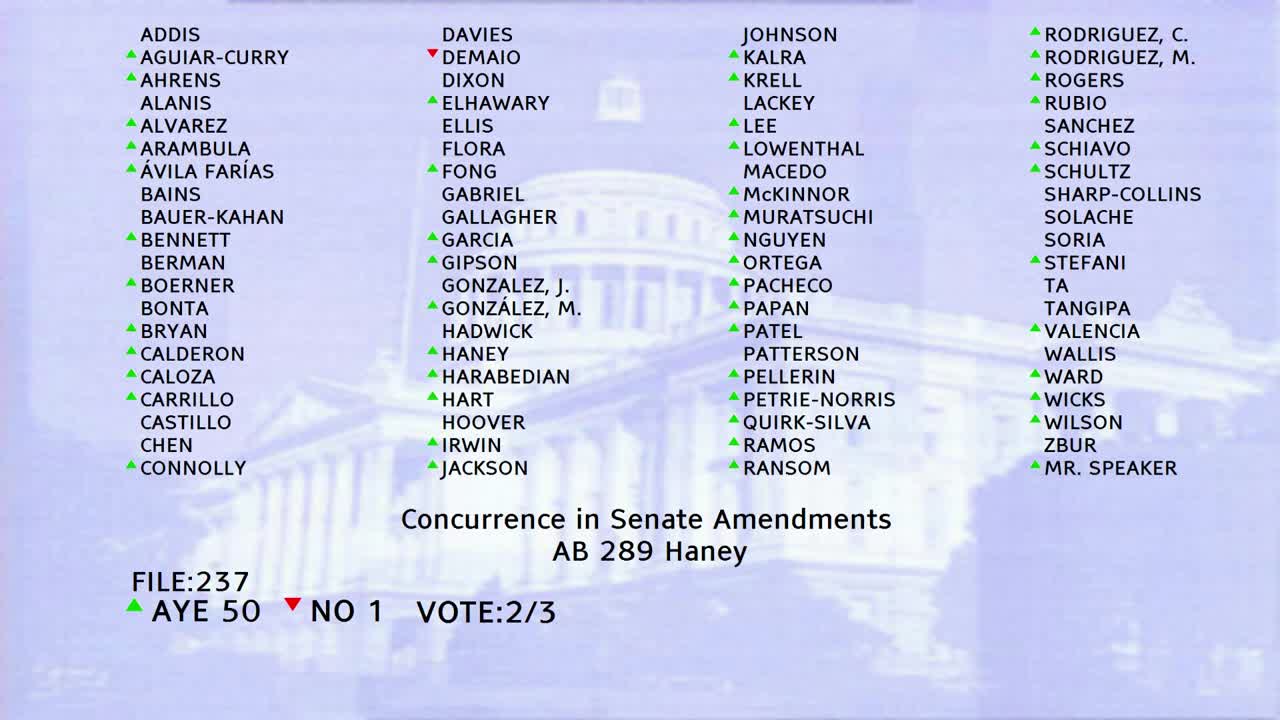 2MIN
Assembly Floor
 1MIN
Senate Floor
 1MIN
Senate Standing Committee on Appropriations
 18MIN
Senate Standing Committee on Human Services
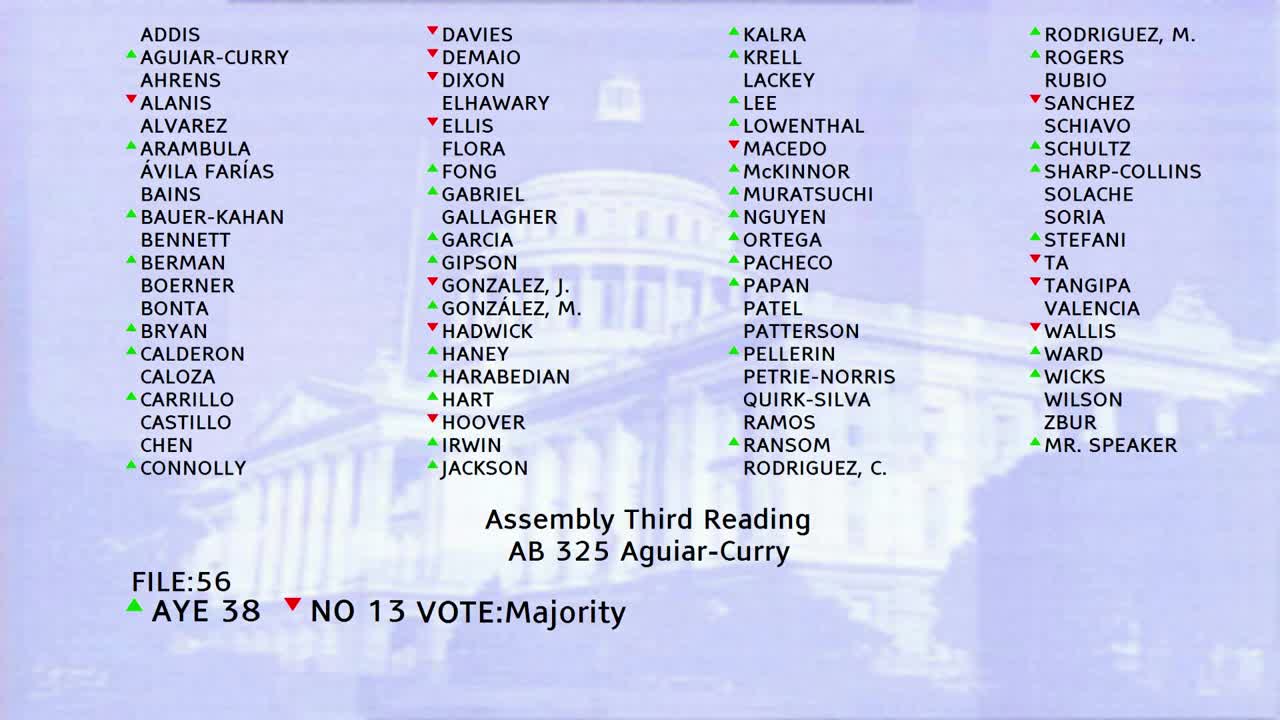 1MIN
Assembly Floor
 4MIN
Assembly Standing Committee on Human Services
 39SEC
Assembly Standing Committee on Human Services
 29MIN
Assembly Standing Committee on Aging and Long-Term Care
Bill Author

Bill Co-Author(s):