AB 460: Radiologic technologists: venipuncture: direct supervision.
- Session Year: 2025-2026
- House: Assembly
- Latest Version Date: 2025-10-07
Current Status:
Passed
(2025-10-07: Chaptered by Secretary of State - Chapter 435, Statutes of 2025.)
Introduced
In Committee
Awaiting First Chamber Vote
Passed First Chamber
In Committee
Awaiting Second Chamber Vote
Passed Second Chamber
Enacted
Existing law, the Radiologic Technology Act, provides for the certification and regulation of radiologic technologists by the State Department of Public Health and makes a violation of the act or regulation of the department adopted pursuant to the act a misdemeanor. Existing law authorizes a radiologic technologist to perform venipuncture in an upper extremity, as specified, under the direct supervision of a licensed physician and surgeon. Existing law defines direct supervision for purposes of that provision to mean the direction of procedures by a licensed physician and surgeon who is physically present and available within the facility when the procedures are performed to provide immediate medical intervention prevent or mitigate injury to the patient in the event of adverse reaction.
This bill would revise that definition to require the licensed physician and surgeon to either be physically present within the facility and immediately available to intervene or available immediately via audio and video communication with access to the patients medical imaging records and have the ability to intervene by directing other onsite personnel. The bill would require the facility to have safety protocols and, unless the facility has a licensed physician and surgeon who is physically present, as specified, to have personnel onsite who have the appropriate license to respond to adverse events at the physicians direction. By changing the scope of direct supervision for purposes of these provisions, the violation of which is a crime, the bill would impose a state-mandated local program.
The California Constitution requires the state to reimburse local agencies and school districts for certain costs mandated by the state. Statutory provisions establish procedures for making that reimbursement.
This bill would provide that no reimbursement is required by this act for a specified reason.
Existing law, the Radiologic Technology Act, provides for the certification and regulation of radiologic technologists by the State Department of Public Health and makes a violation of the act or regulation of the department adopted pursuant to the act a misdemeanor. Existing law authorizes a radiologic technologist to perform venipuncture in an upper extremity, as specified, under the direct supervision of a licensed physician and surgeon. Existing law defines direct supervision for purposes of that provision to mean the direction of procedures by a licensed physician and surgeon who is physically present and available within the facility when the procedures are performed to provide immediate medical intervention prevent or mitigate injury to the patient in the event of adverse reaction.
This bill would revise that definition to require the licensed physician and surgeon to either be physically present within the facility and immediately available to intervene or available immediately via audio and video communication with access to the patients electronic medical imaging records and have the ability to intervene through standing orders or protocols. by directing other onsite personnel. The bill would require the facility to have safety protocols and and, unless the facility has a licensed physician and surgeon who is physically present, as specified, to have personnel onsite who have the appropriate license to respond to adverse events at the physicians direction. By changing the scope of direct supervision for purposes of these provisions, the violation of which is a crime, the bill would impose a state-mandated local program.
The California Constitution requires the state to reimburse local agencies and school districts for certain costs mandated by the state. Statutory provisions establish procedures for making that reimbursement.
This bill would provide that no reimbursement is required by this act for a specified reason.
Existing law, the Radiologic Technology Act, provides for the certification and regulation of radiologic technologists by the State Department of Public Health and makes a violation of the act or regulation of the department adopted pursuant to the act a misdemeanor. Existing law authorizes a radiologic technologist to perform venipuncture in an upper extremity, as specified, under the direct supervision of a licensed physician and surgeon. Existing law defines direct supervision for purposes of that provision to mean the direction of procedures by a licensed physician and surgeon who is physically present and available within the facility when the procedures are performed to provide immediate medical intervention prevent or mitigate injury to the patient in the event of adverse reaction.
This bill would revise that definition to require the licensed physician and surgeon to either be physically present within the facility and immediately available to intervene or available immediately via audio and video communication with access to the patients electronic medical records and have the ability to intervene through standing orders or protocols. The bill would require the facility to have safety protocols and personnel onsite capable of responding who have the appropriate license to respond to adverse events at the physicians direction. By changing the scope of direct supervision for purposes of these provisions, the violation of which is a crime, the bill would impose a state-mandated local program.
The California Constitution requires the state to reimburse local agencies and school districts for certain costs mandated by the state. Statutory provisions establish procedures for making that reimbursement.
This bill would provide that no reimbursement is required by this act for a specified reason.
Existing law, the Radiologic Technology Act, provides for the certification and regulation of radiologic technologists by the State Department of Public Health and makes a violation of the act or regulation of the department adopted pursuant to the act a misdemeanor. Existing law authorizes a radiologic technologist to perform venipuncture in an upper extremity, as specified, under the direct supervision of a licensed physician and surgeon. Existing law defines direct supervision for purposes of that provision to mean the direction of procedures by a licensed physician and surgeon who is physically present and available within the facility when the procedures are performed to provide immediate medical intervention prevent or mitigate injury to the patient in the event of adverse reaction.
This bill would revise that definition to require the licensed physician and surgeon to either be physically present within the facility and immediately available to intervene or available immediately via telephone or other real-time audio and video communication with access to the patients electronic medical records and have the ability to intervene through standing orders or protocols. The bill would require the facility to have safety protocols and personnel onsite capable of responding to adverse events at the physicians direction. By changing the scope of direct supervision for purposes of these provisions, the violation of which is a crime, the bill would impose a state-mandated local program.
The California Constitution requires the state to reimburse local agencies and school districts for certain costs mandated by the state. Statutory provisions establish procedures for making that reimbursement.
This bill would provide that no reimbursement is required by this act for a specified reason.
Existing law, the Radiologic Technology Act, provides for the certification and regulation of radiologic technologists by the State Department of Public Health and makes a violation of the act or regulation of the department adopted pursuant to the act a misdemeanor. Existing law authorizes a radiologic technologist to perform venipuncture in an upper extremity, as specified, under the direct supervision of a licensed physician and surgeon. Existing law defines direct supervision for purposes of that provision to mean the direction of procedures by a licensed physician and surgeon who is physically present and available within the facility when the procedures are performed to provide immediate medical intervention prevent or mitigate injury to the patient in the event of adverse reaction.
This bill would revise that definition to require the licensed physician and surgeon to either be physically present within the facility and immediately available to intervene or available immediately via telephone or other real-time audio communication with access to the patients electronic medical records and have the ability to intervene through standing orders or protocols. By changing the scope of direct supervision for purposes of these provisions, the violation of which is a crime, the bill would impose a state-mandated local program.
The California Constitution requires the state to reimburse local agencies and school districts for certain costs mandated by the state. Statutory provisions establish procedures for making that reimbursement.
This bill would provide that no reimbursement is required by this act for a specified reason.
(a)(1)Notwithstanding Section 2052 of the Business and Professions Code or any other law, a radiologic technologist certified pursuant to the Radiologic Technology Act (Section 27) may, under the direct supervision of a licensed physician and surgeon, and in accordance with the facilitys protocol that meets, at a minimum, the requirements described in paragraph (2), perform venipuncture in an upper extremity to administer contrast materials, manually or by utilizing a mechanical injector, if the radiologic technologist has been deemed competent to perform that venipuncture, in accordance with paragraph (3), and issued a certificate, as described in subdivision (b).
(2)(A)In administering contrast materials, a radiologic technologist may, to ensure the security and integrity of the needles placement or of an existing intravenous cannula, use a saline-based solution that conforms with the facilitys protocol and that has been approved by a licensed physician and surgeon. The protocol shall specify that only contrast materials or pharmaceuticals approved by the United States Food and Drug Administration may be used and shall also specify that the use shall be in accordance with the labeling.
(B)A person who is currently certified as meeting the standards of competence in nuclear medicine technology pursuant to Article 6 (commencing with Section 107150) and who is authorized to perform a computerized tomography scanner only on a dual-mode machine, as described in Section 106976, may perform the conduct described in this subdivision.
(3)Prior to performing venipuncture pursuant to paragraph (1), a radiologic technologist shall have performed at least 10 venipunctures on live humans under the personal supervision of a licensed physician and surgeon, a registered nurse, or a person the physician or nurse has previously deemed qualified to provide personal supervision to the technologist for purposes of performing venipuncture pursuant to this paragraph. Only after completion of a minimum of 10 venipunctures may the supervising individual evaluate whether the technologist is competent to perform venipuncture under direct supervision. The number of venipunctures required in this paragraph are in addition to those performed for meeting the requirements of paragraph (2) of subdivision (d). The facility shall document compliance with this subdivision.
(b)The radiologic technologist shall be issued a certificate as specified in subdivision (e) or by an instructor indicating satisfactory completion of the training and education described in subdivision (d). This certificate documents completion of the required education and training and may not, by itself, be construed to authorize a person to perform venipuncture or to administer contrast materials.
(c)For purposes of this section, the following definitions apply:
(1)Direct supervision means the direction of procedures authorized by this section by a licensed physician and surgeon who shall be either:
(A)Physically present within the facility and immediately available to intervene.
(B)Available immediately via audio and video communication with access to the patients medical imaging records and have the ability to intervene by directing other onsite personnel.
(2)Personal supervision, for purposes of this section, means the oversight of the procedures authorized by this section by a supervising individual identified in paragraph (3) of subdivision (a) who is physically present to observe, and correct, as needed, the performance of the individual who is performing the procedure.
(d)The radiologic technologist shall have completed both of the following:
(1)Received a total of 10 hours of instruction, including all of the following:
(A)Anatomy and physiology of venipuncture sites.
(B)Venipuncture instruments, intravenous solutions, and related equipment.
(C)Puncture techniques.
(D)Techniques of intravenous line establishment.
(E)Hazards and complications of venipuncture.
(F)Postpuncture care.
(G)Composition and purpose of antianaphylaxis tray.
(H)First aid and basic cardiopulmonary resuscitation.
(2)Performed 10 venipunctures on a human or training mannequin upper extremity (for example, an infusion arm or a mannequin arm) under personal supervision. If performance is on a human, only an upper extremity may be used.
(e) Schools for radiologic technologists shall include the training and education specified in subdivision (d). Upon satisfactory completion of the training and education, the school shall issue to the student a completion document. This document may not be construed to authorize a person to perform venipuncture or to administer contrast materials.
(f) Nothing in this section shall be construed to authorize a radiologic technologist to perform arterial puncture, any central venous access procedures including repositioning of previously placed central venous catheter except as specified in paragraph (1) of subdivision (a), or cutdowns, or establish an intravenous line.
(g)This section shall not be construed to apply to a person who is currently certified as meeting the standards of competence in nuclear medicine technology pursuant to Article 6 (commencing with Section 107150), except as provided in subparagraph (B) of paragraph (2) of subdivision (a).
(h)Radiologic technologists who met the training and education requirements of subdivision (d) prior to January 1, 2013, need not repeat those requirements, or perform the venipunctures specified in paragraph (3) of subdivision (a), provided the facility documents that the radiologic technologist is competent to perform the tasks specified in paragraph (1) of subdivision (a).
(i)(1)(A)Except as provided in paragraph (2), the facility shall have safety protocols and personnel onsite who have the appropriate license to respond to adverse events at the physicians direction.
(B)The onsite personnel described in subparagraph (A) shall be licensed or certified as a physician and surgeon, registered nurse, nurse practitioner, clinical nurse specialist, or physician assistant.
(2)A facility allowing only direct supervision as defined in subparagraph (A) of paragraph (1) of subdivision (c) need only have safety protocols.
SEC. 2.No reimbursement is required by this act pursuant to Section 6 of Article XIIIB of the California Constitution because the only costs that may be incurred by a local agency or school district will be incurred because this act creates a new crime or infraction, eliminates a crime or infraction, or changes the penalty for a crime or infraction, within the meaning of Section 17556 of the Government Code, or changes the definition of a crime within the meaning of Section 6 of Article XIIIB of the California Constitution.
(a)(1)Notwithstanding Section 2052 of the Business and Professions Code or any other law, a radiologic technologist certified pursuant to the Radiologic Technology Act (Section 27) may, under the direct supervision of a licensed physician and surgeon, and in accordance with the facilitys protocol that meets, at a minimum, the requirements described in paragraph (2), perform venipuncture in an upper extremity to administer contrast materials, manually or by utilizing a mechanical injector, if the radiologic technologist has been deemed competent to perform that venipuncture, in accordance with paragraph (3), and issued a certificate, as described in subdivision (b).
(2)(A)In administering contrast materials, a radiologic technologist may, to ensure the security and integrity of the needles placement or of an existing intravenous cannula, use a saline-based solution that conforms with the facilitys protocol and that has been approved by a licensed physician and surgeon. The protocol shall specify that only contrast materials or pharmaceuticals approved by the United States Food and Drug Administration may be used and shall also specify that the use shall be in accordance with the labeling.
(B)A person who is currently certified as meeting the standards of competence in nuclear medicine technology pursuant to Article 6 (commencing with Section 107150) and who is authorized to perform a computerized tomography scanner only on a dual-mode machine, as described in Section 106976, may perform the conduct described in this subdivision.
(3)Prior to performing venipuncture pursuant to paragraph (1), a radiologic technologist shall have performed at least 10 venipunctures on live humans under the personal supervision of a licensed physician and surgeon, a registered nurse, or a person the physician or nurse has previously deemed qualified to provide personal supervision to the technologist for purposes of performing venipuncture pursuant to this paragraph. Only after completion of a minimum of 10 venipunctures may the supervising individual evaluate whether the technologist is competent to perform venipuncture under direct supervision. The number of venipunctures required in this paragraph are in addition to those performed for meeting the requirements of paragraph (2) of subdivision (d). The facility shall document compliance with this subdivision.
(b)The radiologic technologist shall be issued a certificate as specified in subdivision (e) or by an instructor indicating satisfactory completion of the training and education described in subdivision (d). This certificate documents completion of the required education and training and may not, by itself, be construed to authorize a person to perform venipuncture or to administer contrast materials.
(c)For purposes of this section, the following definitions apply:
(1)Direct supervision means the direction of procedures authorized by this section by a licensed physician and surgeon who shall be either:
(A)Physically present within the facility and immediately available to intervene.
(B)Available immediately via audio and video communication with access to the patients electronic medical imaging records and have the ability to intervene through standing orders or protocols. by directing other onsite personnel.
(2)Personal supervision, for purposes of this section, means the oversight of the procedures authorized by this section by a supervising individual identified in paragraph (3) of subdivision (a) who is physically present to observe, and correct, as needed, the performance of the individual who is performing the procedure.
(d)The radiologic technologist shall have completed both of the following:
(1)Received a total of 10 hours of instruction, including all of the following:
(A)Anatomy and physiology of venipuncture sites.
(B)Venipuncture instruments, intravenous solutions, and related equipment.
(C)Puncture techniques.
(D)Techniques of intravenous line establishment.
(E)Hazards and complications of venipuncture.
(F)Postpuncture care.
(G)Composition and purpose of antianaphylaxis tray.
(H)First aid and basic cardiopulmonary resuscitation.
(2)Performed 10 venipunctures on a human or training mannequin upper extremity (for example, an infusion arm or a mannequin arm) under personal supervision. If performance is on a human, only an upper extremity may be used.
(e) Schools for radiologic technologists shall include the training and education specified in subdivision (d). Upon satisfactory completion of the training and education, the school shall issue to the student a completion document. This document may not be construed to authorize a person to perform venipuncture or to administer contrast materials.
(f) Nothing in this section shall be construed to authorize a radiologic technologist to perform arterial puncture, any central venous access procedures including repositioning of previously placed central venous catheter except as specified in paragraph (1) of subdivision (a), or cutdowns, or establish an intravenous line.
(g)This section shall not be construed to apply to a person who is currently certified as meeting the standards of competence in nuclear medicine technology pursuant to Article 6 (commencing with Section 107150), except as provided in subparagraph (B) of paragraph (2) of subdivision (a).
(h)Radiologic technologists who met the training and education requirements of subdivision (d) prior to January 1, 2013, need not repeat those requirements, or perform the venipunctures specified in paragraph (3) of subdivision (a), provided the facility documents that the radiologic technologist is competent to perform the tasks specified in paragraph (1) of subdivision (a).
(i)The (1)(A)Except as provided in paragraph (2), the facility shall have safety protocols and personnel onsite who have the appropriate license to respond to adverse events at the physicians direction.
(B)The onsite personnel described in subparagraph (A) shall be licensed or certified as a physician and surgeon, registered nurse, nurse practitioner, clinical nurse specialist, or physician assistant.
(2)A facility allowing only direct supervision as defined in subparagraph (A) of paragraph (1) of subdivision (c) need only have safety protocols.
SEC. 2.No reimbursement is required by this act pursuant to Section 6 of Article XIIIB of the California Constitution because the only costs that may be incurred by a local agency or school district will be incurred because this act creates a new crime or infraction, eliminates a crime or infraction, or changes the penalty for a crime or infraction, within the meaning of Section 17556 of the Government Code, or changes the definition of a crime within the meaning of Section 6 of Article XIIIB of the California Constitution.
(a)(1)Notwithstanding Section 2052 of the Business and Professions Code or any other law, a radiologic technologist certified pursuant to the Radiologic Technology Act (Section 27) may, under the direct supervision of a licensed physician and surgeon, and in accordance with the facilitys protocol that meets, at a minimum, the requirements described in paragraph (2), perform venipuncture in an upper extremity to administer contrast materials, manually or by utilizing a mechanical injector, if the radiologic technologist has been deemed competent to perform that venipuncture, in accordance with paragraph (3), and issued a certificate, as described in subdivision (b).
(2)(A)In administering contrast materials, a radiologic technologist may, to ensure the security and integrity of the needles placement or of an existing intravenous cannula, use a saline-based solution that conforms with the facilitys protocol and that has been approved by a licensed physician and surgeon. The protocol shall specify that only contrast materials or pharmaceuticals approved by the United States Food and Drug Administration may be used and shall also specify that the use shall be in accordance with the labeling.
(B)A person who is currently certified as meeting the standards of competence in nuclear medicine technology pursuant to Article 6 (commencing with Section 107150) and who is authorized to perform a computerized tomography scanner only on a dual-mode machine, as described in Section 106976, may perform the conduct described in this subdivision.
(3)Prior to performing venipuncture pursuant to paragraph (1), a radiologic technologist shall have performed at least 10 venipunctures on live humans under the personal supervision of a licensed physician and surgeon, a registered nurse, or a person the physician or nurse has previously deemed qualified to provide personal supervision to the technologist for purposes of performing venipuncture pursuant to this paragraph. Only after completion of a minimum of 10 venipunctures may the supervising individual evaluate whether the technologist is competent to perform venipuncture under direct supervision. The number of venipunctures required in this paragraph are in addition to those performed for meeting the requirements of paragraph (2) of subdivision (d). The facility shall document compliance with this subdivision.
(b)The radiologic technologist shall be issued a certificate as specified in subdivision (e) or by an instructor indicating satisfactory completion of the training and education described in subdivision (d). This certificate documents completion of the required education and training and may not, by itself, be construed to authorize a person to perform venipuncture or to administer contrast materials.
(c)For purposes of this section, the following definitions apply:
(1)Direct supervision means the direction of procedures authorized by this section by a licensed physician and surgeon who shall be either:
(A)Physically present within the facility and immediately available to intervene.
(B)Available immediately via audio and video communication with access to the patients electronic medical records and have the ability to intervene through standing orders or protocols.
(2)Personal supervision, for purposes of this section, means the oversight of the procedures authorized by this section by a supervising individual identified in paragraph (3) of subdivision (a) who is physically present to observe, and correct, as needed, the performance of the individual who is performing the procedure.
(d)The radiologic technologist shall have completed both of the following:
(1)Received a total of 10 hours of instruction, including all of the following:
(A)Anatomy and physiology of venipuncture sites.
(B)Venipuncture instruments, intravenous solutions, and related equipment.
(C)Puncture techniques.
(D)Techniques of intravenous line establishment.
(E)Hazards and complications of venipuncture.
(F)Postpuncture care.
(G)Composition and purpose of antianaphylaxis tray.
(H)First aid and basic cardiopulmonary resuscitation.
(2)Performed 10 venipunctures on a human or training mannequin upper extremity (for example, an infusion arm or a mannequin arm) under personal supervision. If performance is on a human, only an upper extremity may be used.
(e) Schools for radiologic technologists shall include the training and education specified in subdivision (d). Upon satisfactory completion of the training and education, the school shall issue to the student a completion document. This document may not be construed to authorize a person to perform venipuncture or to administer contrast materials.
(f) Nothing in this section shall be construed to authorize a radiologic technologist to perform arterial puncture, any central venous access procedures including repositioning of previously placed central venous catheter except as specified in paragraph (1) of subdivision (a), or cutdowns, or establish an intravenous line.
(g)This section shall not be construed to apply to a person who is currently certified as meeting the standards of competence in nuclear medicine technology pursuant to Article 6 (commencing with Section 107150), except as provided in subparagraph (B) of paragraph (2) of subdivision (a).
(h)Radiologic technologists who met the training and education requirements of subdivision (d) prior to January 1, 2013, need not repeat those requirements, or perform the venipunctures specified in paragraph (3) of subdivision (a), provided the facility documents that the radiologic technologist is competent to perform the tasks specified in paragraph (1) of subdivision (a).
(i)The facility shall have safety protocols and personnel onsite capable of responding to who have the appropriate license to respond to adverse events at the physicians direction.
SEC. 2.No reimbursement is required by this act pursuant to Section 6 of Article XIIIB of the California Constitution because the only costs that may be incurred by a local agency or school district will be incurred because this act creates a new crime or infraction, eliminates a crime or infraction, or changes the penalty for a crime or infraction, within the meaning of Section 17556 of the Government Code, or changes the definition of a crime within the meaning of Section 6 of Article XIIIB of the California Constitution.
(a)(1)Notwithstanding Section 2052 of the Business and Professions Code or any other law, a radiologic technologist certified pursuant to the Radiologic Technology Act (Section 27) may, under the direct supervision of a licensed physician and surgeon, and in accordance with the facilitys protocol that meets, at a minimum, the requirements described in paragraph (2), perform venipuncture in an upper extremity to administer contrast materials, manually or by utilizing a mechanical injector, if the radiologic technologist has been deemed competent to perform that venipuncture, in accordance with paragraph (3), and issued a certificate, as described in subdivision (b).
(2)(A)In administering contrast materials, a radiologic technologist may, to ensure the security and integrity of the needles placement or of an existing intravenous cannula, use a saline-based solution that conforms with the facilitys protocol and that has been approved by a licensed physician and surgeon. The protocol shall specify that only contrast materials or pharmaceuticals approved by the United States Food and Drug Administration may be used and shall also specify that the use shall be in accordance with the labeling.
(B)A person who is currently certified as meeting the standards of competence in nuclear medicine technology pursuant to Article 6 (commencing with Section 107150) and who is authorized to perform a computerized tomography scanner only on a dual-mode machine, as described in Section 106976, may perform the conduct described in this subdivision.
(3)Prior to performing venipuncture pursuant to paragraph (1), a radiologic technologist shall have performed at least 10 venipunctures on live humans under the personal supervision of a licensed physician and surgeon, a registered nurse, or a person the physician or nurse has previously deemed qualified to provide personal supervision to the technologist for purposes of performing venipuncture pursuant to this paragraph. Only after completion of a minimum of 10 venipunctures may the supervising individual evaluate whether the technologist is competent to perform venipuncture under direct supervision. The number of venipunctures required in this paragraph are in addition to those performed for meeting the requirements of paragraph (2) of subdivision (d). The facility shall document compliance with this subdivision.
(b)The radiologic technologist shall be issued a certificate as specified in subdivision (e) or by an instructor indicating satisfactory completion of the training and education described in subdivision (d). This certificate documents completion of the required education and training and may not, by itself, be construed to authorize a person to perform venipuncture or to administer contrast materials.
(c)For purposes of this section, the following definitions apply:
(1)Direct supervision means the direction of procedures authorized by this section by a licensed physician and surgeon who shall be either:
(A)Physically present within the facility and immediately available to intervene.
(B)Available immediately via telephone or other real-time audio and video communication with access to the patients electronic medical records and have the ability to intervene through standing orders or protocols.
(2)Personal supervision, for purposes of this section, means the oversight of the procedures authorized by this section by a supervising individual identified in paragraph (3) of subdivision (a) who is physically present to observe, and correct, as needed, the performance of the individual who is performing the procedure.
(d)The radiologic technologist shall have completed both of the following:
(1)Received a total of 10 hours of instruction, including all of the following:
(A)Anatomy and physiology of venipuncture sites.
(B)Venipuncture instruments, intravenous solutions, and related equipment.
(C)Puncture techniques.
(D)Techniques of intravenous line establishment.
(E)Hazards and complications of venipuncture.
(F)Postpuncture care.
(G)Composition and purpose of antianaphylaxis tray.
(H)First aid and basic cardiopulmonary resuscitation.
(2)Performed 10 venipunctures on a human or training mannequin upper extremity (for example, an infusion arm or a mannequin arm) under personal supervision. If performance is on a human, only an upper extremity may be used.
(e) Schools for radiologic technologists shall include the training and education specified in subdivision (d). Upon satisfactory completion of the training and education, the school shall issue to the student a completion document. This document may not be construed to authorize a person to perform venipuncture or to administer contrast materials.
(f) Nothing in this section shall be construed to authorize a radiologic technologist to perform arterial puncture, any central venous access procedures including repositioning of previously placed central venous catheter except as specified in paragraph (1) of subdivision (a), or cutdowns, or establish an intravenous line.
(g)This section shall not be construed to apply to a person who is currently certified as meeting the standards of competence in nuclear medicine technology pursuant to Article 6 (commencing with Section 107150), except as provided in subparagraph (B) of paragraph (2) of subdivision (a).
(h)Radiologic technologists who met the training and education requirements of subdivision (d) prior to January 1, 2013, need not repeat those requirements, or perform the venipunctures specified in paragraph (3) of subdivision (a), provided the facility documents that the radiologic technologist is competent to perform the tasks specified in paragraph (1) of subdivision (a).
(i)The facility shall have safety protocols and personnel onsite capable of responding to adverse events at the physicians direction.
SEC. 2.No reimbursement is required by this act pursuant to Section 6 of Article XIIIB of the California Constitution because the only costs that may be incurred by a local agency or school district will be incurred because this act creates a new crime or infraction, eliminates a crime or infraction, or changes the penalty for a crime or infraction, within the meaning of Section 17556 of the Government Code, or changes the definition of a crime within the meaning of Section 6 of Article XIIIB of the California Constitution.
(a)(1)Notwithstanding Section 2052 of the Business and Professions Code or any other law, a radiologic technologist certified pursuant to the Radiologic Technology Act (Section 27) may, under the direct supervision of a licensed physician and surgeon, and in accordance with the facilitys protocol that meets, at a minimum, the requirements described in paragraph (2), perform venipuncture in an upper extremity to administer contrast materials, manually or by utilizing a mechanical injector, if the radiologic technologist has been deemed competent to perform that venipuncture, in accordance with paragraph (3), and issued a certificate, as described in subdivision (b).
(2)(A)In administering contrast materials, a radiologic technologist may, to ensure the security and integrity of the needles placement or of an existing intravenous cannula, use a saline-based solution that conforms with the facilitys protocol and that has been approved by a licensed physician and surgeon. The protocol shall specify that only contrast materials or pharmaceuticals approved by the United States Food and Drug Administration may be used and shall also specify that the use shall be in accordance with the labeling.
(B)A person who is currently certified as meeting the standards of competence in nuclear medicine technology pursuant to Article 6 (commencing with Section 107150) and who is authorized to perform a computerized tomography scanner only on a dual-mode machine, as described in Section 106976, may perform the conduct described in this subdivision.
(3)Prior to performing venipuncture pursuant to paragraph (1), a radiologic technologist shall have performed at least 10 venipunctures on live humans under the personal supervision of a licensed physician and surgeon, a registered nurse, or a person the physician or nurse has previously deemed qualified to provide personal supervision to the technologist for purposes of performing venipuncture pursuant to this paragraph. Only after completion of a minimum of 10 venipunctures may the supervising individual evaluate whether the technologist is competent to perform venipuncture under direct supervision. The number of venipunctures required in this paragraph are in addition to those performed for meeting the requirements of paragraph (2) of subdivision (d). The facility shall document compliance with this subdivision.
(b)The radiologic technologist shall be issued a certificate as specified in subdivision (e) or by an instructor indicating satisfactory completion of the training and education described in subdivision (d). This certificate documents completion of the required education and training and may not, by itself, be construed to authorize a person to perform venipuncture or to administer contrast materials.
(c)(1)Direct supervision, for purposes of this section, means the direction of procedures authorized by this section by a licensed physician and surgeon who shall be physically present within the facility and available within the facility where the procedures are performed, in order to provide immediate medical intervention to prevent or mitigate injury to the patient in the event of adverse reaction.(c)For purposes of this section, the following definitions apply:
(1)Direct supervision means the direction of procedures authorized by this section by a licensed physician and surgeon who shall be either:
(A)Physically present within the facility and immediately available to intervene.
(B)Available immediately via telephone or other real-time audio communication with access to the patients electronic medical records and have the ability to intervene through standing orders or protocols.
(2)Personal supervision, for purposes of this section, means the oversight of the procedures authorized by this section by a supervising individual identified in paragraph (3) of subdivision (a) who is physically present to observe, and correct, as needed, the performance of the individual who is performing the procedure.
(d)The radiologic technologist shall have completed both of the following:
(1)Received a total of 10 hours of instruction, including all of the following:
(A)Anatomy and physiology of venipuncture sites.
(B)Venipuncture instruments, intravenous solutions, and related equipment.
(C)Puncture techniques.
(D)Techniques of intravenous line establishment.
(E)Hazards and complications of venipuncture.
(F)Postpuncture care.
(G)Composition and purpose of antianaphylaxis tray.
(H)First aid and basic cardiopulmonary resuscitation.
(2)Performed 10 venipunctures on a human or training mannequin upper extremity (for example, an infusion arm or a mannequin arm) under personal supervision. If performance is on a human, only an upper extremity may be used.
(e) Schools for radiologic technologists shall include the training and education specified in subdivision (d). Upon satisfactory completion of the training and education, the school shall issue to the student a completion document. This document may not be construed to authorize a person to perform venipuncture or to administer contrast materials.
(f) Nothing in this section shall be construed to authorize a radiologic technologist to perform arterial puncture, any central venous access procedures including repositioning of previously placed central venous catheter except as specified in paragraph (1) of subdivision (a), or cutdowns, or establish an intravenous line.
(g)This section shall not be construed to apply to a person who is currently certified as meeting the standards of competence in nuclear medicine technology pursuant to Article 6 (commencing with Section 107150), except as provided in subparagraph (B) of paragraph (2) of subdivision (a).
(h)Radiologic technologists who met the training and education requirements of subdivision (d) prior to January 1, 2013, need not repeat those requirements, or perform the venipunctures specified in paragraph (3) of subdivision (a), provided the facility documents that the radiologic technologist is competent to perform the tasks specified in paragraph (1) of subdivision (a).
SEC. 2.No reimbursement is required by this act pursuant to Section 6 of Article XIIIB of the California Constitution because the only costs that may be incurred by a local agency or school district will be incurred because this act creates a new crime or infraction, eliminates a crime or infraction, or changes the penalty for a crime or infraction, within the meaning of Section 17556 of the Government Code, or changes the definition of a crime within the meaning of Section 6 of Article XIIIB of the California Constitution.
|
Date
|
Status
|
|---|---|
| Oct 7, 2025 | Chaptered by Secretary of State - Chapter 435, Statutes of 2025. |
| Oct 7, 2025 | Approved by the Governor. |
| Sep 24, 2025 | Enrolled and presented to the Governor at 3 p.m. |
| Sep 12, 2025 | Senate amendments concurred in. To Engrossing and Enrolling. (Ayes 78. Noes 0. Page 3365.). |
| Sep 9, 2025 | In Assembly. Concurrence in Senate amendments pending. |
| Sep 9, 2025 | Read third time. Passed. Ordered to the Assembly. (Ayes 40. Noes 0. Page 2667.). |
| Sep 8, 2025 | Read second time. Ordered to third reading. |
| Sep 4, 2025 | Read third time and amended. Ordered to second reading. |
| Sep 3, 2025 | Ordered to third reading. |
| Sep 3, 2025 | From special consent calendar. |
| Sep 2, 2025 | Ordered to special consent calendar. |
| Aug 29, 2025 | Read second time. Ordered to third reading. |
| Aug 29, 2025 | From committee: Do pass. (Ayes 7. Noes 0.) (August 29). |
| Aug 18, 2025 | In committee: Referred to suspense file. |
| Jul 7, 2025 | Read second time and amended. Re-referred to Com. on APPR. |
| Jul 3, 2025 | From committee: Amend, and do pass as amended and re-refer to Com. on APPR. (Ayes 11. Noes 0.) (July 2). |
| Jun 18, 2025 | Referred to Com. on HEALTH. |
| Jun 4, 2025 | In Senate. Read first time. To Com. on RLS. for assignment. |
| Jun 3, 2025 | Read third time. Passed. Ordered to the Senate. (Ayes 77. Noes 0. Page 2024.) |
| May 27, 2025 | Read second time. Ordered to third reading. |
| May 23, 2025 | From committee: Do pass. (Ayes 14. Noes 0.) (May 23). |
| Apr 23, 2025 | In committee: Set, first hearing. Referred to suspense file. |
| Apr 2, 2025 | From committee: Do pass and re-refer to Com. on APPR. (Ayes 15. Noes 0.) (April 1). Re-referred to Com. on APPR. |
| Mar 25, 2025 | Re-referred to Com. on HEALTH. |
| Mar 24, 2025 | From committee chair, with author's amendments: Amend, and re-refer to Com. on HEALTH. Read second time and amended. |
| Mar 10, 2025 | Referred to Com. on HEALTH. |
| Feb 7, 2025 | From printer. May be heard in committee March 9. |
| Feb 6, 2025 | Read first time. To print. |
|
Date
|
Description
|
Location
|
Votes
|
|
|---|---|---|---|---|
| Sep 12, 2025 | AB 460 Chen Concurrence in Senate Amendments | Assembly Floor |
Passed |
|
| Sep 9, 2025 | Assembly 3rd Reading AB460 Chen By Valladares | Senate Floor |
Passed |
|
| Aug 29, 2025 | Do pass | Senate Standing Committee on Appropriations |
Passed |
|
| Aug 18, 2025 | Placed on suspense file | Senate Standing Committee on Appropriations |
Passed |
|
| Jul 2, 2025 | Do pass as amended, but first amend, and re-refer to the Committee on [Appropriations] | Senate Standing Committee on Health |
Passed |
|
| Jun 3, 2025 | AB 460 Chen Assembly Third Reading | Assembly Floor |
Passed |
|
| May 23, 2025 | Do pass. | Assembly Standing Committee on Appropriations |
Passed |
|
| Apr 1, 2025 | Do pass and be re-referred to the Committee on [Appropriations] | Assembly Standing Committee on Health |
Passed |
This list shows positions taken on this bill by organizations on the date displayed, which is linked to the original source.
Positions by individuals are not included.
|
Organization
|
Position
|
Date
|
|---|---|---|
| California Radiological Society | ** Support | |
| ContrastConnect | ** Support | |
| Osteopathic Medical Board of California | ** Against | |
| Radnet Management, INC. | ** Support | |
| Sutter Health | ** Support | |
| Tether Supervision | ** Support | |
| Tether Supervision (support if amended) | ** Support |
CONCURRENCE IN SENATE AMENDMENTS
CSA1 Bill Id:AB 460
Author:(Chen)
As Amended Ver:September 04, 2025
Majority vote
SUMMARY
Authorizes remote supervision for radiologic technologists (RTs).
Major Provisions
- Revises the definition of "direct supervision" to authorize a supervising physician for RTs to be available immediately via audio and video communication with access to the patient′s medical imaging records and have the ability to intervene by directing other onsite personnel.
- Requires the facility to have safety protocols and personnel onsite who have the appropriate license to respond to adverse events at the supervising physician′s direction.
Senate Amendments
- Delete the requirement for the supervising physician to have access the patient's electronic medical record and instead require the supervising physician to have access to the patient's medical imaging records.
- Delete the requirement for the supervising physician to have the ability to intervene through standing orders or protocols and instead require the supervising physician to have the ability to intervene by directing other onsite personnel.
- Delete the requirement that the onsite personnel are capable of responding to adverse events at the supervising physician's direction, and instead require the onsite personnel to have the appropriate license to respond to adverse events at the supervising physician's direction.
- Specify that the onsite personnel are required to be licensed or certified as a physician and surgeon, registered nurse, nurse practitioner, clinical nurse specialist, or physician assistant.
- Specify, except as provided by 6) below, the facility is required to have both safety protocols and personnel onsite who have the appropriate license to respond to adverse events.
- Specify that a facility allowing only direct supervision via a supervising physician who is physically present and immediately available to intervene need only to have safety protocols.
COMMENTS
Background on RTs. RTs perform medical exams using X-rays on patients to create images of specific parts of the body. The images are then interpreted by a doctor for diagnosis and monitoring of disease. Radiographers prepare patients for the exams, move patients to the correct position, operate the equipment, and use their knowledge and skill to minimize the radiation dose to the patient.
Contrast Materials. Contrast materials, also known as contrast agents, are substances used to distinguish between organs, tissues, bones, or blood vessels in medical imaging, such as various types of x-rays and magnetic resonance imaging (MRI). Contrast materials work by using substances that interfere with how the medical imaging equipment takes the patient′s images. For example, the contrast materials used in an X-ray or computed tomography (CT) exam is made of a substance that will block or limit radiation in certain parts of the patient′s body. This changes how the tissues that contain the medical imaging contrast materials appear in the patient′s images. Similarly, contrast materials used in magnetic-powered exams like MRIs and ultrasounds alter the way magnetic fields interact with the parts of the body containing contrast materials. The contrast materials help RTs distinguish between normal and abnormal conditions.
Existing law regarding RTs in California. Under the Radiologic Technology Act (the Act), the Radiologic Health Branch of the Department of Public Health (DPH) certifies or permits RTs who use X-ray machines on human beings, and administers exams to RTs for X-ray certification and permitting. The Act authorizes an RT to perform venipuncture in an upper extremity upper extremity to administer contrast materials if the radiologic technologist has been deemed competent to perform that venipuncture, and issued a certificate. In rare cases, people have allergic reactions to contrast materials. State law requires a physician or surgeon to be available on site in order to provide immediate medical intervention or mitigate injury to the patient in the event of an adverse reaction.
The Centers for Medicare & Medicaid Services (CMS) waiver. In March 2020, the CMS revised the definition of "direct supervision" to include virtual presence through real-time audiovisual technology, allowing physicians to supervise certain diagnostic tests remotely. This change was initially implemented to maintain access to care during the COVID-19 Public Health Emergency. CMS extended this flexibility through December 31, 2025, under the Medicare Physician Fee Schedule (PFS). This policy permits physicians—where state laws allow—to supervise Level 2 diagnostic tests (involving administration of contrast materials) remotely using two-way real-time audio/video technology. Given that California′s statute defines direct supervision to include the physical presence of the supervising physician and surgeon within the facility, the author and sponsor note that California was not able to take advantage of the CMS waiver allowing for audio/visual.
Other states. Other states allow for RTs to inject contrast materials without an onsite radiologist.
- New York. New York permits licensed radiologic technologists to inject IV contrast and does not stipulate that the physician must be physically present. RTs must meet certain conditions in order to administer contrast materials, including holding a state intravenous contrast administration certificate and have the injection authorized by a medical provider within 24 hours prior, with an appropriate patient evaluation on the day of the exam.
- New Jersey. New Jersey regulations formerly required a radiologist on the premises whenever contrast materials were administered in an outpatient CT or MRI facility. In April 2024, the New Jersey Department of Health issued a blanket waiver of this rule. Under the terms of the waiver, a physician (who is not a radiologist), a physician′s assistant (PA), or an advanced practice nurse (APN) may oversee the injection of contrast materials with remote oversight by a radiologist, who is required to be capable of being contacted immediately. The physician, PA, or APN must be certified in both Basic Life Support (BLS) and Advanced Cardiac Life Support (ACLS). Further, when contrast materials are being administered to a patient who is under 18 years of age, the physician, PA, or APN must be Pediatric Advance Life Support (PALS) certified. In the waiver, the New Jersey Department of Health noted that the state plans to amend its regulations to incorporate the provisions of the waiver.
According to the Author
Current law requires on-site physician supervision for RTs administering contrast materials, creating access barriers and delays, especially in rural areas. The author states that in 2020, the Centers for Medicaid and Medicare Services (CMS) updated federal policy to allow real-time remote supervision, recognizing its benefits beyond the Public Health Emergency. The author continues that despite this, California has not adopted these changes. The author states that California needs to align state law with modern practices, permitting remote supervision via audio or video communication. The author contends that this reform enhances patient care, reduces wait times, and improves access to imaging services while maintaining safety. The author concludes that this bill will change California′s law to streamline radiology operations and ensure patients receive timely, high-quality diagnostic care.
Arguments in Support
The California Radiological Society (CRS) is the sponsor of this bill and states that this bill provides a timely and necessary update to California law by allowing radiologic technologists to administer contrast media under real-time remote supervision—via audio and video communication—from a physician. CRS continues that this change aligns state law with current federal policy adopted by the Centers for Medicare and Medicaid Services (CMS), which recognizes the critical role of telehealth and remote oversight in providing timely and effective patient care. CRS contends that the current requirement for on-site physician supervision imposes significant barriers to access, particularly in rural and underserved areas where radiologists are not always available. CRS states that this bill will help reduce imaging delays, shorten wait times, and improve operational efficiency in radiology departments across the state—all without compromising patient safety. CRS notes that facilities utilizing remote supervision will still be required to implement appropriate safety protocols and ensure qualified personnel are onsite and capable of responding to adverse events, as determined by the supervising physician. CRS concludes that this bill represents a common-sense advancement in healthcare delivery and positions California to keep pace with technological innovations and evolving best practices in radiology.
Arguments in Opposition
The Osteopathic Medical Board of California (OMBC) opposes this bill due to the change in scope of direct supervision of radiological technicians to allow telemedicine supervision for procedures that can involve emergencies. OMBC contends in the context of pushes to expand the convenience of telemedicine, this bill poses unnecessary risks to patient and public safety to entertain that telemedicine can replace direct supervision in the event of an emergency. OMBC states that telemedicine is not and never should be a replacement for direct, in person supervision, particularly in the light of the potential for emergencies such as reaction to dye or contract substances given to a patient through I.V. for radiological imaging. OMBC concludes that this bill is a dangerous expansion of telemedicine that poses harm to patients and public safety.
FISCAL COMMENTS
According to the Senate Committee on Appropriations, DPH estimates ongoing annual costs of approximately $196,000 starting in 2026-27, and additional one-time costs of $186,000 in 2026-27, and $91,000 in 2027-28 and in 2028-29 for staffing resources, development of regulations, purchase of a vehicle and radiation test equipment (General Fund).
VOTES:
ASM HEALTH: 15-0-0
YES: Bonta, Chen, Addis, Aguiar-Curry, Arambula, Carrillo, Flora, Mark González, Krell, Patel, Celeste Rodriguez, Sanchez, Schiavo, Sharp-Collins, Stefani
ASM APPROPRIATIONS: 14-0-1
YES: Wicks, Arambula, Calderon, Caloza, Dixon, Elhawary, Fong, Mark González, Hart, Pacheco, Pellerin, Solache, Ta, Tangipa
ABS, ABST OR NV: Sanchez
ASSEMBLY FLOOR: 77-0-2
YES: Addis, Aguiar-Curry, Ahrens, Alanis, Alvarez, Ávila Farías, Bains, Bauer-Kahan, Bennett, Berman, Boerner, Bonta, Bryan, Calderon, Caloza, Carrillo, Castillo, Chen, Connolly, Davies, DeMaio, Dixon, Elhawary, Ellis, Flora, Fong, Gabriel, Gallagher, Garcia, Gipson, Jeff Gonzalez, Mark González, Hadwick, Haney, Harabedian, Hart, Hoover, Irwin, Jackson, Kalra, Krell, Lackey, Lowenthal, Macedo, McKinnor, Muratsuchi, Nguyen, Ortega, Pacheco, Papan, Patel, Patterson, Pellerin, Petrie-Norris, Quirk-Silva, Ramos, Ransom, Celeste Rodriguez, Michelle Rodriguez, Rogers, Blanca Rubio, Sanchez, Schiavo, Schultz, Sharp-Collins, Solache, Soria, Stefani, Ta, Tangipa, Valencia, Wallis, Ward, Wicks, Wilson, Zbur, Rivas
ABS, ABST OR NV: Arambula, Lee
UPDATED
VERSION: September 04, 2025
CONSULTANT: Eliza Brooks / HEALTH / (916) 319-2097 FN: 0001923
SENATE RULES COMMITTEE Office of Senate Floor Analyses (916) 651-1520 Fax: (916) 327-4478 | AB 460 |
THIRD READING
Bill No: AB 460
Author: Chen (R)
Amended: 9/4/25 in Senate
Vote: 21
SENATE HEALTH COMMITTEE: 11-0, 7/2/25
AYES: Menjivar, Valladares, Durazo, Gonzalez, Grove, Limón, Padilla, Richardson, Rubio, Weber Pierson, Wiener
SENATE APPROPRIATIONS COMMITTEE: 7-0, 8/29/25
AYES: Caballero, Seyarto, Cabaldon, Dahle, Grayson, Richardson, Wahab
ASSEMBLY FLOOR: 77-0, 6/3/25 - See last page for vote
SUBJECT: Radiologic technologists: venipuncture: direct supervision
SOURCE: California Radiological Society
DIGEST:
This bill revises the definition of “direct supervision,” for purposes of venipuncture by radiologic technologists, to permit physician supervision through audio and video communication. Requires a facility to have safety protocols and personnel onsite who have the appropriate license to respond to adverse events at the physician’s direction.
Senate Floor Amendments of 9/4/25 specify that, in the revision of direct supervision via audio and video communication for purposes of venipuncture by radiological technologists, the physician must have access to the patient’s medical imaging records and have the ability to intervene by directing other onsite personnel. The amendments also define the onsite personnel who have the appropriate license to respond to adverse events at the physician’s direction.
ANALYSIS:
Existing federal law requires some diagnostic X-ray and other diagnostic tests to have either direct or personal supervision. Defines direct supervision in the office setting to mean the physician, or other supervising practitioner, must be present in the office suite and immediately available to furnish assistance and direction throughout the performance of the service. Specifies that it does not mean that the physician, or other supervising practitioner, must be present in the room when the service is performed. Through December 1, 2025, the presence of the physician or other practitioner includes through audio and visual real-time communications technology, excluding audio-only. Defines “personal supervision” to mean a physician must be in attendance in the room during the performance of the procedure. [42 Code of Federal Regulations §410.32]
Existing state law:
- Establishes the Radiologic Technology Act, which provides for the certification and regulation of radiology technologists (RTs) by the California Department of Public Health (CDPH). [Health and Safety Code [HSC] §106965, et seq.]
- Authorizes a certified RT to, under the direct supervision of a licensed physician, and in accordance with the facility’s protocol, perform venipuncture in an upper extremity to administer contrast materials, manually or by utilizing a mechanical injector, if the RT has been deemed competent to perform that venipuncture and issued a certificate. [HSC §106985(a)]
- Defines “direct supervision” as the direction of procedures by a licensed physician who is physically present within the facility and available where the procedures are performed, in order to provide immediate medical intervention to prevent or mitigate injury to the patient in the event of adverse reaction. [HSC §106985(c)(1)]
- Defines “personal supervision” as the oversight procedures by a supervising individual who is physically present to observe and correct, as needed, the performance of the individual who is performing the procedure. [HSC §106985(c)(2)]
- Requires CDPH to provide for the certification of RTs, with separate certificates for diagnostic radiologic technology, mammographic radiologic technology, and therapeutic radiologic technology. [HSC §114870(b)]
This bill:
- Revises the current definition of “direct supervision” for purposes of venipuncture by radiologic technologists, to permit physician supervision through immediately available audio and video communication, with access to the patient’s medical imaging records and the ability to intervene by directing other onsite personnel.
- Requires the facility where the venipuncture is performed to have safety protocols and, unless the facility has a licensed physician and surgeon who is physically present, to have personnel onsite who have the appropriate license to respond to adverse events at the physician’s direction.
- Requires the onsite personnel described above as a physician to be licensed or certified as a physician and surgeon, registered nurse, nurse practitioner, clinical nurse specialist, or physician assistant.
Comments
According to the author of this bill:
Current law requires on-site physician supervision for RTs administering contrast, creating access barriers and delays, especially in rural areas. In 2020, the Centers for Medicare & Medicaid Services (CMS) updated federal policy to allow real-time remote supervision, recognizing its benefits beyond the Public Health Emergency. Despite this, California has not adopted these changes. We need to align state law with modern practices, permitting remote supervision via audio or video communication. This reform enhances patient care, reduces wait times, and improves access to imaging services while maintaining safety. This bill will change California’s law to streamline radiology operations and ensure patients receive timely, high-quality diagnostic care.
Background
RTs. According to the Mayo Clinic College of Medicine and Science, an RT, also known as radiographers, perform medical exams using X-rays on patients to create images of specific parts of the body. These images are then interpreted by a doctor for diagnosis and monitoring of disease. Specifically, RTs prepare patients for the exams, move patients to the appropriate position, operate the equipment, and use their knowledge and skill to minimize the radiation dose to the patient. RTs can specialize in many different areas, including: bone densitometry, cardiac-interventional radiography, computed tomography (CT), magnetic resonance imaging (MRI), mammography, vascular interventional radiography, nuclear medicine, and sonography. In the U.S., after graduating from an accredited program, RTs must pass a certification exam administered by the American Registry of Radiologic Technologists (ARRT) to become certified and registered. California also requires RTs to submit the Certified RT license application to the Radiologic Health Branch of CDPH to practice as an RT. Prior to performing venipunctures; RTs are required to obtain their California venipuncture certification. This certification requires the RT to complete a total of ten hours of instruction regarding anatomy and physiology of venipuncture sites; venipuncture instruments, intravenous solutions, and related equipment; puncture techniques; techniques of intravenous line establishment; puncture techniques; techniques of intravenous line establishment; hazards and complications of venipuncture; post puncture care; composition and purpose of antianaphylaxis tray; and, first aid and basic cardiopulmonary resuscitation. The certification process also requires RTs to perform ten venipunctures on a human or a training mannequin upper extremity under personal supervision.
CMS and direct supervision. In the guidelines distributed by CMS titled, “Physicians and Other Clinicians: CMS Flexibilities to Fight COVID-19,” CMS states that at the beginning of the COVID-19 Public Health Emergency (PHE), CMS used emergency waiver authorities and various regulatory authorities to enable flexibilities so providers could rapidly respond to those impacted by COVID-19. One of the temporary modifications includes the change in the regulatory definition of direct supervision, which requires the supervising physician or practitioner to be “immediately available” to provide assistance and direction during the service, to include “virtual presence,” of the supervising clinicians through the use of real-time audio and video technology. This flexibility was set to return to pre-PHE standards at the end of the calendar year that the PHE ends, but was extended through December 31, 2025 under the Medicare Physician Fee Schedule. However, since California’s statute defines direct supervision to include the physical presence of the supervising physician within the facility, the author and sponsor note that the state was unable to take advantage of the CMS waiver allowing for the virtual presence of supervising clinicians during that time.
Contrast materials. Contrast materials, also known as contrast agents, are substances used to distinguish between organs, tissues, bones, or blood vessels in medical imaging, such as various types of X-rays and MRI. Contrast materials work by using substances that interfere with how the medical imaging equipment takes the patient’s images. For example, the contrast materials used in an X-ray or CT exam is made of a substance that will block or limit radiation in certain parts of the patient’s body. This changes how the tissues that contain the medical imaging contrast materials appear in the patient’s images. Similarly, contrast materials used in magnetic-powered exams like MRIs and ultrasounds alter the way magnetic fields interact with the parts of the body containing contrast materials. Contrast materials help RTs distinguish between normal and abnormal conditions. The National Health Institute lists the potential adverse side effects of radiographic contrast materials as contrast-induced nephropathy, delayed allergic reactions, anaphylactic reactions, and cutaneous reactions. Most reactions to contrast materials are usually mild and non-life threatening.
Related/Prior Legislation
AB 1069 (Chen of 2023) would have permitted supervision of an RT to performing venipuncture in an upper extremity to administer contrast materials via telephone. The bill was not heard in the Assembly Health Committee.
SB 1199 (Dutton, Chapter 358, Statutes of 2012) authorized RTs to use a saline-based solution that is in accordance with the facility protocol and is approved by a licensed physician in administering contrast materials to ensure the security and integrity of the placement of the needle.
FISCAL EFFECT: Appropriation: No Fiscal Com.: Yes Local: Yes
According to the Senate Appropriations Committee, the California Department of Public Health (CDPH) estimates ongoing annual costs of approximately $196,000 starting in 2026-27, and additional one-time costs of $186,000 in 2026-27, and $91,000 in 2027-28 and in 2028-29 for staffing resources, development of regulations, purchase of a vehicle and radiation test equipment (General Fund).
SUPPORT: (Verified 9/4/25)
California Radiological Society (source)
ContrastConnect
RadNet Management, Inc.
Sutter Health
OPPOSITION: (Verified 9/4/25)
Osteopathic Medical Board of California
ARGUMENTS IN SUPPORT: Sponsor of this bill, the California Radiological Society (CRS), writes that this bill proposes a narrow but meaningful update to current law by modernizing the definition of “direct supervision” in radiologic procedures to allow a supervising physician to be present remotely via real-time audio and video technology when contrast media is administered by an RT. This change aligns state law with current federal standards adopted by CMS. CRS states that it is a practical adjustment that reflects today’s technological capabilities and the realities of modern healthcare delivery, especially in rural and underserved communities where on-site physician presence may not always be feasible. ContrastConnect highlights that this optimization of resources ensures that more imaging centers and patients benefit from virtual contrast supervision, which not only reduces cost but also addresses the challenges posed by resource scarcity. RadNet writes that virtual direct supervision has allowed for more flexibility in staffing schedules, led to no reduction in patient safety, and aided in combatting the spread of COVID-19.
Support if amended. Tether Supervision writes that while they support the modernization of the definition of “direct supervision,” they do not support requiring the supervising physician to have real-time access to a facility’s full electronic medical record (EMR) to provide compliant remote supervision. Their concern is that requiring EMR access could unintentionally exclude rural and independent imaging centers from benefiting from the flexibility this bill intends to provide as many small imaging centers lack the infrastructure to provide remote access without incurring significant expense, security risks, or contractual complications.
ARGUMENTS IN OPPOSITION: The Osteopathic Medical Board of California (Board) believes that permitting physician direct supervision via telemedicine is inappropriate to handle emergencies and poses unnecessary risks to patient safety. The Board writes that the attempt to mitigate the risk to patient safety in an emergency, as RTs are not trained to handle such emergencies. These emergencies, such as an allergic reaction to the dye or injected substance to produce contrast for imaging, occur more frequently than is acknowledged. Delay could result in premature and unnecessary death of the patient if a physician is not available to immediately respond.
ASSEMBLY FLOOR: 77-0, 6/3/25
AYES: Addis, Aguiar-Curry, Ahrens, Alanis, Alvarez, Ávila Farías, Bains, Bauer-Kahan, Bennett, Berman, Boerner, Bonta, Bryan, Calderon, Caloza, Carrillo, Castillo, Chen, Connolly, Davies, DeMaio, Dixon, Elhawary, Ellis, Flora, Fong, Gabriel, Gallagher, Garcia, Gipson, Jeff Gonzalez, Mark González, Hadwick, Haney, Harabedian, Hart, Hoover, Irwin, Jackson, Kalra, Krell, Lackey, Lowenthal, Macedo, McKinnor, Muratsuchi, Nguyen, Ortega, Pacheco, Papan, Patel, Patterson, Pellerin, Petrie-Norris, Quirk-Silva, Ramos, Ransom, Celeste Rodriguez, Michelle Rodriguez, Rogers, Blanca Rubio, Sanchez, Schiavo, Schultz, Sharp-Collins, Solache, Soria, Stefani, Ta, Tangipa, Valencia, Wallis, Ward, Wicks, Wilson, Zbur, Rivas
NO VOTE RECORDED: Arambula, Lee
Prepared by: Margarita Niemann / HEALTH / (916) 651-4111
9/8/25 21:10:25
**** END ****
SENATE RULES COMMITTEE Office of Senate Floor Analyses (916) 651-1520 Fax: (916) 327-4478 | AB 460 |
THIRD READING
Bill No: AB 460
Author: Chen (R)
Amended: 7/7/25 in Senate
Vote: 21
SENATE HEALTH COMMITTEE: 11-0, 7/2/25
AYES: Menjivar, Valladares, Durazo, Gonzalez, Grove, Limón, Padilla, Richardson, Rubio, Weber Pierson, Wiener
SENATE APPROPRIATIONS COMMITTEE: 7-0, 8/29/25
AYES: Caballero, Seyarto, Cabaldon, Dahle, Grayson, Richardson, Wahab
ASSEMBLY FLOOR: 77-0, 6/3/25 - See last page for vote
SUBJECT: Radiologic technologists: venipuncture: direct supervision
SOURCE: California Radiological Society
DIGEST:
This bill revises the definition of “direct supervision,” for purposes of venipuncture by radiologic technologists, to permit physician supervision through audio and video communication. Requires a facility to have safety protocols and personnel onsite who have the appropriate license to respond to adverse events at the physician’s direction.
ANALYSIS:
Existing federal law requires some diagnostic X-ray and other diagnostic tests to have either direct or personal supervision. Defines direct supervision in the office setting to mean the physician, or other supervising practitioner, must be present in the office suite and immediately available to furnish assistance and direction throughout the performance of the service. Specifies that it does not mean that the physician, or other supervising practitioner, must be present in the room when the service is performed. Through December 1, 2025, the presence of the physician or other practitioner includes through audio and visual real-time communications technology, excluding audio-only. Defines “personal supervision” to mean a physician must be in attendance in the room during the performance of the procedure. [42 Code of Federal Regulations §410.32]
Existing state law:
- Establishes the Radiologic Technology Act, which provides for the certification and regulation of radiology technologists (RTs) by the California Department of Public Health (CDPH). [Health and Safety Code [HSC] §106965, et seq.]
- Authorizes a certified RT to, under the direct supervision of a licensed physician, and in accordance with the facility’s protocol, perform venipuncture in an upper extremity to administer contrast materials, manually or by utilizing a mechanical injector, if the RT has been deemed competent to perform that venipuncture and issued a certificate. [HSC §106985(a)]
- Defines “direct supervision” as the direction of procedures by a licensed physician who is physically present within the facility and available where the procedures are performed, in order to provide immediate medical intervention to prevent or mitigate injury to the patient in the event of adverse reaction. [HSC §106985(c)(1)]
- Defines “personal supervision” as the oversight procedures by a supervising individual who is physically present to observe and correct, as needed, the performance of the individual who is performing the procedure. [HSC §106985(c)(2)]
- Requires CDPH to provide for the certification of RTs, with separate certificates for diagnostic radiologic technology, mammographic radiologic technology, and therapeutic radiologic technology. [HSC §114870(b)]
This bill:
- Revises the current definition of “direct supervision” for purposes of venipuncture by radiologic technologists, to permit physician supervision through immediately available audio and video communication, with access to the patient’s electronic medical records and the ability to intervene through standing orders or protocols.
- Requires the facility where the venipuncture is performed to have safety protocols and personnel onsite who have the appropriate license to respond to adverse events at the physician’s direction.
Comments
According to the author of this bill:
Current law requires on-site physician supervision for RTs administering contrast, creating access barriers and delays, especially in rural areas. In 2020, the Centers for Medicare & Medicaid Services (CMS) updated federal policy to allow real-time remote supervision, recognizing its benefits beyond the Public Health Emergency. Despite this, California has not adopted these changes. We need to align state law with modern practices, permitting remote supervision via audio or video communication. This reform enhances patient care, reduces wait times, and improves access to imaging services while maintaining safety. This bill will change California’s law to streamline radiology operations and ensure patients receive timely, high-quality diagnostic care.
Background
RTs. According to the Mayo Clinic College of Medicine and Science, an RT, also known as radiographers, perform medical exams using X-rays on patients to create images of specific parts of the body. These images are then interpreted by a doctor for diagnosis and monitoring of disease. Specifically, RTs prepare patients for the exams, move patients to the appropriate position, operate the equipment, and use their knowledge and skill to minimize the radiation dose to the patient. RTs can specialize in many different areas, including: bone densitometry, cardiac-interventional radiography, computed tomography (CT), magnetic resonance imaging (MRI), mammography, vascular interventional radiography, nuclear medicine, and sonography. In the U.S., after graduating from an accredited program, RTs must pass a certification exam administered by the American Registry of Radiologic Technologists (ARRT) to become certified and registered. California also requires RTs to submit the Certified RT license application to the Radiologic Health Branch of CDPH to practice as an RT. Prior to performing venipunctures; RTs are required to obtain their California venipuncture certification. This certification requires the RT to complete a total of ten hours of instruction regarding anatomy and physiology of venipuncture sites; venipuncture instruments, intravenous solutions, and related equipment; puncture techniques; techniques of intravenous line establishment; puncture techniques; techniques of intravenous line establishment; hazards and complications of venipuncture; post puncture care; composition and purpose of antianaphylaxis tray; and, first aid and basic cardiopulmonary resuscitation. The certification process also requires RTs to perform ten venipunctures on a human or a training mannequin upper extremity under personal supervision.
CMS and direct supervision. In the guidelines distributed by CMS titled, “Physicians and Other Clinicians: CMS Flexibilities to Fight COVID-19,” CMS states that at the beginning of the COVID-19 Public Health Emergency (PHE), CMS used emergency waiver authorities and various regulatory authorities to enable flexibilities so providers could rapidly respond to those impacted by COVID-19. One of the temporary modifications includes the change in the regulatory definition of direct supervision, which requires the supervising physician or practitioner to be “immediately available” to provide assistance and direction during the service, to include “virtual presence,” of the supervising clinicians through the use of real-time audio and video technology. This flexibility was set to return to pre-PHE standards at the end of the calendar year that the PHE ends, but was extended through December 31, 2025 under the Medicare Physician Fee Schedule. However, since California’s statute defines direct supervision to include the physical presence of the supervising physician within the facility, the author and sponsor note that the state was unable to take advantage of the CMS waiver allowing for the virtual presence of supervising clinicians during that time.
Contrast materials. Contrast materials, also known as contrast agents, are substances used to distinguish between organs, tissues, bones, or blood vessels in medical imaging, such as various types of X-rays and MRI. Contrast materials work by using substances that interfere with how the medical imaging equipment takes the patient’s images. For example, the contrast materials used in an X-ray or CT exam is made of a substance that will block or limit radiation in certain parts of the patient’s body. This changes how the tissues that contain the medical imaging contrast materials appear in the patient’s images. Similarly, contrast materials used in magnetic-powered exams like MRIs and ultrasounds alter the way magnetic fields interact with the parts of the body containing contrast materials. Contrast materials help RTs distinguish between normal and abnormal conditions. The National Health Institute lists the potential adverse side effects of radiographic contrast materials as contrast-induced nephropathy, delayed allergic reactions, anaphylactic reactions, and cutaneous reactions. Most reactions to contrast materials are usually mild and non-life threatening.
Related/Prior Legislation
AB 1069 (Chen of 2023) would have permitted supervision of an RT to performing venipuncture in an upper extremity to administer contrast materials via telephone. AB 1069 was not heard in the Assembly Health Committee.
SB 1199 (Dutton, Chapter 358, Statutes of 2012) authorizes RTs to use a saline-based solution that is in accordance with the facility protocol and is approved by a licensed physician in administering contrast materials to ensure the security and integrity of the placement of the needle.
FISCAL EFFECT: Appropriation: No Fiscal Com.: Yes Local: Yes
According to the Senate Appropriations Committee, the California Department of Public Health (CDPH) estimates ongoing annual costs of approximately $196,000 starting in 2026-27, and additional one-time costs of $186,000 in 2026-27, and $91,000 in 2027-28 and in 2028-29 for staffing resources, development of regulations, purchase of a vehicle and radiation test equipment (General Fund).
SUPPORT: (Verified 8/18/25)
California Radiological Society (source)
ContrastConnect
RadNet Management, Inc.
Sutter Health
OPPOSITION: (Verified 8/18/25)
Osteopathic Medical Board of California
ARGUMENTS IN SUPPORT: Sponsor of this bill, the California Radiological Society (CRS), writes that this bill proposes a narrow but meaningful update to current law by modernizing the definition of “direct supervision” in radiologic procedures to allow a supervising physician to be present remotely via real-time audio and video technology when contrast media is administered by an RT. This change aligns state law with current federal standards adopted by CMS. CRS states that it is a practical adjustment that reflects today’s technological capabilities and the realities of modern healthcare delivery, especially in rural and underserved communities where on-site physician presence may not always be feasible. ContrastConnect highlights that this optimization of resources ensures that more imaging centers and patients benefit from virtual contrast supervision, which not only reduces cost but also addresses the challenges posed by resource scarcity. RadNet writes that virtual direct supervision has allowed for more flexibility in staffing schedules, led to no reduction in patient safety, and aided in combatting the spread of COVID-19.
Support if amended. Tether Supervision writes that while they support the modernization of the definition of “direct supervision,” they do not support requiring the supervising physician to have real-time access to a facility’s full electronic medical record (EMR) to provide compliant remote supervision. Their concern is that requiring EMR access could unintentionally exclude rural and independent imaging centers from benefiting from the flexibility this bill intends to provide as many small imaging centers lack the infrastructure to provide remote access without incurring significant expense, security risks, or contractual complications.
ARGUMENTS IN OPPOSITION: The Osteopathic Medical Board of California (Board) believes that permitting physician direct supervision via telemedicine is inappropriate to handle emergencies and poses unnecessary risks to patient safety. The Board writes that the attempt to mitigate the risk to patient safety in an emergency, as RTs are not trained to handle such emergencies. These emergencies, such as an allergic reaction to the dye or injected substance to produce contrast for imaging, occur more frequently than is acknowledged. Delay could result in premature and unnecessary death of the patient if a physician is not available to immediately respond.
ASSEMBLY FLOOR: 77-0, 6/3/25
AYES: Addis, Aguiar-Curry, Ahrens, Alanis, Alvarez, Ávila Farías, Bains, Bauer-Kahan, Bennett, Berman, Boerner, Bonta, Bryan, Calderon, Caloza, Carrillo, Castillo, Chen, Connolly, Davies, DeMaio, Dixon, Elhawary, Ellis, Flora, Fong, Gabriel, Gallagher, Garcia, Gipson, Jeff Gonzalez, Mark González, Hadwick, Haney, Harabedian, Hart, Hoover, Irwin, Jackson, Kalra, Krell, Lackey, Lowenthal, Macedo, McKinnor, Muratsuchi, Nguyen, Ortega, Pacheco, Papan, Patel, Patterson, Pellerin, Petrie-Norris, Quirk-Silva, Ramos, Ransom, Celeste Rodriguez, Michelle Rodriguez, Rogers, Blanca Rubio, Sanchez, Schiavo, Schultz, Sharp-Collins, Solache, Soria, Stefani, Ta, Tangipa, Valencia, Wallis, Ward, Wicks, Wilson, Zbur, Rivas
NO VOTE RECORDED: Arambula, Lee
Prepared by: Margarita Niemann / HEALTH / (916) 651-4111
8/29/25 20:38:55
SENATE COMMITTEE ON APPROPRIATIONS
Senator Anna Caballero, Chair
2025 - 2026 Regular Session
AB 460 (Chen) - Radiologic technologists: venipuncture: direct supervision
Version: July 7, 2025 | Policy Vote: HEALTH 11 - 0 |
Urgency: No | Mandate: Yes |
Hearing Date: August 18, 2025 | Consultant: Agnes Lee |
Bill Summary:
AB 460 would revise the definition of “direct supervision” for purposes of certified radiologic technologists to perform venipuncture to administer contrast materials, as specified.
Fiscal Impact:
The California Department of Public Health (CDPH) estimates ongoing annual costs of approximately $196,000 starting in 2026-27, and additional one-time costs of $186,000 in 2026-27, and $91,000 in 2027-28 and in 2028-29 for staffing resources, development of regulations, purchase of a vehicle and radiation test equipment (General Fund).
Background:
The CDPH is responsible for the certification and regulation of radiologic technologists. Radiologic technologists perform medical exams using X-rays on patients to create images of specific parts of the body. These images are then interpreted by a doctor for diagnosis and monitoring of disease. Contrast materials are substances used to distinguish between organs, tissues, bones, or blood vessels in medical imaging, such as various types of X-rays and MRIs. Contrast materials help radiologic technologists distinguish between normal and abnormal conditions.
Current law allows a certified radiologic technologist to, under the direct supervision of a licensed physician and surgeon, and in accordance with the facility’s protocol that meets specified requirements, perform venipuncture in an upper extremity to administer contrast materials, manually or by utilizing a mechanical injector, if the radiologic technologist has been deemed competent to perform that venipuncture, as specified. Current law defines “direct supervision,” for this purpose to mean “the direction of procedures authorized by this section by a licensed physician and surgeon who shall be physically present within the facility and available within the facility where the procedures are performed, in order to provide immediate medical intervention to prevent or mitigate injury to the patient in the event of adverse reaction.”
Proposed Law:
Specific provisions of the bill would:
- Revise the definition of “direct supervision” for the purpose above, to mean “the direction of procedures authorized by this section by a licensed physician and surgeon who shall be either: physically present within the facility and immediately available to intervene; or available immediately via audio and video communication with access to the patient’s electronic medical records and have the ability to intervene through standing orders or protocols.”
- Require that the facility have safety protocols and personnel onsite who have the appropriate license to respond to adverse events at the physician’s direction.
-- END --
ASSEMBLY THIRD READING
ATR Bill Id:AB 460
Author:(Chen)
As Amended Ver:March 24, 2025
Majority vote
SUMMARY
Authorizes remote supervision for radiologic technologists (RTs).
Major Provisions
- Revises the definition of direct supervision to authorize a supervising physician for RTs to be available immediately via audio and video communication with access to the patient′s electronic medical records and have the ability to intervene through standing orders or protocols.
- Requires the facility to have safety protocols and personnel onsite capable of responding to adverse events at the supervising physician′s direction.
COMMENTS
Background on RTs. RTs perform medical exams using X-rays on patients to create images of specific parts of the body. The images are then interpreted by a doctor for diagnosis and monitoring of disease. Radiographers prepare patients for the exams, move patients to the correct position, operate the equipment, and use their knowledge and skill to minimize the radiation dose to the patient.
Contrast Materials. Contrast materials, also known as contrast agents, are substances used to distinguish between organs, tissues, bones, or blood vessels in medical imaging, such as various types of x-rays and magnetic resonance imaging (MRI). Contrast materials work by using substances that interfere with how the medical imaging equipment takes the patient′s images. For example, the contrast materials used in an X-ray or computed tomography (CT) exam is made of a substance that will block or limit radiation in certain parts of the patient′s body. This changes how the tissues that contain the medical imaging contrast materials appear in the patient′s images. Similarly, contrast materials used in magnetic-powered exams like MRIs and ultrasounds alter the way magnetic fields interact with the parts of the body containing contrast materials. The contrast materials help RTs distinguish between normal and abnormal conditions.
Existing law regarding RTs in California. Under the Radiologic Technology Act (the Act), the Radiologic Health Branch of the Department of Public Health (DPH) certifies or permits RTs who use X-ray machines on human beings, and administers exams to RTs for X-ray certification and permitting. The Act authorizes an RT to perform venipuncture in an upper extremity upper extremity to administer contrast materials if the radiologic technologist has been deemed competent to perform that venipuncture, and issued a certificate. In rare cases, people have allergic reactions to contrast materials. State law requires a physician or surgeon to be available on site in order to provide immediate medical intervention or mitigate injury to the patient in the event of an adverse reaction.
The Centers for Medicare & Medicaid Services (CMS) waiver. In March 2020, the CMS revised the definition of "direct supervision" to include virtual presence through real-time audiovisual technology, allowing physicians to supervise certain diagnostic tests remotely. This change was initially implemented to maintain access to care during the COVID-19 Public Health Emergency. CMS extended this flexibility through December 31, 2025, under the Medicare Physician Fee Schedule (PFS). This policy permits physicians—where state laws allow—to supervise Level 2 diagnostic tests (involving administration of contrast materials) remotely using two-way real-time audio/video technology. Given that California′s statute defines direct supervision to include the physical presence of the supervising physician and surgeon within the facility, the author and sponsor note that California was not able to take advantage of the CMS waiver allowing for audio/visual.
Other states. Other states allow for RTs to inject contrast materials without an onsite radiologist.
- New York. New York permits licensed radiologic technologists to inject IV contrast and does not stipulate that the physician must be physically present. RTs must meet certain conditions in order to administer contrast materials, including holding a state intravenous contrast administration certificate and have the injection authorized by a medical provider within 24 hours prior, with an appropriate patient evaluation on the day of the exam.
- New Jersey. New Jersey regulations formerly required a radiologist on the premises whenever contrast materials were administered in an outpatient CT or MRI facility. In April 2024, the New Jersey Department of Health issued a blanket waiver of this rule. Under the terms of the waiver, a physician (who is not a radiologist), a physician′s assistant (PA), or an advanced practice nurse (APN) may oversee the injection of contrast materials with remote oversight by a radiologist, who is required to be capable of being contacted immediately. The physician, PA, or APN must be certified in both Basic Life Support (BLS) and Advanced Cardiac Life Support (ACLS). Further, when contrast materials are being administered to a patient who is under 18 years of age, the physician, PA, or APN must be Pediatric Advance Life Support (PALS) certified. In the waiver, the New Jersey Department of Health noted that the state plans to amend its regulations to incorporate the provisions of the waiver.
According to the Author
Current law requires on-site physician supervision for RTs administering contrast materials, creating access barriers and delays, especially in rural areas. The author states that in 2020, the Centers for Medicaid and Medicare Services (CMS) updated federal policy to allow real-time remote supervision, recognizing its benefits beyond the Public Health Emergency. The author continues that despite this, California has not adopted these changes. The author states that California needs to align state law with modern practices, permitting remote supervision via audio or video communication. The author contends that this reform enhances patient care, reduces wait times, and improves access to imaging services while maintaining safety. The author concludes that this bill will change California′s law to streamline radiology operations and ensure patients receive timely, high-quality diagnostic care.
Arguments in Support
The California Radiological Society (CRS) is the sponsor of this bill and states that this bill provides a timely and necessary update to California law by allowing radiologic technologists to administer contrast media under real-time remote supervision—via audio and video communication—from a physician. CRS continues that this change aligns state law with current federal policy adopted by the Centers for Medicare and Medicaid Services (CMS), which recognizes the critical role of telehealth and remote oversight in providing timely and effective patient care. CRS contends that the current requirement for on-site physician supervision imposes significant barriers to access, particularly in rural and underserved areas where radiologists are not always available. CRS states that this bill will help reduce imaging delays, shorten wait times, and improve operational efficiency in radiology departments across the state—all without compromising patient safety. CRS notes that facilities utilizing remote supervision will still be required to implement appropriate safety protocols and ensure qualified personnel are onsite and capable of responding to adverse events, as determined by the supervising physician. CRS concludes that this bill represents a common-sense advancement in healthcare delivery and positions California to keep pace with technological innovations and evolving best practices in radiology.
Arguments in Opposition
None.
FISCAL COMMENTS
According to the Assembly Committee on Appropriations, DPH will need to add one full-time position to conduct inspections, ensure compliance, conduct investigations, develop procedures and inspector training materials, work with legal staff, and document enforcement and legal actions, at a cost of $196,000 per year (General Fund). DPH will also need an additional $95,000 for the first year for vehicle and radiation test equipment (General Fund).
VOTES
ASM HEALTH: 15-0-0
YES: Bonta, Chen, Addis, Aguiar-Curry, Arambula, Carrillo, Flora, Mark González, Krell, Patel, Celeste Rodriguez, Sanchez, Schiavo, Sharp-Collins, Stefani
ASM APPROPRIATIONS: 14-0-1
YES: Wicks, Arambula, Calderon, Caloza, Dixon, Elhawary, Fong, Mark González, Hart, Pacheco, Pellerin, Solache, Ta, Tangipa
ABS, ABST OR NV: Sanchez
UPDATED
VERSION: March 24, 2025
CONSULTANT: Eliza Brooks / HEALTH / (916) 319-2097 FN: 0000599
Date of Hearing: April 23, 2025
ASSEMBLY COMMITTEE ON APPROPRIATIONS
Buffy Wicks, Chair
ABPCA Bill Id:AB 460
Author:(Chen) – As Amended Ver:March 24, 2025
Policy Committee: | Health | Vote: | 15 - 0 |
|
| ||
|
|
Urgency: No State Mandated Local Program: Yes Reimbursable: No
This bill authorizes remote supervision of a radiologic technologist (RT).
Specifically, this bill:
- Expands the definition of direct supervision of an RT to allow a licensed physician supervising an RT who is injecting a patient with contrast materials to be available immediately via audio and video communication, with access to the patient’s electronic medical records, to intervene to prevent or mitigate injury to the patient through standing orders or protocols.
- Requires the facility to have safety protocols and personnel onsite capable of responding to adverse events at the physician’s direction.
FISCAL EFFECT:
The California Department of Public Health (CDPH) will need to add one full-time position to conduct inspections, ensure compliance, conduct investigations, develop procedures and inspector training materials, work with legal staff, and document enforcement and legal actions, at a cost of $196,000 per year (General Fund). CDPH will also need an additional $95,000 for the first year for vehicle and radiation test equipment (General Fund).
COMMENTS:
- Purpose. According to the author:
Current law requires on-site physician supervision for radiologic technologists administering contrast, creating access barriers and delays, especially in rural areas. In 2020, [the federal Centers for Medicare and Medicaid Services (CMS)] updated federal policy to allow real-time remote supervision, recognizing its benefits beyond the Public Health Emergency…California has not adopted these changes. We need to align state law with modern practices, permitting remote supervision via audio or video communication. This reform enhances patient care, reduces wait times, and improves access to imaging services while maintaining safety.
- Background.
Existing Law Regarding RTs. Under the Radiologic Health Act (Act), the Radiologic Health Branch of CDPH certifies or permits RTs who use X-ray machines and administers exams to RTs for X-ray certification and permitting. The Act authorizes an RT to perform venipuncture to inject contrast materials in an upper extremity if the RT has been issued a certificate and deemed competent to perform that venipuncture. In rare cases, people have allergic reactions to contrast materials. State law requires a physician or surgeon to be available on site in order to provide immediate medical intervention or mitigate injury to the patient in the event of an adverse reaction.
Contrast Materials. Contrast materials or agents are substances used to distinguish among organs, tissues, bones, or blood vessels in medical imaging, such as various types of x-rays and magnetic resonance imaging (MRI). Contrast materials interfere with how the medical imaging equipment takes the patient’s images. For example, the contrast materials used in an X-ray or computed tomography (CT) exam is made of a substance that will block or limit radiation in certain parts of the patient’s body. This changes how the tissues that contain the medical imaging contrast materials appear in the patient’s images. Similarly, contrast materials used in magnetic-powered exams like MRIs and ultrasounds alter the way magnetic fields interact with the parts of the body containing contrast materials.
CMS Waiver. In March 2020, CMS revised the definition of "direct supervision" to include virtual presence through real-time audiovisual technology, allowing physicians to supervise certain diagnostic tests remotely. This change was initially implemented to maintain access to care during the COVID-19 Public Health Emergency. CMS extended this flexibility through December 31, 2025, under the Medicare Physician Fee Schedule, which permits physicians—where state laws allow—to supervise diagnostic tests involving administration of contrast materials remotely using two-way real-time audio/video technology.
- Prior Legislation. AB 1069 (Chen), of the 2023-24 Legislative Session, would have authorized an RT to perform venipuncture under the general supervision of a licensed physician who was available by telephone. AB 1069 was referred to but, at the author’s request, not heard by the Assembly Health Committee.
Analysis Prepared by: Allegra Kim / APPR. / (916) 319-2081
Date of Hearing: April 1, 2025
ASSEMBLY COMMITTEE ON HEALTH
Mia Bonta, Chair
ABPCA Bill Id:AB 460
Author:(Chen) – As Amended Ver:March 24, 2025
SUBJECT: Radiologic technologists: venipuncture: direct supervision.
SUMMARY: Authorizes remote supervision for radiologic technologists (RTs). Specifically, this bill:
- Revises the definition of direct supervision to authorize a supervising physician for RTs to be available immediately via audio and video communication with access to the patient’s electronic medical records and have the ability to intervene through standing orders or protocols.
- Requires the facility to have safety protocols and personnel onsite capable of responding to adverse events at the supervising physician’s direction.
EXISTING LAW:
- Establishes the Radiologic Technology Act (the Act) administered by the State Department of Public Health (DPH) governing the professional certification of RTs. Sets forth requirements regarding the education and training regarding the education and training of RTs. [Health and Safety Code (HSC) §§ 106965 - 107115 and §§ 114840 - 114896]
- Authorizes a radiologic technologist certified pursuant to the Act under the direct supervision of a licensed physician and surgeon, and in accordance with the facility’s protocol that meets the minimum requirements described in 4) below to perform venipuncture in an upper extremity to administer contrast materials manually or by utilizing a mechanical injector, if the RT has been deemed competent to perform that venipuncture pursuant to the Act. [HSC § 106895]
- Authorizes an RT administering contrast materials to ensure the security and integrity of the needle’s placement or of an existing intravenous cannula tube, use a saline-based solution that conforms with the facility’s protocol and has been approved by a licensed physician and surgeon. [HSC § 106985]
- Requires the facility’s protocol to specify that only contrast materials or pharmaceuticals approved by the United States Food and Drug Administration may be used and requires the use to be in accordance with the labeling. [HSC § 106985]
- Defines direct supervision as the direction of certain procedures by a licensed physician and surgeon who is required to be physically present within the facility and available within the facility where the procedures are performed, in order to provide immediate medical intervention to prevent or mitigate injury to the patient in the event of adverse reaction. [HSC § 106895]
- Defines in federal regulations that direct supervision in the office setting to mean that the physician (or other supervising practitioner) is required to be present in the office suite and immediately available to furnish assistance and direction throughout the performance of the service. Specifies that direct supervision does not require the physician (or other supervising practitioner) to be present in the room when the service is performed. Through December 31, 2025, the presence of the physician (or other practitioner) includes virtual presence through audio/video real-time communications technology (excluding audio only). [Title 42, Code of Federal Regulations, § 410.32]
FISCAL EFFECT: Unknown. This bill has not yet been analyzed by a fiscal committee.
COMMENTS:
- PURPOSE OF THIS BILL. According to the author, current law requires on-site physician supervision for RTs administering contrast materials, creating access barriers and delays, especially in rural areas. The author states that in 2020, the Centers for Medicaid and Medicare Services (CMS) updated federal policy to allow real-time remote supervision, recognizing its benefits beyond the Public Health Emergency. The author continues that despite this, California has not adopted these changes. The author states that California needs to align state law with modern practices, permitting remote supervision via audio or video communication. The author contends that this reform enhances patient care, reduces wait times, and improves access to imaging services while maintaining safety. The author concludes that this bill will change California’s law to streamline radiology operations and ensure patients receive timely, high-quality diagnostic care.
- BACKGROUND.
- Background on RTs. RTs perform medical exams using X-rays on patients to create images of specific parts of the body. The images are then interpreted by a doctor for diagnosis and monitoring of disease. Radiographers prepare patients for the exams, move patients to the correct position, operate the equipment, and use their knowledge and skill to minimize the radiation dose to the patient.
- Contrast Materials. Contrast materials, also known as contrast agents, are substances used to distinguish between organs, tissues, bones, or blood vessels in medical imaging, such as various types of x-rays and magnetic resonance imaging (MRI). Contrast materials work by using substances that interfere with how the medical imaging equipment takes the patient’s images. For example, the contrast materials used in an X-ray or computed tomography (CT) exam is made of a substance that will block or limit radiation in certain parts of the patient’s body. This changes how the tissues that contain the medical imaging contrast materials appear in the patient’s images. Similarly, contrast materials used in magnetic-powered exams like MRIs and ultrasounds alter the way magnetic fields interact with the parts of the body containing contrast materials. The contrast materials help RTs distinguish between normal and abnormal conditions.
- Existing law regarding RTs in California. Under the Act, the Radiologic Health Branch of DPH certifies or permits RTs who use X-ray machines on human beings, and administers exams to RTs for X-ray certification and permitting. The Act authorizes an RT to perform venipuncture in an upper extremity upper extremity to administer contrast materials if the radiologic technologist has been deemed competent to perform that venipuncture, and issued a certificate. In rare cases, people have allergic reactions to contrast materials. State law requires a physician or surgeon to be available on site in order to provide immediate medical intervention or mitigate injury to the patient in the event of an adverse reaction.
- The Centers for Medicare & Medicaid Services (CMS) waiver. In March 2020, the CMS revised the definition of "direct supervision" to include virtual presence through real-time audiovisual technology, allowing physicians to supervise certain diagnostic tests remotely. This change was initially implemented to maintain access to care during the COVID-19 Public Health Emergency. CMS extended this flexibility through December 31, 2025, under the Medicare Physician Fee Schedule (PFS). This policy permits physicians—where state laws allow—to supervise Level 2 diagnostic tests (involving administration of contrast materials) remotely using two-way real-time audio/video technology. Given that California’s statute defines direct supervision to include the physical presence of the supervising physician and surgeon within the facility, the author and sponsor note that California was not able to take advantage of the CMS waiver allowing for audio/visual.
- Other states. Other states allow for RTs to inject contrast materials without an onsite radiologist.
- New York. New York permits licensed radiologic technologists to inject IV contrast and does not stipulate that the physician must be physically present. RTs must meet certain conditions in order to administer contrast materials, including holding a state intravenous contrast administration certificate and have the injection authorized by a medical provider within 24 hours prior, with an appropriate patient evaluation on the day of the exam.
- New Jersey. New Jersey regulations formerly required a radiologist on the premises whenever contrast materials were administered in an outpatient CT or MRI facility. In April 2024, the NJ Department of Health issued a blanket waiver of this rule. Under the terms of the waiver, a physician (who is not a radiologist), a physician’s assistant (PA), or an advanced practice nurse (APN) may oversee the injection of contrast materials with remote oversight by a radiologist, who is required to be capable of being contacted immediately. The physician, PA, or APN must be certified in both Basic Life Support (BLS) and Advanced Cardiac Life Support (ACLS). Further, when contrast materials are being administered to a patient who is under 18 years of age, the physician, PA, or APN must be Pediatric Advance Life Support (PALS) certified. In the waiver, the NJ Department of Health noted that the state plans to amend its regulations to incorporate the provisions of the waiver.
- SUPPORT. The California Radiological Society (CRS) is the sponsor of this bill and states that this bill provides a timely and necessary update to California law by allowing radiologic technologists to administer contrast media under real-time remote supervision—via audio and video communication—from a physician. CRS continues that this change aligns state law with current federal policy adopted by the Centers for Medicare and Medicaid Services (CMS), which recognizes the critical role of telehealth and remote oversight in providing timely and effective patient care. CRS contends that the current requirement for on-site physician supervision imposes significant barriers to access, particularly in rural and underserved areas where radiologists are not always available. CRS states that this bill will help reduce imaging delays, shorten wait times, and improve operational efficiency in radiology departments across the state—all without compromising patient safety. CRS notes that facilities utilizing remote supervision will still be required to implement appropriate safety protocols and ensure qualified personnel are onsite and capable of responding to adverse events, as determined by the supervising physician. CRS concludes that this bill represents a common-sense advancement in healthcare delivery and positions California to keep pace with technological innovations and evolving best practices in radiology.
- CONCERNS. The American Society of Radiologic Technologists (ASRT) wrote in concern regarding the lack of requirements for a provider to be on-site during intravenous contrast procedures. ASRT noted that while it is rare, life-threatening adverse reactions may occur during the administration of intravenous contrast. ASRT continued that it is crucial to the safety and well-being of the patient that the physician providing general supervision, or another qualified provider be on-site to provide assistance in case of an emergency. ASRT continued that beyond calling 9-1-1 or a code, initiating a proper response to such emergencies is outside the education and training of the majority of radiologic technologists, with the exception of the radiologist assistant. ASRT concluded that the current proposal, as written, will put patients in danger unless the committee ensures that there is an appropriate provider on-site to respond to the life-threatening adverse reactions that can occur.
- RELATED LEGISLATION.
- AB 511 (Chen) of 2025 would prohibit a person from holding themselves out as a radiologist assistant unless the person meets certain requirements, including that they have passed the radiologist assistant examination, as specified, and that they maintain current registration with prescribed entities. Further, the bill would require a radiologist assistant to work only under the supervision of a radiologist and would prohibit a radiologist assistant from functioning in that capacity independent of a supervising radiologist. AB 511 would further authorize a radiologist assistant to communicate and document initial clinical and imaging observations or procedures only to a radiologist for the radiologist’s use. Would authorize a supervising radiologist to delegate to a radiologist assistant, as the radiologist determines appropriate to the assistant’s competence, those tasks or services that a radiologist usually performs and is qualified to perform. AB 511 is pending in the Assembly Business and Professions Committee.
- PREVIOUS LEGISLATION.
- AB 1069 (Chen) of 2024 would have authorized a radiologic technologist to perform venipuncture under the general supervision of a licensed physician and surgeon, who either be physically present within the facility, or available by telephone. The first hearing for AB 1069 in Assembly Health Committee was cancelled at the request of the author.
- POLICY COMMENT. In order to address concerns raised by Committee and ASRT, the author has amended the bill to require both audio and visual communication in the definition of direct supervision and to require the facility to have safety protocols and personnel onsite capable of responding to adverse events at the supervising physician’s direction.
REGISTERED SUPPORT / OPPOSITION:
Support
California Radiological Society
Radnet Management, INC.
Opposition
None on file.
Analysis Prepared by: Eliza Brooks / HEALTH / (916) 319-2097

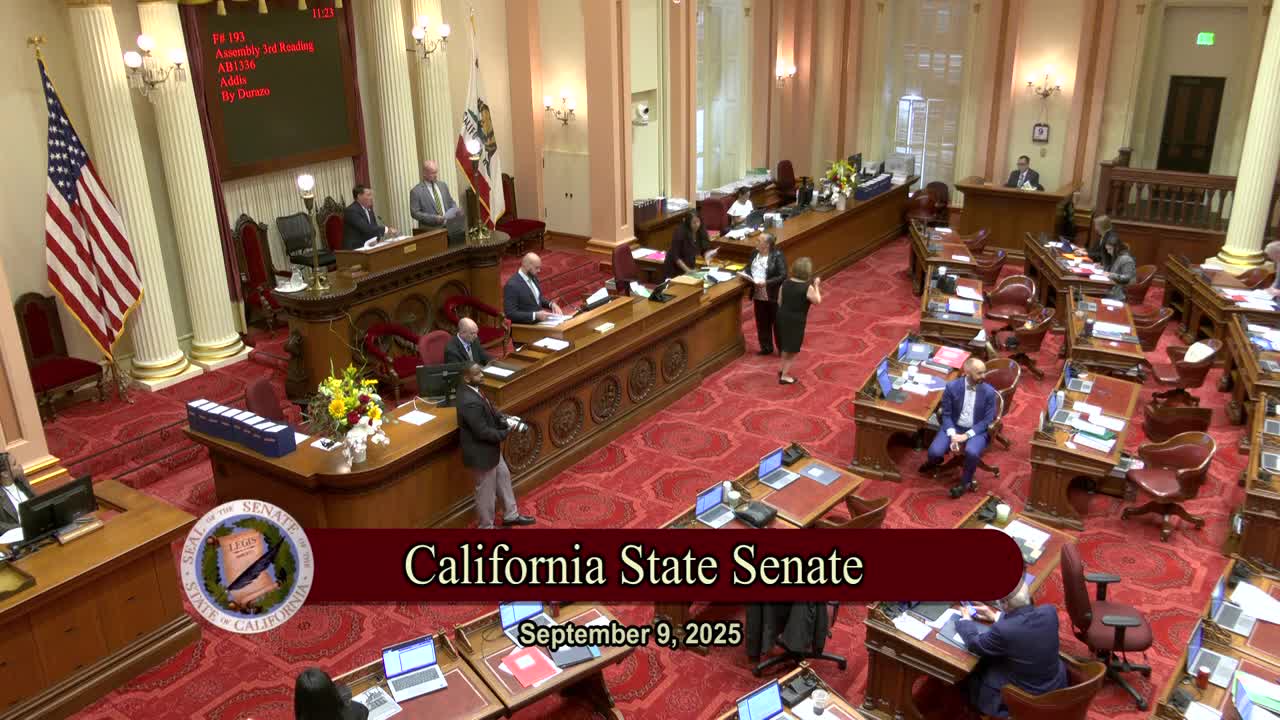
Bill Author

Bill Co-Author(s):