AB 461: Truancy.
- Session Year: 2025-2026
- House: Assembly
- Latest Version Date: 2025-10-01
Current Status:
Passed
(2025-10-01: Chaptered by Secretary of State - Chapter 154, Statutes of 2025.)
Introduced
In Committee
Awaiting First Chamber Vote
Passed First Chamber
In Committee
Awaiting Second Chamber Vote
Passed Second Chamber
Enacted
Existing law, the Compulsory Education Law, generally makes persons between the ages of 6 and 18 years of age subject to compulsory full-time education, unless exempted.
Existing law makes a parent or guardian of a pupil of 6 years of age or more who is in kindergarten or any of grades 1 to 8, inclusive, and subject to compulsory full-time or continuing education, whose child is a chronic truant, as defined, who has failed to reasonably supervise and encourage the pupils school attendance, and who has been offered support services to address the pupils truancy, guilty of a misdemeanor that is punishable by a fine of up to $2,000, or imprisonment in a county jail for up to one year, or both that fine and imprisonment.
This bill would repeal that criminal offense.
Existing law, the Compulsory Education Law, generally makes persons between the ages of 6 and 18 years of age subject to compulsory full-time education, unless exempted. Existing law also requires children in a CalWORKs assistance unit for whom school attendance is compulsory to attend school, except as specified. Under existing law, the needs of a child in the assistance unit who is 16 years of age or older are not considered in computing the specified grant of the family for any month in which the county is informed by a school district or a county school attendance review board that the child did not attend school, unless at least one of certain conditions is present.
This bill would, commencing July 1, 2026, or the date when the State Department of Social Services has made a specified determination, whichever is later, repeal the requirement under CalWORKs for a child in an assistance unit to attend school and would repeal the prohibition against considering the needs of a child in an assistance unit who is 16 years of age or older who did not attend school, thereby allowing the needs of that child to be considered in computing the monthly family grant. The bill would, commencing on the date those provisions are repealed, if a county human services agency is informed that a child is not complying with the Compulsory Education Law, require the county human services agency to screen the family for family stabilization services and authorize the child, if they are 16 years of age or older, to voluntarily participate in the welfare-to-work program. The bill would authorize the department to implement these provisions through all-county letters or similar instructions until regulations are adopted. By increasing the duties of county human services agencies, this bill would impose a state-mandated local program.(2)ExistingExisting law makes a parent or guardian of a pupil of 6 years of age or more who is in kindergarten or any of grades 1 to 8, inclusive, and subject to compulsory full-time or continuing education, whose child is a chronic truant, as defined, who has failed to reasonably supervise and encourage the pupils school attendance, and who has been offered support services to address the pupils truancy, guilty of a misdemeanor that is punishable by a fine of up to $2,000, or imprisonment in a county jail for up to one year, or both that fine and imprisonment.
This bill would repeal that criminal offense.
(3)Existing law continuously appropriates moneys from the General Fund to defray a portion of county costs under the CalWORKs program.This bill would instead provide that the continuous appropriation would not be made for purposes of implementing the above provisions.(4)The California Constitution requires the state to reimburse local agencies and school districts for certain costs mandated by the state. Statutory provisions establish procedures for making that reimbursement.This bill would provide that, if the Commission on State Mandates determines that the bill contains costs mandated by the state, reimbursement for those costs shall be made pursuant to the statutory provisions noted above.(1)Existing law requires each county to provide cash assistance and other social services to needy families through the California Work Opportunity and Responsibility to Kids (CalWORKs) program using federal Temporary Assistance for Needy Families block grant program, state, and county funds. Under the CalWORKs program, certain recipients are required to participate in the welfare-to-work program, which includes the completion of various welfare-to-work activities, including, among others, unsubsidized employment, subsidized private sector employment, subsidized public sector employment, and self-employment.
Existing law, the Compulsory Education Law, generally makes persons between the ages of 6 and 18 years of age subject to compulsory full-time education, unless exempted. Existing law also requires children in a CalWORKs assistance unit for whom school attendance is compulsory to attend school, except as specified. Under existing law, the needs of a child in the assistance unit who is 16 years of age or older are not considered in computing the specified grant of the family for any month in which the county is informed by a school district or a county school attendance review board that the child did not attend school, unless at least one of certain conditions is present.
This bill would, commencing July 1, 2026, or the date when the State Department of Social Services has made a specified determination, whichever is later, repeal the requirement under CalWORKs for a child in an assistance unit to attend school and would repeal the prohibition against considering the needs of a child in an assistance unit who is 16 years of age or older who did not attend school, thereby allowing the needs of that child to be considered in computing the monthly family grant. The bill would, commencing on the date those provisions are repealed, if a county human services agency is informed that a child is not complying with the Compulsory Education Law, require the county human services agency to screen the family for family stabilization services and authorize the child, if they are 16 years of age or older, to voluntarily participate in the welfare-to-work program. The bill would authorize the department to implement these provisions through all-county letters or similar instructions until regulations are adopted. By increasing the duties of county human services agencies, this bill would impose a state-mandated local program.
(2)Existing law makes a parent or guardian of a pupil of 6 years of age or more who is in kindergarten or any of grades 1 to 8, inclusive, and subject to compulsory full-time or continuing education, whose child is a chronic truant, as defined, who has failed to reasonably supervise and encourage the pupils school attendance, and who has been offered support services to address the pupils truancy, guilty of a misdemeanor that is punishable by a fine of up to $2,000, or imprisonment in a county jail for up to one year, or both that fine and imprisonment.
This bill would repeal that criminal offense.
(3)Existing law continuously appropriates moneys from the General Fund to defray a portion of county costs under the CalWORKs program.
This bill would instead provide that the continuous appropriation would not be made for purposes of implementing the above provisions.
(4)The California Constitution requires the state to reimburse local agencies and school districts for certain costs mandated by the state. Statutory provisions establish procedures for making that reimbursement.
This bill would provide that, if the Commission on State Mandates determines that the bill contains costs mandated by the state, reimbursement for those costs shall be made pursuant to the statutory provisions noted above.
(1)Existing law requires each county to provide cash assistance and other social services to needy families through the California Work Opportunity and Responsibility to Kids (CalWORKs) program using federal Temporary Assistance for Needy Families block grant program, state, and county funds. Under the CalWORKs program, certain recipients are required to participate in the welfare-to-work program, which includes the completion of various welfare-to-work activities, including, among others, unsubsidized employment, subsidized private sector employment, subsidized public sector employment, and self-employment.
Existing law, the Compulsory Education Law, generally makes persons between the ages of 6 and 18 years of age subject to compulsory full-time education, unless exempted. Existing law also requires children in a CalWORKs assistance unit for whom school attendance is compulsory to attend school, except as specified. Under existing law, the needs of a child in the assistance unit who is 16 years of age or older are not considered in computing the specified grant of the family for any month in which the county is informed by a school district or a county school attendance review board that the child did not attend school, unless at least one of certain conditions is present.
This bill would, commencing July 1, 2026, or the date when the State Department of Social Services has made a specified determination, whichever is later, repeal the requirement under CalWORKs for a child in an assistance unit to attend school and would repeal the prohibition against considering the needs of a child in an assistance unit who is 16 years of age or older who did not attend school, thereby allowing the needs of that child to be considered in computing the monthly family grant. The bill would, commencing on the date those provisions are repealed, if a county human services agency is informed that a child is not complying with the Compulsory Education Law, require the county human services agency to screen the family for family stabilization services and authorize the child, if they are 16 years of age or older, to voluntarily participate in the welfare-to-work program. By increasing the duties of county human services agencies, this bill would impose a state-mandated local program.
(2)Existing law makes a parent or guardian of a pupil of 6 years of age or more who is in kindergarten or any of grades 1 to 8, inclusive, and subject to compulsory full-time or continuing education, whose child is a chronic truant, as defined, who has failed to reasonably supervise and encourage the pupils school attendance, and who has been offered support services to address the pupils truancy, guilty of a misdemeanor that is punishable by a fine of up to $2,000, or imprisonment in a county jail for up to one year, or both that fine and imprisonment.
This bill would repeal that criminal offense.
(3)Existing law continuously appropriates moneys from the General Fund to defray a portion of county costs under the CalWORKs program.
This bill would instead provide that the continuous appropriation would not be made for purposes of implementing the above provisions.
(4)The California Constitution requires the state to reimburse local agencies and school districts for certain costs mandated by the state. Statutory provisions establish procedures for making that reimbursement.
This bill would provide that, if the Commission on State Mandates determines that the bill contains costs mandated by the state, reimbursement for those costs shall be made pursuant to the statutory provisions noted above.
Existing law requires the State Department of Social Services to promote the participation of current and former foster youth in the development of state foster care and child welfare policy and, subject to the availability of funds, to contract with California Youth Connection to provide technical assistance and outreach to current and former foster youth.This bill would make technical, nonsubstantive changes to that provision.Existing law requires the State Department of Social Services to promote the participation of current and former foster youth in the development of state foster care and child welfare policy and, subject to the availability of funds, to contract with California Youth Connection to provide technical assistance and outreach to current and former foster youth.
This bill would make technical, nonsubstantive changes to that provision.
(a)All children in an assistance unit for whom school attendance is compulsory, except individuals who are eligible for the Cal-Learn Program under Article 3.5 (commencing with Section 11331), for any period during which that article is operative, and children subject to a county school attendance project under Article 2 (commencing with Section 18236) of Chapter 3.3 of Part 6, shall be required to attend school pursuant to subdivision (f).
(b)Applicants for and recipients of aid under this chapter shall be informed of the attendance requirement in subdivision (a) and it shall be included in the recipients welfare-to-work plan under Section 11325.21.
(c)A recipient shall cooperate in providing the county with documentation routinely available from the school or school district of regular attendance of all children described in subdivision (a) in the assistance unit when the county determines it is appropriate, unless there is good cause for the inability to secure that documentation.
(d)If it is determined by the county that any child in the assistance unit is not attending school as required by subdivision (a), the family may be informed of how to enroll the child in a continuation school within the county and may be screened to determine eligibility for family stabilization services pursuant to Section 11325.24 and in accordance with county policy and procedures. If applicable, the county shall document that the family was given this information and was screened for those services. The needs of a child in the assistance unit who is 16 years of age or older shall not be considered in computing the grant of the family under Section 11450 for any month in which the county is informed by a school district or a county school attendance review board that the child did not attend school pursuant to subdivision (f), unless at least one of the following conditions is present:
(1)The county is provided with evidence that the childs attendance records are not available.
(2)The county is provided with evidence that the child has been attending school.
(3)Good cause for school nonparticipation exists at any time during the month. A circumstance that shall constitute good cause includes, but is not limited to, the applicant or recipient is in a domestic violence situation that results in school nonparticipation or the failure to cooperate.
(4)Any member of the household is eligible to participate in family stabilization pursuant to Section 11325.24.
(5)The county is provided with evidence that the child, parent, or caregiver is complying with requirements imposed by a school attendance review board, the county probation department, or the district attorney pursuant to Section 48263 or 48263.5 of the Education Code.
(6)A member of the household is cooperating with a plan developed by a county child welfare agency.
(e)A child whose needs have not been considered in computing the grant of the family pursuant to this section shall remain eligible for services that may lead to attendance in school.
(f)For the purposes of this section, a child shall be presumed to be attending school unless the child has been deemed a chronic truant pursuant to Section 48263.6 of the Education Code.
(g)This section shall remain in effect only until become inoperative on July 1, 2026, or the date that the department notifies the Legislature that the Statewide Automated Welfare System can perform the necessary automation to implement this section, as added by Section 4 of the act that added this subdivision, whichever date is later, and, as of January 1, 2027, or January 1 of the year following the Legislature receiving that notification, whichever date is later, January 1 of the following year, is repealed.
SEC. 4.Section 11253.5 is added to the Welfare and Institutions Code, to read:11253.5.(a)If the county human services agency is informed that any child in the assistance unit is not attending school as required by the Compulsory Education Law (Chapter 2 (commencing with Section 48200) of Part 27 of Division 4 of Title 2 of the Education Code), both of the following shall apply:
(1)The county human services agency shall screen the family to determine eligibility for family stabilization services pursuant to Section 11325.24 and in accordance with county policy and procedures.
(2)The child, if they are 16 years of age or older, may voluntarily participate in the welfare-to-work program established in Article 3.2 (commencing with Section 11320). A child who participates in that program pursuant to this paragraph shall be eligible to participate in all welfare-to-work activities available to an adult participant, including, but not limited to, substance abuse services, mental health services, vocational education, or job readiness activities, as long as activities support, but do not interfere with, support the childs compliance with the Compulsory Education Law or attendance or progress in school, and that all welfare-to-work activities support the goal of the child completing their secondary education, or its its equivalent.
(b)A child who is not attending school as required by the Compulsory Education Law shall remain eligible for services that may lead to attendance in school.
(c)Notwithstanding the rulemaking provisions of the Administrative Procedure Act (Chapter 3.5 (commencing with Section 11340) of Part 1 of Division 3 of Title 2 of the Government Code), the department may implement and administer this section through all-county letters or similar instructions that shall have the same force and effect as regulations until regulations are adopted.
(c)(d)This section shall become operative on July 1, 2026, or on the date that the department notifies the Legislature that the Statewide Automated Welfare System can perform the necessary automation to implement this section, whichever date is later.
SEC. 5.No appropriation pursuant to Section 15200 of the Welfare and Institutions Code shall be made for purposes of implementing this act.
SEC. 6.If the Commission on State Mandates determines that this act contains costs mandated by the state, reimbursement to local agencies and school districts for those costs shall be made pursuant to Part 7 (commencing with Section 17500) of Division 4 of Title 2 of the Government Code.
(a)All children in an assistance unit for whom school attendance is compulsory, except individuals who are eligible for the Cal-Learn Program under Article 3.5 (commencing with Section 11331), for any period during which that article is operative, and children subject to a county school attendance project under Article 2 (commencing with Section 18236) of Chapter 3.3 of Part 6, shall be required to attend school pursuant to subdivision (f).
(b)Applicants for and recipients of aid under this chapter shall be informed of the attendance requirement in subdivision (a) and it shall be included in the recipients welfare-to-work plan under Section 11325.21.
(c)A recipient shall cooperate in providing the county with documentation routinely available from the school or school district of regular attendance of all children described in subdivision (a) in the assistance unit when the county determines it is appropriate, unless there is good cause for the inability to secure that documentation.
(d)If it is determined by the county that any child in the assistance unit is not attending school as required by subdivision (a), the family may be informed of how to enroll the child in a continuation school within the county and may be screened to determine eligibility for family stabilization services pursuant to Section 11325.24 and in accordance with county policy and procedures. If applicable, the county shall document that the family was given this information and was screened for those services. The needs of a child in the assistance unit who is 16 years of age or older shall not be considered in computing the grant of the family under Section 11450 for any month in which the county is informed by a school district or a county school attendance review board that the child did not attend school pursuant to subdivision (f), unless at least one of the following conditions is present:
(1)The county is provided with evidence that the childs attendance records are not available.
(2)The county is provided with evidence that the child has been attending school.
(3)Good cause for school nonparticipation exists at any time during the month. A circumstance that shall constitute good cause includes, but is not limited to, the applicant or recipient is in a domestic violence situation that results in school nonparticipation or the failure to cooperate.
(4)Any member of the household is eligible to participate in family stabilization pursuant to Section 11325.24.
(5)The county is provided with evidence that the child, parent, or caregiver is complying with requirements imposed by a school attendance review board, the county probation department, or the district attorney pursuant to Section 48263 or 48263.5 of the Education Code.
(6)A member of the household is cooperating with a plan developed by a county child welfare agency.
(e)A child whose needs have not been considered in computing the grant of the family pursuant to this section shall remain eligible for services that may lead to attendance in school.
(f)For the purposes of this section, a child shall be presumed to be attending school unless he or she the child has been deemed a chronic truant pursuant to Section 48263.6 of the Education Code.
(g)This section shall become operative on July 1, 2018.(g)This section shall remain in effect only until July 1, 2026, or the date that the department notifies the Legislature that the Statewide Automated Welfare System can perform the necessary automation to implement this section, as added by Section 4 of the act that added this subdivision, whichever date is later, and, as of January 1, 2027, or January 1 of the year following the Legislature receiving that notification, whichever date is later, is repealed.
SEC. 4.Section 11253.5 is added to the Welfare and Institutions Code, to read:11253.5.(a)If the county human services agency is informed that any child in the assistance unit is not attending school as required by the Compulsory Education Law (Chapter 2 (commencing with Section 48200) of Part 27 of Division 4 of Title 2 of the Education Code), both of the following shall apply:
(1)The county human services agency shall screen the family to determine eligibility for family stabilization services pursuant to Section 11325.24 and in accordance with county policy and procedures.
(2)The child, if they are 16 years of age or older, may voluntarily participate in the welfare-to-work program established in Article 3.2 (commencing with Section 11320). A child who participates in that program pursuant to this paragraph shall be eligible to participate in all welfare-to-work activities available to an adult participant, including, but not limited to, substance abuse services, mental health services, vocational education, or job readiness activities, as long as activities support, but do not interfere with, the childs compliance with the Compulsory Education Law or attendance or progress in school, and that all welfare-to-work activities support the goal of the child completing their secondary education, or its equivalent.
(b)A child who is not attending school as required by the Compulsory Education Law shall remain eligible for services that may lead to attendance in school.
(c)This section shall become operative on July 1, 2026, or on the date that the department notifies the Legislature that the Statewide Automated Welfare System can perform the necessary automation to implement this section, whichever date is later.
SEC. 5.No appropriation pursuant to Section 15200 of the Welfare and Institutions Code shall be made for purposes of implementing this act.
SEC. 6.If the Commission on State Mandates determines that this act contains costs mandated by the state, reimbursement to local agencies and school districts for those costs shall be made pursuant to Part 7 (commencing with Section 17500) of Division 4 of Title 2 of the Government Code.
SECTION 1.Section 16001.7 of the Welfare and Institutions Code is amended to read:16001.7.(a)The department shall promote the participation of current and former foster youth in the development of state foster care and child welfare policy. Subject to the availability of funds, the department shall contract with California Youth Connection to provide technical assistance and outreach to current and former foster youth. In executing this contract, the responsibilities of California Youth Connection shall include, but are not limited to, all of the following:(1)Providing leadership training to current and former foster youth between 14 and 21 years of age.(2)Providing outreach and technical assistance to current and former foster youth to form and maintain California Youth Connection chapters, including recruiting and training adult volunteer supporters.(3)Enabling foster youth to be represented in policy discussions pertinent to foster care and child welfare issues.(4)Enhancing the well-being of foster youth and increasing public understanding of foster care and child welfare issues.(5)Developing educational materials and forums related to foster care.(b)Funds provided to California Youth Connection pursuant to the contract shall not be used for activities that are not allowed under federal law relating to the receipt of federal financial participation for independent living services, including, but not limited to, lobbying and litigation. REVISIONS: HeadingLine 2.(a)The department shall promote the participation of current and former foster youth in the development of state foster care and child welfare policy. Subject to the availability of funds, the department shall contract with the California Youth Connection to provide technical assistance and outreach to current and former foster youth. In executing this contract, the responsibilities of the California Youth Connection shall include, but are not limited to, all of the following:
(1)Providing leadership training to current and former foster youth between the ages of 14 and 21 years. 14 and 21 years of age.
(2)Providing outreach and technical assistance to current and former foster youth to form and maintain California Youth Connection chapters, including recruiting and training adult volunteer supporters.
(3)Enabling foster youth to be represented in policy discussions pertinent to foster care and child welfare issues.
(4)Enhancing the well-being of foster youth and increasing public understanding of foster care and child welfare issues.
(5)Developing educational materials and forums related to foster care.
(b)Funds provided to the California Youth Connection pursuant to the contract shall not be used for activities that are not allowed under federal law relating to the receipt of federal financial participation for independent living services, including, but not limited to, lobbying and litigation.
|
Date
|
Status
|
|---|---|
| Oct 1, 2025 | Chaptered by Secretary of State - Chapter 154, Statutes of 2025. |
| Oct 1, 2025 | Approved by the Governor. |
| Sep 22, 2025 | Enrolled and presented to the Governor at 3 p.m. |
| Sep 10, 2025 | Senate amendments concurred in. To Engrossing and Enrolling. (Ayes 60. Noes 14. Page 3234.). |
| Sep 9, 2025 | In Assembly. Concurrence in Senate amendments pending. |
| Sep 9, 2025 | Read third time. Passed. Ordered to the Assembly. (Ayes 29. Noes 9. Page 2705.). |
| Sep 8, 2025 | Read second time. Ordered to third reading. |
| Sep 5, 2025 | Read third time and amended. Ordered to second reading. |
| Sep 2, 2025 | Read second time. Ordered to third reading. |
| Aug 29, 2025 | Read second time and amended. Ordered returned to second reading. |
| Aug 29, 2025 | From committee: Amend, and do pass as amended. (Ayes 5. Noes 2.) (August 29). |
| Aug 18, 2025 | In committee: Referred to suspense file. |
| Jul 15, 2025 | From committee: Do pass and re-refer to Com. on APPR. (Ayes 5. Noes 1.) (July 15). Re-referred to Com. on APPR. |
| Jul 1, 2025 | From committee: Do pass and re-refer to Com. on PUB. S. (Ayes 4. Noes 1.) (June 30). Re-referred to Com. on PUB. S. |
| Jun 11, 2025 | Referred to Coms. on HUMAN S. and PUB. S. |
| Jun 3, 2025 | In Senate. Read first time. To Com. on RLS. for assignment. |
| Jun 2, 2025 | Read third time. Passed. Ordered to the Senate. (Ayes 60. Noes 9. Page 1831.) |
| May 27, 2025 | Read second time. Ordered to third reading. |
| May 23, 2025 | From committee: Do pass. (Ayes 11. Noes 2.) (May 23). |
| May 21, 2025 | Joint Rule 62(a), file notice suspended. (Page 1627.) |
| May 21, 2025 | In committee: Set, first hearing. Referred to APPR. suspense file. |
| May 14, 2025 | In committee: Hearing postponed by committee. |
| Apr 30, 2025 | From committee: Do pass and re-refer to Com. on APPR. (Ayes 7. Noes 0.) (April 29). Re-referred to Com. on APPR. |
| Apr 9, 2025 | From committee: Do pass and re-refer to Com. on PUB. S. (Ayes 5. Noes 1.) (April 8). Re-referred to Com. on PUB. S. |
| Apr 9, 2025 | Coauthors revised. |
| Mar 25, 2025 | Re-referred to Com. on HUM. S. |
| Mar 24, 2025 | From committee chair, with author's amendments: Amend, and re-refer to Com. on HUM. S. Read second time and amended. |
| Mar 24, 2025 | Referred to Coms. on HUM. S. and PUB. S. |
| Feb 7, 2025 | From printer. May be heard in committee March 9. |
| Feb 6, 2025 | Read first time. To print. |
|
Date
|
Description
|
Location
|
Votes
|
|
|---|---|---|---|---|
| Sep 10, 2025 | AB 461 Ahrens Concurrence in Senate Amendments | Assembly Floor |
Passed |
|
| Sep 9, 2025 | Assembly 3rd Reading AB461 Ahrens et al. By Pérez | Senate Floor |
Passed |
|
| Aug 29, 2025 | Do pass as amended | Senate Standing Committee on Appropriations |
Passed |
|
| Aug 18, 2025 | Placed on suspense file | Senate Standing Committee on Appropriations |
Passed |
|
| Jul 15, 2025 | Do pass, but first be re-referred to the Committee on [Appropriations] | Senate Standing Committee on Public Safety |
Passed |
|
| Jun 30, 2025 | Do pass, but first be re-referred to the Committee on [Public Safety] | Senate Standing Committee on Human Services |
Passed |
|
| Jun 2, 2025 | AB 461 Ahrens Assembly Third Reading | Assembly Floor |
Passed |
|
| May 23, 2025 | Do pass. | Assembly Standing Committee on Appropriations |
Passed |
|
| Apr 29, 2025 | Do pass and be re-referred to the Committee on [Appropriations] | Assembly Standing Committee on Public Safety |
Passed |
|
| Apr 8, 2025 | Do pass and be re-referred to the Committee on [Public Safety] | Assembly Standing Committee on Human Services |
Passed |
This list shows positions taken on this bill by organizations on the date displayed, which is linked to the original source.
Positions by individuals are not included.
|
Organization
|
Position
|
Date
|
|---|---|---|
| Asian Americans Advancing Justice Southern California | ** Support | |
| Back to the Start | ** Support | |
| Black Women For Wellness Action Project | ** Support | |
| Bridges of Hope CA | ** Support | |
| California Attorneys For Criminal Justice | ** Support | |
| California Coalition of California Welfare Rights Advocates | ** Support | |
| California for Safety and Justice | ** Support | |
| Californians United for a Responsible Budget | ** Support | |
| California Partnership To End Domestic Violence | ** Support | |
| California Public Defenders Association | ** Support | |
| California State Council of Service Employees International Union | ** Support | |
| California State PTA | ** Support | |
| California State Treasurer | ** Support | |
| Center on Juvenile and Criminal Justice | ** Support | |
| Child Care Law Center | ** Support | |
| Coalition of California Welfare Rights Organizations | ** Support | |
| Communities United for Restorative Youth Justice | ** Support | |
| County Welfare Directors Association of California | ** Support | |
| Courage California | ** Support | |
| Debt Free Justice California | ** Support | |
| Disability Rights California | ** Support | |
| Drug Policy Alliance | ** Support | |
| Ella Baker Center For Human Rights | ** Support | |
| End Child Poverty California | ** Support | |
| End Poverty in California | ** Support | |
| Glide | ** Support | |
| Initiate Justice | ** Support | |
| Justice2jobs Coalition | ** Support | |
| LA Defensa | ** Support | |
| Mid-City Community Advocacy Network | ** Support | |
| Mission Economic Development Agency | ** Support | |
| Parent Voices CA | ** Support | |
| Parent Voices California | ** Support | |
| Project SPARC | ** Support | |
| Rubicon Programs | ** Support | |
| Sister Warriors Freedom Coalition | ** Support | |
| Smart Justice California | ** Support | |
| Southeast Asia Resource Action Center | ** Support | |
| The Children's Partnership | ** Support | |
| Vera Institute Of Justice | ** Support | |
| western center on law and poverty | ** Support | |
| Youth Justice Education Clinic, Center for Juvenile Law and Policy, Loyola Law School | ** Support |
CONCURRENCE IN SENATE AMENDMENTS
CSA1 Bill Id:AB 461
Author:(Ahrens)
As Amended Ver:September 5, 2025
Majority vote
SUMMARY
Repeals the criminal offense for parents who fail to reasonably supervise and encourage pupil school attendance resulting in chronic truancy.
Senate Amendments
Remove the revision to the requirement for school attendance for children in an assistance unit (AU) in California Work Opportunity and Responsibility to Kids (CalWORKs).
COMMENTS
Compulsory Education. In California, education is mandatory for children between six and 18 years of age unless exempt for limited reasons. California enforces this by holding CalWORKs families accountable by withholding aid amount or making it a misdemeanor punishable by up to $2,000. In recent years, there has been an effort to take more of a carrot approach rather than a stick approach. For example, SB 691 (Portantino), Chapter 863, Statutes of 2024, revised truancy notices to include language explaining the importance of attendance and notifying the family of possible services available, including school personnel availability and mental health services, rather than a threatening approach notifying them that they may be prosecuted.
Truancy. The existing criminal liability on parents of truant children was enacted in 2010 by SB 1317 (Leno), Chapter 647, Statutes of 2010, which was sponsored by then-San Francisco District Attorney Kamala Harris.
In San Francisco, where she was the district attorney from 2004 to 2010, [Harris] implemented a truancy initiative that introduced the threat of prosecution of parents and guardians when children habitually missed school. That initiative became the model for a 2010 state law that Harris sponsored which adopted strict penalties for parents of truant students: a fine not to exceed $2,000, jail time not to exceed one year, or both.
The penalties could be applied if a student was habitually truant, meaning they missed 10% or more of the school year and only after parents had been offered a range of support services to address the student′s truancy. Truancy courts were created where the penalties could be deferred so long as the students begin attending school. While attorney general from 2011 to 2017, her office created an on-line truancy hub with truancy reports from 2013 to 2016.
The first arrests under the law were in 2011 of five parents in Orange County. The arrest option has since become controversial as districts focus first on how to solve the problems leading to truancy.
In 2013, the Department of Justice (DOJ) released the report In School and On Track: Attorney General′s 2013 Report on California′s Elementary School Truancy and Absenteeism Crisis on truancy in California detailing the legal framework for prosecution and relevant statistics:
California law provides district attorneys with broad discretion whether to investigate, charge, and prosecute any type of case in his or her county. As a public prosecutor, this discretionary power also includes the ability to seek alternative methods to resolve a matter–even in a situation in which a crime has been committed. After prosecutorial proceedings have begun, district attorneys can pursue many options to achieve their goal of getting a child back into the classroom on a full-time basis.
Nearly all of the district attorneys surveyed for this report said they rarely prosecute violations of Penal Code section 270.1. On average, district attorneys reported prosecuting 3-6 Section 270.1 cases per year. This low number of prosecutions is due to the fact that early intervention strategies like assemblies, SART meetings and SARB hearings, and mediation programs are highly successful.
There may be extreme cases in which every effort to get a child back to school has been exhausted that are appropriate for prosecution. For example, using Penal Code
270.1, the Kings County District Attorney′s office prosecuted a mother whose two elementary school children had a combined 116 absences in a single school year. The mother had disregarded and failed to respond to 15-20 previous outreach efforts. However, the district must engage in multiple intervention steps before a parent is prosecuted to provide extensive opportunities for families to correct attendance problems.
The DOJ report noted that Education Code Sections 48291, 48292, and 48293; Education Code Sections 48264 and 48264.5, subd. (d) and Welfare and Institutions Code Sections 601 and 602 provide for the prosecution of truant students. Their research indicated that, understandably, prosecutors rarely, if ever, prosecute elementary school students for truancy; therefore, this report focuses on the laws relating to, and the prosecution of, the parents of truant elementary school students, rather than the prosecution of students themselves.
According to an EdSource article, over 234,000 students enrolled in Santa Clara County during the 2023-24 school year, the Santa Clara District Attorney′s office heard 130 truancy cases — although some of those cases were from the previous school year. Infractions were issued to 34 parents; 28 were dismissed as student attendance improved, and six parents pleaded guilty. Those six were issued fines, and their court fees were waived. The remaining cases were continued.
However, some other counties took a more punitive approach. Merced County in 2017 initiated an anti-truancy effort that included the arrest of 10 parents for failing to send their children to school. They were charged with misdemeanors, contributing to the delinquency of a minor.
This bill repeals Penal Code Section 270.1, which subjects a parent or guardian who allows their child to become chronically truant, which is defined as being absent from school without a valid excuse for 10% or more of the schooldays in one school year, to misdemeanor penalties. According to the sponsors of this bill, criminal penalties and loss of crucial aid pushes families deeper into poverty and increases chances of family separation.
Equity Implications: Education is foundational for helping individuals escape generational poverty. However, schools that serve socioeconomically disadvantaged (SED) students tend to have higher rates of chronic absenteeism. Only 2% of the most affluent schools (those serving
0–24% SED students) experience extreme levels of chronic absence. In comparison, 60% of schools serving 75% or more SED students have extreme levels of chronic absence. Students who are involved in the foster care system, are experiencing homelessness, and have been identified as having a disability have extraordinarily high levels of chronic absenteeism. In addition, Native American, Black, and Pacific Islander students have exceptionally high rates of chronic absence. For these populations, chronic absenteeism both reflects and exacerbates inequities. These high rates can reflect challenges facing students and families in the community (e.g., lack of access to health care, unreliable transportation, housing, and food insecurity, etc.) and within the school (e.g., bullying, unwelcoming school climate, biased disciplinary or attendance practices, or lack of a meaningful and culturally relevant curriculum). Such difficulties can affect students′ learning ability and cause them to fall farther behind because they miss invaluable instruction.
According to the Author
″Criminalizing parents for their children′s truancy ignores the root causes of absenteeism and only deepens family hardships, especially as many immigrant families now fear sending their children to school. [This bill] ensures support and resources to keep students in school and on track for success.″
Arguments in Support
According to coalition of organizations co-sponsoring the bill, including End Child Poverty California and Western Center on Law and Poverty, ″Current law criminalizes parents of children six and older for school attendance issues, imposing fines and jail time instead of offering support. Data show deep racial disparities in which kids are deemed chronically absent, put in a position for the criminal penalties for parents even if the child′s attendance is not under their control. Several recent reports highlight the threat to school attendance for vulnerable populations including immigrant children and families, LGBTQ+ youth, and other populations of students that also experience disproportionate rates of poverty.″
Arguments in Opposition
No opposition on file.
FISCAL COMMENTS
According to the Senate Appropriations Committee on August 29, 2025:
- Ongoing General Fund costs of $141,000 annually to increase the cash aid grant for families who currently have a truancy penalty (49 cases); a one-time General Fund administration cost of $1,000 to recalculate the monthly grant; and a one-time General Fund cost of $276,000 for automation.
- Unknown costs to counties for administration. Costs would be potentially reimbursable by the state, subject to a determination by the Commission on State Mandates.
VOTES:
ASM HUMAN SERVICES: 5-1-0
YES: Lee, Calderon, Elhawary, Jackson, Celeste Rodriguez
NO: Castillo
ASM PUBLIC SAFETY: 7-0-2
YES: Schultz, Mark González, Bonta, Harabedian, Nguyen, Ramos, Sharp-Collins
ABS, ABST OR NV: Alanis, Lackey
ASM APPROPRIATIONS: 11-2-2
YES: Wicks, Arambula, Calderon, Caloza, Elhawary, Fong, Mark González, Hart, Pacheco, Pellerin, Solache
NO: Dixon, Tangipa
ABS, ABST OR NV: Sanchez, Ta
ASSEMBLY FLOOR: 60-9-10
YES: Addis, Aguiar-Curry, Ahrens, Alvarez, Arambula, Ávila Farías, Bauer-Kahan, Bennett, Berman, Boerner, Bonta, Bryan, Calderon, Caloza, Carrillo, Connolly, Elhawary, Flora, Fong, Gabriel, Garcia, Gipson, Mark González, Haney, Harabedian, Hart, Irwin, Jackson, Kalra, Krell, Lee, Lowenthal, McKinnor, Muratsuchi, Nguyen, Ortega, Pacheco, Papan, Patel, Pellerin, Petrie-Norris, Quirk-Silva, Ramos, Ransom, Celeste Rodriguez, Michelle Rodriguez, Rogers, Blanca Rubio, Schiavo, Schultz, Sharp-Collins, Solache, Soria, Stefani, Valencia, Ward, Wicks, Wilson, Zbur, Rivas
NO: Alanis, Davies, DeMaio, Dixon, Gallagher, Hadwick, Patterson, Tangipa, Wallis
ABS, ABST OR NV: Bains, Castillo, Chen, Ellis, Jeff Gonzalez, Hoover, Lackey, Macedo, Sanchez, Ta
UPDATED
VERSION: September 5, 2025
CONSULTANT: Alexandria Smith / HUM. S. / (916) 319-2089 FN: 0001897
SENATE RULES COMMITTEE Office of Senate Floor Analyses (916) 651-1520 Fax: (916) 327-4478 | AB 461 |
THIRD READING
Bill No: AB 461
Author: Ahrens (D), et al.
Amended: 9/5/25 in Senate
Vote: 21
SENATE HUMAN SERVICES COMMITTEE: 4-1, 6/30/25
AYES: Arreguín, Becker, Limón, Pérez
NOES: Ochoa Bogh
SENATE PUBLIC SAFETY COMMITTEE: 5-1, 7/15/25
AYES: Arreguín, Caballero, Gonzalez, Pérez, Wiener
NOES: Seyarto
SENATE APPROPRIATIONS COMMITTEE: 5-2, 8/29/25
AYES: Caballero, Cabaldon, Grayson, Richardson, Wahab
NOES: Seyarto, Dahle
ASSEMBLY FLOOR: 60-9, 6/2/25 - See last page for vote
SUBJECT: Truancy
SOURCE: California State Council of Service Employees International Union
End Child Poverty California Powered by Grace
DIGEST:
This bill creates the More Help Not Less Act of 2025 which deletes the criminal penalties levied on families of students who are truant.
Senate floor amendments of 9/5/25 address concerns from administration.
ANALYSIS:
Existing Law:
- States that the parents of students found to be not regularly attending school are guilty of criminal misdemeanor penalties of a fine up to $2,000, 1 year of jail time, or both if they have failed to reasonably supervise the student and have been offered language accessible support services. (Penal Code Section 270.1)
- Requires each person between the ages of 6 and 18 years old, who does not meet specified exemptions, to be subject to compulsory full- time education and must attend a public full-time day school or continuation school or classes for a full school day as designated by the governing school board. (Education Code 48200)
- Defines "truant" as any pupil subject to compulsory full-time education or to compulsory continuation education who is absent from school without a valid excuse three full days in one school year or tardy or absent for more than any 30-minute period during the school day without a valid excuse on three occasions in one school year, or any combination thereof. (Education Code 48260)
- Defines “chronic truant” as any pupil subject to compulsory full-time education or to compulsory continuation education who is absent from school without a valid excuse for 10 percent or more of the schooldays in one school year. (Education Code 48263.6)
This bill deletes the penal code section which makes parents or guardians of children in kindergarten through eighth grade and subject to compulsory full-time education and found to be a chronic truant guilty of a misdemeanor if they have failed to reasonably supervise the student and have been offered language accessible support services.
Comments
According to the author, “criminalizing parents for their children’s truancy ignores the root causes of absenteeism and only deepens family hardships, especially as many immigrant families now fear sending their children to school. AB 461 ensures support and resources to keep students in school and on track for success.”
Truancy. In California law, truancy is when a student is absent from school without a valid excuse three full days in one school year or tardy or absent for more than any 30-minute period during the school day without a valid excuse on three occasions in one school year. Chronic truancy is when a student is absent from school without a valid excuse for 10 percent or more of the schooldays in one school year.
The statute establishing criminal liability for parents of truant children—Penal Code section 270.1—was enacted via SB 1317 (Leno), Chapter 647, Statutes of 2010. SB 1317 was sponsored by the then-San Francisco District Attorney and modeled after the Office’s truancy initiative. Penal Code section 270.1 also authorized superior courts to establish a deferred entry of judgment program to adjudicate cases involving parents and guardians of students who are chronic truants.
In recent years, there has been a movement away from penalizing truancy, instead focusing on support services. For example, SB 691 (Portantino), Chapter 863, Statutes of 2024, revised truancy notices to include language explaining the importance of attendance and notifying the family of possible services available, including school personnel availability and mental health services, rather than a threatening approach notifying them that they may be prosecuted. This bill would remove the criminal penalties for families of children that are chronically truant.
Related/Prior Legislation
SB 691 (Portantino, Chapter 863, Statutes of 2024) modified to notification received by parents of truant students to remove certain information and adds additional notices including that mental health and supportive services may be available to the pupil and the family and that school personnel are available to meet with the pupil and family to develop strategies to support the pupil’s attendance at school.
AB 283 (Chu, 2019) would have revised the requirements regarding mandatory school attendance, eliminate the personal belief exemption for immunization within CalWORKs, delete the requirement that the needs of all parents or caretaker relatives in the assistance unit shall not be considered in determining the amount of the monthly grant if immunization documentation is not provided and, instead permit $50 per month to be withheld from the monthly grant until the required immunization documentation is provided, regardless of the size of the family. This bill was vetoed.
SB 1017 (Leno, Chapter 647, Statutes of 2010) defined chronic truant and made any parent of a chronically truant first through eighth grade student potentially guilty of a misdemeanor punishable by a fine not exceeding $2,000, or by imprisonment in a county jail for a period not exceeding one year, or by both that fine and imprisonment.
FISCAL EFFECT: Appropriation: No Fiscal Com.: Yes Local: No
According to the Senate Appropriations Committee, Ongoing General Fund costs of $141,000 annually to increase the cash aid grant for families who currently have a truancy penalty (49 cases); a one-time General Fund administration cost of $1,000 to recalculate the monthly grant; and a one-time General Fund cost of $276,000 for automation. Unknown costs to counties for administration. Costs would be potentially reimbursable by the state, subject to a determination by the Commission on State Mandates.
SUPPORT: (Verified 9/5/25)
California State Council of Service Employees International Union (Source)
End Child Poverty California Powered by Grace (Source)
Asian Americans Advancing Justice Southern California
Black Women for Wellness Action Project
California Coalition of California Welfare Rights Advocates
California Partnership to End Domestic Violence
California State Treasurer
Californians United for a Responsible Budget
Child Care Law Center
Coalition of California Welfare Rights Organizations
Communities United for Restorative Youth Justice
County Welfare Directors Association of California
Courage California
Debt Free Justice California
End Poverty in California
Grace Institute - End Child Poverty in CA
Initiate Justice
Mid-city Community Advocacy Network
Mission Economic Development Agency
Parent Voices CA
Parent Voices California
Project Sparc
Southeast Asia Resource Action Center
Vera Institute of Justice
Western Center on Law & Poverty
Youth Justice Education Clinic, Center for Juvenile Law and Policy, Loyola Law School
OPPOSITION: (Verified 9/5/25)
None received
ASSEMBLY FLOOR: 60-9, 6/2/25
AYES: Addis, Aguiar-Curry, Ahrens, Alvarez, Arambula, Ávila Farías, Bauer-Kahan, Bennett, Berman, Boerner, Bonta, Bryan, Calderon, Caloza, Carrillo, Connolly, Elhawary, Flora, Fong, Gabriel, Garcia, Gipson, Mark González, Haney, Harabedian, Hart, Irwin, Jackson, Kalra, Krell, Lee, Lowenthal, McKinnor, Muratsuchi, Nguyen, Ortega, Pacheco, Papan, Patel, Pellerin, Petrie-Norris, Quirk-Silva, Ramos, Ransom, Celeste Rodriguez, Michelle Rodriguez, Rogers, Blanca Rubio, Schiavo, Schultz, Sharp-Collins, Solache, Soria, Stefani, Valencia, Ward, Wicks, Wilson, Zbur, Rivas
NOES: Alanis, Davies, DeMaio, Dixon, Gallagher, Hadwick, Patterson, Tangipa, Wallis
NO VOTE RECORDED: Bains, Castillo, Chen, Ellis, Jeff Gonzalez, Hoover, Lackey, Macedo, Sanchez, Ta
Prepared by: Naima Ford Antal / HUMAN S. / (916) 651-1524
9/8/25 21:10:26
**** END ****
SENATE RULES COMMITTEE Office of Senate Floor Analyses (916) 651-1520 Fax: (916) 327-4478 | AB 461 |
THIRD READING
Bill No: AB 461
Author: Ahrens (D), et al.
Amended: 8/29/25 in Senate
Vote: 21
SENATE HUMAN SERVICES COMMITTEE: 4-1, 6/30/25
AYES: Arreguín, Becker, Limón, Pérez
NOES: Ochoa Bogh
SENATE PUBLIC SAFETY COMMITTEE: 5-1, 7/15/25
AYES: Arreguín, Caballero, Gonzalez, Pérez, Wiener
NOES: Seyarto
SENATE APPROPRIATIONS COMMITTEE: 5-2, 8/29/25
AYES: Caballero, Cabaldon, Grayson, Richardson, Wahab
NOES: Seyarto, Dahle
ASSEMBLY FLOOR: 60-9, 6/2/25 - See last page for vote
SUBJECT: Truancy: CalWORKs: school attendance
SOURCE: California State Council of Service Employees International Union
End Child Poverty California Powered by Grace
DIGEST:
This bill creates the More Help Not Less Act of 2025 which deletes the criminal penalties and CalWORKs sanctions levied on families of students who are truant, as specified. This bill also expands the welfare- to- work program to certain 16 and 17 year olds.
ANALYSIS:
Existing Law:
- Establishes the federal Temporary Assistance for Needy Families (TANF) program, which provides block grants to states to develop and implement their own state welfare-to-work programs designed to provide cash assistance and other supports and services to low-income families. (42 United States Code (USC) 601 et seq.)
- Establishes the CalWORKS program to provide cash assistance and other social services for low-income families through the federal TANF program. Under CalWORKs, each county provides assistance through a combination of state, county, and federal TANF funds. (Welfare and Institutions (WIC) 11200 et seq.)
- Establishes income, asset, and real property limits used to determine eligibility for the CalWORKs program, and CalWORKs grant amounts, based on family size and county of residence. (WIC 11150 to 11160; 11450 et seq.)
- Requires all children in an assistance unit for whom school attendance is compulsory, except individuals who are eligible for the Cal-Learn Program, are required to attend school. Requires CalWORKS applicants to be informed of the school attendance requirement and for it to be in the welfare- to – work plan. (WIC 11253.5 (a-b))
- Requires all children in a CalWORKs assistance unit for whom school attendance is compulsory to attend school, with specified exceptions. States that a child shall be presumed to be attending school unless they have been deemed a chronic truant, as specified, and prohibits, unless specified conditions exist, the consideration of the needs of a child in an assistance unit who is 16 years old or older from being considered in the calculation of the family’s CalWORKs cash grant in any month in which the county is informed that the child did not attend school. (WIC 11253.5(d))
- States that for the CalWORKs school attendance policy, a child shall be presumed to be attending school unless he or she has been deemed a chronic truant pursuant to Section 48263.6 of the Education Code. (WIC 11253.5 (f))
- Generally requires a recipient of CalWORKs benefits to participate in welfare-to-work activities as a condition of eligibility for aid. (WIC 11320 et. seq.)
- States that the parents of students found to be not regularly attending school are guilty of criminal misdemeanor penalties of a fine up to $2,000, 1 year of jail time, or both if they have failed to reasonably supervise the student and have been offered language accessible support services. (Penal Code Section 270.1)
- Defines "truant" as any pupil subject to compulsory full-time education or to compulsory continuation education who is absent from school without a valid excuse three full days in one school year or tardy or absent for more than any 30-minute period during the schoolday without a valid excuse on three occasions in one school year, or any combination thereof. (Education Code 48260)
- Defines “chronic truant” as any pupil subject to compulsory full-time education or to compulsory continuation education who is absent from school without a valid excuse for 10 percent or more of the schooldays in one school year. (Education Code 48263.6)
- Allows a CalWORKs recipient to participate in family stabilization if the county determines that the recipient’s family is experiencing an identified situation or crisis that is destabilizing the family and would interfere with participation in welfare-to-work activities and services. A situation or a crisis that is destabilizing the family may include, but shall not be limited to:
- Homelessness or imminent risk of homelessness.
- A lack of safety due to domestic violence.
- Untreated or undertreated behavioral needs, including mental health or substance abuse-related needs. (WIC 11325.24)
- Homelessness or imminent risk of homelessness.
This bill:
- Deletes the penal code section which makes parents or guardians of children in kindergarten through eighth grade and subject to compulsory full-time education and found to be a chronic truant guilty of a misdemeanor if they have failed to reasonably supervise the student and have been offered language accessible support services.
- Extends the sunset dates for WIC 11253.5, which requires all children in a CalWORKs assistance unit for whom school attendance is compulsory to attend school, with specified exceptions and sanctions parents of a child in an assistance unit who is 16 years old or older by removing them from being considered in the calculation of the family’s CalWORKs cash grant, until July 1, 2026 or the date that the department notifies the Legislature that the Statewide Automated Welfare System can perform the necessary automation to implement this bill, whichever date is later, and, as of January 1, 2027, or January 1 of the year following the Legislature receiving that notification, whichever date is later, is repealed.
- Requires a county human services agency that is informed that a child in an assistance unit is not attending school to:
- Screen the family to determine eligibility for family stabilization services.
- If the child is 16 years old or older, allow the child to participate in the same welfare- to- work services available to adults, as long as activities support the child’s compliance with the Compulsory Education Law or attendance or progress in school.
- Allows a child who is not attending school as required by the Compulsory Education Law to remain eligible for services that may lead to attendance in school.
- Allow CDSS to implement and administer this bill through all county letters or similar instructions.
- Delays implementation of the requirements described in 3) and 4) until July 1, 2026, or on the date that the department notifies the Legislature that the Statewide Automated Welfare System can perform the necessary automation to implement this section, whichever date is later.
- States that no appropriation pursuant to Section 15200 of the Welfare and Institutions Code shall be made for purposes of implementing this act.
Comments
According to the author, “criminalizing parents for their children’s truancy ignores the root causes of absenteeism and only deepens family hardships, especially as many immigrant families now fear sending their children to school. AB 461 ensures support and resources to keep students in school and on track for success.”
CalWORKs. As the California’s version of the federal TANF program, CalWORKs is the state’s largest anti-poverty program. CalWORKs provides temporary cash assistance aimed at moving children out of poverty and helping qualified low-income families meet their basic needs, such as rent, clothing, utility bills, food, and other items needed to ensure children are cared for at home and safely remain with their families. In addition to cash assistance, adult CalWORKs recipients are provided education, employment, and training services designed to help remove barriers to work and promote self-sufficiency. These services are typically outlined in a welfare-to-work plan. CDSS is the designated state agency responsible for program supervision at the state level, and counties are responsible for administering the program at the local level.
Eligibility for CalWORKs is based on family size, income level, and region. Families must show economic hardship through income and asset tests and participation in the program is also time limited. Adults are only allowed to use CalWORKs for 60 months in their lifetime. Children of adults who receive cash aid can continue to receive benefits until they are 18 years old in California. Based on the welfare-to-work plan, families can have cash aid temporarily cut through “sanctions” for not complying with certain required elements of CalWORKs or their plan. According to the California Budget and Policy Center, in 2022, an average of 60,000 children were affected by sanctions. For single parent homes those sanctions averaged a cash aid cut of $120 and for two parent home a cut of $235. Aid can be restored but this can be a long and complex process depending on why the sanction happened. One study found that every $1 in CalWORKs payments lost to families per year would cost society $8 per year based on the benefits cash brings to families such as increased health and longevity, reductions in crime, and increased future earnings in adulthood.[1]
Welfare-to-Work. Adults are who participate in CalWORKs are also required to participate in welfare- to- work activities, unless exempted, which includes: employment, education, job skills training, and/or vocational education, work study on college campuses, on-the-job training, community service, and job retention services, or activities to address or remove barriers like mental health, substance use disorder, and domestic abuse. Eligible families can also receive supportive services like child care, transportation, ancillary expenses, mental health services, substance abuse services, and personal counseling. This bill would expand this program to any child in an assistance unit 16 years old or older to overcome truancy problems. Currently, 16 and 17 year olds participate in welfare- to- work programs if the following apply:
- Non-parenting teens that are chronically truant: Referred to welfare- to- work and the only required activity is to complete high school. There is no hourly requirement.
- Custodial parent teen: Referred to CalLearn. As above, the only activities in CalLearn are to achieve a diploma or equivalent. There are no hourly requirements, however CalLearn includes satisfactory progress requirements and potential sanctions.
CalWORKs Family Stabilization Services. Families who have a member that receive CalWORKs benefits can also be eligible for Family Stabilization Services. These services offer support to families who need them because they are in crisis and need help or resources to participate fully in the welfare- to- work program or other obligations. Services can include intensive case management, treatment, access to emergency shelter, counseling and other services needed to help families with urgent and deep needs. Unlike welfare-to-work requirements, families cannot be sanctioned for an individual’s unwillingness to participate in or fully complete Family Stabilization Services. This bill requires county human services agencies to screen families of children that are chronically truant for eligibility for Family Stabilization Services.
Truancy. In California law, truancy is when a student is absent from school without a valid excuse three full days in one school year or tardy or absent for more than any 30-minute period during the schoolday without a valid excuse on three occasions in one school year. Chronic truancy is when a student is absent from school without a valid excuse for 10 percent or more of the schooldays in one school year.
Parents or guardians in a CalWORKs assistance unit can be sanctioned if a child, who is required to attend school, is not attending school and considered chronic truant. Specifically, if the child is 16 years old or older CDSS will remove them from being considered in the calculation of the family’s CalWORKs cash grant, effectively decreasing the grant amount. According to 2023 Welfare Data Tracking Implementation Project data, there are an average of 49 adults who receive the CalWORKS truancy penalty annually. This bill would remove the criminal and CalWORKs penalties for families of children that are chronically truant and instead provide supports.
Related/Prior Legislation:
SB 290 (Smallwood- Cuevas, 2025) sunsets the requirement that CalWORKs recipients must provide evidence of vaccination for children under the age of six years old and requires CDSS to provide CalWORKs recipients and applicants information on childhood immunizations and where to access immunizations through fee-for- service Medical providers. SB 290 was held on the Assembly Appropriations suspense file.
AB 1074 (Patel, 2025) makes various changes to CalWORKs sanctions and welfare-to-work policies including requiring that a sanction imposed for failing to verify the immunization of a child ends upon the removal of the child from the assistance unit and their placement into out-of-home care. This bill is pending in the Senate Human Services Committee.
AB 283 (Chu, 2019) would have revised the requirements regarding mandatory school attendance, eliminate the personal belief exemption for immunization within CalWORKs, delete the requirement that the needs of all parents or caretaker relatives in the assistance unit shall not be considered in determining the amount of the monthly grant if immunization documentation is not provided and, instead permit $50 per month to be withheld from the monthly grant until the required immunization documentation is provided, regardless of the size of the family. This bill was vetoed.
FISCAL EFFECT: Appropriation: No Fiscal Com.: Yes Local: Yes
According to the Senate Appropriations Committee, Ongoing General Fund costs of $141,000 annually to increase the cash aid grant for families who currently have a truancy penalty (49 cases); a one-time General Fund administration cost of $1,000 to recalculate the monthly grant; and a one-time General Fund cost of $276,000 for automation. Unknown costs to counties for administration. Costs would be potentially reimbursable by the state, subject to a determination by the Commission on State Mandates.
SUPPORT: (Verified 8/29/25)
California State Council of Service Employees International Union (Source)
End Child Poverty California Powered by Grace (Source)
Asian Americans Advancing Justice Southern California
Black Women for Wellness Action Project
California Coalition of California Welfare Rights Advocates
California Partnership to End Domestic Violence
California State Treasurer
Californians United for a Responsible Budget
Child Care Law Center
Coalition of California Welfare Rights Organizations
Communities United for Restorative Youth Justice
County Welfare Directors Association of California
Courage California
Debt Free Justice California
End Poverty in California
Grace Institute - End Child Poverty in CA
Initiate Justice
Mid-city Community Advocacy Network
Mission Economic Development Agency
Parent Voices CA
Parent Voices California
Project Sparc
Southeast Asia Resource Action Center
Vera Institute of Justice
Western Center on Law & Poverty
Youth Justice Education Clinic, Center for Juvenile Law and Policy, Loyola Law School
OPPOSITION: (Verified 8/29/25)
None received
ASSEMBLY FLOOR: 60-9, 6/2/25
AYES: Addis, Aguiar-Curry, Ahrens, Alvarez, Arambula, Ávila Farías, Bauer-Kahan, Bennett, Berman, Boerner, Bonta, Bryan, Calderon, Caloza, Carrillo, Connolly, Elhawary, Flora, Fong, Gabriel, Garcia, Gipson, Mark González, Haney, Harabedian, Hart, Irwin, Jackson, Kalra, Krell, Lee, Lowenthal, McKinnor, Muratsuchi, Nguyen, Ortega, Pacheco, Papan, Patel, Pellerin, Petrie-Norris, Quirk-Silva, Ramos, Ransom, Celeste Rodriguez, Michelle Rodriguez, Rogers, Blanca Rubio, Schiavo, Schultz, Sharp-Collins, Solache, Soria, Stefani, Valencia, Ward, Wicks, Wilson, Zbur, Rivas
NOES: Alanis, Davies, DeMaio, Dixon, Gallagher, Hadwick, Patterson, Tangipa, Wallis
NO VOTE RECORDED: Bains, Castillo, Chen, Ellis, Jeff Gonzalez, Hoover, Lackey, Macedo, Sanchez, Ta
Prepared by: Naima Ford Antal / HUMAN S. / (916) 651-1524
9/2/25 17:56:31
**** END ****
Ananat, Elizabeth, Megan Curran, Irwin Garfinkel, Robert Paul Hartley, Anastasia Koutavas, and Buyi Wang. 2023. The costs of cutting cash assistance to children and families: Changing TANF work requirements could cost society up to $30 billion per year. Poverty and Social Policy Brief, vol. 7, no. 2. Center on Poverty and Social Policy, Columbia University. ↑
SENATE COMMITTEE ON APPROPRIATIONS
Senator Anna Caballero, Chair
2025 - 2026 Regular Session
AB 461 (Ahrens) - Truancy: CalWORKs: school attendance
Version: March 24, 2025 | Policy Vote: HUMAN S. 4 - 1, PUB. S. 5 - 1 |
Urgency: No | Mandate: Yes |
Hearing Date: August 29, 2025 | Consultant: Agnes Lee |
Bill Summary:
AB 461 would repeal the criminal misdemeanor offense for parents who fail to reasonably supervise and encourage pupil school attendance and revise the requirement for school attendance for children under the California Work Opportunity and Responsibility to Kids (CalWORKs) program.
*********** ANALYSIS ADDENDUM – SUSPENSE FILE ***********
The following information is revised to reflect amendments
adopted by the committee on August 29, 2025
Fiscal Impact:
- Ongoing General Fund costs of $141,000 annually to increase the cash aid grant for families who currently have a truancy penalty (49 cases); a one-time General Fund administration cost of $1,000 to recalculate the monthly grant; and a one-time General Fund cost of $276,000 for automation.
- Unknown costs to counties for administration. Costs would be potentially reimbursable by the state, subject to a determination by the Commission on State Mandates.
Author Amendments:
Add a co-author and authorize California Department of Social Services (CDSS) to implement and administer the bill’s provisions through all-county letters or similar instructions, as specified, until regulations are adopted.
-- END --
SENATE COMMITTEE ON APPROPRIATIONS
Senator Anna Caballero, Chair
2025 - 2026 Regular Session
AB 461 (Ahrens) - Truancy: CalWORKs: school attendance
Version: March 24, 2025 | Policy Vote: HUMAN S. 4 - 1, PUB. S. 5 - 1 |
Urgency: No | Mandate: Yes |
Hearing Date: August 18, 2025 | Consultant: Agnes Lee |
Bill Summary:
AB 461 would repeal the criminal misdemeanor offense for parents who fail to reasonably supervise and encourage pupil school attendance and revise the requirement for school attendance for children under the California Work Opportunity and Responsibility to Kids (CalWORKs) program.
Fiscal Impact:
- The California Department of Social Services (CDSS) estimates ongoing General Fund costs of $141,000 annually to increase the cash aid grant for families who currently have a truancy penalty (49 cases); a one-time General Fund administration cost of $1,000 in 2026-27 to recalculate the monthly grant; and a one-time General Fund cost of $276,000 in 2026-27 for automation.
- Unknown costs to counties for administration. Costs would be potentially reimbursable by the state, subject to a determination by the Commission on State Mandates.
Background:
Under the state’s Compulsory Education Law, each person between the ages of 6 and 18 years, unless exempted pursuant to existing law, is subject to compulsory full-time education. Current law states that a parent or guardian of a pupil of six years of age or more who is in kindergarten or any of grades 1 to 8, inclusive, and who is subject to compulsory full-time education or compulsory continuation education, whose child is a chronic truant as defined, who has failed to reasonably supervise and encourage the pupil’s school attendance, and who has been offered language accessible support services to address the pupil’s truancy, is guilty of a misdemeanor punishable by a fine not exceeding $2,000, or by imprisonment in a county jail not exceeding one year, or by both that fine and imprisonment. A parent or guardian guilty of a misdemeanor under this provision may participate in the deferred entry of judgment program, as specified.
CalWORKs provides temporary cash assistance aimed at moving children out of poverty and helping qualified low-income families meet their basic needs, such as rent, clothing, utility bills, food, and other items needed to ensure children are cared for at home and safely remain with their families. In addition to cash assistance, adult CalWORKs recipients are provided education, employment, and training services designed to help remove barriers to work and promote self-sufficiency. These services are typically outlined in a welfare-to-work plan. CDSS is the designated state agency responsible for program supervision at the state level, and counties are responsible for administering the program at the local level. Current law requires children in a CalWORKs assistance unit for whom school attendance is compulsory to attend school, except as specified. Under existing law, the needs of a child in the assistance unit who is 16 years of age or older are not considered in computing the specified grant of the family for any month in which the county is informed by a school district or a county school attendance review board that the child is deemed a chronic truant, except under certain conditions.
Proposed Law:
Specific provisions of the bill would:
- Repeal the existing criminal misdemeanor offense for a parent or guardian whose child is a chronic truant and who has failed to reasonably supervise and encourage the pupil’s school attendance.
- Delete the existing school attendance requirements under the CalWORKs program, effective July 1, 2026, or the date that CDSS notifies the Legislature that the Statewide Automated Welfare System can perform the necessary automation to implement the bill’s CalWORKs provisions, whichever date is later.
- Make operative on July 1, 2026, or on the date that CDSS notifies the Legislature that the Statewide Automated Welfare System can perform the necessary automation to implement the following CalWORKs requirements, whichever date is later:
- If the county human services agency is informed that any child in the assistance unit is not attending school as required by the state’s Compulsory Education Law both of the following must apply:
- The county human services agency must screen the family to determine eligibility for family stabilization services, as specified.
- The child, if they are 16 years of age or older, may voluntarily participate in the welfare-to-work program, as specified.
- Require that a child who is not attending school as required by the Compulsory Education Law must remain eligible for services that may lead to attendance in school.
- If the county human services agency is informed that any child in the assistance unit is not attending school as required by the state’s Compulsory Education Law both of the following must apply:
-- END --
SENATE COMMITTEE ON PUBLIC SAFETY
Senator Jesse Arreguín, Chair
2025 - 2026 Regular
Bill No: AB 461 Hearing Date: July 15, 2025
Author: | Ahrens | ||
Version: | March 24, 2025 | ||
Urgency: | No | Fiscal: | Yes |
Consultant: | SJ | ||
Subject: Truancy: CalWORKs: school attendance
HISTORY
Source: End Child Poverty California
SEIU California
Western Center on Law and Poverty
California Partnership to End Domestic Violence
California Welfare Directors Association
Coalition of California Welfare Rights Organizations
End Poverty California
Parent Voices California
Project Student Parents are Reimagining CalWORKs
Prior Legislation: SB 691 (Portantino), Ch. 863, Stats. of 2024
AB 901 (Gipson), Ch. 323, Stats. of 2020
SB 1317 (Leno), Ch. 647, Stats. of 2010
Support: Black Women for Wellness Action Project; California Coalition of California Welfare Rights Advocates; California Public Defenders Association; California State PTA; California State Treasurer; Californians United for a Responsible Budget; Center on Juvenile and Criminal Justice; Child Care Law Center; Communities United for Restorative Youth Justice; Courage California; Debt Free Justice California; Disability Rights California; Drug Policy Alliance; Ella Baker Center for Human Rights; Grace Institute - End Child Poverty in CA; Initiate Justice Action; Mid-City Community Advocacy Network; Mission Economic Development Agency; Parent Voices California; Project SPARC; Smart Justice California; Southeast Asia Resource Action Center; The Children's Partnership; Vera Institute of Justice; Western Center on Law & Poverty; Youth Justice Education Clinic, Center for Juvenile Law and Policy, Loyola Law School
Opposition: None known
Assembly Floor Vote: 60 - 9
PURPOSE
The purpose of this bill is to repeal the criminal offense for parents who fail to reasonably supervise and encourage pupil school attendance resulting in chronic truancy, and to revise the requirement for school attendance for children in an assistance unit (AU) in California Work Opportunity and Responsibility to Kids (CalWORKs).
Existing federal law establishes the federal Temporary Assistance for Needy Families (TANF) program, which provides block grants to states to develop and implement their own state welfare-to-work programs designed to provide cash assistance and other supports and services to low-income families. (42 U.S.C. § 601 et seq.)
Existing law establishes the CalWORKS program to provide cash assistance and other social services for low-income families through the federal TANF program. (Welf. & Inst. Code, § 11200 et seq.)
Existing law requires any individual who is required to participate in welfare-to-work activities to enter into a written welfare-to-work plan with the county welfare department after assessment, but no more than 90 days after the date that a recipient’s eligibility for aid is determined or the date the recipient is required to participate in welfare-to-work activities. (Welf. & Inst. Code, § 11325.21, subd. (a).)
Existing law establishes qualifying welfare-to-work activities, including employment, on-the-job training, community service, adult basic education, and other specified activities. (Welf. & Inst. Code, § 11322.6.)
Existing law requires all children in a CalWORKs AU for whom school attendance is compulsory to attend school, as specified. (Welf. & Inst. Code, § 11253.5, subd. (a).)
Existing law provides that each person between the ages of 6 and 18 years old is subject to compulsory full-time education unless exempt. (Ed. Code, § 48200.)
Existing law defines a “truant” as any pupil subject to compulsory full-time education or to compulsory continuation education who is absent from school without a valid excuse three full days in one school year or tardy or absent for more than a 30-minute period during the school day without a valid excuse, as specified, on three occasions in one school year, or any combination thereof. (Ed. Code, § 48260.)
Existing law defines “chronic truant” as any pupil subject to compulsory full-time education or to compulsory continuation education who is absent from school without a valid excuse for 10% or more of the schooldays in one school year, as specified. (Ed. Code, § 48263.6.)
Existing law establishes a process for notifying a pupil’s parent of the pupil’s truancy and provides that, upon the fourth truancy report, a pupil is within the jurisdiction of the juvenile court, which may adjudge the pupil to be a ward of the court. (Ed. Code, §§ 48260.5, 48264.5; Welf. & Inst. Code, § 601, subd. (b).)
Existing law provides that any parent, guardian, or other person having control or charge of any pupil who fails to comply with the compulsory education law, unless excused or exempted, is guilty of an infraction and subject to the following punishment:
- Upon a first conviction, by a fine of not more than $100;
- Upon a second conviction, by a fine of not more than $250;
- Upon a third or subsequent conviction, if the person has willfully refused to comply, by a fine of not more than $500. Authorizes the court to order the person to be placed in a parent education and counseling program in lieu of imposing the fines prescribed. (Ed. Code, § 48293, subd. (a).)
Existing law provides that a parent or guardian of a pupil six years of age or older and in kindergarten or any of grades 1 through 8, whose child is a chronic truant, and who has failed to reasonably supervise and encourage the pupil’s school attendance, is guilty of a misdemeanor punishable by a fine not exceeding $2,000, or by imprisonment in the county jail not exceeding one year, or by both that fine and imprisonment. (Pen. Code, § 270.1.)
Existing law provides every person who commits any act or omits the performance of any duty, which act or omission causes or tends to cause or encourage any person under the age of 18 years to come within the jurisdiction of the juvenile court, or which act or omission contributes to, or any person who, by any act or omission, or by threats, commands, or persuasion, induces or endeavors to induce any person under the age of 18 years or any ward of the juvenile court to fail or refuse to conform to a lawful order of the juvenile court, or to do or to perform any act or to follow any course of conduct or to so live as would cause or manifestly tend to cause that person to become or to remain a person within the jurisdiction of the juvenile court, is guilty of a misdemeanor punishable by a fine not exceeding $2,500, or by imprisonment in the county jail for not more than one year, or by both, or may be released on probation for a period not exceeding five years. (Pen. Code, § 272, subd. (a).)
This bill repeals the criminal penalty provision of law.
This bill provides that the following apply if the county human services agency is informed that any child in the AU is not attending school as required:
- The county human services agency must screen the family to determine eligibility for family stabilization services and in accordance with county policy and procedures.
- The child, if they are 16 years of age or older, may voluntarily participate in the welfare-to-work program as long as the welfare-to-work activities do not interfere with the child’s compliance with the Compulsory Education Law or attendance or progress in school.
This bill provides that a child who is not attending school as required by the Compulsory Education Law remains eligible for services that may lead to attendance in school.
This bill specifies that the provisions related to the county human services agency become operative on July 1, 2026, or on the date that the Department of Social Services notifies the Legislature that the Statewide Automated Welfare System can perform the necessary automation to implement this section, whichever date is later.
COMMENTS
- Need For This Bill
According to the author:
Criminalizing parents for their children’s truancy ignores the root causes of absenteeism and only deepens family hardships, especially as many immigrant families now fear sending their children to school. AB 461 ensures support and resources to keep students in school and on track for success.
- CalWORKS
CalWORKs is the state’s primary cash assistance program. CalWORKs implements the federal TANF program and provides eligible low-income families with cash grants and supportive services aimed at helping them to secure education, training, and employment. Parents are required to develop and participate in a welfare-to-work plan unless exempt or otherwise not required to participate. CalWORKs-approved welfare-to-work activities include public or private sector subsidized or unsubsidized employment; on-the-job training; community service; secondary school, adult basic education and vocational education and training when the education is needed for the recipient to become employed; specific mental health, substance use disorders, or domestic violence services if they are necessary to obtain or retain employment; and a number of other activities necessary to assist a recipient in obtaining unsubsidized employment.
- Compulsory Education and Truancy
Under state law, education is compulsory for children between 6 and 18 years of age unless exempt. (Ed. Code, § 48200.) Education Code section 48260 defines a truant as a student who is subject to compulsory full-time or continuation education who is absent from school without a valid excuse three full days in one school year or tardy or absent for more than a 30-minute period during the school day without a valid excuse on three occasions in one school year, or any combination of those. A student who has been reported as a truant three or more times per school year, and after an appropriate district officer or employee has made a conscientious effort to hold at least one conference with a parent or guardian of the student and the student is deemed a habitual truant. (Ed. Code, § 48262.) Current law defines chronic truant as a student who is subject to compulsory full-time or continuation education who is absent from school without a valid excuse for 10 percent or more of school days in one school year. (Ed. Code, § 48263.6.)
One way that the state enforces the compulsory education mandate is by withholding aid from CalWORKs families. State law also makes it a misdemeanor punishable by imprisonment of up to one year in county jail or a fine of up to $2,000 for a parent or guardian whose child is a chronic truant and who has failed to reasonably supervise and encourage the pupil’s school attendance.
The statute establishing criminal liability for parents of truant children—Penal Code section 270.1—was enacted via SB 1317 (Leno), Chapter 647, Statutes of 2010. SB 1317 was sponsored by the then-San Francisco District Attorney and modeled after the Office’s truancy initiative. Penal Code section 270.1 also authorized superior courts to establish a deferred entry of judgment program to adjudicate cases involving parents and guardians of students who are chronic truants.
In recent years, there has been a movement away from penalizing truancy, instead focusing on support services. For example, SB 691 (Portantino), Chapter 863, Statutes of 2024, revised truancy notices to include language explaining the importance of attendance and notifying the family of possible services available, including school personnel availability and mental health services, rather than a threatening approach notifying them that they may be prosecuted.
The proponents of this bill argue that punitive approaches to truancy have not improved school attendance and note that certain groups of students are disproportionately truant. As a result, existing penalties exacerbate the challenges those families are facing. The bill’s proponents additionally underscore the negative effect of the federal government’s immigration policy on school attendance as a reason to reconsider some of the current penalties associated with truancy.
This bill expands upon previous efforts by repealing the criminal penalty for a parents or guardian whose child is a chronic truant. This bill also revises existing law pertaining to a child in a family receiving a CalWORKs grant and who is not attending school. Specifically, this bill provides that the county human services agency must screen the family to determine eligibility for family stabilization services and authorizes a child who is 16 or older to voluntarily participate in the welfare-to-work program as long as those activities do not interfere with the child’s school attendance.
- Argument in Support
According to the coalition of organizations co-sponsoring the bill, including End Child Poverty California and Western Center on Law and Poverty:
By eliminating harmful penalties such as fines of up to $2,000, jail time of up to one year, and sanctions in the California Work Opportunity and Responsibility to Kids (CalWORKs) program, this bill removes barriers that move families deeper into hardship. Instead of criminalization, this bill paves the way for families and children to be offered more help, not less.
…
Low-income families risk losing a child’s portion of their CalWORKs grant if a 16- or 17-year-old stops attending school, pushing assistance below half the federal poverty line and removing parents from Welfare-to-Work. AB 461 will remove burdensome financial sanctions on CalWORKs parents when their children are considered chronically truant. According to the California Budget and Policy Center, California sanctions families of about 60,000 children with a monthly sanction amount that varies from $120 to $235. These sanctions can cost families up to one-fifth of their total CalWORKS benefits. … By cutting vital support, sanctions increase the risk of homelessness and crisis for vulnerable youth and families.
…
Current law criminalizes parents of children six and older for school attendance issues, imposing fines and jail time instead of offering support. Data show deep racial disparities in which kids are deemed chronically absent, put in a position for the criminal penalties for parents even if the child’s attendance is not under their control. Several recent reports highlight the threat to school attendance for vulnerable populations including immigrant children and families, LGBTQ+ youth, and other populations of students that also experience disproportionate rates of poverty.
…
The current federal administration’s removal of the sensitive locations policy, which previously protected schools from immigration enforcement, has heightened fears of deportation among immigrant families, leading many parents to keep their children home and resulting in increased chronic truancy.
…
Punitive policies have been found to be ineffective in addressing school attendance … This bill follows the evidence that families struggling to support their children are better off when their government reaches out a hand rather than close a door. It will do this by:
- Repealing the Penal Code mandating jail time and a fine of up to $2,000 for a family whose child is failing to meet attendance goals;
- Retaining Education Code which establish processes for educators and community leaders to meet with and hold parents accountable when their children are not attending school regularly; and,
- Replacing Welfare and Institutions Code that establishes a CalWORKs sanction related to chronic truancy with a new section that establishes a process for county human services agencies to offer assistance to the family and youth.
-- END --
SENATE COMMITTEE ON HUMAN SERVICES
Senator Arreguín, Chair
2025 - 2026 Regular
Bill No: | AB 461 | ||
Author: | Ahrens | ||
Version: | March 24, 2025 | Hearing Date: | June 30, 2025 |
Urgency: | No | Fiscal: | Yes |
Consultant: | Naima Ford Antal | ||
Subject: Truancy: CalWORKs: school attendance
SUMMARY
This bill creates the More Help Not Less Act of 2025 which deletes the criminal penalties and CalWORKs sanctions levied on families of students who are truant, as specified. The bill also expands the welfare- to- work program to certain 16 and 17 year olds.
ABSTRACT
Existing Law:
- Establishes the federal Temporary Assistance for Needy Families (TANF) program, which provides block grants to states to develop and implement their own state welfare-to-work programs designed to provide cash assistance and other supports and services to low-income families. (42 USC 601 et seq.)
- Establishes the CalWORKS program to provide cash assistance and other social services for low-income families through the federal TANF program. Under CalWORKs, each county provides assistance through a combination of state, county, and federal TANF funds. (Welfare and Institutions (WIC) 11200 et seq.)
- Establishes income, asset, and real property limits used to determine eligibility for the CalWORKs program, and CalWORKs grant amounts, based on family size and county of residence. (WIC 11150 to 11160; 11450 et seq.)
- Requires all children in an assistance unit for whom school attendance is compulsory, except individuals who are eligible for the Cal-Learn Program, are required to attend school. Requires CalWORKS applicants to be informed of the school attendance requirement and for it to be in the welfare- to – work plan. (WIC 11253.5 (a-b))
- Requires all children in a CalWORKs assistance unit for whom school attendance is compulsory to attend school, with specified exceptions. States that a child shall be presumed to be attending school unless they have been deemed a chronic truant, as specified, and prohibits, unless specified conditions exist, the consideration of the needs of a child in an assistance unit who is 16 years old or older from being considered in the calculation of the family’s CalWORKs cash grant in any month in which the county is informed that the child did not attend school. (WIC 11253.5(d))
- States that for the CalWORKs school attendance policy, a child shall be presumed to be attending school unless he or she has been deemed a chronic truant pursuant to Section 48263.6 of the Education Code. (WIC 11253.5 (f))
- Generally requires a recipient of CalWORKs benefits to participate in welfare-to-work activities as a condition of eligibility for aid. (WIC 11320 et. seq.)
- States that the parents of students found to be not regularly attending school are guilty of criminal misdemeanor penalties of a fine up to $2,000, 1 year of jail time, or both if they have failed to reasonably supervise the student and have been offered language accessible support services. (Penal Code Section 270.1)
- Defines "truant" as any pupil subject to compulsory full-time education or to compulsory continuation education who is absent from school without a valid excuse three full days in one school year or tardy or absent for more than any 30-minute period during the schoolday without a valid excuse on three occasions in one school year, or any combination thereof. (Education Code 48260)
- Defines “chronic truant” as any pupil subject to compulsory full-time education or to compulsory continuation education who is absent from school without a valid excuse for 10 percent or more of the schooldays in one school year. (Education Code 48263.6)
- Allows a CalWORKs recipient to participate in family stabilization if the county determines that the recipient’s family is experiencing an identified situation or crisis that is destabilizing the family and would interfere with participation in welfare-to-work activities and services. A situation or a crisis that is destabilizing the family may include, but shall not be limited to:
- Homelessness or imminent risk of homelessness.
- A lack of safety due to domestic violence.
- Untreated or undertreated behavioral needs, including mental health or substance abuse-related needs. (WIC 11325.24)
- Homelessness or imminent risk of homelessness.
This Bill:
- Deletes the penal code section which makes parents or guardians of children in kindergarten through eighth grade and subject to compulsory full-time education and found to be a chronic truant guilty of a misdemeanor if they have failed to reasonably supervise the student and have been offered language accessible support services.
- Extends the sunset dates for WIC 11253.5, which requires all children in a CalWORKs assistance unit for whom school attendance is compulsory to attend school, with specified exceptions and sanctions parents of a child in an assistance unit who is 16 years old or older by removing them from being considered in the calculation of the family’s CalWORKs cash grant, until July 1, 2026 or the date that the department notifies the Legislature that the Statewide Automated Welfare System can perform the necessary automation to implement this bill, whichever date is later, and, as of January 1, 2027, or January 1 of the year following the Legislature receiving that notification, whichever date is later, is repealed.
- Requires a county human services agency that is informed that a child in an assistance unit is not attending school to:
- Screen the family to determine eligibility for family stabilization services.
- If the child is 16 years old or older, allow the child to participate in the same welfare- to- work services available to adults, as long as activities support, but do not interfere with, the child’s compliance with the Compulsory Education Law or attendance or progress in school.
- Allows a child who is not attending school as required by the Compulsory Education Law to remain eligible for services that may lead to attendance in school.
- Delays implementation of the requirements described in 3) and 4) until July 1, 2026, or on the date that the department notifies the Legislature that the Statewide Automated Welfare System can perform the necessary automation to implement this section, whichever date is later.
- States that no appropriation pursuant to Section 15200 of the Welfare and Institutions Code shall be made for purposes of implementing this act.
FISCAL IMPACT
According to the Assembly Appropriations Committee:
- CDSS estimates one-time General Fund automation costs of $276,000 to remove eligibility requirements related to school attendance.
- Potential increase in county administrative costs of an unknown amount for county social workers to remove the penalty for chronically truant families. County administrative costs are potentially reimbursable by the state, subject to a determination by the Commission on State Mandates.
BACKGROUND AND DISCUSSION
Purpose of the Bill:
According to the author, “criminalizing parents for their children’s truancy ignores the root causes of absenteeism and only deepens family hardships, especially as many immigrant families now fear sending their children to school. AB 461 ensures support and resources to keep students in school and on track for success.”
CalWORKs
As the California’s version of the federal TANF program, CalWORKs is the state’s largest anti-poverty program. CalWORKs provides temporary cash assistance aimed at moving children out of poverty and helping qualified low-income families meet their basic needs, such as rent, clothing, utility bills, food, and other items needed to ensure children are cared for at home and safely remain with their families. In addition to cash assistance, adult CalWORKs recipients are provided education, employment, and training services designed to help remove barriers to work and promote self-sufficiency. These services are typically outlined in a welfare-to-work plan. CDSS is the designated state agency responsible for program supervision at the state level, and counties are responsible for administering the program at the local level.
CalWORKs is funded through federal, state, county and realignments funds. The federal government gives the state a TANF block grant and CalWORKs receives a majority of that allocation. California and local governments spend a maintenance-of-effort amount as well as required by federal law. The state also uses General Fund money for state-only programs and provides counties with a single allocation to fund many CalWORKs services. Funds from the 1991 realignment are also used to fund assistance payments and are part of the single allocation.
Eligibility for CalWORKs is based on family size, income level, and region. Families must show economic hardship through income and asset tests and participation in the program is also time limited. Adults are only allowed to use CalWORKs for 60 months in their lifetime. Children of adults who receive cash aid can continue to receive benefits until they are 18 years old in California. Based on the welfare-to-work plan, families can have cash aid temporarily cut through “sanctions” for not complying with certain required elements of CalWORKs or their plan. According to the California Budget and Policy Center, in 2022, an average of 60,000 children were affected by sanctions. For single parent homes those sanctions averaged a cash aid cut of $120 and for two parent home a cut of $235. Aid can be restored but this can be a long and complex process depending on why the sanction happened. One study found that every $1 in CalWORKs payments lost to families per year would cost society $8 per year based on the benefits cash brings to families such as increased health and longevity, reductions in crime, and increased future earnings in adulthood.[1]
Welfare-to-Work
Adults are who participate in CalWORKs are also required to participate in welfare- to- work activities, unless exempted, which includes: employment, education, job skills training, and/or vocational education, work study on college campuses, on-the-job training, community service, and job retention services, or activities to address or remove barriers like mental health, substance use disorder, and domestic abuse. Eligible families can also receive supportive services like child care, transportation, ancillary expenses, mental health services, substance abuse services, and personal counseling. This bill would expand this program to any child in an assistance unit 16 years old or older to overcome truancy problems. Currently, 16 and 17 year olds participate in welfare- to- work programs if the following apply:
- Non-parenting teens that are chronically truant: Referred to welfare- to- work and the only required activity is to complete high school. There is no hourly requirement.
- Custodial parent teen: Referred to CalLearn. As above, the only activities in CalLearn are to achieve a diploma or equivalent. There are no hourly requirements, however CalLearn includes satisfactory progress requirements and potential sanctions.
CalWORKs Family Stabilization Services
Families who have a member that receive CalWORKs benefits can also be eligible for Family Stabilization Services. These services offer support to families who need them because they are in crisis and need help or resources to participate fully in the welfare- to- work program or other obligations. According to CDSS, a crisis that can require Family Stabilization Services include:
- Homelessness or imminent risk of homelessness;
- A lack of safety due to domestic abuse;
- Untreated or undertreated behavioral needs, including mental health or substance abuse-related needs
- Other urgent circumstances that make it harder to participate in welfare-to-work activities.
Services can include intensive case management, treatment, access to emergency shelter, counseling and other services needed to help families with urgent and deep needs. Unlike welfare-to-work requirements, families cannot be sanctioned for an individual’s unwillingness to participate in or fully complete Family Stabilization Services. This bill requires county human services agencies to screen families of children that are chronically truant for eligibility for Family Stabilization Services.
Truancy
In California law, truancy is when a student is absent from school without a valid excuse three full days in one school year or tardy or absent for more than any 30-minute period during the schoolday without a valid excuse on three occasions in one school year. Chronic truancy is when a student is absent from school without a valid excuse for 10 percent or more of the schooldays in one school year. Truancy can lead to students falling behind in school. According to Ed Source, “chronic absenteeism in California schools is part of a national crisis over children missing school, especially during the pandemic. In California, the percentage of chronically absent students skyrocketed from the pre-pandemic rate of 12.1% in 2018-19 to 30% in 2021-22, after the pandemic. The percentage dropped to nearly 25% in 2022-23.” Most absences are related to illness or mental health but there are a variety of challenges students are facing that lead to school absence include bullying and deportation fears. For example, one study found that LGBTQ+ youth reported more excused and unexcused absences and more depression and anxiety symptoms partially due to fear of bullying.[2] A PACE report study also found that some demographics are more likely to have unexcused absences: Black, Native American, Latino, and Pacific Islander, regardless of socioeconomic status, along with low-income students.[3]
Parents or guardians in a CalWORKs assistance unit can be sanctioned if a child, who is required to attend school, is not attending school and considered chronic truant. Specifically, if the child is 16 years old or older CDSS will remove them from being considered in the calculation of the family’s CalWORKs cash grant, effectively decreasing the grant amount. According to 2023 Welfare Data Tracking Implementation Project data, there are an average of 49 adults who receive the CalWORKS truancy penalty annually. This bill would remove the criminal and CalWORKs penalties for families of children that are chronically truant and instead provide supports.
Related/Prior Legislation:
SB 290 (Smallwood- Cuevas, 2025) sunsets the requirement that CalWORKs recipients must provide evidence of vaccination for children under the age of six years old and requires CDSS to provide CalWORKs recipients and applicants information on childhood immunizations and where to access immunizations through fee-for- service Medical providers. SB 290 is pending in the Assembly Human Services Committee.
AB 1074 (Patel, 2025) makes various changes to CalWORKs sanctions and welfare-to-work policies including requiring that a sanction imposed for failing to verify the immunization of a child ends upon the removal of the child from the assistance unit and their placement into out-of-home care. This bill is pending in the Senate Human Services Committee.
AB 283 (Chu, 2019) would have revised the requirements regarding mandatory school attendance, eliminate the personal belief exemption for immunization within CalWORKs, delete the requirement that the needs of all parents or caretaker relatives in the assistance unit shall not be considered in determining the amount of the monthly grant if immunization documentation is not provided and, instead permit $50 per month to be withheld from the monthly grant until the required immunization documentation is provided, regardless of the size of the family. This bill was vetoed.
COMMENTS
AB 461 would remove the criminal penalties and CalWORKs sanctions for families of students who are chronically truant. There are many reasons a student may be absent from school that do not have to do with defiance against authority or lack of care by a parent. As schools become potential sites of arrests for deportations or increased bullying, staying home from school becomes a safety issue and these likely do not qualify for excused absences. The occurrence of chronic truancy among CalWORKs recipients may be higher than the general population, meaning they could experience both criminal penalties and CalWORKs sanctions under current law. This bill increases the number of supportive services a CalWORKs family can use to increase school attendance and removes the threat of very serious punishments for families. The implementation of the elimination of the CalWORKs sanctions and increase of support services to mitigate truancy required by this bill are contingent upon the date that CDSS notifies the Legislature that the Statewide Automated Welfare System (CalSAWS) can perform the necessary automation to implement this section. In the past, this has led to long delays in the implementation of legislation affecting public benefits. The legislature may want to consider requesting regular updates about significant implementation delays due to CalSAWS.
Double Referral: This bill has been double-referred. Should this bill pass out of this Committee, it will be referred to the Senate Committee on Public Safety.
PRIOR VOTES
| |
Assembly Floor: | 60 - 9 |
Assembly Appropriations Committee: | 11 - 2 |
Assembly Human Services Committee: | 5 - 1 |
POSITIONS
Support:
California State Council of Service Employees International Union (SEIU California) (Co-Sponsor)
End Child Poverty California Powered by Grace (Co-Sponsor)
Asian Americans Advancing Justice Southern California
California Coalition of California Welfare Rights Advocates
Courage California
California Partnership to End Domestic Violence
California State Treasurer
Californians United for a Responsible Budget
Coalition of California Welfare Rights Organizations
County Welfare Directors Association of California
Child Care Law Center
Debt Free Justice California
End Poverty in California (EPIC)
Grace Institute - End Child Poverty in CA
Mission Economic Development Agency (MEDA)
Parent Voices California
Project Sparc
Vera Institute of Justice
Western Center on Law & Poverty
Youth Justice Education Clinic, Center for Juvenile Law and Policy, Loyola Law School
Oppose:
None received
-- END –
Ananat, Elizabeth, Megan Curran, Irwin Garfinkel, Robert Paul Hartley, Anastasia Koutavas, and Buyi Wang. 2023. The costs of cutting cash assistance to children and families: Changing TANF work requirements could cost society up to $30 billion per year. Poverty and Social Policy Brief, vol. 7, no. 2. Center on Poverty and Social Policy, Columbia University. ↑
Burton CM, Marshal MP, Chisolm DJ. School absenteeism and mental health among sexual minority youth and heterosexual youth. J Sch Psychol. 2014 Feb; 52(1):37-47. ↑
https://edsource.org/2024/california-districts-try-many-options-before-enforcing-state-truancy-law/716934 ↑
ASSEMBLY THIRD READING
ATR Bill Id:AB 461
Author:(Ahrens)
As Amended Ver:March 24, 2025
Majority vote
SUMMARY
Revises the requirement for school attendance for children in an assistance unit (AU) in California Work Opportunity and Responsibility to Kids (CalWORKs), and repeals the criminal offense for parents who fail to reasonably supervise and encourage pupil school attendance resulting in chronic truancy.
Major Provisions
- Upon implementation of 2) and 3) below, repeals existing law requiring CalWORKs recipients with children where school attendance is compulsory in an AU to attend school. Repeals existing law specifying that children 16 years of age or older are not considered in computing the monthly grant amount when a county is informed that the child did not attend school, unless specified conditions are met.
- Provides, if a county human services agency is informed that any child in the CalWORKs' AU is not attending school, as required by the Compulsory Education Law, both of the following apply:
- The county human services agency must screen the family to determine eligibility for family stabilization services and in accordance with county policy and procedures; and,
- Allows the child, if they are 16 years of age or older, to participate voluntarily in the welfare-to-work program. Specifies that a child who participates in welfare-to-work program is eligible to participate in all welfare-to-work activities available to an adult participant, including, but not limited to, substance abuse services, mental health services, vocational education, or job readiness activities, as long as activities support, but do not interfere with, the child's compliance with the Compulsory Education Law or attendance or progress in school, and that all welfare-to-work activities support the goal of the child completing their secondary education, or its equivalent.
- Establishes that a child who is not attending school as required by the Compulsory Education Law remains eligible for services that may lead to attendance in school.
- Provides that 2) and 3) above, will become operative on July 1, 2026, or on the date that the California Department of Social Services notifies the Legislature that the Statewide Automated Welfare System can perform the necessary automation to implement these provisions, whichever date is later.
- Repeals the criminal misdemeanor offense punishable by up to a $2,000 fine for failing to reasonably supervise and encourage a pupil's school attendance who is six years of age or more who is in kindergarten or any of grades one to eight. Repeals the allowance of diversion program to adjudicate cases involving chronic truancy
COMMENTS
Background: CalWORKs is the state's primary cash assistance program. CalWORKs implements the federal TANF program and provides eligible low-income families with cash grants and supportive services aimed at helping them to secure education, training, and employment. Among others, the supportive services include mental health counseling, substance use disorder treatment, or domestic violence services; job skills training; attendance in a secondary school or in a course leading to a certificate of general educational development.
Unless deemed exempt or otherwise not required to participate per CalWORKs rules, parents are required to develop and participate in a welfare-to-work plan. CalWORKs-approved welfare-to-work activities can include public or private sector subsidized or unsubsidized employment; on-the-job training; community service; secondary school, adult basic education and vocational education and training when the education is needed for the recipient to become employed; specific mental health, substance use disorders, or domestic violence services if they are necessary to obtain or retain employment; and a number of other activities necessary to assist a recipient in obtaining unsubsidized employment.
As of October 2024, the maximum monthly grant for a family of three on CalWORKs (one parent and two children), if the family has no other income and lives in a high cost-of-living county, is $1,039. In 2024-25, the administration estimates the average CalWORKs grant amount to be $1,001 per month across all family sizes and income levels. CalWORKs recipients are often also eligible to receive supportive services and resources, such as subsidized child care, employment training, mental health counseling, and housing assistance.
Compulsory Education. In California, education is mandatory for children between six and 18 years of age unless exempt for limited reasons. California enforces this by holding CalWORKs families accountable by withholding aid amount or making it a misdemeanor punishable by up to $2,000. In recent years, there has been an effort to take more of a carrot approach rather than a stick approach. For example, SB 691 (Portantino), Chapter 863, Statutes of 2024, revised truancy notices to include language explaining the importance of attendance and notifying the family of possible services available, including school personnel availability and mental health services, rather than a threatening approach notifying them that they may be prosecuted.
This bill continues that approach by removing the criminal offense altogether and by removing the condition of attendance for CalWORKs aid.
Equity Implications: Education is foundational for helping individuals escape generational poverty. However, schools that serve socioeconomically disadvantaged (SED) students tend to have higher rates of chronic absenteeism. Only 2% of the most affluent schools (those serving
0–24% SED students) experience extreme levels of chronic absence. In comparison, 60% of schools serving 75% or more SED students have extreme levels of chronic absence. Students who are involved in the foster care system, are experiencing homelessness, and have been identified as having a disability have extraordinarily high levels of chronic absenteeism. In addition, Native American, Black, and Pacific Islander students have exceptionally high rates of chronic absence. For these populations, chronic absenteeism both reflects and exacerbates inequities. These high rates can reflect challenges facing students and families in the community (e.g., lack of access to health care, unreliable transportation, housing, and food insecurity, etc.) and within the school (e.g., bullying, unwelcoming school climate, biased disciplinary or attendance practices, or lack of a meaningful and culturally relevant curriculum). Such difficulties can affect students' learning ability and cause them to fall farther behind because they miss invaluable instruction.
This bill is seeking a different approach to compelling families to send children to school with a recognition that there might be additional reasons leading to chronic truancy.
According to the Author
"Criminalizing parents for their children's truancy ignores the root causes of absenteeism and only deepens family hardships, especially as many immigrant families now fear sending their children to school. [This bill] ensures support and resources to keep students in school and on track for success."
Arguments in Support
According to the sponsors of this bill, End Child Poverty California powered by GRACE, SEIU California, and the Western Center on Law and Poverty, "This bill ensures that families facing school attendance challenges receive the support they need, rather than punishment. By eliminating harmful penalties such as fines of up to $2,000, jail time of up to one year, and sanctions in the California Work Opportunity and Responsibility to Kids (CalWORKs) program, this bill removes barriers that move families deeper into hardship. Instead of criminalization, this bill paves the way for families and children to be offered more help, not less."
Arguments in Opposition
None on file.
FISCAL COMMENTS
According to the Assembly Committee on Appropriations on May 21, 2025:
- CDSS estimates one-time General Fund automation costs of $276,000 to remove eligibility requirements related to school attendance.
- Potential increase in county administrative costs of an unknown amount for county social workers to remove the penalty for chronically truant families. County administrative costs are potentially reimbursable by the state, subject to a determination by the Commission on State Mandates.
VOTES
ASM HUMAN SERVICES: 5-1-0
YES: Lee, Calderon, Elhawary, Jackson, Celeste Rodriguez
NO: Castillo
ASM PUBLIC SAFETY: 7-0-2
YES: Schultz, Mark González, Bonta, Harabedian, Nguyen, Ramos, Sharp-Collins
ABS, ABST OR NV: Alanis, Lackey
ASM APPROPRIATIONS: 11-2-2
YES: Wicks, Arambula, Calderon, Caloza, Elhawary, Fong, Mark González, Hart, Pacheco, Pellerin, Solache
NO: Dixon, Tangipa
ABS, ABST OR NV: Sanchez, Ta
UPDATED
VERSION: March 24, 2025
CONSULTANT: Alexandria Smith / HUM. S. / (916) 319-2089 FN: 0000811
Date of Hearing: May 21, 2025
ASSEMBLY COMMITTEE ON APPROPRIATIONS
Buffy Wicks, Chair
ABPCA Bill Id:AB 461
Author:(Ahrens) – As Amended Ver:March 24, 2025
Policy Committee: | Human Services | Vote: | 5 - 1 |
Public Safety | 7 - 0 | ||
|
|
Urgency: No State Mandated Local Program: Yes Reimbursable: Yes
SUMMARY:
This bill revises the requirement for school attendance for children in an assistance unit (AU) in California Work Opportunity and Responsibility to Kids (CalWORKs) and repeals the criminal offense for parents who fail to reasonably supervise and encourage pupil school attendance resulting in chronic truancy.
Specifically, this bill:
- Beginning July 1, 2026, or the date the California Department of Social Services (CDSS) notifies the Legislature the Statewide Automated Welfare System can perform the necessary automation, whichever is later:
- Repeals the requirement under CalWORKs for a child in an AU to attend school, where school attendance is compulsory, and repeals the prohibition against considering the needs of a child in an AU who is 16 years of age or older who did not attend school in computing the monthly family grant amount.
- Instead provides, if a county human services agency is informed that any child in the CalWORKs’ AU is not attending school, both of the following apply:
- The county human services agency must screen the family to determine eligibility for family stabilization services and in accordance with county policy and procedures.
- Allows the child, if they are 16 years of age or older, to participate voluntarily in the welfare-to-work program. Specifies that a child who participates in welfare-to-work program is eligible to participate in all welfare-to-work activities available to an adult participant, including, but not limited to, substance abuse services, mental health services, vocational education, or job readiness activities, as long as activities support, but do not interfere with, the child’s compliance with the Compulsory Education Law or attendance or progress in school, and that all welfare-to-work activities support the goal of the child completing their secondary education, or its equivalent.
- Establishes that a child who is not attending school as required by the Compulsory Education Law remains eligible for services that may lead to attendance in school.
- Repeals the criminal misdemeanor offense punishable by up to a $2,000 fine for failing to reasonably supervise and encourage the school attendance of a pupil who is six years of age or older who is in kindergarten or any of grades 1 to 8. Repeals the allowance of a diversion program to adjudicate cases involving chronic truancy
FISCAL EFFECT:
- CDSS estimates one-time General Fund automation costs of $276,000 to remove eligibility requirements related to school attendance.
- Potential increase in county administrative costs of an unknown amount for county social workers to remove the penalty for chronically truant families. County administrative costs are potentially reimbursable by the state, subject to a determination by the Commission on State Mandates.
COMMENTS:
- Purpose. According to the Author:
Criminalizing parents for their children’s truancy ignores the root causes of absenteeism and only deepens family hardships, especially as many immigrant families now fear sending their children to school. [This bill] ensures support and resources to keep students in school and on track for success.
- Background. CalWORKs, the state’s largest anti-poverty program, provides eligible low-income families with cash grants and supportive services aimed at helping them to secure education, training, and employment. Among others, the supportive services may include subsidized child care, employment training, mental health counseling, and housing assistance. As of October 2024, the maximum monthly grant for a family of three on CalWORKs (one parent and two children), if the family has no other income and lives in a high cost-of-living county, is $1,039.
Unless deemed exempt or otherwise not required to participate per CalWORKs rules, parents are required to participate in the welfare-to-work program. CalWORKs-approved welfare-to-work activities can include public or private sector subsidized or unsubsidized employment; on-the-job training; community service; secondary school, adult basic education, specific mental health, substance use disorders, or domestic violence services if they are necessary to obtain or retain employment; and a number of other activities.
In California, education is mandatory for children six to 18 years of age, unless exempt for limited reasons. California enforces this for CalWORKs families by withholding aid and making it a misdemeanor punishable by up to one year in county jail or a fine of up to $2,000 for a parent or guardian whose child is a chronic truant and who has failed to reasonably supervise and encourage the pupil’s school attendance.
SB 691 (Portantino), Chapter 863, Statutes of 2024, revised truancy notices to explain the importance of school attendance and to notify the family of possible services available, including school personnel availability and mental health services, rather than to notify them they may be prosecuted.
This bill continues this tempered approach by removing the criminal offense from statute and by removing the condition of school attendance for CalWORKs aid. The author believes these changes will ensure families facing school attendance challenges receive the support they need, rather than punishment.
Analysis Prepared by: Jennifer Swenson / APPR. / (916) 319-2081
Date of Hearing:
Deputy Chief Counsel: Stella Choe
ASSEMBLY COMMITTEE ON PUBLIC SAFETY
Nick Schultz, Chair
ABPCA Bill Id:AB 461
Author:(Ahrens) – As Amended Ver:March 24, 2025
SUMMARY:
Repeals the criminal offense for parents who fail to reasonably supervise and encourage pupil school attendance resulting in chronic truancy and revises the requirement for school attendance for children in an assistance unit (AU) in California Work Opportunity and Responsibility to Kids (CalWORKs). Specifically, this bill:
- Repeals the criminal offense that makes a parent or guardian of a pupil of 6 years of age or more who is in kindergarten or any of grades 1 to 8, inclusive, and subject to compulsory full-time or continuing education, whose child is a chronic truant, as defined, who has failed to reasonably supervise and encourage the pupil’s school attendance, and who has been offered support services to address the pupil’s truancy, guilty of a misdemeanor punishable by a fine of up to $2,000 or imprisonment in county jail for up to one year, or both that fine and imprisonment.
- Repeals, starting July 1, 2026, the requirement under CalWORKs for a child in an AU to attend school and the prohibition against considering the needs of a child in an AU who is 16 years of age or older who did not attend school, thereby allowing the needs of that child to be considered in computing the monthly family grant.
- Provides, commencing July 1, 2026 or the date when the Department of Social Services notifies the Legislature that the Statewide Automated Welfare System can perform the necessary automation to implement this section, whichever is later, if a county human services agency is informed that any child in the AU is not attending school as required by the Compulsory Education Law, both of the following shall apply:
- The county human services agency shall screen the family to determine eligibility for family stabilization services and in accordance with county policy and procedures;
- The child, if they are 16 years of age or older, may voluntarily participate in the welfare-to-work program. A child who participates in that program pursuant to this paragraph shall be eligible to participate in all welfare-to-work activities available to an adult participant, including, but not limited to, substance abuse services, mental health services, vocational education, or job readiness activities, as long as activities support, but do not interfere with, the child’s compliance with the Compulsory Education Law or attendance or progress in school, and that all welfare-to-work activities support the goal of the child completing their secondary education, or its equivalent.
- States that a child who is not attending school as required by the Compulsory Education Law shall remain eligible for services that may lead to attendance in school.
EXISTING LAW:
- Establish that each person between the ages of 6 and 18 years unless exempt is subject to compulsory full-time education. (Ed. Code, § 48200.)
- Defines a "truant" as any pupil subject to compulsory full-time education or to compulsory continuation education who is absent from school without a valid excuse three full days in one school year or tardy or absent for more than a 30-minute period during the school day without a valid excuse, as specified, on three occasions in one school year, or any combination thereof. (Ed. Code, § 48260.)
- Defines "chronic truant" as any pupil subject to compulsory full-time education or to compulsory continuation education who is absent from school without a valid excuse for 10% or more of the schooldays in one school year, as specified. (Ed. Code, § 48263.6.)
- Establishes a process for notifying a pupil's parent of the pupil's truancy and provides that, upon the fourth truancy report, a pupil shall be within the jurisdiction of the juvenile court, which may adjudge the pupil to be a ward of the court. (Ed. Code, §§ 48260.5, 48264.5.)
- States that any parent, guardian, or other person having control or charge of any pupil who fails to comply with this chapter, unless excused or exempted therefrom, is guilty of an infraction and shall be punished as follows:
- Upon a first conviction, by a fine of not more than $100;
- Upon a second conviction, by a fine of not more than $250;
- Upon a third or subsequent conviction, if the person has willfully refused to comply with this section, by a fine of not more than $500. In lieu of imposing the fines prescribed, the court may order the person to be placed in a parent education and counseling program. (Ed. Code, § 48293, subd. (a).)
- Provides that a parent or guardian of a pupil six years of age or older and in kindergarten or any of grades 1 through 8, whose child is a chronic truant, and who has failed to reasonably supervise and encourage the pupil’s school attendance, is guilty of a misdemeanor punishable by a fine not exceeding $2,000, or by imprisonment in the county jail not exceeding one year, or by both that fine and imprisonment. (Pen. Code, § 270.1.)
- States that every person who commits any act or omits the performance of any duty, which act or omission causes or tends to cause or encourage any person under the age of 18 years to (become a dependent or delinquent ward of the juvenile court[1]) or which act or omission contributes thereto, or any person who, by any act or omission, or by threats, commands, or
persuasion, induces or endeavors to induce any person under the age of 18 years or any ward or dependent child of the juvenile court to fail or refuse to conform to a lawful order of the juvenile court, or to do or to perform any act or to follow any course of conduct or to so live as would cause or manifestly tend to cause that person to become or to remain a person within the (jurisdiction of the dependency or delinquency court, as specified), is guilty of a misdemeanor and shall be punished by a fine not exceeding $2,500, or by imprisonment in the county jail for not more than one year, or by both fine and imprisonment in a county jail, or may be released on probation for a period not exceeding five years. (Pen. Code, § 272.)
- Provides that for purposes of the above, a parent or legal guardian to any person under the age of 18 years shall have the duty to exercise reasonable case, supervision, protection, and control over their minor child. (Ibid.)
- Requires any individual who is required to participate in welfare-to-work activities to enter into a written welfare-to-work plan with the county welfare department after assessment, but no more than 90 days after the date that a recipient’s eligibility for aid is determined or the date the recipient is required to participate in welfare-to-work activities. (Welf. & Inst. Code, § 11325.21.)
- Establishes qualifying welfare-to-work activities to include employment, on-the-job training, community service, adult basic education, and other specified activities, and requires a specified number of weekly hours of welfare-to-work participation to remain eligible for aid. (Welf. & Inst. Code, § 11322.6.)
- Provides that a recipient is eligible to participate in family stabilization if the county determines that the recipient’s family is experiencing an identified situation or crisis that is destabilizing the family and would interfere with participation in welfare-to-work activities and services. A situation or a crisis that is destabilizing the family may include, but shall not be limited to:
- Homelessness or imminent risk of homelessness.
- A lack of safety due to domestic violence.
- Untreated or undertreated behavioral needs, including mental health or substance abuse-related needs. (Welf. & Inst. Code, § 11325.24.)
- Homelessness or imminent risk of homelessness.
- Requires all children in a CalWORKs AU for whom school attendance is compulsory to be required to attend school, as specified. (Welf. & Inst. Code, § 11253.5.)
FISCAL EFFECT:
Unknown
COMMENTS:
- Author's Statement: According to the author, “Criminalizing parents for their children’s truancy ignores the root causes of absenteeism and only deepens family hardships, especially as many immigrant families now fear sending their children to school. AB 461 ensures support and resources to keep students in school and on track for success.”
- Compulsory Education: In California, education is mandatory for children between 6 and 18 years of age unless exempt for limited reasons. (Ed. Code, § 48200.) California enforces this by holding families who receive CalWORKs benefits accountable by withholding aid amount and makes it a misdemeanor punishable by imprisonment of up to one year in county jail or a fine of up to $2,000 for a parent or guardian whose child is a chronic truant and who has failed to reasonably supervise and encourage the pupil’s school attendance.
In recent years, there has been an effort to take more of a carrot approach rather than a stick approach. For example, SB 691 (Portantino), Chapter 863, Statutes of 2024, revised truancy notices to include language explaining the importance of attendance and notifying the family of possible services available, including school personnel availability and mental health services, rather than a threatening approach notifying them that they may be prosecuted.
- Truancy: The existing criminal liability on parents of truant children was enacted in 2010 by SB 1317 (Leno) which was sponsored by then-San Francisco District Attorney Kamala Harris.[2]
In San Francisco, where she was the district attorney from 2004 to 2010, [Harris] implemented a truancy initiative that introduced the threat of prosecution of parents and guardians when children habitually missed school. That initiative became the model for a 2010 state law that Harris sponsored which adopted strict penalties for parents of truant students: a fine not to exceed $2,000, jail time not to exceed one year, or both.
The penalties could be applied if a student was habitually truant, meaning they missed 10% or more of the school year and only after parents had been offered a range of support services to address the student’s truancy. Truancy courts were created where the penalties could be deferred so long as the students begin attending school. While attorney general from 2011 to 2017, her office created an on-line truancy hub with truancy reports from 2013 to 2016.
The first arrests under the law were in 2011 of five parents in Orange County. The arrest option has since become controversial as districts focus first on how to solve the problems leading to truancy.
In 2013, the Department of Justice (DOJ) released a report on truancy in California detailing the legal framework for prosecution and relevant statistics[3]:
California law provides district attorneys with broad discretion whether to investigate, charge, and prosecute any type of case in his or her county. As a public prosecutor, this discretionary power also includes the ability to seek alternative methods to resolve a matter–even in a situation in which a crime has been committed. After prosecutorial proceedings have begun, district attorneys can pursue many options to achieve their goal of getting a child back into the classroom on a full-time basis.
Nearly all of the district attorneys surveyed for this report said they rarely prosecute violations of Penal Code section 270.1. On average, district attorneys reported prosecuting
3-6 Section 270.1 cases per year. This low number of prosecutions is due to the fact that early intervention strategies like assemblies, SART meetings and SARB hearings, and mediation programs are highly successful.
There may be extreme cases in which every effort to get a child back to school has been exhausted that are appropriate for prosecution. For example, using Penal Code
270.1, the Kings County District Attorney’s office prosecuted a mother whose two elementary school children had a combined 116 absences in a single school year. The mother had disregarded and failed to respond to 15-20 previous outreach efforts. However, the district must engage in multiple intervention steps before a parent is prosecuted to provide extensive opportunities for families to correct attendance problems.
The DOJ report noted that Education Code sections 48291, 48292, and 48293; Education Code sections 48264 and 48264.5, subd. (d) and Welfare and Institutions Code sections 601 and 602 provide for the prosecution of truant students. Their research indicated that, understandably, prosecutors rarely, if ever, prosecute elementary school students for truancy; therefore, this report focuses on the laws relating to, and the prosecution of, the parents of truant elementary school students, rather than the prosecution of students themselves.”[4]
According to an EdSource article[5], of over 234,000 students enrolled in Santa Clara County during the 2023-2024 school year, the Santa Clara District Attorney’s office heard 130 truancy cases — although some of those cases were from the previous school year. Infractions were issued to 34 parents; 28 were dismissed as student attendance improved, and six parents pleaded guilty. Those six were issued fines, and their court fees were waived. The remaining cases were continued.
However, some other counties took a more punitive approach. Merced County in 2017 initiated an anti-truancy effort that included the arrest of 10 parents for failing to send their children to school. They were charged with misdemeanors, contributing to the delinquency of a minor.[6]
This bill repeals Penal Code section 270.1 which subjects a parent or guardian who allows their child to become chronically truant, which is defined as being absent from school without a valid excuse for 10% or more of the schooldays in one school year, to misdemeanor penalties. According to the sponsors of this bill, criminal penalties and loss of crucial aid pushes families deeper into poverty and increases chances of family separation.
- CalWORKs: CalWORKs is the state’s primary cash assistance program. CalWORKs implements the federal [Temporary Assistance for Needy Families] TANF program and provides eligible low-income families with cash grants and supportive services aimed at helping them to secure education, training, and employment. Among others, the supportive services include mental health counseling, substance use disorder treatment, or domestic violence services; job skills training; attendance in a secondary school or in a course leading to a certificate of general educational development.
Unless deemed exempt or otherwise not required to participate per CalWORKs rules, parents are required to develop and participate in a welfare-to-work plan. CalWORKs-approved welfare-to-work activities can include public or private sector subsidized or unsubsidized employment; on-the-job training; community service; secondary school, adult basic education and vocational education and training when the education is needed for the recipient to become employed; specific mental health, substance use disorders, or domestic violence services if they are necessary to obtain or retain employment; and a number of other activities necessary to assist a recipient in obtaining unsubsidized employment
This bill revises the requirement for school attendance for children in an AU in CalWORKs. This aspect of the bill is within the jurisdiction of the Human Services Committee and its impact has been fully analyzed by that committee which heard and passed out the bill on April 8.
- Argument in Support: According to Western Center on Law and Poverty, “This bill ensures that families facing school attendance challenges receive the support they need, rather than punishment. By eliminating harmful penalties such as fines of up to $2,000, jail time of up to one year, and sanctions in the California Work Opportunity and Responsibility to Kids (CalWORKs) program, this bill removes barriers that move families deeper into hardship. Instead of criminalization, this bill paves the way for families and children to be offered more help, not less.
“Our organizations are members of the Reimagine CalWORKs coalition made up of poverty fighting organizations, CalWORKs parents, labor, and welfare rights advocates fighting for the resources and strategies to ensure CalWORKs builds freedom and security for families. We collectively are working towards transforming CalWORKs into a trauma-informed program, replacing racist sanctions that don't work and empowering families to choose their pathway out of poverty.
“Current law criminalizes parents of children six and older for school attendance issues, imposing fines and jail time instead of offering support. Data show deep racial disparities in which kids are deemed chronically absent, put in a position for the criminal penalties for parents even if the child’s attendance is not under their control. Several recent reports highlight the threat to school attendance for vulnerable populations including immigrant children and families, LGBTQ+ youth, and other populations of students that also experience disproportionate rates of poverty.
“The current federal administration's intent to remove the sensitive locations policy, which previously protected schools from immigration enforcement, has heightened fears of deportation among immigrant families, leading many parents to keep their children home and resulting in increased chronic truancy.
“In early April, Department of Homeland Security agents attempted to enter two elementary schools in South Central LA but thanks to LAUSD school officials, were denied entry.
According to LAUSD school officials, this has led to a decline in average daily attendance in schools where immigration actions occurred nearby or where related incidents took place.
“In Salinas, California, school attendance dropped from 95% in August to just over 91% by January, reflecting the community's anxiety. Recognizing the detrimental effects of punitive measures, California school districts are adopting supportive approaches to address truancy. Instead of penalizing families, they are providing resources such as food, counseling, and legal referrals to encourage consistent attendance. This shift underscores the importance of support over punishment in fostering a safe and inclusive educational environment for all students.”
- Related Legislation: None
- Prior Legislation:
- AB 2771 (Maienschein) Chapter 154, Statutes of 2024, requires the Department of Education to post information on its website about methods of reducing chronic absenteeism by the beginning of the 2026-27 school year, including but not limited to the formation of schoolsite absence intervention teams.
- SB 691 (Portantino), Chapter 863, Statutes of 2024, revised truancy notices to include language explaining the importance of attendance and notifying the family of possible services available, including school personnel availability and mental health services.
- AB 2141 (Hall), Chapter 987, Statutes of 2014, requires that when a parent or student is referred to a district attorney’s office or charges are considered to enforce state school attendance laws, the prosecuting agency must provide a report on the outcome of the referral.
- SB 1317 (Leno), Chapter 647, Statutes of 2010, enacted a misdemeanor offense for parents of K-8 children who are chronically truant and authorized a court to establish a deferred entry of judgement program to handle such cases.
REGISTERED SUPPORT / OPPOSITION:
Support
Asian Americans Advancing Justice Southern California
Back to The Start
Bridges of Hope CA
California Attorneys for Criminal Justice
California for Safety and Justice
Child Care Law Center
Coalition of California Welfare Rights Organizations
Communities United for Restorative Youth Justice (CURYJ)
Courage California
Disability Rights California
Drug Policy Alliance
Ella Baker Center for Human Rights
End Poverty in California (EPIC)
Glide
Grace End Child Poverty Institute
Grace Institute - End Child Poverty in CA
Initiate Justice
Initiate Justice Action
Justice2jobs Coalition
LA Defensa
Parent Voices California
Rubicon Programs
Seiu California
Seiu California State Council
Service Employees International Union California
Sister Warriors Freedom Coalition
Smart Justice California, a Project of Tides Advocacy
The Children's Partnership
Western Center on Law & Poverty
Opposition
None received
Analysis Prepared by:
Stella Choe / PUB. S. / (916) 319-3744
Specifically, come within the provisions of Section 300, 601, or 602 of the Welfare and Institutions Code. ↑
Rosales, California Districts Try Many Options Before Charging Parents for Student Truancy, EdSource (Aug. 7, 2024) California districts try many options before charging parents for student truancy | EdSource [accessed Apr. 22, 2025]. ↑
In School and On Track: Attorney General’s 2013 Report on California’s Elementary School Truancy and Absenteeism Crisis, p. 108. ↑
Id. at p. 66, fn. 31. ↑
Supra, footnote 2. ↑
Ibid. ↑
Date of Hearing: April 8, 2025
ASSEMBLY COMMITTEE ON HUMAN SERVICES
Alex Lee, Chair
ABPCA Bill Id:AB 461 (
Author:Ahrens) – As Amended Ver:March 24, 2025
SUBJECT: Truancy: CalWORKs: school attendance
SUMMARY: Revises the requirement for school attendance for children in an assistance unit (AU) in California Work Opportunity and Responsibility to Kids (CalWORKs), and repeals the criminal offense for parents who fail to reasonably supervise and encourage pupil school attendance resulting in chronic truancy. Specifically, this bill:
- Upon implementation of 2) and 3) below, repeals existing law requiring CalWORKs recipients with children where school attendance is compulsory in an AU to attend school. Repeals existing law specifying that children 16 years of age or older are not considered in computing the monthly grant amount when a county is informed that the child did not attend school, unless specified conditions are met.
- Provides, if a county human services agency is informed that any child in the CalWORKs’ AU is not attending school, as required by the Compulsory Education Law, both of the following apply:
- The county human services agency must screen the family to determine eligibility for family stabilization services and in accordance with county policy and procedures; and,
- Allows the child, if they are 16 years of age or older, to participate voluntarily in the welfare-to-work program. Specifies that a child who participates in welfare-to-work program is eligible to participate in all welfare-to-work activities available to an adult participant, including, but not limited to, substance abuse services, mental health services, vocational education, or job readiness activities, as long as activities support, but do not interfere with, the child’s compliance with the Compulsory Education Law or attendance or progress in school, and that all welfare-to-work activities support the goal of the child completing their secondary education, or its equivalent.
- Establishes that a child who is not attending school as required by the Compulsory Education Law remains eligible for services that may lead to attendance in school.
- Provides that 2) and 3) above, will become operative on July 1, 2026, or on the date that the California Department of Social Services notifies the Legislature that the Statewide Automated Welfare System can perform the necessary automation to implement these provisions, whichever date is later.
- Repeals the criminal misdemeanor offense punishable by up to a $2,000 fine for failing to reasonably supervise and encourage a pupil’s school attendance who is six years of age or more who is in kindergarten or any of grades 1 to 8. Repeals the allowance of diversion program to adjudicate cases involving chronic truancy.
EXISTING LAW:
- Requires any individual who is required to participate in welfare-to-work activities to enter into a written welfare-to-work plan with the county welfare department after assessment, but no more than 90 days after the date that a recipient’s eligibility for aid is determined or the date the recipient is required to participate in welfare-to-work activities. (Welfare and Institutions Code [WIC] § 11325.21)
- Establishes qualifying welfare-to-work activities to include employment, on-the-job training, community service, adult basic education, and other specified activities, and requires a specified number of weekly hours of welfare-to-work participation to remain eligible for aid. (WIC § 11322.6)
- Provides that a recipient is eligible to participate in family stabilization if the county determines that the recipient’s family is experiencing an identified situation or crisis that is destabilizing the family and would interfere with participation in welfare-to-work activities and services. A situation or a crisis that is destabilizing the family may include, but shall not be limited to:
- Homelessness or imminent risk of homelessness.
- A lack of safety due to domestic violence.
- Untreated or undertreated behavioral needs, including mental health or substance abuse-related needs. (WIC § 11325.24)
- Homelessness or imminent risk of homelessness.
- Establish that each person between the ages of 6 and 18 years unless exempt is subject to compulsory full-time education. (Education Code [EDC] § 48200)
- Requires all children in a CalWORKs AU for whom school attendance is compulsory to be required to attend school, as specified. (WIC § 11253.5)
- Defines a "truant" as any pupil subject to compulsory full-time education or to compulsory continuation education who is absent from school without a valid excuse three full days in one school year or tardy or absent for more than a 30-minute period during the school day without a valid excuse, as specified, on three occasions in one school year, or any combination thereof. (EDC § 48260)
- Defines "chronic truant" as any pupil subject to compulsory full-time education or to compulsory continuation education who is absent from school without a valid excuse for 10% or more of the schooldays in one school year, as specified. (EDC § 48263.6)
- Establishes a process for notifying a pupil's parent of the pupil's truancy and provides that, upon the fourth truancy report, a pupil shall be within the jurisdiction of the juvenile court, which may adjudge the pupil to be a ward of the court. (EDC §§48260.5, 48264.5)
- Provides that a parent or guardian of a pupil six years of age or older and in kindergarten or any of grades 1 through 8, whose child is a chronic truant, and who has failed to reasonably supervise and encourage the pupil’s school attendance, is guilty of a misdemeanor punishable by a fine not exceeding $2,000, or by imprisonment in the county jail not exceeding one year, or by both that fine and imprisonment. (Penal Code § 270.1)
FISCAL EFFECT: Unknown, this bill has not been analyzed by a fiscal committee.
COMMENTS: This analysis only discusses policy issues germane to the jurisdiction of the Assembly Committee on Human Services.
Background: CalWORKs is the state’s primary cash assistance program. CalWORKs implements the federal TANF program and provides eligible low-income families with cash grants and supportive services aimed at helping them to secure education, training, and employment. Among others, the supportive services include mental health counseling, substance use disorder treatment, or domestic violence services; job skills training; attendance in a secondary school or in a course leading to a certificate of general educational development.
Unless deemed exempt or otherwise not required to participate per CalWORKs rules, parents are required to develop and participate in a welfare-to-work plan. CalWORKs-approved welfare-to-work activities can include public or private sector subsidized or unsubsidized employment; on-the-job training; community service; secondary school, adult basic education and vocational education and training when the education is needed for the recipient to become employed; specific mental health, substance use disorders, or domestic violence services if they are necessary to obtain or retain employment; and a number of other activities necessary to assist a recipient in obtaining unsubsidized employment.
As of October 2024, the maximum monthly grant for a family of three on CalWORKs (one parent and two children), if the family has no other income and lives in a high cost-of-living county, is $1,039. In 2024-25, the administration estimates the average CalWORKs grant amount to be $1,001 per month across all family sizes and income levels. CalWORKs recipients are often also eligible to receive supportive services and resources, such as subsidized child care, employment training, mental health counseling, and housing assistance.
Compulsory Education. In California, education is mandatory for children between 6 and 18 years of age unless exempt for limited reasons. California enforces this by holding CalWORKs families accountable by withholding aid amount or making it a misdemeanor punishable by up to $2,000. In recent years, there has been an effort to take more of a carrot approach rather than a stick approach. For example, SB 691 (Portantino), Chapter 863, Statutes of 2024, revised truancy notices to include language explaining the importance of attendance and notifying the family of possible services available, including school personnel availability and mental health services, rather than a threatening approach notifying them that they may be prosecuted.
This bill continues that approach by removing the criminal offense altogether and by removing the condition of attendance for CalWORKs aid.
Author’s Statement: According to the Author, “Criminalizing parents for their children’s truancy ignores the root causes of absenteeism and only deepens family hardships, especially as many immigrant families now fear sending their children to school. [This bill] ensures support and resources to keep students in school and on track for success.”
Equity Implications: Education is foundational for helping individuals escape generational poverty. However, schools that serve socioeconomically disadvantaged (SED) students tend to have higher rates of chronic absenteeism. Only 2% of the most affluent schools (those serving
0–24% SED students) experience extreme levels of chronic absence. In comparison, 60% of schools serving 75% or more SED students have extreme levels of chronic absence. Students who are involved in the foster care system, are experiencing homelessness, and have been identified as having a disability have extraordinarily high levels of chronic absenteeism. In addition, Native American, Black, and Pacific Islander students have exceptionally high rates of chronic absence. For these populations, chronic absenteeism both reflects and exacerbates inequities. These high rates can reflect challenges facing students and families in the community (e.g., lack of access to health care, unreliable transportation, housing, and food insecurity, etc.) and within the school (e.g., bullying, unwelcoming school climate, biased disciplinary or attendance practices, or lack of a meaningful and culturally relevant curriculum). Such difficulties can affect students’ learning ability and cause them to fall farther behind because they miss invaluable instruction.
This bill is seeking a different approach to compelling families to send children to school with a recognition that there might be additional reasons leading to chronic truancy.
Double referral: Should this bill pass out of this committee, it will be referred to the Assembly Committee on Public Safety.
RELATED AND PRIOR LEGISLATION:
AB 2382 (Bradford), Chapter 905, Statues of 2014, among other provisions, required school attendance for any child in a CalWORKs assistance unit who is 16 years of age or older and subject to compulsory school attendance requirement, unless he or she is eligible for Cal-Learn, and eliminates the school attendance requirement, solely for the purpose of determining CalWORKs eligibility, for children in the assistance unit under 16 years of age.
SB 691 (Portantino), Chapter 863, Statutes of 2024, see comments above.
REGISTERED SUPPORT / OPPOSITION:
Support
Grace End Child Poverty Institute (Co-Sponsor)
SEIU California (Co-Sponsor)
Western Center on Law & Poverty (Co-Sponsor)
Back to The Start
Bridges of Hope CA
County Welfare Directors Association of California
Courage California
End Poverty in California (EPIC)
Initiate Justice
SEIU California State Council
Smart Justice California, a Project of Tides Advocacy
Opposition
None on file.
Analysis Prepared by: Alexandria Smith / HUM. S. / (916) 319-2089
Discussed in Hearing
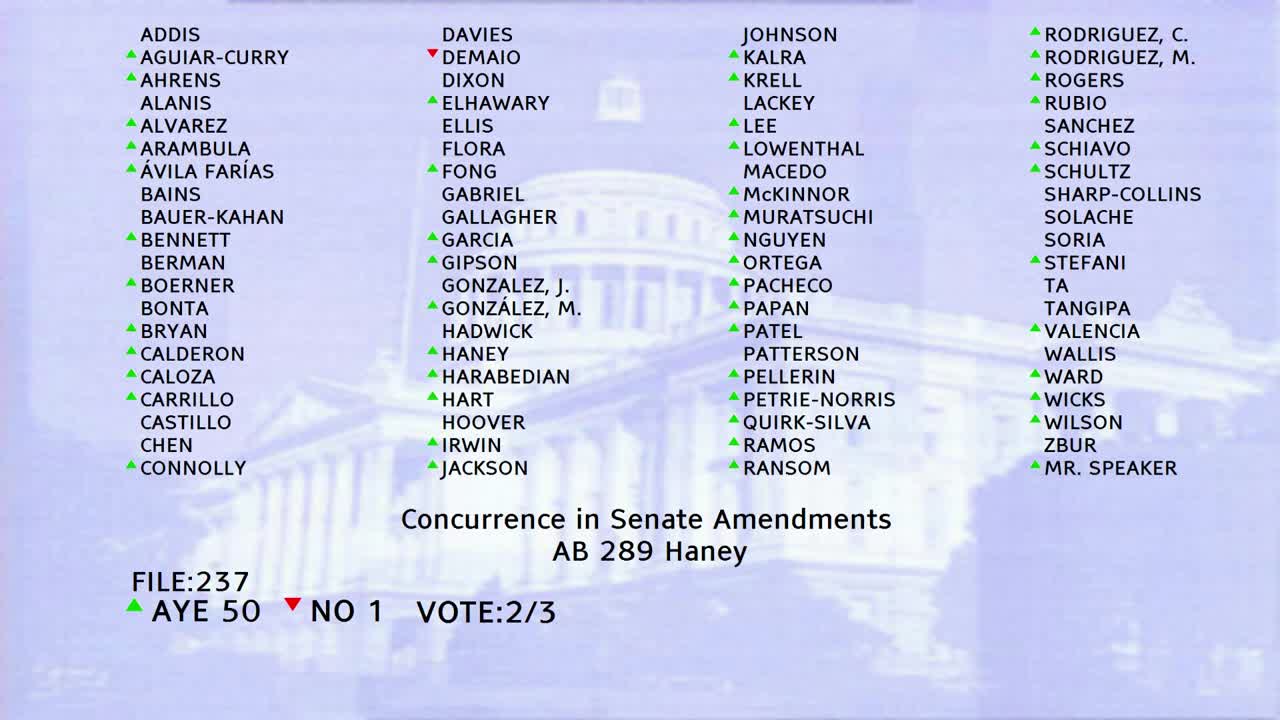 43SEC
Assembly Floor
 2MIN
Senate Floor
 1MIN
Senate Standing Committee on Appropriations
 10MIN
Senate Standing Committee on Public Safety
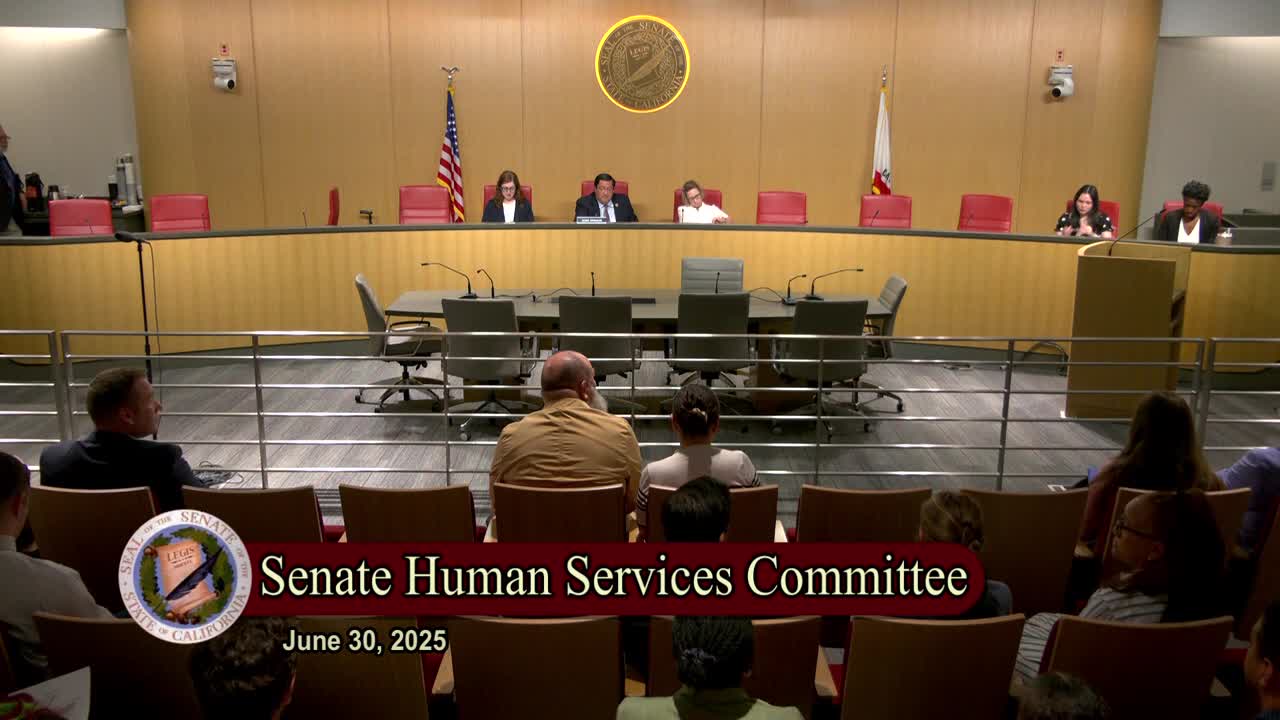 23MIN
Senate Standing Committee on Human Services
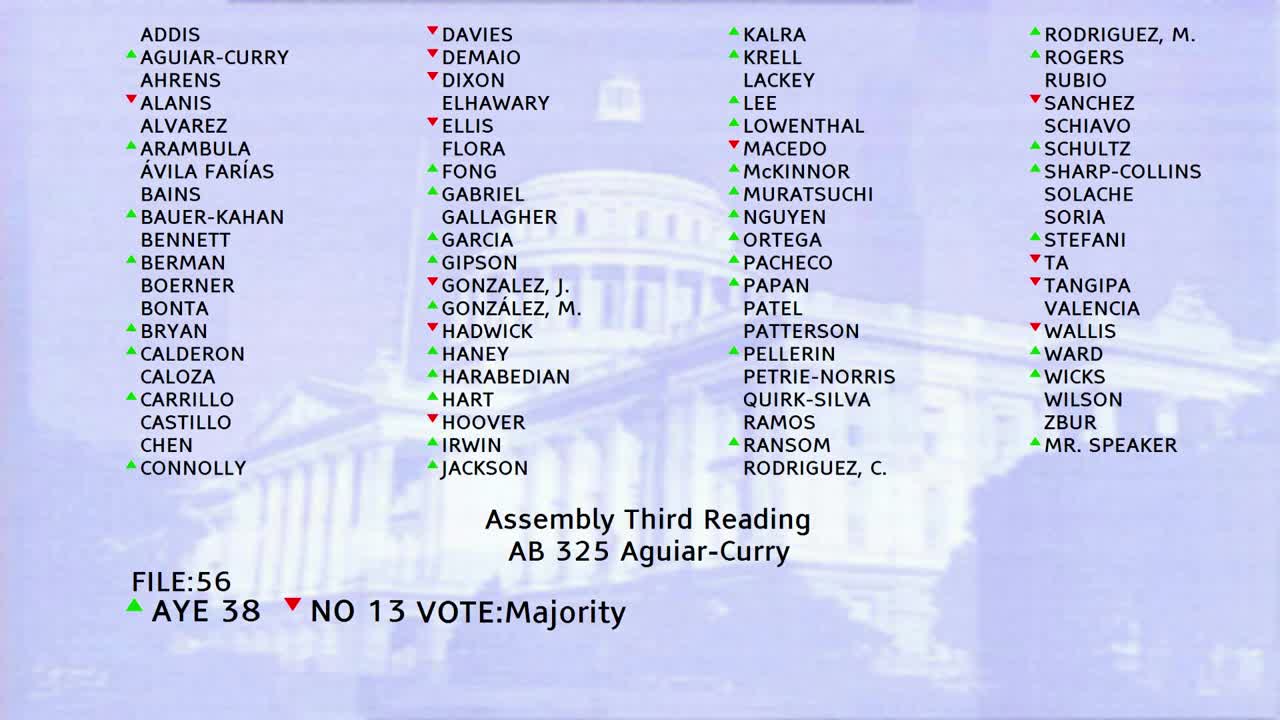 46SEC
Assembly Floor
 12MIN
Assembly Standing Committee on Public Safety
 9MIN
Assembly Standing Committee on Human Services
Bill Author