AB 464: Sexual assault in prison.
- Session Year: 2025-2026
- House: Assembly
- Latest Version Date: 2026-09-01
Current Status:
Failed
(2026-09-27: Vetoed by Governor.)
Introduced
In Committee
Awaiting First Chamber Vote
Passed First Chamber
In Committee
Awaiting Second Chamber Vote
Passed Second Chamber
Enacted
(1)Existing law tolls the periods of limitation to bring specific civil actions for up to 2 years, if during that time that the claimant is imprisoned on a criminal charge, as specified. However, under existing law these tolling provisions do not apply to an action brought against a public entity or public employee, as specified.
This bill would, notwithstanding any other law, provide that the period for bringing an action for sexual assault against a public entity or public employee that is alleged to have occurred while the claimant was imprisoned on a criminal charge, or in execution under the sentence of a criminal court, is tolled during the entire period of the claimants imprisonment or sentence. Under the bill, any claim for sexual assault against a public entity or public employee subject to that provision is exempt from all state and local government claim presentation requirements.
(2)Existing law establishes the Office of the Sexual Abuse in Detention Elimination Ombudsperson with the authority to inspect all of the Department of Corrections and Rehabilitation institutions and to interview all inmates and wards. Under existing law, if an investigation confirms that any employee of the department has sexually abused an inmate or ward, that employee is required to be terminated. Existing law prohibits retaliation against an inmate or ward for making an allegation of sexual abuse. Existing law requires the department to keep statistics on the sexual abuse of inmates and wards and make that data available to the Office of the Sexual Abuse in Detention Elimination Ombudsperson.
This bill would prohibit an employee who has been terminated after an investigation confirms that the employee has sexually abused an incarcerated person or ward from future employment with the department.
This bill would require the department to monitor for 90 days an incarcerated person who reports sexual assault, and the incarcerated person reported to have suffered the sexual assault, by a staff member for possible retaliation. The bill would require the department to make specific notifications and reporting after an incarcerated person is reported to have suffered a sexual assault. The bill would require the department, on or before January 1, 2028, to develop and implement procedures for notifications of an incarcerated persons contact person, as defined. The bill would require the department to minimize the transfer of an incarcerated person who is reported to have suffered a sexual assault by a staff member for 90 days following the report, unless there is an operational need to do so or there are safety, security, or health concerns. The bill would define terms for its purposes and declare these provisions are severable.
(1)Existing law tolls the periods of limitation to bring specific civil actions for up to 2 years, if during that time that the claimant is imprisoned on a criminal charge, as specified. However, under existing law these tolling provisions do not apply to an action brought against a public entity or public employee, as specified.
This bill would, notwithstanding any other law, provide that the period for bringing an action for sexual assault against a public entity or public employee that is alleged to have occurred while the claimant was imprisoned on a criminal charge, or in execution under the sentence of a criminal court, is tolled during the entire period of the claimants imprisonment or sentence. Under the bill, any claim for sexual assault against a public entity or public employee subject to that provision is exempt from all state and local government claim presentation requirements.
(2)Existing law establishes the Office of the Sexual Abuse in Detention Elimination Ombudsperson with the authority to inspect all of the Department of Corrections and Rehabilitation institutions and to interview all inmates and wards. Under existing law, if an investigation confirms that any employee of the department has sexually abused an inmate or ward, that employee is required to be terminated. Existing law prohibits retaliation against an inmate or ward for making an allegation of sexual abuse. Existing law requires the department to keep statistics on the sexual abuse of inmates and wards and make that data available to the Office of the Sexual Abuse in Detention Elimination Ombudsperson.
This bill would prohibit an employee who has been terminated after an investigation confirms that the employee has sexually abused an incarcerated person or ward from future employment with the department.
This bill would require the department to monitor for 90 days an incarcerated person who reports sexual assault, and the incarcerated person reported to have suffered the sexual assault, by a staff member for possible retaliation. The bill would require the department to make specific notifications and reporting after an incarcerated person is reported to have suffered a sexual assault. The bill would prohibit an incarcerated person who is reported to have suffered a sexual assault at a department facility from being transferred to another facility without their written consent, unless their safety would be at risk. The bill would require the department, on or before January 1, 2028, to develop and implement procedures for notifications of an incarcerated persons contact person, as defined. The bill would require the department to minimize the transfer of an incarcerated person who is reported to have suffered a sexual assault by a staff member for 90 days following the report, unless there is an operational need to do so or there are safety, security, or health concerns. The bill would define terms for its purposes and declare these provisions are severable.
(1)Existing law tolls the periods of limitation to bring specific civil actions for up to 2 years, if during that time that the claimant is imprisoned on a criminal charge, as specified. However, under existing law these tolling provisions do not apply to an action brought against a public entity or public employee, as specified.
This bill would, notwithstanding any other law, provide that the period for bringing an action for sexual assault against a public entity or public employee that is alleged to have occurred while the claimant was imprisoned on a criminal charge, or in execution under the sentence of a criminal court, is tolled during the entire period of the claimants imprisonment and 4 years after the claimants release from custody. or sentence. Under the bill, any claim for sexual assault against a public entity or public employee subject to that provision is exempt from all state and local government claim presentation requirements.
(2)Existing law establishes the Office of the Sexual Abuse in Detention Elimination Ombudsperson with the authority to inspect all of the Department of Corrections and Rehabilitation institutions and to interview all inmates and wards. Under existing law, if an investigation confirms that any employee of the department has sexually abused an inmate or ward, that employee is required to be terminated. Existing law prohibits retaliation against an inmate or ward for making an allegation of sexual abuse. Existing law requires the department to keep statistics on the sexual abuse of inmates and wards and make that data available to the Office of the Sexual Abuse in Detention Elimination Ombudsperson.
This bill would prohibit an employee who has been terminated after an investigation confirms that the employee has sexually abused an incarcerated person or ward from future employment with the department.
This bill would require the department to monitor for 90 days an incarcerated person who reports sexual assault, and the incarcerated person reported to have suffered the sexual assault, by a staff member for possible retaliation. The bill would require the department to make specific notifications and reporting after an incarcerated person is reported to have suffered a sexual assault. The bill would prohibit an incarcerated person who is reported to have suffered a sexual assault at a department facility from being transferred to another facility without their written consent, unless their safety would be at risk. The bill would define terms for its purposes and declare these provisions are severable.
(1)Existing law tolls the periods of limitation to bring specific civil actions for up to 2 years, if during that time that the claimant is imprisoned on a criminal charge, as specified. However, under existing law these tolling provisions do not apply to an action brought against a public entity or public employee, as specified.
This bill would, notwithstanding any other law, require provide that the period for bringing an action for sexual assault brought against a public entity or public employee by a person who is that is alleged to have occurred while the claimant was imprisoned on a criminal charge, or in execution under the sentence of a criminal court, to be is tolled during the entire period of their the claimants imprisonment and 4 years after the claimants release from actual custody. Under the bill, any claim for sexual assault against a public entity or public employee subject to that provision is exempt from all state and local government claim presentation requirements.
(2)Existing law establishes the Office of the Sexual Abuse in Detention Elimination Ombudsperson with the authority to inspect all of the Department of Corrections and Rehabilitation institutions and to interview all inmates and wards. Under existing law, if an investigation confirms that any employee of the department has sexually abused an inmate or ward, that employee is required to be terminated. Existing law prohibits retaliation against an inmate or ward for making an allegation of sexual abuse. Existing law requires the department to keep statistics on the sexual abuse of inmates and wards and make that data available to the Office of the Sexual Abuse in Detention Elimination Ombudsperson.
This bill would prohibit an employee who has been terminated after an investigation confirms that the employee has sexually abused an incarcerated person or ward from future employment with the department.
This bill would require the department to monitor for 90 days an incarcerated person who reports sexual assault, and the incarcerated person reported to have suffered the sexual assault, by a staff member for possible retaliation. The bill would require the department to make specific notifications and reporting after an incarcerated person is reported to have suffered a sexual assault. The bill would prohibit an incarcerated person who is reported to have suffered a sexual assault at a department facility from being transferred to another facility without their written consent, unless their safety would be at risk. The bill would define terms for its purposes and declare these provisions are severable.
(1)Existing law tolls the periods of limitation to bring specific civil actions for up to 2 years, if during that time that the claimant is imprisoned on a criminal charge, as specified. However, under existing law these tolling provisions do not apply to an action brought against a public entity or public employee, as specified.
This bill would, notwithstanding any other law, require an action for sexual assault brought against a public entity or public employee by a person who is imprisoned on a criminal charge, or in execution under the sentence of a criminal court, to be tolled during the entire period of their imprisonment and 4 years after the release from actual custody.
(2)Existing law establishes the Office of the Sexual Abuse in Detention Elimination Ombudsperson with the authority to inspect all of the Department of Corrections and Rehabilitation institutions and to interview all inmates and wards. Under existing law, if an investigation confirms that any employee of the department has sexually abused an inmate or ward, that employee is required to be terminated. Existing law prohibits retaliation against an inmate or ward for making an allegation of sexual abuse. Existing law requires the department to keep statistics on the sexual abuse of inmates and wards and make that data available to the Office of the Sexual Abuse in Detention Elimination Ombudsperson.
This bill would prohibit an employee who has been terminated after an investigation confirms that the employee has sexually abused an incarcerated person or ward from future employment with the department.
This bill would require the department to monitor for 90 days an incarcerated person who reports sexual assault, and the incarcerated person reported to have suffered the sexual assault, by a staff member for possible retaliation. The bill would require the department to make specific notifications and reporting after an incarcerated person is reported to have suffered a sexual assault. The bill would prohibit an incarcerated person who is reported to have suffered a sexual assault at a department facility from being transferred to another facility without their written consent, unless their safety would be at risk. The bill would define terms for its purposes and declare these provisions are severable.
(a)If a person entitled to bring an action, mentioned in Chapter 3 (commencing with Section 335), is, at the time the cause of action accrued, imprisoned on a criminal charge, or in execution under the sentence of a criminal court for a term less than for life, the time of that disability is not a part of the time limited for the commencement of the action, not to exceed two years.
(b)Subdivision (a) does not apply to an action against a public entity or public employee upon a cause of action for which a claim is required to be presented in accordance with Chapter 1 (commencing with Section 900) or Chapter 2 (commencing with Section 910) of Part 3, or Chapter 3 (commencing with Section 950) of Part 4, of Division 3.6 of Title 1 of the Government Code. This subdivision shall not apply to any claim presented to a public entity prior to January 1, 1971.
(c)This section does not apply to an action, other than an action to recover damages or that portion of an action that is for the recovery of damages, relating to the conditions of confinement, including an action brought by that person pursuant to Section 1983 of Title 42 of the United States Code.
(d)(1)Notwithstanding any other law, the period for bringing an action for sexual assault against a public entity or public employee that is alleged to have occurred while the claimant was imprisoned on a criminal charge, or in execution under the sentence of a criminal court, shall be tolled during the period of the claimants imprisonment or sentence.
(2)Any claim for sexual assault against a public entity or public employee that is subject to the provisions of paragraph (1) is exempt from all state and local government claim presentation requirements.
SEC. 2.Section 2639 of the Penal Code is amended to read:2639.The Department of Corrections and Rehabilitation shall ensure that the following procedures are performed in the investigation and prosecution of sexual abuse incidents:
(a)The provision of safe housing options, medical care, and the like shall not be contingent upon the victims willingness to press charges.
(b)Investigations into allegations of sexual abuse shall include, when deemed appropriate by the investigating agency, the use of forensic rape kits, questioning of suspects and witnesses, and gathering of other relevant evidence.
(c)Physical and testimonial evidence shall be carefully preserved for use in any future proceedings.
(d)Staff attitudes that incarcerated persons and wards cannot provide reliable information shall be discouraged.
(e)If an investigation confirms that any employee has sexually abused an incarcerated person or ward, that employee shall be terminated and shall not be eligible to be hired or reinstated by the department. Administrators shall report any known or suspected sexual abuse by staff to a local law enforcement agency.
(f)Consensual sodomy and oral copulation among incarcerated persons is prohibited by subdivision (e) of Section 286 and subdivision (e) of Section 287 or former Section 288a, respectively. Without repealing those provisions, the increased scrutiny provided by this article shall apply only to nonconsensual sexual contact among incarcerated persons and custodial sexual misconduct.
SEC. 3.Article 4 (commencing with Section 2646) is added to Chapter 3 of Title 1 of Part 3 of the Penal Code, to read:4.Prevent Sexual Assault and Retaliation in Prisons Act2646.The following definitions shall apply to this article:
(a)Contact person, also known as next of kin, means a person identified in the departments electronic file for an incarcerated person as the primary or an alternate person to be notified in the event of the death, serious injury, or serious illness of the incarcerated person.
(b)Department means the Department of Corrections and Rehabilitation.
(c)Incarcerated person means any individual who is in the custody of the department.
(d)Staff member means any employee or agent of the department, including, but not limited to, a correctional peace officer subject to Title 4.5 (commencing with Section 13600) of Part 4.
(e)Sexual assault means any of the crimes described in Section 243.4, 261, 264.1, 286, 287, 289, or 289.6, or former Section 288a, assault with the intent to commit any of those crimes, or an attempt to commit any of those crimes.
2646.2.(a)For 90 days following the date of a report of an allegation of sexual assault brought on behalf of an incarcerated person against a staff member, the department shall monitor the incarcerated person who is reported to have suffered the sexual assault, and if they are different, the person who made the report, for possible retaliation.
(b)The department shall report an allegation of sexual assault of an incarcerated person by a staff member to the departments Office of Internal Affairs.
2646.4.(a)(1)By January 1, 2028, the department shall develop and implement procedures to notify an incarcerated persons contact person of a report of sexual assault by a staff member.
(2)The procedures described in paragraph (1) shall include that the incarcerated person provide written documentation requesting notification of a contact person of the incarcerated persons choosing.
(b)(1)Upon conclusion of an investigation into an allegation of sexual assault of an incarcerated person by a staff member, the department shall provide the outcome of the investigation to the incarcerated person.
(2)The incarcerated person may share the information described in paragraph (1) with their chosen contact person.
(c)At the written request of an incarcerated person who is reported to have suffered a sexual assault by a staff member, the department shall, within one calendar day of the request, facilitate access for the incarcerated individual to meet with a rape crisis center, and, if requested, shall facilitate access for a community-based organization, an attorney, or both of those entities of the incarcerated persons choosing regarding the report of sexual assault in the facility in which the person is incarcerated or through remote technology, including by telephone or video conferencing. The incarcerated person shall provide any necessary contact information for community-based organizations or attorneys.
(d)In implementing this section, the department shall ensure compliance with all appropriate confidentiality and privacy laws, including the appropriate release of medical information concerning the incarcerated person.
2646.6.To the extent feasible, the department shall minimize the transfer of an incarcerated person who is reported to have suffered a sexual assault by a staff member for 90 days following the report, unless there is an operational need to do so or there are safety, security, or health concerns.
2646.8.The provisions of this article are severable. If any provision of this article or its application is held invalid, that invalidity shall not affect other provisions or applications that can be given effect without the invalid provision or application.
(a)If a person entitled to bring an action, mentioned in Chapter 3 (commencing with Section 335), is, at the time the cause of action accrued, imprisoned on a criminal charge, or in execution under the sentence of a criminal court for a term less than for life, the time of that disability is not a part of the time limited for the commencement of the action, not to exceed two years.
(b)Subdivision (a) does not apply to an action against a public entity or public employee upon a cause of action for which a claim is required to be presented in accordance with Chapter 1 (commencing with Section 900) or Chapter 2 (commencing with Section 910) of Part 3, or Chapter 3 (commencing with Section 950) of Part 4, of Division 3.6 of Title 1 of the Government Code. This subdivision shall not apply to any claim presented to a public entity prior to January 1, 1971.
(c)This section does not apply to an action, other than an action to recover damages or that portion of an action that is for the recovery of damages, relating to the conditions of confinement, including an action brought by that person pursuant to Section 1983 of Title 42 of the United States Code.
(d)(1)Notwithstanding any other law, the period for bringing an action for sexual assault against a public entity or public employee that is alleged to have occurred while the claimant was imprisoned on a criminal charge, or in execution under the sentence of a criminal court, shall be tolled during the period of the claimants imprisonment or sentence.
(2)Any claim for sexual assault against a public entity or public employee that is subject to the provisions of paragraph (1) is exempt from all state and local government claim presentation requirements.
SEC. 2.Section 2639 of the Penal Code is amended to read:2639.The Department of Corrections and Rehabilitation shall ensure that the following procedures are performed in the investigation and prosecution of sexual abuse incidents:
(a)The provision of safe housing options, medical care, and the like shall not be contingent upon the victims willingness to press charges.
(b)Investigations into allegations of sexual abuse shall include, when deemed appropriate by the investigating agency, the use of forensic rape kits, questioning of suspects and witnesses, and gathering of other relevant evidence.
(c)Physical and testimonial evidence shall be carefully preserved for use in any future proceedings.
(d)Staff attitudes that incarcerated persons and wards cannot provide reliable information shall be discouraged.
(e)If an investigation confirms that any employee has sexually abused an incarcerated person or ward, that employee shall be terminated and shall be prohibited from future employment with the department. not be eligible to be hired or reinstated by the department. Administrators shall report criminal any known or suspected sexual abuse by staff to law enforcement authorities. a local law enforcement agency.
(f)Consensual sodomy and oral copulation among incarcerated persons is prohibited by subdivision (e) of Section 286 and subdivision (e) of Section 287 or former Section 288a, respectively. Without repealing those provisions, the increased scrutiny provided by this article shall apply only to nonconsensual sexual contact among incarcerated persons and custodial sexual misconduct.
SEC. 3.Article 4 (commencing with Section 2646) is added to Chapter 3 of Title 1 of Part 3 of the Penal Code, to read:4.Prevent Sexual Assault and Retaliation in Prisons Act2646.The following definitions shall apply to this article:
(a)Contact person, also known as next of kin, means a person identified in the departments electronic file for an incarcerated person as the primary or an alternate person to be notified in the event of the death, serious injury, or serious illness of the incarcerated person.
(a)(b)Department means the Department of Corrections and Rehabilitation.
(b)Immediate family member means a spouse, domestic partner, parent, guardian, grandparent, aunt, uncle, brother, sister, child, or grandchild who is related by blood, marriage, or adoption.(c)Incarcerated person means any individual who is in the custody of the department.
(d)Staff member means any employee or agent of the department, including, but not limited to, a correctional peace officer subject to Title 4.5 (commencing with Section 13600) of Part 4.
(e)Sexual assault means any of the crimes described in Section 243.4, 261, 264.1, 286, 287, or 289, 289, or 289.6, or former Section 288a, assault with the intent to commit any of those crimes, or an attempt to commit any of those crimes.
2646.2.(a)For 90 days following the date of a report of an allegation of sexual assault brought on behalf of an incarcerated person against a staff member, the department shall monitor the incarcerated person who is reported to have suffered the sexual assault, and if they are different, the person who made the report, for possible retaliation.
(b)The department shall report an allegation of sexual assault of an incarcerated person by a staff member to the departments Office of Internal Affairs.
2646.4.(a)At the request of an incarcerated person who is reported to have suffered a sexual assault, the department shall, within 24 hours of the request, notify an immediate family member of the incarcerated person regarding the report of sexual assault.(b)Unless requested by the incarcerated person not to do so, the department shall notify an immediate family member of the incarcerated person who is reported to have suffered a sexual assault within 48 hours regarding any update or progress on the investigation into the allegations of sexual assault.2646.4.(a)(1)By January 1, 2028, the department shall develop and implement procedures to notify an incarcerated persons contact person of a report of sexual assault by a staff member.
(2)The procedures described in paragraph (1) shall include that the incarcerated person provide written documentation requesting notification of a contact person of the incarcerated persons choosing.
(b)(1)Upon conclusion of an investigation into an allegation of sexual assault of an incarcerated person by a staff member, the department shall provide the outcome of the investigation to the incarcerated person.
(2)The incarcerated person may share the information described in paragraph (1) with their chosen contact person.
(c)At the written request of an incarcerated person who is reported to have suffered a sexual assault, the department shall, within 48 hours of the request, notify a rape crisis center, community-based organization, or an attorney, or any combination thereof, of the incarcerated persons choosing, regarding the report of sexual assault. assault by a staff member, the department shall, within one calendar day of the request, facilitate access for the incarcerated individual to meet with a rape crisis center, and, if requested, shall facilitate access for a community-based organization, an attorney, or both of those entities of the incarcerated persons choosing regarding the report of sexual assault in the facility in which the person is incarcerated or through remote technology, including by telephone or video conferencing. The incarcerated person shall provide any necessary contact information for community-based organizations or attorneys.
(d)In implementing this section, the department shall ensure compliance with all appropriate confidentiality and privacy laws, including the appropriate release of medical information concerning the incarcerated person.
2646.6.(a)Notwithstanding any other law, an incarcerated person who is reported to have suffered a sexual assault by a staff member at a department facility shall not be transferred to another facility without their written consent.(b)This section shall not apply if the safety of the incarcerated person would be at risk.2646.6.To the extent feasible, the department shall minimize the transfer of an incarcerated person who is reported to have suffered a sexual assault by a staff member for 90 days following the report, unless there is an operational need to do so or there are safety, security, or health concerns.
2646.8.The provisions of this article are severable. If any provision of this article or its application is held invalid, that invalidity shall not affect other provisions or applications that can be given effect without the invalid provision or application.
(a)If a person entitled to bring an action, mentioned in Chapter 3 (commencing with Section 335), is, at the time the cause of action accrued, imprisoned on a criminal charge, or in execution under the sentence of a criminal court for a term less than for life, the time of that disability is not a part of the time limited for the commencement of the action, not to exceed two years.
(b)Subdivision (a) does not apply to an action against a public entity or public employee upon a cause of action for which a claim is required to be presented in accordance with Chapter 1 (commencing with Section 900) or Chapter 2 (commencing with Section 910) of Part 3, or Chapter 3 (commencing with Section 950) of Part 4, of Division 3.6 of Title 1 of the Government Code. This subdivision shall not apply to any claim presented to a public entity prior to January 1, 1971.
(c)This section does not apply to an action, other than an action to recover damages or that portion of an action that is for the recovery of damages, relating to the conditions of confinement, including an action brought by that person pursuant to Section 1983 of Title 42 of the United States Code.
(d)(1)Notwithstanding any other law, the period for bringing an action for sexual assault against a public entity or public employee that is alleged to have occurred while the claimant was imprisoned on a criminal charge, or in execution under the sentence of a criminal court, shall be tolled during the period of the claimants imprisonment or sentence and for a period of four years after the date of the claimants release from custody. sentence.
(2)Any claim for sexual assault against a public entity or public employee that is subject to the provisions of paragraph (1) is exempt from all state and local government claim presentation requirements.
SEC. 2.Section 2639 of the Penal Code is amended to read:2639.The Department of Corrections and Rehabilitation shall ensure that the following procedures are performed in the investigation and prosecution of sexual abuse incidents:
(a)The provision of safe housing options, medical care, and the like shall not be contingent upon the victims willingness to press charges.
(b)Investigations into allegations of sexual abuse shall include, when deemed appropriate by the investigating agency, the use of forensic rape kits, questioning of suspects and witnesses, and gathering of other relevant evidence.
(c)Physical and testimonial evidence shall be carefully preserved for use in any future proceedings.
(d)Staff attitudes that incarcerated persons and wards cannot provide reliable information shall be discouraged.
(e)If an investigation confirms that any employee has sexually abused an incarcerated person or ward, that employee shall be terminated and shall be prohibited from future employment with the department. Administrators shall report criminal sexual abuse by staff to law enforcement authorities.
(f)Consensual sodomy and oral copulation among incarcerated persons is prohibited by subdivision (e) of Section 286 and subdivision (e) of Section 287 or former Section 288a, respectively. Without repealing those provisions, the increased scrutiny provided by this article shall apply only to nonconsensual sexual contact among incarcerated persons and custodial sexual misconduct.
SEC. 3.Article 4 (commencing with Section 2646) is added to Chapter 3 of Title 1 of Part 3 of the Penal Code, to read:4.Prevent Sexual Assault and Retaliation in Prisons Act2646.The following definitions shall apply to this article:
(a)Department means the Department of Corrections and Rehabilitation.
(b)Immediate family member means a spouse, domestic partner, parent, guardian, grandparent, aunt, uncle, brother, sister, child, or grandchild who is related by blood, marriage, or adoption.
(c)Incarcerated person means any individual who is in the custody of the department.
(d)Staff member means any employee or agent of the department, including, but not limited to, a correctional peace officer subject to Title 4.5 (commencing with Section 13600) of Part 4.
(e)Sexual assault means any of the crimes described in Section 243.4, 261, 264.1, 286, 287, or 289, or former Section 288a, assault with the intent to commit any of those crimes, or an attempt to commit any of those crimes.
2646.2.(a)For 90 days following the date of a report of an allegation of sexual assault brought on behalf of an incarcerated person against a staff member, the department shall monitor the incarcerated person who is reported to have suffered the sexual assault, and if they are different, the person who made the report, for possible retaliation.
(b)The department shall report an allegation of sexual assault to the departments Office of Internal Affairs.
2646.4.(a)At the request of an incarcerated person who is reported to have suffered a sexual assault, the department shall, within 24 hours of the request, notify an immediate family member of the incarcerated person regarding the report of sexual assault.
(b)Unless requested by the incarcerated person not to do so, the department shall notify an immediate family member of the incarcerated person who is reported to have suffered a sexual assault within 48 hours regarding any update or progress on the investigation into the allegations of sexual assault.
(c)At the request of an incarcerated person who is reported to have suffered a sexual assault, the department shall, within 48 hours of the request, notify a rape crisis center, community-based organization, or an attorney, or any combination thereof, of the incarcerated persons choosing, regarding the report of sexual assault.
2646.6.(a)Notwithstanding any other law, an incarcerated person who is reported to have suffered a sexual assault by a staff member at a department facility shall not be transferred to another facility without their written consent.
(b)This section shall not apply if the safety of the incarcerated person would be at risk.
2646.8.The provisions of this article are severable. If any provision of this article or its application is held invalid, that invalidity shall not affect other provisions or applications that can be given effect without the invalid provision or application.
(a)If a person entitled to bring an action, mentioned in Chapter 3 (commencing with Section 335), is, at the time the cause of action accrued, imprisoned on a criminal charge, or in execution under the sentence of a criminal court for a term less than for life, the time of that disability is not a part of the time limited for the commencement of the action, not to exceed two years.
(b)Subdivision (a) does not apply to an action against a public entity or public employee upon a cause of action for which a claim is required to be presented in accordance with Chapter 1 (commencing with Section 900) or Chapter 2 (commencing with Section 910) of Part 3, or Chapter 3 (commencing with Section 950) of Part 4, of Division 3.6 of Title 1 of the Government Code. This subdivision shall not apply to any claim presented to a public entity prior to January 1, 1971.
(c)This section does not apply to an action, other than an action to recover damages or that portion of an action that is for the recovery of damages, relating to the conditions of confinement, including an action brought by that person pursuant to Section 1983 of Title 42 of the United States Code.
(d)(1)Notwithstanding any other law, the period for bringing an action for sexual assault brought against a public entity or public employee by a person who is that is alleged to have occurred while the claimant was imprisoned on a criminal charge, or in execution under the sentence of a criminal court, shall be tolled during the period of the claimants imprisonment and until or sentence and for a period of four years after the date of the claimants release from actual custody.
(2)Any claim for sexual assault against a public entity or public employee that is subject to the provisions of paragraph (1) is exempt from all state and local government claim presentation requirements.
SEC. 2.Section 2639 of the Penal Code is amended to read:2639.The Department of Corrections and Rehabilitation shall ensure that the following procedures are performed in the investigation and prosecution of sexual abuse incidents:
(a)The provision of safe housing options, medical care, and the like shall not be contingent upon the victims willingness to press charges.
(b)Investigations into allegations of sexual abuse shall include, when deemed appropriate by the investigating agency, the use of forensic rape kits, questioning of suspects and witnesses, and gathering of other relevant evidence.
(c)Physical and testimonial evidence shall be carefully preserved for use in any future proceedings.
(d)Staff attitudes that incarcerated persons and wards cannot provide reliable information shall be discouraged.
(e)If an investigation confirms that any employee has sexually abused an incarcerated person or ward, that employee shall be terminated and shall be prohibited from future employment with the department. Administrators shall report criminal sexual abuse by staff to law enforcement authorities.
(f)Consensual sodomy and oral copulation among incarcerated persons is prohibited by subdivision (e) of Section 286 and subdivision (e) of Section 287 or former Section 288a, respectively. Without repealing those provisions, the increased scrutiny provided by this article shall apply only to nonconsensual sexual contact among incarcerated persons and custodial sexual misconduct.
SEC. 3.Article 4 (commencing with Section 2646) is added to Chapter 3 of Title 1 of Part 3 of the Penal Code, to read:4.Prevent Sexual Assault and Retaliation in Prisons Act2646.The following definitions shall apply to this article:
(a)Department means the Department of Corrections and Rehabilitation.
(b)Immediate family member means a spouse, domestic partner, parent, guardian, grandparent, aunt, uncle, brother, sister, child, or grandchild who is related by blood, marriage, or adoption.
(c)Incarcerated person means any individual who is in the custody of the department.
(d)Staff member means any employee or agent of the department, including, but not limited to, a correctional peace officer subject to Title 4.5 (commencing with Section 13600) of Part 4.
(e)Sexual assault means any of the crimes described in Section 243.4, 261, 264.1, 286, 287, or 289, or former Section 288a, assault with the intent to commit any of those crimes, or an attempt to commit any of those crimes.
2646.2.(a)For 90 days following the date of a report of an allegation of sexual assault brought on behalf of an incarcerated person against a staff member, the department shall monitor the incarcerated person who is reported to have suffered the sexual assault, and if they are different, the person who made the report, for possible retaliation.
(b)The department shall report an allegation of sexual assault to the departments Office of Internal Affairs.
2646.4.(a)At the request of an incarcerated person who is reported to have suffered a sexual assault, the department shall, within 24 hours of the request, notify an immediate family member of the incarcerated person regarding the report of sexual assault.
(b)Unless requested by the incarcerated person not to do so, the department shall notify an immediate family member of the incarcerated person who is reported to have suffered a sexual assault within 48 hours regarding any update or progress on the investigation into the allegations of sexual assault.
(c)At the request of an incarcerated person who is reported to have suffered a sexual assault, the department shall, within 48 hours of the request, notify a rape crisis center, community-based organization, or an attorney, or any combination thereof, of the incarcerated persons choosing, regarding the report of sexual assault.
2646.6.(a)Notwithstanding any other law, an incarcerated person who is reported to have suffered a sexual assault by a staff member at a department facility shall not be transferred to another facility without their written consent.
(b)This section shall not apply if the safety of the incarcerated person would be at risk.
2646.8.The provisions of this article are severable. If any provision of this article or its application is held invalid, that invalidity shall not affect other provisions or applications that can be given effect without the invalid provision or application.
(a)If a person entitled to bring an action, mentioned in Chapter 3 (commencing with Section 335), is, at the time the cause of action accrued, imprisoned on a criminal charge, or in execution under the sentence of a criminal court for a term less than for life, the time of that disability is not a part of the time limited for the commencement of the action, not to exceed two years.
(b)Subdivision (a) does not apply to an action against a public entity or public employee upon a cause of action for which a claim is required to be presented in accordance with Chapter 1 (commencing with Section 900) or Chapter 2 (commencing with Section 910) of Part 3, or Chapter 3 (commencing with Section 950) of Part 4, of Division 3.6 of Title 1 of the Government Code. This subdivision shall not apply to any claim presented to a public entity prior to January 1, 1971.
(c)This section does not apply to an action, other than an action to recover damages or that portion of an action that is for the recovery of damages, relating to the conditions of confinement, including an action brought by that person pursuant to Section 1983 of Title 42 of the United States Code.
(d)Notwithstanding any other law, an action for sexual assault brought against a public entity or public employee by a person who is imprisoned on a criminal charge, or in execution under the sentence of a criminal court, shall be tolled during the period of imprisonment and until four years after the release from actual custody.
SEC. 2.Section 2639 of the Penal Code is amended to read:2639.The Department of Corrections and Rehabilitation shall ensure that the following procedures are performed in the investigation and prosecution of sexual abuse incidents:
(a)The provision of safe housing options, medical care, and the like shall not be contingent upon the victims willingness to press charges.
(b)Investigations into allegations of sexual abuse shall include, when deemed appropriate by the investigating agency, the use of forensic rape kits, questioning of suspects and witnesses, and gathering of other relevant evidence.
(c)Physical and testimonial evidence shall be carefully preserved for use in any future proceedings.
(d)Staff attitudes that incarcerated persons and wards cannot provide reliable information shall be discouraged.
(e)If an investigation confirms that any employee has sexually abused an incarcerated person or ward, that employee shall be terminated and shall be prohibited from future employment with the department. Administrators shall report criminal sexual abuse by staff to law enforcement authorities.
(f)Consensual sodomy and oral copulation among incarcerated persons is prohibited by subdivision (e) of Section 286 and subdivision (e) of Section 287 or former Section 288a, respectively. Without repealing those provisions, the increased scrutiny provided by this article shall apply only to nonconsensual sexual contact among incarcerated persons and custodial sexual misconduct.
SEC. 3.Article 4 (commencing with Section 2646) is added to Chapter 3 of Title 1 of Part 3 of the Penal Code, to read:4.Prevent Sexual Assault and Retaliation in Prisons Act2646.The following definitions shall apply to this article:
(a)Department means the Department of Corrections and Rehabilitation.
(b)Immediate family member means a spouse, domestic partner, parent, guardian, grandparent, aunt, uncle, brother, sister, child, or grandchild who is related by blood, marriage, or adoption.
(b)(c)Incarcerated person means any individual who is in the custody of the department.
(c)(d)Staff member means any employee or agent of the department, including, but not limited to, a correctional peace officer subject to Title 4.5 (commencing with Section 13600) of Part 4.
(d)(e)Sexual assault means sexual abuse or any form of sexual violence. any of the crimes described in Section 243.4, 261, 264.1, 286, 287, or 289, or former Section 288a, assault with the intent to commit any of those crimes, or an attempt to commit any of those crimes.
2646.2.(a)For 90 days following the date of a report of an allegation of sexual assault brought on behalf of an incarcerated person against a staff member, the department shall monitor the incarcerated person who is reported to have suffered the sexual assault, and if they are different, the person who made the report, for possible retaliation.
(b)The department shall report an allegation of sexual assault to the departments Office of Internal Affairs.
2646.4.(a)At the request of an incarcerated person who is reported to have suffered a sexual assault, the department shall, within 24 hours of the request, notify the incarcerated persons family an immediate family member of the incarcerated person regarding the report of sexual assault.
(b)Unless requested by the incarcerated person not to do so, the department shall notify the family of an an immediate family member of the incarcerated person who is reported to have suffered a sexual assault within 48 hours regarding any update or progress on the investigation into the allegations of sexual assault.
(c)At the request of an incarcerated person who is reported to have suffered a sexual assault, the department shall, within 48 hours of the request, notify a rape crisis center, community-based organization, or an attorney, or any combination thereof, of the incarcerated persons choosing, regarding the report of sexual assault.
2646.6.(a)Notwithstanding any other law, an incarcerated person who is reported to have suffered a sexual assault by a staff member at a department facility shall not be transferred to another facility without their written consent.
(b)This section shall not apply if the safety of the incarcerated person would be at risk.
2646.8.The provisions of this article are severable. If any provision of this article or its application is held invalid, that invalidity shall not affect other provisions or applications that can be given effect without the invalid provision or application.
(a)If a person entitled to bring an action, mentioned in Chapter 3 (commencing with Section 335), is, at the time the cause of action accrued, imprisoned on a criminal charge, or in execution under the sentence of a criminal court for a term less than for life, the time of that disability is not a part of the time limited for the commencement of the action, not to exceed two years.
(b)This section Subdivision (a) does not apply to an action against a public entity or public employee upon a cause of action for which a claim is required to be presented in accordance with Chapter 1 (commencing with Section 900) or Chapter 2 (commencing with Section 910) of Part 3, or Chapter 3 (commencing with Section 950) of Part 4, of Division 3.6 of Title 1 of the Government Code. This subdivision shall not apply to any claim presented to a public entity prior to January 1, 1971.
(c)This section does not apply to an action, other than an action to recover damages or that portion of an action that is for the recovery of damages, relating to the conditions of confinement, including an action brought by that person pursuant to Section 1983 of Title 42 of the United States Code.
(d)Notwithstanding any other law, an action for sexual assault brought against a public entity or public employee by a person who is imprisoned on a criminal charge, or in execution under the sentence of a criminal court, shall be tolled during the period of imprisonment and until four years after the release from actual custody.
SEC. 2.Section 2639 of the Penal Code is amended to read:2639.The Department of Corrections and Rehabilitation shall ensure that the following procedures are performed in the investigation and prosecution of sexual abuse incidents:
(a)The provision of safe housing options, medical care, and the like shall not be contingent upon the victims willingness to press charges.
(b)Investigations into allegations of sexual abuse shall include, when deemed appropriate by the investigating agency, the use of forensic rape kits, questioning of suspects and witnesses, and gathering of other relevant evidence.
(c)Physical and testimonial evidence shall be carefully preserved for use in any future proceedings.
(d)Staff attitudes that inmates incarcerated persons and wards cannot provide reliable information shall be discouraged.
(e)If an investigation confirms that any employee has sexually abused an inmate incarcerated person or ward, that employee shall be terminated. terminated and shall be prohibited from future employment with the department. Administrators shall report criminal sexual abuse by staff to law enforcement authorities.
(f)Consensual sodomy and oral copulation among inmates incarcerated persons is prohibited by subdivision (e) of Section 286 and subdivision (e) of Section 287 or former Section 288a, respectively. Without repealing those provisions, the increased scrutiny provided by this article shall apply only to nonconsensual sexual contact among inmates incarcerated persons and custodial sexual misconduct.
SEC. 3.Article 4 (commencing with Section 2646) is added to Chapter 3 of Title 1 of Part 3 of the Penal Code, to read:4.Prevent Sexual Assault and Retaliation in Prisons Act2646.The following definitions shall apply to this article:
(a)Department means the Department of Corrections and Rehabilitation.
(b)Incarcerated person means any individual who is in the custody of the department.
(c)Staff member means any employee or agent of the department, including, but not limited to, a correctional peace officer subject to Title 4.5 (commencing with Section 13600) of Part 4.
(d)Sexual assault means sexual abuse or any form of sexual violence.
2646.2.(a)For 90 days following the date of a report of an allegation of sexual assault brought on behalf of an incarcerated person against a staff member, the department shall monitor the incarcerated person who is reported to have suffered the sexual assault, and if they are different, the person who made the report, for possible retaliation.
(b)The department shall report an allegation of sexual assault to the departments Office of Internal Affairs.
2646.4.(a)At the request of an incarcerated person who is reported to have suffered a sexual assault, the department shall, within 24 hours of the request, notify the incarcerated persons family regarding the report of sexual assault.
(b)Unless requested by the incarcerated person not to do so, the department shall notify the family of an incarcerated person who is reported to have suffered a sexual assault within 48 hours regarding any update or progress on the investigation into the allegations of sexual assault.
(c)At the request of an incarcerated person who is reported to have suffered a sexual assault, the department shall, within 48 hours of the request, notify a rape crisis center, community-based organization, or an attorney, or any combination thereof, of the incarcerated persons choosing, regarding the report of sexual assault.
2646.6.(a)Notwithstanding any other law, an incarcerated person who is reported to have suffered a sexual assault by a staff member at a department facility shall not be transferred to another facility without their written consent.
(b)This section shall not apply if the safety of the incarcerated person would be at risk.
2646.8.The provisions of this article are severable. If any provision of this article or its application is held invalid, that invalidity shall not affect other provisions or applications that can be given effect without the invalid provision or application.
|
Date
|
Status
|
|---|---|
| Sep 27, 2026 | Vetoed by Governor. |
| Sep 4, 2026 | Enrolled and presented to the Governor at 4 p.m. |
| Aug 27, 2026 | Senate amendments concurred in. To Engrossing and Enrolling. (Ayes 78. Noes 0. Page 6697.). |
| Aug 27, 2026 | Senate amendments concurred in. To Engrossing and Enrolling. (Ayes 78. Noes 0.). |
| Aug 27, 2026 | In Assembly. Concurrence in Senate amendments pending. |
| Aug 26, 2026 | Read third time. Passed. Ordered to the Assembly. (Ayes 40. Noes 0. Page 5897.). |
| Aug 26, 2026 | Read third time. Passed. Ordered to the Assembly. (Ayes 39. Noes 0.). |
| Aug 24, 2026 | Read second time. Ordered to third reading. |
| Aug 21, 2026 | Read third time and amended. Ordered to second reading. |
| Aug 13, 2026 | Read second time. Ordered to third reading. |
| Aug 13, 2026 | From committee: Do pass. (Ayes 7. Noes 0.) (August 13). |
| Aug 3, 2026 | In committee: Referred to APPR. suspense file. |
| Jun 24, 2026 | From committee: Do pass and re-refer to Com. on APPR. with recommendation: To Consent Calendar. (Ayes 13. Noes 0.) (June 23). Re-referred to Com. on APPR. |
| Jun 9, 2026 | From committee: Do pass and re-refer to Com. on JUD. with recommendation: To Consent Calendar. (Ayes 6. Noes 0.) (June 9). Re-referred to Com. on JUD. |
| May 6, 2026 | Referred to Coms. on PUB. S. and JUD. |
| Jan 29, 2026 | In Senate. Read first time. To Com. on RLS. for assignment. |
| Jan 29, 2026 | Read third time. Passed. Ordered to the Senate. (Ayes 75. Noes 0. Page 3874.) |
| Jan 26, 2026 | Read second time. Ordered to third reading. |
| Jan 22, 2026 | Read second time and amended. Ordered returned to second reading. |
| Jan 22, 2026 | From committee: Amend, and do pass as amended. (Ayes 11. Noes 0.) (January 22). |
| Jan 22, 2026 | Assembly Rule 63 suspended. (Page 3806.) |
| May 23, 2025 | In committee: Hearing postponed by committee. |
| Apr 23, 2025 | In committee: Set, first hearing. Referred to suspense file. |
| Mar 28, 2025 | Re-referred to Com. on APPR. |
| Mar 27, 2025 | Read second time and amended. |
| Mar 26, 2025 | From committee: Amend, and do pass as amended and re-refer to Com. on APPR. (Ayes 12. Noes 0.) (March 25). |
| Mar 13, 2025 | Re-referred to Com. on JUD. |
| Mar 12, 2025 | Read second time and amended. |
| Mar 11, 2025 | From committee: Amend, and do pass as amended and re-refer to Com. on JUD. with recommendation: To Consent Calendar. (Ayes 8. Noes 0.) (March 11). |
| Feb 18, 2025 | Referred to Coms. on PUB. S. and JUD. |
| Feb 7, 2025 | From printer. May be heard in committee March 9. |
| Feb 6, 2025 | Read first time. To print. |
|
Date
|
Description
|
Location
|
Votes
|
|
|---|---|---|---|---|
| Aug 27, 2026 | AB 464 Aguiar-Curry Concurrence in Senate Amendments | Assembly Floor |
Passed |
|
| Aug 26, 2026 | Assembly 3rd Reading AB464 Aguiar-Curry et al. By Menjivar | Senate Floor |
Passed |
|
| Aug 13, 2026 | Do pass | Senate Standing Committee on Appropriations |
Passed |
|
| Aug 3, 2026 | Placed on suspense file | Senate Standing Committee on Appropriations |
Passed |
|
| Jun 23, 2026 | Do pass, but first be re-referred to the Committee on [Appropriations] with the recommendation: To Consent Calendar | Senate Standing Committee on Judiciary |
Passed |
|
| Jun 9, 2026 | Do pass, but first be re-referred to the Committee on [Judiciary] with the recommendation: To Consent Calendar | Senate Standing Committee on Public Safety |
Passed |
|
| Jan 29, 2026 | AB 464 Aguiar-Curry Assembly Third Reading | Assembly Floor |
Passed |
|
| Jan 22, 2026 | Do pass as amended. | Assembly Standing Committee on Appropriations |
Passed |
|
| Mar 25, 2025 | Do pass as amended and be re-referred to the Committee on [Appropriations] | Assembly Standing Committee on Judiciary |
Passed |
|
| Mar 11, 2025 | Do pass as amended, and be re-referred to the Committee on [Judiciary] with recommendation: To Consent Calendar | Assembly Standing Committee on Public Safety |
Passed |
This list shows positions taken on this bill by organizations on the date displayed, which is linked to the original source.
Positions by individuals are not included.
|
Organization
|
Position
|
Date
|
|---|---|---|
| Aclu California Action | ** Support | |
| Alliance for Boys and Men of Color | ** Support | |
| All of US or None (HQ) | ** Support | |
| A New Way of Life Reentry Project | ** Support | |
| California Civil Liberties Advocacy | ** Support | |
| California Coalition for Women Prisoners | ** Support | |
| Californians for Safety and Justice | ** Support | |
| Californians for Safety and Justice (CSJ) | ** Support | |
| Californians United for a Responsible Budget | ** Support | |
| California Public Defenders Association | ** Support | |
| Coalition for Survivor Solidarity | ** Support | |
| Communities United for Restorative Youth Justice | ** Support | |
| Courage California | ** Support | |
| Drug Policy Alliance | ** Support | |
| Ella Baker Center For Human Rights | ** Support | |
| Fair Chance Project | ** Support | |
| Felony Murder Elimination Project | ** Support | |
| Friends Committee On Legislation Of California | ** Support | |
| Friends Committee on Legislations of California | ** Support | |
| Grip Training Institute | ** Support | |
| GRIP Training Institute (Guiding Rage Into Power) | ** Support | |
| Initiate Justice | ** Support | |
| Initiative Justice | ** Support | |
| Justice2jobs Coalition | ** Support | |
| Justice First | ** Support | |
| Justice First California | ** Support | |
| LA Defensa | ** Support | |
| Legal Services for Prisoners with Children | ** Support | |
| Peace and Justice Law Center | ** Support | |
| Prosecutors Alliance Action | ** Support | |
| Rubicon Programs | ** Support | |
| Ryse Center | ** Support | |
| San Francisco District Attorney Brooke Jenkins | ** Support | |
| San Francisco Public Defender | ** Support | |
| San Quentin Skunkworks | ** Support | |
| Sister Warriors Freedom Coalition | ** Support | |
| Smart Justice | ** Support | |
| Survived & Punished | ** Support | |
| The Place4grace | ** Support | |
| Transformative Programming Works | ** Support | |
| Uncommon Law | ** Support | |
| Valor | ** Support | |
| Youth Empowerments Finest | ** Support |
GOVERNOR′S VETO
GV Bill Id:AB 464
Author:(Aguiar-Curry)
As Enrolled Ver:September 1, 2026
2/3 vote
SUMMARY
Requires the California Department of Corrections and Rehabilitation (CDCR) to monitor an incarcerated person who is reported to have suffered sexual assault for 90 days following the report of sexual assault, and require CDCR to report that allegation to the Office of Internal Affairs.
- Clarify that the sexual abuse by staff that CDCR administrators must report to law enforcement is any known or suspected sexual abuse.
- Require CDCR, by January 1, 2028, to develop and implement procedures to notify an incarcerated person′s contact person of a report of sexual assault by a staff member.
- Require the procedures to include that the incarcerated person provide written documentation requesting notification of a contact person of the incarcerated person′s choosing.
- Require CDCR, upon conclusion of an investigation into an allegation of sexual assault of an incarcerated person by a staff member, to provide the outcome of the investigation to the incarcerated person.
- Provide that the incarcerated person may share the information described in paragraph (1) with their chosen contact person.
- Clarify that CDCR must facilitate an incarcerated person who is reported to have suffered sexual assault by staff access for the person to meet with a rape crisis center, and, if requested, a community-based organization, an attorney, or both of those entities of the incarcerated person′s choosing regarding the report of sexual assault in the facility in which the person is incarcerated.
- Provide that the incarcerated person shall provide any necessary contact information for community-based organizations or attorneys.
- Require CDCR to ensure compliance with all appropriate confidentiality and privacy laws, including the appropriate release of medical information concerning the incarcerated person.
- Eliminate the prohibition on transferring an incarcerated person who has reported a sexual assault to another facility, instead requiring CDCR, to the extent feasible, to minimize the transfer of an incarcerated person who is reported to have suffered a sexual assault by a staff member for 90 days following the report, unless there is an operational need to do so or there are safety, security, or health concerns.
- ″Contact person,″ also known as ″next of kin,″ means a person identified in the department′s electronic file for an incarcerated person as the primary or an alternate person to be notified in the event of the death, serious injury, or serious illness of the incarcerated person.
- Delete the definition of ″immediate family member″ from the bill.
- Make technical and conforming changes.
Governor′s Veto Message
″This bill tolls the statute of limitations for bringing an action for sexual assault against a public entity or public employee alleged to have occurred while the claimant is imprisoned.
″Protecting incarcerated people from sexual abuse and ensuring that survivors have meaningful avenues to report misconduct and seek accountability is critically important. However, the bill′s expanded tolling and claims provisions could expose the state to substantial and uncertain future liability without opportunity for the state to meaningfully investigate or rebut.
″By extending the tolling limitation to the period of the claimant′s imprisonment, this bill would result in a substantial increase in the number of lawsuits for which documents and evidence may not have been preserved to rebut an allegation. This, coupled with provisions that would exempt these types of claims from the claims presentation requirement, would put the states in a serious disadvantage in defending itself against potential allegations in which evidence is no longer available, or witness memories are no longer reliable.
″I resolutely condemn any person who sexually assaults an incarcerated individual. Such individuals should be thoroughly investigated and be fully held accountable. I strongly urge the legislature to reintroduce the provisions of this bill related to monitoring, notifications, reporting, and transfers following allegations of staff sexual assault.″
COMMENTS
As passed by the Assembly, this bill: Required the California Department of Corrections and Rehabilitation (CDCR) to monitor an incarcerated person who is reported to have suffered sexual assault for 90 days following the report of sexual assault, and require CDCR to report that allegation to the Office of Internal Affairs.
Major Provisions
- Required CDCR, for 90 days following the date of a report of an allegation of sexual assault brought on behalf of an incarcerated person against a staff member, to monitor the incarcerated person who is reported to have suffered the sexual assault and, if they are different, the person who made the report for possible retaliation.
- Required CDCR to report an allegation of sexual assault to the CDCR′s Office of Internal Affairs.
- Required CDCR, at the request of an incarcerated person who is reported to have suffered a sexual assault, to notify an immediate family member of the incarcerated person regarding the report of sexual assault within 24 hours of the request.
- Required CDCR, unless requested by the incarcerated person not to do so, to notify an immediate family member of an incarcerated person who is reported to have suffered a sexual assault within 48 hours regarding any update or progress on the investigation into the allegations of sexual assault.
- Required CDCR, at the request of an incarcerated person who is reported to have suffered a sexual assault, to notify within 48 hours of the request a rape crisis center, community-based organization, or an attorney, or any combination thereof, of the incarcerated person′s choosing, regarding the report of sexual assault.
- Prohibited an incarcerated person who is reported to have suffered a sexual assault by a staff member at a CDCR facility from being transferred to another facility without their written consent, unless their safety would be at risk.
- Provided that a CDCR employee confirmed to have sexually abused an incarcerated person is prohibited from future employment with CDCR.
- Defined ″department″ as the Department of Corrections and Rehabilitation.
- Defined ″immediate family member″ as a spouse, domestic partner, parent, guardian, grandparent, aunt, uncle, brother, sister, children or grandchildren who are related by blood, marriage, or adoption.
- Defined ″incarcerated person″″ as any individual who is in the custody of the department.
- Defined ″staff member″ as any employee or agent of the department, including, but not limited to, a correctional peace officer, as specified.
- Defined ″sexual assault″ as specified sex crimes, including sexual battery, rape, sodomy, and oral copulation, assault with the intent to commit any of those crimes, or an attempt to commit any of those crimes.
- Provided that the period for bringing an action for sexual assault against a public entity or public employee that is alleged to have occurred while the claimant was imprisoned on a criminal charge, or in execution under the sentence of a criminal court, shall be tolled during the period of the claimant′s imprisonment or sentence.
- Provided any claim for sexual assault against a public entity or public employee pursuant to the above is exempt from all state and local government claim presentation requirements.
- Contained a severability clause.
According to the Author
″California′s Department of Corrections and Rehabilitation (CDCR) has a zero-tolerance policy on sexual assault and harassment within state prisons. Yet despite the enactment of the Prison Rape Elimination Act over 20 years ago, sexual assault has not been eliminated in CDCR facilities. AB 464 aims to increase accountability for sexual abuse within California′s prison system by ensuring that survivors have the ability to seek justice and that abusive correctional staff cannot continue working within the system. The bill extends the statute of limitations, allowing survivors up to four years after their release to file claims, recognizing that many individuals need time to process their trauma before pursuing legal action. It also strengthens monitoring and oversight to prevent retaliation against those who report abuse. Given the widespread and ongoing nature of sexual abuse in California prisons, this bill is essential for breaking the cycle of abuse, ensuring justice for survivors, and fostering a safer prison environment.″
Arguments in Support
According to Smart Justice,″ Despite efforts taken at the state and federal levels, staff sexual misconduct remains a persistent problem within CDCR facilities. Numerous reports and studies have shown high rates of sexual abuse by correctional staff. In September 2024, the Department of Justice launched an investigation at the two prisons in California that hold female inmates to determine whether CDCR has complied with its constitutional obligations to protect the people in their custody from sexual misconduct by staff.
″AB 464 will increase monitoring for retaliation for 90 days following a report of staff sexual misconduct, extend the civil statute of limitations for survivors to four years following their release, ensure that any staff who is confirmed to have committed sexual abuse of an incarcerated person cannot be re-employed by CDCR after their termination, and ensure that survivors have adequate access to community support and oversight against retaliation following a report of sexual abuse.″
Arguments in Opposition
None submitted.
FISCAL COMMENTS
According to the Senate Appropriations Committee, ″Estimated $1.6 million in fiscal year (FY) 2026-27, $2.8 million in FY 2027-28 annually, ongoing to the Department of Justice for increased workload, and related costs, to defend state agencies in lawsuits brought due to an extension of statute of limitations. (Legal Services Revolving Fund, General Fund)
″Unknown, potentially major costs to pay litigation awards for successful claims of sexual harassment that occurred during the period of imprisonment or sentence. (General Fund)
″Cost pressures of an unknown but potentially significant amount to the courts to adjudicate any additional filings. Actual costs will depend on the number of cases filed and the amount of court time needed to resolve each case (Trial Court Trust Fund, General Fund).″
VOTES
ASM PUBLIC SAFETY: 8-0-1
YES: Schultz, Alanis, Mark González, Haney, Harabedian, Lackey, Nguyen, Sharp-Collins
ABS, ABST OR NV: Ramos
ASM JUDICIARY: 12-0-0
YES: Kalra, Dixon, Bauer-Kahan, Bryan, Connolly, Essayli, Harabedian, Pacheco, Papan, Sanchez, Stefani, Zbur
ASM APPROPRIATIONS: 11-0-4
YES: Wicks, Stefani, Calderon, Caloza, Fong, Mark González, Krell, Bauer-Kahan, Pacheco, Pellerin, Solache
ABS, ABST OR NV: Hoover, Dixon, Ta, Tangipa
ASSEMBLY FLOOR: 75-0-5
YES: Addis, Aguiar-Curry, Ahrens, Alanis, Alvarez, Ávila Farías, Bains, Bauer-Kahan, Bennett, Berman, Boerner, Bonta, Bryan, Calderon, Caloza, Carrillo, Castillo, Chen, Connolly, Davies, DeMaio, Dixon, Elhawary, Ellis, Flora, Fong, Gabriel, Gallagher, Garcia, Jeff Gonzalez, Mark González, Hadwick, Haney, Harabedian, Hart, Hoover, Irwin, Jackson, Johnson, Kalra, Krell, Lackey, Lee, Lowenthal, Macedo, McKinnor, Muratsuchi, Nguyen, Ortega, Pacheco, Papan, Patel, Patterson, Pellerin, Petrie-Norris, Quirk-Silva, Ramos, Michelle Rodriguez, Rogers, Blanca Rubio, Sanchez, Schiavo, Schultz, Sharp-Collins, Solache, Soria, Stefani, Ta, Tangipa, Wallis, Ward, Wicks, Wilson, Zbur, Rivas
ABS, ABST OR NV: Arambula, Gipson, Ransom, Celeste Rodriguez, Valencia
SENATE FLOOR: 40-0-0
YES: Allen, Alvarado-Gil, Archuleta, Arreguín, Ashby, Becker, Blakespear, Cabaldon, Caballero, Cervantes, Choi, Cortese, Dahle, Durazo, Gonzalez, Grayson, Grove, Hurtado, Jones, Laird, Limón, McGuire, McNerney, Menjivar, Niello, Ochoa Bogh, Padilla, Pérez, Reyes, Richardson, Rubio, Seyarto, Smallwood-Cuevas, Stern, Strickland, Umberg, Valladares, Wahab, Weber Pierson, Wiener
ASSEMBLY FLOOR: 78-0-1
YES: Addis, Aguiar-Curry, Ahrens, Alanis, Alvarez, Arambula, Ávila Farías, Bains, Bauer-Kahan, Bennett, Berman, Boerner, Bonta, Bryan, Calderon, Caloza, Carrillo, Castillo, Chen, Connolly, Davies, DeMaio, Dixon, Elhawary, Ellis, Flora, Fong, Gabriel, Garcia, Gipson, Jeff Gonzalez, Mark González, Hadwick, Haney, Harabedian, Hart, Hoover, Irwin, Jackson, Johnson, Kalra, Krell, Lackey, Lee, Lowenthal, Macedo, Muratsuchi, Nguyen, Ortega, Pacheco, Papan, Patel, Patterson, Pellerin, Petrie-Norris, Quirk-Silva, Ramos, Ransom, Celeste Rodriguez, Michelle Rodriguez, Rogers, Blanca Rubio, Sanchez, Schiavo, Schultz, Sharp-Collins, Solache, Soria, Stefani, Ta, Tangipa, Valencia, Wallis, Ward, Wicks, Wilson, Zbur, Rivas
ABS, ABST OR NV: McKinnor
UPDATED
VERSION: September 1, 2026
CONSULTANT: Andrew Ironside / PUB. S. / (916) 319-3744 FN: 0004648
CONCURRENCE IN SENATE AMENDMENTS
CSA1 Bill Id:AB 464
Author:(Aguiar-Curry)
As Amended Ver:August 21, 2026
Majority vote
SUMMARY
Requires the California Department of Corrections and Rehabilitation (CDCR) to monitor an incarcerated person who is reported to have suffered sexual assault for 90 days following the report of sexual assault, and require CDCR to report that allegation to the Office of Internal Affairs.
Senate Amendments
- Clarify that the sexual abuse by staff that CDCR administrators must report to law enforcement is any known or suspected sexual abuse.
- Require CDCR, by January 1, 2028, to develop and implement procedures to notify an incarcerated person's contact person of a report of sexual assault by a staff member.
- Require the procedures to include that the incarcerated person provide written documentation requesting notification of a contact person of the incarcerated person's choosing.
- Require CDCR, upon conclusion of an investigation into an allegation of sexual assault of an incarcerated person by a staff member, to provide the outcome of the investigation to the incarcerated person.
- Provide that the incarcerated person may share the information described in paragraph (1) with their chosen contact person.
- Clarify that CDCR must facilitate an incarcerated person who is reported to have suffered sexual assault by staff access for the person to meet with a rape crisis center, and, if requested, a community-based organization, an attorney, or both of those entities of the incarcerated person's choosing regarding the report of sexual assault in the facility in which the person is incarcerated.
- Provide that the incarcerated person shall provide any necessary contact information for community-based organizations or attorneys.
- Require CDCR to ensure compliance with all appropriate confidentiality and privacy laws, including the appropriate release of medical information concerning the incarcerated person.
- Eliminate the prohibition on transferring an incarcerated person who has reported a sexual assault to another facility, instead requiring CDCR, to the extent feasible, to minimize the transfer of an incarcerated person who is reported to have suffered a sexual assault by a staff member for 90 days following the report, unless there is an operational need to do so or there are safety, security, or health concerns.
- "Contact person," also known as "next of kin," means a person identified in the department's electronic file for an incarcerated person as the primary or an alternate person to be notified in the event of the death, serious injury, or serious illness of the incarcerated person.
- Delete the definition of "immediate family member" from the bill.
- Make technical and conforming changes.
COMMENTS
As passed by the Assembly, this bill: Required the California Department of Corrections and Rehabilitation (CDCR) to monitor an incarcerated person who is reported to have suffered sexual assault for 90 days following the report of sexual assault, and require CDCR to report that allegation to the Office of Internal Affairs.
Major Provisions
- Required CDCR, for 90 days following the date of a report of an allegation of sexual assault brought on behalf of an incarcerated person against a staff member, to monitor the incarcerated person who is reported to have suffered the sexual assault and, if they are different, the person who made the report for possible retaliation.
- Required CDCR to report an allegation of sexual assault to the CDCR's Office of Internal Affairs.
- Required CDCR, at the request of an incarcerated person who is reported to have suffered a sexual assault, to notify an immediate family member of the incarcerated person regarding the report of sexual assault within 24 hours of the request.
- Required CDCR, unless requested by the incarcerated person not to do so, to notify an immediate family member of an incarcerated person who is reported to have suffered a sexual assault within 48 hours regarding any update or progress on the investigation into the allegations of sexual assault.
- Required CDCR, at the request of an incarcerated person who is reported to have suffered a sexual assault, to notify within 48 hours of the request a rape crisis center, community-based organization, or an attorney, or any combination thereof, of the incarcerated person's choosing, regarding the report of sexual assault.
- Prohibited an incarcerated person who is reported to have suffered a sexual assault by a staff member at a CDCR facility from being transferred to another facility without their written consent, unless their safety would be at risk.
- Provided that a CDCR employee confirmed to have sexually abused an incarcerated person is prohibited from future employment with CDCR.
- Defined "department" as the Department of Corrections and Rehabilitation.
- Defined "immediate family member" as a spouse, domestic partner, parent, guardian, grandparent, aunt, uncle, brother, sister, children or grandchildren who are related by blood, marriage, or adoption.
- Defined "incarcerated person"" as any individual who is in the custody of the department.
- Defined "staff member" as any employee or agent of the department, including, but not limited to, a correctional peace officer, as specified.
- Defined "sexual assault" as specified sex crimes, including sexual battery, rape, sodomy, and oral copulation, assault with the intent to commit any of those crimes, or an attempt to commit any of those crimes.
- Provided that the period for bringing an action for sexual assault against a public entity or public employee that is alleged to have occurred while the claimant was imprisoned on a criminal charge, or in execution under the sentence of a criminal court, shall be tolled during the period of the claimant's imprisonment or sentence.
- Provided any claim for sexual assault against a public entity or public employee pursuant to the above is exempt from all state and local government claim presentation requirements.
- Contained a severability clause.
According to the Author
"California's Department of Corrections and Rehabilitation (CDCR) has a zero-tolerance policy on sexual assault and harassment within state prisons. Yet despite the enactment of the Prison Rape Elimination Act over 20 years ago, sexual assault has not been eliminated in CDCR facilities. AB 464 aims to increase accountability for sexual abuse within California's prison system by ensuring that survivors have the ability to seek justice and that abusive correctional staff cannot continue working within the system. The bill extends the statute of limitations, allowing survivors up to four years after their release to file claims, recognizing that many individuals need time to process their trauma before pursuing legal action. It also strengthens monitoring and oversight to prevent retaliation against those who report abuse. Given the widespread and ongoing nature of sexual abuse in California prisons, this bill is essential for breaking the cycle of abuse, ensuring justice for survivors, and fostering a safer prison environment."
Arguments in Support
According to Smart Justice," Despite efforts taken at the state and federal levels, staff sexual misconduct remains a persistent problem within CDCR facilities. Numerous reports and studies have shown high rates of sexual abuse by correctional staff. In September 2024, the Department of Justice launched an investigation at the two prisons in California that hold female inmates to determine whether CDCR has complied with its constitutional obligations to protect the people in their custody from sexual misconduct by staff.
"AB 464 will increase monitoring for retaliation for 90 days following a report of staff sexual misconduct, extend the civil statute of limitations for survivors to four years following their release, ensure that any staff who is confirmed to have committed sexual abuse of an incarcerated person cannot be re-employed by CDCR after their termination, and ensure that survivors have adequate access to community support and oversight against retaliation following a report of sexual abuse."
Arguments in Opposition
None submitted.
FISCAL COMMENTS
According to the Senate Appropriations Committee, "Estimated $1.6 million in fiscal year (FY) 2026-27, $2.8 million in FY 2027-28 annually, ongoing to the Department of Justice for increased workload, and related costs, to defend state agencies in lawsuits brought due to an extension of statute of limitations. (Legal Services Revolving Fund, General Fund)
"Unknown, potentially major costs to pay litigation awards for successful claims of sexual harassment that occurred during the period of imprisonment or sentence. (General Fund)
"Cost pressures of an unknown but potentially significant amount to the courts to adjudicate any additional filings. Actual costs will depend on the number of cases filed and the amount of court time needed to resolve each case (Trial Court Trust Fund, General Fund)."
VOTES:
ASM PUBLIC SAFETY: 8-0-1
YES: Schultz, Alanis, Mark González, Haney, Harabedian, Lackey, Nguyen, Sharp-Collins
ABS, ABST OR NV: Ramos
ASM JUDICIARY: 12-0-0
YES: Kalra, Dixon, Bauer-Kahan, Bryan, Connolly, Essayli, Harabedian, Pacheco, Papan, Sanchez, Stefani, Zbur
ASM APPROPRIATIONS: 11-0-4
YES: Wicks, Stefani, Calderon, Caloza, Fong, Mark González, Krell, Bauer-Kahan, Pacheco, Pellerin, Solache
ABS, ABST OR NV: Hoover, Dixon, Ta, Tangipa
ASSEMBLY FLOOR: 75-0-5
YES: Addis, Aguiar-Curry, Ahrens, Alanis, Alvarez, Ávila Farías, Bains, Bauer-Kahan, Bennett, Berman, Boerner, Bonta, Bryan, Calderon, Caloza, Carrillo, Castillo, Chen, Connolly, Davies, DeMaio, Dixon, Elhawary, Ellis, Flora, Fong, Gabriel, Gallagher, Garcia, Jeff Gonzalez, Mark González, Hadwick, Haney, Harabedian, Hart, Hoover, Irwin, Jackson, Johnson, Kalra, Krell, Lackey, Lee, Lowenthal, Macedo, McKinnor, Muratsuchi, Nguyen, Ortega, Pacheco, Papan, Patel, Patterson, Pellerin, Petrie-Norris, Quirk-Silva, Ramos, Michelle Rodriguez, Rogers, Blanca Rubio, Sanchez, Schiavo, Schultz, Sharp-Collins, Solache, Soria, Stefani, Ta, Tangipa, Wallis, Ward, Wicks, Wilson, Zbur, Rivas
ABS, ABST OR NV: Arambula, Gipson, Ransom, Celeste Rodriguez, Valencia
SENATE FLOOR: 40-0-0
YES: Allen, Alvarado-Gil, Archuleta, Arreguín, Ashby, Becker, Blakespear, Cabaldon, Caballero, Cervantes, Choi, Cortese, Dahle, Durazo, Gonzalez, Grayson, Grove, Hurtado, Jones, Laird, Limón, McGuire, McNerney, Menjivar, Niello, Ochoa Bogh, Padilla, Pérez, Reyes, Richardson, Rubio, Seyarto, Smallwood-Cuevas, Stern, Strickland, Umberg, Valladares, Wahab, Weber Pierson, Wiener
UPDATED
VERSION: August 21, 2026
CONSULTANT: Andrew Ironside / PUB. S. / (916) 319-3744 FN: 0004340
SENATE RULES COMMITTEE Office of Senate Floor Analyses (916) 651-4171 | AB 464 |
THIRD READING
Bill No: AB 464
Author: Aguiar-Curry (D), et al.
Amended: 8/21/26 in Senate
Vote: 21
SENATE PUBLIC SAFETY COMMITTEE: 6-0, 6/9/26
AYES: Arreguín, Seyarto, Caballero, Cortese, Pérez, Wiener
SENATE JUDICIARY COMMITTEE: 13-0, 6/23/26
AYES: Umberg, Niello, Allen, Ashby, Caballero, Durazo, Laird, Reyes, Stern, Valladares, Wahab, Weber Pierson, Wiener
SENATE APPROPRIATIONS COMMITTEE: 7-0, 8/13/26
AYES: Cervantes, Seyarto, Cabaldon, Dahle, Grayson, Richardson, Wahab
ASSEMBLY FLOOR: 75-0, 1/29/26 - See last page for vote
SUBJECT: Sexual assault in prison
SOURCE: California Coalition for Women Prisoners
Justice First
Prosecutors Alliance Action Sister
Warriors Freedom Coalition
VALOR
DIGEST:
- This bill requires the California Department of Corrections and Rehabilitation (CDCR) to monitor an incarcerated person who is reported to have suffered sexual assault for 90 days following the report of sexual assault; report sexual assault allegations to the Office of Internal Affairs (OIA); and requires, if an investigation confirms that an employee has sexually abused an incarcerated person or ward, that that person is not eligible to be hired or reinstated by CDCR, in addition to being terminated as required under existing law.
Senate Floor Amendments of 8/21/26 require CDCR to develop and implement procedures to notify an incarcerated person’s specified contact person of a report of a sexual assault by a staff member; require CDCR, to the extent feasible, to minimize the transfer of an incarcerated person who is reported to have suffered a sexual assault by a staff member for 90 days following the report, unless there is an operational need to do so or safety, security, or health concerns; and add engaging in sexual activity with an adult confined in a detention facility by an officer or employee to the definition of sexual assault for purposes of this bill.
ANALYSIS:
Existing law:
- Establishes requirements for CDCR’s protocols for responding to sexual abuse, requires certain standards to be implemented to reduce the impact of sexual abuse on incarcerated individuals, and requires certain procedures are performed in the investigation and prosecution of sexual abuse incidents. (Penal (Pen.) Code, §§ 2635-2644.)
- Requires CDCR to ensure that the following procedures are performed in an investigation and prosecution of sexual abuse incidents:
- The provision of safe housing options, medical care, and the like is not contingent upon the victim’s willingness to press charges.
- Investigations into allegations of sexual abuse must include, when deemed appropriate by the investigating agency, the use of forensic rape kits, questioning of suspects and witnesses, and gathering of other relevant evidence.
- Physical and testimonial evidence must be carefully preserved for use in any future proceedings.
- Staff attitudes that incarcerated persons and wards cannot provide reliable information must be discouraged.
- If an investigation confirms that an employee has sexually abused an incarcerated person or ward, that employee must be terminated. Requires administrators to report criminal sexual abuse by staff to law enforcement authorities. (Pen. Code, § 2639, subds. (a)-(f).)
- Establishes the independent Office of the Inspector General (OIG). Provides that the Inspector General (IG) is responsible for contemporaneous oversight of internal affairs investigations and the disciplinary process of CDCR under policies to be developed by the IG. (Pen. Code, §§ 6125, 6126, subd. (a).)
- Requires that the IG provide contemporaneous oversight of grievances that fall within CDCR’s process for reviewing and investigating allegations of staff misconduct and other specialty grievances, examining compliance with regulations, department policy, and best practices. Requires the IG to issue annual reports on this topic. (Pen. Code, § 6126, subd. (h).)
- Provides the OIG with contemporaneous public oversight of CDCR investigations and staff grievance inquiries conducted by the CDCR’s Office of Internal Affairs (OIA). requires the OIG to have staff physically co-located with the CDCR’s OIA in order to facilitate oversight of CDCR’s internal affairs investigations within a reasonable timeframe and without undue delays. requires the OIG to be responsible for advising the public regarding the adequacy of each investigation and whether discipline of the subject of the investigation is warranted. (Pen. Code, § 6133, subd. (a).)
- Requires the OIG to have discretion to provide public oversight of other CDCR personnel investigations, as needed. (Pen. Code, § 6133, subd. (a)(4).)
- Requires the OIG to have investigatory authority over all staff misconduct cases that involve sexual misconduct with an incarcerated person. (Pen. Code, § 6133, subd. (a)(5).)
- Authorizes the OIG to monitor and investigate a complaint that involves sexual misconduct with an incarcerated person. (Pen. Code, § 6133, subd. (a)(6).)
- Authorizes the OIG to exercise its investigatory authority in both of the following situations:
- Into a complaint that involves sexual misconduct that CDCR has not opened for investigation.
- During an investigation being performed CDCR, if the OIG determines that CDCR is not performing an adequate investigation, the OIG may perform the supplemental investigative measures it deems necessary to ensure the investigation is performed adequately. (Pen. Code, § 6133, subd. (a)(7)(A)(i)-(ii).)
- Prohibits the OIG from exercising its investigative authority in a manner that duplicates investigative efforts or interferes with an ongoing investigation being performed by CDCR. (Pen. Code, § 6133, subd. (a)(7)(B).)
- Requires the OIG, upon completion of an investigation, to compile an investigation report and provide a copy of the report, together with all underlying evidence gathered during the investigation, to the appropriate hiring authority within CDCR. Requires OIG to monitor the actions the hiring authority takes after receiving the investigation report and report the results of its monitoring, as specified. (Pen. Code, § 6133, subd. (a)(8).)
- Requires the OIG to issue regular reports, no less than annually, to the Governor and the Legislature summarizing its recommendations concerning its oversight of CDCR allegations of internal misconduct and use of force. Requires the OIG to issue regular reports, no less than semiannually, summarizing its oversight of OIA investigations, as specified. (Pen. Code, § 6133, subd. (b)(1).)
- Provides that a civil action is commenced when the complaint is filed. (Code of Civil Procedure (Code Civ. Proc.), § 350.)
- Provides that if a person entitled to bring an action is imprisoned on a criminal charge, or in execution under the sentence of a criminal court for a term less than for life, at the time the cause of action accrued, the time of that disability is not a part of the time limited for the commencement of the action. Limits this tolling to two years. (Code Civ. Proc., § 352.1.)
This bill:
- Provides, notwithstanding any other law, the period for bringing an action for sexual assault against a public entity or public employee that is alleged to have occurred while the claimant was imprisoned on a criminal charge, or in execution under the sentence of a criminal court, is tolled during the period of the claimant’s imprisonment or sentence.
- Provides that any claim for sexual assault against a public entity or public employee that is subject to the provisions above is exempt from all state and local government claim presentation requirements.
- Requires, if an investigation confirms that an employee has sexually abused an incarcerated person or ward, that that person is not eligible to be hired or reinstated by CDCR, in addition to being terminated as required under existing law.
- Includes the following definitions:
- “Department” means the Department of Corrections and Rehabilitation.
- “Contact person,” also known as “next of kin,” means a person identified in the department’s electronic file for an incarcerated person as the primary or an alternate person to be notified in the event of the death, serious injury, or serious illness of the incarcerated person. is guilty of a public offense.
- “Incarcerated person” means any individual who is in the custody of the department.
- “Staff member” means any employee or agent of the department, including, but not limited to, a correctional peace officer.
- “Sexual assault” means specified sexual offenses, assault with the intent to commit any of those crimes, or an attempt to commit any of those crimes.
- Requires CDCR to monitor an incarcerated person who is reported to have suffered sexual assault for 90 days following the date of a report of an allegation of sexual assault brought on behalf of the incarcerated person against a staff member. Provides that if the person who made the report is different than the person reported to have suffered the sexual assault, CDCR must monitor the reporting person for possible retaliation.
- Requires CDCR to report an allegation of sexual assault of an incarcerated person by a staff member to the department’s OIA.
- Requires CDCR to facilitate, at the request of an incarcerated person who is reported to have suffered a sexual assault, access for the person to meet a rape crisis center, and access for a community-based organization, an attorney, or both, of the incarcerated person’s choosing, regarding the report of sexual assault within one calendar day of the request.
Background
California’s prisons—and the women’s prisons in particular—have been plagued with allegations of staff sexual assault and sexual misconduct for years. (See Richard Winton, ‘Every woman’s worst nightmare’: Lawsuit alleges widespread sexual abuse at California prisons for women (Jan. 18, 2024) available at <https://www.latimes.com/california/story/2024-01-18/every-womans-worst-nightmare-lawsuit-alleges-widespread-sexual-abuse-at-californias-womens-prisons .) In 2024, 130 individuals formerly incarcerated at the California Institution for Women (CIW) and the Central California Women’s Facility (CCWF) filed a lawsuit against CDCR and 30 current and former correctional officers alleging that they were sexually abused while in prison. (Id.) The lawsuit alleges that the sexual abuse occurred throughout the prisons, including in cells, closets, and storage rooms, and alleges a variety of sexual abuse, including groping, forced oral copulation, and rape. (Id.)
In 2023, the then-acting warden of CCWF was moved to another prison after being implicated in sexual harassment and abuse cases involving other staff. (Sam Stanton, Warden at troubled California women’s prison faced sexual harassment, misconduct lawsuits (Jan. 21, 2023) available at <https://www.sacbee.com/news/politics-government/the-state-worker/article271879907.html .) The same year, a former correctional officer at CCWF was arrested for sexually assaulting 13 incarcerated individuals over nine years and charged with 96 counts of rape, sodomy, sexual battery, and rape under color of authority. (Jeremy Childs, Ex-corrections officer accused of raping 13 inmates in California women’s prison (May 25, 2023) available at <https://www.latimes.com/california/story/2023-05-25/ex-corrections-officer-accused-of-raping-inmates-at-california-womens-prison .) He was found guilty on 59 of those counts earlier this year. (Elize Manoukian, Former guard at California women’s prison found guilty of 59 counts of sexual abuse (Jan. 15, 2025) available at <https://www.kqed/com/news/12022075/former-guard-california-womens-prison-found-guilty-59-counts-sexual-abuse .)
Six women additionally filed a lawsuit in early 2025 alleging that the sole gynecologist at CIW abused them. (Anabel Sosa, Lawsuit accuses gynecologist at California women’s prison of abusing patients for years (Feb. 5, 2025) available at <https://www.latimes.com/california/story/2025-02-05/gynecologist-womens-prison-abuse-lawsuit .) The women claim that they “endured abusive pap smears and biopsies and coerced exams, including breast and anal examinations, and that those who crossed him…faced retaliation, including withholding of medical treatment.” (Id.)
Prison Rape Elimination Act (PREA). PREA was passed by Congress in 2003. It applies to all correctional facilities, including prisons, jails, and juvenile facilities. Among the many stated purposes for PREA are: to establish a zero-tolerance standard for the incidence of prison rape in prisons in the United States; to develop and implement national standards for the detection, prevention, reduction, and punishment of prison rape; to increase of the available data and information on the incidence of prison rape to improve the management and administration of correctional facilities; and to increase the accountability of prison officials who fail to detect, prevent, reduce, and punish prison rape. (34 U.S.C. § 30301 et seq.) The act also created the National Prison Rape Elimination Commission and charged it with developing standards for the elimination of prison rape.
The PREA standards developed by the National Prison Rape Elimination Commission were issued as a final rule by the U.S. Department of Justice in 2012. (77 Fed. Reg. 37106 (Jun. 20, 2012).) Among other things, the standards require each agency and facility to: designate a PREA point person to coordinate compliance efforts; develop and document a staffing plan, taking into account a set of specified factors, that provides for adequate levels of staffing, and, where applicable, video monitoring, to protect incarcerated persons against sexual abuse; and train staff on key topics related to preventing, detecting, and responding to sexual abuse. In addition, the standards provide requirements regarding the avenues for reporting sexual abuse, investigation of sexual abuse, and access to medical and mental health care for incarcerated victims of sexual abuse.
This bill codifies an existing PREA standard that requires monitoring for retaliation of the person who reported sexual assault and the incarcerated person alleged to have suffered sexual assault for at least 90 days follow a report of sexual abuse. (PREA Standards, § 115.67, Prisons and Jails, subdivision (c).) The standards also provide: “Items the agency should monitor include any inmate disciplinary reports, housing, or program changes, or negative performance review or reassignments of staff.” (Ibid.) It additionally provides for continued monitoring beyond 90 days, if necessary. (Ibid.)
This bill also requires CDCR to monitor an incarcerated person who is reported to have suffered sexual assault for 90 days following the report of sexual assault, report the sexual assault of an incarcerated person by a staff member to OIA, and requires CDCR to facilitate, at the request of an incarcerated person who is reported to have suffered a sexual assault, access for the person to meet a rape crisis center, and access for a community-based organization, an attorney, or both, of the incarcerated person’s choosing, regarding the report of sexual assault within one calendar day of the request.
FISCAL EFFECT: Appropriation: No Fiscal Com.: Yes Local: No
According to the Senate Appropriations Committee:
Estimated $1.6 million in FY 2026-27, $2.8 million in FY 2027-28 annually, ongoing to the Department of Justice for increased workload, and related costs, to defend state agencies in lawsuits brought due to an extension of statute of limitations. (Legal Services Revolving Fund, General Fund)
Unknown, potentially major costs to pay litigation awards for successful claims of sexual harassment that occurred during the period of imprisonment or sentence. (General Fund)
Cost pressures of an unknown but potentially significant amount to the courts to adjudicate any additional filings. Actual costs will depend on the number of cases filed and the amount of court time needed to resolve each case. (Trial Court Trust Fund, General Fund).
SUPPORT: (Verified 8/21/26)
California Coalition for Women Prisoners (co-source)
Justice First (co-source)
Prosecutors Alliance Action (co-source)
Sister Warriors Freedom Coalition (co-source)
VALOR (co-source)
A New Way of Life Reentry Project
ACLU California Action
California Civil Liberties Advocacy
California Public Defenders Association
Courage California
Drug Policy Alliance
Ella Baker Center for Human Rights
Felony Murder Elimination Project
Friends Committee on Legislation of California
GRIP Training Institute
Initiate Justice
Justice2Jobs Coalition
La Defensa
Peace and Justice Law Center
Rubicon Programs
San Francisco Public Defender
San Quentin Skunkworks
Smart Justice California
UnCommon Law
OPPOSITION: (Verified 8/21/26)
None received
ASSEMBLY FLOOR: 75-0, 1/29/26
AYES: Addis, Aguiar-Curry, Ahrens, Alanis, Alvarez, Ávila Farías, Bains, Bauer-Kahan, Bennett, Berman, Boerner, Bonta, Bryan, Calderon, Caloza, Carrillo, Castillo, Chen, Connolly, Davies, DeMaio, Dixon, Elhawary, Ellis, Flora, Fong, Gabriel, Gallagher, Garcia, Jeff Gonzalez, Mark González, Hadwick, Haney, Harabedian, Hart, Hoover, Irwin, Jackson, Johnson, Kalra, Krell, Lackey, Lee, Lowenthal, Macedo, McKinnor, Muratsuchi, Nguyen, Ortega, Pacheco, Papan, Patel, Patterson, Pellerin, Petrie-Norris, Quirk-Silva, Ramos, Michelle Rodriguez, Rogers, Blanca Rubio, Sanchez, Schiavo, Schultz, Sharp-Collins, Solache, Soria, Stefani, Ta, Tangipa, Wallis, Ward, Wicks, Wilson, Zbur, Rivas
NO VOTE RECORDED: Arambula, Gipson, Ransom, Celeste Rodriguez, Valencia
Prepared by: Stephanie Jordan / PUB. S. /
8/24/26 13:34:15
**** END ****
SENATE RULES COMMITTEE Office of Senate Floor Analyses (916) 651-4171 | AB 464 |
THIRD READING
Bill No: AB 464
Author: Aguiar-Curry (D), et al.
Amended: 1/22/26 in Assembly
Vote: 21
SENATE PUBLIC SAFETY COMMITTEE: 6-0, 6/9/26
AYES: Arreguín, Seyarto, Caballero, Cortese, Pérez, Wiener
SENATE JUDICIARY COMMITTEE: 13-0, 6/23/26
AYES: Umberg, Niello, Allen, Ashby, Caballero, Durazo, Laird, Reyes, Stern, Valladares, Wahab, Weber Pierson, Wiener
SENATE APPROPRIATIONS COMMITTEE: 7-0, 8/13/26
AYES: Cervantes, Seyarto, Cabaldon, Dahle, Grayson, Richardson, Wahab
ASSEMBLY FLOOR: 75-0, 1/29/26 - See last page for vote
SUBJECT: Sexual assault in prison
SOURCE: California Coalition for Women Prisoners
Justice First
Prosecutors Alliance Action Sister
Warriors Freedom Coalition
VALOR
DIGEST:
This bill requires the California Department of Corrections and Rehabilitation (CDCR) to monitor an incarcerated person who is reported to have suffered sexual assault for 90 days following the report of sexual assault, report sexual assault allegations to the Office of Internal Affairs, and notify specified individuals of a sexual assault at the request of the incarcerated person.
ANALYSIS:
Existing law:
- Establishes requirements for CDCR’s protocols for responding to sexual abuse, requires certain standards to be implemented to reduce the impact of sexual abuse on incarcerated individuals, and requires certain procedures are performed in the investigation and prosecution of sexual abuse incidents. (Penal (Pen.) Code, §§ 2635-2644.)
- Requires CDCR to ensure that the following procedures are performed in an investigation and prosecution of sexual abuse incidents:
- The provision of safe housing options, medical care, and the like is not contingent upon the victim’s willingness to press charges.
- Investigations into allegations of sexual abuse must include, when deemed appropriate by the investigating agency, the use of forensic rape kits, questioning of suspects and witnesses, and gathering of other relevant evidence.
- Physical and testimonial evidence must be carefully preserved for use in any future proceedings.
- Staff attitudes that incarcerated persons and wards cannot provide reliable information must be discouraged.
- If an investigation confirms that an employee has sexually abused an incarcerated person or ward, that employee must be terminated. Requires administrators to report criminal sexual abuse by staff to law enforcement authorities. (Pen. Code, § 2639, subds. (a)-(f).)
- Establishes the independent Office of the Inspector General (OIG). Provides that the Inspector General (IG) is responsible for contemporaneous oversight of internal affairs investigations and the disciplinary process of CDCR under policies to be developed by the IG. (Pen. Code, §§ 6125, 6126, subd. (a).)
- Requires that the IG provide contemporaneous oversight of grievances that fall within CDCR’s process for reviewing and investigating allegations of staff misconduct and other specialty grievances, examining compliance with regulations, department policy, and best practices. Requires the IG to issue annual reports on this topic. (Pen. Code, § 6126, subd. (h).)
- Provides the OIG with contemporaneous public oversight of CDCR investigations and staff grievance inquiries conducted by the CDCR’s Office of Internal Affairs (OIA). requires the OIG to have staff physically co-located with the CDCR’s OIA in order to facilitate oversight of CDCR’s internal affairs investigations within a reasonable timeframe and without undue delays. requires the OIG to be responsible for advising the public regarding the adequacy of each investigation and whether discipline of the subject of the investigation is warranted. (Pen. Code, § 6133, subd. (a).)
- Requires the OIG to have discretion to provide public oversight of other CDCR personnel investigations, as needed. (Pen. Code, § 6133, subd. (a)(4).)
- Requires the OIG to have investigatory authority over all staff misconduct cases that involve sexual misconduct with an incarcerated person. (Pen. Code, § 6133, subd. (a)(5).)
- Authorizes the OIG to monitor and investigate a complaint that involves sexual misconduct with an incarcerated person. (Pen. Code, § 6133, subd. (a)(6).)
- Authorizes the OIG to exercise its investigatory authority in both of the following situations:
- Into a complaint that involves sexual misconduct that CDCR has not opened for investigation.
- During an investigation being performed CDCR, if the OIG determines that CDCR is not performing an adequate investigation, the OIG may perform the supplemental investigative measures it deems necessary to ensure the investigation is performed adequately. (Pen. Code, § 6133, subd. (a)(7)(A)(i)-(ii).)
- Prohibits the OIG from exercising its investigative authority in a manner that duplicates investigative efforts or interferes with an ongoing investigation being performed by CDCR. (Pen. Code, § 6133, subd. (a)(7)(B).)
- Requires the OIG, upon completion of an investigation, to compile an investigation report and provide a copy of the report, together with all underlying evidence gathered during the investigation, to the appropriate hiring authority within CDCR. Requires OIG to monitor the actions the hiring authority takes after receiving the investigation report and report the results of its monitoring, as specified. (Pen. Code, § 6133, subd. (a)(8).)
- Requires the OIG to issue regular reports, no less than annually, to the Governor and the Legislature summarizing its recommendations concerning its oversight of CDCR allegations of internal misconduct and use of force. Requires the OIG to issue regular reports, no less than semiannually, summarizing its oversight of OIA investigations, as specified. (Pen. Code, § 6133, subd. (b)(1).)
- Provides that a civil action is commenced when the complaint is filed. (Code of Civil Procedure (Code Civ. Proc.), § 350.)
- Provides that if a person entitled to bring an action is imprisoned on a criminal charge, or in execution under the sentence of a criminal court for a term less than for life, at the time the cause of action accrued, the time of that disability is not a part of the time limited for the commencement of the action. Limits this tolling to two years. (Code Civ. Proc., § 352.1.)
This bill:
- Provides, notwithstanding any other law, the period for bringing an action for sexual assault against a public entity or public employee that is alleged to have occurred while the claimant was imprisoned on a criminal charge, or in execution under the sentence of a criminal court, is tolled during the period of the claimant’s imprisonment or sentence.
- Provides that any claim for sexual assault against a public entity or public employee that is subject to the provisions above is exempt from all state and local government claim presentation requirements.
- Requires, if an investigation confirms that an employee has sexually abused an incarcerated person or ward, that that employee is prohibited from future employment with CDCR, in addition to being terminated as required under existing law.
- Includes the following definitions:
- “Department” means the Department of Corrections and Rehabilitation.
- “Immediate family member” means a spouse, domestic partner, parent, guardian, grandparent, aunt, uncle, brother, sister, child, or grandchild who is related by blood, marriage, or adoption.
- “Incarcerated person” means any individual who is in the custody of the department.
- “Staff member” means any employee or agent of the department, including, but not limited to, a correctional peace officer.
- “Sexual assault” means specified sexual offenses, assault with the intent to commit any of those crimes, or an attempt to commit any of those crimes.
- Requires CDCR to monitor an incarcerated person who is reported to have suffered sexual assault for 90 days following the date of a report of an allegation of sexual assault brought on behalf of the incarcerated person against a staff member. Provides that if the person who made the report is different than the person reported to have suffered the sexual assault, CDCR must monitor the reporting person for possible retaliation.
- Requires CDCR to report an allegation of sexual assault to the department’s OIA.
- Requires CDCR to notify, at the request of an incarcerated person who is reported to have suffered a sexual assault, an immediate family member of the incarcerated person regarding the report of sexual assault within 24 hours of the request.
- Requires CDCR to notify an immediate family member of the incarcerated person who is reported to have suffered a sexual assault within 48 hours regarding any update or progress on the investigation into the allegations of sexual assault unless requested by the incarcerated person not to do so.
- Requires CDCR to notify, at the request of an incarcerated person who is reported to have suffered a sexual assault, a rape crisis center, community-based organization, or an attorney, of the incarcerated person’s choosing, regarding the report of sexual assault within 48 hours of the request.
- Prohibits, notwithstanding any other law, an incarcerated person who is reported to have suffered a sexual assault by a staff member at a CDCR facility from being transferred to another facility without their written consent. States that this provision does not apply if the safety of the incarcerated person would be at risk.
Background
California’s prisons—and the women’s prisons in particular—have been plagued with allegations of staff sexual assault and sexual misconduct for years. (See Richard Winton, ‘Every woman’s worst nightmare’: Lawsuit alleges widespread sexual abuse at California prisons for women (Jan. 18, 2024) available at <https://www.latimes.com/california/story/2024-01-18/every-womans-worst-nightmare-lawsuit-alleges-widespread-sexual-abuse-at-californias-womens-prisons .) In 2024, 130 individuals formerly incarcerated at the California Institution for Women (CIW) and the Central California Women’s Facility (CCWF) filed a lawsuit against CDCR and 30 current and former correctional officers alleging that they were sexually abused while in prison. (Id.) The lawsuit alleges that the sexual abuse occurred throughout the prisons, including in cells, closets, and storage rooms, and alleges a variety of sexual abuse, including groping, forced oral copulation, and rape. (Id.)
In 2023, the then-acting warden of CCWF was moved to another prison after being implicated in sexual harassment and abuse cases involving other staff. (Sam Stanton, Warden at troubled California women’s prison faced sexual harassment, misconduct lawsuits (Jan. 21, 2023) available at <https://www.sacbee.com/news/politics-government/the-state-worker/article271879907.html .) The same year, a former correctional officer at CCWF was arrested for sexually assaulting 13 incarcerated individuals over nine years and charged with 96 counts of rape, sodomy, sexual battery, and rape under color of authority. (Jeremy Childs, Ex-corrections officer accused of raping 13 inmates in California women’s prison (May 25, 2023) available at <https://www.latimes.com/california/story/2023-05-25/ex-corrections-officer-accused-of-raping-inmates-at-california-womens-prison .) He was found guilty on 59 of those counts earlier this year. (Elize Manoukian, Former guard at California women’s prison found guilty of 59 counts of sexual abuse (Jan. 15, 2025) available at <https://www.kqed/com/news/12022075/former-guard-california-womens-prison-found-guilty-59-counts-sexual-abuse .)
Six women additionally filed a lawsuit in early 2025 alleging that the sole gynecologist at CIW abused them. (Anabel Sosa, Lawsuit accuses gynecologist at California women’s prison of abusing patients for years (Feb. 5, 2025) available at <https://www.latimes.com/california/story/2025-02-05/gynecologist-womens-prison-abuse-lawsuit .) The women claim that they “endured abusive pap smears and biopsies and coerced exams, including breast and anal examinations, and that those who crossed him…faced retaliation, including withholding of medical treatment.” (Id.)
Prison Rape Elimination Act (PREA). PREA was passed by Congress in 2003. It applies to all correctional facilities, including prisons, jails, and juvenile facilities. Among the many stated purposes for PREA are: to establish a zero-tolerance standard for the incidence of prison rape in prisons in the United States; to develop and implement national standards for the detection, prevention, reduction, and punishment of prison rape; to increase of the available data and information on the incidence of prison rape to improve the management and administration of correctional facilities; and to increase the accountability of prison officials who fail to detect, prevent, reduce, and punish prison rape. (34 U.S.C. § 30301 et seq.) The act also created the National Prison Rape Elimination Commission and charged it with developing standards for the elimination of prison rape.
The PREA standards developed by the National Prison Rape Elimination Commission were issued as a final rule by the U.S. Department of Justice in 2012. (77 Fed. Reg. 37106 (Jun. 20, 2012).) Among other things, the standards require each agency and facility to: designate a PREA point person to coordinate compliance efforts; develop and document a staffing plan, taking into account a set of specified factors, that provides for adequate levels of staffing, and, where applicable, video monitoring, to protect incarcerated persons against sexual abuse; and train staff on key topics related to preventing, detecting, and responding to sexual abuse. In addition, the standards provide requirements regarding the avenues for reporting sexual abuse, investigation of sexual abuse, and access to medical and mental health care for incarcerated victims of sexual abuse.
This bill codifies an existing PREA standard that requires monitoring for retaliation of the person who reported sexual assault and the incarcerated person alleged to have suffered sexual assault for at least 90 days follow a report of sexual abuse. (PREA Standards, § 115.67, Prisons and Jails, subdivision (c).) The standards also provide: “Items the agency should monitor include any inmate disciplinary reports, housing, or program changes, or negative performance review or reassignments of staff.” (Ibid.) It additionally provides for continued monitoring beyond 90 days, if necessary. (Ibid.)
This bill also requires CDCR to make several notifications following a report of a sexual assault. First, CDCR must notify an immediate family member of the incarcerated person regarding the report of sexual assault if the incarcerated person who is reported to have suffered a sexual assault requests it. This bill specifies that the notification must occur within 24 hours of the request. Second, this bill requires CDCR to notify an immediate family member of the incarcerated person who is reported to have suffered a sexual assault within 48 hours regarding any update or progress on the investigation into the allegations of sexual assault unless requested by the incarcerated person not to do so. Third, this bill requires CDCR to notify, at the request of an incarcerated person who is reported to have suffered a sexual assault, a rape crisis center, community-based organization, or an attorney, of the incarcerated person’s choosing, regarding the report of sexual assault within 48 hours of the request.
This bill additionally prohibits an incarcerated person who is reported to have suffered a sexual assault by a staff member at a CDCR facility from being transferred to another facility without their written consent unless the safety of the incarcerated person would be at risk. Finally, this bill provides that the period for bringing an action for sexual assault against a public entity or public employee that is alleged to have occurred while the claimant was imprisoned on a criminal charge, or in execution under the sentence of a criminal court, is tolled during the period of the claimant’s imprisonment or sentence.
FISCAL EFFECT: Appropriation: No Fiscal Com.: Yes Local: No
According to the Senate Appropriations Committee:
Estimated $1.6 million in FY 2026-27, $2.8 million in FY 2027-28 annually, ongoing to the Department of Justice for increased workload, and related costs, to defend state agencies in lawsuits brought due to an extension of statute of limitations. (Legal Services Revolving Fund, General Fund)
Unknown, potentially major costs to pay litigation awards for successful claims of sexual harassment that occurred during the period of imprisonment or sentence. (General Fund)
Cost pressures of an unknown but potentially significant amount to the courts to adjudicate any additional filings. Actual costs will depend on the number of cases filed and the amount of court time needed to resolve each case. (Trial Court Trust Fund, General Fund).
SUPPORT: (Verified 8/13/26)
California Coalition for Women Prisoners (co-source)
Justice First (co-source)
Prosecutors Alliance Action (co-source)
Sister Warriors Freedom Coalition (co-source)
VALOR (co-source)
A New Way of Life Reentry Project
ACLU California Action
California Civil Liberties Advocacy
California Public Defenders Association
Courage California
Drug Policy Alliance
Ella Baker Center for Human Rights
Felony Murder Elimination Project
Friends Committee on Legislation of California
GRIP Training Institute
Initiate Justice
Justice2Jobs Coalition
La Defensa
Peace and Justice Law Center
Rubicon Programs
San Francisco Public Defender
San Quentin Skunkworks
Smart Justice California
UnCommon Law
OPPOSITION: (Verified 8/13/26)
None received
ASSEMBLY FLOOR: 75-0, 1/29/26
AYES: Addis, Aguiar-Curry, Ahrens, Alanis, Alvarez, Ávila Farías, Bains, Bauer-Kahan, Bennett, Berman, Boerner, Bonta, Bryan, Calderon, Caloza, Carrillo, Castillo, Chen, Connolly, Davies, DeMaio, Dixon, Elhawary, Ellis, Flora, Fong, Gabriel, Gallagher, Garcia, Jeff Gonzalez, Mark González, Hadwick, Haney, Harabedian, Hart, Hoover, Irwin, Jackson, Johnson, Kalra, Krell, Lackey, Lee, Lowenthal, Macedo, McKinnor, Muratsuchi, Nguyen, Ortega, Pacheco, Papan, Patel, Patterson, Pellerin, Petrie-Norris, Quirk-Silva, Ramos, Michelle Rodriguez, Rogers, Blanca Rubio, Sanchez, Schiavo, Schultz, Sharp-Collins, Solache, Soria, Stefani, Ta, Tangipa, Wallis, Ward, Wicks, Wilson, Zbur, Rivas
NO VOTE RECORDED: Arambula, Gipson, Ransom, Celeste Rodriguez, Valencia
Prepared by: Stephanie Jordan / PUB. S. /
8/14/26 10:52:30
**** END ****
SENATE COMMITTEE ON
Senator Sabrina Cervantes, Chair
2025 - 2026 Regular Session
AB 464 (Aguiar-Curry) - Sexual assault in prison
Version: | Policy Vote: |
Urgency: | Mandate: |
Hearing Date: | Consultant: |
Bill Summary:
AB 464 would extend the statute of limitations for civil claims of sexual assault by government employees in a California Department of Corrections and Rehabilitation (CDCR) facility.
Fiscal Impact:
Estimated $1.6 million in FY 2026-27, $2.8 million in FY 2027-28 annually, ongoing to the Department of Justice for increased workload, and related costs, to defend state agencies in lawsuits brought due to an extension of statute of limitations. (Legal Services Revolving Fund, General Fund)
Unknown, potentially major costs to pay litigation awards for successful claims of sexual harassment that occurred during the period of imprisonment or sentence. (General Fund)
Cost pressures of an unknown but potentially significant amount to the courts to adjudicate any additional filings. Actual costs will depend on the number of cases filed and the amount of court time needed to resolve each case (Trial Court Trust Fund, General Fund).
Background:
The Sexual Abuse in Detention Elimination Act (SADEA), establishes requirements for CDCR’s protocols for responding to sexual abuse, requires certain standards be implemented to reduce the impact of sexual abuse on incarcerated individuals, and requires certain procedures are performed in the investigation and prosecution of sexual abuse incidents.
Proposed Law:
This bill, among other things, would do the following:
- The period of time for bringing an action for sexual assault against a public entity or public employee that is alleged to have occurred while the claimant was imprisoned on a criminal charge, or in execution under the sentence of a criminal court, shall be tolled during the period of the claimant’s imprisonment.
- Any action for sexual assault would be exempt from all state and local government claim presentation requirements.
- Require the dismissal of any employee when an investigation confirms that employee has sexually abused an incarcerated person or ward. That person would be prohibited from future employment by CDCR.
- Require additional monitoring and notification by CDCR when an incarcerated person reports they have been sexually assaulted in a CDCR facility.
Senator Thomas Umberg, Chair
2025-2026 Regular Session
Bill No: AB 464 (Author:Aguiar-Curry)
Version: January 22, 2026
Hearing Date: June 23, 2026
Fiscal: Yes
Urgency: No
Consultant: ME
SUBJECT
Sexual assault in prison
DIGEST
This bill provides that the period for bringing an action for sexual assault against a public entity or public employee that is alleged to have occurred while the claimant was imprisoned on a criminal charge, or in execution under the sentence of a criminal court, shall be tolled during the period of the claimant’s imprisonment or sentence. The bill also exempts the above claims from all state and local government claim presentation requirements.
EXECUTIVE SUMMARY
Notwithstanding federal and state legislative attempts to stop sexual assaults of incarcerated individuals, shocking accounts of sexual abuse continue to come to light. This bill implements the suggestions of a legislatively formed Sexual Assault Response and Prevention Working Group and Ambassador Program that was created to identify best practices for whistleblower protections and trauma-informed care and support to survivors.[1]
With regard to the jurisdiction of this Committee this bill provides that the period for bringing an action for sexual assault against a public entity or public employee that is alleged to have occurred while the claimant was imprisoned on a criminal charge, or in execution under the sentence of a criminal court, shall be tolled during the period of the claimant’s imprisonment or sentence. The bill also exempts the above claims from all state and local government claim presentation requirements.
This bill is sponsored by California Coalition for Women Prisoners, Justice First California, Sister Warrior Freedom Coalition, Coalition for Survivor Solidarity, ValorUS, and supported by numerous survivor groups and civil rights organizations. There is no known opposition to the bill. The bill passed out of the Senate Committee on Public Safety on a vote of 6-0. Should this bill pass out of this Committee, it will then be referred to the Senate Appropriations Committee.
PROPOSED CHANGES TO THE LAW
Existing law:
- Establishes, the Government Claims Act, which generally governs damage claims brought against public entities. (Gov. Code §§ 815 et seq.)
- In addition to any time limitations placed by other statutes on such claims, the Act requires that a claim that is brought against a public entity relating to a cause of action for death or for injury to a person be presented in writing to the public entity not later than six months after accrual of the cause or causes of action. (Gov. Code § 911.2.)
- Specifies that the general statute of limitations to bring an action for assault, battery, or injury to, or for the death of, an individual caused by the wrongful act or neglect of another, is two years. (Code Civ. Proc. § 335.1.)
- Defines “public entity” to include the state, a county, city, district, public authority, public agency, and any other political subdivision or public corporation in the State. (Gov. Code § 811.2.)
- Defines “sexual assault” to mean any of the crimes described in Sections 243.4, 261, 262, 264.1, 286, 288a, or 289 of the Penal Code, assault with the intent to commit any of those crimes, or an attempt to commit any of those crimes. (Code Civ. Proc. § 340.16 (b).)
- Provides that, for a claim seeking to recover damages arising out of an alleged sexual assault by a law enforcement officer, if the alleged assault occurred while the officer was employed by a law enforcement agency, the applicable statute of limitations is the later of either of the following dates:
- Within 10 years after the date of judgment in a criminal case if the action arises out of the same set of operative facts as the criminal case brought against the officer.
- Within 10 years after the law enforcement officer is no longer employed by the law enforcement agency that employed the officer when the alleged assault occurred. (Gov. Code § 945.9 (b).)
This bill:
- Enacts the Prevent Sexual Assault and Retaliation in Prisons Act which requires the California Department of Corrections and Rehabilitation to take actions when a sexual assault is reported.
- Provides that, notwithstanding any other law, the period for bringing an action for sexual assault against a public entity or public employee that is alleged to have occurred while the claimant was imprisoned on a criminal charge, or in execution under the sentence of a criminal court, shall be tolled during the period of the claimant’s imprisonment or sentence.
- Provides that any claim for sexual assault against a public entity or public employee that is subject to the provisions of 2), above, is exempt from all state and local government claim presentation requirements.
- Specifies that if an investigation confirms that any employee has sexually abused an incarcerated person or ward, that employee shall be terminated and shall be prohibited from future employment with the Department of Corrections and Rehabilitation.
COMMENTS
- Statute of Limitations
A statute of limitations is a requirement to commence legal proceedings (either civil or criminal) within a specific period of time. Statutes of limitations are tailored to the cause of action at issue – for example, cases involving injury must be brought within two years from the date of injury, cases relating to written contracts must be brought four years from the date the contract was broken, and, as commonly referenced in the media, there is no statute of limitations for murder. Although it may appear unfair to bar actions after the statute of limitations has elapsed, that limitations period serves important policy goals that help to preserve both the integrity of our legal system and the due process rights of individuals.
For example, one significant reason that a limitations period is necessary in many cases is that evidence may disappear over time – paperwork gets lost, witnesses forget details or pass away, and physical locations that may be critical to a case change over time. Limitations periods also promote finality by encouraging an individual who has been wronged to bring an action sooner rather than later – timely actions arguably ensure that the greatest amount of evidence is available to all parties.
In general, California law requires all civil actions be commenced within applicable statutes of limitations. (Code Civ. Proc. § 312.) Under existing law, the general statute of limitations in California to bring an action for assault, battery, or injury to, or for the death of, an individual caused by the wrongful act or neglect of another, is two years. (Code Civ. Proc. § 335.1)
For a civil claim for sexual assault alleged to be committed by a law enforcement officer, AB 1455 (Wicks, Ch. 595, Stats. 2021) changed the statute of limitations to the later of : within 10 years after the date of judgment in a criminal case if the action arises out of the same set of operative facts as the criminal case brought against the officer; or within 10 years after the law enforcement officer is no longer employed by the law enforcement agency that employed the officer when the alleged assault occurred.
The Government Tort Claims Act (Act) generally governs damage claims brought against public entities. (Gov. Code §§ 815 et seq.) In addition to any time limitations placed by other statutes on such claims, the Act requires that a claim that is brought against a public entity relating to a cause of action for death or for injury to a person be presented in writing to the public entity not later than six months after accrual of the cause or causes of action. (Gov. Code § 911.2.)
2. Stated need for the bill
According to the author:
California's Department of Corrections and Rehabilitation (CDCR) has a zero tolerance policy on sexual assault and harassment within state prisons. Yet despite the enactment of the Prison Rape Elimination Act over 20 years ago, sexual assault has not been eliminated in CDCR facilities. AB 464 aims to increase accountability for sexual abuse within California’s prison system by ensuring that survivors have the ability to seek justice and that abusive correctional staff cannot continue working within the system. Given the widespread and ongoing nature of sexual abuse in California prisons, this bill is essential for breaking the cycle of abuse, ensuring justice for survivors, and fostering a safer prison environment.
As explained in the Assembly Judiciary Committee analysis of AB 464:
However, extended statutes of limitations for claims of sexual assault reflect another reality: namely that for a variety of reasons, including threats, fear of arrest, fear of violence, and fear of retaliation, survivors of sexual assault often have difficulty coming forward to report their assault. This is especially true when a sexual assault is perpetrated by a person in a position of authority and power, such as a law enforcement officer. AB 1455 (Wicks), Chap. 595, Stats. 2021, acknowledged this fact. In the case of a civil claim for sexual assault alleged to have been committed by a “law enforcement officer,” while the officer was employed by a law enforcement agency, the applicable statute of limitations is the later of either of the following dates:
- Within 10 years after the date of judgment in a criminal case if the action arises out of the same set of operative facts as the criminal case brought against the officer.
- Within 10 years after the law enforcement officer is no longer employed by the law enforcement agency that employed the officer when the alleged assault occurred. (Government Code Section 945.9 (b).)
Just as AB 1455 sought to address the power dynamic between a law enforcement officer and a civilian who survives that type of aggravated sexual assault, this bill seeks to address the discrepancy in power, control, and authority between a state or local correctional officer and an inmate who is incarcerated at the time of their sexual assault.
ValorUS writes the following in support of AB 464:
AB 464 will increase monitoring for retaliation for 90 days following a report of staff sexual misconduct, extend the civil statute of limitations for survivors until after release, ensure that any staff who is confirmed to have committed sexual abuse of an incarcerated person cannot be re-employed by CDCR after their termination, and ensure that survivors have adequate access to community support and oversight against retaliation following a report of sexual abuse.
Despite some efforts taken at the state level, staff sexual misconduct remains a persistent problem within CDCR facilities. An estimated 86% of all incarcerated women enter the prison system already having experienced sexual violence. Numerous reports and studies have shown horrifying rates of sexual abuse by correctional staff, including a study that found that 20% of incarcerated trans people reported being sexually assaulted by staff. In September 2024, the Department of Justice launched an investigation at both California women’s designated prisons to determine whether CDCR has complied with its constitutional obligations to protect the people in their custody from sexual misconduct by staff. The investigation is ongoing.
VALOR is California’s sexual assault coalition representing the 84 rape crisis centers and other organizations dedicated to ending sexual violence. VALOR is committed to supporting all survivors of sexual assault, including people are incarcerated. AB 464 demonstrate a commitment to supporting victims of sexual assault.
AB 464 is a step in the right direction. This bill adds protections to provide a safer environment for survivors to report staff sexual misconduct in prison. This bill will allow survivors to pursue legal claims for staff sexual abuse when they are no longer incarcerated and susceptible to retaliation by prison staff.
SUPPORT
California Coalition for Women Prisoners (sponsor)
Justice First California (sponsor)
Sister Warrior Freedom Coalition (sponsor)
Coalition for Survivor Solidarity (sponsor)
ValorUS (sponsor)
California Public Defenders Association
Drug Policy Alliance
Ella Baker Center for Human Rights
Felony Murder Elimination Project
Friends Committee on Legislation
GRIP Training Institute (Guiding Rage Into Power)
Initiative Justice
Justice2Jobs Coalition
La Defensa
Peace and Justice Law Center
Rubicon Programs
San Francisco Public Defender’s Office
Smart Justice California
San Quentin SkunkWorks
UnCommon Law
ValorUS
OPPOSITION
None known
RELATED LEGISLATION
Pending legislation: SB 337 (Menjivar, 2025) strengthens protections for incarcerated individuals to be free from sexual abuse and misconduct in California state prisons by strengthening body-worn camera rules, expanding incarcerated people’s rights during searches and medical visits, strengthening staff screening and conflict-of-interest requirements, increasing reporting and oversight of sexual abuse allegations, and extending the deadline for incarcerated people to file grievances. SB 337 is in the Assembly Appropriations Committee.
Prior legislation:
SB 1069 (Menjivar, Ch. 1012, Stats. 2024) granted the Office of Inspector General investigatory authority over all staff misconduct cases that involve sexual misconduct with an incarcerated person. Authorized the Office of Inspector General to monitor and investigate a complaint that involves sexual misconduct with an incarcerated person.
AB 102 (Ting, Ch. 38, Stats. 2023) established “a sexual assault response and prevention working group and ambassador program” and allocated funds to CDCR and to the Sister Warriors Freedom Coalition to support the working group in identifying best practices for whistleblower protections and trauma-informed care and support to survivors.
AB 1455 (Wicks, Ch. 595, Stats. 2021), see Comment 1.
PRIOR VOTES:
Senate Public Safety Committee (Ayes 6, Noes 0)
Assembly Floor (Ayes 75, Noes 0)
Assembly Appropriations Committee (Ayes 11, Noes 0)
Assembly Judiciary Committee (Ayes 12, Noes 0)
Assembly Public Safety Committee (Ayes 8, Noes 0)
**************
(Sister Warriors Freedom Coalition et al., California Women’s Prisons—Sexual Abuse Response and Prevention Working Group, Community Report to the Legislature (Mar. 2024) available at <https://assets.nationbuilder.com/swactionfund/pages/342/attachments/original/1709747546/CA_Women’s_Prisons_—_Sexual_Abuse_Response_and_Prevention_Working_Group.pdf?1709747546>.) ↑
SENATE COMMITTEE ON PUBLIC SAFETY
Senator Jesse Arreguín, Chair
2025 - 2026 Regular
Bill No: AB 464 Hearing Date: June 9, 2026
Author: | Aguiar-Curry | ||
Version: | January 22, 2026 | ||
Urgency: | No | Fiscal: | Yes |
Consultant: | SJ | ||
Subject: Sexual assault in prison
HISTORY
Source: Sister Warriors Freedom Coalition
California Coalition for Women Prisoners
Justice First
VALOR
Prosecutors Alliance Action
Prior Legislation: SB 1069 (Menjivar), Ch. 1012, Stats. of 2024
SB 898 (Skinner), died on the Assembly Floor, 2024
AB 1039 (Rodriguez), held in Assembly Appropriations, 2024
AB 102 (Ting), Ch. 38, Stats. of 2023
AB 1455 (Wicks), Ch. 595, Stats. of 2021
SB 960 (Leyva), Ch. 782, Stats. of 2019
AB 550 (Goldberg), Ch. 303, Stats. of 2005
Support: A New Way of Life Reentry Project; ACLU California Action; California Civil Liberties Advocacy; California Public Defenders Association; Courage California; Drug Policy Alliance; Ella Baker Center for Human Rights; Felony Murder Elimination Project; Friends Committee on Legislation of California; GRIP Training Institute; Justice2Jobs Coalition; La Defensa; Rubicon Programs; San Francisco Public Defender; San Quentin Skunkworks; Smart Justice California; UnCommon Law
Opposition: None known
Assembly Floor Vote: 75 - 0
PURPOSE
The purpose of this bill is to require the California Department of Corrections and Rehabilitation (CDCR) to monitor an incarcerated person who is reported to have suffered sexual assault for 90 days following the report of sexual assault, to report sexual assault allegations to the Office of Internal Affairs, and to notify specified individuals of a sexual assault at the request of the incarcerated person.
Existing law, the Sexual Abuse in Detention Elimination Act (SADEA), establishes requirements for CDCR’s protocols for responding to sexual abuse, requires certain standards be implemented to reduce the impact of sexual abuse on incarcerated individuals, and requires certain procedures are performed in the investigation and prosecution of sexual abuse incidents. (Pen. Code, §§ 2635-2644.)
Existing law requires CDCR to ensure that the following procedures are performed in an investigation and prosecution of sexual abuse incidents:
- The provision of safe housing options, medical care, and the like is not contingent upon the victim’s willingness to press charges.
- Investigations into allegations of sexual abuse must include, when deemed appropriate by the investigating agency, the use of forensic rape kits, questioning of suspects and witnesses, and gathering of other relevant evidence.
- Physical and testimonial evidence must be carefully preserved for use in any future proceedings.
- Staff attitudes that incarcerated persons and wards cannot provide reliable information must be discouraged.
- If an investigation confirms that an employee has sexually abused an incarcerated person or ward, that employee must be terminated. Requires administrators to report criminal sexual abuse by staff to law enforcement authorities. (Pen. Code, § 2639, subds. (a)-(f).)
Existing law establishes the independent Office of the Inspector General (OIG). (Pen. Code, § 6125.)
Existing law provides that the Inspector General (IG) is responsible for contemporaneous oversight of internal affairs investigations and the disciplinary process of CDCR under policies to be developed by the IG. (Pen. Code, § 6126, subd. (a).)
Existing law requires that the IG provide contemporaneous oversight of grievances that fall within CDCR’s process for reviewing and investigating allegations of staff misconduct and other specialty grievances, examining compliance with regulations, department policy, and best practices. Requires the IG to issue annual reports on this topic. (Pen. Code, § 6126, subd. (h).)
Existing law provides the OIG with contemporaneous public oversight of CDCR investigations and staff grievance inquiries conducted by the CDCR’s Office of Internal Affairs (OIA). (Pen. Code, § 6133, subd. (a)(1).)
Existing law requires the OIG to have staff physically co-located with the CDCR’s OIA in order to facilitate oversight of CDCR’s internal affairs investigations within a reasonable timeframe and without undue delays. (Pen. Code, § 6133, subd. (a)(2).)
Existing law requires the OIG to be responsible for advising the public regarding the adequacy of each investigation and whether discipline of the subject of the investigation is warranted. (Pen. Code, § 6133, subd. (a)(3).)
Existing law requires the OIG to have discretion to provide public oversight of other CDCR personnel investigations, as needed. (Pen. Code, § 6133, subd. (a)(4).)
Existing law requires the OIG to have investigatory authority over all staff misconduct cases that involve sexual misconduct with an incarcerated person. (Pen. Code, § 6133, subd. (a)(5).)
Existing law authorizes the OIG to monitor and investigate a complaint that involves sexual misconduct with an incarcerated person. (Pen. Code, § 6133, subd. (a)(6).)
Existing law authorizes the OIG to exercise its investigatory authority in both of the following situations:
- Into a complaint that involves sexual misconduct that CDCR has not opened for investigation.
- During an investigation being performed CDCR, if the OIG determines that CDCR is not performing an adequate investigation, the OIG may perform the supplemental investigative measures it deems necessary to ensure the investigation is performed adequately. (Pen. Code, § 6133, subd. (a)(7)(A)(i)-(ii).)
Existing law prohibits the OIG from exercising its investigative authority in a manner that duplicates investigative efforts or interferes with an ongoing investigation being performed by CDCR. (Pen. Code, § 6133, subd. (a)(7)(B).)
Existing law requires the OIG, upon completion of an investigation, to compile an investigation report and provide a copy of the report, together with all underlying evidence gathered during the investigation, to the appropriate hiring authority within CDCR. Requires OIG to monitor the actions the hiring authority takes after receiving the investigation report and report the results of its monitoring, as specified. (Pen. Code, § 6133, subd. (a)(8).)
Existing law requires the OIG to issue regular reports, no less than annually, to the Governor and the Legislature summarizing its recommendations concerning its oversight of CDCR allegations of internal misconduct and use of force. Requires the OIG to issue regular reports, no less than semiannually, summarizing its oversight of OIA investigations, as specified. (Pen. Code, § 6133, subd. (b)(1).)
Existing law provides that a civil action is commenced when the complaint is filed. (Code Civ. Proc., § 350.)
Existing law provides that if a person entitled to bring an action is imprisoned on a criminal charge, or in execution under the sentence of a criminal court for a term less than for life, at the time the cause of action accrued, the time of that disability is not a part of the time limited for the commencement of the action. Limits this tolling to two years. (Code Civ. Proc., § 352.1.)
This bill provides, notwithstanding any other law, the period for bringing an action for sexual assault against a public entity or public employee that is alleged to have occurred while the claimant was imprisoned on a criminal charge, or in execution under the sentence of a criminal court, is tolled during the period of the claimant’s imprisonment or sentence.
This bill provides that any claim for sexual assault against a public entity or public employee that is subject to the provisions above is exempt from all state and local government claim presentation requirements.
This bill requires, if an investigation confirms that an employee has sexually abused an incarcerated person or ward, that that employee is prohibited from future employment with CDCR, in addition to being terminated as required under existing law.
This bill includes the following definitions:
- “Department” means the Department of Corrections and Rehabilitation.
- “Immediate family member” means a spouse, domestic partner, parent, guardian, grandparent, aunt, uncle, brother, sister, child, or grandchild who is related by blood, marriage, or adoption.
- “Incarcerated person” means any individual who is in the custody of the department.
- “Staff member” means any employee or agent of the department, including, but not limited to, a correctional peace officer.
- “Sexual assault” means specified sexual offenses, assault with the intent to commit any of those crimes, or an attempt to commit any of those crimes.
This bill requires CDCR to monitor an incarcerated person who is reported to have suffered sexual assault for 90 days following the date of a report of an allegation of sexual assault brought on behalf of the incarcerated person against a staff member. Provides that if the person who made the report is different than the person reported to have suffered the sexual assault, CDCR must monitor the reporting person for possible retaliation.
This bill requires CDCR to report an allegation of sexual assault to the department’s OIA.
This bill requires CDCR to notify, at the request of an incarcerated person who is reported to have suffered a sexual assault, an immediate family member of the incarcerated person regarding the report of sexual assault within 24 hours of the request.
This bill requires CDCR to notify an immediate family member of the incarcerated person who is reported to have suffered a sexual assault within 48 hours regarding any update or progress on the investigation into the allegations of sexual assault unless requested by the incarcerated person not to do so.
This bill requires CDCR to notify, at the request of an incarcerated person who is reported to have suffered a sexual assault, a rape crisis center, community-based organization, or an attorney, of the incarcerated person’s choosing, regarding the report of sexual assault within 48 hours of the request.
This bill prohibits, notwithstanding any other law, an incarcerated person who is reported to have suffered a sexual assault by a staff member at a CDCR facility from being transferred to another facility without their written consent. States that this provision does not apply if the safety of the incarcerated person would be at risk.
COMMENTS
- Need For This Bill
According to the author:
California’s Department of Corrections and Rehabilitation (CDCR) has a zero tolerance policy on sexual assault and harassment within state prisons. Yet despite the enactment of the Prison Rape Elimination Act over 20 years ago, sexual assault has not been eliminated in CDCR facilities. AB 464 aims to increase accountability for sexual abuse within California’s prison system by ensuring that survivors have the ability to seek justice and that abusive correctional staff cannot continue working within the system. The bill extends the statute of limitations, allowing survivors up to their release to file claims. It also strengthens monitoring and oversight to prevent retaliation against those who report abuse. Given the widespread and ongoing nature of sexual abuse in California prisons, this bill is essential for breaking the cycle of abuse, ensuring justice for survivors, and fostering a safer prison environment.
- Ongoing Concerns Regarding Sexual Abuse of Incarcerated Individuals
California’s prisons—and the women’s prisons in particular—have been plagued with allegations of staff sexual assault and sexual misconduct for years. (See Richard Winton, ‘Every woman’s worst nightmare’: Lawsuit alleges widespread sexual abuse at California prisons for women (Jan. 18, 2024) available at <https://www.latimes.com/california/story/2024-01-18/every-womans-worst-nightmare-lawsuit-alleges-widespread-sexual-abuse-at-californias-womens-prisons>.) In 2024, 130 individuals formerly incarcerated at the California Institution for Women (CIW) and the Central California Women’s Facility (CCWF) filed a lawsuit against CDCR and 30 current and former correctional officers alleging that they were sexually abused while in prison. (Id.) The lawsuit alleges that the sexual abuse occurred throughout the prisons, including in cells, closets, and storage rooms, and alleges a variety of sexual abuse, including groping, forced oral copulation, and rape. (Id.)
In 2023, the then-acting warden of CCWF was moved to another prison after being implicated in sexual harassment and abuse cases involving other staff. (Sam Stanton, Warden at troubled California women’s prison faced sexual harassment, misconduct lawsuits (Jan. 21, 2023) available at <https://www.sacbee.com/news/politics-government/the-state-worker/article271879907.html>.) The same year, a former correctional officer at CCWF was arrested for sexually assaulting 13 incarcerated individuals over nine years and charged with 96 counts of rape, sodomy, sexual battery, and rape under color of authority. (Jeremy Childs, Ex-corrections officer accused of raping 13 inmates in California women’s prison (May 25, 2023) available at <https://www.latimes.com/california/story/2023-05-25/ex-corrections-officer-accused-of-raping-inmates-at-california-womens-prison>.) He was found guilty on 59 of those counts earlier this year. (Elize Manoukian, Former guard at California women’s prison found guilty of 59 counts of sexual abuse (Jan. 15, 2025) available at <https://www.kqed/com/news/12022075/former-guard-california-womens-prison-found-guilty-59-counts-sexual-abuse>.)
Six women additionally filed a lawsuit in early 2025 alleging that the sole gynecologist at CIW abused them. (Anabel Sosa, Lawsuit accuses gynecologist at California women’s prison of abusing patients for years (Feb. 5, 2025) available at <https://www.latimes.com/california/story/2025-02-05/gynecologist-womens-prison-abuse-lawsuit>.) The women claim that they “endured abusive pap smears and biopsies and coerced exams, including breast and anal examinations, and that those who crossed him…faced retaliation, including withholding of medical treatment.” (Id.)
- Prison Rape Elimination Act (PREA)
PREA was passed by Congress in 2003. It applies to all correctional facilities, including prisons, jails, and juvenile facilities. Among the many stated purposes for PREA are: to establish a zero-tolerance standard for the incidence of prison rape in prisons in the United States; to develop and implement national standards for the detection, prevention, reduction, and punishment of prison rape; to increase of the available data and information on the incidence of prison rape to improve the management and administration of correctional facilities; and to increase the accountability of prison officials who fail to detect, prevent, reduce, and punish prison rape. (34 U.S.C. § 30301 et seq.) The act also created the National Prison Rape Elimination Commission and charged it with developing standards for the elimination of prison rape.
The PREA standards developed by the National Prison Rape Elimination Commission were issued as a final rule by the U.S. Department of Justice in 2012. (77 Fed. Reg. 37106 (Jun. 20, 2012).) Among other things, the standards require each agency and facility to: designate a PREA point person to coordinate compliance efforts; develop and document a staffing plan, taking into account a set of specified factors, that provides for adequate levels of staffing, and, where applicable, video monitoring, to protect inmates against sexual abuse; and train staff on key topics related to preventing, detecting, and responding to sexual abuse. In addition, the standards provide requirements regarding the avenues for reporting sexual abuse, investigation of sexual abuse, and access to medical and mental health care for inmate victims of sexual abuse.
CDCR PREA Policy
AB 550 (Goldberg), Chapter 303, Statutes of 2005, established SADEA, which required CDCR to adopt specified policies, practices, and protocols related to the placement of incarcerated individuals, physical and mental health care of victims who are incarcerated individuals, and investigation of sexual abuse.
CDCR’s PREA policy provides guidelines for the prevention, detection, response, investigation, and tracking of sexual violence, staff sexual misconduct, and sexual harassment against individuals incarcerated in CDCR facilities. (Department Operations Manual, §§ 54040.1-54040.22.) The policy applies to all incarcerated individuals and individuals employed by CDCR, including volunteers and independent contractors assigned to an institution, community correctional facility, conservation camp, or parole.
- Sexual Assault Response and Prevention Working Group
The 2023-2024 Budget Act established “a sexual assault response and prevention working group and ambassador program” and allocated funds to CDCR as well as the Sister Warriors Freedom Coalition to support the working group in identifying best practices for whistleblower protections and trauma-informed care and support to survivors. The working group consisted of CDCR leadership and staff, correctional officers, community-based organizations led by formerly incarcerated people, representatives from the Sister Warriors Freedom Coalition, and individuals who have survived sexual assault while in custody. The working group met over a six-month period. Two reports were produced as a result of the working group: one authored by CDCR required by the Budget Act and one authored by the community-based organizations that were members of the working group.
The community report on the working group primarily focused on the women’s prisons, CIW and CCWF.[1] The report made several recommendations within five categories: expedited release of survivors, culture shifting, services for survivors, the investigation and reporting process, and accountability. (Id. at p. 6.) Among its many recommendations, the report provided the following:
- Increasing access to trauma services.
- Ensuring access to legal support.
- Enacting policies to end retaliatory transfers.
- Ensuring more meaningful monitoring for retaliation. (Id. at pp. 29-36, 43-47.)
This bill adopts elements of each of these recommendations to improve the services available to survivors and increase whistleblower protections.
- Effect of This Bill
This bill codifies an existing PREA standard that requires monitoring for retaliation of the person who reported sexual assault and the incarcerated person alleged to have suffered sexual assault for at least 90 days follow a report of sexual abuse.[2] The standards also provide: “Items the agency should monitor include any inmate disciplinary reports, housing, or program changes, or negative performance review or reassignments of staff.”[3] It additionally provides for continued monitoring beyond 90 days, if necessary.[4]
This bill also requires CDCR to make several notifications following a report of a sexual assault. First, CDCR must notify an immediate family member of the incarcerated person regarding the report of sexual assault if the incarcerated person who is reported to have suffered a sexual assault requests it. The bill specifies that the notification must occur within 24 hours of the request. Second, this bill requires CDCR to notify an immediate family member of the incarcerated person who is reported to have suffered a sexual assault within 48 hours regarding any update or progress on the investigation into the allegations of sexual assault unless requested by the incarcerated person not to do so. Third, this bill requires CDCR to notify, at the request of an incarcerated person who is reported to have suffered a sexual assault, a rape crisis center, community-based organization, or an attorney, of the incarcerated person’s choosing, regarding the report of sexual assault within 48 hours of the request.
This bill additionally prohibits an incarcerated person who is reported to have suffered a sexual assault by a staff member at a CDCR facility from being transferred to another facility without their written consent unless the safety of the incarcerated person would be at risk. Finally, this bill provides that the period for bringing an action for sexual assault against a public entity or public employee that is alleged to have occurred while the claimant was imprisoned on a criminal charge, or in execution under the sentence of a criminal court, is tolled during the period of the claimant’s imprisonment or sentence.
- Argument in Support
The Ella Baker Center for Human Rights writes:
[AB 464] seeks to protect incarcerated survivors of sexual assault who report staff misconduct from retaliation and provide increased safety and services following violence. AB 464 will increase monitoring for retaliation for 90 days following a report of staff sexual misconduct, ensure that any staff who is confirmed to have committed sexual abuse of an incarcerated person cannot be reemployed by the California Department of Corrections and Rehabilitation (CDCR) after their termination, and ensure that survivors have adequate access to community support and oversight against retaliation following a report of sexual abuse. Additionally, the bill provides needed clarity in the Civil Code that the period for bringing an action for sexual assault against a public employee or public entity that is alleged to have occurred while the person was incarcerated shall be tolled during the period of the person’s incarceration.
…
Despite efforts taken at the state and federal levels, staff sexual misconduct remains a persistent problem within CDCR facilities. … In September 2024, the Department of Justice launched an investigation at both California women’s designated prisons (CIW and CCWF) to determine whether CDCR has complied with its constitutional obligations to protect the people in its custody from sexual misconduct by staff.
AB 464 is an important step. This bill adds protections to provide a safer environment for those who report staff sexual misconduct in prison. This bill will allow survivors to pursue legal claims for staff sexual abuse when they are no longer incarcerated and susceptible to retaliation by prison staff.
-- END --
(Sister Warriors Freedom Coalition et al., California Women’s Prisons—Sexual Abuse Response and Prevention Working Group, Community Report to the Legislature (Mar. 2024) available at <https://assets.nationbuilder.com/swactionfund/pages/342/attachments/original/1709747546/CA_Women’s_Prisons_—_Sexual_Abuse_Response_and_Prevention_Working_Group.pdf?1709747546>.) ↑
PREA Standards, § 115.67, Prisons and Jails, subdivision (c). ↑
Ibid. ↑
Ibid. ↑
Date of Hearing:
Chief Counsel: Andrew Ironside
ASSEMBLY COMMITTEE ON
Nick Schultz, Chair
ABPCA Bill Id:
Author:() – As Ver:
REVISED
As Proposed to be Amended in Committee
SUMMARY:
Requires the California Department of Corrections and Rehabilitation (CDCR) to monitor an incarcerated person who is reported to have suffered sexual assault for 90 days following the report of sexual assault, and require CDCR to report that allegation to the Office of Internal Affairs. Specifically, this bill:
- Requires CDCR, for 90 days following the date of a report of an allegation of sexual assault brought on behalf of an incarcerated person against a staff member, to monitor the incarcerated person who is reported to have suffered the sexual assault and, if they are different, the person who made the report for possible retaliation.
- Requires CDCR to report an allegation of sexual assault to the CDCR’s Office of Internal Affairs.
- Requires CDCR, at the request of an incarcerated person who is reported to have suffered a sexual assault, to notify an immediate family member of the incarcerated person regarding the report of sexual assault within 24 hours of the request.
- Requires CDCR, unless requested by the incarcerated person not to do so, to notify an immediate family member of an incarcerated person who is reported to have suffered a sexual assault within 48 hours regarding any update or progress on the investigation into the allegations of sexual assault.
- Requires CDCR, at the request of an incarcerated person who is reported to have suffered a sexual assault, to notify within 48 hours of the request a rape crisis center, community-based organization, or an attorney, or any combination thereof, of the incarcerated person’s choosing, regarding the report of sexual assault.
- Prohibits an incarcerated person who is reported to have suffered a sexual assault by a staff member at a CDCR facility from being transferred to another facility without their written consent, unless their safety would be at risk.
- Provides that a CDCR employee confirmed to have sexually abused an incarcerated person is prohibited from future employment with CDCR.
- Defines “department” as the Department of Corrections and Rehabilitation.
- Defines “immediate family member” as a spouse, domestic partner, parent, guardian, grandparent, aunt, uncle, brother, sister, children or grandchildren who are related by blood, marriage, or adoption.
- Defines “incarcerated person” as any individual who is in the custody of the department.
- Defines “staff member” as any employee or agent of the department, including, but not limited to, a correctional peace officer, as specified.
- Defines “sexual assault” as specified sex crimes, including sexual battery, rape, sodomy, and oral copulation, assault with the intent to commit any of those crimes, or an attempt to commit any of those crimes.
- Provides that an action for sexual assault brought against a public entity or public employee by a person who is imprisoned on a criminal charge, or in execution under the sentence of a criminal court, shall be tolled during the period of imprisonment and until four years after the release from actual custody.
- Contains a severability clause.
EXISTING LAW:
- Requires CDCR to ensure that the following procedures are performed in an investigation and prosecution of sexual abuse incidents:
- The provision of safe housing options, medical care, and the like shall not be contingent upon the victim’s willingness to press charges.
- Investigations into allegations of sexual abuse shall include, when deemed appropriate by the investigating agency, the use of forensic rape kits, questioning of suspects and witnesses, and gathering of other relevant evidence.
- Physical and testimonial evidence shall be carefully preserved for use in any future proceedings.
- Staff attitudes that incarcerated persons and wards cannot provide reliable information shall be discouraged.
- If an investigation confirms that an employee has sexually abused an incarcerated person or ward, that employee shall be terminated. Administrators shall report criminal sexual abuse by staff to law enforcement authorities.
- The above provision only apply to nonconsensual sexual contact among incarcerated persons and custodial sexual misconduct. (Pen. Code, § 2639, subds. (a)-(f).)
- The provision of safe housing options, medical care, and the like shall not be contingent upon the victim’s willingness to press charges.
- Charges the Office of the Inspector General with contemporaneous public oversight of the CDCR investigations and staff grievance inquiries conducted by the CDCR’s Office of Internal Affairs. (Pen. Code, § 6133, subd. (a)(1).)
- Requires the OIG, to facilitate oversight of CDCR’s internal affairs investigations, to have staff physically co-located with the CDCR’s Office of Internal Affairs, within a reasonable timeframe and without undue delays. (Pen. Code, § 6133, subd. (a)(2).)
- Requires the OIG to be responsible for advising the public regarding the adequacy of each investigation and whether discipline of the subject of the investigation is warranted. (Pen. Code, § 6133, subd. (a)(3).)
- Requires the OIG to have discretion to provide public oversight of other CDCR personnel investigations, as needed. (Pen. Code, § 6133, subd. (a)(4).)
- Requires the OIG to have investigatory authority over all staff misconduct cases that involve sexual misconduct with an incarcerated person. (Pen. Code, § 6133, subd. (a)(5).)
- Authorizes OIG to monitor and investigate a complaint that involves sexual misconduct with an incarcerated person. (Pen. Code, § 6133, subd. (a)(6).)
- Authorizes OIG to exercise its investigatory authority in both of the following situations:
- Into a complaint that involves sexual misconduct that CDCR has not opened for investigation.
- During an investigation being performed CDCR, if the OIG determines that CDCR is not performing an adequate investigation, the OIG may perform the supplemental investigative measures it deems necessary to ensure the investigation is performed adequately. (Pen. Code, § 6133, subd. (a)(7)(A)(i)-(ii).)
- Into a complaint that involves sexual misconduct that CDCR has not opened for investigation.
- Prohibits the OIG from exercising its investigative authority in a manner that duplicates investigative efforts or interferes with an ongoing investigation being performed by CDCR. (Pen. Code, § 6133, subd. (a)(7)(B).)
- Requires OIG, upon completion of an investigation, to compile an investigation report and provide a copy of the report, together with all underlying evidence gathered during the investigation, to the appropriate hiring authority within CDCR. (Pen. Code, § 6133, subd. (a)(8)(A).)
- Requires OIG to monitor the actions the hiring authority takes after receiving the investigation report and report the results of its monitoring, as specified. (Pen. Code, § 6133, subd. (a)(8)(B).)
- Requires OIG to issue regular reports, no less than annually, to the Governor and the Legislature summarizing its recommendations concerning its oversight of CDCR allegations of internal misconduct and use of force.
- Requires OIG to issue regular reports, no less than semiannually, summarizing its oversight of Office of Internal Affairs investigations, as specified. (Pen. Code, § 6133, subd. (b)(1)(A)-(E).)
FISCAL EFFECT:
Unknown
COMMENTS:
- Author's Statement: According to the author, “California's Department of Corrections and Rehabilitation (CDCR) has a zero tolerance policy on sexual assault and harassment within state prisons. Yet despite the enactment of the Prison Rape Elimination Act over 20 years ago, sexual assault has not been eliminated in CDCR facilities. AB 464 aims to increase accountability for sexual abuse within California’s prison system by ensuring that survivors have the ability to seek justice and that abusive correctional staff cannot continue working within the system. The bill extends the statute of limitations, allowing survivors up to four years after their release to file claims, recognizing that many individuals need time to process their trauma before pursuing legal action. It also strengthens monitoring and oversight to prevent retaliation against those who report abuse. Given the widespread and ongoing nature of sexual abuse in California prisons, this bill is essential for breaking the cycle of abuse, ensuring justice for survivors, and fostering a safer prison environment.”
- OIG’s Monitoring of CDCR: The OIG is an independent office that provides oversight of CDCR’s internal affairs investigations and the disciplinary process as well as oversight of grievances that fall within CDCR’s process for reviewing and investigating allegations of staff misconduct. Current law requires the OIG to determine the adequacy of each investigation and whether discipline of the subject of the investigation is warranted. The OIG is statutorily required to issue regular reports, no less than annually, to the Governor and the Legislature summarizing its recommendations concerning its oversight of CDCR allegations of internal misconduct and use of force, and regular reports, no less than semiannually, summarizing its oversight of OIA investigations. All reports are required to be posted on the IG’s website and otherwise made publicly available.
California’s prisons—and the women’s prisons in particular—have been plagued with allegations of staff sexual assault and sexual misconduct for years.[1] Last year, 130 individuals formerly incarcerated at the California Institution for Women (CIW) and Central California Women’s Facility (CCWF) filed a lawsuit against CDCR and 30 current and former correctional officers alleging that they were sexually abused while in prison. The lawsuit alleges the sexual abuse occurred throughout the prisons, including in cells, closets, and storage rooms, and alleges a variety of sexual abuse, including groping, forced oral copulation, and rape. In 2023, a former correctional officer at CCWF was arrested for sexually assaulting 13 incarcerated individuals over nine years and was charged with 96 counts of rape, sodomy, sexual battery, and rape under color of authority.[2]
- Prison Rape Elimination Act (PREA): PREA was passed by Congress in 2003. It applies to all correctional facilities, including prisons, jails, and juvenile facilities. Among the many stated purposes for PREA are to establish a zero-tolerance standard for the incidence of prison rape in prisons in the United States; to develop and implement national standards for the detection, prevention, reduction, and punishment of prison rape; to increase the available data and information on the incidence of prison rape to improve the management and administration of correctional facilities; and to increase the accountability of prison officials who fail to detect, prevent, reduce, and punish prison rape.[3] PREA also created the National Prison Rape Elimination Commission and charged it with developing standards for the elimination of prison rape.
The PREA standards developed by the National Prison Rape Elimination Commission were issued as a final rule by the U.S. Department of Justice in 2012.[4] Among other things, the standards require each agency and facility to designate a PREA point person to coordinate compliance efforts; develop and document a staffing plan, taking into account a set of specified factors, that provides for adequate levels of staffing, and, where applicable, video monitoring, to protect inmates against sexual abuse; and train staff on key topics related to preventing, detecting, and responding to sexual abuse. In addition, the standards provide requirements regarding the avenues for reporting sexual abuse, investigation of sexual abuse, and access to medical and mental health care for inmate victims of sexual abuse.
This bill would codify an existing PREA standard that requires monitoring for retaliation of the person who reported sexual assault and the incarcerated person alleged to have suffered sexual assault for at least 90 days follow a report of sexual abuse.[5] The standards also provide, “Items the agency should monitor include any inmate disciplinary reports, housing, or program changes, or negative performance review or reassignments of staff.”[6] It also provides for continued monitoring beyond 90 days, if necessary.[7]
- CDCR PREA Policy: AB 550 (Goldberg, Chapter 303, Statutes of 2005) established the Sexual Abuse in Detention Elimination Act. The Act requires CDCR to adopt specified policies, practices, and protocols related to the placement of inmates, physical and mental health care of inmate victims, and investigation of sexual abuse. CDCR’s PREA policy provides guidelines for the prevention, detection, response, investigation, and tracking of sexual violence, staff sexual misconduct, and sexual harassment against CDCR inmates.[8] The policy applies to all offenders and persons employed by CDCR, including volunteers and independent contractors assigned to an institution, community correctional facility, conservation camp, or parole.
- Argument in Support: According to Smart Justice, “Despite efforts taken at the state and federal levels, staff sexual misconduct remains a persistent problem within CDCR facilities. Numerous reports and studies have shown high rates of sexual abuse by correctional staff. In September 2024, the Department of Justice launched an investigation at the two prisons in California that hold female inmates to determine whether CDCR has complied with its constitutional obligations to protect the people in their custody from sexual misconduct by staff.
“AB 464 will increase monitoring for retaliation for 90 days following a report of staff sexual misconduct, extend the civil statute of limitations for survivors to four years following their release, ensure that any staff who is confirmed to have committed sexual abuse of an incarcerated person cannot be re-employed by CDCR after their termination, and ensure that survivors have adequate access to community support and oversight against retaliation following a report of sexual abuse.” - Related Legislation: AB 701 (Ortega) would require DOJ, in collaboration with CDCR and BSCC, to conduct a study on the use of solitary confinement within all detention facilities in California. AB 701 is pending hearing in this committee.
- Prior Legislation:
- SB 1069 (Menjivar), Chapter 1012, Statutes of 2024, granted the Office of Inspector General (OIG) investigatory authority over all staff misconduct cases that involve sexual misconduct with an incarcerated person, and authorized the OIG to monitor and investigate a complaint that involves sexual misconduct with an incarcerated person.
- AB 102 (Ting), Chapter 38, Statutes of 2023, established “a sexual assault response and prevention working group and ambassador program” and allocated funds to CDCR as well as the Sister Warriors Freedom Coalition to support the working group in identifying best practices for whistleblower protections and trauma-informed care and support to survivors.
- AB 1039 (Rodriguez) of the 2023-2024 Legislative Session, would have expanded the definition of the type sexual touching that, when done by an employee or agent of a public entity detention or health facility with a consenting adult who is confined in the facility, qualifies as criminal sexual activity, and increased the penalty for this type of criminal sexual touching from a misdemeanor to an alternative felony-misdemeanor. AB 1039 was held in suspense in the Assembly Appropriations Committee.
- AB 1455 (Wicks), Chapter 595, Statutes of 2021, revives otherwise time-barred claims arising out of an alleged sexual assault by a law enforcement officer, modifies the statute of limitations claims arising out of an alleged sexual assault by law enforcement officer, and exempts such claims from all state and local government claim presentation requirements.
- SB 990 (Wiener), of the 2017-2018 Legislative Session, would have required CDCR to consider sexual orientation and gender identity when classifying inmates in order to prevent sexual violence. SB 990 was held in suspense in the Assembly Appropriations Committee.
- AB 550 (Goldberg), Chapter 303, Statutes of 2005, established the Sexual Abuse in Detention Elimination Act, which requires CDCR to adopt specified policies, practices, and protocols related to the placement of inmates, physical and mental health care of inmate victims, and investigation of sexual abuse
- SB 1069 (Menjivar), Chapter 1012, Statutes of 2024, granted the Office of Inspector General (OIG) investigatory authority over all staff misconduct cases that involve sexual misconduct with an incarcerated person, and authorized the OIG to monitor and investigate a complaint that involves sexual misconduct with an incarcerated person.
REGISTERED SUPPORT / OPPOSITION:
Support
ACLU California Action
All of Us or None (HQ)
Alliance for Boys and Men of Color
California Coalition for Women Prisoners
California Public Defenders Association (CPDA)
Californians for Safety and Justice (CSJ)
Californians United for A Responsible Budget
Courage California
Ella Baker Center for Human Rights
Grip Training Institute
Initiate Justice
Initiate Justice Action
Justice First
LA Defensa
Legal Services for Prisoners With Children
Ryse Center
San Francisco Public Defender
Sister Warriors Freedom Coalition
Smart Justice California, a Project of Tides Advocacy
Survived & Punished
The Place4grace
Transformative Programming Works
Uncommon Law
Valor US
Youth Empowerments Finest
Opposition
None Submitted.
Analysis Prepared by:
See Richard Winton, “’Every woman’s worst nightmare’: Lawsuit alleges widespread sexual abuse at California prisons for women,” located at (Jan. 18, 2024) available at <https://www.latimes.com/california/story/2024-01-18/every-womans-worst-nightmare-lawsuit-alleges-widespread-sexual-abuse-at-californias-womens-prisons.) ↑
Jeremy Childs, “Ex-corrections officer accused of raping 13 inmates in California women’s prison” (May 25, 2023) available at <https://www.latimes.com/california/story/2023-05-25/ex-corrections-officer-accused-of-raping-inmates-at-california-womens-prison) ↑
34 U.S.C. § 30301 et seq. (previously classified as 42 U.S.C. § 15601 et seq.) ↑
77 F.R.D. 37106. ↑
PREA Standards, § 115.67, Prisons and Jails, subdivision (c). ↑
Ibid. ↑
Ibid. ↑
DOM §§ 5404.1-5404.22. ↑
ASSEMBLY THIRD READING
ATR Bill Id:AB 464
Author:(Aguiar-Curry)
As Amended Ver:January 22, 2026
Majority vote
SUMMARY
Requires the California Department of Corrections and Rehabilitation (CDCR) to monitor an incarcerated person who is reported to have suffered sexual assault for 90 days following the report of sexual assault, and require CDCR to report that allegation to the Office of Internal Affairs.
Major Provisions
- Requires CDCR, for 90 days following the date of a report of an allegation of sexual assault brought on behalf of an incarcerated person against a staff member, to monitor the incarcerated person who is reported to have suffered the sexual assault and, if they are different, the person who made the report for possible retaliation.
- Requires CDCR to report an allegation of sexual assault to the CDCR's Office of Internal Affairs.
- Requires CDCR, at the request of an incarcerated person who is reported to have suffered a sexual assault, to notify an immediate family member of the incarcerated person regarding the report of sexual assault within 24 hours of the request.
- Requires CDCR, unless requested by the incarcerated person not to do so, to notify an immediate family member of an incarcerated person who is reported to have suffered a sexual assault within 48 hours regarding any update or progress on the investigation into the allegations of sexual assault.
- Requires CDCR, at the request of an incarcerated person who is reported to have suffered a sexual assault, to notify within 48 hours of the request a rape crisis center, community-based organization, or an attorney, or any combination thereof, of the incarcerated person's choosing, regarding the report of sexual assault.
- Prohibits an incarcerated person who is reported to have suffered a sexual assault by a staff member at a CDCR facility from being transferred to another facility without their written consent, unless their safety would be at risk.
- Provides that a CDCR employee confirmed to have sexually abused an incarcerated person is prohibited from future employment with CDCR.
- Defines" department" as the Department of Corrections and Rehabilitation.
- Defines" immediate family member" as a spouse, domestic partner, parent, guardian, grandparent, aunt, uncle, brother, sister, children or grandchildren who are related by blood, marriage, or adoption.
- Defines"" incarcerated person"" as any individual who is in the custody of the department.
- Defines" staff member" as any employee or agent of the department, including, but not limited to, a correctional peace officer, as specified.
- Defines" sexual assault" as specified sex crimes, including sexual battery, rape, sodomy, and oral copulation, assault with the intent to commit any of those crimes, or an attempt to commit any of those crimes.
- Provides that the period for bringing an action for sexual assault against a public entity or public employee that is alleged to have occurred while the claimant was imprisoned on a criminal charge, or in execution under the sentence of a criminal court, shall be tolled during the period of the claimant's imprisonment or sentence.
- Provides any claim for sexual assault against a public entity or public employee pursuant to the above is exempt from all state and local government claim presentation requirements.
- Contains a severability clause.
COMMENTS
According to the Author
" California's Department of Corrections and Rehabilitation (CDCR) has a zero-tolerance policy on sexual assault and harassment within state prisons. Yet despite the enactment of the Prison Rape Elimination Act over 20 years ago, sexual assault has not been eliminated in CDCR facilities. AB 464 aims to increase accountability for sexual abuse within California's prison system by ensuring that survivors have the ability to seek justice and that abusive correctional staff cannot continue working within the system. The bill extends the statute of limitations, allowing survivors up to four years after their release to file claims, recognizing that many individuals need time to process their trauma before pursuing legal action. It also strengthens monitoring and oversight to prevent retaliation against those who report abuse. Given the widespread and ongoing nature of sexual abuse in California prisons, this bill is essential for breaking the cycle of abuse, ensuring justice for survivors, and fostering a safer prison environment."
Arguments in Support
According to Smart Justice," Despite efforts taken at the state and federal levels, staff sexual misconduct remains a persistent problem within CDCR facilities. Numerous reports and studies have shown high rates of sexual abuse by correctional staff. In September 2024, the Department of Justice launched an investigation at the two prisons in California that hold female inmates to determine whether CDCR has complied with its constitutional obligations to protect the people in their custody from sexual misconduct by staff.
"AB 464 will increase monitoring for retaliation for 90 days following a report of staff sexual misconduct, extend the civil statute of limitations for survivors to four years following their release, ensure that any staff who is confirmed to have committed sexual abuse of an incarcerated person cannot be re-employed by CDCR after their termination, and ensure that survivors have adequate access to community support and oversight against retaliation following a report of sexual abuse."
Arguments in Opposition
None on file.
FISCAL COMMENTS
According to the Assembly Appropriations Committee:
- Costs (General Fund) to CDCR, possibly in the millions of dollars annually, for litigation, staffing and housing infrastructure needed to comply with the bill's requirements for monitoring and restrictions on transfers, and to update the department's policies in compliance with this bill.
- Cost pressures (Trial Court Trust Fund, General Fund) of an unknown but potentially significant amount to the courts to adjudicate additional cases filed as a result of this bill. The bill extends an existing statute of limitations and exempts specified cases from presentation under the GCA, both of which may result in more cases being filed in court. Actual costs will depend on the number of cases filed and the amount of court time needed to resolve each case. It generally costs approximately $1,000 to operate a courtroom for one hour. Although courts are not funded on the basis of workload, increased pressure on the Trial Court Trust Fund may create a demand for increased funding for courts from the General Fund. The fiscal year 2024-25 state budget provides $37.3 million ongoing General Fund to backfill declining revenue to the Trial Court Trust Fund.
VOTES
ASM PUBLIC SAFETY: 8-0-1
YES: Schultz, Alanis, Mark González, Haney, Harabedian, Lackey, Nguyen, Sharp-Collins
ABS, ABST OR NV: Ramos
ASM JUDICIARY: 12-0-0
YES: Kalra, Dixon, Bauer-Kahan, Bryan, Connolly, Essayli, Harabedian, Pacheco, Papan, Sanchez, Stefani, Zbur
ASM APPROPRIATIONS: 11-0-4
YES: Wicks, Stefani, Calderon, Caloza, Fong, Mark González, Krell, Bauer-Kahan, Pacheco, Pellerin, Solache
ABS, ABST OR NV: Hoover, Dixon, Ta, Tangipa
ASSEMBLY FLOOR: 75-0-5
YES: Addis, Aguiar-Curry, Ahrens, Alanis, Alvarez, Ávila Farías, Bains, Bauer-Kahan, Bennett, Berman, Boerner, Bonta, Bryan, Calderon, Caloza, Carrillo, Castillo, Chen, Connolly, Davies, DeMaio, Dixon, Elhawary, Ellis, Flora, Fong, Gabriel, Gallagher, Garcia, Jeff Gonzalez, Mark González, Hadwick, Haney, Harabedian, Hart, Hoover, Irwin, Jackson, Johnson, Kalra, Krell, Lackey, Lee, Lowenthal, Macedo, McKinnor, Muratsuchi, Nguyen, Ortega, Pacheco, Papan, Patel, Patterson, Pellerin, Petrie-Norris, Quirk-Silva, Ramos, Michelle Rodriguez, Rogers, Blanca Rubio, Sanchez, Schiavo, Schultz, Sharp-Collins, Solache, Soria, Stefani, Ta, Tangipa, Wallis, Ward, Wicks, Wilson, Zbur, Rivas
ABS, ABST OR NV: Arambula, Gipson, Ransom, Celeste Rodriguez, Valencia
UPDATED
VERSION: January 22, 2026
CONSULTANT: Andrew Ironside / PUB. S. / (916) 319-3744 FN: 0002273
ASSEMBLY THIRD READING
ATR Bill Id:AB 464
Author:(Aguiar-Curry)
As Amended Ver:January 22, 2026
Majority vote
SUMMARY
Requires the California Department of Corrections and Retaliation (CDCR) to monitor an incarcerated person who is reported to have suffered sexual assault for 90 days following the report of sexual assault, and require CDCR to report that allegation to the Office of Internal Affairs.
Major Provisions
- Requires CDCR, for 90 days following the date of a report of an allegation of sexual assault brought on behalf of an incarcerated person against a staff member, to monitor the incarcerated person who is reported to have suffered the sexual assault and, if they are different, the person who made the report for possible retaliation.
- Requires CDCR to report an allegation of sexual assault to the CDCR′s Office of Internal Affairs.
- Requires CDCR, at the request of an incarcerated person who is reported to have suffered a sexual assault, to notify an immediate family member of the incarcerated person regarding the report of sexual assault within 24 hours of the request.
- Requires CDCR, unless requested by the incarcerated person not to do so, to notify an immediate family member of an incarcerated person who is reported to have suffered a sexual assault within 48 hours regarding any update or progress on the investigation into the allegations of sexual assault.
- Requires CDCR, at the request of an incarcerated person who is reported to have suffered a sexual assault, to notify within 48 hours of the request a rape crisis center, community-based organization, or an attorney, or any combination thereof, of the incarcerated person′s choosing, regarding the report of sexual assault.
- Prohibits an incarcerated person who is reported to have suffered a sexual assault by a staff member at a CDCR facility from being transferred to another facility without their written consent, unless their safety would be at risk.
- Provides that a CDCR employee confirmed to have sexually abused an incarcerated person is prohibited from future employment with CDCR.
- Defines ″department″ as the Department of Corrections and Rehabilitation.
- Defines ″immediate family member″ as a spouse, domestic partner, parent, guardian, grandparent, aunt, uncle, brother, sister, children or grandchildren who are related by blood, marriage, or adoption.
- Defines ″incarcerated person″ as any individual who is in the custody of the department.
- Defines ″staff member″ as any employee or agent of the department, including, but not limited to, a correctional peace officer, as specified.
- Defines ″sexual assault″ as specified sex crimes, including sexual battery, rape, sodomy, and oral copulation, assault with the intent to commit any of those crimes, or an attempt to commit any of those crimes.
- Provides that the period for bringing an action for sexual assault against a public entity or public employee that is alleged to have occurred while the claimant was imprisoned on a criminal charge, or in execution under the sentence of a criminal court, shall be tolled during the period of the claimant′s imprisonment or sentence.
- Provides any claim for sexual assault against a public entity or public employee pursuant to the above is exempt from all state and local government claim presentation requirements.
- Contains a severability clause.
COMMENTS
According to the Author
″California′s Department of Corrections and Rehabilitation (CDCR) has a zero tolerance policy on sexual assault and harassment within state prisons. Yet despite the enactment of the Prison Rape Elimination Act over 20 years ago, sexual assault has not been eliminated in CDCR facilities. AB 464 aims to increase accountability for sexual abuse within California′s prison system by ensuring that survivors have the ability to seek justice and that abusive correctional staff cannot continue working within the system. The bill extends the statute of limitations, allowing survivors up to four years after their release to file claims, recognizing that many individuals need time to process their trauma before pursuing legal action. It also strengthens monitoring and oversight to prevent retaliation against those who report abuse. Given the widespread and ongoing nature of sexual abuse in California prisons, this bill is essential for breaking the cycle of abuse, ensuring justice for survivors, and fostering a safer prison environment.″
Arguments in Support
According to Smart Justice, ″Despite efforts taken at the state and federal levels, staff sexual misconduct remains a persistent problem within CDCR facilities. Numerous reports and studies have shown high rates of sexual abuse by correctional staff. In September 2024, the Department of Justice launched an investigation at the two prisons in California that hold female inmates to determine whether CDCR has complied with its constitutional obligations to protect the people in their custody from sexual misconduct by staff. ″AB 464 will increase monitoring for retaliation for 90 days following a report of staff sexual misconduct, extend the civil statute of limitations for survivors to four years following their release, ensure that any staff who is confirmed to have committed sexual abuse of an incarcerated person cannot be re-employed by CDCR after their termination, and ensure that survivors have adequate access to community support and oversight against retaliation following a report of sexual abuse.″
Arguments in Opposition
None on file.
FISCAL COMMENTS
According to the Assembly Appropriations Committee:
- Costs (General Fund) to CDCR, possibly in the millions of dollars annually, for litigation, staffing and housing infrastructure needed to comply with the bill′s requirements for monitoring and restrictions on transfers, and to update the department′s policies in compliance with this bill.
- Cost pressures (Trial Court Trust Fund, General Fund) of an unknown but potentially significant amount to the courts to adjudicate additional cases filed as a result of this bill. The bill extends an existing statute of limitations and exempts specified cases from presentation under the GCA, both of which may result in more cases being filed in court. Actual costs will depend on the number of cases filed and the amount of court time needed to resolve each case. It generally costs approximately $1,000 to operate a courtroom for one hour. Although courts are not funded on the basis of workload, increased pressure on the Trial Court Trust Fund may create a demand for increased funding for courts from the General Fund. The fiscal year 2024-25 state budget provides $37.3 million ongoing General Fund to backfill declining revenue to the Trial Court Trust Fund.
VOTES
ASM PUBLIC SAFETY: 8-0-1
YES: Schultz, Alanis, Mark González, Haney, Harabedian, Lackey, Nguyen, Sharp-Collins
ABS, ABST OR NV: Ramos
ASM JUDICIARY: 12-0-0
YES: Kalra, Dixon, Bauer-Kahan, Bryan, Connolly, Essayli, Harabedian, Pacheco, Papan, Sanchez, Stefani, Zbur
ASM APPROPRIATIONS: 11-0-4
YES: Wicks, Stefani, Calderon, Caloza, Fong, Mark González, Krell, Bauer-Kahan, Pacheco, Pellerin, Solache
ABS, ABST OR NV: Hoover, Dixon, Ta, Tangipa
UPDATED
VERSION: January 22, 2026
CONSULTANT: Andrew Ironside / PUB. S. / (916) 319-3744 FN: 0002235
Date of Hearing: April 23, 2025
ASSEMBLY COMMITTEE ON APPROPRIATIONS
Buffy Wicks, Chair
ABPCA Bill Id:AB 464
Author:(Aguiar-Curry) – As Amended Ver:March 27, 2025
Policy Committee: | Public Safety | Vote: | 8 - 0 |
Judiciary | 12 - 0 | ||
|
|
Urgency: No State Mandated Local Program: No Reimbursable: No
SUMMARY:
This bill extends the statute of limitations for a civil claim of sexual assault by a government employee in a detention facility, prohibits the California Department of Corrections and Rehabilitation (CDCR) from re-hiring a terminated employee who was found to have sexually abused an incarcerated person, and requires additional monitoring and notifications by CDCR when an incarcerated person reports they have been sexually assaulted in a CDCR facility.
Specifically, among other provisions, this bill:
- Permits a civil action for sexual assault brought against a public entity or public employee by an incarcerated person to be filed up to four years after the incarcerated person’s release from custody, and exempts such a claim from presentation requirements in the Government Claims Act (GCA).
- Requires CDCR to monitor an incarcerated person who reports an allegation of sexual assault by a staff member for 90 days for possible retaliation.
- Requires CDCR to report each allegation of sexual assault to the CDCR’s Office of Internal Affairs.
- Requires CDCR, upon request by an incarcerated person alleged to have been sexually assaulted by a staff member, to make specified notifications to the incarcerated person’s immediate family, a rape crisis center, a community-based organization, or an attorney.
- Prohibits CDCR from transferring an incarcerated person alleged to have been sexually assaulted by a staff member to another facility unless the incarcerated person’s safety is at risk or the incarcerated person gave written consent.
- Prohibits CDCR from re-hiring a former employee if an investigation confirmed the employee sexually abused an incarcerated person.
FISCAL EFFECT:
- Costs (General Fund) to CDCR, possibly in the millions of dollars annually, for litigation, staffing and housing infrastructure needed to comply with the bill’s requirements for monitoring and restrictions on transfers, and to update the department’s policies in compliance with this bill.
- Cost pressures (Trial Court Trust Fund, General Fund) of an unknown but potentially significant amount to the courts to adjudicate additional cases filed as a result of this bill. The bill extends an existing statute of limitations and exempts specified cases from presentation under the GCA, both of which may result in more cases being filed in court. Actual costs will depend on the number of cases filed and the amount of court time needed to resolve each case. It generally costs approximately $1,000 to operate a courtroom for one hour. Although courts are not funded on the basis of workload, increased pressure on the Trial Court Trust Fund may create a demand for increased funding for courts from the General Fund. The fiscal year 2024-25 state budget provides $37.3 million ongoing General Fund to backfill declining revenue to the Trial Court Trust Fund.
COMMENTS:
- Purpose. This bill is sponsored by the Coalition for Survivor Solidarity and is supported by a number of criminal justice reform organizations. According to the author:
AB 464 aims to increase accountability for sexual abuse within California’s prison system by ensuring that survivors have the ability to seek justice and that abusive correctional staff cannot continue working within the system…Given the widespread and ongoing nature of sexual abuse in California prisons, this bill is essential for breaking the cycle of abuse, ensuring justice for survivors, and fostering a safer prison environment.
- Background. The federal Prison Rape Elimination Act (PREA) established standards that each correctional facility in the country must meet with the goal of preventing sexual violence in prisons and jails. Under PREA, each correctional facility must adopt a conforming policy that identifies a staff person who must coordinate compliance efforts, create a staffing plan that ensure sufficient levels of staff to monitor and protect incarcerated people against sexual abuse, provide for investigation of allegations of sexual abuse, and provide access to appropriate medical and mental health care for victims of sexual violence in the facility. In addition to federal PREA requirements, CDCR is subject to oversight by the Office of the Inspector General (OIG), and local correctional facilities in California are subject to oversight by the Board of State and Community Corrections. Despite these efforts, sexual violence in correctional facilities persists – including, as noted by the author, instances of sexual violence inflicted by the staff of correctional facilities on incarcerated people.
This bill contains several provisions intended to protect incarcerated people who report sexual assault by staff members and help ensure they have meaningful access to justice after they are released from prison. It extends the statute of limitations for a civil lawsuit by an incarcerated person against a public entity or employee alleging sexual assault, requires CDCR to monitor for retaliatory actions against incarcerated people who report allegations of sexual assault, and prohibits CDCR from re-hiring a former staff member who was terminated after investigative findings that they sexually abused an incarcerated person.
For its part, CDCR reports extending the statute of limitations and exempting these claims from the GCA will make it more challenging and, as a result, more costly to defend the department in litigation. CDCR notes that for cases based on years-old allegations, documents or evidence may not have been preserved and relevant employees may no longer work at CDCR, which makes the claims more difficult to defend against. Additionally, CDCR expects that exempting sexual assault claims from the GCA will increase the overall volume of lawsuits and will delay CDCR’s notice of claims against the department, further contributing to CDCR’s litigation costs.
- Prior Legislation. SB 898 (Skinner), of the 2023-34 Legislative Session, was similar to this bill but extended the statute of limitations by only one year after a person’s release from custody, permitted a resentencing court to consider whether a defendant was the victim of sexual violence while incarcerated, and expanded felony resentencing eligibility generally. SB 898 died on the Assembly floor.
SB 1069 (Menjivar), Chapter 1012, Statutes of 2024, gave OIG investigatory authority over CDCR staff misconduct cases that involve sexual misconduct with an incarcerated person, and authorized OIG to monitor and investigate complaints that involve sexual misconduct with an incarcerated person.
Analysis Prepared by: Annika Carlson / APPR. / (916) 319-2081
Date of Hearing: March 25, 2025
ASSEMBLY COMMITTEE ON JUDICIARY
Ash Kalra, Chair
ABPCA Bill Id:AB 464
Author:Aguiar-Curry – As Amended Ver:March 12, 2025
As Proposed To Be Amended
SUBJECT: Sexual assault in prison
KEY ISSUE: Should the statute of limitations for bringing a civil claim against a public entity or public employee based upon a sexual assault, alleged to have occurred while the survivor was incarcerated, be tolled throughout the period of the SURVIVOR’S incarceration and for four years thereafter; and should such a claim be exempt from the government claims act?
SYNOPSIS
The Legislature has long recognized that it may take years (or even decades) for survivors of sexual assault to have the fortitude to pursue their rights in the civil justice system. In response, the Legislature has extended and paused applicable statutes of limitations, and even revived time-barred civil claims for sexual assault. This bill deals with the particular challenges that sexual assault survivors in the criminal justice system face, including the fact that their abuser may have the power to reward and punish them behind bars. While the bill requires that the California Department of Corrections significantly change and improve how it handles cases of sexual assault that occur in state prisons, those issues were thoroughly analyzed by the Assembly Committee on Public Safety when it unanimously approved this bill (on consent). This analysis therefore solely focuses on how the bill affects the ability of incarcerated sexual assault survivors to pursue justice in the civil courts.
The bill in print tolls the statute of limitations for bringing a civil claim based upon a sexual assault perpetrated by a public employee while the survivor is incarcerated for the entire period when the survivor is incarcerated. But the language of the bill in print is confusing and could be interpreted to shorten the statute of limitations for bringing a civil claim for sexual assault. The bill in print also does not exempt these claims from the presentation requirement of the Government Claims Act (GCA) so that regardless of how long the SOL runs or how long it is tolled, the survivor would be unable to proceed with their case if they failed to comply with the GCA. In order to clarify that the statute of limitations for sexual assault is tolled during the entire period of a survivor’s incarceration, plus four years after their release (but not inadvertently shortened); and to exempt these types of claims from the GCA, the author proposes a number of amendments to the proposed subdivision (d) of CCP Section 352.1. The amendments are incorporated into the SUMMARY, below, and explained in the analysis.
The bill, co-sponsored by The Sister Warriors Freedom Coalition; Valor US; Justice First; and California Coalition for Women Prisoners, who collectively are the Coalition for Survivor Solidarity, is supported by a large number of organizations advocating for criminal and civil justice and has no opposition on file.
SUMMARY: Tolls the statute of limitations for bringing a civil claim against a public entity or public employee that is based upon a sexual assault alleged to have occurred while the survivor was incarcerated; exempts such a claim from all presentation requirements of the Government Claims Act (GCA); and requires the California Department of Corrections and Rehabilitation (CDCR) to take specified actions in response to a report of a sexual assault by an inmate. Specifically, this bill:
- Provides that notwithstanding any other law, the period for bringing an action for sexual assault against a public entity or public employee that is alleged to have occurred while the claimant is imprisoned on a criminal charge, or in execution under the sentence of a criminal court, shall be tolled during the period of the claimant’s imprisonment or sentence and for a period of four years after the date of the claimant’s release from custody.
- Exempts any claim described in 1) from all state and local government claim presentation requirements.
- Requires CDCR, for 90 days following the date of a report of an allegation of sexual assault brought on behalf of an incarcerated person against a staff member, to monitor the incarcerated person who is reported to have suffered the sexual assault and, if they are different, the person who made the report for possible retaliation.
- Requires CDCR to report an allegation of sexual assault to the CDCR’s Office of Internal Affairs.
- Requires CDCR, at the request of an incarcerated person who is reported to have suffered a sexual assault, to notify an immediate family member of the incarcerated person regarding the report of sexual assault within 24 hours of the request.
- Requires CDCR, unless requested by the incarcerated person not to do so, to notify an immediate family member of an incarcerated person who is reported to have suffered a sexual assault within 48 hours regarding any update or progress on the investigation into the allegations of sexual assault.
- Requires CDCR, at the request of an incarcerated person who is reported to have suffered a sexual assault, to notify within 48 hours of the request a rape crisis center, community-based organization, or an attorney, or any combination thereof, of the incarcerated person’s choosing, regarding the report of sexual assault.
- Prohibits an incarcerated person who is reported to have suffered a sexual assault by a staff member at a CDCR facility from being transferred to another facility without their written consent, unless their safety would be at risk.
- Provides that a CDCR employee confirmed to have sexually abused an incarcerated person is prohibited from future employment with CDCR.
- Defines “department” as the Department of Corrections and Rehabilitation.
- Defines “immediate family member” as a spouse, domestic partner, parent, guardian, grandparent, aunt, uncle, brother, sister, children or grandchildren who are related by blood, marriage, or adoption.
- Defines “incarcerated person” as any individual who is in the custody of the department.
- Defines “staff member” as any employee or agent of the department, including, but not limited to, a correctional peace officer, as specified.
- Defines “sexual assault” as specified sex crimes, including sexual battery, rape, sodomy, and oral copulation, assault with the intent to commit any of those crimes, or an attempt to commit any of those crimes.
- Contains a severability clause.
EXISTING LAW:
- Provides that if a person who is entitled to bring a civil action is, at the time the cause of action accrues, imprisoned on a criminal charge, or in execution under the sentence of a criminal court for a term less than for life, the time of that disability is not a part of the time limited for the commencement of the action, not to exceed two years. (Code of Civil Procedure (CCP) Section 352.1 (a).)
- Provides that 1) does not apply to either of the following:
- An action against a public entity or public employee upon a cause of action for which a claim is required to be presented to the government entity. (CCP Section 352.1 (b).)
- An action relating to the conditions of confinement, including an action brought by that person pursuant to Section 1983 of Title 42 of the United States Code, unless it is an action to recover damages or that portion of an action that is for the recovery of damages. (CCP Section 352.1 (c).)
- Sets forth, in the GCA, the general procedure, including prescribed time limits, for the presentation of claims as a prerequisite to commencement of actions for money or damages against local and state public entities. (Government Code Sections 901, 905, and 910, et seq.)
- Requires that a claim relating to a cause of action for death or for injury to person shall be presented to a government entity not later than six months after the accrual of the cause of action. (CCP Section 911.2 (a).)
- Provides that for a claim seeking to recover damages arising out of an alleged sexual assault by a law enforcement officer, if the alleged assault occurred while the officer was employed by a law enforcement agency, the applicable statute of limitations is the later of either of the following dates, whichever is later:
- Within 10 years after the date of judgment in a criminal case if the action arises out of the same set of operative facts as the criminal case brought against the officer.
- Within 10 years after the law enforcement officer is no longer employed by the law enforcement agency that employed the officer when the alleged assault occurred. (Government Code Section 945.9 (b).)
- Defines “Public entity” to include the state, a county, city, district, public authority, public agency, and any other political subdivision or public corporation in the State. (Government Code Section 811.2.)
- Defines “sexual assault” to mean any of the crimes described in Sections 243.4, 261, 262, 264.1, 286, 288a, or 289 of the Penal Code, assault with the intent to commit any of those crimes, or an attempt to commit any of those crimes. (CCP Section 340.16 (b).)
FISCAL EFFECT: As currently in print this bill is keyed fiscal.
COMMENTS: The Legislature has long recognized that it may take years (or even decades) for survivors of sexual assault to have the fortitude to pursue their rights in the civil justice system and therefore has extended and paused applicable statutes of limitations, and even revived time-barred civil claims for sexual assault. This bill deals with the particular challenges that sexual assault survivors in the criminal justice system face, including the fact that their abuser may have the power to reward and punish them. It makes a number of significant changes to laws governing sexual assaults perpetrated by public employees in the correctional system. While the bill requires that the California Department of Corrections significantly change and improve how it handles cases of sexual assault that occur in state prisons, those issues were thoroughly analyzed by the Assembly Committee on Public Safety when it unanimously approved this bill (on consent). This analysis focuses solely on how the bill affects the ability of incarcerated sexual assault survivors to pursue justice in the civil courts.
This bill, co-sponsored by The Sister Warriors Freedom Coalition; Valor US; Justice First; and California Coalition for Women Prisoners, who collectively are the Coalition for Survivor Solidarity, would make two significant changes to the law affecting the ability of a sexual assault survivor to bring a civil action against a public entity or a public employee for a sexual assault that occurs behind bars. First, it would toll the statute of limitations for bringing such a civil claim for the entire period when the survivor is incarcerated, plus an additional four years. Second, it would exempt such a claim from the presentation requirements of the Government Claims Act (GCA). According to the author:
California's Department of Corrections and Rehabilitation (CDCR) has a zero tolerance policy on sexual assault and harassment within state prisons. Yet despite the enactment of the Prison Rape Elimination Act over 20 years ago, sexual assault has not been eliminated in CDCR facilities. AB 464 aims to increase accountability for sexual abuse within California’s prison system by ensuring that survivors have the ability to seek justice and that abusive correctional staff cannot continue working within the system. . . . Given the widespread and ongoing nature of sexual abuse in California prisons, this bill is essential for breaking the cycle of abuse, ensuring justice for survivors, and fostering a safer prison environment.
The Legislature has the power to create, extend, and change statutes of limitation, including the power to revive expired claims, as it deems appropriate. Statutes of limitations “are designed to promote justice by preventing surprises through the revival of claims that have been allowed to slumber until evidence has been lost, memories have faded, and witnesses have disappeared. The theory is that even if one has a just claim it is unjust not to put the adversary on notice to defend within the period of limitation and the right to be free of stale claims in time comes to prevail over the right to prosecute them.” (3 Witkin, California Procedure Section 433, 4th Ed.)
Nonetheless, courts have acknowledged that, “the need for repose is not so overarching that the Legislature cannot by express legislative provision allow certain actions to be brought at any time, and it has occasionally done so.” (Duty v. Abex Corp (1989) 214 Cal.App.3rd 742, 749, citations omitted.) The United States Supreme Court has long held that, “Statutes of limitation find their justification in necessity and convenience rather than in logic. They represent expedients, rather than principles. . . . They are by definition arbitrary, and their operation does not discriminate against the just and the unjust claim, or the avoidable or unavoidable delay . . . . Their shelter has never been regarded as what now is called a "fundamental right" . . . . [T]he history of pleas of limitation shows them to be good only by legislative grace and to be subject to a relatively large degree of legislative control.” (Chase Securities Corp. v. Donaldson (1945) 325 U.S. 304, 314.)
Although decided in the 1940s, Donaldson’s holding and reasoning still apply. California courts continue to cite Donaldson to affirm the Legislature’s power to revive civil cases that otherwise would be barred by the statute of limitations. For example, in Liebig v. Superior Court (1989) 209 Cal.App.3d 828 and Lent v. Doe (1995) 40 Cal.App.4th 1177, California appellate courts upheld CCP Section 340.1, which revived otherwise time-barred childhood sexual assault cases. In short, the past actions of the Legislature (and the court cases upholding them) leave little doubt about the power of the Legislature to revive time-barred claims. Given that the Legislature has the power to revive lapsed claims, it certainly has the power to take less drastic actions, such as extending or pausing an applicable statute of limitations.
Statutes of limitations governing claims for the sexual assault of adults. In the past several years, this Committee has heard several bills that have modified the statute of limitations (SOL) for bringing civil actions for sexual assault. Modifications of the SOL for childhood sexual assault go back more than two decades, especially those in response to the shocking revelations of sexual assault and related cover-ups in the Catholic Church. The Legislature has extended or otherwise modified the SOL for childhood sexual assault a number of times or revived certain types of claims otherwise barred by the SOL. Piecemeal and often complicated extensions of the SOL for childhood sexual assault were finally abandoned when AB 452 (Chap. 655, Stats. 2023) eliminated the SOL for childhood sexual assault entirely.
The SOL for adult sexual assault also has seen periodic extensions and modifications. Prior to the enactment of AB 1619 (Chap. 939, Stats. 2018), the statute of limitations for bringing a cause of action alleging sexual assault of an adult was two years, the same as the statute of limitations for any other tort action. The enactment of AB 1619 reflected a widespread consensus among professionals and women’s advocates that survivors of sexual assault often need more than two years to process and engage with the legal system to seek a legal remedy. As such, AB 1619 created CCP Section 340.16, which expanded the time for bringing an action seeking damages for sexual assault of an adult to ten years after the date of the assault, or three years after the plaintiff discovered that an injury or illness was the result of the assault, whichever date is later. While the concept of “discovery” is an important equitable principle in SOLs, it is especially important in sexual assault cases, where memories might be repressed, or the connection between an assault and later psychological or physical manifestations may not be understood for some time.
More recently, AB 2777 (Chap. 442, Stats. 2022) revived two types of claims that otherwise would have been time-barred: (1) any claim seeking recovery of damages suffered as a result of a sexual assault alleged to have occurred on or after January 1, 2009 and commenced on or after January 1, 2019, as long as such actions are commenced no later than December 31, 2026; and (2) any claim alleging that an entity engaged in a cover-up of the sexual assault, as long as such claims were commenced between January 1, 2023, and December 31, 2023.
Statutes of limitations reflect the reality that, over time, documents are lost or destroyed, witnesses’ memories fade, and evidence erodes. However, extended statutes of limitations for claims of sexual assault reflect another reality: namely that for a variety of reasons, including threats, fear of arrest, fear of violence, and fear of retaliation, survivors of sexual assault often have difficulty coming forward to report their assault. This is especially true when a sexual assault is perpetrated by a person in a position of authority and power, such as a law enforcement officer. AB 1455 (Wicks), Chap. 595, Stats. 2021, acknowledged this fact. In the case of a civil claim for sexual assault alleged to have been committed by a “law enforcement officer,” while the officer was employed by a law enforcement agency, the applicable statute of limitations is the later of either of the following dates:
- Within 10 years after the date of judgment in a criminal case if the action arises out of the same set of operative facts as the criminal case brought against the officer.
- Within 10 years after the law enforcement officer is no longer employed by the law enforcement agency that employed the officer when the alleged assault occurred. (Government Code Section 945.9 (b).)
Just as AB 1455 sought to address the power dynamic between a law enforcement officer and a civilian who survives that type of aggravated sexual assault, this bill seeks to address the discrepancy in power, control, and authority between a state or local correctional officer and an inmate who is incarcerated at the time of their sexual assault.
Claim Presentation Requirement in the Government Claims Act (GCA). Under the GCA, any person who intends to sue a public entity or public employee must “present” their claim to the agency prior to bringing a civil action. (Government Code Sections 901, 905, and 910 et seq.) Any claim relating to a cause of action for death or for injury to person must be presented to a government entity not later than six months after the accrual of the cause of action (i.e. when the death or injury occurs). (CCP Section 911.2 (a).) The purpose of the GCA’s presentation requirements is to provide a “public entity sufficient information to enable it to adequately investigate claims and to settle them, if appropriate, without the expense of litigation.” (City of San Jose v. Superior Court (1974) 12 Cal.3d 447, 455.) The GCA requires potential plaintiffs to present an administrative claim before filing a civil action against “public entities.” (Government Code Section 945.4.) Courts have applied this requirement to lawsuits against the California Department of Corrections and Rehabilitation and state prisons. (See Torres v. Department of Corrections & Rehabilitation (2013) 217 Cal.App.4th 844 [GCA applied to suit for false imprisonment against CDCR]; see also State of California v. Superior Court (2004) 32 Cal.4th 1234, 1237, fn. 3 [GCA applied to suit against CDCR, California State Prison—Wasco, Centinela State Prison, and Corcoran State Prison].)
Like other claims against public entities, most claims by survivors of sexual assault alleging they were sexually assaulted by a public employee are subject to the six-month “claims presentation” requirement (except for claims alleging that a sexual assault by a “law enforcement officer,” as explained below). As applied to sexual assault claims, however, the short time frame for complying with the GCA, prior to initiating a lawsuit, clearly frustrates the purpose of the Legislature providing survivors with additional time to bring their civil claims. Not only does the claim presentation requirement fail to recognize the rationale for extended statutes of limitations in sexual assault cases, it also—in applied to the scenario envisioned by this bill—requires the survivor of a sexual assault by a correctional officer to present their claim to the public entity within six months when both of the following are likely to be true: (1) the officer remains employed by the county jail or CDCR and could be in a threatening position of authority over the survivor; and (2) the survivor may still be incarcerated and be unable to obtain legal assistance. Moreover, the rationale for the longer statute of limitations for claims of sexual assault of adults is based upon the legislative determination that, for a variety of complex social and psychological reasons, it often takes time for a survivor of sexual assault to come forward. The claim presentation requirement undermines the Legislature’s rationale for extending the statute of limitations for sexual assault claims when applied to these cases.
Exemptions from the GCA. For all practical purposes, an extension or tolling of the statute of limitations for a civil claim against a government entity is meaningless when the claim is still subject to the GCA. AB 1455 not only revived otherwise time-barred claims arising out of alleged sexual assaults by law enforcement officers and extended the statute of limitations for bringing such claims in the future, as explained above; it also exempted such claims from all state and local government claim presentation requirements. As a result, the survivor’s failure to notify the public entity in a timely manner of their intent to sue the entity or officer on the basis of the sexual assault is not a barrier to the survivor seeking justice up to ten years after the officer’s conviction or the end of their employment. Given the incredibly short timeline for filing a government claim (six months) and the well-established impediments for survivors of sexual assault being able to seek justice, a GCA exemption for survivors of sexual assault appears to be appropriate and reasonable.
This bill has two main provisions relating to the ability of a sexual assault survivor to bring a civil action against a public entity or a public employee for a sexual assault that occurs behind bars. First, it tolls the applicable statute of limitations for bringing such a civil claim for the entire period when the survivor is incarcerated, plus four years thereafter; and importantly, as proposed to be amended, it exempts such claims from the GCA.
Subdivision (d), which the bill proposes to add to CCP Section 352.1, reads as follows in the bill in print:
(d) Notwithstanding any other law, an action for sexual assault brought against a public entity or public employee by a person who is imprisoned on a criminal charge, or in execution under the sentence of a criminal court, shall be tolled during the period of imprisonment and until four years after the release from actual custody.
Tolling of the SOL. The current wording of subdivision (d) could be interpreted to mean that the SOL is tolled only for the period of incarceration but the survivor’s civil action must be filed within four years of the date when the survivor is released from custody. Because of recent changes in the law governing time limits for adult survivors of sexual assault to file their civil claims, as described above, a statute of limitations of just four years could provide these survivors with significantly less time to bring their claims than other adult survivors of sexual assault (who are not incarcerated when assaulted) have. Therefore, the bill in print arguably could be interpreted to reduce the time for a survivor of a sexual assault perpetrated by a public employee to bring their civil claim because they were incarcerated when the assault occurred.
The bill, as proposed to be amended, clarifies this issue. As proposed to be amended, the bill would give survivors of a sexual assault by a public employee (presumably a correctional officer) that occurs while they are incarcerated more time to file a claim for sexual assault. In doing so, the bill would provide survivors in fear and intimidation of the alleged abuser – and at high risk of retaliation -- an opportunity to file a claim and seek justice after they are released from custody, are no longer on probation or parole supervision, and are no longer subject to the power of the correctional officer. Rather than having the applicable statute of limitations tolled for a maximum of two years because of incarceration (as in current law, but only for claims other than those against public entities and public employees), this bill as proposed to be amended would toll the statute of limitations for the entire period of the survivor’s incarceration, plus an additional four years after the date of their release from custody.
Even as proposed to be amended, the bill does not establish a statute of limitations for the civil action. The length of the applicable SOL would be governed by other provisions of existing law. For example, if a person alleged they were sexually assaulted in a jail or prison, the applicable SOL would be up to ten years after date of the assault, or up to three years after the date of their “discovery” of the sexual assault, whichever date were later (CCP Section 340.16 (a)), minus any period when the SOL was tolled. If they alleged that they were assaulted by a “law enforcement officer” and the assault occurred while the officer was employed by a law enforcement agency, the applicable statute of limitations would be the later of either ten years after the date of judgment in a criminal case if the action arises out of the same set of operative facts as the criminal case brought against the officer; or ten years after the law enforcement officer is no longer employed by the law enforcement agency that employed the officer when the alleged assault occurred (Government Code Section 945.9 (b)), minus any period when the SOL was tolled.
The tolling provision, under the bill in print and under the bill as proposed to be amended, is limited in several significant ways. First, it only applies to claims of injury as a result of a sexual assault (not other types of injuries). Second, it only applies to claims against public entities and employees (presumably a state or local correctional officer, their supervisor, or the operator of the correctional facility); claims against other individuals or entities, such as other inmates or visitors, would not be subject to the bill. In those cases, the fact of the survivor’s incarceration would toll the applicable statute of limitations for a maximum of two years. Finally, the bill only applies to sexual assaults that occur while the survivor is incarcerated. A sexual assault that occurs after the survivor has been released from custody, even if perpetrated by a public employee, such as a correctional officer, would not be subject to the provisions of the bill.
The presentation requirements of the GCA. Under the bill in print, a survivor of sexual assault who wished to file a civil action based upon a sexual assault committed by a public employee while the survivor was incarcerated would still be required to comply with the presentation requirements of the GCA. In fact, even if the survivor’s SOL were tolled for the entire period of their incarceration plus an additional four years, as the bill intends, the long tolling period would be irrelevant and useless to a survivor who failed to present their claim to the government entity within six months of their sexual assault, as required by the GCA. Their claim would be barred for failure to comply with the GCA, regardless of whether they remained in custody for six months or longer after their assault.
Author’s amendments. In order to ensure that the statute of limitations for sexual assault is tolled during a survivor’s incarceration (but not inadvertently shortened); and to exempt such claims from the GCA, the author proposes to amend the proposed subdivision (d) of CCP Section 352.1 to read as follows:
(d) (1) Notwithstanding any other law, the period for bringing an action for sexual assault brought against a public entity or public employee by a person who is that is alleged to have occurred while the claimant was imprisoned on a criminal charge, or in execution under the sentence of a criminal court, shall be tolled during the period of the claimant’s imprisonment and until or sentence and for a period of four years after the date of the claimant’s release from actual custody.
(2) Any claim for sexual assault against a public entity or public employee that is subject to the provisions of paragraph (1) is exempt from all state and local government claim presentation requirements.
ARGUMENTS IN SUPPORT: The co-sponsors of the bill - The Sister Warriors Freedom Coalition; Valor US; Justice First; and California Coalition for Women Prisoners, who collectively are the Coalition for Survivor Solidarity – write the following in a joint letter about why the bill is necessary and important:
When faced with the threat of retaliation for reporting staff misconduct, survivors wisely choose to stay silent about staff sexual abuse and often selfblame for their sexual abuse by staff. AB 464 seeks to address this issue by improving and enforcing CDCR monitoring for retaliation, ensuring greater access to external and community-based services and advocacy to protect survivors from retaliation, preventing abusive staff from returning to work after their abuse is confirmed, and allowing survivors the opportunity to pursue action after they are released and free from the risk of retaliation.
AB 464 is a step in the right direction. This bill adds protections to provide a safer environment for those who report staff sexual misconduct in prison. This bill will allow survivors to pursue legal claims for staff sexual abuse when they are no longer incarcerated and susceptible to retaliation by prison staff. For the reasons above, The Coalition for Survivor Solidarity respectfully requests your support of AB 464.
REGISTERED SUPPORT / OPPOSITION:
Support
ACLU California Action
All of Us or None (HQ)
Alliance for Boys and Men of Color
California Coalition for Women Prisoners (co-sponsor)
California Public Defenders Association (CPDA)
Californians for Safety and Justice (CSJ)
Californians United for A Responsible Budget
Communities United for Restorative Youth Justice (CURYJ)
Courage California
Ella Baker Center for Human Rights
Fair Chance Project
Grip Training Institute
Initiate Justice
Initiate Justice Action
Justice First (co-sponsor)
Justice2jobs Coalition
LA Defensa
Legal Services for Prisoners With Children
Ryse Center
San Francisco District Attorney Brooke Jenkins
San Francisco Public Defender
Sister Warriors Freedom Coalition (co-sponsor)
Smart Justice California, a Project of Tides Advocacy
Survived & Punished
The Place4grace
Transformative Programming Works
Uncommon Law
Valor US (co-sponsor)
Youth Empowerments Finest
Opposition
None on file
Analysis Prepared by: Alison Merrilees / JUD. / (916) 319-2334
Date of Hearing:
Chief Counsel: Andrew Ironside
ASSEMBLY COMMITTEE ON PUBLIC SAFETY
Nick Schultz, Chair
ABPCA Bill Id:AB 464
Author:(Aguiar-Curry) – As Introduced Ver:February 6, 2025
As Proposed to be Amended in Committee
SUMMARY:
Requires the California Department of Corrections and Retaliation (CDCR) to monitor an incarcerated person who is reported to have suffered sexual assault for 90 days following the report of sexual assault, and require CDCR to report that allegation to the Office of Internal Affairs. Specifically, this bill:
- Requires CDCR, for 90 days following the date of a report of an allegation of sexual assault brought on behalf of an incarcerated person against a staff member, to monitor the incarcerated person who is reported to have suffered the sexual assault and, if they are different, the person who made the report for possible retaliation.
- Requires CDCR to report an allegation of sexual assault to the CDCR’s Office of Internal Affairs.
- Requires CDCR, at the request of an incarcerated person who is reported to have suffered a sexual assault, to notify an immediate family member of the incarcerated person regarding the report of sexual assault within 24 hours of the request.
- Requires CDCR, unless requested by the incarcerated person not to do so, to notify an immediate family member of an incarcerated person who is reported to have suffered a sexual assault within 48 hours regarding any update or progress on the investigation into the allegations of sexual assault.
- Requires CDCR, at the request of an incarcerated person who is reported to have suffered a sexual assault, to notify within 48 hours of the request a rape crisis center, community-based organization, or an attorney, or any combination thereof, of the incarcerated person’s choosing, regarding the report of sexual assault.
- Prohibits an incarcerated person who is reported to have suffered a sexual assault by a staff member at a CDCR facility from being transferred to another facility without their written consent, unless their safety would be at risk.
- Provides that a CDCR employee confirmed to have sexually abused an incarcerated person is prohibited from future employment with CDCR.
- Defines “department” as the Department of Corrections and Rehabilitation.
- Defines “immediate family member” as a spouse, domestic partner, parent, guardian, grandparent, aunt, uncle, brother, sister, children or grandchildren who are related by blood, marriage, or adoption.
- Defines “incarcerated person” as any individual who is in the custody of the department.
- Defines “staff member” as any employee or agent of the department, including, but not limited to, a correctional peace officer, as specified.
- Defines “sexual assault” as specified sex crimes, including sexual battery, rape, sodomy, and oral copulation, assault with the intent to commit any of those crimes, or an attempt to commit any of those crimes.
- Provides that an action for sexual assault brought against a public entity or public employee by a person who is imprisoned on a criminal charge, or in execution under the sentence of a criminal court, shall be tolled during the period of imprisonment and until four years after the release from actual custody.
- Contains a severability clause.
EXISTING LAW:
- Requires CDCR to ensure that the following procedures are performed in an investigation and prosecution of sexual abuse incidents:
- The provision of safe housing options, medical care, and the like shall not be contingent upon the victim’s willingness to press charges.
- Investigations into allegations of sexual abuse shall include, when deemed appropriate by the investigating agency, the use of forensic rape kits, questioning of suspects and witnesses, and gathering of other relevant evidence.
- Physical and testimonial evidence shall be carefully preserved for use in any future proceedings.
- Staff attitudes that incarcerated persons and wards cannot provide reliable information shall be discouraged.
- If an investigation confirms that an employee has sexually abused an incarcerated person or ward, that employee shall be terminated. Administrators shall report criminal sexual abuse by staff to law enforcement authorities.
- The above provision only apply to nonconsensual sexual contact among incarcerated persons and custodial sexual misconduct. (Pen. Code, § 2639, subds. (a)-(f).)
- The provision of safe housing options, medical care, and the like shall not be contingent upon the victim’s willingness to press charges.
- Charges the Office of the Inspector General with contemporaneous public oversight of the CDCR investigations and staff grievance inquiries conducted by the CDCR’s Office of Internal Affairs. (Pen. Code, § 6133, subd. (a)(1).)
- Requires the OIG, to facilitate oversight of CDCR’s internal affairs investigations, to have staff physically co-located with the CDCR’s Office of Internal Affairs, within a reasonable timeframe and without undue delays. (Pen. Code, § 6133, subd. (a)(2).)
- Requires the OIG to be responsible for advising the public regarding the adequacy of each investigation and whether discipline of the subject of the investigation is warranted. (Pen. Code, § 6133, subd. (a)(3).)
- Requires the OIG to have discretion to provide public oversight of other CDCR personnel investigations, as needed. (Pen. Code, § 6133, subd. (a)(4).)
- Requires the OIG to have investigatory authority over all staff misconduct cases that involve sexual misconduct with an incarcerated person. (Pen. Code, § 6133, subd. (a)(5).)
- Authorizes OIG to monitor and investigate a complaint that involves sexual misconduct with an incarcerated person. (Pen. Code, § 6133, subd. (a)(6).)
- Authorizes OIG to exercise its investigatory authority in both of the following situations:
- Into a complaint that involves sexual misconduct that CDCR has not opened for investigation.
- During an investigation being performed CDCR, if the OIG determines that CDCR is not performing an adequate investigation, the OIG may perform the supplemental investigative measures it deems necessary to ensure the investigation is performed adequately. (Pen. Code, § 6133, subd. (a)(7)(A)(i)-(ii).)
- Into a complaint that involves sexual misconduct that CDCR has not opened for investigation.
- Prohibits the OIG from exercising its investigative authority in a manner that duplicates investigative efforts or interferes with an ongoing investigation being performed by CDCR. (Pen. Code, § 6133, subd. (a)(7)(B).)
- Requires OIG, upon completion of an investigation, to compile an investigation report and provide a copy of the report, together with all underlying evidence gathered during the investigation, to the appropriate hiring authority within CDCR. (Pen. Code, § 6133, subd. (a)(8)(A).)
- Requires OIG to monitor the actions the hiring authority takes after receiving the investigation report and report the results of its monitoring, as specified. (Pen. Code, § 6133, subd. (a)(8)(B).)
- Requires OIG to issue regular reports, no less than annually, to the Governor and the Legislature summarizing its recommendations concerning its oversight of CDCR allegations of internal misconduct and use of force.
- Requires OIG to issue regular reports, no less than semiannually, summarizing its oversight of Office of Internal Affairs investigations, as specified. (Pen. Code, § 6133, subd. (b)(1)(A)-(E).)
FISCAL EFFECT:
Unknown
COMMENTS:
- Author's Statement: According to the author, “California's Department of Corrections and Rehabilitation (CDCR) has a zero tolerance policy on sexual assault and harassment within state prisons. Yet despite the enactment of the Prison Rape Elimination Act over 20 years ago, sexual assault has not been eliminated in CDCR facilities. AB 464 aims to increase accountability for sexual abuse within California’s prison system by ensuring that survivors have the ability to seek justice and that abusive correctional staff cannot continue working within the system. The bill extends the statute of limitations, allowing survivors up to four years after their release to file claims, recognizing that many individuals need time to process their trauma before pursuing legal action. It also strengthens monitoring and oversight to prevent retaliation against those who report abuse. Given the widespread and ongoing nature of sexual abuse in California prisons, this bill is essential for breaking the cycle of abuse, ensuring justice for survivors, and fostering a safer prison environment.”
- OIG’s Monitoring of CDCR: The OIG is an independent office that provides oversight of CDCR’s internal affairs investigations and the disciplinary process as well as oversight of grievances that fall within CDCR’s process for reviewing and investigating allegations of staff misconduct. Current law requires the OIG to determine the adequacy of each investigation and whether discipline of the subject of the investigation is warranted. The OIG is statutorily required to issue regular reports, no less than annually, to the Governor and the Legislature summarizing its recommendations concerning its oversight of CDCR allegations of internal misconduct and use of force, and regular reports, no less than semiannually, summarizing its oversight of OIA investigations. All reports are required to be posted on the IG’s website and otherwise made publicly available.
California’s prisons—and the women’s prisons in particular—have been plagued with allegations of staff sexual assault and sexual misconduct for years.[1] Last year, 130 individuals formerly incarcerated at the California Institution for Women (CIW) and Central California Women’s Facility (CCWF) filed a lawsuit against CDCR and 30 current and former correctional officers alleging that they were sexually abused while in prison. The lawsuit alleges the sexual abuse occurred throughout the prisons, including in cells, closets, and storage rooms, and alleges a variety of sexual abuse, including groping, forced oral copulation, and rape. In 2023, a former correctional officer at CCWF was arrested for sexually assaulting 13 incarcerated individuals over nine years and was charged with 96 counts of rape, sodomy, sexual battery, and rape under color of authority.[2]
- Prison Rape Elimination Act (PREA): PREA was passed by Congress in 2003. It applies to all correctional facilities, including prisons, jails, and juvenile facilities. Among the many stated purposes for PREA are to establish a zero-tolerance standard for the incidence of prison rape in prisons in the United States; to develop and implement national standards for the detection, prevention, reduction, and punishment of prison rape; to increase the available data and information on the incidence of prison rape to improve the management and administration of correctional facilities; and to increase the accountability of prison officials who fail to detect, prevent, reduce, and punish prison rape.[3] PREA also created the National Prison Rape Elimination Commission and charged it with developing standards for the elimination of prison rape.
The PREA standards developed by the National Prison Rape Elimination Commission were issued as a final rule by the U.S. Department of Justice in 2012.[4] Among other things, the standards require each agency and facility to designate a PREA point person to coordinate compliance efforts; develop and document a staffing plan, taking into account a set of specified factors, that provides for adequate levels of staffing, and, where applicable, video monitoring, to protect inmates against sexual abuse; and train staff on key topics related to preventing, detecting, and responding to sexual abuse. In addition, the standards provide requirements regarding the avenues for reporting sexual abuse, investigation of sexual abuse, and access to medical and mental health care for inmate victims of sexual abuse.
This bill would codify an existing PREA standard that requires monitoring for retaliation of the person who reported sexual assault and the incarcerated person alleged to have suffered sexual assault for at least 90 days follow a report of sexual abuse.[5] The standards also provide, “Items the agency should monitor include any inmate disciplinary reports, housing, or program changes, or negative performance review or reassignments of staff.”[6] It also provides for continued monitoring beyond 90 days, if necessary.[7]
- CDCR PREA Policy: AB 550 (Goldberg, Chapter 303, Statutes of 2005) established the Sexual Abuse in Detention Elimination Act. The Act requires CDCR to adopt specified policies, practices, and protocols related to the placement of inmates, physical and mental health care of inmate victims, and investigation of sexual abuse. CDCR’s PREA policy provides guidelines for the prevention, detection, response, investigation, and tracking of sexual violence, staff sexual misconduct, and sexual harassment against CDCR inmates.[8] The policy applies to all offenders and persons employed by CDCR, including volunteers and independent contractors assigned to an institution, community correctional facility, conservation camp, or parole.
- Argument in Support: According to Smart Justice, “Despite efforts taken at the state and federal levels, staff sexual misconduct remains a persistent problem within CDCR facilities. Numerous reports and studies have shown high rates of sexual abuse by correctional staff. In September 2024, the Department of Justice launched an investigation at the two prisons in California that hold female inmates to determine whether CDCR has complied with its constitutional obligations to protect the people in their custody from sexual misconduct by staff.
“AB 464 will increase monitoring for retaliation for 90 days following a report of staff sexual misconduct, extend the civil statute of limitations for survivors to four years following their release, ensure that any staff who is confirmed to have committed sexual abuse of an incarcerated person cannot be re-employed by CDCR after their termination, and ensure that survivors have adequate access to community support and oversight against retaliation following a report of sexual abuse.” - Related Legislation: AB 701 (Ortega) would require DOJ, in collaboration with CDCR and BSCC, to conduct a study on the use of solitary confinement within all detention facilities in California. AB 701 is pending hearing in this committee.
- Prior Legislation:
- SB 1069 (Menjivar), Chapter 1012, Statutes of 2024, granted the Office of Inspector General (OIG) investigatory authority over all staff misconduct cases that involve sexual misconduct with an incarcerated person, and authorized the OIG to monitor and investigate a complaint that involves sexual misconduct with an incarcerated person.
- AB 102 (Ting), Chapter 38, Statutes of 2023, established “a sexual assault response and prevention working group and ambassador program” and allocated funds to CDCR as well as the Sister Warriors Freedom Coalition to support the working group in identifying best practices for whistleblower protections and trauma-informed care and support to survivors.
- AB 1039 (Rodriguez) of the 2023-2024 Legislative Session, would have expanded the definition of the type sexual touching that, when done by an employee or agent of a public entity detention or health facility with a consenting adult who is confined in the facility, qualifies as criminal sexual activity, and increased the penalty for this type of criminal sexual touching from a misdemeanor to an alternative felony-misdemeanor. AB 1039 was held in suspense in the Assembly Appropriations Committee.
- AB 1455 (Wicks), Chapter 595, Statutes of 2021, revives otherwise time-barred claims arising out of an alleged sexual assault by a law enforcement officer, modifies the statute of limitations claims arising out of an alleged sexual assault by law enforcement officer, and exempts such claims from all state and local government claim presentation requirements.
- SB 990 (Wiener), of the 2017-2018 Legislative Session, would have required CDCR to consider sexual orientation and gender identity when classifying inmates in order to prevent sexual violence. SB 990 was held in suspense in the Assembly Appropriations Committee.
- AB 550 (Goldberg), Chapter 303, Statutes of 2005, established the Sexual Abuse in Detention Elimination Act, which requires CDCR to adopt specified policies, practices, and protocols related to the placement of inmates, physical and mental health care of inmate victims, and investigation of sexual abuse
- SB 1069 (Menjivar), Chapter 1012, Statutes of 2024, granted the Office of Inspector General (OIG) investigatory authority over all staff misconduct cases that involve sexual misconduct with an incarcerated person, and authorized the OIG to monitor and investigate a complaint that involves sexual misconduct with an incarcerated person.
REGISTERED SUPPORT / OPPOSITION:
Support
ACLU California Action
All of Us or None (HQ)
Alliance for Boys and Men of Color
California Coalition for Women Prisoners
California Public Defenders Association (CPDA)
Californians for Safety and Justice (CSJ)
Californians United for A Responsible Budget
Courage California
Ella Baker Center for Human Rights
Grip Training Institute
Initiate Justice
Initiate Justice Action
Justice First
LA Defensa
Legal Services for Prisoners With Children
Ryse Center
San Francisco Public Defender
Sister Warriors Freedom Coalition
Smart Justice California, a Project of Tides Advocacy
Survived & Punished
The Place4grace
Transformative Programming Works
Uncommon Law
Valor US
Youth Empowerments Finest
Opposition
None Submitted.
Analysis Prepared by:
Andrew Ironside / PUB. S. / (916) 319-3744
See Richard Winton, “’Every woman’s worst nightmare’: Lawsuit alleges widespread sexual abuse at California prisons for women,” located at (Jan. 18, 2024) available at <https://www.latimes.com/california/story/2024-01-18/every-womans-worst-nightmare-lawsuit-alleges-widespread-sexual-abuse-at-californias-womens-prisons.) ↑
Jeremy Childs, “Ex-corrections officer accused of raping 13 inmates in California women’s prison” (May 25, 2023) available at <https://www.latimes.com/california/story/2023-05-25/ex-corrections-officer-accused-of-raping-inmates-at-california-womens-prison) ↑
34 U.S.C. § 30301 et seq. (previously classified as 42 U.S.C. § 15601 et seq.) ↑
77 F.R.D. 37106. ↑
PREA Standards, § 115.67, Prisons and Jails, subdivision (c). ↑
Ibid. ↑
Ibid. ↑
DOM §§ 5404.1-5404.22. ↑
Discussed in Hearing
 1MIN
Assembly Floor
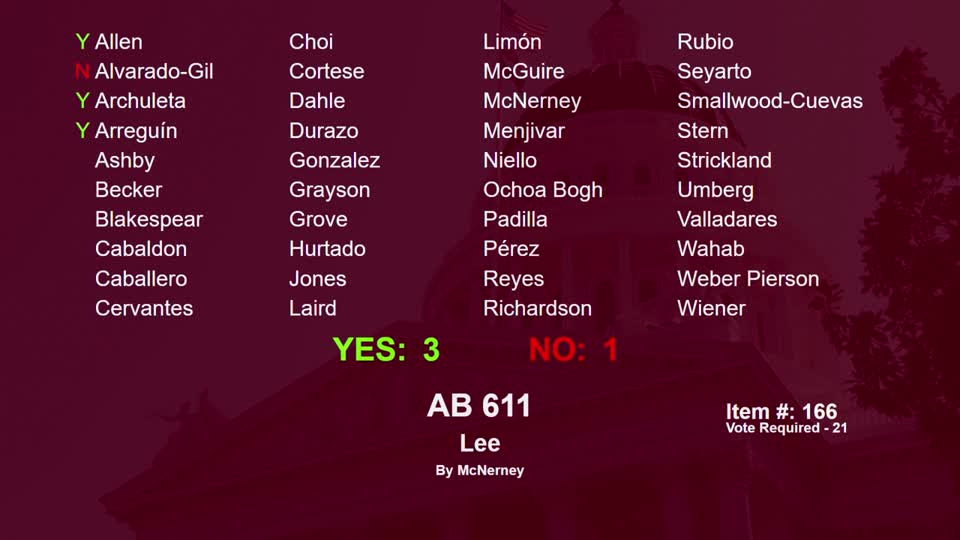 1MIN
Senate Floor
 1MIN
Assembly Floor
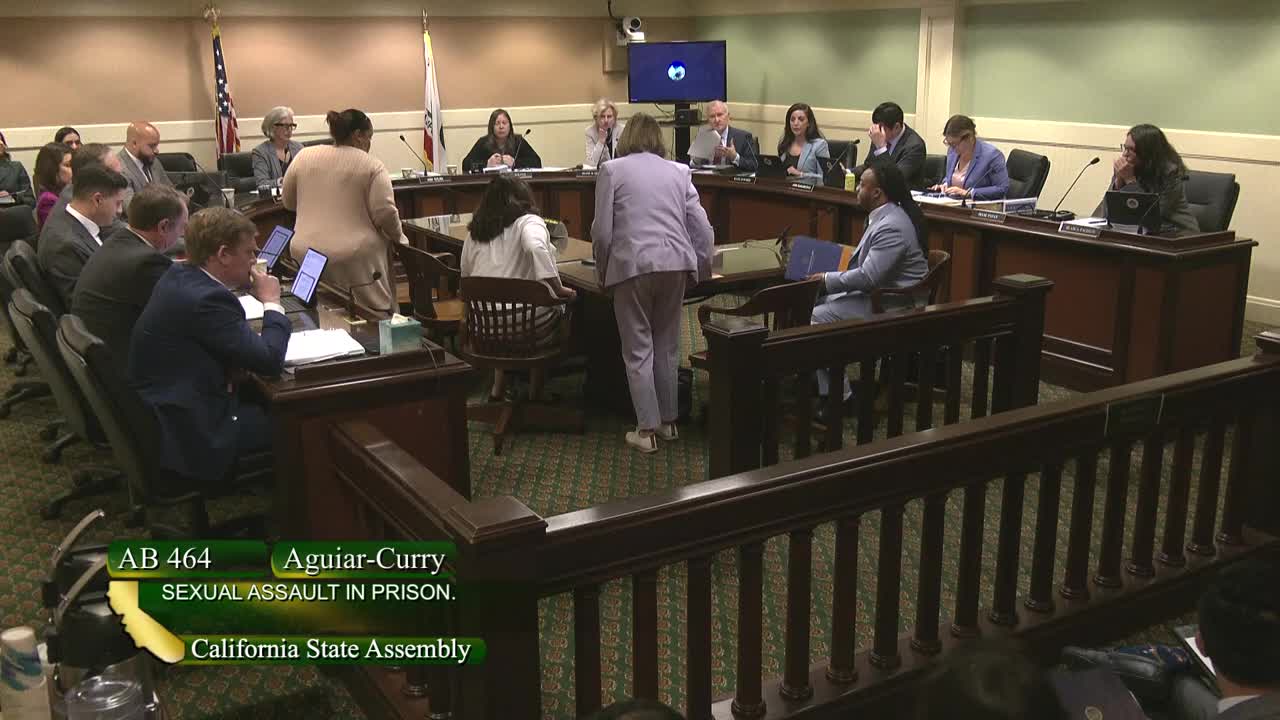 15MIN
Assembly Standing Committee on Judiciary
Bill Author

Bill Co-Author(s):