AB 468: Crimes: looting.
- Session Year: 2025-2026
- House: Assembly
- Latest Version Date: 2025-10-10
Current Status:
Passed
(2025-10-10: Chaptered by Secretary of State - Chapter 533, Statutes of 2025.)
Introduced
In Committee
Awaiting First Chamber Vote
Passed First Chamber
In Committee
Awaiting Second Chamber Vote
Passed Second Chamber
Enacted
Existing law defines the crime of burglary as entering specified buildings, places, or vehicles with the intent to commit grand or petty theft or a felony. Existing law clarifies that a structure designed for habitation is being used for dwelling purposes if, at the time of the burglary, it was not occupied solely because a disaster caused the occupants to leave the premises.
This bill would specify that neither the fact that the structure entered has been damaged by a natural or other disaster, nor the extent of the damage, shall preclude conviction.
Existing law defines looting as the commission of certain offenses during and within an affected county in a state of emergency or local emergency, as specified. Existing law includes any 2nd-degree burglary or grand theft in the definition of looting, and makes looting based on those offenses punishable by either imprisonment in a county jail for one year or as a felony. Existing law also makes the crime of looting based on petty theft punishable as a misdemeanor.
Existing regulations define an evacuation area as a geographic area from which civilians have been evacuated pursuant to an evacuation order and where movement and entry are controlled by fire and law enforcement personnel having jurisdictional authority. Existing regulations define an evacuation warning as alerting community members in a defined area of a potential threat to life or property.
This bill would recast the offense of looting to include first degree burglary, 2nd degree burglary, grand theft, trespass, and theft from a vehicle, when those offenses are committed in an evacuation zone, to the crime of looting. The bill would also, for the purposes of the offense of looting, define an evacuation zone to include an evacuation area or an area subject to an evacuation warning, and to include any residential dwelling units in such an area for a period of one year after the evacuation order, or up to 3 years if the property is undergoing construction. The bill would impose increased penalties for these offenses committed within an evacuation zone, as specified.
By increasing the punishment of specified crimes, this bill would impose a state-mandated local program.
The California Constitution requires the state to reimburse local agencies and school districts for certain costs mandated by the state. Statutory provisions establish procedures for making that reimbursement.
This bill would provide that no reimbursement is required by this act for a specified reason.
This bill would make the operation of its provisions contingent upon the enactment of Senate Bill 571 of the 202526 Regular Session.
Existing law defines the crime of burglary as entering specified buildings, places, or vehicles with the intent to commit grand or petty theft or a felony. Existing law clarifies that a structure designed for habitation is being used for dwelling purposes if, at the time of the burglary, it was not occupied solely because a disaster caused the occupants to leave the premises.
This bill would specify that neither the fact that the structure entered has been damaged by a natural or other disaster, nor the extent of the damage, shall preclude conviction.
Existing law defines looting as the commission of certain offenses during and within an affected county in a state of emergency or local emergency, as specified. Existing law includes any 2nd-degree burglary or grand theft in the definition of looting, and makes looting based on those offenses punishable by either imprisonment in a county jail for one year or as a felony. Existing law also makes the crime of looting based on petty theft punishable as a misdemeanor.
Existing regulations define an evacuation area as a geographic area from which civilians have been evacuated pursuant to an evacuation order and where movement and entry are controlled by fire and law enforcement personnel having jurisdictional authority. Existing regulations define an evacuation warning as alerting community members in a defined area of a potential threat to life or property.
This bill would recast the offense of looting to include first degree burglary, 2nd degree burglary, grand theft, trespass, and theft from a vehicle, when those offenses are committed in an evacuation zone, to the crime of looting. The bill would also, for the purposes of the offense of looting, define an evacuation zone as to include an evacuation area or an area subject to an evacuation warning and would include in the definition one or more residential dwelling units undergoing reconstruction following damage or destruction caused by a disaster after an evacuation order or warning has been lifted, as specified. warning, and to include any residential dwelling units in such an area for a period of one year after the evacuation order, or up to 3 years if the property is undergoing construction. The bill would impose increased penalties for these offenses committed within an evacuation zone, as specified, and would thus create a state-mandated local program. specified.
By increasing the punishment of specified crimes, this bill would impose a state-mandated local program.
The California Constitution requires the state to reimburse local agencies and school districts for certain costs mandated by the state. Statutory provisions establish procedures for making that reimbursement.
This bill would provide that no reimbursement is required by this act for a specified reason.
This bill would make the operation of its provisions contingent upon the enactment of Senate Bill 571 of the 202526 Regular Session.
Existing law defines the crime of burglary as entering specified buildings, places, or vehicles with the intent to commit grand or petty theft or a felony. Existing law clarifies that a structure designed for habitation is being used for dwelling purposes if, at the time of the burglary, it was not occupied solely because a disaster caused the occupants to leave the premises.
This bill would specify that neither the fact that the structure entered has been damaged by a natural or other disaster, nor the extent of the damage, shall preclude conviction.
Existing law defines looting as the commission of certain offenses during and within an affected county in a state of emergency or local emergency, as specified. Existing law includes any 2nd-degree burglary or grand theft in the definition of looting, and makes looting based on those offenses punishable by either imprisonment in a county jail for one year or as a felony. Existing law also makes the crime of looting based on petty theft punishable as a misdemeanor.
Existing regulations define an evacuation area as a geographic area from which civilians have been evacuated pursuant to an evacuation order and where movement and entry are controlled by fire and law enforcement personnel having jurisdictional authority. Existing regulations define an evacuation warning as alerting community members in a defined area of a potential threat to life or property.
This bill would recast the offense of looting to include first degree burglary, 2nd degree burglary, grand theft, trespass, and theft from a vehicle, when those offenses are committed in an evacuation zone, to the crime of looting. The bill would also, for the purposes of looting, define an evacuation zone as an evacuation area or an area subject to an evacuation warning and would include in the definition one or more residential dwelling units undergoing reconstruction following damage or destruction caused by a disaster after an evacuation order or warning has been lifted, as specified. The bill would impose increased penalties for these offenses committed within an evacuation zone, as specified, and would thus create a state-mandated local program.
Existing law makes it a misdemeanor to impersonate certain personnel, including a peace officer or an officer or member of a fire department, with the intent of fraudulently impersonating such a person, or of fraudulently inducing the belief that they are such a person.This bill would make it a misdemeanor punishable by imprisonment in a county jail or a felony punishable by imprisonment in the state prison for a person, other than specified emergency services providers or members of the military, to wear, exhibit, or use the uniform, insignia, emblem, device, label, certificate, card, or writing of one of those specified emergency services providers or members of the military with the intent of fraudulently inducing the belief that they are one of those specified emergency services providers or members of the military during and within an affected county in a state of emergency, a local emergency, or under an evacuation order, as specified. The bill would also impose a sentencing enhancement if a person is convicted of looting while impersonating emergency personnel.By creating a new crime, byBy increasing the punishment of specified crimes, and by creating a new enhancement, this bill would impose a state-mandated local program.
The California Constitution requires the state to reimburse local agencies and school districts for certain costs mandated by the state. Statutory provisions establish procedures for making that reimbursement.
This bill would provide that no reimbursement is required by this act for a specified reason.
This bill would make the operation of its provisions contingent upon the enactment of Senate Bill 571 of the 202526 Regular Session.
Existing law defines the crime of burglary as entering specified buildings, places, or vehicles with the intent to commit grand or petty theft or a felony. Existing law clarifies that a structure designed for habitation is being used for dwelling purposes if, at the time of the burglary, it was not occupied solely because a disaster caused the occupants to leave the premises.
This bill would specify that neither the fact that the structure entered has been damaged by a natural or other disaster, nor the extent of the damage, shall preclude conviction.
Existing law defines looting as the commission of certain offenses during and within an affected county in a state of emergency or local emergency, as specified. Existing law includes any 2nd-degree burglary or grand theft in the definition of looting, and makes looting based on those offenses punishable by either imprisonment in a county jail for one year or as a felony. Existing law also makes the crime of looting based on petty theft punishable as a misdemeanor.
Existing regulations define an evacuation area as a geographic area from which civilians have been evacuated pursuant to an evacuation order and where movement and entry are controlled by fire and law enforcement personnel having jurisdictional authority. Existing regulations define an evacuation warning as alerting community members in a defined area of a potential threat to life or property.
This bill would recast the offense of looting to include first degree burglary, 2nd degree burglary, grand theft, trespass, and theft from a vehicle, when those offenses are committed in an evacuation zone, to the crime of looting. The bill would also, for the purposes of looting, define an evacuation zone as an evacuation area or an area subject to an evacuation warning and would include in the definition a principal residence, as defined, while it is one or more residential dwelling units undergoing reconstruction following damage or destruction caused by a disaster after an evacuation order or warning has been lifted. lifted, as specified. The bill would impose increased penalties for these offenses committed within an evacuation zone, as specified, and would thus create a state-mandated local program.
Existing law makes it a misdemeanor to impersonate certain personnel, including a peace officer or an officer or member of a fire department, with the intent of fraudulently impersonating such a person, or of fraudulently inducing the belief that they are such a person.
This bill would make it a misdemeanor punishable by imprisonment in a county jail or a felony punishable by imprisonment in the state prison for a person, other than specified emergency services providers or members of the military, to wear, exhibit, or use the uniform, insignia, emblem, device, label, certificate, card, or writing of one of those specified emergency services providers or members of the military with the intent of fraudulently inducing the belief that they are one of those specified emergency services providers or members of the military during and within an affected county in a state of emergency, a local emergency, or under an evacuation order, as specified. The bill would also impose a sentencing enhancement if a person is convicted of looting while impersonating emergency personnel.
By creating a new crime, by increasing the punishment of specified crimes, and by creating a new enhancement, this bill would impose a state-mandated local program.
The California Constitution requires the state to reimburse local agencies and school districts for certain costs mandated by the state. Statutory provisions establish procedures for making that reimbursement.
This bill would provide that no reimbursement is required by this act for a specified reason.
Existing law defines the crime of burglary as entering specified buildings, places, or vehicles with the intent to commit grand or petty theft or a felony. Existing law clarifies that a structure designed for habitation is being used for dwelling purposes if, at the time of the burglary, it was not occupied solely because a disaster caused the occupants to leave the premises.
This bill would specify that neither the fact that the structure entered has been damaged by a natural or other disaster, nor the extent of the damage, shall preclude conviction.
Existing law defines looting as the commission of certain offenses during and within an affected county in a state of emergency or local emergency, as specified. Existing law includes any 2nd-degree burglary or grand theft in the definition of looting, and makes looting based on those offenses punishable by either imprisonment in a county jail for one year or as a felony. Existing law also makes the crime of looting based on petty theft punishable as a misdemeanor.
Existing regulations define an evacuation area as a geographic area from which civilians have been evacuated pursuant to an evacuation order and where movement and entry are controlled by fire and law enforcement personnel having jurisdictional authority. Existing regulations define an evacuation warning as alerting community members in a defined area of a potential threat to life or property.
This bill would recast the offense of looting to include adding 1st first degree burglary, 2nd degree burglary, grand theft, trespass, and theft from a vehicle, when those offenses are committed in an evacuation zone, to the crime of looting. The bill would also, for the purposes of looting, define an evacuation zone as an evacuation area or an area subject to an evacuation warning and would include in the definition a principal residence, as defined, while it is undergoing reconstruction following damage or destruction caused by a disaster after an evacuation order or warning has been lifted. The bill would impose increased penalties for these offenses committed within an evacuation zone, as specified, and would thus create a state-mandated local program.
Existing law requires a person arrested for a misdemeanor to be released on a notice to appear except as specified.This bill would prohibit a person arrested for looting from being released on a notice to appear and would require the court, before such a person is released, to make a judicial determination of their risk to public safety and likelihood of returning to court.Existing law makes it a misdemeanor to impersonate certain personnel, including a peace officer or an officer or member of a fire department, with the intent of fraudulently impersonating such a person, or of fraudulently inducing the belief that they are such a person.
This bill would make it a misdemeanor punishable by imprisonment in a county jail or a felony punishable by imprisonment in the state prison for a person, other than specified emergency services providers or members of the military, to wear, exhibit, or use the uniform, insignia, emblem, device, label, certificate, card, or writing of one of those specified emergency services providers or members of the military with the intent of fraudulently inducing the belief that they are one of those specified emergency services providers or members of the military during and within an affected county in a state of emergency, a local emergency, or under an evacuation order, as specified. The bill would also impose a sentencing enhancement if a person other than a specified emergency services provider or member of the military wears, exhibits, or uses the uniform, insignia, emblem, device, label, certificate, card, or writing of one of those specified emergency services providers or members of the military during the commission of a felony during and within a state of emergency, local emergency, or evacuation order, as specified. is convicted of looting while impersonating emergency personnel.
By creating a new crime, by increasing the punishment of specified crimes, and by creating a new enhancements, enhancement, this bill would impose a state-mandated local program.
The California Constitution requires the state to reimburse local agencies and school districts for certain costs mandated by the state. Statutory provisions establish procedures for making that reimbursement.
This bill would provide that no reimbursement is required by this act for a specified reason.
Existing law defines the crime of burglary as entering specified buildings, places, or vehicles with the intent to commit grand or petty theft or a felony. Existing law clarifies that a structure designed for habitation is being used for dwelling purposes if, at the time of the burglary, it was not occupied solely because a disaster caused the occupants to leave the premises.
This bill would specify that neither the fact that the structure entered has been damaged by a natural or other disaster, nor the extent of the damage, shall preclude conviction.
Existing law defines looting as the commission of certain offenses during and within an affected county in a state of emergency or local emergency, as specified. Existing law includes any 2nd-degree burglary or grand theft in the definition of looting, and makes looting based on those offenses punishable by either imprisonment in a county jail for one year or as a felony. Existing law also makes the crime of looting based on petty theft punishable as a misdemeanor.
Existing regulations define an evacuation area as a geographic area from which civilians have been evacuated pursuant to an evacuation order and where movement and entry are controlled by fire and law enforcement personnel having jurisdictional authority. Existing regulations define an evacuation warning as alerting community members in a defined area of a potential threat to life or property.
This bill would recast the offense of looting to include adding 1st degree burglary, 2nd degree burglary, grand theft, trespass, and theft from a vehicle, when those offenses are committed in an evacuation zone, to the crime of looting. The bill would also, for the purposes of looting, define an evacuation zone as an evacuation area or an area subject to an evacuation warning and would include in the definition a principal residence, as defined, while it is undergoing reconstruction following damage or destruction caused by a disaster after an evacuation order or warning has been lifted. The bill would impose increased penalties for these offenses committed within an evacuation zone, as specified, and would thus create a state-mandated local program.
Existing law requires a person arrested for a misdemeanor to be released on a notice to appear except as specified.
This bill would prohibit a person arrested for looting from being released on a notice to appear and would require the court, before such a person is released, to make a judicial determination of their risk to public safety and likelihood of returning to court.
Existing law makes it a misdemeanor to impersonate certain personnel, including a peace officer or an officer or member of a fire department, with the intent of fraudulently impersonating such a person, or of fraudulently inducing the belief that they are such a person.
This bill would make it a felony punishable by imprisonment in the state prison for a person, other than specified emergency services providers or members of the military, to wear, exhibit, or use the uniform, insignia, emblem, device, label, certificate, card, or writing of one of those specified emergency services providers or members of the military with the intent of fraudulently inducing the belief that they are one of those specified emergency services providers or members of the military during and within an affected county in a state of emergency, a local emergency, or under an evacuation order, as specified. The bill would also impose a sentencing enhancement if a person other than a specified emergency services provider or member of the military wears, exhibits, or uses the uniform, insignia, emblem, device, label, certificate, card, or writing of one of those specified emergency services providers or members of the military during the commission of a felony during and within a state of emergency, local emergency, or evacuation order, as specified.
By creating a new crime, by increasing the punishment of specified crimes, and by creating new enhancements, this bill would impose a state-mandated local program.
The California Constitution requires the state to reimburse local agencies and school districts for certain costs mandated by the state. Statutory provisions establish procedures for making that reimbursement.
This bill would provide that no reimbursement is required by this act for a specified reason.
Existing law, the California Emergency Services Act, authorizes the Governor to proclaim a state of emergency, as defined, under specified circumstances. Existing law defines any 2nd degree burglary or grand theft during and within an affected county in a state of emergency or local emergency, as specified, as looting, punishable as either a misdemeanor or a felony. Existing law defines petty theft during and within an affected county in a state of emergency or local emergency, as specified, as looting, punishable as a misdemeanor.This bill would state the intent of the Legislature to enact legislation relating to looting.Existing law, the California Emergency Services Act, authorizes the Governor to proclaim a state of emergency, as defined, under specified circumstances. Existing law defines any 2nd degree burglary or grand theft during and within an affected county in a state of emergency or local emergency, as specified, as looting, punishable as either a misdemeanor or a felony. Existing law defines petty theft during and within an affected county in a state of emergency or local emergency, as specified, as looting, punishable as a misdemeanor.
This bill would state the intent of the Legislature to enact legislation relating to looting.
(a)Every person who enters any house, room, apartment, tenement, shop, warehouse, store, mill, barn, stable, outhouse or other building, tent, vessel, as defined in Section 21 of the Harbors and Navigation Code, floating home, as defined in subdivision (d) of Section 18075.55 of the Health and Safety Code, railroad car, locked or sealed cargo container, whether or not mounted on a vehicle, trailer coach, as defined in Section 635 of the Vehicle Code, any house car, as defined in Section 362 of the Vehicle Code, inhabited camper, as defined in Section 243 of the Vehicle Code, vehicle as defined by the Vehicle Code, when the doors are locked, aircraft as defined by Section 21012 of the Public Utilities Code, or mine or any underground portion thereof, with intent to commit grand or petit larceny or any felony is guilty of burglary. As used in this chapter, inhabited means currently being used for dwelling purposes, whether occupied or not. A house, trailer, vessel designed for habitation, or portion of a building is currently being used for dwelling purposes if, at the time of the burglary, it was not occupied solely because a natural or other disaster caused the occupants to leave the premises.
(b)The fact that the structure entered has been damaged by a natural or other disaster, or the extent of that damage, does not preclude conviction.
SEC. 2.Section 463 of the Penal Code is repealed.SEC. 3.Section 463 is added to the Penal Code, to read:463.(a)For the purposes of this section, the following terms shall have the following meanings:
(1)Evacuation order means an order from the Governor, or a county sheriff, chief of police, or fire marshal, under which persons subject to the order are required to relocate outside of the geographic area covered by the order due to an imminent danger resulting from an earthquake, fire, flood, riot, or other natural or manmade disaster.
(2)Evacuation zone means any of the following:
(A)An evacuation area or an area subject to an evacuation warning, as defined in Section 2470.1 of Title 19 of the California Code of Regulations.
(B)One or more residential dwelling units in an area identified in subparagraph (A) that is damaged or destroyed by an earthquake, fire, flood, riot, or other natural or manmade disaster, for one year after the date an evacuation order or warning went into effect, regardless of whether the evacuation order or warning has been lifted, but does not include detached structures on the same property that are not dwelling units or are not otherwise usable for human habitation.
(C)One or more residential dwelling units in an area identified in subparagraph (A) that is damaged or destroyed by an earthquake, fire, flood, riot, or other natural or manmade disaster, and is currently undergoing reconstruction, for up to three years after the date an evacuation order or warning went into effect, regardless of whether the evacuation order or warning has been lifted, but does not include detached structures on the same property that are not dwelling units or are not otherwise usable for human habitation.
(3)Local emergency means conditions that, by reason of their magnitude, are, or are likely to be, beyond the control of the services, personnel, equipment, and facilities of any single county, city and county, or city and require the combined forces of a mutual aid region or regions to combat. A local emergency shall exist from the time of the proclamation of the condition of the emergency by the local governing body until terminated pursuant to Section 8630 of the Government Code.
(4)Reconstruction includes, but is not limited to, the time from initial debris removal through the issuance of the certificate of occupancy.
(5)State of emergency means conditions that, by reason of their magnitude, are, or are likely to be, beyond the control of the services, personnel, equipment, and facilities of any single county, city and county, or city and require the combined forces of a mutual aid region or regions to combat. A state of emergency shall exist from the time of the proclamation of the condition of the emergency until terminated pursuant to Section 8629 of the Government Code.
(b)All of the following offenses when committed during and within an affected county in a state of emergency or a local emergency, or under an evacuation order, resulting from an earthquake, fire, flood, riot, or other natural or manmade disaster are looting and, except as provided in subdivision (c), are punishable as follows:
(1)A violation of Section 459, punishable as a second-degree burglary pursuant to subdivision (b) of Section 461, is punishable by imprisonment in a county jail for one year or pursuant to subdivision (h) of Section 1170.
(2)A violation of Section 487 or subdivision (a) of Section 487a, except grand theft of a firearm, is punishable by imprisonment in a county jail for one year or pursuant to subdivision (h) of Section 1170.
(3)Grand theft of a firearm, as defined in Section 487, is punishable by imprisonment in the state prison, as set forth in subdivision (a) of Section 489.
(4)A violation of Section 488 is punishable by imprisonment in a county jail for six months.
(c)All of the following offenses when committed during and within an evacuation zone are looting and, notwithstanding subdivision (b), are punishable as follows:
(1)A violation of Section 459, punishable as a first-degree burglary pursuant to subdivision (a) of Section 461, is punishable by imprisonment in the state prison for a term of two, four, or seven years.
(2)A violation of Section 459, punishable as a second-degree burglary pursuant to subdivision (b) of Section 461, is punishable pursuant to subdivision (h) of Section 1170.
(3)A violation of Section 487 or subdivision (a) of Section 487a, except grand theft of a firearm, is punishable pursuant to subdivision (h) of Section 1170.
(4)A violation of Section 602, with the intent to commit larceny, punishable by imprisonment in a county jail for one year or pursuant to subdivision (h) of Section 1170.
(5)Notwithstanding Section 490.2, theft from an unlocked vehicle is punishable by imprisonment in a county jail for one year or pursuant to subdivision (h) of Section 1170. This paragraph shall not preclude prosecution under any other provision of law.
(d)(1)A person convicted of an offense described in paragraph (1), (2), or (3) of subdivision (b) or an offense described in subdivision (c) who is granted probation shall, as a condition of probation, be confined in a county jail for at least 180 days, except that the court may, in a case where the interest of justice would best be served, reduce or eliminate that mandatory jail sentence if the court specifies on the record and enters into the minutes the circumstances indicating that the interest of justice would best be served by that disposition.
(2)In addition to whatever custody is ordered, the court may require any person granted probation following conviction under paragraph (1) of subdivision (b) to serve up to 240 hours of community service and may require any person granted probation following conviction of an offense described in paragraph (2) or (3) of subdivision (b) or an offense described in subdivision (c) to serve up to 160 hours of community service.
(3)A person convicted under paragraph (4) of subdivision (b) who is granted probation shall, as a condition of probation, be confined in a county jail for at least 90 days, except that the court may, in a case where the interest of justice would best be served, reduce or eliminate that mandatory minimum jail sentence if the court specifies on the record and enters into the minutes the circumstances indicating that the interest of justice would best be served by that disposition. In addition to whatever custody is ordered, the court may require any person granted probation following conviction under this subdivision to serve up to 80 hours of community service.
(e)Consensual entry into a commercial structure with the intent to commit a violation of Section 470, 476, 476a, 484f, or 484g shall not be charged as a violation under this section.
(f)For purposes of this section, the fact that the structure entered has been damaged by the earthquake, fire, flood, or other natural or manmade disaster shall not, in and of itself, preclude conviction.
SEC. 4.No reimbursement is required by this act pursuant to Section 6 of Article XIIIB of the California Constitution because the only costs that may be incurred by a local agency or school district will be incurred because this act creates a new crime or infraction, eliminates a crime or infraction, or changes the penalty for a crime or infraction, within the meaning of Section 17556 of the Government Code, or changes the definition of a crime within the meaning of Section 6 of Article XIIIB of the California Constitution.
SEC. 5.This act shall become operative only if Senate Bill 571 of the 202526 Regular Session is enacted and becomes effective on or before January 1, 2026.
(a)Every person who enters any house, room, apartment, tenement, shop, warehouse, store, mill, barn, stable, outhouse or other building, tent, vessel, as defined in Section 21 of the Harbors and Navigation Code, floating home, as defined in subdivision (d) of Section 18075.55 of the Health and Safety Code, railroad car, locked or sealed cargo container, whether or not mounted on a vehicle, trailer coach, as defined in Section 635 of the Vehicle Code, any house car, as defined in Section 362 of the Vehicle Code, inhabited camper, as defined in Section 243 of the Vehicle Code, vehicle as defined by the Vehicle Code, when the doors are locked, aircraft as defined by Section 21012 of the Public Utilities Code, or mine or any underground portion thereof, with intent to commit grand or petit larceny or any felony is guilty of burglary. As used in this chapter, inhabited means currently being used for dwelling purposes, whether occupied or not. A house, trailer, vessel designed for habitation, or portion of a building is currently being used for dwelling purposes if, at the time of the burglary, it was not occupied solely because a natural or other disaster caused the occupants to leave the premises.
(b)The fact that the structure entered has been damaged by a natural or other disaster, or the extent of that damage, does not preclude conviction.
SEC. 2.Section 463 of the Penal Code is repealed.SEC. 3.Section 463 is added to the Penal Code, to read:463.(a)For the purposes of this section, the following terms shall have the following meanings:
(1)Evacuation order means an order from the Governor, or a county sheriff, chief of police, or fire marshal, under which persons subject to the order are required to relocate outside of the geographic area covered by the order due to an imminent danger resulting from an earthquake, fire, flood, riot, or other natural or manmade disaster.
(2)Evacuation zone means an any of the following:
(A)An evacuation area or an area subject to an evacuation warning, as defined in Section 2470.1 of Title 19 of the California Code of Regulations. An evacuation zone includes one
(B)One or more residential dwelling units in an area identified in subparagraph (A) that is damaged or destroyed by an earthquake, fire, flood, riot, or other natural or manmade disaster, for one year after the date an evacuation order or warning went into effect, regardless of whether the evacuation order or warning has been lifted, but does not include detached structures on the same property that are not dwelling units or are not otherwise usable for human habitation.
(C)One or more residential dwelling units while it is undergoing reconstruction following damage or destruction caused in an area identified in subparagraph (A) that is damaged or destroyed by an earthquake, fire, flood, riot, or other natural or manmade disaster, after an evacuation order or warning has been lifted, for up to four years from and is currently undergoing reconstruction, for up to three years after the date an evacuation order or warning went into effect, regardless of whether the evacuation order or warning has been lifted, but does not include detached structures on the same property that are not dwelling units or are not otherwise usable for human habitation.
(3)Local emergency means conditions that, by reason of their magnitude, are, or are likely to be, beyond the control of the services, personnel, equipment, and facilities of any single county, city and county, or city and require the combined forces of a mutual aid region or regions to combat. A local emergency shall exist from the time of the proclamation of the condition of the emergency by the local governing body until terminated pursuant to Section 8630 of the Government Code.
(4)Reconstruction includes, but is not limited to, the time from initial debris removal through the issuance of the certificate of occupancy.
(5)State of emergency means conditions that, by reason of their magnitude, are, or are likely to be, beyond the control of the services, personnel, equipment, and facilities of any single county, city and county, or city and require the combined forces of a mutual aid region or regions to combat. A state of emergency shall exist from the time of the proclamation of the condition of the emergency until terminated pursuant to Section 8629 of the Government Code.
(b)All of the following offenses when committed during and within an affected county in a state of emergency or a local emergency, or under an evacuation order, resulting from an earthquake, fire, flood, riot, or other natural or manmade disaster are looting and, except as provided in subdivision (c), are punishable as follows:
(1)A violation of Section 459, punishable as a second-degree burglary pursuant to subdivision (b) of Section 461, is punishable by imprisonment in a county jail for one year or pursuant to subdivision (h) of Section 1170.
(2)A violation of Section 487 or subdivision (a) of Section 487a, except grand theft of a firearm, is punishable by imprisonment in a county jail for one year or pursuant to subdivision (h) of Section 1170.
(3)Grand theft of a firearm, as defined in Section 487, is punishable by imprisonment in the state prison, as set forth in subdivision (a) of Section 489.
(4)A violation of Section 488 is punishable by imprisonment in a county jail for six months.
(c)All of the following offenses when committed during and within an evacuation zone are looting and, notwithstanding subdivision (b), are punishable as follows:
(1)A violation of Section 459, punishable as a first-degree burglary pursuant to subdivision (a) of Section 461, is punishable by imprisonment in the state prison for a term of two, four, or seven years.
(2)A violation of Section 459, punishable as a second-degree burglary pursuant to subdivision (b) of Section 461, is punishable pursuant to subdivision (h) of Section 1170.
(3)A violation of Section 487 or subdivision (a) of Section 487a, except grand theft of a firearm, is punishable pursuant to subdivision (h) of Section 1170.
(4)A violation of Section 602, with the intent to commit larceny, punishable by imprisonment in a county jail for one year or pursuant to subdivision (h) of Section 1170.
(5)Notwithstanding Section 490.2, theft from an unlocked vehicle is punishable by imprisonment in a county jail for one year or pursuant to subdivision (h) of Section 1170. This paragraph shall not preclude prosecution under any other provision of law.
(d)(1)A person convicted of an offense described in paragraph (1), (2), or (3) of subdivision (b) or an offense described in subdivision (c) who is granted probation shall, as a condition of probation, be confined in a county jail for at least 180 days, except that the court may, in a case where the interest of justice would best be served, reduce or eliminate that mandatory jail sentence if the court specifies on the record and enters into the minutes the circumstances indicating that the interest of justice would best be served by that disposition.
(2)In addition to whatever custody is ordered, the court may require any person granted probation following conviction under paragraph (1) of subdivision (b) to serve up to 240 hours of community service and may require any person granted probation following conviction of an offense described in paragraph (2) or (3) of subdivision (b) or an offense described in subdivision (c) to serve up to 160 hours of community service.
(3)A person convicted under paragraph (4) of subdivision (b) who is granted probation shall, as a condition of probation, be confined in a county jail for at least 90 days, except that the court may, in a case where the interest of justice would best be served, reduce or eliminate that mandatory minimum jail sentence if the court specifies on the record and enters into the minutes the circumstances indicating that the interest of justice would best be served by that disposition. In addition to whatever custody is ordered, the court may require any person granted probation following conviction under this subdivision to serve up to 80 hours of community service.
(e)Consensual entry into a commercial structure with the intent to commit a violation of Section 470, 476, 476a, 484f, or 484g shall not be charged as a violation under this section.
(f)For purposes of this section, the fact that the structure entered has been damaged by the earthquake, fire, flood, or other natural or manmade disaster shall not, in and of itself, preclude conviction.
SEC. 4.No reimbursement is required by this act pursuant to Section 6 of Article XIIIB of the California Constitution because the only costs that may be incurred by a local agency or school district will be incurred because this act creates a new crime or infraction, eliminates a crime or infraction, or changes the penalty for a crime or infraction, within the meaning of Section 17556 of the Government Code, or changes the definition of a crime within the meaning of Section 6 of Article XIIIB of the California Constitution.
SEC. 5.This act shall become operative only if Senate Bill 571 of the 202526 Regular Session is enacted and becomes effective on or before January 1, 2026.
(a)Every person who enters any house, room, apartment, tenement, shop, warehouse, store, mill, barn, stable, outhouse or other building, tent, vessel, as defined in Section 21 of the Harbors and Navigation Code, floating home, as defined in subdivision (d) of Section 18075.55 of the Health and Safety Code, railroad car, locked or sealed cargo container, whether or not mounted on a vehicle, trailer coach, as defined in Section 635 of the Vehicle Code, any house car, as defined in Section 362 of the Vehicle Code, inhabited camper, as defined in Section 243 of the Vehicle Code, vehicle as defined by the Vehicle Code, when the doors are locked, aircraft as defined by Section 21012 of the Public Utilities Code, or mine or any underground portion thereof, with intent to commit grand or petit larceny or any felony is guilty of burglary. As used in this chapter, inhabited means currently being used for dwelling purposes, whether occupied or not. A house, trailer, vessel designed for habitation, or portion of a building is currently being used for dwelling purposes if, at the time of the burglary, it was not occupied solely because a natural or other disaster caused the occupants to leave the premises.
(b)The fact that the structure entered has been damaged by a natural or other disaster, or the extent of that damage, does not preclude conviction.
SEC. 2.Section 463 of the Penal Code is repealed.SEC. 3.Section 463 is added to the Penal Code, to read:463.(a)For the purposes of this section, the following terms shall have the following meanings:
(1)Evacuation order means an order from the Governor, or a county sheriff, chief of police, or fire marshal, under which persons subject to the order are required to relocate outside of the geographic area covered by the order due to an imminent danger resulting from an earthquake, fire, flood, riot, or other natural or manmade disaster.
(2)Evacuation zone means an evacuation area or an area subject to an evacuation warning, as defined in Section 2470.1 of Title 19 of the California Code of Regulations. An evacuation zone includes one or more residential dwelling units while it is undergoing reconstruction following damage or destruction caused by an earthquake, fire, flood, riot, or other natural or manmade disaster, after an evacuation order or warning has been lifted, for up to four years from the date an evacuation order or warning went into effect, but does not include detached structures on the same property that are not dwelling units or are not otherwise usable for human habitation.
(3)Local emergency means conditions that, by reason of their magnitude, are, or are likely to be, beyond the control of the services, personnel, equipment, and facilities of any single county, city and county, or city and require the combined forces of a mutual aid region or regions to combat. A local emergency shall exist from the time of the proclamation of the condition of the emergency by the local governing body until terminated pursuant to Section 8630 of the Government Code.
(4)Reconstruction includes, but is not limited to, the time from initial debris removal through the issuance of the certificate of occupancy.
(5)State of emergency means conditions that, by reason of their magnitude, are, or are likely to be, beyond the control of the services, personnel, equipment, and facilities of any single county, city and county, or city and require the combined forces of a mutual aid region or regions to combat. A state of emergency shall exist from the time of the proclamation of the condition of the emergency until terminated pursuant to Section 8629 of the Government Code.
(b)All of the following offenses when committed during and within an affected county in a state of emergency or a local emergency, or under an evacuation order, resulting from an earthquake, fire, flood, riot, or other natural or manmade disaster are looting and, except as provided in subdivision (c), are punishable as follows:
(1)A violation of Section 459, punishable as a second-degree burglary pursuant to subdivision (b) of Section 461, is punishable by imprisonment in a county jail for one year or pursuant to subdivision (h) of Section 1170.
(2)A violation of Section 487 or subdivision (a) of Section 487a, except grand theft of a firearm, is punishable by imprisonment in a county jail for one year or pursuant to subdivision (h) of Section 1170.
(3)Grand theft of a firearm, as defined in Section 487, is punishable by imprisonment in the state prison, as set forth in subdivision (a) of Section 489.
(4)A violation of Section 488 is punishable by imprisonment in a county jail for six months.
(c)All of the following offenses when committed during and within an evacuation zone are looting and, notwithstanding subdivision (b), are punishable as follows:
(1)A violation of Section 459, punishable as a first-degree burglary pursuant to subdivision (a) of Section 461, is punishable by imprisonment in the state prison for a term of two, four, or seven years.
(2)A violation of Section 459, punishable as a second-degree burglary pursuant to subdivision (b) of Section 461, is punishable pursuant to subdivision (h) of Section 1170.
(3)A violation of Section 487 or subdivision (a) of Section 487a, except grand theft of a firearm, is punishable pursuant to subdivision (h) of Section 1170.
(4)A violation of Section 602, with the intent to commit larceny, punishable by imprisonment in a county jail for one year or pursuant to subdivision (h) of Section 1170.
(5)Notwithstanding Section 490.2, theft from an unlocked vehicle is punishable by imprisonment in a county jail for one year or pursuant to subdivision (h) of Section 1170. This paragraph shall not preclude prosecution under any other provision of law.
(d)(1)A person convicted of an offense described in paragraph (1), (2), or (3) of subdivision (b) or an offense described in subdivision (c) who is granted probation shall, as a condition of probation, be confined in a county jail for at least 180 days, except that the court may, in a case where the interest of justice would best be served, reduce or eliminate that mandatory jail sentence if the court specifies on the record and enters into the minutes the circumstances indicating that the interest of justice would best be served by that disposition.
(2)In addition to whatever custody is ordered, the court may require any person granted probation following conviction under paragraph (1) of subdivision (b) to serve up to 240 hours of community service and may require any person granted probation following conviction of an offense described in paragraph (2) or (3) of subdivision (b) or an offense described in subdivision (c) to serve up to 160 hours of community service.
(3)A person convicted under paragraph (4) of subdivision (b) who is granted probation shall, as a condition of probation, be confined in a county jail for at least 90 days, except that the court may, in a case where the interest of justice would best be served, reduce or eliminate that mandatory minimum jail sentence if the court specifies on the record and enters into the minutes the circumstances indicating that the interest of justice would best be served by that disposition. In addition to whatever custody is ordered, the court may require any person granted probation following conviction under this subdivision to serve up to 80 hours of community service.
(e)Consensual entry into a commercial structure with the intent to commit a violation of Section 470, 476, 476a, 484f, or 484g shall not be charged as a violation under this section.
(f)For purposes of this section, the fact that the structure entered has been damaged by the earthquake, fire, flood, or other natural or manmade disaster shall not, in and of itself, preclude conviction.
SEC. 4.Section 463.2 is added to the Penal Code, to read:463.2.(a)A person who is convicted of a violation of Section 463 within an evacuation zone while impersonating emergency personnel shall, in addition and consecutive to the penalty provided for the felony or attempted felony of which they have been convicted, be punished by an additional and consecutive term of one, two, or three years.(b)For purposes of this section, the following terms shall have the following meanings:(1)Emergency personnel is defined as a peace officer, an officer or member of a fire department or a deputy state fire marshal, an employee of a public utility or district, state, county, city, or special district, a city and county officer or employee, an officer or member of a governmental agency-managed or -affiliated search and rescue unit or team, an officer or member of the Armed Forces of the United States, the California National Guard, the State Guard, the Naval Militia, the national guard of any other state, or any other reserve component of the Armed Forces of the United States, or an emergency medical technician, as defined in Division 2.5 (commencing with Section 1797) of the Health and Safety Code.(2)Evacuation zone has the same meaning as in Section 463.(3)Impersonating means willful wearing, exhibiting, or using of an authorized uniform, insignia, emblem, device, label, certificate, card, or writing of emergency personnel with the intent of fraudulently inducing the belief that they are a member of emergency personnel.SEC. 5.Section 538i is added to the Penal Code, to read:538i.Any person other than a peace officer, an officer or member of a fire department or a deputy state fire marshal, an employee of a public utility or district, state, county, city, or special district, a city and county officer or employee, an officer or member of a governmental agency-managed or -affiliated search and rescue unit or team, an officer or member of the Armed Forces of the United States, the California National Guard, the State Guard, the Naval Militia, the national guard of any other state, or any other reserve component of the Armed Forces of the United States, or an emergency medical technician, as defined in Division 2.5 (commencing with Section 1797) of the Health and Safety Code, during and within an evacuation zone, as defined in Section 463, willfully wears, exhibits, or uses the authorized uniform, insignia, emblem, device, label, certificate, card, or writing of a peace officer, an officer or member of a fire department or a deputy state fire marshal, an employee of a public utility or district, state, county, city, or special district, a city and county officer or employee, an officer or member of a governmental agency-managed or -affiliated search and rescue unit or team, an officer or member of the Armed Forces of the United States, the California National Guard, the State Guard, the Naval Militia, the national guard of any other state, or any other reserve component of the Armed Forces of the United States, or an emergency medical technician, as defined in Division 2.5 (commencing with Section 1797) of the Health and Safety Code, with the intent of fraudulently inducing the belief that they are a peace officer, an officer or member of a fire department or a deputy state fire marshal, an employee of a public utility or district, state, county, city, or special district, a city and county officer or employee, an officer or member of a governmental agency-managed or -affiliated search and rescue unit or team, an officer or member of the Armed Forces of the United States, the California National Guard, the State Guard, the Naval Militia, the national guard of any other state, or any other reserve component of the Armed Forces of the United States, or an emergency medical technician, as defined in Division 2.5 (commencing with Section 1797) of the Health and Safety Code, is guilty of a misdemeanor punishable by imprisonment in a county jail for up to one year or a felony punishable pursuant to subdivision (h) of Section 1170.SEC. 6.SEC. 4.No reimbursement is required by this act pursuant to Section 6 of Article XIIIB of the California Constitution because the only costs that may be incurred by a local agency or school district will be incurred because this act creates a new crime or infraction, eliminates a crime or infraction, or changes the penalty for a crime or infraction, within the meaning of Section 17556 of the Government Code, or changes the definition of a crime within the meaning of Section 6 of Article XIIIB of the California Constitution.
SEC. 5.This act shall become operative only if Senate Bill 571 of the 202526 Regular Session is enacted and becomes effective on or before January 1, 2026.
(a)Every person who enters any house, room, apartment, tenement, shop, warehouse, store, mill, barn, stable, outhouse or other building, tent, vessel, as defined in Section 21 of the Harbors and Navigation Code, floating home, as defined in subdivision (d) of Section 18075.55 of the Health and Safety Code, railroad car, locked or sealed cargo container, whether or not mounted on a vehicle, trailer coach, as defined in Section 635 of the Vehicle Code, any house car, as defined in Section 362 of the Vehicle Code, inhabited camper, as defined in Section 243 of the Vehicle Code, vehicle as defined by the Vehicle Code, when the doors are locked, aircraft as defined by Section 21012 of the Public Utilities Code, or mine or any underground portion thereof, with intent to commit grand or petit larceny or any felony is guilty of burglary. As used in this chapter, inhabited means currently being used for dwelling purposes, whether occupied or not. A house, trailer, vessel designed for habitation, or portion of a building is currently being used for dwelling purposes if, at the time of the burglary, it was not occupied solely because a natural or other disaster caused the occupants to leave the premises.
(b)The fact that the structure entered has been damaged by a natural or other disaster, or the extent of that damage, does not preclude conviction.
SEC. 2.Section 463 of the Penal Code is repealed.SEC. 3.Section 463 is added to the Penal Code, to read:463.(a)For the purposes of this section, the following terms shall have the following meanings:
(1)Evacuation order means an order from the Governor, or a county sheriff, chief of police, or fire marshal, under which persons subject to the order are required to relocate outside of the geographic area covered by the order due to an imminent danger resulting from an earthquake, fire, flood, riot, or other natural or manmade disaster.
(2)Evacuation zone means an evacuation area or an area subject to an evacuation warning, as defined in Section 2470.1 of Title 19 of the California Code of Regulations. An evacuation zone includes a principal residence one or more residential dwelling units while it is undergoing reconstruction following damage or destruction caused by an earthquake, fire, flood, riot, or other natural or manmade disaster, after an evacuation order or warning has been lifted. lifted, but does not include detached structures on the same property that are not dwelling units or are not otherwise usable for human habitation.
(3)Local emergency means conditions that, by reason of their magnitude, are, or are likely to be, beyond the control of the services, personnel, equipment, and facilities of any single county, city and county, or city and require the combined forces of a mutual aid region or regions to combat. A local emergency shall exist from the time of the proclamation of the condition of the emergency by the local governing body until terminated pursuant to Section 8630 of the Government Code.
(4)Principal residence means a residence, as described in Section 50425 of Title 22 of the California Code of Regulations.(4)Reconstruction includes, but is not limited to, the time from initial debris removal through the issuance of the certificate of occupancy.
(5)State of emergency means conditions that, by reason of their magnitude, are, or are likely to be, beyond the control of the services, personnel, equipment, and facilities of any single county, city and county, or city and require the combined forces of a mutual aid region or regions to combat. A state of emergency shall exist from the time of the proclamation of the condition of the emergency until terminated pursuant to Section 8629 of the Government Code.
(b)All of the following offenses when committed during and within an affected county in a state of emergency or a local emergency, or under an evacuation order, resulting from an earthquake, fire, flood, riot, or other natural or manmade disaster are looting and, except as provided in subdivision (c), are punishable as follows:
(1)A violation of Section 459, punishable as a second-degree burglary pursuant to subdivision (b) of Section 461, is punishable by imprisonment in a county jail for one year or pursuant to subdivision (h) of Section 1170.
(2)A violation of Section 487 or subdivision (a) of Section 487a, except grand theft of a firearm, is punishable by imprisonment in a county jail for one year or pursuant to subdivision (h) of Section 1170.
(3)Grand theft of a firearm, as defined in Section 487, is punishable by imprisonment in the state prison, as set forth in subdivision (a) of Section 489.
(4)A violation of Section 488 is punishable by imprisonment in a county jail for six months.
(c)All of the following offenses when committed during and within an evacuation zone are looting and, notwithstanding subdivision (b), are punishable as follows:
(1)A violation of Section 459, punishable as a first-degree burglary pursuant to subdivision (a) of Section 461, is punishable by imprisonment in the state prison for a term of two, four, or seven years.
(2)A violation of Section 459, punishable as a second-degree burglary pursuant to subdivision (b) of Section 461, is punishable pursuant to subdivision (h) of Section 1170.
(3)A violation of Section 487 or subdivision (a) of Section 487a, except grand theft of a firearm, is punishable pursuant to subdivision (h) of Section 1170.
(4)A violation of Section 602, with the intent to commit larceny, punishable by imprisonment in a county jail for one year or pursuant to subdivision (h) of Section 1170.
(5)Notwithstanding paragraph (3), theft from an unlocked vehicle is punishable by imprisonment in a county jail for one year or pursuant to subdivision (h) of Section 1170.(5)Notwithstanding Section 490.2, theft from an unlocked vehicle is punishable by imprisonment in a county jail for one year or pursuant to subdivision (h) of Section 1170. This paragraph shall not preclude prosecution under any other provision of law.
(d)(1)A person convicted of an offense described in paragraph (1), (2), or (3) of subdivision (b) or an offense described in subdivision (c) who is granted probation shall, as a condition of probation, be confined in a county jail for at least 180 days, except that the court may, in a case where the interest of justice would best be served, reduce or eliminate that mandatory jail sentence if the court specifies on the record and enters into the minutes the circumstances indicating that the interest of justice would best be served by that disposition.
(2)In addition to whatever custody is ordered, the court may require any person granted probation following conviction under paragraph (1) of subdivision (b) to serve up to 240 hours of community service and may require any person granted probation following conviction of an offense described in paragraph (2) or (3) of subdivision (b) or an offense described in subdivision (c) to serve up to 160 hours of community service.
(3)A person convicted under paragraph (4) of subdivision (b) who is granted probation shall, as a condition of probation, be confined in a county jail for at least 90 days, except that the court may, in a case where the interest of justice would best be served, reduce or eliminate that mandatory minimum jail sentence if the court specifies on the record and enters into the minutes the circumstances indicating that the interest of justice would best be served by that disposition. In addition to whatever custody is ordered, the court may require any person granted probation following conviction under this subdivision to serve up to 80 hours of community service.
(e)Consensual entry into a commercial structure with the intent to commit a violation of Section 470, 476, 476a, 484f, or 484g shall not be charged as a violation under this section.
(f)For purposes of this section, the fact that the structure entered has been damaged by the earthquake, fire, flood, or other natural or manmade disaster shall not, in and of itself, preclude conviction.
SEC. 4.Section 463.2 is added to the Penal Code, to read:463.2.(a)A person who is convicted of a violation of Section 463 within an evacuation zone while impersonating emergency personnel shall, in addition and consecutive to the penalty provided for the felony or attempted felony of which they have been convicted, be punished by an additional and consecutive term of one, two, or three years.
(b)For purposes of this section, the following terms shall have the following meanings:
(1)Emergency personnel is defined as a peace officer, an officer or member of a fire department or a deputy state fire marshal, an employee of a public utility or district, state, county, city, or special district, a city and county officer or employee, an officer or member of a governmental agency-managed or -affiliated search and rescue unit or team, an officer or member of the Armed Forces of the United States, the California National Guard, the State Guard, the Naval Militia, the national guard of any other state, or any other reserve component of the Armed Forces of the United States, or an emergency medical technician, as defined in Division 2.5 (commencing with Section 1797) of the Health and Safety Code.
(2)Evacuation zone has the same meaning as in Section 463.
(3)Impersonating means willful wearing, exhibiting, or using of an authorized uniform, insignia, emblem, device, label, certificate, card, or writing of emergency personnel with the intent of fraudulently inducing the belief that they are a member of emergency personnel.
SEC. 5.Section 538i is added to the Penal Code, to read:538i.Any person other than a peace officer, an officer or member of a fire department or a deputy state fire marshal, an employee of a public utility or district, state, county, city, or special district, a city and county officer or employee, an officer or member of a governmental agency-managed or -affiliated search and rescue unit or team, an officer or member of the Armed Forces of the United States, the California National Guard, the State Guard, the Naval Militia, the national guard of any other state, or any other reserve component of the Armed Forces of the United States, or an emergency medical technician, as defined in Division 2.5 (commencing with Section 1797) of the Health and Safety Code, during and within an evacuation zone, as defined in Section 463, willfully wears, exhibits, or uses the authorized uniform, insignia, emblem, device, label, certificate, card, or writing of a peace officer, an officer or member of a fire department or a deputy state fire marshal, an employee of a public utility or district, state, county, city, or special district, a city and county officer or employee, an officer or member of a governmental agency-managed or -affiliated search and rescue unit or team, an officer or member of the Armed Forces of the United States, the California National Guard, the State Guard, the Naval Militia, the national guard of any other state, or any other reserve component of the Armed Forces of the United States, or an emergency medical technician, as defined in Division 2.5 (commencing with Section 1797) of the Health and Safety Code, with the intent of fraudulently inducing the belief that they are a peace officer, an officer or member of a fire department or a deputy state fire marshal, an employee of a public utility or district, state, county, city, or special district, a city and county officer or employee, an officer or member of a governmental agency-managed or -affiliated search and rescue unit or team, an officer or member of the Armed Forces of the United States, the California National Guard, the State Guard, the Naval Militia, the national guard of any other state, or any other reserve component of the Armed Forces of the United States, or an emergency medical technician, as defined in Division 2.5 (commencing with Section 1797) of the Health and Safety Code, is guilty of a misdemeanor punishable by imprisonment in a county jail for up to one year or a felony punishable pursuant to subdivision (h) of Section 1170.
SEC. 6.No reimbursement is required by this act pursuant to Section 6 of Article XIIIB of the California Constitution because the only costs that may be incurred by a local agency or school district will be incurred because this act creates a new crime or infraction, eliminates a crime or infraction, or changes the penalty for a crime or infraction, within the meaning of Section 17556 of the Government Code, or changes the definition of a crime within the meaning of Section 6 of Article XIIIB of the California Constitution.
(a)Every person who enters any house, room, apartment, tenement, shop, warehouse, store, mill, barn, stable, outhouse or other building, tent, vessel, as defined in Section 21 of the Harbors and Navigation Code, floating home, as defined in subdivision (d) of Section 18075.55 of the Health and Safety Code, railroad car, locked or sealed cargo container, whether or not mounted on a vehicle, trailer coach, as defined in Section 635 of the Vehicle Code, any house car, as defined in Section 362 of the Vehicle Code, inhabited camper, as defined in Section 243 of the Vehicle Code, vehicle as defined by the Vehicle Code, when the doors are locked, aircraft as defined by Section 21012 of the Public Utilities Code, or mine or any underground portion thereof, with intent to commit grand or petit larceny or any felony is guilty of burglary. As used in this chapter, inhabited means currently being used for dwelling purposes, whether occupied or not. A house, trailer, vessel designed for habitation, or portion of a building is currently being used for dwelling purposes if, at the time of the burglary, it was not occupied solely because a natural or other disaster caused the occupants to leave the premises.
(b)The fact that the structure entered has been damaged by a natural or other disaster, or the extent of that damage, does not preclude conviction.
SEC. 2.Section 463 of the Penal Code is repealed.SEC. 3.Section 463 is added to the Penal Code, to read:463.(a)For the purposes of this section, the following terms shall have the following meanings:
(1)Evacuation order means an order from the Governor, or a county sheriff, chief of police, or fire marshal, under which persons subject to the order are required to relocate outside of the geographic area covered by the order due to an imminent danger resulting from an earthquake, fire, flood, riot, or other natural or manmade disaster.
(2)Evacuation zone means an evacuation area or an area subject to an evacuation warning, as defined in Section 2470.1 of Title 19 of the California Code of Regulations. An evacuation zone includes a principal residence while it is undergoing reconstruction following damage or destruction caused by an earthquake, fire, flood, riot, or other natural or manmade disaster, after an evacuation order or warning has been lifted.
(3)Local emergency means conditions that, by reason of their magnitude, are, or are likely to be, beyond the control of the services, personnel, equipment, and facilities of any single county, city and county, or city and require the combined forces of a mutual aid region or regions to combat. A local emergency shall exist from the time of the proclamation of the condition of the emergency by the local governing body until terminated pursuant to Section 8630 of the Government Code.
(4)Principal residence means a residence, as described in Section 50425 of Title 22 of the California Code of Regulations.
(5)State of emergency means conditions that, by reason of their magnitude, are, or are likely to be, beyond the control of the services, personnel, equipment, and facilities of any single county, city and county, or city and require the combined forces of a mutual aid region or regions to combat. A state of emergency shall exist from the time of the proclamation of the condition of the emergency until terminated pursuant to Section 8629 of the Government Code.
(b)All of the following offenses when committed during and within an affected county in a state of emergency or a local emergency, or under an evacuation order, resulting from an earthquake, fire, flood, riot, or other natural or manmade disaster are looting and, except as provided in subdivision (c), are punishable as follows:
(1)A violation of Section 459, punishable as a second-degree burglary pursuant to subdivision (b) of Section 461, is punishable by imprisonment in a county jail for one year or pursuant to subdivision (h) of Section 1170.
(2)A violation of Section 487 or subdivision (a) of Section 487a, except grand theft of a firearm, is punishable by imprisonment in a county jail for one year or pursuant to subdivision (h) of Section 1170.
(3)Grand theft of a firearm, as defined in Section 487, is punishable by imprisonment in the state prison, as set forth in subdivision (a) of Section 489.
(4)A violation of Section 488 is punishable by imprisonment in a county jail for six months.
(c)All of the following offenses when committed during and within an evacuation zone are looting and, notwithstanding subdivision (b), are punishable as follows:
(1)A violation of Section 459, punishable as a first-degree burglary pursuant to subdivision (a) of Section 461, is punishable by imprisonment in the state prison for a term of three, two, four, or seven years.
(2)A violation of Section 459, punishable as a second-degree burglary pursuant to subdivision (b) of Section 461, is punishable by imprisonment in the county jail for a term of two, three, or four years, pursuant to subdivision (h) of Section 1170.
(3)A violation of Section 487 or subdivision (a) of Section 487a, except grand theft of a firearm, is punishable by imprisonment in a county jail for a term of two, three, or four years pursuant to subdivision (h) of Section 1170.
(4)A violation of Section 602, with the intent to commit larceny, punishable by imprisonment in a county jail for a term of two, three, or four years one year or pursuant to subdivision (h) of Section 1170.
(5)Notwithstanding paragraph (3), theft from an unlocked vehicle is punishable by imprisonment in a county jail for one year or pursuant to subdivision (h) of Section 1170.
(d)(1)A person convicted of an offense described in paragraph (1), (2), or (3) of subdivision (b) or an offense described in subdivision (c) who is granted probation shall, as a condition of probation, be confined in a county jail for at least 180 days, except that the court may, in a case where the interest of justice would best be served, reduce or eliminate that mandatory jail sentence if the court specifies on the record and enters into the minutes the circumstances indicating that the interest of justice would best be served by that disposition.
(2)In addition to whatever custody is ordered, the court may require any person granted probation following conviction under paragraph (1) of subdivision (b) to serve up to 240 hours of community service and may require any person granted probation following conviction of an offense described in paragraph (2) or (3) of subdivision (b) or an offense described in subdivision (c) to serve up to 160 hours of community service.
(3)A person convicted under paragraph (4) of subdivision (b) who is granted probation shall, as a condition of probation, be confined in a county jail for at least 90 days, except that the court may, in a case where the interest of justice would best be served, reduce or eliminate that mandatory minimum jail sentence if the court specifies on the record and enters into the minutes the circumstances indicating that the interest of justice would best be served by that disposition. In addition to whatever custody is ordered, the court may require any person granted probation following conviction under this subdivision to serve up to 80 hours of community service.
(e)Consensual entry into a commercial structure with the intent to commit a violation of Section 470, 476, 476a, 484f, or 484g shall not be charged as a violation under this section.
(f)For purposes of this section, the fact that the structure entered has been damaged by the earthquake, fire, flood, or other natural or manmade disaster shall not, in and of itself, preclude conviction.
(g)Notwithstanding Section 853.6, a person arrested for a violation of this section shall not be released on a notice to appear. Upon any arrest for a violation of this section, the person shall be brought before a magistrate and the court shall, before the person may be released, make an individualized determination of the persons risk to public safety and likelihood they will return to court. SEC. 4.Section 463.2 is added to the Penal Code, to read:463.2.(a)A person who is convicted of a violation of Section 463 within an evacuation zone while impersonating emergency personnel shall, in addition and consecutive to the penalty provided for the felony or attempted felony of which they have been convicted, be punished by an additional and consecutive term of one, two, or three years.
(b)For purposes of this section, the following terms shall have the following meanings:
(1)Emergency personnel is defined as a peace officer, an officer or member of a fire department or a deputy state fire marshal, an employee of a public utility or district, state, county, city, or special district, a city and county officer or employee, an officer or member of a governmental agency-managed or -affiliated search and rescue unit or team, an officer or member of the Armed Forces of the United States, the California National Guard, the State Guard, the Naval Militia, the national guard of any other state, or any other reserve component of the Armed Forces of the United States, or an emergency medical technician, as defined in Division 2.5 (commencing with Section 1797) of the Health and Safety Code.
(2)Evacuation zone has the same meaning as in Section 463.
(3)Impersonating means willful wearing, exhibiting, or using of an authorized uniform, insignia, emblem, device, label, certificate, card, or writing of emergency personnel with the intent of fraudulently inducing the belief that they are a member of emergency personnel.
SEC. 5.Section 538i is added to the Penal Code, to read:538i.Any person other than a peace officer, an officer or member of a fire department or a deputy state fire marshal, an employee of a public utility or district, state, county, city, or special district, a city and county officer or employee, an officer or member of a governmental agency-managed or -affiliated search and rescue unit or team, an officer or member of the Armed Forces of the United States, the California National Guard, the State Guard, the Naval Militia, the national guard of any other state, or any other reserve component of the Armed Forces of the United States, or an emergency medical technician, as defined in Division 2.5 (commencing with Section 1797) of the Health and Safety Code, during and within an evacuation zone, as defined in Section 463, willfully wears, exhibits, or uses the authorized uniform, insignia, emblem, device, label, certificate, card, or writing of a peace officer, an officer or member of a fire department or a deputy state fire marshal, an employee of a public utility or district, state, county, city, or special district, a city and county officer or employee, an officer or member of a governmental agency-managed or -affiliated search and rescue unit or team, an officer or member of the Armed Forces of the United States, the California National Guard, the State Guard, the Naval Militia, the national guard of any other state, or any other reserve component of the Armed Forces of the United States, or an emergency medical technician, as defined in Division 2.5 (commencing with Section 1797) of the Health and Safety Code, with the intent of fraudulently inducing the belief that they are a peace officer, an officer or member of a fire department or a deputy state fire marshal, an employee of a public utility or district, state, county, city, or special district, a city and county officer or employee, an officer or member of a governmental agency-managed or -affiliated search and rescue unit or team, an officer or member of the Armed Forces of the United States, the California National Guard, the State Guard, the Naval Militia, the national guard of any other state, or any other reserve component of the Armed Forces of the United States, or an emergency medical technician, as defined in Division 2.5 (commencing with Section 1797) of the Health and Safety Code, is guilty of a misdemeanor punishable by imprisonment in a county jail for up to one year or a felony punishable pursuant to subdivision (h) of Section 1170.
SEC. 6.Section 12022.67 is added to the Penal Code, to read:12022.67.Notwithstanding Section 538i, any person other than a peace officer, an officer or member of a fire department or a deputy state fire marshal, an employee of a public utility or district, state, county, city, or special district, a city and county officer or employee, an officer or member of a governmental agency-managed or -affiliated search and rescue unit or team, an officer or member of the Armed Forces of the United States, the California National Guard, the State Guard, the Naval Militia, the national guard of any other state, or any other reserve component of the Armed Forces of the United States, or an emergency medical technician, as defined in Division 2.5 (commencing with Section 1797) of the Health and Safety Code, during and within an evacuation zone, as defined in Section 463, willfully wears, exhibits, or uses the authorized uniform, insignia, emblem, device, label, certificate, card, or writing of a peace officer, an officer or member of a fire department or a deputy state fire marshal, an employee of a public utility or district, state, county, city, or special district, a city and county officer or employee, an officer or member of a governmental agency-managed or -affiliated search and rescue unit or team, an officer or member of the Armed Forces of the United States, the California National Guard, the State Guard, the Naval Militia, the national guard of any other state, or any other reserve component of the Armed Forces of the United States, or an emergency medical technician, as defined in Division 2.5 (commencing with Section 1797) of the Health and Safety Code, during the commission of a felony, shall be punished by an additional and consecutive term of imprisonment for three, four, or six years.SEC. 7.SEC. 6.No reimbursement is required by this act pursuant to Section 6 of Article XIIIB of the California Constitution because the only costs that may be incurred by a local agency or school district will be incurred because this act creates a new crime or infraction, eliminates a crime or infraction, or changes the penalty for a crime or infraction, within the meaning of Section 17556 of the Government Code, or changes the definition of a crime within the meaning of Section 6 of Article XIIIB of the California Constitution.
(a)Every person who enters any house, room, apartment, tenement, shop, warehouse, store, mill, barn, stable, outhouse or other building, tent, vessel, as defined in Section 21 of the Harbors and Navigation Code, floating home, as defined in subdivision (d) of Section 18075.55 of the Health and Safety Code, railroad car, locked or sealed cargo container, whether or not mounted on a vehicle, trailer coach, as defined in Section 635 of the Vehicle Code, any house car, as defined in Section 362 of the Vehicle Code, inhabited camper, as defined in Section 243 of the Vehicle Code, vehicle as defined by the Vehicle Code, when the doors are locked, aircraft as defined by Section 21012 of the Public Utilities Code, or mine or any underground portion thereof, with intent to commit grand or petit larceny or any felony is guilty of burglary. As used in this chapter, inhabited means currently being used for dwelling purposes, whether occupied or not. A house, trailer, vessel designed for habitation, or portion of a building is currently being used for dwelling purposes if, at the time of the burglary, it was not occupied solely because a natural or other disaster caused the occupants to leave the premises.
(b)The fact that the structure entered has been damaged by a natural or other disaster, or the extent of that damage, does not preclude conviction.
SEC. 2.Section 463 of the Penal Code is repealed.SEC. 3.Section 463 is added to the Penal Code, to read:463.(a)For the purposes of this section, the following terms shall have the following meanings:
(1)Evacuation order means an order from the Governor, or a county sheriff, chief of police, or fire marshal, under which persons subject to the order are required to relocate outside of the geographic area covered by the order due to an imminent danger resulting from an earthquake, fire, flood, riot, or other natural or manmade disaster.
(2)Evacuation zone means an evacuation area or an area subject to an evacuation warning, as defined in Section 2470.1 of Title 19 of the California Code of Regulations. An evacuation zone includes a principal residence while it is undergoing reconstruction following damage or destruction caused by an earthquake, fire, flood, riot, or other natural or manmade disaster, after an evacuation order or warning has been lifted.
(3)Local emergency means conditions that, by reason of their magnitude, are, or are likely to be, beyond the control of the services, personnel, equipment, and facilities of any single county, city and county, or city and require the combined forces of a mutual aid region or regions to combat. A local emergency shall exist from the time of the proclamation of the condition of the emergency by the local governing body until terminated pursuant to Section 8630 of the Government Code.
(4)Principal residence means a residence, as described in Section 50425 of Title 22 of the California Code of Regulations.
(5)State of emergency means conditions that, by reason of their magnitude, are, or are likely to be, beyond the control of the services, personnel, equipment, and facilities of any single county, city and county, or city and require the combined forces of a mutual aid region or regions to combat. A state of emergency shall exist from the time of the proclamation of the condition of the emergency until terminated pursuant to Section 8629 of the Government Code.
(b)All of the following offenses when committed during and within an affected county in a state of emergency or a local emergency, or under an evacuation order, resulting from an earthquake, fire, flood, riot, or other natural or manmade disaster are looting and, except as provided in subdivision (c), are punishable as follows:
(1)A violation of Section 459, punishable as a second-degree burglary pursuant to subdivision (b) of Section 461, is punishable by imprisonment in a county jail for one year or pursuant to subdivision (h) of Section 1170.
(2)A violation of Section 487 or subdivision (a) of Section 487a, except grand theft of a firearm, is punishable by imprisonment in a county jail for one year or pursuant to subdivision (h) of Section 1170.
(3)Grand theft of a firearm, as defined in Section 487, is punishable by imprisonment in the state prison, as set forth in subdivision (a) of Section 489.
(4)A violation of Section 488 is punishable by imprisonment in a county jail for six months.
(c)All of the following offenses when committed during and within an evacuation zone or in an area that was in an evacuation zone are looting and, notwithstanding subdivision (b), are punishable as follows:
(1)A violation of Section 459, punishable as a first-degree burglary pursuant to subdivision (a) of Section 461, is punishable by imprisonment in the state prison for a term of three, four, or seven years.
(2)A violation of Section 459, punishable as a second-degree burglary pursuant to subdivision (b) of Section 461, is punishable by imprisonment in the county jail for a term of two, three, or four years, pursuant to subdivision (h) of Section 1170.
(3)A violation of Section 487 or subdivision (a) of Section 487a, except grand theft of a firearm, is punishable by imprisonment in a county jail for a term of two, three, or four years pursuant to subdivision (h) of Section 1170.
(4)A violation of Section 602, with the intent to commit larceny, punishable by imprisonment in a county jail for a term of two, three, or four years pursuant to subdivision (h) of Section 1170.
(5)Notwithstanding paragraph (3), theft from an unlocked vehicle is punishable by imprisonment in a county jail for one year or pursuant to subdivision (h) of Section 1170.
(d)(1)A person convicted of an offense described in paragraph (1), (2), or (3) of subdivision (b) or an offense described in subdivision (c) who is granted probation shall, as a condition of probation, be confined in a county jail for at least 180 days, except that the court may, in a case where the interest of justice would best be served, reduce or eliminate that mandatory jail sentence if the court specifies on the record and enters into the minutes the circumstances indicating that the interest of justice would best be served by that disposition.
(2)In addition to whatever custody is ordered, the court may require any person granted probation following conviction under paragraph (1) of subdivision (b) to serve up to 240 hours of community service and may require any person granted probation following conviction of an offense described in paragraph (2) or (3) of subdivision (b) or an offense described in subdivision (c) to serve up to 160 hours of community service.
(3)A person convicted under paragraph (4) of subdivision (b) who is granted probation shall, as a condition of probation, be confined in a county jail for at least 90 days, except that the court may, in a case where the interest of justice would best be served, reduce or eliminate that mandatory minimum jail sentence if the court specifies on the record and enters into the minutes the circumstances indicating that the interest of justice would best be served by that disposition. In addition to whatever custody is ordered, the court may require any person granted probation following conviction under this subdivision to serve up to 80 hours of community service.
(e)Consensual entry into a commercial structure with the intent to commit a violation of Section 470, 476, 476a, 484f, or 484g shall not be charged as a violation under this section.
(f)For purposes of this section, the fact that the structure entered has been damaged by the earthquake, fire, flood, or other natural or manmade disaster shall not, in and of itself, preclude conviction.
(g)Notwithstanding Section 853.6, a person arrested for a violation of this section shall not be released on a notice to appear. Upon any arrest for a violation of this section, the person shall be brought before a magistrate and the court shall, before the person may be released, make an individualized determination of the persons risk to public safety and likelihood they will return to court.
SEC. 4.Section 463.2 is added to the Penal Code, to read:463.2.(a)A person who is convicted of a violation of Section 463 within an evacuation zone while impersonating emergency personnel shall, in addition and consecutive to the penalty provided for the felony or attempted felony of which they have been convicted, be punished by an additional and consecutive term of one, two, or three years.
(b)For purposes of this section, the following terms shall have the following meanings:
(1)Emergency personnel is defined as a peace officer, an officer or member of a fire department or a deputy state fire marshal, an employee of a public utility or district, state, county, city, or special district, a city and county officer or employee, an officer or member of a governmental agency-managed or -affiliated search and rescue unit or team, an officer or member of the Armed Forces of the United States, the California National Guard, the State Guard, the Naval Militia, the national guard of any other state, or any other reserve component of the Armed Forces of the United States, or an emergency medical technician, as defined in Division 2.5 (commencing with Section 1797) of the Health and Safety Code.
(2)Evacuation zone has the same meaning as in Section 463.
(3)Impersonating means willful wearing, exhibiting, or using of an authorized uniform, insignia, emblem, device, label, certificate, card, or writing of emergency personnel with the intent of fraudulently inducing the belief that they are a member of emergency personnel.
SEC. 5.Section 538i is added to the Penal Code, to read:538i.Any person other than a peace officer, an officer or member of a fire department or a deputy state fire marshal, an employee of a public utility or district, state, county, city, or special district, a city and county officer or employee, an officer or member of a governmental agency-managed or -affiliated search and rescue unit or team, an officer or member of the Armed Forces of the United States, the California National Guard, the State Guard, the Naval Militia, the national guard of any other state, or any other reserve component of the Armed Forces of the United States, or an emergency medical technician, as defined in Division 2.5 (commencing with Section 1797) of the Health and Safety Code, during and within an evacuation zone, as defined in Section 463, willfully wears, exhibits, or uses the authorized uniform, insignia, emblem, device, label, certificate, card, or writing of a peace officer, an officer or member of a fire department or a deputy state fire marshal, an employee of a public utility or district, state, county, city, or special district, a city and county officer or employee, an officer or member of a governmental agency-managed or -affiliated search and rescue unit or team, an officer or member of the Armed Forces of the United States, the California National Guard, the State Guard, the Naval Militia, the national guard of any other state, or any other reserve component of the Armed Forces of the United States, or an emergency medical technician, as defined in Division 2.5 (commencing with Section 1797) of the Health and Safety Code, with the intent of fraudulently inducing the belief that they are a peace officer, an officer or member of a fire department or a deputy state fire marshal, an employee of a public utility or district, state, county, city, or special district, a city and county officer or employee, an officer or member of a governmental agency-managed or -affiliated search and rescue unit or team, an officer or member of the Armed Forces of the United States, the California National Guard, the State Guard, the Naval Militia, the national guard of any other state, or any other reserve component of the Armed Forces of the United States, or an emergency medical technician, as defined in Division 2.5 (commencing with Section 1797) of the Health and Safety Code, is guilty of a felony punishable pursuant to subdivision (h) of Section 1170.
SEC. 6.Section 12022.67 is added to the Penal Code, to read:12022.67.Notwithstanding Section 538i, any person other than a peace officer, an officer or member of a fire department or a deputy state fire marshal, an employee of a public utility or district, state, county, city, or special district, a city and county officer or employee, an officer or member of a governmental agency-managed or -affiliated search and rescue unit or team, an officer or member of the Armed Forces of the United States, the California National Guard, the State Guard, the Naval Militia, the national guard of any other state, or any other reserve component of the Armed Forces of the United States, or an emergency medical technician, as defined in Division 2.5 (commencing with Section 1797) of the Health and Safety Code, during and within an evacuation zone, as defined in Section 463, willfully wears, exhibits, or uses the authorized uniform, insignia, emblem, device, label, certificate, card, or writing of a peace officer, an officer or member of a fire department or a deputy state fire marshal, an employee of a public utility or district, state, county, city, or special district, a city and county officer or employee, an officer or member of a governmental agency-managed or -affiliated search and rescue unit or team, an officer or member of the Armed Forces of the United States, the California National Guard, the State Guard, the Naval Militia, the national guard of any other state, or any other reserve component of the Armed Forces of the United States, or an emergency medical technician, as defined in Division 2.5 (commencing with Section 1797) of the Health and Safety Code, during the commission of a felony, shall be punished by an additional and consecutive term of imprisonment for three, four, or six years.
SEC. 7.No reimbursement is required by this act pursuant to Section 6 of Article XIIIB of the California Constitution because the only costs that may be incurred by a local agency or school district will be incurred because this act creates a new crime or infraction, eliminates a crime or infraction, or changes the penalty for a crime or infraction, within the meaning of Section 17556 of the Government Code, or changes the definition of a crime within the meaning of Section 6 of Article XIIIB of the California Constitution.
(a)Every person who enters any house, room, apartment, tenement, shop, warehouse, store, mill, barn, stable, outhouse or other building, tent, vessel, as defined in Section 21 of the Harbors and Navigation Code, floating home, as defined in subdivision (d) of Section 18075.55 of the Health and Safety Code, railroad car, locked or sealed cargo container, whether or not mounted on a vehicle, trailer coach, as defined in Section 635 of the Vehicle Code, any house car, as defined in Section 362 of the Vehicle Code, inhabited camper, as defined in Section 243 of the Vehicle Code, vehicle as defined by the Vehicle Code, when the doors are locked, aircraft as defined by Section 21012 of the Public Utilities Code, or mine or any underground portion thereof, with intent to commit grand or petit larceny or any felony is guilty of burglary. As used in this chapter, inhabited means currently being used for dwelling purposes, whether occupied or not. A house, trailer, vessel designed for habitation, or portion of a building is currently being used for dwelling purposes if, at the time of the burglary, it was not occupied solely because a natural or other disaster caused the occupants to leave the premises.
(b)The fact that the structure entered has been damaged by a natural or other disaster, or the extent of that damage, does not preclude conviction.
SEC. 2.Section 463 of the Penal Code is repealed.463.(a)Every person who violates Section 459, punishable as a second-degree burglary pursuant to subdivision (b) of Section 461, during and within an affected county in a state of emergency or a local emergency, or under an evacuation order, resulting from an earthquake, fire, flood, riot, or other natural or manmade disaster shall be guilty of the crime of looting, punishable by imprisonment in a county jail for one year or pursuant to subdivision (h) of Section 1170. Any person convicted under this subdivision who is eligible for probation and who is granted probation shall, as a condition thereof, be confined in a county jail for at least 180 days, except that the court may, in the case where the interest of justice would best be served, reduce or eliminate that mandatory jail sentence, if the court specifies on the record and enters into the minutes the circumstances indicating that the interest of justice would best be served by that disposition. In addition to whatever custody is ordered, the court, in its discretion, may require any person granted probation following conviction under this subdivision to serve up to 240 hours of community service in any program deemed appropriate by the court, including any program created to rebuild the community.For purposes of this subdivision, the fact that the structure entered has been damaged by the earthquake, fire, flood, or other natural or manmade disaster shall not, in and of itself, preclude conviction.(b)Every person who commits the crime of grand theft, as defined in Section 487 or subdivision (a) of Section 487a, except grand theft of a firearm, during and within an affected county in a state of emergency or a local emergency, or under an evacuation order, resulting from an earthquake, fire, flood, riot, or other natural or unnatural disaster shall be guilty of the crime of looting, punishable by imprisonment in a county jail for one year or pursuant to subdivision (h) of Section 1170. Every person who commits the crime of grand theft of a firearm, as defined in Section 487, during and within an affected county in a state of emergency or a local emergency resulting from an earthquake, fire, flood, riot, or other natural or unnatural disaster shall be guilty of the crime of looting, punishable by imprisonment in the state prison, as set forth in subdivision (a) of Section 489. Any person convicted under this subdivision who is eligible for probation and who is granted probation shall, as a condition thereof, be confined in a county jail for at least 180 days, except that the court may, in the case where the interest of justice would best be served, reduce or eliminate that mandatory jail sentence, if the court specifies on the record and enters into the minutes the circumstances indicating that the interest of justice would best be served by that disposition. In addition to whatever custody is ordered, the court, in its discretion, may require any person granted probation following conviction under this subdivision to serve up to 160 hours of community service in any program deemed appropriate by the court, including any program created to rebuild the community.(c)Every person who commits the crime of petty theft, as defined in Section 488, during and within an affected county in a state of emergency or a local emergency, or under an evacuation order, resulting from an earthquake, fire, flood, riot, or other natural or manmade disaster shall be guilty of a misdemeanor, punishable by imprisonment in a county jail for six months. Any person convicted under this subdivision who is eligible for probation and who is granted probation shall, as a condition thereof, be confined in a county jail for at least 90 days, except that the court may, in the case where the interest of justice would best be served, reduce or eliminate that mandatory minimum jail sentence, if the court specifies on the record and enters into the minutes the circumstances indicating that the interest of justice would best be served by that disposition. In addition to whatever custody is ordered, the court, in its discretion, may require any person granted probation following conviction under this subdivision to serve up to 80 hours of community service in any program deemed appropriate by the court, including any program created to rebuild the community.(d)(1)For purposes of this section, state of emergency means conditions that, by reason of their magnitude, are, or are likely to be, beyond the control of the services, personnel, equipment, and facilities of any single county, city and county, or city and require the combined forces of a mutual aid region or regions to combat.(2)For purposes of this section, local emergency means conditions that, by reason of their magnitude, are, or are likely to be, beyond the control of the services, personnel, equipment, and facilities of any single county, city and county, or city and require the combined forces of a mutual aid region or regions to combat.(3)For purposes of this section, a state of emergency shall exist from the time of the proclamation of the condition of the emergency until terminated pursuant to Section 8629 of the Government Code. For purposes of this section only, a local emergency shall exist from the time of the proclamation of the condition of the emergency by the local governing body until terminated pursuant to Section 8630 of the Government Code.(4)For purposes of this section, evacuation order means an order from the Governor, or a county sheriff, chief of police, or fire marshal, under which persons subject to the order are required to relocate outside of the geographic area covered by the order due to an imminent danger resulting from an earthquake, fire, flood, riot, or other natural or manmade disaster.(5)Consensual entry into a commercial structure with the intent to commit a violation of Section 470, 476, 476a, 484f, or 484g shall not be charged as a violation under this section.SEC. 3.Section 463 is added to the Penal Code, to read:463.(a)For the purposes of this section, the following terms shall have the following meanings:
(1)Evacuation order means an order from the Governor, or a county sheriff, chief of police, or fire marshal, under which persons subject to the order are required to relocate outside of the geographic area covered by the order due to an imminent danger resulting from an earthquake, fire, flood, riot, or other natural or manmade disaster.
(2)Evacuation zone means an evacuation area or an area subject to an evacuation warning, as defined in Section 2470.1 of Title 19 of the California Code of Regulations. An evacuation zone includes a principal residence while it is undergoing reconstruction following damage or destruction caused by an earthquake, fire, flood, riot, or other natural or manmade disaster, after an evacuation order or warning has been lifted.
(3)Local emergency means conditions that, by reason of their magnitude, are, or are likely to be, beyond the control of the services, personnel, equipment, and facilities of any single county, city and county, or city and require the combined forces of a mutual aid region or regions to combat. A local emergency shall exist from the time of the proclamation of the condition of the emergency by the local governing body until terminated pursuant to Section 8630 of the Government Code.
(4)Principal residence means a residence, as described in Section 50425 of Title 22 of the California Code of Regulations.
(5)State of emergency means conditions that, by reason of their magnitude, are, or are likely to be, beyond the control of the services, personnel, equipment, and facilities of any single county, city and county, or city and require the combined forces of a mutual aid region or regions to combat. A state of emergency shall exist from the time of the proclamation of the condition of the emergency until terminated pursuant to Section 8629 of the Government Code.
(b)All of the following offenses when committed during and within an affected county in a state of emergency or a local emergency, or under an evacuation order, resulting from an earthquake, fire, flood, riot, or other natural or manmade disaster are looting and, except as provided in subdivision (c), are punishable as follows:
(1)A violation of Section 459, punishable as a second-degree burglary pursuant to subdivision (b) of Section 461, is punishable by imprisonment in a county jail for one year or pursuant to subdivision (h) of Section 1170.
(2)A violation of Section 487 or subdivision (a) of Section 487a, except grand theft of a firearm, is punishable by imprisonment in a county jail for one year or pursuant to subdivision (h) of Section 1170.
(3)Grand theft of a firearm, as defined in Section 487, is punishable by imprisonment in the state prison, as set forth in subdivision (a) of Section 489.
(4)A violation of Section 488 is punishable by imprisonment in a county jail for six months.
(c)All of the following offenses when committed during and within an evacuation zone or in an area that was in an evacuation zone are looting and, notwithstanding subdivision (b), are punishable as follows:
(1)A violation of Section 459, punishable as a first-degree burglary pursuant to subdivision (a) of Section 461, is punishable by imprisonment in the state prison for a term of three, four, or seven years.
(2)A violation of Section 459, punishable as a second-degree burglary pursuant to subdivision (b) of Section 461, is punishable by imprisonment in the county jail for a term of two, three, or four years, pursuant to subdivision (h) of Section 1170.
(3)A violation of Section 487 or subdivision (a) of Section 487a, except grand theft of a firearm, is punishable by imprisonment in a county jail for a term of two, three, or four years pursuant to subdivision (h) of Section 1170.
(4)A violation of Section 602, with the intent to commit larceny, punishable by imprisonment in a county jail for a term of two, three, or four years pursuant to subdivision (h) of Section 1170.
(5)Notwithstanding paragraph (3), theft from an unlocked vehicle is punishable by imprisonment in a county jail for one year or pursuant to subdivision (h) of Section 1170.
(d)(1)A person convicted of an offense described in paragraph (1), (2), or (3) of subdivision (b) or an offense described in subdivision (c) who is granted probation shall, as a condition of probation, be confined in a county jail for at least 180 days, except that the court may, in a case where the interest of justice would best be served, reduce or eliminate that mandatory jail sentence if the court specifies on the record and enters into the minutes the circumstances indicating that the interest of justice would best be served by that disposition.
(2)In addition to whatever custody is ordered, the court may require any person granted probation following conviction under paragraph (1) of subdivision (b) to serve up to 240 hours of community service and may require any person granted probation following conviction of an offense described in paragraph (2) or (3) of subdivision (b) or an offense described in subdivision (c) to serve up to 160 hours of community service.
(3)A person convicted under paragraph (4) of subdivision (b) who is granted probation shall, as a condition of probation, be confined in a county jail for at least 90 days, except that the court may, in a case where the interest of justice would best be served, reduce or eliminate that mandatory minimum jail sentence if the court specifies on the record and enters into the minutes the circumstances indicating that the interest of justice would best be served by that disposition. In addition to whatever custody is ordered, the court may require any person granted probation following conviction under this subdivision to serve up to 80 hours of community service.
(e)Consensual entry into a commercial structure with the intent to commit a violation of Section 470, 476, 476a, 484f, or 484g shall not be charged as a violation under this section.
(f)For purposes of this section, the fact that the structure entered has been damaged by the earthquake, fire, flood, or other natural or manmade disaster shall not, in and of itself, preclude conviction.
(g)Notwithstanding Section 853.6, a person arrested for a violation of this section shall not be released on a notice to appear. Upon any arrest for a violation of this section, the person shall be brought before a magistrate and the court shall, before the person may be released, make an individualized determination of the persons risk to public safety and likelihood they will return to court.
SEC. 4.Section 463.2 is added to the Penal Code, to read:463.2.(a)A person who is convicted of a violation of Section 463 within an evacuation zone while impersonating emergency personnel shall, in addition and consecutive to the penalty provided for the felony or attempted felony of which they have been convicted, be punished by an additional and consecutive term of one, two, or three years.
(b)For purposes of this section, the following terms shall have the following meanings:
(1)Emergency personnel is defined as a peace officer, an officer or member of a fire department or a deputy state fire marshal, an employee of a public utility or district, state, county, city, or special district, a city and county officer or employee, an officer or member of a governmental agency-managed or -affiliated search and rescue unit or team, an officer or member of the Armed Forces of the United States, the California National Guard, the State Guard, the Naval Militia, the national guard of any other state, or any other reserve component of the Armed Forces of the United States, or an emergency medical technician, as defined in Division 2.5 (commencing with Section 1797) of the Health and Safety Code.
(2)Evacuation zone has the same meaning as in Section 463.
(3)Impersonating means willful wearing, exhibiting, or using of an authorized uniform, insignia, emblem, device, label, certificate, card, or writing of emergency personnel with the intent of fraudulently inducing the belief that they are a member of emergency personnel.
SEC. 5.Section 538i is added to the Penal Code, to read:538i.Any person other than a peace officer, an officer or member of a fire department or a deputy state fire marshal, an employee of a public utility or district, state, county, city, or special district, a city and county officer or employee, an officer or member of a governmental agency-managed or -affiliated search and rescue unit or team, an officer or member of the Armed Forces of the United States, the California National Guard, the State Guard, the Naval Militia, the national guard of any other state, or any other reserve component of the Armed Forces of the United States, or an emergency medical technician, as defined in Division 2.5 (commencing with Section 1797) of the Health and Safety Code, during and within an evacuation zone, as defined in Section 463, willfully wears, exhibits, or uses the authorized uniform, insignia, emblem, device, label, certificate, card, or writing of a peace officer, an officer or member of a fire department or a deputy state fire marshal, an employee of a public utility or district, state, county, city, or special district, a city and county officer or employee, an officer or member of a governmental agency-managed or -affiliated search and rescue unit or team, an officer or member of the Armed Forces of the United States, the California National Guard, the State Guard, the Naval Militia, the national guard of any other state, or any other reserve component of the Armed Forces of the United States, or an emergency medical technician, as defined in Division 2.5 (commencing with Section 1797) of the Health and Safety Code, with the intent of fraudulently inducing the belief that they are a peace officer, an officer or member of a fire department or a deputy state fire marshal, an employee of a public utility or district, state, county, city, or special district, a city and county officer or employee, an officer or member of a governmental agency-managed or -affiliated search and rescue unit or team, an officer or member of the Armed Forces of the United States, the California National Guard, the State Guard, the Naval Militia, the national guard of any other state, or any other reserve component of the Armed Forces of the United States, or an emergency medical technician, as defined in Division 2.5 (commencing with Section 1797) of the Health and Safety Code, is guilty of a felony punishable pursuant to subdivision (h) of Section 1170.
SEC. 6.Section 12022.67 is added to the Penal Code, to read:12022.67.Notwithstanding Section 538i, any person other than a peace officer, an officer or member of a fire department or a deputy state fire marshal, an employee of a public utility or district, state, county, city, or special district, a city and county officer or employee, an officer or member of a governmental agency-managed or -affiliated search and rescue unit or team, an officer or member of the Armed Forces of the United States, the California National Guard, the State Guard, the Naval Militia, the national guard of any other state, or any other reserve component of the Armed Forces of the United States, or an emergency medical technician, as defined in Division 2.5 (commencing with Section 1797) of the Health and Safety Code, during and within an evacuation zone, as defined in Section 463, willfully wears, exhibits, or uses the authorized uniform, insignia, emblem, device, label, certificate, card, or writing of a peace officer, an officer or member of a fire department or a deputy state fire marshal, an employee of a public utility or district, state, county, city, or special district, a city and county officer or employee, an officer or member of a governmental agency-managed or -affiliated search and rescue unit or team, an officer or member of the Armed Forces of the United States, the California National Guard, the State Guard, the Naval Militia, the national guard of any other state, or any other reserve component of the Armed Forces of the United States, or an emergency medical technician, as defined in Division 2.5 (commencing with Section 1797) of the Health and Safety Code, during the commission of a felony, shall be punished by an additional and consecutive term of imprisonment for three, four, or six years.
SEC. 7.No reimbursement is required by this act pursuant to Section 6 of Article XIIIB of the California Constitution because the only costs that may be incurred by a local agency or school district will be incurred because this act creates a new crime or infraction, eliminates a crime or infraction, or changes the penalty for a crime or infraction, within the meaning of Section 17556 of the Government Code, or changes the definition of a crime within the meaning of Section 6 of Article XIIIB of the California Constitution.
SECTION 1.It is the intent of the Legislature to enact legislation relating to looting.It is the intent of the Legislature to enact legislation relating to looting.
|
Date
|
Status
|
|---|---|
| Oct 10, 2025 | Chaptered by Secretary of State - Chapter 533, Statutes of 2025. |
| Oct 10, 2025 | Approved by the Governor. |
| Sep 24, 2025 | Enrolled and presented to the Governor at 3 p.m. |
| Sep 12, 2025 | Senate amendments concurred in. To Engrossing and Enrolling. (Ayes 72. Noes 0. Page 3376.). |
| Sep 12, 2025 | In Assembly. Concurrence in Senate amendments pending. |
| Sep 11, 2025 | Read third time. Passed. Ordered to the Assembly. (Ayes 38. Noes 0. Page 2925.). |
| Sep 9, 2025 | Read second time. Ordered to third reading. |
| Sep 8, 2025 | Withdrawn from committee. |
| Sep 8, 2025 | Ordered to second reading. |
| Sep 6, 2025 | From committee chair, with author's amendments: Amend, and re-refer to committee. Read second time, amended, and re-referred to Com. on RLS. |
| Sep 4, 2025 | Senate Rule 29.3(b) suspended. (Ayes 28. Noes 10. Page 2491.) |
| Aug 29, 2025 | From committee: Do pass and re-refer to Com. on RLS. (Ayes 7. Noes 0.) (August 29). Re-referred to Com. on RLS. |
| Aug 18, 2025 | In committee: Referred to suspense file. |
| Jul 16, 2025 | Read second time and amended. Re-referred to Com. on APPR. |
| Jul 15, 2025 | From committee: Amend, and do pass as amended and re-refer to Com. on APPR. (Ayes 6. Noes 0.) (July 15). |
| Jul 2, 2025 | In committee: Hearing postponed by committee. |
| Jun 26, 2025 | From committee chair, with author's amendments: Amend, and re-refer to committee. Read second time, amended, and re-referred to Com. on PUB. S. |
| Jun 18, 2025 | Referred to Com. on PUB. S. |
| Jun 4, 2025 | In Senate. Read first time. To Com. on RLS. for assignment. |
| Jun 3, 2025 | Read third time. Passed. Ordered to the Senate. (Ayes 72. Noes 0. Page 1989.) |
| May 27, 2025 | Read second time. Ordered to third reading. |
| May 23, 2025 | From committee: Do pass. (Ayes 14. Noes 0.) (May 23). |
| Apr 23, 2025 | In committee: Set, first hearing. Referred to suspense file. |
| Apr 21, 2025 | Re-referred to Com. on APPR. |
| Apr 10, 2025 | Read second time and amended. |
| Apr 9, 2025 | From committee: Amend, and do pass as amended and re-refer to Com. on APPR. (Ayes 8. Noes 0.) (April 8). |
| Apr 3, 2025 | Re-referred to Com. on PUB. S. |
| Apr 2, 2025 | From committee chair, with author's amendments: Amend, and re-refer to Com. on PUB. S. Read second time and amended. |
| Mar 25, 2025 | Re-referred to Com. on PUB. S. |
| Mar 24, 2025 | From committee chair, with author's amendments: Amend, and re-refer to Com. on PUB. S. Read second time and amended. |
| Mar 24, 2025 | Referred to Com. on PUB. S. |
| Feb 7, 2025 | From printer. May be heard in committee March 9. |
| Feb 6, 2025 | Read first time. To print. |
|
Date
|
Description
|
Location
|
Votes
|
|
|---|---|---|---|---|
| Sep 12, 2025 | AB 468 Gabriel Concurrence in Senate Amendments | Assembly Floor |
Passed |
|
| Sep 11, 2025 | Assembly 3rd Reading AB468 Gabriel et al. By Arreguín | Senate Floor |
Passed |
|
| Aug 29, 2025 | Do pass, but first be re-referred to the Committee on [Rules] | Senate Standing Committee on Appropriations |
Passed |
|
| Aug 18, 2025 | Placed on suspense file | Senate Standing Committee on Appropriations |
Passed |
|
| Jul 15, 2025 | Do pass as amended, but first amend, and re-refer to the Committee on [Appropriations] | Senate Standing Committee on Public Safety |
Passed |
|
| Jun 3, 2025 | AB 468 Gabriel Assembly Third Reading | Assembly Floor |
Passed |
|
| May 23, 2025 | Do pass. | Assembly Standing Committee on Appropriations |
Passed |
|
| Apr 8, 2025 | Do pass as amended and be re-referred to the Committee on [Appropriations] | Assembly Standing Committee on Public Safety |
Passed |
This list shows positions taken on this bill by organizations on the date displayed, which is linked to the original source.
Positions by individuals are not included.
|
Organization
|
Position
|
Date
|
|---|---|---|
| 1 Private Individual | ** Support | |
| Aclu California Action | ** Against | |
| All of Us or None | ** Against | |
| American Medical Response West | ** Support | |
| Arcadia Police Officers' Association | ** Support | |
| Brea Police Association | ** Support | |
| Burbank Police Officers' Association | ** Support | |
| California Association Of Highway Patrolmen | ** Support | |
| California Association of School Police Chiefs | ** Support | |
| California Attorneys For Criminal Justice | ** Against | |
| California Coalition of School Safety Professionals | ** Support | |
| California Contract Cities Association | ** Support | |
| California District Attorneys Association | ** Support | |
| California Fire Chiefs Association | ** Support | |
| California Narcotic Officers' Association | ** Support | |
| Californians United for a Responsible Budget | ** Against | |
| California Police Chiefs Association | ** Support | |
| California Professional Firefighters | ** Support | |
| California Public Defenders Association | ** Against | |
| California Reserve Peace Officers Association | ** Support | |
| City and County of San Francisco | ** Support | |
| City Of La Canada Flintridge | ** Support | |
| City Of Los Angeles | ** Support | |
| City of Norwalk | ** Support | |
| City of Thousand Oaks | ** Support | |
| CLAREMONT POLICE OFFICERS ASSOCIATION | ** Support | |
| Corona Police Officers Association | ** Support | |
| Culver City Police Officers' Association | ** Support | |
| Ella Baker Center For Human Rights | ** Against | |
| Essie Justice Group | ** Against | |
| Fair Chance Project | ** Against | |
| Felony Murder Elimination Project | ** Against | |
| Fire Districts Association Of California | ** Support | |
| Fullerton Police Officers' Association | ** Support | |
| Glendale Professional Firefighters Local 776 | ** Support | |
| Initiate Justice | ** Against | |
| Initiate Justice Action | ** Against | |
| Justice2jobs Coalition | ** Against | |
| LA Defensa | ** Against | |
| League Of California Cities | ** Support | |
| Legal Services for Prisoners with Children | ** Against | |
| Local 148 La County Public Defenders Union | ** Against | |
| Los Angeles County District Attorney'S Office | ** Support | |
| Los Angeles County Sheriff'S Department | ** Support | |
| Los Angeles Police Protective League | ** Support | |
| Los Angeles School Police Management Association | ** Support | |
| los angeles school police officers association | ** Support | |
| Mayor Daniel Lurie, City and County of San Francisco | ** Support | |
| Murrieta Police Officers' Association | ** Support | |
| Newport Beach Police Association | ** Support | |
| Office of the District Attorney for Ventura County | ** Support | |
| Palos Verdes Police Officers Association | ** Support | |
| Pasadena Firefighters Local 809 | ** Support | |
| Peace Officers Research Association Of California | ** Support | |
| PLACER COUNTY DEPUTY SHERIFFS ASSOCIATION | ** Support | |
| Pomona Police Officers' Association | ** Support | |
| Riverside County District Attorney | ** Support | |
| RIVERSIDE POLICE OFFICERS ASSOCIATION | ** Support | |
| Riverside Sheriffs' Association | ** Support | |
| Sacramento Area Firefighters Local 522 | ** Support | |
| San Francisco District Attorney Brooke Jenkins | ** Support | |
| San Francisco Police Department | ** Support | |
| San Francisco Public Defender | ** Against | |
| Smart Justice California, a project of Tides Advocacy | ** Against | |
| Town of Hillsborough | ** Support | |
| Universidad Popular | ** Against | |
| Ventura County District Attorney's Office | ** Support | |
| Ventura County Office of the District Attorney | ** Support | |
| Vera Institute Of Justice | ** Against |
CONCURRENCE IN SENATE AMENDMENTS
CSA1 Bill Id:AB 468
Author:(Gabriel, et al.)
As Amended Ver:September 6, 2025
Majority vote
SUMMARY
Establishes increased penalties for looting in an evacuation zone.
- Provides that all of the following offenses when committed during and within an evacuation zone or in an evacuation zone are looting and subject to increased punishment as follows:
- First-degree burglary is punishable by imprisonment in the state prison for two, four, or seven years.
- Second-degree burglary is punishable by imprisonment for 16 months, two years, or three years.
- Grand theft, except grand theft of a firearm, is punishable by imprisonment for 16 months, two years, or three years.
- Trespass with the intent to commit larceny is punishable by imprisonment in county jail for one year or for 16 months, two years, or three years.
- Theft from an unlocked vehicle is punishable by imprisonment in a county jail for one year or by imprisonment 16 months, two years, or three years. This paragraph shall not preclude prosecution under any other provision of law.
- Defines "evacuation zone" as:
- An evacuation area or an area subject to an evacuation warning, as specified;
- One more residential dwelling units, rather than a principal residence, but does not include detached structures on the same property that are not dwelling units or are not otherwise usable for human habitation; and clarifies that "evacuation zone" lasts for up to three years from the date an evacuation order or warning went into effect, regardless of whether the evacuation order or warning has been lifted, but does not include detached structures on the same property that are not dwelling units or are not otherwise usable for human habitation; or,
- On ore more residential dwelling units in an evacuation area or an area subject to an evacuation warning, as specified, that is damaged or destroyed by an earthquake, fire, flood, riot, or other natural or manmade disaster and is currently undergoing reconstruction, for up to three years after the date an evacuation order or warning went into effect, regardless of whether the evacuation order or warning was lifted, but does not include detached structures on the same property that are not dwelling units or are not otherwise usable for human habitation.
- Provides that the fact that the structure entered has been damaged by a natural or other disaster, or the extent of that damage, does not preclude conviction.
- Defines "reconstruction" to include, but not be limited to, the time from initial debris removal through the issuance of the certificate of occupancy.
Senate Amendments
- Expands the definition of "evacuation zone" to include one or more residential dwelling units in an evacuation or are or an area subject to an evacuation warning, as specified, that is damaged or destroyed by an earthquake, fire, flood, riot, or other natural or manmade disaster, for one year after the date an evacuation order or warning went into effect, regardless of whether the evacuation order or warning has been lifted, but does not include detached structures on the same property that are not dwelling units or are not otherwise usable for human habitation.
- Provides that an "evacuation zone" includes one more residential dwelling units, rather than a principal residence, but does not include detached structures on the same property that are not dwelling units or are not otherwise usable for human habitation; and clarifies that "evacuation zone" lasts for up to three years from the date an evacuation order or warning went into effect, regardless of whether the evacuation order or warning has been lifted.
- Defines "reconstruction" to include, but not be limited to, the time from initial debris removal through the issuance of the certificate of occupancy.
- Eliminates provisions of the bill pertaining to impersonating emergency personnel and false impersonation of specified first responders.
- Provides that this bill is contingent on the enactment of SB 571 (Archuleta) on or before January 1, 2026.
COMMENTS
As passed by the Assembly: This bill established increased penalties for looting in an evacuation zone and impersonating emergency personnel in an evacuation zone.
Major Provisions
- Provided that all of the following offenses when committed during and within an evacuation zone or in an evacuation zone are looting and subject to increased punishment as follows:
- First-degree burglary is punishable by imprisonment in the state prison for two, four, or seven years.
- Second-degree burglary is punishable by imprisonment for 16 months, two years, or three years.
- Grand theft, except grand theft of a firearm, is punishable by imprisonment for 16 months, two years, or three years.
- Trespass with the intent to commit larceny is punishable by imprisonment in county jail for one year or for 16 months, two years, or three years.
- Theft from an unlocked vehicle is punishable by imprisonment in a county jail for one year or by imprisonment 16 months, two years, or three years.
- Defined "evacuation zone" as an evacuation area or an area subject to an evacuation warning, as specified.
- Provided that an "evacuation zone" includes a principal residence while it is undergoing reconstruction following damage or destruction caused by an earthquake, fire, flood, riot, or other natural or manmade disaster, after an evacuation order or warning has been lifted.
- Provided that the fact that the structure entered has been damaged by a natural or other disaster, or the extent of that damage, does not preclude conviction.
- Provided that a person who is convicted of looting within an evacuation zone while impersonating emergency personnel, in addition and consecutive to the penalty provided for the felony or attempted felony of which they have been convicted, shall be punished by an additional and consecutive term of one, two, or three years.
- Provided that any person other than emergency personnel who, in an evacuation zone, impersonates emergency personnel is guilty of a misdemeanor punishable by one year in county jail or a felony punishable by imprisonment for 16 months, two years, or three years.
- Defined "impersonating" as willful wearing, exhibiting, or using of an authorized uniform insignia, emblem, device, label, certificate, card, or writing of emergency personnel with the intent of fraudulently inducing the belief that they are a member of emergency personnel.
- Defined "principal residence" to mean a residence, as specified, including the land or building surrounding, contiguous to, or appertaining to the residence.
- Defined "emergency personnel" as a peace officer, an officer or member of a fire department or a deputy state fire marshal, an employee of a public utility or district, state, county, city, or special district, a city and county officer or employee, an officer or member of a governmental agency-managed or –affiliated search and rescue unit or team, an officer or member of the Armed Forces of the United States, the California National Guard, the State Guard, the Naval Militia, the national guard of any other state, or any other reserve component of the Armed Forces of the United States, or an emergency medical technician, as defined.
According to the Author
"Assembly Bill 468 will provide a sense of security and better protect communities that have been devastated by wildfires. This legislation responds to recent criminal activity in communities devastated by the Palisades and Eaton Fires. Looters – particularly those who impersonate emergency personnel – create chaos and confusion, endanger residents and first responders, undermine public trust in evacuation orders, divert critical emergency resources, and victimize communities that already have suffered devastating harm. AB 468 will close existing loopholes, provide stronger deterrence, and better protect communities during the recovery and rebuilding process."
Arguments in Support
According to the Office of the District Attorney for Ventura County, "In Ventura County we have seen firsthand how much pain looters bring to victims of devastating fires such as the Thomas Fire, the Woolsey Fire, and the Mountain Fire. For example, even when some evacuees were fortunate enough to have time to select items to spare from the flames, looters during the Thomas Fire broke into the evacuees' vehicles to steal their most precious possessions. After the more recent Mountain Fire, opportunistic looters picked through rubble and ash looking for scraps of copper pipe. During the Woolsey Fire, a registered sex offender entered homes that were unoccupied due to evacuations to steal women's lingerie.
"AB 468 helps address crimes like the ones described above by providing updated definitions of relevant terms and graduated penalties for more serious looting offenses. AB 468 would enhance penalties for burglaries and for trespassing in an evacuation zone and will discourage thieves from entering evacuated homes as well as from picking through the ashes of destroyed homes. AB 468 also provides additional penalties for those who impersonate first responders in order to commit looting and other crimes against victims of natural disasters.
"I understand the language will be amended to clarify that those who target evacuees' vehicles will receive no break in the law simply because the car was unlocked. This is important as evacuees are often forced to abandon their vehicles to flee for safety on foot. With this planned amendment, AB 468 sends a strong message to would-be looters that California will not tolerate such despicable crimes."
Arguments in Opposition
According to Vera Institute of Justice, "AB 468 is alarmingly broad and invites prosecutorial abuse. The bill's harsher penalties for property crimes would apply to any theft, burglary, or trespassing in an area under evacuation order or warning, even when an evacuation never occurred or after the evacuation order is lifted. The bill is also open-ended because it includes residences undergoing reconstruction for an indeterminate time. Further, AB 468 severely limits pretrial release for people arrested for (not charged with) a misdemeanor, disproportionately harming low-income people who cannot afford bail. During the COVID-19 State of Emergency, for example, prosecutors misused looting laws to sidestep California's bail policies, and AB 468 invites similar abuses.
"AB 468 will worsen racial disparities in the criminal legal system. The bill creates a harsh felony for "trespass with intent to commit larceny," punishable by up to four years in jail, for a person's mere presence in a specified location based on their alleged intent. This invites racial profiling, which people in historically Black communities like Altadena experienced during the recent Los Angeles fires. Research shows that media coverage often reinforces a harmful and racialized double standard in the wake of natural disasters, depicting Black people as "looting" goods and white people as simply "finding" items. By perpetuating this double standard, AB 468 will place already vulnerable communities at even greater risk under the guise of safety.
"Instead of responding to the expressed needs of people impacted by the fires, AB 468 prioritizes a costly criminal legal response. The Essie Justice Group surveyed 137 Altadena residents impacted by the Eaton Canyon Fire and not a single person mentioned looting and theft. Instead, Altadena residents want public officials to provide timely cash assistance, reconstruction, and improved emergency preparedness. With the state spending more than $130,000 per year to incarcerate one person, increasing penalties and higher court costs ultimately divert critical funds away from disaster relief. Lawmakers should focus on providing services to fire victims, not counterproductive policing in recovering communities.
"All Californians deserve safe communities, especially during emergencies. AB 468, however, is overly broad, and puts Black and low-income Californians at risk with short-sighted and wasteful measures that fail to address the immediate needs of victims in Los Angeles. As we face the increased impacts of climate change, we need to strengthen our state's emergency preparedness and work with communities to rebuild public trust."
FISCAL COMMENTS
According to the Senate Appropriations Committee:
- Unknown, potentially significant costs to the state funded trial court system (Trial Court Trust Fund, General Fund) to adjudicate the increased criminal penalties in this bill. Defendants are constitutionally guaranteed certain rights during criminal proceedings, including the right to a jury trial and the right to counsel (at public expense if the defendants are unable to afford the costs of representation). Increasing penalties leads to lengthier and more complex court proceedings with attendant workload and resource costs to the court. The fiscal impact of this bill to the courts will depend on many unknowns, including the numbers of people charged with an offense and the factors unique to each case. An eight-hour court day costs approximately $10,500 in staff in workload. This is a conservative estimate, based on the hourly rate of court personnel including at minimum the judge, clerk, bailiff, court reporter, jury administrator, administrative staff, and jury per-diems. If court days exceed 10, costs to the trial courts could reach hundreds of thousands of dollars. While the courts are not funded on a workload basis, an increase in workload could result in delayed court services and would put pressure on the General Fund to fund additional staff and resources and to increase the amount appropriated to backfill for trial court operations.
- Unknown, potentially significant cost pressures (local funds, General Fund) to county probation departments of an unknown, but potentially significant amount, if individuals convicted under this bill are sentenced to probation and ordered to community service, as specified in this bill. In each criminal case, county probation departments conduct investigations to provide presentencing reports to the courts after a conviction, supervise people in the community to ensure they comply with the terms of their supervision, and refer people to programs intended to help them avoid committing new crimes and improve their lives. This bill could create additional workload and costs pressures for probation departments, namely ensuring the defendant attends the required community service. Actual supervision costs will vary by each county probation department and how many individuals sentenced to probation. It is not clear whether the county probation duties imposed by this bill constitute a reimbursable state mandate or whether they may be subject to Proposition 30 (2012). Proposition 30 provides that legislation enacted after September 30, 2012, that has an overall effect of increasing the costs already borne by a local agency for programs or levels of service mandated by realignment applies to local agencies only to the extent the state provides annual funding for the cost increase.
- Unknown, potentially significant costs (local funds, General Fund) to the counties to incarcerate people for the crimes created by this bill and to incarcerate individuals sentenced to probation to mandatory minimum jail sentences specified in this bill. The average annual cost to incarcerate one person in county jail varies by county, but likely ranges from $70,000 to $90,000 per year. For example, in 2021, Los Angeles County budgeted $1.3 billion for jail spending, including $89,580 per incarcerated person. Actual incarceration costs to counties will depend on the number of convictions and the length of each sentence. Generally, county incarceration costs are not reimbursable state mandates pursuant to Proposition 30 (2012).
- Unknown, potentially significant costs (General Fund) to the Department of Corrections and Rehabilitation (CDCR) to incarcerate people for the crimes created by this bill. The Legislative Analyst's Office (LAO) estimates the average annual cost to incarcerate one person in state prison is $133,000. The Governor's budget estimates that Proposition 36 (2024), which increased punishment for various theft and drug crimes, will increase the average daily prison population, creating additional costs pressures for the state. Further, given the prevalence of mental health needs among incarcerated people, legislation that sends more people to state prison adds significant costs to CDCR for the delivery of mental health care. About one‑third of the prison population has a diagnosed mental health need. The annual cost of operating a mental health crisis bed at CDCR is around $400,000. As part of the ongoing Coleman court case, CDCR has been incurring fines monthly since April 2023 for failing to reduce vacancy rates for five mental health classifications. The state has paid over $200 million in fines to date, and is still accruing fines. While some individuals incarcerated under this bill will serve their felony sentences in county jail, this bill specifies that violations are punishable "pursuant to subdivision (h) of Section 1170." Under subdivision (h) of Section 1170 of the Penal Code, if the defendant has specified prior felony convictions, the sentence for a felony shall be served in the state prison. Thus, if even if just one person is sentenced to state prison for one year under this bill, it will add significant costs pressures to CDCR.
- Potential cost pressures (General Fund) to the Department of State Hospitals (DSH), in order to adequately house, treat, and care for persons committed to DSH that otherwise would not. Cost pressures to DSH are connected with an increase in state prison sentences. Expanding criminal penalties, especially state prison felonies, will increase the number of defendants declared incompetent to stand trial (IST), or committed to DSH due to their being not guilty by reason of insanity. DSH's proposed budget for fiscal year 2025-26 totals $3.4 billion – an increase of $3.4 million from the 2024 Budget Act. An increase the DSH population would result in the need for additional funding.
VOTES:
ASM PUBLIC SAFETY: 8-0-1
YES: Schultz, Alanis, Mark González, Haney, Harabedian, Lackey, Nguyen, Ramos
ABS, ABST OR NV: Sharp-Collins
ASM APPROPRIATIONS: 14-0-1
YES: Wicks, Arambula, Calderon, Caloza, Dixon, Elhawary, Fong, Mark González, Hart, Pacheco, Pellerin, Solache, Ta, Tangipa
ABS, ABST OR NV: Sanchez
ASSEMBLY FLOOR: 72-0-7
YES: Addis, Aguiar-Curry, Ahrens, Alanis, Alvarez, Arambula, Ávila Farías, Bains, Bauer-Kahan, Bennett, Berman, Boerner, Calderon, Carrillo, Castillo, Chen, Connolly, Davies, DeMaio, Dixon, Ellis, Flora, Fong, Gabriel, Gallagher, Garcia, Gipson, Jeff Gonzalez, Mark González, Hadwick, Haney, Harabedian, Hart, Hoover, Irwin, Krell, Lackey, Lee, Lowenthal, Macedo, McKinnor, Muratsuchi, Nguyen, Ortega, Pacheco, Papan, Patel, Patterson, Pellerin, Petrie-Norris, Quirk-Silva, Ramos, Ransom, Celeste Rodriguez, Michelle Rodriguez, Rogers, Blanca Rubio, Sanchez, Schiavo, Schultz, Solache, Soria, Stefani, Ta, Tangipa, Valencia, Wallis, Ward, Wicks, Wilson, Zbur, Rivas
ABS, ABST OR NV: Bonta, Bryan, Caloza, Elhawary, Jackson, Kalra, Sharp-Collins
SENATE FLOOR: 38-0-2
YES: Allen, Alvarado-Gil, Archuleta, Arreguín, Ashby, Becker, Blakespear, Cabaldon, Caballero, Cervantes, Choi, Cortese, Dahle, Durazo, Gonzalez, Grayson, Grove, Hurtado, Jones, Laird, Limón, McGuire, McNerney, Menjivar, Niello, Ochoa Bogh, Padilla, Pérez, Reyes, Richardson, Rubio, Seyarto, Stern, Strickland, Umberg, Valladares, Wahab, Wiener
ABS, ABST OR NV: Smallwood-Cuevas, Weber Pierson
UPDATED
VERSION: September 6, 2025
CONSULTANT: Andrew Ironside / PUB. S. / (916) 319-3744, Dustin Weber / PUB. S. / (916) 319-3744 FN: 0002089
SENATE RULES COMMITTEE Office of Senate Floor Analyses (916) 651-1520 Fax: (916) 327-4478 | AB 468 |
THIRD READING
Bill No: AB 468
Author: Gabriel (D), Irwin (D) and Pacheco (D), et al.
Amended: 9/6/25 in Senate
Vote: 21
SENATE PUBLIC SAFETY COMMITTEE: 6-0, 7/15/25
AYES: Arreguín, Seyarto, Caballero, Gonzalez, Pérez, Wiener
ASSEMBLY FLOOR: 72-0, 6/3/25 - See last page for vote
SUBJECT: Crimes: looting
SOURCE: Author
DIGEST:
This bill establish increased penalties for looting in an evacuation zone.
Senate Amendments of 9/6/25 redefine an “evacuation zone.”
ANALYSIS:
Existing law:
- Provides that a person who commits specified theft-related offense during and within an affected county in a state of emergency, or a local emergency, or under an evacuation order resulting from a natural or manmade disaster, is guilty of looting and subject to punishment as follows:
- Where the underlying offense is second-degree burglary, by imprisonment in county jail for one year, or by or by imprisonment in the county jail for 16 months, two years, or three years. (Penal Code (Pen. Code), § 463, subd. (a).)
- Where the underlying offense is grand theft, except grand theft of a firearm, by imprisonment in a county jail for one year, or by imprisonment in the county jail for 16 months, two years, or three years. (Pen. Code, § 463, subd. (b).)
- Where the underlying offense is grand theft of a firearm, by imprisonment in state prison for 16 months, or two or three years. (Pen. Code, § 463, subd. (b).)
- Where the underlying offense is petty theft, by imprisonment in a county jail for six months. (Pen. Code, § 463, subd. (c).)
- Provides that if a person is convicted of looting and granted probation, the person is required to serve a mandatory minimum time in jail as follows, except that a court may reduce or eliminate the jail sentence in the interests of justice:
- Where the underlying offense is second-degree burglary or grand theft, a mandatory minimum term of 180 days in county jail. (Pen. Code, § 463, subds. (a) & (b).)
- Where the underlying offense is petty theft, a mandatory minimum term of 90 days in county jail. (Pen. Code, § 463, subd. (c).)
- Provides that, for purposes of a looting involving second-degree burglary, the fact that the structure entered has been damaged by the earthquake, fire, flood, or other natural or manmade disaster shall not, in and of itself, preclude conviction. (Pen. Code, § 463, subd. (a).)
- Defines “state of emergency” as “conditions that, by reason of their magnitude, are, or are likely to be, beyond the control of the services, personnel, equipment, and facilities of any single county, city and county, or city and require the combined forces of a mutual aid region or regions to combat.” (Pen. Code, § 463, subd. (d)(1).)
- Defines “local emergency” as conditions that, by reason of their magnitude, are, or are likely to be, beyond the control of the services, personnel, equipment, and facilities of any single county, city and county, or city and require the combined forces of a mutual aid region or regions to combat. (Pen. Code, § 463, subd. (d)(2).)
- Provides that a “state of emergency” shall exist from the time of the proclamation of the condition of the emergency until terminated, as specified, and that a “local emergency” shall exist from the time of the proclamation of the condition of the emergency by the local governing body until terminated, as specified. (Pen. Code, § 463, subd. (d)(3).)
- Defines “evacuation order” as an order from the Governor, or a county sheriff, chief of police, or fire marshal, under which persons subject to the order are required to relocate outside of the geographic area covered by the order due to an imminent danger resulting from an earthquake, fire, flood, riot, or other natural or manmade disaster. (Pen. Code, § 463, subd. (d)(4).)
- Defines “burglary” as entering a residential or commercial building with the intent to commit grand or petty larceny or any felony or a theft once inside. (Pen. Code, § 459.)
- Divides burglary into two degrees. First degree burglary is burglary of an inhabited dwelling. All other burglaries are second degree burglary. (Pen. Code, § 460.)
- States that for purposes of burglary, “inhabited” means currently being used for dwelling purposes, whether occupied or not. A house, trailer, vessel designed for habitation, or portion of a building is currently being used for dwelling purposes if, at the time of the burglary, it was not occupied solely because a natural or other disaster caused the occupants to leave the premises. (Pen. Code, § 459.)
This bill:
- Provides that all of the following offenses when committed during and within a an evacuation zone are looting and subject to increased punishment as follows:
- First-degree burglary is punishable by imprisonment in the state prison for two, four, or seven years.
- Second-degree burglary is punishable by imprisonment for 16 months, two years, or three years in county jail.
- Grand theft, except grand theft of a firearm, is punishable by imprisonment for 16 months, two years, or three years in county jail.
- Trespass with the intent to commit larceny is punishable by imprisonment in county jail for one year, or for 16 months, two years, or three years in county jail.
- Theft from an unlocked vehicle is punishable by imprisonment in a county jail for one year, or by imprisonment 16 months, two years, or three years in county jail.
- First-degree burglary is punishable by imprisonment in the state prison for two, four, or seven years.
- Defines "evacuation zone" as any of the following:
- An evacuation area (area subject to a mandatory evacuation order) or an area subject to an evacuation warning, as specified.
- Includes one or more residential dwelling units in an evacuation area that is damaged or destroyed by an earthquake, fire, flood, riot, or other natural or manmade disaster, for one year after the date an evacuation order or warning went into effect, regardless of whether the evacuation order or warning has been lifted, but does not include detached structures on the same property that are not dwelling units or are not otherwise usable for human habitation.
- Includes one or more residential dwelling units in an area identified in an evacuation area that is damaged or destroyed by an earthquake, fire, flood, riot, or other natural or manmade disaster, and is currently undergoing reconstruction, for up to three years after the date an evacuation order or warning went into effect, regardless of whether the evacuation order or warning has been lifted, but does not include detached structures on the same property that are not dwelling units or are not otherwise usable for human habitation.
- An evacuation area (area subject to a mandatory evacuation order) or an area subject to an evacuation warning, as specified.
- Provides that the fact that the structure entered has been damaged by a natural or other disaster, does not preclude a conviction for looting.
- Specifies, for purposes of burglary, that the fact that the structure entered has been damaged to any extent by a natural or other disaster shall not preclude conviction.
Comments
Looting Provisions. Existing law defines looting as the commission of specified theft-related offenses during and within an affected county during a state or local of emergency, or under an evacuation order resulting from a natural or manmade disaster. (Pen. Code, § 463.) Where the underlying offense is burglary or grand theft, the punishment for looting is an alternate felony-misdemeanor (wobbler) punishable by imprisonment in county jail for up to one year, or by imprisonment in county jail for 16 months, two years, or three years. (Pen. Code, § 463, subds. (a) & (b).) Where the underlying crime is petty theft, looting is a misdemeanor punishable by up to six months in county jail. (Pen. Code, § 463, subds. (a).) Unlike the punishment for the underlying theft crimes themselves, a person convicted of looting and granted probation must serve a mandatory minimum jail term, unless a judge exercises discretion, in the interests of justice, to reduce or eliminate that term. (Pen. Code, § 463, subds. (a)-(c).)
In the wake of the Eaton and Palisades fires in Los Angeles County in January of this year, there were multiple reports of arrests for looting. (See e.g., S. Lin, Los Angeles Times, January 9, 2025, https://www.latimes.com/california/story/2025-01-09/looting-arrests-wildfire-evacuation-zones; E. Baumgaertner & R. Mac, New York Times, January 11, 2025, https://www.nytimes.com/2025/01/11/us/la-fires-evacuation-looting.html [as of July 4, 2025].) On January 9, 2025, Governor Newsom announced deployment of the California National Guard to support local law enforcement to combat instances of looting. (https://www.gov.ca.gov/2025/01/09/governor-newsom-deploys-california-national-guard-to-los-angeles-fires-looting-will-not-be-tolerated/ [as of July 4, 2025].) The Governor subsequently called for looting in a fire evacuation zone to be a felony. (See https://www.foxnews.com/politics/newsom-calls-looting-felony-evacuation-zones-amid-la-inferno [as of July 4, 2025].)
This bill recasts the current looting provisions and increases the penalties for looting in an evacuation zone. As noted above, the current looting statute covers the crimes of second-degree burglary, grand theft, and petty theft. When committed in an evacuation zone, this bill increases the penalties for second-degree burglary and grand theft from a wobbler to a straight felony. This bill does not change the penalty for petty theft.
This bill also adds three new crimes under the looting statute if the offense is committed in an evacuation zone: first-degree burglary, trespass, and “theft from an unlocked vehicle.” This bill increases the upper term for first-degree burglary by one year. This bill increases the punishment for trespass from a misdemeanor to a wobbler. It is unclear if “theft from an unlocked vehicle” refers to a violation of Vehicle Code section 10852 (tampering with vehicle and contents) or a violation of Penal Code section 465 (unlawful entry of a vehicle with intent to commit theft) or to another crime because this bill does not reference a specific statute in relation to this offense. This bill states that the punishment for theft from an unlocked vehicle in an evacuation zone is a wobbler. If “theft from an unlocked vehicle” refers to a violation of Penal Code section 465, then the punishment remains the same, except for the mandatory minimum jail term if the defendant receives probation. If “theft from an unlocked vehicle” refers to a violation of Vehicle Code section 10852, which is a misdemeanor, then this bill increases the punishment to a wobbler.
This bill defines “evacuation zone” as an evacuation area[1] or an area subject to an evacuation warning. Evacuation area controls remain in effect until an evacuation order is lifted by the initiating law enforcement entity. However, this bill also includes within the scope of this definition, residential dwelling units undergoing reconstruction following damage or destruction caused by an earthquake, fire, flood, riot, or other natural or manmade disaster, after an evacuation order or warning has been lifted.
Notably, the latter scenario could last years, as has been the case with reconstruction after the Camp Fire which occurred in November of 2018 in Paradise, California. A recent news story by ABC News reported that took two years for the first homes to be completed. More than six years later, residents continue their rebuilding efforts. (ABC News, Six years after the Camp Fire, Paradise residents continue their rebuilding efforts, P. Palmer, February 12, 2025, https://abc7.com/post/7-side-solutions-years-devastating-camp-fire-residents-continue-rebuilding-efforts/15900157/ [last visited July 9, 2025].) Accordingly, this bill limits this timeframe to three years.
Burglary Provision. The crime of burglary consists of an unlawful entry accompanied by the intent to commit grand or petty larceny or any felony. A burglary of an inhabited dwelling house or an inhabited portion of any building is a first-degree burglary. (Pen. Code, § 460.) “Inhabited” as used in the burglary statute means currently being used for dwelling purposes, whether occupied or not (i.e., a person is currently not present). (Pen. Code, § 459; see also People v. Marquez (1983) 143 Cal. App. 3d 797, 800.) Thus, one can be found guilty of first-degree burglary even when the perpetrator gains unlawful entry to an unoccupied building.
A formerly inhabited dwelling becomes uninhabited only when its occupants have moved out permanently and do not intend to return to continue using the structure as a dwelling. (See People v. Cardona (1983) 142 Cal.App.3d 481, 483-484 [tenant who moved out of an apartment without intent to return and continue living there left it uninhabited despite leaving some property there]; People v. Jackson (1992) 6 Cal.App.4t 1185, 1187-1189 [tenant was resident of inhabited dwelling while in the midst of an uncompleted move of a burglarized apartment]; People v. Hughes (2002) 27 Cal.4th 287, at pp. 354–355 [the evidence reflects only that they victim had begun to move].)
In a scenario where a dwelling lies within an evacuation zone, pursuant to case law cited above a home is still inhabited (vs occupied) because the resident intends to return after the evacuation order is lifted. However, it is unclear if this would be the case if the dwelling is damaged to such an extent as to render it uninhabitable. This bill clarifies that the fact the structure entered has been damaged to any extent by a natural or other disaster does not preclude conviction for burglary.
FISCAL EFFECT: Appropriation: No Fiscal Com.: Yes Local: Yes
According to the Senate Appropriations Committee, unknown, potentially significant costs to the state funded trial court system (Trial Court Trust Fund, General Fund) to adjudicate the increased criminal penalties in this bill. The fiscal impact of this bill to the courts will depend on many unknowns, including the numbers of people charged with an offense and the factors unique to each case. Unknown, potentially significant cost pressures (local funds, General Fund) to county probation departments of an unknown, but potentially significant amount, if individuals convicted under this bill are sentenced to probation and ordered to community service, as specified in this bill. Unknown, potentially significant costs (local funds, General Fund) to the counties to incarcerate people for the crimes created by this bill and to incarcerate individuals sentenced to probation to mandatory minimum jail sentences specified in this bill. The average annual cost to incarcerate one person in county jail varies by county, but likely ranges from $70,000 to $90,000 per year. Unknown, potentially significant costs (General Fund) to the Department of Corrections and Rehabilitation (CDCR) to incarcerate people for the crimes created by this bill. The Legislative Analyst’s Office (LAO) estimates the average annual cost to incarcerate one person in state prison is $133,000. Potential cost pressures (General Fund) to the Department of State Hospitals (DSH), in order to adequately house, treat, and care for persons committed to DSH that otherwise would not. Cost pressures to DSH are connected with an increase in state prison sentences. Expanding criminal penalties, especially state prison felonies, will increase the number of defendants declared incompetent to stand trial (IST), or committed to DSH due to their being not guilty by reason of insanity.
SUPPORT: (Verified 9/6/25)
Arcadia Police Officers' Association
Brea Police Association
Burbank Police Officers' Association
California Association of Highway Patrolmen
California Association of School Police Chiefs
California Coalition of School Safety Professionals
California Contract Cities Association
California District Attorneys Association
California Fire Chiefs Association
California Narcotic Officers' Association
California Police Chiefs Association
California Professional Firefighters
California Reserve Peace Officers Association
City and County of San Francisco
City of LA Canada Flintridge
City of Los Angeles
City of Norwalk
City of Thousand Oaks
Claremont Police Officers Association
Corona Police Officers Association
Culver City Police Officers' Association
Fire Districts Association of California
Fullerton Police Officers' Association
Glendale Professional Firefighters Local 776
League of California Cities
Los Angeles County District Attorney's Office
Los Angeles County Sheriff's Department
Los Angeles School Police Management Association
Los Angeles School Police Officers Association
Mayor Daniel Lurie, City and County of San Francisco
Murrieta Police Officers' Association
Newport Beach Police Association
Palos Verdes Police Officers Association
Pasadena Firefighters Local 809
Peace Officers Research Association of California
Placer County Deputy Sheriffs' Association
Pomona Police Officers' Association
Riverside Police Officers Association
Riverside Sheriffs' Association
Sacramento Area Firefighters Local 522
San Francisco Police Department
Town of Hillsborough
Ventura County District Attorney's Office
OPPOSITION: (Verified 9/6/25)
ACLU California Action
California Attorneys for Criminal Justice
California Public Defenders Association
Californians United for a Responsible Budget
Ella Baker Center for Human Rights
Fair Chance Project
Felony Murder Elimination Project
Initiate Justice
Initiate Justice Action
Justice2jobs Coalition
LA Defensa
Local 148 LA County Public Defenders Union
Smart Justice California, a Project of Tides Advocacy
Universidad Popular
Vera Institute of Justice
ARGUMENTS IN SUPPORT:
According to the California District Attorneys Association:
California is, unfortunately, accustomed to natural disasters, be it wildfires or earthquakes. Penal Code section 463—our State’s looting statute—is supposed to act as a deterrent for individuals inclined to double-victimize people who lost their homes or livelihoods to these devastating disasters. But as recent fires, including the 2025 Los Angeles fires have showed, existing law does not capture the ambit of criminal conduct that occurs within evacuation zones. This bill closes those oversights in the Penal Code and ensures that individuals who seize upon a natural disaster to engage in criminal conduct can be prosecuted for their actions appropriately.
Under California’s current burglary statute, “It has long been the rule that a ‘building’ within the meaning of California's burglary statute ‘is any structure which has walls on all sides and is covered by a roof.’” (In re Amber S. (1995) 33 Cal.App.4th 185, quoting People v. Stickman (1867) 34 Cal. 242, 245, [collecting cases].) Section 1 of the bill directly addresses the fact that following a wildfire, earthquake, or natural disaster, a building capable of being burglarized (and, thus, fall under the ambit of section 459) may not have all four walls or a roof still intact. And though the building may have been damaged or destroyed, precious items may still have survived. This bill ensures that California’s burglary statute is clear: anyone who enters a structure with the requisite intent can be prosecuted under section 459, even if the building has been damaged by a natural or other disaster.
Section 3 of the bill addresses the overarching issue that our current statute does not capture the ambit of criminal activity individuals commit during the pendency of an evacuation order or within an evacuation zone. Section 3 of your bill addresses that and now ensures that our looting statute covers a variety of theft offenses that may occur in an evacuation zone during a natural disaster. And, importantly, subdivision (g) of amended section 463 ensures that a magistrate reviewing any arrest for a violation amended section 463, appropriately prioritizing public safety and flight risk….
AB 468 gives prosecutors the tools they need to ensure that victims of natural disaster are not further exploited by criminals.
ARGUMENTS IN OPPOSITION:
According to Smart Justice California:
[W]e continue to have serious concerns about the breadth of the bill, the risk that it will target behavior that is not actually ‘looting,’ and that it will result in racial profiling, and thus we remain opposed unless the bill is amended further….
We request the following amendments:
● Narrow the definition of “evacuation zone” so it is limited to the geographic area actually evacuated and the duration of the evacuation order. As currently drafted, the bill could result in higher penalties for looting for offenses that occur years after the emergency is over.
● Remove the proposed new crime for “trespass with intent to commit larceny.” This will lead to racial profiling and is unnecessary given the ability to charge someone with attempted burglary under current law. For example, media reports indicate that following the recent fires in Los Angeles, Black families attempting to save their own belongings were incorrectly characterized as “looters” by the media.
● Remove the penalty increase for petty theft from an unlocked car. This targets individuals with little or no criminal history and whose conduct involves taking small dollars amounts.
ASSEMBLY FLOOR: 72-0, 6/3/25
AYES: Addis, Aguiar-Curry, Ahrens, Alanis, Alvarez, Arambula, Ávila Farías, Bains, Bauer-Kahan, Bennett, Berman, Boerner, Calderon, Carrillo, Castillo, Chen, Connolly, Davies, DeMaio, Dixon, Ellis, Flora, Fong, Gabriel, Gallagher, Garcia, Gipson, Jeff Gonzalez, Mark González, Hadwick, Haney, Harabedian, Hart, Hoover, Irwin, Krell, Lackey, Lee, Lowenthal, Macedo, McKinnor, Muratsuchi, Nguyen, Ortega, Pacheco, Papan, Patel, Patterson, Pellerin, Petrie-Norris, Quirk-Silva, Ramos, Ransom, Celeste Rodriguez, Michelle Rodriguez, Rogers, Blanca Rubio, Sanchez, Schiavo, Schultz, Solache, Soria, Stefani, Ta, Tangipa, Valencia, Wallis, Ward, Wicks, Wilson, Zbur, Rivas
NO VOTE RECORDED: Bonta, Bryan, Caloza, Elhawary, Jackson, Kalra, Sharp-Collins
Prepared by: Sandy Uribe / PUB. S. /
9/9/25 18:46:36
**** END ****
California Code of regulations Title 19, section 240.1 define “evacuation area” as “a geographic area from which civilians have been evacuated pursuant to an evacuation order and where movement and entry are controlled by fire and law enforcement personnel having jurisdictional authority” – in other words an area under a mandatory evacuation order. ↑
SENATE COMMITTEE ON APPROPRIATIONS
Senator Anna Caballero, Chair
2025 - 2026 Regular Session
AB 468 (Gabriel) - Crimes: looting
Version: July 16, 2025 | Policy Vote: PUB. S. 6 - 0 |
Urgency: No | Mandate: Yes |
Hearing Date: August 18, 2025 | Consultant: Liah Burnley |
Bill Summary:
AB 468 increases the punishment for theft during a state of emergency or in an evacuation zone.
Fiscal Impact:
- Unknown, potentially significant costs to the state funded trial court system (Trial Court Trust Fund, General Fund) to adjudicate the increased criminal penalties in this bill. Defendants are constitutionally guaranteed certain rights during criminal proceedings, including the right to a jury trial and the right to counsel (at public expense if the defendants are unable to afford the costs of representation). Increasing penalties leads to lengthier and more complex court proceedings with attendant workload and resource costs to the court. The fiscal impact of this bill to the courts will depend on many unknowns, including the numbers of people charged with an offense and the factors unique to each case. An eight-hour court day costs approximately $10,500 in staff in workload. This is a conservative estimate, based on the hourly rate of court personnel including at minimum the judge, clerk, bailiff, court reporter, jury administrator, administrative staff, and jury per-diems. If court days exceed 10, costs to the trial courts could reach hundreds of thousands of dollars. While the courts are not funded on a workload basis, an increase in workload could result in delayed court services and would put pressure on the General Fund to fund additional staff and resources and to increase the amount appropriated to backfill for trial court operations.
- Unknown, potentially significant cost pressures (local funds, General Fund) to county probation departments of an unknown, but potentially significant amount, if individuals convicted under this bill are sentenced to probation and ordered to community service, as specified in this bill. In each criminal case, county probation departments conduct investigations to provide presentencing reports to the courts after a conviction, supervise people in the community to ensure they comply with the terms of their supervision, and refer people to programs intended to help them avoid committing new crimes and improve their lives. This bill could create additional workload and costs pressures for probation departments, namely ensuring the defendant attends the required community service. Actual supervision costs will vary by each county probation department and how many individuals sentenced to probation. It is not clear whether the county probation duties imposed by this bill constitute a reimbursable state mandate or whether they may be subject to Proposition 30 (2012). Proposition 30 provides that legislation enacted after September 30, 2012, that has an overall effect of increasing the costs already borne by a local agency for programs or levels of service mandated by realignment applies to local agencies only to the extent the state provides annual funding for the cost increase.
- Unknown, potentially significant costs (local funds, General Fund) to the counties to incarcerate people for the crimes created by this bill and to incarcerate individuals sentenced to probation to mandatory minimum jail sentences specified in this bill. The average annual cost to incarcerate one person in county jail varies by county, but likely ranges from $70,000 to $90,000 per year. For example, in 2021, Los Angeles County budgeted $1.3 billion for jail spending, including $89,580 per incarcerated person. Actual incarceration costs to counties will depend on the number of convictions and the length of each sentence. Generally, county incarceration costs are not reimbursable state mandates pursuant to Proposition 30 (2012).
- Unknown, potentially significant costs (General Fund) to the Department of Corrections and Rehabilitation (CDCR) to incarcerate people for the crimes created by this bill. The Legislative Analyst’s Office (LAO) estimates the average annual cost to incarcerate one person in state prison is $133,000. The Governor’s budget estimates that Proposition 36 (2024), which increased punishment for various theft and drug crimes, will increase the average daily prison population, creating additional costs pressures for the state. Further, given the prevalence of mental health needs among incarcerated people, legislation that sends more people to state prison adds significant costs to CDCR for the delivery of mental health care. About one‑third of the prison population has a diagnosed mental health need. The annual cost of operating a mental health crisis bed at CDCR is around $400,000. As part of the ongoing Coleman court case, CDCR has been incurring fines monthly since April 2023 for failing to reduce vacancy rates for five mental health classifications. The state has paid over $200 million in fines to date, and is still accruing fines. While some individuals incarcerated under this bill will serve their felony sentences in county jail, this bill specifies that violations are punishable “pursuant to subdivision (h) of Section 1170.” Under subdivision (h) of Section 1170 of the Penal Code, if the defendant has specified prior felony convictions, the sentence for a felony shall be served in the state prison. Thus, if even if just one person is sentenced to state prison for one year under this bill, it will add significant costs pressures to CDCR.
- Potential cost pressures (General Fund) to the Department of State Hospitals (DSH), in order to adequately house, treat, and care for persons committed to DSH that otherwise would not. Cost pressures to DSH are connected with an increase in state prison sentences. Expanding criminal penalties, especially state prison felonies, will increase the number of defendants declared incompetent to stand trial (IST), or committed to DSH due to their being not guilty by reason of insanity. DSH’s proposed budget for fiscal year 2025-26 totals $3.4 billion – an increase of $3.4 million from the 2024 Budget Act. An increase the DSH population would result in the need for additional funding.
Background:
Existing law defines looting as the commission of specified crimes during a state or local emergency, or in a county that is under an evacuation, and creates penalties in addition to the underlying offense for looting. Specifically, where the underlying offense is burglary or grand theft, the punishment for looting is an alternate felony-misdemeanor punishable by imprisonment in county jail for up to one year or by imprisonment for 16 months, two years, or three years. (Pen. Code, § 463.)
Proposed Law:
- Clarifies, for the purposes of burglary, the fact that the structure entered has been damaged by a natural or other disaster, or the extent of that damage, does not preclude conviction.
- Repeals Penal Code section 463 relating to theft during a state of emergency, and recasts the provisions as follows:
- Defines “Evacuation order” as an order from the Governor, or a county sheriff, chief of police, or fire marshal, under which persons subject to the order are required to relocate outside of the geographic area covered by the order due to an imminent danger resulting from an earthquake, fire, flood, riot, or other natural or manmade disaster.
- Defines “Evacuation zone” as an evacuation area or an area subject to an evacuation warning, as defined in Section 2470.1 of Title 19 of the California Code of Regulations. An evacuation zone includes one or more residential dwelling units while it is undergoing reconstruction following damage or destruction caused by an earthquake, fire, flood, riot, or other natural or manmade disaster, after an evacuation order or warning has been lifted, for up to four years from the date an evacuation order or warning went into effect, but does not include detached structures on the same property that are not dwelling units or are not otherwise usable for human habitation.
- Defines “Local emergency” as conditions that, by reason of their magnitude, are, or are likely to be, beyond the control of the services, personnel, equipment, and facilities of any single county, city and county, or city and require the combined forces of a mutual aid region or regions to combat. A “local emergency” shall exist from the time of the proclamation of the condition of the emergency by the local governing body until terminated pursuant to Section 8630 of the Government Code.
- Provides that, “Reconstruction” includes, but is not limited to, the time from initial debris removal through the issuance of the certificate of occupancy.
- Defines “State of emergency” as conditions that, by reason of their magnitude, are, or are likely to be, beyond the control of the services, personnel, equipment, and facilities of any single county, city and county, or city and require the combined forces of a mutual aid region or regions to combat. A “state of emergency” shall exist from the time of the proclamation of the condition of the emergency until terminated pursuant to Section 8629 of the Government Code.
- Provides that all of the following offenses when committed during and within an affected county in a “state of emergency” or a “local emergency,” or under an “evacuation order,” resulting from an earthquake, fire, flood, riot, or other natural or manmade disaster are looting and are punishable as follows:
- A violation of Section 459, punishable as a second-degree burglary pursuant to subdivision (b) of Section 461, is punishable by imprisonment in a county jail for one year or pursuant to subdivision (h) of Section 1170.
- A violation of Section 487 or subdivision (a) of Section 487a, except grand theft of a firearm, is punishable by imprisonment in a county jail for one year or pursuant to subdivision (h) of Section 1170.
- Grand theft of a firearm, as defined in Section 487, is punishable by imprisonment in the state prison, as set forth in subdivision (a) of Section 489.
- A violation of Section 488 is punishable by imprisonment in a county jail for six months.
- Provides that all of the following offenses when committed during and within an evacuation zone are looting and are punishable as follows:
- A violation of Section 459, punishable as a first-degree burglary pursuant to subdivision (a) of Section 461, is punishable by imprisonment in the state prison for a term of two, four, or seven years.
- A violation of Section 459, punishable as a second-degree burglary pursuant to subdivision (b) of Section 461, is punishable pursuant to subdivision (h) of Section 1170.
- A violation of Section 487 or subdivision (a) of Section 487a, except grand theft of a firearm, is punishable pursuant to subdivision (h) of Section 1170.
- A violation of Section 602, with the intent to commit larceny, punishable by imprisonment in a county jail for one year or pursuant to subdivision (h) of Section 1170.
- Notwithstanding Section 490.2, theft from an unlocked vehicle is punishable by imprisonment in a county jail for one year or pursuant to subdivision (h) of Section 1170. This paragraph shall not preclude prosecution under any other provision of law.
- Provides that these provisions shall become operative only if Senate Bill 571 of the 2025–26 Regular Session is enacted and becomes effective on or before January 1, 2026.
Related Legislation:
SB 571 (Archuleta) provides for increased penalties for impersonating a first responder in an area subject to an evacuation order and provides that the fact that a person convicted of looting committed the offense while impersonating emergency personnel is a factor in aggravation at sentencing. SB 571 is pending in the Assembly Appropriations Committee.
Staff Comments: Instead of responding to the expressed needs of people impacted by the fires, this bill prioritizes, at substantial state and local costs, an ineffective criminal response. There is no evidence that the prosecutors have not been able to prosecute looting under current law. Research shows that lengthy criminal sentences, which are costly to state and local governments, do not effectively deter crime. In general, the certainty that someone will be punished for an offense plays a larger role in deterring criminal activity, rather than the length of potential punishment. Even worse, by creating new felony offenses this bill will lead to devastating immigration consequences for noncitizens. A theft offense is an aggravated felony for immigration purposes under federal law. (8 USC § 1101(a)(43)(G) & (U).)
Further, mass incarceration in California did not occur in a vacuum; it was the result of decades of cumulative policy decisions, that while well-intentioned, collectively expanded the scope and severity of the criminal justice system. Although individual pieces of legislation like this bill, and many others introduced this legislative session, may appear narrow or incremental, their combined effect will significantly increase incarceration rates. California has a well-documented history of prison overcrowding, which culminated in federal court intervention and a U.S. Supreme Court ruling in Brown v. Plata (2011) that found the state’s prison conditions unconstitutional due to severe overcrowding. Returning to such conditions would undermine fiscal sustainability, public safety, and rehabilitation goals.
The state strives to have a balanced system that preserves public safety while remaining fiscally responsible. Given the state’s fiscal situation, the May Revision to the Governor’s 2025-26 Budget proposes to close one additional prison by October 2026. Upon full closure, the state will achieve an estimated savings of about $150 million General Fund annually. Measures that increase the incarcerated population threaten the state’s ability to continue making progress in right-sizing California’s prison system.
-- END --
SENATE COMMITTEE ON PUBLIC SAFETY
Senator Jesse Arreguín, Chair
2025 - 2026 Regular
Bill No: AB 468 Hearing Date: July 15, 2025
Author: | Gabriel | ||
Version: | June 26, 2025 | ||
Urgency: | No | Fiscal: | Yes |
Consultant: | SU | ||
Subject: Crimes: looting
HISTORY
Source: Author
Prior Legislation: AB 3078 (Gallagher), Ch. 132, Stats. of 2018
AB 1595 (Gallagher), Held in Senate Appropriations, 2017
AB 2820 (Chiu), Ch. 671, Stats. of 2016
SB 1363 (Ducheny), Ch. 492, Stats. 2004
Support: Arcadia Police Officers’ Association; Brea Police Association; Burbank Police Officers’ Association; California Association of Highway Patrolmen; California Association of School Police Chiefs; California Coalition of School Safety Professionals; California Contract Cities Association; California District Attorneys Association; California Fire Chiefs Association; California Narcotic Officers’ Association; California Police Chiefs Association; California Professional Firefighters; California Reserve Peace Officers Association; City and County of San Francisco; City of LA Canada Flintridge; City of Norwalk; City of Thousand Oaks; Claremont Police Officers Association; Corona Police Officers Association; Culver City Police Officers’ Association; Fire Districts Association of California; Fullerton Police Officers’ Association; Glendale Professional Firefighters Local 776; League of California Cities; Los Angeles County District Attorney's Office; Los Angeles County Sheriff's Department; Los Angeles School Police Management Association; Los Angeles School Police Officers Association; Mayor Daniel Lurie, City and County of San Francisco; Murrieta Police Officers' Association; Newport Beach Police Association; Palos Verdes Police Officers Association; Pasadena Firefighters Local 809; Peace Officers Research Association of California; Placer County Deputy Sheriffs' Association;
Pomona Police Officers' Association; Riverside Police Officers Association;
Riverside Sheriffs' Association; Sacramento Area Firefighters Local 522; San Francisco Police Department; Town of Hillsborough; Ventura County District Attorney's Office
Opposition: ACLU California Action; California Attorneys for Criminal Justice; California Public Defenders Association; Californians United for a Responsible Budget; Ella Baker Center for Human Rights; Fair Chance Project; Felony Murder Elimination Project; Initiate Justice; Initiate Justice Action; Justice2jobs Coalition; LA Defensa; Local 148 LA County Public Defenders Union; Smart Justice California; Universidad Popular; Vera Institute of Justice
Assembly Floor Vote: 72 - 0
AS PROPOSED TO BE AMENDED IN COMMITTEE
PURPOSE
The purpose of this bill is to establish increased penalties for looting in an evacuation zone.
Existing law defines “burglary” as entering a residential or commercial building with the intent to commit grand or petty larceny or any felony or a theft once inside. (Pen. Code, § 459.)
Existing law divides burglary into two degrees. First degree burglary is burglary of an inhabited dwelling. All other burglaries are second degree burglary. (Pen. Code, § 460.)
Existing law states that for purposes of burglary, “inhabited” means currently being used for dwelling purposes, whether occupied or not. A house, trailer, vessel designed for habitation, or portion of a building is currently being used for dwelling purposes if, at the time of the burglary, it was not occupied solely because a natural or other disaster caused the occupants to leave the premises. (Pen. Code, § 459.)
This bill specifies that the fact that the structure entered has been damaged to any extent by a natural or other disaster shall not preclude conviction.
Existing law punishes first degree burglary by imprisonment in the state prison for two, four, or six years. (Pen. Code, § 461, subd. (a).)
Existing law punishes second-degree burglary as a wobbler with confinement in the county jail either up to one year, or 16 months, two, or three years pursuant to realignment. (Pen. Code, § 461, subd. (b).)
Existing law divides theft into two degrees, petty theft and grand theft. (Pen. Code, § 486.)
Existing law defines grand theft as when the money, labor, or real or personal property taken is of a value exceeding $950 dollars, except as specified, and punishes the offense as a wobbler. (Pen. Code, §§ 487 & 489.)
Existing law defines petty theft as obtaining any property by theft where the value of the money, labor, real or personal property taken does not exceed $950 and makes it a misdemeanor punishable by a fine not exceeding $1,000, by imprisonment in the county jail not exceeding six months, or both, except as specified. (Pen. Code, §§ 488 & 490.)
Existing law provides that a person who commits specified theft-related offense during and within an affected county in a state of emergency, or a local emergency, or under an evacuation order resulting from a natural or manmade disaster, is guilty of looting and subject to punishment as follows:
- Where the underlying offense is second-degree burglary, by imprisonment in county jail for one year, or by or by imprisonment in the county jail for 16 months, two years, or three years. (Pen. Code, § 463, subd. (a).)
- Where the underlying offense is grand theft, except grand theft of a firearm, by imprisonment in a county jail for one year, or by imprisonment in the county jail for 16 months, two years, or three years. (Pen. Code, § 463, subd. (b).)
- Where the underlying offense is grand theft of a firearm, by imprisonment in state prison for 16 months, or two or three years. (Pen. Code, § 463, subd. (b).)
- Where the underlying offense is petty theft, by imprisonment in a county jail for six months. (Pen. Code, § 463, subd. (c).)
Existing law provides that if a person is convicted of looting and granted probation, the person is required to serve a mandatory minimum time in jail as follows, except that a court may reduce or eliminate the jail sentence in the interests of justice:
- Where the underlying offense is second-degree burglary or grand theft, a mandatory minimum term of 180 days in county jail. (Pen. Code, § 463, subds. (a) & (b).)
- Where the underlying offense is petty theft, a mandatory minimum term of 90 days in county jail. (Pen. Code, § 463, subd. (c).)
Existing law requires the court, if it reduces or eliminates the mandatory jail sentence for a person granted probation for a looting conviction, to specify on the record and enter into the minutes the circumstances indicating that the interest of justice would be served by that disposition. (Pen. Code, § 463, subds. (a)-(c).)
Existing law provides that if a person is convicted of looting and granted probation, the court in its discretion may require the person to also serve specified hours of community service in any program the court deems appropriate, including any program created to rebuild the community, as follows:
- Where the underlying offense is second-degree burglary, up to 240 hours of community service. (Pen. Code, § 463, subd. (a).)
- Where the underlying offense is grand theft, up to 160 hours of community service. (Pen. Code, § 463, subd. (b).)
- Where the underlying offense is petty theft, up to 80 hours of community service. (Pen. Code, § 463, subd. (c).)
Existing law provides that, for purposes of a looting involving second-degree burglary, the fact that the structure entered has been damaged by the earthquake, fire, flood, or other natural or manmade disaster shall not, in and of itself, preclude conviction. (Pen. Code, § 463, subd. (a).)
Existing law defines “state of emergency” as “conditions that, by reason of their magnitude, are, or are likely to be, beyond the control of the services, personnel, equipment, and facilities of any single county, city and county, or city and require the combined forces of a mutual aid region or regions to combat.” (Pen. Code, § 463, subd. (d)(1).)
Existing law defines “local emergency” as conditions that, by reason of their magnitude, are, or are likely to be, beyond the control of the services, personnel, equipment, and facilities of any single county, city and county, or city and require the combined forces of a mutual aid region or regions to combat. (Pen. Code, § 463, subd. (d)(2).)
Existing law provides that a “state of emergency” shall exist from the time of the proclamation of the condition of the emergency until terminated, as specified, and that a “local emergency” shall exist from the time of the proclamation of the condition of the emergency by the local governing body until terminated, as specified. (Pen. Code, § 463, subd. (d)(3).)
Existing law defines “evacuation order” as an order from the Governor, or a county sheriff, chief of police, or fire marshal, under which persons subject to the order are required to relocate outside of the geographic area covered by the order due to an imminent danger resulting from an earthquake, fire, flood, riot, or other natural or manmade disaster. (Pen. Code, § 463, subd. (d)(4).)
This bill provides that all of the following offenses when committed during and within an evacuation zone or in an evacuation zone are looting and subject to increased punishment as follows:
- First-degree burglary is punishable by imprisonment in the state prison for two, four, or seven years.
- Second-degree burglary is punishable by imprisonment for 16 months, two years, or three years in county jail.
- Grand theft, except grand theft of a firearm, is punishable by imprisonment for 16 months, two years, or three years in county jail.
- Trespass with the intent to commit larceny is punishable by imprisonment in county jail for one year, or for 16 months, two years, or three years in county jail.
- Theft from an unlocked vehicle is punishable by imprisonment in a county jail for one year, or by imprisonment 16 months, two years, or three years in county jail.
This bill defines "evacuation zone" as an evacuation area (area subject to a mandatory evacuation order) or an area subject to an evacuation warning, as specified.
This bill states that an "evacuation zone" also includes one or more residential dwelling units while it is undergoing reconstruction following damage or destruction caused by an earthquake, fire, flood, riot, or other natural or manmade disaster, after an evacuation order or warning has been lifted for up to four years, but does not include detached structures on the same property that are not dwelling units or are not otherwise useable for human habitation.
This bill provides that the fact that the structure entered has been damaged by a natural or other disaster, does not preclude conviction for looting.
COMMENTS
- Need for This Bill
According to the author:
"Assembly Bill 468 will provide a sense of security and better protect communities that have been devastated by wildfires. This legislation responds to recent criminal activity in communities devastated by the Palisades and Eaton Fires. Looters – particularly those who impersonate emergency personnel – create chaos and confusion, endanger residents and first responders, undermine public trust in evacuation orders, divert critical emergency resources, and victimize communities that already have suffered devastating harm. AB 468 will close existing loopholes, provide stronger deterrence, and better protect communities during the recovery and rebuilding process."
- Related Legislation and Committee Amendments
Both this bill and SB 571 (Archuleta) address looting, false impersonation, and burglary in response to the Los Angeles fires. SB 571 also includes a provision related to aggravated arson. The authors have agreed to split up both bills. AB 468 (Gabriel) will maintain provisions related to burglary and looting, whereas SB 571 (Archuleta) will maintain provisions related to false impersonation and aggravated arson. These amendments will be taken as committee amendments. Accordingly, this analysis will not discuss provisions in AB 468 (Gabriel) related to false impersonation that are currently still in print, but will be amended out of the bill.
The authors have also agreed to add a contingency enactment clause to each bill. This bill will specify that it shall become operative only if SB 571 is enacted and becomes effective on or before January 1, 2026. Likewise, SB 571 will specify that it shall become operative only if AB 468 is enacted.
Finally, the definition of “evacuation zone” while a residence is undergoing reconstruction will be limited to four years.
- Burglary Provision
The crime of burglary consists of an unlawful entry accompanied by the intent to commit grand or petty larceny or any felony. A burglary of an inhabited dwelling house or an inhabited portion of any building is a first-degree burglary. (Pen. Code, § 460.) “Inhabited” as used in the burglary statute means currently being used for dwelling purposes, whether occupied or not (i.e., a person is currently not present). (Pen. Code, § 459; see also People v. Marquez (1983) 143 Cal. App. 3d 797, 800.) Thus, one can be found guilty of first-degree burglary even when the perpetrator gains unlawful entry to an unoccupied building.
A formerly inhabited dwelling becomes uninhabited only when its occupants have moved out permanently and do not intend to return to continue using the structure as a dwelling. (See People v. Cardona (1983) 142 Cal.App.3d 481, 483-484 [tenant who moved out of an apartment without intent to return and continue living there left it uninhabited despite leaving some property there]; People v. Jackson (1992) 6 Cal.App.4t 1185, 1187-1189 [tenant was resident of inhabited dwelling while in the midst of an uncompleted move of a burglarized apartment]; People v. Hughes (2002) 27 Cal.4th 287, at pp. 354–355 [the evidence reflects only that they victim had begun to move].)
In a scenario where a dwelling lies within an evacuation zone, pursuant to case law cited above a home is still inhabited (vs occupied) because the resident intends to return after the evacuation order is lifted. However, it is unclear if this would be the case if the dwelling is damaged to such an extent as to render it uninhabitable. This bill clarifies that the fact the structure entered has been damaged to any extent by a natural or other disaster does not preclude conviction for burglary.
- Looting Provisions
Existing law defines looting as the commission of specified theft-related offenses during and within an affected county during a state or local of emergency, or under an evacuation order resulting from a natural or manmade disaster. (Pen. Code, § 463.) Where the underlying offense is burglary or grand theft, the punishment for looting is an alternate felony-misdemeanor (wobbler) punishable by imprisonment in county jail for up to one year, or by imprisonment in county jail for 16 months, two years, or three years. (Pen. Code, § 463, subds. (a) & (b).) Where the underlying crime is petty theft, looting is a misdemeanor punishable by up to six months in county jail. (Pen. Code, § 463, subds. (a).) Unlike the punishment for the underlying theft crimes themselves, a person convicted of looting and granted probation must serve a mandatory minimum jail term, unless a judge exercises discretion, in the interests of justice, to reduce or eliminate that term. (Pen. Code, § 463, subds. (a)-(c).)
In the wake of the Eaton and Palisades fires in Los Angeles County in January of this year, there were multiple reports of arrests for looting. (See e.g., S. Lin, Los Angeles Times, January 9, 2025, https://www.latimes.com/california/story/2025-01-09/looting-arrests-wildfire-evacuation-zones; E. Baumgaertner & R. Mac, New York Times, January 11, 2025, https://www.nytimes.com/2025/01/11/us/la-fires-evacuation-looting.html [as of July 4, 2025].) On January 9, 2025, Governor Newsom announced deployment of the California National Guard to support local law enforcement to combat instances of looting. (https://www.gov.ca.gov/2025/01/09/governor-newsom-deploys-california-national-guard-to-los-angeles-fires-looting-will-not-be-tolerated/ [as of July 4, 2025].) The Governor subsequently called for looting in a fire evacuation zone to be a felony. (See https://www.foxnews.com/politics/newsom-calls-looting-felony-evacuation-zones-amid-la-inferno [as of July 4, 2025].)
This bill recasts the current looting provisions and increases the penalties for looting in an evacuation zone. As noted above, the current looting statute covers the crimes of second-degree burglary, grand theft, and petty theft. When committed in an evacuation zone, this bill increases the penalties for second-degree burglary and grand theft from a wobbler to a straight felony. This bill does not change the penalty for petty theft.
This bill also adds three new crimes under the looting statute if the offense is committed in an evacuation zone: first-degree burglary, trespass, and “theft from an unlocked vehicle.” This bill increases the upper term for first-degree burglary by one year. This bill increases the punishment for trespass from a misdemeanor to a wobbler. It is unclear if “theft from an unlocked vehicle” refers to a violation of Vehicle Code section 10852 (tampering with vehicle and contents) or a violation of Penal Code section 465 (unlawful entry of a vehicle with intent to commit theft) or to another crime because this bill does not reference a specific statute in relation to this offense. This bill states that the punishment for theft from an unlocked vehicle in an evacuation zone is a wobbler. If “theft from an unlocked vehicle” refers to a violation of Penal Code section 465, then
the punishment remains the same, except for the mandatory minimum jail term if the defendant receives probation. If “theft from an unlocked vehicle” refers to a violation of Vehicle Code section 10852, which is a misdemeanor, then this bill increases the punishment to a wobbler.
The bill defines “evacuation zone” as an evacuation area[1] or an area subject to an evacuation warning. Evacuation area controls remain in effect until an evacuation order is lifted by the initiating law enforcement entity. However, this bill also includes within the scope of this definition, residential dwelling units undergoing reconstruction following damage or destruction caused by an earthquake, fire, flood, riot, or other natural or manmade disaster, after an evacuation order or warning has been lifted.
This latter scenario could last years, as has been the case with reconstruction after the Camp Fire which occurred in November of 2018 in Paradise, California. A recent news story by ABC News reported that took two years for the first homes to be completed. More than six years later, residents continue their rebuilding efforts. (ABC News, Six years after the Camp Fire, Paradise residents continue their rebuilding efforts, P. Palmer, February 12, 2025, https://abc7.com/post/7-side-solutions-years-devastating-camp-fire-residents-continue-rebuilding-efforts/15900157/ [last visited July 9, 2025].) Accordingly, the author has agreed amend the bill to limit this timeframe to four years.
Should the definition of evacuation zone be limited simply to an evacuation area or an area subject to an evacuation zone or warning? For reference, in the recent fires in Los Angeles, while evacuation orders were originally put in place due to the fire itself, the orders were continued because of concerns about air quality and hazardous materials. The final evacuation orders for the Palisades Fire was lifted on June 15, 2025, nearly six months later. (See Los Angeles Fire Department Website, June 15, 2025, https://lafd.org/alert/evacuation-orders-lifted-palisades-fire-zones-06152025-inc0738 [last visited July 9, 2025].)
- Argument in Support
According to the California District Attorneys Association:
California is, unfortunately, accustomed to natural disasters, be it wildfires or earthquakes. Penal Code section 463—our State’s looting statute—is supposed to act as a deterrent for individuals inclined to double-victimize people who lost their homes or livelihoods to these devastating disasters. But as recent fires, including the 2025 Los Angeles fires have showed, existing law does not capture the ambit of criminal conduct that occurs within evacuation zones. This bill closes those oversights in the Penal Code and ensures that individuals who seize upon a natural disaster to engage in criminal conduct can be prosecuted for their actions appropriately.
Under California’s current burglary statute, “It has long been the rule that a ‘building’ within the meaning of California's burglary statute ‘is any structure which has walls on all sides and is covered by a roof.’” (In re Amber S. (1995) 33 Cal.App.4th 185, quoting People v. Stickman (1867) 34 Cal. 242, 245, [collecting cases].) Section 1 of the bill directly addresses the fact that following a wildfire, earthquake, or natural disaster, a building capable of being burglarized (and, thus, fall under the ambit of section 459) may not have all four walls or a roof still intact. And though the building may have been damaged or destroyed, precious items may still have survived. This bill ensures that California’s burglary statute is clear: anyone who enters a structure with the requisite intent can be prosecuted under section 459, even if the building has been damaged by a natural or other disaster.
Section 3 of the bill addresses the overarching issue that our current statute does not capture the ambit of criminal activity individuals commit during the pendency of an evacuation order or within an evacuation zone. Section 3 of your bill addresses that and now ensures that our looting statute covers a variety of theft offenses that may occur in an evacuation zone during a natural disaster. And, importantly, subdivision (g) of amended section 463 ensures that a magistrate reviewing any arrest for a violation amended section 463, appropriately prioritizing public safety and flight risk….
AB 468 gives prosecutors the tools they need to ensure that victims of natural disaster are not further exploited by criminals.
- Argument in Opposition
According to Smart Justice California:
[W]e continue to have serious concerns about the breadth of the bill, the risk that it will target behavior that is not actually ‘looting,’ and that it will result in racial profiling, and thus we remain opposed unless the bill is amended further….
We request the following amendments:
● Narrow the definition of “evacuation zone” so it is limited to the geographic area actually evacuated and the duration of the evacuation order. As currently drafted, the bill could result in higher penalties for looting for offenses that occur years after the emergency is over.
● Remove the proposed new crime for “trespass with intent to commit larceny.” This will lead to racial profiling and is unnecessary given the ability to charge someone with attempted burglary under current law. For example, media reports indicate that following the recent fires in Los Angeles, Black families attempting to save their own belongings were incorrectly characterized as “looters” by the media.
● Remove the penalty increase for petty theft from an unlocked car. This targets individuals with little or no criminal history and whose conduct involves taking small dollars amounts.
– END –
California Code of regulations Title 19, section 240.1 define “evacuation area” as “a geographic area from which civilians have been evacuated pursuant to an evacuation order and where movement and entry are controlled by fire and law enforcement personnel having jurisdictional authority” – in other words an area under a mandatory evacuation order. ↑
ASSEMBLY THIRD READING
ATR Bill Id:AB 468
Author:(Gabriel, et al.)
As Amended Ver:April 10, 2025
Majority vote
SUMMARY
Establishes increased penalties for looting in an evacuation zone and impersonating emergency personnel in an evacuation zone.
Major Provisions
- Provides that all of the following offenses when committed during and within an evacuation zone or in an evacuation zone are looting and subject to increased punishment as follows:
- First-degree burglary is punishable by imprisonment in the state prison for two, four, or seven years.
- Second-degree burglary is punishable by imprisonment for 16 months, two years, or three years.
- Grand theft, except grand theft of a firearm, is punishable by imprisonment for 16 months, two years, or three years.
- Trespass with the intent to commit larceny is punishable by imprisonment in county jail for one year or for 16 months, two years, or three years.
- Theft from an unlocked vehicle is punishable by imprisonment in a county jail for one year or by imprisonment 16 months, two years, or three years.
- Defines "evacuation zone" as an evacuation area or an area subject to an evacuation warning, as specified.
- Provides that an "evacuation zone" includes a principal residence while it is undergoing reconstruction following damage or destruction caused by an earthquake, fire, flood, riot, or other natural or manmade disaster, after an evacuation order or warning has been lifted.
- Provides that the fact that the structure entered has been damaged by a natural or other disaster, or the extent of that damage, does not preclude conviction.
- Provides that a person who is convicted of looting within an evacuation zone while impersonating emergency personnel, in addition and consecutive to the penalty provided for the felony or attempted felony of which they have been convicted, shall be punished by an additional and consecutive term of one, two, or three years.
- Provides that any person other than emergency personnel who, in an evacuation zone, impersonates emergency personnel is guilty of a misdemeanor punishable by one year in county jail or a felony punishable by imprisonment for 16 months, two years, or three years.
- Defines "impersonating" as willful wearing, exhibiting, or using of an authorized uniform insignia, emblem, device, label, certificate, card, or writing of emergency personnel with the intent of fraudulently inducing the belief that they are a member of emergency personnel.
- Defines "principal residence" to mean a residence, as specified, including the land or building surrounding, contiguous to, or appertaining to the residence.
- Defines "emergency personnel" as a peace officer, an officer or member of a fire department or a deputy state fire marshal, an employee of a public utility or district, state, county, city, or special district, a city and county officer or employee, an officer or member of a governmental agency-managed or –affiliated search and rescue unit or team, an officer or member of the Armed Forces of the United States, the California National Guard, the State Guard, the Naval Militia, the national guard of any other state, or any other reserve component of the Armed Forces of the United States, or an emergency medical technician, as defined.
COMMENTS
According to the Author
"Assembly Bill 468 will provide a sense of security and better protect communities that have been devastated by wildfires. This legislation responds to recent criminal activity in communities devastated by the Palisades and Eaton Fires. Looters – particularly those who impersonate emergency personnel – create chaos and confusion, endanger residents and first responders, undermine public trust in evacuation orders, divert critical emergency resources, and victimize communities that already have suffered devastating harm. AB 468 will close existing loopholes, provide stronger deterrence, and better protect communities during the recovery and rebuilding process."
Arguments in Support
According to the Office of the District Attorney for Ventura County, "In Ventura County we have seen firsthand how much pain looters bring to victims of devastating fires such as the Thomas Fire, the Woolsey Fire, and the Mountain Fire. For example, even when some evacuees were fortunate enough to have time to select items to spare from the flames, looters during the Thomas Fire broke into the evacuees' vehicles to steal their most precious possessions. After the more recent Mountain Fire, opportunistic looters picked through rubble and ash looking for scraps of copper pipe. During the Woolsey Fire, a registered sex offender entered homes that were unoccupied due to evacuations to steal women's lingerie.
"AB 468 helps address crimes like the ones described above by providing updated definitions of relevant terms and graduated penalties for more serious looting offenses. AB 468 would enhance penalties for burglaries and for trespassing in an evacuation zone and will discourage thieves from entering evacuated homes as well as from picking through the ashes of destroyed homes. AB 468 also provides additional penalties for those who impersonate first responders in order to commit looting and other crimes against victims of natural disasters.
"I understand the language will be amended to clarify that those who target evacuees' vehicles will receive no break in the law simply because the car was unlocked. This is important as evacuees are often forced to abandon their vehicles to flee for safety on foot. With this planned amendment, AB 468 sends a strong message to would-be looters that California will not tolerate such despicable crimes."
Arguments in Opposition
According to Vera Institute of Justice, "AB 468 is alarmingly broad and invites prosecutorial abuse. The bill's harsher penalties for property crimes would apply to any theft, burglary, or trespassing in an area under evacuation order or warning, even when an evacuation never occurred or after the evacuation order is lifted. The bill is also open-ended because it includes residences undergoing reconstruction for an indeterminate time. Further, AB 468 severely limits pretrial release for people arrested for (not charged with) a misdemeanor, disproportionately harming low-income people who cannot afford bail. During the COVID-19 State of Emergency, for example, prosecutors misused looting laws to sidestep California's bail policies, and AB 468 invites similar abuses.
"AB 468 will worsen racial disparities in the criminal legal system. The bill creates a harsh felony for "trespass with intent to commit larceny," punishable by up to four years in jail, for a person's mere presence in a specified location based on their alleged intent. This invites racial profiling, which people in historically Black communities like Altadena experienced during the recent Los Angeles fires. Research shows that media coverage often reinforces a harmful and racialized double standard in the wake of natural disasters, depicting Black people as "looting" goods and white people as simply "finding" items. By perpetuating this double standard, AB 468 will place already vulnerable communities at even greater risk under the guise of safety.
"Instead of responding to the expressed needs of people impacted by the fires, AB 468 prioritizes a costly criminal legal response. The Essie Justice Group surveyed 137 Altadena residents impacted by the Eaton Canyon Fire and not a single person mentioned looting and theft. Instead, Altadena residents want public officials to provide timely cash assistance, reconstruction, and improved emergency preparedness. With the state spending more than $130,000 per year to incarcerate one person, increasing penalties and higher court costs ultimately divert critical funds away from disaster relief. Lawmakers should focus on providing services to fire victims, not counterproductive policing in recovering communities.
"All Californians deserve safe communities, especially during emergencies. AB 468, however, is overly broad, and puts Black and low-income Californians at risk with short-sighted and wasteful measures that fail to address the immediate needs of victims in Los Angeles. As we face the increased impacts of climate change, we need to strengthen our state's emergency preparedness and work with communities to rebuild public trust."
FISCAL COMMENTS
According to the Assembly Appropriations Committee:
- Cost pressures (Trial Court Trust Fund, General Fund) of an unknown but potentially significant amount to the courts to adjudicate violations of the alternate felony-misdemeanor created by this bill. A defendant charged with a misdemeanor or felony is entitled to a jury trial and, if the defendant is indigent, legal representation provided by the government. Actual court costs will depend on the number of violations, prosecutorial discretion, and the amount of court time needed to adjudicate each case. It generally costs approximately $1,000 to operate a courtroom for one hour. Although courts are not funded on the basis of workload, increased pressure on the Trial Court Trust Fund may create a demand for increased funding for courts from the General Fund. The fiscal year 2024-25 state budget provides $37.3 million ongoing General Fund to backfill declining revenue to the Trial Court Trust Fund.
- Incarceration costs (local funds, General Fund) to the counties and the California Department of Corrections and Rehabilitation, possibly in the hundreds of thousands to millions of dollars annually. Actual incarceration costs will depend on the number of convictions, the length of each sentence, and whether each sentence must be served in county jail or state prison. The average annual cost to incarcerate one person in county jail is approximately $29,000. The Legislative Analyst's Office estimates the average annual cost to incarcerate one person in state prison is $133,000. Although county incarceration costs are generally not considered reimbursable state mandates pursuant to Proposition 30 (2012), overcrowding in county jails creates cost pressure on the General Fund because the state has historically granted new funding to counties to offset overcrowding resulting from 2011 public safety realignment.
VOTES
ASM PUBLIC SAFETY: 8-0-1
YES: Schultz, Alanis, Mark González, Haney, Harabedian, Lackey, Nguyen, Ramos
ABS, ABST OR NV: Sharp-Collins
ASM APPROPRIATIONS: 14-0-1
YES: Wicks, Arambula, Calderon, Caloza, Dixon, Elhawary, Fong, Mark González, Hart, Pacheco, Pellerin, Solache, Ta, Tangipa
ABS, ABST OR NV: Sanchez
UPDATED
VERSION: April 10, 2025
CONSULTANT: Andrew Ironside / Dustin Weber / PUB. S. / (916) 319-3744 FN: 0000717
Date of Hearing: April 23, 2025
ASSEMBLY COMMITTEE ON APPROPRIATIONS
Buffy Wicks, Chair
ABPCA Bill Id:AB 468
Author:(Gabriel) – As Amended Ver:April 10, 2025
Policy Committee: | Public Safety | Vote: | 8 - 0 |
|
| ||
|
|
Urgency: No State Mandated Local Program: Yes Reimbursable: No
SUMMARY:
This bill redefines the offenses that constitute looting, increases the punishment for looting offenses, creates an alternate felony-misdemeanor (“wobbler”) for impersonating emergency personnel in an evacuation zone, and creates a sentencing enhancement for looting while impersonating emergency personnel.
Specifically, among other provisions, this bill:
- Specifies that each of the following offenses, when committed during a declared state of emergency or local emergency or within an evacuation zone, is looting and is subject to increased punishment as follows:
- First-degree burglary is punishable by two, four, or seven years in prison.
- Second-degree burglary is punishable by 16 months, two years, or three years in county jail.
- Grand theft, except grand theft of a firearm, is punishable by 16 months, two years, or three years in county jail.
- Trespass with the intent to commit larceny is punishable as a misdemeanor by one year in county jail or as a felony by 16 months, two years, or three years in county jail.
- Theft from an unlocked vehicle is punishable as a misdemeanor by one year in county jail or as a felony by 16 months, two years, or three years in county jail.
- First-degree burglary is punishable by two, four, or seven years in prison.
- Provides that each of the offenses described in item 1), above, that is punishable by a county jail term is instead punishable by a state prison term if the defendant has certain prior convictions.
- Specifies the fact a structure has been damaged by a natural or other disaster does not preclude conviction if a person enters the structure and commits a looting offense.
- Creates a new wobbler for impersonating emergency personnel in an evacuation zone, punishable as a misdemeanor by one year in county jail or as a felony by 16 months, two years, or three years in county jail. If the defendant has certain prior convictions, this offense is punishable by a prison term.
- Creates a new mandatory sentencing enhancement for looting within an evacuation zone while impersonating emergency personnel, punishable by an additional and consecutive term of one, two, or three years in county jail or prison.
FISCAL EFFECT:
- Cost pressures (Trial Court Trust Fund, General Fund) of an unknown but potentially significant amount to the courts to adjudicate violations of the alternate felony-misdemeanor created by this bill. A defendant charged with a misdemeanor or felony is entitled to a jury trial and, if the defendant is indigent, legal representation provided by the government. Actual court costs will depend on the number of violations, prosecutorial discretion, and the amount of court time needed to adjudicate each case. It generally costs approximately $1,000 to operate a courtroom for one hour. Although courts are not funded on the basis of workload, increased pressure on the Trial Court Trust Fund may create a demand for increased funding for courts from the General Fund. The fiscal year 2024-25 state budget provides $37.3 million ongoing General Fund to backfill declining revenue to the Trial Court Trust Fund.
- Incarceration costs (local funds, General Fund) to the counties and the California Department of Corrections and Rehabilitation, possibly in the hundreds of thousands to millions of dollars annually. Actual incarceration costs will depend on the number of convictions, the length of each sentence, and whether each sentence must be served in county jail or state prison. The average annual cost to incarcerate one person in county jail is approximately $29,000. The Legislative Analyst’s Office estimates the average annual cost to incarcerate one person in state prison is $133,000. Although county incarceration costs are generally not considered reimbursable state mandates pursuant to Proposition 30 (2012), overcrowding in county jails creates cost pressure on the General Fund because the state has historically granted new funding to counties to offset overcrowding resulting from 2011 public safety realignment.
COMMENTS:
- Purpose. The author intends this bill to “provide a sense of security and better protect communities that have been devastated by wildfires,” citing the victims of the Palisades and Eaton fires in January 2025.
- Background. The Penal Code defines and sets the applicable punishments for second-degree burglary, grand theft, and petty theft. Currently, if any of these offenses is committed during a declared state of emergency or local emergency or in an area subject to an evacuation order, the offense may be charged as looting and is subject to a longer sentence.
This bill makes numerous changes to the looting statute that permit more conduct to be charged as looting and subject to increased punishments. The bill expands the definition of looting to include offenses committed in an evacuation zone, and permits first-degree burglary, theft from an unlocked vehicle, and trespass with intent to commit larceny. The bill increases the applicable punishments for most looting offenses. The bill also creates a new sentencing enhancement for looting while impersonating emergency personnel. If a person commits any looting offense (as defined in this bill) while impersonating emergency personnel, the court must impose a sentence enhancement of one, two, or three years in addition to the person’s sentence for looting. Finally, the bill creates a new wobbler for impersonating emergency personnel in an evacuation zone. A wobbler is an offense that may be charged as a misdemeanor or a felony at the discretion of a prosecutor.
Research shows that lengthy criminal sentences, which are costly to state and local governments, do not effectively deter crime. In general, the certainty that someone will be punished for an offense plays a larger role in deterring their criminal activity, rather than the length of their potential punishment. In light of the growing cost of incarceration and its limited utility in deterring crime, both the Little Hoover Commission and the Committee on Revision of the Penal Code have encouraged sentencing reform in California, which includes limiting sentencing enhancements.
Analysis Prepared by: Annika Carlson / APPR. / (916) 319-2081
Date of Hearing:
Chief Counsel: Andrew Ironside
ASSEMBLY COMMITTEE ON PUBLIC SAFETY
Nick Schultz, Chair
ABPCA Bill Id:AB 468
Author:(Gabriel) – As Amended Ver:April 2, 2025
As Proposed to be Amended in Committee
SUMMARY:
Establishes increased penalties for looting in an evacuation zone and impersonating emergency personnel in an evacuation zone. Specifically, this bill:
- Provides that all of the following offenses when committed during and within an evacuation zone or in an evacuation zone are looting and subject to increased punishment as follows:
- First-degree burglary is punishable by imprisonment in the state prison for two, four, or seven years.
- Second-degree burglary is punishable by imprisonment for 16 months, two years, or three years.
- Grand theft, except grand theft of a firearm, is punishable by imprisonment for 16 months, two years, or three years.
- Trespass with the intent to commit larceny is punishable by imprisonment in county jail for one year or for 16 months, two years, or three years.
- Theft from an unlocked vehicle is punishable by imprisonment in a county jail for one year or by imprisonment 16 months, two years, or three years.
- First-degree burglary is punishable by imprisonment in the state prison for two, four, or seven years.
- Defines “evacuation zone” as an evacuation area or an area subject to an evacuation warning, as specified.
- Provides that an “evacuation zone” includes a principal residence while it is undergoing reconstruction following damage or destruction caused by an earthquake, fire, flood, riot, or other natural or manmade disaster, after an evacuation order or warning has been lifted.
- Provides that the fact that the structure entered has been damaged by a natural or other disaster, or the extent of that damage, does not preclude conviction.
- Provides that a person who is convicted of looting within an evacuation zone while impersonating emergency personnel, in addition and consecutive to the penalty provided for the felony or attempted felony of which they have been convicted, shall be punished by an additional and consecutive term of one, two, or three years.
- Provides that any person other than emergency personnel who, in an evacuation zone, impersonates emergency personnel is guilty of a misdemeanor punishable by one year in county jail or a felony punishable by imprisonment for 16 months, two years, or three years.
- Defines “impersonating” as willful wearing, exhibiting, or using of an authorized uniform insignia, emblem, device, label, certificate, card, or writing of emergency personnel with the intent of fraudulently inducing the belief that they are a member of emergency personnel.
- Defines “principal residence” to mean a residence, as specified, including the land or building surrounding, contiguous to, or appertaining to the residence.
- Defines “emergency personnel” as a peace officer, an officer or member of a fire department or a deputy state fire marshal, an employee of a public utility or district, state, county, city, or special district, a city and county officer or employee, an officer or member of a governmental agency-managed or –affiliated search and rescue unit or team, an officer or member of the Armed Forces of the United States, the California National Guard, the State Guard, the Naval Militia, the national guard of any other state, or any other reserve component of the Armed Forces of the United States, or an emergency medical technician, as defined.
EXISTING LAW:
- Provides that a person who commits a specified offense during and within an affected county in a state or local emergency, or under an evacuation order, is guilty of looting and subject to punishment as follows:
- Where the underlying offense is second-degree burglary, by imprisonment up to one year in county jail or by 16 months, two years, or three years. (Pen. Code, § 463, subd. (a).)
- Where the underlying offense is grand theft, except grand theft of a firearm, by imprisonment in a county jail for one year or by 16 months, two years, of three years. (Pen. Code, § 463, subd. (b).)
- Where the underlying offense is second-degree burglary or grand theft, a mandatory minimum term of 180 days in county jail for a person who receives probation, except that a court may reduce or eliminate the jail sentence in the interest of justice. (Pen. Code, § 463, subd. (a) & (b).)
- Where the underlying offense is petty theft, for a misdemeanor punishable by imprisonment in a county jail for six months. (Pen. Code, § 463, subd. (c).)
- Where the underlying offense is petty theft, a mandatory minimum term of 90 days in county jail for a person who receives probation, except that a court may reduce or eliminate the jail sentence in the interest of justice. (Pen. Code, § 463, subd. (c).)
- Where the underlying offense is second-degree burglary, by imprisonment up to one year in county jail or by 16 months, two years, or three years. (Pen. Code, § 463, subd. (a).)
- Requires the court, if it reduces or eliminates the mandatory jail sentence for a person granted probation for a looting conviction, to specify on the record and enter into the minutes the circumstances indicating that the interest of justice would be served by that disposition. (Pen. Code, § 463, subds. (a)-(c).)
- Provides that, for purposes of a looting involving second-degree burglary, the fact that the structure entered has been damaged by the earthquake, fire, flood, or other natural or manmade disaster shall not, in and of itself, preclude conviction. (Pen. Code, § 463, subd. (a).)
- Authorizes the court to require any person granted probation following a looting conviction to perform community service in any program deemed appropriate by the court, including any program created to rebuild the community. (Pen. Code, § 463, subds. (a)-(c).)
- Makes willfully wearing, exhibiting, or using the authorized uniform, insignia, emblem, device, label, certificate card, or writing, of a peace officer, a member of the fire department, an employee of a public utility or district, a government officer or employee, or search and rescue personnel, with the intent of fraudulently impersonating them or of fraudulently inducing the belief that the defendant is one of them, a misdemeanor punishable by imprisonment in county jail for up to six months, by a fine of $1,000, or both. (Pen. Code, §§ 538d, subd. (a); 538e, subd. (a); 538f, subd. (a); 538g, subd. (a); 538h, subd. (a); Pen. Code, § 19.)
- Makes willfully wearing, exhibiting, or using the badge of any of the above personnel, except that of a government employee or an employee of a public utility or district, with the intent of fraudulently impersonating them or of fraudulently inducing the belief that the defendant is one of them, a misdemeanor punishable by up to one year in county jail, a fine of up to $2,000, or both. (Pen. Code, §§ 538d, subd. (b)(1); 538e, subd. (b)(1); 538h, subd. (b)(1).)
- Provides that any person who willfully wears or uses any badge that falsely purports to be authorized for the use of one who by law is given the authority of any of the above personnel, or which so resembles the authorized badge of the above personnel as would deceive any ordinary reasonable person into believing that it is authorized for the use of one who by law is given that authority, for the purpose of fraudulently impersonating them or of fraudulently inducing a belief that they are one of them, is guilty of a misdemeanor punishable by imprisonment in county jail for up to one year, by a fine of $2,000, or by both. (Pen. Code, §§ 538d, subd. (b)(2); 538e, subd. (b)(2); 538g, subd. (b)(2); 538h, subd. (b)(2).)
- Provides that any person who impersonates a peace officer during the commission of a felony shall receive an additional one-year term of imprisonment to be imposed consecutive to the term imposed for the felony, in lieu of the penalty that would have been imposed for impersonating a peace officer.” (Pen. Code, § 667.17.)
- Provides that any person who makes or sells a badge falsely purporting to be that of a peace officer, fire fighter, or government official as described above is subject to a fine up to $15,000. (Pen. Code, §§ 538d, subd. (c)(1); 538e, subd. (c); 538g, subd. (b).)
- Provides that any uniform vendor who sells a uniform identifying a law enforcement agency or firefighting agency, without verifying that the purchaser is an employee of the agency, is guilty of a misdemeanor punishable by up to six months in county jail or by a fine of up to $1,000. (Pen. Code, §§ 538d, subd. (e)(2); 538e, subd. (e)(3).)
- Defines burglary as entering a specified structure, vessel, or vehicle with the intent of committing theft or any felony therein. (Pen. Code, § 459.)
- States that burglary of an inhabited dwelling is first degree burglary, and that all other kinds of burglary are of the second degree. (Pen. Code, § 460.)
- Provides that, for the purposes of burglary, “inhabited” means currently being used for dwelling purposes, whether occupied or not. A house, trailer, vessel designed for habitation, or portion of a building is currently being used for dwelling purposes if, at the time of the burglary, it was not occupied solely because a natural or other disaster caused the occupants to leave the premises. (Pen. Code, § 459.)
- Provides that the punishment for first-degree burglary is imprisonment in the state prison for two, four, or six years. (Pen. Code, § 461, subd. (a).)
- Provides that the punishment for second-degree burglary is either confinement of up to one year in the county jail or imprisonment for 16 months, two, or three years. (Pen. Code, §§ 18, subd. (a); 461, subd. (b).)
- Divides theft into two degrees, petty theft and grand theft. (Pen. Code, § 486.)
- Defines grand theft as when the money, labor, or real or personal property taken is of a value exceeding $950 dollars, except as specified. (Pen. Code, § 487.)
- Defines petty theft as obtaining any property by theft where the value of the money, labor, real or personal property taken does not exceed $950 and makes it a misdemeanor punishable by a fine not exceeding $1,000, by imprisonment in the county jail not exceeding six months, or both, except as specified. (Pen. Code, § 490.)
- Makes petty theft with two or more prior theft convictions, or other specified offenses, an alternate felony-misdemeanor punishable by up to one year in county jail or imprisonment for 16 months, two years, or three years. (Pen. Code, § 666.1, subd. (a).)
- Defines “state of emergency” as conditions that, by reason of their magnitude, are, or are likely to be, beyond the control of the services, personnel, equipment, and facilities of any single county, city and county, or city and require the combined forces of a mutual aid region or regions to combat. (Pen. Code, § 463, subd. (d)(1).)
- Defines “local emergency” as conditions that, by reason of their magnitude, are, or are likely to be, beyond the control of the services, personnel, equipment, and facilities of any single county, city and county, or city and require the combined forces of a mutual aid region or regions to combat. (Pen. Code, § 463, subd. (d)(2).)
- Provides that a “state of emergency” shall exist from the time of the proclamation of the condition of the emergency until terminated, as specified, and that a “local emergency” shall exist from the time of the proclamation of the condition of the emergency by the local governing body until terminated, as specified. (Pen. Code, § 463, subd. (d)(3).)
- Defines “evacuation order” as an order from the Governor, or a county sheriff, chief of police, or fire marshal, under which persons subject to the order are required to relocate outside of the geographic area covered by the order due to an imminent danger resulting from an earthquake, fire, flood, riot, or other natural or manmade disaster. (Pen. Code, § 463, subd. (d)(4).)
FISCAL EFFECT:
Unknown
COMMENTS:
- Author's Statement: According to the author, “Assembly Bill 468 will provide a sense of security and better protect communities that have been devastated by wildfires. This legislation responds to recent criminal activity in communities devastated by the Palisades and Eaton Fires. Looters – particularly those who impersonate emergency personnel – create chaos and confusion, endanger residents and first responders, undermine public trust in evacuation orders, divert critical emergency resources, and victimize communities that already have suffered devastating harm. AB 468 will close existing loopholes, provide stronger deterrence, and better protect communities during the recovery and rebuilding process.”
- Existing Criminal Penalties for Looting: Existing law defines looting as the commission of specified crimes during a state or local emergency, or in a county that is under an evacuation, and creates penalties in addition to the underlying offense for looting. (Pen. Code, § 463.) Specifically, where the underlying offense is burglary or grand theft, the punishment for looting is an alternate felony-misdemeanor punishable by imprisonment in county jail for up to one year or by imprisonment for 16 months, two years, or three years. (Pen. Code, § 463, subds. (a) & (b).) Unlike the punishment for the underlying crime, a person granted probation for a looting conviction under the above circumstances must also serve a mandatory minimum county jail term of 180 days. (Ibid.) Where the underlying crime is petty theft, looting is a misdemeanor punishable by up to six months in county jail, and a person granted probation must serve a mandatory minimum jail term of 90 days. (Pen. Code, § 463, subds. (a) & (b).)
This bill would increase the penalty for looting in an evacuation zone. The bill defines “evacuation zone” as an evacuation area or an area subject to an evacuation warning, and it includes a principal residence while it is undergoing reconstruction following damage or destruction caused by an earthquake, fire, flood, riot, or other natural or manmade disaster, after an evacuation order or warning has been lifted. When committed in an evacuation zone, this bill increases the high-term for looting where the underlying offense is first-degree burglary from six to seven years; and the penalty for looting where the underlying offense is second-degree burglary or grand theft from an alternate felony-misdemeanor to a straight felony punishable by imprisonment in county jail for 16 months, two years, or three year.
Existing law also punishes false impersonation of emergency personnel as a misdemeanor. (Pen. Code, §§ 538d, 538e, 538f, 538g, & 538h.) This bill would increase the penalty for false impersonation of emergency personnel in an evacuation zone to an alternate felony-misdemeanor punishable by imprisonment in county jail for up to one year or for 16 months, two years, or three years.
This bill also creates two new crimes: trespass with the intent to commit larceny, punishable by imprisonment in county jail for one year or for 16 months, two years, or three years; and theft from an unlocked vehicle, punishable by imprisonment in a county jail for one year or by imprisonment 16 months, two years, or three years. Notably, grand theft and petty theft with two or more priors are already wobblers. As a result, in practice, theft of an unlocked vehicle would only apply to persons who commit petty theft (theft of under $950) who are first- or second-time offenders. If committed somewhere other than an “evacuation zone,” as defined in this bill, the punishment for these offenders would be six months in county jail. - New Enhancements for False Impersonation: In addition to the increased criminal penalties described above, this bill also creates two new enhancements for false impersonation in an evacuation zone. The first is an enhancement of up to three years for a person convicted of looting within an evacuation zone while impersonating emergency personnel, but this appears be inconsistent and incongruent with existing sentencing enhancements. For example, existing law provides that impersonating peace officer in the commission of a felony is a one year enhancement. (Pen. Code, § 667.17.) A person who uses a deadly or dangerous weapon in the commission of a felony or attempted felony is also subject to a one year enhancement; so is a person who commits a felony while armed with a firearm. (Pen. Code, §§ 12022, subd. (a)(1) & (b).) The vulnerable victim enhancement for committing specified crimes, including first-degree burglary, against a person who is 65-years-old or older, a person who is blind, deaf, developmentally disabled, a paraplegic, or a quadriplegic, or against a person who is under 14-years-old may also receive a one year enhancement. (Pen. Code, § 667.9, subd. (a).)
Conversely, crimes that carry a sentencing enhancement of three years or up to three years include, for example, carjacking with a deadly or dangerous weapon (Pen. Code, §12022, subd. (b)); the commission or attempted commission of a felony while armed with an assault weapon; (Pen. Code, § 12022, subd. (a)(2)); inflicting great bodily injury in the commission or attempted commission of a felony (Pen. Code, § 12022.7, subd. (a)); and, administering a controlled substance to another against their will by means of force (Pen. Code, § 12022.75, subd. (a)).
Enhancements have been widely used in California.[1] More than half of currently incarcerated women and more than two-thirds of currently incarcerated men have at least one sentence enhancement.[2] Sentence enhancements increase an individual’s prison sentence, increasing the size of our prison population.[3] Studies show that sentence enhancements are applied disproportionately to Black men.[4] A 2023 study found, “Black people are over-represented among the currently incarcerated with sentence enhancements while Hispanic people are slightly under-represented. Among those without a sentence enhancement, 49% are Hispanic while 19% are Black. Individuals serving a sentence with an enhancement are overwhelmingly male.”[5]
Sentence enhancements increase the average sentence by nearly 2 years for all admissions.[6] Confinement length for those with a sentence enhancement is approximately 5 years longer compared to those without an enhancement.[7] Approximately 40% of prison admissions since 2015 have sentences lengthened by a sentence enhancement.[8]
- Longer Sentences’ Impact on Recidivism and Deterrence: Research shows that increasing the severity of the punishment does little to deter the crime.[9] According to the National Institute of Justice, “Laws and policies designed to deter crime by focusing mainly on increasing the severity of punishment are ineffective partly because criminals know little about the sanctions for specific crimes. More severe punishments do not ‘chasten’ individuals convicted of crimes, and prisons may exacerbate recidivism… Studies show that for most individuals convicted of a crime, short to moderate prison sentences may be a deterrent but longer prison terms produce only a limited deterrent effect.”[10] Rather, increasing the perception that an individual will be caught and prosecuted is a vastly more effective deterrent than increased punishment. Studies also show that custodial sanctions have no effect on recidivism or slightly increase it when compared with the effects of noncustodial sanctions such as probation.[11]
- County Jail Impact: In January 2010, a 9th Circuit three-judge panel issued a ruling ordering the State of California to reduce its prison population to 137.5% of design capacity because overcrowding was the primary reason CDCR was unable to provide inmates with constitutionally adequate healthcare. (Coleman/Plata v. Schwarzenegger (2010) No. Civ S-90-0520 LKK JFM P/NO. C01-1351 THE.) The United States Supreme Court upheld the decision, declaring that “without a reduction in overcrowding, there will be no efficacious remedy for the unconstitutional care of the sick and mentally ill” inmates in California’s prisons. (Brown v. Plata (2011) 131 S.Ct. 1910, 1939; 179 L.Ed.2d 969, 999.)
AB 109, the Criminal Justice Realignment Act, was implemented in 2011 in response to prison overcrowding. In part, it shifted to county jails the responsibility for incarcerating lower-level offenders previously incarcerated in state prison. (Pen. Code, § 1170, subd. (h).) This, however, increased the pressure on county jails to house larger populations and to make difficult decisions about how to manage their growing jail populations. These pressures manifest differently by county based on a number of factors including jail capacity and whether the county jail system is operating under a court-mandated population cap. Such caps have been in place in some counties long before Brown v. Plata addressed state prison overcrowding. (Sarah Lawrence, Court-Ordered Population Caps in California County Jails (Dec. 2014).)[12]
This bill creates six new felonies that require imprisonment to be served primarily in county jail.
- Immigration Consequences: A conviction of the new crimes created by this bill poses potential immigration consequences for noncitizen defendants. A theft offense is an aggravated felony for immigration purposes if a one-year sentence is imposed. (8 USC § 1101(a)(43)(G) & (U).) Thus, if a term of one-year or more is imposed for this new offense, it will be a theft-related “aggravated felony” for immigration purposes. This triggers a host of immigration consequences, including deportability. (8 USC § 1227(a)(2)(A)(iii).) By contrast, a Ninth Circuit case has held that auto burglary under Penal Code section 459 is not a theft-related aggravated felony because it is an indivisible statute which can be violated by entering the locked vehicle with the intent to commit theft or any felony. (Rendon v. Holder (9th Cir. 2014) 764 F.3d 1077, 1084.)
The new looting offenses created by this bill may be considered a crime of moral turpitude for immigration purposes which can pose consequences for noncitizen defendants. (United States v. Esparza-Ponce (9th Cir. 1999) 193 F.3d 1133, 1136 [theft is a crime of moral turpitude for immigration purposes].) Among other possible consequences, a crime of moral turpitude can render a noncitizen inadmissible (8 USC § 1182(a)(2)(A)(i)(I)) or deportable (8 USC § 1227(a)(2)(A)(i) & (ii)).
In the 2010 U.S. Supreme Court case of Kentucky v. Padilla, the Court ruled that criminal defense lawyers must advise their clients of the potential immigration consequences of a criminal conviction. Failure to advise a client on the immigration consequences of a criminal conviction could constitute ineffective assistance of counsel under the Sixth Amendment. (Kentucky v. Padilla (2010) 559 U.S. 356.) In California, a defendant may seek to withdraw a plea if a defendant did not know and understand the immigration consequences of their crimes. (See Pen. Code, § 1473.7.)
- Argument in Support: According to the Office of the District Attorney for Ventura County, “In Ventura County we have seen firsthand how much pain looters bring to victims of devastating fires such as the Thomas Fire, the Woolsey Fire, and the Mountain Fire. For example, even when some evacuees were fortunate enough to have time to select items to spare from the flames, looters during the Thomas Fire broke into the evacuees' vehicles to steal their most precious possessions. After the more recent Mountain Fire, opportunistic looters picked through rubble and ash looking for scraps of copper pipe. During the Woolsey Fire, a registered sex offender entered homes that were unoccupied due to evacuations to steal women's lingerie.
“AB 468 helps address crimes like the ones described above by providing updated definitions of relevant terms and graduated penalties for more serious looting offenses. AB 468 would enhance penalties for burglaries and for trespassing in an evacuation zone and will discourage thieves from entering evacuated homes as well as from picking through the ashes of destroyed homes. AB 468 also provides additional penalties for those who impersonate first responders in order to commit looting and other crimes against victims of natural disasters.
“I understand the language will be amended to clarify that those who target evacuees' vehicles will receive no break in the law simply because the car was unlocked. This is important as evacuees are often forced to abandon their vehicles to flee for safety on foot. With this planned amendment, AB 468 sends a strong message to would-be looters that California will not tolerate such despicable crimes.” - Argument in Opposition: According to Vera Institute of Justice, “AB 468 is alarmingly broad and invites prosecutorial abuse. The bill’s harsher penalties for property crimes would apply to any theft, burglary, or trespassing in an area under evacuation order or warning, even when an evacuation never occurred or after the evacuation order is lifted. The bill is also open-ended because it includes residences undergoing reconstruction for an indeterminate time. Further, AB 468 severely limits pretrial release for people arrested for (not charged with) a misdemeanor, disproportionately harming low-income people who cannot afford bail. During the COVID-19 State of Emergency, for example, prosecutors misused looting laws to sidestep California’s bail policies, and AB 468 invites similar abuses.
“AB 468 will worsen racial disparities in the criminal legal system. The bill creates a harsh felony for “trespass with intent to commit larceny,” punishable by up to four years in jail, for a person’s mere presence in a specified location based on their alleged intent. This invites racial profiling, which people in historically Black communities like Altadena experienced during the recent Los Angeles fires. Research shows that media coverage often reinforces a harmful and racialized double standard in the wake of natural disasters, depicting Black people as “looting” goods and white people as simply “finding” items. By perpetuating this double standard, AB 468 will place already vulnerable communities at even greater risk under the guise of safety.
“Instead of responding to the expressed needs of people impacted by the fires, AB 468 prioritizes a costly criminal legal response. The Essie Justice Group surveyed 137 Altadena residents impacted by the Eaton Canyon Fire and not a single person mentioned looting and theft. Instead, Altadena residents want public officials to provide timely cash assistance, reconstruction, and improved emergency preparedness. With the state spending more than $130,000 per year to incarcerate one person, increasing penalties and higher court costs ultimately divert critical funds away from disaster relief. Lawmakers should focus on providing services to fire victims, not counterproductive policing in recovering communities.
“All Californians deserve safe communities, especially during emergencies. AB 468, however, is overly broad, and puts Black and low-income Californians at risk with short-sighted and wasteful measures that fail to address the immediate needs of victims in Los Angeles. As we face the increased impacts of climate change, we need to strengthen our state’s emergency preparedness and work with communities to rebuild public trust.” - Related Legislation:
- AB 271 (Hoover) would make looting a straight felony and would create a two-year enhancement for any looting conviction in which the defendant impersonated a first responder, as specified. AB 271 is pending a hearing in this committee.
- SB 265 (Valladares) would make looting where the underlying crime is second-degree burglary a straight felony. SB 265 is pending a hearing in the Senate Public Safety Committee.
- SB 571 (Archuleta) would make impersonating a first responder an alternate felony- misdemeanor punishable by up to one year in county jail or by imprisonment for 16 months, two years, or three years; would extend looting to include within 180 days of the termination of a state or local emergency, or an evacuation order; and would eliminate court discretion to reduce or eliminate mandatory minimum jail sentences for persons granted probation following a looting conviction, except where the underlying offense was petty theft. SB 571 is pending referral in the Senate Rules Committee.
- AB 271 (Hoover) would make looting a straight felony and would create a two-year enhancement for any looting conviction in which the defendant impersonated a first responder, as specified. AB 271 is pending a hearing in this committee.
- Prior Legislation:
- SB 905 (Weiner), Chapter 170, Statutes of 2024, created a new alternate felony-misdemeanor for any person who forcibly enters a vehicle, with the intent to commit a theft or any felony therein.
- AB 3078 (Gallagher), Chapter 132, Statutes of 2018, expanded the crime of looting to include theft which occurs while an area is under an evacuation order.
- AB 2820 (Chiu), Chapter 671, Statutes of 2016, revised the definition of state of emergency and local emergency for purposes of criminal price gouging.
- SB 905 (Weiner), Chapter 170, Statutes of 2024, created a new alternate felony-misdemeanor for any person who forcibly enters a vehicle, with the intent to commit a theft or any felony therein.
REGISTERED SUPPORT / OPPOSITION:
Support
American Medical Response West
California District Attorneys Association
California Fire Chiefs Association
California Police Chiefs Association
California Professional Firefighters
Fire Districts Association of California
League of California Cities
Los Angeles County District Attorney's Office
Los Angeles Police Protective League
Peace Officers Research Association of California (PORAC)
Riverside County District Attorney
San Francisco District Attorney Brooke Jenkins
Ventura County Office of The District Attorney
1Private individual
Oppose
ACLU California Action
All of Us or None (HQ)
California Public Defenders Association (CPDA)
Californians United for A Responsible Budget
Ella Baker Center for Human Rights
Essie Justice Group
Felony Murder Elimination Project
Initiate Justice
Initiate Justice Action
Justice2jobs Coalition
LA Defensa
Legal Services for Prisoners With Children
Local 148 LA County Public Defenders Union
San Francisco Public Defender
Smart Justice California, a Project of Tides Advocacy
Universidad Popular
Vera Institute of Justice
Analysis Prepared by:
Andrew Ironside / PUB. S. / (916) 319-3744, Dustin Weber / PUB. S. / (916) 319-3744
Bird, et al., Sentence Enhancements in California, Cal. Policy Lab (Mar. 2023) <https://www.capolicylab.org/wp-content/uploads/2023/03/Sentence-Enhancements-in-California.pdf> [as of Feb. 25, 2025]. ↑
Ibid. ↑
Ibid. ↑
Ibid. ↑
Ibid. ↑
Ibid. ↑
Ibid. ↑
Ibid. ↑
National Institute of Justice, Five Things about Deterrence <https://www.ojp.gov/pdffiles1/nij/247350.pdf> [accessed Mar. 26, 2025]. ↑
Ibid. ↑
D.M. Petrich, et al., Custodial Sanctions and Reoffending: A Meta-Analytic Review (2021). ↑
Located at https://law.stanford.edu/search-sls/?q_as=california%20county%20jails [last visited March 26, 2024]. ↑
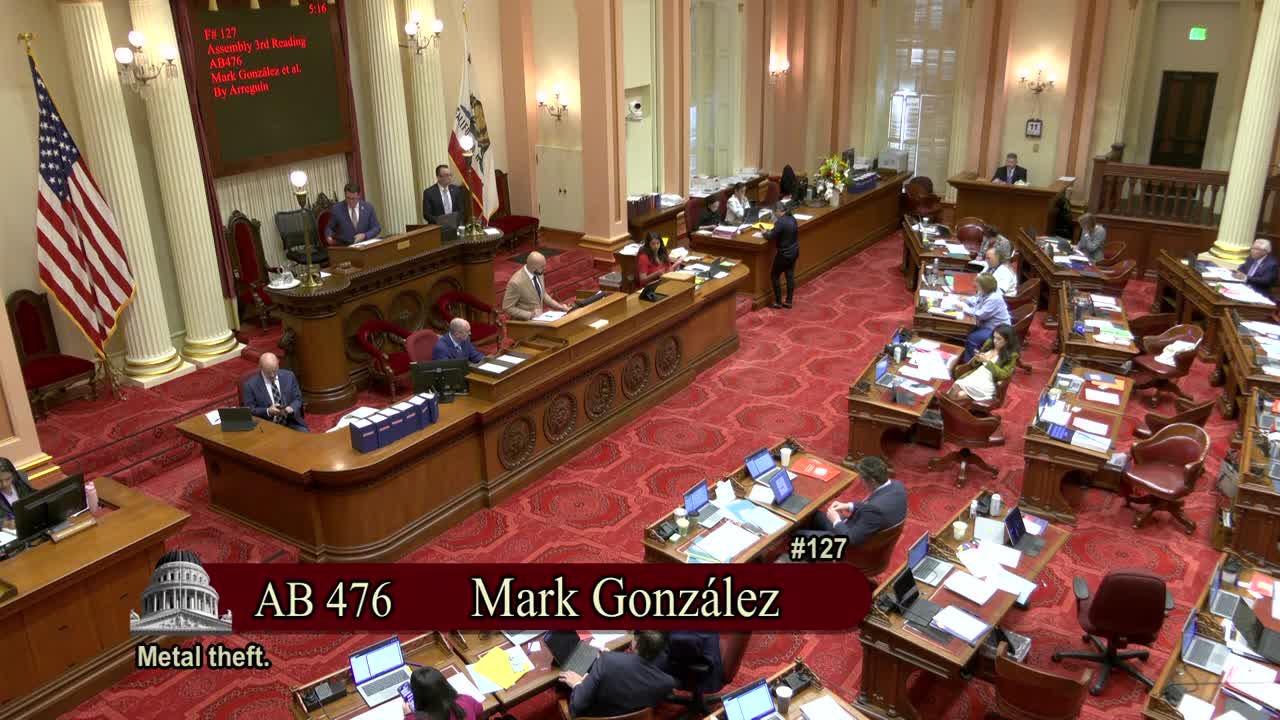




Bill Co-Author(s):