AB 47: Elderly Parole Program.
- Session Year: 2025-2026
- House: Assembly
- Latest Version Date: 2025-04-28
Current Status:
Failed
(2026-02-02: From committee: Filed with the Chief Clerk pursuant to Joint Rule 56.)
Introduced
In Committee
Awaiting First Chamber Vote
Passed First Chamber
In Committee
Awaiting Second Chamber Vote
Passed Second Chamber
Enacted
Existing law establishes the Elderly Parole Program for the purpose of reviewing the parole suitability of inmates who are 50 years of age or older and who have served a minimum of 20 years of continuous incarceration on their sentence. Existing law requires the Board of Parole Hearings, when considering the release of qualifying inmates, to give special consideration to whether certain criteria have reduced the elderly inmates risk for future violence. Existing law excludes various persons from these provisions, including persons convicted of serious felonies or persons sentenced to life in prison without the possibility of parole. sentenced pursuant to existing sentencing provisions commonly known as the three strikes law. Under an existing court order, although statutorily excluded, an individual may be eligible for parole under the Elderly Parole Program when they are 60 years of age or older and have been continuously incarcerated for at least 25 years.
This bill would additionally exclude instead specify that persons required to register as sexual offenders, habitual sexual offenders, and persons convicted of various sexual offenses, including rape or sodomy. sodomy, are not suitable for parole under the Elderly Parole Program until the person is 60 years of age or older and has served a minimum of 25 years of continuous incarceration on their current sentence.
Existing law establishes the Elderly Parole Program for the purpose of reviewing the parole suitability of inmates who are 50 years of age or older and who have served a minimum of 20 years of continuous incarceration on their sentence. Existing law requires the Board of Parole Hearings, when considering the release of qualifying inmates, to give special consideration to whether certain criteria have reduced the elderly inmates risk for future violence. Existing law excludes various persons from these provisions, including persons convicted of serious felonies or persons sentenced to life in prison without the possibility of parole.
This bill would additionally exclude persons required to register as sexual offenders, habitual sexual offenders, and persons convicted of various sexual offenses, including rape or sodomy.
(a)The Elderly Parole Program is hereby established, to be administered by the Board of Parole Hearings, for purposes of reviewing the parole suitability of any inmate who is 50 years of age or older and has served a minimum of 20 years of continuous incarceration on the inmates current sentence, serving either a determinate or indeterminate sentence.
(b)(1)For purposes of this code, the term elderly parole eligible date means the date on which an inmate who qualifies as an elderly offender is eligible for release from prison.
(2)For purposes of this section, incarceration means detention in a city or county jail, local juvenile facility, a mental health facility, or a Department of Corrections and Rehabilitation facility for adults or juveniles.
(c)When considering the release of an inmate specified by subdivision (a) pursuant to Section 3041, the board shall give special consideration to whether age, time served, and diminished physical condition, if any, have reduced the elderly inmates risk for future violence.
(d)When scheduling a parole consideration hearing date pursuant to subdivision (b) of Section 3041.5 or when considering a request for an advance hearing pursuant to subdivision (d) of Section 3041.5, the board shall consider whether the inmate meets or will meet the criteria specified in subdivision (a).
(e)An individual who is subject to this section shall meet with the board pursuant to subdivision (a) of Section 3041. If an inmate is found suitable for parole under the Elderly Parole Program, the board shall release the individual on parole as provided in Section 3041.
(f)If parole is not granted, the board shall set the time for a subsequent elderly parole hearing in accordance with paragraph (3) of subdivision (b) of Section 3041.5. A subsequent elderly parole hearing shall not be necessary if the offender is released pursuant to other statutory provisions prior to the date of the subsequent hearing.
(g)This section does not apply to cases in which sentencing occurs pursuant to Section 1170.12, subdivisions (b) to (i), inclusive, of Section 667, or in cases which an individual was sentenced to life in prison without the possibility of parole or death.
(h)This section does not apply to cases in which sentencing occurs pursuant to Section 667.61 or 667.71, or cases where an individual is required to register pursuant to subdivision (c) of Section 290.(h)Notwithstanding subdivision (a), a person sentenced pursuant to Section 667.61 or 667.71 shall not be suitable under this section unless the person is 60 years of age or older and has served a minimum of 25 years of continuous incarceration on their current sentence.
(i)This section does not apply if the person was convicted of first-degree murder if the victim was a peace officer, as defined in Section 830.1, 830.2, 830.3, 830.31, 830.32, 830.33, 830.34, 830.35, 830.36, 830.37, 830.4, 830.5, 830.6, 830.10, 830.11, or 830.12, who was killed while engaged in the performance of their duties, and the individual knew, or reasonably should have known, that the victim was a peace officer engaged in the performance of their duties, or the victim was a peace officer or a former peace officer under any of the above-enumerated sections, and was intentionally killed in retaliation for the performance of their official duties.
(j)This section does not alter the rights of victims at parole hearings.
(k)By December 31, 2022, the board shall complete all elderly parole hearings for individuals who were sentenced to determinate or indeterminate terms and who, on the effective date of the bill that added this subdivision, are or will be entitled to have their parole suitability considered at an elderly parole hearing before January 1, 2023.
(a)The Elderly Parole Program is hereby established, to be administered by the Board of Parole Hearings, for purposes of reviewing the parole suitability of any inmate who is 50 years of age or older and has served a minimum of 20 years of continuous incarceration on the inmates current sentence, serving either a determinate or indeterminate sentence.
(b)(1)For purposes of this code, the term elderly parole eligible date means the date on which an inmate who qualifies as an elderly offender is eligible for release from prison.
(2)For purposes of this section, incarceration means detention in a city or county jail, local juvenile facility, a mental health facility, a Division of Juvenile Justice facility, or a Department of Corrections and Rehabilitation facility. facility for adults or juveniles.
(c)When considering the release of an inmate specified by subdivision (a) pursuant to Section 3041, the board shall give special consideration to whether age, time served, and diminished physical condition, if any, have reduced the elderly inmates risk for future violence.
(d)When scheduling a parole consideration hearing date pursuant to subdivision (b) of Section 3041.5 or when considering a request for an advance hearing pursuant to subdivision (d) of Section 3041.5, the board shall consider whether the inmate meets or will meet the criteria specified in subdivision (a).
(e)An individual who is subject to this section shall meet with the board pursuant to subdivision (a) of Section 3041. If an inmate is found suitable for parole under the Elderly Parole Program, the board shall release the individual on parole as provided in Section 3041.
(f)If parole is not granted, the board shall set the time for a subsequent elderly parole hearing in accordance with paragraph (3) of subdivision (b) of Section 3041.5. No A subsequent elderly parole hearing shall not be necessary if the offender is released pursuant to other statutory provisions prior to the date of the subsequent hearing.
(g)This section does not apply to cases in which sentencing occurs pursuant to Section 1170.12, subdivisions (b) to (i), inclusive, of Section 667, or in cases which an individual was sentenced to life in prison without the possibility of parole or death.
(h)This section does not apply to cases in which sentencing occurs pursuant to Section 667.61 or 667.71, or cases where an individual is required to register pursuant to subdivision (c) of Section 290.
(h)(i)This section does not apply if the person was convicted of first-degree murder if the victim was a peace officer, as defined in Section 830.1, 830.2, 830.3, 830.31, 830.32, 830.33, 830.34, 830.35, 830.36, 830.37, 830.4, 830.5, 830.6, 830.10, 830.11, or 830.12, who was killed while engaged in the performance of their duties, and the individual knew, or reasonably should have known, that the victim was a peace officer engaged in the performance of their duties, or the victim was a peace officer or a former peace officer under any of the above-enumerated sections, and was intentionally killed in retaliation for the performance of their official duties.
(i)(j)This section does not alter the rights of victims at parole hearings.
(j)(k)By December 31, 2022, the board shall complete all elderly parole hearings for individuals who were sentenced to determinate or indeterminate terms and who, on the effective date of the bill that added this subdivision, are or will be entitled to have their parole suitability considered at an elderly parole hearing before January 1, 2023.
CORRECTIONS: HeadingLine 1. DigestPage 1.|
Date
|
Status
|
|---|---|
| Feb 2, 2026 | From committee: Filed with the Chief Clerk pursuant to Joint Rule 56. |
| Jan 31, 2026 | Died pursuant to Art. IV, Sec. 10(c) of the Constitution. |
| May 23, 2025 | In committee: Held under submission. |
| May 7, 2025 | In committee: Set, first hearing. Referred to APPR. suspense file. |
| Apr 29, 2025 | Re-referred to Com. on APPR. |
| Apr 28, 2025 | Read second time and amended. |
| Apr 24, 2025 | From committee: Amend, and do pass as amended and re-refer to Com. on APPR. (Ayes 8. Noes 0.) (April 22). |
| Mar 24, 2025 | Referred to Com. on PUB. S. |
| Dec 3, 2024 | From printer. May be heard in committee January 2. |
| Dec 2, 2024 | Read first time. To print. |
|
Date
|
Description
|
Location
|
Votes
|
|
|---|---|---|---|---|
| Apr 22, 2025 | Do pass as amended and be re-referred to the Committee on [Appropriations] | Assembly Standing Committee on Public Safety |
Passed |
This list shows positions taken on this bill by organizations on the date displayed, which is linked to the original source.
Positions by individuals are not included.
|
Organization
|
Position
|
Date
|
|---|---|---|
| Aclu California Action | ** Against | |
| Alliance for Constitutional Sex Offense Laws | ** Against | |
| Arcadia Police Officers' Association | ** Support | |
| Brea Police Association | ** Support | |
| Burbank Police Officers' Association | ** Support | |
| California Association of School Police Chiefs | ** Support | |
| California Coalition for Women Prisoners | ** Against | |
| California Coalition of School Safety Professionals | ** Support | |
| California Narcotic Officers' Association | ** Support | |
| Californians United for a Responsible Budget | ** Against | |
| California Police Chiefs Association | ** Support | |
| California Public Defenders Association | ** Against | |
| California Reserve Peace Officers Association | ** Support | |
| California State Sheriffs' Association | ** Support | |
| CLAREMONT POLICE OFFICERS ASSOCIATION | ** Support | |
| Communities United for Restorative Youth Justice | ** Against | |
| Corona Police Officers Association | ** Support | |
| County of Orange, Through its Office of The District Attorney/public Administrator | ** Support | |
| Crime Victims United Of California | ** Support | |
| Culver City Police Officers' Association | ** Support | |
| Ella Baker Center For Human Rights | ** Against | |
| Fair Chance Project | ** Against | |
| Felony Murder Elimination Project | ** Against | |
| Fullerton Police Officers' Association | ** Support | |
| Humane Prison Hospice Project | ** Against | |
| Initiate Justice | ** Against | |
| Initiate Justice Action | ** Against | |
| LA Defensa | ** Against | |
| Local 148 La County Public Defenders Union | ** Against | |
| Los Angeles School Police Management Association | ** Support | |
| los angeles school police officers association | ** Support | |
| Murrieta Police Officers' Association | ** Support | |
| Newport Beach Police Association | ** Support | |
| Palos Verdes Police Officers Association | ** Support | |
| Peace Officers Research Association Of California | ** Support | |
| PLACER COUNTY DEPUTY SHERIFFS ASSOCIATION | ** Support | |
| Placer County District Attorney's Office | ** Support | |
| Pomona Police Officers' Association | ** Support | |
| Post-Conviction Justice Project | ** Against | |
| Prison Law Office | ** Against | |
| Prison Yoga Project | ** Against | |
| Riverside County District Attorney | ** Support | |
| RIVERSIDE POLICE OFFICERS ASSOCIATION | ** Support | |
| Riverside Sheriffs' Association | ** Support | |
| San Diego County District Attorney's Office | ** Support | |
| San Francisco Public Defender | ** Against | |
| Santa Ana Police Officers Association | ** Support | |
| Silicon Valley De-Bug | ** Against | |
| Smart Justice California, a project of Tides Advocacy | ** Against | |
| Uncommon Law | ** Against | |
| Universidad Popular | ** Against |
Date of Hearing: May 7, 2025
ASSEMBLY COMMITTEE ON APPROPRIATIONS
Buffy Wicks, Chair
ABPCA Bill Id:AB 47
Author:(Nguyen) – As Amended Ver:April 28, 2025
Policy Committee: | Public Safety | Vote: | 8 - 0 |
|
| ||
|
|
Urgency: No State Mandated Local Program: No Reimbursable: No
SUMMARY:
This bill makes an incarcerated person subject to specified sex offense sentencing laws ineligible for elderly parole consideration until the person is 60 years old and has served at least 25 years of continuous incarceration.
Specifically, this bill applies to a person incarcerated in state prison who was sentenced under California’s “One Strike Sex Offense” law. Under this law, a person who is convicted of a specified sex offense is sentenced to 15-to-life or 25-to-life in prison if certain aggravating factors are present in the case.
The bill also applies to a person sentenced under California’s habitual sex offender law. Under this law, a person who is convicted of a specified sex offense and has a prior conviction for a specified sex offense is sentenced to 25-to-life in prison.
FISCAL EFFECT:
- Incarceration costs (General Fund) to the California Department of Corrections and Rehabilitation (CDCR), possibly in the millions of dollars annually, to incarcerate people for longer periods of time before they become eligible for elderly parole. Actual costs will depend on the number of people affected by the bill and the amount of additional time each person must serve in prison. As described in more detail below, the bill will have an immediate effect on about 136 people who are currently eligible for elderly parole consideration but will be removed from the parole hearing process. 2024 data from CDCR shows the Board of Parole Hearings (Board) granted parole to about 4.8% of people who are eligible for parole and who are required to complete sex offender registration.
The Legislative Analyst’s Office estimates the average annual cost to incarcerate one person in prison is $133,000. Assuming the bill results in longer incarceration for six people who would otherwise be granted elderly parole, incarceration costs would be $798,000 per additional year of incarceration. However, the cost to incarcerate elderly people is higher due to their medical needs and other accommodations, so actual costs per person will likely be higher. This estimate contemplates only the immediate effect of the bill; as discussed below, the bill affects a larger population and will result in ongoing, significant costs to CDCR to continue to incarcerate people who may otherwise be granted release on parole.
- Workload costs (General Fund) to CDCR, possibly in the low hundreds of thousands of dollars. CDCR anticipates costs for training and overtime for its Case Records staff, which must complete parole eligibility analyses for incarcerated people affected by this bill.
COMMENTS:
In California, most crimes are subject to determinate sentencing, meaning a person is sentenced to a fixed term of incarceration. When the term is complete, the person is released from custody. Some crimes – like the sex offense convictions affected by this bill – are subject to indeterminate sentencing. Under indeterminate sentencing, a person has no fixed release date. Instead, the person remains in custody indefinitely until their release is approved by the Board. For example, a person may be sentenced to 15 years to life. After serving a period of time set by statute, the person will become eligible for parole consideration by the Board. Under California law, the Board must determine whether a person who is eligible for parole poses an unreasonable risk to public safety if released.
In 2014, due to severe prison overcrowding, a federal three-judge panel ordered CDCR to reduce the population in California prisons, including by establishing a parole process for elderly incarcerated people. The panel ordered the process to apply to incarcerated people who are 60 years old or older and who have served at least 25 years of their sentences. Later that year, the Board began holding elderly parole hearings for incarcerated people who were not yet eligible for parole but who met the qualifications established by the three-judge panel. At an elderly parole hearing, the Board must give special consideration to the incarcerated person’s advanced age, long-term confinement, and diminished physical capacity, if any, when considering whether the person is suitable for release on parole.
In 2017, the Legislature codified the Elderly Parole Program, although that law exempted people with certain convictions from the codified program. In 2020, the Legislature expanded eligibility for the Elderly Parole Program to include a qualifying incarcerated person who was at least 50 years old and who had been incarcerated for at least 20 years. Incarcerated people who are excluded from the statutory Elderly Parole Program are still eligible for elderly parole consideration when they meet the criteria established by the three-judge panel. However, people sentenced to death or life without the possibility of parole are not eligible for any parole consideration, elderly or otherwise.
This bill provides that an incarcerated person sentenced under the One Strike Sex Offense law or the habitual sex offender law may not be considered in the Elderly Parole Program until they reach age 60 and have been incarcerated for at least 25 years. In effect, this bill imposes the three-judge panel’s elderly parole specifications on this subset of the prison population. As discussed in the analysis of this bill by the Assembly Committee on Public Safety, some people with convictions affected by this bill will likely become eligible for parole by other means before they reach the bill’s elderly parole specifications.
CDCR provided preliminary data to this committee about the number of incarcerated people currently in CDCR custody who may be affected by this bill. There are approximately 2,799 people in prison who were sentenced under One Strike Sex Offense or habitual sex offender laws and are now or will someday be eligible for parole consideration by the Board. Of those:
- About 2,344 people are not yet eligible for parole, but may have their parole eligibility date pushed back as a result of this bill, resulting in longer overall terms of incarceration. Some of these people will become eligible for parole due to other criteria before they reach the elderly parole criteria established by the bill.
- About 319 people are currently eligible for parole due to some other criteria. Their parole eligibility dates will not be affected by this bill, but until they reach the age and duration of incarceration criteria established by this bill, the Board may not consider the elderly parole factors described above when considering their suitability for release.
- As discussed in the fiscal portion of this analysis, about 136 people are currently eligible for parole only because they meet the criteria for the statutory Elderly Parole Program. Under this bill, they would no longer be eligible for parole at this time, and will be removed from the parole process until they reach age 60 and have served 25 years of incarceration, or become eligible for parole due to some other criteria.
Analysis Prepared by: Annika Carlson / APPR. / (916) 319-2081
Date of Hearing:
Chief Counsel: Andrew Ironside
ASSEMBLY COMMITTEE ON PUBLIC SAFETY
Nick Schultz, Chair
ABPCA Bill Id:AB 47
Author:(Nguyen) – As Introduced Ver:December 2, 2024
As Proposed to be Amended in Committee
SUMMARY:
Provides that a person sentenced for a one-strike sex offense or as a habitual sex offender is ineligible for elderly parole until the person is 60 years old or older and has served a minimum of 25 years of continuous incarceration on their current sentence.
EXISTING LAW:
- Establishes the Elderly Parole Program, to be administered by the Board of Parole Hearings (BPH), for purposes of reviewing the parole suitability of any inmate who is 50 years of age or older and has served a minimum of 20 years of continuous incarceration on the inmate’s current sentence, serving either a determinate or indeterminate sentence. (Pen. Code, § 3055, subd. (a).)
- Requires BPH, when considering the release of an inmate, as specified, to give special consideration to whether age, time served, and diminished physical condition, if any, have reduced the elderly inmate’s risk for future violence. (Pen. Code, § 3055, subd. (c).)
- Requires BPH, when scheduling a parole consideration hearing date or when considering a request for an advance hearing, as specified, to consider whether the inmate meets or will meet the age and time-served criteria. (Pen. Code, § 3055, subd. (d).)
- States that an individual who is subject to this section shall meet with BPH pursuant to subdivision (a) of Section 3041. (Pen. Code, § 3055, subd. (e).)
- Requires BPH, if an inmate is found suitable for parole under the Elderly Parole Program, to release the individual on parole, as specified. (Pen. Code, § 3055, subd. (e).)
- Requires BPH, if parole is not granted, to set the time for a subsequent elderly parole hearing, as specified, and provides that no subsequent elderly parole hearing shall be necessary if the offender is released pursuant to other statutory provisions prior to the date of the subsequent hearing. (Pen. Code, § 3055, subd. (f).)
- Provides the following exceptions to the Elderly Parole Program:
- Persons who had a prior conviction for a serious or violent felony;
- Persons who were sentenced to life in prison without the possibility of parole or death; or,
- Persons convicted of first-degree murder of a peace officer, as defined, who was killed while engaged in the performance of their duties, and the individual knew, or reasonably should have known, that the victim was a peace officer engaged in the performance of their duties, or the victim was a peace officer or a former peace officer and was intentionally killed in retaliation for the performance of their official duties. (Pen. Code, § 3055, subd. (g) & (h).)
- Persons who had a prior conviction for a serious or violent felony;
- Provides that the provisions of the Elderly Parole Program do not alter the rights of victims at parole hearings. (Pen. Code, § 3055, subd. (i).)
- Required BPH, by December 31, 2022, to complete all elderly parole hearings for individuals who were sentenced to determinate or indeterminate terms and who, on the effective date of the bill that added this subdivision, are or will be entitled to have their parole suitability considered at an elderly parole hearing before January 1, 2023. (Pen. Code, § 3055, subd. (j).)
- Defines “elderly parole eligible date” as the date on which an inmate who qualifies as an elderly offender is eligible for release from prison. (Pen. Code, § 3055, subd. (b)(1).)
- Provides that one year before the inmate’s minimum eligible parole date a panel of two or more commissioners or deputy commissioners shall again meet with the inmate and shall normally grant parole, as specified. (Pen. Code, § 3041, subd. (a)(2).)
- Provides that, upon a grant of parole, the inmate shall be released subject to all applicable review periods, except an inmate shall not be released before reaching his or her minimum eligible parole date, as specified, unless the inmate is eligible for earlier release under their youth offender parole eligibility date or elderly parole eligibility date. (Pen. Code, § 3041, subd. (a)(4).)
- Requires BPH to grant parole to an inmate unless it determines that the gravity of the current convicted offense or offenses, or the timing and gravity of current or past convicted offense or offenses, is such that consideration of the public safety requires a more lengthy period of incarceration for this individual. (Pen. Code, § 3041, subd. (b)(1).)
- Provides, under the One Strike Sex Offense statute, for a mandatory sentence of 15-years-to-life or 25-years-to-life if a person is convicted of one of the several specified felony sex offenses under one or more circumstances, as provided. (Pen. Code, § 667.61, subds. (b)-(e).)
- Provides that a habitual sexual offender is a person who has previously been convicted of one or more of the following offenses and who is convicted in the present proceeding of one of these offenses:
- Rape by means of force, violence, duress, menace, or fear of immediate and unlawful bodily injury, or threat to retaliate in the future;
- Rape of a spouse by means of force, violence, duress, menace, or fear of immediate and unlawful bodily injury, or threat to retaliate in the future;
- Rape or sexual penetration, in concert;
- Lewd or lascivious act on a child under 14, and lewd or lascivious act on a child under 14 by use of force, violence, duress, menace, or fear of immediate and unlawful bodily injury;
- Sexual penetration, by means of force, violence, duress, menace, or fear of immediate and unlawful bodily injury or sexual penetration of a person who is under 14 years of age and who is more than 10 years younger;
- Continuous sexual abuse of a child;
- Sodomy of a person who is under 14 years of age and more than 10 years younger, or in concert;
- Oral copulation of a person who is under 14 years of age and more than 10 years younger, or in concert;
- Kidnapping with intent to commit a lewd and lascivious act on a child under 14;
- Kidnapping to commit specified sex offenses;
- Kidnapping with intent to commit rape, oral copulation, sodomy, or other specified sex offense;
- Aggravated sexual assault of a child; or,
- An offense committed in another jurisdiction that includes all of the elements of one of the above offenses. (Pen. Code, § 667.71, subds. (a), (c).)
- Rape by means of force, violence, duress, menace, or fear of immediate and unlawful bodily injury, or threat to retaliate in the future;
- Provides that a habitual sexual offender shall be punished by imprisonment in the state prison for 25-years-to-life. (Pen. Code, § 667.71, subd. (b).)
FISCAL EFFECT:
Unknown
COMMENTS:
- Author's Statement: According to the author, “AB 47 is about restoring integrity to our justice system and protecting victims. I introduced this bill because people convicted of rape, child molestation, or other violent crimes should never be eligible for early release just because they’ve turned 50. That’s not justice — it’s re-traumatizing survivors. Throughout my career — whether in local government or authoring legislation to combat human trafficking — I’ve worked to ensure victims aren’t forgotten. And as the wife of a police officer, I’ve seen firsthand how these crimes devastate families and communities. AB 47 draws a clear line: some crimes are simply too severe for second chances.”
- Elderly Parole Program: As the result of severe prison overcrowding, the Three-Judge Court ordered CDCR to implement several population reduction measures, including to “[f]inalize and implement a new parole process whereby inmates who are 60 years of age or older and have served a minimum of twenty-five years of their sentence will be referred to the Board of Parole Hearings to determine suitability for parole.” (February 10, 2014 Order, 2:90-cv-0520 LKK DAD PC, 3-Judge Court, Coleman v. Brown, Plata v. Brown) In response to the order, BPH created the Elderly Parole Program and began holding elderly parole hearings on October 1, 2014. Inmates with determinate terms as well as those sentenced to life with the possibility of parole are eligible for the program. (https://www.cdcr.ca.gov/bph/elderly-parole-hearings-overview/) Inmates who are sentenced to life without the possibility of parole, or who are sentenced to death are not eligible for the program. (Id.)
AB 1448 (Weber), Chapter 676, Statutes of 2017, codified the Elderly Parole Program. However, AB 1448 narrowed the eligibility criteria by excluding individuals who were sentenced pursuant to “Three Strikes” or who were convicted of first-degree murder of a peace officer from the Elderly Parole Program. (Pen. Code, § 3055, subds. (g) & (h).) AB 3234 (Ting), Chapter 334, Statutes of 2020, expanded the eligibility criteria for elderly parole. Specifically, AB 334 lowered the minimum age at which an incarcerated individual is eligible for elderly parole from 60 to 50 and the amount of time that must be served from 25 years to 20 years. Incarcerated individuals who meet the eligibility criteria of the court-ordered Elderly Parole Program but who are excluded from the statutory Elderly Parole Program are eligible for elderly parole consideration under the court-ordered program. (BPH, Elderly Parole Fact Sheet (Mar. 2022), p. 1 available at <https://www.cdcr.ca.gov/bph/wp-content/uploads/sites/161/2022/03/Elderly-Parole-Fact-Sheet3_18-1.pdf>.) - Analogous Provision in Youth Offender Parole Statute Pertaining to One-Strike Sex Offenses: Proponents of this bill argue that One Strike sex offenses should be excluded from Elderly Parole eligibility, in part to align the elderly parole process with the youth offender parole process as codified in Penal Code section 3051. Penal Code section 3051 generally provides that an individual who was 25 years of age or younger at the time of his or her controlling offense, or under 18 years of age if the person was sentenced to life without the possibility of parole, is eligible for release on parole at the 15th, 20th, or 25th year of incarceration depending on the sentence imposed. As is the case with the Elderly Parole Program, the youth offender parole process affords some incarcerated individuals an opportunity to parole at an earlier date than would otherwise be the case. Both parole processes also require the BPH to consider additional factors when making a parole suitability determination.
Both the elderly parole statute and youth offender parole statute contain categorical exclusions. Subdivisions (g) and (h) of Penal Code section 3055 exclude from elderly parole eligibility a person sentenced under the Three Strikes law, a person sentenced to death or life in prison without the possibility of parole, and a person convicted of the first-degree murder of a peace officer. Subdivision (h) of Penal Code section 3051 excludes from youth offender parole eligibility, a person sentenced under the Three Strikes law, under the One Strike law, or to life without the possibility of parole for an offense committed after the person turned 18.
The exclusion of One Strike sex offenses from youth offender parole eligibility was challenged on Equal Protection grounds. (See People v. Edwards (2019) 34 Cal.App.5th 183; People v Williams (2020) 47 Cal.App.5th 475.) After the two appellate courts reached different conclusions regarding the constitutionality of this exclusion, the California Supreme Court granted the Williams appellant’s petition for review in 2020.
In its 2024 decision, the Court upheld the exclusion of One Strike sex offenses from youth offender parole eligibility finding that there was no equal protection violation. (People v. Williams (2024) 17 Cal.5th 99.) Applying the rational basis standard, the Court found:
The Legislature could rationally conclude, based on its view that a One Strike sex offender’s risk of recidivism is high, that rehabilitation is unlikely, and therefore these offenders would not likely be eligible for parole, much less early parole under section 3051. With this understanding, the Legislature crafted section 3051(h), balancing a young adult’s capacity for growth and rehabilitation against the set of concerns that had prompted the enactment and amendment of the One Strike law and ultimately deciding that those concerns militate against offering the possibility of early parole under section 3051. (Internal citations omitted.) (Id. at p. 130.)
- Effect of this Bill: This bill limits the eligibility criteria for the Elderly Parole Program requiring individuals sentenced pursuant to Penal Code sections 667.61 and 667.71—the One Strike Sex Offense statute or habitual sex offender statute—to be 60 years old or older and to have served at least 25 years of continuous incarceration on their current sentence.
It is worth noting that some incarcerated individuals who are currently eligible for elderly parole were already in the parole suitability hearing cycle based on their original minimum eligible parole date (MEPD). The parole eligibility of these individuals is not based on their inclusion in the Elderly Parole Program as their sentences have always permitted an opportunity for parole. Similarly, there are incarcerated individuals who are eligible for parole but not yet in the parole suitability hearing cycle because they have not reached their MEPD. Irrespective of inclusion in the Elderly Parole Program, these individuals will have an opportunity for parole once they have reached their MEPD. This means that even if certain categories of offenders are excluded from the Elderly Parole Program, the incarcerated individual will have parole hearings upon reaching their MEPD if the person otherwise has a sentence that permits parole (i.e., a sentence other than life without the possibility of parole or death).
Inclusion in the Elderly Parole Program may affect when an incarcerated individual has their initial parole hearing. However, inclusion in the Elderly Parole Program does not mean that an incarcerated individual will automatically be released from prison solely because the person meets the eligibility criteria for the program. - Overview of the Parole Process: This bill would delay the time persons convicted of one-strike sex offenses or convicted as a habitual sex offender are eligible for elderly parole. Notably, a person eligible for elderly parole does not mean they are suitable for parole, but rather that they are eligible for a hearing to determine their suitability.
BPH is required to hold a hearing on a person’s suitability for parole one year before the person’s MEPD to determine if the person should be released from prison. (Pen. Code, § 3041, subd. (a)(2).) Existing law requires BPH to grant parole unless it determines that the gravity of the current convicted offense or offenses, or the timing and gravity of current or past convicted offense or offenses, is such that consideration of the public safety requires a more lengthy period of incarceration for this individual. (Pen. Code, § 3041, subd. (b)(1).) The Elderly Parole Program requires BPH “to give special consideration to whether age, time served, and diminished physical condition, if any, have reduced the elderly inmate’s risk for future violence, when considering the release of an inmate.” (Pen. Code, § 3055, subd. (c).) BPH can consider all relevant, reliable information available. (15 Cal. Code Regs., tit. 15, § 2281, subd. (b).) Factors showing unsuitability include, among others, whether the person abused their victim during the offense or the offense was exceptionally cruel or callous; and, whether the person has an unstable social history, committed a sadistic sexual offense, demonstrates a lack of remorse, or has engaged in serious misconduct while incarcerated. (15 Cal. Code Regs., tit. 15, § 2281, subd. (c).) However, regardless of the length of time served, a person must be found unsuitable for and denied parole if BPH determines that the person poses an unreasonable risk of danger to society if released from prison. (Cal. Code Regs., tit. 15, § 2281, subd. (a).)
Existing law also requires a person convicted of sexually violent offense and up for parole to undergo a comprehensive risk assessment for sexual offenders. (Pen. Code, § 3053.9.) The risk assessment is conducted by licensed psychologist employed by BPH who consider factors impacting the person’s risk of violence. (Ibid.)
Even if found suitable for parole, a person released from custody is still subject to supervision. Persons who are eligible for release under this bill are subject to parole supervision for at least 10 years, and could even receive lifetime parole under certain circumstances. (Pen. Code, §§ 3000, subd. (b)(3); 3001.01, subd. (d)(1); 3000.1, subd. (a)(2).) Existing law requires BPH, within 10 days following any decision granting parole, to send the inmate a written statement setting forth the reason or reasons for granting parole, the conditions the person must meet in order to be released, and the consequences of failure to meet those conditions. (Pen. Code, § 3041.5, subd. (b)(1).) Existing law provides that the parole agency can impose additional and appropriate conditions of supervision if the person violated a parole condition. (Pen. Code, § 3000.08, subd. (d).) Failure to comply with the conditions of parole could result in parole revocation and return to custody. (Pen. Code, § 3000.08, subd. (f)(1).) - Argument in Support: According to the Office of the District Attorney of Orange County, the bill’s sponsor: “California’s parole laws provide opportunities for parole consideration based on age and the length of incarceration. Specifically, Elder Parole allows for parole consideration for individuals who have served at least 20 years of incarceration and are at least 50 years old. This process does not address the elevated recidivism risk posed by sex offenders, particularly those who have committed severe crimes including child sexual assault or violent sexual offenses. Research has consistently shown that, even in their later years, sex offenders are more likely to reoffend than individuals convicted of other crimes. These high-risk individuals pose a significant threat to public safety, including to vulnerable populations such as minors and those who have been previously victimized.
“The California Supreme Court, in the case of People v. Williams (2024), affirmed the exclusion of One Strike offenders from Youthful Offender Parole under PC 3051, recognizing the increased risk to public safety that these offenders represent. Given the gravity of their crimes, it is crucial that such individuals remain incarcerated for their full term and are not granted early parole consideration that could jeopardize community safety.
“AB 47 is a sensible step toward ensuring that individuals convicted of particularly violent or predatory sexual offenses are not prematurely released into society, where they may reoffend and inflict further harm. The bill maintains the integrity of California’s parole system by ensuring that individuals who have been convicted of heinous crimes are not excluded from long-term accountability, and that victims’ voices are respected in the parole process.” - Argument in Opposition: According to the San Francisco Public Defender’s Office, “In 2014, the court in the Plata and Coleman class action lawsuits mandated that the state create a geriatric parole consideration process, recognizing that elderly people are the safest to release while posing the highest financial burden given their medical needs. The Legislature agreed with this assessment and codified the program in 2018, and later modified the criteria in 2021 so that people aged 50 or older who have served at least 20 years of incarceration are eligible (while keeping in place exclusions for those sentenced to LWOP, death, under the Three Strikes Law, and for first-degree murder of a peace officer).
“This bill is unnecessary for many reasons, the first being that the Legislature thoroughly reassessed the program’s eligibility criteria in 2021 and determined it was unnecessary to public safety to create new exclusions. This is due to the exceptionally low risk posed by people currently eligible for the Elderly Parole program. One study found that recidivism rates drop to just 2% for people ages 50 to 65, and nearly zero for those older than 65. While recidivism risk decreases with age, the cost of incarcerating older individuals rises significantly. For example, healthcare costs for elderly incarcerated people are up to nine times higher than for younger people. This amounts to an enormous financial burden in California, where it costs on average $133,000 annually to incarcerate a single person. In addition, the recidivism rate for people released through California’s parole hearing process—regardless of conviction—is just 2.2%, and only 0.2% for violent felonies.3 The 3-year recidivism rate for people released through California’s Elderly Parole hearing process is just as low, at 2.4%. Data also contradicts the notion embedded in this bill that people convicted of sexual offenses pose a higher risk upon release. In fact, CDCR’s own recidivism research shows that the three-year conviction rate for sex registrants is significantly lower than non-sex registrants.
“Finally, multiple rigorous safeguards are already in place within the Elderly Parole program. Eligibility does not guarantee release; it merely allows the parole board to conduct a comprehensive hearing to determine if an individual can be safely released on parole supervision. If granted parole, the decision is further reviewed by the Board’s legal division and the Governor’s office. However, most Elderly Parole hearings don’t even get that far––between 2021 and 2023, only 16.6% of Elderly Parole hearings resulted in a parole grant, with just 10% of first-time Elderly Parole hearings leading to a grant. For elderly people who are granted and released, they are placed on mandated parole supervision with both general and individualized supervision requirements. The supervision requirements are extremely stringent for those with sex offenses, including mandatory sex offense treatment in the community. Furthermore, the Board of Parole Hearings thoroughly screens people with violent and sexual offenses before authorizing their release on parole, referring cases as needed to the Department of State Hospitals for further evaluation, after which civil commitment to receive treatment can be mandated. The Elderly Parole program as it currently exists is extremely conservative and poses no public safety issue that warrants legislative modification.
“In conclusion, AB 47 would result in more elderly individuals serving excessively long sentences despite their readiness for supervised release, leading to wasted resources that could be better utilized for other purposes, including vital social service programs. We urge you to oppose this bill in favor of policies that promote rehabilitation, public safety, and fiscal responsibility.” - Related Legislation:
- SB 286 (Jones) would exclude from Elderly Parole eligibility individuals convicted of murder or specified felony sex offenses, or sentenced as a habitual sex offender or under the One Strike Sex Offense statute. SB 286 is pending a hearing in the Senate Appropriations Committee.
- SB 537 (Archuleta) excludes a person sentenced to first- or second-degree murder with a maximum term of life imprisonment from the required 3-year parole period applicable to any person released from state prison on or after July 1, 2020. SB 537 is scheduled for hearing today in the Senate Public Safety Committee.
- SB 286 (Jones) would exclude from Elderly Parole eligibility individuals convicted of murder or specified felony sex offenses, or sentenced as a habitual sex offender or under the One Strike Sex Offense statute. SB 286 is pending a hearing in the Senate Appropriations Committee.
- Prior Legislation:
- SB 445 (Jones), of the 2021-2022 Legislative Session, would have excluded “One Strike” sex offenses from the Elderly Parole Program. SB 445 failed passage in the Senate Public Safety Committee.
- AB 3234 (Ting), Chapter 334, Statutes of 2020, lowered the minimum age limitation for the Elderly Parole Program to inmates who are 50 years of age and who have served a minimum of 20 years.
- SB 411 (Jones), of the 2019-2020 Legislative Session, was nearly identical to SB 445 above. SB 411 did not receive a hearing in the Senate Public Safety Committee.
- AB 1448 (Weber), Chapter 676, Statutes of 2017, codified the Elderly Parole Program, to be administered by the Board of Parole Hearings.
- SB 224 (Liu), of the 2015-2016 Legislative Session, was substantially similar to AB 1448 above. SB 224 was ordered to the Inactive File on the Senate Floor.
- SB 445 (Jones), of the 2021-2022 Legislative Session, would have excluded “One Strike” sex offenses from the Elderly Parole Program. SB 445 failed passage in the Senate Public Safety Committee.
REGISTERED SUPPORT / OPPOSITION:
Support
Arcadia Police Officers' Association
Brea Police Association
Burbank Police Officers' Association
California Association of School Police Chiefs
California Coalition of School Safety Professionals
California Narcotic Officers' Association
California Police Chiefs Association
California Reserve Peace Officers Association
California State Sheriffs' Association
Claremont Police Officers Association
Corona Police Officers Association
County of Orange, Through its Office of the District Attorney/public Administrator
Crime Victims United of California
Culver City Police Officers' Association
Fullerton Police Officers' Association
Los Angeles School Police Management Association
Los Angeles School Police Officers Association
Murrieta Police Officers' Association
Newport Beach Police Association
Palos Verdes Police Officers Association
Peace Officers Research Association of California (PORAC)
Placer County Deputy Sheriffs' Association
Placer County District Attorney's Office
Pomona Police Officers' Association
Riverside County District Attorney
Riverside Police Officers Association
Riverside Sheriffs' Association
San Diego County District Attorney's Office
Santa Ana Police Officers Association
Oppose
ACLU California Action
Alliance for Constitutional Sex Offense Laws
California Coalition for Women Prisoners
California Public Defenders Association (CPDA)
Californians United for a Responsible Budget
Communities United for Restorative Youth Justice (CURYJ)
Ella Baker Center for Human Rights
Fair Chance Project
Felony Murder Elimination Project
Humane Prison Hospice Project
Initiate Justice
Initiate Justice Action
LA Defensa
Local 148 LA County Public Defenders Union
Post-conviction Justice Project
Prison Law Office
Prison Yoga Project
San Francisco Public Defender
Silicon Valley De-bug
Smart Justice California, a Project of Tides Advocacy
Uncommon Law
Universidad Popular
3 Private Individuals
Analysis Prepared by:
Andrew Ironside / PUB. S. / (916) 319-3744
Discussed in Hearing
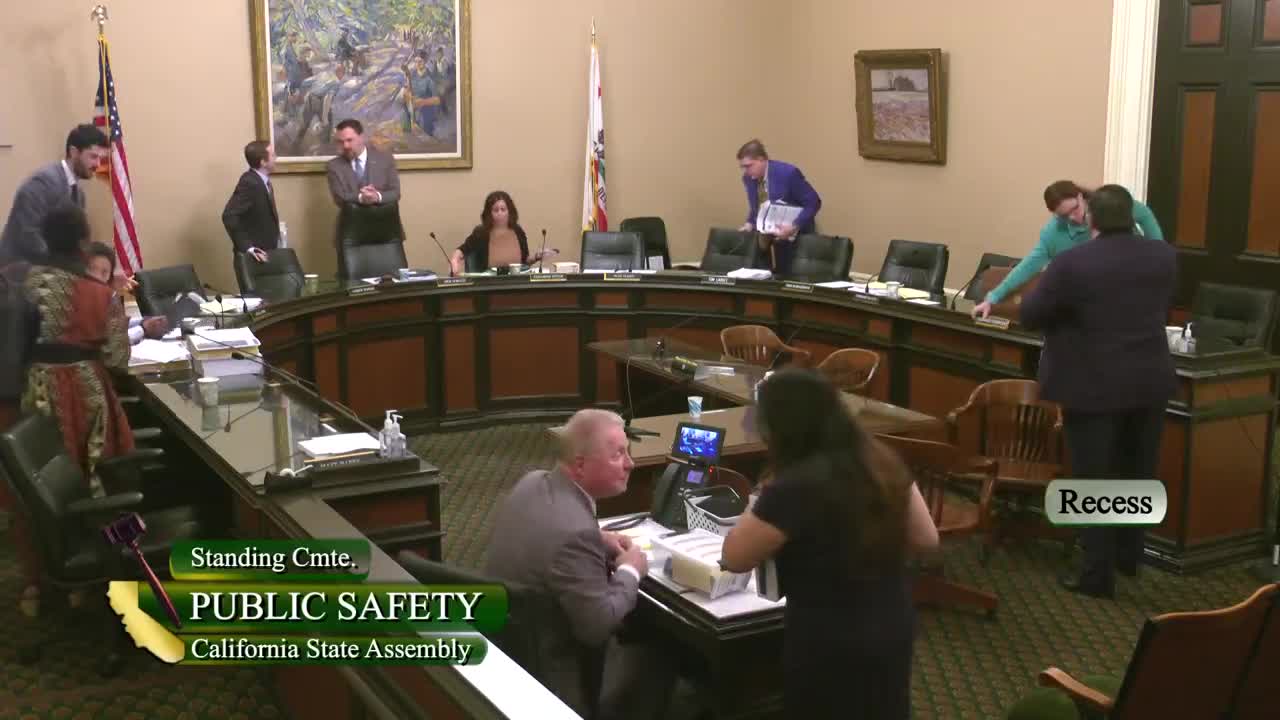 30MIN
Assembly Standing Committee on Public Safety
Bill Author

Bill Co-Author(s):
