AB 474: Housing discrimination: nonprofit home-sharing program: eligibility for public social services.
- Session Year: 2025-2026
- House: Assembly
- Latest Version Date: 2025-09-12
Current Status:
Failed
(2026-01-22: Consideration of Governor's veto stricken from file.)
Introduced
In Committee
Awaiting First Chamber Vote
Passed First Chamber
In Committee
Awaiting Second Chamber Vote
Passed Second Chamber
Enacted
(1)Existing law, the California Fair Employment and Housing Act, prohibits housing discrimination based on specified characteristics. Existing law defines discrimination to include refusal to sell, rent, or lease housing accommodations. Under existing law, discrimination does not include refusal to rent or lease a portion of an owner-occupied single-family house to a person as a roomer or boarder living within the household if no more than one roomer or boarder is to live within the household, as specified.
Under this bill, discrimination would additionally not include refusal to rent or lease a portion of an owner-occupied single-family house to a person as a roomer, boarder, or tenant living within the household if, among other things, the owner is renting the portion of their home as a landlord in a nonprofit home-sharing program, as defined.
(2)Existing law establishes various public social services programs that are administered by counties to provide eligible recipients with certain benefits, including, but not limited to, cash assistance under the Supplemental Security Income/State Supplementary Program for the Aged, Blind, and Disabled (SSI/SSP) and the California Work Opportunity and Responsibility to Kids (CalWORKs) program, nutrition assistance under the CalFresh program, and health care services under the Medi-Cal program.
This bill would exempt income received through renting bedrooms or units as a landlord in a nonprofit home-sharing program, as defined, from consideration as income or assets for purposes of determining eligibility and benefit amounts for public social services, to the extent permitted by federal law.
The bill would require the State Department of Social Services to seek all available federal waivers and approvals necessary for the exemption under CalFresh and SSI/SSP. The bill would, for purposes of Medi-Cal eligibility, require the State Department of Health Care Services to implement the exemption no sooner than January 1, 2027, and only to the extent consistent with federal law, upon any necessary federal approvals, and if federal financial participation under the Medi-Cal program is available and not otherwise jeopardized.
By expanding the scope of eligibility for public social services, thereby increasing duties on counties, the bill would impose a state-mandated local program.
(3)The California Constitution requires the state to reimburse local agencies and school districts for certain costs mandated by the state. Statutory provisions establish procedures for making that reimbursement.
This bill would provide that, if the Commission on State Mandates determines that the bill contains costs mandated by the state, reimbursement for those costs shall be made pursuant to the statutory provisions noted above.
(1)Existing law, the California Fair Employment and Housing Act, prohibits housing discrimination based on specified characteristics. Existing law defines discrimination to include refusal to sell, rent, or lease housing accommodations. Under existing law, discrimination does not include refusal to rent or lease a portion of an owner-occupied single-family house to a person as a roomer or boarder living within the household if no more than one roomer or boarder is to live within the household, as specified.
Under this bill, discrimination would additionally not include refusal to rent or lease a portion of an owner-occupied single-family house to a person as a roomer, boarder, or tenant living within the household if, among other things, the owner is renting the portion of their home as a landlord in a nonprofit home-sharing program, as defined.
(2)Existing law establishes various public social services programs that are administered by counties to provide eligible recipients with certain benefits, including, but not limited to, cash assistance under the Supplemental Security Income/State Supplementary Program for the Aged, Blind, and Disabled (SSI/SSP) and the California Work Opportunity and Responsibility to Kids (CalWORKs) program, nutrition assistance under the CalFresh program, and health care services under the Medi-Cal program.
This bill would exempt income received through renting bedrooms or units as a landlord in a nonprofit home-sharing program, as defined, from consideration as income or assets for the purposes of determining eligibility and benefit amounts for public social services, as specified, and would to the extent permitted by federal law.
The bill would require the State Department of Social Services to seek all available federal waivers and approvals necessary for the exemption under CalFresh and SSI/SSP. By The bill would, for purposes of Medi-Cal eligibility, require the State Department of Health Care Services to implement the exemption no sooner than January 1, 2027, and only to the extent consistent with federal law, upon any necessary federal approvals, and if federal financial participation under the Medi-Cal program is available and not otherwise jeopardized.
By expanding the scope of eligibility for public social services, thereby increasing duties on counties, the bill would impose a state-mandated local program.
(3)The California Constitution requires the state to reimburse local agencies and school districts for certain costs mandated by the state. Statutory provisions establish procedures for making that reimbursement.
This bill would provide that, if the Commission on State Mandates determines that the bill contains costs mandated by the state, reimbursement for those costs shall be made pursuant to the statutory provisions noted above.
(1)Existing law, the California Fair Employment and Housing Act, prohibits housing discrimination based on specified characteristics. Existing law defines discrimination to include refusal to sell, rent, or lease housing accommodations. Under existing law, discrimination does not include refusal to rent or lease a portion of an owner-occupied single-family house to a person as a roomer or boarder living within the household if no more than one person roomer or boarder is to live within the household, as specified.
This bill would specify that discrimination does not include refusal to rent or lease to a person as a tenant, instead of a roomer or a boarder, and would increase the number of persons living in the household under these provisions to 2.Under this bill, discrimination would additionally not include refusal to rent or lease a portion of an owner-occupied single-family house to a person as a roomer, boarder, or tenant living within the household if, among other things, the owner is renting the portion of their home as a landlord in a nonprofit home-sharing program, as defined.
(2)Existing law establishes various public social services programs that are administered by counties to provide eligible recipients with certain benefits, including, but not limited to, cash assistance under the Supplemental Security Income/State Supplementary Program for the Aged, Blind, and Disabled (SSI/SSP) and the California Work Opportunity and Responsibility to Kids (CalWORKs) program, nutrition assistance under the CalFresh program, and health care services under the Medi-Cal program.
This bill would exempt income received through renting bedrooms or units as a landlord in a nonprofit home-sharing program, as defined, from consideration as income or assets for the purposes of determining eligibility and benefit amounts for public social services, as specified, and would require the State Department of Social Services to seek all available federal waivers and approvals necessary for the exemption under CalFresh and SSI/SSP. By expanding the scope of eligibility for public social services, thereby increasing duties on counties, the bill would impose a state-mandated local program.
(3)The California Constitution requires the state to reimburse local agencies and school districts for certain costs mandated by the state. Statutory provisions establish procedures for making that reimbursement.
This bill would provide that, if the Commission on State Mandates determines that the bill contains costs mandated by the state, reimbursement for those costs shall be made pursuant to the statutory provisions noted above.
(1)Existing law, the California Fair Employment and Housing Act, prohibits housing discrimination based on specified characteristics. Existing law defines discrimination to include refusal to sell, rent, or lease housing accommodations. Under existing law, discrimination does not include refusal to rent or lease a portion of an owner-occupied single-family house to a person as a roomer or boarder living within the household if no more than one person is to live within the household, as specified.
This bill would specify that discrimination does not include refusal to rent or lease to a person as a tenant, instead of a roomer or a boarder, and would increase the number of persons living in the household under these provisions to 2.
(2)Existing law establishes various public social services programs that are administered by counties to provide eligible recipients with certain benefits, including, but not limited to, cash assistance under the Supplemental Security Income/State Supplementary Program for the Aged, Blind, and Disabled (SSI/SSP) and the California Work Opportunity and Responsibility to Kids (CalWORKs) program, nutrition assistance under the CalFresh program, and health care services under the Medi-Cal program.
This bill would exempt income received through renting bedrooms or units as a landlord in a nonprofit home-sharing program, as defined, from consideration as income or assets for the purposes of determining eligibility and benefit amounts for public social services, as specified. specified, and would require the State Department of Social Services to seek all available federal waivers and approvals necessary for the exemption under CalFresh and SSI/SSP. By expanding the scope of eligibility for public social services, thereby increasing duties on counties, the bill would impose a state-mandated local program.
(3)The California Constitution requires the state to reimburse local agencies and school districts for certain costs mandated by the state. Statutory provisions establish procedures for making that reimbursement.
This bill would provide that, if the Commission on State Mandates determines that the bill contains costs mandated by the state, reimbursement for those costs shall be made pursuant to the statutory provisions noted above.
(1)Existing law, the California Fair Employment and Housing Act, prohibits housing discrimination based on specified characteristics. Existing law defines discrimination to include refusal to sell, rent, or lease housing accommodations. Under existing law, discrimination does not include refusal to rent or lease a portion of an owner-occupied single-family house to a person as a roomer or boarder living within the household if no more than one person is to live within the household, as specified.
This bill would specify that discrimination does not include refusal to rent or lease to a person as a tenant, instead of a roomer or a boarder, and would increase the number of persons living in the household under these provisions to 2.
(2)The Personal Income Tax Law, in modified conformity with federal law, generally defines gross income as income from whatever source derived, except as specifically excluded, and provides various exclusions from gross income for purposes of computing tax liability. For taxable years beginning on or after January 1, 2026, and before January 1, 2031, the bill would additionally exclude from gross income any payment received by a qualified taxpayer, defined as a member of a lower income household, from a tenant while participating as a landlord in a nonprofit home-sharing program.Existing law requires a bill authorizing a new tax expenditure to contain, among other things, specific goals, purposes, and objectives the tax expenditure will achieve, detailed performance indicators, and data collection requirements.This bill would include additional information required for any bill authorizing a new tax expenditure.(3)(2)Existing law establishes various public social services programs that are administered by counties to provide eligible recipients with certain benefits, including, but not limited to, cash assistance under the California Work Opportunity and Responsibility to Kids (CalWORKs) program, nutrition assistance under the CalFresh program, and health care services under the Medi-Cal program.
This bill would exempt income received through renting bedrooms or units as a landlord in a nonprofit home-sharing program, as defined, from consideration as income or assets for the purposes of determining eligibility and benefit amounts for public social services, as specified. By expanding the scope of eligibility for public social services, thereby increasing duties on counties, the bill would impose a state-mandated local program.
(4)(3)The California Constitution requires the state to reimburse local agencies and school districts for certain costs mandated by the state. Statutory provisions establish procedures for making that reimbursement.
This bill would provide that, if the Commission on State Mandates determines that the bill contains costs mandated by the state, reimbursement for those costs shall be made pursuant to the statutory provisions noted above.
(1)Existing law, the California Fair Employment and Housing Act, prohibits housing discrimination based on specified characteristics. Existing law defines discrimination to include refusal to sell, rent, or lease housing accommodations. Under existing law, discrimination does not include refusal to rent or lease a portion of an owner-occupied single-family house to a person as a roomer or boarder living within the household if no more than one person is to live within the household, as specified.
This bill would specify that discrimination does not include refusal to rent or lease to a person as a tenant, instead of a roomer or a boarder, and would increase the number persons living in the household under these provisions to 2.
(2)The Personal Income Tax Law, in modified conformity with federal law, generally defines gross income as income from whatever source derived, except as specifically excluded, and provides various exclusions from gross income for purposes of computing tax liability.
For taxable years beginning on or after January 1, 2026, and before January 1, 2031, the bill would additionally exclude from gross income any payment received by a qualified taxpayer, defined as a member of a lower income household household, from a tenant while participating as a landlord in a nonprofit home-sharing program. The bill would define various terms for these purposes.
Existing law requires a bill authorizing a new tax expenditure to contain, among other things, specific goals, purposes, and objectives the tax expenditure will achieve, detailed performance indicators, and data collection requirements.
This bill would include additional information required for any bill authorizing a new tax expenditure.
(3)Existing law establishes various public social services programs that are administered by counties to provide eligible recipients with certain benefits, including, but not limited to, cash assistance under the California Work Opportunity and Responsibility to Kids (CalWORKs) program, nutrition assistance under the CalFresh program, and health care services under the Medi-Cal program.
This bill would exempt income received through renting bedrooms or units as a landlord in a nonprofit home-sharing program, as defined, from consideration as income or assets for the purposes of determining eligibility and benefit amounts for public social services, as specified. By expanding the scope of eligibility for public social services, thereby increasing duties on counties, the bill would impose a state-mandated local program.
(4)The California Constitution requires the state to reimburse local agencies and school districts for certain costs mandated by the state. Statutory provisions establish procedures for making that reimbursement.
This bill would provide that, if the Commission on State Mandates determines that the bill contains costs mandated by the state, reimbursement for those costs shall be made pursuant to the statutory provisions noted above.
(1)Existing law, the California Fair Employment and Housing Act, prohibits housing discrimination based on specified characteristics. Existing law defines discrimination to include refusal to sell, rent, or lease housing accommodations. Under existing law, discrimination does not include refusal to rent or lease a portion of an owner-occupied single-family house to a person as a roomer or boarder living within the household if no more than one person is to live within the household, as specified.
This bill would specify that discrimination does not include refusal to rent or lease to a person as a tenant, instead of a roomer or a boarder, and would increase the number persons living in the household under these provisions to 2.
(3)(2)The Personal Income Tax Law, in modified conformity with federal law, generally defines gross income as income from whatever source derived, except as specifically excluded, and provides various exclusions from gross income for purposes of computing tax liability.
For taxable years beginning on or after January 1, 2026, and before January 1, 2031, the bill would additionally exclude from gross income any payment received by a lower income household from a tenant while participating as a landlord in a nonprofit home-sharing program. The bill would define various terms for these purposes.
Existing law requires a bill authorizing a new tax expenditure to contain, among other things, specific goals, purposes, and objectives the tax expenditure will achieve, detailed performance indicators, and data collection requirements.
This bill would include additional information required for any bill authorizing a new tax expenditure.
(4)(3)Existing law establishes various public social services programs that are administered by counties to provide eligible recipients with certain benefits, including, but not limited to, cash assistance under the California Work Opportunity and Responsibility to Kids (CalWORKs) program, nutrition assistance under the CalFresh program, and health care services under the Medi-Cal program.
This bill would exempt income received through renting bedrooms or units as a landlord in a nonprofit home-sharing program, as defined, from consideration as income or assets for the purposes of determining eligibility and benefit amounts for public social services, as specified. By expanding the scope of eligibility for public social services, thereby increasing duties on counties, the bill would impose a state-mandated local program.
(5)Existing law requires a bill authorizing a new tax expenditure to contain, among other things, specific goals, purposes, and objectives the tax expenditure will achieve, detailed performance indicators, and data collection requirements.This bill would include additional information required for any bill authorizing a new tax expenditure.(6)(4)The California Constitution requires the state to reimburse local agencies and school districts for certain costs mandated by the state. Statutory provisions establish procedures for making that reimbursement.
This bill would provide that, if the Commission on State Mandates determines that the bill contains costs mandated by the state, reimbursement for those costs shall be made pursuant to the statutory provisions noted above.
(1)Existing law allows a lodger, as defined, occupying a room on a periodic basis within a dwelling unit occupied by the owner or the owner of the dwelling unit to terminate the hiring of the room by giving written notice to the other party at least as long before the expiration of the term of hiring as the term itself, as specified. Upon expiration of the notice period, the right of the lodger to remain in the dwelling unit or any part of the dwelling unit is terminated and the lodger may be removed from the premises.
This bill would repeal those these provisions.
(2)Existing law, the California Fair Employment and Housing Act, prohibits housing discrimination based on specified characteristics. Existing law defines discrimination to include refusal to sell, rent, or lease housing accommodations. Under existing law, discrimination does not include refusal to rent or lease a portion of an owner-occupied single-family house to a person as a roomer or boarder living within the household if no more than one person is to live within the household, as specified.
This bill would specify that discrimination does not include refusal to rent or lease to a person as a tenant, instead of a roomer or a boarder, and would increase the number persons living in the household under these provisions to 2.
(3)The Personal Income Tax Law, in modified conformity with federal law, generally defines gross income as income from whatever source derived, except as specifically excluded, and provides various exclusions from gross income for purposes of computing tax liability.
ThisFor taxable years beginning on or after January 1, 2026, and before January 1, 2031, the bill would additionally exclude from gross income any payment received by a lower income household from a tenant while participating as a landlord in a nonprofit home-sharing program. The bill would define various terms for these purposes.
(4)Existing law establishes public social services, including, among others, the State Supplementary Program (SSP) for the Aged, Blind and Disabled, which requires the State Department of Social Services to contract with the United States Secretary of Health and Human Services to make payments to SSP recipients to supplement Supplemental Security Income payments made available pursuant to the federal Social Security Act.This bill, for purposes of determining eligibility for public social services, would exclude income received by an applicant for, or a recipient of, public social services through renting bedrooms or units in a nonprofit home-sharing program, as defined.(4)Existing law establishes various public social services programs that are administered by counties to provide eligible recipients with certain benefits, including, but not limited to, cash assistance under the California Work Opportunity and Responsibility to Kids (CalWORKs) program, nutrition assistance under the CalFresh program, and health care services under the Medi-Cal program.
This bill would exempt income received through renting bedrooms or units as a landlord in a nonprofit home-sharing program, as defined, from consideration as income or assets for the purposes of determining eligibility and benefit amounts for public social services, as specified. By expanding the scope of eligibility for public social services, thereby increasing duties on counties, the bill would impose a state-mandated local program.
(5)Existing law requires a bill authorizing a new tax expenditure to contain, among other things, specific goals, purposes, and objectives the tax expenditure will achieve, detailed performance indicators, and data collection requirements.
This bill would include additional information required for any bill authorizing a new tax expenditure.
(6)The California Constitution requires the state to reimburse local agencies and school districts for certain costs mandated by the state. Statutory provisions establish procedures for making that reimbursement.
This bill would provide that, if the Commission on State Mandates determines that the bill contains costs mandated by the state, reimbursement for those costs shall be made pursuant to the statutory provisions noted above.
(1)Existing law generally regulates the relationship between parties to a hiring of dwelling units. Existing law generally prohibits the owner of a residential real property from terminating a tenancy without just cause after a tenant has continuously and lawfully occupied the residential real property for 12 months. Existing law defines just cause as including no-fault just cause, which includes an intent to occupy the residential real property by the owner or the owners spouse, among others, as the persons primary residence.
This bill would add the intent to occupy the residential real property by the owners caregiver, as defined, as a no-fault just cause under the above-described provisions.
Existing law allows a lodger, as defined, occupying a room on a periodic basis within a dwelling unit occupied by the owner or the owner of the dwelling unit to terminate the hiring of the room by giving written notice to the other party at least as long before the expiration of the term of hiring as the term itself, as specified. Upon expiration of the notice period, the right of the lodger to remain in the dwelling unit or any part of the dwelling unit is terminated and the lodger may be removed from the premises.
This bill would repeal those provisions.
(2)Existing law, the California Fair Employment and Housing Act, prohibits housing discrimination based on specified characteristics. Existing law defines discrimination to include refusal to sell, rent, or lease housing accommodations. Under existing law, discrimination does not include refusal to rent or lease a portion of an owner-occupied single-family house to a person as a roomer or boarder living within the household if no more than one person is to live within the household, as specified.
This bill would specify that discrimination does not include refusal to rent or lease to a person as a tenant, instead of a roomer or a boarder, and would increase the number persons living in the household under these provisions to 2.
(3)The Personal Income Tax Law, in modified conformity with federal law, generally defines gross income as income from whatever source derived, except as specifically excluded, and provides various exclusions from gross income for purposes of computing tax liability.
This bill would additionally exclude from gross income any payment received by a lower income household from a tenant while participating as a landlord in a nonprofit home-sharing program. The bill would define various terms for these purposes.
(4)Existing law establishes public social services, including, among others, the State Supplementary Program (SSP) for the Aged, Blind and Disabled, which requires the State Department of Social Services to contract with the United States Secretary of Health and Human Services to make payments to SSP recipients to supplement Supplemental Security Income payments made available pursuant to the federal Social Security Act.
This bill, for purposes of determining eligibility for public social services, would exclude income received by an applicant for, or a recipient of, public social services through renting bedrooms or units in a nonprofit home-sharing program, as defined.
The Legislature finds and declares all of the following:
(a)Californians who are older or experience disabilities, many of whom live on fixed incomes, face increasing housing cost burdens, with roughly 8 out of 10 extremely low income older renters paying more than one-half of their monthly income on rent. Fair market rents in California for an efficiency range from $770 per month to $3,056 per month, far more than an older adult or adult with a disability on a fixed income can afford, particularly when the maximum Supplemental Security Income (SSI) payment for an individual in 2025 is $1,206.94 per month. The SSI payment in 2019 covered only 40 percent of the basic cost of living for a senior living alone. In the County of Los Angeles, the SSI individual payment level has not been enough to afford an apartment since 2008.
(b)Older adults are at the epicenter of Californias housing affordability and homelessness crisis, with over 40,000 people 55 years of age or older experiencing homelessness. In the four-year period from 2017 to 2021, the number of older Californians, 65 years of age or older, accessing homeless services increased by 138 percent.
(c)California is experiencing an extreme housing shortage with an estimate of nearly 1,300,000 affordable units needed to meet the demand for affordable units. At the same time, California has enough unoccupied bedrooms in existing housing units that, if rented out, could address this shortfall.
(d)The Master Plan for Aging has a key goal of preventing and ending older adult homelessness as well as expanding housing options for older adults.
(e)Home sharing, when people rent out extra rooms in their house or apartment, has great potential to help address Californias housing and homelessness crisis, especially among older adults. Across California, there are dozens of organizations, including many area agencies on aging, that facilitate home sharing. Incentivizing home sharing is a powerful, relatively low-cost way to increase housing supply and address the housing and homelessness crisis, especially among older adults.
SEC. 2.Section 12927 of the Government Code is amended to read:12927.As used in this part in connection with housing accommodations, unless a different meaning clearly appears from the context:
(a)Affirmative actions means any activity for the purpose of eliminating discrimination in housing accommodations because of race, color, religion, sex, marital status, national origin, ancestry, familial status, or disability.
(b)Conciliation council means a nonprofit organization, or a city or county human relations commission, which provides education, factfinding, and mediation or conciliation services in resolution of complaints of housing discrimination.
(c)(1)Discrimination includes refusal to sell, rent, or lease housing accommodations; includes refusal to negotiate for the sale, rental, or lease of housing accommodations; includes representation that a housing accommodation is not available for inspection, sale, or rental when that housing accommodation is in fact so available; includes any other denial or withholding of housing accommodations; includes provision of inferior terms, conditions, privileges, facilities, or services in connection with those housing accommodations; includes harassment in connection with those housing accommodations; includes the cancellation or termination of a sale or rental agreement; includes the provision of segregated or separated housing accommodations; includes the refusal to permit, at the expense of the disabled person, reasonable modifications of existing premises occupied or to be occupied by the disabled person, if the modifications may be necessary to afford the disabled person full enjoyment of the premises, except that, in the case of a rental, the landlord may, where it is reasonable to do so condition permission for a modification on the renters agreeing to restore the interior of the premises to the condition that existed before the modification (other than for reasonable wear and tear), and includes refusal to make reasonable accommodations in rules, policies, practices, or services when these accommodations may be necessary to afford a disabled person equal opportunity to use and enjoy a dwelling.
(2)Discrimination does not include any of the following:
(A)Refusal to rent or lease a portion of an owner-occupied single-family house to a person as a roomer or boarder living within the household, provided that no more than one roomer or boarder is to live within the household, and the owner complies with subdivision (c) of Section 12955, which prohibits discriminatory notices, statements, and advertisements.
(B)Where the sharing of living areas in a single dwelling unit is involved, the use of words stating or tending to imply that the housing being advertised is available only to persons of one sex.
(C)Refusal to rent or lease a portion of an owner-occupied single-family house to a person as a roomer, boarder, or tenant living within the household, if all of the following apply:
(i)The owner is renting the portion of their home as a landlord in a nonprofit home-sharing program, as defined in Section 10007 of the Welfare and Institutions Code.
(ii)The owner rents to no more than two roomers, boarders, or tenants within the household.
(iii)Living areas within the dwelling unit are shared between the owner and the roomer, boarder, or tenant.
(iv)The owner complies with subdivision (c) of Section 12955, which prohibits discriminatory notices, statements, and advertisements.
(d)Housing accommodation means any building, structure, or portion thereof that is occupied as, or intended for occupancy as, a residence by one or more families and any vacant land that is offered for sale or lease for the construction thereon of any building, structure, or portion thereof intended to be so occupied. Housing accommodation includes a building, structure, or portion thereof that is occupied, or intended to be occupied, pursuant to a transaction facilitated by a hosting platform, as defined in Section 22590 of the Business and Professions Code.
(e)Owner includes the lessee, sublessee, assignee, managing agent, real estate broker or salesperson, or any person having any legal or equitable right of ownership or possession or the right to rent or lease housing accommodations, and includes the state and any of its political subdivisions and any agency thereof.
(f)Person includes all individuals and entities that are described in Section 3602(d) of Title 42 of the United States Code, and in the definition of owner in subdivision (e), and all institutional third parties, including the Federal Home Loan Mortgage Corporation.
(g)Aggrieved person includes any person who claims to have been injured by a discriminatory housing practice or believes that the person will be injured by a discriminatory housing practice that is about to occur.
(h)Real estate-related transactions include any of the following:
(1)The making or purchasing of loans or providing other financial assistance that is for the purpose of purchasing, constructing, improving, repairing, or maintaining a dwelling, or that is secured by residential real estate.
(2)The selling, brokering, or appraising of residential real property.
(3)The use of territorial underwriting requirements, for the purpose of requiring a borrower in a specific geographic area to obtain earthquake insurance, required by an institutional third party on a loan secured by residential real property.
(i)Source of income means lawful, verifiable income paid directly to a tenant, or to a representative of a tenant, or paid to a housing owner or landlord on behalf of a tenant, including federal, state, or local public assistance, and federal, state, or local housing subsidies, including, but not limited to, federal housing assistance vouchers issued under Section 8 of the United States Housing Act of 1937 (42 U.S.C. Sec. 1437f). Source of income includes a federal Department of Housing and Urban Development Veterans Affairs Supportive Housing voucher. For the purposes of this definition, a housing owner or landlord is not considered a representative of a tenant unless the source of income is a federal Department of Housing and Urban Development Veterans Affairs Supportive Housing voucher.
SEC. 3.Section 10007 is added to the Welfare and Institutions Code, to read:10007.(a)Notwithstanding any other law, and to the extent permitted by federal law, income received through renting bedrooms or units as a landlord in a nonprofit home-sharing program shall not be considered as income or assets for purposes of determining eligibility and benefit amounts for public social services administered under this division.
(b)The State Department of Social Services shall seek all available federal waivers and approvals necessary to exclude the income described in paragraph (1) for purposes of calculating household income under the CalFresh program and the Supplemental Security Income/State Supplementary Program for the Aged, Blind, and Disabled (SSI/SSP).
(c)(1)For purposes of eligibility under the Medi-Cal program, the State Department of Health Care Services shall implement subdivision (a) no sooner than January 1, 2027.
(2)This subdivision shall be implemented only to the extent consistent with federal law, upon any necessary federal approvals, and if federal financial participation under the Medi-Cal program is available and not otherwise jeopardized.
(3)Notwithstanding Chapter 3.5 (commencing with Section 11340) of Part 1 of Division 3 of Title 2 of the Government Code, the State Department of Health Care Services shall implement this subdivision by means of all-county letters, plan letters, plan or provider bulletins, or similar instructions, without taking any further regulatory action.
(d)For purposes of this section, the following definitions apply:
(1)Nonprofit home-sharing program means a program that meets all of the following:
(A)Administered by a nonprofit organization or governmental entity.
(B)Provides a service that helps to match a person or household, who has one or more unoccupied bedrooms in their owner-occupied home, one or more unoccupied bedrooms in their rental unit of which they are the primary tenant, or up to two separate vacant units on an owner-occupied property with one or more unrelated tenants.
(C)Services, including, but not limited to, case management, intake, introductions, background checks, and third-party mediation, are delivered at no cost to participants. No cost applies to, but is not limited to, fees for any aspect of participation in the program, revenue derived from facilitating payments between participants at any stage of the matching process, and fees for additional services beyond, but adjacent to, shared housing services provided by the program.
(D)Lease agreements executed as a result of a match, as described in subparagraph (B), is for the term of no less than 30 days.
(E)Provides ongoing case management to mitigate conflict and promote housing stability for both participating tenants and landlords. Case managers shall be full-time staff who are available to provide support at least five days a week.
(2)Nonprofit organization means any private, nonprofit organization that qualifies for exempt status under Section 501(c)(3) of the United States Internal Revenue Code of 1986.
SEC. 4.If the Commission on State Mandates determines that this act contains costs mandated by the state, reimbursement to local agencies and school districts for those costs shall be made pursuant to Part 7 (commencing with Section 17500) of Division 4 of Title 2 of the Government Code.
The Legislature finds and declares all of the following:
(a)Californians who are older or experience disabilities, many of whom live on fixed incomes, face increasing housing cost burdens, with roughly 8 out of 10 extremely low income older renters paying more than one-half of their monthly income on rent. Fair market rents in California for an efficiency range from $770 per month to $3,056 per month, far more than an older adult or adult with a disability on a fixed income can afford, particularly when the maximum Supplemental Security Income (SSI) payment for an individual in 2025 is $1,206.94 per month. The SSI payment in 2019 covered only 40 percent of the basic cost of living for a senior living alone. In the County of Los Angeles, the SSI individual payment level has not been enough to afford an apartment since 2008.
(b)Older adults are at the epicenter of Californias housing affordability and homelessness crisis, with over 40,000 people 55 years of age or older experiencing homelessness. In the four-year period from 2017 to 2021, the number of older Californians, 65 years of age or older, accessing homeless services increased by 138 percent.
(c)California is experiencing an extreme housing shortage with an estimate of nearly 1,300,000 affordable units needed to meet the demand for affordable units. At the same time, California has enough unoccupied bedrooms in existing housing units that, if rented out, could address this shortfall.
(d)The Master Plan for Aging has a key goal of preventing and ending older adult homelessness as well as expanding housing options for older adults.
(e)Home sharing, when people rent out extra rooms in their house or apartment, has great potential to help address Californias housing and homelessness crisis, especially among older adults. Across California, there are dozens of organizations, including many area agencies on aging, that facilitate home sharing. Incentivizing home sharing is a powerful, relatively low-cost way to increase housing supply and address the housing and homelessness crisis, especially among older adults.
SEC. 2.Section 12927 of the Government Code is amended to read:12927.As used in this part in connection with housing accommodations, unless a different meaning clearly appears from the context:
(a)Affirmative actions means any activity for the purpose of eliminating discrimination in housing accommodations because of race, color, religion, sex, marital status, national origin, ancestry, familial status, or disability.
(b)Conciliation council means a nonprofit organization, or a city or county human relations commission, which provides education, factfinding, and mediation or conciliation services in resolution of complaints of housing discrimination.
(c)(1)Discrimination includes refusal to sell, rent, or lease housing accommodations; includes refusal to negotiate for the sale, rental, or lease of housing accommodations; includes representation that a housing accommodation is not available for inspection, sale, or rental when that housing accommodation is in fact so available; includes any other denial or withholding of housing accommodations; includes provision of inferior terms, conditions, privileges, facilities, or services in connection with those housing accommodations; includes harassment in connection with those housing accommodations; includes the cancellation or termination of a sale or rental agreement; includes the provision of segregated or separated housing accommodations; includes the refusal to permit, at the expense of the disabled person, reasonable modifications of existing premises occupied or to be occupied by the disabled person, if the modifications may be necessary to afford the disabled person full enjoyment of the premises, except that, in the case of a rental, the landlord may, where it is reasonable to do so condition permission for a modification on the renters agreeing to restore the interior of the premises to the condition that existed before the modification (other than for reasonable wear and tear), and includes refusal to make reasonable accommodations in rules, policies, practices, or services when these accommodations may be necessary to afford a disabled person equal opportunity to use and enjoy a dwelling.
(2)Discrimination does not include any of the following:
(A)Refusal to rent or lease a portion of an owner-occupied single-family house to a person as a roomer or boarder living within the household, provided that no more than one roomer or boarder is to live within the household, and the owner complies with subdivision (c) of Section 12955, which prohibits discriminatory notices, statements, and advertisements.
(B)Where the sharing of living areas in a single dwelling unit is involved, the use of words stating or tending to imply that the housing being advertised is available only to persons of one sex.
(C)Refusal to rent or lease a portion of an owner-occupied single-family house to a person as a roomer, boarder, or tenant living within the household, if all of the following apply:
(i)The owner is renting the portion of their home as a landlord in a nonprofit home-sharing program program, as defined in Section 10007 of the Welfare and Institutions Code.
(ii)The owner rents to no more than two roomers, boarders, or tenants within the household.
(iii)Living areas within the dwelling unit are shared between the owner and the roomer, boarder, or tenant.
(iv)The owner complies with subdivision (c) of Section 12955, which prohibits discriminatory notices, statements, and advertisements.
(d)Housing accommodation means any building, structure, or portion thereof that is occupied as, or intended for occupancy as, a residence by one or more families and any vacant land that is offered for sale or lease for the construction thereon of any building, structure, or portion thereof intended to be so occupied. Housing accommodation includes a building, structure, or portion thereof that is occupied, or intended to be occupied, pursuant to a transaction facilitated by a hosting platform, as defined in Section 22590 of the Business and Professions Code.
(e)Owner includes the lessee, sublessee, assignee, managing agent, real estate broker or salesperson, or any person having any legal or equitable right of ownership or possession or the right to rent or lease housing accommodations, and includes the state and any of its political subdivisions and any agency thereof.
(f)Person includes all individuals and entities that are described in Section 3602(d) of Title 42 of the United States Code, and in the definition of owner in subdivision (e), and all institutional third parties, including the Federal Home Loan Mortgage Corporation.
(g)Aggrieved person includes any person who claims to have been injured by a discriminatory housing practice or believes that the person will be injured by a discriminatory housing practice that is about to occur.
(h)Real estate-related transactions include any of the following:
(1)The making or purchasing of loans or providing other financial assistance that is for the purpose of purchasing, constructing, improving, repairing, or maintaining a dwelling, or that is secured by residential real estate.
(2)The selling, brokering, or appraising of residential real property.
(3)The use of territorial underwriting requirements, for the purpose of requiring a borrower in a specific geographic area to obtain earthquake insurance, required by an institutional third party on a loan secured by residential real property.
(i)Source of income means lawful, verifiable income paid directly to a tenant, or to a representative of a tenant, or paid to a housing owner or landlord on behalf of a tenant, including federal, state, or local public assistance, and federal, state, or local housing subsidies, including, but not limited to, federal housing assistance vouchers issued under Section 8 of the United States Housing Act of 1937 (42 U.S.C. Sec. 1437f). Source of income includes a federal Department of Housing and Urban Development Veterans Affairs Supportive Housing voucher. For the purposes of this definition, a housing owner or landlord is not considered a representative of a tenant unless the source of income is a federal Department of Housing and Urban Development Veterans Affairs Supportive Housing voucher.
SEC. 3.Section 10007 is added to the Welfare and Institutions Code, to read:10007.(a)(1)Notwithstanding any other law, and to the extent permitted by federal law, income received through renting bedrooms or units as a landlord in a nonprofit home-sharing program shall not be considered as income or assets for the purposes of determining eligibility and benefit amounts for public social services administered under this division.
(2)(b)The State Department of Social Services shall seek all available federal waivers and approvals necessary to exclude the income described in paragraph (1) for the purposes of calculating household income under CalFresh the CalFresh program and the Supplemental Security Income/State Supplementary Program for the Aged, Blind, and Disabled (SSI/SSP).
(b)For the purposes of this section:(c)(1)For purposes of eligibility under the Medi-Cal program, the State Department of Health Care Services shall implement subdivision (a) no sooner than January 1, 2027.
(2)This subdivision shall be implemented only to the extent consistent with federal law, upon any necessary federal approvals, and if federal financial participation under the Medi-Cal program is available and not otherwise jeopardized.
(3)Notwithstanding Chapter 3.5 (commencing with Section 11340) of Part 1 of Division 3 of Title 2 of the Government Code, the State Department of Health Care Services shall implement this subdivision by means of all-county letters, plan letters, plan or provider bulletins, or similar instructions, without taking any further regulatory action.
(d)For purposes of this section, the following definitions apply:
(1)Nonprofit home-sharing program means a program that meets all of the following:
(A)Administered by a nonprofit organization or governmental entity.
(B)Provides a service that helps to match a person or household, who has one or more unoccupied bedrooms in their owner-occupied home, one or more unoccupied bedrooms in their rental unit of which they are the primary tenant, or up to two separate vacant units on an owner-occupied property with one or more unrelated tenants.
(C)Services, including, but not limited to, case management, intake, introductions, background checks, and third-party mediation, are delivered at no cost to participants. No cost includes, No cost applies to, but is not limited to, fees for any aspect of participation in the program, revenue derived from facilitating payments between participants at any stage of the matching process, and fees for additional services beyond, but adjacent to, shared housing services provided by the program.
(D)Lease agreements executed as a result of a match, as described in subparagraph (B), is for the term of no less than 30 days.
(E)Provides ongoing case management to mitigate conflict and promote housing stability for both participating tenants and landlords. Case managers shall be full-time staff who are available to provide support at least five days a week.
(2)Nonprofit organization means any private, nonprofit organization that qualifies for exempt status under Section 501(c)(3) of the United States Internal Revenue Code of 1986.
SEC. 4.If the Commission on State Mandates determines that this act contains costs mandated by the state, reimbursement to local agencies and school districts for those costs shall be made pursuant to Part 7 (commencing with Section 17500) of Division 4 of Title 2 of the Government Code.
The Legislature finds and declares all of the following:
(a)Californians who are older or experience disabilities, many of whom live on fixed incomes, face increasing housing cost burdens, with roughly 8 out of 10 extremely low income older renters paying more than one-half of their monthly income on rent. Fair market rents in California for an efficiency range from $770 per month to $3,056 per month, far more than an older adult or adult with a disability on a fixed income can afford, particularly when the maximum Supplemental Security Income (SSI) payment for an individual in 2025 is $1,206.94 per month. The SSI payment in 2019 covered only 40 percent of the basic cost of living for a senior living alone. In the County of Los Angeles, the SSI individual payment level has not been enough to afford an apartment since 2008.
(b)Older adults are at the epicenter of Californias housing affordability and homelessness crisis, with over 40,000 people 55 years of age or older experiencing homelessness. In the four-year period from 2017 to 2021, the number of older Californians, 65 years of age or older, accessing homeless services increased by 138 percent.
(c)California is experiencing an extreme housing shortage with an estimate of nearly 1,300,000 affordable units needed to meet the demand for affordable units. At the same time, California has enough unoccupied bedrooms in existing housing units that, if rented out, could address this shortfall.
(d)The Master Plan for Aging has a key goal of preventing and ending older adult homelessness as well as expanding housing options for older adults.
(e)Home sharing, when people rent out extra rooms in their house or apartment, has great potential to help address Californias housing and homelessness crisis, especially among older adults. Across California, there are dozens of organizations, including many area agencies on aging, that facilitate home sharing. Incentivizing home sharing is a powerful, relatively low-cost way to increase housing supply and address the housing and homelessness crisis, especially among older adults.
SEC. 2.Section 12927 of the Government Code is amended to read:12927.As used in this part in connection with housing accommodations, unless a different meaning clearly appears from the context:
(a)Affirmative actions means any activity for the purpose of eliminating discrimination in housing accommodations because of race, color, religion, sex, marital status, national origin, ancestry, familial status, or disability.
(b)Conciliation council means a nonprofit organization, or a city or county human relations commission, which provides education, factfinding, and mediation or conciliation services in resolution of complaints of housing discrimination.
(c)(1)Discrimination includes refusal to sell, rent, or lease housing accommodations; includes refusal to negotiate for the sale, rental, or lease of housing accommodations; includes representation that a housing accommodation is not available for inspection, sale, or rental when that housing accommodation is in fact so available; includes any other denial or withholding of housing accommodations; includes provision of inferior terms, conditions, privileges, facilities, or services in connection with those housing accommodations; includes harassment in connection with those housing accommodations; includes the cancellation or termination of a sale or rental agreement; includes the provision of segregated or separated housing accommodations; includes the refusal to permit, at the expense of the disabled person, reasonable modifications of existing premises occupied or to be occupied by the disabled person, if the modifications may be necessary to afford the disabled person full enjoyment of the premises, except that, in the case of a rental, the landlord may, where it is reasonable to do so condition permission for a modification on the renters agreeing to restore the interior of the premises to the condition that existed before the modification (other than for reasonable wear and tear), and includes refusal to make reasonable accommodations in rules, policies, practices, or services when these accommodations may be necessary to afford a disabled person equal opportunity to use and enjoy a dwelling.
(2)Discrimination does not include either any of the following:
(A)Refusal to rent or lease a portion of an owner-occupied single-family house to a person as a tenant roomer or boarder living within the household, provided that no more than two tenants are one roomer or boarder is to live within the household, and the owner complies with subdivision (c) of Section 12955, which prohibits discriminatory notices, statements, and advertisements.
(B)Where the sharing of living areas in a single dwelling unit is involved, the use of words stating or tending to imply that the housing being advertised is available only to persons of one sex.
(C)Refusal to rent or lease a portion of an owner-occupied single-family house to a person as a roomer, boarder, or tenant living within the household, if all the following apply:
(i)The owner is renting the portion of their home as a landlord in a nonprofit home-sharing program as defined in Section 10007 of the Welfare and Institutions Code.
(ii)The owner rents to no more than two roomers, boarders, or tenants within the household.
(iii)Living areas within the dwelling unit are shared between the owner and the roomer, boarder, or tenant.
(iv)The owner complies with subdivision (c) of Section 12955, which prohibits discriminatory notices, statements, and advertisements.
(d)Housing accommodation means any building, structure, or portion thereof that is occupied as, or intended for occupancy as, a residence by one or more families and any vacant land that is offered for sale or lease for the construction thereon of any building, structure, or portion thereof intended to be so occupied. Housing accommodation includes a building, structure, or portion thereof that is occupied, or intended to be occupied, pursuant to a transaction facilitated by a hosting platform, as defined in Section 22590 of the Business and Professions Code.
(e)Owner includes the lessee, sublessee, assignee, managing agent, real estate broker or salesperson, or any person having any legal or equitable right of ownership or possession or the right to rent or lease housing accommodations, and includes the state and any of its political subdivisions and any agency thereof.
(f)Person includes all individuals and entities that are described in Section 3602(d) of Title 42 of the United States Code, and in the definition of owner in subdivision (e), and all institutional third parties, including the Federal Home Loan Mortgage Corporation.
(g)Aggrieved person includes any person who claims to have been injured by a discriminatory housing practice or believes that the person will be injured by a discriminatory housing practice that is about to occur.
(h)Real estate-related transactions include any of the following:
(1)The making or purchasing of loans or providing other financial assistance that is for the purpose of purchasing, constructing, improving, repairing, or maintaining a dwelling, or that is secured by residential real estate.
(2)The selling, brokering, or appraising of residential real property.
(3)The use of territorial underwriting requirements, for the purpose of requiring a borrower in a specific geographic area to obtain earthquake insurance, required by an institutional third party on a loan secured by residential real property.
(i)Source of income means lawful, verifiable income paid directly to a tenant, or to a representative of a tenant, or paid to a housing owner or landlord on behalf of a tenant, including federal, state, or local public assistance, and federal, state, or local housing subsidies, including, but not limited to, federal housing assistance vouchers issued under Section 8 of the United States Housing Act of 1937 (42 U.S.C. Sec. 1437f). Source of income includes a federal Department of Housing and Urban Development Veterans Affairs Supportive Housing voucher. For the purposes of this definition, a housing owner or landlord is not considered a representative of a tenant unless the source of income is a federal Department of Housing and Urban Development Veterans Affairs Supportive Housing voucher.
SEC. 3.Section 10007 is added to the Welfare and Institutions Code, to read:10007.(a)(1)Notwithstanding any other law, and to the extent permitted by federal law, income received through renting bedrooms or units as a landlord in a nonprofit home-sharing program shall not be considered as income or assets for the purposes of determining eligibility and benefit amounts for public social services administered under this division.
(2)The State Department of Social Services shall seek all available federal waivers and approvals necessary to exclude the income described in paragraph (1) for the purposes of calculating household income under CalFresh and the Supplemental Security Income/State Supplementary Program for the Aged, Blind, and Disabled (SSI/SSP).
(b)For the purposes of this section:
(1)Nonprofit home-sharing program means a program that meets all of the following:
(A)Administered by a nonprofit organization or governmental entity.
(B)Provides a service that helps to match a person or household, who has one or more unoccupied bedrooms in their owner-occupied home, one or more unoccupied bedrooms in their rental unit of which they are the primary tenant, or up to two separate vacant units on an owner-occupied property with one or more unrelated tenants.
(C)Services, including, but not limited to, case management, intake, introductions, background checks, and third-party mediation, are delivered at no cost to participants. No cost includes, but is not limited to, fees for any aspect of participation in the program, revenue derived from facilitating payments between participants at any stage of the matching process, and fees for additional services beyond, but adjacent to, shared housing services provided by the program.
(D)Lease agreements executed as a result of a match, as described in subparagraph (B), is for the term of no less than 30 days.
(E)Provides ongoing case management to mitigate conflict and promote housing stability for both participating tenants and landlords. Case managers shall be full-time staff who are available to provide support at least five days a week.
(2)Nonprofit organization means any private, nonprofit organization that qualifies for exempt status under Section 501(c)(3) of the United States Internal Revenue Code of 1986.
SEC. 4.If the Commission on State Mandates determines that this act contains costs mandated by the state, reimbursement to local agencies and school districts for those costs shall be made pursuant to Part 7 (commencing with Section 17500) of Division 4 of Title 2 of the Government Code.
The Legislature finds and declares all of the following:
(a)Californians who are older or experience disabilities, many of whom live on fixed incomes, face increasing housing cost burdens, with roughly 8 out of 10 extremely low income older renters paying more than one-half of their monthly income on rent. Fair market rents in California for an efficiency range from $770 per month to $3,056 per month, far more than an older adult or adult with a disability on a fixed income can afford, particularly when the maximum Supplemental Security Income (SSI) payment for an individual in 2025 is $1,206.94 per month. The SSI payment in 2019 covered only 40 percent of the basic cost of living for a senior living alone. In the County of Los Angeles, the SSI individual payment level has not been enough to afford an apartment since 2008.
(b)Older adults are at the epicenter of Californias housing affordability and homelessness crisis, with over 40,000 people 55 years of age or older experiencing homelessness. In the four-year period from 2017 to 2021, the number of older Californians, 65 years of age or older, accessing homeless services increased by 138 percent.
(c)California is experiencing an extreme housing shortage with an estimate of nearly 1,300,000 affordable units needed to meet the demand for affordable units. At the same time, California has enough unoccupied bedrooms in existing housing units that, if rented out, could address this shortfall.
(d)The Master Plan for Aging has a key goal of preventing and ending older adult homelessness as well as expanding housing options for older adults.
(e)Home sharing, when people rent out extra rooms in their house or apartment, has great potential to help address Californias housing and homelessness crisis, especially among older adults. Across California, there are dozens of organizations, including many area agencies on aging, that facilitate home sharing. Incentivizing home sharing is a powerful, relatively low-cost way to increase housing supply and address the housing and homelessness crisis, especially among older adults.
SEC. 2.Section 12927 of the Government Code is amended to read:12927.As used in this part in connection with housing accommodations, unless a different meaning clearly appears from the context:
(a)Affirmative actions means any activity for the purpose of eliminating discrimination in housing accommodations because of race, color, religion, sex, marital status, national origin, ancestry, familial status, or disability.
(b)Conciliation council means a nonprofit organization, or a city or county human relations commission, which provides education, factfinding, and mediation or conciliation services in resolution of complaints of housing discrimination.
(c)(1)Discrimination includes refusal to sell, rent, or lease housing accommodations; includes refusal to negotiate for the sale, rental, or lease of housing accommodations; includes representation that a housing accommodation is not available for inspection, sale, or rental when that housing accommodation is in fact so available; includes any other denial or withholding of housing accommodations; includes provision of inferior terms, conditions, privileges, facilities, or services in connection with those housing accommodations; includes harassment in connection with those housing accommodations; includes the cancellation or termination of a sale or rental agreement; includes the provision of segregated or separated housing accommodations; includes the refusal to permit, at the expense of the disabled person, reasonable modifications of existing premises occupied or to be occupied by the disabled person, if the modifications may be necessary to afford the disabled person full enjoyment of the premises, except that, in the case of a rental, the landlord may, where it is reasonable to do so condition permission for a modification on the renters agreeing to restore the interior of the premises to the condition that existed before the modification (other than for reasonable wear and tear), and includes refusal to make reasonable accommodations in rules, policies, practices, or services when these accommodations may be necessary to afford a disabled person equal opportunity to use and enjoy a dwelling.
(2)Discrimination does not include either of the following:
(A)Refusal to rent or lease a portion of an owner-occupied single-family house to a person as a tenant living within the household, provided that no more than two tenants are to live within the household, and the owner complies with subdivision (c) of Section 12955, which prohibits discriminatory notices, statements, and advertisements.
(B)Where the sharing of living areas in a single dwelling unit is involved, the use of words stating or tending to imply that the housing being advertised is available only to persons of one sex.
(d)Housing accommodation means any building, structure, or portion thereof that is occupied as, or intended for occupancy as, a residence by one or more families and any vacant land that is offered for sale or lease for the construction thereon of any building, structure, or portion thereof intended to be so occupied. Housing accommodation includes a building, structure, or portion thereof that is occupied, or intended to be occupied, pursuant to a transaction facilitated by a hosting platform, as defined in Section 22590 of the Business and Professions Code.
(e)Owner includes the lessee, sublessee, assignee, managing agent, real estate broker or salesperson, or any person having any legal or equitable right of ownership or possession or the right to rent or lease housing accommodations, and includes the state and any of its political subdivisions and any agency thereof.
(f)Person includes all individuals and entities that are described in Section 3602(d) of Title 42 of the United States Code, and in the definition of owner in subdivision (e), and all institutional third parties, including the Federal Home Loan Mortgage Corporation.
(g)Aggrieved person includes any person who claims to have been injured by a discriminatory housing practice or believes that the person will be injured by a discriminatory housing practice that is about to occur.
(h)Real estate-related transactions include any of the following:
(1)The making or purchasing of loans or providing other financial assistance that is for the purpose of purchasing, constructing, improving, repairing, or maintaining a dwelling, or that is secured by residential real estate.
(2)The selling, brokering, or appraising of residential real property.
(3)The use of territorial underwriting requirements, for the purpose of requiring a borrower in a specific geographic area to obtain earthquake insurance, required by an institutional third party on a loan secured by residential real property.
(i)Source of income means lawful, verifiable income paid directly to a tenant, or to a representative of a tenant, or paid to a housing owner or landlord on behalf of a tenant, including federal, state, or local public assistance, and federal, state, or local housing subsidies, including, but not limited to, federal housing assistance vouchers issued under Section 8 of the United States Housing Act of 1937 (42 U.S.C. Sec. 1437f). Source of income includes a federal Department of Housing and Urban Development Veterans Affairs Supportive Housing voucher. For the purposes of this definition, a housing owner or landlord is not considered a representative of a tenant unless the source of income is a federal Department of Housing and Urban Development Veterans Affairs Supportive Housing voucher.
SEC. 3.Section 17131.19 is added to the Revenue and Taxation Code, to read:17131.19.(a)For taxable years beginning on or after January 1, 2026, and before January 1, 2031, gross income does not include any payment received by a qualified taxpayer from a tenant while participating as a landlord in a nonprofit home-sharing program.(b)For the purposes of this section:(1)Nonprofit home-sharing program means a program as defined in paragraph (1) of subdivision (b) of Section 10007 of the Welfare and Institutions Code.(2)Qualified taxpayer means an individual who is a member of a lower income household as defined in Section 50079.5 of the Health and Safety Code.(c)For the purposes of complying with Section 41 with respect to this section, the Legislature finds and declares both of the following:(1)The specific goals, purposes, and objectives that the gross income exclusion allowed by this section is to increase participation in nonprofit home-sharing programs among Californians.(2)There is no available data to collect or report with respect to the exclusion added by this section.(d)This section shall remain in effect only until December 1, 2031, and as of that date is repealed.SEC. 4.SEC. 3.Section 10007 is added to the Welfare and Institutions Code, to read:10007.(a)Notwithstanding any other law, and to the extent permitted by federal law, income received through renting bedrooms or units as a landlord in a nonprofit home-sharing program shall not be considered as income or assets for the purposes of determining eligibility and benefit amounts for public social services administered under this division.
(b)For the purposes of this section:
(1)Nonprofit home-sharing program means a program that meets all of the following:
(A)Administered by a nonprofit organization or governmental entity.
(B)Provides a service that helps to match a person or household, who has one or more unoccupied bedrooms in their owner-occupied home, one or more unoccupied bedrooms in their rental unit of which they are the primary tenant, or up to two separate vacant units on an owner-occupied property with one or more unrelated tenants.
(C)Services, including, but not limited to, case management, intake, introductions, background checks, and third-party mediation, are delivered at no cost to participants. No cost includes, but is not limited to, fees for any aspect of participation in the program, revenue derived from facilitating payments between participants at any stage of the matching process, and fees for additional services beyond, but adjacent to, shared housing services provided by the program.
(D)Lease agreements executed as a result of a match, as described in subparagraph (B), is for the term of no less than 30 days.
(E)Provides ongoing case management to mitigate conflict and promote housing stability for both participating tenants and landlords. Case managers shall be full-time staff who are available to provide support at least five days a week.
(2)Nonprofit organization means any private, nonprofit organization that qualifies for exempt status under Section 501(c)(3) of the United States Internal Revenue Code of 1986.
SEC. 5.SEC. 4.If the Commission on State Mandates determines that this act contains costs mandated by the state, reimbursement to local agencies and school districts for those costs shall be made pursuant to Part 7 (commencing with Section 17500) of Division 4 of Title 2 of the Government Code.
The Legislature finds and declares all of the following:
(a)Californians who are older or experience disabilities, many of whom live on fixed incomes, face increasing housing cost burdens, with roughly 8 out of 10 extremely low income older renters paying more than one-half of their monthly income on rent. Fair market rents in California for an efficiency range from $770 per month to $3,056 per month, far more than an older adult or adult with a disability on a fixed income can afford, particularly when the maximum Supplemental Security Income (SSI) payment for an individual in 2025 is $1,206.94 per month. The SSI payment in 2019 covered only 40 percent of the basic cost of living for a senior living alone. In the County of Los Angeles, the SSI individual payment level has not been enough to afford an apartment since 2008.
(b)Older adults are at the epicenter of Californias housing affordability and homelessness crisis, with over 40,000 people 55 years of age or older experiencing homelessness. In the four-year period from 2017 to 2021, the number of older Californians, 65 years of age or older, accessing homeless services increased by 138 percent.
(c)California is experiencing an extreme housing shortage with an estimate of nearly 1,300,000 affordable units needed to meet the demand for affordable units. At the same time, California has enough unoccupied bedrooms in existing housing units that, if rented out, could address this shortfall.
(d)The Master Plan for Aging has a key goal of preventing and ending older adult homelessness as well as expanding housing options for older adults.
(e)Home sharing, when people rent out extra rooms in their house or apartment, has great potential to help address Californias housing and homelessness crisis, especially among older adults. Across California, there are dozens of organizations, including many area agencies on aging, that facilitate home sharing. Incentivizing home sharing is a powerful, relatively low-cost way to increase housing supply and address the housing and homelessness crisis, especially among older adults.
SEC. 2.Section 12927 of the Government Code is amended to read:12927.As used in this part in connection with housing accommodations, unless a different meaning clearly appears from the context:
(a)Affirmative actions means any activity for the purpose of eliminating discrimination in housing accommodations because of race, color, religion, sex, marital status, national origin, ancestry, familial status, or disability.
(b)Conciliation council means a nonprofit organization, or a city or county human relations commission, which provides education, factfinding, and mediation or conciliation services in resolution of complaints of housing discrimination.
(c)(1)Discrimination includes refusal to sell, rent, or lease housing accommodations; includes refusal to negotiate for the sale, rental, or lease of housing accommodations; includes representation that a housing accommodation is not available for inspection, sale, or rental when that housing accommodation is in fact so available; includes any other denial or withholding of housing accommodations; includes provision of inferior terms, conditions, privileges, facilities, or services in connection with those housing accommodations; includes harassment in connection with those housing accommodations; includes the cancellation or termination of a sale or rental agreement; includes the provision of segregated or separated housing accommodations; includes the refusal to permit, at the expense of the disabled person, reasonable modifications of existing premises occupied or to be occupied by the disabled person, if the modifications may be necessary to afford the disabled person full enjoyment of the premises, except that, in the case of a rental, the landlord may, where it is reasonable to do so condition permission for a modification on the renters agreeing to restore the interior of the premises to the condition that existed before the modification (other than for reasonable wear and tear), and includes refusal to make reasonable accommodations in rules, policies, practices, or services when these accommodations may be necessary to afford a disabled person equal opportunity to use and enjoy a dwelling.
(2)Discrimination does not include either of the following:
(A)Refusal to rent or lease a portion of an owner-occupied single-family house to a person as a tenant living within the household, provided that no more than two tenants are to live within the household, and the owner complies with subdivision (c) of Section 12955, which prohibits discriminatory notices, statements, and advertisements.
(B)Where the sharing of living areas in a single dwelling unit is involved, the use of words stating or tending to imply that the housing being advertised is available only to persons of one sex.
(d)Housing accommodation means any building, structure, or portion thereof that is occupied as, or intended for occupancy as, a residence by one or more families and any vacant land that is offered for sale or lease for the construction thereon of any building, structure, or portion thereof intended to be so occupied. Housing accommodation includes a building, structure, or portion thereof that is occupied, or intended to be occupied, pursuant to a transaction facilitated by a hosting platform, as defined in Section 22590 of the Business and Professions Code.
(e)Owner includes the lessee, sublessee, assignee, managing agent, real estate broker or salesperson, or any person having any legal or equitable right of ownership or possession or the right to rent or lease housing accommodations, and includes the state and any of its political subdivisions and any agency thereof.
(f)Person includes all individuals and entities that are described in Section 3602(d) of Title 42 of the United States Code, and in the definition of owner in subdivision (e), and all institutional third parties, including the Federal Home Loan Mortgage Corporation.
(g)Aggrieved person includes any person who claims to have been injured by a discriminatory housing practice or believes that the person will be injured by a discriminatory housing practice that is about to occur.
(h)Real estate-related transactions include any of the following:
(1)The making or purchasing of loans or providing other financial assistance that is for the purpose of purchasing, constructing, improving, repairing, or maintaining a dwelling, or that is secured by residential real estate.
(2)The selling, brokering, or appraising of residential real property.
(3)The use of territorial underwriting requirements, for the purpose of requiring a borrower in a specific geographic area to obtain earthquake insurance, required by an institutional third party on a loan secured by residential real property.
(i)Source of income means lawful, verifiable income paid directly to a tenant, or to a representative of a tenant, or paid to a housing owner or landlord on behalf of a tenant, including federal, state, or local public assistance, and federal, state, or local housing subsidies, including, but not limited to, federal housing assistance vouchers issued under Section 8 of the United States Housing Act of 1937 (42 U.S.C. Sec. 1437f). Source of income includes a federal Department of Housing and Urban Development Veterans Affairs Supportive Housing voucher. For the purposes of this definition, a housing owner or landlord is not considered a representative of a tenant unless the source of income is a federal Department of Housing and Urban Development Veterans Affairs Supportive Housing voucher.
SEC. 3.Section 17131.19 is added to the Revenue and Taxation Code, to read:17131.19.(a)For taxable years beginning on or after January 1, 2026, and before January 1, 2031, gross income does not include any payment received by a lower income household qualified taxpayer from a tenant while participating as a landlord in a nonprofit home-sharing program.
(b)For the purposes of this section:
(1)Nonprofit home-sharing program means a program as defined in paragraph (1) of subdivision (b) of Section 10007 of the Welfare and Institutions Code.
(2)Lower income household Qualified taxpayer means an individual who is a member of a lower income household as defined in Section 50079.5 of the Health and Safety Code.
(c)For the purposes of complying with Section 41 with respect to this section, the Legislature finds and declares all both of the following:
(1)The specific goals, purposes, and objectives that the gross income exclusion allowed by this section is to increase participation in nonprofit home-sharing programs among Californians.
(2)The performance indicators for the Legislature to use in determining if the gross income exclusion achieves the specific goals, purposes, and objectives shall include, but are not limited to, all of the following:(A)Self-reports from nonprofit home-sharing program participants as to whether the gross income exclusion incentivized participation in the nonprofit home-sharing program.(B)Increases in nonprofit home-sharing program participation over time.(C)Increases in the amount of gross income excluded as allowed under this section over time.(3)(A)On or before May 1, 2030, the Legislative Analysts Office shall provide to the Assembly Committee on Revenue and Taxation, and the Senate Committee on Governance and Finance, a report evaluating the effectiveness of the gross income exclusion allowed by this section in achieving the specific goals, purposes, and objectives. In researching the reports, the Legislative Analysts Office may do all of the following:(i)Request and receive information from nonprofit home-sharing program providers as to the reasons for their participants choosing to participate in a nonprofit home-sharing program, including, but not limited to, their eligibility for the gross income exclusion described in this section.(ii)Request and receive all information provided to the Franchise Tax Board relating to the gross income exclusion allowed by this section.(B)A report to be submitted pursuant to subparagraph (A) shall be submitted in compliance with Section 9795 of the Government Code.(2)There is no available data to collect or report with respect to the exclusion added by this section.
(d)This section shall remain in effect only until January, December 1, 2031, and as of that date is repealed.
SEC. 4.Section 10007 is added to the Welfare and Institutions Code, to read:10007.(a)Notwithstanding any other law, and to the extent permitted by federal law, income received through renting bedrooms or units as a landlord in a nonprofit home-sharing program shall not be considered as income or assets for the purposes of determining eligibility and benefit amounts for public social services administered under this division.
(b)For the purposes of this section:
(1)Nonprofit home-sharing program means a program that meets all of the following:
(A)Administered by a nonprofit organization or governmental entity.
(B)Provides a service that helps to match a person or household, who has one or more unoccupied bedrooms in their owner-occupied home, one or more unoccupied bedrooms in their rental unit of which they are the primary tenant, or up to two separate vacant units on an owner-occupied property with one or more unrelated tenants.
(C)Services, including, but not limited to, case management, intake, introductions, background checks, and third-party mediation, are delivered at no cost to participants. No cost includes, but is not limited to, fees for any aspect of participation in the program, revenue derived from facilitating payments between participants at any stage of the matching process, and fees for additional services beyond, but adjacent to, shared housing services provided by the program.
(D)Lease agreements executed as a result of a match, as described in subparagraph (B), is for the term of no less than 30 days.
(E)Provides ongoing case management to mitigate conflict and promote housing stability for both participating tenants and landlords. Case managers shall be full-time staff who are available to provide support at least five days a week.
(2)Nonprofit organization means any private, nonprofit organization that qualifies for exempt status under Section 501(c)(3) of the United States Internal Revenue Code of 1986.
SEC. 5.If the Commission on State Mandates determines that this act contains costs mandated by the state, reimbursement to local agencies and school districts for those costs shall be made pursuant to Part 7 (commencing with Section 17500) of Division 4 of Title 2 of the Government Code.
The Legislature finds and declares all of the following:
(a)Californians who are older or experience disabilities, many of whom live on fixed incomes, face increasing housing cost burdens, with roughly 8 out of 10 extremely low income older renters paying more than one-half of their monthly income on rent. Fair market rents in California for an efficiency range from $770 per month to $3,056 per month, far more than an older adult or adult with a disability on a fixed income can afford, particularly when the maximum Supplemental Security Income (SSI) payment for an individual in 2025 is $1,206.94 per month. The SSI payment in 2019 covered only 40 percent of the basic cost of living for a senior living alone. In the County of Los Angeles, the SSI individual payment level has not been enough to afford an apartment since 2008.
(b)Older adults are at the epicenter of Californias housing affordability and homelessness crisis, with over 40,000 people 55 years of age or older experiencing homelessness. In the four-year period from 2017 to 2021, the number of older Californians, 65 years of age or older, accessing homeless services increased by 138 percent.
(c)California is experiencing an extreme housing shortage with an estimate of nearly 1,300,000 affordable units needed to meet the demand for affordable units. At the same time, California has enough unoccupied bedrooms in existing housing units that, if rented out, could address this shortfall.
(d)The Master Plan for Aging has a key goal of preventing and ending older adult homelessness as well as expanding housing options for older adults.
(e)Home sharing, when people rent out extra rooms in their house or apartment, has great potential to help address Californias housing and homelessness crisis, especially among older adults. Across California, there are dozens of organizations, including many area agencies on aging, that facilitate home sharing. Incentivizing home sharing is a powerful, relatively low-cost way to increase housing supply and address the housing and homelessness crisis, especially among older adults.
SEC. 2.Section 1946.5 of the Civil Code is repealed.SEC. 3.SEC. 2.Section 12927 of the Government Code is amended to read:12927.As used in this part in connection with housing accommodations, unless a different meaning clearly appears from the context:
(a)Affirmative actions means any activity for the purpose of eliminating discrimination in housing accommodations because of race, color, religion, sex, marital status, national origin, ancestry, familial status, or disability.
(b)Conciliation council means a nonprofit organization, or a city or county human relations commission, which provides education, factfinding, and mediation or conciliation services in resolution of complaints of housing discrimination.
(c)(1)Discrimination includes refusal to sell, rent, or lease housing accommodations; includes refusal to negotiate for the sale, rental, or lease of housing accommodations; includes representation that a housing accommodation is not available for inspection, sale, or rental when that housing accommodation is in fact so available; includes any other denial or withholding of housing accommodations; includes provision of inferior terms, conditions, privileges, facilities, or services in connection with those housing accommodations; includes harassment in connection with those housing accommodations; includes the cancellation or termination of a sale or rental agreement; includes the provision of segregated or separated housing accommodations; includes the refusal to permit, at the expense of the disabled person, reasonable modifications of existing premises occupied or to be occupied by the disabled person, if the modifications may be necessary to afford the disabled person full enjoyment of the premises, except that, in the case of a rental, the landlord may, where it is reasonable to do so condition permission for a modification on the renters agreeing to restore the interior of the premises to the condition that existed before the modification (other than for reasonable wear and tear), and includes refusal to make reasonable accommodations in rules, policies, practices, or services when these accommodations may be necessary to afford a disabled person equal opportunity to use and enjoy a dwelling.
(2)Discrimination does not include either of the following:
(A)Refusal to rent or lease a portion of an owner-occupied single-family house to a person as a tenant living within the household, provided that no more than two tenants are to live within the household, and the owner complies with subdivision (c) of Section 12955, which prohibits discriminatory notices, statements, and advertisements.
(B)Where the sharing of living areas in a single dwelling unit is involved, the use of words stating or tending to imply that the housing being advertised is available only to persons of one sex.
(d)Housing accommodation means any building, structure, or portion thereof that is occupied as, or intended for occupancy as, a residence by one or more families and any vacant land that is offered for sale or lease for the construction thereon of any building, structure, or portion thereof intended to be so occupied. Housing accommodation includes a building, structure, or portion thereof that is occupied, or intended to be occupied, pursuant to a transaction facilitated by a hosting platform, as defined in Section 22590 of the Business and Professions Code.
(e)Owner includes the lessee, sublessee, assignee, managing agent, real estate broker or salesperson, or any person having any legal or equitable right of ownership or possession or the right to rent or lease housing accommodations, and includes the state and any of its political subdivisions and any agency thereof.
(f)Person includes all individuals and entities that are described in Section 3602(d) of Title 42 of the United States Code, and in the definition of owner in subdivision (e), and all institutional third parties, including the Federal Home Loan Mortgage Corporation.
(g)Aggrieved person includes any person who claims to have been injured by a discriminatory housing practice or believes that the person will be injured by a discriminatory housing practice that is about to occur.
(h)Real estate-related transactions include any of the following:
(1)The making or purchasing of loans or providing other financial assistance that is for the purpose of purchasing, constructing, improving, repairing, or maintaining a dwelling, or that is secured by residential real estate.
(2)The selling, brokering, or appraising of residential real property.
(3)The use of territorial underwriting requirements, for the purpose of requiring a borrower in a specific geographic area to obtain earthquake insurance, required by an institutional third party on a loan secured by residential real property.
(i)Source of income means lawful, verifiable income paid directly to a tenant, or to a representative of a tenant, or paid to a housing owner or landlord on behalf of a tenant, including federal, state, or local public assistance, and federal, state, or local housing subsidies, including, but not limited to, federal housing assistance vouchers issued under Section 8 of the United States Housing Act of 1937 (42 U.S.C. Sec. 1437f). Source of income includes a federal Department of Housing and Urban Development Veterans Affairs Supportive Housing voucher. For the purposes of this definition, a housing owner or landlord is not considered a representative of a tenant unless the source of income is a federal Department of Housing and Urban Development Veterans Affairs Supportive Housing voucher.
SEC. 4.SEC. 3.Section 17131.19 is added to the Revenue and Taxation Code, to read:17131.19.(a)For taxable years beginning on or after January 1, 2026, and before January 1, 2031, gross income does not include any payment received by a lower income household from a tenant while participating as a landlord in a nonprofit home-sharing program.
(b)For the purposes of this section:
(1)Nonprofit home-sharing program means a program as defined in paragraph (1) of subdivision (b) of Section 10007 of the Welfare and Institutions Code.
(2)Lower income household means as defined in Section 50079.5 of the Health and Safety Code.
(c)For the purposes of complying with Section 41 with respect to this section, the Legislature finds and declares all of the following:
(1)The specific goals, purposes, and objectives that the gross income exclusion allowed by this section is to increase participation in nonprofit home sharing home-sharing programs among Californians.
(2)The performance indicators for the Legislature to use in determining if the gross income exclusion achieves the specific goals, purposes, and objectives shall include, but are not limited to, all of the following:
(A)Self-reports from nonprofit home sharing home-sharing program participants as to whether the gross income exclusion incentivized participation in the nonprofit home sharing home-sharing program.
(B)Increases in nonprofit home sharing home-sharing program participation over time.
(C)Increases in the amount of gross income excluded as allowed under this section over time.
(3)(A)On or before May 1, 2030, the Legislative Analysts Office shall provide to the Assembly Committee on Revenue and Taxation, and the Senate Committee on Governance and Finance, a report evaluating the effectiveness of the gross income exclusion allowed by this section in achieving the specific goals, purposes purposes, and objectives. In researching the reports, the Legislative Analysts Office may do all of the following:
(i)Request and receive information from nonprofit home sharing home-sharing program providers as to the reasons for their participants choosing to participate in a nonprofit home sharing program home-sharing program, including, but not limited to, their eligibility for the gross income exclusion described in this section.
(ii)Request and receive all information provided to the Franchise Tax Board relating to the gross income exclusion allowed by this section.
(B)A report to be submitted pursuant to subparagraph (A) shall be submitted in compliance with Section 9795 of the Government Code.
(d)This section shall remain in effect only until January, 1, 2031, and as of that date is repealed.
SEC. 5.SEC. 4.Section 10007 is added to the Welfare and Institutions Code, to read:10007.(a)Notwithstanding any other law, and to the extent permitted by federal law, income received through renting bedrooms or units as a landlord in a nonprofit home-sharing program shall not be considered as income or assets for the purposes of determining eligibility and benefit amounts for public social services administered under this division.
(b)For the purposes of this section:
(1)Nonprofit home-sharing program means a program that meets all of the following:
(A)Administered by a nonprofit organization or governmental entity.
(B)Provides a service that helps to match a person or household, who has one or more unoccupied bedrooms in their owner-occupied home, one or more unoccupied bedrooms in their rental unit of which they are the primary tenant, or up to two separate vacant units on an owner-occupied property with one or more unrelated tenants.
(C)Services, including, but not limited to, case management, intake, introductions, background checks, and third-party mediation, are delivered at no cost to participants. No cost includes, but is not limited to, fees for any aspect of participation in the program, revenue derived from facilitating payments between participants at any stage of the matching process, and fees for additional services beyond, but adjacent to, shared housing services provided by the program.
(D)Lease agreements executed as a result of a match, as described in subparagraph (B), is for the term of no less than 30 days.
(E)Provides ongoing case management to mitigate conflict and promote housing stability for both participating tenants and landlords. Case managers shall be full-time staff who are available to provide support at least five days a week.
(2)Nonprofit organization means any private, nonprofit organization that qualifies for exempt status under Section 501(c)(3) of the United States Internal Revenue Code of 1986.
SEC. 6.SEC. 5.If the Commission on State Mandates determines that this act contains costs mandated by the state, reimbursement to local agencies and school districts for those costs shall be made pursuant to Part 7 (commencing with Section 17500) of Division 4 of Title 2 of the Government Code.
The Legislature finds and declares all of the following:
(a)Californians who are older or experience disabilities, many of whom live on fixed incomes, face increasing housing cost burdens, with roughly 8 out of 10 extremely low income older renters paying more than one-half of their monthly income on rent. Fair market rents in California for an efficiency range from $770 per months month to $3,056 per month, far more than an older adult or adult with a disability on a fixed income can afford, particularly when the maximum Supplemental Security Income (SSI) payment for an individual in 2025 is $1,206.94 per month. The SSI payment in 2019 covered only 40 percent of the basic cost of living for a senior living alone. In the County of Los Angeles, the SSI individual payment level has not been enough to afford an apartment since 2008.
(b)Older adults are at the epicenter of Californias housing affordability and homelessness crisis, with over 40,000 people 55 years of age or older experiencing homelessness. In the four-year period from 2017 to 2021, the number of older Californians, 65 years of age or older, accessing homeless services increased by 138 percent.
(c)California is experiencing an extreme housing shortage with an estimate of nearly 1,300,000 affordable units needed to meet the demand for affordable units. At the same time, California has enough unoccupied bedrooms in existing housing units that, if rented out, could address this shortfall.
(d)The Master Plan for Aging has a key goal of preventing and ending older adult homelessness as well as expanding housing options for older adults.
(e)Home sharing, when people rent out extra rooms in their house or apartment, has great potential to help address Californias housing and homelessness crisis, especially among older adults. Across California, there are dozens of organizations, including many area agencies on aging, that facilitate home sharing. Incentivizing home sharing is a powerful, relatively low-cost way to increase housing supply and address the housing and homelessness crisis, especially among older adults.
SEC. 2.Section 1946.2 of the Civil Code is amended to read:1946.2.(a)Notwithstanding any other law, after a tenant has continuously and lawfully occupied a residential real property for 12 months, the owner of the residential real property shall not terminate a tenancy without just cause, which shall be stated in the written notice to terminate tenancy. If any additional adult tenants are added to the lease before an existing tenant has continuously and lawfully occupied the residential real property for 24 months, then this subdivision shall only apply if either of the following are satisfied:(1)All of the tenants have continuously and lawfully occupied the residential real property for 12 months or more.(2)One or more tenants have continuously and lawfully occupied the residential real property for 24 months or more.(b)For purposes of this section, just cause means either of the following:(1)At-fault just cause, which means any of the following:(A)Default in the payment of rent.(B)A breach of a material term of the lease, as described in paragraph (3) of Section 1161 of the Code of Civil Procedure, including, but not limited to, violation of a provision of the lease after being issued a written notice to correct the violation.(C)Maintaining, committing, or permitting the maintenance or commission of a nuisance as described in paragraph (4) of Section 1161 of the Code of Civil Procedure.(D)Committing waste as described in paragraph (4) of Section 1161 of the Code of Civil Procedure.(E)The tenant had a written lease that terminated on or after January 1, 2020, or January 1, 2022, if the lease is for a tenancy in a mobilehome, and after a written request or demand from the owner, the tenant has refused to execute a written extension or renewal of the lease for an additional term of similar duration with similar provisions, provided that those terms do not violate this section or any other provision of law.(F)Criminal activity by the tenant on the residential real property, including any common areas, or any criminal activity or criminal threat, as defined in subdivision (a) of Section 422 of the Penal Code, on or off the residential real property, that is directed at any owner or agent of the owner of the residential real property.(G)Assigning or subletting the premises in violation of the tenants lease, as described in paragraph (4) of Section 1161 of the Code of Civil Procedure.(H)The tenants refusal to allow the owner to enter the residential real property as authorized by Sections 1101.5 and 1954 of this code, and Sections 13113.7 and 17926.1 of the Health and Safety Code.(I)Using the premises for an unlawful purpose as described in paragraph (4) of Section 1161 of the Code of Civil Procedure.(J)The employee, agent, or licensees failure to vacate after their termination as an employee, agent, or a licensee as described in paragraph (1) of Section 1161 of the Code of Civil Procedure.(K)When the tenant fails to deliver possession of the residential real property after providing the owner written notice as provided in Section 1946 of the tenants intention to terminate the hiring of the real property, or makes a written offer to surrender that is accepted in writing by the owner, but fails to deliver possession at the time specified in that written notice as described in paragraph (5) of Section 1161 of the Code of Civil Procedure.(2)No-fault just cause, which means any of the following:(A)(i)Intent to occupy the residential real property by the owner or the owners spouse, domestic partner, children, grandchildren, parents, or caregiver, as defined in Section 3002 of Title 42 of the United States Code, for a minimum of 12 continuous months as that persons primary residence.(ii)For leases entered into on or after July 1, 2020, or July 1, 2022, if the lease is for a tenancy in a mobilehome, clause (i) shall apply only if the tenant agrees, in writing, to the termination, or if a provision of the lease allows the owner to terminate the lease if the owner, or the owners spouse, domestic partner, children, grandchildren, parents, grandparents, or caregivers, as described in clause (i), unilaterally decides to occupy the residential real property. Addition of a provision allowing the owner to terminate the lease as described in this clause to a new or renewed rental agreement or fixed-term lease constitutes a similar provision for the purposes of subparagraph (E) of paragraph (1).(iii)This subparagraph does not apply if the intended occupant occupies a rental unit on the property or if a vacancy of a similar unit already exists at the property.(iv)The written notice terminating a tenancy for a just cause pursuant to this subparagraph shall contain the name or names and relationship to the owner of the intended occupant. The written notice shall additionally include notification that the tenant may request proof that the intended occupant is an owner or related to the owner as defined in subclause (II) of clause (viii). The proof shall be provided upon request and may include an operating agreement and other non-public documents.(v)Clause (i) applies only if the intended occupant moves into the rental unit within 90 days after the tenant vacates and occupies the rental unit as a primary residence for at least 12 consecutive months.(vi)(I)If the intended occupant fails to occupy the rental unit within 90 days after the tenant vacates or fails to occupy the rental unit as their primary residence for at least 12 consecutive months, the owner shall offer the unit to the tenant who vacated it at the same rent and lease terms in effect at the time the tenant vacated and shall reimburse the tenant for reasonable moving expenses incurred in excess of any relocation assistance that was paid to the tenant in connection with the written notice.(II)If the intended occupant moves into the rental unit within 90 days after the tenant vacates, but dies before having occupied the rental unit as a primary residence for 12 months, as required by clause (vi), this will not be considered a failure to comply with this section or a material violation of this section by the owner as provided in subdivision (h).(vii)For a new tenancy commenced during the time periods described in clause (v), the accommodations shall be offered and rented or leased at the lawful rent in effect at the time any notice of termination of tenancy is served.(viii)As used in this subparagraph:(I)Intended occupant means the owner of the residential real property or the owners spouse, domestic partner, child, grandchild, parent, grandparent, or caregiver, as described in clause (i).(II)Owner means any of the following:(ia)An owner who is a natural person that has at least a 25-percent recorded ownership interest in the property.(ib)An owner who is a natural person who has any recorded ownership interest in the property if 100 percent of the recorded ownership is divided among owners who are related to each other as sibling, spouse, domestic partner, child, parent, grandparent, or grandchild.(ic)An owner who is a natural person whose recorded interest in the property is owned through a limited liability company or partnership.(III)For purposes of subclause (II), natural person includes any of the following:(ia)A natural person who is a settlor or beneficiary of a family trust.(ib)If the property is owned by a limited liability company or partnership, a natural person who is a beneficial owner with at least a 25-percent ownership interest in the property.(IV)Family trust means a revocable living trust or irrevocable trust in which the settlors and beneficiaries of the trust are persons who are related to each other as sibling, spouse, domestic partner, child, parent, grandparent, or grandchild.(V)Beneficial owner means a natural person or family trust for whom, directly or indirectly and through any contract arrangement, understanding, relationship, or otherwise, and any of the following applies:(ia)The natural person exercises substantial control over a partnership or limited liability company.(ib)The natural person owns 25 percent or more of the equity interest of a partnership or limited liability company.(ic)The natural person receives substantial economic benefits from the assets of a partnership.(B)Withdrawal of the residential real property from the rental market.(C)(i)The owner complying with any of the following:(I)An order issued by a government agency or court relating to habitability that necessitates vacating the residential real property.(II)An order issued by a government agency or court to vacate the residential real property.(III)A local ordinance that necessitates vacating the residential real property.(ii)If it is determined by any government agency or court that the tenant is at fault for the condition or conditions triggering the order or need to vacate under clause (i), the tenant shall not be entitled to relocation assistance as outlined in paragraph (3) of subdivision (d).(D)(i)Intent to demolish or to substantially remodel the residential real property.(ii)For purposes of this subparagraph, substantially remodel means either of the following that cannot be reasonably accomplished in a safe manner that allows the tenant to remain living in the place and that requires the tenant to vacate the residential real property for at least 30 consecutive days:(I)The replacement or substantial modification of any structural, electrical, plumbing, or mechanical system that requires a permit from a governmental agency.(II)The abatement of hazardous materials, including lead-based paint, mold, or asbestos, in accordance with applicable federal, state, and local laws.(iii)For purposes of this subparagraph, a tenant is not required to vacate the residential real property on any days where a tenant could continue living in the residential real property without violating health, safety, and habitability codes and laws. Cosmetic improvements alone, including painting, decorating, and minor repairs, or other work that can be performed safely without having the residential real property vacated, do not qualify as substantial remodel.(iv)A written notice terminating a tenancy for a just cause pursuant to this subparagraph shall include all of the following information:(I)A statement informing the tenant of the owners intent to demolish the property or substantially remodel the rental unit property.(II)The following statement:If the substantial remodel of your unit or demolition of the property as described in this notice of termination is not commenced or completed, the owner must offer you the opportunity to re-rent your unit with a rental agreement containing the same terms as your most recent rental agreement with the owner at the rental rate that was in effect at the time you vacated. You must notify the owner within thirty (30) days of receipt of the offer to re-rent of your acceptance or rejection of the offer, and, if accepted, you must reoccupy the unit within thirty (30) days of notifying the owner of your acceptance of the offer.(III)A description of the substantial remodel to be completed, the approximate expected duration of the substantial remodel, or if the property is to be demolished, the expected date by which the property will be demolished, together with one of the following:(ia)A copy of the permit or permits required to undertake the substantial remodel or demolition.(ib)Only if a notice is issued pursuant to subclause (II) of clause (ii) and the remodel does not require any permit, a copy of the signed contract with the contractor hired by the owner to complete the substantial remodel, that reasonably details the work that will be undertaken to abate the hazardous materials as described in subclause (II) of clause (ii).(IV)A notification that if the tenant is interested in reoccupying the rental unit following the substantial remodel, the tenant shall inform the owner of the tenants interest in reoccupying the rental unit following the substantial remodel and provide to the owner the tenants address, telephone number, and email address.(c)Before an owner of residential real property issues a notice to terminate a tenancy for just cause that is a curable lease violation, the owner shall first give notice of the violation to the tenant with an opportunity to cure the violation pursuant to paragraph (3) of Section 1161 of the Code of Civil Procedure. If the violation is not cured within the time period set forth in the notice, a three-day notice to quit without an opportunity to cure may thereafter be served to terminate the tenancy.(d)(1)For a tenancy for which just cause is required to terminate the tenancy under subdivision (a), if an owner of residential real property issues a termination notice based on a no-fault just cause described in paragraph (2) of subdivision (b), the owner shall, regardless of the tenants income, at the owners option, do one of the following:(A)Assist the tenant to relocate by providing a direct payment to the tenant as described in paragraph (3).(B)Waive in writing the payment of rent for the final month of the tenancy, prior to the rent becoming due.(2)If an owner issues a notice to terminate a tenancy for no-fault just cause, the owner shall notify the tenant in the written termination notice of the tenants right to relocation assistance or rent waiver pursuant to this section. If the owner elects to waive the rent for the final month of the tenancy as provided in subparagraph (B) of paragraph (1), the notice shall state the amount of rent waived and that no rent is due for the final month of the tenancy.(3)(A)The amount of relocation assistance or rent waiver shall be equal to one month of the tenants rent that was in effect when the owner issued the notice to terminate the tenancy. Any relocation assistance shall be provided within 15 calendar days of service of the notice.(B)If a tenant fails to vacate after the expiration of the notice to terminate the tenancy, the actual amount of any relocation assistance or rent waiver provided pursuant to this subdivision shall be recoverable as damages in an action to recover possession.(C)The relocation assistance or rent waiver required by this subdivision shall be credited against any other relocation assistance required by any other law.(4)An owners failure to strictly comply with this subdivision shall render the notice of termination void.(e)This section shall not apply to the following types of residential real properties or residential circumstances:(1)Transient and tourist hotel occupancy as defined in subdivision (b) of Section 1940.(2)Housing accommodations in a nonprofit hospital, religious facility, extended care facility, licensed residential care facility for the elderly, as defined in Section 1569.2 of the Health and Safety Code, or an adult residential facility, as defined in Chapter 6 of Division 6 of Title 22 of the Manual of Policies and Procedures published by the State Department of Social Services.(3)Dormitories owned and operated by an institution of higher education or a kindergarten and grades 1 to 12, inclusive, school.(4)Housing accommodations in which the tenant shares bathroom or kitchen facilities with the owner who maintains their principal residence at the residential real property.(5)Single-family owner-occupied residences, including both of the following:(A)A residence in which the owner-occupant rents or leases no more than two units or bedrooms, including, but not limited to, an accessory dwelling unit or a junior accessory dwelling unit.(B)A mobilehome.(6)A property containing two separate dwelling units within a single structure in which the owner occupied one of the units as the owners principal place of residence at the beginning of the tenancy, so long as the owner continues in occupancy, and neither unit is an accessory dwelling unit or a junior accessory dwelling unit.(7)Housing that has been issued a certificate of occupancy within the previous 15 years, unless the housing is a mobilehome.(8)Residential real property, including a mobilehome, that is alienable separate from the title to any other dwelling unit, provided that both of the following apply:(A)The owner is not any of the following:(i)A real estate investment trust, as defined in Section 856 of the Internal Revenue Code.(ii)A corporation.(iii)A limited liability company in which at least one member is a corporation.(iv)Management of a mobilehome park, as defined in Section 798.2.(B)(i)The tenants have been provided written notice that the residential property is exempt from this section using the following statement:This property is not subject to the rent limits imposed by Section 1947.12 of the Civil Code and is not subject to the just cause requirements of Section 1946.2 of the Civil Code. This property meets the requirements of Sections 1947.12 (d)(5) and 1946.2 (e)(8) of the Civil Code and the owner is not any of the following: (1) a real estate investment trust, as defined by Section 856 of the Internal Revenue Code; (2) a corporation; or (3) a limited liability company in which at least one member is a corporation.(ii)(I)Except as provided in subclause (II), for a tenancy existing before July 1, 2020, the notice required under clause (i) may, but is not required to, be provided in the rental agreement.(II)For a tenancy in a mobilehome existing before July 1, 2022, the notice required under clause (i) may, but is not required to, be provided in the rental agreement.(iii)(I)Except as provided in subclause (II), for any tenancy commenced or renewed on or after July 1, 2020, the notice required under clause (i) must be provided in the rental agreement.(II)For any tenancy in a mobilehome commenced or renewed on or after July 1, 2022, the notice required under clause (i) shall be provided in the rental agreement.(iv)Addition of a provision containing the notice required under clause (i) to any new or renewed rental agreement or fixed-term lease constitutes a similar provision for the purposes of subparagraph (E) of paragraph (1) of subdivision (b).(9)Housing restricted by deed, regulatory restriction contained in an agreement with a government agency, or other recorded document as affordable housing for persons and families of very low, low, or moderate income, as defined in Section 50093 of the Health and Safety Code, or subject to an agreement that provides housing subsidies for affordable housing for persons and families of very low, low, or moderate income, as defined in Section 50093 of the Health and Safety Code or comparable federal statutes.(f)An owner of residential real property subject to this section shall provide notice to the tenant as follows:(1)(A)Except as provided in subparagraph (B), for any tenancy commenced or renewed on or after July 1, 2020, as an addendum to the lease or rental agreement, or as a written notice signed by the tenant, with a copy provided to the tenant.(B)For a tenancy in a mobilehome commenced or renewed on or after July 1, 2022, as an addendum to the lease or rental agreement, or as a written notice signed by the tenant, with a copy provided to the tenant.(2)(A)Except as provided in subparagraph (B), for a tenancy existing prior to July 1, 2020, by written notice to the tenant no later than August 1, 2020, or as an addendum to the lease or rental agreement.(B)For a tenancy in a mobilehome existing prior to July 1, 2022, by written notice to the tenant no later than August 1, 2022, or as an addendum to the lease or rental agreement.(3)The notification or lease provision shall be in no less than 12-point type, and shall include the following:California law limits the amount your rent can be increased. See Section 1947.12 of the Civil Code for more information. California law also provides that after all of the tenants have continuously and lawfully occupied the property for 12 months or more or at least one of the tenants has continuously and lawfully occupied the property for 24 months or more, a landlord must provide a statement of cause in any notice to terminate a tenancy. See Section 1946.2 of the Civil Code for more information.The notification or lease provision shall be subject to Section 1632.(g)An owners failure to comply with any provision of this section shall render the written termination notice void.(h)(1)An owner who attempts to recover possession of a rental unit in material violation of this section shall be liable to the tenant in a civil action for all of the following:(A)Actual damages.(B)In the courts discretion, reasonable attorneys fees and costs.(C)Upon a showing that the owner has acted willfully or with oppression, fraud, or malice, up to three times the actual damages. An award may also be entered for punitive damages for the benefit of the tenant against the owner.(2)The Attorney General, in the name of the people of the State of California, and the city attorney or county counsel in the jurisdiction in which the rental unit is located, in the name of the city or county, may seek injunctive relief based on violations of this section.(i)(1)This section does not apply to the following residential real property:(A)Residential real property subject to a local ordinance requiring just cause for termination of a residential tenancy adopted on or before September 1, 2019, in which case the local ordinance shall apply.(B)Residential real property subject to a local ordinance requiring just cause for termination of a residential tenancy adopted or amended after September 1, 2019, that is more protective than this section, in which case the local ordinance shall apply. For purposes of this subparagraph, an ordinance is more protective if it meets all of the following criteria:(i)The just cause for termination of a residential tenancy under the local ordinance is consistent with this section.(ii)The ordinance further limits the reasons for termination of a residential tenancy, provides for higher relocation assistance amounts, or provides additional tenant protections that are not prohibited by any other provision of law.(iii)The local government has made a binding finding within their local ordinance that the ordinance is more protective than the provisions of this section.(2)A residential real property shall not be subject to both a local ordinance requiring just cause for termination of a residential tenancy and this section.(3)A local ordinance adopted after September 1, 2019, that is less protective than this section shall not be enforced unless this section is repealed.(j)Any waiver of the rights under this section shall be void as contrary to public policy.(k)For the purposes of this section, the following definitions shall apply:(1)Owner includes any person, acting as principal or through an agent, having the right to offer residential real property for rent, and includes a predecessor in interest to the owner.(2)Residential real property means any dwelling or unit that is intended for human habitation, including any dwelling or unit in a mobilehome park.(3)Tenancy means the lawful occupation of residential real property and includes a lease or sublease.(l)This section shall not apply to a homeowner of a mobilehome, as defined in Section 798.9.(m)This section shall become operative on April 1, 2024.(n)This section shall remain in effect only until January 1, 2030, and as of that date is repealed.SEC. 3.SEC. 2.Section 1946.5 of the Civil Code is repealed.SEC. 4.SEC. 3.Section 12927 of the Government Code is amended to read:12927.As used in this part in connection with housing accommodations, unless a different meaning clearly appears from the context:
(a)Affirmative actions means any activity for the purpose of eliminating discrimination in housing accommodations because of race, color, religion, sex, marital status, national origin, ancestry, familial status, or disability.
(b)Conciliation council means a nonprofit organization, or a city or county human relations commission, which provides education, factfinding, and mediation or conciliation services in resolution of complaints of housing discrimination.
(c)(1)Discrimination includes refusal to sell, rent, or lease housing accommodations; includes refusal to negotiate for the sale, rental, or lease of housing accommodations; includes representation that a housing accommodation is not available for inspection, sale, or rental when that housing accommodation is in fact so available; includes any other denial or withholding of housing accommodations; includes provision of inferior terms, conditions, privileges, facilities, or services in connection with those housing accommodations; includes harassment in connection with those housing accommodations; includes the cancellation or termination of a sale or rental agreement; includes the provision of segregated or separated housing accommodations; includes the refusal to permit, at the expense of the disabled person, reasonable modifications of existing premises occupied or to be occupied by the disabled person, if the modifications may be necessary to afford the disabled person full enjoyment of the premises, except that, in the case of a rental, the landlord may, where it is reasonable to do so condition permission for a modification on the renters agreeing to restore the interior of the premises to the condition that existed before the modification (other than for reasonable wear and tear), and includes refusal to make reasonable accommodations in rules, policies, practices, or services when these accommodations may be necessary to afford a disabled person equal opportunity to use and enjoy a dwelling.
(2)Discrimination does not include either of the following:
(A)Refusal to rent or lease a portion of an owner-occupied single-family house to a person as a tenant living within the household, provided that no more than two tenants are to live within the household, and the owner complies with subdivision (c) of Section 12955, which prohibits discriminatory notices, statements, and advertisements.
(B)Where the sharing of living areas in a single dwelling unit is involved, the use of words stating or tending to imply that the housing being advertised is available only to persons of one sex.
(d)Housing accommodation means any building, structure, or portion thereof that is occupied as, or intended for occupancy as, a residence by one or more families and any vacant land that is offered for sale or lease for the construction thereon of any building, structure, or portion thereof intended to be so occupied. Housing accommodation includes a building, structure, or portion thereof that is occupied, or intended to be occupied, pursuant to a transaction facilitated by a hosting platform, as defined in Section 22590 of the Business and Professions Code.
(e)Owner includes the lessee, sublessee, assignee, managing agent, real estate broker or salesperson, or any person having any legal or equitable right of ownership or possession or the right to rent or lease housing accommodations, and includes the state and any of its political subdivisions and any agency thereof.
(f)Person includes all individuals and entities that are described in Section 3602(d) of Title 42 of the United States Code, and in the definition of owner in subdivision (e), and all institutional third parties, including the Federal Home Loan Mortgage Corporation.
(g)Aggrieved person includes any person who claims to have been injured by a discriminatory housing practice or believes that the person will be injured by a discriminatory housing practice that is about to occur.
(h)Real estate-related transactions include any of the following:
(1)The making or purchasing of loans or providing other financial assistance that is for the purpose of purchasing, constructing, improving, repairing, or maintaining a dwelling, or that is secured by residential real estate.
(2)The selling, brokering, or appraising of residential real property.
(3)The use of territorial underwriting requirements, for the purpose of requiring a borrower in a specific geographic area to obtain earthquake insurance, required by an institutional third party on a loan secured by residential real property.
(i)Source of income means lawful, verifiable income paid directly to a tenant, or to a representative of a tenant, or paid to a housing owner or landlord on behalf of a tenant, including federal, state, or local public assistance, and federal, state, or local housing subsidies, including, but not limited to, federal housing assistance vouchers issued under Section 8 of the United States Housing Act of 1937 (42 U.S.C. Sec. 1437f). Source of income includes a federal Department of Housing and Urban Development Veterans Affairs Supportive Housing voucher. For the purposes of this definition, a housing owner or landlord is not considered a representative of a tenant unless the source of income is a federal Department of Housing and Urban Development Veterans Affairs Supportive Housing voucher.
SEC. 5.SEC. 4.Section 17131.19 is added to the Revenue and Taxation Code, to read:17131.19.(a)Gross For taxable years beginning on or after January 1, 2026, and before January 1, 2031, gross income does not include any payment received by a lower income household from a tenant while participating as a landlord in a nonprofit home-sharing program.
(b)For the purposes of this section:
(1)Nonprofit home-sharing program means a program as defined in paragraph (1) of subdivision (b) of Section 10007 of the Welfare and Institutions Code.
(2)Lower income household means as defined in Section 50079.5 of the Health and Safety Code.
(c)For the purposes of complying with Section 41 with respect to this section, the Legislature finds and declares all of the following:
(1)The specific goals, purposes, and objectives that the gross income exclusion allowed by this section is to increase participation in nonprofit home sharing programs among Californians.
(2)The performance indicators for the Legislature to use in determining if the gross income exclusion achieves the specific goals, purposes, and objectives shall include, but are not limited to, all of the following:
(A)Self-reports from nonprofit home sharing program participants as to whether the gross income exclusion incentivized participation in the nonprofit home sharing program.
(B)Increases in nonprofit home sharing program participation over time.
(C)Increases in the amount of gross income excluded as allowed under this section over time.
(3)(A)On or before May 1, 2030, the Legislative Analysts Office shall provide to the Assembly Committee on Revenue and Taxation, and the Senate Committee on Governance and Finance, a report evaluating the effectiveness of the gross income exclusion allowed by this section in achieving the specific goals, purposes and objectives. In researching the reports, the Legislative Analysts Office may do all of the following:
(i)Request and receive information from nonprofit home sharing program providers as to the reasons for their participants choosing to participate in a nonprofit home sharing program including, but not limited to, their eligibility for the gross income exclusion described in this section.
(ii)Request and receive all information provided to the Franchise Tax Board relating to the gross income exclusion allowed by this section.
(B)A report to be submitted pursuant to subparagraph (A) shall be submitted in compliance with Section 9795 of the Government Code.
(d)This section shall remain in effect only until January, 1, 2031, and as of that date is repealed.
SEC. 6.SEC. 5.Section 10007 is added to the Welfare and Institutions Code, to read:10007.(a)Income Notwithstanding any other law, and to the extent permitted by federal law, income received by an applicant for, or a recipient of, public social services through renting bedrooms or units as a landlord in a nonprofit home-sharing program shall not be considered to be as income or assets for the purposes of determining the eligibility of and benefit amounts for public social services pursuant to administered under this division.
(b)For the purposes of this section:
(1)Nonprofit home-sharing program means a program that meets all of the following:
(A)Administered by a nonprofit organization or governmental entity.
(B)Provides a service that helps to match a person or household, who has one or more unoccupied bedrooms in their owner-occupied home, one or more unoccupied bedrooms in their rental unit of which they are the primary tenant, or up to two separate vacant units on an owner-occupied property with one or more unrelated tenants.
(C)Services, including, but not limited to, case management, intake, introductions, background checks, and third-party mediation, are delivered at no cost to participants. No cost includes, but is not limited to, fees for any aspect of participation in the program, revenue derived from facilitating payments between participants at any stage of the matching process, and fees for additional services beyond, but adjacent to, shared housing services provided by the program.
(C)(D)Lease agreements executed as a result of a match, as described in subparagraph (B), is for the term of no less than 30 days.
(D)(E)Provides ongoing support case management to mitigate conflict and promote housing stability for both participating tenants and landlords. Case managers shall be full-time staff who are available to provide support at least five days a week.
(E)(2)Nonprofit organization means any private, nonprofit organization which that qualifies for exempt status under Section 501(c)(3) of the United States Internal Revenue Code of 1986.
SEC. 6.If the Commission on State Mandates determines that this act contains costs mandated by the state, reimbursement to local agencies and school districts for those costs shall be made pursuant to Part 7 (commencing with Section 17500) of Division 4 of Title 2 of the Government Code.
The Legislature finds and declares all of the following:
(a)Californians who are older or experience disabilities, many of whom live on fixed incomes, face increasing housing cost burdens, with roughly 8 out of 10 extremely low income older renters paying more than one-half of their monthly income on rent. Fair market rents in California for an efficiency range from $770 per months to $3,056 per month, far more than an older adult or adult with a disability on a fixed income can afford, particularly when the maximum Supplemental Security Income (SSI) payment for an individual in 2025 is $1,206.94 per month. The SSI payment in 2019 covered only 40 percent of the basic cost of living for a senior living alone. In the County of Los Angeles, the SSI individual payment level has not been enough to afford an apartment since 2008.
(b)Older adults are at the epicenter of Californias housing affordability and homelessness crisis, with over 40,000 people 55 years of age or older experiencing homelessness. In the four-year period from 2017 to 2021, the number of older Californians, 65 years of age or older, accessing homeless services increased by 138 percent.
(c)California is experiencing an extreme housing shortage with an estimate of nearly 1,300,000 affordable units needed to meet the demand for affordable units. At the same time, California has enough unoccupied bedrooms in existing housing units that, if rented out, could address this shortfall.
(d)The Master Plan for Aging has a key goal of preventing and ending older adult homelessness as well as expanding housing options for older adults.
(e)Home sharing, when people rent out extra rooms in their house or apartment, has great potential to help address Californias housing and homelessness crisis, especially among older adults. Across California, there are dozens of organizations, including many area agencies on aging, that facilitate home sharing. Incentivizing home sharing is a powerful, relatively low-cost way to increase housing supply and address the housing and homelessness crisis, especially among older adults.
SEC. 2.Section 1946.2 of the Civil Code is amended to read:1946.2.(a)Notwithstanding any other law, after a tenant has continuously and lawfully occupied a residential real property for 12 months, the owner of the residential real property shall not terminate a tenancy without just cause, which shall be stated in the written notice to terminate tenancy. If any additional adult tenants are added to the lease before an existing tenant has continuously and lawfully occupied the residential real property for 24 months, then this subdivision shall only apply if either of the following are satisfied:
(1)All of the tenants have continuously and lawfully occupied the residential real property for 12 months or more.
(2)One or more tenants have continuously and lawfully occupied the residential real property for 24 months or more.
(b)For purposes of this section, just cause means either of the following:
(1)At-fault just cause, which means any of the following:
(A)Default in the payment of rent.
(B)A breach of a material term of the lease, as described in paragraph (3) of Section 1161 of the Code of Civil Procedure, including, but not limited to, violation of a provision of the lease after being issued a written notice to correct the violation.
(C)Maintaining, committing, or permitting the maintenance or commission of a nuisance as described in paragraph (4) of Section 1161 of the Code of Civil Procedure.
(D)Committing waste as described in paragraph (4) of Section 1161 of the Code of Civil Procedure.
(E)The tenant had a written lease that terminated on or after January 1, 2020, or January 1, 2022, if the lease is for a tenancy in a mobilehome, and after a written request or demand from the owner, the tenant has refused to execute a written extension or renewal of the lease for an additional term of similar duration with similar provisions, provided that those terms do not violate this section or any other provision of law.
(F)Criminal activity by the tenant on the residential real property, including any common areas, or any criminal activity or criminal threat, as defined in subdivision (a) of Section 422 of the Penal Code, on or off the residential real property, that is directed at any owner or agent of the owner of the residential real property.
(G)Assigning or subletting the premises in violation of the tenants lease, as described in paragraph (4) of Section 1161 of the Code of Civil Procedure.
(H)The tenants refusal to allow the owner to enter the residential real property as authorized by Sections 1101.5 and 1954 of this code, and Sections 13113.7 and 17926.1 of the Health and Safety Code.
(I)Using the premises for an unlawful purpose as described in paragraph (4) of Section 1161 of the Code of Civil Procedure.
(J)The employee, agent, or licensees failure to vacate after their termination as an employee, agent, or a licensee as described in paragraph (1) of Section 1161 of the Code of Civil Procedure.
(K)When the tenant fails to deliver possession of the residential real property after providing the owner written notice as provided in Section 1946 of the tenants intention to terminate the hiring of the real property, or makes a written offer to surrender that is accepted in writing by the owner, but fails to deliver possession at the time specified in that written notice as described in paragraph (5) of Section 1161 of the Code of Civil Procedure.
(2)No-fault just cause, which means any of the following:
(A)(i)Intent to occupy the residential real property by the owner or the owners spouse, domestic partner, children, grandchildren, parents, or grandparents or caregiver, as defined in Section 3002 of Title 42 of the United States Code, for a minimum of 12 continuous months as that persons primary residence.
(ii)For leases entered into on or after July 1, 2020, or July 1, 2022, if the lease is for a tenancy in a mobilehome, clause (i) shall apply only if the tenant agrees, in writing, to the termination, or if a provision of the lease allows the owner to terminate the lease if the owner, or the owners spouse, domestic partner, children, grandchildren, parents, or grandparents, or caregivers, as described in clause (i), unilaterally decides to occupy the residential real property. Addition of a provision allowing the owner to terminate the lease as described in this clause to a new or renewed rental agreement or fixed-term lease constitutes a similar provision for the purposes of subparagraph (E) of paragraph (1).
(iii)This subparagraph does not apply if the intended occupant occupies a rental unit on the property or if a vacancy of a similar unit already exists at the property.
(iv)The written notice terminating a tenancy for a just cause pursuant to this subparagraph shall contain the name or names and relationship to the owner of the intended occupant. The written notice shall additionally include notification that the tenant may request proof that the intended occupant is an owner or related to the owner as defined in subclause (II) of clause (viii). The proof shall be provided upon request and may include an operating agreement and other non-public documents.
(v)Clause (i) applies only if the intended occupant moves into the rental unit within 90 days after the tenant vacates and occupies the rental unit as a primary residence for at least 12 consecutive months.
(vi)(I)If the intended occupant fails to occupy the rental unit within 90 days after the tenant vacates or fails to occupy the rental unit as their primary residence for at least 12 consecutive months, the owner shall offer the unit to the tenant who vacated it at the same rent and lease terms in effect at the time the tenant vacated and shall reimburse the tenant for reasonable moving expenses incurred in excess of any relocation assistance that was paid to the tenant in connection with the written notice.
(II)If the intended occupant moves into the rental unit within 90 days after the tenant vacates, but dies before having occupied the rental unit as a primary residence for 12 months, as required by clause (vi), this will not be considered a failure to comply with this section or a material violation of this section by the owner as provided in subdivision (h).
(vii)For a new tenancy commenced during the time periods described in clause (v), the accommodations shall be offered and rented or leased at the lawful rent in effect at the time any notice of termination of tenancy is served.
(viii)As used in this subparagraph:
(I)Intended occupant means the owner of the residential real property or the owners spouse, domestic partner, child, grandchild, parent, or grandparent, or caregiver, as described in clause (i).
(II)Owner means any of the following:
(ia)An owner who is a natural person that has at least a 25-percent recorded ownership interest in the property.
(ib)An owner who is a natural person who has any recorded ownership interest in the property if 100 percent of the recorded ownership is divided among owners who are related to each other as sibling, spouse, domestic partner, child, parent, grandparent, or grandchild.
(ic)An owner who is a natural person whose recorded interest in the property is owned through a limited liability company or partnership.
(III)For purposes of subclause (II), natural person includes any of the following:
(ia)A natural person who is a settlor or beneficiary of a family trust.
(ib)If the property is owned by a limited liability company or partnership, a natural person who is a beneficial owner with at least a 25-percent ownership interest in the property.
(IV)Family trust means a revocable living trust or irrevocable trust in which the settlors and beneficiaries of the trust are persons who are related to each other as sibling, spouse, domestic partner, child, parent, grandparent, or grandchild.
(V)Beneficial owner means a natural person or family trust for whom, directly or indirectly and through any contract arrangement, understanding, relationship, or otherwise, and any of the following applies:
(ia)The natural person exercises substantial control over a partnership or limited liability company.
(ib)The natural person owns 25 percent or more of the equity interest of a partnership or limited liability company.
(ic)The natural person receives substantial economic benefits from the assets of a partnership.
(B)Withdrawal of the residential real property from the rental market.
(C)(i)The owner complying with any of the following:
(I)An order issued by a government agency or court relating to habitability that necessitates vacating the residential real property.
(II)An order issued by a government agency or court to vacate the residential real property.
(III)A local ordinance that necessitates vacating the residential real property.
(ii)If it is determined by any government agency or court that the tenant is at fault for the condition or conditions triggering the order or need to vacate under clause (i), the tenant shall not be entitled to relocation assistance as outlined in paragraph (3) of subdivision (d).
(D)(i)Intent to demolish or to substantially remodel the residential real property.
(ii)For purposes of this subparagraph, substantially remodel means either of the following that cannot be reasonably accomplished in a safe manner that allows the tenant to remain living in the place and that requires the tenant to vacate the residential real property for at least 30 consecutive days:
(I)The replacement or substantial modification of any structural, electrical, plumbing, or mechanical system that requires a permit from a governmental agency.
(II)The abatement of hazardous materials, including lead-based paint, mold, or asbestos, in accordance with applicable federal, state, and local laws.
(iii)For purposes of this subparagraph, a tenant is not required to vacate the residential real property on any days where a tenant could continue living in the residential real property without violating health, safety, and habitability codes and laws. Cosmetic improvements alone, including painting, decorating, and minor repairs, or other work that can be performed safely without having the residential real property vacated, do not qualify as substantial remodel.
(iv)A written notice terminating a tenancy for a just cause pursuant to this subparagraph shall include all of the following information:
(I)A statement informing the tenant of the owners intent to demolish the property or substantially remodel the rental unit property.
(II)The following statement:
If the substantial remodel of your unit or demolition of the property as described in this notice of termination is not commenced or completed, the owner must offer you the opportunity to re-rent your unit with a rental agreement containing the same terms as your most recent rental agreement with the owner at the rental rate that was in effect at the time you vacated. You must notify the owner within thirty (30) days of receipt of the offer to re-rent of your acceptance or rejection of the offer, and, if accepted, you must reoccupy the unit within thirty (30) days of notifying the owner of your acceptance of the offer.
(III)A description of the substantial remodel to be completed, the approximate expected duration of the substantial remodel, or if the property is to be demolished, the expected date by which the property will be demolished, together with one of the following:
(ia)A copy of the permit or permits required to undertake the substantial remodel or demolition.
(ib)Only if a notice is issued pursuant to subclause (II) of clause (ii) and the remodel does not require any permit, a copy of the signed contract with the contractor hired by the owner to complete the substantial remodel, that reasonably details the work that will be undertaken to abate the hazardous materials as described in subclause (II) of clause (ii).
(IV)A notification that if the tenant is interested in reoccupying the rental unit following the substantial remodel, the tenant shall inform the owner of the tenants interest in reoccupying the rental unit following the substantial remodel and provide to the owner the tenants address, telephone number, and email address.
(c)Before an owner of residential real property issues a notice to terminate a tenancy for just cause that is a curable lease violation, the owner shall first give notice of the violation to the tenant with an opportunity to cure the violation pursuant to paragraph (3) of Section 1161 of the Code of Civil Procedure. If the violation is not cured within the time period set forth in the notice, a three-day notice to quit without an opportunity to cure may thereafter be served to terminate the tenancy.
(d)(1)For a tenancy for which just cause is required to terminate the tenancy under subdivision (a), if an owner of residential real property issues a termination notice based on a no-fault just cause described in paragraph (2) of subdivision (b), the owner shall, regardless of the tenants income, at the owners option, do one of the following:
(A)Assist the tenant to relocate by providing a direct payment to the tenant as described in paragraph (3).
(B)Waive in writing the payment of rent for the final month of the tenancy, prior to the rent becoming due.
(2)If an owner issues a notice to terminate a tenancy for no-fault just cause, the owner shall notify the tenant in the written termination notice of the tenants right to relocation assistance or rent waiver pursuant to this section. If the owner elects to waive the rent for the final month of the tenancy as provided in subparagraph (B) of paragraph (1), the notice shall state the amount of rent waived and that no rent is due for the final month of the tenancy.
(3)(A)The amount of relocation assistance or rent waiver shall be equal to one month of the tenants rent that was in effect when the owner issued the notice to terminate the tenancy. Any relocation assistance shall be provided within 15 calendar days of service of the notice.
(B)If a tenant fails to vacate after the expiration of the notice to terminate the tenancy, the actual amount of any relocation assistance or rent waiver provided pursuant to this subdivision shall be recoverable as damages in an action to recover possession.
(C)The relocation assistance or rent waiver required by this subdivision shall be credited against any other relocation assistance required by any other law.
(4)An owners failure to strictly comply with this subdivision shall render the notice of termination void.
(e)This section shall not apply to the following types of residential real properties or residential circumstances:
(1)Transient and tourist hotel occupancy as defined in subdivision (b) of Section 1940.
(2)Housing accommodations in a nonprofit hospital, religious facility, extended care facility, licensed residential care facility for the elderly, as defined in Section 1569.2 of the Health and Safety Code, or an adult residential facility, as defined in Chapter 6 of Division 6 of Title 22 of the Manual of Policies and Procedures published by the State Department of Social Services.
(3)Dormitories owned and operated by an institution of higher education or a kindergarten and grades 1 to 12, inclusive, school.
(4)Housing accommodations in which the tenant shares bathroom or kitchen facilities with the owner who maintains their principal residence at the residential real property.
(5)Single-family owner-occupied residences, including both of the following:
(A)A residence in which the owner-occupant rents or leases no more than two units or bedrooms, including, but not limited to, an accessory dwelling unit or a junior accessory dwelling unit.
(B)A mobilehome.
(6)A property containing two separate dwelling units within a single structure in which the owner occupied one of the units as the owners principal place of residence at the beginning of the tenancy, so long as the owner continues in occupancy, and neither unit is an accessory dwelling unit or a junior accessory dwelling unit.
(7)Housing that has been issued a certificate of occupancy within the previous 15 years, unless the housing is a mobilehome.
(8)Residential real property, including a mobilehome, that is alienable separate from the title to any other dwelling unit, provided that both of the following apply:
(A)The owner is not any of the following:
(i)A real estate investment trust, as defined in Section 856 of the Internal Revenue Code.
(ii)A corporation.
(iii)A limited liability company in which at least one member is a corporation.
(iv)Management of a mobilehome park, as defined in Section 798.2.
(B)(i)The tenants have been provided written notice that the residential property is exempt from this section using the following statement:
This property is not subject to the rent limits imposed by Section 1947.12 of the Civil Code and is not subject to the just cause requirements of Section 1946.2 of the Civil Code. This property meets the requirements of Sections 1947.12 (d)(5) and 1946.2 (e)(8) of the Civil Code and the owner is not any of the following: (1) a real estate investment trust, as defined by Section 856 of the Internal Revenue Code; (2) a corporation; or (3) a limited liability company in which at least one member is a corporation.
(ii)(I)Except as provided in subclause (II), for a tenancy existing before July 1, 2020, the notice required under clause (i) may, but is not required to, be provided in the rental agreement.
(II)For a tenancy in a mobilehome existing before July 1, 2022, the notice required under clause (i) may, but is not required to, be provided in the rental agreement.
(iii)(I)Except as provided in subclause (II), for any tenancy commenced or renewed on or after July 1, 2020, the notice required under clause (i) must be provided in the rental agreement.
(II)For any tenancy in a mobilehome commenced or renewed on or after July 1, 2022, the notice required under clause (i) shall be provided in the rental agreement.
(iv)Addition of a provision containing the notice required under clause (i) to any new or renewed rental agreement or fixed-term lease constitutes a similar provision for the purposes of subparagraph (E) of paragraph (1) of subdivision (b).
(9)Housing restricted by deed, regulatory restriction contained in an agreement with a government agency, or other recorded document as affordable housing for persons and families of very low, low, or moderate income, as defined in Section 50093 of the Health and Safety Code, or subject to an agreement that provides housing subsidies for affordable housing for persons and families of very low, low, or moderate income, as defined in Section 50093 of the Health and Safety Code or comparable federal statutes.
(f)An owner of residential real property subject to this section shall provide notice to the tenant as follows:
(1)(A)Except as provided in subparagraph (B), for any tenancy commenced or renewed on or after July 1, 2020, as an addendum to the lease or rental agreement, or as a written notice signed by the tenant, with a copy provided to the tenant.
(B)For a tenancy in a mobilehome commenced or renewed on or after July 1, 2022, as an addendum to the lease or rental agreement, or as a written notice signed by the tenant, with a copy provided to the tenant.
(2)(A)Except as provided in subparagraph (B), for a tenancy existing prior to July 1, 2020, by written notice to the tenant no later than August 1, 2020, or as an addendum to the lease or rental agreement.
(B)For a tenancy in a mobilehome existing prior to July 1, 2022, by written notice to the tenant no later than August 1, 2022, or as an addendum to the lease or rental agreement.
(3)The notification or lease provision shall be in no less than 12-point type, and shall include the following:
California law limits the amount your rent can be increased. See Section 1947.12 of the Civil Code for more information. California law also provides that after all of the tenants have continuously and lawfully occupied the property for 12 months or more or at least one of the tenants has continuously and lawfully occupied the property for 24 months or more, a landlord must provide a statement of cause in any notice to terminate a tenancy. See Section 1946.2 of the Civil Code for more information.
The notification or lease provision shall be subject to Section 1632.
(g)An owners failure to comply with any provision of this section shall render the written termination notice void.
(h)(1)An owner who attempts to recover possession of a rental unit in material violation of this section shall be liable to the tenant in a civil action for all of the following:
(A)Actual damages.
(B)In the courts discretion, reasonable attorneys fees and costs.
(C)Upon a showing that the owner has acted willfully or with oppression, fraud, or malice, up to three times the actual damages. An award may also be entered for punitive damages for the benefit of the tenant against the owner.
(2)The Attorney General, in the name of the people of the State of California, and the city attorney or county counsel in the jurisdiction in which the rental unit is located, in the name of the city or county, may seek injunctive relief based on violations of this section.
(i)(1)This section does not apply to the following residential real property:
(A)Residential real property subject to a local ordinance requiring just cause for termination of a residential tenancy adopted on or before September 1, 2019, in which case the local ordinance shall apply.
(B)Residential real property subject to a local ordinance requiring just cause for termination of a residential tenancy adopted or amended after September 1, 2019, that is more protective than this section, in which case the local ordinance shall apply. For purposes of this subparagraph, an ordinance is more protective if it meets all of the following criteria:
(i)The just cause for termination of a residential tenancy under the local ordinance is consistent with this section.
(ii)The ordinance further limits the reasons for termination of a residential tenancy, provides for higher relocation assistance amounts, or provides additional tenant protections that are not prohibited by any other provision of law.
(iii)The local government has made a binding finding within their local ordinance that the ordinance is more protective than the provisions of this section.
(2)A residential real property shall not be subject to both a local ordinance requiring just cause for termination of a residential tenancy and this section.
(3)A local ordinance adopted after September 1, 2019, that is less protective than this section shall not be enforced unless this section is repealed.
(j)Any waiver of the rights under this section shall be void as contrary to public policy.
(k)For the purposes of this section, the following definitions shall apply:
(1)Owner includes any person, acting as principal or through an agent, having the right to offer residential real property for rent, and includes a predecessor in interest to the owner.
(2)Residential real property means any dwelling or unit that is intended for human habitation, including any dwelling or unit in a mobilehome park.
(3)Tenancy means the lawful occupation of residential real property and includes a lease or sublease.
(l)This section shall not apply to a homeowner of a mobilehome, as defined in Section 798.9.
(m)This section shall become operative on April 1, 2024.
(n)This section shall remain in effect only until January 1, 2030, and as of that date is repealed.
SEC. 3.Section 1946.5 of the Civil Code is repealed.1946.5.(a)The hiring of a room by a lodger on a periodic basis within a dwelling unit occupied by the owner may be terminated by either party giving written notice to the other of his or her intention to terminate the hiring, at least as long before the expiration of the term of the hiring as specified in Section 1946. The notice shall be given in a manner prescribed in Section 1162 of the Code of Civil Procedure or by certified or registered mail, restricted delivery, to the other party, with a return receipt requested.(b)Upon expiration of the notice period provided in the notice of termination given pursuant to subdivision (a), any right of the lodger to remain in the dwelling unit or any part thereof is terminated by operation of law. The lodgers removal from the premises may thereafter be effected pursuant to the provisions of Section 602.3 of the Penal Code or other applicable provisions of law.(c)As used in this section, lodger means a person contracting with the owner of a dwelling unit for a room or room and board within the dwelling unit personally occupied by the owner, where the owner retains a right of access to all areas of the dwelling unit occupied by the lodger and has overall control of the dwelling unit.(d)This section applies only to owner-occupied dwellings where a single lodger resides. Nothing in this section shall be construed to determine or affect in any way the rights of persons residing as lodgers in an owner-occupied dwelling where more than one lodger resides.SEC. 4.Section 12927 of the Government Code is amended to read:12927.As used in this part in connection with housing accommodations, unless a different meaning clearly appears from the context:
(a)Affirmative actions means any activity for the purpose of eliminating discrimination in housing accommodations because of race, color, religion, sex, marital status, national origin, ancestry, familial status, or disability.
(b)Conciliation council means a nonprofit organization, or a city or county human relations commission, which provides education, factfinding, and mediation or conciliation services in resolution of complaints of housing discrimination.
(c)(1)Discrimination includes refusal to sell, rent, or lease housing accommodations; includes refusal to negotiate for the sale, rental, or lease of housing accommodations; includes representation that a housing accommodation is not available for inspection, sale, or rental when that housing accommodation is in fact so available; includes any other denial or withholding of housing accommodations; includes provision of inferior terms, conditions, privileges, facilities, or services in connection with those housing accommodations; includes harassment in connection with those housing accommodations; includes the cancellation or termination of a sale or rental agreement; includes the provision of segregated or separated housing accommodations; includes the refusal to permit, at the expense of the disabled person, reasonable modifications of existing premises occupied or to be occupied by the disabled person, if the modifications may be necessary to afford the disabled person full enjoyment of the premises, except that, in the case of a rental, the landlord may, where it is reasonable to do so condition permission for a modification on the renters agreeing to restore the interior of the premises to the condition that existed before the modification (other than for reasonable wear and tear), and includes refusal to make reasonable accommodations in rules, policies, practices, or services when these accommodations may be necessary to afford a disabled person equal opportunity to use and enjoy a dwelling.
(2)Discrimination does not include either of the following:
(A)Refusal to rent or lease a portion of an owner-occupied single-family house to a person as a roomer or boarder tenant living within the household, provided that no more than one roomer or boarder is two tenants are to live within the household, and the owner complies with subdivision (c) of Section 12955, which prohibits discriminatory notices, statements, and advertisements.
(B)Where the sharing of living areas in a single dwelling unit is involved, the use of words stating or tending to imply that the housing being advertised is available only to persons of one sex.
(d)Housing accommodation means any building, structure, or portion thereof that is occupied as, or intended for occupancy as, a residence by one or more families and any vacant land that is offered for sale or lease for the construction thereon of any building, structure, or portion thereof intended to be so occupied. Housing accommodation includes a building, structure, or portion thereof that is occupied, or intended to be occupied, pursuant to a transaction facilitated by a hosting platform, as defined in Section 22590 of the Business and Professions Code.
(e)Owner includes the lessee, sublessee, assignee, managing agent, real estate broker or salesperson, or any person having any legal or equitable right of ownership or possession or the right to rent or lease housing accommodations, and includes the state and any of its political subdivisions and any agency thereof.
(f)Person includes all individuals and entities that are described in Section 3602(d) of Title 42 of the United States Code, and in the definition of owner in subdivision (e), and all institutional third parties, including the Federal Home Loan Mortgage Corporation.
(g)Aggrieved person includes any person who claims to have been injured by a discriminatory housing practice or believes that the person will be injured by a discriminatory housing practice that is about to occur.
(h)Real estate-related transactions include any of the following:
(1)The making or purchasing of loans or providing other financial assistance that is for the purpose of purchasing, constructing, improving, repairing, or maintaining a dwelling, or that is secured by residential real estate.
(2)The selling, brokering, or appraising of residential real property.
(3)The use of territorial underwriting requirements, for the purpose of requiring a borrower in a specific geographic area to obtain earthquake insurance, required by an institutional third party on a loan secured by residential real property.
(i)Source of income means lawful, verifiable income paid directly to a tenant, or to a representative of a tenant, or paid to a housing owner or landlord on behalf of a tenant, including federal, state, or local public assistance, and federal, state, or local housing subsidies, including, but not limited to, federal housing assistance vouchers issued under Section 8 of the United States Housing Act of 1937 (42 U.S.C. Sec. 1437f). Source of income includes a federal Department of Housing and Urban Development Veterans Affairs Supportive Housing voucher. For the purposes of this definition, a housing owner or landlord is not considered a representative of a tenant unless the source of income is a federal Department of Housing and Urban Development Veterans Affairs Supportive Housing voucher.
SEC. 5.Section 17131.19 is added to the Revenue and Taxation Code, to read:17131.19.(a)Gross income does not include any payment received by a lower income household from a tenant while participating as a landlord in a nonprofit home-sharing program.
(b)For the purposes of this section:
(1)Nonprofit home-sharing program means a program as defined in paragraph (1) of subdivision (b) of Section 10007 of the Welfare and Institutions Code.
(2)Lower income household means as defined in Section 50079.5 of the Health and Safety Code.
SEC. 6.Section 10007 is added to the Welfare and Institutions Code, to read:10007.(a)Income received by an applicant for, or a recipient of, public social services through renting bedrooms or units as a landlord in a nonprofit home-sharing program shall not be considered to be income for the purposes of determining the eligibility of public social services pursuant to this division.
(b)For the purposes of this section:
(1)Nonprofit home-sharing program means a program that meets all of the following:
(A)Administered by a nonprofit organization or governmental entity.
(B)Provides a service that helps to match a person or household, who has one or more unoccupied bedrooms in their owner-occupied home, one or more unoccupied bedrooms in their rental unit of which they are the primary tenant, or up to two separate vacant units on an owner-occupied property with one or more unrelated tenants.
(C)Lease agreements executed as a result of a match, as described in subparagraph (B), is for the term of no less than 30 days.
(D)Provides ongoing support to mitigate conflict and promote housing stability for both participating tenants and landlords.
(E)Nonprofit organization means any private, nonprofit organization which qualifies for exempt status under Section 501(c)(3) of the United States Internal Revenue Code of 1986.
|
Date
|
Status
|
|---|---|
| Jan 22, 2026 | Consideration of Governor's veto stricken from file. |
| Oct 1, 2025 | Consideration of Governor's veto pending. |
| Oct 1, 2025 | Vetoed by Governor. |
| Sep 22, 2025 | Enrolled and presented to the Governor at 3 p.m. |
| Sep 10, 2025 | Senate amendments concurred in. To Engrossing and Enrolling. (Ayes 79. Noes 0. Page 3218.). |
| Sep 9, 2025 | In Assembly. Concurrence in Senate amendments pending. |
| Sep 9, 2025 | Read third time. Passed. Ordered to the Assembly. (Ayes 39. Noes 0. Page 2673.). |
| Sep 8, 2025 | Read second time. Ordered to third reading. |
| Sep 5, 2025 | Read third time and amended. Ordered to second reading. |
| Sep 2, 2025 | Read second time. Ordered to third reading. |
| Aug 29, 2025 | Read second time and amended. Ordered returned to second reading. |
| Aug 29, 2025 | From committee: Amend, and do pass as amended. (Ayes 7. Noes 0.) (August 29). |
| Aug 18, 2025 | In committee: Referred to suspense file. |
| Jul 14, 2025 | Read second time and amended. Re-referred to Com. on APPR. |
| Jul 10, 2025 | From committee: Amend, and do pass as amended and re-refer to Com. on APPR. (Ayes 5. Noes 0.) (July 7). |
| Jul 2, 2025 | From committee: Do pass and re-refer to Com. on HUMAN S. (Ayes 12. Noes 0.) (July 1). Re-referred to Com. on HUMAN S. |
| Jun 11, 2025 | Referred to Coms. on JUD. and HUMAN S. |
| Jun 3, 2025 | In Senate. Read first time. To Com. on RLS. for assignment. |
| Jun 2, 2025 | Read third time. Passed. Ordered to the Senate. (Ayes 77. Noes 0. Page 1902.) |
| May 27, 2025 | Read second time. Ordered to third reading. |
| May 23, 2025 | Read second time and amended. Ordered returned to second reading. |
| May 23, 2025 | From committee: Amend, and do pass as amended. (Ayes 11. Noes 0.) (May 23). |
| May 23, 2025 | Assembly Rule 63 suspended. (Ayes 51. Noes 16. Page 1644.) |
| May 14, 2025 | In committee: Set, first hearing. Referred to suspense file. |
| May 1, 2025 | Re-referred to Com. on APPR. |
| Apr 30, 2025 | Read second time and amended. |
| Apr 29, 2025 | From committee: Amend, and do pass as amended and re-refer to Com. on APPR. (Ayes 7. Noes 0.) (April 28). |
| Apr 28, 2025 | In committee: Set, first hearing. Referred to REV. & TAX. suspense file. |
| Apr 9, 2025 | From committee: Do pass and re-refer to Com. on REV. & TAX. with recommendation: To Consent Calendar. (Ayes 6. Noes 0.) (April 8). Re-referred to Com. on REV. & TAX. |
| Apr 2, 2025 | Re-referred to Com. on HUM. S. |
| Apr 1, 2025 | From committee chair, with author's amendments: Amend, and re-refer to Com. on HUM. S. Read second time and amended. |
| Mar 26, 2025 | From committee: Do pass and re-refer to Com. on HUM. S. (Ayes 8. Noes 3.) (March 25). Re-referred to Com. on HUM. S. |
| Mar 20, 2025 | Re-referred to Com. on JUD. |
| Mar 19, 2025 | From committee chair, with author's amendments: Amend, and re-refer to Com. on JUD. Read second time and amended. |
| Feb 24, 2025 | Referred to Coms. on JUD., HUM. S. and REV. & TAX. |
| Feb 7, 2025 | From printer. May be heard in committee March 9. |
| Feb 6, 2025 | Read first time. To print. |
|
Date
|
Description
|
Location
|
Votes
|
|
|---|---|---|---|---|
| Sep 10, 2025 | AB 474 Ward Concurrence in Senate Amendments | Assembly Floor |
Passed |
|
| Sep 9, 2025 | Assembly 3rd Reading AB474 Ward By Ochoa Bogh | Senate Floor |
Passed |
|
| Aug 29, 2025 | Do pass as amended | Senate Standing Committee on Appropriations |
Passed |
|
| Aug 18, 2025 | Placed on suspense file | Senate Standing Committee on Appropriations |
Passed |
|
| Jul 7, 2025 | Do pass as amended, but first amend, and re-refer to the Committee on [Appropriations] | Senate Standing Committee on Human Services |
Passed |
|
| Jul 1, 2025 | Do pass, but first be re-referred to the Committee on [Human Services] | Senate Standing Committee on Judiciary |
Passed |
|
| Jun 2, 2025 | AB 474 Ward Assembly Third Reading | Assembly Floor |
Passed |
|
| May 23, 2025 | Do pass as amended. | Assembly Standing Committee on Appropriations |
Passed |
|
| Apr 28, 2025 | Do pass as amended and be re-referred to the Committee on [Appropriations] | Assembly Standing Committee on Revenue and Taxation |
Passed |
|
| Apr 8, 2025 | Do pass and be re-referred to the Committee on [Revenue and Taxation] with recommendation: To Consent Calendar | Assembly Standing Committee on Human Services |
Passed |
|
| Mar 25, 2025 | Do pass and be re-referred to the Committee on [Human Services] | Assembly Standing Committee on Judiciary |
Passed |
This list shows positions taken on this bill by organizations on the date displayed, which is linked to the original source.
Positions by individuals are not included.
|
Organization
|
Position
|
Date
|
|---|---|---|
| AARP | ** Support | |
| ALL HOME, A PROJECT OF TIDES CENTER | ** Support | |
| California Apartment Association | ** Support | |
| California Commission on Aging | ** Support | |
| CalPACE | ** Support | |
| Christian Church Homes | ** Support | |
| County Of San Diego | ** Support | |
| Disability Rights California | ** Support | |
| Eskaton | ** Support | |
| Front Porch | ** Support | |
| Home Match | ** Support | |
| Home Match, a Front Porch Community Service | ** Support | |
| Housing Action Coalition | ** Support | |
| Justice in Aging | ** Support | |
| Leading Age | ** Support | |
| LeadingAge California | ** Support | |
| Masonic Homes of California | ** Support | |
| Volunteers Of America Northern California And Northern Nevada Inc | ** Support | |
| VOLUNTEERS OF AMERICA NORTHERN CALIFORNIA AND NORTHERN NEVADA, INC. | ** Support |
GOVERNOR'S VETO
GV Bill Id:AB 474
Author:(Ward)
As Enrolled Ver:September 12, 2025
2/3 vote
SUMMARY
Creates incentives for persons to participate in nonprofit home-sharing programs, as defined.
Major Provisions
- Excludes income received through renting bedrooms or units through a nonprofit home-sharing program, as defined, from consideration as income for the purposes of determining eligibility for certain social services and benefits.
- Defines "nonprofit home-sharing program" for purposes of 1) and 2) above to mean a program that meets all of the following:
- Is administered by a nonprofit organization or governmental entity.
- Provides services that help match a person or household, who has one or more unoccupied bedrooms in their owner-occupied home, one or more unoccupied bedrooms in their rental of which they are the primary tenant, or up to two separate vacant units on an owner-occupied property with one or more unrelated tenants. Specifies that lease agreements pursuant to this part must be for a term of no less than 30 days.
- Provides services, including, but not limited to, case management, intake, introductions, background checks, and third-party mediation, at no cost to participants, as specified.
- Provides that "discrimination," under state law prohibiting housing discrimination, would not include refusal to rent or lease a portion of an owner-occupied single-family house to a person as a roomer, boarder, or tenant living within the household if, among other things, the owner is renting the portion of their home as a landlord in a nonprofit home-sharing program, as defined.
- Requires the State Department of Social Services to seek all available federal waivers and approvals necessary to exclude the income described in 1) above for the purposes of calculating household income under CalFresh and the Supplemental Security Income/State Supplementary Program for the Aged, Blind, and Disabled (SSI/SSP).
Senate Amendments
- Clarify that discrimination would not include refusal to rent or lease a portion of an owner-occupied single-family house to a person as a roomer, boarder, or tenant living within the household if, among other things, the owner is renting the portion of their home as a landlord in a nonprofit home-sharing program, as defined.
- Require the State Department of Social Services to seek all available federal waivers and approvals necessary for income exemptions, as specified.
Governor's Veto Message
This bill would exclude income from nonprofit home-sharing arrangements when determining eligibility for certain state-administered public benefit programs, effectively allowing participants to retain more of their benefits while earning modest income. This bill also would create a new exemption under the Fair Employment and Housing Act (FEHA) for these programs, shielding them from certain state housing discrimination laws in order to facilitate their operations.
The intent of this measure is commendable, but further work is needed to address two fundamental issues. First, the provision establishing a categorical exemption under FEHA raises significant concerns. By exempting nonprofit home-sharing programs from long-standing FEHA protections, the bill risks creating inconsistencies in California's fair housing framework and causing legal uncertainty for both program operators and participants.
Second, the bill would exclude income from nonprofit home-sharing arrangements only for state-administered benefit programs, creating inherent inconsistencies with federal benefit rules. While California should not refrain from extending support simply because federal programs remain unchanged, any state-level adjustment must be designed to minimize administrative complexity and costs so that assistance can be delivered effectively and equitably.
I encourage the Legislature to work with my Administration to refine the FEHA provisions with greater precision to avoid unintended consequences and to develop approaches that reduce administrative complexity while continuing to provide meaningful support to Californians most in need.
COMMENTS
Many older Californians, after children have grown, opt to live alone in multi-bedroom single-family homes, even as they struggle to make mortgage payments or pay property taxes while earning much less than they did in their working years. Meanwhile, according to the author, other older adults may lease a large apartment, but find their rent outpacing their income.
This bill seeks to serve the author's goals in several innovative ways. First, in order to provide an incentive for persons who have empty rooms to rent them to people who need them, this bill, excludes such rental income received by a low-income household for purposes of determining income eligibility requirements for any benefits or social services administered under the Welfare and Institutions Code.
Second, in addition to this economic incentive, the bill would modify the definition of "discrimination" under the Fair Employment and Housing Act (FEHA) which currently exempts an owner who refuses to rent a room to a person in an owner-occupied household, as long as no more than one tenant lives within the household and the owner complies with laws prohibiting discriminatory listing or advertising. This bill would extend this exemption to situations in which there are no more than two tenants within the household. Third, this bill would delete a provision of existing law that outlines the process for ending the tenancy of a "lodger."
In sum, this bill would amend existing law to encourage and supplement the work of nonprofit organizations that connect potential providers of an affordable housing option with those who need an affordable housing option. Nonprofit home-sharing programs, therefore, serve the needs of two groups. First, they provide low-income households, especially older Californians living on a fixed income, with much needed supplemental income. Second, for older Californians who do not have a home of their own and cannot afford to rent a house or full-sized apartment, these programs allow them to rent a room in a household as an alternative to homelessness or institutional living. In addition to these obvious economic benefits, there are also compelling social benefits. As the bill's sponsor points out, home-sharing programs provide human contact and social connection, and this is especially beneficial to older adults who disproportionately experience isolation and loneliness.
According to the Author
According to the author, this bill would "expand housing opportunities for low-income Californians, particularly older adults, by simplifying and incentivizing the process of renting out available residential bedrooms through non-profit home share programs. . . By increasing these options," the author explains, "AB 474 seeks to prevent homelessness and support those being priced out of the housing market." Although the author and sponsor are primarily concerned with elderly Californians, who would be the ones most likely to benefit, the bill would in fact benefit any low-income household with a room to spare and any person willing and able to rent it.
Arguments in Support
Leading Age, the bill's sponsor, writes that "Assembly Bill 474 provides a low-cost, high-impact strategy to increase California's housing stock while promoting housing stability for both homeowners and renters." Leading Age further explains:
Home-sharing programs provide an innovative and immediate way to alleviate this crisis. These programs match homeowners and primary tenants with extra bedrooms to individuals seeking affordable housing while providing ongoing support such as case management and conflict mediation at no cost to participants.
While home-sharing programs are typically open to adults of all ages, they are especially popular among older adults, who often fall into a situation where they are "housing rich but cash poor". Older adults have the highest homeownership rate of any age cohort in California. At the same time, older Californians have the lowest incomes. Many older Californians live on fixed incomes like Social Security, which have not increased sufficiently with rising costs. For many of these older Californians who have seen their fixed incomes outpaced by costs, they are put in the impossible position of deciding whether to forgo necessities like food or healthcare, or leave their home that they love and have lived in stably for many years. Home-sharing helps low-income older homeowners generate supplemental income, allowing them to stay housed and age in place, while also offering renters more stable and affordable housing options.
Arguments in Opposition
None on file
FISCAL COMMENTS
According to the Senate Appropriations Committee:
- The California Department of Social Services (CDSS) indicates that there are no state operations costs because this bill would only require CDSS to seek federal waivers, which is absorbable work under current staffing levels. CDSS reports that this bill will result in a local assistance impact. This bill would increase benefit costs for a portion of the California Work Opportunities and Responsibility to Kids (CalWORKs) program and the Cash Assistance Program for Immigrants (CAPI) recipients by exempting any income received through renting bedrooms or units as a landlord in a nonprofit home-sharing program from consideration as income or assets for the purposes of determining eligibility and benefit amounts for public social services.
For CalFresh and Supplemental Security Income/ State Supplementary Payment (SSI/SSP), federal regulations are in direct conflict with the provisions of this bill. This bill would require the Department to seek all available federal waivers to implement the provisions of this bill for CalFresh and SSI/SSP. As such, this fiscal analysis contemplates scenarios where the federal government both denies and approves the waivers for CalFresh and SSI/SSP.
If federal waivers are not approved, this bill would still apply to state-only programs like CalWORKs, CAPI, and the Trafficking and Crime Victims Assistance Program (TCVAP), which do not need federal approval to implement changes. By excluding rental income from eligibility calculations, the bill would expand access to these programs and lead to new General Fund costs.
VOTES
ASM JUDICIARY: 8-3-1
YES: Kalra, Bauer-Kahan, Bryan, Connolly, Harabedian, Papan, Stefani, Zbur
NO: Dixon, Essayli, Sanchez
ABS, ABST OR NV: Pacheco
ASM HUMAN SERVICES: 6-0-0
YES: Lee, Castillo, Calderon, Elhawary, Jackson, Celeste Rodriguez
ASM REVENUE AND TAXATION: 7-0-0
YES: Gipson, Ta, Bains, DeMaio, Garcia, McKinnor, Quirk-Silva
ASM APPROPRIATIONS: 11-0-4
YES: Wicks, Arambula, Calderon, Caloza, Elhawary, Fong, Mark González, Hart, Pacheco, Pellerin, Solache
ABS, ABST OR NV: Sanchez, Dixon, Ta, Tangipa
ASSEMBLY FLOOR: 77-0-2
YES: Addis, Aguiar-Curry, Ahrens, Alanis, Alvarez, Arambula, Ávila Farías, Bains, Bauer-Kahan, Bennett, Berman, Boerner, Bonta, Bryan, Calderon, Caloza, Carrillo, Castillo, Chen, Connolly, Davies, DeMaio, Dixon, Elhawary, Ellis, Flora, Fong, Gabriel, Gallagher, Garcia, Gipson, Jeff Gonzalez, Mark González, Hadwick, Haney, Harabedian, Hart, Hoover, Irwin, Jackson, Kalra, Krell, Lee, Macedo, McKinnor, Muratsuchi, Nguyen, Ortega, Pacheco, Papan, Patel, Patterson, Pellerin, Petrie-Norris, Quirk-Silva, Ramos, Ransom, Celeste Rodriguez, Michelle Rodriguez, Rogers, Blanca Rubio, Sanchez, Schiavo, Schultz, Sharp-Collins, Solache, Soria, Stefani, Ta, Tangipa, Valencia, Wallis, Ward, Wicks, Wilson, Zbur, Rivas
ABS, ABST OR NV: Lackey, Lowenthal
SENATE FLOOR: 39-0-1
YES: Allen, Alvarado-Gil, Archuleta, Arreguín, Ashby, Becker, Blakespear, Caballero, Cervantes, Choi, Cortese, Dahle, Durazo, Gonzalez, Grayson, Grove, Hurtado, Jones, Laird, Limón, McGuire, McNerney, Menjivar, Niello, Ochoa Bogh, Padilla, Pérez, Reyes, Richardson, Rubio, Seyarto, Smallwood-Cuevas, Stern, Strickland, Umberg, Valladares, Wahab, Weber Pierson, Wiener
ABS, ABST OR NV: Cabaldon
ASSEMBLY FLOOR: 79-0-1
YES: Addis, Aguiar-Curry, Ahrens, Alanis, Alvarez, Arambula, Ávila Farías, Bains, Bauer-Kahan, Bennett, Berman, Boerner, Bonta, Bryan, Calderon, Caloza, Carrillo, Castillo, Chen, Connolly, Davies, DeMaio, Dixon, Elhawary, Ellis, Flora, Fong, Gabriel, Gallagher, Garcia, Gipson, Jeff Gonzalez, Mark González, Hadwick, Haney, Harabedian, Hart, Hoover, Irwin, Jackson, Johnson, Kalra, Krell, Lackey, Lee, Lowenthal, Macedo, McKinnor, Muratsuchi, Nguyen, Ortega, Pacheco, Papan, Patel, Patterson, Pellerin, Petrie-Norris, Quirk-Silva, Ramos, Ransom, Celeste Rodriguez, Michelle Rodriguez, Rogers, Blanca Rubio, Sanchez, Schiavo, Schultz, Sharp-Collins, Solache, Soria, Stefani, Ta, Valencia, Wallis, Ward, Wicks, Wilson, Zbur, Rivas
ABS, ABST OR NV: Tangipa
UPDATED
VERSION: September 12, 2025
CONSULTANT: Tom Clark / JUD. / (916) 319-2334 FN: 0002166
CONCURRENCE IN SENATE AMENDMENTS
CSA1 Bill Id:AB 474
Author:(Ward)
As Amended Ver:September 5, 2025
Majority vote
SUMMARY
Creates incentives for persons to participate in nonprofit home-sharing programs, as defined.
Major Provisions
- Excludes income received through renting bedrooms or units through a nonprofit home-sharing program, as defined, from consideration as income for the purposes of determining eligibility for certain social services and benefits.
- Defines "nonprofit home-sharing program" for purposes of 1) and 2) above to mean a program that meets all of the following:
- Is administered by a nonprofit organization or governmental entity.
- Provides services that help match a person or household, who has one or more unoccupied bedrooms in their owner-occupied home, one or more unoccupied bedrooms in their rental of which they are the primary tenant, or up to two separate vacant units on an owner-occupied property with one or more unrelated tenants. Specifies that lease agreements pursuant to this part must be for a term of no less than 30 days.
- Provides services, including, but not limited to, case management, intake, introductions, background checks, and third-party mediation, at no cost to participants, as specified.
- Provides that "discrimination," under state law prohibiting housing discrimination, would not include refusal to rent or lease a portion of an owner-occupied single-family house to a person as a roomer, boarder, or tenant living within the household if, among other things, the owner is renting the portion of their home as a landlord in a nonprofit home-sharing program, as defined.
- Requires the State Department of Social Services to seek all available federal waivers and approvals necessary to exclude the income described in 1) above for the purposes of calculating household income under CalFresh and the Supplemental Security Income/State Supplementary Program for the Aged, Blind, and Disabled (SSI/SSP).
Senate Amendments
- Clarify that discrimination would not include refusal to rent or lease a portion of an owner-occupied single-family house to a person as a roomer, boarder, or tenant living within the household if, among other things, the owner is renting the portion of their home as a landlord in a nonprofit home-sharing program, as defined.
- Require the State Department of Social Services to seek all available federal waivers and approvals necessary for income exemptions, as specified.
COMMENTS
Many older Californians, after children have grown, opt to live alone in multi-bedroom single-family homes, even as they struggle to make mortgage payments or pay property taxes while earning much less than they did in their working years. Meanwhile, according to the author, other older adults may lease a large apartment, but find their rent outpacing their income.
This bill seeks to serve the author's goals in several innovative ways. First, in order to provide an incentive for persons who have empty rooms to rent them to people who need them, this bill, excludes such rental income received by a low-income household for purposes of determining income eligibility requirements for any benefits or social services administered under the Welfare and Institutions Code.
Second, in addition to this economic incentive, the bill would modify the definition of "discrimination" under the Fair Employment and Housing Act (FEHA) which currently exempts an owner who refuses to rent a room to a person in an owner-occupied household, as long as no more than one tenant lives within the household and the owner complies with laws prohibiting discriminatory listing or advertising. This bill would extend this exemption to situations in which there are no more than two tenants within the household. Third, this bill would delete a provision of existing law that outlines the process for ending the tenancy of a "lodger."
In sum, this bill would amend existing law to encourage and supplement the work of nonprofit organizations that connect potential providers of an affordable housing option with those who need an affordable housing option. Nonprofit home-sharing programs, therefore, serve the needs of two groups. First, they provide low-income households, especially older Californians living on a fixed income, with much needed supplemental income. Second, for older Californians who do not have a home of their own and cannot afford to rent a house or full-sized apartment, these programs allow them to rent a room in a household as an alternative to homelessness or institutional living. In addition to these obvious economic benefits, there are also compelling social benefits. As the bill's sponsor points out, home-sharing programs provide human contact and social connection, and this is especially beneficial to older adults who disproportionately experience isolation and loneliness.
According to the Author
According to the author, this bill would "expand housing opportunities for low-income Californians, particularly older adults, by simplifying and incentivizing the process of renting out available residential bedrooms through non-profit home share programs. . . By increasing these options," the author explains, "AB 474 seeks to prevent homelessness and support those being priced out of the housing market." Although the author and sponsor are primarily concerned with elderly Californians, who would be the ones most likely to benefit, the bill would in fact benefit any low-income household with a room to spare and any person willing and able to rent it.
Arguments in Support
Leading Age, the bill's sponsor, writes that "Assembly Bill 474 provides a low-cost, high-impact strategy to increase California's housing stock while promoting housing stability for both homeowners and renters." Leading Age further explains:
Home-sharing programs provide an innovative and immediate way to alleviate this crisis. These programs match homeowners and primary tenants with extra bedrooms to individuals seeking affordable housing while providing ongoing support such as case management and conflict mediation at no cost to participants.
While home-sharing programs are typically open to adults of all ages, they are especially popular among older adults, who often fall into a situation where they are "housing rich but cash poor". Older adults have the highest homeownership rate of any age cohort in California. At the same time, older Californians have the lowest incomes. Many older Californians live on fixed incomes like Social Security, which have not increased sufficiently with rising costs. For many of these older Californians who have seen their fixed incomes outpaced by costs, they are put in the impossible position of deciding whether to forgo necessities like food or healthcare, or leave their home that they love and have lived in stably for many years. Home-sharing helps low-income older homeowners generate supplemental income, allowing them to stay housed and age in place, while also offering renters more stable and affordable housing options.
Arguments in Opposition
None on file
FISCAL COMMENTS
According to the Senate Appropriations Committee:
- The California Department of Social Services (CDSS) indicates that there are no state operations costs because this bill would only require CDSS to seek federal waivers, which is absorbable work under current staffing levels. CDSS reports that this bill will result in a local assistance impact. This bill would increase benefit costs for a portion of the California Work Opportunities and Responsibility to Kids (CalWORKs) program and the Cash Assistance Program for Immigrants (CAPI) recipients by exempting any income received through renting bedrooms or units as a landlord in a nonprofit home-sharing program from consideration as income or assets for the purposes of determining eligibility and benefit amounts for public social services.
For CalFresh and Supplemental Security Income/ State Supplementary Payment (SSI/SSP), federal regulations are in direct conflict with the provisions of this bill. This bill would require the Department to seek all available federal waivers to implement the provisions of this bill for CalFresh and SSI/SSP. As such, this fiscal analysis contemplates scenarios where the federal government both denies and approves the waivers for CalFresh and SSI/SSP.
If federal waivers are not approved, AB 474 would still apply to state-only programs like CalWORKs, CAPI, and the Trafficking and Crime Victims Assistance Program (TCVAP), which do not need federal approval to implement changes. By excluding rental income from eligibility calculations, the bill would expand access to these programs and lead to new General Fund costs.
VOTES:
ASM JUDICIARY: 8-3-1
YES: Kalra, Bauer-Kahan, Bryan, Connolly, Harabedian, Papan, Stefani, Zbur
NO: Dixon, Essayli, Sanchez
ABS, ABST OR NV: Pacheco
ASM HUMAN SERVICES: 6-0-0
YES: Lee, Castillo, Calderon, Elhawary, Jackson, Celeste Rodriguez
ASM REVENUE AND TAXATION: 7-0-0
YES: Gipson, Ta, Bains, DeMaio, Garcia, McKinnor, Quirk-Silva
ASM APPROPRIATIONS: 11-0-4
YES: Wicks, Arambula, Calderon, Caloza, Elhawary, Fong, Mark González, Hart, Pacheco, Pellerin, Solache
ABS, ABST OR NV: Sanchez, Dixon, Ta, Tangipa
ASSEMBLY FLOOR: 77-0-2
YES: Addis, Aguiar-Curry, Ahrens, Alanis, Alvarez, Arambula, Ávila Farías, Bains, Bauer- Kahan, Bennett, Berman, Boerner, Bonta, Bryan, Calderon, Caloza, Carrillo, Castillo, Chen, Connolly, Davies, DeMaio, Dixon, Elhawary, Ellis, Flora, Fong, Gabriel, Gallagher, Garcia, Gipson, Jeff Gonzalez, Mark González, Hadwick, Haney, Harabedian, Hart, Hoover, Irwin, Jackson, Kalra, Krell, Lee, Macedo, McKinnor, Muratsuchi, Nguyen, Ortega, Pacheco, Papan, Patel, Patterson, Pellerin, Petrie-Norris, Quirk-Silva, Ramos, Ransom, Celeste Rodriguez, Michelle Rodriguez, Rogers, Blanca Rubio, Sanchez, Schiavo, Schultz, Sharp-Collins, Solache, Soria, Stefani, Ta, Tangipa, Valencia, Wallis, Ward, Wicks, Wilson, Zbur, Rivas
ABS, ABST OR NV: Lackey, Lowenthal
UPDATED
VERSION: September 5, 2025
CONSULTANT: Tom Clark / JUD. / (916) 319-2334 FN: 0001715
SENATE RULES COMMITTEE Office of Senate Floor Analyses (916) 651-1520 Fax: (916) 327-4478 | AB 474 |
THIRD READING
Bill No: AB 474
Author: Ward (D)
Amended: 9/5/25 in Senate
Vote: 21
SENATE JUDICIARY COMMITTEE: 12-0, 7/1/25
AYES: Umberg, Niello, Allen, Arreguín, Ashby, Caballero, Durazo, Laird, Stern, Wahab, Weber Pierson, Wiener
NO VOTE RECORDED: Valladares
SENATE HUMAN SERVICES COMMITTEE: 5-0, 7/7/25
AYES: Arreguín, Ochoa Bogh, Becker, Durazo, Limón
ASSEMBLY FLOOR: 77-0, 6/2/25 - See last page for vote
SUBJECT: Housing discrimination: nonprofit home-sharing program: eligibility for public social services
SOURCE: LeadingAge California
DIGEST:
This bill exempts income received through renting bedrooms or units in a nonprofit home-sharing program from consideration as income or assets for the purposes of determining an individual’s eligibility and benefit amounts for a variety of public social services, and adds an exception to the prohibition on discrimination in refusing to rent or lease a portion of an owner-occupied single-family house when the owner is renting the portion of their home as a landlord in a nonprofit home-sharing program, the owner rents to no more than two roomers, boarders, or tenants, the living areas within the dwelling unit are shared, and the owner complies with prohibitions on discriminatory notices, statements, and advertisements.
Senate Floor Amendments of 9/5/25 require the Department of Health Care Services (DHCS) implement the provision exempting income received through renting bedrooms or units in a nonprofit home-sharing program for the purposes of eligibility under the Medi-Cal program no sooner than January 1, 2027; specify that DHCS should only implement that provision to the extent consistent with federal law, upon any necessary federal approvals, and if federal financial participation under the Medi-Cal program is available and not otherwise jeopardized; and require, notwithstanding specified provisions of the Government Code, DHCS to implement that provision by means of all-county letters, plan letters, plan or provider bulletins, or similar instructions, without taking any further regulatory action.
ANALYSIS:
Existing law:
- Establishes various public social service programs that provide eligible low-income recipients with certain benefits, including, but not limited to, cash assistance under CalWORKS, nutrition assistance under CalFresh, and health care services under Medi-Cal. (Welfare and Institutions Code, passim.)
- Under the Fair Employment and Housing Act (FEHA), prohibits housing discrimination on the basis of certain protected characteristics and defines “discrimination” to include refusal to sell, rent, or lease housing accommodations. (Government Code (Gov. Code) § 12927(c).)
- Provides that housing “discrimination” under FEHA does not include refusal to rent or lease to a person as a roomer or boarder living within an owner-occupied single-family home, provided that no more than one roomer or boarder is to live within the household and the owner complies with prohibitions on discriminatory advertisements regarding the rental. (Gov. Code § 12927(c)(2)(A).)
- Provides that housing “discrimination” does not include using words that state or imply that the housing being advertised is available only to persons of a particular sex when shared living areas in a single dwelling unit is involved. (Gov. Code § 12927(c)(2)(B).)
- Provides that the hiring of a room by a lodger on a periodic basis within an owner-occupied dwelling may be terminated by either party giving written notice to the other party or their intention to terminate, as specified. Defines “lodger” as a person contracting with the owner of a dwelling unit for a room or room and board within a dwelling unit personally occupied by the owner, where the owner retains a right of access to all areas occupied by the lodger and has overall control of the dwelling unit. (Civ. Code § 1946.5.)
This bill:
- Makes various findings regarding the income of older Californians or those that experience disabilities, housing and homelessness, and home sharing.
- Adds an exception to housing discrimination under FEHA for a landlord’s refusal to rent or lease a portion of an owner-occupied single-family house to a person as a roomer, boarder, or tenant living within the household, when:
- the owner is renting the portion of their home as a landlord in a nonprofit home-sharing program, as defined in statute;
- the owner rents to no more than two roomers, boarders, or tenants within the household;
- the living areas within the dwelling unit are shared between the owner and the roomer, boarder, or tenant; and
- the owner complies with FEHA provisions that prohibit discriminatory notices, statements, and advertisements.
- Excludes, to the extent permitted by federal law and notwithstanding any other law, income received through renting bedrooms or units as a landlord in a nonprofit home-sharing program from an individual’s income or assets for the purposes of eligibility and benefit amounts for a variety of public social services, as specified.
- Requires, for the purposes of its provisions described in (3), the Department of Social Services to seek all available federal waivers and approvals necessary to exclude the income received through renting bedrooms or units as a landlord in a nonprofit home-sharing program for the purposes of calculating household income under CalFresh and the Supplemental Security Income/State Supplementary Program for the Aged, Blind, and Disabled (SSI/SSP).
- Requires the Department of Health Care Services (DHCS) to implement the provision exempting income received through renting bedrooms or units in a nonprofit home-sharing program for the purposes of eligibility under the Medi-Cal program no sooner than January 1, 2027.
- Specifies that DHCS should only implement the provision relating to the Medi-Cal program described in (5) to the extent consistent with federal law, upon any necessary federal approvals, and if federal financial participation under the Medi-Cal program is available and not otherwise jeopardized.
- Requires, notwithstanding specified provisions of the Government Code, DHCS to implement the provisions described in (5) regarding eligibility for the Medi-Cal program by means of all-county letters, plan letters, plan or provider bulletins, or similar instructions, without taking any further regulatory action.
- Defines the following terms for the purposes of its provisions described in (3), above:
- “nonprofit home-sharing program” to mean a program that meets all of the following:
- administered by a nonprofit organization or governmental entity;
- provides a service that helps to match a person or household, who has one or more unoccupied bedrooms in their owner-occupied home, one or more unoccupied bedrooms in their rental unit of which they are the primary tenant, or up to two separate vacant units on an owner-occupied property with one or more unrelated tenants;
- provides services, including, but not limited to, case management, intake, introductions, background checks, and third-party mediation, that are delivered at no cost to participants. No cost includes, but is not limited to, fees for any aspect of participation in the program, revenue derived from facilitating payments between participants at any stage of the matching process, and fees for additional services beyond, but adjacent to, shared housing services provided by the program;
- lease agreements executed as a result of a match is for the term of no less than 30 days;
- provides ongoing case management to mitigate conflict and promote housing stability for both participating tenants and landlords. Case managers shall be full-time staff who are available to provide support at least five days a week.
- “nonprofit organization” to mean any private, nonprofit organization that qualifies for exempt status under Section 501(c)(3) of the United States Internal Revenue Code of 1986.
- “nonprofit home-sharing program” to mean a program that meets all of the following:
FISCAL EFFECT: Appropriation: No Fiscal Com.: Yes Local: Yes
According to the Senate Appropriations Committee:
- The California Department of Social Services (CDSS) indicates that there are no state operations costs because this bill would only require CDSS to seek federal waivers, which is absorbable work under current staffing levels. CDSS reports that this bill will result in a local assistance impact. This bill would increase benefit costs for a portion of the California Work Opportunities and Responsibility to Kids (CalWORKs) program and the Cash Assistance Program for Immigrants (CAPI) recipients by exempting any income received through renting bedrooms or units as a landlord in a nonprofit home-sharing program from consideration as income or assets for the purposes of determining eligibility and benefit amounts for public social services.
For CalFresh and Supplemental Security Income/ State Supplementary Payment (SSI/SSP), federal regulations are in direct conflict with the provisions of this bill. This bill would require the Department to seek all available federal waivers to implement the provisions of this bill for CalFresh and SSI/SSP. As such, this fiscal analysis contemplates scenarios where the federal government both denies and approves the waivers for CalFresh and SSI/SSP.
If federal waivers are not approved, AB 474 would still apply to state-only programs like CalWORKs, CAPI, and the Trafficking and Crime Victims Assistance Program (TCVAP), which do not need federal approval to implement changes. By excluding rental income from eligibility calculations, the bill would expand access to these programs and lead to new General Fund costs.
If all waivers are approved for all programs, total costs, assuming extended CAPI, are as follows:
First Year | Ongoing |
$2,778,000 | $5,052,500 |
If all waivers are denied, which CDSS anticipate is the most likely scenario, total costs are as follows:
First Year | Ongoing |
$2,167,500 | $3,500,000 |
CDSS also notes that if amendments were adopted to exclude CalWORKs, CalFresh, and CFAP, the following costs would apply:
First Year | Ongoing |
$1,692,500 | $2,500,000 |
SUPPORT: (Verified 9/04/25)
LeadingAge California (source)
AARP
All Home, a Project of Tides Center
California Apartment Association
California Commission on Aging
CalPACE
Christian Church Homes
County of San Diego
Disability Rights California
Eskaton
Front Porch
Home Match, a Front Porch Community Service
Housing Action Coalition
Volunteers of America Northern California and Northern Nevada, Inc.
OPPOSITION: (Verified 9/04/25)
None received
ARGUMENTS IN SUPPORT:
According to LeadingAge, which is the sponsor of AB 474:
California is facing an unprecedented housing crisis. The state needs approximately 1.3 million additional affordable housing units to meet demand, and over 187,000 Californians experience homelessness on any given night. The majority of renters are burdened by excessive housing costs, with nearly one-third paying over 50% of their income toward rent. This crisis disproportionately affects older adults, who are both the fastest-growing population experiencing homelessness and the most housing cost-burdened. By 2040, California’s older adult population is projected to reach 11.4 million, making senior housing solutions an urgent priority.
Home-sharing programs provide an innovative and immediate way to alleviate this crisis. These programs match homeowners and primary tenants with extra bedrooms to individuals seeking affordable housing while providing ongoing support such as case management and conflict mediation at no cost to participants. While home-sharing programs are typically open to adults of all ages, they are especially popular among older adults, who often fall into a situation where they are “housing rich but cash poor”. Older adults have the highest homeownership rate of any age cohort in California. At the same time, older Californians have the lowest incomes. Many older Californians live on fixed incomes like Social Security, which have not increased sufficiently with rising costs. For many of these older Californians who have seen their fixed incomes outpaced by costs, they are put in the impossible position of deciding whether to forgo necessities like food or healthcare, or leave their home that they love and have lived in stably for many years. Home-sharing helps low-income older homeowners generate supplemental income, allowing them to stay housed and age in place, while also offering renters more stable and affordable housing options. Additionally, nonprofit home-sharing providers have found that participating in their programs can provide valuable social connection, especially among older adults, who are disproportionately impacted by isolation and loneliness.
Assembly Bill 474 takes key steps to facilitate home-sharing by ensuring that, to the extent allowable under federal law, additional income received by low income landlords through renting out rooms through nonprofit home-sharing programs does not impact their eligibility for or the benefit amount they receive through government social services programs including but not limited to Medi-Cal, CalFresh and IHSS.
ARGUMENTS IN OPPOSITION:
ASSEMBLY FLOOR: 77-0, 6/2/25
AYES: Addis, Aguiar-Curry, Ahrens, Alanis, Alvarez, Arambula, Ávila Farías, Bains, Bauer-Kahan, Bennett, Berman, Boerner, Bonta, Bryan, Calderon, Caloza, Carrillo, Castillo, Chen, Connolly, Davies, DeMaio, Dixon, Elhawary, Ellis, Flora, Fong, Gabriel, Gallagher, Garcia, Gipson, Jeff Gonzalez, Mark González, Hadwick, Haney, Harabedian, Hart, Hoover, Irwin, Jackson, Kalra, Krell, Lee, Macedo, McKinnor, Muratsuchi, Nguyen, Ortega, Pacheco, Papan, Patel, Patterson, Pellerin, Petrie-Norris, Quirk-Silva, Ramos, Ransom, Celeste Rodriguez, Michelle Rodriguez, Rogers, Blanca Rubio, Sanchez, Schiavo, Schultz, Sharp-Collins, Solache, Soria, Stefani, Ta, Tangipa, Valencia, Wallis, Ward, Wicks, Wilson, Zbur, Rivas
NO VOTE RECORDED: Lackey, Lowenthal
Prepared by: Ian Dougherty / JUD. / (916) 651-4113
9/8/25 21:13:51
**** END ****
SENATE RULES COMMITTEE Office of Senate Floor Analyses (916) 651-1520 Fax: (916) 327-4478 | AB 474 |
THIRD READING
Bill No: AB 474
Author: Ward (D)
Amended: 8/29/25 in Senate
Vote: 21
SENATE JUDICIARY COMMITTEE: 12-0, 7/1/25
AYES: Umberg, Niello, Allen, Arreguín, Ashby, Caballero, Durazo, Laird, Stern, Wahab, Weber Pierson, Wiener
NO VOTE RECORDED: Valladares
SENATE HUMAN SERVICES COMMITTEE: 5-0, 7/7/25
AYES: Arreguín, Ochoa Bogh, Becker, Durazo, Limón
SENATE APPROPRIATIONS COMMITTEE: 7-0, 8/29/25
AYES: Caballero, Seyarto, Cabaldon, Dahle, Grayson, Richardson, Wahab
ASSEMBLY FLOOR: 77-0, 6/2/25 - See last page for vote
SUBJECT: Housing discrimination: nonprofit home-sharing program: eligibility for public social services
SOURCE: LeadingAge California
DIGEST:
This bill exempts income received through renting bedrooms or units in a nonprofit home-sharing program from consideration as income or assets for the purposes of determining an individual’s eligibility and benefit amounts for a variety of public social services, and adds an exception to the prohibition on discrimination in refusing to rent or lease a portion of an owner-occupied single-family house when the owner is renting the portion of their home as a landlord in a nonprofit home-sharing program, the owner rents to no more than two roomers, boarders, or tenants, the living areas within the dwelling unit are shared, and the owner complies with prohibitions on discriminatory notices, statements, and advertisements.
ANALYSIS:
Existing law:
- Establishes various public social service programs that provide eligible low-income recipients with certain benefits, including, but not limited to, cash assistance under CalWORKS, nutrition assistance under CalFresh, and health care services under Medi-Cal. (Welfare and Institutions Code, passim.)
- Under the Fair Employment and Housing Act (FEHA), prohibits housing discrimination on the basis of certain protected characteristics and defines “discrimination” to include refusal to sell, rent, or lease housing accommodations. (Government Code (Gov. Code) § 12927(c).)
- Provides that housing “discrimination” under FEHA does not include refusal to rent or lease to a person as a roomer or boarder living within an owner-occupied single-family home, provided that no more than one roomer or boarder is to live within the household and the owner complies with prohibitions on discriminatory advertisements regarding the rental. (Gov. Code § 12927(c)(2)(A).)
- Provides that housing “discrimination” does not include using words that state or imply that the housing being advertised is available only to persons of a particular sex when shared living areas in a single dwelling unit is involved. (Gov. Code § 12927(c)(2)(B).)
- Provides that the hiring of a room by a lodger on a periodic basis within an owner-occupied dwelling may be terminated by either party giving written notice to the other party or their intention to terminate, as specified. Defines “lodger” as a person contracting with the owner of a dwelling unit for a room or room and board within a dwelling unit personally occupied by the owner, where the owner retains a right of access to all areas occupied by the lodger and has overall control of the dwelling unit. (Civil Code (Civ. Code) § 1946.5.)
This bill:
- Makes various findings regarding the income of older Californians or those that experience disabilities, housing and homelessness, and home sharing.
- Adds an exception to housing discrimination under FEHA for a landlord’s refusal to rent or lease a portion of an owner-occupied single-family house to a person as a roomer, boarder, or tenant living within the household, when:
- The owner is renting the portion of their home as a landlord in a nonprofit home-sharing program, as defined in statute;
- The owner rents to no more than two roomers, boarders, or tenants within the household;
- The living areas within the dwelling unit are shared between the owner and the roomer, boarder, or tenant; and
- The owner complies with FEHA provisions that prohibit discriminatory notices, statements, and advertisements.
- Excludes, to the extent permitted by federal law and notwithstanding any other law, income received through renting bedrooms or units as a landlord in a nonprofit home-sharing program from an individual’s income or assets for the purposes of eligibility and benefit amounts for a variety of public social services, as specified.
- Requires, for the purposes of its provisions described in (3), the Department of Social Services to seek all available federal waivers and approvals necessary to exclude the income received through renting bedrooms or units as a landlord in a nonprofit home-sharing program for the purposes of calculating household income under CalFresh and the Supplemental Security Income/State Supplementary Program for the Aged, Blind, and Disabled (SSI/SSP).
- Defines the following terms for the purposes of its provisions described in (3), above:
- “Nonprofit home-sharing program” to mean a program that meets all of the following:
- Administered by a nonprofit organization or governmental entity;
- Provides a service that helps to match a person or household, who has one or more unoccupied bedrooms in their owner-occupied home, one or more unoccupied bedrooms in their rental unit of which they are the primary tenant, or up to two separate vacant units on an owner-occupied property with one or more unrelated tenants;
- Provides services, including, but not limited to, case management, intake, introductions, background checks, and third-party mediation, that are delivered at no cost to participants. No cost includes, but is not limited to, fees for any aspect of participation in the program, revenue derived from facilitating payments between participants at any stage of the matching process, and fees for additional services beyond, but adjacent to, shared housing services provided by the program;
- Lease agreements executed as a result of a match is for the term of no less than 30 days;
- Provides ongoing case management to mitigate conflict and promote housing stability for both participating tenants and landlords. Case managers shall be full-time staff who are available to provide support at least five days a week.
- “Nonprofit organization” to mean any private, nonprofit organization that qualifies for exempt status under Section 501(c)(3) of the United States Internal Revenue Code of 1986.
- “Nonprofit home-sharing program” to mean a program that meets all of the following:
FISCAL EFFECT: Appropriation: No Fiscal Com.: Yes Local: Yes
According to the Senate Appropriations Committee:
- The California Department of Social Services (CDSS) indicates that there are no state operations costs because this bill would only require CDSS to seek federal waivers, which is absorbable work under current staffing levels. CDSS reports that this bill will result in a local assistance impact. This bill would increase benefit costs for a portion of the California Work Opportunities and Responsibility to Kids (CalWORKs) program and the Cash Assistance Program for Immigrants (CAPI) recipients by exempting any income received through renting bedrooms or units as a landlord in a nonprofit home-sharing program from consideration as income or assets for the purposes of determining eligibility and benefit amounts for public social services.
For CalFresh and Supplemental Security Income/ State Supplementary Payment (SSI/SSP), federal regulations are in direct conflict with the provisions of this bill. This bill would require the Department to seek all available federal waivers to implement the provisions of this bill for CalFresh and SSI/SSP. As such, this fiscal analysis contemplates scenarios where the federal government both denies and approves the waivers for CalFresh and SSI/SSP.
If federal waivers are not approved, AB 474 would still apply to state-only programs like CalWORKs, CAPI, and the Trafficking and Crime Victims Assistance Program (TCVAP), which do not need federal approval to implement changes. By excluding rental income from eligibility calculations, the bill would expand access to these programs and lead to new General Fund costs.
If all waivers are approved for all programs, total costs, assuming extended CAPI, are as follows:
First Year | Ongoing |
$2,778,000 | $5,052,500 |
If all waivers are denied, which CDSS anticipate is the most likely scenario, total costs are as follows:
First Year | Ongoing |
$2,167,500 | $3,500,000 |
CDSS also notes that if amendments were adopted to exclude CalWORKs, CalFresh, and CFAP, the following costs would apply:
First Year | Ongoing |
$1,692,500 | $2,500,000 |
SUPPORT: (Verified 8/29/25)
LeadingAge California (source)
AARP
All Home, a Project of Tides Center
California Apartment Association
California Commission on Aging
CalPACE
Christian Church Homes
County of San Diego
Disability Rights California
Eskaton
Front Porch
Home Match, a Front Porch Community Service
Housing Action Coalition
Volunteers of America Northern California and Northern Nevada, Inc.
OPPOSITION: (Verified 8/29/25)
None received
ARGUMENTS IN SUPPORT:
According to LeadingAge, which is the sponsor of AB 474:
California is facing an unprecedented housing crisis. The state needs approximately 1.3 million additional affordable housing units to meet demand, and over 187,000 Californians experience homelessness on any given night. The majority of renters are burdened by excessive housing costs, with nearly one-third paying over 50% of their income toward rent. This crisis disproportionately affects older adults, who are both the fastest-growing population experiencing homelessness and the most housing cost-burdened. By 2040, California’s older adult population is projected to reach 11.4 million, making senior housing solutions an urgent priority.
Home-sharing programs provide an innovative and immediate way to alleviate this crisis. These programs match homeowners and primary tenants with extra bedrooms to individuals seeking affordable housing while providing ongoing support such as case management and conflict mediation at no cost to participants. While home-sharing programs are typically open to adults of all ages, they are especially popular among older adults, who often fall into a situation where they are “housing rich but cash poor”. Older adults have the highest homeownership rate of any age cohort in California. At the same time, older Californians have the lowest incomes. Many older Californians live on fixed incomes like Social Security, which have not increased sufficiently with rising costs. For many of these older Californians who have seen their fixed incomes outpaced by costs, they are put in the impossible position of deciding whether to forgo necessities like food or healthcare, or leave their home that they love and have lived in stably for many years. Home-sharing helps low-income older homeowners generate supplemental income, allowing them to stay housed and age in place, while also offering renters more stable and affordable housing options. Additionally, nonprofit home-sharing providers have found that participating in their programs can provide valuable social connection, especially among older adults, who are disproportionately impacted by isolation and loneliness.
Assembly Bill 474 takes key steps to facilitate home-sharing by ensuring that, to the extent allowable under federal law, additional income received by low income landlords through renting out rooms through nonprofit home-sharing programs does not impact their eligibility for or the benefit amount they receive through government social services programs including but not limited to Medi-Cal, CalFresh and IHSS.
ARGUMENTS IN OPPOSITION:
ASSEMBLY FLOOR: 77-0, 6/2/25
AYES: Addis, Aguiar-Curry, Ahrens, Alanis, Alvarez, Arambula, Ávila Farías, Bains, Bauer-Kahan, Bennett, Berman, Boerner, Bonta, Bryan, Calderon, Caloza, Carrillo, Castillo, Chen, Connolly, Davies, DeMaio, Dixon, Elhawary, Ellis, Flora, Fong, Gabriel, Gallagher, Garcia, Gipson, Jeff Gonzalez, Mark González, Hadwick, Haney, Harabedian, Hart, Hoover, Irwin, Jackson, Kalra, Krell, Lee, Macedo, McKinnor, Muratsuchi, Nguyen, Ortega, Pacheco, Papan, Patel, Patterson, Pellerin, Petrie-Norris, Quirk-Silva, Ramos, Ransom, Celeste Rodriguez, Michelle Rodriguez, Rogers, Blanca Rubio, Sanchez, Schiavo, Schultz, Sharp-Collins, Solache, Soria, Stefani, Ta, Tangipa, Valencia, Wallis, Ward, Wicks, Wilson, Zbur, Rivas
NO VOTE RECORDED: Lackey, Lowenthal
Prepared by: Ian Dougherty / JUD. / (916) 651-4113
9/2/25 17:59:49
**** END ****
SENATE COMMITTEE ON APPROPRIATIONS
Senator Anna Caballero, Chair
2025 - 2026 Regular Session
AB 474 (Ward) - Housing discrimination: nonprofit home-sharing program: eligibility for public social services
Version: July 14, 2025 | Policy Vote: JUD. 12 - 0, HUMAN S. 5 - 0 |
Urgency: No | Mandate: Yes |
Hearing Date: August 29, 2025 | Consultant: Liah Burnley |
Bill Summary:
Provides that income received from renting units as a landlord in a nonprofit home-sharing program shall not be considered as income or assets to determine eligibility and benefit amounts for public social services.
*********** ANALYSIS ADDENDUM – SUSPENSE FILE ***********
The following information is revised to reflect amendments
adopted by the committee on August 29, 2025
Fiscal Impact:
- The California Department of Social Services (CDSS) indicates that there are no state operations costs because this bill would only require CDSS to seek federal waivers, which is absorbable work under current staffing levels. CDSS reports that this bill will result in a local assistance impact. This bill would increase benefit costs for a portion of the California Work Opportunities and Responsibility to Kids (CalWORKs) program and the Cash Assistance Program for Immigrants (CAPI) recipients by exempting any income received through renting bedrooms or units as a landlord in a nonprofit home-sharing program from consideration as income or assets for the purposes of determining eligibility and benefit amounts for public social services.
For CalFresh and Supplemental Security Income/ State Supplementary Payment (SSI/SSP), federal regulations are in direct conflict with the provisions of this bill. This bill would require the Department to seek all available federal waivers to implement the provisions of this bill for CalFresh and SSI/SSP. As such, this fiscal analysis contemplates scenarios where the federal government both denies and approves the waivers for CalFresh and SSI/SSP.
If federal waivers are not approved, AB 474 would still apply to state-only programs like CalWORKs, CAPI, and the Trafficking and Crime Victims Assistance Program (TCVAP), which do not need federal approval to implement changes. By excluding rental income from eligibility calculations, the bill would expand access to these programs and lead to new General Fund costs.
If all waivers are approved for all programs, total costs, assuming extended CAPI, are as follows:
First Year | Ongoing |
$2,778,000 | $5,052,500 |
If all waivers are denied, which CDSS anticipate is the most likely scenario, total costs are as follows:
First Year | Ongoing |
$2,167,500 | $3,500,000 |
CDSS also notes that if amendments were adopted to exclude CalWORKs, CalFresh, and CFAP, the following costs would apply:
First Year | Ongoing |
$1,692,500 | $2,500,000 |
- CalFresh: There is no local assistance fiscal impact to CalFresh unless a waiver is approved by the United State Department of Agriculture. If the waiver is approved, this bill would result in a local assistance impact of $104,000 total funds ($26,000 GF) for every 100 new CalFresh cases. This is until 2028 when the cost sharing ratio for benefits changes due to House Resolution 1.
- SSI/SSP: There is no local assistance fiscal impact to SSI/SSP unless a waiver is approved by the Social Security Administration. If the waiver is approved, this bill will result in a local assistance impact of $507,000 total funds ($146,000 GF) in the first year of implementation and $1.0 million TF ($292,000 GF) ongoing.
- CalWORKs: This bill would result in a local assistance fiscal impact of $982,000 total funds in the first year of implementation and ongoing annual costs of $2.0 million total funds for every 100 new CalWORKs families.
- CalSAWS: This bill would result in a local assistance fiscal impact of $448,500 total funds in the first year of implementation for automation updates to CalSAWS.
- TANF Block Grant Funding: California's annual $3.7 billion federal TANF block grant can be used flexibly within the CalWORKs program. It is fully allocated within the existing and proposed state budgets. As such, new costs for the CalWORKs program are considered General Fund (GF) cost impacts. State GF costs may be mitigated to the extent TANF funding is not fully expended in any particular year, or if one of the CalWORKs Subaccounts has sufficient revenue available to support grant costs.
- Base CAPI: This bill would result in a local assistance fiscal impact of $717,000 GF in the first year of implementation and ongoing annual costs of $1.4 million GF.
- Extended CAPI: This bill would result in a local assistance fiscal impact of $737,000 GF in the first year of implementation and ongoing annual costs of $1.5 million GF.
- Additional CDSS Programs: This bill would also result in minimal impact to the Refugee Cash Assistance Program (RCA) and the TCVAP. RCA and TCVAP programs follow the eligibility and administrative rules of CalWORKs; therefore, the impact to the income and asset eligibility for CalWORKs recipients would also apply to RCA and TCVAP clients. Due to the size of RCA and TCVAP population, the cost is expected to be very minimal.
Committee Amendments:
- Specify that discrimination, for the purposes of the nonprofit home-sharing program pursuant to the California Fair Employment and Housing Act, does not include refusal to rent or lease a portion of an owner-occupied single-family house to a person as a roomer, boarder, or tenant living within the household, if all the following apply:
- The owner is renting the portion of their home as a landlord in a nonprofit home-sharing program as defined in Section 10007 of the Welfare and Institutions Code;
- The owner rents to no more than two roomers, boarders, or tenants within the household;
- Living areas within the dwelling unit are shared between the owner and the roomer, boarder, or tenant; and,
- The owner complies with subdivision (c) of Section 12955, which prohibits discriminatory notices, statements, and advertisements.
- Makes other conforming changes.
-- END --
SENATE COMMITTEE ON APPROPRIATIONS
Senator Anna Caballero, Chair
2025 - 2026 Regular Session
AB 474 (Ward) - Housing discrimination: nonprofit home-sharing program: eligibility for public social services
Version: July 14, 2025 | Policy Vote: JUD. 12 - 0, HUMAN S. 5 - 0 |
Urgency: No | Mandate: Yes |
Hearing Date: August 18, 2025 | Consultant: Liah Burnley |
Bill Summary:
AB 474 provides that income received from renting units as a landlord in a nonprofit home-sharing program shall not be considered as income or assets to determine eligibility and benefit amounts for public social services.
Fiscal Impact:
- The California Department of Social Services (CDSS) indicates that there are no state operations costs because this bill would only require CDSS to seek federal waivers, which is absorbable work under current staffing levels. CDSS reports that this bill will result in a local assistance impact. This bill would increase benefit costs for a portion of the California Work Opportunities and Responsibility to Kids (CalWORKs) program and the Cash Assistance Program for Immigrants (CAPI) recipients by exempting any income received through renting bedrooms or units as a landlord in a nonprofit home-sharing program from consideration as income or assets for the purposes of determining eligibility and benefit amounts for public social services.
For CalFresh and Supplemental Security Income/ State Supplementary Payment (SSI/SSP), federal regulations are in direct conflict with the provisions of this bill. This bill would require the Department to seek all available federal waivers to implement the provisions of this bill for CalFresh and SSI/SSP. As such, this fiscal analysis contemplates scenarios where the federal government both denies and approves the waivers for CalFresh and SSI/SSP.
If federal waivers are not approved, AB 474 would still apply to state-only programs like CalWORKs, CAPI, and the Trafficking and Crime Victims Assistance Program (TCVAP), which do not need federal approval to implement changes. By excluding rental income from eligibility calculations, the bill would expand access to these programs and lead to new General Fund costs.
If all waivers are approved for all programs, total costs, assuming extended CAPI, are as follows:
First Year | Ongoing |
$2,778,000 | $5,052,500 |
If all waivers are denied, which CDSS anticipate is the most likely scenario, total costs are as follows:
First Year | Ongoing |
$2,167,500 | $3,500,000 |
CDSS also notes that if amendments were adopted to exclude CalWORKs, CalFresh, and CFAP, the following costs would apply:
First Year | Ongoing |
$1,692,500 | $2,500,000 |
- CalFresh: There is no local assistance fiscal impact to CalFresh unless a waiver is approved by the United State Department of Agriculture. If the waiver is approved, this bill would result in a local assistance impact of $104,000 total funds ($26,000 GF) for every 100 new CalFresh cases. This is until 2028 when the cost sharing ratio for benefits changes due to House Resolution 1.
- SSI/SSP: There is no local assistance fiscal impact to SSI/SSP unless a waiver is approved by the Social Security Administration. If the waiver is approved, this bill will result in a local assistance impact of $507,000 total funds ($146,000 GF) in the first year of implementation and $1.0 million TF ($292,000 GF) ongoing.
- CalWORKs: This bill would result in a local assistance fiscal impact of $982,000 total funds in the first year of implementation and ongoing annual costs of $2.0 million total funds for every 100 new CalWORKs families.
- CalSAWS: This bill would result in a local assistance fiscal impact of $448,500 total funds in the first year of implementation for automation updates to CalSAWS.
- TANF Block Grant Funding: California's annual $3.7 billion federal TANF block grant can be used flexibly within the CalWORKs program. It is fully allocated within the existing and proposed state budgets. As such, new costs for the CalWORKs program are considered General Fund (GF) cost impacts. State GF costs may be mitigated to the extent TANF funding is not fully expended in any particular year, or if one of the CalWORKs Subaccounts has sufficient revenue available to support grant costs.
- Base CAPI: This bill would result in a local assistance fiscal impact of $717,000 GF in the first year of implementation and ongoing annual costs of $1.4 million GF.
- Extended CAPI: This bill would result in a local assistance fiscal impact of $737,000 GF in the first year of implementation and ongoing annual costs of $1.5 million GF.
- Additional CDSS Programs: This bill would also result in minimal impact to the Refugee Cash Assistance Program (RCA) and the TCVAP. RCA and TCVAP programs follow the eligibility and administrative rules of CalWORKs; therefore, the impact to the income and asset eligibility for CalWORKs recipients would also apply to RCA and TCVAP clients. Due to the size of RCA and TCVAP population, the cost is expected to be very minimal.
Background:
Home-sharing programs match homeowners and primary tenants with extra bedrooms to individuals seeking affordable housing while providing ongoing support such as case management and conflict mediation. Home-sharing helps low-income older homeowners generate supplemental income, allowing them to stay housed and age in place, while also offering renters more stable and affordable housing options. According to the author, this bill aims to simplify and incentivize the process of renting out empty bedrooms through non-profit home share programs.
Proposed Law:
- Provides that, to the extent permitted by federal law, income received through renting bedrooms or units as a landlord in a nonprofit home-sharing program shall not be considered as income or assets for the purposes of determining eligibility and benefit amounts for public social services.
- Requires the State Department of Social Services to seek all available federal waivers and approvals necessary to exclude the income for the purposes of calculating household income under CalFresh and the Supplemental Security Income/State Supplementary Program for the Aged, Blind, and Disabled.
- Defines the following:
- “Nonprofit home-sharing program” as a program that meets all of the following:
- Administered by a nonprofit organization or governmental entity;
- Provides a service that helps to match a person or household, who has one or more unoccupied bedrooms in their owner-occupied home, one or more unoccupied bedrooms in their rental unit of which they are the primary tenant, or up to two separate vacant units on an owner-occupied property with one or more unrelated tenants;
- Services, including, but not limited to, case management, intake, introductions, background checks, and third-party mediation, are delivered at no cost to participants. No cost includes, but is not limited to, fees for any aspect of participation in the program, revenue derived from facilitating payments between participants at any stage of the matching process, and fees for additional services beyond, but adjacent to, shared housing services provided by the program;
- Lease agreements executed as a result of a match are for a term of no less than 30 days; and,
- Provides ongoing case management to mitigate conflict and promote housing stability for both participating tenants and landlords. Case managers shall be full-time staff who are available to provide support at least five days a week.
- “Nonprofit organization” as any private, nonprofit organization that qualifies for exempt status under Section 501(c)(3) of the United States Internal Revenue Code of 1986.
- “Nonprofit home-sharing program” as a program that meets all of the following:
-- END --
Senator Thomas Umberg, Chair
2025-2026 Regular Session
Bill No: AB 474 (Author:Ward)
Version: May 23, 2025
Hearing Date: July 1, 2025
Fiscal: Yes
Urgency: No
Consultant: ID
SUBJECT
Housing discrimination: nonprofit home-sharing program: eligibility for public social services
DIGEST
This bill exempts income received through renting bedrooms or units in a nonprofit home-sharing program from consideration as income or assets for the purposes of determining an individual’s eligibility and benefit amounts for a variety of public social services, and expands an exception to the prohibition on discrimination in refusing to rent or lease a portion of an owner-occupied single-family house to include when up to two tenants are living within the household.
EXECUTIVE SUMMARY
California is currently in the midst of both a housing and an affordability crisis. Increases in the cost of living and in rents most severely impact elderly Californians, who often rely on a fixed income or public benefits. One of the solutions to assist older Americans and alleviate the housing crisis are what are called nonprofit home-sharing programs. A nonprofit home sharing program is a program run by a nonprofit organization which pairs a person offering a room in their home with an unrelated person in need of housing, in exchange for rent or assistance around the house. In order to increase participation in these programs, AB 474 proposes a number of changes to law. First, it exempts income received through renting bedrooms or units in a nonprofit home-sharing program from consideration as income or assets for the purposes of determining an individual’s eligibility and benefit amounts for a variety of public social services. Second, it expands an exception to the prohibition against discrimination in refusing to rent or lease a portion of an owner-occupied single-family house to when up to two tenants are living within the household. AB 474 is sponsored by LeadingAge California, and is supported by the AARP, Disability Rights California, and a number of other nonprofits. The Committee has received no timely letters of opposition. If it passes this Committee, AB 474 will be heard in the Senate Human Services Committee.
PROPOSED CHANGES TO THE LAW
Existing law:
- Establishes various public social service programs that provide eligible low-income recipients with certain benefits, including, but not limited to, cash assistance under CalWORKS, nutrition assistance under CalFresh, and health care services under Medi-Cal. (Welfare and Institutions Code, passim.)
- Under the Fair Employment and Housing Act (FEHA), prohibits housing discrimination on the basis of certain protected characteristics and defines “discrimination” to include refusal to sell, rent, or lease housing accommodations. (Gov. Code § 12927(c).)
- Provides that housing “discrimination” under FEHA does not include refusal to rent or lease to a person as a roomer or boarder living within an owner-occupied single-family home, provided that no more than one roomer or boarder is to live within the household and the owner complies with prohibitions on discriminatory advertisements regarding the rental. (Gov. Code § 12927(c)(2)(A).)
- Provides that housing “discrimination” does not include using words that state or imply that the housing being advertised is available only to persons of a particular sex when shared living areas in a single dwelling unit is involved. (Gov. Code § 12927(c)(2)(B).)
- Provides that the hiring of a room by a lodger on a periodic basis within an owner-occupied dwelling may be terminated by either party giving written notice to the other party or their intention to terminate, as specified. Defines “lodger” as a person contracting with the owner of a dwelling unit for a room or room and board within a dwelling unit personally occupied by the owner, where the owner retains a right of access to all areas occupied by the lodger and has overall control of the dwelling unit. (Civ. Code § 1946.5.)
This bill:
- Makes various findings regarding the income of older Californians or those that experience disabilities, housing and homelessness, and home sharing.
- Expands the exception to housing discrimination described in (3), above, to include when up to two tenants live within the household.
- Excludes, to the extent permitted by federal law and notwithstanding any other law, income received through renting bedrooms or units as a landlord in a nonprofit home-sharing program from an individual’s income or assets for the purposes of eligibility for a variety of public social services, as specified.
COMMENTS
- Author’s statement
According to the author:
AB 474 aims to expand housing opportunities for low-income Californians, particularly older adults, by simplifying and incentivizing the process of renting out available residential bedrooms through non-profit home share programs. Non-profit home share programs help match individuals in need of housing with homeowners willing to share their space, providing an affordable housing solution. AB 474 safeguards eligibility for government assistance by ensuring that rental income does not affect qualification for support programs, encouraging homeowners dependent on these programs to participate in non-profit home sharing. AB 474 seeks to prevent homelessness and support those being priced out of the housing market.
- California’s housing crisis
California is currently in the midst of both a housing and an affordability crisis. For the last decade, the state has had a significant shortage in available housing. Some estimates suggest that California currently has a shortfall of 1,283,734 affordable and available rental homes.[1] This shortfall has led California to have incredibly low rental vacancy rates, far below the national average and that of most states.[2] This tight supply has resulted in stiff competition for the available housing, and available affordable housing, that exists in many of California’s communities. It has also resulted in high and increasing rents, which are far outpacing many Californians’ income, despite the caps on rent increases that the state implemented for many tenants in 2019. In fact, California’s rents are 38 percent higher than median rents nationwide.[3] Thus, significant numbers of California renters pay a disproportionate amount of their income toward rent and struggle to make ends meet. In 2019, 51.8 percent of California renters were cost-burdened, in which their rent costs exceeded 30 percent of their household income, and 27.3 percent were severely cost-burdened, in which their rent costs exceeded 50 percent of their household income.[4]
At the same time, Californians have experienced significant increases in the cost of living. Inflation in the past five years has been much higher than the target of two percent, with overall prices today 23% higher than they were in January 2020.[5] For specific goods, prices have risen even more. For food and beverages, prices are up 28% since 2020, as are energy prices as well.[6] Many Californians’ wages have not kept up with inflation, thereby exacerbating this affordability crisis and making it harder for many Californians to afford their basic needs.
- Non-profit home sharing programs
Increases in the cost of living and in rents often hit elderly Californians the hardest, as older Californians often rely on a fixed income. According to the U.S. Department of Housing and Urban Development, the rate of homelessness among Americans above the age of 62 increased by 68.5 percent between 2007 and 2017.[7] One of the solutions for assisting older Americans, and other low-income adults who have space in their home to rent, are what are called nonprofit home-sharing programs. A nonprofit home sharing program typically is a program run by a nonprofit organization which pairs a person offering a room in their home with an unrelated person in need of housing, in exchange for rent or assistance around the house. A variety of nonprofit home-sharing programs exist in California, including Home Match, the Human Investment Project, Inc., Ventura County Area Agency on Aging, and Front Porch. In these home-sharing programs, the nonprofit often is involved in listing and preparing rooms to rent, screening participants, arranging the lease agreements, and providing support to program participants. Sometimes renters in home-sharing programs rent a room, and other times the renter may rent an accessory dwelling unit on the lessor’s property. These programs argue that they are a practical solution to the state’s housing crisis, an efficient use of existing housing, and are helping people find and remain in homes.
- Landlord-tenant law and protections against discrimination
Typically, when a landlord rents a residential space to a tenant, the tenant is afforded various protections and rights. The tenant has what is called a leasehold interest in the property, which is a right to exclusive possession and use of the leased premises during the tenancy. Thus, while the landlord retains ownership of the property itself, the tenant has a number of rights with which the landlord cannot interfere. Because of this leasehold interest, California law provides that tenants may not be removed from a property upon the termination of the tenancy except through a court process called an unlawful detainer. (Code Civ. Proc. § 1161.)
An exception to this process is California’s lodger law, which allows a landlord of a tenant who rents a room within the landlord’s home to evict the tenant (considered in this instance a “lodger”) without going through the unlawful detainer process. Instead, if the landlord provides the tenant written notice within a certain period not to exceed 30 days before the termination of the lease that the lease is being terminated, and the tenant remains on the property after the termination of the lease, the landlord may have the tenant forcibly removed by law enforcement for “trespassing.” (Civ. Code § 1946.5.) The lodger law only applies where the leased property is also occupied by the landlord, only one renter resides on the property, and the owner retains control of and a right to access all areas of the property and the space occupied by the renter. (Civ. Code § 1946.5(c)-(d).)
In addition to landlord-tenant laws, California law also contains the Fair Employment and Housing Act (FEHA), which prohibits discrimination on the basis of certain protected characteristics in the provision of housing. (Gov. Code §§ 12900 et seq.) This prohibited discrimination includes the refusal to sell, rent, or lease housing accommodations, as well as a variety of other actions adversely taken against a tenant. (Gov. Code § 12927(c)(1).) Under FEHA, a landlord generally cannot commit such acts against a person because of their race, color, religion, sex, marital status, national origin, ancestry, familial status, or disability.
However, FEHA includes an exception for landlords who lease a space in an owner-occupied property. FEHA specifies that it is not discrimination to refuse to rent or lease a part of the landlord’s owner-occupied single-family house to a person living within the household as long as only one renter lives in the household, and the owner complies with specified prohibitions on discrimination in notices, statements, and advertisements related to the rental. (Gov. Code § 12927(c)(2)(A).) FEHA also exempts from housing discrimination the advertising of a preference for a renter of a particular gender when the landlord and the tenant would be sharing living areas in a single dwelling unit. (Gov. Code § 12927(c)(2)(B).)
- AB 474 expands an exception to the prohibition on discrimination in the provision of housing accommodations
AB 474 proposes to increase the use and availability of nonprofit home-sharing programs through a number of changes to law. One change made by this bill relates to how eligibility for income-based social services is calculated. It specifies that, for determining eligibility for a number of public benefits, any income that the beneficiary received from renting a room or unit through a nonprofit home-sharing program is exempted from the calculation of the beneficiary’s income. These provisions are outside this Committee’s jurisdiction.
The second change that AB 474 makes is to FEHA’s exception to housing discrimination. It would expand this exception to permit a landlord renting a portion of their owner-occupied single-family home to discriminate in the refusal to rent or lease the premises when they rent to up to two tenants, instead of only one tenant. The author argues that this change is necessary to increase the flexibility and comfort for shared living arrangements, uphold landlords’ freedom of association, and to ensure that a participating landlord in a home-sharing program feels comfortable in their own homes. The author asserts that many landlords in nonprofit home-sharing programs are older women homeowners who are only comfortable living with other women, due to concerns for their personal safety. They assert that many of these participants have room to rent to more than one woman, but cannot seek to do so under current law without risking violating FEHA’s anti-discrimination rules.
Increasing housing supply and the use of home-sharing programs are important policy goals. However, the elimination of bias and discrimination is also an important policy goal. The author’s arguments for the changes this bill makes to FEHA seems to rest on the assumption that participation in nonprofit home-sharing programs requires the ability to discriminate, or that participation in such programs would increase if participants had a greater ability to discriminate. There may be a variety of other factors and considerations that affect an individual’s decision not to participate in a program that are not related to anti-discrimination laws. Whenever someone is sharing living spaces with someone they do not know, there likely are always some levels of concern relating to privacy and safety, regardless of the identity of the other person. To the degree that a participant may have concerns about their safety or have a preference due to such concerns, current law still allows them to be discriminatory in renting out their home: when they rent out to only one person. The rationale undergirding the current exemption in FEHA is that, because the landlord will also be living on the property and sharing space with the renter, the landlord should have a greater ability to be selective when choosing a tenant than a landlord typically would be.
However, this is still currently an incredibly narrow exception. While a homeowner’s discriminatory renting may be based on concerns for their safety, it also could be based on pure bias. Notably here, while the author cites an example related to sex discrimination, the exception that AB 474 expands would include discrimination on any of the protected characteristics. Given the harm caused by discrimination and the pernicious nature of discrimination, the Legislature should carefully consider any policies that expand permissible discrimination, and ensure that a thorough policy justification exists for such expansion.
Previous Legislatures have determined that a narrow exception to housing anti-discrimination laws should exist when the landlord will also live in the leased dwelling. AB 474 would permit that this exception apply to slightly more situations, and the author argues that expanding the exception would increase the utilization of nonprofit home-sharing programs. AB 474 would not change the exception’s requirements that the landlord live on the property, that the property be a single-family home, or that the landlord retain control of and a right to access the entire premises. A landlord in a nonprofit home-sharing program still would need to satisfy those requirements in order to take advantage of the exception. It is also true that there may be many others in need of housing that a nonprofit home-sharing program could assist, but who would not be able to participate because of the limitations in the exception, such as if the individual has a child that will be living with them. With the housing crisis California is currently experiencing, more people than ever are in need of affordable housing options.
- Arguments in support
According to LeadingAge, which is the sponsor of AB 474:
California is facing an unprecedented housing crisis. The state needs approximately 1.3 million additional affordable housing units to meet demand, and over 187,000 Californians experience homelessness on any given night. The majority of renters are burdened by excessive housing costs, with nearly one-third paying over 50% of their income toward rent. This crisis disproportionately affects older adults, who are both the fastest-growing population experiencing homelessness and the most housing cost-burdened. By 2040, California’s older adult population is projected to reach 11.4 million, making senior housing solutions an urgent priority.
Home-sharing programs provide an innovative and immediate way to alleviate this crisis. These programs match homeowners and primary tenants with extra bedrooms to individuals seeking affordable housing while providing ongoing support such as case management and conflict mediation at no cost to participants. While home-sharing programs are typically open to adults of all ages, they are especially popular among older adults, who often fall into a situation where they are “housing rich but cash poor”. Older adults have the highest homeownership rate of any age cohort in California. At the same time, older Californians have the lowest incomes. Many older Californians live on fixed incomes like Social Security, which have not increased sufficiently with rising costs. For many of these older Californians who have seen their fixed incomes outpaced by costs, they are put in the impossible position of deciding whether to forgo necessities like food or healthcare, or leave their home that they love and have lived in stably for many years. Home-sharing helps low-income older homeowners generate supplemental income, allowing them to stay housed and age in place, while also offering renters more stable and affordable housing options. Additionally, nonprofit home-sharing providers have found that participating in their programs can provide valuable social connection, especially among older adults, who are disproportionately impacted by isolation and loneliness.
Assembly Bill 474 takes key steps to facilitate home-sharing by ensuring that, to the extent allowable under federal law, additional income received by low income landlords through renting out rooms through nonprofit home-sharing programs does not impact their eligibility for or the benefit amount they receive through government social services programs including but not limited to Medi-Cal, CalFresh and IHSS.
SUPPORT
LeadingAge California
AARP
California Apartment Association
California Commission on Aging
CalPACE
Christian Church Homes
Disability Rights California
Eskaton
Front Porch
Home Match, a Front Porch Community Service
Housing Action Coalition
Volunteers of America Northern California and Northern Nevada, Inc.
OPPOSITION
None received
RELATED LEGISLATION
Pending Legislation: SB 477 (Blakespear, 2025) modifies the timelines for the Civil Rights Department (Department) to issue right-to-sue notices and tolls the statute of limitations for the Department to bring a civil action related to violations of FEHA. SB 477 is currently pending before the Assembly Appropriations Committee.
Prior Legislation:
AB 1497 (Holden, Ch. 599, Stats. 2019) included a building, structure, or portion thereof that is occupied or intended to be occupied pursuant to a transaction facilitated by a hosting platform to the definition of a housing accommodation for FEHA’s housing anti-discrimination provisions.
SB 391 (M. Thompson, Ch. 169, Stats. 1995) added an exception to the prohibition against discrimination in the advertising of housing accommodations for a leased premises where living areas are shared in a single dwelling unit.
PRIOR VOTES:
Assembly Floor (Ayes 77, Noes 0)
Assembly Appropriations Committee (Ayes 11, Noes 0)
Assembly Revenue and Taxation Committee (Ayes 7, Noes 0)
Assembly Human Services Committee (Ayes 6, Noes 0)
Assembly Judiciary Committee (Ayes 8, Noes 3)
**************
California Housing Partnership, “Housing Needs Dashboard,” Mar. 2024, available at https://chpc.net/housingneeds/. ↑
Alexa Mae Asperin, California has least amount of vacant housing in US, study shows, FOX 11 News (Aug. 21, 2023), available at https://www.foxla.com/news/california-vacant-housing-us-census-study; see also Federal Reserve Bank of St. Louis, Rental Vacancy Rate for California (accessed Jun. 3, 2024), available at https://fred.stlouisfed.org/series/CARVAC. ↑
Levi Sumagaysay, “Californians face higher costs for goods and services than before the pandemic despite inflation slowing,” CalMatters (Mar. 6, 2024), https://calmatters.org/economy/2024/03/california-inflation/#:~:text=Rent%20in%20California%20is%2038,March%202023%2C%20Zillow%20data%20shows.. ↑
Davalos supra note 1, p. 3. ↑
Sarah Bohn, “Testimony: Cost pressures and affordability for Californians in today’s economy,’ Public Policy Institute of California (Mar. 26, 2025), https://www.ppic.org/blog/testimony-cost-pressures-and-affordability-for-californians-in-todays-economy/#:~:text=The%20most%20recent%20inflation%20data,the%20country%20(after%20Hawaii). ↑
Id. ↑
U.S. Dept. Housing & Urban Dev., The 2017 Annual Homeless Assessment Report (AHAR) to Congress, Part 2: Estimates of Homelessness in the United States, 2-8 (Oct. 2018). ↑
ASSEMBLY THIRD READING
ATR Bill Id:AB 474
Author:(Ward)
As Amended Ver:May 23, 2025
Majority vote
SUMMARY
Creates incentives for persons to participate in nonprofit home-sharing programs, as defined.
Major Provisions
- Excludes income received through renting bedrooms or units through a nonprofit home-sharing program, as defined, from consideration as income for the purposes of determining eligibility for certain social services and benefits.
- Defines ″nonprofit home-sharing program″ for purposes of 1) and 2) above to mean a program that meets all of the following:
- Is administered by a nonprofit organization or governmental entity.
- Provides services that help match a person or household, who has one or more unoccupied bedrooms in their owner-occupied home, one or more unoccupied bedrooms in their rental of which they are the primary tenant, or up to two separate vacant units on an owner-occupied property with one or more unrelated tenants. Specifies that lease agreements pursuant to this part must be for a term of no less than 30 days.
- Provides services, including, but not limited to, case management, intake, introductions, background checks, and third-party mediation, at no cost to participants, as specified.
- Provides that ″discrimination″, under state law prohibiting housing discrimination, does not include refusal of an owner to rent or lease a portion of an owner-occupied single-family house to a person as a tenant, provided that no more than two tenants are to live within the household, and the owner complies with a provision of law that prohibits discriminatory notices, statements, and advertisements.
- Repeals a section of existing law that outlines a process by which the owner of a dwelling unit may terminate the occupancy of a ″lodger″, as defined.
COMMENTS
Many older Californians, after children have grown, opt to live alone in multi-bedroom single-family homes, even as they struggle to make mortgage payments or pay property taxes while earning much less than they did in their working years. Meanwhile, according to the author, other older adults may lease a large apartment, but find their rent outpacing their income.
This bill seeks to serve the author′s goals in several innovative ways. First, in order to provide an incentive for persons who have empty rooms to rent them to people who need them, this bill, excludes such rental income received by a low-income household for purposes of determining income eligibility requirements for any benefits or social services administered under the Welfare and Institutions Code.
Second, in addition to this economic incentive, the bill would modify the definition of ″discrimination″ under the Fair Employment and Housing Act (FEHA) which currently exempts an owner who refuses to rent a room to a person in an owner-occupied household, as long as no more than one tenant lives within the household and the owner complies with laws prohibiting discriminatory listing or advertising. This bill would extend this exemption to situations in which there are no more than two tenants within the household. Third, this bill would delete a provision of existing law that outlines the process for ending the tenancy of a ″lodger.″
In sum, this bill would amend existing law to encourage and supplement the work of nonprofit organizations that connect potential providers of an affordable housing option with those who need an affordable housing option. Nonprofit home-sharing programs, therefore, serve the needs of two groups. First, they provide low-income households, especially older Californians living on a fixed income, with much needed supplemental income. Second, for older Californians who do not have a home of their own and cannot afford to rent a house or full-sized apartment, these programs allow them to rent a room in a household as an alternative to homelessness or institutional living. In addition to these obvious economic benefits, there are also compelling social benefits. As the bill′s sponsor points out, home-sharing programs provide human contact and social connection, and this is especially beneficial to older adults who disproportionately experience isolation and loneliness.
Modifying the ″discrimination″ exemption under existing state law. As noted above, this bill seeks to encourage participation in nonprofit home-sharing programs. Clearly, allowing potential providers of extra rooms to exclude rental income for purposes of determining their eligibility for public benefits would encourage participation. However, the bill also assumes that people will be more likely to rent a room within their household if they have some assurance that, if they refuse to rent a room within the confines of their home to a person for some subjective reason, then they will not be liable for violating laws that prohibit housing discrimination. Existing law already makes this assumption, to some extent. For example, existing law permits a person renting a room in an owner-occupied home where living spaces will be shared, to indicate in their advertisements a preference for a person of a particular sex. This exception presumes that some persons may prefer to rent to a person of the same sex if they will be sharing living space within the same dwelling unit. This bill continues that rule.
Existing law also generally permits a person who rents a room in an owner-occupied single-family house to refuse to rent to a person, so long as any advertisement is not discriminatory and the person rents a room to no more than one person. This bill would modify this provision by extending the exemption to households that rent rooms to no more than two persons. This seems a reasonable extension, given that many low-income households, especially houses of older adults whose children have moved, may have more than one extra bedroom. In addition, expanding the exemption to permit no more than two tenants, rather than one, is also consistent with federal law housing law. Furthermore, not allowing the exception to apply where there are more than two tenants also makes sense, given that a person who takes in three or more roomers is arguably in the business of renting out rooms, rather than a person seeking to supplement an income or combat loneliness.
Repeal of the ″Lodger″ Law. Finally, this bill repeals a provision of existing law (Civil Code Section 1946.5) that sets forth the process for terminating the tenancy of a ″lodger.″ This law defines a ″lodger″ as a person who rents a room within an owner-occupied home, and where the owner retains a right of access to all areas occupied by the lodger and has overall control of the home. The law effectively encourages people to rent out a room in their home by allowing them to terminate the arrangement without recourse to unlawful detainer process required to remove a holdover ″tenant.″ In short, while the ″lodger″ pays rent for a room in an owner-occupied home, the lodger does not acquire all of the rights afforded to a tenant under existing landlord-tenant law. Under existing law, if the tenant fails to pay rent, or if the landlord otherwise has just cause to evict the tenant, the landlord may serve a notice giving the tenant a prescribed period of time to either cure a violation or ″quit″ (vacate) the premises. If the tenant refuses to vacate or cure the violation in the legally prescribed time, then the landlord may initiate an unlawful detainer (UD) action and, if successful, receive an eviction order from the court. The lodger law, on the other hand, creates a more expedited process, allowing the owner to provide a notice to vacate (usually within seven days). If the lodger refuses to leave, the lodger is effectively a trespasser and may be removed by law enforcement without need of the more expensive and time-consuming UD action and court order.
It is not entirely clear how repealing the lodger law serves the purpose of this bill. There appears to be a consensus among those who practice landlord-tenant law, whether they represent landlords or tenants, that the expedited process for evicting a lodger rarely works on the ground. In theory, existing law deems a lodger who refuses to leave within the time prescribed a trespasser under Penal Code Section 602.3, and the owner can have them removed by law enforcement without a court order. However, many property owner and tenant rights guides point out that law enforcement is often reluctant to remove a lodger without a court order, because the law enforcement officer on the scene cannot make the legal determination as to whether the person is a lodger or a tenant. As a result, law enforcement often tells owners that they will not physically remove the person without a court order. As the author′s background sheet correctly notes, the lodger law ″is a vague and inconsistently enforced regulation across most of the state″ and ″creates confusion at the local level.″ Moreover, the author notes, the lodger law ″can serve as a loophole for landlords to circumvent California′s strong tenant protection laws.″ Thus, from a property owner′s perspective, the lodger law fails to provide a clear and consistent process for removing a problematic lodger. From a tenant′s perspective, on the other hand, the law is a way to classify someone as a lodger so they do not enjoy the legal protections provided to tenants.
According to the Author
According to the author, this bill would ″expand housing opportunities for low-income Californians, particularly older adults, by simplifying and incentivizing the process of renting out available residential bedrooms through non-profit home share programs. . . By increasing these options,″ the author explains, ″AB 474 seeks to prevent homelessness and support those being priced out of the housing market.″ Although the author and sponsor are primarily concerned with elderly Californians, who would be the ones most likely to benefit, the bill would in fact benefit any low-income household with a room to spare and any person willing and able to rent it.
Arguments in Support
Leading Age, the bill′s sponsor, writes that ″Assembly Bill 474 provides a low-cost, high-impact strategy to increase California′s housing stock while promoting housing stability for both homeowners and renters.″ Leading Age further explains:
Home-sharing programs provide an innovative and immediate way to alleviate this crisis. These programs match homeowners and primary tenants with extra bedrooms to individuals seeking affordable housing while providing ongoing support such as case management and conflict mediation at no cost to participants.
While home-sharing programs are typically open to adults of all ages, they are especially popular among older adults, who often fall into a situation where they are ″housing rich but cash poor″. Older adults have the highest homeownership rate of any age cohort in California. At the same time, older Californians have the lowest incomes. Many older Californians live on fixed incomes like Social Security, which have not increased sufficiently with rising costs. For many of these older Californians who have seen their fixed incomes outpaced by costs, they are put in the impossible position of deciding whether to forgo necessities like food or healthcare, or leave their home that they love and have lived in stably for many years. Home-sharing helps low-income older homeowners generate supplemental income, allowing them to stay housed and age in place, while also offering renters more stable and affordable housing options.
Arguments in Opposition
The California Apartment Association (CAA) opposes this bill unless it is amended to leave the lodger law in place. Specifically, CAA writes:
The lodger law was established to encourage homeowners to share their homes by renting out a room. This provision allows a homeowner to remove a ″lodger″ without undergoing the formal eviction process, ensuring that homeowners feel safe in their own residences. If a lodger engages in threatening behavior or otherwise jeopardizes the homeowner′s well-being, the law enables the homeowner to seek immediate assistance from local authorities. Although enforcement varies by jurisdiction, this safeguard is crucial for those who open their homes to lodgers. We respectfully request that you retain this law; eliminating it would likely discourage homeowners from renting out rooms, ultimately limiting housing availability.
FISCAL COMMENTS
According to the Assembly Appropriations Committee, General Fund cost pressures of an unknown but potentially significant amount to the extent the bill makes more people eligible for social services by excluding specified rental income from eligibility consideration.
VOTES
ASM JUDICIARY: 8-3-1
YES: Kalra, Bauer-Kahan, Bryan, Connolly, Harabedian, Papan, Stefani, Zbur
NO: Dixon, Essayli, Sanchez
ABS, ABST OR NV: Pacheco
ASM HUMAN SERVICES: 6-0-0
YES: Lee, Castillo, Calderon, Elhawary, Jackson, Celeste Rodriguez
ASM REVENUE AND TAXATION: 7-0-0
YES: Gipson, Ta, Bains, DeMaio, Garcia, McKinnor, Quirk-Silva
ASM APPROPRIATIONS: 11-0-4
YES: Wicks, Arambula, Calderon, Caloza, Elhawary, Fong, Mark González, Hart, Pacheco, Pellerin, Solache
ABS, ABST OR NV: Sanchez, Dixon, Ta, Tangipa
UPDATED
VERSION: May 23, 2025
CONSULTANT: Tom Clark / JUD. / (916) 319-2334 FN: 0000588
Date of Hearing: May 14, 2025
ASSEMBLY COMMITTEE ON APPROPRIATIONS
Buffy Wicks, Chair
ABPCA Bill Id:AB 474
Author:(Ward) – As Amended Ver:April 30, 2025
Policy Committee: | Judiciary | Vote: | 8 - 3 |
Human Services | 6 - 0 | ||
Revenue and Taxation | 7 - 0 |
Urgency: No State Mandated Local Program: Yes Reimbursable: No
SUMMARY:
This bill excludes from gross income, under the Personal Income Tax Law, payments received by a qualifying taxpayer from a tenant while the taxpayer is participating as a landlord in a nonprofit home-sharing program, for specified taxable years.
Specifically, the bill’s income exclusion applies in taxable years beginning on or after January 1, 2026, and before January 1, 2031. The bill establishes qualifications a taxpayer and a nonprofit home-sharing program must meet for the taxpayer to be eligible for the income exclusion.
Additionally, the bill:
- Provides that income a person receives from renting bedrooms or units as a landlord in a nonprofit home-sharing program may not be considered as income or assets for the purposes of determining the person’s eligibility and benefit amounts for certain social services like CalWORKS, CalFresh, and Medi-Cal.
- Amends the definition of “discrimination” in the Fair Employment and Housing Act (FEHA) to exclude refusal to rent or lease a portion of an owner-occupied single-family house to a person as a tenant, provided that no more than two tenants are to live within the house.
FISCAL EFFECT:
- General Fund revenue loss, possibly in the hundreds of thousands to millions of dollars annually, from the income exclusion. Actual loss will depend largely on the number of taxpayers who are eligible for the exclusion each year.
- Costs of an unknown amount to the Franchise Tax Board to administer the exclusion.
- General Fund cost pressures of an unknown but potentially significant amount to the extent the bill makes more people eligible for social services by excluding specified rental income from eligibility consideration.
COMMENTS:
- Purpose. According to the author:
AB 474 aims to expand housing opportunities for low-income Californians by simplifying and incentivizing the process of renting out empty bedrooms through non-profit home share programs. Non-profit home share programs help match individuals in need of housing with homeowners willing to share their space, providing an affordable housing solution, particularly well-suited for older Californians.
- Background. Home-Sharing Programs. According to a coalition of the bill’s supporters:
Home-sharing programs provide an innovative and immediate way to alleviate this crisis. These programs match homeowners and primary tenants with extra bedrooms to individuals seeking affordable housing while providing ongoing support such as case management and conflict mediation. Home-sharing helps low-income older homeowners generate supplemental income, allowing them to stay housed and age in place, while also offering renters more stable and affordable housing options.
Gross Income. Existing law generally defines gross income as income from whatever source derived, including compensation for services, rent, and gains from property, unless specifically excluded. Various gross income exclusions have been enacted over the years, such as those allowing a taxpayer to exclude a payment received from a government grant program. This bill allows a taxpayer to exclude rental income from their gross income if the taxpayer meets specified requirements and participates in a nonprofit home-sharing program. According to the analysis of this bill by the Assembly Committee on Revenue and Taxation, there is no parallel income exclusion under federal law; that committee notes “nonconformity to federal law adds complexity and additional administrative burdens for taxpayers,” which, in this case, “may undercut the incentive created by this bill to participate in the program.”
FEHA. The FEHA is one of California’s primary antidiscrimination statutes. It prohibits discrimination on the basis of protected characteristics, including race, gender, and sexual identity, in specified housing and employment actions. The FEHA contains several exemptions, including a provision that allows the owner of a single-family house who rents out a room in the house to refuse to rent the room to another person, as long as the owner rents to no more than one tenant and follows certain laws prohibiting discriminatory advertising. The exemption is to respect that a person renting out a room in their own home may, for example, prefer a tenant of the same gender. This bill expands that exemption to apply if an owner rents space in their house to up to two tenants. The Assembly Committee on Judiciary notes this provision of the bill is consistent with existing federal law.
Analysis Prepared by: Annika Carlson / APPR. / (916) 319-2081
Date of Hearing: April 28, 2025
ASSEMBLY COMMITTEE ON REVENUE AND TAXATION
Mike Gipson, Chair
ABPCA Bill Id:AB 474 (
Author:Ward) – As Amended Ver:April 1, 2025
Majority vote. Fiscal committee.
SUBJECT: Housing discrimination: nonprofit home-sharing program: income tax exclusion: eligibility for public social services
SUMMARY: Excludes from gross income, under the Personal Income Tax (PIT) Law, payments received by a "lower income household" from a tenant while participating as a landlord in a "nonprofit home-sharing program", as specified, for taxable years beginning on or after January 1, 2026, and before January 1, 2031. Specifically, this bill:
- Makes various findings and declarations regarding California's housing shortage, its impact on seniors, and how home-sharing programs can help address this crisis.
- Defines the following terms:
- "Nonprofit home-sharing program" is a program that meets all of the following conditions:
- Is administered by a nonprofit organization or governmental entity;
- Provides a service that helps to match a person or household, who has one or more unoccupied bedrooms in their owner-occupied home, one or more unoccupied bedrooms in their rental unit of which they are the primary tenant, or up to two separate vacant units on an owner-occupied property with one or more unrelated tenants;
- Services, including, but not limited to, case management, intake, introductions, background checks, and third-party mediation, are delivered at no cost to participants. No cost includes, but is not limited to, fees for any aspect of participation in the program, revenue derived from facilitating payments between participants at any stage of the matching process, and fees for additional services beyond, but adjacent to, shared housing services provided by the program;
- Lease agreements executed as a result of a match, as described above, are for the term of no less than 30 days; and,
- Provides ongoing case management to mitigate conflict and promote housing stability for both participating tenants and landlords. Case managers must be full-time staff who are available to provide support at least five days a week.
- "Lower income household" is defined by cross-reference to Health and Safety Code (HSC) Section 50079.5, meaning income that is 80% or lower than the median income of a geographical area, adjusted for family size.
- "Nonprofit home-sharing program" is a program that meets all of the following conditions:
- Finds and declares the following for the purposes of satisfying the requirements of Revenue and Taxation Code (R&TC) Section 41:
- The specific goals, purposes, and objectives of this bill are to provide an additional incentive for individuals to increase participation in nonprofit home-sharing programs among Californians.
- The performance indicators for the Legislature to use when evaluating whether this tax expenditure achieves its intended purpose include, but are not limited to, all of the following:
- Self-reports from nonprofit home-sharing program participants as to whether the gross income exclusion incentivized participation in the nonprofit home-sharing program;
- Increases in nonprofit home-sharing program participation over time; and,
- Increases in the amount of gross income excluded as allowed by this bill over time.
- Requires the Legislative Analyst's Office (LAO) to provide a written report evaluating the effectiveness of the gross income exclusion to the Senate Committee on Governance and Finance, and the Assembly Committee on Revenue and Taxation no later than May 1, 2030.
- Provides that, for purposes of preparing the report required by this bill, the LAO may do both of the following:
- Request and receive information from nonprofit home-sharing program providers as to the reasons for their participants choosing to participate in a nonprofit home-sharing program, including, but not limited to, their eligibility for the gross income exclusion; and,
- Request and receive information provided to the Franchise Tax Board (FTB) relating to the gross income exclusion provided by this bill.
- Repeals the income exclusion's statutory provisions on January 1, 2031.
EXISTING LAW:
- Conforms to federal law, which provides that "gross income" includes all income from whatever source derived unless expressly excluded. (Internal Revenue Code (IRC) Section 61 and R&TC Section 17071.) Gross income includes compensation for services, business income, gain from selling property, interest, rents, royalties, dividends, and pensions.
- Provides various exclusions from gross income in determining tax liability under the PIT Law. (R&TC Section 17131 et seq.)
FISCAL EFFECT: The FTB estimates General Fund revenue losses of $11 million in fiscal year (FY) 2025-26, $21 million in FY 2026-27, and $23 million in FY 2027-28.
COMMENTS:
- The author has provided the following statement in support of this bill:
AB 474 aims to expand housing opportunities for low-income Californians by simplifying and incentivizing the process of renting out empty bedrooms through non-profit home share programs. Non-profit home share programs help match individuals in need of housing with homeowners willing to share their space, providing an affordable housing solution, particularly well-suited for older Californians. AB 474 incentivizes home sharing by exempting low-income homeowners from paying income tax on earnings from renting a room through these programs. Additionally, the bill guarantees stability for low-income homeowners by ensuring that rental income, earned through non-profit home sharing, does not affect eligibility for government support programs. By increasing affordable housing opportunities, AB 474 seeks to prevent homelessness and support those being priced out of the housing market.
- In support of this bill, LeadingAge California notes, in part:
While home-sharing programs are typically open to adults of all ages, they are especially popular among older adults, who often fall into a situation where they are "housing rich but cash poor". Older adults have the highest homeownership rate of any age cohort in California. At the same time, older Californians have the lowest incomes. Many older Californians live on fixed incomes like Social Security, which have not increased sufficiently with rising costs. For many of these older Californians who have seen their fixed incomes outpaced by costs, they are put in the impossible position of deciding whether to forgo necessities like food or healthcare, or leave their home that they love and have lived in stably for many years. Home-sharing helps low-income older homeowners generate supplemental income, allowing them to stay housed and age in place, while also offering renters more stable and affordable housing options. Additionally, nonprofit home-sharing providers have found that participating in their programs can provide valuable social connection, especially among older adults, who are disproportionately impacted by isolation and loneliness.
- Committee Staff Comments:
- Triple-referred: In addition to this Committee, this bill was referred to the Assembly Judiciary Committee, where it passed by a vote of 8 Ayes, 3 Noes, and 1 Not Voting on March 25, and the Assembly Human Services Committee, where it passed unanimously on April 8. Please refer to the bill analyses published by those Committees for explanation and discussion of the provisions of this bill that modify provisions in the Government and Welfare and Institutions Codes.
- What is a "tax expenditure"? Existing law provides various credits, deductions, exclusions, and exemptions for particular taxpayer groups. In the late 1960s, U.S. Treasury officials began arguing that these features of the tax law should be referred to as "expenditures" since they are generally enacted to accomplish some governmental purpose and there is a determinable cost associated with each (in the form of foregone revenues).
As the Department of Finance notes in its annual Tax Expenditure Report, there are several key differences between tax expenditures and direct expenditures. First, tax expenditures are typically reviewed less frequently than direct expenditures. Second, there is generally no control over the amount of revenue losses associated with any given tax expenditure. Finally, it should also be noted that, once enacted, it takes a two-thirds vote to rescind an existing tax expenditure absent a sunset date. This effectively results in a "one-way ratchet" whereby tax expenditures can be conferred by majority vote, but cannot be rescinded, irrespective of their efficacy or cost, without a supermajority vote.
- What problem is this bill attempting to solve? According to the author and supporters, older adults are at the epicenter of California's housing affordability and homelessness crisis, with over 40,000 people 55 years of age or older experiencing homelessness. In the four-year period from 2017 to 2021, the number of older Californians, 65 years of age or older, accessing homeless services increased by 138%. Older adults tend to live on fixed incomes, which are failing to keep pace with the rising costs of living, especially in regard to the cost of housing.
- Information returns and federal law: Businesses and individuals making payments in the course of trade or business may have reporting obligations under Internal Revenue Code (IRC) Section 6041. This provision ensures income is properly reported to the IRS, primarily through Form 1099. Compliance helps prevent underreporting and promotes transparency in financial transactions. Payments totaling $600 or more in a calendar year to a single recipient typically require reporting.[1] IRC 6041 covers various payments beyond compensation for services. Rent payments exceeding $600 annually must be reported unless the recipient is a corporation. Payments for prizes and awards, including those in business promotions or contests, are also subject to reporting.
- What problem is this bill attempting to solve? According to the author and supporters, older adults are at the epicenter of California's housing affordability and homelessness crisis, with over 40,000 people 55 years of age or older experiencing homelessness. In the four-year period from 2017 to 2021, the number of older Californians, 65 years of age or older, accessing homeless services increased by 138%. Older adults tend to live on fixed incomes, which are failing to keep pace with the rising costs of living, especially in regard to the cost of housing.
Thus, it is possible that the nonprofit or governmental agency that runs the program may be required to file information returns with the IRS and provide 1099-MISC forms to participating landlords recording the amount of rental income they received in the taxable year. As a result, it is possible that individuals participating in this program would be required to include rental payments received as part of their gross income for federal tax purposes, but would not have to include these amounts for the state tax return. This may undercut the incentive created by this bill to participate in the program.
- Lack of conformity: This bill establishes a gross income exclusion for which federal law has no counterpart. Generally, nonconformity to federal law adds complexity and additional administrative burdens for taxpayers.
- Committee's tax expenditure policy: Both R&TC Section 41 and Committee policy require any tax expenditure bill to outline specific goals, purposes, and objectives that the tax expenditure will achieve, along with detailed performance indicators for the Legislature to use when measuring whether the tax expenditure meets those stated goals, purposes, and objectives. A tax expenditure bill will not be eligible for a Committee vote unless it has complied with these requirements.
- Lack of conformity: This bill establishes a gross income exclusion for which federal law has no counterpart. Generally, nonconformity to federal law adds complexity and additional administrative burdens for taxpayers.
In its current form, this bill states that the exclusion is designed to provide an additional incentive for individuals to increase participation in nonprofit home-sharing program. In addition, this bill provides that the exclusion's effectiveness shall be measured by self-reports from nonprofit home-sharing program participants as to whether the gross income exclusion incentivized participation in the nonprofit home-sharing program, increases in nonprofit home-sharing program participation over time, and increases in the amount of gross income excluded as allowed by this bill over time. The Committee may wish to consider whether collecting this subjective information is a good use of the LAO's limited resources.
In addition to the R&TC Section 41 requirements, this Committee's policy also requires that all tax expenditure proposals contain an appropriate sunset provision to be eligible for a vote. According to this policy, an "appropriate sunset provision" means five years, except in the case of a tax expenditure measure providing relief to California veterans, in which case "appropriate sunset provision" means ten years. This bill, as currently drafted, complies with the Committee's policy on sunset dates.
- Technical considerations:
- Definitions: As currently drafted, this bill uses the term "lower income household" when describing who is eligible for the income exclusion. This term is not typically used in tax law, which would likely lead to confusion among taxpayers and the FTB. Thus, it is recommended that the bill be amended to use "qualified taxpayer" in place of "lower income household" for purposes of the income exclusion and define "qualified taxpayer" as an individual that is a member of a "lower income household."
- Section 41: As currently drafted, this bill requires the LAO to prepare a report based on information that would not be recorded by the FTB on any tax return, including the amount of income excluded, as well as subjective responses from participants about why they chose to take part in the program and whether the income exclusion played a role. Because this information is very difficult – if not impossible – to collect in a holistic fashion with the LAO's existing resources, it is recommended that the bill be amended to align with R&TC Section 41(a)(2), which exempts bills proposing a new gross income exclusion from this requirement if the Legislature determines that there is no data available to collect and report.
- Sunset date: As currently drafted, this bill provides the income exclusion for taxable years beginning on or after January 1, 2026, and before January 1, 2031, but sunsets the exclusion's statutory provisions on January 1, 2031. It is recommended that the sunset date be amended to December 1, 2031 to comply with this Committee's policy on sunset dates.
- Definitions: As currently drafted, this bill uses the term "lower income household" when describing who is eligible for the income exclusion. This term is not typically used in tax law, which would likely lead to confusion among taxpayers and the FTB. Thus, it is recommended that the bill be amended to use "qualified taxpayer" in place of "lower income household" for purposes of the income exclusion and define "qualified taxpayer" as an individual that is a member of a "lower income household."
- Technical considerations:
REGISTERED SUPPORT / OPPOSITION:
Support
AARP California
California Apartment Association
CalPACE
Disability Rights California
Eskaton
Front Porch
Home Match, a Front Porch Community Service
Justice in Aging
LeadingAge California
Masonic Homes of California
Volunteers of America Northern California and Northern Nevada, INC.
Opposition
None on file
Analysis Prepared by: Wesley Whitaker / REV. & TAX. / (916) 319-2098
"What is IRC 6041 and How Does it Impact Payment Reporting?" Accounting Insights. February 26, 2025. https://accountinginsights.org/what-is-irc-6041-and-how-does-it-impact-payment-reporting/. ↑
Date of Hearing: March 25, 2025
ASSEMBLY COMMITTEE ON JUDICIARY
Ash Kalra, Chair
ABPCA Bill Id:AB 474
Author:(Ward) – As Amended Ver:March 19, 2025
SUBJECT: Tenancy: lodgers: nonprofit home-sharing program: tax credit: eligibility for public social services
KEY ISSUES:
- Should a low-income person who rents a room in their home through a non-profit home-sharing program, as defined, be allowed to exclude the rental income they receive for purposes of state income tax liability and eligibility for social services?
- should the definition of “Discrimination,” for certain purposes of housing anti-discrimiNation laws, exclude an owner who rents out a room in their home, provided that no more than two tenants live within the household?
- should a provision of existing law that outlines the process for terminating the occupancy of A “lodger” Be repealed?
SYNOPSIS
This bill makes several innovative changes to existing law in order to promote home-sharing by low-income individuals with extra rooms in their homes in order to rent them out to other low-income persons who need them. While the bill would apply to any low-income household, the author and sponsor believe that the changes proposed by this bill will especially help elderly Californians. Many elderly Californians, after their children have moved away, live alone in single family homes with extra rooms, even as they struggle on a fixed income to pay mortgages, property taxes, or other expenses. Meanwhile, other elderly Californians who cannot afford a home or an apartment on their own, can afford to rent a room in a home. Recognizing this situation, nonprofit home-sharing programs help to match potential providers of a spare room with people seeking a room. This bill would encourage persons to participate in these programs by creating incentives for persons with a spare room to rent it out. Most notably, the bill would exclude rental income earned for purposes of calculating state income tax obligations and eligibility requirements for social welfare programs. The bill would also encourage participation in these programs by exempting persons offering rooms from certain provisions of housing discrimination laws, provided that they rent to no more than two tenants. (Existing law limits this exemption to households that rent to no more than one tenant.) Finally, the bill repeals an existing law that sets forth the process for ending the tenancy of a “lodger,” as defined. However, as discussed in the analysis, is it not clear how this final provision of the bill serves the purpose of encouraging participation in home-sharing programs, and indeed repealing the law may even discourage participation.
The bill is sponsored by Leading Age, a group that advocates for quality, nonprofit, and affordable senior housing; it is supported by several other affordable housing and home-sharing advocates. The bill is opposed by the California Apartment Association unless it is amended to restore the lodger law.
SUMMARY: Creates incentives for persons to participate in nonprofit home-sharing programs, as defined. Specifically, this bill:
- Excludes from the definition of “gross income,” for the purpose of computing tax liability for taxable years beginning on or after January 1, 2026, and before January 1, 2031, any payment received by a lower income household, as defined, from a tenant as part of a nonprofit home-sharing program, as defined.
- Excludes income received through renting bedrooms or units through a nonprofit home-sharing program, as defined, from consideration as income for the purposes of determining eligibility for certain social services and benefits.
- Defines “nonprofit home-sharing program” for purposes of 1) and 2) above to mean a program that meets all of the following:
- Is administered by a nonprofit organization or governmental entity.
- Provides services that help match a person or household, who has one or more unoccupied bedrooms in their owner-occupied home, one or more unoccupied bedrooms in their rental of which they are the primary tenant, or up to two separate vacant units on an owner-occupied property with one or more unrelated tenants. Specifies that lease agreements pursuant to this part must be for a term of no less than 30 days.
- Provides services, including, but not limited to, case management, intake, introductions, background checks, and third-party mediation, at no cost to participants, as specified.
- Defines “lower income household,” for purposes of 1) above and consistent with existing state and federal law, to mean an income that is 80% or lower of the median income of a geographical area, adjusted for family size.
- Provides that “discrimination,” under state law prohibiting housing discrimination, does not include refusal of an owner to rent or lease a portion of an owner-occupied single-family house to a person as a tenant, provided that no more than two tenants are to live within the household, and the owner complies with a provision of law that prohibits discriminatory notices, statements, and advertisements.
- Repeals a section of existing law that outlines a process by which the owner of a dwelling unit may terminate the occupancy of a “lodger,” as defined.
EXISTING LAW:
- Defines “gross income,” for purposes of computing state income tax liability, to mean all income from whatever source derived, including income from rents. (Revenue and Taxation Code Section 17071, adopting the definition in 26 U.S. Section 61.)
- Establishes various public social service programs that provide eligible low-income recipients with certain benefits, including, but not limited to, cash assistance under CalWORKS, nutrition assistance under CalFresh, and health care services under Medi-Cal. (Welfare and Institutions Code, passim.)
- Under the Fair Employment and Housing Act (FEHA), prohibits housing discrimination on the basis of certain protected characteristics and defines “discrimination” to include refusal to sell, rent, or lease housing accommodations. Notwithstanding this general provision, provides that “discrimination” does not include refusal to rent or lease to a person as a roomer or boarder living within an owner-occupied household, provided that no more than one roomer or boarder is to live within the household, as specified. (Government Code Section 12927 (c).)
- Provides that the hiring of a room by a lodger on a periodic basis within an owner-occupied dwelling may be terminated by either party giving written notice to the other party or their intention to terminate, as specified. Defines “lodger” for this purpose to mean a person contracting with the owner of a dwelling unit for a room or room and board within the dwelling unit personally occupied by the owner, where the owner retains a right of access to all areas occupied by the lodger and has overall control of the dwelling unit. (Civil Code Section 1946.5.)
FISCAL EFFECT: As currently in print this bill is keyed fiscal.
COMMENTS: Many older Californians, after children have grown, opt to live alone in multi-bedroom single-family homes, even as they struggle to make mortgage payments or pay property taxes while earning much less than they did in their working years. Meanwhile, according to the author, other older adults may lease a large apartment, but find their rent outpacing their income. According to the author, this bill would “expand housing opportunities for low-income Californians, particularly older adults, by simplifying and incentivizing the process of renting out available residential bedrooms through non-profit home share programs. . . By increasing these options,” the author explains, “AB 474 seeks to prevent homelessness and support those being priced out of the housing market.” Although the author and sponsor are primarily concerned with elderly Californians, who would be the ones most likely to benefit, the bill would in fact benefit any low-income household with a room to spare and any person willing and able to rent it.
This bill seeks to serve the author’s goals in several innovative ways. First, in order to provide an incentive for persons who have empty rooms to rent them to people who need them, this bill, for purposes of paying state income taxes, would exclude from the definition of “gross income” any rental payments received while participating in a “nonprofit home-sharing program.” The bill defines “nonprofit home-sharing program,” in part, as any program run by a nonprofit organization or governmental entity that connects persons seeking a room to rent with low-income households offering rooms to rent. The bill defines “low-income household,” consistent with existing law, to mean income that is 80% of the median income of a given geographical area in the state, adjusted for family size. Second, the bill would similarly exclude such rental income received by a low-income household for purposes of determining income eligibility requirements for any benefits or social services administered under the Welfare and Institutions Code. This would allow a person in a low-income household to rent a room in their home without losing eligibility for cash assistance programs like CalWORKS, nutrition assistance programs like CalFresh, or health care services under Medi-Cal.
Third, in addition to the economic incentives, the bill would modify the definition of “discrimination” under the Fair Employment and Housing Act (FEHA) which currently exempts an owner who refuses to rent a room to a person in an owner-occupied household, as long as no more than one tenant lives within the household and the owner complies with laws prohibiting discriminatory listing or advertising. This bill would extend this exemption to situations in which there are no more than two tenants within the household. Fourth, this bill would delete a provision of existing law that outlines the process for ending the tenancy of a “lodger.” (The third and fourth provisions are discussed at greater length, below.)
In sum, this bill would amend existing law to encourage and supplement the work of nonprofit organizations that connect potential providers of an affordable housing option with those who need an affordable housing option. Nonprofit home-sharing programs, therefore, serve the needs of two groups. First, they provide low-income households, especially older Californians living on a fixed income, with much needed supplemental income. Second, for older Californians who do not have a home of their own and cannot afford to rent a house or full-sized apartment, these programs allow them to rent a room in a household as an alternative to homelessness or institutional living. In addition to these obvious economic benefits, there are also compelling social benefits. As the bill’s sponsor points out, home-sharing programs provide human contact and social connection, and this is especially beneficial to older adults who disproportionately experience isolation and loneliness.
Modifying the “discrimination” exemption under existing state law. As noted above, this bill seeks to encourage participation in nonprofit home-sharing programs. Clearly, allowing potential providers of extra rooms to exclude rental income for purposes of calculating their tax liability or determining their eligibility for public benefits would encourage participation. However, the bill also assumes that people will be more likely to rent a room within their household if they have some assurance that, if they refuse to rent a room within the confines of their home to a person for some subjective reason, then they will not be liable for violating laws that prohibit housing discrimination. Existing law already makes this assumption, to some extent. For example, existing law permits a person renting a room in an owner-occupied home where living spaces will be shared, to indicate in their advertisements a preference for a person of a particular sex. This exception presumes that some persons may prefer to rent to a person of the same sex if they will be sharing living space within the same dwelling unit. This bill continues that rule.
Existing also generally permits a person who rents a room in an owner-occupied single-family house to refuse to rent to a person, so long as any advertisement is not discriminatory and the person rents a room to no more than one person. This bill would modify this provision by extending the exemption to households that rent rooms to no more than two persons. This seems a reasonable extension, given that many low-income households, especially houses of older adults whose children have moved, may have more than one extra bedroom. In addition, expanding the exemption to permit no more than two tenants, rather than one, is also consistent with federal law housing law. Furthermore, not allowing the exception to apply where there are more than two tenants also makes sense, given that a person who takes in three or more roomers is arguably in the business of renting out rooms, rather than a person seeking to supplement an income or combat loneliness.
Repeal of the “Lodger” Law. Finally, this bill repeals a provision of existing law (Civil Code Section 1946.5) that sets forth the process for terminating the tenancy of a “lodger.” This law defines a “lodger” as a person who rents a room within an owner-occupied home, and where the owner retains a right of access to all areas occupied by the lodger and has overall control of the home. The law effectively encourages people to rent out a room in their home by allowing them to terminate the arrangement without recourse to unlawful detainer process required to remove a holdover “tenant.” In short, while the “lodger” pays rent for a room in an owner-occupied home, the lodger does not acquire all of the rights afforded to a tenant under existing landlord-tenant law. Under existing law, if the tenant fails to pay rent, or if the landlord otherwise has just cause to evict the tenant, the landlord may serve a notice giving the tenant a prescribed period of time to either cure a violation or “quit” (vacate) the premises. If the tenant refuses to vacate or cure the violation in the legally prescribed time, then the landlord may initiate an unlawful detainer (UD) action and, if successful, receive an eviction order from the court. The lodger law, on the other hand, creates a more expedited process, allowing the owner to provide a notice to vacate (usually within seven days). If the lodger refuses to leave, the lodger is effectively a trespasser and may be removed by law enforcement without need of the more expensive and time-consuming UD action and court order.
It is not entirely clear how repealing the lodger law serves the purpose of this bill. There appears to be a consensus among those who practice landlord-tenant law, whether they represent landlords or tenants, that the expedited process for evicting a lodger rarely works on the ground. In theory, existing law deems a lodger who refuses to leave within the time prescribed a trespasser under Penal Code Section 602.3, and the owner can have them removed by law enforcement without a court order. However, many property owner and tenant rights guides point out that law enforcement is often reluctant to remove a lodger without a court order, because the law enforcement officer on the scene cannot make the legal determination as to whether the person is a lodger or a tenant. As a result, law enforcement often tells owners that they will not physically remove the person without a court order. As the author’s background sheet correctly notes, the lodger law “is a vague and inconsistently enforced regulation across most of the state” and “creates confusion at the local level.” Moreover, the author notes, the lodger law “can serve as a loophole for landlords to circumvent California’s strong tenant protection laws.” Thus, from a property owner’s perspective, the lodger law fails to provide a clear and consistent process for removing a problematic lodger. From a tenant’s perspective, on the other hand, the law is a way to classify someone as a lodger so they do not enjoy the legal protections provided to tenants.
While the ineffectiveness of the lodger law may be a good reason for repealing it, it is not entirely clear how the repeal relates to the bill’s purpose. The California Apartment Association (CAA) opposes this bill, unless it is amended, to restore the lodger law. However inadequate the lodger law may be, the CAA contends that it provides at least some owners who rent rooms in their home with the ability to remove a troublesome lodger without having to go through the formal eviction process. Ironically, CAA opposes repealing the lodger provision because, they argue, keeping it would better serve the purpose of the bill. That is, if the purpose of the bill is to encourage people to rent out rooms in their home, then the lodger law would appear to provide an additional incentive that supports that goal. After all, the lodger law permits an owner who rents a room within their single-family home to evict the renter without having to initiate a UD action and obtain a court order. An effective lodger law would presumably make it more likely that someone would rent a room in their home, because the law makes it easier for them to terminate the arrangement if things do not work out. As CAA puts it, “eliminating [the lodger law] would likely discourage homeowners from renting out rooms, ultimately limiting housing availability.” If so, leaving the lodger law place would seemingly better serve the bill’s purpose, if the purpose is to provide incentives for owners to rent out rooms in the homes that they personally occupy.
Repeal of the Lodger Law and AB 311. Earlier this session, this Committee heard AB 311 (McKinnor), which would allow tenants to permit a “person at risk of homelessness” to reside in the rental unit, notwithstanding provisions of the lease, so long as they had the landlord’s consent. Since landlords could consent to such an arrangement under existing law, the primary effect of the proposed law would be to prevent the temporary at-risk person from legally becoming a “tenant” who could only be evicted through a UD action and court order. AB 311 ensured this by providing that the at-risk person had the rights and obligation of a “lodger” under existing law, and it expressly references Civil Code Section 1946.5 – the same section that the bill now before the Committee seeks to repeal. The Committee has informed the offices of both authors about the conflict between the two bills, and the offices have apparently engaged in discussions on how to resolve this conflict. Arguably, there are two possible ways to resolve the conflict. First, since AB 311 sunsets in 2031, this bill could be amended to delay its repeal of the lodger law until 2031. Second, AB 311 could be amended so that it incorporates the relevant language of Section 1946.5, thereby eliminating the need to reference and depend upon that section.
ARGUMENTS IN SUPPORT: Leading Age, the bill’s sponsor, writes that “Assembly Bill 474 provides a low-cost, high-impact strategy to increase California’s housing stock while promoting housing stability for both homeowners and renters.” Leading Age further explains:
California is facing an unprecedented housing crisis. The state needs approximately 1.3 million additional affordable housing units to meet demand, and over 187,000 Californians experience homelessness on any given night. The majority of renters are burdened by excessive housing costs, with nearly one-third paying over 50% of their income toward rent. This crisis disproportionately affects older adults, who are both the fastest-growing population experiencing homelessness and the most housing cost-burdened. By 2040, California’s older adult population is projected to reach 11.4 million, making senior housing solutions an urgent priority. Home-sharing programs provide an innovative and immediate way to alleviate this crisis. These programs match homeowners and primary tenants with extra bedrooms to individuals seeking affordable housing while providing ongoing support such as case management and conflict mediation at no cost to participants.
While home-sharing programs are typically open to adults of all ages, they are especially popular among older adults, who often fall into a situation where they are “housing rich but cash poor”. Older adults have the highest homeownership rate of any age cohort in California. At the same time, older Californians have the lowest incomes. Many older Californians live on fixed incomes like Social Security, which have not increased sufficiently with rising costs. For many of these older Californians who have seen their fixed incomes outpaced by costs, they are put in the impossible position of deciding whether to forgo necessities like food or healthcare, or leave their home that they love and have lived in stably for many years. Home-sharing helps low-income older homeowners generate supplemental income, allowing them to stay housed and age in place, while also offering renters more stable and affordable housing options. Additionally, nonprofit home-sharing providers have found that participating in their programs can provide valuable social connection, especially among older adults, who are disproportionately impacted by isolation and loneliness.
The Housing Action Committee writes in support:
As California continues to struggle with its housing crisis, one of our priorities should be protecting our most vulnerable residents, including older Californians. This fast-growing portion of the population is disproportionately affected by the housing crisis. While our state does not have enough individual units to meet demand, AB 474 will make use of unused bedrooms by incentivizing participation in a supportive nonprofit home-sharing program. Under this bill, low-income landlords will be exempt from income tax on income earned through renting a room in their home through one of these programs. The bill also ensures additional income earned through renting a room does not affect eligibility for government assistance programs for low-income people and improves tenant protections in home-sharing arrangements. . . . AB 474 is a creative solution that helps our older residents struggling to stay housed, while providing low-income homeowners with essential supplemental income.
ARGUMENTS IN OPPOSITION, UNLESS AMENDED: The California Apartment Association (CAA) opposes this bill unless it is amended to leave the lodger law in place. Specifically, CAA writes:
The lodger law was established to encourage homeowners to share their homes by renting out a room. This provision allows a homeowner to remove a “lodger” without undergoing the formal eviction process, ensuring that homeowners feel safe in their own residences. If a lodger engages in threatening behavior or otherwise jeopardizes the homeowner’s well-being, the law enables the homeowner to seek immediate assistance from local authorities. Although enforcement varies by jurisdiction, this safeguard is crucial for those who open their homes to lodgers. We respectfully request that you retain this law; eliminating it would likely discourage homeowners from renting out rooms, ultimately limiting housing availability.
REGISTERED SUPPORT / OPPOSITION:
Support
Leading Age (sponsor)
Eskaton
Front Porch
Home Match
Housing Action Coalition
Volunteers of America Northern California and Northern Nevada, INC.
Opposition (unless amended)
California Apartment Association
Analysis Prepared by: Tom Clark / JUD. / (916) 319-2334
Discussed in Hearing
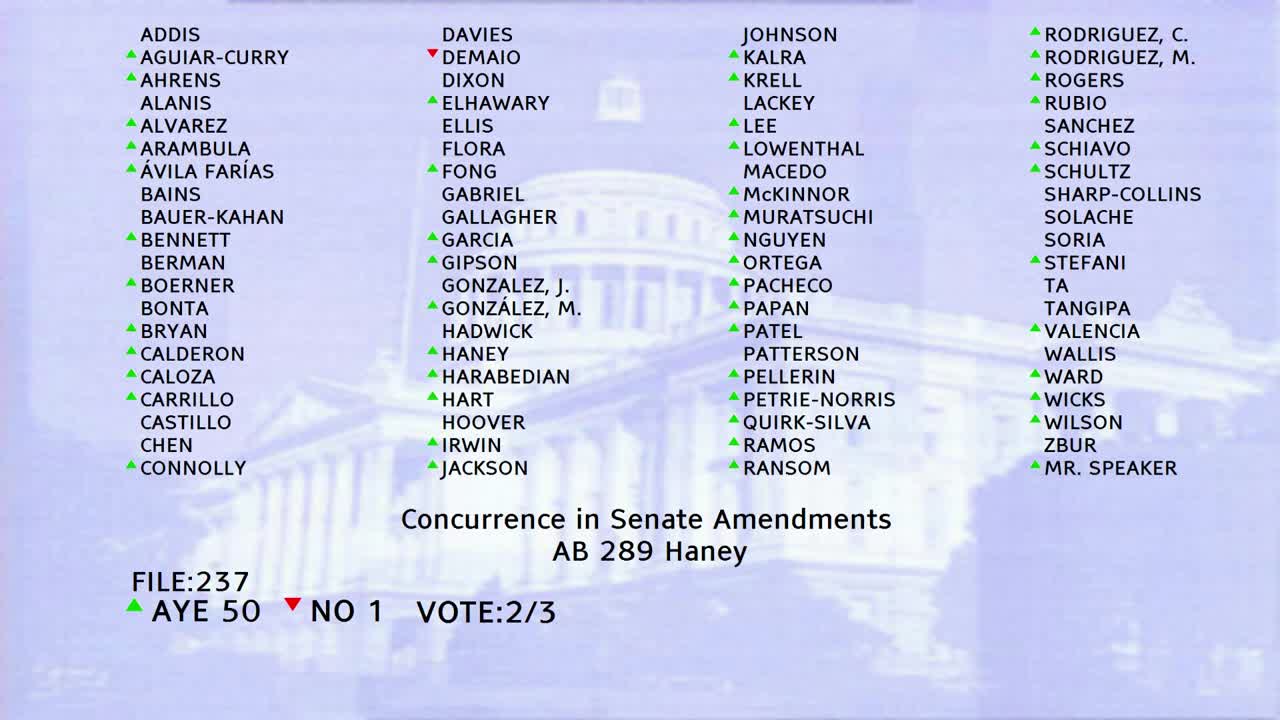 45SEC
Assembly Floor
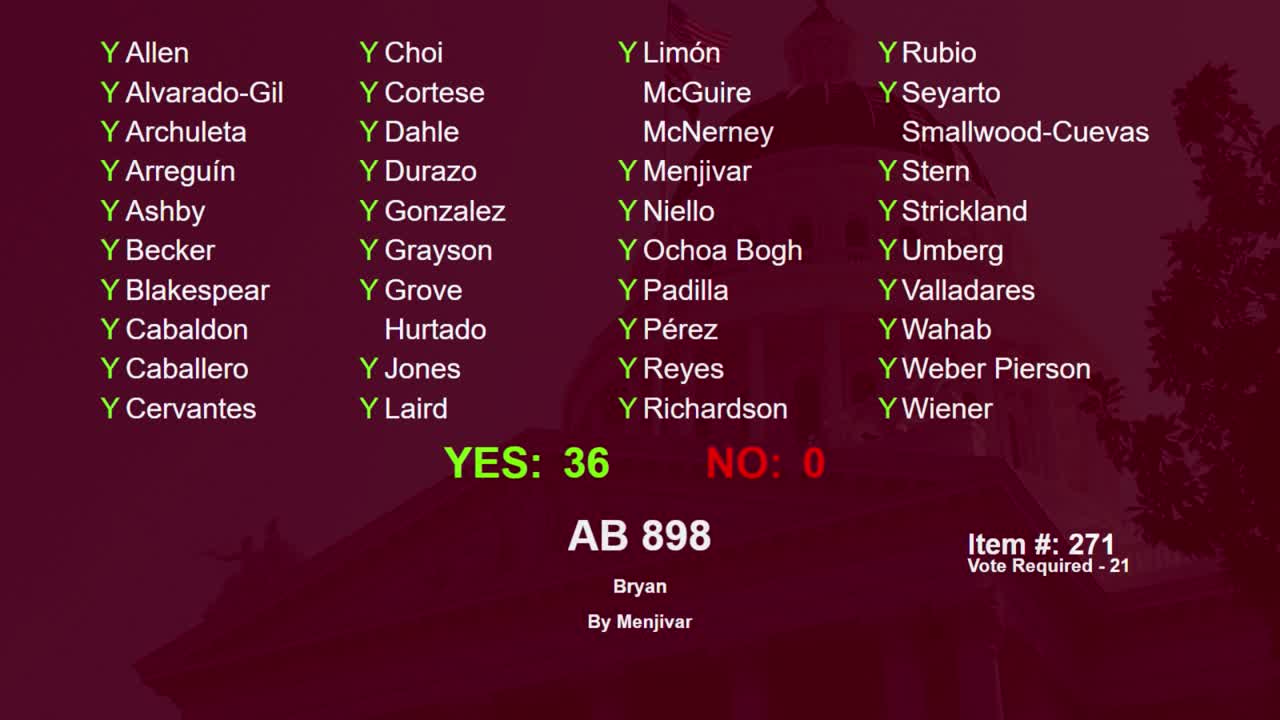 2MIN
Senate Floor
 8MIN
Senate Standing Committee on Human Services
 2MIN
Senate Standing Committee on Judiciary
 1MIN
Assembly Floor
 9MIN
Assembly Standing Committee on Revenue and Taxation
 31MIN
Assembly Standing Committee on Judiciary
Bill Author

Bill Co-Author(s):