AB 476: Metal theft.
- Session Year: 2025-2026
- House: Assembly
- Latest Version Date: 2025-10-13
Current Status:
Passed
(2025-10-13: Chaptered by Secretary of State - Chapter 694, Statutes of 2025.)
Introduced
In Committee
Awaiting First Chamber Vote
Passed First Chamber
In Committee
Awaiting Second Chamber Vote
Passed Second Chamber
Enacted
Existing law governs the business of buying, selling, and dealing in secondhand and used machinery and all ferrous and nonferrous scrap metals and alloys, also known as junk. Existing law requires junk dealers and recyclers to keep a written record of all sales and purchases made in the course of their business, including the place and date of each sale or purchase of junk and a description of the item or items, as specified. Existing law requires the written record to include a statement indicating either that the seller of the junk is the owner of it, or the name of the person they obtained the junk from, as shown on a signed transfer document. Existing law prohibits a junk dealer or recycler from providing payment for nonferrous materials until the junk dealer or recycler obtains a copy of a valid drivers license of the seller or other specified identification. Existing law requires a junk dealer or recycler to preserve the written record for at least 2 years. Existing law makes a violation of the recordkeeping requirements a misdemeanor.
This bill would require junk dealers and recyclers to include additional information in the written record, including the time and amount paid for each sale or purchase of junk made, and the name of the employee handling the transaction. The bill would revise the type of information required to be included in the description of the item or items of junk purchased or sold, as specified. The bill would require the statement referenced above indicating ownership or the name of the person from whom the seller obtained the junk from to be signed.
Existing law prohibits a junk dealer or recycler from possessing certain materials, including a fire hydrant or manhole cover or lid, without written certification from the agency owning or previously owning the material specifying that the agency has either sold the material or is offering the material for sale, salvage, or recycling and that the person is authorized to negotiate the sale of the material. Existing law makes it a crime for any person who is engaged in the salvage, recycling, purchase, or sale of scrap metal to possess specified items, including a fire hydrant or a manhole cover or lid, that were owned or previously owned by specified public entities and that have been stolen or obtained in a manner constituting theft or extortion, knowing the property to be stolen or obtained in that manner, or to fail to report possession of those items, as specified. A person who violates those provisions is subject to a criminal fine of not more than $3,000.
This bill would expand the list of materials and items subject to those provisions to include, among other things, items reasonably recognizable as street lights and related equipment, and would increase the maximum amount of the criminal fine to $5,000.
Existing law makes a person who is a dealer in or collector of junk, metals, or secondhand materials, or their agent, employee, or representative, who buys or receives any wire, cable, copper, lead, solder, mercury, iron, or brass that the person knows or reasonably should know is used by or belongs to specified entities, including a railroad, certain utility companies, or a public entity engaged in furnishing public utility service, without using due diligence to ascertain that the person selling or delivering that material has a legal right to do so, guilty of criminally receiving that property and, in addition to imprisonment, makes that act punishable by a fine of not more than $1,000.
This bill would instead make the act punishable by a fine of not more than $5,000.
By expanding the scope of existing crimes, the bill would impose a state-mandated local program.
The California Constitution requires the state to reimburse local agencies and school districts for certain costs mandated by the state. Statutory provisions establish procedures for making that reimbursement.
This bill would provide that no reimbursement is required by this act for a specified reason.
Existing law governs the business of buying, selling, and dealing in secondhand and used machinery and all ferrous and nonferrous scrap metals and alloys, also known as junk. Existing law requires junk dealers and recyclers to keep a written record of all sales and purchases made in the course of their business, including the place and date of each sale or purchase of junk and a description of the item or items, as specified. Existing law requires the written record to include a statement indicating either that the seller of the junk is the owner of it, or the name of the person they obtained the junk from, as shown on a signed transfer document. Existing law prohibits a junk dealer or recycler from providing payment for nonferrous materials until the junk dealer or recycler obtains a copy of a valid drivers license of the seller or other specified identification. Existing law requires a junk dealer or recycler to preserve the written record for at least 2 years. Existing law makes a violation of the recordkeeping requirements a misdemeanor.
This bill would require junk dealers and recyclers to include additional information in the written record, including the time and amount paid for each sale or purchase of junk made, and the name of the employee handling the transaction. The bill would revise the type of information required to be included in the description of the item or items of junk purchased or sold, as specified. The bill would require the statement referenced above indicating ownership or the name of the person from whom the seller obtained the junk from to be signed and would require the statement to include specified information, including the legal name, date of birth, and place of residence of the seller. signed.
Existing law prohibits a junk dealer or recycler from possessing certain materials, including a fire hydrant or manhole cover or lid, without written certification from the agency owning or previously owning the material specifying that the agency has either sold the material or is offering the material for sale, salvage, or recycling and that the person is authorized to negotiate the sale of the material. Existing law makes it a crime for any person who is engaged in the salvage, recycling, purchase, or sale of scrap metal to possess specified items, including a fire hydrant or a manhole cover or lid, that were owned or previously owned by specified public entities and that have been stolen or obtained in a manner constituting theft or extortion, knowing the property to be stolen or obtained in that manner, or to fail to report possession of those items, as specified. A person who violates those provisions is subject to a criminal fine of not more than $3,000.
This bill would expand the list of materials and items subject to those provisions to include, among other things, items reasonably recognizable as street lights and related equipment, and would increase the maximum amount of the criminal fine to $5,000.
Existing law makes a person who is a dealer in or collector of junk, metals, or secondhand materials, or their agent, employee, or representative, who buys or receives any wire, cable, copper, lead, solder, mercury, iron, or brass that the person knows or reasonably should know is used by or belongs to specified entities, including a railroad, certain utility companies, or a public entity engaged in furnishing public utility service, without using due diligence to ascertain that the person selling or delivering that material has a legal right to do so, guilty of criminally receiving that property and, in addition to imprisonment, makes that act punishable by a fine of not more than $1,000.
This bill would instead make the act punishable by a fine of not more than $5,000.
By expanding the scope of existing crimes, the bill would impose a state-mandated local program.
The California Constitution requires the state to reimburse local agencies and school districts for certain costs mandated by the state. Statutory provisions establish procedures for making that reimbursement.
This bill would provide that no reimbursement is required by this act for a specified reason.
Existing law governs the business of buying, selling, and dealing in secondhand and used machinery and all ferrous and nonferrous scrap metals and alloys, also known as junk. Existing law requires junk dealers and recyclers to keep a written record of all sales and purchases made in the course of their business, including the place and date of each sale or purchase of junk and a description of the item or items, as specified. Existing law requires the written record to include a statement indicating either that the seller of the junk is the owner of it, or the name of the person they obtained the junk from, as shown on a signed transfer document. Existing law prohibits a junk dealer or recycler from providing payment for nonferrous materials until the junk dealer or recycler obtains a copy of a valid drivers license of the seller or other specified identification. Existing law requires a junk dealer or recycler to preserve the written record for at least 2 years. Existing law makes a violation of the recordkeeping requirements a misdemeanor.
This bill would require junk dealers and recyclers to include additional information in the written record, including the time and amount paid for each sale or purchase of junk made, and the name of the employee handling the transaction. The bill would revise the type of information required to be included in the description of the item or items of junk purchased or sold, as specified. The bill would require the statement referenced above indicating ownership or the name of the person from whom the seller obtained the junk from to be signed and would require the statement to include specified information, including the legal name, date of birth, and place of residence of the seller.
Existing law prohibits a junk dealer or recycler from possessing certain materials, including a fire hydrant or manhole cover or lid, without written certification from the agency owning or previously owning the material specifying that the agency has either sold the material or is offering the material for sale, salvage, or recycling and that the person is authorized to negotiate the sale of the material. Existing law makes it a crime for any person who is engaged in the salvage, recycling, purchase, or sale of scrap metal to possess specified items, including a fire hydrant or a manhole cover or lid, that were owned or previously owned by specified public entities and that have been stolen or obtained in a manner constituting theft or extortion, knowing the property to be stolen or obtained in that manner, or to fail to report possession of those items, as specified. A person who violates those provisions is subject to a criminal fine of not more than $3,000.
This bill would expand the list of materials and items subject to those provisions to include, among other things, items reasonably recognizable as street lights and related equipment, and would increase the maximum amount of the criminal fine to $5,000.
Existing law makes a person who is a dealer in or collector of junk, metals, or secondhand materials, or their agent, employee, or representative, who buys or receives any wire, cable, copper, lead, solder, mercury, iron, or brass that the person knows or reasonably should know is used by or belongs to specified entities, including a railroad, certain utility companies, or a public entity engaged in furnishing public utility service, without using due diligence to ascertain that the person selling or delivering that material has a legal right to do so, guilty of criminally receiving that property and, in addition to imprisonment, makes that act punishable by a fine of not more than $1,000.
This bill would instead make the act punishable by a fine of not more than $5,000.
This bill would also prohibit organized metal theft, described as acting in concert with one or more persons to steal metal materials from one or more of specified materials and items with the intent to sell, exchange, or dismantle for value, acting in concert with 2 or more persons to receive, purchase, or possess those metal materials knowing or believing it to have been stolen, acting as an agent of another to steal those metal materials as part of an organized plan to commit theft, or recruiting, coordinating, organizing, supervising, directing, managing, or financing another to undertake acts of theft of metal. The bill would make a violation of organized metal theft punishable as either a misdemeanor or a felony.By creating new crimes and expanding the scope of existing crimes, the bill would impose a state-mandated local program.
The California Constitution requires the state to reimburse local agencies and school districts for certain costs mandated by the state. Statutory provisions establish procedures for making that reimbursement.
This bill would provide that no reimbursement is required by this act for a specified reason.
Existing law governs the business of buying, selling, and dealing in secondhand and used machinery and all ferrous and nonferrous scrap metals and alloys, also known as junk. Existing law requires junk dealers and recyclers to keep a written record of all sales and purchases made in the course of their business, including the place and date of each sale or purchase of junk and a description of the item or items, as specified. Existing law requires the written record to include a statement indicating either that the seller of the junk is the owner of it, or the name of the person they obtained the junk from, as shown on a signed transfer document. Existing law prohibits a junk dealer or recycler from providing payment for nonferrous materials until the junk dealer or recycler obtains a copy of a valid drivers license of the seller or other specified identification. Existing law requires a junk dealer or recycler to preserve the written record for at least 2 years. Existing law makes a violation of the recordkeeping requirements a misdemeanor.
This bill would require junk dealers and recyclers to include additional information in the written record, including the time and amount paid for each sale or purchase of junk made, and the name of the employee handling the transaction. The bill would revise the type of information required to be included in the description of the item or items of junk purchased or sold, as specified. The bill would require the statement referenced above indicating ownership or the name of the person from whom the seller obtained the junk from to be signed and would require the statement to include specified information, including the legal name, date of birth, and place of residence of the seller.
Existing law prohibits a junk dealer or recycler from possessing certain materials, including a fire hydrant or manhole cover or lid, without written certification from the agency owning or previously owning the material specifying that the agency has either sold the material or is offering the material for sale, salvage, or recycling and that the person is authorized to negotiate the sale of the material. Existing law makes it a crime for any person who is engaged in the salvage, recycling, purchase, or sale of scrap metal to possess specified items, including a fire hydrant or a manhole cover or lid, that were owned or previously owned by specified public entities and that have been stolen or obtained in a manner constituting theft or extortion, knowing the property to be stolen or obtained in that manner, or to fail to report possession of those items, as specified. A person who violates those provisions is subject to a criminal fine of not more than $3,000.
This bill would expand the list of materials and items subject to those provisions to include, among other things, items reasonably recognizable as street lights and related equipment, and would increase the maximum amount of the criminal fine to $5,000.
Existing law makes a person who is a dealer in or collector of junk, metals, or secondhand materials, or their agent, employee, or representative, who buys or receives any wire, cable, copper, lead, solder, mercury, iron, or brass that the person knows or reasonably should know is used by or belongs to specified entities, including a railroad, certain utility companies, or a public entity engaged in furnishing public utility service, without using due diligence to ascertain that the person selling or delivering that material has a legal right to do so, guilty of criminally receiving that property and, in addition to imprisonment, makes that act punishable by a fine of not more than $1,000.
This bill would additionally instead make the act punishable by a fine of not more than $10,000. $5,000.
This bill would also prohibit organized metal theft, described as acting in concert with one or more persons to steal metal materials from one or more of specified materials and items with the intent to sell, exchange, or dismantle for value, acting in concert with 2 or more persons to receive, purchase, or possess those metal materials knowing or believing it to have been stolen, acting as an agent of another to steal those metal materials as part of an organized plan to commit theft, or recruiting, coordinating, organizing, supervising, directing, managing, or financing another to undertake acts of theft of metal. The bill would make a violation of organized metal theft punishable as either a misdemeanor or a felony.
By creating new crimes and expanding the scope of existing crimes, the bill would impose a state-mandated local program.
The California Constitution requires the state to reimburse local agencies and school districts for certain costs mandated by the state. Statutory provisions establish procedures for making that reimbursement.
This bill would provide that no reimbursement is required by this act for a specified reason.
Existing law governs the business of buying, selling, and dealing in secondhand and used machinery and all ferrous and nonferrous scrap metals and alloys, also known as junk. Existing law requires junk dealers and recyclers to keep a written record of all sales and purchases made in the course of their business, including the place and date of each sale or purchase of junk and a description of the item or items, as specified. Existing law requires the written record to include a statement indicating either that the seller of the junk is the owner of it, or the name of the person they obtained the junk from, as shown on a signed transfer document. Existing law prohibits a junk dealer or recycler from providing payment for nonferrous materials until the junk dealer or recycler obtains a copy of a valid drivers license of the seller or other specified identification. Existing law requires a junk dealer or recycler to preserve the written record for at least 2 years. Existing law makes a violation of the recordkeeping requirements a misdemeanor.
This bill would require junk dealers and recyclers to include additional information in the written record, including the time and amount paid for each sale or purchase of junk made, and the name of the employee handling the transaction. The bill would revise the type of information required to be included in the description of the item or items of junk purchased or sold, as specified. The bill would require the statement referenced above indicating ownership or the name of the person from whom the seller obtained the junk from to be signed and would require the statement to include specified information, including the legal name, date of birth, and place of residence of the seller. The bill would prohibit a junk dealer or recycler from purchasing nonferrous metals from a person under 18 years of age.
Existing law prohibits a junk dealer or recycler from possessing certain materials, including a fire hydrant or manhole cover or lid, without written certification from the agency owning or previously owning the material specifying that the agency has either sold the material or is offering the material for sale, salvage, or recycling and that the person is authorized to negotiate the sale of the material. Existing law makes it a crime for any person who is engaged in the salvage, recycling, purchase, or sale of scrap metal to possess specified items, including a fire hydrant or a manhole cover or lid, that were owned or previously owned by specified public entities and that have been stolen or obtained in a manner constituting theft or extortion, knowing the property to be stolen or obtained in that manner, or to fail to report possession of those items, as specified. A person who violates those provisions is subject to a criminal fine of not more than $3,000.
This bill would expand the list of materials and items subject to those provisions to include, among other things, items reasonably recognizable as street lights and other attachments related to street lighting and traffic signals, related equipment, and would increase the maximum amount of the criminal fine to $5,000.
Existing law makes a person who is a dealer in or collector of junk, metals, or secondhand materials, or their agent, employee, or representative, who buys or receives any wire, cable, copper, lead, solder, mercury, iron, or brass that the person knows or reasonably should know is used by or belongs to specified entities, including a railroad, certain utility companies, or a public entity engaged in furnishing public utility service, without using due diligence to ascertain that the person selling or delivering that material has a legal right to do so, guilty of criminally receiving that property and, in addition to imprisonment, makes that act punishable by a fine of not more than $1,000.
This bill would additionally make the act punishable by a fine of not more than $10,000.
This bill would also prohibit organized metal theft, described as acting in concert with one or more persons to steal metal materials from one or more of specified materials and items with the intent to sell, exchange, or dismantle for value, acting in concert with 2 or more persons to receive, purchase, or possess those metal materials knowing or believing it to have been stolen, acting as an agent of another to steal those metal materials as part of an organized plan to commit theft, or recruiting, coordinating, organizing, supervising, directing, managing, or financing another to undertake acts of theft of metal. The bill would make a violation of organized metal theft punishable as either a misdemeanor or a felony.
Because the bill would expandBy creating new crimes and expanding the scope of existing crimes, the bill would impose a state-mandated local program.
The California Constitution requires the state to reimburse local agencies and school districts for certain costs mandated by the state. Statutory provisions establish procedures for making that reimbursement.
This bill would provide that no reimbursement is required by this act for a specified reason.
Existing law governs the business of buying, selling, and dealing in secondhand and used machinery and all ferrous and nonferrous scrap metals and alloys, also known as junk. Existing law requires junk dealers and recyclers to keep a written record of all sales and purchases made in the course of their business, including the place and date of each sale or purchase of junk and a description of the item or items, as specified. Existing law requires the written record to include a statement indicating either that the seller of the junk is the owner of it, or the name of the person they obtained the junk from, as shown on a signed transfer document. Existing law prohibits a junk dealer or recycler from providing payment for nonferrous materials until the junk dealer or recycler obtains a copy of a valid drivers license of the seller or other specified identification. Existing law requires a junk dealer or recycler to preserve the written record for at least 2 years. Existing law makes a violation of the recordkeeping requirements a misdemeanor.
This bill would require junk dealers and recyclers to include additional information in the written record, including the time and amount paid for each sale or purchase of junk made, and the name of the employee handling the transaction. The bill would revise the type of information required to be included in the description of the item or items of junk purchased or sold, as specified. The bill would require the statement referenced above indicating ownership or the name of the person from whom the seller obtained the junk from to be signed and would require the statement to include specified information, including the legal name, date of birth, and place of residence of the seller. The bill would prohibit a junk dealer or recycler from purchasing nonferrous metals from a person under 18 years of age.
Existing law prohibits a junk dealer or recycler from possessing certain materials, including a fire hydrant or manhole cover or lid, without written certification from the agency owning or previously owning the material specifying that the agency has either sold the material or is offering the material for sale, salvage, or recycling and that the person is authorized to negotiate the sale of the material. Existing law makes it a crime for any person who is engaged in the salvage, recycling, purchase, or sale of scrap metal to possess specified items, including a fire hydrant or a manhole cover or lid, that were owned or previously owned by specified public entities and that have been stolen or obtained in a manner constituting theft or extortion, knowing the property to be stolen or obtained in that manner, or to fail to report possession of those items, as specified. A person who violates those provisions is subject to a criminal fine of not more than $3,000.
This bill would expand the list of materials and items subject to those provisions to include, among other things, street lights and other attachments related to street lighting and traffic signals, and would increase the maximum amount of the criminal fine to $10,000. $5,000.
Existing law makes a person who is a dealer in or collector of junk, metals, or secondhand materials, or their agent, employee, or representative, who buys or receives any wire, cable, copper, lead, solder, mercury, iron, or brass that the person knows or reasonably should know is used by or belongs to specified entities, including a railroad, certain utility companies, or a public entity engaged in furnishing public utility service, without using due diligence to ascertain that the person selling or delivering that material has a legal right to do so, guilty of criminally receiving that property and, in addition to imprisonment, makes that act punishable by a fine of not more than $1,000.
This bill would increase the maximum amount of the fine to $10,000. additionally make the act punishable by a fine of not more than $10,000.
Because the bill would expand the scope of crimes, the bill would impose a state-mandated local program.
The California Constitution requires the state to reimburse local agencies and school districts for certain costs mandated by the state. Statutory provisions establish procedures for making that reimbursement.
This bill would provide that no reimbursement is required by this act for a specified reason.
Existing law governs the business of buying, selling, and dealing in secondhand and used machinery and all ferrous and nonferrous scrap metals and alloys, also known as junk. Existing law requires junk dealers and recyclers to keep a written record of all sales and purchases made in the course of their business, including the place and date of each sale or purchase of junk, as defined. junk and a description of the item or items, as specified. Existing law requires the written record to include a statement indicating either that the seller of the junk is the owner of it, or the name of the person they obtained the junk from, as shown on a signed transfer document. Existing law prohibits a junk dealer or recycler from providing payment for nonferrous materials until the junk dealer or recycler obtains a copy of a valid drivers license of the seller or other specified identification. Existing law requires a junk dealer or recycler to preserve the written record for at least 2 years. Existing law makes a violation of the recordkeeping requirements a misdemeanor.
This bill, among other changes, bill would require junk dealers and recyclers to include additional information in the written record, including the time and amount paid for each sale or purchase of junk made, and the name of the employee handling the transaction. The bill would revise the type of information required to be included in the description of the item or items of junk purchased or sold, as specified. The bill would require the statement referenced above indicating ownership or the name of the person from whom the seller obtained the junk from to be signed and would require the statement to include specified information, including the legal name, date of birth, and place of residence of the seller. The bill would impose additional requirements on a junk dealer or recycler purchasing nonferrous metals, including obtaining proof of ownership showing the seller has lawful possession or lawful ownership of the nonferrous metals, as specified. The bill would prohibit a junk dealer or recycler from purchasing nonferrous metals from a person under 18 years of age. The bill would require a junk dealer or recycler to maintain the above-described information for at least one year, unless a longer period of time is specified, and would authorize any authorized law enforcement officer to conduct reasonable inspections during regular business hours to ensure compliance with applicable laws.
Existing law, the Contractors State License Law, establishes the Contractors State License Board to license and regulate contractors, and establishes the registrar of contractors as the executive officer and secretary of the board. This bill would prohibit a person from engaging in the sale of scrap metal copper without a valid license issued by the registrar. The bill would prescribe licensure requirements, including payment of a fee of up to $500, to be deposited into the Contractors License Fund, a continuously appropriated fund, and would require a person to renew the license every year. By increasing moneys deposited into a continuously appropriated fund, the bill would make an appropriation. The bill would authorize the registrar to issue a license subject to restrictions or limitations or deny a license for specified reasons, including if the registrar determines the applicant is in violation of federal or state law. The bill exempt certain persons, including licensed electricians, from the licensure requirements.Existing law prohibits a junk dealer or recycler from possessing certain materials, including a fire hydrant or manhole cover or lid, without written certification from the agency owning or previously owning the material specifying that the agency has either sold the material or is offering the material for sale, salvage, or recycling and that the person is authorized to negotiate the sale of the material. Existing law makes it a crime for any person who is engaged in the salvage, recycling, purchase, or sale of scrap metal to possess specified items, including a fire hydrant or a manhole cover or lid, that were owned or previously owned by specified public entities and that have been stolen or obtained in a manner constituting theft or extortion, knowing the property to be stolen or obtained in that manner, or to fail to report possession of those items, as specified. A person who violates those provisions is subject to a criminal fine of not more than $3,000.
This bill would expand the list of materials and items subject to those provisions to include, among other things, street lights and other attachments related to street lighting and traffic signals, and would increase the maximum amount of the criminal fine to $10,000.
Existing law makes a person who is a dealer in or collector of junk, metals, or secondhand materials, or their agent, employee, or representative, who buys or receives any wire, cable, copper, lead, solder, mercury, iron, or brass that the person knows or reasonably should know is used by or belongs to specified entities, including a railroad, certain utility companies, or a public entity engaged in furnishing public utility service, without using due diligence to ascertain that the person selling or delivering that material has a legal right to do so, guilty of criminally receiving that property and, in addition to imprisonment, makes that act punishable by a fine of not more than $1,000.
This bill would increase the maximum amount of the fine to $10,000.
Because the bill would expand the scope of crimes, the bill would impose a state-mandated local program.
The California Constitution requires the state to reimburse local agencies and school districts for certain costs mandated by the state. Statutory provisions establish procedures for making that reimbursement.
This bill would provide that no reimbursement is required by this act for a specified reason.
Existing law governs the business of buying, selling, and dealing in secondhand and used machinery and all ferrous and nonferrous scrap metals and alloys, also known as junk. Existing law requires junk dealers and recyclers to keep a written record of all sales and purchases made in the course of their business, including the place and date of each sale or purchase of junk, as defined. Existing law requires the written record to include a statement indicating either that the seller of the junk is the owner of it, or the name of the person they obtained the junk from, as shown on a signed transfer document. Existing law prohibits a junk dealer or recycler from providing payment for nonferrous materials until the junk dealer or recycler obtains a copy of a valid drivers license of the seller or other specified identification. Existing law requires a junk dealer or recycler to preserve the written record for at least 2 years. Existing law makes a violation of the recordkeeping requirements a misdemeanor.
This bill, among other changes, would require junk dealers and recyclers to include additional information in the written record, including the time and amount paid for each sale or purchase of junk made, and the name of the employee handling the transaction. The bill would require the statement referenced above indicating ownership or the name of the person from whom the seller obtained the junk from to be signed and would require the statement to include specified information, including the legal name, date of birth, and place of residence of the seller. The bill would impose additional requirements on a junk dealer or recycler purchasing nonferrous metals, including obtaining proof of ownership showing the seller has lawful possession or lawful ownership of the nonferrous metals, as specified. The bill would prohibit a junk dealer or recycler from purchasing nonferrous metals from a person under 18 years of age. The bill would require a junk dealer or recycler to maintain the above-described information for at least one year, unless a longer period of time is specified, and would authorize any authorized law enforcement officer to conduct reasonable inspections during regular business hours to ensure compliance with applicable laws. By expanding the scope of a crime, the bill would impose a state-mandated local program.
Existing law, the Contractors State License Law, establishes the Contractors State License Board to license and regulate contractors, and establishes the registrar of contractors as the executive officer and secretary of the board.
This bill would prohibit a person from engaging in the sale of scrap metal copper without a valid license issued by the registrar. The bill would prescribe licensure requirements, including payment of a fee of up to $500, to be deposited into the Contractors License Fund, a continuously appropriated fund, and would require a person to renew the license every year. By increasing moneys deposited into a continuously appropriated fund, the bill would make an appropriation. The bill would authorize the registrar to issue a license subject to restrictions or limitations or deny a license for specified reasons, including if the registrar determines the applicant is in violation of federal or state law. The bill exempt certain persons, including licensed electricians, from the licensure requirements.
Existing law prohibits a junk dealer or recycler from possessing certain materials, including a fire hydrant or manhole cover or lid, without written certification from the agency owning or previously owning the material specifying that the agency has either sold the material or is offering the material for sale, salvage, or recycling and that the person is authorized to negotiate the sale of the material. Existing law makes it a crime for any person who is engaged in the salvage, recycling, purchase, or sale of scrap metal to possess specified items, including a fire hydrant or a manhole cover or lid, that were owned or previously owned by specified public entities and that have been stolen or obtained in a manner constituting theft or extortion, knowing the property to be stolen or obtained in that manner, or to fail to report possession of those items, as specified. A person who violates those provisions is subject to a criminal fine of not more than $3,000.
This bill would expand the list of materials and items subject to those provisions to include, among other things, street lights and other attachments related to street lighting and traffic signals, and would increase the maximum amount of the criminal fine to $10,000.
Existing law makes a person who is a dealer in or collector of junk, metals, or secondhand materials, or their agent, employee, or representative, who buys or receives any wire, cable, copper, lead, solder, mercury, iron, or brass that the person knows or reasonably should know is used by or belongs to specified entities, including a railroad, certain utility companies, or a public entity engaged in furnishing public utility service, without using due diligence to ascertain that the person selling or delivering that material has a legal right to do so, guilty of criminally receiving that property and, in addition to imprisonment, makes that act punishable by a fine of not more than $1,000.
This bill would increase the maximum amount of the fine to $10,000.
Because the bill would expand the scope of crimes, the bill would impose a state-mandated local program.
The California Constitution requires the state to reimburse local agencies and school districts for certain costs mandated by the state. Statutory provisions establish procedures for making that reimbursement.
This bill would provide that no reimbursement is required by this act for a specified reason.
Existing law requires junk dealers and recyclers to keep a written record of all sales and purchases made in the course of their business, including the place and date of each sale or purchase of junk, as defined. Existing law requires the written record to include a statement indicating either that the seller of the junk is the owner of it, or the name of the person they obtained the junk from, as shown on a signed transfer document. Existing law prohibits a junk dealer or recycler from providing payment for nonferrous materials until the junk dealer or recycler obtains a copy of a valid drivers license of the seller or other specified identification. Existing law requires a junk dealer or recycler to preserve the written record for at least 2 years. Existing law makes a violation of the recordkeeping requirements a misdemeanor.
This bill, among other changes, would require junk dealers and recyclers to include additional information in the written record, including the time and amount paid for each sale or purchase of junk made, and the name of the employee handling the transaction. The bill would require the statement referenced above indicating ownership or the name of the person from whom the seller obtained the junk from to be signed and would require the statement to include specified information, including the legal name, date of birth, and place of residence of the seller. The bill would impose additional requirements on a junk dealer or recycler purchasing nonferrous metals, including obtaining proof of ownership showing the seller has lawful possession or lawful ownership of the nonferrous metals, as specified. The bill would prohibit a junk dealer or recycler from purchasing nonferrous metals from a person under 18 years of age. The bill would require a junk dealer or recycler to maintain the above-described information for at least one year, unless a longer period of time is specified, and would authorize any authorized law enforcement officer to conduct reasonable inspections during regular business hours to ensure compliance with applicable laws. By expanding the scope of a crime, the bill would impose a state-mandated local program.
Existing law, the Contractors State License Law, establishes the Contractors State License Board to license and regulate contractors, and establishes the registrar of contractors as the executive officer and secretary of the board.
This bill would prohibit a person from engaging in the sale of scrap metal copper without a valid license issued by the registrar. The bill would prescribe licensure requirements, including payment of a fee of up to $500, to be deposited into the Contractors License Fund, a continuously appropriated fund, and would require a person to renew the license every year. By increasing moneys deposited into a continuously appropriated fund, the bill would make an appropriation. The bill would authorize the registrar to issue a license subject to restrictions or limitations or deny a license for specified reasons, including if the registrar determines the applicant is in violation of federal or state law. The bill exempt certain persons, including licensed electricians, from the licensure requirements.
The California Constitution requires the state to reimburse local agencies and school districts for certain costs mandated by the state. Statutory provisions establish procedures for making that reimbursement.
This bill would provide that no reimbursement is required by this act for a specified reason.
(a)Every junk dealer and every recycler shall set out in the written record required by this article all of the following:
(1)The place, date, time, and amount paid of each sale or purchase of junk made in the conduct of their business as a junk dealer or recycler and the name of the employee handling the transaction.
(2)One of the following methods of identification:
(A)The name, valid drivers license number, and state of issue or California- or United States-issued identification card number.
(B)The name, identification number, and country of issue from a passport used for identification and the address from an additional item of identification that also bears the sellers name.
(C)The name and identification number from a Matricula Consular used for identification and the address from an additional item of identification that also bears the sellers name.
(3)The vehicle license number, including the state of issue, of any motor vehicle used in transporting the junk to the junk dealers or recyclers place of business.
(4)The name and address of each person to whom junk is sold or disposed of, and the license number of any motor vehicle used in transporting the junk from the junk dealers or recyclers place of business.
(5)A description of the item or items of junk purchased or sold, including the item type, weight, identifying marks engraved or etched on the metal, if any and readily visible, and serial numbers, if any and readily visible.
(6)A signed statement indicating either that the seller of the junk is the owner of it, or the name of the person the seller obtained the junk from, as shown on a signed transfer document.
(b)Any person who makes, or causes to be made, any false or fictitious statement regarding any information required by this section, is guilty of a misdemeanor.
(c)Every junk dealer and every recycler shall report the information required in subdivision (a) to the chief of police or to the sheriff in the same manner as described in Section 21628.
SEC. 2.Section 21609.1 of the Business and Professions Code is amended to read:21609.1.(a)A junk dealer or recycler shall not possess any of the following material that was owned or previously owned by an agency, in the absence of a written certification on the letterhead of the agency owning or previously owning the material described in the certification that the agency has either sold the material described or is offering the material for sale, salvage, or recycling, and that the person possessing the certification and identified in the certification is authorized to negotiate the sale of that material:
(1)A fire hydrant or any reasonably recognizable part of a fire hydrant.
(2)A fire department connection, including, but not limited to, reasonably recognizable bronze or brass fittings and parts.
(3)A maintenance hole cover or lid or reasonably recognizable part of a maintenance hole cover or lid.
(4)Backflow devices and connections to that device, or any part of that device.
(5)Reasonably recognizable street lights, traffic signals, and their reasonably recognizable related equipment, including, but not limited to, all of the following:
(A)Controller devices.
(B)Light-emitting diode (LED) fixtures.
(C)Ornamental or historical, modern, or pedestrian poles made of concrete, steel, brass, cast iron, or aluminum.
(D)Solar street lighting components, such as solar panels, steel poles, and battery packs.
(E)Colocation equipment.
(F)Conductors, wiring, and cabling, including fiber optic cables.
(G)Cameras.
(H)Air quality sensors.
(I)Digital banners and signs.
(J)Pedestrian and cycling counters.
(6)Active grade crossing signals.
(7)Sewer flow monitoring station equipment.
(8)Sewer pump station instrumentation and controls.
(9)Stormwater auto sampling equipment and instrumentation.
(10)Stormwater pump station instrumentation and controls.
(11)Irrigation wiring.
(12)Plaques.
(13)Communications or broadband infrastructure or equipment.
(14)Electric vehicle chargers.
(15)Water meters and water meter components.
(b)A junk dealer or recycler who unknowingly takes possession of one or more of the items listed in subdivision (a) as part of a load of otherwise nonprohibited materials without a written certification has a duty to notify the appropriate law enforcement agency by the end of the next business day upon discovery of the prohibited material. Written certification shall relieve the junk dealer or recycler from any civil or criminal penalty for possession of the prohibited material. The prohibited material shall be set aside and not sold pending a determination made by a law enforcement agency pursuant to Section 21609.
(c)For purposes of this section, the following definitions apply:
(1)Agency means a public agency, city, county, city and county, special district, or private utility regulated by the Public Utilities Commission.
(2)Appropriate law enforcement agency means either of the following:
(A)The police chief of the city, or their designee, if the item or items listed in subdivision (a) are located within the territorial limits of an incorporated city.
(B)The sheriff of the county or their designee if the item or items listed are located within the county but outside the territorial limits of an incorporated city.
(3)Written certification means a certification in written form by the junk dealer or recycler to a law enforcement agency, including electronic mail, facsimile, or a letter delivered in person or by certified mail.
SEC. 3.Section 496a of the Penal Code is amended to read:496a.(a)Every person who is a dealer in or collector of junk, metals, or secondhand materials, or the agent, employee, or representative of such dealer or collector, and who buys or receives any wire, cable, copper, lead, solder, mercury, iron, or brass which they know or reasonably should know is ordinarily used by or ordinarily belongs to a railroad or other transportation, telephone, telegraph, gas, water, or electric light company, or a county, city, city and county, or other political subdivision of this state engaged in furnishing public utility service, without using due diligence to ascertain that the person selling or delivering the same has a legal right to do so, is guilty of criminally receiving that property, and shall be punished by a fine not exceeding one thousand dollars ($1,000), or by imprisonment in a county jail for not more than one year, or by both that fine and imprisonment, or by imprisonment pursuant to subdivision (h) of Section 1170, or by a fine of not more than five thousand dollars ($5,000), or by both that fine and imprisonment.
(b)Any person who buys or receives material pursuant to subdivision (a) shall obtain evidence of their identity from the seller, including, but not limited to, that persons full name, signature, address, drivers license number, and vehicle license number, and the license number of the vehicle delivering the material.
(c)The record of the transaction shall include an appropriate description of the material purchased and the record shall be maintained pursuant to Section 21607 of the Business and Professions Code.
SEC. 4.Section 496e of the Penal Code is amended to read:496e.(a)Any person who is engaged in the salvage, recycling, purchase, or sale of scrap metal and who possesses any of the following items that were owned or previously owned by any public agency, city, county, city and county, special district, or private utility that have been stolen or obtained in any manner constituting theft or extortion, knowing the property to be so stolen or obtained, or fails to report possession of the items pursuant to Section 21609.1 of the Business and Professions Code, is guilty of a crime:
(1)A fire hydrant or any reasonably recognizable part of that hydrant.
(2)Any fire department connection, including, but not limited to, reasonably recognizable bronze or brass fittings and parts.
(3)Maintenance hole covers or lids, or any reasonably recognizable part of those maintenance hole covers and lids.
(4)Backflow devices and connections to that device, or any part of that device.
(5)Reasonably recognizable street lights, traffic signals, and their reasonably recognizable related equipment, including, but not limited to, all of the following:
(A)Controller devices.
(B)Light-emitting diode (LED) fixtures.
(C)Ornamental or historical, modern, or pedestrian poles made of concrete, steel, brass, cast iron, or aluminum.
(D)Solar street lighting components, such as solar panels, steel poles, and battery packs.
(E)Colocation equipment.
(F)Conductors, wiring, and cabling, including fiber optic cables.
(G)Cameras.
(H)Air quality sensors.
(I)Digital banners and signs.
(J)Pedestrian and cycling counters.
(6)Active grade crossing signals.
(7)Sewer flow monitoring station equipment.
(8)Sewer pump station instrumentation and controls.
(9)Stormwater auto sampling equipment and instrumentation.
(10)Stormwater pump station instrumentation and controls.
(11)Irrigation wiring.
(12)Plaques.
(13)Communications or broadband infrastructure or equipment.
(14)Electric vehicle chargers.
(15)Water meters and water meter components.
(b)A person who violates subdivision (a) shall, in addition to any other penalty provided by law, be subject to a criminal fine of not more than five thousand dollars ($5,000).
SEC. 5.No reimbursement is required by this act pursuant to Section 6 of Article XIIIB of the California Constitution because the only costs that may be incurred by a local agency or school district will be incurred because this act creates a new crime or infraction, eliminates a crime or infraction, or changes the penalty for a crime or infraction, within the meaning of Section 17556 of the Government Code, or changes the definition of a crime within the meaning of Section 6 of Article XIIIB of the California Constitution.
(a)Every junk dealer and every recycler shall set out in the written record required by this article all of the following:
(1)The place, date, time, and amount paid of each sale or purchase of junk made in the conduct of their business as a junk dealer or recycler and the name of the employee handling the transaction.
(2)One of the following methods of identification:
(A)The name, valid drivers license number, and state of issue or California- or United States-issued identification card number.
(B)The name, identification number, and country of issue from a passport used for identification and the address from an additional item of identification that also bears the sellers name.
(C)The name and identification number from a Matricula Consular used for identification and the address from an additional item of identification that also bears the sellers name.
(3)The vehicle license number, including the state of issue, of any motor vehicle used in transporting the junk to the junk dealers or recyclers place of business.
(4)The name and address of each person to whom junk is sold or disposed of, and the license number of any motor vehicle used in transporting the junk from the junk dealers or recyclers place of business.
(5)A description of the item or items of junk purchased or sold, including the item type, number of units, weight, identifying marks engraved or etched on the metal, if any, any and readily visible, and serial numbers, if any. any and readily visible.
(6)A signed statement indicating either that the seller of the junk is the owner of it, or the name of the person the seller obtained the junk from, as shown on a signed transfer document. The signed statement shall include the legal name, date of birth, and place of residence, including street number, street name, city, state, and ZIP Code, of the seller.
(b)Any person who makes, or causes to be made, any false or fictitious statement regarding any information required by this section, is guilty of a misdemeanor.
(c)Every junk dealer and every recycler shall report the information required in subdivision (a) to the chief of police or to the sheriff in the same manner as described in Section 21628.
SEC. 2.Section 21609.1 of the Business and Professions Code is amended to read:21609.1.(a)A junk dealer or recycler shall not possess any of the following material that was owned or previously owned by an agency, in the absence of a written certification on the letterhead of the agency owning or previously owning the material described in the certification that the agency has either sold the material described or is offering the material for sale, salvage, or recycling, and that the person possessing the certification and identified in the certification is authorized to negotiate the sale of that material:
(1)A fire hydrant or any reasonably recognizable part of a fire hydrant.
(2)A fire department connection, including, but not limited to, reasonably recognizable bronze or brass fittings and parts.
(3)A maintenance hole cover or lid or reasonably recognizable part of a maintenance hole cover or lid.
(4)Backflow devices and connections to that device, or any part of that device.
(5)Reasonably recognizable street lights, traffic signals, and their reasonably recognizable related equipment, including, but not limited to, all of the following:
(A)Controller devices.
(B)Light-emitting diode (LED) fixtures.
(C)Ornamental or historical, modern, or pedestrian poles made of concrete, steel, brass, cast iron, or aluminum.
(D)Solar street lighting components, such as solar panels, steel poles, and battery packs.
(E)Colocation equipment.
(F)Conductors, wiring, and cabling, including fiber optic cables.
(G)Cameras.
(H)Air quality sensors.
(I)Digital banners and signs.
(J)Pedestrian and cycling counters.
(6)Active grade crossing signals.
(7)Sewer flow monitoring station equipment.
(8)Sewer pump station instrumentation and controls.
(9)Stormwater auto sampling equipment and instrumentation.
(10)Stormwater pump station instrumentation and controls.
(11)Irrigation wiring.
(12)Plaques.
(13)Communications or broadband infrastructure or equipment.
(14)Electric vehicle chargers.
(15)Water meters and water meter components.
(b)A junk dealer or recycler who unknowingly takes possession of one or more of the items listed in subdivision (a) as part of a load of otherwise nonprohibited materials without a written certification has a duty to notify the appropriate law enforcement agency by the end of the next business day upon discovery of the prohibited material. Written certification shall relieve the junk dealer or recycler from any civil or criminal penalty for possession of the prohibited material. The prohibited material shall be set aside and not sold pending a determination made by a law enforcement agency pursuant to Section 21609.
(c)For purposes of this section, the following definitions apply:
(1)Agency means a public agency, city, county, city and county, special district, or private utility regulated by the Public Utilities Commission.
(2)Appropriate law enforcement agency means either of the following:
(A)The police chief of the city, or their designee, if the item or items listed in subdivision (a) are located within the territorial limits of an incorporated city.
(B)The sheriff of the county or their designee if the item or items listed are located within the county but outside the territorial limits of an incorporated city.
(3)Written certification means a certification in written form by the junk dealer or recycler to a law enforcement agency, including electronic mail, facsimile, or a letter delivered in person or by certified mail.
SEC. 3.Section 496a of the Penal Code is amended to read:496a.(a)Every person who is a dealer in or collector of junk, metals, or secondhand materials, or the agent, employee, or representative of such dealer or collector, and who buys or receives any wire, cable, copper, lead, solder, mercury, iron, or brass which they know or reasonably should know is ordinarily used by or ordinarily belongs to a railroad or other transportation, telephone, telegraph, gas, water, or electric light company, or a county, city, city and county, or other political subdivision of this state engaged in furnishing public utility service, without using due diligence to ascertain that the person selling or delivering the same has a legal right to do so, is guilty of criminally receiving that property, and shall be punished by a fine not exceeding one thousand dollars ($1,000), or by imprisonment in a county jail for not more than one year, or by both that fine and imprisonment, or by imprisonment pursuant to subdivision (h) of Section 1170, or by a fine of not more than five thousand dollars ($5,000), or by both that fine and imprisonment.
(b)Any person who buys or receives material pursuant to subdivision (a) shall obtain evidence of their identity from the seller, including, but not limited to, that persons full name, signature, address, drivers license number, and vehicle license number, and the license number of the vehicle delivering the material.
(c)The record of the transaction shall include an appropriate description of the material purchased and the record shall be maintained pursuant to Section 21607 of the Business and Professions Code.
SEC. 4.Section 496e of the Penal Code is amended to read:496e.(a)Any person who is engaged in the salvage, recycling, purchase, or sale of scrap metal and who possesses any of the following items that were owned or previously owned by any public agency, city, county, city and county, special district, or private utility that have been stolen or obtained in any manner constituting theft or extortion, knowing the property to be so stolen or obtained, or fails to report possession of the items pursuant to Section 21609.1 of the Business and Professions Code, is guilty of a crime:
(1)A fire hydrant or any reasonably recognizable part of that hydrant.
(2)Any fire department connection, including, but not limited to, reasonably recognizable bronze or brass fittings and parts.
(3)Maintenance hole covers or lids, or any reasonably recognizable part of those maintenance hole covers and lids.
(4)Backflow devices and connections to that device, or any part of that device.
(5)Reasonably recognizable street lights, traffic signals, and their reasonably recognizable related equipment, including, but not limited to, all of the following:
(A)Controller devices.
(B)Light-emitting diode (LED) fixtures.
(C)Ornamental or historical, modern, or pedestrian poles made of concrete, steel, brass, cast iron, or aluminum.
(D)Solar street lighting components, such as solar panels, steel poles, and battery packs.
(E)Colocation equipment.
(F)Conductors, wiring, and cabling, including fiber optic cables.
(G)Cameras.
(H)Air quality sensors.
(I)Digital banners and signs.
(J)Pedestrian and cycling counters.
(6)Active grade crossing signals.
(7)Sewer flow monitoring station equipment.
(8)Sewer pump station instrumentation and controls.
(9)Stormwater auto sampling equipment and instrumentation.
(10)Stormwater pump station instrumentation and controls.
(11)Irrigation wiring.
(12)Plaques.
(13)Communications or broadband infrastructure or equipment.
(14)Electric vehicle chargers.
(15)Water meters and water meter components.
(b)A person who violates subdivision (a) shall, in addition to any other penalty provided by law, be subject to a criminal fine of not more than five thousand dollars ($5,000).
SEC. 5.No reimbursement is required by this act pursuant to Section 6 of Article XIIIB of the California Constitution because the only costs that may be incurred by a local agency or school district will be incurred because this act creates a new crime or infraction, eliminates a crime or infraction, or changes the penalty for a crime or infraction, within the meaning of Section 17556 of the Government Code, or changes the definition of a crime within the meaning of Section 6 of Article XIIIB of the California Constitution.
(a)Every junk dealer and every recycler shall set out in the written record required by this article all of the following:
(1)The place, date, time, and amount paid of each sale or purchase of junk made in the conduct of their business as a junk dealer or recycler and the name of the employee handling the transaction.
(2)One of the following methods of identification:
(A)The name, valid drivers license number, and state of issue or California- or United States-issued identification card number.
(B)The name, identification number, and country of issue from a passport used for identification and the address from an additional item of identification that also bears the sellers name.
(C)The name and identification number from a Matricula Consular used for identification and the address from an additional item of identification that also bears the sellers name.
(3)The vehicle license number, including the state of issue, of any motor vehicle used in transporting the junk to the junk dealers or recyclers place of business.
(4)The name and address of each person to whom junk is sold or disposed of, and the license number of any motor vehicle used in transporting the junk from the junk dealers or recyclers place of business.
(5)A description of the item or items of junk purchased or sold, including the item type, number of units, weight, identifying marks engraved or etched on the metal, if any, and serial numbers, if any.
(6)A signed statement indicating either that the seller of the junk is the owner of it, or the name of the person the seller obtained the junk from, as shown on a signed transfer document. The signed statement shall include the legal name, date of birth, and place of residence, including street number, street name, city, state, and ZIP Code, of the seller.
(b)Any person who makes, or causes to be made, any false or fictitious statement regarding any information required by this section, is guilty of a misdemeanor.
(c)Every junk dealer and every recycler shall report the information required in subdivision (a) to the chief of police or to the sheriff in the same manner as described in Section 21628.
SEC. 2.Section 21609.1 of the Business and Professions Code is amended to read:21609.1.(a)A junk dealer or recycler shall not possess any of the following material that was owned or previously owned by an agency, in the absence of a written certification on the letterhead of the agency owning or previously owning the material described in the certification that the agency has either sold the material described or is offering the material for sale, salvage, or recycling, and that the person possessing the certification and identified in the certification is authorized to negotiate the sale of that material:
(1)A fire hydrant or any reasonably recognizable part of a fire hydrant.
(2)A fire department connection, including, but not limited to, reasonably recognizable bronze or brass fittings and parts.
(3)A maintenance hole cover or lid or reasonably recognizable part of a maintenance hole cover or lid.
(4)Backflow devices and connections to that device, or any part of that device.
(5)Reasonably recognizable street lights, traffic signals, and their reasonably recognizable related equipment, including, but not limited to, all of the following:
(A)Controller devices.
(B)Light-emitting diode (LED) fixtures.
(C)Ornamental or historical, modern, or pedestrian poles made of concrete, steel, brass, cast iron, or aluminum.
(D)Solar street lighting components, such as solar panels, steel poles, and battery packs.
(E)Colocation equipment.
(F)Conductors, wiring, and cabling, including fiber optic cables.
(G)Cameras.
(H)Air quality sensors.
(I)Digital banners and signs.
(J)Pedestrian and cycling counters.
(6)Active grade crossing signals.
(7)Sewer flow monitoring station equipment.
(8)Sewer pump station instrumentation and controls.
(9)Stormwater auto sampling equipment and instrumentation.
(10)Stormwater pump station instrumentation and controls.
(11)Irrigation wiring.
(12)Plaques.
(13)Communications or broadband infrastructure or equipment.
(14)Electric vehicle chargers.
(15)Water meters and water meter components.
(b)A junk dealer or recycler who unknowingly takes possession of one or more of the items listed in subdivision (a) as part of a load of otherwise nonprohibited materials without a written certification has a duty to notify the appropriate law enforcement agency by the end of the next business day upon discovery of the prohibited material. Written certification shall relieve the junk dealer or recycler from any civil or criminal penalty for possession of the prohibited material. The prohibited material shall be set aside and not sold pending a determination made by a law enforcement agency pursuant to Section 21609.
(c)For purposes of this section, the following definitions apply:
(1)Agency means a public agency, city, county, city and county, special district, or private utility regulated by the Public Utilities Commission.
(2)Appropriate law enforcement agency means either of the following:
(A)The police chief of the city, or their designee, if the item or items listed in subdivision (a) are located within the territorial limits of an incorporated city.
(B)The sheriff of the county or their designee if the item or items listed are located within the county but outside the territorial limits of an incorporated city.
(3)Written certification means a certification in written form by the junk dealer or recycler to a law enforcement agency, including electronic mail, facsimile, or a letter delivered in person or by certified mail.
SEC. 3.Section 496a of the Penal Code is amended to read:496a.(a)Every person who is a dealer in or collector of junk, metals, or secondhand materials, or the agent, employee, or representative of such dealer or collector, and who buys or receives any wire, cable, copper, lead, solder, mercury, iron, or brass which they know or reasonably should know is ordinarily used by or ordinarily belongs to a railroad or other transportation, telephone, telegraph, gas, water, or electric light company, or a county, city, city and county, or other political subdivision of this state engaged in furnishing public utility service, without using due diligence to ascertain that the person selling or delivering the same has a legal right to do so, is guilty of criminally receiving that property, and shall be punished by a fine not exceeding one thousand dollars ($1,000), or by imprisonment in a county jail for not more than one year, or by both that fine and imprisonment, or by imprisonment pursuant to subdivision (h) of Section 1170, or by a fine of not more than five thousand dollars ($5,000), or by both that fine and imprisonment.
(b)Any person who buys or receives material pursuant to subdivision (a) shall obtain evidence of their identity from the seller, including, but not limited to, that persons full name, signature, address, drivers license number, and vehicle license number, and the license number of the vehicle delivering the material.
(c)The record of the transaction shall include an appropriate description of the material purchased and the record shall be maintained pursuant to Section 21607 of the Business and Professions Code.
SEC. 4.Section 496e of the Penal Code is amended to read:496e.(a)Any person who is engaged in the salvage, recycling, purchase, or sale of scrap metal and who possesses any of the following items that were owned or previously owned by any public agency, city, county, city and county, special district, or private utility that have been stolen or obtained in any manner constituting theft or extortion, knowing the property to be so stolen or obtained, or fails to report possession of the items pursuant to Section 21609.1 of the Business and Professions Code, is guilty of a crime:
(1)A fire hydrant or any reasonably recognizable part of that hydrant.
(2)Any fire department connection, including, but not limited to, reasonably recognizable bronze or brass fittings and parts.
(3)Maintenance hole covers or lids, or any reasonably recognizable part of those maintenance hole covers and lids.
(4)Backflow devices and connections to that device, or any part of that device.
(5)Reasonably recognizable street lights, traffic signals, and their reasonably recognizable related equipment, including, but not limited to, all of the following:
(A)Controller devices.
(B)Light-emitting diode (LED) fixtures.
(C)Ornamental or historical, modern, or pedestrian poles made of concrete, steel, brass, cast iron, or aluminum.
(D)Solar street lighting components, such as solar panels, steel poles, and battery packs.
(E)Colocation equipment.
(F)Conductors, wiring, and cabling, including fiber optic cables.
(G)Cameras.
(H)Air quality sensors.
(I)Digital banners and signs.
(J)Pedestrian and cycling counters.
(6)Active grade crossing signals.
(7)Sewer flow monitoring station equipment.
(8)Sewer pump station instrumentation and controls.
(9)Stormwater auto sampling equipment and instrumentation.
(10)Stormwater pump station instrumentation and controls.
(11)Irrigation wiring.
(12)Plaques.
(13)Communications or broadband infrastructure or equipment.
(14)Electric vehicle chargers.
(15)Water meters and water meter components.
(b)A person who violates subdivision (a) shall, in addition to any other penalty provided by law, be subject to a criminal fine of not more than five thousand dollars ($5,000).
SEC. 5.Section 496f is added to the Penal Code, to read:496f.(a)A person who commits any of the following acts is guilty of organized metal theft and shall be punished pursuant to subdivision (b):(1)Acts in concert with one or more persons to steal metal materials from one or more of the items described in subdivision (a) of Section 496a or subdivision (a) of Section 496e with the intent to sell, exchange, or dismantle for value.(2)Acts in concert with two or more persons to receive, purchase, or possess metal materials described in subdivision (a) of Section 496a or subdivision (a) of Section 496e knowing or believing it to have been stolen.(3)Acts as an agent of another individual or group of individuals to steal metal materials described in subdivision (a) of Section 496a or subdivision (a) of Section 496e as part of an organized plan to commit metal theft.(4)Recruits, coordinates, organizes, supervises, directs, manages, or finances another to undertake any of the acts described in paragraph (1) or (2) or any other statute defining theft of metal.(b)Organized metal theft is punishable as follows:(1)If violations of paragraph (1), (2), or (3) of subdivision (a) are committed on two or more separate occasions within a 12-month period, and if the aggregated value of the metal stolen, received, purchased, or possessed within that 12-month period exceeds nine hundred fifty dollars ($950), the offense is punishable by imprisonment in a county jail not exceeding one year or pursuant to subdivision (h) of Section 1170.(2)Any other violation of paragraph (1), (2), or (3) of subdivision (a) that is not described in paragraph (1) of this subdivision is punishable by imprisonment in a county jail not exceeding one year.(3)A violation of paragraph (4) of subdivision (a) is punishable by imprisonment in a county jail not exceeding one year or pursuant to subdivision (h) of Section 1170.(c)For the purpose of determining whether the defendant acted in concert with another person or persons in any proceeding, the trier of fact may consider any competent evidence, including, but not limited to, all of the following:(1)The defendant has previously acted in concert with another person or persons in committing acts constituting theft, or any related offense, including any conduct that occurred in counties other than the county of the current offense, if relevant to demonstrate a fact other than the defendants disposition to commit the act.(2)That the defendant used or possessed an artifice, instrument, container, device, or other article capable of facilitating the removal of metal from materials described in subdivision (a) of Section 496a or subdivision (a) of Section 496e without permission or authorization and use of the artifice, instrument, container, or device or other article is part of an organized plan to commit metal theft.(3)The property involved in the offense is of a type or quantity that would not normally be collected or purchased for personal use, and the property is intended for resale.(d)In a prosecution under this section, the prosecutor shall not be required to charge any other coparticipant of the organized metal theft.(e)This section does not preclude or prohibit prosecution pursuant to Section 594 or charging an enhancement pursuant to Sections 12022.6 or 12022.65.SEC. 6.SEC. 5.No reimbursement is required by this act pursuant to Section 6 of Article XIIIB of the California Constitution because the only costs that may be incurred by a local agency or school district will be incurred because this act creates a new crime or infraction, eliminates a crime or infraction, or changes the penalty for a crime or infraction, within the meaning of Section 17556 of the Government Code, or changes the definition of a crime within the meaning of Section 6 of Article XIIIB of the California Constitution.
(a)Every junk dealer and every recycler shall set out in the written record required by this article all of the following:
(1)The place, date, time, and amount paid of each sale or purchase of junk made in the conduct of their business as a junk dealer or recycler and the name of the employee handling the transaction.
(2)One of the following methods of identification:
(A)The name, valid drivers license number, and state of issue or California- or United States-issued identification card number.
(B)The name, identification number, and country of issue from a passport used for identification and the address from an additional item of identification that also bears the sellers name.
(C)The name and identification number from a Matricula Consular used for identification and the address from an additional item of identification that also bears the sellers name.
(3)The vehicle license number, including the state of issue, of any motor vehicle used in transporting the junk to the junk dealers or recyclers place of business.
(4)The name and address of each person to whom junk is sold or disposed of, and the license number of any motor vehicle used in transporting the junk from the junk dealers or recyclers place of business.
(5)A description of the item or items of junk purchased or sold, including the item type, number of units, weight, identifying marks engraved or etched on the metal, if any, and serial numbers, if any.
(6)A signed statement indicating either that the seller of the junk is the owner of it, or the name of the person the seller obtained the junk from, as shown on a signed transfer document. The signed statement shall include the legal name, date of birth, and place of residence, including street number, street name, city, state, and ZIP Code, of the seller.
(b)Any person who makes, or causes to be made, any false or fictitious statement regarding any information required by this section, is guilty of a misdemeanor.
(c)Every junk dealer and every recycler shall report the information required in subdivision (a) to the chief of police or to the sheriff in the same manner as described in Section 21628.
SEC. 2.Section 21609.1 of the Business and Professions Code is amended to read:21609.1.(a)A junk dealer or recycler shall not possess any of the following material that was owned or previously owned by an agency, in the absence of a written certification on the letterhead of the agency owning or previously owning the material described in the certification that the agency has either sold the material described or is offering the material for sale, salvage, or recycling, and that the person possessing the certification and identified in the certification is authorized to negotiate the sale of that material:
(1)A fire hydrant or any reasonably recognizable part of a fire hydrant.
(2)A fire department connection, including, but not limited to, reasonably recognizable bronze or brass fittings and parts.
(3)A maintenance hole cover or lid or reasonably recognizable part of a maintenance hole cover or lid.
(4)Backflow devices and connections to that device, or any part of that device.
(5)Reasonably recognizable street lights, traffic signals, and their reasonably recognizable related equipment, including, but not limited to, all of the following:
(A)Controller devices.
(B)Light-emitting diode (LED) fixtures.
(C)Ornamental or historical, modern, or pedestrian poles made of concrete, steel, brass, cast iron, or aluminum.
(D)Solar street lighting components, such as solar panels, steel poles, and battery packs.
(E)Colocation equipment.
(F)Conductors, wiring, and cabling, including fiber optic cables.
(G)Cameras.
(H)Air quality sensors.
(I)Digital banners and signs.
(J)Pedestrian and cycling counters.
(6)Active grade crossing signals.
(7)Sewer flow monitoring station equipment.
(8)Sewer pump station instrumentation and controls.
(9)Stormwater auto sampling equipment and instrumentation.
(10)Stormwater pump station instrumentation and controls.
(11)Irrigation wiring.
(12)Plaques.
(13)Communications or broadband infrastructure or equipment.
(14)Electric vehicle chargers.
(15)Water meters and water meter components.
(b)A junk dealer or recycler who unknowingly takes possession of one or more of the items listed in subdivision (a) as part of a load of otherwise nonprohibited materials without a written certification has a duty to notify the appropriate law enforcement agency by the end of the next business day upon discovery of the prohibited material. Written certification shall relieve the junk dealer or recycler from any civil or criminal penalty for possession of the prohibited material. The prohibited material shall be set aside and not sold pending a determination made by a law enforcement agency pursuant to Section 21609.
(c)For purposes of this section, the following definitions apply:
(1)Agency means a public agency, city, county, city and county, special district, or private utility regulated by the Public Utilities Commission.
(2)Appropriate law enforcement agency means either of the following:
(A)The police chief of the city, or their designee, if the item or items listed in subdivision (a) are located within the territorial limits of an incorporated city.
(B)The sheriff of the county or their designee if the item or items listed are located within the county but outside the territorial limits of an incorporated city.
(3)Written certification means a certification in written form by the junk dealer or recycler to a law enforcement agency, including electronic mail, facsimile, or a letter delivered in person or by certified mail.
SEC. 3.Section 496a of the Penal Code is amended to read:496a.(a)Every person who is a dealer in or collector of junk, metals, or secondhand materials, or the agent, employee, or representative of such dealer or collector, and who buys or receives any wire, cable, copper, lead, solder, mercury, iron, or brass which they know or reasonably should know is ordinarily used by or ordinarily belongs to a railroad or other transportation, telephone, telegraph, gas, water, or electric light company, or a county, city, city and county, or other political subdivision of this state engaged in furnishing public utility service, without using due diligence to ascertain that the person selling or delivering the same has a legal right to do so, is guilty of criminally receiving that property, and shall be punished by a fine not exceeding one thousand dollars ($1,000), or by imprisonment in a county jail for not more than one year, or by both that fine and imprisonment, or by imprisonment pursuant to subdivision (h) of Section 1170, or by a fine of not more than ten thousand dollars ($10,000), five thousand dollars ($5,000), or by both that fine and imprisonment.
(b)Any person who buys or receives material pursuant to subdivision (a) shall obtain evidence of their identity from the seller, including, but not limited to, that persons full name, signature, address, drivers license number, and vehicle license number, and the license number of the vehicle delivering the material.
(c)The record of the transaction shall include an appropriate description of the material purchased and the record shall be maintained pursuant to Section 21607 of the Business and Professions Code.
SEC. 4.Section 496e of the Penal Code is amended to read:496e.(a)Any person who is engaged in the salvage, recycling, purchase, or sale of scrap metal and who possesses any of the following items that were owned or previously owned by any public agency, city, county, city and county, special district, or private utility that have been stolen or obtained in any manner constituting theft or extortion, knowing the property to be so stolen or obtained, or fails to report possession of the items pursuant to Section 21609.1 of the Business and Professions Code, is guilty of a crime:
(1)A fire hydrant or any reasonably recognizable part of that hydrant.
(2)Any fire department connection, including, but not limited to, reasonably recognizable bronze or brass fittings and parts.
(3)Maintenance hole covers or lids, or any reasonably recognizable part of those maintenance hole covers and lids.
(4)Backflow devices and connections to that device, or any part of that device.
(5)Reasonably recognizable street lights, traffic signals, and their reasonably recognizable related equipment, including, but not limited to, all of the following:
(A)Controller devices.
(B)Light-emitting diode (LED) fixtures.
(C)Ornamental or historical, modern, or pedestrian poles made of concrete, steel, brass, cast iron, or aluminum.
(D)Solar street lighting components, such as solar panels, steel poles, and battery packs.
(E)Colocation equipment.
(F)Conductors, wiring, and cabling, including fiber optic cables.
(G)Cameras.
(H)Air quality sensors.
(I)Digital banners and signs.
(J)Pedestrian and cycling counters.
(6)Active grade crossing signals.
(7)Sewer flow monitoring station equipment.
(8)Sewer pump station instrumentation and controls.
(9)Stormwater auto sampling equipment and instrumentation.
(10)Stormwater pump station instrumentation and controls.
(11)Irrigation wiring.
(12)Plaques.
(13)Communications or broadband infrastructure or equipment.
(14)Electric vehicle chargers.
(15)Water meters and water meter components.
(b)A person who violates subdivision (a) shall, in addition to any other penalty provided by law, be subject to a criminal fine of not more than five thousand dollars ($5,000).
SEC. 5.Section 496f is added to the Penal Code, to read:496f.(a)A person who commits any of the following acts is guilty of organized metal theft and shall be punished pursuant to subdivision (b):
(1)Acts in concert with one or more persons to steal metal materials from one or more of the items described in subdivision (a) of Section 496a or subdivision (a) of Section 496e with the intent to sell, exchange, or dismantle for value.
(2)Acts in concert with two or more persons to receive, purchase, or possess metal materials described in subdivision (a) of Section 496a or subdivision (a) of Section 496e knowing or believing it to have been stolen.
(3)Acts as an agent of another individual or group of individuals to steal metal materials described in subdivision (a) of Section 496a or subdivision (a) of Section 496e as part of an organized plan to commit metal theft.
(4)Recruits, coordinates, organizes, supervises, directs, manages, or finances another to undertake any of the acts described in paragraph (1) or (2) or any other statute defining theft of metal.
(b)Organized metal theft is punishable as follows:
(1)If violations of paragraph (1), (2), or (3) of subdivision (a) are committed on two or more separate occasions within a 12-month period, and if the aggregated value of the metal stolen, received, purchased, or possessed within that 12-month period exceeds nine hundred fifty dollars ($950), the offense is punishable by imprisonment in a county jail not exceeding one year or pursuant to subdivision (h) of Section 1170.
(2)Any other violation of paragraph (1), (2), or (3) of subdivision (a) that is not described in paragraph (1) of this subdivision is punishable by imprisonment in a county jail not exceeding one year.
(3)A violation of paragraph (4) of subdivision (a) is punishable by imprisonment in a county jail not exceeding one year or pursuant to subdivision (h) of Section 1170.
(c)For the purpose of determining whether the defendant acted in concert with another person or persons in any proceeding, the trier of fact may consider any competent evidence, including, but not limited to, all of the following:
(1)The defendant has previously acted in concert with another person or persons in committing acts constituting theft, or any related offense, including any conduct that occurred in counties other than the county of the current offense, if relevant to demonstrate a fact other than the defendants disposition to commit the act.
(2)That the defendant used or possessed an artifice, instrument, container, device, or other article capable of facilitating the removal of metal from materials described in subdivision (a) of Section 496a or subdivision (a) of Section 496e without permission or authorization and use of the artifice, instrument, container, or device or other article is part of an organized plan to commit metal theft.
(3)The property involved in the offense is of a type or quantity that would not normally be collected or purchased for personal use, and the property is intended for resale.
(d)In a prosecution under this section, the prosecutor shall not be required to charge any other coparticipant of the organized metal theft.
(e)This section does not preclude or prohibit prosecution pursuant to Section 594 or charging an enhancement pursuant to Sections 12022.6 or 12022.65.
SEC. 6.No reimbursement is required by this act pursuant to Section 6 of Article XIIIB of the California Constitution because the only costs that may be incurred by a local agency or school district will be incurred because this act creates a new crime or infraction, eliminates a crime or infraction, or changes the penalty for a crime or infraction, within the meaning of Section 17556 of the Government Code, or changes the definition of a crime within the meaning of Section 6 of Article XIIIB of the California Constitution.
(a)Every junk dealer and every recycler shall set out in the written record required by this article all of the following:
(1)The place, date, time, and amount paid of each sale or purchase of junk made in the conduct of their business as a junk dealer or recycler and the name of the employee handling the transaction.
(2)One of the following methods of identification:
(A)The name, valid drivers license number, and state of issue or California- or United States-issued identification card number.
(B)The name, identification number, and country of issue from a passport used for identification and the address from an additional item of identification that also bears the sellers name.
(C)The name and identification number from a Matricula Consular used for identification and the address from an additional item of identification that also bears the sellers name.
(3)The vehicle license number, including the state of issue, of any motor vehicle used in transporting the junk to the junk dealers or recyclers place of business.
(4)The name and address of each person to whom junk is sold or disposed of, and the license number of any motor vehicle used in transporting the junk from the junk dealers or recyclers place of business.
(5)A description of the item or items of junk purchased or sold, including the item type, number of units, weight, identifying marks engraved or etched on the metal, if any, and serial numbers, if any.
(6)A signed statement indicating either that the seller of the junk is the owner of it, or the name of the person the seller obtained the junk from, as shown on a signed transfer document. The signed statement shall include the legal name, date of birth, and place of residence, including street number, street name, city, state, and ZIP Code, of the seller.
(b)A junk dealer or recycler shall not purchase nonferrous metals from a person under 18 years of age.(c)(b)Any person who makes, or causes to be made, any false or fictitious statement regarding any information required by this section, is guilty of a misdemeanor.
(d)(c)Every junk dealer and every recycler shall report the information required in subdivision (a) to the chief of police or to the sheriff in the same manner as described in Section 21628.
SEC. 2.Section 21609.1 of the Business and Professions Code is amended to read:21609.1.(a)A junk dealer or recycler shall not possess any of the following material that was owned or previously owned by an agency, in the absence of a written certification on the letterhead of the agency owning or previously owning the material described in the certification that the agency has either sold the material described or is offering the material for sale, salvage, or recycling, and that the person possessing the certification and identified in the certification is authorized to negotiate the sale of that material:
(1)A fire hydrant or any reasonably recognizable part of a fire hydrant.
(2)A fire department connection, including, but not limited to, reasonably recognizable bronze or brass fittings and parts.
(3)A maintenance hole cover or lid or reasonably recognizable part of a maintenance hole cover or lid.
(4)Backflow devices and connections to that device, or any part of that device.
(5)Street lights and other attachments related to street lighting, including, but not limited to, all of the following:(A)Ubicquia smart nodes.(5)Reasonably recognizable street lights, traffic signals, and their reasonably recognizable related equipment, including, but not limited to, all of the following:
(A)Controller devices.
(B)Light-emitting diode (LED) fixtures.
(C)Ornamental or historical, modern, or pedestrian poles made of concrete, steel, brass, cast iron, or aluminum.
(D)Solar street lighting components, such as solar panels, steel poles, and battery packs.
(E)Colocation equipment.
(F)Fiber optic cables.(G)Electric vehicle chargers.(F)Conductors, wiring, and cabling, including fiber optic cables.
(H)(G)Cameras.
(I)(H)Air quality sensors.
(J)(I)Digital banners. banners and signs.
(K)(J)Pedestrian and cycling counters.
(6)Traffic signals and active Active grade crossing signals.
(7)Sewer flow monitoring station equipment.
(8)Sewer pump station instrumentation and controls.
(9)Stormwater auto sampling equipment and instrumentation.
(10)Stormwater pump station instrumentation and controls.
(11)Irrigation wiring.
(12)Plaques.
(13)Communications or broadband infrastructure or equipment.
(14)Electric vehicle chargers.
(15)Water meters and water meter components.
(b)A junk dealer or recycler who unknowingly takes possession of one or more of the items listed in subdivision (a) as part of a load of otherwise nonprohibited materials without a written certification has a duty to notify the appropriate law enforcement agency by the end of the next business day upon discovery of the prohibited material. Written certification shall relieve the junk dealer or recycler from any civil or criminal penalty for possession of the prohibited material. The prohibited material shall be set aside and not sold pending a determination made by a law enforcement agency pursuant to Section 21609.
(c)For purposes of this section, the following definitions apply:
(1)Agency means a public agency, city, county, city and county, special district, or private utility regulated by the Public Utilities Commission.
(2)Appropriate law enforcement agency means either of the following:
(A)The police chief of the city, or their designee, if the item or items listed in subdivision (a) are located within the territorial limits of an incorporated city.
(B)The sheriff of the county or their designee if the item or items listed are located within the county but outside the territorial limits of an incorporated city.
(3)Written certification means a certification in written form by the junk dealer or recycler to a law enforcement agency, including electronic mail, facsimile, or a letter delivered in person or by certified mail.
SEC. 3.Section 496a of the Penal Code is amended to read:496a.(a)Every person who is a dealer in or collector of junk, metals, or secondhand materials, or the agent, employee, or representative of such dealer or collector, and who buys or receives any wire, cable, copper, lead, solder, mercury, iron, or brass which they know or reasonably should know is ordinarily used by or ordinarily belongs to a railroad or other transportation, telephone, telegraph, gas, water, or electric light company, or a county, city, city and county, or other political subdivision of this state engaged in furnishing public utility service, without using due diligence to ascertain that the person selling or delivering the same has a legal right to do so, is guilty of criminally receiving that property, and shall be punished by a fine not exceeding one thousand dollars ($1,000), or by imprisonment in a county jail for not more than one year, of or by both that fine and imprisonment, or by imprisonment pursuant to subdivision (h) of Section 1170, or by a fine of not more than ten thousand dollars ($10,000), or by both that fine and imprisonment.
(b)Any person who buys or receives material pursuant to subdivision (a) shall obtain evidence of their identity from the seller, including, but not limited to, that persons full name, signature, address, drivers license number, and vehicle license number, and the license number of the vehicle delivering the material.
(c)The record of the transaction shall include an appropriate description of the material purchased and the record shall be maintained pursuant to Section 21607 of the Business and Professions Code.
SEC. 4.Section 496e of the Penal Code is amended to read:496e.(a)Any person who is engaged in the salvage, recycling, purchase, or sale of scrap metal and who possesses any of the following items that were owned or previously owned by any public agency, city, county, city and county, special district, or private utility that have been stolen or obtained in any manner constituting theft or extortion, knowing the property to be so stolen or obtained, or fails to report possession of the items pursuant to Section 21609.1 of the Business and Professions Code, is guilty of a crime:
(1)A fire hydrant or any reasonably recognizable part of that hydrant.
(2)Any fire department connection, including, but not limited to, reasonably recognizable bronze or brass fittings and parts.
(3)Maintenance hole covers or lids, or any reasonably recognizable part of those maintenance hole covers and lids.
(4)Backflow devices and connections to that device, or any part of that device.
(5)Streetlights and other attachments related to street lighting, including, but not limited to, all of the following:(A)Ubicquia smart nodes.(5)Reasonably recognizable street lights, traffic signals, and their reasonably recognizable related equipment, including, but not limited to, all of the following:
(A)Controller devices.
(B)Light-emitting diode (LED) fixtures.
(C)Ornamental or historical, modern, or pedestrian poles made of concrete, steel, brass, cast iron, or aluminum.
(D)Solar street lighting components, such as solar panels, steel poles, and battery packs.
(E)Colocation equipment.
(F)Fiber optic cables.(G)Electric vehicle chargers.(F)Conductors, wiring, and cabling, including fiber optic cables.
(H)(G)Cameras.
(I)(H)Air quality sensors.
(J)(I)Digital banners. banners and signs.
(K)(J)Pedestrian and cycling counters.
(6)Traffic signals and active Active grade crossing signals.
(7)Sewer flow monitoring station equipment.
(8)Sewer pump station instrumentation and controls.
(9)Stormwater auto sampling equipment and instrumentation.
(10)Stormwater pump station instrumentation and controls.
(11)Irrigation wiring.
(12)Plaques.
(13)Communications or broadband infrastructure or equipment.
(14)Electric vehicle chargers.
(15)Water meters and water meter components.
(b)A person who violates subdivision (a) shall, in addition to any other penalty provided by law, be subject to a criminal fine of not more than five thousand dollars ($5,000).
SEC. 5.Section 496f is added to the Penal Code, to read:496f.(a)A person who commits any of the following acts is guilty of organized metal theft and shall be punished pursuant to subdivision (b):
(1)Acts in concert with one or more persons to steal metal materials from one or more of the items described in subdivision (a) of Section 496a or subdivision (a) of Section 496e with the intent to sell, exchange, or dismantle for value.
(2)Acts in concert with two or more persons to receive, purchase, or possess metal materials described in subdivision (a) of Section 496a or subdivision (a) of Section 496e knowing or believing it to have been stolen.
(3)Acts as an agent of another individual or group of individuals to steal metal materials described in subdivision (a) of Section 496a or subdivision (a) of Section 496e as part of an organized plan to commit metal theft.
(4)Recruits, coordinates, organizes, supervises, directs, manages, or finances another to undertake any of the acts described in paragraph (1) or (2) or any other statute defining theft of metal.
(b)Organized metal theft is punishable as follows:
(1)If violations of paragraph (1), (2), or (3) of subdivision (a) are committed on two or more separate occasions within a 12-month period, and if the aggregated value of the metal stolen, received, purchased, or possessed within that 12-month period exceeds nine hundred fifty dollars ($950), the offense is punishable by imprisonment in a county jail not exceeding one year or pursuant to subdivision (h) of Section 1170.
(2)Any other violation of paragraph (1), (2), or (3) of subdivision (a) that is not described in paragraph (1) of this subdivision is punishable by imprisonment in a county jail not exceeding one year.
(3)A violation of paragraph (4) of subdivision (a) is punishable by imprisonment in a county jail not exceeding one year or pursuant to subdivision (h) of Section 1170.
(c)For the purpose of determining whether the defendant acted in concert with another person or persons in any proceeding, the trier of fact may consider any competent evidence, including, but not limited to, all of the following:
(1)The defendant has previously acted in concert with another person or persons in committing acts constituting theft, or any related offense, including any conduct that occurred in counties other than the county of the current offense, if relevant to demonstrate a fact other than the defendants disposition to commit the act.
(2)That the defendant used or possessed an artifice, instrument, container, device, or other article capable of facilitating the removal of metal from materials described in subdivision (a) of Section 496a or subdivision (a) of Section 496e without permission or authorization and use of the artifice, instrument, container, or device or other article is part of an organized plan to commit metal theft.
(3)The property involved in the offense is of a type or quantity that would not normally be collected or purchased for personal use, and the property is intended for resale.
(d)In a prosecution under this section, the prosecutor shall not be required to charge any other coparticipant of the organized metal theft.
(e)This section does not preclude or prohibit prosecution pursuant to Section 594 or charging an enhancement pursuant to Sections 12022.6 or 12022.65.
SEC. 5.SEC. 6.No reimbursement is required by this act pursuant to Section 6 of Article XIIIB of the California Constitution because the only costs that may be incurred by a local agency or school district will be incurred because this act creates a new crime or infraction, eliminates a crime or infraction, or changes the penalty for a crime or infraction, within the meaning of Section 17556 of the Government Code, or changes the definition of a crime within the meaning of Section 6 of Article XIIIB of the California Constitution.
(a)Every junk dealer and every recycler shall set out in the written record required by this article all of the following:
(1)The place, date, time, and amount paid of each sale or purchase of junk made in the conduct of their business as a junk dealer or recycler and the name of the employee handling the transaction.
(2)One of the following methods of identification:
(A)The name, valid drivers license number, and state of issue or California- or United States-issued identification card number.
(B)The name, identification number, and country of issue from a passport used for identification and the address from an additional item of identification that also bears the sellers name.
(C)The name and identification number from a Matricula Consular used for identification and the address from an additional item of identification that also bears the sellers name.
(3)The vehicle license number, including the state of issue, of any motor vehicle used in transporting the junk to the junk dealers or recyclers place of business.
(4)The name and address of each person to whom junk is sold or disposed of, and the license number of any motor vehicle used in transporting the junk from the junk dealers or recyclers place of business.
(5)A description of the item or items of junk purchased or sold, including the item type, number of units, weight, identifying marks engraved or etched on the metal, if any, and serial numbers, if any.
(6)A signed statement indicating either that the seller of the junk is the owner of it, or the name of the person the seller obtained the junk from, as shown on a signed transfer document. The signed statement shall include the legal name, date of birth, and place of residence, including street number, street name, city, state, and ZIP Code, of the seller.
(b)A junk dealer or recycler shall not purchase nonferrous metals from a person under 18 years of age.
(c)Any person who makes, or causes to be made, any false or fictitious statement regarding any information required by this section, is guilty of a misdemeanor.
(d)Every junk dealer and every recycler shall report the information required in subdivision (a) to the chief of police or to the sheriff in the same manner as described in Section 21628.
SEC. 2.Section 21609.1 of the Business and Professions Code is amended to read:21609.1.(a)A junk dealer or recycler shall not possess any of the following material that was owned or previously owned by an agency, in the absence of a written certification on the letterhead of the agency owning or previously owning the material described in the certification that the agency has either sold the material described or is offering the material for sale, salvage, or recycling, and that the person possessing the certification and identified in the certification is authorized to negotiate the sale of that material:
(1)A fire hydrant or any reasonably recognizable part of a fire hydrant.
(2)A fire department connection, including, but not limited to, reasonably recognizable bronze or brass fittings and parts.
(3)A maintenance hole cover or lid or reasonably recognizable part of a maintenance hole cover or lid.
(4)Backflow devices and connections to that device, or any part of that device.
(5)Street lights and other attachments related to street lighting, including, but not limited to, all of the following:
(A)Ubicquia smart nodes.
(B)Light-emitting diode (LED) fixtures.
(C)Ornamental or historical, modern, or pedestrian poles made of concrete, steel, brass, cast iron, or aluminum.
(D)Solar street lighting components, such as solar panels, steel poles, and battery packs.
(E)Colocation equipment.
(F)Fiber optic cables.
(G)Electric vehicle chargers.
(H)Cameras.
(I)Air quality sensors.
(J)Digital banners.
(K)Pedestrian and cycling counters.
(6)Traffic signals and active grade crossing signals.
(7)Sewer flow monitoring station equipment.
(8)Sewer pump station instrumentation and controls.
(9)Stormwater auto sampling equipment and instrumentation.
(10)Stormwater pump station instrumentation and controls.
(11)Irrigation wiring.
(12)Plaques.
(13)Communications or broadband infrastructure or equipment.
(b)A junk dealer or recycler who unknowingly takes possession of one or more of the items listed in subdivision (a) as part of a load of otherwise nonprohibited materials without a written certification has a duty to notify the appropriate law enforcement agency by the end of the next business day upon discovery of the prohibited material. Written certification shall relieve the junk dealer or recycler from any civil or criminal penalty for possession of the prohibited material. The prohibited material shall be set aside and not sold pending a determination made by a law enforcement agency pursuant to Section 21609.
(c)For purposes of this section, the following definitions apply:
(1)Agency means a public agency, city, county, city and county, special district, or private utility regulated by the Public Utilities Commission.
(2)Appropriate law enforcement agency means either of the following:
(A)The police chief of the city, or their designee, if the item or items listed in subdivision (a) are located within the territorial limits of an incorporated city.
(B)The sheriff of the county or their designee if the item or items listed are located within the county but outside the territorial limits of an incorporated city.
(3)Written certification means a certification in written form by the junk dealer or recycler to a law enforcement agency, including electronic mail, facsimile, or a letter delivered in person or by certified mail.
SEC. 3.Section 496a of the Penal Code is amended to read:496a.(a)Every person who is a dealer in or collector of junk, metals, or secondhand materials, or the agent, employee, or representative of such dealer or collector, and who buys or receives any wire, cable, copper, lead, solder, mercury, iron, or brass which they know or reasonably should know is ordinarily used by or ordinarily belongs to a railroad or other transportation, telephone, telegraph, gas, water, or electric light company, or a county, city, city and county, or other political subdivision of this state engaged in furnishing public utility service, without using due diligence to ascertain that the person selling or delivering the same has a legal right to do so, is guilty of criminally receiving that property, and shall be punished by a fine not exceeding one thousand dollars ($1,000), or by imprisonment in a county jail for not more than one year, of by both that fine and imprisonment, or by imprisonment pursuant to subdivision (h) of Section 1170, or by a fine of not more than ten thousand dollars ($10,000), or by both that fine and imprisonment.
(b)Any person who buys or receives material pursuant to subdivision (a) shall obtain evidence of their identity from the seller, including, but not limited to, that persons full name, signature, address, drivers license number, and vehicle license number, and the license number of the vehicle delivering the material.
(c)The record of the transaction shall include an appropriate description of the material purchased and the record shall be maintained pursuant to Section 21607 of the Business and Professions Code.
SEC. 4.Section 496e of the Penal Code is amended to read:496e.(a)Any person who is engaged in the salvage, recycling, purchase, or sale of scrap metal and who possesses any of the following items that were owned or previously owned by any public agency, city, county, city and county, special district, or private utility that have been stolen or obtained in any manner constituting theft or extortion, knowing the property to be so stolen or obtained, or fails to report possession of the items pursuant to Section 21609.1 of the Business and Professions Code, is guilty of a crime:
(1)A fire hydrant or any reasonably recognizable part of that hydrant.
(2)Any fire department connection, including, but not limited to, reasonably recognizable bronze or brass fittings and parts.
(3)Maintenance hole covers or lids, or any reasonably recognizable part of those maintenance hole covers and lids.
(4)Backflow devices and connections to that device, or any part of that device.
(5)Streetlights and other attachments related to street lighting, including, but not limited to, all of the following:
(A)Ubicquia smart nodes.
(B)Light-emitting diode (LED) fixtures.
(C)Ornamental or historical, modern, or pedestrian poles made of concrete, steel, brass, cast iron, or aluminum.
(D)Solar street lighting components, such as solar panels, steel poles, and battery packs.
(E)Colocation equipment.
(F)Fiber optic cables.
(G)Electric vehicle chargers.
(H)Cameras.
(I)Air quality sensors.
(J)Digital banners.
(K)Pedestrian and cycling counters.
(6)Traffic signals and active grade crossing signals.
(7)Sewer flow monitoring station equipment.
(8)Sewer pump station instrumentation and controls.
(9)Stormwater auto sampling equipment and instrumentation.
(10)Stormwater pump station instrumentation and controls.
(11)Irrigation wiring.
(12)Plaques.
(13)Communications or broadband infrastructure or equipment.
(b)A person who violates subdivision (a) shall, in addition to any other penalty provided by law, be subject to a criminal fine of not more than ten five thousand dollars ($10,000). ($5,000).
SEC. 5.No reimbursement is required by this act pursuant to Section 6 of Article XIIIB of the California Constitution because the only costs that may be incurred by a local agency or school district will be incurred because this act creates a new crime or infraction, eliminates a crime or infraction, or changes the penalty for a crime or infraction, within the meaning of Section 17556 of the Government Code, or changes the definition of a crime within the meaning of Section 6 of Article XIIIB of the California Constitution.
(a)Every junk dealer and every recycler shall set out in the written record required by this article all of the following:
(1)The place, date, time, and amount paid of each sale or purchase of junk made in the conduct of their business as a junk dealer or recycler and the name of the employee handling the transaction.
(2)One of the following methods of identification:
(A)The name, valid drivers license number, and state of issue or California- or United States-issued identification card number.
(B)The name, identification number, and country of issue from a passport used for identification and the address from an additional item of identification that also bears the sellers name.
(C)The name and identification number from a Matricula Consular used for identification and the address from an additional item of identification that also bears the sellers name.
(3)The vehicle license number, including the state of issue, of any motor vehicle used in transporting the junk to the junk dealers or recyclers place of business.
(4)The name and address of each person to whom junk is sold or disposed of, and the license number of any motor vehicle used in transporting the junk from the junk dealers or recyclers place of business.
(5)A description of the item or items of junk purchased or sold, including the item type, number of units, weight, volume, length, predominant type of metal, identifying marks engraved or etched on the metal, if any, and serial numbers, if any.
(6)A signed statement indicating either that the seller of the junk is the owner of it, or the name of the person the seller obtained the junk from, as shown on a signed transfer document. The signed statement shall include the legal name, date of birth, and place of residence, including street number, street name, city, state, and ZIP Code, of the seller.
(b)Before purchasing any nonferrous metals from a seller, a junk dealer or recycler shall obtain acceptable proof of ownership from the seller that shows the seller has lawful possession or lawful ownership of the nonferrous metals. Acceptable proof of ownership shall be either of the following:(1)An invoice or receipt documenting the purchase of the nonferrous metals that contains the name of the seller and the name of the person from whom the seller purchased the nonferrous metals.(2)A contractors license, a construction or demolition permit for the site from which the nonferrous metal came, and a declaration by the seller describing the source of the metal that is signed and dated by the seller and witnessed by the junk dealer or recycler. Acceptable proof of lawful possession requires the signed declaration of the named purchaser of the nonferrous metals or the holder of the contractors license that the seller has been designated as the owners agent for purposes of the sale of nonferrous metals and the address and telephone number of the declarant.(c)Before purchasing junk from a seller, a junk dealer or recycler shall verify the sellers identity with one of the methods of identification specified in paragraph (2) of subdivision (a). (d)(b)A junk dealer or recycler shall not purchase nonferrous metals from a person under 18 years of age.
(e)(1)Unless a longer period of time is required pursuant to Section 21607 or another law, a junk dealer or recycler shall maintain the information required to be collected under this section for at least one year from the date of purchase or delivery, whichever is later. A junk dealer or recycler shall make available to any law enforcement agency the information required to be collected under this section.(2)Any authorized law enforcement officer may conduct reasonable inspections during regular business hours to ensure compliance with applicable laws.(f)(c)Any person who makes, or causes to be made, any false or fictitious statement regarding any information required by this section, is guilty of a misdemeanor.
(g)(d)Every junk dealer and every recycler shall report the information required in subdivision (a) to the chief of police or to the sheriff in the same manner as described in Section 21628.
SEC. 2.Section 21609.1 of the Business and Professions Code is amended to read:21609.1.(a)A junk dealer or recycler shall not possess any of the following material that was owned or previously owned by an agency, in the absence of a written certification on the letterhead of the agency owning or previously owning the material described in the certification that the agency has either sold the material described or is offering the material for sale, salvage, or recycling, and that the person possessing the certification and identified in the certification is authorized to negotiate the sale of that material:
(1)A fire hydrant or any reasonably recognizable part of a fire hydrant.
(2)A fire department connection, including, but not limited to, reasonably recognizable bronze or brass fittings and parts.
(3)A maintenance hole cover or lid or reasonably recognizable part of a maintenance hole cover or lid.
(4)Backflow devices and connections to that device, or any part of that device.
(5)Street lights and other attachments related to street lighting, including, but not limited to, all of the following:
(A)Ubicquia smart nodes.
(B)Light-emitting diode (LED) fixtures.
(C)Ornamental or historical, modern, or pedestrian poles made of concrete, steel, brass, cast iron, or aluminum.
(D)Solar street lighting components, such as solar panels, steel poles, and battery packs.
(E)Colocation equipment.
(F)Fiber optic cables.
(G)Electric vehicle chargers.
(H)Cameras.
(I)Air quality sensors.
(J)Digital banners.
(K)Pedestrian and cycling counters.
(6)Traffic signals and active grade crossing signals.
(7)Sewer flow monitoring station equipment.
(8)Sewer pump station instrumentation and controls.
(9)Stormwater auto sampling equipment and instrumentation.
(10)Stormwater pump station instrumentation and controls.
(11)Irrigation wiring.
(12)Plaques.
(13)Communications or broadband infrastructure or equipment.
(b)A junk dealer or recycler who unknowingly takes possession of one or more of the items listed in subdivision (a) as part of a load of otherwise nonprohibited materials without a written certification has a duty to notify the appropriate law enforcement agency by the end of the next business day upon discovery of the prohibited material. Written certification shall relieve the junk dealer or recycler from any civil or criminal penalty for possession of the prohibited material. The prohibited material shall be set aside and not sold pending a determination made by a law enforcement agency pursuant to Section 21609.
(c)For purposes of this section, the following definitions apply:
(1)Agency means a public agency, city, county, city and county, special district, or private utility regulated by the Public Utilities Commission.
(2)Appropriate law enforcement agency means either of the following:
(A)The police chief of the city, or their designee, if the item or items listed in subdivision (a) are located within the territorial limits of an incorporated city.
(B)The sheriff of the county or their designee if the item or items listed are located within the county but outside the territorial limits of an incorporated city.
(3)Written certification means a certification in written form by the junk dealer or recycler to a law enforcement agency, including electronic mail, facsimile, or a letter delivered in person or by certified mail.
SEC. 3.Section 21611 is added to the Business and Professions Code, to read:21611.(a)A person shall not engage in the sale of scrap metal copper without a valid license issued by the registrar of contractors of the Contractors State License Board pursuant to this section.(b)A seller of scrap metal copper may apply to the registrar on a form prescribed by the registrar that includes, at a minimum, both of the following:(1)The name, permanent address, telephone number, and date of birth of the applicant.(2)An acknowledgment that the applicant obtained the copper by lawful means in the regular course of the applicants business, trade, or authorized construction work.(c)An application shall be accompanied by a nonrefundable fee of up to five hundred dollars ($500), not to exceed the reasonable cost to the board to administer this section.(d)Within 30 days of the date an application is received, the registrar may require additional information or submissions from an applicant and may obtain any document or information that is reasonably necessary to verify the information contained in the application. Within 90 days after the date a completed application is received, the registrar shall review the application and issue a license if the applicant is deemed qualified under this section. The registrar may issue a license subject to restrictions or limitations. If the registrar determines the applicant is not qualified, the registrar shall notify the applicant and shall specify the reason for the denial.(e)A person licensed to perform work pursuant to Chapter 4.5 (commencing with Section 108) of Division 1 of the Labor Code, the Contractors State License Law (Chapter 9 (commencing with Section 7000) of Division 3), or who is a technician certified under Section 608 of the federal Clean Air Act (40 C.F.R. Part 82, Subpart F) shall not be required to obtain a license under this section to sell scrap metal copper.(f)A license issued under this section is valid for one year. To renew a license, an applicant shall submit a completed renewal application on a form prescribed by the registrar and a renewal fee of up to five hundred dollars ($500), not to exceed the reasonable cost of administering this section. The registrar may request that a renewal applicant submit additional information to clarify any new information presented in the renewal application. A renewal application submitted after the renewal deadline shall be accompanied by a nonrefundable late fee of up to seven hundred fifty dollars ($750), not to exceed the reasonable cost to the board to administer this section.(g)The registrar may deny a license renewal under this section under either of the following circumstances:(1)The registrar determines that the applicant is in violation of federal or state law.(2)The applicant fails to timely submit a renewal application and the information required under this subdivision.(h)In lieu of denying a renewal application under subdivision (g), the registrar may permit the applicant to submit to the registrar a corrective action plan to cure or correct deficiencies.(i)The registrar may suspend, revoke, or place on probation a license issued under this section if the applicant does any of the following:(1)Engages in fraudulent activity that violates state or federal law.(2)The registrar receives consumer complaints that justify an action under this subdivision to protect the safety and interests of consumers.(3)The applicant fails to pay an application license or renewal fee.(4)The applicant fails to comply with a requirement set forth in this section. (j)The fees collected pursuant to this section shall be deposited in the Contractors License Fund.SEC. 4. SEC. 3.Section 496a of the Penal Code is amended to read:496a.(a)Every person who is a dealer in or collector of junk, metals, or secondhand materials, or the agent, employee, or representative of such dealer or collector, and who buys or receives any wire, cable, copper, lead, solder, mercury, iron, or brass which they know or reasonably should know is ordinarily used by or ordinarily belongs to a railroad or other transportation, telephone, telegraph, gas, water, or electric light company, or a county, city, city and county, or other political subdivision of this state engaged in furnishing public utility service, without using due diligence to ascertain that the person selling or delivering the same has a legal right to do so, is guilty of criminally receiving that property, and shall be punished by imprisonment in a county jail for not more than one year, or by imprisonment pursuant to subdivision (h) of Section 1170, or by a fine of not more than ten thousand dollars ($10,000), or by both that fine and imprisonment.
(b)Any person who buys or receives material pursuant to subdivision (a) shall obtain evidence of their identity from the seller, including, but not limited to, that persons full name, signature, address, drivers license number, and vehicle license number, and the license number of the vehicle delivering the material.
(c)The record of the transaction shall include an appropriate description of the material purchased and the record shall be maintained pursuant to Section 21607 of the Business and Professions Code.
SEC. 5. SEC. 4.Section 496e of the Penal Code is amended to read:496e.(a)Any person who is engaged in the salvage, recycling, purchase, or sale of scrap metal and who possesses any of the following items that were owned or previously owned by any public agency, city, county, city and county, special district, or private utility that have been stolen or obtained in any manner constituting theft or extortion, knowing the property to be so stolen or obtained, or fails to report possession of the items pursuant to Section 21609.1 of the Business and Professions Code, is guilty of a crime:
(1)A fire hydrant or any reasonably recognizable part of that hydrant.
(2)Any fire department connection, including, but not limited to, reasonably recognizable bronze or brass fittings and parts.
(3)Maintenance hole covers or lids, or any reasonably recognizable part of those maintenance hole covers and lids.
(4)Backflow devices and connections to that device, or any part of that device.
(5)Streetlights and other attachments related to street lighting, including, but not limited to, all of the following:
(A)Ubicquia smart nodes.
(B)Light-emitting diode (LED) fixtures.
(C)Ornamental or historical, modern, or pedestrian poles made of concrete, steel, brass, cast iron, or aluminum.
(D)Solar street lighting components, such as solar panels, steel poles, and battery packs.
(E)Colocation equipment.
(F)Fiber optic cables.
(G)Electric vehicle chargers.
(H)Cameras.
(I)Air quality sensors.
(J)Digital banners.
(K)Pedestrian and cycling counters.
(6)Traffic signals and active grade crossing signals.
(7)Sewer flow monitoring station equipment.
(8)Sewer pump station instrumentation and controls.
(9)Stormwater auto sampling equipment and instrumentation.
(10)Stormwater pump station instrumentation and controls.
(11)Irrigation wiring.
(12)Plaques.
(13)Communications or broadband infrastructure or equipment.
(b)A person who violates subdivision (a) shall, in addition to any other penalty provided by law, be subject to a criminal fine of not more than ten thousand dollars ($10,000).
SEC. 6. SEC. 5.No reimbursement is required by this act pursuant to Section 6 of Article XIIIB of the California Constitution because the only costs that may be incurred by a local agency or school district will be incurred because this act creates a new crime or infraction, eliminates a crime or infraction, or changes the penalty for a crime or infraction, within the meaning of Section 17556 of the Government Code, or changes the definition of a crime within the meaning of Section 6 of Article XIIIB of the California Constitution.
(a)Every junk dealer and every recycler shall set out in the written record required by this article all of the following:
(1)The place, date, time, and amount paid of each sale or purchase of junk made in the conduct of their business as a junk dealer or recycler and the name of the employee handling the transaction.
(2)One of the following methods of identification:
(A)The name, valid drivers license number number, and state of issue or California- or United States-issued identification card number.
(B)The name, identification number, and country of issue from a passport used for identification and the address from an additional item of identification that also bears the sellers name.
(C)The name and identification number from a Matricula Consular used for identification and the address from an additional item of identification that also bears the sellers name.
(3)The vehicle license number, including the state of issue, of any motor vehicle used in transporting the junk to the junk dealers or recyclers place of business.
(4)The name and address of each person to whom junk is sold or disposed of, and the license number of any motor vehicle used in transporting the junk from the junk dealers or recyclers place of business.
(5)A description of the item or items of junk purchased or sold, including the item type, number of units, weight, volume, length, predominant type of metal, identifying marks engraved or etched on the metal, if any, and serial numbers, if any.
(6)A signed statement indicating either that the seller of the junk is the owner of it, or the name of the person the seller obtained the junk from, as shown on a signed transfer document. The signed statement shall include the legal name, date of birth, and place of residence, including street number, street name, city, state, and ZIP Code, of the seller.
(b)Before purchasing any nonferrous metals from a seller, a junk dealer or recycler shall obtain acceptable proof of ownership from the seller that shows the seller has lawful possession or lawful ownership of the nonferrous metals. Acceptable proof of ownership shall be either of the following:
(1)An invoice or receipt documenting the purchase of the nonferrous metals that contains the name of the seller and the name of the person from whom the seller purchased the nonferrous metals.
(2)A contractors license, a construction or demolition permit for the site from which the nonferrous metal came, and a declaration by the seller describing the source of the metal that is signed and dated by the seller and witnessed by the junk dealer or recycler. Acceptable proof of lawful possession requires the signed declaration of the named purchaser of the nonferrous metals or the holder of the contractors license that the seller has been designated as the owners agent for purposes of the sale of nonferrous metals and the address and telephone number of the declarant.
(c)Before purchasing junk from a seller, a junk dealer or recycler shall verify the sellers identity with one of the methods of identification specified in paragraph (2) of subdivision (a).
(d)A junk dealer or recycler shall not purchase nonferrous metals from a person under 18 years of age.
(e)(1)Unless a longer period of time is required pursuant to Section 21607 or another law, a junk dealer or recycler shall maintain the information required to be collected under this section for at least one year from the date of purchase or delivery, whichever is later. A junk dealer or recycler shall make available to any law enforcement agency the information required to be collected under this section.
(2)Any authorized law enforcement officer may conduct reasonable inspections during regular business hours to ensure compliance with applicable laws.
(f)Any person who makes, or causes to be made, any false or fictitious statement regarding any information required by this section, is guilty of a misdemeanor.
(g)Every junk dealer and every recycler shall report the information required in subdivision (a) to the chief of police or to the sheriff in the same manner as described in Section 21628.
SEC. 2.Section 21609.1 of the Business and Professions Code is amended to read:21609.1.(a)No A junk dealer or recycler shall not possess any reasonably recognizable, disassembled, or inoperative fire hydrant or fire department connection, including, but not limited to, reasonably recognizable brass fittings and parts, or any manhole cover or lid or reasonably recognizable part of a manhole cover or lid, or any backflow device or connection to that device or reasonably recognizable part of that device, of the following material that was owned or previously owned by an agency, in the absence of a written certification on the letterhead of the agency owning or previously owning the material described in the certification that the agency has either sold the material described or is offering the material for sale, salvage, or recycling, and that the person possessing the certification and identified in the certification is authorized to negotiate the sale of that material. material:
(1)A fire hydrant or any reasonably recognizable part of a fire hydrant.
(2)A fire department connection, including, but not limited to, reasonably recognizable bronze or brass fittings and parts.
(3)A maintenance hole cover or lid or reasonably recognizable part of a maintenance hole cover or lid.
(4)Backflow devices and connections to that device, or any part of that device.
(5)Street lights and other attachments related to street lighting, including, but not limited to, all of the following:
(A)Ubicquia smart nodes.
(B)Light-emitting diode (LED) fixtures.
(C)Ornamental or historical, modern, or pedestrian poles made of concrete, steel, brass, cast iron, or aluminum.
(D)Solar street lighting components, such as solar panels, steel poles, and battery packs.
(E)Colocation equipment.
(F)Fiber optic cables.
(G)Electric vehicle chargers.
(H)Cameras.
(I)Air quality sensors.
(J)Digital banners.
(K)Pedestrian and cycling counters.
(6)Traffic signals and active grade crossing signals.
(7)Sewer flow monitoring station equipment.
(8)Sewer pump station instrumentation and controls.
(9)Stormwater auto sampling equipment and instrumentation.
(10)Stormwater pump station instrumentation and controls.
(11)Irrigation wiring.
(12)Plaques.
(13)Communications or broadband infrastructure or equipment.
(b)A junk dealer or recycler who unknowingly takes possession of one or more of the items listed in subdivision (a) as part of a load of otherwise nonprohibited materials without a written certification has a duty to notify the appropriate law enforcement agency by the end of the next business day upon discovery of the prohibited material. Written certification shall relieve the junk dealer or recycler from any civil or criminal penalty for possession of the prohibited material. The prohibited material shall be set aside and not sold pending a determination made by a law enforcement agency pursuant to Section 21609.
(c)For purposes of this section, the following definitions apply:
(1)Agency means a public agency, city, county, city and county, special district, or private utility regulated by the Public Utilities Commission.
(2)Appropriate law enforcement agency means either of the following:
(A)The police chief of the city, or his or her their designee, if the item or items listed in subdivision (a) are located within the territorial limits of an incorporated city.
(B)The sheriff of the county or his or her their designee if the item or items listed are located within the county but outside the territorial limits of an incorporated city.
(3)Written certification means a certification in written form by the junk dealer or recycler to a law enforcement agency, including electronic mail, facsimile, or a letter delivered in person or by certified mail.
SEC. 2.SEC. 3.Section 21611 is added to the Business and Professions Code, to read:21611.(a)A person shall not engage in the sale of scrap metal copper without a valid license issued by the registrar of contractors of the Contractor Contractors State License Board pursuant to this section.
(b)A seller of scrap metal copper may apply to the registrar on a form prescribed by the registrar that includes, at a minimum, both of the following:
(1)The name, permanent address, telephone number, and date of birth of the applicant.
(2)An acknowledgment that the applicant obtained the copper by lawful means in the regular course of the applicants business, trade, or authorized construction work.
(c)An application shall be accompanied by a nonrefundable fee of up to five hundred dollars ($500), not to exceed the reasonable cost to the board to administer this section.
(d)Within 30 days of the date an application is received, the registrar may require additional information or submissions from an applicant and may obtain any document or information that is reasonably necessary to verify the information contained in the application. Within 90 days after the date a completed application is received, the registrar shall review the application and issue a license if the applicant is deemed qualified under this section. The registrar may issue a license subject to restrictions or limitations. If the registrar determines the applicant is not qualified, the registrar shall notify the applicant and shall specify the reason for the denial.
(e)A person licensed to perform work pursuant to Chapter 4.5 (commencing with Section 108) of Division 1 of the Labor Code, the Contractors State License Law (Chapter 9 (commencing with Section 7000) of Division 3), or who is a technician certified under Section 608 of the federal Clean Air Act (40 C.F.R. Part 82, Subpart F) shall not be required to obtain a license under this section to sell scrap metal copper.
(f)A license issued under this section is valid for one year. To renew a license, an applicant shall submit a completed renewal application on a form prescribed by the registrar and a renewal fee of up to five hundred dollars ($500), not to exceed the reasonable cost of administering this section. The registrar may request that a renewal applicant submit additional information to clarify any new information presented in the renewal application. A renewal application submitted after the renewal deadline shall be accompanied by a nonrefundable late fee of up to seven hundred and fifty dollars ($750), not to exceed the reasonable cost to the board to administer this section.
(g)The registrar may deny a license renewal under this section under either of the following circumstances:
(1)The registrar determines that the applicant is in violation of federal or state law.
(2)The applicant fails to timely submit a renewal application and the information required under this subdivision.
(h)In lieu of denying a renewal application under subdivision (g), the registrar may permit the applicant to submit to the registrar a corrective action plan to cure or correct deficiencies.
(i)The registrar may suspend, revoke, or place on probation a license issued under this section if the applicant does any of the following:
(1)Engages in fraudulent activity that violates state or federal law.
(2)The registrar receives consumer complaints that justify an action under this subdivision to protect the safety and interests of consumers.
(3)The applicant fails to pay an application license or renewal fee.
(4)The applicant fails to comply with a requirement set forth in this section.
(j)The fees collected pursuant to this section shall be deposited in the Contractors License Fund.
SEC. 4.Section 496a of the Penal Code is amended to read:496a.(a)Every person who is a dealer in or collector of junk, metals, or secondhand materials, or the agent, employee, or representative of such dealer or collector, and who buys or receives any wire, cable, copper, lead, solder, mercury, iron, or brass which he or she knows they know or reasonably should know is ordinarily used by or ordinarily belongs to a railroad or other transportation, telephone, telegraph, gas, water, or electric light company, or a county, city, city and county, or other political subdivision of this state engaged in furnishing public utility service, without using due diligence to ascertain that the person selling or delivering the same has a legal right to do so, is guilty of criminally receiving that property, and shall be punished by imprisonment in a county jail for not more than one year, or by imprisonment pursuant to subdivision (h) of Section 1170, or by a fine of not more than one ten thousand dollars ($1,000), ($10,000), or by both that fine and imprisonment.
(b)Any person who buys or receives material pursuant to subdivision (a) shall obtain evidence of his or her their identity from the seller, including, but not limited to, that persons full name, signature, address, drivers license number, and vehicle license number, and the license number of the vehicle delivering the material.
(c)The record of the transaction shall include an appropriate description of the material purchased and the record shall be maintained pursuant to Section 21607 of the Business and Professions Code.
SEC. 5.Section 496e of the Penal Code is amended to read:496e.(a)Any person who is engaged in the salvage, recycling, purchase, or sale of scrap metal and who possesses any of the following items that were owned or previously owned by any public agency, city, county, city and county, special district, or private utility that have been stolen or obtained in any manner constituting theft or extortion, knowing the property to be so stolen or obtained, or fails to report possession of the items pursuant to Section 21609.1 of the Business and Professions Code, is guilty of a crime:
(1)A fire hydrant or any reasonably recognizable part of that hydrant.
(2)Any fire department connection, including, but not limited to, reasonably recognizable bronze or brass fittings and parts.
(3)Manhole Maintenance hole covers or lids, or any reasonably recognizable part of those manhole maintenance hole covers and lids.
(4)Backflow devices and connections to that device, or any part of that device.
(5)Streetlights and other attachments related to street lighting, including, but not limited to, all of the following:
(A)Ubicquia smart nodes.
(B)Light-emitting diode (LED) fixtures.
(C)Ornamental or historical, modern, or pedestrian poles made of concrete, steel, brass, cast iron, or aluminum.
(D)Solar street lighting components, such as solar panels, steel poles, and battery packs.
(E)Colocation equipment.
(F)Fiber optic cables.
(G)Electric vehicle chargers.
(H)Cameras.
(I)Air quality sensors.
(J)Digital banners.
(K)Pedestrian and cycling counters.
(6)Traffic signals and active grade crossing signals.
(7)Sewer flow monitoring station equipment.
(8)Sewer pump station instrumentation and controls.
(9)Stormwater auto sampling equipment and instrumentation.
(10)Stormwater pump station instrumentation and controls.
(11)Irrigation wiring.
(12)Plaques.
(13)Communications or broadband infrastructure or equipment.
(b)A person who violates subdivision (a) shall, in addition to any other penalty provided by law, be subject to a criminal fine of not more than three ten thousand dollars ($3,000). ($10,000).
SEC. 3.SEC. 6.No reimbursement is required by this act pursuant to Section 6 of Article XIIIB of the California Constitution because the only costs that may be incurred by a local agency or school district will be incurred because this act creates a new crime or infraction, eliminates a crime or infraction, or changes the penalty for a crime or infraction, within the meaning of Section 17556 of the Government Code, or changes the definition of a crime within the meaning of Section 6 of Article XIIIB of the California Constitution.
(a)Every junk dealer and every recycler shall set out in the written record required by this article all of the following:
(1)The place and date place, date, time, and amount paid of each sale or purchase of junk made in the conduct of his or her their business as a junk dealer or recycler. recycler and the name of the employee handling the transaction.
(2)One of the following methods of identification:
(A)The name, valid drivers license number and state of issue or California- or United States-issued identification card number.
(B)The name, identification number, and country of issue from a passport used for identification and the address from an additional item of identification that also bears the sellers name.
(C)The name and identification number from a Matricula Consular used for identification and the address from an additional item of identification that also bears the sellers name.
(3)The vehicle license number, including the state of issue, of any motor vehicle used in transporting the junk to the junk dealers or recyclers place of business.
(4)The name and address of each person to whom junk is sold or disposed of, and the license number of any motor vehicle used in transporting the junk from the junk dealers or recyclers place of business.
(5)A description of the item or items of junk purchased or sold, including the item type and quantity, and identification number, if visible. type, number of units, weight, volume, length, predominant type of metal, identifying marks engraved or etched on the metal, if any, and serial numbers, if any.
(6)A signed statement indicating either that the seller of the junk is the owner of it, or the name of the person he or she the seller obtained the junk from, as shown on a signed transfer document. The signed statement shall include the legal name, date of birth, and place of residence, including street number, street name, city, state, and ZIP Code, of the seller.
(b)Before purchasing any nonferrous metals from a seller, a junk dealer or recycler shall obtain acceptable proof of ownership from the seller that shows the seller has lawful possession or lawful ownership of the nonferrous metals. Acceptable proof of ownership shall be either of the following:
(1)An invoice or receipt documenting the purchase of the nonferrous metals that contains the name of the seller and the name of the person from whom the seller purchased the nonferrous metals.
(2)A contractors license, a construction or demolition permit for the site from which the nonferrous metal came, and a declaration by the seller describing the source of the metal that is signed and dated by the seller and witnessed by the junk dealer or recycler. Acceptable proof of lawful possession requires the signed declaration of the named purchaser of the nonferrous metals or the holder of the contractors license that the seller has been designated as the owners agent for purposes of the sale of nonferrous metals and the address and telephone number of the declarant.
(c)Before purchasing junk from a seller, a junk dealer or recycler shall verify the sellers identity with one of the methods of identification specified in paragraph (2) of subdivision (a).
(d)A junk dealer or recycler shall not purchase nonferrous metals from a person under 18 years of age.
(e)(1)Unless a longer period of time is required pursuant to Section 21607 or another law, a junk dealer or recycler shall maintain the information required to be collected under this section for at least one year from the date of purchase or delivery, whichever is later. A junk dealer or recycler shall make available to any law enforcement agency the information required to be collected under this section.
(2)Any authorized law enforcement officer may conduct reasonable inspections during regular business hours to ensure compliance with applicable laws.
(b)(f)Any person who makes, or causes to be made, any false or fictitious statement regarding any information required by this section, is guilty of a misdemeanor.
(c)(g)Every junk dealer and every recycler shall report the information required in subdivision (a) to the chief of police or to the sheriff in the same manner as described in Section 21628.
SEC. 2.Section 21611 is added to the Business and Professions Code, to read:21611.(a)A person shall not engage in the sale of scrap metal copper without a valid license issued by the registrar of contractors of the Contractor State License Board pursuant to this section.
(b)A seller of scrap metal copper may apply to the registrar on a form prescribed by the registrar that includes, at a minimum, both of the following:
(1)The name, permanent address, telephone number, and date of birth of the applicant.
(2)An acknowledgment that the applicant obtained the copper by lawful means in the regular course of the applicants business, trade, or authorized construction work.
(c)An application shall be accompanied by a nonrefundable fee of up to five hundred dollars ($500), not to exceed the reasonable cost to the board to administer this section.
(d)Within 30 days of the date an application is received, the registrar may require additional information or submissions from an applicant and may obtain any document or information that is reasonably necessary to verify the information contained in the application. Within 90 days after the date a completed application is received, the registrar shall review the application and issue a license if the applicant is deemed qualified under this section. The registrar may issue a license subject to restrictions or limitations. If the registrar determines the applicant is not qualified, the registrar shall notify the applicant and shall specify the reason for the denial.
(e)A person licensed to perform work pursuant to Chapter 4.5 (commencing with Section 108) of Division 1 of the Labor Code, the Contractors State License Law (Chapter 9 (commencing with Section 7000) of Division 3), or who is a technician certified under Section 608 of the federal Clean Air Act (40 C.F.R. Part 82, Subpart F) shall not be required to obtain a license under this section to sell scrap metal copper.
(f)A license issued under this section is valid for one year. To renew a license, an applicant shall submit a completed renewal application on a form prescribed by the registrar and a renewal fee of up to five hundred dollars ($500), not to exceed the reasonable cost of administering this section. The registrar may request that a renewal applicant submit additional information to clarify any new information presented in the renewal application. A renewal application submitted after the renewal deadline shall be accompanied by a nonrefundable late fee of up to seven hundred and fifty dollars ($750), not to exceed the reasonable cost to the board to administer this section.
(g)The registrar may deny a license renewal under this section under either of the following circumstances:
(1)The registrar determines that the applicant is in violation of federal or state law.
(2)The applicant fails to timely submit a renewal application and the information required under this subdivision.
(h)In lieu of denying a renewal application under subdivision (g), the registrar may permit the applicant to submit to the registrar a corrective action plan to cure or correct deficiencies.
(i)The registrar may suspend, revoke, or place on probation a license issued under this section if the applicant does any of the following:
(1)Engages in fraudulent activity that violates state or federal law.
(2)The registrar receives consumer complaints that justify an action under this subdivision to protect the safety and interests of consumers.
(3)The applicant fails to pay an application license or renewal fee.
(4)The applicant fails to comply with a requirement set forth in this section.
(j)The fees collected pursuant to this section shall be deposited in the Contractors License Fund.
SEC. 3.No reimbursement is required by this act pursuant to Section 6 of Article XIIIB of the California Constitution because the only costs that may be incurred by a local agency or school district will be incurred because this act creates a new crime or infraction, eliminates a crime or infraction, or changes the penalty for a crime or infraction, within the meaning of Section 17556 of the Government Code, or changes the definition of a crime within the meaning of Section 6 of Article XIIIB of the California Constitution.
|
Date
|
Status
|
|---|---|
| Oct 13, 2025 | Chaptered by Secretary of State - Chapter 694, Statutes of 2025. |
| Oct 13, 2025 | Approved by the Governor. |
| Sep 24, 2025 | Enrolled and presented to the Governor at 3 p.m. |
| Sep 12, 2025 | Senate amendments concurred in. To Engrossing and Enrolling. (Ayes 80. Noes 0. Page 3377.). |
| Sep 12, 2025 | In Assembly. Concurrence in Senate amendments pending. |
| Sep 11, 2025 | Read third time. Passed. Ordered to the Assembly. (Ayes 40. Noes 0. Page 2923.). |
| Sep 8, 2025 | Read second time. Ordered to third reading. |
| Sep 4, 2025 | Read third time and amended. Ordered to second reading. |
| Sep 2, 2025 | Read second time. Ordered to third reading. |
| Aug 29, 2025 | Read second time and amended. Ordered returned to second reading. |
| Aug 29, 2025 | From committee: Amend, and do pass as amended. (Ayes 7. Noes 0.) (August 29). |
| Aug 18, 2025 | In committee: Referred to suspense file. |
| Jul 16, 2025 | Read second time and amended. Re-referred to Com. on APPR. |
| Jul 15, 2025 | From committee: Amend, and do pass as amended and re-refer to Com. on APPR. (Ayes 6. Noes 0.) (July 15). |
| Jul 7, 2025 | From committee: Do pass and re-refer to Com. on PUB. S. (Ayes 11. Noes 0.) (July 7). Re-referred to Com. on PUB. S. |
| Jun 19, 2025 | From committee chair, with author's amendments: Amend, and re-refer to committee. Read second time, amended, and re-referred to Com. on B. P. & E.D. |
| Jun 18, 2025 | Referred to Coms. on B. P. & E.D. and PUB. S. |
| Jun 4, 2025 | In Senate. Read first time. To Com. on RLS. for assignment. |
| Jun 3, 2025 | Read third time. Passed. Ordered to the Senate. (Ayes 79. Noes 0. Page 1971.) |
| May 27, 2025 | Read second time. Ordered to third reading. |
| May 23, 2025 | From committee: Do pass. (Ayes 14. Noes 0.) (May 23). |
| May 14, 2025 | In committee: Set, first hearing. Referred to suspense file. |
| May 5, 2025 | Re-referred to Com. on APPR. |
| May 1, 2025 | Read second time and amended. |
| Apr 30, 2025 | From committee: Amend, and do pass as amended and re-refer to Com. on APPR. with recommendation: To Consent Calendar. (Ayes 9. Noes 0.) (April 29). |
| Apr 24, 2025 | Re-referred to Com. on PUB. S. |
| Apr 23, 2025 | Read second time and amended. |
| Apr 22, 2025 | From committee: Amend, and do pass as amended and re-refer to Com. on PUB. S. (Ayes 18. Noes 0.) (April 22). |
| Mar 28, 2025 | Re-referred to Com. on B. & P. |
| Mar 27, 2025 | From committee chair, with author's amendments: Amend, and re-refer to Com. on B. & P. Read second time and amended. |
| Feb 24, 2025 | Referred to Com. on B. & P. |
| Feb 11, 2025 | From printer. May be heard in committee March 13. |
| Feb 10, 2025 | Read first time. To print. |
|
Date
|
Description
|
Location
|
Votes
|
|
|---|---|---|---|---|
| Sep 12, 2025 | AB 476 Mark González Concurrence in Senate Amendments | Assembly Floor |
Passed |
|
| Sep 11, 2025 | Assembly 3rd Reading AB476 Mark González et al. By Arreguín | Senate Floor |
Passed |
|
| Aug 29, 2025 | Do pass as amended | Senate Standing Committee on Appropriations |
Passed |
|
| Aug 18, 2025 | Placed on suspense file | Senate Standing Committee on Appropriations |
Passed |
|
| Jul 15, 2025 | Do pass as amended, but first amend, and re-refer to the Committee on [Appropriations] | Senate Standing Committee on Public Safety |
Passed |
|
| Jul 7, 2025 | Do pass, but first be re-referred to the Committee on [Public Safety] | Senate Standing Committee on Business, Professions and Economic Development |
Passed |
|
| Jun 3, 2025 | AB 476 Mark González Assembly Third Reading | Assembly Floor |
Passed |
|
| May 23, 2025 | Do pass. | Assembly Standing Committee on Appropriations |
Passed |
|
| Apr 29, 2025 | Do pass as amended, and be re-referred to the Committee on [Appropriations] with recommendation: To Consent Calendar | Assembly Standing Committee on Public Safety |
Passed |
|
| Apr 22, 2025 | Do pass as amended and be re-referred to the Committee on [Public Safety] | Assembly Standing Committee on Business and Professions |
Passed |
This list shows positions taken on this bill by organizations on the date displayed, which is linked to the original source.
Positions by individuals are not included.
|
Organization
|
Position
|
Date
|
|---|---|---|
| American Civil Liberties Union California Action | ** Against | |
| Arcadia Police Officers' Association | ** Support | |
| Bay Area Council | ** Support | |
| Bellflower Somerset Mutual Water Company | ** Support | |
| Brea Police Association | ** Support | |
| Burbank Police Officers' Association | ** Support | |
| Burbank Redevelopment Agency | ** Support | |
| CalBroadband | ** Support | |
| Calcom Association | ** Support | |
| California Association of School Police Chiefs | ** Support | |
| California Central Valley Flood Control Association | ** Support | |
| California Coalition of School Safety Professionals | ** Support | |
| California Contract Cities Association | ** Support | |
| California Legislative Conference Of Plumbing, Heating & Piping Industry | ** Support | |
| California Municipal Utilities Association | ** Support | |
| California Narcotic Officers' Association | ** Support | |
| Californians United for a Responsible Budget | ** Against | |
| California Public Defenders Association | ** Against | |
| California Reserve Peace Officers Association | ** Support | |
| California Transit Association | ** Support | |
| Central City Association Of Los Angeles | ** Support | |
| Charter Communications, Inc. | ** Support | |
| City of Alameda | ** Support | |
| City of Buena Park | ** Support | |
| City of Culver City | ** Support | |
| City of La Habra | ** Support | |
| City of Lakewood | ** Support | |
| City of La Mirada | ** Support | |
| City Of Lathrop | ** Support | |
| City of Los Alamitos | ** Support | |
| City of Manteca | ** Support | |
| City of Milpitas | ** Support | |
| City of Norwalk | ** Support | |
| City Of Oakland | ** Support | |
| city of paramount | ** Support | |
| City Of Placentia | ** Support | |
| City of Redding | ** Support | |
| City of Sacramento Department of Utilities | ** Support | |
| City Of San Bernardino | ** Support | |
| City of San Jose | ** Support | |
| City of Thousand Oaks | ** Support | |
| City Of Tustin | ** Support | |
| City Of Vernon | ** Support | |
| City of Vista | ** Support | |
| City of Whittier | ** Support | |
| City Of Willows | ** Support | |
| CLAREMONT POLICE OFFICERS ASSOCIATION | ** Support | |
| Comcast | ** Support | |
| Corona Police Officers Association | ** Support | |
| County of Fresno | ** Support | |
| CTIA | ** Support | |
| Culver City Police Officers' Association | ** Support | |
| Desert Water Agency | ** Support | |
| Downtown LA Industrial District Bid | ** Support | |
| El Dorado Irrigation District | ** Support | |
| Electric Vehicle Charging Association | ** Support | |
| ELECTRIFY AMERICA, LLC | ** Support | |
| Fresno County Board of Supervisors | ** Support | |
| Fullerton Police Officers' Association | ** Support | |
| Independent Energy Producers Association | ** Support | |
| LA Defensa | ** Against | |
| Large-Scale Solar Association | ** Support | |
| League Of California Cities | ** Support | |
| Los Angeles Cleantech Incubator (co-source) | ** Support | |
| Los Angeles County District Attorney'S Office | ** Support | |
| Los Angeles County Sanitation Districts | ** Support | |
| Los Angeles County Sheriff'S Department | ** Support | |
| Los Angeles School Police Management Association | ** Support | |
| los angeles school police officers association | ** Support | |
| Los Angeles Unified School District | ** Support | |
| Mayor Matt Mahan, City of San Jose | ** Support | |
| Murrieta Police Officers' Association | ** Support | |
| National Electrical Contractors Association | ** Support | |
| Newport Beach Police Association | ** Support | |
| Northern California Allied Trades | ** Support | |
| Office of Los Angeles Mayor Karen Bass | ** Support | |
| Pacific Gas And Electric Company And Its Affiliated Entities | ** Support | |
| Palmdale Water District | ** Support | |
| Palos Verdes Police Officers Association | ** Support | |
| Peninsula Corridor Joint Powers Board | ** Support | |
| PLACER COUNTY DEPUTY SHERIFFS ASSOCIATION | ** Support | |
| Pomona Police Officers' Association | ** Support | |
| Puente Basin Water Agency | ** Support | |
| Recycled Materials Association - West Coast Chapter | ** Support | |
| RIVERSIDE POLICE OFFICERS ASSOCIATION | ** Support | |
| Riverside Sheriffs' Association | ** Support | |
| Rowland Water District | ** Support | |
| San Francisco Bay Area Rapid Transit District | ** Support | |
| San Mateo County Transit District | ** Support | |
| San Mateo County Transportation Authority | ** Support | |
| Solid Waste Association of North America, CA Chapters Legislative Task Force | ** Support | |
| Southern California Glass Management Association | ** Support | |
| Southern California Public Power Authority | ** Support | |
| Southern California Regional Rail Authority | ** Support | |
| Sunline Transit Agency | ** Support | |
| Swana California Chapters Legislative Task Force | ** Support | |
| The Contractors State License Board | ** Against | |
| United Contractors | ** Support | |
| United States Telecom Association | ** Support | |
| Valley Ag Water Coalition | ** Support | |
| Wall and Ceiling Alliance | ** Support | |
| Walnut Valley Water District | ** Support | |
| Western Line Constructors Chapter, Inc. | ** Support | |
| Western Line Constructors Chapter, Inc., Neca, Inc. | ** Support | |
| Western Painting and Coating Contractors Association | ** Support |
CONCURRENCE IN SENATE AMENDMENTS
CSA1 Bill Id:AB 476
Author:(Mark González)
As Amended Ver:September 4, 2025
Majority vote
SUMMARY
Increases fines for crimes related to the possession or purchase of specified items previously owned by a public utility provider or public agency; expands the list of items that a junk dealer is prohibited from possessing to include specified items previously owned by a public agency or local government; and expands record-keeping requirements for junk dealers, as specified.
Senate Amendments
- Lessen from $10,000 to $5,000 the fine amount for the felony crime of purchasing or receiving specified public utility materials.
- Delete a provision prohibiting a junk dealer or recycler from purchasing nonferrous metals from a minor.
- Modify the list of materials previously owned by a public agency that a junk dealer or recycler cannot lawfully possess, except as specified.
- Modify the list of materials previously owned by a public agency that possession of by a person who is engaged in the salvage, recycling, purchase, or sale of scrap metal is a crime if they knew the property was stolen and failed to report the possession of the items.
- Add co-authors.
COMMENTS
The issue of copper wire theft has been well-documented over the last several years. Dozens of news stories recount extensive damage to public and private infrastructure and utilities, resulting in millions of dollars in repair and replacement costs, as well as power outages and disruptions to landline, internet, and emergency response services. Recent thefts correspond with record-high prices for copper, which is commonly found in telecommunication and utility wires and can be extracted for sale. Notably, the retail value of stolen copper is often a fraction of the cost to repair infrastructure damaged during the theft of such wires.
The harms of copper theft generally fall into the following categories: 1) Economic consequences stemming from repair and replacement costs for local governments and private industry, higher tax burden and costs for residents and consumers, and reduction of funds for other essential services; and 2) safety consequences resulting from removing copper wires from streetlights and electrical systems. The proponents of this bill assert that unlit streets increase the risk of accidents and crime. Moreover, tampered infrastructure becomes dangerous. Additionally, phone, internet, and other service disruptions caused by outages undermine emergency response.
Junk dealers and recyclers are heavily regulated to prevent the purchase and sale of stolen materials. For example, junk dealers and recyclers are required to keep a detailed written record for each sale or purchase of all junk, subject to review by law enforcement, for up to two years. The sale or purchase of nonferrous materials is subject to stricter regulation, including a three-day hold before the seller may receive payment for the material. Junk dealers and recyclers are also required to take a photograph or video of nonferrous material and obtain the thumbprint of the seller.
This bill endeavors to deter copper wire theft in various ways. First, this bill would increase record-keeping requirements pertaining to the purchase or sale of junk. Second, this bill would expand prohibitions on the possession of specified materials owned or previously owned by a public agency, local government, or private utility, without their authorization, as specified. Third, this bill would increase the maximum fine that may be imposed on dealers or collectors of junk, metal, or secondhand materials, who knowingly purchase specified metals that ordinarily belong to a local government or a public utility or transportation company by specifying that the offense is punishable by up to a $1,000 fine if prosecuted as a misdemeanor and up to a $5,000 fine if prosecuted as a felony. Fourth, this bill would increase the additional fine that may be imposed for knowingly possessing certain stolen public utility materials from $3,000 to $5,000.
According to the Author
"In my district, the City of Los Angeles has seen a dramatic increase in streetlight outages, more than doubling since 2021. The city's Bureau of Street Lighting reported approximately 45,000 service requests in 2024 alone, many of which were due to theft or vandalism. One particularly egregious case involved the theft of 38,000 feet—nearly seven miles—of copper from the Sixth Street Bridge, resulting in repair costs of approximately $2.5 million, despite the stolen metal's street value being a mere $11,000. These crimes go beyond financial losses; they create unsafe conditions for residents and businesses by leaving streets, neighborhoods, and business corridors in complete darkness.
Arguments in Support
As a co-sponsor of this bill, the League of California Cities writes in support:
This legislation is a crucial step toward protecting California's public infrastructure and ensuring the safety and functionality of essential services that communities rely on daily. Metal theft has become a widespread and costly issue, severely impacting critical infrastructure components such as streetlights, fire hydrants and fire department connections, manhole covers, electric vehicle (EV) charging stations, and backflow prevention devices. Thieves often target these public assets due to the high value of precious metal, specifically copper, leaving behind significant damage that endangers public safety and imposes burdensome repair costs on local governments and businesses. The consequences of metal theft are far-reaching [and the] financial burden of repairing and replacing stolen infrastructure components falls on taxpayers, utility providers, and municipalities, draining resources that could otherwise be used for community development and essential services.
Arguments in Opposition
Californians United for a Responsible Budget, American Civil Liberties Union California Action, and La Defensa write in opposition: "Metal theft, by an individual or a group, is already criminalized under existing law. Under the general grand theft statute, any theft of materials whose value exceeds $950 is punishable up to three years in prison. Theft of less than $950 in materials would lead to a petty theft charge, carrying up to six months of incarcerations and $1000 fine. If multiple petty thefts occur in line with one intention, impulse, or plan, the thefts may be aggregated into a grand theft charge. When this theft is in concert with others, each individual faces the full punishment available under the relevant statute for aiding and abetting the crime."
FISCAL COMMENTS
According to the Senate Appropriations Committee:
- Unknown, potentially significant cost pressures to the state funded trial court system to adjudicate alleged violations of this measure (Trial Court Trust Fund, General Fund). The fiscal impact of this bill to the courts will depend on many unknowns, including the number of cases filed and the factors unique to each case. An eight-hour court day costs approximately $10,500 in staff in workload. If court days exceed 10, costs to the trial courts could reach hundreds of thousands of dollars. While the courts are not funded on a workload basis, an increase in workload could result in delayed court services and would put pressure on the General Fund to fund additional staff and resources and to increase the amount appropriated to backfill for trial court operations.
- Unknown, potentially significant costs (local funds) to the counties to incarcerate people for the crimes created by this bill. The average annual cost to incarcerate one person in county jail varies by county, but likely ranges from $70,000 to $90,000 per year. The average annual cost to incarcerate one person in county jail varies by county, but likely ranges from $70,000 to $90,000 per year. Actual incarceration costs to counties will depend on the number of convictions and the length of each sentence. Generally, county incarceration costs are not reimbursable state mandates pursuant to Proposition 30 (2012).
- The Department of Justice does not anticipate any significant costs.
VOTES:
ASM BUSINESS AND PROFESSIONS: 18-0-0
YES: Berman, Flora, Ahrens, Alanis, Bains, Bauer-Kahan, Caloza, Chen, Elhawary, Hadwick, Haney, Irwin, Jackson, Krell, Lowenthal, Macedo, Nguyen, Pellerin
ASM PUBLIC SAFETY: 9-0-0
YES: Schultz, Alanis, Mark González, Bonta, Harabedian, Lackey, Nguyen, Ramos, Sharp-Collins
ASM APPROPRIATIONS: 14-0-1
YES: Wicks, Arambula, Calderon, Caloza, Dixon, Elhawary, Fong, Mark González, Hart, Pacheco, Pellerin, Solache, Ta, Tangipa
ABS, ABST OR NV: Sanchez
ASSEMBLY FLOOR: 79-0-0
YES: Addis, Aguiar-Curry, Ahrens, Alanis, Alvarez, Arambula, Ávila Farías, Bains, Bauer-Kahan, Bennett, Berman, Boerner, Bonta, Bryan, Calderon, Caloza, Carrillo, Castillo, Chen, Connolly, Davies, DeMaio, Dixon, Elhawary, Ellis, Flora, Fong, Gabriel, Gallagher, Garcia, Gipson, Jeff Gonzalez, Mark González, Hadwick, Haney, Harabedian, Hart, Hoover, Irwin, Jackson, Kalra, Krell, Lackey, Lee, Lowenthal, Macedo, McKinnor, Muratsuchi, Nguyen, Ortega, Pacheco, Papan, Patel, Patterson, Pellerin, Petrie-Norris, Quirk-Silva, Ramos, Ransom, Celeste Rodriguez, Michelle Rodriguez, Rogers, Blanca Rubio, Sanchez, Schiavo, Schultz, Sharp-Collins, Solache, Soria, Stefani, Ta, Tangipa, Valencia, Wallis, Ward, Wicks, Wilson, Zbur, Rivas
SENATE FLOOR: 40-0-0
YES: Allen, Alvarado-Gil, Archuleta, Arreguín, Ashby, Becker, Blakespear, Cabaldon, Caballero, Cervantes, Choi, Cortese, Dahle, Durazo, Gonzalez, Grayson, Grove, Hurtado, Jones, Laird, Limón, McGuire, McNerney, Menjivar, Niello, Ochoa Bogh, Padilla, Pérez, Reyes, Richardson, Rubio, Seyarto, Smallwood-Cuevas, Stern, Strickland, Umberg, Valladares, Wahab, Weber Pierson, Wiener
UPDATED
VERSION: September 4, 2025
CONSULTANT: Kaitlin Curry / B. & P. / (916) 319-3301 FN: 0002086
SENATE RULES COMMITTEE Office of Senate Floor Analyses (916) 651-1520 Fax: (916) 327-4478 | AB 476 |
THIRD READING
Bill No: AB 476
Author: Mark González (D), et al.
Amended: 9/4/25 in Senate
Vote: 21
SENATE BUS., PROF. & ECON. DEV. COMMITTEE: 11-0, 7/7/25
AYES: Ashby, Choi, Archuleta, Arreguín, Grayson, Menjivar, Niello, Smallwood-Cuevas, Strickland, Umberg, Weber Pierson
SENATE PUBLIC SAFETY COMMITTEE: 6-0, 7/15/25
AYES: Arreguín, Seyarto, Caballero, Gonzalez, Pérez, Wiener
SENATE APPROPRIATIONS COMMITTEE: 7-0, 8/29/25
AYES: Caballero, Seyarto, Cabaldon, Dahle, Grayson, Richardson, Wahab
ASSEMBLY FLOOR: 79-0, 6/3/25 - See last page for vote
SUBJECT: Metal theft
SOURCE: The League of California Cities and Los Angeles Cleantech Incubator
DIGEST:
This bill expands prohibitions for junk dealers and recyclers to be in possession of various types of scrap metal; incorporates additional record-keeping requirements for junk dealers and recyclers and; increases fines related to scrap metal theft.
Senate Floor Amendments of 9/4/25 delete the requirement that an item purchased or sold by a junk dealer or recycler provide a description of the number of units and clarify that any etchings, markings, or serial numbers are readily visible and delete personal identifying information on a signed statement related to item ownership from a seller of junk.
ANALYSIS:
Existing law:
- Requires every junk dealer and every recycler to keep a written record of all sales and purchases made in the course of his or her business. (Business and Professions Code (BPC) § 21605)
- Prohibits a junk dealer or a recycler from providing payment for nonferrous materials unless, in addition to record requirements, specified conditions are met. (BPC § 21608.5(a))
- Authorize a peace officer who has probable cause to believe that property in the possession of a junk dealer or recycler is stolen to, in lieu of seizing the property, place a hold on the property for a period not to exceed 90 days, as specified. (BPC § 21609(a))
This bill:
- Adds specified information to the record requirements to include the amount paid of each sale and the name of the employee handling the transaction, as well as additional identifying information about the item including the weight, readily visible etchings, markings, or serial numbers. Requires a signed statement indicating the seller of the junk is the owner, as specified.
- Expands the current list of prohibited items (fire hydrant or fire department connection, manhole cover, or backflow device) that a junk dealer or recycler may not possess to include a number of new items.
- Makes any person who is engaged in the salvage, recycling, purchase or sale of metal and who possess prohibited items guilty of a crime, as specified, and increases the penalty fine from $3,000 to $5,000.
- Increases the range of penalties for a junk dealer or recycler, or employee thereof, who knowingly buys or receives specified nonferrous materials who knew or should have reasonably known the material belonged to a railroad, utility or a government entity, from $1,000 to 5,000 as specified.
- Makes other technical and clarifying changes.
Background
AB 844 (Berryhill, Chapter 731, Statutes of 2008) imposed additional recordkeeping requirements and payment restrictions on junk dealers and recyclers when purchasing nonferrous materials. Junk dealers and recyclers are required to follow strict guidelines regarding the retention of records, payment for materials, the photography or video of items being purchased, and the collection of identification and thumbprints of sellers, among others. Additionally, payment is restricted to a check mailed to the seller; a general use prepaid care, or a cash or check payment that can be collected by the seller three days after the date of sale. The payment restrictions are exempted for individuals redeeming nonferrous materials with a value less than $20 in a single transaction, when the primary purpose of the transaction is the redemption of beverage containers, or if the junk dealer and seller completed five or more transactions per month.
The issue of metal theft has been well documented over the last several years. Dozens of news stories recount extensive damage to public and private infrastructure and utilities, resulting in millions of dollars in repair and replacement costs, as well as power outages and disruptions to landline, internet, and emergency response services. In addition, consumer safety is at risk when streetlights do not work or other critical infrastructure is disrupted (like electrical vehicle charging stations). Copper, commonly found in telecommunication and utility wires, can be extracted and sold to junk dealers and recyclers. Recent thefts correspond with record-high prices for copper. However, the retail value of stolen copper is often a fraction of the cost to repair infrastructure damaged during the theft of such wires.
SB 1387 (Emmerson, Chapter 656, Statutes of 2012) specifically prohibited a junk dealer or recycler from possessing fire hydrants, manhole covers or backflow devices unless the junk dealer or recycler has a written certification on letterhead from that agency stating that the material can be sold, and the person selling the material has authorization from the agency. SB 1387 also established a criminal fine and penalty for unlawful possession of fire hydrants, manhole covers and backflow devices. At the time, SB 1387 was under consideration fire hydrants, copper, manhole covers, and backflow devices were increasingly being reported as stolen and sold, causing problems for local governments. Having to replace fire hydrant connections, and manhole covers when stolen is a burden on local government resources. As noted, earlier, since the passage of SB 1387, metal theft has continued to be a problem for local governments and others when important public infrastructure (such as streetlights, air quality sensors, cameras, sewer and irrigation wiring) are stolen and sold. Local governments and other entities are then responsible to replace them quickly, as these lead to consumer safety issues. These replacements are burdens to the local entities that must replace them (sewer districts, local governments, law enforcement, utilities, among others) at a cost to local tax and ratepayers. This bill will incorporate additional materials that a junk dealer or recycler will not be able to possess or purchase without specific authorization from the material owner. A sampling of prohibited items includes: cameras, air quality sensors, sewer flow monitoring equipment, electric vehicle chargers, water meters and components, LED fixtures, and solar street lighting components, to name a few.
In addition to adding to the list of prohibited items/materials that a junk dealer or recycler is authorized to possess or purchase without a written authorization, this bill will create new penalties and fines those having one or more of the prohibited scrap metal items.
FISCAL EFFECT: Appropriation: No Fiscal Com.: Yes Local: Yes
According to the Senate Committee on Appropriations, the bill will result in unknown, potentially significant cost pressures to the state funded trial court system to adjudicate alleged violations of this measure. The bill will also result in unknown, potentially significant costs to counties to incarcerate people for the crimes created by this bill. The Department of Justice does not anticipate any significant costs.
SUPPORT: (Verified 9/4/25)
League of California Cities (co-source)
Los Angeles Cleantech Incubator (co-source)
Arcadia Police Officers' Association
Bay Area Council
Bellflower Somerset Mutual Water Company
Brea Police Association
City of Buena Park
Burbank Police Officers' Association
Burbank Redevelopment Agency;
Calbroadband
Calcom Association
California Association of School Police Chiefs
California Central Valley Flood Control Association
California Coalition of School Safety Professionals
California Contract Cities Association
California Legislative Conference of Plumbing, Heating & Piping Industry
California Municipal Utilities Association
California Narcotic Officers' Association
California Reserve Peace Officers Association
California Transit Association
Central City Association of Los Angeles
Charter Communications, INC.
City of Alameda
City of Buena Park
City of Culver City
City of Lakewood
City of La Habra
City of Lathrop
City of Los Alamitos
City of LA Mirada
City of Manteca
City of Milpitas
City of Norwalk
City of Oakland
City of Paramount
City of Redding
City of Sacramento, Department of Utilities
City of San Bernardino
City of San Jose
City of Thousand Oaks
City of Tustin
City of Vernon
City of Vista
City of Whittier
City of Willows
Claremont Police Officers Association
Comcast
Corona Police Officers Association
County of Fresno
CTIA
Culver City Police Officers' Association
Desert Water Agency
Downtown LA Industrial District Bid
El Dorado Irrigation District
Electric Vehicle Charging Association
Electrify America, LLC
Fresno County Board of Supervisors
Fullerton Police Officers' Association
Independent Energy Producers Association
Large-scale Solar Association
Los Angeles County District Attorney's Office
Los Angeles County Sanitation Districts
Los Angeles County Sheriff's Department
Los Angeles School Police Management Association
Los Angeles School Police Officers Association
Los Angeles Unified School District
Mayor Matt Mahan, City of San Jose
Murrieta Police Officers' Association
National Electrical Contractors Association
Newport Beach Police Association
Northern California Allied Trades
Office of Los Angeles Mayor Karen Bass
Pacific Gas and Electric Company and its Affiliated Entities
Palmdale Water District
Palos Verdes Police Officers Association
Peninsula Corridor Joint Powers Board
City of Placentia
Placer County Deputy Sheriffs' Association
Pomona Police Officers' Association
Puente Basin Water Agency
Recycled Materials Association - West Coast Chapter
Riverside Police Officers Association
Riverside Sheriffs' Association
Rowland Water District
San Francisco Bay Area Rapid Transit District
San Mateo County Transit District
San Mateo County Transportation Authority
Solid Waste Association of North America, CA Chapters Legislative Task Force
Southern California Glass Management Association
Southern California Public Power Authority
Southern California Regional Rail Authority
Sunline Transit Agency
United States Telecom Association
Valley Ag Water Coalition
Wall and Ceiling Alliance
Walnut Valley Water District
Western Line Constructors Chapter, Inc.
Western Painting and Coating Contractors Association
OPPOSITION: (Verified 9/4/25)
ACLU California Action
California Public Defenders Association
Californians United for a Responsible Budget
LA Defensa
ARGUMENTS IN SUPPORT: A broad coalition of supporters note generally that this bill will enhance tools to deter metal theft by requiring more stringent reporting requirements on junk dealers and recyclers, adding additional materials that are prohibited to be purchased or acquired by a junk dealer or recycler and increasing penalties for individuals who engage in metal theft.
ARGUMENTS IN OPPOSITION: Opponents noted concerns with a prior version of this bill, which would have established a new crime related to “organized metal theft.”
ASSEMBLY FLOOR: 79-0, 6/3/25
AYES: Addis, Aguiar-Curry, Ahrens, Alanis, Alvarez, Arambula, Ávila Farías, Bains, Bauer-Kahan, Bennett, Berman, Boerner, Bonta, Bryan, Calderon, Caloza, Carrillo, Castillo, Chen, Connolly, Davies, DeMaio, Dixon, Elhawary, Ellis, Flora, Fong, Gabriel, Gallagher, Garcia, Gipson, Jeff Gonzalez, Mark González, Hadwick, Haney, Harabedian, Hart, Hoover, Irwin, Jackson, Kalra, Krell, Lackey, Lee, Lowenthal, Macedo, McKinnor, Muratsuchi, Nguyen, Ortega, Pacheco, Papan, Patel, Patterson, Pellerin, Petrie-Norris, Quirk-Silva, Ramos, Ransom, Celeste Rodriguez, Michelle Rodriguez, Rogers, Blanca Rubio, Sanchez, Schiavo, Schultz, Sharp-Collins, Solache, Soria, Stefani, Ta, Tangipa, Valencia, Wallis, Ward, Wicks, Wilson, Zbur, Rivas
Prepared by: Elissa Silva / B., P. & E.D. / 916-651-4104
9/8/25 21:13:52
**** END ****
SENATE RULES COMMITTEE Office of Senate Floor Analyses (916) 651-1520 Fax: (916) 327-4478 | AB 476 |
THIRD READING
Bill No: AB 476
Author: Mark González (D), et al.
Amended: 8/29/25 in Senate
Vote: 21
SENATE BUS., PROF. & ECON. DEV. COMMITTEE: 11-0, 7/7/25
AYES: Ashby, Choi, Archuleta, Arreguín, Grayson, Menjivar, Niello, Smallwood-Cuevas, Strickland, Umberg, Weber Pierson
SENATE PUBLIC SAFETY COMMITTEE: 6-0, 7/15/25
AYES: Arreguín, Seyarto, Caballero, Gonzalez, Pérez, Wiener
ASSEMBLY FLOOR: 79-0, 6/3/25 - See last page for vote
SENATE APPROPRIATIONS COMMITTEE: 7-0, 8/29/25
AYES: Caballero, Seyarto, Cabaldon, Dahle, Grayson, Richardson, Wahab
SUBJECT: Metal theft
SOURCE: The League of California Cities and Los Angeles Cleantech Incubator
DIGEST:
This bill expands prohibitions for junk dealers and recyclers to be in possession of various types of scrap metal; incorporates additional record-keeping requirements for junk dealers and recyclers and; increases fines for individuals and organized metal theft crimes related to scrap metal theft.
ANALYSIS:
Existing law:
- Requires every junk dealer and every recycler to keep a written record of all sales and purchases made in the course of his or her business. (Business and Professions Code (BPC) § 21605)
- Prohibits a junk dealer or a recycler from providing payment for nonferrous materials unless, in addition to record requirements, specified conditions are met. (BPC § 21608.5(a))
- Authorize a peace officer who has probable cause to believe that property in the possession of a junk dealer or recycler is stolen to, in lieu of seizing the property, place a hold on the property for a period not to exceed 90 days, as specified. (BPC § 21609(a))
This bill:
- Adds specified information to the record requirements to include the amount paid of each sale and the name of the employee handling the transaction, as well as additional identifying information about the item including the number of units, weight, etchings or markings, and serial numbers. Requires the statement indicating the seller of the junk is the owner to be signed and include the legal name, date of birth, and place of residence, including street number, street name, city, state and zip code of the seller.
- Expands the current list of prohibited items (fire hydrant or fire department connection, manhole cover, or backflow device) that a junk dealer or recycler may not possess to include a number of new items.
- Makes any person who is engaged in the salvage, recycling, purchase or sale of metal and who possess prohibited items guilty of a crime, as specified, and increases the penalty fine from $3,000 to $5,000.
- Increases the range of penalties for a junk dealer or recycler, or employee thereof, who knowingly buys or receives specified nonferrous materials who knew or should have reasonably known the material belonged to a railroad, utility or a government entity, from $1,000 to 5,000 as specified.
- Makes other technical and clarifying changes.
Background
AB 844 (Berryhill, Chapter 731, Statutes of 2008) imposed additional recordkeeping requirements and payment restrictions on junk dealers and recyclers when purchasing nonferrous materials. Junk dealers and recyclers are required to follow strict guidelines regarding the retention of records, payment for materials, the photography or video of items being purchased, and the collection of identification and thumbprints of sellers, among others. Additionally, payment is restricted to a check mailed to the seller; a general use prepaid care, or a cash or check payment that can be collected by the seller three days after the date of sale. The payment restrictions are exempted for individuals redeeming nonferrous materials with a value less than $20 in a single transaction, when the primary purpose of the transaction is the redemption of beverage containers, or if the junk dealer and seller completed five or more transactions per month.
The issue of metal theft has been well documented over the last several years. Dozens of news stories recount extensive damage to public and private infrastructure and utilities, resulting in millions of dollars in repair and replacement costs, as well as power outages and disruptions to landline, internet, and emergency response services. In addition, consumer safety is at risk when streetlights do not work or other critical infrastructure is disrupted (like electrical vehicle charging stations). Copper, commonly found in telecommunication and utility wires, can be extracted and sold to junk dealers and recyclers. Recent thefts correspond with record-high prices for copper. However, the retail value of stolen copper is often a fraction of the cost to repair infrastructure damaged during the theft of such wires.
SB 1387 (Emmerson, Chapter 656, Statutes of 2012) specifically prohibited a junk dealer or recycler from possessing fire hydrants, manhole covers or backflow devices unless the junk dealer or recycler has a written certification on letterhead from that agency stating that the material can be sold, and the person selling the material has authorization from the agency. SB 1387 also established a criminal fine and penalty for unlawful possession of fire hydrants, manhole covers and backflow devices. At the time, SB 1387 was under consideration fire hydrants, copper, manhole covers, and backflow devices were increasingly being reported as stolen and sold, causing problems for local governments. Having to replace fire hydrant connections, and manhole covers when stolen is a burden on local government resources. As noted, earlier, since the passage of SB 1387, metal theft has continued to be a problem for local governments and others when important public infrastructure (such as streetlights, air quality sensors, cameras, sewer and irrigation wiring) are stolen and sold. Local governments and other entities are then responsible to replace them quickly, as these lead to consumer safety issues. These replacements are burdens to the local entities that must replace them (sewer districts, local governments, law enforcement, utilities, among others) at a cost to local tax and ratepayers. This bill will incorporate additional materials that a junk dealer or recycler will not be able to possess or purchase without specific authorization from the material owner. A sampling of prohibited items includes: cameras, air quality sensors, sewer flow monitoring equipment, electric vehicle chargers, water meters and components, LED fixtures, and solar street lighting components, to name a few.
In addition to adding to the list of prohibited items/materials that a junk dealer or recycler is authorized to possess or purchase without a written authorization, this bill will create new penalties and fines for an individual or group who commits certain acts having one or more of the prohibited scrap metal items.
FISCAL EFFECT: Appropriation: No Fiscal Com.: Yes Local: Yes
According to the Senate Committee on Appropriations, the bill will result in unknown, potentially significant cost pressures to the state funded trial court system to adjudicate alleged violations of this measure. The bill will also result in unknown, potentially significant costs to counties to incarcerate people for the crimes created by this bill. The Department of Justice does not anticipate any significant costs.
SUPPORT: (Verified 8/29/25)
League of California Cities (co-source)
Los Angeles Cleantech Incubator (co-source)
Arcadia Police Officers' Association
Bay Area Council
Bellflower Somerset Mutual Water Company
Brea Police Association
City of Buena Park
Burbank Police Officers' Association
Burbank Redevelopment Agency;
Calbroadband
Calcom Association
California Association of School Police Chiefs
California Central Valley Flood Control Association
California Coalition of School Safety Professionals
California Contract Cities Association
California Legislative Conference of Plumbing, Heating & Piping Industry
California Municipal Utilities Association
California Narcotic Officers' Association
California Reserve Peace Officers Association
California Transit Association
Central City Association of Los Angeles
Charter Communications, INC.
City of Alameda
City of Buena Park
City of Culver City
City of Lakewood
City of La Habra
City of Lathrop
City of Los Alamitos
City of LA Mirada
City of Manteca
City of Milpitas
City of Norwalk
City of Oakland
City of Paramount
City of Redding
City of Sacramento, Department of Utilities
City of San Bernardino
City of San Jose
City of Thousand Oaks
City of Tustin
City of Vernon
City of Vista
City of Whittier
City of Willows
Claremont Police Officers Association
Comcast
Corona Police Officers Association
County of Fresno
CTIA
Culver City Police Officers' Association
Desert Water Agency
Downtown LA Industrial District Bid
El Dorado Irrigation District
Electric Vehicle Charging Association
Electrify America, LLC
Fresno County Board of Supervisors
Fullerton Police Officers' Association
Independent Energy Producers Association
Large-scale Solar Association
Los Angeles County District Attorney's Office
Los Angeles County Sanitation Districts
Los Angeles County Sheriff's Department
Los Angeles School Police Management Association
Los Angeles School Police Officers Association
Los Angeles Unified School District
Mayor Matt Mahan, City of San Jose
Murrieta Police Officers' Association
National Electrical Contractors Association
Newport Beach Police Association
Northern California Allied Trades
Office of Los Angeles Mayor Karen Bass
Pacific Gas and Electric Company and its Affiliated Entities
Palmdale Water District
Palos Verdes Police Officers Association
Peninsula Corridor Joint Powers Board
City of Placentia
Placer County Deputy Sheriffs' Association
Pomona Police Officers' Association
Puente Basin Water Agency
Recycled Materials Association - West Coast Chapter
Riverside Police Officers Association
Riverside Sheriffs' Association
Rowland Water District
San Francisco Bay Area Rapid Transit District
San Mateo County Transit District
San Mateo County Transportation Authority
Solid Waste Association of North America, CA Chapters Legislative Task Force
Southern California Glass Management Association
Southern California Public Power Authority
Southern California Regional Rail Authority
Sunline Transit Agency
United States Telecom Association
Valley Ag Water Coalition
Wall and Ceiling Alliance
Walnut Valley Water District
Western Line Constructors Chapter, Inc.
Western Painting and Coating Contractors Association
OPPOSITION: (Verified 8/29/25)
ACLU California Action
California Public Defenders Association
Californians United for a Responsible Budget
LA Defensa
ARGUMENTS IN SUPPORT: A broad coalition of supporters note generally that this bill will enhance tools to deter metal theft by requiring more stringent reporting requirements on junk dealers and recyclers, adding additional materials that are prohibited to be purchased or acquired by a junk dealer or recycler and increasing penalties for individuals who engage in metal theft.
ARGUMENTS IN OPPOSITION: Opponents noted concerns with a prior version of this bill, which would have established a new crime related to “organized metal theft.”
ASSEMBLY FLOOR: 79-0, 6/3/25
AYES: Addis, Aguiar-Curry, Ahrens, Alanis, Alvarez, Arambula, Ávila Farías, Bains, Bauer-Kahan, Bennett, Berman, Boerner, Bonta, Bryan, Calderon, Caloza, Carrillo, Castillo, Chen, Connolly, Davies, DeMaio, Dixon, Elhawary, Ellis, Flora, Fong, Gabriel, Gallagher, Garcia, Gipson, Jeff Gonzalez, Mark González, Hadwick, Haney, Harabedian, Hart, Hoover, Irwin, Jackson, Kalra, Krell, Lackey, Lee, Lowenthal, Macedo, McKinnor, Muratsuchi, Nguyen, Ortega, Pacheco, Papan, Patel, Patterson, Pellerin, Petrie-Norris, Quirk-Silva, Ramos, Ransom, Celeste Rodriguez, Michelle Rodriguez, Rogers, Blanca Rubio, Sanchez, Schiavo, Schultz, Sharp-Collins, Solache, Soria, Stefani, Ta, Tangipa, Valencia, Wallis, Ward, Wicks, Wilson, Zbur, Rivas
Prepared by: Elissa Silva / B., P. & E.D. / 916-651-4104
9/2/25 17:59:50
**** END ****
SENATE COMMITTEE ON
Senator Anna Caballero, Chair
2025 - 2026 Regular Session
AB 476 (Mark González) - Metal theft
Version: | Policy Vote: |
Urgency: | Mandate: |
Hearing Date: | Consultant: |
Bill Summary:
AB 476 establishes the crime of organized metal theft, expands prohibitions for junk dealers and recyclers to be in possession of various types of scrap metal previously owned by a public utility provider or public agency, expands additional record-keeping requirements for junk dealers and recyclers, and increases fines for individuals and organized metal theft crimes related to scrap metal theft.
*********** ANALYSIS ADDENDUM – SUSPENSE FILE ***********
The following information is revised to reflect amendments
adopted by the committee on August 29, 2025
Fiscal Impact:
- Unknown, potentially significant cost pressures to the state funded trial court system to adjudicate alleged violations of this measure (Trial Court Trust Fund, General Fund). The fiscal impact of this bill to the courts will depend on many unknowns, including the number of cases filed and the factors unique to each case. An eight-hour court day costs approximately $10,500 in staff in workload. If court days exceed 10, costs to the trial courts could reach hundreds of thousands of dollars. While the courts are not funded on a workload basis, an increase in workload could result in delayed court services and would put pressure on the General Fund to fund additional staff and resources and to increase the amount appropriated to backfill for trial court operations.
- Unknown, potentially significant costs (local funds) to the counties to incarcerate people for the crimes created by this bill. The average annual cost to incarcerate one person in county jail varies by county, but likely ranges from $70,000 to $90,000 per year. The average annual cost to incarcerate one person in county jail varies by county, but likely ranges from $70,000 to $90,000 per year. Actual incarceration costs to counties will depend on the number of convictions and the length of each sentence. Generally, county incarceration costs are not reimbursable state mandates pursuant to Proposition 30 (2012).
- The Department of Justice does not anticipate any significant costs.
Committee Amendments:
Delete the entirety of Section 5 of the bill that adds Section 496f to the Penal Code.
-- END --
SENATE COMMITTEE ON
Senator Anna Caballero, Chair
2025 - 2026 Regular Session
AB 476 (Mark González) - Metal theft
Version: | Policy Vote: |
Urgency: | Mandate: |
Hearing Date: | Consultant: |
Bill Summary:
AB 476 establishes the crime of organized metal theft, expands prohibitions for junk dealers and recyclers to be in possession of various types of scrap metal previously owned by a public utility provider or public agency, expands additional record-keeping requirements for junk dealers and recyclers, and increases fines for individuals and organized metal theft crimes related to scrap metal theft.
Fiscal Impact:
- Unknown, potentially significant cost pressures to the state funded trial court system to adjudicate alleged violations of this measure (Trial Court Trust Fund, General Fund). The fiscal impact of this bill to the courts will depend on many unknowns, including the number of cases filed and the factors unique to each case. An eight-hour court day costs approximately $10,500 in staff in workload. If court days exceed 10, costs to the trial courts could reach hundreds of thousands of dollars. While the courts are not funded on a workload basis, an increase in workload could result in delayed court services and would put pressure on the General Fund to fund additional staff and resources and to increase the amount appropriated to backfill for trial court operations.
- Unknown, potentially significant costs (local funds) to the counties to incarcerate people for the crimes created by this bill. The average annual cost to incarcerate one person in county jail varies by county, but likely ranges from $70,000 to $90,000 per year. The average annual cost to incarcerate one person in county jail varies by county, but likely ranges from $70,000 to $90,000 per year. Actual incarceration costs to counties will depend on the number of convictions and the length of each sentence. Generally, county incarceration costs are not reimbursable state mandates pursuant to Proposition 30 (2012).
- The Department of Justice does not anticipate any significant costs.
Background:
AB 844 (Berryhill, Chapter 731, Statutes of 2008) imposed additional recordkeeping requirements and payment restrictions on junk dealers and recyclers when purchasing nonferrous materials. Junk dealers and recyclers are required to follow strict guidelines regarding the retention of records, payment for materials, the photography or video of items being purchased, and the collection of identification and thumbprints of sellers, among others. Additionally, payment is restricted to a check mailed to the seller; a general use prepaid care, or a cash or check payment that can be collected by the seller three days after the date of sale. The payment restrictions are exempted for individuals redeeming nonferrous materials with a value less than $20 in a single transaction, when the primary purpose of the transaction is the redemption of beverage containers, or if the junk dealer and seller completed five or more transactions per month.
The rise of metal theft in the early 2000s led California to pass a number of laws aimed at curtailing metal theft. Included in those laws, were a number of requirements placed upon junk dealers and recyclers. These include paying additional fees when applying for a weighmasters license; requiring recyclers or junk dealers to register with ScrapTheftAlert.com or its successor agency, requiring junk dealers or recyclers collect certain information from sellers including thumb prints and photographs; requiring individuals selling certain nonferrous materials to provide proof of ownership when selling those items; and limiting payment for nonferrous materials to either cash or check after a three-day waiting period.
Proposed Law:
- Requires every junk dealer and recycler to additionally include the time of the transaction, the amount paid, and the name of the employee handling the transaction in the written record of all sales and purchases made on the course of their business.
- Adds additional identifying information about the item to be included in the record, including the number of units, weight, etchings or markings, and serial numbers, as well as identifying information on a signed statement from the seller.
- Adds the following to the current list of prohibited items (fire hydrant or fire department connection, manhole cover, or backflow device) that a junk dealer or recycler may not possess:
- Reasonably recognizable street lights, traffic signals, and their reasonably recognizable related equipment, including, but not limited to, all of the following:
- Controller devices.
- Light-emitting diode (LED) fixtures.
- Ornamental or historical, modern, or pedestrian poles made of concrete, steel, brass, cast iron, or aluminum.
- Solar street lighting components, such as solar panels, steel poles, and battery packs.
- Colocation equipment.
- Conductors, wiring, and cabling, including fiber optic cables.
- Cameras.
- Air quality sensors.
- Digital banners and signs.
- Pedestrian and cycling counters.
- Active grade crossing signals.
- Sewer flow monitoring station equipment.
- Sewer pump station instrumentation and controls.
- Stormwater auto sampling equipment and instrumentation.
- Stormwater pump station instrumentation and controls.
- Irrigation wiring.
- Plaques.
- Communications or broadband infrastructure or equipment.
- Electric vehicle chargers.
- Water meters and water meter components.
- Reasonably recognizable street lights, traffic signals, and their reasonably recognizable related equipment, including, but not limited to, all of the following:
- Increases the range of penalties for a junk dealer or recycler, or employee thereof, who knowingly buys or receives specified nonferrous materials who knew or should have reasonably known the material belonged to a railroad, utility or a government entity, from $1,000 to $5,000 as specified.
- Makes any person who is engaged in the salvage, recycling, purchase or sale of metal and who possess any of the specified prohibited items above guilty of a crime, as specified, and increases the penalty fine from $3,000 to $5,000.
- Establishes the crime of organized metal theft, which is defined as the commission of specified acts, punishable as follows:
- If violations related to acting in concert or acting as an agent are committed on two or more separate occasions within a 12-month period, and if the aggregated value of the metal stolen, received, purchased, or possessed within that 12-month period exceeds $950, the offense is punishable as a wobbler.
- Any other violation relating to acting in concert or acting as an agent is punishable as an aggravated misdemeanor.
- A violation related to other prohibited conduct (recruiting, coordinating, organizing, etc.) is punishable as a wobbler.
- Specifies the factors that may be considered when determining whether a defendant acted in concert with another person or persons, as specified.
- Make other technical and nonsubstantive changes.
-- END --
SENATE COMMITTEE ON PUBLIC SAFETY
Senator Jesse Arreguín, Chair
2025 - 2026 Regular
Bill No: AB 476 Hearing Date: July 15, 2025
Author: | Mark González | ||
Version: | June 19, 2025 | ||
Urgency: | No | Fiscal: | Yes |
Consultant: | AB | ||
Subject: Metal theft
HISTORY
Source: League of California Cities
City of San Jose
Los Angeles Cleantech Incubator
Electric Vehicle Charging Association
Prior Legislation: AB 1065 (Jones-Sawyer), Ch. 803, Stats. of 2018
SB 1387 (Berryhill), Ch. 656, Stats. of 2012
AB 1971 (Buchanan), Ch. 82, Stats. of 2012
AB 316 (Carter), Ch. 317, Stats. of 2011
SB 447 (Maldonado), Ch. 732, Stats. of 2009
SB 691 (Calderon), Ch. 720, Stats. of 2009
AB 1859 (Adams), Ch. 659, Stats. of 2008
AB 844 (Berryhill), Ch. 731, Stats. of 2009
Support: Arcadia Police Officers' Association; Bellflower Somerset Mutual Water Company; Brea Police Association; Burbank Police Officers' Association;
Calbroadband; Calcom Association; California Association of School Police Chiefs; California Central Valley Flood Control Association; California Coalition of School Safety Professionals; California Municipal Utilities Association; California Narcotic Officers' Association; California Reserve Peace Officers Association; California Transit Association; City of Alameda; City of Buena Park; City of Lakewood; City of Norwalk; City of Placentia; City of Sacramento Department of Utilities; City of San Bernardino; City of Thousand Oaks; City of Tustin; City of Vernon City of Whittier; Claremont Police Officers Association; Corona Police Officers Association; County of Fresno; CTIA; Culver City Police Officers' Association; Desert Water Agency; El Dorado Irrigation District; Electrify America, LLC; Fullerton Police Officers' Association; Independent Energy Producers Association; Large-scale Solar Association; League of California Cities; Los Angeles Cleantech Incubator; Los Angeles County District Attorney's Office; Los Angeles County Sanitation Districts; Los Angeles School Police Management Association; Los Angeles School Police Officers Association; Los Angeles Unified School District; Mayor Matt Mahan, City of San Jose; Murrieta Police Officers' Association; Newport Beach Police Association; Palmdale Water District; Palos Verdes Police Officers Association; Peninsula Corridor Joint Powers Board (CALTRAIN); Placer County Deputy Sheriffs’ Association; Pomona Police Officers' Association; Riverside Police Officers Association; Riverside Sheriffs' Association; Rowland Water District; Southern California Public Power Authority; Sunline Transit Agency; Solid Waste Association of North America, California Chapters; United States Telecom Association Dba USTelecom - the Broadband Association; Valley Ag Water Coalition; Walnut Valley Water District
Opposition: ACLU California Action; California Public Defenders Association; Californians United for a Responsible Budget; LA Defensa
Assembly Floor Vote: 79 - 0
PURPOSE
The purpose of this bill is to increase fines for crimes related to the possession or purchase of specified items previously owned by a public utility provider or public agency; to expand the list of items that a junk dealer is prohibited from possessing to include specified items previously owned by a public agency or local government; to expand record-keeping requirements for junk dealers, as specified; and to establish the crime of organized metal theft, as provided.
Existing law defines “junk” to mean all secondhand and used machinery and all ferrous and nonferrous scrap metals and alloys, including any secondhand and used furniture, pallets, or other personal property, other than livestock or parts or portions thereof. (Bus. & Prof. Code, § 21600.)
Existing law states scrap metals and alloys includes but is not limited to materials and equipment commonly used in construction, agriculture operations, and electrical power generation, railroad equipment, oil well rigs, nonferrous materials, stainless steel, and nickel which are offered for sale to any junk dealer or recycler, but does not include scrap iron, household generated waste, or aluminum beverage containers, as specified. (Bus. & Prof. Code, § 21600.)
Existing law states that a “junk dealer” includes any person engaged in the business of buying, selling and dealing in junk, any person purchasing, gathering, collecting, soliciting or traveling about from place to place procuring junk, and any person operating, carrying on, conducting or maintaining a junk yard or place where junk is gathered together and kept or stored for shipment, sale or transfer. (Bus. & Prof. Code, § 21601.)
Existing law requires every junk dealer and every recycler to keep a written record of all sales and purchases made in the course of his or her business. (Bus. & Prof. Code, § 21605.)
Existing law requires every junk dealer and every recycler to include the following in the above written record:
- The place and date of each sale or purchase of junk made in the conduct of their business as a junk dealer or recycler.
- Methods of identification, as specified.
- The name and address of each person to whom junk is sold or disposed of, and the license number of any motor vehicle used in transporting the junk from the junk dealer’s or recycler’s place of business.
- A description of the item or items of junk purchased or sold, including the item type and quantity, and identification number, if visible.
- A statement indicating either that the seller of the junk is the owner of it, or the name of the person they obtained the junk from, as shown on a signed transfer document. (Bus. & Prof. Code, § 21606, subd. (a).)
Existing law makes it a misdemeanor to make, or cause to be made, any false or fictitious statement regarding any information in the above written record. (Bus. & Prof. Code, § 21606, subd. (b).)
Existing law requires every junk dealer and every recycler to report the information in the written record to the chief of police or to the sheriff, as specified. (Bus. & Prof. Code, § 21606, subd. (c).)
Existing law specifies that a junk dealer or recycler who fails in any respect to keep written records, or to include any of the information required to be included, is guilty of a misdemeanor and every junk dealer or recycler who refuses to share those written records with law enforcement, as specified, or who destroys that record within two years, is guilty of a misdemeanor, as specified. (Bus. & Prof. Code, § 21608.)
Existing law prohibits a junk dealer or recycler from providing payment for nonferrous material, which includes materials such as copper, unless, in addition to meeting written record requirements, additional requirements are met, as provided. (Bus. & Prof. Code, § 21608.5, subd. (a).)
Existing law prohibits a junk dealer or recycler from possessing any reasonably recognizable, disassembled, or inoperative fire hydrant or fire department connection, as specified, that was owned or previously owned by an agency, in the absence of a written certification on the letterhead of the agency owning or previously owning the material described in the certification that the agency has either sold the material described or is offering the material for sale, salvage, or recycling, and that the person possessing the certification and identified in the certification is authorized to negotiate the sale of that material. (Bus. & Prof. Code, § 21609.1, subd. (a).)
Existing law requires a junk dealer or recycler who unknowingly takes possession of one or more of the items listed above as part of a load of otherwise non-prohibited materials without a written certification to notify the appropriate law enforcement agency by the end of the next business day upon discovery of the prohibited material, and provides that written certification shall relieve the junk dealer or recycler from any civil or criminal penalty for possession of the prohibited material. (Bus. & Prof. Code, § 21609.1, subd. (b).)
Existing law states that every person who feloniously steals, takes, carries, leads, or drives away the personal property of another, or who fraudulently appropriates property which has been entrusted to them, or who knowingly and designedly, by any false or fraudulent representation or pretense, defrauds any other person of money, labor or real or personal property, is guilty of theft, and divides theft into two degrees, petty theft and grand theft. (Pen. Code §§ 484, subd. (a), & 486.)
Existing law punishes petty theft as a misdemeanor, punishable by fine not exceeding $1,000, or by imprisonment in the county jail not exceeding six months, or both. (Pen. Code, § 490.)
Existing law defines “grand theft” as theft of money, labor, real or personal property of a value exceeding $950, and punishes grand theft as a “wobbler” – subject to imprisonment in county jail not exceeding one year, or by imprisonment in county jail for 16 months, two years, or three years (Pen. Code, §§ 487, 489.)
Existing law makes it a crime to buy or receive stolen property, and provides that if the value of the property is less than $950, the offense is a misdemeanor punishable by imprisonment in county jail for one year, but if the value of the property is over $950, the offense is punishable as an alternate misdemeanor-felony (wobbler) – subject to imprisonment in a county jail not exceeding one year, or by imprisonment in county jail for 16 months, two years, or three years (Pen. Code, §§ 487, 489, 496.)
Existing law provides that a person who commits any of the following acts is guilty of organized retail theft:
- Acts in concert with one or more persons to steal merchandise from one or more merchant’s premises or online marketplace with the intent to sell, exchange, or return the merchandise for value.
- Acts in concert with two or more persons to receive, purchase, or possess such merchandise, knowing or believing it to have been stolen.
- Acts as an agent of another individual or group of individuals to steal merchandise from one or more merchant’s premises or online marketplaces as part of an organized plan to commit theft.
- Recruits, coordinates, organizes, supervises, directs, manages, or finances another to undertake the violation of any statute defining theft of merchandise. (Pen. Code, § 490.4, subd. (a).)
Existing law makes it a wobbler, punishable by a fine not exceeding $2,500 or imprisonment in a county jail not exceeding one year, or by 16 months, or two, or three years in county jail, and a $10,000 fine, for any person to steal, carry, or take away copper materials of another, including, but not limited to, copper wire, copper cable, copper tubing and copper piping, which are of a value exceeding $950. (Pen. Code, § 487j.)
Existing law provides that every person who is a dealer in or collector of junk, metals, or secondhand materials, or the agent, employee, or representative of such dealer or collector, and who buys or receives any wire, cable, copper, lead, solder, mercury, iron, or brass which he or she knows or reasonably should know is ordinarily used by, or ordinarily belongs, to a railroad or other transportation, telephone, telegraph, gas, water, or electric light company, or a county, city, city and county, or other political subdivision of this state engaged in furnishing public utility service, without using due diligence to ascertain that the person selling or delivering the same has a legal right to do so, is guilty of criminally receiving that property. This crime is punishable as a wobbler. (Pen. Code, § 496a, subd. (a).)
Existing law makes it a crime to possess certain stolen public agency-related materials, as follows:
- Prohibits any person who is engaged in the salvage, recycling, purchase, or sale of scrap metal from possessing any of the following items that were owned or previously owned by any public agency, city, county, city and county, special district, or private utility that have been stolen or obtained in any manner constituting theft or extortion, knowing the property to be so stolen or obtained, or failing to report possession of the items, as specified:
- A fire hydrant or any reasonably recognizable part of that hydrant.
- Any fire department connection, including, but not limited to, reasonably recognizable bronze or brass fittings and parts.
- Manhole covers or lids, or any reasonably recognizable part of those manhole covers and lids.
- Backflow devices and connections to that device, or any part of that device.
- Punishes this offense by up to a $3,000 fine, in addition to any other penalty provided by law (Pen. Code, § 496e.)
- Prohibits any person who is engaged in the salvage, recycling, purchase, or sale of scrap metal from possessing any of the following items that were owned or previously owned by any public agency, city, county, city and county, special district, or private utility that have been stolen or obtained in any manner constituting theft or extortion, knowing the property to be so stolen or obtained, or failing to report possession of the items, as specified:
This bill requires every junk dealer and every recycler to include the following information in the written record of all sales and purchases made on the course of their business:
- The time of the transaction.
- The amount paid.
- The name of the employee handling the transaction.
- The weight of the junk purchased or sold.
- Any identifying marks engraved or etched on the metal, including serial numbers, if any.
This bill requires that the statement required from the seller of the junk must be signed by the seller and include the legal name, date of birth, and place of residence, including street number, street name, city, state, and ZIP Code, of the seller.
This bill expands the list of materials covered by the prohibition against the possession of stolen or previously owned public agency materials to include the following:
- Reasonably recognizable street lights, traffic signals, and their reasonably recognizable related equipment, including, but not limited to controller devices, light-emitting diode (LED) fixtures, ornamental or historical, modern, or pedestrian poles made of concrete, steel, brass, cast iron, or aluminum, solar street lighting components, as specified, colocation equipment, conductors, wiring, cabling, cameras, air quality sensors, digital banners and signs, and pedestrian and cycling counters.
- Sewer flow monitoring station equipment.
- Sewer pump station instrumentation and controls.
- Stormwater auto sampling equipment and instrumentation.
- Stormwater pump station instrumentation and controls.
- Irrigation wiring.
- Plaques.
- Communications or broadband infrastructure equipment.
- Electric vehicle chargers.
- Water meters and water meter components.
This bill increases the additional fine that may be imposed for this offense from $3,000 to $5,000.
This bill provides that the crime of buying or receiving public utility materials, when charged as a felony, may be punished by a fine of not more than $10,000, in addition to or in lieu of any term of imprisonment.
This bill establishes the crime of organized metal theft, which is defined as the commission of any of the following acts:
- Acting in concert with one or more persons to steal specified metal materials, including those previously owned by a public utility or public agency, with the intent to sell, exchange or dismantle for value.
- Acting in concert with two or more persons to receive specified metal materials, including those previously owned by a public utility or public agency, knowing or believing them to have been stolen.
- Acting as an agent of another individual or group of individuals to steal specified metal materials, including those previously owned by a public utility or public agency, as part of an organized plan to commit metal theft.
- Recruiting, coordinating, organizing, supervising, directing, managing, or financing another to undertake any of the acts described in the first two bullet points of this list or in any other statute defining theft of metal.
This bill punishes organized metal theft as follows:
- If violations related to acting in concert or acting as an agent are committed on two or more separate occasions within a 12-month period, and if the aggregated value of the metal stolen, received, purchased, or possessed within that 12-month period exceeds $950, the offense is punishable as a wobbler.
- Any other violation relating to acting in concert or acting as an agent is punishable as an aggravated misdemeanor.
- A violation related to other prohibited conduct (recruiting, coordinating, organizing, etc.) is punishable as a wobbler.
This bill provides that for the purpose of determining whether the defendant acted in concert with another person or persons in any proceeding, the trier of fact may consider any competent evidence, including, but not limited to, all of the following:
- The defendant has previously acted in concert with another person or persons in committing acts constituting theft, or any related offense, including any conduct that occurred in counties other than the county of the current offense, if relevant to demonstrate a fact other than the defendant’s disposition to commit the act.
- That the defendant used or possessed an artifice, instrument, container, device, or other article capable of facilitating the removal of metal from specified metal materials without permission or authorization and use of the artifice, instrument, container, or device or other article is part of an organized plan to commit metal theft.
- The property involved in the offense is of a type or quantity that would not normally be collected or purchased for personal use, and the property is intended for resale.
This bill provides that in a prosecution for organized metal theft, the prosecutor shall not be required to charge any other co-participant of the organized metal theft.
This bill provides that it does not preclude or prohibit prosecution for vandalism or the charging of specified sentence enhancements.
COMMENTS
- Need for This Bill
According to the Author:
Copper theft is a growing crisis in California, threatening public safety, straining municipal resources, and literally leaving communities in the dark. Despite existing laws, cities across the state continue to face a surge in thefts, costing taxpayers millions in infrastructure repairs and emergency responses. These crimes go beyond financial losses; they create unsafe conditions for residents and businesses by leaving streets, neighborhoods, and business corridors in complete darkness.
AB 476 takes a comprehensive approach to combating this issue by strengthening theft prevention and enforcement. This bill enhances reporting requirements for junk dealers and recyclers, establishes a licensing requirement for copper sellers, modernizes restrictions on the possession of scrap metal from critical public infrastructure, and revises penalties to better reflect the true cost of damages to the public. These measures will increase transparency, discourage illicit sales, and ensure accountability throughout the recycling and resale process. When copper is stolen from streetlights, traffic signals, and telecommunications lines, it directly endangers residents by depriving them of essential public services.
AB 476 prioritizes public safety and ensures that taxpayer dollars are no longer wasted on preventable infrastructure repairs. This legislation is a necessary step toward safeguarding our communities, protecting public infrastructure, and putting an end to the cycle of copper theft that has burdened our cities for far too long.
- Recent Surge in Metal Theft
Recent reports suggest that the increasing frequency of theft of copper wiring from certain public utility infrastructure has led to significant interruptions in telecommunications and other public utility services such as street lighting. According to the Bureau of Street Lighting, which maintains over 200,000 streetlights in the City of Los Angeles:
Over several years, a dramatic increase in the number of theft and vandalism incidents has significantly impacted the street lighting network. In the span of just four years between Fiscal Year 2017/2018 (where the Bureau saw 607 theft-related incidents) and FY2021/2022 (where the Bureau saw 6344 [Copper Wire & Power Theft] CWPT theft-related incidents) was a 10-fold increase in reported issues. And while these types of incidents are endemic to electrical and lighting systems due to the value of metals and electricity, the cumulative damage – and the time and resources required to fix such an issue – has led to months-long backlogs of lighting outages.
Generally speaking, routine maintenance requires a couple hours of work. In comparison, copper theft may take several days, and in some cases, weeks to repair. It is akin to rewiring your house, rather than replacing a light bulb. Copper Wire necessitates proper coordination among different disciplines (Wire Pulling Crews, Cement Crews, and Welding Crews). Secondly, circuit configurations and existing pole types can influence the repair times and complicate electrical repairs. Welders might need to fabricate vandal-proof doors for ornamental poles, and in some instances, the need to procure materials can result in further delays. Lastly, encampments, field conditions, and other obstructions might prevent crews from completing work in a timely manner…
The increasing incidents of theft and vandalism create unsafe conditions by leaving communities in the dark for extended periods of time which can contribute to community safety issues like crime, pedestrian safety, and vehicle collisions.
These types of repairs are extensive and costly which contributes to the backlog, requires additional resources, and exacerbates repair timelines.[1]
In response to skyrocketing metal theft, LA City leaders created the Heavy Metal Task Force in early 2024 to combat the epidemic, and early enforcement actions led to 82 arrests and the recovery of more than 2,000 pounds of copper wire.[2] Other cities, such as Anaheim, have experienced a similar spike in metal theft crimes. In addition, on June 5, 2025, the Attorney General issued an information bulletin to all California law enforcement agencies noting the spike in metal theft and summarizing relevant theft statutes and laws governing junk dealer or recyclers’ obligations to collect and report information regarding the receipt, purchase and sale of copper wire.[3]
- Changes to Existing Metal Theft Statutes Proposed by This Bill
Existing law imposes an array of requirements on junk dealers, including a requirement that they keep a written record of all sales and purchases made in the course of their business. This written record must include several specified pieces of information, including the place and date of the transaction, a description of the items purchased or sold, and identification information regarding the seller. Making a false or fictitious statement regarding this information is a misdemeanor.[4] An earlier spike in metal theft in the 2000s led the Legislature to enact additional requirements for junk dealers and recyclers, including mandating the collection of thumb prints and photographs from sellers, requiring individuals selling certain nonferrous materials to provide proof of ownership when selling those items, and limiting payment for nonferrous materials to either cash or check after a three-day waiting period.[5]
In 2012, the Legislature passed SB 1387 (Emmerson) Chapter 656, Statutes of 2012, which specifically prohibited junk dealers or recyclers from possessing fire hydrants, a fire department connection (such as a brass fitting) manhole covers or backflow devices unless the junk dealer or recycler has a written certification on letterhead from that agency stating that the material can be sold, and that the person selling the material has authorization from the agency to sell the material.[6] SB 1387 also established a criminal penalty for the possession of fire hydrants, fire department connections, manhole covers or backflow devices previously owned by a public agency or local government, when those materials have been stolen and the possessor knew the property to be stolen, or when the possessor failed to report possession of the items as required.[7] The penalty for this offense is a fine of not more than $3,000, in addition to any other penalty provided by law. Another provision of existing law makes it a crime for junk dealers to purchase or receive certain materials that they know or reasonably should know belong to a public utility provider, without using due diligence to ascertain that the person has the legal right to transfer or sell it. A violation of this crime is punishable as an alternate misdemeanor/felony or by a fine of up to $1,000, or both.[8]
This bill seeks to deter theft of copper wire from public utility infrastructure by increasing the criminal fines that may be imposed for the unlawful purchase of specified metals, and increasing the fine for, and expanding the type of materials prohibited by, unlawful possession of stolen public agency materials. First, it increases the criminal fine that may be imposed on junk dealers who knowingly purchase specified metals that ordinarily belong to public utilities from $1,000 regardless of whether the crime is charged as a misdemeanor or felony, to $10,000 if the crime is prosecuted as a felony.[9] While this does increase the maximum fine associated with this crime from $1,000 to $10,000, this is largely consistent with the typical maximum fines that are imposed misdemeanors ($1,000) and felonies ($10,000).[10] Second, the bill increases the fine associated with, and the type of materials included in, the offense of knowingly possessing certain stolen public agency materials, from $3,000 to $5,000. Specific materials proposed to be included in the crime of knowingly possessing certain stolen public agency materials are listed on pp. 5-6 of this analysis.
Crucially, the amount spelled out in statute as a fine for violating a criminal offense are base figures, as these amounts are subject to statutorily-imposed penalty assessments, such as fees and surcharges. The fines in this section have not been increased since 2006, however the penalty assessments have increased approximately 40% since 2006 thus increasing the fine that a person actually pays. Current penalty assessments total roughly 310% of the initial fine, so a fine of $1000 for a first offense, for instance, will actually cost an individual $4,100.[11] While increased financial penalties may be a necessary deterrent for serious and serial offenders, they also run the risk of being financially ruinous, especially for the higher range of felony financial penalties. For a max fine of $10,000, the total amount owed would be roughly $40,000. While the $10,000 penalty fine is consistent with the fine for other penalties, the Author and Committee may wish to consider whether such a fine is congruous with the severity of the conduct.
- Organized Metal Theft
In 2018, in response to a spate of retail theft across the state, the Legislature passed AB 1065 (Jones-Sawyer) Chapter 803, Statutes of 2018, which created the crime of organized retail theft and allowed the crime to be punished as a wobbler. AB 1065 contained a sunset date, which was extended several times since its enactment, and was removed in 2024, making the crime of organized retail theft permanent.[12] The crime of organized retail theft generally prohibits acting in concert to steal retail merchandise, acting in concert to receive or possess merchandise knowing it to be stolen, acting as an agent of another to steal merchandise as part of an organized plan, or engaging in a host of specified types of conduct (recruiting, coordinating, supervising, financing, etc.) to undertake these acts. The organized retail theft statute also enumerates the types of evidence that may be considered by a trier of fact for the purpose of determining whether the defendant acted in concert with another person or persons.
Recent amendments to this bill added provisions establishing the crime of organized metal theft, mirroring verbatim the organized retail theft statute, except that this bill prohibits acting in concert, as an agent, or engaging in other various conduct (recruiting, coordinating, supervising, financing, etc.) in order to steal, receive, purchase, or possess items listed in Penal Code Section 496a (the unlawful purchase by junk dealers of specified materials previously owned by a public utility provider) or Penal Code Section 496e (unlawful possession of public agency materials by a junk dealer).
- Double Referral
This bill makes several changes to the written record requirement to which junk dealers are subject, particularly by expanding the scope of information required to be collected and recorded by the junk dealer when completing a transaction. For a more thorough analysis of these recording provisions, see the analysis completed by the Senate Committee on Business, Professions, and Economic Development.
- Committee Amendment
In order to address the issue raised in Comment 3 regarding the severity of the felony fine, the Author has agreed to an amendment to lower the fine to $5,000 for the felony crime of purchasing or receiving specified public utility materials.
- Argument in Support
According to the League of California Cities:
Metal theft has become a widespread and costly issue, severely impacting critical infrastructure components such as streetlights, fire hydrants and fire department connections, manhole covers, electric vehicle (EV) charging stations, and backflow prevention devices. Thieves often target these public assets due to the high value of precious metal, specifically copper, leaving behind significant damage that endangers public safety and imposes burdensome repair costs on local governments and businesses.
The consequences of metal theft are far-reaching:
- Streetlight Tampering: Stolen copper wiring from streetlights creates hazardous conditions by leaving streets and neighborhoods in darkness, increasing risks for pedestrians, motorists, and law enforcement.
- Fire Protection System Compromise: The theft of metal components from fire hydrants or fire department connections weakens emergency response capabilities, endangering lives and property in the event of a fire.
- Manhole Cover Theft: The removal of manhole covers poses severe hazards to drivers, bicyclists, and pedestrians, leading to potential accidents and injuries.
- Backflow Device Damage: Backflow prevention devices protect drinking water supplies from contamination, and theft-related damages compromise water quality and public health.
The financial burden of repairing and replacing stolen infrastructure components falls on taxpayers, utility providers, and municipalities, draining resources that could otherwise be used for community development and essential services. AB 476 provides much-needed enforcement tools to deter copper wire theft and hold perpetrators accountable for the harm they cause to public safety and infrastructure reliability.
- Argument in Opposition
According to ACLU California Action:
While we understand the author’s intent to address recent copper thefts in Los Angeles, the answer is not further criminalization. Metal theft, by an individual or a group, is already criminalized under existing law. Under the general grand theft statute, any theft of materials whose value exceeds $950 is punishable up to three years in prison. Theft of less than $950 in materials would lead to a petty theft charge, carrying up to six months of incarcerations and $1000 fine. If multiple petty thefts occur in line with one intention, impulse, or plan, the thefts may be aggregated into a grand theft charge. When this theft is in concert with others, each individual faces the full punishment available under the relevant statute for aiding and abetting the crime. The situations that motivate AB 476’s new crime are all covered by existing law. AB 476’s increased punishment schemes for group theft of metals will not deter crime. AB 476 would double the maximum punishment for certain misdemeanors, rachet up certain misdemeanors into potential felonies, and create a 12-month-long aggregation window for grand theft of metals. Yet, as affirmed by the Federal Department of Justice, harsher punishments do not deter crime, nor do they make victims whole.
-- END –
LA Lights, Outages and Issues. Safe Streets: LA Bureau of Street Lighting ↑
“More than 80 arrests made in new effort to battle theft of copper, metal in LA.” ABC 7. 1 August, 2024. Los Angeles efforts to battle theft of copper, scrap metal have led to 80 arrests, metal recovery, officials say - ABC7 Los Angeles ↑
“State Statutes Applicable to Copper Wire Theft.” Information Bulletin No. 2025-DLE-12. June 5, 2025. 2025-DLE-12 State Statutes Applicable to Copper Wire Theft ↑
Bus. & Prof. Code § 21606. ↑
See AB 844 (Berryhill), Ch. 731, Stats. of 2008 and SB 691 (Calderon), Ch. 730, Stats. of 2008. Codified at B&P § 21608.5 ↑
Codified at B&P § 21609.1 ↑
Pen. Code, § 496e. ↑
Pen. Code, § 496a. ↑
The maximum fine for a misdemeanor under this provision would still be $1,000. ↑
Pen. Code, § § 18, 19, 672. ↑
Until the budget year 2002-2003, there was 170% in penalty assessments applied to every fine; the current penalty assessments are approximately 310% plus a flat fee of $79. (See Penal Code § 1464; Penal Code § 1465.7; Penal Code § 1465.8 Government Code § 70373; Government Code § 7600.5; Government Code § 76000 et seq; Government Code §76000.10 Government Code § 76104.6; Government Code §76104,7) ↑
SB 982 (Wahab and Niello), Ch. 171, Stats. of 2024. ↑
ASSEMBLY THIRD READING
ATR Bill Id:AB 476
Author:(Mark González)
As Amended Ver:May 1, 2025
Majority vote
SUMMARY
Establishes additional record-keeping requirements for junk dealers and recyclers; expands prohibitions on the possession on various types of scrap metal; and increases fines for crimes related scrap metal.
Major Provisions
- Requires every junk dealer and every recycler to include in the written record for the sale or purchase of junk the time, amount paid, name of the employee handling the transaction, number of units, weight, identifying marks engraved or etched on the metal, if any, and serial numbers, if any.
- Requires the statement indicating either that the seller of the junk is the owner of it, or the name of the person the seller obtained the junk from to be signed and include the legal name, date of birth, and place of residence of the seller.
- Prohibits a junk dealer or recycler from purchasing nonferrous metals from a person under 18 years of age.
- Prohibits a junk dealer or recycler from possessing additional materials, as specified, that were owned or previously owned by an agency, in the absence of a written certification on the letterhead of the agency owning or previously owning the material described in the certification that the agency has either sold the material described or is offering the material for sale, salvage, or recycling, and that the person possessing the certification and identified in the certification is authorized to negotiate the sale of that material.
- Increases the criminal fines that may be imposed on a dealer or collector of junk, metals, or secondhand materials, that buys or receives any wire, cable, copper, lead, solder, mercury, iron, or brass which they know or reasonably should know is ordinarily used by or ordinarily belongs to a county, city, or a public utility or transportation company, as specified, without using due diligence to ascertain that the person selling or delivering the property has the legal right to do so, by specifying that a person shall be punished by up to a $1,000 fine if the offense is prosecuted as a misdemeanor, and up to a $10,000 fine, if the offense is prosecuted as a felony.
- Adds to the list of items for which it is a crime for a person who is engaged in the salvage, recycling, purchase, or sale of scrap metal to possess or fail to report possession of if the items were owned or previously owned by any public agency, city, county, city and county, special district, or private utility and stolen or obtained in any manner constituting theft or extortion, knowing the property to be so stolen or obtained. Increases the additional maximum fine that may be imposed for this offense from $3,000 to $5,000.
COMMENTS
The issue of copper wire theft has been well-documented over the last several years. Dozens of news stories recount extensive damage to public and private infrastructure and utilities, resulting in millions of dollars in repair and replacement costs, as well as power outages and disruptions to landline, internet, and emergency response services. Recent thefts correspond with record-high prices for copper, which is commonly found in telecommunication and utility wires and can be extracted for sale. Notably, the retail value of stolen copper is often a fraction of the cost to repair infrastructure damaged during the theft of such wires.
The harms of copper theft generally fall into the following categories: 1) Economic consequences stemming from repair and replacement costs for local governments and private industry, higher tax burden and costs for residents and consumers, and reduction of funds for other essential services; and 2) Safety consequences resulting from removing copper wires from streetlights and electrical systems. The applicants assert that unlit streets increase the risk of accidents and crime. Moreover, tampered infrastructure becomes dangerous. Additionally, phone, internet, and other service disruptions caused by outages undermine emergency response.
Junk dealers and recyclers are heavily regulated to prevent the purchase and sale of stolen materials. For example, junk dealers and recyclers are required to keep a detailed written record for each sale or purchase of all junk, subject to review by law enforcement, for up to two years. The sale or purchase of nonferrous materials is subject to stricter regulation, including a three-day hold before the seller may receive payment for the material. Junk dealers and recyclers are also required to take a photograph or video of nonferrous material and obtain the thumbprint of the seller.
This bill endeavors to deter copper wire theft in various ways. First, this bill would increase record-keeping requirements pertaining to the purchase or sale of junk. Second, this bill would prohibit the purchase of nonferrous metals from minors. Third, this bill would expand prohibitions on the possession of specified materials owned or previously owned by a public agency, local government, or private utility, without their authorization, as specified. Fourth, this bill would increase the maximum fine that may be imposed on dealers or collectors of junk, metal, or secondhand materials, who knowingly purchase specified metals that ordinarily belong to a local government or a public utility or transportation company by specifying that the offense is punishable by up to a $1,000 fine if prosecuted as a misdemeanor and up to a $10,000 fine if prosecuted as a felony. Lastly, this bill would increase the additional fine that may be imposed for knowingly possessing certain stolen public utility materials from $3,000 to $5,000.
According to the Author
"In my district, the City of Los Angeles has seen a dramatic increase in streetlight outages, more than doubling since 2021. The city's Bureau of Street Lighting reported approximately 45,000 service requests in 2024 alone, many of which were due to theft or vandalism. One particularly egregious case involved the theft of 38,000 feet—nearly seven miles—of copper from the Sixth Street Bridge, resulting in repair costs of approximately $2.5 million, despite the stolen metal's street value being a mere $11,000. These crimes go beyond financial losses; they create unsafe conditions for residents and businesses by leaving streets, neighborhoods, and business corridors in complete darkness.
"[This bill] takes a comprehensive approach to combating this issue by strengthening theft prevention and enforcement. This bill enhances reporting requirements for junk dealers and recyclers ... modernizes restrictions on the possession of scrap metal from critical public infrastructure, and revises penalties to better reflect the true cost of damages to the public. These measures will increase transparency, discourage illicit sales, and ensure accountability throughout the recycling and resale process."
Arguments in Support
As a co-sponsor of this bill, the League of California Cities writes in support:
This legislation is a crucial step toward protecting California's public infrastructure and ensuring the safety and functionality of essential services that communities rely on daily. Metal theft has become a widespread and costly issue, severely impacting critical infrastructure components such as streetlights, fire hydrants and fire department connections, manhole covers, electric vehicle (EV) charging stations, and backflow prevention devices. Thieves often target these public assets due to the high value of precious metal, specifically copper, leaving behind significant damage that endangers public safety and imposes burdensome repair costs on local governments and businesses. The consequences of metal theft are far-reaching [and the] financial burden of repairing and replacing stolen infrastructure components falls on taxpayers, utility providers, and municipalities, draining resources that could otherwise be used for community development and essential services.
Arguments in Opposition
There is no opposition on file.
FISCAL COMMENTS
According to the Assembly Appropriations Committee:
- Cost pressures (Trial Court Trust Fund, General Fund) of an unknown but potentially significant amount to the courts to adjudicate criminal charges for the offense expanded by this bill. A defendant charged with a misdemeanor or felony is entitled to a jury trial and, if the defendant is indigent, legal representation provided by the government. It generally costs approximately $1,000 to operate a courtroom for one hour. Actual court costs will depend on the number of violations, prosecutorial discretion, and the amount of court time needed to adjudicate each case. Although courts are not funded on the basis of workload, increased pressure on the Trial Court Trust Fund may create a demand for increased funding for courts from the General Fund. The fiscal year 2024-25 state budget provides $37.3 million ongoing General Fund to backfill declining revenue to the Trial Court Trust Fund.
- Costs (local funds, General Fund) to the counties to incarcerate people convicted of additional crimes under this bill. Actual incarceration costs will depend on the number of convictions and the length of each sentence. The average annual cost to incarcerate one person in county jail is approximately $29,000, though costs are higher in larger counties. County incarceration costs are not subject to reimbursement by the state. However, overcrowding in county jails creates cost pressure on the General Fund because the state has historically granted new funding to counties to offset overcrowding resulting from public safety realignment.
VOTES
ASM BUSINESS AND PROFESSIONS: 18-0-0
YES: Berman, Flora, Ahrens, Alanis, Bains, Bauer-Kahan, Caloza, Chen, Elhawary, Hadwick, Haney, Irwin, Jackson, Krell, Lowenthal, Macedo, Nguyen, Pellerin
ASM PUBLIC SAFETY: 9-0-0
YES: Schultz, Alanis, Mark González, Bonta, Harabedian, Lackey, Nguyen, Ramos, Sharp-Collins
ASM APPROPRIATIONS: 14-0-1
YES: Wicks, Arambula, Calderon, Caloza, Dixon, Elhawary, Fong, Mark González, Hart, Pacheco, Pellerin, Solache, Ta, Tangipa
ABS, ABST OR NV: Sanchez
UPDATED
VERSION: May 1, 2025
CONSULTANT: Kaitlin Curry / B. & P. / (916) 319-3301 FN: 0000886
Date of Hearing: May 14, 2025
ASSEMBLY COMMITTEE ON APPROPRIATIONS
Buffy Wicks, Chair
ABPCA Bill Id:AB 476
Author:(Mark González) – As Amended Ver:May 1, 2025
Policy Committee: | Business and Professions | Vote: | 18 - 0 |
Public Safety | 9 - 0 | ||
|
|
Urgency: No State Mandated Local Program: Yes Reimbursable: No
SUMMARY:
This bill increases the criminal fines for the unlawful purchase of specified metals and the unlawful possession of specified public agency materials, such as streetlights and traffic signals, and establishes additional record-keeping requirements for junk dealers and recyclers, among other changes.
Specifically, this bill:
- Increases the criminal fines that may be imposed on a dealer or collector of junk, metals, or secondhand materials, who buys or receives any wire, cable, copper, lead, solder, mercury, iron, or brass that they know or reasonably should know is ordinarily used by or belongs to a county, city, or a public utility or transportation company, as specified, without using due diligence to confirm the person selling or delivering the property has the legal right to do so. Under the bill, such a violation may be punished by up to a $1,000 fine, if the offense is prosecuted as a misdemeanor, and up to a $10,000 fine, if the offense is prosecuted as a felony.
- For a person engaged in the salvage, recycling, purchase, or sale of scrap metal, expands the crime of knowingly possessing or failing to report possession of stolen public utility materials, such as parts of fire hydrants, fire department connections, maintenance hole covers, or backflow devices owned by a public agency, city, country, or specified district or utility, as follows:
- Expands the list of materials covered by this crime to include streetlights and other attachments related to street lighting, as specified, traffic signals and active grade crossing signals, sewer flow monitoring station equipment, sewer pump station instrumentation and controls, storm-water auto sampling equipment and instrumentation, storm-water pump station instrumentation and controls, irrigation wiring, plaques, and communications or broadband infrastructure or equipment.
- Increases the maximum fine that may be imposed in addition to other penalties for this offense, from $3,000 to $5,000.
- Requires each junk dealer and recycler to do the following:
- Include in the written record for the sale or purchase of junk the amount paid for each sale or purchase and the name of the employee handling the transaction.
- Include the type, number of units, weight, identifying marks engraved or etched on the metal, if any, and serial numbers, if any, in the description of the item or items of junk purchased or sold, in lieu of the type and quantity, and identification number, if visible.
- Ensure the statement indicating either that the seller of the junk is the owner of it, or the name of the person the seller obtained the junk from, is signed and includes the legal name, date of birth, and place of residence, including street number, street name, city, state, and zip code, of the seller.
- Prohibits a junk dealer or recycler from purchasing nonferrous metals from a person under 18 years of age.
- Prohibits a junk dealer or recycler from possessing street lights and other attachments related to street lighting, as specified, that was owned or previously owned by an agency, in the absence of a written certification on the letterhead of the agency owning or previously owning the material described in the certification that the agency has either sold the material described or is offering the material for sale, salvage, or recycling, and that the person possessing the certification and identified in the certification is authorized to negotiate the sale of that material.
FISCAL EFFECT:
- Cost pressures (Trial Court Trust Fund, General Fund) of an unknown but potentially significant amount to the courts to adjudicate criminal charges for the offense expanded by this bill. A defendant charged with a misdemeanor or felony is entitled to a jury trial and, if the defendant is indigent, legal representation provided by the government. It generally costs approximately $1,000 to operate a courtroom for one hour. Actual court costs will depend on the number of violations, prosecutorial discretion, and the amount of court time needed to adjudicate each case. Although courts are not funded on the basis of workload, increased pressure on the Trial Court Trust Fund may create a demand for increased funding for courts from the General Fund. The fiscal year 2024-25 state budget provides $37.3 million ongoing General Fund to backfill declining revenue to the Trial Court Trust Fund.
- Costs (local funds, General Fund) to the counties to incarcerate people convicted of additional crimes under this bill. Actual incarceration costs will depend on the number of convictions and the length of each sentence. The average annual cost to incarcerate one person in county jail is approximately $29,000, though costs are higher in larger counties. County incarceration costs are not subject to reimbursement by the state. However, overcrowding in county jails creates cost pressure on the General Fund because the state has historically granted new funding to counties to offset overcrowding resulting from public safety realignment.
COMMENTS:
- Purpose. According to the author:
Copper theft is a growing crisis in California, threatening public safety, straining municipal resources, and literally leaving communities in the dark. Despite existing laws, cities across the state continue to face a surge in thefts, costing taxpayers millions in infrastructure repairs and emergency responses.
When copper is stolen from streetlights, traffic signals, and telecommunications lines, it directly endangers residents by depriving them of essential public services. [This bill] prioritizes public safety and ensures that taxpayer dollars are no longer wasted on preventable infrastructure repairs. This legislation is a necessary step toward safeguarding our communities, protecting public infrastructure, and putting an end to the cycle of copper theft that has burdened our cities for far too long.
This bill is sponsored by the League of California Cities, City of San Jose, Los Angeles Cleantech Incubator, and the Electric Vehicle Charging Association, and is supported by numerous local agencies. There is no registered opposition.
- Background. Existing law governs the business of buying, selling, and dealing in secondhand and used machinery and all ferrous and nonferrous scrap metals and alloys, also known as “junk.” Recent reports suggest that theft of copper wiring from certain public utility infrastructure has led to significant interruptions in telecommunications services and other public utility services such as street lighting. According to the Bureau of Street Lighting, which maintains over 200,000 streetlights in the City of Los Angeles, the number of theft and vandalism incidents impacting the street lighting network increased from 607 to 6,344 copper and wire theft-related incidents between fiscal years 2017-18 and 2020-21, leading to months-long backlogs of lighting outages.
Existing law prohibits a dealer or collector of junk, metals, or secondhand materials, from buying wire, cable, copper, lead, solder, mercury, iron, or brass that are ordinarily used by or belong to transportation or utility companies without doing due diligence to confirm that the seller is lawfully permitted to sell the items. Violation of this prohibition is punishable as a misdemeanor by up to one year in county jail, or as a felony by 16 months, or two, or three years in county jail, or by a fine of not more $1,000. This bill increases these fines such that a violation is punishable by a fine of not more than $1,000, if the offense is prosecuted as a misdemeanor, and a fine of up to a $10,000, if the offense is prosecuted as a felony.
Under existing law, a junk dealer or recycler who possesses a prohibited item listed in statute, knowing the item was stolen or obtained unlawfully, and fails to report possession of the items to law enforcement, is guilty of a crime. This bill increases the criminal fine for such a violation from $3,000 to $5,000.
Existing law requires a junk dealer or recycler to keep a written record of all sales and purchases made in the course of their business, including the place and date of each sale or purchase of junk and a description of the item or items, as specified. To further deter metal theft from local infrastructure, this bill creates new record keeping and other requirements for junk dealers and recyclers regarding transactions.
Analysis Prepared by: Jennifer Swenson / APPR. / (916) 319-2081
Date of Hearing:
Counsel: Ilan Zur
ASSEMBLY COMMITTEE ON PUBLIC SAFETY
Nick Schultz, Chair
ABPCA Bill Id:AB 476
Author:(Mark González) – As Amended Ver:April 23, 2025
As Proposed to be Amended in Committee
SUMMARY:
Increases the criminal fines associated with the unlawful purchase of specified metals, and the unlawful possession of specified public agency materials, among other changes. Specifically, this bill:
- Increases the criminal fines that may be imposed on a dealer or collector of junk, metals, or secondhand materials, that buys or receives any wire, cable, copper, lead, solder, mercury, iron, or brass which they know or reasonably should know is ordinarily used by or ordinarily belongs to a county, city, or a public utility or transportation company, as specified, without using due diligence to ascertain that the person selling or delivering the property has the legal right to do so, by specifying that a person shall be punished by up to a $1,000 fine if the offense is prosecuted as a misdemeanor, and up to a $10,000 fine, if the offense is prosecuted as a felony.
- Expands the crime of knowingly possessing stolen public utility materials, which prohibits a person engaged in the salvage, recycling, purchase, or sale of scrap metal from possessing stolen parts of fire hydrants, fire department connections, maintenance holds, or backflow devices owned by a public agency, city, country, or specified district or utility, knowing the materials to be stolen, or fails to report possession of such materials, as follows:
- Expands the list of materials covered by this crime to include streetlights and other attachments related to street lighting, including, but not limited to: ubicquia smart nodes, light-emitting diode (LED) fixtures, ornamental or historical, modern, or pedestrian poles made of concrete, steel, brass, cast iron, or aluminum, solar street lighting components, such as solar panels, steel poles, and battery packs, colocation equipment, fiber optic cables, electric vehicle chargers, cameras, air quality sensors, digital banners, pedestrian and cycling counters, traffic signals and active grade crossing signals, sewer flow monitoring station equipment, sewer pump station instrumentation and controls, storm-water auto sampling equipment and instrumentation, storm-water pump station instrumentation and controls, irrigation wiring, plaques, communications or broadband infrastructure or equipment.
- Increases the additional maximum fine that may be imposed for this offense from $3,000 to $5,000.
- Requires every junk dealer and every recycler to include in the written record for the sale or purchase of junk the amount paid for each sale or purchase and the name of the employee handling the transaction.
- Requires every junk dealer and every recycler to include the type, number of units, weight, identifying marks engraved or etched on the metal, if any, and serial numbers, if any, in the description of the item or items of junk purchased or sold, in lieu of the type and quantity, and identification number, if visible.
- Requires the statement indicating either that the seller of the junk is the owner of it, or the name of the person the seller obtained the junk from, to be signed and include the legal name, date of birth, and place of residence, including street number, street name, city, state, and zip code, of the seller.
- Prohibits a junk dealer or recycler from purchasing nonferrous metals from a person under 18 years of age.
- Prohibits a junk dealer or recycler from possessing street lights and other attachments related to street lighting, as specified, that was owned or previously owned by an agency, in the absence of a written certification on the letterhead of the agency owning or previously owning the material described in the certification that the agency has either sold the material described or is offering the material for sale, salvage, or recycling, and that the person possessing the certification and identified in the certification is authorized to negotiate the sale of that material.
EXISTING LAW:
- States that every person who feloniously steals, takes, carries, leads, or drives away the personal property of another, or who fraudulently appropriates property which has been entrusted to them, or who knowingly and designedly, by any false or fraudulent representation or pretense, defrauds any other person of money, labor or real or personal property, is guilty of theft. Divides theft into two degrees, petty theft and grand theft. (Pen. Code §§ 484, subd. (a) 486.)
- Punishes petty theft as a misdemeanor, punishable by fine not exceeding $1,000, or by imprisonment in the county jail not exceeding six months, or both. (Pen. Code, § 490.)
- Defines grand theft as theft of money, labor, real or personal property of a value exceeding $950, and punishes grand theft as a “wobbler” – subject to imprisonment in county jail not exceeding one year, or by imprisonment in county jail for 16 months, two years, or three years (Pen. Code, §§ 487, 489.)
- Makes it a crime to buy or receive stolen property. If the value of the property is less than $950, the offense is a misdemeanor punishable by imprisonment in county jail for one year. If the value of the property is over $950, the offense is punishable as an alternate misdemeanor-felony (wobbler) – subject to imprisonment in a county jail not exceeding one year, or by imprisonment in county jail for 16 months, two years, or three years (Pen. Code, §§ 487, 489, 496.)
- Creates additional penalties for theft of certain metals, including copper:
- Makes it an alternate misdemeanor-felony, punishable by a fine not exceeding $2,500 or imprisonment in a county jail not exceeding one year, or by 16 months, or two, or three years in county jail, and a $10,000 fine, for any person to steal, carry, or take away copper materials of another, including, but not limited to, copper wire, copper cable, copper tubing and copper piping, which are of a value exceeding $950. (Pen. Code, § 487j.)
- Makes it a crime to unlawfully purchase or receive certain metal materials, as follows:
- Prohibits a dealer or collector of junk, metals, or secondhand materials, from buying or receiving any wire, cable, copper, lead, solder, mercury, iron, or brass which they know or reasonably should know is ordinarily used by or ordinarily belongs to a county, city, or a public utility or transportation company, as specified, without using due diligence to ascertain that the person selling or delivering the property has legal right to do so.
- Punishes this crime as an alternate misdemeanor-felony, punishable by up to one year in county jail, or 16 months, or two, or three years in county jail, or by a fine not more than $1,000.
- Requires a person who buys or receives the above materials to obtain evidence of identity from the seller, including, that person’s name, signature, address, driver’s license number, and vehicle license number, and the license number of the vehicle delivering the material.
- Requires the record of the transaction to include an appropriate description of the material purchased and the record to be maintained, as specified. (Pen. Code, § 496a.)
- Makes it a crime to possess certain stolen public agency-related materials, as follows:
- Prohibits any person who is engaged in the salvage, recycling, purchase, or sale of scrap metal from possessing any of the following items that were owned or previously owned by any public agency, city, county, city and county, special district, or private utility that have been stolen or obtained in any manner constituting theft or extortion, knowing the property to be so stolen or obtained, or failing to report possession of the items, as specified:
- A fire hydrant or any reasonably recognizable part of that hydrant.
- Any fire department connection, including, but not limited to, reasonably recognizable bronze or brass fittings and parts.
- Manhole covers or lids, or any reasonably recognizable part of those manhole covers and lids.
- Backflow devices and connections to that device, or any part of that device.
- Punishes this offense by up to a $3,000 fine, in addition to any other penalty provided by law. (Pen. Code, § 496e.)
- Prohibits any person who is engaged in the salvage, recycling, purchase, or sale of scrap metal from possessing any of the following items that were owned or previously owned by any public agency, city, county, city and county, special district, or private utility that have been stolen or obtained in any manner constituting theft or extortion, knowing the property to be so stolen or obtained, or failing to report possession of the items, as specified:
- Requires every junk dealer and every recycler to keep a written record of all sales and purchases made in the course of their business. (Bus. & Prof. Code, § 21605.)
- Requires every junk dealer and every recycler to include the following in the above written record:
- The place and date of each sale or purchase of junk made in the conduct of their business as a junk dealer or recycler.
- Methods of identification, as specified.
- The name and address of each person to whom junk is sold or disposed of, and the license number of any motor vehicle used in transporting the junk from the junk dealer’s or recycler’s place of business.
- A description of the item or items of junk purchased or sold, including the item type and quantity, and identification number, if visible.
- A statement indicating either that the seller of the junk is the owner of it, or the name of the person they obtained the junk from, as shown on a signed transfer document. (Bus. & Prof. Code, § 21606, subd. (a).)
- Makes it a misdemeanor to make, or cause to be made, any false or fictitious statement regarding any information in the above written record. (Bus. & Prof. Code, § 21606, subd. (b).
- Requires every junk dealer and every recycler to report the information in the written record to the chief of police or to the sheriff, as specified. (Bus. & Prof. Code, § 21606, subd. (c).)
- Requires every junk dealer and recycler to preserve written records for at least two years after making the final entry of any purchase or sale of junk or scrap metals and alloys. (Bus. & Prof. Code, § 21607.)
- Specifies that a junk dealer or recycler who fails in any respect to keep written records, or to include any of the information required to be included, is guilty of a misdemeanor and every junk dealer or recycler who refuses to share those written records with law enforcement, as specified, or who destroys that record within two years, is guilty of a misdemeanor, and punishes any knowing and willful violation as follows:
- For a first offense, by a fine of not less than $1,000, or by imprisonment in the county jail for not less than 30 days, or by both that fine and imprisonment.
- For a second offense, by a fine of not less than $2,000, or by imprisonment in the county jail for not less than 30 days, or by both that fine and imprisonment. In addition to any other sentence imposed, the court may order the defendant to stop engaging in business as a junk dealer or recycler for a period not to exceed 30 days.
- For a third or any subsequent offense, by a fine of not less than $4,000, or by imprisonment in the county jail for not less than six months, or by both that fine and imprisonment. In addition to any other sentence imposed, the court must order the defendant to stop engaging in business as a junk dealer or recycler for at least one year. (Bus. & Prof. Code, § 21608.)
- Prohibits a junk dealer or recycler from providing payment for nonferrous material, which includes materials such as copper, unless, in addition to meeting the written record requirements above, all of the following requirements are met:
- The payment for the material is made by cash, a general-use prepaid card, or a check, as specified.
- At the time of sale, the junk dealer or recycler obtains a clear photograph or video of the seller.
- The junk dealer or recycler obtains specified identification from the seller.
- The junk dealer or recycler obtains a clear photograph or video of the nonferrous material being purchased.
- The junk dealer or recycler preserves the aforementioned information for a period of two years after the date of sale.
- The junk dealer or recycler obtains a thumbprint of the seller, as prescribed by the Department of Justice (DOJ), as specified (Bus. & Prof. Code, § 21608.5, subd. (a).)
- Requires a junk dealer or recycler to request to receive theft alert notifications regarding the theft of commodity metals, including, but not limited to, ferrous metal, copper, brass, aluminum, nickel, stainless steel, and alloys, in the junk dealer’s or recycler’s geographic region from the theft alert system maintained by the Institute of Scrap Recycling Industries, Inc., or its successor. This requirement does not apply if the institute or its successor requires payment for use of the theft alert system. (Bus. & Prof. Code, § 21608.7, subd. (a).)
- Prohibits a junk dealer or recycler from possessing any reasonably recognizable, disassembled, or inoperative fire hydrant or fire department connection, as specified, that was owned or previously owned by an agency, in the absence of a written certification on the letterhead of the agency owning or previously owning the material described in the certification that the agency has either sold the material described or is offering the material for sale, salvage, or recycling, and that the person possessing the certification and identified in the certification is authorized to negotiate the sale of that material. (Bus. & Prof. Code, § 21609.1, subd. (a).)
- Requires a junk dealer or recycler who unknowingly takes possession of one or more of the items listed above as part of a load of otherwise non-prohibited materials without a written certification to notify the appropriate law enforcement agency by the end of the next business day upon discovery of the prohibited material. Written certification shall relieve the junk dealer or recycler from any civil or criminal penalty for possession of the prohibited material. (Bus. & Prof. Code, § 21609.1, subd. (b).)
FISCAL EFFECT: Unknown
COMMENTS:
- Author's Statement: According to the author, “Copper theft is a growing crisis in California, threatening public safety, straining municipal resources, and literally leaving communities in the dark. Despite existing laws, cities across the state continue to face a surge in thefts, costing taxpayers millions in infrastructure repairs and emergency responses.
“The consequences of these thefts are far-reaching. In my district, the City of Los Angeles has seen a dramatic increase in streetlight outages, more than doubling since 2021. The city's Bureau of Street Lighting reported approximately 45,000 service requests in 2024 alone, many of which were due to theft or vandalism. One particularly egregious case involved the theft of 38,000 feet—nearly seven miles—of copper from the Sixth Street Bridge, resulting in repair costs of approximately $2.5 million, despite the stolen metal’s street value being a mere $11,000. These crimes go beyond financial losses; they create unsafe conditions for residents and businesses by leaving streets, neighborhoods, and business corridors in complete darkness.
“AB 476 takes a comprehensive approach to combating this issue by strengthening theft prevention and enforcement. This bill enhances reporting requirements for junk dealers and recyclers, establishes a licensing requirement for copper sellers, modernizes restrictions on the possession of scrap metal from critical public infrastructure, and revises penalties to better reflect the true cost of damages to the public. These measures will increase transparency, discourage illicit sales, and ensure accountability throughout the recycling and resale process.
“When copper is stolen from streetlights, traffic signals, and telecommunications lines, it directly endangers residents by depriving them of essential public services. AB 476 prioritizes public safety and ensures that taxpayer dollars are no longer wasted on preventable infrastructure repairs. This legislation is a necessary step toward safeguarding our communities, protecting public infrastructure, and putting an end to the cycle of copper theft that has burdened our cities for far too long.”
- Need for this Bill: Recent reports suggest that theft of copper wiring from certain public utility infrastructure has led to significant interruptions in telecommunications services and other public utility services such as street lighting. According to the Bureau of Street Lighting, which maintains over 200,000 streetlights in the City of Los Angeles:[1]
Over several years, a dramatic increase in the number of theft and vandalism incidents has significantly impacted the street lighting network. In the span of just four years between Fiscal Year 2017/2018 (where the Bureau saw 607 theft-related incidents) and FY2021/2022 (where the Bureau saw 6344 [Copper Wire & Power Theft] CWPT theft-related incidents) was a 10-fold increase in reported issues. And while these types of incidents are endemic to electrical and lighting systems due to the value of metals and electricity, the cumulative damage – and the time and resources required to fix such an issue – has led to months-long backlogs of lighting outages.
Generally speaking, routine maintenance requires a couple hours of work. In comparison, copper theft may take several days, and in some cases, weeks to repair. It is akin to rewiring your house, rather than replacing a light bulb.
Copper Wire necessitates proper coordination among different disciplines (Wire Pulling Crews, Cement Crews, and Welding Crews). Secondly, circuit configurations and existing pole types can influence the repair times and complicate electrical repairs. Welders might need to fabricate vandal-proof doors for ornamental poles, and in some instances, the need to procure materials can result in further delays. Lastly, encampments, field conditions, and other obstructions might prevent crews from completing work in a timely manner…
The increasing incidents of theft and vandalism create unsafe conditions by leaving communities in the dark for extended periods of time which can contribute to community safety issues like crime, pedestrian safety, and vehicle collisions. These types of repairs are extensive and costly which contributes to the backlog, requires additional resources, and exacerbates repair timelines.[2]
- Effect of this Bill: AB 476 seeks to deter theft of copper wire from public utility infrastructure by increasing the criminal fines that may be imposed for the unlawful purchase of specified metals, and increasing the fine for, and expanding the type of materials prohibited by, unlawful possession of stolen public agency materials. First, it increases the criminal fine that may be imposed on dealers or collectors of junk and metals who knowingly purchase specified metals that ordinarily belong to public utilities. Existing law prohibits a dealer or collector of junk, metals, or secondhand materials, from buying or receiving any wire, cable, copper, lead, solder, mercury, iron, or brass which they know or reasonably should know is ordinarily used by or ordinarily belongs to a county, city, or a public utility or transportation company, as specified, without using due diligence to ascertain that the person selling or delivering the property has legal right to do so. (Pen. Code, § 496a, subd. (a).)Violation of this prohibition is punishable as a misdemeanor by up to one year in county jail, or a felony by 16 months, or two, or three years in county jail, or by a fine of not more $1,000. (Ibid.) This bill specifies that that a person shall be punished by up to a $1,000 fine if the offense is prosecuted as a misdemeanor, and up to a $10,000 fine, if the offense is prosecuted as a jail-eligible felony. While this does increase the maximum fine associated with this crime from $1,000 to $10,000, this is largely consistent with the typical maximum fines that are imposed misdemeanors ($1,000) and felonies ($10,000). (Pen. Code, § § 18, 19, 672.)
Second, this bill increases the fine associated with, and the type of materials encompassed by, the offense of knowingly possessing certain stolen public agency materials. Existing law prohibits a person engaged in the salvage, recycling, purchase, or sale of scrap metal from possessing the following items that were owned or previously owned by any public agency, city, county, city and county, special district, or private utility that have been stolen or obtained through theft or extortion, knowing the property to be so stolen or obtained, or failing to report possession of the items, as specified. (Pen. Code, § 496e, subd. (a).)This prohibition applies to the following items
- A fire hydrant or any reasonably recognizable part of that hydrant.
- Any fire department connection, including, but not limited to, reasonably recognizable bronze or brass fittings and parts.
- Manhole covers or lids, or any reasonably recognizable part of those manhole covers and lids.
- Backflow devices and connections to that device, or any part of that device.
This offense is not a stand-alone crime, but rather, is punishable by a $3,000 criminal fine, in addition to any other penalty provided by law. (Pen. Code, § 496e.) In practice, a person who violates this prohibition could likely be prosecuted for either knowingly possessing certain stolen metals under Penal Code section 496e (as described in the preceding paragraph), or for receiving stolen property, which prohibits a person from buying or receiving stolen property, knowing that property to be stolen. (Pen. Code, 496, subd. (a).).
Specifically, receipt of stolen property requires three elements: 1) the defendant bought, received, or sold property that had been stolen or obtained by extortion; 2) the defendant knew that the property had been stolen or obtained by extortion; and 3) the defendant actually knew of the presence of the property. (1 CALCRIM 1750 (2025).) If the value of the stolen property is under $950 this crime is a misdemeanor, punishable by imprisonment in a county jail not exceeding one year or up to a $1,000 fine. If the value of received stolen property exceeds $950 it is punishable as an alternate misdemeanor-felony – subject to imprisonment in a county jail not exceeding one year or a fine up to $1,000, or by imprisonment in county jail for 16 months, two years, or three years, or a fine up to $10,000. (Pen. Code, §§ 487, 489, 496.).
This bill would increase the fine that may be imposed for the offense of knowingly possessing certain stolen public agency materials from $3,000, to $5,000. Notably, this is in addition to the potential $1,000 or $10,000 fine that a person could receive, depending upon whether the value of the stolen property exceeds $950 and whether the crime was charged as receipt of stolen property.
Additionally, this bill expands the type of materials encompassed by this offense to include streetlights and other attachments related to street lighting. Specific materials proposed to be encompassed, include but are not limited to: ubicquia smart nodes, light-emitting diode (LED) fixtures, ornamental or historical, modern, or pedestrian poles made of concrete, steel, brass, cast iron, or aluminum, solar street lighting components, such as solar panels, steel poles, and battery packs, colocation equipment, fiber optic cables, electric vehicle chargers, cameras, air quality sensors, digital banners, pedestrian and cycling counters, traffic signals and active grade crossing signals, sewer flow monitoring station equipment, sewer pump station instrumentation and controls, storm-water auto sampling equipment and instrumentation, storm-water pump station instrumentation and controls, irrigation wiring, plaques, communications or broadband infrastructure or equipment.
Third, this bill creates new requirements for junk dealers and recyclers in the Business and Professions Code, including: 1) requiring every junk dealer and every recycler to include specified information in the written record for sale including the amount paid and any identifying marks engraved on the metal; 2) requiring the dealer or recycler to obtain specified identifying information from the person the junk was obtained from; 3) prohibiting a junk dealer or recycler from purchasing nonferrous metals from a person under 18 years old; and 4) prohibiting a junk dealer or recycler from possessing street lights and other attachments related to street lights (as described in the above paragraph), without a specified written certificate of sale.
- Criminal Fines and Fees: This bill increases the maximum fine that may be imposed on dealers or collectors of junk and metals who knowingly purchase specified metals that ordinarily belong to public utilities, from $1,000 to $10,000. Additionally, it increases the additional fine that may be imposed for knowingly possessing certain stolen public utility materials from $3,000, to $5,000.
Notably, the financial costs of a criminal fine is far higher than the base fine outlined in statute.
For example, a base fine of $10,000 would be subject to the following additional fees and assessments:
Pen. Code, § 1464 state penalty on fines: 10,000 ($10 for every $10)
Pen. Code, § 1465.7 state surcharge: 2,000 (20% surcharge)
Pen. Code, § 1465.8 court operation assessment: 40 ($40 fee per criminal offense)
Gov. Code, § 70372 court construction penalty: 5,000 ($5 for every $10)
Gov. Code, § 70373 assessment: 35 ($35 for felony or misdemeanor)
Gov. Code, § 76000 penalty: 7,000 ($7 for every $10)
Gov. Code, § 76000.5 EMS penalty: 2,000 ($2 for every $10)
Gov. Code, § 76104.6 DNA fund penalty: 1,000 ($1 for every $10)
Gov. Code, § 76104.7 additional DNA fund penalty: 4,000 ($4 for every $10)
Total Fine with Assessments: $31,075
Here, this bill authorizes a $10,000 fine to be imposed on a dealer or collector of junk who is charged with a felony for knowingly purchasing specified stolen copper, which could result in that person owing over $30,000, in addition to jail time. Such a significant criminal fine may not ultimately be paid, especially since individuals released from incarceration already face barriers to secure, jobs, housing, and economic stability. Difficulties collecting fines and fees from criminal defendants is well documented - the judicial branch reported that $8.6 billion in fines and fees remained unpaid at the end of 2019-20.[3]
- Argument in Support: According to the League of California Cities, “Assembly Bill 476 (Gonzalez)… would enhance enforcement measures against precious metal theft. This legislation is a crucial step toward protecting California’s public infrastructure and ensuring the safety and functionality of essential services that communities rely on daily.
“Metal theft has become a widespread and costly issue, severely impacting critical infrastructure components such as streetlights, fire hydrants and fire department connections, manhole covers, electric vehicle (EV) charging stations, and backflow prevention devices. Thieves often target these public assets due to the high value of precious metal, specifically copper, leaving behind significant damage that endangers public safety and imposes burdensome repair costs on local governments and businesses.
“The consequences of metal theft are far-reaching:
- Streetlight Tampering: Stolen copper wiring from streetlights creates hazardous conditions by leaving streets and neighborhoods in darkness, increasing risks for pedestrians, motorists, and law enforcement.
- Fire Protection System Compromise: The theft of metal components from fire hydrants or fire department connections weakens emergency response capabilities, endangering lives and property in the event of a fire.
- Manhole Cover Theft: The removal of manhole covers poses severe hazards to drivers, bicyclists, and pedestrians, leading to potential accidents and injuries.
- Backflow Device Damage: Backflow prevention devices protect drinking water supplies from contamination, and theft-related damages compromise water quality and public health.
“The financial burden of repairing and replacing stolen infrastructure components falls on taxpayers, utility providers, and municipalities, draining resources that could otherwise be used for community development and essential services. AB 476 provides much-needed enforcement tools to deter copper wire theft and hold perpetrators accountable for the harm they cause to public safety and infrastructure reliability.”
- Related Legislation:
- AB 1218 (Soria), makes it a crime to possess copper materials which are a value in excess of $950, without proof of lawful possession, among other changes. AB 1218 will be heard in this Committee today.
- Prior Legislation:
- SB 1387 (Berryhill), Chapter 656, Statutes of 2012, this bill prohibits junk dealers and recyclers from possessing fire hydrants, manhole covers or backflow devices without proper certification, as specified; and provides that possession of stolen fire hydrants, manhole covers or backflow devices by persons engaged in the salvage, recycling, purchase or sale of scrap metal, shall be punishable by an additional fine up to $3000.
- AB 1971 (Buchana), Chapter 82, Statutes of 2012, increases the maximum fine for junk and second-hand dealers who knowingly purchase metals used in transportation or public utility services without due diligence from $250 to $1,000, among other changes.
- AB 316 (Carter), Chapter 317, Statutes of 2011), creates a separate section for grand theft of copper materials and adds a fine of up to $2,500 on to the existing penalties as specified.
- SB 447 (Maldonado), Chapter 732, Statutes of 2009, assists local law enforcement officials in quickly investigating stolen metal and apprehending thieves by requiring scrap metal dealers and recyclers to report what materials are being scraped at their facilities and by whom on a daily basis. These rules already apply to pawn shop dealers.
- SB 691 (Calderon), Chapter 720, Statutes of 2009, requires junk dealers and recyclers to take thumbprints of individuals selling copper, copper alloys, aluminum and stainless steel. Sellers must also show a government identification (ID) and proof of their current address. Recyclers who violate the law face suspension or revocation of their business license and increased fines and jail time.
- AB 1859 (Adams), Chapter 659, Statutes of 2008, creates a fine of not more than $3,000 for any person who knowingly receives any part of a fire hydrant, including bronze or brass fittings and parts.
- AB 844 (Berryhill), Chapter 731, Statutes of 2009, requires recyclers to hold payment for three days, check a photo ID and take a thumbprint of anyone selling scrap metals. AB 844 also requires any person convicted of metal theft to pay restitution for the materials stolen and for any collateral damage caused during the theft.
- AB 2724 (Benoit), of the 2007-08 Legislative Session, required any person convicted of grand theft involving the theft of wire, cable, copper, lead, solder, mercury, iron or brass of a kind ordinarily used by, or that ordinarily belongs to a railroad or other transportation, telephone, telegraph, gas, water, or electric light company or county, city, city and county, or other political subdivision of this state engaged in furnishing public utility service, or farm, ranch or industrial facility or other commercial or residential building, to pay a fine of $100 for a first offense and $200 for any subsequent offense. AB 2724 failed passage in the Senate Committee on Public Safety.
REGISTERED SUPPORT / OPPOSITION:
Support
Calbroadband
Calcom Association
California Central Valley Flood Control Association
California Contract Cities Association
California Legislative Conference of Plumbing, Heating & Piping Industry
California Municipal Utilities Association (CMUA)
Central City Association of Los Angeles
City of Alameda
City of Buena Park
City of LA Mirada
City of Lakewood CA
City of Lathrop
City of Los Alamitos
City of Manteca
City of Norwalk
City of Paramount
City of Redding
City of Sacramento Department of Utilities
City of Thousand Oaks
City of Willows
CTIA
Downtown LA Industrial District Bid
Electric Vehicle Charging Association
Fresno County Board of Supervisors
Fresno; County of
Independent Energy Producers Association
Lakewood; City of
Large-scale Solar Association
League of California Cities
Los Angeles Cleantech Incubator
Los Angeles County Sanitation Districts
Mayor Matt Mahan, City of San Jose
National Electrical Contractors Association (NECA)
Northern California Allied Trades
Norwalk; City of
Placentia; City of
Southern California Glass Management Association (SCGMA)
Southern California Public Power Authority (SCPPA)
Swana California Chapters Legislative Task Force
Tustin, City of
United States Telecom Association Dba Ustelecom - the Broadband Association
Valley Ag Water Coalition
Wall and Ceiling Alliance
Western Line Constructors Chapter, Inc., Neca, INC.
Western Painting and Coating Contractors Association
Opposition
None submitted.
Analysis Prepared by:
Ilan Zur / PUB. S. / (916) 319-3744
LA Lights, About (accessed April 22, 2025), available at: https://lalights.lacity.org/about/ ↑
LA Lights, Outages and Issues (Accessed April 22, 2025), available at: https://lalights.lacity.org/residents/outages_and_issues.html ↑
Overview of Criminal Fine and Fee System (May 13, 2021) Legislative Analyst’s Office <https://lao.ca.gov/Publications/Detail/4427> [as of Feb. 25, 2025]. ↑
Date of Hearing: April 22, 2025
ASSEMBLY COMMITTEE ON BUSINESS AND PROFESSIONS
Marc Berman, Chair
ABPCA Bill Id:AB 476
Author:(Mark González) – As Amended Ver:March 27, 2025
SUBJECT: Metal theft.
SUMMARY: Establishes additional record-keeping requirements for junk dealers and recyclers; requires individuals to obtain a license issued by the Contractors State License Board (CSLB or board) to sell copper scrap metal; expands prohibitions on the possession on various types of scrap metal; and increases fines for crimes related scrap metal.
EXISTING LAW:
- Defines “junk” as any and all secondhand and used machinery and all ferrous and nonferrous scrap metals and alloys, including any and all secondhand and used furniture, pallets, or other personal property, other than livestock, or parts or portions thereof. Specifies that “scrap metals and alloys” includes, but is not limited to, materials and equipment commonly used in construction, agricultural operations and electrical power generation, railroad equipment, oil well rigs, nonferrous materials, stainless steel, and nickel which are offered for sale to any junk dealer or recycler, but does not include scrap iron, household generated waste, or aluminum beverage containers. (Business and Professions Code (BPC) § 21600)
- Defines “junk dealer” as any person engaged in the business of buying, selling and dealing in junk, any person purchasing, gathering, collecting, soliciting or traveling about from place to place procuring junk, and any person operating, carrying on, conducting or maintaining a junk yard or place where junk is gathered together and stored or kept for shipment, sale or transfer. (BPC § 21601)
- Defines “recycler” as any processor, recycling center, or noncertified recycler, as defined, who buys or sells scrap metal that constitutes junk. (BPC § 21605(b))
- Defines “junk yard” as any yard, plot, space, enclosure, building or any other place where junk is collected, stored, gathered together and kept. (BPC § 21602)
- Requires every junk dealer and every recycler to keep a written record of all sales and purchases made in the course of their business. (BPC § 21605)
- Requires every junk dealer and every recycler to include in the written record:
- The place and date of each sale or purchase of junk made in the conduct of their business as a junk dealer or recycler.
- One of the following methods of identification:
- The name, valid driver’s license number and state of issue or California- or United States-issued identification card number.
- The name, identification number, and country of issue from a passport used for identification and the address from an additional item of identification that also bears the seller’s name.
- The name and identification number from a Matricula Consular used for identification and the address from an additional item of identification that also bears the seller’s name.
- The vehicle license number, including the state of issue, of any motor vehicle used in transporting the junk to the junk dealer’s or recycler’s place of business.
- The name and address of each person to whom junk is sold or disposed of, and the license number of any motor vehicle used in transporting the junk from the junk dealer’s or recycler’s place of business.
- A description of the item or items of junk purchased or sold, including the item type and quantity, and identification number, if visible.
- A statement indicating either that the seller of the junk is the owner of it, or the name of the person they obtained the junk from, as shown on a signed transfer document.
- (BPC § 21606(a))
- Specifies that any person who makes, or causes to be made, any false or fictitious statement regarding any information required to be included in the written record is guilty of a misdemeanor. (BPC § 21606(b))
- Requires every junk dealer and every recycler to report the information in the written record to the chief of police or to the sheriff, as specified. (BPC § 21606(c))
- Requires every junk dealer or recycler to, during normal business hours, allow periodic inspection of any premises maintained and any junk thereon for the purpose of determining compliance with the aforementioned recordkeeping requirements, and must during those hours produce their records of sales and purchases, except as specified, and all property purchased incident to those transactions which is in the possession of the junk dealer or recycler for inspection by any of the following persons:
- An officer holding a warrant authorizing them to search for personal property.
- A person appointed by the sheriff of a county or appointed by the head of the police department of a city.
- An officer holding a court order directing them to examine the records or property.
- (BPC § 21606.5)
- Requires every junk dealer and recycler to preserve written records for at least two years after making the final entry of any purchase or sale of junk or scrap metals and alloys. (BPC § 21607)
- Specifies that a junk dealer or recycler who fails in any respect to keep written records, or to include any of the information required to be included, is guilty of a misdemeanor and every junk dealer or recycler who refuses to share those written records with law enforcement, as specified, or who destroys that record within two years, is guilty of a misdemeanor. (BPC § 21608(a)
- Specifies that any knowing and willful violation is punishable as follows:
- For a first offense, by a fine of not less than $1,000, or by imprisonment in the county jail for not less than 30 days, or by both that fine and imprisonment.
- For a second offense, by a fine of not less than $2,000, or by imprisonment in the county jail for not less than 30 days, or by both that fine and imprisonment. In addition to any other sentence imposed, the court may order the defendant to stop engaging in business as a junk dealer or recycler for a period not to exceed 30 days.
- For a third or any subsequent offense, by a fine of not less than $4,000, or by imprisonment in the county jail for not less than six months, or by both that fine and imprisonment. In addition to any other sentence imposed, the court must order the defendant to stop engaging in business as a junk dealer or recycler for at least one year.
- (BPC § 21608)
- Prohibits a junk dealer or recycler from providing payment for nonferrous material unless, in addition to meeting the written record requirements above, all of the following requirements are met:
- The payment for the material is made by cash, a general-use prepaid card, or a check. The check may be mailed to the seller, or the cash or check may be collected by the seller from the junk dealer or recycler on or after the third business day after the date of sale. If the buyer offers, and the seller agrees, to have the payment made by a general-use prepaid card, the card may be provided to the seller at the time of sale, but funds shall not be available to the seller until the third business day after the date of sale.
- At the time of sale, the junk dealer or recycler obtains a clear photograph or video of the seller.
- The junk dealer or recycler obtains a copy of the valid driver’s license of the seller containing a photograph and an address of the seller, a copy of a state or federal government-issued identification card containing a photograph and an address of the seller, a passport from any other country in addition to another item of identification bearing an address of the seller, or a Matricula Consular in addition to another item of identification bearing an address of the seller. If the seller prefers to have the check or general use prepaid card with payment for the material mailed to an alternative address, other than a post office box, the junk dealer or recycler shall obtain a copy of a driver’s license or identification card, and a gas or electric utility bill addressed to the seller at that alternative address with a payment due date no more than two months prior to the date of sale.
- The junk dealer or recycler obtains a clear photograph or video of the nonferrous material being purchased.
- The junk dealer or recycler preserves the aforementioned information for a period of two years after the date of sale.
- The junk dealer or recycler obtains a thumbprint of the seller, as prescribed by the Department of Justice. The junk dealer or recycler must keep this thumbprint with the information obtained and preserve the thumbprint in either hardcopy or electronic format for a period of two years after the date of sale.
- (BPC § 21608.5(a))
- Specifies that if, during any three month period, the junk dealer or recycler completes five or more separate transactions per month, on five or more separate days per month, with the seller, and the seller continues to complete five or more separate transactions per month with the junk dealer or recycler, then the three-day waiting period for payment does not apply. (BPC § 21608.5(b))
- Exempts from the conditions for payment of nonferrous metals, if, on the date of sale, the junk dealer or recycler has on file or receives all of the following information:
- The name, physical business address, and business telephone number of the seller’s business.
- The business license number or tax identification number of the seller’s business.
- A copy of the valid driver’s license of the person delivering the nonferrous material on behalf of the seller to the junk dealer or the recycler.
- (BPC § 21608.5(c))
- Requires a junk dealer or recycler to request to receive theft alert notifications regarding the theft of commodity metals, including, but not limited to, ferrous metal, copper, brass, aluminum, nickel, stainless steel, and alloys, in the junk dealer’s or recycler’s geographic region from the theft alert system maintained by the Institute of Scrap Recycling Industries, Inc., or its successor. This requirement does not apply if the institute or its successor requires payment for use of the theft alert system. (BPC § 21608.7)
- Authorize a peach officer who has probable cause to believe that property in the possession of a junk dealer or recycler is stolen to, in lieu of seizing the property, place a hold on the property for a period not to exceed 90 days, as specified. (BPC § 21609(a))
- Requires the court to order the defendant to do both of the following upon conviction for the theft of property placed on hold: pay the junk dealer or recycler reasonable costs for the storage of the property and pay the victim for both the value of the property stolen and any reasonable collateral damage caused in the commission of the theft. (BPC § 21609(c))
- Prohibits a junk dealer or recycler from possessing any reasonably recognizable, disassembled, or inoperative fire hydrant or fire department connection, including, but not limited to, reasonably recognizable brass fittings and parts, or any manhole cover or lid or reasonably recognizable part of a manhole cover or lid, or any backflow device or connection to that device or reasonably recognizable part of that device, that was owned or previously owned by an agency (e.g., public agency, local government, or private utility), in the absence of a written certification on the letterhead of the agency owning or previously owning the material described in the certification that the agency has either sold the material described or is offering the material for sale, salvage, or recycling, and that the person possessing the certification and identified in the certification is authorized to negotiate the sale of that material. (BPC § 21609.1(a))
- Requires a junk dealer or recycler who unknowingly takes possession of one or more of the items listed in (17) above as part of a load of otherwise nonprohibited materials without a written certification to notify the appropriate law enforcement agency by the end of the next business day upon discovery of the prohibited material. Written certification relieves the junk dealer or recycler from any civil or criminal penalty for possessing the prohibited material. The prohibited material shall be set aside and not sold pending a determination made by a law enforcement agency. (BPC § 21609.1(b))
- Establishes a “sunrise review” process for the Legislature to evaluate proposals to create any state board or category of licensed professional. (Government Code (GOV) §§ 9148 et seq.)
- Requires a plan for the establishment and operation of the proposed state board or new category of licensed professional to be developed by the author or sponsor of the legislation prior to consideration by the Legislature, including all of the following:
- A description of the problem that the creation of the specific state board or a new category of licensed professional would address, including the specific evidence of need for the state to address the problem.
- The reasons why this proposed state board or new category of licensed professional was selected to address this problem, including the full range of alternatives considered and the reason why each of these alternatives was not selected.
- Alternatives that shall be considered include, but are not limited to, the following:
- No action taken to establish a state board or create a new category of licensed professional.
- The use of a current state board or agency or the existence of a current category of licensed professional to address the problem, including any necessary changes to the mandate or composition of the existing state board or agency or current category of licensed professional.
- The various levels of regulation or administration available to address the problem.
- Addressing the problem by federal or local agencies.
- (GOV § 9148.4)
- The specific public benefit or harm that would result from the establishment of the proposed state board or new category of licensed professional, the specific manner in which the proposed state board or new category of licensed professional would achieve this benefit and the specific standards of performance which shall be used in reviewing the subsequent operation of the board or category of licensed professional. (GOV § 9148.4(c))
- The specific source or sources of revenue and funding to be utilized by the proposed state board or new category of licensed professional in achieving its mandate. (GOV § 9148.4(d))
- The necessary data and other information required in this section shall be provided to the Legislature with the initial legislation and forwarded to the policy committees in which the bill will be heard. (GOV § 9148.4(e))
- Authorizes the appropriate policy committee of the Legislature to evaluate the plan prepared in connection with a legislative proposal to create a new state board and provides that, if the appropriate policy committee does not evaluate a plan, then the Joint Sunset Review Committee shall evaluate the plan and provide recommendations to the Legislature. (GOV § 9148.8)
THIS BILL:
- Requires every junk dealer and every recycler to include in the written record for the sale or purchase of junk the amount paid for each sale or purchase and the name of the employee handling the transaction.
- Requires every junk dealer and every recycler to include the type, number of units, weight, volume, length, predominant type of metal, identifying marks engraved or etched on the metal, if any, and serial numbers, if any, in the description of the item or items of junk purchased or sold, in lieu of the type and quantity, and identification number, if visible.
- Requires the statement indicating either that the seller of the junk is the owner of it, or the name of the person the seller obtained the junk from to be signed and include the legal name, date of birth, and place of residence, including street number, street name, city, state, and zip code, of the seller.
- Requires, prior to the purchase of any nonferrous metals from a seller, a junk dealer or recycler to obtain acceptable proof of ownership from the seller that shows the seller has lawful possession or lawful ownership of the nonferrous metals. Acceptable proof of ownership shall be either of the following:
- An invoice or receipt documenting the purchase of the nonferrous metals that contains the name of the seller and the name of the person from whom the seller purchased the nonferrous metals.
- A contractor’s license, a construction or demolition permit for the site from which the nonferrous metal came, and a declaration by the seller describing the source of the metal that is signed and dated by the seller and witnessed by the junk dealer or recycler. Acceptable proof of lawful possession requires the signed declaration of the named purchaser of the nonferrous metals or the holder of the contractor’s license that the seller has been designated as the owner’s agent for purposes of the sale of nonferrous metals and the address and telephone number of the declarant.
- Requires a junk dealer or recycler, before purchasing junk from a seller, to verify the seller’s identity, as specified.
- Prohibits a junk dealer or recycler from purchasing nonferrous metals from a person under 18 years of age.
- Requires a junk dealer or recycler to maintain specified information for at least one year from the date of purchase or delivery, whichever is later, unless a longer period of time is required. A junk dealer or recycler must make available to any law enforcement agency the information required to be collected.
- Allows any authorized law enforcement officer to conduct reasonable inspections during regular business hours to ensure compliance with applicable laws.
- Prohibits a junk dealer or recycler from possessing any of the following material that was owner or previously owned by an agency, in the absence of a written certification on the letterhead of the agency owning or previously owning the material described in the certification that the agency has either sold the material described or is offering the material for sale, salvage, or recycling, and that the person possessing the certification and identified in the certification is authorized to negotiate the sale of that material:
- Street lights and other attachments related to street lighting, including, but not limited to, all of the following:
- Ubicquia smart nodes.
- Light-emitting diode (LED) fixtures.
- Ornamental or historical, modern, or pedestrian poles made of concrete, steel, brass, cast iron, or aluminum.
- Solar street lighting components, such as solar panels, steel poles, and battery packs.
- Colocation equipment.
- Fiber optic cables.
- Electric vehicle chargers.
- Cameras.
- Air quality sensors.
- Digital banners.
- Pedestrian and cycling counters.
- Traffic signals and active grade crossing signals.
- Sewer flow monitoring station equipment.
- Sewer pump station instrumentation and controls.
- Stormwater auto sampling equipment and instrumentation.
- Stormwater pump station instrumentation and controls.
- Irrigation wiring.
- Plaques.
- Communications or broadband infrastructure or equipment.
- Prohibits a person from engaging in the sale of scrap metal copper without a valid license issued by the registrar of contractors of the CSLB.
- Authorizes a seller of scrap metal copper to apply to the registrar on a form prescribed by the registrar that includes, at a minimum, both of the following:
- The name, permanent address, telephone number, and date of birth of the applicant.
- An acknowledgment that the applicant obtained the copper by lawful means in the regular course of the applicant’s business, trade, or authorized construction work.
- Requires an application to be accompanied by a nonrefundable fee of up to $500, not to exceed the reasonable cost to the board, as specified.
- Authorizes the registrar to require additional information or submissions from an applicant within 30 days of the date an application is received and may obtain any document or information that is reasonably necessary to verify the information contained in the application. Within 90 days after the date a completed application is received, the registrar must review the application and issue a license if the applicant is deemed qualified. The registrar may issue a license subject to restrictions or limitations. If the registrar determines the applicant is not qualified, the registrar must notify the applicant and must specify the reason for the denial.
- Exempts a person licensed to perform work pursuant to Chapter 4.5 (commencing with Section 108) of Division 1 of the Labor Code, the Contractors State License Law (Chapter 9 (commencing with Section 7000) of Division 3), or who is a technician certified under Section 608 of the federal Clean Air Act (40 C.F.R. Part 82, Subpart F) from the requirement to obtain a license to sell scrap metal copper.
- Specifies that a license is valid for one year, and to renew a license, an applicant must submit a completed renewal application on a form prescribed by the registrar and a renewal fee of up to $500, not to exceed the reasonable cost to the board, as specified. The registrar may request that a renewal applicant submit additional information to clarify any new information presented in the renewal application. A renewal application submitted after the renewal deadline must be accompanied by a nonrefundable late fee of up to $750, not to exceed the reasonable cost to the board, as specified.
- Authorizes the registrar to deny a license renewal under either of the following circumstances:
- The registrar determines that the applicant is in violation of federal or state law.
- The applicant fails to timely submit a renewal application and the information required under this subdivision.
- Authorizes the registrar to permit the applicant to submit to the registrar a corrective action plan to cure or correct deficiencies.
- Authorizes the registrar to suspend, revoke, or place on probation a license if the applicant does any of the following:
- Engages in fraudulent activity that violates state or federal law.
- The registrar receives consumer complaints that justify an action to protect the safety and interests of consumers.
- The applicant fails to pay an application license or renewal fee.
- The applicant fails to comply with a requirement, as specified.
- The fees collected pursuant to this section shall be deposited in the Contractors License Fund.
- Increases from $1,000 to $10,000 the fine for criminally receiving property, as specified.
- Makes it a crime for an person who is engaged in the salvage, recycling, purchase, or sale of scrap metal and who possesses any of the following items that were owned or previously owned by any public agency, city, county, city and county, special district, or private utility that have been stolen or obtained in any manner constituting theft or extortion, knowing the property to be so stolen or obtained, or fails to report possession of the items:
- Streetlights and other attachments related to street lighting, including, but not limited to, all of the following:
- Ubicquia smart nodes.
- Light-emitting diode (LED) fixtures.
- Ornamental or historical, modern, or pedestrian poles made of concrete, steel, brass, cast iron, or aluminum.
- Solar street lighting components, such as solar panels, steel poles, and battery packs.
- Colocation equipment.
- Fiber optic cables.
- Electric vehicle chargers.
- Cameras.
- Air quality sensors.
- Digital banners.
- Pedestrian and cycling counters.
- Traffic signals and active grade crossing signals.
- Sewer flow monitoring station equipment.
- Sewer pump station instrumentation and controls.
- Stormwater auto sampling equipment and instrumentation.
- Stormwater pump station instrumentation and controls.
- Irrigation wiring.
- Plaques.
- Communications or broadband infrastructure or equipment.
- Increases from $3,000 to $10,000 the criminal fine for unlawfully possessing the aforementioned items or any of the following:
- A fire hydrant or any reasonably recognizable part of that hydrant.
- Any fire department connection, including, but not limited to, reasonably recognizable bronze or brass fittings and parts.
- Maintenance hole covers or lids, or any reasonably recognizable part of those maintenance hole covers and lids.
- Backflow devices and connections to that device, or any part of that device.
- Makes technical and conforming changes.
- FISCAL EFFECT: Unknown. This bill has been keyed fiscal by the Legislative Counsel.
COMMENTS:
Purpose. This bill is sponsored by the League of California Cities, City of San Jose, Los Angeles Cleantech Incubator, and the Electric Vehicle Charging Association. According to the author:
Copper theft is a growing crisis in California, threatening public safety, straining municipal resources, and literally leaving communities in the dark. Despite existing laws, cities across the state continue to face a surge in thefts, costing taxpayers millions in infrastructure repairs and emergency responses.
The consequences of these thefts are far-reaching. In my district, the City of Los Angeles has seen a dramatic increase in streetlight outages, more than doubling since 2021. The city's Bureau of Street Lighting reported approximately 45,000 service requests in 2024 alone, many of which were due to theft or vandalism. One particularly egregious case involved the theft of 38,000 feet—nearly seven miles—of copper from the Sixth Street Bridge, resulting in repair costs of approximately $2.5 million, despite the stolen metal’s street value being a mere $11,000. These crimes go beyond financial losses; they create unsafe conditions for residents and businesses by leaving streets, neighborhoods, and business corridors in complete darkness.
[This bill] takes a comprehensive approach to combating this issue by strengthening theft prevention and enforcement. This bill enhances reporting requirements for junk dealers and recyclers, establishes a licensing requirement for copper sellers, modernizes restrictions on the possession of scrap metal from critical public infrastructure, and revises penalties to better reflect the true cost of damages to the public. These measures will increase transparency, discourage illicit sales, and ensure accountability throughout the recycling and resale process.
When copper is stolen from streetlights, traffic signals, and telecommunications lines, it directly endangers residents by depriving them of essential public services. AB 476 prioritizes public safety and ensures that taxpayer dollars are no longer wasted on preventable infrastructure repairs. This legislation is a necessary step toward safeguarding our communities, protecting public infrastructure, and putting an end to the cycle of copper theft that has burdened our cities for far too long.
Background. The issue of copper wire theft has been well-documented over the last several years. Dozens of news stories recount extensive damage to public and private infrastructure and utilities, resulting in millions of dollars in repair and replacement costs, as well as power outages and disruptions to landline, internet, and emergency response services. Copper, commonly found in telecommunication and utility wires, can be extracted and sold to junk dealers and recyclers. Recent thefts correspond with record-high prices for copper. However, the retail value of stolen copper is often a fraction of the cost to repair infrastructure damaged during the theft of such wires.
The harms of copper theft generally fall into the following categories:
- Economic consequences stemming from repair and replacement costs for local governments and private industry, higher tax burden and costs for residents and consumers, and reduction of funds for other essential services.
- Safety consequences resulting from removing copper wires from streetlights and electrical systems. The applicants assert that unlit streets increase the risk of accidents and crime. Moreover, tampered infrastructure becomes dangerous. Additionally, phone, internet, and other service disruptions caused by outages undermine emergency response.
Junk dealers and recyclers are heavily regulated to prevent the purchase and sale of stolen materials. For example, junk dealers and recyclers are required to keep a detailed written record for each sale or purchase of all junk, subject to review by law enforcement, for up to two years. The sale or purchase of nonferrous materials is subject to stricter regulation, including a three-day hold before the seller may receive payment for the material. Junk dealers and recyclers are also required to take a photograph or video of nonferrous material and obtain the thumbprint of the seller.
This bill seeks to crack down on copper wire theft in numerous ways. First, this bill endeavors to strengthen record-keeping requirements pertaining to the purchase or sale of all junk. Existing law requires junk dealers and recyclers to collect specified information, such as the place and date of a sale, identification information of the seller, and a description of the junk purchased or sold. By law, junk dealers must include in the description of the junk the item type and quantity, and visible identification numbers. This bill would instead require the description to include the type, number of units, weight, volume, length, predominant type of metal, identifying marks engraved or etched on the metal, if any, and serial number, if any. Additionally, current law requires these records to be maintained for at least two years. A violation of the written record requirements is a misdemeanor. As part of the written record documenting the purchase or sale of junk, a junk dealer or recycler is required to obtain a statement indicating that the seller is the owner of the material for sale or the name of the person the seller obtained the material from, as shown on a signed transfer document. This bill would additionally require the statement to be signed and include the seller’s legal name, date of birth, and residential address.
Second, this bill would create restrictions and obligations on sellers of nonferrous metals. This bill would require sellers of nonferrous metals to demonstrate their lawful ownership or possession of any nonferrous metals they are selling by providing “acceptable proof of ownership.” Under the bill, an invoice or receipt documenting the purchase of the nonferrous metals by the seller, or a contractor’s license, a construction or demolition permit for the site from which the nonferrous metal came, and a declaration by the seller describing the source of the metal, would constitute acceptable proof of ownership. This bill would additionally prohibit a junk dealer or recycler from purchasing nonferrous metals from a minor, and require any person engaged in the sale of scrap metal copper to have a valid license issued by the Contractors State License Board.
Third, this bill expands prohibitions on the possession of specified materials owned or previously owned by a public agency, local governmental, or private utility, without their authorization, as specified. Existing law currently prohibits the possession of fire hydrants or their parts, manhole covers or their parts, and any backflow device or its parts. This bill would add street lights and other attachments related to street lighting, traffic signals and crossing signals, sewer and storm water equipment and controls, irrigation wiring, plaques, and communications or broadband infrastructure or equipment. Under current law, any person who is engaged in the salvage, recycling, purchase, or sale of scrap metal and who possesses any of the prohibited items, knowing they were stolen or obtained unlawfully, and fails to report possession of the items to law enforcement, is guilty of a crime. This bill would increase the criminal fine for a violation from $3,000 to $10,000. Additionally, this bill would increase from $1,000 to $10,000 the fine for purchasing wire, cable, copper, lead, solder, mercury, iron, or brass that are ordinarily used by or belong to transportation or utility companies without doing due diligence to confirm that the seller is lawfully permitted to sell the items. This bill is expected to be double referred to the Assembly Public Safety Committee, which has appropriate jurisdiction over the Penal Code provisions in the bill.
Sunrise review. Because this bill proposes to establish a new category of licensed professionals, specifically, sellers of copper scrap metal, this bill is required to undergo what is known as the “sunrise process.” Current law requires a sunrise review prior to consideration by the Legislature of legislation that would establish a new licensing entity or a new category of licensed professional. The sunrise process includes a questionnaire and a set of evaluative scales to be completed by the group supporting regulation. The author and sponsor of this bill have provided the committee with a completed sunrise questionnaire in support of this proposal. The questionnaire is an objective tool for collecting and analyzing information needed to arrive at accurate, informed, and publicly supportable decisions regarding the merits of regulatory proposals. New regulatory and licensing proposals are generally intended to assure the competence of specified practitioners in different occupations. However, these proposals have resulted in a proliferation of licensure and certification programs, which are often met with mixed support. Proponents argue that regulation benefits the public by assuring competence and an avenue for consumer redress. Critics argue that regulation benefits a profession more than it benefits the public. The sunrise process helps distill those arguments by: (1) placing the burden of showing the necessity for new regulations on the requesting groups; (2) allowing the systematic collection of opinions both pro and con; and (3) documenting the criteria used to decide upon new regulatory proposals.[1]
Modeled after a Minnesota law requiring a license for copper scrap metal sales[2], this bill proposes a new licensing scheme for sellers of copper scrap metal. Specifically, this bill would require a seller of scrap metal copper, with limited exceptions, to apply to the board for a license and, in doing so, provide specified information, including an acknowledgement that the applicant obtained the copper by lawful means. The board would have 30 days to collect additional information as necessary to verify the information contained in the application. This bill would require an applicant to pay an application fee up to $500 for a license that would be good for one year. The cost of renewal would be $500 or, if submitted after the renewal deadline, $750. This bill would also authorize the board to deny or take disciplinary action against a license under specified circumstances.
Current Related Legislation.
AB 1218 (Soria) would make it a crime to unlawfully possess copper materials, as specified. That bill is pending in the Assembly Public Safety Committee.
Prior Related Legislation.
AB 1372 (Parra) of 2007 would have added theft of copper materials as a type of theft punishable as grand theft. That bill died pending a hearing in the Assembly Public Safety Committee.
AB 841 (Torres) of 2013 requires junk dealers and recyclers to provide payment to sellers of nonferrous material by mailed check only. That bill was vetoed.
AB 1971 (Buchanan), Chapter 82, Statutes of 2012, in part, increased the maximum fine for junk and second-hand dealers who knowingly purchase metals used in transportation or public utility services without due diligence from $250 to $1,000.
AB 801 (Brown) of 2013 would have required junk dealers and recyclers to obtain specified information before providing payment for nonferrous materials marked with an indicia of ownership, as defined, and would require that this information be retained as part of the written record of purchases. That bill died pending a hearing in this committee.
ARGUMENTS IN SUPPORT:
The Electric Vehicle Charging Association, a co-sponsor of this bill, writes in support:
This form of infrastructure theft and criminal property destruction has become a concerning, increasingly chronic, and widespread trend across the state, with some stations even experiencing multiple theft events. In many cases, the theft of a single cable can result in an entire station being offline for extended periods of time. Even as charging providers work to bring sites back into operation as quickly as possible, they must file police reports, insurance claims, and other required paperwork to document these incidents before repairs can begin. These repairs are costly, and supply chain constraints for replacement components can result in prolonged repair timelines as parts are manufactured or shipped from specific suppliers. In addition to the cost of repairing and replacing the charging equipment itself, operators often need to pay for enhanced security measures to deter repeat offenses. These new costs, coupled with the revenue lost when chargers are offline, ultimately limit the industry’s ability to invest in new charging sites that expand the network.
The targeted theft and destruction of the state’s charging network challenges California’s ability to meet its clean air and climate goals, and reduces public confidence in EVs. By increasing tracking of illegal copper sales, [this bill] will help to address the ease with which criminals can resell illegally obtained copper and improve law enforcement’s ability to investigate and prosecute these crimes. This will be crucial to protecting public EV infrastructure, improving charging accessibility, and enabling the state’s climate and zero-emission vehicle goals.
As a co-sponsor of this bill, the League of California Cities writes in support:
This legislation is a crucial step toward protecting California’s public infrastructure and ensuring the safety and functionality of essential services that communities rely on daily. Metal theft has become a widespread and costly issue, severely impacting critical infrastructure components such as streetlights, fire hydrants and fire department connections, manhole covers, electric vehicle (EV) charging stations, and backflow prevention devices. Thieves often target these public assets due to the high value of precious metal, specifically copper, leaving behind significant damage that endangers public safety and imposes burdensome repair costs on local governments and businesses. The consequences of metal theft are far-reaching:
- Streetlight Tampering: Stolen copper wiring from streetlights creates hazardous conditions by leaving streets and neighborhoods in darkness, increasing risks for pedestrians, motorists, and law enforcement.
- Fire Protection System Compromise: The theft of metal components from fire hydrants or fire department connections weakens emergency response capabilities, endangering lives and property in the event of a fire.
- Manhole Cover Theft: The removal of manhole covers poses severe hazards to drivers, bicyclists, and pedestrians, leading to potential accidents and injuries.
- Backflow Device Damage: Backflow prevention devices protect drinking water supplies from contamination, and theft-related damages compromise water quality and public health.
The financial burden of repairing and replacing stolen infrastructure components falls on taxpayers, utility providers, and municipalities, draining resources that could otherwise be used for community development and essential services.
ARGUMENTS IN OPPOSITION:
The Contractors State License Board writes in opposition to this bill:
While CSLB understands the plight of local communities in dealing with copper theft, it is unclear how the establishment of a new licensing structure under CSLB will prevent the purchase of stolen scrap copper by junk dealers and recyclers. The costs for CSLB to implement a new license type will require substantial upfront resources to be fully borne by existing licenses, as CSLB is a special fund entity. It is also unclear if there are enough individuals interested in copper seller licensure to ensure this new license type is financially sustainable moving forward.
The Recycled Materials Association – West Coast Chapter (ReMA), which has taken an oppose unless amended position on this bill, writes:
[R]equiring many of the honest and hardworking retail suppliers that collect and sell recycled material to obtain an expensive and time consuming confactor's license would either force them out of business or give them no option other than to sell to black market recyclers. The majority of these are small, independent family owned businesses and run by hard working people who rely on this income to make ends meet.
In addition, under Business and Professions Code 21608.5, there are already stringent identification and record keeping requirements, as well as payment restrictions when selling and buying recycled material, including copper. Currently, in order for recycling businesses to buy scrap copper pipes or wires, they must do the following: record the seller's ID, take a photo and fingerprint of the seller, make a record of the description of the vehicle that delivered the material, obtain a photo of the material, and obtain a statement from the seller that it has lawful possession of the material. The seller also cannot be paid until 3 days after the transaction. Black market recyclers do not follow these rules and thieves sell their stolen material on the black market. Requiring sellers of copper to have a contractor's license will not prevent black market transactions.
ReMA members have worked closely with local law enforcement agencies throughout the years in an attempt to get the recycling black marketers off of our streets. The real issue comes down to enforcement of the current antitheft statutes and not additional economic barriers that, though well intentioned, could force small legitimate retail suppliers out of business. The recent increase in focused enforcement efforts in Los Angeles resulted in the arrests of numerous metal thieves and black market recyclers and is a good example that more enforcement is needed. More laws without enforcement simply creates a bigger black market.
POLICY ISSUE(S) FOR CONSIDERATION:
Need for licensure. Licensure is generally reserved for professions where verification of competency is necessary to protect consumers from harm. While copper theft negatively affects the public and private industry, the collection and sale of copper scrap metal is not a trade that requires minimum standards (i.e., education, experience, and examination requirements) to enter the profession. Therefore, licensure may not be the appropriate level of regulation.
Illicit marketplace. This bill is intended to curb the theft of copper and copper-containing materials. While well-intentioned, placing additional requirements on law-abiding junk dealers and recyclers or on scrap metal peddlers is unlikely to thwart unlawful activity by those who are currently breaking the law.
IMPLEMENTATION ISSUES:
Practicality of additional reporting requirements. This bill would require junk dealers and recyclers to include in the written record for every sale or purchase of junk additional information, such as volume and length of the items. It is unclear what the added benefit would be, and more so, whether the benefit would outweigh the additional burden on junk dealers and recyclers. Moreover, some of the information that would be required to be included may not be applicable to all junk.
Proof of ownership burden. This bill would require junk dealers and recyclers to obtain “acceptable proof of ownership” from a seller prior to purchasing nonferrous metals from that person. The bill deems an invoice or receipt documenting the purchase of the nonferrous metals, or a contractor’s license, as acceptable proof of ownership. According to industry representatives, it would be extremely difficult, if not impossible, for a scrap metal peddler to demonstrate acceptable proof of ownership for scrap metals collected around town (plus the difficulty of trying to keep sorted materials from each source), or because obtaining a contractor license may be too burdensome. These new requirements could have the unintended effect of driving law-abiding scrap metal collectors to the illicit marketplace.
Duplication of existing requirements. This bill would require junk dealers and recyclers to maintain written records of junk sales and purchases for at least one year, unless required by another law to keep the records for longer. Existing law requires written records to be kept for two years. Additionally, this bill would authorize law enforcement to conduct reasonable inspections during regular business hours, which current law already provides for.
Expansion of material prohibitions. Existing law prohibits a junk dealer or recycler from possessing specified materials that were owned or previously owned by an agency without a written certification from the agency that the seller is in lawful possession of the items. This bill would add several new items to that list that the average person may own (e.g., irrigation wiring) or that are broad and undefined (e.g., plaques). The author may wish to consider refining the list to avoid the unintended consequence of junk dealers and recyclers requiring authorization from every person, or turning away individuals in lawful possession of items included in the list.
AMENDMENTS:
The author has agreed to amend the bill as follows to limit the additional record-keeping requirements, delete provisions that are duplicative of existing law, and delete the licensure requirement:
On page 4, after line 23:
(5) A description of the item or items of junk purchased or sold, including the item type, number of units, weight, volume, length, predominant type of metal, identifying marks engraved or etched on the metal, if any, and serial numbers, if any.
On page 4, after line 33:
(b) Before purchasing any nonferrous metals from a seller, a junk dealer or recycler shall obtain acceptable proof of ownership from the seller that shows the seller has lawful possession or lawful ownership of the nonferrous metals. Acceptable proof of ownership shall be either of the following:
(1) An invoice or receipt documenting the purchase of the nonferrous metals that contains the name of the seller and the name of the person from whom the seller purchased the nonferrous metals.
(2) A contractor’s license, a construction or demolition permit for the site from which the nonferrous metal came, and a declaration by the seller describing the source of the metal that is signed and dated by the seller and witnessed by the junk dealer or recycler. Acceptable proof of lawful possession requires the signed declaration of the named purchaser of the nonferrous metals or the holder of the contractor’s license that the seller has been designated as the owner’s agent for purposes of the sale of nonferrous metals and the address and telephone number of the declarant.
(c) Before purchasing junk from a seller, a junk dealer or recycler shall verify the seller’s identity with one of the methods of identification specified in paragraph (2) of subdivision (a).
(bd) A junk dealer or recycler shall not purchase nonferrous metals from a person under 18 years of age.
(e) (1) Unless a longer period of time is required pursuant to Section 21607 or another law, a junk dealer or recycler shall maintain the information required to be collected under this section for at least one year from the date of purchase or delivery, whichever is later. A junk dealer or recycler shall make available to any law enforcement agency the information required to be collected under this section.
(2) Any authorized law enforcement officer may conduct reasonable inspections during regular business hours to ensure compliance with applicable laws.
(cf) Any person who makes, or causes to be made, any false or fictitious statement regarding any information required by this section, is guilty of a misdemeanor.
(dg) Every junk dealer and every recycler shall report the information required in subdivision (a) to the chief of police or to the sheriff in the same manner as described in Section 21628.
On page 7, after line 27:
SEC. 3. Section 21611 is added to the Business and Professions Code, to read:
21611. (a) A person shall not engage in the sale of scrap metal copper without a valid license issued by the registrar of contractors of the Contractors State License Board pursuant to this section.
(b) A seller of scrap metal copper may apply to the registrar on a form prescribed by the registrar that includes, at a minimum, both of the following:
(1) The name, permanent address, telephone number, and date of birth of the applicant.
(2) An acknowledgment that the applicant obtained the copper by lawful means in the regular course of the applicant’s business, trade, or authorized construction work.
(c) An application shall be accompanied by a nonrefundable fee of up to five hundred dollars ($500), not to exceed the reasonable cost to the board to administer this section.
(d) Within 30 days of the date an application is received, the registrar may require additional information or submissions from an applicant and may obtain any document or information that is reasonably necessary to verify the information contained in the application. Within 90 days after the date a completed application is received, the registrar shall review the application and issue a license if the applicant is deemed qualified under this section. The registrar may issue a license subject to restrictions or limitations. If the registrar determines the applicant is not qualified, the registrar shall notify the applicant and shall specify the reason for the denial.
(e) A person licensed to perform work pursuant to Chapter 4.5 (commencing with Section 108) of Division 1 of the Labor Code, the Contractors State License Law (Chapter 9 (commencing with Section 7000) of Division 3), or who is a technician certified under Section 608 of the federal Clean Air Act (40 C.F.R. Part 82, Subpart F) shall not be required to obtain a license under this section to sell scrap metal copper.
(f) A license issued under this section is valid for one year. To renew a license, an applicant shall submit a completed renewal application on a form prescribed by the registrar and a renewal fee of up to five hundred dollars ($500), not to exceed the reasonable cost of administering this section. The registrar may request that a renewal applicant submit additional information to clarify any new information presented in the renewal application. A renewal application submitted after the renewal deadline shall be accompanied by a nonrefundable late fee of up to seven hundred fifty dollars ($750), not to exceed the reasonable cost to the board to administer this section.
(g) The registrar may deny a license renewal under this section under either of the following circumstances:
(1) The registrar determines that the applicant is in violation of federal or state law.
(2) The applicant fails to timely submit a renewal application and the information required under this subdivision.
(h) In lieu of denying a renewal application under subdivision (g), the registrar may permit the applicant to submit to the registrar a corrective action plan to cure or correct deficiencies.
(i) The registrar may suspend, revoke, or place on probation a license issued under this section if the applicant does any of the following:
(1) Engages in fraudulent activity that violates state or federal law.
(2) The registrar receives consumer complaints that justify an action under this subdivision to protect the safety and interests of consumers.
(3) The applicant fails to pay an application license or renewal fee.
(4) The applicant fails to comply with a requirement set forth in this section.
(j) The fees collected pursuant to this section shall be deposited in the Contractors License Fund.
On page 9, in line 20:
SEC. 34. Section 496a of the Penal Code is amended to read:
On page 10, in line 7:
SEC. 45. Section 496e of the Penal Code is amended to read:
On page 11, after line 12:
SEC. 56. No reimbursement is required by this act pursuant to Section 6 of Article XIII B of the California Constitution because the only costs that may be incurred by a local agency or school district will be incurred because this act creates a new crime or infraction, eliminates a crime or infraction, or changes the penalty for a crime or infraction, within the meaning of Section 17556 of the Government Code, or changes the definition of a crime within the meaning of Section 6 of Article XIII B of the California Constitution.
REGISTERED SUPPORT:
California Broadband & Video Association
California Communications Association
California Central Valley Flood Control Association
Central City Association of Los Angeles
California Contract Cities Association
California Legislative Conference of Plumbing, Heating & Piping Industry
California Municipal Utilities Association
City of Alameda
City of Buena Park
City of La Mirada
City of Lakewood
City of Lathrop
City of Los Alamitos
City of Manteca
City of Norwalk
City of Paramount
City of Placentia
City of Redding
City of Thousand Oaks
City Tustin
City of Willows
County of Fresno
CTIA
Downtown LA Industrial District Bid
Electric Vehicle Charging Association (co-sponsor)
Fresno County Board of Supervisors
Independent Energy Producers Association
League of California Cities (co-sponsor)
Los Angeles Cleantech Incubator (co-sponsor)
Los Angeles County Sanitation Districts
Mayor Matt Mahan, City of San Jose
National Electrical Contractors Association
Northern California Allied Trades
Swana California Chapters Legislative Task Force
Southern California Glass Management Association
Southern California Public Power Authority
United States Telecom Association - the Broadband Association
United Contractors
Valley Ag Water Coalition
Wall and Ceiling Alliance
Western Line Constructors
Western Painting and Coating Contractors Association
REGISTERED OPPOSITION:
The Contractors State License Board
The Recycled Materials Association – West Coast Chapter (unless amended)
Analysis Prepared by: Kaitlin Curry / B. & P. / (916) 319-3301
Discussed in Hearing
 58SEC
Assembly Floor
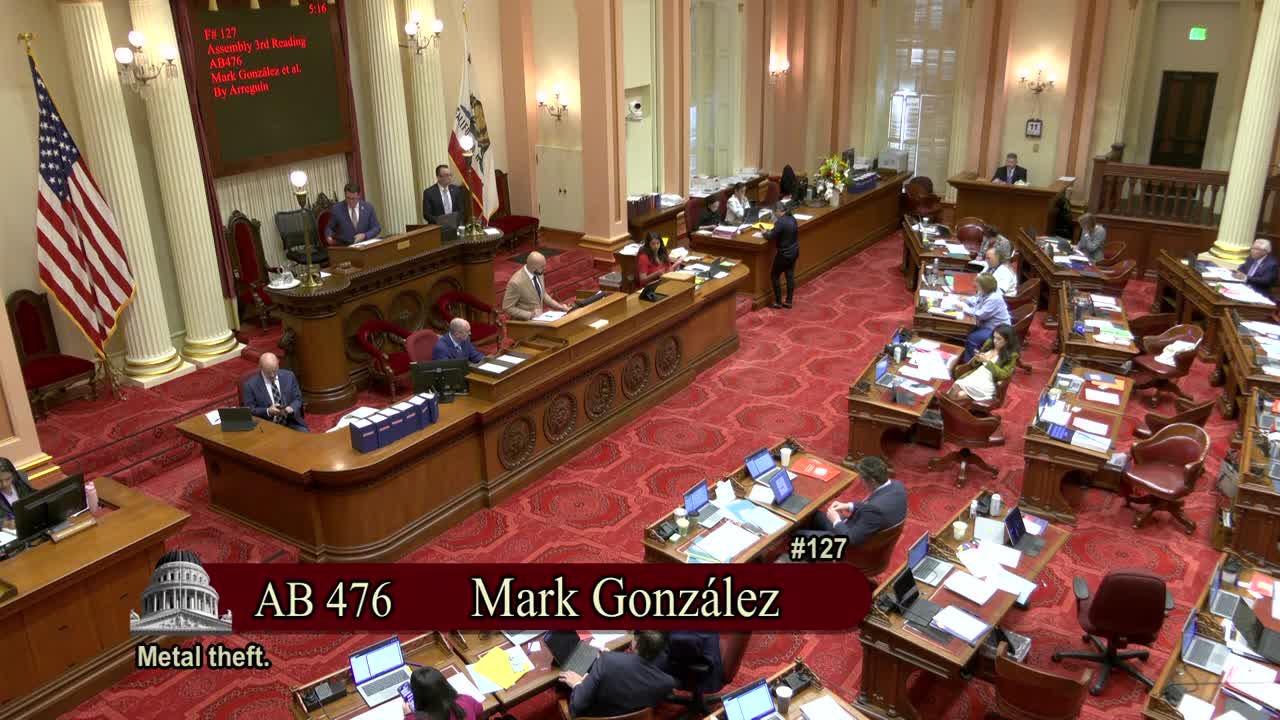 3MIN
Senate Floor
 8MIN
Senate Standing Committee on Public Safety
 9MIN
Senate Standing Committee on Business, Professions and Economic Development
 2MIN
Assembly Floor
 11MIN
Assembly Standing Committee on Business and Professions
Bill Author

Bill Co-Author(s):