AB 481: Healing arts: clinical laboratories: personnel.
- Session Year: 2025-2026
- House: Assembly
- Latest Version Date: 2025-04-02
Current Status:
In Progress
(2025-08-29: In committee: Held under submission.)
Introduced
In Committee
Awaiting First Chamber Vote
Passed First Chamber
In Committee
Awaiting Second Chamber Vote
Passed Second Chamber
Enacted
Existing law prohibits, except as specified, a person from performing a clinical laboratory test or examination classified as of moderate or high complexity under the federal Clinical Laboratory Improvement Amendments of 1988 (CLIA) unless the test or examination is performed under the overall operation and administration of the laboratory director, as specified. A violation of these provisions is a crime.
Existing law authorizes unlicensed laboratory personnel who have earned a high school diploma or its equivalent and who meet specified training requirements to perform specified activities under the supervision and control of a physician and surgeon or licensed person.
This bill would authorize a person to assist, as defined, in the performance of moderate or high complexity testing in a clinical laboratory if the person person, in addition to the above requirements, meets the requirements under CLIA for moderate or high complexity testing. Prior to assisting in the performance of the specified activities, the bill would require the person, under direct and constant supervision, to demonstrate the skills and ability to satisfactorily perform the task. The bill would require the laboratory director to designate the supervisor and to maintain overall responsibility for the supervision and performance of the unlicensed laboratory personnel.
By expanding the application of an existing crime, this bill would create a state-mandated local program.
Existing law authorizes unlicensed laboratory personnel who have earned a high school diploma or its equivalent and who meet specified training requirements to perform specified activities under the supervision and control of a physician and surgeon or licensed person.This bill would define supervision and control, as used above, to mean direction, management, and awareness of the activity of unlicensed laboratory personnel by a physician and surgeon or licensed person, who must be physically present in the laboratory and readily available for consultation during the entire time that the unlicensed laboratory personnel are engaged in the duties.
The California Constitution requires the state to reimburse local agencies and school districts for certain costs mandated by the state. Statutory provisions establish procedures for making that reimbursement.
This bill would provide that no reimbursement is required by this act for a specified reason.
Existing law prohibits, except as specified, a person from performing a clinical laboratory test or examination classified as of moderate or high complexity under the federal Clinical Laboratory Improvement Amendments of 1988 (CLIA) unless the test or examination is performed under the overall operation and administration of the laboratory director, as specified. A violation of these provisions is a crime.
This bill would authorize a person to assist, as defined, in the performance of moderate or high complexity testing in a clinical laboratory if the person meets the requirements under CLIA for moderate or high complexity testing.
By expanding the application of an existing crime, this bill would create a state-mandated local program.
Existing law authorizes unlicensed laboratory personnel who have earned a high school diploma or its equivalent and who meet specified training requirements to perform specified activities under the supervision and control of a physician and surgeon or licensed person.
This bill would define supervision and control, as used above, to mean direction, management, and awareness of the activity of unlicensed laboratory personnel by a physician and surgeon or licensed person, who must be physically present in the laboratory and readily available for consultation during the entire time that the unlicensed laboratory personnel are engaged in the duties.
The California Constitution requires the state to reimburse local agencies and school districts for certain costs mandated by the state. Statutory provisions establish procedures for making that reimbursement.
This bill would provide that no reimbursement is required by this act for a specified reason.
For purposes of Section 1269, assist or assisting means activities performed by trained and competent personnel who follow specific instruction from a licensed physician and surgeon or personnel licensed under this chapter, other than a trainee, under direct and constant supervision, and includes the following activities prior to, during, and after the laboratory testing process:
(1)(a)Load and unload barcoded specimens and barcoded quality control material onto automated instruments.
(2)(b)Load and replenish premeasured reagents and supplies onto automated instruments.
(3)(c)Load and unload samples and their byproducts, such as extraction products, byproducts into or onto shakers, incubators, refrigerators, freezers, thermal cyclers, and other automated equipment or instruments.
(4)(d)Unload and store reagents from an automated instrument.
(5)(e)Move assay from one piece of equipment to the next.
(6)(f)Clean and disinfect laboratory equipment.
(7)(g)Replacement of consumable laboratory equipment, supplies, and reagents.
(8)Activities permissible under paragraph (2) of subdivision (b) of Section 1269.(9)Quantitatively measure sample,(h)Transfer samples, quality control material, or reagents by the use of previously calibrated and approved automatic syringes, fixed volume pipettes, or other dispensers.
(10)Assist with sample dilutions.SEC. 2.Section 1269 of the Business and Professions Code is amended to read:1269.(a)Unlicensed laboratory personnel may perform any of the activities identified in subdivision (b), (f), in a licensed clinical laboratory, under the direct and constant supervision of a physician and surgeon, or a person licensed under this chapter other than a trainee, upon meeting all of the following criteria:
(1)Have earned a high school diploma, or its equivalent, as determined by HCFA under CLIA.
(2)Have documentation of training appropriate to ensure that the individual has all of the following skills and abilities:
(A)The skills required for proper specimen collection, including patient preparation, labeling, handling, preservation or fixation, processing or preparation, and transportation and storage of specimens.
(B)The skills required for assisting a licensed physician and surgeon or personnel licensed under this chapter, other than trainees, in a licensed clinical laboratory.
(C)The skills required for performing preventive maintenance, and troubleshooting.
(D)A working knowledge of reagent stability and storage.
(E)The skills required for assisting in the performance of quality control procedures, and an understanding of the quality control policies of the laboratory.
(F)An awareness A working knowledge of the factors that influence test results.
(b)Training for unlicensed personnel includes, but is not limited to, reading and understanding of the procedures, receiving verbal instruction on how the task is performed by licensed personnel, and directly observing the task performed by licensed personnel.
(c)Prior to performing any of the activities identified in subdivision (f), unlicensed personnel shall, under direct and constant supervision, demonstrate the skills and ability to satisfactorily perform the task.
(d)In addition to the requirements of this section, an unlicensed person assisting in the performance of moderate complexity testing in a clinical laboratory shall meet the requirements under CLIA for moderate complexity testing.
(e)In addition to the requirements of this section, an unlicensed person assisting in the performance of high complexity testing in a clinical laboratory shall meet the requirements under CLIA for high complexity testing.
(b)(f)The activities that may be performed are:
(1)Biological specimen collection, including patient preparation, labeling, handling, preservation or fixation, processing or preparation, and transportation and storage of specimens.
(2)Assisting a licensed physician and surgeon or personnel licensed under this chapter, other than trainees, in a licensed clinical laboratory.
(3)Assisting in preventive maintenance, and troubleshooting.
(4)Preparation and storage of reagents and culture media.
(5)Assisting in the performance of quality control procedures.
(c)(g)Notwithstanding subdivision (a), unlicensed laboratory personnel, other than a trainee, may, under the supervision and control of a physician and surgeon or person licensed under this chapter, perform specimen labeling, handling, preservation or fixation, processing or preparation, transportation, and storing if they meet the requirements of subparagraph (A) of paragraph (2) of, and paragraph (1) of, subdivision (a).
(d)(h)Unlicensed laboratory personnel shall not do any of the following:
(1)Record test results, but they may transcribe results that have been previously recorded, either manually by a physician and surgeon or personnel licensed under this chapter, or automatically by a testing instrument.
(2)Perform any test or part thereof that involves the quantitative measurement of the specimen or test reagent, or any mathematical calculation relative to determining the results or the validity of a test procedure.
(3)Perform any phase of clinical laboratory tests or examinations in the specialty of immunohematology beyond initial collection and centrifugation.
(e)(i)When any of the following manual methods are employed, the activities of unlicensed laboratory personnel shall be limited as follows:
(1)In the case of qualitative and semi-quantitative spot, tablet, or stick tests, the personnel may add the test reagent to the specimen or vice versa, but the results must be read by a physician and surgeon or person licensed under this chapter.
(2)In the case of microbiological tests the unlicensed laboratory personnel may make primary inoculations of test material onto appropriate culture media, stain slide preparations for microscopic examination, and subculture from liquid media.
(f)(j)When any of the following mechanical or electronic instruments are employed, unlicensed laboratory personnel shall not perform any of the following activities:
(1)Standardizing or calibrating the instrument or assessing its performance by monitoring results of appropriate standards and control.
(2)Reading or recording test results, except that the personnel may transcribe results that have been previously recorded automatically by a testing instrument.
(3)Quantitatively measuring any sample or reagents unless done automatically by the instrument in the course of its normal operation or by the use of previously calibrated and approved automatic syringes or other dispensers.
(g)(k)For purposes of this section, supervision and control means direction, management, and awareness of the activity of unlicensed laboratory personnel by a physician and surgeon or by a person licensed under this chapter other than a trainee, who must be physically present in the laboratory and readily available for consultation during the entire time that the unlicensed laboratory personnel are engaged in the duties.
(l)The laboratory director shall designate the supervisor and shall maintain overall responsibility for the supervision and performance of the unlicensed laboratory personnel.
SEC. 3.No reimbursement is required by this act pursuant to Section 6 of Article XIIIB of the California Constitution because the only costs that may be incurred by a local agency or school district will be incurred because this act creates a new crime or infraction, eliminates a crime or infraction, or changes the penalty for a crime or infraction, within the meaning of Section 17556 of the Government Code, or changes the definition of a crime within the meaning of Section 6 of Article XIIIB of the California Constitution.
(a)Notwithstanding subdivision (b) of Section 1206.5, a person may assist in the performance of moderate complexity testing in a clinical laboratory if they meet the requirements under the federal Clinical Laboratory Improvement Amendments of 1988 (42 U.S.C. Sec. 263a) for moderate complexity testing.
(b)Notwithstanding subdivision (c) of Section 1206.5, a person may assist in the performance of high complexity testing in a clinical laboratory if they meet the requirements under the federal Clinical Laboratory Improvement Amendments of 1988 (42 U.S.C. Sec. 263a) for high complexity testing.
(c)Assist or Assistance means activities performed by trained and competent personnel who follow specific instruction from a licensed physician and surgeon or personnel licensed under this chapter, other than a trainee, under direct and constant supervision, and includes the following activities prior to, during, and after the laboratory testing process:
(1)Load and unload barcoded specimens and barcoded quality control material onto automated instruments.
(2)Load and replenish premeasured reagents and supplies onto automated instruments.
(3)Load and unload samples and their byproducts, such as extraction products, onto shakers, incubators, refrigerators, freezers, thermal cyclers, and other automated equipment or instruments.
(4)Unload and store reagents from an automated instrument.
(5)Move assay from one piece of equipment to the next.
(6)Clean and disinfect laboratory equipment.
(7)Replacement of consumable laboratory equipment, supplies, and reagents.
(8)Activities permissible under paragraph (2) of subdivision (b) of Section 1269.
(9)Quantitatively measure sample, quality control material, or reagents by the use of previously calibrated and approved automatic syringes, fixed volume pipettes, or other dispensers.
(10)Assist with sample dilutions.
SEC. 2.Section 1269 of the Business and Professions Code is amended to read:1269.(a)Unlicensed laboratory personnel may perform any of the activities identified in subdivision (b), in a licensed clinical laboratory, under the direct and constant supervision of a physician and surgeon, or a person licensed under this chapter other than a trainee, upon meeting all of the following criteria:
(1)Have earned a high school diploma, or its equivalent, as determined by HCFA under CLIA.
(2)Have documentation of training appropriate to ensure that the individual has all of the following skills and abilities:
(A)The skills required for proper specimen collection, including patient preparation, labeling, handling, preservation or fixation, processing or preparation, and transportation and storage of specimens.
(B)The skills required for assisting a licensed physician and surgeon or personnel licensed under this chapter, other than trainees, in a licensed clinical laboratory.
(C)The skills required for performing preventive maintenance, and troubleshooting.
(D)A working knowledge of reagent stability and storage.
(E)The skills required for assisting in the performance of quality control procedures, and an understanding of the quality control policies of the laboratory.
(F)An awareness of the factors that influence test results.
(b)The activities that may be performed are:
(1)Biological specimen collection, including patient preparation, labeling, handling, preservation or fixation, processing or preparation, and transportation and storage of specimens.
(2)Assisting a licensed physician and surgeon or personnel licensed under this chapter, other than trainees, in a licensed clinical laboratory.
(3)Assisting in preventive maintenance, and troubleshooting.
(4)Preparation and storage of reagents and culture media.
(5)Assisting in the performance of quality control procedures.
(c)Notwithstanding subdivision (a), unlicensed laboratory personnel, other than a trainee, may, under the supervision and control of a physician and surgeon or person licensed under this chapter, perform specimen labeling, handling, preservation or fixation, processing or preparation, transportation, and storing if he or she meets they meet the requirements of subparagraph (A) of paragraph (2) of, and paragraph (1) of, subdivision (a).
(d)Unlicensed laboratory personnel shall not do any of the following:
(1)Record test results, but he or she they may transcribe results that have been previously recorded, either manually by a physician and surgeon or personnel licensed under this chapter, or automatically by a testing instrument.
(2)Perform any test or part thereof that involves the quantitative measurement of the specimen or test reagent, or any mathematical calculation relative to determining the results or the validity of a test procedure.
(3)Perform any phase of clinical laboratory tests or examinations in the specialty of immunohematology beyond initial collection and centrifugation.
(e)When any of the following manual methods are employed, the activities of unlicensed laboratory personnel shall be limited as follows:
(1)In the case of qualitative and semi-quantitative spot, tablet, or stick tests, the personnel may add the test reagent to the specimen or vice versa, but the results must be read by a physician and surgeon or person licensed under this chapter.
(2)In the case of microbiological tests the unlicensed laboratory personnel may make primary inoculations of test material onto appropriate culture media, stain slide preparations for microscopic examination, and subculture from liquid media.
(f)When any of the following mechanical or electronic instruments are employed, unlicensed laboratory personnel shall not perform any of the following activities:
(1)Standardizing or calibrating the instrument or assessing its performance by monitoring results of appropriate standards and control.
(2)Reading or recording test results, except that the personnel may transcribe results that have been previously recorded automatically by a testing instrument.
(3)Quantitatively measuring any sample or reagents unless done automatically by the instrument in the course of its normal operation or by the use of previously calibrated and approved automatic syringes or other dispensers.
(g)For purposes of this section, supervision and control means direction, management, and awareness of the activity of unlicensed laboratory personnel by a physician and surgeon or by a person licensed under this chapter other than a trainee, who must be physically present in the laboratory and readily available for consultation during the entire time that the unlicensed laboratory personnel are engaged in the duties.
SEC. 3.No reimbursement is required by this act pursuant to Section 6 of Article XIIIB of the California Constitution because the only costs that may be incurred by a local agency or school district will be incurred because this act creates a new crime or infraction, eliminates a crime or infraction, or changes the penalty for a crime or infraction, within the meaning of Section 17556 of the Government Code, or changes the definition of a crime within the meaning of Section 6 of Article XIIIB of the California Constitution.
|
Date
|
Status
|
|---|---|
| Aug 29, 2025 | In committee: Held under submission. |
| Aug 18, 2025 | In committee: Referred to suspense file. |
| Jul 7, 2025 | From committee: Do pass and re-refer to Com. on APPR. (Ayes 7. Noes 0.) (July 7). Re-referred to Com. on APPR. |
| Jun 18, 2025 | Referred to Com. on B. P. & E.D. |
| Jun 5, 2025 | In Senate. Read first time. To Com. on RLS. for assignment. |
| Jun 4, 2025 | Read third time. Passed. Ordered to the Senate. (Ayes 54. Noes 1. Page 2082.) |
| May 27, 2025 | Read second time. Ordered to third reading. |
| May 23, 2025 | From committee: Do pass. (Ayes 14. Noes 0.) (May 23). |
| Apr 23, 2025 | In committee: Set, first hearing. Referred to suspense file. |
| Apr 3, 2025 | Re-referred to Com. on APPR. |
| Apr 2, 2025 | Read second time and amended. |
| Apr 1, 2025 | From committee: Amend, and do pass as amended and re-refer to Com. on APPR. (Ayes 15. Noes 0.) (April 1). |
| Feb 24, 2025 | Referred to Com. on B. & P. |
| Feb 11, 2025 | From printer. May be heard in committee March 13. |
| Feb 10, 2025 | Read first time. To print. |
|
Date
|
Description
|
Location
|
Votes
|
|
|---|---|---|---|---|
| Aug 18, 2025 | Placed on suspense file | Senate Standing Committee on Appropriations |
Passed |
|
| Jul 7, 2025 | Do pass, but first be re-referred to the Committee on [Appropriations] | Senate Standing Committee on Business, Professions and Economic Development |
Passed |
|
| Jun 4, 2025 | AB 481 Blanca Rubio Assembly Third Reading | Assembly Floor |
Passed |
|
| May 23, 2025 | Do pass. | Assembly Standing Committee on Appropriations |
Passed |
|
| Apr 1, 2025 | Do pass as amended and be re-referred to the Committee on [Appropriations] | Assembly Standing Committee on Business and Professions |
Passed |
This list shows positions taken on this bill by organizations on the date displayed, which is linked to the original source.
Positions by individuals are not included.
|
Organization
|
Position
|
Date
|
|---|---|---|
| California Association For Medical Laboratory Technology | ** Against | |
| California Clinical Laboratory Association | ** Support | |
| California Society Of Pathologists | ** Support | |
| Engineers and Scientists of California, IFPTE Local 20, AFL-CIO | ** Against | |
| Laboratory Corporation Of America | ** Support | |
| Myriad Genetics | ** Support | |
| Quest Diagnostics Incorporated | ** Support | |
| VALLEY INDUSTRY AND COMMERCE ASSOCIATION | ** Support | |
| Veracyte | ** Support |
SENATE COMMITTEE ON APPROPRIATIONS
Senator Anna Caballero, Chair
2025 - 2026 Regular Session
AB 481 (Blanca Rubio) - Healing arts: clinical laboratories: personnel
Version: April 2, 2025 | Policy Vote: B., P. & E.D. 7 - 0 |
Urgency: No | Mandate: Yes |
Hearing Date: August 18, 2025 | Consultant: Janelle Miyashiro |
Bill Summary:
AB 481 authorizes unlicensed laboratory personnel to assist in moderate and high complexity testing in a clinical laboratory if the person meets requirements under the Clinical Laboratory Improvement Act (CLIA), as specified.
Fiscal Impact:
The California Department of Public Health (CDPH) reports annual costs ranging from $860,000 to $975,000 in Fiscal Year (FY) 2026-27, $710,000 to $975,000 in FY 2027-28 and 2028-29, and $619,000 to $975,000 ongoing (Clinical Laboratory Improvement Fund). Costs include an additional 3.0 to 6.0 staff dedicated to compliance oversight of unlicensed personnel, and for workload to promulgate regulations and modify the existing laboratory personnel database.
Background:
The Centers for Medicare & Medicaid Services regulate laboratory testing on humans through CLIA. CLIA regulations establish quality standards for all testing to ensure test results are accurate, reliable and timely. These regulations apply to all U.S. facilities that test human specimens for assessment or to diagnose, prevent, or treat disease. The federal Food and Drug Administration (FDA) determines the complexity of laboratory tests using criteria within CLIA regulations which are categorized as either waived, moderate or high complexity tests. Waived clinical laboratory tests include certain tests listed in CLIA regulations, tests that have been cleared by the FDA for home use, classified as simple tests with a low risk of incorrect results such as urine pregnancy tests or blood glucose tests. Clinical laboratories that perform only waived tests must have a CLIA certificate and follow the manufacturer’s instructions.
Moderate and high complexity testing is determined by CLIA categorization criteria using a scoreboard to determine the level of complexity. Criteria factors used include: scientific and technical knowledge required, minimal to specialized training required, characteristics of operational steps, testing materials used, test system troubleshooting and equipment maintenance, and use of interpretation and judgement. Clinical laboratories or facilities that perform these tests need to have an appropriate CLIA certificate, be inspected and meet CLIA quality standards. The training and licensing requirements of laboratory personnel differ for moderate and high complexity testing.
CLIA regulations allow the state to regulate licensed clinical laboratories and impose stricter regulations through the CDPH Laboratory Field Services (LFS) branch. The LFS is responsible for overseeing the licensing and registration of clinical laboratories including regulating laboratory personnel to ensure they have the required education, training, and experience. The LFS also administers regular inspections to monitor laboratory testing procedure compliance with state and federal regulations.
Proposed Law:
- Authorizes unlicensed laboratory personnel to assist in moderate and high complexity testing if they meet the CLIA requirements for moderate and high complexity testing.
- Defines “assist or assisting” to mean activities performed by trained and competent personnel who follow specific instruction from a licensed physician and surgeon or personnel licensed as defined, other than a trainee, under direct and constant supervision, and includes the following activities prior to, during, and after the laboratory testing process:
- Load and unload barcoded specimens and barcoded quality control material onto automated instruments.
- Load and replenish premeasured reagents and supplies onto automated instruments.
- Load and unload samples and their byproducts into or onto shakers, incubators, refrigerators, freezers, thermal cyclers, and other automated equipment or instruments.
- Unload and store reagents from an automated instrument.
- Move assay from one piece of equipment to the next.
- Clean and disinfect laboratory equipment.
- Replacement of consumable laboratory equipment, supplies, and reagents.
- Transfer samples, quality control material, or reagents by the use of previously calibrated and approved automatic syringes, fixed volume pipettes, or other dispensers.
- Requires unlicensed laboratory personnel to have documentation of the following training, in addition to existing required training: a working knowledge of the factors that influence test results; reading and understanding of the procedures receiving verbal instruction on how the task is performed by licensed personnel, and directly observing the task performed by licensed personnel.
- Requires unlicensed personnel, prior to performing any of the above mentioned skills, under direct and constant supervision, to demonstrate the skills and ability to satisfactorily perform the task.
- Requires the laboratory director to designate the supervisor and maintain overall responsibility for the supervision and performance of the unlicensed laboratory personnel.
- Defines “supervision and control” to mean direction, management, and awareness of the activity of unlicensed laboratory personnel by a physician and surgeon or by a person licensed, as defined, other than a trainee, who must be physically present in the laboratory and readily available for consultation during the entire time that the unlicensed laboratory personnel are engaged in the duties.
-- END --
SENATE COMMITTEE ON
Senator Anna Caballero, Chair
2025 - 2026 Regular Session
AB 481 (Blanca Rubio) - Healing arts: clinical laboratories: personnel
Version: | Policy Vote: |
Urgency: | Mandate: |
Hearing Date: | Consultant: |
Bill Summary:
AB 481 authorizes to assist in moderate and high complexity testing in a clinical laboratory if the person meets requirements under the Clinical Laboratory Improvement Act (CLIA), as specified.
Fiscal Impact:
The California Department of Public Health (CDPH) reports annual costs ranging from $860,000 to $975,000 in Fiscal Year (FY) 2026-27, $710,000 to $975,000 in FY 2027-28 and 2028-29, and $619,000 to $975,000 ongoing (Clinical Laboratory Improvement Fund). Costs include an additional 3.0 to 6.0 staff dedicated to compliance oversight of unlicensed personnel, and for workload to promulgate regulations and modify the existing laboratory personnel database.
Background:
The Centers for Medicare & Medicaid Services regulate laboratory testing on humans through CLIA. CLIA regulations establish quality standards for all testing to ensure test results are accurate, reliable and timely. These regulations apply to all U.S. facilities that test human specimens for assessment or to diagnose, prevent, or treat disease. The federal Food and Drug Administration (FDA) determines the complexity of laboratory tests using criteria within CLIA regulations which are categorized as either waived, moderate or high complexity tests. Waived clinical laboratory tests include certain tests listed in CLIA regulations, tests that have been cleared by the FDA for home use, classified as simple tests with a low risk of incorrect results such as urine pregnancy tests or blood glucose tests. Clinical laboratories that perform only waived tests must have a CLIA certificate and follow the manufacturer’s instructions.
Moderate and high complexity testing is determined by CLIA categorization criteria using a scoreboard to determine the level of complexity. Criteria factors used include: scientific and technical knowledge required, minimal to specialized training required, characteristics of operational steps, testing materials used, test system troubleshooting and equipment maintenance, and use of interpretation and judgement. Clinical laboratories or facilities that perform these tests need to have an appropriate CLIA certificate, be inspected and meet CLIA quality standards. The training and licensing requirements of laboratory personnel differ for moderate and high complexity testing.
CLIA regulations allow the state to regulate licensed clinical laboratories and impose stricter regulations through the CDPH Laboratory Field Services (LFS) branch. The LFS is responsible for overseeing the licensing and registration of clinical laboratories including regulating laboratory personnel to ensure they have the required education, training, and experience. The LFS also administers regular inspections to monitor laboratory testing procedure compliance with state and federal regulations.
Proposed Law:
- Authorizes unlicensed laboratory personnel to assist in moderate and high complexity testing if they meet the CLIA requirements for moderate and high complexity testing.
- Defines “assist or assisting” to mean activities performed by trained and competent personnel who follow specific instruction from a licensed physician and surgeon or personnel licensed as defined, other than a trainee, under direct and constant supervision, and includes the following activities prior to, during, and after the laboratory testing process:
- Load and unload barcoded specimens and barcoded quality control material onto automated instruments.
- Load and replenish premeasured reagents and supplies onto automated instruments.
- Load and unload samples and their byproducts into or onto shakers, incubators, refrigerators, freezers, thermal cyclers, and other automated equipment or instruments.
- Unload and store reagents from an automated instrument.
- Move assay from one piece of equipment to the next.
- Clean and disinfect laboratory equipment.
- Replacement of consumable laboratory equipment, supplies, and reagents.
- Transfer samples, quality control material, or reagents by the use of previously calibrated and approved automatic syringes, fixed volume pipettes, or other dispensers.
- Requires unlicensed laboratory personnel to have documentation of the following training, in addition to existing required training: a working knowledge of the factors that influence test results; reading and understanding of the procedures receiving verbal instruction on how the task is performed by licensed personnel, and directly observing the task performed by licensed personnel.
- Requires unlicensed personnel, prior to performing any of the above mentioned skills, under direct and constant supervision, to demonstrate the skills and ability to satisfactorily perform the task.
- Requires the laboratory director to designate the supervisor and maintain overall responsibility for the supervision and performance of the unlicensed laboratory personnel.
- Defines “supervision and control” to mean direction, management, and awareness of the activity of unlicensed laboratory personnel by a physician and surgeon or by a person licensed, as defined, other than a trainee, who must be physically present in the laboratory and readily available for consultation during the entire time that the unlicensed laboratory personnel are engaged in the duties.
-- END --
ASSEMBLY THIRD READING
ATR Bill Id:AB 481
Author:(Blanca Rubio)
As Amended Ver:April 2, 2025
Majority vote
SUMMARY
Modifies the practice of unlicensed personnel in a licensed clinical laboratory by defining the undefined terms "assist," "assisting," and "supervision and control."
Major Provisions
- Defines "assist" or "assisting" as, for purposes of unlicensed personnel activities, the activities performed by trained and competent personnel who follow specific instruction from a licensed physician and surgeon or licensed clinical laboratory personnel, other than a trainee, under direct and constant supervision, and includes the following activities prior to, during, and after the laboratory testing process:
- Load and unload barcoded specimens and barcoded quality control material onto automated instruments.
- Load and replenish premeasured reagents and supplies onto automated instruments.
- Load and unload samples and their byproducts into or onto shakers, incubators, refrigerators, freezers, thermal cyclers, and other automated equipment or instruments.
- Unload and store reagents from an automated instrument.
- Move assay from one piece of equipment to the next.
- Clean and disinfect laboratory equipment.
- Replacement of consumable laboratory equipment, supplies, and reagents.
- Transfer samples, quality control material, or reagents by the use of previously calibrated and approved automatic syringes, fixed volume pipettes, or other dispensers.
- Adds all of the following to existing training requirements of unlicensed personnel:
- Training for unlicensed personnel includes, but is not limited to, reading and understanding of the procedures, receiving verbal instruction on how the task is performed by licensed personnel, and directly observing the task performed by licensed personnel.
- Prior to performing any authorized activities, unlicensed personnel must, under direct and constant supervision, demonstrate the skills and ability to satisfactorily perform the task.
- An unlicensed person assisting in the performance of moderate complexity testing in a clinical laboratory must meet the requirements under CLIA for moderate complexity testing.
- An unlicensed person assisting in the performance of high complexity testing in a clinical laboratory shall meet the requirements under CLIA for high complexity testing.
- Defines "supervision and control" to mean direction, management, and awareness of the activity of unlicensed laboratory personnel by a physician and surgeon or by a person licensed under this chapter other than a trainee, who must be physically present in the laboratory and readily available for consultation during the entire time that the unlicensed laboratory personnel are engaged in the duties.
- Specifies that the laboratory director must designate the supervisor and maintains overall responsibility for the supervision and performance of the unlicensed laboratory personnel.
- Makes other non-substantive, technical changes.
COMMENTS
Background. Clinical laboratory testing is the analysis of human specimens, such as fluid, blood, or tissue. An example of a common testing scenario is a physician ordering a blood lipid panel. When the patient's blood sample is sent to a laboratory, the laboratory extracts the lipids from the blood, tests the lipids using an appropriate analytical method, such as mass spectrometry, and reports the results to the patient or physician. The physician then relies on the results to advise the patient.
Testing performed for medical purposes is highly regulated at both the federal and state levels. The primary intent of the regulation is to minimize the risk of incorrect or unreliable results, which may lead to delays in care or improper diagnoses, among other things.
CLIA. Federally, the Clinical Laboratory Improvement Amendments of 1988 (CLIA) regulates any facility or location where people perform laboratory tests for medical or clinical purposes. CLIA requires these locations to be certified by the Centers for Medicare and Medicaid Services (CMS) as clinical laboratories. At the state level, the California Department of Public Health (CPDH) and respective state health agencies administer CLIA on behalf of CMS.
While CLIA establishes the requirements for federal certification, it also allows states to establish additional or more stringent requirements. In California, clinical laboratories must obtain a state license or registration from CDPH in addition to the federal CLIA certificate. There are also varying levels of certification and licensure depending on the complexity of the tests performed at the laboratory.
Unlicensed Laboratory Personnel. One area where California is more stringent than CLIA is the use of unlicensed laboratory personnel. CLIA and state law both require the performance of clinical laboratory tests to be performed by licensed personnel such as physician pathologists, clinical laboratory scientists, and medical laboratory technicians. They also require the tests to be performed under the overall direction of a licensed laboratory director. The laboratory director is responsible for everything that goes on in the laboratory, including the development of policies and procedures, training of personnel, quality of test results, and anything else required under CLIA and state law. The laboratory director must document compliance with every requirement for CDPH auditing purposes.
Where CLIA and state law differ is the use of unlicensed personnel. Other than the restrictions on who may perform laboratory tests, CLIA is silent on unlicensed laboratory personnel, including the non-testing tasks they can perform and their qualifications. In states without requirements on unlicensed personnel, the laboratory director would determine the level of training necessary to perform the tasks assigned.
In comparison, California law limits the use of unlicensed personnel to specific tasks and dictates the level of supervision required for those tasks. It also requires specific training that must be documented. For more advanced tasks, including assisting licensed personnel in their duties, the unlicensed personnel must be under direct and constant supervision. Direct and constant supervision means the personnel is both personally observable to and receiving critical evaluation from the supervisor the entire time that they are assisting. Specified lesser tasks, such as labeling or transport, must be performed under the supervision and control of a licensee.
However, the tasks included under "assisting" are not defined, so it is not clear what is allowed or whether there are limits to what unlicensed personnel can do when assisting. "Supervision and control" is also not defined. This bill would define both terms, specifying the tasks included in the term "assist" and that "supervision and control" means indirect supervision with a supervisor onsite and available for consultation.
Test Complexity. The requirements for CLIA certification, licensure, and required personnel vary depending on the complexity of the laboratory tests performed. Clinical laboratories or other testing sites need to know whether each test system used is waived, moderate, or high complexity. In general, the more complicated the test, the more stringent the requirements, including increased training and licensing of laboratory personnel.
The FDA determines the complexity of laboratory tests under CLIA. Waived tests are simple tests with a low risk of an incorrect result. They include tests listed in the CLIA regulations, tests cleared by the FDA for home use, and tests approved for a waiver by the FDA using the CLIA criteria. Tests not classified as waived are assigned a moderate or high complexity category based on seven criteria given in the CLIA regulations, including ease of use, the knowledge required, and the types of materials tested. For commercially available FDA-cleared or approved tests, the test complexity is determined by the FDA during the pre-market approval process.
Under federal and California law, anyone providing direct care may perform a waived test in a federally certified laboratory or as part of a nondiagnostic health assessment program under the overall direction of a laboratory director, unless otherwise limited. In applying for a CLIA certificate of waiver, the laboratory director must list the types of analytes to be tested, the tests performed, and the test manufacturer.
This bill would clarify that persons assisting with moderate complexity testing or high complexity testing must meet the federal CLIA requirements for moderate complexity testing or high complexity testing respectively.
According to the Author
"For over a decade, the shortage of licensed professionals in the clinical laboratory industry has been well-documented but largely ignored. [This bill] takes a practical step toward solving this crisis by allowing federally qualified and trained unlicensed personnel to assist licensed professionals with specific lab tasks. This change won't just help fill critical workforce gaps—it will streamline lab operations, enhance workflow efficiency, and ultimately lead to better patient care and outcomes."
Arguments in Support
The California Clinical Laboratory Association (co-sponsor) writes in support, "Supporting this bill is essential for improving the efficiency and accessibility of clinical laboratory testing in California. By allowing qualified individuals to assist with testing under the supervision of licensed professionals, this bill ensures that the state's laboratories can better manage increasing workloads without compromising accuracy or patient safety. The bill's provision for clear supervision and control, requiring licensed personnel to be physically present and readily available, provides an extra layer of assurance the assistance is performed correctly. Additionally, aligning state regulations with the federal Clinical Laboratory Improvement Amendments (CLIA) standards ensures that California's laboratory practices meet the highest national standards, while fostering a more flexible, well-supported workforce. This will ultimately improve the quality and timeliness of critical diagnostic testing across the state."
Quest Diagnostics (co-sponsor) writes in support:
There is an acute shortage of licensed clinical laboratory scientists in California that is adversely impacting California laboratories' abilities to meet testing demand in a timely manner. These staffing challenges have been recognized by the California Department of Public Health's Lab Field Services Clinical Laboratory Technology Advisory Committee (CLTAC), which issued a Report on Challenges to California's Laboratory Workforce Capacity in 2022, at which time they estimated the vacancy rate for Clinical Laboratory Scientists, who are qualified to perform diagnostic testing, to be at 20%.
The laboratory workforce shortage impacts all types of testing conducted by clinical labs and delays patients' access to their results. [This bill] allows unlicensed personnel to assist with a specified subset of tasks under the supervision of licensed personnel within the lab. In doing so, this allows licensed personnel to focus on critical tasks that are in line with their area of expertise.
Expanding the tasks that unlicensed laboratory personnel can perform under the supervision of licensed personnel will make a significant impact to alleviate the workforce shortage, improve testing capacity, increase patient access to testing and results, and introduce a pathway to employment within the clinical laboratory industry.
[This bill] mitigates the effects of the clinical laboratory workforce shortage, increasing testing capacity to improve the cycle time to report test results so patients and physicians can make informed and timely health care decisions and protect public health.
The California Society of Pathologists (CSP) writes in support:
Clinical laboratories across the state, including those in hospitals, labs, and independent settings, are experiencing critical staffing challenges, particularly among Clinical Laboratory Scientists. These shortages have been exacerbated by workforce retirements, limited licensure pathways, and a lack of training opportunities to support the next generation of laboratory professionals. The COVID-19 pandemic made these vulnerabilities starkly visible, prompting emergency Executive Orders and subsequent legislative action in AB 269 (Berman) Chapter 1 Statutes of 2023, to temporarily align state practices with federal CLIA standards.
[This bill] builds on this approach by aligning state law with the Clinical Laboratory Improvement Amendments of 1988 (CLIA). It authorizes trained personnel to assist in moderate and high complexity testing in clinical laboratories so long as they meet federal CLIA qualifications, even if they do not hold a California-specific license. This narrowly tailored flexibility will help relieve workforce bottlenecks while maintaining high standards of safety and oversight.
These changes provide a modernization and clarification of how trained support personnel can contribute safely and effectively within today's highly automated and team-based laboratory environments.
The CSP believes [this bill] strikes the right balance between flexibility and oversight and will help address pressing operational needs without compromising patient care.
Arguments in Opposition
The California State Council of Service Employees International Union (SEIU California) and Engineers and Scientists of California, IFPTE Local 20, AFL-CIO write in opposition:
While we recognize the intent to address workforce challenges in clinical laboratories, we are deeply concerned that this bill, as currently drafted, could compromise patient safety by allowing individuals who meet only federal Clinical Laboratory Improvement Amendments (CLIA) requirements to assist in moderate or high complexity testing without sufficient state oversight.
Allowing personnel with minimal qualifications to participate in complex testing processes may lead to increased errors, misdiagnoses, and compromised patient care. Although the amended version of the bill is significantly better than the original proposal, we think that relying on employers to provide training to unlicensed personnel undermines the whole purpose of a licensure structure. We believe that training and qualifications for lab work is done best with oversight from the appropriate regulatory body.
[This bill] also lacks clear guidelines on the extent of supervision required for unlicensed assistants, potentially leading to inconsistent practices and oversight across laboratories. As we noted in our oppose unless amended letter, nothing in this bill requires an appropriate supervisory ratio of licensed to unlicensed professionals—meaning the bill could allow a ratio of one licensed professional to two unlicensed personnel. Prior to deciding to oppose the bill outright, we request a ratio of one to three licensed to unlicensed professionals to make sure that the supervision elements of the bill are not inadvertently compromised in the name of reducing employer labor expenses.
The California Association for Medical Laboratory Technology (CAMLT) writes in opposition:
CAMLT is opposed to [this bill] because it would significantly lower California's rigorous standards for laboratory personnel. The bill would allow unlicensed individuals to perform moderate or high complexity testing under CLIA (federal standards) instead of California standards if they are supervised by a licensed person. This expansion of activities for unlicensed personnel would directly compromise the accuracy of test results and potentially jeopardize the health and safety of patients in California.
Specifically, the laboratory testing and activities that would be impacted by the bill include:
- Assisting a CLS or MLT with the analytical phase of testing: This activity is equivalent to performing tests without a license or supervision. It is impossible for licensed personnel to provide direct and constant supervision (line of sight supervision) to unlicensed personnel while simultaneously performing tests themselves.
- Quantitatively measuring sample, quality control material, or reagents: This crucial step is essential for test performance and accuracy.
- Correctly diluting or manipulating samples: This is another vital aspect of accurate and reliable test results.
CAMLT strongly believes that maintaining the current requirements for laboratory personnel is essential for ensuring the highest quality and accuracy of test results.
FISCAL COMMENTS
According to the Assembly Appropriations Committee, costs of an unknown amount, potentially over $150,000 per year, to the California Department of Public Health (CDPH) (Clinical Laboratory Improvement Fund). For AB 1741 (Waldron), of the 2023-24 Legislative Session, which also would have authorized unlicensed personnel to do additional tasks in a clinical laboratory, the estimated costs were minor and absorbable.
VOTES
ASM BUSINESS AND PROFESSIONS: 15-0-3
YES: Berman, Flora, Ahrens, Alanis, Caloza, Elhawary, Hadwick, Haney, Irwin, Jackson, Krell, Lowenthal, Macedo, Nguyen, Pellerin
ABS, ABST OR NV: Bains, Bauer-Kahan, Chen
ASM APPROPRIATIONS: 14-0-1
YES: Wicks, Arambula, Calderon, Caloza, Dixon, Elhawary, Fong, Mark González, Hart, Pacheco, Pellerin, Solache, Ta, Tangipa
ABS, ABST OR NV: Sanchez
UPDATED
VERSION: April 2, 2025
CONSULTANT: Vincent Chee / B. & P. / (916) 319-3301 FN: 0000535
Date of Hearing: April 23, 2025
ASSEMBLY COMMITTEE ON APPROPRIATIONS
Buffy Wicks, Chair
ABPCA Bill Id:AB 481
Author:(Blanca Rubio) – As Amended Ver:April 2, 2025
Policy Committee: | Business and Professions | Vote: | 15 - 0 |
|
| ||
|
|
Urgency: No State Mandated Local Program: Yes Reimbursable: No
SUMMARY:
- This bill authorizes an unlicensed person who meets specified training requirements and requirements for moderate or high complexity testing under the federal Clinical Laboratory Improvement Amendments of 1988 (CLIA) to assist in the performance of moderate or high complexity tests in a clinical laboratory.
Specifically, this bill:
- Defines “assist” or “assistance” as activities performed by trained and competent personnel who follow specific instruction from a licensed physician or licensed clinical laboratory scientist or bioanalyst, under direct and constant supervision, such as the following before, during, and after the laboratory testing process:
- Load and unload barcoded specimens and quality control material onto automated instruments.
- Load and replenish premeasured reagents and supplies onto automated instruments.
- Load and unload samples and their byproducts onto automated equipment or instruments.
- Unload and store reagents from an automated instrument.
- Move assay from one piece of equipment to the next.
- Clean and disinfect laboratory equipment.
- Replace consumable laboratory equipment, supplies, and reagents.
- Transfer samples, quality control material, or reagents, by the use of previously calibrated and approved automatic syringes, fixed volume pipettes, or other dispensers.
- Specifies training for unlicensed personnel includes reading and understanding of the procedures, receiving verbal instruction on, and directly observing how the task is performed by licensed laboratory personnel.
- Requires unlicensed personnel, prior to performing specified activities, to demonstrate the skills and ability to satisfactorily perform the tasks, and to meet the CLIA requirements for moderate or high complexity testing, as appropriate.
- Defines “supervision and control” to mean direction, management, and awareness of the activity of unlicensed laboratory personnel by a physician or by a licensed clinical laboratory scientist or bioanalyst who is physically present in the laboratory and readily available for consultation the entire time the unlicensed laboratory personnel are engaged in the duties.
- Requires a laboratory director to designate the supervisor and maintain overall responsibility for the supervision and performance of the unlicensed laboratory personnel.
FISCAL EFFECT:
Costs of an unknown amount, potentially over $150,000 per year, to the California Department of Public Health (CDPH) (Clinical Laboratory Improvement Fund). For AB 1741 (Waldron), of the 2023-24 Legislative Session, which also would have authorized unlicensed personnel to do additional tasks in a clinical laboratory, the estimated costs were minor and absorbable.
COMMENTS:
- Purpose. This bill is sponsored by the California Clinical Lab Association and Quest Diagnostics. According to the author:
For over a decade, the shortage of licensed professionals in the clinical laboratory industry has been well-documented but largely ignored. AB 481 takes a practical step toward solving this crisis by allowing federally qualified and trained unlicensed personnel to assist licensed professionals with specific lab tasks. This change won’t just help fill critical workforce gaps—it will streamline lab operations, enhance workflow efficiency, and ultimately lead to better patient care and outcomes.
- Background. Clinical laboratory testing for medical purposes is highly regulated at both the federal and state levels. CLIA regulates any facility or location where people perform laboratory tests for medical or clinical purposes. CLIA requires these locations be certified by the Centers for Medicare and Medicaid Services (CMS) as clinical laboratories. At the state level, CPDH administers CLIA on behalf of the CMS. In California, clinical laboratories must obtain a state license or registration from CDPH in addition to the federal CLIA certificate. There are also varying levels of certification and licensure depending on the complexity of the tests performed at the laboratory.
California law limits the use of unlicensed personnel to specific tasks and dictates the level of supervision required for those tasks. The tasks included under “assisting” are not defined, nor is “supervision and control.” - Prior Legislation. AB 1741 would have modified the practice of unlicensed personnel in a licensed clinical laboratory by defining undefined terms and adding additional authorized tasks and training requirements. Governor Newsom vetoed AB 1741, writing in part:
[T]his bill contains a provision that could enable unlicensed laboratory personnel to perform tasks that exceed their level of training, posing a danger to the health and safety of Californians…[t]his bill could conflict with [CLIA].
I encourage the author and stakeholders to work with [CDPH] on a solution that ensures that personnel performing specified testing have the skills necessary to reliably receive accurate results.
Analysis Prepared by: Allegra Kim / APPR. / (916) 319-2081
Date of Hearing: April 1, 2025
ASSEMBLY COMMITTEE ON BUSINESS AND PROFESSIONS
Marc Berman, Chair
ABPCA Bill Id:AB 481
Author:(Blanca Rubio) – As Introduced Ver:February 10, 2025
SUBJECT: Healing arts: clinical laboratories: personnel.
SUMMARY: Modifies the practice of unlicensed personnel in a licensed clinical laboratory by defining the undefined terms “assist,” “assistance,” and “supervision and control.”
EXISTING LAW:
- Defines “CLIA” as the federal Clinical Laboratory Improvement Amendments of 1988 and the relevant regulations adopted by the federal Health Care Financing Administration that are also adopted by the California Department of Public Health (CDPH). (Business and Professions Code (BPC) § 1202.5(a))
- Regulates clinical laboratories and the performance of clinical laboratory tests through the licensing of clinical laboratories and laboratory directors, scientists, and other laboratory personnel under the CDPH and CLIA. (BPC §§ 1200-1327)
- Defines “clinical laboratory test or examination” means the detection, identification, measurement, evaluation, correlation, monitoring, and reporting of any particular analyte, entity, or substance within a biological specimen for the purpose of obtaining scientific data that may be used as an aid to ascertain the presence, progress, and source of a disease or physiological condition in a human being, or used as an aid in the prevention, prognosis, monitoring, or treatment of a physiological or pathological condition in a human being, or for the performance of nondiagnostic tests for assessing the health of an individual. (BPC § 1206(a)(5))
- Defines “clinical laboratory” as a place or organization used for the performance of clinical laboratory tests or examinations or the practical application of the clinical laboratory sciences. (BPC § 1206(a)(8))
- Requires every clinical laboratory to have a laboratory director who is responsible for the overall operation and administration of the clinical laboratory, including (1) administering the technical and scientific operation of a clinical laboratory, the selection and supervision of procedures, the reporting of results, and active participation in its operations to the extent necessary to ensure compliance with state clinical laboratory laws and CLIA, (2) the proper performance of all laboratory work of all subordinates, and (3) employing a sufficient number of laboratory personnel with the appropriate education and either experience or training to provide appropriate consultation, properly supervise and accurately perform tests, and report test results in accordance with the personnel qualifications, duties, and responsibilities described in CLIA and state clinical laboratory laws. (BPC § 1209(d)(1))
- Defines “direct and constant supervision” as personal observation and critical evaluation of the activity of unlicensed laboratory personnel by a physician and surgeon, or by a clinical laboratory licensee other than a trainee, during the entire time that unlicensed laboratory personnel are engaged in specified laboratory activities that require additional supervision, education, and training. (BPC §§ 1206(a)(9), 1269)
- Defines “unlicensed laboratory personnel” as a laboratory aide, histocompatibility technician, cardiopulmonary technician, or other person performing authorized unlicensed activities. (BPC § 1212)
- Authorizes unlicensed laboratory personnel to perform additional activities in a licensed clinical laboratory under the direct and constant supervision of a physician and surgeon or a clinical laboratory licensee other than a trainee if they meet all of the following criteria:
- Have earned a high school diploma, or its equivalent. (BPC § 1269(a)(1))
- Have documentation of training appropriate to ensure that the individual has all of the following skills and abilities:
- The skills required for proper specimen collection, including patient preparation, labeling, handling, preservation or fixation, processing or preparation, and transportation and storage of specimens. (BPC § 1269(a)(2)(A))
- The skills required for assisting a physician and surgeon or a clinical laboratory licensee, other than a trainee, in a licensed clinical laboratory. (BPC § 1269(a)(2)(B))
- The skills required for performing preventive maintenance and troubleshooting. (BPC § 1269(a)(2)(C))
- A working knowledge of reagent stability and storage. (BPC § 1269(a)(2)(D))
- The skills required for assisting in the performance of quality control procedures and an understanding of the quality control policies of the laboratory. (BPC § 1269(a)(2)(E))
- An awareness of the factors that influence test results. (BPC § 1269(a)(2)(F))
- Authorizes unlicensed personnel who meet the specified education and training criteria to perform the following activities under direct and constant supervision:
- Biological specimen collection, including patient preparation, labeling, handling, preservation or fixation, processing or preparation, and transportation and storage of specimens. (BPC § 1269(b)(1))
- Assisting a physician and surgeon or a clinical laboratory licensee, other than a trainee, in a licensed clinical laboratory. (BPC § 1269(b)(2))
- Assisting in preventive maintenance, and troubleshooting. (BPC § 1269(b)(3))
- Preparation and storage of reagents and culture media. (BPC § 1269(b)(4))
- Assisting in the performance of quality control procedures. (BPC § 1269(b)(5))
- Authorizes unlicensed personnel to, under the supervision and control of a physician and surgeon or clinical laboratory licensee, perform specimen labeling, handling, preservation or fixation, processing or preparation, transportation, and storing if they have a high school diploma or its equivalent and documentation of the skills necessary to perform those activities, and. (BPC § 1269(c))
- Prohibits unlicensed laboratory personnel from doing any of the following:
- Recording test results, except they may transcribe results that have been previously recorded either manually by a physician and surgeon or licensed laboratory personnel or automatically by a testing instrument. (BPC § 1269(d)(1))
- Performing any part of a test that involves the quantitative measurement of the specimen or test reagent, or any mathematical calculation relative to determining the results or the validity of a test procedure. (BPC § 1269(d)(2))
- Performing any phase of clinical laboratory tests or examinations in the specialty of immunohematology beyond initial collection and centrifugation. (BPC § 1269(d)(3))
- Limits the activities unlicensed laboratory personnel may perform when using the following manual methods:
- In the case of qualitative and semi-quantitative “spot, tablet, or stick” tests, the personnel may add the test reagent to the specimen or vice versa, but the results must be read by a physician and surgeon or clinical laboratory licensee. (BPC § 1269(e)(1))
- In the case of microbiological tests, the unlicensed laboratory personnel may make primary inoculations of test material onto appropriate culture media, stain slide preparations for microscopic examination, and subculture from liquid media. (BPC § 1269(e)(2))
- Prohibits unlicensed laboratory personnel from performing the following activities when using any of the following mechanical or electronic instruments:
- Standardizing or calibrating the instrument or assessing its performance by monitoring results of appropriate standards and control. (BPC § 1269(f)(1))
- Reading or recording test results, except that the personnel may transcribe results that have been previously recorded automatically by a testing instrument. (BPC § 1269(f)(2))
- Quantitatively measuring any sample or reagents unless done automatically by the instrument in the course of its normal operation or by the use of previously calibrated and approved automatic syringes or other dispensers. (BPC § 1269(f)(3))
THIS BILL:
- Authorizes a person to assist in the performance of moderate or high complexity tests in a clinical laboratory if they meet the respective CLIA requirements for moderate or high complexity testing.
- Defines “assist” or “assistance” as the activities performed by trained and competent personnel who follow specific instruction from a licensed physician and surgeon or personnel licensed under this chapter, other than a trainee, under direct and constant supervision, and includes the following activities prior to, during, and after the laboratory testing process:
- Load and unload barcoded specimens and barcoded quality control material onto automated instruments.
- Load and replenish premeasured reagents and supplies onto automated instruments.
- Load and unload samples and their byproducts, such as extraction products, onto shakers, incubators, refrigerators, freezers, thermal cyclers, and other automated equipment or instruments.
- Unload and store reagents from an automated instrument.
- Move assay from one piece of equipment to the next.
- Clean and disinfect laboratory equipment.
- Replacement of consumable laboratory equipment, supplies, and reagents.
- Activities permissible when assisting a licensed physician and surgeon or licensed clinical laboratory personnel, other than trainees, in a licensed clinical laboratory.
- Quantitatively measure sample, quality control material, or reagents by the use of previously calibrated and approved automatic syringes, fixed volume pipettes, or other dispensers.
- Assist with sample dilutions.
- Defines “supervision and control” to mean direction, management, and awareness of the activity of unlicensed laboratory personnel by a physician and surgeon or by a person licensed under this chapter other than a trainee, who must be physically present in the laboratory and readily available for consultation during the entire time that the unlicensed laboratory personnel are engaged in the duties.
- Makes other non-substantive, technical changes.
FISCAL EFFECT: Unknown. This bill is keyed fiscal by the Legislative Counsel.
COMMENTS:
Purpose. This bill is co-sponsored by Quest Diagnostics and the California Clinical Laboratory Association. According to the author, “For over a decade, the shortage of licensed professionals in the clinical laboratory industry has been well-documented but largely ignored. [This bill] takes a practical step toward solving this crisis by allowing federally qualified and trained unlicensed personnel to assist licensed professionals with specific lab tasks. This change won’t just help fill critical workforce gaps—it will streamline lab operations, enhance workflow efficiency, and ultimately lead to better patient care and outcomes.”
Background. Clinical laboratory testing is the analysis of human specimens, such as fluid, blood, or tissue. An example of a common testing scenario is a physician ordering a blood lipid panel. When the patient’s blood sample is sent to a laboratory, the laboratory extracts the lipids from the blood, tests the lipids using an appropriate analytical method, such as mass spectrometry, and reports the results to the patient or physician. The physician then relies on the results to advise the patient.
Testing performed for medical purposes is highly regulated at both the federal and state levels. The primary intent of the regulation is to minimize the risk of incorrect or unreliable results, which may lead to delays in care or improper diagnoses, among other things.
CLIA. Federally, the Clinical Laboratory Improvement Amendments of 1988 (CLIA) regulates any facility or location where people perform laboratory tests for medical or clinical purposes. CLIA requires these locations to be certified by the Centers for Medicare and Medicaid Services (CMS) as clinical laboratories. At the state level, the California Department of Public Health (CPDH) and respective state health agencies administer CLIA on behalf of CMS.
While CLIA establishes the requirements for federal certification, it also allows states to establish additional or more stringent requirements. In California, clinical laboratories must obtain a state license or registration from CDPH in addition to the federal CLIA certificate. There are also varying levels of certification and licensure depending on the complexity of the tests performed at the laboratory.
Unlicensed Laboratory Personnel. One area where California is more stringent than CLIA is the use of unlicensed laboratory personnel. CLIA and state law both require the performance of clinical laboratory tests to be performed by licensed personnel such as physician pathologists, clinical laboratory scientists, and medical laboratory technicians. They also require the tests to be performed under the overall direction of a licensed laboratory director. The laboratory director is responsible for everything that goes on in the laboratory, including the development of policies and procedures, training of personnel, quality of test results, and anything else required under CLIA and state law. The laboratory director must document compliance with every requirement for CDPH auditing purposes.
Where CLIA and state law differ is the use of unlicensed personnel. Other than the restrictions on who may perform laboratory tests, CLIA is silent on unlicensed laboratory personnel, including the non-testing tasks they can perform and their qualifications. In states without requirements on unlicensed personnel, the laboratory director would determine the level of training necessary to perform the tasks assigned.
In comparison, California law limits the use of unlicensed personnel to specific tasks and dictates the level of supervision required for those tasks. It also requires specific training that must be documented. For more advanced tasks, including assisting licensed personnel in their duties, the unlicensed personnel must be under direct and constant supervision. Direct and constant supervision means the personnel is both personally observable to and receiving critical evaluation from the supervisor the entire time that they are assisting. Specified lesser tasks, such as labeling or transport, must be performed under the supervision and control of a licensee.
However, the tasks included under “assisting” are not defined, so it is not clear what is allowed or whether there are limits to what unlicensed personnel can do when assisting. “Supervision and control” is also not defined. This bill would define both terms, specifying the tasks included in the term “assist” and that “supervision and control” means indirect supervision with a supervisor onsite and available for consultation.
Test Complexity. The requirements for CLIA certification, licensure, and required personnel vary depending on the complexity of the laboratory tests performed. Clinical laboratories or other testing sites need to know whether each test system used is waived, moderate, or high complexity. In general, the more complicated the test, the more stringent the requirements, including increased training and licensing of laboratory personnel.
The FDA determines the complexity of laboratory tests under CLIA. Waived tests are simple tests with a low risk of an incorrect result. They include tests listed in the CLIA regulations, tests cleared by the FDA for home use, and tests approved for a waiver by the FDA using the CLIA criteria. Tests not classified as waived are assigned a moderate or high complexity category based on seven criteria given in the CLIA regulations, including ease of use, the knowledge required, and the types of materials tested. For commercially available FDA-cleared or approved tests, the test complexity is determined by the FDA during the pre-market approval process.
Under federal and California law, anyone providing direct care may perform a waived test in a federally certified laboratory or as part of a nondiagnostic health assessment program under the overall direction of a laboratory director, unless otherwise limited. In applying for a CLIA certificate of waiver, the laboratory director must list the types of analytes to be tested, the tests performed, and the test manufacturer.
This bill would clarify that persons assisting with moderate complexity testing or high complexity testing must meet the federal CLIA requirements for moderate complexity testing or high complexity testing respectively.
Prior Related Legislation. AB 1741 (Waldron) of 2023 was similar to this bill, modifying the practice of unlicensed personnel in a licensed clinical laboratory by defining undefined terms and adding additional authorized tasks and training requirements. AB 1741 was vetoed by Governor Newsom, who wrote:
This bill would revise training requirements for unlicensed laboratory personnel, change the scope of work authorized, and clarify the level of supervision required.
While I appreciate the author's intent to address the licensed workforce shortage in labs and improve testing capacity, this bill contains a provision that could enable unlicensed laboratory personnel to perform tasks that exceed their level of training, posing a danger to the health and safety of Californians. As a result, this bill could conflict with the Clinical Laboratory Improvement Act, a federal law that prohibits individuals who do not meet the specified education and training requirements from performing any aspect of the analytical phase of testing.
I encourage the author and stakeholders to work with the Department of Public Health on a solution that ensures that personnel performing specified testing have the skills necessary to reliably receive accurate results.
For these reasons, I cannot sign this bill.
SB 334 (Pan), Chapter 144, Statutes of 2019, required CDPH to develop a medical laboratory technician to clinical laboratory scientist pathway to allow work experience in a lab to count towards licensure as a clinical laboratory scientist by January 1, 2022.
ARGUMENTS IN SUPPORT:
The California Clinical Laboratory Association (co-sponsor) writes in support, “Supporting this bill is essential for improving the efficiency and accessibility of clinical laboratory testing in California. By allowing qualified individuals to assist with testing under the supervision of licensed professionals, this bill ensures that the state’s laboratories can better manage increasing workloads without compromising accuracy or patient safety. The bill’s provision for clear supervision and control, requiring licensed personnel to be physically present and readily available, provides an extra layer of assurance the assistance is performed correctly. Additionally, aligning state regulations with the federal Clinical Laboratory Improvement Amendments (CLIA) standards ensures that California’s laboratory practices meet the highest national standards, while fostering a more flexible, well-supported workforce. This will ultimately improve the quality and timeliness of critical diagnostic testing across the state.”
Quest Diagnostics (co-sponsor) writes in support:
There is an acute shortage of licensed clinical laboratory scientists in California that is adversely impacting California laboratories’ abilities to meet testing demand in a timely manner. These staffing challenges have been recognized by the California Department of Public Health’s Lab Field Services Clinical Laboratory Technology Advisory Committee (CLTAC), which issued a Report on Challenges to California’s Laboratory Workforce Capacity in 2022, at which time they estimated the vacancy rate for Clinical Laboratory Scientists, who are qualified to perform diagnostic testing, to be at 20%.
The laboratory workforce shortage impacts all types of testing conducted by clinical labs and delays patients access to their results. [This bill] allows unlicensed personnel to assist with a specified subset of tasks under the supervision of licensed personnel within the lab. In doing so, this allows licensed personnel to focus on critical tasks that are in line with their area of expertise.
Expanding the tasks that unlicensed laboratory personnel can perform under the supervision of licensed personnel will make a significant impact to alleviate the workforce shortage, improve testing capacity, increase patient access to testing and results, and introduce a pathway to employment within the clinical laboratory industry.
[This bill] mitigates the effects of the clinical laboratory workforce shortage, increasing testing capacity to improve the cycle time to report test results so patients and physicians can make informed and timely health care decisions and protect public health.
The California Society of Pathologists (CSP) writes in support:
Clinical laboratories across the state, including those in hospitals, labs, and independent settings, are experiencing critical staffing challenges, particularly among Clinical Laboratory Scientists. These shortages have been exacerbated by workforce retirements, limited licensure pathways, and a lack of training opportunities to support the next generation of laboratory professionals. The COVID-19 pandemic made these vulnerabilities starkly visible, prompting emergency Executive Orders and subsequent legislative action in AB 269 (Berman) in 2023 to temporarily align state practices with federal CLIA standards.
[This bill] builds on this approach by aligning state law with the Clinical Laboratory Improvement Amendments of 1988 (CLIA). It authorizes trained personnel to assist in moderate and high complexity testing in clinical laboratories so long as they meet federal CLIA qualifications, even if they do not hold a California-specific license. This narrowly tailored flexibility will help relieve workforce bottlenecks while maintaining high standards of safety and oversight.
These changes provide a modernization and clarification of how trained support personnel can contribute safely and effectively within today’s highly automated and team-based laboratory environments.
The CSP believes [this bill] strikes the right balance between flexibility and oversight and will help address pressing operational needs without compromising patient care.
ARGUMENTS IN OPPOSITION:
The California Nurses Association, Engineers & Scientists of California, Local 20 IFPTE, Service Employees International Union, California State Council (SEIU California), and United Food and Commercial Workers write:
…we are opposed unless amended to [this bill]. [This bill] would allow unlicensed individuals who meet federal standards under the Clinical Laboratory Improvement Amendments of 1988 (CLIA) to assist in performing moderate and high complexity laboratory tests. This assistance includes tasks that require training and education to perform safely, of which this bill undermines. As a result, we fear that the enactment of [this bill] would compromise patient safety and the quality of healthcare services.
Our organizations represent workers in laboratories across California or in medical systems. We would be the first to tell you that errors in handling specimens or preparing tests can lead to inaccurate results, which might affect medical diagnoses and treatments. Additionally, while the bill requires supervision by a licensed professional, it only mandates that the supervisor be physically present and available for consultation. This could lead to situations where unlicensed personnel perform critical steps without direct oversight, increasing the risk of mistakes. Even though these assistants are not directly analyzing test results, errors in preparing or processing specimens could lead to incorrect data, ultimately leading doctors to misdiagnose or mistreat patients or tests needing to be repeated
We have requested the following amendments, which would address our concerns, but still achieve the sponsors’ goals of improving efficiency in laboratories across the state:
- Clarification that "extraction" in (3) must be performed by a clinical laboratory scientist, but otherwise the unlicensed personnel would be okay to assist.
- Eliminate (9) and (10), which allow unlicensed professionals to "quantitively measure sample" and "assist with sample dilutions." We feel that these tasks are too complex for unlicensed personnel, who lack the training or education to perform these safely.
- Add back in the following supervision language that the sponsors agreed to in AB 1741, which clarifies that a laboratory director maintains responsibility and licensure implications for any delegated supervision or training: “The laboratory director shall maintain responsibility for the performance of unlicensed laboratory personnel and any delegated supervision or training of the unlicensed personnel.”
- Require, at a minimum, a phlebotomist certificate is needed for unlicensed personnel to perform the work specified in [this bill]. This ensures that the training of unlicensed personnel is standardized across employers, not on a case-by-case basis.
- Explicitly specify in statute the tests unlicensed personnel can assist with. This follows the process established by allowing unlicensed personnel to perform and interpret waived COVID-19 tests (such as many rapid antigen tests) if they are working under the oversight of a licensed healthcare professional and the facility has the appropriate CLIA waiver. We support similar clarity, instead of an ambiguous list of tasks specified in statute.
- Finally, if the bill is relaxing the "supervision and control" standard so that it's no longer "direct," we would ask for a quantifiable ratio of licensed to unlicensed professionals. We believe that a 1:3 ratio is appropriate to ensure that patient safety is not compromised in lieu of employer profit.
The California Association for Medical Laboratory Technology (CAMLT) writes in opposition:
CAMLT is opposed to [this bill] because it would significantly lower California’s rigorous standards for laboratory personnel. The bill would allow unlicensed individuals to perform moderate or high complexity testing under CLIA (federal standards) instead of California standards if they are supervised by a licensed person. This expansion of activities for unlicensed personnel would directly compromise the accuracy of test results and potentially jeopardize the health and safety of patients in California.
Specifically, the laboratory testing and activities that would be impacted by the bill include:
- Assisting a CLS or MLT with the analytical phase of testing: This activity is equivalent to performing tests without a license or supervision. It is impossible for licensed personnel to provide direct and constant supervision (line of sight supervision) to unlicensed personnel while simultaneously performing tests themselves.
- Quantitatively measuring sample, quality control material, or reagents: This crucial step is essential for test performance and accuracy.
- Correctly diluting or manipulating samples: This is another vital aspect of accurate and reliable test results.
CAMLT strongly believes that maintaining the current requirements for laboratory personnel is essential for ensuring the highest quality and accuracy of test results.
POLICY ISSUES FOR CONSIDERATION:
- Employer Influence. Under CLIA and state law, the laboratory director is responsible for the overall direction of a laboratory. However, the opposition raises concerns about employer influence over a supervisor tasked with supervising an unlicensed person, such as requiring a supervisor to supervise more personnel than they can handle or supervising someone unqualified, resulting in incorrect test results and liability for the supervisor.
- Supervision and Control. Opposition to this bill raises concerns over the relaxing of “supervision and control” to less than “direct.” However, existing law does not define supervision and control. Based on the way the existing duties are separated, with fewer and more menial tasks allowed under supervision and control, it suggests that it means something less, which would necessarily be something less than direct.
A prior bill on this issue, AB 1741 (Waldron) of 2023 would have allowed additional tasks under supervision and control that currently require direct supervision, but this bill does not change the permissible tasks.
- Required Training. Opposition raises concerns over whether on-the-job training as required by CLIA and state law is sufficient to perform the tasks included under this bill. Supporters of the bill argue that it is in the best interest of the laboratory director and the laboratory as a whole to ensure personnel are qualified and trained and that CDPH will perform inspections that review the personnel qualification and training documentation. Opposition further argues that, for laboratories that favor efficiency, CDPH oversight may be insufficient and there should be additional state oversight of personnel, such as through a phlebotomy certificate issued by the CDPH, which includes standards for training, examination, and continuing education. While components of phlebotomy education (such as blood draws) are not applicable to personnel who do not perform phlebotomy, there may be subject areas or continuing education requirements that can be applied if the bill passes this committee.
- Complexity of Tasks. Opposition raises concerns over the complexity of certain tasks for unlicensed personnel, regardless of how much training they may receive (short of what is required for a license). Specifically, they point out the performance of extractions of byproducts, quantitively measuring samples, and assisting with sample dilutions.
- Difficulties with Supervision. Opposition raises concerns about the difficulty of supervising while performing tests. Existing law addresses this issue. If a supervisor is unable to appropriately supervise while performing the test, they may tell the supervisee, who is personally observable during the entire time that they are engaged in these duties, to stop. Alternatively, they may wait until the supervisee is done.
IMPLEMENTATION ISSUES:
- Circular References. This bill defines “assist,” but includes a cross-reference to the act of assisting as well as the act of assisting with sample dilutions within the definition.
- Orphan Definitions. This bill defines “assist” and “supervision and control” in two separate places, even though the chapter has a section specifically for definitions. If this bill passes this committee, the author may wish to combine the definitions in one section or move them to the existing definitions section (BPC § 1206).
AMENDMENTS:
- To narrow the application of the definition of “assist” to unlicensed personnel and to be consistent with the existing verbiage, amend the bill as follows:
On page 2 of the bill, line 13:
(c) For purposes of Section 1269, “Assist” or “Assistance” “assisting” means activities performed by trained and competent personnel who follow specific instruction from a licensed physician and surgeon or personnel licensed under this chapter, other than a trainee, under direct and constant supervision, and includes the following activities prior to, during, and after the laboratory testing process:
- To address concerns regarding extractions and make a technical change to be inclusive of various form factors for equipment, amend the bill as follows:
On page 2, lines 23-25:
(3) (c) Load and unload samples and their byproducts, such as extraction products, byproducts into or onto shakers, incubators, refrigerators, freezers, thermal cyclers, and other automated equipment or instruments.
- To avoid circular cross-reference, amend the bill as follows:
On page 3, strike lines 4-5:
(8) Activities permissible under paragraph (2) of subdivision (b) of Section 1269.
- To address concerns regarding quantitative measurements and sample dilutions, amend the bill as follows:
On page 3, lines 6-9:
(9) Quantitatively measure sample, (h) Transfer samples, quality control material, or reagents by the use of previously calibrated and approved automatic syringes, fixed volume pipettes, or other dispensers.
(10) Assist with sample dilutions.
- To address concerns regarding the sufficiency of training for the tasks outlined, amend the bill as follows:
On page 3, line 34:
(F) An awareness A working knowledge of the factors that influence test results.
(b) Training for unlicensed personnel includes, but is not limited to, reading and understanding of the procedures, receiving verbal instruction on how the task is performed by licensed personnel, and directly observing the task performed by licensed personnel.
(c) Prior to performing any of the activities identified in subdivision (d) unlicensed personnel shall, under direct and constant supervision, demonstrate the skills and ability to satisfactorily perform the task.
- To limit the reference to CLIA requirements to unlicensed personnel, amend the bill as follows:
- On page 3, before line 35:
(d) In addition to the requirements of this section, an unlicensed person assisting in the performance of moderate complexity testing in a clinical laboratory shall meet the requirements under the CLIA for moderate complexity testing.
(e) In addition to the requirements of this section, an unlicensed person assisting in the performance of high complexity testing in a clinical laboratory shall meet the requirements under CLIA for high complexity testing.
On page 2, lines 3-12:
(a) Notwithstanding subdivision (b) of Section 1206.5, a person may assist in the performance of moderate complexity testing in a clinical laboratory if they meet the requirements under the federal Clinical Laboratory Improvement Amendments of 1988 (42 U.S.C. Sec. 263a) for moderate complexity testing.
(b) Notwithstanding subdivision (c) of Section 1206.5, a person may assist in the performance of high complexity testing in a clinical laboratory if they meet the requirements under the federal Clinical Laboratory Improvement Amendments of 1988 (42 U.S.C. Sec. 263a) for high complexity testing.
- To clarify the laboratory director is ultimately responsible for unlicensed personnel, amend the bill as follows:
- On page 5, after line 17, insert:
(l) The laboratory director shall designate the supervisor and shall maintain overall responsibility for the supervision and performance of the unlicensed laboratory personnel.
REGISTERED SUPPORT:
California Clinical Laboratory Association (co-sponsor)
Quest Diagnostics Incorporated (co-sponsor)
California Society of Pathologists
Laboratory Corporation of America (LABCORP)
Myriad Genetics
Valley Industry and Commerce Association (VICA)
Veracyte
REGISTERED OPPOSITION:
California Nurses Association (unless amended)
California Association for Medical Laboratory Technology
California State Council of Service Employees International Union (unless amended)
Engineers and Scientists of California, IFPTE Local 20, AFL-CIO (unless amended)
United Food and Commercial Workers (unless amended)
Analysis Prepared by: Vincent Chee / B. & P. / (916) 319-3301
Discussed in Hearing
 43SEC
Senate Standing Committee on Appropriations
 22MIN
Senate Standing Committee on Business, Professions and Economic Development
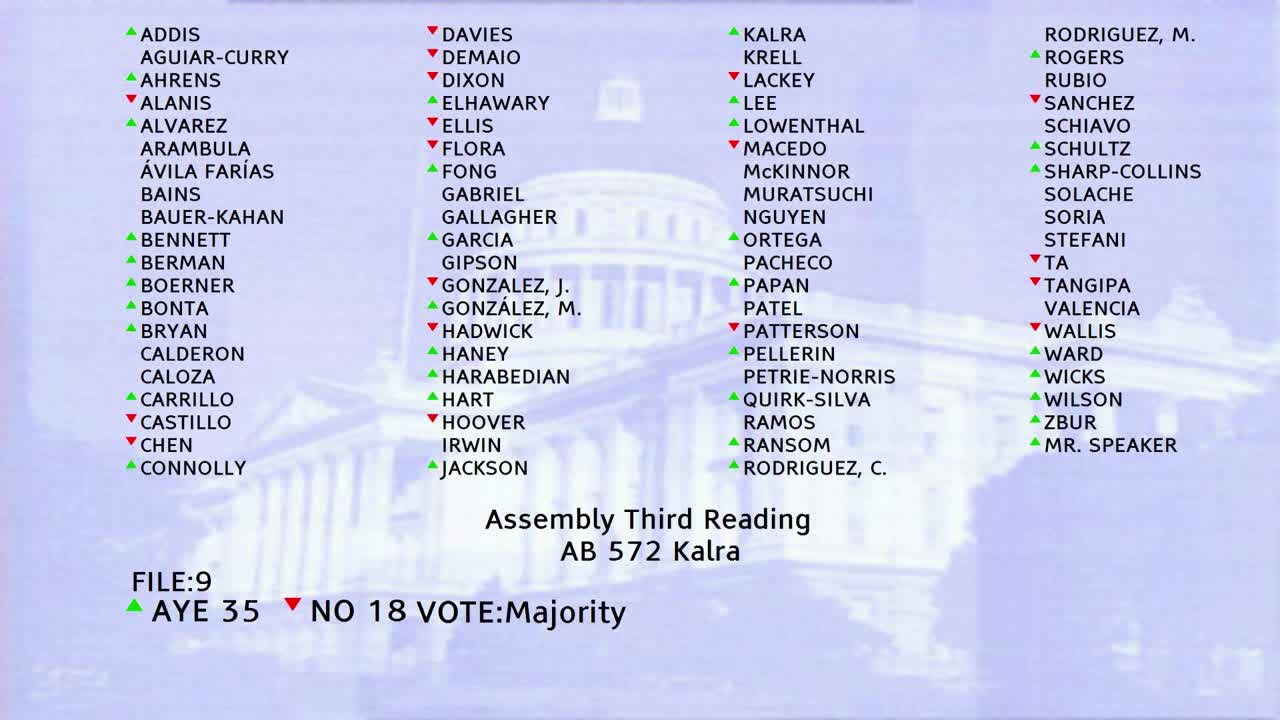 1MIN
Assembly Floor
 9MIN
Assembly Standing Committee on Business and Professions
Bill Author

Bill Co-Author(s):