AB 483: Fixed term installment contracts: early termination fees.
- Session Year: 2025-2026
- House: Assembly
- Latest Version Date: 2025-10-10
Current Status:
Passed
(2025-10-10: Chaptered by Secretary of State - Chapter 557, Statutes of 2025.)
Introduced
In Committee
Awaiting First Chamber Vote
Passed First Chamber
In Committee
Awaiting Second Chamber Vote
Passed Second Chamber
Enacted
Existing law makes it unlawful for any person doing business in California and advertising to consumers in California to make any false or misleading advertising claim. Existing law makes various unfair competition practices unlawful, including any unlawful, unfair, or fraudulent business act or practice and unfair, deceptive, untrue, or misleading advertising.
Existing law regulates how a contract may be extinguished, and prescribes requirements for the formation and cancellation of certain contracts, including dating service contracts, weight loss contracts, and home equity sales contracts.
This bill would, for contracts entered into or modified on or after August 1, 2026, prohibit a seller that uses a fixed term installment contract, as defined, from charging a fee to a consumer who terminates the fixed term installment contract unless, at the time of entering the initial contract, the initial contract includes a clear and conspicuous written disclosure of the total cost of the early termination fee or the formula used to calculate the early termination fee and the highest possible early termination fee under the contract. The bill would also prohibit a seller that uses a fixed term installment contract from charging an early termination fee or any similar fee in an amount greater than 30% of the total sum for which the consumer is obligated under the contract. The bill would deem certain broadband internet providers to be in compliance with these provisions, as specified. The bill would provide that its provisions do not apply to a fixed term installment contract that is regulated by state or federal law providing greater protections to consumers, as specified, or to a home improvement contract, as defined.
This bill would make a waiver of its provisions void and unenforceable.
Existing law makes it unlawful for any person doing business in California and advertising to consumers in California to make any false or misleading advertising claim. Existing law makes various unfair competition practices unlawful, including any unlawful, unfair, or fraudulent business act or practice and unfair, deceptive, untrue, or misleading advertising.
Existing law regulates how a contract may be extinguished, and prescribes requirements for the formation and cancellation of certain contracts, including dating service contracts, weight loss contracts, and home equity sales contracts.
This bill would, for contracts entered into or modified on or after August 1, 2026, prohibit a seller that uses a fixed term installment contract, as defined, from charging a fee to a consumer who terminates the fixed term installment contract unless, at the time of entering the initial contract, the initial contract includes a clear and conspicuous written disclosure of the total cost of the early termination fee or the formula used to calculate the early termination fee and the highest possible early termination fee under the contract. The bill would also prohibit a seller that uses a fixed term installment contract from charging an early termination fee or any similar fee in an amount greater than 30% of the total sum for the which the consumer is obligated under the contract, except if the fixed term installment contract is a home improvement contract, as provided. contract. The bill would deem certain broadband internet providers to be in compliance with these provisions, as specified. The bill would provide that its provisions do not apply to a fixed term installment contract that is regulated by state or federal law providing greater protections to consumers, as specified. specified, or to a home improvement contract, as defined.
This bill would make a waiver of its provisions void and unenforceable.
Existing law makes it unlawful for any person doing business in California and advertising to consumers in California to make any false or misleading advertising claim. Existing law makes various unfair competition practices unlawful, including any unlawful, unfair, or fraudulent business act or practice and unfair, deceptive, untrue, or misleading advertising.
Existing law regulates how a contract may be extinguished, and prescribes requirements for the formation and cancellation of certain contracts, including dating service contracts, weight loss contracts, and home equity sales contracts.
This bill would, for contracts entered into or modified on or after July August 1, 2026, prohibit a seller that uses a fixed term installment contract, as defined, from charging a fee to a consumer who terminates the fixed term installment contract unless, at the time of entering the initial contract, the initial contract includes an explanation of a clear and conspicuous written disclosure of the total cost of the early termination fee or the formula used to calculate the early termination fee, as provided. fee and the highest possible early termination fee under the contract. The bill would also prohibit a seller that uses a fixed term installment contract from charging an early termination fee or any similar fee in an amount greater than 20% 30% of the total cost of the contract. sum for the which the consumer is obligated under the contract, except if the fixed term installment contract is a home improvement contract, as provided. The bill would deem certain broadband internet providers to be in compliance with these provisions, as specified. The bill would provide that its provisions do not apply to a fixed term installment contract that is regulated by state or federal law providing greater protections to consumers, as specified.
This bill would make a waiver of its provisions void and unenforceable.
Existing law makes it unlawful for any person doing business in California and advertising to consumers in California to make any false or misleading advertising claim. Existing law makes various unfair competition practices unlawful, including any unlawful, unfair, or fraudulent business act or practice and unfair, deceptive, untrue, or misleading advertising.
Existing law regulates how a contract may be extinguished, and prescribes requirements for the formation and cancellation of certain contracts, including dating service contracts, weight loss contracts, and home equity sales contracts.
This bill would, for contracts entered into or modified on or after January July 1, 2026, prohibit a seller that uses a fixed term installment contract, as defined, from charging a fee to a consumer who terminates the fixed term installment contract unless, at the time of entering the initial contract, the initial contract includes an explanation of the total cost of the early termination fee or the formula used to calculate the early termination fee, as provided. The bill would also prohibit a seller that uses a fixed term installment contract from charging an early termination fee or any similar fee in an amount greater than 20% of the total cost of the contract. The bill would deem certain broadband internet providers to be in compliance with these provisions, as specified. The bill would provide that its provisions do not apply to a fixed term installment contract that is regulated by state or federal law providing greater protections to consumers, as specified.
Existing law makes it unlawful for any person doing business in California and advertising to consumers in California to make any false or misleading advertising claim. Existing law makes various unfair competition practices unlawful, including any unlawful, unfair, or fraudulent business act or practice and unfair, deceptive, untrue, or misleading advertising.
Existing law regulates how a contract may be extinguished, and prescribes requirements for the formation and cancellation of certain contracts, including dating service contracts, weight loss contracts, and home equity sales contracts.
This bill would, for contracts entered into or modified on or after January 1, 2026, prohibit a fixed term installment contract, as defined, from charging a fee to a consumer who terminates the fixed term installment contract unless, at the time of entering the initial contract, the initial contract includes an explanation of the total cost of the cancellation early termination fee or the method by which the fee is calculated, formula used to calculate the early termination fee, as provided. The bill would also prohibit a fixed term installment contract from charging a cancellation fee, termination fee, an early termination fee or any similar fee in an amount greater than 20% of the total cost of the contract. The bill would deem certain broadband internet providers to be in compliance with these provisions, as specified.
Existing law makes it unlawful for any person doing business in California and advertising to consumers in California to make any false or misleading advertising claim. Existing law makes various unfair competition practices unlawful, including any unlawful, unfair, or fraudulent business act or practice and unfair, deceptive, untrue, or misleading advertising.
Existing law regulates how a contract may be extinguished, and prescribes requirements for the formation and cancellation of certain contracts, including dating service contracts, weight loss contracts, and home equity sales contracts.
This bill would, for contracts entered into or modified on or after January 1, 2026, prohibit a fixed term installment contract, as defined, from charging a fee to a consumer who terminates the fixed term installment contract unless, at the time of entering the initial contract, the initial contract includes an explanation of the total cost of the cancellation fee or the method by which the fee is calculated, as provided. The bill would also prohibit a fixed term installment contract from charging a cancellation fee, termination fee, or any similar fee in an amount greater than 20% of the total cost of the contract.
For purposes of this chapter, the following terms have the following meanings:
(a)Early termination fee means an additional fee charged to a consumer as a result of a consumers election to apply a term or clause included in the contract that authorizes a consumer to suspend making installment payments and to end access to the good or receipt of the service before the end of the period of time during which installment payments are required to be made by the consumer.
(b)Fixed term installment contract means any contract for the sale of goods or the furnishing of services by a seller to a consumer for a deferred payment price payable in installments required to be made by the consumer during a fixed period of time until the price is paid in full.
(c)Good and service include tangible and intangible goods, including digital software.
(d)Terminate means that the consumer has elected to apply a term or clause included in the contract that authorizes a consumer to suspend making installment payments and to end access to the good or receipt of the service. Terminate does not include a general failure of a consumer to perform an obligation of the contract, including a failure to make installment payments.
17810.(a)A seller that uses a fixed term installment contract entered into or modified on or after August 1, 2026, shall not charge a fee to a consumer who terminates the fixed term installment contract unless, at the time of entering the initial contract, the contract includes a clear and conspicuous written disclosure of either of the following, which shall be viewable by the consumer without reliance upon a tooltip, additional hyperlink, or any other feature that requires additional user interaction:
(1)The total cost of the early termination fee.
(2)The formula used to calculate the early termination fee and the highest possible early termination fee under the contract.
(b)A provider of broadband internet access service on its own, or as part of a bundle, that complies with federal broadband consumer requirements, including the broadband consumer label, codified in 47 C.F.R. Sec. 8.2(a), and its affiliates and subsidiaries, shall be deemed compliant with this section for all services sold on their own or as part of that bundle.
17820.A seller that uses a fixed term installment contract entered into or modified on or after August 1, 2026, shall not charge an early termination fee or any similar fee in an amount greater than 30 percent of the total sum for which the consumer is obligated under the fixed term installment contract, exclusive of the application of the termination fee.
17830.This chapter shall not be interpreted to prohibit a contract from requiring the return of a good if the fixed term installment contract is terminated.
17840.This chapter shall not be interpreted to prevent a buyer from paying the full remaining balance of a fixed term installment contract before its maturity.
17850.(a)The provisions of this chapter do not apply to a fixed term installment contract that is regulated by state or federal law providing greater protections to consumers than those provided by this chapter, including, but not limited to, a prohibition on early termination fees or a lower limit on early termination fee amounts.
(b)The provisions of this chapter do not apply to a home improvement contract, as defined in Section 7151.2.
17860.Any waiver of the provisions of this chapter shall be deemed contrary to public policy and shall be void and unenforceable.
For purposes of this chapter, the following terms have the following meanings:
(a)Early termination fee means an additional fee charged to a consumer as a result of a consumers election to apply a term or clause included in the contract that authorizes a consumer to suspend making installment payments and to end access to the good or receipt of the service before the end of the period of time during which installment payments are required to be made by the consumer.
(b)Fixed term installment contract means any contract for the sale of goods or the furnishing of services by a seller to a consumer for a deferred payment price payable in installments required to be made by the consumer during a fixed period of time until the price is paid in full.
(c)Good and service include tangible and intangible goods, including digital software.
(d)Terminate means that the consumer has elected to apply a term or clause included in the contract that authorizes a consumer to suspend making installment payments and to end access to the good or receipt of the service. Terminate does not include a general failure of a consumer to perform an obligation of the contract, including a failure to make installment payments.
17810.(a)A seller that uses a fixed term installment contract entered into or modified on or after August 1, 2026, shall not charge a fee to a consumer who terminates the fixed term installment contract unless, at the time of entering the initial contract, the contract includes a clear and conspicuous written disclosure of either of the following, which shall be viewable by the consumer without reliance upon a tooltip, additional hyperlink, or any other feature that requires additional user interaction:
(1)The total cost of the early termination fee.
(2)The formula used to calculate the early termination fee and the highest possible early termination fee under the contract.
(b)A provider of broadband internet access service on its own, or as part of a bundle, that complies with federal broadband consumer requirements, including the broadband consumer label, codified in 47 C.F.R. Sec. 8.2(a), and its affiliates and subsidiaries, shall be deemed compliant with this section for all services sold on their own or as part of that bundle.
17820.(a)A seller that uses a fixed term installment contract entered into or modified on or after August 1, 2026, shall not charge an early termination fee or any similar fee in an amount greater than 30 percent of the total sum for the which the consumer is obligated under the fixed term installment contract, exclusive of the application of the termination fee.
(b)Notwithstanding subdivision (a), a seller that uses a fixed term installment contract entered into or modified on or after August 1, 2026, that is a home improvement contract as defined in Section 7151.2, may charge an early termination fee in an amount equal to or less than the total cost of installed, furnished, or custom ordered home improvement goods or services at the time a consumer terminates the fixed term installment contract.17830.This chapter shall not be interpreted to prohibit a contract from requiring the return of a good if the fixed term installment contract is terminated.
17840.This chapter shall not be interpreted to prevent a buyer from paying the full remaining balance of a fixed term installment contract before its maturity.
17850.(a)The provisions of this chapter do not apply to a fixed term installment contract that is regulated by state or federal law providing greater protections to consumers than those provided by this chapter, including, but not limited to, a prohibition on early termination fees or a lower limit on early termination fee amounts.
(b)The provisions of this chapter do not apply to a home improvement contract, as defined in Section 7151.2.
17860.Any waiver of the provisions of this chapter shall be deemed contrary to public policy and shall be void and unenforceable.
For purposes of this chapter, the following terms have the following meanings:
(a)Early termination fee means an additional fee charged to a consumer as a result of a consumers election to apply a term or clause included in the contract that authorizes a consumer to suspend making installment payments and to end access to the good or receipt of the service before the end of the period of time during which installment payments are required to be made by the consumer.
(b)Fixed term installment contract means any contract for the sale of goods or the furnishing of services by a seller to a consumer for a deferred payment price payable in installments required to be made by the consumer during a fixed period of time until the price is paid in full.
(c)Good and service include tangible and intangible goods, including digital software.
(d)Terminate means that the consumer has elected to apply a term or clause included in the contract that authorizes a consumer to suspend making installment payments and to end access to the good or receipt of the service. Terminate does not include a general failure of a consumer to perform an obligation of the contract, including a failure to make installment payments.
17810.(a)A seller that uses a fixed term installment contract entered into or modified on or after July August 1, 2026, shall not charge a fee to a consumer who terminates the fixed term installment contract unless, at the time of entering the initial contract, the contract includes a clear and conspicuous written disclosure of either of the following, which shall be viewable by the consumer without reliance upon a tooltip, additional hyperlink, or any other feature that requires additional user interaction:
(1)A clear and conspicuous explanation of the The total cost of the early termination fee in writing. fee.
(2)The formula used to calculate the early termination fee, including a sample calculation demonstrating fee and the highest possible early termination fee under the contract.
(b)A provider of broadband internet access service on its own, or as part of a bundle, that complies with federal broadband consumer requirements, including the broadband consumer label, codified in 47 C.F.R. Sec. 8.2(a), and its affiliates and subsidiaries, shall be deemed compliant with this section for all services sold on their own or as part of that bundle.
17820.(a)A seller that uses a fixed term installment contract entered into or modified on or after July August 1, 2026, shall not charge an early termination fee or any similar fee in an amount greater than 20 30 percent of the total cost of sum for the which the consumer is obligated under the fixed term installment contract. contract, exclusive of the application of the termination fee.
(b)Notwithstanding subdivision (a), a seller that uses a fixed term installment contract entered into or modified on or after August 1, 2026, that is a home improvement contract as defined in Section 7151.2, may charge an early termination fee in an amount equal to or less than the total cost of installed, furnished, or custom ordered home improvement goods or services at the time a consumer terminates the fixed term installment contract.
17830.This chapter shall not be interpreted to prohibit a contract from requiring the return of a good if the fixed term installment contract is terminated.
17840.This chapter shall not be interpreted to prevent a buyer from paying the full remaining balance of a fixed term installment contract before its maturity.
17840.17850.The provisions of this chapter do not apply to a fixed term installment contract that is regulated by state or federal law providing greater protections to consumers than those provided by this chapter, including, but not limited to, a prohibition on early termination fees or a lower limit on early termination fee amounts.
17860.Any waiver of the provisions of this chapter shall be deemed contrary to public policy and shall be void and unenforceable.
For purposes of this chapter, the following terms have the following meanings:
(a)Early termination fee means an additional fee charged to a consumer as a result of a consumers election to apply a term or clause included in the contract that authorizes a consumer to suspend making installment payments and to end access to the good or receipt of the service before the end of the period of time during which installment payments are required to be made by the consumer.
(b)Fixed term installment contract means any contract for the sale of goods or the furnishing of services by a retail seller to a consumer for a deferred payment price payable in installments required to be made by the consumer during a fixed period of time until the price is paid in full.
(c)Good and service include tangible and intangible goods, including digital software.
(d)Termination Terminate means that the consumer has elected to apply a term or clause included in the contract that authorizes a consumer to suspend making installment payments and to end access to the good or receipt of the service. Termination Terminate does not include a general failure of a consumer to perform an obligation of the contract, including a failure to make installment payments.
17810.(a)A seller that uses a fixed term installment contract entered into or modified on or after January July 1, 2026, shall not charge a fee to a consumer who terminates the fixed term installment contract unless, at the time of entering the initial contract, the contract includes either of the following, which shall be viewable by the consumer without reliance upon a tooltip, additional hyperlink, or any other feature that requires additional user interaction:
(1)A clear and conspicuous explanation of the total cost of the early termination fee in writing.
(2)The formula used to calculate the early termination fee, including a sample calculation demonstrating the highest possible early termination fee under the contract.
(b)A provider of broadband internet access service on its own, or as part of a bundle, that complies with federal broadband consumer requirements, including the broadband consumer label, codified in 47 C.F.R. Sec. 8.2(a), and its affiliates and subsidiaries, shall be deemed compliant with this section for all services sold on their own or as part of that bundle.
17820.A seller that uses a fixed term installment contract entered into or modified on or after January July 1, 2026, shall not charge an early termination fee or any similar fee in an amount greater than 20 percent of the total cost of the fixed term installment contract.
17830.This chapter shall not be interpreted to prohibit a contract from requiring the return of a good if the fixed term installment contract is terminated.
17840.The provisions of this chapter do not apply to a fixed term installment contract that is regulated by state or federal law providing greater protections to consumers than those provided by this chapter, including, but not limited to, a prohibition on early termination fees or a lower limit on early termination fee amounts.
(a)For purposes of this chapter, fixed the following terms have the following meanings:
(a)Early termination fee means an additional fee charged to a consumer as a result of a consumers election to apply a term or clause included in the contract that authorizes a consumer to suspend making installment payments and to end access to the good or receipt of the service before the end of the period of time during which installment payments are required to be made by the consumer.
(b)Fixed term installment contract means any contract for the sale of goods or the furnishing of services by a retail seller to a retail buyer consumer for a deferred payment price payable in installments. installments required to be made by the consumer during a fixed period of time until the price is paid in full.
(b)For the purposes of this chapter, good(c)Good and service include tangible and intangible goods, including digital software.
(d)Termination means that the consumer has elected to apply a term or clause included in the contract that authorizes a consumer to suspend making installment payments and to end access to the good or receipt of the service. Termination does not include a general failure of a consumer to perform an obligation of the contract, including a failure to make installment payments.
17810.(a)A fixed term installment contract entered into or modified on or after January 1, 2026, shall not charge a fee to a consumer who terminates the fixed term installment contract unless, at the time of entering the initial contract, the contract includes either of the following: following, which shall be viewable by the consumer without reliance upon a tooltip, additional hyperlink, or any other feature that requires additional user interaction:
(a)(1)A clear and conspicuous explanation of the total cost of the cancellation early termination fee in writing.
(b)The method by which the fee is calculated alongside an example of the method being used to calculate a cancellation fee, without the use of a tooltip, additional hyperlink, or any other feature which requires additional user interaction to view the clear and conspicuous explanation.(2)The formula used to calculate the early termination fee, including a sample calculation demonstrating the highest possible early termination fee under the contract.
(b)A provider of broadband internet access service on its own, or as part of a bundle, that complies with federal broadband consumer requirements, including the broadband consumer label, codified in 47 C.F.R. 8.2(a), and its affiliates and subsidiaries, shall be deemed compliant with this section for all services sold on their own or as part of that bundle.
17820.A fixed term installment contract entered into or modified on or after January 1, 2026, shall not charge a cancellation fee, termination fee, an early termination fee or any similar fee in an amount greater than 20 percent of the total cost of the fixed term installment contract.
17830.This chapter shall not be interpreted to prohibit a contract from requiring the return of a good if the fixed term installment contract is canceled. terminated.
(a)For purposes of this chapter, fixed term installment contract means any contract for the sale of goods or the furnishing of services by a retail seller to a retail buyer for a deferred payment price payable in installments.
(b)For the purposes of this chapter, good and service include tangible and intangible goods, including digital software.
17810.A fixed term installment contract entered into or modified on or after January 1, 2026, shall not charge a fee to a consumer who terminates the fixed term installment contract unless, at the time of entering the initial contract, the contract includes either of the following:
(a)A clear and conspicuous explanation of the total cost of the cancellation fee in writing.
(b)The method by which the fee is calculated alongside an example of the method being used to calculate a cancellation fee, without the use of a tooltip, additional hyperlink, or any other feature which requires additional user interaction to view the clear and conspicuous explanation.
17820.A fixed term installment contract entered into or modified on or after January 1, 2026, shall not charge a cancellation fee, termination fee, or any similar fee in an amount greater than 20 percent of the total cost of the fixed term installment contract.
17830.This chapter shall not be interpreted to prohibit a contract from requiring the return of a good if the fixed term installment contract is canceled.
|
Date
|
Status
|
|---|---|
| Oct 10, 2025 | Chaptered by Secretary of State - Chapter 557, Statutes of 2025. |
| Oct 10, 2025 | Approved by the Governor. |
| Sep 22, 2025 | Enrolled and presented to the Governor at 3 p.m. |
| Sep 10, 2025 | Senate amendments concurred in. To Engrossing and Enrolling. (Ayes 78. Noes 0. Page 3219.). |
| Sep 9, 2025 | In Assembly. Concurrence in Senate amendments pending. |
| Sep 9, 2025 | Read third time. Passed. Ordered to the Assembly. (Ayes 39. Noes 1. Page 2663.). |
| Sep 4, 2025 | Read second time. Ordered to third reading. |
| Sep 3, 2025 | Read third time and amended. Ordered to second reading. |
| Aug 20, 2025 | Read second time. Ordered to third reading. |
| Aug 19, 2025 | Read third time and amended. Ordered to second reading. |
| Jun 26, 2025 | Read second time. Ordered to third reading. |
| Jun 25, 2025 | From committee: Do pass. (Ayes 11. Noes 1.) (June 24). |
| Jun 12, 2025 | From committee chair, with author's amendments: Amend, and re-refer to committee. Read second time, amended, and re-referred to Com. on JUD. |
| May 7, 2025 | Referred to Com. on JUD. |
| Apr 7, 2025 | In Senate. Read first time. To Com. on RLS. for assignment. |
| Apr 7, 2025 | Read third time. Passed. Ordered to the Senate. (Ayes 46. Noes 12. Page 1034.) |
| Apr 3, 2025 | Read second time. Ordered to third reading. |
| Apr 2, 2025 | From committee: Do pass. (Ayes 9. Noes 4.) (April 1). |
| Mar 25, 2025 | Re-referred to Com. on P. & C.P. |
| Mar 24, 2025 | From committee chair, with author's amendments: Amend, and re-refer to Com. on P. & C.P. Read second time and amended. |
| Mar 13, 2025 | In committee: Hearing postponed by committee. |
| Feb 24, 2025 | Referred to Com. on P. & C.P. |
| Feb 11, 2025 | From printer. May be heard in committee March 13. |
| Feb 10, 2025 | Read first time. To print. |
|
Date
|
Description
|
Location
|
Votes
|
|
|---|---|---|---|---|
| Sep 10, 2025 | AB 483 Irwin Concurrence in Senate Amendments | Assembly Floor |
Passed |
|
| Sep 9, 2025 | Assembly 3rd Reading AB483 Irwin By Laird | Senate Floor |
Passed |
|
| Jun 24, 2025 | Do pass | Senate Standing Committee on Judiciary |
Passed |
|
| Apr 7, 2025 | AB 483 Irwin Assembly Third Reading | Assembly Floor |
Passed |
|
| Apr 1, 2025 | Do pass. | Assembly Standing Committee on Privacy and Consumer Protection |
Passed |
This list shows positions taken on this bill by organizations on the date displayed, which is linked to the original source.
Positions by individuals are not included.
|
Organization
|
Position
|
Date
|
|---|---|---|
| CalBroadband | ** Against | |
| Calcom Association | ** Against | |
| California Chamber Of Commerce | ** Against | |
| California Grocers Association | ** Against | |
| California Retailers Association | ** Against | |
| Consumer Attorneys Of California | ** Support | |
| United States Telecom Association Dba Ustelecom The Broadband Association | ** Against |
CONCURRENCE IN SENATE AMENDMENTS
CSA1 Bill Id:AB 483
Author:(Irwin)
As Amended Ver:September 3, 2025
Majority vote
SUMMARY
This bill prohibits early termination fees unless the relevant fixed term installment contract includes a clear explanation of the total cost of the termination fee or the formula used to calculate the fee, except as provided. This bill caps the termination fee at 30% of the total cost of the installment contract.
Senate Amendments
- Delay implementation to August 1, 2026.
- Increase the maximum amount of an early termination fee to 30 percent.
- States that the legislation shall not be interpreted to prevent a buyer from paying the full remaining balance of a fixed term contract before its maturity.
- Exempts home improvement contracts.
- Exempts fixed term installment contracts that are regulated by a state or federal law that provides greater consumer protections.
- Technical and clarifying changes.
COMMENTS
California's consumer protections related to subscription contracts and up-front pricing. In recent years, the California Legislature and the Governor have taken a number of steps to protect consumers from deceptive practices such as making it difficult to cancel contracts that automatically renew or using drip pricing to deceive consumers about the true cost of goods and services they are purchasing. Specifically, AB 2863 (Schiavo, Chapter 515, Statutes of 2024) implemented consumer protection measures for automated renewal subscriptions. Additionally, SB 478 (Dodd, Chpter 400, Statutes of 2023) prohibits businesses from advertising prices that do not include all mandatory fees and charges.
Early termination fees are not covered by either of these recent policy changes. SB 478 implements protections on one-time purchases and AB 2863 implements protections on monthly subscriptions. Early termination fees are not mandatory fees, meaning that most consumers do not pay them, unlike processing or transaction fees, which are mandatory add-on fees. This means that early termination fees are not required to be disclosed under SB 478. Additionally, these contracts typically do not auto-renew into a monthly subscription, meaning they do not fall under AB 2863's protections.
The author points to Civil Code Section 1812.89 as precedent for imposing a cap on early termination fees. That section specifies that, for gyms or health studios, if the consumer is cancelling the contract due to moving away and is unable to transfer the contract to a comparable facility, a cancellation fee cannot exceed $100 or $50 if more than half the life of the contract has expired.
This proposal appears to be in keeping with the precedents set by recent federal government actions and the Legislature's approval of additional protections for consumers who may fall prey to deceptive practices.
Federal Communications Commission (FCC) proposed rulemaking on early termination fees. In December 2023, the FCC voted to propose a ban on early terminations fees charged by cable operators and direct broadcast satellite service providers. In announcing the proposal, the FCC noted that "subscribers may terminate service for any number of reasons, including moving, financial hardship, or poor service" and charging an early termination fee "makes it costly for consumers to switch services."[1] As a result, consumer choice may be limited, reducing competition for video services. In addition to eliminating early termination fees, the FCC noted that "billing cycle fees require TV video service subscribers to pay for a complete billing cycle even if the subscriber terminates service prior to the end of that billing cycle." As a result, consumers are further penalized by being required to pay for services they no longer want.[2]
The pending FCC proposed rule includes the following:
- Prohibiting service providers from imposing a fee for early termination.
- Rendering any existing agreements related to an early termination fee unenforceable.
- Requiring service providers to grant subscribers a prorated credit or rebate for the remaining days in the billing cycle after the service has been cancelled.[3]
United States v. Adobe, Inc. In July 2024, the Federal Trade Commission (FTC) filed a suit against software developer Adobe,[4] the maker of Photoshop and Acrobat for "deceiving consumers by hiding the early termination fee for its most popular subscription plan and making it difficult for consumers to cancel their subscriptions."[5] The complaint charges that "Adobe pushed consumers toward the 'annual paid monthly' subscription without adequately disclosing that cancelling the plan in the first year could cost hundreds of dollars."[6] Among the unethical practices highlighted in the FTC complaint was Adobe's use of tooltips and a number of additional hyperlinks to make it difficult for consumers to find contract terms. The complaint also mentions that one Adobe executive admitted "the hidden ETF [early termination fee] is 'a bit like heroin for Adobe' and 'there is absolutely no way to kill off ETF or talk about it more obviously [without] taking a big business hit[.]'"[7] It is unclear whether the new federal administration will continue to pursue this case. As of this hearing, its status is still pending.
According to the Author
Despite the successes of recent consumer protection legislation regarding drip pricing and automated subscriptions, early termination fees for installment contracts continue to be rampant. These are fees that stand between a consumer and the decision to stop using a service early to save money. Businesses often argue that early termination fees act as a mechanism to balance out the discount a consumer may have received in exchange for their long-term commitment. While this justification has merit, it too frequently exists to the detriment of consumers, and it is not clear when fees go beyond recoupment of discounts. Without clear communication to a consumer on what potential early termination fees they may face, consumers may be enticed into a long-term commitment they cannot afford. Additionally, cancellation fees frequently make it more financially painful to cancel a service someone can no longer afford, preventing them from being able to respond to rising cost of living expenses.
AB 483 will protect consumers from these predatory cancellation fees on their fixed term installment contracts by requiring distinct transparency for cancellation fee terms when the consumer first agrees to the contract. The bill also caps any potential cancellation fee to 30% of the total contract cost. This will ensure the fee is proportional to what the consumer expects to pay and avoids consumers feeling financially trapped.
Arguments in Support
The Consumer Attorneys of California write in support:
Despite the successes of recent consumer protection legislation regarding drip pricing and automated subscriptions, early termination fees continue to be rampant. Businesses often argue that early termination fees act as a mechanism to balance out the discount a consumer may have received in exchange for their long-term commitment. However, it is not clear when fees go beyond recoupment of discounts. Businesses who do not clearly disclose and explain how cancellation fees are calculated prioritize their own profits over the understanding of the consumer and general notions of fairness.
Arguments in Opposition
FISCAL COMMENTS
As currently in print, this bill is keyed nonfiscal.
VOTES:
ASM PRIVACY AND CONSUMER PROTECTION: 9-4-2
YES: Berman, Bryan, Irwin, Lowenthal, Ortega, Pellerin, Petrie-Norris, Ward, Wilson
NO: Dixon, DeMaio, Macedo, Patterson
ABS, ABST OR NV: Bauer-Kahan, McKinnor
ASSEMBLY FLOOR: 47-12-20
YES: Addis, Aguiar-Curry, Ahrens, Alvarez, Arambula, Ávila Farías, Bennett, Berman, Boerner, Bonta, Bryan, Calderon, Caloza, Carrillo, Connolly, Elhawary, Fong, Garcia, Gipson, Mark González, Haney, Harabedian, Hart, Irwin, Kalra, Krell, Lowenthal, Ortega, Pacheco, Papan, Patel, Pellerin, Petrie-Norris, Quirk-Silva, Ransom, Celeste Rodriguez, Michelle Rodriguez, Rogers, Schiavo, Schultz, Sharp-Collins, Stefani, Ward, Wicks, Wilson, Zbur, Rivas
NO: Alanis, Chen, Davies, DeMaio, Dixon, Ellis, Hadwick, Hoover, Lackey, Macedo, Patterson, Tangipa
ABS, ABST OR NV: Bains, Bauer-Kahan, Castillo, Flora, Gabriel, Gallagher, Jeff Gonzalez, Jackson, Lee, McKinnor, Muratsuchi, Nguyen, Ramos, Blanca Rubio, Sanchez, Solache, Soria, Ta, Valencia, Wallis
UPDATED
VERSION: September 3, 2025
CONSULTANT: Julie Salley / P. & C.P. / (916) 319-2200 FN: 0001964
FCC Press Release: FCC TAKES ACTION AGAINST VIDEO SERVICE JUNK FEES TO PROTECT CONSUMERS AND PROMOTE COMPETITION (Dec. 13, 2025) https://www.fcc.gov/document/fcc-proposes-rules-eliminate-video-service-junk-fees. ↑
Ibid. ↑
Federal Communications Commission 47 CFR Parts 25 and 76 [MB Docket No. 23-405; FCC 23-106; FRS ID 192513] https://www.fcc.gov/document/fcc-proposes-rules-eliminate-video-service-junk-fees. ↑
United States v. Adobe, Inc., 24-cv-03630-BLF (N.D. Cal. Jul. 23, 2024) ↑
United State v. Adobe, Inc. Case Summary (Jul. 25, 2024) https://www.ftc.gov/legal-library/browse/cases-proceedings/222-3055-adobe-inc-us-v ↑
Ibid. ↑
United States v. Adobe, Inc., 24-cv-03630-BLF (N.D. Cal. Jul. 23, 2024). ↑
SENATE RULES COMMITTEE Office of Senate Floor Analyses (916) 651-1520 Fax: (916) 327-4478 | AB 483 |
THIRD READING
Bill No: AB 483
Author: Irwin (D)
Amended: 9/3/25 in Senate
Vote: 21
SENATE JUDICIARY COMMITTEE: 11-1, 6/24/25
AYES: Umberg, Allen, Arreguín, Ashby, Caballero, Durazo, Laird, Stern, Wahab, Weber Pierson, Wiener
NOES: Niello
NO VOTE RECORDED: Valladares
ASSEMBLY FLOOR: 47-12, 4/7/25 - See last page for vote
SUBJECT: Fixed term installment contracts: early termination fees
SOURCE: Author
DIGEST:
This bill prohibits early termination fees unless the relevant fixed term installment contract includes a clear explanation of the total cost of the termination fee or the formula used to calculate the fee, except as provided. This bill caps the termination fee at 30% of the total cost of the installment contract.
Senate Floor amendments of 8/19/25 make a number of changes to address stakeholder concerns, including delaying the implementation timeline, raising the fee cap, and loosening the disclosure requirements.
Senate Floor amendments of 9/3/25 exempt home improvement contracts from the bill.
ANALYSIS:
Existing law:
- Provides that every contract for health studio services shall contain a clause providing that if the person agreeing to receive health studio services moves further than 25 miles from the health studio and is unable to transfer the contract to a comparable facility, such person shall be relieved from the obligation of making payment for services other than those received prior to the move. A contract for health studio services may contain a clause providing that if such a condition occurs, such person may be charged a predetermined fee not exceeding $100, or, if more than half the life of the contract has expired, such person may be charged a predetermined fee not exceeding $50. (Civil (Civ.) Code § 1812.89.)
This bill:
- Prohibits a seller that uses a fixed term installment contract entered into or modified on or after August 1, 2026, from charging a fee to a consumer who terminates the fixed term installment contract unless, at the time of entering the initial contract, the contract includes either of the following, which shall be viewable by the consumer without reliance upon a tooltip, additional hyperlink, or any other feature that requires additional user interaction:
- The total cost of the early termination fee.
- The formula used to calculate the early termination fee and the highest possible early termination fee under the contract.
- Provides that a provider of broadband internet access service on its own, or as part of a bundle, that complies with federal broadband consumer requirements, including the broadband consumer label, codified in 47 Code of Federal Regulations (C.F.R). § 8.2(a), shall be deemed compliant herewith.
- Prohibits a fixed term installment contract entered into or modified on or after August 1, 2026, from charging an early termination fee or any similar fee in an amount greater than 30% of the total sum for which the consumer is obligated under the fixed term installment contract.
- Clarifies that it shall not be interpreted to prohibit a contract from requiring the return of a good if the fixed term installment contract is terminated or to prevent a buyer from paying the full remaining balance of a fixed term installment contract before its maturity.
- Exempts a fixed term installment contract that is regulated by state or federal law providing greater protections to consumers than those provided hereby, including, but not limited to, a prohibition on early termination fees or a lower limit on early termination fee amounts.
- Exempts home improvement contracts, as defined.
- Defines the relevant terms, including:
- “Early termination fee” means an additional fee charged to a consumer as a result of a consumer’s election to apply a term or clause included in the contract that authorizes a consumer to suspend making installment payments and to end access to the good or receipt of the service before the end of the period of time during which installment payments are required to be made by the consumer.
- “Fixed term installment contract” means any contract for the sale of goods or the furnishing of services by a seller to a consumer for a deferred payment price payable in installments required to be made by the consumer during a fixed period of time until the price is paid in full.
- “Terminate” means that the consumer has elected to apply a term or clause included in the contract that authorizes a consumer to suspend making installment payments and to end access to the good or receipt of the service. “Terminate” does not include a general failure of a consumer to perform an obligation of the contract, including a failure to make installment payments.
Background
The issue of “junk” fees and other pricing schemes gained more prominence nationally when President Joe Biden took aim at them in his State of the Union address in February 2023. There are various types of pricing schemes generally deemed unfair or unlawful business practices and California has a host of laws aimed at rooting them out. This includes recent statutes that require pricing transparency and reasonable methods for cancellation of automatic renewal and continuous service offers.
One practice that has drawn attention across the country is the charging of “early termination fees” that penalize consumers for cancelling a contract for a good or service early. The concern is focused on the transparency of such fees and their onerous amounts, that may imprison consumers in contracts they no longer need or can no longer afford.
Following the lead of regulatory action taken at the federal level, this bill prohibits such fees unless the contract includes the total cost of the fee or a formula used to calculate the fee, as specified. The total early termination fee is capped at 30% of the total contract. This bill is author-sponsored. It is supported by the Consumer Attorneys of California.
Comments
Consumer protection and early termination fees. Drip pricing and hidden junk fees have been an increased focus of government regulators both at the federal level and here in California.
SB 478 (Dodd, Chapter 400, Statutes 2023) made it an unlawful business practice under the Consumer Legal Remedies Act to advertise, display, or offer a price for a good or service that does not include all mandatory fees or charges, except as provided or exempted. Last year, AB 2863 (Schiavo, Chapter 515, Statutes 2024) bolstered the consumer protections within the law governing automatic renewal and continuous services offers, including prohibitions on failing to obtain affirmative consent to the offer separate from the other terms of the contract. It required more notice to consumers and a method for cancellation in the same medium as used in the initial transaction.
One particularly troubling practice is the charging of “early termination fees” on consumers who wish to cancel a subscription or other ongoing contract. Concerns have been raised about the transparency and excessive level of these fees, and the attendant impacts on consumers.
In 2021, President Biden issued an executive order “in order to promote the interests of American workers, businesses, and consumers.” Relevant here, the EO included the following edict:
To promote competition, lower prices, and a vibrant and innovative telecommunications ecosystem, the Chair of the Federal Communications Commission is encouraged to work with the rest of the Commission, as appropriate and consistent with applicable law, to consider . . . prohibiting unjust or unreasonable early termination fees for end-user communications contracts, enabling consumers to more easily switch providers.[1]
The Federal Communications Commission (FCC) responded and took action against these very practices in the video service sector:
The Federal Communications Commission today adopted a Notice of Proposed Rulemaking that proposes to eliminate video service junk fees from cable operators and direct broadcast satellite (DBS) providers and to study the impact of these practices on consumer choices.
TV video service subscribers may terminate service for any number of reasons, including moving, financial hardship, or poor service. Early termination fees require subscribers to pay a fee for terminating a video service contract prior to its expiration date, making it costly for consumers to switch services. Because these fees may have the effect of limiting consumer choice, they may reduce competition for video service. Additionally, billing cycle fees require TV video service subscribers to pay for a complete billing cycle even if the subscriber terminates service prior to the end of that billing cycle. These fees penalize consumers for terminating service by requiring them to pay for services they choose not to receive.[2]
Just last year, the Federal Trade Commission filed suit against Adobe for its subscription practices, alleging that a reasonable consumer would be misled by Adobe’s disclosure of its early termination fee, including what it is, when it applies, how much it is, and how that amount is calculated.[3] A federal court recently denied Adobe’s motion to dismiss the case.[4]
Tackling issues with early termination fees. This bill seeks to address these issues by providing additional transparency and limiting the egregiousness of such fees.
First, this bill prohibits a seller that uses a fixed term installment contract entered into or modified on or after August 1, 2026, from charging a fee to a consumer who terminates the fixed term installment contract unless, at the time of entering the initial contract, the contract includes specified information. To ensure such information is not hidden behind links or other mechanisms, this bill requires the explanation or formula to be viewable by the consumer without reliance upon a tooltip, additional hyperlink, or any other feature that requires additional user interaction.
Second, to prevent usurious rates, this bill caps early termination fees to 30% of the total cost of the fixed term installment contract.
According to the author:
Despite the successes of recent consumer protection legislation regarding drip pricing and automated subscriptions, early termination fees for installment contracts continue to be rampant. These are fees that stand between a consumer and the decision to stop using a service early to save money. Businesses often argue that early termination fees act as a mechanism to balance out the discount a consumer may have received in exchange for their long-term commitment. While this justification has merit, it too frequently exists to the detriment of consumers, and it is not clear when fees go beyond recoupment of discounts. Without clear communication to a consumer on what potential early termination fees they may face, consumers may be enticed into a long-term commitment they cannot afford. Additionally, cancellation fees frequently make it more financially painful to cancel a service someone can no longer afford, preventing them from being able to respond to rising cost of living expenses.
AB 483 will protect consumers from these predatory cancellation fees on their fixed term installment contracts by requiring distinct transparency for cancellation fee terms when the consumer first agrees to the contract. This bill also caps any potential cancellation fee to 20% of the total contract cost. This will ensure the fee is proportional to what the consumer expects to pay and avoids consumers feeling financially trapped.
FISCAL EFFECT: Appropriation: No Fiscal Com.: No Local: No
SUPPORT: (Verified 9/3/25)
Consumer Attorneys of California
OPPOSITION: (Verified 9/3/25)
None received
ARGUMENTS IN SUPPORT: The Consumer Attorneys of California state:
Despite the successes of recent consumer protection legislation regarding drip pricing and automated subscriptions, early termination fees continue to be rampant. Businesses often argue that early termination fees act as a mechanism to balance out the discount a consumer may have received in exchange for their long-term commitment. However, it is not clear when fees go beyond recoupment of discounts. Businesses who do not clearly disclose and explain how cancellation fees are calculated prioritize their own profits over the understanding of the consumer and general notions of fairness.
ASSEMBLY FLOOR: 47-12, 4/7/25
AYES: Addis, Aguiar-Curry, Ahrens, Alvarez, Arambula, Ávila Farías, Bennett, Berman, Boerner, Bonta, Bryan, Calderon, Caloza, Carrillo, Connolly, Elhawary, Fong, Garcia, Gipson, Mark González, Haney, Harabedian, Hart, Irwin, Kalra, Krell, Lowenthal, Ortega, Pacheco, Papan, Patel, Pellerin, Petrie-Norris, Quirk-Silva, Ransom, Celeste Rodriguez, Michelle Rodriguez, Rogers, Schiavo, Schultz, Sharp-Collins, Stefani, Ward, Wicks, Wilson, Zbur, Rivas
NOES: Alanis, Chen, Davies, DeMaio, Dixon, Ellis, Hadwick, Hoover, Lackey, Macedo, Patterson, Tangipa
NO VOTE RECORDED: Bains, Bauer-Kahan, Castillo, Flora, Gabriel, Gallagher, Jeff Gonzalez, Jackson, Lee, McKinnor, Muratsuchi, Nguyen, Ramos, Blanca Rubio, Sanchez, Solache, Soria, Ta, Valencia, Wallis
Prepared by: Christian Kurpiewski / JUD. / (916) 651-4113
9/6/25 10:24:29
**** END ****
Executive Order 14036—Promoting Competition in the American Economy (July 9, 2021) President Joseph Biden, https://www.govinfo.gov/link/cpd/executiveorder/14036 (emphasis added). All internet citations are current as of June 10, 2025. ↑
FCC Takes Action Against Video Service Junk Fees to Protect Consumers and Promote Competition (December 13, 2023) FCC, https://www.fcc.gov/document/fcc-proposes-rules-eliminate-video-service-junk-fees. ↑
United States v. Adobe, Inc. (2025) 2025 U.S. Dist. LEXIS 87777, *28. ↑
Ibid. ↑
SENATE RULES COMMITTEE Office of Senate Floor Analyses (916) 651-1520 Fax: (916) 327-4478 | AB 483 |
THIRD READING
Bill No: AB 483
Author: Irwin (D)
Amended: 8/19/25 in Senate
Vote: 21
SENATE JUDICIARY COMMITTEE: 11-1, 6/24/25
AYES: Umberg, Allen, Arreguín, Ashby, Caballero, Durazo, Laird, Stern, Wahab, Weber Pierson, Wiener
NOES: Niello
NO VOTE RECORDED: Valladares
ASSEMBLY FLOOR: 47-12, 4/7/25 - See last page for vote
SUBJECT: Fixed term installment contracts: early termination fees
SOURCE: Author
DIGEST:
This bill prohibits early termination fees unless the relevant fixed term installment contract includes a clear explanation of the total cost of the termination fee or the formula used to calculate the fee, except as provided. This bill caps the termination fee at 30% of the total cost of the installment contract.
Senate Floor amendments of 8/19/25 make a number of changes to address stakeholder concerns, including delaying the implementation timeline, raising the fee cap, and loosening the disclosure requirements.
ANALYSIS:
Existing law:
- Provides that every contract for health studio services shall contain a clause providing that if the person agreeing to receive health studio services moves further than 25 miles from the health studio and is unable to transfer the contract to a comparable facility, such person shall be relieved from the obligation of making payment for services other than those received prior to the move. A contract for health studio services may contain a clause providing that if such a condition occurs, such person may be charged a predetermined fee not exceeding $100, or, if more than half the life of the contract has expired, such person may be charged a predetermined fee not exceeding $50. (Civil (Civ.) Code § 1812.89.)
This bill:
- Prohibits a seller that uses a fixed term installment contract entered into or modified on or after August 1, 2026, from charging a fee to a consumer who terminates the fixed term installment contract unless, at the time of entering the initial contract, the contract includes either of the following, which shall be viewable by the consumer without reliance upon a tooltip, additional hyperlink, or any other feature that requires additional user interaction:
- The total cost of the early termination fee.
- The formula used to calculate the early termination fee and the highest possible early termination fee under the contract.
- Provides that a provider of broadband internet access service on its own, or as part of a bundle, that complies with federal broadband consumer requirements, including the broadband consumer label, codified in 47 Code of Federal Regulations (C.F.R). § 8.2(a), shall be deemed compliant herewith.
- Prohibits a fixed term installment contract entered into or modified on or after August 1, 2026, from charging an early termination fee or any similar fee in an amount greater than 30% of the total sum for which the consumer is obligated under the fixed term installment contract.
- Provides, notwithstanding the above, that a seller that uses a fixed term installment contract entered into or modified on or after August 1, 2026 that is a home improvement contract may charge an early termination fee in an amount equal to or less than the total cost of installed, furnished, or customer ordered home improvement goods or services at the time a consumer terminates the fixed term installment contract.
- Clarifies that it shall not be interpreted to prohibit a contract from requiring the return of a good if the fixed term installment contract is terminated or to prevent a buyer from paying the full remaining balance of a fixed term installment contract before its maturity.
- Exempts a fixed term installment contract that is regulated by state or federal law providing greater protections to consumers than those provided hereby, including, but not limited to, a prohibition on early termination fees or a lower limit on early termination fee amounts.
- Defines the relevant terms, including:
- “Early termination fee” means an additional fee charged to a consumer as a result of a consumer’s election to apply a term or clause included in the contract that authorizes a consumer to suspend making installment payments and to end access to the good or receipt of the service before the end of the period of time during which installment payments are required to be made by the consumer.
- “Fixed term installment contract” means any contract for the sale of goods or the furnishing of services by a seller to a consumer for a deferred payment price payable in installments required to be made by the consumer during a fixed period of time until the price is paid in full.
- “Terminate” means that the consumer has elected to apply a term or clause included in the contract that authorizes a consumer to suspend making installment payments and to end access to the good or receipt of the service. “Terminate” does not include a general failure of a consumer to perform an obligation of the contract, including a failure to make installment payments.
Background
The issue of “junk” fees and other pricing schemes gained more prominence nationally when President Joe Biden took aim at them in his State of the Union address in February 2023. There are various types of pricing schemes generally deemed unfair or unlawful business practices and California has a host of laws aimed at rooting them out. This includes recent statutes that require pricing transparency and reasonable methods for cancellation of automatic renewal and continuous service offers.
One practice that has drawn attention across the country is the charging of “early termination fees” that penalize consumers for cancelling a contract for a good or service early. The concern is focused on the transparency of such fees and their onerous amounts, that may imprison consumers in contracts they no longer need or can no longer afford.
Following the lead of regulatory action taken at the federal level, this bill prohibits such fees unless the contract includes the total cost of the fee or a formula used to calculate the fee, as specified. The total early termination fee is capped at 30% of the total contract. This bill is author-sponsored. It is supported by the Consumer Attorneys of California. It is opposed by a coalition of industry groups, including the California Grocers Association.
Comments
Consumer protection and early termination fees. Drip pricing and hidden junk fees have been an increased focus of government regulators both at the federal level and here in California.
SB 478 (Dodd, Chapter 400, Statutes 2023) made it an unlawful business practice under the Consumer Legal Remedies Act to advertise, display, or offer a price for a good or service that does not include all mandatory fees or charges, except as provided or exempted. Last year, AB 2863 (Schiavo, Chapter 515, Statutes 2024) bolstered the consumer protections within the law governing automatic renewal and continuous services offers, including prohibitions on failing to obtain affirmative consent to the offer separate from the other terms of the contract. It required more notice to consumers and a method for cancellation in the same medium as used in the initial transaction.
One particularly troubling practice is the charging of “early termination fees” on consumers who wish to cancel a subscription or other ongoing contract. Concerns have been raised about the transparency and excessive level of these fees, and the attendant impacts on consumers.
In 2021, President Biden issued an executive order “in order to promote the interests of American workers, businesses, and consumers.” Relevant here, the EO included the following edict:
To promote competition, lower prices, and a vibrant and innovative telecommunications ecosystem, the Chair of the Federal Communications Commission is encouraged to work with the rest of the Commission, as appropriate and consistent with applicable law, to consider . . . prohibiting unjust or unreasonable early termination fees for end-user communications contracts, enabling consumers to more easily switch providers.[1]
The Federal Communications Commission (FCC) responded and took action against these very practices in the video service sector:
The Federal Communications Commission today adopted a Notice of Proposed Rulemaking that proposes to eliminate video service junk fees from cable operators and direct broadcast satellite (DBS) providers and to study the impact of these practices on consumer choices.
TV video service subscribers may terminate service for any number of reasons, including moving, financial hardship, or poor service. Early termination fees require subscribers to pay a fee for terminating a video service contract prior to its expiration date, making it costly for consumers to switch services. Because these fees may have the effect of limiting consumer choice, they may reduce competition for video service. Additionally, billing cycle fees require TV video service subscribers to pay for a complete billing cycle even if the subscriber terminates service prior to the end of that billing cycle. These fees penalize consumers for terminating service by requiring them to pay for services they choose not to receive.[2]
Just last year, the Federal Trade Commission filed suit against Adobe for its subscription practices, alleging that a reasonable consumer would be misled by Adobe’s disclosure of its early termination fee, including what it is, when it applies, how much it is, and how that amount is calculated.[3] A federal court recently denied Adobe’s motion to dismiss the case.[4]
Tackling issues with early termination fees. This bill seeks to address these issues by providing additional transparency and limiting the egregiousness of such fees.
First, this bill prohibits a seller that uses a fixed term installment contract entered into or modified on or after August 1, 2026, from charging a fee to a consumer who terminates the fixed term installment contract unless, at the time of entering the initial contract, the contract includes specified information. To ensure such information is not hidden behind links or other mechanisms, this bill requires the explanation or formula to be viewable by the consumer without reliance upon a tooltip, additional hyperlink, or any other feature that requires additional user interaction.
Second, to prevent usurious rates, this bill caps early termination fees to 30% of the total cost of the fixed term installment contract.
According to the author:
Despite the successes of recent consumer protection legislation regarding drip pricing and automated subscriptions, early termination fees for installment contracts continue to be rampant. These are fees that stand between a consumer and the decision to stop using a service early to save money. Businesses often argue that early termination fees act as a mechanism to balance out the discount a consumer may have received in exchange for their long-term commitment. While this justification has merit, it too frequently exists to the detriment of consumers, and it is not clear when fees go beyond recoupment of discounts. Without clear communication to a consumer on what potential early termination fees they may face, consumers may be enticed into a long-term commitment they cannot afford. Additionally, cancellation fees frequently make it more financially painful to cancel a service someone can no longer afford, preventing them from being able to respond to rising cost of living expenses.
AB 483 will protect consumers from these predatory cancellation fees on their fixed term installment contracts by requiring distinct transparency for cancellation fee terms when the consumer first agrees to the contract. This bill also caps any potential cancellation fee to 20% of the total contract cost. This will ensure the fee is proportional to what the consumer expects to pay and avoids consumers feeling financially trapped.
FISCAL EFFECT: Appropriation: No Fiscal Com.: No Local: No
SUPPORT: (Verified 8/18/25)
Consumer Attorneys of California
OPPOSITION: (Verified 8/18/25)
Calbroadband
California Chamber of Commerce
California Grocers Association
California Retailers Association
ARGUMENTS IN SUPPORT: The Consumer Attorneys of California state:
Despite the successes of recent consumer protection legislation regarding drip pricing and automated subscriptions, early termination fees continue to be rampant. Businesses often argue that early termination fees act as a mechanism to balance out the discount a consumer may have received in exchange for their long-term commitment. However, it is not clear when fees go beyond recoupment of discounts. Businesses who do not clearly disclose and explain how cancellation fees are calculated prioritize their own profits over the understanding of the consumer and general notions of fairness.
ARGUMENTS IN OPPOSITION: A coalition, including the California Chamber of Commerce, writes:
In a variety of industries, consumers benefit from arrangements that allow them to receive a significant portion of the benefit of that installment contract initially – or a discount for a longer commitment. For example: in the case of an ongoing service, a consumer may be given a lower total price due to the length of their commitment. However, AB 483 would disincentivize such a discount, because any such discount implicitly limits the recoverable amount if the consumer breached the agreement to 20% of the total value of the contract. That limitation creates an implicit risk for any contract where the cost of the good or service provided is greater than 20% of the contract value for the vendor.
Notably, we have been in ongoing discussions with the author related to these concerns, and appreciate the repeated discussions in good faith. We also appreciate the recent amendments adding a July 1, 2026 implementation date for covered contracts.
ASSEMBLY FLOOR: 47-12, 4/7/25
AYES: Addis, Aguiar-Curry, Ahrens, Alvarez, Arambula, Ávila Farías, Bennett, Berman, Boerner, Bonta, Bryan, Calderon, Caloza, Carrillo, Connolly, Elhawary, Fong, Garcia, Gipson, Mark González, Haney, Harabedian, Hart, Irwin, Kalra, Krell, Lowenthal, Ortega, Pacheco, Papan, Patel, Pellerin, Petrie-Norris, Quirk-Silva, Ransom, Celeste Rodriguez, Michelle Rodriguez, Rogers, Schiavo, Schultz, Sharp-Collins, Stefani, Ward, Wicks, Wilson, Zbur, Rivas
NOES: Alanis, Chen, Davies, DeMaio, Dixon, Ellis, Hadwick, Hoover, Lackey, Macedo, Patterson, Tangipa
NO VOTE RECORDED: Bains, Bauer-Kahan, Castillo, Flora, Gabriel, Gallagher, Jeff Gonzalez, Jackson, Lee, McKinnor, Muratsuchi, Nguyen, Ramos, Blanca Rubio, Sanchez, Solache, Soria, Ta, Valencia, Wallis
Prepared by: Christian Kurpiewski / JUD. / (916) 651-4113
8/20/25 23:11:16
**** END ****
Executive Order 14036—Promoting Competition in the American Economy (July 9, 2021) President Joseph Biden, https://www.govinfo.gov/link/cpd/executiveorder/14036 (emphasis added). All internet citations are current as of June 10, 2025. ↑
FCC Takes Action Against Video Service Junk Fees to Protect Consumers and Promote Competition (December 13, 2023) FCC, https://www.fcc.gov/document/fcc-proposes-rules-eliminate-video-service-junk-fees. ↑
United States v. Adobe, Inc. (2025) 2025 U.S. Dist. LEXIS 87777, *28. ↑
Ibid. ↑
SENATE RULES COMMITTEE Office of Senate Floor Analyses (916) 651-1520 Fax: (916) 327-4478 | AB 483 |
THIRD READING
Bill No: AB 483
Author: Irwin (D)
Amended: 6/12/25 in Senate
Vote: 21
SENATE JUDICIARY COMMITTEE: 11-1, 6/24/25
AYES: Umberg, Allen, Arreguín, Ashby, Caballero, Durazo, Laird, Stern, Wahab, Weber Pierson, Wiener
NOES: Niello
NO VOTE RECORDED: Valladares
ASSEMBLY FLOOR: 47-12, 4/7/25 - See last page for vote
SUBJECT: Fixed term installment contracts: early termination fees
SOURCE: Author
DIGEST:
This bill prohibits early termination fees unless the relevant fixed term installment contract includes a clear explanation of the total cost of the termination fee or the formula used to calculate the fee, except as provided. This bill caps the termination fee at 20% of the total cost of the installment contract.
ANALYSIS:
Existing law:
- Provides that every contract for health studio services shall contain a clause providing that if the person agreeing to receive health studio services moves further than 25 miles from the health studio and is unable to transfer the contract to a comparable facility, such person shall be relieved from the obligation of making payment for services other than those received prior to the move. A contract for health studio services may contain a clause providing that if such a condition occurs, such person may be charged a predetermined fee not exceeding $100, or, if more than half the life of the contract has expired, such person may be charged a predetermined fee not exceeding $50. (Civil Code (Civ. Code) § 1812.89.)
This bill:
- Prohibits a seller that uses a fixed term installment contract entered into or modified on or after July 1, 2026, from charging a fee to a consumer who terminates the fixed term installment contract unless, at the time of entering the initial contract, the contract includes either of the following, which shall be viewable by the consumer without reliance upon a tooltip, additional hyperlink, or any other feature that requires additional user interaction:
- A clear and conspicuous explanation of the total cost of the early termination fee in writing.
- The formula used to calculate the early termination fee, including a sample calculation demonstrating the highest possible early termination fee under the contract.
- Provides that a provider of broadband internet access service on its own, or as part of a bundle, that complies with federal broadband consumer requirements, including the broadband consumer label, codified in 47 Code of Federal Regulations (C.F.R). § 8.2(a), shall be deemed compliant herewith.
- Prohibits a fixed term installment contract entered into or modified on or after July 1, 2026, from charging an early termination fee or any similar fee in an amount greater than 20% of the total cost of the fixed term installment contract.
- Clarifies that it shall not be interpreted to prohibit a contract from requiring the return of a good if the fixed term installment contract is terminated.
- Exempts a fixed term installment contract that is regulated by state or federal law providing greater protections to consumers than those provided hereby, including, but not limited to, a prohibition on early termination fees or a lower limit on early termination fee amounts.
- Defines the relevant terms, including:
- “Early termination fee” means an additional fee charged to a consumer as a result of a consumer’s election to apply a term or clause included in the contract that authorizes a consumer to suspend making installment payments and to end access to the good or receipt of the service before the end of the period of time during which installment payments are required to be made by the consumer.
- “Fixed term installment contract” means any contract for the sale of goods or the furnishing of services by a seller to a consumer for a deferred payment price payable in installments required to be made by the consumer during a fixed period of time until the price is paid in full.
- “Terminate” means that the consumer has elected to apply a term or clause included in the contract that authorizes a consumer to suspend making installment payments and to end access to the good or receipt of the service. “Terminate” does not include a general failure of a consumer to perform an obligation of the contract, including a failure to make installment payments.
Background
The issue of “junk” fees and other pricing schemes gained more prominence nationally when President Joe Biden took aim at them in his State of the Union address in February 2023. There are various types of pricing schemes generally deemed unfair or unlawful business practices and California has a host of laws aimed at rooting them out. This includes recent statutes that require pricing transparency and reasonable methods for cancellation of automatic renewal and continuous service offers.
One practice that has drawn attention across the country is the charging of “early termination fees” that penalize consumers for cancelling a contract for a good or service early. The concern is focused on the transparency of such fees and their onerous amounts, that may imprison consumers in contracts they no longer need or can no longer afford.
Following the lead of regulatory action taken at the federal level, this bill prohibits such fees unless the contract includes a clear and conspicuous explanation of the total cost of the fee or a formula used to calculate the fee, as specified. The total early termination fee is capped at 20% of the total contract. This bill is author-sponsored. It is supported by the Consumer Attorneys of California. It is opposed by a coalition of industry groups, including the California Grocers Association.
Comment
Consumer protection and early termination fees. Drip pricing and hidden junk fees have been an increased focus of government regulators both at the federal level and here in California.
SB 478 (Dodd, Chapter 400, Statutes 2023) made it an unlawful business practice under the Consumer Legal Remedies Act to advertise, display, or offer a price for a good or service that does not include all mandatory fees or charges, except as provided or exempted. Last year, AB 2863 (Schiavo, Chapter 515, Statutes 2024) bolstered the consumer protections within the law governing automatic renewal and continuous services offers, including prohibitions on failing to obtain affirmative consent to the offer separate from the other terms of the contract. It required more notice to consumers and a method for cancellation in the same medium as used in the initial transaction.
One particularly troubling practice is the charging of “early termination fees” on consumers who wish to cancel a subscription or other ongoing contract. Concerns have been raised about the transparency and excessive level of these fees, and the attendant impacts on consumers.
In 2021, President Biden issued an executive order “in order to promote the interests of American workers, businesses, and consumers.” Relevant here, the EO included the following edict:
To promote competition, lower prices, and a vibrant and innovative telecommunications ecosystem, the Chair of the Federal Communications Commission is encouraged to work with the rest of the Commission, as appropriate and consistent with applicable law, to consider . . . prohibiting unjust or unreasonable early termination fees for end-user communications contracts, enabling consumers to more easily switch providers.[1]
The FCC responded and took action against these very practices in the video service sector:
The Federal Communications Commission today adopted a Notice of Proposed Rulemaking that proposes to eliminate video service junk fees from cable operators and direct broadcast satellite (DBS) providers and to study the impact of these practices on consumer choices.
TV video service subscribers may terminate service for any number of reasons, including moving, financial hardship, or poor service. Early termination fees require subscribers to pay a fee for terminating a video service contract prior to its expiration date, making it costly for consumers to switch services. Because these fees may have the effect of limiting consumer choice, they may reduce competition for video service. Additionally, billing cycle fees require TV video service subscribers to pay for a complete billing cycle even if the subscriber terminates service prior to the end of that billing cycle. These fees penalize consumers for terminating service by requiring them to pay for services they choose not to receive.[2]
Just last year, the Federal Trade Commission filed suit against Adobe for its subscription practices, alleging that a reasonable consumer would be misled by Adobe’s disclosure of its early termination fee, including what it is, when it applies, how much it is, and how that amount is calculated.[3] A federal court recently denied Adobe’s motion to dismiss the case.[4]
Tackling issues with early termination fees. This bill seeks to address these issues by ensuring transparency and limiting the egregiousness of such fees.
First, this bill prohibits a seller that uses a fixed term installment contract entered into or modified on or after July 1, 2026, from charging a fee to a consumer who terminates the fixed term installment contract unless, at the time of entering the initial contract, the contract includes either of the following:
- A clear and conspicuous explanation of the total cost of the early termination fee in writing.
- The formula used to calculate the early termination fee, including a sample calculation demonstrating the highest possible early termination fee under the contract.
To ensure such information is not hidden behind links or other mechanisms, this bill requires the explanation or formula to be viewable by the consumer without reliance upon a tooltip, additional hyperlink, or any other feature that requires additional user interaction.
Second, to prevent usurious rates, this bill caps early termination fees to 20% of the total cost of the fixed term installment contract.
According to the author:
Despite the successes of recent consumer protection legislation regarding drip pricing and automated subscriptions, early termination fees for installment contracts continue to be rampant. These are fees that stand between a consumer and the decision to stop using a service early to save money. Businesses often argue that early termination fees act as a mechanism to balance out the discount a consumer may have received in exchange for their long-term commitment. While this justification has merit, it too frequently exists to the detriment of consumers, and it is not clear when fees go beyond recoupment of discounts. Without clear communication to a consumer on what potential early termination fees they may face, consumers may be enticed into a long-term commitment they cannot afford. Additionally, cancellation fees frequently make it more financially painful to cancel a service someone can no longer afford, preventing them from being able to respond to rising cost of living expenses.
AB 483 will protect consumers from these predatory cancellation fees on their fixed term installment contracts by requiring distinct transparency for cancellation fee terms when the consumer first agrees to the contract. This bill also caps any potential cancellation fee to 20% of the total contract cost. This will ensure the fee is proportional to what the consumer expects to pay and avoids consumers feeling financially trapped.
FISCAL EFFECT: Appropriation: No Fiscal Com.: No Local: No
SUPPORT: (Verified 6/25/25)
Consumer Attorneys of California
OPPOSITION: (Verified 6/25/25)
Calbroadband
California Chamber of Commerce
California Grocers Association
California Retailers Association
ARGUMENTS IN SUPPORT: The Consumer Attorneys of California state:
Despite the successes of recent consumer protection legislation regarding drip pricing and automated subscriptions, early termination fees continue to be rampant. Businesses often argue that early termination fees act as a mechanism to balance out the discount a consumer may have received in exchange for their long-term commitment. However, it is not clear when fees go beyond recoupment of discounts. Businesses who do not clearly disclose and explain how cancellation fees are calculated prioritize their own profits over the understanding of the consumer and general notions of fairness.
ARGUMENTS IN OPPOSITION: A coalition, including the California Chamber of Commerce, writes:
In a variety of industries, consumers benefit from arrangements that allow them to receive a significant portion of the benefit of that installment contract initially – or a discount for a longer commitment. For example: in the case of an ongoing service, a consumer may be given a lower total price due to the length of their commitment. However, AB 483 would disincentivize such a discount, because any such discount implicitly limits the recoverable amount if the consumer breached the agreement to 20% of the total value of the contract. That limitation creates an implicit risk for any contract where the cost of the good or service provided is greater than 20% of the contract value for the vendor.
Notably, we have been in ongoing discussions with the author related to these concerns, and appreciate the repeated discussions in good faith. We also appreciate the recent amendments adding a July 1, 2026 implementation date for covered contracts.
ASSEMBLY FLOOR: 47-12, 4/7/25
AYES: Addis, Aguiar-Curry, Ahrens, Alvarez, Arambula, Ávila Farías, Bennett, Berman, Boerner, Bonta, Bryan, Calderon, Caloza, Carrillo, Connolly, Elhawary, Fong, Garcia, Gipson, Mark González, Haney, Harabedian, Hart, Irwin, Kalra, Krell, Lowenthal, Ortega, Pacheco, Papan, Patel, Pellerin, Petrie-Norris, Quirk-Silva, Ransom, Celeste Rodriguez, Michelle Rodriguez, Rogers, Schiavo, Schultz, Sharp-Collins, Stefani, Ward, Wicks, Wilson, Zbur, Rivas
NOES: Alanis, Chen, Davies, DeMaio, Dixon, Ellis, Hadwick, Hoover, Lackey, Macedo, Patterson, Tangipa
NO VOTE RECORDED: Bains, Bauer-Kahan, Castillo, Flora, Gabriel, Gallagher, Jeff Gonzalez, Jackson, Lee, McKinnor, Muratsuchi, Nguyen, Ramos, Blanca Rubio, Sanchez, Solache, Soria, Ta, Valencia, Wallis
Prepared by: Christian Kurpiewski / JUD. / (916) 651-4113
6/26/25 16:11:40
**** END ****
Executive Order 14036—Promoting Competition in the American Economy (July 9, 2021) President Joseph Biden, https://www.govinfo.gov/link/cpd/executiveorder/14036 (emphasis added). All internet citations are current as of June 10, 2025. ↑
FCC Takes Action Against Video Service Junk Fees to Protect Consumers and Promote Competition (December 13, 2023) FCC, https://www.fcc.gov/document/fcc-proposes-rules-eliminate-video-service-junk-fees. ↑
United States v. Adobe, Inc. (2025) 2025 U.S. Dist. LEXIS 87777, *28. ↑
Ibid. ↑
Senator Thomas Umberg, Chair
2025-2026 Regular Session
Bill No: AB 483 (Author:Irwin)
Version: June 12, 2025
Hearing Date: June 24, 2025
Fiscal: No
Urgency: No
Consultant: CK
SUBJECT
Fixed term installment contracts: early termination fees
DIGEST
This bill prohibits early termination fees unless the relevant fixed term installment contract includes a clear explanation of the total cost of the termination fee or the formula used to calculate the fee, except as provided. The bill caps the termination fee at 20 percent of the total cost of the installment contract.
EXECUTIVE SUMMARY
The issue of “junk” fees and other pricing schemes gained more prominence nationally when President Joe Biden took aim at them in his State of the Union address in February 2023. There are various types of pricing schemes generally deemed unfair or unlawful business practices and California has a host of laws aimed at rooting them out. This includes recent statutes that require pricing transparency and reasonable methods for cancellation of automatic renewal and continuous service offers.
One practice that has drawn attention across the country is the charging of “early termination fees” that penalize consumers for cancelling a contract for a good or service early. The concern is focused on the transparency of such fees and their onerous amounts, that may imprison consumers in contracts they no longer need or can no longer afford.
Following the lead of regulatory action taken at the federal level, this bill prohibits such fees unless the contract includes a clear and conspicuous explanation of the total cost of the fee or a formula used to calculate the fee, as specified. The total early termination fee is capped at 20 percent of the total contract. This bill is author-sponsored. It is supported by the Consumer Attorneys of California. It is opposed by a coalition of industry groups, including the California Grocers Association.
PROPOSED CHANGES TO THE LAW
Existing law:
- Provides that every contract for health studio services shall contain a clause providing that if the person agreeing to receive health studio services moves further than 25 miles from the health studio and is unable to transfer the contract to a comparable facility, such person shall be relieved from the obligation of making payment for services other than those received prior to the move. A contract for health studio services may contain a clause providing that if such a condition occurs, such person may be charged a predetermined fee not exceeding $100, or, if more than half the life of the contract has expired, such person may be charged a predetermined fee not exceeding $50. (Civ. Code § 1812.89.)
This bill:
- Prohibits a seller that uses a fixed term installment contract entered into or modified on or after July 1, 2026, from charging a fee to a consumer who terminates the fixed term installment contract unless, at the time of entering the initial contract, the contract includes either of the following, which shall be viewable by the consumer without reliance upon a tooltip, additional hyperlink, or any other feature that requires additional user interaction:
- A clear and conspicuous explanation of the total cost of the early termination fee in writing.
- The formula used to calculate the early termination fee, including a sample calculation demonstrating the highest possible early termination fee under the contract.
- Provides that a provider of broadband internet access service on its own, or as part of a bundle, that complies with federal broadband consumer requirements, including the broadband consumer label, codified in 47 C.F.R. § 8.2(a), shall be deemed compliant herewith.
- Prohibits a fixed term installment contract entered into or modified on or after July 1, 2026, from charging an early termination fee or any similar fee in an amount greater than 20 percent of the total cost of the fixed term installment contract.
- Clarifies that it shall not be interpreted to prohibit a contract from requiring the return of a good if the fixed term installment contract is terminated.
- Exempts a fixed term installment contract that is regulated by state or federal law providing greater protections to consumers than those provided hereby, including, but not limited to, a prohibition on early termination fees or a lower limit on early termination fee amounts.
- Defines the relevant terms, including:
- “Early termination fee” means an additional fee charged to a consumer as a result of a consumer’s election to apply a term or clause included in the contract that authorizes a consumer to suspend making installment payments and to end access to the good or receipt of the service before the end of the period of time during which installment payments are required to be made by the consumer.
- “Fixed term installment contract” means any contract for the sale of goods or the furnishing of services by a seller to a consumer for a deferred payment price payable in installments required to be made by the consumer during a fixed period of time until the price is paid in full.
- “Terminate” means that the consumer has elected to apply a term or clause included in the contract that authorizes a consumer to suspend making installment payments and to end access to the good or receipt of the service. “Terminate” does not include a general failure of a consumer to perform an obligation of the contract, including a failure to make installment payments.
COMMENTS
- Consumer protection and early termination fees
Drip pricing and hidden junk fees have been an increased focus of government regulators both at the federal level and here in California.
SB 478 (Dodd, Ch. 400, Stats. 2023) made it an unlawful business practice under the Consumer Legal Remedies Act to advertise, display, or offer a price for a good or service that does not include all mandatory fees or charges, except as provided or exempted. Last year, AB 2863 (Schiavo, Ch. 515, Stats. 2024) bolstered the consumer protections within the law governing automatic renewal and continuous services offers, including prohibitions on failing to obtain affirmative consent to the offer separate from the other terms of the contract. It required more notice to consumers and a method for cancellation in the same medium as used in the initial transaction.
One particularly troubling practice is the charging of “early termination fees” on consumers who wish to cancel a subscription or other ongoing contract. Concerns have been raised about the transparency and excessive level of these fees, and the attendant impacts on consumers.
In 2021, President Biden issued an executive order “in order to promote the interests of American workers, businesses, and consumers.” Relevant here, the EO included the following edict:
To promote competition, lower prices, and a vibrant and innovative telecommunications ecosystem, the Chair of the Federal Communications Commission is encouraged to work with the rest of the Commission, as appropriate and consistent with applicable law, to consider . . . prohibiting unjust or unreasonable early termination fees for end-user communications contracts, enabling consumers to more easily switch providers.[1]
The FCC responded and took action against these very practices in the video service sector:
The Federal Communications Commission today adopted a Notice of Proposed Rulemaking that proposes to eliminate video service junk fees from cable operators and direct broadcast satellite (DBS) providers and to study the impact of these practices on consumer choices.
TV video service subscribers may terminate service for any number of reasons, including moving, financial hardship, or poor service. Early termination fees require subscribers to pay a fee for terminating a video service contract prior to its expiration date, making it costly for consumers to switch services. Because these fees may have the effect of limiting consumer choice, they may reduce competition for video service. Additionally, billing cycle fees require TV video service subscribers to pay for a complete billing cycle even if the subscriber terminates service prior to the end of that billing cycle. These fees penalize consumers for terminating service by requiring them to pay for services they choose not to receive.[2]
Just last year, the Federal Trade Commission filed suit against Adobe for its subscription practices, alleging that a reasonable consumer would be misled by Adobe’s disclosure of its early termination fee, including what it is, when it applies, how much it is, and how that amount is calculated.[3] A federal court recently denied Adobe’s motion to dismiss the case.[4]
- Tackling issues with early termination fees
This bill seeks to address these issues by ensuring transparency and limiting the egregiousness of such fees.
First, the bill prohibits a seller that uses a fixed term installment contract entered into or modified on or after July 1, 2026, from charging a fee to a consumer who terminates the fixed term installment contract unless, at the time of entering the initial contract, the contract includes either of the following:
- A clear and conspicuous explanation of the total cost of the early termination fee in writing.
- The formula used to calculate the early termination fee, including a sample calculation demonstrating the highest possible early termination fee under the contract.
To ensure such information is not hidden behind links or other mechanisms, the bill requires the explanation or formula to be viewable by the consumer without reliance upon a tooltip, additional hyperlink, or any other feature that requires additional user interaction.
Second, to prevent usurious rates, the bill caps early termination fees to 20 percent of the total cost of the fixed term installment contract.
To address concerns from the broadband industry, the bill provides that broadband internet access service providers that comply with federal broadband consumer requirements, including the broadband consumer label, codified in 47 C.F.R. § 8.2(a), shall be deemed compliant herewith, as provided. In addition, the bill exempts a fixed term installment contract that is regulated by state or federal law providing greater protections to consumers than those provided by this bill, including, but not limited to, a prohibition on early termination fees or a lower limit on early termination fee amounts.
According to the author:
Despite the successes of recent consumer protection legislation regarding drip pricing and automated subscriptions, early termination fees for installment contracts continue to be rampant. These are fees that stand between a consumer and the decision to stop using a service early to save money. Businesses often argue that early termination fees act as a mechanism to balance out the discount a consumer may have received in exchange for their long-term commitment. While this justification has merit, it too frequently exists to the detriment of consumers, and it is not clear when fees go beyond recoupment of discounts. Without clear communication to a consumer on what potential early termination fees they may face, consumers may be enticed into a long-term commitment they cannot afford. Additionally, cancellation fees frequently make it more financially painful to cancel a service someone can no longer afford, preventing them from being able to respond to rising cost of living expenses.
AB 483 will protect consumers from these predatory cancellation fees on their fixed term installment contracts by requiring distinct transparency for cancellation fee terms when the consumer first agrees to the contract. The bill also caps any potential cancellation fee to 20% of the total contract cost. This will ensure the fee is proportional to what the consumer expects to pay and avoids consumers feeling financially trapped.
- Stakeholder positions
A coalition in opposition, including the California Chamber of Commerce, writes:
In a variety of industries, consumers benefit from arrangements that allow them to receive a significant portion of the benefit of that installment contract initially – or a discount for a longer commitment. For example: in the case of an ongoing service, a consumer may be given a lower total price due to the length of their commitment. However, AB 483 would disincentivize such a discount, because any such discount implicitly limits the recoverable amount if the consumer breached the agreement to 20% of the total value of the contract. That limitation creates an implicit risk for any contract where the cost of the good or service provided is greater than 20% of the contract value for the vendor.
Notably, we have been in ongoing discussions with the author related to these concerns, and appreciate the repeated discussions in good faith. We also appreciate the recent amendments adding a July 1, 2026 implementation date for covered contracts.
Writing in support, the Consumer Attorneys of California state:
Despite the successes of recent consumer protection legislation regarding drip pricing and automated subscriptions, early termination fees continue to be rampant. Businesses often argue that early termination fees act as a mechanism to balance out the discount a consumer may have received in exchange for their long-term commitment. However, it is not clear when fees go beyond recoupment of discounts. Businesses who do not clearly disclose and explain how cancellation fees are calculated prioritize their own profits over the understanding of the consumer and general notions of fairness.
SUPPORT
Consumer Attorneys of California
OPPOSITION
Calbroadband
California Chamber of Commerce
California Grocers Association
California Retailers Association
RELATED LEGISLATION
Pending Legislation: AB 1374 (Berman, 2025) updates the existing pricing transparency law applying to rental vehicle companies to require these companies to provide the total charges estimate for the entire rental, including all taxes and fees imposed by a government, as soon as dates, location, and vehicle type or class for the rental are provided to the rental company or third party. Third parties are also incorporated into the regulatory scheme. AB 1374 is currently in this Committee.
Prior Legislation:
AB 2863 (Schiavo, Ch. 515, Stats. 2024) See Comment 1.
SB 478 (Dodd, Ch. 400, Stats. 2023) See Comment 1.
PRIOR VOTES:
Assembly Floor (Ayes 47, Noes 12)
Assembly Privacy and Consumer Protection Committee (Ayes 9, Noes 4)
**************
Executive Order 14036—Promoting Competition in the American Economy (July 9, 2021) President Joseph Biden, https://www.govinfo.gov/link/cpd/executiveorder/14036 (emphasis added). All internet citations are current as of June 10, 2025. ↑
FCC Takes Action Against Video Service Junk Fees to Protect Consumers and Promote Competition (December 13, 2023) FCC, https://www.fcc.gov/document/fcc-proposes-rules-eliminate-video-service-junk-fees. ↑
United States v. Adobe, Inc. (2025) 2025 U.S. Dist. LEXIS 87777, *28. ↑
Ibid. ↑
ASSEMBLY THIRD READING
ATR Bill Id:AB 483
Author:(Irwin)
As Amended Ver:March 24, 2025
Majority vote
SUMMARY
This bill prohibits fixed term installment contracts that impose an early termination fee in an amount greater than 20% of the total cost of the contract. In addition, the bill establishes basic requirements for clearly disclosing the potential fees associated with ending the contract early.
Major Provisions
- Defines "early termination fee" to mean an additional fee charged to the consumer as a result of the consumer's election to apply a term or clause in the contract that allows the consumer to suspend installment payments and access to the good or service before the end of the period of time during which installment payments are being made by the consumer.
- Defines "fixed term installment contract" to mean a contract for the sale of goods or service by a seller to a consumer for a deferred payment price payable in regular installments, required to be made during a fixed period of time until the price is paid in full.
- States that "good" and "service" include tangible and intangible goods, including digital software.
- Defines "termination" to mean that the consumer has elected to apply a clause in the contract that authorizes a consumer to suspend making installment payments and end access to the good or service.
- States that "termination" does not include a general failure of a consumer to perform an obligation of the contract, including a failure to make installment payments.
- Prohibits a fixed term installment contract entered into or modified on or after January 1, 2026, from including a fee to a consumer who terminates the contract unless the contract includes either of the following:
- A clear and conspicuous explanation of the total cost of the early termination fee in writing.
- The formula used to calculate the early termination fee, including a sample calculation illustrating the highest possible early termination fee.
- Requires that the disclosure requirements be viewable by the consumer without requiring a hyperlink, tooltip pop-up, or any other feature that requires additional interaction on behalf of the consumer.
- Deems a broadband service that complies with federal broadband consumer requirements, including the consumer label, compliant with the disclosure requirement.
- Prohibits the contract from including an early termination fee, or any similar fee that is greater than 20% of the total cost of the contract.
- Clarifies that the bill should not be interpreted to prohibit a contract from requiring the return of a good if the installment is terminated.
COMMENTS
California's consumer protections related to subscription contracts and up-front pricing. In recent years, the California Legislature and the Governor have taken a number of steps to protect consumers from deceptive practices such as making it difficult to cancel contracts that automatically renew or using drip pricing to deceive consumers about the true cost of goods and services they are purchasing. Specifically, AB 2863 (Schiavo), Chapter 515, Statutes of 2024 implemented consumer protection measures for automated renewal subscriptions. Additionally, SB 478 (Dodd), Chapter 400, Statutes of 2023 prohibits businesses from advertising prices that do not include all mandatory fees and charges.
Early termination fees are not covered by either of these recent policy changes. SB 478 implements protections on one-time purchases and AB 2863 implements protections on monthly subscriptions. Early termination fees are not mandatory fees, meaning that most consumers do not pay them, unlike processing or transaction fees, which are mandatory add-on fees. This means that early termination fees are not required to be disclosed under SB 478. Additionally, these contracts typically do not auto-renew into a monthly subscription, meaning they do not fall under AB 2863's protections.
The author points to Civil Code Section 1812.89 as precedent for imposing a cap on early termination fees. That section specifies that, for gyms or health studios, if the consumer is cancelling the contract due to moving away and is unable to transfer the contract to a comparable facility, a cancellation fee cannot exceed $100 or $50 if more than half the life of the contract has expired.
This proposal appears to be in keeping with the precedents set by recent federal government actions and the Legislature’s approval of additional protections for consumers who may fall prey to deceptive practices.
Federal Communications Commission (FCC) proposed rulemaking on early termination fees. In December 2023, the FCC voted to propose a ban on early terminations fees charged by cable operators and direct broadcast satellite service providers. In announcing the proposal, the FCC noted that "subscribers may terminate service for any number of reasons, including moving, financial hardship, or poor service" and charging an early termination fee "makes it costly for consumers to switch services."[1] As a result, consumer choice may be limited, reducing competition for video services. In addition to eliminating early termination fees, the FCC noted that "billing cycle fees require TV video service subscribers to pay for a complete billing cycle even if the subscriber terminates service prior to the end of that billing cycle." As a result, consumers are further penalized by being required to pay for services they no longer want.[2]
The pending FCC proposed rule includes the following:
- Prohibiting service providers from imposing a fee for early termination.
- Rendering any existing agreements related to an early termination fee unenforceable.
- Requiring service providers to grant subscribers a prorated credit or rebate for the remaining days in the billing cycle after the service has been cancelled.[3]
United States v. Adobe, Inc. In July 2024, the Federal Trade Commission (FTC) filed a suit against software developer Adobe,[4] the maker of Photoshop and Acrobat for "deceiving consumers by hiding the early termination fee for its most popular subscription plan and making it difficult for consumers to cancel their subscriptions."[5] The complaint charges that "Adobe pushed consumers toward the 'annual paid monthly' subscription without adequately disclosing that cancelling the plan in the first year could cost hundreds of dollars."[6] Among the unethical practices highlighted in the FTC complaint was Adobe's use of tooltips and a number of additional hyperlinks to make it difficult for consumers to find contract terms. The complaint also mentions that one Adobe executive admitted "the hidden ETF [early termination fee] is 'a bit like heroin for Adobe' and 'there is absolutely no way to kill off ETF or talk about it more obviously [without] taking a big business hit[.]"[7] It is unclear whether the new federal administration will continue to pursue this case. As of this hearing, its status is still pending.
According to the Author
Despite the successes of recent consumer protection legislation regarding drip pricing and automated subscriptions, cancellation fees for installment contracts continue to be rampant. These are fees that stand between a consumer and the decision to stop using a service early to save money. Businesses often argue that cancellation fees act as a mechanism to balance out the discount a consumer may have received in exchange for their long-term commitment. While this justification has merit, it too frequently comes at the cost of consumers and it is not clear when fees go beyond recoupment of discounts. Without clear communication to a consumer on what potential cancellation fees they may face, consumers may be enticed into a long-term commitment they cannot afford. Additionally, cancellation fees frequently make it more financially painful to cancel a service someone can no longer afford, preventing them from being able to respond to rising cost of living expenses.
AB 483 will protect consumers from these predatory cancellation fees on their fixed term installment contracts by requiring distinct transparency for cancellation fee terms when the consumer first agrees to the contract. The bill also caps any potential cancellation fee to 20% of the total contract cost. This will ensure the fee is proportional to what the consumer expects to pay and avoids consumers feeling financially trapped.
Arguments in Support
The Consumer Attorneys of California write in support:
Despite the successes of recent consumer protection legislation regarding drip pricing and automated subscriptions, early termination fees continue to be rampant. Businesses often argue that early termination fees act as a mechanism to balance out the discount a consumer may have received in exchange for their long-term commitment. However, it is not clear when fees go beyond recoupment of discounts. Businesses who do not clearly disclose and explain how cancellation fees are calculated prioritize their own profits over the understanding of the consumer and general notions of fairness.
Arguments in Opposition
In opposition to the bill, California Chamber of Commerce and the California Retailers Association argues:
Installment contracts are commonly used across a range of industries for a long-term commitment to be paid overtime. Some factual examples of such services include: (1) an ongoing service for a defined period (including physical services, or software); (2) ongoing use of physical equipment, to be paid for over time (e.g., a rental with periodic payments); or (3) a delayed purchase wherein the consumer acquires the item now, and commits to pay for it over time (a "rent-to-own" model).
In a variety of industries, consumers benefit from arrangements that allow them to receive a significant portion of the benefit of that installment contract initially – or a discount for a longer commitment. For example: in the case of an ongoing service, a consumer may be given a lower total price due to the length of their commitment. However, AB 483 would disincentivize such a discount, because any such discount implicitly limits the recoverable amount if the consumer breached the agreement to 20% of the total value of the contract.
We are similarly concerned that AB 483's limitations will harm businesses' ability to craft workable contracts in situations where the risk that they carry is greater than 20% of the value of the contract in the event that the consumer "terminates".
FISCAL COMMENTS
As currently in print, this bill is keyed nonfiscal.
VOTES
ASM PRIVACY AND CONSUMER PROTECTION: 9-4-2
YES: Berman, Bryan, Irwin, Lowenthal, Ortega, Pellerin, Petrie-Norris, Ward, Wilson
NO: Dixon, DeMaio, Macedo, Patterson
ABS, ABST OR NV: Bauer-Kahan, McKinnor
UPDATED
VERSION: March 24, 2025
CONSULTANT: Julie Salley / P. & C.P. / (916) 319-2200 FN: 0000208
FCC Press Release: FCC TAKES ACTION AGAINST VIDEO SERVICE JUNK FEES TO PROTECT CONSUMERS AND PROMOTE COMPETITION (Dec. 13, 2025) https://www.fcc.gov/document/fcc-proposes-rules-eliminate-video-service-junk-fees. ↑
Ibid. ↑
Federal Communications Commission 47 CFR Parts 25 and 76 [MB Docket No. 23-405; FCC 23-106; FRS ID 192513] https://www.fcc.gov/document/fcc-proposes-rules-eliminate-video-service-junk-fees. ↑
United States v. Adobe, Inc., 24-cv-03630-BLF (N.D. Cal. Jul. 23, 2024) ↑
United State v. Adobe, Inc. Case Summary (Jul. 25, 2024) https://www.ftc.gov/legal-library/browse/cases-proceedings/222-3055-adobe-inc-us-v ↑
Ibid. ↑
United States v. Adobe, Inc., 24-cv-03630-BLF (N.D. Cal. Jul. 23, 2024). ↑
Date of Hearing: April 1, 2025
Fiscal: No
ASSEMBLY COMMITTEE ON PRIVACY AND CONSUMER PROTECTION
Rebecca Bauer-Kahan, Chair
ABPCA Bill Id:AB 483 (
Author:Irwin) – As Amended Ver:March 24, 2025
SUBJECT: Fixed term installment contracts: early termination fees
SYNOPSIS
Early termination fees place many consumers in a difficult predicament. When consumers suffer a sudden financial strain, they are forced to make difficult decisions about the expenses they must cut to continue making ends meet. If belt-tightening entails early termination fees, the consumer is left in a no-win situation. They can either continue paying for a service they no longer need and often can no longer afford, or they must pay a lump sum, often significantly more expensive than the typical monthly bill. Compounding this problem, The Federal Trade Commission (FTC) and Federal Communications Commission (FCC) have found a pattern of customers entering into fixed-term agreements with service providers, often without being adequately informed about the potential for incurring significant fees if they do not or cannot finish the contract term.
This author-sponsored bill intends to address the problems reported by the FTC and the FCC by prohibiting fixed term installment contracts that impose an early termination fee in an amount greater than 20 percent of the total cost of the contract. In addition, the bill establishes basic requirements for clearly disclosing the potential fees associated with ending the contract early.
The Consumer Attorneys of California are in support of the bill. The California Chamber of Commerce, Retailers Association, CalBroadband, Calcom, and the US Telecommunication Association are all opposed.
THIS BILL:
- Defines “early termination fee” to mean an additional fee charged to the consumer as a result of the consumer’s election to apply a term or clause in the contract that allows the consumer to suspend installment payments and access to the good or service before the end of the period of time during which installment payments are being made by the consumer.
- Defines “fixed term installment contract” to mean a contract for the sale of goods or service by a seller to a consumer for a deferred payment price payable in regular installments, required to be made during a fixed period of time until the price is paid in full.
- States that “good” and “service” include tangible and intangible goods, including digital software.
- Defines “termination” to mean that the consumer has elected to apply a clause in the contract that authorizes a consumer to suspend making installment payments and end access to the good or service.
- States that “termination” does not include a general failure of a consumer to perform an obligation of the contract, including a failure to make installment payments.
- Prohibits a fixed term installment contract entered into or modified on or after January 1, 2026, from including a fee to a consumer who terminates the contract unless the contract includes either of the following:
- A clear and conspicuous explanation of the total cost of the early termination fee in writing.
- The formula used to calculate the early termination fee, including a sample calculation illustrating the highest possible early termination fee.
- Requires that the disclosure requirements be viewable by the consumer without requiring a hyperlink, tooltip pop-up, or any other feature that requires additional interaction on behalf of the consumer.
- Deems a broadband service that complies with federal broadband consumer requirements, including the consumer label, compliant with the disclosure requirement.
- Prohibits the contract from including an early termination fee, or any similar fee that is greater than 20 percent of the total cost of the contract.
- Clarifies that the bill should not be interpreted to prohibit a contract from requiring the return of a good if the installment is terminated.
EXISTING LAW:
- Establishes the Unfair Competition Law (UCL), which provides a statutory cause of action for any unlawful, unfair, or fraudulent business act or practice and unfair, deceptive, untrue, or misleading advertising, including over the internet. (Bus. & Prof. Code §§ 17200-17210.)
- Establishes the False Advertising Law (FAL), which proscribes making or disseminating any statement that is known or should be known to be untrue or misleading with the intent to directly or indirectly dispose of real or personal property. (Bus. & Prof. Code §§ 17500-17606.)
- Establishes the Consumers Legal Remedies Act (CLRA), which prohibits certain enumerated unfair methods of competition, and unfair or deceptive acts or practices, in connection with a transaction intended to result, or that does result, in the sale or lease of goods or services. (Civ. Code §§ 1750-1784.)
- Defines the following terms under the CLRA:
- “Goods” means tangible chattels bought or leased for use primarily for personal, family, or household purposes. (Civ. Code § 1761(a).)
- “Services” means work, labor, and services for other than a commercial or business use, including services furnished in connection with the sale or repair of goods. (Civ. Code § 1761(b).)
- Provides that the CLRA’s underlying purposes are to protect consumers against unfair and deceptive business practices and to provide efficient and economical procedures to secure such protection. (Civ. Code § 1760.)
- Provides that if a person with a gym membership moves further than 25 miles from the facility and is unable to transfer the contract to a comparable facility, the person may be charged a predetermined fee not exceeding $100, or, if more than half the life of the contract has expired, such person may be charged a predetermined fee not exceeding $50. (Civ. Code § 1812.89.)
- Recognizes that consumer confidence is essential to the growth of online commerce and that to continue its development as a marketplace, the internet must provide consumers with clear, accurate information and give sellers an opportunity to fairly compete with one another for consumers’ business. (15 U.S.C. § 8401.)
- Provides that it is unlawful for a person to charge or attempt to charge a consumer for any goods or services on the internet through a negative option feature, unless the person:
- Provides text that clearly and conspicuously discloses all the terms of the transaction before obtaining billing information.
- Obtains a consumer’s express informed consent before charging the consumer’s method of payment.
- Provides a simple mechanism for the consumer to stop recurring charges from being placed on the consumer’s method of payment. (15 U.S.C. § 8403.)
- “Negative option feature” means, in an offer or agreement to sell or provide any goods or services, a provision under which the customer's silence or failure to take an affirmative action to reject goods or services or to cancel the agreement is interpreted by the seller as acceptance of the offer. (16 CFR § 310.2(w).)
COMMENTS:
1) Author’s statement. According to the author:
Despite the successes of recent consumer protection legislation regarding drip pricing and automated subscriptions, cancellation fees for installment contracts continue to be rampant. These are fees that stand between a consumer and the decision to stop using a service early to save money. Businesses often argue that cancellation fees act as a mechanism to balance out the discount a consumer may have received in exchange for their long-term commitment. While this justification has merit, it too frequently comes at the cost of consumers and it is not clear when fees go beyond recoupment of discounts. Without clear communication to a consumer on what potential cancellation fees they may face, consumers may be enticed into a long-term commitment they cannot afford. Additionally, cancellation fees frequently make it more financially painful to cancel a service someone can no longer afford, preventing them from being able to respond to rising cost of living expenses.
AB 483 will protect consumers from these predatory cancellation fees on their fixed term installment contracts by requiring distinct transparency for cancellation fee terms when the consumer first agrees to the contract. The bill also caps any potential cancellation fee to 20% of the total contract cost. This will ensure the fee is proportional to what the consumer expects to pay and avoids consumers feeling financially trapped.
2) Federal Communications Commission (FCC) proposed rulemaking on early termination fees. In December 2023, the FCC voted to propose a ban on early terminations fees charged by cable operators and direct broadcast satellite service providers. In announcing the proposal, the FCC noted that “subscribers may terminate service for any number of reasons, including moving, financial hardship, or poor service” and charging an early termination fee “makes it costly for consumers to switch services.”[1] As a result, consumer choice may be limited, reducing competition for video services. In addition to eliminating early termination fees, the FCC noted that “billing cycle fees require TV video service subscribers to pay for a complete billing cycle even if the subscriber terminates service prior to the end of that billing cycle.” As a result, consumers are further penalized by being required to pay for services they no longer want.[2]
The pending FCC proposed rule includes the following:
- Prohibiting service providers from imposing a fee for early termination.
- Rendering any existing agreements related to an early termination fee unenforceable.
- Requiring service providers to grant subscribers a prorated credit or rebate for the remaining days in the billing cycle after the service has been cancelled.[3]
3) United States v. Adobe, Inc. In July 2024, the Federal Trade Commission (FTC) filed a suit against software developer Adobe,[4] the maker of Photoshop and Acrobat for “deceiving consumers by hiding the early termination fee for its most popular subscription plan and making it difficult for consumers to cancel their subscriptions.”[5] The complaint charges that “Adobe pushed consumers toward the ‘annual paid monthly’ subscription without adequately disclosing that cancelling the plan in the first year could cost hundreds of dollars.”[6] Among the unethical practices highlighted in the FTC complaint was Adobe’s use of tooltips and a number of additional hyperlinks to make it difficult for consumers to find contract terms. The complaint also mentions that one Adobe executive admitted “the hidden ETF [early termination fee] is ‘a bit like heroin for Adobe’ and ‘there is absolutely no way to kill off ETF or talk about it more obviously [without] taking a big business hit[.]’”[7] It is unclear whether the new federal administration will continue to pursue this case. As of this hearing, its status is still pending.
4) California’s consumer protections related to subscription contracts and up-front pricing. In recent years, the California Legislature and the Governor have taken a number of steps to protect consumers from deceptive practices such as making it difficult to cancel contracts that automatically renew or using drip pricing to deceive consumers about the true cost of goods and services they are purchasing. Specifically, AB 2863 (Schiavo, Ch. 515, Stats. 2024) implemented consumer protection measures for automated renewal subscriptions. Additionally, SB 478 (Dodd, Ch. 400, Stats. 2023) prohibits businesses from advertising prices that do not include all mandatory fees and charges.
Early termination fees are not covered by either of these recent policy changes. SB 478 implements protections on one-time purchases and AB 2863 implements protections on monthly subscriptions. Early termination fees are not mandatory fees, meaning that most consumers do not pay them, unlike processing or transaction fees, which are mandatory add-on fees. This means that early termination fees are not required to be disclosed under SB 478. Additionally, these contracts typically do not auto-renew into a monthly subscription, meaning they do not fall under AB 2863’s protections.
The author points to Civil Code Section 1812.89 as precedent for imposing a cap on early termination fees. That section specifies that, for gyms or health studios, if the consumer is cancelling the contract due to moving away and is unable to transfer the contract to a comparable facility, a cancellation fee cannot exceed $100 or $50 if more than half the life of the contract has expired.
This proposal appears to be in keeping with the precedents set by recent federal government actions and the Legislature’s approval of additional protections for consumers who may fall prey to deceptive practices.
5) Are early termination fees necessary to recoup a discount provided to the consumer? Opponents of the bill argue:
Contract agreements enable businesses to provide more consumer-friendly deals by ensuring they can recover costs over time. This confidence allows them to offer services or equipment for free or at a significantly reduced price. However, imposing a cap on fees would force businesses to eliminate these offerings, as they would have no way to recoup their initial investment. In other words, capping fees at 20% would ultimately drive-up upfront costs for consumers, as businesses would need to safeguard against potential losses—creating a barrier to access.
The author provides an example, which suggests that this argument may not hold up to scrutiny, pointing to Verizon’s 2009 doubling of its termination fees to account for the increasing costs of cell phones. However, the formula they used for their termination fees would still charge a consumer a termination fee of $120 if they tried to cancel their contract in the last month of a two year contract for a phone which had a cost of $539.[8]
6) What this bill would do. This bill includes two primary requirements:
- That a business offering a fixed-term installment option provide a clear, upfront disclosure about the terms of the installment plan and the fees associated with early termination of the contract.
- Caps the amount of early termination fees that businesses can charge at 20 percent of the entire value of the contract.
ARGUMENTS IN SUPPORT: The Consumer Attorneys of California write in support:
Despite the successes of recent consumer protection legislation regarding drip pricing and automated subscriptions, early termination fees continue to be rampant. Businesses often argue that early termination fees act as a mechanism to balance out the discount a consumer may have received in exchange for their long-term commitment. However, it is not clear when fees go beyond recoupment of discounts. Businesses who do not clearly disclose and explain how cancellation fees are calculated prioritize their own profits over the understanding of the consumer and general notions of fairness.
ARGUMENTS IN OPPOSITION: In opposition to the bill, California Chamber of Commerce and the California Retailers Association argues:
Installment contracts are commonly used across a range of industries for a long-term commitment to be paid overtime. Some factual examples of such services include: (1) an ongoing service for a defined period (including physical services, or software); (2) ongoing use of physical equipment, to be paid for over time (e.g., a rental with periodic payments); or (3) a delayed purchase wherein the consumer acquires the item now, and commits to pay for it over time (a “rent-to-own” model).
In a variety of industries, consumers benefit from arrangements that allow them to receive a significant portion of the benefit of that installment contract initially – or a discount for a longer commitment. For example: in the case of an ongoing service, a consumer may be given a lower total price due to the length of their commitment. However, AB 483 would disincentivize such a discount, because any such discount implicitly limits the recoverable amount if the consumer breached the agreement to 20% of the total value of the contract.
We are similarly concerned that AB 483’s limitations will harm businesses’ ability to craft workable contracts in situations where the risk that they carry is greater than 20% of the value of the contract in the event that the consumer “terminates”.
REGISTERED SUPPORT / OPPOSITION:
Support
Consumer Attorneys of California
Opposition
Calbroadband
Calcom Association
California Chamber of Commerce
California Retailers Association
United States Telecom Association Dba Ustelecom - the Broadband Association
Analysis Prepared by: Julie Salley / P. & C.P. / (916) 319-2200
FCC Press Release: FCC TAKES ACTION AGAINST VIDEO SERVICE JUNK FEES TO PROTECT CONSUMERS AND PROMOTE COMPETITION (Dec. 13, 2025) https://www.fcc.gov/document/fcc-proposes-rules-eliminate-video-service-junk-fees. ↑
Ibid. ↑
Federal Communications Commission 47 CFR Parts 25 and 76 [MB Docket No. 23-405; FCC 23-106; FRS ID 192513] https://www.fcc.gov/document/fcc-proposes-rules-eliminate-video-service-junk-fees. ↑
United States v. Adobe, Inc., 24-cv-03630-BLF (N.D. Cal. Jul. 23, 2024) ↑
United State v. Adobe, Inc. Case Summary (Jul. 25, 2024) https://www.ftc.gov/legal-library/browse/cases-proceedings/222-3055-adobe-inc-us-v ↑
Ibid. ↑
United States v. Adobe, Inc., 24-cv-03630-BLF (N.D. Cal. Jul. 23, 2024). ↑
https://www.informationweek.com/it-sectors/fcc-probes-verizon-early-termination-fees ↑
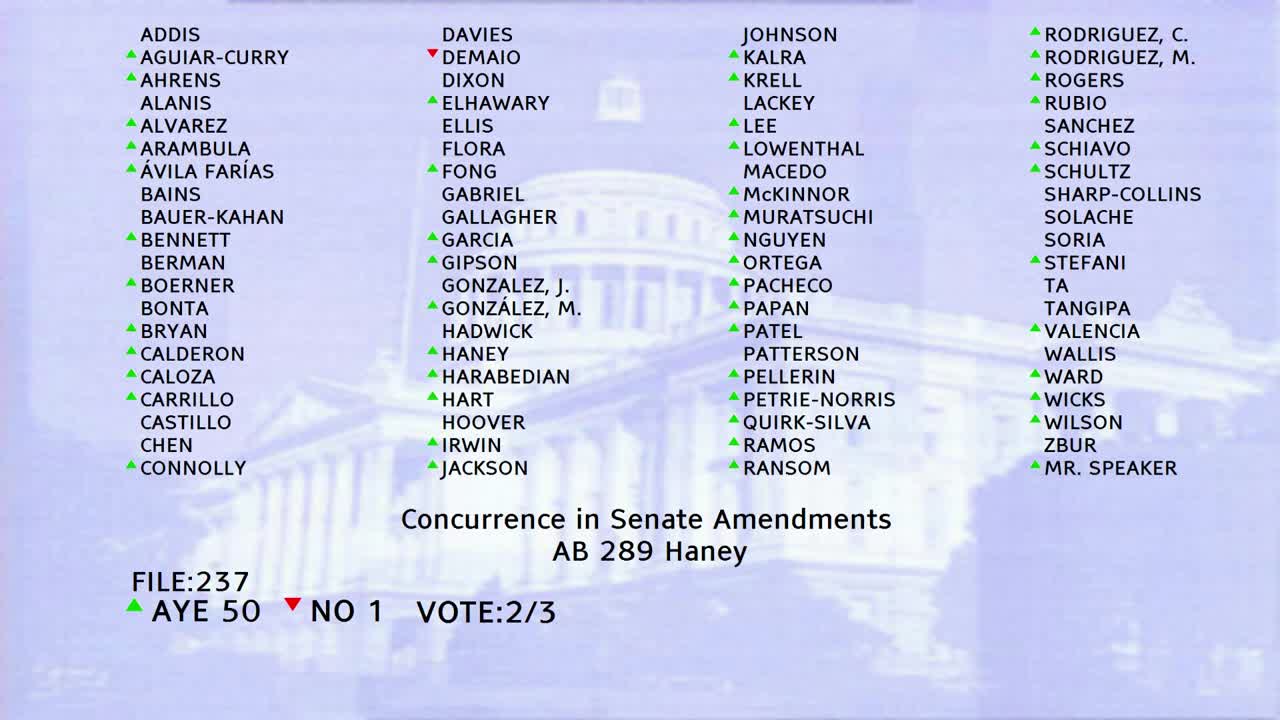
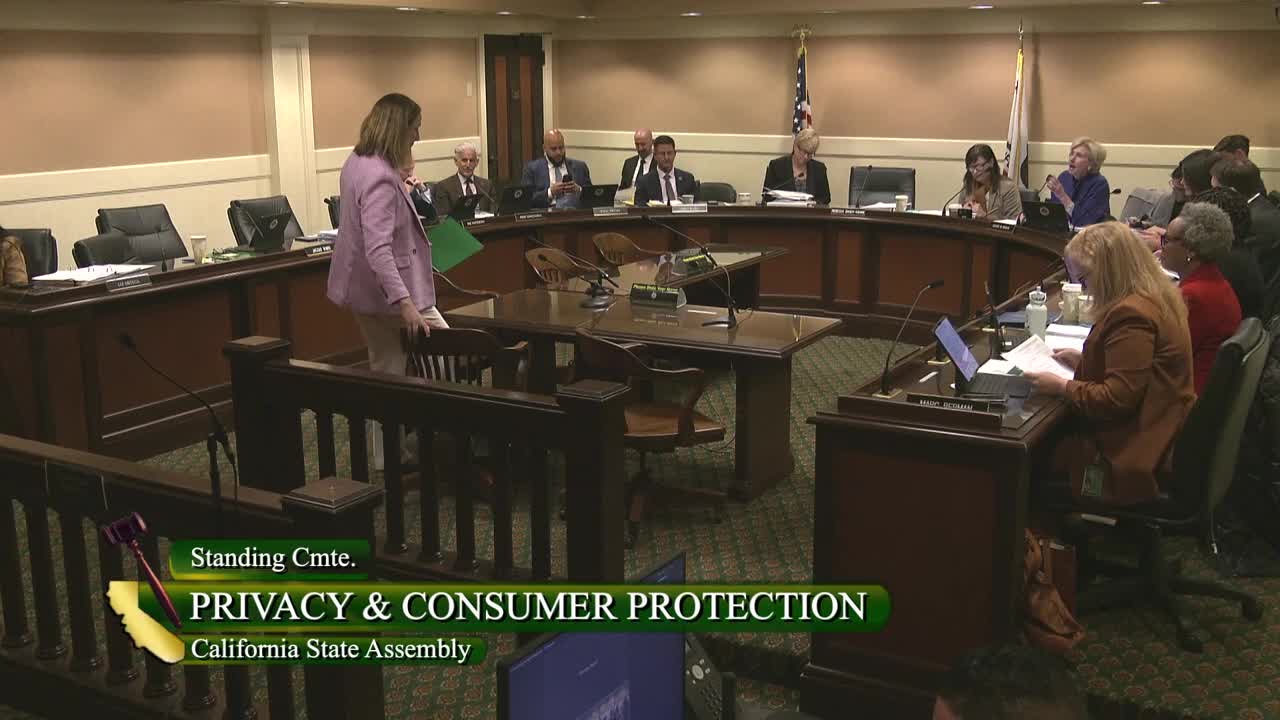
Bill Author

Bill Co-Author(s):