AB 515: Trial: statement of decision.
- Session Year: 2025-2026
- House: Assembly
- Latest Version Date: 2025-10-10
Current Status:
Passed
(2025-10-10: Chaptered by Secretary of State - Chapter 559, Statutes of 2025.)
Introduced
In Committee
Awaiting First Chamber Vote
Passed First Chamber
In Committee
Awaiting Second Chamber Vote
Passed Second Chamber
Enacted
In a trial by a superior court of a question of fact, existing law requires the court to issue a statement of decision explaining the factual and legal basis for its decision upon the request of any party appearing at the trial made either within 10 days after the court announces a tentative decision, or, for a trial concluded in one calendar day or in less than 8 hours over multiple days, before the matter is submitted for decision. Existing law requires the statement of decision to be in writing, unless the parties agree otherwise, except that for a trial concluded in one calendar day or in less than 8 hours over multiple days, the statement of decision may be made orally in the presence of the parties.
This bill would instead require a request for a statement of decision in all trials by court to be made in writing, or orally if there is an official record of the proceeding being transcribed, before the matter is submitted for decision. The bill would require the statement of decision to be served on all parties who appeared at the trial. The bill would authorize a court to issue a written statement of decision without a request from a party, and would authorize the court to order a party or parties to prepare a draft statement of decision. The bill would permit a party to make objections to a statement of decision, as specified. The bill would require the Judicial Council to adopt or amend all rules of court necessary to implement these provisions, and to prepare a form that a party may use to request a statement of decision, as specified.
Existing law requires the court clerk to enter the courts judgment in a trial by the court immediately upon the filing of the courts decision in the trial.
This bill would extend that deadline and instead require the clerk to enter judgment within 30 days after the filing of the courts decision, or, if a statement of decision was requested, within 30 days after the statement of decision becomes final.
The bills provisions would become operative on January 1, 2027.
In a trial by a superior court of a question of fact, existing law requires the court to issue a statement of decision explaining the factual and legal basis for its decision upon the request of any party appearing at the trial made either within 10 days after the court announces a tentative decision, or, for a trial concluded in one calendar day or in less than 8 hours over multiple days, before the matter is submitted for decision. Existing law requires the statement of decision to be in writing, unless the parties agree otherwise, except that for a trial concluded in one calendar day or in less than 8 hours over multiple days, the statement of decision may be made orally in the presence of the parties.
This bill would instead require a request for a statement of decision in all trials by court to be made in writing, or orally if there is an official record of the proceeding being transcribed, before the matter is submitted for decision. The bill would require the statement of decision to be served on all parties who appeared at the trial. The bill would authorize a court to issue a written statement of decision without a request from a party, and would authorize the court to order a party or parties to prepare a draft statement of decision. The bill would permit a party to make objections to a statement of decision, as specified. The bill would require the Judicial Council to adopt or amend all rules of court necessary to implement these provisions, and to prepare a form that a party may use to request a statement of decision and an accompanying information sheet, decision, as specified.
Existing law requires the court clerk to enter the courts judgment in a trial by the court immediately upon the filing of the courts decision in the trial.
This bill would extend that deadline and instead require the clerk to enter judgment within 30 days after the filing of the courts decision, or, if a statement of decision was requested, within 30 days after the statement of decision becomes final.
The bills provisions would become operative on January 1, 2027.
In a trial by a superior court of a question of fact, existing law requires the court to issue a statement of decision explaining the factual and legal basis for its decision upon the request of any party appearing at the trial made either within 10 days after the court announces a tentative decision, or, for a trial concluded in one calendar day or in less than 8 hours over multiple days, before the matter is submitted for decision. Existing law requires the statement of decision to be in writing, unless the parties agree otherwise, except that for a trial concluded in one calendar day or in less than 8 hours over multiple days, the statement of decision may be made orally in the presence of the parties.
This bill would instead require a request for a statement of decision in all trials by court to be made in writing, or orally if there is an official record of the proceeding being transcribed, before the matter is submitted for decision. The bill would require the statement of decision to be served on all parties who appeared at the trial. The bill would authorize a court to issue a written statement of decision without a request from a party, and would authorize the court to order a party or parties to prepare a draft statement of decision. The bill would permit a party to make objections to a statement of decision, as specified. The bill would require the Judicial Council to adopt or amend all rules of court necessary to implement these provisions. provisions, and to prepare a form that a party may use to request a statement of decision and an accompanying information sheet, as specified.
Existing law requires the court clerk to enter the courts judgment in a trial by the court immediately upon the filing of the courts decision in the trial.
This bill would extend that deadline and instead require the clerk to enter judgment within 30 days after the filing of the courts decision, or, if a statement of decision was requested, within 30 days after the statement of decision becomes final.
In a trial by a superior court of a question of fact, existing law requires the court to issue a statement of decision explaining the factual and legal basis for its decision upon the request of any party appearing at the trial made either within 10 days after the court announces a tentative decision, or, for a trial concluded in one calendar day or in less than 8 hours over multiple days, before the matter is submitted for decision. Existing law requires the statement of decision to be in writing, unless the parties agree otherwise, except that for a trial concluded in one calendar day or in less than 8 hours over multiple days, the statement of decision may be made orally in the presence of the parties.
This bill would instead require a request for a statement of decision in all trials by court to be made before the matter is submitted for decision. The bill would require the statement of decision to be served on all parties who appeared at the trial. The bill would authorize a court to issue a written statement of decision without a request from a party, and would authorize the court to order a party to prepare a draft statement of decision. The bill would permit a party to make objections to a statement of decision, as specified. The bill would require the Judicial Council to adopt or amend all rules of court necessary to implement these provisions.
Existing law requires the court clerk to enter the courts judgment in a trial by the court immediately upon the filing of the courts decision in the trial.
This bill would extend that deadline and instead require the clerk to enter judgment within 30 days after the filing of the courts decision, or, if a statement of decision was requested, within 30 days after the statement of decision becomes final.
Existing law provides that parties to a civil trial by the court are entitled to a statement of decision upon the trial of a question of fact, as specified.This bill would make a nonsubstantive change to this provision.Existing law provides that parties to a civil trial by the court are entitled to a statement of decision upon the trial of a question of fact, as specified.
This bill would make a nonsubstantive change to this provision.
(a)In superior courts, upon the trial of a question of fact by the court, written findings of fact and conclusions of law shall not be required. The court shall issue a statement of decision explaining the factual and legal basis for its decision as to each of the principal controverted issues at trial upon the request of any party appearing at the trial. The request must be made within 10 days after the court announces a tentative decision unless the trial is concluded within one calendar day or in less than eight hours over more than one day in which event the request must be made prior to the submission of the matter for decision. The request for a statement of decision shall specify those controverted issues as to which the party is requesting a statement of decision. After a party has requested the statement, any party may make proposals as to the content of the statement of decision.
(b)The statement of decision shall be in writing, unless the parties appearing at trial agree otherwise; however, when the trial is concluded within one calendar day or in less than 8 hours over more than one day, the statement of decision may be made orally on the record in the presence of the parties.
(c)This section shall remain in effect only until January 1, 2027, and as of that date is repealed.
SEC. 2.Section 632 is added to the Code of Civil Procedure, to read:632.(a)In superior courts, upon the trial of a question of fact by the court, written findings of fact and conclusions of law shall not be required. The court shall issue a statement of decision explaining the factual and legal basis for its decision as to each of the principal controverted issues at trial upon the request of any party appearing at the trial. The request must be made in writing, or orally if there is an official record of the proceeding being transcribed, prior to the submission of the matter for decision. The request for a statement of decision shall specify those controverted issues as to which the party is requesting a statement of decision.
(b)The statement of decision shall be in writing, unless the parties appearing at trial agree otherwise. The written statement of decision shall be served on all parties who appeared at trial. However, when the trial is concluded within one calendar day or in less than eight hours over more than one day, the statement of decision may be made orally on the record in the presence of the parties. The statement of decision need not summarize all evidence admitted at trial.
(c)If a statement of decision is not timely requested under subdivision (a), the court may announce its ruling on all relief sought without a statement of decision. Alternatively, the court may, in its sole discretion, issue a statement of decision even though one has not been requested.
(d)If a party has requested a statement of decision, the court may order a party or parties to prepare a draft statement of decision within a specified time period. The court shall thereafter issue its statement of decision.
(e)(1)Any party may, within 10 days after the statement of decision has been served by the court on the parties, serve and file objections to the statement of decision.
(2)If no objections are filed, the statement of decision becomes final upon the expiration of the time for filing objections.
(3)If objections are timely filed, the court may, but is not required to, set a hearing.
(4)If objections are ruled upon, with or without a hearing, the ruling shall be served on all parties who appeared at the trial. The statement of decision, including any amended statement of decision that the court may issue after sustaining any objection in whole or in part, shall become final upon issuance of the ruling, unless otherwise stated in the statement of decision.
(5)If any objections filed are not ruled upon, unless the court orders otherwise, the objections are deemed overruled and the statement of decision becomes final on the later of the following dates:
(A)Thirty days after the time for objections has expired.
(B)If there was a hearing on objections, 30 days after the hearing.
(f)(1)The court may prepare and serve a proposed judgment or may order a party to prepare, lodge, and serve a proposed judgment, before or after the statement of decision is final.
(2)Any party may, within 10 days after service of the proposed judgment, serve and file objections thereto.
(g)(1)The court may, by written order, extend any of the times prescribed by this section. Further, at any time before the entry of judgment, the court may, for good cause shown and on such terms as may be just, excuse noncompliance with the time limits prescribed for doing any act required by this rule.
(2)In any action under the Family Code, the court may also, by written order and upon a finding of good cause, shorten any of the times prescribed by this section.
(h)(1)The Judicial Council shall adopt or amend all rules of court necessary to implement this section.
(2)The Judicial Council shall prepare forms that a party may use to request a statement of decision and that explain the requirements prescribed by this section on requesting a statement of decision.
(i)This section shall become operative on January 1, 2027.
SEC. 3.Section 664 of the Code of Civil Procedure is amended to read:664.(a)When trial by jury has been had, judgment must be entered by the clerk, in conformity to the verdict within 24 hours after the rendition of the verdict, whether or not a motion for judgment notwithstanding the verdict be pending, unless the court order the case to be reserved for argument or further consideration, or grant a stay of proceedings. If the trial has been had by the court, judgment must be entered by the clerk, in conformity to the decision of the court, immediately upon the filing of such decision. In no case is a judgment effectual for any purpose until entered.
(b)This section shall remain in effect only until January 1, 2027, and as of that date is repealed.
SEC. 4.Section 664 is added to the Code of Civil Procedure, to read:664.(a)When trial by jury has been had, judgment must be entered by the clerk, in conformity to the verdict within 24 hours after the rendition of the verdict, whether or not a motion for judgment notwithstanding the verdict is pending, unless the court orders the case to be reserved for argument or further consideration, or grants a stay of proceedings.
(b)If the trial has been had by the court, judgment must be entered by the clerk, in conformity to the decision of the court, by the following dates:
(1)If no statement of decision is requested, within 30 days after the filing of the courts decision.
(2)If a statement of decision is requested, within 30 days after the statement of decision becomes final.
(c)In no case is a judgment effectual for any purpose until entered.
(d)This section shall become operative on January 1, 2027.
SECTION 1.Section 632 of the Code of Civil Procedure is amended to read:632.(a)In superior courts, upon the trial of a question of fact by the court, written findings of fact and conclusions of law shall not be required. The court shall issue a statement of decision explaining the factual and legal basis for its decision as to each of the principal controverted issues at trial upon the request of any party appearing at the trial. The request must be made in writing, or orally if there is an official record of the proceeding being transcribed, prior to the submission of the matter for decision. The request for a statement of decision shall specify those controverted issues as to which the party is requesting a statement of decision. (b)The statement of decision shall be in writing, unless the parties appearing at trial agree otherwise. The written statement of decision shall be served on all parties who appeared at trial. However, when the trial is concluded within one calendar day or in less than eight hours over more than one day, the statement of decision may be made orally on the record in the presence of the parties. The statement of decision need not summarize all evidence admitted at trial.(c)If a statement of decision is not timely requested under subdivision (a), the court may announce its ruling on all relief sought without a statement of decision. Alternatively, the court may, in its sole discretion, issue a statement of decision even though one has not been requested.(d)If a party has requested a statement of decision, the court may order a party or parties to prepare a draft statement of decision within a specified time period. The court shall thereafter issue its statement of decision.(e)(1)Any party may, within 10 days after the statement of decision has been served by the court on the parties, serve and file objections to the statement of decision.(2)If no objections are filed, the statement of decision becomes final upon the expiration of the time for filing objections.(3)If objections are timely filed, the court may, but is not required to, set a hearing.(4)If objections are ruled upon, with or without a hearing, the ruling shall be served on all parties who appeared at the trial. The statement of decision, including any amended statement of decision that the court may issue after sustaining any objection in whole or in part, shall become final upon issuance of the ruling, unless otherwise stated in the statement of decision.(5)If any objections filed are not ruled upon, unless the court orders otherwise, the objections are deemed overruled and the statement of decision becomes final on the later of the following dates:(A)Thirty days after the time for objections has expired.(B)If there was a hearing on objections, 30 days after the hearing.(f)(1)The court may prepare and serve a proposed judgment or may order a party to prepare, lodge, and serve a proposed judgment, before or after the statement of decision is final.(2)Any party may, within 10 days after service of the proposed judgment, serve and file objections thereto.(g)(1)The court may, by written order, extend any of the times prescribed by this section. Further, at any time before the entry of judgment, the court may, for good cause shown and on such terms as may be just, excuse noncompliance with the time limits prescribed for doing any act required by this rule.(2)In any action under the Family Code, the court may also, by written order and upon a finding of good cause, shorten any of the times prescribed by this section.(h)(1)The Judicial Council shall adopt or amend all rules of court necessary to implement this section.(2)The Judicial Council shall prepare a form that a party may use to request a statement of decision, as well as an accompanying information sheet that includes guidance on deadlines, when and how a statement of decision may be requested, and other requirements prescribed by this section.SEC. 2.Section 664 of the Code of Civil Procedure is amended to read:664.(a)When trial by jury has been had, judgment must be entered by the clerk, in conformity to the verdict within 24 hours after the rendition of the verdict, whether or not a motion for judgment notwithstanding the verdict is pending, unless the court orders the case to be reserved for argument or further consideration, or grants a stay of proceedings.(b)If the trial has been had by the court, judgment must be entered by the clerk, in conformity to the decision of the court, by the following dates:(1)If no statement of decision is requested, within 30 days after the filing of the courts decision.(2)If a statement of decision is requested, within 30 days after the statement of decision becomes final.(c)In no case is a judgment effectual for any purpose until entered.(a)In superior courts, upon the trial of a question of fact by the court, written findings of fact and conclusions of law shall not be required. The court shall issue a statement of decision explaining the factual and legal basis for its decision as to each of the principal controverted issues at trial upon the request of any party appearing at the trial. The request must be made in writing writing, or orally if there is an official record of the proceeding being transcribed, prior to the submission of the matter for decision. The request for a statement of decision shall specify those controverted issues as to which the party is requesting a statement of decision.
(b)The statement of decision shall be in writing, unless the parties appearing at trial agree otherwise. The written statement of decision shall be served on all parties who appeared at trial. However, when the trial is concluded within one calendar day or in less than 8 eight hours over more than one day, the statement of decision may be made orally on the record in the presence of the parties. The statement of decision need not summarize all evidence admitted at trial.
(c)If a statement of decision is not timely requested under subdivision (a), the court may announce its ruling on all relief sought without a statement of decision. Alternatively, the court may, in its sole discretion, issue a statement of decision even though one has not been requested.
(d)The If a party has requested a statement of decision, the court may order a party or parties to prepare a draft statement of decision within a specified time period. The court shall thereafter issue its statement of decision.
(e)(1)Any party may, within 10 days after the statement of decision has been served, served by the court on the parties, serve and file objections to the statement of decision.
(2)If no objections are filed, the statement of decision becomes final upon the expiration of the time for filing objections.
(3)If objections are timely filed, the court may, but is not required to, set a hearing.
(4)If objections are ruled upon, with or without a hearing, the ruling shall be served on all parties who appeared at the trial and the trial. The statement of decision becomes decision, including any amended statement of decision that the court may issue after sustaining any objection in whole or in part, shall become final upon issuance of the ruling. If any objection is sustained in whole or in part, the court may issue an amended statement of decision. ruling, unless otherwise stated in the statement of decision.
(5)If any objections filed are not ruled upon, unless the court orders otherwise, the objections are deemed overruled and the statement of decision becomes final on the later of the following dates:
(A)30 Thirty days after the time for objections has expired.
(B)If there was a hearing on objections, 30 days after the hearing.
(f)(1)The court may prepare and serve a proposed judgment or may order a party to prepare, lodge, and serve a proposed judgment, before or after the statement of decision is final.
(2)Any party may, within 10 days after service of the proposed judgment, serve and file objections thereto.
(g)(1)The court may, by written order, extend any of the times prescribed by this section. Further, at any time before the entry of judgment, the court may, for good cause shown and on such terms as may be just, excuse noncompliance with the time limits prescribed for doing any act required by this rule.
(2)In any action under the Family Code, the court may also, by written order and upon a finding of good cause, shorten any of the times prescribed by this section.
(h)(1)The Judicial Council shall adopt or amend all rules of court necessary to implement this section.
(2)The Judicial Council shall prepare a form that a party may use to request a statement of decision, as well as an accompanying information sheet that includes guidance on deadlines, when and how a statement of decision may be requested, and other requirements prescribed by this section.
SEC. 2.Section 664 of the Code of Civil Procedure is amended to read:664.(a)When trial by jury has been had, judgment must be entered by the clerk, in conformity to the verdict within 24 hours after the rendition of the verdict, whether or not a motion for judgment notwithstanding the verdict be is pending, unless the court order orders the case to be reserved for argument or further consideration, or grant grants a stay of proceedings.
(b)If the trial has been had by the court, judgment must be entered by the clerk, in conformity to the decision of the court, by the following dates:
(1)If no statement of decision is requested, within 30 days after the filing of the courts decision.
(2)If a statement of decision is requested, within 30 days after the statement of decision becomes final.
(c)In no case is a judgment effectual for any purpose until entered.
(a)In superior courts, upon the trial of a question of fact by the court, written findings of fact and conclusions of law shall not be required. The court shall issue a statement of decision explaining the factual and legal basis for its decision as to each of the principal controverted issues at trial upon the request of any party appearing at the trial. The request must be made in within 10 days after the court announces a tentative decision unless the trial is concluded within one calendar day or less than eight hours over more than one day in which event the request must be made writing prior to the submission of the matter for decision. The request for a statement of decision shall specify those controverted issues as to which the party is requesting a statement of decision. After a party has requested the statement, any party may make proposals as to the content of the statement of decision.
(b)The statement of decision shall be in writing, unless the parties appearing at trial agree otherwise; however, otherwise. The written statement of decision shall be served on all parties who appeared at trial. However, when the trial is concluded within one calendar day or in less than 8 hours over more than one day, the statement of decision may be made orally on the record in the presence of the parties.
(c)If a statement of decision is not timely requested under subdivision (a), the court may announce its ruling on all relief sought without a statement of decision. Alternatively, the court may, in its sole discretion, issue a statement of decision even though one has not been requested.
(d)The court may order a party to prepare a draft statement of decision within a specified time period. The court shall thereafter issue its statement of decision.
(e)(1)Any party may, within 10 days after the statement of decision has been served, serve and file objections to the statement of decision.
(2)If no objections are filed, the statement of decision becomes final upon the expiration of the time for filing objections.
(3)If objections are timely filed, the court may, but is not required to, set a hearing.
(4)If objections are ruled upon, with or without a hearing, the ruling shall be served on all parties who appeared at the trial and the statement of decision becomes final upon issuance of the ruling. If any objection is sustained in whole or in part, the court may issue an amended statement of decision.
(5)If any objections filed are not ruled upon, unless the court orders otherwise, the objections are deemed overruled and the statement of decision becomes final on the later of the following dates:
(A)30 days after the time for objections has expired.
(B)If there was a hearing on objections, 30 days after the hearing.
(f)(1)The court may prepare and serve a proposed judgment or may order a party to prepare, lodge, and serve a proposed judgment, before or after the statement of decision is final.
(2)Any party may, within 10 days after service of the proposed judgment, serve and file objections thereto.
(g)The court may, by written order, extend any of the times prescribed by this section. Further, at any time before the entry of judgment, the court may, for good cause shown and on such terms as may be just, excuse noncompliance with the time limits prescribed for doing any act required by this rule.
(h)The Judicial Council shall adopt or amend all rules of court necessary to implement this section.
SEC. 2.Section 664 of the Code of Civil Procedure is amended to read:664.(a)When trial by jury has been had, judgment must be entered by the clerk, in conformity to the verdict within 24 hours after the rendition of the verdict, whether or not a motion for judgment notwithstanding the verdict be pending, unless the court order the case to be reserved for argument or further consideration, or grant a stay of proceedings. If the trial has been had by the court, judgment must be entered by the clerk, in conformity to the decision of the court, immediately upon the filing of such decision. In no case is a judgment effectual for any purpose until entered.
(b)If the trial has been had by the court, judgment must be entered by the clerk, in conformity to the decision of the court, by the following dates:
(1)If no statement of decision is requested, within 30 days after the filing of the courts decision.
(2)If a statement of decision is requested, within 30 days after the statement of decision becomes final.
(c)In no case is a judgment effectual for any purpose until entered.
SECTION 1.Section 632 of the Code of Civil Procedure is amended to read:632.In superior courts, upon the trial of a question of fact by the court, written findings of fact and conclusions of law are not required. The court shall issue a statement of decision explaining the factual and legal basis for its decision as to each of the principal controverted issues at trial upon the request of any party appearing at the trial. The request must be made within 10 days after the court announces a tentative decision unless the trial is concluded within one calendar day or in less than eight hours over more than one day in which event the request must be made prior to the submission of the matter for decision. The request for a statement of decision shall specify those controverted issues as to which the party is requesting a statement of decision. After a party has requested the statement, any party may make proposals as to the content of the statement of decision.The statement of decision shall be in writing, unless the parties appearing at trial agree otherwise; however, when the trial is concluded within one calendar day or in less than 8 hours over more than one day, the statement of decision may be made orally on the record in the presence of the parties.In superior courts, upon the trial of a question of fact by the court, written findings of fact and conclusions of law shall not be are not required. The court shall issue a statement of decision explaining the factual and legal basis for its decision as to each of the principal controverted issues at trial upon the request of any party appearing at the trial. The request must be made within 10 days after the court announces a tentative decision unless the trial is concluded within one calendar day or in less than eight hours over more than one day in which event the request must be made prior to the submission of the matter for decision. The request for a statement of decision shall specify those controverted issues as to which the party is requesting a statement of decision. After a party has requested the statement, any party may make proposals as to the content of the statement of decision.
The statement of decision shall be in writing, unless the parties appearing at trial agree otherwise; however, when the trial is concluded within one calendar day or in less than 8 hours over more than one day, the statement of decision may be made orally on the record in the presence of the parties.
|
Date
|
Status
|
|---|---|
| Oct 10, 2025 | Chaptered by Secretary of State - Chapter 559, Statutes of 2025. |
| Oct 10, 2025 | Approved by the Governor. |
| Sep 22, 2025 | Enrolled and presented to the Governor at 3 p.m. |
| Sep 10, 2025 | Senate amendments concurred in. To Engrossing and Enrolling. (Ayes 78. Noes 0. Page 3195.). |
| Sep 9, 2025 | In Assembly. Concurrence in Senate amendments pending. |
| Sep 9, 2025 | Read third time. Passed. Ordered to the Assembly. (Ayes 40. Noes 0. Page 2747.). |
| Sep 3, 2025 | Read second time. Ordered to third reading. |
| Sep 2, 2025 | Read third time and amended. Ordered to second reading. |
| Aug 21, 2025 | Ordered to third reading. |
| Aug 21, 2025 | From Consent Calendar. |
| Aug 20, 2025 | Read second time. Ordered to Consent Calendar. |
| Aug 19, 2025 | From committee: Be ordered to second reading file pursuant to Senate Rule 28.8 and ordered to Consent Calendar. |
| Jul 16, 2025 | From committee: Do pass and re-refer to Com. on APPR. with recommendation: To Consent Calendar. (Ayes 13. Noes 0.) (July 15). Re-referred to Com. on APPR. |
| Jul 3, 2025 | From committee chair, with author's amendments: Amend, and re-refer to committee. Read second time, amended, and re-referred to Com. on JUD. |
| May 14, 2025 | Referred to Com. on JUD. |
| May 1, 2025 | In Senate. Read first time. To Com. on RLS. for assignment. |
| May 1, 2025 | Read third time. Passed. Ordered to the Senate. (Ayes 76. Noes 0. Page 1386.) |
| Apr 24, 2025 | Read second time. Ordered to Consent Calendar. |
| Apr 23, 2025 | From committee: Do pass. To Consent Calendar. (Ayes 15. Noes 0.) (April 23). |
| Apr 8, 2025 | From committee: Do pass and re-refer to Com. on APPR. with recommendation: To Consent Calendar. (Ayes 12. Noes 0.) (April 8). Re-referred to Com. on APPR. |
| Mar 17, 2025 | Re-referred to Com. on JUD. |
| Mar 13, 2025 | From committee chair, with author's amendments: Amend, and re-refer to Com. on JUD. Read second time and amended. |
| Mar 13, 2025 | Referred to Com. on JUD. |
| Feb 11, 2025 | From printer. May be heard in committee March 13. |
| Feb 10, 2025 | Read first time. To print. |
|
Date
|
Description
|
Location
|
Votes
|
|
|---|---|---|---|---|
| Sep 10, 2025 | AB 515 Pacheco Concurrence in Senate Amendments | Assembly Floor |
Passed |
|
| Sep 9, 2025 | Assembly 3rd Reading AB515 Pacheco By Umberg | Senate Floor |
Passed |
|
| Jul 15, 2025 | Do pass, but first be re-referred to the Committee on [Appropriations] with the recommendation: To Consent Calendar | Senate Standing Committee on Judiciary |
Passed |
|
| May 1, 2025 | AB 515 Pacheco Consent Calendar Second Day Regular Session | Assembly Floor |
Passed |
|
| Apr 23, 2025 | Do pass. To Consent Calendar. | Assembly Standing Committee on Appropriations |
Passed |
|
| Apr 8, 2025 | Do pass and be re-referred to the Committee on [Appropriations] with recommendation: To Consent Calendar | Assembly Standing Committee on Judiciary |
Passed |
This list shows positions taken on this bill by organizations on the date displayed, which is linked to the original source.
Positions by individuals are not included.
|
Organization
|
Position
|
Date
|
|---|---|---|
| California Judges Association | ** Support |
CONCURRENCE IN SENATE AMENDMENTS
CSA1 Bill Id:AB 515
Author:(Pacheco)
As Amended Ver:September 2, 2025
Majority vote
SUMMARY
Makes several changes to the process by which a party may request a statement of decision from a superior court.
Major Provisions
- Requires a request for a statement of decision in superior court trials, where the court is the trier of fact, to be made before the matter is submitted for decision.
- Authorizes a court to issue a written statement of decision without a request from a party, and would also authorize the court to order a party to prepare a draft statement of decision.
- Permits a party to make objections to a statement of decision within a specified timeline.
- Requires the Judicial Council to adopt or amend all rules of court necessary to implement the provisions above, and to prepare a form that a party may use to request a statement of decision and an accompanying information sheet, as specified.
- Extends that deadline for the court clerk to enter judgment to within 30 days after the filing of the court's decision, or, if a statement of decision was requested, within 30 days after the statement of decision becomes final.
- Provide that the provisions of this bill become operative on January 1, 2027.
Senate Amendments
Specify that the provisions of this bill become operative on January 1, 2027.
COMMENTS
Bench trials and the statement of decision. In most civil cases, parties can choose to have a jury trial or they can choose to have a "bench trial," in which the court, rather than a jury, decides questions of fact, as well as law. When a California trial court serves as the "trier of fact," it is not required to provide written findings of fact or conclusions of law, unless a party requests a "statement of decision" in the time and manner prescribed by law. Before rendering its final decision, the trial court must announce its "tentative decision" by an oral statement, entered into the minutes, or by a written statement filed with the clerk. The tentative decision not only states the court's proposed or preliminary decision, but may also indicate that the court will prepare a statement of decision, or alternatively that it may order a party to prepare (or propose) a statement of decision for the court to adopt. An existing statute, and a more detailed Rule of Court implementing that statute, sets forth a complex process for parties to request a statement of decision, based in part upon how long the trial lasts. The process for requesting a statement of decision has been described as so "byzantine" that lawyers sometimes fail to request the statement in the manner and timeframe required. Yet failure to obtain a statement of decision can be detrimental if the decision of the court is appealed. As one practicing attorney straightforwardly put it, "for the respondent who is defending the judgment, the Statement of Decision can demonstrate how the trial court got the facts and law right. For the appellant attacking the judgment, it shows where the trial court went off-course." (Herb Fox, "The Statement of Decision: Don't Leave a Trial Court Without it," Advocate Magazine December, 2014.)
One of the more arcane features of existing law – which this bill would correct – sets a different time for requesting the statement of decision depending upon the length of the trial. For trials that last longer than a day, for example, the request must be made within ten days after the announcement of the tentative decision. However, if the trial last less than a day – or less than eight hours over multiple days – then the request for a statement of decision must be made before the matter is submitted for a final decision. As illustrated in a 2022 opinion by the California Court of Appeal, not only lawyers, but sometimes even some judges, are confused about how to exactly calculate whether a trial lasted more than eight hours over multiple days. The question in one appellate court case was whether the "trial time" was limited to the amount of time spent in court hearings, or if "trial time" included time the trial court spent reviewing an administrative record. While the appellate court ultimately ruled that trial time did not include time that the court spent reviewing the administrative record – because it would require "sheer speculation" by the party trying to determine when to make a request – the case nonetheless illustrates the kinds of questions that might arise due to the lack of a uniform rule on making requests. (Atlantic Richfield Co. v California Regional Water Quality Control Board (2022) 85 Cal. App. 5th 338.)
This bill would, among other things, require a party to request for a statement of decision in all trials, regardless of length, before the matter is submitted for decision. By creating a uniform time for making the request, the bill would relieve a party of the burden of knowing and calculating what exactly constituted "trial time." Moreover, at the beginning of the trial, and even up to the time of the tentative decision, the parties do not know how long the trial may last. Under this bill, all parties would know, no matter how long the trial may last, that the request must be made before the matter is submitted for decision.
In addition, this bill would codify, and in some ways recast, many of the steps related to the statement of decision set forth in California Rule of Court 3.1590. For example, consistent with this Rule, the bill would do the following: require the statement of decision to be served on all parties; authorize a court to issue a written statement without a request, or to order a party to prepare a draft statement of decision; and set forth procedures and a timeline for a party to object to a statement of decision, and the consequences of objecting or not objecting. The bill would require the Judicial Council to adopt or amend all rules of court necessary to implement the bill's provisions. However, other than requiring a party to request the statement of decision before the matter is submitted for decision regardless of the length of the trial, the other provisions of the bill for the most part mirror the existing Rule of Court; thus it is unclear how much adopting or amending will be required by the Judicial Council.
Finally, this bill would also extend the deadline by which the clerk of the court must enter the judgement of the court following a bench trial. Under existing law, in a jury trial, the clerk must enter a judgment in conformity with the jury verdict within 24 hours after the verdict is rendered. In a bench trial, the judgement must be entered "immediately upon the filing of the decision." In short, the decision is filed and the judgment entered at more or less the same time. (Code of Civil Procedure Section 664.) This bill would instead require the clerk to enter the judgment within 30 days after the filing of the court's decision, if no statement of decision is requested, or within 30 days after the statement of decision becomes final, if a statement of decision is requested. This extension apparently mirrors the 30 days that a party (presumably the losing party) has to object to the statement of decision.
According to the Author
Assembly Bill 515 simplifies California's statement of decision process by providing clear procedures and timeframes. The bill establishes consistent rules for when and how parties may request a trial court's statement of decision. These clear, consistent procedures will reduce errors by both attorneys and trial courts, resulting in fewer appellate issues and more efficient resolution of appeals.
Arguments in Support
According to the California Judges Association (CJA), the sponsor of this bill, the "existing process for obtaining a statement of decision (SOD) is unduly complicated, causing attorneys and trial courts to make mistakes." CJA contends that neither judicial officers nor lawyers "have a clear idea how the rule and statute are supposed to operate." AB 515, CJA concludes, will "provide clarity and consistency in the SOD process, thereby avoiding errors and issues."
Arguments in Opposition
None on file
FISCAL COMMENTS
According to the Senate Appropriations Committee, pursuant to Senate Rule 28.8, negligible state costs.
VOTES:
ASM JUDICIARY: 12-0-0
YES: Kalra, Dixon, Wicks, Bryan, Connolly, Harabedian, Pacheco, Papan, Sanchez, Stefani, Zbur, Tangipa
ASM APPROPRIATIONS: 15-0-0
YES: Wicks, Sanchez, Arambula, Calderon, Caloza, Dixon, Elhawary, Fong, Mark González, Hart, Pacheco, Pellerin, Solache, Ta, Tangipa
ASSEMBLY FLOOR: 76-0-3
YES: Addis, Aguiar-Curry, Ahrens, Alanis, Alvarez, Arambula, Ávila Farías, Bains, Bauer-Kahan, Bennett, Berman, Boerner, Bonta, Bryan, Calderon, Caloza, Carrillo, Castillo, Connolly, Davies, DeMaio, Dixon, Elhawary, Ellis, Flora, Fong, Gabriel, Gallagher, Garcia, Gipson, Jeff Gonzalez, Mark González, Hadwick, Haney, Harabedian, Hart, Hoover, Irwin, Jackson, Kalra, Krell, Lackey, Lee, Lowenthal, Macedo, Muratsuchi, Nguyen, Ortega, Pacheco, Patel, Patterson, Pellerin, Petrie-Norris, Quirk-Silva, Ramos, Ransom, Celeste Rodriguez, Michelle Rodriguez, Rogers, Blanca Rubio, Sanchez, Schiavo, Schultz, Sharp-Collins, Solache, Soria, Stefani, Ta, Tangipa, Valencia, Wallis, Ward, Wicks, Wilson, Zbur, Rivas
ABS, ABST OR NV: Chen, McKinnor, Papan
UPDATED
VERSION: July 3, 2025
CONSULTANT: Tom Clark / JUD. / (916) 319-2334 FN: 0001718
SENATE RULES COMMITTEE Office of Senate Floor Analyses (916) 651-1520 Fax: (916) 327-4478 | AB 515 |
THIRD READING
Bill No: AB 515
Author: Pacheco (D)
Amended: 9/2/25 in Senate
Vote: 21
SENATE JUDICIARY COMMITTEE: 13-0, 7/15/25
AYES: Umberg, Niello, Allen, Arreguín, Ashby, Caballero, Durazo, Laird, Stern, Valladares, Wahab, Weber Pierson, Wiener
ASSEMBLY FLOOR: 76-0, 5/1/25 (Consent) - See last page for vote
SUBJECT: Trial: statement of decision
SOURCE: Author
DIGEST:
This bill modernizes and simplifies the processes governing the requesting and issuance of statements of decisions.
Senate Floor amendments of 9/2/25 delay implementation until January 1, 2027, and remove a requirement to provide an information sheet.
ANALYSIS:
Existing law:
- Provides that, in the superior courts, upon the trial of a question of fact, written findings of fact and conclusions of law shall not be required, unless requested. (Code of Civil Procedure (Code Civ. Proc.) § 632.)
- Requires a superior court to issue a statement of decision explaining the factual and legal basis for its decision upon the request of any party. Specifies that the request must be made within ten days after the court announces a tentative decision, unless the trial is concluded in one calendar day or in less than eight hours over multiple days, in which case the request must be made before the matter is submitted for decision. Requires this statement to be in writing, unless the parties agree otherwise, unless the trial concluded in one calendar day or in less than eight hours over multiple days, in which case the statement of decision may be made orally in the presence of the parties. (Code Civ. Proc. § 632.)
- Requires the court clerk to enter the court’s judgment in a trial by the court immediately upon the filing of the court’s decision in the trial. (Code Civ. Proc. § 664.)
- Establishes, pursuant to the Rules of Court, the steps and procedures for the court to issue tentative decisions; the time and manner by which a party may request from the court a statement of decision after the tentative decision; and the time and manner for a party to oppose or object to a statement of decision; and the preparation and filing of written judgment. (Cal. Rules of Court 3.1590.)
This bill:
- Requires a request for a statement of decision in superior court trials, where the court is the trier of fact, to be made in writing, or orally if there is an official record of the proceeding being transcribed, before the matter is submitted for decision.
- Requires the statement of decision to be served on all parties who appeared at trial.
- Provides that the statement need not summarize all evidence admitted at trial.
- Authorizes that court, if a statement of decision is not timely requested, to announce its ruling on all relief sought without a statement of decision. Alternatively, the court may, in its sole discretion, issue a statement of decision even though one has not been requested.
- Authorizes a court to order a party to prepare a draft statement of decision within a specified time frame. The court is required to issues its statement of decision thereafter.
- Permits a party to make objections to a statement of decision within 10 days after the statement of decision has been served by the court. If no objections are filed, the statement of decision becomes final upon the expiration of the time for filing objections. If objections are timely filed, the court may, but is not required to, set a hearing.
- Provides that, if objections are ruled upon, the ruling shall be served on all parties who appeared at the trial. The statement of decision, including any amended statement of decision that the court may issue after sustaining any objection in whole or in part, shall become final upon issuance of the ruling, unless otherwise stated. If any objections filed are not ruled upon, unless the court orders otherwise, the objections are deemed overruled and the statement of decision becomes final on the later of the following dates:
- 30 days after the time for objections has expired.
- If there was a hearing on objections, 30 days after the hearing.
- Permits the court to prepare and serve a proposed judgment or to order a party to prepare, lodge, and serve a proposed judgment, before or after the statement of decision is final. Any party may, within 10 days after service of the proposed judgment, serve and file objections thereto.
- Permits the court, by written order, to extend any of the times prescribed hereby. Further, at any time before the entry of judgment, the court may, for good cause shown and on such terms as may be just, excuse noncompliance with the time limits prescribed for doing any act required hereby.
- Provides that, in any action under the Family Code, the court may also, by written order and upon a finding of good cause, shorten any of the times prescribed hereby.
- Requires the Judicial Council to adopt or amend all rules of court necessary to implement this section. The Judicial Council shall prepare forms that a party may use to request a statement of decision and that explain the requirements prescribed hereby.
- Requires judgment to be entered by the clerk, in a bench trail, in conformity to the decision of the court, by the following dates:
- If no statement of decision is requested, within 30 days after the filing of the court’s decision.
- If a statement of decision is requested, within 30 days after the statement of decision becomes final.
- Delays implementation of these changes until January 1, 2027.
Background
Section 632 of the Code of Civil Procedure provides that if a timely request is made, the trial court is required to issue a statement of decision explaining the factual and legal basis for its decision as to each of the principal controverted issues at trial. The request must be made within 10 days after the court announces a tentative decision unless the trial is concluded within one calendar day or in less than eight hours over more than one day, in which event the request must be made prior to the submission of the matter for decision. The request for a statement of decision shall specify those controverted issues as to which the party is requesting a statement of decision. After a party has requested the statement, any party may make proposals as to the content of the statement of decision. Rule of Court 3.1590 implements this statute and details the appropriate process.
This bill simplifies the statute governing statements of decision, by, in part, incorporating parts of the existing Rule of Court, and generally provides more flexibility and clarity to courts. No timely support or opposition has been received
Comments
Upon the trial of a question of fact by the court, known as a “bench trial,” written findings of fact and conclusions of law are not required unless requested by a party appearing at trial. Thereafter, the court is required to issue a statement of decision explaining the factual and legal basis for its decision as to each of the principal controverted issues at trial. The required timing and process is arguably fairly byzantine. For instance, the request must be made within 10 days after the court announces a tentative decision unless the trial is concluded within one calendar day or in less than eight hours over more than one day, in which event the request must be made prior to the submission of the matter for decision. Judgment must be entered by the clerk in a bench trial, in conformity to the decision of the court, immediately upon the filing of such decision. Rule of Court 3.1590 outlines the attendant procedures in requesting and issuing a statement of decision.
As one California Court of Appeal has stated: “The statement of decision provides a reviewing court with the trial court's reasoning on disputed issues and is our touchstone to determine whether or not the trial court's decision is supported by the facts and the law.”[1]
Simplifying the process. A recent article highlights both the importance of a statement of decision and the need for simplification:
Because the failure to issue a Statement of Decision, and the issuance of a defective one, can both lead to reversal, it is incumbent on the prevailing party − not just the losing party − to participate in proposing, drafting and objecting, so that the document is complete and adequately sets forth all of the trial court’s ultimate factual findings and conclusions of law.
A Statement of Decision serves to pinpoint flaws in the trial court’s tentative decision and can assist counsel in drafting and opposing a Motion for New Trial. At bottom, however, a Statement of Decision is an appellate document. It is the trial court’s report to the Court of Appeal of the reasons for the judgment. It is the roadmap by which the reviewing court finds its way from the pleadings to the evidence to the judgment.
. . .
Notwithstanding its fundamental importance, however, the procedures for perfecting a Statement of Appeal are byzantine. A first, second or third reading of sections 632 and 634 of the Code of Civil Procedure, and Rule of Court 3.1590 – which govern those procedures – lead only to eyestrain.[2]
This bill updates those code sections, incorporating many of the steps outlined in Rule 3.1590, to streamline and simplify the process. This includes clearly outlining the timeline for requesting a statement of decision and filing objections to it and providing more flexibility in when judgment must be entered. For Family Code matters, the court is authorized to shorten any of these timelines. Judicial Council is ordered to adopt and amend all rules necessary.
According to the author:
Assembly Bill 515 simplifies California's statement of decision process by providing clear procedures and timeframes. The bill establishes consistent rules for when and how parties may request a trial court's statement of decision. These clear, consistent procedures will reduce errors by both attorneys and trial courts, resulting in fewer appellate issues and more efficient resolution of appeals.
FISCAL EFFECT: Appropriation: No Fiscal Com.: Yes Local: No
SUPPORT: (Verified 9/2/25)
None received
OPPOSITION: (Verified 9/2/25)
None received
ASSEMBLY FLOOR: 76-0, 5/1/25
AYES: Addis, Aguiar-Curry, Ahrens, Alanis, Alvarez, Arambula, Ávila Farías, Bains, Bauer-Kahan, Bennett, Berman, Boerner, Bonta, Bryan, Calderon, Caloza, Carrillo, Castillo, Connolly, Davies, DeMaio, Dixon, Elhawary, Ellis, Flora, Fong, Gabriel, Gallagher, Garcia, Gipson, Jeff Gonzalez, Mark González, Hadwick, Haney, Harabedian, Hart, Hoover, Irwin, Jackson, Kalra, Krell, Lackey, Lee, Lowenthal, Macedo, Muratsuchi, Nguyen, Ortega, Pacheco, Patel, Patterson, Pellerin, Petrie-Norris, Quirk-Silva, Ramos, Ransom, Celeste Rodriguez, Michelle Rodriguez, Rogers, Blanca Rubio, Sanchez, Schiavo, Schultz, Sharp-Collins, Solache, Soria, Stefani, Ta, Tangipa, Valencia, Wallis, Ward, Wicks, Wilson, Zbur, Rivas
NO VOTE RECORDED: Chen, McKinnor, Papan
Prepared by: Christian Kurpiewski / JUD. / (916) 651-4113
9/3/25 18:31:22
**** END ****
Alafi v. Cohen (2024) 106 Cal. App. 5th 46, 61. ↑
Herb Fox, The Statement of Decision (December 2014) Advocate Magazine, https://www.advocatemagazine.com/article/2014-december/the-statement-of-decision [as of July 5, 2025]. ↑
SENATE RULES COMMITTEE Office of Senate Floor Analyses (916) 651-1520 Fax: (916) 327-4478 | AB 515 |
THIRD READING
Bill No: AB 515
Author: Pacheco (D)
Amended: 7/3/25 in Senate
Vote: 21
SENATE JUDICIARY COMMITTEE: 13-0, 7/15/25
AYES: Umberg, Niello, Allen, Arreguín, Ashby, Caballero, Durazo, Laird, Stern, Valladares, Wahab, Weber Pierson, Wiener
ASSEMBLY FLOOR: 76-0, 5/1/25 (Consent) - See last page for vote
SUBJECT: Trial: statement of decision
SOURCE: Author
DIGEST:
This bill modernizes and simplifies the processes governing the requesting and issuance of statements of decisions.
ANALYSIS:
Existing law:
- Provides that, in the superior courts, upon the trial of a question of fact, written findings of fact and conclusions of law shall not be required, unless requested. (Code of Civil Procedure (Code Civ. Proc.) § 632.)
- Requires a superior court to issue a statement of decision explaining the factual and legal basis for its decision upon the request of any party. Specifies that the request must be made within ten days after the court announces a tentative decision, unless the trial is concluded in one calendar day or in less than eight hours over multiple days, in which case the request must be made before the matter is submitted for decision. Requires this statement to be in writing, unless the parties agree otherwise, unless the trial concluded in one calendar day or in less than eight hours over multiple days, in which case the statement of decision may be made orally in the presence of the parties. (Code Civ. Proc. § 632.)
- Requires the court clerk to enter the court’s judgment in a trial by the court immediately upon the filing of the court’s decision in the trial. (Code Civ. Proc. § 664.)
- Establishes, pursuant to the Rules of Court, the steps and procedures for the court to issue tentative decisions; the time and manner by which a party may request from the court a statement of decision after the tentative decision; and the time and manner for a party to oppose or object to a statement of decision; and the preparation and filing of written judgment. (Cal. Rules of Court 3.1590.)
This bill:
- Requires a request for a statement of decision in superior court trials, where the court is the trier of fact, to be made in writing, or orally if there is an official record of the proceeding being transcribed, before the matter is submitted for decision.
- Requires the statement of decision to be served on all parties who appeared at trial.
- Provides that the statement need not summarize all evidence admitted at trial.
- Authorizes that court, if a statement of decision is not timely requested, to announce its ruling on all relief sought without a statement of decision. Alternatively, the court may, in its sole discretion, issue a statement of decision even though one has not been requested.
- Authorizes a court to order a party to prepare a draft statement of decision within a specified time frame. The court is required to issues its statement of decision thereafter.
- Permits a party to make objections to a statement of decision within 10 days after the statement of decision has been served by the court. If no objections are filed, the statement of decision becomes final upon the expiration of the time for filing objections. If objections are timely filed, the court may, but is not required to, set a hearing.
- Provides that, if objections are ruled upon, the ruling shall be served on all parties who appeared at the trial. The statement of decision, including any amended statement of decision that the court may issue after sustaining any objection in whole or in part, shall become final upon issuance of the ruling, unless otherwise stated. If any objections filed are not ruled upon, unless the court orders otherwise, the objections are deemed overruled and the statement of decision becomes final on the later of the following dates:
- 30 days after the time for objections has expired.
- If there was a hearing on objections, 30 days after the hearing.
- Permits the court to prepare and serve a proposed judgment or to order a party to prepare, lodge, and serve a proposed judgment, before or after the statement of decision is final. Any party may, within 10 days after service of the proposed judgment, serve and file objections thereto.
- Permits the court, by written order, to extend any of the times prescribed hereby. Further, at any time before the entry of judgment, the court may, for good cause shown and on such terms as may be just, excuse noncompliance with the time limits prescribed for doing any act required hereby.
- Provides that, in any action under the Family Code, the court may also, by written order and upon a finding of good cause, shorten any of the times prescribed hereby.
- Requires the Judicial Council to adopt or amend all rules of court necessary to implement this section. The Judicial Council shall prepare a form that a party may use to request a statement of decision, as well as an accompanying information sheet that includes guidance on deadlines, when and how a statement of decision may be requested, and other requirements prescribed hereby.
- Requires judgment to be entered by the clerk, in a bench trail, in conformity to the decision of the court, by the following dates:
- If no statement of decision is requested, within 30 days after the filing of the court’s decision.
- If a statement of decision is requested, within 30 days after the statement of decision becomes final.
Background
Section 632 of the Code of Civil Procedure provides that if a timely request is made, the trial court is required to issue a statement of decision explaining the factual and legal basis for its decision as to each of the principal controverted issues at trial. The request must be made within 10 days after the court announces a tentative decision unless the trial is concluded within one calendar day or in less than eight hours over more than one day, in which event the request must be made prior to the submission of the matter for decision. The request for a statement of decision shall specify those controverted issues as to which the party is requesting a statement of decision. After a party has requested the statement, any party may make proposals as to the content of the statement of decision. Rule of Court 3.1590 implements this statute and details the appropriate process.
This bill simplifies the statute governing statements of decision, by, in part, incorporating parts of the existing Rule of Court, and generally provides more flexibility and clarity to courts. No timely support or opposition has been received
Comments
Upon the trial of a question of fact by the court, known as a “bench trial,” written findings of fact and conclusions of law are not required unless requested by a party appearing at trial. Thereafter, the court is required to issue a statement of decision explaining the factual and legal basis for its decision as to each of the principal controverted issues at trial. The required timing and process is arguably fairly byzantine. For instance, the request must be made within 10 days after the court announces a tentative decision unless the trial is concluded within one calendar day or in less than eight hours over more than one day, in which event the request must be made prior to the submission of the matter for decision. Judgment must be entered by the clerk in a bench trial, in conformity to the decision of the court, immediately upon the filing of such decision. Rule of Court 3.1590 outlines the attendant procedures in requesting and issuing a statement of decision.
As one California Court of Appeal has stated: “The statement of decision provides a reviewing court with the trial court's reasoning on disputed issues and is our touchstone to determine whether or not the trial court's decision is supported by the facts and the law.”[1]
Simplifying the process. A recent article highlights both the importance of a statement of decision and the need for simplification:
Because the failure to issue a Statement of Decision, and the issuance of a defective one, can both lead to reversal, it is incumbent on the prevailing party − not just the losing party − to participate in proposing, drafting and objecting, so that the document is complete and adequately sets forth all of the trial court’s ultimate factual findings and conclusions of law.
A Statement of Decision serves to pinpoint flaws in the trial court’s tentative decision and can assist counsel in drafting and opposing a Motion for New Trial. At bottom, however, a Statement of Decision is an appellate document. It is the trial court’s report to the Court of Appeal of the reasons for the judgment. It is the roadmap by which the reviewing court finds its way from the pleadings to the evidence to the judgment.
. . .
Notwithstanding its fundamental importance, however, the procedures for perfecting a Statement of Appeal are byzantine. A first, second or third reading of sections 632 and 634 of the Code of Civil Procedure, and Rule of Court 3.1590 – which govern those procedures – lead only to eyestrain.[2]
This bill updates those code sections, incorporating many of the steps outlined in Rule 3.1590, to streamline and simplify the process. This includes clearly outlining the timeline for requesting a statement of decision and filing objections to it and providing more flexibility in when judgment must be entered. For Family Code matters, the court is authorized to shorten any of these timelines. Judicial Council is ordered to adopt and amend all rules necessary.
According to the author:
Assembly Bill 515 simplifies California's statement of decision process by providing clear procedures and timeframes. The bill establishes consistent rules for when and how parties may request a trial court's statement of decision. These clear, consistent procedures will reduce errors by both attorneys and trial courts, resulting in fewer appellate issues and more efficient resolution of appeals.
FISCAL EFFECT: Appropriation: No Fiscal Com.: Yes Local: No
SUPPORT: (Verified 8/21/25)
None received
OPPOSITION: (Verified 8/21/25)
None received
ASSEMBLY FLOOR: 76-0, 5/1/25
AYES: Addis, Aguiar-Curry, Ahrens, Alanis, Alvarez, Arambula, Ávila Farías, Bains, Bauer-Kahan, Bennett, Berman, Boerner, Bonta, Bryan, Calderon, Caloza, Carrillo, Castillo, Connolly, Davies, DeMaio, Dixon, Elhawary, Ellis, Flora, Fong, Gabriel, Gallagher, Garcia, Gipson, Jeff Gonzalez, Mark González, Hadwick, Haney, Harabedian, Hart, Hoover, Irwin, Jackson, Kalra, Krell, Lackey, Lee, Lowenthal, Macedo, Muratsuchi, Nguyen, Ortega, Pacheco, Patel, Patterson, Pellerin, Petrie-Norris, Quirk-Silva, Ramos, Ransom, Celeste Rodriguez, Michelle Rodriguez, Rogers, Blanca Rubio, Sanchez, Schiavo, Schultz, Sharp-Collins, Solache, Soria, Stefani, Ta, Tangipa, Valencia, Wallis, Ward, Wicks, Wilson, Zbur, Rivas
NO VOTE RECORDED: Chen, McKinnor, Papan
Prepared by: Christian Kurpiewski / JUD. / (916) 651-4113
8/21/25 16:45:27
**** END ****
Alafi v. Cohen (2024) 106 Cal. App. 5th 46, 61. ↑
Herb Fox, The Statement of Decision (December 2014) Advocate Magazine, https://www.advocatemagazine.com/article/2014-december/the-statement-of-decision [as of July 5, 2025]. ↑
Senator Thomas Umberg, Chair
2025-2026 Regular Session
Bill No: AB 515 (Author:Pacheco)
Version: July 3, 2025
Hearing Date: July 15, 2025
Fiscal: Yes
Urgency: No
Consultant: CK
SUBJECT
Trial: statement of decision
DIGEST
This bill modernizes and simplifies the processes governing the requesting and issuance of statements of decisions.
EXECUTIVE SUMMARY
Section 632 of the Code of Civil Procedure provides that if a timely request is made, the trial court is required to issue a statement of decision explaining the factual and legal basis for its decision as to each of the principal controverted issues at trial. The request must be made within 10 days after the court announces a tentative decision unless the trial is concluded within one calendar day or in less than eight hours over more than one day, in which event the request must be made prior to the submission of the matter for decision. The request for a statement of decision shall specify those controverted issues as to which the party is requesting a statement of decision. After a party has requested the statement, any party may make proposals as to the content of the statement of decision. Rule of Court 3.1590 implements this statute and details the appropriate process.
This bill simplifies the statute governing statements of decision, by, in part, incorporating parts of the existing Rule of Court, and generally provides more flexibility and clarity to courts.
No timely support or opposition has been received by the Committee.
PROPOSED CHANGES TO THE LAW
Existing law:
- Provides that, in the superior courts, upon the trial of a question of fact, written findings of fact and conclusions of law shall not be required, unless requested. (Code Civ. Proc. § 632.)
- Requires a superior court to issue a statement of decision explaining the factual and legal basis for its decision upon the request of any party. Specifies that the request must be made within ten days after the court announces a tentative decision, unless the trial is concluded in one calendar day or in less than eight hours over multiple days, in which case the request must be made before the matter is submitted for decision. Requires this statement to be in writing, unless the parties agree otherwise, unless the trial concluded in one calendar day or in less than eight hours over multiple days, in which case the statement of decision may be made orally in the presence of the parties. (Code Civ. Proc. § 632.)
- Requires the court clerk to enter the court’s judgment in a trial by the court immediately upon the filing of the court’s decision in the trial. (Code Civ. Proc. § 664.)
- Establishes, pursuant to the Rules of Court, the steps and procedures for the court to issue tentative decisions; the time and manner by which a party may request from the court a statement of decision after the tentative decision; and the time and manner for a party to oppose or object to a statement of decision; and the preparation and filing of written judgment. (Cal. Rules of Court 3.1590.)
This bill:
- Requires a request for a statement of decision in superior court trials, where the court is the trier of fact, to be made in writing, or orally if there is an official record of the proceeding being transcribed, before the matter is submitted for decision.
- Requires the statement of decision to be served on all parties who appeared at trial.
- Provides that the statement need not summarize all evidence admitted at trial.
- Authorizes that court, if a statement of decision is not timely requested, to announce its ruling on all relief sought without a statement of decision. Alternatively, the court may, in its sole discretion, issue a statement of decision even though one has not been requested.
- Authorizes a court to order a party to prepare a draft statement of decision within a specified time frame. The court is required to issues its statement of decision thereafter.
- Permits a party to make objections to a statement of decision within 10 days after the statement of decision has been served by the court. If no objections are filed, the statement of decision becomes final upon the expiration of the time for filing objections. If objections are timely filed, the court may, but is not required to, set a hearing.
- Provides that, if objections are ruled upon, the ruling shall be served on all parties who appeared at the trial. The statement of decision, including any amended statement of decision that the court may issue after sustaining any objection in whole or in part, shall become final upon issuance of the ruling, unless otherwise stated. If any objections filed are not ruled upon, unless the court orders otherwise, the objections are deemed overruled and the statement of decision becomes final on the later of the following dates:
- 30 days after the time for objections has expired.
- If there was a hearing on objections, 30 days after the hearing.
- Permits the court to prepare and serve a proposed judgment or to order a party to prepare, lodge, and serve a proposed judgment, before or after the statement of decision is final. Any party may, within 10 days after service of the proposed judgment, serve and file objections thereto.
- Permits the court, by written order, to extend any of the times prescribed hereby. Further, at any time before the entry of judgment, the court may, for good cause shown and on such terms as may be just, excuse noncompliance with the time limits prescribed for doing any act required hereby.
- Provides that, in any action under the Family Code, the court may also, by written order and upon a finding of good cause, shorten any of the times prescribed hereby.
- Requires the Judicial Council to adopt or amend all rules of court necessary to implement this section. The Judicial Council shall prepare a form that a party may use to request a statement of decision, as well as an accompanying information sheet that includes guidance on deadlines, when and how a statement of decision may be requested, and other requirements prescribed hereby.
- Requires judgment to be entered by the clerk, in a bench trail, in conformity to the decision of the court, by the following dates:
- If no statement of decision is requested, within 30 days after the filing of the court’s decision.
- If a statement of decision is requested, within 30 days after the statement of decision becomes final.
COMMENTS
- Statement of decision
Upon the trial of a question of fact by the court, known as a “bench trial,” written findings of fact and conclusions of law are not required unless requested by a party appearing at trial. Thereafter, the court is required to issue a statement of decision explaining the factual and legal basis for its decision as to each of the principal controverted issues at trial. The required timing and process is arguably fairly byzantine. For instance, the request must be made within 10 days after the court announces a tentative decision unless the trial is concluded within one calendar day or in less than eight hours over more than one day, in which event the request must be made prior to the submission of the matter for decision. Judgment must be entered by the clerk in a bench trial, in conformity to the decision of the court, immediately upon the filing of such decision. Rule of Court 3.1590 outlines the attendant procedures in requesting and issuing a statement of decision.
As one California Court of Appeal has stated: “The statement of decision provides a reviewing court with the trial court's reasoning on disputed issues and is our touchstone to determine whether or not the trial court's decision is supported by the facts and the law.”[1]
- Simplifying the process
A recent article highlights both the importance of a statement of decision and the need for simplification:
Because the failure to issue a Statement of Decision, and the issuance of a defective one, can both lead to reversal, it is incumbent on the prevailing party − not just the losing party − to participate in proposing, drafting and objecting, so that the document is complete and adequately sets forth all of the trial court’s ultimate factual findings and conclusions of law.
A Statement of Decision serves to pinpoint flaws in the trial court’s tentative decision and can assist counsel in drafting and opposing a Motion for New Trial. At bottom, however, a Statement of Decision is an appellate document. It is the trial court’s report to the Court of Appeal of the reasons for the judgment. It is the roadmap by which the reviewing court finds its way from the pleadings to the evidence to the judgment.
. . .
Notwithstanding its fundamental importance, however, the procedures for perfecting a Statement of Appeal are byzantine. A first, second or third reading of sections 632 and 634 of the Code of Civil Procedure, and Rule of Court 3.1590 – which govern those procedures – lead only to eyestrain.[2]
This bill updates those code sections, incorporating many of the steps outlined in Rule 3.1590, to streamline and simplify the process. This includes clearly outlining the timeline for requesting a statement of decision and filing objections to it and providing more flexibility in when judgment must be entered. For Family Code matters, the court is authorized to shorten any of these timelines. Judicial Council is ordered to adopt and amend all rules necessary.
According to the author:
Assembly Bill 515 simplifies California's statement of decision process by providing clear procedures and timeframes. The bill establishes consistent rules for when and how parties may request a trial court's statement of decision. These clear, consistent procedures will reduce errors by both attorneys and trial courts, resulting in fewer appellate issues and more efficient resolution of appeals.
SUPPORT
None known
OPPOSITION
None known
RELATED LEGISLATION
Pending Legislation: None known.
Prior Legislation: None known.
PRIOR VOTES:
Assembly Floor (Ayes 76, Noes 0)
Assembly Appropriations Committee (Ayes 15, Noes 0)
Assembly Judiciary Committee (Ayes 12, Noes 0)
**************
Alafi v. Cohen (2024) 106 Cal. App. 5th 46, 61. ↑
Herb Fox, The Statement of Decision (December 2014) Advocate Magazine, https://www.advocatemagazine.com/article/2014-december/the-statement-of-decision [as of July 5, 2025]. ↑
Date of Hearing: April 23, 2025
ASSEMBLY COMMITTEE ON APPROPRIATIONS
Buffy Wicks, Chair
ABPCA Bill Id:AB 515
Author:(Pacheco) – As Amended Ver:March 13, 2025
Policy Committee: | Judiciary | Vote: | 12 - 0 |
|
| ||
|
|
Urgency: No State Mandated Local Program: No Reimbursable: No
SUMMARY:
This bill establishes procedures and timeframes for a party to request and for a court to issue a written statement of decision in a superior court bench trial.
Specifically, among other provisions, this bill:
- Requires a request for a statement of decision in a superior court bench trial be made before the matter is submitted for decision.
- Authorizes a court to issue a written statement of decision without a request from a party.
- Permits a party to make objections to a statement of decision within a specified timeline.
- Requires the Judicial Council to adopt or amend all rules of court necessary to implement the provisions above.
FISCAL EFFECT:
Minor and absorbable costs to Judicial Council to adopt and amend rules of court.
COMMENTS:
- Purpose. This bill is sponsored by the California Judges Association. According to the author:
Assembly Bill 515 simplifies California's statement of decision process by providing clear procedures and timeframes. The bill establishes consistent rules for when and how parties may request a trial court's statement of decision. These clear, consistent procedures will reduce errors by both attorneys and trial courts, resulting in fewer appellate issues and more efficient resolution of appeals.
- Background. In a civil trial, questions of fact may be decided by a jury or by the judge, in what is known as bench trial. At the conclusion of a bench trial, the judge is not required to provide written findings of fact or conclusions of law unless one of the parties requests a statement of decision. Under existing law and rules of court, the process and timelines for requesting a statement of decision are so convoluted that parties often fail to properly make a request and are left without a document laying out the court’s findings and reasoning. Without a statement of decision, mounting a successful appeal can be very challenging.
This bill establishes more straightforward procedures for requesting a statement of decision and requires the Judicial Council to issue new rules of court (or amend existing rules) to implement the bill’s procedures.
Analysis Prepared by: Annika Carlson / APPR. / (916) 319-2081
Date of Hearing: April 8, 2025
ASSEMBLY COMMITTEE ON JUDICIARY
Ash Kalra, Chair
ABPCA Bill Id:AB 515
Author:(Pacheco) – As Amended Ver:March 13, 2025
proposed consent
SUBJECT: Trial: statement of decision
KEY ISSUES:
- should the procedures for requesting a “statement of decision” in a bench trial be changed to, among other things, require the request in all cases to be made before the matter is submitted for decision?
- should the time for the clerk to enter the court’s judgment be extended to 30 days after the filing of the court’s decision or, if a statement of decision was requested, within 30 days after the statement of decision becomes final?
SYNOPSIS
When a California trial court serves as the trier of fact – that is, in a bench trial – the court is not required to provide written findings of fact or conclusions of law, unless a party requests a “statement of decision” in the time and manner prescribed by law. Before rendering its final decision, the trial court typically issues a “tentative decision” by an oral statement, entered into the minutes, or by a written statement filed with the clerk. The tentative decision not only states the courts proposed or preliminary decision, it may also indicate whether the court will prepare a statement of decision, or it may order a party to prepare (or propose) a statement of decision for the court to adopt. An existing statute, and a more detailed Rule of Court implementing that statute, sets forth a complex – some would say byzantine – process for parties to request a statement of decision, based in part upon how long the trial lasts. For trials that last longer than a day, the request for a statement of decision must be made within 10 days of the announcement of the tentative decision. If the trial last less than a day – or less than eight hours over multiple days – then the request for a statement of decision must be made after the tentative decision, but before the matter is submitted for a final decision.
This non-controversial bill would instead require a request for a statement of decision in all trials, regardless of length, to be made before the matter is submitted for decision. In addition, this bill would codify many of the existing steps in California Rule of Court 3.1590. According to the author, the existing process fails to provide clear procedures and timelines for requesting a statement of decision and, as a result, the statements are sometimes not generated, even though they are valuable for appeals. The bill would also extend the time for the clerk to enter the court’s judgment in a bench trial, depending upon whether or not a statement is requested. Finally, the bill would require the Judicial Council to adopt or amend all rules of court necessary to implement the bill’s provisions. The bill is sponsored by the California Judges Association and has no opposition.
SUMMARY: Makes several changes to the process by which a party may request a statement of decision from a superior court. Specifically, this bill:
- Requires a request for a statement of decision in superior court trials, where the court is the trier of fact, to be made before the matter is submitted for decision.
- Authorizes a court to issue a written statement of decision without a request from a party, and would also authorize the court to order a party to prepare a draft statement of decision.
- Permits a party to make objections to a statement of decision within a specified timeline.
- Requires the Judicial Council to adopt or amend all rules of court necessary to implement the provisions above.
- Extends that deadline for the court clerk to enter judgment to within 30 days after the filing of the court’s decision, or, if a statement of decision was requested, within 30 days after the statement of decision becomes final.
EXISTING LAW:
- Provides that, in the superior courts, upon the trial of a question of fact, written findings of fact and conclusions of law shall not be required, unless requested as noted in 2) below. (Code of Civil Procedure Section 632.)
- Requires a superior court to issue a statement of decision explaining the factual and legal basis for its decision upon the request of any party. Specifies that the request must be made within ten days after the court announces a tentative decision, unless the trial is concluded in one calendar day or in less than eight hours over multiple days, in which case the request must be made before the matter is submitted for decision. Requires this statement to be in writing, unless the parties agree otherwise, unless the trial concluded in one calendar day or in less than eight hours over multiple days, in which case the statement of decision may be made orally in the presence of the parties. (Code of Civil Procedure Section 632.)
- Requires the court clerk to enter the court’s judgment in a trial by the court immediately upon the filing of the court’s decision in the trial. (Code of Civil Procedure Section 664.)
- Sets forth, by Rule of Court, the steps and procedures for the court to issue tentative decisions; the time and manner by which a party may request from the court a statement of decision after the tentative decision; and the time and manner for a party to oppose or object to a statement of decision; and the preparation and filing of written judgment. (California Rule of Court 3.1590.)
FISCAL EFFECT: As currently in print this bill is keyed fiscal.
COMMENTS: According to the author, “Assembly Bill 515 simplifies California's statement of decision process by providing clear procedures and timeframes. The bill establishes consistent rules for when and how parties may request a trial court's statement of decision. These clear, consistent procedures will reduce errors by both attorneys and trial courts, resulting in fewer appellate issues and more efficient resolution of appeals.”
Bench trials and the statement of decision. In most civil cases, parties can choose to have a jury trial or they can choose to have a “bench trial,” in which the court, rather than a jury, decides questions of fact, as well as law. When a California trial court serves as the “trier of fact,” it is not required to provide written findings of fact or conclusions of law, unless a party requests a “statement of decision” in the time and manner prescribed by law. Before rendering its final decision, the trial court must announce its “tentative decision” by an oral statement, entered into the minutes, or by a written statement filed with the clerk. The tentative decision not only states the court’s proposed or preliminary decision, but may also indicate that the court will prepare a statement of decision, or alternatively that it may order a party to prepare (or propose) a statement of decision for the court to adopt. An existing statute, and a more detailed Rule of Court implementing that statute, sets forth a complex process for parties to request a statement of decision, based in part upon how long the trial lasts. The process for requesting a statement of decision has been described as so “byzantine” that lawyers sometimes fail to request the statement in the manner and timeframe required. Yet failure to obtain a statement of decision can be detrimental if the decision of the court is appealed. As one practicing attorney straightforwardly put it, “for the respondent who is defending the judgment, the Statement of Decision can demonstrate how the trial court got the facts and law right. For the appellant attacking the judgment, it shows where the trial court went off-course.” (Herb Fox, “The Statement of Decision: Don’t Leave a Trial Court Without it,” Advocate Magazine December, 2014.)
One of the more arcane features of existing law – which this bill would correct – sets a different time for requesting the statement of decision depending upon the length of the trial. For trials that last longer than a day, for example, the request must be made within ten days after the announcement of the tentative decision. However, if the trial last less than a day – or less than eight hours over multiple days – then the request for a statement of decision must be made before the matter is submitted for a final decision. As illustrated in a 2022 opinion by the California Court of Appeal, not only lawyers, but sometimes even some judges, are confused about how to exactly calculate whether a trial lasted more than eight hours over multiple days. The question in one appellate court case was whether the “trial time” was limited to the amount of time spent in court hearings, or if “trial time” included time the trial court spent reviewing an administrative record. While the appellate court ultimately ruled that trial time did not include time that the court spent reviewing the administrative record – because it would require “sheer speculation” by the party trying to determine when to make a request – the case nonetheless illustrates the kinds of questions that might arise due to the lack of a uniform rule on making requests. (Atlantic Richfield Co. v California Regional Water Quality Control Board (2022) 85 Cal. App. 5th 338.)
This bill would, among other things, require a party to request for a statement of decision in all trials, regardless of length, before the matter is submitted for decision. By creating a uniform time for making the request, the bill would relieve a party of the burden of knowing and calculating what exactly constituted “trial time.” Moreover, at the beginning of the trial, and even up to the time of the tentative decision, the parties do not know how long the trial may last. Under this bill, all parties would know, no matter how long the trial may last, that the request must be made before the matter is submitted for decision.
In addition, this bill would codify, and in some ways recast, many of the steps related to the statement of decision set forth in California Rule of Court 3.1590. For example, consistent with this Rule, the bill would do the following: require the statement of decision to be served on all parties; authorize a court to issue a written statement without a request, or to order a party to prepare a draft statement of decision; and set forth procedures and a timeline for a party to object to a statement of decision, and the consequences of objecting or not objecting. The bill would require the Judicial Council to adopt or amend all rules of court necessary to implement the bill’s provisions. However, other than requiring a party to request the statement of decision before the matter is submitted for decision regardless of the length of the trial, the other provisions of the bill for the most part mirror the existing Rule of Court; thus it is unclear how much adopting or amending will be required by the Judicial Council.
Finally, this bill would also extend the deadline by which the clerk of the court must enter the judgement of the court following a bench trial. Under existing law, in a jury trial, the clerk must enter a judgment in conformity with the jury verdict within 24 hours after the verdict is rendered. In a bench trial, the judgement must be entered “immediately upon the filing of the decision.” In short, the decision is filed and the judgment entered at more or less the same time. (Code of Civil Procedure Section 664.) This bill would instead require the clerk to enter the judgment within 30 days after the filing of the court’s decision, if no statement of decision is requested, or within 30 days after the statement of decision becomes final, if a statement of decision is requested. This extension apparently mirrors the 30 days that a party (presumably the losing party) has to object to the statement of decision.
Potential amendments. Although the bill in print is relatively non-controversial and has received no letters of opposition or significant concern, the Committee understands that the author, the sponsor, and the Consumer Attorneys of California (CAOC) are working cooperatively to make refinements to the language that will, it is hoped, achieve everyone’s common goal of streamlining and simplifying the complex and confusing statutory scheme that currently exists, which will reduce errors in the process and lighten the load of the judiciary and attorneys. CAOC would like clearer protections for litigants, and particularly pro per litigants, by requiring a formal waiver of the right to a statement of decision should a party so elect.
ARGUMENTS IN SUPPORT: According to the California Judges Association (CJA), the sponsor of this bill, the “existing process for obtaining a statement of decision (SOD) is unduly complicated, causing attorneys and trial courts to make mistakes.” CJA contends that neither judicial officers nor lawyers “have a clear idea how the rule and statute are supposed to operate.” AB 515, CJA concludes, will “provide clarity and consistency in the SOD process, thereby avoiding errors and issues.”
REGISTERED SUPPORT / OPPOSITION:
Support
California Judges Association (sponsor)
Opposition
None on file
Analysis Prepared by: Tom Clark / JUD. / (916) 319-2334
Discussed in Hearing
View Older Hearings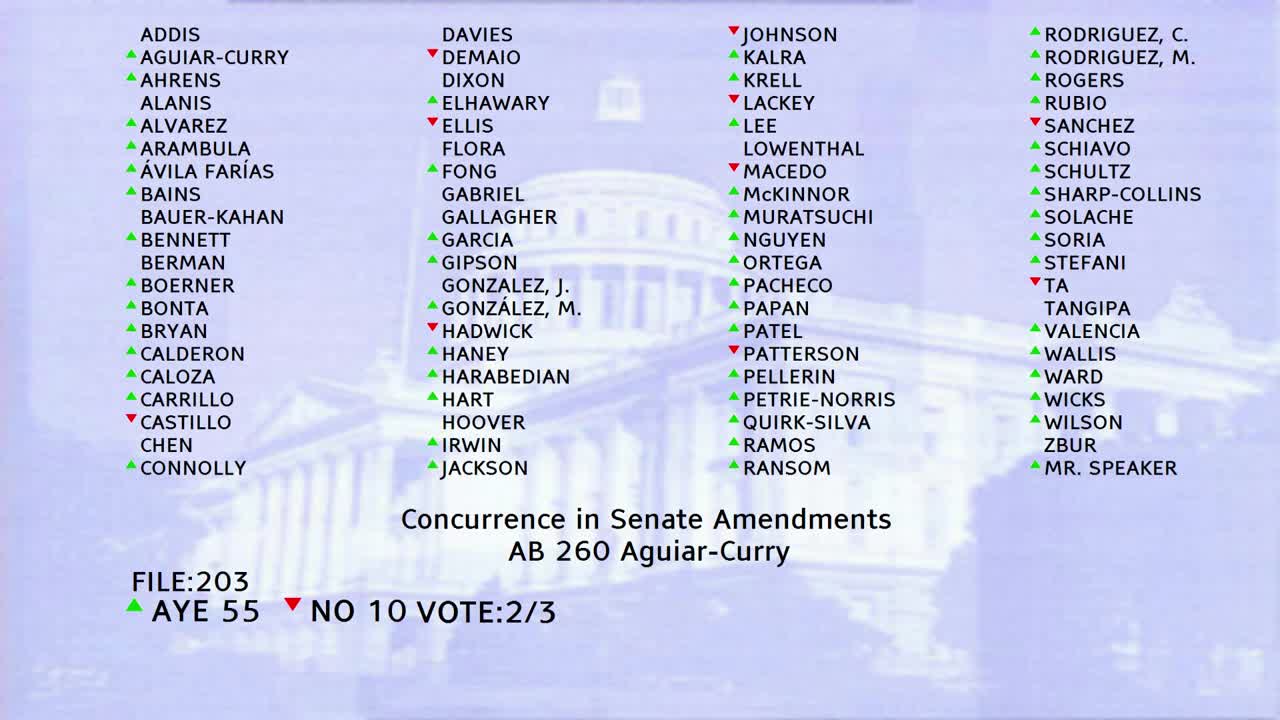
Bill Author

Bill Co-Author(s):