AB 531: Geothermal powerplants and projects: certification and environmental review.
- Session Year: 2025-2026
- House: Assembly
- Latest Version Date: 2025-10-06
Current Status:
Passed
(2025-10-06: Chaptered by Secretary of State - Chapter 372, Statutes of 2025.)
Introduced
In Committee
Awaiting First Chamber Vote
Passed First Chamber
In Committee
Awaiting Second Chamber Vote
Passed Second Chamber
Enacted
Existing law establishes and vests in the State Energy Resources Conservation and Development Commission (Energy Commission) various responsibilities with respect to developing and implementing the states energy policies. Existing law authorizes persons proposing specified electrical generation, electrical transmission, hydrogen production, and energy storage projects to apply, on or before June 30, 2029, to the Energy Commission to certify sites and related facilities as environmental leadership development projects, as specified. Existing law makes a site and related facility certified by the Energy Commission subject to streamlining benefits related to CEQA with no further action by the applicant or the Governor. Under existing law, the Energy Commissions certification is in lieu of any permit, certificate, or similar document required by any governmental agency and supersedes any applicable statute, ordinance, or regulation, except as specified.
This bill would expand the types of facilities eligible to be certified as environmental leadership development projects by the Energy Commission to include geothermal powerplants and projects that comprise multiple geothermal powerplants on a single site.
This bill would incorporate additional changes to Section 25545 of the Public Resources Code proposed by SB 254 to be operative only if this bill and SB 254 are enacted and this bill is enacted last.
Existing law establishes and vests in the State Energy Resources Conservation and Development Commission (Energy Commission) various responsibilities with respect to developing and implementing the states energy policies. Existing law authorizes persons proposing specified electrical generation, electrical transmission, hydrogen production, and energy storage projects to apply, on or before June 30, 2029, to the Energy Commission to certify sites and related facilities as environmental leadership development projects, as specified. Existing law makes a site and related facility certified by the Energy Commission subject to streamlining benefits related to CEQA with no further action by the applicant or the Governor. Under existing law, the Energy Commissions certification is in lieu of any permit, certificate, or similar document required by any governmental agency and supersedes any applicable statute, ordinance, or regulation, except as specified.
This bill would expand the types of facilities eligible to be certified as environmental leadership development projects by the Energy Commission to include geothermal powerplants and geothermal field development projects, as defined. projects that comprise multiple geothermal powerplants on a single site.
Existing law establishes and vests in the State Energy Resources Conservation and Development Commission (Energy Commission) various responsibilities with respect to developing and implementing the states energy policies. Existing law authorizes persons proposing specified electrical generation, electrical transmission, hydrogen production, and energy storage projects to apply, on or before June 30, 2029, to the Energy Commission to certify sites and related facilities as environmental leadership development projects, as specified. Existing law makes a site and related facility certified by the Energy Commission subject to streamlining benefits related to CEQA with no further action by the applicant or the Governor. Under existing law, the Energy Commissions certification is in lieu of any permit, certificate, or similar document required by any governmental agency and supersedes any applicable statute, ordinance, or regulation, except as specified.
This bill would expand the types of facilities eligible to be certified as environmental leadership development projects by the Energy Commission to include geothermal powerplants and geothermal field development projects, as defined.
For purposes of this chapter, the following definitions apply:
(a)California Native American tribe has the same meaning as set forth in Section 21073.
(b)Facility means any of the following:
(1)A solar photovoltaic or terrestrial wind electrical generating powerplant with a generating capacity of 50 megawatts or more and any facilities appurtenant thereto.
(2)An energy storage system as defined in Section 2835 of the Public Utilities Code that is capable of storing 200 megawatthours or more of energy.
(3)A stationary electrical generating powerplant using any source of thermal energy, with a generating capacity of 50 megawatts or more, excluding any powerplant that burns, uses, or relies on fossil or nuclear fuels.
(4)A discretionary project as described in Section 21080 for which the applicant has certified that a capital investment of at least two hundred fifty million dollars ($250,000,000) will be made over a period of five years and the discretionary project is for (A) the manufacture, production, or assembly of an energy storage system or component manufacturing, wind system or component manufacturing, and solar photovoltaic energy system or component manufacturing, or (B) the manufacture, production, or assembly of specialized products, components, or systems that are integral to renewable energy or energy storage technologies.
(5)An electrical transmission line carrying electricity from a facility described in paragraph (1), (2), or (3) that is located in the state to a point of junction with any interconnected electrical transmission system.
(6)A hydrogen production facility and associated onsite storage and processing facilities that do not derive hydrogen from a fossil fuel feedstock and that receive funding from any of the following:
(A)The Hydrogen Program established pursuant to Section 25664.1.
(B)Section 91530, as added by the Safe Drinking Water, Wildfire Prevention, Drought Preparedness, and Clean Air Bond Act of 2024.
(C)The Alliance for Renewable Clean Hydrogen Energy Systems (ARCHES) authorized by Article 15 (commencing with Section 12100.160) of Chapter 1.6 of Part 2 of Division 3 of Title 2 of the Government Code, as awarded by the United States Department of Energy Office of Clean Energy Demonstrations.
(7)A geothermal powerplant or a project that comprises multiple geothermal powerplants on a single site.
(c)Site means any location on which an eligible facility is constructed or is proposed to be constructed.
SEC. 1.5.Section 25545 of the Public Resources Code is amended to read:25545.For purposes of this chapter, the following definitions apply:
(a)California Native American tribe has the same meaning as set forth in Section 21073.
(b)Facility means any of the following:
(1)A solar photovoltaic or terrestrial wind electrical generating powerplant with a generating capacity of 50 megawatts or more and any facilities appurtenant thereto.
(2)An energy storage system as defined in Section 2835 of the Public Utilities Code that is capable of storing 200 megawatthours or more of energy.
(3)A stationary electrical generating powerplant using any source of thermal energy, with a generating capacity of 50 megawatts or more, excluding any powerplant that burns, uses, or relies on fossil or nuclear fuels.
(4)A discretionary project as described in Section 21080 for which the applicant has certified that a capital investment of at least one hundred million dollars ($100,000,000) will be made over a period of five years and the discretionary project is for (A) the manufacture, production, or assembly of an energy storage system or component manufacturing, wind system or component manufacturing, and solar photovoltaic energy system or component manufacturing, or (B) the manufacture, production, or assembly of specialized products, components, or systems that are integral to renewable energy or energy storage technologies.
(5)An electrical transmission line carrying electricity from a facility described in paragraph (1), (2), or (3) that is located in the state to a point of junction with any interconnected electrical transmission system.
(6)A hydrogen production facility and associated onsite storage and processing facilities that do not derive hydrogen from a fossil fuel feedstock and that receive funding from any of the following:
(A)The Hydrogen Program established pursuant to Section 25664.1.
(B)Section 91530, as added by the Safe Drinking Water, Wildfire Prevention, Drought Preparedness, and Clean Air Bond Act of 2024.
(C)The Alliance for Renewable Clean Hydrogen Energy Systems (ARCHES) authorized by Article 15 (commencing with Section 12100.160) of Chapter 1.6 of Part 2 of Division 3 of Title 2 of the Government Code, as awarded by the United States Department of Energy Office of Clean Energy Demonstrations.
(7)A geothermal powerplant or a project that comprises multiple geothermal powerplants on a single site.
(c)Site means any location on which an eligible facility is constructed or is proposed to be constructed.
SEC. 2.Section 1.5 of this bill incorporates amendments to Section 25545 of the Public Resources Code proposed by this bill and Senate Bill 254. That section of this bill shall only become operative if (1) both bills are enacted and become effective on or before January 1, 2026, (2) each bill amends Section 25545 of the Public Resources Code, and (3) this bill is enacted after SB 254, in which case Section 25545 of the Public Resources Code, as amended by SB 254, shall remain operative only until the operative date of this bill, at which time Section 1.5 of this bill shall become operative, and Section 1 of this bill shall not become operative.
For purposes of this chapter, the following definitions apply:
(a)California Native American tribe has the same meaning as set forth in Section 21073.
(b)Facility means any of the following:
(1)A solar photovoltaic or terrestrial wind electrical generating powerplant with a generating capacity of 50 megawatts or more and any facilities appurtenant thereto.
(2)An energy storage system as defined in Section 2835 of the Public Utilities Code that is capable of storing 200 megawatthours or more of energy.
(3)A stationary electrical generating powerplant using any source of thermal energy, with a generating capacity of 50 megawatts or more, excluding any powerplant that burns, uses, or relies on fossil or nuclear fuels.
(4)A discretionary project as described in Section 21080 for which the applicant has certified that a capital investment of at least two hundred fifty million dollars ($250,000,000) will be made over a period of five years and the discretionary project is for (A) the manufacture, production, or assembly of an energy storage system or component manufacturing, wind system or component manufacturing, and solar photovoltaic energy system or component manufacturing, or (B) the manufacture, production, or assembly of specialized products, components, or systems that are integral to renewable energy or energy storage technologies.
(5)An electrical transmission line carrying electricity from a facility described in paragraph (1), (2), or (3) that is located in the state to a point of junction with any interconnected electrical transmission system.
(6)A hydrogen production facility and associated onsite storage and processing facilities that do not derive hydrogen from a fossil fuel feedstock and that receive funding from any of the following:
(A)The Hydrogen Program established pursuant to Section 25664.1.
(B)Section 91530, as added by the Safe Drinking Water, Wildfire Prevention, Drought Preparedness, and Clean Air Bond Act of 2024.
(C)The Alliance for Renewable Clean Hydrogen Energy Systems (ARCHES) authorized by Article 15 (commencing with Section 12100.160) of Chapter 1.6 of Part 2 of Division 3 of Title 2 of the Government Code, as awarded by the United States Department of Energy Office of Clean Energy Demonstrations.
(7)A geothermal powerplant or a project that comprises multiple geothermal powerplants on a single site.
(c)Site means any location on which an eligible facility is constructed or is proposed to be constructed.
SEC. 1.5.Section 25545 of the Public Resources Code is amended to read:25545.For purposes of this chapter, the following definitions apply:
(a)California Native American tribe has the same meaning as set forth in Section 21073.
(b)Facility means any of the following:
(1)A solar photovoltaic or terrestrial wind electrical generating powerplant with a generating capacity of 50 megawatts or more and any facilities appurtenant thereto.
(2)An energy storage system as defined in Section 2835 of the Public Utilities Code that is capable of storing 200 megawatthours or more of energy.
(3)A stationary electrical generating powerplant using any source of thermal energy, with a generating capacity of 50 megawatts or more, excluding any powerplant that burns, uses, or relies on fossil or nuclear fuels.
(4)A discretionary project as described in Section 21080 for which the applicant has certified that a capital investment of at least two hundred fifty million one hundred million dollars ($250,000,000) ($100,000,000) will be made over a period of five years and the discretionary project is for (A) the manufacture, production, or assembly of an energy storage system or component manufacturing, wind system or component manufacturing, and solar photovoltaic energy system or component manufacturing, or (B) the manufacture, production, or assembly of specialized products, components, or systems that are integral to renewable energy or energy storage technologies.
(5)An electrical transmission line carrying electricity from a facility described in paragraph (1), (2), or (3) that is located in the state to a point of junction with any interconnected electrical transmission system.
(6)A hydrogen production facility and associated onsite storage and processing facilities that do not derive hydrogen from a fossil fuel feedstock and that receive funding from any of the following:
(A)The Hydrogen Program established pursuant to Section 25664.1.
(B)Section 91530, as added by the Safe Drinking Water, Wildfire Prevention, Drought Preparedness, and Clean Air Bond Act of 2024 (Section 2 of Chapter 83 of the Statutes of 2024 (Senate Bill No. 867)), if that act is approved by the voters at the November 5, 2024, statewide general election. 2024.
(C)The Alliance for Renewable Clean Hydrogen Energy Systems (ARCHES) authorized by Article 15 (commencing with Section 12100.160) of Chapter 1.6 of Part 2 of Division 3 of Title 2 of the Government Code, as awarded by the United States Department of Energy Office of Clean Energy Demonstrations.
(7)A geothermal powerplant or a project that comprises multiple geothermal powerplants on a single site.
(c)Site means any location on which an eligible facility is constructed or is proposed to be constructed.
SEC. 2.Section 1.5 of this bill incorporates amendments to Section 25545 of the Public Resources Code proposed by this bill and Senate Bill 254. That section of this bill shall only become operative if (1) both bills are enacted and become effective on or before January 1, 2026, (2) each bill amends Section 25545 of the Public Resources Code, and (3) this bill is enacted after SB 254, in which case Section 25545 of the Public Resources Code, as amended by SB 254, shall remain operative only until the operative date of this bill, at which time Section 1.5 of this bill shall become operative, and Section 1 of this bill shall not become operative.
For purposes of this chapter, the following definitions apply:
(a)California Native American tribe has the same meaning as set forth in Section 21073.
(b)Facility means any of the following:
(1)A solar photovoltaic or terrestrial wind electrical generating powerplant with a generating capacity of 50 megawatts or more and any facilities appurtenant thereto.
(2)An energy storage system as defined in Section 2835 of the Public Utilities Code that is capable of storing 200 megawatthours or more of energy.
(3)A stationary electrical generating powerplant using any source of thermal energy, with a generating capacity of 50 megawatts or more, excluding any powerplant that burns, uses, or relies on fossil or nuclear fuels.
(4)A discretionary project as described in Section 21080 for which the applicant has certified that a capital investment of at least two hundred fifty million dollars ($250,000,000) will be made over a period of five years and the discretionary project is for (A) the manufacture, production, or assembly of an energy storage system or component manufacturing, wind system or component manufacturing, and solar photovoltaic energy system or component manufacturing, or (B) the manufacture, production, or assembly of specialized products, components, or systems that are integral to renewable energy or energy storage technologies.
(5)An electrical transmission line carrying electricity from a facility described in paragraph (1), (2), or (3) that is located in the state to a point of junction with any interconnected electrical transmission system.
(6)A hydrogen production facility and associated onsite storage and processing facilities that do not derive hydrogen from a fossil fuel feedstock and that receive funding from any of the following:
(A)The Hydrogen Program established pursuant to Section 25664.1.
(B)Section 91530, as added by the Safe Drinking Water, Wildfire Prevention, Drought Preparedness, and Clean Air Bond Act of 2024.
(C)The Alliance for Renewable Clean Hydrogen Energy Systems (ARCHES) authorized by Article 15 (commencing with Section 12100.160) of Chapter 1.6 of Part 2 of Division 3 of Title 2 of the Government Code, as awarded by the United States Department of Energy Office of Clean Energy Demonstrations.
(7)A geothermal powerplant or a geothermal field development project, as defined in Section 65928.5 of the Government Code. project that comprises multiple geothermal powerplants on a single site.
(c)Site means any location on which an eligible facility is constructed or is proposed to be constructed.
For purposes of this chapter, the following definitions apply:
(a)California Native American tribe has the same meaning as set forth in Section 21073.
(b)Facility means any of the following:
(1)A solar photovoltaic or terrestrial wind electrical generating powerplant with a generating capacity of 50 megawatts or more and any facilities appurtenant thereto.
(2)An energy storage system as defined in Section 2835 of the Public Utilities Code that is capable of storing 200 megawatthours or more of energy.
(3)A stationary electrical generating powerplant using any source of thermal energy, with a generating capacity of 50 megawatts or more, excluding any powerplant that burns, uses, or relies on fossil or nuclear fuels.
(4)A discretionary project as described in Section 21080 for which the applicant has certified that a capital investment of at least two hundred fifty million dollars ($250,000,000) will be made over a period of five years and the discretionary project is for (A) the manufacture, production, or assembly of an energy storage system or component manufacturing, wind system or component manufacturing, and solar photovoltaic energy system or component manufacturing, or (B) the manufacture, production, or assembly of specialized products, components, or systems that are integral to renewable energy or energy storage technologies.
(5)An electrical transmission line carrying electricity from a facility described in paragraph (1), (2), or (3) that is located in the state to a point of junction with any interconnected electrical transmission system.
(6)A hydrogen production facility and associated onsite storage and processing facilities that do not derive hydrogen from a fossil fuel feedstock and that receive funding from any of the following:
(A)The Hydrogen Program established pursuant to Section 25664.1.
(B)Section 91530, as added by the Safe Drinking Water, Wildfire Prevention, Drought Preparedness, and Clean Air Bond Act of 2024 (Section 2 of Chapter 83 of the Statutes of 2024 (Senate Bill No. 867)), if that act is approved by the voters at the November 5, 2024, statewide general election. 2024.
(C)The Alliance for Renewable Clean Hydrogen Energy Systems (ARCHES) authorized by Article 15 (commencing with Section 12100.160) of Chapter 1.6 of Part 2 of Division 3 of Title 2 of the Government Code, as awarded by the United States Department of Energy Office of Clean Energy Demonstrations.
(7)A geothermal powerplant or a geothermal field development project, as defined in Section 65928.5 of the Government Code.
(c)Site means any location on which an eligible facility is constructed or is proposed to be constructed.
|
Date
|
Status
|
|---|---|
| Oct 6, 2025 | Chaptered by Secretary of State - Chapter 372, Statutes of 2025. |
| Oct 6, 2025 | Approved by the Governor. |
| Sep 24, 2025 | Enrolled and presented to the Governor at 3 p.m. |
| Sep 12, 2025 | Senate amendments concurred in. To Engrossing and Enrolling. (Ayes 69. Noes 4. Page 3433.). |
| Sep 12, 2025 | In Assembly. Concurrence in Senate amendments pending. |
| Sep 11, 2025 | Read third time. Passed. Ordered to the Assembly. (Ayes 37. Noes 1. Page 2888.). |
| Sep 8, 2025 | Read second time. Ordered to third reading. |
| Sep 5, 2025 | Read third time and amended. Ordered to second reading. |
| Aug 29, 2025 | Read second time. Ordered to third reading. |
| Aug 29, 2025 | From committee: Do pass. (Ayes 6. Noes 1.) (August 29). |
| Aug 18, 2025 | In committee: Referred to suspense file. |
| Jul 16, 2025 | From committee: Do pass and re-refer to Com. on APPR. (Ayes 6. Noes 1.) (July 16). Re-referred to Com. on APPR. |
| Jul 7, 2025 | Read second time and amended. Re-referred to Com. on E.Q. |
| Jul 3, 2025 | From committee: Amend, and do pass as amended and re-refer to Com. on E.Q. (Ayes 16. Noes 0.) (July 1). |
| Jun 11, 2025 | Referred to Coms. on E., U & C. and E.Q. |
| Jun 3, 2025 | In Senate. Read first time. To Com. on RLS. for assignment. |
| Jun 2, 2025 | Read third time. Passed. Ordered to the Senate. (Ayes 79. Noes 0. Page 1835.) |
| May 27, 2025 | Read second time. Ordered to third reading. |
| May 23, 2025 | From committee: Do pass. (Ayes 13. Noes 0.) (May 23). |
| May 14, 2025 | In committee: Set, first hearing. Referred to suspense file. |
| Apr 22, 2025 | From committee: Do pass and re-refer to Com. on APPR. with recommendation: To Consent Calendar. (Ayes 14. Noes 0.) (April 21). Re-referred to Com. on APPR. |
| Apr 3, 2025 | From committee: Do pass and re-refer to Com. on NAT. RES. with recommendation: To Consent Calendar. (Ayes 18. Noes 0.) (April 2). Re-referred to Com. on NAT. RES. |
| Mar 3, 2025 | Referred to Coms. on U. & E. and NAT. RES. |
| Feb 12, 2025 | From printer. May be heard in committee March 14. |
| Feb 11, 2025 | Read first time. To print. |
|
Date
|
Description
|
Location
|
Votes
|
|
|---|---|---|---|---|
| Sep 12, 2025 | AB 531 Rogers Concurrence in Senate Amendments | Assembly Floor |
Passed |
|
| Sep 11, 2025 | Assembly 3rd Reading AB531 Rogers et al. By Becker | Senate Floor |
Passed |
|
| Aug 29, 2025 | Do pass | Senate Standing Committee on Appropriations |
Passed |
|
| Aug 18, 2025 | Placed on suspense file | Senate Standing Committee on Appropriations |
Passed |
|
| Jul 16, 2025 | Do pass, but first be re-referred to the Committee on [Appropriations] | Senate Standing Committee on Environmental Quality |
Passed |
|
| Jul 1, 2025 | Do pass as amended, but first amend, and re-refer to the Committee on [Environmental Quality] | Senate Standing Committee on Energy, Utilities and Communications |
Passed |
|
| Jun 2, 2025 | AB 531 Rogers Assembly Third Reading | Assembly Floor |
Passed |
|
| May 23, 2025 | Do pass. | Assembly Standing Committee on Appropriations |
Passed |
|
| Apr 21, 2025 | Do pass and be re-referred to the Committee on [Appropriations] with recommendation: To Consent Calendar | Assembly Standing Committee on Natural Resources |
Passed |
|
| Apr 2, 2025 | Do pass and be re-referred to the Committee on [Natural Resources] with recommendation: To Consent Calendar | Assembly Standing Committee on Utilities and Energy |
Passed |
|
| Apr 2, 2025 | Do pass and be re-referred to the Committee on [Appropriations] with recommendation: To Consent Calendar | Assembly Standing Committee on Utilities and Energy |
Passed |
This list shows positions taken on this bill by organizations on the date displayed, which is linked to the original source.
Positions by individuals are not included.
|
Organization
|
Position
|
Date
|
|---|---|---|
| 350 Humboldt: Grass Roots Climate Action | ** Support | |
| Advanced Energy United | ** Support | |
| American Clean Power Association | ** Support | |
| Associated General Contractors, California Chapters | ** Support | |
| California Chamber Of Commerce | ** Support | |
| California Community Choice Association | ** Support | |
| California-Nevada Conference of Operating Engineers (Source) | ** Support | |
| California State Association Of Electrical Workers | ** Support | |
| California State Pipe Trades Council | ** Support | |
| Citizens’ Climate Lobby, Santa Rosa and North Chapter | ** Support | |
| City of Cloverdale | ** Support | |
| City of San Jose | ** Support | |
| County of Inyo | ** Against | |
| County of Modoc | ** Against | |
| County of Siskiyou | ** Against | |
| County of Sonoma | ** Support | |
| Eavor | ** Support | |
| Eavor INC. | ** Support | |
| Fervo Energy Company (Co-source) | ** Support | |
| Geothermal Rising | ** Support | |
| Imperial Irrigation District | ** Support | |
| Independent Energy Producers Association | ** Support | |
| International Brotherhood Of Boilermakers Western States Section | ** Support | |
| Invenergy LLC | ** Support | |
| Northern Sonoma County Air Pollution Control District | ** Support | |
| ormat technologies | ** Support | |
| Rural County Representatives of California | ** Against | |
| Sierra Club | ** Against | |
| Sonoma Clean Power (Co-source) | ** Support | |
| State Building & Construction Trades Council Of California | ** Support | |
| The Climate Center | ** Support | |
| USGBC California | ** Support | |
| Western States Council Of Sheet Metal Workers | ** Support | |
| Xgs Energy | ** Support |
CONCURRENCE IN SENATE AMENDMENTS
CSA1 Bill Id:AB 531
Author:(Rogers)
As Amended Ver:September 05, 2025
Majority vote
SUMMARY
Expands the types of facilities eligible to be certified as environmental leadership development projects by the California Energy Commission (CEC) to include geothermal powerplants and projects that comprise multiple geothermal powerplants on a single site.
Senate Amendments
- Expands the types of geothermal facilities eligible for certification by the CEC to include either a single geothermal powerplant or a project with multiple geothermal powerplants on one site.
- Adds incorporation clause to prevent chaptering out conflict with SB 254 (Becker, 2025), which also amends PRC Section 25545.
- Makes additional minor code clean up to remove outdated references to legislation.
COMMENTS
Geothermal Energy – Geothermal is a renewable energy source derived from heat within the earth. These resources consist of reservoirs of hot water, either naturally occurring or engineered, found at varying temperatures and depths below the surface. Wells, which may extend from a few feet to several miles deep, can access steam and hot water that are brought to the surface for electricity generation, direct heating, and industrial uses. The Geysers in Lake and Sonoma Counties, north of San Francisco, contain the largest concentration of geothermal plants in the nation, and California is pursuing further development in the Salton Sea region and Inyo County.
AB 205 "Opt-in" Certification/permitting program. AB 205 (Committee on Budget, Chapter 61, Statutes of 2022) broadened the CEC authority to oversee streamlined permitting for certain clean energy and renewable projects through an "opt-in" certification program, which is authorized until June 30, 2029. Under this program, the CEC serves as the lead agency for California Environmental Quality Act (CEQA) review, preparing a comprehensive environmental assessment comparable to an environmental impact report (EIR).
The consolidated process is designed to complete environmental review and reach a certification decision within 270 days of deeming an application complete, subject to limited exceptions. Throughout the process, the CEC must ensure robust public engagement and tribal consultation, including outreach to local communities and California Native American tribes. To secure certification, applicants must demonstrate that the proposed project will provide a net economic benefit to the host community. This requirement includes entering into community benefits agreement, paying prevailing wages, and employing a skilled and trained workforce during construction. Therefore, if a developer submits an application, a certification from the CEC under AB 205 serves in lieu of most other state, local, or regional permits, streamlining the approval process.
According to the Author
According to the author, "Assembly District 2 is proudly home to a portion of "The Geysers," the largest geothermal field in the world. It contains a complex of 18 geothermal power plants, drawing steam from more than 350 wells, and is poised through the use of emerging new technologies to play an even larger role in California's clean energy mix. The expansion of geothermal energy production is an important component of our efforts to diversify and increase California's energy supply portfolio so we can reach our climate goals. This bill supports more efficient development of geothermal energy production, which will help enhance energy reliability and create more green energy jobs at the Geysers and beyond."
Arguments in Support
This bill is supported by labor groups, cities, community choice aggregators, and others who advocate for expanded development of geothermal resources in California. They recognize ongoing efforts to increase demand for geothermal energy in the state but caution that regulatory hurdles continue to drive many developers to locate projects in states such as Nevada and Utah, while still selling the power into the California market.
Arguments in Opposition
The Rural County Representatives of California oppose the bill, expressing concern that expanding the AB 205 program to include smaller geothermal projects would bypass local permitting authority. They argue that local governments are better equipped to address community needs and recommend amending the bill to require the governing body of the affected jurisdiction to adopt a letter of support before a project may proceed through the AB 205 process.
FISCAL COMMENTS
According to the Senate Committee on Appropriations, the CEC estimates ongoing annual costs of about $241,000 for one position to conduct workshops, listening sessions, and maintain program guidelines. The CEC also notes it has not received new positions for the underlying program, and current work is being absorbed by temporarily funded resources. In addition, the bill creates cost pressures of an unknown but potentially significant amount to support capacity-building activities and grants for local and tribal communities.
VOTES:
ASM UTILITIES AND ENERGY: 18-0-0
YES: Petrie-Norris, Patterson, Boerner, Calderon, Chen, Davies, Mark González, Harabedian, Hart, Irwin, Kalra, Papan, Rogers, Schiavo, Schultz, Ta, Wallis, Zbur
ASM NATURAL RESOURCES: 14-0-0
YES: Bryan, Alanis, Connolly, Ellis, Flora, Garcia, Haney, Hoover, Kalra, Muratsuchi, Pellerin, Schultz, Wicks, Zbur
ASM APPROPRIATIONS: 13-0-2
YES: Wicks, Arambula, Calderon, Caloza, Dixon, Elhawary, Fong, Mark González, Hart, Pacheco, Pellerin, Solache, Ta
ABS, ABST OR NV: Sanchez, Tangipa
ASSEMBLY FLOOR: 79-0-0
YES: Addis, Aguiar-Curry, Ahrens, Alanis, Alvarez, Arambula, Ávila Farías, Bains, Bauer-Kahan, Bennett, Berman, Boerner, Bonta, Bryan, Calderon, Caloza, Carrillo, Castillo, Chen, Connolly, Davies, DeMaio, Dixon, Elhawary, Ellis, Flora, Fong, Gabriel, Gallagher, Garcia, Gipson, Jeff Gonzalez, Mark González, Hadwick, Haney, Harabedian, Hart, Hoover, Irwin, Jackson, Kalra, Krell, Lackey, Lee, Lowenthal, Macedo, McKinnor, Muratsuchi, Nguyen, Ortega, Pacheco, Papan, Patel, Patterson, Pellerin, Petrie-Norris, Quirk-Silva, Ramos, Ransom, Celeste Rodriguez, Michelle Rodriguez, Rogers, Blanca Rubio, Sanchez, Schiavo, Schultz, Sharp-Collins, Solache, Soria, Stefani, Ta, Tangipa, Valencia, Wallis, Ward, Wicks, Wilson, Zbur, Rivas
UPDATED
VERSION: September 05, 2025
CONSULTANT: Lina Malova / U. & E. / (916) 319-2083 FN: 0001959
SENATE RULES COMMITTEE Office of Senate Floor Analyses (916) 651-1520 Fax: (916) 327-4478 | AB 531 |
THIRD READING
Bill No: AB 531
Author: Rogers (D), et al.
Amended: 9/5/25 in Senate
Vote: 21
SENATE ENERGY, U. & C. COMMITTEE: 16-0, 7/1/25
AYES: Becker, Ochoa Bogh, Allen, Archuleta, Arreguín, Ashby, Caballero, Gonzalez, Grove, Hurtado, Limón, McNerney, Rubio, Stern, Strickland, Wahab
NO VOTE RECORDED: Dahle
SENATE ENVIRONMENTAL QUALITY COMMITTEE: 6-1, 7/16/25
AYES: Blakespear, Gonzalez, Hurtado, Menjivar, Padilla, Pérez
NOES: Dahle
NO VOTE RECORDED: Valladares
SENATE APPROPRIATIONS COMMITTEE: 6-1, 8/29/25
AYES: Caballero, Seyarto, Cabaldon, Grayson, Richardson, Wahab
NOES: Dahle
ASSEMBLY FLOOR: 79-0, 6/2/25 - See last page for vote
SUBJECT: Geothermal powerplants and projects: certification and environmental review
SOURCE: California-Nevada Conference of Operating Engineers
Fervo Energy Company
Sonoma Clean Power
DIGEST:
This bill expands eligibility for an existing voluntary state permitting program at the California Energy Commission (CEC) to include geothermal power plants of any size and multiple geothermal power plants on a single site, in lieu of permitting by local agencies.
Senate Floor Amendments of 9/5/25 address chaptering issues with SB 254 (Becker) of 2025.
ANALYSIS:
Existing law:
- Establishes and vests in the State Energy Resources Conservation and Development Commission (known as the (CEC)) various responsibilities with respect to developing and implementing the state’s energy policies. (Public Resources Code §25000 et seq.)
- Authorizes persons proposing specified electrical generation, electrical transmission, hydrogen production, and energy storage projects to apply, on or before June 30, 2029, to the CEC to certify sites and related facilities as environmental leadership development projects, known as the AB 205 “Opt-in Permitting or Certification” program. (Public Resources Code §25545 et seq.)
- Makes a site and related facility certified by the CEC subject to streamlining benefits related to California Environmental Quality Act (CEQA) with no further action by the applicant or the Governor. (Public Resources Code §25545.13)
- Provides the CEC’s certification is in lieu of any permit, certificate, or similar document required by any governmental agency and supersedes any applicable statute, ordinance, or regulation, except as specified. (Public Resources Code §25545.1)
- Excludes from the definition of a “thermal powerplant,” and its appurtenant facilities subject to the permitting of the CEC, exploratory, development, and production wells, resource transmission lines, and other related facilities used in a connection with a geothermal exploratory project or a geothermal field development project. (Public Resources Code §25120)
- Requires, pursuant to CEQA, lead agencies with the principal responsibility for carrying out or approving a proposed project to prepare a negative declaration, mitigated negative declaration, or environmental impact report (EIR) for this action, unless the project is exempt from CEQA. (Public Resources Code §21000 et seq.)
- Establishes a framework for providing certain infrastructure projects with expedited judicial review of appeals and litigation related to the CEQA, subject to specified conditions. Limits eligibility for these streamlining provisions to certain energy, transportation, water, and semiconductor projects. (Public Resources Code §21189.80)
This bill:
- Expands the types of facilities eligible to be certified as environmental leadership development projects and eligible for the AB 205 “Opt-in Permitting” program by the CEC to include geothermal powerplants, of any size, and multiple geothermal power plants on a single site.
- Makes additional minor clean-up of the code section to remove outdated references to legislation, SB 867 (Allen, Chapter 83, Statutes of 2024) enacted the Safe Drinking Water, Wildfire Prevention, Drought Preparedness, and Clean Air Bond Act of 2024, which authorized a $10 billion bond to be placed before the state’s voters for approval, and which has been subsequently passed by the voters at the November 5, 2024, statewide general election.
- Adds amendments to address chaptering issues with SB 254 (Becker) of 2025.
Background
Geothermal energy in California. Geothermal resources are reservoirs of hot water that are naturally occurring or are manufactured to operate at varying temperatures and depths below the earth’s surface. To develop electricity from geothermal resources, wells are drilled into a geothermal reservoir. Geothermal energy is considered a renewable resource because the heat emanating from the interior of the Earth is essentially limitless. California contains one of the largest amounts of geothermal electric generation capacity in the United States due to its location on the Pacific’s “ring of fire,” where the state encompasses some of the edges of the tectonic plates. Currently, there are roughly 40 operating geothermal power plants in California with an installed capacity of 2,700 megawatts (MW). In 2023, geothermal energy produced 11,000 gigawatt-hours (GWh) of the state’s electricity, which has remained relatively steady for over a decade, and represents roughly five percent of the state’s total system power. The largest concentration of geothermal plants are located in the Geysers Geothermal Resources Area in Lake and Sonoma Counties. There are active efforts to expand development of additional geothermal energy resources in the Salton Sea area and active areas in Inyo County. As noted by the CEC in the SB 423 Emerging Renewable Energy and Firm-Zero Carbon Resources Report, “…geothermal energy has room for growth, especially given its ability to provide clean, baseload power without relying on large land areas or fuel imports.” Geothermal energy’s potential has been further bolstered by the California Public Utilities Commission procurement decisions.
CEC’s Application for Certification (AFC). The Warren-Alquist Act, enacted in 1974, established the CEC as the state's primary energy policy and planning agency. One of its key provisions is to grant the CEC the authority to license and certify thermal power plants with a generating capacity between 50 and 100 MW. This approval process, known as the AFC, ensures that proposed power plants meet environmental, public health, and safety standards while aligning with California’s broader energy and environmental policies. The AFC process involves rigorous evaluation, including environmental impact assessments, public participation, and coordination with local, state, and federal agencies to ensure responsible energy development. The thermal plants covered by the act include geothermal, natural gas, solar thermal and biomass power plants.
AB 205 “Opt-in” Certification/permitting program. AB 205 (Committee on Budget, Chapter 61, Statutes of 2022) expanded the CEC’s authority to oversee the streamlined permitting of certain clean and renewable energy facilities through an opt-in certification program until June 30, 2029. This program allows the following eligible projects to undergo a consolidated, one-stop shop, of state-level review:
- Solar photovoltaic or terrestrial wind power plants with a generating capacity of 50 MW or more.
- Energy storage systems capable of storing 200 MW hours or more of electrical energy.
- Any stationary power plant using any source of thermal energy, excluding fossil or nuclear fuels, 50 MW or greater (includes geothermal energy).
- Specified facilities that cost at least $250 million and are for the manufacturing, production, or assembly of an energy storage system.
- Electric transmission lines carrying electric power from a facility described the above generating and storage facilities.
- Hydrogen production facilities (not derived from fossil fuel feedstock) and associated onsite storage and processing facilities.
Streamlined Review Process: Under the AB 205 “Opt-in” permitting program, the CEC serves as the lead agency for the CEQA review, conducting a comprehensive environmental assessment equivalent to an EIR. This consolidated process aims to complete the environmental review and reach a certification decision within 270 days of accepting a complete application, with certain exceptions. Additionally, the program mandates the CEC to carry out ongoing public participation and tribal consultation through engagement with local communities and California Native American tribes. Within five days of deeming an application complete, the CEC invites tribal consultations. A public scoping meeting is held within 30 days, and a draft EIR is released by day 150, followed by a public meeting and a 60-day comment period. To obtain certification, applicants must demonstrate that the project will provide a net positive economic benefit to the local community. This includes entering into a community benefits agreement, ensuring payment of prevailing wages, and using a skilled and trained workforce for construction. As such, if a developer submits an application, a certification from the CEC under AB 205 serves in lieu of most other state, local, or regional permits, streamlining the approval process. The CEC’s website notes nine projects with submitted applications to participate in the AB 205 “Opt-in” permitting program, of which one (the first) was recently approved by the CEC for a solar and battery storage project in Fresno County.
Comments
Need for this bill. Proponents of this bill express enthusiasm for further development of geothermal energy resources in the state. They acknowledge the various state efforts to increase demand for geothermal energy. However, they raise concerns that “the perceived regulatory challenges nonetheless mean that many geothermal developers are choosing to site their projects in places like Nevada and Utah and sell into the California market.” As noted by the author:
Encouraging more geothermal development in California could have several benefits, including reinvesting customer money and creating well-paid, highly skilled jobs locally; building reliability and energy independence in our communities, not elsewhere; and avoiding transmission costs associated with shipping power across the West. More broadly, California should also be the tip of the spear in terms of incubating the next generation of clean energy technologies and where possible should avoid relying on local governments in other states to approve projects in order for our climate ambitions to become reality.
Concerns about usurping local authority. As noted above, the AB 205 “Opt-in” permitting process is relatively new, the CEC approved the very first project to receive certification through that process earlier this summer. The CEC seems to be working carefully and diligently to certify and permit eligible energy projects through the Opt-in process. However, project applicants seeking an expedited process compared to local permitting have been frustrated by the pace of the CEC Opt-in process. Nonetheless, the opposition to this bill expresses concerns about the expansion of the AB 205 program to encompass smaller geothermal energy projects which would otherwise be permitted and certified by local jurisdictions. They contend that local jurisdictions are generally better suited to address local needs and concerns. Both Inyo County and the Rural County Representatives of California recommend language in this bill to require the local jurisdiction where the proposed project would otherwise be sited to have their governing body adopt a letter supporting the AB 205 process for the proposed project for the project to be eligible for the CEC process.
Related/Prior Legislation
SB 254 (Becker) of 2025, among its many provisions, made changes to further streamline the administration of the AB 205 “Opt-in” permitting program. The bill is pending before the full Assembly.
SB 1420 (Caballero, Chapter 608, Statutes of 2024) added hydrogen production facilities and onsite storage and processing facilities, as specified, to the types of facilities that existing law makes eligible for the CEC’s AB 205 permitting process and expedited review under CEQA.
AB 205 (Committee on Budget, Chapter 61, Statutes of 2022) among its many provisions, establishes a new certification process at the CEC, known as the “AB 205 Opt-in Permitting,” for 50 MW or more solar photovoltaic, terrestrial wind electrical generation powerplant, or thermal powerplant that does not use fossil or nuclear fuels, or energy storage system of 200 MW hours or more.
FISCAL EFFECT: Appropriation: No Fiscal Com.: Yes Local: No
According to the Senate Appropriations Committee: unknown, potentially significant ongoing cost pressures, potentially in the hundreds of thousands or low millions of dollars annually, (Energy Resources Program Account [ERPA]) to the CEC due to an expansion of the type of projects that may opt-in to CEC streamlined permitting process.
SUPPORT: (Verified 9/5/25)
California-Nevada Conference of Operating Engineers (Co-source)
Fervo Energy Company (Co-source)
Sonoma Clean Power (Co-source)
Advanced Energy United
California Chamber of Commerce
California Community Choice Association
California State Association of Electrical Workers
California State Pipe Trades Council
City of San Jose
Geothermal Rising
Imperial Irrigation District
Independent Energy Producers Association
Invenergy LLC
State Building & Construction Trades Council of California
The Climate Center
Western States Council of Sheet Metal Workers
OPPOSITION: (Verified 9/5/25)
County of Inyo
County of Modoc
County of Siskiyou
Rural County Representatives of California
ARGUMENTS IN SUPPORT: The sponsor of this bill, Sonoma Clean Power, a community choice aggregator run by participating counties of Sonoma and Mendocino and various cities of those counties, states:
…Developers of new geothermal power plants can technically use the opt-in process today. …Unfortunately, however, because only projects 50 MW in size or greater can use this process, most geothermal power plants (which are typically more in the range of 20, 30 or 40 MW in size) are functionally excluded. This is even though a geothermal power plant running around the clock can produce as much energy as a far larger solar or wind project that is intermittent. AB 531 will simply clarify that a geothermal power plant of any size can be approved through the opt-in process, allowing faster deployment of this urgently needed renewable energy resource.
ARGUMENTS IN OPPOSITION: The Rural County Representatives of California states:
Local governments are invested with authority over local land use decisions and permitting. Unfortunately, the AB 205 process usurps that authority by allowing the CEC to issue permits even over local objections. Local governments are best suited to make these decisions because they know the communities impacted; are tasked with balancing competing land use, and are situated closest to those residents and communities that will be impacted by the projects. In the local permitting process, local decision makers can identify and compel mitigation of the project’s impacts on the affected community. AB 531 takes these crucial responsibilities away from local governments and hands them to the CEC, which is far removed from being held accountable by impacted residents.
ASSEMBLY FLOOR: 79-0, 6/2/25
AYES: Addis, Aguiar-Curry, Ahrens, Alanis, Alvarez, Arambula, Ávila Farías, Bains, Bauer-Kahan, Bennett, Berman, Boerner, Bonta, Bryan, Calderon, Caloza, Carrillo, Castillo, Chen, Connolly, Davies, DeMaio, Dixon, Elhawary, Ellis, Flora, Fong, Gabriel, Gallagher, Garcia, Gipson, Jeff Gonzalez, Mark González, Hadwick, Haney, Harabedian, Hart, Hoover, Irwin, Jackson, Kalra, Krell, Lackey, Lee, Lowenthal, Macedo, McKinnor, Muratsuchi, Nguyen, Ortega, Pacheco, Papan, Patel, Patterson, Pellerin, Petrie-Norris, Quirk-Silva, Ramos, Ransom, Celeste Rodriguez, Michelle Rodriguez, Rogers, Blanca Rubio, Sanchez, Schiavo, Schultz, Sharp-Collins, Solache, Soria, Stefani, Ta, Tangipa, Valencia, Wallis, Ward, Wicks, Wilson, Zbur, Rivas
Prepared by: Nidia Bautista / E., U. & C. / (916) 651-4107
9/8/25 21:13:56
**** END ****
SENATE RULES COMMITTEE Office of Senate Floor Analyses (916) 651-1520 Fax: (916) 327-4478 | AB 531 |
THIRD READING
Bill No: AB 531
Author: Rogers (D), et al.
Amended: 7/7/25 in Senate
Vote: 21
SENATE ENERGY, U. & C. COMMITTEE: 16-0, 7/1/25
AYES: Becker, Ochoa Bogh, Allen, Archuleta, Arreguín, Ashby, Caballero, Gonzalez, Grove, Hurtado, Limón, McNerney, Rubio, Stern, Strickland, Wahab
NO VOTE RECORDED: Dahle
SENATE ENVIRONMENTAL QUALITY COMMITTEE: 6-1, 7/16/25
AYES: Blakespear, Gonzalez, Hurtado, Menjivar, Padilla, Pérez
NOES: Dahle
NO VOTE RECORDED: Valladares
SENATE APPROPRIATIONS COMMITTEE: 6-1, 8/29/25
AYES: Caballero, Seyarto, Cabaldon, Grayson, Richardson, Wahab
NOES: Dahle
ASSEMBLY FLOOR: 79-0, 6/2/25 - See last page for vote
SUBJECT: Geothermal powerplants and projects: certification and environmental review
SOURCE: California-Nevada Conference of Operating Engineers
Fervo Energy Company
Sonoma Clean Power
DIGEST:
This bill expands eligibility for an existing voluntary state permitting program at the California Energy Commission (CEC) to include geothermal power plants of any size and multiple geothermal power plants on a single site, in lieu of permitting by local agencies.
ANALYSIS:
Existing law:
- Establishes and vests in the State Energy Resources Conservation and Development Commission (known as the California Energy Commission (CEC)) various responsibilities with respect to developing and implementing the state’s energy policies. (Public Resources Code §25000 et seq.)
- Authorizes persons proposing specified electrical generation, electrical transmission, hydrogen production, and energy storage projects to apply, on or before June 30, 2029, to the CEC to certify sites and related facilities as environmental leadership development projects, known as the AB 205 “Opt-in Permitting or Certification” program. (Public Resources Code §25545 et seq.)
- Makes a site and related facility certified by the CEC subject to streamlining benefits related to California Environmental Quality Act (CEQA) with no further action by the applicant or the Governor. (Public Resources Code §25545.13)
- Provides the CEC’s certification is in lieu of any permit, certificate, or similar document required by any governmental agency and supersedes any applicable statute, ordinance, or regulation, except as specified. (Public Resources Code §25545.1)
- Excludes from the definition of a “thermal powerplant,” and its appurtenant facilities subject to the permitting of the CEC, exploratory, development, and production wells, resource transmission lines, and other related facilities used in a connection with a geothermal exploratory project or a geothermal field development project. (Public Resources Code §25120)
- Requires, pursuant to CEQA, lead agencies with the principal responsibility for carrying out or approving a proposed project to prepare a negative declaration, mitigated negative declaration, or environmental impact report (EIR) for this action, unless the project is exempt from CEQA. (Public Resources Code §21000 et seq.)
- Establishes a framework for providing certain infrastructure projects with expedited judicial review of appeals and litigation related to the CEQA, subject to specified conditions. Limits eligibility for these streamlining provisions to certain energy, transportation, water, and semiconductor projects. (Public Resources Code §21189.80)
This bill:
- Expands the types of facilities eligible to be certified as environmental leadership development projects and eligible for the AB 205 “Opt-in Permitting” program by the CEC to include geothermal powerplants, of any size, and multiple geothermal power plants on a single site.
- Makes additional minor clean-up of the code section to remove outdated references to legislation, SB 867 (Allen, Chapter 83, Statutes of 2024) enacted the Safe Drinking Water, Wildfire Prevention, Drought Preparedness, and Clean Air Bond Act of 2024, which authorized a $10 billion bond to be placed before the state’s voters for approval, and which has been subsequently passed by the voters at the November 5, 2024, statewide general election.
Background
Geothermal energy in California. Geothermal resources are reservoirs of hot water that are naturally occurring or are manufactured to operate at varying temperatures and depths below the earth’s surface. To develop electricity from geothermal resources, wells are drilled into a geothermal reservoir. Geothermal energy is considered a renewable resource because the heat emanating from the interior of the Earth is essentially limitless. California contains one of the largest amounts of geothermal electric generation capacity in the United States due to its location on the Pacific’s “ring of fire,” where the state encompasses some of the edges of the tectonic plates. Currently, there are roughly 40 operating geothermal power plants in California with an installed capacity of 2,700 megawatts (MW). In 2023, geothermal energy produced 11,000 gigawatt-hours (GWh) of the state’s electricity, which has remained relatively steady for over a decade, and represents roughly five percent of the state’s total system power. The largest concentration of geothermal plants are located in the Geysers Geothermal Resources Area in Lake and Sonoma Counties. There are active efforts to expand development of additional geothermal energy resources in the Salton Sea area and active areas in Inyo County. As noted by the CEC in the SB 423 Emerging Renewable Energy and Firm-Zero Carbon Resources Report, “…geothermal energy has room for growth, especially given its ability to provide clean, baseload power without relying on large land areas or fuel imports.” Geothermal energy’s potential has been further bolstered by the California Public Utilities Commission procurement decisions.
CEC’s Application for Certification (AFC). The Warren-Alquist Act, enacted in 1974, established the CEC as the state's primary energy policy and planning agency. One of its key provisions is to grant the CEC the authority to license and certify thermal power plants with a generating capacity between 50 and 100 MW. This approval process, known as the AFC, ensures that proposed power plants meet environmental, public health, and safety standards while aligning with California’s broader energy and environmental policies. The AFC process involves rigorous evaluation, including environmental impact assessments, public participation, and coordination with local, state, and federal agencies to ensure responsible energy development. The thermal plants covered by the act include geothermal, natural gas, solar thermal and biomass power plants.
AB 205 “Opt-in” Certification/permitting program. AB 205 (Committee on Budget, Chapter 61, Statutes of 2022) expanded the CEC’s authority to oversee the streamlined permitting of certain clean and renewable energy facilities through an opt-in certification program until June 30, 2029. This program allows the following eligible projects to undergo a consolidated, one-stop shop, of state-level review:
- Solar photovoltaic or terrestrial wind power plants with a generating capacity of 50 MW or more.
- Energy storage systems capable of storing 200 MW hours or more of electrical energy.
- Any stationary power plant using any source of thermal energy, excluding fossil or nuclear fuels, 50 MW or greater (includes geothermal energy).
- Specified facilities that cost at least $250 million and are for the manufacturing, production, or assembly of an energy storage system.
- Electric transmission lines carrying electric power from a facility described the above generating and storage facilities.
- Hydrogen production facilities (not derived from fossil fuel feedstock) and associated onsite storage and processing facilities.
Streamlined Review Process: Under the AB 205 “Opt-in” permitting program, the CEC serves as the lead agency for the CEQA review, conducting a comprehensive environmental assessment equivalent to an EIR. This consolidated process aims to complete the environmental review and reach a certification decision within 270 days of accepting a complete application, with certain exceptions. Additionally, the program mandates the CEC to carry out ongoing public participation and tribal consultation through engagement with local communities and California Native American tribes. Within five days of deeming an application complete, the CEC invites tribal consultations. A public scoping meeting is held within 30 days, and a draft EIR is released by day 150, followed by a public meeting and a 60-day comment period. To obtain certification, applicants must demonstrate that the project will provide a net positive economic benefit to the local community. This includes entering into a community benefits agreement, ensuring payment of prevailing wages, and using a skilled and trained workforce for construction. As such, if a developer submits an application, a certification from the CEC under AB 205 serves in lieu of most other state, local, or regional permits, streamlining the approval process. The CEC’s website notes nine projects with submitted applications to participate in the AB 205 “Opt-in” permitting program, of which one (the first) was recently approved by the CEC for a solar and battery storage project in Fresno County.
Comments
Need for this bill. Proponents of this bill express enthusiasm for further development of geothermal energy resources in the state. They acknowledge the various state efforts to increase demand for geothermal energy. However, they raise concerns that “the perceived regulatory challenges nonetheless mean that many geothermal developers are choosing to site their projects in places like Nevada and Utah and sell into the California market.” As noted by the author:
Encouraging more geothermal development in California could have several benefits, including reinvesting customer money and creating well-paid, highly skilled jobs locally; building reliability and energy independence in our communities, not elsewhere; and avoiding transmission costs associated with shipping power across the West. More broadly, California should also be the tip of the spear in terms of incubating the next generation of clean energy technologies and where possible should avoid relying on local governments in other states to approve projects in order for our climate ambitions to become reality.
Concerns about usurping local authority. As noted above, the AB 205 “Opt-in” permitting process is relatively new, the CEC approved the very first project to receive certification through that process earlier this summer. The CEC seems to be working carefully and diligently to certify and permit eligible energy projects through the Opt-in process. However, project applicants seeking an expedited process compared to local permitting have been frustrated by the pace of the CEC Opt-in process. Nonetheless, the opposition to this bill expresses concerns about the expansion of the AB 205 program to encompass smaller geothermal energy projects which would otherwise be permitted and certified by local jurisdictions. They contend that local jurisdictions are generally better suited to address local needs and concerns. Both Inyo County and the Rural County Representatives of California recommend language in this bill to require the local jurisdiction where the proposed project would otherwise be sited to have their governing body adopt a letter supporting the AB 205 process for the proposed project for the project to be eligible for the CEC process.
Related/Prior Legislation
SB 254 (Becker) of 2025, among its many provisions, made changes to further streamline the administration of the AB 205 “Opt-in” permitting program. The bill is pending in the Assembly.
SB 1420 (Caballero, Chapter 608, Statutes of 2024) added hydrogen production facilities and onsite storage and processing facilities, as specified, to the types of facilities that existing law makes eligible for the CEC’s AB 205 permitting process and expedited review under CEQA.
AB 205 (Committee on Budget, Chapter 61, Statutes of 2022) among its many provisions, establishes a new certification process at the CEC, known as the “AB 205 Opt-in Permitting,” for 50 MW or more solar photovoltaic, terrestrial wind electrical generation powerplant, or thermal powerplant that does not use fossil or nuclear fuels, or energy storage system of 200 MW hours or more.
FISCAL EFFECT: Appropriation: No Fiscal Com.: Yes Local: No
According to the Senate Appropriations Committee: unknown, potentially significant ongoing cost pressures, potentially in the hundreds of thousands or low millions of dollars annually, (Energy Resources Program Account [ERPA]) to the CEC due to an expansion of the type of projects that may opt-in to CEC streamlined permitting process.
SUPPORT: (Verified 8/29/25)
California-Nevada Conference of Operating Engineers (Co-source)
Fervo Energy Company (Co-source)
Sonoma Clean Power (Co-source)
Advanced Energy United
California Chamber of Commerce
California Community Choice Association
California State Association of Electrical Workers
California State Pipe Trades Council
City of San Jose
Geothermal Rising
Imperial Irrigation District
Independent Energy Producers Association
Invenergy LLC
State Building & Construction Trades Council of California
The Climate Center
Western States Council of Sheet Metal Workers
OPPOSITION: (Verified 8/29/25)
County of Inyo
County of Modoc
County of Siskiyou
Rural County Representatives of California
ARGUMENTS IN SUPPORT: The sponsor of this bill, Sonoma Clean Power, a community choice aggregator run by participating counties of Sonoma and Mendocino and various cities of those counties, states:
…Developers of new geothermal power plants can technically use the opt-in process today. …Unfortunately, however, because only projects 50 MW in size or greater can use this process, most geothermal power plants (which are typically more in the range of 20, 30 or 40 MW in size) are functionally excluded. This is even though a geothermal power plant running around the clock can produce as much energy as a far larger solar or wind project that is intermittent. AB 531 will simply clarify that a geothermal power plant of any size can be approved through the opt-in process, allowing faster deployment of this urgently needed renewable energy resource.
ARGUMENTS IN OPPOSITION: The Rural County Representatives of California states:
Local governments are invested with authority over local land use decisions and permitting. Unfortunately, the AB 205 process usurps that authority by allowing the CEC to issue permits even over local objections. Local governments are best suited to make these decisions because they know the communities impacted; are tasked with balancing competing land use, and are situated closest to those residents and communities that will be impacted by the projects. In the local permitting process, local decision makers can identify and compel mitigation of the project’s impacts on the affected community. AB 531 takes these crucial responsibilities away from local governments and hands them to the CEC, which is far removed from being held accountable by impacted residents.
ASSEMBLY FLOOR: 79-0, 6/2/25
AYES: Addis, Aguiar-Curry, Ahrens, Alanis, Alvarez, Arambula, Ávila Farías, Bains, Bauer-Kahan, Bennett, Berman, Boerner, Bonta, Bryan, Calderon, Caloza, Carrillo, Castillo, Chen, Connolly, Davies, DeMaio, Dixon, Elhawary, Ellis, Flora, Fong, Gabriel, Gallagher, Garcia, Gipson, Jeff Gonzalez, Mark González, Hadwick, Haney, Harabedian, Hart, Hoover, Irwin, Jackson, Kalra, Krell, Lackey, Lee, Lowenthal, Macedo, McKinnor, Muratsuchi, Nguyen, Ortega, Pacheco, Papan, Patel, Patterson, Pellerin, Petrie-Norris, Quirk-Silva, Ramos, Ransom, Celeste Rodriguez, Michelle Rodriguez, Rogers, Blanca Rubio, Sanchez, Schiavo, Schultz, Sharp-Collins, Solache, Soria, Stefani, Ta, Tangipa, Valencia, Wallis, Ward, Wicks, Wilson, Zbur, Rivas
Prepared by: Nidia Bautista / E., U. & C. / (916) 651-4107
8/29/25 20:39:02
**** END ****
SENATE COMMITTEE ON
Senator Anna Caballero, Chair
2025 - 2026 Regular Session
AB 531 (Rogers) - Geothermal powerplants and projects: certification and environmental review
Version: | Policy Vote: |
Urgency: | Mandate: |
Hearing Date: | Consultant: |
Bill Summary:
This bill would authorize small (less than 50 megawatt) geothermal power plants to be eligible for the “AB 205 opt-in” process which provides streamlined environmental review for clean energy projects at the California Energy Commission (CEC) in lieu of permitting by local agencies.
Fiscal Impact:
- Unknown, potentially significant ongoing cost pressures, potentially in the hundreds of thousands or low millions of dollars annually, (Energy Resources Program Account [ERPA]) to the CEC due to an expansion of the type of projects that may opt-in to CEC streamlined permitting process.
Background:
- State law requires 100 percent of retail electricity sales and state agency electricity use to come from renewable and zero-carbon resources by the year 2045. Electricity produced from geothermal energy is such a resource—both renewable, according to the definition in state law, and zero carbon. In addition, geothermal energy can be a “firm” resource, generally meaning it can be called upon to produce electricity when needed, 24 hours a day.
The state agencies planning for achievement of the state’s clean energy goals have called for the procurement of considerable amounts of electricity generated from geothermal energy resources. And technological developments might make development of geothermal resources much more widely feasible and economic.
Existing law allows a developer of certain energy projects, until June 30, 2029, to petition the CEC to act as the sole permitting authority for the project. (See AB 205 (Budget Committee), Chapter 61, Statutes of 2022.) If the CEC accepts the developer’s petition, then it will act as the lead agency for the project, in place of any other lead agency, such as a local government, and the CEC has 270 days to determine whether to issue a certificate for the site of the facility. This is commonly known as the “Opt-in Certification Program.”
Statute lists the types of projects eligible for the Opt-in Certification Program, as follows:
- Solar photovoltaic or terrestrial wind electrical generating power plants generating 50 megawatts (MW) or greater.
- Energy storage systems capable of storing 200 megawatt-hours (MWh) or more
- Stationary power plants 50 MW or greater using any source of thermal energy, excluding fossil or nuclear fuels.
- Transmission lines associated with these generating and storage facilities.
- Specified facilities that manufacture or assemble clean energy or storage technologies or related components.
- Hydrogen production facility (not derived from fossil fuel feedstock) and associated onsite storage and processing facilities.
To date, CEC has agreed to act as the Opt-in Certification Program lead agency for eight energy projects. The CEC has yet to issue a decision on any of these projects.
This bill would add to the list of eligible projects both a geothermal powerplant or and a geothermal field development project.
Proposed Law:
This bill would:
- Expand the types of facilities eligible to be certified as environmental leadership development projects and eligible for the CEC’s “AB 205 opt-in process” to include geothermal powerplants, of any size, and geothermal field development projects.
- Make additional minor clean-up of the code section to remove outdated references to legislation.
Related Legislation:
SB 254 (Becker, 2025) would, among its many provisions, made changes to further streamline the administration of the AB 205 “Opt-in” permitting program.
SB 1420 (Caballero, Chapter 608, Statutes of 2024) added hydrogen production facilities and onsite storage and processing facilities, as specified, to the types of facilities that existing law makes eligible for the CEC’s AB 205 permitting process and expedited review under CEQA.
AB 205 (Committee on Budget, Chapter 61, Statutes of 2022) among its many provisions, establishes a new certification process at the CEC, known as the “AB 205 Opt-in Permitting,” for 50 MW or more solar photovoltaic, terrestrial wind electrical generation powerplant, or thermal powerplant that does not use fossil or nuclear fuels, or energy storage system of 200 MW hours or more.
-- END --
SENATE COMMITTEE ON ENVIRONMENTAL QUALITY
Senator Blakespear, Chair
2025 - 2026 Regular
Bill No: AB 531
Author: | Rogers | ||
Version: | 7/7/2025 | Hearing Date: | 7/16/25 |
Urgency: | No | Fiscal: | Yes |
Consultant: | Brynn Cook | ||
SUBJECT: Geothermal powerplants and projects: certification and environmental review
DIGEST: This bill authorizes small (less than 50 megawatt) geothermal power plants to be eligible for the “AB 205 opt-in” process which provides streamlined environmental review for clean energy projects at the California Energy Commission (CEC) in lieu of permitting by local agencies.
ANALYSIS:
Existing law:
- Establishes a state goal that renewable energy and zero-carbon resources supply 90% of all retail sales of electricity by the end of 2025, 95% by the end of 2040, and 100% by end of 2045 (SB 1020, Laird, 2022). Existing law requires state agencies, including California Public Utilities Commission (CPUC), California Energy Commission (CEC), and the California Air Resources Board (CARB), to take certain actions to support the state’s clean energy goals. (Public Utilities Code (PUC) § 454.53)
- Requires, pursuant to California Environmental Quality Act (CEQA), lead agencies with the principal responsibility for carrying out or approving a proposed project to prepare a negative declaration, mitigated negative declaration, or environmental impact report (EIR) for this action, unless the project is exempt from CEQA (CEQA includes various statutory exemptions, as well as categorical exemptions in the CEQA guidelines). (Public Resources Code (PRC) § 21000 et seq.)
- Establishes CEQA judicial streamlining provisions for a broad swath of energy, transportation, water, and semiconductor projects eligible for expedited judicial review under CEQA in SB 149 (Caballero, Chapter 60, Statutes of 2023). Projects must meet certain environmental and labor criteria to be eligible for this certification. The streamlining certification ends January 1, 2033.
- Grants CEC, under the Warren-Alquist Act (Chapter 276, Statutes of 1974), the exclusive authority to license thermal powerplants 50 megawatts (MW) and larger (including related facilities such as fuel supply lines, water pipelines, and electric transmission lines that tie the plant to the bulk transmission grid). The CEC process is a certified regulatory program (i.e., the functional equivalent of CEQA), so the CEC is exempt from having to prepare an EIR. (Public Resources Code (PRC) § 25500 et seq.).
- Establishes an “opt-in” framework for specified clean energy projects meeting certain criteria to seek consolidated permitting and at the CEC (AB 205 opt-in process) with the goal of expediting the permitting process to 270 days. Eligible clean energy projects for the AB 205 opt-in process include:
- A solar or terrestrial wind facility with a generating capacity of 50 MW or more and associated facilities;
- An energy storage system capable of storing 200 MW or more of energy, as specified;
- A stationary thermal electrical generating power plant, with a generating capacity of 50 MW or more that does not use or rely on fossil or nuclear fuels; and
- Certain renewable energy component manufacturing facilities and transmission lines to certain renewable energy facilities. (Public Resources Code § 25545)
This bill:
- Expands the types of facilities eligible to be certified as environmental leadership development projects and eligible for the CEC’s “AB 205 opt-in process” to include geothermal powerplants, of any size, and geothermal field development projects.
- Makes additional minor clean-up of the code section to remove outdated references to legislation.
Background
- Geothermal Energy. Geothermal is a form of renewable energy defined as heat energy from the earth. Geothermal resources are reservoirs of hot water that are naturally occurring or are manufactured to operate at varying temperatures and depths below the earth’s surface. Wells, ranging from a few feet to several miles deep, can be drilled into underground reservoirs to tap steam and hot water that can be brought to the surface for use in electricity generation, direct heating, and industrial processes.[1]
- Geothermal energy in California. California contains one of the largest amounts of geothermal electric generation capacity in the United States due to its location on the Pacific Ocean’s “ring of fire,” where the state encompasses some of the edges of the tectonic plates. Currently, there are roughly 40 operating geothermal power plants in California with an installed capacity of 2,700 megawatts (MW). In 2023, geothermal energy produced 11,000 gigawatt-hours (GWh) of the state’s electricity, which has remained relatively steady for over a decade, and represents roughly five percent of the state’s total system power. The largest concentration of geothermal plants are located north of San Francisco in the Geysers Geothermal Resources Area in Lake and Sonoma Counties.
- More appetite for geothermal. Geothermal energy can be an important piece of the clean energy pie that California will need to meet it’s 100% clean electricity by 2045. Geothermal energy is particularly valuable because it can be available when intermittent resources – such as solar and wind – are offline (such as at night or on cloudy days). Recognizing the importance of geothermal energy, California has taken several step to procure more geothermal energy, including:
- In February 2024, the CPUC adopted the 2023 Preferred System Plan which estimated that at least 2 GW of geothermal energy is needed to meet the GHG reduction target of 25 million metric tons (MMT) by 2035.[2]
- In June 2021, the CPUC issued a major procurement order –the Mid-Term Reliability (MTR) which requires utilities to procure about 1,000 MW of geothermal energy[3]
- In 2023, the legislature adopted AB 1373 which authorized the CPUC to work with the Department of Water Resources (DWR) to procure offshore wind, geothermal, and long lead time resources aiming to facilitate the development of clean energy resources and meet the state’s 100% clean energy goals.[4] The decision identified four types of long lead time resources for DWR to seek procurement solicitations; the total solicitation cap was 10.6 GW, with about 1 GW for geothermal energy.[5]
- Environmental review for geothermal projects. In California, projects are subject to environmental review. The primary environmental law is CEQA, which is designed to (a) make public agencies and the public aware of the environmental impacts of a proposed project, (b) ensure the public can take part in the review process, and (c) identify and implement measures to mitigate or eliminate any negative impact the project may have on the environment. CEQA is enforced by civil lawsuits that can challenge any project’s environmental review.
Under CEQA, projects (unless they have a specific exemption) must undergo environmental analysis. This process starts with an initial study which determines what level of further environmental review is needed for a given project. If a project has no significant effects on the environment, or if those effects can be fully mitigated, the project can move forward with a negative declaration (ND) or mitigated negative declaration (MND). If the initial study finds that the project has potentially significant effects on the environment, then the lead agency must conduct an EIR. An EIR provides a thorough environmental review of a proposed project and proposes environmental mitigation impacts. Except for in unusual circumstances, EIRs must be completed in one year.
Small geothermal energy projects (less than 50MW) are permitted by the appropriate county and reviewed under normal CEQA procedures.
- AB 205 opt-in certification/permitting program. AB 205 (Committee on Budget, Chapter 61, Statutes of 2022) expanded the CEC’s authority to oversee the streamlined permitting of certain clean and renewable energy facilities through an opt-in certification program until June 30, 2029. The certification from the CEC under AB 205 serves in lieu of most other state, local, or regional permits, streamlining the approval process and consolidating it to just 270 days, with certain exceptions. Only some projects are eligible for the expedited review process under AB 205, including:
- Solar photovoltaic or terrestrial wind power plants with a generating capacity of 50 MW or more.
- Energy storage systems capable of storing 200 MW hours or more of electrical energy.
- Any stationary power plant using any source of thermal energy, excluding fossil or nuclear fuels, 50 MW or greater (includes geothermal energy).
- Specified facilities that cost at least $250 million and are for the manufacturing, production, or assembly of an energy storage system.
- Electric transmission lines carrying electric power from a facility described the above generating and storage facilities.
- Hydrogen production facilities (not derived from fossil fuel feedstock) and associated onsite storage and processing facilities.
Under the AB 205 opt-in permitting program, the CEC conducts a comprehensive environmental assessment equivalent to an EIR. As part of this certification process, the CEC is required to carry out ongoing public participation and tribal consultation efforts. In addition, to obtain certification, applicants must demonstrate that the project will provide a net positive economic benefit to the local community. This includes entering into a community benefits agreement, ensuring payment of prevailing wages, and using a skilled and trained workforce for construction.
Comments
- Purpose of Bill. According to the author, “Assembly District 2 is proudly home to a portion of “The Geysers,” the largest geothermal field in the world. It contains a complex of 18 geothermal power plants, drawing steam from more than 350 wells, and is poised through the use of emerging new technologies to play an even larger role in California’s clean energy mix. The expansion of geothermal energy production is an important component of our efforts to diversify and increase California’s energy supply portfolio so we can reach our climate goals. This bill supports more efficient development of geothermal energy production, which will help enhance energy reliability and create more green energy jobs at the Geysers and beyond.”
- Is 270 days achievable? Under AB 205, the CEC has just 270 days to finish environmental review. The one project that CEC has approved through the new AB 205 opt-in process, (the Darden Clean Energy Project), took longer than 270 days to complete. The Darden Clean Energy is a 1,150 MW solar photovoltaic facility with up to 4,600 megawatt-hour battery energy storage system located on approximately 9,500 acres in western Fresno County. The project filed its application for the AB 205 process on November 9th, 2023. The application was deemed complete September 19th, 2024, and the Notice of preparation of Draft EIR was announced Sept 23, 2024—the project got final approval on June 11, 2025.
While this process is likely expedited compared to other such large-scale energy projects, it is worth considering that thorough environmental review, which can require supplemental information and iterative discourse with the public and stakeholders, is difficult to constrain to set timelines.
In addition, increasing the number of projects that go through the AB 205 opt-in process may put additional strain (or require more staffing resources) for the CEC in order to ensure that adding more projects does not slow down processing times for existing projects. On the other hand, the smaller thermal powerplants allowed under this bill will likely have fewer environmental impacts and require less intensive environmental review compared to projects that generate 25 times their energy, like the Darden project.
- ELDP expansion? The list of clean energy projects that are eligible for the AB 205 opt-in process is the same list of clean energy projects that are eligible for the ELDP judicial streamlining process. In order to receive certification as an ELDP project, eligible clean energy projects must meet numerous other criteria, established as part of the ELDP program. This includes a requirement that any project proposed by a private entity can only get ELDP certification if it does not result in any net additional emission of greenhouse gases, including greenhouse gas emissions from employee transportation. In other words, while changing the definition of clean energy projects in this code section to include smaller thermal power plants does make those projects eligible for ELDP certification as well as the AB 205 opt-in process, it is not sufficient to make them eligible for ELDP certification.
- Local control vs. CEC. In current law, small geothermal powerplants (like all other small powerplants under 50MW) are permitted by the local jurisdiction and reviewed under normal CEQA procedures. This bill permits those under small geothermal projects to opt for CEQA review by CEC under AB 205, with the promise of a short 270-day environmental review.
Choosing to leave environmental review and siting and permitting decisions with local jurisdictions or with the CEC come with different tradeoffs. Local jurisdictions may be better suited to address local needs and concerns. On the other hand, state agencies may have more dedicated staff and technical expertise on energy projects and environmental review procedures.
Related/Prior Legislation
SB 254 (Becker, 2025) would, among its many provisions, made changes to further streamline the administration of the AB 205 “Opt-in” permitting program. The bill is pending in the Assembly Utilities and Energy Committee.
SB 1420 (Caballero, Chapter 608, Statutes of 2024) added hydrogen production facilities and onsite storage and processing facilities, as specified, to the types of facilities that existing law makes eligible for the CEC’s AB 205 permitting process and expedited review under CEQA.
AB 205 (Committee on Budget, Chapter 61, Statutes of 2022) among its many provisions, establishes a new certification process at the CEC, known as the “AB 205 Opt-in Permitting,” for 50 MW or more solar photovoltaic, terrestrial wind electrical generation powerplant, or thermal powerplant that does not use fossil or nuclear fuels, or energy storage system of 200 MW hours or more.
SOURCE:
Author
SUPPORT:
Advanced Energy United
Associated General Contractors, California Chapters
California Community Choice Association
California State Association of Electrical Workers
California State Pipe Trades Council
City of San Jose
Climate Center; the
Fervo Energy
Geothermal Rising
Invenergy, LLC
Sonoma Clean Power
Western States Council Sheet Metal, Air, Rail and Transportation
OPPOSITION:
County of Siskiyou
Rural County Representatives of California (RCRC)
-- END --
Pg. 16; SB 423 Report “Emerging Renewable and Firm Zero-Carbon Resources”; December 2024 ↑
Pg. 68; CPUC ; Decision 24-02-047; February 15, 2024 ↑
https://fervoenergy.com/fervo-energy-announces-320-mw-power-purchase-agreements-with-southern-california-edison/, June 25, 2024 ↑
https://legiscan.com/CA/text/AB1373/id/2815509, Bill text CA AB1373, 2023-2024, LegiScan ↑
Bernier P. et al, CPUC Authorizes Procurement of 10.6 GW of Clean Energy Resources Under AB 1373, https://www.mayerbrown.com/en/insights/publications/2024/08/cpuc-authorizes-procurement-of-106-gw-of-clean-energy-resources-under-ab-1373
SENATE COMMITTEE ON ENERGY, UTILITIES AND COMMUNICATIONS
Senator Josh Becker, Chair
2025 - 2026 Regular
Bill No: Hearing Date: 7/1/2025
Author: | |||
Version: | Introduced | ||
Urgency: | Fiscal: | ||
Consultant: | |||
SUBJECT:
DIGEST: This bill expands an existing voluntary state permitting program to include geothermal powerplants of any size and geothermal field development projects, in lieu of permitting by local agencies.
ANALYSIS:
Existing law:
- Establishes and vests in the State Energy Resources Conservation and Development Commission (known as the California Energy Commission (CEC)) various responsibilities with respect to developing and implementing the state’s energy policies. (Public Resources Code §25000 et seq.)
- Authorizes persons proposing specified electrical generation, electrical transmission, hydrogen production, and energy storage projects to apply, on or before June 30, 2029, to the CEC to certify sites and related facilities as environmental leadership development projects, known as the AB 205 “Opt-in Permitting or Certification” program. (Public Resources Code §25545 et seq.)
- Makes a site and related facility certified by the CEC subject to streamlining benefits related to California Environmental Quality Act (CEQA) with no further action by the applicant or the Governor. (Public Resources Code §25545.13)
- Provides the CEC’s certification is in lieu of any permit, certificate, or similar document required by any governmental agency and supersedes any applicable statute, ordinance, or regulation, except as specified. (Public Resources Code §25545.1)
- Excludes from the definition of a “thermal powerplant,” and its appurtenant facilities subject to the permitting of the CEC, exploratory, development, and production wells, resource transmission lines, and other related facilities used in a connection with a geothermal exploratory project or a geothermal field development project. (Public Resources Code §25120)
- Requires, pursuant to CEQA, lead agencies with the principal responsibility for carrying out or approving a proposed project to prepare a negative declaration, mitigated negative declaration, or environmental impact report (EIR) for this action, unless the project is exempt from CEQA. (Public Resources Code §21000 et seq.)
- Establishes a framework for providing certain infrastructure projects with expedited judicial review of appeals and litigation related to the CEQA, subject to specified conditions. Limits eligibility for these streamlining provisions to certain energy, transportation, water, and semiconductor projects. (Public Resources Code §21189.80)
- Provides a geothermal exploratory project is separate and distinct from geothermal development field project for purposes of the CEQA. (Public Resources Code §21090.1)
- Defines “geothermal development field project” to mean a development project which is composed of geothermal wells, resource transportation line, production equipment, roads, and other facilities which are necessary to supply geothermal energy to any particular heat utilization equipment for its productive life. (Government Code §65928.5)
This bill:
- Expands the types of facilities eligible to be certified as environmental leadership development projects and eligible for the AB 205 “Opt-in Permitting” program by the CEC to include geothermal powerplants, of any size, and geothermal field development projects.
- Makes additional minor clean-up of the code section to remove outdated references to legislation, SB 867 (Allen, Chapter 83, Statutes of 2024) that enacted the Safe Drinking Water, Wildfire Prevention, Drought Preparedness, and Clean Air Bond Act of 2024, which authorized a $10 billion bond to be placed before the state’s voters for approval, and which has been subsequently passed by the voters at the November 5, 2024, statewide general election.
Background
Geothermal energy. Geothermal energy is defined as heat from the Earth. It is a clean, renewable resource that provides energy in the United States and around the world in a variety of applications and resources. Geothermal resources are reservoirs of hot water that are naturally occurring or are manufactured to operate at varying temperatures and depths below the earth’s surface. To develop electricity from geothermal resources, wells are drilled into a geothermal reservoir. The wells bring the geothermal water to the surface, where its heat energy is converted into electricity at a geothermal power plant. Geothermal energy is considered a renewable resource because the heat emanating from the interior of the Earth is essentially limitless. A geothermal system requires heat, permeability, and water.
Geothermal energy in California. California contains one of the largest amounts of geothermal electric generation capacity in the United States due to its location on the Pacific’s “ring of fire,” where the state encompasses some of the edges of the tectonic plates. Currently, there are roughly 40 operating geothermal power plants in California with an installed capacity of 2,700 megawatts (MW). In 2023, geothermal energy produced 11,000 gigawatt-hours (GWh) of the state’s electricity, which has remained relatively steady for over a decade, and represents roughly five percent of the state’s total system power. The largest concentration of geothermal plants are located north of San Francisco in the Geysers Geothermal Resources Area in Lake and Sonoma Counties. However, there are efforts to expand development of additional geothermal energy resources in the Salton Sea area and active areas in Inyo County. As noted by the CEC in the SB 423 Emerging Renewable Energy and Firm-Zero Carbon Resources Report, “…geothermal energy has room for growth, especially given its ability to provide clean, baseload power without relying on large land areas or fuel imports.” Geothermal energy’s potential has been further bolstered by the California Public Utilities Commission which has issued decisions 21-06-035 (June 24, 2021), Decision Requiring Procurement to Address Mid-Term Reliability (2023-2026), and 24-08-064 (August 22, 2024), Decision Determining Need for Centralized Procurement of Long Lead-Time Resources, directing California’s load-serving entities and the Department of Water Resources to procure significant amounts of new geothermal energy over the years to come.
Application for Certification (AFC). The Warren-Alquist Act, enacted in 1974, established the CEC as the state's primary energy policy and planning agency. One of its key provisions is to grant the CEC the authority to license and certify thermal power plants with a generating capacity between 50 and 100 MW. This approval process, known as the AFC, ensures that proposed power plants meet environmental, public health, and safety standards while aligning with California’s broader energy and environmental policies. The AFC process involves rigorous evaluation, including environmental impact assessments, public participation, and coordination with local, state, and federal agencies to ensure responsible energy development. The thermal plants covered by the act include:
- Natural gas-fired power plants (including combined-cycle and peaking plants).
- Geothermal plants.
- Solar thermal power plants (e.g., concentrated solar power or CSP plants).
- Biomass or biogas facilities (waste-to-energy plants).
AB 205 “Opt-in” Certification/permitting program. AB 205 (Committee on Budget, Chapter 61, Statutes of 2022) expanded the CEC’s authority to oversee the streamlined permitting of certain clean and renewable energy facilities through an opt-in certification program until June 30, 2029. This program allows the following eligible projects to undergo a consolidated, one-stop shop, of state-level review:
- Solar photovoltaic or terrestrial wind power plants with a generating capacity of 50 MW or more.
- Energy storage systems capable of storing 200 MW hours or more of electrical energy.
- Any stationary power plant using any source of thermal energy, excluding fossil or nuclear fuels, 50 MW or greater (includes geothermal energy).
- Specified facilities that cost at least $250 million and are for the manufacturing, production, or assembly of an energy storage system.
- Electric transmission lines carrying electric power from a facility described the above generating and storage facilities.
- Hydrogen production facilities (not derived from fossil fuel feedstock) and associated onsite storage and processing facilities.
Streamlined Review Process: Under the AB 205 “Opt-in” permitting program, the CEC serves as the lead agency for the CEQA review, conducting a comprehensive environmental assessment equivalent to an EIR. This consolidated process aims to complete the environmental review and reach a certification decision within 270 days of accepting a complete application, with certain exceptions. Additionally, the program mandates the CEC to carry out ongoing public participation and tribal consultation through engagement with local communities and California Native American tribes. Within five days of deeming an application complete, the CEC invites tribal consultations. A public scoping meeting is held within 30 days, and a draft EIR is released by day 150, followed by a public meeting and a 60-day comment period. To obtain certification, applicants must demonstrate that the project will provide a net positive economic benefit to the local community. This includes entering into a community benefits agreement, ensuring payment of prevailing wages, and using a skilled and trained workforce for construction. As such, if a developer submits an application, a certification from the CEC under AB 205 serves in lieu of most other state, local, or regional permits, streamlining the approval process. The CEC’s website notes nine projects with submitted applications to participate in the AB 205 “Opt-in” permitting program, of which one (the first) was recently approved by the CEC through this new limited authority process, a 1,150 MW solar and 1,150 MW battery energy storage project in Fresno County.
Comments
Need for this bill. Proponents of this bill express enthusiasm for further development of geothermal energy resources in the state. They acknowledge the efforts to increase demand for geothermal energy. However, they express concerns that “the perceived regulatory challenges nonetheless mean that many geothermal developers are choosing to site their projects in places like Nevada and Utah and sell into the California market.” As noted by the author:
Encouraging more geothermal development in California could have several benefits, including reinvesting customer money and creating well-paid, highly skilled jobs locally; building reliability and energy independence in our communities, not elsewhere; and avoiding transmission costs associated with shipping power across the West. More broadly, California should also be the tip of the spear in terms of incubating the next generation of clean energy technologies and where possible should avoid relying on local governments in other states to approve projects in order for our climate ambitions to become reality.
Concerns about usurping local authority. As noted above, the AB 205 “Opt-in” permitting process is relatively new with the CEC approving the very first project to receive certification through that process earlier this month. Although some anticipated the CEC process would be a quick process, so far, it seems the CEC is working carefully and diligently to certify and permit eligible energy projects (likely to the concerns of many who expected a more expedited process. Nonetheless, the opposition to this bill expresses concerns about the expansion of the AB 205 program to encompass smaller geothermal energy projects which would otherwise be permitted and certified by local jurisdictions. They contend that local jurisdictions are generally better suited to address local needs and concerns. Both Inyo County and the Rural County Representatives of California recommend requiring language in this bill to require the local jurisdiction where project would otherwise be sited to have their governing body adopt a letter supporting the AB 205 process for the proposed project.
Need for amendments. The language in this bill references “geothermal field development project.” However, existing law prohibits the geothermal field development project from the definition of the thermal energy for CEC siting and certification purposes. Understandably, the CEC does not have capacity and expertise on siting the subsurface wells and related facilities which fall under the jurisdiction of the Geologic Energy Management Division (Cal-GEM) at the Department of Conservation. As such, the author and committee may wish to amend this bill to delete reference to “geothermal field development project” and replace with “a project composed of multiple geothermal powerplants located on a single site.”
Dual Referral. Should this bill be approved by this committee, it will be re-referred to the Senate Environmental Quality Committee.
Prior/Related Legislation
SB 254 (Becker) of 2025, among its many provisions, made changes to further streamline the administration of the AB 205 “Opt-in” permitting program. The bill is pending in the Assembly Utilities and Energy Committee.
SB 1420 (Caballero, Chapter 608, Statutes of 2024) added hydrogen production facilities and onsite storage and processing facilities, as specified, to the types of facilities that existing law makes eligible for the CEC’s AB 205 permitting process and expedited review under CEQA.
AB 205 (Committee on Budget, Chapter 61, Statutes of 2022) among its many provisions, establishes a new certification process at the CEC, known as the “AB 205 Opt-in Permitting,” for 50 MW or more solar photovoltaic, terrestrial wind electrical generation powerplant, or thermal powerplant that does not use fossil or nuclear fuels, or energy storage system of 200 MW hours or more.
FISCAL EFFECT: Appropriation: Fiscal Com.: Local:
SUPPORT:
California-Nevada Conference of Operating Engineers (Co-Sponsor)
Fervo Energy Company (Co-Sponsor)
Sonoma Clean Power (Co-Sponsor)
Advanced Energy United
California Chamber of Commerce
California Community Choice Association
California State Association of Electrical Workers
California State Pipe Trades Council
City of San Jose
Geothermal Rising
Independent Energy Producers Association
Invenergy LLC
State Building & Construction Trades Council of California
Western States Council of Sheet Metal Workers
OPPOSITION:
County of Inyo
Rural County Representatives of California
ARGUMENTS IN SUPPORT: The sponsor of this bill, Sonoma Clean Power, a community choice aggregator run by participating counties of Sonoma and Mendocino and various cities of those counties, states:
Today, renewable energy developers can choose to site and permit their projects through what is called the “opt-in” process at the California Energy Commission. The idea is that the Energy Commission serves as a “one-stop shop” for all siting, permitting, and environmental review in order to expedite projects necessary to meet the state’s ambitious climate goals. A high level of community engagement and review are still required. Developers of new geothermal power plants can technically use the opt-in process today. …Unfortunately, however, because only projects 50 MW in size or greater can use this process, most geothermal power plants (which are typically more in the range of 20, 30 or 40 MW in size) are functionally excluded. This is even though a geothermal power plant running around the clock can produce as much energy as a far larger solar or wind project that is intermittent. AB 531 will simply clarify that a geothermal power plant of any size can be approved through the opt-in process, allowing faster deployment of this urgently needed renewable energy resource.
ARGUMENTS IN OPPOSITION: The Rural County Representatives of California states:
Local governments are invested with authority over local land use decisions and permitting. Unfortunately, the AB 205 process usurps that authority by allowing the CEC to issue permits even over local objections. Local governments are best suited to make these decisions because they know the communities impacted; are tasked with balancing competing land use, and are situated closest to those residents and communities that will be impacted by the projects. In the local permitting process, local decision makers can identify and compel mitigation of the project’s impacts on the affected community. AB 531 takes these crucial responsibilities away from local governments and hands them to the CEC, which is far removed from being held accountable by impacted residents.
-- END --
ASSEMBLY THIRD READING
ATR Bill Id:AB 531
Author:(Rogers)
As Introduced Ver:February 11, 2025
Majority vote
SUMMARY
Expands the definition of "facility" for purposes of prescribing the types of projects for which the project proponent may request the California Energy Commission (CEC) permit on an expedited basis, to include a geothermal powerplant or a geothermal field development project.
Major Provisions
COMMENTS
Geothermal is a form of renewable energy defined as heat energy from the earth. Geothermal resources are reservoirs of hot water that are naturally occurring or are manufactured to operate at varying temperatures and depths below the earth's surface. The United States is the world's largest producer of geothermal electricity and California has the highest geothermal capacity of all states. "The Geysers" geothermal steam field, located within Lake, Mendocino, and Sonoma Counties, contains 349 out of California's 563 high-temperature geothermal wells within the state. Imperial County (including the Salton Sea) houses 194 of these wells, and the remaining 20 are located in Lassen, Modoc, and Mono Counties.
Existing law allows a developer of certain energy projects, until June 30, 2029, to petition the CEC to act as the sole permitting authority for the project. If the CEC accepts the developer's petition, then it will act as the lead agency for the project, in place of any other lead agency, such as a local government, and the CEC has 270 days to determine whether to issue a certificate for the site of the facility. This is commonly known as the "Opt-in Certification Program."
Statute lists the types of projects eligible for the Opt-in Certification Program, as follows:
- Solar photovoltaic or terrestrial wind electrical generating power plants generating 50 megawatts (MW) or greater.
- Energy storage systems capable of storing 200 megawatt-hours (MWh) or more.
- Stationary power plants 50 MW or greater using any source of thermal energy, excluding fossil or nuclear fuels.
- Transmission lines associated with these generating and storage facilities.
- Specified facilities that manufacture or assemble clean energy or storage technologies or related components.
- Hydrogen production facility (not derived from fossil fuel feedstock) and associated onsite storage and processing facilities.
To date, CEC acts as the Opt-in Certification Program lead agency for eight energy projects.
This bill would add to the list of eligible projects both a geothermal powerplant or and a geothermal field development project.
According to the Author
"Assembly District 2 is proudly home to a portion of "The Geysers," the largest geothermal field in the world. It contains a complex of 18 geothermal power plants, drawing steam from more than 350 wells, and is poised through the use of emerging new technologies to play an even larger role in California's clean energy mix. The expansion of geothermal energy production is an important component of our efforts to diversify and increase California's energy supply portfolio so we can reach our climate goals. This bill supports more efficient development of geothermal energy production, which will help enhance energy reliability and create more green energy jobs at the Geysers and beyond."
Arguments in Support
This legislation is supported by a broad coalition, including Clean Energy Developers, Climate and Environmental Advocacy Organizations, Labor Unions, Industry Associations, Local Governments, and other stakeholders. They assert that, "AB 531 will clarify that a geothermal power plant of any size can be approved through the opt-in process, allowing faster development of geothermal resources."
Arguments in Opposition
None on file.
FISCAL COMMENTS
According to the Assembly Committee on Appropriations, this measure is likely to create significant cost pressure on the CEC—ranging from hundreds of thousands to low millions of dollars. By expanding the types of projects eligible for the CEC's streamlined permitting process, this legislation is expected to increase the volume of permit applications, thereby driving demand for additional staff and resources. The recommended funding source is the Energy Resources Programs Account (ERPA), which is currently facing a structural deficit.
VOTES
ASM UTILITIES AND ENERGY: 18-0-0
YES: Petrie-Norris, Patterson, Boerner, Calderon, Chen, Davies, Mark González, Harabedian, Hart, Irwin, Kalra, Papan, Rogers, Schiavo, Schultz, Ta, Wallis, Zbur
ASM NATURAL RESOURCES: 14-0-0
YES: Bryan, Alanis, Connolly, Ellis, Flora, Garcia, Haney, Hoover, Kalra, Muratsuchi, Pellerin, Schultz, Wicks, Zbur
ASM APPROPRIATIONS: 13-0-2
YES: Wicks, Arambula, Calderon, Caloza, Dixon, Elhawary, Fong, Mark González, Hart, Pacheco, Pellerin, Solache, Ta
ABS, ABST OR NV: Sanchez, Tangipa
UPDATED
VERSION: February 11, 2025
CONSULTANT: Lina V. Malova / U. & E. / (916) 319-2083 FN: 0000683
Date of Hearing: May 14, 2025
ASSEMBLY COMMITTEE ON APPROPRIATIONS
Buffy Wicks, Chair
ABPCA Bill Id:AB 531
Author:(Rogers) – As Introduced Ver:February 11, 2025
Policy Committee: | Utilities and Energy | Vote: | 18 - 0 |
Natural Resources | 14 - 0 | ||
|
|
Urgency: No State Mandated Local Program: No Reimbursable: No
SUMMARY:
This bill makes a geothermal powerplant or a geothermal field development project eligible for streamlined permitting.
Specifically, this bill expands the definition of “facility” for purposes of prescribing the types of projects for which the project proponent may request the California Energy Commission (CEC) permit on an expedited basis, to include a geothermal powerplant or a geothermal field development project.
FISCAL EFFECT:
This bill will likely result in significant cost pressure to the CEC, in the hundreds of thousands to low millions of dollars, as an expansion of the type of projects that may opt-in to CEC streamlined permitting process means the CEC will likely receive a greater number of applicants for permitting, thereby creating demand for additional resources. The appropriate fund source is the Energy Resources Programs Account (ERPA), which faces an ongoing structural deficit.
COMMENTS:
- Purpose. The author intends this bill to lead to greater development of geothermal energy resources in California, in furtherance of the state’s clean energy goals. According to the author:
Assembly District 2 is proudly home to a portion of “The Geysers,” the largest geothermal field in the world…California’s energy supply portfolio so we can reach our climate goals. This bill supports more efficient development of geothermal energy production, which will help enhance energy reliability and create more green energy jobs at the Geysers and beyond.
- Background. State law requires 100 percent of retail electricity sales and state agency electricity use to come from renewable and zero-carbon resources by the year 2045. Electricity produced from geothermal energy is such a resource—both renewable, according to the definition in state law, and zero carbon. In addition, geothermal energy can be a “firm” resource, generally meaning it can be called upon to produce electricity when needed, 24 hours a day.
The state agencies planning for achievement of the state’s clean energy goals have called for the procurement of considerable amounts of electricity generated from geothermal energy resources. And technological developments might make development of geothermal resources much more widely feasible and economic.
Existing law allows a developer of certain energy projects, until June 30, 2029, to petition the CEC to act as the sole permitting authority for the project. (See AB 205 (Budget Committee), Chapter 61, Statutes of 2022.) If the CEC accepts the developer’s petition, then it will act as the lead agency for the project, in place of any other lead agency, such as a local government, and the CEC has 270 days to determine whether to issue a certificate for the site of the facility. This is commonly known as the “Opt-in Certification Program.”
Statute lists the types of projects eligible for the Opt-in Certification Program, as follows:
- Solar photovoltaic or terrestrial wind electrical generating power plants generating 50 megawatts (MW) or greater.
- Energy storage systems capable of storing 200 megawatt-hours (MWh) or more
- Stationary power plants 50 MW or greater using any source of thermal energy, excluding fossil or nuclear fuels.
- Transmission lines associated with these generating and storage facilities.
- Specified facilities that manufacture or assemble clean energy or storage technologies or related components.
- Hydrogen production facility (not derived from fossil fuel feedstock) and associated onsite storage and processing facilities.
To date, CEC has agreed to act as the Opt-in Certification Program lead agency for eight energy projects. The CEC has yet to issue a decision on any of these projects.
This bill would add to the list of eligible projects both a geothermal powerplant or and a geothermal field development project.
Analysis Prepared by: Jay Dickenson / APPR. / (916) 319-2081
Date of Hearing: April 21, 2025
ASSEMBLY COMMITTEE ON NATURAL RESOURCES
Isaac G. Bryan, Chair
ABPCA Bill Id:AB 531 (
Author:Rogers) – As Introduced Ver:February 11, 2025
SUBJECT: Geothermal powerplants and geothermal field development projects: certification and environmental review
SUMMARY: Permits a geothermal powerplant or a geothermal field development project, as defined, to opt in to expedited California Environmental Quality Act (CEQA) review at the California Energy Commission (CEC).
EXISTING LAW:
- The Warren-Alquist Act, Chapter 276, Statutes of 1974, grants CEC the exclusive authority to license thermal powerplants 50 megawatts (MW) and larger (including related facilities such as fuel supply lines, water pipelines, and electric transmission lines that tie the plant to the bulk transmission grid). The CEC must consult with specified agencies, but the CEC may override any contrary state or local decision. The CEC process is a certified regulatory program (i.e., the functional equivalent of CEQA), so the CEC is exempt from having to prepare an environmental impact report (EIR). (Public Resources Code (PRC) 25500 et seq.).
- AB 205 (Budget Committee), Chapter 61, Statutes of 2022, authorizes additional facilities not subject to the CEC’s thermal powerplant licensing process to “opt-in” to a CEC process for CEQA review until June 30, 2029, in lieu of review by the appropriate local lead agency. These opt-in permitting procedures apply to the following energy-related projects:
- A solar photovoltaic or terrestrial wind electrical generating powerplant with a generating capacity of 50 MW or more and any facilities appurtenant thereto;
- An energy storage system capable of storing 200 MW hours or more of electrical energy;
- A stationary electrical generating powerplant using any source of thermal energy, with a generating capacity of 50 MW or more, excluding any powerplant that burns, uses, or relies on fossil or nuclear fuels;
- A project for the manufacture, production, or assembly of an energy storage, wind, or photovoltaic system or component, or specialized products, components, or systems that are integral to renewable energy or energy storage technologies, for which the applicant has certified that a capital investment of at least $250 million will be made over a period of five years; and
- An electric transmission line carrying electric power from an eligible solar, wind, thermal, or energy storage facility to a point of junction with any interconnected electrical transmission system.
- Certain publicly-funded, non-fossil hydrogen production facilities.
AB 205 provides the CEC exclusive power to certify the site and related facilities, and provides that the CEC’s approval preempts state, local, or regional authorities, except for the authority of the State Lands Commission to require leases and receive lease revenues, if applicable, or the authority of the California Coastal Commission, the San Francisco Bay Conservation and Development Commission, the State Water Resources Control Board, or the applicable regional water quality control boards, and, for manufacturing facilities, the authority of local air quality management districts or the Department of Toxic Substances Control. (PRC 25545 et seq.)
- The Renewables Portfolio Standard (RPS) requires utilities and other retail sellers of electricity to procure 60% of their retail electricity sales from eligible renewable energy resources by 2030 and thereafter, including interim targets of 33% by 2020, 44% by 2024, and 52% by 2027. (Public Utilities Code (PUC) 399.11 et seq.)
- Provides that RPS-eligible generation facilities must use biomass, solar thermal, photovoltaic, wind, geothermal, renewable fuel cells, small hydroelectric, digester gas, limited non-combustion municipal solid waste conversion, landfill gas, ocean wave, ocean thermal, or tidal current. (PRC 25741)
- Establishes a policy that RPS-eligible renewable energy resources and zero-carbon electric generating facilities will supply 100% of electricity procured to serve California customers by December 31, 2045, and directs the Public Utilities Commission, CEC, and ARB to incorporate this policy into all relevant planning and programs. (PUC 454.53)
FISCAL EFFECT: Unknown
COMMENTS:
- Background. Geothermal is a form of renewable energy defined as heat energy from the earth. Geothermal resources are reservoirs of hot water that are naturally occurring or are manufactured to operate at varying temperatures and depths below the earth’s surface. Wells, ranging from a few feet to several miles deep, can be drilled into underground reservoirs to tap steam and hot water that can be brought to the surface for use in electricity generation, direct heating, and industrial processes. The United States is the world’s largest producer of geothermal electricity and California has the highest geothermal capacity of all states. “The Geysers” geothermal steam field, located within Lake, Mendocino, and Sonoma Counties, contains 349 out of California’s 563 high-temperature geothermal wells within the state. Imperial County (including the Salton Sea) houses 194 of these wells, and the remaining 20 are located in Lassen, Modoc, and Mono Counties. California has installed 2,627 MW of geothermal nameplate capacity—accounting for 72% of the total geothermal plant capacity in the United States.
In the 50 years since the Legislature passed the Warren-Alquist Act, creating the CEC, a 50 MW geothermal project has been subject to exclusive CEC jurisdiction. However, like other small thermal powerplants, a 49 MW project would be permitted by the appropriate county and reviewed under normal CEQA procedures. This bill permits those under 50 MW geothermal projects to opt for CEQA review by CEC under AB 205, with the promise of 270-day administrative and judicial review timelines.
- Author’s statement:
Assembly District 2 is proudly home to a portion of “The Geysers,” the largest geothermal field in the world. It contains a complex of 18 geothermal power plants, drawing steam from more than 350 wells, and is poised through the use of emerging new technologies to play an even larger role in California’s clean energy mix. The expansion of geothermal energy production is an important component of our efforts to diversify and increase California’s energy supply portfolio so we can reach our climate goals. This bill supports more efficient development of geothermal energy production, which will help enhance energy reliability and create more green energy jobs at the Geysers and beyond.
- Double referral. This bill was heard in the Utilities and Energy Committee on April 2 and passed by a vote of 18-0.
REGISTERED SUPPORT / OPPOSITION:
Support
350 Humboldt: Grass Roots Climate Action
American Clean Power Association
California Chamber of Commerce
California Community Choice Association
California State Association of Electrical Workers
California State Pipe Trades Council
Citizens’ Climate Lobby, Santa Rosa and North Chapter
City of Cloverdale
Climate Center
County of Sonoma
Eavor
Fervo Energy
Geothermal Rising
Independent Energy Producers Association
International Brotherhood of Boilermakers, Western States Section
International Union of Operating Engineers, Cal-Nevada Conference
Invenergy
Northern Sonoma County Air Pollution Control District
Ormat Technologies
Sonoma Clean Power
State Building and Construction Trades Council
USGBC California
Western States Council Sheet Metal, Air, Rail and Transportation
XGS Energy
Opposition
None on file
Analysis Prepared by: Lawrence Lingbloom / NAT. RES. /
Date of Hearing: April 2, 2025
ASSEMBLY COMMITTEE ON UTILITIES AND ENERGY
Cottie Petrie-Norris, Chair
ABPCA Bill Id:AB 531 (
Author:Rogers) – As Introduced Ver:February 11, 2025
SUBJECT: Geothermal powerplants and geothermal field development projects: certification and environmental review
SUMMARY: Specifically, this bill: Expands the types of facilities eligible for certification as environmental leadership development projects by the California Energy Commission (CEC) to include geothermal power plants and geothermal field development projects, as defined.
EXISTING LAW:
- Establishes and vests the CEC's various responsibilities with respect to developing and implementing the state’s energy policies. (Public Resources Code §§ 25200- 25231)
- Establishes an “opt-in” framework for specified clean energy projects to seek consolidated permitting at the CEC by June 30, 2029, if they adhere to specified labor standards, including the use of skilled and trained workforce, and provide community benefits, as specified. Existing law specifies that this consolidated permitting process shall not supersede the authorities of the Lands Commission to require leases and receive lease revenues, if applicable, or the authority of the California Coastal Commission, the San Francisco Bay Conservation and Development Commission, the State Water Resources Control Board, or the applicable regional water quality control boards. Existing law specifies that the following types of facilities are eligible for this consolidated permitting:
- A solar or terrestrial wind facility with a generating capacity of 50 MW or more and associated facilities.
- An energy storage system capable of storing 200 MW or more of energy, as specified.
- A stationary thermal electrical generating power plant, with a generating capacity of 50 MW or more that does not use or rely on fossil or nuclear fuels.
- Certain renewable energy component manufacturing facilities and transmission lines to certain renewable energy facilities. (Public Resources Code § 25545)
- Requires, pursuant to California Environmental Quality Act (CEQA), lead agencies with the principal responsibility for carrying out or approving a proposed project to prepare a negative declaration, mitigated negative declaration, or environmental impact report (EIR) for this action, unless the project is exempt from CEQA (CEQA includes various statutory exemptions, as well as categorical exemptions in the CEQA guidelines). (Public Resources Code (PRC) 21000 et seq.)
- Establishes a framework for providing certain infrastructure projects with expedited judicial review of appeals and litigation related to the CEQA, subject to specified conditions. Existing law limits eligibility for these streamlining provisions to certain energy, transportation, water, and semiconductor projects. Existing law explicitly excludes projects that use hydrogen as a fuel from the list of eligible projects. (Public Resources Code § 21189.80)
FISCAL EFFECT: Unknown. This bill is keyed fiscal and will be referred to the Committee on Appropriations for its review.
CUSTOMER COST IMPACTS: This measure expands the types of facilities eligible for certification as environmental leadership development projects by the CEC to include geothermal power plants and geothermal field development projects, as defined. While the bill does not directly affect consumers, it expands opportunities for further geothermal development that could ultimately influence ratepayer costs.
BACKGROUND:
Planning for a Clean Energy Transition – California has a complicated but robust electric planning and procurement regime spread across the CPUC, CEC, and CAISO. This regime guides the current procurement the LSEs conduct and informs mid- and long-term procurement strategies. The regime is complementary, where one resource may count toward meeting many facets of an LSE’s procurement requirements and planning goals. Some of the pieces of the regime include the IRP, the related SB 100 Report, and the IEPR.
The IRP (CPUC, every 2 years) – SB 350 (De León, Chapter 547, Statutes of 2015) mandates the CPUC to adopt a process for each regulated LSE – electrical corporations, community choice aggregators, and electric service providers – file an IRP. The goal is to reduce the cost of achieving GHG emission reductions by looking broadly at system needs, rather than at individual LSEs or resource types. The IRP process begins with the CPUC developing a Reference System Plan (RSP), which estimates what LSEs should procure to meet clean energy and climate goals cost-effectively.
In February 2024, the CPUC adopted a decision within its IRP process to align the state's electric sector with an ambitious greenhouse gas (GHG) reduction target of 25 million metric tons (MMT) by 2035.[1] This target represents the most aggressive target within the range identified by CARB and reflects the state’s commitment to decarbonize the power sector. To meet this target, the CPUC has determined that 56 GW of new clean energy resources will be needed by 2035 of which up to 4 GW is for geothermal, 7 GW for in-state wind, and 20 GW of solar, among other resources. [2]
SB 100 Report (Joint Agencies, every 4 years) – While the IRP focuses on what energy mix is best suited to meet our GHG and reliability goals 10-15 years into the future, the Joint Agency SB 100 Report looks at a planning horizon 24 years out, to determine how best to implement the 100%-clean-electricity-by-2045 policy enacted under SB 100 (De León, Chapter 312, Statutes of 2018). The first SB 100 report was finalized in March 2021, and included analyses of many pathways to achieve the state’s 2045 clean energy goal, including study scenarios examining “zero-carbon firm resources.”[3] The report is required to include an evaluation of costs and benefits to customer rate impacts, as well as, barriers to achieving the SB 100 policy. Additionally, the report will be updated every four years, with the next edition anticipated soon and focused on system reliability[4] among other considerations.
IEPR (CEC, every 2 years) – a forecast of all aspects of energy industry supply, production, transportation, delivery, distribution, demand, and pricing. The CEC is then required to use these assessments and forecasts to develop energy policies that conserve resources, protect the environment, ensure energy reliability, enhance the state's economy, and protect public health and safety. The CEC is also required to publish a strategic plan for California’s transmission grid and weave it into the broader IEPR framework.[5] The CEC adopts an IEPR every two years with updates every other year.
Geothermal Energy – Geothermal is a form of renewable energy defined as heat energy from the earth. Geothermal resources are reservoirs of hot water that are naturally occurring or are manufactured to operate at varying temperatures and depths below the earth’s surface. Wells, ranging from a few feet to several miles deep, can be drilled into underground reservoirs to tap steam and hot water that can be brought to the surface for use in electricity generation, direct heating, and industrial processes.[6] The United States is the world’s largest producer of geothermal electricity and California has the highest geothermal capacity of all states.[7] “The Geysers” geothermal steam field, located within Lake, Mendocino, and Sonoma Counties, contains 349 out of California’s 563 high-temperature geothermal wells within the state. Imperial County (including the Salton Sea) houses 194 of these wells, and the remaining 20 are located in Lassen, Modoc, and Mono Counties.[8] California has installed 2,627 MW of geothermal nameplate capacity—accounting for 72% of the total geothermal plant capacity in the United States.[9]
Geothermal Procurement Orders. Geothermal energy can supply power even when intermittent resources – such as solar and wind – are offline (such as at night or on cloudy days), and therefore support California in its transition to a 100% clean electricity by 2045 and maintain system reliability. Recognizing the need, California has authorized procurement orders for geothermal energy through various channels:
- Integrated Resource Plan IRP: As denoted earlier in the background, the IRP is California’s procurement strategy used by California’s electric providers and the CPUC to ensure the state’s electricity system remains reliable, cost-effective, and aligned with clean energy goals[10]. In February 2024, the CPUC adopted the 2023 Preferred System Plan which estimated that at least 2 GW of geothermal energy is needed to meet the GHG reduction target of 25 million metric tons (MMT) by 2035.[11]
- In June 2021, the CPUC issued a major procurement order – Decision 21-06-035, also known as the Mid-Term Reliability (MTR) requiring utilities to procure 11,597 MW between 2023 and 2026.[12] Of this quantity, about 1,000 MW of geothermal energy was ordered[13] with an additional 4,000 MW of net qualifying capacity (NQC) ordered in early 2023[14] following an updated load forecasting by the CEC.
- In 2023, the legislature adopted AB 1373 which authorized the CPUC through a central procurement mechanism to work with the Department of Water Resources (DWR) to procure offshore wind, geothermal, and long lead time resources aiming to facilitate the development of clean energy resources and meet the state’s 100% clean energy goals.[15] The decision identified four types of long lead time resources for DWR to seek procurement solicitations; the total solicitation cap was 10.6 GW, with about 1 GW for geothermal energy.[16]
These procurement orders reflect California’s progress and growing intention to expand geothermal energy generation. However, geothermal energy struggles to scale in-state primarily due to its high capital costs and extended permitting timelines. Many geothermal developers opt to construct projects outside of California and contract with California’s LSEs to meet the above procurement obligations. Fervo Energy, a company focused on harnessing heat energy through enhanced geothermal systems, is currently developing a 400 MW geothermal plant in Cape Station, Utah, and has already secured two power purchase agreements (PPAs) totaling 320 MW with Southern California Edison (SCE). As discussed above, the procurement orders require LSEs to procure a specified amount of geothermal energy as part of their long-term resource planning obligations. These existing procurement orders suggest that the limitation to in-state geothermal development is not for want of procurement direction.
Application for Certification (AFC). The Warren-Alquist Act, enacted in 1974, established the California Energy Commission (CEC) as the state's primary energy policy and planning agency.[17] One of its key provisions is to grant the CEC the authority to license and certify thermal power plants with a generating capacity between 50 and 100 megawatts.[18] This approval process, known as the Application for Certification (AFC), ensures that proposed power plants meet environmental, public health, and safety standards while aligning with California’s broader energy and environmental policies. The AFC process involves rigorous evaluation, including environmental impact assessments, public participation, and coordination with local, state, and federal agencies to ensure responsible energy development. The thermal plants covered by the act include:
- Natural gas-fired power plants (including combined-cycle and peaking plants)
- Geothermal plants
- Solar thermal power plants (e.g., concentrated solar power or CSP plants)
- Biomass or biogas facilities (waste-to-energy plants)
Opt-in Certification Program. AB 205 (Assembly Committee on Budget, Chapter 61, Statutes of 2022) expanded the CEC authority to oversee the streamlined permitting of certain clean and renewable energy facilities through an opt-in certification program until June 30, 2029. [19]This program allows the following eligible projects to undergo a consolidated state-level review.[20]
- Solar photovoltaic or terrestrial wind power plants with a generating capacity of 50 megawatts or more
- Energy storage systems capable of storing 200 megawatt hours or more of electrical energy
- Any stationary power plant using any source of thermal energy, excluding fossil or nuclear fuels, 50 MW or greater
- Specified facilities that cost at least $250 million and are for the manufacturing, production, or assembly of an energy storage system
- Electric transmission lines carrying electric power from a facility described the above generating and storage facilities
- Hydrogen production facilities (not derived from fossil fuel feedstock) and associated onsite storage and processing facilities
Streamlined Review Process: Under this program, the CEC serves as the lead agency for the California Environmental Quality Act (CEQA) review, conducting a comprehensive environmental assessment equivalent to an Environmental Impact Report (EIR). This consolidated process aims to complete the environmental review and reach a certification decision within 270 days of accepting a complete application, with certain exceptions. [21] Additionally, the program mandates the CEC to carry out ongoing public participation and tribal consultation through engagement with local communities and California Native American tribes. [22]Within five days of deeming an application complete, the CEC invites tribal consultations. A public scoping meeting is held within 30 days, and a draft EIR is released by day 150, followed by a public meeting and a 60-day comment period. To obtain certification, applicants must demonstrate that the project will provide a net positive economic benefit to the local community. This includes entering into a community benefits agreement, ensuring payment of prevailing wages, and using a skilled and trained workforce for construction.[23] As such, if a developer submits an application, a certification from the CEC under AB 205 serves in lieu of most other state, local, or regional permits, streamlining the approval process. Consistent with the existing requirements in the Warren-Alquist Act, local governments may participate in the process but they will no longer have primary land use authority over the application.
COMMENTS:
- Author’s Statement. According to the author, “Assembly District 2 is proudly home to a portion of “The Geysers,” the largest geothermal field in the world. It contains a complex of 18 geothermal power plants, drawing steam from more than 350 wells, and is poised through the use of emerging new technologies to play an even larger role in California’s clean energy mix. The expansion of geothermal energy production is an important component of our efforts to diversify and increase California’s energy supply portfolio so we can reach our climate goals. This bill supports more efficient development of geothermal energy production, which will help enhance energy reliability and create more green energy jobs at the Geysers and beyond.”
- This Bill. As noted above, AB 205 expanded the CEC’s authority to streamline the permitting process for certain energy projects, including thermal power plants with a capacity of 50 MW or more, by offering developers an optional, consolidated state-level permitting pathway. This expansion effectively preempts local permitting authority when a developer elects to pursue certification through the CEC’s Opt-In process.
This measure, as proposed, further expands the types of facilities eligible for the Opt-In Certification process to include geothermal power plants and geothermal field development projects that are less than 50 MW. Supporters of the bill argue that this change is necessary because most geothermal projects in California are relatively small in scale, typically ranging from 20 to 40 MW, and are therefore excluded from the Opt-in process. Under existing law, thermal power plants under 50 MW are typically permitted by local agencies and are not subject to CEC certification. By extending eligibility to smaller geothermal facilities, AB 531 provides developers with an additional option to seek streamlined state-level permitting through the CEC.
- Conflicting Directives. As previously discussed, AB 205 expanded the CEC authority to streamline the permitting process for a range of clean energy projects, including certain thermal power plants with a generating capacity of 50 MW or more until June 30, 2029. Through the Opt-In Certification Program, the CEC acts as the lead agency under CEQA, hence offering a faster, centralized approval process that replaces the need for local permits.
On the contrary, AB 1016 (Gonzalez) requires that, until January 1, 2030, the CEC exempt geothermal power plants with a generating capacity of up to 150 MW from the certification requirement, provided they meet specific criteria. The measure also mandates that for projects granted this exemption, the local governmental agency with jurisdiction over the proposed site would serve as the lead agency for environmental review under the California Environmental Quality Act (CEQA).
As such, AB 205 seeks to centralize permitting under the CEC for faster approvals, ensuring a consistent state-led process. AB 1016, in contrast, decentralizes permitting for certain geothermal plants (up to 150 MW) by mandating local oversight, which contradicts the intent of AB 205 to consolidate clean energy project approvals at the state level. These conflicting directives may lead to inconsistent environmental review processes and unclear jurisdictional responsibilities for developers and regulatory agencies.
- Related Legislation
AB 526 (Papan) would require the California Energy Commission (CEC) in coordination with other relevant state, federal and local agencies to develop a strategic plan for the development of new in-state geothermal energy in California. Status: Assembly Utilities and Energy Committee
AB 527 (Papan) would allow geothermal exploratory projects that meet the same environmental standards, as determined by the lead agency overseeing the project, to be considered compliant with California Environmental Quality Act (CEQA). Status: Assembly Natural Resources Committee
- Prior Legislation
AB 1359 (Papan), authorizes the Geologic Energy Management Division (CalGEM) in the Department of Conservation (DOC) to delegate lead agency authority under the California Environmental Quality Act (CEQA) for geothermal exploratory projects, as provided. Status: Chaptered by Secretary of State - Chapter 678, Statutes of 2024.
AB 1373 (Garcia), authorizes the Department of Water Resources (DWR) to serve as a central procurement entity to procure energy resources to include offshore wind, long-duration storage, and geothermal in order to help the state meet its renewable and zero-carbon energy resources and reliability goals. Status: Chaptered by Secretary of State - Chapter 367, Statutes of 2023.
AB 205 (Committee on Budget), among its many provisions, established the SRR at DWR to fund procurement of backstop resources to provide reliability to CAISO’s grid. Status: Chapter 61, Statutes of 2022.
AB 1161 (E. Garcia, 2021) would have required DWR to procure newly developed eligible renewable energy resources or zero-carbon resources, and energy storage associated with those resources, in an amount that satisfies 100% of the electricity procured to serve all state agencies by December 31, 2030. Status: Died – Assembly Committee on Utilities and Energy.
SB 423 (Stern) requires the CEC to submit to the Legislature an assessment by December 31, 2023, of firm zero-carbon resources that support a clean, reliable, and resilient electrical grid and will help achieve the existing statutory goal of ensuring renewable energy and zero-carbon resources supply 100 percent of all retail sales of electricity to California customers by December 31, 2045. Status: Chapter 243, Statutes of 2021.
AB 56 (E. Garcia, 2019) would have required the CPUC to empower the CAEATFA to undertake backstop procurement of electricity that would otherwise be performed by an electrical corporation to meet state resource adequacy, integrated resource planning, and renewable portfolio standard goals not satisfied by retail sellers or load-serving entities. Status: Died – Senate Committee on Energy, Utilities, and Communications.
SB 350 (De León), among its many provisions, requires the CPUC to adopt a process for each LSE to file an IRP starting in 2017 and updating periodically. Additionally requires POUs to file an IRP by January 1, 2019. Status: Chapter 547, Statutes of 2015.
SB 100 (De León) established the 100 Percent Clean Energy Act of 2018 which increases the RPS requirement from 50% by 2030 to 60%, and creates the policy of planning to meet all of the state's retail electricity supply with a mix of RPS-eligible and zero-carbon resources by December 31, 2045, for a total of 100% clean energy. Status: Chapter 312, Statutes of 2018.
- Double Referral. This bill is double-referred; upon passage in this Committee, this bill will be referred to the Assembly Committee on Natural Resources.
REGISTERED SUPPORT / OPPOSITION:
Support
American Clean Power Association
California State Association of Electrical Workers
California State Pipe Trades Council
Citizens’ Climate Lobby Santa Rosa and North
City of Cloverdale
Climate Center; the
County of Sonoma
Eavor INC.
Fervo Energy
Geothermal Rising
Independent Energy Producers Association
International Brotherhood of Boilermakers, Western States Section
International Union of Operating Engineers, Cal-nevada Conference
Invenergy, LLC
Northern Sonoma County Air Pollution Control District
Ormat Technologies, INC.
Sonoma Clean Power
Usgbc California
Western States Council Sheet Metal, Air, Rail and Transportation
Xgs Energy
Opposition
Sierra Club
Analysis Prepared by: Lina V. Malova / U. & E. / (916) 319-2083
California Public Utilities Commission; “CPUC Drives California Toward a Clean Energy Future”; Accessed March 29, 2025 ↑
Proposed Decision 24-02-047 issued 2/15/2024 in IRP Proceeding, Rulemaking 20-05-003 ↑
Pg.12, SB 100 Joint Agency Report;” March 2021 ↑
Pg. 1, SB 100 Joint Agency Report. March 2021 ↑
California Public Resources Code Section 25324 ↑
Pg. 16; SB 423 Report “Emerging Renewable and Firm Zero-Carbon Resources”; December 2024 ↑
Pg. ii; “California Energy Commission, California Department of Conservation, California Geologic Energy Management Division (CalGEM), “Assessing California’s Population of Low-Temperature Geothermal Wells for Plugging and Abandonment” September 2023 ↑
Pg. E-2; “SB 423 Emerging Renewable and Firm Zero-Carbon Resources”; December 2024 ↑
Robins, Jody C., Amanda Kolker, Francisco Flores-Espino, Will Pettitt, Brian Schmidt, Koenraad Beckers,
Hannah Pauling et al. 2021. U.S. Geothermal Power Production and District Heating Market Report.
https://www.nrel.gov/docs/fy21osti/78291.pdf ↑
Integrated Resource Plan, https://www.cpuc.ca.gov/irp/ ↑
Pg. 68; CPUC ; Decision 24-02-047; February 15, 2024 ↑
Page 25, CPUC; Decision 21-06-035; June 24, 2021 ↑
https://fervoenergy.com/fervo-energy-announces-320-mw-power-purchase-agreements-with-southern-california-edison/, June 25, 2024 ↑
https://www.cpuc.ca.gov/news-and-updates/all-news/cpuc-augments-historic-clean-energy-procurement-goals-to-ensure-electric-reliability-2023, February 23, 2023 ↑
https://legiscan.com/CA/text/AB1373/id/2815509, Bill text CA AB1373, 2023-2024, LegiScan ↑
Bernier P. et al, CPUC Authorizes Procurement of 10.6 GW of Clean Energy Resources Under AB 1373, https://www.mayerbrown.com/en/insights/publications/2024/08/cpuc-authorizes-procurement-of-106-gw-of-clean-energy-resources-under-ab-1373
https://www.energy.ca.gov/about ↑
https://www.energy.ca.gov/programs-and-topics/topics/power-plants/power-plant-licensing ↑
Opt-In Certification Program, California Energy Commission, https://www.energy.ca.gov/programs-and-topics/topics/power-plants/opt-certification-program ↑
Ibid ↑
Ibid ↑
Opt-In Certification Program Fact Sheet, California Energy Commission, https://www.energy.ca.gov/sites/default/files/2024-06/Opt-In_Certification_Fact_Sheet_ada.pdf ↑
Ibid ↑
Discussed in Hearing
 2MIN
Assembly Floor
 2MIN
Senate Floor
 57SEC
Senate Standing Committee on Appropriations
 17MIN
Senate Standing Committee on Environmental Quality
 14MIN
Senate Standing Committee on Energy, Utilities and Communications
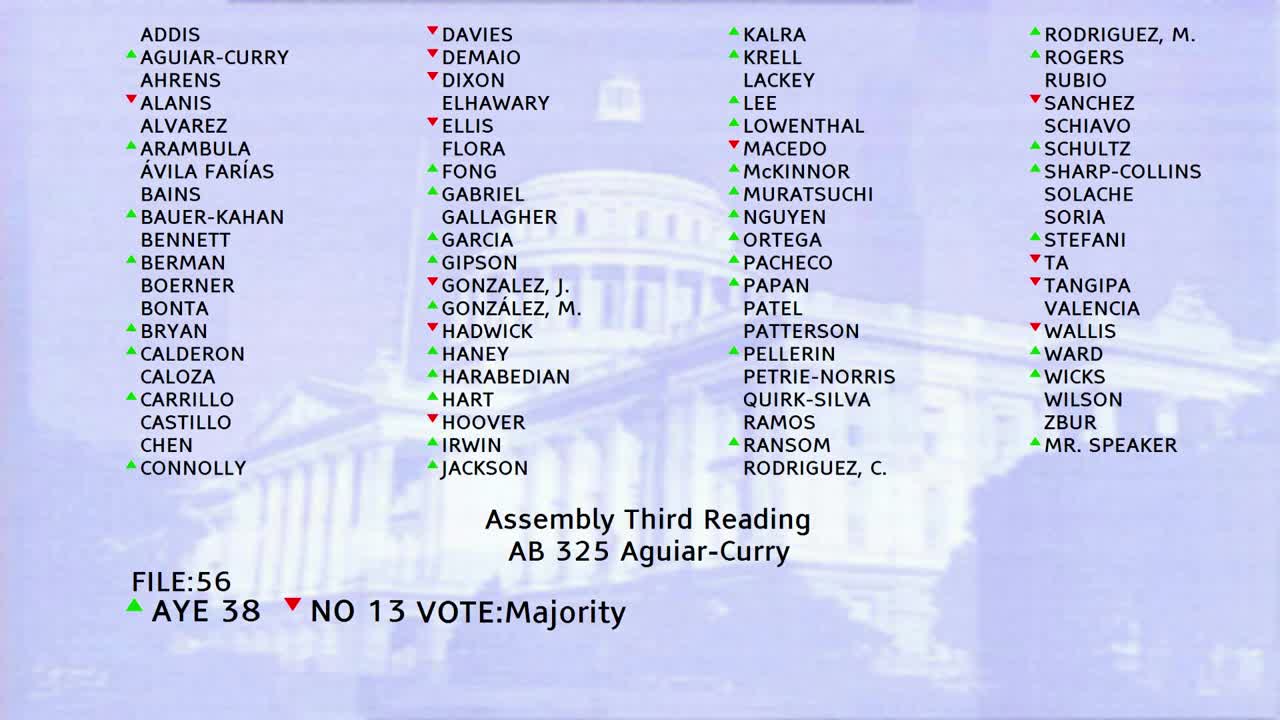 29SEC
Assembly Floor
Bill Author

Bill Co-Author(s):
