AB 535: Threatening a witness: assisting a prosecution.
- Session Year: 2025-2026
- House: Assembly
- Latest Version Date: 2025-10-06
Current Status:
Passed
(2025-10-06: Chaptered by Secretary of State - Chapter 373, Statutes of 2025.)
Introduced
In Committee
Awaiting First Chamber Vote
Passed First Chamber
In Committee
Awaiting Second Chamber Vote
Passed Second Chamber
Enacted
Existing law makes it a crime to knowingly and maliciously prevent or dissuade, or attempt to prevent or dissuade, a witness or victim from causing a complaint, indictment, information, or probation or parole violation to be sought and prosecuted, and assisting in the prosecution thereof.
This bill would clarify that it is a violation of the offense described above to prevent or dissuade, or attempt to prevent or dissuade, a witness or victim from either causing a complaint, indictment, information, or probation or parole violation to be sought and prosecuted, or assisting in the prosecution thereof. By expanding the scope of a crime, this bill would impose a state-mandated local program.
This bill would also make other technical, nonsubstantive changes.
The California Constitution requires the state to reimburse local agencies and school districts for certain costs mandated by the state. Statutory provisions establish procedures for making that reimbursement.
This bill would provide that no reimbursement is required by this act for a specified reason.
(a)Except as provided in subdivision (c), a person who does any of the following is guilty of a public offense and shall be punished by imprisonment in a county jail for not more than one year or in the state prison:
(1)Knowingly and maliciously prevents or dissuades a witness or victim from attending or giving testimony at a trial, proceeding, or inquiry authorized by law.
(2)Knowingly and maliciously attempts to prevent or dissuade a witness or victim from attending or giving testimony at a trial, proceeding, or inquiry authorized by law.
(3)For purposes of this section, evidence that the defendant was a family member who interceded in an effort to protect the witness or victim shall create a presumption that the act was without malice.
(b)Except as provided in subdivision (c), a person who attempts to prevent or dissuade another person who has been the victim of a crime or who is witness to a crime from doing any of the following is guilty of a public offense and shall be punished by imprisonment in a county jail for not more than one year or in the state prison:
(1)Making a report of that victimization to a peace officer, a state or local law enforcement officer, a probation, parole, or correctional officer, a prosecuting agency, or a judge.
(2)Causing a complaint, indictment, information, or probation or parole violation to be sought and prosecuted, or assisting in the prosecution thereof.
(3)Arresting or causing or seeking the arrest of a person in connection with that victimization.
(c)A person doing any of the acts described in subdivision (a) or (b) knowingly and maliciously under any one or more of the following circumstances, is guilty of a felony punishable by imprisonment in the state prison for two, three, or four years under any of the following circumstances:
(1)If the act is accompanied by force or by an express or implied threat of force or violence, upon a witness, victim, or any third person or the property of a victim, witness, or any third person.
(2)If the act is in furtherance of a conspiracy.
(3)If the act is committed by a person who has been convicted of a violation of this section, a predecessor law, a federal statute, or a statute of any other state that, if the act prosecuted was committed in this state, would be a violation of this section.
(4)If the act is committed by a person for pecuniary gain or for any other consideration acting upon the request of any other person. All parties to the transaction are guilty of a felony.
(d)A person attempting the commission of an act described in subdivision (a), (b), or (c) is guilty of the offense attempted without regard to success or failure of the attempt. The fact that no person was injured physically, or in fact intimidated, is not a defense against prosecution under this section.
(e)This section does not preclude the imposition of an enhancement for great bodily injury if the injury inflicted is significant or substantial.
(f)The use of force during the commission of an offense described in subdivision (c) shall be considered a circumstance in aggravation of the crime in imposing a term of imprisonment under subdivision (b) of Section 1170.
SEC. 2.No reimbursement is required by this act pursuant to Section 6 of Article XIIIB of the California Constitution because the only costs that may be incurred by a local agency or school district will be incurred because this act creates a new crime or infraction, eliminates a crime or infraction, or changes the penalty for a crime or infraction, within the meaning of Section 17556 of the Government Code, or changes the definition of a crime within the meaning of Section 6 of Article XIIIB of the California Constitution.
(a)Except as provided in subdivision (c), any a person who does any of the following is guilty of a public offense and shall be punished by imprisonment in a county jail for not more than one year or in the state prison:
(1)Knowingly and maliciously prevents or dissuades any a witness or victim from attending or giving testimony at any a trial, proceeding, or inquiry authorized by law.
(2)Knowingly and maliciously attempts to prevent or dissuade any a witness or victim from attending or giving testimony at any a trial, proceeding, or inquiry authorized by law.
(3)For purposes of this section, evidence that the defendant was a family member who interceded in an effort to protect the witness or victim shall create a presumption that the act was without malice.
(b)Except as provided in subdivision (c), every a person who attempts to prevent or dissuade another person who has been the victim of a crime or who is witness to a crime from doing any of the following is guilty of a public offense and shall be punished by imprisonment in a county jail for not more than one year or in the state prison:
(1)Making any a report of that victimization to any a peace officer or officer, a state or local law enforcement officer or probation or parole officer, a probation, parole, or correctional officer or officer, a prosecuting agency or to any agency, or a judge.
(2)Causing a complaint, indictment, information, or probation or parole violation to be sought and prosecuted, and or assisting in the prosecution thereof.
(3)Arresting or causing or seeking the arrest of any a person in connection with that victimization.
(c)Every A person doing any of the acts described in subdivision (a) or (b) knowingly and maliciously under any one or more of the following circumstances, is guilty of a felony punishable by imprisonment in the state prison for two, three, or four years under any of the following circumstances:
(1)Where If the act is accompanied by force or by an express or implied threat of force or violence, upon a witness or victim witness, victim, or any third person or the property of any a victim, witness, or any third person.
(2)Where If the act is in furtherance of a conspiracy.
(3)Where If the act is committed by any a person who has been convicted of any a violation of this section, any a predecessor law hereto or any law, a federal statute statute, or a statute of any other state which, that, if the act prosecuted was committed in this state, would be a violation of this section.
(4)Where If the act is committed by any a person for pecuniary gain or for any other consideration acting upon the request of any other person. All parties to such a the transaction are guilty of a felony.
(d)Every A person attempting the commission of any an act described in subdivisions subdivision (a), (b), and or (c) is guilty of the offense attempted without regard to success or failure of the attempt. The fact that no person was injured physically, or in fact intimidated, shall be no is not a defense against any prosecution under this section.
(e)Nothing in this This section precludes does not preclude the imposition of an enhancement for great bodily injury where if the injury inflicted is significant or substantial.
(f)The use of force during the commission of any an offense described in subdivision (c) shall be considered a circumstance in aggravation of the crime in imposing a term of imprisonment under subdivision (b) of Section 1170.
SEC. 2.No reimbursement is required by this act pursuant to Section 6 of Article XIIIB of the California Constitution because the only costs that may be incurred by a local agency or school district will be incurred because this act creates a new crime or infraction, eliminates a crime or infraction, or changes the penalty for a crime or infraction, within the meaning of Section 17556 of the Government Code, or changes the definition of a crime within the meaning of Section 6 of Article XIIIB of the California Constitution.
REVISIONS: HeadingLine 2.|
Date
|
Status
|
|---|---|
| Oct 6, 2025 | Chaptered by Secretary of State - Chapter 373, Statutes of 2025. |
| Oct 6, 2025 | Approved by the Governor. |
| Sep 15, 2025 | Enrolled and presented to the Governor at 4:30 p.m. |
| Sep 8, 2025 | In Assembly. Ordered to Engrossing and Enrolling. |
| Sep 8, 2025 | Read third time. Passed. Ordered to the Assembly. (Ayes 39. Noes 0. Page 2613.). |
| Aug 29, 2025 | Read second time. Ordered to third reading. |
| Aug 29, 2025 | From committee: Do pass. (Ayes 7. Noes 0.) (August 29). |
| Jul 7, 2025 | In committee: Referred to APPR. suspense file. |
| Jun 24, 2025 | From committee: Do pass and re-refer to Com. on APPR. with recommendation: To Consent Calendar. (Ayes 6. Noes 0.) (June 24). Re-referred to Com. on APPR. |
| Jun 11, 2025 | Referred to Com. on PUB. S. |
| Jun 3, 2025 | In Senate. Read first time. To Com. on RLS. for assignment. |
| Jun 2, 2025 | Read third time. Passed. Ordered to the Senate. (Ayes 79. Noes 0. Page 1835.) |
| May 27, 2025 | Read second time. Ordered to third reading. |
| May 23, 2025 | From committee: Do pass. (Ayes 14. Noes 0.) (May 23). |
| Apr 9, 2025 | In committee: Set, first hearing. Referred to APPR. suspense file. |
| Mar 26, 2025 | From committee: Do pass and re-refer to Com. on APPR. with recommendation: To Consent Calendar. (Ayes 9. Noes 0.) (March 25). Re-referred to Com. on APPR. |
| Mar 26, 2025 | Coauthors revised. |
| Feb 24, 2025 | Referred to Com. on PUB. S. |
| Feb 12, 2025 | From printer. May be heard in committee March 14. |
| Feb 11, 2025 | Read first time. To print. |
|
Date
|
Description
|
Location
|
Votes
|
|
|---|---|---|---|---|
| Sep 8, 2025 | Assembly 3rd Reading AB535 Schiavo et al. By Cervantes | Senate Floor |
Passed |
|
| Aug 29, 2025 | Do pass | Senate Standing Committee on Appropriations |
Passed |
|
| Jul 7, 2025 | Placed on suspense file | Senate Standing Committee on Appropriations |
Passed |
|
| Jun 24, 2025 | Do pass, but first be re-referred to the Committee on [Appropriations] with the recommendation: To Consent Calendar | Senate Standing Committee on Public Safety |
Passed |
|
| Jun 2, 2025 | AB 535 Schiavo Assembly Third Reading | Assembly Floor |
Passed |
|
| May 23, 2025 | Do pass. | Assembly Standing Committee on Appropriations |
Passed |
|
| Mar 25, 2025 | Do pass and be re-referred to the Committee on [Appropriations] with recommendation: To Consent Calendar | Assembly Standing Committee on Public Safety |
Passed |
This list shows positions taken on this bill by organizations on the date displayed, which is linked to the original source.
Positions by individuals are not included.
|
Organization
|
Position
|
Date
|
|---|---|---|
| Arcadia Police Officers' Association | ** Support | |
| Brea Police Association | ** Support | |
| Burbank Police Officers' Association | ** Support | |
| California Association of School Police Chiefs | ** Support | |
| California Coalition of School Safety Professionals | ** Support | |
| California District Attorneys Association | ** Support | |
| California Narcotic Officers' Association | ** Support | |
| California Reserve Peace Officers Association | ** Support | |
| CLAREMONT POLICE OFFICERS ASSOCIATION | ** Support | |
| Conference of California Bar Associations | ** Support | |
| Corona Police Officers Association | ** Support | |
| Culver City Police Officers' Association | ** Support | |
| Fullerton Police Officers' Association | ** Support | |
| Los Angeles City Attorney | ** Support | |
| Los Angeles County District Attorney'S Office | ** Support | |
| Los Angeles District Attorney | ** Support | |
| Los Angeles School Police Management Association | ** Support | |
| los angeles school police officers association | ** Support | |
| Murrieta Police Officers' Association | ** Support | |
| Newport Beach Police Association | ** Support | |
| Palos Verdes Police Officers Association | ** Support | |
| PLACER COUNTY DEPUTY SHERIFFS ASSOCIATION | ** Support | |
| Pomona Police Officers' Association | ** Support | |
| RIVERSIDE POLICE OFFICERS ASSOCIATION | ** Support | |
| Riverside Sheriffs' Association | ** Support | |
| Santa Ana Police Officers Association | ** Support | |
| Ventura County District Attorney's Office | ** Support |
SENATE RULES COMMITTEE Office of Senate Floor Analyses (916) 651-1520 Fax: (916) 327-4478 | AB 535 |
THIRD READING
Bill No: AB 535
Author: Schiavo (D), et al.
Introduced: 2/11/25
Vote: 21
SENATE PUBLIC SAFETY COMMITTEE: 6-0, 6/24/25
AYES: Arreguín, Seyarto, Caballero, Gonzalez, Pérez, Wiener
SENATE APPROPRIATIONS COMMITTEE: 7-0, 8/29/25
AYES: Caballero, Seyarto, Cabaldon, Dahle, Grayson, Richardson, Wahab
ASSEMBLY FLOOR: 79-0, 6/2/25 - See last page for vote
SUBJECT: Threatening a witness: assisting a prosecution
SOURCE: Los Angeles District Attorney and Los Angeles City Attorney
DIGEST:
This bill specifies that the offense of witness dissuasion during the prosecution stage can be based on either dissuasion during the charging stage or while the witness is assisting in the prosecution.
ANALYSIS:
Existing Law:
- Provides that any person who attempts to prevent or dissuade another person who has been the victim of a crime or who is witness to a crime from doing any of the following is guilty of witness dissuasion and shall be punished by imprisonment in a county jail for not more than one year, or in the state prison:
- Making any report of that victimization to any peace officer or state or local law enforcement officer or probation or parole or correctional officer or prosecuting agency or to any judge;
- Causing a complaint, indictment, information, probation or parole violation to be sought and prosecuted, and assisting in the prosecution thereof; or,
- Arresting or causing or seeking the arrest of any person in connection with that victimization. (Penal Code (Pen. Code), § 136.1, subd. (b).)
- Punishes the aforementioned acts of witness dissuasion by two, three, or four years in the state prison when the perpetrator knowingly and maliciously commits the act under any of the following circumstances:
- Where the act is accompanied by force or by an express or implied threat of force or violence, upon a witness or victim or any third person or the property of any victim, witness, or any third person;
- Where the act is in furtherance of a conspiracy;
- Where the act is committed by any person who has been convicted of any violation of this section, any predecessor law hereto or any federal statute or statute of any other state which, if the act prosecuted was committed in this state, would be a violation of this section; or,
- Where the act is committed by any person for pecuniary gain or for any other consideration acting upon the request of any other person. All parties to such a transaction are guilty of a felony. (Pen. Code, § 136.1, subd. (c).)
This Bill:
- States that attempting to prevent or dissuade a witness or victim of a crime from either causing a complaint, indictment, information, or probation or parole violation to be sought and prosecuted, or assisting in a resulting prosecution constitutes witness dissuasion.
- Makes other technical, non-substantive changes.
Background
In People v. Reynoza (2024) 15 Cal.5th 982, the California Supreme Court considered whether Penal Code section 136.1, subdivision (b)(2), which prohibits dissuading or attempting to dissuade a victim or witness from causing a charging document “to be sought and prosecuted, and assisting in the prosecution thereof” requires conduct occurring before and after criminal charges have been filed. A jury found the defendant guilty of violating this statute based on actions that occurred entirely after the complaint in the underlying criminal case had been filed. (Id. at pp. 987-988.)
The question before the court was whether section 136.1, subdivision (b)(2) supports a disjunctive interpretation — in which the statute independently applies where a defendant dissuades a witness from “assisting in the prosecution” of a case after the charging document has already been filed — or whether a conjunctive interpretation precludes a conviction under such circumstances. On the one hand, the word “and,” which joins the subject clauses of section 136.1, subdivision (b)(2), is ordinarily used as a conjunction. (See In re C.H. (2011) 53 Cal.4th 94, 101). On the other hand, the word “and” also “is sometimes, in a fair and rational construction of a statute, to be read as if it were or, and taken disjunctively” (See People v. Pool (1865) 27 Cal. 572, 581), which would lead to applying section 136.1, subdivision (b)(2) to situations where a defendant dissuades a witness from “assisting in the prosecution” of a case only after a charging document has already been filed.
After considering the statutory language, statutory context, legislative history, and the experiences of other jurisdictions when faced with similar statutory language, the Supreme Court concluded that section 136.1, subdivision (b)(2) is equally susceptible to both the conjunctive and disjunctive constructions. (Reynoza, supra, at pp. 1003-1009.) Accordingly, the rule of lenity required adopting the interpretation more favorable to the defendant. In this instance, that is the conjunctive construction, which does not permit a conviction to be based solely on proof of dissuasion from “assisting in the prosecution” of an already-filed charging document. (Id. at p. 1013.) The Court concluded by saying that the “Legislature remains free to clarify section 136.2(b)(1).” (Ibid.)
This bill changes the “and” in subdivision (b)(2) to “or” clarifying that post-charging dissuasion alone is sufficient to establish guilt under the statute.
FISCAL EFFECT: Appropriation: No Fiscal Com.: Yes Local: Yes
According to the Senate Appropriations Committee:
Unknown, potentially significant costs to the state funded trial court system (Trial Court Trust Fund, General Fund). To the extent this bill make it easier to obtain convictions for witness intimidation, it will result in costs to adjudicate criminal charges and incarcerate more people convicted of this offense. Defendants are constitutionally guaranteed certain rights during criminal proceedings, including the right to a jury trial and the right to counsel (at public expense if the defendants are unable to afford the costs of representation). Expanding the crime will lead to lengthier and more complex court proceedings with attendant workload and resource costs to the court. The fiscal impact of this bill to the courts will depend on many unknowns, including the numbers of people charged with an offense and the factors unique to each case. Unknown, potentially significant costs (General Fund) to the Department of Corrections and Rehabilitation (CDCR) to incarcerate people for the crimes in this bill. The Legislative Analyst’s Office estimates the average annual cost to incarcerate one person in state prison is $133,000. The annual cost of operating a mental health crisis bed at CDCR is around $400,000. Potential cost pressures (General Fund) to the Department of State Hospitals (DSH), in order to adequately house, treat, and care for persons committed to DSH that otherwise would not. Cost pressures to DSH are connected with an increase in state prison sentences. Unknown, potentially significant costs (local funds, General Fund) to the counties to incarcerate people for the crime in this bill. The average annual cost to incarcerate one person in county jail varies by county, but likely ranges from $70,000 to $90,000 per year.
SUPPORT: (Verified 8/29/25)
Los Angeles District Attorney and Los Angeles City Attorney (Source)
Arcadia Police Officers' Association
Brea Police Association
Burbank Police Officers' Association
California Association of School Police Chiefs
California Coalition of School Safety Professionals
California District Attorneys Association
California Narcotic Officers' Association
California Reserve Peace Officers Association
Claremont Police Officers Association
Corona Police Officers Association
Culver City Police Officers' Association
Fullerton Police Officers' Association
Los Angeles City Attorney
Los Angeles County District Attorney's Office
Los Angeles School Police Management Association
Los Angeles School Police Officers Association
Murrieta Police Officers' Association
Newport Beach Police Association
Palos Verdes Police Officers Association
Placer County Deputy Sheriffs' Association
Pomona Police Officers' Association
Riverside Police Officers Association
Riverside Sheriffs' Association
Ventura County District Attorney's Office
OPPOSITION: (Verified 8/29/25)
None received
ARGUMENTS IN SUPPORT:
According to the Los Angeles County District Attorney’s Office, a co-sponsor of this bill:
In People v. Reynoza (2024) 15 Cal.5th 982, the California Supreme Court held that a violation of Penal Code section 136.1(b)(2) for attempting to dissuade a victim or witness from assisting the prosecution only applied to acts prior to a criminal filing.
Post-conviction witness intimidation is unfortunately common in criminal cases which is why it is imperative that California ensure that individuals who engage in witness intimidation by dissuading, or attempting to dissuade a victim or witness from assisting the prosecution are held accountable for their actions.
The ability to prosecute witness intimidation or attempted witness intimidation is essential to the proper functioning of the criminal justice system. The American Bar Association noted the importance of witness intimidation statutes stating, “It is the one crime in which only unsuccessful attempts are ever reported or discovered. It is also a crime which inherently thwarts the process of criminal justice itself.’ (ABA Section of Crim. Justice, Com. on Victims, Reducing Victim/Witness Intimidation: A Package, p. 1.)
California enacted Penal Code Section 136.1 in 1980 to protect victims and witnesses so they would report crimes. This protection was intended to offer protections for victims and witnesses at all stages of the of the criminal justice process, not just at the pre-filing stage.
AB 535 is necessary to restore legal protections for victims and witnesses from “post charging” intimidation, which was lost following the Reynoza decision. Because post-filing victim/witness intimidation is common in criminal cases, it makes no sense to limit the scope of California’s witness dissuading statute only to acts committed prior to the filing of a criminal case.
The California Supreme Court recognized the problem that could be caused by the holding in Reynoza, when it noted, “…our Legislature remains free to clarify section 136.1(b)(2), as the Senate Committee on the Judiciary suggested it do ‘at some point’ to smooth out the statute’s ‘numerous rough edges’.” (Sen. Com. On Judiciary, Analysis of Assem. Bill No. 2909, as amended April 9, 1980.)
The amendment proposed by AB 535 would conform California law with witness dissuading statutes in numerous other states including, Delaware, Florida, Georgia, Missouri, Wisconsin and the District of Columbia.
ASSEMBLY FLOOR: 79-0, 6/2/25
AYES: Addis, Aguiar-Curry, Ahrens, Alanis, Alvarez, Arambula, Ávila Farías, Bains, Bauer-Kahan, Bennett, Berman, Boerner, Bonta, Bryan, Calderon, Caloza, Carrillo, Castillo, Chen, Connolly, Davies, DeMaio, Dixon, Elhawary, Ellis, Flora, Fong, Gabriel, Gallagher, Garcia, Gipson, Jeff Gonzalez, Mark González, Hadwick, Haney, Harabedian, Hart, Hoover, Irwin, Jackson, Kalra, Krell, Lackey, Lee, Lowenthal, Macedo, McKinnor, Muratsuchi, Nguyen, Ortega, Pacheco, Papan, Patel, Patterson, Pellerin, Petrie-Norris, Quirk-Silva, Ramos, Ransom, Celeste Rodriguez, Michelle Rodriguez, Rogers, Blanca Rubio, Sanchez, Schiavo, Schultz, Sharp-Collins, Solache, Soria, Stefani, Ta, Tangipa, Valencia, Wallis, Ward, Wicks, Wilson, Zbur, Rivas
Prepared by: Sandy Uribe / PUB. S. /
8/29/25 20:39:03
**** END ****
SENATE COMMITTEE ON PUBLIC SAFETY
Senator Jesse Arreguín, Chair
2025 - 2026 Regular
Bill No: AB 535 Hearing Date: June 24, 2025
Author: | Schiavo | ||
Version: | February 11, 2025 | ||
Urgency: | No | Fiscal: | Yes |
Consultant: | SU | ||
Subject: Threatening a witness: assisting a prosecution
HISTORY
Source: Los Angeles District Attorney and Los Angeles City Attorney
Prior Legislation: AB 578 (Reyes), held in Senate Appropriations, 2018
SB 940 (Leslie), Ch. 500, Stats. of 1997
AB 2902, Stats. of 1980
Support: Arcadia Police Officers’ Association; Brea Police Association; Burbank Police Officers’ Association; California Association of School Police Chiefs; California Coalition of School Safety Professionals; California District Attorneys Association; California Narcotic Officers’ Association; California Reserve Peace Officers Association; Claremont Police Officers Association; Corona Police Officers Association; Culver City Police Officers’ Association; Fullerton Police Officers’ Association; Los Angeles City Attorney; Los Angeles County District Attorney's Office; Los Angeles School Police Management Association; Los Angeles School Police Officers Association; Murrieta Police Officers’ Association; Newport Beach Police Officers Association; Palos Verdes Police Officers’ Association; Placer County Deputy Sheriffs’ Association; Pomona Police Officers’ Association; Riverside Police Officers Association; Riverside Sheriffs’ Association; Ventura County District Attorney’s Office
Opposition: None known
Assembly Floor Vote: 79 - 0
PURPOSE
The purpose of this bill is to specify that witness dissuasion during the prosecution stage can be based on either dissuasion during the charging stage or on dissuasion while the witness is assisting in the prosecution.
Existing law provides that any person who attempts to prevent or dissuade another person who has been the victim of a crime or who is witness to a crime from doing any of the following is guilty of witness dissuasion and shall be punished by imprisonment in a county jail for not more than one year, or in the state prison:
- Making any report of that victimization to any peace officer or state or local law enforcement officer or probation or parole or correctional officer or prosecuting agency or to any judge;
- Causing a complaint, indictment, information, probation or parole violation to be sought and prosecuted, and assisting in the prosecution thereof; or,
- Arresting or causing or seeking the arrest of any person in connection with that victimization. (Pen. Code, § 136.1, subd. (b).)
- Making any report of that victimization to any peace officer or state or local law enforcement officer or probation or parole or correctional officer or prosecuting agency or to any judge;
Existing law punishes the aforementioned acts of witness dissuasion by two, three, or four years in the state prison when the perpetrator knowingly and maliciously commits the act under any of the following circumstances:
- Where the act is accompanied by force or by an express or implied threat of force or violence, upon a witness or victim or any third person or the property of any victim, witness, or any third person;
- Where the act is in furtherance of a conspiracy;
- Where the act is committed by any person who has been convicted of any violation of this section, any predecessor law hereto or any federal statute or statute of any other state which, if the act prosecuted was committed in this state, would be a violation of this section; or,
- Where the act is committed by any person for pecuniary gain or for any other consideration acting upon the request of any other person. All parties to such a transaction are guilty of a felony. (Pen. Code, § 136.1, subd. (c).)
- Where the act is accompanied by force or by an express or implied threat of force or violence, upon a witness or victim or any third person or the property of any victim, witness, or any third person;
This bill states that attempting to prevent or dissuade a witness or victim of a crime from either causing a complaint, indictment, information, or probation or parole violation to be sought and prosecuted, or assisting in a resulting prosecution constitutes witness dissuasion.
This bill makes other technical, non-substantive changes.
COMMENTS
- Need for This Bill
According to the author:
Victims of crime deserve to be free from witness intimidation or being dissuaded from seeking justice. For certain victims, such as children or those subjected to human trafficking, these protections are especially crucial and can be lifesaving. However, in 2024, the California Supreme Court ruled that in order to violate state witness protection laws, an individual must dissuade a witness or victim both before and after charges are filed. While freedom from coercion and intimidation is a cornerstone of our judicial system, this ruling leaves witnesses and victims of crime vulnerable to both unless the Legislature steps in. AB 535 will ensure all crime victims and witnesses are free to assist law enforcement and safeguard their community, knowing that the State will protect them from intimidation.
- Witness Dissuasion / Obstruction of Justice
Penal Code section 136.1, criminalize the dissuasion and attempted dissuasion of a witness by proscribing several actions.
Subdivision (a) prohibits knowingly and maliciously preventing or dissuades any witness or victim from attending or giving testimony at any trial or proceeding or attempting to do so. (See Pen. Code, § subd. (a)(1) & (2).)
Subdivision (b) proscribes conduct intending to prevent a crime from even being reported by a victim or witness, or seeking an arrest to occur, or causing a charging document to be filed and assisting in prosecution. (See Pen. Code, § subd. (a)(1)-(3).)
Finally, subdivision (c) prohibits the acts described in subdivisions (a) and (b) but provides for increased punishment if those acts are done under specified circumstances, including if they are accompanied by force or use of a threat, or done for pecuniary gain or in the furtherance of a conspiracy.
While specific intent is required for all violations of section 136.1, subdivision (a) and subdivision (c) contain a malice element, but subdivision (b) does not. (People v. Brackins (2019) 37 Cal.App.5th 56, 66.) For purposes of the Penal Code provisions dealing with crimes against the public justice, including the witness dissuasion statute, “[m]alice means an intent to vex, annoy, harm, or injure in any way another person, or to thwart or interfere in any manner with the orderly administration of justice.” (Pen. Code, § 136, subd. (1).)
The language which is the focus of this bill is Penal Code section 136.1, subdivision (b)(2), which makes it a crime to attempt to dissuade a victim or witness from “[c]ausing a complaint, indictment, information, probation or parole violation to be sought and prosecuted, and assisting in the prosecution thereof.”
- People v. Reynoza
Last year, in People v. Reynoza (2024) 15 Cal.5th 982, the California Supreme Court considered whether Penal Code section 136.1, subdivision (b)(2), which prohibits dissuading or attempting to dissuade a victim or witness from causing a charging document “to be sought and prosecuted, and assisting in the prosecution thereof,” requires conduct occurring before and after criminal charges have been filed. A jury found the defendant guilty of violating this statute based on actions that occurred entirely after the complaint in the underlying criminal case had been filed. (Id. at pp. 987-988.)
The question before the court was whether section 136.1, subdivision (b)(2) supports a disjunctive interpretation — in which the statute independently applies where a defendant dissuades a witness from “assisting in the prosecution” of a case after the charging document has already been filed — or whether a conjunctive interpretation precludes a conviction under such circumstances. On the one hand, the word “and,” which joins the subject clauses of section 136.1(b)(2), is ordinarily used as a conjunction (See In re C.H. (2011) 53 Cal.4th 94, 101). On the other hand, the word “and” also “is sometimes, in a fair and rational construction of a statute, to be read as if it were or, and taken disjunctively” (See People v. Pool (1865) 27 Cal. 572, 581), which would lead to applying section 136.1(b)(2) to situations where a defendant dissuades a witness from “assisting in the prosecution” of a case only after a charging document has already been filed.
After considering the statutory language, statutory context, legislative history, and the experiences of other jurisdictions when faced with similar statutory language, the Court concluded that section 136.1, subdivision (b)(2) is equally susceptible to both the conjunctive and disjunctive constructions. (Reynoza, supra, at pp. 1003-1009.) Accordingly, the rule of lenity required adopting the interpretation more favorable to the defendant. In this instance, that is the conjunctive construction, which does not permit a conviction to be based solely on proof of dissuasion from “assisting in the prosecution” of an already-filed charging document. (Id. at p. 1013.) The Court concluded by saying that the “Legislature remains free to clarify section 136.2(b)(1).” (Ibid.)
This bill changes the “and” in subdivision (b)(2) to “or” clarifying that post-charging dissuasion alone is sufficient to establish guilt under the statute.
- Argument in Support
According to the Los Angeles County District Attorney’s Office, a co-sponsor of this bill:
In People v. Reynoza (2024) 15 Cal.5th 982, the California Supreme Court held that a violation of Penal Code section 136.1(b)(2) for attempting to dissuade a victim or witness from assisting the prosecution only applied to acts prior to a criminal filing.
Post-conviction witness intimidation is unfortunately common in criminal cases which is why it is imperative that California ensure that individuals who engage in witness intimidation by dissuading, or attempting to dissuade a victim or witness from assisting the prosecution are held accountable for their actions.
The ability to prosecute witness intimidation or attempted witness intimidation is essential to the proper functioning of the criminal justice system. The American Bar Association noted the importance of witness intimidation statutes stating, “It is the one crime in which only unsuccessful attempts are ever reported or discovered. It is also a crime which inherently thwarts the process of criminal justice itself.’ (ABA Section of Crim. Justice, Com. on Victims, Reducing Victim/Witness Intimidation: A Package, p. 1.)
California enacted Penal Code Section 136.1 in 1980 to protect victims and witnesses so they would report crimes. This protection was intended to offer protections for victims and witnesses at all stages of the of the criminal justice process, not just at the pre-filing stage.
AB 535 is necessary to restore legal protections for victims and witnesses from “post charging” intimidation, which was lost following the Reynoza decision. Because post-filing victim/witness intimidation is common in criminal cases, it makes no sense to limit the scope of California’s witness dissuading statute only to acts committed prior to the filing of a criminal case.
The California Supreme Court recognized the problem that could be caused by the holding in Reynoza, when it noted, “…our Legislature remains free to clarify section 136.1(b)(2), as the Senate Committee on the Judiciary suggested it do ‘at some point’ to smooth out the statute’s ‘numerous rough edges’.” (Sen. Com. On Judiciary, Analysis of Assem. Bill No. 2909, as amended April 9, 1980)
The amendment proposed by AB 535 would conform California law with witness dissuading statutes in numerous other states including, Delaware, Florida, Georgia, Missouri, Wisconsin and the District of Columbia.
– END –
ASSEMBLY THIRD READING
ATR Bill Id:AB 535
Author:(Schiavo)
As Introduced Ver:February 11, 2025
Majority vote
SUMMARY
Clarifies that attempting to prevent or dissuade a witness or victim of a crime from either causing a complaint, indictment, information, or probation or parole violation to be sought and prosecuted, or assisting in a resulting prosecution is a crime
Major Provisions
COMMENTS
According to the Author
"Victims of crime deserve to be free from witness intimidation or being dissuaded from seeking justice. For certain victims, such as children or those subjected to human trafficking, these protections are especially crucial and can be lifesaving. However, in 2024, the California Supreme Court decided that in order to violate state witness protection laws, an individual must dissuade a witness or victim both before and after charges are filed. While freedom from coercion and intimidation is a cornerstone of our judicial system, this ruling leaves witnesses and victims of crime vulnerable to both unless the Legislature steps in. AB 535 will ensure all crime victims and witnesses are free to assist law enforcement and safeguard their community, knowing that the State will protect them from intimidation."
Arguments in Support
According to the Conference of California Bar Associations, "AB 535 restores the long-held belief that attempted witness intimidation is a crime. This understanding of California's witness dissuasion law, which tracks a 1979 ABA model statute, was recently upended last fall by People v. Reynoza (2024) 15 Cal.5th 982, which found the ABA model statute to be poorly drafted and the statutory language too ambiguous to enforce. Instead, the California Supreme Court left it up to the Legislature to clarify: "[O]ur Legislature remains free to clarify section 136.1(b)(2), as the Senate Committee on the Judiciary suggested it do '[a]t some point' to smooth out the statute's 'numerous rough edges.'" (Id. at 1013-1014.)
"AB 535 is necessary to clarify that witnesses are protected from intimidation even after criminal charges are filed. It does not make sense to prohibit attempted witness intimidation if it occurs before filing yet permit such conduct afterwards. We therefore urge your support of AB 535."
Arguments in Opposition
None submitted
FISCAL COMMENTS
According to the Assembly Appropriations Committee:
- Cost pressures (Trial Court Trust Fund, General Fund) of an unknown amount to the courts to adjudicate witness intimidation charges resulting from this bill. A defendant charged with a misdemeanor or felony is entitled to a jury trial and, if the defendant is indigent, legal representation provided by the government. Actual court costs will depend on the number of violations and the amount of court time needed to adjudicate each case. Although courts are not funded on the basis of workload, increased pressure on the Trial Court Trust Fund may create a demand for increased funding for courts from the General Fund. The fiscal year 2024-25 state budget provides $37.3 million ongoing General Fund to backfill declining revenue to the Trial Court Trust Fund.
- Costs (local funds, General Fund) to the counties and the California Department of Corrections and Rehabilitation to incarcerate people convicted of witness intimidation. Actual incarceration costs will depend on the number of convictions and whether each sentence must be served in county jail or state prison. The average annual cost to incarcerate one person in county jail is approximately $29,000. The Legislative Analyst's Office estimates the average annual cost to incarcerate one person in state prison is $133,000. Although county incarceration costs are generally not considered reimbursable state mandates pursuant to Proposition 30 (2012), overcrowding in county jails creates cost pressure on the General Fund because the state has historically granted new funding to counties to offset overcrowding resulting from 2011 public safety realignment.
VOTES
ASM PUBLIC SAFETY: 9-0-0
YES: Schultz, Alanis, Mark González, Haney, Harabedian, Lackey, Nguyen, Ramos, Sharp-Collins
ASM APPROPRIATIONS: 14-0-1
YES: Wicks, Arambula, Calderon, Caloza, Dixon, Elhawary, Fong, Mark González, Hart, Pacheco, Pellerin, Solache, Ta, Tangipa
ABS, ABST OR NV: Sanchez
UPDATED
VERSION: February 11, 2025
CONSULTANT: Dustin Weber / PUB. S. / (916) 319-3744 FN: 0000719
Date of Hearing: April 9, 2025
ASSEMBLY COMMITTEE ON APPROPRIATIONS
Buffy Wicks, Chair
ABPCA Bill Id:AB 535
Author:(Schiavo) – As Introduced Ver:February 11, 2025
Policy Committee: | Public Safety | Vote: | 9 - 0 |
|
| ||
|
|
Urgency: No State Mandated Local Program: Yes Reimbursable: No
SUMMARY:
This bill specifies a defendant may be convicted of threatening a witness if the defendant either dissuades a witness from filing a report with law enforcement or if the defendant dissuades a witness from assisting the prosecution of the defendant’s case.
FISCAL EFFECT:
- Cost pressures (Trial Court Trust Fund, General Fund) of an unknown amount to the courts to adjudicate witness intimidation charges resulting from this bill. A defendant charged with a misdemeanor or felony is entitled to a jury trial and, if the defendant is indigent, legal representation provided by the government. Actual court costs will depend on the number of violations and the amount of court time needed to adjudicate each case. Although courts are not funded on the basis of workload, increased pressure on the Trial Court Trust Fund may create a demand for increased funding for courts from the General Fund. The fiscal year 2024-25 state budget provides $37.3 million ongoing General Fund to backfill declining revenue to the Trial Court Trust Fund.
- Costs (local funds, General Fund) to the counties and the California Department of Corrections and Rehabilitation to incarcerate people convicted of witness intimidation. Actual incarceration costs will depend on the number of convictions and whether each sentence must be served in county jail or state prison. The average annual cost to incarcerate one person in county jail is approximately $29,000. The Legislative Analyst’s Office estimates the average annual cost to incarcerate one person in state prison is $133,000. Although county incarceration costs are generally not considered reimbursable state mandates pursuant to Proposition 30 (2012), overcrowding in county jails creates cost pressure on the General Fund because the state has historically granted new funding to counties to offset overcrowding resulting from 2011 public safety realignment.
COMMENTS:
- Purpose. According to the author:
[I]n 2024, the California Supreme Court decided that in order to violate state witness protection laws, an individual must dissuade a witness or victim both before and after charges are filed. While freedom from coercion and intimidation is a cornerstone of our judicial system, this ruling leaves witnesses and victims of crime vulnerable to both unless the Legislature steps in.
2) Background. Under existing law, attempting to intimidate or threaten a witness or crime victim is punishable by up to one year in county jail, or by 16 months, two years, or three years in state prison, depending on the seriousness of the conduct. Penal Code section 136.1 currently states a defendant may be convicted of witness intimidation if the defendant attempts to prevent or dissuade a witness or crime victim from “Causing a complaint, indictment, information, probation or parole violation to be sought and prosecuted, and assisting in the prosecution thereof.” (Emphasis added.) In 2024, the California Supreme Court interpreted this to mean a defendant must commit two acts of witness intimidation to be convicted – dissuading a witness from filing a report and dissuading the witness from assisting the prosecution.
This bill specifies a defendant may be convicted for committing just one of these acts, and makes other clarifying changes to the witness intimidation statute. To the extent these changes make it easier to obtain convictions for witness intimidation, the bill will result in costs to adjudicate criminal charges and incarcerate more people convicted of this offense.
Analysis Prepared by: Annika Carlson / APPR. / (916) 319-2081
Date of Hearing: March 25, 2025
Counsel: Dustin Weber
ASSEMBLY COMMITTEE ON
Nick Schultz, Chair
ABPCA Bill Id:
Author:() – As Ver:
SUMMARY:
Clarifies that attempting to prevent or dissuade a witness or victim of a crime from either causing a complaint, indictment, information, or probation or parole violation to be sought and prosecuted, or assisting in a resulting prosecution is a crime.
EXISTING LAW:
- Prohibits a person from attempting to prevent or dissuading another person, who has been the victim of a crime or who is witness to a crime, from giving a report to defined law enforcement officers, prosecuting agencies, or judges. (Pen. Code, § 136.1, subd. (b)(1).)
- Prohibits a person from attempting to prevent or dissuading another person, who has been the victim of a crime or who is witness to a crime, from causing a complaint, indictment, information, probation or parole violation to be sought and prosecuted, and assisting in the prosecution thereof. (Pen. Code, § 136.1, subd. (b)(2).)
- Prohibits a person from attempting to prevent or dissuading another person, who has been the victim of a crime or who is witness to a crime, from arresting or causing, or seeking the arrest of a person in connection with the victimization. (Pen. Code, § 136.1, subd. (b)(3).)
- Authorizes punishment for up to one year in county jail or 16 months, two years, or three years in state prison for knowingly and maliciously preventing or dissuading, or knowingly and maliciously attempting to prevent or dissuade, a witness or victim from attending or giving testimony at a trial, proceeding, or inquiry authorized by law. (Pen. Code, § 136.1, subd. (a)(1) & (2).)
FISCAL EFFECT:
Unknown
COMMENTS:
- Author's Statement: According to the author, “Victims of crime deserve to be free from witness intimidation or being dissuaded from seeking justice. For certain victims, such as children or those subjected to human trafficking, these protections are especially crucial and can be lifesaving. However, in 2024, the California Supreme Court decided that in order to violate state witness protection laws, an individual must dissuade a witness or victim both before and after charges are filed. While freedom from coercion and intimidation is a cornerstone of our judicial system, this ruling leaves witnesses and victims of crime vulnerable to both unless the Legislature steps in. AB 535 will ensure all crime victims and witnesses are free to assist law enforcement and safeguard their community, knowing that the State will protect them from intimidation.”
- Effect of the Bill: This bill would clarify that it is a crime to dissuade a victim or witness from filing a report with law enforcement or assisting in the prosecution of the accused’s case.
In 2024, the California Supreme Court found that part of the witness intimidation law, as written, only made it a crime to both prevent a witness or victim from filing a report and assisting in the prosecution of the accused. (See People v. Reynoza (2024) 15 Cal.5th 982, 990.) Due to the ambiguity in the use of the conjunctive “and,” rather than the disjunctive “or,” the court held that both acts were required to sustain a prosecution under the law. (Id. at p. 987.) A statute is ambiguous when its language supports more than one reasonable interpretation. (Ibid.)
While the court exhaustively evaluated the available interpretive aids, there appeared to be at least one measure of clarity in the original Legislative Counsel’s digest. “Although the Legislative Counsel's summaries are not binding, they are entitled to great weight. It is reasonable to presume that the Legislature [acted] with the intent and meaning expressed in the Legislative Counsel's digest.” (Id. at p. 998, fn. 12.)
In summarizing this ambiguous section of the statute, Legislative Counsel wrote the law would prohibit intimidation or dissuasion of a witness “from performing specified acts relating to assisting law enforcement or prosecution activities. (Reynoza, supra, 15 Cal.5th at p. 998, citing Legis. Counsel's Dig., Assem. Bill No. 2909 (1979–1980 Reg. Sess.) as introduced Mar. 6, 1980, p. 1.) The “or” in that part of the Digest suggests the Legislature intended a bill where engaging in just one of the acts would be unlawful. This evidence of intent would not be enough as the court ultimately determined the statute’s ambiguity could not be successfully resolved and applied the rule of lenity, which gives the benefit of the doubt to the defendant. (Reynoza, supra, 15 Cal. 5th at p. 1013.) That the court ultimately located and evaluated numerous authoritative sources pointing in different directions, however, suggests a sufficient amount of ambiguity in the law that seems worth clarifying through the legislative process.
By changing “and” to “or,” this bill clarifies that just one of these acts – preventing a witness from filing a report or assisting in the accused’s prosecution – is sufficient to establish guilt under the statute.
- The Sixth Amendment’s Confrontation Clause: This bill would regulate certain interactions between the accused and a witness or victim of a crime.
This bill would prohibit specific interactions with the same people a defendant has the constitutional right to confront. The Sixth Amendment to the United States Constitution states, in part, “In all criminal prosecutions, the accused shall enjoy the right to . . . be confronted with the witnesses against him.” (U.S. Const., 6th Amend.) We have consistently valued this right as vital to our criminal justice system. John Marshall, while defending the importance of the Sixth Amendment, said, “I know of no principle in the preservation of which all are more concerned. I know none, by undermining which, life, liberty and property, might be more endangered.” (United States v. Burr (1807) C.C. D.Va, 25 F. Cas. 55.)
The author notes that certain categories of victims tend to be more vulnerable to witness intimidation and dissuasion. The U.S. Supreme Court appeared to agree saying that domestic violence cases are “notoriously susceptible to intimidation or coercion of the victim to ensure that she does not testify at trial.” (Davis v. Washington (2006) 547 U.S. 813, 833.) In the same case, the Court established the constitutional boundary writing, “We may not . . . vitiate constitutional guarantees when they have the effect of allowing the guilty to go free. But when defendants seek to undermine the judicial process by procuring or coercing silence from witnesses and victims, the Sixth Amendment does not require courts to acquiesce. While defendants have no duty to assist the State in proving their guilt, they do have the duty to refrain from acting in ways that destroy the integrity of the criminal-trial system.” (Ibid.)
By broadening prohibited dissuasion activities, this bill could help address the witness intimidation issue within established constitutional bounds.
- Witness Intimidation: By replacing “and” with “or,” this bill would allow for potentially more witness intimidation prosecutions in the future.
Concerns about witness intimidation have grown over time. Experts have identified witness intimidation as a national concern and threat to the administration of justice.[1] Witness intimidation is a risk with many types of crimes.[2] Research suggests intimidation reduces meaningful participation by victims and witnesses in the criminal justice system, which results in decreased accountability, reduced access to justice, and diminished public safety.[3] Many victims and witnesses, following intimidation efforts, fail to appear, refuse to give accurate testimony, change their account of the crime, suddenly experience memory loss, or simply recant altogether.[4]
This bill could serve as a small step in further addressing witness intimidation and dissuasion.
- Argument in Support: According to the Conference of California Bar Associations, “AB 535 restores the long-held belief that attempted witness intimidation is a crime. This understanding of California’s witness dissuasion law, which tracks a 1979 ABA model statute, was recently upended last fall by People v. Reynoza (2024) 15 Cal.5th 982, which found the ABA model statute to be poorly drafted and the statutory language too ambiguous to enforce. Instead, the California Supreme Court left it up to the Legislature to clarify: “[O]ur Legislature remains free to clarify section 136.1(b)(2), as the Senate Committee on the Judiciary suggested it do ‘[a]t some point’ to smooth out the statute's ‘numerous rough edges.’” (Id. at 1013-1014.)
“AB 535 is necessary to clarify that witnesses are protected from intimidation even after criminal charges are filed. It does not make sense to prohibit attempted witness intimidation if it occurs before filing yet permit such conduct afterwards. We therefore urge your support of AB 535.”
- Prior Legislation: AB 578 (Reyes), of the 2017-18 Legislative Session, would have included in the list of circumstances that make threatening a witness or victim a felony a threat to report the immigration status or suspected immigration status of a crime victim or witness, or of a victim’s or witness’ family member or relative. This bill was held in the Senate Appropriations Committee.
REGISTERED SUPPORT / OPPOSITION:
Support
Arcadia Police Officers' Association
Brea Police Association
Burbank Police Officers' Association
California Association of School Police Chiefs
California Coalition of School Safety Professionals
California District Attorneys Association
California Narcotic Officers' Association
California Reserve Peace Officers Association
Claremont Police Officers Association
Conference of California Bar Associations
Culver City Police Officers' Association
Fullerton Police Officers' Association
Los Angeles City Attorney's Office
Los Angeles County District Attorney's Office
Los Angeles School Police Management Association
Los Angeles School Police Officers Association
Murrieta Police Officers' Association
Newport Beach Police Association
Palos Verdes Police Officers Association
Placer County Deputy Sheriffs' Association
Pomona Police Officers' Association
Riverside Police Officers Association
Riverside Sheriffs' Association
Santa Ana Police Officers Association
Opposition
None on file.
Analysis Prepared by:
Wilkinson, Evading Justice: The Pervasive Nature of Witness Intimidation (Mar. 2013) Aequitas Strategies in Brief <https://aequitasresource.org/wp-content/uploads/2018/09/Strategies_in_Brief_Issue_16.pdf> at p. 1 [as of Mar. 14, 2025]. ↑
Ibid. ↑
Id. at p. 2. ↑
Ibid. ↑
Discussed in Hearing
View Older Hearings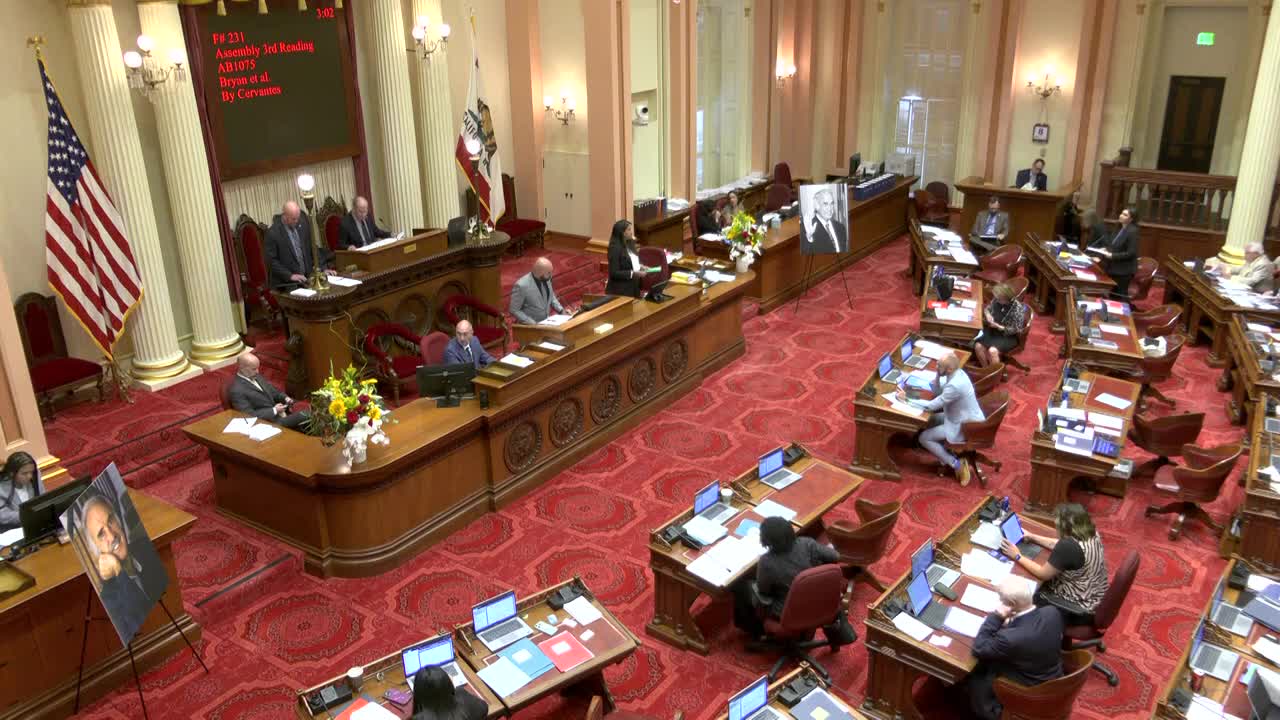
Bill Author

Bill Co-Author(s):