AB 543: Medi-Cal: field medicine.
- Session Year: 2025-2026
- House: Assembly
- Latest Version Date: 2025-10-06
Current Status:
Passed
(2025-10-06: Chaptered by Secretary of State - Chapter 374, Statutes of 2025.)
Introduced
In Committee
Awaiting First Chamber Vote
Passed First Chamber
In Committee
Awaiting Second Chamber Vote
Passed Second Chamber
Enacted
Existing law establishes the Medi-Cal program, which is administered by the State Department of Health Care Services and under which qualified low-income individuals receive health care services. The Medi-Cal program is, in part, governed and funded by federal Medicaid program provisions.
Existing law sets forth various provisions for Medi-Cal coverage of community health worker services, enhanced care management, and community supports, subject to any necessary federal approvals. Under existing law, these benefits are designed to, respectively, provide a link between health and social services and the community; address the clinical and nonclinical needs on a whole-person-care basis for certain target populations of Medi-Cal beneficiaries, including individuals experiencing homelessness; and provide housing transition navigation services, among other supports.
This bill would set forth provisions regarding field medicine, as defined, under the Medi-Cal program for persons experiencing homelessness, as defined. The bill would state the intent of the Legislature that the field medicine-related provisions coexist with, and not duplicate, other Medi-Cal provisions, including, but not limited to, those regarding community health worker services, enhanced care management, and community supports.
The bill would authorize a Medi-Cal managed care plan to elect to offer Medi-Cal covered services through a field medicine provider, as defined. Under the bill, a managed care plan that elects to do so would be required to allow a Medi-Cal member who is experiencing homelessness to receive those services directly from an in-network, contracted field medicine provider, regardless of the members in-network assignment, as specified. The bill would also require the managed care plan to allow an in-network, contracted field medicine provider enrolled in Medi-Cal to directly refer a member who is experiencing homelessness for covered services within the appropriate network, as specified.
The bill would require a managed care plan to have appropriate mechanisms, procedures, or protocols to ensure timely communication between the in-network, contracted field medicine provider, the Medi-Cal members plan or independent practice association, and the members primary care provider for purposes of care coordination and to prevent the duplication of services.
The bill would require a managed care plan to provide a method for a Medi-Cal member to inform the managed care plan online, in person, or via telephone that the member is experiencing homelessness. The bill would require the department to inform a managed care plan if a member has indicated that they are experiencing homelessness based on information furnished on the Medi-Cal application.
In the case of a Medi-Cal beneficiary who is experiencing homelessness and who receives services within the fee-for-service delivery system, the bill would require the department to reimburse a field medicine provider enrolled in Medi-Cal for providing Medi-Cal covered services.
The bill would condition implementation of the above-described provisions on receipt of any necessary federal approvals and the availability of federal financial participation.
The bill would require, on or before January 1, 2027, that the standard application form for insurance affordability programs include an optional question for an applicant to identify whether they are experiencing homelessness. The bill would make conforming changes to related provisions under existing law regarding the application process. The bill would also remove obsolete references within related provisions.
To the extent that the bill would create new duties for counties with regard to data sharing under Medi-Cal, the bill would impose a state-mandated local program.
The California Constitution requires the state to reimburse local agencies and school districts for certain costs mandated by the state. Statutory provisions establish procedures for making that reimbursement.
This bill would provide that, if the Commission on State Mandates determines that the bill contains costs mandated by the state, reimbursement for those costs shall be made pursuant to the statutory provisions noted above.
Existing law establishes the Medi-Cal program, which is administered by the State Department of Health Care Services and under which qualified low-income individuals receive health care services. The Medi-Cal program is, in part, governed and funded by federal Medicaid program provisions.
Existing law sets forth various provisions for Medi-Cal coverage of community health worker services, enhanced care management, and community supports, subject to any necessary federal approvals. Under existing law, these benefits are designed to, respectively, provide a link between health and social services and the community; address the clinical and nonclinical needs on a whole-person-care basis for certain target populations of Medi-Cal beneficiaries, including individuals experiencing homelessness; and provide housing transition navigation services, among other supports.
This bill would set forth provisions regarding field medicine, as defined, under the Medi-Cal program for persons experiencing homelessness, as defined. The bill would state the intent of the Legislature that the field medicine-related provisions coexist with, and not duplicate, other Medi-Cal provisions, including, but not limited to, those regarding community health worker services, enhanced care management, and community supports.
The bill would authorize a Medi-Cal managed care plan to elect to offer Medi-Cal covered services through a field medicine provider, as defined. Under the bill, a managed care plan that elects to do so would be required to allow a Medi-Cal member who is experiencing homelessness to receive those services directly from an in-network, contracted field medicine provider, regardless of the members in-network assignment, as specified. The bill would also require the managed care plan to allow an in-network, contracted field medicine provider enrolled in Medi-Cal to directly refer a member who is experiencing homelessness for covered services within the appropriate network, as specified.
The bill would require a managed care plan to have appropriate mechanisms, procedures, or protocols to ensure timely communication between the in-network, contracted field medicine provider, the Medi-Cal members plan or independent practice association, and the members primary care provider for purposes of care coordination and to prevent the duplication of services.
The bill would require a managed care plan to provide a method for a Medi-Cal member to inform the managed care plan online, in person, or via telephone that the member is experiencing homelessness. The bill would require the department to inform a managed care plan if a member has indicated that they are experiencing homelessness based on information furnished on the Medi-Cal application.
In the case of a Medi-Cal beneficiary who is experiencing homelessness and who receives services within the fee-for-service delivery system, the bill would require the department to reimburse a field medicine provider enrolled in Medi-Cal for providing Medi-Cal covered services.
The bill would condition implementation of the above-described provisions on receipt of any necessary federal approvals and the availability of federal financial participation.
The bill would require, on or before January 1, 2027, that the standard application form for insurance affordability programs include an optional question for an applicant to identify whether they are experiencing homelessness. The bill would make conforming changes to related provisions under existing law regarding the application process. The bill would also remove obsolete references within related provisions.
To the extent that the bill would create new duties for counties with regard to data sharing under Medi-Cal, the bill would impose a state-mandated local program.
The California Constitution requires the state to reimburse local agencies and school districts for certain costs mandated by the state. Statutory provisions establish procedures for making that reimbursement.
This bill would provide that, if the Commission on State Mandates determines that the bill contains costs mandated by the state, reimbursement for those costs shall be made pursuant to the statutory provisions noted above.
Existing law establishes the Medi-Cal program, which is administered by the State Department of Health Care Services and under which qualified low-income individuals receive health care services. The Medi-Cal program is, in part, governed and funded by federal Medicaid program provisions.
Existing law sets forth various provisions for Medi-Cal coverage of community health worker services, enhanced care management, and community supports, subject to any necessary federal approvals. Under existing law, these benefits are designed to, respectively, provide a link between health and social services and the community; address the clinical and nonclinical needs on a whole-person-care basis for certain target populations of Medi-Cal beneficiaries, including individuals experiencing homelessness; and provide housing transition navigation services, among other supports.
This bill would set forth provisions regarding field medicine, as defined, under the Medi-Cal program for persons experiencing homelessness, as defined. The bill would state the intent of the Legislature that the field medicine-related provisions coexist with, and not duplicate, other Medi-Cal provisions, including, but not limited to, those regarding community health worker services, enhanced care management, and community supports.
The bill would authorize a Medi-Cal managed care plan to elect to offer Medi-Cal covered services through a field medicine provider, as defined. Under the bill, a managed care plan that elects to do so would be required to allow a Medi-Cal member who is experiencing homelessness to receive those services directly from an in-network, contracted field medicine provider, regardless of the members in-network assignment, as specified. The bill would also require the managed care plan to allow an in-network, contracted field medicine provider enrolled in Medi-Cal to directly refer a member who is experiencing homelessness for covered services within the appropriate network, as specified.
The bill would require a managed care plan to have appropriate mechanisms, procedures, or protocols to ensure timely communication between the in-network, contracted field medicine provider, the Medi-Cal members plan or independent practice association, and the members primary care provider for purposes of care coordination and to prevent the duplication of services.
The bill would require a managed care plan to provide a method for a Medi-Cal member to inform the managed care plan online, in person, or via telephone that the member is experiencing homelessness. The bill would require the department to inform a managed care plan if a member has indicated that they are experiencing homelessness based on information furnished on the Medi-Cal application.
In the case of a Medi-Cal beneficiary who is experiencing homelessness and who receives services within the fee-for-service delivery system, the bill would require the department to reimburse a field medicine provider enrolled in Medi-Cal for providing Medi-Cal covered services.
The bill would condition implementation of the above-described provisions on receipt of any necessary federal approvals and the availability of federal financial participation.
The bill would require, on or before January 1, 2027, that the standard application form for insurance affordability programs include an optional question for an applicant to identify whether they are experiencing homelessness. The bill would make conforming changes to related provisions under existing law regarding the application process. The bill would also remove obsolete references within related provisions.
To the extent that the bill would create new duties for counties with regard to data sharing under Medi-Cal, the bill would impose a state-mandated local program.
The California Constitution requires the state to reimburse local agencies and school districts for certain costs mandated by the state. Statutory provisions establish procedures for making that reimbursement.
This bill would provide that, if the Commission on State Mandates determines that the bill contains costs mandated by the state, reimbursement for those costs shall be made pursuant to the statutory provisions noted above.
Existing law establishes the Medi-Cal program, which is administered by the State Department of Health Care Services and under which qualified low-income individuals receive health care services. The Medi-Cal program is, in part, governed and funded by federal Medicaid program provisions.
Existing law sets forth various provisions for Medi-Cal coverage of community health worker services, enhanced care management, and community supports, subject to any necessary federal approvals. Under existing law, these benefits are designed to, respectively, provide a link between health and social services and the community; address the clinical and nonclinical needs on a whole-person-care basis for certain target populations of Medi-Cal beneficiaries, including individuals experiencing homelessness; and provide housing transition navigation services, among other supports.
This bill would set forth provisions regarding street field medicine, as defined, under the Medi-Cal program for persons experiencing homelessness, as defined. The bill would state the intent of the Legislature that the street field medicine-related provisions coexist with, and not duplicate, other Medi-Cal provisions, including, but not limited to, those regarding community health worker services, enhanced care management, and community supports.
The bill would authorize a Medi-Cal managed care plan to elect to offer Medi-Cal covered services through a street field medicine provider, as defined. Under the bill, a managed care plan that elects to do so would be required to allow a Medi-Cal beneficiary member who is experiencing homelessness to receive those services directly from a an in-network, contracted street field medicine provider, regardless of the beneficiarys network members in-network assignment, as specified. The bill would also require the managed care plan to allow a an in-network, contracted street field medicine provider enrolled in Medi-Cal to directly refer the beneficiary a member who is experiencing homelessness for covered services within the appropriate network, as specified.
The bill would authorize a managed care plan to establish reasonable requirements governing participation in the plan network, if protocols and network participation requirements are consistent with the goal of authorizing services to Medi-Cal beneficiaries who are experiencing homelessness. TheThe bill would require a managed care plan to have appropriate mechanisms, procedures, or protocols to ensure timely communication between the in-network, contracted street field medicine provider, the Medi-Cal beneficiarys members plan or independent practice association, and the beneficiarys members primary care provider for purposes of care coordination. coordination and to prevent the duplication of services.
The bill would require a managed care plan to provide a beneficiary with the ability method for a Medi-Cal member to inform the managed care plan online, in person, or via telephone that the beneficiary member is experiencing homelessness. The bill would require the department to inform a managed care plan if a beneficiary member has indicated that they are experiencing homelessness based on information furnished on the Medi-Cal application.
In the case of a Medi-Cal beneficiary who is experiencing homelessness and who receives services within the fee-for-service delivery system, the bill would require the department to reimburse a street field medicine provider enrolled in Medi-Cal for providing Medi-Cal covered services.
The bill would, commencing January 1, 2027, or on the date that the department notifies the Legislature that the California Statewide Automated Welfare System (CalSAWS) can perform the necessary automation to implement this provision, require the department to ensure that the Medi-Cal program and CalSAWS mutually share data on the status of Medi-Cal applicants or beneficiaries experiencing homelessness, including through codes relating to unsheltered status, to the extent not in conflict with privacy laws. The bill would require the coordination to enable a person applying for the Medi-Cal program to identify that they are experiencing homelessness. The bill would also require a managed care plan, if informed by a beneficiary that they are experiencing homelessness, to share that information with the relevant county for inclusion in CalSAWS.The bill would condition implementation of the above-described provisions on receipt of any necessary federal approvals and the availability of federal financial participation.
The bill would require, on or before January 1, 2027, that the standard application form for insurance affordability programs include an optional question for an applicant to identify whether they are experiencing homelessness. The bill would make conforming changes to related provisions under existing law regarding the application process. The bill would also remove obsolete references within related provisions.
To the extent that the bill would create new duties for counties with regard to data sharing under Medi-Cal, the bill would impose a state-mandated local program.
The California Constitution requires the state to reimburse local agencies and school districts for certain costs mandated by the state. Statutory provisions establish procedures for making that reimbursement.
This bill would provide that, if the Commission on State Mandates determines that the bill contains costs mandated by the state, reimbursement for those costs shall be made pursuant to the statutory provisions noted above.
Existing law establishes the Medi-Cal program, which is administered by the State Department of Health Care Services and under which qualified low-income individuals receive health care services. The Medi-Cal program is, in part, governed and funded by federal Medicaid program provisions.
Existing law sets forth various provisions for Medi-Cal coverage of community health worker services, enhanced care management, and community supports, subject to any necessary federal approvals. Under existing law, these benefits are designed to, respectively, provide a link between health and social services and the community; address the clinical and nonclinical needs on a whole-person-care basis for certain target populations of Medi-Cal beneficiaries, including individuals experiencing homelessness; and provide housing transition navigation services, among other supports.
Existing law establishes mechanisms for Medi-Cal presumptive eligibility for certain target populations, including, among others, pregnant persons, children, and patients of qualified hospitals, for purposes of Medi-Cal coverage while other Medi-Cal eligibility determination procedures are pending, as specified.This bill would set forth provisions regarding street medicine, as defined, under the Medi-Cal program for persons experiencing homelessness, as defined. The bill would state the intent of the Legislature that the street medicine-related provisions coexist with, and not duplicate, other Medi-Cal provisions, including, but not limited to, those regarding community health worker services, enhanced care management, and community supports.
The bill would require the department to implement a program of presumptive eligibility for persons experiencing homelessness who appear to be otherwise eligible for full-scope Medi-Cal coverage without a share of cost. The bill would authorize an enrolled Medi-Cal provider to make a presumptive eligibility determination for those persons.The bill would authorize a Medi-Cal managed care plan to elect to offer Medi-Cal covered services through a street medicine provider, as defined. Under the bill, a managed care plan that elects to do so would be required to allow a Medi-Cal beneficiary who is experiencing homelessness to receive those services directly from a contracted street medicine provider, regardless of the beneficiarys network assignment, as specified. The bill would also require the managed care plan to allow a contracted street medicine provider enrolled in Medi-Cal to directly refer the beneficiary for covered services within the appropriate network, as specified.
The bill would authorize a managed care plan to establish reasonable requirements governing participation in the plan network, if protocols and network participation requirements are consistent with the goal of authorizing services to Medi-Cal beneficiaries who are experiencing homelessness. The bill would require a managed care plan to have appropriate mechanisms, procedures, or protocols to ensure timely communication between the contracted street medicine provider, the Medi-Cal beneficiarys plan or independent practice association, and the beneficiarys primary care provider for purposes of care coordination.
The bill would require a managed care plan to provide a beneficiary with the ability to inform the managed care plan online, in person, or via telephone that the beneficiary is experiencing homelessness. The bill would require the department to inform a managed care plan if a beneficiary has indicated that they are experiencing homelessness based on information furnished on the Medi-Cal application.
In the case of a Medi-Cal beneficiary who is experiencing homelessness and who receives services within the fee-for-service delivery system, the bill would require the department to reimburse a street medicine provider enrolled in Medi-Cal for providing Medi-Cal covered services.
The bill would would, commencing January 1, 2027, or on the date that the department notifies the Legislature that the California Statewide Automated Welfare System (CalSAWS) can perform the necessary automation to implement this provision, require the department to ensure that the Medi-Cal program and the California Statewide Automated Welfare System (CalSAWS) CalSAWS mutually share data on the status of Medi-Cal applicants or beneficiaries experiencing homelessness, including through codes relating to unsheltered status, to the extent not in conflict with privacy laws. The bill would require the coordination to enable a person applying for the Medi-Cal program to identify that they are experiencing homelessness. The bill would also require a managed care plan, if informed by a beneficiary that they are experiencing homelessness, to share that information with the relevant county for inclusion in CalSAWS.
The bill would condition implementation of the above-described provisions on receipt of any necessary federal approvals and the availability of federal financial participation.
The bill would require, on or before January 1, 2027, that the standard application form for insurance affordability programs include an optional question for an applicant to identify whether they are experiencing homelessness. The bill would make conforming changes to related provisions under existing law regarding the application process. The bill would also remove obsolete references within related provisions.
To the extent that the bill would create new duties for counties with regard to presumptive eligibility determinations or data sharing under Medi-Cal, the bill would impose a state-mandated local program.
The California Constitution requires the state to reimburse local agencies and school districts for certain costs mandated by the state. Statutory provisions establish procedures for making that reimbursement.
This bill would provide that, if the Commission on State Mandates determines that the bill contains costs mandated by the state, reimbursement for those costs shall be made pursuant to the statutory provisions noted above.
Existing law establishes the Medi-Cal program, which is administered by the State Department of Health Care Services and under which qualified low-income individuals receive health care services. The Medi-Cal program is, in part, governed and funded by federal Medicaid program provisions.
Existing law sets forth various provisions for Medi-Cal coverage of community health worker services, enhanced care management, and community supports, subject to any necessary federal approvals. Under existing law, these benefits are designed to, respectively, provide a link between health and social services and the community; address the clinical and nonclinical needs on a whole-person-care basis for certain target populations of Medi-Cal beneficiaries, including individuals experiencing homelessness; and provide housing transition navigation services, among other supports.
Existing law establishes mechanisms for Medi-Cal presumptive eligibility for certain target populations, including, among others, pregnant persons, children, and patients of qualified hospitals, for purposes of Medi-Cal coverage while other Medi-Cal eligibility determination procedures are pending, as specified.
This bill would set forth provisions regarding street medicine, as defined, under the Medi-Cal program for persons experiencing homelessness, as defined. The bill would state the intent of the Legislature that the street medicine-related provisions coexist with, and not duplicate, other Medi-Cal provisions, including, but not limited to, those regarding community health worker services, enhanced care management, and community supports.
The bill would require the department to implement a program of presumptive eligibility for persons experiencing homelessness for purposes of who appear to be otherwise eligible for full-scope Medi-Cal benefits coverage without a share of cost. The bill would authorize an enrolled Medi-Cal provider to make a presumptive eligibility determination for those persons.
The bill would authorize a Medi-Cal managed care plan to elect to offer Medi-Cal covered services through a street medicine provider, as defined. Under the bill, a managed care plan that elects to do so would be required to allow a Medi-Cal beneficiary who is experiencing homelessness to receive those services directly from a contracted street medicine provider, regardless of the beneficiarys network assignment, as specified. The bill would also require the managed care plan to allow a contracted street medicine provider enrolled in Medi-Cal to directly refer the beneficiary for covered services within the appropriate network, as specified.
The bill would authorize a managed care plan to establish reasonable requirements governing participation in the plan network, if protocols and network participation requirements are consistent with the goal of authorizing services to Medi-Cal beneficiaries who are experiencing homelessness. The bill would require a managed care plan to have appropriate mechanisms, procedures, or protocols to ensure timely communication between the contracted street medicine provider, the Medi-Cal beneficiarys plan or independent practice association, and the beneficiarys primary care provider for purposes of care coordination.
The bill would require a managed care plan to provide a beneficiary with the ability to inform the managed care plan online, in person, or via telephone that the beneficiary is experiencing homelessness. The bill would require the department to inform a managed care plan if a beneficiary has indicated that they are experiencing homelessness based on information furnished on the Medi-Cal application.
In the case of a Medi-Cal beneficiary who is experiencing homelessness and who receives services within the fee-for-service delivery system, the bill would require the department to reimburse a street medicine provider enrolled in Medi-Cal for providing Medi-Cal covered services.
The bill would require the department to ensure that the Medi-Cal program and the California Statewide Automated Welfare System (CalSAWS) mutually share data on the status of Medi-Cal applicants or beneficiaries experiencing homelessness, including through codes relating to unsheltered status, to the extent not in conflict with privacy laws. The bill would require the coordination to enable a person applying for the Medi-Cal program to identify that they are experiencing homelessness. The bill would also require a managed care plan, if informed by a beneficiary that they are experiencing homelessness, to share that information with the relevant county for inclusion in CalSAWS.
The bill would condition implementation of the above-described provisions on receipt of any necessary federal approvals and the availability of federal financial participation.
The bill would require, on or before January 1, 2027, that the standard application form for insurance affordability programs include an optional question for an applicant to identify whether they are experiencing homelessness. The bill would make conforming changes to related provisions under existing law regarding the application process. The bill would also remove obsolete references within related provisions.
To the extent that the bill would create new duties for counties with regard to presumptive eligibility determinations or data sharing under Medi-Cal, the bill would impose a state-mandated local program.
The California Constitution requires the state to reimburse local agencies and school districts for certain costs mandated by the state. Statutory provisions establish procedures for making that reimbursement.
This bill would provide that, if the Commission on State Mandates determines that the bill contains costs mandated by the state, reimbursement for those costs shall be made pursuant to the statutory provisions noted above.
Existing law establishes the Medi-Cal program, which is administered by the State Department of Health Care Services and under which qualified low-income individuals receive health care services. The Medi-Cal program is, in part, governed and funded by federal Medicaid program provisions.
Existing law sets forth various provisions for Medi-Cal coverage of community health worker services, enhanced care management, and community supports, subject to any necessary federal approvals. Under existing law, these benefits are designed to, respectively, provide a link between health and social services and the community; address the clinical and nonclinical needs on a whole-person-care basis for certain target populations of Medi-Cal beneficiaries, including individuals experiencing homelessness; and provide housing transition navigation services, among other supports.
Existing law establishes mechanisms for Medi-Cal presumptive eligibility for certain target populations, including, among others, pregnant persons, children, and patients of qualified hospitals, for purposes of Medi-Cal coverage while other Medi-Cal eligibility determination procedures are pending, as specified.
This bill would set forth provisions regarding street medicine, as defined, under the Medi-Cal program for persons experiencing homelessness, as defined. The bill would state the intent of the Legislature that the street medicine-related provisions coexist with, and not duplicate, other Medi-Cal provisions, including, but not limited to, those regarding community health worker services, enhanced care management, and community supports.
The bill would require the department to implement a program of presumptive eligibility for persons experiencing homelessness for purposes of full-scope Medi-Cal benefits without a share of cost. The bill would authorize an enrolled Medi-Cal provider to make a presumptive eligibility determination for those persons.
The bill would authorize a Medi-Cal managed care plan to elect to offer Medi-Cal covered services through a street medicine provider, as defined. Under the bill, a managed care plan that elects to do so would be required to allow a Medi-Cal beneficiary who is experiencing homelessness to receive those services directly from a contracted street medicine provider, regardless of the beneficiarys network assignment, as specified. The bill would also require the managed care plan to allow a contracted street medicine provider enrolled in Medi-Cal to directly refer the beneficiary for covered services within the appropriate network, as specified.
The bill would authorize a managed care plan to establish reasonable requirements governing participation in the plan network, if protocols and network participation requirements are consistent with the goal of authorizing services to Medi-Cal beneficiaries who are experiencing homelessness.
The bill would require a managed care plan to provide a beneficiary with the ability to inform the managed care plan online, in person, or via telephone that the beneficiary is experiencing homelessness. The bill would require the department to inform a managed care plan if a beneficiary has indicated that they are experiencing homelessness based on information furnished on the Medi-Cal application.
In the case of a Medi-Cal beneficiary who is experiencing homelessness and who receives services within the fee-for-service delivery system, the bill would require the department to reimburse a street medicine provider enrolled in Medi-Cal for providing Medi-Cal covered services.
The bill would require the department to ensure that the Medi-Cal program and the California Statewide Automated Welfare System (CalSAWS) mutually share data on the status of Medi-Cal applicants or beneficiaries experiencing homelessness, including through codes relating to unsheltered status, to the extent not in conflict with privacy laws. The bill would require the coordination to enable a person applying for the Medi-Cal program to identify that they are experiencing homelessness.
The bill would condition implementation of the above-described provisions on receipt of any necessary federal approvals and the availability of federal financial participation.
The bill would make conforming changes to related provisions under existing law regarding the application process. The bill would also remove obsolete references within related provisions.
To the extent that the bill would create new duties for counties with regard to presumptive eligibility determinations or data sharing under Medi-Cal, the bill would impose a state-mandated local program.
The California Constitution requires the state to reimburse local agencies and school districts for certain costs mandated by the state. Statutory provisions establish procedures for making that reimbursement.
This bill would provide that, if the Commission on State Mandates determines that the bill contains costs mandated by the state, reimbursement for those costs shall be made pursuant to the statutory provisions noted above.
Existing law establishes the Medi-Cal program, which is administered by the State Department of Health Care Services and under which qualified low-income individuals receive health care services. The Medi-Cal program is, in part, governed and funded by federal Medicaid program provisions.
Existing law sets forth various provisions for Medi-Cal coverage of community health worker services, enhanced care management, and community supports, subject to any necessary federal approvals. Under existing law, these benefits are designed to, respectively, provide a link between health and social services and the community; address the clinical and nonclinical needs on a whole-person-care basis for certain target populations of Medi-Cal beneficiaries, including individuals experiencing homelessness; and provide housing transition navigation services, among other supports.
Existing law establishes mechanisms for Medi-Cal presumptive eligibility for certain target populations, including, among others, pregnant persons, children, and patients of qualified hospitals, for purposes of Medi-Cal coverage while other Medi-Cal eligibility determination procedures are pending, as specified.
This bill would set forth provisions regarding street medicine, as defined, under the Medi-Cal program for persons experiencing homelessness, as defined. The bill would state the intent of the Legislature that the street medicine-related provisions coexist with, and not duplicate, other Medi-Cal provisions, including, but not limited to, those regarding community health worker services, enhanced care management, and community supports.
The bill would require the department to implement a program of presumptive eligibility for persons experiencing homelessness for purposes of full-scope Medi-Cal benefits without a share of cost. The bill would authorize an enrolled Medi-Cal provider to make a presumptive eligibility determination for those persons.
The bill would require a Medi-Cal managed care plan to allow a beneficiary who is experiencing homelessness to seek Medi-Cal covered services directly from any participating Medi-Cal provider off the premises of the providers site. The bill would impose related reimbursement requirements on a managed care plan and the department. The authorize a Medi-Cal managed care plan to elect to offer Medi-Cal covered services through a street medicine provider, as defined. Under the bill, a managed care plan that elects to do so would be required to allow a Medi-Cal beneficiary who is experiencing homelessness to receive those services directly from a street medicine provider, regardless of the beneficiarys network assignment, as specified. The bill would also require the managed care plan to allow a street medicine provider enrolled in Medi-Cal to directly refer the beneficiary for covered services within the appropriate network, as specified.
The bill would authorize a managed care plan to establish reasonable requirements governing participation in the plan network, if protocols and network participation requirements are consistent with the goal of authorizing services to Medi-Cal beneficiaries who are experiencing homelessness.
The bill would require a managed care plan to provide a beneficiary with the ability to inform the managed care plan online, in person, or via telephone that the beneficiary is experiencing homelessness. The bill would require the department to inform a managed care plan if a beneficiary has indicated that they are experiencing homelessness based on information furnished on the Medi-Cal application.
In the case of a Medi-Cal beneficiary who is experiencing homelessness and who receives services within the fee-for-service delivery system, the bill would require the department to reimburse a street medicine provider enrolled in Medi-Cal for providing Medi-Cal covered services.
The bill would require the department to ensure that the Medi-Cal program and the California Statewide Automated Welfare System (CalSAWS) mutually share data on the status of Medi-Cal applicants or beneficiaries experiencing homelessness, including through codes relating to unsheltered status, to the extent not in conflict with privacy laws. The bill would require the coordination to enable a person applying for the Medi-Cal program to identify that they are experiencing homelessness.
The bill would condition implementation of the above-described provisions on receipt of any necessary federal approvals and the availability of federal financial participation.
The bill would make conforming changes to related provisions under existing law regarding the application process. The bill would also remove obsolete references within related provisions.
To the extent that the bill would create new duties for counties with regard to presumptive eligibility determinations or data sharing under Medi-Cal, the bill would impose a state-mandated local program.
The California Constitution requires the state to reimburse local agencies and school districts for certain costs mandated by the state. Statutory provisions establish procedures for making that reimbursement.
This bill would provide that, if the Commission on State Mandates determines that the bill contains costs mandated by the state, reimbursement for those costs shall be made pursuant to the statutory provisions noted above.
Existing law establishes the Medi-Cal program, which is administered by the State Department of Health Care Services and under which qualified low-income individuals receive health care services. The Medi-Cal program is, in part, governed and funded by federal Medicaid program provisions.
Existing law sets forth various provisions for Medi-Cal coverage of community health worker services, enhanced care management, and community supports, subject to any necessary federal approvals. Under existing law, these benefits are designed to, respectively, provide a link between health and social services and the community; address the clinical and nonclinical needs on a whole-person-care basis for certain target populations of Medi-Cal beneficiaries, including individuals experiencing homelessness; and provide housing transition navigation services, among other supports.
Existing law establishes mechanisms for Medi-Cal presumptive eligibility for certain target populations, including, among others, pregnant persons, children, and patients of qualified hospitals, for purposes of Medi-Cal coverage while other Medi-Cal eligibility determination procedures are pending, as specified.
This bill would set forth provisions regarding street medicine, as defined, under the Medi-Cal program for persons experiencing homelessness, as defined. The bill would state the intent of the Legislature that the street medicine-related provisions coexist with, and not duplicate, other Medi-Cal provisions, including, but not limited to, those regarding community health worker services, enhanced care management, and community supports.
The bill would require the department to implement a program of presumptive eligibility for persons experiencing homelessness for purposes of full-scope Medi-Cal benefits without a share of cost. The bill would authorize an enrolled Medi-Cal provider to make a presumptive eligibility determination for those persons.
The bill would require a Medi-Cal managed care plan to allow a beneficiary who is experiencing homelessness to seek Medi-Cal covered services directly from any participating Medi-Cal provider off the premises of the providers site. The bill would impose related reimbursement requirements on a managed care plan and the department. The bill would authorize a managed care plan to establish reasonable requirements governing participation in the plan network, if protocols and network participation requirements are consistent with the goal of authorizing services to Medi-Cal beneficiaries who are experiencing homelessness.
The bill would require a managed care plan to provide a beneficiary with the ability to inform the managed care plan online, in person, or via telephone that the beneficiary is experiencing homelessness. The bill would require the department to inform a managed care plan if a beneficiary has indicated that they are experiencing homelessness based on information furnished on the Medi-Cal application.
The bill would require the department to ensure that the Medi-Cal program and the California Statewide Automated Welfare System (CalSAWS) mutually share data on the status of Medi-Cal applicants or beneficiaries experiencing homelessness, including through codes relating to unsheltered status, to the extent not in conflict with privacy laws. The bill would require the coordination to enable a person applying for the Medi-Cal program to identify that they are experiencing homelessness.
The bill would condition implementation of the above-described provisions on receipt of any necessary federal approvals and the availability of federal financial participation.
The bill would make conforming changes to related provisions under existing law regarding the application process. The bill would also remove obsolete references within related provisions.
To the extent that the bill would create new duties for counties with regard to presumptive eligibility determinations or data sharing under Medi-Cal, the bill would impose a state-mandated local program.
The California Constitution requires the state to reimburse local agencies and school districts for certain costs mandated by the state. Statutory provisions establish procedures for making that reimbursement.
This bill would provide that, if the Commission on State Mandates determines that the bill contains costs mandated by the state, reimbursement for those costs shall be made pursuant to the statutory provisions noted above.
Existing law establishes the Medi-Cal program, which is administered by the State Department of Health Care Services and under which qualified low-income individuals receive health care services. The Medi-Cal program is, in part, governed and funded by federal Medicaid program provisions.
Existing law sets forth various provisions for Medi-Cal coverage of community health worker services, enhanced care management, and community supports, subject to any necessary federal approvals. Under existing law, these benefits are designed to, respectively, provide a link between health and social services and the community; address the clinical and nonclinical needs on a whole-person-care basis for certain target populations of Medi-Cal beneficiaries, including individuals experiencing homelessness; and provide housing transition navigation services, among other supports.
Existing law establishes mechanisms for Medi-Cal presumptive eligibility for certain target populations, including, among others, pregnant persons, children, and patients of qualified hospitals, for purposes of Medi-Cal coverage while other Medi-Cal eligibility determination procedures are pending, as specified.
This bill would set forth provisions regarding street medicine, as defined, under the Medi-Cal program for persons experiencing homelessness, as defined. The bill would state the intent of the Legislature that the street medicine-related provisions coexist with, and not duplicate, other Medi-Cal provisions, including, but not limited to, those regarding community health worker services, enhanced care management, and community supports.
The bill would require the department to implement a program of presumptive eligibility for persons experiencing homelessness for purposes of full-scope Medi-Cal benefits without a share of cost. The bill would authorize an enrolled Medi-Cal provider to make a presumptive eligibility determination for those persons.
The bill would require a Medi-Cal managed care plan to allow a beneficiary who is experiencing homelessness to seek Medi-Cal covered services directly from any participating Medi-Cal provider off the premises of the providers site. The bill would impose related reimbursement requirements on a managed care plan and the department. The bill would authorize a managed care plan to establish reasonable requirements governing participation in the plan network, if protocols and network participation requirements are consistent with the goal of authorizing services to Medi-Cal beneficiaries who are experiencing homelessness.
The bill would require a managed care plan to provide a beneficiary with the ability to inform the managed care plan online, in person, or via telephone that the beneficiary is experiencing homelessness. The bill would require the department to inform a managed care plan if a beneficiary has indicated that they are experiencing homelessness based on information furnished on the Medi-Cal application.
The bill would require the department to ensure that the Medi-Cal program and the California Statewide Automated Welfare System (CalSAWS) mutually share data on the status of Medi-Cal applicants or beneficiaries experiencing homelessness, including through codes relating to unsheltered status, to the extent not in conflict with privacy laws. The bill would require the coordination to enable a person applying for the Medi-Cal program to identify that they are experiencing homelessness.
The bill would condition implementation of the above-described provisions on receipt of any necessary federal approvals and the availability of federal financial participation.
The bill would make conforming changes to related provisions under existing law regarding the application process. The bill would also remove obsolete references within related provisions.
To the extent that the bill would create new duties for counties with regard to presumptive eligibility determinations or data sharing under Medi-Cal, the bill would impose a state-mandated local program.
The California Constitution requires the state to reimburse local agencies and school districts for certain costs mandated by the state. Statutory provisions establish procedures for making that reimbursement.
This bill would provide that, if the Commission on State Mandates determines that the bill contains costs mandated by the state, reimbursement for those costs shall be made pursuant to the statutory provisions noted above.
The Legislature finds and declares all of the following:
(a)People experiencing homelessness have poorer health outcomes and increased mortality rates compared to the general population. This has been linked to barriers to accessing primary care, such as lack of transportation, lack of government-issued identification, limited means to make appointments, mobility challenges, and competing priorities, including, but not limited to, finding food and maintaining safety.
(b)Poor health outcomes have also been attributed to institutional trauma in the traditional health care system, including experiences of discrimination and exclusion, resulting in distrust of the health care system and hesitation about seeking medical care.
(c)The mortality rate among people experiencing homelessness is 10 times higher than that of housed individuals and continues to rise across California. Deaths of people experiencing homelessness in the County of Los Angeles have increased by over 3.5 times, while the annual mortality rate roughly doubled between 2014 and 2022, according to a 2024 report from the Department of Public Health for the County of Los Angeles.
(d)Homelessness and homeless deaths disproportionately affect people of color, with this population accounting for 68 percent of deaths on the street and demonstrating a gross health inequity.
(e)Poor access to primary care directly contributes to the increased mortality rates observed among people experiencing homelessness. Only 8 percent of people experiencing homelessness have a primary care provider (PCP) versus 82 percent of the general population. This disparity persists, even though 78 percent are insured.
(f)People experiencing homelessness with Medi-Cal coverage rely on referrals from their PCPs to access specialty care and durable medical equipment, such as wheelchairs. Lack of access to primary care furthers lack of access to specialty care.
(g)There are effective, evidence-based models for delivering health care to persons experiencing homelessness, including field medicine, shelter-based care, and care provided in transitional housing. These models were developed specifically to address the unique needs and circumstances of persons experiencing homelessness onsite where they reside.
(h)Through field medicine, shelter-based care, mobile clinics, and related delivery models, providers remove access barriers for persons experiencing homelessness in order to deliver patient-centered care. Services provided include medical care for acute and chronic health conditions, behavioral health care treatment, treatment for substance use disorders, dispensing common medications, and drawing blood.
(i)Less than 30 percent of people experiencing homelessness who are insured have ever seen their primary care physician, versus 70 percent of those treated by field medicine teams, who are actively engaged in primary care within one week of referral.
(j)Providing medical care to persons experiencing homelessness outside of traditional medical settings has demonstrated a decrease in hospital admissions by two-thirds with a hospital-based consultation service.
(k)Persons experiencing homelessness have twice the length of stay while hospitalized compared to the housed population, and spend 740 percent more days in the hospital at a 170-percent greater cost per day than people who are housed. For homeless patients admitted to the hospital, field medicine reduces the length of hospital stays from 12 to 7.9 days.
(l)Providing health care and social services on the street or outside of traditional medical facilities improves housing placement compared to only providing nonmedical outreach services. In the City of Los Angeles, field medicine teams have successfully transitioned 42 percent of their homeless patients into permanent housing, compared to 4 percent when the Los Angeles Homeless Services Authority is the responsible party.
(m)Although field medicine services substantially reduce morbidity and mortality among individuals experiencing homelessness, various policy barriers prevent those living unsheltered from fully accessing the benefits of these services and other supports. These barriers include all of the following:
(1)Individuals experiencing homelessness often face delays in accessing critical health care due to gaps in Medi-Cal coverage. When their Medi-Cal coverage lapses or when they are not enrolled, the process for redetermination or initial enrollment can take weeks, either delaying care or forcing field medicine providers to provide unreimbursed care and medically necessary services.
(2)While field medicine providers can order medically necessary services, such as wheelchairs or diagnostics, Medi-Cal managed care plans continue to deny medically necessary services based on primary care provider (PCP) or independent practice association (IPA) assignment alone. This has profound consequences for patients on the street, contributing to increased morbidity, mortality, and suffering.
(3)Existing administrative systems for accessing benefits for low-income persons, including, but not limited to, the California Statewide Automated Welfare System (CalSAWS) and the California Advancing and Innovating Medi-Cal (CalAIM) initiative within Medi-Cal, lack a definitive identifier for individuals experiencing homelessness, resulting in missed opportunities to connect them to eligible services and making it difficult to determine eligibility, track benefits received, or ensure access to future programs from which they would benefit.
SEC. 2.The heading of Article 5.7 (commencing with Section 14186) of Chapter 7 of Part 3 of Division 9 of the Welfare and Institutions Code is repealed.SEC. 3.Article 5.7 (commencing with Section 14186) is added to Chapter 7 of Part 3 of Division 9 of the Welfare and Institutions Code, to read:5.7.Medi-Cal Field Medicine14186.For purposes of this article, the following definitions apply:
(a)Medi-Cal managed care plan has the same meaning as set forth in Section 14184.101.
(b)Person experiencing homelessness, or a variation thereof, means a person who lacks a fixed, regular, and adequate nighttime residence. This may include living in shelters, transitional housing, or places not meant for habitation, like cars or outdoors.
(c)Field medicine means a set of health and social services developed specifically to address the unique needs and circumstances of persons experiencing homelessness utilizing a whole-person, patient-centered approach to provide medically necessary health care services, and to address social drivers of health that impede health care access.
(d)Field medicine provider means a licensed medical provider, including, but not limited to, a physician and surgeon, osteopathic physician and surgeon, physician assistant, nurse practitioner, or certified nurse-midwife, who conducts patient visits outside of the four walls of health facilities, clinics, or other locations, and instead directly on the street, in environments where persons experiencing homelessness might be, such as living in a car, recreational vehicle, encampment, abandoned building, or other outdoor areas.
14186.1.(a)(1)The department shall seek any federal approvals necessary to implement this article.
(2)Each section of this article shall be implemented only to the extent that any necessary federal approvals are obtained and that federal financial participation is available and is not otherwise jeopardized.
(b)Notwithstanding Chapter 3.5 (commencing with Section 11340) of Part 1 of Division 3 of Title 2 of the Government Code, the department may implement, interpret, or make specific this article by means of all-county letters, plan letters, plan or provider bulletins, or similar instructions until any necessary regulations are adopted.
14186.2.It is the intent of the Legislature that implementation of this article not be duplicative of implementation of other Medi-Cal provisions, including, but not limited to, those regarding community health worker services, enhanced care management, and community supports, as described in Sections 14132.36, 14184.205, and 14184.206, respectively. It is the intent of the Legislature that the field medicine-related provisions set forth in this article coexist with those other Medi-Cal benefits in order to fill significant gaps within the health care system for persons experiencing homelessness.
14186.3.(a)A Medi-Cal managed care plan may elect to offer Medi-Cal covered services through an in-network, contracted field medicine provider pursuant to this article.
(b)A Medi-Cal managed care plan that elects to offer Medi-Cal covered services through an in-network, contracted field medicine provider shall allow a Medi-Cal member who is experiencing homelessness to receive those services directly from an in-network, contracted field medicine provider, regardless of the members in-network assignment, such as primary care provider (PCP) or independent practice association (IPA) assignment.
(c)(1)A Medi-Cal managed care plan that elects to offer Medi-Cal covered services through an in-network, contracted field medicine provider shall allow an in-network, contracted field medicine provider enrolled in the Medi-Cal program to directly refer a member who is experiencing homelessness for covered services, including specialist, diagnostic services, medications, durable medical equipment, transportation, or other medically necessary covered services, within the appropriate network of the Medi-Cal managed care plan or in-network IPA.
(2)The Medi-Cal managed care plan or IPA shall create referral and authorization mechanisms in order to facilitate the referrals described in paragraph (1).
(d)Medi-Cal managed care plans contracting with field medicine providers pursuant to this section shall have appropriate mechanisms, procedures, or protocols to ensure timely communication between the in-network, contracted field medicine provider, the Medi-Cal members plan or IPA, and the members assigned primary care provider for purposes of care coordination and to prevent the duplication of services.
(e)(1)A Medi-Cal managed care plan shall provide a method for a Medi-Cal member to inform the Medi-Cal managed care plan online, in person, or via telephone that the member is experiencing homelessness.
(2)The department shall inform a Medi-Cal managed care plan if a Medi-Cal member has indicated that they are experiencing homelessness based on information furnished on the Medi-Cal application.
(f)In the case of a Medi-Cal beneficiary who is experiencing homelessness and who receives services within the fee-for-service delivery system, the department shall reimburse a field medicine provider enrolled in the Medi-Cal program for providing Medi-Cal covered services.
SEC. 4.Section 15926 of the Welfare and Institutions Code is amended to read:15926.(a)The following definitions apply for purposes of this part:
(1)Accessible means in compliance with Section 11135 of the Government Code, Section 1557 of the PPACA, and regulations or guidance adopted pursuant to these statutes.
(2)Limited-English-proficient means not speaking English as ones primary language and having a limited ability to read, speak, write, or understand English.
(3)Insurance affordability program means a program that is one of the following:
(A)The Medi-Cal program under Title XIX of the federal Social Security Act (42 U.S.C. Sec. 1396 et seq.).
(B)The states childrens health insurance program (CHIP) under Title XXI of the federal Social Security Act (42 U.S.C. Sec. 1397aa et seq.).
(C)A program that makes available to qualified individuals coverage in a qualified health plan through the California Health Benefit Exchange established pursuant to Title 22 (commencing with Section 100500) of the Government Code with advance payment of the premium tax credit established under Section 36B of the Internal Revenue Code.
(D)A program that makes available coverage in a qualified health plan through the California Health Benefit Exchange established pursuant to Title 22 (commencing with Section 100500) of the Government Code with cost-sharing reductions established under Section 1402 of PPACA and any subsequent amendments to that act.
(b)An individual shall have the option to apply for insurance affordability programs in person, by mail, online, by telephone, or by other commonly available electronic means.
(c)(1)A single, accessible, standardized paper, electronic, and telephone application for insurance affordability programs shall be developed by the department, in consultation with the board governing the Exchange, as part of the stakeholder process described in subdivision (b) of Section 15925. The application shall be used by all entities authorized to make an eligibility determination for any of the insurance affordability programs and by their agents.
(2)The department may develop and require the use of supplemental forms to collect additional information needed to determine eligibility on a basis other than the financial methodologies described in Section 1396a(e)(14) of Title 42 of the United States Code, as added by the federal Patient Protection and Affordable Care Act (Public Law 111-148), and as amended by the federal Health Care and Education Reconciliation Act of 2010 (Public Law 111-152) and any subsequent amendments, as provided under Section 435.907(c) of Title 42 of the Code of Federal Regulations.
(3)The application shall be tested and operational by the date as required by the federal Secretary of Health and Human Services.
(4)The application form shall, to the extent not inconsistent with federal statutes, regulations, and guidance, satisfy all of the following criteria:
(A)The form shall include simple, user-friendly language and instructions.
(B)The form may not ask for information related to a nonapplicant that is not necessary to determine eligibility in the applicants particular circumstances.
(C)The form may require only information necessary to support the eligibility and enrollment processes for insurance affordability programs.
(D)The form may be used for, but shall not be limited to, screening.
(E)The form may ask, or be used otherwise to identify, if the mother of an infant applicant under one year of age had coverage through an insurance affordability program for the infants birth, for the purpose of automatically enrolling the infant into the applicable program without the family having to complete the application process for the infant.
(F)The form may include questions that are voluntary for applicants to answer regarding demographic data categories, including race, ethnicity, primary language, disability status, and other categories recognized by the federal Secretary of Health and Human Services under Section 4302 of the PPACA.
(G)Notwithstanding subparagraphs (B) and (C), on or before January 1, 2027, the form shall include an optional question for an applicant to identify whether they are experiencing homelessness.
(H)Until January 1, 2016, the department shall instruct counties to not reject an application that was in existence prior to January 1, 2014, but to accept the application and request any additional information needed from the applicant in order to complete the eligibility determination process. The department shall work with counties and consumer advocates to develop the supplemental questions.
(d)Nothing in this section shall preclude the use of a provider-based application form or enrollment procedures for insurance affordability programs or other health programs that differs from the application form described in subdivision (c), and related enrollment procedures. Nothing in this section shall preclude the use of a joint application, developed by the department and the State Department of Social Services, that allows for an application to be made for multiple programs, including, but not limited to, CalWORKs, CalFresh, and insurance affordability programs.
(e)The entity making the eligibility determination shall grant eligibility immediately whenever possible and with the consent of the applicant in accordance with the state and federal rules governing insurance affordability programs.
(f)(1)If the eligibility, enrollment, and retention system has the ability to prepopulate an application form for insurance affordability programs with personal information from available electronic databases, an applicant shall be given the option, with their informed consent, to have the application form prepopulated. Before a prepopulated application is submitted to the entity authorized to make eligibility determinations, the individual shall be given the opportunity to provide additional eligibility information and to correct any information retrieved from a database.
(2)All insurance affordability programs may accept self-attestation, instead of requiring an individual to produce a document, for age, date of birth, family size, household income, state residence, pregnancy, and any other applicable criteria needed to determine the eligibility of an applicant or recipient, to the extent permitted by state and federal law.
(3)An applicant or recipient shall have their information electronically verified in the manner required by the PPACA and implementing federal regulations and guidance and state law.
(4)Before an eligibility determination is made, the individual shall be given the opportunity to provide additional eligibility information and to correct information.
(5)The eligibility of an applicant shall not be delayed beyond the timeliness standards as provided in Section 435.912 of Title 42 of the Code of Federal Regulations or denied for any insurance affordability program unless the applicant is given a reasonable opportunity, of at least the kind provided for under the Medi-Cal program pursuant to Section 14007.5 and paragraph (7) of subdivision (e) of Section 14011.2, to resolve discrepancies concerning any information provided by a verifying entity.
(6)To the extent federal financial participation is available, an applicant shall be provided benefits in accordance with the rules of the insurance affordability program, as implemented in federal regulations and guidance, for which the applicant otherwise qualifies until a determination is made that the applicant is not eligible and all applicable notices have been provided. Nothing in this section shall be interpreted to grant presumptive eligibility if it is not otherwise required by state law, and, if so required, then only to the extent permitted by federal law.
(g)The eligibility, enrollment, and retention system shall offer an applicant and recipient assistance with their application or renewal for an insurance affordability program in person, over the telephone, by mail, online, or through other commonly available electronic means and in a manner that is accessible to individuals with disabilities and those who are limited English proficient.
(h)(1)During the processing of an application, renewal, or a transition due to a change in circumstances, an entity making eligibility determinations for an insurance affordability program shall ensure that an eligible applicant and recipient of insurance affordability programs that meets all program eligibility requirements and complies with all necessary requests for information moves between programs without any breaks in coverage and without being required to provide any forms, documents, or other information or undergo verification that is duplicative or otherwise unnecessary. The individual shall be informed about how to obtain information about the status of their application, renewal, or transfer to another program at any time, and the information shall be promptly provided when requested.
(2)The application or case of an individual screened as not eligible for Medi-Cal on the basis of Modified Adjusted Gross Income (MAGI) household income but who may be eligible on the basis of being 65 years of age or older, or on the basis of blindness or disability, shall be forwarded to the Medi-Cal program for an eligibility determination. During the period this application or case is processed for a non-MAGI Medi-Cal eligibility determination, if the applicant or recipient is otherwise eligible for an insurance affordability program, the applicant or recipient shall be determined eligible for that program.
(3)Renewal procedures shall include all available methods for reporting renewal information, including, but not limited to, face-to-face, telephone, mail, and online renewal or renewal through other commonly available electronic means.
(4)An applicant who is not eligible for an insurance affordability program for a reason other than income eligibility, or for any reason in the case of applicants and recipients residing in a county that offers a health coverage program for individuals with income above the maximum allowed for the Exchange premium tax credits, shall be referred to the county health coverage program in their county of residence.
(i)Notwithstanding subdivisions (e), (f), and (j), before an online applicant who appears to be eligible for the Exchange with a premium tax credit or reduction in cost sharing, or both, may be enrolled in the Exchange, both of the following shall occur:
(1)The applicant shall be informed of the overpayment penalties under the federal Comprehensive 1099 Taxpayer Protection and Repayment of Exchange Subsidy Overpayments Act of 2011 (Public Law 112-9), if the individuals annual family income increases by a specified amount or more, calculated on the basis of the individuals current family size and current income, and that penalties are avoided by prompt reporting of income increases throughout the year.
(2)The applicant shall be informed of the penalty for failure to have minimum essential health coverage.
(j)The department shall, in coordination with the Exchange board, streamline and coordinate all eligibility rules and requirements among insurance affordability programs using the least restrictive rules and requirements permitted by federal and state law. This process shall include the consideration of methodologies for determining income levels, assets, rules for household size, citizenship and immigration status, and self-attestation and verification requirements.
(k)(1)Forms and notices developed pursuant to this section shall be accessible and standardized, as appropriate, and shall comply with federal and state laws, regulations, and guidance prohibiting discrimination.
(2)Forms and notices developed pursuant to this section shall be developed using plain language and shall be provided in a manner that affords meaningful access to limited-English-proficient individuals, in accordance with applicable state and federal law, and at a minimum, provided in the same threshold languages as required for Medi-Cal managed care plans.
(l)The department, the California Health and Human Services Agency, and the Exchange board shall establish a process for receiving and acting on stakeholder suggestions regarding the functionality of the eligibility systems supporting the Exchange, including the activities of all entities providing eligibility screening to ensure the correct eligibility rules and requirements are being used. This process shall include consumers and their advocates, be conducted no less than quarterly, and include the recording, review, and analysis of potential defects or enhancements of the eligibility systems. The process shall also include regular updates on the work to analyze, prioritize, and implement corrections to confirmed defects and proposed enhancements, and to monitor screening.
(m)In designing and implementing the eligibility, enrollment, and retention system, the department and the Exchange board shall ensure that all privacy and confidentiality rights under the PPACA and other federal and state laws are incorporated and followed, including responses to security breaches.
SEC. 5.If the Commission on State Mandates determines that this act contains costs mandated by the state, reimbursement to local agencies and school districts for those costs shall be made pursuant to Part 7 (commencing with Section 17500) of Division 4 of Title 2 of the Government Code.
The Legislature finds and declares all of the following:
(a)People experiencing homelessness have poorer health outcomes and increased mortality rates compared to the general population. This has been linked to barriers to accessing primary care, such as lack of transportation, lack of government-issued identification, limited means to make appointments, mobility challenges, and competing priorities, including, but not limited to, finding food and maintaining safety.
(b)Poor health outcomes have also been attributed to institutional trauma in the traditional health care system, including experiences of discrimination and exclusion, resulting in distrust of the health care system and hesitation about seeking medical care.
(c)The mortality rate among people experiencing homelessness is 10 times higher than that of housed individuals and continues to rise across California. Deaths of people experiencing homelessness in the County of Los Angeles have increased by over 3.5 times, while the annual mortality rate roughly doubled between 2014 and 2022, according to a 2024 report from the Department of Public Health for the County of Los Angeles.
(d)Homelessness and homeless deaths disproportionately affect people of color, with this population accounting for 68 percent of deaths on the street and demonstrating a gross health inequity.
(e)Poor access to primary care directly contributes to the increased mortality rates observed among people experiencing homelessness. Only 8 percent of people experiencing homelessness have a primary care provider (PCP) versus 82 percent of the general population. This disparity persists, even though 78 percent are insured.
(f)People experiencing homelessness with Medi-Cal coverage rely on referrals from their PCPs to access specialty care and durable medical equipment, such as wheelchairs. Lack of access to primary care furthers lack of access to specialty care.
(g)There are effective, evidence-based models for delivering health care to persons experiencing homelessness, including field medicine, shelter-based care, and care provided in transitional housing. These models were developed specifically to address the unique needs and circumstances of persons experiencing homelessness onsite where they reside.
(h)Through field medicine, shelter-based care, mobile clinics, and related delivery models, providers remove access barriers for persons experiencing homelessness in order to deliver patient-centered care. Services provided include medical care for acute and chronic health conditions, behavioral health care treatment, treatment for substance use disorders, dispensing common medications, and drawing blood.
(i)Less than 30 percent of people experiencing homelessness who are insured have ever seen their primary care physician, versus 70 percent of those treated by field medicine teams, who are actively engaged in primary care within one week of referral.
(j)Providing medical care to persons experiencing homelessness outside of traditional medical settings has demonstrated a decrease in hospital admissions by two-thirds with a hospital-based consultation service.
(k)Persons experiencing homelessness have twice the length of stay while hospitalized compared to the housed population, and spend 740 percent more days in the hospital at a 170-percent greater cost per day than people who are housed. For homeless patients admitted to the hospital, field medicine reduces the length of hospital stays from 12 to 7.9 days.
(l)Providing health care and social services on the street or outside of traditional medical facilities improves housing placement compared to only providing nonmedical outreach services. In the City of Los Angeles, field medicine teams have successfully transitioned 42 percent of their homeless patients into permanent housing, compared to 4 percent when the Los Angeles Homeless Services Authority is the responsible party.
(m)Although field medicine services substantially reduce morbidity and mortality among individuals experiencing homelessness, various policy barriers prevent those living unsheltered from fully accessing the benefits of these services and other supports. These barriers include all of the following:
(1)Individuals experiencing homelessness often face delays in accessing critical health care due to gaps in Medi-Cal coverage. When their Medi-Cal coverage lapses or when they are not enrolled, the process for redetermination or initial enrollment can take weeks, either delaying care or forcing field medicine providers to provide unreimbursed care and medically necessary services.
(2)While field medicine providers can order medically necessary services, such as wheelchairs or diagnostics, Medi-Cal managed care plans continue to deny medically necessary services based on primary care provider (PCP) or independent practice association (IPA) assignment alone. This has profound consequences for patients on the street, contributing to increased morbidity, mortality, and suffering.
(3)Existing administrative systems for accessing benefits for low-income persons, including, but not limited to, the California Statewide Automated Welfare System (CalSAWS) and the California Advancing and Innovating Medi-Cal (CalAIM) initiative within Medi-Cal, lack a definitive identifier for individuals experiencing homelessness, resulting in missed opportunities to connect them to eligible services and making it difficult to determine eligibility, track benefits received, or ensure access to future programs from which they would benefit.
SEC. 2.The heading of Article 5.7 (commencing with Section 14186) of Chapter 7 of Part 3 of Division 9 of the Welfare and Institutions Code is repealed.SEC. 3.Article 5.7 (commencing with Section 14186) is added to Chapter 7 of Part 3 of Division 9 of the Welfare and Institutions Code, to read:5.7.Medi-Cal Field Medicine14186.For purposes of this article, the following definitions apply:
(a)Medi-Cal managed care plan has the same meaning as set forth in Section 14184.101.
(b)Person experiencing homelessness, or a variation thereof, means a person who lacks a fixed, regular, and adequate nighttime residence. This may include living in shelters, transitional housing, or places not meant for habitation, like cars or outdoors.
(c)Field medicine means a set of health and social services developed specifically to address the unique needs and circumstances of persons experiencing homelessness utilizing a whole-person, patient-centered approach to provide medically necessary health care services, and to address social drivers of health that impede health care access.
(d)Field medicine provider means a licensed medical provider, including, but not limited to, a physician and surgeon, osteopathic physician and surgeon, physician assistant, nurse practitioner, or certified nurse-midwife, who conducts patient visits outside of the four walls of health facilities, clinics, or other locations, and instead directly on the street, in environments where persons experiencing homelessness might be, such as living in a car, recreational vehicle, encampment, abandoned building, or other outdoor areas.
14186.1.(a)(1)The department shall seek any federal approvals necessary to implement this article.
(2)Each section of this article shall be implemented only to the extent that any necessary federal approvals are obtained and that federal financial participation is available and is not otherwise jeopardized.
(b)Notwithstanding Chapter 3.5 (commencing with Section 11340) of Part 1 of Division 3 of Title 2 of the Government Code, the department may implement, interpret, or make specific this article by means of all-county letters, plan letters, plan or provider bulletins, or similar instructions until any necessary regulations are adopted.
14186.2.It is the intent of the Legislature that implementation of this article not be duplicative of implementation of other Medi-Cal provisions, including, but not limited to, those regarding community health worker services, enhanced care management, and community supports, as described in Sections 14132.36, 14184.205, and 14184.206, respectively. It is the intent of the Legislature that the field medicine-related provisions set forth in this article coexist with those other Medi-Cal benefits in order to fill significant gaps within the health care system for persons experiencing homelessness.
14186.3.(a)A Medi-Cal managed care plan may elect to offer Medi-Cal covered services through an in-network, contracted field medicine provider pursuant to this article.
(b)A Medi-Cal managed care plan that elects to offer Medi-Cal covered services through an in-network, contracted field medicine provider shall allow a Medi-Cal member who is experiencing homelessness to receive those services directly from an in-network, contracted field medicine provider, regardless of the members in-network assignment, such as primary care provider (PCP) or independent practice association (IPA) assignment.
(c)(1)A Medi-Cal managed care plan that elects to offer Medi-Cal covered services through an in-network, contracted field medicine provider shall allow an in-network, contracted field medicine provider enrolled in the Medi-Cal program to directly refer a member who is experiencing homelessness for covered services, including specialist, diagnostic services, medications, durable medical equipment, transportation, or other medically necessary covered services, within the appropriate network of the Medi-Cal managed care plan or in-network IPA.
(2)The Medi-Cal managed care plan or IPA shall create referral and authorization mechanisms in order to facilitate the referrals described in paragraph (1).
(d)Medi-Cal managed care plans contracting with field medicine providers pursuant to this section shall have appropriate mechanisms, procedures, or protocols to ensure timely communication between the in-network, contracted field medicine provider, the Medi-Cal members plan or IPA, and the members assigned primary care provider for purposes of care coordination and to prevent the duplication of services.
(e)(1)A Medi-Cal managed care plan shall provide a method for a Medi-Cal member to inform the Medi-Cal managed care plan online, in person, or via telephone that the member is experiencing homelessness.
(2)The department shall inform a Medi-Cal managed care plan if a Medi-Cal member has indicated that they are experiencing homelessness based on information furnished on the Medi-Cal application.
(f)In the case of a Medi-Cal beneficiary who is experiencing homelessness and who receives services within the fee-for-service delivery system, the department shall reimburse a field medicine provider enrolled in the Medi-Cal program for providing Medi-Cal covered services.
SEC. 4.Section 15926 of the Welfare and Institutions Code is amended to read:15926.(a)The following definitions apply for purposes of this part:
(1)Accessible means in compliance with Section 11135 of the Government Code, Section 1557 of the PPACA, and regulations or guidance adopted pursuant to these statutes.
(2)Limited-English-proficient means not speaking English as ones primary language and having a limited ability to read, speak, write, or understand English.
(3)Insurance affordability program means a program that is one of the following:
(A)The Medi-Cal program under Title XIX of the federal Social Security Act (42 U.S.C. Sec. 1396 et seq.).
(B)The states childrens health insurance program (CHIP) under Title XXI of the federal Social Security Act (42 U.S.C. Sec. 1397aa et seq.).
(C)A program that makes available to qualified individuals coverage in a qualified health plan through the California Health Benefit Exchange established pursuant to Title 22 (commencing with Section 100500) of the Government Code with advance payment of the premium tax credit established under Section 36B of the Internal Revenue Code.
(D)A program that makes available coverage in a qualified health plan through the California Health Benefit Exchange established pursuant to Title 22 (commencing with Section 100500) of the Government Code with cost-sharing reductions established under Section 1402 of PPACA and any subsequent amendments to that act.
(b)An individual shall have the option to apply for insurance affordability programs in person, by mail, online, by telephone, or by other commonly available electronic means.
(c)(1)A single, accessible, standardized paper, electronic, and telephone application for insurance affordability programs shall be developed by the department, in consultation with the board governing the Exchange, as part of the stakeholder process described in subdivision (b) of Section 15925. The application shall be used by all entities authorized to make an eligibility determination for any of the insurance affordability programs and by their agents.
(2)The department may develop and require the use of supplemental forms to collect additional information needed to determine eligibility on a basis other than the financial methodologies described in Section 1396a(e)(14) of Title 42 of the United States Code, as added by the federal Patient Protection and Affordable Care Act (Public Law 111-148), and as amended by the federal Health Care and Education Reconciliation Act of 2010 (Public Law 111-152) and any subsequent amendments, as provided under Section 435.907(c) of Title 42 of the Code of Federal Regulations.
(3)The application shall be tested and operational by the date as required by the federal Secretary of Health and Human Services.
(4)The application form shall, to the extent not inconsistent with federal statutes, regulations, and guidance, satisfy all of the following criteria:
(A)The form shall include simple, user-friendly language and instructions.
(B)The form may not ask for information related to a nonapplicant that is not necessary to determine eligibility in the applicants particular circumstances.
(C)The form may require only information necessary to support the eligibility and enrollment processes for insurance affordability programs.
(D)The form may be used for, but shall not be limited to, screening.
(E)The form may ask, or be used otherwise to identify, if the mother of an infant applicant under one year of age had coverage through an insurance affordability program for the infants birth, for the purpose of automatically enrolling the infant into the applicable program without the family having to complete the application process for the infant.
(F)The form may include questions that are voluntary for applicants to answer regarding demographic data categories, including race, ethnicity, primary language, disability status, and other categories recognized by the federal Secretary of Health and Human Services under Section 4302 of the PPACA.
(G)Notwithstanding subparagraphs (B) and (C), on or before January 1, 2027, the form shall include an optional question for an applicant to identify whether they are experiencing homelessness.
(H)Until January 1, 2016, the department shall instruct counties to not reject an application that was in existence prior to January 1, 2014, but to accept the application and request any additional information needed from the applicant in order to complete the eligibility determination process. The department shall work with counties and consumer advocates to develop the supplemental questions.
(d)Nothing in this section shall preclude the use of a provider-based application form or enrollment procedures for insurance affordability programs or other health programs that differs from the application form described in subdivision (c), and related enrollment procedures. Nothing in this section shall preclude the use of a joint application, developed by the department and the State Department of Social Services, that allows for an application to be made for multiple programs, including, but not limited to, CalWORKs, CalFresh, and insurance affordability programs.
(e)The entity making the eligibility determination shall grant eligibility immediately whenever possible and with the consent of the applicant in accordance with the state and federal rules governing insurance affordability programs.
(f)(1)If the eligibility, enrollment, and retention system has the ability to prepopulate an application form for insurance affordability programs with personal information from available electronic databases, an applicant shall be given the option, with their informed consent, to have the application form prepopulated. Before a prepopulated application is submitted to the entity authorized to make eligibility determinations, the individual shall be given the opportunity to provide additional eligibility information and to correct any information retrieved from a database.
(2)All insurance affordability programs may accept self-attestation, instead of requiring an individual to produce a document, for age, date of birth, family size, household income, state residence, pregnancy, and any other applicable criteria needed to determine the eligibility of an applicant or recipient, to the extent permitted by state and federal law.
(3)An applicant or recipient shall have their information electronically verified in the manner required by the PPACA and implementing federal regulations and guidance and state law.
(4)Before an eligibility determination is made, the individual shall be given the opportunity to provide additional eligibility information and to correct information.
(5)The eligibility of an applicant shall not be delayed beyond the timeliness standards as provided in Section 435.912 of Title 42 of the Code of Federal Regulations or denied for any insurance affordability program unless the applicant is given a reasonable opportunity, of at least the kind provided for under the Medi-Cal program pursuant to Section 14007.5 and paragraph (7) of subdivision (e) of Section 14011.2, to resolve discrepancies concerning any information provided by a verifying entity.
(6)To the extent federal financial participation is available, an applicant shall be provided benefits in accordance with the rules of the insurance affordability program, as implemented in federal regulations and guidance, for which the applicant otherwise qualifies until a determination is made that the applicant is not eligible and all applicable notices have been provided. Nothing in this section shall be interpreted to grant presumptive eligibility if it is not otherwise required by state law, and, if so required, then only to the extent permitted by federal law.
(g)The eligibility, enrollment, and retention system shall offer an applicant and recipient assistance with their application or renewal for an insurance affordability program in person, over the telephone, by mail, online, or through other commonly available electronic means and in a manner that is accessible to individuals with disabilities and those who are limited English proficient.
(h)(1)During the processing of an application, renewal, or a transition due to a change in circumstances, an entity making eligibility determinations for an insurance affordability program shall ensure that an eligible applicant and recipient of insurance affordability programs that meets all program eligibility requirements and complies with all necessary requests for information moves between programs without any breaks in coverage and without being required to provide any forms, documents, or other information or undergo verification that is duplicative or otherwise unnecessary. The individual shall be informed about how to obtain information about the status of their application, renewal, or transfer to another program at any time, and the information shall be promptly provided when requested.
(2)The application or case of an individual screened as not eligible for Medi-Cal on the basis of Modified Adjusted Gross Income (MAGI) household income but who may be eligible on the basis of being 65 years of age or older, or on the basis of blindness or disability, shall be forwarded to the Medi-Cal program for an eligibility determination. During the period this application or case is processed for a non-MAGI Medi-Cal eligibility determination, if the applicant or recipient is otherwise eligible for an insurance affordability program, the applicant or recipient shall be determined eligible for that program.
(3)Renewal procedures shall include all available methods for reporting renewal information, including, but not limited to, face-to-face, telephone, mail, and online renewal or renewal through other commonly available electronic means.
(4)An applicant who is not eligible for an insurance affordability program for a reason other than income eligibility, or for any reason in the case of applicants and recipients residing in a county that offers a health coverage program for individuals with income above the maximum allowed for the Exchange premium tax credits, shall be referred to the county health coverage program in their county of residence.
(i)Notwithstanding subdivisions (e), (f), and (j), before an online applicant who appears to be eligible for the Exchange with a premium tax credit or reduction in cost sharing, or both, may be enrolled in the Exchange, both of the following shall occur:
(1)The applicant shall be informed of the overpayment penalties under the federal Comprehensive 1099 Taxpayer Protection and Repayment of Exchange Subsidy Overpayments Act of 2011 (Public Law 112-9), if the individuals annual family income increases by a specified amount or more, calculated on the basis of the individuals current family size and current income, and that penalties are avoided by prompt reporting of income increases throughout the year.
(2)The applicant shall be informed of the penalty for failure to have minimum essential health coverage.
(j)The department shall, in coordination with the Exchange board, streamline and coordinate all eligibility rules and requirements among insurance affordability programs using the least restrictive rules and requirements permitted by federal and state law. This process shall include the consideration of methodologies for determining income levels, assets, rules for household size, citizenship and immigration status, and self-attestation and verification requirements.
(k)(1)Forms and notices developed pursuant to this section shall be accessible and standardized, as appropriate, and shall comply with federal and state laws, regulations, and guidance prohibiting discrimination.
(2)Forms and notices developed pursuant to this section shall be developed using plain language and shall be provided in a manner that affords meaningful access to limited-English-proficient individuals, in accordance with applicable state and federal law, and at a minimum, provided in the same threshold languages as required for Medi-Cal managed care plans.
(l)The department, the California Health and Human Services Agency, and the Exchange board shall establish a process for receiving and acting on stakeholder suggestions regarding the functionality of the eligibility systems supporting the Exchange, including the activities of all entities providing eligibility screening to ensure the correct eligibility rules and requirements are being used. This process shall include consumers and their advocates, be conducted no less than quarterly, and include the recording, review, and analysis of potential defects or enhancements of the eligibility systems. The process shall also include regular updates on the work to analyze, prioritize, and implement corrections to confirmed defects and proposed enhancements, and to monitor screening.
(m)In designing and implementing the eligibility, enrollment, and retention system, the department and the Exchange board shall ensure that all privacy and confidentiality rights under the PPACA and other federal and state laws are incorporated and followed, including responses to security breaches.
SEC. 5.If the Commission on State Mandates determines that this act contains costs mandated by the state, reimbursement to local agencies and school districts for those costs shall be made pursuant to Part 7 (commencing with Section 17500) of Division 4 of Title 2 of the Government Code.
The Legislature finds and declares all of the following:
(a)People experiencing homelessness have poorer health outcomes and increased mortality rates compared to the general population. This has been linked to barriers to accessing primary care, such as lack of transportation, lack of government-issued identification, limited means to make appointments, mobility challenges, and competing priorities, including, but not limited to, finding food and maintaining safety.
(b)Poor health outcomes have also been attributed to institutional trauma in the traditional health care system, including experiences of discrimination and exclusion, resulting in distrust of the health care system and hesitation about seeking medical care.
(c)The mortality rate among people experiencing homelessness is 10 times higher than that of housed individuals and continues to rise across California. Deaths of people experiencing homelessness in the County of Los Angeles have increased by over 3.5 times, while the annual mortality rate roughly doubled between 2014 and 2022, according to a 2024 report from the Department of Public Health for the County of Los Angeles.
(d)Homelessness and homeless deaths disproportionately affect people of color, with this population accounting for 68 percent of deaths on the street and demonstrating a gross health inequity.
(e)Poor access to primary care directly contributes to the increased mortality rates observed among people experiencing homelessness. Only 8 percent of people experiencing homelessness have a primary care provider (PCP) versus 82 percent of the general population. This disparity persists, even though 78 percent are insured.
(f)People experiencing homelessness with Medi-Cal coverage rely on referrals from their PCPs to access specialty care and durable medical equipment, such as wheelchairs. Lack of access to primary care furthers lack of access to specialty care.
(g)There are effective, evidence-based models for delivering health care to persons experiencing homelessness, including field medicine, shelter-based care, and care provided in transitional housing. These models were developed specifically to address the unique needs and circumstances of persons experiencing homelessness onsite where they reside.
(h)Through field medicine, shelter-based care, mobile clinics, and related delivery models, providers remove access barriers for persons experiencing homelessness in order to deliver patient-centered care. Services provided include medical care for acute and chronic health conditions, behavioral health care treatment, treatment for substance use disorders, dispensing common medications, and drawing blood.
(i)Less than 30 percent of people experiencing homelessness who are insured have ever seen their primary care physician, versus 70 percent of those treated by field medicine teams, who are actively engaged in primary care within one week of referral.
(j)Providing medical care to persons experiencing homelessness outside of traditional medical settings has demonstrated a decrease in hospital admissions by two-thirds with a hospital-based consultation service.
(k)Persons experiencing homelessness have twice the length of stay while hospitalized compared to the housed population, and spend 740 percent more days in the hospital at a 170-percent greater cost per day than people who are housed. For homeless patients admitted to the hospital, field medicine reduces the length of hospital stays from 12 to 7.9 days.
(l)Providing health care and social services on the street or outside of traditional medical facilities improves housing placement compared to only providing nonmedical outreach services. In the City of Los Angeles, field medicine teams have successfully transitioned 42 percent of their homeless patients into permanent housing, compared to 4 percent when the Los Angeles Homeless Services Authority is the responsible party.
(m)Although field medicine services substantially reduce morbidity and mortality among individuals experiencing homelessness, various policy barriers prevent those living unsheltered from fully accessing the benefits of these services and other supports. These barriers include all of the following:
(1)Individuals experiencing homelessness often face delays in accessing critical health care due to gaps in Medi-Cal coverage. When their Medi-Cal coverage lapses or when they are not enrolled, the process for redetermination or initial enrollment can take weeks, either delaying care or forcing field medicine providers to provide unreimbursed care and medically necessary services.
(2)While field medicine providers can order medically necessary services, such as wheelchairs or diagnostics, Medi-Cal managed care plans continue to deny medically necessary services based on primary care provider (PCP) or independent practice association (IPA) assignment alone. This has profound consequences for patients on the street, contributing to increased morbidity, mortality, and suffering.
(3)Existing administrative systems for accessing benefits for low-income persons, including, but not limited to, the California Statewide Automated Welfare System (CalSAWS) and the California Advancing and Innovating Medi-Cal (CalAIM) initiative within Medi-Cal, lack a definitive identifier for individuals experiencing homelessness, resulting in missed opportunities to connect them to eligible services and making it difficult to determine eligibility, track benefits received, or ensure access to future programs from which they would benefit.
SEC. 2.The heading of Article 5.7 (commencing with Section 14186) of Chapter 7 of Part 3 of Division 9 of the Welfare and Institutions Code is repealed.SEC. 3.Article 5.7 (commencing with Section 14186) is added to Chapter 7 of Part 3 of Division 9 of the Welfare and Institutions Code, to read:5.7.Medi-Cal Field Medicine14186.For purposes of this article, the following definitions apply:
(a)Medi-Cal managed care plan has the same meaning as set forth in Section 14184.101.
(b)Person experiencing homelessness, or a variation thereof, means a person who lacks a fixed, regular, and adequate nighttime residence. This may include living in shelters, transitional housing, or places not meant for habitation, like cars or outdoors.
(c)Field medicine means a set of health and social services developed specifically to address the unique needs and circumstances of persons experiencing homelessness utilizing a whole-person, patient-centered approach to provide medically necessary health care services, and to address social drivers of health that impede health care access.
(d)Field medicine provider means a licensed medical provider, including, but not limited to, a physician and surgeon, osteopathic physician and surgeon, physician assistant, nurse practitioner, or certified nurse-midwife, who conducts patient visits outside of the four walls of health facilities, clinics, or other locations, and instead directly on the street, in environments where persons experiencing homelessness might be, such as living in a car, recreational vehicle, encampment, abandoned building, or other outdoor areas.
14186.1.(a)(1)The department shall seek any federal approvals necessary to implement this article.
(2)Each section of this article shall be implemented only to the extent that any necessary federal approvals are obtained and that federal financial participation is available and is not otherwise jeopardized.
(b)Notwithstanding Chapter 3.5 (commencing with Section 11340) of Part 1 of Division 3 of Title 2 of the Government Code, the department may implement, interpret, or make specific this article by means of all-county letters, plan letters, plan or provider bulletins, or similar instructions until any necessary regulations are adopted.
14186.2.It is the intent of the Legislature that implementation of this article not be duplicative of implementation of other Medi-Cal provisions, including, but not limited to, those regarding community health worker services, enhanced care management, and community supports, as described in Sections 14132.36, 14184.205, and 14184.206, respectively. It is the intent of the Legislature that the field medicine-related provisions set forth in this article coexist with those other Medi-Cal benefits in order to fill significant gaps within the health care system for persons experiencing homelessness.
14186.3.(a)A Medi-Cal managed care plan may elect to offer Medi-Cal covered services through field an in-network, contracted field medicine provider pursuant to this article.
(b)A Medi-Cal managed care plan that elects to offer Medi-Cal covered services through an in-network, contracted field medicine provider shall allow a Medi-Cal member who is experiencing homelessness to receive those services directly from an in-network, contracted field medicine provider, regardless of the members in-network assignment, such as primary care provider (PCP) or independent practice association (IPA) assignment.
(c)(1)A Medi-Cal managed care plan that elects to offer Medi-Cal covered services through an in-network, contracted field medicine provider shall allow an in-network, contracted field medicine provider enrolled in the Medi-Cal program to directly refer a member who is experiencing homelessness for covered services, including specialist, diagnostic services, medications, durable medical equipment, transportation, or other medically necessary covered services, within the appropriate network of the Medi-Cal managed care plan or in-network IPA.
(2)The Medi-Cal managed care plan or IPA shall create referral and authorization mechanisms in order to facilitate the referrals described in paragraph (1).
(d)Medi-Cal managed care plans contracting with field medicine providers pursuant to this section shall have appropriate mechanisms, procedures, or protocols to ensure timely communication between the in-network, contracted field medicine provider, the Medi-Cal members plan or IPA, and the members assigned primary care provider for purposes of care coordination and to prevent the duplication of services.
(e)(1)A Medi-Cal managed care plan shall provide a method for a Medi-Cal member to inform the Medi-Cal managed care plan online, in person, or via telephone that the member is experiencing homelessness.
(2)The department shall inform a Medi-Cal managed care plan if a Medi-Cal member has indicated that they are experiencing homelessness based on information furnished on the Medi-Cal application.
(f)In the case of a Medi-Cal beneficiary who is experiencing homelessness and who receives services within the fee-for-service delivery system, the department shall reimburse a field medicine provider enrolled in the Medi-Cal program for providing Medi-Cal covered services.
SEC. 4.Section 15926 of the Welfare and Institutions Code is amended to read:15926.(a)The following definitions apply for purposes of this part:
(1)Accessible means in compliance with Section 11135 of the Government Code, Section 1557 of the PPACA, and regulations or guidance adopted pursuant to these statutes.
(2)Limited-English-proficient means not speaking English as ones primary language and having a limited ability to read, speak, write, or understand English.
(3)Insurance affordability program means a program that is one of the following:
(A)The Medi-Cal program under Title XIX of the federal Social Security Act (42 U.S.C. Sec. 1396 et seq.).
(B)The states childrens health insurance program (CHIP) under Title XXI of the federal Social Security Act (42 U.S.C. Sec. 1397aa et seq.).
(C)A program that makes available to qualified individuals coverage in a qualified health plan through the California Health Benefit Exchange established pursuant to Title 22 (commencing with Section 100500) of the Government Code with advance payment of the premium tax credit established under Section 36B of the Internal Revenue Code.
(D)A program that makes available coverage in a qualified health plan through the California Health Benefit Exchange established pursuant to Title 22 (commencing with Section 100500) of the Government Code with cost-sharing reductions established under Section 1402 of PPACA and any subsequent amendments to that act.
(b)An individual shall have the option to apply for insurance affordability programs in person, by mail, online, by telephone, or by other commonly available electronic means.
(c)(1)A single, accessible, standardized paper, electronic, and telephone application for insurance affordability programs shall be developed by the department, in consultation with the board governing the Exchange, as part of the stakeholder process described in subdivision (b) of Section 15925. The application shall be used by all entities authorized to make an eligibility determination for any of the insurance affordability programs and by their agents.
(2)The department may develop and require the use of supplemental forms to collect additional information needed to determine eligibility on a basis other than the financial methodologies described in Section 1396a(e)(14) of Title 42 of the United States Code, as added by the federal Patient Protection and Affordable Care Act (Public Law 111-148), and as amended by the federal Health Care and Education Reconciliation Act of 2010 (Public Law 111-152) and any subsequent amendments, as provided under Section 435.907(c) of Title 42 of the Code of Federal Regulations.
(3)The application shall be tested and operational by the date as required by the federal Secretary of Health and Human Services.
(4)The application form shall, to the extent not inconsistent with federal statutes, regulations, and guidance, satisfy all of the following criteria:
(A)The form shall include simple, user-friendly language and instructions.
(B)The form may not ask for information related to a nonapplicant that is not necessary to determine eligibility in the applicants particular circumstances.
(C)The form may require only information necessary to support the eligibility and enrollment processes for insurance affordability programs.
(D)The form may be used for, but shall not be limited to, screening.
(E)The form may ask, or be used otherwise to identify, if the mother of an infant applicant under one year of age had coverage through an insurance affordability program for the infants birth, for the purpose of automatically enrolling the infant into the applicable program without the family having to complete the application process for the infant.
(F)The form may include questions that are voluntary for applicants to answer regarding demographic data categories, including race, ethnicity, primary language, disability status, and other categories recognized by the federal Secretary of Health and Human Services under Section 4302 of the PPACA.
(G)Notwithstanding subparagraphs (B) and (C), on or before January 1, 2027, the form shall include an optional question for an applicant to identify whether they are experiencing homelessness.
(H)Until January 1, 2016, the department shall instruct counties to not reject an application that was in existence prior to January 1, 2014, but to accept the application and request any additional information needed from the applicant in order to complete the eligibility determination process. The department shall work with counties and consumer advocates to develop the supplemental questions.
(d)Nothing in this section shall preclude the use of a provider-based application form or enrollment procedures for insurance affordability programs or other health programs that differs from the application form described in subdivision (c), and related enrollment procedures. Nothing in this section shall preclude the use of a joint application, developed by the department and the State Department of Social Services, that allows for an application to be made for multiple programs, including, but not limited to, CalWORKs, CalFresh, and insurance affordability programs.
(e)The entity making the eligibility determination shall grant eligibility immediately whenever possible and with the consent of the applicant in accordance with the state and federal rules governing insurance affordability programs.
(f)(1)If the eligibility, enrollment, and retention system has the ability to prepopulate an application form for insurance affordability programs with personal information from available electronic databases, an applicant shall be given the option, with their informed consent, to have the application form prepopulated. Before a prepopulated application is submitted to the entity authorized to make eligibility determinations, the individual shall be given the opportunity to provide additional eligibility information and to correct any information retrieved from a database.
(2)All insurance affordability programs may accept self-attestation, instead of requiring an individual to produce a document, for age, date of birth, family size, household income, state residence, pregnancy, and any other applicable criteria needed to determine the eligibility of an applicant or recipient, to the extent permitted by state and federal law.
(3)An applicant or recipient shall have their information electronically verified in the manner required by the PPACA and implementing federal regulations and guidance and state law.
(4)Before an eligibility determination is made, the individual shall be given the opportunity to provide additional eligibility information and to correct information.
(5)The eligibility of an applicant shall not be delayed beyond the timeliness standards as provided in Section 435.912 of Title 42 of the Code of Federal Regulations or denied for any insurance affordability program unless the applicant is given a reasonable opportunity, of at least the kind provided for under the Medi-Cal program pursuant to Section 14007.5 and paragraph (7) of subdivision (e) of Section 14011.2, to resolve discrepancies concerning any information provided by a verifying entity.
(6)To the extent federal financial participation is available, an applicant shall be provided benefits in accordance with the rules of the insurance affordability program, as implemented in federal regulations and guidance, for which the applicant otherwise qualifies until a determination is made that the applicant is not eligible and all applicable notices have been provided. Nothing in this section shall be interpreted to grant presumptive eligibility if it is not otherwise required by state law, and, if so required, then only to the extent permitted by federal law.
(g)The eligibility, enrollment, and retention system shall offer an applicant and recipient assistance with their application or renewal for an insurance affordability program in person, over the telephone, by mail, online, or through other commonly available electronic means and in a manner that is accessible to individuals with disabilities and those who are limited English proficient.
(h)(1)During the processing of an application, renewal, or a transition due to a change in circumstances, an entity making eligibility determinations for an insurance affordability program shall ensure that an eligible applicant and recipient of insurance affordability programs that meets all program eligibility requirements and complies with all necessary requests for information moves between programs without any breaks in coverage and without being required to provide any forms, documents, or other information or undergo verification that is duplicative or otherwise unnecessary. The individual shall be informed about how to obtain information about the status of their application, renewal, or transfer to another program at any time, and the information shall be promptly provided when requested.
(2)The application or case of an individual screened as not eligible for Medi-Cal on the basis of Modified Adjusted Gross Income (MAGI) household income but who may be eligible on the basis of being 65 years of age or older, or on the basis of blindness or disability, shall be forwarded to the Medi-Cal program for an eligibility determination. During the period this application or case is processed for a non-MAGI Medi-Cal eligibility determination, if the applicant or recipient is otherwise eligible for an insurance affordability program, the applicant or recipient shall be determined eligible for that program.
(3)Renewal procedures shall include all available methods for reporting renewal information, including, but not limited to, face-to-face, telephone, mail, and online renewal or renewal through other commonly available electronic means.
(4)An applicant who is not eligible for an insurance affordability program for a reason other than income eligibility, or for any reason in the case of applicants and recipients residing in a county that offers a health coverage program for individuals with income above the maximum allowed for the Exchange premium tax credits, shall be referred to the county health coverage program in their county of residence.
(i)Notwithstanding subdivisions (e), (f), and (j), before an online applicant who appears to be eligible for the Exchange with a premium tax credit or reduction in cost sharing, or both, may be enrolled in the Exchange, both of the following shall occur:
(1)The applicant shall be informed of the overpayment penalties under the federal Comprehensive 1099 Taxpayer Protection and Repayment of Exchange Subsidy Overpayments Act of 2011 (Public Law 112-9), if the individuals annual family income increases by a specified amount or more, calculated on the basis of the individuals current family size and current income, and that penalties are avoided by prompt reporting of income increases throughout the year.
(2)The applicant shall be informed of the penalty for failure to have minimum essential health coverage.
(j)The department shall, in coordination with the Exchange board, streamline and coordinate all eligibility rules and requirements among insurance affordability programs using the least restrictive rules and requirements permitted by federal and state law. This process shall include the consideration of methodologies for determining income levels, assets, rules for household size, citizenship and immigration status, and self-attestation and verification requirements.
(k)(1)Forms and notices developed pursuant to this section shall be accessible and standardized, as appropriate, and shall comply with federal and state laws, regulations, and guidance prohibiting discrimination.
(2)Forms and notices developed pursuant to this section shall be developed using plain language and shall be provided in a manner that affords meaningful access to limited-English-proficient individuals, in accordance with applicable state and federal law, and at a minimum, provided in the same threshold languages as required for Medi-Cal managed care plans.
(l)The department, the California Health and Human Services Agency, and the Exchange board shall establish a process for receiving and acting on stakeholder suggestions regarding the functionality of the eligibility systems supporting the Exchange, including the activities of all entities providing eligibility screening to ensure the correct eligibility rules and requirements are being used. This process shall include consumers and their advocates, be conducted no less than quarterly, and include the recording, review, and analysis of potential defects or enhancements of the eligibility systems. The process shall also include regular updates on the work to analyze, prioritize, and implement corrections to confirmed defects and proposed enhancements, and to monitor screening.
(m)In designing and implementing the eligibility, enrollment, and retention system, the department and the Exchange board shall ensure that all privacy and confidentiality rights under the PPACA and other federal and state laws are incorporated and followed, including responses to security breaches.
SEC. 5.If the Commission on State Mandates determines that this act contains costs mandated by the state, reimbursement to local agencies and school districts for those costs shall be made pursuant to Part 7 (commencing with Section 17500) of Division 4 of Title 2 of the Government Code.
The Legislature finds and declares all of the following:
(a)People experiencing homelessness have poorer health outcomes and increased mortality rates compared to the general population. This has been linked to barriers to accessing primary care, such as lack of transportation, lack of government-issued identification, limited means to make appointments, mobility challenges, and competing priorities, including, but not limited to, finding food and maintaining safety.
(b)Poor health outcomes have also been attributed to institutional trauma in the traditional health care system, including experiences of discrimination and exclusion, resulting in distrust of the health care system and hesitation about seeking medical care.
(c)The mortality rate among people experiencing homelessness is 10 times higher than that of housed individuals and continues to rise across California. Deaths of people experiencing homelessness in the County of Los Angeles have increased by over 3.5 times, while the annual mortality rate roughly doubled between 2014 and 2022, according to a 2024 report from the Department of Public Health for the County of Los Angeles.
(d)Homelessness and homeless deaths disproportionately affect people of color, with this population accounting for 68 percent of deaths on the street and demonstrating a gross health inequity.
(e)Poor access to primary care directly contributes to the increased mortality rates observed among people experiencing homelessness. Only 8 percent of people experiencing homelessness have a primary care provider (PCP) versus 82 percent of the general population. This disparity persists, even though 78 percent are insured.
(f)People experiencing homelessness with Medi-Cal coverage rely on referrals from their PCPs to access specialty care and durable medical equipment, such as wheelchairs. Lack of access to primary care furthers lack of access to specialty care.
(g)There are effective, evidence-based models for delivering health care to persons experiencing homelessness, including street field medicine, shelter-based care, and care provided in transitional housing. These models were developed specifically to address the unique needs and circumstances of persons experiencing homelessness onsite where they reside.
(h)Through street field medicine, shelter-based care, mobile clinics, and related delivery models, providers remove access barriers for persons experiencing homelessness in order to deliver patient-centered care. Services provided include medical care for acute and chronic health conditions, behavioral health care treatment, treatment for substance use disorders, dispensing common medications, and drawing blood.
(i)Less than 30 percent of people experiencing homelessness who are insured have ever seen their primary care physician, versus 70 percent of those treated by street field medicine teams, who are actively engaged in primary care within one week of referral.
(j)Providing medical care to persons experiencing homelessness outside of traditional medical settings has demonstrated a decrease in hospital admissions by two-thirds with a hospital-based consultation service.
(k)Persons experiencing homelessness have twice the length of stay while hospitalized compared to the housed population, and spend 740 percent more days in the hospital at a 170-percent greater cost per day than people who are housed. For homeless patients admitted to the hospital, street field medicine reduces the length of hospital stays from 12 to 7.9 days.
(l)Providing health care and social services on the street or outside of traditional medical facilities improves housing placement compared to only providing nonmedical outreach services. In the City of Los Angeles, street field medicine teams have successfully transitioned 42 percent of their homeless patients into permanent housing, compared to 4 percent when the Los Angeles Homeless Services Authority is the responsible party.
(m)Although street field medicine services substantially reduce morbidity and mortality among individuals experiencing homelessness, various policy barriers prevent those living unsheltered from fully accessing the benefits of these services and other supports. These barriers include all of the following:
(1)Individuals experiencing homelessness often face delays in accessing critical health care due to gaps in Medi-Cal coverage. When their Medi-Cal coverage lapses or when they are not enrolled, the process for redetermination or initial enrollment can take weeks, either delaying care or forcing street field medicine providers to provide unreimbursed care and medically necessary services.
(2)While street field medicine providers can order medically necessary services, such as wheelchairs or diagnostics, Medi-Cal managed care plans continue to deny medically necessary services based on primary care provider (PCP) or independent practice association (IPA) assignment alone. This has profound consequences for patients on the street, contributing to increased morbidity, mortality, and suffering.
(3)Existing administrative systems for accessing benefits for low-income persons, including, but not limited to, the California Statewide Automated Welfare System (CalSAWS) and the California Advancing and Innovating Medi-Cal (CalAIM) initiative within Medi-Cal, lack a definitive identifier for individuals experiencing homelessness, resulting in missed opportunities to connect them to eligible services and making it difficult to determine eligibility, track benefits received, or ensure access to future programs from which they would benefit.
SEC. 2.The heading of Article 5.7 (commencing with Section 14186) of Chapter 7 of Part 3 of Division 9 of the Welfare and Institutions Code is repealed.SEC. 3.Article 5.7 (commencing with Section 14186) is added to Chapter 7 of Part 3 of Division 9 of the Welfare and Institutions Code, to read:5.7.Medi-Cal Street Field Medicine14186.For purposes of this article, the following definitions apply:
(a)Medi-Cal managed care plan has the same meaning as set forth in Section 14184.101.
(b)Person experiencing homelessness, or a variation thereof, means a person who is homeless as defined in Section 91.5 of Title 24 of the Code of Federal Regulations. lacks a fixed, regular, and adequate nighttime residence. This may include living in shelters, transitional housing, or places not meant for habitation, like cars or outdoors.
(c)Street medicine Field medicine means a set of health and social services developed specifically to address the unique needs and circumstances of persons experiencing unsheltered homelessness, delivered directly to those persons in their own environment, namely places that are not intended for human habitation, homelessness utilizing a whole-person, patient-centered approach to provide medically necessary health care services, and to address social drivers of health that impede health care access.
(d)Street medicine provider Field medicine provider means a licensed medical provider, including, but not limited to, a physician and surgeon, osteopathic physician and surgeon, physician assistant, nurse practitioner, or certified nurse-midwife, who conducts patient visits outside of the four walls of health facilities, clinics, or other locations, and instead directly on the street, in environments where persons experiencing unsheltered homelessness might be, such as living in a car, recreational vehicle, encampment, abandoned building, or other outdoor areas.
14186.1.(a)(1)The department shall seek any federal approvals necessary to implement this article.
(2)Each section of this article shall be implemented only to the extent that any necessary federal approvals are obtained and that federal financial participation is available and is not otherwise jeopardized.
(b)Notwithstanding Chapter 3.5 (commencing with Section 11340) of Part 1 of Division 3 of Title 2 of the Government Code, the department may implement, interpret, or make specific this article by means of all-county letters, plan letters, plan or provider bulletins, or similar instructions until any necessary regulations are adopted.
14186.2.It is the intent of the Legislature that implementation of this article not be duplicative of implementation of other Medi-Cal provisions, including, but not limited to, those regarding community health worker services, enhanced care management, and community supports, as described in Sections 14132.36, 14184.205, and 14184.206, respectively. It is the intent of the Legislature that the street field medicine-related provisions set forth in this article coexist with those other Medi-Cal benefits in order to fill significant gaps within the health care system for persons experiencing homelessness.
14186.3.(a)A Medi-Cal managed care plan may elect to offer Medi-Cal covered services through a street field an in-network, contracted medicine provider pursuant to this article.
(b)A Medi-Cal managed care plan that elects to offer Medi-Cal covered services through a street an in-network, contracted field medicine provider shall allow a Medi-Cal beneficiary member who is experiencing homelessness to receive those services directly from a an in-network, contracted street field medicine provider, regardless of the beneficiarys network members in-network assignment, such as primary care provider (PCP) or independent practice association (IPA) assignment.
(c)(1)A Medi-Cal managed care plan that elects to offer Medi-Cal covered services through a street an in-network, contracted field medicine provider shall allow a an in-network, contracted street field medicine provider enrolled in the Medi-Cal program to directly refer a Medi-Cal beneficiary member who is experiencing homelessness for covered services, including specialist, diagnostic services, medications, durable medical equipment, transportation, or other medically necessary covered services, within the appropriate network of the Medi-Cal managed care plan or in-network IPA.
(2)The Medi-Cal managed care plan or IPA shall create referral and authorization mechanisms in order to facilitate the referrals described in paragraph (1).
(d)In implementing this section, a Medi-Cal managed care plan may establish reasonable requirements governing participation in the plan network, if protocols and network participation requirements are consistent with the goal of authorizing services to Medi-Cal beneficiaries who are experiencing homelessness.(e)(d)Medi-Cal managed care plans contracting with street field medicine providers pursuant to this section shall have appropriate mechanisms, procedures, or protocols to ensure timely communication between the in-network, contracted field medicine provider, the Medi-Cal beneficiarys members plan or IPA, and the beneficiarys members assigned primary care provider for purposes of care coordination. coordination and to prevent the duplication of services.
(f)(e)(1)A Medi-Cal managed care plan shall provide a method for a Medi-Cal beneficiary with the ability member to inform the Medi-Cal managed care plan online, in person, or via telephone that the beneficiary member is experiencing homelessness.
(2)The department shall inform a Medi-Cal managed care plan if a Medi-Cal beneficiary member has indicated that they are experiencing homelessness based on information furnished on the Medi-Cal application.
(g)If a Medi-Cal managed care plan is informed by a beneficiary that they are experiencing homelessness, the Medi-Cal managed care plan shall share that information with the relevant county for inclusion in CalSAWS.(h)(f)In the case of a Medi-Cal beneficiary who is experiencing homelessness and who receives services within the fee-for-service delivery system, the department shall reimburse a street field medicine provider enrolled in the Medi-Cal program for providing Medi-Cal covered services.
14186.4.(a)The department shall ensure that the Medi-Cal program and the California Statewide Automated Welfare System (CalSAWS) mutually share data on the status of Medi-Cal applicants or beneficiaries experiencing homelessness, including through codes relating to unsheltered status.(b)The coordination described in subdivision (a) shall enable a person applying for the Medi-Cal program to identify that they are experiencing homelessness, including if that person applies for various public social services programs through a centralized internet website or other mechanism. This subdivision shall be implemented in accordance with paragraph (4) of subdivision (c) of Section 15926.(c)The data shared pursuant to subdivision (a) shall be made available to the department, CalSAWS, and, as applicable, the corresponding Medi-Cal managed care plan.(d)This section shall be implemented only to the extent not in conflict with any applicable federal or state privacy laws.(e)This section shall become operative on January 1, 2027, or on the date that the department notifies the Legislature that CalSAWS can perform the necessary automation to implement this section, whichever is later.SEC. 4.Section 15926 of the Welfare and Institutions Code is amended to read:15926.(a)The following definitions apply for purposes of this part:
(1)Accessible means in compliance with Section 11135 of the Government Code, Section 1557 of the PPACA, and regulations or guidance adopted pursuant to these statutes.
(2)Limited-English-proficient means not speaking English as ones primary language and having a limited ability to read, speak, write, or understand English.
(3)Insurance affordability program means a program that is one of the following:
(A)The Medi-Cal program under Title XIX of the federal Social Security Act (42 U.S.C. Sec. 1396 et seq.).
(B)The states childrens health insurance program (CHIP) under Title XXI of the federal Social Security Act (42 U.S.C. Sec. 1397aa et seq.).
(C)A program that makes available to qualified individuals coverage in a qualified health plan through the California Health Benefit Exchange established pursuant to Title 22 (commencing with Section 100500) of the Government Code with advance payment of the premium tax credit established under Section 36B of the Internal Revenue Code.
(D)A program that makes available coverage in a qualified health plan through the California Health Benefit Exchange established pursuant to Title 22 (commencing with Section 100500) of the Government Code with cost-sharing reductions established under Section 1402 of PPACA and any subsequent amendments to that act.
(4)Experiencing homelessness means a person who is homeless as defined in Section 91.5 of Title 24 of the Code of Federal Regulations.(b)An individual shall have the option to apply for insurance affordability programs in person, by mail, online, by telephone, or by other commonly available electronic means.
(c)(1)A single, accessible, standardized paper, electronic, and telephone application for insurance affordability programs shall be developed by the department, in consultation with the board governing the Exchange, as part of the stakeholder process described in subdivision (b) of Section 15925. The application shall be used by all entities authorized to make an eligibility determination for any of the insurance affordability programs and by their agents.
(2)The department may develop and require the use of supplemental forms to collect additional information needed to determine eligibility on a basis other than the financial methodologies described in Section 1396a(e)(14) of Title 42 of the United States Code, as added by the federal Patient Protection and Affordable Care Act (Public Law 111-148), and as amended by the federal Health Care and Education Reconciliation Act of 2010 (Public Law 111-152) and any subsequent amendments, as provided under Section 435.907(c) of Title 42 of the Code of Federal Regulations.
(3)The application shall be tested and operational by the date as required by the federal Secretary of Health and Human Services.
(4)The application form shall, to the extent not inconsistent with federal statutes, regulations, and guidance, satisfy all of the following criteria:
(A)The form shall include simple, user-friendly language and instructions.
(B)The form may not ask for information related to a nonapplicant that is not necessary to determine eligibility in the applicants particular circumstances.
(C)The form may require only information necessary to support the eligibility and enrollment processes for insurance affordability programs.
(D)The form may be used for, but shall not be limited to, screening.
(E)The form may ask, or be used otherwise to identify, if the mother of an infant applicant under one year of age had coverage through an insurance affordability program for the infants birth, for the purpose of automatically enrolling the infant into the applicable program without the family having to complete the application process for the infant.
(F)The form may include questions that are voluntary for applicants to answer regarding demographic data categories, including race, ethnicity, primary language, disability status, and other categories recognized by the federal Secretary of Health and Human Services under Section 4302 of the PPACA.
(G)Notwithstanding subparagraphs (B) and (C), on or before January 1, 2027, the form shall include an optional question for an applicant to identify whether they are experiencing homelessness.
(H)Until January 1, 2016, the department shall instruct counties to not reject an application that was in existence prior to January 1, 2014, but to accept the application and request any additional information needed from the applicant in order to complete the eligibility determination process. The department shall work with counties and consumer advocates to develop the supplemental questions.
(d)Nothing in this section shall preclude the use of a provider-based application form or enrollment procedures for insurance affordability programs or other health programs that differs from the application form described in subdivision (c), and related enrollment procedures. Nothing in this section shall preclude the use of a joint application, developed by the department and the State Department of Social Services, that allows for an application to be made for multiple programs, including, but not limited to, CalWORKs, CalFresh, and insurance affordability programs.
(e)The entity making the eligibility determination shall grant eligibility immediately whenever possible and with the consent of the applicant in accordance with the state and federal rules governing insurance affordability programs.
(f)(1)If the eligibility, enrollment, and retention system has the ability to prepopulate an application form for insurance affordability programs with personal information from available electronic databases, an applicant shall be given the option, with their informed consent, to have the application form prepopulated. Before a prepopulated application is submitted to the entity authorized to make eligibility determinations, the individual shall be given the opportunity to provide additional eligibility information and to correct any information retrieved from a database.
(2)All insurance affordability programs may accept self-attestation, instead of requiring an individual to produce a document, for age, date of birth, family size, household income, state residence, pregnancy, and any other applicable criteria needed to determine the eligibility of an applicant or recipient, to the extent permitted by state and federal law.
(3)An applicant or recipient shall have their information electronically verified in the manner required by the PPACA and implementing federal regulations and guidance and state law.
(4)Before an eligibility determination is made, the individual shall be given the opportunity to provide additional eligibility information and to correct information.
(5)The eligibility of an applicant shall not be delayed beyond the timeliness standards as provided in Section 435.912 of Title 42 of the Code of Federal Regulations or denied for any insurance affordability program unless the applicant is given a reasonable opportunity, of at least the kind provided for under the Medi-Cal program pursuant to Section 14007.5 and paragraph (7) of subdivision (e) of Section 14011.2, to resolve discrepancies concerning any information provided by a verifying entity.
(6)To the extent federal financial participation is available, an applicant shall be provided benefits in accordance with the rules of the insurance affordability program, as implemented in federal regulations and guidance, for which the applicant otherwise qualifies until a determination is made that the applicant is not eligible and all applicable notices have been provided. Nothing in this section shall be interpreted to grant presumptive eligibility if it is not otherwise required by state law, and, if so required, then only to the extent permitted by federal law.
(g)The eligibility, enrollment, and retention system shall offer an applicant and recipient assistance with their application or renewal for an insurance affordability program in person, over the telephone, by mail, online, or through other commonly available electronic means and in a manner that is accessible to individuals with disabilities and those who are limited English proficient.
(h)(1)During the processing of an application, renewal, or a transition due to a change in circumstances, an entity making eligibility determinations for an insurance affordability program shall ensure that an eligible applicant and recipient of insurance affordability programs that meets all program eligibility requirements and complies with all necessary requests for information moves between programs without any breaks in coverage and without being required to provide any forms, documents, or other information or undergo verification that is duplicative or otherwise unnecessary. The individual shall be informed about how to obtain information about the status of their application, renewal, or transfer to another program at any time, and the information shall be promptly provided when requested.
(2)The application or case of an individual screened as not eligible for Medi-Cal on the basis of Modified Adjusted Gross Income (MAGI) household income but who may be eligible on the basis of being 65 years of age or older, or on the basis of blindness or disability, shall be forwarded to the Medi-Cal program for an eligibility determination. During the period this application or case is processed for a non-MAGI Medi-Cal eligibility determination, if the applicant or recipient is otherwise eligible for an insurance affordability program, the applicant or recipient shall be determined eligible for that program.
(3)Renewal procedures shall include all available methods for reporting renewal information, including, but not limited to, face-to-face, telephone, mail, and online renewal or renewal through other commonly available electronic means.
(4)An applicant who is not eligible for an insurance affordability program for a reason other than income eligibility, or for any reason in the case of applicants and recipients residing in a county that offers a health coverage program for individuals with income above the maximum allowed for the Exchange premium tax credits, shall be referred to the county health coverage program in their county of residence.
(i)Notwithstanding subdivisions (e), (f), and (j), before an online applicant who appears to be eligible for the Exchange with a premium tax credit or reduction in cost sharing, or both, may be enrolled in the Exchange, both of the following shall occur:
(1)The applicant shall be informed of the overpayment penalties under the federal Comprehensive 1099 Taxpayer Protection and Repayment of Exchange Subsidy Overpayments Act of 2011 (Public Law 112-9), if the individuals annual family income increases by a specified amount or more, calculated on the basis of the individuals current family size and current income, and that penalties are avoided by prompt reporting of income increases throughout the year.
(2)The applicant shall be informed of the penalty for failure to have minimum essential health coverage.
(j)The department shall, in coordination with the Exchange board, streamline and coordinate all eligibility rules and requirements among insurance affordability programs using the least restrictive rules and requirements permitted by federal and state law. This process shall include the consideration of methodologies for determining income levels, assets, rules for household size, citizenship and immigration status, and self-attestation and verification requirements.
(k)(1)Forms and notices developed pursuant to this section shall be accessible and standardized, as appropriate, and shall comply with federal and state laws, regulations, and guidance prohibiting discrimination.
(2)Forms and notices developed pursuant to this section shall be developed using plain language and shall be provided in a manner that affords meaningful access to limited-English-proficient individuals, in accordance with applicable state and federal law, and at a minimum, provided in the same threshold languages as required for Medi-Cal managed care plans.
(l)The department, the California Health and Human Services Agency, and the Exchange board shall establish a process for receiving and acting on stakeholder suggestions regarding the functionality of the eligibility systems supporting the Exchange, including the activities of all entities providing eligibility screening to ensure the correct eligibility rules and requirements are being used. This process shall include consumers and their advocates, be conducted no less than quarterly, and include the recording, review, and analysis of potential defects or enhancements of the eligibility systems. The process shall also include regular updates on the work to analyze, prioritize, and implement corrections to confirmed defects and proposed enhancements, and to monitor screening.
(m)In designing and implementing the eligibility, enrollment, and retention system, the department and the Exchange board shall ensure that all privacy and confidentiality rights under the PPACA and other federal and state laws are incorporated and followed, including responses to security breaches.
SEC. 5.If the Commission on State Mandates determines that this act contains costs mandated by the state, reimbursement to local agencies and school districts for those costs shall be made pursuant to Part 7 (commencing with Section 17500) of Division 4 of Title 2 of the Government Code.
The Legislature finds and declares all of the following:
(a)People experiencing homelessness have poorer health outcomes and increased mortality rates compared to the general population. This has been linked to barriers to accessing primary care, such as lack of transportation, lack of government-issued identification, limited means to make appointments, mobility challenges, and competing priorities, including, but not limited to, finding food and maintaining safety.
(b)Poor health outcomes have also been attributed to institutional trauma in the traditional health care system, including experiences of discrimination and exclusion, resulting in distrust of the health care system and hesitation about seeking medical care.
(c)The mortality rate among people experiencing homelessness is 10 times higher than that of housed individuals and continues to rise across California. Deaths of people experiencing homelessness in the County of Los Angeles have increased by over 3.5 times, while the annual mortality rate roughly doubled between 2014 and 2022, according to a 2024 report from the Department of Public Health for the County of Los Angeles.
(d)Homelessness and homeless deaths disproportionately affect people of color, with this population accounting for 68 percent of deaths on the street and demonstrating a gross health inequity.
(e)Poor access to primary care directly contributes to the increased mortality rates observed among people experiencing homelessness. Only 8 percent of people experiencing homelessness have a primary care provider (PCP) versus 82 percent of the general population. This disparity persists, even though 78 percent are insured.
(f)People experiencing homelessness with Medi-Cal coverage rely on referrals from their PCPs to access specialty care and durable medical equipment, such as wheelchairs. Lack of access to primary care furthers lack of access to specialty care.
(g)There are effective, evidence-based models for delivering health care to persons experiencing homelessness, including street medicine, shelter-based care, and care provided in transitional housing. These models were developed specifically to address the unique needs and circumstances of persons experiencing homelessness onsite where they reside.
(h)Through street medicine, shelter-based care, mobile clinics, and related delivery models, providers remove access barriers for persons experiencing homelessness in order to deliver patient-centered care. Services provided include medical care for acute and chronic health conditions, behavioral health care treatment, treatment for substance use disorders, dispensing common medications, and drawing blood.
(i)Less than 30 percent of people experiencing homelessness who are insured have ever seen their primary care physician, versus 70 percent of those treated by street medicine teams, who are actively engaged in primary care within one week of referral.
(j)Providing medical care to persons experiencing homelessness outside of traditional medical settings has demonstrated a decrease in hospital admissions by two-thirds with a hospital-based consultation service.
(k)Persons experiencing homelessness have twice the length of stay while hospitalized compared to the housed population, and spend 740 percent more days in the hospital at a 170-percent greater cost per day than people who are housed. For homeless patients admitted to the hospital, street medicine reduces the length of hospital stays from 12 to 7.9 days.
(l)Providing health care and social services on the street or outside of traditional medical facilities improves housing placement compared to only providing nonmedical outreach services. In the City of Los Angeles, street medicine teams have successfully transitioned 42 percent of their homeless patients into permanent housing, compared to 4 percent when the Los Angeles Homeless Services Authority is the responsible party.
(m)Although street medicine services substantially reduce morbidity and mortality among individuals experiencing homelessness, various policy barriers prevent those living unsheltered from fully accessing the benefits of these services and other supports. These barriers include all of the following:
(1)Individuals experiencing homelessness often face delays in accessing critical health care due to gaps in Medi-Cal coverage. When their Medi-Cal coverage lapses or when they are not enrolled, the process for redetermination or initial enrollment can take weeks, either delaying care or forcing street medicine providers to provide unreimbursed care and medically necessary services.
(2)While street medicine providers can order medically necessary services, such as wheelchairs or diagnostics, Medi-Cal managed care plans continue to deny medically necessary services based on primary care provider (PCP) or independent practice association (IPA) assignment alone. This has profound consequences for patients on the street, contributing to increased morbidity, mortality, and suffering.
(3)Existing administrative systems for accessing benefits for low-income persons, including, but not limited to, the California Statewide Automated Welfare System (CalSAWS) and the California Advancing and Innovating Medi-Cal (CalAIM) initiative within Medi-Cal, lack a definitive identifier for individuals experiencing homelessness, resulting in missed opportunities to connect them to eligible services and making it difficult to determine eligibility, track benefits received, or ensure access to future programs from which they would benefit.
SEC. 2.The heading of Article 5.7 (commencing with Section 14186) of Chapter 7 of Part 3 of Division 9 of the Welfare and Institutions Code is repealed.SEC. 3.Article 5.7 (commencing with Section 14186) is added to Chapter 7 of Part 3 of Division 9 of the Welfare and Institutions Code, to read:5.7.Medi-Cal Street Medicine14186.For purposes of this article, the following definitions apply:
(a)Medi-Cal managed care plan has the same meaning as set forth in Section 14184.101.
(b)Person experiencing homelessness, or a variation thereof, means a person who is homeless as defined in Section 91.5 of Title 24 of the Code of Federal Regulations.
(c)Street medicine means a set of health and social services developed specifically to address the unique needs and circumstances of persons experiencing unsheltered homelessness, delivered directly to those persons in their own environment, namely places that are not intended for human habitation, utilizing a whole-person, patient-centered approach to provide medically necessary health care services, and to address social drivers of health that impede health care access.
(d)Street medicine provider means a licensed medical provider, including, but not limited to, a physician and surgeon, osteopathic physician and surgeon, physician assistant, nurse practitioner, or certified nurse-midwife, who conducts patient visits outside of the four walls of health facilities, clinics, or other locations, and instead directly on the street, in environments where persons experiencing unsheltered homelessness might be, such as living in a car, recreational vehicle, encampment, abandoned building, or other outdoor areas.
14186.1.(a)(1)The department shall seek any federal approvals necessary to implement this article.
(2)Each section of this article shall be implemented only to the extent that any necessary federal approvals are obtained and that federal financial participation is available and is not otherwise jeopardized.
(b)Notwithstanding Chapter 3.5 (commencing with Section 11340) of Part 1 of Division 3 of Title 2 of the Government Code, the department may implement, interpret, or make specific this article by means of all-county letters, plan letters, plan or provider bulletins, or similar instructions until any necessary regulations are adopted.
14186.2.It is the intent of the Legislature that implementation of this article not be duplicative of implementation of other Medi-Cal provisions, including, but not limited to, those regarding community health worker services, enhanced care management, and community supports, as described in Sections 14132.36, 14184.205, and 14184.206, respectively. It is the intent of the Legislature that the street medicine-related provisions set forth in this article coexist with those other Medi-Cal benefits in order to fill significant gaps within the health care system for persons experiencing homelessness.
14186.3.(a)The department shall implement a program of presumptive eligibility for persons experiencing homelessness who appear to be otherwise eligible for full-scope Medi-Cal coverage without a share of cost. Implementation shall include securing any necessary federal approvals, programming any necessary systems, creating a simplified application form, and providing information to providers who wish to participate in the program.(b)The presumptive eligibility benefits provided under this article shall be full-scope Medi-Cal benefits without a share of cost.(c)Upon implementation of the presumptive eligibility program for persons experiencing homelessness, the department shall issue a declaration, which shall be retained by the director, stating that implementation of the program has commenced.(d)An enrolled Medi-Cal provider in the capacity of a street medicine provider may make a presumptive eligibility determination for a person experiencing homelessness upon notifying the department in writing that it intends to make presumptive eligibility determinations, unless the department has disqualified the provider from making those determinations.14186.4.14186.3.(a)A Medi-Cal managed care plan may elect to offer Medi-Cal covered services through a street medicine provider pursuant to this article.
(b)A Medi-Cal managed care plan that elects to offer Medi-Cal covered services through a street medicine provider shall allow a Medi-Cal beneficiary who is experiencing homelessness to receive those services directly from a contracted street medicine provider, regardless of the beneficiarys network assignment, such as primary care provider (PCP) or independent practice association (IPA) assignment.
(c)(1)A Medi-Cal managed care plan that elects to offer Medi-Cal covered services through a street medicine provider shall allow a contracted street medicine provider enrolled in the Medi-Cal program to directly refer a Medi-Cal beneficiary who is experiencing homelessness for covered services, including specialist, diagnostic services, medications, durable medical equipment, transportation, or other medically necessary covered services, within the appropriate network of the Medi-Cal managed care plan or IPA.
(2)The Medi-Cal managed care plan or IPA shall create referral and authorization mechanisms in order to facilitate the referrals described in paragraph (1).
(d)In implementing this section, a Medi-Cal managed care plan may establish reasonable requirements governing participation in the plan network, if protocols and network participation requirements are consistent with the goal of authorizing services to Medi-Cal beneficiaries who are experiencing homelessness.
(e)Medi-Cal managed care plans contracting with street medicine providers pursuant to this section shall have appropriate mechanisms, procedures, or protocols to ensure timely communication between the provider, the Medi-Cal beneficiarys plan or IPA, and the beneficiarys assigned primary care provider for purposes of care coordination.
(f)(1)A Medi-Cal managed care plan shall provide a Medi-Cal beneficiary with the ability to inform the managed care plan online, in person, or via telephone that the beneficiary is experiencing homelessness.
(2)The department shall inform a Medi-Cal managed care plan if a Medi-Cal beneficiary has indicated that they are experiencing homelessness based on information furnished on the Medi-Cal application.
(g)If a Medi-Cal managed care plan is informed by a beneficiary that they are experiencing homelessness, the Medi-Cal managed care plan shall share that information with the relevant county for inclusion in CalSAWS.
(h)In the case of a Medi-Cal beneficiary who is experiencing homelessness and who receives services within the fee-for-service delivery system, the department shall reimburse a street medicine provider enrolled in the Medi-Cal program for providing Medi-Cal covered services.
14186.5.14186.4.(a)The department shall ensure that the Medi-Cal program and the California Statewide Automated Welfare System (CalSAWS) mutually share data on the status of Medi-Cal applicants or beneficiaries experiencing homelessness, including through codes relating to unsheltered status.
(b)The coordination described in subdivision (a) shall enable a person applying for the Medi-Cal program to identify that they are experiencing homelessness, including if that person applies for various public social services programs through a centralized internet website or other mechanism. This subdivision shall be implemented in accordance with paragraph (4) of subdivision (c) of Section 15926.
(c)The data shared pursuant to subdivision (a) shall be made available to the department, CalSAWS, and, as applicable, the corresponding Medi-Cal managed care plan.
(d)This section shall be implemented only to the extent not in conflict with any applicable federal or state privacy laws.
(e)This section shall become operative on January 1, 2027, or on the date that the department notifies the Legislature that CalSAWS can perform the necessary automation to implement this section, whichever is later.
SEC. 4.Section 15926 of the Welfare and Institutions Code is amended to read:15926.(a)The following definitions apply for purposes of this part:
(1)Accessible means in compliance with Section 11135 of the Government Code, Section 1557 of the PPACA, and regulations or guidance adopted pursuant to these statutes.
(2)Limited-English-proficient means not speaking English as ones primary language and having a limited ability to read, speak, write, or understand English.
(3)Insurance affordability program means a program that is one of the following:
(A)The Medi-Cal program under Title XIX of the federal Social Security Act (42 U.S.C. Sec. 1396 et seq.).
(B)The states childrens health insurance program (CHIP) under Title XXI of the federal Social Security Act (42 U.S.C. Sec. 1397aa et seq.).
(C)A program that makes available to qualified individuals coverage in a qualified health plan through the California Health Benefit Exchange established pursuant to Title 22 (commencing with Section 100500) of the Government Code with advance payment of the premium tax credit established under Section 36B of the Internal Revenue Code.
(D)A program that makes available coverage in a qualified health plan through the California Health Benefit Exchange established pursuant to Title 22 (commencing with Section 100500) of the Government Code with cost-sharing reductions established under Section 1402 of PPACA and any subsequent amendments to that act.
(4)Experiencing homelessness means a person who is homeless as defined in Section 91.5 of Title 24 of the Code of Federal Regulations.
(b)An individual shall have the option to apply for insurance affordability programs in person, by mail, online, by telephone, or by other commonly available electronic means.
(c)(1)A single, accessible, standardized paper, electronic, and telephone application for insurance affordability programs shall be developed by the department, in consultation with the board governing the Exchange, as part of the stakeholder process described in subdivision (b) of Section 15925. The application shall be used by all entities authorized to make an eligibility determination for any of the insurance affordability programs and by their agents.
(2)The department may develop and require the use of supplemental forms to collect additional information needed to determine eligibility on a basis other than the financial methodologies described in Section 1396a(e)(14) of Title 42 of the United States Code, as added by the federal Patient Protection and Affordable Care Act (Public Law 111-148), and as amended by the federal Health Care and Education Reconciliation Act of 2010 (Public Law 111-152) and any subsequent amendments, as provided under Section 435.907(c) of Title 42 of the Code of Federal Regulations.
(3)The application shall be tested and operational by the date as required by the federal Secretary of Health and Human Services.
(4)The application form shall, to the extent not inconsistent with federal statutes, regulations, and guidance, satisfy all of the following criteria:
(A)The form shall include simple, user-friendly language and instructions.
(B)The form may not ask for information related to a nonapplicant that is not necessary to determine eligibility in the applicants particular circumstances.
(C)The form may require only information necessary to support the eligibility and enrollment processes for insurance affordability programs.
(D)The form may be used for, but shall not be limited to, screening.
(E)The form may ask, or be used otherwise to identify, if the mother of an infant applicant under one year of age had coverage through an insurance affordability program for the infants birth, for the purpose of automatically enrolling the infant into the applicable program without the family having to complete the application process for the infant.
(F)The form may include questions that are voluntary for applicants to answer regarding demographic data categories, including race, ethnicity, primary language, disability status, and other categories recognized by the federal Secretary of Health and Human Services under Section 4302 of the PPACA.
(G)Notwithstanding subparagraphs (B) and (C), on or before January 1, 2027, the form shall include an optional question for an applicant to identify whether they are experiencing homelessness.
(H)Until January 1, 2016, the department shall instruct counties to not reject an application that was in existence prior to January 1, 2014, but to accept the application and request any additional information needed from the applicant in order to complete the eligibility determination process. The department shall work with counties and consumer advocates to develop the supplemental questions.
(d)Nothing in this section shall preclude the use of a provider-based application form or enrollment procedures for insurance affordability programs or other health programs that differs from the application form described in subdivision (c), and related enrollment procedures. Nothing in this section shall preclude the use of a joint application, developed by the department and the State Department of Social Services, that allows for an application to be made for multiple programs, including, but not limited to, CalWORKs, CalFresh, and insurance affordability programs.
(e)The entity making the eligibility determination shall grant eligibility immediately whenever possible and with the consent of the applicant in accordance with the state and federal rules governing insurance affordability programs.
(f)(1)If the eligibility, enrollment, and retention system has the ability to prepopulate an application form for insurance affordability programs with personal information from available electronic databases, an applicant shall be given the option, with their informed consent, to have the application form prepopulated. Before a prepopulated application is submitted to the entity authorized to make eligibility determinations, the individual shall be given the opportunity to provide additional eligibility information and to correct any information retrieved from a database.
(2)All insurance affordability programs may accept self-attestation, instead of requiring an individual to produce a document, for age, date of birth, family size, household income, state residence, pregnancy, and any other applicable criteria needed to determine the eligibility of an applicant or recipient, to the extent permitted by state and federal law.
(3)An applicant or recipient shall have their information electronically verified in the manner required by the PPACA and implementing federal regulations and guidance and state law.
(4)Before an eligibility determination is made, the individual shall be given the opportunity to provide additional eligibility information and to correct information.
(5)The eligibility of an applicant shall not be delayed beyond the timeliness standards as provided in Section 435.912 of Title 42 of the Code of Federal Regulations or denied for any insurance affordability program unless the applicant is given a reasonable opportunity, of at least the kind provided for under the Medi-Cal program pursuant to Section 14007.5 and paragraph (7) of subdivision (e) of Section 14011.2, to resolve discrepancies concerning any information provided by a verifying entity.
(6)To the extent federal financial participation is available, an applicant shall be provided benefits in accordance with the rules of the insurance affordability program, as implemented in federal regulations and guidance, for which the applicant otherwise qualifies until a determination is made that the applicant is not eligible and all applicable notices have been provided. Nothing in this section shall be interpreted to grant presumptive eligibility if it is not otherwise required by state law, and, if so required, then only to the extent permitted by federal law.
(g)The eligibility, enrollment, and retention system shall offer an applicant and recipient assistance with their application or renewal for an insurance affordability program in person, over the telephone, by mail, online, or through other commonly available electronic means and in a manner that is accessible to individuals with disabilities and those who are limited English proficient.
(h)(1)During the processing of an application, renewal, or a transition due to a change in circumstances, an entity making eligibility determinations for an insurance affordability program shall ensure that an eligible applicant and recipient of insurance affordability programs that meets all program eligibility requirements and complies with all necessary requests for information moves between programs without any breaks in coverage and without being required to provide any forms, documents, or other information or undergo verification that is duplicative or otherwise unnecessary. The individual shall be informed about how to obtain information about the status of their application, renewal, or transfer to another program at any time, and the information shall be promptly provided when requested.
(2)The application or case of an individual screened as not eligible for Medi-Cal on the basis of Modified Adjusted Gross Income (MAGI) household income but who may be eligible on the basis of being 65 years of age or older, or on the basis of blindness or disability, shall be forwarded to the Medi-Cal program for an eligibility determination. During the period this application or case is processed for a non-MAGI Medi-Cal eligibility determination, if the applicant or recipient is otherwise eligible for an insurance affordability program, the applicant or recipient shall be determined eligible for that program.
(3)Renewal procedures shall include all available methods for reporting renewal information, including, but not limited to, face-to-face, telephone, mail, and online renewal or renewal through other commonly available electronic means.
(4)An applicant who is not eligible for an insurance affordability program for a reason other than income eligibility, or for any reason in the case of applicants and recipients residing in a county that offers a health coverage program for individuals with income above the maximum allowed for the Exchange premium tax credits, shall be referred to the county health coverage program in their county of residence.
(i)Notwithstanding subdivisions (e), (f), and (j), before an online applicant who appears to be eligible for the Exchange with a premium tax credit or reduction in cost sharing, or both, may be enrolled in the Exchange, both of the following shall occur:
(1)The applicant shall be informed of the overpayment penalties under the federal Comprehensive 1099 Taxpayer Protection and Repayment of Exchange Subsidy Overpayments Act of 2011 (Public Law 112-9), if the individuals annual family income increases by a specified amount or more, calculated on the basis of the individuals current family size and current income, and that penalties are avoided by prompt reporting of income increases throughout the year.
(2)The applicant shall be informed of the penalty for failure to have minimum essential health coverage.
(j)The department shall, in coordination with the Exchange board, streamline and coordinate all eligibility rules and requirements among insurance affordability programs using the least restrictive rules and requirements permitted by federal and state law. This process shall include the consideration of methodologies for determining income levels, assets, rules for household size, citizenship and immigration status, and self-attestation and verification requirements.
(k)(1)Forms and notices developed pursuant to this section shall be accessible and standardized, as appropriate, and shall comply with federal and state laws, regulations, and guidance prohibiting discrimination.
(2)Forms and notices developed pursuant to this section shall be developed using plain language and shall be provided in a manner that affords meaningful access to limited-English-proficient individuals, in accordance with applicable state and federal law, and at a minimum, provided in the same threshold languages as required for Medi-Cal managed care plans.
(l)The department, the California Health and Human Services Agency, and the Exchange board shall establish a process for receiving and acting on stakeholder suggestions regarding the functionality of the eligibility systems supporting the Exchange, including the activities of all entities providing eligibility screening to ensure the correct eligibility rules and requirements are being used. This process shall include consumers and their advocates, be conducted no less than quarterly, and include the recording, review, and analysis of potential defects or enhancements of the eligibility systems. The process shall also include regular updates on the work to analyze, prioritize, and implement corrections to confirmed defects and proposed enhancements, and to monitor screening.
(m)In designing and implementing the eligibility, enrollment, and retention system, the department and the Exchange board shall ensure that all privacy and confidentiality rights under the PPACA and other federal and state laws are incorporated and followed, including responses to security breaches.
SEC. 5.If the Commission on State Mandates determines that this act contains costs mandated by the state, reimbursement to local agencies and school districts for those costs shall be made pursuant to Part 7 (commencing with Section 17500) of Division 4 of Title 2 of the Government Code.
The Legislature finds and declares all of the following:
(a)People experiencing homelessness have poorer health outcomes and increased mortality rates compared to the general population. This has been linked to barriers to accessing primary care, such as lack of transportation, lack of government-issued identification, limited means to make appointments, mobility challenges, and competing priorities, including, but not limited to, finding food and maintaining safety.
(b)Poor health outcomes have also been attributed to institutional trauma in the traditional health care system, including experiences of discrimination and exclusion, resulting in distrust of the health care system and hesitation about seeking medical care.
(c)The mortality rate among people experiencing homelessness is 10 times higher than that of housed individuals and continues to rise across California. Deaths of people experiencing homelessness in the County of Los Angeles have increased by over 3.5 times, while the annual mortality rate roughly doubled between 2014 and 2022, according to a 2024 report from the Department of Public Health for the County of Los Angeles.
(d)Homelessness and homeless deaths disproportionately affect people of color, with this population accounting for 68 percent of deaths on the street and demonstrating a gross health inequity.
(e)Poor access to primary care directly contributes to the increased mortality rates observed among people experiencing homelessness. Only 8 percent of people experiencing homelessness have a primary care provider (PCP) versus 82 percent of the general population. This disparity persists, even though 78 percent are insured.
(f)People experiencing homelessness with Medi-Cal coverage rely on referrals from their PCPs to access specialty care and durable medical equipment, such as wheelchairs. Lack of access to primary care furthers lack of access to specialty care.
(g)There are effective, evidence-based models for delivering health care to persons experiencing homelessness, including street medicine, shelter-based care, and care provided in transitional housing. These models were developed specifically to address the unique needs and circumstances of persons experiencing homelessness onsite where they reside.
(h)Through street medicine, shelter-based care, mobile clinics, and related delivery models, providers remove access barriers for persons experiencing homelessness in order to deliver patient-centered care. Services provided include medical care for acute and chronic health conditions, behavioral health care treatment, treatment for substance use disorders, dispensing common medications, and drawing blood.
(i)Less than 30 percent of people experiencing homelessness who are insured have ever seen their primary care physician, versus 70 percent of those treated by street medicine teams, who are actively engaged in primary care within one week of referral.
(j)Providing medical care to persons experiencing homelessness outside of traditional medical settings has demonstrated a decrease in hospital admissions by two-thirds with a hospital-based consultation service.
(k)Persons experiencing homelessness have twice the length of stay while hospitalized compared to the housed population, and spend 740 percent more days in the hospital at a 170-percent greater cost per day than people who are housed. For homeless patients admitted to the hospital, street medicine reduces the length of hospital stays from 12 to 7.9 days.
(l)Providing health care and social services on the street or outside of traditional medical facilities improves housing placement compared to only providing nonmedical outreach services. In the City of Los Angeles, street medicine teams have successfully transitioned 42 percent of their homeless patients into permanent housing, compared to 4 percent when the Los Angeles Homeless Services Authority is the responsible party.
(m)Although street medicine services substantially reduce morbidity and mortality among individuals experiencing homelessness, various policy barriers prevent those living unsheltered from fully accessing the benefits of these services and other supports. These barriers include all of the following:
(1)Individuals experiencing homelessness often face delays in accessing critical health care due to gaps in Medi-Cal coverage. When their Medi-Cal coverage lapses or when they are not enrolled, the process for redetermination or initial enrollment can take weeks, either delaying care or forcing street medicine providers to provide unreimbursed care and medically necessary services.
(2)While street medicine providers can order medically necessary services, such as wheelchairs or diagnostics, Medi-Cal managed care plans continue to deny medically necessary services based on primary care provider (PCP) or independent practice association (IPA) assignment alone. This has profound consequences for patients on the street, contributing to increased morbidity, mortality, and suffering.
(3)Existing administrative systems for accessing benefits for low-income persons, including, but not limited to, the California Statewide Automated Welfare System (CalSAWS) and the California Advancing and Innovating Medi-Cal (CalAIM) initiative within Medi-Cal, lack a definitive identifier for individuals experiencing homelessness, resulting in missed opportunities to connect them to eligible services and making it difficult to determine eligibility, track benefits received, or ensure access to future programs from which they would benefit.
SEC. 2.The heading of Article 5.7 (commencing with Section 14186) of Chapter 7 of Part 3 of Division 9 of the Welfare and Institutions Code is repealed.SEC. 3.Article 5.7 (commencing with Section 14186) is added to Chapter 7 of Part 3 of Division 9 of the Welfare and Institutions Code, to read:5.7.Medi-Cal Street Medicine14186.For purposes of this article, the following definitions apply:
(a)Medi-Cal managed care plan has the same meaning as set forth in Section 14184.101.
(b)Person experiencing homelessness, or a variation thereof, means a person who is homeless as defined in Section 91.5 of Title 24 of the Code of Federal Regulations.
(c)Street medicine means a set of health and social services developed specifically to address the unique needs and circumstances of persons experiencing unsheltered homelessness, delivered directly to those persons in their own environment, namely places that are not intended for human habitation, utilizing a whole-person, patient-centered approach to provide medically necessary health care services, and to address social drivers of health that impede health care access.
(d)Street medicine provider means a licensed medical provider, including, but not limited to, a physician and surgeon, osteopathic physician and surgeon, physician assistant, nurse practitioner, or certified nurse-midwife, who conducts patient visits outside of the four walls of health facilities, clinics, or other locations, and instead directly on the street, in environments where persons experiencing unsheltered homelessness might be, such as living in a car, recreational vehicle, encampment, abandoned building, or other outdoor areas.
14186.1.(a)(1)The department shall seek any federal approvals necessary to implement this article.
(2)This Each section of this article shall be implemented only to the extent that any necessary federal approvals are obtained and that federal financial participation is available and is not otherwise jeopardized.
(b)Notwithstanding Chapter 3.5 (commencing with Section 11340) of Part 1 of Division 3 of Title 2 of the Government Code, the department may implement, interpret, or make specific this article by means of all-county letters, plan letters, plan or provider bulletins, or similar instructions until any necessary regulations are adopted.
14186.2.It is the intent of the Legislature that implementation of this article not be duplicative of implementation of other Medi-Cal provisions, including, but not limited to, those regarding community health worker services, enhanced care management, and community supports, as described in Sections 14132.36, 14184.205, and 14184.206, respectively. It is the intent of the Legislature that the street medicine-related provisions set forth in this article coexist with those other Medi-Cal benefits in order to fill significant gaps within the health care system for persons experiencing homelessness.
14186.3.(a)The department shall implement a program of presumptive eligibility for persons experiencing homelessness. homelessness who appear to be otherwise eligible for full-scope Medi-Cal coverage without a share of cost. Implementation shall include securing any necessary federal approvals, programming any necessary systems, creating a simplified application form, and providing information to providers who wish to participate in the program.
(b)The presumptive eligibility benefits provided under this article shall be full-scope Medi-Cal benefits without a share of cost.
(c)Upon implementation of the presumptive eligibility program for persons experiencing homelessness, the department shall issue a declaration, which shall be retained by the director, stating that implementation of the program has commenced.
(d)An enrolled Medi-Cal provider in the capacity of a street medicine provider may make a presumptive eligibility determination for a person experiencing homelessness. homelessness upon notifying the department in writing that it intends to make presumptive eligibility determinations, unless the department has disqualified the provider from making those determinations.
14186.4.(a)A Medi-Cal managed care plan may elect to offer Medi-Cal covered services through a street medicine provider pursuant to this article.
(b)A Medi-Cal managed care plan that elects to offer Medi-Cal covered services through a street medicine provider shall allow a Medi-Cal beneficiary who is experiencing homelessness to receive those services directly from a contracted street medicine provider, regardless of the beneficiarys network assignment, such as primary care provider (PCP) or independent practice association (IPA) assignment.
(c)(1)A Medi-Cal managed care plan that elects to offer Medi-Cal covered services through a street medicine provider shall allow a contracted street medicine provider enrolled in the Medi-Cal program to directly refer a Medi-Cal beneficiary who is experiencing homelessness for covered services, including specialist, diagnostic services, medications, durable medical equipment, transportation, or other medically necessary covered services, within the appropriate network of the Medi-Cal managed care plan or IPA.
(2)The Medi-Cal managed care plan or IPA shall create referral and authorization mechanisms in order to facilitate the referrals described in paragraph (1).
(d)In implementing this section, a Medi-Cal managed care plan may establish reasonable requirements governing participation in the plan network, if protocols and network participation requirements are consistent with the goal of authorizing services to Medi-Cal beneficiaries who are experiencing homelessness.
(e)Medi-Cal managed care plans contracting with street medicine providers pursuant to this section shall have appropriate mechanisms, procedures, or protocols to ensure timely communication between the provider, the Medi-Cal beneficiarys plan or IPA, and the beneficiarys assigned primary care provider for purposes of care coordination.
(e)(f)(1)A Medi-Cal managed care plan shall provide a Medi-Cal beneficiary with the ability to inform the managed care plan online, in person, or via telephone that the beneficiary is experiencing homelessness.
(2)The department shall inform a Medi-Cal managed care plan if a Medi-Cal beneficiary has indicated that they are experiencing homelessness based on information furnished on the Medi-Cal application.
(g)If a Medi-Cal managed care plan is informed by a beneficiary that they are experiencing homelessness, the Medi-Cal managed care plan shall share that information with the relevant county for inclusion in CalSAWS.
(f)(h)In the case of a Medi-Cal beneficiary who is experiencing homelessness and who receives services within the fee-for-service delivery system, the department shall reimburse a street medicine provider enrolled in the Medi-Cal program for providing Medi-Cal covered services.
14186.5.(a)The department shall ensure that the Medi-Cal program and the California Statewide Automated Welfare System (CalSAWS) mutually share data on the status of Medi-Cal applicants or beneficiaries experiencing homelessness, including through codes relating to unsheltered status.
(b)The coordination described in subdivision (a) shall enable a person applying for the Medi-Cal program to identify that they are experiencing homelessness, including if that person applies for various public social services programs through a centralized internet website or other mechanism. This subdivision shall be implemented in accordance with paragraph (1) (4) of subdivision (c) of Section 15926.
(c)The data shared pursuant to subdivision (a) shall be made available to the department, CalSAWS, and, as applicable, the corresponding Medi-Cal managed care plan.
(d)This section shall be implemented only to the extent not in conflict with any applicable federal or state privacy laws.
SEC. 4.Section 15926 of the Welfare and Institutions Code is amended to read:15926.(a)The following definitions apply for purposes of this part:
(1)Accessible means in compliance with Section 11135 of the Government Code, Section 1557 of the PPACA, and regulations or guidance adopted pursuant to these statutes.
(2)Limited-English-proficient means not speaking English as ones primary language and having a limited ability to read, speak, write, or understand English.
(3)Insurance affordability program means a program that is one of the following:
(A)The Medi-Cal program under Title XIX of the federal Social Security Act (42 U.S.C. Sec. 1396 et seq.).
(B)The states childrens health insurance program (CHIP) under Title XXI of the federal Social Security Act (42 U.S.C. Sec. 1397aa et seq.).
(C)A program that makes available to qualified individuals coverage in a qualified health plan through the California Health Benefit Exchange established pursuant to Title 22 (commencing with Section 100500) of the Government Code with advance payment of the premium tax credit established under Section 36B of the Internal Revenue Code.
(D)A program that makes available coverage in a qualified health plan through the California Health Benefit Exchange established pursuant to Title 22 (commencing with Section 100500) of the Government Code with cost-sharing reductions established under Section 1402 of PPACA and any subsequent amendments to that act.
(4)Experiencing homelessness means a person who is homeless as defined in Section 91.5 of Title 24 of the Code of Federal Regulations.
(b)An individual shall have the option to apply for insurance affordability programs in person, by mail, online, by telephone, or by other commonly available electronic means.
(c)(1)A single, accessible, standardized paper, electronic, and telephone application for insurance affordability programs shall be developed by the department, in consultation with the board governing the Exchange, as part of the stakeholder process described in subdivision (b) of Section 15925. The application shall be used by all entities authorized to make an eligibility determination for any of the insurance affordability programs and by their agents. The application shall include information collection means for the applicant to indicate if they are experiencing homelessness at the time of application or redetermination. For purposes of this paragraph, a person experiencing homelessness means a person who is homeless as defined in Section 91.5 of Title 24 of the Code of Federal Regulations.
(2)The department may develop and require the use of supplemental forms to collect additional information needed to determine eligibility on a basis other than the financial methodologies described in Section 1396a(e)(14) of Title 42 of the United States Code, as added by the federal Patient Protection and Affordable Care Act (Public Law 111-148), and as amended by the federal Health Care and Education Reconciliation Act of 2010 (Public Law 111-152) and any subsequent amendments, as provided under Section 435.907(c) of Title 42 of the Code of Federal Regulations.
(3)The application shall be tested and operational by the date as required by the federal Secretary of Health and Human Services.
(4)The application form shall, to the extent not inconsistent with federal statutes, regulations, and guidance, satisfy all of the following criteria:
(A)The form shall include simple, user-friendly language and instructions.
(B)The form may not ask for information related to a nonapplicant that is not necessary to determine eligibility in the applicants particular circumstances.
(C)The form may require only information necessary to support the eligibility and enrollment processes for insurance affordability programs.
(D)The form may be used for, but shall not be limited to, screening.
(E)The form may ask, or be used otherwise to identify, if the mother of an infant applicant under one year of age had coverage through an insurance affordability program for the infants birth, for the purpose of automatically enrolling the infant into the applicable program without the family having to complete the application process for the infant.
(F)The form may include questions that are voluntary for applicants to answer regarding demographic data categories, including race, ethnicity, primary language, disability status, and other categories recognized by the federal Secretary of Health and Human Services under Section 4302 of the PPACA.
(G)Notwithstanding subparagraphs (B) and (C), on or before January 1, 2027, the form shall include an optional question for an applicant to identify whether they are experiencing homelessness.
(G)(H)Until January 1, 2016, the department shall instruct counties to not reject an application that was in existence prior to January 1, 2014, but to accept the application and request any additional information needed from the applicant in order to complete the eligibility determination process. The department shall work with counties and consumer advocates to develop the supplemental questions.
(d)Nothing in this section shall preclude the use of a provider-based application form or enrollment procedures for insurance affordability programs or other health programs that differs from the application form described in subdivision (c), and related enrollment procedures. Nothing in this section shall preclude the use of a joint application, developed by the department and the State Department of Social Services, that allows for an application to be made for multiple programs, including, but not limited to, CalWORKs, CalFresh, and insurance affordability programs.
(e)The entity making the eligibility determination shall grant eligibility immediately whenever possible and with the consent of the applicant in accordance with the state and federal rules governing insurance affordability programs.
(f)(1)If the eligibility, enrollment, and retention system has the ability to prepopulate an application form for insurance affordability programs with personal information from available electronic databases, an applicant shall be given the option, with their informed consent, to have the application form prepopulated. Before a prepopulated application is submitted to the entity authorized to make eligibility determinations, the individual shall be given the opportunity to provide additional eligibility information and to correct any information retrieved from a database.
(2)All insurance affordability programs may accept self-attestation, instead of requiring an individual to produce a document, for age, date of birth, family size, household income, state residence, pregnancy, and any other applicable criteria needed to determine the eligibility of an applicant or recipient, to the extent permitted by state and federal law.
(3)An applicant or recipient shall have their information electronically verified in the manner required by the PPACA and implementing federal regulations and guidance and state law.
(4)Before an eligibility determination is made, the individual shall be given the opportunity to provide additional eligibility information and to correct information.
(5)The eligibility of an applicant shall not be delayed beyond the timeliness standards as provided in Section 435.912 of Title 42 of the Code of Federal Regulations or denied for any insurance affordability program unless the applicant is given a reasonable opportunity, of at least the kind provided for under the Medi-Cal program pursuant to Section 14007.5 and paragraph (7) of subdivision (e) of Section 14011.2, to resolve discrepancies concerning any information provided by a verifying entity.
(6)To the extent federal financial participation is available, an applicant shall be provided benefits in accordance with the rules of the insurance affordability program, as implemented in federal regulations and guidance, for which the applicant otherwise qualifies until a determination is made that the applicant is not eligible and all applicable notices have been provided. Nothing in this section shall be interpreted to grant presumptive eligibility if it is not otherwise required by state law, and, if so required, then only to the extent permitted by federal law.
(g)The eligibility, enrollment, and retention system shall offer an applicant and recipient assistance with their application or renewal for an insurance affordability program in person, over the telephone, by mail, online, or through other commonly available electronic means and in a manner that is accessible to individuals with disabilities and those who are limited English proficient.
(h)(1)During the processing of an application, renewal, or a transition due to a change in circumstances, an entity making eligibility determinations for an insurance affordability program shall ensure that an eligible applicant and recipient of insurance affordability programs that meets all program eligibility requirements and complies with all necessary requests for information moves between programs without any breaks in coverage and without being required to provide any forms, documents, or other information or undergo verification that is duplicative or otherwise unnecessary. The individual shall be informed about how to obtain information about the status of their application, renewal, or transfer to another program at any time, and the information shall be promptly provided when requested.
(2)The application or case of an individual screened as not eligible for Medi-Cal on the basis of Modified Adjusted Gross Income (MAGI) household income but who may be eligible on the basis of being 65 years of age or older, or on the basis of blindness or disability, shall be forwarded to the Medi-Cal program for an eligibility determination. During the period this application or case is processed for a non-MAGI Medi-Cal eligibility determination, if the applicant or recipient is otherwise eligible for an insurance affordability program, the applicant or recipient shall be determined eligible for that program.
(3)Renewal procedures shall include all available methods for reporting renewal information, including, but not limited to, face-to-face, telephone, mail, and online renewal or renewal through other commonly available electronic means.
(4)An applicant who is not eligible for an insurance affordability program for a reason other than income eligibility, or for any reason in the case of applicants and recipients residing in a county that offers a health coverage program for individuals with income above the maximum allowed for the Exchange premium tax credits, shall be referred to the county health coverage program in their county of residence.
(i)Notwithstanding subdivisions (e), (f), and (j), before an online applicant who appears to be eligible for the Exchange with a premium tax credit or reduction in cost sharing, or both, may be enrolled in the Exchange, both of the following shall occur:
(1)The applicant shall be informed of the overpayment penalties under the federal Comprehensive 1099 Taxpayer Protection and Repayment of Exchange Subsidy Overpayments Act of 2011 (Public Law 112-9), if the individuals annual family income increases by a specified amount or more, calculated on the basis of the individuals current family size and current income, and that penalties are avoided by prompt reporting of income increases throughout the year.
(2)The applicant shall be informed of the penalty for failure to have minimum essential health coverage.
(j)The department shall, in coordination with the Exchange board, streamline and coordinate all eligibility rules and requirements among insurance affordability programs using the least restrictive rules and requirements permitted by federal and state law. This process shall include the consideration of methodologies for determining income levels, assets, rules for household size, citizenship and immigration status, and self-attestation and verification requirements.
(k)(1)Forms and notices developed pursuant to this section shall be accessible and standardized, as appropriate, and shall comply with federal and state laws, regulations, and guidance prohibiting discrimination.
(2)Forms and notices developed pursuant to this section shall be developed using plain language and shall be provided in a manner that affords meaningful access to limited-English-proficient individuals, in accordance with applicable state and federal law, and at a minimum, provided in the same threshold languages as required for Medi-Cal managed care plans.
(l)The department, the California Health and Human Services Agency, and the Exchange board shall establish a process for receiving and acting on stakeholder suggestions regarding the functionality of the eligibility systems supporting the Exchange, including the activities of all entities providing eligibility screening to ensure the correct eligibility rules and requirements are being used. This process shall include consumers and their advocates, be conducted no less than quarterly, and include the recording, review, and analysis of potential defects or enhancements of the eligibility systems. The process shall also include regular updates on the work to analyze, prioritize, and implement corrections to confirmed defects and proposed enhancements, and to monitor screening.
(m)In designing and implementing the eligibility, enrollment, and retention system, the department and the Exchange board shall ensure that all privacy and confidentiality rights under the PPACA and other federal and state laws are incorporated and followed, including responses to security breaches.
SEC. 5.If the Commission on State Mandates determines that this act contains costs mandated by the state, reimbursement to local agencies and school districts for those costs shall be made pursuant to Part 7 (commencing with Section 17500) of Division 4 of Title 2 of the Government Code.
The Legislature finds and declares all of the following:
(a)People experiencing homelessness have poorer health outcomes and increased mortality rates compared to the general population. This has been linked to barriers to accessing primary care, such as lack of transportation, lack of government-issued identification, limited means to make appointments, mobility challenges, and competing priorities, including, but not limited to, finding food and maintaining safety.
(b)Poor health outcomes have also been attributed to institutional trauma in the traditional health care system, including experiences of discrimination and exclusion, resulting in distrust of the health care system and hesitation about seeking medical care.
(c)The mortality rate among people experiencing homelessness is 10 times higher than that of housed individuals and continues to rise across California. Deaths of people experiencing homelessness in the County of Los Angeles have increased by over 3.5 times, while the annual mortality rate roughly doubled between 2014 and 2022, according to a 2024 report from the Department of Public Health for the County of Los Angeles.
(d)Homelessness and homeless deaths disproportionately affect people of color, with this population accounting for 68 percent of deaths on the street and demonstrating a gross health inequity.
(e)Poor access to primary care directly contributes to the increased mortality rates observed among people experiencing homelessness. Only 8 percent of people experiencing homelessness have a primary care provider (PCP) versus 82 percent of the general population. This disparity persists, even though 78 percent are insured.
(f)People experiencing homelessness with Medi-Cal coverage rely on referrals from their PCPs to access specialty care and durable medical equipment, such as wheelchairs. Lack of access to primary care furthers lack of access to specialty care.
(g)There are effective, evidence-based models for delivering health care to persons experiencing homelessness, including street medicine, shelter-based care, and care provided in transitional housing. These models were developed specifically to address the unique needs and circumstances of persons experiencing homelessness onsite where they reside.
(h)Through street medicine, shelter-based care, mobile clinics, and related delivery models, providers remove access barriers for persons experiencing homelessness in order to deliver patient-centered care. Services provided include medical care for acute and chronic health conditions, behavioral health care treatment, treatment for substance use disorders, dispensing common medications, and drawing blood.
(i)Less than 30 percent of people experiencing homelessness who are insured have ever seen their primary care physician, versus 70 percent of those treated by street medicine teams, who are actively engaged in primary care within one week of referral.
(j)Providing medical care to persons experiencing homelessness outside of traditional medical settings has demonstrated a decrease in hospital admissions by two-thirds with a hospital-based consultation service.
(k)Persons experiencing homelessness have twice the length of stay while hospitalized compared to the housed population, and spend 740 percent more days in the hospital at a 170-percent greater cost per day than people who are housed. For homeless patients admitted to the hospital, street medicine reduces the length of hospital stays from 12 to 7.9 days.
(l)Providing health care and social services on the street or outside of traditional medical facilities improves housing placement compared to only providing nonmedical outreach services. In the City of Los Angeles, street medicine teams have successfully transitioned 42 percent of their homeless patients into permanent housing, compared to 4 percent when the Los Angeles Homeless Services Authority is the responsible party.
(m)Although street medicine services substantially reduce morbidity and mortality among individuals experiencing homelessness, various policy barriers prevent those living unsheltered from fully accessing the benefits of these services and other supports. These barriers include all of the following:
(1)Individuals experiencing homelessness often face delays in accessing critical health care due to gaps in Medi-Cal coverage. When their Medi-Cal coverage lapses or when they are not enrolled, the process for redetermination or initial enrollment can take weeks, either delaying care or forcing street medicine providers to provide unreimbursed care and medically necessary services.
(2)While street medicine providers can order medically necessary services, such as wheelchairs or diagnostics, Medi-Cal managed care plans continue to deny medically necessary services based on primary care provider (PCP) or independent practice association (IPA) assignment alone. This has profound consequences for patients on the street, contributing to increased morbidity, mortality, and suffering.
(3)Existing administrative systems for accessing benefits for low-income persons, including, but not limited to, the California Statewide Automated Welfare System (CalSAWS) and the California Advancing and Innovating Medi-Cal (CalAIM) initiative within Medi-Cal, lack a definitive identifier for individuals experiencing homelessness, resulting in missed opportunities to connect them to eligible services and making it difficult to determine eligibility, track benefits received, or ensure access to future programs from which they would benefit.
SEC. 2.The heading of Article 5.7 (commencing with Section 14186) of Chapter 7 of Part 3 of Division 9 of the Welfare and Institutions Code is repealed.SEC. 3.Article 5.7 (commencing with Section 14186) is added to Chapter 7 of Part 3 of Division 9 of the Welfare and Institutions Code, to read:5.7.Medi-Cal Street Medicine14186.For purposes of this article, the following definitions apply:
(a)Medi-Cal managed care plan has the same meaning as set forth in Section 14184.101.
(b)Person experiencing homelessness, or a variation thereof, means a person who is homeless as defined in Section 91.5 of Title 24 of the Code of Federal Regulations.
(c)Street medicine means a set of health and social services developed specifically to address the unique needs and circumstances of persons experiencing unsheltered homelessness, delivered directly to those persons in their own environment, namely places that are not intended for human habitation, utilizing a whole-person, patient-centered approach to provide medically necessary health care services, and to address social drivers of health that impede health care access.
(d)Street medicine provider means a licensed medical provider, including, but not limited to, a physician and surgeon, osteopathic physician and surgeon, physician assistant, nurse practitioner, or certified nurse-midwife, who conducts patient visits outside of the four walls of health facilities, clinics, or other locations, and instead directly on the street, in environments where persons experiencing unsheltered homelessness might be, such as living in a car, recreational vehicle, encampment, abandoned building, or other outdoor areas.
14186.1.(a)(1)The department shall seek any federal approvals necessary to implement this article.
(2)This article shall be implemented only to the extent that any necessary federal approvals are obtained and that federal financial participation is available and is not otherwise jeopardized.
(b)Notwithstanding Chapter 3.5 (commencing with Section 11340) of Part 1 of Division 3 of Title 2 of the Government Code, the department may implement, interpret, or make specific this article by means of all-county letters, plan letters, plan or provider bulletins, or similar instructions until any necessary regulations are adopted.
14186.2.It is the intent of the Legislature that implementation of this article not be duplicative of implementation of other Medi-Cal provisions, including, but not limited to, those regarding community health worker services, enhanced care management, and community supports, as described in Sections 14132.36, 14184.205, and 14184.206, respectively. It is the intent of the Legislature that the street medicine-related provisions set forth in this article coexist with those other Medi-Cal benefits in order to fill significant gaps within the health care system for persons experiencing homelessness.
14186.3.(a)The department shall implement a program of presumptive eligibility for persons experiencing homelessness.
(b)The presumptive eligibility benefits provided under this article shall be full-scope Medi-Cal benefits without a share of cost.
(c)Upon implementation of the presumptive eligibility program for persons experiencing homelessness, the department shall issue a declaration, which shall be retained by the director, stating that implementation of the program has commenced.
(d)An enrolled Medi-Cal provider, including, but not limited to, a health facility or a clinic, including provider in the capacity of a street medicine provider or otherwise, may make a presumptive eligibility determination for a person experiencing homelessness.
14186.4.(a)A Medi-Cal managed care plan may elect to offer Medi-Cal covered services through a street medicine provider pursuant to this article.
(b)A Medi-Cal managed care plan that elects to offer Medi-Cal covered services through a street medicine provider shall allow a Medi-Cal beneficiary who is experiencing homelessness to receive those services directly from a contracted street medicine provider, regardless of the beneficiarys network assignment, such as primary care provider (PCP) or independent practice association (IPA) assignment.
(c)(1)A Medi-Cal managed care plan that elects to offer Medi-Cal covered services through a street medicine provider shall allow a contracted street medicine provider enrolled in the Medi-Cal program to directly refer a Medi-Cal beneficiary who is experiencing homelessness for covered services, including specialist, diagnostic services, medications, durable medical equipment, transportation, or other medically necessary covered services, within the appropriate network of the Medi-Cal managed care plan or IPA.
(2)The Medi-Cal managed care plan or IPA shall create referral and authorization mechanisms in order to facilitate the referrals described in paragraph (1).
(d)In implementing this section, a Medi-Cal managed care plan may establish reasonable requirements governing participation in the plan network, if protocols and network participation requirements are consistent with the goal of authorizing services to Medi-Cal beneficiaries who are experiencing homelessness.
(e)(1)A Medi-Cal managed care plan shall provide a Medi-Cal beneficiary with the ability to inform the managed care plan online, in person, or via telephone that the beneficiary is experiencing homelessness.
(2)The department shall inform a Medi-Cal managed care plan if a Medi-Cal beneficiary has indicated that they are experiencing homelessness based on information furnished on the Medi-Cal application.
(f)In the case of a Medi-Cal beneficiary who is experiencing homelessness and who receives services within the fee-for-service delivery system, the department shall reimburse a street medicine provider enrolled in the Medi-Cal program for providing Medi-Cal covered services.
14186.5.(a)The department shall ensure that the Medi-Cal program and the California Statewide Automated Welfare System (CalSAWS) mutually share data on the status of Medi-Cal applicants or beneficiaries experiencing homelessness, including through codes relating to unsheltered status.
(b)The coordination described in subdivision (a) shall enable a person applying for the Medi-Cal program to identify that they are experiencing homelessness, including if that person applies for various public social services programs through a centralized internet website or other mechanism. This subdivision shall be implemented in accordance with paragraph (1) of subdivision (c) of Section 15926.
(c)The data shared pursuant to subdivision (a) shall be made available to the department, CalSAWS, and, as applicable, the corresponding Medi-Cal managed care plan.
(d)This section shall be implemented only to the extent not in conflict with any applicable federal or state privacy laws.
SEC. 4.Section 15926 of the Welfare and Institutions Code is amended to read:15926.(a)The following definitions apply for purposes of this part:
(1)Accessible means in compliance with Section 11135 of the Government Code, Section 1557 of the PPACA, and regulations or guidance adopted pursuant to these statutes.
(2)Limited-English-proficient means not speaking English as ones primary language and having a limited ability to read, speak, write, or understand English.
(3)Insurance affordability program means a program that is one of the following:
(A)The Medi-Cal program under Title XIX of the federal Social Security Act (42 U.S.C. Sec. 1396 et seq.).
(B)The states childrens health insurance program (CHIP) under Title XXI of the federal Social Security Act (42 U.S.C. Sec. 1397aa et seq.).
(C)A program that makes available to qualified individuals coverage in a qualified health plan through the California Health Benefit Exchange established pursuant to Title 22 (commencing with Section 100500) of the Government Code with advance payment of the premium tax credit established under Section 36B of the Internal Revenue Code.
(4)(D)A program that makes available coverage in a qualified health plan through the California Health Benefit Exchange established pursuant to Title 22 (commencing with Section 100500) of the Government Code with cost-sharing reductions established under Section 1402 of PPACA and any subsequent amendments to that act.
(b)An individual shall have the option to apply for insurance affordability programs in person, by mail, online, by telephone, or by other commonly available electronic means.
(c)(1)A single, accessible, standardized paper, electronic, and telephone application for insurance affordability programs shall be developed by the department, in consultation with the board governing the Exchange, as part of the stakeholder process described in subdivision (b) of Section 15925. The application shall be used by all entities authorized to make an eligibility determination for any of the insurance affordability programs and by their agents. The application shall include information collection means for the applicant to indicate if they are experiencing homelessness at the time of application or redetermination. For purposes of this paragraph, a person experiencing homelessness means a person who is homeless as defined in Section 91.5 of Title 24 of the Code of Federal Regulations.
(2)The department may develop and require the use of supplemental forms to collect additional information needed to determine eligibility on a basis other than the financial methodologies described in Section 1396a(e)(14) of Title 42 of the United States Code, as added by the federal Patient Protection and Affordable Care Act (Public Law 111-148), and as amended by the federal Health Care and Education Reconciliation Act of 2010 (Public Law 111-152) and any subsequent amendments, as provided under Section 435.907(c) of Title 42 of the Code of Federal Regulations.
(3)The application shall be tested and operational by the date as required by the federal Secretary of Health and Human Services.
(4)The application form shall, to the extent not inconsistent with federal statutes, regulations, and guidance, satisfy all of the following criteria:
(A)The form shall include simple, user-friendly language and instructions.
(B)The form may not ask for information related to a nonapplicant that is not necessary to determine eligibility in the applicants particular circumstances.
(C)The form may require only information necessary to support the eligibility and enrollment processes for insurance affordability programs.
(D)The form may be used for, but shall not be limited to, screening.
(E)The form may ask, or be used otherwise to identify, if the mother of an infant applicant under one year of age had coverage through an insurance affordability program for the infants birth, for the purpose of automatically enrolling the infant into the applicable program without the family having to complete the application process for the infant.
(F)The form may include questions that are voluntary for applicants to answer regarding demographic data categories, including race, ethnicity, primary language, disability status, and other categories recognized by the federal Secretary of Health and Human Services under Section 4302 of the PPACA.
(G)Until January 1, 2016, the department shall instruct counties to not reject an application that was in existence prior to January 1, 2014, but to accept the application and request any additional information needed from the applicant in order to complete the eligibility determination process. The department shall work with counties and consumer advocates to develop the supplemental questions.
(d)Nothing in this section shall preclude the use of a provider-based application form or enrollment procedures for insurance affordability programs or other health programs that differs from the application form described in subdivision (c), and related enrollment procedures. Nothing in this section shall preclude the use of a joint application, developed by the department and the State Department of Social Services, that allows for an application to be made for multiple programs, including, but not limited to, CalWORKs, CalFresh, and insurance affordability programs.
(e)The entity making the eligibility determination shall grant eligibility immediately whenever possible and with the consent of the applicant in accordance with the state and federal rules governing insurance affordability programs.
(f)(1)If the eligibility, enrollment, and retention system has the ability to prepopulate an application form for insurance affordability programs with personal information from available electronic databases, an applicant shall be given the option, with their informed consent, to have the application form prepopulated. Before a prepopulated application is submitted to the entity authorized to make eligibility determinations, the individual shall be given the opportunity to provide additional eligibility information and to correct any information retrieved from a database.
(2)All insurance affordability programs may accept self-attestation, instead of requiring an individual to produce a document, for age, date of birth, family size, household income, state residence, pregnancy, and any other applicable criteria needed to determine the eligibility of an applicant or recipient, to the extent permitted by state and federal law.
(3)An applicant or recipient shall have their information electronically verified in the manner required by the PPACA and implementing federal regulations and guidance and state law.
(4)Before an eligibility determination is made, the individual shall be given the opportunity to provide additional eligibility information and to correct information.
(5)The eligibility of an applicant shall not be delayed beyond the timeliness standards as provided in Section 435.912 of Title 42 of the Code of Federal Regulations or denied for any insurance affordability program unless the applicant is given a reasonable opportunity, of at least the kind provided for under the Medi-Cal program pursuant to Section 14007.5 and paragraph (7) of subdivision (e) of Section 14011.2, to resolve discrepancies concerning any information provided by a verifying entity.
(6)To the extent federal financial participation is available, an applicant shall be provided benefits in accordance with the rules of the insurance affordability program, as implemented in federal regulations and guidance, for which the applicant otherwise qualifies until a determination is made that the applicant is not eligible and all applicable notices have been provided. Nothing in this section shall be interpreted to grant presumptive eligibility if it is not otherwise required by state law, and, if so required, then only to the extent permitted by federal law.
(g)The eligibility, enrollment, and retention system shall offer an applicant and recipient assistance with their application or renewal for an insurance affordability program in person, over the telephone, by mail, online, or through other commonly available electronic means and in a manner that is accessible to individuals with disabilities and those who are limited English proficient.
(h)(1)During the processing of an application, renewal, or a transition due to a change in circumstances, an entity making eligibility determinations for an insurance affordability program shall ensure that an eligible applicant and recipient of insurance affordability programs that meets all program eligibility requirements and complies with all necessary requests for information moves between programs without any breaks in coverage and without being required to provide any forms, documents, or other information or undergo verification that is duplicative or otherwise unnecessary. The individual shall be informed about how to obtain information about the status of their application, renewal, or transfer to another program at any time, and the information shall be promptly provided when requested.
(2)The application or case of an individual screened as not eligible for Medi-Cal on the basis of Modified Adjusted Gross Income (MAGI) household income but who may be eligible on the basis of being 65 years of age or older, or on the basis of blindness or disability, shall be forwarded to the Medi-Cal program for an eligibility determination. During the period this application or case is processed for a non-MAGI Medi-Cal eligibility determination, if the applicant or recipient is otherwise eligible for an insurance affordability program, the applicant or recipient shall be determined eligible for that program.
(3)Renewal procedures shall include all available methods for reporting renewal information, including, but not limited to, face-to-face, telephone, mail, and online renewal or renewal through other commonly available electronic means.
(4)An applicant who is not eligible for an insurance affordability program for a reason other than income eligibility, or for any reason in the case of applicants and recipients residing in a county that offers a health coverage program for individuals with income above the maximum allowed for the Exchange premium tax credits, shall be referred to the county health coverage program in their county of residence.
(i)Notwithstanding subdivisions (e), (f), and (j), before an online applicant who appears to be eligible for the Exchange with a premium tax credit or reduction in cost sharing, or both, may be enrolled in the Exchange, both of the following shall occur:
(1)The applicant shall be informed of the overpayment penalties under the federal Comprehensive 1099 Taxpayer Protection and Repayment of Exchange Subsidy Overpayments Act of 2011 (Public Law 112-9), if the individuals annual family income increases by a specified amount or more, calculated on the basis of the individuals current family size and current income, and that penalties are avoided by prompt reporting of income increases throughout the year.
(2)The applicant shall be informed of the penalty for failure to have minimum essential health coverage.
(j)The department shall, in coordination with the Exchange board, streamline and coordinate all eligibility rules and requirements among insurance affordability programs using the least restrictive rules and requirements permitted by federal and state law. This process shall include the consideration of methodologies for determining income levels, assets, rules for household size, citizenship and immigration status, and self-attestation and verification requirements.
(k)(1)Forms and notices developed pursuant to this section shall be accessible and standardized, as appropriate, and shall comply with federal and state laws, regulations, and guidance prohibiting discrimination.
(2)Forms and notices developed pursuant to this section shall be developed using plain language and shall be provided in a manner that affords meaningful access to limited-English-proficient individuals, in accordance with applicable state and federal law, and at a minimum, provided in the same threshold languages as required for Medi-Cal managed care plans.
(l)The department, the California Health and Human Services Agency, and the Exchange board shall establish a process for receiving and acting on stakeholder suggestions regarding the functionality of the eligibility systems supporting the Exchange, including the activities of all entities providing eligibility screening to ensure the correct eligibility rules and requirements are being used. This process shall include consumers and their advocates, be conducted no less than quarterly, and include the recording, review, and analysis of potential defects or enhancements of the eligibility systems. The process shall also include regular updates on the work to analyze, prioritize, and implement corrections to confirmed defects and proposed enhancements, and to monitor screening.
(m)In designing and implementing the eligibility, enrollment, and retention system, the department and the Exchange board shall ensure that all privacy and confidentiality rights under the PPACA and other federal and state laws are incorporated and followed, including responses to security breaches.
SEC. 5.If the Commission on State Mandates determines that this act contains costs mandated by the state, reimbursement to local agencies and school districts for those costs shall be made pursuant to Part 7 (commencing with Section 17500) of Division 4 of Title 2 of the Government Code.
The Legislature finds and declares all of the following:
(a)People experiencing homelessness have poorer health outcomes and increased mortality rates compared to the general population. This has been linked to barriers to accessing primary care, such as lack of transportation, lack of government-issued identification, limited means to make appointments, mobility challenges, and competing priorities, including, but not limited to, finding food and maintaining safety.
(b)Poor health outcomes have also been attributed to institutional trauma in the traditional health care system, including experiences of discrimination and exclusion, resulting in distrust of the health care system and hesitation about seeking medical care.
(c)The mortality rate among people experiencing homelessness is 10 times higher than that of housed individuals and continues to rise across California. Deaths of people experiencing homelessness in the County of Los Angeles have increased by over 3.5 times, while the annual mortality rate roughly doubled between 2014 and 2022, according to a 2024 report from the Department of Public Health for the County of Los Angeles.
(d)Homelessness and homeless deaths disproportionately affect people of color, with this population accounting for 68 percent of deaths on the street and demonstrating a gross health inequity.
(e)Poor access to primary care directly contributes to the increased mortality rates observed among people experiencing homelessness. Only 8 percent of people experiencing homelessness have a primary care provider (PCP) versus 82 percent of the general population. This disparity persists, even though 78 percent are insured.
(f)People experiencing homelessness with Medi-Cal coverage rely on referrals from their PCPs to access specialty care and durable medical equipment, such as wheelchairs. Lack of access to primary care furthers lack of access to specialty care.
(g)There are effective, evidence-based models for delivering health care to persons experiencing homelessness, including street medicine, shelter-based care, and care provided in transitional housing. These models were developed specifically to address the unique needs and circumstances of persons experiencing homelessness onsite where they reside.
(h)Through street medicine, shelter-based care, mobile clinics, and related delivery models, providers remove access barriers for persons experiencing homelessness in order to deliver patient-centered care. Services provided include medical care for acute and chronic health conditions, behavioral health care treatment, treatment for substance use disorders, dispensing common medications, and drawing blood.
(i)Less than 30 percent of people experiencing homelessness who are insured have ever seen their primary care physician, versus 70 percent of those treated by street medicine teams, who are actively engaged in primary care within one week of referral.
(j)Providing medical care to persons experiencing homelessness outside of traditional medical settings has demonstrated a decrease in hospital admissions by two-thirds with a hospital-based consultation service.
(k)Persons experiencing homelessness have twice the length of stay while hospitalized compared to the housed population, and spend 740 percent more days in the hospital at a 170-percent greater cost per day than people who are housed. For homeless patients admitted to the hospital, street medicine reduces the length of hospital stays from 12 to 7.9 days.
(l)Providing health care and social services on the street or outside of traditional medical facilities improves housing placement compared to only providing nonmedical outreach services. In the City of Los Angeles, street medicine teams have successfully transitioned 42 percent of their homeless patients into permanent housing, compared to 4 percent when the Los Angeles Homeless Services Authority is the responsible party.
(m)Although street medicine services substantially reduce morbidity and mortality among individuals experiencing homelessness, various policy barriers prevent those living unsheltered from fully accessing the benefits of these services and other supports. These barriers include all of the following:
(1)Individuals experiencing homelessness often face delays in accessing critical health care due to gaps in Medi-Cal coverage. When their Medi-Cal coverage lapses or when they are not enrolled, the process for redetermination or initial enrollment can take weeks, either delaying care or forcing street medicine providers to provide unreimbursed care and medically necessary services.
(2)While street medicine providers can order medically necessary services, such as wheelchairs or diagnostics, Medi-Cal managed care plans continue to deny medically necessary services based on primary care provider (PCP) or independent practice association (IPA) assignment alone. This has profound consequences for patients on the street, contributing to increased morbidity, mortality, and suffering.
(3)Existing administrative systems for accessing benefits for low-income persons, including, but not limited to, the California Statewide Automated Welfare System (CalSAWS) and the California Advancing and Innovating Medi-Cal (CalAIM) initiative within Medi-Cal, lack a definitive identifier for individuals experiencing homelessness, resulting in missed opportunities to connect them to eligible services and making it difficult to determine eligibility, track benefits received, or ensure access to future programs from which they would benefit.
SEC. 2.The heading of Article 5.7 (commencing with Section 14186) of Chapter 7 of Part 3 of Division 9 of the Welfare and Institutions Code is repealed.SEC. 3.Article 5.7 (commencing with Section 14186) is added to Chapter 7 of Part 3 of Division 9 of the Welfare and Institutions Code, to read:5.7.Medi-Cal Street Medicine14186.For purposes of this article, the following definitions apply:
(a)Medi-Cal managed care plan has the same meaning as set forth in Section 14184.101.
(b)Person experiencing homelessness, or a variation thereof, means a person who is homeless as defined in Section 91.5 of Title 24 of the Code of Federal Regulations.
(c)Premises means a site located at an address listed either on the providers license or in the provider master file.(d)(c)Street medicine means a set of health and social services developed specifically to address the unique needs and circumstances of persons experiencing unsheltered homelessness, delivered directly to those persons in their own environment, namely places that are not intended for human habitation, utilizing a whole-person, patient-centered approach to provide medically necessary health care services, and to address social drivers of health that impede health care access.
(e)(d)Street medicine provider means a licensed medical provider, including, but not limited to, a physician and surgeon, osteopathic physician and surgeon, physician assistant, nurse practitioner, or certified nurse-midwife, who conducts patient visits outside of the four walls of health facilities, clinics, or other locations, and instead directly on the street, in environments where persons experiencing unsheltered homelessness might be, such as living in a car, recreational vehicle, encampment, abandoned building, or other outdoor areas.
14186.1.(a)(1)The department shall seek any federal approvals necessary to implement this article.
(2)This article shall be implemented only to the extent that any necessary federal approvals are obtained and that federal financial participation is available and is not otherwise jeopardized.
(b)Notwithstanding Chapter 3.5 (commencing with Section 11340) of Part 1 of Division 3 of Title 2 of the Government Code, the department may implement, interpret, or make specific this article by means of all-county letters, plan letters, plan or provider bulletins, or similar instructions until any necessary regulations are adopted.
14186.2.It is the intent of the Legislature that implementation of this article not be duplicative of implementation of other Medi-Cal provisions, including, but not limited to, those regarding community health worker services, enhanced care management, and community supports, as described in Sections 14132.36, 14184.205, and 14184.206, respectively. It is the intent of the Legislature that the street medicine-related provisions set forth in this article coexist with those other Medi-Cal benefits in order to fill significant gaps within the health care system for persons experiencing homelessness.
14186.3.(a)The department shall implement a program of presumptive eligibility for persons experiencing homelessness.
(b)The presumptive eligibility benefits provided under this article shall be full-scope Medi-Cal benefits without a share of cost.
(c)Upon implementation of the presumptive eligibility program for persons experiencing homelessness, the department shall issue a declaration, which shall be retained by the director, stating that implementation of the program has commenced.
(d)An enrolled Medi-Cal provider, including, but not limited to, a health facility or a clinic, including in the capacity of a street medicine provider or otherwise, may make a presumptive eligibility determination for a person experiencing homelessness.
14186.4.(a)A Medi-Cal managed care plan shall allow a Medi-Cal beneficiary who is experiencing homelessness to seek Medi-Cal covered services directly from any participating Medi-Cal provider, as described in subdivision (b), including a street medicine provider, off the premises of the Medi-Cal providers site.(b)(1)(A)A Medi-Cal managed care plan shall reimburse an enrolled Medi-Cal provider, including a street medicine provider, regardless of network assignment such as primary care provider (PCP) or independent practice association (IPA) assignment, for providing Medi-Cal covered services that are otherwise reimbursable to the Medi-Cal provider, but that are provided off the premises of the Medi-Cal providers site, to a Medi-Cal beneficiary who is experiencing homelessness.(B)(i)The Medi-Cal managed care plan shall reimburse the Medi-Cal provider providing covered services pursuant to subparagraph (A), including specialist or diagnostic services, medications, durable medical equipment, transportation, or other medically necessary covered services. Any enrolled Medi-Cal provider may refer a Medi-Cal beneficiary who is experiencing homelessness for those covered services within the appropriate network of the Medi-Cal managed care plan.(ii)The Medi-Cal managed care plan shall create referral and authorization mechanisms in order to facilitate the referrals described in clause (i). Referrals or authorizations made by an enrolled Medi-Cal provider shall not be declined solely based on delegation, including network-assigned PCPs or IPAs, even if the provider is not a member of the delegated network while the Medi-Cal beneficiary is.(2)In the case of a Medi-Cal beneficiary who is experiencing homelessness and who receives services within the fee-for-service delivery system, the department shall reimburse an enrolled Medi-Cal provider for providing the Medi-Cal covered services as described in paragraph (1).(c)In implementing this section, a Medi-Cal managed care plan may establish reasonable requirements governing participation in the plan network, if protocols and network participation requirements are consistent with the goal of authorizing services to Medi-Cal beneficiaries who are experiencing homelessness.(d)(1)A Medi-Cal managed care plan shall provide a Medi-Cal beneficiary with the ability to inform the managed care plan online, in person, or via telephone that the beneficiary is experiencing homelessness.(2)The department shall inform a Medi-Cal managed care plan if a Medi-Cal beneficiary has indicated that they are experiencing homelessness based on information furnished on the Medi-Cal application.14186.4.(a)A Medi-Cal managed care plan may elect to offer Medi-Cal covered services through a street medicine provider pursuant to this article.
(b)A Medi-Cal managed care plan that elects to offer Medi-Cal covered services through a street medicine provider shall allow a Medi-Cal beneficiary who is experiencing homelessness to receive those services directly from a street medicine provider, regardless of the beneficiarys network assignment, such as primary care provider (PCP) or independent practice association (IPA) assignment.
(c)(1)A Medi-Cal managed care plan that elects to offer Medi-Cal covered services through a street medicine provider shall allow a street medicine provider enrolled in the Medi-Cal program to directly refer a Medi-Cal beneficiary who is experiencing homelessness for covered services, including specialist, diagnostic services, medications, durable medical equipment, transportation, or other medically necessary covered services, within the appropriate network of the Medi-Cal managed care plan or IPA.
(2)The Medi-Cal managed care plan or IPA shall create referral and authorization mechanisms in order to facilitate the referrals described in paragraph (1).
(d)In implementing this section, a Medi-Cal managed care plan may establish reasonable requirements governing participation in the plan network, if protocols and network participation requirements are consistent with the goal of authorizing services to Medi-Cal beneficiaries who are experiencing homelessness.
(e)(1)A Medi-Cal managed care plan shall provide a Medi-Cal beneficiary with the ability to inform the managed care plan online, in person, or via telephone that the beneficiary is experiencing homelessness.
(2)The department shall inform a Medi-Cal managed care plan if a Medi-Cal beneficiary has indicated that they are experiencing homelessness based on information furnished on the Medi-Cal application.
(f)In the case of a Medi-Cal beneficiary who is experiencing homelessness and who receives services within the fee-for-service delivery system, the department shall reimburse a street medicine provider enrolled in the Medi-Cal program for providing Medi-Cal covered services.
14186.5.(a)The department shall ensure that the Medi-Cal program and the California Statewide Automated Welfare System (CalSAWS) mutually share data on the status of Medi-Cal applicants or beneficiaries experiencing homelessness, including through codes relating to unsheltered status.
(b)The coordination described in subdivision (a) shall enable a person applying for the Medi-Cal program to identify that they are experiencing homelessness, including if that person applies for various public social services programs through a centralized internet website or other mechanism. This subdivision shall be implemented in accordance with paragraph (1) of subdivision (c) of Section 15926.
(c)The data shared pursuant to subdivision (a) shall be made available to the department, CalSAWS, and, as applicable, the corresponding Medi-Cal managed care plan.
(d)This section shall be implemented only to the extent not in conflict with any applicable federal or state privacy laws.
SEC. 4.Section 15926 of the Welfare and Institutions Code is amended to read:15926.(a)The following definitions apply for purposes of this part:
(1)Accessible means in compliance with Section 11135 of the Government Code, Section 1557 of the PPACA, and regulations or guidance adopted pursuant to these statutes.
(2)Limited-English-proficient means not speaking English as ones primary language and having a limited ability to read, speak, write, or understand English.
(3)Insurance affordability program means a program that is one of the following:
(A)The Medi-Cal program under Title XIX of the federal Social Security Act (42 U.S.C. Sec. 1396 et seq.).
(B)The states childrens health insurance program (CHIP) under Title XXI of the federal Social Security Act (42 U.S.C. Sec. 1397aa et seq.).
(C)A program that makes available to qualified individuals coverage in a qualified health plan through the California Health Benefit Exchange established pursuant to Title 22 (commencing with Section 100500) of the Government Code with advance payment of the premium tax credit established under Section 36B of the Internal Revenue Code.
(4)A program that makes available coverage in a qualified health plan through the California Health Benefit Exchange established pursuant to Title 22 (commencing with Section 100500) of the Government Code with cost-sharing reductions established under Section 1402 of PPACA and any subsequent amendments to that act.
(b)An individual shall have the option to apply for insurance affordability programs in person, by mail, online, by telephone, or by other commonly available electronic means.
(c)(1)A single, accessible, standardized paper, electronic, and telephone application for insurance affordability programs shall be developed by the department, in consultation with the board governing the Exchange, as part of the stakeholder process described in subdivision (b) of Section 15925. The application shall be used by all entities authorized to make an eligibility determination for any of the insurance affordability programs and by their agents. The application shall include information collection means for the applicant to indicate if they are experiencing homelessness at the time of application or redetermination. For purposes of this paragraph, a person experiencing homelessness means a person who is homeless as defined in Section 91.5 of Title 24 of the Code of Federal Regulations.
(2)The department may develop and require the use of supplemental forms to collect additional information needed to determine eligibility on a basis other than the financial methodologies described in Section 1396a(e)(14) of Title 42 of the United States Code, as added by the federal Patient Protection and Affordable Care Act (Public Law 111-148), and as amended by the federal Health Care and Education Reconciliation Act of 2010 (Public Law 111-152) and any subsequent amendments, as provided under Section 435.907(c) of Title 42 of the Code of Federal Regulations.
(3)The application shall be tested and operational by the date as required by the federal Secretary of Health and Human Services.
(4)The application form shall, to the extent not inconsistent with federal statutes, regulations, and guidance, satisfy all of the following criteria:
(A)The form shall include simple, user-friendly language and instructions.
(B)The form may not ask for information related to a nonapplicant that is not necessary to determine eligibility in the applicants particular circumstances.
(C)The form may require only information necessary to support the eligibility and enrollment processes for insurance affordability programs.
(D)The form may be used for, but shall not be limited to, screening.
(E)The form may ask, or be used otherwise to identify, if the mother of an infant applicant under one year of age had coverage through an insurance affordability program for the infants birth, for the purpose of automatically enrolling the infant into the applicable program without the family having to complete the application process for the infant.
(F)The form may include questions that are voluntary for applicants to answer regarding demographic data categories, including race, ethnicity, primary language, disability status, and other categories recognized by the federal Secretary of Health and Human Services under Section 4302 of the PPACA.
(G)Until January 1, 2016, the department shall instruct counties to not reject an application that was in existence prior to January 1, 2014, but to accept the application and request any additional information needed from the applicant in order to complete the eligibility determination process. The department shall work with counties and consumer advocates to develop the supplemental questions.
(d)Nothing in this section shall preclude the use of a provider-based application form or enrollment procedures for insurance affordability programs or other health programs that differs from the application form described in subdivision (c), and related enrollment procedures. Nothing in this section shall preclude the use of a joint application, developed by the department and the State Department of Social Services, that allows for an application to be made for multiple programs, including, but not limited to, CalWORKs, CalFresh, and insurance affordability programs.
(e)The entity making the eligibility determination shall grant eligibility immediately whenever possible and with the consent of the applicant in accordance with the state and federal rules governing insurance affordability programs.
(f)(1)If the eligibility, enrollment, and retention system has the ability to prepopulate an application form for insurance affordability programs with personal information from available electronic databases, an applicant shall be given the option, with their informed consent, to have the application form prepopulated. Before a prepopulated application is submitted to the entity authorized to make eligibility determinations, the individual shall be given the opportunity to provide additional eligibility information and to correct any information retrieved from a database.
(2)All insurance affordability programs may accept self-attestation, instead of requiring an individual to produce a document, for age, date of birth, family size, household income, state residence, pregnancy, and any other applicable criteria needed to determine the eligibility of an applicant or recipient, to the extent permitted by state and federal law.
(3)An applicant or recipient shall have their information electronically verified in the manner required by the PPACA and implementing federal regulations and guidance and state law.
(4)Before an eligibility determination is made, the individual shall be given the opportunity to provide additional eligibility information and to correct information.
(5)The eligibility of an applicant shall not be delayed beyond the timeliness standards as provided in Section 435.912 of Title 42 of the Code of Federal Regulations or denied for any insurance affordability program unless the applicant is given a reasonable opportunity, of at least the kind provided for under the Medi-Cal program pursuant to Section 14007.5 and paragraph (7) of subdivision (e) of Section 14011.2, to resolve discrepancies concerning any information provided by a verifying entity.
(6)To the extent federal financial participation is available, an applicant shall be provided benefits in accordance with the rules of the insurance affordability program, as implemented in federal regulations and guidance, for which the applicant otherwise qualifies until a determination is made that the applicant is not eligible and all applicable notices have been provided. Nothing in this section shall be interpreted to grant presumptive eligibility if it is not otherwise required by state law, and, if so required, then only to the extent permitted by federal law.
(g)The eligibility, enrollment, and retention system shall offer an applicant and recipient assistance with their application or renewal for an insurance affordability program in person, over the telephone, by mail, online, or through other commonly available electronic means and in a manner that is accessible to individuals with disabilities and those who are limited English proficient.
(h)(1)During the processing of an application, renewal, or a transition due to a change in circumstances, an entity making eligibility determinations for an insurance affordability program shall ensure that an eligible applicant and recipient of insurance affordability programs that meets all program eligibility requirements and complies with all necessary requests for information moves between programs without any breaks in coverage and without being required to provide any forms, documents, or other information or undergo verification that is duplicative or otherwise unnecessary. The individual shall be informed about how to obtain information about the status of their application, renewal, or transfer to another program at any time, and the information shall be promptly provided when requested.
(2)The application or case of an individual screened as not eligible for Medi-Cal on the basis of Modified Adjusted Gross Income (MAGI) household income but who may be eligible on the basis of being 65 years of age or older, or on the basis of blindness or disability, shall be forwarded to the Medi-Cal program for an eligibility determination. During the period this application or case is processed for a non-MAGI Medi-Cal eligibility determination, if the applicant or recipient is otherwise eligible for an insurance affordability program, the applicant or recipient shall be determined eligible for that program.
(3)Renewal procedures shall include all available methods for reporting renewal information, including, but not limited to, face-to-face, telephone, mail, and online renewal or renewal through other commonly available electronic means.
(4)An applicant who is not eligible for an insurance affordability program for a reason other than income eligibility, or for any reason in the case of applicants and recipients residing in a county that offers a health coverage program for individuals with income above the maximum allowed for the Exchange premium tax credits, shall be referred to the county health coverage program in their county of residence.
(i)Notwithstanding subdivisions (e), (f), and (j), before an online applicant who appears to be eligible for the Exchange with a premium tax credit or reduction in cost sharing, or both, may be enrolled in the Exchange, both of the following shall occur:
(1)The applicant shall be informed of the overpayment penalties under the federal Comprehensive 1099 Taxpayer Protection and Repayment of Exchange Subsidy Overpayments Act of 2011 (Public Law 112-9), if the individuals annual family income increases by a specified amount or more, calculated on the basis of the individuals current family size and current income, and that penalties are avoided by prompt reporting of income increases throughout the year.
(2)The applicant shall be informed of the penalty for failure to have minimum essential health coverage.
(j)The department shall, in coordination with the Exchange board, streamline and coordinate all eligibility rules and requirements among insurance affordability programs using the least restrictive rules and requirements permitted by federal and state law. This process shall include the consideration of methodologies for determining income levels, assets, rules for household size, citizenship and immigration status, and self-attestation and verification requirements.
(k)(1)Forms and notices developed pursuant to this section shall be accessible and standardized, as appropriate, and shall comply with federal and state laws, regulations, and guidance prohibiting discrimination.
(2)Forms and notices developed pursuant to this section shall be developed using plain language and shall be provided in a manner that affords meaningful access to limited-English-proficient individuals, in accordance with applicable state and federal law, and at a minimum, provided in the same threshold languages as required for Medi-Cal managed care plans.
(l)The department, the California Health and Human Services Agency, and the Exchange board shall establish a process for receiving and acting on stakeholder suggestions regarding the functionality of the eligibility systems supporting the Exchange, including the activities of all entities providing eligibility screening to ensure the correct eligibility rules and requirements are being used. This process shall include consumers and their advocates, be conducted no less than quarterly, and include the recording, review, and analysis of potential defects or enhancements of the eligibility systems. The process shall also include regular updates on the work to analyze, prioritize, and implement corrections to confirmed defects and proposed enhancements, and to monitor screening.
(m)In designing and implementing the eligibility, enrollment, and retention system, the department and the Exchange board shall ensure that all privacy and confidentiality rights under the PPACA and other federal and state laws are incorporated and followed, including responses to security breaches.
SEC. 5.If the Commission on State Mandates determines that this act contains costs mandated by the state, reimbursement to local agencies and school districts for those costs shall be made pursuant to Part 7 (commencing with Section 17500) of Division 4 of Title 2 of the Government Code.
REVISIONS: HeadingLine 2.The Legislature finds and declares all of the following:
(a)People experiencing homelessness have poorer health outcomes and increased mortality rates compared to the general population. This has been linked to barriers to accessing primary care, such as lack of transportation, lack of government-issued identification, limited means to make appointments, mobility challenges, and competing priorities, including, but not limited to, finding food and maintaining safety.
(b)Poor health outcomes have also been attributed to institutional trauma in the traditional health care system, including experiences of discrimination and exclusion, resulting in distrust of the health care system and hesitation about seeking medical care.
(c)The mortality rate among people experiencing homelessness is 10 times higher than that of housed individuals and continues to rise across California. Deaths of people experiencing homelessness in the County of Los Angeles have increased by over 3.5 times, while the annual mortality rate roughly doubled between 2014 and 2022, according to a 2024 report from the Department of Public Health for the County of Los Angeles.
(d)Homelessness and homeless deaths disproportionately affect people of color, with this population accounting for 68 percent of deaths on the street and demonstrating a gross health inequity.
(e)Poor access to primary care directly contributes to the increased mortality rates observed among people experiencing homelessness. Only 8 percent of people experiencing homelessness have a primary care provider (PCP) versus 82 percent of the general population. This disparity persists, even though 78 percent are insured.
(f)People experiencing homelessness with Medi-Cal coverage rely on referrals from their PCPs to access specialty care and durable medical equipment, such as wheelchairs. Lack of access to primary care furthers lack of access to specialty care.
(g)There are effective, evidence-based models for delivering health care to persons experiencing homelessness, including street medicine, shelter-based care, and care provided in transitional housing. These models were developed specifically to address the unique needs and circumstances of persons experiencing homelessness onsite where they reside.
(h)Through street medicine, shelter-based care, mobile clinics, and related delivery models, providers remove access barriers for persons experiencing homelessness in order to deliver patient-centered care. Services provided include medical care for acute and chronic health conditions, behavioral health care treatment, treatment for substance use disorders, dispensing common medications, and drawing blood.
(i)Less than 30 percent of people experiencing homelessness who are insured have ever seen their primary care physician, versus 70 percent of those treated by street medicine teams, who are actively engaged in primary care within one week of referral.
(j)Providing medical care to persons experiencing homelessness outside of traditional medical settings has demonstrated a decrease in hospital admissions by two-thirds with a hospital-based consult consultation service.
(k)Persons experiencing homelessness have twice the length of stay while hospitalized compared to the housed population, and spend 740 percent more days in the hospital at a 170-percent greater cost per day than people who are housed. For homeless patients admitted to the hospital, street medicine reduces the length of hospital stays from 12 to 7.9 days.
(l)Providing health care and social services on the street or outside of traditional medical facilities improves housing placement compared to only providing nonmedical outreach services. In the City of Los Angeles, street medicine teams have successfully transitioned 42 percent of their homeless patients into permanent housing, compared to 4 percent when the Los Angeles Homeless Services Authority is the responsible party.
(m)Although street medicine services substantially reduce morbidity and mortality among individuals experiencing homelessness, various policy barriers prevent those living unsheltered from fully accessing the benefits of these services and other supports. These barriers include all of the following:
(1)Individuals experiencing homelessness often face delays in accessing critical health care due to gaps in Medi-Cal coverage. When their Medi-Cal coverage lapses or when they are not enrolled, the process for redetermination or initial enrollment can take weeks, either delaying care or forcing street medicine providers to provide unreimbursed care and medically necessary services.
(2)While street medicine providers can order medically necessary services, such as wheelchairs or diagnostics, Medi-Cal managed care plans continue to deny medically necessary services based on primary care provider (PCP) or independent practice association (IPA) assignment alone. This has profound consequences for patients on the street, contributing to increased morbidity, mortality, and suffering.
(3)Existing administrative systems for accessing benefits for low-income persons, including, but not limited to, the California Statewide Automated Welfare System (CalSAWS) and the California Advancing and Innovating Medi-Cal (CalAIM) initiative within Medi-Cal, lack a definitive identifier for individuals experiencing homelessness, resulting in missed opportunities to connect them to eligible services and making it difficult to determine eligibility, track benefits received, or ensure access to future programs from which they would benefit.
SEC. 2.The heading of Article 5.7 (commencing with Section 14186) of Chapter 7 of Part 3 of Division 9 of the Welfare and Institutions Code is repealed.SEC. 3.Article 5.7 (commencing with Section 14186) is added to Chapter 7 of Part 3 of Division 9 of the Welfare and Institutions Code, to read:5.7.Medi-Cal Street Medicine14186.For purposes of this article, the following definitions apply:
(a)Medi-Cal managed care plan has the same meaning as set forth in Section 14184.101.
(b)Person experiencing homelessness, or a variation thereof, means a person who is homeless as defined in Section 91.5 of Title 24 of the Code of Federal Regulations.
(c)Premises means a site located at an address listed either on the providers license or in the provider master file.
(d)Street medicine means a set of health and social services developed specifically to address the unique needs and circumstances of persons experiencing unsheltered homelessness, delivered directly to those persons in their own environment, namely places that are not intended for human habitation, utilizing a whole-person, patient-centered approach to provide medically necessary health care services, and to address social drivers of health that impede health care access.
(e)Street medicine provider means a licensed medical provider, including, but not limited to, a physician and surgeon, osteopathic physician and surgeon, physician assistant, nurse practitioner, or certified nurse-midwife, who conducts patient visits outside of the four walls of health facilities, clinics, or other locations, and instead directly on the street, in environments where persons experiencing unsheltered homelessness might be, such as living in a car, recreational vehicle, encampment, abandoned building, or other outdoor areas.
14186.1.(a)(1)The department shall seek any federal approvals necessary to implement this article.
(2)This article shall be implemented only to the extent that any necessary federal approvals are obtained and that federal financial participation is available and is not otherwise jeopardized.
(b)Notwithstanding Chapter 3.5 (commencing with Section 11340) of Part 1 of Division 3 of Title 2 of the Government Code, the department may implement, interpret, or make specific this article by means of all-county letters, plan letters, plan or provider bulletins, or similar instructions until any necessary regulations are adopted.
14186.2.It is the intent of the Legislature that implementation of this article not be duplicative of implementation of other Medi-Cal provisions, including, but not limited to, those regarding community health worker services, enhanced care management, and community supports, as described in Sections 14132.36, 14184.205, and 14184.206, respectively. It is the intent of the Legislature that the street medicine-related provisions set forth in this article coexist with those other Medi-Cal benefits in order to fill significant gaps within the health care system for persons experiencing homelessness.
14186.3.(a)The department shall implement a program of presumptive eligibility for persons experiencing homelessness.
(b)The presumptive eligibility benefits provided under this article shall be full-scope Medi-Cal benefits without a share of cost.
(c)Upon implementation of the presumptive eligibility program for persons experiencing homelessness, the department shall issue a declaration, which shall be retained by the director, stating that implementation of the program has commenced.
(d)An enrolled Medi-Cal provider, including, but not limited to, a health facility or a clinic, including in the capacity of a street medicine provider or otherwise, may make a presumptive eligibility determination for a person experiencing homelessness.
14186.4.(a)A Medi-Cal managed care plan shall allow a Medi-Cal beneficiary who is experiencing homelessness to seek Medi-Cal covered services directly from any participating Medi-Cal provider, as described in subdivision (b), including a street medicine provider, off the premises of the Medi-Cal providers site.
(b)(1)(A)A Medi-Cal managed care plan shall reimburse an enrolled Medi-Cal provider, including a street medicine provider, regardless of network assignment such as primary care provider (PCP) or independent practice association (IPA) assignment, for providing Medi-Cal covered services that are otherwise reimbursable to the Medi-Cal provider, but that are provided off the premises of the Medi-Cal providers site, to a Medi-Cal beneficiary who is experiencing homelessness.
(B)(i)The Medi-Cal managed care plan shall reimburse the Medi-Cal provider providing covered services pursuant to subparagraph (A), including specialist services and diagnostic services, without requiring the provider to obtain prior approval from another physician or other provider, a medical group or IPA, a health facility or clinic, or the Medi-Cal managed care plan, before providing those covered services. Any enrolled Medi-Cal provider may refer a Medi-Cal beneficiary who is experiencing homelessness for specialist care and diagnostics. or diagnostic services, medications, durable medical equipment, transportation, or other medically necessary covered services. Any enrolled Medi-Cal provider may refer a Medi-Cal beneficiary who is experiencing homelessness for those covered services within the appropriate network of the Medi-Cal managed care plan.
(ii)The Medi-Cal managed care plan shall create referral and authorization mechanisms in order to facilitate the referrals described in clause (i). Referrals or authorizations made by an enrolled Medi-Cal provider shall not be declined solely based on delegation, including network-assigned PCPs or IPAs, even if the provider is not a member of the delegated network while the Medi-Cal beneficiary is.
(2)In the case of a Medi-Cal beneficiary who is experiencing homelessness and who receives services within the fee-for-service delivery system, the department shall reimburse an enrolled Medi-Cal provider for providing the Medi-Cal covered services as described in paragraph (1).
(c)In implementing this section, a Medi-Cal managed care plan may establish reasonable requirements governing participation in the plan network, if protocols and network participation requirements are consistent with the goal of authorizing services to Medi-Cal beneficiaries who are experiencing homelessness.
(d)(1)A Medi-Cal managed care plan shall provide a Medi-Cal beneficiary with the ability to inform the managed care plan online, in person, or via telephone that the beneficiary is experiencing homelessness.
(2)The department shall inform a Medi-Cal managed care plan if a Medi-Cal beneficiary has indicated that they are experiencing homelessness based on information furnished on the Medi-Cal application.
14186.5.(a)The department shall ensure that the Medi-Cal program and the California Statewide Automated Welfare System (CalSAWS) mutually share data on the status of Medi-Cal applicants or beneficiaries experiencing homelessness, including through codes relating to unsheltered status.
(b)The coordination described in subdivision (a) shall enable a person applying for the Medi-Cal program to identify that they are experiencing homelessness, including if that person applies for various public social services programs through a centralized internet website or other mechanism. This subdivision shall be implemented in accordance with paragraph (1) of subdivision (c) of Section 15926.
(c)The data shared pursuant to subdivision (a) shall be made available to the department, CalSAWS, and, as applicable, the corresponding Medi-Cal managed care plan.
(d)This section shall be implemented only to the extent not in conflict with any applicable federal or state privacy laws.
SEC. 4.Section 15926 of the Welfare and Institutions Code is amended to read:15926.(a)The following definitions apply for purposes of this part:
(1)Accessible means in compliance with Section 11135 of the Government Code, Section 1557 of the PPACA, and regulations or guidance adopted pursuant to these statutes.
(2)Limited-English-proficient means not speaking English as ones primary language and having a limited ability to read, speak, write, or understand English.
(3)Insurance affordability program means a program that is one of the following:
(A)The Medi-Cal program under Title XIX of the federal Social Security Act (42 U.S.C. Sec. 1396 et seq.).
(B)The states childrens health insurance program (CHIP) under Title XXI of the federal Social Security Act (42 U.S.C. Sec. 1397aa et seq.).
(C)A program that makes available to qualified individuals coverage in a qualified health plan through the California Health Benefit Exchange established pursuant to Title 22 (commencing with Section 100500) of the Government Code with advance payment of the premium tax credit established under Section 36B of the Internal Revenue Code.
(4)A program that makes available coverage in a qualified health plan through the California Health Benefit Exchange established pursuant to Title 22 (commencing with Section 100500) of the Government Code with cost-sharing reductions established under Section 1402 of PPACA and any subsequent amendments to that act.
(b)An individual shall have the option to apply for insurance affordability programs in person, by mail, online, by telephone, or by other commonly available electronic means.
(c)(1)A single, accessible, standardized paper, electronic, and telephone application for insurance affordability programs shall be developed by the department, in consultation with the board governing the Exchange, as part of the stakeholder process described in subdivision (b) of Section 15925. The application shall be used by all entities authorized to make an eligibility determination for any of the insurance affordability programs and by their agents. The application shall include information collection means for the applicant to indicate if they are experiencing homelessness at the time of application. application or redetermination. For purposes of this paragraph, a person experiencing homelessness means a person who is homeless as defined in Section 91.5 of Title 24 of the Code of Federal Regulations.
(2)The department may develop and require the use of supplemental forms to collect additional information needed to determine eligibility on a basis other than the financial methodologies described in Section 1396a(e)(14) of Title 42 of the United States Code, as added by the federal Patient Protection and Affordable Care Act (Public Law 111-148), and as amended by the federal Health Care and Education Reconciliation Act of 2010 (Public Law 111-152) and any subsequent amendments, as provided under Section 435.907(c) of Title 42 of the Code of Federal Regulations.
(3)The application shall be tested and operational by the date as required by the federal Secretary of Health and Human Services.
(4)The application form shall, to the extent not inconsistent with federal statutes, regulations, and guidance, satisfy all of the following criteria:
(A)The form shall include simple, user-friendly language and instructions.
(B)The form may not ask for information related to a nonapplicant that is not necessary to determine eligibility in the applicants particular circumstances.
(C)The form may require only information necessary to support the eligibility and enrollment processes for insurance affordability programs.
(D)The form may be used for, but shall not be limited to, screening.
(E)The form may ask, or be used otherwise to identify, if the mother of an infant applicant under one year of age had coverage through an insurance affordability program for the infants birth, for the purpose of automatically enrolling the infant into the applicable program without the family having to complete the application process for the infant.
(F)The form may include questions that are voluntary for applicants to answer regarding demographic data categories, including race, ethnicity, primary language, disability status, and other categories recognized by the federal Secretary of Health and Human Services under Section 4302 of the PPACA.
(G)Until January 1, 2016, the department shall instruct counties to not reject an application that was in existence prior to January 1, 2014, but to accept the application and request any additional information needed from the applicant in order to complete the eligibility determination process. The department shall work with counties and consumer advocates to develop the supplemental questions.
(d)Nothing in this section shall preclude the use of a provider-based application form or enrollment procedures for insurance affordability programs or other health programs that differs from the application form described in subdivision (c), and related enrollment procedures. Nothing in this section shall preclude the use of a joint application, developed by the department and the State Department of Social Services, that allows for an application to be made for multiple programs, including, but not limited to, CalWORKs, CalFresh, and insurance affordability programs.
(e)The entity making the eligibility determination shall grant eligibility immediately whenever possible and with the consent of the applicant in accordance with the state and federal rules governing insurance affordability programs.
(f)(1)If the eligibility, enrollment, and retention system has the ability to prepopulate an application form for insurance affordability programs with personal information from available electronic databases, an applicant shall be given the option, with their informed consent, to have the application form prepopulated. Before a prepopulated application is submitted to the entity authorized to make eligibility determinations, the individual shall be given the opportunity to provide additional eligibility information and to correct any information retrieved from a database.
(2)All insurance affordability programs may accept self-attestation, instead of requiring an individual to produce a document, for age, date of birth, family size, household income, state residence, pregnancy, and any other applicable criteria needed to determine the eligibility of an applicant or recipient, to the extent permitted by state and federal law.
(3)An applicant or recipient shall have their information electronically verified in the manner required by the PPACA and implementing federal regulations and guidance and state law.
(4)Before an eligibility determination is made, the individual shall be given the opportunity to provide additional eligibility information and to correct information.
(5)The eligibility of an applicant shall not be delayed beyond the timeliness standards as provided in Section 435.912 of Title 42 of the Code of Federal Regulations or denied for any insurance affordability program unless the applicant is given a reasonable opportunity, of at least the kind provided for under the Medi-Cal program pursuant to Section 14007.5 and paragraph (7) of subdivision (e) of Section 14011.2, to resolve discrepancies concerning any information provided by a verifying entity.
(6)To the extent federal financial participation is available, an applicant shall be provided benefits in accordance with the rules of the insurance affordability program, as implemented in federal regulations and guidance, for which the applicant otherwise qualifies until a determination is made that the applicant is not eligible and all applicable notices have been provided. Nothing in this section shall be interpreted to grant presumptive eligibility if it is not otherwise required by state law, and, if so required, then only to the extent permitted by federal law.
(g)The eligibility, enrollment, and retention system shall offer an applicant and recipient assistance with their application or renewal for an insurance affordability program in person, over the telephone, by mail, online, or through other commonly available electronic means and in a manner that is accessible to individuals with disabilities and those who are limited English proficient.
(h)(1)During the processing of an application, renewal, or a transition due to a change in circumstances, an entity making eligibility determinations for an insurance affordability program shall ensure that an eligible applicant and recipient of insurance affordability programs that meets all program eligibility requirements and complies with all necessary requests for information moves between programs without any breaks in coverage and without being required to provide any forms, documents, or other information or undergo verification that is duplicative or otherwise unnecessary. The individual shall be informed about how to obtain information about the status of their application, renewal, or transfer to another program at any time, and the information shall be promptly provided when requested.
(2)The application or case of an individual screened as not eligible for Medi-Cal on the basis of Modified Adjusted Gross Income (MAGI) household income but who may be eligible on the basis of being 65 years of age or older, or on the basis of blindness or disability, shall be forwarded to the Medi-Cal program for an eligibility determination. During the period this application or case is processed for a non-MAGI Medi-Cal eligibility determination, if the applicant or recipient is otherwise eligible for an insurance affordability program, the applicant or recipient shall be determined eligible for that program.
(3)Renewal procedures shall include all available methods for reporting renewal information, including, but not limited to, face-to-face, telephone, mail, and online renewal or renewal through other commonly available electronic means.
(4)An applicant who is not eligible for an insurance affordability program for a reason other than income eligibility, or for any reason in the case of applicants and recipients residing in a county that offers a health coverage program for individuals with income above the maximum allowed for the Exchange premium tax credits, shall be referred to the county health coverage program in their county of residence.
(i)Notwithstanding subdivisions (e), (f), and (j), before an online applicant who appears to be eligible for the Exchange with a premium tax credit or reduction in cost sharing, or both, may be enrolled in the Exchange, both of the following shall occur:
(1)The applicant shall be informed of the overpayment penalties under the federal Comprehensive 1099 Taxpayer Protection and Repayment of Exchange Subsidy Overpayments Act of 2011 (Public Law 112-9), if the individuals annual family income increases by a specified amount or more, calculated on the basis of the individuals current family size and current income, and that penalties are avoided by prompt reporting of income increases throughout the year.
(2)The applicant shall be informed of the penalty for failure to have minimum essential health coverage.
(j)The department shall, in coordination with the Exchange board, streamline and coordinate all eligibility rules and requirements among insurance affordability programs using the least restrictive rules and requirements permitted by federal and state law. This process shall include the consideration of methodologies for determining income levels, assets, rules for household size, citizenship and immigration status, and self-attestation and verification requirements.
(k)(1)Forms and notices developed pursuant to this section shall be accessible and standardized, as appropriate, and shall comply with federal and state laws, regulations, and guidance prohibiting discrimination.
(2)Forms and notices developed pursuant to this section shall be developed using plain language and shall be provided in a manner that affords meaningful access to limited-English-proficient individuals, in accordance with applicable state and federal law, and at a minimum, provided in the same threshold languages as required for Medi-Cal managed care plans.
(l)The department, the California Health and Human Services Agency, and the Exchange board shall establish a process for receiving and acting on stakeholder suggestions regarding the functionality of the eligibility systems supporting the Exchange, including the activities of all entities providing eligibility screening to ensure the correct eligibility rules and requirements are being used. This process shall include consumers and their advocates, be conducted no less than quarterly, and include the recording, review, and analysis of potential defects or enhancements of the eligibility systems. The process shall also include regular updates on the work to analyze, prioritize, and implement corrections to confirmed defects and proposed enhancements, and to monitor screening.
(m)In designing and implementing the eligibility, enrollment, and retention system, the department and the Exchange board shall ensure that all privacy and confidentiality rights under the PPACA and other federal and state laws are incorporated and followed, including responses to security breaches.
SEC. 5.If the Commission on State Mandates determines that this act contains costs mandated by the state, reimbursement to local agencies and school districts for those costs shall be made pursuant to Part 7 (commencing with Section 17500) of Division 4 of Title 2 of the Government Code.
The Legislature finds and declares all of the following:
(a)People experiencing homelessness have poorer health outcomes and increased mortality rates compared to the general population. This has been linked to barriers to accessing primary care, such as lack of transportation, lack of government-issued identification, limited means to make appointments, mobility challenges, and competing priorities, including, but not limited to, finding food and maintaining safety.
(b)Poor health outcomes have also been attributed to institutional trauma in the traditional health care system, including experiences of discrimination and exclusion, resulting in distrust of the health care system and hesitation about seeking medical care.
(c)The mortality rate among people experiencing homelessness is 10 times higher than that of housed individuals and continues to rise across California. Deaths of people experiencing homelessness in the County of Los Angeles have increased by over 3.5 times, while the annual mortality rate roughly doubled between 2014 and 2022, according to a 2024 report from the Department of Public Health for the County of Los Angeles.
(d)Homelessness and homeless deaths disproportionately affect people of color, with this population accounting for 68 percent of deaths on the street and demonstrating a gross health inequity.
(e)Poor access to primary care directly contributes to the increased mortality rates observed among people experiencing homelessness. Only 8 percent of people experiencing homelessness have a primary care provider (PCP) versus 82 percent of the general population. This disparity persists, even though 78 percent are insured.
(f)People experiencing homelessness with Medi-Cal coverage rely on referrals from their PCPs to access specialty care and durable medical equipment, such as wheelchairs. Lack of access to primary care furthers lack of access to specialty care.
(g)There are effective, evidence-based models for delivering health care to persons experiencing homelessness, including street medicine, shelter-based care, and care provided in transitional housing. These models were developed specifically to address the unique needs and circumstances of persons experiencing homelessness onsite where they reside.
(h)Through street medicine, shelter-based care, mobile clinics, and related delivery models, providers remove access barriers for persons experiencing homelessness in order to deliver patient-centered care. Services provided include medical care for acute and chronic health conditions, behavioral health care treatment, treatment for substance use disorders, dispensing common medications, and drawing blood.
(i)Less than 30 percent of people experiencing homelessness who are insured have ever seen their primary care physician, versus 70 percent of those treated by street medicine teams, who are actively engaged in primary care within one week of referral.
(j)Providing medical care to persons experiencing homelessness outside of traditional medical settings has demonstrated a decrease in hospital admissions by two-thirds with a hospital-based consult service.
(k)Persons experiencing homelessness have twice the length of stay while hospitalized compared to the housed population, and spend 740 percent more days in the hospital at a 170-percent greater cost per day than people who are housed. For homeless patients admitted to the hospital, street medicine reduces the length of hospital stays from 12 to 7.9 days.
(l)Providing health care and social services on the street or outside of traditional medical facilities improves housing placement compared to only providing nonmedical outreach services. In the City of Los Angeles, street medicine teams have successfully transitioned 42 percent of their homeless patients into permanent housing, compared to 4 percent when the Los Angeles Homeless Services Authority is the responsible party.
(m)Although street medicine services substantially reduce morbidity and mortality among individuals experiencing homelessness, various policy barriers prevent those living unsheltered from fully accessing the benefits of these services and other supports. These barriers include all of the following:
(1)Individuals experiencing homelessness often face delays in accessing critical health care due to gaps in Medi-Cal coverage. When their Medi-Cal coverage lapses or when they are not enrolled, the process for redetermination or initial enrollment can take weeks, either delaying care or forcing street medicine providers to provide unreimbursed care and medically necessary services.
(2)While street medicine providers can order medically necessary services, such as wheelchairs or diagnostics, Medi-Cal managed care plans continue to deny medically necessary services based on primary care provider (PCP) or independent practice association (IPA) assignment alone. This has profound consequences for patients on the street, contributing to increased morbidity, mortality, and suffering.
(3)Existing administrative systems for accessing benefits for low-income persons, including, but not limited to, the California Statewide Automated Welfare System (CalSAWS) and the California Advancing and Innovating Medi-Cal (CalAIM) initiative within Medi-Cal, lack a definitive identifier for individuals experiencing homelessness, resulting in missed opportunities to connect them to eligible services and making it difficult to determine eligibility, track benefits received, or ensure access to future programs from which they would benefit.
SEC. 2.The heading of Article 5.7 (commencing with Section 14186) of Chapter 7 of Part 3 of Division 9 of the Welfare and Institutions Code is repealed.5.7.Long-Term Services and Supports IntegrationSEC. 3.Article 5.7 (commencing with Section 14186) is added to Chapter 7 of Part 3 of Division 9 of the Welfare and Institutions Code, to read:5.7.Medi-Cal Street Medicine14186.For purposes of this article, the following definitions apply:
(a)Medi-Cal managed care plan has the same meaning as set forth in Section 14184.101.
(b)Person experiencing homelessness, or a variation thereof, means a person who is homeless as defined in Section 91.5 of Title 24 of the Code of Federal Regulations.
(c)Premises means a site located at an address listed either on the providers license or in the provider master file.
(d)Street medicine means a set of health and social services developed specifically to address the unique needs and circumstances of persons experiencing unsheltered homelessness, delivered directly to those persons in their own environment, namely places that are not intended for human habitation, utilizing a whole-person, patient-centered approach to provide medically necessary health care services, and to address social drivers of health that impede health care access.
(e)Street medicine provider means a licensed medical provider, including, but not limited to, a physician and surgeon, osteopathic physician and surgeon, physician assistant, nurse practitioner, or certified nurse-midwife, who conducts patient visits outside of the four walls of health facilities, clinics, or other locations, and instead directly on the street, in environments where persons experiencing unsheltered homelessness might be, such as living in a car, recreational vehicle, encampment, abandoned building, or other outdoor areas.
14186.1.(a)(1)The department shall seek any federal approvals necessary to implement this article.
(2)This article shall be implemented only to the extent that any necessary federal approvals are obtained and that federal financial participation is available and is not otherwise jeopardized.
(b)Notwithstanding Chapter 3.5 (commencing with Section 11340) of Part 1 of Division 3 of Title 2 of the Government Code, the department may implement, interpret, or make specific this article by means of all-county letters, plan letters, plan or provider bulletins, or similar instructions until any necessary regulations are adopted.
14186.2.It is the intent of the Legislature that implementation of this article not be duplicative of implementation of other Medi-Cal provisions, including, but not limited to, those regarding community health worker services, enhanced care management, and community supports, as described in Sections 14132.36, 14184.205, and 14184.206, respectively. It is the intent of the Legislature that the street medicine-related provisions set forth in this article coexist with those other Medi-Cal benefits in order to fill significant gaps within the health care system for persons experiencing homelessness.
14186.3.(a)The department shall implement a program of presumptive eligibility for persons experiencing homelessness.
(b)The presumptive eligibility benefits provided under this article shall be full-scope Medi-Cal benefits without a share of cost.
(c)Upon implementation of the presumptive eligibility program for persons experiencing homelessness, the department shall issue a declaration, which shall be retained by the director, stating that implementation of the program has commenced.
(d)An enrolled Medi-Cal provider, including, but not limited to, a health facility or a clinic, including in the capacity of a street medicine provider or otherwise, may make a presumptive eligibility determination for a person experiencing homelessness.
14186.4.(a)A Medi-Cal managed care plan shall allow a Medi-Cal beneficiary who is experiencing homelessness to seek Medi-Cal covered services directly from any participating Medi-Cal provider, as described in subdivision (b), including a street medicine provider, off the premises of the Medi-Cal providers site.
(b)(1)(A)A Medi-Cal managed care plan shall reimburse an enrolled Medi-Cal provider, including a street medicine provider, regardless of primary care provider (PCP) or independent practice association (IPA) assignment, for providing Medi-Cal covered services that are otherwise reimbursable to the Medi-Cal provider, but that are provided off the premises of the Medi-Cal providers site, to a Medi-Cal beneficiary who is experiencing homelessness.
(B)The Medi-Cal managed care plan shall reimburse the Medi-Cal provider providing covered services pursuant to subparagraph (A), including specialist services and diagnostic services, without requiring the provider to obtain prior approval from another physician or other provider, a medical group or IPA, a health facility or clinic, or the Medi-Cal managed care plan, before providing those covered services. Any enrolled Medi-Cal provider may refer a Medi-Cal beneficiary who is experiencing homelessness for specialist care and diagnostics.
(2)In the case of a Medi-Cal beneficiary who is experiencing homelessness and who receives services within the fee-for-service delivery system, the department shall reimburse an enrolled Medi-Cal provider for providing the Medi-Cal covered services as described in paragraph (1).
(c)In implementing this section, a Medi-Cal managed care plan may establish reasonable requirements governing participation in the plan network, if protocols and network participation requirements are consistent with the goal of authorizing services to Medi-Cal beneficiaries who are experiencing homelessness.
(d)(1)A Medi-Cal managed care plan shall provide a Medi-Cal beneficiary with the ability to inform the managed care plan online, in person, or via telephone that the beneficiary is experiencing homelessness.
(2)The department shall inform a Medi-Cal managed care plan if a Medi-Cal beneficiary has indicated that they are experiencing homelessness based on information furnished on the Medi-Cal application.
14186.5.(a)The department shall ensure that the Medi-Cal program and the California Statewide Automated Welfare System (CalSAWS) mutually share data on the status of Medi-Cal applicants or beneficiaries experiencing homelessness, including through codes relating to unsheltered status.
(b)The coordination described in subdivision (a) shall enable a person applying for the Medi-Cal program to identify that they are experiencing homelessness, including if that person applies for various public social services programs through a centralized internet website or other mechanism. This subdivision shall be implemented in accordance with paragraph (1) of subdivision (c) of Section 15926.
(c)The data shared pursuant to subdivision (a) shall be made available to the department, CalSAWS, and, as applicable, the corresponding Medi-Cal managed care plan.
(d)This section shall be implemented only to the extent not in conflict with any applicable federal or state privacy laws.
SEC. 4.Section 15926 of the Welfare and Institutions Code is amended to read:15926.(a)The following definitions apply for purposes of this part:
(1)Accessible means in compliance with Section 11135 of the Government Code, Section 1557 of the PPACA, and regulations or guidance adopted pursuant to these statutes.
(2)Limited-English-proficient means not speaking English as ones primary language and having a limited ability to read, speak, write, or understand English.
(3)Insurance affordability program means a program that is one of the following:
(A)The Medi-Cal program under Title XIX of the federal Social Security Act (42 U.S.C. Sec. 1396 et seq.).
(B)The states childrens health insurance program (CHIP) under Title XXI of the federal Social Security Act (42 U.S.C. Sec. 1397aa et seq.).
(C)A program that makes available to qualified individuals coverage in a qualified health plan through the California Health Benefit Exchange established pursuant to Title 22 (commencing with Section 100500) of the Government Code with advance payment of the premium tax credit established under Section 36B of the Internal Revenue Code.
(4)A program that makes available coverage in a qualified health plan through the California Health Benefit Exchange established pursuant to Title 22 (commencing with Section 100500) of the Government Code with cost-sharing reductions established under Section 1402 of PPACA and any subsequent amendments to that act.
(b)An individual shall have the option to apply for insurance affordability programs in person, by mail, online, by telephone, or by other commonly available electronic means.
(c)(1)A single, accessible, standardized paper, electronic, and telephone application for insurance affordability programs shall be developed by the department department, in consultation with MRMIB and the board governing the Exchange Exchange, as part of the stakeholder process described in subdivision (b) of Section 15925. The application shall be used by all entities authorized to make an eligibility determination for any of the insurance affordability programs and by their agents. The application shall include information collection means for the applicant to indicate if they are experiencing homelessness at the time of application. For purposes of this paragraph, a person experiencing homelessness means a person who is homeless as defined in Section 91.5 of Title 24 of the Code of Federal Regulations.
(2)The department may develop and require the use of supplemental forms to collect additional information needed to determine eligibility on a basis other than the financial methodologies described in Section 1396a(e)(14) of Title 42 of the United States Code, as added by the federal Patient Protection and Affordable Care Act (Public Law 111-148), and as amended by the federal Health Care and Education Reconciliation Act of 2010 (Public Law 111-152) and any subsequent amendments, as provided under Section 435.907(c) of Title 42 of the Code of Federal Regulations.
(3)The application shall be tested and operational by the date as required by the federal Secretary of Health and Human Services.
(4)The application form shall, to the extent not inconsistent with federal statutes, regulations, and guidance, satisfy all of the following criteria:
(A)The form shall include simple, user-friendly language and instructions.
(B)The form may not ask for information related to a nonapplicant that is not necessary to determine eligibility in the applicants particular circumstances.
(C)The form may require only information necessary to support the eligibility and enrollment processes for insurance affordability programs.
(D)The form may be used for, but shall not be limited to, screening.
(E)The form may ask, or be used otherwise to identify, if the mother of an infant applicant under one year of age had coverage through an insurance affordability program for the infants birth, for the purpose of automatically enrolling the infant into the applicable program without the family having to complete the application process for the infant.
(F)The form may include questions that are voluntary for applicants to answer regarding demographic data categories, including race, ethnicity, primary language, disability status, and other categories recognized by the federal Secretary of Health and Human Services under Section 4302 of the PPACA.
(G)Until January 1, 2016, the department shall instruct counties to not reject an application that was in existence prior to January 1, 2014, but to accept the application and request any additional information needed from the applicant in order to complete the eligibility determination process. The department shall work with counties and consumer advocates to develop the supplemental questions.
(d)Nothing in this section shall preclude the use of a provider-based application form or enrollment procedures for insurance affordability programs or other health programs that differs from the application form described in subdivision (c), and related enrollment procedures. Nothing in this section shall preclude the use of a joint application, developed by the department and the State Department of Social Services, that allows for an application to be made for multiple programs, including, but not limited to, CalWORKs, CalFresh, and insurance affordability programs.
(e)The entity making the eligibility determination shall grant eligibility immediately whenever possible and with the consent of the applicant in accordance with the state and federal rules governing insurance affordability programs.
(f)(1)If the eligibility, enrollment, and retention system has the ability to prepopulate an application form for insurance affordability programs with personal information from available electronic databases, an applicant shall be given the option, with his or her their informed consent, to have the application form prepopulated. Before a prepopulated application is submitted to the entity authorized to make eligibility determinations, the individual shall be given the opportunity to provide additional eligibility information and to correct any information retrieved from a database.
(2)All insurance affordability programs may accept self-attestation, instead of requiring an individual to produce a document, for age, date of birth, family size, household income, state residence, pregnancy, and any other applicable criteria needed to determine the eligibility of an applicant or recipient, to the extent permitted by state and federal law.
(3)An applicant or recipient shall have his or her their information electronically verified in the manner required by the PPACA and implementing federal regulations and guidance and state law.
(4)Before an eligibility determination is made, the individual shall be given the opportunity to provide additional eligibility information and to correct information.
(5)The eligibility of an applicant shall not be delayed beyond the timeliness standards as provided in Section 435.912 of Title 42 of the Code of Federal Regulations or denied for any insurance affordability program unless the applicant is given a reasonable opportunity, of at least the kind provided for under the Medi-Cal program pursuant to Section 14007.5 and paragraph (7) of subdivision (e) of Section 14011.2, to resolve discrepancies concerning any information provided by a verifying entity.
(6)To the extent federal financial participation is available, an applicant shall be provided benefits in accordance with the rules of the insurance affordability program, as implemented in federal regulations and guidance, for which he or she the applicant otherwise qualifies until a determination is made that he or she the applicant is not eligible and all applicable notices have been provided. Nothing in this section shall be interpreted to grant presumptive eligibility if it is not otherwise required by state law, and, if so required, then only to the extent permitted by federal law.
(g)The eligibility, enrollment, and retention system shall offer an applicant and recipient assistance with his or her their application or renewal for an insurance affordability program in person, over the telephone, by mail, online, or through other commonly available electronic means and in a manner that is accessible to individuals with disabilities and those who are limited-English limited English proficient.
(h)(1)During the processing of an application, renewal, or a transition due to a change in circumstances, an entity making eligibility determinations for an insurance affordability program shall ensure that an eligible applicant and recipient of insurance affordability programs that meets all program eligibility requirements and complies with all necessary requests for information moves between programs without any breaks in coverage and without being required to provide any forms, documents, or other information or undergo verification that is duplicative or otherwise unnecessary. The individual shall be informed about how to obtain information about the status of his or her their application, renewal, or transfer to another program at any time, and the information shall be promptly provided when requested.
(2)The application or case of an individual screened as not eligible for Medi-Cal on the basis of Modified Adjusted Gross Income (MAGI) household income but who may be eligible on the basis of being 65 years of age or older, or on the basis of blindness or disability, shall be forwarded to the Medi-Cal program for an eligibility determination. During the period this application or case is processed for a non-MAGI Medi-Cal eligibility determination, if the applicant or recipient is otherwise eligible for an insurance affordability program, he or she the applicant or recipient shall be determined eligible for that program.
(3)Renewal procedures shall include all available methods for reporting renewal information, including, but not limited to, face-to-face, telephone, mail, and online renewal or renewal through other commonly available electronic means.
(4)An applicant who is not eligible for an insurance affordability program for a reason other than income eligibility, or for any reason in the case of applicants and recipients residing in a county that offers a health coverage program for individuals with income above the maximum allowed for the Exchange premium tax credits, shall be referred to the county health coverage program in his or her their county of residence.
(i)Notwithstanding subdivisions (e), (f), and (j), before an online applicant who appears to be eligible for the Exchange with a premium tax credit or reduction in cost sharing, or both, may be enrolled in the Exchange, both of the following shall occur:
(1)The applicant shall be informed of the overpayment penalties under the federal Comprehensive 1099 Taxpayer Protection and Repayment of Exchange Subsidy Overpayments Act of 2011 (Public Law 112-9), if the individuals annual family income increases by a specified amount or more, calculated on the basis of the individuals current family size and current income, and that penalties are avoided by prompt reporting of income increases throughout the year.
(2)The applicant shall be informed of the penalty for failure to have minimum essential health coverage.
(j)The department shall, in coordination with MRMIB and the Exchange board, streamline and coordinate all eligibility rules and requirements among insurance affordability programs using the least restrictive rules and requirements permitted by federal and state law. This process shall include the consideration of methodologies for determining income levels, assets, rules for household size, citizenship and immigration status, and self-attestation and verification requirements.
(k)(1)Forms and notices developed pursuant to this section shall be accessible and standardized, as appropriate, and shall comply with federal and state laws, regulations, and guidance prohibiting discrimination.
(2)Forms and notices developed pursuant to this section shall be developed using plain language and shall be provided in a manner that affords meaningful access to limited-English-proficient individuals, in accordance with applicable state and federal law, and at a minimum, provided in the same threshold languages as required for Medi-Cal managed care plans.
(l)The department, the California Health and Human Services Agency, MRMIB, and the Exchange board shall establish a process for receiving and acting on stakeholder suggestions regarding the functionality of the eligibility systems supporting the Exchange, including the activities of all entities providing eligibility screening to ensure the correct eligibility rules and requirements are being used. This process shall include consumers and their advocates, be conducted no less than quarterly, and include the recording, review, and analysis of potential defects or enhancements of the eligibility systems. The process shall also include regular updates on the work to analyze, prioritize, and implement corrections to confirmed defects and proposed enhancements, and to monitor screening.
(m)In designing and implementing the eligibility, enrollment, and retention system, the department, MRMIB, department and the Exchange board shall ensure that all privacy and confidentiality rights under the PPACA and other federal and state laws are incorporated and followed, including responses to security breaches.
(n)Except as otherwise specified, this section shall be operative on January 1, 2014.SEC. 5.If the Commission on State Mandates determines that this act contains costs mandated by the state, reimbursement to local agencies and school districts for those costs shall be made pursuant to Part 7 (commencing with Section 17500) of Division 4 of Title 2 of the Government Code.
|
Date
|
Status
|
|---|---|
| Oct 6, 2025 | Chaptered by Secretary of State - Chapter 374, Statutes of 2025. |
| Oct 6, 2025 | Approved by the Governor. |
| Sep 22, 2025 | Enrolled and presented to the Governor at 3 p.m. |
| Sep 10, 2025 | Senate amendments concurred in. To Engrossing and Enrolling. (Ayes 79. Noes 0. Page 3197.). |
| Sep 9, 2025 | In Assembly. Concurrence in Senate amendments pending. |
| Sep 9, 2025 | Read third time. Passed. Ordered to the Assembly. (Ayes 40. Noes 0. Page 2738.). |
| Sep 8, 2025 | Read second time. Ordered to third reading. |
| Sep 5, 2025 | Read second time and amended. Ordered returned to second reading. |
| Sep 4, 2025 | Read third time and amended. Ordered to second reading. |
| Sep 2, 2025 | Read second time. Ordered to third reading. |
| Aug 29, 2025 | Read second time and amended. Ordered returned to second reading. |
| Aug 29, 2025 | From committee: Amend, and do pass as amended. (Ayes 7. Noes 0.) (August 29). |
| Jul 7, 2025 | In committee: Referred to APPR. suspense file. |
| Jun 23, 2025 | Read second time and amended. Re-referred to Com. on APPR. |
| Jun 19, 2025 | From committee: Amend, and do pass as amended and re-refer to Com. on APPR. (Ayes 10. Noes 0.) (June 18). |
| Jun 11, 2025 | From committee chair, with author's amendments: Amend, and re-refer to committee. Read second time, amended, and re-referred to Com. on HEALTH. |
| Jun 11, 2025 | Referred to Com. on HEALTH. |
| Jun 3, 2025 | In Senate. Read first time. To Com. on RLS. for assignment. |
| Jun 2, 2025 | Read third time. Passed. Ordered to the Senate. (Ayes 78. Noes 0. Page 1836.) |
| May 27, 2025 | Read second time. Ordered to third reading. |
| May 23, 2025 | From committee: Do pass. (Ayes 13. Noes 0.) (May 23). |
| May 7, 2025 | In committee: Set, first hearing. Referred to APPR. suspense file. |
| Apr 23, 2025 | From committee: Do pass and re-refer to Com. on APPR. (Ayes 16. Noes 0.) (April 22). Re-referred to Com. on APPR. |
| Apr 23, 2025 | Coauthors revised. |
| Apr 9, 2025 | Re-referred to Com. on HEALTH. |
| Apr 8, 2025 | From committee chair, with author's amendments: Amend, and re-refer to Com. on HEALTH. Read second time and amended. |
| Mar 24, 2025 | In committee: Hearing postponed by committee. |
| Mar 12, 2025 | Re-referred to Com. on HEALTH. |
| Mar 11, 2025 | From committee chair, with author's amendments: Amend, and re-refer to Com. on HEALTH. Read second time and amended. |
| Feb 24, 2025 | Referred to Com. on HEALTH. |
| Feb 12, 2025 | From printer. May be heard in committee March 14. |
| Feb 11, 2025 | Read first time. To print. |
|
Date
|
Description
|
Location
|
Votes
|
|
|---|---|---|---|---|
| Sep 10, 2025 | AB 543 Mark González Concurrence in Senate Amendments | Assembly Floor |
Passed |
|
| Sep 9, 2025 | Assembly 3rd Reading AB543 Mark González et al. By Rubio | Senate Floor |
Passed |
|
| Aug 29, 2025 | Do pass as amended | Senate Standing Committee on Appropriations |
Passed |
|
| Jul 7, 2025 | Placed on suspense file | Senate Standing Committee on Appropriations |
Passed |
|
| Jun 18, 2025 | Do pass as amended, but first amend, and re-refer to the Committee on [Appropriations] | Senate Standing Committee on Health |
Passed |
|
| Jun 2, 2025 | AB 543 Mark González Assembly Third Reading | Assembly Floor |
Passed |
|
| May 23, 2025 | Do pass. | Assembly Standing Committee on Appropriations |
Passed |
|
| Apr 22, 2025 | Do pass and be re-referred to the Committee on [Appropriations] | Assembly Standing Committee on Health |
Passed |
This list shows positions taken on this bill by organizations on the date displayed, which is linked to the original source.
Positions by individuals are not included.
|
Organization
|
Position
|
Date
|
|---|---|---|
| Adventist Health | ** Support | |
| Alameda County Families Advocating for The Seriously Mentally Ill | ** Support | |
| Blue Shield Of California | ** Support | |
| California Chapter of the American College of Emergency Physicians | ** Support | |
| California Community Foundation | ** Support | |
| California Hospital Association | ** Support | |
| California Pan-Ethnic Health Network | ** Support | |
| California State Association Of Counties | ** Support | |
| California State Association of Psychiatrists | ** Support | |
| California Street Medicine Collaborative | ** Support | |
| Capital Compassion | ** Support | |
| City and County of San Francisco | ** Support | |
| Coalition to Abolish Slavery and Trafficking | ** Support | |
| Community Clinic Association of Los Angeles County | ** Against | |
| Corporation For Supportive Housing | ** Support | |
| County Behavioral Health Directors Association | ** Support | |
| County Of Alameda | ** Support | |
| County Of San Diego | ** Support | |
| Courage California | ** Support | |
| Downtown Women's Center | ** Support | |
| Drug Policy Alliance | ** Support | |
| East Bay Housing Organizations | ** Support | |
| Elica Health Centers | ** Support | |
| Healthcare in Action | ** Support | |
| HEALTH CARE LA, IPA | ** Against | |
| Heritage Clinic | ** Support | |
| Homeless Outreach Program Integrated Care Systems | ** Support | |
| Housing California | ** Support | |
| Kings Tulare Homeless Alliance | ** Support | |
| LA Family Housing | ** Support | |
| League Of California Cities | ** Support | |
| Lifelong Medical Care | ** Support | |
| Liver Coalition of San Diego | ** Support | |
| Los Angeles County Business Federation | ** Support | |
| Los Angeles Network for Enhanced Networks | ** Support | |
| National Alliance to End Homelessness | ** Support | |
| National Health Care for the Homeless Council | ** Support | |
| National Healthcare & Housing Advisors | ** Support | |
| Path | ** Support | |
| People Assisting the Homeless | ** Support | |
| Saban Community Clinic | ** Against | |
| Sacramento Street Medicine | ** Support | |
| San Ysidro Health | ** Support | |
| SCAN Group | ** Support | |
| Shasta Community Health Center | ** Support | |
| Silverlake Community Church | ** Support | |
| Smart Justice California, a project of Tides Advocacy | ** Support | |
| SoCal Street Medicine | ** Support | |
| Steinberg Institute | ** Support | |
| St. John’s Community Health | ** Against | |
| st. joseph center | ** Support | |
| Street Medicine Institute | ** Support | |
| The People Concern | ** Support | |
| Three individuals | ** Support | |
| UC Riverside School of Medicine | ** Support | |
| University of Southern California | ** Support | |
| University of Southern California (USC) | ** Support | |
| USC Street Medicine | ** Support | |
| Venice Community Housing Corporation | ** Support | |
| Wellness Equity Alliance | ** Support | |
| western center on law & poverty | ** Support | |
| Whole Person Care Clinic | ** Support |
CONCURRENCE IN SENATE AMENDMENTS
CSA1 Bill Id:AB 543
Author:(Mark González)
As Amended Ver:September 5, 2025
Majority vote
SUMMARY
Authorizes a Medi-Cal managed care (MCMC) plan to elect to offer Medi-Cal covered services through an in-network, contracted field medicine provider. Requires a MCMC plan that elects to offer Medi-Cal covered services through a field medicine provider to allow a Medi-Cal beneficiary who is a person experiencing homelessness (PEH) to receive those services directly from a field medicine provider, regardless of the beneficiary's network assignment. Requires a MCMC plan to allow a field medicine provider enrolled in the Medi-Cal program to directly refer a Medi-Cal beneficiary who is a PEH for covered services, including specialist, diagnostic services, medications, durable medical equipment, transportation, or other medically necessary covered services, within the appropriate network of the MCMC plan or independent practice association (IPA). Requires the Department of Health Care Services (DHCS) to include in the application for insurance affordability programs an optional question to allow the applicant to indicate if they are experiencing homelessness at the time of application by January 1, 2027.
Major Provisions
- Requires DHCS to reimburse a field medicine provider for providing Medi-Cal covered services in the case of a Medi-Cal beneficiary who is a PEH and who receives services within the fee-for-service (FFS) delivery system.
- Defines a "PEH" to mean a person who lacks a fixed, regular, and adequate nighttime residence, which may include living in shelters, transitional housing, or places not meant for habitation, like cars or outdoors.
- Defines a "field medicine provider" to mean a licensed medical provider, including, but not limited to, a physician and surgeon, osteopathic physician and surgeon, physician assistant, nurse practitioner, or certified nurse-midwife, who conducts patient visits outside of the four walls of health facilities, clinics, or other locations, and instead directly on the street, in environments where PEH might be, such as living in a car, recreational vehicle, encampment, abandoned building, or other outdoor areas.
- Requires DHCS to seek any federal approvals necessary to implement this bill, implements this bill only to the extent that any necessary federal approvals are obtained and that federal financial participation is available and is not otherwise jeopardized, and permits DHCS to implement, interpret, or make specific this bill by means of all-county letters, plan letters, plan or provider bulletins, or similar instructions without the adoption of regulations until any necessary regulations are adopted.
Senate Amendments
- Replace references in the Assembly-approved version of this bill to "street medicine" and "street medicine provider" with "field medicine" and "field medicine provider," and revise the definition of a PEH.
- Require MCMC plans contracting with field medicine providers to have appropriate mechanisms, procedures, or protocols to ensure timely communication between the in-network, contracted field medicine provider, the Medi-Cal member's plan or IPA, and the member's assigned primary care provider for purposes of care coordination and to prevent the duplication of services.
- Delete the requirement in the Assembly-approved version of this bill authorizing a MCMC plan to establish reasonable requirements governing participation in plan network, and instead requires a MCMC plan electing to offer field medicine services to do so through an in-network contracted field medicine provider.
- Delete the requirement in the Assembly-approved version of this bill requiring DHCS to ensure that the Medi-Cal program and the California Statewide Automated Welfare System (CalSAWS) mutually share data on the status of Medi-Cal applicants and recipients who are PEH, including through codes related to unsheltered status.
- Delete the requirement in the Assembly-approved version of this bill that DHCS implement a Medi-Cal presumptive eligibility program for PEH.
COMMENTS
In January 2024 (the most recently available data), 187,000 people were counted as homeless in California—an all-time high, and 36,000 (24%) more than were counted in January 2019. Two-thirds of those counted were unsheltered (such as people living on the street or in a park). The other one-third were identified as "sheltered homeless," meaning they were spending the night in an emergency shelter or other temporary housing. California has 12% of the total population in the U.S. but accounts for about one-quarter of the country's homelessness count.
Existing DHCS policy for street medicine is published in guidance. DHCS All-Plan Letter (APL) 24-001 is the most recent guidance to date for MCMC plans on opportunities to utilize street medicine providers to address clinical and non-clinical needs of their Medi-Cal members experiencing unsheltered homelessness. APL 24-001, the utilization of street medicine providers is voluntary for MCMC plans, but if a plan offers street medicine, it must meet the requirements of the APL.
Under the guidance, street medicine providers are required to verify the Medi-Cal eligibility of individual they encounter in the provision of health care services. Street medicine providers rendering services to Medi-Cal eligible individuals are to bill Medi-Cal FFS or the MCMC plan if the provider is contracted, based on the eligibility of the individual. If a street medicine provider is a federally qualified health center (FQHC), the APL indicates the FQHC can be reimbursed at their applicable Prospective Payment System rate when such services are provided outside the four walls of the clinic and where the beneficiary is located.
According to the Author
Every person in our community deserves compassionate, comprehensive care—this includes the 187,000 people living on the streets in California. PEH face severe health risks and a mortality rate ten times higher than the general population—largely due to barriers in accessing health care. Evidence-based models such as street medicine have proven to significantly improve access to health care, reduce hospitalizations, enhance chronic disease management, and increase housing placements. To address the ongoing homelessness crisis, we must respond with innovation and solution rooted in humane solutions that work, such as street medicine. The author concludes that these are not just programs; they are lifelines.
Arguments in Support
This bill is jointly sponsored by the California Street Medicine Collaborative and the University of Southern California (USC), which write that this bill takes essential steps to ensure that Medi-Cal-eligible individuals who are unhoused can receive life-saving medical care without unnecessary administrative delays. The sponsors note that the mortality rate among people experiencing homelessness is ten times higher than that of housed individuals and continues to rise at an alarming rate. The sponsors state that, despite the scale of this crisis, existing health care systems fail to provide adequate access to primary and specialty care for unhoused individuals. Although over 70% of people experiencing homelessness are enrolled in Medi-Cal, only 8% have access to a primary care provider, compared to 82% of the general population. The sponsors state this is not due to a lack of insurance, but rather systemic barriers, including lack of identification, network-based restrictions on referrals to care, and prolonged Medi-Cal eligibility redeterminations that prevent PEH from receiving the care they need. Without access to primary care, people experiencing homelessness are forced to rely on emergency departments and crisis services at much higher rates.
The sponsors point to studies that show that unhoused individuals have twice the length of hospital stays compared to housed patients and spend 740% more days in the hospital, at 170% higher costs per day. In addition, the sponsors note that studies have shown that street medicine inpatient consult services have reduced hospital stays from eleven days to eight days among homeless patients and decreased 30-day readmission rates from 37% to 10%, and that providing medical care outside of traditional facilities significantly improves housing placements.
The sponsors state this bill tackles the barriers preventing unhoused individuals from receiving timely, appropriate care by ensuring access to medically necessary services when a field medicine provider determines that a patient needs specialty care, diagnostics, or DME. The sponsor states MCMC plans frequently deny these referrals solely due to network assignment restrictions. This bill prohibits MCMC plans from denying necessary care based only on network assignment, ensuring that unhoused individuals are not left without critical medical interventions simply because they receive care outside of a traditional clinic.
Arguments in Opposition
None.
FISCAL COMMENTS
According to the Senate Appropriations Committee:
- Unknown potential costs (General Fund and federal funds) related to the delivery of street medicine services and data sharing, including state administration for DHCS, county administration, increased utilization of Medi-Cal services, and automation system changes.
- Cost to counties would be potentially reimbursable by the state, subject to a determination by the Commission on State Mandates.
VOTES:
ASM HEALTH: 16-0-0
YES: Bonta, Chen, Addis, Aguiar-Curry, Rogers, Carrillo, Flora, Mark González, Krell, Patel, Patterson, Celeste Rodriguez, Sanchez, Schiavo, Sharp-Collins, Stefani
ASM APPROPRIATIONS: 13-0-2
YES: Wicks, Arambula, Calderon, Caloza, Dixon, Elhawary, Fong, Mark González, Hart, Pacheco, Pellerin, Solache, Ta
ABS, ABST OR NV: Sanchez, Tangipa
ASSEMBLY FLOOR: 78-0-1
YES: Addis, Aguiar-Curry, Ahrens, Alanis, Alvarez, Arambula, Ávila Farías, Bains, Bauer-Kahan, Bennett, Berman, Boerner, Bonta, Bryan, Calderon, Caloza, Carrillo, Castillo, Chen, Connolly, Davies, DeMaio, Dixon, Elhawary, Ellis, Flora, Fong, Gabriel, Gallagher, Garcia, Gipson, Jeff Gonzalez, Mark González, Hadwick, Haney, Harabedian, Hart, Hoover, Irwin, Jackson, Kalra, Krell, Lackey, Lee, Lowenthal, Macedo, McKinnor, Muratsuchi, Nguyen, Ortega, Pacheco, Papan, Patel, Patterson, Pellerin, Petrie-Norris, Quirk-Silva, Ramos, Ransom, Celeste Rodriguez, Michelle Rodriguez, Rogers, Blanca Rubio, Sanchez, Schiavo, Schultz, Sharp-Collins, Solache, Soria, Stefani, Ta, Valencia, Wallis, Ward, Wicks, Wilson, Zbur, Rivas
ABS, ABST OR NV: Tangipa
UPDATED
VERSION: June 23, 2025
CONSULTANT: Scott Bain / HEALTH / (916) 319-2097 FN: 0001852
SENATE RULES COMMITTEE Office of Senate Floor Analyses (916) 651-1520 Fax: (916) 327-4478 | AB 543 |
THIRD READING
Bill No: AB 543
Author: Mark González (D), et al.
Amended: 9/5/25 in Senate
Vote: 21
SENATE HEALTH COMMITTEE: 10-0, 6/18/25
AYES: Menjivar, Valladares, Durazo, Grove, Limón, Padilla, Richardson, Rubio, Weber Pierson, Wiener
NO VOTE RECORDED: Gonzalez
SENATE APPROPRIATIONS COMMITTEE: 7-0, 8/29/25
AYES: Caballero, Seyarto, Cabaldon, Dahle, Grayson, Richardson, Wahab
ASSEMBLY FLOOR: 78-0, 6/2/25 - See last page for vote
SUBJECT: Medi-Cal: field medicine
SOURCE: California Street Medicine Collaborative
University of Southern California
DIGEST:
This bill requires the Department of Health Care Services to update the Medi-Cal application to collect information on whether an applicant is experiencing homelessness. Requires Medi-Cal managed care plans who elect to contract with field medicine providers to allow Medi-Cal recipients experiencing homelessness to receive services from a contracted, in-network field medicine provider regardless of network assignment and to allow field medicine providers to make direct referrals for Medi-Cal covered services such as diagnostic services, medications, or durable medical equipment within the managed care network.
Senate Floor Amendments of 9/5/25 correct a drafting error where the word “field” was put in the wrong part of a sentence.
Senate Floor Amendments of 9/4/25 delete requirements regarding the programming of the California Statewide Automated Welfare System (CalSAWS) to share data on the status of Medi-Cal beneficiaries experiencing homelessness; change terminology from “street medicine” to “field medicine”; and specify that field medicine providers must be in a managed care plan’s network; other technical, conforming changes.
ANALYSIS:
Existing law:
- Establishes the Medi-Cal program, which is administered by the Department of Health Care Services (DHCS), and under which qualified low-income individuals receive health care services. [Welfare and Institutions Code (WIC) § 14000, et seq.]
- Establishes a schedule of benefits under the Medi-Cal program, which includes benefits required under federal law and benefits provided at the state’s option, both of which are funded with federal and state dollars. [WIC § 14132]
- Authorizes the DHCS Director to contract, on a bid or nonbid basis, with any qualified individual, organization, or entity to provide services to, arrange for, or case manage the care of Medi-Cal recipients and establishes managed care models that DHCS contracts with in each county. [WIC § 14087.3, § 14089, § 14087.98, § 14087.967 and § 14087.5]
- Defines a Medi-Cal managed care plan (Medi-Cal plan) as any individual, organization, or entity that enters into a comprehensive risk contract with DHCS to provide covered full-scope health care services to enrolled Medi-Cal recipients. [WIC § 14184.101]
- Requires Medi-Cal plans to adhere to certain network adequacy standards that require them to maintain a network of specialists that are located within a certain time or distance from their enrollees’ places of residence, and to offer appointment times in accordance with state law regulating commercial managed care plans. [WIC § 14197]
- Requires a single, accessible, standardized paper, electronic, and telephone application for insurance affordability programs, including Medi-Cal, that uses simple language and instructions and only requires the information necessary to support the eligibility and enrollment processes for the programs. Permits the form to include voluntary questions with regards to demographic data categories, including race, ethnicity, primary language, disability status, and other categories recognized by the federal Health and Human Services Secretary under the Affordable Care Act. [WIC § 15926]
- Prohibits, via federal regulation, Medicaid agencies from requiring information on applications that is not necessary to make an eligibility determination or for a purpose directly connected to the administration of the State plan. [42 Code of Federal Regulations (CFR) § 435.907]
- Establishes the California Advancing and Innovating Medi-Cal (CalAIM) initiative effective from January 1, 2022 until December 31, 2026. The goals of CalAIM are to identify and manage the risk and needs of Medi-Cal recipients through whole-person-care approaches and addressing social determinants of health; transition and transform the Medi-Cal program to a more consistent and seamless system by reducing complexity and increasing flexibility; and improve quality outcomes, reduce health disparities, and drive delivery system transformation and innovation through value-based initiatives, modernization of systems, and payment reform. [WIC § 14184.100, et seq.]
- Defines “homeless” as a) an individual or family who lacks a fixed, regular, and adequate nighttime residence, as specified; b) an individual or family who will imminently lose their primary nighttime residence; c) specified unaccompanied youth under 25 years of age, or families with children and youth; or d) individuals or families who are attempting to flee domestic violence or other related dangerous or life-threatening conditions who have no other residence or resources or support networks to obtain permanent housing. [24 CFR § 91.5]
This bill:
- Requires DHCS to include in the application for insurance affordability programs an optional question to allow the applicant to indicate if they are experiencing homelessness at the time of application by January 1, 2027. Requires DHCS to inform a Medi-Cal plan if a Medi-Cal recipient has indicated that they are experiencing homelessness.
- Requires DHCS to reimburse enrolled field medicine providers for Medi-Cal services provided to recipient’s experiencing homelessness if the recipient is receiving services through the fee-for-service delivery system.
- Requires Medi-Cal plans to provide recipient’s with the ability to inform the plan online, in person, or via telephone that they are experiencing homelessness.
- Specifies that a Medi-Cal plan may offer Medi-Cal services through an in-network field medicine provider.
- Requires a Medi-Cal plan that elects to offer Medi-Cal services through a field medicine provider to allow a recipient who is experiencing homelessness to receive those services directly from an in-network, contracted field medicine provider, regardless of the recipient’s network assignment, such as primary care provider (PCP) or independent practice association (IPA) assignment.
- Requires Medi-Cal plans that elect to offer Medi-Cal services through a field medicine provider to allow an in-network, contracted field medicine provider enrolled in the Medi-Cal program to directly refer a recipient who is experiencing homelessness for covered services, including specialist, diagnostic services, medications, durable medical equipment, transportation, or other medically necessary covered services, within the appropriate network of the Medi-Cal plan or IPA. Requires the Medi-Cal plan or IPA to create referral and authorization mechanisms to facilitate these referrals.
- Requires Medi-Cal managed care plans contracting with field medicine providers to have appropriate mechanisms, procedures, or protocols to ensure timely communication between the provider, the Medi-Cal beneficiary’s plan or IPA, and the beneficiary’s assigned primary care provider for purposes of care coordination and to prevent the duplication of services.
- Defines “person experiencing homelessness as a person who lacks a fixed, regular, and adequate nighttime residence. This may include living in shelters, transitional housing, or places not meant for habitation like cars or outdoors.
- Defines “filedmedicine” as a set of health and social services developed specifically to address the unique needs and circumstances of persons experiencing homelessness utilizing a whole-person, patient-centered approach to provide medically necessary health care services, and to address social drivers of health that impede health care access.
- Defines “field medicine provider” as a licensed medical provider, including, but not limited to, a physician and surgeon, osteopathic physician and surgeon, physician assistant, nurse practitioner, or certified nurse-midwife, who conducts patient visits outside of the four walls of health facilities, clinics, or other locations, and instead directly on the street, in environments where persons experiencing homelessness might be, such as living in a car, recreational vehicle, encampment, abandoned building, or other outdoor areas.
- Requires DHCS to seek any necessary federal approvals to implement this bill and conditions implementation on receipt of such approval and federal financial participation.
- Permits DHCS to implement via guidance until any necessary regulations are adopted.
- States the intent of the Legislature that implementation of this bill not be duplicative of other Medi-Cal provisions, including community health worker services, enhanced care management, and community supports services and that the field medicine-related provisions co-exist with these other Medi-Cal benefits to fill gaps within the health care system for persons experiencing homelessness.
- Includes legislative findings regarding the poor health outcomes and increased mortality of persons experiencing homelessness and the challenges they face in the health care system that can be addressed by field medicine.
Comments
According to the author of this bill:
Every person in our community deserves compassionate, comprehensive care—this includes the 187,000 people living on the streets in California. People experiencing homelessness face severe health risks and a mortality rates ten times higher than the general population—largely due to barriers in accessing healthcare. Evidence-based models like street medicine have proven to significantly improve access to healthcare, reduce hospitalizations, enhance chronic disease management, and increase housing placements. To address this ongoing homelessness crisis, we must respond with innovation and solutions rooted in humane solutions that work, such as street medicine. These are not just programs; they are lifelines.
Background
All Plan Letter (APL) 24-001. Recent DHCS guidance to plans states that street medicine directly aligns with CalAIM’s primary goal to identify and manage comprehensive needs through whole person care approaches and social drivers of health. Street medicine offers an opportunity to provide needed services to individuals who are experiencing unsheltered homelessness by meeting them where they are and utilizing a whole person, patient-centered approach to provide medically necessary health care services, as well as address social drivers of health that impede health care access. The guidance allows Medi-Cal plans to cover services for Medi-Cal recipients experiencing homelessness through street medicine providers in the role of the recipient’s assigned primary care provider, as an enhanced care management provider, or through a direct contract with the Medi-Cal plan. Street medicine providers who are physicians may be the assigned primary care provider, as well as other providers who are supervised by physicians who are also street medicine providers. These providers must be able to provide a medical home to provide comprehensive care, which includes care coordination, health promotion, and provision of preventative services. Some of these roles are not feasible for some models of street medicine providers. Another option is for street medicine providers to be an enhanced care management provider, though these services are non-medical, thus doing so without also being a primary care or direct contract provider would not make sense.
For a street medicine direct contract provider, the guidance requirements are similar to the provisions of this bill. The guidance states they must have processes in place to work with the Medi-Cal plan, the primary care provider and the enhanced care management care managed to ensure the recipient has the appropriate referrals to primary care, community supports, behavioral health services, and other social services as needed. They can bill either the plan or the Medi-Cal fee-for-service system if the recipient is not in a plan. The guidance also states that contracted street medicine providers must comply with all plan data sharing and reporting requirements in accordance with federal and state laws and that they have adequate systems in place for these requirements, such as for encounter, claims and care coordination data. This bill does more explicitly require Medi-Cal plans to allow direct contract field medicine providers (including street medicine) themselves to make direct referrals for additional services that recipients experiencing homelessness may need beyond what can be provided in that field medicine encounter.
Related/Prior Legislation
AB 369 (Kamlager of 2021) would have required DHCS to implement a presumptive eligibility program for persons experiencing homelessness. It also would have allowed Medi-Cal recipients experiencing homelessness to seek services from any participating Medi-Cal provider and required DHCS to deduct from capitation payments to Medi-Cal plans the cost of providing services to these recipients if they do not provide Medi-Cal covered services within the first 60 days of enrollment. The bill was vetoed by Governor Newsom.
FISCAL EFFECT: Appropriation: No Fiscal Com.: Yes Local: Yes
According to the Senate Appropriations Committee, this bill would have the following fiscal impact:
- Unknown potential costs (General Fund and federal funds) related to the delivery of street medicine services and data sharing, including state administration for DHCS, county administration, increased utilization of Medi-Cal services, and automation system changes.
- Cost to counties would be potentially reimbursable by the state, subject to a determination by the Commission on State Mandates.
SUPPORT: (Verified 9/4/25)
California Street Medicine Collaborative (Co-source)
University of Southern California (Co-source)
Adventist Health
Alameda County Families Advocating for the Seriously Mentally Ill
Blue Shield of California
California Chapter of the American College of Emergency Physicians
California Community Foundation
California State Association of Psychiatrists
Capital Compassion
City and County of San Francisco
Coalition to Abolish Slavery and Trafficking
County Behavioral Health Directors Association
County of Alameda
County of San Diego
Courage California
Drug Policy Alliance
East Bay Housing Organizations
Housing California
LA Family Housing
League of California Cities
Liver Coalition of San Diego
Los Angeles County Business Federation
Los Angeles Network for Enhanced Networks
National Alliance to End Homelessness
National Healthcare & Housing Advisors
National Health Care for the Homeless Council
People Assisting the Homeless
Smart Justice California, a Project of Tides Advocacy
Steinberg Institute
USC Street Medicine
Wellness Equity Alliance
Western Center on Law & Poverty
Whole Person Care Clinic
Three individuals
OPPOSITION: (Verified 9/4/25)
Health Care LA, IPA
Saban Community Clinic
St. John’s Community Health
ARGUMENTS IN SUPPORT: Sponsors, the California Street Medicine Collaborative, a collaborative of 66 street medicine programs and other stakeholders hosted at the University of Southern California, write that street medicine has been proven to reduce hospital stays, readmission rates, and unnecessary emergency department visits, improve engagement with primary care providers and improve housing placements for a population facing poorer health outcomes and higher mortality. Nonetheless, street medicine providers face barriers in helping unhoused individuals access needed referrals for specialty care, diagnostics, or medical equipment due to network assignment restrictions. They also state that the presumptive eligibility program should be expanded to the most vulnerable Medi-Cal population to expedite enrollment and that a homelessness identifier code in state Medi-Cal and welfare systems would enable better data tracking, care coordination, and access to benefits such as CalAIM services, behavioral health supports, and housing assistance. Removing these administrative barriers would ensure people experiencing homelessness can access the healthcare to which they are entitled.
ARGUMENTS IN OPPOSITION: St. John’s Community Health writes that they are opposed unless the bill is amended to ensure that covered services will be done with consistent, strong collaboration and communication with the primary care physician of record for the street medicine recipient. Health Care LA IPA requests that primary care providers receive follow up notification when a street medicine provider accesses direct services for a patient experiencing homelessness so that the appropriate other necessary services can be provided and that these providers use the specialty network that the primary care provider is affiliated with.
ASSEMBLY FLOOR: 78-0, 6/2/25
AYES: Addis, Aguiar-Curry, Ahrens, Alanis, Alvarez, Arambula, Ávila Farías, Bains, Bauer-Kahan, Bennett, Berman, Boerner, Bonta, Bryan, Calderon, Caloza, Carrillo, Castillo, Chen, Connolly, Davies, DeMaio, Dixon, Elhawary, Ellis, Flora, Fong, Gabriel, Gallagher, Garcia, Gipson, Jeff Gonzalez, Mark González, Hadwick, Haney, Harabedian, Hart, Hoover, Irwin, Jackson, Kalra, Krell, Lackey, Lee, Lowenthal, Macedo, McKinnor, Muratsuchi, Nguyen, Ortega, Pacheco, Papan, Patel, Patterson, Pellerin, Petrie-Norris, Quirk-Silva, Ramos, Ransom, Celeste Rodriguez, Michelle Rodriguez, Rogers, Blanca Rubio, Sanchez, Schiavo, Schultz, Sharp-Collins, Solache, Soria, Stefani, Ta, Valencia, Wallis, Ward, Wicks, Wilson, Zbur, Rivas
NO VOTE RECORDED: Tangipa
Prepared by: Jen Flory / HEALTH / (916) 651-4111
9/8/25 21:13:57
**** END ****
SENATE RULES COMMITTEE Office of Senate Floor Analyses (916) 651-1520 Fax: (916) 327-4478 | AB 543 |
THIRD READING
Bill No: AB 543
Author: Mark González (D), et al.
Amended: 8/29/25 in Senate
Vote: 21
SENATE HEALTH COMMITTEE: 10-0, 6/18/25
AYES: Menjivar, Valladares, Durazo, Grove, Limón, Padilla, Richardson, Rubio, Weber Pierson, Wiener
NO VOTE RECORDED: Gonzalez
SENATE APPROPRIATIONS COMMITTEE: 7-0, 8/29/25
AYES: Caballero, Seyarto, Cabaldon, Dahle, Grayson, Richardson, Wahab
ASSEMBLY FLOOR: 78-0, 6/2/25 - See last page for vote
SUBJECT: Medi-Cal: street medicine
SOURCE: California Street Medicine Collaborative
University of Southern California
DIGEST:
This bill requires the Department of Health Care Services ensure that the California Statewide Automated Welfare System can share data on the status of Medi-Cal recipients experiencing homelessness, as specified, and to update the Medi-Cal application to collect such information. Requires Medi-Cal managed care plans who elect to contract with street medicine providers to allow Medi-Cal recipients experiencing homelessness to receive services from a street medicine provider regardless of network assignment and to allow street medicine providers to make direct referrals for Medi-Cal covered services such as diagnostic services, medications, or durable medical equipment within the managed care network.
ANALYSIS:
Existing law:
- Establishes the Medi-Cal program, which is administered by the Department of Health Care Services (DHCS), and under which qualified low-income individuals receive health care services. [Welfare and Institutions Code (WIC) § 14000, et seq.]
- Establishes a schedule of benefits under the Medi-Cal program, which includes benefits required under federal law and benefits provided at the state’s option, both of which are funded with federal and state dollars. [WIC § 14132]
- Authorizes the DHCS Director to contract, on a bid or nonbid basis, with any qualified individual, organization, or entity to provide services to, arrange for, or case manage the care of Medi-Cal recipients and establishes managed care models that DHCS contracts with in each county. [WIC § 14087.3, § 14089, § 14087.98, § 14087.967 and § 14087.5]
- Defines a Medi-Cal managed care plan (Medi-Cal plan) as any individual, organization, or entity that enters into a comprehensive risk contract with DHCS to provide covered full-scope health care services to enrolled Medi-Cal recipients. [WIC § 14184.101]
- Requires Medi-Cal plans to adhere to certain network adequacy standards that require them to maintain a network of specialists that are located within a certain time or distance from their enrollees’ places of residence, and to offer appointment times in accordance with state law regulating commercial managed care plans. [WIC § 14197]
- Requires a single, accessible, standardized paper, electronic, and telephone application for insurance affordability programs, including Medi-Cal, that uses simple language and instructions and only requires the information necessary to support the eligibility and enrollment processes for the programs. Permits the form to include voluntary questions with regards to demographic data categories, including race, ethnicity, primary language, disability status, and other categories recognized by the federal Health and Human Services Secretary under the Affordable Care Act. [WIC § 15926]
- Prohibits, via federal regulation, Medicaid agencies from requiring information on applications that is not necessary to make an eligibility determination or for a purpose directly connected to the administration of the State plan. [42 Code of Federal Regulations (CFR) § 435.907]
- Establishes the California Advancing and Innovating Medi-Cal (CalAIM) initiative effective from January 1, 2022 until December 31, 2026. The goals of CalAIM are to identify and manage the risk and needs of Medi-Cal recipients through whole-person-care approaches and addressing social determinants of health; transition and transform the Medi-Cal program to a more consistent and seamless system by reducing complexity and increasing flexibility; and improve quality outcomes, reduce health disparities, and drive delivery system transformation and innovation through value-based initiatives, modernization of systems, and payment reform. [WIC § 14184.100, et seq.]
- Defines “homeless” as a) an individual or family who lacks a fixed, regular, and adequate nighttime residence, as specified; b) an individual or family who will imminently lose their primary nighttime residence; c) specified unaccompanied youth under 25 years of age, or families with children and youth; or d) individuals or families who are attempting to flee domestic violence or other related dangerous or life-threatening conditions who have no other residence or resources or support networks to obtain permanent housing. [24 CFR § 91.5]
This bill:
- Requires DHCS to ensure that the Medi-Cal program and the California Statewide Automated Welfare System (CalSAWS) mutually share data on the status of Medi-Cal applicants and recipients experiencing homelessness, including through codes related to unsheltered status, starting January 1, 2027, or the date DHCS notifies the Legislature that CalSAWS can perform the necessary automation to implement this requirement. Requires the data to be shared to be made available to DHCS, CalSAWS, and the recipient’s Medi-Cal plan to the extent not in conflict with any applicable federal or state privacy laws.
- Requires DHCS to include in the application for insurance affordability programs an optional question to allow the applicant to indicate if they are experiencing homelessness at the time of application by January 1, 2027. Requires DHCS to inform a Medi-Cal plan if a Medi-Cal recipient has indicated that they are experiencing homelessness.
- Requires DHCS to reimburse enrolled street medicine providers for Medi-Cal services provided to recipient’s experiencing homelessness if the recipient is receiving services through the fee-for-service delivery system.
- Requires Medi-Cal plans to provide recipient’s with the ability to inform the plan online, in person, or via telephone that they are experiencing homelessness.
- Requires Medi-Cal plans that are informed by a recipient that they are experiencing homelessness to share that information with the relevant county for inclusion in CalSAWS.
- Specifies that a Medi-Cal plan may offer Medi-Cal services through a street medicine provider.
- Requires a Medi-Cal plan that elects to offer Medi-Cal services through a street medicine provider to allow a recipient who is experiencing homelessness to receive those services directly from a contracted street medicine provider, regardless of the recipient’s network assignment, such as primary care provider (PCP) or independent practice association (IPA) assignment.
- Requires Medi-Cal plans that elect to offer Medi-Cal services through a street medicine provider to allow a contracted street medicine provider enrolled in the Medi-Cal program to directly refer a recipient who is experiencing homelessness for covered services, including specialist, diagnostic services, medications, durable medical equipment, transportation, or other medically necessary covered services, within the appropriate network of the Medi-Cal plan or IPA. Requires the Medi-Cal plan or IPA to create referral and authorization mechanisms to facilitate these referrals.
- Allows a Medi-Cal plan to establish reasonable requirements governing participation in the plan network, if protocols and network participation requirements are consistent with the goal of authorizing services to recipients who are experiencing homelessness.
- Requires Medi-Cal managed care plans contracting with street medicine providers to have appropriate mechanisms, procedures, or protocols to ensure timely communication between the provider, the Medi-Cal beneficiary’s plan or IPA, and the beneficiary’s assigned primary care provider for purposes of care coordination.
- Defines “person experiencing homelessness” according to specified existing federal regulation for “homeless.”
- Defines “street medicine” as a set of health and social services developed specifically to address the unique needs and circumstances of persons experiencing unsheltered homelessness, delivered directly to those persons in their own environment, namely places that are not intended for human habitation, utilizing a whole-person, patient-centered approach to provide medically necessary health care services, and to address social drivers of health that impede health care access.
- Defines “street medicine provider” as a licensed medical provider, including, but not limited to, a physician and surgeon, osteopathic physician and surgeon, physician assistant, nurse practitioner, or certified nurse-midwife, who conducts patient visits outside of the four walls of health facilities, clinics, or other locations, and instead directly on the street, in environments where persons experiencing unsheltered homelessness might be, such as living in a car, recreational vehicle, encampment, abandoned building, or other outdoor areas.
- Requires DHCS to seek any necessary federal approvals to implement this bill and conditions implementation on receipt of such approval and federal financial participation.
- Permits DHCS to implement via guidance until any necessary regulations are adopted.
- States the intent of the Legislature that implementation of this bill not be duplicative of other Medi-Cal provisions, including community health worker services, enhanced care management, and community supports services and that the street medicine-related provisions co-exist with these other Medi-Cal benefits to fill gaps within the health care system for persons experiencing homelessness.
- Includes legislative findings regarding the poor health outcomes and increased mortality of persons experiencing homelessness and the challenges they face in the health care system that can be addressed by street medicine.
Comments
According to the author of this bill:
Every person in our community deserves compassionate, comprehensive care—this includes the 187,000 people living on the streets in California. People experiencing homelessness face severe health risks and a mortality rates ten times higher than the general population—largely due to barriers in accessing healthcare. Evidence-based models like street medicine have proven to significantly improve access to healthcare, reduce hospitalizations, enhance chronic disease management, and increase housing placements. To address this ongoing homelessness crisis, we must respond with innovation and solutions rooted in humane solutions that work, such as street medicine. These are not just programs; they are lifelines.
Background
All Plan Letter (APL) 24-001. Recent DHCS guidance to plans states that street medicine directly aligns with CalAIM’s primary goal to identify and manage comprehensive needs through whole person care approaches and social drivers of health. Street medicine offers an opportunity to provide needed services to individuals who are experiencing unsheltered homelessness by meeting them where they are and utilizing a whole person, patient-centered approach to provide medically necessary health care services, as well as address social drivers of health that impede health care access. The guidance allows Medi-Cal plans to cover services for Medi-Cal recipients experiencing homelessness through street medicine providers in the role of the recipient’s assigned primary care provider, as an enhanced care management provider, or through a direct contract with the Medi-Cal plan. Street medicine providers who are physicians may be the assigned primary care provider, as well as other providers who are supervised by physicians who are also street medicine providers. These providers must be able to provide a medical home to provide comprehensive care, which includes care coordination, health promotion, and provision of preventative services. Some of these roles are not feasible for some models of street medicine providers. Another option is for street medicine providers to be an enhanced care management provider, though these services are non-medical, thus doing so without also being a primary care or direct contract provider would not make sense.
For a street medicine direct contract provider, the guidance requirements are similar to the provisions of this bill. The guidance states they must have processes in place to work with the Medi-Cal plan, the primary care provider and the enhanced care management care managed to ensure the recipient has the appropriate referrals to primary care, community supports, behavioral health services, and other social services as needed. They can bill either the plan or the Medi-Cal fee-for-service system if the recipient is not in a plan. The guidance also states that contracted street medicine providers must comply with all plan data sharing and reporting requirements in accordance with federal and state laws and that they have adequate systems in place for these requirements, such as for encounter, claims and care coordination data. This bill does more explicitly require Medi-Cal plans to allow direct contract street medicine providers themselves to make direct referrals for additional services that recipients experiencing homelessness may need beyond what can be provided in that street medicine encounter.
Related/Prior Legislation
AB 369 (Kamlager of 2021) would have required DHCS to implement a presumptive eligibility program for persons experiencing homelessness. It also would have allowed Medi-Cal recipients experiencing homelessness to seek services from any participating Medi-Cal provider and required DHCS to deduct from capitation payments to Medi-Cal plans the cost of providing services to these recipients if they do not provide Medi-Cal covered services within the first 60 days of enrollment. The bill was vetoed by Governor Newsom.
FISCAL EFFECT: Appropriation: No Fiscal Com.: Yes Local: Yes
According to the Senate Appropriations Committee, this bill would have the following fiscal impact:
- Unknown potential costs (General Fund and federal funds) related to the delivery of street medicine services and data sharing, including state administration for DHCS, county administration, increased utilization of Medi-Cal services, and automation system changes.
- Cost to counties would be potentially reimbursable by the state, subject to a determination by the Commission on State Mandates.
SUPPORT: (Verified 8/29/25)
California Street Medicine Collaborative (Co-source)
University of Southern California (Co-source)
Adventist Health
Alameda County Families Advocating for the Seriously Mentally Ill
Blue Shield of California
California Chapter of the American College of Emergency Physicians
California Community Foundation
California State Association of Psychiatrists
Capital Compassion
City and County of San Francisco
Coalition to Abolish Slavery and Trafficking
County Behavioral Health Directors Association
County of Alameda
County of San Diego
Courage California
Drug Policy Alliance
East Bay Housing Organizations
Housing California
LA Family Housing
League of California Cities
Liver Coalition of San Diego
Los Angeles County Business Federation
Los Angeles Network for Enhanced Networks
National Alliance to End Homelessness
National Healthcare & Housing Advisors
National Health Care for the Homeless Council
People Assisting the Homeless
Smart Justice California, a Project of Tides Advocacy
Steinberg Institute
USC Street Medicine
Wellness Equity Alliance
Western Center on Law & Poverty
Whole Person Care Clinic
Three individuals
OPPOSITION: (Verified 8/29/25)
Health Care LA, IPA
Saban Community Clinic
St. John’s Community Health
ARGUMENTS IN SUPPORT: Sponsors, the California Street Medicine Collaborative, a collaborative of 66 street medicine programs and other stakeholders hosted at the University of Southern California, write that street medicine has been proven to reduce hospital stays, readmission rates, and unnecessary emergency department visits, improve engagement with primary care providers and improve housing placements for a population facing poorer health outcomes and higher mortality. Nonetheless, street medicine providers face barriers in helping unhoused individuals access needed referrals for specialty care, diagnostics, or medical equipment due to network assignment restrictions. They also state that the presumptive eligibility program should be expanded to the most vulnerable Medi-Cal population to expedite enrollment and that a homelessness identifier code in state Medi-Cal and welfare systems would enable better data tracking, care coordination, and access to benefits such as CalAIM services, behavioral health supports, and housing assistance. Removing these administrative barriers would ensure people experiencing homelessness can access the healthcare to which they are entitled.
ARGUMENTS IN OPPOSITION: The Community Clinic Association of Los Angeles County writes an oppose unless amended letter on behalf of their 66 nonprofit community health centers. They write that health centers agree with the intent of this bill to remove barriers to care for people experiencing homelessness, especially those being served via street medicine and agree with the presumptive eligibility and data sharing provisions of the bill. However, the managed care and medical home models rely on timely communication and information sharing between the providers. Primary care providers play a critical role in managing their assigned patients’ care and it is essential they obtain information when services are rendered by other provider to enable outreach and follow-up, monitoring of chronic conditions and medications, and avoiding duplication of services. They seek an amendment that would require DHCS to issue guidance to Medi-Cal plans that contract with street medicine providers requiring the plans to develop and maintain protocols for timely sharing of information between street medicine providers, subcontractors, and primary care providers.
ASSEMBLY FLOOR: 78-0, 6/2/25
AYES: Addis, Aguiar-Curry, Ahrens, Alanis, Alvarez, Arambula, Ávila Farías, Bains, Bauer-Kahan, Bennett, Berman, Boerner, Bonta, Bryan, Calderon, Caloza, Carrillo, Castillo, Chen, Connolly, Davies, DeMaio, Dixon, Elhawary, Ellis, Flora, Fong, Gabriel, Gallagher, Garcia, Gipson, Jeff Gonzalez, Mark González, Hadwick, Haney, Harabedian, Hart, Hoover, Irwin, Jackson, Kalra, Krell, Lackey, Lee, Lowenthal, Macedo, McKinnor, Muratsuchi, Nguyen, Ortega, Pacheco, Papan, Patel, Patterson, Pellerin, Petrie-Norris, Quirk-Silva, Ramos, Ransom, Celeste Rodriguez, Michelle Rodriguez, Rogers, Blanca Rubio, Sanchez, Schiavo, Schultz, Sharp-Collins, Solache, Soria, Stefani, Ta, Valencia, Wallis, Ward, Wicks, Wilson, Zbur, Rivas
NO VOTE RECORDED: Tangipa
Prepared by: Jen Flory / HEALTH / (916) 651-4111
9/2/25 17:59:54
**** END ****
SENATE COMMITTEE ON APPROPRIATIONS
Senator Anna Caballero, Chair
2025 - 2026 Regular Session
AB 543 (Mark González) - Medi-Cal: street medicine
Version: June 23, 2025 | Policy Vote: HEALTH 10 - 0 |
Urgency: No | Mandate: Yes |
Hearing Date: August 29, 2025 | Consultant: Agnes Lee |
Bill Summary:
AB 543 would require the Department of Health Care Services (DHCS) to implement a presumptive eligibility Medi-Cal program for persons experiencing homelessness and would establish requirements regarding the delivery of “street medicine” services in the Medi-Cal program.
*********** ANALYSIS ADDENDUM – SUSPENSE FILE ***********
The following information is revised to reflect amendments
adopted by the committee on August 29, 2025
Fiscal Impact:
- Unknown potential costs (General Fund and federal funds) related to the delivery of street medicine services and data sharing, including state administration for DHCS, county administration, increased utilization of Medi-Cal services, and automation system changes.
- Cost to counties would be potentially reimbursable by the state, subject to a determination by the Commission on State Mandates.
Author Amendments:
Add a co-author, delete presumptive eligibility provisions, and specify the operative dates related to provisions requiring the sharing of data on the status of Medi-Cal applicants or beneficiaries experiencing homelessness.
-- END --
SENATE COMMITTEE ON HEALTH
Senator Caroline Menjivar, Chair
BILL NO: AB 543
AUTHOR: | Mark González | ||
VERSION: | June 11, 2025 | ||
HEARING DATE: | June 18, 2025 | ||
CONSULTANT: | Jen Flory | ||
SUBJECT: Medi-Cal: street medicine.
SUMMARY:
Requires the Department of Health Care Services to implement a presumptive eligibility Medi-Cal program for persons experiencing homelessness, to reimburse street medicine providers, as defined, for Medi-Cal services rendered in the fee-for-service network, to ensure that the California Statewide Automated Welfare System can share data on the status of Medi-Cal recipients experiencing homelessness, as specified, and to update the Medi-Cal application to collect such information. Requires Medi-Cal managed care plans who elect to contract with street medicine providers to allow Medi-Cal recipients experiencing homelessness to receive services from a street medicine provider regardless of network assignment and to allow street medicine providers to make direct referrals for Medi-Cal covered services such as diagnostic services, medications, or durable medical equipment within the managed care network.
Existing law:
- Establishes the Medi-Cal program, which is administered by the Department of Health Care Services (DHCS), and under which qualified low-income individuals receive health care services. [WIC §14000, et seq.]
- Establishes a schedule of benefits under the Medi-Cal program, which includes benefits required under federal law and benefits provided at the state’s option, both of which are funded with federal and state dollars. [WIC §14132]
- Authorizes the DHCS Director to contract, on a bid or nonbid basis, with any qualified individual, organization, or entity to provide services to, arrange for, or case manage the care of Medi-Cal recipients and establishes managed care models that DHCS contracts with in each county. [WIC §14087.3, §14089, §14087.98, §14087.967 and §14087.5]
- Defines a Medi-Cal managed care plan (Medi-Cal plan) as any individual, organization, or entity that enters into a comprehensive risk contract with DHCS to provide covered full-scope health care services to enrolled Medi-Cal recipients. [WIC §14184.101]
- Requires Medi-Cal plans to adhere to certain network adequacy standards that require them to maintain a network of specialists that are located within a certain time or distance from their enrollees’ places of residence, and to offer appointment times in accordance with state law regulating commercial managed care plans. [WIC §14197]
- Requires a single, accessible, standardized paper, electronic, and telephone application for insurance affordability programs, including Medi-Cal, that uses simple language and instructions and only requires the information necessary to support the eligibility and enrollment processes for the programs. Permits the form to include voluntary questions with regards to demographic data categories, including race, ethnicity, primary language, disability status, and other categories recognized by the federal Health and Human Services Secretary under the Affordable Care Act. [WIC §15926]
- Prohibits, via federal regulation, Medicaid agencies from requiring information on applications that is not necessary to make an eligibility determination or for a purpose directly connected to the administration of the State plan. [42 CFR §435.907]
- Authorizes, via federal regulation and at the option of the state, presumptive eligibility periods for pregnant women, children, breast or cervical cancer patients, family planning services, and other adult populations including parent and caretaker relatives and individuals under age 65, as well as additional bases approved under the State plan or via waiver if the presumptive eligibility is determined by a hospital. [42 USC §1396r-1 - §1396r-1c and 42 CFR §435.1100 - §435.1103]
- Allows qualified hospitals to make presumptive eligibility determinations based upon income for children, pregnant people, parents and other caretaker relatives, and other adults, or for individuals who are 65 years of age or older, blind, or disabled [WIC §14011.66]
- Establishes the California Advancing and Innovating Medi-Cal (CalAIM) initiative effective from January 1, 2022 until December 31, 2026. The goals of CalAIM are to identify and manage the risk and needs of Medi-Cal recipients through whole-person-care approaches and addressing social determinants of health; transition and transform the Medi-Cal program to a more consistent and seamless system by reducing complexity and increasing flexibility; and improve quality outcomes, reduce health disparities, and drive delivery system transformation and innovation through value-based initiatives, modernization of systems, and payment reform. [WIC §14184.100, et seq.]
- Defines “homeless” as a) an individual or family who lacks a fixed, regular, and adequate nighttime residence, as specified; b) an individual or family who will imminently lose their primary nighttime residence; c) specified unaccompanied youth under 25 years of age, or families with children and youth; or d) individuals or families who are attempting to flee domestic violence or other related dangerous or life-threatening conditions who have no other residence or resources or support networks to obtain permanent housing. [24 CFR §91.5]
This bill:
Data sharing
- Requires DHCS to ensure that the Medi-Cal program and the California Statewide Automated Welfare System (CalSAWS) mutually share data on the status of Medi-Cal applicants and recipients experiencing homelessness, including through codes related to unsheltered status. Requires DHCS to inform a Medi-Cal plan if a Medi-Cal recipient has indicated that they are experiencing homelessness. Requires the data to be shared to be made available to DHCS, CalSAWS, and the recipient’s Medi-Cal plan to the extent not in conflict with any applicable federal or state privacy laws.
- Requires the application for insurance affordability programs to allow the applicant to indicate if they are experiencing homelessness at the time of application or redetermination.
Other DHCS requirements
- Requires DHCS to implement a program of presumptive eligibility for persons experiencing homelessness that consists of full-scope Medi-Cal benefits without a share of cost. Requires DHCS to issue a declaration when implementation of the program has commenced.
- Allows enrolled Medi-Cal street medicine providers to make a presumptive eligibility determination for a person experiencing homelessness.
- Requires DHCS to reimburse enrolled street medicine providers for Medi-Cal services provided to recipient’s experiencing homelessness if the recipient is receiving services through the fee-for-service delivery system.
Medi-Cal plan requirements
- Requires Medi-Cal plans to provide recipient’s with the ability to inform the plan online, in person, or via telephone that they are experiencing homelessness.
- Allows a Medi-Cal plan to offer Medi-Cal services through a street medicine provider.
- Requires a Medi-Cal plan that elects to offer Medi-Cal services through a street medicine provider to allow a recipient who is experiencing homelessness to receive those services directly from a contracted street medicine provider, regardless of the recipient’s network assignment, such as primary care provider (PCP) or independent practice association (IPA) assignment.
- Requires Medi-Cal plans that elect to offer Medi-Cal services through a street medicine provider to allow a contracted street medicine provider enrolled in the Medi-Cal program to directly refer a recipient who is experiencing homelessness for covered services, including specialist, diagnostic services, medications, durable medical equipment, transportation, or other medically necessary covered services, within the appropriate network of the Medi-Cal plan or IPA. Requires the Medi-Cal plan or IPA to create referral and authorization mechanisms to facilitate these referrals.
- Allows a Medi-Cal plan to establish reasonable requirements governing participation in the plan network, if protocols and network participation requirements are consistent with the goal of authorizing services to recipients who are experiencing homelessness.
General provisions
- Defines “person experiencing homelessness” according to specified existing federal regulation for “homeless.”
- Defines “street medicine” as a set of health and social services developed specifically to address the unique needs and circumstances of persons experiencing unsheltered homelessness, delivered directly to those persons in their own environment, namely places that are not intended for human habitation, utilizing a whole-person, patient-centered approach to provide medically necessary health care services, and to address social drivers of health that impede health care access.
- Defines “street medicine provider” as a licensed medical provider, including, but not limited to, a physician and surgeon, osteopathic physician and surgeon, physician assistant, nurse practitioner, or certified nurse-midwife, who conducts patient visits outside of the four walls of health facilities, clinics, or other locations, and instead directly on the street, in environments where persons experiencing unsheltered homelessness might be, such as living in a car, recreational vehicle, encampment, abandoned building, or other outdoor areas.
- Requires DHCS to seek any necessary federal approvals to implement this bill and conditions implementation on receipt of such approval and federal financial participation.
- Permits DHCS to implement via guidance until any necessary regulations are adopted.
- States the intent of the Legislature that implementation of this bill not be duplicative of other Medi-Cal provisions, including community health worker services, enhanced care management, and community supports services and that the street medicine-related provisions co-exist with these other Medi-Cal benefits to fill gaps within the health care system for persons experiencing homelessness.
- Includes legislative findings regarding the poor health outcomes and increased mortality of persons experiencing homelessness and the challenges they face in the health care system that can be addressed by street medicine.
FISCAL EFFECT:
According to the Assembly Appropriations Committee, costs to DHCS of an unknown amount, likely in the tens of millions of dollars per year (General Fund (GF) and federal funds (FF)). For a similar bill, AB 369 (Kamlager), of the 2021-22 Legislative Session, DHCS estimated costs of $40.9 million ($20.7 GF and $20.2 million FF) in the first year of implementation and $46.6 million ($23.3 million GF and $23.3 million FF) annually thereafter. The resources would have supported the development of an eligibility enrollment process and related administrative workload, and assumed approximately 130,000 persons experiencing homelessness would qualify with an average fee-for-service rate of $356 per person. Although the number of experiencing homelessness is now substantially higher, the actual uptake of the new program by Medi-Cal plans and enrolled providers could result in lower costs than DHCS estimated.
PRIOR VOTES:
Assembly Floor: | 78 - 0 |
Assembly Appropriations Committee: | 13 - 0 |
Assembly Health Committee: | 16 - 0 |
COMMENTS:
- Author’s statement. According to the author, every person in our community deserves compassionate, comprehensive care—this includes the 187,000 people living on the streets in California. People experiencing homelessness face severe health risks and a mortality rates ten times higher than the general population—largely due to barriers in accessing healthcare. Evidence-based models like street medicine have proven to significantly improve access to healthcare, reduce hospitalizations, enhance chronic disease management, and increase housing placements. To address this ongoing homelessness crisis, we must respond with innovation and solutions rooted in humane solutions that work, such as street medicine. These are not just programs; they are lifelines.
- Street medicine. According to the 2024 U.S. Department of Housing and Urban Development 2024 annual homelessness assessment report, California alone accounts for 44% of all individuals who experienced chronic homelessness in the country. An estimated 187,084 people experienced homelessness in California in 2024, with an estimated 123,974 of whom were unsheltered, and 66,548 were chronically homeless. According to the Street Medicine Institute and adopted by DHCS and defined in this bill, street medicine includes health and social services developed specifically to address the unique needs and circumstances of individuals experiencing unsheltered homelessness. These services are delivered directly to them in their own environment. This approach is designed to engage people where they are and to reduce or eliminate barriers to accessing care and build trust with this socially marginalized and highly vulnerable population. Health care services provided at shelters, mobile units/recreational vehicles, or other sites with a fixed, specified location does not qualify as street medicine, it is considered mobile medicine, as it requires people experiencing unsheltered homelessness to visit a health care provider at the provider’s fixed, specified location. On the other hand, the use of mobile units that go to the individual experiencing unsheltered homelessness in their lived environment is considered street medicine.
- CalAIM’s efforts to address homelessness. CalAIM is a collection of Medi-Cal initiatives aimed at addressing social drivers of health, reducing program complexity and increasing flexibility, and modernizing payment structures to promote better outcomes. The CalAIM proposals started January 1, 2022, after passage of AB 133 (Committee on Budget, Chapter 143, Statutes of 2021), which incorporated two policy bills introduced in 2021, and after the approval of a federal Section 1115 demonstration waiver and a Section 1915(b) waiver. These waivers, named for the section of the Social Security Act authorizing each, allow DHCS to waive certain federal Medicaid requirements to test innovative program improvements or change how services are delivered. DHCS received approval on December 29, 2021 for both waivers, effective through December 31, 2026.
CalAIM contains provisions to address homelessness primarily through a) the enhanced care management benefit, a required plan benefit to offer intensive coordination of health and health-related services to “populations of focus” including persons experiencing homelessness; and, b) a plan option to provide community supports, which are services designed to address social drivers of health as cost-effective alternatives to traditional medical services or settings, including housing supports. DHCS also made available several incentive programs to support the implementation of these services: the Providing Access and Transforming Health initiative to make available funding for community-based organizations to expand capacity to provide enhanced care management and community support services, the CalAIM Incentive Payment Program to provide incentives to Medi-Cal plans to support the implementation and expansion or enhanced care management and community supports, and the Housing and Homelessness Incentive Program to allow Medi-Cal plans to earn incentive funds for making investments and progress in addressing homelessness and keeping people housed through a homelessness plan developed with local county, social, and health services.
- All Plan Letter (APL) 24-001. Recent DHCS guidance to plans states that street medicine directly aligns with CalAIM’s primary goal to identify and manage comprehensive needs through whole person care approaches and social drivers of health. Street medicine offers an
opportunity to provide needed services to individuals who are experiencing unsheltered homelessness by meeting them where they are and utilizing a whole person, patient-centered approach to provide medically necessary health care services, as well as address social drivers of health that impede health care access. The guidance allows Medi-Cal plans to cover services for Medi-Cal recipients experiencing homelessness through street medicine providers in the role of the recipient’s assigned primary care provider, as an enhanced care management provider, or through a direct contract with the Medi-Cal plan. Street medicine providers who are physicians may be the assigned primary care provider, as well as other providers who are supervised by physicians who are also street medicine providers. These providers must be able to provide a medical home to provide comprehensive care, which includes care coordination, health promotion, and provision of preventative services. Some of these roles are not feasible for some models of street medicine providers. Another option is for street medicine providers to be an enhanced care management provider, though these services are non-medical, thus doing so without also being a primary care or direct contract provider would not make sense.
For a street medicine direct contract provider, the guidance requirements are similar to the provisions of this bill. The guidance states they must have processes in place to work with the Medi-Cal plan, the primary care provider and the enhanced care management care managed to ensure the recipient has the appropriate referrals to primary care, community supports, behavioral health services, and other social services as needed. They can bill either the plan or the Medi-Cal fee-for-service system if the recipient is not in a plan. The guidance also states that contracted street medicine providers must comply with all plan data sharing and reporting requirements in accordance with federal and state laws and that they have adequate systems in place for these requirements, such as for encounter, claims and care coordination data. This bill does more explicitly require Medi-Cal plans to allow direct contract street medicine providers themselves to make direct referrals for additional services that recipients experiencing homelessness may need beyond what can be provided in that street medicine encounter.
- Presumptive eligibility. Presumptive eligibility is a federal option to allow specified populations to temporarily and immediately enroll in the Medi-Cal program based on limited information that indicates the person is likely eligible. Typically a presumptive eligibility period is for two months to account for time for the recipient to file and the county to determine an application. Federal law allows states to provide presumptive eligibility to pregnant women and children, and if offering to these populations, a state may also offer it to other adult populations. Federal law also allows hospitals to make presumptive eligibility determinations at the state’s election. California has broadly implemented presumptive eligibility across all of the specified presumptive eligibility populations, including hospital presumptive eligibility. Thus, according to APL 24-001, hospitals may deploy street medicine providers who may then enroll persons experiencing homelessness through this process, but that solution does not work for street medicine providers who are not affiliated with hospital systems. However, it is not clear if DHCS can implement a presumptive eligibility program as part of its state plan under existing regulations as the regulations refer to broad categories of Medicaid eligibility rather than a population that may cut across multiple categories. Medicaid has a general comparability rule that requires all recipients to be served equally unless waived through an available federal waiver. This provision of the bill may require such a waiver if not approved as a state plan amendment.
- Prior legislation. AB 369 (Kamlager of 2021) would have required DHCS to implement a presumptive eligibility program for persons experiencing homelessness. It also would have allowed Medi-Cal recipients experiencing homelessness to seek services from any participating Medi-Cal provider and required DHCS to deduct from capitation payments to Medi-Cal plans the cost of providing services to these recipients if they do not provide Medi-Cal covered services within the first 60 days of enrollment. AB 369 was vetoed by Governor Newsom who stated in his veto message: The CalAIM initiative, authorized in the 2021 Budget, will provide a whole-person approach to care and include expanded benefits to address clinical and non-clinical needs of Medi-Cal beneficiaries. A new enhanced care management benefit and housing support services, delivered by community-based providers, will provide needed services to individuals experiencing homelessness. Creating a "carve out" for persons experiencing homelessness, on the eve of the CalAIM transformation, will cut out these patients from services that are being created specifically to support their health, housing stability, and overall well-being.
- Support. Sponsors, the California Street Medicine Collaborative, a collaborative of 66 street medicine programs and other stakeholders hosted at the University of Southern California, write that street medicine has been proven to reduce hospital stays, readmission rates, and unnecessary emergency department visits, improve engagement with primary care providers and improve housing placements for a population facing poorer health outcomes and higher mortality. Nonetheless, street medicine providers face barriers in helping unhoused individuals access needed referrals for specialty care, diagnostics, or medical equipment due to network assignment restrictions. They also state that the presumptive eligibility program should be expanded to the most vulnerable Medi-Cal population to expedite enrollment and that a homelessness identifier code in state Medi-Cal and welfare systems would enable better data tracking, care coordination, and access to benefits such as CalAIM services, behavioral health supports, and housing assistance. Removing these administrative barriers would ensure people experiencing homelessness can access the healthcare to which they are entitled.
- Opposition. The Community Clinic Association of Los Angeles County writes an oppose unless amended letter on behalf of their 66 nonprofit community health centers. They write that health centers agree with the intent of this bill to remove barriers to care for people experiencing homelessness, especially those being served via street medicine and agree with the presumptive eligibility and data sharing provisions of the bill. However, the managed care and medical home models rely on timely communication and information sharing between the providers. Primary care providers play a critical role in managing their assigned patients’ care and it is essential they obtain information when services are rendered by other provider to enable outreach and follow-up, monitoring of chronic conditions and medications, and avoiding duplication of services. They seek an amendment that would require DHCS to issue guidance to Medi-Cal plans that contract with street medicine providers requiring the plans to develop and maintain protocols for timely sharing of information between street medicine providers, subcontractors, and primary care providers.
- Policy comments. The data sharing provisions require that the question regarding whether a person is experiencing homelessness be added to the renewal forms. Because some Medi-Cal recipients are renewed ex parte, that is, without having to turn anything in, and others use one of several renewal forms, changing all of these forms could be burdensome and may not even make it to the intended recipients. However, this bill already requires that Medi-Cal plans collect this information, thus they could be required to share it with the counties that maintain the Medi-Cal eligibility files, as currently happens when plans receive notice of a change of address. Additionally, the section on presumptive eligibility is very light on detail and should at least outline in broad strokes what DHCS needs to do for the program to be implemented as well as give DHCS the authority to exclude providers from determining presumptive eligibility if necessary, such as in cases of fraud.
- Amendments. The author and committee have agreed to amendments that do the following:
- Ensure that individual sections of the bill can be implemented even if federal approval or financial participation is not obtained for every section;
- Add detail to the presumptive eligibility section to include that the program is for individuals experiencing homelessness who appear otherwise eligible for full-scope Medi-Cal without a share of cost and that implementation shall include securing necessary federal approvals, programming necessary systems, creating a simplified application, and providing information to providers who wish to participate. Also requires providers who intend to participate to notify DHCS and allows DHCS to disqualify providers from the program;
- Requires Medi-Cal plans contracting with street medicine providers to have procedures in place to ensure timely communication with the beneficiary’s plan or IPA and the assigned primary care provider for purposes of care coordination;
- Requires Medi-Cal plans collecting information regarding homelessness to share that information with the county; and,
- Modified the changes to the application so that the question regarding homelessness is optional to conform with federal rules, and removes the requirement to include the question during renewal.
SUPPORT AND OPPOSITION:
Support: California Street Medicine Collaborative (co-sponsor)
University of Southern California (co-sponsor)
Adventist Health
Alameda County Families Advocating for the Seriously Mentally Ill
California Chapter of the American College of Emergency Physicians
California State Association of Psychiatrists
Capital Compassion
City and County of San Francisco
Coalition to Abolish Slavery and Trafficking
County Behavioral Health Directors Association
County of Alameda
County of San Diego
Courage California
Drug Policy Alliance
East Bay Housing Organizations
Housing California
LA Family Housing
League of California Cities
Liver Coalition of San Diego
Los Angeles County Business Federation
National Alliance to End Homelessness
National Healthcare & Housing Advisors
National Health Care for the Homeless Council
People Assisting the Homeless
Smart Justice California, a Project of Tides Advocacy
Steinberg Institute
USC Street Medicine
Wellness Equity Alliance
Western Center on Law & Poverty
Whole Person Care Clinic
Two individuals
Oppose: America's Physician Groups (unless amended)
Community Clinic Association of Los Angeles County (unless amended)
Health Care LA, IPA (unless amended)
JWCH Institute (unless amended)
Northeast Valley Health Corporation (unless amended)
Saban Community Clinic (unless amended)
St. John’s Community Health (unless amended)
-- END --
ASSEMBLY THIRD READING
ATR Bill Id:AB 543
Author:(Mark González)
As Amended Ver:April 8, 2025
Majority vote
SUMMARY
Requires the Department of Health Care Services (DHCS) to implement a Medi-Cal presumptive eligibility (PE) program for persons experiencing homelessness (PEH). Requires a Medi-Cal managed care (MCMC) plan that elects to offer Medi-Cal covered services through a street medicine provider to allow a Medi-Cal beneficiary who is experiencing homelessness to receive those services directly from a street medicine provider, regardless of the beneficiary's network assignment. Requires a MCMC plan to allow a street medicine provider enrolled in the Medi-Cal program to directly refer a Medi-Cal beneficiary who is a PEH for covered services, including specialist, diagnostic services, medications, durable medical equipment, transportation, or other medically necessary covered services, within the appropriate network of the MCMC plan or independent practice association. Requires DHCS to reimburse a street medicine provider for providing Medi-Cal covered services in the case of a Medi-Cal beneficiary who is a PEH and who receives services within the fee-for-service delivery system. Requires the single, accessible, standardized paper, electronic, and telephone application for insurance affordability programs developed by DHCS to include the means for the applicant to indicate if they are a PEH at the time of application or redetermination of eligibility.
Major Provisions
COMMENTS
Persons Experiencing Homlessness. In January 2024 (the most recently available data), 187,000 people were counted as homeless in California—an all-time high, and 36,000 (24%) more than were counted in January 2019. Two-thirds of those counted were unsheltered (such as people living on the street or in a park). The other one-third were identified as "sheltered homeless," meaning they were spending the night in an emergency shelter or other temporary housing. California has 12% of the total population in the U.S. but accounts for about one-quarter of the country's homelessness count.
DHCS Policy on Street Medicine. Existing DHCS policy for street medicine is published in guidance. DHCS All-Plan Letter (APL) 24-001 is the most recent guidance to date for MCMC plans on opportunities to utilize street medicine providers to address clinical and non-clinical needs of their Medi-Cal members experiencing unsheltered homelessness. Under APL 24-001, the utilization of street medicine providers is voluntary for MCMC plans, but if a plan offers street medicine, it must meet the requirements of the APL.
Under the guidance, street medicine providers are required to verify the Medi-Cal eligibility of individual they encounter in the provision of health care services. Street medicine providers rendering services to Medi-Cal eligible individuals are to bill Medi-Cal fee-for-service (FFS) or the MCMC plan if the provider is contracted, based on the eligibility of the individual. If a street medicine provider is a federally qualified health center (FQHC), the APL indicates the FQHC can be reimbursed at their applicable Prospective Payment System rate when such services are provided outside the four walls of the clinic and where the beneficiary is located.
PE. This bill requires, to the extent that FFP is available, DHCS to implement a PE program for PEH. PE is a federal Medicaid option that permits time-limited coverage in lieu of a full Medicaid application. California has elected to implement several PE programs, which provide qualified individuals immediate temporary Medi-Cal coverage based on the individual's self-attested preliminary information.
According to the Author
Every person in our community deserves compassionate, comprehensive care—this includes the 187,000 people living on the streets in California. PEH face severe health risks and a mortality rate ten times higher than the general population—largely due to barriers in accessing health care. Evidence-based models such as street medicine have proven to significantly improve access to health care, reduce hospitalizations, enhance chronic disease management, and increase housing placements. To address the ongoing homelessness crisis, we must respond with innovation and solution rooted in humane solutions that work, such as street medicine. The author concludes that these are not just programs; they are lifelines.
Arguments in Support
This bill is jointly sponsored by the California Street Medicine Collaborative and the University of Southern California (USC), which write that this bill takes essential steps to ensure that Medi-Cal-eligible individuals who are unhoused can receive life-saving medical care without unnecessary administrative delays. The sponsors note that the mortality rate among people experiencing homelessness is ten times higher than that of housed individuals and continues to rise at an alarming rate. The sponsors state that, despite the scale of this crisis, existing health care systems fail to provide adequate access to primary and specialty care for unhoused individuals. Although over 70% of people experiencing homelessness are enrolled in Medi-Cal, only 8% have access to a primary care provider, compared to 82% of the general population. The sponsors state this is not due to a lack of insurance, but rather systemic barriers, including lack of identification, network-based restrictions on referrals to care, and prolonged Medi-Cal eligibility redeterminations that prevent PEH from receiving the care they need. Without access to primary care, people experiencing homelessness are forced to rely on emergency departments and crisis services at much higher rates.
The sponsors point to studies that show that unhoused individuals have twice the length of hospital stays compared to housed patients and spend 740% more days in the hospital, at 170% higher costs per day. In addition, the sponsors note that studies have shown that street medicine inpatient consult services have reduced hospital stays from eleven days to eight days among homeless patients and decreased 30-day readmission rates from 37% to 10%, and that providing medical care outside of traditional facilities significantly improves housing placements.
The sponsors state this bill tackles the barriers preventing unhoused individuals from receiving timely, appropriate care by ensuring access to medically necessary services when a street medicine provider determines that a patient needs specialty care, diagnostics, or DME. The sponsor states MCMC plans frequently deny these referrals solely due to network assignment restrictions. This bill prohibits MCMC plans from denying necessary care based only on network assignment, ensuring that unhoused individuals are not left without critical medical interventions simply because they receive care outside of a traditional clinic.
In addition, this bill would allow street medicine providers to immediately enroll eligible individuals in Medi-Cal through the use of PE, thus eliminating the bureaucratic delays that currently leave patients without coverage while awaiting an eligibility determination or initial enrollment. Finally, this bill would require the creation of a homelessness identifier code in Medi-Cal and public assistance systems. The sponsors state the lack of a specific identifier for homelessness within Medi-Cal and California's welfare system leads to missed opportunities to connect eligible individuals to essential services and causes additional administrative burden and inefficiency. The sponsors conclude that this bill is a necessary and long overdue reform that ensures people experiencing homelessness can access the health care to which they are entitled—without preventable delays, denials, or administrative barriers.
Arguments in Opposition
Several Los Angeles-based FQHCs and provider groups write taking an oppose unless amended position, including the Community Clinic Association of Los Angeles County (CCALAC). CCALAC and these entities write that they are opposed to this bill unless it is amended to address the need for reliable communication and sharing of information between providers as part of the MCMC model when street medicine providers provide medical care to beneficiaries on the street. Given the role and responsibilities of primary care providers with regard to their assigned patients, it is crucial they are informed when another provider renders care or services to their patients to enable outreach, monitoring, and follow-up care.
FISCAL COMMENTS
According to the Assembly Appropriations Committee, costs to DHCS of an unknown amount, likely in the tens of millions of dollars per year (General Fund (GF) and federal funds (FF)). For a similar bill, AB 369 (Kamlager), of the 2021-22 Legislative Session, DHCS estimated costs of $40.9 million ($20.7 GF and $20.2 million FF) in the first year of implementation and $46.6 million ($23.3 million GF and $23.3 million FF) annually thereafter. The resources would have supported the development of an eligibility enrollment process and related administrative workload, and assumed approximately 130,000 PEH would qualify with an average fee-for-service rate of $356 per person. Although the number of PEH is now substantially higher, the actual uptake of the new program by MCMC plans and enrolled providers could result in lower costs than DHCS estimated.
VOTES
ASM HEALTH: 16-0-0
YES: Bonta, Chen, Addis, Aguiar-Curry, Rogers, Carrillo, Flora, Mark González, Krell, Patel, Patterson, Celeste Rodriguez, Sanchez, Schiavo, Sharp-Collins, Stefani
ASM APPROPRIATIONS: 13-0-2
YES: Wicks, Arambula, Calderon, Caloza, Dixon, Elhawary, Fong, Mark González, Hart, Pacheco, Pellerin, Solache, Ta
ABS, ABST OR NV: Sanchez, Tangipa
UPDATED
VERSION: April 8, 2025
CONSULTANT: Scott Bain / HEALTH / (916) 319-2097 FN: 0000763
Date of Hearing: May 7, 2025
ASSEMBLY COMMITTEE ON APPROPRIATIONS
Buffy Wicks, Chair
ABPCA Bill Id:AB 543
Author:(Mark González) – As Amended Ver:April 8, 2025
Policy Committee: | Health | Vote: | 16 - 0 |
|
| ||
|
|
Urgency: No State Mandated Local Program: Yes Reimbursable: No
SUMMARY:
This bill requires the Department of Health Care Services (DHCS) implement a Medi-Cal presumptive eligibility (PE) program for persons experiencing homelessness (PEH). The bill authorizes a Medi-Cal managed care (MCMC) plan to elect to offer Medi-Cal covered services through a street medicine provider, and requires such a plan to allow a Medi-Cal beneficiary experiencing homelessness (MBEH) to receive those services directly from a street medicine provider, regardless of the beneficiary’s network assignment.
To effectuate the PE program for PEH, this bill:
- Requires the single, accessible, standardized paper, electronic, or telephone application for insurance affordability programs developed by DHCS to include the means for the applicant to indicate if they are a PEH at the time of application or redetermination. Requires other specified means to allow a PEH to indicate their unsheltered status to Medi-Cal and providers, and sharing of such information among the Medi-Cal program and the California Statewide Automated Welfare System.
- Requires the PE benefits provided under this bill to be full-scope Medi-Cal benefits.
- Permits an enrolled Medi-Cal provider, including, but not limited to, a health facility or a clinic, including in the capacity of a street medicine provider or otherwise, to make a PE determination for a PEH.
- Requires an MCMC offering Medi-Cal covered services through a street medicine provider to allow, and create referral and authorization mechanisms to facilitate:
- An MBEH to receive services directly from a street medicine provider, regardless of the MBEH’s network assignment.
- The enrolled street medicine provider to directly refer an MBEH for covered services, including specialist, diagnostic services, medications, durable medical equipment (DME), transportation, or other medically necessary covered services, within the appropriate network of the MCMC plan or independent practice association (IPA).
- An MBEH to receive services directly from a street medicine provider, regardless of the MBEH’s network assignment.
- Requires an MCMC plan to provide a Medi-Cal beneficiary with the ability to inform the MCMC plan online, in person, or via telephone that the beneficiary is experiencing homelessness.
- Defines, for purposes of this bill, a “street medicine provider” to mean a licensed medical provider, including, but not limited to, a physician and surgeon, osteopathic physician and surgeon, physician assistant, nurse practitioner, or certified nurse-midwife, who provides care directly on the street, in environments where persons experiencing unsheltered homelessness might be, such as living in a car, recreational vehicle, encampment, abandoned building, or other outdoor areas.
FISCAL EFFECT:
Costs to DHCS of an unknown amount, likely in the tens of millions of dollars per year (General Fund (GF) and federal funds (FF)). For a similar bill, AB 369 (Kamlager), of the 2021-22 Legislative Session, DHCS estimated costs of $40.9 million ($20.7 GF and $20.2 million FF) in the first year of implementation and $46.6 million ($23.3 million GF and $23.3 million FF) annually thereafter. The resources would have supported the development of an eligibility enrollment process and related administrative workload, and assumed approximately 130,000 PEH would qualify with an average fee-for-service rate of $356 per person. Although the number of PEH is now substantially higher, the actual uptake of the new program by MCMC plans and enrolled providers could result in lower costs than DHCS estimated.
COMMENTS:
- Purpose. This bill is sponsored by the California Street Medicine Collaborative and University of Southern California. According to the author:
Every person in our community deserves compassionate, comprehensive care—this includes…the 187,000 people living on the streets in California. [PEH] face severe health risks and a mortality rate ten times higher than the general population—largely due to barriers in accessing healthcare. Evidence-based models like street medicine have proven to significantly improve access to healthcare, reduce hospitalizations, enhance chronic disease management, and increase housing placements. To address this ongoing homelessness crisis, we must respond with innovation and solution rooted in humane solutions that work, such as street medicine. These are not just programs; they are lifelines.
- Prior Legislation. AB 369 (Kamlager) was similar to this bill in allowing direct access to street medicine providers, requiring applications for insurance affordability programs to ask whether the applicant was a PEH, and establishing a PE program. AB 369 was vetoed by Governor Newsom, who stated in his veto message that creating a "carve out" for PEH, on the eve of the California Advancing and Innovating Medi-Cal (CalAIM) transformation, would exclude PEH from services that are being created specifically to support their health, housing stability, and overall well-being. The Governor stated he was directing DHCS to identify any interim gaps that could be imminently addressed and act quickly to close these gaps, and that such actions could include providing temporary resources to street medicine providers across the state, providing additional technical assistance to street medicine providers who seek to provide services through managed Medi-Cal, and promptly implementing the CalAIM opportunities that would soon be rolling out.
Analysis Prepared by: Allegra Kim / APPR. / (916) 319-2081
Date of Hearing: April 22, 2025
ASSEMBLY COMMITTEE ON HEALTH
Mia Bonta, Chair
ABPCA Bill Id:AB 543
Author:(Mark González) – As Amended Ver:April 8, 2025
SUBJECT: Medi-Cal: street medicine.
SUMMARY: Requires the Department of Health Care Services (DHCS) to implement a Medi-Cal presumptive eligibility (PE) program for persons experiencing homelessness (PEH). Requires a Medi-Cal managed care (MCMC) plan that elects to offer Medi-Cal covered services through a street medicine provider to allow a Medi-Cal beneficiary who is experiencing homelessness to receive those services directly from a street medicine provider, regardless of the beneficiary’s network assignment. Requires the single, accessible, standardized paper, electronic, and telephone application for insurance affordability programs developed by DHCS to include the means for the applicant to indicate if they are a PEH at the time of application or redetermination. Specifically, this bill:
Presumptive Eligibility for PEH
- Requires DHCS to implement a PE program for PEH.
- Requires the PE benefits provided under this bill to be full-scope Medi-Cal benefits without a share of cost.
- Requires DHCS, upon implementation of the PE for PEH, to issue a declaration stating that implementation of the program has commenced.
- Permits an enrolled Medi-Cal provider, including, but not limited to, a health facility or a clinic, including in the capacity of a street medicine provider or otherwise, to make a PE determination for a PEH.
MCMC Plan Option for Street Medicine and Requirements for Direct Access Option if Implemented by MCMC Plans for a PEH
- Permits a Medi-Cal managed care plan to elect to offer Medi-Cal covered services through a street medicine provider pursuant to this bill.
- Requires a MCMC that elects to offer Medi-Cal covered services through a street medicine provider to allow:
- A Medi-Cal beneficiary who is experiencing homelessness to receive those services directly from a street medicine provider, regardless of the beneficiary’s network assignment, such as primary care provider (PCP) or independent practice association (IPA) assignment; and,
- A street medicine provider enrolled in the Medi-Cal program to directly refer a Medi-Cal beneficiary who is experiencing homelessness for covered services, including specialist, diagnostic services, medications, durable medical equipment (DME), transportation, or other medically necessary covered services, within the appropriate network of the MCMC plan or IPA.
- Requires the MCMC plan or IPA to create referral and authorization mechanisms in order to facilitate the referrals described above.
- Permits a MCMC plan, in implementing direct access requirements, to establish reasonable requirements governing participation in the plan network, if protocols and network participation requirements are consistent with the goal of authorizing services to Medi-Cal beneficiaries who are experiencing homelessness.
- Requires a MCMC plan to provide a Medi-Cal beneficiary with the ability to inform the MCMC plan online, in person, or via telephone that the beneficiary is experiencing homelessness.
- Requires DHCS to inform a MCMC plan if a Medi-Cal beneficiary has indicated that they are experiencing homelessness based on information furnished on the Medi-Cal application.
- Requires DHCS, in the case of a Medi-Cal beneficiary who is experiencing homelessness and who receives services within the fee-for-service (FFS) delivery system, to reimburse a street medicine provider enrolled in the Medi-Cal program for providing Medi-Cal covered services.
Data Sharing and Medi-Cal Applications
- Requires DHCS to ensure that the Medi-Cal program and the California Statewide Automated Welfare System (CalSAWS, which is the county statewide eligibility system) mutually share data on the status of Medi-Cal applicants or beneficiaries who are PEH, including through codes relating to unsheltered status.
- Requires the coordination described above to enable a person applying for the Medi-Cal program to identify that they are a PEH, including if that person applies for various public social services programs through a centralized internet website or other mechanism. Requires this provision to be implemented in accordance the Single Streamlined Application for insurance affordability programs in 15) below.
- Requires the data shared to be made available to DHCS, CalSAWS, and, as applicable, the corresponding MCMC plan.
- Requires the single, accessible, standardized paper, electronic, and telephone application for insurance affordability programs developed by DHCS to include the means for the applicant to indicate if they are a PEH at the time of application or redetermination (this is known as the “Single Streamlined Application”).
- Defines, for purposes of this bill, a PEH as a person who is “homeless” by reference to a definition used by the federal Department of Housing and Urban Development (HUD) in an existing federal regulation.
- Defines, for purposes of this bill, a “street medicine provider” to mean a licensed medical provider, including, but not limited to, a physician and surgeon, osteopathic physician and surgeon, physician assistant, nurse practitioner, or certified nurse-midwife, who conducts patient visits outside of the four walls of health facilities, clinics, or other locations, and instead provides care directly on the street, in environments where persons experiencing unsheltered homelessness might be, such as living in a car, recreational vehicle, encampment, abandoned building, or other outdoor areas.
- Makes various legislative findings and declarations about the health status of PEH, street medicine, and policy barriers in delivering health care services to this population.
EXISTING LAW:
- Establishes the Medi-Cal program, administered by DHCS, under which low income individuals are eligible for medical coverage. [Welfare and Institutions Code (WIC) § 14000, et seq.]
- Makes adults and parents with incomes up to 138% of the federal poverty level (FPL) eligible for Medi-Cal, and makes children with incomes up to 266% of the FPL eligible for Medi-Cal, including providing full-scope Medi-Cal benefits to undocumented children and young adults through age 25. [WIC § 14005.30, § 14005.60, § 14005.26]
- Requires a single, accessible, standardized paper, electronic, and telephone application for insurance affordability programs known as the “Single Streamlined Application” to be developed by DHCS, in consultation with Covered California, to be used by all entities authorized to make an eligibility determination for any of the insurance affordability programs and by their agents. [WIC § 15926]
- Permits, under federal Medicaid regulation, if the state agency provides Medicaid during a PE period to children or to pregnant women, the agency to also apply PE to other groups of individuals, including parents and caretaker relatives, and individuals aged 19 through 64, based on the income standard established by the state. [Title 42, Code of Federal Regulations, § 435.1100 et seq.]
- Requires, in areas specified by the director for expansion of the MCMC program under particular MCMC models where DHCS is contracting with a plan, an applicant or beneficiary to be informed of the health care options available regarding methods of receiving Medi-Cal benefits. (This process is referred to as the “Health Care Options” process.) [WIC § 14087.305]
- Requires each Medi-Cal beneficiary to be informed that if they fail to make a choice, they will be assigned to, and enrolled in, a plan. [Ibid.]
- Requires the Medi-Cal beneficiary to indicate their choice, in writing, from among the available plans in the region and their choice of PCP or clinic contracting with the selected plan. [Ibid.]
- Requires, if a beneficiary or eligible applicant does not choose a PCP or clinic, or does not select any PCP who is available, the plan that was selected by or assigned to the beneficiary to ensure that the beneficiary selects a PCP or clinic within 30 days after enrollment or is assigned to a PCP within 40 days after enrollment. [Ibid.]
FISCAL EFFECT: Unknown. This bill has not yet been analyzed by a fiscal committee.
COMMENTS:
- PURPOSE OF THIS BILL. According to the author, every person in our community deserves compassionate, comprehensive care—this includes the 187,000 people living on the streets in California. PEH face severe health risks and a mortality rate ten times higher than the general population—largely due to barriers in accessing health care. Evidence-based models like street medicine have proven to significantly improve access to health care, reduce hospitalizations, enhance chronic disease management, and increase housing placements. To address the ongoing homelessness crisis, we must respond with innovation and solution rooted in humane solutions that work, such as street medicine. The author concludes that these are not just programs; they are lifelines.
- PERSONS EXPERIENCING HOMLESSNESS. A long-standing way that California and the rest of the United States have estimated the number of people experiencing homelessness is through a point-in-time count. Because the count is only a snapshot of people experiencing homelessness on one given night in a year (typically in late January) and those conducting the count may miss individuals who are hidden from view at the time (such as people sleeping in a secluded area), the homelessness data collected is an undercount. In January 2024 (the most recently available data), 187,000 people were counted as homeless in California—an all-time high, and 36,000 (24%) more than were counted in January 2019. Two-thirds of those counted were unsheltered (such as people living on the street or in a park). The other one-third were identified as “sheltered homeless,” meaning they were spending the night in an emergency shelter or other temporary housing. California has 12% of the total population in the U.S. but accounts for about one-quarter of the country’s homelessness count.
A California Health Care Foundation Issue Brief titled “Homelessness and Health Care: Lessons and Policy Considerations from the COVID-19 Pandemic” cited studies that people who are homeless have higher rates of illness and die on average 12 years sooner than the general US population, that people living in shelters are more than twice as likely to have a disability compared to the general population, and community survey data indicate that over one-quarter of people experiencing homelessness have severe mental illness and nearly 35% have a chronic substance use disorder. The Issue Brief stated that chronic disease such as diabetes, heart disease, respiratory tract conditions, dental disease, and HIV/AIDS are found at high rates among the homeless population, placing people experiencing homelessness at higher risk of serious illness from COVID-19. Additionally, PEH who contract COVID-19 are two to four times more likely to require critical care and two to three times as likely to die compared to the general population.
- DHCS POLICY ON STREET MEDICINE. Existing DHCS policy for street medicine is published in guidance. DHCS All-Plan Letter (APL) 24-001 is the most recent guidance to date. This guidance is for MCMC plans on opportunities to utilize street medicine providers to address clinical and non-clinical needs of their Medi-Cal members experiencing unsheltered homelessness. Under APL 24-001, the utilization of street medicine providers is voluntary for MCMC plans, but if a plan offers street medicine, it must meet the requirements of the APL.
Street medicine providers are required to verify the Medi-Cal eligibility of individual they encounter in the provision of health care services. Street medicine providers rendering services to Medi-Cal eligible individuals are to bill Medi-Cal FFS or the plan if the provider is contracted, based on the eligibility of the individual. If a street medicine provider is a federally qualified health center (FQHC), the APL indicates the FQHC can be reimbursed at their applicable Prospective Payment System rate when such services are provided outside the four walls of the clinic and where the beneficiary is located.
- PE. This bill requires, to the extent that FFP is available, DHCS to implement a PE program for PEH. PE is a federal Medicaid option that permits time-limited coverage in lieu of a full Medicaid application. California has elected to implement several PE programs, which provide qualified individuals immediate temporary Medi-Cal coverage based on the individual's self-attested preliminary information. Qualified PE providers approved by DHCS make PE determinations under the following programs:
- Breast and Cervical Cancer Treatment Program;
- Child Health and Disability Prevention Program (known as “CHDP Gateway”);
- Every Woman Counts;
- PE for Pregnant Women (PE4PW); and,
- Hospital PE.
The provider-based PE process enables eligible applicants to receive immediate access to temporary, no-cost Medi-Cal while the individual applies for permanent Medi-Cal coverage or other health coverage. DHCS allows qualified Hospital PE providers to determine PE under the Hospital PE program off the premises of hospitals and clinics, such as in mobile clinics, street teams or other locations. The Hospital PE Provider submits the individual’s information via the Hospital PE Medi-Cal Application online portal and eligibility is determined in real-time. Similarly, PE4PW program allows qualified providers to grant immediate, temporary Medi-Cal coverage for ambulatory prenatal care and prescription drugs for conditions related to pregnancy to low-income, pregnant patients, pending their formal Medi-Cal application.
The advantages of extending PE to PEH is that PE provides immediate access to care and enables continuity of care, facilitates enrollment in coverage by establishing new/additional points of entry to coverage, offers streamlined enrollment and mitigates potential Medi-Cal eligibility processing delays.
- application modification. Under the Patient Protection and Affordable Care Act (ACA) and state law, an individual has the option to apply for insurance affordability programs (Medi-Cal and Covered California) in person, by mail, online, by telephone, or by other commonly available electronic means. There are multiple Medi-Cal applications, including a joint application for Medi-Cal, CalWORKS and CalFRESH (known as the “SAWS-2 Plus”), and an ACA-required “Single Streamlined Application” for insurance affordability programs. The automated state eligibility and enrollment system for Covered California and Medi-Cal is known as the California Healthcare Eligibility, Enrollment, and Retention System (CalHEERS). The single streamlined application is required by all entities authorized to make an eligibility determination for any of the insurance affordability programs and by their agents.
The SAWS-2 Plus application asks the question “Are you homeless?” with instructions to the applicant to let the county know right away if the individual is a PEH so the county can help the applicant figure out an address to use to accept their application and receive notices from the county about the person’s case. This joint application also asks the question because there are additional services available through CalWORKs and Cal FRESH. There are multiple policy reasons for including such a question on the Medi-Cal application.
- PEH may be receiving mail at a location that they do not visit regularly (such as a charity or social services/welfare office) and MCMC plans and providers could be made aware that attempting to contact the individual via mail may result in a delayed or non-response, and that other forms of communication would be more effective;
- An affirmative answer to the question will identify beneficiaries as a PEH who will have “direct access” to health care providers treating PEH outside the four walls of a health care provider’s office;
- MCMC plans would be aware of PEH in determining auto-assignment of a beneficiary to a primary care physician or a clinic; and,
- MCMC plans could enroll the PEH in additional benefits currently available in MCMC (case management) and under California Advancing and Innovating Medi-Cal (CalAIM), such as enhanced case management and community supports.
- SUPPORT. This bill is jointly sponsored by the California Street Medicine Collaborative and the University of Southern California (USC), which write that this bill takes essential steps to ensure that Medi-Cal-eligible individuals who are unhoused can receive life-saving medical care without unnecessary administrative delays. The sponsors note that the mortality rate among people experiencing homelessness is ten times higher than that of housed individuals and continues to rise at an alarming rate. The sponsors state that, despite the scale of this crisis, existing health care systems fail to provide adequate access to primary and specialty care for unhoused individuals. Although over 70% of people experiencing homelessness are enrolled in Medi-Cal, only 8% have access to a primary care provider, compared to 82% of the general population. The sponsors state this is not due to a lack of insurance, but rather systemic barriers, including lack of identification, network-based restrictions on referrals, and prolonged Medi-Cal eligibility redeterminations, that prevent them from receiving the care they need. Without access to primary care, people experiencing homelessness are forced to rely on emergency departments and crisis services at much higher rates.
The sponsors point to studies that show that unhoused individuals have twice the length of hospital stays compared to housed patients and spend 740% more days in the hospital, at 170% higher costs per day. In addition, the sponsors note that studies have shown that street medicine inpatient consult services have reduced hospital stays from eleven days to eight days among homeless patients and decreased 30-day readmission rates from 37% to 10%, and that providing medical care outside of traditional facilities significantly improves housing placements.
The sponsors state this bill tackles the barriers preventing unhoused individuals from receiving timely, appropriate care by ensuring access to medically necessary services when a street medicine provider determines that a patient needs specialty care, diagnostics, or DME. The sponsor states MCMC plans frequently deny these referrals solely due to network assignment restrictions. This bill prohibits MCMC plans from denying necessary care based only on network assignment, ensuring that unhoused individuals are not left without critical medical interventions simply because they receive care outside of a traditional clinic.
In addition, this bill would allow street medicine providers to immediately enroll eligible individuals in Medi-Cal through the use of PE, thus eliminating the bureaucratic delays that currently leave patients without coverage while awaiting an eligibility determination or initial enrollment. Finally, this bill would require the creation of a homelessness identifier code in Medi-Cal and public assistance systems. The sponsors state the lack of a specific identifier for homelessness within Medi-Cal and California’s welfare system leads to missed opportunities to connect eligible individuals to essential services and causes additional administrative burden and inefficiency. The sponsors conclude that this bill is a necessary and long overdue reform that ensures people experiencing homelessness can access the health care to which they are entitled—without preventable delays, denials, or administrative barriers.
- OPPOSE UNLESS AMNEDED. Several Los Angeles-based FQHCs and provider groups write taking an oppose unless amended position, including the Community Clinic Association of Los Angeles County (CCALAC). CCALAC and these entities write that they are opposed to this bill unless it is amended to address the need for reliable communication and sharing of information between providers as part of the MCMC model when street medicine providers provide medical care to beneficiaries on the street. Given the role and responsibilities of primary care providers with regard to their assigned patients, it is crucial they are informed when another provider renders care or services to their patients to enable outreach, monitoring, and follow-up care.
- PREVIOUS LEGISLATION. AB 369 (Kamlager) contained provisions similar to this bill in allowing direct access to street medicine providers, requiring applications for insurance affordability programs to ask about whether the applicant was a PEH, and to establish a PE program. AB 369 was vetoed by Governor Newsom. In his veto message, the Governor stated that creating a "carve out" for PEH, on the eve of the CalAIM transformation, will cut out these patients from services that are being created specifically to support their health, housing stability, and overall well-being. The Governor stated he is directing DHCS to identify any interim gaps that can be imminently addressed and act quickly to close these gaps, and that such actions may include providing temporary resources to street medicine providers across the state, providing additional technical assistance to street medicine providers who seek to provide services through managed Medi-Cal, and promptly implementing the CalAIM opportunities that will soon be rolling out.
REGISTERED SUPPORT / OPPOSITION:
Support
California Street Medicine Collaborative (co-sponsor)
University of Southern California (co-sponsor)
Adventist Health
California Chapter of the American College of Emergency Physicians
California Hospital Association
California Pan-Ethnic Health Network
California State Association of Counties
California State Association of Psychiatrists
California Street Medicine Collaborative
Capital Compassion
Coalition to Abolish Slavery and Trafficking
Corporation for Supportive Housing
County Behavioral Health Directors Association
Courage California
Downtown Women's Center
Drug Policy Alliance
Elica Health Centers
Healthcare in Action (HIA)
Heritage Clinic
Homeless Outreach Program Integrated Care Systems
Housing California
Kings Tulare Homeless Alliance
LA Family Housing
LifeLong Medical Care
Liver Coalition of San Diego
National Alliance to End Homelessness
National Health Care for the Homeless Council
National Healthcare & Housing Advisors
PATH (People Assisting the Homeless)
Sacramento Street Medicine
San Ysidro Health
SCAN Group
Shasta Community Health Center
Silverlake Community Church
Smart Justice California, a Project of Tides Advocacy
SoCal Street Medicine
St. Joseph Center
Street Medicine Institute
The People Concern
The Steinberg Institute
UC Riverside School of Medicine
Venice Community Housing Corporation
Wellness Equity Alliance
Western Center on Law & Poverty, Inc.
Whole Person Care Clinic
Seven Individuals
Opposition
None on file
Analysis Prepared by: Scott Bain / HEALTH / (916) 319-2097
Discussed in Hearing
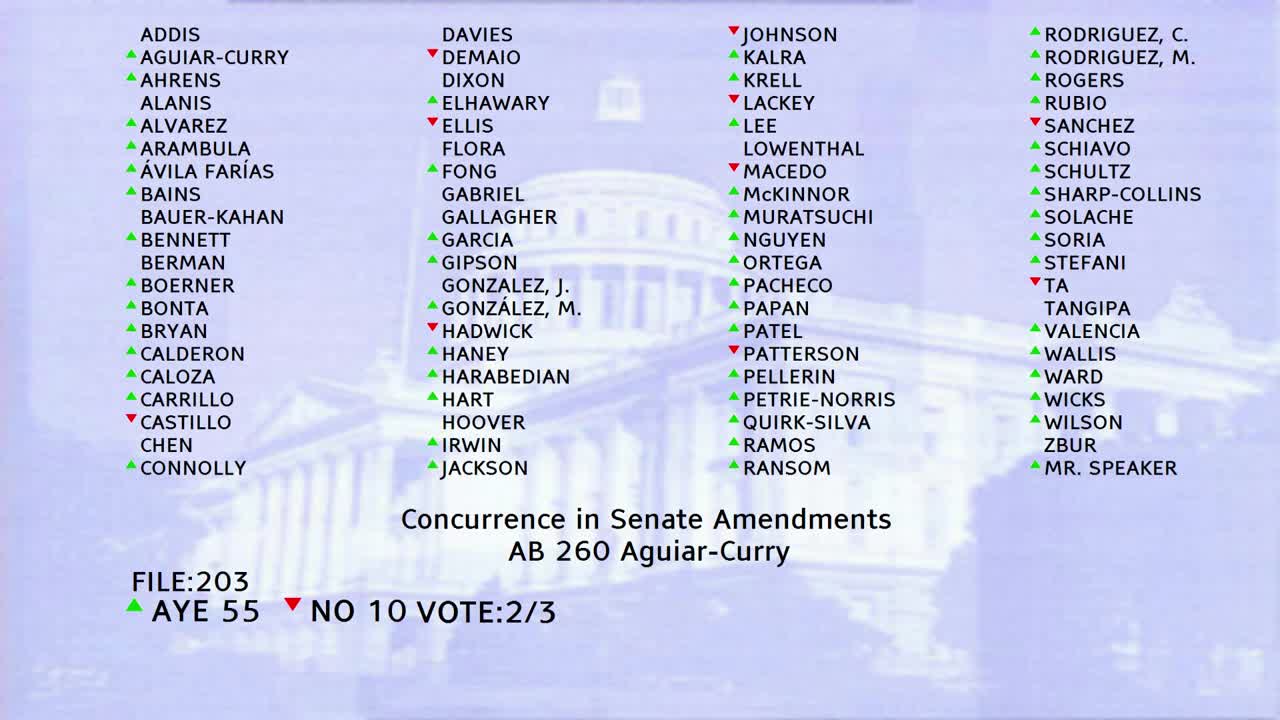 58SEC
Assembly Floor
 1MIN
Senate Floor
 34SEC
Senate Standing Committee on Appropriations
 11MIN
Senate Standing Committee on Health
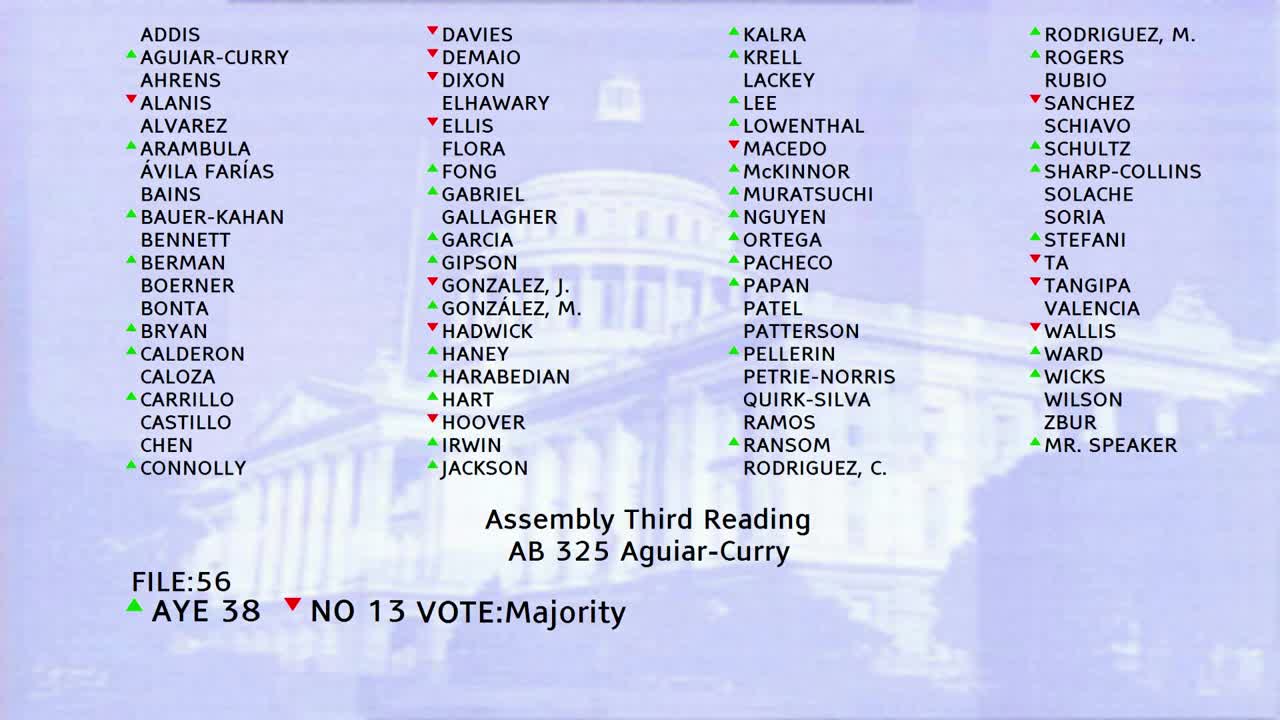 47SEC
Assembly Floor
 14MIN
Assembly Standing Committee on Health
Bill Author
Bill Co-Author(s):