AB 554: Health care coverage: antiretroviral drugs, drug devices, and drug products.
- Session Year: 2025-2026
- House: Assembly
- Latest Version Date: 2025-09-12
Current Status:
Failed
(2026-01-22: Consideration of Governor's veto stricken from file.)
Introduced
In Committee
Awaiting First Chamber Vote
Passed First Chamber
In Committee
Awaiting Second Chamber Vote
Passed Second Chamber
Enacted
Existing law, the Knox-Keene Health Care Service Plan Act of 1975, provides for the licensure and regulation of health care service plans by the Department of Managed Health Care and makes a willful violation of the act a crime. Existing law provides for the regulation of health insurers by the Department of Insurance. Existing law generally prohibits a health care service plan, excluding a Medi-Cal managed care plan, or health insurer from subjecting antiretroviral drugs that are medically necessary for the prevention of HIV/AIDS, including preexposure prophylaxis or postexposure prophylaxis, to prior authorization or step therapy. Under existing law, a health care service plan or health insurer is not required to cover all the therapeutically equivalent versions of those drugs without prior authorization or step therapy if at least one is covered without prior authorization or step therapy.
This bill, the Protecting Rights, Expanding Prevention, and Advancing Reimbursement for Equity (PrEPARE) Act of 2025, would instead prohibit a health care service plan, excluding a Medi-Cal managed care plan, or health insurer from subjecting antiretroviral drugs, drug devices, or drug products that are medically necessary for the prevention of HIV/AIDS, to prior authorization or step therapy, but would authorize prior authorization or step therapy if at least one therapeutically equivalent version is covered without prior authorization or step therapy. The bill would specify that, for therapeutically equivalent coverage purposes, a long-acting drug, drug device, or drug product is not therapeutically equivalent to a long-acting drug, drug device, or drug product with a different duration. The bill would require a plan or insurer that covers non-self-administered antiretroviral drugs, drug devices, or drug products that are approved by the United States Food and Drug Administration (FDA) for the prevention of HIV/AIDS as a medical benefit to also include those non-self-administered antiretroviral drugs, drug devices, or drug products as an outpatient prescription drug benefit.
This bill would require a nongrandfathered health care service plan contract or health insurance policy to provide coverage for antiretroviral drugs, drug devices, or drug products that are approved by the FDA for HIV preexposure prophylaxis, and would prohibit a nongrandfathered health care service plan contract or health insurance policy from imposing any cost sharing for those drugs, drug devices, or drug products. The bill would prohibit a plan or insurer from imposing cost sharing on a nonformulary antiretroviral drug, drug device, or drug product that is approved by the FDA for HIV preexposure prophylaxis and is covered pursuant to an exception request if the nonformulary antiretroviral drug, drug device, or drug product is therapeutically equivalent to a formulary antiretroviral drug, drug device, or drug product that is approved by the FDA for HIV preexposure prophylaxis and is covered by the plan or insurer without cost sharing. The bill would exempt Medi-Cal managed care plans from these provisions.
Because a willful violation of these provisions by a health care service plan would be a crime, this bill would impose a state-mandated local program.
The California Constitution requires the state to reimburse local agencies and school districts for certain costs mandated by the state. Statutory provisions establish procedures for making that reimbursement.
This bill would provide that no reimbursement is required by this act for a specified reason.
Existing law, the Knox-Keene Health Care Service Plan Act of 1975, provides for the licensure and regulation of health care service plans by the Department of Managed Health Care and makes a willful violation of the act a crime. Existing law provides for the regulation of health insurers by the Department of Insurance. Existing law generally prohibits a health care service plan, excluding a Medi-Cal managed care plan, or health insurer from subjecting antiretroviral drugs that are medically necessary for the prevention of HIV/AIDS, including preexposure prophylaxis or postexposure prophylaxis, to prior authorization or step therapy. Under existing law, a health care service plan or health insurer is not required to cover all the therapeutically equivalent versions of those drugs without prior authorization or step therapy if at least one is covered without prior authorization or step therapy.
This bill, the Protecting Rights, Expanding Prevention, and Advancing Reimbursement for Equity (PrEPARE) Act of 2025, would instead prohibit a health care service plan, excluding a Medi-Cal managed care plan, or health insurer from subjecting antiretroviral drugs, drug devices, or drug products that are medically necessary for the prevention of HIV/AIDS, to prior authorization, step therapy, or any other protocol designed to delay treatment, authorization or step therapy, but would authorize prior authorization or step therapy if at least one therapeutically equivalent version is covered without prior authorization or step therapy. The bill would specify that, for therapeutically equivalent coverage purposes, a long-acting drug, drug device, or drug product is not therapeutically equivalent to a long-acting drug, drug device, or drug product with a different duration. The bill would require a plan or insurer that covers non-self-administered antiretroviral drugs, drug devices, or drug products that are approved by the United States Food and Drug Administration (FDA) for the prevention of HIV/AIDS as a medical benefit to also include those non-self-administered antiretroviral drugs, drug devices, or drug products as an outpatient prescription drug benefit.
This bill would require a nongrandfathered or grandfathered health care service plan contract or health insurance policy to provide coverage for antiretroviral drugs, drug devices, or drug products that are approved by the FDA for HIV preexposure prophylaxis, and would prohibit a nongrandfathered or grandfathered health care service plan contract or health insurance policy from imposing any cost sharing for those drugs, drug devices, or drug products. The bill would prohibit a plan or insurer from imposing cost sharing on a nonformulary antiretroviral drug, drug device, or drug product that is approved by the FDA for HIV preexposure prophylaxis and is covered pursuant to an exception request if the nonformulary antiretroviral drug, drug device, or drug product is therapeutically equivalent to a formulary antiretroviral drug, drug device, or drug product that is approved by the FDA for HIV preexposure prophylaxis and is covered by the plan or insurer without cost sharing. The bill would exempt Medi-Cal managed care plans from these provisions.
Because a willful violation of these provisions by a health care service plan would be a crime, this bill would impose a state-mandated local program.
The California Constitution requires the state to reimburse local agencies and school districts for certain costs mandated by the state. Statutory provisions establish procedures for making that reimbursement.
This bill would provide that no reimbursement is required by this act for a specified reason.
Existing law, the Knox-Keene Health Care Service Plan Act of 1975, provides for the licensure and regulation of health care service plans by the Department of Managed Health Care and makes a willful violation of the act a crime. Existing law provides for the regulation of health insurers by the Department of Insurance. Existing law generally prohibits a health care service plan, excluding a Medi-Cal managed care plan, or health insurer from subjecting antiretroviral drugs that are medically necessary for the prevention of HIV/AIDS, including preexposure prophylaxis or postexposure prophylaxis, to prior authorization or step therapy. Under existing law, a health care service plan or health insurer is not required to cover all the therapeutically equivalent versions of those drugs without prior authorization or step therapy if at least one is covered without prior authorization or step therapy.
This bill, the Protecting Rights, Expanding Prevention, and Advancing Reimbursement for Equity (PrEPARE) Act of 2025, would instead prohibit a health care service plan, excluding a Medi-Cal managed care plan, or health insurer from subjecting antiretroviral drugs, drug devices, or drug products that are either approved by the United States Food and Drug Administration (FDA) or recommended by the federal Centers for Disease Control and Prevention (CDC) medically necessary for the prevention of HIV/AIDS, to prior authorization, step therapy, or any other protocol designed to delay treatment, but would authorize prior authorization or step therapy if at least one therapeutically equivalent version is covered without prior authorization or step therapy and the plan or insurer provides coverage for a noncovered therapeutic equivalent antiretroviral drug, drug device, or drug product without cost sharing pursuant to an exception request. therapy. The bill would specify that, for therapeutically equivalent coverage purposes, a long-acting drug, drug device, or drug product is not therapeutically equivalent to a long-acting drug, drug device, or drug product with a different duration. The bill would require a plan or insurer to provide coverage under the outpatient prescription drug benefit for those drugs, drug devices, or drug products, including by supplying participating providers directly with a drug, drug device, or drug product, as specified. that covers non-self-administered antiretroviral drugs, drug devices, or drug products that are approved by the United States Food and Drug Administration (FDA) for the prevention of HIV/AIDS as a medical benefit to also include those non-self-administered antiretroviral drugs, drug devices, or drug products as an outpatient prescription drug benefit.
This bill would require a nongrandfathered or grandfathered health care service plan contract or health insurance policy to provide coverage for antiretroviral drugs, drug devices, or drug products that are either approved by the FDA or recommended by the CDC for approved by the FDA for HIV preexposure prophylaxis, and would prohibit a nongrandfathered or grandfathered health care service plan contract or health insurance policy from imposing any cost sharing for those drugs, drug devices, or drug products. The bill would prohibit a plan or insurer from imposing cost sharing on a nonformulary antiretroviral drug, drug device, or drug product covered pursuant to an exception request if the nonformulary antiretroviral drug, drug device, or drug product is therapeutically equivalent to a formulary antiretroviral drug, drug device, or drug product that is covered by the plan or insurer without cost sharing. The bill would exempt Medi-Cal managed care plans from these provisions and would delay the application of these provisions for an individual and small group health care service plan contract or health insurance policy until January 1, 2027. provisions.
Because a willful violation of these provisions by a health care service plan would be a crime, this bill would impose a state-mandated local program.
The California Constitution requires the state to reimburse local agencies and school districts for certain costs mandated by the state. Statutory provisions establish procedures for making that reimbursement.
This bill would provide that no reimbursement is required by this act for a specified reason.
Existing law, the Knox-Keene Health Care Service Plan Act of 1975, provides for the licensure and regulation of health care service plans by the Department of Managed Health Care and makes a willful violation of the act a crime. Existing law provides for the regulation of health insurers by the Department of Insurance. Existing law generally prohibits a health care service plan, excluding a Medi-Cal managed care plan, or health insurer from subjecting antiretroviral drugs that are medically necessary for the prevention of HIV/AIDS, including preexposure prophylaxis or postexposure prophylaxis, to prior authorization or step therapy. Under existing law, a health care service plan or health insurer is not required to cover all the therapeutically equivalent versions of those drugs without prior authorization or step therapy if at least one is covered without prior authorization or step therapy.
This bill, the Protecting Rights, Expanding Prevention, and Advancing Reimbursement for Equity (PrEPARE) Act of 2025, would instead prohibit a health care service plan, excluding a Medi-Cal managed care plan, or health insurer from subjecting antiretroviral drugs, drug devices, or drug products that are either approved by the United States Food and Drug Administration (FDA) or recommended by the federal Centers for Disease Control and Prevention (CDC) for the prevention of HIV/AIDS, to prior authorization, step therapy, or any other protocol designed to delay treatment, but would authorize prior authorization or step therapy if at least one therapeutically equivalent version is covered without prior authorization or step therapy and the plan or insurer provides coverage for a noncovered therapeutic equivalent antiretroviral drug, drug device, or drug product without cost sharing pursuant to an exception request. The bill would specify that, for therapeutically equivalent coverage purposes, a long-acting injectable drug drug, drug device, or drug product is not therapeutically equivalent to a long-acting injectable drug drug, drug device, or drug product with a different duration. The bill would require a plan or insurer to provide coverage under the outpatient prescription drug benefit for those drugs, drug devices, or drug products, including by supplying participating providers directly with a drug, drug device, or drug product, as specified.
This bill would require a nongrandfathered or grandfathered health care service plan contract or health insurance policy to provide coverage for antiretroviral drugs, drug devices, or drug products that are either approved by the FDA or recommended by the CDC for preexposure prophylaxis, and would prohibit a nongrandfathered or grandfathered health care service plan contract or health insurance policy from imposing any cost sharing for those drugs, drug devices, or drug products. The bill would exempt Medi-Cal managed care plans from these provisions and would delay the application of these provisions for an individual and small group health care service plan contract or health insurance policy until January 1, 2027.
Because a willful violation of these provisions by a health care service plan would be a crime, this bill would impose a state-mandated local program.
The California Constitution requires the state to reimburse local agencies and school districts for certain costs mandated by the state. Statutory provisions establish procedures for making that reimbursement.
This bill would provide that no reimbursement is required by this act for a specified reason.
Existing law, the Knox-Keene Health Care Service Plan Act of 1975, provides for the licensure and regulation of health care service plans by the Department of Managed Health Care and makes a willful violation of the act a crime. Existing law provides for the regulation of health insurers by the Department of Insurance. Existing law generally prohibits a health care service plan, excluding a Medi-Cal managed care plan, or health insurer from subjecting antiretroviral drugs that are medically necessary for the prevention of HIV/AIDS, including preexposure prophylaxis or postexposure prophylaxis, to prior authorization or step therapy. Under existing law, a health care service plan or health insurer is not required to cover all the therapeutically equivalent versions of those drugs without prior authorization or step therapy if at least one is covered without prior authorization or step therapy.
This bill, the Protecting Rights, Expanding Prevention, and Advancing Reimbursement for Equity (PrEPARE) Act of 2025, would instead prohibit a health care service plan, excluding a Medi-Cal managed care plan, or health insurer from subjecting antiretroviral drugs, drug devices, or drug products that are either approved by the United States Food and Drug Administration (FDA) or recommended by the federal Centers for Disease Control and Prevention (CDC) for the prevention of HIV/AIDS, to prior authorization, step therapy, or any other protocol designed to delay treatment, but would authorize prior authorization or step therapy if at least one therapeutically equivalent version is covered without prior authorization or step therapy and the plan or insurer provides coverage for a noncovered therapeutic equivalent antiretroviral drug, drug device, or drug product without cost sharing pursuant to an exception request. The bill would specify that, for therapeutically equivalent coverage purposes, a long-acting injectable drug is not therapeutically equivalent to a long-acting injectable drug with a different duration. The bill would require a plan or insurer to provide coverage under the outpatient prescription drug benefit for those drugs, drug devices, or drug products, including by supplying participating providers directly with a drug, drug device, or drug product, as specified.
This bill would require a nongrandfathered or grandfathered health care service plan contract or health insurance policy to provide coverage for antiretroviral drugs, drug devices, or drug products that are either approved by the FDA or recommended by the CDC for the prevention of HIV/AIDS, preexposure prophylaxis, and would prohibit a nongrandfathered or grandfathered health care service plan contract or health insurance policy from imposing any cost-sharing or utilization review requirements cost sharing for those drugs, drug devices, or drug products. The bill would exempt Medi-Cal managed care plans from these provisions and would delay the application of these provisions for an individual and small group health care service plan contract or health insurance policy until January 1, 2027.
Because a willful violation of these provisions by a health care service plan would be a crime, this bill would impose a state-mandated local program.
The California Constitution requires the state to reimburse local agencies and school districts for certain costs mandated by the state. Statutory provisions establish procedures for making that reimbursement.
This bill would provide that no reimbursement is required by this act for a specified reason.
Existing law, the Knox-Keene Health Care Service Plan Act of 1975, provides for the licensure and regulation of health care service plans by the Department of Managed Health Care and makes a willful violation of the act a crime. Existing law provides for the regulation of health insurers by the Department of Insurance. Existing law generally prohibits a health care service plan, excluding a Medi-Cal managed care plan, or health insurer from subjecting antiretroviral drugs that are medically necessary for the prevention of HIV/AIDS, including preexposure prophylaxis or postexposure prophylaxis, to prior authorization or step therapy. Under existing law, a health care service plan or health insurer is not required to cover all the therapeutically equivalent versions of those drugs without prior authorization or step therapy if at least one is covered without prior authorization or step therapy.
This bill bill, the Protecting Rights, Expanding Prevention, and Advancing Reimbursement for Equity (PrEPARE) Act of 2025, would instead prohibit a health care service plan, excluding a Medi-Cal managed care plan, or health insurer from subjecting antiretroviral drugs, drug devices, or drug products that are either approved by the United States Food and Drug Administration (FDA) or recommended by the federal Centers for Disease Control and Prevention (CDC) for the prevention of HIV/AIDS, to prior authorization or step therapy, prior authorization, step therapy, or any other protocol designed to delay treatment, but would authorize prior authorization or step therapy if at least one therapeutically equivalent version is covered without prior authorization or step therapy and the plan or insurer provides coverage for a noncovered therapeutic equivalent antiretroviral drug, drug device, or drug product without cost sharing pursuant to an exception request. The bill would specify that, for therapeutically equivalent coverage purposes, a long-acting injectable drug is not therapeutically equivalent to a long-acting injectable drug with a different duration. The bill would require a plan or insurer to provide coverage under the outpatient prescription drug benefit for those drugs, drug devices, or drug products, including by supplying participating providers directly with a drug, drug device, or drug product, as specified.
This bill would require a nongrandfathered or grandfathered health care service plan contract or health insurance policy to provide coverage for antiretroviral drugs, drug devices, or drug products that are either approved by the FDA or recommended by the CDC for the prevention of HIV/AIDS, and would prohibit a nongrandfathered or grandfathered health care service plan contract or health insurance policy from imposing any cost-sharing or utilization review requirements for those drugs, drug devices, or drug products. The bill would exempt Medi-Cal managed care plans from these provisions and would delay the application of these provisions for an individual and small group health care service plan contract or health insurance policy until January 1, 2027.
Because a willful violation of these provisions by a health care service plan would be a crime, this bill would impose a state-mandated local program.
Existing law requires a health care service plan or health insurer to cover preexposure prophylaxis or postexposure prophylaxis that has been furnished by a pharmacist, as specified. Existing law prohibits a health care service plan or health insurer from prohibiting a pharmacy provider from dispensing preexposure prophylaxis or postexposure prophylaxis.This bill would delete the requirement for a health care service plan or health insurer to cover postexposure prophylaxis that has been furnished by a pharmacist. The bill would delete the provisions that prohibit a health care service plan or health insurer from prohibiting a pharmacy provider from dispensing postexposure prophylaxis.The California Constitution requires the state to reimburse local agencies and school districts for certain costs mandated by the state. Statutory provisions establish procedures for making that reimbursement.
This bill would provide that no reimbursement is required by this act for a specified reason.
Existing law, the Knox-Keene Health Care Service Plan Act of 1975, provides for the licensure and regulation of health care service plans by the Department of Managed Health Care and makes a willful violation of the act a crime. Existing law provides for the regulation of health insurers by the Department of Insurance. Existing law generally prohibits a health care service plan, excluding a Medi-Cal managed care plan, or health insurer from subjecting antiretroviral drugs that are medically necessary for the prevention of HIV/AIDS, including preexposure prophylaxis or postexposure prophylaxis, to prior authorization or step therapy. Under existing law, a health care service plan or health insurer is not required to cover all the therapeutically equivalent versions of those drugs without prior authorization or step therapy if at least one is covered without prior authorization or step therapy.
This bill would instead prohibit a health care service plan, excluding a Medi-Cal managed care plan, or health insurer from subjecting antiretroviral drugs, drug devices, or drug products that are either approved by the United States Food and Drug Administration (FDA) or recommended by the federal Centers for Disease Control and Prevention (CDC) for the prevention of HIV/AIDS, to prior authorization or step therapy, but would authorize prior authorization or step therapy if at least one therapeutically equivalent version is covered without prior authorization or step therapy and the plan or insurer provides coverage for a noncovered therapeutic equivalent antiretroviral drug, drug device, or drug product without cost sharing pursuant to an exception request. The bill would require a plan or insurer to provide coverage under the outpatient prescription drug benefit for those drugs, drug devices, or drug products, including by supplying participating providers directly with a drug, drug device, or drug product, as specified.
This bill would require a nongrandfathered or grandfathered health care service plan contract or health insurance policy to provide coverage for antiretroviral drugs, drug devices, or drug products that are either approved by the FDA or recommended by the CDC for the prevention of HIV/AIDS, and would prohibit a nongrandfathered or grandfathered health care service plan contract or health insurance policy from imposing any cost-sharing or utilization review requirements for those drugs, drug devices, or drug products. The bill would exempt Medi-Cal managed care plans from these provisions and would delay the application of these provisions for an individual and small group health care service plan contract or health insurance policy until January 1, 2027.
Because a willful violation of these provisions by a health care service plan would be a crime, this bill would impose a state-mandated local program.
Existing law requires a health care service plan or health insurer to cover preexposure prophylaxis or postexposure prophylaxis that has been furnished by a pharmacist, as specified. Existing law prohibits a health care service plan or health insurer from prohibiting a pharmacy provider from dispensing preexposure prophylaxis or postexposure prophylaxis.
This bill would delete the requirement for a health care service plan or health insurer to cover postexposure prophylaxis that has been furnished by a pharmacist. The bill would delete the provisions that prohibit a health care service plan or health insurer from prohibiting a pharmacy provider from dispensing postexposure prophylaxis.
The California Constitution requires the state to reimburse local agencies and school districts for certain costs mandated by the state. Statutory provisions establish procedures for making that reimbursement.
This bill would provide that no reimbursement is required by this act for a specified reason.
This act shall be known, and may be cited, as the Protecting Rights, Expanding Prevention, and Advancing Reimbursement for Equity (PrEPARE) Act of 2025.
SEC. 2.Section 1342.74 of the Health and Safety Code is amended to read:1342.74.(a)(1)Notwithstanding Section 1342.71, a health care service plan shall not subject antiretroviral drugs, drug devices, or drug products that are medically necessary for the prevention of HIV/AIDS, including preexposure prophylaxis or postexposure prophylaxis, to prior authorization or step therapy, except as provided in paragraph (2).
(2)If the United States Food and Drug Administration (FDA) has approved one or more therapeutic equivalents of a drug, drug device, or drug product for the prevention of HIV/AIDS, this section does not require a health care service plan to cover all of the therapeutically equivalent versions without prior authorization or step therapy, if at least one therapeutically equivalent version is covered without prior authorization or step therapy. For purposes of this section, a long-acting drug, drug device, or drug product is not therapeutically equivalent to a long-acting drug, drug device, or drug product with a different duration.
(b)Notwithstanding any other law, a health care service plan shall not prohibit, or permit a delegated pharmacy benefit manager to prohibit, a pharmacy provider from dispensing preexposure prophylaxis or postexposure prophylaxis.
(c)A health care service plan shall cover preexposure prophylaxis and postexposure prophylaxis that has been furnished by a pharmacist, as authorized in Sections 4052.02 and 4052.03 of the Business and Professions Code, including the pharmacists services and related testing ordered by the pharmacist. A health care service plan shall pay or reimburse, consistent with the requirements of this chapter, for the service performed by a pharmacist at an in-network pharmacy or a pharmacist at an out-of-network pharmacy if the health care service plan has an out-of-network pharmacy benefit.
(d)This section does not require a health care service plan to cover preexposure prophylaxis or postexposure prophylaxis by a pharmacist at an out-of-network pharmacy, unless in the case of a medical emergency or if the health care service plan has an out-of-network pharmacy benefit.
(e)(1)A nongrandfathered health care service plan contract shall provide coverage, and shall not impose any cost sharing, for antiretroviral drugs, drug devices, or drug products that are approved by the FDA for HIV preexposure prophylaxis.
(2)A health care service plan shall not impose cost sharing on a nonformulary antiretroviral drug, drug device, or drug product that is approved by the FDA for HIV preexposure prophylaxis and covered pursuant to an exception request if the nonformulary antiretroviral drug, drug device, or drug product is therapeutically equivalent to a formulary antiretroviral drug, drug device, or drug product that is approved by the FDA for HIV preexposure prophylaxis and that is covered by the health care service plan without cost sharing.
(f)Notwithstanding paragraph (2) of subdivision (g), a health care service plan that covers non-self-administered antiretroviral drugs, drug devices, or drug products that are approved by the FDA for the prevention of HIV/AIDS as a medical benefit shall also include those non-self-administered antiretroviral drugs, drug devices, or drug products that are approved by the FDA for the prevention of HIV/AIDS as an outpatient prescription drug benefit.
(g)(1)This section does not apply to a specialized health care service plan contract that covers only dental, mental health, or vision benefits or a Medicare supplement contract.
(2)This section applies regardless of whether or not an antiretroviral drug, drug device, or drug product is self-administered.
(3)This section shall not apply to Medi-Cal managed care plans contracting with the State Department of Health Care Services pursuant to Chapter 7 (commencing with Section 14000), Chapter 8 (commencing with Section 14200), or Chapter 8.75 (commencing with Section 14590) of Part 3 of Division 9 of the Welfare and Institutions Code, to the extent that the services described in this section are excluded from coverage under the contract between the Medi-Cal managed care plans and the State Department of Health Care Services.
(h)A health care service plan contract that is a high deductible health plan under the definition set forth in Section 223(c)(2) of Title 26 of the United States Code shall comply with the cost-sharing requirements of this section. However, if not applying the minimum annual deductible to an antiretroviral drug, drug device, or drug product would conflict with federal requirements for high deductible health plans, the cost-sharing limits shall apply once a contracts deductible has been satisfied for the plan year.
SEC. 3.Section 10123.1933 of the Insurance Code is amended to read:10123.1933.(a)(1)Notwithstanding Section 10123.201, a health insurer shall not subject antiretroviral drugs, drug devices, or drug products that are medically necessary for the prevention of HIV/AIDS, including preexposure prophylaxis or postexposure prophylaxis, to prior authorization or step therapy, except as provided in paragraph (2).
(2)If the United States Food and Drug Administration (FDA) has approved one or more therapeutic equivalents of a drug, drug device, or drug product for the prevention of HIV/AIDS, this section does not require a health insurer to cover all of the therapeutically equivalent versions without prior authorization or step therapy, if at least one therapeutically equivalent version is covered without prior authorization or step therapy. For purposes of this section, a long-acting drug, drug device, or drug product is not therapeutically equivalent to a long-acting drug, drug device, or drug product with a different duration.
(b)Notwithstanding any other law, a health insurer shall not prohibit, or permit a contracted pharmacy benefit manager to prohibit, a pharmacist from dispensing preexposure prophylaxis or postexposure prophylaxis.
(c)A health insurer shall cover preexposure prophylaxis or postexposure prophylaxis that has been furnished by a pharmacist, as authorized in Sections 4052.02 and 4052.03 of the Business and Professions Code, including the pharmacists services and related testing ordered by the pharmacist. A health insurer shall pay or reimburse, consistent with the requirements of this chapter, for the service performed by a pharmacist at an in-network pharmacy or a pharmacist at an out-of-network pharmacy if the health insurer has an out-of-network pharmacy benefit.
(d)This section does not require a health insurer to cover preexposure prophylaxis or postexposure prophylaxis by a pharmacist at an out-of-network pharmacy, unless in the case of a medical emergency or if the health insurance policy has an out-of-network pharmacy benefit.
(e)(1)A nongrandfathered health insurance policy shall provide coverage, and shall not impose any cost sharing, for antiretroviral drugs, drug devices, or drug products that are approved by the FDA for HIV preexposure prophylaxis.
(2)A health insurer shall not impose cost sharing on a nonformulary antiretroviral drug, drug device, or drug product that is approved by the FDA for HIV preexposure prophylaxis and covered pursuant to an exception request if the nonformulary antiretroviral drug, drug device, or drug product is therapeutically equivalent to a formulary antiretroviral drug, drug device, or drug product that is approved by the FDA for HIV preexposure prophylaxis and that is covered by the health insurer without cost sharing.
(f)Notwithstanding paragraph (2) of subdivision (g), a health insurer that covers non-self-administered antiretroviral drugs, drug devices, or drug products that are approved by the FDA for the prevention of HIV/AIDS as a medical benefit shall also include those non-self-administered antiretroviral drugs, drug devices, or drug products that are approved by the FDA for the prevention of HIV/AIDS as an outpatient prescription drug benefit.
(g)(1)This section does not apply to a specialized health insurance policy that covers only dental, mental health, or vision benefits or a Medicare supplement policy.
(2)This section applies regardless of whether or not an antiretroviral drug, drug device, or drug product is self-administered.
(h)The department and commissioner may exercise the authority provided by this code and the Administrative Procedure Act (Chapter 3.5 (commencing with Section 11340), Chapter 4.5 (commencing with Section 11400), and Chapter 5 (commencing with Section 11500) of Part 1 of Division 3 of Title 2 of the Government Code) to implement and enforce this section. If the commissioner assesses an administrative penalty for a violation, any hearing that is requested by the insurer may be conducted by an administrative law judge of the administrative hearing bureau of the department under the formal procedure of Chapter 5 (commencing with Section 11500) of Part 1 of Division 3 of Title 2 of the Government Code. This subdivision does not impair or restrict the commissioners authority pursuant to another provision of this code or the Administrative Procedure Act.
(i)A health insurance policy that is a high deductible health plan under the definition set forth in Section 223(c)(2) of Title 26 of the United States Code shall comply with the cost-sharing requirements of this section. However, if not applying the minimum annual deductible to an antiretroviral drug, drug device, or drug product would conflict with federal requirements for high deductible health plans, the cost-sharing limits shall apply once a policys deductible has been satisfied for the plan year.
SEC. 4.No reimbursement is required by this act pursuant to Section 6 of Article XIIIB of the California Constitution because the only costs that may be incurred by a local agency or school district will be incurred because this act creates a new crime or infraction, eliminates a crime or infraction, or changes the penalty for a crime or infraction, within the meaning of Section 17556 of the Government Code, or changes the definition of a crime within the meaning of Section 6 of Article XIIIB of the California Constitution.
This act shall be known, and may be cited, as the Protecting Rights, Expanding Prevention, and Advancing Reimbursement for Equity (PrEPARE) Act of 2025.
SEC. 2.Section 1342.74 of the Health and Safety Code is amended to read:1342.74.(a)(1)Notwithstanding Section 1342.71, a health care service plan shall not subject antiretroviral drugs, drug devices, or drug products that are medically necessary for the prevention of HIV/AIDS, including preexposure prophylaxis or postexposure prophylaxis, to prior authorization, step therapy, or any other protocol designed to delay treatment, authorization or step therapy, except as provided in paragraph (2).
(2)If the United States Food and Drug Administration (FDA) has approved one or more therapeutic equivalents of a drug, drug device, or drug product for the prevention of HIV/AIDS, this section does not require a health care service plan to cover all of the therapeutically equivalent versions without prior authorization or step therapy, if at least one therapeutically equivalent version is covered without prior authorization or step therapy. For purposes of this section, a long-acting drug, drug device, or drug product is not therapeutically equivalent to a long-acting drug, drug device, or drug product with a different duration.
(b)Notwithstanding any other law, a health care service plan shall not prohibit, or permit a delegated pharmacy benefit manager to prohibit, a pharmacy provider from dispensing preexposure prophylaxis or postexposure prophylaxis.
(c)A health care service plan shall cover preexposure prophylaxis and postexposure prophylaxis that has been furnished by a pharmacist, as authorized in Sections 4052.02 and 4052.03 of the Business and Professions Code, including the pharmacists services and related testing ordered by the pharmacist. A health care service plan shall pay or reimburse, consistent with the requirements of this chapter, for the service performed by a pharmacist at an in-network pharmacy or a pharmacist at an out-of-network pharmacy if the health care service plan has an out-of-network pharmacy benefit.
(d)This section does not require a health care service plan to cover preexposure prophylaxis or postexposure prophylaxis by a pharmacist at an out-of-network pharmacy, unless in the case of a medical emergency or if the health care service plan has an out-of-network pharmacy benefit.
(e)(1)A nongrandfathered health care service plan contract shall provide coverage, and shall not impose any cost sharing, for antiretroviral drugs, drug devices, or drug products that are approved by the FDA for HIV preexposure prophylaxis.
(2)A health care service plan contract that is a grandfathered health plan shall provide coverage, and shall not impose any cost sharing, for antiretroviral drugs, drug devices, or drug products that are approved by the FDA for HIV preexposure prophylaxis.(3)(2)A health care service plan shall not impose cost sharing on a nonformulary antiretroviral drug, drug device, or drug product that is approved by the FDA for HIV preexposure prophylaxis and covered pursuant to an exception request if the nonformulary antiretroviral drug, drug device, or drug product is therapeutically equivalent to a formulary antiretroviral drug, drug device, or drug product that is approved by the FDA for HIV preexposure prophylaxis and that is covered by the health care service plan without cost sharing.
(f)Notwithstanding paragraph (2) of subdivision (g), a health care service plan that covers non-self-administered antiretroviral drugs, drug devices, or drug products that are approved by the FDA for the prevention of HIV/AIDS as a medical benefit shall also include those non-self-administered antiretroviral drugs, drug devices, or drug products that are approved by the FDA for the prevention of HIV/AIDS as an outpatient prescription drug benefit.
(g)(1)This section does not apply to a specialized health care service plan contract that covers only dental, mental health, or vision benefits or a Medicare supplement contract.
(2)This section applies regardless of whether or not an antiretroviral drug, drug device, or drug product is self-administered.
(3)This section shall not apply to Medi-Cal managed care plans contracting with the State Department of Health Care Services pursuant to Chapter 7 (commencing with Section 14000), Chapter 8 (commencing with Section 14200), or Chapter 8.75 (commencing with Section 14590) of Part 3 of Division 9 of the Welfare and Institutions Code, to the extent that the services described in this section are excluded from coverage under the contract between the Medi-Cal managed care plans and the State Department of Health Care Services.
(h)A health care service plan contract that is a high deductible health plan under the definition set forth in Section 223(c)(2) of Title 26 of the United States Code shall comply with the cost-sharing requirements of this section. However, if not applying the minimum annual deductible to an antiretroviral drug, drug device, or drug product would conflict with federal requirements for high deductible health plans, the cost-sharing limits shall apply once a contracts deductible has been satisfied for the plan year.
SEC. 3.Section 10123.1933 of the Insurance Code is amended to read:10123.1933.(a)(1)Notwithstanding Section 10123.201, a health insurer shall not subject antiretroviral drugs, drug devices, or drug products that are medically necessary for the prevention of HIV/AIDS, including preexposure prophylaxis or postexposure prophylaxis, to prior authorization, step therapy, or any other protocol designed to delay treatment, authorization or step therapy, except as provided in paragraph (2).
(2)If the United States Food and Drug Administration (FDA) has approved one or more therapeutic equivalents of a drug, drug device, or drug product for the prevention of HIV/AIDS, this section does not require a health insurer to cover all of the therapeutically equivalent versions without prior authorization or step therapy, if at least one therapeutically equivalent version is covered without prior authorization or step therapy. For purposes of this section, a long-acting drug, drug device, or drug product is not therapeutically equivalent to a long-acting drug, drug device, or drug product with a different duration.
(b)Notwithstanding any other law, a health insurer shall not prohibit, or permit a contracted pharmacy benefit manager to prohibit, a pharmacist from dispensing preexposure prophylaxis or postexposure prophylaxis.
(c)A health insurer shall cover preexposure prophylaxis or postexposure prophylaxis that has been furnished by a pharmacist, as authorized in Sections 4052.02 and 4052.03 of the Business and Professions Code, including the pharmacists services and related testing ordered by the pharmacist. A health insurer shall pay or reimburse, consistent with the requirements of this chapter, for the service performed by a pharmacist at an in-network pharmacy or a pharmacist at an out-of-network pharmacy if the health insurer has an out-of-network pharmacy benefit.
(d)This section does not require a health insurer to cover preexposure prophylaxis or postexposure prophylaxis by a pharmacist at an out-of-network pharmacy, unless in the case of a medical emergency or if the health insurance policy has an out-of-network pharmacy benefit.
(e)(1)A nongrandfathered health insurance policy shall provide coverage, and shall not impose any cost sharing, for antiretroviral drugs, drug devices, or drug products that are approved by the FDA for HIV preexposure prophylaxis.
(2)A health insurance policy that is a grandfathered health plan shall provide coverage, and shall not impose any cost sharing, for antiretroviral drugs, drug devices, or drug products that are approved by the FDA for HIV preexposure prophylaxis.(3)(2)A health insurer shall not impose cost sharing on a nonformulary antiretroviral drug, drug device, or drug product that is approved by the FDA for HIV preexposure prophylaxis and covered pursuant to an exception request if the nonformulary antiretroviral drug, drug device, or drug product is therapeutically equivalent to a formulary antiretroviral drug, drug device, or drug product that is approved by the FDA for HIV preexposure prophylaxis and that is covered by the health insurer without cost sharing.
(f)Notwithstanding paragraph (2) of subdivision (g), a health insurer that covers non-self-administered antiretroviral drugs, drug devices, or drug products that are approved by the FDA for the prevention of HIV/AIDS as a medical benefit shall also include those non-self-administered antiretroviral drugs, drug devices, or drug products that are approved by the FDA for the prevention of HIV/AIDS as an outpatient prescription drug benefit.
(g)(1)This section does not apply to a specialized health insurance policy that covers only dental, mental health, or vision benefits or a Medicare supplement policy.
(2)This section applies regardless of whether or not an antiretroviral drug, drug device, or drug product is self-administered.
(h)The department and commissioner may exercise the authority provided by this code and the Administrative Procedure Act (Chapter 3.5 (commencing with Section 11340), Chapter 4.5 (commencing with Section 11400), and Chapter 5 (commencing with Section 11500) of Part 1 of Division 3 of Title 2 of the Government Code) to implement and enforce this section. If the commissioner assesses an administrative penalty for a violation, any hearing that is requested by the insurer may be conducted by an administrative law judge of the administrative hearing bureau of the department under the formal procedure of Chapter 5 (commencing with Section 11500) of Part 1 of Division 3 of Title 2 of the Government Code. This subdivision does not impair or restrict the commissioners authority pursuant to another provision of this code or the Administrative Procedure Act.
(i)A health insurance policy that is a high deductible health plan under the definition set forth in Section 223(c)(2) of Title 26 of the United States Code shall comply with the cost-sharing requirements of this section. However, if not applying the minimum annual deductible to an antiretroviral drug, drug device, or drug product would conflict with federal requirements for high deductible health plans, the cost-sharing limits shall apply once a policys deductible has been satisfied for the plan year.
SEC. 4.No reimbursement is required by this act pursuant to Section 6 of Article XIIIB of the California Constitution because the only costs that may be incurred by a local agency or school district will be incurred because this act creates a new crime or infraction, eliminates a crime or infraction, or changes the penalty for a crime or infraction, within the meaning of Section 17556 of the Government Code, or changes the definition of a crime within the meaning of Section 6 of Article XIIIB of the California Constitution.
This act shall be known, and may be cited, as the Protecting Rights, Expanding Prevention, and Advancing Reimbursement for Equity (PrEPARE) Act of 2025.
SEC. 2.Section 1342.74 of the Health and Safety Code is amended to read:1342.74.(a)(1)Notwithstanding Section 1342.71, a health care service plan shall not subject antiretroviral drugs, drug devices, or drug products that are either approved by the United States Food and Drug Administration (FDA) or recommended by the federal Centers for Disease Control and Prevention (CDC) medically necessary for the prevention of HIV/AIDS, including preexposure prophylaxis or postexposure prophylaxis, to prior authorization, step therapy, or any other protocol designed to delay treatment, except as provided in paragraph (2).
(2)If the FDA United States Food and Drug Administration (FDA) has approved one or more therapeutic equivalents of a drug, drug device, or drug product for the prevention of HIV/AIDS, this section does not require a health care service plan to cover all of the therapeutically equivalent versions without prior authorization or step therapy, if at least one therapeutically equivalent version is covered without prior authorization or step therapy and the plan provides coverage for a noncovered therapeutic equivalent antiretroviral drug, drug device, or drug product without cost sharing pursuant to an exception request. therapy. For purposes of this section, a long-acting drug, drug device, or drug product is not therapeutically equivalent to a long-acting drug, drug device, or drug product with a different duration.
(b)Notwithstanding any other law, a health care service plan shall not prohibit, or permit a delegated pharmacy benefit manager to prohibit, a pharmacy provider from dispensing preexposure prophylaxis or postexposure prophylaxis.
(c)A health care service plan shall cover preexposure prophylaxis and postexposure prophylaxis that has been furnished by a pharmacist, as authorized in Sections 4052.02 and 4052.03 of the Business and Professions Code, including the pharmacists services and related testing ordered by the pharmacist. A health care service plan shall pay or reimburse, consistent with the requirements of this chapter, for the service performed by a pharmacist at an in-network pharmacy or a pharmacist at an out-of-network pharmacy if the health care service plan has an out-of-network pharmacy benefit.
(d)This section does not require a health care service plan to cover preexposure prophylaxis or postexposure prophylaxis by a pharmacist at an out-of-network pharmacy, unless in the case of a medical emergency or if the health care service plan has an out-of-network pharmacy benefit.
(e)(1)A nongrandfathered health care service plan contract shall provide coverage, and shall not impose any cost sharing, for antiretroviral drugs, drug devices, or drug products that are either approved by the FDA or recommended by the CDC for approved by the FDA for HIV preexposure prophylaxis.
(2)A health care service plan contract that is a grandfathered health plan shall provide coverage, and shall not impose any cost sharing, for antiretroviral drugs, drug devices, or drug products that are either approved by the FDA or recommended by the CDC for approved by the FDA for HIV preexposure prophylaxis.
(3)This subdivision does not apply to individual and small group health care service plan contracts.(f)In addition to the coverage a health care service plan provides for prescription drugs that are not self-administered, a health care service plan shall provide coverage under the outpatient prescription drug benefit for antiretroviral drugs, drug devices, or drug products that are either approved by the FDA or recommended by the CDC for the prevention of HIV/AIDS, including by supplying providers directly with a drug, drug device, or drug product that is required by this section and is not self-administered.(3)A health care service plan shall not impose cost sharing on a nonformulary antiretroviral drug, drug device, or drug product covered pursuant to an exception request if the nonformulary antiretroviral drug, drug device, or drug product is therapeutically equivalent to a formulary antiretroviral drug, drug device, or drug product that is covered by the health care service plan without cost sharing.
(f)Notwithstanding paragraph (2) of subdivision (g), a health care service plan that covers non-self-administered antiretroviral drugs, drug devices, or drug products that are approved by the FDA for the prevention of HIV/AIDS as a medical benefit shall also include those non-self-administered antiretroviral drugs, drug devices, or drug products that are approved by the FDA for the prevention of HIV/AIDS as an outpatient prescription drug benefit.
(g)(1)This section does not apply to a specialized health care service plan contract that covers only dental dental, mental health, or vision benefits or a Medicare supplement contract.
(2)This section applies regardless of whether or not an antiretroviral drug, drug device, or drug product is self-administered.
(3)This section shall not apply to Medi-Cal managed care plans contracting with the State Department of Health Care Services pursuant to Chapter 7 (commencing with Section 14000), Chapter 8 (commencing with Section 14200), or Chapter 8.75 (commencing with Section 14590) of Part 3 of Division 9 of the Welfare and Institutions Code, to the extent that the services described in this section are excluded from coverage under the contract between the Medi-Cal managed care plans and the State Department of Health Care Services.
(h)A health care service plan contract that is a high deductible health plan under the definition set forth in Section 223(c)(2) of Title 26 of the United States Code shall comply with the cost-sharing requirements of this section. However, if not applying the minimum annual deductible to an antiretroviral drug, drug device, or drug product would conflict with federal requirements for high deductible health plans, the cost-sharing limits shall apply once a contracts deductible has been satisfied for the plan year.
(i)This section shall remain in effect only until January 1, 2027, and as of that date is repealed.SEC. 3.Section 1342.74 is added to the Health and Safety Code, to read:1342.74.(a)(1)Notwithstanding Section 1342.71, a health care service plan shall not subject antiretroviral drugs, drug devices, or drug products that are either approved by the United States Food and Drug Administration (FDA) or recommended by the federal Centers for Disease Control and Prevention (CDC) for the prevention of HIV/AIDS, including preexposure prophylaxis or postexposure prophylaxis, to prior authorization, step therapy, or any other protocol designed to delay treatment, except as provided in paragraph (2).(2)If the FDA has approved one or more therapeutic equivalents of a drug, drug device, or drug product for the prevention of HIV/AIDS, this section does not require a health care service plan to cover all of the therapeutically equivalent versions without prior authorization or step therapy, if at least one therapeutically equivalent version is covered without prior authorization or step therapy and the plan provides coverage for a noncovered therapeutic equivalent antiretroviral drug, drug device, or drug product without cost sharing pursuant to an exception request. For purposes of this section, a long-acting drug, drug device, or drug product is not therapeutically equivalent to a long-acting drug, drug device, or drug product with a different duration. (b)Notwithstanding any other law, a health care service plan shall not prohibit, or permit a delegated pharmacy benefit manager to prohibit, a pharmacy provider from dispensing preexposure prophylaxis or postexposure prophylaxis.(c)A health care service plan shall cover preexposure prophylaxis and postexposure prophylaxis that has been furnished by a pharmacist, as authorized in Sections 4052.02 and 4052.03 of the Business and Professions Code, including the pharmacists services and related testing ordered by the pharmacist. A health care service plan shall pay or reimburse, consistent with the requirements of this chapter, for the service performed by a pharmacist at an in-network pharmacy or a pharmacist at an out-of-network pharmacy if the health care service plan has an out-of-network pharmacy benefit.(d)This section does not require a health care service plan to cover preexposure prophylaxis or postexposure prophylaxis by a pharmacist at an out-of-network pharmacy, unless in the case of a medical emergency or if the health care service plan has an out-of-network pharmacy benefit.(e)(1)A nongrandfathered health care service plan contract shall provide coverage, and shall not impose any cost sharing, for antiretroviral drugs, drug devices, or drug products that are either approved by the FDA or recommended by the CDC for preexposure prophylaxis.(2)A health care service plan contract that is a grandfathered health plan shall provide coverage, and shall not impose any cost sharing, for antiretroviral drugs, drug devices, or drug products that are either approved by the FDA or recommended by the CDC for preexposure prophylaxis.(f)In addition to the coverage a health care service plan provides for prescription drugs that are not self-administered, a health care service plan shall provide coverage under the outpatient prescription drug benefit for antiretroviral drugs, drug devices, or drug products that are either approved by the FDA or recommended by the CDC for the prevention of HIV/AIDS, including by supplying providers directly with a drug, drug device, or drug product that is required by this section and is not self-administered.(g)(1)This section does not apply to a specialized health care service plan contract that covers only dental or vision benefits or a Medicare supplement contract.(2)This section applies regardless of whether or not an antiretroviral drug, drug device, or drug product is self-administered.(3)This section shall not apply to Medi-Cal managed care plans contracting with the State Department of Health Care Services pursuant to Chapter 7 (commencing with Section 14000), Chapter 8 (commencing with Section 14200), or Chapter 8.75 (commencing with Section 14590) of Part 3 of Division 9 of the Welfare and Institutions Code, to the extent that the services described in this section are excluded from coverage under the contract between the Medi-Cal managed care plans and the State Department of Health Care Services.(h)A health care service plan contract that is a high deductible health plan under the definition set forth in Section 223(c)(2) of Title 26 of the United States Code shall comply with the cost-sharing requirements of this section. However, if not applying the minimum annual deductible to an antiretroviral drug, drug device, or drug product would conflict with federal requirements for high deductible health plans, the cost-sharing limits shall apply once a contracts deductible has been satisfied for the plan year.(i)This section shall become operative on January 1, 2027.SEC. 4.SEC. 3.Section 10123.1933 of the Insurance Code is amended to read:10123.1933.(a)(1)Notwithstanding Section 10123.201, a health insurer shall not subject antiretroviral drugs, drug devices, or drug products that are either approved by the United States Food and Drug Administration (FDA) or recommended by the federal Centers for Disease Control and Prevention (CDC) medically necessary for the prevention of HIV/AIDS, including preexposure prophylaxis or postexposure prophylaxis, to prior authorization, step therapy, or any other protocol designed to delay treatment, except as provided in paragraph (2).
(2)If the FDA United States Food and Drug Administration (FDA) has approved one or more therapeutic equivalents of a drug, drug device, or drug product for the prevention of HIV/AIDS, this section does not require a health insurer to cover all of the therapeutically equivalent versions without prior authorization or step therapy, if at least one therapeutically equivalent version is covered without prior authorization or step therapy and the insurer provides coverage for a noncovered therapeutic equivalent antiretroviral drug, drug device, or drug product without cost sharing pursuant to an exception request. therapy. For purposes of this section, a long-acting drug, drug device, or drug product is not therapeutically equivalent to a long-acting drug, drug device, or drug product with a different duration.
(b)Notwithstanding any other law, a health insurer shall not prohibit, or permit a contracted pharmacy benefit manager to prohibit, a pharmacist from dispensing preexposure prophylaxis or postexposure prophylaxis.
(c)A health insurer shall cover preexposure prophylaxis or postexposure prophylaxis that has been furnished by a pharmacist, as authorized in Sections 4052.02 and 4052.03 of the Business and Professions Code, including the pharmacists services and related testing ordered by the pharmacist. A health insurer shall pay or reimburse, consistent with the requirements of this chapter, for the service performed by a pharmacist at an in-network pharmacy or a pharmacist at an out-of-network pharmacy if the health insurer has an out-of-network pharmacy benefit.
(d)This section does not require a health insurer to cover preexposure prophylaxis or postexposure prophylaxis by a pharmacist at an out-of-network pharmacy, unless in the case of a medical emergency or if the health insurance policy has an out-of-network pharmacy benefit.
(e)(1)A nongrandfathered health insurance policy shall provide coverage, and shall not impose any cost sharing, for antiretroviral drugs, drug devices, or drug products that are either approved by the FDA or recommended by the CDC for approved by the FDA for HIV preexposure prophylaxis.
(2)A health insurance policy that is a grandfathered health plan shall provide coverage, and shall not impose any cost sharing, for antiretroviral drugs, drug devices, or drug products that are either approved by the FDA or recommended by the CDC for approved by the FDA for HIV preexposure prophylaxis.
(3)This subdivision does not apply to individual and small group health insurance policies.(f)In addition to the coverage a health insurer provides for prescription drugs that are not self-administered, a health insurer shall provide coverage under the outpatient prescription drug benefit for antiretroviral drugs, drug devices, or drug products that are either approved by the FDA or recommended by the CDC for the prevention of HIV/AIDS, including by supplying providers directly with a drug, drug device, or drug product that is required by this section and is not self-administered.(3)A health insurer shall not impose cost sharing on a nonformulary antiretroviral drug, drug device, or drug product covered pursuant to an exception request if the nonformulary antiretroviral drug, drug device, or drug product is therapeutically equivalent to a formulary antiretroviral drug, drug device, or drug product that is covered by the health insurer without cost sharing.
(f)Notwithstanding paragraph (2) of subdivision (g), a health insurer that covers non-self-administered antiretroviral drugs, drug devices, or drug products that are approved by the FDA for the prevention of HIV/AIDS as a medical benefit shall also include those non-self-administered antiretroviral drugs, drug devices, or drug products that are approved by the FDA for the prevention of HIV/AIDS as an outpatient prescription drug benefit.
(g)(1)This section does not apply to a specialized health insurance policy that covers only dental dental, mental health, or vision benefits or a Medicare supplement policy.
(2)This section applies regardless of whether or not an antiretroviral drug, drug device, or drug product is self-administered.
(h)The department and commissioner may exercise the authority provided by this code and the Administrative Procedure Act (Chapter 3.5 (commencing with Section 11340), Chapter 4.5 (commencing with Section 11400), and Chapter 5 (commencing with Section 11500) of Part 1 of Division 3 of Title 2 of the Government Code) to implement and enforce this section. If the commissioner assesses a civil an administrative penalty for a violation, any hearing that is requested by the insurer may be conducted by an administrative law judge of the administrative hearing bureau of the department under the formal procedure of Chapter 5 (commencing with Section 11500) of Part 1 of Division 3 of Title 2 of the Government Code. This subdivision does not impair or restrict the commissioners authority pursuant to another provision of this code or the Administrative Procedure Act.
(i)A health insurance policy that is a high deductible health plan under the definition set forth in Section 223(c)(2) of Title 26 of the United States Code shall comply with the cost-sharing requirements of this section. However, if not applying the minimum annual deductible to an antiretroviral drug, drug device, or drug product would conflict with federal requirements for high deductible health plans, the cost-sharing limits shall apply once a policys deductible has been satisfied for the plan year.
(j)This section shall remain in effect only until January 1, 2027, and as of that date is repealed.SEC. 5.Section 10123.1933 is added to the Insurance Code, to read:10123.1933.(a)(1)Notwithstanding Section 10123.201, a health insurer shall not subject antiretroviral drugs, drug devices, or drug products that are either approved by the United States Food and Drug Administration (FDA) or recommended by the federal Centers for Disease Control and Prevention (CDC) for the prevention of HIV/AIDS, including preexposure prophylaxis or postexposure prophylaxis, to prior authorization, step therapy, or any other protocol designed to delay treatment, except as provided in paragraph (2).(2)If the FDA has approved one or more therapeutic equivalents of a drug, drug device, or drug product for the prevention of HIV/AIDS, this section does not require a health insurer to cover all of the therapeutically equivalent versions without prior authorization or step therapy, if at least one therapeutically equivalent version is covered without prior authorization or step therapy and the insurer provides coverage for a noncovered therapeutic equivalent antiretroviral drug, drug device, or drug product without cost sharing pursuant to an exception request. For purposes of this section, a long-acting drug, drug device, or drug product is not therapeutically equivalent to a long-acting drug, drug device, or drug product with a different duration.(b)Notwithstanding any other law, a health insurer shall not prohibit, or permit a contracted pharmacy benefit manager to prohibit, a pharmacist from dispensing preexposure prophylaxis or postexposure prophylaxis.(c)A health insurer shall cover preexposure prophylaxis or postexposure prophylaxis that has been furnished by a pharmacist, as authorized in Sections 4052.02 and 4052.03 of the Business and Professions Code, including the pharmacists services and related testing ordered by the pharmacist. A health insurer shall pay or reimburse, consistent with the requirements of this chapter, for the service performed by a pharmacist at an in-network pharmacy or a pharmacist at an out-of-network pharmacy if the health insurer has an out-of-network pharmacy benefit.(d)This section does not require a health insurer to cover preexposure prophylaxis or postexposure prophylaxis by a pharmacist at an out-of-network pharmacy, unless in the case of a medical emergency or if the health insurance policy has an out-of-network pharmacy benefit.(e)(1)A nongrandfathered health insurance policy shall provide coverage, and shall not impose any cost sharing, for antiretroviral drugs, drug devices, or drug products that are either approved by the FDA or recommended by the CDC for preexposure prophylaxis.(2)A health insurance policy that is a grandfathered health plan shall provide coverage, and shall not impose any cost sharing, for antiretroviral drugs, drug devices, or drug products that are either approved by the FDA or recommended by the CDC for preexposure prophylaxis.(f)In addition to the coverage a health insurer provides for prescription drugs that are not self-administered, a health insurer shall provide coverage under the outpatient prescription drug benefit for antiretroviral drugs, drug devices, or drug products that are either approved by the FDA or recommended by the CDC for the prevention of HIV/AIDS, including by supplying providers directly with a drug, drug device, or drug product that is required by this section and is not self-administered.(g)(1)This section does not apply to a specialized health insurance policy that covers only dental or vision benefits or a Medicare supplement policy.(2)This section applies regardless of whether or not an antiretroviral drug, drug device, or drug product is self-administered.(h)The department and commissioner may exercise the authority provided by this code and the Administrative Procedure Act (Chapter 3.5 (commencing with Section 11340), Chapter 4.5 (commencing with Section 11400), and Chapter 5 (commencing with Section 11500) of Part 1 of Division 3 of Title 2 of the Government Code) to implement and enforce this section. If the commissioner assesses a civil penalty for a violation, any hearing that is requested by the insurer may be conducted by an administrative law judge of the administrative hearing bureau of the department under the formal procedure of Chapter 5 (commencing with Section 11500) of Part 1 of Division 3 of Title 2 of the Government Code. This subdivision does not impair or restrict the commissioners authority pursuant to another provision of this code or the Administrative Procedure Act.(i)A health insurance policy that is a high deductible health plan under the definition set forth in Section 223(c)(2) of Title 26 of the United States Code shall comply with the cost-sharing requirements of this section. However, if not applying the minimum annual deductible to an antiretroviral drug, drug device, or drug product would conflict with federal requirements for high deductible health plans, the cost-sharing limits shall apply once a policys deductible has been satisfied for the plan year.(j)This section shall become operative on January 1, 2027.SEC. 6.SEC. 4.No reimbursement is required by this act pursuant to Section 6 of Article XIIIB of the California Constitution because the only costs that may be incurred by a local agency or school district will be incurred because this act creates a new crime or infraction, eliminates a crime or infraction, or changes the penalty for a crime or infraction, within the meaning of Section 17556 of the Government Code, or changes the definition of a crime within the meaning of Section 6 of Article XIIIB of the California Constitution.
This act shall be known, and may be cited, as the Protecting Rights, Expanding Prevention, and Advancing Reimbursement for Equity (PrEPARE) Act of 2025.
SEC. 2.Section 1342.74 of the Health and Safety Code is amended to read:1342.74.(a)(1)Notwithstanding Section 1342.71, a health care service plan shall not subject antiretroviral drugs, drug devices, or drug products that are either approved by the United States Food and Drug Administration (FDA) or recommended by the federal Centers for Disease Control and Prevention (CDC) for the prevention of HIV/AIDS, including preexposure prophylaxis or postexposure prophylaxis, to prior authorization, step therapy, or any other protocol designed to delay treatment, except as provided in paragraph (2).
(2)If the FDA has approved one or more therapeutic equivalents of a drug, drug device, or drug product for the prevention of HIV/AIDS, this section does not require a health care service plan to cover all of the therapeutically equivalent versions without prior authorization or step therapy, if at least one therapeutically equivalent version is covered without prior authorization or step therapy and the plan provides coverage for a noncovered therapeutic equivalent antiretroviral drug, drug device, or drug product without cost sharing pursuant to an exception request. For purposes of this section, a long-acting injectable drug drug, drug device, or drug product is not therapeutically equivalent to a long-acting injectable drug drug, drug device, or drug product with a different duration.
(b)Notwithstanding any other law, a health care service plan shall not prohibit, or permit a delegated pharmacy benefit manager to prohibit, a pharmacy provider from dispensing preexposure prophylaxis or postexposure prophylaxis.
(c)A health care service plan shall cover preexposure prophylaxis and postexposure prophylaxis that has been furnished by a pharmacist, as authorized in Sections 4052.02 and 4052.03 of the Business and Professions Code, including the pharmacists services and related testing ordered by the pharmacist. A health care service plan shall pay or reimburse, consistent with the requirements of this chapter, for the service performed by a pharmacist at an in-network pharmacy or a pharmacist at an out-of-network pharmacy if the health care service plan has an out-of-network pharmacy benefit.
(d)This section does not require a health care service plan to cover preexposure prophylaxis or postexposure prophylaxis by a pharmacist at an out-of-network pharmacy, unless in the case of an a medical emergency or if the health care service plan has an out-of-network pharmacy benefit.
(e)(1)A nongrandfathered health care service plan contract shall provide coverage, and shall not impose any cost sharing, for antiretroviral drugs, drug devices, or drug products that are either approved by the FDA or recommended by the CDC for preexposure prophylaxis.
(2)A health care service plan contract that is a grandfathered health plan shall provide coverage, and shall not impose any cost sharing, for antiretroviral drugs, drug devices, or drug products that are either approved by the FDA or recommended by the CDC for preexposure prophylaxis.
(3)This subdivision does not apply to individual and small group health care service plan contracts.
(f)In addition to the coverage a health care service plan provides for prescription drugs that are not self-administered, a health care service plan shall provide coverage under the outpatient prescription drug benefit for antiretroviral drugs, drug devices, or drug products that are either approved by the FDA or recommended by the CDC for the prevention of HIV/AIDS, including by supplying providers directly with a drug, drug device, or drug product that is required by this section and is not self-administered.
(g)(1)This section does not apply to a specialized health care service plan contract that covers only dental or vision benefits or a Medicare supplement contract.
(2)This section applies regardless of whether or not an antiretroviral drug, drug device, or drug product is self-administered.
(3)This section shall not apply to Medi-Cal managed care plans contracting with the State Department of Health Care Services pursuant to Chapter 7 (commencing with Section 14000), Chapter 8 (commencing with Section 14200), or Chapter 8.75 (commencing with Section 14590) of Part 3 of Division 9 of the Welfare and Institutions Code, to the extent that the services described in this section are excluded from coverage under the contract between the Medi-Cal managed care plans and the State Department of Health Care Services.
(h)A health care service plan contract that is a high deductible health plan under the definition set forth in Section 223(c)(2) of Title 26 of the United States Code shall comply with the cost-sharing requirements of this section. However, if not applying the minimum annual deductible to an antiretroviral drug, drug device, or drug product would conflict with federal requirements for high deductible health plans, the cost-sharing limits shall apply once a contracts deductible has been satisfied for the plan year.
(i)This section shall remain in effect only until January 1, 2027, and as of that date is repealed.
SEC. 3.Section 1342.74 is added to the Health and Safety Code, to read:1342.74.(a)(1)Notwithstanding Section 1342.71, a health care service plan shall not subject antiretroviral drugs, drug devices, or drug products that are either approved by the United States Food and Drug Administration (FDA) or recommended by the federal Centers for Disease Control and Prevention (CDC) for the prevention of HIV/AIDS, including preexposure prophylaxis or postexposure prophylaxis, to prior authorization, step therapy, or any other protocol designed to delay treatment, except as provided in paragraph (2).
(2)If the FDA has approved one or more therapeutic equivalents of a drug, drug device, or drug product for the prevention of HIV/AIDS, this section does not require a health care service plan to cover all of the therapeutically equivalent versions without prior authorization or step therapy, if at least one therapeutically equivalent version is covered without prior authorization or step therapy and the plan provides coverage for a noncovered therapeutic equivalent antiretroviral drug, drug device, or drug product without cost sharing pursuant to an exception request. For purposes of this section, a long-acting injectable drug drug, drug device, or drug product is not therapeutically equivalent to a long-acting injectable drug drug, drug device, or drug product with a different duration.
(b)Notwithstanding any other law, a health care service plan shall not prohibit, or permit a delegated pharmacy benefit manager to prohibit, a pharmacy provider from dispensing preexposure prophylaxis or postexposure prophylaxis.
(c)A health care service plan shall cover preexposure prophylaxis and postexposure prophylaxis that has been furnished by a pharmacist, as authorized in Sections 4052.02 and 4052.03 of the Business and Professions Code, including the pharmacists services and related testing ordered by the pharmacist. A health care service plan shall pay or reimburse, consistent with the requirements of this chapter, for the service performed by a pharmacist at an in-network pharmacy or a pharmacist at an out-of-network pharmacy if the health care service plan has an out-of-network pharmacy benefit.
(d)This section does not require a health care service plan to cover preexposure prophylaxis or postexposure prophylaxis by a pharmacist at an out-of-network pharmacy, unless in the case of an a medical emergency or if the health care service plan has an out-of-network pharmacy benefit.
(e)(1)A nongrandfathered health care service plan contract shall provide coverage, and shall not impose any cost sharing, for antiretroviral drugs, drug devices, or drug products that are either approved by the FDA or recommended by the CDC for preexposure prophylaxis.
(2)A health care service plan contract that is a grandfathered health plan shall provide coverage, and shall not impose any cost sharing, for antiretroviral drugs, drug devices, or drug products that are either approved by the FDA or recommended by the CDC for preexposure prophylaxis.
(f)In addition to the coverage a health care service plan provides for prescription drugs that are not self-administered, a health care service plan shall provide coverage under the outpatient prescription drug benefit for antiretroviral drugs, drug devices, or drug products that are either approved by the FDA or recommended by the CDC for the prevention of HIV/AIDS, including by supplying providers directly with a drug, drug device, or drug product that is required by this section and is not self-administered.
(g)(1)This section does not apply to a specialized health care service plan contract that covers only dental or vision benefits or a Medicare supplement contract.
(2)This section applies regardless of whether or not an antiretroviral drug, drug device, or drug product is self-administered.
(3)This section shall not apply to Medi-Cal managed care plans contracting with the State Department of Health Care Services pursuant to Chapter 7 (commencing with Section 14000), Chapter 8 (commencing with Section 14200), or Chapter 8.75 (commencing with Section 14590) of Part 3 of Division 9 of the Welfare and Institutions Code, to the extent that the services described in this section are excluded from coverage under the contract between the Medi-Cal managed care plans and the State Department of Health Care Services.
(h)A health care service plan contract that is a high deductible health plan under the definition set forth in Section 223(c)(2) of Title 26 of the United States Code shall comply with the cost-sharing requirements of this section. However, if not applying the minimum annual deductible to an antiretroviral drug, drug device, or drug product would conflict with federal requirements for high deductible health plans, the cost-sharing limits shall apply once a contracts deductible has been satisfied for the plan year.
(i)This section shall become operative on January 1, 2027.
SEC. 4.Section 10123.1933 of the Insurance Code is amended to read:10123.1933.(a)(1)Notwithstanding Section 10123.201, a health insurer shall not subject antiretroviral drugs, drug devices, or drug products that are either approved by the United States Food and Drug Administration (FDA) or recommended by the federal Centers for Disease Control and Prevention (CDC) for the prevention of HIV/AIDS, including preexposure prophylaxis or postexposure prophylaxis, to prior authorization, step therapy, or any other protocol designed to delay treatment, except as provided in paragraph (2).
(2)If the FDA has approved one or more therapeutic equivalents of a drug, drug device, or drug product for the prevention of HIV/AIDS, this section does not require a health insurer to cover all of the therapeutically equivalent versions without prior authorization or step therapy, if at least one therapeutically equivalent version is covered without prior authorization or step therapy and the insurer provides coverage for a noncovered therapeutic equivalent antiretroviral drug, drug device, or drug product without cost sharing pursuant to an exception request. For purposes of this section, a long-acting injectable drug drug, drug device, or drug product is not therapeutically equivalent to a long-acting injectable drug drug, drug device, or drug product with a different duration.
(b)Notwithstanding any other law, a health insurer shall not prohibit, or permit a contracted pharmacy benefit manager to prohibit, a pharmacist from dispensing preexposure prophylaxis or postexposure prophylaxis.
(c)A health insurer shall cover preexposure prophylaxis or postexposure prophylaxis that has been furnished by a pharmacist, as authorized in Sections 4052.02 and 4052.03 of the Business and Professions Code, including the pharmacists services and related testing ordered by the pharmacist. A health insurer shall pay or reimburse, consistent with the requirements of this chapter, for the service performed by a pharmacist at an in-network pharmacy or a pharmacist at an out-of-network pharmacy if the health insurer has an out-of-network pharmacy benefit.
(d)This section does not require a health insurer to cover preexposure prophylaxis or postexposure prophylaxis by a pharmacist at an out-of-network pharmacy, unless in the case of an a medical emergency or if the health insurance policy has an out-of-network pharmacy benefit.
(e)(1)A nongrandfathered health insurance policy shall provide coverage, and shall not impose any cost sharing, for antiretroviral drugs, drug devices, or drug products that are either approved by the FDA or recommended by the CDC for preexposure prophylaxis.
(2)A health insurance policy that is a grandfathered health plan shall provide coverage, and shall not impose any cost sharing, for antiretroviral drugs, drug devices, or drug products that are either approved by the FDA or recommended by the CDC for preexposure prophylaxis.
(3)This subdivision does not apply to individual and small group health insurance policies.
(f)In addition to the coverage a health insurer provides for prescription drugs that are not self-administered, a health insurer shall provide coverage under the outpatient prescription drug benefit for antiretroviral drugs, drug devices, or drug products that are either approved by the FDA or recommended by the CDC for the prevention of HIV/AIDS, including by supplying providers directly with a drug, drug device, or drug product that is required by this section and is not self-administered.
(g)(1)This section does not apply to a specialized health insurance policy that covers only dental or vision benefits or a Medicare supplement policy.
(2)This section applies regardless of whether or not an antiretroviral drug, drug device, or drug product is self-administered.
(h)The department and commissioner may exercise the authority provided by this code and the Administrative Procedure Act (Chapter 3.5 (commencing with Section 11340), Chapter 4.5 (commencing with Section 11400), and Chapter 5 (commencing with Section 11500) of Part 1 of Division 3 of Title 2 of the Government Code) to implement and enforce this section. If the commissioner assesses a civil penalty for a violation, any hearing that is requested by the insurer may be conducted by an administrative law judge of the administrative hearing bureau of the department under the formal procedure of Chapter 5 (commencing with Section 11500) of Part 1 of Division 3 of Title 2 of the Government Code. This subdivision does not impair or restrict the commissioners authority pursuant to another provision of this code or the Administrative Procedure Act.
(i)A health insurance policy that is a high deductible health plan under the definition set forth in Section 223(c)(2) of Title 26 of the United States Code shall comply with the cost-sharing requirements of this section. However, if not applying the minimum annual deductible to an antiretroviral drug, drug device, or drug product would conflict with federal requirements for high deductible health plans, the cost-sharing limits shall apply once a policys deductible has been satisfied for the plan year.
(j)This section shall remain in effect only until January 1, 2027, and as of that date is repealed.
SEC. 5.Section 10123.1933 is added to the Insurance Code, to read:10123.1933.(a)(1)Notwithstanding Section 10123.201, a health insurer shall not subject antiretroviral drugs, drug devices, or drug products that are either approved by the United States Food and Drug Administration (FDA) or recommended by the federal Centers for Disease Control and Prevention (CDC) for the prevention of HIV/AIDS, including preexposure prophylaxis or postexposure prophylaxis, to prior authorization, step therapy, or any other protocol designed to delay treatment, except as provided in paragraph (2).
(2)If the FDA has approved one or more therapeutic equivalents of a drug, drug device, or drug product for the prevention of HIV/AIDS, this section does not require a health insurer to cover all of the therapeutically equivalent versions without prior authorization or step therapy, if at least one therapeutically equivalent version is covered without prior authorization or step therapy and the insurer provides coverage for a noncovered therapeutic equivalent antiretroviral drug, drug device, or drug product without cost sharing pursuant to an exception request. For purposes of this section, a long-acting injectable drug drug, drug device, or drug product is not therapeutically equivalent to a long-acting injectable drug drug, drug device, or drug product with a different duration.
(b)Notwithstanding any other law, a health insurer shall not prohibit, or permit a contracted pharmacy benefit manager to prohibit, a pharmacist from dispensing preexposure prophylaxis or postexposure prophylaxis.
(c)A health insurer shall cover preexposure prophylaxis or postexposure prophylaxis that has been furnished by a pharmacist, as authorized in Sections 4052.02 and 4052.03 of the Business and Professions Code, including the pharmacists services and related testing ordered by the pharmacist. A health insurer shall pay or reimburse, consistent with the requirements of this chapter, for the service performed by a pharmacist at an in-network pharmacy or a pharmacist at an out-of-network pharmacy if the health insurer has an out-of-network pharmacy benefit.
(d)This section does not require a health insurer to cover preexposure prophylaxis or postexposure prophylaxis by a pharmacist at an out-of-network pharmacy, unless in the case of an a medical emergency or if the health insurance policy has an out-of-network pharmacy benefit.
(e)(1)A nongrandfathered health insurance policy shall provide coverage, and shall not impose any cost sharing, for antiretroviral drugs, drug devices, or drug products that are either approved by the FDA or recommended by the CDC for preexposure prophylaxis.
(2)A health insurance policy that is a grandfathered health plan shall provide coverage, and shall not impose any cost sharing, for antiretroviral drugs, drug devices, or drug products that are either approved by the FDA or recommended by the CDC for preexposure prophylaxis.
(f)In addition to the coverage a health insurer provides for prescription drugs that are not self-administered, a health insurer shall provide coverage under the outpatient prescription drug benefit for antiretroviral drugs, drug devices, or drug products that are either approved by the FDA or recommended by the CDC for the prevention of HIV/AIDS, including by supplying providers directly with a drug, drug device, or drug product that is required by this section and is not self-administered.
(g)(1)This section does not apply to a specialized health insurance policy that covers only dental or vision benefits or a Medicare supplement policy.
(2)This section applies regardless of whether or not an antiretroviral drug, drug device, or drug product is self-administered.
(h)The department and commissioner may exercise the authority provided by this code and the Administrative Procedure Act (Chapter 3.5 (commencing with Section 11340), Chapter 4.5 (commencing with Section 11400), and Chapter 5 (commencing with Section 11500) of Part 1 of Division 3 of Title 2 of the Government Code) to implement and enforce this section. If the commissioner assesses a civil penalty for a violation, any hearing that is requested by the insurer may be conducted by an administrative law judge of the administrative hearing bureau of the department under the formal procedure of Chapter 5 (commencing with Section 11500) of Part 1 of Division 3 of Title 2 of the Government Code. This subdivision does not impair or restrict the commissioners authority pursuant to another provision of this code or the Administrative Procedure Act.
(i)A health insurance policy that is a high deductible health plan under the definition set forth in Section 223(c)(2) of Title 26 of the United States Code shall comply with the cost-sharing requirements of this section. However, if not applying the minimum annual deductible to an antiretroviral drug, drug device, or drug product would conflict with federal requirements for high deductible health plans, the cost-sharing limits shall apply once a policys deductible has been satisfied for the plan year.
(j)This section shall become operative on January 1, 2027.
SEC. 6.No reimbursement is required by this act pursuant to Section 6 of Article XIIIB of the California Constitution because the only costs that may be incurred by a local agency or school district will be incurred because this act creates a new crime or infraction, eliminates a crime or infraction, or changes the penalty for a crime or infraction, within the meaning of Section 17556 of the Government Code, or changes the definition of a crime within the meaning of Section 6 of Article XIIIB of the California Constitution.
This act shall be known, and may be cited, as the Protecting Rights, Expanding Prevention, and Advancing Reimbursement for Equity (PrEPARE) Act of 2025.
SEC. 2.Section 1342.74 of the Health and Safety Code is amended to read:1342.74.(a)(1)Notwithstanding Section 1342.71, a health care service plan shall not subject antiretroviral drugs, drug devices, or drug products that are either approved by the United States Food and Drug Administration (FDA) or recommended by the federal Centers for Disease Control and Prevention (CDC) for the prevention of HIV/AIDS, including preexposure prophylaxis or postexposure prophylaxis, to prior authorization, step therapy, or any other protocol designed to delay treatment, except as provided in paragraph (2).
(2)If the FDA has approved one or more therapeutic equivalents of a drug, drug device, or drug product for the prevention of HIV/AIDS, this section does not require a health care service plan to cover all of the therapeutically equivalent versions without prior authorization or step therapy, if at least one therapeutically equivalent version is covered without prior authorization or step therapy and the plan provides coverage for a noncovered therapeutic equivalent antiretroviral drug, drug device, or drug product without cost sharing pursuant to an exception request. For purposes of this section, a long-acting injectable drug is not therapeutically equivalent to a long-acting injectable drug with a different duration.
(b)Notwithstanding any other law, a health care service plan shall not prohibit, or permit a delegated pharmacy benefit manager to prohibit, a pharmacy provider from dispensing preexposure prophylaxis or postexposure prophylaxis.
(c)A health care service plan shall cover preexposure prophylaxis and postexposure prophylaxis that has been furnished by a pharmacist, as authorized in Sections 4052.02 and 4052.03 of the Business and Professions Code, including the pharmacists services and related testing ordered by the pharmacist. A health care service plan shall pay or reimburse, consistent with the requirements of this chapter, for the service performed by a pharmacist at an in-network pharmacy or a pharmacist at an out-of-network pharmacy if the health care service plan has an out-of-network pharmacy benefit.
(d)This section does not require a health care service plan to cover preexposure prophylaxis or postexposure prophylaxis by a pharmacist at an out-of-network pharmacy, unless in the case of an emergency or if the health care service plan has an out-of-network pharmacy benefit.
(e)(1)A nongrandfathered health care service plan contract shall provide coverage, and shall not impose any cost-sharing or utilization review requirements, cost sharing, for antiretroviral drugs, drug devices, or drug products that are either approved by the FDA or recommended by the CDC for the prevention of HIV/AIDS, including preexposure prophylaxis.
(2)A health care service plan contract that is a grandfathered health plan shall provide coverage, and shall not impose any cost-sharing or utilization review requirements, cost sharing, for antiretroviral drugs, drug devices, or drug products that are either approved by the FDA or recommended by the CDC for the prevention of HIV/AIDS, including preexposure prophylaxis.
(3)This subdivision does not apply to individual and small group health care service plan contracts.
(f)In addition to the coverage a health care service plan provides for prescription drugs that are not self-administered, a health care service plan shall provide coverage under the outpatient prescription drug benefit for antiretroviral drugs, drug devices, or drug products that are either approved by the FDA or recommended by the CDC for the prevention of HIV/AIDS, including by supplying providers directly with a drug, drug device, or drug product that is required by this section and is not self-administered.
(g)(1)This section does not apply to a specialized health care service plan contract that covers only dental or vision benefits or a Medicare supplement contract.
(2)This section applies regardless of whether or not an antiretroviral drug, drug device, or drug product is self-administered.
(3)This section shall not apply to Medi-Cal managed care plans contracting with the State Department of Health Care Services pursuant to Chapter 7 (commencing with Section 14000), Chapter 8 (commencing with Section 14200), or Chapter 8.75 (commencing with Section 14590) of Part 3 of Division 9 of the Welfare and Institutions Code, to the extent that the services described in this section are excluded from coverage under the contract between the Medi-Cal managed care plans and the State Department of Health Care Services.
(h)A health care service plan contract that is a high deductible health plan under the definition set forth in Section 223(c)(2) of Title 26 of the United States Code shall comply with the cost-sharing requirements of this section. However, if not applying the minimum annual deductible to an antiretroviral drug, drug device, or drug product would conflict with federal requirements for high deductible health plans, the cost-sharing limits shall apply once a contracts deductible has been satisfied for the plan year.
(i)This section shall remain in effect only until January 1, 2027, and as of that date is repealed.
SEC. 3.Section 1342.74 is added to the Health and Safety Code, to read:1342.74.(a)(1)Notwithstanding Section 1342.71, a health care service plan shall not subject antiretroviral drugs, drug devices, or drug products that are either approved by the United States Food and Drug Administration (FDA) or recommended by the federal Centers for Disease Control and Prevention (CDC) for the prevention of HIV/AIDS, including preexposure propyhlaxis prophylaxis or postexposure prophylaxis, to prior authorization, step therapy, or any other protocol designed to delay treatment, except as provided in paragraph (2).
(2)If the FDA has approved one or more therapeutic equivalents of a drug, drug device, or drug product for the prevention of HIV/AIDS, this section does not require a health care service plan to cover all of the therapeutically equivalent versions without prior authorization or step therapy, if at least one therapeutically equivalent version is covered without prior authorization or step therapy and the plan provides coverage for a noncovered therapeutic equivalent antiretroviral drug, drug device, or drug product without cost sharing pursuant to an exception request. For purposes of this section, a long-acting injectable drug is not therapeutically equivalent to a long-acting injectable drug with a different duration.
(b)Notwithstanding any other law, a health care service plan shall not prohibit, or permit a delegated pharmacy benefit manager to prohibit, a pharmacy provider from dispensing preexposure prophylaxis or postexposure prophylaxis.
(c)A health care service plan shall cover preexposure prophylaxis and postexposure prophylaxis that has been furnished by a pharmacist, as authorized in Sections 4052.02 and 4052.03 of the Business and Professions Code, including the pharmacists services and related testing ordered by the pharmacist. A health care service plan shall pay or reimburse, consistent with the requirements of this chapter, for the service performed by a pharmacist at an in-network pharmacy or a pharmacist at an out-of-network pharmacy if the health care service plan has an out-of-network pharmacy benefit.
(d)This section does not require a health care service plan to cover preexposure prophylaxis or postexposure prophylaxis by a pharmacist at an out-of-network pharmacy, unless in the case of an emergency or if the health care service plan has an out-of-network pharmacy benefit.
(e)(1)A nongrandfathered health care service plan contract shall provide coverage, and shall not impose any cost-sharing or utilization review requirements, cost sharing, for antiretroviral drugs, drug devices, or drug products that are either approved by the FDA or recommended by the CDC for the prevention of HIV/AIDS, including preexposure prophylaxis.
(2)A health care service plan contract that is a grandfathered health plan shall provide coverage, and shall not impose any cost-sharing or utilization review requirements, cost sharing, for antiretroviral drugs, drug devices, or drug products that are either approved by the FDA or recommended by the CDC for the prevention of HIV/AIDS, including preexposure prophylaxis.
(f)In addition to the coverage a health care service plan provides for prescription drugs that are not self-administered, a health care service plan shall provide coverage under the outpatient prescription drug benefit for antiretroviral drugs, drug devices, or drug products that are either approved by the FDA or recommended by the CDC for the prevention of HIV/AIDS, including by supplying providers directly with a drug, drug device, or drug product that is required by this section and is not self-administered.
(g)(1)This section does not apply to a specialized health care service plan contract that covers only dental or vision benefits or a Medicare supplement contract.
(2)This section applies regardless of whether or not an antiretroviral drug, drug device, or drug product is self-administered.
(3)This section shall not apply to Medi-Cal managed care plans contracting with the State Department of Health Care Services pursuant to Chapter 7 (commencing with Section 14000), Chapter 8 (commencing with Section 14200), or Chapter 8.75 (commencing with Section 14590) of Part 3 of Division 9 of the Welfare and Institutions Code, to the extent that the services described in this section are excluded from coverage under the contract between the Medi-Cal managed care plans and the State Department of Health Care Services.
(h)A health care service plan contract that is a high deductible health plan under the definition set forth in Section 223(c)(2) of Title 26 of the United States Code shall comply with the cost-sharing requirements of this section. However, if not applying the minimum annual deductible to an antiretroviral drug, drug device, or drug product would conflict with federal requirements for high deductible health plans, the cost-sharing limits shall apply once a contracts deductible has been satisfied for the plan year.
(i)This section shall become operative on January 1, 2027.
SEC. 4.Section 10123.1933 of the Insurance Code is amended to read:10123.1933.(a)(1)Notwithstanding Section 10123.201, a health insurer shall not subject antiretroviral drugs, drug devices, or drug products that are either approved by the United States Food and Drug Administration (FDA) or recommended by the federal Centers for Disease Control and Prevention (CDC) for the prevention of HIV/AIDS, including preexposure prophylaxis or postexposure prophylaxis, to prior authorization, step therapy, or any other protocol designed to delay treatment, except as provided in paragraph (2).
(2)If the FDA has approved one or more therapeutic equivalents of a drug, drug device, or drug product for the prevention of HIV/AIDS, this section does not require a health insurer to cover all of the therapeutically equivalent versions without prior authorization or step therapy, if at least one therapeutically equivalent version is covered without prior authorization or step therapy and the insurer provides coverage for a noncovered therapeutic equivalent antiretroviral drug, drug device, or drug product without cost sharing pursuant to an exception request. For purposes of this section, a long-acting injectable drug is not therapeutically equivalent to a long-acting injectable drug with a different duration.
(b)Notwithstanding any other law, a health insurer shall not prohibit, or permit a contracted pharmacy benefit manager to prohibit, a pharmacist from dispensing preexposure prophylaxis or postexposure prophylaxis.
(c)A health insurer shall cover preexposure prophylaxis or postexposure prophylaxis that has been furnished by a pharmacist, as authorized in Sections 4052.02 and 4052.03 of the Business and Professions Code, including the pharmacists services and related testing ordered by the pharmacist. A health insurer shall pay or reimburse, consistent with the requirements of this chapter, for the service performed by a pharmacist at an in-network pharmacy or a pharmacist at an out-of-network pharmacy if the health insurer has an out-of-network pharmacy benefit.
(d)This section does not require a health insurer to cover preexposure prophylaxis or postexposure prophylaxis by a pharmacist at an out-of-network pharmacy, unless in the case of an emergency or if the health insurance policy has an out-of-network pharmacy benefit.
(e)(1)A nongrandfathered health insurance policy shall provide coverage, and shall not impose any cost-sharing or utilization review requirements, cost sharing, for antiretroviral drugs, drug devices, or drug products that are either approved by the FDA or recommended by the CDC for the prevention of HIV/AIDS, including preexposure prophylaxis.
(2)A health insurance policy that is a grandfathered health plan shall provide coverage, and shall not impose any cost-sharing or utilization review requirements, cost sharing, for antiretroviral drugs, drug devices, or drug products that are either approved by the FDA or recommended by the CDC for the prevention of HIV/AIDS, including preexposure prophylaxis.
(3)This subdivision does not apply to individual and small group health insurance policies.
(f)In addition to the coverage a health insurer provides for prescription drugs that are not self-administered, a health insurer shall provide coverage under the outpatient prescription drug benefit for antiretroviral drugs, drug devices, or drug products that are either approved by the FDA or recommended by the CDC for the prevention of HIV/AIDS, including by supplying providers directly with a drug, drug device, or drug product that is required by this section and is not self-administered.
(g)(1)This section does not apply to a specialized health insurance policy that covers only dental or vision benefits or a Medicare supplement policy.
(2)This section applies regardless of whether or not an antiretroviral drug, drug device, or drug product is self-administered.
(h)The department and commissioner may exercise the authority provided by this code and the Administrative Procedure Act (Chapter 3.5 (commencing with Section 11340), Chapter 4.5 (commencing with Section 11400), and Chapter 5 (commencing with Section 11500) of Part 1 of Division 3 of Title 2 of the Government Code) to implement and enforce this section. If the commissioner assesses a civil penalty for a violation, any hearing that is requested by the insurer may be conducted by an administrative law judge of the administrative hearing bureau of the department under the formal procedure of Chapter 5 (commencing with Section 11500) of Part 1 of Division 3 of Title 2 of the Government Code. This subdivision does not impair or restrict the commissioners authority pursuant to another provision of this code or the Administrative Procedure Act.
(i)A health insurance policy that is a high deductible health plan under the definition set forth in Section 223(c)(2) of Title 26 of the United States Code shall comply with the cost-sharing requirements of this section. However, if not applying the minimum annual deductible to an antiretroviral drug, drug device, or drug product would conflict with federal requirements for high deductible health plans, the cost-sharing limits shall apply once a policys deductible has been satisfied for the plan year.
(j)This section shall remain in effect only until January 1, 2027, and as of that date is repealed.
SEC. 5.Section 10123.1933 is added to the Insurance Code, to read:10123.1933.(a)(1)Notwithstanding Section 10123.201, a health insurer shall not subject antiretroviral drugs, drug devices, or drug products that are either approved by the United States Food and Drug Administration (FDA) or recommended by the federal Centers for Disease Control and Prevention (CDC) for the prevention of HIV/AIDS, including preexposure prophylaxis or postexposure prophylaxis, to prior authorization, step therapy, or any other protocol designed to delay treatment, except as provided in paragraph (2).
(2)If the FDA has approved one or more therapeutic equivalents of a drug, drug device, or drug product for the prevention of HIV/AIDS, this section does not require a health insurer to cover all of the therapeutically equivalent versions without prior authorization or step therapy, if at least one therapeutically equivalent version is covered without prior authorization or step therapy and the insurer provides coverage for a noncovered therapeutic equivalent antiretroviral drug, drug device, or drug product without cost sharing pursuant to an exception request. For purposes of this section, a long-acting injectable drug is not therapeutically equivalent to a long-acting injectable drug with a different duration.
(b)Notwithstanding any other law, a health insurer shall not prohibit, or permit a contracted pharmacy benefit manager to prohibit, a pharmacist from dispensing preexposure prophylaxis or postexposure prophylaxis.
(c)A health insurer shall cover preexposure prophylaxis or postexposure prophylaxis that has been furnished by a pharmacist, as authorized in Sections 4052.02 and 4052.03 of the Business and Professions Code, including the pharmacists services and related testing ordered by the pharmacist. A health insurer shall pay or reimburse, consistent with the requirements of this chapter, for the service performed by a pharmacist at an in-network pharmacy or a pharmacist at an out-of-network pharmacy if the health insurer has an out-of-network pharmacy benefit.
(d)This section does not require a health insurer to cover preexposure prophylaxis or postexposure prophylaxis by a pharmacist at an out-of-network pharmacy, unless in the case of an emergency or if the health insurance policy has an out-of-network pharmacy benefit.
(e)(1)A nongrandfathered health insurance policy shall provide coverage, and shall not impose any cost-sharing or utilization review requirements, cost sharing, for antiretroviral drugs, drug devices, or drug products that are either approved by the FDA or recommended by the CDC for the prevention of HIV/AIDS, including preexposure prophylaxis.
(2)A health insurance policy that is a grandfathered health plan shall provide coverage, and shall not impose any cost-sharing or utilization review requirements, cost sharing, for antiretroviral drugs, drug devices, or drug products that are either approved by the FDA or recommended by the CDC for the prevention of HIV/AIDS, including preexposure prophylaxis.
(f)In addition to the coverage a health insurer provides for prescription drugs that are not self-administered, a health insurer shall provide coverage under the outpatient prescription drug benefit for antiretroviral drugs, drug devices, or drug products that are either approved by the FDA or recommended by the CDC for the prevention of HIV/AIDS, including by supplying providers directly with a drug, drug device, or drug product that is required by this section and is not self-administered.
(g)(1)This section does not apply to a specialized health insurance policy that covers only dental or vision benefits or a Medicare supplement policy.
(2)This section applies regardless of whether or not an antiretroviral drug, drug device, or drug product is self-administered.
(h)The department and commissioner may exercise the authority provided by this code and the Administrative Procedure Act (Chapter 3.5 (commencing with Section 11340), Chapter 4.5 (commencing with Section 11400), and Chapter 5 (commencing with Section 11500) of Part 1 of Division 3 of Title 2 of the Government Code) to implement and enforce this section. If the commissioner assesses a civil penalty for a violation, any hearing that is requested by the insurer may be conducted by an administrative law judge of the administrative hearing bureau of the department under the formal procedure of Chapter 5 (commencing with Section 11500) of Part 1 of Division 3 of Title 2 of the Government Code. This subdivision does not impair or restrict the commissioners authority pursuant to another provision of this code or the Administrative Procedure Act.
(i)A health insurance policy that is a high deductible health plan under the definition set forth in Section 223(c)(2) of Title 26 of the United States Code shall comply with the cost-sharing requirements of this section. However, if not applying the minimum annual deductible to an antiretroviral drug, drug device, or drug product would conflict with federal requirements for high deductible health plans, the cost-sharing limits shall apply once a policys deductible has been satisfied for the plan year.
(j)This section shall become operative on January 1, 2027.
SEC. 6.No reimbursement is required by this act pursuant to Section 6 of Article XIIIB of the California Constitution because the only costs that may be incurred by a local agency or school district will be incurred because this act creates a new crime or infraction, eliminates a crime or infraction, or changes the penalty for a crime or infraction, within the meaning of Section 17556 of the Government Code, or changes the definition of a crime within the meaning of Section 6 of Article XIIIB of the California Constitution.
This act shall be known, and may be cited, as the Protecting Rights, Expanding Prevention, and Advancing Reimbursement for Equity (PrEPARE) Act of 2025.
SECTION 1. SEC. 2.Section 1342.74 of the Health and Safety Code is amended to read:1342.74.(a)(1)Notwithstanding Section 1342.71, a health care service plan shall not subject antiretroviral drugs, drug devices, or drug products that are either approved by the United States Food and Drug Administration (FDA) or recommended by the federal Centers for Disease Control and Prevention (CDC) for the prevention of HIV/AIDS, including preexposure prophylaxis, to prior authorization or step therapy, prophylaxis or postexposure prophylaxis, to prior authorization, step therapy, or any other protocol designed to delay treatment, except as provided in paragraph (2).
(2)If the FDA has approved one or more therapeutic equivalents of a drug, drug device, or drug product for the prevention of HIV/AIDS, this section does not require a health care service plan to cover all of the therapeutically equivalent versions without prior authorization or step therapy, if at least one therapeutically equivalent version is covered without prior authorization or step therapy and the plan provides coverage for a noncovered therapeutic equivalent antiretroviral drug, drug device, or drug product without cost sharing pursuant to an exception request. For purposes of this section, a long-acting injectable drug is not therapeutically equivalent to a long-acting injectable drug with a different duration.
(b)Notwithstanding any other law, a health care service plan shall not prohibit, or permit a delegated pharmacy benefit manager to prohibit, a pharmacy provider from dispensing preexposure prophylaxis or postexposure prophylaxis.
(c)A health care service plan shall cover preexposure prophylaxis and postexposure prophylaxis that has been furnished by a pharmacist, as authorized in Section 4052.02 Sections 4052.02 and 4052.03 of the Business and Professions Code, including the pharmacists services and related testing ordered by the pharmacist. A health care service plan shall pay or reimburse, consistent with the requirements of this chapter, for the service performed by a pharmacist at an in-network pharmacy or a pharmacist at an out-of-network pharmacy if the health care service plan has an out-of-network pharmacy benefit.
(d)This section does not require a health care service plan to cover preexposure prophylaxis or postexposure prophylaxis by a pharmacist at an out-of-network pharmacy, unless in the case of an emergency or if the health care service plan has an out-of-network pharmacy benefit.
(e)(1)A nongrandfathered health care service plan contract shall provide coverage, and shall not impose any cost-sharing or utilization review requirements, for antiretroviral drugs, drug devices, or drug products that are either approved by the FDA or recommended by the CDC for the prevention of HIV/AIDS, including preexposure prophylaxis.
(2)A health care service plan contract that is a grandfathered health plan shall provide coverage, and shall not impose any cost-sharing or utilization review requirements, for antiretroviral drugs, drug devices, or drug products that are either approved by the FDA or recommended by the CDC for the prevention of HIV/AIDS, including preexposure prophylaxis.
(3)This subdivision does not apply to individual and small group health care service plan contracts.
(f)In addition to the coverage a health care service plan provides for prescription drugs that are not self-administered, a health care service plan shall provide coverage under the outpatient prescription drug benefit for antiretroviral drugs, drug devices, or drug products that are either approved by the FDA or recommended by the CDC for the prevention of HIV/AIDS, including by supplying providers directly with a drug, drug device, or drug product that is required by this section and is not self-administered.
(g)(1)This section does not apply to a specialized health care service plan contract that covers only dental or vision benefits or a Medicare supplement contract.
(2)This section applies regardless of whether or not an antiretroviral drug, drug device, or drug product is self-administered.
(3)This section shall not apply to Medi-Cal managed care plans contracting with the State Department of Health Care Services pursuant to Chapter 7 (commencing with Section 14000), Chapter 8 (commencing with Section 14200), or Chapter 8.75 (commencing with Section 14590) of Part 3 of Division 9 of the Welfare and Institutions Code, to the extent that the services described in this section are excluded from coverage under the contract between the Medi-Cal managed care plans and the State Department of Health Care Services.
(h)A health care service plan contract that is a high deductible health plan under the definition set forth in Section 223(c)(2) of Title 26 of the United States Code shall comply with the cost-sharing requirements of this section. However, if not applying the minimum annual deductible to an antiretroviral drug, drug device, or drug product would conflict with federal requirements for high deductible health plans, the cost-sharing limits shall apply once a contracts deductible has been satisfied for the plan year.
(i)This section shall remain in effect only until January 1, 2027, and as of that date is repealed.
SEC. 2. SEC. 3.Section 1342.74 is added to the Health and Safety Code, to read:1342.74.(a)(1)Notwithstanding Section 1342.71, a health care service plan shall not subject antiretroviral drugs, drug devices, or drug products that are either approved by the United States Food and Drug Administration (FDA) or recommended by the federal Centers for Disease Control and Prevention (CDC) for the prevention of HIV/AIDS, including preexposure prophylaxis, to prior authorization or step therapy, propyhlaxis or postexposure prophylaxis, to prior authorization, step therapy, or any other protocol designed to delay treatment, except as provided in paragraph (2).
(2)If the FDA has approved one or more therapeutic equivalents of a drug, drug device, or drug product for the prevention of HIV/AIDS, this section does not require a health care service plan to cover all of the therapeutically equivalent versions without prior authorization or step therapy, if at least one therapeutically equivalent version is covered without prior authorization or step therapy and the plan provides coverage for a noncovered therapeutic equivalent antiretroviral drug, drug device, or drug product without cost sharing pursuant to an exception request. For purposes of this section, a long-acting injectable drug is not therapeutically equivalent to a long-acting injectable drug with a different duration.
(b)Notwithstanding any other law, a health care service plan shall not prohibit, or permit a delegated pharmacy benefit manager to prohibit, a pharmacy provider from dispensing preexposure prophylaxis or postexposure prophylaxis.
(c)A health care service plan shall cover preexposure prophylaxis and postexposure prophylaxis that has been furnished by a pharmacist, as authorized in Section 4052.02 Sections 4052.02 and 4052.03 of the Business and Professions Code, including the pharmacists services and related testing ordered by the pharmacist. A health care service plan shall pay or reimburse, consistent with the requirements of this chapter, for the service performed by a pharmacist at an in-network pharmacy or a pharmacist at an out-of-network pharmacy if the health care service plan has an out-of-network pharmacy benefit.
(d)This section does not require a health care service plan to cover preexposure prophylaxis or postexposure prophylaxis by a pharmacist at an out-of-network pharmacy, unless in the case of an emergency or if the health care service plan has an out-of-network pharmacy benefit.
(e)(1)A nongrandfathered health care service plan contract shall provide coverage, and shall not impose any cost-sharing or utilization review requirements, for antiretroviral drugs, drug devices, or drug products that are either approved by the FDA or recommended by the CDC for the prevention of HIV/AIDS, including preexposure prophylaxis.
(2)A health care service plan contract that is a grandfathered health plan shall provide coverage, and shall not impose any cost-sharing or utilization review requirements, for antiretroviral drugs, drug devices, or drug products that are either approved by the FDA or recommended by the CDC for the prevention of HIV/AIDS, including preexposure prophylaxis.
(f)In addition to the coverage a health care service plan provides for prescription drugs that are not self-administered, a health care service plan shall provide coverage under the outpatient prescription drug benefit for antiretroviral drugs, drug devices, or drug products that are either approved by the FDA or recommended by the CDC for the prevention of HIV/AIDS, including by supplying providers directly with a drug, drug device, or drug product that is required by this section and is not self-administered.
(g)(1)This section does not apply to a specialized health care service plan contract that covers only dental or vision benefits or a Medicare supplement contract.
(2)This section applies regardless of whether or not an antiretroviral drug, drug device, or drug product is self-administered.
(3)This section shall not apply to Medi-Cal managed care plans contracting with the State Department of Health Care Services pursuant to Chapter 7 (commencing with Section 14000), Chapter 8 (commencing with Section 14200), or Chapter 8.75 (commencing with Section 14590) of Part 3 of Division 9 of the Welfare and Institutions Code, to the extent that the services described in this section are excluded from coverage under the contract between the Medi-Cal managed care plans and the State Department of Health Care Services.
(h)A health care service plan contract that is a high deductible health plan under the definition set forth in Section 223(c)(2) of Title 26 of the United States Code shall comply with the cost-sharing requirements of this section. However, if not applying the minimum annual deductible to an antiretroviral drug, drug device, or drug product would conflict with federal requirements for high deductible health plans, the cost-sharing limits shall apply once a contracts deductible has been satisfied for the plan year.
(i)This section shall become operative on January 1, 2027.
SEC. 3. SEC. 4.Section 10123.1933 of the Insurance Code is amended to read:10123.1933.(a)(1)Notwithstanding Section 10123.201, a health insurer shall not subject antiretroviral drugs, drug devices, or drug products that are either approved by the United States Food and Drug Administration (FDA) or recommended by the federal Centers for Disease Control and Prevention (CDC) for the prevention of HIV/AIDS, including preexposure prophylaxis, to prior authorization or step therapy, prophylaxis or postexposure prophylaxis, to prior authorization, step therapy, or any other protocol designed to delay treatment, except as provided in paragraph (2).
(2)If the FDA has approved one or more therapeutic equivalents of a drug, drug device, or drug product for the prevention of HIV/AIDS, this section does not require a health insurer to cover all of the therapeutically equivalent versions without prior authorization or step therapy, if at least one therapeutically equivalent version is covered without prior authorization or step therapy and the insurer provides coverage for a noncovered therapeutic equivalent antiretroviral drug, drug device, or drug product without cost sharing pursuant to an exception request. For purposes of this section, a long-acting injectable drug is not therapeutically equivalent to a long-acting injectable drug with a different duration.
(b)Notwithstanding any other law, a health insurer shall not prohibit, or permit a contracted pharmacy benefit manager to prohibit, a pharmacist from dispensing preexposure prophylaxis or postexposure prophylaxis.
(c)A health insurer shall cover preexposure prophylaxis or postexposure prophylaxis that has been furnished by a pharmacist, as authorized in Section 4052.02 Sections 4052.02 and 4052.03 of the Business and Professions Code, including the pharmacists services and related testing ordered by the pharmacist. A health insurer shall pay or reimburse, consistent with the requirements of this chapter, for the service performed by a pharmacist at an in-network pharmacy or a pharmacist at an out-of-network pharmacy if the health insurer has an out-of-network pharmacy benefit.
(d)This section does not require a health insurer to cover preexposure prophylaxis or postexposure prophylaxis by a pharmacist at an out-of-network pharmacy, unless in the case of an emergency or if the health insurance policy has an out-of-network pharmacy benefit.
(e)(1)A nongrandfathered health insurance policy shall provide coverage, and shall not impose any cost-sharing or utilization review requirements, for antiretroviral drugs, drug devices, or drug products that are either approved by the FDA or recommended by the CDC for the prevention of HIV/AIDS, including preexposure prophylaxis.
(2)A health insurance policy that is a grandfathered health plan shall provide coverage, and shall not impose any cost-sharing or utilization review requirements, for antiretroviral drugs, drug devices, or drug products that are either approved by the FDA or recommended by the CDC for the prevention of HIV/AIDS, including preexposure prophylaxis.
(3)This subdivision does not apply to individual and small group health insurance policies.
(f)In addition to the coverage a health insurer provides for prescription drugs that are not self-administered, a health insurer shall provide coverage under the outpatient prescription drug benefit for antiretroviral drugs, drug devices, or drug products that are either approved by the FDA or recommended by the CDC for the prevention of HIV/AIDS, including by supplying providers directly with a drug, drug device, or drug product that is required by this section and is not self-administered.
(g)(1)This section does not apply to a specialized health insurance policy that covers only dental or vision benefits or a Medicare supplement policy.
(2)This section applies regardless of whether or not an antiretroviral drug, drug device, or drug product is self-administered.
(h)The department and commissioner may exercise the authority provided by this code and the Administrative Procedure Act (Chapter 3.5 (commencing with Section 11340), Chapter 4.5 (commencing with Section 11400), and Chapter 5 (commencing with Section 11500) of Part 1 of Division 3 of Title 2 of the Government Code) to implement and enforce this section. If the commissioner assesses a civil penalty for a violation, any hearing that is requested by the insurer may be conducted by an administrative law judge of the administrative hearing bureau of the department under the formal procedure of Chapter 5 (commencing with Section 11500) of Part 1 of Division 3 of Title 2 of the Government Code. This subdivision does not impair or restrict the commissioners authority pursuant to another provision of this code or the Administrative Procedure Act.
(i)A health insurance policy that is a high deductible health plan under the definition set forth in Section 223(c)(2) of Title 26 of the United States Code shall comply with the cost-sharing requirements of this section. However, if not applying the minimum annual deductible to an antiretroviral drug, drug device, or drug product would conflict with federal requirements for high deductible health plans, the cost-sharing limits shall apply once a policys deductible has been satisfied for the plan year.
(j)This section shall remain in effect only until January 1, 2027, and as of that date is repealed.
SEC. 4. SEC. 5.Section 10123.1933 is added to the Insurance Code, to read:10123.1933.(a)(1)Notwithstanding Section 10123.201, a health insurer shall not subject antiretroviral drugs, drug devices, or drug products that are either approved by the United States Food and Drug Administration (FDA) or recommended by the federal Centers for Disease Control and Prevention (CDC) for the prevention of HIV/AIDS, including preexposure prophylaxis, to prior authorization or step therapy, prophylaxis or postexposure prophylaxis, to prior authorization, step therapy, or any other protocol designed to delay treatment, except as provided in paragraph (2).
(2)If the FDA has approved one or more therapeutic equivalents of a drug, drug device, or drug product for the prevention of HIV/AIDS, this section does not require a health insurer to cover all of the therapeutically equivalent versions without prior authorization or step therapy, if at least one therapeutically equivalent version is covered without prior authorization or step therapy and the insurer provides coverage for a noncovered therapeutic equivalent antiretroviral drug, drug device, or drug product without cost sharing pursuant to an exception request. For purposes of this section, a long-acting injectable drug is not therapeutically equivalent to a long-acting injectable drug with a different duration.
(b)Notwithstanding any other law, a health insurer shall not prohibit, or permit a contracted pharmacy benefit manager to prohibit, a pharmacist from dispensing preexposure prophylaxis or postexposure prophylaxis.
(c)A health insurer shall cover preexposure prophylaxis or postexposure prophylaxis that has been furnished by a pharmacist, as authorized in Section 4052.02 Sections 4052.02 and 4052.03 of the Business and Professions Code, including the pharmacists services and related testing ordered by the pharmacist. A health insurer shall pay or reimburse, consistent with the requirements of this chapter, for the service performed by a pharmacist at an in-network pharmacy or a pharmacist at an out-of-network pharmacy if the health insurer has an out-of-network pharmacy benefit.
(d)This section does not require a health insurer to cover preexposure prophylaxis or postexposure prophylaxis by a pharmacist at an out-of-network pharmacy, unless in the case of an emergency or if the health insurance policy has an out-of-network pharmacy benefit.
(e)(1)A nongrandfathered health insurance policy shall provide coverage, and shall not impose any cost-sharing or utilization review requirements, for antiretroviral drugs, drug devices, or drug products that are either approved by the FDA or recommended by the CDC for the prevention of HIV/AIDS, including preexposure prophylaxis.
(2)A health insurance policy that is a grandfathered health plan shall provide coverage, and shall not impose any cost-sharing or utilization review requirements, for antiretroviral drugs, drug devices, or drug products that are either approved by the FDA or recommended by the CDC for the prevention of HIV/AIDS, including preexposure prophylaxis.
(f)In addition to the coverage a health insurer provides for prescription drugs that are not self-administered, a health insurer shall provide coverage under the outpatient prescription drug benefit for antiretroviral drugs, drug devices, or drug products that are either approved by the FDA or recommended by the CDC for the prevention of HIV/AIDS, including by supplying providers directly with a drug, drug device, or drug product that is required by this section and is not self-administered.
(g)(1)This section does not apply to a specialized health insurance policy that covers only dental or vision benefits or a Medicare supplement policy.
(2)This section applies regardless of whether or not an antiretroviral drug, drug device, or drug product is self-administered.
(h)The department and commissioner may exercise the authority provided by this code and the Administrative Procedure Act (Chapter 3.5 (commencing with Section 11340), Chapter 4.5 (commencing with Section 11400), and Chapter 5 (commencing with Section 11500) of Part 1 of Division 3 of Title 2 of the Government Code) to implement and enforce this section. If the commissioner assesses a civil penalty for a violation, any hearing that is requested by the insurer may be conducted by an administrative law judge of the administrative hearing bureau of the department under the formal procedure of Chapter 5 (commencing with Section 11500) of Part 1 of Division 3 of Title 2 of the Government Code. This subdivision does not impair or restrict the commissioners authority pursuant to another provision of this code or the Administrative Procedure Act.
(i)A health insurance policy that is a high deductible health plan under the definition set forth in Section 223(c)(2) of Title 26 of the United States Code shall comply with the cost-sharing requirements of this section. However, if not applying the minimum annual deductible to an antiretroviral drug, drug device, or drug product would conflict with federal requirements for high deductible health plans, the cost-sharing limits shall apply once a policys deductible has been satisfied for the plan year.
(j)This section shall become operative on January 1, 2027.
SEC. 5. SEC. 6.No reimbursement is required by this act pursuant to Section 6 of Article XIIIB of the California Constitution because the only costs that may be incurred by a local agency or school district will be incurred because this act creates a new crime or infraction, eliminates a crime or infraction, or changes the penalty for a crime or infraction, within the meaning of Section 17556 of the Government Code, or changes the definition of a crime within the meaning of Section 6 of Article XIIIB of the California Constitution.
(a)(1)Notwithstanding Section 1342.71, a health care service plan shall not subject antiretroviral drugs drugs, drug devices, or drug products that are medically necessary either approved by the United States Food and Drug Administration (FDA) or recommended by the federal Centers for Disease Control and Prevention (CDC) for the prevention of AIDS/HIV, HIV/AIDS, including preexposure prophylaxis or postexposure prophylaxis, to prior authorization or step therapy, except as provided in paragraph (2).
(2)If the United States Food and Drug Administration FDA has approved one or more therapeutic equivalents of a drug, drug device, or drug product for the prevention of AIDS/HIV, HIV/AIDS, this section does not require a health care service plan to cover all of the therapeutically equivalent versions without prior authorization or step therapy, if at least one therapeutically equivalent version is covered without prior authorization or step therapy. therapy and the plan provides coverage for a noncovered therapeutic equivalent antiretroviral drug, drug device, or drug product without cost sharing pursuant to an exception request.
(b)Notwithstanding any other law, a health care service plan shall not prohibit, or permit a delegated pharmacy benefit manager to prohibit, a pharmacy provider from dispensing preexposure prophylaxis or postexposure prophylaxis.
(c)A health care service plan shall cover preexposure prophylaxis and postexposure prophylaxis that has been furnished by a pharmacist, as authorized in Sections 4052.02 and 4052.03 Section 4052.02 of the Business and Professions Code, including the pharmacists services and related testing ordered by the pharmacist. A health care service plan shall pay or reimburse, consistent with the requirements of this chapter, for the service performed by a pharmacist at an in-network pharmacy or a pharmacist at an out-of-network pharmacy if the health care service plan has an out-of-network pharmacy benefit.
(d)This section does not require a health care service plan to cover preexposure prophylaxis or postexposure prophylaxis by a pharmacist at an out-of-network pharmacy, unless in the case of an emergency or if the health care service plan has an out-of-network pharmacy benefit.
(e)(1)A nongrandfathered health care service plan contract shall provide coverage, and shall not impose any cost-sharing or utilization review requirements, for antiretroviral drugs, drug devices, or drug products that are either approved by the FDA or recommended by the CDC for the prevention of HIV/AIDS, including preexposure prophylaxis.
(2)A health care service plan contract that is a grandfathered health plan shall provide coverage, and shall not impose any cost-sharing or utilization review requirements, for antiretroviral drugs, drug devices, or drug products that are either approved by the FDA or recommended by the CDC for the prevention of HIV/AIDS, including preexposure prophylaxis.
(3)This subdivision does not apply to individual and small group health care service plan contracts.
(f)In addition to the coverage a health care service plan provides for prescription drugs that are not self-administered, a health care service plan shall provide coverage under the outpatient prescription drug benefit for antiretroviral drugs, drug devices, or drug products that are either approved by the FDA or recommended by the CDC for the prevention of HIV/AIDS, including by supplying providers directly with a drug, drug device, or drug product that is required by this section and is not self-administered.
(g)(1)This section does not apply to a specialized health care service plan contract that covers only dental or vision benefits or a Medicare supplement contract.
(2)This section applies regardless of whether or not an antiretroviral drug, drug device, or drug product is self-administered.
(e)(3)This section shall not apply to Medi-Cal managed care plans contracting with the State Department of Health Care Services pursuant to Chapter 7 (commencing with Section 14000), Chapter 8 (commencing with Section 14200), or Chapter 8.75 (commencing with Section 14590) of Part 3 of Division 9 of the Welfare and Institutions Code, to the extent that the services described in this section are excluded from coverage under the contract between the Medi-Cal managed care plans and the State Department of Health Care Services.
(h)A health care service plan contract that is a high deductible health plan under the definition set forth in Section 223(c)(2) of Title 26 of the United States Code shall comply with the cost-sharing requirements of this section. However, if not applying the minimum annual deductible to an antiretroviral drug, drug device, or drug product would conflict with federal requirements for high deductible health plans, the cost-sharing limits shall apply once a contracts deductible has been satisfied for the plan year.
(i)This section shall remain in effect only until January 1, 2027, and as of that date is repealed.
SEC. 2.Section 1342.74 is added to the Health and Safety Code, to read:1342.74.(a)(1)Notwithstanding Section 1342.71, a health care service plan shall not subject antiretroviral drugs, drug devices, or drug products that are either approved by the United States Food and Drug Administration (FDA) or recommended by the federal Centers for Disease Control and Prevention (CDC) for the prevention of HIV/AIDS, including preexposure prophylaxis, to prior authorization or step therapy, except as provided in paragraph (2).
(2)If the FDA has approved one or more therapeutic equivalents of a drug, drug device, or drug product for the prevention of HIV/AIDS, this section does not require a health care service plan to cover all of the therapeutically equivalent versions without prior authorization or step therapy, if at least one therapeutically equivalent version is covered without prior authorization or step therapy and the plan provides coverage for a noncovered therapeutic equivalent antiretroviral drug, drug device, or drug product without cost sharing pursuant to an exception request.
(b)Notwithstanding any other law, a health care service plan shall not prohibit, or permit a delegated pharmacy benefit manager to prohibit, a pharmacy provider from dispensing preexposure prophylaxis.
(c)A health care service plan shall cover preexposure prophylaxis that has been furnished by a pharmacist, as authorized in Section 4052.02 of the Business and Professions Code, including the pharmacists services and related testing ordered by the pharmacist. A health care service plan shall pay or reimburse, consistent with the requirements of this chapter, for the service performed by a pharmacist at an in-network pharmacy or a pharmacist at an out-of-network pharmacy if the health care service plan has an out-of-network pharmacy benefit.
(d)This section does not require a health care service plan to cover preexposure prophylaxis by a pharmacist at an out-of-network pharmacy, unless in the case of an emergency or if the health care service plan has an out-of-network pharmacy benefit.
(e)(1)A nongrandfathered health care service plan contract shall provide coverage, and shall not impose any cost-sharing or utilization review requirements, for antiretroviral drugs, drug devices, or drug products that are either approved by the FDA or recommended by the CDC for the prevention of HIV/AIDS, including preexposure prophylaxis.
(2)A health care service plan contract that is a grandfathered health plan shall provide coverage, and shall not impose any cost-sharing or utilization review requirements, for antiretroviral drugs, drug devices, or drug products that are either approved by the FDA or recommended by the CDC for the prevention of HIV/AIDS, including preexposure prophylaxis.
(f)In addition to the coverage a health care service plan provides for prescription drugs that are not self-administered, a health care service plan shall provide coverage under the outpatient prescription drug benefit for antiretroviral drugs, drug devices, or drug products that are either approved by the FDA or recommended by the CDC for the prevention of HIV/AIDS, including by supplying providers directly with a drug, drug device, or drug product that is required by this section and is not self-administered.
(g)(1)This section does not apply to a specialized health care service plan contract that covers only dental or vision benefits or a Medicare supplement contract.
(2)This section applies regardless of whether or not an antiretroviral drug, drug device, or drug product is self-administered.
(3)This section shall not apply to Medi-Cal managed care plans contracting with the State Department of Health Care Services pursuant to Chapter 7 (commencing with Section 14000), Chapter 8 (commencing with Section 14200), or Chapter 8.75 (commencing with Section 14590) of Part 3 of Division 9 of the Welfare and Institutions Code, to the extent that the services described in this section are excluded from coverage under the contract between the Medi-Cal managed care plans and the State Department of Health Care Services.
(h)A health care service plan contract that is a high deductible health plan under the definition set forth in Section 223(c)(2) of Title 26 of the United States Code shall comply with the cost-sharing requirements of this section. However, if not applying the minimum annual deductible to an antiretroviral drug, drug device, or drug product would conflict with federal requirements for high deductible health plans, the cost-sharing limits shall apply once a contracts deductible has been satisfied for the plan year.
(i)This section shall become operative on January 1, 2027.
SEC. 3.Section 10123.1933 of the Insurance Code is amended to read:10123.1933.(a)(1)Notwithstanding Section 10123.201, a health insurer shall not subject antiretroviral drugs drugs, drug devices, or drug products that are medically necessary either approved by the United States Food and Drug Administration (FDA) or recommended by the federal Centers for Disease Control and Prevention (CDC) for the prevention of AIDS/HIV, HIV/AIDS, including preexposure prophylaxis or postexposure prophylaxis, to prior authorization or step therapy, except as provided in paragraph (2).
(2)If the United States Food and Drug Administration FDA has approved one or more therapeutic equivalents of a drug, drug device, or drug product for the prevention of AIDS/HIV, HIV/AIDS, this section does not require a health insurer to cover all of the therapeutically equivalent versions without prior authorization or step therapy, if at least one therapeutically equivalent version is covered without prior authorization or step therapy. therapy and the insurer provides coverage for a noncovered therapeutic equivalent antiretroviral drug, drug device, or drug product without cost sharing pursuant to an exception request.
(b)Notwithstanding any other law, a health insurer shall not prohibit, or permit a contracted pharmacy benefit manager to prohibit, a pharmacist from dispensing preexposure prophylaxis or postexposure prophylaxis.
(c)A health insurer shall cover preexposure prophylaxis and postexposure prophylaxis that has been furnished by a pharmacist, as authorized in Sections 4052.02 and 4052.03 Section 4052.02 of the Business and Professions Code, including the pharmacists services and related testing ordered by the pharmacist. A health insurer shall pay or reimburse, consistent with the requirements of this chapter, for the service performed by a pharmacist at an in-network pharmacy or a pharmacist at an out-of-network pharmacy if the health insurer has an out-of-network pharmacy benefit.
(d)This section does not require a health insurer to cover preexposure prophylaxis by a pharmacist at an out-of-network pharmacy, unless in the case of an emergency or if the health insurance policy has an out-of-network pharmacy benefit.
(e)(1)A nongrandfathered health insurance policy shall provide coverage, and shall not impose any cost-sharing or utilization review requirements, for antiretroviral drugs, drug devices, or drug products that are either approved by the FDA or recommended by the CDC for the prevention of HIV/AIDS, including preexposure prophylaxis.
(2)A health insurance policy that is a grandfathered health plan shall provide coverage, and shall not impose any cost-sharing or utilization review requirements, for antiretroviral drugs, drug devices, or drug products that are either approved by the FDA or recommended by the CDC for the prevention of HIV/AIDS, including preexposure prophylaxis.
(3)This subdivision does not apply to individual and small group health insurance policies.
(f)In addition to the coverage a health insurer provides for prescription drugs that are not self-administered, a health insurer shall provide coverage under the outpatient prescription drug benefit for antiretroviral drugs, drug devices, or drug products that are either approved by the FDA or recommended by the CDC for the prevention of HIV/AIDS, including by supplying providers directly with a drug, drug device, or drug product that is required by this section and is not self-administered.
(g)(1)This section does not apply to a specialized health insurance policy that covers only dental or vision benefits or a Medicare supplement policy.
(2)This section applies regardless of whether or not an antiretroviral drug, drug device, or drug product is self-administered.
(h)The department and commissioner may exercise the authority provided by this code and the Administrative Procedure Act (Chapter 3.5 (commencing with Section 11340), Chapter 4.5 (commencing with Section 11400), and Chapter 5 (commencing with Section 11500) of Part 1 of Division 3 of Title 2 of the Government Code) to implement and enforce this section. If the commissioner assesses a civil penalty for a violation, any hearing that is requested by the insurer may be conducted by an administrative law judge of the administrative hearing bureau of the department under the formal procedure of Chapter 5 (commencing with Section 11500) of Part 1 of Division 3 of Title 2 of the Government Code. This subdivision does not impair or restrict the commissioners authority pursuant to another provision of this code or the Administrative Procedure Act.
(i)A health insurance policy that is a high deductible health plan under the definition set forth in Section 223(c)(2) of Title 26 of the United States Code shall comply with the cost-sharing requirements of this section. However, if not applying the minimum annual deductible to an antiretroviral drug, drug device, or drug product would conflict with federal requirements for high deductible health plans, the cost-sharing limits shall apply once a policys deductible has been satisfied for the plan year.
(j)This section shall remain in effect only until January 1, 2027, and as of that date is repealed.
SEC. 4.Section 10123.1933 is added to the Insurance Code, to read:10123.1933.(a)(1)Notwithstanding Section 10123.201, a health insurer shall not subject antiretroviral drugs, drug devices, or drug products that are either approved by the United States Food and Drug Administration (FDA) or recommended by the federal Centers for Disease Control and Prevention (CDC) for the prevention of HIV/AIDS, including preexposure prophylaxis, to prior authorization or step therapy, except as provided in paragraph (2).
(2)If the FDA has approved one or more therapeutic equivalents of a drug, drug device, or drug product for the prevention of HIV/AIDS, this section does not require a health insurer to cover all of the therapeutically equivalent versions without prior authorization or step therapy, if at least one therapeutically equivalent version is covered without prior authorization or step therapy and the insurer provides coverage for a noncovered therapeutic equivalent antiretroviral drug, drug device, or drug product without cost sharing pursuant to an exception request.
(b)Notwithstanding any other law, a health insurer shall not prohibit, or permit a contracted pharmacy benefit manager to prohibit, a pharmacist from dispensing preexposure prophylaxis.
(c)A health insurer shall cover preexposure prophylaxis that has been furnished by a pharmacist, as authorized in Section 4052.02 of the Business and Professions Code, including the pharmacists services and related testing ordered by the pharmacist. A health insurer shall pay or reimburse, consistent with the requirements of this chapter, for the service performed by a pharmacist at an in-network pharmacy or a pharmacist at an out-of-network pharmacy if the health insurer has an out-of-network pharmacy benefit.
(d)This section does not require a health insurer to cover preexposure prophylaxis by a pharmacist at an out-of-network pharmacy, unless in the case of an emergency or if the health insurance policy has an out-of-network pharmacy benefit.
(e)(1)A nongrandfathered health insurance policy shall provide coverage, and shall not impose any cost-sharing or utilization review requirements, for antiretroviral drugs, drug devices, or drug products that are either approved by the FDA or recommended by the CDC for the prevention of HIV/AIDS, including preexposure prophylaxis.
(2)A health insurance policy that is a grandfathered health plan shall provide coverage, and shall not impose any cost-sharing or utilization review requirements, for antiretroviral drugs, drug devices, or drug products that are either approved by the FDA or recommended by the CDC for the prevention of HIV/AIDS, including preexposure prophylaxis.
(f)In addition to the coverage a health insurer provides for prescription drugs that are not self-administered, a health insurer shall provide coverage under the outpatient prescription drug benefit for antiretroviral drugs, drug devices, or drug products that are either approved by the FDA or recommended by the CDC for the prevention of HIV/AIDS, including by supplying providers directly with a drug, drug device, or drug product that is required by this section and is not self-administered.
(g)(1)This section does not apply to a specialized health insurance policy that covers only dental or vision benefits or a Medicare supplement policy.
(2)This section applies regardless of whether or not an antiretroviral drug, drug device, or drug product is self-administered.
(h)The department and commissioner may exercise the authority provided by this code and the Administrative Procedure Act (Chapter 3.5 (commencing with Section 11340), Chapter 4.5 (commencing with Section 11400), and Chapter 5 (commencing with Section 11500) of Part 1 of Division 3 of Title 2 of the Government Code) to implement and enforce this section. If the commissioner assesses a civil penalty for a violation, any hearing that is requested by the insurer may be conducted by an administrative law judge of the administrative hearing bureau of the department under the formal procedure of Chapter 5 (commencing with Section 11500) of Part 1 of Division 3 of Title 2 of the Government Code. This subdivision does not impair or restrict the commissioners authority pursuant to another provision of this code or the Administrative Procedure Act.
(i)A health insurance policy that is a high deductible health plan under the definition set forth in Section 223(c)(2) of Title 26 of the United States Code shall comply with the cost-sharing requirements of this section. However, if not applying the minimum annual deductible to an antiretroviral drug, drug device, or drug product would conflict with federal requirements for high deductible health plans, the cost-sharing limits shall apply once a policys deductible has been satisfied for the plan year.
(j)This section shall become operative on January 1, 2027.
SEC. 5.No reimbursement is required by this act pursuant to Section 6 of Article XIIIB of the California Constitution because the only costs that may be incurred by a local agency or school district will be incurred because this act creates a new crime or infraction, eliminates a crime or infraction, or changes the penalty for a crime or infraction, within the meaning of Section 17556 of the Government Code, or changes the definition of a crime within the meaning of Section 6 of Article XIIIB of the California Constitution.
|
Date
|
Status
|
|---|---|
| Jan 22, 2026 | Consideration of Governor's veto stricken from file. |
| Oct 13, 2025 | Consideration of Governor's veto pending. |
| Oct 13, 2025 | Vetoed by Governor. |
| Sep 22, 2025 | Enrolled and presented to the Governor at 3 p.m. |
| Sep 10, 2025 | Senate amendments concurred in. To Engrossing and Enrolling. (Ayes 69. Noes 1. Page 3221.). |
| Sep 9, 2025 | In Assembly. Concurrence in Senate amendments pending. |
| Sep 9, 2025 | Read third time. Passed. Ordered to the Assembly. (Ayes 31. Noes 0. Page 2664.). |
| Sep 8, 2025 | Read second time. Ordered to third reading. |
| Sep 4, 2025 | Read third time and amended. Ordered to second reading. |
| Aug 29, 2025 | Read second time. Ordered to third reading. |
| Aug 29, 2025 | From committee: Do pass. (Ayes 6. Noes 0.) (August 29). |
| Aug 18, 2025 | In committee: Referred to suspense file. |
| Jul 17, 2025 | Read second time and amended. Re-referred to Com. on APPR. |
| Jul 17, 2025 | From committee: Amend, and do pass as amended and re-refer to Com. on APPR. (Ayes 9. Noes 0.) (July 16). |
| Jun 24, 2025 | From committee chair, with author's amendments: Amend, and re-refer to committee. Read second time, amended, and re-referred to Com. on HEALTH. |
| Jun 18, 2025 | Referred to Com. on HEALTH. |
| Jun 4, 2025 | In Senate. Read first time. To Com. on RLS. for assignment. |
| Jun 3, 2025 | Read third time. Passed. Ordered to the Senate. (Ayes 68. Noes 1. Page 2007.) |
| May 27, 2025 | Read second time. Ordered to third reading. |
| May 23, 2025 | Read second time and amended. Ordered returned to second reading. |
| May 23, 2025 | From committee: Amend, and do pass as amended. (Ayes 11. Noes 0.) (May 23). |
| May 23, 2025 | Assembly Rule 63 suspended. (Ayes 51. Noes 16. Page 1644.) |
| May 14, 2025 | In committee: Set, first hearing. Referred to suspense file. |
| Apr 30, 2025 | From committee: Do pass and re-refer to Com. on APPR. (Ayes 14. Noes 0.) (April 29). Re-referred to Com. on APPR. |
| Mar 4, 2025 | Re-referred to Com. on HEALTH. |
| Mar 3, 2025 | From committee chair, with author's amendments: Amend, and re-refer to Com. on HEALTH. Read second time and amended. |
| Feb 24, 2025 | Referred to Com. on HEALTH. |
| Feb 12, 2025 | From printer. May be heard in committee March 14. |
| Feb 11, 2025 | Read first time. To print. |
|
Date
|
Description
|
Location
|
Votes
|
|
|---|---|---|---|---|
| Sep 10, 2025 | AB 554 Mark González Concurrence in Senate Amendments | Assembly Floor |
Passed |
|
| Sep 9, 2025 | Assembly 3rd Reading AB554 Mark González et al. By Cabaldon | Senate Floor |
Passed |
|
| Aug 29, 2025 | Do pass | Senate Standing Committee on Appropriations |
Passed |
|
| Aug 18, 2025 | Placed on suspense file | Senate Standing Committee on Appropriations |
Passed |
|
| Jul 16, 2025 | Do pass as amended, but first amend, and re-refer to the Committee on [Appropriations] | Senate Standing Committee on Health |
Passed |
|
| Jun 3, 2025 | AB 554 Mark González Assembly Third Reading | Assembly Floor |
Passed |
|
| May 23, 2025 | Do pass as amended. | Assembly Standing Committee on Appropriations |
Passed |
|
| Apr 29, 2025 | Do pass and be re-referred to the Committee on [Appropriations] | Assembly Standing Committee on Health |
Passed |
This list shows positions taken on this bill by organizations on the date displayed, which is linked to the original source.
Positions by individuals are not included.
|
Organization
|
Position
|
Date
|
|---|---|---|
| Aids Healthcare Foundation | ** Support | |
| Altamed Health Services Corporation | ** Support | |
| AMERICAN COLLEGE OF OBSTETRICIANS & GYNECOLOGISTS - DISTRICT IX | ** Support | |
| and Overdose | ** Support | |
| API Equality-LA | ** Support | |
| APLA Health | ** Support | |
| Asian Americans Advancing Justice Southern California | ** Support | |
| Association Of California Life & Health Insurance Companies | ** Against | |
| Association of LIfe and Health Insurance Companies | ** Against | |
| Beyond AIDS Foundation | ** Support | |
| Biocom California | ** Support | |
| Black Women For Wellness Action Project | ** Support | |
| Buen Vecino | ** Support | |
| California Academy of Preventive Medicine | ** Support | |
| California Community Foundation | ** Support | |
| California Federation Of Teachers | ** Support | |
| California Legislative LGBTQ Caucus | ** Support | |
| California LGBTQ Health and Human Services Network | ** Support | |
| California Life Sciences Association | ** Support | |
| California Nurses Association | ** Support | |
| California Pharmacists Association | ** Support | |
| California Physicians Alliance | ** Support | |
| California School-Based Alliance | ** Support | |
| California Society Of Health-System Pharmacists | ** Support | |
| City of Long Beach | ** Support | |
| City of San Jose | ** Support | |
| City of West Hollywood | ** Support | |
| Clinica Monsenor Oscar A. Romero | ** Support | |
| Coachman Moore & Associates, Inc. | ** Support | |
| Community Access National Network | ** Support | |
| Community Clinic Association of Los Angeles County | ** Support | |
| Community Health Project LA | ** Support | |
| County Health Executives Association Of California | ** Support | |
| County of Santa Clara | ** Support | |
| Courage California | ** Support | |
| El/La Para TransLatinas | ** Support | |
| End the Epidemics: Californians Mobilizing to End Hiv, Viral Hepatitis, Stis, and Overdose | ** Support | |
| Equality California | ** Support | |
| Essential Access Health | ** Support | |
| Glide | ** Support | |
| Health Access California | ** Support | |
| Insurance Commissioner Ricardo Lara / California Department of Insurance | ** Support | |
| LGBTQ+ Inclusivity, Visibility, and Empowerment | ** Support | |
| Long Beach Forward | ** Support | |
| Los Angeles LGBT Center | ** Support | |
| Northeast Valley Health Corporation | ** Support | |
| One individual | ** Support | |
| PFLAG Los Angeles | ** Support | |
| PFLAG San Jose/Peninsula | ** Support | |
| Planned Parenthood Affiliates Of California | ** Support | |
| Pride At the Pier | ** Support | |
| Rainbow Families Action Bay Area | ** Support | |
| Sacramento LGBT Community Center | ** Support | |
| San Francisco Aids Foundation | ** Support | |
| Sunburst Projects | ** Support | |
| The California Association of Health Plans | ** Against | |
| the san diego lgbt community center | ** Support | |
| The Translatin@ Coalition | ** Support | |
| The Wall Las Memorias Project | ** Support | |
| Trans Families of Silicon Valley | ** Support | |
| UCLA Center for LGBTQ+ Advocacy, Research, & Health | ** Support | |
| Venice Family Clinic | ** Support | |
| Viet Voices | ** Support | |
| ViiV Healthcare | ** Support | |
| Youth Leadership Institute | ** Support |
GOVERNOR'S VETO
GV Bill Id:AB 554
Author:(Mark González and Haney)
As Enrolled Ver:September 12, 2025
2/3 vote
SUMMARY
Requires a nongrandfathered health plan contract or health insurance policy to provide coverage, without any cost-sharing, for antiretroviral (ARV) drugs, devices, or products that are approved by the United States Food and Drug Administration (FDA) for the preexposure prophylaxis (PrEP). Prohibits a health plan or health insurer from subjecting ARV drug devices or drug products that are medically necessary for the prevention HIV/AIDS to prior authorization or step therapy, but authorizes prior authorization or step therapy if at least one therapeutically equivalent version is covered without prior authorization or step therapy. Prohibits a health plan or insurer from imposing cost sharing on a nonformulary ARV drug, drug device, or drug product covered pursuant to an exception request if the nonformulary ARV drug, drug device, or drug product is therapeutically equivalent to a formulary ARV drug, drug device, or drug product that is covered by the health plan or insurer without cost sharing.
Senate Amendments
- Delete the provisions in the Assembly-approved version of this bill prohibiting grandfathered health plans and health insurers from imposing any cost sharing for antiretroviral drugs, drug device or drug products for PrEP.
- Broaden the prohibition in the Assembly-approved version of this bill against a long-acting injectable drug being considered to be therapeutically equivalent to a long-acting injectable drug with a different duration to instead apply this prohibition to a long-acting drug, drug device or drug product with a different duration.
- Delete the prohibition in the Assembly-approved version of this bill against health plans and insurers subjecting ARVs to any other protocol designed to delay treatment, and delete references in the Assembly-approved version of this bill to the Centers for Disease Control.
- Delete provisions in the Assembly-approved version of this bill delaying by one year the operative date of this bill for individual and small group health plans and policies.
Governor's Veto Message
This bill would prohibit nongrandfathered health plans established by the federal Affordable Care Act (ACA) and insurance policies from imposing any cost-sharing for antiretroviral drugs, devices, or drug products that are approved by the federal Food and Drug Administration (FDA) for preexposure prophylaxis (PrEP).
I wholeheartedly support efforts to ensure affordable and accessible prevention and treatment of HIV/AIDS, and I share the author's desire to address politically motivated changes to long-standing preventive services requirements by the current hostile federal administration. This year's budget specifically codified the January 1, 2025 recommendations made by the U.S. Preventive Services Task Force for no-cost preventive services - ensuring the prior federal administration's guidelines are a matter of state law. As a result, the California Department of Public Health now has the explicit authority to modify or supplement these baseline guidelines based on recommendations and guidance from medical and scientific organizations.
However, certain components of this measure raise concerns about affordability. By exceeding the cost-sharing provisions under the ACA, this bill would result in increased costs to health plans, which would then be passed on to consumers. At a time when individuals are facing double-digit rate increases in their health care premiums across the nation, the state must weigh the potential benefits of all new mandates against the comprehensive costs to the entire health care delivery system.
COMMENTS
HIV attacks the body′s CD4 and/or T-cells (i.e., a type of white blood cell), which are integral to the body′s immune function. If undiagnosed and left untreated, HIV invades and effectively destroys CD4 cells during the virus replication process, leading to opportunistic infections, opportunistic cancers, and death. Without initial treatment and routine adherence to treatment, HIV typically progresses through three stages of disease: acute HIV infection; chronic HIV infection; and AIDS. There is no cure for HIV/AIDS; however, with routine care and proper treatment, HIV-related morbidity and mortality can be prevented through ARV therapy.
Preventing the transmission of HIV to the HIV-negative population has been the focus of a concerted U.S. public health effort for more than 30 years. According to the California Health Benefits Review Program (CHBRP), ARV therapy is the use of HIV medicines — also referred to as an HIV regimen — to treat or prevent HIV. There are more than 30 FDA-approved ARV drugs from eight drug classes that may be used to prevent initial HIV infection (PrEP or PEP) or treat HIV infection, prevent HIV transmission to other people, and prevent progression to AIDS. Given the availability of ARV drugs, it is possible for people living with HIV to achieve a life expectancy similar to that of the general population.
According to the Author
Amid the chaos and attacks on healthcare access from the federal administration, California must take bold steps to safeguard and expand lifesaving HIV prevention. The author states that the HIV epidemic continues to disproportionately affect historically disadvantaged communities, and cost and access remain major barriers to effective treatment. The author argues that this bill ensures that all health insurance policies cover HIV PrEP without cost-sharing, eliminating out-of-pocket costs for one million Californians. Additionally, the author notes that current laws exclude certain FDA-approved long-lasting injectable medications, further limiting patient choice and disproportionately impacting Latino and Black/African American communities, which face the highest rates of new HIV diagnoses. The author continues that by mandating full coverage for safe and effective prevention methods and allowing local clinics to receive reimbursement, this bill protects patient and provider choice while reducing the risk of HIV/AIDS in marginalized communities. The author concludes that California must lead where the federal government fails—ensuring equitable access to HIV prevention for those who need it most.
Arguments in Support
Equality California (EQCA), a co-sponsor of this bill, argues that this bill is a critical step forward in California′s ongoing fight to end the HIV epidemic and to ensure equitable access to healthcare for all. EQCA states that this bill strengthens existing state law to prohibit health plans and insurers from requiring prior authorization, step therapy, or other protocols designed to delay access to PrEP and PEP medications approved by the FDA or recommended by the CDC. EQCA continues that this bill ensures all health plans and insurers cover PrEP medications without cost-sharing or utilization review and clarifies that long-acting injectable drugs with different durations are not therapeutically equivalent. EQCA notes that with potential federal rollbacks to preventive care requirements and a looming U.S. Supreme Court decision threatening the authority of the U.S. Preventive Services Task Force, California must take decisive action to protect and expand access to these crucial HIV prevention tools.
Arguments in Opposition
The California Association of Health Plans and the Association of Life and Health Insurance Companies write with concerns regarding this bill′s financial implications on the health care system, specifically the CHBRP estimates that this bill would increase total premiums paid by employers and enrollees by almost $136 million following full implantation in year two, and enrollees in the Covered California individual market plan would see an increase in premiums of almost $11 million in year two.
FISCAL COMMENTS
According to the Senate Appropriations Committee:
- Department of Managed Health Care (DMHC) estimates costs of approximately $55,000 in 2026-27 and $133,000 in 2027-28 and annually thereafter for state administration (Managed Care Fund).
- California Department of Insurance (CDI) estimates costs of $13,000 in 2025-26, $25,000 in 2026-27, and $2,000 in 2027-28 and ongoing thereafter for state administration (Insurance Fund).
- Unknown potential General Fund costs due to increases in California Public Employees′ Retirement System (CalPERS) plan premiums.
VOTES
ASM HEALTH: 14-0-2
YES: Bonta, Addis, Aguiar-Curry, Arambula, Carrillo, Flora, Mark González, Krell, Patel, Patterson, Celeste Rodriguez, Schiavo, Sharp-Collins, Stefani
ABS, ABST OR NV: Chen, Sanchez
ASM APPROPRIATIONS: 11-0-4
YES: Wicks, Arambula, Calderon, Caloza, Elhawary, Fong, Mark González, Hart, Pacheco, Pellerin, Solache
ABS, ABST OR NV: Sanchez, Dixon, Ta, Tangipa
ASSEMBLY FLOOR: 68-1-10
YES: Addis, Aguiar-Curry, Ahrens, Alanis, Alvarez, Arambula, Ávila Farías, Bains, Bauer-Kahan, Bennett, Berman, Boerner, Bonta, Bryan, Calderon, Caloza, Carrillo, Connolly, Davies, Elhawary, Fong, Gabriel, Gallagher, Garcia, Gipson, Jeff Gonzalez, Mark González, Haney, Harabedian, Hart, Hoover, Irwin, Jackson, Kalra, Krell, Lee, Lowenthal, Macedo, McKinnor, Muratsuchi, Nguyen, Ortega, Pacheco, Papan, Patel, Patterson, Pellerin, Petrie-Norris, Quirk-Silva, Ramos, Ransom, Celeste Rodriguez, Michelle Rodriguez, Rogers, Blanca Rubio, Schiavo, Schultz, Sharp-Collins, Solache, Soria, Stefani, Valencia, Wallis, Ward, Wicks, Wilson, Zbur, Rivas
NO: DeMaio
ABS, ABST OR NV: Castillo, Chen, Dixon, Ellis, Flora, Hadwick, Lackey, Sanchez, Ta, Tangipa
SENATE FLOOR: 31-0-9
YES: Allen, Archuleta, Arreguín, Ashby, Becker, Blakespear, Cabaldon, Caballero, Cervantes, Cortese, Dahle, Durazo, Gonzalez, Grayson, Hurtado, Laird, Limón, McGuire, McNerney, Menjivar, Padilla, Pérez, Reyes, Richardson, Rubio, Smallwood-Cuevas, Stern, Umberg, Wahab, Weber Pierson, Wiener
ABS, ABST OR NV: Alvarado-Gil, Choi, Grove, Jones, Niello, Ochoa Bogh, Seyarto, Strickland, Valladares
ASSEMBLY FLOOR: 69-1-10
YES: Addis, Aguiar-Curry, Ahrens, Alanis, Alvarez, Arambula, Ávila Farías, Bains, Bauer-Kahan, Bennett, Berman, Boerner, Bonta, Bryan, Calderon, Caloza, Carrillo, Connolly, Davies, Elhawary, Ellis, Fong, Gabriel, Gallagher, Garcia, Gipson, Jeff Gonzalez, Mark González, Haney, Harabedian, Hart, Hoover, Irwin, Jackson, Kalra, Krell, Lee, Lowenthal, Macedo, McKinnor, Muratsuchi, Nguyen, Ortega, Pacheco, Papan, Patel, Patterson, Pellerin, Petrie-Norris, Quirk-Silva, Ramos, Ransom, Celeste Rodriguez, Michelle Rodriguez, Rogers, Blanca Rubio, Schiavo, Schultz, Sharp-Collins, Solache, Soria, Stefani, Valencia, Wallis, Ward, Wicks, Wilson, Zbur, Rivas
NO: DeMaio
ABS, ABST OR NV: Castillo, Chen, Dixon, Flora, Hadwick, Johnson, Lackey, Sanchez, Ta, Tangipa
UPDATED
VERSION: September 12, 2025
CONSULTANT: Riana King and Scott Bain / HEALTH / (916) 319-2097 FN: 0002197
CONCURRENCE IN SENATE AMENDMENTS
CSA1 Bill Id:AB 554
Author:(Mark González and Haney)
As Amended Ver:September 4, 2025
Majority vote
SUMMARY
Requires a nongrandfathered health plan contract or health insurance policy to provide coverage, without any cost-sharing, for antiretroviral (ARV) drugs, devices, or products that are approved by the United States Food and Drug Administration (FDA) for the preexposure prophylaxis (PrEP). Prohibits a health plan or health insurer from subjecting ARV drug devices or drug products that are medically necessary for the prevention HIV/AIDS to prior authorization or step therapy, but authorizes prior authorization or step therapy if at least one therapeutically equivalent version is covered without prior authorization or step therapy. Prohibits a health plan or insurer from imposing cost sharing on a nonformulary ARV drug, drug device, or drug product covered pursuant to an exception request if the nonformulary ARV drug, drug device, or drug product is therapeutically equivalent to a formulary ARV drug, drug device, or drug product that is covered by the health plan or insurer without cost sharing.
Major Provisions
- Requires a health plan or health insurer that covers non-self-administered ARV drugs, drug devices, or drug products that are approved by the FDA for the prevention of HIV/AIDS as a medical benefit to also include those non-self-administered ARV drugs, drug devices, or drug products as an outpatient prescription drug benefit.
- Requires a health plan or health insurer that is a high deductible health plan or policy under a definition in federal law to comply with the cost-sharing requirements of this this bill unless applying the minimum annual deductible to an ARV drug device, or drug product would conflict with federal requirements for high deductible health plans, in which case the cost-sharing limits would be required to apply once a contract′s deductible has been satisfied for the plan year.
Senate Amendments
- Delete the provisions in the Assembly-approved version of this bill prohibiting grandfathered health plans and health insurers from imposing any cost sharing for antiretroviral drugs, drug device or drug products for PrEP.
- Broaden the prohibition in the Assembly-approved version of this bill against a long-acting injectable drug being considered to be therapeutically equivalent to a long-acting injectable drug with a different duration to instead apply this prohibition to a long-acting drug, drug device or drug product with a different duration.
- Delete the prohibition in the Assembly-approved version of this bill against health plans and insurers subjecting ARVs to any other protocol designed to delay treatment, and delete references in the Assembly-approved version of this bill to the Centers for Disease Control.
- Delete provisions in the Assembly-approved version of this bill delaying by one year the operative date of this bill for individual and small group health plans and policies.
COMMENTS
HIV attacks the body′s CD4 and/or T-cells (i.e., a type of white blood cell), which are integral to the body′s immune function. If undiagnosed and left untreated, HIV invades and effectively destroys CD4 cells during the virus replication process, leading to opportunistic infections, opportunistic cancers, and death. Without initial treatment and routine adherence to treatment, HIV typically progresses through three stages of disease: acute HIV infection; chronic HIV infection; and AIDS. There is no cure for HIV/AIDS; however, with routine care and proper treatment, HIV-related morbidity and mortality can be prevented through ARV therapy.
Preventing the transmission of HIV to the HIV-negative population has been the focus of a concerted U.S. public health effort for more than 30 years. According to the California Health Benefits Review Program (CHBRP), ARV therapy is the use of HIV medicines — also referred to as an HIV regimen — to treat or prevent HIV. There are more than 30 FDA-approved ARV drugs from eight drug classes that may be used to prevent initial HIV infection (PrEP or PEP) or treat HIV infection, prevent HIV transmission to other people, and prevent progression to AIDS. Given the availability of ARV drugs, it is possible for people living with HIV to achieve a life expectancy similar to that of the general population.
According to the Author
Amid the chaos and attacks on healthcare access from the federal administration, California must take bold steps to safeguard and expand lifesaving HIV prevention. The author states that the HIV epidemic continues to disproportionately affect historically disadvantaged communities, and cost and access remain major barriers to effective treatment. The author argues that this bill ensures that all health insurance policies cover HIV PrEP without cost-sharing, eliminating out-of-pocket costs for one million Californians. Additionally, the author notes that current laws exclude certain FDA-approved long-lasting injectable medications, further limiting patient choice and disproportionately impacting Latino and Black/African American communities, which face the highest rates of new HIV diagnoses. The author continues that by mandating full coverage for safe and effective prevention methods and allowing local clinics to receive reimbursement, this bill protects patient and provider choice while reducing the risk of HIV/AIDS in marginalized communities. The author concludes that California must lead where the federal government fails—ensuring equitable access to HIV prevention for those who need it most.
Arguments in Support
Equality California (EQCA), a co-sponsor of this bill, argues that this bill is a critical step forward in California′s ongoing fight to end the HIV epidemic and to ensure equitable access to healthcare for all. EQCA states that this bill strengthens existing state law to prohibit health plans and insurers from requiring prior authorization, step therapy, or other protocols designed to delay access to PrEP and PEP medications approved by the FDA or recommended by the CDC. EQCA continues that this bill ensures all health plans and insurers cover PrEP medications without cost-sharing or utilization review and clarifies that long-acting injectable drugs with different durations are not therapeutically equivalent. EQCA notes that with potential federal rollbacks to preventive care requirements and a looming U.S. Supreme Court decision threatening the authority of the U.S. Preventive Services Task Force, California must take decisive action to protect and expand access to these crucial HIV prevention tools.
Arguments in Opposition
The California Association of Health Plans and the Association of Life and Health Insurance Companies write with concerns regarding this bill′s financial implications on the health care system, specifically the CHBRP estimates that this bill would increase total premiums paid by employers and enrollees by almost $136 million following full implantation in year two, and enrollees in the Covered California individual market plan would see an increase in premiums of almost $11 million in year two.
FISCAL COMMENTS
According to the Senate Appropriations Committee:
- Department of Managed Health Care (DMHC) estimates costs of approximately $55,000 in 2026-27 and $133,000 in 2027-28 and annually thereafter for state administration (Managed Care Fund).
- California Department of Insurance (CDI) estimates costs of $13,000 in 2025-26, $25,000 in 2026-27, and $2,000 in 2027-28 and ongoing thereafter for state administration (Insurance Fund).
- Unknown potential General Fund costs due to increases in California Public Employees′ Retirement System (CalPERS) plan premiums.
VOTES:
ASM HEALTH: 14-0-2
YES: Bonta, Addis, Aguiar-Curry, Arambula, Carrillo, Flora, Mark González, Krell, Patel, Patterson, Celeste Rodriguez, Schiavo, Sharp-Collins, Stefani
ABS, ABST OR NV: Chen, Sanchez
ASM APPROPRIATIONS: 11-0-4
YES: Wicks, Arambula, Calderon, Caloza, Elhawary, Fong, Mark González, Hart, Pacheco, Pellerin, Solache
ABS, ABST OR NV: Sanchez, Dixon, Ta, Tangipa
ASSEMBLY FLOOR: 68-1-10
YES: Addis, Aguiar-Curry, Ahrens, Alanis, Alvarez, Arambula, Ávila Farías, Bains, Bauer-Kahan, Bennett, Berman, Boerner, Bonta, Bryan, Calderon, Caloza, Carrillo, Connolly, Davies, Elhawary, Fong, Gabriel, Gallagher, Garcia, Gipson, Jeff Gonzalez, Mark González, Haney, Harabedian, Hart, Hoover, Irwin, Jackson, Kalra, Krell, Lee, Lowenthal, Macedo, McKinnor, Muratsuchi, Nguyen, Ortega, Pacheco, Papan, Patel, Patterson, Pellerin, Petrie-Norris, Quirk-Silva, Ramos, Ransom, Celeste Rodriguez, Michelle Rodriguez, Rogers, Blanca Rubio, Schiavo, Schultz, Sharp-Collins, Solache, Soria, Stefani, Valencia, Wallis, Ward, Wicks, Wilson, Zbur, Rivas
NO: DeMaio
ABS, ABST OR NV: Castillo, Chen, Dixon, Ellis, Flora, Hadwick, Lackey, Sanchez, Ta, Tangipa
UPDATED
VERSION: July 17, 2025
CONSULTANT: Scott Bain and Riana King / HEALTH / (916) 319-2097 FN: 0001799
SENATE RULES COMMITTEE Office of Senate Floor Analyses (916) 651-1520 Fax: (916) 327-4478 | AB 554 |
THIRD READING
Bill No: AB 554
Author: Mark González (D) and Haney (D), et al.
Amended: 9/3/25 in Senate
Vote: 21
SENATE HEALTH COMMITTEE: 9-0, 7/16/25
AYES: Menjivar, Durazo, Gonzalez, Limón, Padilla, Richardson, Rubio, Weber Pierson, Wiener
NO VOTE RECORDED: Valladares, Grove
SENATE APPROPRIATIONS COMMITTEE: 6-0, 8/29/25
AYES: Caballero, Cabaldon, Dahle, Grayson, Richardson, Wahab
NO VOTE RECORDED: Seyarto
ASSEMBLY FLOOR: 68-1, 6/3/25 - See last page for vote
SUBJECT: Health care coverage: antiretroviral drugs, drug devices, and drug products
SOURCE: APLA Health
Equality California
Insurance Commissioner Ricardo Lara / California Department of
Insurance
Los Angeles LGBT Center
San Francisco AIDS Foundation
DIGEST:
This bill prohibits nongrandfathered (established by the federal Affordable Care Act) health plans and insurance policies from imposing any cost-sharing for antiretroviral drugs, devices, or drug products that are approved by the federal Food and Drug Administration (FDA) for preexposure prophylaxis (PreP). Applies this bill and the law it amends to an antiretroviral drug, drug device, or drug product regardless of whether or not it is self-administered.
Senate Floor Amendments of 9/3/25 delete requirements on grandfathered plans and policies; delete a prohibition on plans and insurers related to other protocols designed to delay treatment; and, clarify that drugs, devices, and drug products that are not on the plan’s or insurer’s formulary but are therapeutically equivalent to those on the formulary and covered without cost-sharing are limited to those that are FDA-approved for HIV PreP.
ANALYSIS:
Existing law:
- Establishes the Department of Managed Health Care (DMHC) to regulate health plans under the Knox-Keene Health Care Services Plan Act of 1975; the California Department of Insurance (CDI) to regulate health and other insurers; Covered California as California’s health benefit exchange for individual and small business purchasers as authorized under the federal Patient Protection and ACA; and, the Department of Health Care Services (DHCS) to administer the Medi-Cal program. [Health and Safety Code (HSC) §1340, et seq., Insurance Code (INS) §106, et seq., Government Code (GOV) §100500 -100522, and Welfare and Institutions Code (WIC) §14000, et seq.]
- Requires health plans and insurers, at a minimum, to provide coverage for and prohibits any cost-sharing requirements for several services including, but not limited to evidence-based items or services that have in effect a rating of “A” or “B” in the recommendations of the United State Preventive Services Task Force (USPSTF) and immunizations that have in effect a recommendation from the Advisory Committee on Immunization Practices of the CDC.
[HSC §1367.002 and INS §10112.2] - Prohibits health plans and insurers from subjecting antiretroviral drugs that are medically necessary for the prevention of AIDS/HIV, including preexposure prophylaxis (PrEP) and postexposure prophylaxis (PEP), to prior authorization or step therapy, except that if the FDA approves one or more therapeutic equivalents of a drug, device, or product for the prevention of AIDS/HIV, in which case health plan and insurers are only required to cover at least one therapeutically equivalent version without prior authorization or step therapy. [HSC §1342.74(a) and INS §10123.1933(a)]
- Exempts Medi-Cal managed care plans to the extent that the services are excluded from coverage under the contract between the Medi-Cal managed care plans and DHCS. [HSC §1342.74(e)]
This bill:
- Requires a health plan or insurer to cover PrEP and PEP furnished by a pharmacist at an out-of-network pharmacy in the case of a medical emergency.
- Requires a nongrandfathered health plan contract or health insurance policy to provide coverage, without cost-sharing, for antiretroviral drugs, devices, or drug products that are approved by the FDA for HIV PrEP.
- Prohibits a health plan or insurer from imposing cost-sharing on nonformulary antiretroviral drug, drug device, or drug product covered pursuant to an exception request if the nonformaulary antiretroviral drug, drug device, or drug product approved by the FDA for HIV PreP is therapeutically equivalent to an on formulary antiretroviral drug, drug device, or drug product approved by the FDA for HIV PreP that is covered by the health plan without cost-sharing.
- Requires plans and insurers that cover non-self-administered antiretroviral drugs, drug devices, or drug products that are approved by the FDA for the prevention of HIV/AIDS as a medical benefit to also cover those that are non-self-administered as an outpatient prescription drug benefit.
- Indicates a long-acting drug, drug device, or drug product is not therapeutically equivalent to a long-acting drug, drug device, or drug product with a different duration.
- Exempts specialized health plan contracts and insurance policies that cover only dental, mental or vision benefits or a Medicare supplement contract.
- Applies this bill and the law it amends to an antiretroviral drug, drug device, or drug product regardless of whether or not it is self-administered.
- Requires a high deductible health plan (HDHP) under federal law to comply with cost-sharing requirements of this bill unless there is a conflict with federal requirements for HDHPs, in which case the cost-sharing exemption applies after deductible has been satisfied.
Comments
Author’s statement. According to the author, amid the chaos and attacks on healthcare access from the federal administration, California must take bold steps to safeguard and expand lifesaving HIV prevention. The HIV epidemic continues to disproportionately affect historically disadvantaged communities, yet cost and access remain major barriers to effective treatment. This bill ensures that all health insurance policies cover HIV PrEP without cost-sharing, eliminating out-of-pocket costs for one million Californians. Additionally, current laws exclude certain FDA-approved long-lasting injectable medications, further limiting patient choice and disproportionately impacting Latino and Black/African American communities, which face the highest rates of new HIV diagnoses. By mandating full coverage for safe and effective prevention methods and allowing local clinics to receive reimbursement, this bill protects patient and provider choice while reducing the risk of HIV/AIDS in marginalized communities. California must lead where the federal government fails—ensuring equitable access to HIV prevention for those who need it most.
USPSTF recommendation. The current USPSTF recommendation (Grade A) for adults and adolescents weighing at least 77 pounds at increased risk of HIV acquisition is to prescribe PrEP with effective antiretroviral therapy* to decrease the risk of acquiring HIV. *Effective formulations of PrEP with current FDA approval include:
- Oral tenofovir disoproxil fumarate/emtricitabine (TDF/FTC) and injectable cabotegravir are approved for use in at-risk adults and adolescents weighing at least 35 kg (77 lb) to reduce the risk of sexually acquired HIV.
- Oral TAF/FTC is approved for use in at-risk adults and adolescents weighing at least 35 kg (77 lb) to reduce the risk of sexually acquired HIV, excluding individuals at risk from receptive vaginal sex.
- No PrEP medications have FDA approval for the indication of reducing the risk of acquiring HIV via injection drug use, but Centers for Disease Control and Prevention (CDC) guidelines note that persons who inject drugs are likely to benefit from PrEP with any FDA-approved PrEP medication.
- It is important that persons taking PrEP receive counseling about medication adherence and safer sex including condom use, regular testing for HIV, and other necessary testing.
In August of 2023, the USPSTF updated its 2019 recommendation, which recommended that clinicians offer PrEP with effective antiretroviral therapy to persons at high risk of HIV acquisition. For the updated recommendation, the USPSTF reviewed additional evidence on new formulations of PrEP and recommends that clinicians prescribe PrEP using effective antiretroviral therapy to persons at increased risk of HIV acquisition, after the clinician and patient have discussed PrEP and the patient agrees.
FISCAL EFFECT: Appropriation: No Fiscal Com.: Yes Local: Yes
According to the Senate Appropriations Committee,
- DMHC estimates costs of approximately $55,000 in 2026-27 and $133,000 in 2027-28 and annually thereafter for state administration (Managed Care Fund).
- CDI estimates costs of $13,000 in 2025-26, $25,000 in 2026-27, and $2,000 in 2027-28 and ongoing thereafter for state administration (Insurance Fund).
- Unknown potential General Fund costs due to increases in CalPERS plan premiums.
SUPPORT: (Verified 9/3/25)
APLA Health (co-source)
Equality California (co-source)
Insurance Commissioner Ricardo Lara / California Department of Insurance
(co-source)
Los Angeles LGBT Center (co-source)
San Francisco AIDS Foundation (co-source)
AIDS Healthcare Foundation
AltaMed Health Services Corporation
American College of Obstetricians & Gynecologists - District Ix
API Equality-LA
Asian Americans Advancing Justice -- Southern California
Beyond AIDS Foundation
Biocom California
Black Women for Wellness Action Project
Buen Vecino
California Academy of Preventive Medicine
California Community Foundation
California Federation of Teachers
California Legislative LGBTQ Caucus
California LGBTQ Health and Human Services Network
California Life Sciences Association
California Nurses Association
California Pharmacists Association
California Physicians Alliance
California School-Based Alliance
California Society of Health-System Pharmacists
City of Long Beach
City of San Jose
City of West Hollywood
Clinica Monseñor Oscar A. Romero
Coachman Moore & Associates, Inc.
Community Access National Network
Community Clinic Association of Los Angeles County
Community Health Project LA
County Health Executives Association of California
County of Santa Clara
Courage California
El/la Para Translatinas
End the Epidemics: Californians Mobilizing to End HIV, Viral Hepatitis, STIs,
and Overdose
Essential Access Health
GLIDE
Health Access California
LGBTQ+ Inclusivity, Visibility, and Empowerment
Long Beach Forward
Northeast Valley Health Corporation
PFLAG Los Angeles
PFLAG San Jose/Peninsula
Planned Parenthood Affiliates of California
Pride At the Pier
Rainbow Families Action Bay Area
Sacramento LGBT Community Center
Sunburst Projects
The San Diego LGBT Community Center
The Translatin@ Coalition
The Wall Las Memorias Project
TransFamilies of Silicon Valley
UCLA Center for LGBTQ+ Advocacy, Research, & Health
Venice Family Clinic
Viet Voices
Viiv Healthcare
Youth Leadership Institute
One individual
OPPOSITION: (Verified 9/3/25)
Association of California Life & Health Insurance Companies
California Association of Health Plans
ARGUMENTS IN SUPPORT: Equality California, one of the cosponsors of this bill, writes despite groundbreaking advancements in HIV prevention—including the approval of multiple oral and long-acting injectable PrEP medications—barriers to access persist, particularly for Black and Latino Californians. According to the CDC, recent estimates suggest 94% of white people who could benefit from PrEP have been prescribed it, but only 13% of Black and 24% of Latino people who could benefit have been prescribed PrEP. Insurance Commissioner Lara, another cosponsor, writes no one should have to jump through hoops or face financial burdens to access FDA-approved and CDC-recommended treatments that can prevent the spread of HIV/AIDS. Commissioner Lara says by eliminating cost-sharing for these essential medications, we are taking a significant step toward health equity—especially for communities disproportionately impacted by the HIV epidemic.
ARGUMENTS IN OPPOSITION: The California Association of Health Plans and the Association of Life and Health Insurance Companies write with concerns regarding this bill’s financial implications on the healthcare system, specifically the CHBRP estimates that this bill would increase total premiums paid by employers and enrollees by almost $136 million following full implantation in Year two, and enrollees in the Covered California individual market plan would see an increase in premiums of almost $11 million in Year two.
ASSEMBLY FLOOR: 68-1, 6/3/25
AYES: Addis, Aguiar-Curry, Ahrens, Alanis, Alvarez, Arambula, Ávila Farías, Bains, Bauer-Kahan, Bennett, Berman, Boerner, Bonta, Bryan, Calderon, Caloza, Carrillo, Connolly, Davies, Elhawary, Fong, Gabriel, Gallagher, Garcia, Gipson, Jeff Gonzalez, Mark González, Haney, Harabedian, Hart, Hoover, Irwin, Jackson, Kalra, Krell, Lee, Lowenthal, Macedo, McKinnor, Muratsuchi, Nguyen, Ortega, Pacheco, Papan, Patel, Patterson, Pellerin, Petrie-Norris, Quirk-Silva, Ramos, Ransom, Celeste Rodriguez, Michelle Rodriguez, Rogers, Blanca Rubio, Schiavo, Schultz, Sharp-Collins, Solache, Soria, Stefani, Valencia, Wallis, Ward, Wicks, Wilson, Zbur, Rivas
NOES: DeMaio
NO VOTE RECORDED: Castillo, Chen, Dixon, Ellis, Flora, Hadwick, Lackey, Sanchez, Ta, Tangipa
Prepared by: Teri Boughton / HEALTH / (916) 651-4111
9/8/25 21:13:58
**** END ****
SENATE RULES COMMITTEE Office of Senate Floor Analyses (916) 651-1520 Fax: (916) 327-4478 | AB 554 |
THIRD READING
Bill No: AB 554
Author: Mark González (D) and Haney (D), et al.
Amended: 7/17/25 in Senate
Vote: 21
SENATE HEALTH COMMITTEE: 9-0, 7/16/25
AYES: Menjivar, Durazo, Gonzalez, Limón, Padilla, Richardson, Rubio, Weber Pierson, Wiener
NO VOTE RECORDED: Valladares, Grove
SENATE APPROPRIATIONS COMMITTEE: 6-0, 8/29/25
AYES: Caballero, Cabaldon, Dahle, Grayson, Richardson, Wahab
NO VOTE RECORDED: Seyarto
ASSEMBLY FLOOR: 68-1, 6/3/25 - See last page for vote
SUBJECT: Health care coverage: antiretroviral drugs, drug devices, and drug products
SOURCE: APLA Health
Equality California
Insurance Commissioner Ricardo Lara / California Department of
Insurance
Los Angeles LGBT Center
San Francisco AIDS Foundation
DIGEST:
- This bill prohibits grandfathered (existed before the federal Affordable Care Act [ACA]) and nongrandfathered (after the ACA) health plans and insurance policies from imposing any cost-sharing for antiretroviral drugs, devices, or drug products that are approved by the federal Food and Drug Administration (FDA) for preexposure prophylaxis. Applies this bill and the law it amends to an antiretroviral drug, drug device, or drug product regardless of whether or not it is self-administered.
ANALYSIS:
Existing law:
- Establishes the Department of Managed Health Care (DMHC) to regulate health plans under the Knox-Keene Health Care Services Plan Act of 1975; the California Department of Insurance (CDI) to regulate health and other insurers; Covered California as California’s health benefit exchange for individual and small business purchasers as authorized under the federal Patient Protection and ACA; and, the Department of Health Care Services (DHCS) to administer the Medi-Cal program. [Health and Safety Code (HSC) §1340, et seq., Insurance Code (INS) §106, et seq., Government Code (GOV) §100500 -100522, and Welfare and Institutions Code (WIC) §14000, et seq.]
- Requires health plans and insurers, at a minimum, to provide coverage for and prohibits any cost-sharing requirements for several services including, but not limited to evidence-based items or services that have in effect a rating of “A” or “B” in the recommendations of the United State Preventive Services Task Force (USPSTF) and immunizations that have in effect a recommendation from the Advisory Committee on Immunization Practices of the CDC.
[HSC §1367.002 and INS §10112.2] - Prohibits health plans and insurers from subjecting antiretroviral drugs that are medically necessary for the prevention of AIDS/HIV, including preexposure prophylaxis (PrEP) and postexposure prophylaxis (PEP), to prior authorization or step therapy, except that if the FDA approves one or more therapeutic equivalents of a drug, device, or product for the prevention of AIDS/HIV, in which case health plan and insurers are only required to cover at least one therapeutically equivalent version without prior authorization or step therapy. [HSC §1342.74(a) and INS §10123.1933(a)]
- Exempts Medi-Cal managed care plans to the extent that the services are excluded from coverage under the contract between the Medi-Cal managed care plans and DHCS. [HSC §1342.74(e)]
This bill:
- Requires a health plan or insurer to cover PrEP and PEP furnished by a pharmacist at an out-of-network pharmacy in the case of a medical emergency.
- Requires a grandfathered and a nongrandfathered health plan contract or health insurance policy to provide coverage, without cost-sharing, for antiretroviral drugs, devices, or drug products that are approved by the FDA for HIV PrEP.
- Prohibits a health plan or insurer from imposing cost-sharing on nonformulary antiretroviral drug, drug device, or drug product covered pursuant to an exception request if the nonformaulary antiretroviral drug, drug device, or drug product is therapeutically equivalent to an on formulary antiretroviral drug, drug device, or drug product that is covered by the health plan without cost-sharing.
- Requires plans and insurers that cover non-self-administered antiretroviral drugs, drug devices, or drug products that are approved by the FDA for the prevention of HIV/AIDS as a medical benefit to also cover those that are non-self-administered as an outpatient prescription drug benefit.
- Indicates a long-acting drug, drug device, or drug product is not therapeutically equivalent to a long-acting drug, drug device, or drug product with a different duration.
- Exempts specialized health plan contracts and insurance policies that cover only dental, mental or vision benefits or a Medicare supplement contract.
- Applies this bill and the law it amends to an antiretroviral drug, drug device, or drug product regardless of whether or not it is self-administered.
- Requires a high deductible health plan (HDHP) under federal law to comply with cost-sharing requirements of this bill unless there is a conflict with federal requirements for HDHPs, in which case the cost-sharing exemption applies after deductible has been satisfied.
Comments
Author’s statement. According to the author, amid the chaos and attacks on healthcare access from the federal administration, California must take bold steps to safeguard and expand lifesaving HIV prevention. The HIV epidemic continues to disproportionately affect historically disadvantaged communities, yet cost and access remain major barriers to effective treatment. This bill ensures that all health insurance policies cover HIV PrEP without cost-sharing, eliminating out-of-pocket costs for one million Californians. Additionally, current laws exclude certain FDA-approved long-lasting injectable medications, further limiting patient choice and disproportionately impacting Latino and Black/African American communities, which face the highest rates of new HIV diagnoses. By mandating full coverage for safe and effective prevention methods and allowing local clinics to receive reimbursement, this bill protects patient and provider choice while reducing the risk of HIV/AIDS in marginalized communities. California must lead where the federal government fails—ensuring equitable access to HIV prevention for those who need it most.
USPSTF recommendation. The current USPSTF recommendation (Grade A) for adults and adolescents weighing at least 77 pounds at increased risk of HIV acquisition is to prescribe PrEP with effective antiretroviral therapy* to decrease the risk of acquiring HIV. *Effective formulations of PrEP with current FDA approval include:
- Oral tenofovir disoproxil fumarate/emtricitabine (TDF/FTC) and injectable cabotegravir are approved for use in at-risk adults and adolescents weighing at least 35 kg (77 lb) to reduce the risk of sexually acquired HIV.
- Oral TAF/FTC is approved for use in at-risk adults and adolescents weighing at least 35 kg (77 lb) to reduce the risk of sexually acquired HIV, excluding individuals at risk from receptive vaginal sex.
- No PrEP medications have FDA approval for the indication of reducing the risk of acquiring HIV via injection drug use, but Centers for Disease Control and Prevention (CDC) guidelines note that persons who inject drugs are likely to benefit from PrEP with any FDA-approved PrEP medication.
- It is important that persons taking PrEP receive counseling about medication adherence and safer sex including condom use, regular testing for HIV, and other necessary testing.
In August of 2023, the USPSTF updated its 2019 recommendation, which recommended that clinicians offer PrEP with effective antiretroviral therapy to persons at high risk of HIV acquisition. For the updated recommendation, the USPSTF reviewed additional evidence on new formulations of PrEP and recommends that clinicians prescribe PrEP using effective antiretroviral therapy to persons at increased risk of HIV acquisition, after the clinician and patient have discussed PrEP and the patient agrees.
FISCAL EFFECT: Appropriation: No Fiscal Com.: Yes Local: Yes
According to the Senate Appropriations Committee,
- DMHC estimates costs of approximately $55,000 in 2026-27 and $133,000 in 2027-28 and annually thereafter for state administration (Managed Care Fund).
- CDI estimates costs of $13,000 in 2025-26, $25,000 in 2026-27, and $2,000 in 2027-28 and ongoing thereafter for state administration (Insurance Fund).
- Unknown potential General Fund costs due to increases in CalPERS plan premiums.
SUPPORT: (Verified 8/29/25)
APLA Health (co-source)
Equality California (co-source)
Insurance Commissioner Ricardo Lara / California Department of Insurance
(co-source)
Los Angeles LGBT Center (co-source)
San Francisco AIDS Foundation (co-source)
AIDS Healthcare Foundation
AltaMed Health Services Corporation
American College of Obstetricians & Gynecologists - District Ix
API Equality-LA
Asian Americans Advancing Justice -- Southern California
Beyond AIDS Foundation
Biocom California
Black Women for Wellness Action Project
Buen Vecino
California Academy of Preventive Medicine
California Community Foundation
California Federation of Teachers
California Legislative LGBTQ Caucus
California LGBTQ Health and Human Services Network
California Life Sciences Association
California Nurses Association
California Pharmacists Association
California Physicians Alliance
California School-Based Alliance
California Society of Health-System Pharmacists
City of Long Beach
City of San Jose
City of West Hollywood
Clinica Monseñor Oscar A. Romero
Coachman Moore & Associates, Inc.
Community Access National Network
Community Clinic Association of Los Angeles County
County Health Executives Association of California
County of Santa Clara
Courage California
El/la Para Translatinas
End the Epidemics: Californians Mobilizing to End HIV, Viral Hepatitis, STIs,
and Overdose
Essential Access Health
GLIDE
Health Access California
LGBTQ+ Inclusivity, Visibility, and Empowerment
Long Beach Forward
Northeast Valley Health Corporation
PFLAG Los Angeles
PFLAG San Jose/Peninsula
Planned Parenthood Affiliates of California
Pride At the Pier
Rainbow Families Action Bay Area
Sacramento LGBT Community Center
Sunburst Projects
The San Diego LGBT Community Center
The Translatin@ Coalition
The Wall Las Memorias Project
TransFamilies of Silicon Valley
UCLA Center for LGBTQ+ Advocacy, Research, & Health
Venice Family Clinic
Viet Voices
Viiv Healthcare
Youth Leadership Institute
One individual
OPPOSITION: (Verified 8/29/25)
Association of California Life & Health Insurance Companies
California Association of Health Plans
ARGUMENTS IN SUPPORT: Equality California, one of the cosponsors of this bill, writes despite groundbreaking advancements in HIV prevention—including the approval of multiple oral and long-acting injectable PrEP medications—barriers to access persist, particularly for Black and Latino Californians. According to the CDC, recent estimates suggest 94% of white people who could benefit from PrEP have been prescribed it, but only 13% of Black and 24% of Latino people who could benefit have been prescribed PrEP. Insurance Commissioner Lara, another cosponsor, writes no one should have to jump through hoops or face financial burdens to access FDA-approved and CDC-recommended treatments that can prevent the spread of HIV/AIDS. Commissioner Lara says by eliminating cost-sharing for these essential medications, we are taking a significant step toward health equity—especially for communities disproportionately impacted by the HIV epidemic.
ARGUMENTS IN OPPOSITION: The California Association of Health Plans and the Association of Life and Health Insurance Companies write with concerns regarding this bill’s financial implications on the healthcare system, specifically the CHBRP estimates that this bill would increase total premiums paid by employers and enrollees by almost $136 million following full implantation in Year two, and enrollees in the Covered California individual market plan would see an increase in premiums of almost $11 million in Year two.
ASSEMBLY FLOOR: 68-1, 6/3/25
AYES: Addis, Aguiar-Curry, Ahrens, Alanis, Alvarez, Arambula, Ávila Farías, Bains, Bauer-Kahan, Bennett, Berman, Boerner, Bonta, Bryan, Calderon, Caloza, Carrillo, Connolly, Davies, Elhawary, Fong, Gabriel, Gallagher, Garcia, Gipson, Jeff Gonzalez, Mark González, Haney, Harabedian, Hart, Hoover, Irwin, Jackson, Kalra, Krell, Lee, Lowenthal, Macedo, McKinnor, Muratsuchi, Nguyen, Ortega, Pacheco, Papan, Patel, Patterson, Pellerin, Petrie-Norris, Quirk-Silva, Ramos, Ransom, Celeste Rodriguez, Michelle Rodriguez, Rogers, Blanca Rubio, Schiavo, Schultz, Sharp-Collins, Solache, Soria, Stefani, Valencia, Wallis, Ward, Wicks, Wilson, Zbur, Rivas
NOES: DeMaio
NO VOTE RECORDED: Castillo, Chen, Dixon, Ellis, Flora, Hadwick, Lackey, Sanchez, Ta, Tangipa
Prepared by: Teri Boughton / HEALTH / (916) 651-4111
8/29/25 20:47:01
**** END ****
SENATE COMMITTEE ON
Senator Anna Caballero, Chair
2025 - 2026 Regular Session
AB 554 (Mark González) - Health care coverage: antiretroviral drugs, drug devices, and drug products
Version: | Policy Vote: |
Urgency: | Mandate: |
Hearing Date: | Consultant: |
Bill Summary:
AB 554 would expand requirements for health plans and insurers regarding the coverage of antiretroviral drugs, drug devices, or drug products for the prevention of HIV/AIDS, as specified.
Fiscal Impact:
- The Department of Managed Health Care (DMHC) estimates costs of approximately $55,000 in 2026-27 and $133,000 in 2027-28 and annually thereafter for state administration (Managed Care Fund).
- The California Department of Insurance (CDI) estimates costs of $13,000 in 2025-26, $25,000 in 2026-27, and $2,000 in 2027-28 and ongoing thereafter for state administration (Insurance Fund).
- Unknown potential General Fund costs due to increases in CalPERS plan premiums.
Background:
According to the California Health Benefits Review Program (CHBRP), preexposure prophylaxis (PrEP) and postexposure prophylaxis (PEP) are antiretroviral drugs used by the HIV-negative population to prevent contraction of the virus. PrEP, a long-term regimen, is taken prior to possible HIV exposure to reduce the risk of transmission. There are two FDA-approved oral medications for use as PrEP, one FDA-approved injectable medication for use as PrEP, and one injectable medication under FDA review. PEP is a short-term, daily therapy and is taken after a potential exposure to prevent the risk of transmission. The PEP regimen must be started within 72 hours of suspected HIV exposure and is only taken for 28 days. Antiretroviral drugs are also used to treat HIV infection, prevent HIV transmission to other people, and prevent progression to AIDS.
California law requires health plans and insurers to provide coverage, without cost sharing or prior authorization, for preventive services with Grade A and B recommendations from the United States Preventive Services Task Force (USPSTF). The USPSTF currently has a Grade A recommendation for the prescription of PrEP with effective antiretroviral therapy to decrease the risk of acquiring HIV in adolescents and adults who do not have HIV and are at increased risk of contracting the virus.
Current law prohibits health plans and insurers from subjecting antiretroviral drugs that are medically necessary for the prevention of AIDS/HIV, including PrEP and PEP, to prior authorization or step therapy, except that if the United States Food and Drug Administration (FDA) has approved one or more therapeutic equivalents of a drug, device, or product for the prevention of AIDS/HIV, health plans and insurers are not required to cover all of the therapeutically equivalent versions without prior authorization or step therapy, if at least one therapeutically equivalent version is covered without prior authorization or step therapy.
Proposed Law:
Specific provisions of the bill would:
- Clarify that, for purposes of the existing provision that does not require a health plan/insurer to cover all of the therapeutically equivalent versions without prior authorization or step therapy if at least one therapeutically equivalent version is covered without prior authorization or step therapy, a long-acting drug, drug device, or drug product is not therapeutically equivalent to a long-acting drug, drug device, or drug product with a different duration.
- Require health plans and insurers to provide coverage, and prohibit from imposing any cost sharing, for antiretroviral drugs, drug devices, or drug products that are approved by the FDA for HIV PrEP, as specified.
- Prohibit health plans and insurers from imposing cost sharing on a nonformulary antiretroviral drug, drug device, or drug product covered pursuant to an exception request if the nonformulary antiretroviral drug, drug device, or drug product is therapeutically equivalent to a formulary antiretroviral drug, drug device, or drug product that is covered by the health plan/insurer without cost sharing.
- Require health plans and insurers that cover non-self-administered antiretroviral drugs, drug devices, or drug products that are approved by the FDA for the prevention of HIV/AIDS as a medical benefit to also include those non-self-administered antiretroviral drugs, drug devices, or drug products that are approved by the FDA for the prevention of HIV/AIDS as an outpatient prescription drug benefit.
Related Legislation:
SB 427 (Portantino, 2023) was similar to this bill. SB 427 remained in the Assembly without further action.
Staff Comments: According to the CHBRP analysis of AB 554 (March 3, 2025 version), in the first year, the bill would result in an additional $30.5 million in net annual expenditures in large-group DMHC-regulated plans and CDI-regulated policies. This includes costs of approximately $5,924,000 due to increases in premiums for CalPERS plans.
Based on the July 17, 2025 version of AB 554, the CHBRP indicates that the amended language narrows the mandate to require coverage without cost sharing for only PrEP, which would result in a decrease in the projected fiscal impact from CHBRP’s earlier analysis. In addition, amended language defines a long-acting drug, drug device, or drug product as not therapeutically equivalent to a long-acting drug, drug device, or drug product with a different duration. Although there are currently a limited number of antiretroviral drugs formulated with the same ingredients but with different durations, there are extended duration formulations of antiretroviral drugs in development. In the long-term, if these developments are successful, the amended language would prohibit these extended duration formulations from being subject to prior authorization and step therapy and would increase the fiscal impact from CHBRP’s earlier analysis.
-- END --
SENATE COMMITTEE ON HEALTH
Senator Caroline Menjivar, Chair
BILL NO: AB 554
AUTHOR: | Mark González, Haney | ||
VERSION: | June 24, 2025 | ||
HEARING DATE: | July 16, 2025 | ||
CONSULTANT: | Teri Boughton | ||
SUBJECT: Health care coverage: antiretroviral drugs, drug devices, and drug products
SUMMARY:
Prohibits grandfathered (before the federal Affordable Care Act [ACA]) and nongrandfathered (after the ACA) health plans and insurance policies from imposing any cost-sharing for antiretroviral drugs, devices, or drug products that are either approved by the federal Food and Drug Administration (FDA) or recommended by the federal Centers for Disease Prevention and Control (CDC) for preexposure prophylaxis. Delays implementation in the individual and small group market until January 1, 2027. Requires coverage for self-administered antiretroviral drug products and those not self-administered that are approved by the FDA and recommended by the CDC for the prevention of HIV/AIDS, including supplying providers directly with a product that is not self-administered.
Existing law:
- Establishes the Department of Managed Health Care (DMHC) to regulate health plans under the Knox-Keene Health Care Services Plan Act of 1975; the California Department of Insurance (CDI) to regulate health and other insurers; Covered California as California’s health benefit exchange for individual and small business purchasers as authorized under the federal Patient Protection and Affordable Care Act (ACA); and, the Department of Health Care Services (DHCS) to administer the Medi-Cal program. [HSC §1340, et seq., INS §106, et seq., GOV §100500 -100522, and WIC §14000, et seq.]
- Requires health plans and insurers, at a minimum, to provide coverage for and prohibits any cost-sharing requirements for several services including, but not limited to evidence-based items or services that have in effect a rating of “A” or “B” in the recommendations of the United State Preventive Services Task Force (USPSTF) and immunizations that have in effect a recommendation from the Advisory Committee on Immunization Practices of the CDC.
[HSC §1367.002 and INS §10112.2] - Prohibits health plans and insurers from subjecting antiretroviral drugs that are medically necessary for the prevention of AIDS/HIV, including preexposure prophylaxis (PrEP) and postexposure prophylaxis (PEP), to prior authorization or step therapy, except that if the FDA approves one or more therapeutic equivalents of a drug, device, or product for the prevention of AIDS/HIV, in which case health plan and insurers are only required to cover at least one therapeutically equivalent version without prior authorization or step therapy. [HSC §1342.74(a) and INS §10123.1933(a)]
- Prohibits health plans and insurers or their designated pharmacy benefit manager from prohibiting, a pharmacy provider from dispensing PrEP or PEP. [HSC §1342.74(b) and INS §10123.1933(b)]
- Requires health plans and insurers to cover PrEP and PEP that has been furnished by a pharmacist, as authorized in the law, including the pharmacist’s services and related testing ordered by the pharmacist. Requires plans and insurers to pay or reimburse, consistent with the law, for the service performed by a pharmacist at an in-network pharmacy or a pharmacist at an out-of-network pharmacy if the health plan has an out-of-network pharmacy benefit. [HSC §1342.74(c) and INS §10123.1933(c)]
- Indicates that the law does not require health plans and insurers to cover PrEP and PEP furnished by a pharmacist at an out-of-network pharmacy, unless the health plan or insurer has an out-of-network pharmacy benefit. [HSC §1342.74(d) and INS §10123.1933(d)]
- Exempts Medi-Cal managed care plans from 3) through 6) above to the extent that the services are excluded from coverage under the contract between the Medi-Cal managed care plans and DHCS. [HSC §1342.74(e)]
- Requires a health plan contract that provides coverage for outpatient prescription drugs to cover medically necessary prescription drugs, including nonformulary drugs determined to be medically necessary consistent with the Knox-Keene Act. [HSC §1342.71 and INS §10123.193]
- Establishes a requirement, under federal regulations, that health plans and insurers have a process for review, upon request, of a decision that a drug is not covered by a plan. Requires notification of the determination within 72 hours of the request, or 24 hours based on exigent circumstances. Requires health plans and insurers to have a process for external review of denials of a standard exception, or for an expedited exception. [45 CFR §156.122]
- Requires in state law an external exception request review process for a denial of a prior authorization or step therapy exception request. Requires an independent review organization’s reversal of a health plan or insurer denial of a request for an exception, prior authorization, or step therapy exception to be binding and apply for the duration of the prescription, and refills. [HSC §1367.241 and INS §10123.191]
This bill:
- Adds, to the exemption from prior authorization and step therapy for antiretroviral drugs for the prevention of HIV/AIDS, drug devices or drug products that are either approved by the FDA or recommended by the CDC. Prohibits a health plan or insurer from using any other protocol designed to delay this treatment. Removes the qualifier that these drugs, drug devices, or drug products are medically necessary.
- Adds to the exclusion from the exemption described in 1) above a condition that the plan (in addition to at least one therapeutically equivalent) also provide coverage for a noncovered therapeutic equivalent antiretroviral drug, drug device, or drug product without cost-sharing pursuant to an exception request. States that a long-acting drug, drug device, or drug product is not therapeutically equivalent to a long-acting drug, device, or drug product with a different duration.
- Requires a health plan or insurer to cover PrEP and PEP furnished by a pharmacist at an out-of-network pharmacy in the case of a medical emergency.
- Requires a grandfathered and a nongrandfathered health plan contract or health insurance policy to provide coverage, without cost-sharing, for antiretroviral drugs, devices, or drug products that are either approved by the FDA or recommended by the CDC for PrEP. Applies this to the individual and small group health insurance markets beginning January 1, 2027.
- Requires plans and insurers to provide coverage under the outpatient prescription drug benefit for antiretroviral drugs, drug devices, or drug products for the prevention of HIV/AIDS that are either FDA approved or CDC recommended, including by supplying providers directly with a drug, drug device, or drug product that is not self-administered.
- Exempts specialized health plan contracts and insurance policies that cover only dental or vision benefits or a Medicare supplement contract.
- Applies this bill and the law it amends to a antiretroviral drug, drug device, or drug product regardless of whether or not it is self-administered.
- Requires a high deductible health plan (HDHP) under federal law to comply with cost-sharing requirements of this bill unless there is a conflict with federal requirements for HDHPs, in which case the cost-sharing exemption applies after deductible has been satisfied.
FISCAL EFFECT:
According to the Assembly Committee on Appropriations:
- Increases in premium costs to the California Public Employees Retirement System (CalPERS) system, likely in the low millions of dollars annually (General Fund), based on the CHBRP analysis of the introduced version of the bill, and assuming amendments reduce costs.
- DMHC estimates costs of approximately $55,000 in fiscal year (FY) 2025-26 and $133,000 in FY 2026-27 and annually thereafter (Managed Care Fund).
- CDI estimates costs of $13,000 in FY 2025-26, $25,000 in FY 2026-27, and $2,000 in FY 2027-28 and ongoing (Insurance Fund).
- Costs would likely be offset to some extent by reduced costs of care due to a reduction in new HIV cases.
PRIOR VOTES:
Assembly Floor: | 68 - 1 |
Assembly Appropriations Committee: | 11 - 0 |
Assembly Health Committee: | 14 - 0 |
COMMENTS:
- Author’s statement. According to the author, amid the chaos and attacks on healthcare access from the federal administration, California must take bold steps to safeguard and expand lifesaving HIV prevention. The HIV epidemic continues to disproportionately affect historically disadvantaged communities, yet cost and access remain major barriers to effective treatment. This bill ensures that all health insurance policies cover HIV PrEP without cost-sharing, eliminating out-of-pocket costs for one million Californians. Additionally, current laws exclude certain FDA-approved long-lasting injectable medications, further limiting patient choice and disproportionately impacting Latino and Black/African American communities, which face the highest rates of new HIV diagnoses. By mandating full coverage for safe and effective prevention methods and allowing local clinics to receive reimbursement, this bill protects patient and provider choice while reducing the risk of HIV/AIDS in marginalized communities. California must lead where the federal government fails—ensuring equitable access to HIV prevention for those who need it most.
- USPSTF recommendation. The current USPSTF recommendation (Grade A) for adults and adolescents weighing at least 77 pounds at increased risk of HIV acquisition is to prescribe PrEP with effective antiretroviral therapy* to decrease the risk of acquiring HIV. *Effective formulations of PrEP with current FDA approval include:
- Oral tenofovir disoproxil fumarate/emtricitabine (TDF/FTC) and injectable cabotegravir are approved for use in at-risk adults and adolescents weighing at least 35 kg (77 lb) to reduce the risk of sexually acquired HIV.
- Oral TAF/FTC is approved for use in at-risk adults and adolescents weighing at least 35 kg (77 lb) to reduce the risk of sexually acquired HIV, excluding individuals at risk from receptive vaginal sex.
- No PrEP medications have FDA approval for the indication of reducing the risk of acquiring HIV via injection drug use, but Centers for Disease Control and Prevention (CDC) guidelines note that persons who inject drugs are likely to benefit from PrEP with any FDA-approved PrEP medication.
- It is important that persons taking PrEP receive counseling about medication adherence and safer sex including condom use, regular testing for HIV, and other necessary testing.
In August of 2023, the USPSTF updated its 2019 recommendation, which recommended that clinicians offer PrEP with effective antiretroviral therapy to persons at high risk of HIV acquisition. For the updated recommendation, the USPSTF reviewed additional evidence on new formulations of PrEP and recommends that clinicians prescribe PrEP using effective antiretroviral therapy to persons at increased risk of HIV acquisition, after the clinician and patient have discussed PrEP and the patient agrees.
- California Health Benefits Review Program (CHBRP) report. AB 1996 (Thomson, Chapter 795, Statutes of 2002) requests the University of California to assess legislation proposing a mandated benefit or service and prepare a written analysis with relevant data on the medical, economic, and public health impacts of proposed health plan and health insurance benefit mandate legislation. CHBRP was created in response to AB 1996, and reviewed this bill. Key findings of the March 3, 2025 version of this bill (which included a prohibition on utilization review) follows below. Some of CHBRPs expenditure estimates may be lower than the March 3, 2025 version of this bill because of subsequent amendments which may be interpreted to limit the bill’s coverage requirements:
- Antiretroviral drugs: There are more than 30 FDA-approved antiretroviral drugs from eight drug classes that may be used to prevent initial HIV infection (PrEP or PEP); or treat HIV infection, prevent HIV transmission to other people, and prevent progression to AIDS. PrEP is indicated for all routes of sexual exposure. PrEP can be administered in oral or injection form. At present, there are two FDA-approved oral medications for use as PrEP, one FDA-approved injectable medication for use as PrEP, and another injectable medication recently approved by the FDA. PEP is a short-term, daily therapy similar to PrEP. PEP is considered an emergency treatment and recommended for those with episodic suspected or confirmed exposure such as sexual assault survivors, workers with occupational exposure (e.g., prison or health care systems after a needle stick injury), men who have sex with men, people who inject drugs, as well for the prevention of perinatal HIV transmission in infants. This regimen must be started within 72 hours of (suspected) HIV exposure and is only taken for 28 days. Treatment of HIV can reduce viral load to undetectable levels and reduce the risk of transmission. Treatment of HIV also reduces the progression of the virus to AIDS and reduces mortality and morbidity of AIDS. While most antiretroviral drugs are covered under the pharmacy benefit, long-acting injectable antiretroviral drugs such as cabotegravir and lenacapavir are covered under the medical benefit.
- HIV Prevalence in California. From 2018 to 2022, the number of new HIV diagnoses remained relatively steady in California. New diagnoses increased by 0.4%, from 4,863 in 2018 to 4,882 in 2022, while the rate of new diagnoses per 100,000 population declined by approximately 0.8%, from 12.3 to 12.2. During the same four-year period (2018 to 2022), the number of persons living with HIV increased in California from approximately 136,100 to more than 142,700 — indicating the effectiveness of initiating and sustaining antiretroviral use.
- Race and ethnicity. CHBRP found literature identifying disparities in antiretroviral drug uptake, adherence, and viral suppression by race/ethnicity, gender identity/sexual orientation, and age. Black people in California are disproportionately affected by new HIV diagnoses with rates 4.4 times higher among men and nearly 5.7 times higher among women than for White people. Similarly, Latino people in California are disproportionately affected by new HIV diagnoses with rates 2.7 times higher among men and 1.7 times higher among women than for White people. CHBRP found several studies indicating racial/ethnic disparities in antiretroviral use and viral suppression among Black people in California.
- Gender Identity or Sexual Orientation. The subpopulations at highest risk for HIV, are men who have sex with men inclusive of gay, heterosexual, and bisexual men, who experience disproportionate rates of HIV. In 2022, men who had sex with men accounted for 66% of the population living with HIV, and 55% of all new HIV diagnoses. Disparities among Black and Latino men who have sex with men newly diagnosed with HIV have increased between 2018 and 2022, primarily due to a decrease in rates among White men who have sex with men. In 2022, Black men who have sex with men were 4.8 times more likely to be diagnosed with HIV compared to White men who have sex with men. Similarly, Latino men who have sex with men were approximately 3.3 times as likely to be diagnosed with HIV compared to White men who have sex with men. Moreover, Black men who have sex with men were found to have lower linkages to HIV care within one month of diagnosis and lower viral suppression within six months of HIV diagnosis compared to other race/ethnicities.
- Coverage impacts and enrollees covered. CHBRP indicates in 2026, of the 22.2 million Californians enrolled in state-regulated health insurance, 9.2 million would have insurance subject to this bill in Year one. In Year two, this total would increase to 13.6 million enrollees. In Year one, 95.5% of health plans and policies are fully in compliance with this bill. In Year two, when an individual and small group is required to comply with this bill 4.98% of the enrollee population would gain coverage for the use of antiretroviral drugs without cost-sharing.
- Utilization. In year one, CHBRP assumes a one percent increase in utilization, driven primarily because of new benefit coverage in grandfathered large-group plans. In year two, when the individual and small group plans are required to comply CHBRP assumed a one percent increase driven by the elimination of cost-sharing. CHBRP also anticipates an increase in utilization depending upon when new, longer acting antiretroviral drugs are approved. CHBRP assumed an increase in utilization due to the new medication. The FDA recently approved lenacapavir for use as PrEP in June 2025. CHBRP anticipates that uptake of lenacapavir will increase overall utilization of antiretroviral drugs in Year two because of interest in a PrEP regimen that requires a lower frequency of doses to maintain. Since FDA-approval occurred earlier than anticipated in 2025, fiscal impacts could be higher in Year two. Changes in the drug’s time to market would also impact fiscal estimates. Following Year two, utilization may be similar to that of other long-acting injectables during the first years they were available on the market.
- Impact on expenditures. For large-group commercial/CalPERS DMHC-regulated plans and CDI-regulated policies, this bill would increase total premiums paid by employers and enrollees for newly covered benefits by $73,592,000 in Year one. Enrollee expenses for covered and/or noncovered benefits would decrease by $43,126,000 as a result of the prohibition on cost-sharing. This would result in an increase of total net annual expenditures of $30,466,000 (0.02%) for enrollees with large-group commercial/CalPERS DMHC-regulated plans and CDI-regulated policies. Total premium impact for employer-sponsored coverage would increase by .08% or over $52 million. Enrollee premiums would increase by $15 million. In Year two there would be an increase in total premiums paid by employers and enrollees for newly covered benefits by $135,988,000. Enrollee expenses for covered and/or noncovered benefits would decrease by $98,901,000 (0.48%) as a result of the prohibition on cost-sharing. This would result in an increase of total net annual expenditures of $37,087,000 (0.02%) for enrollees with DMHC-regulated plans and CDI-regulated policies. In Year two total premiums paid by employers would increase .10% by over $74 million. Enrollee premiums would increase by almost $24 million in group market and almost $32 million for individuals buying their own coverage.
- Prior legislation. SB 427 (Portantino of 2024) was substantially similar to this bill. SB 427 was held in the Assembly at the request of the author.
- Support. Equality California, one of the cosponsors of this bill, writes despite groundbreaking advancements in HIV prevention—including the approval of multiple oral and long-acting injectable PrEP medications—barriers to access persist, particularly for Black and Latino Californians. According to the CDC, recent estimates suggest 94% of white people who could benefit from PrEP have been prescribed it, but only 13% of Black and 24% of Latino people who could benefit have been prescribed PrEP. Insurance Commissioner Lara, another cosponsor, writes no one should have to jump through hoops or face financial burdens to access FDA-approved and CDC-recommended treatments that can prevent the spread of HIV/AIDS. Commissioner Lara says by eliminating cost-sharing for these essential medications, we are taking a significant step toward health equity—especially for communities disproportionately impacted by the HIV epidemic.
- Opposition. The California Association of Health Plans and the Association of Life and Health Insurance Companies write with concerns regarding this bill’s financial implications on the healthcare system, specifically the CHBRP estimates that this bill would increase total premiums paid by employers and enrollees by almost $136 million following full implantation in Year two, and enrollees in the Covered California individual market plan would see an increase in premiums of almost $11 million in Year two.
- Policy comment. Existing federal and state law already require coverage of PrEP without cost-sharing, and make at least one therapeutically equivalent antiretroviral drug, device, or product for the prevention of AIDS/HIV, including PrEP and PEP available without prior authorization or step therapy requirements. The author indicates that several oral and injectable PrEP drugs are covered without cost-sharing but the current policy allows too much flexibility with what is “medically necessary” and “therapeutically equivalent.” The author intends this bill to ensure coverage for a new twice-yearly injectable PrEP medication that has recently been approved by the FDA, and both the one-month and six-month injectables to be covered once they are approved. Additionally, the author is intending clinics to bill health plans and insurers under the pharmacy benefit, rather than under medical benefits for injectable PrEP.
- Amendments. Some amendments may be necessary to clarify intent, such as:
- Dental, vision, and mental health specialized plans and policies should be excluded from this bill.
- The requirements around prior authorization and step therapy need revision to address intent, specifically:
- (a)(2) If the FDA has approved one or more therapeutic equivalents of a drug, drug device, or drug product for the prevention of HIV/AIDS, this section does not require a health care service plan to cover all of the therapeutically equivalent versions without prior authorization or step therapy, if at least one therapeutically equivalent version is covered without prior authorization or step therapy
and the plan provides coverage for a noncovered therapeutic equivalent antiretroviral drug, drug device, or drug product without cost sharing pursuant to an exception request. For purposes of this section, a long-acting drug, drug device, or drug product is not therapeutically equivalent to a long-acting drug, drug device, or drug product with a different duration. - New (e)(3) If a health care service plan covers a noncovered therapeutic equivalent antiretroviral drug, drug device, or drug product pursuant to an exception request, and the covered therapeutic equivalent antiretroviral drug, drug device, or drug product is not subject to cost-sharing, than the nonformulary therapeutic equivalent antiretroviral drug, drug device, or drug product shall not be subject to cost-sharing.
- The committee may wish to require the antiretroviral drug, drug device, or drug product be medically necessary, as required under existing law.
- (a)(2) If the FDA has approved one or more therapeutic equivalents of a drug, drug device, or drug product for the prevention of HIV/AIDS, this section does not require a health care service plan to cover all of the therapeutically equivalent versions without prior authorization or step therapy, if at least one therapeutically equivalent version is covered without prior authorization or step therapy
SUPPORT AND OPPOSITION:
Support: APLA Health (co-sponsor)
Equality California (co-sponsor)
Insurance Commissioner Ricardo Lara / California Department of Insurance
(co-sponsor)
Los Angeles LGBT Center (co-sponsor)
San Francisco AIDS Foundation (co-sponsor)
AIDS Healthcare Foundation
AltaMed Health Services Corporation
American College of Obstetricians & Gynecologists - District Ix
API Equality-LA
Asian Americans Advancing Justice -- Southern California
Beyond AIDS Foundation
Biocom California
Black Women for Wellness Action Project
Buen Vecino
California Academy of Preventive Medicine
California Community Foundation
California Federation of Teachers
California Legislative LGBTQ Caucus
California LGBTQ Health and Human Services Network
California Life Sciences Association
California Nurses Association
California Pharmacists Association
California Physicians Alliance
California School-Based Alliance
California Society of Health-System Pharmacists
City of Long Beach
City of San Jose
City of West Hollywood
Clinica Monseñor Oscar A. Romero
Coachman Moore & Associates, Inc.
Community Clinic Association of Los Angeles County
County Health Executives Association of California
County of Santa Clara
Courage California
El/la Para Translatinas
End the Epidemics: Californians Mobilizing to End HIV, Viral Hepatitis, STIs,
and Overdose
Essential Access Health
GLIDE
Health Access California
LGBTQ+ Inclusivity, Visibility, and Empowerment
Long Beach Forward
Northeast Valley Health Corporation
PFLAG Los Angeles
PFLAG San Jose/Peninsula
Pride At the Pier
Rainbow Families Action Bay Area
Sacramento LGBT Community Center
Sunburst Projects
The San Diego LGBT Community Center
The Translatin@ Coalition
The Wall Las Memorias Project
TransFamilies of Silicon Valley
Venice Family Clinic
Viet Voices
Viiv Healthcare
Youth Leadership Institute
One individual
Oppose: Association of California Life & Health Insurance Companies
California Association of Health Plans
-- END --
ASSEMBLY THIRD READING
ATR Bill Id:AB 554
Author:(Mark González and Haney)
As Amended Ver:May 23, 2025
Majority vote
SUMMARY
Requires a nongrandfathered or grandfathered health plan contract or health insurance policy to provide coverage, without any cost-sharing, for antiretroviral drugs, devices, or products (ARVs) that are either approved by the United States Food and Drug Administration (FDA) or recommended by the federal Centers for Disease Control and Prevention (CDC) for the preexposure prophylaxis (PrEP). Prohibits a health plan or health insurer from subjecting ARVs that are either approved by the FDA or recommended by the CDC for the prevention HIV/AIDS, to prior authorization or step therapy, but authorizes prior authorization or step therapy if at least one therapeutically equivalent version is covered without prior authorization or step therapy and the insurer provides coverage for a non-covered therapeutic equivalent antiretroviral drug, device, or product without cost sharing pursuant to an exception request.
Major Provisions
COMMENTS
Background. HIV attacks the body's CD4 and/or T-cells (i.e., a type of white blood cell), which are integral to the body's immune function. If undiagnosed and left untreated, HIV invades and effectively destroys CD4 cells during the virus replication process, leading to opportunistic infections, opportunistic cancers, and death. Without initial treatment and routine adherence to treatment, HIV typically progresses through three stages of disease: acute HIV infection; chronic HIV infection; and AIDS. There is no cure for HIV/AIDS; however, with routine care and proper treatment, HIV-related morbidity and mortality can be prevented through ARV therapy.
ARVs for prevention of HIV/AIDs. Preventing the transmission of HIV to the HIV-negative population has been the focus of a concerted U.S. public health effort for more than 30 years. According to the California Health Benefits Review Program (CHBRP), ARV therapy is the use of HIV medicines — also referred to as an HIV regimen — to treat or prevent HIV. There are more than 30 FDA-approved ARV drugs from eight drug classes that may be used to prevent initial HIV infection (PrEP or PEP) or treat HIV infection, prevent HIV transmission to other people, and prevent progression to AIDS. Given the availability of ARV drugs, it is possible for people living with HIV to achieve a life expectancy similar to that of the general population.
CHBRP. CHBRP was created in response to AB 1996 (Thomson), Chapter 795, Statutes of 2002, which requests the University of California to assess legislation proposing a mandated benefit or service and prepare a written analysis with relevant data on the medical, economic, and public health impacts of proposed health plan and health insurance benefit mandate legislation. SB 125 (Hernandez), Chapter 9, Statutes of 2015, added an impact assessment on Essential Health Benefits (EHBs), and legislation that impacts health insurance benefit designs, cost sharing, premiums, and other health insurance topics to CHBRP's purview.
- Baseline coverage. CHBRP estimates that at baseline, 8,794,000 (95.5%) Californians with state-regulated insurance subject to this bill are enrolled in plans or policies that are fully compliant with this bill and have coverage for ARV drugs without cost sharing. Approximately 2.1% of health plans and policies are in partial compliance (i.e., provide coverage but with cost sharing), and 2.4% are out of compliance (i.e., do not provide coverage). Under this bill, 100% of enrollees with health insurance subject to its provisions would have coverage for ARV drugs without cost sharing.
- Utilization. CHBRP estimates there are 63,155 enrollees who utilize ARV drugs each year, about half (53.5%) of whom also have cost sharing.
- Cost impact. CHBRP notes that this bill would apply to grandfathered and nongrandfathered Department of Managed Health Care (DMHC) and California Department of Insurance (CDI) regulated plans and policies in the large group market in Year 1. In Year 2, the bill would extend to include small group and individual market insurance. Medi-Cal plans are excluded. Under this assumption, CHBRP estimates that this bill would result in an additional $30.5 million (0.02%) in net annual expenditures after the first year, including a $73.6 million increase in total premiums, and a decrease of $43 million (0.23%) in enrollee cost sharing for enrollees in large group plans and policies regulated by DMHC and CDI. In its second year, CHBRP estimates this bill would result in a net annual expenditure of $37,087,000 (0.02%), including an increase in total premiums paid by employers and enrollees for newly covered benefits by $135,988,000, and a decrease in enrollee cost sharing by $98,901,000 (0.48%) compared to baseline.
CHBRP was unable to estimate additional cost offsets related to the number of HIV infections prevented due to increased use of ARV drugs. Furthermore, the vast array of AIDS-related diseases, hospitalizations, and other related health care costs that could occur and would be prevented cannot be quantified. However, in general, prevention of these conditions and their associated costs would provide an offset to CHBRP's estimated premium increases due to this bill.
- Long-term impacts. CHBRP notes that cost impacts over the long term would be proportional to any increase in utilization. New ARV drugs, devices, and products that may be developed in the future could have additional impacts on utilization in the long-term. However, cost is not the only barrier to access to ARV therapy. Provider awareness, stigma, inequities in healthcare access, low perception of risk, and other factors also create challenges that impact ARV drug utilization and adherence, and ultimately the incidence and prevalence of HIV/AIDS.
Grandfathered vs. nongrandfathered health plans. Grandfathered plans are those that were in existence on March 23, 2010 and have stayed basically the same. Grandfathered plans are not required to provide all of the benefits and consumer protections required by the Affordable Care Act (ACA). For example, a grandfathered plan might not cover preventive health services, it might charge higher premiums based on health status or gender, and it might exclude coverage for pre-existing conditions. According to the Commonwealth Fund, all grandfathered plans are exempt from certain requirements so long as employers do not significantly lower their premium contributions to employee plans and plans do not increase people's cost-sharing requirements beyond certain limits or reduce benefits. Health plans can retain grandfathered status if the changes they make do not reduce the comprehensiveness of a plan. Health plans are free to increase the number and type of benefits offered, make changes to comply with state or federal regulations, voluntarily adopt other consumer protections of the ACA, and make modest adjustments in benefits, cost-sharing, and premiums.
EHBs. The ACA requires health plans sold in the individual and small group markets to offer a comprehensive package of items and services, EHBs, with no dollar limits. Under the ACA, the federal government gave each state the authority to choose its "benchmark" EHB plan. EHBs require plans to cover ten categories of services: 1) ambulatory patient services (outpatient care); 2) emergency services; 3) hospitalization; 4) maternity and newborn care; 5) mental health and substance use disorder services, including behavioral health treatment; 6) prescription drugs; 7) rehabilitative and habilitative services and devices; 8) laboratory services; 9) preventive and wellness services and chronic disease management; and, 10) pediatric services, including dental and vision care. Under the ACA, if states require plans to cover services beyond those defined as EHBs in law, states must pay the costs of those benefits, either by paying the enrollee directly or by paying the qualified health plan (offered through Covered California). The federal department of Health and Human Services (HHS) issued rules in 2018, 2019, and 2024 that provided states with new flexibilities to augment their EHBs. California is currently undergoing the process of updating the state's benchmark EHB plan. After a series of public meetings and a Legislative hearing, DMHC announced California's intent to submit a proposal to the federal government to add three new benefits to the state's EHB benchmark plan: hearing aids, durable medical equipment, and infertility treatment. Notification from DMHC to HHS must take place by May 7, 2025 for the new benchmark to take effect by the January 1, 2027 plan year. If the proposed EHB benchmark is approved, legislation to codify the new benchmark plan will be necessary. AB 224 (Bonta) and SB 62 (Menjivar) have been introduced this session to codify any benchmark changes that may come out of this process.
Office of Health Care Affordability (OHCA) cost targets. OHCA was established in 2022 in response to widespread cost-related access challenges across California. According to the California Health Care Foundation, over half of Californians say they skip or delay health care due to costs. OHCA collects, analyzes, and publicly reports data on total health care expenditures and enforces spending targets. OHCA's spending targets are intended to reduce excess spending and slow health care spending growth. In April of 2024, OHCA approved a statewide cost growth target of 3.5% starting in 2025 and phasing down to 3% by 2029. Health care entities, including health plans, are subject to the statewide spending target and are subject to progressive enforcement if the entity's costs exceed the target. Some entities have raised concerns that new legislative benefit mandates will make it difficult for them to meet the established cost growth target.
Current law does not explicitly require OHCA to adjust the cost growth targets based on changes to state policy, such as mandates, that may increase spending. However, it does require OHCA to consider state benefit mandates in its development and enforcement of cost growth targets. Specifically, when establishing cost growth target methodology, OHCA is required to review relevant state policy changes impacting covered benefits, provider reimbursement, and costs, among other factors. In addition, in enforcing cost growth targets, OHCA is required to consider factors that contribute to spending in excess of the applicable target, and the extent to which each entity has control over the applicable components of its cost target.
According to the Author
Amid the chaos and attacks on healthcare access from the federal administration, California must take bold steps to safeguard and expand lifesaving HIV prevention. The author states that the HIV epidemic continues to disproportionately affect historically disadvantaged communities, and cost and access remain major barriers to effective treatment. The author argues that this bill ensures that all health insurance policies cover HIV PrEP without cost-sharing, eliminating out-of-pocket costs for one million Californians. Additionally, the author notes that current laws exclude certain FDA-approved long-lasting injectable medications, further limiting patient choice and disproportionately impacting Latino and Black/African American communities, which face the highest rates of new HIV diagnoses. The author continues that by mandating full coverage for safe and effective prevention methods and allowing local clinics to receive reimbursement, this bill protects patient and provider choice while reducing the risk of HIV/AIDS in marginalized communities. The author concludes that California must lead where the federal government fails—ensuring equitable access to HIV prevention for those who need it most.
Arguments in Support
Equality California (EQCA), a co-sponsor of this bill, argues that this bill is a critical step forward in California's ongoing fight to end the HIV epidemic and to ensure equitable access to healthcare for all. EQCA states that this bill strengthens existing state law to prohibit health plans and insurers from requiring prior authorization, step therapy, or other protocols designed to delay access to PrEP and PEP medications approved by the FDA or recommended by the CDC. EQCA continues that this bill ensures all health plans and insurers cover PrEP medications without cost-sharing or utilization review and clarifies that long-acting injectable drugs with different durations are not therapeutically equivalent. EQCA notes that with potential federal rollbacks to preventive care requirements and a looming U.S. Supreme Court decision threatening the authority of the U.S. Preventive Services Task Force, California must take decisive action to protect and expand access to these crucial HIV prevention tools.
Insurance Commissioner Ricardo Lara is also co-sponsoring this bill, stating that no one should have to jump through hoops or face financial burdens to access FDA-approved and CDC-recommended treatments that can prevent the spread of HIV/AIDS. The Commissioner continues that by eliminating cost-sharing for these essential medications, we are taking a significant step toward health equity—especially for communities disproportionately impacted by the HIV epidemic. The Commissioner argues this bill is about saving lives, breaking down systemic barriers, and ensuring that all Californians can access the care they need.
Arguments in Opposition
The California Association of Health Plans (CAHP) and Association of California Life and Health Insurance Companies (ACLHIC) oppose this bill stating that they support efforts to enhance access to HIV prevention methods but have significant concerns regarding this bill's financial implications on the healthcare system. CAHP and ACLHIC cite the CHBRP analysis which estimates that this bill would increase total premiums paid by employers and enrollees by almost $136 million following full implantation in year two. Additionally, CAHP and ACLHIC cite that enrollees in the Covered California individual market plan would see an increase in premiums of almost $11 million in year two.
FISCAL COMMENTS
According to the Assembly Committee on Appropriations:
- Increases in premium costs to the California Public Employees Retirement System (CalPERS) system, likely in the low millions of dollars annually (General Fund), based on the CHBRP analysis of the introduced version of the bill, and assuming amendments reduce costs.
- The Department of Managed Health Care (DMHC) estimates costs of approximately $55,000 in FY 2025-26 and $133,000 in FY 2026-27 and annually thereafter (Managed Care Fund).
- The Department of Insurance estimates costs of $13,000 in fiscal year (FY) 2025-26, $25,000 in FY 2026-27, and $2,000 in FY 2027-28 and ongoing (Insurance Fund).
- Costs would likely be offset to some extent by reduced costs of care due to a reduction in new HIV cases.
VOTES
ASM HEALTH: 14-0-2
YES: Bonta, Addis, Aguiar-Curry, Arambula, Carrillo, Flora, Mark González, Krell, Patel, Patterson, Celeste Rodriguez, Schiavo, Sharp-Collins, Stefani
ABS, ABST OR NV: Chen, Sanchez
ASM APPROPRIATIONS: 11-0-4
YES: Wicks, Arambula, Calderon, Caloza, Elhawary, Fong, Mark González, Hart, Pacheco, Pellerin, Solache
ABS, ABST OR NV: Sanchez, Dixon, Ta, Tangipa
UPDATED
VERSION: May 23, 2025
CONSULTANT: Riana King / HEALTH / (916) 319-2097 FN: 0000863
Date of Hearing: May 14, 2025
ASSEMBLY COMMITTEE ON APPROPRIATIONS
Buffy Wicks, Chair
ABPCA Bill Id:AB 554
Author:(Mark González) – As Amended Ver:March 3, 2025
Policy Committee: | Health | Vote: | 14 - 0 |
|
| ||
|
|
Urgency: No State Mandated Local Program: Yes Reimbursable: No
SUMMARY:
This bill prohibits a health plan contract or health insurance policy from imposing any cost-sharing or utilization review (UR) requirements for antiretroviral drugs, drug devices, or drug products (ARVs) that are approved by the U.S. Food and Drug Administration (FDA) or recommended by the federal Centers for Disease Control and Prevention (CDC) for the prevention of HIV/AIDS, including preexposure prophylaxis (PrEP) or postexposure prophylaxis (PEP), except as follows: The bill authorizes prior authorization (PA) or step therapy if at least one therapeutically equivalent version is covered without PA or step therapy and the health plan or insurer provides coverage for a non-covered therapeutic equivalent antiretroviral drug, device, or product without cost sharing, pursuant to an exception request.
The Medi-Cal program is exempt from the provisions of this bill.
FISCAL EFFECT:
- The California Health Benefits Review Program (CHBRP) estimates premium costs to the California Public Employees Retirement System (CalPERS) will increase by $5.92 million per year as a result of this bill. Approximately 51.6% of CalPERS enrollees are affiliated with state employment and 84% of these premiums are paid by the employer; thus state costs would be approximately $2.57 million per year (General Fund).
- The Department of Managed Health Care (DMHC) estimates costs of approximately $55,000 in FY 2025-26 and $133,000 in FY 2026-27 and annually thereafter (Managed Care Fund).
- The Department of Insurance estimates costs of $13,000 in fiscal year (FY) 2025-26, $25,000 in FY 2026-27, and $2,000 in FY 2027-28 and ongoing (Insurance Fund).
COMMENTS:
- Purpose. This bill is sponsored by Equality California, APLA Health, SF AIDS Foundation, Insurance Commissioner Ricardo Lara, and LA LGBT Center. According to the author:
Amid the chaos and attacks on healthcare access from the federal administration, California must take bold steps to safeguard and expand lifesaving HIV prevention. The HIV epidemic continues to disproportionately affect historically disadvantaged communities, yet cost and access remain major barriers to effective treatment. AB 554 ensures that all health insurance policies cover HIV PrEP without cost-sharing, eliminating out-of-pocket costs for one million Californians. Additionally, current laws exclude certain FDA-approved long-lasting injectable medications, further limiting patient choice and disproportionately impacting Latino and Black/African American communities, which face the highest rates of new HIV diagnoses. By mandating full coverage for safe and effective prevention methods and allowing local clinics to receive reimbursement, AB 554 protects patient and provider choice while reducing the risk of HIV/AIDS in marginalized communities. California must lead where the federal government fails—ensuring equitable access to HIV prevention for those who need it most.
- Prior Legislation.
- SB 339 (Weiner) Chapter 1, Statutes of 2024, required a health plan or insurer to cover HIV PrEP and PEP furnished by a pharmacist, including costs for the pharmacist’s services and related testing ordered by the pharmacist. SB 339 also allowed a pharmacist to furnish up to a 90-day course of PrEP, or beyond 90 days under specified conditions.
- SB 427 (Portantino), of the 2023-24 Legislative Session, was substantially similar to this bill. SB 427 was held at the Assembly Desk.
- SB 159 (Wiener), Chapter 532, Statutes of 2019, allowed a pharmacist to furnish a 60-day supply of PrEP and PEP, prohibited a health plan or insurer from requiring PA or step therapy for PrEP or PEP, required coverage of pharmacist-prescribed PrEP and PEP, and allowed Medi-Cal reimbursement for pharmacists prescribing PrEP and PEP.
Analysis Prepared by: Allegra Kim / APPR. / (916) 319-2081
Date of Hearing: April 29, 2025
ASSEMBLY COMMITTEE ON HEALTH
Mia Bonta, Chair
ABPCA Bill Id:AB 554
Author:(Mark González) – As Amended Ver:March 3, 2025
SUBJECT: Health care coverage: antiretroviral drugs, drug devices, and drug products.
SUMMARY: Prohibits a nongrandfathered or grandfathered health plan contract or health insurance policy from imposing any cost-sharing or utilization review (UR) requirements for antiretroviral drugs, devices, or products (ARVs) that are either approved by the United States Food and Drug Administration (FDA) or recommended by the federal Centers for Disease Control and Prevention (CDC) for the prevention of human immunodeficiency virus (HIV)/ acquired immunodeficiency syndrome (AIDS). Prohibits a health plan or health insurer from subjecting ARVs that are either approved by the FDA or recommended by the CDC for the prevention HIV/AIDS, to prior authorization or step therapy, but authorizes prior authorization or step therapy if at least one therapeutically equivalent version is covered without prior authorization or step therapy and the insurer provides coverage for a non-covered therapeutic equivalent antiretroviral drug, device, or product without cost sharing pursuant to an exception request. Specifically, this bill:
- Prohibits a health plan or insurer from subjecting ARVs that are either approved by the FDA or CDC for HIV/AIDS prevention, including pre-exposure prophylaxis (PrEP) and postexposure prophylaxis (PEP), to prior authorization, step therapy, or any other protocol designed to delay treatment, except as specified in 2) below.
- Permits a health plan or insurer not to cover all of the therapeutically equivalent versions without prior authorization or step therapy, if at least one therapeutically equivalent version is covered without prior authorization or step therapy and the plan or insurer provides coverage for a non-covered therapeutic equivalent ARVs without cost sharing pursuant to an exception request. Specifies that a long-acting injectable drug is not therapeutically equivalent to a long-acting injectable drug with a different duration.
- Requires a nongrandfathered health plan contract or insurance policy to provide coverage for, and prohibits imposing any cost-sharing or UR requirements for, ARVs that are either approved by the FDA or recommended by the CDC for the prevention of HIV/AIDS, including PrEP or PEP.
- Requires a plan contract or insurance policy that is a grandfathered health plan or insurer to provide coverage, and prohibits from imposing any cost-sharing or utilization review requirements, for ARVs that are either approved by the FDA or recommended by the CDC for the prevention of HIV/AIDS, including PrEP or PEP.
- Requires a health plan or insurer to provide coverage under the outpatient prescription drug benefit for ARVs that are either approved by the FDA or recommended by the CDC for the prevention of HIV/AIDS, including by supplying providers directly with a drug, device, or product and is not self-administered, in addition to the coverage a health care service plan provides for prescription drugs that are not self-administered.
- Exempts specialized health plan contracts or insurance policies that covers only dental or vision benefits, Medi-Cal managed care plans, and Medicare supplement contract from the provisions of this bill.
- Applies the provisions of this bill regardless of whether or not an ARV is self-administered.
- Authorizes the California Department of Insurance (CDI) and CDI Commissioner to implement and enforce this bill, as specified.
- Requires a health plan contract or insurance policy that is a high deductible health plan (HDHP) under federal law to comply with the cost-sharing requirements of this bill unless the application conflicts with HDHP’s federal requirements, and if so, applies the cost-sharing limits once a contract’s deductible has been satisfied for the plan year.
EXISTING LAW:
- Establishes the Department of Managed Health Care (DMHC) to regulate health plans under the Knox-Keene Health Care Service Plan Act of 1975 (Knox-Keene Act) and CDI to regulate health and other insurance. [Health & Safety Code (HSC) § 1340, et seq. and Insurance Code (INS) § 106, et seq.]
- Establishes California's essential health benefits (EHBs) benchmark under the Patient Protection and Affordable Care Act (ACA) as the Kaiser Small Group Health Maintenance Organization, establishes existing California health insurance mandates, and the 10 ACA mandated benefits, including prescription drug coverage. [HSC § 1367.005 and INS § 10112.27]
- Requires health plans and insurers, at a minimum, to provide coverage for and prohibits any cost-sharing requirements for several services including, but not limited to evidence-based items or services that have in effect a rating of “A” or “B in the recommendations of the United States Preventive Services Taskforce and immunizations that have in effect a recommendation from the Advisory Committee on Immunization Practices of the CDC. [HSC § 1367.002 and INS § 10112.2]
- Requires health plans and insurers to provide coverage for home test kits for sexually transmitted diseases, as defined, and the laboratory costs for processing those kits, that are deemed medically necessary or appropriate and ordered directly by a health care provider or furnished through a standing order for patient use based on clinical guidelines and individual patient health needs. [HSC § 1367.34 and INS § 10123.208]
- Defines “basic health care services” as all of the following:
- Physician services, including consultation and referral;
- Hospital inpatient services and ambulatory care services;
- Diagnostic laboratory and therapeutic radiologic services;
- Home health services;
- Preventive health services;
- Emergency health care services, including ambulance and ambulance transport services and out-of-area coverage. Basic health care services includes ambulance and ambulance transport services provided through the 911 emergency response system; and,
- Hospice care, as specified. [HSC § 1345 and INS § 10112.281]
- Requires the criteria or guidelines used by health plans and insurers, or any entities with which plans or insurers contract for UR or utilization management (UM) functions, to determine whether to authorize, modify, or deny health care services to:
- Be developed with involvement from actively practicing health care providers;
- Be consistent with sound clinical principles and processes;
- Be evaluated, and updated if necessary, at least annually;
- If used as the basis of a decision to modify, delay, or deny services in a specified case under review, be disclosed to the provider and the enrollee or insured in that specified case; and,
- Be available to the public upon request. [HSC § 1363.5 and INS § 10123.135]
- Authorizes a health plan or insurer that provides coverage for prescription drugs to require step therapy if there is more than one drug that is clinically appropriate for the treatment of a medical condition. [HSC § 1367.206 and INS § 10123.201]
- Requires a health plan or insurer to expeditiously grant a request for a step therapy exception within the applicable time limit if a prescribing provider submits necessary justification and supporting clinical documentation that the required prescription drug is inconsistent with good professional practice for provision of medically necessary covered services, taking into consideration the enrollee’s or insured’s needs and medical history. Permits the basis of the provider’s determination to include, but not be limited to, any of the following criteria:
- The prescription drug required by the plan or insurer is contraindicated or is likely, or expected, to cause an adverse reaction or physical or mental harm in comparison to the requested prescription drug;
- The required prescription drug is expected to be ineffective based on the known clinical characteristics of the enrollee or insured and the known characteristics and history of the enrollee’s or insured’s prescription drug regimen;
- The enrollee or insured has tried the required prescription drug while covered by their current or previous health coverage or Medicaid, and that prescription drug was discontinued due to lack of efficacy or effectiveness, diminished effect, or an adverse reaction. Permits the plan or insurer to require the submission of documentation demonstrating that the enrollee or insured tried the required prescription drug before it was discontinued;
- The required prescription drug is not clinically appropriate for the enrollee or insured because the required drug is expected to do any of the following, as determined by the prescribing provider:
- Worsen a comorbid condition;
- Decrease the capacity to maintain a reasonable functional ability in performing daily activities; or,
- Pose a significant barrier to adherence to, or compliance with, the enrollee or insured’s drug regimen or plan of care.
- The enrollee or insured is stable on a prescription drug selected by the prescribing provider for the medical condition under consideration while covered by their current or previous health coverage or Medicaid. [HSC § 1367.206 and INS § 10123.201]
- Authorizes a health care provider or prescribing provider, enrollee, insured, or their designee or guardian to appeal a denial of an exception request for coverage of a nonformulary drug, prior authorization request, or step therapy exception request consistent with the plan’s or insurer’s current UM process. [HSC § 1367.206 and INS § 10123.201]
- Prohibits a health plan or insurer from subjecting antiretroviral drugs that are medically necessary for the prevention of AIDS/HIV, including PrEP or PEP, to prior authorization or step therapy. Permits a health plan or insurer not to cover all of the therapeutically equivalent versions without prior authorization or step therapy, if at least one therapeutically equivalent version is covered without prior authorization or step therapy, if the FDA has approved one or more therapeutic equivalents of a drug, device, or product for the prevention of AIDS/HIV. Limits coverage to a 60 day supply to a single patient once every two years, unless the pharmacist has been directed otherwise by a prescriber. [HSC § 1342.74 and INS § 10123.1933]
FISCAL EFFECT: Unknown. This bill has not been analyzed by a fiscal committee.
COMMENTS:
- PURPOSE OF THIS BILL. According to the author, amid the chaos and attacks on healthcare access from the federal administration, California must take bold steps to safeguard and expand lifesaving HIV prevention. The author states that the HIV epidemic continues to disproportionately affect historically disadvantaged communities, and cost and access remain major barriers to effective treatment. The author argues that this bill ensures that all health insurance policies cover HIV PrEP without cost-sharing, eliminating out-of-pocket costs for one million Californians. Additionally, the author notes that current laws exclude certain FDA-approved long-lasting injectable medications, further limiting patient choice and disproportionately impacting Latino and Black/African American communities, which face the highest rates of new HIV diagnoses. The author continues that by mandating full coverage for safe and effective prevention methods and allowing local clinics to receive reimbursement, this bill protects patient and provider choice while reducing the risk of HIV/AIDS in marginalized communities. The author concludes that California must lead where the federal government fails—ensuring equitable access to HIV prevention for those who need it most.
- BACKGROUND. HIV attacks the body’s CD4 and/or T-cells (i.e., a type of white blood cell), which are integral to the body’s immune function. If undiagnosed and left untreated, HIV invades and effectively destroys CD4 cells during the virus replication process, leading to opportunistic infections, opportunistic cancers, and death. Without initial treatment and routine adherence to treatment, HIV typically progresses through three stages of disease: acute HIV infection; chronic HIV infection; and AIDS. There is no cure for HIV/AIDS; however, with routine care and proper treatment, HIV-related morbidity and mortality can be prevented through ARV therapy.
- ARVs for prevention of HIV/AIDs. Preventing the transmission of HIV to the HIV-negative population has been the focus of a concerted U.S. public health effort for more than 30 years. According to the California Health Benefits Review Program (CHBRP), ARV therapy is the use of HIV medicines — also referred to as an HIV regimen — to treat or prevent HIV. There are more than 30 FDA-approved ARV drugs from eight drug classes that may be used to prevent initial HIV infection (PREP or PEP) or treat HIV infection, prevent HIV transmission to other people, and prevent progression to AIDS. Given the availability of ARV drugs, it is possible for people living with HIV to achieve a life expectancy similar to that of the general population.
- CHBRP. CHBRP was created in response to AB 1996 (Thomson), Chapter 795, Statutes of 2002, which requests the University of California to assess legislation proposing a mandated benefit or service and prepare a written analysis with relevant data on the medical, economic, and public health impacts of proposed health plan and health insurance benefit mandate legislation. SB 125 (Hernandez), Chapter 9, Statutes of 2015, added an impact assessment on EHBs, and legislation that impacts health insurance benefit designs, cost sharing, premiums, and other health insurance topics to CHBRP’s purview.
- Baseline coverage. CHBRP estimates that at baseline, 8,794,000 (95.5%) Californians with state-regulated insurance subject to this bill are enrolled in plans or policies that are fully compliant with this bill and have coverage for ARV drugs without cost sharing. Approximately 2.1% of health plans and policies are in partial compliance (i.e., provide coverage but with cost sharing), and 2.4% are out of compliance (i.e., do not provide coverage). Under this bill, 100% of enrollees with health insurance subject to its provisions would have coverage for ARV drugs without cost sharing.
- Utilization. CHBRP estimates there are 63,155 enrollees who utilize ARV drugs each year, about half (53.5%) of whom also have cost sharing.
- Cost impact. CHBRP notes that this bill would apply to grandfathered and nongrandfathered DMHC- and CDI-regulated plans and policies in the large group market in Year 1. In Year 2, the bill would extend to include small group and individual market insurance. Medi-Cal plans are excluded. Under this assumption, CHBRP estimates that this bill would result in an additional $30.5 million (0.02%) in net annual expenditures after the first year, including a $73.6 million increase in total premiums, and a decrease of $43 million (0.23%) in enrollee cost sharing for enrollees in large group plans and policies regulated by DMHC and CDI. In its second year, CHBRP estimates this bill would result in a net annual expenditure of $37,087,000 (0.02%), including an increase in total premiums paid by employers and enrollees for newly covered benefits by $135,988,000, and a decrease in enrollee cost sharing by $98,901,000 (0.48%) compared to baseline.
CHBRP was unable to estimate additional cost offsets related to the number of HIV infections prevented due to increased use of ARV drugs. Furthermore, the vast array of AIDS-related diseases, hospitalizations, and other related health care costs that could occur and would be prevented cannot be quantified. However, in general, prevention of these conditions and their associated costs would provide an offset to CHBRP’s estimated premium increases due to this bill.
- Long-term impacts. CHBRP notes that cost impacts over the long term would be proportional to any increase in utilization. New ARV drugs, devices, and products that may be developed in the future could have additional impacts on utilization in the long-term. However, cost is not the only barrier to access to ARV therapy. Provider awareness, stigma, inequities in healthcare access, low perception of risk, and other factors also create challenges that impact ARV drug utilization and adherence, and ultimately the incidence and prevalence of HIV/AIDS.
- Grandfathered vs. nongrandfathered health plans. Grandfathered plans are those that were in existence on March 23, 2010 and have stayed basically the same. Grandfathered plans are not required to provide all of the benefits and consumer protections required by the ACA. For example, a grandfathered plan might not cover preventive health services, it might charge higher premiums based on health status or gender, and it might exclude coverage for pre-existing conditions. According to the Commonwealth Fund, all grandfathered plans are exempt from certain requirements so long as employers do not significantly lower their premium contributions to employee plans and plans do not increase people's cost-sharing requirements beyond certain limits or reduce benefits. Health plans can retain grandfathered status if the changes they make do not reduce the comprehensiveness of a plan. Health plans are free to increase the number and type of benefits offered, make changes to comply with state or federal regulations, voluntarily adopt other consumer protections of the ACA, and make modest adjustments in benefits, cost-sharing, and premiums.
- EHBs. The ACA requires health plans sold in the individual and small group markets to offer a comprehensive package of items and services, EHBs, with no dollar limits. Under the ACA, the federal government gave each state the authority to choose its “benchmark” EHB plan. EHBs require plans to cover ten categories of services: (1) ambulatory patient services (outpatient care); (2) emergency services; (3) hospitalization; (4) maternity and newborn care; (5) mental health and substance use disorder services, including behavioral health treatment; (6) prescription drugs; (7) rehabilitative and habilitative services and devices; (8) laboratory services; (9) preventive and wellness services and chronic disease management; and, (10) pediatric services, including dental and vision care. Under the ACA, if states require plans to cover services beyond those defined as EHBs in law, states must pay the costs of those benefits, either by paying the enrollee directly or by paying the qualified health plan (offered through Covered California). The federal department of Health and Human Services (HHS) issued rules in 2018, 2019, and 2024 that provided states with new flexibilities to augment their EHBs. California is currently undergoing the process of updating the state’s benchmark EHB plan. After a series of public meetings and a Legislative hearing, DMHC announced California’s intent to submit a proposal to the federal government to add three new benefits to the state’s EHB benchmark plan: hearing aids, durable medical equipment, and infertility treatment. Notification from DMHC to HHS must take place by May 7, 2025 for the new benchmark to take effect by the January 1, 2027 plan year. If the proposed EHB benchmark is approved, legislation to codify the new benchmark plan will be necessary. AB 224 (Bonta) and SB 62 (Menjivar) have been introduced this session to codify any benchmark changes that may come out of this process.
- Office of Health Care Affordability (OHCA) cost targets. OHCA was established in 2022 in response to widespread cost-related access challenges across California. According to the California Health Care Foundation, over half of Californians say they skip or delay health care due to costs. OHCA collects, analyzes, and publicly reports data on total health care expenditures and enforces spending targets. OHCA’s spending targets are intended to reduce excess spending and slow health care spending growth. In April of 2024, OHCA approved a statewide cost growth target of 3.5% starting in 2025 and phasing down to 3% by 2029. Health care entities, including health plans, are subject to the statewide spending target and are subject to progressive enforcement if the entity’s costs exceed the target. Some entities have raised concerns that new legislative benefit mandates will make it difficult for them to meet the established cost growth target.
Current law does not explicitly require OHCA to adjust the cost growth targets based on changes to state policy, such as mandates, that may increase spending. However, it does require OHCA to consider state benefit mandates in its development and enforcement of cost growth targets. Specifically, when establishing cost growth target methodology, OHCA is required to review relevant state policy changes impacting covered benefits, provider reimbursement, and costs, among other factors. In addition, in enforcing cost growth targets, OHCA is required to consider factors that contribute to spending in excess of the applicable target, and the extent to which each entity has control over the applicable components of its cost target.
- SUPPORT. Equality California (EQCA), a co-sponsor of this bill, argues that this bill is a critical step forward in California’s ongoing fight to end the HIV epidemic and to ensure equitable access to healthcare for all. EQCA states that this bill strengthens existing state law to prohibit health plans and insurers from requiring prior authorization, step therapy, or other protocols designed to delay access to PrEP and PEP medications approved by the FDA or recommended by the CDC. EQCA continues that this bill ensures all health plans and insurers cover PrEP medications without cost-sharing or utilization review and clarifies that long-acting injectable drugs with different durations are not therapeutically equivalent. EQCA notes that with potential federal rollbacks to preventive care requirements and a looming U.S. Supreme Court decision threatening the authority of the U.S. Preventive Services Task Force, California must take decisive action to protect and expand access to these crucial HIV prevention tools.
Insurance Commissioner Ricardo Lara is also co-sponsoring this bill, stating that no one should have to jump through hoops or face financial burdens to access FDA-approved and CDC-recommended treatments that can prevent the spread of HIV/AIDS. The Commissioner continues that by eliminating cost-sharing for these essential medications, we are taking a significant step toward health equity—especially for communities disproportionately impacted by the HIV epidemic. The Commissioner argues this bill is about saving lives, breaking down systemic barriers, and ensuring that all Californians can access the care they need.
- OPPOSITION. The California Association of Health Plans (CAHP) and Association of California Life and Health Insurance Companies (ACLHIC) oppose this bill stating that they support efforts to enhance access to HIV prevention methods but have significant concerns regarding this bill’s financial implications on the healthcare system. CAHP and ACLHIC cite the CHBRP analysis which estimates that this bill would increase total premiums paid by employers and enrollees by almost $136 million following full implantation in year two. Additionally, CAHP and ACLHIC cite that enrollees in the Covered California individual market plan would see an increase in premiums of almost $11 million in year two.
- PREVIOUS LEGISLATION.
- SB 339 (Weiner) Chapter 1, Statutes of 2024, requires health plans and insurers to cover HIV PrEP and PEP furnished by a pharmacist, including costs for the pharmacist’s services and related testing ordered by the pharmacist. Permits a pharmacist to furnish up to a 90-day course of PrEP, or beyond 90-days if specified conditions are met.
- SB 427 (Portantino) of 2024 was substantially similar to this bill. SB 427 was held at the Assembly Desk.
- SB 159 (Wiener), Chapter 532, Statutes of 2019, permits pharmacists to furnish a 60-day supply of PrEP and PEP; prohibits health plans and insurers from requiring prior authorization or step therapy for PrEP or PEP; requires coverage of pharmacist-prescribed PrEP and PEP; and, permits Medi-Cal reimbursement for pharmacists prescribing PrEP and PEP.
REGISTERED SUPPORT / OPPOSITION:
Support
APLA Health (co-sponsor)
Equality California (co-sponsor)
Insurance Commissioner Ricardo Lara / California Department of Insurance (co-sponsor)
Los Angeles LGBT Center (co-sponsor)
San Francisco Aids Foundation (co-sponsor)
AIDS Healthcare Foundation
AltaMed Health Services Corporation
American College of Obstetricians & Gynecologists - District IX
API Equality-LA
Asian Americans Advancing Justice-southern California
Buen Vecino
California Legislative LGBTQ Caucus
California LGBTQ Health and Human Services Network
California Life Sciences Association
California Nurses Association
California Pharmacists Association
California Physicians Alliance
CFT- a Union of Educators & Classified Professionals, AFT, AFL-CIO
City of Long Beach
City of San Jose
Clinica Monseñor Oscar A. Romero
Coachman Moore & Associates, Inc.
Community Clinic Association of Los Angeles County (CCALAC)
County Health Executives Association of California (CHEAC)
Courage California
El/La Para Translatinas
End the Epidemics: Californians Mobilizing to End HIV, Viral Hepatitis, STIs, and Overdose
Essential Access Health
Glide
LGBTQ+ Inclusivity, Visibility, and Empowerment (LIVE)
Long Beach Forward
Northeast Valley Health Corporation
PFLAG Los Angeles
PFLAG San Jose/Peninsula
Pride At the Pier
Rainbow Families Action Bay Area
Sacramento LGBT Community Center
The Translatin@ Coalition
The Wall Las Memorias Project
Venice Family Clinic
Viiv Healthcare
Youth Leadership Institute
Opposition
Association of California Life & Health Insurance Companies
California Association of Health Plans
Analysis Prepared by: Riana King / HEALTH / (916) 319-2097
Date of Hearing: April 29, 2025
ASSEMBLY COMMITTEE ON HEALTH
Mia Bonta, Chair
ABPCA Bill Id:AB 554
Author:(Mark González) – As Amended Ver:March 3, 2025
SUBJECT: Health care coverage: antiretroviral drugs, drug devices, and drug products.
SUMMARY: Prohibits a nongrandfathered or grandfathered health plan contract or health insurance policy from imposing any cost-sharing or utilization review (UR) requirements for antiretroviral drugs, devices, or products (ARVs) that are either approved by the United States Food and Drug Administration (FDA) or recommended by the federal Centers for Disease Control and Prevention (CDC) for the prevention of human immunodeficiency virus (HIV)/ acquired immunodeficiency syndrome (AIDS). Prohibits a health plan or health insurer from subjecting ARVs that are either approved by the FDA or recommended by the CDC for the prevention HIV/AIDS, to prior authorization or step therapy, but authorizes prior authorization or step therapy if at least one therapeutically equivalent version is covered without prior authorization or step therapy and the insurer provides coverage for a non-covered therapeutic equivalent antiretroviral drug, device, or product without cost sharing pursuant to an exception request. Specifically, this bill:
- Prohibits a health plan or insurer from subjecting ARVs that are either approved by the FDA or CDC for HIV/AIDS prevention, including pre-exposure prophylaxis (PrEP) and postexposure prophylaxis (PEP), to prior authorization, step therapy, or any other protocol designed to delay treatment, except as specified in 2) below.
- Permits a health plan or insurer not to cover all of the therapeutically equivalent versions without prior authorization or step therapy, if at least one therapeutically equivalent version is covered without prior authorization or step therapy and the plan or insurer provides coverage for a non-covered therapeutic equivalent ARVs without cost sharing pursuant to an exception request. Specifies that a long-acting injectable drug is not therapeutically equivalent to a long-acting injectable drug with a different duration.
- Requires a nongrandfathered health plan contract or insurance policy to provide coverage for, and prohibits imposing any cost-sharing or UR requirements for, ARVs that are either approved by the FDA or recommended by the CDC for the prevention of HIV/AIDS, including PrEP or PEP.
- Requires a plan contract or insurance policy that is a grandfathered health plan or insurer to provide coverage, and prohibits from imposing any cost-sharing or utilization review requirements, for ARVs that are either approved by the FDA or recommended by the CDC for the prevention of HIV/AIDS, including PrEP or PEP.
- Requires a health plan or insurer to provide coverage under the outpatient prescription drug benefit for ARVs that are either approved by the FDA or recommended by the CDC for the prevention of HIV/AIDS, including by supplying providers directly with a drug, device, or product and is not self-administered, in addition to the coverage a health care service plan provides for prescription drugs that are not self-administered.
- Exempts specialized health plan contracts or insurance policies that covers only dental or vision benefits, Medi-Cal managed care plans, and Medicare supplement contract from the provisions of this bill.
- Applies the provisions of this bill regardless of whether or not an ARV is self-administered.
- Authorizes the California Department of Insurance (CDI) and CDI Commissioner to implement and enforce this bill, as specified.
- Requires a health plan contract or insurance policy that is a high deductible health plan (HDHP) under federal law to comply with the cost-sharing requirements of this bill unless the application conflicts with HDHP’s federal requirements, and if so, applies the cost-sharing limits once a contract’s deductible has been satisfied for the plan year.
EXISTING LAW:
- Establishes the Department of Managed Health Care (DMHC) to regulate health plans under the Knox-Keene Health Care Service Plan Act of 1975 (Knox-Keene Act) and CDI to regulate health and other insurance. [Health & Safety Code (HSC) § 1340, et seq. and Insurance Code (INS) § 106, et seq.]
- Establishes California's essential health benefits (EHBs) benchmark under the Patient Protection and Affordable Care Act (ACA) as the Kaiser Small Group Health Maintenance Organization, establishes existing California health insurance mandates, and the 10 ACA mandated benefits, including prescription drug coverage. [HSC § 1367.005 and INS § 10112.27]
- Requires health plans and insurers, at a minimum, to provide coverage for and prohibits any cost-sharing requirements for several services including, but not limited to evidence-based items or services that have in effect a rating of “A” or “B in the recommendations of the United States Preventive Services Taskforce and immunizations that have in effect a recommendation from the Advisory Committee on Immunization Practices of the CDC. [HSC § 1367.002 and INS § 10112.2]
- Requires health plans and insurers to provide coverage for home test kits for sexually transmitted diseases, as defined, and the laboratory costs for processing those kits, that are deemed medically necessary or appropriate and ordered directly by a health care provider or furnished through a standing order for patient use based on clinical guidelines and individual patient health needs. [HSC § 1367.34 and INS § 10123.208]
- Defines “basic health care services” as all of the following:
- Physician services, including consultation and referral;
- Hospital inpatient services and ambulatory care services;
- Diagnostic laboratory and therapeutic radiologic services;
- Home health services;
- Preventive health services;
- Emergency health care services, including ambulance and ambulance transport services and out-of-area coverage. Basic health care services includes ambulance and ambulance transport services provided through the 911 emergency response system; and,
- Hospice care, as specified. [HSC § 1345 and INS § 10112.281]
- Requires the criteria or guidelines used by health plans and insurers, or any entities with which plans or insurers contract for UR or utilization management (UM) functions, to determine whether to authorize, modify, or deny health care services to:
- Be developed with involvement from actively practicing health care providers;
- Be consistent with sound clinical principles and processes;
- Be evaluated, and updated if necessary, at least annually;
- If used as the basis of a decision to modify, delay, or deny services in a specified case under review, be disclosed to the provider and the enrollee or insured in that specified case; and,
- Be available to the public upon request. [HSC § 1363.5 and INS § 10123.135]
- Authorizes a health plan or insurer that provides coverage for prescription drugs to require step therapy if there is more than one drug that is clinically appropriate for the treatment of a medical condition. [HSC § 1367.206 and INS § 10123.201]
- Requires a health plan or insurer to expeditiously grant a request for a step therapy exception within the applicable time limit if a prescribing provider submits necessary justification and supporting clinical documentation that the required prescription drug is inconsistent with good professional practice for provision of medically necessary covered services, taking into consideration the enrollee’s or insured’s needs and medical history. Permits the basis of the provider’s determination to include, but not be limited to, any of the following criteria:
- The prescription drug required by the plan or insurer is contraindicated or is likely, or expected, to cause an adverse reaction or physical or mental harm in comparison to the requested prescription drug;
- The required prescription drug is expected to be ineffective based on the known clinical characteristics of the enrollee or insured and the known characteristics and history of the enrollee’s or insured’s prescription drug regimen;
- The enrollee or insured has tried the required prescription drug while covered by their current or previous health coverage or Medicaid, and that prescription drug was discontinued due to lack of efficacy or effectiveness, diminished effect, or an adverse reaction. Permits the plan or insurer to require the submission of documentation demonstrating that the enrollee or insured tried the required prescription drug before it was discontinued;
- The required prescription drug is not clinically appropriate for the enrollee or insured because the required drug is expected to do any of the following, as determined by the prescribing provider:
- Worsen a comorbid condition;
- Decrease the capacity to maintain a reasonable functional ability in performing daily activities; or,
- Pose a significant barrier to adherence to, or compliance with, the enrollee or insured’s drug regimen or plan of care.
- The enrollee or insured is stable on a prescription drug selected by the prescribing provider for the medical condition under consideration while covered by their current or previous health coverage or Medicaid. [HSC § 1367.206 and INS § 10123.201]
- Authorizes a health care provider or prescribing provider, enrollee, insured, or their designee or guardian to appeal a denial of an exception request for coverage of a nonformulary drug, prior authorization request, or step therapy exception request consistent with the plan’s or insurer’s current UM process. [HSC § 1367.206 and INS § 10123.201]
- Prohibits a health plan or insurer from subjecting antiretroviral drugs that are medically necessary for the prevention of AIDS/HIV, including PrEP or PEP, to prior authorization or step therapy. Permits a health plan or insurer not to cover all of the therapeutically equivalent versions without prior authorization or step therapy, if at least one therapeutically equivalent version is covered without prior authorization or step therapy, if the FDA has approved one or more therapeutic equivalents of a drug, device, or product for the prevention of AIDS/HIV. Limits coverage to a 60 day supply to a single patient once every two years, unless the pharmacist has been directed otherwise by a prescriber. [HSC § 1342.74 and INS § 10123.1933]
FISCAL EFFECT: Unknown. This bill has not been analyzed by a fiscal committee.
COMMENTS:
- PURPOSE OF THIS BILL. According to the author, amid the chaos and attacks on healthcare access from the federal administration, California must take bold steps to safeguard and expand lifesaving HIV prevention. The author states that the HIV epidemic continues to disproportionately affect historically disadvantaged communities, and cost and access remain major barriers to effective treatment. The author argues that this bill ensures that all health insurance policies cover HIV PrEP without cost-sharing, eliminating out-of-pocket costs for one million Californians. Additionally, the author notes that current laws exclude certain FDA-approved long-lasting injectable medications, further limiting patient choice and disproportionately impacting Latino and Black/African American communities, which face the highest rates of new HIV diagnoses. The author continues that by mandating full coverage for safe and effective prevention methods and allowing local clinics to receive reimbursement, this bill protects patient and provider choice while reducing the risk of HIV/AIDS in marginalized communities. The author concludes that California must lead where the federal government fails—ensuring equitable access to HIV prevention for those who need it most.
- BACKGROUND. HIV attacks the body’s CD4 and/or T-cells (i.e., a type of white blood cell), which are integral to the body’s immune function. If undiagnosed and left untreated, HIV invades and effectively destroys CD4 cells during the virus replication process, leading to opportunistic infections, opportunistic cancers, and death. Without initial treatment and routine adherence to treatment, HIV typically progresses through three stages of disease: acute HIV infection; chronic HIV infection; and AIDS. There is no cure for HIV/AIDS; however, with routine care and proper treatment, HIV-related morbidity and mortality can be prevented through ARV therapy.
- ARVs for prevention of HIV/AIDs. Preventing the transmission of HIV to the HIV-negative population has been the focus of a concerted U.S. public health effort for more than 30 years. According to the California Health Benefits Review Program (CHBRP), ARV therapy is the use of HIV medicines — also referred to as an HIV regimen — to treat or prevent HIV. There are more than 30 FDA-approved ARV drugs from eight drug classes that may be used to prevent initial HIV infection (PREP or PEP) or treat HIV infection, prevent HIV transmission to other people, and prevent progression to AIDS. Given the availability of ARV drugs, it is possible for people living with HIV to achieve a life expectancy similar to that of the general population.
- CHBRP. CHBRP was created in response to AB 1996 (Thomson), Chapter 795, Statutes of 2002, which requests the University of California to assess legislation proposing a mandated benefit or service and prepare a written analysis with relevant data on the medical, economic, and public health impacts of proposed health plan and health insurance benefit mandate legislation. SB 125 (Hernandez), Chapter 9, Statutes of 2015, added an impact assessment on EHBs, and legislation that impacts health insurance benefit designs, cost sharing, premiums, and other health insurance topics to CHBRP’s purview.
- Baseline coverage. CHBRP estimates that at baseline, 8,794,000 (95.5%) Californians with state-regulated insurance subject to this bill are enrolled in plans or policies that are fully compliant with this bill and have coverage for ARV drugs without cost sharing. Approximately 2.1% of health plans and policies are in partial compliance (i.e., provide coverage but with cost sharing), and 2.4% are out of compliance (i.e., do not provide coverage). Under this bill, 100% of enrollees with health insurance subject to its provisions would have coverage for ARV drugs without cost sharing.
- Utilization. CHBRP estimates there are 63,155 enrollees who utilize ARV drugs each year, about half (53.5%) of whom also have cost sharing.
- Cost impact. CHBRP notes that this bill would apply to grandfathered and nongrandfathered DMHC- and CDI-regulated plans and policies in the large group market in Year 1. In Year 2, the bill would extend to include small group and individual market insurance. Medi-Cal plans are excluded. Under this assumption, CHBRP estimates that this bill would result in an additional $30.5 million (0.02%) in net annual expenditures after the first year, including a $73.6 million increase in total premiums, and a decrease of $43 million (0.23%) in enrollee cost sharing for enrollees in large group plans and policies regulated by DMHC and CDI. In its second year, CHBRP estimates this bill would result in a net annual expenditure of $37,087,000 (0.02%), including an increase in total premiums paid by employers and enrollees for newly covered benefits by $135,988,000, and a decrease in enrollee cost sharing by $98,901,000 (0.48%) compared to baseline.
CHBRP was unable to estimate additional cost offsets related to the number of HIV infections prevented due to increased use of ARV drugs. Furthermore, the vast array of AIDS-related diseases, hospitalizations, and other related health care costs that could occur and would be prevented cannot be quantified. However, in general, prevention of these conditions and their associated costs would provide an offset to CHBRP’s estimated premium increases due to this bill.
- Long-term impacts. CHBRP notes that cost impacts over the long term would be proportional to any increase in utilization. New ARV drugs, devices, and products that may be developed in the future could have additional impacts on utilization in the long-term. However, cost is not the only barrier to access to ARV therapy. Provider awareness, stigma, inequities in healthcare access, low perception of risk, and other factors also create challenges that impact ARV drug utilization and adherence, and ultimately the incidence and prevalence of HIV/AIDS.
- Grandfathered vs. nongrandfathered health plans. Grandfathered plans are those that were in existence on March 23, 2010 and have stayed basically the same. Grandfathered plans are not required to provide all of the benefits and consumer protections required by the ACA. For example, a grandfathered plan might not cover preventive health services, it might charge higher premiums based on health status or gender, and it might exclude coverage for pre-existing conditions. According to the Commonwealth Fund, all grandfathered plans are exempt from certain requirements so long as employers do not significantly lower their premium contributions to employee plans and plans do not increase people's cost-sharing requirements beyond certain limits or reduce benefits. Health plans can retain grandfathered status if the changes they make do not reduce the comprehensiveness of a plan. Health plans are free to increase the number and type of benefits offered, make changes to comply with state or federal regulations, voluntarily adopt other consumer protections of the ACA, and make modest adjustments in benefits, cost-sharing, and premiums.
- EHBs. The ACA requires health plans sold in the individual and small group markets to offer a comprehensive package of items and services, EHBs, with no dollar limits. Under the ACA, the federal government gave each state the authority to choose its “benchmark” EHB plan. EHBs require plans to cover ten categories of services: (1) ambulatory patient services (outpatient care); (2) emergency services; (3) hospitalization; (4) maternity and newborn care; (5) mental health and substance use disorder services, including behavioral health treatment; (6) prescription drugs; (7) rehabilitative and habilitative services and devices; (8) laboratory services; (9) preventive and wellness services and chronic disease management; and, (10) pediatric services, including dental and vision care. Under the ACA, if states require plans to cover services beyond those defined as EHBs in law, states must pay the costs of those benefits, either by paying the enrollee directly or by paying the qualified health plan (offered through Covered California). The federal department of Health and Human Services (HHS) issued rules in 2018, 2019, and 2024 that provided states with new flexibilities to augment their EHBs. California is currently undergoing the process of updating the state’s benchmark EHB plan. After a series of public meetings and a Legislative hearing, DMHC announced California’s intent to submit a proposal to the federal government to add three new benefits to the state’s EHB benchmark plan: hearing aids, durable medical equipment, and infertility treatment. Notification from DMHC to HHS must take place by May 7, 2025 for the new benchmark to take effect by the January 1, 2027 plan year. If the proposed EHB benchmark is approved, legislation to codify the new benchmark plan will be necessary. AB 224 (Bonta) and SB 62 (Menjivar) have been introduced this session to codify any benchmark changes that may come out of this process.
- Office of Health Care Affordability (OHCA) cost targets. OHCA was established in 2022 in response to widespread cost-related access challenges across California. According to the California Health Care Foundation, over half of Californians say they skip or delay health care due to costs. OHCA collects, analyzes, and publicly reports data on total health care expenditures and enforces spending targets. OHCA’s spending targets are intended to reduce excess spending and slow health care spending growth. In April of 2024, OHCA approved a statewide cost growth target of 3.5% starting in 2025 and phasing down to 3% by 2029. Health care entities, including health plans, are subject to the statewide spending target and are subject to progressive enforcement if the entity’s costs exceed the target. Some entities have raised concerns that new legislative benefit mandates will make it difficult for them to meet the established cost growth target.
Current law does not explicitly require OHCA to adjust the cost growth targets based on changes to state policy, such as mandates, that may increase spending. However, it does require OHCA to consider state benefit mandates in its development and enforcement of cost growth targets. Specifically, when establishing cost growth target methodology, OHCA is required to review relevant state policy changes impacting covered benefits, provider reimbursement, and costs, among other factors. In addition, in enforcing cost growth targets, OHCA is required to consider factors that contribute to spending in excess of the applicable target, and the extent to which each entity has control over the applicable components of its cost target.
- SUPPORT. Equality California (EQCA), a co-sponsor of this bill, argues that this bill is a critical step forward in California’s ongoing fight to end the HIV epidemic and to ensure equitable access to healthcare for all. EQCA states that this bill strengthens existing state law to prohibit health plans and insurers from requiring prior authorization, step therapy, or other protocols designed to delay access to PrEP and PEP medications approved by the FDA or recommended by the CDC. EQCA continues that this bill ensures all health plans and insurers cover PrEP medications without cost-sharing or utilization review and clarifies that long-acting injectable drugs with different durations are not therapeutically equivalent. EQCA notes that with potential federal rollbacks to preventive care requirements and a looming U.S. Supreme Court decision threatening the authority of the U.S. Preventive Services Task Force, California must take decisive action to protect and expand access to these crucial HIV prevention tools.
Insurance Commissioner Ricardo Lara is also co-sponsoring this bill, stating that no one should have to jump through hoops or face financial burdens to access FDA-approved and CDC-recommended treatments that can prevent the spread of HIV/AIDS. The Commissioner continues that by eliminating cost-sharing for these essential medications, we are taking a significant step toward health equity—especially for communities disproportionately impacted by the HIV epidemic. The Commissioner argues this bill is about saving lives, breaking down systemic barriers, and ensuring that all Californians can access the care they need.
- OPPOSITION. The California Association of Health Plans (CAHP) and Association of California Life and Health Insurance Companies (ACLHIC) oppose this bill stating that they support efforts to enhance access to HIV prevention methods but have significant concerns regarding this bill’s financial implications on the healthcare system. CAHP and ACLHIC cite the CHBRP analysis which estimates that this bill would increase total premiums paid by employers and enrollees by almost $136 million following full implantation in year two. Additionally, CAHP and ACLHIC cite that enrollees in the Covered California individual market plan would see an increase in premiums of almost $11 million in year two.
- PREVIOUS LEGISLATION.
- SB 339 (Weiner) Chapter 1, Statutes of 2024, requires health plans and insurers to cover HIV PrEP and PEP furnished by a pharmacist, including costs for the pharmacist’s services and related testing ordered by the pharmacist. Permits a pharmacist to furnish up to a 90-day course of PrEP, or beyond 90-days if specified conditions are met.
- SB 427 (Portantino) of 2024 was substantially similar to this bill. SB 427 was held at the Assembly Desk.
- SB 159 (Wiener), Chapter 532, Statutes of 2019, permits pharmacists to furnish a 60-day supply of PrEP and PEP; prohibits health plans and insurers from requiring prior authorization or step therapy for PrEP or PEP; requires coverage of pharmacist-prescribed PrEP and PEP; and, permits Medi-Cal reimbursement for pharmacists prescribing PrEP and PEP.
REGISTERED SUPPORT / OPPOSITION:
Support
APLA Health (co-sponsor)
Equality California (co-sponsor)
Los Angeles LGBT Center (co-sponsor)
San Francisco Aids Foundation (co-sponsor)
AIDS Healthcare Foundation
AltaMed Health Services Corporation
American College of Obstetricians & Gynecologists - District IX
API Equality-LA
Asian Americans Advancing Justice-southern California
Buen Vecino
California Legislative LGBTQ Caucus
California LGBTQ Health and Human Services Network
California Life Sciences Association
California Nurses Association
California Pharmacists Association
California Physicians Alliance
CFT- a Union of Educators & Classified Professionals, AFT, AFL-CIO
City of Long Beach
City of San Jose
Clinica Monseñor Oscar A. Romero
Coachman Moore & Associates, Inc.
Community Clinic Association of Los Angeles County (CCALAC)
County Health Executives Association of California (CHEAC)
Courage California
El/La Para Translatinas
End the Epidemics: Californians Mobilizing to End HIV, Viral Hepatitis, STIs, and Overdose
Essential Access Health
Glide
Insurance Commissioner Ricardo Lara / California Department of Insurance
LGBTQ+ Inclusivity, Visibility, and Empowerment (LIVE)
Long Beach Forward
Northeast Valley Health Corporation
PFLAG Los Angeles
PFLAG San Jose/Peninsula
Pride At the Pier
Rainbow Families Action Bay Area
Sacramento LGBT Community Center
The Translatin@ Coalition
The Wall Las Memorias Project
Venice Family Clinic
Viiv Healthcare
Youth Leadership Institute
Opposition
Association of California Life & Health Insurance Companies
California Association of Health Plans
Analysis Prepared by: Riana King / HEALTH / (916) 319-2097
Discussed in Hearing
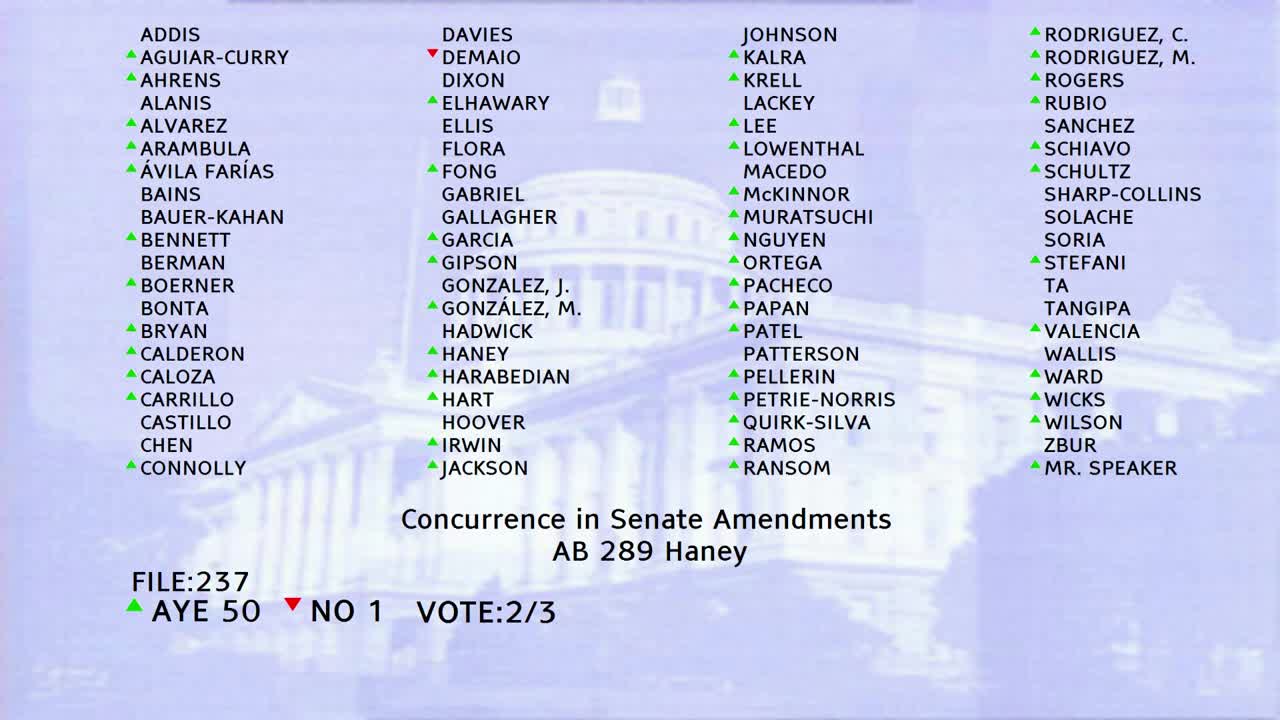 44SEC
Assembly Floor
 3MIN
Senate Floor
 46SEC
Senate Standing Committee on Appropriations
 10MIN
Senate Standing Committee on Health
 1MIN
Assembly Floor
 12MIN