AB 592: Business: retail food.
- Session Year: 2025-2026
- House: Assembly
- Latest Version Date: 2025-10-09
Current Status:
Passed
(2025-10-09: Chaptered by Secretary of State - Chapter 469, Statutes of 2025.)
Introduced
In Committee
Awaiting First Chamber Vote
Passed First Chamber
In Committee
Awaiting Second Chamber Vote
Passed Second Chamber
Enacted
(1)Existing law, the Alcoholic Beverage Control Act, is administered by the Department of Alcoholic Beverage Control and regulates the granting of licenses for the manufacture, distribution, and sale of alcoholic beverages within the state. The act requires the department to make and prescribe rules to carry out the purposes and intent of existing state constitutional provisions on the regulation of alcoholic beverages, and to enable the department to exercise the powers and perform the duties conferred upon it by the state constitution and the act, not inconsistent with any statute of this state. The act makes it unlawful for any person other than a licensee of the department to sell, manufacture, or import alcoholic beverages in this state, with exceptions. The department, pursuant to its powers and in furtherance of emergency declarations and orders of the Governor under the California Emergency Services Act regarding the spread of the COVID-19 virus, established prescribed temporary relief measures to suspend certain legal restrictions relating to, among other things, the expansion of a licensed footprint, sales of alcoholic beverages to-go, and delivery privileges. Existing law authorizes the department, for a period of 365 days following the end of the state of emergency proclaimed by the Governor on March 4, 2020, in response to the COVID-19 pandemic, to permit licensees to exercise license privileges in an expanded license area authorized pursuant to a COVID-19 Temporary Catering Authorization approved in accordance with the Fourth Notice of Regulatory Relief issued by the department, as specified. Existing law makes these provisions effective only until July 1, 2026, and repeals them as of that date.
This bill, instead, would make those provisions operative until January 1, 2029, repeal those provisions on that date, and make conforming changes. The bill would also prohibit the department from issuing any new COVID-19 Temporary Catering Authorizations on or after January 1, 2027.
(2)The Planning and Zoning Law authorizes the legislative body of any city or county to adopt ordinances that regulate zoning within its jurisdiction, as specified. Under that law, variances and conditional use permits may be granted if provided for by the zoning ordinance. Existing law, to the extent that an outdoor expansion of a business to mitigate COVID-19 pandemic restrictions on indoor dining interferes with, reduces, eliminates, or impacts required parking for existing uses, requires a local jurisdiction that has not adopted an ordinance that provides relief from parking restrictions for expanded outdoor dining areas to reduce the number of required parking spaces for existing uses by the number of spaces that the local jurisdiction determines are needed to accommodate an expanded outdoor dining area. Existing law makes these provisions operative only until July 1, 2026, and repeals them on that date.
This bill, instead, would make those provisions operative indefinitely. Because the bill would require local officials to perform additional duties for an extended period, the bill would impose a state-mandated local program.
(3)Existing law, the California Retail Food Code, establishes uniform health and sanitation standards for, and provides for regulation by the State Department of Public Health of, retail food facilities. Existing law provides that these standards are primarily enforced by local enforcement agencies. Existing law restricts satellite food service to limited food preparation in a fully enclosed permanent food facility that meets specified requirements. Existing law requires a permanent food facility, before conducting satellite food service, to submit to the enforcement agency written operating standards. Existing law, until July 1, 2026, authorizes a permitted food facility within any local jurisdiction that is subject to retail food operation restrictions related to a COVID-19 public health response to prepare and serve food as a temporary satellite food service without obtaining a separate satellite food service permit or submitting written operating procedures.
With regard to those provisions that authorize a permitted food facility to prepare and serve food as a temporary satellite food service, this bill, instead, would make those provisions operative indefinitely.
(4)Existing law requires permanent food facilities to be fully enclosed in a building consisting of permanent floors, walls, and an overhead structure that meet prescribed minimum standards.
This bill would, notwithstanding the requirements described above, authorize a restaurant to operate using open windows, folding doors, or nonfixed store fronts during hours of operation if the restaurant develops, and submits to the enforcement agency for approval, an integrated pest management and food safety risk mitigation plan and meets certain requirements, as specified. The bill would require the plan to be documented in writing, made available upon request to local environmental health enforcement officers, and updated annually or whenever there is a change to the facility or operation. The bill would require the restaurant to self-close upon observation of vermin activity inside the facility and remain closed until all vermin are eliminated. The bill would prohibit a local enforcement agency from unreasonably withholding approval of a proposed pest management and food safety risk mitigation plan and would require approval to be granted unless unique circumstances exist such that no reasonable conditions or measures can sufficiently mitigate a significant risk to public health or safety.
(5)The California Constitution requires the state to reimburse local agencies and school districts for certain costs mandated by the state. Statutory provisions establish procedures for making that reimbursement.
This bill would provide that no reimbursement is required by this act for a specified reason.
(1)Existing law, the Alcoholic Beverage Control Act, is administered by the Department of Alcoholic Beverage Control and regulates the granting of licenses for the manufacture, distribution, and sale of alcoholic beverages within the state. The act requires the department to make and prescribe rules to carry out the purposes and intent of existing state constitutional provisions on the regulation of alcoholic beverages, and to enable the department to exercise the powers and perform the duties conferred upon it by the state constitution and the act, not inconsistent with any statute of this state. The act makes it unlawful for any person other than a licensee of the department to sell, manufacture, or import alcoholic beverages in this state, with exceptions. The department, pursuant to its powers and in furtherance of emergency declarations and orders of the Governor under the California Emergency Services Act regarding the spread of the COVID-19 virus, established prescribed temporary relief measures to suspend certain legal restrictions relating to, among other things, the expansion of a licensed footprint, sales of alcoholic beverages to-go, and delivery privileges. Existing law authorizes the department, for a period of 365 days following the end of the state of emergency proclaimed by the Governor on March 4, 2020, in response to the COVID-19 pandemic, to permit licensees to exercise license privileges in an expanded license area authorized pursuant to a COVID-19 Temporary Catering Authorization approved in accordance with the Fourth Notice of Regulatory Relief issued by the department, as specified. Existing law makes these provisions effective only until July 1, 2026, and repeals them as of that date.
This bill, instead, would make those provisions operative until January 1, 2029, repeal those provisions on that date, and make conforming changes. The bill would also prohibit the department from issuing any new COVID-19 Temporary Catering Authorizations on or after January 1, 2027.
(2)The Planning and Zoning Law authorizes the legislative body of any city or county to adopt ordinances that regulate zoning within its jurisdiction, as specified. Under that law, variances and conditional use permits may be granted if provided for by the zoning ordinance. Existing law, to the extent that an outdoor expansion of a business to mitigate COVID-19 pandemic restrictions on indoor dining interferes with, reduces, eliminates, or impacts required parking for existing uses, requires a local jurisdiction that has not adopted an ordinance that provides relief from parking restrictions for expanded outdoor dining areas to reduce the number of required parking spaces for existing uses by the number of spaces that the local jurisdiction determines are needed to accommodate an expanded outdoor dining area. Existing law makes these provisions operative only until July 1, 2026, and repeals them on that date.
This bill, instead, would make those provisions operative indefinitely. Because the bill would require local officials to perform additional duties for an extended period, the bill would impose a state-mandated local program.
(3)Existing law, the California Retail Food Code, establishes uniform health and sanitation standards for, and provides for regulation by the State Department of Public Health of, retail food facilities. Existing law provides that these standards are primarily enforced by local enforcement agencies. Existing law restricts satellite food service to limited food preparation in a fully enclosed permanent food facility that meets specified requirements. Existing law requires a permanent food facility, before conducting satellite food service, to submit to the enforcement agency written operating standards. Existing law, until July 1, 2026, authorizes a permitted food facility within any local jurisdiction that is subject to retail food operation restrictions related to a COVID-19 public health response to prepare and serve food as a temporary satellite food service without obtaining a separate satellite food service permit or submitting written operating procedures.
With regard to those provisions that authorize a permitted food facility to prepare and serve food as a temporary satellite food service, this bill, instead, would make those provisions operative indefinitely.
(4)Existing law requires permanent food facilities to be fully enclosed in a building consisting of permanent floors, walls, and an overhead structure that meet prescribed minimum standards.
This bill would, instead, require a permanent food facility to be in a building that consists of permanent floors, walls, and overhead structure, as prescribed, and fully enclosed during hours of nonoperation, and would authorize the facility to use notwithstanding the requirements described above, authorize a restaurant to operate using open windows, folding doors, or nonfixed store fronts during hours of operation. operation if the restaurant develops, and submits to the enforcement agency for approval, an integrated pest management and food safety risk mitigation plan and meets certain requirements, as specified. The bill would require the plan to be documented in writing, made available upon request to local environmental health enforcement officers, and updated annually or whenever there is a change to the facility or operation. The bill would require the restaurant to self-close upon observation of vermin activity inside the facility and remain closed until all vermin are eliminated. The bill would prohibit a local enforcement agency from unreasonably withholding approval of a proposed pest management and food safety risk mitigation plan and would require approval to be granted unless unique circumstances exist such that no reasonable conditions or measures can sufficiently mitigate a significant risk to public health or safety.
(5)The California Constitution requires the state to reimburse local agencies and school districts for certain costs mandated by the state. Statutory provisions establish procedures for making that reimbursement.
This bill would provide that no reimbursement is required by this act for a specified reason.
(1)Existing law, the Alcoholic Beverage Control Act, is administered by the Department of Alcoholic Beverage Control and regulates the granting of licenses for the manufacture, distribution, and sale of alcoholic beverages within the state. The act requires the department to make and prescribe rules to carry out the purposes and intent of existing state constitutional provisions on the regulation of alcoholic beverages, and to enable the department to exercise the powers and perform the duties conferred upon it by the state constitution and the act, not inconsistent with any statute of this state. The act makes it unlawful for any person other than a licensee of the department to sell, manufacture, or import alcoholic beverages in this state, with exceptions. The department, pursuant to its powers and in furtherance of emergency declarations and orders of the Governor under the California Emergency Services Act regarding the spread of the COVID-19 virus, established prescribed temporary relief measures to suspend certain legal restrictions relating to, among other things, the expansion of a licensed footprint, sales of alcoholic beverages to-go, and delivery privileges. Existing law authorizes the department, for a period of 365 days following the end of the state of emergency proclaimed by the Governor on March 4, 2020, in response to the COVID-19 pandemic, to permit licensees to exercise license privileges in an expanded license area authorized pursuant to a COVID-19 Temporary Catering Authorization approved in accordance with the Fourth Notice of Regulatory Relief issued by the department, as specified. Existing law makes these provisions effective only until July 1, 2026, and repeals them as of that date.
This bill, instead, would make those provisions operative until January 1, 2029, repeal those provisions on that date, and make conforming changes. The bill would also prohibit the department from issuing any new COVID-19 Temporary Catering Authorizations on or after January 1, 2027.
(2)The Planning and Zoning Law authorizes the legislative body of any city or county to adopt ordinances that regulate zoning within its jurisdiction, as specified. Under that law, variances and conditional use permits may be granted if provided for by the zoning ordinance. Existing law, to the extent that an outdoor expansion of a business to mitigate COVID-19 pandemic restrictions on indoor dining interferes with, reduces, eliminates, or impacts required parking for existing uses, requires a local jurisdiction that has not adopted an ordinance that provides relief from parking restrictions for expanded outdoor dining areas to reduce the number of required parking spaces for existing uses by the number of spaces that the local jurisdiction determines are needed to accommodate an expanded outdoor dining area. Existing law makes these provisions operative only until July 1, 2026, and repeals them on that date.
This bill, instead, would make those provisions operative indefinitely. Because the bill would require local officials to perform additional duties for an extended period, the bill would impose a state-mandated local program.
(3)Existing law, the California Retail Food Code, establishes uniform health and sanitation standards for, and provides for regulation by the State Department of Public Health of, retail food facilities. Existing law restricts satellite food service to limited food preparation in a fully enclosed permanent food facility that meets specified requirements. Existing law requires a permanent food facility, before conducting satellite food service, to submit to the enforcement agency written operating standards. Existing law, until July 1, 2026, authorizes a permitted food facility within any local jurisdiction that is subject to retail food operation restrictions related to a COVID-19 public health response to prepare and serve food as a temporary satellite food service without obtaining a separate satellite food service permit or submitting written operating procedures.
With regard to those provisions that authorize a permitted food facility to prepare and serve food as a temporary satellite food service, this bill, instead, would make those provisions operative indefinitely.
(4)Existing law requires permanent food facilities to be fully enclosed in a building consisting of permanent floors, walls, and an overhead structure that meet prescribed minimum standards.
This bill would, instead, require a permanent food facility to be in a building that consists of permanent floors, walls, and overhead structure, as prescribed, and fully enclosed during hours of nonoperation, and would authorize the facility to use open windows, folding doors, or nonfixed store fronts during hours of operation.
(5)The California Constitution requires the state to reimburse local agencies and school districts for certain costs mandated by the state. Statutory provisions establish procedures for making that reimbursement.
This bill would provide that no reimbursement is required by this act for a specified reason.
(1)Existing law, the Alcoholic Beverage Control Act, is administered by the Department of Alcoholic Beverage Control and regulates the granting of licenses for the manufacture, distribution, and sale of alcoholic beverages within the state. The act requires the department to make and prescribe rules to carry out the purposes and intent of existing state constitutional provisions on the regulation of alcoholic beverages, and to enable the department to exercise the powers and perform the duties conferred upon it by the state constitution and the act, not inconsistent with any statute of this state. The act makes it unlawful for any person other than a licensee of the department to sell, manufacture, or import alcoholic beverages in this state, with exceptions. The department, pursuant to its powers and in furtherance of emergency declarations and orders of the Governor under the California Emergency Services Act regarding the spread of the COVID-19 virus, established prescribed temporary relief measures to suspend certain legal restrictions relating to, among other things, the expansion of a licensed footprint, sales of alcoholic beverages to-go, and delivery privileges. Existing law authorizes the department, for a period of 365 days following the end of the state of emergency proclaimed by the Governor on March 4, 2020, in response to the COVID-19 pandemic, to permit licensees to exercise license privileges in an expanded license area authorized pursuant to a COVID-19 Temporary Catering Authorization approved in accordance with the Fourth Notice of Regulatory Relief issued by the department, as specified. Existing law makes these provisions effective only until July 1, 2026, and repeals them as of that date.
This bill, instead, would make those provisions operative until January 1, 2029, repeal those provisions on that date, and make conforming changes.
(2)The Planning and Zoning Law authorizes the legislative body of any city or county to adopt ordinances that regulate zoning within its jurisdiction, as specified. Under that law, variances and conditional use permits may be granted if provided for by the zoning ordinance. Existing law, to the extent that an outdoor expansion of a business to mitigate COVID-19 pandemic restrictions on indoor dining interferes with, reduces, eliminates, or impacts required parking for existing uses, requires a local jurisdiction that has not adopted an ordinance that provides relief from parking restrictions for expanded outdoor dining areas to reduce the number of required parking spaces for existing uses by the number of spaces that the local jurisdiction determines are needed to accommodate an expanded outdoor dining area. Existing law makes these provisions operative only until July 1, 2026, and repeals them on that date.
This bill, instead, would make those provisions operative indefinitely. Because the bill would require local officials to perform additional duties for an extended period, the bill would impose a state-mandated local program.
(3)Existing law, the California Retail Food Code, establishes uniform health and sanitation standards for, and provides for regulation by the State Department of Public Health of, retail food facilities. Existing law restricts satellite food service to limited food preparation in a fully enclosed permanent food facility that meets specified requirements. Existing law requires a permanent food facility, before conducting satellite food service, to submit to the enforcement agency written operating standards. Existing law, until July 1, 2026, authorizes a permitted food facility within any local jurisdiction that is subject to retail food operation restrictions related to a COVID-19 public health response to prepare and serve food as a temporary satellite food service without obtaining a separate satellite food service permit or submitting written operating procedures.
With regard to those provisions that authorize a permitted food facility to prepare and serve food as a temporary satellite food service, this bill, instead, would make those provisions operative indefinitely.
(4)Existing law requires permanent food facilities to be fully enclosed in a building consisting of permanent floors, walls, and an overhead structure that meet prescribed minimum standards.
This bill would, instead, require a permanent food facility to be in a building that consists of permanent floors, walls, and overhead structure, as prescribed, and fully enclosed during hours of nonoperation, and would authorize the facility to use open windows, folding doors, or nonfixed store fronts during hours of operation.
(5)The California Constitution requires the state to reimburse local agencies and school districts for certain costs mandated by the state. Statutory provisions establish procedures for making that reimbursement.
This bill would provide that no reimbursement is required by this act for a specified reason.
(1)Existing law, the Alcoholic Beverage Control Act, is administered by the Department of Alcoholic Beverage Control and regulates the granting of licenses for the manufacture, distribution, and sale of alcoholic beverages within the state. The act requires the department to make and prescribe rules to carry out the purposes and intent of existing state constitutional provisions on the regulation of alcoholic beverages, and to enable the department to exercise the powers and perform the duties conferred upon it by the state constitution and the act, not inconsistent with any statute of this state. The act makes it unlawful for any person other than a licensee of the department to sell, manufacture, or import alcoholic beverages in this state, with exceptions. The department, pursuant to its powers and in furtherance of emergency declarations and orders of the Governor under the California Emergency Services Act regarding the spread of the COVID-19 virus, established prescribed temporary relief measures to suspend certain legal restrictions relating to, among other things, the expansion of a licensed footprint, sales of alcoholic beverages to-go, and delivery privileges. Existing law authorizes the department, for a period of 365 days following the end of the state of emergency proclaimed by the Governor on March 4, 2020, in response to the COVID-19 pandemic, to permit licensees to exercise license privileges in an expanded license area authorized pursuant to a COVID-19 Temporary Catering Authorization approved in accordance with the Fourth Notice of Regulatory Relief issued by the department, as specified. Existing law makes these provisions effective only until July 1, 2026, and repeals them as of that date.
This bill, instead, would make those provisions operative indefinitely until January 1, 2029, repeal those provisions on that date, and make conforming changes.
(2)The Planning and Zoning Law authorizes the legislative body of any city or county to adopt ordinances that regulate zoning within its jurisdiction, as specified. Under that law, variances and conditional use permits may be granted if provided for by the zoning ordinance. Existing law, to the extent that an outdoor expansion of a business to mitigate COVID-19 pandemic restrictions on indoor dining interferes with, reduces, eliminates, or impacts required parking for existing uses, requires a local jurisdiction that has not adopted an ordinance that provides relief from parking restrictions for expanded outdoor dining areas to reduce the number of required parking spaces for existing uses by the number of spaces that the local jurisdiction determines are needed to accommodate an expanded outdoor dining area. Existing law makes these provisions operative only until July 1, 2026, and repeals them on that date.
This bill, instead, would make those provisions operative indefinitely. Because the bill would require local officials to perform additional duties for an extended period, the bill would impose a state-mandated local program.
(3)Existing law, the California Retail Food Code, establishes uniform health and sanitation standards for, and provides for regulation by the State Department of Public Health of, retail food facilities. Existing law restricts satellite food service to limited food preparation in a fully enclosed permanent food facility that meets specified requirements. Existing law requires a permanent food facility, before conducting satellite food service, to submit to the enforcement agency written operating standards. Existing law, until July 1, 2026, authorizes a permitted food facility within any local jurisdiction that is subject to retail food operation restrictions related to a COVID-19 public health response to prepare and serve food as a temporary satellite food service without obtaining a separate satellite food service permit or submitting written operating procedures.
With regard to those provisions that authorize a permitted food facility to prepare and serve food as a temporary satellite food service, this bill, instead, would make those provisions operative indefinitely.
(4)Existing law requires permanent food facilities to be fully enclosed in a building consisting of permanent floors, walls, and an overhead structure that meet prescribed minimum standards.
This bill would, instead, require a permanent food facility to be in a building that consists of permanent floors, walls, and overhead structure, as prescribed, and fully enclosed during hours of nonoperation, and would authorize the facility to use open windows, folding doors, or nonfixed store fronts during hours of operation.
(5)The California Constitution requires the state to reimburse local agencies and school districts for certain costs mandated by the state. Statutory provisions establish procedures for making that reimbursement.
This bill would provide that no reimbursement is required by this act for a specified reason.
(1)Existing law, the Alcoholic Beverage Control Act, is administered by the Department of Alcoholic Beverage Control and regulates the granting of licenses for the manufacture, distribution, and sale of alcoholic beverages within the state. The act requires the department to make and prescribe rules to carry out the purposes and intent of existing state constitutional provisions on the regulation of alcoholic beverages, and to enable the department to exercise the powers and perform the duties conferred upon it by the state constitution and the act, not inconsistent with any statute of this state. The act makes it unlawful for any person other than a licensee of the department to sell, manufacture, or import alcoholic beverages in this state, with exceptions. The department, pursuant to its powers and in furtherance of emergency declarations and orders of the Governor under the California Emergency Services Act regarding the spread of the COVID-19 virus, established prescribed temporary relief measures to suspend certain legal restrictions relating to, among other things, the expansion of a licensed footprint, sales of alcoholic beverages to-go, and delivery privileges. Existing law authorizes the department, for a period of 365 days following the end of the state of emergency proclaimed by the Governor on March 4, 2020, in response to the COVID-19 pandemic, to permit licensees to exercise license privileges in an expanded license area authorized pursuant to a COVID-19 Temporary Catering Authorization approved in accordance with the Fourth Notice of Regulatory Relief issued by the department, as specified. Existing law makes these provisions effective only until July 1, 2026, and repeals them as of that date.
This bill, instead, would make those provisions operative indefinitely and make conforming changes.
(2)The Planning and Zoning Law authorizes the legislative body of any city or county to adopt ordinances that regulate zoning within its jurisdiction, as specified. Under that law, variances and conditional use permits may be granted if provided for by the zoning ordinance. Existing law, to the extent that an outdoor expansion of a business to mitigate COVID-19 pandemic restrictions on indoor dining interferes with, reduces, eliminates, or impacts required parking for existing uses, requires a local jurisdiction that has not adopted an ordinance that provides relief from parking restrictions for expanded outdoor dining areas to reduce the number of required parking spaces for existing uses by the number of spaces that the local jurisdiction determines are needed to accommodate an expanded outdoor dining area. Existing law makes these provisions operative only until July 1, 2026, and repeals them on that date.
This bill, instead, would make those provisions operative indefinitely. Because the bill would require local officials to perform additional duties for an extended period, the bill would impose a state-mandated local program.
(3)Existing law, the California Retail Food Code, establishes uniform health and sanitation standards for, and provides for regulation by the State Department of Public Health of, retail food facilities. Existing law restricts satellite food service to limited food preparation in a fully enclosed permanent food facility that meets specified requirements. Existing law requires a permanent food facility, before conducting satellite food service, to submit to the enforcement agency written operating standards. Existing law, until July 1, 2026, authorizes a permitted food facility within any local jurisdiction that is subject to retail food operation restrictions related to a COVID-19 public health response to prepare and serve food as a temporary satellite food service without obtaining a separate satellite food service permit or submitting written operating procedures.
With regard to those provisions that authorize a permitted food facility to prepare and serve food as a temporary satellite food service, this bill, instead, would make those provisions operative indefinitely.
(4)Existing law requires permanent food facilities to be fully enclosed in a building consisting of permanent floors, walls, and an overhead structure that meet prescribed minimum standards.
This bill would, instead, require a permanent food facility to be in a building that consists of permanent floors, walls, and overhead structure, as prescribed, and fully enclosed during hours of nonoperation, and would authorize the facility to use open windows, folding doors, or nonfixed store fronts during hours of operation.
(5)The California Constitution requires the state to reimburse local agencies and school districts for certain costs mandated by the state. Statutory provisions establish procedures for making that reimbursement.
This bill would provide that no reimbursement is required by this act for a specified reason.
Existing law authorizes the legislative body of a city or county to adopt a zoning ordinance and grant variances to the zoning ordinance when, because of special circumstances applicable to a property, the strict application of the zoning ordinance deprives the property of privileges enjoyed by other property in the vicinity and under identical zoning classification, as specified. Existing law, until July 1, 2026, requires a local jurisdiction that has not adopted an ordinance providing relief from parking restrictions for expanded outdoor dining areas to reduce the number of required parking spaces for existing uses by the number of spaces that the local jurisdiction determines are needed to accommodate an expanded outdoor dining area, to the extent that an outdoor expansion of a business to mitigate COVID-19 pandemic restrictions on indoor dining interferes with, reduces, eliminates, or impacts required parking for existing uses.This bill would state the intent of the Legislature to enact legislation to help restaurants, including extending outdoor dining permanently.Existing law authorizes the legislative body of a city or county to adopt a zoning ordinance and grant variances to the zoning ordinance when, because of special circumstances applicable to a property, the strict application of the zoning ordinance deprives the property of privileges enjoyed by other property in the vicinity and under identical zoning classification, as specified. Existing law, until July 1, 2026, requires a local jurisdiction that has not adopted an ordinance providing relief from parking restrictions for expanded outdoor dining areas to reduce the number of required parking spaces for existing uses by the number of spaces that the local jurisdiction determines are needed to accommodate an expanded outdoor dining area, to the extent that an outdoor expansion of a business to mitigate COVID-19 pandemic restrictions on indoor dining interferes with, reduces, eliminates, or impacts required parking for existing uses.
This bill would state the intent of the Legislature to enact legislation to help restaurants, including extending outdoor dining permanently.
(a)The Department of Alcoholic Beverage Control may permit licensees to exercise license privileges in an expanded license area authorized pursuant to a COVID-19 Temporary Catering Authorization approved in accordance with the Fourth Notice of Regulatory Relief issued by the department on May 15, 2020. A COVID-19 Temporary Catering Authorization authorizes the on-sale consumption of those alcoholic beverages for which the licensee has on-sale privileges on property that is adjacent to the licensed premises, within the control of the licensee.
(b)The COVID-19 Temporary Catering Authorization approved by the department shall be subject to terms and conditions established by the department and stated in the Fourth Notice of Regulatory Relief and the related application form, including, but not limited to, that the authorization may be canceled as determined by the department, as provided in the Fourth Notice, which includes, but is not limited to, upon objection by local law enforcement or if operation of the temporarily authorized area is inconsistent with state or local public health directives.
(c)The department shall not issue any new COVID-19 Temporary Catering Authorizations on or after January 1, 2027.
(d)Notwithstanding any other law, if the department determines that any licensee is found to be abusing the relief provided by this section, or if the licensees actions jeopardize public health, safety, or welfare, the department may summarily rescind the relief as to that licensee at any time.
(e)This section shall remain in effect only until January 1, 2029, and as of that date is repealed.
SEC. 2.Section 25750.5 of the Business and Professions Code, as amended by Section 2 of Chapter 569 of the Statutes of 2023, is repealed.SEC. 3.Section 65907 of the Government Code is amended to read:65907.If an outdoor expansion of a business to mitigate COVID-19 pandemic restrictions on indoor dining interferes with, reduces, eliminates, or impacts required parking for existing uses, a local jurisdiction that has not adopted an ordinance that provides relief from parking restrictions for expanded outdoor dining areas shall reduce the number of required parking spaces for existing uses by the number of spaces that the local jurisdiction determines are needed to accommodate an expanded outdoor dining area.
SEC. 4.Section 114067 of the Health and Safety Code is amended to read:114067.(a)Satellite food service is restricted to limited food preparation.
(b)Satellite food service shall only be operated by a fully enclosed permanent food facility that meets the requirements for food preparation and service and that is responsible for servicing the satellite food service operation.
(c)Before conducting satellite food service, the permitholder of the permanent food facility shall submit to the enforcement agency written standard operating procedures that include all of the following information:
(1)All food products that will be handled and dispensed.
(2)The proposed procedures and methods of food preparation and handling.
(3)Procedures, methods, and schedules for cleaning utensils, equipment, structures, and for the disposal of refuse.
(4)How food will be transported to and from the permanent food facility and the satellite food service operation, and procedures to prevent contamination of foods.
(5)How potentially hazardous foods will be maintained in accordance with Section 113996.
(d)All food preparation shall be conducted within a food compartment or fully enclosed facility approved by the enforcement officer.
(e)Satellite food service areas shall have overhead protection that extends over all food handling areas.
(f)Satellite food service operations that handle nonprepackaged food shall be equipped with approved handwashing facilities and warewashing facilities that are either permanently plumbed or self-contained.
(g)Notwithstanding subdivision (f), the local enforcement agency may approve the use of alternative warewashing facilities.
(h)During nonoperating hours and periods of inclement weather, food, food contact surfaces, and utensils shall be stored within any of the following:
(1)A fully enclosed satellite food service operation.
(2)Approved food compartments where food, food contact surfaces, and utensils are protected at all times from contamination, exposure to the elements, ingress of vermin, and temperature abuse.
(3)A fully enclosed permanent food facility.
(i)Satellite food service activities shall be conducted by and under the constant and complete control of the permitholder of the fully enclosed permanent food facility, or the duly contracted personnel of, or third-party providers to, the permitholder.
(j)For purposes of permitting and enforcement, the permitholder of the permanent food facility and the permitholder of the satellite food service shall be the same.
(k)A permitted food facility within any local jurisdiction that is subject to retail food operation restrictions related to a COVID-19 public health response may prepare and serve food as a temporary satellite food service without obtaining a separate satellite food service permit or submitting written operating procedures pursuant to subdivision (c). The written operating procedures shall be maintained onsite for review, upon request, by the local jurisdiction.
SEC. 5.Section 114266 of the Health and Safety Code is amended to read:114266.(a)Each permanent food facility shall be fully enclosed in a building consisting of permanent floors, walls, and an overhead structure that meet the minimum standards as prescribed by this part. Food facilities that are not fully enclosed on all sides and that are in operation on January 1, 1985, shall not be required to meet the requirements of this section until the facility is remodeled or has a significant menu change or significant change in its method of operation.
(b)Notwithstanding subdivision (a), this section does not require the enclosure of dining areas or any other operation approved for outdoor food service.
(c)Notwithstanding subdivision (a), a produce stand that was in operation prior to January 1, 2007, shall have no more than one side open to the outside air during business hours.
(d)(1)Notwithstanding subdivision (a), a restaurant, which for these purposes shall have the same meaning as is provided for the term bona fide public eating place in Section 23038 of the Business and Professions Code, may operate using open windows, folding doors, or nonfixed store fronts during hours of operation if the restaurant develops an integrated pest management and food safety risk mitigation plan, which shall be submitted to the enforcement agency for approval before operation, and it meets both of the following requirements:
(A)The facility shall be fully enclosed during hours of nonoperation.
(B)The restaurant shall have the ability to operate while the facility is fully enclosed, as necessary.
(2)The integrated pest management and food safety risk mitigation plan shall be documented in writing and made available upon request to local environmental health enforcement officers.
(3)The integrated pest management and food safety risk mitigation plan shall include, at a minimum, the following components:
(A)A risk assessment that includes a comprehensive evaluation of the facilitys layout, operations, storage practices, and surrounding environment in order to identify areas and practices that pose a risk of vermin infestation.
(B)Control procedures that include preventive and responsive measures to eliminate conditions that attract or harbor vermin, such as trash and compost control, that respond to conditions that can lead to food contamination, such as dust and debris, and that ensure a clean and sanitary facility.
(C)Ongoing monitoring procedures for regularly inspecting and documenting vermin activity, problem areas, and effectiveness of implemented controls, and that requires monitoring to occur at a frequency that is appropriate to the level of identified risk.
(D)Training for all employees upon hire and annually, on pest prevention practices, the restaurants pest control procedures, and the employees individual responsibilities in maintaining a vermin-free environment.
(E)Record keeping that includes maintaining the following records that shall be made available upon request to local environmental health officers:
(i)A description of dates and times of self-closure events related to vermin activities.
(ii)Dates of all site visits, and description of exclusion or treatment events performed, by a certified pest control operator and copies of detailed receipts associated with those visits, which shall be kept onsite for 12 months.
(4)The restaurant shall review and update the plan annually or whenever there is a change to the facility or operation.
(5)The restaurant shall self-close upon observation of vermin activity inside the facility, including droppings or markings, and remain closed and not operated until all vermin are eliminated.
(6)The local enforcement agency shall not unreasonably withhold approval of a proposed pest management and food safety risk mitigation plan. The local enforcement agency shall make every reasonable effort to identify conditions, operational practices, or mitigation measures that would allow the proposed open-front facility configuration to operate safely. Approval shall be granted unless the agency demonstrates, based upon substantial evidence in the record, that specific, unique circumstances exist in a particular facility such that no reasonable conditions or measures can sufficiently mitigate a significant risk to public health or safety.
(7)Nothing in this subdivision limits the existing authority of the local enforcement agency pursuant to the California Retail Food Code to suspend or revoke the approval of an integrated pest management and food safety risk mitigation plan if the approved plan is not followed, if vermin are observed during an inspection, or if complaints of vermin presence are verified.
SEC. 6.No reimbursement is required by this act pursuant to Section 6 of Article XIIIB of the California Constitution because a local agency or school district has the authority to levy service charges, fees, or assessments sufficient to pay for the program or level of service mandated by this act, within the meaning of Section 17556 of the Government Code.
(a)The Department of Alcoholic Beverage Control may permit licensees to exercise license privileges in an expanded license area authorized pursuant to a COVID-19 Temporary Catering Authorization approved in accordance with the Fourth Notice of Regulatory Relief issued by the department on May 15, 2020. A COVID-19 Temporary Catering Authorization authorizes the on-sale consumption of those alcoholic beverages for which the licensee has on-sale privileges on property that is adjacent to the licensed premises, within the control of the licensee.
(b)The COVID-19 Temporary Catering Authorization approved by the department shall be subject to terms and conditions established by the department and stated in the Fourth Notice of Regulatory Relief and the related application form, including, but not limited to, that the authorization may be canceled as determined by the department, as provided in the Fourth Notice, which includes, but is not limited to, upon objection by local law enforcement or if operation of the temporarily authorized area is inconsistent with state or local public health directives.
(c)The department shall not issue any new COVID-19 Temporary Catering Authorizations on or after January 1, 2027.
(d)Notwithstanding any other law, if the department determines that any licensee is found to be abusing the relief provided by this section, or if the licensees actions jeopardize public health, safety, or welfare, the department may summarily rescind the relief as to that licensee at any time.
(e)This section shall remain in effect only until January 1, 2029, and as of that date is repealed.
SEC. 2.Section 25750.5 of the Business and Professions Code, as amended by Section 2 of Chapter 569 of the Statutes of 2023, is repealed.SEC. 3.Section 65907 of the Government Code is amended to read:65907.If an outdoor expansion of a business to mitigate COVID-19 pandemic restrictions on indoor dining interferes with, reduces, eliminates, or impacts required parking for existing uses, a local jurisdiction that has not adopted an ordinance that provides relief from parking restrictions for expanded outdoor dining areas shall reduce the number of required parking spaces for existing uses by the number of spaces that the local jurisdiction determines are needed to accommodate an expanded outdoor dining area.
SEC. 4.Section 114067 of the Health and Safety Code is amended to read:114067.(a)Satellite food service is restricted to limited food preparation.
(b)Satellite food service shall only be operated by a fully enclosed permanent food facility that meets the requirements for food preparation and service and that is responsible for servicing the satellite food service operation.
(c)Before conducting satellite food service, the permitholder of the permanent food facility shall submit to the enforcement agency written standard operating procedures that include all of the following information:
(1)All food products that will be handled and dispensed.
(2)The proposed procedures and methods of food preparation and handling.
(3)Procedures, methods, and schedules for cleaning utensils, equipment, structures, and for the disposal of refuse.
(4)How food will be transported to and from the permanent food facility and the satellite food service operation, and procedures to prevent contamination of foods.
(5)How potentially hazardous foods will be maintained in accordance with Section 113996.
(d)All food preparation shall be conducted within a food compartment or fully enclosed facility approved by the enforcement officer.
(e)Satellite food service areas shall have overhead protection that extends over all food handling areas.
(f)Satellite food service operations that handle nonprepackaged food shall be equipped with approved handwashing facilities and warewashing facilities that are either permanently plumbed or self-contained.
(g)Notwithstanding subdivision (f), the local enforcement agency may approve the use of alternative warewashing facilities.
(h)During nonoperating hours and periods of inclement weather, food, food contact surfaces, and utensils shall be stored within any of the following:
(1)A fully enclosed satellite food service operation.
(2)Approved food compartments where food, food contact surfaces, and utensils are protected at all times from contamination, exposure to the elements, ingress of vermin, and temperature abuse.
(3)A fully enclosed permanent food facility.
(i)Satellite food service activities shall be conducted by and under the constant and complete control of the permitholder of the fully enclosed permanent food facility, or the duly contracted personnel of, or third-party providers to, the permitholder.
(j)For purposes of permitting and enforcement, the permitholder of the permanent food facility and the permitholder of the satellite food service shall be the same.
(k)A permitted food facility within any local jurisdiction that is subject to retail food operation restrictions related to a COVID-19 public health response may prepare and serve food as a temporary satellite food service without obtaining a separate satellite food service permit or submitting written operating procedures pursuant to subdivision (c). The written operating procedures shall be maintained onsite for review, upon request, by the local jurisdiction.
SEC. 5.Section 114266 of the Health and Safety Code is amended to read:114266.(a)(1)(A)Each permanent food facility shall be fully enclosed in a building consisting of permanent floors, walls, and an overhead structure that meet the minimum standards as prescribed by this part. Food facilities that are not fully enclosed on all sides and that are in operation on January 1, 1985, shall not be required to meet the requirements of this section until the facility is remodeled or has a significant menu change or significant change in its method of operation.
(B)Subparagraph (A) shall become inoperative on January 1, 2026.(2)(A)On and after January 1, 2026, each permanent food facility shall be in a building consisting of permanent floors, walls, and an overheard structure that meet the minimum standards as prescribed by this part.(B)A permanent food facility shall be fully enclosed during hours of nonoperation but may use open windows, folding doors, or nonfixed store fronts during hours of operation.(b)Notwithstanding subdivision (a), this section does not require the enclosure of dining areas or any other operation approved for outdoor food service.
(c)Notwithstanding subdivision (a), a produce stand that was in operation prior to January 1, 2007, shall have no more than one side open to the outside air during business hours.
(d)(1)Notwithstanding subdivision (a), a restaurant, which for these purposes shall have the same meaning as is provided for the term bona fide public eating place in Section 23038 of the Business and Professions Code, may operate using open windows, folding doors, or nonfixed store fronts during hours of operation if the restaurant develops an integrated pest management and food safety risk mitigation plan, which shall be submitted to the enforcement agency for approval before operation, and it meets both of the following requirements:
(A)The facility shall be fully enclosed during hours of nonoperation.
(B)The restaurant shall have the ability to operate while the facility is fully enclosed, as necessary.
(2)The integrated pest management and food safety risk mitigation plan shall be documented in writing and made available upon request to local environmental health enforcement officers.
(3)The integrated pest management and food safety risk mitigation plan shall include, at a minimum, the following components:
(A)A risk assessment that includes a comprehensive evaluation of the facilitys layout, operations, storage practices, and surrounding environment in order to identify areas and practices that pose a risk of vermin infestation.
(B)Control procedures that include preventive and responsive measures to eliminate conditions that attract or harbor vermin, such as trash and compost control, that respond to conditions that can lead to food contamination, such as dust and debris, and that ensure a clean and sanitary facility.
(C)Ongoing monitoring procedures for regularly inspecting and documenting vermin activity, problem areas, and effectiveness of implemented controls, and that requires monitoring to occur at a frequency that is appropriate to the level of identified risk.
(D)Training for all employees upon hire and annually, on pest prevention practices, the restaurants pest control procedures, and the employees individual responsibilities in maintaining a vermin-free environment.
(E)Record keeping that includes maintaining the following records that shall be made available upon request to local environmental health officers:
(i)A description of dates and times of self-closure events related to vermin activities.
(ii)Dates of all site visits, and description of exclusion or treatment events performed, by a certified pest control operator and copies of detailed receipts associated with those visits, which shall be kept onsite for 12 months.
(4)The restaurant shall review and update the plan annually or whenever there is a change to the facility or operation.
(5)The restaurant shall self-close upon observation of vermin activity inside the facility, including droppings or markings, and remain closed and not operated until all vermin are eliminated.
(6)The local enforcement agency shall not unreasonably withhold approval of a proposed pest management and food safety risk mitigation plan. The local enforcement agency shall make every reasonable effort to identify conditions, operational practices, or mitigation measures that would allow the proposed open-front facility configuration to operate safely. Approval shall be granted unless the agency demonstrates, based upon substantial evidence in the record, that specific, unique circumstances exist in a particular facility such that no reasonable conditions or measures can sufficiently mitigate a significant risk to public health or safety.
(7)Nothing in this subdivision limits the existing authority of the local enforcement agency pursuant to the California Retail Food Code to suspend or revoke the approval of an integrated pest management and food safety risk mitigation plan if the approved plan is not followed, if vermin are observed during an inspection, or if complaints of vermin presence are verified.
SEC. 6.No reimbursement is required by this act pursuant to Section 6 of Article XIIIB of the California Constitution because a local agency or school district has the authority to levy service charges, fees, or assessments sufficient to pay for the program or level of service mandated by this act, within the meaning of Section 17556 of the Government Code.
(a)The Department of Alcoholic Beverage Control may permit licensees to exercise license privileges in an expanded license area authorized pursuant to a COVID-19 Temporary Catering Authorization approved in accordance with the Fourth Notice of Regulatory Relief issued by the department on May 15, 2020. A COVID-19 Temporary Catering Authorization authorizes the on-sale consumption of those alcoholic beverages for which the licensee has on-sale privileges on property that is adjacent to the licensed premises, within the control of the licensee.
(b)The COVID-19 Temporary Catering Authorization approved by the department shall be subject to terms and conditions established by the department and stated in the Fourth Notice of Regulatory Relief and the related application form, including, but not limited to, that the authorization may be canceled as determined by the department, as provided in the Fourth Notice, which includes, but is not limited to, upon objection by local law enforcement or if operation of the temporarily authorized area is inconsistent with state or local public health directives.
(c)The department shall not issue any new COVID-19 Temporary Catering Authorizations on or after January 1, 2027.
(c)(d)Notwithstanding any other law, if the department determines that any licensee is found to be abusing the relief provided by this section, or if the licensees actions jeopardize public health, safety, or welfare, the department may summarily rescind the relief as to that licensee at any time.
(d)(e)This section shall remain in effect only until January 1, 2029, and as of that date is repealed.
SEC. 2.Section 25750.5 of the Business and Professions Code, as amended by Section 2 of Chapter 569 of the Statutes of 2023, is repealed.SEC. 3.Section 65907 of the Government Code is amended to read:65907.If an outdoor expansion of a business to mitigate COVID-19 pandemic restrictions on indoor dining interferes with, reduces, eliminates, or impacts required parking for existing uses, a local jurisdiction that has not adopted an ordinance that provides relief from parking restrictions for expanded outdoor dining areas shall reduce the number of required parking spaces for existing uses by the number of spaces that the local jurisdiction determines are needed to accommodate an expanded outdoor dining area.
SEC. 4.Section 114067 of the Health and Safety Code is amended to read:114067.(a)Satellite food service is restricted to limited food preparation.
(b)Satellite food service shall only be operated by a fully enclosed permanent food facility that meets the requirements for food preparation and service and that is responsible for servicing the satellite food service operation.
(c)Before conducting satellite food service, the permitholder of the permanent food facility shall submit to the enforcement agency written standard operating procedures that include all of the following information:
(1)All food products that will be handled and dispensed.
(2)The proposed procedures and methods of food preparation and handling.
(3)Procedures, methods, and schedules for cleaning utensils, equipment, structures, and for the disposal of refuse.
(4)How food will be transported to and from the permanent food facility and the satellite food service operation, and procedures to prevent contamination of foods.
(5)How potentially hazardous foods will be maintained in accordance with Section 113996.
(d)All food preparation shall be conducted within a food compartment or fully enclosed facility approved by the enforcement officer.
(e)Satellite food service areas shall have overhead protection that extends over all food handling areas.
(f)Satellite food service operations that handle nonprepackaged food shall be equipped with approved handwashing facilities and warewashing facilities that are either permanently plumbed or self-contained.
(g)Notwithstanding subdivision (f), the local enforcement agency may approve the use of alternative warewashing facilities.
(h)During nonoperating hours and periods of inclement weather, food, food contact surfaces, and utensils shall be stored within any of the following:
(1)A fully enclosed satellite food service operation.
(2)Approved food compartments where food, food contact surfaces, and utensils are protected at all times from contamination, exposure to the elements, ingress of vermin, and temperature abuse.
(3)A fully enclosed permanent food facility.
(i)Satellite food service activities shall be conducted by and under the constant and complete control of the permitholder of the fully enclosed permanent food facility, or the duly contracted personnel of, or third-party providers to, the permitholder.
(j)For purposes of permitting and enforcement, the permitholder of the permanent food facility and the permitholder of the satellite food service shall be the same.
(k)A permitted food facility within any local jurisdiction that is subject to retail food operation restrictions related to a COVID-19 public health response may prepare and serve food as a temporary satellite food service without obtaining a separate satellite food service permit or submitting written operating procedures pursuant to subdivision (c). The written operating procedures shall be maintained onsite for review, upon request, by the local jurisdiction.
SEC. 5.Section 114266 of the Health and Safety Code is amended to read:114266.(a)(1)(A)Each permanent food facility shall be fully enclosed in a building consisting of permanent floors, walls, and an overhead structure that meet the minimum standards as prescribed by this part. Food facilities that are not fully enclosed on all sides and that are in operation on January 1, 1985, shall not be required to meet the requirements of this section until the facility is remodeled or has a significant menu change or significant change in its method of operation.
(B)Subparagraph (A) shall become inoperative on January 1, 2026.
(2)(A)On and after January 1, 2026, each permanent food facility shall be in a building consisting of permanent floors, walls, and an overheard structure that meet the minimum standards as prescribed by this part.
(B)A permanent food facility shall be fully enclosed during hours of nonoperation but may use open windows, folding doors, or nonfixed store fronts during hours of operation.
(b)Notwithstanding subdivision (a), this section does not require the enclosure of dining areas or any other operation approved for outdoor food service.
(c)Notwithstanding subdivision (a), a produce stand that was in operation prior to January 1, 2007, shall have no more than one side open to the outside air during business hours.
SEC. 6.No reimbursement is required by this act pursuant to Section 6 of Article XIIIB of the California Constitution because a local agency or school district has the authority to levy service charges, fees, or assessments sufficient to pay for the program or level of service mandated by this act, within the meaning of Section 17556 of the Government Code.
(a)The Department of Alcoholic Beverage Control may permit licensees to exercise license privileges in an expanded license area authorized pursuant to a COVID-19 Temporary Catering Authorization approved in accordance with the Fourth Notice of Regulatory Relief issued by the department on May 15, 2020. A COVID-19 Temporary Catering Authorization authorizes the on-sale consumption of those alcoholic beverages for which the licensee has on-sale privileges on property that is adjacent to the licensed premises, within the control of the licensee.
(b)The COVID-19 Temporary Catering Authorization approved by the department shall be subject to terms and conditions established by the department and stated in the Fourth Notice of Regulatory Relief and the related application form, including, but not limited to, that the authorization may be canceled as determined by the department, as provided in the Fourth Notice, which includes, but is not limited to, upon objection by local law enforcement or if operation of the temporarily authorized area is inconsistent with state or local public health directives.
(c)Notwithstanding any other law, if the department determines that any licensee is found to be abusing the relief provided by this section, or if the licensees actions jeopardize public health, safety, or welfare, the department may summarily rescind the relief as to that licensee at any time.
(d)This section shall remain in effect only until January 1, 2029, and as of that date is repealed.
SEC. 2.Section 25750.5 of the Business and Professions Code, as amended by Section 2 of Chapter 569 of the Statutes of 2023, is repealed.SEC. 3.Section 65907 of the Government Code is amended to read:65907.To the extent that If an outdoor expansion of a business to mitigate COVID-19 pandemic restrictions on indoor dining interferes with, reduces, eliminates, or impacts required parking for existing uses, a local jurisdiction that has not adopted an ordinance that provides relief from parking restrictions for expanded outdoor dining areas shall reduce the number of required parking spaces for existing uses by the number of spaces that the local jurisdiction determines are needed to accommodate an expanded outdoor dining area.
SEC. 4.Section 114067 of the Health and Safety Code is amended to read:114067.(a)Satellite food service is restricted to limited food preparation.
(b)Satellite food service shall only be operated by a fully enclosed permanent food facility that meets the requirements for food preparation and service and that is responsible for servicing the satellite food service operation.
(c)Before conducting satellite food service, the permitholder of the permanent food facility shall submit to the enforcement agency written standard operating procedures that include all of the following information:
(1)All food products that will be handled and dispensed.
(2)The proposed procedures and methods of food preparation and handling.
(3)Procedures, methods, and schedules for cleaning utensils, equipment, structures, and for the disposal of refuse.
(4)How food will be transported to and from the permanent food facility and the satellite food service operation, and procedures to prevent contamination of foods.
(5)How potentially hazardous foods will be maintained in accordance with Section 113996.
(d)All food preparation shall be conducted within a food compartment or fully enclosed facility approved by the enforcement officer.
(e)Satellite food service areas shall have overhead protection that extends over all food handling areas.
(f)Satellite food service operations that handle nonprepackaged food shall be equipped with approved handwashing facilities and warewashing facilities that are either permanently plumbed or self-contained.
(g)Notwithstanding subdivision (f), the local enforcement agency may approve the use of alternative warewashing facilities.
(h)During nonoperating hours and periods of inclement weather, food, food contact surfaces, and utensils shall be stored within any of the following:
(1)A fully enclosed satellite food service operation.
(2)Approved food compartments where food, food contact surfaces, and utensils are protected at all times from contamination, exposure to the elements, ingress of vermin, and temperature abuse.
(3)A fully enclosed permanent food facility.
(i)Satellite food service activities shall be conducted by and under the constant and complete control of the permitholder of the fully enclosed permanent food facility, or the duly contracted personnel of, or third-party providers to, the permitholder.
(j)For purposes of permitting and enforcement, the permitholder of the permanent food facility and the permitholder of the satellite food service shall be the same.
(k)A permitted food facility within any local jurisdiction that is subject to retail food operation restrictions related to a COVID-19 public health response may prepare and serve food as a temporary satellite food service without obtaining a separate satellite food service permit or submitting written operating procedures pursuant to subdivision (c). The written operating procedures shall be maintained onsite for review, upon request, by the local jurisdiction.
SEC. 5.Section 114266 of the Health and Safety Code is amended to read:114266.(a)(1)(A)Each permanent food facility shall be fully enclosed in a building consisting of permanent floors, walls, and an overhead structure that meet the minimum standards as prescribed by this part. Food facilities that are not fully enclosed on all sides and that are in operation on January 1, 1985, shall not be required to meet the requirements of this section until the facility is remodeled or has a significant menu change or significant change in its method of operation.
(B)Subparagraph (A) shall become inoperative on January 1, 2026.
(2)(A)On and after January 1, 2026, each permanent food facility shall be in a building consisting of permanent floors, walls, and an overheard structure that meet the minimum standards as prescribed by this part.
(B)A permanent food facility shall be fully enclosed during hours of nonoperation but may use open windows, folding doors, or nonfixed store fronts during hours of operation.
(b)Notwithstanding subdivision (a), this section does not require the enclosure of dining areas or any other operation approved for outdoor food service.
(c)Notwithstanding subdivision (a), a produce stand that was in operation prior to January 1, 2007, shall have no more than one side open to the outside air during business hours.
SEC. 6.No reimbursement is required by this act pursuant to Section 6 of Article XIIIB of the California Constitution because a local agency or school district has the authority to levy service charges, fees, or assessments sufficient to pay for the program or level of service mandated by this act, within the meaning of Section 17556 of the Government Code.
(a)The Department of Alcoholic Beverage Control may permit licensees to exercise license privileges in an expanded license area authorized pursuant to a COVID-19 Temporary Catering Authorization approved in accordance with the Fourth Notice of Regulatory Relief issued by the department on May 15, 2020. A COVID-19 Temporary Catering Authorization authorizes the on-sale consumption of those alcoholic beverages for which the licensee has on-sale privileges on property that is adjacent to the licensed premises, under within the control of the licensee.
(b)The COVID-19 Temporary Catering Authorization approved by the department shall be subject to terms and conditions established by the department and stated in the Fourth Notice of Regulatory Relief and the related application form, including, but not limited to, that the authorization may be canceled as determined by the department, as provided in the Fourth Notice, which includes, but is not limited to, upon objection by local law enforcement or if operation of the temporarily authorized area is inconsistent with state or local public health directives.
(c)Notwithstanding any other law, if the department determines that any licensee is found to be abusing the relief provided by this section, or if the licensees actions jeopardize public health, safety, or welfare, the department may summarily rescind the relief as to that licensee at any time.
(d)This section shall remain in effect only until January 1, 2029, and as of that date is repealed.
SEC. 2.Section 25750.5 of the Business and Professions Code, as amended by Section 2 of Chapter 569 of the Statutes of 2023, is repealed.SEC. 3.Section 65907 of the Government Code is amended to read:65907.To the extent that an outdoor expansion of a business to mitigate COVID-19 pandemic restrictions on indoor dining interferes with, reduces, eliminates, or impacts required parking for existing uses, a local jurisdiction that has not adopted an ordinance that provides relief from parking restrictions for expanded outdoor dining areas shall reduce the number of required parking spaces for existing uses by the number of spaces that the local jurisdiction determines are needed to accommodate an expanded outdoor dining area.
SEC. 4.Section 114067 of the Health and Safety Code is amended to read:114067.(a)Satellite food service is restricted to limited food preparation.
(b)Satellite food service shall only be operated by a fully enclosed permanent food facility that meets the requirements for food preparation and service and that is responsible for servicing the satellite food service operation.
(c)Before conducting satellite food service, the permitholder of the permanent food facility shall submit to the enforcement agency written standard operating procedures that include all of the following information:
(1)All food products that will be handled and dispensed.
(2)The proposed procedures and methods of food preparation and handling.
(3)Procedures, methods, and schedules for cleaning utensils, equipment, structures, and for the disposal of refuse.
(4)How food will be transported to and from the permanent food facility and the satellite food service operation, and procedures to prevent contamination of foods.
(5)How potentially hazardous foods will be maintained in accordance with Section 113996.
(d)All food preparation shall be conducted within a food compartment or fully enclosed facility approved by the enforcement officer.
(e)Satellite food service areas shall have overhead protection that extends over all food handling areas.
(f)Satellite food service operations that handle nonprepackaged food shall be equipped with approved handwashing facilities and warewashing facilities that are either permanently plumbed or self-contained.
(g)Notwithstanding subdivision (f), the local enforcement agency may approve the use of alternative warewashing facilities.
(h)During nonoperating hours and periods of inclement weather, food, food contact surfaces, and utensils shall be stored within any of the following:
(1)A fully enclosed satellite food service operation.
(2)Approved food compartments where food, food contact surfaces, and utensils are protected at all times from contamination, exposure to the elements, ingress of vermin, and temperature abuse.
(3)A fully enclosed permanent food facility.
(i)Satellite food service activities shall be conducted by and under the constant and complete control of the permitholder of the fully enclosed permanent food facility, or the duly contracted personnel of, or third-party providers to, the permitholder.
(j)For purposes of permitting and enforcement, the permitholder of the permanent food facility and the permitholder of the satellite food service shall be the same.
(k)A permitted food facility within any local jurisdiction that is subject to retail food operation restrictions related to a COVID-19 public health response may prepare and serve food as a temporary satellite food service without obtaining a separate satellite food service permit or submitting written operating procedures pursuant to subdivision (c). The written operating procedures shall be maintained onsite for review, upon request, by the local jurisdiction.
SEC. 5.Section 114266 of the Health and Safety Code is amended to read:114266.(a)(1)(A)Each permanent food facility shall be fully enclosed in a building consisting of permanent floors, walls, and an overhead structure that meet the minimum standards as prescribed by this part. Food facilities that are not fully enclosed on all sides and that are in operation on January 1, 1985, shall not be required to meet the requirements of this section until the facility is remodeled or has a significant menu change or significant change in its method of operation.
(B)Subparagraph (A) shall become inoperative on January 1, 2026.
(2)(A)On and after January 1, 2026, each permanent food facility shall be in a building consisting of permanent floors, walls, and an overheard structure that meet the minimum standards as prescribed by this part.
(B)A permanent food facility shall be fully enclosed during hours of nonoperation but may use open windows, folding doors, or nonfixed store fronts during hours of operation.
(b)Notwithstanding subdivision (a), this section does not require the enclosure of dining areas or any other operation approved for outdoor food service.
(c)Notwithstanding subdivision (a), a produce stand that was in operation prior to January 1, 2007, shall have no more than one side open to the outside air during business hours.
SEC. 6.No reimbursement is required by this act pursuant to Section 6 of Article XIIIB of the California Constitution because a local agency or school district has the authority to levy service charges, fees, or assessments sufficient to pay for the program or level of service mandated by this act, within the meaning of Section 17556 of the Government Code.
(a)The Department of Alcoholic Beverage Control may permit licensees to exercise license privileges in an expanded license area authorized pursuant to a COVID-19 Temporary Catering Authorization approved in accordance with the Fourth Notice of Regulatory Relief issued by the department on May 15, 2020. A COVID-19 Temporary Catering Authorization authorizes the on-sale consumption of those alcoholic beverages for which the licensee has on-sale privileges on property that is adjacent to the licensed premises, under the control of the licensee.
(b)The COVID-19 Temporary Catering Authorization approved by the department shall be subject to terms and conditions established by the department and stated in the Fourth Notice of Regulatory Relief and the related application form, including, but not limited to, that the authorization may be canceled as determined by the department, as provided in the Fourth Notice, which includes, but is not limited to, upon objection by local law enforcement or if operation of the temporarily authorized area is inconsistent with state or local public health directives.
(c)Notwithstanding any other law, if the department determines that any licensee is found to be abusing the relief provided by this section, or if the licensees actions jeopardize public health, safety, or welfare, the department may summarily rescind the relief as to that licensee at any time.
(d)This section shall remain in effect only until July 1, 2026, and as of that date is repealed.SEC. 2.Section 25750.5 of the Business and Professions Code, as amended by Section 2 of Chapter 569 of the Statutes of 2023, is repealed.25750.5.(a)The Department of Alcoholic Beverage Control may permit licensees to exercise license privileges in an expanded license area authorized pursuant to a COVID-19 Temporary Catering Authorization approved in accordance with the Fourth Notice of Regulatory Relief issued by the department on May 15, 2020. A COVID-19 Temporary Catering Authorization authorizes the on-sale consumption of those alcoholic beverages for which the licensee has on-sale privileges on property that is adjacent to the licensed premises, under the control of the licensee.(b)The COVID-19 Temporary Catering Authorization approved by the department shall be subject to terms and conditions established by the department and stated in the Fourth Notice of Regulatory Relief and the related application form, including, but not limited to, that the authorization may be canceled as determined by the department, as provided in the Fourth Notice, which includes, but is not limited to, upon objection by local law enforcement or if operation of the temporarily authorized area is inconsistent with state or local public health directives.(c)Notwithstanding any other law, if the department determines that any licensee is found to be abusing the relief provided by this section, or if the licensees actions jeopardize public health, safety, or welfare, the department may summarily rescind the relief as to that licensee at any time.(d)This section shall remain in effect only until July 1, 2026, and as of that date is repealed.SEC. 3.Section 65907 of the Government Code is amended to read:65907.(a)To the extent that an outdoor expansion of a business to mitigate COVID-19 pandemic restrictions on indoor dining interferes with, reduces, eliminates, or impacts required parking for existing uses, a local jurisdiction that has not adopted an ordinance that provides relief from parking restrictions for expanded outdoor dining areas shall reduce the number of required parking spaces for existing uses by the number of spaces that the local jurisdiction determines are needed to accommodate an expanded outdoor dining area.
(b)This section shall remain in effect only until July 1, 2026, and as of that date is repealed.SEC. 4.Section 114067 of the Health and Safety Code is amended to read:114067.(a)Satellite food service is restricted to limited food preparation.
(b)Satellite food service shall only be operated by a fully enclosed permanent food facility that meets the requirements for food preparation and service and that is responsible for servicing the satellite food service operation.
(c)Before conducting satellite food service, the permitholder of the permanent food facility shall submit to the enforcement agency written standard operating procedures that include all of the following information:
(1)All food products that will be handled and dispensed.
(2)The proposed procedures and methods of food preparation and handling.
(3)Procedures, methods, and schedules for cleaning utensils, equipment, structures, and for the disposal of refuse.
(4)How food will be transported to and from the permanent food facility and the satellite food service operation, and procedures to prevent contamination of foods.
(5)How potentially hazardous foods will be maintained in accordance with Section 113996.
(d)All food preparation shall be conducted within a food compartment or fully enclosed facility approved by the enforcement officer.
(e)Satellite food service areas shall have overhead protection that extends over all food handling areas.
(f)Satellite food service operations that handle nonprepackaged food shall be equipped with approved handwashing facilities and warewashing facilities that are either permanently plumbed or self-contained.
(g)Notwithstanding subdivision (f), the local enforcement agency may approve the use of alternative warewashing facilities.
(h)During nonoperating hours and periods of inclement weather, food, food contact surfaces, and utensils shall be stored within any of the following:
(1)A fully enclosed satellite food service operation.
(2)Approved food compartments where food, food contact surfaces, and utensils are protected at all times from contamination, exposure to the elements, ingress of vermin, and temperature abuse.
(3)A fully enclosed permanent food facility.
(i)Satellite food service activities shall be conducted by and under the constant and complete control of the permitholder of the fully enclosed permanent food facility, or the duly contracted personnel of, or third-party providers to, the permitholder.
(j)For purposes of permitting and enforcement, the permitholder of the permanent food facility and the permitholder of the satellite food service shall be the same.
(k)(1)A permitted food facility within any local jurisdiction that is subject to retail food operation restrictions related to a COVID-19 public health response may prepare and serve food as a temporary satellite food service without obtaining a separate satellite food service permit or submitting written operating procedures pursuant to subdivision (c). The written operating procedures shall be maintained onsite for review, upon request, by the local jurisdiction.
(2)This subdivision shall remain operative until July 1, 2026. SEC. 5.Section 114266 of the Health and Safety Code is amended to read:114266.(a)(1)(A)Each permanent food facility shall be fully enclosed in a building consisting of permanent floors, walls, and an overhead structure that meet the minimum standards as prescribed by this part. Food facilities that are not fully enclosed on all sides and that are in operation on January 1, 1985, shall not be required to meet the requirements of this section until the facility is remodeled or has a significant menu change or significant change in its method of operation.
(B)Subparagraph (A) shall become inoperative on January 1, 2026.
(2)(A)On and after January 1, 2026, each permanent food facility shall be in a building consisting of permanent floors, walls, and an overheard structure that meet the minimum standards as prescribed by this part.
(B)A permanent food facility shall be fully enclosed during hours of nonoperation but may use open windows, folding doors, or nonfixed store fronts during hours of operation.
(b)Notwithstanding subdivision (a), this section does not require the enclosure of dining areas or any other operation approved for outdoor food service.
(c)Notwithstanding subdivision (a), a produce stand that was in operation prior to January 1, 2007, shall have no more than one side open to the outside air during business hours.
SEC. 6.No reimbursement is required by this act pursuant to Section 6 of Article XIIIB of the California Constitution because a local agency or school district has the authority to levy service charges, fees, or assessments sufficient to pay for the program or level of service mandated by this act, within the meaning of Section 17556 of the Government Code.
SECTION 1.It is the intent of the Legislature to enact legislation to help restaurants, including extending outdoor dining permanently.It is the intent of the Legislature to enact legislation to help restaurants, including extending outdoor dining permanently.
|
Date
|
Status
|
|---|---|
| Oct 9, 2025 | Chaptered by Secretary of State - Chapter 469, Statutes of 2025. |
| Oct 9, 2025 | Approved by the Governor. |
| Sep 15, 2025 | Enrolled and presented to the Governor at 4:30 p.m. |
| Sep 8, 2025 | Senate amendments concurred in. To Engrossing and Enrolling. (Ayes 78. Noes 0. Page 3029.). |
| Sep 4, 2025 | In Assembly. Concurrence in Senate amendments pending. |
| Sep 4, 2025 | Read third time. Passed. Ordered to the Assembly. (Ayes 39. Noes 0. Page 2502.). |
| Aug 20, 2025 | Read second time. Ordered to third reading. |
| Aug 19, 2025 | From committee: Be ordered to second reading pursuant to Senate Rule 28.8. |
| Jul 21, 2025 | Read second time and amended. Re-referred to Com. on APPR. |
| Jul 21, 2025 | From committee: Amend, and do pass as amended and re-refer to Com. on APPR. (Ayes 10. Noes 0.) (July 16). |
| Jun 25, 2025 | Read second time and amended. Re-referred to Com. on HEALTH. |
| Jun 24, 2025 | From committee: Amend, and do pass as amended and re-refer to Com. on HEALTH. (Ayes 15. Noes 0.) (June 24). |
| Jun 17, 2025 | From committee chair, with author's amendments: Amend, and re-refer to committee. Read second time, amended, and re-referred to Com. on G.O. |
| May 28, 2025 | Referred to Coms. on G.O. and HEALTH. |
| May 15, 2025 | In Senate. Read first time. To Com. on RLS. for assignment. |
| May 15, 2025 | Read third time. Passed. Ordered to the Senate. (Ayes 73. Noes 0. Page 1556.) |
| May 8, 2025 | Read third time and amended. Ordered to third reading. (Page 1493.) |
| May 8, 2025 | Read third time and amended. Ordered to third reading. |
| May 1, 2025 | Read second time. Ordered to third reading. |
| Apr 30, 2025 | From committee: Do pass. (Ayes 14. Noes 0.) (April 30). |
| Apr 23, 2025 | From committee: Do pass and re-refer to Com. on APPR. (Ayes 16. Noes 0.) (April 22). Re-referred to Com. on APPR. |
| Apr 9, 2025 | Re-referred to Com. on HEALTH. |
| Apr 8, 2025 | Read second time and amended. |
| Apr 7, 2025 | From committee: Amend, and do pass as amended and re-refer to Com. on HEALTH. (Ayes 18. Noes 0.) (April 2). |
| Mar 4, 2025 | Re-referred to Com. on G.O. |
| Mar 3, 2025 | From committee chair, with author's amendments: Amend, and re-refer to Com. on G.O. Read second time and amended. |
| Mar 3, 2025 | Referred to Coms. on G.O. and HEALTH. |
| Feb 13, 2025 | From printer. May be heard in committee March 15. |
| Feb 12, 2025 | Read first time. To print. |
|
Date
|
Description
|
Location
|
Votes
|
|
|---|---|---|---|---|
| Sep 8, 2025 | AB 592 Gabriel Concurrence in Senate Amendments | Assembly Floor |
Passed |
|
| Sep 4, 2025 | Assembly 3rd Reading AB592 Gabriel et al. By Rubio | Senate Floor |
Passed |
|
| Jul 16, 2025 | Do pass as amended, but first amend, and re-refer to the Committee on [Appropriations] | Senate Standing Committee on Health |
Passed |
|
| Jun 24, 2025 | Do pass as amended, but first amend, and re-refer to the Committee on [Health] | Senate Standing Committee on Governmental Organization |
Passed |
|
| May 15, 2025 | AB 592 Gabriel Assembly Third Reading | Assembly Floor |
Passed |
|
| Apr 30, 2025 | Do pass. | Assembly Standing Committee on Appropriations |
Passed |
|
| Apr 22, 2025 | Do pass and be re-referred to the Committee on [Appropriations] | Assembly Standing Committee on Health |
Passed |
|
| Apr 2, 2025 | Do pass as amended and be re-referred to the Committee on [Health] | Assembly Standing Committee on Governmental Organization |
Passed |
This list shows positions taken on this bill by organizations on the date displayed, which is linked to the original source.
Positions by individuals are not included.
|
Organization
|
Position
|
Date
|
|---|---|---|
| Alcohol Justice | ** Against | |
| Arrow Up Training | ** Support | |
| Asian Business Association | ** Support | |
| Association of California Cities - Orange County | ** Support | |
| Ballentine Architects | ** Support | |
| Bavel restaurant | ** Support | |
| Bestia Restaurant | ** Support | |
| Broad Street Oyster Co | ** Support | |
| Cal Asian Chamber of Commerce | ** Support | |
| California Alcohol Policy Alliance | ** Against | |
| California Association for Micro Enterprise Opportunity | ** Support | |
| California Association of Environmental Health Administrators | ** Against | |
| California Attractions And Parks Association | ** Support | |
| California Council on Alcohol Problems | ** Against | |
| California Downtown Association | ** Support | |
| California Pacific Chamber of Commerce | ** Support | |
| California Restaurant Association | ** Support | |
| California Travel Association | ** Support | |
| Cameo - California Association for Micro Enterprise Opportunity | ** Support | |
| Capa | ** Support | |
| Captain's Table | ** Support | |
| Captain’s Table LLC | ** Support | |
| Central City Association | ** Support | |
| Central City Association Of Los Angeles | ** Support | |
| Chefs Warehouse | ** Support | |
| City Of Sacramento | ** Support | |
| Cole's French Dip | ** Support | |
| Cole’s French Dip | ** Support | |
| downtown sacramento partnership | ** Support | |
| Downtown San Diego Partnership | ** Support | |
| El Dorado County Chamber of Commerce | ** Support | |
| El Dorado Hills Chamber of Commerce | ** Support | |
| Elk Grove Chamber Of Commerce | ** Support | |
| Family Winemakers Of California | ** Support | |
| Folsom Chamber Of Commerce | ** Support | |
| Found Oyster | ** Support | |
| Found Oyster LLC | ** Support | |
| Fresno Chamber of Commerce | ** Support | |
| Golden Gate Restaurant Association | ** Support | |
| Great White | ** Support | |
| Health Officers Association Of California | ** Against | |
| Hiho | ** Support | |
| Holdfast | ** Support | |
| HomeState | ** Support | |
| Inclusive Action for the City | ** Support | |
| Independent Hospitality Coalition | ** Support | |
| Jon & Vinny's | ** Support | |
| Kitchen Culture Recruiting | ** Support | |
| Last Word Hospitality | ** Support | |
| LA Supervisor Lindsey Horvath | ** Support | |
| Latino Restaurant Association | ** Support | |
| lincoln chamber of commerce | ** Support | |
| Los Angeles Area Chamber Of Commerce | ** Support | |
| Los Angeles County Business Federation | ** Support | |
| Mariscos Corona | ** Support | |
| Matu | ** Support | |
| Maury's Bagels & Appetizing | ** Support | |
| Menotti’s Coffee Shop | ** Support | |
| Menotti's Coffee Stop | ** Support | |
| Nativo | ** Support | |
| Oceanside Chamber of Commerce | ** Support | |
| Office of Los Angeles County Supervisor Lindsey P. Horvath | ** Support | |
| Pasjoli | ** Support | |
| Public Counsel | ** Support | |
| Rancho Cordova Chamber of Commerce | ** Support | |
| Restaurant Architect | ** Support | |
| Retail Insite | ** Support | |
| Rocklin Area Chamber of Commerce | ** Support | |
| Roseville Area Chamber Of Commerce | ** Support | |
| Rossoblu | ** Support | |
| Rustic Canyon | ** Support | |
| Sacramento Mayor Kevin McCarty | ** Support | |
| Sacramento Metro Chamber of Commerce | ** Support | |
| Saffy's | ** Support | |
| San Diego County Lodging Association | ** Support | |
| San Diego Regional Chamber Of Commerce | ** Support | |
| San Marcos Chamber Of Commerce | ** Support | |
| Shingle Springs/cameron Park Chamber of Commerce | ** Support | |
| Skydusters Beer | ** Support | |
| Soban | ** Support | |
| Steadfast LA | ** Support | |
| Stir Crazy | ** Support | |
| Streets for All | ** Support | |
| Sunset Restaurant Management Group | ** Support | |
| Sunshine Builders | ** Support | |
| Superfine Playa | ** Support | |
| Sushi Nozawa | ** Support | |
| THE ALBRIGHT | ** Support | |
| The Greater Los Angeles Hospitality Association | ** Support | |
| The Liberties of Dublin | ** Support | |
| The Lonely Oyster | ** Support | |
| Townhouse | ** Support | |
| Uovo | ** Support | |
| Urbanlime Real Estate | ** Support | |
| Valley Industry & Commerce Association | ** Support | |
| Venice Chamber of Commerce | ** Support | |
| West Hollywood Chamber of Commerce | ** Support | |
| Yuba Sutter Chamber of Commerce | ** Support | |
| Zephyr & Black | ** Support |
CONCURRENCE IN SENATE AMENDMENTS
CSA1 Bill Id:AB 592
Author:(Gabriel, et al.)
As Amended Ver:July 21, 2025
Majority vote
SUMMARY
This bill, among other things, extends until January 1, 2029, the authority of the Department of Alcoholic Beverage Control (ABC) to permit licensees to exercise license privileges in an expanded license area authorized pursuant to a COVID-19 Temporary Catering Authorization (COVID-19 TCA) approved in accordance with the Fourth Notice of Regulatory Relief issued by the department on May 15, 2020. Additionally, this bill authorizes a food facility to operate using windows, folding doors, or non-fixed store fronts during hours of operation if the restaurant develops, and submits to the enforcement agency for approval, an integrated pest management and food safety risk mitigation plan and meets certain requirements, as specified.
Senate Amendments
1) Provide that ABC shall not issue any new COVID-19 Temporary Catering Authorizations on or after January 1, 2027.
2) Authorize a restaurant, as defined, to operate using open windows, folding doors, or non-fixed store fronts during hours of operation if the restaurant develops, and submits to the enforcement agency for approval, an integrated pest management and food safety risk mitigation plan and meets certain requirements, as specified.
3) Provide the restaurant shall self-close upon observation of vermin activity inside the facility, including droppings or markings, and remain closed and not operated until all vermin are eliminated.
4) Prohibit a local enforcement agency from unreasonably withholding approval of a proposed pest management and food safety risk mitigation plan and would require approval to be granted unless unique circumstances exist such that no reasonable conditions or measures can sufficiently mitigate a significant risk to public health or safety, as described.
5) Make technical and clarifying changes.
6) Add Coauthors.
COMMENTS
Background.
On March 4, 2020, Governor Newsom proclaimed a State of Emergency regarding the COVID-19 pandemic, and asked all restaurants statewide to suspend dine-in service and only allow take-out or delivery food service. Many businesses sought authorization to expand outdoor dining areas, either in their parking lots, streets, or other designated spaces, while following guidelines for safety and hygiene.
ABC COVID-19 Temporary Catering Authorization. ABC's Fourth Notice of Regulatory Relief created the COVID-19 Temporary Catering Authorization (TCA), authorizing the on-site consumption of alcoholic beverages on property adjacent to the licensed premises and under the control of the licensee. An applicant must ensure the business has legal authority to use the adjacent area, and an issued permit may be revoked for disturbing nearby residents or upon objection by local law enforcement. The TCA allowed designated ABC businesses to maintain operations and generate income through alternative means during periods when in-person dining was restricted or limited. ABC has issued approximately 11,000 COVID-19 temporary authorizations.
AB 61 (Gabriel), Chapter 651, Statutes of 2021, codified this privilege until July 1, 2024, and AB 1217 (Gabriel), Chapter 569, Statutes of 2023, extended this privilege, as well as two other temporary relief measures enacted to help restaurants weather the COVID-19 pandemic, another two years, until July 1, 2026.
AB 592 would extend ABC's authorization until January 1, 2029, allowing restaurants to serve alcohol within an expanded licensed area while also facilitating additional outdoor food preparation and service. To qualify, establishments must hold on-sale privileges for property that is adjacent to the licensed premises, within the control of the licensee.
This bill would also prohibit the ABC from issuing any new COVID-19 TCA on or after January 1, 2027.
California Retail Food Code. The portion of the HSC known as the CRFC contains the structural, equipment, and operational requirements for all California retail food facilities. Provisions of the CRFC are primarily enforced by 62 local environmental health regulatory agencies. DPH's Food and Drug Branch plays a supporting role in the enforcement of the CRFC by providing technical expertise to evaluate processes and procedures and to answer technical and legal inquires for local agencies, industry and consumers.
Satellite Food Service. CRFC requires a permanent food facility to obtain a permit to operate a satellite food service or operation. Satellite food service is a remotely located food service operation that is conducted on the same property as, in reasonable proximity to, and in conjunction with and by, a fully enclosed permanent food facility. This bill permanently extends a provision in existing law that allows a permitted food facility within any local jurisdiction that is subject to retail food operation restrictions related to a COVID-19 public health response to prepare and serve food as a temporary satellite food service without obtaining a separate satellite food service permit or submitting written operating procedures and requires the permitted food facility to maintain the written operating procedures onsite for review, upon request, by the local jurisdiction.
Permanent Food Facilities. Existing law requires permanent food facilities to be fully enclosed. This bill makes that requirement inoperative as of January 1, 2026 and allows, commencing January 1, 2026, permanent food facilities to use open windows, folding doors, or non-fixed store fronts during hours of operation while requiring permanent food facilities to be fully enclosed during non-operating hours.
This bill was amended in the Senate to allow a food facility to use open windows, folding doors, or non-fixed storefronts while operating—if they develop, and submit to the enforcement agency for approval, an integrated pest management and food safety risk mitigation plan that meets certain requirements, as specified. The bill requires the restaurant to self-close upon observation of vermin activity inside the facility and remain closed until all vermin are eliminated. Additionally, the bill would prohibit a local enforcement agency from unreasonably withholding approval of a proposed pest management and food safety risk mitigation plan and would require approval to be granted unless unique circumstances exist such that no reasonable conditions or measures can sufficiently mitigate a significant risk to public health or safety.
According to the Author
According to the author's office, "community restaurants are the heart and soul of California, offering vibrant and diverse dining experiences. These beloved restaurants are not just places to eat but they are also centers of culture and connection. After the devastating impact of the COVID-19 pandemic, many are still struggling to stay afloat. Rising costs, escalating labor costs, and inflation continue to threaten their existence. AB 592 is a lifeline for these essential small businesses, providing much-needed relief by cutting through unnecessary red tape and simplifying regulations."
Arguments in Support
According to the California Restaurant Association, "AB 592 simply extends the timeline for restaurants to seek a 'temporary catering authorizations' from the [ABC]. The 'temporary catering authorization' is a modified regulatory process developed during the COVID-19 pandemic in an attempt to lower regulatory costs and hurdles for neighborhood restaurants looking to serve alcohol in newly expanded –and often noncontiguous – outdoor dining areas. AB 592 will provide critical support to countless local outdoor dining programs up and down the state, by building on local programs such as the City of San Francisco's 'shared spaces' program. These local programs have been a tremendous success – and have proven to be incredibly valuable for so many community restaurants throughout the state."
Arguments in Opposition
This bill is opposed by the California Alcohol Policy Alliance and some member organizations, with the alliance arguing, "The economic urgency that made these measures critical has passed. The consequences, however, remains, including an elevated alcohol-mortality rate."
FISCAL COMMENTS
According to the Senate Committee on Appropriations analysis, "the ABC's activities are funded by regulatory and license fees and generally, the department does not receive support from the General Fund. New legislative mandates, although modest in scope, may in totality create new cost pressures and impact the ABC's operating costs and future budget requests."
VOTES:
ASM GOVERNMENTAL ORGANIZATION: 18-0-4
YES: Blanca Rubio, Davies, Alvarez, Berman, Bryan, Dixon, Fong, Gabriel, McKinnor, Nguyen, Pacheco, Ramos, Michelle Rodriguez, Sanchez, Solache, Soria, Valencia, Wallis
ABS, ABST OR NV: Carrillo, DeMaio, Gipson, Ta
ASM HEALTH: 16-0-0
YES: Bonta, Chen, Addis, Aguiar-Curry, Rogers, Carrillo, Flora, Mark González, Krell, Patel, Patterson, Celeste Rodriguez, Sanchez, Schiavo, Sharp-Collins, Stefani
ASM APPROPRIATIONS: 14-0-1
YES: Wicks, Sanchez, Arambula, Calderon, Caloza, Dixon, Elhawary, Fong, Mark González, Hart, Pacheco, Solache, Ta, Alanis
ABS, ABST OR NV: Pellerin
ASSEMBLY FLOOR: 73-0-6
YES: Addis, Aguiar-Curry, Ahrens, Alvarez, Ávila Farías, Bains, Bauer-Kahan, Bennett, Berman, Boerner, Bonta, Bryan, Calderon, Caloza, Carrillo, Chen, Connolly, Davies, DeMaio, Dixon, Elhawary, Ellis, Flora, Fong, Gabriel, Gallagher, Garcia, Gipson, Jeff Gonzalez, Mark González, Hadwick, Haney, Harabedian, Hart, Hoover, Irwin, Jackson, Kalra, Krell, Lackey, Lee, Lowenthal, Macedo, McKinnor, Muratsuchi, Nguyen, Ortega, Pacheco, Papan, Patel, Patterson, Pellerin, Petrie-Norris, Ramos, Ransom, Celeste Rodriguez, Michelle Rodriguez, Rogers, Blanca Rubio, Sanchez, Schiavo, Schultz, Sharp-Collins, Solache, Soria, Ta, Valencia, Wallis, Ward, Wicks, Wilson, Zbur, Rivas
ABS, ABST OR NV: Alanis, Arambula, Castillo, Quirk-Silva, Stefani, Tangipa
UPDATED
VERSION: July 21, 2025
CONSULTANT: Eric Johnson / G.O. / (916) 319-2531 FN: 0001659
SENATE RULES COMMITTEE Office of Senate Floor Analyses (916) 651-1520 Fax: (916) 327-4478 | AB 592 |
THIRD READING
Bill No: AB 592
Author: Gabriel (D), Mark González (D) and Wicks (D), et al.
Amended: 7/21/25 in Senate
Vote: 21
SENATE GOVERNMENTAL ORG. COMMITTEE: 15-0, 6/24/25
AYES: Padilla, Archuleta, Ashby, Blakespear, Cervantes, Choi, Dahle, Hurtado, Jones, Ochoa Bogh, Richardson, Rubio, Smallwood-Cuevas, Wahab, Weber Pierson
SENATE HEALTH COMMITTEE: 10-0, 7/16/25
AYES: Menjivar, Valladares, Durazo, Gonzalez, Limón, Padilla, Richardson, Rubio, Weber Pierson, Wiener
NO VOTE RECORDED: Grove
SENATE APPROPRIATIONS COMMITTEE: Senate Rule 28.8
ASSEMBLY FLOOR: 73-0, 5/15/25 - See last page for vote
SUBJECT: Business: retail food
SOURCE: California Restaurant Association
DIGEST: This bill, among other things, (1) extends until January 1, 2029, the authority of the Department of Alcoholic Beverage Control (ABC) to permit licensees to exercise license privileges in an expanded license area authorized pursuant to a COVID-19 Temporary Catering Authorization (COVID-19 TCA) approved in accordance with the Fourth Notice of Regulatory Relief issued by the department on May 15, 2020. Additionally, this bill (2) authorizes a food facility to operate using windows, folding doors, or nonfixed store fronts during hours of operation if the restaurant develops, and submits to the enforcement agency for approval, an integrated pest management and food safety risk mitigation plan and meets certain requirements, as specified.
ANALYSIS:
Existing law:
- Establishes the Department of ABC and grants it exclusive authority to administer the provisions of the ABC Act in accordance with laws enacted by the Legislature.
- Authorizes the issuance of a caterer’s permit, upon application to the Department of ABC, to a licensee under an on-sale general license, an on-sale beer and wine license, a club license, or a veteran’s club license, that authorizes the holder of the permit to sell alcoholic beverage at specified locations and events, including, among others, conventions, sporting events, and trade exhibits.
- Defines an “on-sale” license as authorizing the sale of all types of alcoholic beverages: namely, beer, wine, and distilled spirits, for consumption on the premises (such as at a restaurant or bar). An “off-sale” license authorizes the sale of alcoholic beverages for consumption off the premises in original, sealed containers.
- Authorizes, until July 1, 2026, the Department of ABC, in response to the COVID-19 pandemic, to permit licensees to exercise license privileges in an expanded license area authorized pursuant to a COVID-19 TCA approved in accordance with the Fourth Notice of Regulatory Relief issued by the department, as specified.
- Provides that until July 1, 2026, to the extent that an outdoor expansion of a business to mitigate COVID-19 pandemic restrictions on indoor dining interferes with required parking for existing uses, a local jurisdiction that has not adopted an ordinance that provides relief from parking restrictions for expanded outdoor dining areas shall reduce the number of required parking spaces for existing uses by the number of spaces that the local jurisdiction determines are needed to accommodate an expanded outdoor dining area.
- Authorizes, until July 1, 2026, a permitted food facility within any local jurisdiction that is subject to retail food operation restrictions related to a COVID-19 public health response to prepare and serve food as a temporary satellite food service without obtaining a separate satellite food service permit or submitting written operating procedures.
- Establishes the California Retail Food Code (CRFC) to provide for the regulation of retail food facilities. Establishes health and sanitation standards at the state level through the CRFC, while enforcement is charged to local agencies, carried out by the 58 county environmental health departments, and four city environmental health departments (Berkeley, Long Beach, Pasadena, and Vernon).
- Defines a “food facility” to mean an operation that stores, prepares, packages, serves, or provides food for human consumption at the retail level, as specified. Includes in the definition of food facility private and public school cafeterias, commissaries, mobile food facilities, temporary food facilities, vending machines, catering operation, fishermen’s market, and host facility.
- Requires each permanent food facility to be fully enclosed in a building consisting of permanent floors, walls, and an overhead structure that meet the minimum standards.
This bill:
- Extends to January 1, 2029, the authority of the Department of ABC to permit licenses to exercise license privileges in an expanded license area authorized pursuant to a COVID-19 TCA approved in accordance with the Fourth Notice of Regulatory Relief issued by the department on May 15, 2020. This authority also includes the authority for the Department of ABC to issue new COVID-19 TCAs until January 1, 2029
- Prohibits the Department of ABC from issuing any new COVID-19 TCA on or after January 1, 2027
- Repeals the July 1, 2026, sunset date on the provisions of law requiring local jurisdictions that has not adopted an ordinance that provides relief from parking restrictions for expanded outdoor dining to reduce the number of required parking spaces for existing uses by the number of spaces that the local jurisdiction determines are needed to accommodate an expanded dining area to mitigate COVID-19 pandemic restrictions on indoor dining.
- Repeals the July 1, 2026, sunset date on the provisions of law authorizing a permitted food facility within any local jurisdiction that is subject to retail food operation restrictions related to a COVID-19 public health response to prepare and serve food as a temporary satellite food service without obtaining a separate satellite food service permit or submitting written operating procedures, as specified.
- As an exception to existing law requiring a permanent food facility to be fully enclosed, this bill authorizes a food facility to operate using windows, folding doors, or nonfixed store fronts during hours of operation if the restaurant develops, and submits to the enforcement agency for approval, an integrated pest management and food safety risk mitigation plan and meets certain requirements, as specified.
- Requires the restaurant to self-close upon observation of vermin activity inside the facility and remain closed until all vermin are eliminated.
- Prohibits a local enforcement agency from unreasonably withholding approval of a proposed pest management and food safety risk mitigation plan and would require approval to be granted unless unique circumstances exist such that no reasonable conditions or measures can sufficiently mitigate a significant risk to public health or safety.
Background
Author Statement. According to the author’s office, “community restaurants are the heart and soul of California, offering vibrant and diverse dining experiences. These beloved restaurants are not just places to eat but they are also centers of culture and connection. After the devastating impact of the COVID-19 pandemic, many are still struggling to stay afloat. Rising costs, escalating labor costs, and inflation continue to threaten their existence. AB 592 is a lifeline for these essential small businesses, providing much-needed relief by cutting through unnecessary red tape and simplifying regulations.”
Fourth Notice of Regulatory Relief. On March 15, 2020, the Department of ABC issued its Fourth Notice of Regulatory Relief, which was intended to assist qualified hospitality businesses with reopening in a manner that is consistent with local and state health and safety directives. The notice created the COVID-19 Temporary Catering Authorization Permit, which authorizes the on-site consumption of those alcoholic beverages for which the licensee has on-sale privileges; on property that is adjacent to the licensed premises and that is under the control of the licensee. As the name suggests, the intent of the permit was to temporarily allow licensees the ability to safely operate during the COVID-19 pandemic.
A qualified business was required to apply to the Department of ABC and include a diagram, which clearly identifies where the requested area is in relation to the existing licensed premises. Prior to submitting an application, the licensee is responsible for, among other things, ensuring they have the legal authority to use the area requested, ensuring that the temporary expansion request has the approval of local agencies, and ensuring the temporary expansion request is being made in accordance with applicable city, county, and state guidelines regarding social distancing and the legality of the business being open for in-person service.
Once approved, the licensee is authorized to exercise only those privileges authorized by the licensee’s license and shall comply with all provisions of the ABC Act pertaining to the conduct of on-sale premises. Violations of these provisions, as well as the terms and conditions of the COVID-19 TCA, may be grounds for suspension or revocation of the licensee’s license, as though the violation occurred on the licensed premises.
If the temporarily authorized area is being utilized by one or more other licensees, all licensees sharing the area are jointly responsible for compliance with all applicable laws and rules pertaining to their respective licenses and authorizations and for any violations that may occur within the shared common temporarily authorized area. If at any point a licensee wants to terminate its liability for a shared area, it must cancel its COVID-19 TCA. The COVID-19 TCA may be further canceled by the Department of ABC for disturbance of the quiet enjoyment of nearby residents and upon objection by local law enforcement.
Given the need to quickly issue these permits due to the COVID-19 Pandemic, the Department of ABC issued, what were supposed to be temporary permits, with little to no evaluation. In less than one year the Department of ABC issued approximately 10,500 COVID-19 TCAs to allow businesses to operate during the COVID-19 Pandemic.
In 2021, two bills, AB 61 (Gabriel, Chapter 651, Statutes of 2021), and SB 314 (Wiener, Chapter 656, Statutes of 2021) authorized the Department of ABC, for 365 days from the date the COVID-19 state of emergency is lifted, to allow licensees to continue to exercise license privileges in an expanded licensed area authorized pursuant to a COVID-19 TCA. Both bills additionally authorized the Department of ABC to extend the period of time during which this authority is valid beyond the 365 days if the licensee has filed a pending application with the department for the permanent expansion of their premises before the 365 day time period expires. This authority was initially set to expire on July 1, 2024. In 2023, Governor Newsom signed AB 1217 (Gabriel, Chapter 569, Statues of 2023) extending those provisions until January 1, 2026.
This bill extends those provisions until January 1, 2029. This bill also prohibits the Department of ABC from issuing any new COVID-19 TCA on or after January 1, 2027.
Satellite Food Service. Satellite food service is a remotely located food service operation that is conducted on the same property as, in reasonable proximity to, and in conjunction with and by, a fully enclosed permanent food facility. Examples of satellite operations are the food service in booths, on the street or in other locations on the same property or fairly close to where the food is prepared at a fully licensed facility like a restaurant or a catering operation.
The CRFC requires a permanent food facility to obtain a permit to operate a satellite food service or operation. As part of this process, a permanent food facility is required to submit to the local enforcement agency a written standard operating procedures that include specified information including all food products that will be handled and dispensed; process or methods or food preparation and handling; how food would be transported to and from the permanent food facility and satellite food service. The CRFC also requires the satellite food service areas to have overhead protection that extends over all food handling areas.
In 2021, AB 61 (Gabriel, Chapter 651, Statutes of 2021) initially authorized, until January 1, 2024, a permitted food facility within any local jurisdiction that is subject to retail food operation restrictions related to a COVID-19 public health response to prepare and serve food as a temporary satellite food service without obtaining a separate satellite food service permit or submitting written operating procedures, as specified. In 2023, Governor Newsom signed AB 1217 (Gabriel, Chapter 569, Statues of 2023) extending those provisions until January 1, 2026. This bill repeals that sunset.
Permanent Food Facility Provisions. The provision of this bill generating concern from local environmental health officers is the change to the requirement that a permanent food facility be fully enclosed by four walls. Generally speaking, a permanent food facility is required to be fully enclosed, to protect food from contamination and prevent foodborne illness, although there is no requirement that dining areas be enclosed. In practice, this means that if a restaurant wanted to have an “open kitchen” concept, preparing food in open air, then the restaurant itself must be enclosed within four walls. Currently, a restaurant can have an almost entirely fresh-air seating area, whether completely outside, or in a building with accordion-style folding doors and windows, as long as the kitchen area where food is prepared is enclosed by four walls.
However, a food facility is allowed to do “limited food preparation” in non-enclosed spaces, as long as there is overhead protection. Limited food preparation requires most potentially hazardous foods (generally, food that needs to be refrigerated to prevent bacterial growth) to be prepared for cooking in an enclosed kitchen. Limited food preparation cannot include grinding potentially hazardous foods, or cooking of potentially hazardous foods for later use, or even washing of foods, among other limitations. Nor can limited food preparation include slicing and chopping potentially hazardous foods, unless it is on a heated cooking surface. Limited food preparation does permit cooking and seasoning to order, along with heating, frying, baking, roasting, popping, shaving of ice, blending, steaming or boiling of hot dogs, or assembly of nonprepackaged food. It also includes holding, portioning, and dispensing of any foods that were prepared by the onsite permanent food facility. So, a restaurant can have an “open kitchen” that is not fully enclosed, where someone is using a stove to make food to order, and it is completely permissible under the existing food code as long as there is an enclosed kitchen on site where the potentially hazardous food is prepared for cooking.
Previously this bill authorized permanent food facilities to operate with open windows, folding doors, or non-fixed storefronts during business hours, provided the facility is fully enclosed during nonoperational hours. This bill was recently amended to instead authorize a food facility to operate using windows, folding doors, or nonfixed store fronts during hours of operation if the restaurant develops, and submits to the enforcement agency for approval, an integrated pest management and food safety risk mitigation plan and meets certain requirements, as specified. This bill requires the restaurant to self-close upon observation of vermin activity inside the facility and remain closed until all vermin are eliminated. Additionally this bill prohibits a local enforcement agency from unreasonably withholding approval of a proposed pest management and food safety risk mitigation plan and would require approval to be granted unless unique circumstances exist such that no reasonable conditions or measures can sufficiently mitigate a significant risk to public health or safety.
Related/Prior Legislation
SB 495 (Dodd, 2023) authorizes the Department of ABC to issue a consumer delivery service permit, which would allow the permittee to deliver alcoholic beverages on behalf of an alcohol licensee, as specified. In addition, this bill removes certain requirements related to cocktails to-go including the requirement that the order by picked up by the consumer. (Held in the Assembly Appropriations Committee)
SB 314 (Wiener, Chapter 656, Statutes of 2021) authorizes the Department of ABC to, for 365 days from the date the Covid-19 state of emergency is lifted, allow licensees to continue to exercise license privileges in an expanded licensed area authorized pursuant to a Covid-19 TCA, as provided. In addition, the bill allows a licensed manufacturer to share a common licensed area with multiple licensed retailers, as specified.
AB 61 (Gabriel, Chapter 651, Statutes of 2021) authorizes the Department of ABC, for 365 days from the date the Covid-19 state of emergency is lifted, to allow licensees to continue to exercise license privileges in an expanded licensed area authorized pursuant to a Covid-19 TCA, as provided.
SB 389 (Dodd, Chapter 389, Statutes of 2021) authorizes the holder of a retail on-sale license to sell alcoholic beverages for off-sale consumption for which their license permits on-sale consumption, as specified.
FISCAL EFFECT: Appropriation: No Fiscal Com.: Yes Local: Yes
According to the Senate Appropriations Committee, the Department of ABC’s activities are funded by regulatory and license fees and generally, the department does not receive support from the General Fund. New legislative mandates, although modest in scope, may in totality create new cost pressures and impact the department’s operating costs and future budget requests.
SUPPORT: (Verified 8/18/25)
California Restaurant Association (Source)
The Albright
Asian Business Association
Association of California Cities - Orange County
Arrow Up Training
Ballentine Architects
Bavel Restaurant
Bestia Restaurant
Broad Street Oyster Co
Cal Asian Chamber of Commerce
California Attractions and Parks Association
California Downtown Association
California Restaurant Association
California Travel Association
California Association for Micro Enterprise Opportunity
Captain’s Table LLC
Central City Association
Central City Association of Los Angeles
Chefs Warehouse
Cole’s French Dip
Downtown Sacramento Partnership
Downtown San Diego Partnership
El Dorado County Chamber of Commerce
El Dorado Hills Chamber of Commerce
Elk Grove Chamber of Commerce
Family Winemakers of California
Folsom Chamber of Commerce
Found Oyster LLC
Fresno Chamber of Commerce
Golden Gate Restaurant Association
Great White
Hiho
Holdfast
Homestate
Inclusive Action for the City
Independent Hospitality Coalition
Jon & Vinny's
Kitchen Culture Recruiting
Last Word Hospitality
LA Supervisor Lindsey Horvath
Latino Restaurant Association
The Liberties of Dublin
Lincoln Chamber of Commerce
Los Angeles Area Chamber of Commerce
Los Angeles County Business Federation
Mariscos Corona
Matu
Maury's Bagels & Appetizing
Menotti’s Coffee Shop
Nativo
Oceanside Chamber of Commerce
Office of Los Angeles County Supervisor Lindsey P. Horvath
Pasjoli
Public Counsel
Rancho Cordova Chamber of Commerce
Restaurant Architect
Retail Insite
Rocklin Area Chamber of Commerce
Roseville Area Chamber of Commerce
Rossoblu
Rustic Canyon
Sacramento Mayor Kevin McCarty
Sacramento Metro Chamber of Commerce
Saffy's
San Diego Regional Chamber of Commerce
San Diego County Lodging Association
San Marcos Chamber of Commerce
Shingle Springs/Cameron Park Chamber of Commerce
Skydusters Beer
Soban
Steadfast LA
Stir Crazy
Streets for All
Sunset Restaurant Management Group
Sunshine Builders
Superfine Playa
Sushi Nozawa
The Greater Los Angeles Hospitality Association
The Lonely Oyster
Townhouse
Uovo
Urbanlime Real Estate
Valley Industry & Commerce Association
Venice Chamber of Commerce
West Hollywood Chamber of Commerce
Yuba Sutter Chamber of Commerce
Zephyr & Black
OPPOSITION: (Verified 8/18/25)
Alcohol Justice
California Association of Environmental Health Administrators
California Alcohol Policy Alliance
California Council on Alcohol Problems
Health Officers Association of California
ARGUMENTS IN SUPPORT: According to the California Restaurant Association, “AB 592 simply extends the timeline for restaurants to seek a ‘temporary catering authorizations’ from the [Department of ABC]. The ‘temporary catering authorization’ is a modified regulatory process developed during the COVID-19 pandemic in an attempt to lower regulatory costs and hurdles for neighborhood restaurants looking to serve alcohol in newly expanded –
and often noncontiguous – outdoor dining areas. AB 592 will provide critical support to countless local outdoor dining programs up and down the state, by building on local programs such as the City of San Francisco’s ‘shared spaces’ program. These local programs have been a tremendous success – and have proven to be incredibly valuable for so many community restaurants throughout the state.”
ARGUMENTS IN OPPOSITION: According to the California Association of Environmental Health Administrators, “a key pillar of food safety is the careful handling and preparation of ‘potentially hazardous foods’ which are defined in code. In order to assure appropriate temperature control and minimize contaminants, potentially hazardous foods must be prepared in an enclosed space with permanent floors, walls, and an overhead structure. Fully enclosed kitchens restrict rodents, flies, cockroaches, birds, dust as well as other animals and contaminants from entering areas where preparation processes occur like chopping, cutting, cooking, thawing and mixing foods. Protection from vermin, like rats, is more important than ever because California’s recent banning of certain rodenticides has resulted in record high vermin infestation in food facilities. AB 592 would eliminate the enclosed kitchen safeguard and potentially endanger the public’s health by removing language that is used to protect consumers from contaminated foods.”
ASSEMBLY FLOOR: 73-0, 5/15/25
AYES: Addis, Aguiar-Curry, Ahrens, Alvarez, Ávila Farías, Bains, Bauer-Kahan, Bennett, Berman, Boerner, Bonta, Bryan, Calderon, Caloza, Carrillo, Chen, Connolly, Davies, DeMaio, Dixon, Elhawary, Ellis, Flora, Fong, Gabriel, Gallagher, Garcia, Gipson, Jeff Gonzalez, Mark González, Hadwick, Haney, Harabedian, Hart, Hoover, Irwin, Jackson, Kalra, Krell, Lackey, Lee, Lowenthal, Macedo, McKinnor, Muratsuchi, Nguyen, Ortega, Pacheco, Papan, Patel, Patterson, Pellerin, Petrie-Norris, Ramos, Ransom, Celeste Rodriguez, Michelle Rodriguez, Rogers, Blanca Rubio, Sanchez, Schiavo, Schultz, Sharp-Collins, Solache, Soria, Ta, Valencia, Wallis, Ward, Wicks, Wilson, Zbur, Rivas
NO VOTE RECORDED: Alanis, Arambula, Castillo, Quirk-Silva, Stefani, Tangipa
Prepared by: Felipe Lopez / G.O. / (916) 651-1530
8/20/25 23:11:19
**** END ****
SENATE COMMITTEE ON HEALTH
Senator Caroline Menjivar, Chair
BILL NO: AB 592
AUTHOR: | Gabriel, Mark González, Wicks | ||
VERSION: | June 25, 2025 | ||
HEARING DATE: | July 16, 2025 | ||
CONSULTANT: | Vincent D. Marchand | ||
SUBJECT: Business: retail food
SUMMARY:
Repeals a requirement that a permanent food facility be fully enclosed, and instead permits a food facility to use open windows, folding doors, or nonfixed storefronts during hours of operation. Repeals the July 1, 2026 sunset dates on two provisions of law related to accommodations granted to food facilities to expand outdoor dining capacity during the COVID-19 pandemic. Extends the ability of licensees of the Department of Alcohol and Beverage Control (ABC) to serve alcoholic beverages in an adjacent property under a COVID-19 Temporary Catering Authorization, from July 1, 2026 to January 1, 2029, and prohibits ABC from issuing any new COVID-19 Temporary Catering Authorizations after January 1, 2027.
Existing law:
- Establishes the California Retail Food Code (CalCode) to provide for the regulation of retail food facilities. Health and sanitation standards are established at the state level through the CalCode, while enforcement is charged to local agencies, carried out by the 58 county environmental health departments, and four city environmental health departments (Berkeley, Long Beach, Pasadena, and Vernon). [HSC §113700, et seq.]
- Defines a “food facility” as an operation that stores, prepares, packages, serves, vends, or otherwise provides food for human consumption at the retail level. Excludes various entities from the definition of a “food facility,” including a cottage food operation, and a church, private club, or other nonprofit association that gives or sells food to its members and guests, and not to the general public, at an event that occurs no more than three days in any 90-day period. [HSC §113789]
- Requires a permanent food facility to be fully enclosed in a building consisting of permanent floors, walls, and an overhead structure that meets the minimum standards, as specified. Specifies that this does not require the enclosure of dining areas or any other operation approved for outdoor food service. [HSC §114266]
- Defines “limited food preparation,” which is not required to be performed in an enclosed kitchen, as food preparation that is restricted to one or more of the following: heating, frying, baking, roasting, popping, shaving of ice, blending, steaming or boiling of hot dogs, or assembly of nonprepackaged food, dispensing and portioning for immediate service to a customer of food that has been temperature controlled until immediately prior to portioning or dispensing, and cooking to order, among other things. Prohibits the following from being included in “limited food preparation:” slicing and chopping of potentially hazardous foods, other than produce, unless it is on the heated cooking surface; thawing; grinding raw ingredients; and, washing foods, among other activities. [HSC §113818]
- Establishes requirements for satellite food services, including requiring satellite food service to only be operated by a fully enclosed permanent food facility that meets the requirements for food preparation and service and that is responsible for servicing the satellite food service operation; that the permit holder of the permanent food facility submit to the enforcement agency written standard operating procedures prior to conducting the service, as specified; that all food preparation be conducted within a food compartment or fully enclosed facility; and, that service areas have overhead protection that extends over all food handling areas. [HSC §114067]
- Permits a food facility within any local jurisdiction that is subject to retail food operation restrictions related to a COVID-19 public health response to prepare and serve food as a temporary satellite food service without obtaining a separate satellite food serve permit or submitting writing operating procedures, but requires written operating procedures to be maintained onsite for review, upon request, by the local jurisdiction. Sunsets this provision of law on July 1, 2026. [HSC §114067(k)]
- Requires the ABC to make and prescribe those reasonable rules as may be necessary or proper to carry out specified purposes and intent, and to enable it to exercise the powers and perform the duties conferred upon it, as specified. [BPC §25750]
- Permits the ABC to authorize its licensees to serve alcoholic beverages in an expanded license area authorized pursuant to a COVID-19 Temporary Catering Authorization (TCA). Requires the TCA to be for property that is adjacent to the licensed premises, and is under the control of the licensee. Sunsets this provision on July 1, 2026. [BPC §25750.5]
- Permits the legislative body of any city or county to adopt ordinances that regulate zoning within its jurisdiction, as specified. Permits the granting of variances and conditional use permits if provided for by the zoning ordinance. [GOV §65000, et seq.]
- Requires a local jurisdiction, to the extent that an outdoor expansion of a business to mitigate COVID-19 pandemic restrictions on indoor dining interferes with required parking for existing uses, to reduce the number of required parking spaces for existing uses by the number of spaces that the local jurisdiction determines are needed to accommodate an expanded outdoor dining area. Sunsets this law on July 1, 2026. [GOV §65907]
This bill:
- Repeals a provision of law requiring a permanent food facility to be fully enclosed in a building consisting of permanent floors, walls, and an overhead structure that meets minimum standards, and instead requires a permanent food facility to be in a building consisting of permanent floors, walls, and an overhead structure that is fully enclosed during hours of nonoperation, while permitting the facility to use open windows, folding doors, or nonfixed storefronts during hours of operation.
- Repeals the July 1, 2026 sunset date on a provision of law permitting food facilities subject to dining restrictions related to a COVID-19 public health response to operate a temporary satellite food service without needing to obtain a separate permit.
- Repeals the July 1, 2026 sunset date on a provision of law requiring a local jurisdiction to reduce the number of required parking spaces for an outdoor expansion of a food facility to mitigate COVID-19 pandemic restrictions on indoor dining.
- Extends the ability of licensees of the ABC to serve alcoholic beverages in an adjacent property under a COVID-19 Temporary Catering Authorization, from July 1, 2026 to January 1, 2029, and prohibits ABC from issuing any new COVID-19 Temporary Catering Authorizations after January 1, 2027.
FISCAL EFFECT:
According to the Assembly Appropriations Committee:
- Minor and absorbable costs to ABC for additional licensing and enforcement workload associated with extending the Temporary Catering Authorization. This committee sees a wide array of bills that propose to modify the scope of alcohol laws. Generally, continuing modest licensing privileges does not generate major new enforcement workload for ABC, but taken together, these proposals could lead to significant new costs and future budget requests. However, in this case, ABC notes enforcement levels related to the Temporary Catering Authorization is manageable and not expected to noticeably increase. ABC had issued approximately 10,500 Temporary Catering Authorizations by the time the program was codified in 2021, and notes it has issued only 750 TCAs since then. Thus, ABC anticipates the bulk of any new Temporary Catering Authorization licensing workload is already complete.
- Costs incurred by local agencies as a result of this bill's requirement to reduce parking spaces are not reimbursable by the state because local agencies may levy fees to cover these costs.
- No costs to the California Department of Public Health (CDPH) to allow restaurants to forgo obtaining a separate satellite food service permit and open storefronts. These provisions are administered by local environmental health jurisdictions.
PRIOR VOTES:
Senate Governmental Organization Committee: Assembly Floor: | 15 - 0 73 - 0 |
Assembly Appropriations Committee: | 14 - 0 |
Assembly Health Committee: Assembly Governmental Organization Committee: | 16 - 0 18 - 0 |
COMMENTS:
- Author’s statement. According to the author, community restaurants are the heart and soul of California, offering vibrant and diverse dining experiences. These beloved restaurants are not just places to eat but they are also centers of culture and connection. After the devastating impact of the COVID-19 pandemic, many are still struggling to stay afloat. Rising costs, escalating labor costs, and inflation continue to threaten their existence. This bill is a lifeline for these essential small businesses, providing much-needed relief by cutting through unnecessary red tape and simplifying regulations. Specifically, this bill extends the regulatory flexibility granted under previous legislation, which allowed for outdoor and patio dining. Additionally, this bill allows restaurants with open kitchens to fully operate their businesses with open sections including the use of open windows, folding doors and nonfixed storefronts during hours of operation. With this flexibility, restaurants can create an inviting and open-air atmosphere as part of the overall dining experience for customers. These changes not only help restaurant owners save on costs but also create an enhanced dining experience that can attract more customers. With modernized regulations and greater flexibility, restaurants can meet ever-changing consumer demands and be better positioned to thrive in an increasingly competitive market.
- Background on extending COVID-19 authorizations for food facilities. On March 4, 2020, Governor Newsom declared a state of emergency in response to COVID-19, and asked all restaurants to suspend dine-in service and only allow take-out or delivery food service. Subsequently, there was an immediate shutdown of most indoor tasting rooms, breweries, and bars across the entire state. As a result, there was a wave of temporary and permanent closures in the restaurant industry. As of December 2020, the National Restaurant Association reported that over 110,000 establishments had closed their doors, with 89% of full-service restaurants reporting below normal staffing levels and anticipating additional layoffs.
In order to mitigate the effect of the restrictions on indoor dining, AB 61 (Gabriel, Chapter 651, Statutes of 2021) granted additional flexibilities to restaurants to quickly expand their ability to serve customers outside. First, it permitted a food facility to operate a temporary satellite food service without obtaining a separate satellite food service permit or submitting written operating procedures as would normally have been required. Second, it required local jurisdictions to reduce the number of required parking spaces to the extent that an outdoor expansion of dining areas to mitigate COVID-19 restrictions on indoor dining impacted required parking. And finally, it permitted ABC to serve alcohol in an expanded license area that is adjacent to the licensed premises and under the licensee’s control. All of these provisions were initially limited to a maximum of one year from whenever the Governor ended the COVID-19 state of emergency, which occurred on February 28, 2023. AB 1217 (Gabriel, Chapter 569, Statutes of 2023) was enacted to extend these authorizations until July 1, 2026.
With regard to the ABC provisions, new regulations recently adopted by ABC have established a process and standards for the permanent licensure of areas that are non-contiguous to an existing licensed premises. While similar to the flexibility authorized under AB 61, and which is extended by this bill, the new regulations are more restrictive, including requiring the non-contiguous space be no further than 25 feet from the licensed premises, prohibits the area from being separated by a road open to vehicular traffic, and that the area be actively monitored by the licensee. This bill ensures that no new COVID-19-era temporary authorizations are approved by ABC moving forward, and extends the sunset date on the existing temporary authorizations until January 1, 2029, ostensibly to give licensees time to transition to the permanent authorization process. - Limited food preparation permitted in non-enclosed space. The provision of this bill generating concern from local environmental health officers is the change to the requirement that a permanent food facility be fully enclosed by four walls, and instead permitting open windows, folding doors, and nonfixed store fronts. Generally speaking, a permanent food facility is required to be fully enclosed, to protect food from contamination and prevent foodborne illness, although there is no requirement that dining areas be enclosed. In practice, this means that if a restaurant wanted to have an “open kitchen” concept, preparing food in open air, then the restaurant itself must be enclosed within four walls. Currently, a restaurant can have an almost entirely fresh-air seating area, whether completely outside, or in a building with accordion-style folding doors and windows, as long as the kitchen area where food is prepared is enclosed by four walls.
However, a food facility is allowed to do “limited food preparation” in non-enclosed spaces, as long as there is overhead protection. Limited food preparation requires most potentially hazardous foods (generally, food that needs to be refrigerated to prevent bacterial growth) to be prepared for cooking in an enclosed kitchen. Limited food preparation cannot include grinding potentially hazardous foods, or cooking of potentially hazardous foods for later use, or even washing of foods, among other limitations. Nor can limited food preparation include slicing and chopping potentially hazardous foods, unless it is on a heated cooking surface. Limited food preparation does permit cooking and seasoning to order, along with heating, frying, baking, roasting, popping, shaving of ice, blending, steaming or boiling of hot dogs, or assembly of nonprepackaged food. It also includes holding, portioning, and dispensing of any foods that were prepared by the onsite permanent food facility. So a restaurant can have an “open kitchen” that is not fully enclosed, where someone is using a stove to make food to order, and it is completely permissible under the existing food code as long as there is an enclosed kitchen on site where the potentially hazardous food is prepared for cooking.
- Double referral. This bill was heard in the Senate Governmental Organization Committee on June 24, 2025, and passed by a vote of 15-0.
- Related legislation. AB 1470 (Haney) modifies food facility requirements pertaining to grease traps and pass-through windows. AB 1470 passed this Committee by a vote of 11-0 on July 9, 2025
- Prior legislation. AB 1217 (Gabriel, Chapter 569, Statutes of 2023) extended the ability, until July 1, 2026, for food facilities to operate a temporary satellite food service without needing to obtain a separate permit, and also extended the authority of ABC to permit licensees to exercise license privileges in an expanded license area authorized pursuant to a COVID-19 Temporary Catering Authorization approved in accordance with the Fourth Notice of Regulatory Relief issued by on May 15, 2020.
SB 314 (Wiener, Chapter 656, Statutes of 2021) authorizes ABC, for 365 days from the date the COVID-19 state of emergency is lifted, to allow licensees to continue to exercise license privileges in an expanded licensed area authorized pursuant to a COVID-19 temporary catering authorization, as provided. SB 314 allows a licensed manufacturer to share a common licensed area with multiple licensed retailers, as specified, and increases the number of times, from 24 to 36 in a calendar year, that the ABC can issue a caterer’s permit for use at any one location.
AB 61 (Gabriel, Chapter 651, Statutes of 2021) authorizes a permitted food facility to prepare and serve food as a temporary satellite food service without obtaining a separate permit for up to one year after the end of the COVID-19 state of emergency, or until January 1, 2024, whichever comes first. AB 61 included the same provision from SB 314 (Wiener) to permit ABC to allow licensees to continue to exercise license privileges in an expanded licensed area authorized pursuant to a COVID-19 temporary catering authorization.
- Support. This bill is sponsored by the California Restaurant Association, and supported by a long list of restaurants and business organizations. According to supporters, this bill will provide critical support to countless outdoor dining programs up and down the state by extending the timeline for temporary catering authorizations from ABC, and allowing restaurants to continue to take advantage of local outdoor dining expansion opportunities. The Independent Hospitality Coalition (IHC), on behalf of a number of restaurants, states in support of the open-kitchen provision, that this bill will allow restaurants to fully leverage California’s exceptional climate by permitting windows, folding doors, or nonfixed storefronts to remain open during operating hours. Open kitchens and al fresco dining create a vibrant atmosphere that enhances the overall dining experience.
- Opposition. The California Association of Environmental Health Administrators (CAEHA) opposes this bill unless amended to remove the provision of this bill removing the requirement that potentially hazardous foods be prepared within an enclosed kitchen. CAEHA states that a key pillar of food safety is the careful handling and preparation of “potentially hazardous foods,” which must be prepared in an enclosed space with permanent floors, walls, and an overhead structure. Fully enclosed kitchens restrict rodents, flies, cockroaches, birds, dust, as well as other animals and contaminants from entering areas where preparation occurs like chopping, cutting, cooking, thawing, and mixing foods. CAEHA states that protection from vermin like rats is more important than ever because of the recent banning of certain rodenticides, which has resulted in record high vermin infestation in food facilities. CAEHA states that this change would put California out of alignment with nationally recognized, scientific food safety standards, which operate across the country. CAEHA notes that some food can be prepared safely in open-air settings, and existing code provides specific exceptions and safety guidelines for this. CAEHA also points out that open-air dining is already allowed, as evidenced by the numerous restaurants across the state in which customers already enjoy dining on patios, in spaces with large roll-up doors, and with wide open windows. The Health Officers Association of California opposes this bill unless amended for similar reasons.
The California Alcohol Policy Alliance, the California Council on Alcohol Problems, and Alcohol Justice, all oppose this bill based on the provisions that extend the “regulatory relief” measures intended to support bars during COVID-19 lockdowns. These opponents argue that the consequences of these measures have included an elevated alcohol-mortality rate, repeated injuries as cars collide with hastily erected extended service structure, and a supercharging of neighborhood disruption as blocks are given over solely to the sale of alcohol. - Author recently offered draft amendments in an attempt to address concern on open kitchen provision. The author and CAEHA have been engaged in ongoing dialogue about possible amendments to address the food safety concerns of eliminating the requirement that a kitchen be fully enclosed. The author has recently offered amendments to CAEHA that would require a food facility that operates with open windows, folding doors, or nonfixed storefronts to develop an integrated pest management and risk mitigation plan, that would be submitted to the local enforcement agency and made available to local environmental health enforcement officers. This plan would have to include risk assessment, monitoring and control procedures, employee training, and periodic review. CAEHA is still reviewing these proposed amendments, but have indicated that these amendments do not completely resolve their concerns.
SUPPORT AND OPPOSITION:
Support: California Restaurant Association (sponsor)
Asian Business Association
Association of California Cities - Orange County
Bavel Restaurant
Bestia Restaurant
Broad Street Oyster Co
California Asian Chamber of Commerce
California Association for Micro Enterprise Opportunity
California Attractions and Parks Association
California Downtown Association
California Pacific Chamber of Commerce
California Travel Association
Captain's Table
Central City Association of Los Angeles
City of Sacramento
Cole's French Dip
Downtown Sacramento Partnership
Downtown San Diego Partnership
Found Oyster
Fresno Chamber of Commerce
Golden Gate Restaurant Association
Great White
Hiho
Homestate
Inclusive Action for the City
Independent Hospitality Coalition
Jon & Vinny's
Kitchen Culture Recruiting
Last Word Hospitality
Latino Restaurant Association
Los Angeles Area Chamber of Commerce
Los Angeles County Business Federation
Mariscos Corona
Matu
Maury's Bagels & Appetizing
Menotti's Coffee Stop
Nativo
Oceanside Chamber of Commerce
Pasjoli
Public Counsel
Rossoblu
Rustic Canyon
Sacramento Metro Chamber of Commerce
Saffy's
San Diego Regional Chamber of Commerce
San Diego County Lodging Association
San Marcos Chamber of Commerce
Shingle Springs/Cameron Park Chamber of Commerce
Soban
Steadfast LA
Stir Crazy
Streets for All
Sunset Restaurant Management Group
Superfine Playa
Sushi Nozawa
The Albright
The Greater Los Angeles Hospitality Association
The Lonely Oyster
Townhouse
Uovo
Valley Industry and Commerce Association
Venice Chamber of Commerce
West Hollywood Chamber of Commerce
Yuba Sutter Chamber of Commerce
Zephyr & Black
Oppose: Alcohol Justice
California Alcohol Policy Alliance
California Association of Environmental Health Administrators (unless amended)
California Council on Alcohol Problems
Health Officers Association of California (unless amended)
United Chambers of Commerce of the San Fernando Valley (unless amended)
-- END --
SENATE COMMITTEE ON GOVERNMENTAL ORGANIZATION
Senator Steve Padilla
Chair
2025 - 2026 Regular
Bill No: 592 Hearing Date: 6/24/2025
Author: | , et al. | ||
Version: | 6/17/2025 Amended | ||
Urgency: | No | Fiscal: | Yes |
Consultant: | Felipe Lopez | ||
SUBJECT: Business: retail food
DIGEST: This bill, among other things, extends until January 1, 2029, the authority of the Department of Alcoholic Beverage Control (ABC) to permit licensees to exercise license privileges in an expanded license area authorized pursuant to a COVID-19 Temporary Catering Authorization (COVID-19 TCA) approved in accordance with the Fourth Notice of Regulatory Relief issued by the department on May 15, 2020. The bill also authorizes the Department of ABC to issue new COVID-19 TCAs until January 1, 2029. A COVID-19 Temporary Catering Authorization authorizes the on-sale consumption of those alcoholic beverages for which the licensee has on-sale privileges on property adjacent to the licensed premises, under the control of the licensee.
ANALYSIS:
Existing law:
- Establishes the Department of ABC and grants it exclusive authority to administer the provisions of the ABC Act in accordance with laws enacted by the Legislature.
- Authorizes the issuance of a caterer’s permit, upon application to the Department of ABC, to a licensee under an on-sale general license, an on-sale beer and wine license, a club license, or a veteran’s club license, that authorizes the holder of the permit to sell alcoholic beverage at specified locations and events, including, among others, conventions, sporting events, and trade exhibits.
- Defines an “on-sale” license as authorizing the sale of all types of alcoholic beverages: namely, beer, wine, and distilled spirits, for consumption on the premises (such as at a restaurant or bar). An “off-sale” license authorizes the sale of alcoholic beverages for consumption off the premises in original, sealed containers.
- Authorizes, until July 1, 2026, the Department of ABC, in response to the COVID-19 pandemic, to permit licensees to exercise license privileges in an expanded license area authorized pursuant to a COVID-19 TCA approved in accordance with the Fourth Notice of Regulatory Relief issued by the department, as specified.
- Provides that until July 1, 2026, to the extent that an outdoor expansion of a business to mitigate COVID-19 pandemic restrictions on indoor dining interferes with required parking for existing uses, a local jurisdiction that has not adopted an ordinance that provides relief from parking restrictions for expanded outdoor dining areas shall reduce the number of required parking spaces for existing uses by the number of spaces that the local jurisdiction determines are needed to accommodate an expanded outdoor dining area.
- Authorizes, until July 1, 2026, a permitted food facility within any local jurisdiction that is subject to retail food operation restrictions related to a COVID-19 public health response to prepare and serve food as a temporary satellite food service without obtaining a separate satellite food service permit or submitting written operating procedures.
- Establishes the California Retail Food Code (CRFC) to provide for the regulation of retail food facilities. Establishes health and sanitation standards at the state level through the CRFC, while enforcement is charged to local agencies, carried out by the 58 county environmental health departments, and four city environmental health departments (Berkeley, Long Beach, Pasadena, and Vernon).
- Defines a “food facility” to mean an operation that stores, prepares, packages, serves, or provides food for human consumption at the retail level, as specified. Includes in the definition of food facility private and public school cafeterias, commissaries, mobile food facilities, temporary food facilities, vending machines, catering operation, fishermen’s market, and host facility.
- Requires each permanent food facility to be fully enclosed in a building consisting of permanent floors, walls, and an overhead structure that meet the minimum standards.
- Defines a “satellite food service” to mean a remotely located food service operation that is conducted on the same property as, in reasonable proximity to, and in conjunction with and by, a fully enclosed permanent food facility. Satellite food service does not include remote food service operations located within a fully enclosed permanent food facility.
- Authorizes, under the Planning and Zoning Law, the legislative body of any city or county to adopt ordinances that regulate zoning within its jurisdiction, as specified. Under that law, variances and conditional use permits may be granted if provided for by the zoning ordinance.
This bill:
- Extends to January 1, 2029, the authority of the Department of ABC to permit licenses to exercise license privileges in an expanded license area authorized pursuant to a COVID-19 TCA approved in accordance with the Fourth Notice of Regulatory Relief issued by the department on May 15, 2020. This authority also includes the authority for the Department of ABC to issue new COVID-19 TCAs until January 1, 2029
- Repeals the July 1, 2026, sunset date on the provisions of law requiring local jurisdictions that has not adopted an ordinance that provides relief from parking restrictions for expanded outdoor dining to reduce the number of required parking spaces for existing uses by the number of spaces that the local jurisdiction determines are needed to accommodate an expanded dining area to mitigate COVID-19 pandemic restrictions on indoor dining.
- Repeals the July 1, 2026, sunset date on the provisions of law authorizing a permitted food facility within any local jurisdiction that is subject to retail food operation restrictions related to a COVID-19 public health response to prepare and serve food as a temporary satellite food service without obtaining a separate satellite food service permit or submitting written operating procedures, as specified.
- As an exception to existing law requiring a permanent food facility to be fully enclosed, the bill authorizes a food facility to use open windows, folding doors, or non-fixed store fronts during hours of operation.
- Makes various technical and conforming changes.
Background
Author Statement. According to the author’s office, “community restaurants are the heart and soul of California, offering vibrant and diverse dining experiences. These beloved restaurants are not just places to eat but they are also centers of culture and connection. After the devastating impact of the COVID-19 pandemic, many are still struggling to stay afloat. Rising costs, escalating labor costs, and inflation continue to threaten their existence. AB 592 is a lifeline for these essential small businesses, providing much-needed relief by cutting through unnecessary red tape and simplifying regulations.”
Fourth Notice of Regulatory Relief. On March 15, 2020, the Department of ABC issued its Fourth Notice of Regulatory Relief, which was intended to assist qualified hospitality businesses with reopening in a manner that is consistent with local and state health and safety directives. The notice created the COVID-19 Temporary Catering Authorization Permit, which authorizes the on-site consumption of those alcoholic beverages for which the licensee has on-sale privileges; on property that is adjacent to the licensed premises and that is under the control of the licensee. As the name suggests, the intent of the permit was to temporarily allow licensees the ability to safely operate during the COVID-19 pandemic.
A qualified business was required to apply to the Department of ABC and include a diagram, which clearly identifies where the requested area is in relation to the existing licensed premises. Prior to submitting an application, the licensee is responsible for, among other things, ensuring they have the legal authority to use the area requested, ensuring that the temporary expansion request has the approval of local agencies, and ensuring the temporary expansion request is being made in accordance with applicable city, county, and state guidelines regarding social distancing and the legality of the business being open for in-person service.
Once approved, the licensee is authorized to exercise only those privileges authorized by the licensee’s license and shall comply with all provisions of the ABC Act pertaining to the conduct of on-sale premises. Violations of these provisions, as well as the terms and conditions of the COVID-19 TCA, may be grounds for suspension or revocation of the licensee’s license, as though the violation occurred on the licensed premises.
If the temporarily authorized area is being utilized by one or more other licensees, all licensees sharing the area are jointly responsible for compliance with all applicable laws and rules pertaining to their respective licenses and authorizations and for any violations that may occur within the shared common temporarily authorized area. If at any point a licensee wants to terminate its liability for a shared area, it must cancel its COVID-19 TCA. The COVID-19 TCA may be further canceled by the Department of ABC for disturbance of the quiet enjoyment of nearby residents and upon objection by local law enforcement.
Given the need to quickly issue these permits due to the COVID-19 Pandemic, the Department of ABC issued, what were supposed to be temporary permits, with little to no evaluation. In less than one year the Department of ABC issued approximately 10,500 COVID-19 TCAs to allow businesses to operate during the COVID-19 Pandemic.
In 2021, two bills, AB 61 (Gabriel, Chapter 651, Statutes of 2021), and SB 314 (Wiener, Chapter 656, Statutes of 2021) authorized the Department of ABC, for 365 days from the date the COVID-19 state of emergency is lifted, to allow licensees to continue to exercise license privileges in an expanded licensed area authorized pursuant to a COVID-19 TCA. Both bills additionally authorized the Department of ABC to extend the period of time during which this authority is valid beyond the 365 days if the licensee has filed a pending application with the department for the permanent expansion of their premises before the 365 day time period expires. This authority was initially set to expire on July 1, 2024. In 2023, Governor Newsom signed AB 1217 (Gabriel, Chapter 569, Statues of 2023) extending those provisions until January 1, 2026.
This bill extends those provisions until January 1, 2029. It should also be noted that the bill not only continues to allow licensees to operate under their existing COVID-19 TCA until January 1, 2029, the bill also continues to allow licensees to obtain a new COVID-19 TCA.
Current Regulations and Differences. On December 22, 2023, the Office of Administrative Law approved regulations adopted by the Department of ABC that authorizes and establishes standards for the permanent licensure of areas that are non-contiguous to an existing licensed premises. The purpose of the regulations is intended to support the permanent licensure of areas in reasonable proximity, but not contiguous to or operating independently from, the primary licensed area. Prior to these regulations, the Department of ABC already had a process that allows licensees to expand their premises in areas contiguous to their licensed premises. Some key differences between permanently licensed non-contiguous areas compared to a COVID-19 TCA includes the following:
- COVID-19 permitted areas have no proximity requirements to the premises, while the regulation requires a permanent non-contiguous area not to be further than 25 feet from the premises.
- The regulation prohibits permanent non-contiguous areas from being separated from the premises by a roadway that is open to vehicular traffic when the area is open and operating. No such prohibition exists as it relates to COVID-19 TCA.
- The regulation requires that non-contiguous licenses must be “actively monitored”, which is defined to mean the space is either observable from within the premises, or the space is not left unattended for more than five minutes at a time. The goal is to protect against underage drinking and overconsumption. No such requirement applies to the COVID-19 TCAs.
- Under the permanent process the Department of ABC, is required to evaluate, among other things, any city or county zoning requirements for the jurisdiction within which the licensed premises is located, the use of the non-contiguous area when it is not open and operating, and the proximity to neighboring business or residents
The Department of ABC worked closely with the California Restaurant Association, the sponsor of this bill, in developing these regulations. The regulation became effective on April 1, 2024, and licensees may now apply to ABC to license such non-contiguous areas. The committee is not aware of any challenges faced by licensees in applying under this new permanent process.
Committee Amendment. As stated above, during the COVID-19 pandemic, the Department of ABC issued what was supposed to be a temporary regulatory relief that allowed licensees who sell alcohol to consumers for consumption on the licensed premises to obtain a COVID-19 TCA.
According to the Department of ABC, by 2021 approximately 10,500 of these permits were issued. Since then, the Department of ABC has issued an additional 750 of these permits. Last year, the Department of ABC issued only issued 127 new COVID-19 permits. Given that the Department of ABC has issued regulations intended to support the permanent licensure of areas in reasonable proximity, and given that COVID-19 restrictions have long since been lifted, the author has agreed to amend the bill as follows:
The department shall not issue any new COVID-19 Temporary Catering Authorizations beginning January 1, 2027.
The amendment would still allow all current licensees with a COVID-19 TCA to continue to operate under their COVID-19 TCA until January, 1 2029. By setting a date by which the Department of ABC would not issue any new licenses, it will begin the process of moving these licensees to permanent licensing under the new permanent licensing structure. This will ensure uniformity across the industry, ensuring that licensees operate under the same rules and regulations.
Satellite Food Service. Satellite food service is a remotely located food service operation that is conducted on the same property as, in reasonable proximity to, and in conjunction with and by, a fully enclosed permanent food facility. Examples of satellite operations are the food service in booths, on the street or in other locations on the same property or fairly close to where the food is prepared at a fully licensed facility like a restaurant or a catering operation.
The CRFC requires a permanent food facility to obtain a permit to operate a satellite food service or operation. As part of this process, a permanent food facility is required to submit to the local enforcement agency a written standard operating procedures that include specified information including all food products that will be handled and dispensed; process or methods or food preparation and handling; how food would be transported to and from the permanent food facility and satellite food service. The CRFC also requires the satellite food service areas to have overhead protection that extends over all food handling areas.
In 2021, AB 61 (Gabriel, Chapter 651, Statutes of 2021) initially authorized, until January 1, 2024, a permitted food facility within any local jurisdiction that is subject to retail food operation restrictions related to a COVID-19 public health response to prepare and serve food as a temporary satellite food service without obtaining a separate satellite food service permit or submitting written operating procedures, as specified. In 2023, Governor Newsom signed AB 1217 (Gabriel, Chapter 569, Statues of 2023) extending those provisions until January 1, 2026.
This bill repeals that sunset. While these provisions are under the jurisdiction of the Senate Health Committee, the committee will note that the current authorization seems to be contingent on a permitted food facility located “within any local jurisdiction that is subject to retail food operation restrictions related to a COVID-19 public health response.” Given that COVID-19 restrictions have been lifted, the committee is not aware of any food facility that is currently subject to those restrictions. If that’s the case, by simply removing the sunset, the bill might not accomplish the goal that the author is seeking to accomplish.
Permanent Food Facility Provisions. Under existing law, permanent food facilities are required to be fully enclosed. This bill authorizes permanent food facilities to operate with open windows, folding doors, or non-fixed storefronts during business hours, provided the facility is fully enclosed during nonoperational hours.
While these provisions are under the Senate Health Committee, the committee will note that the California Association of Environmental Health Administrators (CAEHA) writes in opposition to this provision arguing that the current enclosure requirement is intended to prevent contamination of exposed food. They argue that without proper enclosure, facilities are vulnerable to environmental contaminants such as windborne dust and debris, insects entering food preparation areas, and the introduction of vermin such as cockroaches or rodents. They further argue that these factors can lead to infestations and potential facility closures.
CAEHA also states that, “limited food preparation operations are subject to different standards, as they incorporate controls that mitigate these risks. For example, many permanent food facilities operate bar or beverage service areas that are open to the exterior, while maintaining a fully enclosed main kitchen. This setup complies with current regulations through the use of secondary barriers, such as doors and pass-through windows, as specified in code.”
Prior/Related Legislation
SB 495 (Dodd, 2023) authorizes the Department of ABC to issue a consumer delivery service permit, which would allow the permittee to deliver alcoholic beverages on behalf of an alcohol licensee, as specified. In addition, this bill removes certain requirements related to cocktails to-go including the requirement that the order by picked up by the consumer. (Held in the Assembly Appropriations Committee)
SB 314 (Wiener, Chapter 656, Statutes of 2021) authorizes the Department of ABC to, for 365 days from the date the Covid-19 state of emergency is lifted, allow licensees to continue to exercise license privileges in an expanded licensed area authorized pursuant to a Covid-19 TCA, as provided. In addition, the bill allows a licensed manufacturer to share a common licensed area with multiple licensed retailers, as specified.
AB 61 (Gabriel, Chapter 651, Statutes of 2021) authorizes the Department of ABC, for 365 days from the date the Covid-19 state of emergency is lifted, to allow licensees to continue to exercise license privileges in an expanded licensed area authorized pursuant to a Covid-19 TCA, as provided.
SB 389 (Dodd, Chapter 389, Statutes of 2021) authorizes the holder of a retail on-sale license to sell alcoholic beverages for off-sale consumption for which their license permits on-sale consumption, as specified.
FISCAL EFFECT: Appropriation: Fiscal Com.: Local:
SUPPORT:
California Restaurant Association (Source)
Asian Business Association
Association of California Cities - Orange County (ACC-OC)
Bavel Restaurant
Bestia Restaurant
Cal Asian Chamber of Commerce
California Attractions and Parks Association
California Downtown Association
California Restaurant Association
California Travel Association (CALTRAVEL)
Cameo - California Association for Micro Enterprise Opportunity
Central City Association
Central City Association of Los Angeles
Downtown Sacramento Partnership
Downtown San Diego Partnership
El Dorado County Chamber of Commerce
El Dorado Hills Chamber of Commerce
Elk Grove Chamber of Commerce
Family Winemakers of California
Folsom Chamber of Commerce
Fresno Chamber of Commerce
Golden Gate Restaurant Association (GGRA)
Great White
Hiho
Inclusive Action for the City
Independent Hospitality Coalition
Jon & Vinny's
Kitchen Culture Recruiting
LA Supervisor Lindsey Horvath
Latino Restaurant Association
Lincoln Chamber of Commerce
Los Angeles Area Chamber of Commerce
Los Angeles County Business Federation (BIZ-FED)
Los Angeles County Business Federation (BIZFED)
Matu
Maury's Bagels & Appetizing
Oceanside Chamber of Commerce
Office of Los Angeles County Supervisor Lindsey P. Horvath
Public Counsel
Rancho Cordova Chamber of Commerce
Rocklin Area Chamber of Commerce
Roseville Area Chamber of Commerce
Rossoblu
Rustic Canyon
Sacramento Mayor Kevin McCarty
Sacramento Metro Chamber of Commerce
Saffy's
San Diego Regional Chamber of Commerce
San Diego County Lodging Association
San Marcos Chamber of Commerce
Shingle Springs/Cameron Park Chamber of Commerce
Steadfast LA
Streets for All
Superfine Playa
Sushi Nozawa
The Greater Los Angeles Hospitality Association
The Lonely Oyster
Uovo
Valley Industry & Commerce Association
Valley Industry and Commerce Association (VICA)
Venice Chamber of Commerce
West Hollywood Chamber of Commerce
Yuba Sutter Chamber of Commerce
Zephyr & Black
OPPOSITION:
California Association of Environmental Health Administrators
California Council on Alcohol Problems
Health Officers Association of California
ARGUMENTS IN SUPPORT: According to the California Restaurant Association, “AB 592 simply extends the timeline for restaurants to seek a ‘temporary catering authorizations’ from the [Department of ABC]. The ‘temporary catering authorization’ is a modified regulatory process developed during the COVID-19 pandemic in an attempt to lower regulatory costs and hurdles for neighborhood restaurants looking to serve alcohol in newly expanded –
and often noncontiguous – outdoor dining areas. AB 592 will provide critical support to countless local outdoor dining programs up and down the state, by building on local programs such as the City of San Francisco’s ‘shared spaces’ program. These local programs have been a tremendous success – and have proven to be incredibly valuable for so many community restaurants throughout the state.”
ARGUMENTS IN OPPOSITION: According to the California Association of Environmental Health Administrators, “a key pillar of food safety is the careful handling and preparation of ‘potentially hazardous foods’ which are defined in code. In order to assure appropriate temperature control and minimize contaminants, potentially hazardous foods must be prepared in an enclosed space with permanent floors, walls, and an overhead structure. Fully enclosed kitchens restrict rodents, flies, cockroaches, birds, dust as well as other animals and contaminants from entering areas where preparation processes occur like chopping, cutting, cooking, thawing and mixing foods. Protection from vermin, like rats, is more important than ever because California’s recent banning of certain rodenticides has resulted in record high vermin infestation in food facilities. AB 592 would eliminate the enclosed kitchen safeguard and potentially endanger the public’s health by removing language that is used to protect consumers from contaminated foods.”
DUAL-REFFERAL: Senate Governmental Organization Committee and Senate Health Committee
SENATE COMMITTEE ON GOVERNMENTAL ORGANIZATION
Senator Steve Padilla
Chair
2025 - 2026 Regular
Bill No: AB Hearing Date: 6/24/2025
Author: | Gabriel, et al. | ||
Version: | Amended | ||
Urgency: | Fiscal: | ||
Consultant: | |||
SUBJECT:
DIGEST: This bill, among other things, extends until January 1, 2029, the authority of the Department of Alcoholic Beverage Control (ABC) to permit licensees to exercise license privileges in an expanded license area authorized pursuant to a COVID-19 Temporary Catering Authorization (COVID-19 TCA) approved in accordance with the Fourth Notice of Regulatory Relief issued by the department on May 15, 2020. The bill also authorizes the Department of ABC to issue new COVID-19 TCAs until January 1, 2029. A COVID-19 Temporary Catering Authorization authorizes the on-sale consumption of those alcoholic beverages for which the licensee has on-sale privileges on property adjacent to the licensed premises, under the control of the licensee.
ANALYSIS:
Existing law:
- Establishes the Department of ABC and grants it exclusive authority to administer the provisions of the ABC Act in accordance with laws enacted by the Legislature.
- Authorizes the issuance of a caterer’s permit, upon application to the Department of ABC, to a licensee under an on-sale general license, an on-sale beer and wine license, a club license, or a veteran’s club license, that authorizes the holder of the permit to sell alcoholic beverage at specified locations and events, including, among others, conventions, sporting events, and trade exhibits.
- Defines an “on-sale” license as authorizing the sale of all types of alcoholic beverages: namely, beer, wine, and distilled spirits, for consumption on the premises (such as at a restaurant or bar). An “off-sale” license authorizes the sale of alcoholic beverages for consumption off the premises in original, sealed containers.
- Authorizes, until July 1, 2026, the Department of ABC, in response to the COVID-19 pandemic, to permit licensees to exercise license privileges in an expanded license area authorized pursuant to a COVID-19 TCA approved in accordance with the Fourth Notice of Regulatory Relief issued by the department, as specified.
- Provides that until July 1, 2026, to the extent that an outdoor expansion of a business to mitigate COVID-19 pandemic restrictions on indoor dining interferes with required parking for existing uses, a local jurisdiction that has not adopted an ordinance that provides relief from parking restrictions for expanded outdoor dining areas shall reduce the number of required parking spaces for existing uses by the number of spaces that the local jurisdiction determines are needed to accommodate an expanded outdoor dining area.
- Authorizes, until July 1, 2026, a permitted food facility within any local jurisdiction that is subject to retail food operation restrictions related to a COVID-19 public health response to prepare and serve food as a temporary satellite food service without obtaining a separate satellite food service permit or submitting written operating procedures.
- Establishes the California Retail Food Code (CRFC) to provide for the regulation of retail food facilities. Establishes health and sanitation standards at the state level through the CRFC, while enforcement is charged to local agencies, carried out by the 58 county environmental health departments, and four city environmental health departments (Berkeley, Long Beach, Pasadena, and Vernon).
- Defines a “food facility” to mean an operation that stores, prepares, packages, serves, or provides food for human consumption at the retail level, as specified. Includes in the definition of food facility private and public school cafeterias, commissaries, mobile food facilities, temporary food facilities, vending machines, catering operation, fishermen’s market, and host facility.
- Requires each permanent food facility to be fully enclosed in a building consisting of permanent floors, walls, and an overhead structure that meet the minimum standards.
- Defines a “satellite food service” to mean a remotely located food service operation that is conducted on the same property as, in reasonable proximity to, and in conjunction with and by, a fully enclosed permanent food facility. Satellite food service does not include remote food service operations located within a fully enclosed permanent food facility.
- Authorizes, under the Planning and Zoning Law, the legislative body of any city or county to adopt ordinances that regulate zoning within its jurisdiction, as specified. Under that law, variances and conditional use permits may be granted if provided for by the zoning ordinance.
This bill:
- Extends to January 1, 2029, the authority of the Department of ABC to permit licenses to exercise license privileges in an expanded license area authorized pursuant to a COVID-19 TCA approved in accordance with the Fourth Notice of Regulatory Relief issued by the department on May 15, 2020. This authority also includes the authority for the Department of ABC to issue new COVID-19 TCAs until January 1, 2029
- Repeals the July 1, 2026, sunset date on the provisions of law requiring local jurisdictions that has not adopted an ordinance that provides relief from parking restrictions for expanded outdoor dining to reduce the number of required parking spaces for existing uses by the number of spaces that the local jurisdiction determines are needed to accommodate an expanded dining area to mitigate COVID-19 pandemic restrictions on indoor dining.
- Repeals the July 1, 2026, sunset date on the provisions of law authorizing a permitted food facility within any local jurisdiction that is subject to retail food operation restrictions related to a COVID-19 public health response to prepare and serve food as a temporary satellite food service without obtaining a separate satellite food service permit or submitting written operating procedures, as specified.
- As an exception to existing law requiring a permanent food facility to be fully enclosed, the bill authorizes a food facility to use open windows, folding doors, or non-fixed store fronts during hours of operation.
- Makes various technical and conforming changes.
Background
Author Statement. According to the author’s office, “community restaurants are the heart and soul of California, offering vibrant and diverse dining experiences. These beloved restaurants are not just places to eat but they are also centers of culture and connection. After the devastating impact of the COVID-19 pandemic, many are still struggling to stay afloat. Rising costs, escalating labor costs, and inflation continue to threaten their existence. AB 592 is a lifeline for these essential small businesses, providing much-needed relief by cutting through unnecessary red tape and simplifying regulations.”
Fourth Notice of Regulatory Relief. On March 15, 2020, the Department of ABC issued its Fourth Notice of Regulatory Relief, which was intended to assist qualified hospitality businesses with reopening in a manner that is consistent with local and state health and safety directives. The notice created the COVID-19 Temporary Catering Authorization Permit, which authorizes the on-site consumption of those alcoholic beverages for which the licensee has on-sale privileges; on property that is adjacent to the licensed premises and that is under the control of the licensee. As the name suggests, the intent of the permit was to temporarily allow licensees the ability to safely operate during the COVID-19 pandemic.
A qualified business was required to apply to the Department of ABC and include a diagram, which clearly identifies where the requested area is in relation to the existing licensed premises. Prior to submitting an application, the licensee is responsible for, among other things, ensuring they have the legal authority to use the area requested, ensuring that the temporary expansion request has the approval of local agencies, and ensuring the temporary expansion request is being made in accordance with applicable city, county, and state guidelines regarding social distancing and the legality of the business being open for in-person service.
Once approved, the licensee is authorized to exercise only those privileges authorized by the licensee’s license and shall comply with all provisions of the ABC Act pertaining to the conduct of on-sale premises. Violations of these provisions, as well as the terms and conditions of the COVID-19 TCA, may be grounds for suspension or revocation of the licensee’s license, as though the violation occurred on the licensed premises.
If the temporarily authorized area is being utilized by one or more other licensees, all licensees sharing the area are jointly responsible for compliance with all applicable laws and rules pertaining to their respective licenses and authorizations and for any violations that may occur within the shared common temporarily authorized area. If at any point a licensee wants to terminate its liability for a shared area, it must cancel its COVID-19 TCA. The COVID-19 TCA may be further canceled by the Department of ABC for disturbance of the quiet enjoyment of nearby residents and upon objection by local law enforcement.
Given the need to quickly issue these permits due to the COVID-19 Pandemic, the Department of ABC issued, what were supposed to be temporary permits, with little to no evaluation. In less than one year the Department of ABC issued approximately 10,500 COVID-19 TCAs to allow businesses to operate during the COVID-19 Pandemic.
In 2021, two bills, AB 61 (Gabriel, Chapter 651, Statutes of 2021), and SB 314 (Wiener, Chapter 656, Statutes of 2021) authorized the Department of ABC, for 365 days from the date the COVID-19 state of emergency is lifted, to allow licensees to continue to exercise license privileges in an expanded licensed area authorized pursuant to a COVID-19 TCA. Both bills additionally authorized the Department of ABC to extend the period of time during which this authority is valid beyond the 365 days if the licensee has filed a pending application with the department for the permanent expansion of their premises before the 365 day time period expires. This authority was initially set to expire on July 1, 2024. In 2023, Governor Newsom signed AB 1217 (Gabriel, Chapter 569, Statues of 2023) extending those provisions until January 1, 2026.
This bill extends those provisions until January 1, 2029. It should also be noted that the bill not only continues to allow licensees to operate under their existing COVID-19 TCA until January 1, 2029, the bill also continues to allow licensees to obtain a new COVID-19 TCA.
Current Regulations and Differences. On December 22, 2023, the Office of Administrative Law approved regulations adopted by the Department of ABC that authorizes and establishes standards for the permanent licensure of areas that are non-contiguous to an existing licensed premises. The purpose of the regulations is intended to support the permanent licensure of areas in reasonable proximity, but not contiguous to or operating independently from, the primary licensed area. Prior to these regulations, the Department of ABC already had a process that allows licensees to expand their premises in areas contiguous to their licensed premises. Some key differences between permanently licensed non-contiguous areas compared to a COVID-19 TCA includes the following:
- COVID-19 permitted areas have no proximity requirements to the premises, while the regulation requires a permanent non-contiguous area not to be further than 25 feet from the premises.
- The regulation prohibits permanent non-contiguous areas from being separated from the premises by a roadway that is open to vehicular traffic when the area is open and operating. No such prohibition exists as it relates to COVID-19 TCA.
- The regulation requires that non-contiguous licenses must be “actively monitored”, which is defined to mean the space is either observable from within the premises, or the space is not left unattended for more than five minutes at a time. The goal is to protect against underage drinking and overconsumption. No such requirement applies to the COVID-19 TCAs.
- Under the permanent process the Department of ABC, is required to evaluate, among other things, any city or county zoning requirements for the jurisdiction within which the licensed premises is located, the use of the non-contiguous area when it is not open and operating, and the proximity to neighboring business or residents
The Department of ABC worked closely with the California Restaurant Association, the sponsor of this bill, in developing these regulations. The regulation became effective on April 1, 2024, and licensees may now apply to ABC to license such non-contiguous areas. The committee is not aware of any challenges faced by licensees in applying under this new permanent process.
Committee Amendment. As stated above, during the COVID-19 pandemic, the Department of ABC issued what was supposed to be a temporary regulatory relief that allowed licensees who sell alcohol to consumers for consumption on the licensed premises to obtain a COVID-19 TCA.
According to the Department of ABC, by 2021 approximately 10,500 of these permits were issued. Since then, the Department of ABC has issued an additional 750 of these permits. Last year, the Department of ABC issued only issued 127 new COVID-19 permits. Given that the Department of ABC has issued regulations intended to support the permanent licensure of areas in reasonable proximity, and given that COVID-19 restrictions have long since been lifted, the author has agreed to amend the bill as follows:
The department shall not issue any new COVID-19 Temporary Catering Authorizations beginning January 1, 2027.
The amendment would still allow all current licensees with a COVID-19 TCA to continue to operate under their COVID-19 TCA until January, 1 2029. By setting a date by which the Department of ABC would not issue any new licenses, it will begin the process of moving these licensees to permanent licensing under the new permanent licensing structure. This will ensure uniformity across the industry, ensuring that licensees operate under the same rules and regulations.
Satellite Food Service. Satellite food service is a remotely located food service operation that is conducted on the same property as, in reasonable proximity to, and in conjunction with and by, a fully enclosed permanent food facility. Examples of satellite operations are the food service in booths, on the street or in other locations on the same property or fairly close to where the food is prepared at a fully licensed facility like a restaurant or a catering operation.
The CRFC requires a permanent food facility to obtain a permit to operate a satellite food service or operation. As part of this process, a permanent food facility is required to submit to the local enforcement agency a written standard operating procedures that include specified information including all food products that will be handled and dispensed; process or methods or food preparation and handling; how food would be transported to and from the permanent food facility and satellite food service. The CRFC also requires the satellite food service areas to have overhead protection that extends over all food handling areas.
In 2021, AB 61 (Gabriel, Chapter 651, Statutes of 2021) initially authorized, until January 1, 2024, a permitted food facility within any local jurisdiction that is subject to retail food operation restrictions related to a COVID-19 public health response to prepare and serve food as a temporary satellite food service without obtaining a separate satellite food service permit or submitting written operating procedures, as specified. In 2023, Governor Newsom signed AB 1217 (Gabriel, Chapter 569, Statues of 2023) extending those provisions until January 1, 2026.
This bill repeals that sunset. While these provisions are under the jurisdiction of the Senate Health Committee, the committee will note that the current authorization seems to be contingent on a permitted food facility located “within any local jurisdiction that is subject to retail food operation restrictions related to a COVID-19 public health response.” Given that COVID-19 restrictions have been lifted, the committee is not aware of any food facility that is currently subject to those restrictions. If that’s the case, by simply removing the sunset, the bill might not accomplish the goal that the author is seeking to accomplish.
Permanent Food Facility Provisions. Under existing law, permanent food facilities are required to be fully enclosed. This bill authorizes permanent food facilities to operate with open windows, folding doors, or non-fixed storefronts during business hours, provided the facility is fully enclosed during nonoperational hours.
While these provisions are under the Senate Health Committee, the committee will note that the California Association of Environmental Health Administrators (CAEHA) writes in opposition to this provision arguing that the current enclosure requirement is intended to prevent contamination of exposed food. They argue that without proper enclosure, facilities are vulnerable to environmental contaminants such as windborne dust and debris, insects entering food preparation areas, and the introduction of vermin such as cockroaches or rodents. They further argue that these factors can lead to infestations and potential facility closures.
CAEHA also states that, “limited food preparation operations are subject to different standards, as they incorporate controls that mitigate these risks. For example, many permanent food facilities operate bar or beverage service areas that are open to the exterior, while maintaining a fully enclosed main kitchen. This setup complies with current regulations through the use of secondary barriers, such as doors and pass-through windows, as specified in code.”
Prior/Related Legislation
SB 495 (Dodd, 2023) authorizes the Department of ABC to issue a consumer delivery service permit, which would allow the permittee to deliver alcoholic beverages on behalf of an alcohol licensee, as specified. In addition, this bill removes certain requirements related to cocktails to-go including the requirement that the order by picked up by the consumer. (Held in the Assembly Appropriations Committee)
SB 314 (Wiener, Chapter 656, Statutes of 2021) authorizes the Department of ABC to, for 365 days from the date the Covid-19 state of emergency is lifted, allow licensees to continue to exercise license privileges in an expanded licensed area authorized pursuant to a Covid-19 TCA, as provided. In addition, the bill allows a licensed manufacturer to share a common licensed area with multiple licensed retailers, as specified.
AB 61 (Gabriel, Chapter 651, Statutes of 2021) authorizes the Department of ABC, for 365 days from the date the Covid-19 state of emergency is lifted, to allow licensees to continue to exercise license privileges in an expanded licensed area authorized pursuant to a Covid-19 TCA, as provided.
SB 389 (Dodd, Chapter 389, Statutes of 2021) authorizes the holder of a retail on-sale license to sell alcoholic beverages for off-sale consumption for which their license permits on-sale consumption, as specified.
FISCAL EFFECT: Appropriation: No Fiscal Com.: Yes Local: Yes
SUPPORT:
California Restaurant Association (Source)
Asian Business Association
Association of California Cities - Orange County (ACC-OC)
Bavel Restaurant
Bestia Restaurant
Cal Asian Chamber of Commerce
California Attractions and Parks Association
California Downtown Association
California Restaurant Association
California Travel Association (CALTRAVEL)
Cameo - California Association for Micro Enterprise Opportunity
Central City Association
Central City Association of Los Angeles
Downtown Sacramento Partnership
Downtown San Diego Partnership
El Dorado County Chamber of Commerce
El Dorado Hills Chamber of Commerce
Elk Grove Chamber of Commerce
Family Winemakers of California
Folsom Chamber of Commerce
Fresno Chamber of Commerce
Golden Gate Restaurant Association (GGRA)
Great White
Hiho
Inclusive Action for the City
Independent Hospitality Coalition
Jon & Vinny's
Kitchen Culture Recruiting
LA Supervisor Lindsey Horvath
Latino Restaurant Association
Lincoln Chamber of Commerce
Los Angeles Area Chamber of Commerce
Los Angeles County Business Federation (BIZ-FED)
Los Angeles County Business Federation (BIZFED)
Matu
Maury's Bagels & Appetizing
Oceanside Chamber of Commerce
Office of Los Angeles County Supervisor Lindsey P. Horvath
Public Counsel
Rancho Cordova Chamber of Commerce
Rocklin Area Chamber of Commerce
Roseville Area Chamber of Commerce
Rossoblu
Rustic Canyon
Sacramento Mayor Kevin McCarty
Sacramento Metro Chamber of Commerce
Saffy's
San Diego Regional Chamber of Commerce
San Diego County Lodging Association
San Marcos Chamber of Commerce
Shingle Springs/Cameron Park Chamber of Commerce
Steadfast LA
Streets for All
Superfine Playa
Sushi Nozawa
The Greater Los Angeles Hospitality Association
The Lonely Oyster
Uovo
Valley Industry & Commerce Association
Valley Industry and Commerce Association (VICA)
Venice Chamber of Commerce
West Hollywood Chamber of Commerce
Yuba Sutter Chamber of Commerce
Zephyr & Black
OPPOSITION:
California Association of Environmental Health Administrators
California Council on Alcohol Problems
ARGUMENTS IN SUPPORT: According to the California Restaurant Association, “AB 592 simply extends the timeline for restaurants to seek a ‘temporary catering authorizations’ from the [Department of ABC]. The ‘temporary catering authorization’ is a modified regulatory process developed during the COVID-19 pandemic in an attempt to lower regulatory costs and hurdles for neighborhood restaurants looking to serve alcohol in newly expanded –
and often noncontiguous – outdoor dining areas. AB 592 will provide critical support to countless local outdoor dining programs up and down the state, by building on local programs such as the City of San Francisco’s ‘shared spaces’ program. These local programs have been a tremendous success – and have proven to be incredibly valuable for so many community restaurants throughout the state.”
ARGUMENTS IN OPPOSITION: According to the California Association of Environmental Health Administrators, “a key pillar of food safety is the careful handling and preparation of ‘potentially hazardous foods’ which are defined in code. In order to assure appropriate temperature control and minimize contaminants, potentially hazardous foods must be prepared in an enclosed space with permanent floors, walls, and an overhead structure. Fully enclosed kitchens restrict rodents, flies, cockroaches, birds, dust as well as other animals and contaminants from entering areas where preparation processes occur like chopping, cutting, cooking, thawing and mixing foods. Protection from vermin, like rats, is more important than ever because California’s recent banning of certain rodenticides has resulted in record high vermin infestation in food facilities. AB 592 would eliminate the enclosed kitchen safeguard and potentially endanger the public’s health by removing language that is used to protect consumers from contaminated foods.”
DUAL-REFFERAL: Senate Governmental Organization Committee and Senate Health Committee
ASSEMBLY THIRD READING
ATR Bill Id:AB 592
Author:(Gabriel and Wicks)
As Amended Ver:May 8, 2025
Majority vote
SUMMARY
Extends the sunset date of a current authorization that allows the Department of Alcohol Beverage Control (ABC), to permit licensees to exercise license privileges in an expanded license area authorized pursuant to a COVID-19 Temporary Catering Authorization, as defined, from July 1, 2026 to January 1, 2029. Makes current provisions in law operative indefinitely that permit a permitted food facility to prepare and serve food as a temporary satellite food service without obtaining a separate permit or submitting written operating procedures, as defined. Authorizes a permanent food facility to use open windows, folding doors, or non-fixed store fronts during hours of operation.
Major Provisions
- Extends the sunset date that allows ABC licensees to exercise license privileges in an expanded license area authorized pursuant to a COVID-19 Temporary Catering Authorization approved in accordance with the Fourth Notice of Regulatory Relief issued by ABC on May 15, 2020. A COVID-19 Temporary Catering Authorization authorizes the on-sale consumption of those alcoholic beverages for which the licensee has on-sale privileges on property adjacent to the licensed premises, within the control of the licensee from July 1, 2026 to January 1, 2029.
- Removes a sunset date in current law (July 1, 2026) and makes operative indefinitely provisions which require a local jurisdiction that has not adopted its own ordinance on the issue to reduce the number of otherwise required parking spaces to accommodate an outdoor expansion of a business to mitigate COVID-19 indoor dining restrictions.
- Removes a sunset date in current law (July 1, 2026) and makes operative indefinitely provisions which permit food facilities within any local jurisdiction that is subject to retail food operation restrictions related to COVID-19 to prepare and serve food as a temporary satellite food service without obtaining a separate satellite food service permit or submitting written operating procedures, as specified.
- Requires, on and after January 1, 2026, each permanent food facility to be in a building consisting of permanent floors, walls, and an overhead structure that meet the minimum standards as prescribed by the California Retail Food Code (CRFC). Requires a permanent food facility to be fully enclosed during hours of nonoperation. Authorizes a permanent food facility to use open windows, folding doors, or non-fixed store fronts during hours of operation, as specified.
COMMENTS
Background.
On March 4, 2020, Governor Newsom proclaimed a State of Emergency regarding the COVID-19 pandemic, and asked all restaurants statewide to suspend dine-in service and only allow take-out or delivery food service. Many businesses sought authorization to expand outdoor dining areas, either in their parking lots, streets, or other designated spaces, while following guidelines for safety and hygiene.
ABC COVID-19 Temporary Catering Authorization. ABC's Fourth Notice of Regulatory Relief created the COVID-19 Temporary Catering Authorization (TCA), authorizing the on-site consumption of alcoholic beverages on property adjacent to the licensed premises and under the control of the licensee. An applicant must ensure the business has legal authority to use the adjacent area, and an issued permit may be revoked for disturbing nearby residents or upon objection by local law enforcement. The TCA allowed designated ABC businesses to maintain operations and generate income through alternative means during periods when in-person dining was restricted or limited. ABC has issued approximately 11,000 COVID-19 temporary authorizations.
AB 61 (Gabriel), Chapter 651, Statutes of 2021, codified this privilege until July 1, 2024, and AB 1217 (Gabriel), Chapter 569, Statutes of 2023, extended this privilege, as well as two other temporary relief measures enacted to help restaurants weather the COVID-19 pandemic, another two years, until July 1, 2026.
AB 592 would extend ABC's authorization until January 1, 2029, allowing restaurants to serve alcohol within an expanded licensed area while also facilitating additional outdoor food preparation and service. To qualify, establishments must hold on-sale privileges for property that is adjacent to the licensed premises, within the control of the licensee.
California Retail Food Code. The portion of the HSC known as the CRFC contains the structural, equipment, and operational requirements for all California retail food facilities. Provisions of the CRFC are primarily enforced by 62 local environmental health regulatory agencies. DPH's Food and Drug Branch plays a supporting role in the enforcement of the CRFC by providing technical expertise to evaluate processes and procedures and to answer technical and legal inquires for local agencies, industry and consumers.
Satellite Food Service. CRFC requires a permanent food facility to obtain a permit to operate a satellite food service or operation. Satellite food service is a remotely located food service operation that is conducted on the same property as, in reasonable proximity to, and in conjunction with and by, a fully enclosed permanent food facility. This bill permanently extends a provision in existing law that allows a permitted food facility within any local jurisdiction that is subject to retail food operation restrictions related to a COVID-19 public health response to prepare and serve food as a temporary satellite food service without obtaining a separate satellite food service permit or submitting written operating procedures and requires the permitted food facility to maintain the written operating procedures onsite for review, upon request, by the local jurisdiction.
Permanent Food Facilities. Existing law requires permanent food facilities to be fully enclosed. This bill makes that requirement inoperative as of January 1, 2026 and allows, commencing January 1, 2026, permanent food facilities to use open windows, folding doors, or nonfixed store fronts during hours of operation while requiring permanent food facilities to be fully enclosed during nonoperating hours. The author intends to allow restaurants to utilize an "open kitchen" concept to create an inviting and open-air atmosphere as part of the overall dining experience for customers.
According to the Author
According to the author, "community restaurants are the heart and soul of California, offering vibrant and diverse dining experiences. The author continues that these beloved restaurants are not just places to eat, but they are also hubs of culture and connection. The author notes that after the devastating impact of the COVID-19 pandemic, many are still struggling to stay afloat. The author continues that rising costs, escalating labor costs, and inflation continue to threaten their existence. The author concludes that this bill is a lifeline for these essential small businesses, providing much-needed relief by cutting through unnecessary red tape and simplifying regulations."
Arguments in Support
This bill is supported by the restaurant and hospitality industry and local chambers of commerce, with the California Restaurant Association arguing this bill allows "policies to continue in order to play a critical role in helping restore economic vitality to downtown cores hollowed out by the Pandemic or impacted by recent natural disasters."
Arguments in Opposition
This bill is opposed by the California Alcohol Policy Alliance and some member organizations, with the alliance arguing, "The economic urgency that made these measures critical has passed. The consequences, however, remains, including an elevated alcohol-mortality rate."
FISCAL COMMENTS
According to the Assembly Committee on Appropriations Committee analysis:
- Minor and absorbable costs to ABC for additional licensing and enforcement workload associated with extending the TCA. This committee sees a wide array of bills that propose to modify the scope of alcohol laws. Generally, continuing modest licensing privileges does not generate major new enforcement workload for ABC, but taken together, these proposals could lead to significant new costs and future budget requests. However, in this case, ABC notes enforcement levels related to the TCA is manageable and not expected to noticeably increase. ABC had issued approximately 10,500 TCAs by the time the program was codified in 2021, and notes it has issued only 750 TCAs since then. Thus, ABC anticipates the bulk of any new TCA licensing workload is already complete.
- Costs incurred by local agencies as a result of this bill's requirement to reduce parking spaces are not reimbursable by the state because local agencies may levy fees to cover these costs.
- No costs to the California Department of Public Heath to allow restaurants to forgo obtaining a separate satellite food service permit and open store fronts. These provisions are administered by local environmental health jurisdictions.
VOTES
ASM GOVERNMENTAL ORGANIZATION: 18-0-4
YES: Blanca Rubio, Davies, Alvarez, Berman, Bryan, Dixon, Fong, Gabriel, McKinnor, Nguyen, Pacheco, Ramos, Michelle Rodriguez, Sanchez, Solache, Soria, Valencia, Wallis
ABS, ABST OR NV: Carrillo, DeMaio, Gipson, Ta
ASM HEALTH: 16-0-0
YES: Bonta, Chen, Addis, Aguiar-Curry, Rogers, Carrillo, Flora, Mark González, Krell, Patel, Patterson, Celeste Rodriguez, Sanchez, Schiavo, Sharp-Collins, Stefani
ASM APPROPRIATIONS: 14-0-1
YES: Wicks, Sanchez, Arambula, Calderon, Caloza, Dixon, Elhawary, Fong, Mark González, Hart, Pacheco, Solache, Ta, Alanis
ABS, ABST OR NV: Pellerin
UPDATED
VERSION: May 8, 2025
CONSULTANT: Eric Johnson / G.O. / (916) 319-2531 FN: 0000377
ASSEMBLY THIRD READING
ATR Bill Id:AB 592
Author:(Gabriel and Wicks)
As Amended Ver:April 8, 2025
Majority vote
SUMMARY
Extends the sunset date of a current authorization that allows the Department of Alcohol Beverage Control (ABC), to permit licensees to exercise license privileges in an expanded license area authorized pursuant to a COVID-19 Temporary Catering Authorization, as defined, from July 1, 2026 to January 1, 2029. Makes current provisions in law operative indefinitely that permit a permitted food facility to prepare and serve food as a temporary satellite food service without obtaining a separate permit or submitting written operating procedures, as defined. Authorizes a permanent food facility to use open windows, folding doors, or non-fixed store fronts during hours of operation.
Major Provisions
- Extends the sunset date that allows ABC licensees to exercise license privileges in an expanded license area authorized pursuant to a COVID-19 Temporary Catering Authorization approved in accordance with the Fourth Notice of Regulatory Relief issued by ABC on May 15, 2020. A COVID-19 Temporary Catering Authorization authorizes the on-sale consumption of those alcoholic beverages for which the licensee has on-sale privileges on property adjacent to the licensed premises, under the control of the licensee from July 1, 2026 to January 1, 2029.
- Removes a sunset date in current law (July 1, 2026) and makes operative indefinitely provisions which require a local jurisdiction that has not adopted its own ordinance on the issue to reduce the number of otherwise required parking spaces to accommodate an outdoor expansion of a business to mitigate COVID-19 indoor dining restrictions.
- Removes a sunset date in current law (July 1, 2026) and makes operative indefinitely provisions which permit food facilities within any local jurisdiction that is subject to retail food operation restrictions related to COVID-19 to prepare and serve food as a temporary satellite food service without obtaining a separate satellite food service permit or submitting written operating procedures, as specified.
- Requires, on and after January 1, 2026, each permanent food facility to be in a building consisting of permanent floors, walls, and an overhead structure that meet the minimum standards as prescribed by the California Retail Food Code (CRFC). Requires a permanent food facility to be fully enclosed during hours of nonoperation. Authorizes a permanent food facility to use open windows, folding doors, or non-fixed store fronts during hours of operation, as specified.
COMMENTS
Background.
On March 4, 2020, Governor Newsom proclaimed a State of Emergency regarding the COVID-19 pandemic, and asked all restaurants statewide to suspend dine-in service and only allow take-out or delivery food service. Many businesses sought authorization to expand outdoor dining areas, either in their parking lots, streets, or other designated spaces, while following guidelines for safety and hygiene.
ABC COVID-19 Temporary Catering Authorization. ABC's Fourth Notice of Regulatory Relief created the COVID-19 Temporary Catering Authorization (TCA), authorizing the on-site consumption of alcoholic beverages on property adjacent to the licensed premises and under the control of the licensee. An applicant must ensure the business has legal authority to use the adjacent area, and an issued permit may be revoked for disturbing nearby residents or upon objection by local law enforcement. The TCA allowed designated ABC businesses to maintain operations and generate income through alternative means during periods when in-person dining was restricted or limited. ABC has issued approximately 11,000 COVID-19 temporary authorizations.
AB 61 (Gabriel), Chapter 651, Statutes of 2021, codified this privilege until July 1, 2024, and AB 1217 (Gabriel), Chapter 569, Statutes of 2023, extended this privilege, as well as two other temporary relief measures enacted to help restaurants weather the COVID-19 pandemic, another two years, until July 1, 2026.
AB 592 would extend ABC's authorization until January 1, 2029, allowing restaurants to serve alcohol within an expanded licensed area while also facilitating additional outdoor food preparation and service. To qualify, establishments must hold on-sale privileges for property that is adjacent to the licensed premises, under the control of the licensee.
California Retail Food Code. The portion of the HSC known as the CRFC contains the structural, equipment, and operational requirements for all California retail food facilities. Provisions of the CRFC are primarily enforced by 62 local environmental health regulatory agencies. DPH's Food and Drug Branch plays a supporting role in the enforcement of the CRFC by providing technical expertise to evaluate processes and procedures and to answer technical and legal inquires for local agencies, industry and consumers.
Satellite Food Service. CRFC requires a permanent food facility to obtain a permit to operate a satellite food service or operation. Satellite food service is a remotely located food service operation that is conducted on the same property as, in reasonable proximity to, and in conjunction with and by, a fully enclosed permanent food facility. This bill permanently extends a provision in existing law that allows a permitted food facility within any local jurisdiction that is subject to retail food operation restrictions related to a COVID-19 public health response to prepare and serve food as a temporary satellite food service without obtaining a separate satellite food service permit or submitting written operating procedures and requires the permitted food facility to maintain the written operating procedures onsite for review, upon request, by the local jurisdiction.
Permanent Food Facilities. Existing law requires permanent food facilities to be fully enclosed. This bill makes that requirement inoperative as of January 1, 2026 and allows, commencing January 1, 2026, permanent food facilities to use open windows, folding doors, or nonfixed store fronts during hours of operation while requiring permanent food facilities to be fully enclosed during nonoperating hours. The author intends to allow restaurants to utilize an "open kitchen" concept to create an inviting and open-air atmosphere as part of the overall dining experience for customers.
According to the Author
According to the author, "community restaurants are the heart and soul of California, offering vibrant and diverse dining experiences. The author continues that these beloved restaurants are not just places to eat, but they are also hubs of culture and connection. The author notes that after the devastating impact of the COVID-19 pandemic, many are still struggling to stay afloat. The author continues that rising costs, escalating labor costs, and inflation continue to threaten their existence. The author concludes that this bill is a lifeline for these essential small businesses, providing much-needed relief by cutting through unnecessary red tape and simplifying regulations."
Arguments in Support
This bill is supported by the restaurant and hospitality industry and local chambers of commerce, with the California Restaurant Association arguing this bill allows "policies to continue in order to play a critical role in helping restore economic vitality to downtown cores hollowed out by the Pandemic or impacted by recent natural disasters."
Arguments in Opposition
This bill is opposed by the California Alcohol Policy Alliance and some member organizations, with the alliance arguing, "The economic urgency that made these measures critical has passed. The consequences, however, remains, including an elevated alcohol-mortality rate."
FISCAL COMMENTS
According to the Assembly Committee on Appropriations Committee analysis:
- Minor and absorbable costs to ABC for additional licensing and enforcement workload associated with extending the TCA. This committee sees a wide array of bills that propose to modify the scope of alcohol laws. Generally, continuing modest licensing privileges does not generate major new enforcement workload for ABC, but taken together, these proposals could lead to significant new costs and future budget requests. However, in this case, ABC notes enforcement levels related to the TCA is manageable and not expected to noticeably increase. ABC had issued approximately 10,500 TCAs by the time the program was codified in 2021, and notes it has issued only 750 TCAs since then. Thus, ABC anticipates the bulk of any new TCA licensing workload is already complete.
- Costs incurred by local agencies as a result of this bill's requirement to reduce parking spaces are not reimbursable by the state because local agencies may levy fees to cover these costs.
- No costs to the California Department of Public Heath to allow restaurants to forgo obtaining a separate satellite food service permit and open store fronts. These provisions are administered by local environmental health jurisdictions.
VOTES
ASM GOVERNMENTAL ORGANIZATION: 18-0-4
YES: Blanca Rubio, Davies, Alvarez, Berman, Bryan, Dixon, Fong, Gabriel, McKinnor, Nguyen, Pacheco, Ramos, Michelle Rodriguez, Sanchez, Solache, Soria, Valencia, Wallis
ABS, ABST OR NV: Carrillo, DeMaio, Gipson, Ta
ASM HEALTH: 16-0-0
YES: Bonta, Chen, Addis, Aguiar-Curry, Rogers, Carrillo, Flora, Mark González, Krell, Patel, Patterson, Celeste Rodriguez, Sanchez, Schiavo, Sharp-Collins, Stefani
ASM APPROPRIATIONS: 14-0-1
YES: Wicks, Sanchez, Arambula, Calderon, Caloza, Dixon, Elhawary, Fong, Mark González, Hart, Pacheco, Solache, Ta, Alanis
ABS, ABST OR NV: Pellerin
UPDATED
VERSION: April 8, 2025
CONSULTANT: Eric Johnson / G.O. / (916) 319-2531 FN: 0000320
Date of Hearing: April 30, 2025
ASSEMBLY COMMITTEE ON APPROPRIATIONS
Buffy Wicks, Chair
ABPCA Bill Id:AB 592
Author:(Gabriel) – As Amended Ver:April 8, 2025
Policy Committee: | Governmental Organization | Vote: | 18 - 0 |
Health | 16 - 0 | ||
|
|
Urgency: No State Mandated Local Program: Yes Reimbursable: No
SUMMARY:
This bill extends temporary relief provided to certain Department of Alcohol Beverage Control (ABC) licensees during the COVID-19 pandemic and makes permanent other pandemic relief provided to restaurants.
Specifically, this bill:
- Extends, until January 1, 2029, the July 1, 2026, sunset date on the provision of law authorizing ABC to continue allowing licensees to exercise license privileges in an expanded license area pursuant to a COVID-19 Temporary Catering Authorization (TCA).
- Repeals the July 1, 2026, sunset date on the provision of law requiring a local jurisdiction that has not adopted its own ordinance on the issue to reduce the number of otherwise required parking spaces to accommodate an outdoor expansion of a business to mitigate COVID-19 indoor dining restrictions.
- Repeals the July 1, 2026, sunset date on the provision of law authorizing a permitted food facility within a local jurisdiction subject to COVID-19 retail food operation restrictions to prepare and serve food as a temporary satellite food service without obtaining a separate satellite food service permit.
- As an exception to existing law requiring a permanent food facility to be fully enclosed, allows a facility to use open windows, folding doors, or non-fixed store fronts during hours of operation.
FISCAL EFFECT:
- Minor and absorbable costs to ABC for additional licensing and enforcement workload associated with extending the TCA.
This committee sees a wide array of bills that propose to modify the scope of alcohol laws. Generally, continuing modest licensing privileges does not generate major new enforcement workload for ABC, but taken together, these proposals could lead to significant new costs and future budget requests. However, in this case, ABC notes enforcement levels related to the TCA is manageable and not expected to noticeably increase. ABC had issued approximately 10,500 TCAs by the time the program was codified in 2021, and notes it has issued only 750 TCAs since then. Thus, ABC anticipates the bulk of any new TCA licensing workload is already complete.
- Costs incurred by local agencies as a result of this bill’s requirement to reduce parking spaces are not reimbursable by the state because local agencies may levy fees to cover these costs.
- No costs to the California Department of Public Heath to allow restaurants to forgo obtaining a separate satellite food service permit and open store fronts. These provisions are administered by local environmental health jurisdictions.
COMMENTS:
- Purpose. According to the author, this bill is a “lifeline” for community restaurants that provides “much-needed relief by cutting through unnecessary red tape and simplifying regulations. This bill preserves important flexibility so that restaurants can maintain outdoor dining in an efficient and affordable manner and continue to serve the communities they call home.”
- Flexibility for Restaurants. ABC’s Fourth Notice of Regulatory Relief created the TCA, authorizing the on-site consumption of alcoholic beverages on property adjacent to the licensed premises and under the control of the licensee. An applicant must ensure the business has legal authority to use the adjacent area, and an issued permit may be revoked for disturbing nearby residents or upon objection by local law enforcement. AB 61 (Gabriel), Chapter 651, Statutes of 2021, codified this privilege until July 1, 2024, and AB 1217 (Gabriel), Chapter 569, Statutes of 2023, extended this privilege, as well as two other temporary relief measures enacted to help restaurants weather the COVID-19 pandemic, another two years, until July 1, 2026. This bill extends the ABC privilege until January 1, 2029, makes permanent the two other measures regarding outdoor restaurant expansion and satellite food service, and enacts a new provision allowing a restaurant to use open windows, folding doors, or non-fixed store fronts during hours of operation.
- Support and Opposition. This bill is supported by the restaurant and hospitality industry and local chambers of commerce, with the California Restaurant Association arguing this bill allows “policies to continue in order to play a critical role in helping restore economic vitality to downtown cores hollowed out by the Pandemic or impacted by recent natural disasters.”
This bill is opposed by the California Alcohol Policy Alliance and some member organizations, with the alliance arguing, “The economic urgency that made these measures critical has passed. The consequences, however, remains, including an elevated alcohol-mortality rate.”
Analysis Prepared by: Irene Ho / APPR. / (916) 319-2081
Date of Hearing: April 22, 2025
ASSEMBLY COMMITTEE ON HEALTH
Mia Bonta, Chair
ABPCA Bill Id:AB 592
Author:(Gabriel) – As Amended Ver:April 8, 2025
SUBJECT: Business: retail food
SUMMARY: Extends the sunset date of a current authorization that allows the Department of Alcohol Beverage Control (ABC), to permit licensees to exercise license privileges in an expanded license area authorized pursuant to a COVID-19 Temporary Catering Authorization, as defined, from July 1, 2026 to January 1, 2029. Makes current provisions in law operative indefinitely that permit a permitted food facility to prepare and serve food as a temporary satellite food service without obtaining a separate permit or submitting written operating procedures, as defined. Authorizes a permanent food facility to use open windows, folding doors, or non-fixed store fronts during hours of operation. Specifically, this bill:
- Extends the sunset date of provisions in 3) of Existing Law below which allow ABC licensees to exercise license privileges in an expanded license area authorized pursuant to a COVID-19 Temporary Catering Authorization approved in accordance with the Fourth Notice of Regulatory Relief issued by ABC on May 15, 2020. A COVID-19 Temporary Catering Authorization authorizes the on-sale consumption of those alcoholic beverages for which the licensee has on-sale privileges on property adjacent to the licensed premises, under the control of the licensee from July 1, 2026 to January 1, 2029.
- Removes a sunset date in current law (July 1, 2026) and makes operative indefinitely provisions which require a local jurisdiction that has not adopted its own ordinance on the issue to reduce the number of otherwise required parking spaces to accommodate an outdoor expansion of a business to mitigate COVID-19 indoor dining restrictions.
- Removes a sunset date in current law (July 1, 2026) and makes operative indefinitely provisions which permit food facilities within any local jurisdiction that is subject to retail food operation restrictions related to COVID-19 to prepare and serve food as a temporary satellite food service without obtaining a separate satellite food service permit or submitting written operating procedures, as specified.
- Requires, on and after January 1, 2026, each permanent food facility to be in a building consisting of permanent floors, walls, and an overhead structure that meet the minimum standards as prescribed by the California Retail Food Code (CRFC). Requires a permanent food facility to be fully enclosed during hours of nonoperation. Authorizes a permanent food facility to use open windows, folding doors, or non-fixed store fronts during hours of operation, as specified.
EXISTING LAW:
- Establishes ABC and grants it exclusive authority to administer the provisions of the Alcoholic Beverage Control Act (Act) in accordance with laws enacted by the Legislature. This involves licensing individuals and businesses associated with the manufacture, importation, and sale of alcoholic beverages and the collection of license fees for this purpose. Provides, under the Act, for the issuance of various alcoholic beverage licenses, including the imposition of fees, conditions, and restrictions in connection with the issuance of those licenses. [Business and Professions Code (BPC) § 23000, et.seq]
- Defines an “on-sale” license as authorizing the sale of all types of alcoholic beverages: namely, beer, wine, and distilled spirits, for consumption on the premises (such as at a restaurant or bar). An “off-sale” license authorizes the sale of all types of alcoholic beverages for consumption off the premises in original, sealed containers. [BPC § 23393, § 23394, § 23396 and § 23399]
- Authorizes, until July 1, 2026, the ABC, for a period of 365 days following the end of the state of emergency proclaimed by the Governor on March 4, 2020, in response to the COVID-19 pandemic, to permit licensees to exercise license privileges in an expanded license area authorized pursuant to a COVID-19 Temporary Catering Authorization approved in accordance with the Fourth Notice of Regulatory Relief issued by ABC. [BPC § 25750.5]
- Authorizes, notwithstanding any other law, if ABC determines that any licensee is found to be abusing the relief provided by 3), or if the licensee’s actions jeopardize public health, safety, or welfare, ABC to summarily rescind the relief as to that licensee at any time. [Ibid.]
- Provides that until July 1, 2026, to the extent that an outdoor expansion of a business to mitigate COVID-19 pandemic restrictions on indoor dining interferes with required parking for existing uses, a local jurisdiction that has not adopted an ordinance that provides relief from parking restrictions for expanded outdoor dining areas must reduce the number of required parking spaces for existing uses by the number of spaces that the local jurisdiction determines are needed to accommodate an expanded outdoor dining area. [Government Code (GOV) § 65907]
- Extends to July 1, 2026, the authorization for a permitted food facility within any local jurisdiction that is subject to retail food operation restrictions related to a COVID-19 public health response to prepare and serve food as a temporary satellite food service without obtaining a separate satellite food service permit or submitting written operating procedures, as specified. [Health and Safety Code (HSC) § 114067]
- Establishes the CRFC to provide for the regulation of retail food facilities. Establishes health and sanitation standards at the state level through the CRFC, while enforcement is charged to local agencies, carried out by the 58 county environmental health departments, and four city environmental health departments (Berkeley, Long Beach, Pasadena, and Vernon). (HSC § 113700, et.seq.)
- Defines a “food facility” to mean an operation that stores, prepares, packages, serves, or provides food for human consumption at the retail level, as specified. Includes in the definition of food facility private and public school cafeterias, commissaries, mobile food facilities, temporary food facilities, vending machines, catering operation, fishermen’s market, and host facility. (HSC § 113789)
- Defines a “satellite food service” to mean a remotely located food service operation that is conducted on the same property as, in reasonable proximity to, and in conjunction with and by, a fully enclosed permanent food facility. Specifies that satellite food service does not include remote food service operations located within a fully enclosed permanent food facility. (HSC § 113899)
- Requires permanent food facilities to be fully enclosed in a building consisting of permanent floors, walls, and an overhead structure that meet prescribed minimum standards. (HSC § 114266)
- Authorizes, under state planning and zoning laws, the legislative body of any city or county to adopt ordinances that regulate zoning within its jurisdiction, as specified. Under that law, authorizes variances and conditional use permits to be granted if provided for by the zoning ordinance. [GOV § 65850, et seq.]
FISCAL EFFECT: Unknown. This bill has not yet been analyzed by a fiscal committee.
COMMENTS:
- PURPOSE OF THIS BILL. According to the author, community restaurants are the heart and soul of California, offering vibrant and diverse dining experiences. The author continues that these beloved restaurants are not just places to eat, but they are also hubs of culture and connection. The author notes that after the devastating impact of the COVID-19 pandemic, many are still struggling to stay afloat. The author continues that rising costs, escalating labor costs, and inflation continue to threaten their existence. The author concludes that this bill is a lifeline for these essential small businesses, providing much-needed relief by cutting through unnecessary red tape and simplifying regulations.
- BACKGROUND.
- Impact of COVID on restaurants. On March 4, 2020, Governor Newsom proclaimed a State of Emergency regarding the COVID-19 pandemic, and asked all restaurants statewide to suspend dine-in service and only allow take-out or delivery food service. Many businesses sought authorization to expand outdoor dining areas, either in their parking lots, streets, or other designated spaces, while following guidelines for safety and hygiene.
According to the Assembly Committee on Governmental Organization’s analysis of this bill, on March 15, 2020, ABC issued its Fourth Notice of Regulatory Relief to address state’s COVID-19 State of Emergency. These notices were intended to assist eligible hospitality businesses to reopen in a manner consistent with local and state health and safety directives. The notice created the COVID-19 Temporary Catering Authorization (TCA), which authorized the on-site consumption of those alcoholic beverages for which the licensee has on-sale privileges on property that is adjacent to the licensed premises and that is under the control of the licensee. The TCA allowed designated ABC businesses to maintain operations and generate income through alternative means during periods when in-person dining was restricted or limited.
On June 3, 2021, ABC issued its Eighth Notice of Regulatory Relief, which extended a number of the previous reliefs until December 31, 2021. Included in that was an extension of the COVID-19 Temporary Catering Authorization. A qualified business is required to apply to ABC and include a diagram which clearly identifies where the requested area is in relation to the existing licensed premise. Prior to submitting an application, the licensee was responsible for, among other things, ensuring they have the legal authority to use the area requested, ensuring that the temporary expansion request has the approval of local agencies, and ensuring the temporary expansion request is being made in accordance with applicable city, county, and state guidelines regarding social distancing and the legality of the business being open for in-person service. The temporary authorization may be further canceled by ABC for disturbance of the quiet enjoyment of nearby residents and upon objection by local law enforcement. ABC has issued approximately 11,000 COVID-19 temporary authorizations.
The provisions of this bill focused on extending the authorization of ABC licensees to exercise license privileges in an expanded license area authorized pursuant to a COVID-19 Temporary Catering Authorization approved in accordance with the Fourth Notice of Regulatory Relief were analyzed by the Assembly Committee on Governmental Organization.
- California Retail Food Code. The portion of the HSC known as the CRFC contains the structural, equipment, and operational requirements for all California retail food facilities. Provisions of the CRFC are primarily enforced by 62 local environmental health regulatory agencies. DPH’s Food and Drug Branch plays a supporting role in the enforcement of the CRFC by providing technical expertise to evaluate processes and procedures and to answer technical and legal inquires for local agencies, industry and consumers.
- Satellite Food Service. CRFC requires a permanent food facility to obtain a permit to operate a satellite food service or operation. Satellite food service is a remotely located food service operation that is conducted on the same property as, in reasonable proximity to, and in conjunction with and by, a fully enclosed permanent food facility. Examples of satellite operations are the food service in booths, on the street or in other locations on the same property or fairly close to where the food is prepared at a fully licensed facility like a restaurant or a catering operation. As part of the process of obtaining a permit, a permanent food facility is required to submit to the local enforcement agency written standard operating procedures that include specified information including all food products that will be handled and dispensed; process or methods or food preparation and handling; how food would be transported to and from the permanent food facility and satellite food service.
This bill permanently extends a provision in existing law that allows a permitted food facility within any local jurisdiction that is subject to retail food operation restrictions related to a COVID-19 public health response to prepare and serve food as a temporary satellite food service without obtaining a separate satellite food service permit or submitting written operating procedures and requires the permitted food facility to maintain the written operating procedures onsite for review, upon request, by the local jurisdiction.
- Permanent Food Facilities. Existing law requires permanent food facilities to be fully enclosed. This bill makes that requirement inoperative as of January 1, 2026 and allows, commencing January 1, 2026, permanent food facilities to use open windows, folding doors, or nonfixed store fronts during hours of operation while requiring permanent food facilities to be fully enclosed during nonoperating hours.
According to the California Association of Environmental Health Administrators, the reason for enclosure is to protect the open food from outside contamination that could occur from an unenclosed food preparation area. This could be contamination from dust and debris during windy days, flies getting into the rear food prep areas and landing on food and food contact surfaces contaminating them, and the introduction of vectors such as cockroaches or rats into a food facility that would then lead to an infestation and subsequent closure of the facility. Limited food preparation has controls in place to reduce these impacts which is why limited food prep can be conducted in a facility with open windows or front walls, as long as the main full preparation kitchen is properly enclosed. Limited food preparation allows a wide variety of food to be served from an unenclosed food facility. The most common type seen in permanent food facilities is for bar or beverage service, where the bar is open to the outside, and the main kitchen is closed off with a secondary barrier/door and proper pass thru windows as provided in code. Limited food preparation allows for the slicing of prewashed produce, serving food from a steam table to customers as long as the steam table has lids that are replaced when not actively serving food and the food was made in the main enclosed kitchen under proper temperature control, and cooking of food on a flat grill that was pre-portioned in the enclosed prep area and then served directly to a customer’s plate.
The author intends to allow restaurants to utilize an “open kitchen” concept to create an inviting and open-air atmosphere as part of the overall dining experience for customers.
- SUPPORT. The California Restaurant Association (CRA) is the sponsor of this bill and states that this bill will help community restaurants and the overall hospitality climate in the following ways: by allowing for the preparation and service of a food as a temporary satellite food service without obtaining a separate satellite food service permit; by enabling restaurants to take full advantage of local outdoor dining expansion opportunities; and, by extending the ABC’s regulatory relief, allowing a streamlined approval process for the option to serve alcohol in these spaces. CRA continues that each of these elements help support existing and future expanded outdoor dining spaces by creating a pathway for restaurants to be properly permitted- and to better provide food and drink services in closer proximity to these expanded outdoor spaces. CRA concludes that this bill contains some of the most successful elements of early pandemic policy responses- and allows those policies to continue in order to play a critical role in helping restore economic vitality to downtown cores hollowed out by the pandemic or impacted by recent natural disasters.
- OPPOSITION. According to the California Alcohol Policy Alliance, this bill would make the “regulatory relief” measures intended to support bars during COVID-19 lockdowns permanent. CAPA states that the economic urgency that made these measures critical has passed. The consequences, however, remain, including an elevated alcohol-mortality rate, repeated injuries as cars collide with hastily erected extended service structure, and a supercharging of neighborhood disruption as blocks are given over solely to the sale of alcohol. CAPA states that research shows that delivery options have mainly added to the daily consumption of individuals already at risk of causing harm to themselves and their communities. CAPA notes that they have opposed these measures from the outset, and have been chagrinned to find many of their fears realized over the ensuing years. CAPA concludes that the solution is not to make these “emergency” measures permanent, it is to take serious stock of alcohol harm in local communities.
- RELATED LEGISLATION.
- AB 342 (Haney) would authorize, beginning January 1, 2026, an on-sale licensee, or their agent or employee, to sell or give alcoholic beverages until 4 a.m. on Fridays, Saturdays, or state holidays within a hospitality zone, defined to include a Hospitality Zone and a Special Event Hospitality Zone, as specified. Authorizes the ABC to issue an additional serving hour’s license that authorizes an on-sale licensee, or their agent or employee, to sell or give alcoholic beverages within the timeframes described above in a hospitality zone, as specified. AB 342 would further authorize an additional service hours license to be used by a licensed premises in a Hospitality Zone if a local governing body, as defined, of the city or county, as applicable, in which the licensed premises is located adopts a resolution that meets certain requirements and submits the resolution to the ABC. AB 342 is pending in the Assembly Committee on Governmental Organization.
- SB 395 (Wiener) would authorize the issuance of up to 20 additional new original on-sale general licenses, as specified, for bona fide public eating places located within a designated retail district in the City and County of San Francisco, as defined. SB 395 would further require ABC to follow specified procedures concerning the issuance of these licenses, and would authorize ABC to designate these licenses as on-sale general for special use. SB 395 is pending in the Senate Committee on Governmental Organization.
- PREVIOUS LEGISLATION.
- AB 1217 (Gabriel), Chapter 569, Statutes of 2023 extends, among other things, until July 1, 2026 the authority of the ABC to permit licensees to exercise license privileges in an expanded license area authorized pursuant to a COVID-19 Temporary Catering Authorization approved in accordance with the Fourth Notice of Regulatory Relief issued by ABC on May 15, 2020. Permits food facilities until July 1, 2026 to operate a temporary satellite food service without needing to obtain a separate permit.
- SB 76 (Wiener), Chapter 700, Statutes of 2023 authorizes specified licensees in the City and County of San Francisco to allow consumers to leave the licensed premises with open containers of alcoholic beverages for consumption off the premises within an entertainment zone, as specified. Makes various changes to the music venue license, as specified.
- SB 793 (Wiener), Chapter 468, Statutes of 2022 authorizes ABC to issue a music venue license that would allow the licensee to sell beer, wine, and distilled spirits for consumption on the premises in a music entertainment facility, as defined.
- SB 930 (Wiener) of 2022 would have, beginning January 1, 2025, and before January 2, 2028, required the ABC to conduct a pilot program that issues an additional hours license to an on-sale licensee located in a qualified city (cities of Palm Springs, West Hollywood and the City and County of San Francisco), authorizing the licensee to serve alcoholic beverages at the licensed premises between the hours of 2 a.m. and 4 a.m. on Saturdays and Sundays and specified holidays, and between the hours of 2 a.m. and 3 a.m. on all other days, upon completion of specified requirements. SB 930 failed passage on Assembly Floor.
- AB 61 (Gabriel), Chapter 651, Statutes of 2021 authorizes the ABC, for 365 days from the date the Covid-19 pandemic state of emergency proclaimed by the Governor is lifted, to allow licensees to continue to exercise license privileges in an expanded licensed area authorized pursuant to a COVID-19 Temporary Catering Authorization, as provided. In addition, the bill authorizes a permitted food facility to prepare and serve food as a temporary satellite food service without obtaining a separate permit for up to one year after the end of the state of emergency declared in response to the COVID-19 pandemic or until January 1, 2024, whichever comes first.
- SB 314 (Wiener), Chapter 656, Statutes of 2021 authorizes ABC, for 365 days from the date the Covid-19 state of emergency is lifted, to allow licensees to continue to exercise license privileges in an expanded licensed area authorized pursuant to a Covid-19 temporary catering authorization, as provided. Allows a licensed manufacturer to share a common licensed area with multiple licensed retailers, as specified. Increases the number of times, from 24 to 36 in a calendar year, that the ABC can issue a caterer’s permit for use at any one location.
- AB 831 (Committee on Health), Chapter 155, Statutes of 2021 makes a variety of clarifying and technical changes to the provisions of law governing retail food facilities.
- SB 389 (Dodd), Chapter 657, Statutes of 2021 authorizes, until December 31, 2026, specified on-sale licensees that operate a bona fide public eating place to sell distilled spirits for off-sale consumption for which their license permits on-sale consumption if the beverages are in manufacturer-prepackaged containers, and ordered and picked up by the consumer. Authorizes a licensee to sell the alcoholic beverages, except beer, for off-sale consumption for which their license permits on-sale consumption when the beverages are not in manufacturer-prepackaged containers if specified conditions are met.
- POLICY COMMENT. The author has expressed the intent to allow for open kitchens with service openings from counter height to ceiling to create an inviting environment for consumers and to support restaurant businesses. As the bill moves through the process, the author may wish to consider working with DPH and environmental health stakeholders to ensure food safety. Additionally, with regard to removal of the sunset date of the provisions allowing food facilities within any local jurisdiction that is subject to retail food operation restrictions related to COVID-19 to prepare and serve food as a temporary satellite food service without obtaining a separate satellite food service permit or submitting written operating procedures, it appears that this provision would apply to the extent that COVID-19 restrictions are in place. Given the author’s goal to allow these provisions to continue permanently, the author may wish to consider an amendment to clarify this intent.
- DOUBLE REFERRAL. This bill is double referred, it passed the Assembly Committee on Governmental Organization with an 18-0 vote on April 2, 2025.
REGISTERED SUPPORT / OPPOSITION:
Support
Asian Business Association
Bavel Restaurant
Bestia Restaurant
Cal Asian Chamber of Commerce
California Attractions and Parks Association
California Downtown Association
California Restaurant Association
California Travel Association (CALTRAVEL)
Cameo - California Association for Micro Enterprise Opportunity
Central City Association
Central City Association of Los Angeles
Downtown San Diego Partnership
El Dorado County Chamber of Commerce
El Dorado Hills Chamber of Commerce
Elk Grove Chamber of Commerce
Folsom Chamber of Commerce
Golden Gate Restaurant Association (GGRA)
Hiho
Inclusive Action for The City
Independent Hospitality Coalition
Jon & Vinny's
Latino Restaurant Association
Lincoln Chamber of Commerce
Los Angeles Area Chamber of Commerce
Los Angeles County Business Federation (BIZ-FED)
Los Angeles County Business Federation (BIZFED)
Matu
Oceanside Chamber of Commerce
Public Counsel
Rancho Cordova Chamber of Commerce
Rocklin Area Chamber of Commerce
Roseville Area Chamber of Commerce
Rossoblu
Rustic Canyon
Sacramento Mayor Kevin McCarty
Sacramento Metro Chamber of Commerce
Saffy's
San Deigo Regional Chamber of Commerce
San Diego County Lodging Association
San Marcos Chamber of Commerce
Shingle Springs/Cameron Park Chamber of Commerce
Streets for All
Superfine Playa
Sushi Nozawa
The Greater Los Angeles Hospitality Association
Uovo
Valley Industry & Commerce Association
West Hollywood Chamber of Commerce
Yuba Sutter Chamber of Commerce
Oppose
Alcohol Justice
California Alcohol Policy Alliance
California Council on Alcohol Problems (CCAP)
Analysis Prepared by: Eliza Brooks / HEALTH / (916) 319-2097
Date of Hearing: April 2, 2025
ASSEMBLY COMMITTEE ON GOVERNMENTAL ORGANIZATION
Blanca Rubio, Chair
ABPCA Bill Id:AB 592 (
Author:Gabriel) – As Amended Ver:March 3, 2025
SUBJECT: Business: retail food
SUMMARY: This bill would make provisions in current law operative indefinitely for a current authorization that allows the Department of Alcohol Beverage Control (ABC), to permit licensees to exercise license privileges in an expanded license area authorized pursuant to a COVID-19 Temporary Catering Authorization, as defined. The bill would also make current provisions in law operative indefinitely that permits a permitted food facility to prepare and serve food as a temporary satellite food service without obtaining a separate permit or submitting written operating procedures, as defined. Specifically, this bill:
1) Removes a sunset date in current law (July 1, 2026) and makes the provisions operative indefinitely which allows ABC licensees to exercise license privileges in an expanded license area authorized pursuant to a COVID-19 Temporary Catering Authorization approved in accordance with the Fourth Notice of Regulatory Relief issued by the department on May 15, 2020. A COVID-19 Temporary Catering Authorization authorizes the on-sale consumption of those alcoholic beverages for which the licensee has on-sale privileges on property adjacent to the licensed premises, under the control of the licensee, as specified.
2) Removes a sunset date in current law (July 1, 2026) and makes the provisions operative indefinitely which requires a local jurisdiction that has not adopted its own ordinance on the issue to reduce the number of otherwise required parking spaces to accommodate an outdoor expansion of a business to mitigate COVID-19 indoor dining restrictions.
3) Removes a sunset date in current law (July 1, 2026) and makes the provisions operative indefinitely which permits food facilities within any local jurisdiction that is subject to retail food operation restrictions related to COVID-19 to prepare and serve food as a temporary satellite food service without obtaining a separate satellite food service permit or submitting written operating procedures, as specified.
4) Provides, on and after January 1, 2026, each permanent food facility shall be in a building consisting of permanent floors, walls, and an overheard structure that meet the minimum standards as prescribed by this part. A permanent food facility shall be fully enclosed during hours of nonoperation but may use open windows, folding doors, or non-fixed store fronts during hours of operation, as specified.
5) Makes technical and conforming changes.
EXISTING LAW:
1) Establishes ABC and grants it exclusive authority to administer the provisions of the
Alcoholic Beverage Control Act (Act) in accordance with laws enacted by the Legislature. This involves licensing individuals and businesses associated with the manufacture, importation, and sale of alcoholic beverages and the collection of license fees for this purpose. Provides, under the Act, for the issuance of various alcoholic beverage licenses, including the imposition of fees, conditions, and restrictions in connection with the issuance of those licenses.
2) Defines an “on-sale” license as authorizing the sale of all types of alcoholic beverages: namely, beer, wine, and distilled spirits, for consumption on the premises (such as at a restaurant or bar). An “off-sale” license authorizes the sale of all types of alcoholic beverages for consumption off the premises in original, sealed containers. (California Business and Professions Code § 23393, 23394, 23396 and 23399)
3) Authorizes, until July 1, 2026, the ABC, for a period of 365 days following the end of the state of emergency proclaimed by the Governor on March 4, 2020, in response to the COVID-19 pandemic, to permit licensees to exercise license privileges in an expanded license area authorized pursuant to a COVID-19 Temporary Catering Authorization approved in accordance with the Fourth Notice of Regulatory Relief issued by the ABC, as specified.
4) Provides that until July 1, 2026, to the extent that an outdoor expansion of a business to mitigate COVID-19 pandemic restrictions on indoor dining interferes with required parking for existing uses, a local jurisdiction that has not adopted an ordinance that provides relief from parking restrictions for expanded outdoor dining areas shall reduce the number of required parking spaces for existing uses by the number of spaces that the local jurisdiction determines are needed to accommodate an expanded outdoor dining area.
5) Extends to July 1, 2026, the authorization for a permitted food facility within any local jurisdiction that is subject to retail food operation restrictions related to a COVID-19 public health response to prepare and serve food as a temporary satellite food service without obtaining a separate satellite food service permit or submitting written operating procedures, as specified.
6) Establishes the California Retail Food Code (CRFC) to provide for the regulation of retail food facilities. Establishes health and sanitation standards at the state level through the CRFC, while enforcement is charged to local agencies, carried out by the 58 county environmental health departments, and four city environmental health departments (Berkeley, Long Beach, Pasadena, and Vernon). (HSC § 113700, et.seq.)
7) Defines a “food facility” to mean an operation that stores, prepares, packages, serves, or provides food for human consumption at the retail level, as specified. Includes in the definition of food facility private and public school cafeterias, commissaries, mobile food facilities, temporary food facilities, vending machines, catering operation, fishermen’s market, and host facility. (HSC §113789)
8) Defines a “satellite food service” to mean a remotely located food service operation that is conducted on the same property as, in reasonable proximity to, and in conjunction with and by, a fully enclosed permanent food facility. Satellite food service does not include remote food service operations located within a fully enclosed permanent food facility. (HSC § 113899)
9) Requires permanent food facilities to be fully enclosed in a building consisting of permanent floors, walls, and an overhead structure that meet prescribed minimum standards. (HSC § 114266)
10) Authorizes, under the Planning and Zoning Law, the legislative body of any city or county to adopt ordinances that regulate zoning within its jurisdiction, as specified. Under that law, variances and conditional use permits may be granted if provided for by the zoning ordinance.
FISCAL EFFECT: This bill is keyed fiscal by Legislative Counsel.
COMMENTS:
Purpose of the bill. According to the author's office, “Community restaurants are the heart and soul of California, offering vibrant and diverse dining experiences. These beloved restaurants are not just places to eat but they are also hubs of culture and connection. After the devastating impact of the COVID-19 pandemic, many are still struggling to stay afloat. Rising costs, escalating labor costs, and inflation continue to threaten their existence. AB 592 is a lifeline for these essential small businesses, providing much-needed relief by cutting through unnecessary red tape and simplifying regulations. This bill preserves important flexibility so that restaurants can maintain outdoor dining in an efficient and affordable manner and continue to serve the communities they call home.”
According to information provided by the author’s office, the COVID-19 pandemic has devastated small businesses in California, with the restaurant industry facing a wave of temporary and permanent closures. According to the California Restaurant Association, the sponsor of this bill, at least 90,000 restaurants in the U.S. have closed down temporarily or permanently since the pandemic. Many of those that survived are running on razor thin margins, often as little as 1% of sales. For restaurants that survived the pandemic, inflation is the next devastating hurdle. About 95% of a restaurant’s sales go to food, labor, and operating costs, all of which are increasing each month. In 2023, over 65 notable restaurants in Los Angeles closed their doors—a stark reminder of the persistent challenges faced by the industry. Notably, the restaurant community boasts one of the most diverse workforces in California. A 2022 report revealed that nearly 60% of the state's restaurants are owned by people of color, with nearly half being owned or co-owned by women.
This bill seeks to permanently codify in law the regulatory flexibility established by AB 61 (Gabriel, Chaptered in 2021) and AB 1217 (Gabriel, Chaptered in 2023), which authorized extended outdoor and patio dining. This authority is set to expire on July 1, 2026. Additionally, this measure allows restaurants with open kitchens to operate with open sections, such as using open windows, folding doors, or non-fixed storefronts during business hours. The author believes that will enable restaurants to cultivate an inviting, open-air atmosphere, particularly in prime locations like coastal areas.
Background.
On March 4, 2020, Governor Newsom declared the COVID-19 pandemic, and asked all restaurants statewide to suspend dine-in service and only allow take-out or delivery food service. Subsequently, there was also an immediate shutdown of indoor tasting rooms, breweries, and bars across the entire state. Many businesses sought to the authorization to expand outdoor dining areas, either in their parking lots, streets, or other designated spaces, while following guidelines for safety and hygiene.
ABC’s Fourth and Eighth Notices of Regulatory Relief. On March 15, 2020, ABC issued its Fourth Notice of Regulatory Relief to address state’s COVID-19 State of Emergency. These notices were intended to assist eligible hospitality businesses to reopen in a manner consistent with local and state health and safety directives. The notice created the COVID-19 Temporary Catering Authorization (TCA), which authorized the on-site consumption of those alcoholic beverages for which the licensee has on-sale privileges on property that is adjacent to the licensed premises and that is under the control of the licensee. The TCA allowed designated ABC businesses to maintain operations and generate income through alternative means during periods when in-person dining was restricted or limited.
On June 3, 2021, ABC issued its Eighth Notice of Regulatory Relief, which extended a number of the previous reliefs until December 31, 2021. Included in that was extension of the COVID-19 Temporary Catering Authorization. A qualified business is required to apply to ABC and include a diagram which clearly identifies where the requested area is in relation to the existing licensed premise. Prior to submitting an application, the licensee was responsible for, among other things, ensuring they have the legal authority to use the area requested, ensuring that the temporary expansion request has the approval of local agencies, and ensuring the temporary expansion request is being made in accordance with applicable city, county, and state guidelines regarding social distancing and the legality of the business being open for in-person service. The temporary authorization may be further canceled by ABC for disturbance of the quiet enjoyment of nearby residents and upon objection by local law enforcement. ABC has issued approximately 11,000 COVID-19 temporary authorizations.
In October 2021, Governor Gavin Newsom announced that the COVID-19 State of Emergency would end on February 28, 2023.
ABC adopts regulation for Licensing of Permanent Non-Contiguous Areas. On December 22, 2023, the Office of Administrative Law approved a regulation promulgated by the ABC that allows and establishes standards for the permanent licensure of areas non-contiguous to a licensed premises. The intent of the regulation is to create parameters for the permanent licensing of additional areas that are in reasonable proximity to, but not contiguous to, and not operating independently from, a main licensed area within which alcoholic beverages are served for consumption on the premises. The regulation took effect April 1, 2024 and licensees may currently apply to ABC to license non-contiguous areas, subject to certain rules.
As stated above, during the COVID-19 pandemic, ABC instituted a regulatory relief notice that allowed licensees who sell alcohol to consumers for consumption on the licensed premises to obtain a COVID-19 Temporary Catering Authorization (TCA). The TCAs allowed expansions of licensed premises to limit the spread of COVID-19 while allowing licensees to remain open for business. These expansions were done without ABC investigation, but also could be revoked through complaints or objection by local law enforcement without a formal administrative hearing process. This led to licensees seeking a large amount of premises expansions through the TCA program in a short amount of time, some of them non-contiguous to the licensed premises.
Pursuant to the aforementioned legislative action, the Legislature has temporarily extended the TCA program by referencing the Fourth Notice of Regulatory Relief issued by ABC under BPC § 25750.5. It is important to note that the adopted regulatory package does not impact the existing TCAs established by the Legislature, which are scheduled to expire on July 1, 2026.
State v. local control of alcohol policy. ABC is vested with the exclusive authority to license and regulate the manufacture, distribution, and sale of alcoholic beverages in California. ABC issues licenses in California for the legal manufacture and sale of alcoholic beverages. There are more than 80 different types of ABC licenses authorized in California. Each license has its own set of privileges and obligations specific to the category of license involved. The privileges of a license are expressly limited to those conferred by the specific type of license involved for the premises and time period covered by the license. For instance, the privilege of selling distilled spirits to-go comes only with an off-sale general license, as defined.
Existing law requires ABC to notify specified local officials of an application for the issuance or transfer of a liquor license and prohibits the department from issuing or transferring a license until at least 30 days after they provide these notices. Local officials are also allowed to file a protest against the issuing of the license.
Over the years, local governments have often petitioned the Legislature for greater authority to regulate establishments that sell alcohol in respective communities. Much of this activity has been centered on local government’s use of zoning laws and conditional use permits that place operating conditions on new businesses that sell alcohol.
Under existing law, it is generally illegal for any licensed business to sell alcohol or have any type of alcohol on their premise that is not included in that license type. For example, if a restaurant obtains a license for beer and wine sales, the presence of distilled spirits on-site would be illegal. The law presumes that all alcoholic beverages found at licensed premises belong to the licensee, and therefore the person who obtained the license would be guilty of a misdemeanor. While this is normally not a problem, given the fact that most alcohol licensees don’t share their licensed premises with any other licensees, over the years new types of businesses have begun to include a number of alcohol licensees under the same roof. Many times, these businesses include a large common area where customers have the ability to enjoy food and beverages from a number of different vendors.
As stated above, AB 592 would permanently authorize the ABC to permit restaurants to serve alcohol in an expanded license area and enable more outdoor food preparation and service. The establishment must have on-sale privileges on property that is adjacent to the licensed premises, under the control of the licensee.
Shared Common Areas. ABC issues over 80 different types of licenses for the manufacture and sale of alcoholic beverages. Existing law does not allow a licensee to sell or have on site any alcohol that is not included in its license type. For example, a restaurant with a license to sell beer or wine cannot have distilled spirits on site. Recently, the food court business model has grown in popularity, where customers order food and drink from different vendors and return to eat in a large shared common area. Thus, adjustments to existing law have been made to meet demand, such as SB 314 (Wiener), Chapter 656, Statutes of 2022, which allowed a licensed manufacturer to share a common area with multiple licensed retailers.
ABC enforcement and penalties. It is the stated policy of the ABC to impose administrative, non-punitive penalties in a consistent and uniform manner, with the goal of encouraging and reinforcing voluntary compliance with the law. All ABC licensees and their staff are subject to all applicable laws in California. The department will submit an administrative complaint, also known as an accusation, if it has evidence of a violation by the licensee or the licensed premises. An accusation, if proven, will lead to the suspension or revocation of the license. An accusation is in addition to, and not a substitute for, possible criminal and civil penalties that local city and district attorneys may bring against the licensee or employee who committed the violation. Criminal penalties can result from violations that are criminal offenses. For example, the sale or service of alcoholic beverages to a minor is not only grounds for an accusation but constitutes a criminal offense. Thus, the seller could be arrested, charged with a crime, face a fine, community service work or imprisonment in the county jail.
Satellite food service. Satellite food service is a remotely located food service operation that is conducted on the same property as, in reasonable proximity to, and in conjunction with and by, a fully enclosed permanent food facility. Examples of satellite operations are the food service in booths, on the street or in other locations on the same property or fairly close to where the food is prepared at a fully licensed facility like a restaurant or a catering operation.
The California Retail Food Code (CRFC) requires a permanent food facility to obtain a permit to operate a satellite food service or operation. As part of this process, a permanent food facility is required to submit to the local enforcement agency written standard operating procedures that include specified information including all food products that will be handled and dispensed; process or methods or food preparation and handling; how food would be transported to and from the permanent food facility and satellite food service.
Double referral. This bill is double-referred and if passed by this Committee will be referred to the Assembly Committee on Health.
Policy consideration. To achieve the bill's objectives while maintaining the option for future legislative review, if necessary, and facilitating the transition from the existing TCA authorization to the new ABC regulation permitting permanent licensure of non-contiguous areas, the author should consider a sunset date of January 1, 2029, for Section 1 (BPC § 25750.5) of the bill, as amended on March 3, 2025.
In support. BizFed LA writes, “AB 592 will help support California community restaurants by maximizing their ability to offer outdoor dining while continuing to enjoy a low-cost regulatory process. This important measure also enables open-kitchen restaurants to fully leverage California’s exceptional climate by permitting windows, folding doors, or non-fixed storefronts to remain open during operating hours. The restaurant industry, which is a cornerstone of California’s economy, has faced unprecedented challenges in recent years.”
The Golden Gate Restaurant Association writes, “ By making outdoor dining a permanent fixture and expanding open kitchen operations, AB 592 offers essential tools to support businesses in their recovery. The ability to offer both indoor and outdoor dining options gives restaurants the flexibility to adapt to changing circumstances, ensuring they remain competitive and financially viable. Open kitchens and Al Fresco dining create a vibrant atmosphere that enhances the overall dining experience, attracting customers who seek both a meal and an engaging experience.”
Related legislation. AB 342 (Haney) of 2025. This bill, beginning January 1, 2026, would allow an on-sale licensee, or their agent or employee, to sell or give alcoholic beverages until 4 a.m. on Fridays, Saturdays, or state holidays within a hospitality zone, defined to include a Hospitality Zone and a Special Event Hospitality Zone, as specified. The bill would authorize the ABC to issue an additional serving hour’s license that authorizes an on-sale licensee, or their agent or employee, to sell or give alcoholic beverages within the timeframes described above in a hospitality zone, as specified. The bill would authorize an additional service hours license to be used by a licensed premises in a Hospitality Zone if a local governing body, as defined, of the city or county, as applicable, in which the licensed premises is located adopts a resolution that meets certain requirements, as specified, and submits the resolution to the ABC. (Assembly Committee on Governmental Organization)
SB 395 (Wiener) of 2025. This bill would authorize the issuance of up to 20 additional new original on-sale general licenses, as specified, for bona fide public eating places located within a designated retail district in the City and County of San Francisco, as defined. The bill would require the department to follow specified procedures concerning the issuance of these licenses, and would authorize the department to designate these licenses as on-sale general for special use. (Senate Committee on Governmental Organization)
Prior legislation. AB 1217 (Gabriel), Chapter 569, Statutes of 2023. Extended, among other things, until July 1, 2026 the authority of the ABC to permit licensees to exercise license privileges in an expanded license area authorized pursuant to a COVID-19 Temporary Catering Authorization approved in accordance with the Fourth Notice of Regulatory Relief issued by the department on May 15, 2020. Additionally, permitted food facilities until July 1, 2026 to operate a temporary satellite food service without needing to obtain a separate permit.
SB 76 (Wiener), Chapter 700, Statutes of 2023. Authorized specified licensees in the City and County of San Francisco to allow consumers to leave the licensed premises with open containers of alcoholic beverages for consumption off the premises within an entertainment zone, as specified. In addition, this bill makes various changes to the music venue license, as specified.
SB 793 (Wiener), Chapter 468, Statutes of 2022. Authorized ABC to issue a music venue license that would allow the licensee to sell beer, wine, and distilled spirits for consumption on the premises in a music entertainment facility, as defined.
SB 930 (Wiener) of 2022. Would have, beginning January 1, 2025, and before January 2, 2028, required the ABC to conduct a pilot program that issues an additional hours license to an on-sale licensee located in a qualified city (cities of Palm Springs, West Hollywood and the City and County of San Francisco), authorizing the licensee to serve alcoholic beverages at the licensed premises between the hours of 2 a.m. and 4 a.m. on Saturdays and Sundays and specified holidays, and between the hours of 2 a.m. and 3 a.m. on all other days, upon completion of specified requirements. (Failed passage on Assembly floor)
AB 61 (Gabriel), Chapter 651, Statutes of 2021. Authorized ABC, for 365 days from the date the Covid-19 pandemic state of emergency proclaimed by the Governor is lifted, to allow licensees to continue to exercise license privileges in an expanded licensed area authorized pursuant to a COVID-19 Temporary Catering Authorization, as provided. In addition, the bill authorized a permitted food facility to prepare and serve food as a temporary satellite food service without obtaining a separate permit for up to one year after the end of the state of emergency declared in response to the COVID-19 pandemic or until January 1, 2024, whichever comes first.
SB 314 (Wiener), Chapter 656, Statutes of 2021. Authorized ABC, for 365 days from the date the Covid-19 state of emergency is lifted, allow licensees to continue to exercise license privileges in an expanded licensed area authorized pursuant to a Covid-19 temporary catering authorization, as provided. In addition, this bill allows a licensed manufacturer to share a common licensed area with multiple licensed retailers, as specified. Finally, this bill increases the number of times, from 24 to 36 in a calendar year, that the ABC can issue a caterer’s permit for use at any one location.
AB 831 (Committee on Health), Chapter 155, Statutes of 2021. Made a variety of clarifying and technical changes to the provisions of law governing retail food facilities.
SB 389 (Dodd), Chapter 657, Statutes of 2021. Authorized, until December 31, 2026, specified on-sale licensees that operate a bona fide public eating place to sell distilled spirits for off-sale consumption for which their license permits on-sale consumption if the beverages are in manufacturer-prepackaged containers, and ordered and picked up by the consumer. The bill authorized a licensee to sell the alcoholic beverages, except beer, for off-sale consumption for which their license permits on-sale consumption when the beverages are not in manufacturer-prepackaged containers if specified conditions are met.
REGISTERED SUPPORT / OPPOSITION:
Support
Asian Business Association
Bavel Restaurant
Bestia Restaurant
Cal Asian Chamber of Commerce
California Restaurant Association
California Travel Association (CALTRAVEL)
CAMEO Network (California Association for Micro Enterprise Opportunity)
CAPA (California Attractions and Parks Association)
Central City Association of Los Angeles
Golden Gate Restaurant Association (GGRA)
Hiho
Inclusive Action for The City
Independent Hospitality Coalition
Jon & Vinny's
Los Angeles County Business Federation (BIZFED)
Matu
Public Counsel
Rossoblu
Rustic Canyon
Sacramento Mayor Kevin McCarty
Saffy's
Streets for All
Superfine Playa
Sushi Nozawa
The Greater Los Angeles Hospitality Association
Uovo
Oppose
Alcohol Justice
California Alcohol Policy Alliance
California Council on Alcohol Problems (CCAP)
Analysis Prepared by: Eric Johnson / G.O. / (916) 319-2531
Discussed in Hearing
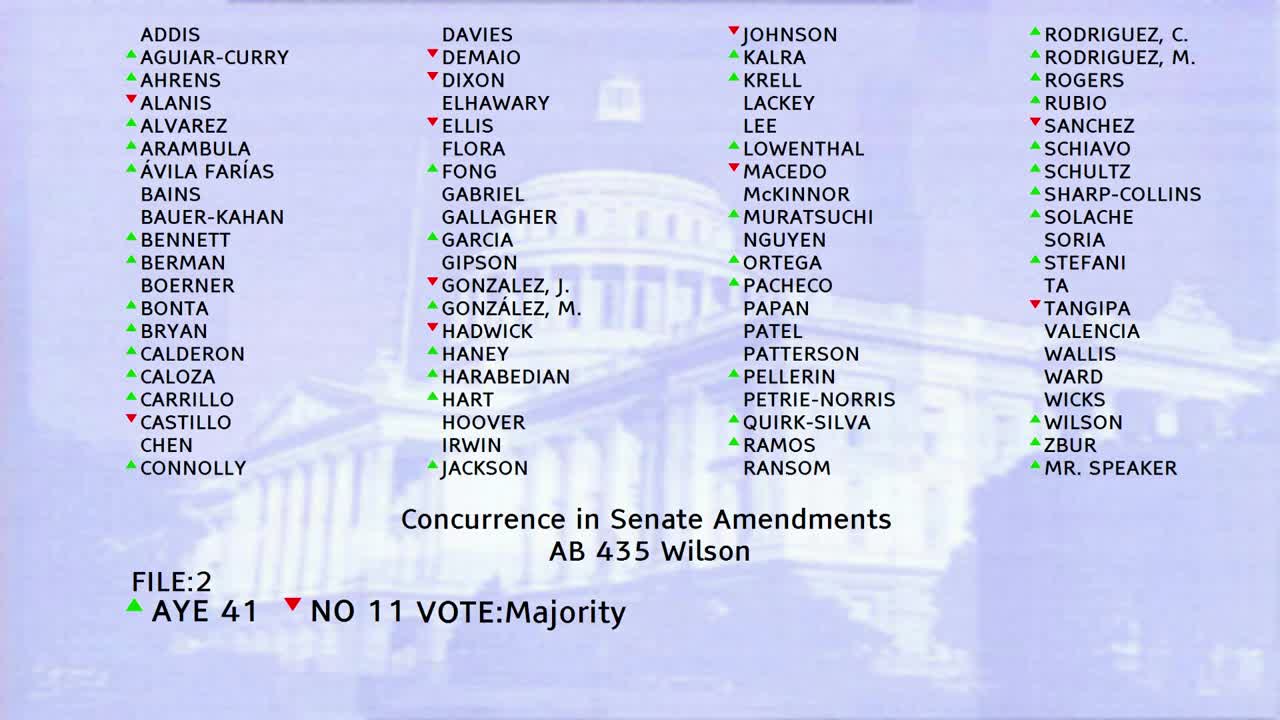 59SEC
Assembly Floor
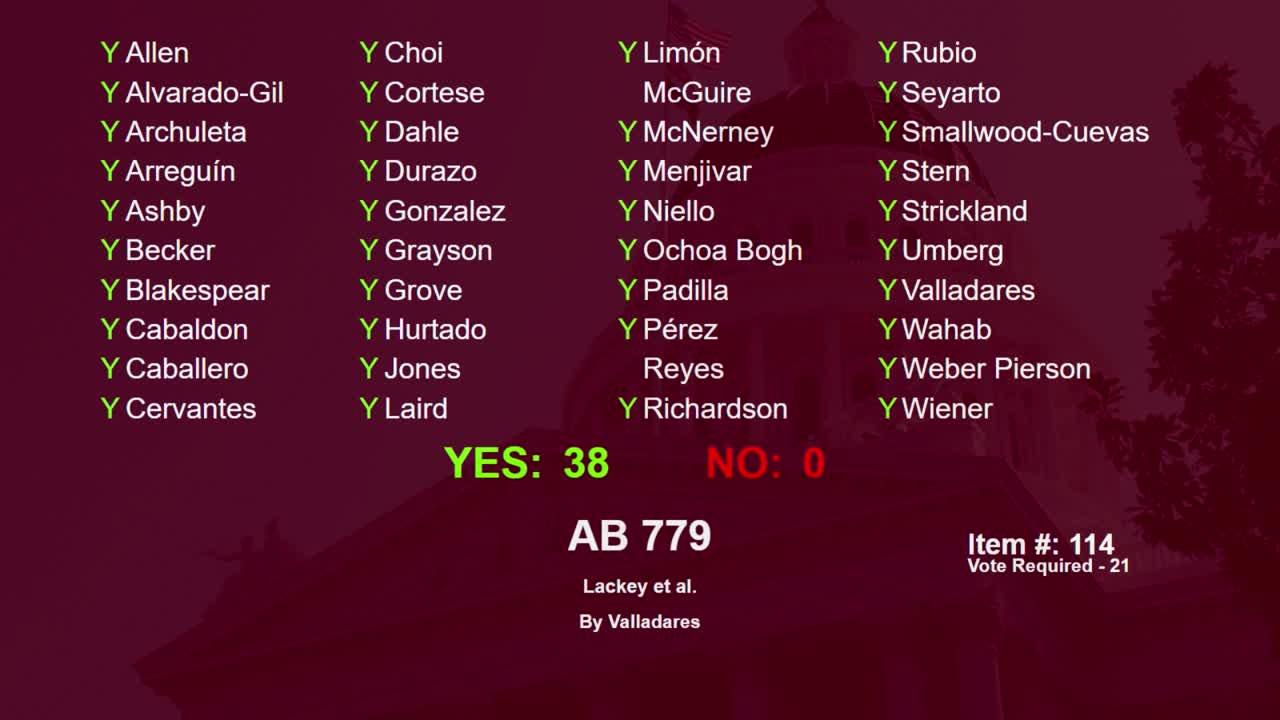 1MIN
Senate Floor
 13MIN
Senate Standing Committee on Health
 10MIN
Senate Standing Committee on Governmental Organization
 1MIN
Assembly Floor
 8MIN
Assembly Standing Committee on Health
 18MIN