AB 593: CalFresh: data sharing.
- Session Year: 2025-2026
- House: Assembly
- Latest Version Date: 2025-10-13
Current Status:
Passed
(2025-10-13: Chaptered by Secretary of State - Chapter 698, Statutes of 2025.)
Introduced
In Committee
Awaiting First Chamber Vote
Passed First Chamber
In Committee
Awaiting Second Chamber Vote
Passed Second Chamber
Enacted
Existing federal law establishes the Supplemental Nutrition Assistance Program (SNAP), known in California as CalFresh, under which supplemental nutrition assistance benefits allocated to the state by the federal government are distributed to eligible individuals by each county.
Existing state law authorizes the State Department of Social Services to identify data-sharing opportunities with other state and local public entities for the purposes of improving the administration of CalFresh, increasing CalFresh participation, and measuring the impact of CalFresh, among other purposes. Existing law authorizes public entities, to the extent permitted by federal law, to share data with the department for these purposes.
This bill would remove the authorization for public entities to share data with the department for the above-described purposes.
Existing federal law establishes the Supplemental Nutrition Assistance Program (SNAP), known in California as CalFresh, under which supplemental nutrition assistance benefits allocated to the state by the federal government are distributed to eligible individuals by each county.
Existing state law authorizes the State Department of Social Services to identify data-sharing opportunities with other state and local public entities for the purposes of improving the administration of CalFresh, increasing CalFresh participation, and measuring the impact of CalFresh, among other purposes. Existing law authorizes public entities, to the extent permitted by federal law, to share data with the department for these purposes.
This bill would instead authorize the department to identify data-sharing opportunities with only other state public entities for the purposes of improving the administration of CalFresh, among other things, and would limit the information that may be disclosed to information that is necessary for conducting outreach opportunities, facilitating enrollment in public benefits, and measuring the impact of those efforts. The bill would also exclude public entities related to employment and financial well-being from the entities authorized to share data with the department. remove the authorization for public entities to share data with the department for the above-described purposes.
Existing federal law establishes the Supplemental Nutrition Assistance Program (SNAP), known in California as CalFresh, under which supplemental nutrition assistance benefits allocated to the state by the federal government are distributed to eligible individuals by each county.
Existing state law authorizes the State Department of Social Services to identify data-sharing opportunities with other state and local public entities for the purposes of improving the administration of CalFresh, increasing CalFresh participation, and measuring the impact of CalFresh, among other purposes. Existing law authorizes public entities, to the extent permitted by federal law, to share data with the department for these purposes.
This bill would instead authorize the department to identify data-sharing opportunities with only other state public entities, entities for the purposes of improving the administration of CalFresh, among other things, and would limit the information that may be disclosed to information that is necessary for conducting outreach opportunities and facilitating enrollment in public benefits, as defined, and measuring the impact of CalFresh on the health and well-being of Californians, among other things. The bill would also authorize public entities to share data with the department for these purposes only to the extent permitted by federal law and certain state privacy laws. opportunities, facilitating enrollment in public benefits, and measuring the impact of those efforts. The bill would also exclude public entities related to employment and financial well-being from the entities authorized to share data with the department.
Existing federal law establishes the Supplemental Nutrition Assistance Program (SNAP), known in California as CalFresh, under which supplemental nutrition assistance benefits allocated to the state by the federal government are distributed to eligible individuals by each county.
Existing state law authorizes the State Department of Social Services to identify data-sharing opportunities with other state and local public entities for the purposes of improving the administration of CalFresh, increasing CalFresh participation, and measuring the impact of CalFresh, among other purposes. Existing law authorizes public entities, to the extent permitted by federal law, to share data with the department for these purposes.
This bill would make technical, nonsubstantive changes to those provisions.This bill would instead authorize the department to identify data-sharing opportunities with only other state public entities, and would limit the information that may be disclosed to information that is necessary for conducting outreach opportunities and facilitating enrollment in public benefits, as defined, and measuring the impact of CalFresh on the health and well-being of Californians, among other things. The bill would also authorize public entities to share data with the department for these purposes only to the extent permitted by federal law and certain state privacy laws.
Existing federal law establishes the Supplemental Nutrition Assistance Program (SNAP), known in California as CalFresh, under which supplemental nutrition assistance benefits allocated to the state by the federal government are distributed to eligible individuals by each county.
Existing state law authorizes the State Department of Social Services to identify data-sharing opportunities with other state and local public entities for the purposes of improving the administration of CalFresh, increasing CalFresh participation, and measuring the impact of CalFresh, among other purposes. Existing law authorizes public entities, to the extent permitted by federal law, to share data with the department for these purposes.
This bill would make technical, nonsubstantive changes to those provisions.
(a)The department may identify data-sharing opportunities with other state and local public entities, and any other unit of state government, for the purposes of improving the administration of CalFresh, increasing CalFresh participation, measuring the impact of CalFresh, and increasing access to critical public health and poverty-alleviating services and other services and benefits available to low-income individuals.
(b)The department shall designate an executive-level employee of the department who shall report to the Director of Social Services on the implementation of the provisions of this section and Section 18901.58.
(a)The department may identify data-sharing opportunities with other state and local public entities, and any other unit of state government, for the purposes of improving the administration of CalFresh, increasing CalFresh participation, and measuring the impact of CalFresh. The information authorized to be disclosed is limited to information necessary for conducting outreach opportunities, facilitating enrollment in public benefits, and measuring the impact of those efforts, and shall not be used for any other purpose. CalFresh, and increasing access to critical public health and poverty-alleviating services and other services and benefits available to low-income individuals.
(b)Notwithstanding Section 1798.24 of the Civil Code, and to the extent permitted by federal law, public entities may share data with the department for the purposes described in subdivision (a). These state public entities include, but are not limited to, all of the following:(1)Public entities related to health and human services, including, but not limited to, the California Health and Human Services Agency and departments within the agency.(2)Public entities related to education and early childhood programs, including, but not limited to, the State Department of Education, the University of California, the California State University, the California Community Colleges, the Student Aid Commission, and First 5 California.(3)Public entities related to shelter, utilities, housing, and homelessness, including, but not limited to, the Business, Consumer Services, and Housing Agency and all departments and boards within the agency.(4)Public entities related to justice-involved individuals, including, but not limited to, the Department of Corrections and Rehabilitation.(5)Public entities related to services for veterans, including, but not limited to, the Department of Veterans Affairs.(c)(b)The department shall designate an executive-level employee of the department who shall report to the Director of Social Services on the implementation of the provisions of this section and Section 18901.58.
(a)(1)The department may identify data-sharing opportunities with other state public entities, and any other unit of state government, for the purposes of improving the administration of CalFresh, increasing CalFresh participation, and measuring the impact of CalFresh, and increasing access to critical public health and poverty-alleviating services and other services and benefits available to low-income individuals. CalFresh. The information authorized to be disclosed is limited to information necessary for all of the following purposes, and shall not be used for any other purpose: conducting outreach opportunities, facilitating enrollment in public benefits, and measuring the impact of those efforts, and shall not be used for any other purpose.
(A)Conducting outreach opportunities and facilitating enrollment in public benefits.(B)Measuring public benefit utilization and facilitating public benefit cross enrollment between CalFresh and other public benefits.(C)Measuring the impact of CalFresh on the health and well-being of Californians, including, but not limited to:(i)Public entities data related to earnings, income, resources, and food purchasing power.(ii)Public entities data related to health, nutrition, and financial well-being.(2)For purposes of this section, public benefit means all educational, public health, and poverty-alleviating services and other services and benefits available to low-income individuals, including, but not limited to, all public social services, that are funded, administered, or delivered by state public entities.(b)Notwithstanding any other state law, except those specified in this subdivision, and to the extent permitted by federal law and by the Information Practices Act of 1977 (Chapter 1 (commencing with Section 1798) of Title 1.8 of Part 4 of Division 3 of the Civil Code), Confidentiality of Medical Information Act (Part 2.6 (commencing with Section 56) of Division 1 of the Civil Code), K12 Pupil Online Personal Information Protection Act (Chapter 22.2 (commencing with Section 22584) of Division 8 of the Business and Professions Code), and Early Learning Personal Information Protection Act (Chapter 22.2.5 (commencing with Section 22586) of Division 8 of the Business and Professions Code), Section 1798.24 of the Civil Code, and to the extent permitted by federal law, public entities may share data with the department for the purposes described in subdivision (a). These state public entities include, but are not limited to, all of the following:
(1)Public entities related to health and human services, including, but not limited to, the California Health and Human Services Agency and departments within the agency.
(2)Public entities related to education and early childhood programs, including, but not limited to, the State Department of Education, the University of California, the California State University, the California Community Colleges, the Student Aid Commission, and First 5 California.
(3)Public entities related to employment and financial well-being, including, but not limited to, the Employment Development Department, the Labor and Workforce Development Agency, the California Workforce Development Board, and the Franchise Tax Board.(4)(3)Public entities related to shelter, utilities, housing, and homelessness, including, but not limited to, the Business, Consumer Services, and Housing Agency and all departments and boards within the agency, and the Public Utilities Commission. agency.
(5)(4)Public entities related to justice-involved individuals, including, but not limited to, the Department of Corrections and Rehabilitation.
(6)(5)Public entities related to services for veterans, including, but not limited to, the Department of Veterans Affairs.
(c)The department shall designate an executive-level employee of the department who shall report to the Director of Social Services on the implementation of this section and Section 18901.58.
(a)(1)The department may identify data-sharing opportunities with other state and local public entities, and any other unit of state government, for the purposes of improving the administration of CalFresh, increasing CalFresh participation, measuring the impact of CalFresh, and increasing access to critical public health and poverty-alleviating services and other services and benefits available to low-income individuals. The information authorized to be disclosed is limited to information necessary for all of the following purposes, and shall not be used for any other purpose:
(A)Conducting outreach opportunities and facilitating enrollment in public benefits.
(B)Measuring public benefit utilization and facilitating public benefit cross enrollment between CalFresh and other public benefits.
(C)Measuring the impact of CalFresh on the health and well-being of Californians, including, but not limited to:
(i)Public entities data related to earnings, income, resources, and food purchasing power.
(ii)Public entities data related to health, nutrition, and financial well-being.
(2)For purposes of this section, public benefit means all educational, public health, and poverty-alleviating services and other services and benefits available to low-income individuals, including, but not limited to, all public social services, that are funded, administered, or delivered by state public entities.
(b)Notwithstanding any other state law, law, except those specified in this subdivision, and to the extent permitted by federal law, law and by the Information Practices Act of 1977 (Chapter 1 (commencing with Section 1798) of Title 1.8 of Part 4 of Division 3 of the Civil Code), Confidentiality of Medical Information Act (Part 2.6 (commencing with Section 56) of Division 1 of the Civil Code), K12 Pupil Online Personal Information Protection Act (Chapter 22.2 (commencing with Section 22584) of Division 8 of the Business and Professions Code), and Early Learning Personal Information Protection Act (Chapter 22.2.5 (commencing with Section 22586) of Division 8 of the Business and Professions Code), public entities may share data with the department for the purposes described in subdivision (a). These state public entities include, but are not limited to, all of the following:
(1)Public entities related to health and human services, including, but not limited to, the California Health and Human Services Agency and departments within the agency.
(2)Public entities related to education and early childhood programs, including, but not limited to, the State Department of Education, the University of California, the California State University, the California Community Colleges, the Student Aid Commission, and First 5 California.
(3)Public entities related to employment and financial well-being, including, but not limited to, the Employment Development Department, the Labor and Workforce Development Agency, the California Workforce Development Board, and the Franchise Tax Board.
(4)Public entities related to shelter, utilities, housing, and homelessness, including, but not limited to, the Business, Consumer Services, and Housing Agency and all departments and boards within the agency, and the Public Utilities Commission.
(5)Public entities related to justice-involved individuals, including, but not limited to, the Department of Corrections and Rehabilitation.
(6)Public entities related to services for veterans, including, but not limited to, the Department of Veterans Affairs.
(c)The department shall designate an executive-level employee of the department who shall report to the Director of Social Services on the implementation of this section and Section 18901.58.
(a)The department may identify data-sharing opportunities with other state and local public entities, and any other unit of state government, for the purposes of improving the administration of CalFresh, increasing CalFresh participation, measuring the impact of CalFresh, and increasing access to critical public health and poverty-alleviating services and other services and benefits available to low-income individuals.
(b)Notwithstanding any other state law, and to the extent permitted by federal law, public entities may share data with the department for the purposes of described in subdivision (a). These public entities include, but are not limited to, all of the following:
(1)Public entities related to health and human services, including, but not limited to, the California Health and Human Services Agency and departments within the agency.
(2)Public entities related to education and early childhood programs, including, but not limited to, the State Department of Education, the University of California, the California State University, the California Community Colleges, the Student Aid Commission, and First 5 California.
(3)Public entities related to employment and financial well-being, including, but not limited to, the Employment Development Department, the Labor and Workforce Development Agency, the California Workforce Development Board, and the Franchise Tax Board.
(4)Public entities related to shelter, utilities, housing, and homelessness, including, but not limited to, the Business, Consumer Services, and Housing Agency and all departments and boards within the agency, and the Public Utilities Commission.
(5)Public entities related to justice-involved individuals, including, but not limited to, the Department of Corrections and Rehabilitation.
(6)Public entities related to services for veterans, including, but not limited to, the Department of Veterans Affairs.
(c)The department shall designate an executive-level employee of the department who shall report to the Director of Social Services on the implementation of the provisions of this section and Section 18901.58.
|
Date
|
Status
|
|---|---|
| Oct 13, 2025 | Chaptered by Secretary of State - Chapter 698, Statutes of 2025. |
| Oct 13, 2025 | Approved by the Governor. |
| Sep 11, 2025 | Enrolled and presented to the Governor at 4 p.m. |
| Sep 4, 2025 | Senate amendments concurred in. To Engrossing and Enrolling. (Ayes 77. Noes 0. Page 2932.). |
| Sep 4, 2025 | In Assembly. Concurrence in Senate amendments pending. |
| Sep 3, 2025 | Read third time. Passed. Ordered to the Assembly. (Ayes 40. Noes 0. Page 2436.). |
| Aug 26, 2025 | Read second time. Ordered to third reading. |
| Aug 25, 2025 | From committee: Be ordered to second reading pursuant to Senate Rule 28.8. |
| Aug 18, 2025 | (Ayes 27. Noes 0. Page 2175.) |
| Aug 18, 2025 | From committee chair, with author's amendments: Amend, and re-refer to committee. Read second time, amended, and re-referred to Com. on APPR. |
| Aug 13, 2025 | In committee: Hearing postponed by committee. |
| Jul 16, 2025 | From committee: Do pass and re-refer to Com. on APPR. (Ayes 13. Noes 0.) (July 15). Re-referred to Com. on APPR. |
| Jul 8, 2025 | From committee: Do pass and re-refer to Com. on JUD. (Ayes 5. Noes 0.) (July 7). Re-referred to Com. on JUD. |
| Jun 23, 2025 | In committee: Hearing postponed by committee. |
| Jun 11, 2025 | Referred to Coms. on HUMAN S. and JUD. |
| Jun 3, 2025 | In Senate. Read first time. To Com. on RLS. for assignment. |
| Jun 2, 2025 | Read third time. Passed. Ordered to the Senate. (Ayes 79. Noes 0. Page 1813.) |
| May 15, 2025 | Read second time. Ordered to third reading. |
| May 14, 2025 | From committee: Do pass. (Ayes 15. Noes 0.) (May 14). |
| May 5, 2025 | Re-referred to Com. on APPR. |
| May 1, 2025 | Read second time and amended. |
| Apr 30, 2025 | From committee: Amend, and do pass as amended and re-refer to Com. on APPR. (Ayes 7. Noes 0.) (April 29). |
| Mar 25, 2025 | Re-referred to Com. on HUM. S. |
| Mar 24, 2025 | From committee chair, with author's amendments: Amend, and re-refer to Com. on HUM. S. Read second time and amended. |
| Mar 24, 2025 | Referred to Com. on HUM. S. |
| Feb 13, 2025 | From printer. May be heard in committee March 15. |
| Feb 12, 2025 | Read first time. To print. |
|
Date
|
Description
|
Location
|
Votes
|
|
|---|---|---|---|---|
| Sep 4, 2025 | AB 593 Wicks Concurrence in Senate Amendments | Assembly Floor |
Passed |
|
| Sep 3, 2025 | Assembly 3rd Reading AB593 Wicks By Arreguín | Senate Floor |
Passed |
|
| Jul 15, 2025 | Do pass, but first be re-referred to the Committee on [Appropriations] | Senate Standing Committee on Judiciary |
Passed |
|
| Jul 7, 2025 | Do pass, but first be re-referred to the Committee on [Judiciary] | Senate Standing Committee on Human Services |
Passed |
|
| Jun 2, 2025 | AB 593 Wicks Assembly Third Reading | Assembly Floor |
Passed |
|
| May 14, 2025 | Do pass. | Assembly Standing Committee on Appropriations |
Passed |
|
| Apr 29, 2025 | Do pass as amended and be re-referred to the Committee on [Appropriations] | Assembly Standing Committee on Human Services |
Passed |
This list shows positions taken on this bill by organizations on the date displayed, which is linked to the original source.
Positions by individuals are not included.
|
Organization
|
Position
|
Date
|
|---|---|---|
| California Student Aid Commission | ** Support | |
| Oakland Privacy | ** Against | |
| San Bernardino Community College District | ** Support |
CONCURRENCE IN SENATE AMENDMENTS
CSA1 Bill Id:AB 593
Author:(Wicks)
As Amended Ver:August 18, 2025
Majority vote
SUMMARY
Strikes existing law that enumerated the public entities authorized to share data with the California Department of Social Services (CDSS) for purposes related to CalFresh, while retaining the authority for CDSS to identify data-sharing opportunities with other state and local public entities, and any other unit of state government for these same purposes.
Senate Amendments
- Strike existing law that enumerated the public entities authorized to share data with CDSS for improving the administration of CalFresh, increasing CalFresh participation, measuring the impact of CalFresh, and increasing access to critical public health and poverty-alleviating services and other services and benefits available to low-income individuals.
- Restore existing law that specifies increasing access to critical public health and poverty-alleviating services and other services and benefits available to low-income individuals is an allowable purpose for CDSS to identify data-sharing opportunities with other state and local public entities, and any other unit of state government.
- Strike the requirement that information authorized to be disclosed be limited to information necessary for conducting outreach opportunities, facilitating enrollment in public benefits, and, measuring the impact of those efforts, and shall not be used for any other purpose.
COMMENTS
CalFresh. The Supplemental Nutrition Assistance Program (SNAP), formerly known as the Food Stamp Program, is the largest federal food safety-net program that serves as the first line of defense against hunger and food insecurity for low-income households. In California, SNAP funds are administered through the CalFresh program. Overseen by CDSS and administered locally by county human services departments, CalFresh serves a large and diverse caseload, with substantial shares comprising low-income working families with children, elderly and disabled people, and very low-income individuals with substantial barriers to employment. Participants use electronic benefit transfer cards to purchase eligible food items such as fruits and vegetables, meat, dairy products, and seeds and plants that produce food at authorized retailers, including grocery stores, supermarkets, and farmers' markets.
The United States Department of Agriculture (USDA) sets eligibility requirements for SNAP programs across the country, including gross and net income, household size, assets, and certain expenses. The basic rules to qualify is gross monthly income below 130% of the federal poverty line. Broad-based categorical eligibility gives states the option (that most states take, including California) to increase the gross income eligibility threshold up to 200% of the poverty line for SNAP recipients receiving support from other government programs. Effective October 1, 2024, through September 30, 2025, these gross income limits for a household of three in the United States (U.S.) are currently $2,798 per month, or $33,576 annually.
CalFresh plays a critical role in reducing poverty and food insecurity in California. In early 2023, participation in CalFresh helped keep approximately 1.1 million Californians out of poverty. Research also shows that SNAP reduces overall food insecurity by about 20% and reduces food insecurity among children by approximately 33%. According to the Legislative Analyst's Office, about 3.2 million households received a total of $12.7 billion in CalFresh benefits, all federally funded, with an estimated average monthly benefit of about $328 per household in 2024‑25.
Federal Efforts to Access Sensitive, State-Held Data. In July 2025, the Leadership Conference's Center for Civil Rights and Technology, the Center for Democracy & Technology, and Protect Democracy released an explainer examining growing federal efforts to access sensitive, state-held administrative data. Traditionally, information collected by states, such as SNAP and Medicaid records, has been tightly controlled and shared with federal agencies only under strict legal safeguards. However, under new executive directives, the federal government is moving to consolidate and centralize access to this data, raising significant concerns about privacy, civil rights, and individual autonomy.
The shift began with a March 20, 2025 executive order from President Trump directing federal agencies to obtain "unfettered access" to state-held data from federally funded programs, including data managed by third-party vendors. Since then, several agencies have acted to implement this mandate. In May 2025, the USDA requested expansive personal information on all SNAP applicants and recipients dating back to 2020, including names, Social Security numbers, and addresses, from states and contracted payment processors.
Immigration and Customs Enforcement (ICE) issued subpoenas for cash assistance data about low-income elderly disabled immigrants in California, while the U.S. Department of Health and Human Services transferred sensitive Medicaid data from several states, including California, Illinois, Washington, and D.C., to the Department of Homeland Security. By July 2025, the Centers for Medicare and Medicaid Services granted ICE access to personal data for nearly 80 million Medicaid beneficiaries, including information on ethnicity and citizenship status. In parallel, federal officials began developing a searchable national citizenship database by combining federal and state records to verify eligibility for voting.
The explainer warns that centralizing a repository of sensitive data opens the door to mass surveillance, profiling, and algorithmic targeting, particularly against vulnerable communities such as immigrants, low-income households, and people with disabilities. It also deters individuals from seeking vital public benefits like SNAP and Medicaid out of fear that their personal information could be shared with immigration authorities or other federal agencies. Moreover, the integration of sensitive personal records into centralized databases increases the risk of cybersecurity breaches, exposing millions to identity theft and other harms.
Traditionally, federal agencies are bound by longstanding protections, including the Privacy Act of 1974, which requires public notices when new systems of records are created; the Paperwork Reduction Act of 1974, mandating public comment before data collection; and, the E-Government Act of 2022, which requires Privacy Impact Assessments. Additional constraints come from program-specific laws like Health Insurance Portability and Accountability Act (HIPAA), Family Educational Rights and Privacy Act (FERPA), and the federal SNAP statutes, as well as state-level privacy protections and data-sharing restrictions in contracts with third-party vendors. Despite these safeguards, the executive order's broad framing and agencies' recent actions suggest an intent to sidestep longstanding privacy norms.
In response to this fundamental shift in how personal data is governed and accessed in the U.S., this bill reverts provisions from Welfare and Institutions Code Section 18901.59 back to existing law that was established through AB 518 (Wicks), Chapter 910, Statutes of 2024, related to data sharing and use. This bill additionally removes the requirement that any information disclosed be limited solely to purposes such as conducting outreach, facilitating enrollment in public benefits, and measuring the impact of those efforts, as well as the prohibition on using the data for any other purpose. It also removes the provisions that would have allowed public entities, notwithstanding the Information Practices Act of 1977, and to the extent permitted by federal law, to share data with CDSS for specified purposes. Lastly, this bill repeals existing law by striking the list of public entities that were authorized to share data under this provision.
According to the Author
According to the Author, "Last year I authored AB 518, requiring the Department of Social Services (DSS) to develop a methodology for determining the state's CalFresh participation rate and identifying characteristics of residents who are eligible but not receiving benefits. This framework will be employed to shape outreach efforts and ascertain opportunities to remove barriers which prevent enrollment.
"The statute enacted through AB 518 allows DSS to ascertain data sharing opportunities with other state and local public entities for the narrow purpose of improving CalFresh administration, increasing participation, and enhancing access to other services and benefits available to low-income persons. It does not compel state departments to share data, nor override any federal statute that governs allowable disclosure of data. It is also not intended to exempt the sharing of data from all state privacy laws without addressing confidentiality, privacy, and security of consumer data.
"[This bill] is legislation I committed to carry last year, in partnership with the Administration, to clarify limited and necessary exemptions from data sharing restrictions while allowing the disclosure of data for the narrow purposes of improving CalFresh program administration.
"My goal is to strike a balance to protect Californians' privacy while permitting the careful use of data in a safe and tailored manner that will inform strategies to maximize CalFresh food benefits and decrease the number of low-income individuals and families facing hunger."
Arguments in Support
The California Student Aid Commission writes in support stating, "[This bill] looks to clarify the limitations on information that CDSS and other state entities would be allowed to distribute as part of a data sharing agreement. This includes data that is necessary to conducting outreach opportunities, facilitating enrollment in public benefits and measuring the impact of CalFresh on the health of Californians."
Arguments in Opposition
No opposition on file.
FISCAL COMMENTS
According to the Senate Appropriations Committee, pursuant to Senate Rule 28.8, the August 18, 2025, version of this bill would result in negligible state costs.
VOTES:
ASM HUMAN SERVICES: 7-0-0
YES: Lee, Castillo, Calderon, Elhawary, Jackson, Celeste Rodriguez, Tangipa
ASM APPROPRIATIONS: 15-0-0
YES: Wicks, Sanchez, Arambula, Calderon, Caloza, Dixon, Elhawary, Fong, Mark González, Hart, Pacheco, Pellerin, Solache, Ta, Tangipa
ASSEMBLY FLOOR: 79-0-0
YES: Addis, Aguiar-Curry, Ahrens, Alanis, Alvarez, Arambula, Ávila Farías, Bains, Bauer-Kahan, Bennett, Berman, Boerner, Bonta, Bryan, Calderon, Caloza, Carrillo, Castillo, Chen, Connolly, Davies, DeMaio, Dixon, Elhawary, Ellis, Flora, Fong, Gabriel, Gallagher, Garcia, Gipson, Jeff Gonzalez, Mark González, Hadwick, Haney, Harabedian, Hart, Hoover, Irwin, Jackson, Kalra, Krell, Lackey, Lee, Lowenthal, Macedo, McKinnor, Muratsuchi, Nguyen, Ortega, Pacheco, Papan, Patel, Patterson, Pellerin, Petrie-Norris, Quirk-Silva, Ramos, Ransom, Celeste Rodriguez, Michelle Rodriguez, Rogers, Blanca Rubio, Sanchez, Schiavo, Schultz, Sharp-Collins, Solache, Soria, Stefani, Ta, Tangipa, Valencia, Wallis, Ward, Wicks, Wilson, Zbur, Rivas
SENATE FLOOR: 40-0-0
YES: Allen, Alvarado-Gil, Archuleta, Arreguín, Ashby, Becker, Blakespear, Cabaldon, Caballero, Cervantes, Choi, Cortese, Dahle, Durazo, Gonzalez, Grayson, Grove, Hurtado, Jones, Laird, Limón, McGuire, McNerney, Menjivar, Niello, Ochoa Bogh, Padilla, Pérez, Reyes, Richardson, Rubio, Seyarto, Smallwood-Cuevas, Stern, Strickland, Umberg, Valladares, Wahab, Weber Pierson, Wiener
UPDATED
VERSION: August 18, 2025
CONSULTANT: Bri-Ann Hernández-Mengual / HUM. S. / (916) 319-2089 FN: 0001637
SENATE RULES COMMITTEE Office of Senate Floor Analyses (916) 651-1520 Fax: (916) 327-4478 | AB 593 |
THIRD READING
Bill No: AB 593
Author: Wicks (D)
Amended: 8/18/25 in Senate
Vote: 21
SENATE HUMAN SERVICES COMMITTEE: 5-0, 7/7/25
AYES: Arreguín, Ochoa Bogh, Becker, Durazo, Limón
SENATE JUDICIARY COMMITTEE: 13-0, 7/15/25
AYES: Umberg, Niello, Allen, Arreguín, Ashby, Caballero, Durazo, Laird, Stern, Valladares, Wahab, Weber Pierson, Wiener
SENATE APPROPRIATIONS COMMITTEE: Senate Rule 28.8
ASSEMBLY FLOOR: 79-0, 6/2/25 - See last page for vote
SUBJECT: CalFresh: data sharing
SOURCE: Author
DIGEST:
This bill clarifies that the California Department of Social Services (CDSS) may identify data sharing opportunities with other state and local public entities for the purposes of improving the administration of, increasing participation in, and measuring the impact of CalFresh.
ANALYSIS:
Existing law:
- Establishes under federal law the Supplemental Nutrition Assistance Program (SNAP) to promote the general welfare and to safeguard the health and wellbeing of the nation’s population by raising the levels of nutrition among low-income households. (7 United States Code (USC) 2011 et seq.)
- Acknowledges access to sufficient affordable and healthy food as human right and requires state agencies and departments to consider this state policy. (Welfare and Institutions Code (WIC) §18700)
- Establishes CalFresh as California’s implementation of the federal SNAP program. (WIC §18900)
- Allows CDSS to identify data-sharing opportunities with other state and local public entities, for the purposes of improving the administration of CalFresh, increasing CalFresh participation, measuring the impact of CalFresh, and increasing access to critical public health and poverty-alleviating services and other services and benefits available to low-income individuals. (WIC §18901.59)
- Restricts a state agency from disclosing personal information in a manner that would link the information disclosed to the individual to whom it pertains, unless specified exceptions apply. (Civil Code §1798.24)
This bill clarifies that CDSS may identify data-sharing opportunities with other state and local public entities for the purposes of improving the administration of CalFresh, increasing CalFresh participation, and measuring the impact of CalFresh, as well as other critical public health and poverty-alleviating services.
Background
According to the author, “Last year I authored AB 518, requiring the CDSS to develop a methodology for determining the state’s CalFresh participation rate and identifying characteristics of residents who are eligible but not receiving benefits. This framework will be employed to shape outreach efforts and identify opportunities to remove barriers which prevent enrollment.
“The statute enacted through AB 518 allows CDSS to ascertain data sharing opportunities with other state and local public entities for the narrow purpose of improving CalFresh administration, increasing participation, and enhancing access to other services and benefits available to low-income persons. It does not compel state departments to share data, nor override any federal statute that governs allowable disclosure of data. It is also not intended to exempt the sharing of data from all state privacy laws without addressing confidentiality, privacy, and security of consumer data.
“AB 593 is legislation I committed to carry last year, in partnership with the Administration, to clarify limited and necessary exemptions from data sharing restrictions while allowing the disclosure of data for the narrow purposes of improving CalFresh program administration. My goal is to strike a balance to protect Californians' privacy while permitting the careful use of data in a safe and tailored manner that will inform strategies to maximize CalFresh food benefits and decrease the number of low-income individuals and families facing hunger.”
CalFresh. CalFresh is California’s version of the federal SNAP, an entitlement program that provides eligible households with federally funded monthly benefits to purchase food. CalFresh food benefits are 100 percent federally funded. CalFresh administration costs are funded with 50 percent federal funds, 35 percent General Fund, and 15 percent county funds, except for state-mandated program changes. CalFresh food benefits are issued through an Electronic Benefit Transfer (EBT) card which cardholders can use at point-of-sale terminals authorized by the United States Department of Agriculture, Food and Nutrition Service. Recipients can buy groceries but are not allow to purchase “hot foods” or nonfood items. Grocers and other retailers are paid directly by the federal government for the dollar value of purchases made with CalFresh food benefits. Monthly benefits per household vary based on household size, income, and deductible living expenses—with larger households generally receiving more benefits than smaller households and relatively higher-income households generally receiving fewer benefits than lower-income households. The average benefits in 2024 was $279 a month for all households, $496 for households with children, and $166 for households with older adults.
In addition to standard CalFresh there are also pilot programs and related programs to help Californian’s in similar positions. For example, SUNBucks, is a program that provides an eligible family with additional cash aid for groceries in the summer months when children are out of school. Families are eligible for $120 per child per summer. There is also the California Food Assistance Program (CFAP) which provides food benefits to approximately 35,000 legal permanent residents who meet CalFresh eligibility criteria but are excluded from SNAP due to restrictions related to immigration status established in the 1996 federal welfare reform. Unlike CalFresh and SUN Bucks, CFAP is entirely state funded. There are also a number of pilot programs that expand the reach of CalFresh to meet the needs of participants who need to buy safe drinking water, parents who need to buy diapers, and any family that wants to buy more fruits and vegetables. All of these funds are accessible with an EBT card for recipients that qualify.
CalFresh Enrollment. The many state and federally sponsored nutrition programs are critical to the food insecure population. In 2024, approximately 5.4 million people received assistance purchasing food through CalFresh and that number is expected to increase. According to the Legislative Analyst’s Office, CalFresh enrollment has increased 60 percent since the 2019- 2020 fiscal year due to a number of factors like the addition of SSI recipients and the COVID- 19 pandemic’s effect on the economy. Growth is also expected in CFAP.
There are also many other state and federally funded programs that provide cash assistance to purchase food. There are emergency food programs that provide food directly through distributions from food banks, including programs for specific populations like college students through campus pantries or seniors through Meals on Wheels. These programs provide for individuals and families trying to make ends meet.
Despite the increase, California is still behind the national average enrollment rate for SNAP. Reasons commonly cited are lack of awareness about their eligibility, especially among college students, and difficulty applying. Application difficulties are especially acute among populations whose first language is not English and people with disabilities. In addition to the initial application, the process of recertifying eligibility or “churn” can decrease enrollment. Churn refers to the instance when a family that is on CalFresh and eligible, is automatically unenrolled because they did not complete the paperwork necessary to certify they are still eligible. They may later return but have disrupted access to resources.
AB 518 (Wick, 2024) took a step to address some of these issues by creating a methodology for estimating the CalFresh participation rate and identifying characteristics of Californians who are eligible for, but not receiving, CalFresh benefits and encouraging data sharing between state and local departments to better inform CalFresh outreach and administration.
Related/Prior Legislation
AB 518 (Wicks, Chapter 910, Statutes of 2024) requires CDSS, in consultation with specified stakeholders, to develop a methodology to estimate the CalFresh participation rate in California and identify characteristics of Californians who are eligible for but not receiving CalFresh benefits. It also requires CDSS to identify data sharing opportunities with other state and local public entities.
AB 1961 (Wicks, 2024) would have required the Department of Food and Agriculture in consultation with specified state agencies to convene End Hunger in California Master Plan Task Force which will develop the End Hunger in California Master Plan. Requires the End Hunger in California Master Plan to make recommendations for future comprehensive strategies aimed at addressing access to healthy and culturally relevant food for all Californians, as specified. The Plan must be distributed to the Legislature no later than January 1, 2027. The bill was vetoed by the Governor.
AB 1967 (Jackson, 2024) creates the Food Insecurity Officer within CDSS, appointed by the Governor. The bill was held in the Senate Appropriations Committee.
AB 1952 (Mayes, 2018) would have required the CDSS, the State Department of Public Health, the State Department of Education, and the Department of Food and Agriculture, to develop a plan to end hunger. The bill would have CDSS to serve as the lead agency for the development of the plan. The bill was held in the Senate Appropriations Committee.
FISCAL EFFECT: Appropriation: No Fiscal Com.: Yes Local: No
SUPPORT: (Verified 8/26/25)
California Student Aid Commission
OPPOSITION: (Verified 8/26/25)
None received
ASSEMBLY FLOOR: 79-0, 6/2/25
AYES: Addis, Aguiar-Curry, Ahrens, Alanis, Alvarez, Arambula, Ávila Farías, Bains, Bauer-Kahan, Bennett, Berman, Boerner, Bonta, Bryan, Calderon, Caloza, Carrillo, Castillo, Chen, Connolly, Davies, DeMaio, Dixon, Elhawary, Ellis, Flora, Fong, Gabriel, Gallagher, Garcia, Gipson, Jeff Gonzalez, Mark González, Hadwick, Haney, Harabedian, Hart, Hoover, Irwin, Jackson, Kalra, Krell, Lackey, Lee, Lowenthal, Macedo, McKinnor, Muratsuchi, Nguyen, Ortega, Pacheco, Papan, Patel, Patterson, Pellerin, Petrie-Norris, Quirk-Silva, Ramos, Ransom, Celeste Rodriguez, Michelle Rodriguez, Rogers, Blanca Rubio, Sanchez, Schiavo, Schultz, Sharp-Collins, Solache, Soria, Stefani, Ta, Tangipa, Valencia, Wallis, Ward, Wicks, Wilson, Zbur, Rivas
Prepared by: Naima Ford Antal / HUMAN S. / (916) 651-1524
8/26/25 16:22:43
**** END ****
Senator Thomas Umberg, Chair
2025-2026 Regular Session
Bill No: AB 593 (Author:Wicks)
Version: May 1, 2025
Hearing Date: July 15, 2025
Fiscal: Yes
Urgency: No
Consultant: CK
SUBJECT
CalFresh: data sharing
DIGEST
This bill narrows the broad carve outs made to existing privacy laws for the sharing of personal information held by public entities with the State Department of Social Services (DSS).
EXECUTIVE SUMMARY
Last year, AB 518 (Wicks, Ch. 910, Stats. 2024) was gutted and amended late in the legislative process and passed by the Legislature shortly thereafter. It allowed all governmental entities in California to share information with DSS for specified purposes notwithstanding any other state law.
This bill attempts to narrow this broad authorization by limiting the purposes for which the sharing can occur, limiting the entities it applies too, and reapplying state laws to this data sharing scheme, except for the protections laid out in California’s Information Practices Act of 1977 (IPA) that limit the nonconsensual disclosure of Californians’ personal information by state entities. The bill is author-sponsored. It is supported by the California Student Aid Commission. It is opposed by Oakland Privacy. This bill passed out of the Senate Human Services Committee on a vote of 5 to 0.
PROPOSED CHANGES TO THE LAW
Existing law:
- Provides, pursuant to the California Constitution, that all people have inalienable rights, including the right to pursue and obtain privacy. (Cal. Const., art. I, Sec. 1.)
- Authorizes DSS to identify data-sharing opportunities with other state and local public entities, and any other unit of state government, for the purposes of improving the administration of CalFresh, increasing CalFresh participation, measuring the impact of CalFresh, and increasing access to certain services and benefits available to low-income individuals. (Welf. & Inst. Code § 18901.59(a) (“Section 18901.59”).)
- Authorizes, notwithstanding any other state law, and to the extent permitted by federal law, public entities to share data with DSS for the above purposes. It provides a nonexclusive list of public entities, including public entities related to health and human services and to justice-involved individuals, including the Department of Corrections and Rehabilitation. (Welf. & Inst. Code § 18901.59(b).)
- Requires DSS to designate an executive-level employee who shall report to the Director of Social Services on the implementation of the provisions of this section and Section 18901.58 of the Welfare and Institutions Code. (Welf. & Inst. Code § 18901.59(c).)
- Requires DSS to develop a methodology for estimating the CalFresh participation rate and identifying characteristics of Californians who are eligible for, but not receiving, CalFresh benefits. Identified characteristics may include, but are not limited to, race, ethnicity, preferred language, age, and location. (Welf. & Inst. Code § 18901.58(a).)
- Authorizes DSS to identify any existing public assistance or public benefit data that may be used to identify Californians who are eligible for, but not receiving, CalFresh benefits. DSS shall utilize the data and metrics described to develop informed and targeted outreach strategies and to maximize federal funding. (Welf. & Inst. Code § 18901.58.)
- Establishes the IPA, which declares that the right to privacy is a personal and fundamental right protected by Section 1 of Article I of the Constitution of California and by the United States Constitution and that all individuals have a right of privacy in information pertaining to them. (Civ. Code § 1798 et seq.)
- Prohibits an agency from disclosing any personal information in a manner that would link the information disclosed to the individual to whom it pertains unless the information is disclosed as specified, including:
- with the prior written voluntary consent of the individual to whom the personal information pertains within the preceding 30 days;
- to a person or another agency if the transfer is necessary for the transferee agency to perform its constitutional or statutory duties, and the use is compatible with a purpose for which the information was collected;
- to a governmental entity if required by state or federal law;
- to any person pursuant to a search warrant;
- pursuant to a subpoena, court order, search warrant, or other compulsory legal process with notification to the individual, unless notification is prohibited by law;
- to a law enforcement or regulatory agency when required for an investigation of unlawful activity or for licensing, certification, or regulatory purposes, unless the disclosure is otherwise prohibited by law; and
- for statistical and research purposes, as specified. (Civ. Code § 1798.24.)
- Requires each agency to keep an accurate accounting of the date, nature, and purpose of each disclosure of a record made pursuant to specified circumstances; and requires each agency to retain that accounting for at least three years after the disclosure, or until the record is destroyed, whichever is shorter. (Civ. Code §§ 1798.25, 1798.27.)
This bill:
- Limits the data sharing authorized by Section 18901.59 to only state public entities and removes some entities from the nonexclusive list. The authorized purposes are also narrowed.
- Reinstates the application of all laws to the data sharing authorization, except for Section 1798.24 of the Civil Code.
COMMENTS
- The IPA and Californians’ privacy
Article I, Section 1 of the California Constitution provides: “All people are by nature free and independent and have inalienable rights. Among these are enjoying and defending life and liberty, acquiring, possessing, and protecting property, and pursuing and obtaining safety, happiness, and privacy.” Privacy is therefore not just a policy goal, it is a constitutional right of every Californian. However, it has been under increasing assault.
The phrase “and privacy” was added to the California Constitution as a result of Proposition 11 in 1972; it was known as the “Privacy Initiative.” The arguments in favor of the amendment were written by Assemblymember Kenneth Cory and Senator George Moscone. The ballot pamphlet stated in relevant part:
At present there are no effective restraints on the information activities of government and business. This amendment creates a legal and enforceable right of privacy for every Californian. The right of privacy . . . prevents government and business interests from collecting and stockpiling unnecessary information about us and from misusing information gathered for one purpose in order to serve other purposes or to embarrass us. . . . The proliferation of government and business records over which we have no control limits our ability to control our personal lives. . . . Even more dangerous is the loss of control over the accuracy of government and business records on individuals. . . . Even if the existence of this information is known, few government agencies or private businesses permit individuals to review their files and correct errors. . . . Each time we apply for a credit card or a life insurance policy, file a tax return, interview for a job[,] or get a drivers' license, a dossier is opened and an informational profile is sketched.[1]
In 1977, the Legislature reaffirmed through the IPA that the right of privacy is a “personal and fundamental right” and that “all individuals have a right of privacy in information pertaining to them.”[2] The Legislature further stated the following findings:
- “The right to privacy is being threatened by the indiscriminate collection, maintenance, and dissemination of personal information and the lack of effective laws and legal remedies.”
- “The increasing use of computers and other sophisticated information technology has greatly magnified the potential risk to individual privacy that can occur from the maintenance of personal information.”
- “In order to protect the privacy of individuals, it is necessary that the maintenance and dissemination of personal information be subject to strict limits.”
Modeled after the Federal Privacy Act of 1974, the IPA governs the collection, maintenance, and disclosure of personal information by state agencies, specifically excluding local agencies. The IPA places guidelines and restrictions on the collection, maintenance, and disclosure of Californians’ personal information, including a prohibition on the disclosure of an individual’s personal information that can be used to identify them without the individual’s consent except under one of a list of specified circumstances. State agencies are required to provide notice to individuals of their rights with respect to their personal information, the purposes for which the personal information will be used, and any foreseeable disclosures of that personal information.
The IPA also provides individuals with certain rights to be informed of what personal information an agency holds relating to that individual, to access and inspect that personal information, and to request corrections to that personal information, subject to specified exceptions. In addition, when state agencies contract with private entities for services, the contractors are typically governed by the IPA.
- Narrowing the broad authorization for disclosing personal information in AB 518
As stated, AB 518 authorized DSS to identify data sharing opportunities with other state and local public entities for a broad set of purposes. It authorized any public entity to share data with DSS for these broad purposes notwithstanding any other law, including all state privacy laws, such as the IPA or the California Medical Information Act. Because of its extremely late introduction, AB 518 was not reviewed by this Committee.
This bill attempts to rein in this extremely broad authorization. It limits the authorization to only include state entities and limits the purposes for which it can be shared to improving the administration of CalFresh and measuring that program’s impact. The bill also removes reference to certain types of public entities from the nonexclusive list in the statute, indicating an intent for the bill not to apply to such entities.
Furthermore, this data sharing authorization no longer supersedes all laws, but does continue to apply notwithstanding Section 1798.24 of the Civil Code. That section is the main provision of the IPA limiting the disclosure of Californians’ personal information without consent to enumerated circumstances.
According to the author:
AB 593 clarifies limited exemptions from data sharing restrictions for the narrow purposes of improving CalFresh program administration. The CalFresh program supports people in improving their health and well-being by providing better access to healthy and nutritious foods. Yet, many eligible people are unaware they are eligible to receive benefits.
Last year AB 518 (Wicks & Jackson) was signed into law, requiring the Department of Social Services (DSS) to develop a methodology for determining the state’s CalFresh participation rate and identifying characteristics of residents who are eligible but not receiving benefits. In a letter submitted to the Assembly Journal last year, I committed to collaborate with the Newsom Administration on further legislation to clarify the scope of AB 518. This legislation reflects this commitment to ensure the scope of data sharing does next extend beyond the boundaries of what is necessary.
Nearly 30% of eligible residents don’t participate in the CalFresh program, equating to an estimated $3.5 billion in federal food-assistance funding that stays in Washington each year rather than being spent in our grocery stores and farmer’s markets to nourish our neighbors and families. AB 593 strikes a better balance to protect Californians' privacy while permitting the careful use of data in a safe and tailored manner that will inform strategies to maximize CalFresh food benefits and decrease the number of low-income individuals and families facing hunger.
- Stakeholder positions
The California Student Aid Commission writes in support:
AB 593 looks to clarify the limitations on information that CDSS and other state entities would be allowed to distribute as part of a data sharing agreement. This includes data that is necessary to conducting outreach opportunities, facilitating enrollment in public benefits and measuring the impact of CalFresh on the health of Californians. By narrowing the scope of the data that is allowed to share between entities, AB 593 ensures that the original goal of improving the CalFresh system is being met without any concern over potential recipients having their privacy breached.
Writing in opposition, Oakland Privacy highlights their opposition to last year’s bill:
The bill broadly and completely preempts all state privacy laws with no exceptions. This includes not only the Information Practices Act of 1977 (IPA) which provides general public sector privacy rights similar to CPRA rights for the private sector, but other important state laws including CMIA (Confidentiality of Medical Information Act), SOPIPA (Student Online Personal Information Protection Act) and data breach regulations. Laws like CIMA and SOPIPA are contracts with Californians. Simply mooting them on three days notice with the details to be filled in later is not something California would tolerate from the private sector.
Even worse, this selective exemption covering literally all of the personal information held by the State is directly targeted at low-income people, who are already statistically more vulnerable to abusive privacy practices. The term “pay for privacy” refers to tiers of individuals whose income level determines how much privacy protection they can access. We find it regretful for the State to endorse a lesser level of state protection for the personal information of Californians who are poor or exhibit the demographic indicators associated with a need for food subsidies. As written, that is unfortunately what the bill creates.
Preventing hunger is a worthy cause, but not at the expense of the permanent loss of rights provided in Article 1 of the California Constitution to the people of this state and that have been in state statute for forty-seven years.
The reality is that many Californians will not want the Department of Social Services scanning their tax returns, utility bills, employment records, health records, and their children’s student records and financial aid documents to check their eligibility for a program they never applied for and may not want - without their consent or knowledge – and under a broad exemption from data confidentiality laws.
Oakland Privacy goes on to request one additional amendment to the bill:
Re-entry data from CDCR, namely lists of people who are exiting from California state prisons in coming days and weeks is of enormous value to the Department of Homeland Security and federal immigration enforcement. In fact, the provision of those lists to ICE by California sheriffs was one of the key motivations for the passage of the California Values Act, which prevented such information from getting to immigration enforcement for a variety of criminal offenses that were very carefully determined to separate public safety risks from the rest of the inmate population. We cannot overstate how much federal immigration enforcement wants those jail release reports and we are not confident that if they become part of the SNAP data held by CDSS that the state will be able to protect them from federal inspection or delivery via federal health and human services.
We are not doing Californians any favors if we are offering them food subsidies with a side helping of deportation.
Accordingly, given that the bills intent for increased Cal-Fresh access for re-entry services has been addressed by recent legislation and the clear dangers of this bill’s proposed data sharing with CDCR, we ask the committee to remove CDCR from the list of agencies that will be sending information to CDSS on possible new recipients of Cal-Fresh benefits.
SUPPORT
California Student Aid Commission
OPPOSITION
Oakland Privacy
RELATED LEGISLATION
Pending Legislation: AB 1337 (Ward, 2025) amends the IPA by expanding the definition of “personal information,” extending its scope to cover local governmental entities, and bolstering protections regarding disclosures and accounting. AB 1337 is currently in this Committee and is being heard the same day as this bill.
Prior Legislation: AB 518 (Wicks, Ch. 910, Stats. 2024) See Background Summary & Comment 2.
PRIOR VOTES:
Senate Human Services Committee (Ayes 5, Noes 0)
Assembly Floor (Ayes 79, Noes 0)
Assembly Appropriations Committee (Ayes 15, Noes 0)
Assembly Human Services Committee (Ayes 7, Noes 0)
**************
ASSEMBLY THIRD READING
ATR Bill Id:AB 593
Author:(Wicks)
As Amended Ver:May 1, 2025
Majority vote
SUMMARY
Limits CalFresh data-sharing from, and to, the California Department of Social Services (CDSS).
Major Provisions
- Limits the authorization for CDSS to identify data-sharing opportunities with other public entities to state (but not local) public entities, and limits the purposes of these opportunities to improving the administration of CalFresh, increasing CalFresh participation, and measuring the impact of CalFresh.
- Limits the information that may be disclosed pursuant to 1), above, to information necessary for conducting outreach opportunities, facilitating enrollment in public benefits, and measuring the impact of those efforts.
- Authorizes public agencies to share data with CDSS for purposes of this bill, notwithstanding the Information Practices Act of 1977 (IPA).
- Excludes public entities related to employment and financial well-being and the California Public Utilities Commission (CPUC) from the entities authorized to share data with CDSS.
COMMENTS
Background: CalFresh. SNAP (formerly known as the Food Stamp Program) is the largest federal food safety-net program that serves as the first line of defense against hunger and food insecurity for low-income households. In California, SNAP funds are administered through the CalFresh program. Overseen by CDSS and administered locally by county human services departments, CalFresh serves a large and diverse caseload, with substantial shares comprising low-income working families with children, elderly and disabled people, and very low-income individuals with substantial barriers to employment. Participants use electronic benefit transfer cards to purchase eligible food items such as fruits and vegetables, meat, dairy products, and seeds and plants that produce food at authorized retailers, including grocery stores, supermarkets, and farmers' markets. Individuals can complete the CalFresh application online, over the phone, in-person at their county CalFresh office, or through the mail.
The United States Department of Agriculture (USDA) sets eligibility requirements for SNAP programs across the country, including gross and net income, household size, assets, and certain expenses. The basic rules to qualify is gross monthly income below 130% of the federal poverty level. Broad-based categorical eligibility gives states the option (that most states take, including California) to increase the gross income eligibility threshold up to 200% of the poverty level for SNAP recipients receiving support from other government programs. Effective October 1, 2024, through September 30, 2025, these gross income limits for a household of three in the U.S. are currently $2,798 per month, or $33,576 annually.
CalFresh plays a critical role in reducing poverty and food insecurity in California. In early 2023, participation in CalFresh helped keep approximately 1.1 million Californians out of poverty.
Research also shows that SNAP reduces overall food insecurity by about 20% and reduces food insecurity among children by approximately 33%. According to the Legislative Analyst’s Office, about 3.2 million households received a total of $12.7 billion in CalFresh benefits, all federally funded, with an estimated average monthly benefit of about $328 per household in 2024‑25.
Barriers to Accessing CalFresh. CalFresh participation rates have historically been lower than eligibility rates, which means that many eligible individuals and households do not successfully enroll in the program. According to USDA data from 2022, California ranks 38th in SNAP participation, with only 81% of eligible individuals enrolled in CalFresh. This is significantly lower than the national average of 88% and participation rates in other states such as Alabama (90%), Georgia (92%), and Illinois (100%). Certain populations, including college students, formerly incarcerated people, older adults, and noncitizens, face even lower participation rates, highlighting persistent barriers to access.
Participation rates also vary widely at the county level. For example in 2017, Fresno County had a 97% participation rate among eligible individuals while Contra Costa County had only 52% participation. These disparities within the state contribute to an underutilization of critical resources and missed opportunities to address food insecurity and hunger in California. For many eligible individuals, barriers to CalFresh participation include a lack of awareness about program eligibility and benefits, stigma associated with receiving public assistance, complex application procedures, language barriers, lack of internet access, and fear of losing benefits from other social services programs. For county workers who process applications, enrollment processes require substantial administrative resources, including staffing, paperwork processing, and verification procedures, which can strain agency capacities and prolong wait times for applicants, especially for large counties like Los Angeles County that processed at least 1.4 million applications in 2020.
This setback not only hinders efforts to eradicate hunger, but also deals a considerable blow to California's food economy. The USDA has shown that each dollar in federally funded CalFresh benefits generates $1.50 in economic activity. Additionally, every $1 billion in CalFresh benefits generates over 10,000 jobs across sectors, such as agriculture, transportation, and retail. If California increased its CalFresh participation to 100%, it could secure up to $3.5 billion more annually in federally funded food benefits, resulting in an estimated $5.3 billion in total annual economic activity On the flip side, hunger costs the U.S. economy at least $77.5 billion in healthcare costs every year through higher rates of chronic disease, higher utilization of health and mental healthcare services, more frequent and high-cost hospitalizations and more frequent use of nursing homes. Research has demonstrated a reduction in healthcare costs of $1,400 per person per year among low-income adults who also receive SNAP benefits, a finding that indicates state Medicaid programs could see significant savings from increased SNAP participation.
This bill limits the authorization for CDSS to identify data-sharing opportunities with other public entities to state public entities, and limits the purposes of these opportunities to improving the administration of CalFresh, increasing CalFresh participation, and measuring the impact of CalFresh. This bill further limits the information that may be disclosed to information necessary for conducting outreach opportunities, facilitating enrollment in public benefits, and measuring the impact of those efforts.
The Information Practices Act of 1977 is the state's main privacy law governing how California state agencies collect, maintain, and share personal information. Modeled after the federal Privacy Act of 1974, the IPA was enacted with the Legislature's express recognition of the need to place consistent limits on the handling of personal information by government entities.
Under the IPA, state agencies must meet specific requirements when managing Californians' personal data. This includes restrictions on collecting and disclosing personal information, and a general prohibition on sharing such information without the individual's consent—except in limited, specified circumstances. Whenever an agency requests personal information from an individual, it must provide a clear notice explaining the person's rights, how the data will be used, and any foreseeable disclosures.
The IPA also grants individuals the right to know what personal information a state agency holds about them, to access and review that information, and to request corrections—subject to certain exceptions. In cases where state agencies contract with private entities for services, those contractors are typically required to follow the same IPA standards, although few additional privacy safeguards are written into those agreements.
This bill authorizes public agencies to share data with CDSS, notwithstanding the IPA of 1977. This bill excludes public entities related to employment and financial well-being and the CPUC from the entities authorized to share data with CDSS.
According to the Author
"Last year I authored AB 518, requiring the Department of Social Services (DSS) to develop a methodology for determining the state's CalFresh participation rate and identifying characteristics of residents who are eligible but not receiving benefits. This framework will be employed to shape outreach efforts and ascertain opportunities to remove barriers which prevent enrollment.
"The statute enacted through AB 518 allows DSS to ascertain data sharing opportunities with other state and local public entities for the narrow purpose of improving CalFresh administration, increasing participation, and enhancing access to other services and benefits available to low-income persons. It does not compel state departments to share data, nor override any federal statute that governs allowable disclosure of data. It is also not intended to exempt the sharing of data from all state privacy laws without addressing confidentiality, privacy, and security of consumer data.
"[This bill] is legislation I committed to carry last year, in partnership with the Administration, to clarify limited and necessary exemptions from data sharing restrictions while allowing the disclosure of data for the narrow purposes of improving CalFresh program administration.
"My goal is to strike a balance to protect Californians' privacy while permitting the careful use of data in a safe and tailored manner that will inform strategies to maximize CalFresh food benefits and decrease the number of low-income individuals and families facing hunger."
Arguments in Support
According to the California Student Aid Commission, "[This bill] looks to clarify the limitations on information that CDSS and other state entities would be allowed to distribute as part of a data sharing agreement. This includes data that is necessary to conducting outreach opportunities, facilitating enrollment in public benefits and measuring the impact of CalFresh on the health of Californians. By narrowing the scope of the data that is allowed to share between entities, [this bill] ensures that the original goal of improving the CalFresh system is being met without any concern over potential recipients having their privacy breached."
Arguments in Opposition
According to Oakland Privacy, "[T]he list of public entities that are provided for datasharing is extremely broad and includes many agencies well outside the social services and public benefit sector. In particular, we are concerned about the bills references to three agencies: Corrections and Rehabilitations. It is in fact quite important that re-entry services include Cal-Fresh. It is so important that Senator Becker introduced and Governor Newsom enacted a bill on exactly that subject. SB 1254, which just went into effect in January of 2025 put together a work group to establish a process to establish pre-enrollment in Cal-Fresh into re-entry procedures. There is literally no reason to completely undermine that process in this bill. CDCR should be removed. The Legislature has already addressed this…"
FISCAL COMMENTS
According to the Assembly Appropriations Committee on May 14, 2025, CDSS anticipates minor and absorbable costs.
VOTES
ASM HUMAN SERVICES: 7-0-0
YES: Lee, Castillo, Calderon, Elhawary, Jackson, Celeste Rodriguez, Tangipa
ASM APPROPRIATIONS: 15-0-0
YES: Wicks, Sanchez, Arambula, Calderon, Caloza, Dixon, Elhawary, Fong, Mark González, Hart, Pacheco, Pellerin, Solache, Ta, Tangipa
UPDATED
VERSION: May 1, 2025
CONSULTANT: Bri-Ann Hernández-Mengual / HUM. S. / (916) 319-2089 FN: 0000454
593Date of Hearing: May 14, 2025
ASSEMBLY COMMITTEE ON APPROPRIATIONS
Buffy Wicks, Chair
ABPCA Bill Id:AB 593
Author:(Wicks) – As Amended Ver:May 1, 2025
Policy Committee: | Human Services | Vote: | 7 - 0 |
|
| ||
|
|
Urgency: No State Mandated Local Program: No Reimbursable: No
SUMMARY:
This bill clarifies exemptions from data sharing restrictions for the purposes of improving CalFresh program administration established by AB 518 (Wicks), Chapter 910, Statutes of 2024 (AB 518).
Specifically, this bill:
- Limits the authorization for the California Department of Social Services (CDSS) to identify data-sharing opportunities with other public entities to state (but not local) public entities, and limits the purposes of these opportunities to improving the administration of CalFresh, increasing CalFresh participation, and measuring the impact of CalFresh.
- Limits the information that may be disclosed pursuant to item 1, above, to information necessary for conducting outreach opportunities, facilitating enrollment in public benefits, and measuring the impact of those efforts.
- Authorizes public agencies to share data with CDSS for purposes of this bill, notwithstanding the Information Practices Act of 1977.
- Excludes public entities related to employment and financial well-being and the Public Utilities Commission from the entities authorized to share data with CDSS.
FISCAL EFFECT:
CDSS anticipates minor and absorbable costs.
COMMENTS:
- Purpose. According to the author:
Last year I authored AB 518, requiring CDSS to develop a methodology for determining the state’s CalFresh participation rate and identifying characteristics of residents who are eligible but not receiving benefits. This framework will be employed to shape outreach efforts and ascertain opportunities to remove barriers which prevent enrollment.
The statute enacted through AB 518 allows CDSS to ascertain data sharing opportunities with other state and local public entities for the narrow purpose of improving CalFresh administration, increasing participation, and enhancing access to other services and benefits available to low-income persons. It does not compel state departments to share data, nor override any federal statute that governs allowable disclosure of data. It is also not intended to exempt the sharing of data from all state privacy laws without addressing confidentiality, privacy, and security of consumer data.
[This bill] is legislation I committed to carry last year, in partnership with the Administration, to clarify limited and necessary exemptions from data sharing restrictions while allowing the disclosure of data for the narrow purposes of improving CalFresh program administration.
My goal is to strike a balance to protect Californians' privacy while permitting the careful use of data in a safe and tailored manner that will inform strategies to maximize CalFresh food benefits and decrease the number of low-income individuals and families facing hunger.
- Background. AB 518 required CDSS to identify data sharing opportunities with other state and local agencies that will lead to improved participation in and strengthen administration of CalFresh. AB 518 identified specific public entities for data sharing opportunities, including health and human services agencies, educational agencies (childcare, K-12 and higher education), the Employment Development Department, the Franchise Tax Board, the Public Utilities Commission, the California Department of Corrections and Rehabilitation, and veterans’ agencies, among others.
AB 518 provided a broad exemption from any relevant state privacy laws with respect to the sharing of data amongst these public entities for the purposes of increasing CalFresh participation.
Groups concerned with privacy protection raised concerns with the data sharing provisions in AB 518. In a letter submitted to the Assembly Journal last year, the author committed to collaborate with the Newsom Administration on further legislation to clarify the scope of AB 518. This bill reflects this commitment.
This bill is likely to be further amended to make additional changes. Discussions with stakeholders and interested parties are ongoing.
Analysis Prepared by: Jennifer Swenson / APPR. / (916) 319-2081
Date of Hearing: April 29, 2025
ASSEMBLY COMMITTEE ON HUMAN SERVICES
Alex Lee, Chair
ABPCA Bill Id:AB 593 (
Author:Wicks) – As Amended Ver:March 24, 2025
SUBJECT: CalFresh: data sharing
SUMMARY: Limits CalFresh data sharing from, and to, the California Department of Social Services (CDSS). Specifically, this bill:
- Strikes local public entities from who CDSS may identify data-sharing opportunities with for purposes of improving the administration of CalFresh, increasing CalFresh participation, measuring the impact of CalFresh, and increasing access to critical public health and poverty-alleviating services and other services and benefits available to low-income individuals.
- Provides that the information authorized to be disclosed is limited to information necessary for all of the following purposes, and shall not be used for any other purpose:
- Conducting outreach opportunities and facilitating enrollment in public benefits;
- Measuring public benefit utilization and facilitating public benefit cross enrollment between CalFresh and other public benefits;
- Measuring the impact of CalFresh on the health and well-being of Californians, including, but not limited to:
- Public entities’ data related to earnings, income, resources, and food purchasing power; and,
- Public entities’ data related to health, nutrition, and financial well-being.
- Defines, for purposes of this bill, “public benefit” as all educational, public health, and poverty-alleviating services and other services and benefits available to low-income individuals, including, but not limited to, all public social services, that are funded, administered, or delivered by state public entities.
- Specifies privacy laws that public entities are subject to comply with when sharing data with CDSS for purposes described in 1) above, to include the Information Practices Act of 1977, Confidentiality of Medical Information Act, K-12 Pupil Online Personal Information Protection Act, and Early Learning Personal Information Protection Act.
EXISTING LAW:
- Establishes the CalFresh program to administer the provision of federal Supplemental Nutrition Assistance Program (SNAP) benefits to families and individuals meeting certain criteria, as specified. (Welfare and Institutions Code [WIC] § 18900 et seq.)
- Requires CDSS, on or before July 1, 2025, in consultation with advocate representatives, county human service agencies, and the County Welfare Directors Association of California, to develop a methodology for estimating the CalFresh participation rate and identifying characteristics of Californians who are eligible for, but not receiving, CalFresh benefits. (WIC § 18901.58(a)(1))
- Permits identified characteristics to include, but are not limited to, race, ethnicity, preferred language, age, and location. (WIC § 18901.58(a)(2))
- Requires CDSS to identify any existing public assistance or public benefit data that may be used to identify Californians who are eligible for, but not receiving, CalFresh benefits. (WIC § 18901.58(a)(3))
- Requires CDSS to annually publish the CalFresh participation rate. (WIC § 18901.58(a)(4))
- Requires CDSS to utilize the data and metrics described in 1) above, to develop informed and targeted outreach strategies and to maximize federal funding for CalFresh outreach to reach Californians who are eligible for CalFresh benefits. (WIC § 18901.58(b))
- Authorizes CDSS to identify data-sharing opportunities with other state and local entities, any other unit of state government, for the purposes of improving the administration of CalFresh, increasing CalFresh participation, measuring the impact of CalFresh, and increasing access to critical public health and poverty-alleviating services and other services and benefits available to low-income individuals. (WIC § 18901.59(a))
- Authorizes public entities, notwithstanding any other state law, and to the extent permitted by federal law, to share data with CDSS for the purposes of 6) above. These public entities include, but are not limited to, all of the following:
- Public entities related to health and human services, including, but not limited to, the California Health and Human Services Agency and departments within the agency;
- Public entities related to education and early childhood programs, including, but not limited to, the California Department of Education (CDE), the University of California, the California State University, the California Community Colleges, the Student Aid Commission, and First 5 California;
- Public entities related to employment and financial well-being, including, but not limited to, the Employment Development Department (EDD), the Labor and Workforce Development Agency, the California Workforce Development Board, and the Franchise Tax Board (FTB);
- Public entities related to shelter, utilities, housing, and homelessness, including, but not limited to, the Business, Consumer Services, and Housing Agency and all departments and boards within the agency, and the Public Utilities Commission (CPUC);
- Public entities related to justice-involved individuals, including, but not limited to, the Department of Corrections and Rehabilitation; and,
- Public entities related to services for veterans, including, but not limited to, the Department of Veterans Affairs. (WIC § 18901.58(c); 18901.59(b))
- Requires CDSS to designate an executive-level employee of CDSS to report to the Director of CDSS on the implementation of the 1) through 7) above. (WIC § 18901.59(c))
- Provides, pursuant to the California Constitution, that all people are by nature free and independent and have inalienable rights. Among these the fundamental right to privacy. (Cal. Const. Art. I, § 1.)
- Establishes the Information Practices Act (IPA) of 1977, enumerating the requirements applicable to state agencies that collect, maintain, and disclose personal information from California residents, including limitations on permissible disclosure, the rights of residents to know and access the information, and required accounting of disclosures of the information. (Civil Code [CIV] § 1798 et seq.)
- Requires that each state agency maintain in its records only personal information that is relevant and necessary to accomplish the purpose of the agency. (CIV § 1798.14.)
- Requires that each agency collect personal information to the greatest extent practicable directly from the individual who is the subject of the information rather than from another source. (CIV § 1798.15.)
- Establishes the Confidentiality of Medical Information Act (CMIA), which protects sensitive health information by restricting its disclosure without proper authorization. (CIV § 56)
- Establishes the K-12 Pupil Online Personal Information Act (SOPIPA), protecting the online privacy of K-12 students. (Business and Professions Code [BPC] § 22584)
- Establishes the Early Learning Personal Information Protection Act (ELPIPA), which safeguards the online privacy of children in preschool and prekindergarten settings. (BPC § 22586)
Federal law:
- Establishes SNAP pursuant to the Food Stamp Act of 1964. (7 United States Code § 2011 et seq.)
FISCAL EFFECT: Unknown, this bill has not been analyzed by a fiscal committee.
COMMENTS:
Background: Food Insecurity. The United States Department of Agriculture (USDA), which monitors food insecurity and oversees the nation’s largest food aid programs, defines food security as “access by all people at all times to enough food for an active, healthy life.” It categorizes food security into four levels:

While California declared food as a human right in 2023 [SB 628 (Hurtado) Chapter 879, Statutes of 2023], and produces nearly half of the nation’s fruits and vegetables, data from the U.S. Census Household Pulse Survey shows that as of September 2024, 22% of California households are food insecure and 27% of households with children are food insecure, with deep disparities for Black, Latino, and Native households. Factors contributing to food insecurity include socioeconomic disparities and geographic barriers, among other causes.
A lack of adequate food can have long-term physical health consequences across the lifespan. During pregnancy, it can lead to poor birth outcomes, impacting a child’s physical and cognitive development. Young children with inadequate or interrupted food intake are at a higher risk of iron deficiency, respiratory illnesses, infections, and developmental delays. In school-aged children, food insecurity is associated with poor academic performance, attention difficulties, and behavioral issues. In adolescence, food insecurity is associated with having many sexual partners, drug and alcohol abuse, greater exposure to violence, high-risk pregnancy, and suicide ideation. Long-term, these disadvantages contribute to intergenerational cycles of poverty and food insecurity. In adulthood, food insecurity increases the risk of chronic, diet-related diseases such as diabetes, obesity, hypertension, cardiovascular disease, and certain cancers due to poor nutrition and limited access to healthcare. Beyond physical health, the emotional and psychological stress of uncertain food access causes anxiety, depression, and social isolation.
CalFresh. SNAP (formerly known as the Food Stamp Program) is the largest federal food safety-net program that serves as the first line of defense against hunger and food insecurity for low-income households. In California, SNAP funds are administered through the CalFresh program. Overseen by CDSS and administered locally by county human services departments, CalFresh serves a large and diverse caseload, with substantial shares comprising low-income working families with children, elderly and disabled people, and very low-income individuals with substantial barriers to employment. Participants use electronic benefit transfer cards to purchase eligible food items such as fruits and vegetables, meat, dairy products, and seeds and plants that produce food at authorized retailers, including grocery stores, supermarkets, and farmers’ markets. Individuals can complete the CalFresh application online, over the phone, in-person at their county CalFresh office, or through the mail.
The USDA sets eligibility requirements for SNAP programs across the country, including gross and net income, household size, assets, and certain expenses. The basic rules to qualify is gross monthly income below 130% of the federal poverty line. Broad-based categorical eligibility gives states the option (that most states take, including California) to increase the gross income eligibility threshold up to 200% of the poverty line for SNAP recipients receiving support from other government programs. Effective October 1, 2024, through September 30, 2025, these gross income limits for a household of three in the U.S. are currently $2,798 per month, or $33,576 annually.
CalFresh plays a critical role in reducing poverty and food insecurity in California. In early 2023, participation in CalFresh helped keep approximately 1.1 million Californians out of poverty. Research also shows that SNAP reduces overall food insecurity by about 20% and reduces food insecurity among children by approximately 33%. According to the Legislative Analyst’s Office, about 3.2 million households received a total of $12.7 billion in CalFresh benefits, all federally funded, with an estimated average monthly benefit of about $328 per household in 2024‑25.
Barriers to Accessing CalFresh. CalFresh participation rates have historically been lower than eligibility rates, which means that many eligible individuals and households do not successfully enroll in the program. According to USDA data from 2022, California ranks 38th in SNAP participation, with only 81% of eligible individuals enrolled in CalFresh. This is significantly lower than the national average of 88% and participation rates in other states such as Alabama (90%), Georgia (92%), and Illinois (100%). Certain populations, including college students, formerly incarcerated people, older adults, and noncitizens, face even lower participation rates, highlighting persistent barriers to access.
Participation rates also vary widely at the county level. For example in 2017, Fresno County had a 97% participation rate among eligible individuals while Contra Costa County had only 52% participation. These disparities within the state contribute to an underutilization of critical resources and missed opportunities to address food insecurity and hunger in California. For many eligible individuals, barriers to CalFresh participation include a lack of awareness about program eligibility and benefits, stigma associated with receiving public assistance, complex application procedures, language barriers, lack of internet access, and fear of losing benefits from other social services programs. For county workers who process applications, enrollment processes require substantial administrative resources, including staffing, paperwork processing, and verification procedures, which can strain agency capacities and prolong wait times for applicants, especially for large counties like Los Angeles County that processed at least 1.4 million applications in 2020.
This setback not only hinders efforts to eradicate hunger, but also deals a considerable blow to California's food economy. The USDA has shown that each dollar in federally funded CalFresh benefits generates $1.50 in economic activity. Additionally, every $1 billion in CalFresh benefits generates over 10,000 jobs across sectors, such as agriculture, transportation, and retail. If California increased its CalFresh participation to 100%, it could secure up to $3.5 billion more annually in federally funded food benefits, resulting in an estimated $5.3 billion in total annual economic activity On the flip side, hunger costs the U.S. economy at least $77.5 billion in healthcare costs every year through higher rates of chronic disease, higher utilization of health and mental healthcare services, more frequent and high-cost hospitalizations and more frequent use of nursing homes. Research has demonstrated a reduction in healthcare costs of $1,400 per person per year among low-income adults who also receive SNAP benefits, a finding that indicates state Medicaid programs could see significant savings from increased SNAP participation.
The Information Practices Act of 1977 is the state’s main privacy law governing how California state agencies collect, maintain, and share personal information. Modeled after the federal Privacy Act of 1974, the IPA was enacted with the Legislature’s express recognition of the need to place consistent limits on the handling of personal information by government entities.
Under the IPA, state agencies must meet specific requirements when managing Californians’ personal data. This includes restrictions on collecting and disclosing personal information, and a general prohibition on sharing such information without the individual’s consent—except in limited, specified circumstances. Whenever an agency requests personal information from an individual, it must provide a clear notice explaining the person’s rights, how the data will be used, and any foreseeable disclosures.
The IPA also grants individuals the right to know what personal information a state agency holds about them, to access and review that information, and to request corrections—subject to certain exceptions. In cases where state agencies contract with private entities for services, those contractors are typically required to follow the same IPA standards, although few additional privacy safeguards are written into those agreements.
Additional Privacy Protections. California has other legal frameworks in place to protect individual’s personal information, especially when it comes to data shared between public agencies. Some of these privacy laws include, but are not limited to:
- The Confidentiality of Medical Information Act protects sensitive health information by restricting its disclosure without proper authorization.
- The K-12 Pupil Online Personal Information Protection Act prevents companies that provide online services to schools from using student data for targeted advertising or selling it to third parties.
- The Early Learning Personal Information Protection Act extends these protections to preschool-aged children, ensuring their data is used only for educational purposes and kept secure.
This bill authorizes CDSS to share data with other state public entities in order to improve how CalFresh is administered, increase participation, and better understand the program’s impact. Specifically, the bill permits the use of shared data to conduct outreach, support enrollment in CalFresh and other public benefit programs, and analyze the connection between CalFresh and outcomes related to health, nutrition, and financial stability. This bill further requires that all data sharing comply with existing privacy laws, including the IPA, CMIA, SOPIPA, and ELPIPA.
Author’s Statement: According to the Author, “Last year I authored AB 518, requiring the Department of Social Services (DSS) to develop a methodology for determining the state’s CalFresh participation rate and identifying characteristics of residents who are eligible but not receiving benefits. This framework will be employed to shape outreach efforts and ascertain opportunities to remove barriers which prevent enrollment.
“The statute enacted through AB 518 allows DSS to ascertain data sharing opportunities with other state and local public entities for the narrow purpose of improving CalFresh administration, increasing participation, and enhancing access to other services and benefits available to low-income persons. It does not compel state departments to share data, nor override any federal statute that governs allowable disclosure of data. It is also not intended to exempt the sharing of data from all state privacy laws without addressing confidentiality, privacy, and security of consumer data.
“[This bill] is legislation I committed to carry last year, in partnership with the Administration, to clarify limited and necessary exemptions from data sharing restrictions while allowing the disclosure of data for the narrow purposes of improving CalFresh program administration.
“My goal is to strike a balance to protect Californians' privacy while permitting the careful use of data in a safe and tailored manner that will inform strategies to maximize CalFresh food benefits and decrease the number of low-income individuals and families facing hunger.”
Equity Implications: While this bill has the potential to improve access to public benefits for underserved communities, it also raises concerns about privacy risks that could disproportionately affect vulnerable populations.
By allowing data sharing between public entities, the bill aims to reduce barriers to CalFresh enrollment—especially for low-income individuals who may not realize they are eligible or who face difficulties navigating complex applications. This could particularly benefit historically marginalized groups, such as immigrants, communities of color, and individuals with limited English proficiency, who are often under-enrolled in public benefits. Further, this bill aims to support a “no wrong door” approach, enabling facilitated enrollment across programs (e.g. education, public health, poverty-alleviating), which can provide a more holistic safety net for families in need. Lastly, by using data to understand who is being left out, the state could more effectively identify inequities in benefit access and tailor outreach strategies to reach those most in need.
On the other hand, sharing sensitive personal data—such as immigration status, juvenile records, and financial or health information – without consent may disproportionately impact individuals who already face systemic surveillance or discrimination. This includes immigrants, justice-involved individuals, and low-income families, who may fear that their data could be misused or accessed by unauthorized parties. If communities don’t trust how their data will be used, especially without transparency or consent, they may avoid altogether—even when they’re eligible for help. This can undermine the bill’s intended equity goals. Without clear limitations on how data is used, retained, or protected, and without opt-out provisions, the bill could open the door to unintended consequences- such as misuse by third parties or future administrations. These gaps in oversight could erode equity rather than enhance it.
Policy Considerations: This bill attempts to address privacy related concerns regarding AB 518 (Wicks), Chapter 910, Statutes of 2024, that provided a broad exemption from any relevant state privacy laws with respect to the sharing of data amongst public entities for the purposes of increasing CalFresh participation. The bill includes a “Notwithstanding any other state law” clause in paragraph (b), which allows public entities to share data with CDSS “to the extent permitted by federal law” and a handful of specified privacy laws, including the IPA, CMIA, SOPIPA, and ELPIPA. However, while the bill aims to narrow the broad language by naming some privacy laws, the broad “notwithstanding” clause continues to weaken practical enforcement, potentially allowing data sharing without full adherence to those protections.
Additional concerns were raised regarding the lack of detailed guidance on data security measures, retention limits, the use of marketing and outreach consultants, transfer protocols, and limitations on who handles and has access to all kinds of personal information, which this bill does not address. Lastly, concerns were raised regarding the need to list a broad range of public entities allowed to share data with CDSS – some of which may already be collaborating with CDSS for CalFresh purposes, while others may not be appropriate due to privacy concerns. The list of public entities include, but are not limited to, educational agencies (childcare, K-12 and higher education), employment-related entities like EDD, financial entities like the FTB, utilities-related agencies like the CPUC.
This bill aims to improve CalFresh access and program effectiveness, but as currently written, it does not sufficiently address serious concerns about privacy, transparency, or data governance. The inclusion of a broad “notwithstanding” clause and lack of specific safeguards continues to sweep too broadly and risks weakening long-standing privacy protections without proper accountability.
Committee Amendments: In order to address the above policy considerations, the Committee proposes the author take the following amendments:
- On page 2, in line 3, strike out “(1)”
- On page 2, in line 6, after the second comma insert: and
- On page 2, in line 7, strike out “CalFresh, and increasing access to critical”, strike out line 8, in line 9, strike out “and benefits available to low-income individuals.” and insert: CalFresh.
- On page 2, strike out lines 11 and 12 and insert: conducting outreach opportunities, facilitating enrollment in public benefits, and measuring the impact of those efforts, and shall not be used for any other purpose.
- On page 2, strike out lines 13 to 28, inclusive
- On page 2, in line 29, strike out “any other state law, except those”, strike out lines 30 to 32, inclusive, on page 3, strike out lines 1 to 7, inclusive, in line 8, strike out “Code),” and insert: Section 1798.24 of the Civil Code, and to the extent permitted by federal law,
- On page 3, strike out lines 19 to 23, inclusive, in line 24, strike out “(4)” and insert: (3)
- On page 3, in line 27, strike out “agency, and the Public Utilities Commission.” and insert: agency.
- On page 3, in line 28, strike out “(5)” and insert: (4)
- On page 3, in line 31, strike out “(6)” and insert: (5)
RELATED AND PRIOR LEGISLATION:
AB 518 (Wicks), Chapter 910, Statues of 2024, required CDSS, in consultation with stakeholders, to develop a methodology to estimate the CalFresh participation rate in California and identify characteristics of Californians who are eligible for CalFresh benefits, but are not receiving benefits; and, required CDSS to identify data sharing opportunities with other state and local public entities.
AB 1967 (Jackson) of 2024, would have established a Food Insecurity Officer within CDSS to coordinate and address food insecurity across state government operations. AB 1967 was held on the Assembly Committee on Appropriations suspense file.
AB 1377 (Wicks), Chapter 461, Statutes of 2019, required CDE, Department of Health Care Services, and CDSS, in consultation with stakeholders, to develop a proposed statewide process for utilizing certain data for purposes of increasing CalFresh enrollment, and requires the departments to issue recommendations to the relevant policy committees of the Legislature no later than August 31, 2020.
AB 402 (Skinner), Chapter 504, Statutes of 2011, authorized school districts and county offices of education to share information provided on the National School Lunch Program application with the local agency that determines CalFresh eligibility for nutrition assistance programs, and also required each county to determine eligibility for CalFresh based on the information shared by a school district or county office of education and to enroll determined eligible pupils.
REGISTERED SUPPORT / OPPOSITION:
Support
California Student Aid Commission
San Bernardino Community College District
Opposition
Oakland Privacy
Analysis Prepared by: Bri-Ann Hernández-Mengual / HUM. S. / (916) 319-2089
Discussed in Hearing
 55SEC
Assembly Floor
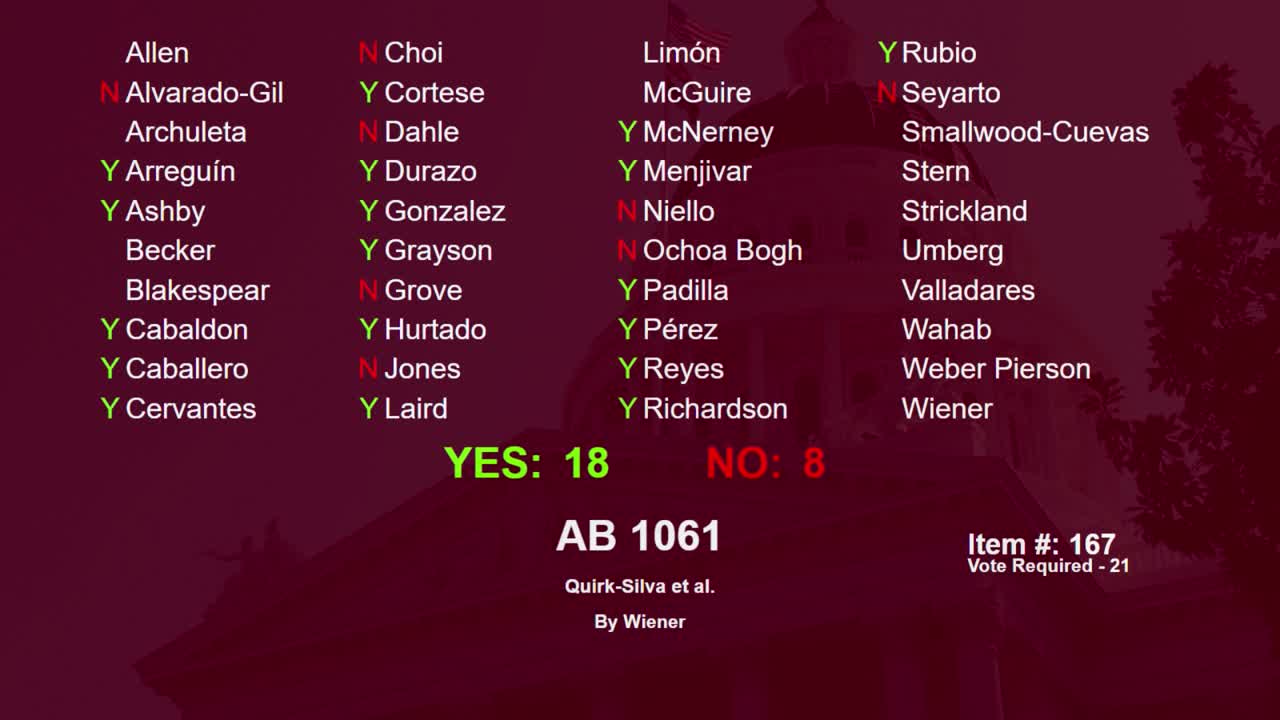 57SEC
Senate Floor
 5MIN
Senate Standing Committee on Judiciary
 7MIN
Senate Standing Committee on Human Services
 44SEC
Assembly Floor
 11MIN
Assembly Standing Committee on Human Services
Bill Author

Bill Co-Author(s):