AB 635: Mobilehome Residency Law Protection Program: Attorney General.
- Session Year: 2025-2026
- House: Assembly
- Latest Version Date: 2026-09-30
Current Status:
Passed
(2026-09-30: Chaptered by Secretary of State - Chapter 866, Statutes of 2026.)
Introduced
In Committee
Awaiting First Chamber Vote
Passed First Chamber
In Committee
Awaiting Second Chamber Vote
Passed Second Chamber
Enacted
Existing law, the Mobilehome Residency Law, prescribes various terms and conditions of tenancies in mobilehome parks. The law deems the substantial failure of the management of a mobilehome park, as defined, to provide and maintain physical improvements in the common facilities in good working order and condition, and the substantial violation of a mobilehome park rule, to be a public nuisance that may be remedied only by a civil action or abatement, as specified. The law authorizes a civil action for purposes of that provision to be brought by, among others, the Attorney General.
Existing law establishes within the Department of Housing and Community Development the Mobilehome Residency Law Protection Program, which authorizes additional enforcement measures for violations of the Mobilehome Residency Law. Existing law requires the department to refer any alleged violations of law or regulations within the departments jurisdiction to the Division of Codes and Standards within the department, and to refer any alleged violations of law or regulations that are not within the jurisdiction of the department, as specified, to the appropriate enforcement agency.
This bill would require the department to additionally refer alleged violations of the Mobilehome Residency Law, certain laws relating to the conversion or closure of a mobilehome park, and related local government ordinances to a nonprofit legal services provider within 5 days of receipt.
Existing law authorizes the department to refer alleged violations of law or regulations that are not within the jurisdiction of the department, including, but not limited to, rent disputes, criminal activity, or alleged discrimination, to the appropriate enforcement agency.
This bill would authorize the department to also refer alleged violations of a local ordinance to the appropriate enforcement agency.
Existing law requires the department to contract with one or more qualified and experienced nonprofit legal services providers for purposes of the Mobilehome Residency Law Protection Program and to refer complaints to those providers for possible enforcement action. Existing law establishes minimum requirements for nonprofit legal services providers that may contract with the department for these purposes.
This bill would instead require the department to develop a grant process to distribute funds to those nonprofit legal services providers and to refer program complaints to those providers for possible enforcement action. The bill would require that grant process to be fully developed and operational for program complaints by July 1, 2029. The bill would require nonprofit legal services providers, in order to receive a grant, to meet the same requirements applicable to a provider contracting with the department under existing law. The bill would specify that these provisions do not interfere with or replace any existing contracts or commitments between the department and any legal services provider entered into before the grant program is operational.
Existing law creates the Mobilehome Dispute Resolution Fund, as specified, and requires moneys in the fund to be available, upon appropriation by the Legislature, for purposes of implementing the program.
This bill would require moneys in the fund to be made available to the department or to the Attorney General, upon appropriation by the Legislature, for purposes of implementing the program. The bill would require the Attorney General to use funds appropriated to it as necessary to perform duties related to enforcing the alleged violations described above.
Existing law requires the department to submit an annual report to the Governor and the Legislature outlining, among other things, the amount of registration fees collected and the amount expended on the program.
This bill would additionally require the department to include the amount expended by the Attorney General, as specified, and the number of complaint allegations referred to the Attorney General, as specified, in the annual report.
Existing law repeals the above-described provisions relating to the Mobilehome Residency Law Protection Program on January 1, 2027.
This bill would extend that repeal date to June 30, 2033.
Existing law, the Mobilehome Residency Law, prescribes various terms and conditions of tenancies in mobilehome parks. The law deems the substantial failure of the management of a mobilehome park, as defined, to provide and maintain physical improvements in the common facilities in good working order and condition, and the substantial violation of a mobilehome park rule, to be a public nuisance that may be remedied only by a civil action or abatement, as specified. The law authorizes a civil action for purposes of that provision to be brought by, among others, the Attorney General.
Existing law establishes within the Department of Housing and Community Development the Mobilehome Residency Law Protection Program, which authorizes additional enforcement measures for violations of the Mobilehome Residency Law. Existing law requires the department to refer any alleged violations of law or regulations within the departments jurisdiction to the Division of Codes and Standards within the department, and to refer any alleged violations of law or regulations that are not within the jurisdiction of the department, as specified, to the appropriate enforcement agency.
This bill would require the department to refer up to a total of 25 alleged violations of the Mobilehome Residency Law to the office of the Attorney General in any given fiscal year that the department in good faith efforts selects as the most severe, deleterious, and materially and economically impactful alleged violations. The bill would authorize the Attorney General to arbitrate, mediate, negotiate, or pursue any and all available judicial remedies in connection with any alleged violations of the law referred by the department.This bill would require the department to additionally refer alleged violations of the Mobilehome Residency Law, certain laws relating to the conversion or closure of a mobilehome park, and related local government ordinances to a nonprofit legal services provider within 5 days of receipt.
Existing law authorizes the department to refer alleged violations of law or regulations that are not within the jurisdiction of the department, including, but not limited to, rent disputes, criminal activity, or alleged discrimination, to the appropriate enforcement agency.
This bill would authorize the department to also refer alleged violations of a local ordinance to the appropriate enforcement agency.
Existing law requires the department to contract with one or more qualified and experienced nonprofit legal services providers for purposes of the Mobilehome Residency Law Protection Program and to refer complaints to those providers for possible enforcement action. Existing law establishes minimum requirements for nonprofit legal services providers that may contract with the department for these purposes.
This bill would instead require the department to develop a grant process to distribute funds to those nonprofit legal services providers and to refer program complaints to those providers for possible enforcement action. The bill would require that grant process to be fully developed and operational for program complaints by July 1, 2029. The bill would require nonprofit legal services providers, in order to receive a grant, to meet the same requirements applicable to a provider contracting with the department under existing law. The bill would specify that these provisions do not interfere with or replace any existing contracts or commitments between the department and any legal services provider entered into before the grant program is operational.
Existing law creates the Mobilehome Dispute Resolution Fund, as specified, and requires moneys in the fund to be available, upon appropriation by the Legislature, for purposes of implementing the program.
This bill would require moneys in the fund to be made available to the department or to the Attorney General, upon appropriation by the Legislature, for purposes of implementing the program. The bill would require the Attorney General to use funds appropriated to it as necessary to perform duties related to enforcing the alleged violations described above.
Existing law requires the department to submit an annual report to the Governor and the Legislature outlining, among other things, the amount of registration fees collected and the amount expended on the program.
This bill would additionally require the department to include the amount expended by the Attorney General, as specified, and the number of complaint allegations referred to the Attorney General, as specified, in the annual report.
Existing law repeals the above-described provisions relating to the Mobilehome Residency Law Protection Program on January 1, 2027.
This bill would extend that repeal date to January 1, 2030. June 30, 2033.
Existing law, the Mobilehome Residency Law, prescribes various terms and conditions of tenancies in mobilehome parks. The law deems the substantial failure of the management of a mobilehome park, as defined, to provide and maintain physical improvements in the common facilities in good working order and condition, and the substantial violation of a mobilehome park rule, to be a public nuisance that may be remedied only by a civil action or abatement, as specified. The law authorizes a civil action for purposes of that provision to be brought by, among others, the Attorney General.
Existing law establishes within the Department of Housing and Community Development the Mobilehome Residency Law Protection Program, which authorizes additional enforcement measures for violations of the Mobilehome Residency Law. Existing law requires the department to refer any alleged violations of law or regulations within the departments jurisdiction to the Division of Codes and Standards within the department, and to refer any alleged violations of law or regulations that are not within the jurisdiction of the department, as specified, to the appropriate enforcement agency.
This bill would require the department to refer up to a total of 25 alleged violations of the Mobilehome Residency Law to the office of the Attorney General in any given fiscal year that the department in good faith efforts selects as the most severe, deleterious, and materially and economically impactful alleged violations. The bill would authorize the Attorney General to arbitrate, mediate, negotiate, or pursue any and all available judicial remedies in connection with any alleged violations of the law referred by the department.
Existing law creates the Mobilehome Dispute Resolution Fund, as specified, and requires moneys in the fund to be available, upon appropriation by the Legislature, for purposes of implementing the program.
This bill would require moneys in the fund to be made available to the department or to the Attorney General, upon appropriation by the Legislature, for purposes of implementing the program. The bill would require the Attorney General to use funds appropriated to it as necessary to perform duties related to enforcing the alleged violations described above.
Existing law requires the department to submit an annual report to the Governor and the Legislature outlining, among other things, the amount of registration fees collected and the amount expended on the program.
This bill would additionally require the department to include the amount expended by the Attorney General, as specified, and the number of complaint allegations referred to the Attorney General, as specified, in the annual report.
Existing law repeals the above-described provisions relating to the Mobilehome Residency Law Protection Program on January 1, 2027.
This bill would eliminate the above-described repeal date, thereby extending the program and its provisions indefinitely. extend that repeal date to January 1, 2030.
Existing law, the Mobilehome Residency Law, prescribes various terms and conditions of tenancies in mobilehome parks. The law deems the substantial failure of the management of a mobilehome park, as defined, to provide and maintain physical improvements in the common facilities in good working order and condition, and the substantial violation of a mobilehome park rule, to be a public nuisance that may be remedied only by a civil action or abatement, as specified. The law authorizes a civil action for purposes of that provision to be brought by, among others, the Attorney General.
Existing law establishes within the Department of Housing and Community Development the Mobilehome Residency Law Protection Program, which authorizes additional enforcement measures for violations of the Mobilehome Residency Law. Existing law requires the department to refer any alleged violations of law or regulations within the departments jurisdiction to the Division of Codes and Standards within the department, and to refer any alleged violations of law or regulations that are not within the jurisdiction of the department, as specified, to the appropriate enforcement agency.
This bill would require the department to refer up to a total of 25 alleged violations of the Mobilehome Residency Law to the office of the Attorney General in any given fiscal year that the department in good faith efforts selects as the most severe, deleterious, and materially and economically impactful alleged violations. The bill would authorize the Attorney General to arbitrate, mediate, negotiate, or pursue any and all available judicial remedies in connection with any alleged violations of the law referred by the department.
Existing law creates the Mobilehome Dispute Resolution Fund, as specified, and requires moneys in the fund to be available, upon appropriation by the Legislature, for purposes of implementing the program.
This bill would require moneys in the fund to be made available to the department or to the Attorney General, upon appropriation by the Legislature, for purposes of implementing the program. The bill would require the Attorney General to use funds appropriated to it as necessary to perform duties related to enforcing the alleged violations described above.
Existing law repeals the above-described provisions relating to the Mobilehome Residency Law Protection Program on January 1, 2027.
This bill would eliminate the above-described repeal date, thereby extending the program and its provisions indefinitely.
(a)The Mobilehome Residency Law Protection Program is hereby established within the department.
(b)Except as provided in subdivision (c), the department shall provide assistance in taking complaints, and helping to coordinate the resolution of those complaints, made by and on behalf of homeowners relating to the Mobilehome Residency Law.
(c)The department shall not arbitrate, mediate, negotiate, or provide legal advice in connection with mobilehome park rent disputes, lease or rental agreements, or disputes arising from lease or rental agreements, but may provide information on these issues to the complaining party, management, or other responsible party.
(d)(1)The department shall refer any alleged violations of law or regulations within the departments jurisdiction to the Division of Codes and Standards within the department.
(2)The department shall refer any alleged violations of the Mobilehome Residency Law, Section 65863.7 of the Government Code, or related local ordinances, including rent stabilization ordinances, to a nonprofit legal services provider pursuant to Section 18803 or 18803.1, as applicable, within five days of receipt.
(3)The department may refer any alleged violations of law or regulations that are not within the jurisdiction of the department, including, but not limited to, violations of a local ordinance, rent disputes, criminal activity, or alleged discrimination, to the appropriate enforcement agency.
(4)The department may make multiple referrals in accordance with this subdivision, and the department shall avoid duplication of effort in any complaints that are referred more than once.
(e)(1)Upon receipt of a complaint, the department shall send the complaining party a letter confirming receipt If the department refers the complaint to a nonprofit legal services provider pursuant to paragraph (2) of subdivision (d), or to the appropriate enforcement agency, pursuant to paragraph (3) of subdivision (d), the letter shall communicate that referral.
(2)A letter issued pursuant to this subdivision shall be in the same medium as the complaint to which the letter is in response.
(f)In evaluating a complaint, the department may request a copy of the lease, park rules, or any other relevant written documents applicable to a complaint from management. Management shall provide the information requested pursuant to this paragraph within 15 business days from the postmark date or the electronic transmission of the request. The department shall establish a mechanism for management to provide the documents electronically. Failure to comply with this requirement shall result in a noncompliance citation of two hundred fifty dollars ($250) for each failure to comply. The department shall not provide the documents it receives pursuant to this paragraph to any person or entity other than the nonprofit legal services provider, an appropriate enforcement agency, or the complainant.
(g)The department may aggregate multiple complaints of violations of law or regulations within the departments jurisdiction into a single investigation. Multiple complaints may be aggregated within a single mobilehome park, or within multiple mobilehome parks where there is either:
(1)A common mobilehome park owner or mobilehome park owner entity, or common principals, partners, shareholders, members, or legal ownership amongst the multiple mobilehome parks.
(2)A common third-party or off-site management entity which manages the multiple mobilehome parks.
(h)Participation in the administrative procedures authorized by this part shall not be deemed to be grounds to authorize a delay in the prosecution of an unlawful detainer action. However, this section shall not be construed as preventing a court from exercising any power to delay based upon any other grounds.
(i)This section shall become operative on July 1, 2020.
(j)(1)The department may adopt regulations as necessary or appropriate to implement this section.
(2)Until January 1, 2027, the adoption and readoption of regulations to implement this section shall be deemed to be an emergency and necessary for the immediate preservation of the public peace, health and safety, or general welfare for purposes of Sections 11346.1 and 11349.6 of the Government Code, and the department is hereby exempted from the requirement that it describe facts showing the need for immediate action.
(3)Before submitting an emergency regulation to the office the department shall solicit and consider stakeholder comments in the design and implementation of the program in at least one 30-day public comment period. The department shall provide responses in writing to substantive written comments received during the comment period.
SEC. 2.Section 18803 of the Health and Safety Code is amended to read:18803.(a)In administering the program, the department shall contract with one or more qualified and experienced nonprofit legal services providers and refer complaints selected for evaluation pursuant to subdivision (f) of Section 18802, and which are not resolved pursuant to subdivision (g) of Section 18802, to those nonprofit legal services providers for possible enforcement action.
(b)The department shall only contract with a nonprofit legal services provider that meets all of the following requirements:
(1)The nonprofit legal services provider has experience in handling complaints, disputes, or matters arising from the provisions of the Mobilehome Residency Law or matters related to general landlord-tenant law.
(2)The nonprofit legal services provider has experience in representing individuals in dispute resolution processes, state court proceedings, and appeals.
(3)The nonprofit legal services provider has sufficient staff and financial ability to provide for legal services to homeowners.
(c)A nonprofit legal services provider contracted with pursuant to this section shall maintain adequate legal malpractice insurance and shall agree to indemnify and hold harmless the state from any claims arising from the legal services provided pursuant to this part.
(d)(1)A nonprofit legal services provider contracted with pursuant to this section shall have the sole authority to determine which referred complaints will be addressed or pursued, based on the resources provided to it pursuant to the contract with the department.
(2)The nonprofit legal services provider shall inform the department of any complaints not handled due to a shortage of resources.
(e)A nonprofit legal services provider contracted with pursuant to this section shall not charge any fees to a homeowner for any services performed in connection with a complaint referred to it by the department.
(f)This section shall remain in effect only until June 30, 2029, and as of that date is repealed.
SEC. 3.Section 18803.1 is added to the Health and Safety Code, to read:18803.1.(a)(1)In administering the program, the department shall develop a grant process to distribute funds to one or more qualified and experienced nonprofit legal services providers and refer any complaints pursuant to paragraph (2) of subdivision (d) of Section 18802, to those nonprofit legal services providers for possible enforcement action.
(2)The department shall fully develop the grant process and the grant process shall be fully operational for all complaints by July 1, 2029. The department shall begin referring any alleged violations pursuant to subdivision (d) of Section 18802 by no later than July 1, 2030.
(b)A nonprofit legal services provider may only participate in the grant program described in subdivision (a) if it meets all of the following requirements:
(1)The nonprofit legal services provider has experience in handling complaints, disputes, or matters arising from the provisions of the Mobilehome Residency Law or matters related to general landlord-tenant law.
(2)The nonprofit legal services provider has experience in representing individuals in dispute resolution processes, state court proceedings, and appeals.
(3)The nonprofit legal services provider has sufficient staff and financial ability to provide for legal services to homeowners and residents of mobilehome parks.
(c)A nonprofit legal services provider that receives a grant pursuant to this section shall maintain adequate legal malpractice insurance and shall agree to indemnify and hold harmless the state from any claims arising from the legal services provided pursuant to this part.
(d)(1)A nonprofit legal services provider that receives a grant pursuant to this section shall have the sole authority to determine which referred complaints will be addressed or pursued, based on the resources provided to it pursuant to the grant approved by the department.
(2)The nonprofit legal services provider shall inform the department of any complaints not handled due to a shortage of resources.
(e)A nonprofit legal services provider that receives a grant pursuant to this section shall not do either of the following:
(1)Charge any fees to a homeowner for any services performed in connection with a complaint referred to it by the department.
(2)Deny services based on income limits or other financial data of the complainant.
(f)(1)Nothing in this section shall be interpreted to interrupt, interfere with, or replace any existing contracts or commitments between the department and any nonprofit legal services provider entered into pursuant to Section 18803 as it read on or before June 30, 2029, unless otherwise agreed to by the parties.
(2)The department shall continue to contract with nonprofit legal services providers, or extend any existing contracts with legal services providers, until the grant process described in this section has been fully developed, so as to ensure no interruption or delay in the nonprofit legal services provided pursuant to Section 18803, as it read on or before June 30, 2029.
(3)A contract with a nonprofit legal services provider that is entered into or amended under Section 18803, as it read on or before June 30, 2029, shall be considered a legal services contract for purpose of paragraph (4) of subdivision (c) of Section 10335.5 of the Public Contract Code and shall not be subject to Section 10353.5 of the Public Contract Code or Section 11042 of the Government Code if the contract was executed before June 30, 2029.
SEC. 4.Section 18804 of the Health and Safety Code is amended to read:18804.(a)There is hereby established in the State Treasury the Mobilehome Dispute Resolution Fund. The fund shall receive all moneys derived pursuant to this part. Moneys in the fund shall be made available to the department, upon appropriation by the Legislature, for purposes of implementing this part.
(b)(1)Beginning January 1, 2019, and each subsequent year thereafter, the department shall assess upon, and collect from, the management of a mobilehome park subject to the Mobilehome Residency Law an annual registration fee of ten dollars ($10) for each permitted mobilehome lot within the mobilehome park. The department shall collect the registration fee at the same time as the annual operating permit fee imposed under the Mobilehome Parks Act (Part 2.1 (commencing with Section 18200)).
(2)The Legislature finds and declares that the purpose of the fee imposed by this section is to cover the costs of the department incident to the investigation of mobilehome parks for purposes of enforcing the Mobilehome Residency Law.
(c)Notwithstanding any other law or local ordinance, rule, regulation, or initiative measure to the contrary, within 90 days from payment of the registration fee to the department, management may pass on all or a portion of the amount of the annual registration fee assessed under this section to the homeowners within the mobilehome park and may collect the amount or portion thereof from the homeowner with the rent payment and other charges due, except that management shall not aggregate or include the fee in the rent nor shall the amount exceed ten dollars ($10) per mobilehome space annually. The annual registration fee shall appear as a separate line item in the bill and shall be accompanied by a clear written description of the purpose of the charge to homeowners, along with contact information for the department.
SEC. 5.Section 18805 of the Health and Safety Code is amended to read:18805.(a)The department shall include all of the following information in the annual report submitted pursuant to Section 50408:
(1)The amount of registration fees collected pursuant to Section 18804 and the amount expended on the program.
(2)The total number of complaint allegations received, the total number of complaint allegations processed, and the total number of complaint allegations referred to a nonprofit legal services provider pursuant to paragraph (2) of subdivision (d) of Section 18802, or to the appropriate enforcement agency, pursuant to paragraph (3) of subdivision (d) of Section 18802.
(3)The type of complaint allegations received.
(4)To the extent possible, the outcome of each complaint received by the program.
(5)Activities completed by a nonprofit legal services provider contracted with or that receives a grant pursuant to the program.
(6)The most common complaint allegations.
(7)Recommendations for any statutory or administrative changes to the program.
(b)The department shall additionally report the information required pursuant to paragraphs (1) to (3), inclusive, of subdivision (a) to the task force convened pursuant to Section 18400.3.
SEC. 6.Section 18806 of the Health and Safety Code is amended to read:18806.This part shall remain in effect only until June 30, 2033, and as of that date is repealed.
(a)The Mobilehome Residency Law Protection Program is hereby established within the department.
(b)Except as provided in subdivision (c), the department shall provide assistance in taking complaints, and helping to coordinate the resolution of those complaints, made by and on behalf of homeowners relating to the Mobilehome Residency Law.
(c)The department shall not arbitrate, mediate, negotiate, or provide legal advice in connection with mobilehome park rent disputes, lease or rental agreements, or disputes arising from lease or rental agreements, but may provide information on these issues to the complaining party, management, or other responsible party.
(d)(1)The department shall refer any alleged violations of law or regulations within the departments jurisdiction to the Division of Codes and Standards within the department.
(2)The department shall refer any alleged violations of the Mobilehome Residency Law, Section 65863.7 of the Government Code, or related local ordinances, including rent stabilization ordinances, to a nonprofit legal services provider pursuant to Section 18803 or 18803.1, as applicable, within five days of receipt.
(3)The department may refer any alleged violations of law or regulations that are not within the jurisdiction of the department, including, but not limited to, violations of a local ordinance, rent disputes, criminal activity, or alleged discrimination, to the appropriate enforcement agency.
(4)The department may make multiple referrals in accordance with this subdivision, and the department shall avoid duplication of effort in any complaints that are referred more than once.
(e)(1)Upon receipt of a complaint, the department shall send the complaining party a letter confirming receipt If the department refers the complaint to a nonprofit legal services provider pursuant to paragraph (2) of subdivision (d), or to the appropriate enforcement agency, pursuant to paragraph (3) of subdivision (d), the letter shall communicate that referral.
(2)A letter issued pursuant to this subdivision shall be in the same medium as the complaint to which the letter is in response.
(f)In evaluating a complaint, the department may request a copy of the lease, park rules, or any other relevant written documents applicable to a complaint from management. Management shall provide the information requested pursuant to this paragraph within 15 business days from the postmark date or the electronic transmission of the request. The department shall establish a mechanism for management to provide the documents electronically. Failure to comply with this requirement shall result in a noncompliance citation of two hundred fifty dollars ($250) for each failure to comply. The department shall not provide the documents it receives pursuant to this paragraph to any person or entity other than the nonprofit legal services provider, an appropriate enforcement agency, or the complainant.
(g)The department may aggregate multiple complaints of violations of law or regulations within the departments jurisdiction into a single investigation. Multiple complaints may be aggregated within a single mobilehome park, or within multiple mobilehome parks where there is either:
(1)A common mobilehome park owner or mobilehome park owner entity, or common principals, partners, shareholders, members, or legal ownership amongst the multiple mobilehome parks.
(2)A common third-party or off-site management entity which manages the multiple mobilehome parks.
(h)Participation in the administrative procedures authorized by this part shall not be deemed to be grounds to authorize a delay in the prosecution of an unlawful detainer action. However, this section shall not be construed as preventing a court from exercising any power to delay based upon any other grounds.
(i)This section shall become operative on July 1, 2020.
(j)(1)The department may adopt regulations as necessary or appropriate to implement this section.
(2)Until January 1, 2027, the adoption and readoption of regulations to implement this section shall be deemed to be an emergency and necessary for the immediate preservation of the public peace, health and safety, or general welfare for purposes of Sections 11346.1 and 11349.6 of the Government Code, and the department is hereby exempted from the requirement that it describe facts showing the need for immediate action.
(3)Before submitting an emergency regulation to the office the department shall solicit and consider stakeholder comments in the design and implementation of the program in at least one 30-day public comment period. The department shall provide responses in writing to substantive written comments received during the comment period.
SEC. 2.Section 18803 of the Health and Safety Code is amended to read:18803.(a)In administering the program, the department shall contract with one or more qualified and experienced nonprofit legal services providers and refer complaints selected for evaluation pursuant to subdivision (f) of Section 18802, and which are not resolved pursuant to subdivision (g) of Section 18802, to those nonprofit legal services providers for possible enforcement action.
(b)The department shall only contract with a nonprofit legal services provider that meets all of the following requirements:
(1)The nonprofit legal services provider has experience in handling complaints, disputes, or matters arising from the provisions of the Mobilehome Residency Law or matters related to general landlord-tenant law.
(2)The nonprofit legal services provider has experience in representing individuals in dispute resolution processes, state court proceedings, and appeals.
(3)The nonprofit legal services provider has sufficient staff and financial ability to provide for legal services to homeowners.
(c)A nonprofit legal services provider contracted with pursuant to this section shall maintain adequate legal malpractice insurance and shall agree to indemnify and hold harmless the state from any claims arising from the legal services provided pursuant to this part.
(d)(1)A nonprofit legal services provider contracted with pursuant to this section shall have the sole authority to determine which referred complaints will be addressed or pursued, based on the resources provided to it pursuant to the contract with the department.
(2)The nonprofit legal services provider shall inform the department of any complaints not handled due to a shortage of resources.
(e)A nonprofit legal services provider contracted with pursuant to this section shall not charge any fees to a homeowner for any services performed in connection with a complaint referred to it by the department.
(f)This section shall remain in effect only until June 30, 2029, and as of that date is repealed.
SEC. 3.Section 18803.1 is added to the Health and Safety Code, to read:18803.1.(a)(1)In administering the program, the department shall develop a grant process to distribute funds to one or more qualified and experienced nonprofit legal services providers and refer any complaints pursuant to paragraph (2) of subdivision (d) of Section 18802, to those nonprofit legal services providers for possible enforcement action.
(2)The department shall fully develop the grant process and the grant process shall be fully operational for all complaints by July 1, 2029. The department shall begin referring any alleged violations pursuant to subdivision (d) of Section 18802 by no later than July 1, 2030.
(b)A nonprofit legal services provider may only participate in the grant program described in subdivision (a) if it meets all of the following requirements:
(1)The nonprofit legal services provider has experience in handling complaints, disputes, or matters arising from the provisions of the Mobilehome Residency Law or matters related to general landlord-tenant law.
(2)The nonprofit legal services provider has experience in representing individuals in dispute resolution processes, state court proceedings, and appeals.
(3)The nonprofit legal services provider has sufficient staff and financial ability to provide for legal services to homeowners and residents of mobilehome parks.
(c)A nonprofit legal services provider that receives a grant pursuant to this section shall maintain adequate legal malpractice insurance and shall agree to indemnify and hold harmless the state from any claims arising from the legal services provided pursuant to this part.
(d)(1)A nonprofit legal services provider that receives a grant pursuant to this section shall have the sole authority to determine which referred complaints will be addressed or pursued, based on the resources provided to it pursuant to the grant approved by the department.
(2)The nonprofit legal services provider shall inform the department of any complaints not handled due to a shortage of resources.
(e)A nonprofit legal services provider that receives a grant pursuant to this section shall not do either of the following:
(1)Charge any fees to a homeowner for any services performed in connection with a complaint referred to it by the department.
(2)Deny services based on income limits or other financial data of the complainant.
(f)(1)Nothing in this section shall be interpreted to interrupt, interfere with, or replace any existing contracts or commitments between the department and any nonprofit legal services provider entered into pursuant to Section 18803 as it read on or before June 30, 2029, unless otherwise agreed to by the parties.
(2)The department shall continue to contract with nonprofit legal services providers, or extend any existing contracts with legal services providers, until the grant process described in this section has been fully developed, so as to ensure no interruption or delay in the nonprofit legal services provided pursuant to Section 18803, as it read on or before June 30, 2029.
(3)The continuation of the department contracting A contract with a nonprofit legal services provider that is entered into or amended under Section 18803, as it read on or before June 30, 2029, shall be considered a legal services contract for purpose of paragraph (4) of subdivision (c) of Section 10335.5 of the Public Contract Code only until and shall not be subject to Section 10353.5 of the Public Contract Code or Section 11042 of the Government Code if the contract was executed before June 30, 2029.
SEC. 4.Section 18804 of the Health and Safety Code is amended to read:18804.(a)There is hereby established in the State Treasury the Mobilehome Dispute Resolution Fund. The fund shall receive all moneys derived pursuant to this part. Moneys in the fund shall be made available to the department, upon appropriation by the Legislature, for purposes of implementing this part.
(b)(1)Beginning January 1, 2019, and each subsequent year thereafter, the department shall assess upon, and collect from, the management of a mobilehome park subject to the Mobilehome Residency Law an annual registration fee of ten dollars ($10) for each permitted mobilehome lot within the mobilehome park. The department shall collect the registration fee at the same time as the annual operating permit fee imposed under the Mobilehome Parks Act (Part 2.1 (commencing with Section 18200)).
(2)The Legislature finds and declares that the purpose of the fee imposed by this section is to cover the costs of the department incident to the investigation of mobilehome parks for purposes of enforcing the Mobilehome Residency Law.
(c)Notwithstanding any other law or local ordinance, rule, regulation, or initiative measure to the contrary, within 90 days from payment of the registration fee to the department, management may pass on all or a portion of the amount of the annual registration fee assessed under this section to the homeowners within the mobilehome park and may collect the amount or portion thereof from the homeowner with the rent payment and other charges due, except that management shall not aggregate or include the fee in the rent nor shall the amount exceed ten dollars ($10) per mobilehome space annually. The annual registration fee shall appear as a separate line item in the bill and shall be accompanied by a clear written description of the purpose of the charge to homeowners, along with contact information for the department.
SEC. 5.Section 18805 of the Health and Safety Code is amended to read:18805.(a)The department shall include all of the following information in the annual report submitted pursuant to Section 50408:
(1)The amount of registration fees collected pursuant to Section 18804 and the amount expended on the program.
(2)The total number of complaint allegations received, the total number of complaint allegations processed, and the total number of complaint allegations referred to a nonprofit legal services provider pursuant to paragraph (2) of subdivision (d) of Section 18802, or to the appropriate enforcement agency, pursuant to paragraph (3) of subdivision (d) of Section 18802.
(3)The type of complaint allegations received.
(4)To the extent possible, the outcome of each complaint received by the program.
(5)Activities completed by a nonprofit legal services provider contracted with or that receives a grant pursuant to the program.
(6)The most common complaint allegations.
(7)Recommendations for any statutory or administrative changes to the program.
(b)The department shall additionally report the information required pursuant to paragraphs (1) to (3), inclusive, of subdivision (a) to the task force convened pursuant to Section 18400.3.
SEC. 6.Section 18806 of the Health and Safety Code is amended to read:18806.This part shall remain in effect only until June 30, 2033, and as of that date is repealed.
(a)The Mobilehome Residency Law Protection Program is hereby established within the department.
(b)Except as provided in subdivision (c), the department shall provide assistance in taking complaints, and helping to resolve and coordinate the resolution of those complaints, from made by and on behalf of homeowners relating to the Mobilehome Residency Law.
(c)The department shall not arbitrate, mediate, negotiate, or provide legal advice in connection with mobilehome park rent disputes, lease or rental agreements, or disputes arising from lease or rental agreements, but may provide information on these issues to the complaining party, management, or other responsible party.
(d)(1)(A)The department shall refer any alleged violations of law or regulations within the departments jurisdiction to the Division of Codes and Standards within the department.
(2)The department shall refer any alleged violations of the Mobilehome Residency Law, Section 65863.7 of the Government Code, or related local ordinances, including rent stabilization ordinances, to a nonprofit legal services provider pursuant to Section 18803 or 18803.1, as applicable, within five days of receipt.
(B)(3)The department may refer any alleged violations of law or regulations that are not within the jurisdiction of the department, including, but not limited to, violations of a local ordinance, rent disputes, criminal activity, or alleged discrimination, to the appropriate enforcement agency.
(4)The department may make multiple referrals in accordance with this subdivision, and the department shall avoid duplication of effort in any complaints that are referred more than once.
(2)(A)The department shall refer up to a total of 25 alleged violations of the Mobilehome Residency Law in any given fiscal year to the office of the Attorney General that the department in good faith efforts selects as the most severe, deleterious, and materially and economically impactful alleged violations.(B)The Attorney General shall have the authority to arbitrate, mediate, negotiate, or pursue any and all available judicial remedies in connection with any violations of the Mobilehome Residency Law.(C)The Attorney General shall use funds appropriated to it pursuant to Section 18804 as necessary to perform duties related to subparagraph (B).(e)(1)Upon receipt of a complaint, the department shall send the complaining party a letter confirming receipt and referencing those provisions of the Mobilehome Residency Law, if applicable, that may pertain to the complaint. If the department refers the complaint to an a nonprofit legal services provider pursuant to paragraph (2) of subdivision (d), or to the appropriate enforcement agency, pursuant to paragraph (2) (3) of subdivision (d), the letter shall communicate that referral.
(2)A letter issued pursuant to this subdivision shall be in the same medium as the complaint to which the letter is in response.
(f)In evaluating a complaint, the department may request a copy of the lease, park rules, or any other relevant written documents applicable to a complaint from management. Management shall provide the information requested pursuant to this paragraph within 15 business days from the postmark date or the electronic transmission of the request. The department shall establish a mechanism for management to provide the documents electronically. Failure to comply with this requirement shall result in a noncompliance citation of two hundred fifty dollars ($250) for each failure to comply. The department shall not provide the documents it receives pursuant to this paragraph to any person or entity other than the nonprofit legal services provider, an appropriate enforcement agency, or the complainant.
(g)If the department selects a complaint for referral to and evaluation by a nonprofit legal services provider pursuant to Section 18803, it shall send a notice to the complaining party and the management or mobilehome park owner. (h)(g)The department may aggregate multiple complaints submitted to the program of violations of law or regulations within the departments jurisdiction into a single investigation. Multiple complaints may be aggregated within a single mobilehome park, or within multiple mobilehome parks where there is either:
(1)A common mobilehome park owner or mobilehome park owner entity, or common principals, partners, shareholders, members, or legal ownership amongst the multiple mobilehome parks.
(2)A common third-party or off-site management entity which manages the multiple mobilehome parks.
(i)(h)Participation in the administrative procedures authorized by this part shall not be deemed to be grounds to authorize a delay in the prosecution of an unlawful detainer action. However, this section shall not be construed as preventing a court from exercising any power to delay based upon any other grounds.
(j)(i)This section shall become operative on July 1, 2020.
(k)(j)(1)The department may adopt regulations as necessary or appropriate to implement this section.
(2)Until January 1, 2027, the adoption and readoption of regulations to implement this section shall be deemed to be an emergency and necessary for the immediate preservation of the public peace, health and safety, or general welfare for purposes of Sections 11346.1 and 11349.6 of the Government Code, and the department is hereby exempted from the requirement that it describe facts showing the need for immediate action.
(3)Before submitting an emergency regulation to the office the department shall solicit and consider stakeholder comments in the design and implementation of the program in at least one 30-day public comment period. The department shall provide responses in writing to substantive written comments received during the comment period.
SEC. 2.Section 18803 of the Health and Safety Code is amended to read:18803.(a)In administering the program, the department shall contract with one or more qualified and experienced nonprofit legal services providers and refer complaints selected for evaluation pursuant to subdivision (f) of Section 18802, and which are not resolved pursuant to subdivision (g) of Section 18802, to those nonprofit legal services providers for possible enforcement action.
(b)The department shall only contract with a nonprofit legal services provider that meets all of the following requirements:
(1)The nonprofit legal services provider has experience in handling complaints, disputes, or matters arising from the provisions of the Mobilehome Residency Law or matters related to general landlord-tenant law.
(2)The nonprofit legal services provider has experience in representing individuals in dispute resolution processes, state court proceedings, and appeals.
(3)The nonprofit legal services provider has sufficient staff and financial ability to provide for legal services to homeowners.
(c)A nonprofit legal services provider contracted with pursuant to this section shall maintain adequate legal malpractice insurance and shall agree to indemnify and hold harmless the state from any claims arising from the legal services provided pursuant to this part.
(d)(1)A nonprofit legal services provider contracted with pursuant to this section shall have the sole authority to determine which referred complaints will be addressed or pursued, based on the resources provided to it pursuant to the contract with the department.
(2)The nonprofit legal services provider shall inform the department of any complaints not handled due to a shortage of resources.
(e)A nonprofit legal services provider contracted with pursuant to this section shall not charge any fees to a homeowner for any services performed in connection with a complaint referred to it by the department.
(f)This section shall become operative on July 1, 2020.(f)This section shall remain in effect only until June 30, 2029, and as of that date is repealed.
SEC. 3.Section 18803.1 is added to the Health and Safety Code, to read:18803.1.(a)(1)In administering the program, the department shall develop a grant process to distribute funds to one or more qualified and experienced nonprofit legal services providers and refer any complaints pursuant to paragraph (2) of subdivision (d) of Section 18802, to those nonprofit legal services providers for possible enforcement action.
(2)The department shall fully develop the grant process and the grant process shall be fully operational for all complaints by July 1, 2029. The department shall begin referring any alleged violations pursuant to subdivision (d) of Section 18802 by no later than July 1, 2030.
(b)A nonprofit legal services provider may only participate in the grant program described in subdivision (a) if it meets all of the following requirements:
(1)The nonprofit legal services provider has experience in handling complaints, disputes, or matters arising from the provisions of the Mobilehome Residency Law or matters related to general landlord-tenant law.
(2)The nonprofit legal services provider has experience in representing individuals in dispute resolution processes, state court proceedings, and appeals.
(3)The nonprofit legal services provider has sufficient staff and financial ability to provide for legal services to homeowners and residents of mobilehome parks.
(c)A nonprofit legal services provider that receives a grant pursuant to this section shall maintain adequate legal malpractice insurance and shall agree to indemnify and hold harmless the state from any claims arising from the legal services provided pursuant to this part.
(d)(1)A nonprofit legal services provider that receives a grant pursuant to this section shall have the sole authority to determine which referred complaints will be addressed or pursued, based on the resources provided to it pursuant to the grant approved by the department.
(2)The nonprofit legal services provider shall inform the department of any complaints not handled due to a shortage of resources.
(e)A nonprofit legal services provider that receives a grant pursuant to this section shall not do either of the following:
(1)Charge any fees to a homeowner for any services performed in connection with a complaint referred to it by the department.
(2)Deny services based on income limits or other financial data of the complainant.
(f)(1)Nothing in this section shall be interpreted to interrupt, interfere with, or replace any existing contracts or commitments between the department and any nonprofit legal services provider entered into pursuant to Section 18803 as it read on or before June 30, 2029, unless otherwise agreed to by the parties.
(2)The department shall continue to contract with nonprofit legal services providers, or extend any existing contracts with legal services providers, until the grant process described in this section has been fully developed, so as to ensure no interruption or delay in the nonprofit legal services provided pursuant to Section 18803, as it read on or before June 30, 2029.
(3)The continuation of the department contracting under Section 18803, as it read on or before June 30, 2029, shall be considered a legal services contract for purpose of paragraph (4) of subdivision (c) of Section 10335.5 of the Public Contract Code only until June 30, 2029.
SEC. 2.SEC. 4.Section 18804 of the Health and Safety Code is amended to read:18804.(a)There is hereby established in the State Treasury the Mobilehome Dispute Resolution Fund. The fund shall receive all moneys derived pursuant to this part. Moneys in the fund shall be made available to the department or to the Attorney General, department, upon appropriation by the Legislature, for purposes of implementing this part.
(b)(1)Beginning January 1, 2019, and each subsequent year thereafter, the department shall assess upon, and collect from, the management of a mobilehome park subject to the Mobilehome Residency Law an annual registration fee of ten dollars ($10) for each permitted mobilehome lot within the mobilehome park. The department shall collect the registration fee at the same time as the annual operating permit fee imposed under the Mobilehome Parks Act (Part 2.1 (commencing with Section 18200)).
(2)The Legislature finds and declares that the purpose of the fee imposed by this section is to cover the costs of the department incident to the investigation of mobilehome parks for purposes of enforcing the Mobilehome Residency Law.
(c)Notwithstanding any other law or local ordinance, rule, regulation, or initiative measure to the contrary, within 90 days from payment of the registration fee to the department, management may pass on all or a portion of the amount of the annual registration fee assessed under this section to the homeowners within the mobilehome park and may collect the amount or portion thereof from the homeowner with the rent payment and other charges due, except that management shall not aggregate or include the fee in the rent nor shall the amount exceed ten dollars ($10) per mobilehome space annually. The annual registration fee shall appear as a separate line item in the bill and shall be accompanied by a clear written description of the purpose of the charge to homeowners, along with contact information for the department.
SEC. 3.SEC. 5.Section 18805 of the Health and Safety Code is amended to read:18805.(a)The department shall include all of the following information in the annual report submitted pursuant to Section 50408:
(1)The amount of registration fees collected pursuant to Section 18804 and the amount expended on the program, including the amount expended by the Attorney General pursuant to paragraph (2) of subdivision (d) of Section 18802. program.
(2)The total number of complaint allegations received, the total number of complaint allegations processed, and the total number of complaint allegations referred to another enforcement agency, including the number of complaint allegations referred to the Attorney General pursuant to paragraph (2) of subdivision (d) of Section 18802, or to a nonprofit legal services provider. a nonprofit legal services provider pursuant to paragraph (2) of subdivision (d) of Section 18802, or to the appropriate enforcement agency, pursuant to paragraph (3) of subdivision (d) of Section 18802.
(3)The type of complaint allegations received.
(4)To the extent possible, the outcome of each complaint received by the program.
(5)Activities completed by a nonprofit legal services provider contracted with or that receives a grant pursuant to the program.
(6)The most common complaint allegations.
(7)Recommendations for any statutory or administrative changes to the program.
(b)The department shall additionally report the information required pursuant to paragraphs (1) to (3), inclusive, of subdivision (a) to the task force convened pursuant to Section 18400.3.
SEC. 4.SEC. 6.Section 18806 of the Health and Safety Code is amended to read:18806.This part shall remain in effect only until January 1, 2030, June 30, 2033, and as of that date is repealed.
(a)The Mobilehome Residency Law Protection Program is hereby established within the department.
(b)Except as provided in subdivision (c), the department shall provide assistance in taking complaints, and helping to resolve and coordinate the resolution of those complaints, from homeowners relating to the Mobilehome Residency Law.
(c)The department shall not arbitrate, mediate, negotiate, or provide legal advice in connection with mobilehome park rent disputes, lease or rental agreements, or disputes arising from lease or rental agreements, but may provide information on these issues to the complaining party, management, or other responsible party.
(d)(1)(A)The department shall refer any alleged violations of law or regulations within the departments jurisdiction to the Division of Codes and Standards within the department.
(B)The department may refer any alleged violations of law or regulations that are not within the jurisdiction of the department, including, but not limited to, rent disputes, criminal activity, or alleged discrimination, to the appropriate enforcement agency.
(2)(A)The department shall refer up to a total of 25 alleged violations of the Mobilehome Residency Law in any given fiscal year to the office of the Attorney General that the department in good faith efforts selects as the most severe, deleterious, and materially and economically impactful alleged violations.
(B)The Attorney General shall have the authority to arbitrate, mediate, negotiate, or pursue any and all available judicial remedies in connection with any violations of the Mobilehome Residency Law.
(C)The Attorney General shall use funds appropriated to it pursuant to Section 18804 as necessary to perform duties related to subparagraph (B).
(e)(1)Upon receipt of a complaint, the department shall send the complaining party a letter confirming receipt and referencing those provisions of the Mobilehome Residency Law, if applicable, that may pertain to the complaint. If the department refers the complaint to an appropriate enforcement agency, pursuant to paragraph (2) of subdivision (d), the letter shall communicate that referral.
(2)A letter issued pursuant to this subdivision shall be in the same medium as the complaint to which the letter is in response.
(f)In evaluating a complaint, the department may request a copy of the lease, park rules, or any other relevant written documents applicable to a complaint from management. Management shall provide the information requested pursuant to this paragraph within 15 business days from the postmark date or the electronic transmission of the request. The department shall establish a mechanism for management to provide the documents electronically. Failure to comply with this requirement shall result in a noncompliance citation of two hundred fifty dollars ($250) for each failure to comply. The department shall not provide the documents it receives pursuant to this paragraph to any person or entity other than the nonprofit legal services provider, an appropriate enforcement agency, or the complainant.
(g)If the department selects a complaint for referral to and evaluation by a nonprofit legal services provider pursuant to Section 18803, it shall send a notice to the complaining party and the management or mobilehome park owner.
(h)The department may aggregate multiple complaints submitted to the program into a single investigation. Multiple complaints may be aggregated within a single mobilehome park, or within multiple mobilehome parks where there is either:
(1)A common mobilehome park owner or mobilehome park owner entity, or common principals, partners, shareholders, members, or legal ownership amongst the multiple mobilehome parks.
(2)A common third-party or off-site management entity which manages the multiple mobilehome parks.
(i)Participation in the administrative procedures authorized by this part shall not be deemed to be grounds to authorize a delay in the prosecution of an unlawful detainer action. However, this section shall not be construed as preventing a court from exercising any power to delay based upon any other grounds.
(j)This section shall become operative on July 1, 2020.
(k)(1)The department may adopt regulations as necessary or appropriate to implement this section.
(2)Until January 1, 2027, the adoption and readoption of regulations to implement this section shall be deemed to be an emergency and necessary for the immediate preservation of the public peace, health and safety, or general welfare for purposes of Sections 11346.1 and 11349.6 of the Government Code, and the department is hereby exempted from the requirement that it describe facts showing the need for immediate action.
(3)Before submitting an emergency regulation to the office the department shall solicit and consider stakeholder comments in the design and implementation of the program in at least one 30-day public comment period. The department shall provide responses in writing to substantive written comments received during the comment period.
SEC. 2.Section 18804 of the Health and Safety Code is amended to read:18804.(a)There is hereby established in the State Treasury the Mobilehome Dispute Resolution Fund. The fund shall receive all moneys derived pursuant to this part. Moneys in the fund shall be made available to the department or to the Attorney General, upon appropriation by the Legislature, for purposes of implementing this part.
(b)(1)Beginning January 1, 2019, and each subsequent year thereafter, the department shall assess upon, and collect from, the management of a mobilehome park subject to the Mobilehome Residency Law an annual registration fee of ten dollars ($10) for each permitted mobilehome lot within the mobilehome park. The department shall collect the registration fee at the same time as the annual operating permit fee imposed under the Mobilehome Parks Act (Part 2.1 (commencing with Section 18200)).
(2)The Legislature finds and declares that the purpose of the fee imposed by this section is to cover the costs of the department incident to the investigation of mobilehome parks for purposes of enforcing the Mobilehome Residency Law.
(c)Notwithstanding any other law or local ordinance, rule, regulation, or initiative measure to the contrary, within 90 days from payment of the registration fee to the department, management may pass on all or a portion of the amount of the annual registration fee assessed under this section to the homeowners within the mobilehome park and may collect the amount or portion thereof from the homeowner with the rent payment and other charges due, except that management shall not aggregate or include the fee in the rent nor shall the amount exceed ten dollars ($10) per mobilehome space annually. The annual registration fee shall appear as a separate line item in the bill and shall be accompanied by a clear written description of the purpose of the charge to homeowners, along with contact information for the department.
SEC. 3.Section 18806 of the Health and Safety Code is repealed.SEC. 3.Section 18805 of the Health and Safety Code is amended to read:18805.(a)The department shall include all of the following information in the annual report submitted pursuant to Section 50408:
(1)The amount of registration fees collected pursuant to Section 18804 and the amount expended on the program. program, including the amount expended by the Attorney General pursuant to paragraph (2) of subdivision (d) of Section 18802.
(2)The total number of complaint allegations received, the total number of complaint allegations processed, and the total number of complaint allegations referred to another enforcement agency agency, including the number of complaint allegations referred to the Attorney General pursuant to paragraph (2) of subdivision (d) of Section 18802, or to a nonprofit legal services provider.
(3)The type of complaint allegations received.
(4)To the extent possible, the outcome of each complaint received by the program.
(5)Activities completed by a nonprofit legal services provider contracted with pursuant to the program.
(6)The most common complaint allegations.
(7)Recommendations for any statutory or administrative changes to the program.
(b)The department shall additionally report the information required pursuant to paragraphs (1) to (3), inclusive, of subdivision (a) to the task force convened pursuant to Section 18400.3.
SEC. 4.Section 18806 of the Health and Safety Code is amended to read:18806.This part shall remain in effect only until January 1, 2027, 2030, and as of that date is repealed.
REVISIONS: HeadingLine 4.(a)The Mobilehome Residency Law Protection Program is hereby established within the department.
(b)Except as provided in subdivision (c), the department shall provide assistance in taking complaints, and helping to resolve and coordinate the resolution of those complaints, from homeowners relating to the Mobilehome Residency Law.
(c)The department shall not arbitrate, mediate, negotiate, or provide legal advice in connection with mobilehome park rent disputes, lease or rental agreements, or disputes arising from lease or rental agreements, but may provide information on these issues to the complaining party, management, or other responsible party.
(d)(1)(A)The department shall refer any alleged violations of law or regulations within the departments jurisdiction to the Division of Codes and Standards within the department.
(2)(B)The department may refer any alleged violations of law or regulations that are not within the jurisdiction of the department, including, but not limited to, rent disputes, criminal activity, or alleged discrimination, to the appropriate enforcement agency.
(2)(A)The department shall refer up to a total of 25 alleged violations of the Mobilehome Residency Law in any given fiscal year to the office of the Attorney General that the department in good faith efforts selects as the most severe, deleterious, and materially and economically impactful alleged violations.
(B)The Attorney General shall have the authority to arbitrate, mediate, negotiate, or pursue any and all available judicial remedies in connection with any violations of the Mobilehome Residency Law.
(C)The Attorney General shall use funds appropriated to it pursuant to Section 18804 as necessary to perform duties related to subparagraph (B).
(e)(1)Upon receipt of a complaint, the department shall send the complaining party a letter confirming receipt and referencing those provisions of the Mobilehome Residency Law, if applicable, that may pertain to the complaint. If the department refers the complaint to an appropriate enforcement agency, pursuant to paragraph (2) of subdivision (d), the letter shall communicate that referral.
(2)A letter issued pursuant to this subdivision shall be in the same medium as the complaint to which the letter is in response.
(f)In evaluating a complaint, the department may request a copy of the lease, park rules, or any other relevant written documents applicable to a complaint from management. Management shall provide the information requested pursuant to this paragraph within 15 business days from the postmark date or the electronic transmission of the request. The department shall establish a mechanism for management to provide the documents electronically. Failure to comply with this requirement shall result in a noncompliance citation of two hundred fifty dollars ($250) for each failure to comply. The department shall not provide the documents it receives pursuant to this paragraph to any person or entity other than the nonprofit legal services provider, an appropriate enforcement agency, or the complainant.
(g)If the department selects a complaint for referral to and evaluation by a nonprofit legal services provider pursuant to Section 18803, it shall send a notice to the complaining party and the management or mobilehome park owner.
(h)The department may aggregate multiple complaints submitted to the program into a single investigation. Multiple complaints may be aggregated within a single mobilehome park, or within multiple mobilehome parks where there is either:
(1)A common mobilehome park owner or mobilehome park owner entity, or common principals, partners, shareholders, members, or legal ownership amongst the multiple mobilehome parks.
(2)A common third-party or off-site management entity which manages the multiple mobilehome parks.
(i)Participation in the administrative procedures authorized by this part shall not be deemed to be grounds to authorize a delay in the prosecution of an unlawful detainer action. However, this section shall not be construed as preventing a court from exercising any power to delay based upon any other grounds.
(j)This section shall become operative on July 1, 2020.
(k)(1)The department may adopt regulations as necessary or appropriate to implement this section.
(2)Until January 1, 2027, the adoption and readoption of regulations to implement this section shall be deemed to be an emergency and necessary for the immediate preservation of the public peace, health and safety, or general welfare for purposes of Sections 11346.1 and 11349.6 of the Government Code, and the department is hereby exempted from the requirement that it describe facts showing the need for immediate action.
(3)Before submitting an emergency regulation to the office the department shall solicit and consider stakeholder comments in the design and implementation of the program in at least one 30-day public comment period. The department shall provide responses in writing to substantive written comments received during the comment period.
SEC. 2.Section 18804 of the Health and Safety Code is amended to read:18804.(a)There is hereby established in the State Treasury the Mobilehome Dispute Resolution Fund. The fund shall receive all moneys derived pursuant to this part. Moneys in the fund shall be available, made available to the department or to the Attorney General, upon appropriation by the Legislature, for purposes of implementing this part.
(b)(1)Beginning January 1, 2019, and each subsequent year thereafter, the department shall assess upon, and collect from, the management of a mobilehome park subject to the Mobilehome Residency Law an annual registration fee of ten dollars ($10) for each permitted mobilehome lot within the mobilehome park. The department shall collect the registration fee at the same time as the annual operating permit fee imposed under the Mobilehome Parks Act (Part 2.1 (commencing with Section 18200)).
(2)The Legislature finds and declares that the purpose of the fee imposed by this section is to cover the costs of the department incident to the investigation of mobilehome parks for purposes of enforcing the Mobilehome Residency Law.
(c)Notwithstanding any other law or local ordinance, rule, regulation, or initiative measure to the contrary, within 90 days from payment of the registration fee to the department, management may pass on all or a portion of the amount of the annual registration fee assessed under this section to the homeowners within the mobilehome park and may collect the amount or portion thereof from the homeowner with the rent payment and other charges due, except that management shall not aggregate or include the fee in the rent nor shall the amount exceed ten dollars ($10) per mobilehome space annually. The annual registration fee shall appear as a separate line item in the bill and shall be accompanied by a clear written description of the purpose of the charge to homeowners, along with contact information for the department.
SEC. 3.Section 18806 of the Health and Safety Code is repealed.18806.This part shall remain in effect only until January 1, 2027, and as of that date is repealed.|
Date
|
Status
|
|---|---|
| Sep 30, 2026 | Chaptered by Secretary of State - Chapter 866, Statutes of 2026. |
| Sep 30, 2026 | Approved by the Governor. |
| Sep 9, 2026 | Enrolled and presented to the Governor at 1 p.m. |
| Aug 30, 2026 | Senate amendments concurred in. To Engrossing and Enrolling. (Ayes 55. Noes 14. Page 6906.). |
| Aug 30, 2026 | Senate amendments concurred in. To Engrossing and Enrolling. (Ayes 55. Noes 14.). |
| Aug 30, 2026 | Senate amendments concurred in. To Engrossing and Enrolling. |
| Aug 30, 2026 | In Assembly. Concurrence in Senate amendments pending. |
| Aug 30, 2026 | Read third time. Passed. Ordered to the Assembly. (Ayes 30. Noes 10.). |
| Aug 13, 2026 | Read second time. Ordered to third reading. |
| Aug 13, 2026 | From committee: Do pass. (Ayes 5. Noes 2.) (August 13). |
| Aug 10, 2026 | In committee: Referred to APPR. suspense file. |
| Aug 3, 2026 | From committee chair, with author's amendments: Amend, and re-refer to committee. Read second time, amended, and re-referred to Com. on APPR. |
| Jul 29, 2026 | In committee: Hearing postponed by committee. |
| Jun 24, 2026 | From committee: Do pass and re-refer to Com. on APPR. (Ayes 11. Noes 2.) (June 23). Re-referred to Com. on APPR. |
| Jun 15, 2026 | From committee chair, with author's amendments: Amend, and re-refer to committee. Read second time, amended, and re-referred to Com. on JUD. |
| Jun 26, 2025 | In committee: Set, first hearing. Hearing canceled at the request of author. |
| Jun 25, 2025 | From committee: Do pass and re-refer to Com. on JUD. (Ayes 8. Noes 2.) (June 24). Re-referred to Com. on JUD. |
| Jun 18, 2025 | Referred to Coms. on HOUSING and JUD. |
| Jun 4, 2025 | In Senate. Read first time. To Com. on RLS. for assignment. |
| Jun 3, 2025 | Read third time. Passed. Ordered to the Senate. (Ayes 56. Noes 11. Page 1974.) |
| May 27, 2025 | Read second time. Ordered to third reading. |
| May 23, 2025 | From committee: Do pass. (Ayes 11. Noes 2.) (May 23). |
| May 23, 2025 | Coauthors revised. |
| May 14, 2025 | In committee: Set, first hearing. Referred to suspense file. |
| Apr 30, 2025 | From committee: Do pass and re-refer to Com. on APPR. (Ayes 8. Noes 2.) (April 29). Re-referred to Com. on APPR. |
| Apr 21, 2025 | Re-referred to Com. on JUD. |
| Apr 10, 2025 | From committee chair, with author's amendments: Amend, and re-refer to Com. on JUD. Read second time and amended. |
| Apr 9, 2025 | From committee: Do pass and re-refer to Com. on JUD. (Ayes 9. Noes 1.) (April 9). Re-referred to Com. on JUD. |
| Mar 3, 2025 | Referred to Coms. on H. & C.D. and JUD. |
| Feb 14, 2025 | From printer. May be heard in committee March 16. |
| Feb 13, 2025 | Read first time. To print. |
|
Date
|
Description
|
Location
|
Votes
|
|
|---|---|---|---|---|
| Aug 30, 2026 | AB 635 Ahrens Concurrence in Senate Amendments | Assembly Floor |
Passed |
|
| Aug 30, 2026 | Assembly 3rd Reading AB635 Ahrens et al. By Umberg | Senate Floor |
Passed |
|
| Aug 13, 2026 | Do pass | Senate Standing Committee on Appropriations |
Passed |
|
| Aug 10, 2026 | Placed on suspense file | Senate Standing Committee on Appropriations |
Passed |
|
| Jun 23, 2026 | Do pass, but first be re-referred to the Committee on [Appropriations] | Senate Standing Committee on Judiciary |
Passed |
|
| Jun 24, 2025 | Do pass, but first be re-referred to the Committee on [Judiciary] | Senate Standing Committee on Housing |
Passed |
|
| Jun 3, 2025 | AB 635 Ahrens Assembly Third Reading | Assembly Floor |
Passed |
|
| May 23, 2025 | Do pass. | Assembly Standing Committee on Appropriations |
Passed |
|
| Apr 29, 2025 | Do pass and be re-referred to the Committee on [Appropriations] | Assembly Standing Committee on Judiciary |
Passed |
|
| Apr 9, 2025 | Do pass and be re-referred to the Committee on [Judiciary] | Assembly Standing Committee on Housing and Community Development |
Passed |
This list shows positions taken on this bill by organizations on the date displayed, which is linked to the original source.
Positions by individuals are not included.
|
Organization
|
Position
|
Date
|
|---|---|---|
| california mobilehome parkowner's alliance | ** Against | |
| Chinatown Community for Equitable Development | ** Support | |
| City of Citrus Heights | ** Support | |
| Golden State Manufactured-Home Owners League | ** Support | |
| Western Manufactured Housing Communities Association | ** Against |
CONCURRENCE IN SENATE AMENDMENTS
CSA1 Bill Id:AB 635
Author:(Ahrens)
As Amended Ver:August 3, 2026
Majority vote
SUMMARY
Extends the sunset date of the Mobilehome Residency Law Protection Program (MRLPP) to June 30, 2033, makes changes to the MRLPP by transitioning the program to a grant program, and requires the Department of Housing and Community Development (HCD) to refer complaints of alleged violations of the Mobilehome Residency Law (MRL) and other specified laws to a nonprofit legal services provider (LSP), as specified.
Senate Amendments
- Delete the requirement that HCD refer a maximum of 25 alleged violations of the MRL in any given fiscal year to the office of the Attorney General.
- Sunset the existing requirement for HCD to contract with one or more qualified LSPs and to refer complaints selected for evaluation to those LSPS for possible enforcement action on June 30, 2029.
- Require HCD to develop a grant process, as specified, to distribute funds to one or more qualified LSPs by July 1, 2029, and to begin referring complaints to LSPs for possible enforcement action of any alleged violation by no later than July 1, 2030.
- Extend the sunset date of the MRLPP to June 30, 2033.
COMMENTS
Background: The MRL extensively regulates the relationship between landlords and homeowners who occupy a mobilehome park. A limited number of provisions also apply to residents who rent, as opposed to own, their mobilehome. The MRL has two parts: Articles 1 through 8 apply to most mobilehome parks and Article 9 applies to resident-owned parks or parks which are established as a subdivision, cooperative or condominium. The provisions cover many issues, including: 1) the rental and lease contract terms and specific conditions of receipt and delivery of written leases, park rules and regulations, and other mandatory notices; 2) mandatory notice and amendment procedures for mobilehome park rules and regulations; 3) mandatory notice of fees and charges, and increases or changes in them; and 4) specified conditions governing mobilehome park evictions. A dispute that arises pursuant to the application of the MRL generally must be resolved in a civil court of competent jurisdiction.
HCD oversees several areas of mobilehome law, including health and safety standards, registration and titling of mobilehomes and parks, and, through the Mobilehome Ombudsman, assists the public with questions or problems associated with various aspects of mobilehome law. The Mobilehome Ombudsman provides assistance by taking complaints and helping to resolve and coordinate the resolution of those complaints. However, the Ombudsman does not have enforcement authority for the MRL, and cannot arbitrate, mediate, negotiate, or provide legal advice on mobilehome park rent disputes, lease or rental agreements, but may provide general information on these issues.
HCD also inspects parks and mobilehomes for health and safety issues. Under the Mobilehome Park Maintenance (MPM) program, HCD annually inspects a selection of parks for compliance with health and safety requirements under the Health and Safety Code (Mobilehome Parks Act) and Title 25. The program is funded through a $4 fee, of which the property owner may charge half ($2) to the homeowners. In addition to the MPM program, HCD also responds to health and safety complaints under the Mobilehome Parks Act.
MRLPP: AB 3066 (Stone), Chapter 744, Statutes of 2018, established the MRLPP as a five-year pilot program at HCD to intake complaints regarding alleged violations of the MRL and refer complaints to LSPs. LSPs have the sole authority under the law to determine which referred complaints will be addressed or pursued and are prohibited from charging fees to any homeowner under the program rules, as the program is funded via a $10-per-lot fee paid by homeowners and deposited into the Fund for program administration. The MRLPP was originally scheduled to sunset on January 1, 2024. In 2023, AB 318 (Addis), Chapter 736, extended for three years the sunset date of the MRLPP to January 1, 2027, and made additional changes to the program rules, some of which had been recommended in HCD's evaluation of the pilot program. These changes included removing the requirement for HCD to select only the most severe, deleterious, and materially and economically impactful alleged violations for referral to LSPs, and removing the requirement for parties to spend the first 25 days attempting to negotiate a resolution to the alleged violation in good faith.
The MRLPP now has an annual reporting requirement and HCD recently published program information on March 14, 2025 covering the cumulative time period from July 2020-December 2024.[1] The report notes total revenue collected of $17 million and total expenditures, including estimated expenses for fiscal year 2024-25, of $9.4 million, leaving a balance in the Fund of approximately $8.4 million at the conclusion of the fiscal year. In addition, the report described the cumulative number of allegations received, processed, and referred to an LSP or another enforcement agency, the type of complaint allegations received broken down by section of the MRL, and a geographic distribution of complaints by county. To date, HCD reports having received a total of 7,002 complaints, of which 6,300 were processed and 1,580 were referred to another enforcement agency or to an LSP for further action.
MRLPP Audit: The California State Auditor performed an audit of the MRLPP, and its findings were released on December 19, 2023 in Audit 2023-112.[2] An excerpt of the Auditor's letter to the Legislature announcing the audit findings is below:
Although LSPs are responsible for providing services to complainants, attorney-related privileges limit HCD's ability to effectively oversee the work done by these contractors. The privileges prevent the LSPs from providing information—such as the number of hours they work on a complaint or investigations they perform to assist complainants—that HCD needs to determine if the LSPs are serving referred complainants. We also found that HCD did not take immediate action when LSPs notified it that they were denying services to complainants based on incorrect eligibility criteria and that HCD's program data are not of good enough quality to allow HCD to report accurately or efficiently to the Legislature as required.
The program is funded by an annual $10 per lot fee paid by mobilehome park owners. Although we determined that HCD generally spent program funding appropriately, it has spent less than 40% of the program's revenue it has collected and has consequently accumulated $8.3 million in unspent funds. Even if HCD's annual costs grow, the amount of unspent funds will likely continue to grow if the Legislature does not reduce the fee. To assess the appropriateness of the program's fee, we modeled different scenarios and determined that suspending the fee from fiscal year 2024–25 through the program's sunset date in January 2027 would reduce the unspent fund balance and still allow HCD sufficient funding to address complaints.
This Bill: This bill makes changes to the MRLPP by transitioning the existing structure of the program to one that is more like a grant program. Under this bill, HCD would continue to contract with one or more qualified LSPs and refer complaints selected for evaluation to those LSPs for possible enforcement action until June 30, 2029. By July 1, 2029, HCD must develop and make fully operational a grant process to distribute funds to one or more qualified LSPs, and must begin referring any alleged violations not within HCD's jurisdiction to participating LSPs. Selection criteria for prospective LSPs to receive grant funding is substantially similar to the criteria to be eligible to contract with HCD as an LSP under the existing program. This bill also requires HCD to refer any alleged violations of the MRL, process for change of use of a mobilehome park, or related local ordinances, including rent stabilization ordinances, to an LSP within five days of receipt.
According to the Author
"Recognizing the significant increase in housing costs and the ongoing instability that many people face, I am committed to ensuring that residents of mobilehome parks are secure and in their living situations. Through the Mobilehome Residency Law and other mobilehome related laws, California provides protections that shield residents from arbitrary rent hikes, unjust evictions, and confiscation of residents' mobilehomes."
Arguments in Support
According to the Golden State Manufactured-home Owners League, "For mobilehome residents, AB 635 is about improving access to justice, stability, and dignity. It recognizes that mobilehome residents need a functioning system that connects us with meaningful help and protects the communities we call home."
Arguments in Opposition
According to the California Mobilehome Parkowner's Alliance, "Unfortunately, the MRLPP has fallen far short of expectations. The program is 93% under-utilized based on initial estimates for the program's caseload. Nevertheless, the program continues to collect an annual lot fee of $10 that can be collected from residents. The underutilization of the program and the rejection of reasonable reforms suggested in part by the State Auditor has resulted in a $7.7 million surplus in the program." "Sunset provisions are placed in statute to allow new programs the opportunity to prove themselves. If they do not, the sunset provision ensures that the state and fee payer's limited resources are used wisely. Unfortunately, the MRLPP has not been a successful experiment and is simply costing residents and parkowners money."
FISCAL COMMENTS
According to the Senate Appropriations Committee, as amended August 3, 2026:
- The Department of Housing and Community Development (HCD) indicates that it would only incur "minor and absorbable" costs to implement this bill. However, staff notes that, according to budget documents and the MRLPP's fund condition statements, HCD's State Operations costs associated with the current program are projected to be $4.05 million in 2026-27 (for both staffing and contract costs), so it appears safe to assume that a similar amount will be incurred to continue to operation of the program, at least through the 2029-30 fiscal year, when the MRLPP will be restructured as a grant program. HCD was unable to provide an estimate of any projected changes to staffing and resource needs from July 1, 2030 through the bill's sunset date of January 1, 2033, so it is unclear whether costs to continue the program as a grant program will result in higher or lower costs than the current level of State Operations expenditures. Funding required for contracts through 2029-30 and grants through January 1, 2033 would depend upon the number of complaints received and referred to LSPs, which may be higher since the bill expands complaints to alleged violations of local ordinances and HCD's expectations that a broader portion of the state will be served. (Mobilehome Dispute Resolution Fund)
- Ongoing annual fee revenue gains of approximately $3.52 million annually until January 1, 2033 from the continued collection of an annual registration fee of $10 for each mobilehome lot located within a park that is subject to the MRL. (Mobilehome Dispute Resolution Fund)
VOTES:
ASM HOUSING AND COMMUNITY DEVELOPMENT: 9-1-2
YES: Haney, Ávila Farías, Caloza, Garcia, Kalra, Lee, Quirk-Silva, Wicks, Wilson
NO: Gallagher
ABS, ABST OR NV: Patterson, Ta
ASM JUDICIARY: 8-2-2
YES: Kalra, Bryan, Connolly, Harabedian, Pacheco, Papan, Stefani, Zbur
NO: Dixon, Sanchez
ABS, ABST OR NV: Bauer-Kahan, Macedo
ASM APPROPRIATIONS: 11-2-2
YES: Wicks, Arambula, Calderon, Caloza, Elhawary, Fong, Mark González, Hart, Pacheco, Pellerin, Solache
NO: Dixon, Tangipa
ABS, ABST OR NV: Sanchez, Ta
ASSEMBLY FLOOR: 56-11-12
YES: Addis, Aguiar-Curry, Ahrens, Alanis, Alvarez, Arambula, Ávila Farías, Bauer-Kahan, Bennett, Berman, Boerner, Bonta, Bryan, Caloza, Carrillo, Connolly, Elhawary, Fong, Gabriel, Garcia, Gipson, Haney, Harabedian, Hart, Irwin, Jackson, Kalra, Krell, Lee, Lowenthal, McKinnor, Muratsuchi, Nguyen, Ortega, Pacheco, Papan, Patel, Pellerin, Petrie-Norris, Quirk-Silva, Ramos, Ransom, Celeste Rodriguez, Michelle Rodriguez, Rogers, Schiavo, Schultz, Sharp-Collins, Solache, Soria, Stefani, Ward, Wicks, Wilson, Zbur, Rivas
NO: Davies, DeMaio, Dixon, Ellis, Gallagher, Hadwick, Hoover, Patterson, Sanchez, Tangipa, Wallis
ABS, ABST OR NV: Bains, Calderon, Castillo, Chen, Flora, Jeff Gonzalez, Mark González, Lackey, Macedo, Blanca Rubio, Ta, Valencia
UPDATED
VERSION: August 3, 2026
CONSULTANT: Juan Reyes / H. & C.D. / (916) 319-2085 FN: 0004297
SENATE RULES COMMITTEE Office of Senate Floor Analyses (916) 651-4171 | AB 635 |
THIRD READING
Bill No: AB 635
Author: Ahrens (D), et al.
Amended: 8/3/26 in Senate
Vote: 21
SENATE HOUSING COMMITTEE: 8-2, 6/24/25
AYES: Wahab, Arreguín, Cabaldon, Caballero, Cortese, Durazo, Gonzalez, Padilla
NOES: Seyarto, Ochoa Bogh
NO VOTE RECORDED: Grayson
SENATE JUDICIARY COMMITTEE: 11-2, 6/23/26
AYES: Umberg, Allen, Ashby, Caballero, Durazo, Laird, Reyes, Stern, Wahab, Weber Pierson, Wiener
NOES: Niello, Valladares
SENATE APPROPRIATIONS COMMITTEE: 5-2, 8/13/26
AYES: Cervantes, Cabaldon, Grayson, Richardson, Wahab
NOES: Seyarto, Dahle
ASSEMBLY FLOOR: 56-11, 6/3/25 - See last page for vote
SUBJECT: Mobilehome Residency Law Protection Program: Attorney General
SOURCE: Golden State Manufactured-home Owners League, INC.
DIGEST:
This bill requires the Department of Housing and Community Development (HCD) to refer alleged violations of the Mobilehome Residency Law (MRL) to specified nonprofit legal service providers (LSPs), requires HCD to make specified conforming changes to the Mobilehome Residency Law Prevention Program (MRLPP), and extends the sunset date of the MRLPP from 2027 to June 30, 2033.
ANALYSIS:
Existing law:
- Establishes the MRLPP at HCD to intake complaints regarding alleged violations of the MRL and refer complaints to LSPs.
- Requires HCD to refer allegations of violations of law or regulations within HCD’s jurisdiction to the Division of Codes and Standards within HCD. Prohibits HCD from arbitrating, mediating, negotiating, or providing legal advice in connection with mobilehome park rent disputes, leas or rental disputes arising from lease or rental agreements, but authorizes HCD to provide information on those issues to the complaining party, management, or other responsible party.
- Authorizes HCD to refer any alleged violations of law or regulations that are not within HCD’s jurisdiction to the appropriate enforcement agency.
- Sunsets the MRLPP on January 1, 2027.
This bill:
- Requires HCD, under the MRLPP, to refer alleged violations of the MRL or related local ordinances, including rent stabilization ordinances, to an LSP, as specified, within five days of receipt.
- Authorizes HCD to make multiple referrals and to aggregate multiple complaints of violations of law or regulations within HCD’s jurisdiction. HCD shall avoid duplication of effort in any complaints that are referred more than once.
- Provides that if HCD refers the complaint to a LSP pursuant to (1), HCD shall communicate that referral to the complaining party in a letter.
- Requires HCD, until June 30, 2029, to contract with one more qualified and experienced LSP and refer complaints for selected evaluation and which are not resolved by HCD to those LSPs for possible enforcement action. Specifies which LSPs HCD may contract with.
- Provides that a LSP shall have the sole authority to determine which referred complaints will be addressed or pursued, based on the resources provided to it by, and contract entered into with, HCD.
- Requires an LSP to inform HCD of any complaints not handled due to a shortage of resources.
- Prohibits a LSP from charging fees to any homeowner for services performed in connection with a complaint referred to it by HCD.
- Requires HCD to develop a grant process to distribute funds to one or more qualified LSPs and refer any complaints to those LSPs for possible enforcement action. The grant process shall be fully operational for all complaints by July 1, 2029, and begin referring complaints by July 1, 2030.
- Prohibits an LSP that receives a grant from HCD from doing either of the following:
- Charge any fees to a homeowner for any services performed in connection with a complaint referred to it by HCD.
- Deny services based on income limits or other financial data of the complainant.
10) Extends the sunset date of the MRLPP from January 1, 2027 to June 30, 2033.
11) Requires HCD's annual MRLPP reports to include additional information on the number of complaints referred to an LSP or other appropriate enforcement agency.
Background
Mobilehomes and the MRL generally. More than 1 million people live in California's approximately 4,500 mobilehome parks. Mobilehomes are not truly mobile, in that it is often cost prohibitive to relocate them or the home cannot retain its structural integrity if dismantled and reinstalled elsewhere. A mobilehome owner whose home is located in a mobilehome park does not own the land the unit sits on, and must pay rent and fees for the land and any community spaces.
The MRL extensively regulates the relationship between landlords and homeowners who occupy a mobilehome park. A limited number of provisions also apply to residents who rent, as opposed to own, their mobilehome. The MRL has two parts: Articles 1 through 8 apply to most mobilehome parks and Article 9 applies to resident-owned parks or parks which are established as a subdivision, cooperative, or condominium. The provisions cover many issues, including: 1) the rental and lease contract terms and specific conditions of receipt and delivery of written leases, park rules and regulations, and other mandatory notices; 2) mandatory notice and amendment procedures for mobilehome park rules and regulations; 3) mandatory notice of fees and charges, and increases or changes in them; and 4) specified conditions governing mobilehome park evictions. A dispute that arises pursuant to the application of the MRL generally must be resolved in a civil court of competent jurisdiction.
Comments
HCD and mobilehomes. HCD oversees several areas of mobilehome law, including health and safety standards, registration and titling of mobilehomes and parks, and, through the Mobilehome Ombudsman, assists the public with questions or problems associated with various aspects of mobilehome law. The Mobilehome Ombudsman provides assistance by taking complaints and helping to resolve and coordinate the resolution of those complaints. However, the Ombudsman does not have enforcement authority for the MRL, and cannot arbitrate, mediate, negotiate, or provide legal advice on mobilehome park rent disputes, lease or rental agreements, but may provide general information on these issues.
HCD also inspects parks and mobilehomes for health and safety issues. Under the Mobilehome Park Maintenance (MPM) program, HCD annually inspects a selection of parks each year for compliance with specified health and safety requirements. The program is funded through a $4 fee, of which the property owner may charge half ($2) to the homeowners. In addition to the MPM program, HCD also responds to health and safety complaints under the Mobilehome Parks Act.
Mobilehome Residency Law Protection Program. AB 3066 (Stone, Chapter 744, Statutes of 2018), established the MRLPP as a five-year pilot program at HCD to intake complaints regarding alleged violations of the MRL and refer complaints to legal service providers (LSPs). LSPs have the sole authority under the law to determine which referred complaints will be addressed or pursued. LSPs are prohibited by program rules from charging fees to any homeowner, as the program is funded via a $10-per-lot fee paid by homeowners and deposited into the Mobilehome Dispute Resolution Fund for program administration. The MRLPP was originally scheduled to sunset on January 1, 2024. In 2023, AB 318 (Addis, Chapter 736, Statutes of 2023) extended the sunset date of the MRLPP to January 1, 2027, and made additional changes to the program rules, some of which had been recommended in HCD’s evaluation of the pilot program. These changes included removing the requirement for HCD to select only the most severe, deleterious, and materially and economically impactful alleged violations for referral to LSPs, and removing the requirement for parties to spend the first 25 days attempting to negotiate a resolution to the alleged violation in good faith.
The MRLPP now has an annual reporting requirement and HCD recently published program information on March 14, 2025, covering the cumulative time period from July 2020-December 2024. The report notes total revenue collected of $17 million and total expenditures, including estimated expenses for fiscal year 2024-25, of $9.4 million, leaving a balance in the Fund of approximately $8.4 million at the conclusion of the fiscal year. In addition, the report described the cumulative number of allegations received, processed, and referred to an LSP or another enforcement agency, the type of complaint allegations received broken down by section of the MRL, and a geographic distribution of complaints by county. To date, HCD reports having received a total of 7,002 complaints, of which 6,300 were processed and 1,580 were referred to another enforcement agency or to an LSP for further action.
MRLPP Audit. The California State Auditor performed an audit of the MRLPP, and its findings were released on December 19, 2023, in Audit 2023-112. An excerpt of the Auditor's letter to the Legislature announcing the audit findings is below:
“Although LSPs are responsible for providing services to complainants, attorney-related privileges limit HCD's ability to effectively oversee the work done by these contractors. The privileges prevent the LSPs from providing information—such as the number of hours they work on a complaint or investigations they perform to assist complainants—that HCD needs to determine if the LSPs are serving referred complainants. We also found that HCD did not take immediate action when LSPs notified it that they were denying services to complainants based on incorrect eligibility criteria and that HCD’s program data are not of good enough quality to allow HCD to report accurately or efficiently to the Legislature as required.
“The program is funded by an annual $10 per lot fee paid by mobilehome park owners. Although we determined that HCD generally spent program funding appropriately, it has spent less than 40% of the program's revenue it has collected and has consequently accumulated $8.3 million in unspent funds. Even if HCD's annual costs grow, the amount of unspent funds will likely continue to grow if the Legislature does not reduce the fee. To assess the appropriateness of the program’s fee, we modeled different scenarios and determined that suspending the fee from fiscal year 2024–25 through the program’s sunset date in January 2027 would reduce the unspent fund balance and still allow HCD sufficient funding to address complaints.”
HCD agreed to implement a number of the Auditor’s recommendations but expressed significant concern with the recommendation to the Legislature to implement a fee collection freeze. A handful of bills were proposed in 2024 that would have implemented some of the Auditor's recommendations relating to improving HCD’s oversight of LSP contractors, though none reached the Governor’s desk.
More oversight and dispute resolution. This bill requires HCD to refer alleged MRL violations, including local related local ordinances, to an LSP within five days of receipt. In other words, HCD would continue to review complaints over health and safety code violations, but now would be required to refer alleged violations of the MRL to LSPs. This bill also requires HCD to update the MRLPP requirements specific to contracting and reporting requirements for LSPs that are eligible to receive grants from the program. These changes attempt to address multiple challenges with the current complaints process and the implementation and utilization of funds available through the MRLPP. First, this bill would ensure that specific allegations are referred to LSPs, and done so within five days. Second, it would ensure HCD has greater oversight over the LSPs that are receiving specific complaints to ensure they have adequate resources to review and investigate MRL violation allegations. Finally, these changes attempt to utilize existing funds in the MRLPP, as well as ensure legal assistance continues to be available to those who need it the most.
FISCAL EFFECT: Appropriation: No Fiscal Com.: Yes Local: No
According to the Senate Appropriations Committee:
- The Department of Housing and Community Development (HCD) indicates that it would only incur “minor and absorbable” costs to implement this bill. However, staff notes that, according to budget documents and the MRLPP’s fund condition statements, HCD’s State Operations costs associated with the current program are projected to be $4.05 million in 2026-27 (for both staffing and contract costs), so it appears safe to assume that a similar amount will be incurred to continue to operation of the program, at least through the 2029-30 fiscal year, when the MRLPP will be restructured as a grant program. HCD was unable to provide an estimate of any projected changes to staffing and resource needs from July 1, 2030 through the bill’s sunset date of January 1, 2033, so it is unclear whether costs to continue the program as a grant program will result in higher or lower costs than the current level of State Operations expenditures. Funding required for contracts through 2029-30 and grants through January 1, 2033 would depend upon the number of complaints received and referred to LSPs, which may be higher since the bill expands complaints to alleged violations of local ordinances and HCD’s expectations that a broader portion of the state will be served. (Mobilehome Dispute Resolution Fund)
- Ongoing annual fee revenue gains of approximately $3.52 million annually until January 1, 2033 from the continued collection of an annual registration fee of $10 for each mobilehome lot located within a park that is subject to the MRL. (Mobilehome Dispute Resolution Fund)
SUPPORT: (Verified 8/13/26)
Golden State Manufactured-home Owners League, INC. (Source)
City of Citrus Heights
OPPOSITION: (Verified 8/13/26)
California Mobilehome Parkowners Alliance
Western Manufactured Housing Communities Association
ARGUMENTS IN SUPPORT: According to the author, “Recognizing the significant increase in housing costs and the ongoing instability that many people face, I am committed to ensuring that residents of mobile home parks feel secure and at ease in their living situations. Through the Mobilehome Residency Law Act, we aim to establish comprehensive protections that shield residents from unfair practices, such as arbitrary rent hikes, unjust evictions, and exploitation by park owners. By creating a more equitable framework, we strive to foster a supportive and stable community for all mobile home park residents.”
ARGUMENTS IN OPPOSITION: Park owners oppose extending the sunset of the MRLLP, stating that the program “has not been a successful experiment and is simply costing residents and parkowners money.” They argue that although the program is underutilized, it continues to collect a $10 lot fee from residents. Park owners are also concerned that this bill requires HCD to refer to the AG what it in good faith selects as the most severe and impactful allegation, as they feel this requirement could enable complaints that are not legitimate to be referred.
ASSEMBLY FLOOR: 56-11, 6/3/25
AYES: Addis, Aguiar-Curry, Ahrens, Alanis, Alvarez, Arambula, Ávila Farías, Bauer-Kahan, Bennett, Berman, Boerner, Bonta, Bryan, Caloza, Carrillo, Connolly, Elhawary, Fong, Gabriel, Garcia, Gipson, Haney, Harabedian, Hart, Irwin, Jackson, Kalra, Krell, Lee, Lowenthal, McKinnor, Muratsuchi, Nguyen, Ortega, Pacheco, Papan, Patel, Pellerin, Petrie-Norris, Quirk-Silva, Ramos, Ransom, Celeste Rodriguez, Michelle Rodriguez, Rogers, Schiavo, Schultz, Sharp-Collins, Solache, Soria, Stefani, Ward, Wicks, Wilson, Zbur, Rivas
NOES: Davies, DeMaio, Dixon, Ellis, Gallagher, Hadwick, Hoover, Patterson, Sanchez, Tangipa, Wallis
NO VOTE RECORDED: Bains, Calderon, Castillo, Chen, Flora, Jeff Gonzalez, Mark González, Lackey, Macedo, Blanca Rubio, Ta, Valencia
Prepared by: Alison Hughes / HOUSING / (916) 651-4124
8/14/26 11:05:53
**** END ****
SENATE COMMITTEE ON
Senator Sabrina Cervantes, Chair
2025 - 2026 Regular Session
AB 635 (Ahrens) - Mobilehome Residency Law Protection Program: Attorney General
Version: | Policy Vote: |
Urgency: | Mandate: |
Hearing Date: | Consultant: |
Bill Summary:
AB 635 would extend the sunset on the Mobilehome Residency Law Protection Program (MRLPP), which provides for the administrative review and referral of complaints alleging violations of the Mobilehome Residency Law (MRL), to January 1, 2033. The bill would also make other changes to the program, including restructuring the program to provide grants to legal service providers (LSPs), beginning on July 1, 2029, rather than contracting directly with those entities, and referring complaints to LSPs for possible enforcement action, as specified.
Fiscal Impact:
- The Department of Housing and Community Development (HCD) indicates that it would only incur “minor and absorbable” costs to implement this bill. However, staff notes that, according to budget documents and the MRLPP’s fund condition statements, HCD’s State Operations costs associated with the current program are projected to be $4.05 million in 2026-27 (for both staffing and contract costs), so it appears safe to assume that a similar amount will be incurred to continue to operation of the program, at least through the 2029-30 fiscal year, when the MRLPP will be restructured as a grant program. HCD was unable to provide an estimate of any projected changes to staffing and resource needs from July 1, 2030 through the bill’s sunset date of January 1, 2033, so it is unclear whether costs to continue the program as a grant program will result in higher or lower costs than the current level of State Operations expenditures. Funding required for contracts through 2029-30 and grants through January 1, 2033 would depend upon the number of complaints received and referred to LSPs, which may be higher since the bill expands complaints to alleged violations of local ordinances and HCD’s expectations that a broader portion of the state will be served. (Mobilehome Dispute Resolution Fund)
- Ongoing annual fee revenue gains of approximately $3.52 million annually until January 1, 2033 from the continued collection of an annual registration fee of $10 for each mobilehome lot located within a park that is subject to the MRL. (Mobilehome Dispute Resolution Fund)
Background:
Existing law, the Mobilehome Residency Law, outlines various obligations, rights, and responsibilities between mobilehome park management and park residents. Among other provisions, the MRL requires rental agreements between the management and a homeowner to be in writing and to contain specified terms and provisions, requires the management to meet and consult with homeowners, either individually, collectively, or with representatives of a group of homeowners, on specified matters within thirty days of a written request to do so, and prohibits management from terminating or refusing to renew tenancy within a park, except for specified reasons and upon giving written notice to the homeowner.
Existing law, as enacted by AB 3066 (Stone), Chap. 774/2018, and extended by AB 318 (Addis), Chap. 736/2023, establishes the MRLPP within HCD to coordinate the resolution of alleged violations of the MRL by providing mobilehome park residents with an avenue for lodging complaints of MRL violations and receiving assistance with the resolution of those violations. Under the program, HCD is required to receive, review, and refer allegations of MRL violations to the appropriate enforcement agency or nonprofit LSPs that it contracts with for evaluation and to assist the residents in resolving the issues with park management. If a complaint is within HCD’s jurisdiction, the department refers the complaint to its Division of Codes and Standards. HCD must send the complainant and park management a notice if it selects the complaint for referral to an LSP. HCD is permitted to aggregate multiple complaints into a single investigation when the complaints deal with a common mobilehome park owner or a common mobilehome park management company.
To fund the program, existing law requires HCD to assess upon the management of a mobilehome park and collect an annual registration fee of $10 for each mobilehome lot located within the mobilehome park that is subject to the MRL. Park management may pass on all or a portion of the fee to the homeowners within the mobilehome park, as specified. Existing law requires HCD to submit specified information regarding the MRLPP in its annual report, including the amount of registration fees collected and amount spent on the program, the total number of complaints received, processed and referred to an enforcement agency or LSP, outcomes of complaints and recommendations for any statutory or administrative changes to the program. The program is scheduled to sunset on January 1, 2027.
The California State Auditor performed an audit of the MRLPP and released its findings on December 19, 2023 (Audit Report 2023-112). The Auditor concluded that HCD must improve its oversight of the program and noted the following: (1) attorney-client privileges prevent LSPs from sharing confidential information with HCD regarding services provided to complainants; (2) HCD did not stop some LSPs from inappropriately denying services to complainants; and (3) HCD did not maintain data in a manner that would allow it to easily identify the total number of complaints, those that require secondary review, or identify uniform information on complaint outcomes. Furthermore, the Audit report recommended that HCD suspend collection of the $10 fee because of the large accumulation of unspent program funds. HCD agreed to implement a number of the Auditor’s recommendations but expressed significant concern with the recommendation to implement a fee collection freeze.
The most recent annual report published by HCD (for the 2023-24 fiscal year) included summary information on the MRLPP, as well as a recommendation to transition the MRLPP to a grant program. Specifically, the annual report noted that moving to a grant program will encourage statewide coverage without the risks and constraints associated with the LSP contracting requirements under current law. Further, HCD operational overhead will be reduced, allowing for more funds to be used for educating and providing legal assistance directly to mobilehome owners. Lastly, the report noted that HCD will need authority to use funds from the annual registration fees to cover administrative costs for the implementation and operation of the grant program.
Proposed Law:
AB 635 would extend the sunset on the MRLPP to January 1, 2033, and make the following changes to the program:
- Require HCD to refer alleged violations of the MRL, specified provisions related to the conversion or closure of a mobilehome park, or related local ordinances, including rent stabilization ordinances, to a nonprofit LSP within 5 days of receipt.
- Authorize HCD to refer alleged violations of local ordinances to the appropriate enforcement entity.
- Authorize HCD to make multiple referrals in accordance with the MRLPP, and require HCD to avoid duplication of effort in complaints referred more than once.
- Revises the required content of letters HCD must send out to a complaining party to remove the requirement to cite specific references to the MRL and add a requirement to include information regarding a referral to a nonprofit LSP.
- Delete a requirement that HCD send a letter to the complainant and the mobilehome park management or owner if HCD selects the complaint for referral and evaluation by a nonprofit LSP.
- Authorize HCD to aggregate only multiple complaints of violations of laws or regulations within HCD’s jurisdiction into a single investigation.
- Sunset the current provisions of the MRLPP that requires HCD to contract with nonprofit LSPs and refer complaints for evaluation and possible enforcement action on June 30, 2029. Existing contracts with LSPs would be effective until the following grant process has been fully developed by HCD, as specified.
- Require HCD to develop a grant process by July 1, 2029 to distribute MRLPP funds to one or more qualified and experienced nonprofit LSPs and refer any complaints to LSPs for possible enforcement action.
- Require HCD to fully develop the grant process, require that process to be fully operational for all complaints by July 1, 2029, and require HCD to begin referring any alleged violations pursuant to this grant process no later than July 1, 2030.
- Require nonprofit LSPs participating in the MRLPP to meet specified requirements that apply to those participating in the current program, and also require LSPs to have sufficient staff and financial ability to provide for legal services to homeowners and residents of mobilehome parks, as specified.
- Clarify information that HCD must include in its annual report regarding the MRLPP.
- Make other conforming changes.
Related Legislation:
AB 318 (Addis), Chap. 736/2023, extended the sunset on the MRLPP to January 1, 2027, and made a number of changes to the requirements regarding how HCD evaluates and refers complaints under the program.
AB 3066 (Stone), Chap. 774/2018, established the MRLPP within HCD as a five-year pilot program for the administrative review and referral of complaints alleging violations of the MRL, and sunset the program on January 1, 2024.
Staff Comments:
Existing law requires HCD to report specified information in its annual report, and the department also publishes program data on its website. The most recent HCD annual report is for the 2023-24 fiscal year, but MRLPP data was published on September 12, 2025 covering the cumulative time period from July of 2020 through June of 2025. The report notes total fee revenue collected since the inception of the program is approximately $20.2 million with program expenditures totaling approximately $10.2 million (which does not appear to fully account for contract obligations). According to the Mobilehome Dispute Resolution Fund’s fund condition statement in the 2026-27 enacted budget, the Fund is projected to have a reserve of approximately $6.15 million at the end of the current budget year (a decline of $1.17 million since 2024-25). In addition, the report described the cumulative number of allegations received, processed, and referred to an LSP or another enforcement agency, the type of complaint allegations received broken down by section of the MRL, and a geographic distribution of complaints by county. As of the end of 2024-25, HCD reports having received a total of 7,783 complaints, of which 6,893 were processed and 1,843 were referred to another enforcement agency or to an LSP for further action.
-- END --
Senator Thomas Umberg, Chair
2025-2026 Regular Session
Bill No: AB 635 (Author:Ahrens)
Version: June 15, 2026
Hearing Date: June 23, 2026
Fiscal: Yes
Urgency: No
Consultant: ID
SUBJECT
Mobilehome Residency Law Protection Program: Attorney General
DIGEST
This bill extends the sunset of the Mobilehome Residency Law Protection Program to January 1, 2030, and makes various changes to the program to streamline the program and model it more closely to a grant program.
EXECUTIVE SUMMARY
Mobilehomes are pre-fabricated homes that are designed to be able to be transported and moved between locations, though transporting a mobilehome is incredibly difficult and expensive. Many mobilehome residents own their mobilehome, but lease the land upon which their home is located from a mobilehome park in which their mobilehome sits. The Mobilehome Residency Law (MRL) outlines various obligations, rights, and responsibilities between mobilehome park management and park residents. To protect and safeguard the most vulnerable mobilehome homeowners, the Legislature created the Mobilehome Residency Law Protection Program (MRLPP), a program meant to provide mobilehome park residents with an avenue for lodging complaints of MRL violations and receiving assistance with the resolution of those violations. Under the MRLPP, the Department of Housing and Community Development (HCD) receives and evaluates complaints of violations of the MRL, and refers complaints to the appropriate enforcement agency or to nonprofit legal services providers that contract with HCD to provide complainants legal services. The MRLPP sunsets January 1, 2027. AB 635 extends the program another three years, until January 1, 2030, and makes various structural changes to the program to model it more closely to a grant program.
AB 635 is sponsored by the Golden State Manufactured-Home Owners League, and is supported by the City of Citrus Heights. The Committee has received no timely letters of opposition. It previously passed the Senate Housing Committee by a vote of 8 to 2.
PROPOSED CHANGES TO THE LAW
Existing law:
- Establishes the Mobilehome Residency Law (MRL) to regulate the relationship between mobilehome park management and park residents, and establishes various rights, responsibilities, and limits of both groups. (Civ. Code §§ 798 et seq.)
- Establishes the Mobilehome Residency Law Protection Act (MRLPA) and states the intent of the Legislature in enacting the MRLPA is to protect and safeguard the most vulnerable mobilehome homeowners by affording them an additional avenue to enforce violations of the MRL. (Health & Saf. Code §§ 18800-18806.)
- Establishes the MRLPP within the Department of Housing and Community Development (HCD). Requires HCD to provide assistance in taking complaints, and helping to resolve and coordinate the resolution of those complaints, from homeowners related to the MRL. (Id.)
- Prohibits HCD from arbitrating, mediating, negotiating, or providing legal advice in connection with mobilehome park rent disputes, lease or rental agreements, or disputes arising from lease or rental agreements. Authorizes HCD to provide information on these issues to the complaining party, park management, or other responsible party. (Health & Saf. Code § 18802(c).)
- Requires HCD to refer any alleged violations of law or regulations within HCD’s jurisdiction to the Division of Codes and Standards within HCD. Authorizes HCD to refer any alleged violations of law or regulations that are not within HCD’s jurisdiction, including, but not limited to, rent disputes, criminal activity, or alleged discrimination, to the appropriate enforcement agency. (Health & Saf. Code § 18802(d).)
- Requires HCD to send the complainant a letter confirming receipt of the complaint and referencing the provisions of the MRL that may pertain to the complaint, and, if HCD refers the complaint to an appropriate enforcement agency, requires the letter to communicate that referral. (Health & Saf. Code § 18802(e).)
- Requires HCD to send a notice to the complaining party and the management or mobilehome park owner if the department selects a complaint for referral to and evaluation by a nonprofit legal services provider (LSP). (Health & Saf. Code § 18802(g).)
- Permits HCD, in evaluating a complaint, to request copies of the lease, park rules, or any other relevant written documents from park management, and requires management to provide the information requested within 15 business days. Requires HCD to provide a mechanism for management to provide the documents electronically, and specifies that failure to comply with this requirement shall result in a citation of $250 per failure to comply. Prohibits HCD from providing the documents it receives to any person or entity other than the nonprofit LSP, an appropriate enforcement agency, or the complainant. (Health & Saf. Code § 18802(f).)
- Permits HCD to aggregate multiple complaints submitted to the MRLPP into a single investigation, where there is: a common mobilehome park owner or owner entity, or common principals, partners, shareholders, members, or legal ownership; or a common third-party or off-site management entity which manages the multiple mobilehome parks. (Health & Saf. Code § 18802(h).)
- Requires HCD to contract with one or more qualified and experienced nonprofit LSPs in administering the program, and requires HCD to refer complaints selected for evaluation to those nonprofit LSPs for possible enforcement action. (Health & Saf. Code § 18803.)
- Prohibits a nonprofit LSP providing services under the MRLPP from charging any fees to a homeowner for any services performed in connection with a complaint referred to it under the MRLPP. (Id.)
- Beginning January 1, 2019, and each subsequent year thereafter, requires HCD to assess and collect from park management an annual registration fee of $10 per mobilehome lot within each mobilehome park subject to the MRL. Authorizes park management to pass on all or a portion of the amount of the annual registration fee to homeowners within the mobilehome park. (Health & Saf. Code § 18804.)
- Requires HCD to include in its annual report to the Legislature specified information regarding the MRLPP, including the complaints handled by the MRLPP and recommendations for any statutory or administrative changes to the program. (Health & Saf. Code § 18805.)
- Permits HCD to adopt regulations as necessary or appropriate to implement its provisions, and makes the adoption and readoption of regulations to implement the MRLPP deemed an emergency for the purposes of specified provisions of the California Administrative Procedures Act. (Health & Saf. Code § 18802(k).)
- Sunsets and repeals the MRLPA on January 1, 2027. (Civ. Code § 18806.)
This bill:
- Specifies that HCD must help coordinate the resolution of complaints made by, and on behalf of, mobilehome owners through the MRLPP.
- Requires HCD to refer any alleged violations of the MRL, Government Code section 65863.7, or related local government ordinances, including rent stabilization ordinances, to a nonprofit LSP within five days of receipt of the complaint.
- Specifies that HCD may refer violations of local government ordinances to the appropriate enforcement agency.
- Permits HCD to make multiple referrals, and requires HCD to avoid duplication of effort in any complaints that are referred more than once.
- Removes the requirement that HCD include references to the provisions of the MRL that may pertain to the complaint in its letter to the complainant confirming receipt of the complaint, and specifies that this letter must communicate if the complaint is referred to a nonprofit LSP or the appropriate enforcement agency.
- Removes the requirement that HCD send a letter to the complainant and the mobilehome park management or owner if HCD selects the complaint for referral and evaluation by a nonprofit LSP.
- Permits HCD to aggregate only multiple complaints of violations of laws or regulations within HCD’s jurisdiction into a single investigation.
- Specifies that nothing in these amendments is intended to interrupt, interfere with, or replace, unless otherwise agreed to by the parties, any existing contracts or commitments between HCD and any LSP entered into before June 30, 2029, and requires HCD to continue to contract with LSPs, or extend any existing contracts with LSPs, until the grant process has been fully developed by HCD, so as to ensure no interruption or delay in the nonprofit legal services provided.
- Requires HCD to develop a grant process to distribute MRLPP funds to one or more qualified and experienced nonprofit LSPs and refer any complaints to those LSPs, to be developed through the regulatory process to be operational for all complaints no later than July 1, 2029, and requires HCD to begin referring any alleged violations pursuant to this grant process no later than July 1, 2030. Sunsets the previous provisions of the MRLPP that provide for contracting with LSPs on June 30, 2029.
- For the grant program, amends the requirements for nonprofit LSPs eligible for the MRLPP to specify that the nonprofit LSP has sufficient staff and financial ability to provide for legal services to homeowners and residents of mobilehome parks. Imports the other existing requirements on nonprofit LSPs contained in Health and Safety Code section 18803 into the grant program.
- Makes various conforming changes to the MRLPP.
- Amends the information about the MRLPP required to be included in HCD’s annual report to include the total number of complaint allegations referred to a nonprofit LSP or appropriate enforcement agency.
- Extends the sunset for the MRLPP to June 30, 2033.
COMMENTS
- Author’s statement
In support of this bill, the author states:
Recognizing the significant increase in housing costs and the ongoing instability that many people face, I am committed to ensuring that residents of mobilehome parks are secure and in their living situations. Through the Mobilehome Residency Law and other mobilehome related laws, California provides protections that shield residents from arbitrary rent hikes, unjust evictions, and confiscation of residents’ mobilehomes.
- Mobilehomes are an important source of affordable housing in California
Mobilehomes represent an important source of affordable housing in California. There are an estimated 508,589 mobilehomes in California, providing housing to about 1.5 million Californians.[1] The median price of a mobilehome in 2022 was $82,600, making mobilehome ownership one of the most significant, un-subsidized sources of affordable housing.[2] In addition, mobilehome park residents tend to be of lower income and older than the average Californian.[3]
Mobilehomes are pre-fabricated homes that are designed to be able to be transported and moved between locations. However, while they are technically mobile, a significant amount of time, effort, and money is often required to actually move a mobilehome. Costs for moving a mobilehome range from a few thousand to tens of thousands of dollars. Mobilehomes are also unique because many mobilehome residents own their mobilehome, but lease the land upon which their home is located from a mobilehome park. The mobilehome park and the lots on which the mobilehomes sit are usually privately owned and managed by a mobilehome park company.
Thus, while residents technically own their mobilehome, they pay rent to the park management, are subject to the rules of the mobilehome park set by the ownership of the park, and often rely on the park for the provision of utilities. If they fall behind on their rent payments to the park for their mobilehome’s lot, or if they violate a rule of the park, they can be evicted from the park. Considering that they may have invested a large amount of money in a mobilehome that they can no longer live in, they could lose the equity they’ve accumulated in their mobilehome upon eviction, either by having to sell the mobilehome quickly, or spend thousands of dollars to move their mobilehome elsewhere. These circumstances and the difficulty in moving a mobilehome often mean that mobilehome park owners hold an unequal bargaining position in relation to the mobilehome owners within their park.
- The Mobilehome Residency Law
In light of this and the unique nature of mobilehome parks, the Legislature passed the Mobilehome Residency Law (MRL) in 1978 to regulate the relationship between mobilehome park management and park residents, and to establish various rights, responsibilities, and limits of both groups. (Civ. Code §§ 798 et seq.) The MRL covers a variety of areas, including: permissible rental and lease contract terms; park rules and mandatory notices to residents; limits on fees and charges, as well as increases to them; and the conditions and limits related to mobilehome park evictions. Mobilehome owners, residents, and guests must comply with the rental agreement, and any reasonable rule or regulation of the park that are part of the agreement. (Civ. Code § 798.56.) Not complying with these rules, or applicable local ordinances or state laws and regulations relating to mobilehomes, can be grounds for eviction from the park. But the MRL also specifies that a park may only evict a resident for specified reasons, and protects park residents’ rights to use and improve their lot and mobilehome in certain ways.
The Department of Housing and Community Development (HCD) oversees a variety of areas of the MRL, including health and safety standards, the registration and titling of mobilehomes and parks, and the inspections of parks for health and safety issues. HCD also houses the Mobilehome Ombudsman, who assists the public with questions or issues related to various aspects of mobilehome law. However, neither HCD nor the ombudsman have enforcement authority for the MRL, and cannot provide legal advice or representation regarding park disputes. Instead, residents and mobilehome owners generally must go to court when the park violates the MRL or residents’ rights.
- The Mobilehome Residency Law Protection Program
To help better protect mobilehome park residents, the Legislature created the Mobilehome Residency Law Protection Program (MRLPP) in 2018 (AB 3066 (Stone), Ch. 744, Stats. 2018.) The MRLPP creates a program through which mobilehome residents can file complaints with HCD relating to violations of the MRL and have those complaints evaluated and directed to appropriate enforcement agencies or nonprofit legal services providers (LSPs) for legal assistance. (Health & Saf. Code §§ 18800-18806.)
Under the MRLPP, HCD receives complaints, assesses each complaint, and refers substantiated complaints to a contracted nonprofit LSP in the mobilehome park’s region or to an enforcement agency to assist the resident in resolving the issue. If the violation is within HCD’s jurisdiction, HCD must refer the complaint to its Division of Codes and Standards. (Health & Saf. Code §18802.) HCD is permitted to request copies of leases, park rules, and other documents from park management in its evaluation of a complaint, and HCD must send the complainant and park management a notice if it selects the complaint for referral to an LSP. HCD is permitted to aggregate multiple complaints into a single investigation when the complaints deal with a common mobilehome park owner or a common mobilehome park management company. To fund the program, HCD assesses and collects a ten dollar annual registration fee per mobilehome lot from mobilehome park management. (Health & Saf. Code § 18804.)
The program was initially established as a five-year pilot program that would sunset in January 2024. However, in 2023, the Legislature extended it for three years to January 1, 2027 through AB 318. (Addis, Ch. 736, Stats. 2023.) AB 318 also made a number of changes to the program to better streamline the process and respond to the recommendations of HCD. It eliminated the requirements of the original program that HCD select the most severe, deleterious, and materially and economically impactful alleged violations, and the requirement that HCD provide the complainant and the mobilehome park management 25 days to resolve the matter between the parties before HCD refers the complaint to an appropriate enforcement agency or legal services provider.
- HCD’s reports on the MRLPP
The MRLPP also directs HCD to collect data regarding complaints and produce a sunset report on the MRLPP and any recommendations for statutory or administrative changes to the program. HCD included its sunset report on the MRLPP in its annual report for the 2021-22 fiscal year.[4] The report summarized the MRLPP’s financials, showing that it had collected $10,878,986 in total program revenue and had at the time of reporting expended $3,763,703. HCD noted that nearly 69 percent of complaints referred to legal services provider (LSP) were either in the complaint intake stage or still receiving assistance, leaving cases open and more expenses to be incurred before the program’s end.
HCD also reported that the total number of allegations of MRL violations received under the MRLPP were 3,561. Of those complaints, the MRLPP processed 2,999, referring 409 to another enforcement agency and 579 to a LSP for legal assistance. Of the types of complaints received, the most were for violations of the rules on rental agreements (444), violations related to a termination of tenancy (398), and for violations of MRL provisions on park rules and regulations (661). The MRLPP also received a significant number of allegations relating to trees and driveways (149), notices of rent increases (146), utility service billing and rate schedule (145), fees charged for unlisted services without notice (144), the application of rules and regulations to park owners and employees (136), and allegations involving housing discrimination (124). The MRLPP received 409 allegations that fell under another enforcement agency’s jurisdiction and not under the MRL.
Additionally, HCD was required to make recommendations in its sunset report for any statutory or administrative changes to the program. The report’s recommendations were to:
- Extend the pilot program for two years and authorize HCD to begin implementing a grant program with an inception date of January 1, 2026. HCD notes that establishing a grant program to directly fund LSPs would allow for homeowner education opportunities and more immediate cost-free legal assistance. It also would allow LSPs to provide legal services to homeowners who contact the LSP directly. Operating under a grant program would reduce HCD’s operational overhead while maintaining the MRLPP fee structure as the funding source.
- Eliminate HCD’s obligation to make a good faith effort to select the most severe, deleterious, and materially and economically impactful alleged violations of the MRL. HCD notes that eliminating this requirement will allow for any mobilehome owner to receive assistance until the funds are depleted.
- Eliminate the selection of a complaint sample that satisfies geographic representation of the state for evaluation. HCD argues that eliminating this requirement will allow for any mobilehome owner to receive assistance from the MRLPP until funds are depleted.
- Eliminate the documentation request step from processing complaints. HCD notes that this would reduce the amount of time it takes to process complaints and allow for the LSPs to obtain any necessary documents.
- Eliminate the 25-day good faith negotiation period required under the MRLPP. This rule places an obligation on homeowners and parks to negotiate in good faith to resolve the issue in 25 days of notice of the complaint; if the issue is not resolved after that time, HCD is to refer the complaint to an appropriate enforcement agency or LSP. HCD notes that eliminating this rule would increase homeowner participation in the program by lessening the fear of retaliation or engaging directly with the park, and would reduce complaint processing time to allow for more immediate legal assistance.
- Expand the authority for LSPs and/or HCD to establish contracts to specifically provide outreach and education to homeowners within mobilehome parks regarding the MRL. HCD notes that adding education and outreach can provide “powerful support in understanding whether mobilehome homeowner rights are being violated and encourage [residents to participate] in the program and seek legal assistance.”
Following the sunset report, AB 318 amended the MRLPP to require HCD to include specified information about the program in its annual reports.
In 2023, the State Auditor also conducted an audit of the MRLPP.[5] It concluded that the program needed more transparency and information regarding the work completed by the nonprofit LSPs, and that the annual $10 fee should be suspended given the program’s surplus. However, this audit was conducted before the changes made by AB 318, or the case work completed by the program in the intervening two and a half years.
- AB 635 extends the MRLPP until 2030 and makes various changes to the program
With the MRLPP sunsetting at the end of this year, AB 635 proposes to extend the program until June 30, 2033. It also makes a number of structural changes to the program to streamline the program and model it more closely to a grant program. It would require HCD to refer any alleged violations of the MRL, Government Code section 65863.7 (relating to requirements regarding the closure or cessation of use as a mobilehome park), or local ordinances, such as a rent stabilization ordinances, to a nonprofit LSP within five days of receipt of the complaint. It permits HCD to make multiple referrals for one complaint, as long as it avoids duplication of efforts in any such complaints. It also removes the requirement that HCD send a notice to the complaining party and park management when it selects the complaint for referral, and specifies that HCD may aggregate only multiple complaints of violations of laws or regulations within its jurisdiction.
To help transition the program into a grant process, AB 635 requires HCD to develop a grant process for awarding funds to LSPs to be put into place by July 1, 2029. It would require HCD to begin referring any alleged violations under the grant program no later than July 1, 2030. For this grant program, AB 635 largely imports the existing requirements for LSPs, except that it also requires that they have sufficient staff and financial ability to provide for legal services to homeowners and residents of mobilehome parks. It also specifies that HCD must continue to contract with nonprofit LSPs or extend any existing contracts until the grant program is fully developed, and that its provisions shall not be interpreted to interrupt or interfere with HCD’s existing contracts or commitments under the MRLPP.
These changes aim to streamline the MRLPP referral process, so that complaints can be more quickly and efficiently processed and addressed by the LSPs and enforcement agencies. They also respond to many of the recommendations of HCD for making the program more efficient and effective. Notably, they still include a sunset date for the program, thus requiring the Legislature to revisit the program again in another three years.
- Arguments in support
According to the Golden State Manufactured-home Owners League, which is the sponsor of AB 635:
The MRLPP is a self-funded program with no cost to the state. For many of us, our mobilehome is not only our largest investment, it is our home, our community, and the foundation of our stability. Because we own our homes, but rent the land beneath them, we live with a unique vulnerability. When disputes arise over violations of the Mobilehome Residency Law (MRL) and related mobilehome laws, we need a fair, accessible, and effective path to protect ourselves when those laws are violated.
In 2023, the State Auditor concluded the MRLPP must improve. AB 635, as amended, provides that improved path. The bill improves the complaint process by requiring timely referrals of alleged violations of the MRL, Government Code section 65863.7, and related local ordinances, including rent stabilization ordinances, to qualified nonprofits legal services providers and appropriate enforcement agencies. This is because mobilehome residents are often seniors, people with disabilities, veterans, families on fixed incomes, and low- or moderate-income and we cannot afford the expense of private legal counsel. A civil right written in law means little if mobilehome residents have no practical way to assert it or get help when it is violated.
We support the provisions requiring HCD to refer appropriate complaints to nonprofit legal services providers within five days of receipt and to confirm receipt and referral in the same medium used by the complainant. We also support the proposed grant process for qualified and experienced nonprofit legal services providers. The bill requires participating providers to have adequate experience, staffing, financial capacity, and malpractice insurance, while also ensuring that homeowners are not charged fees for services connected with referred complaints.
We further support the authority to aggregate multiple complaints when violations may involve the same park owner, common ownership structure, or common management entity. Mobilehome residents frequently experience problems that are not isolated to one household. When similar complaints arise across a park, or across multiple parks under common ownership or management, the state should be able to recognize patterns and respond efficiently. Aggregation will reduce duplication, improve oversight, and help identify systemic practices that individual mobilehome residents may be unable to prove alone.
The continued reporting requirements will also help the Legislature evaluate the number and types of complaints received, how complaints are processed, what outcomes are achieved, and what additional improvements may be needed.
SUPPORT
Golden State Manufactured-home Owners League, Inc. (sponsor)
City of Citrus Heights
OPPOSITION
None received
RELATED LEGISLATION
Pending Legislation: None known.
Prior Legislation:
SB 1052 (Seyarto, 2024) would have required that any LSP contracted with HCD for the MRLPP to provide HCD with full access to information regarding the status of each referred case and the services provided to complainants, would have prohibited laws relating to attorney-client privilege and attorney work product from preventing disclosure to HCD, as specified, and would have limited HCD’s ability to collect the annual $10 fee to when HCD and the Department of Finance agree that the MRLPP’s funds can only cover six months of expenses. SB 1052 failed passage in the Senate Housing Committee.
AB 2399 (Rendon, Ch. 397, Stats. 2024) required mobilehome park management to include information regarding the MRLPP, as specified, in notices of a mobilehome owner’s rights and responsibilities that mobilehome park management must provide all mobilehome owners each year.
AB 2291 (Alanis, 2024) would have required HCD to conduct regular surveys of complaints referred to a nonprofit LSP under the MRLPP, and would have required HCD to monitor updates from the nonprofit LSPs to detect any inappropriate denial of services and respond immediately to correct any such denials. AB 2291 died in the Senate Housing Committee.
AB 318 (Addis, Ch. 736, Stats. 2023) extended the sunset on the MRLPP from January 1, 2024 to January 1, 2027, and made a number of changes to the requirements regarding how HCD evaluates and refers complaints under the program.
AB 3066 (Stone, Ch. 774, Stats. 2018) established the Mobilehome Residency Law Protection Act.
PRIOR VOTES:
Senate Housing Committee (Ayes 8, Noes 2)
Assembly Floor (Ayes 56, Noes 11)
Assembly Appropriations Committee (Ayes 11, Noes 2)
Assembly Judiciary Committee (Ayes 8, Noes 2)
Assembly Housing and Community Development Committee (Ayes 9, Noes 1)
**************
U.S. Census Bureau, 2021 American Community Survey 1-Year Estimates (2021), available at https://data.census.gov/. ↑
U.S. Census Bureau, Manufactured Housing Survey (Jun. 2022), available at https://www.census.gov/data/tables/time-series/econ/mhs/annual-data.html. ↑
Noah I. Durst and Esther Sullivan, “The Contribution of Manufactured Housing to Affordable Housing in the United States: Assessing Variation Among Manufactured Housing Tenures and Community Types” (2019), Housing Policy Debate, p. 3. ↑
Cal. Dept. of Housing & Community Dev., Annual Report: Fiscal Year 2021-22, Cal. Bus., Consumer Svcs. & Housing Agency (Jun. 30, 2022), available at https://www.hcd.ca.gov/policy-and-research/plans-and-reports. ↑
California State Auditor, Mobilehome Residency Law Protection Program: The California Department of Housing and Community Development must Improve its Oversight of the Program (Dec. 19, 2023), https://information.auditor.ca.gov/reports/2023-112/index.html. ↑
SENATE COMMITTEE ON HOUSING
Senator Aisha Wahab, Chair
2025 - 2026 Regular
Bill No: AB 635 Hearing Date: June 24, 2025
Author: | Ahrens | ||
Version: | 4/10/2025 Amended | ||
Urgency: | No | Fiscal: | Yes |
Consultant: | Alison Hughes | ||
SUBJECT: Mobilehome Residency Law Protection Program: Attorney General
DIGEST: This bill requires the Department of Housing and Community Development (HCD) to refer up to a total of 25 alleged violations, as specified, from the Mobilehome Residency Law Protection Program (MRLPP) in any given fiscal year to the office of the Attorney General (AG), authorizes the AG to use funds from the Mobilehome Dispute Resolution Fund (the Fund), and extends the sunset date of the MRLPP from 2027 to 2030.
ANALYSIS:
Existing law:
1) Establishes the MRLPP at HCD to intake complaints regarding alleged violations of the Mobilehome Residency Law (MRL) and refer complaints to legal service providers.
This bill:
1) Requires HCD, under the MRLPP, to refer up to a total of 25 alleged violations of the Mobilehome Residency Law (MRL) in any given fiscal year to the office of the AG that HCD in good faith efforts selects as the most severe, deleterious, and materially and economically impactful alleged violations.
2) Authorizes the AG to arbitrate, mediate, negotiate, or pursue any and all available judicial remedies in connection with any violations of the MRL.
3) Makes funds available in the Mobilehome Dispute Resolution Fund to the AG, upon appropriation by the Legislature to use to perform duties related to 2) above.
4) Extends the sunset date of the MRLPP from January 1, 2027 to January 1, 2030.
5) Requires HCD's annual reports on the MRLPP to include additional information on the amount expended by the AG and the number of complaints referred to the AG.
Background
Mobilehomes and the MRL generally. More than 1 million people live in California's approximately 4,500 mobilehome parks. Mobilehomes are not truly mobile, in that it is often cost prohibitive to relocate them or the home cannot retain its structural integrity if dismantled and reinstalled elsewhere. A mobilehome owner whose home is located in a mobilehome park does not own the land the unit sits on, and must pay rent and fees for the land and any community spaces.
The MRL extensively regulates the relationship between landlords and homeowners who occupy a mobilehome park. A limited number of provisions also apply to residents who rent, as opposed to own, their mobilehome. The MRL has two parts: Articles 1 through 8 apply to most mobilehome parks and Article 9 applies to resident-owned parks or parks which are established as a subdivision, cooperative or condominium. The provisions cover many issues, including: 1) the rental and lease contract terms and specific conditions of receipt and delivery of written leases, park rules and regulations, and other mandatory notices; 2) mandatory notice and amendment procedures for mobilehome park rules and regulations; 3) mandatory notice of fees and charges, and increases or changes in them; and 4) specified conditions governing mobilehome park evictions. A dispute that arises pursuant to the application of the MRL generally must be resolved in a civil court of competent jurisdiction.
Comments
1) Author’s statement. “Recognizing the significant increase in housing costs and the ongoing instability that many people face, I am committed to ensuring that residents of mobile home parks feel secure and at ease in their living situations. Through the Mobilehome Residency Law Act, we aim to establish comprehensive protections that shield residents from unfair practices, such as arbitrary rent hikes, unjust evictions, and exploitation by park owners. By creating a more equitable framework, we strive to foster a supportive and stable community for all mobile home park residents.”
2) HCD and mobilehomes. HCD oversees several areas of mobilehome law, including health and safety standards, registration and titling of mobilehomes and parks, and, through the Mobilehome Ombudsman, assists the public with questions or problems associated with various aspects of mobilehome law. The Mobilehome Ombudsman provides assistance by taking complaints and helping to resolve and coordinate the resolution of those complaints. However, the Ombudsman does not have enforcement authority for the MRL, and cannot arbitrate, mediate, negotiate, or provide legal advice on mobilehome park rent disputes, lease or rental agreements, but may provide general information on these issues.
HCD also inspects parks and mobilehomes for health and safety issues. Under the Mobilehome Park Maintenance (MPM) program, HCD annually inspects a selection of parks each year for compliance with specified health and safety requirements. The program is funded through a $4 fee, of which the property owner may charge half ($2) to the homeowners. In addition to the MPM program, HCD also responds to health and safety complaints under the Mobilehome Parks Act.
3) Mobilehome Residency Law Protection Program. AB 3066 (Stone, Chapter 744, Statutes of 2018), established the MRLPP as a five year pilot program at HCD to intake complaints regarding alleged violations of the MRL and refer complaints to legal service providers (LSPs). LSPs have the sole authority under the law to determine which referred complaints will be addressed or pursued. LSPs are prohibited by program rules from charging fees to any homeowner, as the program is funded via a $10-per-lot fee paid by homeowners and deposited into the Mobilehome Dispute Resolution Fund for program administration. The MRLPP was originally scheduled to sunset on January 1, 2024. In 2023, AB 318 (Addis, Chapter 736) extended the sunset date of the MRLPP to January 1, 2027 and made additional changes to the program rules, some of which had been recommended in HCD's evaluation of the pilot program. These changes included removing the requirement for HCD to select only the most severe, deleterious, and materially and economically impactful alleged violations for referral to LSPs, and removing the requirement for parties to spend the first 25 days attempting to negotiate a resolution to the alleged violation in good faith.
The MRLPP now has an annual reporting requirement and HCD recently published program information on March 14, 2025 covering the cumulative time period from July 2020-December 2024. The report notes total revenue collected of $17 million and total expenditures, including estimated expenses for fiscal year 2024-25, of $9.4 million, leaving a balance in the Fund of approximately $8.4 million at the conclusion of the fiscal year. In addition, the report described the cumulative number of allegations received, processed, and referred to an LSP or another enforcement agency, the type of complaint allegations received broken down by section of the MRL, and a geographic distribution of complaints by county. To date, HCD reports having received a total of 7,002 complaints, of which 6,300 were processed and 1,580 were referred to another enforcement agency or to an LSP for further action.
4) MRLPP Audit. The California State Auditor performed an audit of the MRLPP, and its findings were released on December 19, 2023 in Audit 2023-112. An excerpt of the Auditor's letter to the Legislature announcing the audit findings is below:
“Although LSPs are responsible for providing services to complainants, attorney-related privileges limit HCD's ability to effectively oversee the work done by these contractors. The privileges prevent the LSPs from providing information—such as the number of hours they work on a complaint or investigations they perform to assist complainants—that HCD needs to determine if the LSPs are serving referred complainants. We also found that HCD did not take immediate action when LSPs notified it that they were denying services to complainants based on incorrect eligibility criteria and that HCD's program data are not of good enough quality to allow HCD to report accurately or efficiently to the Legislature as required.
“The program is funded by an annual $10 per lot fee paid by mobilehome park owners. Although we determined that HCD generally spent program funding appropriately, it has spent less than 40 percent of the program's revenue it has collected and has consequently accumulated $8.3 million in unspent funds. Even if HCD's annual costs grow, the amount of unspent funds will likely continue to grow if the Legislature does not reduce the fee. To assess the appropriateness of the program's fee, we modeled different scenarios and determined that suspending the fee from fiscal year 2024–25 through the program's sunset date in January 2027 would reduce the unspent fund balance and still allow HCD sufficient funding to address complaints.”
HCD agreed to implement a number of the Auditor's recommendations but expressed significant concern with the recommendation to the Legislature to implement a fee collection freeze. A handful of bills were proposed last year that would have implemented some of the Auditor's recommendations relating to improving HCD's oversight of LSP contractors, though none reached the Governor's desk.
5) State Enforcement. This bill would require HCD to refer up to 25 alleged MRL violations in any fiscal year to the office of the AG. HCD would be required to use good faith efforts to select the "most severe, deleterious, and materially and economically impactful" alleged violations for referral to the AG, though the bill does not further define what kinds of cases would meet this threshold. Under the bill, the AG would be able to request the Legislature to appropriate moneys in the Fund to support its enforcement activities in connection with any MRLPP referrals it receives from HCD. This change would expand public enforcement activities for alleged violations of the MRL -- though the AG already has the ability to bring MRL-related cases if it so chooses – and would run parallel with HCD continuing to issue other alleged violation to LSPs. This bill would also extend the sunset date of the program from January 1, 2027 to January 1, 2030 and require additional information from the AG to be included in HCD's annual report on the program.
6) Opposition. Park owners oppose extending the sunset of the MRLLP to 2030, stating that the program “has not been a successful experiment and is simply costing residents and parkowners money.” They argue that although the program is underutilized, it continues to collect a $10 lot fee from residents. Park owners are also concerned that this bill requires HCD to refer to the AG what it in good faith selects as the most severe and impactful allegation, as they feel this requirement could enable complaints that are not legitimate to be referred.
7) Double-referral. This bill was also referred to the Senate Judiciary Committee.
Related/Prior Legislation
AB 2291 (Alanis, 2024) — would have required HCD to increase its oversight of LSPs in the MRLPP and to monitor updates to detect any inappropriate denial of services. This bill was parked by the author in the Senate Housing Committee.
AB 318 (Addis, Chapter 736, Statutes of 2023) — Extended the sunset on the MRLPP from January 1, 2024 to January 1, 2027, and made several changes to the program.
AB 3066 (Stone Chapter 774, Statutes of 2018) — Established the MRLPP and Fund.
FISCAL EFFECT: Appropriation: No Fiscal Com.: Yes Local: No
POSITIONS: (Communicated to the committee before 5:00 p.m. on Wednesday, June 18, 2025.)
SUPPORT:
Golden State Manufactured-Home Owners League, Inc. (GSMOL)
OPPOSITION:
California Mobilehome Parkowners Alliance
Western Manufactured Housing Communities Association
-- END --
ASSEMBLY THIRD READING
ATR Bill Id:AB 635
Author:(Ahrens)
As Amended Ver:April 10, 2025
Majority vote
SUMMARY
Requires the Department of Housing and Community Development (HCD) to refer up to a total of 25 alleged violations, as specified, from the Mobilehome Residency Law Protection Program (MRLPP) in any given fiscal year to the office of the Attorney General (AG), authorizes the AG to use funds from the Mobilehome Dispute Resolution Fund (the Fund), and extends the sunset date of the MRLPP from 2027 to 2030.
Major Provisions
- Requires the Department of Housing and Community Development (HCD), under the MRLPP, to refer up to a total of 25 alleged violations of the Mobilehome Residency Law (MRL) in any given fiscal year to the office of the AG that the department in good faith efforts selects as the most severe, deleterious, and materially and economically impactful alleged violations.
- Authorizes the AG to arbitrate, mediate, negotiate, or pursue any and all available judicial remedies in connection with any violations of the MRL.
- Makes funds available in the Mobilehome Dispute Resolution Fund to the AG, upon appropriation by the Legislature to use to perform duties related to 2) above.
- Extends the sunset date of the MRLPP from January 1, 2027 to January 1, 2030.
- Requires HCD's annual reports on the MRLPP to include additional information on the amount expended by the AG and the amount of complaints referred to the AG.
COMMENTS
Background: More than 1 million people live in California's approximately 4,500 mobilehome parks. Mobilehomes are not truly mobile, in that it is often cost prohibitive to relocate them or the home cannot retain its structural integrity if dismantled and reinstalled elsewhere. A mobilehome owner whose home is located in a mobilehome park does not own the land the unit sits on, and must pay rent and fees for the land and any community spaces.
The MRL extensively regulates the relationship between landlords and homeowners who occupy a mobilehome park. A limited number of provisions also apply to residents who rent, as opposed to own, their mobilehome. The MRL has two parts: Articles 1 through 8 apply to most mobilehome parks and Article 9 applies to resident-owned parks or parks which are established as a subdivision, cooperative or condominium. The provisions cover many issues, including: 1) the rental and lease contract terms and specific conditions of receipt and delivery of written leases, park rules and regulations, and other mandatory notices; 2) mandatory notice and amendment procedures for mobilehome park rules and regulations; 3) mandatory notice of fees and charges, and increases or changes in them; and 4) specified conditions governing mobilehome park evictions. A dispute that arises pursuant to the application of the MRL generally must be resolved in a civil court of competent jurisdiction.
HCD oversees several areas of mobilehome law, including health and safety standards, registration and titling of mobilehomes and parks, and, through the Mobilehome Ombudsman, assists the public with questions or problems associated with various aspects of mobilehome law. The Mobilehome Ombudsman provides assistance by taking complaints and helping to resolve and coordinate the resolution of those complaints. However, the Ombudsman does not have enforcement authority for the MRL, and cannot arbitrate, mediate, negotiate, or provide legal advice on mobilehome park rent disputes, lease or rental agreements, but may provide general information on these issues.
HCD also inspects parks and mobilehomes for health and safety issues. Under the Mobilehome Park Maintenance (MPM) program, HCD annually inspects a selection of parks for compliance with health and safety requirements under the Health and Safety Code (Mobilehome Parks Act) and Title 25. The program is funded through a $4 fee, of which the property owner may charge half ($2) to the homeowners. In addition to the MPM program, HCD also responds to health and safety complaints under the Mobilehome Parks Act.
Mobilehome Residency Law Protection Program: AB 3066 (Stone), Chapter 744, Statutes of 2018, established the MRLPP as a five year pilot program at HCD to intake complaints regarding alleged violations of the MRL and refer complaints to legal service providers (LSPs). LSPs have the sole authority under the law to determine which referred complaints will be addressed or pursued and are prohibited from charging fees to any homeowner under the program rules, as the program is funded via a $10-per-lot fee paid by homeowners and deposited into the Fund for program administration. The MRLPP was originally scheduled to sunset on January 1, 2024. In 2023, AB 318 (Addis), Chapter 736, extended the sunset date of the MRLPP to January 1, 2027 and made additional changes to the program rules, some of which had been recommended in HCD's evaluation of the pilot program. These changes included removing the requirement for HCD to select only the most severe, deleterious, and materially and economically impactful alleged violations for referral to LSPs, and removing the requirement for parties to spend the first 25 days attempting to negotiate a resolution to the alleged violation in good faith.
The MRLPP now has an annual reporting requirement and HCD recently published program information on March 14, 2025 covering the cumulative time period from July 2020-December 2024. The report notes total revenue collected of $17 million and total expenditures, including estimated expenses for fiscal year 2024-25, of $9.4 million, leaving a balance in the Fund of approximately $8.4 million at the conclusion of the fiscal year. In addition, the report described the cumulative number of allegations received, processed, and referred to an LSP or another enforcement agency, the type of complaint allegations received broken down by section of the MRL, and a geographic distribution of complaints by county. To date, HCD reports having received a total of 7,002 complaints, of which 6,300 were processed and 1,580 were referred to another enforcement agency or to an LSP for further action.
MRLPP Audit: The California State Auditor performed an audit of the MRLPP, and its findings were released on December 19, 2023 in Audit 2023-112. An excerpt of the Auditor's letter to the Legislature announcing the audit findings is below:
Although LSPs are responsible for providing services to complainants, attorney-related privileges limit HCD's ability to effectively oversee the work done by these contractors. The privileges prevent the LSPs from providing information—such as the number of hours they work on a complaint or investigations they perform to assist complainants—that HCD needs to determine if the LSPs are serving referred complainants. We also found that HCD did not take immediate action when LSPs notified it that they were denying services to complainants based on incorrect eligibility criteria and that HCD's program data are not of good enough quality to allow HCD to report accurately or efficiently to the Legislature as required.
The program is funded by an annual $10 per lot fee paid by mobilehome park owners. Although we determined that HCD generally spent program funding appropriately, it has spent less than 40 percent of the program's revenue it has collected and has consequently accumulated $8.3 million in unspent funds. Even if HCD's annual costs grow, the amount of unspent funds will likely continue to grow if the Legislature does not reduce the fee. To assess the appropriateness of the program's fee, we modeled different scenarios and determined that suspending the fee from fiscal year 2024–25 through the program's sunset date in January 2027 would reduce the unspent fund balance and still allow HCD sufficient funding to address complaints.
HCD agreed to implement a number of the Auditor's recommendations but expressed significant concern with the recommendation to the Legislature to implement a fee collection freeze. A handful of bills were proposed last year that would have implemented some of the auditor's recommendations relating to improving HCD's oversight of LSP contractors, though none reached the Governor's desk.
State Enforcement: This bill would require HCD to refer up to 25 alleged MRL violations in any fiscal year to the office of the AG. HCD would be required to use good faith efforts to select the "most severe, deleterious, and materially and economically impactful" alleged violations for referral to the AG, though the bill does not further define what kinds of cases would meet this threshold. Under the bill, the AG would be able to request the Legislature to appropriate moneys in the Fund to support its enforcement activities in connection with any MRLPP referrals it receives from HCD. This change would expand public enforcement activities for alleged violations of the MRL (though the AG already has the ability to bring MRL-related cases if it so chooses) that would run parallel with LSPs continuing to receive other alleged violations from HCD. This bill would also extend the sunset date of the program from January 1, 2027 to January 1, 2030 and require additional information from the AG to be included in HCD's annual report on the program.
According to the Author
"Egregious violations, including systematic illegal acts that lead to individuals losing their homes and the permanent loss of affordable housing stock warrant better enforcement. Under the Mobilehome Residency Law Act, which established the MRLPP, the HCD does not have the authority to enforce MRL violations and California is experiencing a housing affordability crisis with rising costs and a lack of affordable housing. . . As the state enforces laws to ensure the creation of affordable housing, the state should protect and preserve existing affordable housing for seniors, working families, veterans, and other community members on fixed and modest incomes."
Arguments in Support
According to the Golden State Manufactured-home Owners League (GSMOL), the bill's sponsor, "AB 635 will ensure that HCD refers the most egregious violations, including systematic illegal acts, that lead to individuals losing their homes to the Attorney General for more effective enforcement. The Attorney General would have full discretion and authority to arbitrate, mediate, negotiate, or pursue any and all available judicial remedies in connection with the most severe violations of the MRL. Funds from the Mobilehome Dispute Resolution Fund shall be made available to the Attorney General. The MRLPP is self-funded by fixed-income, modest-income Californians pooling their limited resources."
Arguments in Opposition
According to the California Mobilehome Parkowner's Alliance, "The underutilization of the [MRLPP] program and the rejection of reasonable reforms suggested in part by the State Auditor has resulted in a $7.7 million surplus in the program. At the same time, AB 318 (Addis, 2023) restructured the program removing the requirement that HCD identify the most "severe and deleterious" cases for referral to Legal Services Providers (LSP). AB 318 also removed the requirement that parties involved in an MRLPP complaint work in good faith to resolve those complaints. It is unclear how removing the direction to work on the most severe issues and to pursue good faith remedies will help HCD focus its efforts and avoid clogging the courts with unnecessary and unhelpful litigation. Without these guidelines in place, CMPA also remains concerned with the concept of referring up to 25 cases per year to the Attorney General. Moreover, CMPA questions the need for this provision given the many unique mechanisms, both legal and technical that mobilehome park residents have access to."
FISCAL COMMENTS
According to the Assembly Committee on Appropriations:
- The Department of Justice (DOJ) estimates General Fund costs of $923,000 in fiscal year (FY) 2025-26, and $1.6 million in FY 2026-27 and ongoing for eight positions, including three deputy AG positions, for increased workloads pursuant to the enforcement provisions of this bill. The workload includes developing and implementing a program to arbitrate, mediate and negotiate disputes and conduct work, and performing independent investigation and enforcement in response to HCD referrals.
These costs will be offset to the extent the Legislature appropriates funds from the Mobilehome Dispute Resolution Fund for these purposes, as required by this bill. Upon allocation, the bill requires the AG to use the funds to perform duties related to enforcing the alleged violations of the MRL. An audit of the fund in 2023 showed an accumulated balance of $8.3 million in unspent funds, which is sufficient funding to cover the AG's costs through the program's proposed sunset date of January 1, 2030.
- HCD will likely incur costs related to referring up to 25 of the most severe alleged MRL violations to the AG each year. The amount of these costs is unknown. At the time this analysis was prepared HCD had not provided its cost estimate to the committee.
VOTES
ASM HOUSING AND COMMUNITY DEVELOPMENT: 9-1-2
YES: Haney, Ávila Farías, Caloza, Garcia, Kalra, Lee, Quirk-Silva, Wicks, Wilson
NO: Gallagher
ABS, ABST OR NV: Patterson, Ta
ASM JUDICIARY: 8-2-2
YES: Kalra, Bryan, Connolly, Harabedian, Pacheco, Papan, Stefani, Zbur
NO: Dixon, Sanchez
ABS, ABST OR NV: Bauer-Kahan, Macedo
ASM APPROPRIATIONS: 11-2-2
YES: Wicks, Arambula, Calderon, Caloza, Elhawary, Fong, Mark González, Hart, Pacheco, Pellerin, Solache
NO: Dixon, Tangipa
ABS, ABST OR NV: Sanchez, Ta
UPDATED
VERSION: April 10, 2025
CONSULTANT: Nicole Restmeyer / H. & C.D. / (916) 319-2085 FN: 0000615
Date of Hearing: May 14, 2025
ASSEMBLY COMMITTEE ON APPROPRIATIONS
Buffy Wicks, Chair
ABPCA Bill Id:AB 635
Author:(Ahrens) – As Amended Ver:April 10, 2025
Policy Committee: | Housing and Community Development | Vote: | 9 - 1 |
Judiciary | 8 - 2 | ||
|
|
Urgency: No State Mandated Local Program: No Reimbursable: No
SUMMARY:
This bill requires the Department of Housing and Community Development (HCD) to refer certain cases arising under the Mobilehome Residency Law (MRL) to the Office of Attorney General (AG) and extends the sunset date on the Mobilehome Residency Law Protection Program (MRLPP) to January 1, 2030.
Specifically, this bill:
- Requires HCD to refer up to 25 alleged violations of the MRL to the AG’s office in in any given fiscal year that, in HCD’s good faith estimation, represent the most severe, deleterious, and materially and economically impactful violations.
- Authorizes the AG’s office to arbitrate, mediate, negotiate, or pursue any and all available judicial remedies in connection with any alleged violations of the law referred to it by HCD.
- Requires moneys in the Mobilehome Dispute Resolution Fund be made available to HCD or the AG to implement the program. The AG must use funds appropriated to it as necessary to perform duties related to enforcing the alleged violations of the MRL.
- Requires HCD to include within its annual report to the Governor and the Legislature the amount expended by the AG and the number of complaints referred to the AG.
- Extends the sunset date on the MRLPP from January 1, 2027, to January 1, 2030.
FISCAL EFFECT:
- The Department of Justice (DOJ) estimates General Fund costs of $923,000 in fiscal year (FY) 2025-26, and $1.6 million in FY 2026-27 and ongoing for eight positions, including three deputy AG positions, for increased workloads pursuant to the enforcement provisions of this bill. The workload includes developing and implementing a program to arbitrate, mediate and negotiate disputes and conduct work, and performing independent investigation and enforcement in response to HCD referrals.
These costs will be offset to the extent the Legislature appropriates funds from the Mobilehome Dispute Resolution Fund for these purposes, as required by this bill. Upon allocation, the bill requires the AG to use the funds to perform duties related to enforcing the alleged violations of the MRL. An audit of the fund in 2023 showed an accumulated balance of $8.3 million in unspent funds, which is sufficient funding to cover the AG’s costs through the program’s proposed sunset date of January 1, 2030.
- HCD will likely incur costs related to referring up to 25 of the most severe alleged MRL violations to the AG each year. The amount of these costs is unknown. At the time this analysis was prepared HCD had not provided its cost estimate to the committee.
COMMENTS:
- Purpose. According to the author:
Egregious violations, including systematic illegal acts that lead to individuals losing their homes and the permanent loss of affordable housing stock warrant better enforcement. Under the Mobilehome Residency Law Act, which established the MRLPP, the HCD does not have the authority to enforce MRL violations and California is experiencing a housing affordability crisis with rising costs and a lack of affordable housing. . . As the state enforces laws to ensure the creation of affordable housing, the state should protect and preserve existing affordable housing for seniors, working families, veterans, and other community members on fixed and modest incomes.
- Background. The MRL regulates the relationship between mobilehome park owners and their residents, who typically own their mobile home but rent a space within the park. The MRL outlines the various rights and responsibilities of the park owners and residents, including notice requirements and other rules governing rent increases, fees, the eviction process, and park rules and regulations. AB 3066 (Stone), Chapter 774, Statutes of 2018, established the MRLPP, within HCD, to help resolve disputes between park owners and homeowners.
HCD does not have the authority to arbitrate, mediate, negotiate, or provide legal advice concerning rental disputes. Instead, the MRLPP authorized HCD to refer cases to, and contract with, non-profit legal service providers (LSPs) to assist residents in their disputes with park owners. The referral program is funded by a $10 annual fee paid by each park owner, which a park owner may, if they choose, pass along to the resident. Moneys from the fee are deposited into the Mobilehome Dispute Resolution Fund which is used primarily to contract with one or more LSPs. The MRLPP sunsets on January 1, 2027.
The California State Auditor performed an audit of the MRLPP in 2023 and found that, while HCD generally spent program funding appropriately, the fund had accumulated $8.3 million in unspent funds. The auditor recommended suspending the $10 fee through the program’s January 1, 2027 sunset date. This bill, instead, authorizes the AG to request the Legislature appropriate moneys in the fund to support the AG’s enforcement activities in connection with any MRLPP referrals it receives from HCD.
In addition to recommending a fee suspension, the Auditor recommended improved oversight, especially regarding the relationship between the HCD and the LSPs. A handful of bills were proposed last year that would have implemented some of the auditor’s recommendations, though none were successful. This bill, instead, requires HCD to refer up to 25 of the “most severe, deleterious, and materially and economically impactful [MRL] violations” to the AG, and authorizes the AG to arbitrate, mediate, negotiate, or pursue any and all judicial remedies to address those violations. The bill does not define what kinds of cases would constitute the “most severe, deleterious, and materially and economically impactful” violations of the MRL.
- Arguments in Support. The Golden State Manufactured-Home Owners League, sponsor of the bill, asserts that HCD lacks the capacity and authority to adequately enforce the MRL, and that “[this bill] will ensure that HCD refers the most egregious violations, including systematic illegal acts that lead to individuals losing their homes to the AG for more effective enforcement.”
- Arguments in Opposition. The California Mobilehome Park Owners Alliance (CMPA) and the Western Manufactured Housing Communities Association oppose the bill. CMPA writes:
Unfortunately, [the MRLPP] has fallen far short of expectations. The program is 93% under-utilized based on initial estimates for the program’s caseload. Nevertheless, the program continues to collect an annual lot fee of $10 that can be collected from residents. The underutilization of the program and the rejection of reasonable reforms suggested in part by the State Auditor has resulted in a $7.7 million surplus in the program.
- Prior Legislation. AB 318 (Addis), Chapter 736, Statutes of 2023, extended the sunset on the MRLPP from January 1, 2024 to January 1, 2027, and made several changes to the program, including eliminating a requirement that HCD review complaints and select for referral only those that were the most severe, deleterious, and materially and economically impactful alleged violations of the MRL.
Analysis Prepared by: Jennifer Swenson / APPR. / (916) 319-2081
Date of Hearing: April 29, 2025
ASSEMBLY COMMITTEE ON JUDICIARY
Ash Kalra, Chair
ABPCA Bill Id:AB 635
Author:(Ahrens) – As Amended Ver:April 10, 2025
SUBJECT: Mobilehome Residency Law Protection Program: Attorney General
KEY ISSUE: should the department of housing and Community Development refer up to 25 of the most severe, deleterious, and impactful alleged violations of the mobile home residency law to the Attorney General?
SYNOPSIS
The Mobilehome Residency Law (MRL) regulates the relationship between mobilehome park owners and their residents, who typically own their mobile homes but rent a space within the park. Similar to the Civil Code provisions that regulate the relationship between landlords and tenants, the MRL outlines the various rights and responsibilities of the parties, including rules governing rent increases, fees, the eviction process, and park rules and regulations. In 2018, AB 3066 (Chap. 774, Stats. 2018) established the Mobilehome Residency Law Protection Program (MRLPP), within the Department of Housing and Community Development (HCD), to help resolve MRL disputes between park owners and residents. MRLPP, which was funded by a $10 fee on each lot, sought to provide an additional avenue for residents to enforce violations of the MRL. While HCD does not have the authority to arbitrate, mediate, negotiate, or provide legal advice concerning MRL disputes, it uses the funds generated by the fee to contract with (and refer cases to) non-profit legal service providers to assist residents in their disputes with park owners. The MRLPP was initially a five-year pilot project; however, in 2023, AB 318 (Chap., Stats. 2023) extended the sunset until January 1, 2027.
This bill would require HCD to refer up to 25 of the “most severe, deleterious, and materially and economically impactful [MRL] violations” to the Office of the Attorney General (AG), and it would authorize the AG to arbitrate, mediate, negotiate, or pursue any and all judicial remedies to address those violations. The bill does not define, nor does the author’s background information indicate, what kinds of cases would constitute the “most severe, deleterious, and materially and economically impactful” violations. The bill would require HCD’s annual report to include information about the number of complaints referred to the AG and the amount expended on these cases. Finally, the bill would extend the sunset on the MRLPP another three years, until January 1, 2030.
The bill is sponsored by the Golden State Manufactured-Home Owners League (GSMOL), which represents home-owning residents in the parks. The bill is opposed by groups representing park owners, who are primarily opposed to extending the sunset because, they believe, the MRLPP is underutilized and unnecessary and should be allowed to expire. The bill recently passed out of the Assembly Housing Committee on a 9-1 vote, with two members not voting.
SUMMARY: Requires the Department of Housing and Community Development (HCD) to refer certain cases arising under the Mobilehome Residency Law (MRL) to the Office of Attorney General (AG) and extends the sunset date on the Mobilehome Residency Law Protection Program (MRLPP). Specifically, this bill:
- Requires HCD to refer up to a total of 25 alleged violations of the MRL to the AG’s office in in any given fiscal year that, in HCD’s good faith estimation, represent the most severe, deleterious, and materially and economically impactful violations.
- Authorizes the AG’s office to arbitrate, mediate, negotiate, or pursue any and all available judicial remedies in connection with any alleged violations of the law referred to it by HCD.
- Requires HCD to include within its annual report to the Governor and the Legislature the amount expended by the AG and the number of complaints referred to the AG.
- Extends the sunset date on the Mobilehome Residency Law Protection Program (MRLPP) from January 1, 2027, to January 1, 2030.
EXISTING LAW:
- Regulates, pursuant to the MRL, the rights, responsibilities, obligations, and relationships between mobilehome park management and park residents. (Civil Code Section 798 et seq.)
- Establishes the MRLPP within HCD. Requires HCD to provide assistance in taking complaints relating to the MRL. However, prohibits HCD from arbitrating, mediating, negotiating, or providing legal advice in connection with mobilehome park rent disputes (Health and Safety Code Section 18802; subsequent references to this code unless otherwise indicated.)
- Requires HCD to refer any alleged violations of law or regulations within HCD’s jurisdiction to the Division of Codes and Standards within HCD. Authorizes HCD to refer any alleged violations of law or regulations that are not within HCD’s jurisdiction, including, but not limited to, rent disputes, criminal activity, or alleged discrimination, to the appropriate enforcement agency. (Section 18802.)
- Requires HCD to contract with one or more qualified and experienced nonprofit legal services providers (LSPs) in administering the program, and requires HCD to refer complaints selected for evaluation to nonprofit LSPs for possible enforcement action. Prohibits a nonprofit LSP from charging any fees to a homeowner for any services performed in connection with a complaint referred to it by the department. (Section 18803.)
- Sunsets and repeals the MRLPP as of January 1, 2027. (Section 18806.)
FISCAL EFFECT: As currently in print this bill is keyed fiscal.
COMMENTS: According to the author, “egregious violations, including systematic illegal acts, that lead to individuals losing their homes and the permanent loss of affordable housing stock warrant better enforcement. Under the Mobilehome Residency Law Act, which established the Mobilehome Residency Law Protection Program (MRLPP), the CA Department of Housing and Community Development (HCD) does not have the authority to enforce MRL violations and California is experiencing a housing affordability crisis with rising costs and a lack of affordable housing. . . As the state enforces laws to ensure the creation of affordable housing, the state should protect and preserve existing affordable housing for seniors, working families, veterans, and other community members on fixed and modest incomes. . . Egregious violations, including systematic illegal acts that lead to individuals losing their homes and the permanent loss of affordable housing stock, warrant better enforcement.”
The Mobilehome Residency Law Protection Program. The Mobile Residency Law (MRL) regulates the relationship between mobilehome park owners and their residents, who typically own their mobile home but rent a space within the park. Similar to the Civil Code provisions that regulate the relationship between landlord and tenant, the MRL outlines the various rights and responsibilities of the park owners and residents, including notice requirements and other rules governing rent increases, fees, the eviction process, and park rules and regulations. In 2018, AB 3066 (Chap. 774, Stats. 2018) established the Mobilehome Residency Law Protection Program (MRLPP), within the Department of Housing and Community Development (HCD), to help resolve disputes between park owners and homeowners. Prior to AB 3066, HCD took complaints within its jurisdiction – especially those relating to health and safety issues – and referred complaints outside of its jurisdiction to the appropriate local enforcement agency. In addition, a Mobilehome Ombudsperson received and attempted to resolve disputes between park owners and residents. However, the Ombudsperson did not have the authority to arbitrate, mediate, or even provide legal advice on rental disputes arising under the MRL.
The MRLPP, as created by AB 3066, sought to provide an additional avenue for residents to enforce provisions of the MRL and resolve disputes with park owners. While HCD does not have the authority to arbitrate, mediate, negotiate, or provide legal advice concerning rental disputes, the MRLPP authorized HCD to refer cases to, and contract with, non-profit legal service providers (LSPs) who would assist residents in their disputes with park owners. The referral program is funded by a $10 annual fee paid by the park owner, which the park owner may, if they choose, pass along to the resident. The fund is used in large measure to contract with one or more LSPs. According to the MRLPP page on the HCD website, the most “common violations include illegal grounds for eviction, failure to provide proper notice of rent increases, or no written rental agreement between the park and mobilehome owner.” MRLPP was initially a five-year pilot project; however, in 2023, AB 318 (Chap., Stats. 2023) extended the sunset until January 1, 2027.
This bill would require HCD to refer “up to” 25 of the “most severe, deleterious, and materially and economically impactful [MRL] violations” to the Office of the Attorney General (AG), and it would authorize the AG to arbitrate, mediate, negotiate, or pursue any and all judicial remedies to address those violations. (Presumably the AG, as the state’s chief law officer, already has this authority.) The bill does not define, nor does the author’s background information indicate, what kinds of cases would constitute the “most severe, deleterious, and materially and economically impactful” violations of the MRL. The bill would require HCD’s annual report to include information about the number of complaints referred to the AG and the amount expended on these cases. Finally, the bill would extend the sunset on the MRLPP another three years to January 1, 2030.
The California State Auditor’s Report and the $10 annual fee. One of the criticisms that park owners (and park management) lodge against the MRLPP program is that it is underused and, perhaps, unnecessary. Indeed, a report by the California State Auditor seems to support the claim that the program is underused, though not that the program is unnecessary. The Auditor’s 2023 report concluded: “Although we determined that HCD generally spent program funding appropriately, it has spent less than 40 percent of the program’s revenue it has collected and has consequently accumulated $8.3 million in unspent funds. Even if HCD’s annual costs grow, the amount of unspent funds will likely continue to grow if the Legislature does not reduce the fee. To assess the appropriateness of the program’s fee, we modeled different scenarios and determined that suspending the fee from fiscal year 2024–25 through the program’s sunset date in January 2027 would reduce the unspent fund balance and still allow HCD sufficient funding to address complaints.” (California State Auditor, Mobilehome Residency Law Protection Program: The California Department of Housing and Community Development Must Improve Its Oversight of the Program, Report 2023-112, December 19, 2023.)
If the bill moves out of this Committee, the author may wish to consider heeding the Auditor’s report and either lowering the fee or suspending it for the duration of the sunset. Existing law, after all, permits the park owner to pass the fee along to residents as separate fee in addition to the rent. To be sure, a $10 annual fee would seemingly have a negligible impact on even the lowest income residents, but it is not clear why the program should continue to collect the fee if it exceeds what is needed to handle the number of complaints and referrals generated by the program. An alternative to the lowering or suspending of the fee – and indeed an alternative to the legislation – would be to first determine why the program is underutilized. Is it because there are simply too few complaints? Or is it because residents who have legitimate complaints are not making them because they do not realize that they are entitled to representation by a non-profit legal aid provider. If that is the case, then perhaps the solution is better education for the residents on their rights under the MRL and the MRLPP.
Other problems identified by the Auditor’s Report. In addition to recommending a suspension of the fee, the Auditor also recommended improved oversight, especially as to the relationship between the HCD and the legal service providers (LSPs). The Report identified three key points relating to HCD oversight and the LSPs:
HCD faces a significant barrier to effective program oversight. Unless waived by a complainant, attorney‑related privileges prevent LSPs from sharing confidential information with HCD about the services they provide to complainants. Without a waiver, LSPs cannot share with HCD certain information about complaints that HCD would need to monitor the progress of work under the LSP contracts.
HCD did not stop some LSPs from inappropriately denying services to complainants. Three LSPs—which together handled about 60 percent of all complaints that HCD referred for services as of June 2023—have used inappropriate criteria to screen the complainants that HCD refers for services. From July 2021 through June 2023, these LSPs denied services to 18 complainants because the complainants exceeded certain income thresholds or would not answer questions about their income, even though the program has no income eligibility requirement.
HCD has not maintained program data in a manner that would allow it to easily identify the total number of complaints and the number of those complaints that merited secondary review, or identify uniform information about the outcomes of complaints. Because it did not accurately track complaint outcomes, HCD reported inaccurate information to the Legislature.
Nothing in the bill appears to address the key findings of the Auditor’s Report.
The purpose of referring up to 25 cases to the Attorney General – and other questions the author may wish to consider. In light of the Auditor’s report, the Committee may wish to explore with the author how referring 25 cases to the Attorney General will address the problems laid out in the Auditor’s Report, especially given that the sponsor’s letter of support specifically cites the report. The sponsor highlights the Auditor’s general conclusion that “the oversight of the Mobilehome Residency Law Protection Program (MRLPP) must improve,” as well as the more specific point that HCD “does not have the authority to enforce MRL violations and has limited capacity to oversee all Legal Service Providers (LSP).” It is not entirely clear how referring up to 25 of the most severe and impactful violations to the Attorney General will address the problem of oversight of the LSPs, and nothing in the bill will grant HCD authority to enforce the MRL. Moreover, if the program already hears fewer complaints than were initially anticipated – hence the surplus funds – it is not clear why it is necessary to refer cases to the Attorney General. Is there some evidence that the LSPs are not adequately representing residents in their disputes with park owners, or that they are not equipped to handle the most severe and impactful violations?
Finally, if the bill moves out of this Committee, the author may wish to clarify what kinds of cases constitute “the most severe, deleterious, and materially and economically impactful violations.” The bill in print leaves this to a “good faith” determination by HCD. Presumably, “impactful” might suggest violations that affect the greatest number of people, but could suggest violations that have the most severe consequence for a resident, such as facing eviction and homelessness as opposed, for example, to increasing the swimming pool fee without proper notice. Without additional clarifying language, the bill in print makes it impossible to determine or carry out the author’s intent.
Prior Chaptered Legislation on the MRLPP. AB 3066 (Chap. 774, Stats. 2018) established the Mobilehome Residency Law Protection Program (MRLPP), beginning July 1, 2020, within the Department of Housing and Community Development (HCD) to help coordinate the resolution of complaints from homeowners relating to the Mobilehome Residency Law (MRL).
AB 318 (Chap. 736, Stats. 2023) extended the sunset on the MRLPP from January 1, 2024 to
January 1, 2027, and made several changes to the program, including eliminating a requirement that HCD review complaints and select for referral only those that were the most severe, deleterious, and materially and economically impactful alleged violations of the MRL.
AB 2399 (Chap. 397, Stats. 2024) required a notice regarding the MRLPP, and how to contact the program, to be included in a specified notice of a mobilehome owner and mobilehome park’s rights and responsibilities that the mobilehome park must provide to all mobilehome owners on an annual basis and as part of the rental agreement.
ARGUMENTS IN SUPPORT: According to The Golden State Manufactured-Home Owners League (GSMOL), the sponsor, HCD currently lacks the capacity and authority to adequately enforce the Mobilehome Residency Law (MRL). However, “AB 635 will ensure that HCD refers the most egregious violations, including systematic illegal acts that lead to individuals losing their homes to the Attorney General for more effective enforcement.”
ARGUMENTS IN OPPOSITION: The California Mobilehome Park Owners Alliance (CMPA) opposes the provision in this bill that would repeal the sunset date on the MRLPP. CMPA would allow the program to expire. “Unfortunately,” CMPA writes, the MRLPP “has fallen far short of expectations. The program is 93% under-utilized based on initial estimates for the program’s caseload. Nevertheless, the program continues to collect an annual lot fee of $10 that can be collected from residents. The underutilization of the program and the rejection of reasonable reforms suggested in part by the State Auditor has resulted in a $7.7 million surplus in the program.”
The Western Manufactured Housing Communities Association (WMHCA) opposes this bill for substantially similar reasons as CMPA, but also suggests that the Legislature revisit SB 1052 of 2024, which failed passage last year. That bill would have “would have adopted several recommendations made by California State Auditor in December of 2023.”
REGISTERED SUPPORT / OPPOSITION:
Support
Golden State Manufactured-Home Owners League (sponsor)
Opposition
California Mobilehome Parkowners Alliance
Western Manufactured Housing Communities Association
Analysis Prepared by: Tom Clark / JUD. / (916) 319-2334
Date of Hearing: April 9, 2025
ASSEMBLY COMMITTEE ON HOUSING AND COMMUNITY DEVELOPMENT
Matt Haney, Chair
ABPCA Bill Id:AB 635 (
Author:Ahrens) – As Introduced Ver:February 13, 2025
SUBJECT: Mobilehome Residency Law Protection Program: Attorney General
SUMMARY: Requires the Department of Housing and Community Development (HCD) to refer up to a total of 25 alleged violations, as specified, from the Mobilehome Residency Law Protection Program (MRLPP) in any given fiscal year to the office of the Attorney General (AG), authorizes the AG to use funds from the Mobilehome Dispute Resolution Fund (the Fund), and deletes the sunset date of the MRLPP. Specifically, this bill:
- Requires HCD, under the MRLPP, to refer up to a total of 25 alleged violations of the Mobilehome Residency Law (MRL) in any given fiscal year to the office of the AG that the department in good faith efforts selects as the most severe, deleterious, and materially and economically impactful alleged violations.
- Authorizes the AG to arbitrate, mediate, negotiate, or pursue any and all available judicial remedies in connection with any violations of the MRL.
- Makes funds available in the Mobilehome Dispute Resolution Fund to the AG, upon appropriation by the Legislature to use to perform duties related to 2) above.
- Deletes the sunset date of January 1, 2027, thereby extending the MRLPP and Fund permanently.
EXISTING LAW:
- Regulates, pursuant to the MRL, the rights, responsibilities, obligations, and relationships between mobilehome park management and park residents. (Civil Code Section 798, et seq.)
- Establishes the MRLPP within HCD. Requires HCD to provide assistance in taking complaints, and helping to resolve and coordinate the resolution of those complaints, from homeowners relating to the MRL. (Health and Safety Code (HSC) Section 18802)
- Prohibits HCD from arbitrating, mediating, negotiating, or providing legal advice in connection with mobilehome park rent disputes, lease or rental agreements, or disputes arising from lease or rental agreements. Authorizes HCD to provide information on these issues to the complaining party, park management, or other responsible party. (HSC 18802)
- Requires HCD to refer any alleged violations of law or regulations within HCD’s jurisdiction to the Division of Codes and Standards within HCD. Authorizes HCD to refer any alleged violations of law or regulations that are not within HCD’s jurisdiction, including, but not limited to, rent disputes, criminal activity, or alleged discrimination, to the appropriate enforcement agency. (HSC 18802)
- Requires HCD to contract with one or more qualified and experienced nonprofit legal services providers (LSPs) in administering the program, and requires HCD to refer complaints selected for evaluation to those nonprofit LSPs for possible enforcement action. (HSC 18803)
- Prohibits a nonprofit LSP from charging any fees to a homeowner for any services performed in connection with a complaint referred to it by the department. (HSC 18803)
- Beginning January 1, 2019, and each subsequent year thereafter, requires HCD to assess and collect from park management an annual registration fee of $10 per mobilehome lot within each mobilehome park subject to the MRL. Authorizes park management, notwithstanding any other law or local ordinance, rule, regulation, or initiative measure to the contrary, to pass on all or a portion of the amount of the annual registration fee to homeowners within the mobilehome park. Establishes the Fund in the State Treasury to receive all moneys collected via the MRLPP and makes moneys in the Fund available upon appropriation by the Legislature for purposes of implementing the MRLPP. (HSC 18804)
- Requires HCD to include in its annual report to the Legislature specified data collected from the MRLPP and recommendations for any statutory or administrative changes to the program. (HSC 18805)
- Sunsets and repeals the MRLPP and Fund as of January 1, 2027. (HSC 18806)
FISCAL EFFECT: Unknown.
COMMENTS:
Author’s Statement: According to the author, “Recognizing the steep rise in housing costs and the persistent instability many face, I prioritize ensuring that mobile home park residents experience a sense of security and peace of mind in their living situations. Through the Mobilehome Residency Law Act, we seek to establish comprehensive safeguards that protect residents from unfair practices such as arbitrary rent increases, unjust evictions, and exploitation by park owners. By creating a more equitable framework, we aim to foster a supportive and stable community for all mobile home park residents.”
Background: More than 1 million people live in California's approximately 4,500 mobilehome parks. Mobilehomes are not truly mobile, in that it is often cost prohibitive to relocate them. The cost to move a mobilehome ranges from $2,000 to upwards of $20,000 depending on the size of the home and the distance traveled. A mobilehome owner whose home is located in a mobilehome park does not own the land the unit sits on, and must pay rent and fees for the land and any community spaces.
The MRL extensively regulates the relationship between landlords and homeowners who occupy a mobilehome park. A limited number of provisions also apply to residents who rent, as opposed to own, their mobilehome. The MRL has two parts: Articles 1 through 8 apply to most mobilehome parks and Article 9 applies to resident-owned parks or parks which are established as a subdivision, cooperative or condominium. The provisions cover many issues, including: 1) the rental and lease contract terms and specific conditions of receipt and delivery of written leases, park rules and regulations, and other mandatory notices; 2) mandatory notice and amendment procedures for mobilehome park rules and regulations; 3) mandatory notice of fees and charges, and increases or changes in them; and 4) specified conditions governing mobilehome park evictions. A dispute that arises pursuant to the application of the MRL generally must be resolved in a civil court of competent jurisdiction.
HCD oversees several areas of mobilehome law, including health and safety standards, registration and titling of mobilehomes and parks, and, through the Mobilehome Ombudsman, assists the public with questions or problems associated with various aspects of mobilehome law. The Mobilehome Ombudsman provides assistance by taking complaints and helping to resolve and coordinate the resolution of those complaints. However, the Ombudsman does not have enforcement authority for the MRL, and cannot arbitrate, mediate, negotiate, or provide legal advice on mobilehome park rent disputes, lease or rental agreements, but may provide general information on these issues.
HCD also inspects parks and mobilehomes for health and safety issues. Under the Mobilehome Park Maintenance (MPM) program, HCD annually inspects a selection of parks for compliance with health and safety requirements under the Health and Safety Code (Mobilehome Parks Act) and Title 25. The program is funded through a $4 fee, of which the property owner may charge half ($2) to the homeowners. In addition to the MPM program, HCD also responds to health and safety complaints under the Mobilehome Parks Act.
Mobilehome Residency Law Protection Program: AB 3066 (Stone), Chapter 744, Statutes of 2018, established the MRLPP as a five year pilot program at HCD to intake complaints regarding alleged violations of the MRL and refer complaints to LSPs. LSPs have the sole authority under the law to determine which referred complaints will be addressed or pursued and are prohibited from charging fees to any homeowner under the program rules, as the program is funded via a $10-per-lot fee paid by homeowners and deposited into the Fund for program administration. The MRLPP was originally scheduled to sunset on January 1, 2024. In 2023, AB 318 (Addis), Chapter 736, extended for three years the sunset date of the MRLPP to January 1, 2027 and made additional changes to the program rules, some of which had been recommended in HCD’s evaluation of the pilot program. These changes included removing the requirement for HCD to select only the most severe, deleterious, and materially and economically impactful alleged violations for referral to LSPs, and removing the requirement for parties to spend the first 25 days attempting to negotiate a resolution to the alleged violation in good faith.
The MRLPP now has an annual reporting requirement and HCD recently published program information on March 14, 2025 covering the cumulative time period from July 2020-December 2024.[1] The report notes total revenue collected of $17 million and total expenditures, including estimated expenses for fiscal year 2024-25, of $9.4 million, leaving a balance in the Fund of approximately $8.4 million at the conclusion of the fiscal year. In addition, the report described the cumulative number of allegations received, processed, and referred to an LSP or another enforcement agency, the type of complaint allegations received broken down by section of the MRL, and a geographic distribution of complaints by county. To date, HCD reports having received a total of 7,002 complaints, of which 6,300 were processed and 1,580 were referred to another enforcement agency or to an LSP for further action.
MRLPP Audit: The California State Auditor performed an audit of the MRLPP, and its findings were released on December 19, 2023 in Audit 2023-112.[2] An excerpt of the Auditor’s letter to the Legislature announcing the audit findings is below:
Although LSPs are responsible for providing services to complainants, attorney-related privileges limit HCD’s ability to effectively oversee the work done by these contractors. The privileges prevent the LSPs from providing information—such as the number of hours they work on a complaint or investigations they perform to assist complainants—that HCD needs to determine if the LSPs are serving referred complainants. We also found that HCD did not take immediate action when LSPs notified it that they were denying services to complainants based on incorrect eligibility criteria and that HCD’s program data are not of good enough quality to allow HCD to report accurately or efficiently to the Legislature as required.
The program is funded by an annual $10 per lot fee paid by mobilehome park owners. Although we determined that HCD generally spent program funding appropriately, it has spent less than 40 percent of the program’s revenue it has collected and has consequently accumulated $8.3 million in unspent funds. Even if HCD’s annual costs grow, the amount of unspent funds will likely continue to grow if the Legislature does not reduce the fee. To assess the appropriateness of the program’s fee, we modeled different scenarios and determined that suspending the fee from fiscal year 2024–25 through the program’s sunset date in January 2027 would reduce the unspent fund balance and still allow HCD sufficient funding to address complaints.
HCD agreed to implement a number of the Auditor’s recommendations but expressed significant concern with the recommendation to the Legislature to implement a fee collection freeze. A handful of bills were proposed last year that would have implemented some of the auditor’s recommendations relating to improving HCD’s oversight of LSP contractors, including one heard in this committee, AB 2291 (Alanis) of 2024, though none reached the Governor’s desk.
State Enforcement: This bill would require HCD to refer up to 25 alleged MRL violations in any fiscal year to the office of the AG. HCD would be required to use good faith efforts to select the most severe, deleterious, and materially and economically impactful alleged violations for referral to the AG. Under the bill, the AG would be able to request the Legislature to appropriate moneys in the Fund to support its enforcement activities in connection with any MRLPP referrals it receives from HCD. This change would expand public enforcement activities for alleged violations of the MRL (though the AG already has the ability to bring MRL-related cases if it so chooses) that would run parallel with LSPs continuing to receive other alleged violations from HCD.
Arguments in Support: According to the Golden State Manufactured-home Owners League (GSMOL), the bill’s sponsor, “AB 635 will ensure that HCD refers the most egregious violations, including systematic illegal acts, that lead to individuals losing their homes to the Attorney General for more effective enforcement. The Attorney General would have full discretion and authority to arbitrate, mediate, negotiate, or pursue any and all available judicial remedies in connection with the most severe violations of the MRL. Funds from the Mobilehome Dispute Resolution Fund shall be made available to the Attorney General. The MRLPP is self-funded by fixed-income, modest-income Californians pooling their limited resources.”
Arguments in Opposition: According to the Western Manufactured Housing Communities Association (WMA), “It is prudent for the legislature to wait until park-manager training is fully implemented before discussing the appropriateness of making the MRLPP permanent. At a minimum, WMA encourages you to keep the sunset date of the MRLPP as is, which is not until December 31, 2026. If you are still intent on pursuing an extension, a one-year extension of the sunset date to December 31, 2027, seems more justified. There are still many other provisions of AB 635 that WMA opposes; but making a program permanent that has not even settled on a structure, without any demonstrable need or a thorough evaluation of the program’s performance is contrary to common sense.”
Committee Amendments: Staff recommends the bill be amended as follows:
- Given the policy change proposed in the bill to expand the program by requiring HCD to refer serious complaints to the AG and to allow the AG to draw on the Fund in order to take potential enforcement action on complaints it is referred by HCD each year, the committee may wish to reinstate a sunset clause rather than permanently extending the program to preserve the Legislature’s ability to perform oversight of the changed program with a new department being added to the program administration.
SEC. 3. Section 18806 of the Health and Safety Code is repealed.
SEC. 4. Section 18806 of the Health and Safety Code is amended to read:
18806. This part shall remain in effect only until January 1, 2030 2027, and as of that date is repealed.
- With the proposed addition of the AG to the administration of the program, and with new authority granted to the AG to access the Fund to perform enforcement activities, the committee may wish to modify the existing reporting requirement in HSC 18805 to require additional reporting on the activities the AG would be performing under the bill.
SEC. 3. Section 18805 of the Health and Safety Code is amended to read:
18805. (a) The department shall include all of the following information in the annual report submitted pursuant to Section 50408:
(1) The amount of registration fees collected pursuant to Section 18804 and the amount expended on the program, including the amount expended by the Attorney General pursuant to subparagraph (2) of paragraph (d) of Section 18802.
(2) The total number of complaint allegations received, the total number of complaint allegations processed, and the total number of complaint allegations referred to another enforcement agency, including the number of complaint allegations referred to the Attorney General pursuant to subparagraph (2) of paragraph (d) of Section 18802, or to a nonprofit legal services provider.
(3) The type of complaint allegations received.
(4) To the extent possible, the outcome of each complaint received by the program.
(5) Activities completed by a nonprofit legal services provider contracted with pursuant to the program.
(6) The most common complaint allegations.
(7) Recommendations for any statutory or administrative changes to the program.
(b) The department shall additionally report the information required pursuant to paragraphs (1) to (3), inclusive, of subdivision (a) to the task force convened pursuant to Section 18400.3.
Related Legislation:
AB 2291 (Alanis) of 2024 would have required HCD to increase its oversight of LSPs in the MRLPP and to monitor updates to detect any inappropriate denial of services. This bill passed the Assembly Floor on a vote of 71-0 and died pending a hearing in the Senate Housing Committee.
AB 318 (Addis), Chapter 736, Statutes of 2023: Extended the sunset on the MRLPP from January 1, 2024 to January 1, 2027, and made several changes to the program.
AB 3066 (Stone), Chapter 774, Statutes of 2018: Established the MRLPP and Fund.
Double-referred: This bill was also referred to the Assembly Committee on Judiciary where it will be heard should it pass out of this committee.
REGISTERED SUPPORT / OPPOSITION:
Support
Golden State Manufactured-home Owners League (Sponsor)
Chinatown Community for Equitable Development
Opposition
California Mobilehome Parkowners Alliance
Western Manufactured Housing Communities Association
Analysis Prepared by: Nicole Restmeyer / H. & C.D. / (916) 319-2085
Discussed in Hearing
 1MIN
Assembly Floor
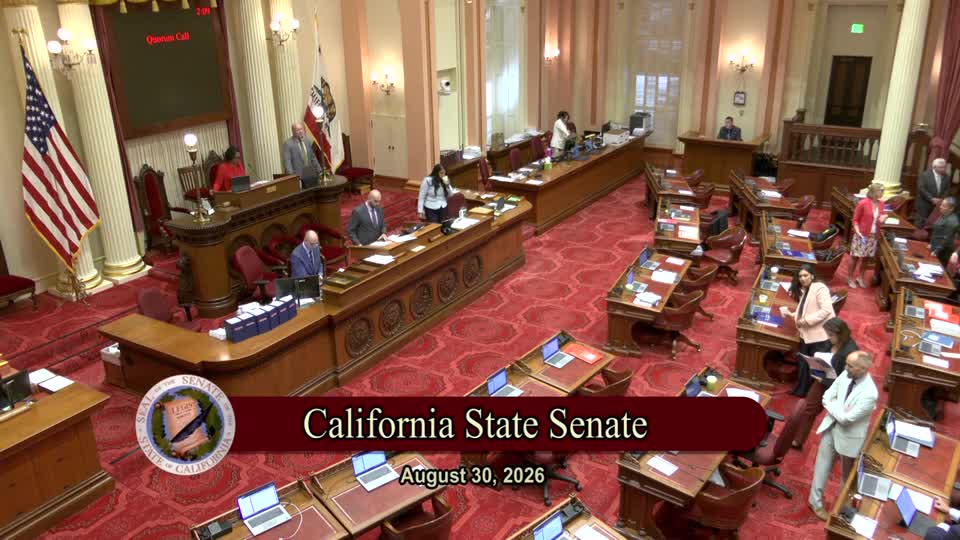 2MIN
Senate Floor
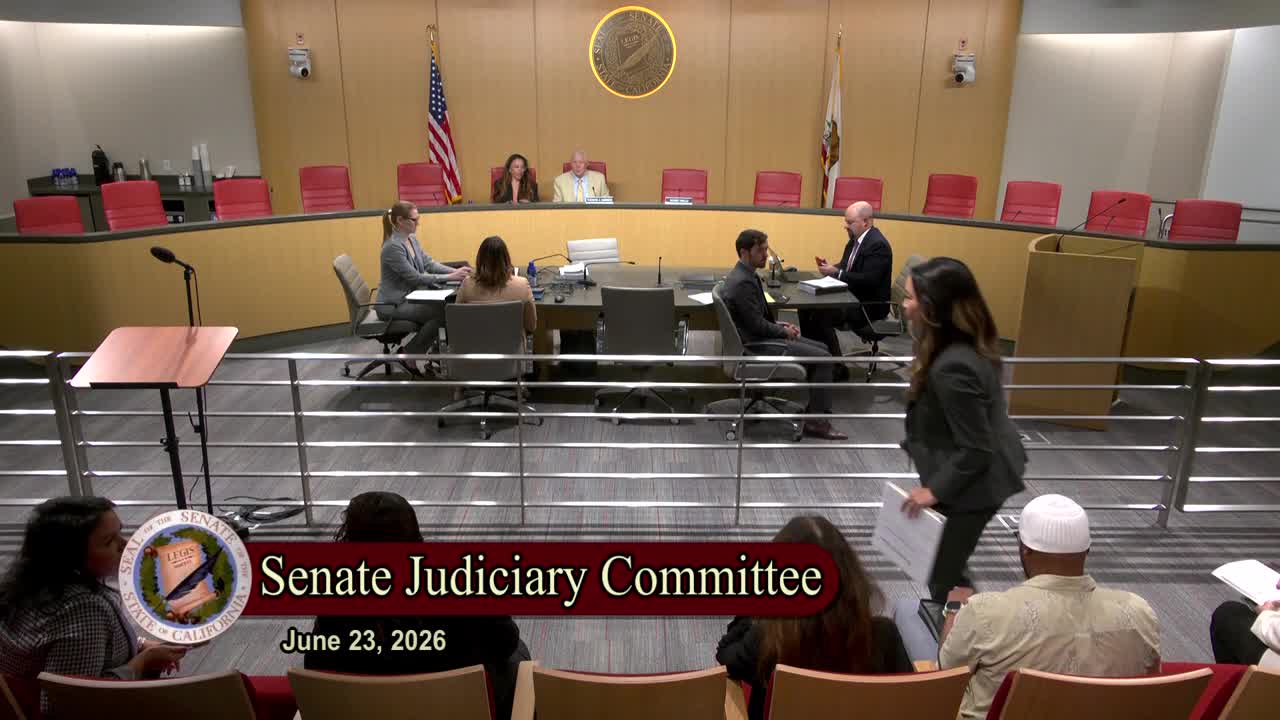 6MIN
Senate Standing Committee on Judiciary
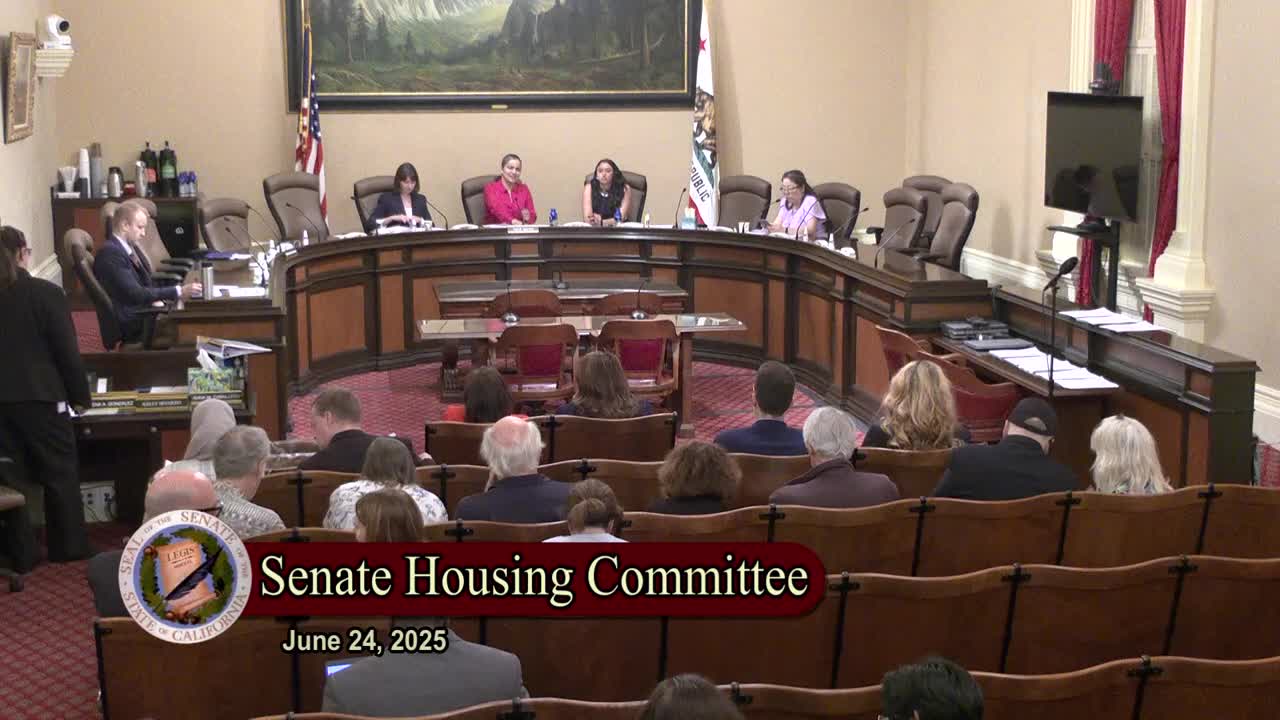 12MIN
Senate Standing Committee on Housing
 53SEC
Assembly Floor
 10MIN
Assembly Standing Committee on Judiciary
 21MIN
Assembly Standing Committee on Housing and Community Development
Bill Author