AB 651: Juveniles: dependency: incarcerated parent.
- Session Year: 2025-2026
- House: Assembly
- Latest Version Date: 2025-10-03
Current Status:
Passed
(2025-10-03: Chaptered by Secretary of State - Chapter 274, Statutes of 2025.)
Introduced
In Committee
Awaiting First Chamber Vote
Passed First Chamber
In Committee
Awaiting Second Chamber Vote
Passed Second Chamber
Enacted
Existing law requires notice of, and the opportunity for an incarcerated parent to be physically present in, proceedings terminating their parental rights or seeking to adjudicate the child of a prisoner a dependent child of the court. Existing law prohibits these proceedings from being adjudicated without the physical presence of the parent unless the court receives a knowing waiver from the parent of their right to be physically present at the proceedings, or an affidavit signed by a person in charge of the incarcerating institution that the prisoner does not intend to appear at the proceeding. Existing law authorizes, in the courts discretion, an incarcerated parent who has waived the right to be physically present at those proceedings to be given the opportunity to participate in the proceeding by videoconference, if that technology is available. Existing law authorizes, if videoconferencing technology is not available, the use of teleconferencing.
This bill would also require notice of, and the opportunity for an incarcerated parent to be physically present in, specified additional dependency hearings relating to their child. The bill would additionally require an incarcerated parent who has waived the right to be physically present to be given the opportunity to participate in those proceedings by videoconference, and, if videoconferencing technology is not available, require the use of teleconferencing. By increasing the duties of local county jail officials, this bill would impose a state-mandated local program.
Existing law entitles a minor who is the subject of a juvenile court hearing to be present at that hearing and specifies that the minor has the right to be represented at the hearing by counsel of their choice. Existing law requires the court to inform the minor, if the minor is present at the hearing, of their right to address the court and participate in the hearing. Existing law requires the court, if the minor is 10 years of age or older and not present at the hearing, to determine whether the minor was properly notified of their right to attend the hearing and inquire whether they were given an opportunity to attend. Existing law generally requires the court to continue the hearing to allow the minor to be present, if they were not properly notified or if they wished to present, but were not given the opportunity. Existing law requires the court to continue the hearing only for the period of time necessary to provide the child notice and secure their presence.
This bill would expand the above provisions to include nonminor dependents.
The California Constitution requires the state to reimburse local agencies and school districts for certain costs mandated by the state. Statutory provisions establish procedures for making that reimbursement.
This bill would provide that, if the Commission on State Mandates determines that the bill contains costs mandated by the state, reimbursement for those costs shall be made pursuant to the statutory provisions noted above.
Existing law requires notice of, and the opportunity for an incarcerated parent to be physically present in, proceedings terminating their parental rights or seeking to adjudicate the child of a prisoner a dependent child of the court. Existing law prohibits these proceedings from being adjudicated without the physical presence of the parent unless the court receives a knowing waiver from the parent of their right to be physically present at the proceedings, or an affidavit signed by a person in charge of the incarcerating institution that the prisoner does not intend to appear at the proceeding. Existing law authorizes, in the courts discretion, an incarcerated parent who has waived the right to be physically present at those proceedings to be given the opportunity to participate in the proceeding by videoconference, if that technology is available. Existing law authorizes, if videoconferencing technology is not available, the use of teleconferencing.
This bill would also require notice of, and the opportunity for an incarcerated parent to be physically present in, specified additional dependency hearings relating to their child. The bill would additionally require an incarcerated parent who has waived the right to be physically present to be given the opportunity to participate in those proceedings by videoconference, and, if videoconferencing technology is not available, require the use of teleconferencing. By increasing the duties of local county jail officials, this bill would impose a state-mandated local program.
The California Constitution requires the state to reimburse local agencies and school districts for certain costs mandated by the state. Statutory provisions establish procedures for making that reimbursement.
This bill would provide that, if the Commission on State Mandates determines that the bill contains costs mandated by the state, reimbursement for those costs shall be made pursuant to the statutory provisions noted above.
(a)For the purposes of this section only, the term prisoner includes any individual in custody in a state prison, the California Rehabilitation Center, or a county jail, or who is a ward confined in a secure youth treatment facility or who, upon a verdict or finding that the individual was insane at the time of committing an offense, or mentally incompetent to be tried or adjudged to punishment, is confined in a state hospital for the care and treatment of persons with mental health disorders or in any other public or private treatment facility.
(b)In a proceeding brought under Part 4 (commencing with Section 7800) of Division 12 of the Family Code, and Section 366.26 of the Welfare and Institutions Code, if the proceeding seeks to terminate the parental rights of a prisoner, or a proceeding brought under Section 300 of the Welfare and Institutions Code, if the proceeding seeks to adjudicate the child of a prisoner a dependent child of the court, a proceeding brought under Section 388 of the Welfare and Institutions Code, if the prisoner is the petitioner, or a hearing described in Section 361, 366.21, 366.22, or 366.25, when that hearing is related to the child of the prisoner, or any hearing at which parentage of a child of the prisoner is to be determined, the superior court of the county in which the proceeding is pending, or a judge thereof, shall order notice of any court proceeding regarding the proceeding transmitted to the prisoner.
(c)Service of notice shall be made pursuant to Section 7881 or 7882 of the Family Code or Section 290.2, 291, 293, or 294 of the Welfare and Institutions Code, as appropriate.
(d)Upon receipt by the court of a statement from the prisoner or the prisoners attorney indicating the prisoners desire to be present during the courts proceedings, the court shall issue an order for the temporary removal of the prisoner from the institution, and for the prisoners production before the court. A proceeding shall not be held under Part 4 (commencing with Section 7800) of Division 12 of the Family Code or Section 366.26 of the Welfare and Institutions Code and a petition to adjudge the child of a prisoner a dependent child of the court pursuant to Section 300 of the Welfare and Institutions Code shall not be adjudicated without the physical presence of the prisoner or the prisoners attorney, unless the court has before it a knowing waiver of the right of physical presence signed by the prisoner or an affidavit signed by the warden, superintendent, or other person in charge of the institution, or a designated representative stating that the prisoner has, by express statement or action, indicated an intent not to appear at the proceeding.
(e)In any other action or proceeding in which a prisoners parental or marital rights are subject to adjudication, an order for the prisoners temporary removal from the institution and for the prisoners production before the court may be made by the superior court of the county in which the action or proceeding is pending, or by a judge thereof. A copy of the order shall be transmitted to the warden, superintendent, or other person in charge of the institution not less than 15 days before the order is to be executed. The order shall be executed by the sheriff of the county in which it shall be made, whose duty it shall be to bring the prisoner before the proper court, to keep the prisoner safely, and when the prisoners presence is no longer required, to return the prisoner to the institution from which the prisoner was taken. The expense of executing the order shall be a proper charge against, and shall be paid by, the county in which the order shall be made.
The order shall be to the following effect:
County of ____ (as the case may be).
The people of the State of California to the warden of ____:
An order having been made this day by me, that (name of prisoner) be produced in this court as a party in the case of ____, you are commanded to deliver (name of prisoner) into the custody of ____ for the purpose of (recite purposes).
Dated this ____ day of ____, 20__.
(f)When a prisoner is removed from the institution pursuant to this section, the prisoner shall remain in the constructive custody of the warden, superintendent, or other person in charge of the institution.
(g)A prisoner who is a parent of a child involved in a dependency hearing described in this section and who has either waived the right to physical presence at the hearing pursuant to subdivision (d) or who has not been ordered before the court shall, in order to facilitate the parents participation, be given the opportunity to participate in the hearing by videoconference, if that technology is available, and if that participation otherwise complies with the law. If videoconferencing technology is not available, teleconferencing shall be utilized to facilitate parental participation. This subdivision does not limit a prisoners right to physically attend a dependency hearing as provided in this section. This section does not authorize the use of videoconference or teleconference to replace in-person family visits with prisoners.
(h)It is the intent of the Legislature to maintain internal job placement opportunities and preserve earned privileges for prisoners, and prevent the removal of prisoners subject to this section from court-ordered courses as a result of their participation in the proceedings described in this section.
(i)Notwithstanding any other law, a court shall not order the removal and production of a prisoner sentenced to death, whether or not that sentence is being appealed, in any action or proceeding in which the prisoners parental rights are subject to adjudication.
SEC. 2.Section 349 of the Welfare and Institutions Code is amended to read:349.(a)A minor or nonminor dependent who is the subject of a juvenile court hearing, and any person entitled to notice of the hearing under Sections 290.1, 290.2, 291, 293, and 294 is entitled to be present at the hearing.
(b)The minor or nonminor dependent and any person who is entitled to that notice has the right to be represented at the hearing by counsel of their own choice.
(c)If the minor or nonminor dependent is present at the hearing, the court shall inform the minor or nonminor dependent that they have the right to address the court and participate in the hearing and the court shall allow the minor or nonminor dependent, if they so desire, to address the court and participate in the hearing.
(d)For a minor who is 10 years of age or older, or for a nonminor dependent, if they are not present at the hearing, the court shall determine whether the minor or nonminor dependent was properly notified of their right to attend the hearing and inquire whether the minor or nonminor dependent was given an opportunity to attend. If that minor or nonminor dependent was not properly notified or if the minor or nonminor dependent wished to be present and was not given an opportunity to be present, the court shall continue the hearing to allow the minor or nonminor dependent to be present unless, in the case of a minor, the court finds that it is in the best interest of the minor not to continue the hearing. The court shall continue the hearing only for that period of time necessary to provide notice and secure the presence of the minor or nonminor dependent. The court may issue any and all orders reasonably necessary to ensure that the minor or nonminor dependent has an opportunity to attend.
(e)Nothing in this section shall prevent or limit any minors or nonminor dependents right to attend or participate in the hearing.
SEC. 3.If the Commission on State Mandates determines that this act contains costs mandated by the state, reimbursement to local agencies and school districts for those costs shall be made pursuant to Part 7 (commencing with Section 17500) of Division 4 of Title 2 of the Government Code.
(a)For the purposes of this section only, the term prisoner includes any individual in custody in a state prison, the California Rehabilitation Center, or a county jail, or who is a ward confined in a secure youth treatment facility or who, upon a verdict or finding that the individual was insane at the time of committing an offense, or mentally incompetent to be tried or adjudged to punishment, is confined in a state hospital for the care and treatment of persons with mental health disorders or in any other public or private treatment facility.
(b)In a proceeding brought under Part 4 (commencing with Section 7800) of Division 12 of the Family Code, and Section 366.26 of the Welfare and Institutions Code, if the proceeding seeks to terminate the parental rights of a prisoner, or a proceeding brought under Section 300 of the Welfare and Institutions Code, if the proceeding seeks to adjudicate the child of a prisoner a dependent child of the court, a proceeding brought under Section 388 of the Welfare and Institutions Code, if the prisoner is the petitioner, or a hearing described in Section 361, 366.21, 366.22, or 366.25, when that hearing is related to the child of the prisoner, or any hearing at which parentage of a child of the prisoner is to be determined, the superior court of the county in which the proceeding is pending, or a judge thereof, shall order notice of any court proceeding regarding the proceeding transmitted to the prisoner.
(c)Service of notice shall be made pursuant to Section 7881 or 7882 of the Family Code or Section 290.2, 291, 293, or 294 of the Welfare and Institutions Code, as appropriate.
(d)Upon receipt by the court of a statement from the prisoner or the prisoners attorney indicating the prisoners desire to be present during the courts proceedings, the court shall issue an order for the temporary removal of the prisoner from the institution, and for the prisoners production before the court. A proceeding shall not be held under Part 4 (commencing with Section 7800) of Division 12 of the Family Code or Section 366.26 of the Welfare and Institutions Code and a petition to adjudge the child of a prisoner a dependent child of the court pursuant to Section 300 of the Welfare and Institutions Code shall not be adjudicated without the physical presence of the prisoner or the prisoners attorney, unless the court has before it a knowing waiver of the right of physical presence signed by the prisoner or an affidavit signed by the warden, superintendent, or other person in charge of the institution, or a designated representative stating that the prisoner has, by express statement or action, indicated an intent not to appear at the proceeding.
(e)In any other action or proceeding in which a prisoners parental or marital rights are subject to adjudication, an order for the prisoners temporary removal from the institution and for the prisoners production before the court may be made by the superior court of the county in which the action or proceeding is pending, or by a judge thereof. A copy of the order shall be transmitted to the warden, superintendent, or other person in charge of the institution not less than 15 days before the order is to be executed. The order shall be executed by the sheriff of the county in which it shall be made, whose duty it shall be to bring the prisoner before the proper court, to keep the prisoner safely, and when the prisoners presence is no longer required, to return the prisoner to the institution from which the prisoner was taken. The expense of executing the order shall be a proper charge against, and shall be paid by, the county in which the order shall be made.
The order shall be to the following effect:
County of ____ (as the case may be).
The people of the State of California to the warden of ____:
An order having been made this day by me, that (name of prisoner) be produced in this court as a party in the case of ____, you are commanded to deliver (name of prisoner) into the custody of ____ for the purpose of (recite purposes).
Dated this ____ day of ____, 20__.
(f)When a prisoner is removed from the institution pursuant to this section, the prisoner shall remain in the constructive custody of the warden, superintendent, or other person in charge of the institution.
(g)A prisoner who is a parent of a child involved in a dependency hearing described in this section and who has either waived the right to physical presence at the hearing pursuant to subdivision (d) or who has not been ordered before the court shall, in order to facilitate the parents participation, be given the opportunity to participate in the hearing by videoconference, if that technology is available, and if that participation otherwise complies with the law. If videoconferencing technology is not available, teleconferencing shall be utilized to facilitate parental participation. This subdivision does not limit a prisoners right to physically attend a dependency hearing as provided in this section. This section does not authorize the use of videoconference or teleconference to replace in-person family visits with prisoners.
(h)It is the intent of the Legislature to maintain internal job placement opportunities and preserve earned privileges for prisoners, and prevent the removal of prisoners subject to this section from court-ordered courses as a result of their participation in the proceedings described in this section.
(i)Notwithstanding any other law, a court shall not order the removal and production of a prisoner sentenced to death, whether or not that sentence is being appealed, in any action or proceeding in which the prisoners parental rights are subject to adjudication.
SEC. 2.Section 349 of the Welfare and Institutions Code is amended to read:349.(a)A minor or nonminor dependent who is the subject of a juvenile court hearing, and any person entitled to notice of the hearing under Sections 290.1, 290.2, 291, 293, and 294 is entitled to be present at the hearing.
(b)The minor or nonminor dependent and any person who is entitled to that notice has the right to be represented at the hearing by counsel of their own choice.
(c)If the minor or nonminor dependent is present at the hearing, the court shall inform the minor or nonminor dependent that they have the right to address the court and participate in the hearing and the court shall allow the minor, minor or nonminor dependent, if the minor they so desires, desire, to address the court and participate in the hearing.
(d)If the minor For a minor who is 10 years of age or older and the minor is older, or for a nonminor dependent, if they are not present at the hearing, the court shall determine whether the minor or nonminor dependent was properly notified of their right to attend the hearing and inquire whether the minor or nonminor dependent was given an opportunity to attend. If that minor or nonminor dependent was not properly notified or if the minor or nonminor dependent wished to be present and was not given an opportunity to be present, the court shall continue the hearing to allow the minor or nonminor dependent to be present unless unless, in the case of a minor, the court finds that it is in the best interest of the minor not to continue the hearing. The court shall continue the hearing only for that period of time necessary to provide notice and secure the presence of the child. minor or nonminor dependent. The court may issue any and all orders reasonably necessary to ensure that the child minor or nonminor dependent has an opportunity to attend.
(e)Nothing in this section shall prevent or limit any childs minors or nonminor dependents right to attend or participate in the hearing.
SEC. 3.If the Commission on State Mandates determines that this act contains costs mandated by the state, reimbursement to local agencies and school districts for those costs shall be made pursuant to Part 7 (commencing with Section 17500) of Division 4 of Title 2 of the Government Code.
(a)For the purposes of this section only, the term prisoner includes any individual in custody in a state prison, the California Rehabilitation Center, or a county jail, or who is a ward of the Department of the Youth Authority confined in a secure youth treatment facility or who, upon a verdict or finding that the individual was insane at the time of committing an offense, or mentally incompetent to be tried or adjudged to punishment, is confined in a state hospital for the care and treatment of persons with mental health disorders or in any other public or private treatment facility.
(b)In a proceeding brought under Part 4 (commencing with Section 7800) of Division 12 of the Family Code, and Section 366.26 of the Welfare and Institutions Code, if the proceeding seeks to terminate the parental rights of a prisoner, or a proceeding brought under Section 300 of the Welfare and Institutions Code, if the proceeding seeks to adjudicate the child of a prisoner a dependent child of the court, a proceeding brought under Section 388 of the Welfare and Institutions Code, if the prisoner is the petitioner, or a hearing described in Section 361, 366.21, 366.22, or 366.25, when that hearing is related to the child of the prisoner, or any hearing at which parentage of a child of the prisoner is to be determined, the superior court of the county in which the proceeding is pending, or a judge thereof, shall order notice of any court proceeding regarding the proceeding transmitted to the prisoner.
(c)Service of notice shall be made pursuant to Section 7881 or 7882 of the Family Code or Section 290.2, 291, 293, or 294 of the Welfare and Institutions Code, as appropriate.
(d)Upon receipt by the court of a statement from the prisoner or the prisoners attorney indicating the prisoners desire to be present during the courts proceedings, the court shall issue an order for the temporary removal of the prisoner from the institution, and for the prisoners production before the court. A proceeding may shall not be held under Part 4 (commencing with Section 7800) of Division 12 of the Family Code or Section 366.26 of the Welfare and Institutions Code and a petition to adjudge the child of a prisoner a dependent child of the court pursuant to subdivision (a), (b), (c), (d), (e), (f), (i), or (j) of Section 300 of the Welfare and Institutions Code may shall not be adjudicated without the physical presence of the prisoner or the prisoners attorney, unless the court has before it a knowing waiver of the right of physical presence signed by the prisoner or an affidavit signed by the warden, superintendent, or other person in charge of the institution, or a designated representative stating that the prisoner has, by express statement or action, indicated an intent not to appear at the proceeding.
(e)In any other action or proceeding in which a prisoners parental or marital rights are subject to adjudication, an order for the prisoners temporary removal from the institution and for the prisoners production before the court may be made by the superior court of the county in which the action or proceeding is pending, or by a judge thereof. A copy of the order shall be transmitted to the warden, superintendent, or other person in charge of the institution not less than 15 days before the order is to be executed. The order shall be executed by the sheriff of the county in which it shall be made, whose duty it shall be to bring the prisoner before the proper court, to keep the prisoner safely, and when the prisoners presence is no longer required, to return the prisoner to the institution from which the prisoner was taken. The expense of executing the order shall be a proper charge against, and shall be paid by, the county in which the order shall be made.
The order shall be to the following effect:
County of ____ (as the case may be).
The people of the State of California to the warden of ____:
An order having been made this day by me, that (name of prisoner) be produced in this court as a party in the case of ____, you are commanded to deliver (name of prisoner) into the custody of ____ for the purpose of (recite purposes).
Dated this ____ day of ____, 20__.
(f)When a prisoner is removed from the institution pursuant to this section, the prisoner shall remain in the constructive custody of the warden, superintendent, or other person in charge of the institution.
(g)A prisoner who is a parent of a child involved in a dependency hearing described in this section and who has either waived the right to physical presence at the hearing pursuant to subdivision (d) or who has not been ordered before the court may, at the courts discretion, shall, in order to facilitate the parents participation, be given the opportunity to participate in the hearing by videoconference, if that technology is available, and if that participation otherwise complies with the law. If videoconferencing technology is not available, teleconferencing may shall be utilized to facilitate parental participation. Because of the significance of dependency court hearings for parental rights and childrens long-term care, physical attendance by the parent at the hearings is preferred to participation by videoconference or teleconference. This subdivision does not limit a prisoners right to physically attend a dependency hearing as provided in this section. This section does not authorize the use of videoconference or teleconference to replace in-person family visits with prisoners.
(h)It is the intent of the Legislature to maintain internal job placement opportunities and preserve earned privileges for prisoners, and prevent the removal of prisoners subject to this section from court-ordered courses as a result of their participation in the proceedings described in this section.
(i)Notwithstanding any other law, a court may shall not order the removal and production of a prisoner sentenced to death, whether or not that sentence is being appealed, in any action or proceeding in which the prisoners parental rights are subject to adjudication.
SEC. 2.Section 349 of the Welfare and Institutions Code is amended to read:349.(a)A minor who is the subject of a juvenile court hearing, and any person entitled to notice of the hearing under Sections 290.1 and 290.2, 290.1, 290.2, 291, 293, and 294 is entitled to be present at the hearing.
(b)The minor and any person who is entitled to that notice has the right to be represented at the hearing by counsel of his or her their own choice.
(c)If the minor is present at the hearing, the court shall inform the minor that he or she has they have the right to address the court and participate in the hearing and the court shall allow the minor, if the minor so desires, to address the court and participate in the hearing.
(d)If the minor is 10 years of age or older and he or she the minor is not present at the hearing, the court shall determine whether the minor was properly notified of his or her their right to attend the hearing and inquire whether the minor was given an opportunity to attend. If that minor was not properly notified or if he or she the minor wished to be present and was not given an opportunity to be present, the court shall continue the hearing to allow the minor to be present unless the court finds that it is in the best interest of the minor not to continue the hearing. The court shall continue the hearing only for that period of time necessary to provide notice and secure the presence of the child. The court may issue any and all orders reasonably necessary to ensure that the child has an opportunity to attend.
(e)Nothing in this section shall prevent or limit any childs right to attend or participate in the hearing.
SEC. 3.If the Commission on State Mandates determines that this act contains costs mandated by the state, reimbursement to local agencies and school districts for those costs shall be made pursuant to Part 7 (commencing with Section 17500) of Division 4 of Title 2 of the Government Code.
|
Date
|
Status
|
|---|---|
| Oct 3, 2025 | Chaptered by Secretary of State - Chapter 274, Statutes of 2025. |
| Oct 3, 2025 | Approved by the Governor. |
| Sep 11, 2025 | Enrolled and presented to the Governor at 4 p.m. |
| Sep 4, 2025 | In Assembly. Ordered to Engrossing and Enrolling. |
| Sep 4, 2025 | Read third time. Passed. Ordered to the Assembly. (Ayes 39. Noes 0. Page 2522.). |
| Sep 2, 2025 | Ordered to special consent calendar. |
| Aug 29, 2025 | Read second time. Ordered to third reading. |
| Aug 29, 2025 | From committee: Do pass. (Ayes 7. Noes 0.) (August 29). |
| Aug 18, 2025 | In committee: Referred to suspense file. |
| Jul 9, 2025 | From committee: Do pass and re-refer to Com. on APPR. with recommendation: To Consent Calendar. (Ayes 13. Noes 0.) (July 8). Re-referred to Com. on APPR. |
| Jul 2, 2025 | From committee: Do pass and re-refer to Com. on JUD. with recommendation: To Consent Calendar. (Ayes 6. Noes 0.) (July 1). Re-referred to Com. on JUD. |
| Jun 18, 2025 | Referred to Coms. on PUB. S. and JUD. |
| Jun 4, 2025 | In Senate. Read first time. To Com. on RLS. for assignment. |
| Jun 3, 2025 | Read third time. Passed. Ordered to the Senate. (Ayes 79. Noes 0. Page 1975.) |
| May 27, 2025 | Read second time. Ordered to third reading. |
| May 23, 2025 | From committee: Do pass. (Ayes 14. Noes 0.) (May 23). |
| May 7, 2025 | In committee: Set, first hearing. Referred to APPR. suspense file. |
| Apr 22, 2025 | From committee: Do pass and re-refer to Com. on APPR. with recommendation: To Consent Calendar. (Ayes 12. Noes 0.) (April 22). Re-referred to Com. on APPR. |
| Apr 10, 2025 | Re-referred to Com. on JUD. |
| Apr 9, 2025 | From committee chair, with author's amendments: Amend, and re-refer to Com. on JUD. Read second time and amended. |
| Apr 9, 2025 | From committee: Do pass and re-refer to Com. on JUD. with recommendation: To Consent Calendar. (Ayes 9. Noes 0.) (April 8). Re-referred to Com. on JUD. |
| Mar 17, 2025 | Referred to Coms. on PUB. S. and JUD. |
| Feb 14, 2025 | From printer. May be heard in committee March 16. |
| Feb 13, 2025 | Read first time. To print. |
|
Date
|
Description
|
Location
|
Votes
|
|
|---|---|---|---|---|
| Sep 4, 2025 | Special Consent AB651 Bryan et al. | Senate Floor |
Passed |
|
| Aug 29, 2025 | Do pass | Senate Standing Committee on Appropriations |
Passed |
|
| Aug 18, 2025 | Placed on suspense file | Senate Standing Committee on Appropriations |
Passed |
|
| Jul 8, 2025 | Do pass, but first be re-referred to the Committee on [Appropriations] with the recommendation: To Consent Calendar | Senate Standing Committee on Judiciary |
Passed |
|
| Jul 1, 2025 | Do pass, but first be re-referred to the Committee on [Judiciary] with the recommendation: To Consent Calendar | Senate Standing Committee on Public Safety |
Passed |
|
| Jun 3, 2025 | AB 651 Bryan Assembly Third Reading | Assembly Floor |
Passed |
|
| May 23, 2025 | Do pass. | Assembly Standing Committee on Appropriations |
Passed |
|
| Apr 22, 2025 | Do pass and be re-referred to the Committee on [Appropriations] with recommendation: To Consent Calendar | Assembly Standing Committee on Judiciary |
Passed |
|
| Apr 8, 2025 | Do pass and be re-referred to the Committee on [Judiciary] with recommendation: To Consent Calendar | Assembly Standing Committee on Public Safety |
Passed |
This list shows positions taken on this bill by organizations on the date displayed, which is linked to the original source.
Positions by individuals are not included.
|
Organization
|
Position
|
Date
|
|---|---|---|
| Aclu California Action | ** Support | |
| Alliance for Childrens Rights | ** Support | |
| All Of Us Or None Orange County | ** Support | |
| A New Way of Life Re-Entry Project | ** Support | |
| California Alliance Of Child And Family Services | ** Support | |
| California Department of Corrections and Rehabilitation (CDCR) | ** Support | |
| ChildrenS Law Center Of California | ** Support | |
| Dependency Advocacy Center | ** Support | |
| Dependency Legal Services (co-source) | ** Support | |
| Disability Rights California | ** Support | |
| Ella Baker Center For Human Rights | ** Support | |
| Families Inspiring Reentry and Reunification 4 Everyone (co-source) | ** Support | |
| If/when/how: Lawyering for Reproductive Justice | ** Support | |
| Los Angeles Dependency Lawyers (co-source) | ** Support | |
| Movement for Family Power | ** Support | |
| Riverside All of Us or None | ** Support | |
| Starting Over | ** Support | |
| The Purpose of Recovery INC | ** Support |
SENATE RULES COMMITTEE Office of Senate Floor Analyses (916) 651-1520 Fax: (916) 327-4478 | AB 651 |
THIRD READING
Bill No: AB 651
Author: Bryan (D), et al.
Amended: 4/9/25 in Assembly
Vote: 21
SENATE PUBLIC SAFETY COMMITTEE: 6-0, 7/1/25
AYES: Arreguín, Seyarto, Caballero, Gonzalez, Pérez, Wiener
SENATE JUDICIARY COMMITTEE: 13-0, 7/8/25
AYES: Umberg, Niello, Allen, Arreguín, Ashby, Caballero, Durazo, Laird, Stern, Valladares, Wahab, Weber Pierson, Wiener
SENATE APPROPRIATIONS COMMITTEE: 7-0, 8/29/25
AYES: Caballero, Seyarto, Cabaldon, Dahle, Grayson, Richardson, Wahab
ASSEMBLY FLOOR: 79-0, 6/3/25 - See last page for vote
SUBJECT: Juveniles: dependency: incarcerated parent
SOURCE: Dependency Legal Services
Families Inspiring Reentry and Reunification 4 Everyone
Legal Services for Prisoners with Children
Los Angeles Dependency Lawyers
DIGEST:
This bill requires notice and the opportunity for an incarcerated parent to be physically present at specified dependency hearings related to their child, or the opportunity to participate in those proceedings by videoconference or teleconference when their physical presence is waived.
ANALYSIS:
Existing law:
- Requires notice to a “prisoner” in a proceeding seeking to terminate the parental rights of the person, or a proceeding seeking to adjudicate the child of a prisoner a dependent child of the court. (Penal Code (Pen. Code), § 2625, subd. (b).)
- Defines “prisoner” to include any individual in custody in a state prison, the California Rehabilitation Center, or a county jail, or who is a ward of a juvenile facility, or who, upon a verdict or finding that the individual was insane at the time of the commitment offense, or mentally incompetent to be tried or adjudged to punishment, is confined in a state hospital for the care and treatment of persons with mental health disorders or in any other public or private treatment facility. (Pen. Code, § 2625, subd. (a).)
- Requires the court, upon receipt of a statement from the prisoner or the prisoner’s attorney indicating the prisoner’s desire to be present during the court’s proceedings, to issue an order for the temporary removal of the prisoner from the institution, and for the prisoner’s production before the court. (Pen. Code, § 2625, subd. (d).)
- Prohibits specified proceedings seeking to terminate the parental rights of a prisoner, or proceedings seeking to adjudicate the child of a prisoner a dependent child from being held without the physical presence of the prisoner or the prisoner’s attorney, unless the court has before it a knowing waiver of the right of physical presence signed by the prisoner, or an affidavit signed by the warden, superintendent, or other person in charge of the institution stating that the prisoner has, by express statement or action, indicated an intent not to appear at the proceeding. (Pen. Code, § 2625, subd. (d).)
- Authorizes the court, in any other action or proceeding or action adjudicating the prisoner’s parental rights, to issue an order for the prisoner’s temporary removal from the institution and for the prisoner’s production before the court. (Pen. Code, § 2625, subd. (e).)
- Authorizes a prisoner who is a parent of a child involved in a dependency hearing and who has either waived the right to physical presence at the hearing or who has not been ordered before the court to be given the opportunity to participate in the hearing by videoconference, at the court’s discretion, if that technology is available and if participation otherwise complies with the law. Authorizes teleconferencing to be utilized if videoconferencing technology is not available. Specifies that these provisions do not authorize the use of videoconference or teleconference to replace in-person family visits with prisoners. (Pen. Code, § 2625, subd. (g).)
- Establishes the juvenile court with jurisdiction over children who are subject to abuse or neglect. (Welfare and Institutions Code (Welf. & Inst. Code), § 300.)
- States that the purpose of the juvenile court dependency system is to provide maximum safety and protection for children who are currently being abused, neglected, or exploited. Provides that the focus is on the preservation of the family, as well as the safety, protection, and physical and emotional well-being of the child. (Welf. & Inst. Code, § 300.2, subd. (a).)
- Provides that a minor who is the subject of a juvenile court hearing, and any person entitled to notice of the hearing, is entitled to be present at the hearing. (Welf. & Inst. Code, § 349, subd. (a).)
- Requires the court, if the minor is present at the hearing, to inform the minor that he or she has the right to address the court and participate in the hearing. Requires the court to allow the minor, if the minor so desires, to address the court and participate in the hearing. (Welf.& Inst. Code, § 349, subd. (c).)
This bill:
- Adds the following proceedings to those that require notice and opportunity for an incarcerated parent to be physically present, or the opportunity to participate in those proceedings by videoconference or teleconference:
- Proceedings related to changing, modifying, or setting aside any order of court previously made or to terminating the jurisdiction of the court when the incarcerated parent is the petitioner;
- Hearings related to limitations on parent or guardian control and appointment of another adult to make educational or developmental services decisions;
- Hearings on dependency status review;
- Hearings on permanency review following continuance;
- Any subsequent permanency review hearings; and,
- Any hearing at which parentage of a child of the incarcerated person is to be determined.
- Requires an incarcerated person who is a parent of a child involved in a dependency hearing and who has either waived the right to physical presence at the hearing or who has not been ordered before the court to be given the opportunity to participate in the hearing by videoconference if that technology is available and if participation otherwise complies with the law. Requires teleconferencing to be utilized if videoconferencing technology is not available.
- Provides that anyone who is entitled to notice of initial petition hearings, dependency status review hearings, and permanency review hearings is entitled to be present at the hearing in addition to the minor or nonminor dependent who is the subject of the juvenile hearing.
- Makes other technical and conforming changes.
Background
California’s child welfare services system was established to provide safety and protection to children from abuse, neglect, and exploitation. Reports of child abuse or neglect can be made to law enforcement or a county child welfare agency, and are often submitted by mandated reporters who are legally required to report suspected child abuse or neglect. When a report of suspected child abuse or neglect is made, a preliminary investigation is made to determine whether or not any action should be taken. If the social workers determines that court involvement is necessary, the child welfare agency files a petition with the juvenile court to make the child a dependent of the court. The child may remain in the custody of the parent or guardian, or may be removed from the physical custody of the parent of guardian if it is believed that the child is in immediate danger.
At the subsequent court hearing, the court may elect to keep the child in, or return the child to, their home or remove the child from the home. Removal may either result in eventual reunification with the family, or the court may determine that an alternate permanent placement, including guardianship or adoption, is appropriate. When reunification is not possible or appropriate, the child is placed in the setting deemed least restrictive and most suitable, and the court is required to give preference to potential placements with relatives or nonrelative extended family members. Throughout this process, there are multiple court hearings, including the detention hearing, the jurisdictional hearing, the dispositional hearing, review hearings, and the permanency hearing, where the custody of a child or their placement is evaluated, reviewed, and determined by the court, in consultation with the child’s social worker appointed by the county and the child’s attorney, to help provide the best possible support and services to the child.
Existing law requires that the court provide incarcerated parents with notice of, and opportunity to be physically present in proceedings on the initial hearing to adjudicate their child as a ward of the court and for the hearing on permanency. Existing law requires the court, upon receipt of notice that the incarcerated parent would like to participate in the hearing, to issue an order for the temporary removal of the incarcerated person from the institution and for the incarcerated person’s production before the court. The court may not hold those proceedings without the physical presence of the incarcerated parent or their attorney unless the court has either a waiver of the right of physical presence signed by the incarcerated parent or an affidavit signed by the warden, superintendent, or other person in charge of the institution, or a designated representative stating that the incarcerated person has, by express statement or action, indicated an intent not to appear at the proceeding. An incarcerated parent who has waived the right to be in person or who has not been ordered before the court may, at the court’s discretion, be given the opportunity to participate by videoconference, and if that technology is not available, teleconferencing may be utilized. Existing law recognizes the significance of dependency court hearings for parental rights and children’s long-term care, and states that physical attendance by the parent at the hearings is preferred to participation by videoconference or teleconference.
The sponsors of this bill contend that for parents who are incarcerated in a different county than where the proceedings involving their child are taking place, those parents often are not give the option to be physically present during the proceedings, either because notice is not given or because the jail administrator refuses to produce the incarcerated parent to another county. This bill requires notice of, and the opportunity to be physically present at review hearings for the adjudication of the incarcerated parent’s child and review hearings on permanency. This bill also requires, rather than allows, a judge to order an opportunity for the incarcerated parent who has either waived physical presence or has not been ordered to come before the court, to participate via videoconference. If videoconference is not available, the bill requires participation by teleconference. The videoconference requirement in the bill ensures that if the incarcerated parent cannot be transferred, there is still a meaningful opportunity to participate in these hearings.
FISCAL EFFECT: Appropriation: No Fiscal Com.: Yes Local: Yes
According to the Senate Appropriations Committee:
- Costs of an unknown but potentially significant amount to the counties to facilitate appearances of incarcerated parents in dependency proceedings in person or through remote technology. Actual costs will depend on the number of hearings attended by parents incarcerated in county jail and whether affected jails have sufficient space and IT infrastructure. The state must reimburse these county costs from the General Fund if the Commission on State Mandates determines the duties imposed by this bill constitute a reimbursable state mandate.
- The California Department of Corrections and Rehabilitation (CDCR) recognizes the critical importance of maintaining the parent-child bond and supports efforts to preserve and strengthen these connections during a parent’s incarceration as a key component of promoting family stability and success. Accordingly, CDCR currently complies with all court orders for in-person, video, or telephone appearances for dependency hearings. To the extent that this measure results in an increase in court orders for in-person appearances, the estimated cost to transport one incarcerated person, excluding fuel costs, to a court hearing is approximately $565 for a four-hour trip and $1,129 for an eight-hour trip. There is also potential for increased staff workload related to the facilitation of remote appearances, if significantly increased as a result of this measure.
- Possible workload cost pressures (Trial Court Trust Fund, General Fund) of an unknown amount to the courts to facilitate participation in dependency hearings by incarcerated parents. Existing law permits a court to conduct a juvenile dependency proceeding remotely, so costs may not be significant, but requiring the courts to accommodate more remote appearances may impact existing court calendars.
SUPPORT: (Verified 8/29/25)
Dependency Legal Services (co-source)
Families Inspiring Reentry and Reunification 4 Everyone (co-source)
Legal Services for Prisoners with Children (co-source)
Los Angeles Dependency Lawyers (co-source)
ACLU California Action
All of Us or None Orange County
Alliance for Children’s Rights
California Alliance of Child and Family Services
Children’s Law Center of California
Disability Rights California
Ella Baker Center for Human Rights
Riverside All of Us or None
Starting Over
OPPOSITION: (Verified 8/29/25)
None received
ASSEMBLY FLOOR: 79-0, 6/3/25
AYES: Addis, Aguiar-Curry, Ahrens, Alanis, Alvarez, Arambula, Ávila Farías, Bains, Bauer-Kahan, Bennett, Berman, Boerner, Bonta, Bryan, Calderon, Caloza, Carrillo, Castillo, Chen, Connolly, Davies, DeMaio, Dixon, Elhawary, Ellis, Flora, Fong, Gabriel, Gallagher, Garcia, Gipson, Jeff Gonzalez, Mark González, Hadwick, Haney, Harabedian, Hart, Hoover, Irwin, Jackson, Kalra, Krell, Lackey, Lee, Lowenthal, Macedo, McKinnor, Muratsuchi, Nguyen, Ortega, Pacheco, Papan, Patel, Patterson, Pellerin, Petrie-Norris, Quirk-Silva, Ramos, Ransom, Celeste Rodriguez, Michelle Rodriguez, Rogers, Blanca Rubio, Sanchez, Schiavo, Schultz, Sharp-Collins, Solache, Soria, Stefani, Ta, Tangipa, Valencia, Wallis, Ward, Wicks, Wilson, Zbur, Rivas
Prepared by: Stephanie Jordan / PUB. S. /
8/29/25 20:47:09
**** END ****
SENATE COMMITTEE ON APPROPRIATIONS
Senator Anna Caballero, Chair
2025 - 2026 Regular Session
AB 651 (Bryan) - Juveniles: dependency: incarcerated parent
Version: April 9, 2025 | Policy Vote: PUB. S. 6 - 0, JUD. 13 - 0 |
Urgency: No | Mandate: Yes |
Hearing Date: August 18, 2025 | Consultant: Liah Burnley |
Bill Summary:
AB 651 requires an incarcerated parent be provided an opportunity to appear at specified dependency hearings about their child, and expands the hearing rights of a nonminor dependent who is the subject of juvenile court proceedings.
Fiscal Impact:
- Costs of an unknown but potentially significant amount to the counties to facilitate appearances of incarcerated parents in dependency proceedings in person or through remote technology. Actual costs will depend on the number of hearings attended by parents incarcerated in county jail and whether affected jails have sufficient space and IT infrastructure. The state must reimburse these county costs from the General Fund if the Commission on State Mandates determines the duties imposed by this bill constitute a reimbursable state mandate.
- The California Department of Corrections and Rehabilitation (CDCR) recognizes the critical importance of maintaining the parent-child bond and supports efforts to preserve and strengthen these connections during a parent’s incarceration as a key component of promoting family stability and success. Accordingly, CDCR currently complies with all court orders for in-person, video, or telephone appearances for dependency hearings. To the extent that this measure results in an increase in court orders for in-person appearances, the estimated cost to transport one incarcerated person, excluding fuel costs, to a court hearing is approximately $565 for a four-hour trip and $1,129 for an eight-hour trip. There is also potential for increased staff workload related to the facilitation of remote appearances, if significantly increased as a result of this measure.
- Possible workload cost pressures (Trial Court Trust Fund, General Fund) of an unknown amount to the courts to facilitate participation in dependency hearings by incarcerated parents. Existing law permits a court to conduct a juvenile dependency proceeding remotely, so costs may not be significant, but requiring the courts to accommodate more remote appearances may impact existing court calendars.
Background:
When a child is removed from their parent’s custody, decisions about the child’s welfare are made through juvenile dependency proceedings in court. Once a child has been removed from their parent’s custody, the court initiates a reunification plan, which includes arrangements for the child’s care and steps the parent may take to remedy the situation and re-obtain custody of the child. The court may also order supervised or unsupervised visits between the parent and the child. After a reunification plan is in place, the court typically conducts regular status review hearings at which the court evaluates the custody of the child and their placement and determines what is needed to support the child. Under existing law, a juvenile dependency court maintains its jurisdiction over a youth who has been removed from the custody of their parent until the youth turns 21 years old, so the court can provide extended support for and oversight over the youth’s care. A person aged 18 through 20 who is still under the jurisdiction of a juvenile dependency court is called a “nonminor dependent.”
Proposed Law:
- Expands the types of hearings that an incarcerated parent has a right to attend to include permanency planning hearings, regular review hearings, and hearings to determine parentage.
- Requires the court to facilitate an incarcerated parent’s participation in a dependency hearing through videoconferencing or teleconferencing.
- Provides that a minor, nonminor dependent, and any person entitled to notice of a specified juvenile dependency hearing is entitled to be present at that hearing.
- Extends the rights that minors have in juvenile dependency proceedings to nonminor dependents subject to the same proceedings, including the right to be represented by counsel and to address the court and participate in the proceedings.
Related Legislation:
AB 1195 (Quirk-Silva) would require county jails to facilitate visitation of children with incarcerated parents when reunification services have been ordered by the courts. AB 1195 is pending in this Committee.
-- END --
ASSEMBLY THIRD READING
ATR Bill Id:AB 651
Author:(Bryan)
As Amended Ver:April 9, 2025
Majority vote
SUMMARY
Requires notice and opportunity for an incarcerated parent to be physically present, or the opportunity to participate in those proceedings by videoconference or teleconference, in specified dependency hearings related to their child.
Major Provisions
- Adds the following proceedings to those that require notice and opportunity for an incarcerated parent to be physically present, or the opportunity to participate in those proceedings by videoconference or teleconference:
- Proceedings related to seeking to change, modify, or set aside any order of court previously made or to terminate the jurisdiction of the court when the prisoner is the petitioner;
- Hearings related to limitations on parent or guardian control and appointment of another adult to make educational or developmental decisions;
- Hearings on dependency status review;
- Hearings on permanency review following continuance; and,
- Any subsequent permanency review hearings.
- Requires, rather than permits, a court to give a prisoner who is the parent of a child involved in a dependency hearing who has waived their presence or who has not been ordered before the court, the opportunity to participate in the hearing by videoconference, if available, and if participation otherwise complies with the law.
- Provides that if videoconferencing is not available, teleconferencing shall be utilized to facilitate parental participation.
- States that anyone who is entitled to notice of initial petition hearings, dependency status review hearing, and dependency status review and permanency review hearings is entitled to be present at the hearing in addition to the minor who is the subject of the juvenile hearing.
COMMENTS
According to the Author
"AB 651 is a common sense measure that would ensure that incarcerated parents are notified of and allowed to participate in their children's dependency hearings remotely. Current law requires parents to be produced in-person for specified dependency hearings, but appearing in person is an onerous process if a parent is incarcerated in a county that is different from the county that has jurisdiction over their child. By allowing incarcerated parents the option for remote participation, we can ensure better outcomes for our foster youth and provide families with a better chance for safely reunifying after a parent's incarceration period is over."
Arguments in Support
According to Alliance for Children's Rights, "Approximately 15% to 20% of children involved in the child welfare system have an incarcerated parent. Research consistently demonstrates that early and consistent inclusion of parents, even those incarcerated, improves outcomes for children. While incarcerated parents may not immediately resume custody, their participation provides essential information to the court regarding suitable placements with relatives or family friends, and ensures compliance with critical mandates such as the Indian Child Welfare Act.
"California's appellate courts have long affirmed that incarceration alone does not justify the severance of parental rights. In fact, there is a presumption favoring reunification for incarcerated parents whenever safely feasible. Active participation of incarcerated parents in hearings enables them to highlight service delivery deficiencies, visitation issues, updates in custodial status, and remain informed on their cases' legal progression. This not only safeguards parental rights but also protects children's rights to maintain familial relationships and promotes reunification when appropriate.
"Currently, Penal Code Section 2625 mandates the physical presence of incarcerated parents in dependency court for Welfare and Institutions Code (WIC) 366.26 termination hearings and most adjudication hearings. Remote appearances are only allowed at the court's discretion. Unfortunately, logistical challenges have historically prevented consistent production of incarcerated parents, causing significant delays and procedural complications. Parents in out-of-county custody often miss hearings entirely, and parents in state prison frequently waive their attendance due to risks of losing program placements or accruing disruptions to rehabilitative progress.
"AB 651 addresses these critical gaps through two significant changes:
1. Mandating remote participation when an in-person appearance is impractical or waived for WIC 366.26 permanency hearings and adjudication hearings. Despite technological advancements implemented due to COVID-19, these remote capabilities have not been consistently utilized in dependency cases.
2. Expanding mandatory remote appearance provisions to additional hearings, including disposition, statutory reviews, paternity proceedings, and WIC 388 petitions. Consistent parental participation throughout dependency proceedings—not merely at the beginning and end—is crucial for informed decision-making and positive child welfare outcomes.
"Ensuring remote access for incarcerated parents will significantly enhance their ability to engage meaningfully in their children's dependency cases, ultimately improving child welfare and family reunification outcomes."
Arguments in Opposition
None submitted
FISCAL COMMENTS
According to the Assembly Appropriations Committee:
- Costs of an unknown but potentially significant amount to the counties to facilitate appearances of incarcerated parents in dependency proceedings in person or through remote technology. Actual costs will depend on the number of hearings attended by parents incarcerated in county jail and whether affected jails have sufficient space and IT infrastructure. The state must reimburse these county costs from the General Fund if the Commission on State Mandates determines the duties imposed by this bill constitute a reimbursable state mandate.
- Costs (General Fund) to the California Department of Corrections and Rehabilitation (CDCR) of an unknown but potentially significant amount, possibly in the tens of thousands to hundreds of thousands of dollars. CDCR anticipates a potential increase in staff workload to transport incarcerated parents to appear in-person at dependency hearings and to facilitate remote court appearances for incarcerated parents. Actual costs will depend on the number of court appearances and whether they are in-person or remote. CDCR reports staffing costs of approximately $565 for a four-hour trip and $1,129 for an eight-hour trip, plus fuel and vehicle costs.
- Possible cost pressures (Trial Court Trust Fund, General Fund) of an unknown amount to the courts to facilitate participation in dependency hearings by incarcerated parents. Existing law permits a court to conduct a juvenile dependency proceeding remotely, so costs may not be significant, but requiring the courts to accommodate more remote appearances may impact existing court calendars. The fiscal year 2024-25 state budget provides $37.3 million ongoing General Fund to backfill declining revenue to the Trial Court Trust Fund.
VOTES
ASM PUBLIC SAFETY: 9-0-0
YES: Schultz, Alanis, Mark González, Haney, Harabedian, Lackey, Nguyen, Ramos, Sharp-Collins
ASM JUDICIARY: 12-0-0
YES: Kalra, Dixon, Bauer-Kahan, Bryan, Connolly, Harabedian, Macedo, Pacheco, Lee, Sanchez, Stefani, Zbur
ASM APPROPRIATIONS: 14-0-1
YES: Wicks, Arambula, Calderon, Caloza, Dixon, Elhawary, Fong, Mark González, Hart, Pacheco, Pellerin, Solache, Ta, Tangipa
ABS, ABST OR NV: Sanchez
UPDATED
VERSION: April 9, 2025
CONSULTANT: Stella Choe / PUB. S. / (916) 319-3744 FN: 0000650
Date of Hearing: May 7, 2025
ASSEMBLY COMMITTEE ON APPROPRIATIONS
Buffy Wicks, Chair
ABPCA Bill Id:AB 651
Author:(Bryan) – As Amended Ver:April 9, 2025
Policy Committee: | Public Safety | Vote: | 9 - 0 |
Judiciary | 12 - 0 | ||
|
|
Urgency: No State Mandated Local Program: Yes Reimbursable: Yes
SUMMARY:
This bill requires an incarcerated parent be provided an opportunity to appear at specified dependency hearings about their child, and expands the hearing rights of a nonminor dependent who is the subject of juvenile court proceedings.
Specifically, among other provisions, this bill:
- Expands the types of hearings that an incarcerated parent has a right to attend to include permanency planning hearings, regular review hearings, and hearings to determine parentage.
- Requires the court to facilitate an incarcerated parent’s participation in a dependency hearing through videoconferencing or teleconferencing.
- Provides that a minor, nonminor dependent, and any person entitled to notice of a specified juvenile dependency hearing is entitled to be present at that hearing.
- Extends the rights that minors have in juvenile dependency proceedings to nonminor dependents subject to the same proceedings, including the right to be represented by counsel and to address the court and participate in the proceedings.
FISCAL EFFECT:
- Costs of an unknown but potentially significant amount to the counties to facilitate appearances of incarcerated parents in dependency proceedings in person or through remote technology. Actual costs will depend on the number of hearings attended by parents incarcerated in county jail and whether affected jails have sufficient space and IT infrastructure. The state must reimburse these county costs from the General Fund if the Commission on State Mandates determines the duties imposed by this bill constitute a reimbursable state mandate.
- Costs (General Fund) to the California Department of Corrections and Rehabilitation (CDCR) of an unknown but potentially significant amount, possibly in the tens of thousands to hundreds of thousands of dollars. CDCR anticipates a potential increase in staff workload to transport incarcerated parents to appear in-person at dependency hearings and to facilitate remote court appearances for incarcerated parents. Actual costs will depend on the number of court appearances and whether they are in-person or remote. CDCR reports staffing costs of approximately $565 for a four-hour trip and $1,129 for an eight-hour trip, plus fuel and vehicle costs.
- Possible cost pressures (Trial Court Trust Fund, General Fund) of an unknown amount to the courts to facilitate participation in dependency hearings by incarcerated parents. Existing law permits a court to conduct a juvenile dependency proceeding remotely, so costs may not be significant, but requiring the courts to accommodate more remote appearances may impact existing court calendars. The fiscal year 2024-25 state budget provides $37.3 million ongoing General Fund to backfill declining revenue to the Trial Court Trust Fund.
COMMENTS:
When a child is removed from their parent’s custody, decisions about the child’s welfare are made through juvenile dependency proceedings in court. Once a child has been removed from their parent’s custody, the court initiates a reunification plan, which includes arrangements for the child’s care and steps the parent may take to remedy the situation and re-obtain custody of the child. The court may also order supervised or unsupervised visits between the parent and the child. After a reunification plan is in place, the court typically conducts regular status review hearings at which the court evaluates the custody of the child and their placement and determines what is needed to support the child. Under existing law, a juvenile dependency court maintains its jurisdiction over a youth who has been removed from the custody of their parent until the youth turns 21 years old, so the court can provide extended support for and oversight over the youth’s care. A person aged 18 through 20 who is still under the jurisdiction of a juvenile dependency court is called a “nonminor dependent.”
This bill provides that a nonminor dependent has all the same rights at a juvenile dependency that a similarly situated minor has under existing law. If a child or nonminor dependent subject to dependency proceedings has a parent who is incarcerated, existing law allows the court to facilitate the incarcerated parent’s participation at specified dependency hearings. This bill instead requires the court to facilitate the participation of such an incarcerated parent, and permits an incarcerated parent to appear at more types of hearings pertaining to their child.
Analysis Prepared by: Annika Carlson / APPR. / (916) 319-2081
Date of Hearing: April 22, 2025
ASSEMBLY COMMITTEE ON JUDICIARY
Ash Kalra, Chair
ABPCA Bill Id:AB 651
Author:(Bryan) – As Amended Ver:April 9, 2025
PROPOSED CONSENT
SUBJECT: Juveniles: dependency: incarcerated parent
KEY ISSUE: SHOULD THE INCARCERATED PARENT OF A CHILD IN THE CHILD WELFARE SYSTEM HAVE ADDITIONAL RIGHTS TO ATTEND JUVENILE COURT HEARINGS REGARDING THEIR CHILD, EITHER IN PERSON, OR BY REMOTE MEANS; AND SHOULD EXISTING LAW MAKE CLEAR THAT BOTH A MINOR AND A NONMINOR DEPENDENT HAVE SPECIFIED RIGHTS IN CHILD WELFARE PROCEEDINGS, INCLUDING THE RIGHTS TO BE PRESENT IN COURT; TO PARTICIPATE IN COURT HEARINGS; TO BE REPRESENTED BY COUNSEL OF THEIR CHOICE; AND TO ADDRESS THE COURT?
SYNOPSIS
Children who are at risk of abuse, neglect, or abandonment may be deemed dependents of the juvenile court and provided with services, supports and interventions aimed at protecting them and their health and safety. In order to provide much needed support for older foster youth who age out of the system, the law allows a juvenile court to extend its jurisdiction after the youth reaches the age of 18 years (when they are a “non-minor dependent”), and until they reach 21 years of age for extended foster care. Parents of children in the child welfare system have a due process right to a fundamentally fair procedure in court proceedings about the proceedings that may require the appointment of counsel. Parents who are incarcerated retain these rights.
This bill, co-sponsored by Los Angeles Dependency Lawyers; Legal Services for Prisoners with Children; Dependency Legal Services; and Families Inspiring Reentry & Reunification 4 Everyone (FIR4E), has two main provisions. The first deals with the rights of incarcerated parents to attend their children’s juvenile dependency hearings. The second clarifies the rights that both minors and non-minor dependents—who are in extended foster care—have in court proceedings in child welfare matters, including the right to be present at court; participate in court hearings; have appointed counsel of their choice; and address the court. The bill expands the types of hearings that an incarcerated parent has a right to attend in person and strengthens the parent’s ability to remotely attend juvenile court proceedings. The second part of the bill clarifies that any minor or nonminor dependent who is entitled to notice of a hearing in a child welfare case also is entitled to be present at the hearing. The bill, as recently amended, also makes another helpful clarification of existing law by amending Section 349, which describes the rights that a minor has at a child welfare hearing (including the rights to be present at the hearing; address the court; and participate in the hearing) so that it applies to nonminors, as well.
The bill is supported by a large number of groups advocating for the rights of children and parents in the child welfare system. It has no opposition on file.
SUMMARY: Gives an incarcerated parent of a child in the child welfare system additional rights to attend court hearings in child welfare cases regarding their child, either in person or by remote means; and clarifies the rights of both a minor and a nonminor dependent in juvenile court proceedings, including the right to be present at court; to participate in those hearings; to be appointed counsel of their choice; and to address the juvenile court if they choose. Specifically, this bill:
- Extends the rights of parents who are incarcerated in adult correctional facilities to attend juvenile dependent hearings regarding their children to parents who are confined in a secure youth treatment facility.
- Expands the types of hearings that a parent has a right to attend to include permanency planning hearings, regular review hearings, and hearings to determine parentage.
- Requires (rather than allows, as in current law) the court to facilitate the parent’s participation in the hearings by means of remote technology, if available. And if the technology is not available, requires (rather than allows as in current law) that the parent is able to participate by means of teleconferencing.
- Clarifies that the in-person visitation provisions of existing law shall not (rather than may not) apply to a prisoner who is sentenced to death.
- Clarifies that a minor or nonminor dependent and who is entitled to notice of a juvenile dependency hearing is entitled to be present at the hearing.
- Clarifies that other rights that minors have in juvenile dependency proceedings – to be represented by counsel of their choice; and to address the court and participate in the proceedings – also apply to nonminor dependents.
EXISTING LAW:
- Establishes the juvenile court with jurisdiction over children who are subject to abuse or neglect. (Welfare & Institutions Code Section 300. Unless stated otherwise, all further statutory references are to the Welfare & Institutions Code.)
- Establishes that the purpose of the juvenile court dependency system is the maximum safety and protection for children who are currently being abused, neglected, or exploited. Provides that the focus is on the preservation of the family, as well as the safety, protection, and physical and emotional well-being of the child. (Section 300.2.)
- Provides the court may have within its jurisdiction any youth, between the age of majority and 21 years, as defined. Provides that a youth over the age of 18 years shall retain all of their legal decision-making authority as an adult, except as specified. (Section 303.)
- Defines “nonminor dependent” (NMD) as a current foster youth or a nonminor under the transition jurisdiction of the court who is between 18 and 21 years old, turned 18 years old while under an order of foster care placement, is in foster care under the responsibility of the county welfare department, county probation department, or Indian Tribe, and is participating in a transitional independent living plan, as specified. (Section 11400 (v).)
- Requires the status of every minor or NMD in foster care to be reviewed by the court at least once every six months, as specified. (Section 366.)
- Requires the court, in regular status reviews after the youth has attained 16 years of age, to review the status of providing the youth certain information, documents, and services, including the social security card, birth certificate, driver’s license or identification card; assistance obtaining employment; assistance applying to college and financial aid; and information regarding financial literacy programs. (Sections 366.3 and 391 (a).)
- Requires the court, in the last regular status review before the youth has attained 18 years of age to review the status of providing the youth certain information, documents, and services, including the social security card, birth certificate, driver’s license or identification card, Medi-Cal benefits card, proof of the youth’s citizenship or legal residence, and an advance health care directive. (Sections 366.3 and 391 (b).)
- Provides that if a child or NMD is not represented by counsel, the court shall appoint counsel for the child or nonminor dependent, unless the court finds that the child or NMD would not benefit from the appointment of counsel. (Section 317 (c)(1).)
- Provides that a minor who is the subject of a juvenile court hearing, and any person entitled to notice of a hearing about the minor’s case, is entitled to be present at the hearing. (Section 349 (a).)
- Provides that the minor and any person who is entitled to that notice has the right to be represented at the hearing by counsel of his or her own choice. (Section 349 (b).)
- Provides that if the minor is present at the hearing, the court shall inform the minor that he or she has the right to address the court and participate in the hearing and the court shall allow the minor, if the minor so desires, to address the court and participate in the hearing. (Section 349 (c).)
- Provides that if the minor is 10 years of age or older and he or she is not present at the hearing, the court shall determine whether the minor was properly notified of his or her right to attend the hearing and inquire whether the minor was given an opportunity to attend; also provides both of the following:
- If that minor was not properly notified or if he or she wished to be present and was not given an opportunity to be present, the court shall continue the hearing to allow the minor to be present unless the court finds that it is in the best interest of the minor not to continue the hearing.
- The court shall continue the hearing only for that period of time necessary to provide notice and secure the presence of the child. The court may issue any and all orders reasonably necessary to ensure that the child has an opportunity to attend. (Section 349 (d).)
- Clarifies that nothing in 9) – 12) shall prevent or limit any child’s right to attend or participate in the hearing. (Section 349 (e).)
FISCAL EFFECT: As currently in print this bill is keyed fiscal.
COMMENTS: This bill, co-sponsored by Los Angeles Dependency Lawyers; Legal Services for Prisoners with Children; Dependency Legal Services; and Families Inspiring Reentry & Reunification 4 Everyone (FIR4E), has two main provisions. The first deals with the rights of incarcerated parents to attend their children’s juvenile dependency hearings. The second clarifies the rights that both minors and non-minor dependents—who are in extended foster care—have in court proceedings in child welfare matters, including the right to be present at court; participate in court hearings; have appointed counsel of their choice; and address the court. According to the author:
AB 651 is a common sense measure that would ensure that incarcerated parents are notified of and allowed to participate in their children’s dependency hearings remotely. Current law requires parents to be produced in-person for specified dependency hearings, but appearing in person is an onerous process if a parent is incarcerated in a county that is different from the county that has jurisdiction over their child. By allowing incarcerated parents the option for remote participation, we can ensure better outcomes for our foster youth and provide families with a better chance for safely reunifying after a parent’s incarceration period is over.
Overview of child welfare services, juvenile dependency court, and extended foster care for non-minor dependents (NMDs). Children who are at risk of abuse, neglect, or abandonment may be deemed dependents of the juvenile court and provided with services, supports and interventions aimed at protecting them and their health and safety. The system aims to preserve and strengthen families by maintaining or reuniting children with their parents whenever appropriate. The dependency process begins when child abuse, neglect, or abandonment is reported to the local child welfare agency. A social worker with the child welfare agency investigates the allegation to determine if the child requires protection in order to ensure their safety. If so, the child welfare agency files a petition with the juvenile court to make the child a dependent of the court. If necessary, the social worker will remove the child from their home and take the child into protective custody.
At subsequent court hearings, the court may elect to keep the child in, or return the child to, their home or remove the child from the home. Removal may either result in eventual reunification with the family, or the court may determine that an alternate permanent placement –including the options of guardianship or adoption – is more fitting. When reunification is not possible or appropriate, children are placed in the setting deemed least restrictive and most suitable; the court must give preference to potential placements with relatives or nonrelative extended family members.
Throughout this process, there are multiple court hearings – including the detention hearing, jurisdictional hearing and dispositional hearing, followed by ongoing review hearings and a permanency hearing – where the custody of a foster youth or their placement is evaluated, reviewed, and determined by the court, in consultation with the youth’s social worker appointed by the county and their attorney, to help provide the best possible support and services to the youth. In order to provide much needed support for older foster youth who age out of the system, the law allows a juvenile court to extend its jurisdiction after the youth reaches the age of 18 years (when they are considered a nonminor dependent, or NMD), and until they reach 21 years of age in extended foster care proceedings.
The rights of parents and youth in child welfare proceedings. Parents of children in the child welfare system have a due process right to a fundamentally fair procedure in court proceedings about the proceedings that may require the appointment of counsel. (Lassiter v. Dep’t of Soc. Servs. (1981) 452 U.S. 18, 30.) “Due process requires that a parent is entitled to notice that is reasonably calculated to apprise him or her of the dependency proceedings and afford him or her an opportunity to object.” (In re Justice P. (2004) 123 Cal.App.4th 181, 188.) Parents who are incarcerated retain these rights. In fact, a parent’s incarceration is a basis for dependency jurisdiction only if the parent “cannot arrange for the care of the child.” (Section 300 (g).) A parent who is incarcerated has the right to be notified of court proceedings about their child. (Penal Code Section 2625 (d).) The juvenile court must issue an order for the temporary removal of the incarcerated parent from the institution and for the production of the parent before the court. (Ibid.) Despite the statutory right of a parent to be present at jurisdictional, review, planning, and permanency planning hearings, the fact that the parent is not present at the hearing is not enough to delay the disposition of a minor’s case. “In the context of a juvenile dependency proceeding, . . . the time requirements for a dispositional hearing . . . take precedence over the arguable statutory right of a parent to be present at the dispositional hearing.” (D. E. v. Superior Court (2003) 111 Cal. App. 4th 502, 512.)
Children - If a child or nonminor dependent is not represented by counsel, the court shall appoint counsel for the child or NMD, unless the court finds that the youth would not benefit from the appointment of counsel. (Section 317 (c)(1).) Court-appointed counsel of a NMD must be competent. (Section 317.5.) A minor has the right to be present at the hearing, the court shall inform them that they have the right to address the court and participate in the hearing; and the court shall allow the minor, if they so desire, to address the court and participate in the hearing. (Section 349.) The rights set forth in Section 349 to be present and address the court explicitly apply only to a minor; but it seems hard to believe that a juvenile court would not allow a NMD to address the court if the youth appeared at a hearing and wished to address the court about their case, for example.
This bill has two main provisions. The first deals with the rights of incarcerated parents to attend their children’s juvenile dependency hearings and expands those rights in several ways. The second clarifies the rights that both minors and non-minor dependents—who are in extended foster care—have in court proceedings in child welfare matters. While the logistical issues of the California Department of Corrections being required to accommodate the rights of incarcerated parents to participate in child welfare proceedings are in the jurisdiction of the Assembly Committee on Public Safety and were addressed when that committee recently heard and approved the bill (on Consent), the right of a parent—whether incarcerated or not—to attend dependency proceedings is within the jurisdiction of this Committee.
The bill expands the types of hearings that an incarcerated parent has a right to attend in person. It adds the following proceedings to those that require notice and opportunity for an incarcerated parent to be physically present, or the opportunity to participate in those proceedings by videoconference or teleconference:
- Proceedings related to seeking to change, modify, or set aside any order of court previously made or to terminate the jurisdiction of the court when the prisoner is the petitioner;
- Hearings related to limitations on parent or guardian control and appointment of another adult to make educational or developmental decisions;
- Hearings on dependency status review;
- Hearings on permanency review following continuance; and,
- Any subsequent permanency review hearings.
The bill also strengthens the parent’s ability to remotely attend juvenile court proceedings. It requires, rather than permits, a court to give a prisoner who is the parent of a child involved in a dependency hearing who has waived their presence or who has not been ordered before the court, the opportunity to participate in the hearing by videoconference, if available, and if participation otherwise complies with the law. Given that a parent has a right to be present in court for juvenile court proceedings regarding their child, it seems appropriate that a parent should also have a right to participate in court hearings by means of remote technology or, if the technology is unavailable, a teleconference in the event that the parent either waived the right to physical presence at the hearing, or had not been ordered to appear before the court.
The bill provides these rights to more parents who are incarcerated. While existing law applies to all parents who are in custody in a state prison, the California Rehabilitation Center, or a county jail, or who is a ward of the Department of the Youth Authority (later known as the California Division of Juvenile Justice, but closed as of July 1, 2023 https://www.cdcr.ca.gov/juvenile-justice/), the bill would apply to any parent who is “confined in a secure youth treatment facility.” The bill does not provide additional rights to incarcerated parents to attend court hearings about children who have aged out of regular foster care but remain in extended foster care, however. Parents (whether incarcerated or not) do not have a statutory right, under either current law or under the bill, to be notified about and to attend such hearings. The rationale is that parental rights in those cases have either been terminated by the court, or have expired. The fact that a youth has chosen to participate in extended foster care services is not a matter that invokes the constitutional rights of their parents.
The second part of the bill clarifies that any minor or nonminor dependent who is entitled to notice of a hearing in a child welfare case also is entitled to be present at the hearing. The bill does not significantly expand existing law, however. The sections cross-referenced by the bill currently provide foster youth with the right to be notified of these types of hearings. The fact that a youth has the right to be notified of a hearing implies that the youth also has a right to be present at the hearing. But the bill makes that right explicit.
The bill, as recently amended, also makes another helpful clarification of existing law by amending Section 349, which describes the rights that a minor has at a child welfare hearing (including the rights to be present at the hearing; address the court; and participate in the hearing). As mentioned above, while Section 349 explicitly provides those rights to only minors, it seems hard to believe that a court would not allow a nonminor dependent to exercise all of these rights at a hearing about their case. Nevertheless, the bill clarifies the statute to ensure that NMDs have all of the rights in relation to court hearings that current law explicitly provides only to minors.
ARGUMENTS IN SUPPORT: Co-sponsor Dependency Legal Services writes the following in support of the bill:
The current provision for the participation of incarcerated parents in juvenile dependency cases in Penal Code 2625 requires in-person production of any parent in state prison or county jail only for Welfare and Institutions Code (“WIC”) 366.26 termination of parental rights hearings and most adjudications and allows for remote appearance only at the court’s discretion. However, caselaw has noted the notorious difficulty in producing incarcerated parents for their hearings and the impact it has on courts’ ability to adhere to statutory timeline mandates. Parents in out-of-county local custody are almost never able to participate in hearings. Further, parents in state prison may give up their right to be present, as being transported for court requires temporary housing in county jail and can result in removal from coveted rehabilitation programs and disrupt good time calculations.
Co-sponsor Los Angeles Dependency Lawyers, Inc. adds the following:
This bill makes two important changes to the current law. First, it requires that the court order remote participation when in-person appearance is not possible or waived for WIC 366.26 permanency hearings and adjudications. . . . Second, the bill expands the hearings for which remote appearance must be made available for parents who are incarcerated, including disposition, statutory review, paternity, and Welfare and Institutions Code 388 petitions. It is vital for parents and children to be involved at all stages of the proceedings, not just the beginning and the end.
Co-sponsor Legal Services for Prisoners with Children observes:
Ensuring that incarcerated parents can appear remotely throughout the life of a dependency case is not just a legal necessity—it’s a lifeline for families. When parents are present, they can advocate for their children, stay informed, and work toward reunification. Most importantly, children maintain a vital connection to their parents, reducing trauma and fostering stability.
Co-sponsor Families Inspiring Reentry & Reunification 4 Everyone (FIRE4E) writes:
It is vital for parents and children to be involved at all stages of the proceedings, not just the beginning and the end. Requiring remote appearances for parents who are incarcerated throughout the life of the case will benefit parents and children involved in the dependency system.
REGISTERED SUPPORT / OPPOSITION:
Support
A New Way of Life Re-entry Project
ACLU California Action
All of US or None (HQ)
All of US or None Orange County
Alliance for Children's Rights
California Alliance of Child and Family Services
Dependency Advocacy Center
Dependency Legal Services (co-sponsor)
Disability Rights California
Families Inspiring Reentry & Reunification 4 Everyone (FIR4E) (co-sponsor)
If/when/how: Lawyering for Reproductive Justice
Legal Services for Prisoners With Children (co-sponsor)
Los Angeles Dependency Lawyers, Inc. (co-sponsor)
Movement for Family Power
Starting Over INC.
The Purpose of Recovery INC
Opposition
None on file
Analysis Prepared by: Alison Merrilees / JUD. / (916) 319-2334
Date of Hearing:
Deputy Chief Counsel: Stella Choe
ASSEMBLY COMMITTEE ON PUBLIC SAFETY
Nick Schultz, Chair
ABPCA Bill Id:AB 651
Author:(Bryan) – As Introduced Ver:February 13, 2025
SUMMARY:
Requires notice and opportunity for an incarcerated parent to be physically present, or the opportunity to participate in those proceedings by videoconference or teleconference, in specified dependency hearings related to their child. Specifically, this bill:
- Adds the following proceedings to those that require notice and opportunity for an incarcerated parent to be physically present, or the opportunity to participate in those proceedings by videoconference or teleconference:
- Proceedings related to seeking to change, modify, or set aside any order of court previously made or to terminate the jurisdiction of the court when the prisoner is the petitioner;
- Hearings related to limitations on parent or guardian control and appointment of another adult to make educational or developmental decisions;
- Hearings on dependency status review;
- Hearings on permanency review following continuance; and,
- Any subsequent permanency review hearings.
- Requires, rather than permits, a court to give a prisoner who is the parent of a child involved in a dependency hearing who has waived their presence or who has not been ordered before the court, the opportunity to participate in the hearing by videoconference, if available, and if participation otherwise complies with the law.
- Provides that if videoconferencing is not available, teleconferencing shall be utilized to facilitate parental participation.
- States that anyone who is entitled to notice of initial petition hearings, dependency status review hearing, and dependency status review and permanency review hearings is entitled to be present at the hearing in addition to the minor who is the subject of the juvenile hearing.
EXISTING LAW:
- Requires notice to the prisoner in proceedings seeking to terminate the parental rights of a prisoner, or a proceeding seeking to adjudicate the child of a prisoner a dependent child of the court. (Pen. Code, § 2625, subd. (b).)
- Defines “prisoner” for purposes of the above requirement, to include any individual om custody in state prison, the California Rehabilitation Center, or a county jail, or who is a ward of a juvenile facility, or who, upon a verdict or finding that the individual was insane at the time of the committing offense, or mentally incompetent to be tried or adjudged to punishment, is confined in a state hospital for the care and treatment of persons with mental health disorders or in any other public or private treatment facility. (Pen. Code, § 2625, subd. (a).)
- Provides that upon receipt by the court of a statement from the prisoner or the prisoner’s attorney indicating the prisoner’s desire to be present during the court’s proceedings, the court shall issue an order for the temporary removal of the prisoner from the institution, and for the prisoner’s production before the court. (Pen. Code, § 2625, subd. (d).)
- Prohibits specified proceedings seeking to terminate the parental rights of a prisoner, or proceedings seeking to adjudicate the child of a prisoner a dependent child from being held without the physical presence of the prisoner or the prisoner’s attorney, unless the court has before it a knowing waiver of the right of physical presence signed by the prisoner, or an affidavit signed by the warden, superintendent, or other person in charge of the institution stating that the prisoner has, by express statement or action, indicated an intent not to appear at the proceeding. (Ibid.)
- Authorizes the court, in any other action or proceeding or action adjudicating the prisoner’s parental or marital rights, to issue an order for the prisoner’s temporary removal from the institution and for the prisoner’s production before the court. A copy of the order shall be transmitted to the warden, superintendent, or other person in charge of the institution not less than 15 days before the order is to be executed. (Pen. Code, § 2625, subd. (e).)
- Establishes the juvenile court with jurisdiction over children who are subject to abuse or neglect. (Welf. & Inst. Code, § 300.)
- States that the purpose of the juvenile court dependency system is the maximum safety and protection for children who are currently being abused, neglected, or exploited. Provides that the focus is on the preservation of the family, as well as the safety, protection, and physical and emotional well-being of the child. (Welf. & Inst. Code, § 300.2.)
- States that a minor who is the subject of a juvenile court hearing, and any person entitled to notice of the hearing is entitled to be present at the hearing. (Welf. & Inst. Code, § 349, subd. (a).)
- Provides that if the minor is present at the hearing, the court shall inform the minor that he or she has the right to address the court and participate in the hearing and the court shall allow the minor, if the minor so desires, to address the court and participate in the hearing. (Welf.& Inst. Code, § 349, subd. (c).)
FISCAL EFFECT:
Unknown
COMMENTS:
- Author's Statement: According to the author of this bill: “AB 651 is a common sense measure that would ensure that incarcerated parents are notified of and allowed to participate in their children’s dependency hearings remotely. Current law requires parents to be produced in-person for specified dependency hearings, but appearing in person is an onerous process if a parent is incarcerated in a county that is different from the county that has jurisdiction over their child. By allowing incarcerated parents the option for remote participation, we can ensure better outcomes for our foster youth and provide families with a better chance for safely reunifying after a parent’s incarceration period is over.”
- Collateral Consequences of Incarceration on Children: Incarceration of a parent has many collateral effects on children. A March 2009 paper published by the National Conference of State Legislatures stated:
Research suggests that intervening in the lives of incarcerated parents and their children to preserve and strengthen positive family connections can yield positive societal benefits in the form of reduced recidivism, less intergenerational criminal justice system involvement, and promotion of healthy child development. In the words of one prominent researcher, "[s]tudies . . . indicate that families are important to prisoners and to the achievement of major social goals, including the prevention of recidivism and delinquency."[1]
With respect to involving inmates who are parents in court proceedings involving their minor children, the paper noted:
Although inmate parents are vulnerable to losing parental rights, they often are unaware of this vulnerability or know very little about what they can do to prevent loss of rights. Even if they understand what is at stake, administrative and logistical factors can prevent them from attending critical court hearings. Key to addressing these issues is ensuring that inmate parents are consistently represented by attorneys who are familiar not only with dependency litigation, but also with the criminal justice system and applicable corrections policies that affect incarcerated parents. Addressing this problem also will require improved coordination among law enforcement, the judiciary, corrections and child welfare. California law, for example, authorizes the presiding judge of the juvenile court in each county to convene representatives of these systems to develop protocols to ensure notification, transportation and presence of an incarcerated parent at all court proceedings that affect his or her child.[2]
- Dependency Proceedings: Children who are at risk of abuse, neglect, or abandonment may be deemed dependents of the juvenile court and provided with services, supports and interventions aimed at protecting them and their health and safety. The system aims to preserve and strengthen families by maintaining or reuniting children with their parents whenever appropriate. The dependency process begins when child abuse, neglect, or abandonment is reported to the local child welfare agency. A social worker with the child welfare agency investigates the allegation to determine if the child requires protection in order to ensure their safety. If so, the child welfare agency files a petition with the juvenile court to make the child a dependent of the court. If necessary, the social worker will remove the child from their home and take the child into protective custody.
At the subsequent court hearing, the court may elect to keep the child in, or return the child to, their home or remove the child from the home. Removal may either result in eventual reunification with the family, or the court may determine that an alternate permanent placement – including the options of guardianship or adoption – is more fitting. When reunification is not possible or appropriate, children are placed in the setting deemed least restrictive and most suitable; the court must give preference to potential placements with relatives or nonrelative extended family members. Throughout this system, there are multiple court hearings – including the detention hearing, the jurisdictional hearing and the dispositional hearing, followed by ongoing review hearings and the permanency hearing – where the custody of a child or their placement is evaluated, reviewed, and determined by the court, in consultation with the child’s social worker appointed by the county and the child's attorney, to help provide the best possible support and services to the child.
Existing law requires courts to provide notice of, and opportunity to be physically present in proceedings on the initial hearing to adjudicate their child as a ward of the court and for the hearing on permanency, to incarcerated parents. Existing law states that upon receipt of notice that if the incarcerated parent would like to participate in the hearing, the court shall issue an order for the temporary removal of the prisoner form the institution and for the prisoner’s production before the court. The court may not hold those proceedings without the physical presence of the incarcerated parent or their attorney unless the court has either (1) a waiver of the right of physical presence signed by the incarcerated parent or an affidavit signed by the warden, superintendent, or other person in charge of the institution, or (2) a designated representative stating that the prisoner has, by express statement or action, indicated an intent not to appear at the proceeding. An incarcerated parent who has waived the right to be in person or who has not been ordered before the court may, at the court’s discretion, be given the opportunity to participate by videoconference, and if that technology is not available, teleconferencing may be utilized. Existing law recognizes the significance of dependency court hearings for parental rights and children’s long-term care, and states that physical attendance by the parent at the hearings is preferred to participation by videoconference or teleconference.
This bill would require notice of, and the opportunity to be physically present at review hearings for the adjudication of the incarcerated parent’s child and review hearings on permanency. This bill would require, rather than allow, a judge to order an opportunity for the incarcerated parent who has either waived physical presence or has not been ordered to come before the court, to participate via videoconference, and only if videoconference is not available, then participation by teleconference would be required. The sponsors of this bill have indicated that for parents who are incarcerated in a different county than where the proceedings involving their child are taking place, those parents often are not give the option to be physically present during these proceedings, either because notice is not given or because the jail administrator refuses to produce the incarcerated parent to another county. The videoconference mandate in the bill is to also to ensure that if the incarcerated parent cannot be transferred, there is still a meaningful opportunity to participate in one of these critical hearings.
- Argument in Support: According to Alliance for Children’s Rights, “Approximately 15% to 20% of children involved in the child welfare system have an incarcerated parent. Research consistently demonstrates that early and consistent inclusion of parents, even those incarcerated, improves outcomes for children. While incarcerated parents may not immediately resume custody, their participation provides essential information to the court regarding suitable placements with relatives or family friends, and ensures compliance with critical mandates such as the Indian Child Welfare Act.
“California’s appellate courts have long affirmed that incarceration alone does not justify the severance of parental rights. In fact, there is a presumption favoring reunification for incarcerated parents whenever safely feasible. Active participation of incarcerated parents in hearings enables them to highlight service delivery deficiencies, visitation issues, updates in custodial status, and remain informed on their cases' legal progression. This not only safeguards parental rights but also protects children's rights to maintain familial relationships and promotes reunification when appropriate.
“Currently, Penal Code Section 2625 mandates the physical presence of incarcerated parents in dependency court for Welfare and Institutions Code (WIC) 366.26 termination hearings and most adjudication hearings. Remote appearances are only allowed at the court's discretion. Unfortunately, logistical challenges have historically prevented consistent production of incarcerated parents, causing significant delays and procedural complications. Parents in out-of-county custody often miss hearings entirely, and parents in state prison frequently waive their attendance due to risks of losing program placements or accruing disruptions to rehabilitative progress.
“AB 651 addresses these critical gaps through two significant changes:
1. Mandating remote participation when an in-person appearance is impractical or waived for WIC 366.26 permanency hearings and adjudication hearings. Despite technological advancements implemented due to COVID-19, these remote capabilities have not been consistently utilized in dependency cases.
2. Expanding mandatory remote appearance provisions to additional hearings, including disposition, statutory reviews, paternity proceedings, and WIC 388 petitions. Consistent parental participation throughout dependency proceedings—not merely at the beginning and end—is crucial for informed decision-making and positive child welfare outcomes.
“Ensuring remote access for incarcerated parents will significantly enhance their ability to engage meaningfully in their children's dependency cases, ultimately improving child welfare and family reunification outcomes.”
- Argument in Opposition: None received
- Related Legislation: AB 1195 (Quirk-Silva), would require any ordered reunification services to include specified provisions if the parent of the dependent child is incarcerated in a county jail, including, among others, that the incarcerated parent is entitled to regularly scheduled, in-person visitation. AB 1195 is scheduled to be heard in this committee today.
- Prior Legislation: SB 962 (Liu), Chapter 482, Statutes of 2010, provided that an incarcerated parent who has either waived the right to be physically present at the proceeding or who has not been ordered by the court to be present at the proceeding may be given the opportunity to participate in the proceeding by videoconference or teleconference, if that technology is available.
REGISTERED SUPPORT / OPPOSITION:
Support
Dependency Legal Services (Co-sponsor)
Families Inspiring Reentry & Reunification 4 Everyone (Co-sponsor)
Legal Services for Prisoners With Children (Co-sponsor)
Los Angeles Dependency Lawyers, INC (Co-sponsor)
Alliance for Children’s Rights
A New Way of Life Re-entry Project
ACLU California Action
All of Us or None (HQ)
All of Us or None Orange County
Alliance for Children's Rights
California Alliance of Child and Family Services
Dependency Advocacy Center
Disability Rights California
If/when/how: Lawyering for Reproductive Justice
Starting Over INC.
The Purpose of Recovery INC
Opposition
None received
Analysis Prepared by:
Stella Choe / PUB. S. / (916) 319-3744
Children of Incarcerated Parents, p. 1 (Steve Christian (National Conference of State Legislatures, March 2009, (footnote omitted) ; http://www.ncsl.org/documents/cyf/childrenofincarceratedparents.pdf. ↑
Id. at p. 11 (footnotes omitted). ↑
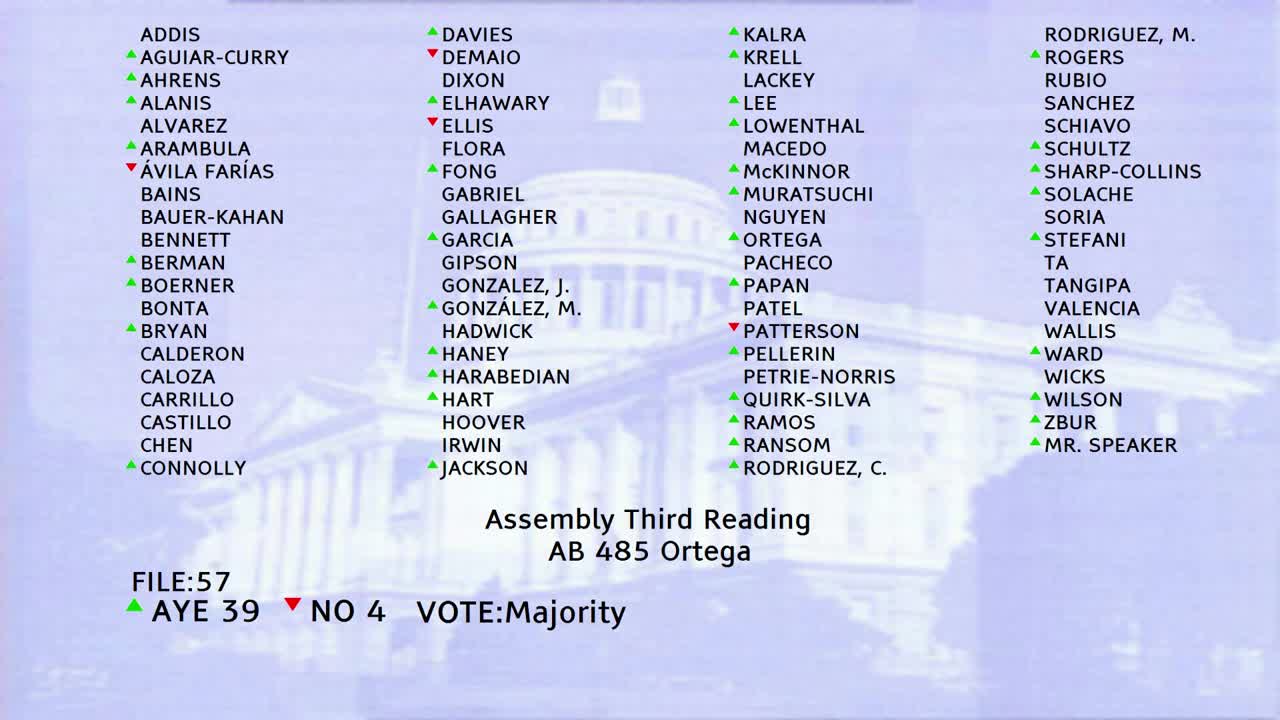
Bill Author
Bill Co-Author(s):