AB 656: Account cancellation.
- Session Year: 2025-2026
- House: Assembly
- Latest Version Date: 2025-10-08
Current Status:
Passed
(2025-10-08: Chaptered by Secretary of State - Chapter 464, Statutes of 2025.)
Introduced
In Committee
Awaiting First Chamber Vote
Passed First Chamber
In Committee
Awaiting Second Chamber Vote
Passed Second Chamber
Enacted
Existing law generally regulates social media platforms, including by requiring a social media company to post terms of service for each social media platform owned or operated by the company in a manner reasonably designed to inform all users of the social media platform of the existence and contents of the terms of service, as prescribed.
Existing law, the California Consumer Privacy Act of 2018 (CCPA), grants a consumer various rights with respect to personal information that is collected or sold by a business, including the right to request that a business delete personal information about the consumer that the business has collected from the consumer, as specified. Existing law, the California Privacy Rights Act of 2020, an initiative measure approved by the voters as Proposition 24 at the November 3, 2020, statewide general election, amended, added to, and reenacted the CCPA.
This bill would require a social media platform to provide a clear and conspicuous button that enables the user to delete their account and provide the user with the necessary steps to delete the users account and personal information if the user clicks on that button, in accordance with specified procedures. The bill would prohibit a social media platform from obstructing or interfering with a users ability to delete their account, as specified. The bill would provide that a users request to delete an account constitutes a request to delete the consumers personal information under the CCPA.
Existing law generally regulates social media platforms, including by requiring a social media company to post terms of service for each social media platform owned or operated by the company in a manner reasonably designed to inform all users of the social media platform of the existence and contents of the terms of service, as prescribed.
Existing law, the California Consumer Privacy Act of 2018 (CCPA), grants a consumer various rights with respect to personal information that is collected or sold by a business, including the right to request that a business delete personal information about the consumer that the business has collected from the consumer, as specified. Existing law, the California Privacy Rights Act of 2020, an initiative measure approved by the voters as Proposition 24 at the November 3, 2020, statewide general election, amended, added to, and reenacted the CCPA.
This bill would require a social media platform to provide a clear and conspicuous button that enables the user to delete their account and allow provide the user with the necessary steps to delete the users account through and personal information if the user clicks on that button, as specified. in accordance with specified procedures. The bill would prohibit a social media platform from using dark patterns, as defined, to interfere obstructing or interfering with a users ability to delete their account. account, as specified. The bill would require a social media platform to treat a users decision provide that a users request to delete an account while logged in to that account as a verified consumer request from a consumer to constitutes a request to delete the consumers personal information under the CCPA.
Existing law generally regulates social media platforms, including by requiring a social media company to post terms of service for each social media platform owned or operated by the company in a manner reasonably designed to inform all users of the social media platform of the existence and contents of the terms of service, as prescribed.
Existing law, the California Consumer Privacy Act of 2018 (CCPA), grants a consumer various rights with respect to personal information that is collected or sold by a business, including the right to request that a business delete personal information about the consumer that the business has collected from the consumer, as specified. Existing law, the California Privacy Rights Act of 2020, an initiative measure approved by the voters as Proposition 24 at the November 3, 2020, statewide general election, amended, added to, and reenacted the CCPA.
This bill would require a social media platform to provide a clear and conspicuous button that enables the user to delete their account and allow the user to delete the users account through that button, as specified. The bill would prohibit a social media platform from using dark patterns, as defined, to interfere with a users ability to delete their account. The bill would require a social media platform, upon the users confirmation of an account deletion, to delete all personal information pertaining to the account or collected directly through the use of the social media platform by the user. platform to treat a users decision to delete an account while logged in to that account as a verified consumer request from a consumer to delete the consumers personal information under the CCPA.
Existing law generally regulates social media platforms, including by requiring a social media company to post terms of service for each social media platform owned or operated by the company in a manner reasonably designed to inform all users of the social media platform of the existence and contents of the terms of service, as prescribed.
Existing law, the California Consumer Privacy Act of 2018 (CCPA), grants a consumer various rights with respect to personal information that is collected or sold by a business, including the right to request that a business delete personal information about the consumer that the business has collected from the consumer, as specified. Existing law, the California Privacy Rights Act of 2020, an initiative measure approved by the voters as Proposition 24 at the November 3, 2020, statewide general election, amended, added to, and reenacted the CCPA.
This bill would require a social media platform to, on each screen visible to a user, clearly and conspicuously post a message that states that, by clicking on the message, the user may delete or suspend the users account to provide a clear and conspicuous button that enables the user to delete their account and allow the user to delete the users account through that message, button, as specified. The bill would prohibit a social media platform from using dark patterns, as defined, to interfere with a users ability to delete their account. The bill would require a social media platform, upon the users confirmation of an account deletion, to delete all personal information pertaining to the account or collected directly through the use of the social media platform by the user.
Existing law generally regulates social media platforms, including by requiring a social media company to post terms of service for each social media platform owned or operated by the company in a manner reasonably designed to inform all users of the social media platform of the existence and contents of the terms of service, as prescribed.
This bill would require a social media platform to, on each screen visible to a user, clearly and conspicuously post a message that states that, by clicking on the message, the user may delete or suspend the users account and allow the user to delete the users account through that message, as specified.
Existing law, the Consumer Legal Remedies Act, prohibits specified unfair methods of competition and unfair or deceptive acts or practices underaken by any person in a transaction intended to result or which results in the sale or lease of goods or services to any consumer.This bill would state it is intent of the Legislature to enact legislation relating to online subscriptions.Existing law, the Consumer Legal Remedies Act, prohibits specified unfair methods of competition and unfair or deceptive acts or practices underaken by any person in a transaction intended to result or which results in the sale or lease of goods or services to any consumer.
This bill would state it is intent of the Legislature to enact legislation relating to online subscriptions.
The Legislature finds and declares all of the following:
(a)Research demonstrates that adolescent individuals are at greater risk of developing addictive disorders.
(b)Further, excessive use of digital and social media has a documented connection to increases in suicide-related outcomes in teenagers and children, such as suicidal ideation, plans, and attempts.
(c)According to the University of Chicago, [f]irst, account deletion options vary considerably across platforms and the language used to describe these options is not always clear. Most platforms offer account deletion on desktop browsers but not all allow account deletion from mobile apps or browsers. Second, we found evidence of several dark patterns present in the account deletion interfaces and platform policies. Third, most participants had tried to delete at least one social media account, yet over one-third of deletion attempts were never completed.
(d)Adolescents seeking to terminate an account that has become a source of addiction should be able to terminate their account without obstruction.
(e)For all of these reasons, the Legislature declares it necessary in order to preserve the peace, welfare, and lives of its residents to ensure a minimum level of customer service when users wish to delete their accounts.
SEC. 2.Title 25 (commencing with Section 3273.90) is added to Part 4 of Division 3 of the Civil Code, to read:25.Social Media Platforms Endangering Californians3273.90.As used in this title:
(a)Clearly and conspicuously or clear and conspicuous has the same meaning as defined in Section 17601 of the Business and Professions Code.
(b)Dark pattern has the same meaning as defined in subdivision (l) of Section 1798.140.
(c)Personal information has the same meaning as defined in subdivision (v) of Section 1798.140 and any regulations promulgated thereunder.
(d)Social media platform means a social media platform, as defined in Section 22675 of the Business and Professions Code, that generates more than one hundred million dollars ($100,000,000) per year in gross revenues.
3273.91.(a)A social media platform shall provide a clear and conspicuous button that enables the user to delete their account that meets both of the following:
(1)Is clearly and conspicuously placed as an immediately visible option in the social media platforms settings menu with the words Delete Account.
(2)The settings menu containing the button is accessible in the application, on a browser, or on any other format that a user can use to access the social media platform.
(b)(1)If a user clicks on the button required by subdivision (a), the social media platform shall, when the button is clicked, provide a user with the steps necessary to complete an account deletion request, which shall include deletion of the users personal information.
(2)If the social media platform seeks verification of the request to delete the account, that verification shall be done in a cost-effective and easy-to-use manner when the request in paragraph (1) is submitted through preestablished two-factor authentication, email, text message, telephone call, or message.
(c)A social media platform shall not obstruct or interfere with a users ability to delete their account, including, but not limited to, by using dark patterns.
(d)A request submitted pursuant to subdivision (b) shall constitute a request to delete the users personal information pursuant to Section 1798.105 and shall be processed in accordance with the requirements of the California Consumer Privacy Act of 2018 (Title 1.81.5 (commencing with Section 1798.100)).
(e)A user login to an account for which a request under subdivision (b) has been submitted shall not, by itself, revoke that request.
SEC. 3.(a)The provisions of this act are severable. If any provision of this act or its application is held invalid, that invalidity shall not affect other provisions or applications that can be given effect without the invalid provision or application.
(b)Any waiver of this act shall be void and unenforceable as contrary to public policy.
The Legislature finds and declares all of the following:
(a)Research demonstrates that adolescent individuals are at greater risk of developing addictive disorders.
(b)Further, excessive use of digital and social media has a documented connection to increases in suicide-related outcomes in teenagers and children, such as suicidal ideation, plans, and attempts.
(c)According to the University of Chicago, [f]irst, account deletion options vary considerably across platforms and the language used to describe these options is not always clear. Most platforms offer account deletion on desktop browsers but not all allow account deletion from mobile apps or browsers. Second, we found evidence of several dark patterns present in the account deletion interfaces and platform policies. Third, most participants had tried to delete at least one social media account, yet over one-third of deletion attempts were never completed.
(d)Adolescents seeking to terminate an account that has become a source of addiction should be able to terminate their account without obstruction.
(e)For all of these reasons, the Legislature declares it necessary in order to preserve the peace, welfare, and lives of its residents to ensure a minimum level of customer service when users wish to delete their accounts.
SEC. 2.Title 25 (commencing with Section 3273.90) is added to Part 4 of Division 3 of the Civil Code, to read:25.Social Media Platforms Endangering Californians3273.90.As used in this title:
(a)Clearly and conspicuously or clear and conspicuous has the same meaning as defined in Section 17601 of the Business and Professions Code.
(b)Dark pattern has the same meaning as defined in subdivision (l) of Section 1798.140.
(c)Personal information has the same meaning as defined in subdivision (v) of Section 1798.140 and any regulations promulgated thereunder.
(d)Social media platform means a social media platform, as defined in Section 22675 of the Business and Professions Code, that generates more than one hundred million dollars ($100,000,000) per year in gross revenues.
3273.91.(a)A social media platform shall provide a clear and conspicuous button that enables the user to delete their account that meets both of the following:
(1)Is clearly and conspicuously placed as an immediately visible option in the social media platforms settings menu with the words Delete Account.
(2)The settings menu containing the button is accessible in the application, on a browser, or on any other format that a user can use to access the social media platform.
(b)(1)If a user clicks on the button required by subdivision (a), the social media platform shall permit a user to complete a deletion of the users account but may seek confirmation of the request to delete the account through immediate two-factor authentication delivered by email, text message, telephone call, or message. shall, when the button is clicked, provide a user with the steps necessary to complete an account deletion request, which shall include deletion of the users personal information.
(2)If the social media platform seeks verification of the request to delete the account, that verification shall be done in a cost-effective and easy-to-use manner when the request in paragraph (1) is submitted through preestablished two-factor authentication, email, text message, telephone call, or message.
(c)A social media platform shall not use dark patterns to obstruct or interfere with a users ability to delete their account. account, including, but not limited to, by using dark patterns.
(d)The social media platform shall treat a users decision to delete an account while logged in to that account as a verified consumer request from a consumer to delete the consumers personal information pursuant to subdivision (a) of Section 1798.105.(d)A request submitted pursuant to subdivision (b) shall constitute a request to delete the users personal information pursuant to Section 1798.105 and shall be processed in accordance with the requirements of the California Consumer Privacy Act of 2018 (Title 1.81.5 (commencing with Section 1798.100)).
(e)A user login to an account for which a request under subdivision (b) has been submitted shall not, by itself, revoke that request.
SEC. 3.(a)The provisions of this act are severable. If any provision of this act or its application is held invalid, that invalidity shall not affect other provisions or applications that can be given effect without the invalid provision or application.
(b)Any waiver of this act shall be void and unenforceable as contrary to public policy.
The Legislature finds and declares all of the following:
(a)Research demonstrates that adolescent individuals are at greater risk of developing addictive disorders.
(b)Further, excessive use of digital and social media has a documented connection to increases in suicide-related outcomes in teenagers and children, such as suicidal ideation, plans, and attempts.
(c)According to the University of Chicago, [f]irst, account deletion options vary considerably across platforms and the language used to describe these options is not always clear. Most platforms offer account deletion on desktop browsers but not all allow account deletion from mobile apps or browsers. Second, we found evidence of several dark patterns present in the account deletion interfaces and platform policies. Third, most participants had tried to delete at least one social media account, yet over one-third of deletion attempts were never completed.
(d)Adolescents seeking to terminate an account that has become a source of addiction should be able to terminate their account without obstruction.
(e)For all of these reasons, the Legislature declares it necessary in order to preserve the peace, welfare, and lives of its residents to ensure a minimum level of customer service when users wish to delete their accounts.
SEC. 2.Title 25 (commencing with Section 3273.90) is added to Part 4 of Division 3 of the Civil Code, to read:25.Social Media Platforms Endangering Californians3273.90.As used in this title:
(a)Clearly and conspicuously or clear and conspicuous has the same meaning as defined in Section 17601 of the Business and Professions Code.
(b)Dark pattern has the same meaning as defined in subdivision (l) of Section 1798.140.
(c)Personal information has the same meaning as defined in subdivision (v) of Section 1798.140 and any regulations promulgated thereunder.
(d)Social media platform means a social media platform, as defined in Section 22675 of the Business and Professions Code, that generates more than one hundred million dollars ($100,000,000) per year in gross revenues.
3273.91.(a)A social media platform shall provide a clear and conspicuous button that enables the user to delete their account that meets both of the following:
(1)Is clearly and conspicuously placed as an immediately visible option in the social media platforms settings menu with the words Delete Account.
(2)The settings menu containing the button is accessible in the application, on a browser, or on any other format that a user can use to access the social media platform.
(b)If a user clicks on the button required by subdivision (a), the social media platform shall permit a user to complete a deletion of the users account but may seek confirmation of the request to delete the account through an immediate two-factor authentication delivered by email, text message, telephone call, or message.
(c)A social media platform shall not use dark patterns to interfere with a users ability to delete their account.
(d)The social media platform shall delete all personal information pertaining to the account or collected directly through the use of the social media platform by the user upon the users confirmation of an account deletion. treat a users decision to delete an account while logged in to that account as a verified consumer request from a consumer to delete the consumers personal information pursuant to subdivision (a) of Section 1798.105.
SEC. 3.(a)The provisions of this act are severable. If any provision of this act or its application is held invalid, that invalidity shall not affect other provisions or applications that can be given effect without the invalid provision or application.
(b)Any waiver of this act shall be void and unenforceable as contrary to public policy.
The Legislature finds and declares all of the following:
(a)Research demonstrates that adolescent individuals are at greater risk of developing addictive disorders.
(b)Further, excessive use of digital and social media has a documented connection to increases in suicide-related outcomes in teenagers and children, such as suicidal ideation, plans, and attempts.
(c)According to the University of Chicago, [f]irst, account deletion options vary considerably across platforms and the language used to describe these options is not always clear. Most platforms offer account deletion on desktop browsers but not all allow account deletion from mobile apps or browsers. Second, we found evidence of several dark patterns present in the account deletion interfaces and platform policies. Third, most participants had tried to delete at least one social media account, yet over one-third of deletion attempts were never completed.
(d)Adolescents seeking to terminate an account that has become a source of addiction should be able to terminate their account without obstruction.
(e)For all of these reasons, the Legislature declares it necessary in order to preserve the peace, welfare, and lives of its residents to ensure a minimum level of customer service when users wish to delete their accounts.
SEC. 2.Title 23 (commencing with Section 3273.72) is added to Part 4 of Division 3 of the Civil Code, to read:23.Social Media Platforms Endangering Californians3273.72.SEC. 2.Title 25 (commencing with Section 3273.90) is added to Part 4 of Division 3 of the Civil Code, to read:25.Social Media Platforms Endangering Californians3273.90.As used in this title:
(a)Clearly and conspicuously or clear and conspicuous has the same meaning as defined in Section 17601 of the Business and Professions Code.
(b)Dark pattern has the same meaning as defined in subdivision (l) of Section 1798.140.
(c)Personal information has the same meaning as defined in subdivision (v) of Section 1798.140 and any regulations promulgated thereunder.
(b)(d)Social media platform means a social media platform, as defined in Section 22675 of the Business and Professions Code, that generates more than one hundred million dollars ($100,000,000) per year in gross revenues.
3273.73.3273.91.(a)A social media platform shall, on each screen visible to a user, clearly and conspicuously post a message that states that, by clicking on the message, the user may delete or suspend the users account. shall provide a clear and conspicuous button that enables the user to delete their account that meets both of the following:
(1)Is clearly and conspicuously placed as an option in the social media platforms settings menu with the words Delete Account.
(2)The settings menu containing the button is accessible in the application, on a browser, or on any other format that a user can use to access the social media platform.
(b)If a user clicks on the message button required by subdivision (a), the social media platform shall permit a user to complete a deletion or suspension of the users account but may seek confirmation of the request to delete or suspend the account through an email, text message, telephone call, or message.
(c)A social media platform shall not use dark patterns to interfere with a users ability to delete their account.
(d)The social media platform shall delete all personal information pertaining to the account or collected directly through the use of the social media platform by the user upon the users confirmation of an account deletion.
SEC. 3.(a)The provisions of this act are severable. If any provision of this act or its application is held invalid, that invalidity shall not affect other provisions or applications that can be given effect without the invalid provision or application.
(b)Any waiver of this act shall be void and unenforceable as contrary to public policy.
The Legislature finds and declares all of the following:
(a)Research demonstrates that adolescent individuals are at greater risk of developing addictive disorders.
(b)Further, excessive use of digital and social media has a documented connection to increases in suicide-related outcomes in teenagers and children, such as suicidal ideation, plans, and attempts.
(c)According to the University of Chicago, [f]irst, account deletion options vary considerably across platforms and the language used to describe these options is not always clear. Most platforms offer account deletion on desktop browsers but not all allow account deletion from mobile apps or browsers. Second, we found evidence of several dark patterns present in the account deletion interfaces and platform policies. Third, most participants had tried to delete at least one social media account, yet over one-third of deletion attempts were never completed.
(d)Adolescents seeking to terminate an account that has become a source of addiction should be able to terminate their account without obstruction.
(e)For all of these reasons, the Legislature declares it necessary in order to preserve the peace, welfare, and lives of its residents to ensure a minimum level of customer service when users wish to delete their accounts.
SEC. 2.Title 23 (commencing with Section 3273.72) is added to Part 4 of Division 3 of the Civil Code, to read:23.Social Media Platforms Endangering Californians3273.72.As used in this title:
(a)Clearly and conspicuously has the same meaning as defined in Section 17601 of the Business and Professions Code.
(b)Social media platform means a social media platform, as defined in Section 22675 of the Business and Professions Code, that generates more than one hundred million dollars ($100,000,000) per year in gross revenues.
3273.73.(a)A social media platform shall, on each screen visible to a user, clearly and conspicuously post a message that states that, by clicking on the message, the user may delete or suspend the users account.
(b)If a user clicks on the message required by subdivision (a), the social media platform shall permit a user to complete a deletion or suspension of the users account but may seek confirmation of the request to delete or suspend the account through an email, text message, telephone call, or message.
SEC. 3.(a)The provisions of this act are severable. If any provision of this act or its application is held invalid, that invalidity shall not affect other provisions or applications that can be given effect without the invalid provision or application.
(b)Any waiver of this act shall be void and unenforceable as contrary to public policy.
SECTION 1.It is the intent of the Legislature to enact legislation relating to online subscriptions.It is the intent of the Legislature to enact legislation relating to online subscriptions.
|
Date
|
Status
|
|---|---|
| Oct 8, 2025 | Chaptered by Secretary of State - Chapter 464, Statutes of 2025. |
| Oct 8, 2025 | Approved by the Governor. |
| Sep 22, 2025 | Enrolled and presented to the Governor at 3 p.m. |
| Sep 10, 2025 | Senate amendments concurred in. To Engrossing and Enrolling. (Ayes 77. Noes 0. Page 3198.). |
| Sep 9, 2025 | In Assembly. Concurrence in Senate amendments pending. |
| Sep 9, 2025 | Read third time. Passed. Ordered to the Assembly. (Ayes 40. Noes 0. Page 2748.). |
| Sep 8, 2025 | Read second time. Ordered to third reading. |
| Sep 4, 2025 | Read third time and amended. Ordered to second reading. |
| Jul 3, 2025 | Read second time. Ordered to third reading. |
| Jul 2, 2025 | From committee: Do pass. (Ayes 13. Noes 0.) (July 1). |
| Jun 23, 2025 | From committee chair, with author's amendments: Amend, and re-refer to committee. Read second time, amended, and re-referred to Com. on JUD. |
| Jun 12, 2025 | In committee: Set, first hearing. Hearing canceled at the request of author. |
| May 28, 2025 | Referred to Com. on JUD. |
| May 20, 2025 | In Senate. Read first time. To Com. on RLS. for assignment. |
| May 19, 2025 | Read third time. Passed. Ordered to the Senate. (Ayes 71. Noes 0. Page 1596.) |
| May 12, 2025 | Read second time. Ordered to third reading. |
| May 8, 2025 | Read second time and amended. Ordered returned to second reading. |
| May 7, 2025 | From committee: Amend, and do pass as amended. (Ayes 14. Noes 0.) (May 6). |
| Mar 25, 2025 | Re-referred to Com. on P. & C.P. |
| Mar 24, 2025 | From committee chair, with author's amendments: Amend, and re-refer to Com. on P. & C.P. Read second time and amended. |
| Mar 24, 2025 | Referred to Com. on P. & C.P. |
| Feb 14, 2025 | From printer. May be heard in committee March 16. |
| Feb 13, 2025 | Read first time. To print. |
|
Date
|
Description
|
Location
|
Votes
|
|
|---|---|---|---|---|
| Sep 10, 2025 | AB 656 Schiavo Concurrence in Senate Amendments | Assembly Floor |
Passed |
|
| Sep 9, 2025 | Assembly 3rd Reading AB656 Schiavo et al. By Ashby | Senate Floor |
Passed |
|
| Jul 1, 2025 | Do pass | Senate Standing Committee on Judiciary |
Passed |
|
| May 19, 2025 | AB 656 Schiavo Assembly Third Reading | Assembly Floor |
Passed |
|
| May 6, 2025 | Do pass as amended. | Assembly Standing Committee on Privacy and Consumer Protection |
Passed |
This list shows positions taken on this bill by organizations on the date displayed, which is linked to the original source.
Positions by individuals are not included.
|
Organization
|
Position
|
Date
|
|---|---|---|
| California Chamber Of Commerce | ** Against | |
| California Civil Liberties Advocacy | ** Support | |
| CAMEO Network | ** Support | |
| Computer And Communications Industry Association | ** Against | |
| Consumer Attorneys Of California | ** Support | |
| Consumer Federation Of California | ** Support | |
| Elder Law & Advocacy | ** Support | |
| Housing and Economic Rights Advocates | ** Support | |
| Internet Works | ** Against | |
| Oakland Privacy | ** Support | |
| Technet | ** Against | |
| The Children's Advocacy Institute at the University of San Diego School of Law | ** Support |
CONCURRENCE IN SENATE AMENDMENTS
CSA1 Bill Id:AB 656
Author:(Schiavo)
As Amended Ver:September 4, 2025
Majority vote
SUMMARY
This bill requires social media platforms to provide users a button within the settings of the platform that enables the user to delete their account. This bill also requires the social media platforms to make this button accessible on any format that a user can access the platform. Furthermore, this bill requires that a social media platform shall delete personal information of the user that pertains to the account or the use of the platform upon deletion of the account. Lastly, this bill prohibits social media platforms from using dark patterns to interfere with a user's ability to delete their account.
Senate Amendments
- Clarify that if a user clicks on the "Delete Account" button, the platform must display the necessary steps required to complete the account deletion process.
- Clarify that if the platform requires verification of the account deletion through two-factor authentication, it must be done in a cost-effective and user-friendly manner, such as by text message, phone call, or email.
- Clarify that a request to delete an account is treated as a request to delete any personal information the platform has collected through the user's use of the service, and that such requests must be processed in accordance with the California Consumer Privacy Act of 2018.
- Clarifies that a user logging back into a previously deleted account does not, by itself, revoke the user's prior request for deletion.
COMMENTS
Social media has grown immensely over the past two decades, now encompassing everything from social networking to forums, chat rooms, content-sharing platforms, and even job-seeking tools. With its wide range of functionalities, over 80% of Americans are active on at least one platform.[1] Recent reports show that the average American spends nearly 2.5 hours per day on social media.[2] People turn to these platforms for a variety of reasons; some use them as news and information sources, others to grow small businesses, and many to maintain relationships and build community. Social media has even given rise to a new economic model in the form of influencers and the attention economy. However, the benefits of social media are not universal. Many users feel compelled to stay online out of fear of missing out, only to find themselves losing valuable time to mindless scrolling instead of meaningful social interaction.
In fact, the Oxford Word of the Year for 2024 was "brain rot," defined as "the supposed deterioration of a person's mental or intellectual state, especially viewed as the result of overconsumption of material (now particularly online content) considered to be trivial or unchallenging. Also: something characterized as likely to lead to such deterioration."[3] Brain rot has come to describe both the consumption of endless, low-quality content on social media and the negative mental impact that consumption creates. Research supports these concerns. A meta-analysis of 15 studies found that problematic internet usage is linked to a reduction in grey matter, the region of the brain responsible for processing information.[4] The areas most affected were those involved in reward processing and impulse control, which could lead to increased susceptibility to addictive behaviors. Moreover, social media use has been tied to reduced attention spans. In the past 20 years, the average human attention span has dropped from 2.5 minutes to just 47 seconds.[5] These neurological changes have real-world consequences, impacting mental health and overall well-being. As a result, many individuals are seeking to detox from their phones and social media use. Unfortunately, the platforms themselves often make this process exceedingly difficult.
Social media usage and its impact on users is highly polarized. Beyond the ever-present fear of missing out that these platforms perpetuate, one might reasonably ask: why do users not simply unplug? The answer lies in the way social media platforms are designed. Engagement drives revenue, and these platforms have found ways to commodify user attention in the pursuit of profit. As a result, they increasingly employ tactics known as dark patterns, deceptive interface designs that manipulate users into making decisions they might not otherwise choose. Dark patterns were defined in the California Consumer Privacy Act (CCPA) through the passage of Proposition 24, the California Privacy Rights Act, in 2020. They are described as “a user interface designed or manipulated with the substantial effect of subverting or impairing user autonomy, decision-making, or choice, as further defined by regulation." [6] This definition was added by voter initiative to ensure that consent for the collection, sharing, or sale of consumer data is actual consent and not obtained through manipulative design.
At the heart of the issue lies a simple question: how difficult is it, really, to delete a social media account? A quick internet search yields countless websites and blogs devoted to guiding users through the complex process of account deletion across various platforms. For instance, in their support letter, the Consumer Federation of California highlights the convoluted, 20-plus-step process required to delete a Facebook account.
For a full account of the difficulties of deleting a social media account, please see the policy committee analysis.
According to the Author
Social media addiction is harming our youth on a daily basis. From impacts to self-esteem to even more dire consequences, California needs to ensure that those struggling to escape the cycle of addiction can do so easily. Unfortunately, because social media platform revenue relies on continued engagement of users, the mechanisms for account deletion is not always straightforward, leading many who begin the process to give up part way through. For those already struggling with addiction to a platform, this means returning to a harmful habit. AB 656 will follow recent efforts to simplify subscription cancellation to social media platforms, making it easier for individuals to escape a harmful situation.
Arguments in Support
The Children's Advocacy Institute at the University of San Diego School of Law, in support of the bill, writes:
Among the horrors profit-ravenous social media platforms heap upon our children – aside from knowingly facilitating child rape and sexual trafficking, the matchmaking of child sexual abuse material to pedophile consumers of such material, the distribution of lethal fentanyl, the promotion of deadly “challenges,” pummeling girls with pro-anorexia and starvation content, using neuroscientists to addict mere children to their products, and record-shattering, ever escalating rates of suicide and depression requiring hospitalization – is that, when a child for their own well-being wants to quit a platform, the platforms make it intentionally hard and frustrating to do so.
As one investigative piece concluded, "[w]anting to delete your account is one thing, but actually being able to hit the delete button is another story. Social media outlets make money off of you and your information, so it shouldn't come as a surprise that they don't want to let you go. Because of this, the biggest networks have made it overly complicated to delete your account."
According to the University of Chicago, "[f]irst, account deletion options vary considerably across platforms and the language used to describe these options is not always clear. Most platforms offer account deletion on desktop browsers but not all allow account deletion from mobile apps or browsers. Second, we found evidence of several dark patterns present in the account deletion interfaces and platform policies. Third, most participants had tried to delete at least one social media account, yet over one-third of deletion attempts were never completed."
AB 656 simply makes it easier for children to quit social media platforms by making the option easy to find and easy to implement.
Arguments in Opposition
In opposition to the bill, Computer and Communications Industry Association alongside a group of technology trade associations, argues:
AB 656 conflates social media platforms with paid subscription accounts. The bill attempts to apply the same standards of requiring a "clear and conspicuous” cancellation process as was created under AB 2863 (Schiavo, 2024) targeting paid subscriptions and automatic renewals to social media platforms.
Unlike subscription services that charge a recurring fee for continued access, mainstream social-media platforms are offered to the public at no cost and operate primarily on an advertising-supported model; optional premium features do not convert them into "subscriptions." Treating these free services as if they were paid, cancel-anytime memberships ignores this fundamental distinction and risks importing a regulatory framework that does not fit the product.
[…]
SB 656 would also create various unintended consequences, requiring a deletion/suspension link on every screen would encourage impulsive or accidental deletions, offer bad actors an easy means to erase accounts with momentary device access as the deletion/suspension confirmation follow-up would only be optional under this bill.
Many consumers rely on their social-media credentials as a single sign-on key for other services or products—from video and music streaming, to e-commerce storefronts, food delivery network apps, transportation network apps, productivity apps, messaging apps, video games. Allowing an account to be deleted or suspended with only minimal confirmation would instantly invalidate those authentication tokens, leaving users locked out of services they may depend on for their daily lives.
In many cases, they would face cumbersome—and sometimes impossible—recovery processes, risking permanent loss of data, purchase histories, or business pages that were never housed on the social-media platform itself. This cascading lock-out hazard illustrates why a one-click deletion mandate is ill-suited to platforms that function as digital identity hubs.
FISCAL COMMENTS
This bill is keyed non-fiscal by the Legislative Counsel.
VOTES:
ASM PRIVACY AND CONSUMER PROTECTION: 14-0-1
YES: Bauer-Kahan, Dixon, Bryan, DeMaio, Irwin, Lowenthal, Macedo, McKinnor, Ortega, Patterson, Pellerin, Petrie-Norris, Ward, Wilson
ABS, ABST OR NV: Wicks
ASSEMBLY FLOOR: 71-0-8
YES: Addis, Aguiar-Curry, Ahrens, Alanis, Alvarez, Arambula, Ávila Farías, Bauer-Kahan, Bennett, Berman, Boerner, Bonta, Bryan, Calderon, Caloza, Carrillo, Castillo, Chen, Connolly, Davies, DeMaio, Elhawary, Fong, Gabriel, Garcia, Gipson, Mark González, Hadwick, Haney, Harabedian, Hart, Hoover, Irwin, Jackson, Kalra, Krell, Lackey, Lee, Lowenthal, Macedo, McKinnor, Muratsuchi, Nguyen, Ortega, Pacheco, Patel, Patterson, Pellerin, Petrie-Norris, Quirk-Silva, Ramos, Ransom, Celeste Rodriguez, Michelle Rodriguez, Rogers, Blanca Rubio, Sanchez, Schiavo, Schultz, Sharp-Collins, Solache, Soria, Stefani, Ta, Valencia, Wallis, Ward, Wicks, Wilson, Zbur, Rivas
ABS, ABST OR NV: Bains, Dixon, Ellis, Flora, Gallagher, Jeff Gonzalez, Papan, Tangipa
SENATE FLOOR: 40-0-0
YES: Allen, Alvarado-Gil, Archuleta, Arreguín, Ashby, Becker, Blakespear, Cabaldon, Caballero, Cervantes, Choi, Cortese, Dahle, Durazo, Gonzalez, Grayson, Grove, Hurtado, Jones, Laird, Limón, McGuire, McNerney, Menjivar, Niello, Ochoa Bogh, Padilla, Pérez, Reyes, Richardson, Rubio, Seyarto, Smallwood-Cuevas, Stern, Strickland, Umberg, Valladares, Wahab, Weber Pierson, Wiener
UPDATED
VERSION: September 4, 2025
CONSULTANT: John Bennett / P. & C.P. / (916) 319-2200 FN: 0001987
Jeffrey Gottfried, "Americans' Social Media Use", Pew Research Center (Jan. 31, 2024), https://www.pewresearch.org/internet/2024/01/31/americans-social-media-use/. ↑
Robin Geuens, "What is the average time spent on social media each day?", Soax (Sept. 5, 2024), https://soax.com/research/time-spent-on-social-media. ↑
"'Brain rot' named Oxford Word of the Year 2024", Oxford University Press (Dec. 2, 2024), https://corp.oup.com/news/brain-rot-named-oxford-word-of-the-year-2024/. ↑
Jeremy E. Solly et al., "Structural gray matter differences in Problematic Usage of the Internet: a systematic review and meta-analysis", Molecular Psychiatry volume 27, pages1000–1009 (2022), https://doi.org/10.1038/s41380-021-01315-7. ↑
Sandee LaMotte, "If you think you can't focus for long, you're right", CNN (May 15, 2024), https://www.cnn.com/2023/01/11/health/short-attention-span-wellness. ↑
(Civ. Code. Section 1798.140 (l).) ↑
SENATE RULES COMMITTEE Office of Senate Floor Analyses (916) 651-1520 Fax: (916) 327-4478 | AB 656 |
THIRD READING
Bill No: AB 656
Author: Schiavo (D), et al.
Amended: 9/4/25 in Senate
Vote: 21
SENATE JUDICIARY COMMITTEE: 13-0, 7/1/25
AYES: Umberg, Niello, Allen, Arreguín, Ashby, Caballero, Durazo, Laird, Stern, Valladares, Wahab, Weber Pierson, Wiener
ASSEMBLY FLOOR: 71-0, 5/19/25 - See last page for vote
SUBJECT: Account cancellation
SOURCE: Consumer Federation of California
DIGEST:
This bill requires large social media platforms to provide users with a clear and accessible mechanism for deleting their accounts and associated personal information.
Senate Floor amendments of 9/4/25 rework the requirements imposed on social media platforms regarding account deletion requests.
ANALYSIS:
Existing law:
- Establishes the California Consumer Privacy Act (CCPA), which grants consumers certain rights with regard to their personal information, including enhanced notice, access, and disclosure; the right to deletion; the right to restrict the sale of information; and protection from discrimination for exercising these rights. It places attendant obligations on businesses to respect those rights. (Civil (Civ.) Code § 1798.100 et seq.)
- Establishes the California Privacy Rights Act of 2020 (CPRA), which amends the CCPA and creates the PPA, which is charged with implementing these privacy laws, promulgating regulations, and carrying out enforcement actions. (Civ. Code § 798.100 et seq.; Proposition 24 (2020).)
- Provides consumers the right to request that a business delete any personal information about the consumer which the business has collected from the consumer. (Civ. Code § 1798.105(a).)
- Defines “personal information” as information that identifies, relates to, describes, is reasonably capable of being associated with, or could reasonably be linked, directly or indirectly, with a particular consumer or household. It does not include publicly available information or lawfully obtained, truthful information that is a matter of public concern. (Civ. Code § 1798.140(v).)
- Defines “dark pattern” as a user interface designed or manipulated with the substantial effect of subverting or impairing user autonomy, decision making, or choice, as further defined by regulation. (Civ. Code § 1798.140(l).)
- Defines “social media platform” as a public or semipublic internet-based service or application that has users in California and that meets the following criteria:
- A substantial function of the service or application is to connect users in order to allow users to interact socially with each other within the service or application. A service or application that provides email or direct messaging services shall not be considered to meet this criterion on the basis of that function alone.
- The service or application allows users to do specified things, including constructing a profile and creating or posting content viewable by other users. (Business and Professions Code (Bus. & Prof. Code) § 22675 (f).)
- Permits amendment of the CPRA by a majority vote of each house of the Legislature and the signature of the Governor provided such amendments are consistent with and further the purpose and intent of this act as set forth therein. (Proposition 24 § 25 (2020).)
This bill:
- Requires a social media platform to provide a clear and conspicuous button that enables the user to delete their account that meets both of the following:
- Is clearly and conspicuously placed as an immediately visible option in the social media platform’s settings menu with the words “Delete Account.”
- The menu containing the button is accessible in the application, on a browser, or on any other format that a user can use to access the platform.
- Provides that, if a user clicks on the button, the platform must, when the button is clicked, provide a user with the steps necessary to complete an account deletion request, which shall include deletion of the user’s personal information. If the social media platform seeks verification of the request to delete the account, that verification shall be done in a cost-effective and easy-to-use manner when the request in paragraph (1) is submitted through preestablished two-factor authentication, email, text message, telephone call, or message.
- Prohibits a social media platform from obstructing or interfering with a user’s ability to delete their account, including by using dark patterns.
- Provides that the above request constitutes a request to delete the user’s personal information pursuant to the CCPA.
- Provides that a user login to an account for which a request has been submitted shall not, by itself, revoke that request.
- Includes a severability clause and prohibits any waiver hereof.
- Defines the relevant terms, including:
- “Clearly and conspicuously” has the same meaning as defined in Section 17601 of the Business and Professions Code.
- “Dark pattern” and “personal information” have the same meaning as in the CCPA.
- “Social media platform” means a social media platform, as defined in Section 22675 of the Business and Professions Code, that generates more than $100,000,000 per year in gross revenues.
Background
The CCPA, amended by CPRA, grants a set of rights to consumers with regard to their personal information, including the right to delete certain information collected from consumers. Given the reach of social media and the increasing role they play in many children’s lives, concerns have arisen over the connection between social media usage and mental health, drug use, and other self-harming conduct.
This bill seeks to make the process of cutting ties with the largest social media platforms easier and more accessible. It requires platforms to provide users with a clear and conspicuous button that enables them to fully delete their accounts. Requests made by consumers constitute a verified consumer request to delete pursuant to the CCPA. Platforms are prohibited from interfering with these rights, including through the use of dark patterns.
This bill is sponsored by the Consumer Federation of California. It is supported by several advocacy organizations, including Oakland Privacy. This bill is opposed by industry groups, including Technet.
Comments
The effects of social media on our mental health and what should and can be done about it are pressing policy and societal questions that have become increasingly urgent. Evidence shows that engagement on social media has a clear effect on our emotions and overall wellbeing. There is a staggering volume of research and reporting supporting these concerns.[1] By now this is well known to policymakers and the platforms themselves. Facebook’s own internal research found “1 in 8 of its users reported compulsive social media use that interfered with their sleep, work, and relationships— what the social media platform calls ‘problematic use’ but is more commonly known as ‘internet addiction.’”[2] The amount of time users spend on these platforms is stunning: “On average, people spend about 143 minutes (that's 2 hours and 23 minutes) on social media every day. That's almost 2.5 hours per day spent scrolling through different platforms. Teenagers are the biggest users, especially teenage girls, who spend nearly 3 hours a day on social media.”[3]
Cutting the cord. Given the addictive relationship that many people have with social media, including many children, it is all the more imperative that the ability to disconnect with platforms be streamlined and easily accessible. While the CCPA currently provides the right to deletion of information collected from a user, research suggests that many platforms purposefully make it difficult to navigate account settings to actually delete accounts and the information associated with them; the report had four main findings:
First, account deletion options vary considerably across platforms and the language used to describe these options is not always clear. Most platforms offer account deletion on desktop browsers but not all allow account deletion from mobile apps or browsers. Second, we found evidence of several dark patterns present in the account deletion interfaces and platform policies. Third, most participants had tried to delete at least one social media account, yet over one-third of deletion attempts were never completed. Fourth, users mostly agreed that they did not want platforms to have access to deleted account data.[4]
This bill addresses the problem by requiring social media platforms to provide users a clear and conspicuous button that enables the user to delete their account. To avoid the issues cited in the above report, this bill makes clear that the option must be accessible in any format that a user can access the platform, must be clearly and conspicuously placed in the settings menu, and platforms are prohibited from using dark patterns to interfere with a user’s ability to delete the account.
This is particularly important given the vast troves of information the platforms collect on users. The Federal Trade Commission (FTC) recently issued a report examining the relevant data practices of “Social Media and Video Streaming Services (SMVSSs):
These types of services let you connect with the world from the palm of your hand. At the same time, many of these services have been at the forefront of building the infrastructure for mass commercial surveillance. Some firms have unique access to information about our likes and dislikes, our relationships, our religious faiths, our medical conditions, and every other facet of our behavior, at all times and across multiple devices. This vast surveillance has come with serious costs to our privacy. It also has harmed our competitive landscape and affected the way we communicate and our well-being, especially the well-being of children and teens. Moreover, certain large SMVSSs may enjoy significant market power and therefore face fewer competitive constraints on their privacy practices and other dimensions of quality.[5]
The report specifically highlighted the data collection, retention, and use that this bill would protect against:
Many Companies collected and could indefinitely retain troves of data from and about users and non-users, and they did so in ways consumers might not expect. This included information about activities both on and off of the SMVSSs, and included things such as personal information, demographic information, interests, behaviors, and activities elsewhere on the Internet. The collection included information input by users themselves, information gathered passively or inferred, and information that some Companies purchased about users from data brokers and others, including data relating to things such as household income, location, and interests. Moreover, many Companies’ data practices posed risks to users’ and non-users’ data privacy, and their data collection, minimization, and retention practices were woefully inadequate. For instance, minimization policies were often vague or undocumented, and many Companies lacked written retention or deletion policies. Some of the Companies’ SMVSSs did not delete data in response to user requests—they just de-identified it. Even those Companies that actually deleted data would only delete some data, but not all.[6]
According to the author:
Social media addiction is harming our youth on a daily basis. From impacts to self-esteem to even more dire consequences, California needs to ensure that those struggling to escape the cycle of addiction can do so easily. Unfortunately, because social media platform revenue relies on continued engagement of users, the steps required to delete an account are not always straightforward, leading many who begin the process to give up part way through. For those already struggling with addiction to a platform, this means returning to a harmful habit. AB 656 will follow recent efforts to simplify subscription cancellation to social media platforms, making it easier for individuals to escape a harmful situation.
FISCAL EFFECT: Appropriation: No Fiscal Com.: No Local: No
SUPPORT: (Verified 9/5/25)
Consumer Federation of California (Source)
California Civil Liberties Advocacy
Cameo Network
Consumer Attorneys of California
Elder Law & Advocacy
Housing and Economic Rights Advocates
Oakland Privacy
OPPOSITION: (Verified 9/5/25)
California Chamber of Commerce
Computer & Communications Industry Association
Internet Works
Technet
ARGUMENTS IN SUPPORT: Oakland Privacy writes:
There is substantial evidence that social media platforms intentionally make it difficult for users to permanently close and delete their accounts – the reason being that users being on their platforms is part of the fuel that makes their business engines run. Some estimates claim over 200 million people in the U.S. are on social media. These numbers help a company’s stock, attract advertisers and are a revenue generator. Arguably, an inactive user that can still be included in user stats is better than no user at all.
This helps explain why social media companies have made it so difficult for users to close their accounts. Many enlist dark patterns to make the task almost impossible, including forcing a waiting period, having alternate confusing options like deactivating an account instead of deleting it, only giving users the option to do so on certain types of devices, or having to log into your account and dig through multiple layers of settings.
We suggest an additional requirement that social media platforms provide an affirmative confirmation that the deletion of the account has been successfully completed.
Using social media is like checking into Hotel California – you can check out any time you like, but you can never leave – but it doesn’t have to be that way.
ARGUMENTS IN OPPOSITION: Technet, argues:
Settings tabs on social media platforms can contain any number of options related to a user’s social media profile including privacy settings, notification preferences, device permissions, accessibility, language, downloads or data archives and more. Depending on the length of the menu, some platforms group settings related to a user’s account in an account management center. This grouping is to put similar settings together in one place and make it easier for consumers to find. Our proposed amendment below would allow a platform to determine the best place for the deletion mechanism, either in the full settings list or an account management center.
ASSEMBLY FLOOR: 71-0, 5/19/25
AYES: Addis, Aguiar-Curry, Ahrens, Alanis, Alvarez, Arambula, Ávila Farías, Bauer-Kahan, Bennett, Berman, Boerner, Bonta, Bryan, Calderon, Caloza, Carrillo, Castillo, Chen, Connolly, Davies, DeMaio, Elhawary, Fong, Gabriel, Garcia, Gipson, Mark González, Hadwick, Haney, Harabedian, Hart, Hoover, Irwin, Jackson, Kalra, Krell, Lackey, Lee, Lowenthal, Macedo, McKinnor, Muratsuchi, Nguyen, Ortega, Pacheco, Patel, Patterson, Pellerin, Petrie-Norris, Quirk-Silva, Ramos, Ransom, Celeste Rodriguez, Michelle Rodriguez, Rogers, Blanca Rubio, Sanchez, Schiavo, Schultz, Sharp-Collins, Solache, Soria, Stefani, Ta, Valencia, Wallis, Ward, Wicks, Wilson, Zbur, Rivas
NO VOTE RECORDED: Bains, Dixon, Ellis, Flora, Gallagher, Jeff Gonzalez, Papan, Tangipa
Prepared by: Christian Kurpiewski / JUD. / (916) 651-4113
9/8/25 21:18:46
Adam D. I. Kramer et al., Experimental Evidence of Massive-Scale Emotional Contagion through Social Networks (June 17, 2014) Proceedings of the National Academy of Sciences, vol. 111, No. 24, https://www.pnas.org/doi/full/10.1073/pnas.1320040111; Zaheer Hussain and Mark D Griffiths, Problematic Social Networking Site Use and Comorbid Psychiatric Disorders: A Systematic Review of Recent Large-Scale Studies.” (December 14, 2018) Frontiers in psychiatry vol. 9 686, https://www.ncbi.nlm.nih.gov/pmc/articles/PMC6302102/pdf/fpsyt-09-00686.pdf; Jeff Horowitz & Deepa Seetharaman, Facebook Executives Shut Down Efforts to Make the Site Less Divisive (May 26, 2020) Wall Street Journal, https://www.wsj.com/articles/facebook-knows-it-encourages-division-top-executives-nixed-solutions-11590507499; Georgia Wells et al., Facebook Knows Instagram Is Toxic for Teen Girls, Company Documents Show (September 14, 2021) The Wall Street Journal, https://www.wsj.com/articles/facebook-knows-instagram-is-toxic-for-teen-girls-company-documents-show-11631620739?mod=article_inline. All internet citations are current as of June 24, 2025. ↑
Kim Lyons, Facebook reportedly is aware of the level of ‘problematic use’ among its users (November 6, 2021) The Verge, www.theverge.com/2021/11/6/22766935/facebook-meta-aware-problematic-use-addiction-wellbeing. ↑
Robin Geuens, What is the average time spent on social media each day? (Sept. 5, 2024) Soax, https://soax.com/research/time-spent-on-social-media. ↑
Brennan Schaffner, Neha A. Lingareddy & Marshini Chetty, Understanding Account Deletion and Relevant Dark Patterns on Social Media (November 11, 2022) Proceedings of the ACM on Human-Computer Interaction, Volume 6, Issue CSCW2, Article No.: 417, Pages 1 – 43, https://doi.org/10.1145/3555142. ↑
A Look Behind the Screens Examining the Data Practices of Social Media and Video Streaming Services (September 2024) FTC, https://www.ftc.gov/reports/look-behind-screens-examining-data-practices-social-media-video-streaming-services. ↑
Ibid. (emphasis in original). ↑
Senator Thomas Umberg, Chair
2025-2026 Regular Session
Bill No: AB 656 (Author:Schiavo)
Version: June 23, 2025
Hearing Date: July 1, 2025
Fiscal: No
Urgency: No
Consultant: CK
SUBJECT
Account cancellation
DIGEST
This bill requires large social media platforms to provide users with a clear and accessible mechanism for deleting their accounts and associated personal information.
EXECUTIVE SUMMARY
The California Consumer Privacy Act (CCPA), amended by the California Privacy Rights Act (CPRA), grants a set of rights to consumers with regard to their personal information, including enhanced notice and disclosure rights regarding information collection and use practices, access to the information collected, the right to restrict the sale of information, and protection from discrimination for exercising these rights. The CPRA also added in additional protections for “sensitive personal information.” The law also provides the right to delete certain information collected from consumers.
Given the reach of social media and the increasing role they play in many children’s lives, concerns have arisen over the connection between social media usage and mental health, drug use, and other self-harming conduct.
This bill seeks to make the process of cutting ties with the largest social media platforms easier and more accessible. It requires platforms to provide users with a clear and conspicuous button that enables them to fully delete their accounts and to treat it as a verified consumer request to delete pursuant to the CCPA. Platforms are prohibited from using any dark patterns to interfere with this ability.
The bill is sponsored by the Consumer Federation of California. It is supported by several advocacy organizations, including Oakland Privacy. The bill is opposed by industry groups, including Technet.
PROPOSED CHANGES TO THE LAW
Existing law:
- Establishes the CCPA, which grants consumers certain rights with regard to their personal information, including enhanced notice, access, and disclosure; the right to deletion; the right to restrict the sale of information; and protection from discrimination for exercising these rights. It places attendant obligations on businesses to respect those rights. (Civ. Code § 1798.100 et seq.)
- Establishes the California Privacy Rights Act of 2020 (CPRA), which amends the CCPA and creates the PPA, which is charged with implementing these privacy laws, promulgating regulations, and carrying out enforcement actions. (Civ. Code § 798.100 et seq.; Proposition 24 (2020).)
- Provides consumers the right to request that a business delete any personal information about the consumer which the business has collected from the consumer. (Civ. Code § 1798.105(a).)
- Defines “personal information” as information that identifies, relates to, describes, is reasonably capable of being associated with, or could reasonably be linked, directly or indirectly, with a particular consumer or household. The CCPA provides a nonexclusive series of categories of information deemed to be personal information, including biometric information, geolocation data, and “sensitive personal information.” It does not include publicly available information or lawfully obtained, truthful information that is a matter of public concern. (Civ. Code § 1798.140(v).)
- Defines “dark pattern” as a user interface designed or manipulated with the substantial effect of subverting or impairing user autonomy, decisionmaking, or choice, as further defined by regulation. (Civ. Code § 1798.140(l).)
- Defines “social media platform” as a public or semipublic internet-based service or application that has users in California and that meets the following criteria:
- A substantial function of the service or application is to connect users in order to allow users to interact socially with each other within the service or application. A service or application that provides email or direct messaging services shall not be considered to meet this criterion on the basis of that function alone.
- The service or application allows users to do all of the following:
- Construct a public or semipublic profile for purposes of signing into and using the service or application.
- Populate a list of other users with whom an individual shares a social connection within the system.
- Create or post content viewable by other users, including, but not limited to, on message boards, in chat rooms, or through a landing page or main feed that presents the user with content generated by other users. (Bus. & Prof. Code § 22675 (f).)
- Permits amendment of the CPRA by a majority vote of each house of the Legislature and the signature of the Governor provided such amendments are consistent with and further the purpose and intent of this act as set forth therein. (Proposition 24 § 25 (2020).)
This bill:
- Requires a social media platform to provide a clear and conspicuous button that enables the user to delete their account that meets both of the following:
- Is clearly and conspicuously placed as an immediately visible option in the social media platform’s settings menu with the words “Delete Account.”
- The menu containing the button is accessible in the application, on a browser, or on any other format that a user can use to access the platform.
- Provides that, if a user clicks on the button, the platform must permit a user to complete a deletion of the user’s account but may seek confirmation of the request through immediate two-factor authentication delivered by email, text message, telephone call, or message.
- Prohibits a social media platform from using dark patterns to interfere with a user’s ability to delete their account.
- Requires the platform to treat a user’s decision to delete an account while logged in to that account as a verified consumer request from a consumer to delete the consumer’s personal information pursuant to the CCPA.
- Includes a severability clause and prohibits any waiver hereof.
- Defines the relevant terms, including:
- “Clearly and conspicuously” or “clear and conspicuous” has the same meaning as defined in Section 17601 of the Business and Professions Code.
- “Dark pattern” has the same meaning as defined in subdivision (l) of Section 1798.140 of the Civil Code.
- “Personal information” has the same meaning as defined in subdivision (v) of Section 1798.140 of the Civil Code and any regulations promulgated thereunder.
- “Social media platform” means a social media platform, as defined in Section 22675 of the Business and Professions Code, that generates more than $100,000,000 per year in gross revenues.
COMMENTS
- The effects of social media
The effects of social media on our mental health and what should and can be done about it are pressing policy and societal questions that have become increasingly urgent. Evidence shows that engagement on social media has a clear effect on our emotions and overall wellbeing. There is a staggering volume of research and reporting supporting these concerns.[1] By now this is well known to policymakers and the platforms themselves. Facebook’s own internal research found “1 in 8 of its users reported compulsive social media use that interfered with their sleep, work, and relationships— what the social media platform calls ‘problematic use’ but is more commonly known as ‘internet addiction.’”[2] The amount of time users spend on these platforms is stunning: “On average, people spend about 143 minutes (that's 2 hours and 23 minutes) on social media every day. That's almost 2.5 hours per day spent scrolling through different platforms. Teenagers are the biggest users, especially teenage girls, who spend nearly 3 hours a day on social media.”[3]
- Cutting the cord
Given the addictive relationship that many people have with social media, including many children, it is all the more imperative that the ability to disconnect with platforms be streamlined and easily accessible. While the CCPA currently provides the right to deletion of information collected from a user, research suggests that many platforms purposefully make it difficult to navigate account settings to actually delete accounts and the information associated with them; the report had four main findings:
First, account deletion options vary considerably across platforms and the language used to describe these options is not always clear. Most platforms offer account deletion on desktop browsers but not all allow account deletion from mobile apps or browsers. Second, we found evidence of several dark patterns present in the account deletion interfaces and platform policies. Third, most participants had tried to delete at least one social media account, yet over one-third of deletion attempts were never completed. Fourth, users mostly agreed that they did not want platforms to have access to deleted account data.[4]
This bill addresses the problem by requiring social media platforms to provide users a clear and conspicuous button that enables the user to delete their account. To avoid the issues cited in the above report, the bill makes clear that the option must be accessible in any format that a user can access the platform, must be clearly and conspicuously placed in the settings menu, and platforms are prohibited from using dark patterns to interfere with a user’s ability to delete the account. To ensure no accidental deletion, the bill permits a platform to confirm the request through specified means.
The bill also requires social media platforms to additionally treat a user’s decision to delete as a verified consumer request to delete the user’s personal information pursuant to the CCPA. This is particularly important given the vast troves of information the platforms collect on users. The Federal Trade Commission (FTC) recently issued a report examining the relevant data practices of “Social Media and Video Streaming Services (SMVSSs):
These types of services let you connect with the world from the palm of your hand. At the same time, many of these services have been at the forefront of building the infrastructure for mass commercial surveillance. Some firms have unique access to information about our likes and dislikes, our relationships, our religious faiths, our medical conditions, and every other facet of our behavior, at all times and across multiple devices. This vast surveillance has come with serious costs to our privacy. It also has harmed our competitive landscape and affected the way we communicate and our well-being, especially the well-being of children and teens. Moreover, certain large SMVSSs may enjoy significant market power and therefore face fewer competitive constraints on their privacy practices and other dimensions of quality.[5]
The report specifically highlighted the data collection, retention, and use that this bill would protect against:
Many Companies collected and could indefinitely retain troves of data from and about users and non-users, and they did so in ways consumers might not expect. This included information about activities both on and off of the SMVSSs, and included things such as personal information, demographic information, interests, behaviors, and activities elsewhere on the Internet. The collection included information input by users themselves, information gathered passively or inferred, and information that some Companies purchased about users from data brokers and others, including data relating to things such as household income, location, and interests. Moreover, many Companies’ data practices posed risks to users’ and non-users’ data privacy, and their data collection, minimization, and retention practices were woefully inadequate. For instance, minimization policies were often vague or undocumented, and many Companies lacked written retention or deletion policies. Some of the Companies’ SMVSSs did not delete data in response to user requests—they just de-identified it. Even those Companies that actually deleted data would only delete some data, but not all.[6]
According to the author:
Social media addiction is harming our youth on a daily basis. From impacts to self-esteem to even more dire consequences, California needs to ensure that those struggling to escape the cycle of addiction can do so easily. Unfortunately, because social media platform revenue relies on continued engagement of users, the steps required to delete an account are not always straightforward, leading many who begin the process to give up part way through. For those already struggling with addiction to a platform, this means returning to a harmful habit. AB 656 will follow recent efforts to simplify subscription cancellation to social media platforms, making it easier for individuals to escape a harmful situation.
- Stakeholder positions
The Consumer Federation of California, the sponsor of the bill, asserts:
The process for consumers to regain ownership of their data is often unnecessarily complex, largely because user data represents a significant revenue source for many of these companies. Since 2020, Facebook and Google have reported advertising revenues of $86 billion and $181 billion, respectively. Nevertheless, consumers should not feel coerced into remaining on platforms that no longer provide value to their lives. Users who choose to delete their social media accounts—particularly as a means to combat depression and improve their mental health—should not encounter barriers or feel unduly burdened by the process. Account deletion should be straightforward and accessible, achievable with a single click, at any time and for any reason. Despite this, many platforms impose burdensome procedures, requiring users to complete multiple steps merely to initiate a deletion request. Furthermore, consumers are frequently informed that account deletion may take up to 90 days, creating additional and unnecessary delays.
AB 656 aims to address these concerns by requiring social media platforms to prominently feature a clear and easily accessible button for consumers to delete or suspend their accounts. Additionally, once the consumer initiates the account deletion process, they should not encounter any obstructions or delays, except for a simple and immediate two-factor authentication delivered by email, text, message, phone call, or message. This could be done right now, but far too many companies currently want to make it virtually impossible for somebody to cancel their account. That’s wrong and AB 656 will change that for even more California consumers. Again, that’s common sense and represents the best practices of industry leaders.
Writing in opposition, a coalition of industry groups, including Technet, argues:
Settings tabs on social media platforms can contain any number of options related to a user’s social media profile including privacy settings, notification preferences, device permissions, accessibility, language, downloads or data archives and more. Depending on the length of the menu, some platforms group settings related to a user’s account in an account management center. This grouping is to put similar settings together in one place and make it easier for consumers to find. Our proposed amendment below would allow a platform to determine the best place for the deletion mechanism, either in the full settings list or an account management center.
Oakland Privacy writes in support:
There is substantial evidence that social media platforms intentionally make it difficult for users to permanently close and delete their accounts – the reason being that users being on their platforms is part of the fuel that makes their business engines run. Some estimates claim over 200 million people in the U.S. are on social media. These numbers help a company’s stock, attract advertisers and are a revenue generator. Arguably, an inactive user that can still be included in user stats is better than no user at all.
This helps explain why social media companies have made it so difficult for users to close their accounts. Many enlist dark patterns to make the task almost impossible, including forcing a waiting period, having alternate confusing options like deactivating an account instead of deleting it, only giving users the option to do so on certain types of devices, or having to log into your account and dig through multiple layers of settings.
We suggest an additional requirement that social media platforms provide an affirmative confirmation that the deletion of the account has been successfully completed.
Using social media is like checking into Hotel California – you can check out any time you like, but you can never leave – but it doesn’t have to be that way.
SUPPORT
Consumer Federation of California (sponsor)
California Civil Liberties Advocacy
Cameo Network
Consumer Attorneys of California
Elder Law & Advocacy
Housing and Economic Rights Advocates
Oakland Privacy
OPPOSITION
California Chamber of Commerce
Computer & Communications Industry Association
Internet Works
Technet
RELATED LEGISLATION
Pending Legislation:
AB 2 (Lowenthal, 2025) increases the penalties that can be sought against a social media platform, as defined, if the platform fails to exercise ordinary care or skill and injures a child. AB 2 is currently in this Committee and is being heard the same day as this bill.
AB 56 (Bauer-Kahan, 2025) requires social media platforms to periodically display a mental health warning label, as specified. This includes a requirement that, upon three hours of cumulative active use and each hour thereafter, that the warning be displayed clearly and continuously for at least 90 seconds, without providing the ability to bypass or click through the warning, in a manner that is clear and legible and that occupies between 75 and 100 percent of the screen or window. AB 56 is currently in this Committee and is being heard the same day as this bill.
Prior Legislation:
SB 362 (Becker, Ch. 709, Stats. 2023) bolstered the utility and effectiveness of the data broker registry law in myriad ways and strengthened consumers’ right to deletion as to data brokers by requiring the creation of an accessible deletion mechanism.
AB 1202 (Chau, Ch. 753, Stats. 2019) established the CCPA.
SB 1348 (DeSaulnier, 2014) would have required a data broker, as defined, that sells or offers for sale to a third party the personal information of any resident of California, to permit an individual to review their personal information and demand that such information not be shared with or sold to a third party. It would have provided consumers with their own enforcement mechanism to hold data brokers in violation accountable. SB 1348 was held in the Assembly Arts, Entertainment, Sports, Tourism, and Internet Media Committee.
PRIOR VOTES:
Assembly Floor (Ayes 71, Noes 0)
Assembly Privacy and Consumer Protection Committee (Ayes 14, Noes 0)
**************
Adam D. I. Kramer et al., Experimental Evidence of Massive-Scale Emotional Contagion through Social Networks (June 17, 2014) Proceedings of the National Academy of Sciences, vol. 111, No. 24, https://www.pnas.org/doi/full/10.1073/pnas.1320040111; Zaheer Hussain and Mark D Griffiths, Problematic Social Networking Site Use and Comorbid Psychiatric Disorders: A Systematic Review of Recent Large-Scale Studies.” (December 14, 2018) Frontiers in psychiatry vol. 9 686, https://www.ncbi.nlm.nih.gov/pmc/articles/PMC6302102/pdf/fpsyt-09-00686.pdf; Jeff Horowitz & Deepa Seetharaman, Facebook Executives Shut Down Efforts to Make the Site Less Divisive (May 26, 2020) Wall Street Journal, https://www.wsj.com/articles/facebook-knows-it-encourages-division-top-executives-nixed-solutions-11590507499; Georgia Wells et al., Facebook Knows Instagram Is Toxic for Teen Girls, Company Documents Show (September 14, 2021) The Wall Street Journal, https://www.wsj.com/articles/facebook-knows-instagram-is-toxic-for-teen-girls-company-documents-show-11631620739?mod=article_inline. All internet citations are current as of June 24, 2025. ↑
Kim Lyons, Facebook reportedly is aware of the level of ‘problematic use’ among its users (November 6, 2021) The Verge, www.theverge.com/2021/11/6/22766935/facebook-meta-aware-problematic-use-addiction-wellbeing. ↑
Robin Geuens, What is the average time spent on social media each day? (Sept. 5, 2024) Soax, https://soax.com/research/time-spent-on-social-media. ↑
Brennan Schaffner, Neha A. Lingareddy & Marshini Chetty, Understanding Account Deletion and Relevant Dark Patterns on Social Media (November 11, 2022) Proceedings of the ACM on Human-Computer Interaction, Volume 6, Issue CSCW2, Article No.: 417, Pages 1 – 43, https://doi.org/10.1145/3555142. ↑
A Look Behind the Screens Examining the Data Practices of Social Media and Video Streaming Services (September 2024) FTC, https://www.ftc.gov/reports/look-behind-screens-examining-data-practices-social-media-video-streaming-services. ↑
Ibid. (emphasis in original). ↑
ASSEMBLY THIRD READING
ATR Bill Id:AB 656
Author:(Schiavo)
As Amended Ver:May 8, 2025
Majority vote
SUMMARY
This bill requires social media platforms to provide users a button within the settings of the platform that enables the user to delete their account. This bill also requires the social media platforms to make this button accessible on any format that a user can access the platform. Furthermore, this bill requires that a social media platform shall delete personal information of the user that pertains to the account or the use of the platform upon deletion of the account. Lastly, this bill prohibits social media platforms from using dark patterns to interfere with a user's ability to delete their account.
Major Provisions
- Requires a social media platform to provide a clear and conspicuous button that enables the user to delete their account in the social media platform's settings menu with the words "Delete Account".
- Requires a social media platform to make the "Delete Account" button accessible in the application, on a browser, or on any other format that a user can access the social media platform.
- Permits social media platforms to seek confirmation of an account deletion, but prohibits social media platforms from using dark patterns to interfere with a user's ability to delete their account.
- Requires the social media platform to delete all personal information pertaining to the account or collected directly through the use of the social media platform by the user upon the user's confirmation of an account deletion.
COMMENTS
Social media has grown immensely over the past two decades, now encompassing everything from social networking to forums, chat rooms, content-sharing platforms, and even job-seeking tools. With its wide range of functionalities, over 80% of Americans are active on at least one platform.[1] Recent reports show that the average American spends nearly 2.5 hours per day on social media.[2] People turn to these platforms for a variety of reasons; some use them as news and information sources, others to grow small businesses, and many to maintain relationships and build community. Social media has even given rise to a new economic model in the form of influencers and the attention economy. However, the benefits of social media are not universal. Many users feel compelled to stay online out of fear of missing out, only to find themselves losing valuable time to mindless scrolling instead of meaningful social interaction.
In fact, the Oxford Word of the Year for 2024 was "brain rot," defined as "the supposed deterioration of a person's mental or intellectual state, especially viewed as the result of overconsumption of material (now particularly online content) considered to be trivial or unchallenging. Also: something characterized as likely to lead to such deterioration."[3] Brain rot has come to describe both the consumption of endless, low-quality content on social media and the negative mental impact that consumption creates. Research supports these concerns. A meta-analysis of 15 studies found that problematic internet usage is linked to a reduction in grey matter, the region of the brain responsible for processing information.[4] The areas most affected were those involved in reward processing and impulse control, which could lead to increased susceptibility to addictive behaviors. Moreover, social media use has been tied to reduced attention spans. In the past 20 years, the average human attention span has dropped from 2.5 minutes to just 47 seconds.[5] These neurological changes have real-world consequences, impacting mental health and overall well-being. As a result, many individuals are seeking to detox from their phones and social media use. Unfortunately, the platforms themselves often make this process exceedingly difficult.
Social media usage and its impact on users is highly polarized. Beyond the ever-present fear of missing out that these platforms perpetuate, one might reasonably ask: why do users not simply unplug? The answer lies in the way social media platforms are designed. Engagement drives revenue, and these platforms have found ways to commodify user attention in the pursuit of profit. As a result, they increasingly employ tactics known as dark patterns, deceptive interface designs that manipulate users into making decisions they might not otherwise choose. Dark patterns were defined in the California Consumer Privacy Act (CCPA) through the passage of Proposition 24, the California Privacy Rights Act, in 2020. They are described as "a user interface designed or manipulated with the substantial effect of subverting or impairing user autonomy, decision-making, or choice, as further defined by regulation." [6] This definition was added by voter initiative to ensure that consent for the collection, sharing, or sale of consumer data is actual consent and not obtained through manipulative design.
At the heart of the issue lies a simple question: how difficult is it, really, to delete a social media account? A quick internet search yields countless websites and blogs devoted to guiding users through the complex process of account deletion across various platforms. For instance, in their support letter, the Consumer Federation of California highlights the convoluted, 20-plus-step process required to delete a Facebook account. For a full account of the difficulties of deleting a social media account, please see the policy committee analysis.
According to the Author
Social media addiction is harming our youth on a daily basis. From impacts to self-esteem to even more dire consequences, California needs to ensure that those struggling to escape the cycle of addiction can do so easily. Unfortunately, because social media platform revenue relies on continued engagement of users, the mechanisms for account deletion is not always straightforward, leading many who begin the process to give up part way through. For those already struggling with addiction to a platform, this means returning to a harmful habit. AB 656 will follow recent efforts to simplify subscription cancellation to social media platforms, making it easier for individuals to escape a harmful situation.
Arguments in Support
The Children's Advocacy Institute at the University of San Diego School of Law, in support of the bill, writes:
Among the horrors profit-ravenous social media platforms heap upon our children – aside from knowingly facilitating child rape and sexual trafficking, the matchmaking of child sexual abuse material to pedophile consumers of such material, the distribution of lethal fentanyl, the promotion of deadly "challenges," pummeling girls with pro-anorexia and starvation content, using neuroscientists to addict mere children to their products, and record-shattering, ever escalating rates of suicide and depression requiring hospitalization – is that, when a child for their own well-being wants to quit a platform, the platforms make it intentionally hard and frustrating to do so.
As one investigative piece concluded, "[w]anting to delete your account is one thing, but actually being able to hit the delete button is another story. Social media outlets make money off of you and your information, so it shouldn't come as a surprise that they don't want to let you go. Because of this, the biggest networks have made it overly complicated to delete your account."
According to the University of Chicago, "[f]irst, account deletion options vary considerably across platforms and the language used to describe these options is not always clear. Most platforms offer account deletion on desktop browsers but not all allow account deletion from mobile apps or browsers. Second, we found evidence of several dark patterns present in the account deletion interfaces and platform policies. Third, most participants had tried to delete at least one social media account, yet over one-third of deletion attempts were never completed."
AB 656 simply makes it easier for children to quit social media platforms by making the option easy to find and easy to implement.
Arguments in Opposition
In opposition to the bill, Computer and Communications Industry Association alongside a group of technology trade associations, argues:
AB 656 conflates social media platforms with paid subscription accounts. The bill attempts to apply the same standards of requiring a "clear and conspicuous" cancellation process as was created under AB 2863 (Schiavo, 2024) targeting paid subscriptions and automatic renewals to social media platforms.
Unlike subscription services that charge a recurring fee for continued access, mainstream social-media platforms are offered to the public at no cost and operate primarily on an advertising-supported model; optional premium features do not convert them into "subscriptions." Treating these free services as if they were paid, cancel-anytime memberships ignores this fundamental distinction and risks importing a regulatory framework that does not fit the product.
[…]
SB 656 would also create various unintended consequences, requiring a deletion/suspension link on every screen would encourage impulsive or accidental deletions, offer bad actors an easy means to erase accounts with momentary device access as the deletion/suspension confirmation follow-up would only be optional under this bill.
Many consumers rely on their social-media credentials as a single sign-on key for other services or products—from video and music streaming, to e-commerce storefronts, food delivery network apps, transportation network apps, productivity apps, messaging apps, video games. Allowing an account to be deleted or suspended with only minimal confirmation would instantly invalidate those authentication tokens, leaving users locked out of services they may depend on for their daily lives.
In many cases, they would face cumbersome—and sometimes impossible—recovery processes, risking permanent loss of data, purchase histories, or business pages that were never housed on the social-media platform itself. This cascading lock-out hazard illustrates why a one-click deletion mandate is ill-suited to platforms that function as digital identity hubs.
FISCAL COMMENTS
None. This bill is keyed non-fiscal by the Legislative Counsel.
VOTES
ASM PRIVACY AND CONSUMER PROTECTION: 14-0-1
YES: Bauer-Kahan, Dixon, Bryan, DeMaio, Irwin, Lowenthal, Macedo, McKinnor, Ortega, Patterson, Pellerin, Petrie-Norris, Ward, Wilson
ABS, ABST OR NV: Wicks
UPDATED
VERSION: May 8, 2025
CONSULTANT: John Bennett / P. & C.P. / (916) 319-2200 FN: 0000389
Jeffrey Gottfried, "Americans' Social Media Use", Pew Research Center (Jan. 31, 2024), https://www.pewresearch.org/internet/2024/01/31/americans-social-media-use/. ↑
Robin Geuens, "What is the average time spent on social media each day?", Soax (Sept. 5, 2024), https://soax.com/research/time-spent-on-social-media. ↑
"'Brain rot' named Oxford Word of the Year 2024", Oxford University Press (Dec. 2, 2024), https://corp.oup.com/news/brain-rot-named-oxford-word-of-the-year-2024/. ↑
Jeremy E. Solly et al., "Structural gray matter differences in Problematic Usage of the Internet: a systematic review and meta-analysis", Molecular Psychiatry volume 27, pages1000–1009 (2022), https://doi.org/10.1038/s41380-021-01315-7. ↑
Sandee LaMotte, "If you think you can't focus for long, you're right", CNN (May 15, 2024), https://www.cnn.com/2023/01/11/health/short-attention-span-wellness. ↑
(Civ. Code. § 1798.140 (l).) ↑
Date of Hearing: May 6, 2025
Fiscal: No
ASSEMBLY COMMITTEE ON PRIVACY AND CONSUMER PROTECTION
Rebecca Bauer-Kahan, Chair
ABPCA Bill Id:AB 656 (
Author:Schiavo) – As Amended Ver:March 24, 2025
PROPOSED AMENDMENTS
SUBJECT: Account cancellation
SYNOPSIS
Social media platforms have been a force for good in many ways, providing spaces for community, enabling users to stay connected with friends, and allowing many to build small businesses. However, not everyone has benefited equally. For some, the constant stream of content and pressure to stay connected has become overwhelming, leading them to want to leave these platforms. Yet, social media companies often make it difficult for users to delete their accounts.
These platforms profit by commodifying users’ attention. They employ various strategies to foster user dependence and discourage departure. Recent studies highlight that social media platforms use a range of techniques, known as dark patterns, that are specifically designed to prevent users from easily deleting or deactivating their accounts. In some cases, platforms make it impossible to delete an account unless accessed in a specific way, or they bury the deletion option deep within settings, requiring step-by-step guides to locate and complete the process.
This bill, sponsored by the Consumer Federation of California and is supported by the Children’s Advocacy Institute at the University of San Diego School of Law, would require social media platforms to display a clear and conspicuous clickable message on every screen, allowing users to delete or suspend their accounts. The bill permits platforms to request a confirmation message before completing the deletion or suspension process.
The bill is supported by Oakland Privacy and opposed by a coalition of technology trade organizations, including the Computer and Communications Industry Association and TechNet. Opponents argue that the bill places an undue burden on social media companies.
Some of these concerns are addressed in Committee amendments outlined in Comment #6. The amendments revise the bill to require a clear and conspicuous “Delete Account” button within the platform’s settings, rather than a message on every screen. The button must be accessible regardless of how the user accesses the platform (e.g., via web or mobile app). Additionally, the amendments mandate that platforms delete all personal information collected about a user upon account deletion. Finally, the amendments remove the option for platforms to offer account suspension as an alternative to deletion.
THIS BILL:
- Defines “social media platform” to mean a public or semipublic internet-based service or application that has users in California and that meets all of the following criteria:
- A substantial function of the service or application is to connect users in order to allow users to interact socially with each other within the service or application.
- The service or application allows users to do all of the following:
- Construct a public or semipublic profile for purposes of signing into and using the service or application.
- Populate a list of other users with whom an individual shares a social connection within the system.
- Create or post content viewable by other users, including, but not limited to, on message boards, in chat rooms, or through a landing page or main feed that presents the user with content generated by other users.
- Generates more than one hundred million dollars ($100,000,000) per year in gross revenues.
- A service or application that provides email or direct messaging services shall not be considered to meet this criterion on the basis of that function alone.
- Requires social media platform to clearly and conspicuously post a message that states on each screen visible to a user, that, by clicking on the message, the user may delete or suspend the user’s account.
- Requires the social media platform shall permit a user to complete a deletion or suspension of the user’s account but may seek confirmation of the request to delete or suspend the account through an email, text message, telephone call, or message if a user clicks on the message.
EXISTING LAW:
- Defines “clear and conspicuous” or “clearly and conspicuously” to mean in larger type than the surrounding text, or in contrasting type, font, or color to the surrounding text of the same size, or set off from the surrounding text of the same size by symbols or other marks, in a manner that clearly calls attention to the language. (Bus. &. Prof. Code § 17601.)
- Prohibits any business that makes an automatic renewal offer or continuous service offer to a consumer in this state to include any information in the contract that interferes with, detracts from, contradicts, or otherwise undermines the ability of consumers to provide their affirmative consent to the automatic renewal or continuous service. (Bus. &. Prof. Code § 17602(a)(5).)
- Defines “dark pattern” to mean a user interface designed or manipulated with the substantial effect of subverting or impairing user autonomy, decisionmaking, or choice, as further defined by regulation. (Civ. Code. § 1798.140 (l).)
- Broadly provides consumers the right to delete their data held by businesses. (Civ. Code. § 1798.1405.)
COMMENTS:
1) Author’s statement. According to the author:
Social media addiction is harming our youth on a daily basis. From impacts to self-esteem to even more dire consequences, California needs to ensure that those struggling to escape the cycle of addiction can do so easily. Unfortunately, because social media platform revenue relies on continued engagement of users, the mechanisms for account deletion is not always straightforward, leading many who begin the process to give up part way through. For those already struggling with addiction to a platform, this means returning to a harmful habit. AB 656 will follow recent efforts to simplify subscription cancellation to social media platforms,
making it easier for individuals to escape a harmful situation.
2) Discontent creators. Social media has grown immensely over the past two decades, now encompassing everything from social networking to forums, chat rooms, content-sharing platforms, and even job-seeking tools. With its wide range of functionalities, over 80% of Americans are active on at least one platform.[1] Recent reports show that the average American spends nearly 2.5 hours per day on social media.[2] People turn to these platforms for a variety of reasons; some use them as news and information sources, others to grow small businesses, and many to maintain relationships and build community. Social media has even given rise to a new economic model in the form of influencers and the attention economy. However, the benefits of social media are not universal. Many users feel compelled to stay online out of fear of missing out, only to find themselves losing valuable time to mindless scrolling instead of meaningful social interaction.
In fact, the Oxford Word of the Year for 2024 was “brain rot,” defined as “the supposed deterioration of a person’s mental or intellectual state, especially viewed as the result of overconsumption of material (now particularly online content) considered to be trivial or unchallenging. Also: something characterized as likely to lead to such deterioration.”[3] Brain rot has come to describe both the consumption of endless, low-quality content on social media and the negative mental impact that consumption creates. Research supports these concerns. A meta-analysis of 15 studies found that problematic internet usage is linked to a reduction in grey matter, the region of the brain responsible for processing information.[4] The areas most affected were those involved in reward processing and impulse control, which could lead to increased susceptibility to addictive behaviors. Moreover, social media use has been tied to reduced attention spans. In the past 20 years, the average human attention span has dropped from 2.5 minutes to just 47 seconds.[5] These neurological changes have real-world consequences, impacting mental health and overall well-being. As a result, many individuals are seeking to detox from their phones and social media use. Unfortunately, the platforms themselves often make this process exceedingly difficult.
3) Dark patterns. Social media usage and its impact on users is highly polarized. Beyond the ever-present fear of missing out that these platforms perpetuate, one might reasonably ask: why do users not simply unplug? The answer lies in the way social media platforms are designed. Engagement drives revenue, and these platforms have found ways to commodify user attention in the pursuit of profit. As a result, they increasingly employ tactics known as dark patterns, deceptive interface designs that manipulate users into making decisions they might not otherwise choose. Dark patterns were defined in the California Consumer Privacy Act (CCPA) through the passage of Proposition 24, the California Privacy Rights Act, in 2020. They are described as “a user interface designed or manipulated with the substantial effect of subverting or impairing user autonomy, decision-making, or choice, as further defined by regulation.” [6] This definition was added by voter initiative to ensure that consent for the collection, sharing, or sale of consumer data is actual consent and not obtained through manipulative design.
For users seeking to reduce their screen time or delete their accounts altogether, dark patterns often interfere, subtly nudging them toward staying. A comprehensive 2022 study from the University of Chicago explored how these manipulative designs make it difficult for users to leave platforms.[7] The study found that many social media apps, including Instagram, Reddit, and Twitch, did not even offer a way to delete accounts through their mobile applications. Instead, users were forced to switch to a web browser. Considering that many people interact with these platforms exclusively through their mobile apps, this design choice effectively blocks account deletion by default.
Even when deletion options are available, the process is often obscured by vague or misleading language. Phrases like “Close Account” may suggest deletion, when in fact the account remains recoverable. Facebook, at the time of the study, used a “Delete After Closing” model, which freezes accounts for a set period before deletion occurs, leaving a window during which users might change their minds, intentionally or otherwise. These practices subtly pressure users to stay connected, even when they have expressed a desire to leave.
More troubling than vague language are the various emotional and psychological tactics used to dissuade users from following through. One common strategy is confirm shaming, in which platforms prompt users with an additional verification step, such as a text or email confirmation, to ensure they truly want to delete their accounts. While this step can prevent accidental deletions, it is also frequently used for emotional manipulation. For example, the video streaming service Vimeo features a large sad face on the confirmation page as a form of guilt-tripping users into staying.[8]
Ultimately, the University of Chicago study revealed that over 33% of the 200 participants were unable to delete a social media account due to the process being overly burdensome or confusing.[9] 85% of those surveyed concluded that these design choices exist primarily to retain users, even those actively trying to leave.[10]
4) How hard is it to delete? At the heart of the issue lies a simple question: how difficult is it, really, to delete a social media account? A quick internet search yields countless websites and blogs devoted to guiding users through the complex process of account deletion across various platforms. For instance, in their support letter, the Consumer Federation of California highlights the convoluted, 20-plus-step process required to delete a Facebook account. To assess just how challenging this process truly is, staff attempted to delete a Facebook account without relying on any outside assistance or guides. A description of this endeavor follows.
1. First (Left), the app opened to the Facebook home page. Staff then navigated to the three horizontal lines (also known as the hamburger menu) in the upper right corner, which typically indicates a hidden menu. This allowed access to the “Settings & Privacy” menu (Right).


2. Once in the “Settings & Privacy” menu (Left), numerous options were available. As staff scrolled through, it became unclear which, if any, would lead to an option for deleting an account (Center). Ultimately, staff used the search function within the menu. However, searching for “Account Deletion” (Right) did not yield a straightforward path forward.


3. At this point, staff began clicking through various options within the “Settings & Privacy” menu; however, none led to an account deletion option. After approximately 10 minutes of searching, staff opted to look up instructions for performing the deletion. Instead of a clearly labeled menu button, the process directed staff to the “Accounts Center” (Left). From there, the sequence continued through two additional menus (Center, Right) before finally reaching the screen where the account could be deleted (Bottom). This trial demonstrates how burdensome, unintuitive, and labyrinthine it can be to delete a social media account.


5) What this bill would do. This bill aims to reduce the burden placed on users by social media platforms when attempting to delete their accounts. Specifically, it would require platforms that generate more than $100 million in annual gross revenue to display a clear and conspicuous message on every screen a user interacts with. This message must inform users that they can click to either delete or suspend their account. The bill allows platforms to request confirmation, via email, text message, or other means, before completing the deletion or suspension. This bill is similar to previous legislation by this author that enables consumers to cancel automatically renewed subscriptions in the same manner that the consumer used to subscribe to the continuous service, alongside other provisions which stream line subscription cancellations.[11]
6) Amendments. Opposition to this bill raise issues with the provision described above. The Computer and Communications Industry Association alongside other technology trade associations argues that this bill creates an overly broad mandate, stating:
The requirement to post a specific message with a deletion/suspension link on “each screen” could be interpreted quite broadly as it is compelled speech for a social media platform to follow. AB 2863 (Schiavo, 2024), simply required “a prominently located direct link or button which may be located within either a customer account or profile,” this bill AB 656 goes even further than that by requiring a link in “each screen visible to a user.”
Such compelled speech for a social media platform would overwhelm users or degrade their experience. Requiring the same message on every single screen (including in-app pop-ups, menus, feed views, stories, chats, even watch interfaces would be impacted) would create clutter, interfere with normal usage, and confuse or frustrate users rather than help them.
Additionally, the user-interface redesign necessary to even place this delete/suspend link on EVERY visible screen to a user, even if just in California would be substantial and interfere with a platforms’ national, even global design. By extending subscription-style cancellation mechanics to non-subscription, advertising-supported platforms, AB 656 would create significantly broader obligations for a wider range of businesses and user interactions
This concern has merit, as the bill currently uses the vague phrase “every screen.” Does this mean the message must appear only in settings, or even while viewing a photo on a social media app? A message like the one described in the bill could clutter the interface, potentially making platforms difficult to use in certain formats and negatively affecting the user experience for those who wish to remain on these platforms. The goal of the bill is not to make social media platforms unusable, but rather to ensure that users who wish to delete their accounts can do so without unnecessary obstacles.
To address these concerns, the author has agreed to amendments that would replace the requirement for a message on every screen with a mandate for a clear and conspicuous “Delete Account” button within the settings menu. The “clear and conspicuous” language should ensure that the button is easy to locate and not hidden deep within unintuitive settings. Additionally, since many platforms currently make account deletion impossible unless accessed through a web browser, the author has also agreed to include language requiring that the “Delete Account” button be accessible across all platforms, regardless of how the user is accessing the service.
Furthermore, one of the main challenges in deleting a social media account is that, even when the platform makes the delete button easy to find, it may still employ dark patterns to manipulate users into staying. To address this, the author has agreed to an amendment prohibiting social media platforms from using dark patterns to interfere with account deletions.
Moreover, in the study referenced above, fewer than 10% of participants believed that social media companies should retain access to a user’s data after the account is deleted.[12] In response, the author has agreed to an amendment requiring that, upon a user’s confirmation of account deletion, the platform must also delete any personal information associated with the account or collected through the user’s activity on the platform.
Finally, the author has agreed to remove any language allowing account suspension as a substitute for deletion. While platforms may still offer users the option to suspend their accounts if they choose, the bill’s intent is to ensure that users who wish to delete their accounts can do so without being funneled into suspension as an alternative.
The amendments are as follows:
3273.72. As used in this title:
(a) “Clearly and conspicuously” or “clear and conspicuous” has the same meaning as defined in Section 17601 of the Business and Professions Code.
(b) “Dark pattern” has the same meaning as subdivision (l) Section 1798.140.
(b) “Personal Information” has the same meaning as defined in subdivision (v) of Section 1798.140 of the Civil Code and any regulations promulgated thereunder.
(bc) “Social media platform” means a social media platform, as defined in Section 22675 of the Business and Professions Code that generates more than one hundred million dollars ($100,000,000) per year in gross revenues.
3273.73. (a) A social media platform shall provide a clear and conspicuous button that enables the user to delete their account that meets both of the following: on each screen visible to a user, clearly and conspicuously post a message that states that, by clicking on the message, the user may delete or suspend the user’s account.
(1) Is clearly and conspicuously placed as an option in the social media platform’s settings menu with the words “Delete Account”.
(2) The settings menu containing the button is accessible in the application, on a browser, or on any other format that a user can access the social media platform.
(b) If a user clicks on the message button required by subdivision (a), the social media platform shall permit a user to complete a deletion or suspension of the user’s account but may seek confirmation of the request to delete or suspend the account through an email, text message, telephone call, or message.
(c) A social media platform shall not use dark patterns to interfere with a user’s ability to delete their account.
(d) The social media platform shall delete all personal information pertaining to the account or collected directly through the use of the social media platform by the user upon the user’s confirmation of an account deletion.
SEC. 3. (a) The provisions of this act are severable. If any provision of this act or its application is held invalid, that invalidity shall not affect other provisions or applications that can be given effect without the invalid provision or application.
(b) Any waiver of this act shall be void and unenforceable as contrary to public policy.
ARGUMENTS IN SUPPORT: The Children’s Advocacy Institute at the University of San Diego School of Law, in support of the bill, writes:
Among the horrors profit-ravenous social media platforms heap upon our children – aside from knowingly facilitating child rape and sexual trafficking, the matchmaking of child sexual abuse material to pedophile consumers of such material, the distribution of lethal fentanyl, the promotion of deadly “challenges,” pummeling girls with pro-anorexia and starvation content, using neuroscientists to addict mere children to their products, and record-shattering, ever escalating rates of suicide and depression requiring hospitalization – is that, when a child for their own well-being wants to quit a platform, the platforms make it intentionally hard and frustrating to do so.
As one investigative piece concluded, “[w]anting to delete your account is one thing, but actually being able to hit the delete button is another story. Social media outlets make money off of you and your information, so it shouldn’t come as a surprise that they don’t want to let you go. Because of this, the biggest networks have made it overly complicated to delete your account.”
According to the University of Chicago, “[f]irst, account deletion options vary considerably across platforms and the language used to describe these options is not always clear. Most platforms offer account deletion on desktop browsers but not all allow account deletion from mobile apps or browsers. Second, we found evidence of several dark patterns present in the account deletion interfaces and platform policies. Third, most participants had tried to delete at least one social media account, yet over one-third of deletion attempts were never completed.”
AB 656 simply makes it easier for children to quit social media platforms by making the option easy to find and easy to implement.
This bill is the least we can do to lend a helping hand not just to suffering children. This bill will also lend a compassionate helping hand to beleaguered parents just trying to keep their children mentally well and alive when, arrayed against them, are multibillion dollar corporations deploying the most sophisticated technologies in ways that persistently prioritize profit over preventing children from sexual abuse, depression, and drug abuse, and death.
ARGUMENTS IN OPPOSITION: In opposition to the bill, Computer and Communications Industry Association alongside a group of technology trade associations, argues:
AB 656 conflates social media platforms with paid subscription accounts. The bill attempts to apply the same standards of requiring a “clear and conspicuous” cancellation process as was created under AB 2863 (Schiavo, 2024) targeting paid subscriptions and automatic renewals to social media platforms.
Unlike subscription services that charge a recurring fee for continued access, mainstream social-media platforms are offered to the public at no cost and operate primarily on an advertising-supported model; optional premium features do not convert them into “subscriptions.” Treating these free services as if they were paid, cancel-anytime memberships ignores this fundamental distinction and risks importing a regulatory framework that does not fit the product.
[…]
SB 656 would also create various unintended consequences, requiring a deletion/suspension link on every screen would encourage impulsive or accidental deletions, offer bad actors an easy means to erase accounts with momentary device access as the deletion/suspension confirmation follow-up would only be optional under this bill.
Many consumers rely on their social-media credentials as a single sign-on key for other services or products—from video and music streaming, to e-commerce storefronts, food delivery network apps, transportation network apps, productivity apps, messaging apps, video games. Allowing an account to be deleted or suspended with only minimal confirmation would instantly invalidate those authentication tokens, leaving users locked out of services they may depend on for their daily lives.
In many cases, they would face cumbersome—and sometimes impossible—recovery processes, risking permanent loss of data, purchase histories, or business pages that were never housed on the social-media platform itself. This cascading lock-out hazard illustrates why a one-click deletion mandate is ill-suited to platforms that function as digital identity hubs.
Additionally, there would be a surge in restoration requests and data-loss disputes. These burdens could divert investment away from other necessary reporting or safety systems within social media platforms.
REGISTERED SUPPORT / OPPOSITION:
Support
Consumer Federation of California (Sponsor)
Childrens Advocacy Institute
Oakland Privacy
Oppose
Computer & Communications Industry Association
Internet.works
Technet-technology Network
Analysis Prepared by: John Bennett / P. & C.P. / (916) 319-2200
Jeffrey Gottfried, “Americans’ Social Media Use”, Pew Research Center (Jan. 31, 2024), https://www.pewresearch.org/internet/2024/01/31/americans-social-media-use/. ↑
Robin Geuens, “What is the average time spent on social media each day?”, Soax (Sept. 5, 2024), https://soax.com/research/time-spent-on-social-media. ↑
“‘Brain rot’ named Oxford Word of the Year 2024”, Oxford University Press (Dec. 2, 2024), https://corp.oup.com/news/brain-rot-named-oxford-word-of-the-year-2024/. ↑
Jeremy E. Solly et al., “Structural gray matter differences in Problematic Usage of the Internet: a systematic review and meta-analysis”, Molecular Psychiatry volume 27, pages1000–1009 (2022), https://doi.org/10.1038/s41380-021-01315-7. ↑
Sandee LaMotte, “If you think you can’t focus for long, you’re right”, CNN (May 15, 2024), https://www.cnn.com/2023/01/11/health/short-attention-span-wellness. ↑
(Civ. Code. § 1798.140 (l).) ↑
Brennan Schaffner, Neha A. Lingareddy, Marshini Chetty, “Understanding Account Deletion and Relevant Dark Patterns on Social Media”, Proceedings of the ACM on Human-Computer Interaction, Volume 6, Issue CSCW2
Article No.: 417, Pages 1 – 43, https://doi.org/10.1145/3555142. ↑
Ibid. ↑
Ibid. ↑
Ibid. ↑
AB 2863 Schiavo, Ch. 515, Stats. 2024. ↑
Brennan Schaffner, Neha A. Lingareddy, Marshini Chetty, “Understanding Account Deletion and Relevant Dark Patterns on Social Media”, Proceedings of the ACM on Human-Computer Interaction, Volume 6, Issue CSCW2
Article No.: 417, Pages 1 – 43, https://doi.org/10.1145/3555142. ↑
Date of Hearing: May 6, 2025
Fiscal:
ASSEMBLY COMMITTEE ON PRIVACY AND CONSUMER PROTECTION
Rebecca Bauer-Kahan, Chair
ABPCA Bill Id:AB 656 (
Author:Schiavo) – As Amended Ver:March 24, 2025
PROPOSED AMENDMENTS
SUBJECT: Account cancellation
SYNOPSIS
Social media platforms have been a force for good in many ways, providing spaces for community, enabling users to stay connected with friends, and allowing many to build small businesses. However, not everyone has benefited equally. For some, the constant stream of content and pressure to stay connected has become overwhelming, leading them to want to leave these platforms. Yet, social media companies often make it difficult for users to delete their accounts.
These platforms profit by commodifying users’ attention. They employ various strategies to foster user dependence and discourage departure. Recent studies highlight that social media platforms use a range of techniques, known as dark patterns, that are specifically designed to prevent users from easily deleting or deactivating their accounts. In some cases, platforms make it impossible to delete an account unless accessed in a specific way, or they bury the deletion option deep within settings, requiring step-by-step guides to locate and complete the process.
This bill, sponsored by the Consumer Federation of California and is supported by the Children’s Advocacy Institute at the University of San Diego School of Law, would require social media platforms to display a clear and conspicuous clickable message on every screen, allowing users to delete or suspend their accounts. The bill permits platforms to request a confirmation message before completing the deletion or suspension process.
The bill is supported by Oakland Privacy and opposed by a coalition of technology trade organizations, including the Computer and Communications Industry Association and TechNet. Opponents argue that the bill places an undue burden on social media companies.
Some of these concerns are addressed in Committee amendments outlined in Comment #6. The amendments revise the bill to require a clear and conspicuous “Delete Account” button within the platform’s settings, rather than a message on every screen. The button must be accessible regardless of how the user accesses the platform (e.g., via web or mobile app). Additionally, the amendments mandate that platforms delete all personal information collected about a user upon account deletion. Finally, the amendments remove the option for platforms to offer account suspension as an alternative to deletion.
THIS BILL:
- Defines “social media platform” to mean a public or semipublic internet-based service or application that has users in California and that meets all of the following criteria:
- A substantial function of the service or application is to connect users in order to allow users to interact socially with each other within the service or application.
- The service or application allows users to do all of the following:
- Construct a public or semipublic profile for purposes of signing into and using the service or application.
- Populate a list of other users with whom an individual shares a social connection within the system.
- Create or post content viewable by other users, including, but not limited to, on message boards, in chat rooms, or through a landing page or main feed that presents the user with content generated by other users.
- Generates more than one hundred million dollars ($100,000,000) per year in gross revenues.
- A service or application that provides email or direct messaging services shall not be considered to meet this criterion on the basis of that function alone.
- Requires social media platform to clearly and conspicuously post a message that states on each screen visible to a user, that, by clicking on the message, the user may delete or suspend the user’s account.
- Requires the social media platform shall permit a user to complete a deletion or suspension of the user’s account but may seek confirmation of the request to delete or suspend the account through an email, text message, telephone call, or message if a user clicks on the message.
EXISTING LAW:
- Defines “clear and conspicuous” or “clearly and conspicuously” to mean in larger type than the surrounding text, or in contrasting type, font, or color to the surrounding text of the same size, or set off from the surrounding text of the same size by symbols or other marks, in a manner that clearly calls attention to the language. (Bus. &. Prof. Code § 17601.)
- Prohibits any business that makes an automatic renewal offer or continuous service offer to a consumer in this state to include any information in the contract that interferes with, detracts from, contradicts, or otherwise undermines the ability of consumers to provide their affirmative consent to the automatic renewal or continuous service. (Bus. &. Prof. Code § 17602(a)(5).)
- Defines “dark pattern” to mean a user interface designed or manipulated with the substantial effect of subverting or impairing user autonomy, decisionmaking, or choice, as further defined by regulation. (Civ. Code. § 1798.140 (l).)
- Broadly provides consumers the right to delete their data held by businesses. (Civ. Code. § 1798.1405.)
COMMENTS:
1) Author’s statement. According to the author:
Social media addiction is harming our youth on a daily basis. From impacts to self-esteem to even more dire consequences, California needs to ensure that those struggling to escape the cycle of addiction can do so easily. Unfortunately, because social media platform revenue relies on continued engagement of users, the mechanisms for account deletion is not always straightforward, leading many who begin the process to give up part way through. For those already struggling with addiction to a platform, this means returning to a harmful habit. AB 656 will follow recent efforts to simplify subscription cancellation to social media platforms,
making it easier for individuals to escape a harmful situation.
2) Discontent creators. Social media has grown immensely over the past two decades, now encompassing everything from social networking to forums, chat rooms, content-sharing platforms, and even job-seeking tools. With its wide range of functionalities, over 80% of Americans are active on at least one platform.[1] Recent reports show that the average American spends nearly 2.5 hours per day on social media.[2] People turn to these platforms for a variety of reasons; some use them as news and information sources, others to grow small businesses, and many to maintain relationships and build community. Social media has even given rise to a new economic model in the form of influencers and the attention economy. However, the benefits of social media are not universal. Many users feel compelled to stay online out of fear of missing out, only to find themselves losing valuable time to mindless scrolling instead of meaningful social interaction.
In fact, the Oxford Word of the Year for 2024 was “brain rot,” defined as “the supposed deterioration of a person’s mental or intellectual state, especially viewed as the result of overconsumption of material (now particularly online content) considered to be trivial or unchallenging. Also: something characterized as likely to lead to such deterioration.”[3] Brain rot has come to describe both the consumption of endless, low-quality content on social media and the negative mental impact that consumption creates. Research supports these concerns. A meta-analysis of 15 studies found that problematic internet usage is linked to a reduction in grey matter, the region of the brain responsible for processing information.[4] The areas most affected were those involved in reward processing and impulse control, which could lead to increased susceptibility to addictive behaviors. Moreover, social media use has been tied to reduced attention spans. In the past 20 years, the average human attention span has dropped from 2.5 minutes to just 47 seconds.[5] These neurological changes have real-world consequences, impacting mental health and overall well-being. As a result, many individuals are seeking to detox from their phones and social media use. Unfortunately, the platforms themselves often make this process exceedingly difficult.
3) Dark patterns. Social media usage and its impact on users is highly polarized. Beyond the ever-present fear of missing out that these platforms perpetuate, one might reasonably ask: why do users not simply unplug? The answer lies in the way social media platforms are designed. Engagement drives revenue, and these platforms have found ways to commodify user attention in the pursuit of profit. As a result, they increasingly employ tactics known as dark patterns, deceptive interface designs that manipulate users into making decisions they might not otherwise choose. Dark patterns were defined in the California Consumer Privacy Act (CCPA) through the passage of Proposition 24, the California Privacy Rights Act, in 2020. They are described as “a user interface designed or manipulated with the substantial effect of subverting or impairing user autonomy, decision-making, or choice, as further defined by regulation.” [6] This definition was added by voter initiative to ensure that consent for the collection, sharing, or sale of consumer data is actual consent and not obtained through manipulative design.
For users seeking to reduce their screen time or delete their accounts altogether, dark patterns often interfere, subtly nudging them toward staying. A comprehensive 2022 study from the University of Chicago explored how these manipulative designs make it difficult for users to leave platforms.[7] The study found that many social media apps, including Instagram, Reddit, and Twitch, did not even offer a way to delete accounts through their mobile applications. Instead, users were forced to switch to a web browser. Considering that many people interact with these platforms exclusively through their mobile apps, this design choice effectively blocks account deletion by default.
Even when deletion options are available, the process is often obscured by vague or misleading language. Phrases like “Close Account” may suggest deletion, when in fact the account remains recoverable. Facebook, at the time of the study, used a “Delete After Closing” model, which freezes accounts for a set period before deletion occurs, leaving a window during which users might change their minds, intentionally or otherwise. These practices subtly pressure users to stay connected, even when they have expressed a desire to leave.
More troubling than vague language are the various emotional and psychological tactics used to dissuade users from following through. One common strategy is confirm shaming, in which platforms prompt users with an additional verification step, such as a text or email confirmation, to ensure they truly want to delete their accounts. While this step can prevent accidental deletions, it is also frequently used for emotional manipulation. For example, the video streaming service Vimeo features a large sad face on the confirmation page as a form of guilt-tripping users into staying.[8]
Ultimately, the University of Chicago study revealed that over 33% of the 200 participants were unable to delete a social media account due to the process being overly burdensome or confusing.[9] 85% of those surveyed concluded that these design choices exist primarily to retain users, even those actively trying to leave.[10]
4) How hard is it to delete? At the heart of the issue lies a simple question: how difficult is it, really, to delete a social media account? A quick internet search yields countless websites and blogs devoted to guiding users through the complex process of account deletion across various platforms. For instance, in their support letter, the Consumer Federation of California highlights the convoluted, 20-plus-step process required to delete a Facebook account. To assess just how challenging this process truly is, staff attempted to delete a Facebook account without relying on any outside assistance or guides. A description of this endeavor follows.
1. First (Left), the app opened to the Facebook home page. Staff then navigated to the three horizontal lines (also known as the hamburger menu) in the upper right corner, which typically indicates a hidden menu. This allowed access to the “Settings & Privacy” menu (Right).
2. Once in the “Settings & Privacy” menu (Left), numerous options were available. As staff scrolled through, it became unclear which, if any, would lead to an option for deleting an account (Center). Ultimately, staff used the search function within the menu. However, searching for “Account Deletion” (Right) did not yield a straightforward path forward.
3. At this point, staff began clicking through various options within the “Settings & Privacy” menu; however, none led to an account deletion option. After approximately 10 minutes of searching, staff opted to look up instructions for performing the deletion. Instead of a clearly labeled menu button, the process directed staff to the “Accounts Center” (Left). From there, the sequence continued through two additional menus (Center, Right) before finally reaching the screen where the account could be deleted (Bottom). This trial demonstrates how burdensome, unintuitive, and labyrinthine it can be to delete a social media account.
5) What this bill would do. This bill aims to reduce the burden placed on users by social media platforms when attempting to delete their accounts. Specifically, it would require platforms that generate more than $100 million in annual gross revenue to display a clear and conspicuous message on every screen a user interacts with. This message must inform users that they can click to either delete or suspend their account. The bill allows platforms to request confirmation, via email, text message, or other means, before completing the deletion or suspension. This bill is similar to previous legislation by this author that enables consumers to cancel automatically renewed subscriptions in the same manner that the consumer used to subscribe to the continuous service, alongside other provisions which stream line subscription cancellations.[11]
6) Amendments. Opposition to this bill raise issues with the provision described above. The Computer and Communications Industry Association alongside other technology trade associations argues that this bill creates an overly broad mandate, stating:
The requirement to post a specific message with a deletion/suspension link on “each screen” could be interpreted quite broadly as it is compelled speech for a social media platform to follow. AB 2863 (Schiavo, 2024), simply required “a prominently located direct link or button which may be located within either a customer account or profile,” this bill AB 656 goes even further than that by requiring a link in “each screen visible to a user.”
Such compelled speech for a social media platform would overwhelm users or degrade their experience. Requiring the same message on every single screen (including in-app pop-ups, menus, feed views, stories, chats, even watch interfaces would be impacted) would create clutter, interfere with normal usage, and confuse or frustrate users rather than help them.
Additionally, the user-interface redesign necessary to even place this delete/suspend link on EVERY visible screen to a user, even if just in California would be substantial and interfere with a platforms’ national, even global design. By extending subscription-style cancellation mechanics to non-subscription, advertising-supported platforms, AB 656 would create significantly broader obligations for a wider range of businesses and user interactions
This concern has merit, as the bill currently uses the vague phrase “every screen.” Does this mean the message must appear only in settings, or even while viewing a photo on a social media app? A message like the one described in the bill could clutter the interface, potentially making platforms difficult to use in certain formats and negatively affecting the user experience for those who wish to remain on these platforms. The goal of the bill is not to make social media platforms unusable, but rather to ensure that users who wish to delete their accounts can do so without unnecessary obstacles.
To address these concerns, the author has agreed to amendments that would replace the requirement for a message on every screen with a mandate for a clear and conspicuous “Delete Account” button within the settings menu. The “clear and conspicuous” language should ensure that the button is easy to locate and not hidden deep within unintuitive settings. Additionally, since many platforms currently make account deletion impossible unless accessed through a web browser, the author has also agreed to include language requiring that the “Delete Account” button be accessible across all platforms, regardless of how the user is accessing the service.
Furthermore, one of the main challenges in deleting a social media account is that, even when the platform makes the delete button easy to find, it may still employ dark patterns to manipulate users into staying. To address this, the author has agreed to an amendment prohibiting social media platforms from using dark patterns to interfere with account deletions.
Moreover, in the study referenced above, fewer than 10% of participants believed that social media companies should retain access to a user’s data after the account is deleted.[12] In response, the author has agreed to an amendment requiring that, upon a user’s confirmation of account deletion, the platform must also delete any personal information associated with the account or collected through the user’s activity on the platform.
Finally, the author has agreed to remove any language allowing account suspension as a substitute for deletion. While platforms may still offer users the option to suspend their accounts if they choose, the bill’s intent is to ensure that users who wish to delete their accounts can do so without being funneled into suspension as an alternative.
The amendments are as follows:
3273.72. As used in this title:
(a) “Clearly and conspicuously” or “clear and conspicuous” has the same meaning as defined in Section 17601 of the Business and Professions Code.
(b) “Dark pattern” has the same meaning as subdivision (l) Section 1798.140.
(b) “Personal Information” has the same meaning as defined in subdivision (v) of Section 1798.140 of the Civil Code and any regulations promulgated thereunder.
(bc) “Social media platform” means a social media platform, as defined in Section 22675 of the Business and Professions Code that generates more than one hundred million dollars ($100,000,000) per year in gross revenues.
3273.73. (a) A social media platform shall provide a clear and conspicuous button that enables the user to delete their account that meets both of the following: on each screen visible to a user, clearly and conspicuously post a message that states that, by clicking on the message, the user may delete or suspend the user’s account.
(1) Is clearly and conspicuously placed as an option in the social media platform’s settings menu with the words “Delete Account”.
(2) The settings menu containing the button is accessible in the application, on a browser, or on any other format that a user can access the social media platform.
(b) If a user clicks on the message button required by subdivision (a), the social media platform shall permit a user to complete a deletion or suspension of the user’s account but may seek confirmation of the request to delete or suspend the account through an email, text message, telephone call, or message.
(c) A social media platform shall not use dark patterns to interfere with a user’s ability to delete their account.
(d) The social media platform shall delete all personal information pertaining to the account or collected directly through the use of the social media platform by the user upon the user’s confirmation of an account deletion.
SEC. 3. (a) The provisions of this act are severable. If any provision of this act or its application is held invalid, that invalidity shall not affect other provisions or applications that can be given effect without the invalid provision or application.
(b) Any waiver of this act shall be void and unenforceable as contrary to public policy.
ARGUMENTS IN SUPPORT: The Children’s Advocacy Institute at the University of San Diego School of Law, in support of the bill, writes:
Among the horrors profit-ravenous social media platforms heap upon our children – aside from knowingly facilitating child rape and sexual trafficking, the matchmaking of child sexual abuse material to pedophile consumers of such material, the distribution of lethal fentanyl, the promotion of deadly “challenges,” pummeling girls with pro-anorexia and starvation content, using neuroscientists to addict mere children to their products, and record-shattering, ever escalating rates of suicide and depression requiring hospitalization – is that, when a child for their own well-being wants to quit a platform, the platforms make it intentionally hard and frustrating to do so.
As one investigative piece concluded, “[w]anting to delete your account is one thing, but actually being able to hit the delete button is another story. Social media outlets make money off of you and your information, so it shouldn’t come as a surprise that they don’t want to let you go. Because of this, the biggest networks have made it overly complicated to delete your account.”
According to the University of Chicago, “[f]irst, account deletion options vary considerably across platforms and the language used to describe these options is not always clear. Most platforms offer account deletion on desktop browsers but not all allow account deletion from mobile apps or browsers. Second, we found evidence of several dark patterns present in the account deletion interfaces and platform policies. Third, most participants had tried to delete at least one social media account, yet over one-third of deletion attempts were never completed.”
AB 656 simply makes it easier for children to quit social media platforms by making the option easy to find and easy to implement.
This bill is the least we can do to lend a helping hand not just to suffering children. This bill will also lend a compassionate helping hand to beleaguered parents just trying to keep their children mentally well and alive when, arrayed against them, are multibillion dollar corporations deploying the most sophisticated technologies in ways that persistently prioritize profit over preventing children from sexual abuse, depression, and drug abuse, and death.
ARGUMENTS IN OPPOSITION: In opposition to the bill, Computer and Communications Industry Association alongside a group of technology trade associations, argues:
AB 656 conflates social media platforms with paid subscription accounts. The bill attempts to apply the same standards of requiring a “clear and conspicuous” cancellation process as was created under AB 2863 (Schiavo, 2024) targeting paid subscriptions and automatic renewals to social media platforms.
Unlike subscription services that charge a recurring fee for continued access, mainstream social-media platforms are offered to the public at no cost and operate primarily on an advertising-supported model; optional premium features do not convert them into “subscriptions.” Treating these free services as if they were paid, cancel-anytime memberships ignores this fundamental distinction and risks importing a regulatory framework that does not fit the product.
[…]
SB 656 would also create various unintended consequences, requiring a deletion/suspension link on every screen would encourage impulsive or accidental deletions, offer bad actors an easy means to erase accounts with momentary device access as the deletion/suspension confirmation follow-up would only be optional under this bill.
Many consumers rely on their social-media credentials as a single sign-on key for other services or products—from video and music streaming, to e-commerce storefronts, food delivery network apps, transportation network apps, productivity apps, messaging apps, video games. Allowing an account to be deleted or suspended with only minimal confirmation would instantly invalidate those authentication tokens, leaving users locked out of services they may depend on for their daily lives.
In many cases, they would face cumbersome—and sometimes impossible—recovery processes, risking permanent loss of data, purchase histories, or business pages that were never housed on the social-media platform itself. This cascading lock-out hazard illustrates why a one-click deletion mandate is ill-suited to platforms that function as digital identity hubs.
Additionally, there would be a surge in restoration requests and data-loss disputes. These burdens could divert investment away from other necessary reporting or safety systems within social media platforms.
REGISTERED SUPPORT / OPPOSITION:
Support
Consumer Federation of California (Sponsor)
Childrens Advocacy Institute
Oakland Privacy
Oppose
Computer & Communications Industry Association
Internet.works
Technet-technology Network
Analysis Prepared by: John Bennett / P. & C.P. / (916) 319-2200
Jeffrey Gottfried, “Americans’ Social Media Use”, Pew Research Center (Jan. 31, 2024), https://www.pewresearch.org/internet/2024/01/31/americans-social-media-use/. ↑
Robin Geuens, “What is the average time spent on social media each day?”, Soax (Sept. 5, 2024), https://soax.com/research/time-spent-on-social-media. ↑
“‘Brain rot’ named Oxford Word of the Year 2024”, Oxford University Press (Dec. 2, 2024), https://corp.oup.com/news/brain-rot-named-oxford-word-of-the-year-2024/. ↑
Jeremy E. Solly et al., “Structural gray matter differences in Problematic Usage of the Internet: a systematic review and meta-analysis”, Molecular Psychiatry volume 27, pages1000–1009 (2022), https://doi.org/10.1038/s41380-021-01315-7. ↑
Sandee LaMotte, “If you think you can’t focus for long, you’re right”, CNN (May 15, 2024), https://www.cnn.com/2023/01/11/health/short-attention-span-wellness. ↑
(Civ. Code. § 1798.140 (l).) ↑
Brennan Schaffner, Neha A. Lingareddy, Marshini Chetty, “Understanding Account Deletion and Relevant Dark Patterns on Social Media”, Proceedings of the ACM on Human-Computer Interaction, Volume 6, Issue CSCW2
Article No.: 417, Pages 1 – 43, https://doi.org/10.1145/355514. ↑
Ibid. ↑
Ibid. ↑
Ibid. ↑
AB 2863 Schiavo, Ch. 515, Stats. 2024. ↑
Brennan Schaffner, Neha A. Lingareddy, Marshini Chetty, “Understanding Account Deletion and Relevant Dark Patterns on Social Media”, Proceedings of the ACM on Human-Computer Interaction, Volume 6, Issue CSCW2
Article No.: 417, Pages 1 – 43, https://doi.org/10.1145/355514. ↑
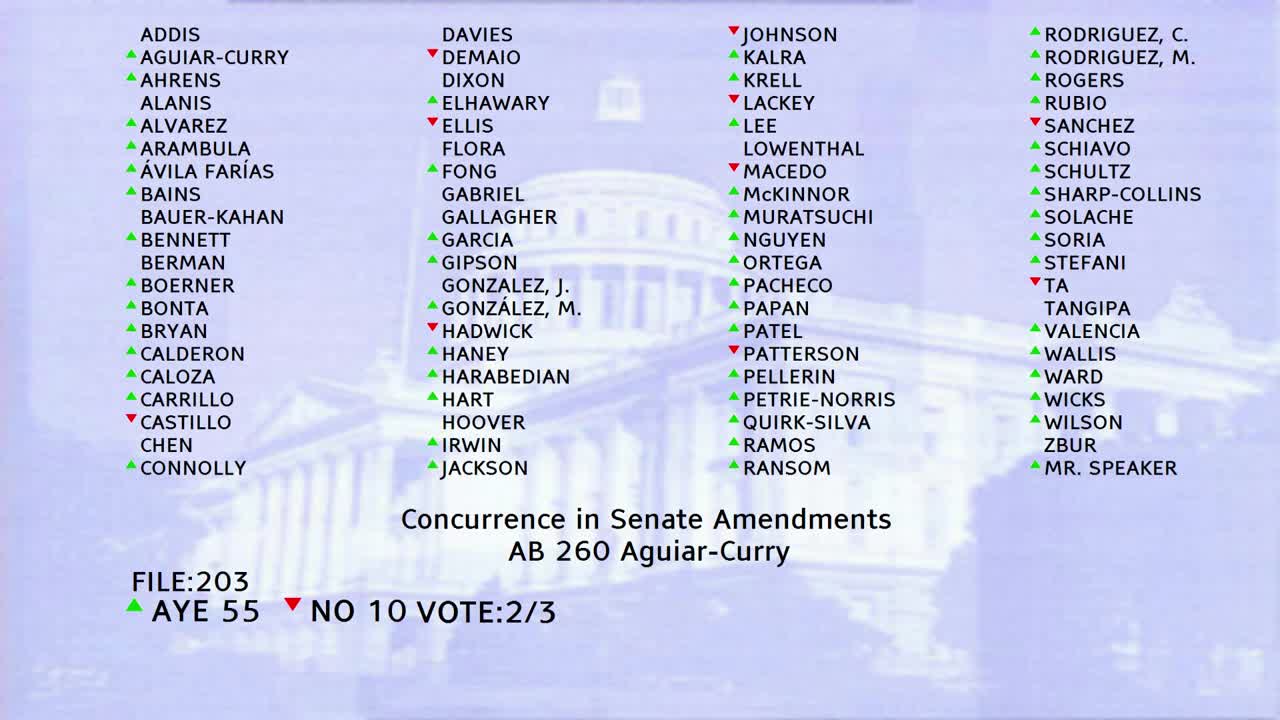
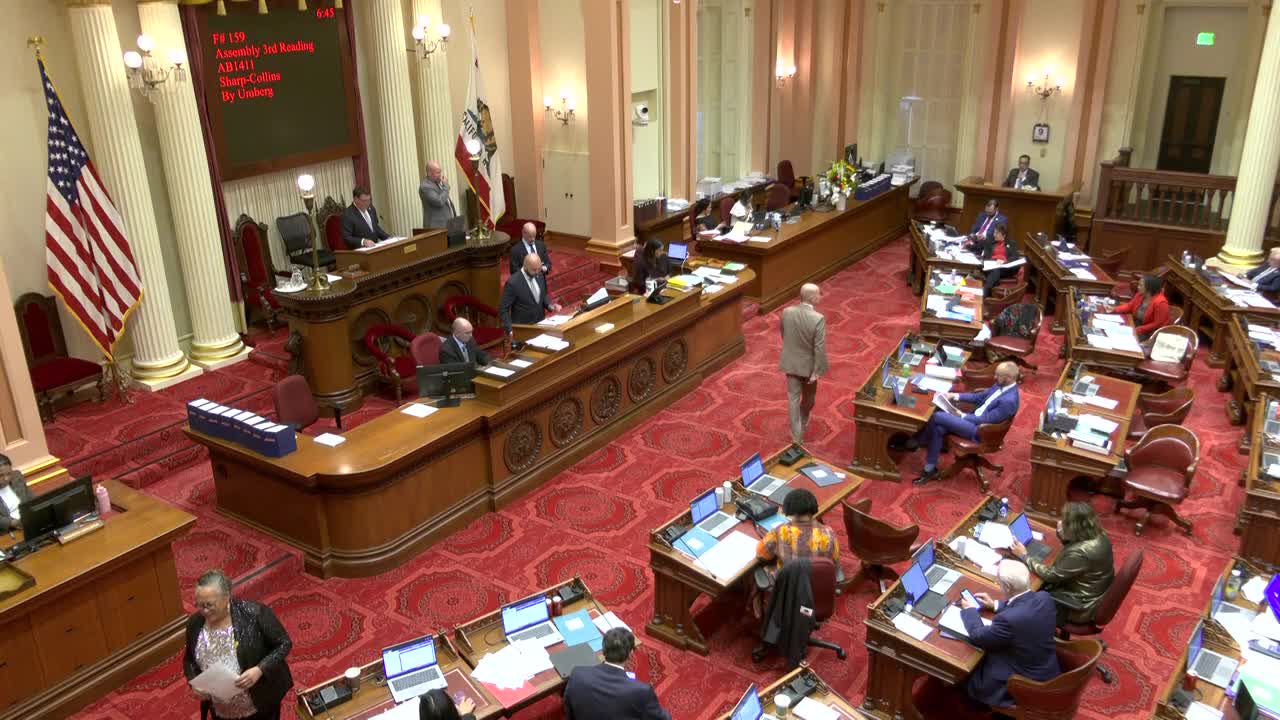

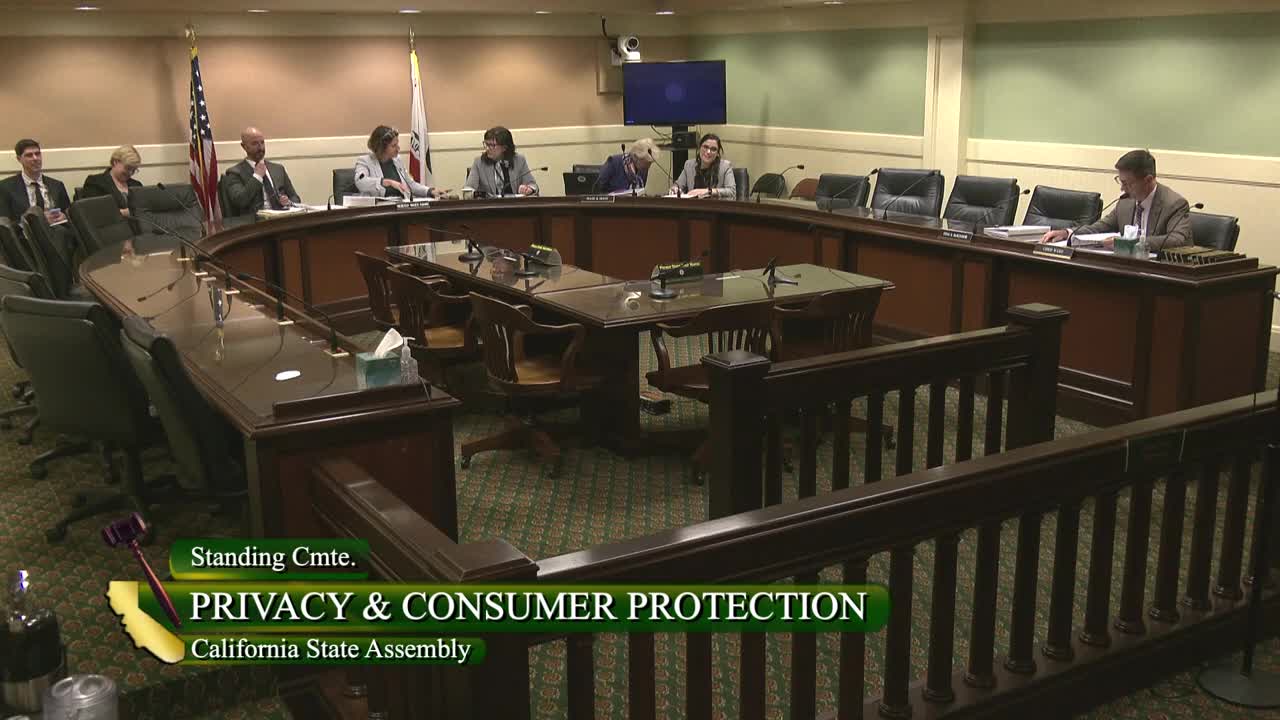
Bill Author

Bill Co-Author(s):