AB 66: California Environmental Quality Act: exemption: egress route projects: fire safety.
- Session Year: 2025-2026
- House: Assembly
- Latest Version Date: 2025-07-03
Current Status:
In Progress
(2025-07-16: In committee: Set, first hearing. Hearing canceled at the request of author.)
Introduced
In Committee
Awaiting First Chamber Vote
Passed First Chamber
In Committee
Awaiting Second Chamber Vote
Passed Second Chamber
Enacted
The California Environmental Quality Act (CEQA) requires a lead agency, as defined, to prepare, or cause to be prepared, and certify the completion of an environmental impact report on a project that it proposes to carry out or approve that may have a significant effect on the environment or to adopt a negative declaration if it finds that the project will not have that effect. CEQA also requires a lead agency to prepare a mitigated negative declaration for a project that may have a significant effect on the environment if revisions in the project would avoid or mitigate that effect and there is no substantial evidence that the project, as revised, would have a significant effect on the environment.
This bill would, until January 1, 2032, exempt from CEQA egress route projects undertaken by a public agency to improve emergency access to and evacuation from a subdivision without a secondary egress route if the State Board of Forestry and Fire Protection has recommended the creation of a secondary access to the subdivision and certain conditions are met. The bill would require the lead agency to hold a noticed public meeting to hear and respond to public comments before determining that a project is exempt. The bill would require the lead agency, if it determines that a project is not subject to CEQA and approves or carries out that project, to file a notice of exemption with the Office of Land Use and Climate Innovation and with the clerk of the county in which the project will be located.
Existing law establishes various programs for the prevention and reduction of wildfires. This bill would provide that it is the intent of the Legislature to enact subsequent legislation to address wildfires by allowing for more vegetation management within easements.Existing law establishes various programs for the prevention and reduction of wildfires.
This bill would provide that it is the intent of the Legislature to enact subsequent legislation to address wildfires by allowing for more vegetation management within easements.
(a)For purposes of this section, the following definitions apply:
(1)Riparian area means an area that is transitional between terrestrial and aquatic ecosystems, that is distinguished by gradients in biophysical conditions, ecological processes, and biota, and that meets all of the following criteria:
(A)Is an area through which surface and subsurface hydrology connect bodies of water with their adjacent uplands.
(B)Is adjacent to perennial, intermittent, and ephemeral streams, lakes, or estuarine or marine shorelines.
(C)Includes those portions of terrestrial ecosystems that significantly influence exchanges of energy and matter with aquatic ecosystems.
(2)Subdivision means a residential development or community of more than 30 dwelling units.
(3)Wetlands has the same meaning as defined in the United States Fish and Wildlife Service Manual, Part 660 FW 2 (June 21, 1993).
(b)This division does not apply to an egress route project to improve emergency access to and evacuation from a subdivision without a secondary egress route if the subdivision has been identified by the State Board of Forestry and Fire Protection pursuant to Section 4290.5, the State Board of Forestry and Fire Protection has recommended the creation of a secondary access to the subdivision, and all of the following conditions are met:
(1)The subdivision has insufficient egress routes, as determined by the lead agency.
(2)The subdivision is located in either of the following:
(A)A state responsibility area that is classified a high or very high fire hazard severity zone pursuant to Section 4202.
(B)A very high fire hazard severity zone, as identified pursuant to Section 51178 of the Government Code.
(3)The location of the project does not contain wetlands or riparian areas.
(4)The project does not harm or take any species protected by the federal Endangered Species Act of 1973 (16 U.S.C. Sec. 1531 et seq.), the Native Plant Protection Act (Chapter 10 (commencing with Section 1900) of Division 2 of the Fish and Game Code), the Guidelines for Implementation of the California Environmental Quality Act (Chapter 3 (commencing with Section 15000) of Division 6 of Title 14 of the California Code of Regulations), or the California Endangered Species Act (Chapter 1.5 (commencing with Section 2050) of Division 3 of the Fish and Game Code).
(5)The project does not cause the destruction or removal of any species protected by an applicable local ordinance.
(6)The project does not affect known archaeological, historical, or other cultural resources.
(7)The project is carried out by a public agency.
(8)The(A)The public agency consults with the Department of Fish and Wildlife during project development.
(B)A consultation pursuant to this paragraph shall meet all of the following requirements:
(i)Occur as soon as feasible during project development.
(ii)Occur in writing.
(iii)Include, at a minimum, a discussion of the projects avoidance and minimization methods and permitting needs.
(9)(A)The egress route is scaled to the existing population of the subdivision.
(B)The requirement of subparagraph (A) is met if the egress route is designed to the scale set forth in the most recent edition of A Policy on Geometric Design of Highways and Streets developed by the American Association of State Highway and Transportation Officials and adopted by the Federal Highway Administration, for the number of vehicle trips generated by the existing land uses in the subdivision served by the egress route, as determined in accordance with the most recent edition of the Trip Generation Manual published by the Institute of Transportation Engineers.
(10)The lead agency determines that the primary purpose of the project is fire safety egress.
(11)Any commercial timber harvest is incidental to the projects primary purpose and complies with the ZBerg-Nejedly Zberg-Nejedly Forest Practice Act of 1973 (Chapter 8 (commencing with Section 4511) of Part 2 of Division 4).
(12)If the project involves substantial tree removal, as determined by a registered professional forester, the entity carrying out the project has a registered professional forester or the foresters designee onsite during the implementation of the project to assist with resource identification and protection. The registered professional forester or the foresters designee shall be required onsite only on days during which trees are removed.
(13)The entity carrying out the project complies with Chapter 4 (commencing with Section 895) of Division 1.5 of Title 14 of the California Code of Regulations, as applicable, to ensure resource protection. The entity carrying out the project shall consult early in the design of the project with the appropriate environmental resource professionals, including registered professional foresters, environmental scientists, archaeologists, hydrologists, soil scientists, fire scientists, and other experts in natural resource protection.
(14)The lead agency determines that the project has obtained, or is able to obtain, all necessary funding and any federal, state, and local approvals within one year of the filing of the notice of exemption pursuant to subdivision (d).
(15)All roads that comprise the egress route are publicly accessible to vehicular traffic at all times.
(16)The egress route is consistent with the circulation element of an applicable general plan.
(c)Before determining that a project is not subject to this division pursuant to this section, the lead agency shall hold a noticed public meeting on the project to hear and respond to public comments. Publication of the notice shall be no fewer times than required by Section 6061 of the Government Code and shall be published in a newspaper of general circulation in the area of the project.
(d)If the lead agency determines that a project is not subject to this division pursuant to this section, and the lead agency determines to approve or carry out that project, the lead agency shall file a notice of exemption with the Office of Land Use and Climate Innovation and the county clerk in the county in which the project is located in the manner specified in subdivisions (b) and (c) of Section 21152.
(e)The application and implementation of this section shall be limited to the purposes of this division.
(f)This section shall remain in effect only until January 1, 2032, and as of that date is repealed.
(a)For purposes of this section, the following definitions apply:
(1)Riparian area means an area that is transitional between terrestrial and aquatic ecosystems, that is distinguished by gradients in biophysical conditions, ecological processes, and biota, and that meets all of the following criteria:
(A)Is an area through which surface and subsurface hydrology connect bodies of water with their adjacent uplands.
(B)Is adjacent to perennial, intermittent, and ephemeral streams, lakes, or estuarine or marine shorelines.
(C)Includes those portions of terrestrial ecosystems that significantly influence exchanges of energy and matter with aquatic ecosystems.
(2)Subdivision means a residential development or community of more than 30 dwelling units.
(3)Wetlands has the same meaning as defined in the United States Fish and Wildlife Service Manual, Part 660 FW 2 (June 21, 1993).
(b)This division does not apply to an egress route project to improve emergency access to and evacuation from a subdivision without a secondary egress route if the subdivision has been identified by the State Board of Forestry and Fire Protection pursuant to Section 4290.5, the State Board of Forestry and Fire Protection has recommended the creation of a secondary access to the subdivision, and all of the following conditions are met:
(1)The subdivision has insufficient egress routes, as determined by the lead agency.
(2)The subdivision is located in either of the following:
(A)A state responsibility area that is classified a high or very high fire hazard severity zone pursuant to Section 4202.
(B)A very high fire hazard severity zone, as identified pursuant to Section 51178 of the Government Code.
(3)The location of the project does not contain wetlands or riparian areas.
(4)The project does not harm or take any species protected by the federal Endangered Species Act of 1973 (16 U.S.C. Sec. 1531 et seq.), the Native Plant Protection Act (Chapter 10 (commencing with Section 1900) of Division 2 of the Fish and Game Code), the Guidelines for Implementation of the California Environmental Quality Act (Chapter 3 (commencing with Section 15000) of Division 6 of Title 14 of the California Code of Regulations), or the California Endangered Species Act (Chapter 1.5 (commencing with Section 2050) of Division 3 of the Fish and Game Code).
(5)The project does not cause the destruction or removal of any species protected by an applicable local ordinance.
(6)The project does not affect known archaeological, historical, or other cultural resources.
(7)The project is carried out by a public agency.
(8)The public agency consults with the Department of Fish and Wildlife during project development.
(9)(A)The egress route is scaled to the existing population of the subdivision.
(B)The requirement of subparagraph (A) is met if the egress route is designed to the scale set forth in the most recent edition of A Policy on Geometric Design of Highways and Streets developed by the American Association of State Highway and Transportation Officials and adopted by the Federal Highway Administration, for the number of vehicle trips generated by the existing land uses in the subdivision served by the egress route, as determined in accordance with the most recent edition of the Trip Generation Manual published by the Institute of Transportation Engineers.
(10)The lead agency determines that the primary purpose of the project is fire safety egress.
(11)Any commercial timber harvest is incidental to the projects primary purpose and complies with the ZBerg-Nejedly Forest Practice Act of 1973 (Chapter 8 (commencing with Section 4511) of Part 2 of Division 4).
(12)If the project involves substantial tree removal, as determined by a registered professional forester, the entity carrying out the project has a registered professional forester or the foresters designee onsite during the implementation of the project to assist with resource identification and protection. The registered professional forester or the foresters designee shall be required onsite only on days during which trees are removed.
(13)The entity carrying out the project complies with Chapter 4 (commencing with Section 895) of Division 1.5 of Title 14 of the California Code of Regulations, as applicable, to ensure resource protection. The entity carrying out the project shall consult early in the design of the project with the appropriate environmental resource professionals, including registered professional foresters, environmental scientists, archaeologists, hydrologists, soil scientists, fire scientists, and other experts in natural resource protection.
(14)The lead agency determines that the project has obtained, or is able to obtain, all necessary funding and any federal, state, and local approvals within one year of the filing of the notice of exemption pursuant to subdivision (d).
(15)All roads that comprise the egress route are publicly accessible to vehicular traffic at all times.
(c)Before determining that a project is not subject to this division pursuant to this section, the lead agency shall hold a noticed public meeting on the project to hear and respond to public comments. Publication of the notice shall be no fewer times than required by Section 6061 of the Government Code and shall be published in a newspaper of general circulation in the area of the project.
(d)If the lead agency determines that a project is not subject to this division pursuant to this section, and the lead agency determines to approve or carry out that project, the lead agency shall file a notice of exemption with the Office of Land Use and Climate Innovation and the county clerk in the county in which the project is located in the manner specified in subdivisions (b) and (c) of Section 21152.
(e)The application and implementation of this section shall be limited to the purposes of this division.
(f)This section shall remain in effect only until January 1, 2032, and as of that date is repealed.
SECTION 1.It is the intent of the Legislature to enact subsequent legislation to address wildfires by allowing for more vegetation management within easements.It is the intent of the Legislature to enact subsequent legislation to address wildfires by allowing for more vegetation management within easements.
|
Date
|
Status
|
|---|---|
| Jul 16, 2025 | In committee: Set, first hearing. Hearing canceled at the request of author. |
| Jul 3, 2025 | Read second time and amended. Re-referred to Com. on N.R. & W. |
| Jul 2, 2025 | From committee: Amend, and do pass as amended and re-refer to Com. on N.R. & W. (Ayes 7. Noes 0.) (July 2). |
| Jun 18, 2025 | Referred to Coms. on E.Q. and N.R. & W. |
| Jun 9, 2025 | In Senate. Read first time. To Com. on RLS. for assignment. |
| Jun 5, 2025 | Read third time. Passed. Ordered to the Senate. (Ayes 58. Noes 1. Page 2115.) |
| May 27, 2025 | Read second time. Ordered to third reading. |
| May 23, 2025 | From committee: Do pass. (Ayes 14. Noes 0.) (May 23). |
| Apr 9, 2025 | In committee: Set, first hearing. Referred to APPR. suspense file. |
| Mar 25, 2025 | From committee: Do pass and re-refer to Com. on APPR. (Ayes 10. Noes 0.) (March 24). Re-referred to Com. on APPR. |
| Feb 25, 2025 | Re-referred to Com. on NAT. RES. |
| Feb 24, 2025 | From committee chair, with author's amendments: Amend, and re-refer to Com. on NAT. RES. Read second time and amended. |
| Feb 24, 2025 | Referred to Com. on NAT. RES. |
| Jan 6, 2025 | Read first time. |
| Dec 4, 2024 | From printer. May be heard in committee January 3. |
| Dec 3, 2024 | Introduced. To print. |
|
Date
|
Description
|
Location
|
Votes
|
|
|---|---|---|---|---|
| Jul 2, 2025 | Do pass as amended, but first amend, and re-refer to the Committee on [Natural Resources and Water] | Senate Standing Committee on Environmental Quality |
Passed |
|
| Jun 5, 2025 | AB 66 Tangipa Assembly Third Reading | Assembly Floor |
Passed |
|
| May 23, 2025 | Do pass. | Assembly Standing Committee on Appropriations |
Passed |
|
| Mar 24, 2025 | Do pass and be re-referred to the Committee on [Appropriations] | Assembly Standing Committee on Natural Resources |
Passed |
This list shows positions taken on this bill by organizations on the date displayed, which is linked to the original source.
Positions by individuals are not included.
|
Organization
|
Position
|
Date
|
|---|---|---|
| California Building Industry Association | ** Support | |
| Rural County Representatives of California | ** Support |
ASSEMBLY THIRD READING
ATR Bill Id:AB 66
Author:(Tangipa)
As Amended Ver:February 24, 2025
Majority vote
SUMMARY
Exempts from the California Environmental Quality Act (CEQA) egress route projects in subdivisions reviewed by the State Board of Forestry and Fire Protection (BOF) where the BOF recommends creation of secondary access to the subdivision.
Major Provisions
- Exempts from CEQA an egress route project to improve emergency access to and evacuation from a subdivision without a secondary egress route if the subdivision has been identified by the BOF, and the BOF recommends the creation of a secondary access to the subdivision, provided all of the following conditions are met:
- The subdivision has insufficient egress routes, as determined by the lead agency.
- The subdivision is located in either a state responsible area (SRA) or locally-designated ″very high fire hazard severity zones″ (VHFHSZ).
- The location of the project does not contain wetlands or riparian areas.
- The project does not harm or take any species protected by the federal Endangered Species Act, the Native Plant Protection Act, the CEQA Guidelines, or the California Endangered Species Act.
- The project does not cause the destruction or removal of any species protected by an applicable local ordinance.
- The project does not affect known archaeological, historical, or other cultural resources.
- The project is carried out by a public agency.
- The public agency consults with the Department of Fish and Wildlife (CDFW) during project development.
- The egress route is scaled to the existing population of the development, as specified.
- The lead agency determines that the primary purpose of the project is fire safety egress.
- Any commercial timber harvest is incidental to the project′s primary purpose and complies with the Forest Practice Act.
- The lead agency determines that the project has obtained, or is able to obtain, all necessary funding and any federal, state, and local approvals within one year of the filing of the notice of exemption
- All roads that comprise the egress route are publicly accessible to vehicular traffic at all times.
- Requires the lead agency, before determining that a project is exempt, to hold a noticed public meeting to hear and respond to public comments.
- Requires the lead agency to file a notice of exemption with the Office of Land Use and Climate Innovation and the county clerk in the county in which the project is located.
- Sunsets January 1, 2032.
COMMENTS
CEQA already provides alternatives to comprehensive environmental review for minor projects, including road maintenance. First, the CEQA Guidelines provide a categorical exemption for work on existing facilities where there is negligible expansion of an existing use, specifically including ″(e)xisting highways and streets, sidewalks, gutters, bicycle and pedestrian trails, and similar facilities,″ (CEQA Guidelines, Section 15301(c)). Second, if the project is not exempt from CEQA, but the initial study shows that it would not result in a significant effect on the environment, the lead agency must prepare a negative declaration, and no environmental impact report (EIR) is required. In addition, a road project that has been considered in a local planning EIR would be subject to abbreviated review, or possibly exemption, depending on the project′s potential to have a significant effect on the environment.
Cities and counties are required to adopt a comprehensive general plan with various elements including a safety element for protection of the community from unreasonable risks associated with various hazards, including wildfires. CAL FIRE acknowledges the importance of planning and its importance to wildland fire safety and risk mitigation. Land use planning incorporates safety element requirements for state SRA and VHFHSZ; requires local general plan safety elements, upon the next revision of the housing element on or after January 1, 2014, to be reviewed and updated as necessary to address the risk of fire in the SRA and VHFHSZ; requires each safety element update to take into account the most recent version of the Office of Planning and Research (OPR) ″Fire Hazard Planning″ document; and requires OPR to include a reference to materials related to fire hazards or fire safety.
Local jurisdictions with land in the SRA and VHFHSZ must revise their general plan safety elements to include information relating to the protection of the planning area from wildfire, and update that information whenever the housing element is amended. New requirements for wildfire planning in the safety element have increased wildfire planning efforts. Since April 2013, the BOF has reviewed 45 safety elements, and has received letters back from jurisdictions explaining which recommendations they did or did not incorporate from 11 of them. AB 2911 (Friedman), Chapter 641, Statutes of 2018, provided more tools for the BOF to collaborate with local governments and enhanced its ability to recommend changes based on best practices.
Many developments in the SRA and VHFHSZ were constructed prior to building standards and the fire prevention regulations developed by the BOF, including limits on dead end roads. These older nonconforming developments are not required to take proactive steps to reduce their fire risk, and could be in jeopardy because their homes are not fire resistant and they do not have secondary access roads. Lack of a secondary road is a serious problem that could leave people trapped and unable to escape a wildfire.
According to the Author
Too many Californians, especially in fire-prone regions, live with the fear of being trapped during wildfires due to a single egress route. The CEQA process, while vital for environmental protection, has bogged down these urgent safety projects with years of red tape and costs – delays we can′t afford when lives are at stake. I introduced AB 66 to cut through that bureaucracy, granting a temporary exemption to expedite secondary egress routes while preserving public input through mandated meetings.
Arguments in Support
According to Rural County Representatives of California, AB 66 builds upon the foundation laid by AB 2911 by exempting…fire safety egress projects where the Board has suggested creation of a secondary egress route. Aside from expediting construction of new roads recommended by the Board, AB 66 also helps implement the Board′s suggestions to remove barriers and improve existing exit routes. While CEQA provides public disclosure and environmental mitigation benefits, it can also add considerable costs and delay project completion, especially if the project′s compliance is challenged through litigation.
Arguments in Opposition
According to Sierra Club California, CEQA exemptions provided under this bill would allow lengthy roads to be constructed without environmental review. A more wildfire-resilient California can be built without sacrificing environmental review.
FISCAL COMMENTS
According to the Assembly Appropriations Committee:
- Annual costs, until January 1, 2032, to CAL FIRE of an unknown but potentially significant amount, likely in the hundreds of thousands of dollars (General Fund), to perform project permitting and review, carry out the timber harvesting aspect of the projects on state-owned timberlands, review document submissions by private sector registered professional foresters for projects on non-federal private timberlands, and other tasks.
- Annual costs, until January 1, 2032, to CDFW of an unknown but potentially significant amount, likely in the hundreds of thousands of dollars (General Fund), to coordinate project notices and discretionary permitting needs with the department′s regional offices. CDFW notes projects exempted from CEQA would not be subject to the department′s environmental document filing fees, resulting in a decrease in revenue that funds CDFW′s CEQA program (CDFW CEQA Fund), although any revenue loss would likely be offset by cost savings due to reduced workload for CEQA document review for exempt projects. CDFW notes it does not know how many communities would qualify for the exemption proposed in this bill as efforts to survey potentially qualified subdivisions are still ongoing. Some of these costs would likely be offset by permit fee revenue or otherwise recoverable.
CAL FIRE estimated it would require four new positions in its Forest Practice Program and CDFW estimated it would require seven new positions for a similar bill last year AB 692 (Jim Patterson), of the 2023-24 Legislative Session; however, neither department had an estimate available for this bill at the time of the writing of this analysis.
VOTES
ASM NATURAL RESOURCES: 10-0-4
YES: Bryan, Alanis, Connolly, Davies, Flora, Garcia, Haney, Sanchez, Pellerin, Schultz
ABS, ABST OR NV: Kalra, Muratsuchi, Wicks, Zbur
ASM APPROPRIATIONS: 14-0-1
YES: Wicks, Arambula, Calderon, Caloza, Dixon, Elhawary, Fong, Mark González, Hart, Pacheco, Pellerin, Solache, Ta, Tangipa
ABS, ABST OR NV: Sanchez
UPDATED
VERSION: February 24, 2025
CONSULTANT: Lawrence Lingbloom / NAT. RES. / (916) 319-2092 FN: 0000631
Date of Hearing: April 9, 2025
ASSEMBLY COMMITTEE ON APPROPRIATIONS
Buffy Wicks, Chair
ABPCA Bill Id:AB 66
Author:(Tangipa) – As Amended Ver:February 24, 2025
Policy Committee: | Natural Resources | Vote: | 10 - 0 |
|
| ||
|
|
Urgency: No State Mandated Local Program: No Reimbursable: No
SUMMARY:
This bill exempts from the California Environmental Quality Act (CEQA) egress route projects in subdivisions reviewed by the State Board of Forestry and Fire Protection (BOF) where the BOF recommends creation of secondary access to the subdivision and specified conditions are met.
Specifically, this bill, among other things:
- Exempts from CEQA an egress route project to improve emergency access to and evacuation from a subdivision without a secondary egress route if (a) the BOF has identified the subdivision as being located in the state responsibility area (SRA) or a very high fire hazard severity zone (VHFHSZ) without a secondary egress route and at significant fire risk, (b) the BOF has recommended the creation of a secondary access route to the subdivision, and (c) numerous other specified conditions are met.
- Requires the lead agency, before determining that a project is exempt, to hold a noticed public meeting to hear and respond to public comments.
- Requires the lead agency to file a notice of exemption with the Office of Land Use and Climate Innovation and the county clerk in the county in which the project is located.
- Sunsets on January 1, 2032.
FISCAL EFFECT:
1) Annual costs, until January 1, 2032, to the California Department of Forestry and Fire Protection (CAL FIRE) of an unknown but potentially significant amount, likely in the hundreds of thousands of dollars (General Fund), to perform project permitting and review, carry out the timber harvesting aspect of the projects on state-owned timberlands, review document submissions by private sector registered professional foresters for projects on non-federal private timberlands, and other tasks.
2) Annual costs, until January 1, 2032, to the California Department of Fish and Wildlife (CDFW) of an unknown but potentially significant amount, likely in the hundreds of thousands of dollars (General Fund), to coordinate project notices and discretionary permitting needs with the department’s regional offices. CDFW notes projects exempted from CEQA would not be subject to the department’s environmental document filing fees, resulting in a decrease in revenue that funds CDFW’s CEQA program (CDFW CEQA Fund), although any revenue loss would likely be offset by cost savings due to reduced workload for CEQA document review for exempt projects. CDFW notes it does not know how many communities would qualify for the exemption proposed in this bill as efforts to survey potentially qualified subdivisions are still ongoing. Some of these costs would likely be offset by permit fee revenue or otherwise recoverable.
CAL FIRE estimated it would require four new positions in its Forest Practice Program and CDFW estimated it would require seven new positions for a similar bill last year – AB 692 (Jim Patterson), of the 2023-24 Legislative Session; however, neither department had an estimate available for this bill at the time of the writing of this analysis.
COMMENTS:
1) Purpose. According to the author:
Too many Californians, especially in fire-prone regions, live with the fear of being trapped during wildfires due to a single egress route. The CEQA process, while vital for environmental protection, has bogged down these urgent safety projects with years of red tape and costs – delays we can’t afford when lives are at stake. I introduced AB 66 to cut through that bureaucracy, granting a temporary exemption to expedite secondary egress routes while preserving public input through mandated meetings.
2) Background.
CEQA. CEQA provides a process for evaluating the environmental effects of applicable projects undertaken or approved by public agencies. If a project is not exempt from CEQA, the lead agency prepares an initial study to determine whether the project may have a significant effect on the environment. If the initial study shows the project would not have a significant effect on the environment, the lead agency must prepare a negative declaration. If the initial study shows that project may have a significant effect, the lead agency must prepare an environmental impact report (EIR).
Generally, an EIR must accurately describe the proposed project, identify and analyze each significant environmental impact expected to result from the proposed project, identify mitigation measures to reduce those impacts to the extent feasible, and evaluate a range of reasonable alternatives to the proposed project. Prior to approving any project that has received environmental review, the lead agency must make certain findings. If mitigation measures are required or incorporated into a project, the lead agency must adopt a reporting or monitoring program to ensure compliance with those measures.
Local Fire Safety Planning. Existing law requires BOF, in consultation with the State Fire Marshal and local jurisdictions, to identify each existing housing subdivision with more than 30 dwelling units located in the SRA or VHFHSZ without a secondary egress route that is at significant fire risk, and to develop recommendations to improve the subdivision’s fire safety. According to CAL FIRE, BOF has surveyed 191 out of 247 jurisdictions and identified about 2,200 subdivisions without a secondary egress route. As BOF surveys additional jurisdictions, it likely will discover more subdivisions without a secondary egress route.
State law requires cities and counties to adopt comprehensive general plans with various elements including a safety element for protection of the community from unreasonable risks associated with various hazards, including wildfires. A local jurisdiction with land in the SRA or the VHFHSZ must revise its general plan safety element to include information relating to the protection of the planning area from wildfire, and update that information whenever the jurisdiction amends its housing element. Since April 2013, BOF has reviewed 171 safety elements, including 22 in 2024. AB 2911 (Friedman), Chapter 641, Statutes of 2018, provided more tools for BOF to collaborate with local governments and enhanced BOF’s ability to recommend changes based on best practices.
Many developments in the SRA and VHFHSZ were constructed prior to building standards and fire prevention regulations developed by BOF, including limits on dead-end roads. State law does not require these older nonconforming developments to take proactive steps to reduce their fire risk and could be in jeopardy because their homes are not fire resistant and they do not have secondary access roads. The author notes the lack of secondary roads is a serious problem that could leave people trapped and unable to escape a wildfire.
3) Support and Opposition. Among others in support, the Rural County Representatives of California writes:
While CEQA provides public disclosure and environmental mitigation benefits, it can also add considerable costs and delay project completion, especially if the project’s compliance is challenged through litigation. Many communities lacking secondary egress routes are located in rural counties where scarce resources are needed for project construction. Furthermore, the increasing risk of catastrophic wildfires justifies expediting projects that may be vital for saving lives in future fires. It should be noted that AB 66 is narrowly tailored to apply to subdivisions of 30 units or more and prohibits use of the CEQA exemption when a project contains a wetland or riparian area or would harm species protected by federal, state, or local laws.
Sierra Club California writes in opposition:
The CEQA exemptions provided under this bill would allow lengthy roads to be constructed without environmental review. A more wildfire-resilient California can be built without sacrificing environmental review. While egress routes ensure safety during wildfires, these projects are required to receive an environmental review through CEQA to protect potentially sensitive environments and communities that live around them. These reviews ensure that California’s lands and communities remain resilient.
4) Prior Legislation. Except for a later sunset date, this bill is substantially similar to:
AB 692 (Jim Patterson), of the 2023-24 Legislative Session, which was held on this committee’s suspense file.
AB 1154 (Jim Patterson), of the 2021-22 Legislative Session, which was held on the Senate Appropriations Committee’s suspense file.
AB 394 (Obernolte), of the 2019-20 Legislative Session, which was vetoed by the Governor. The Governor’s veto message noted, in part:
The CEQA exemption provided in this bill is premature and may result in unintended consequences. Without better information on the number, location and potential impacts of future fire safety road construction projects, it is not clear whether statutory changes are needed. Furthermore, it is important that we build solutions around the unique and targeted needs of each community.
Analysis Prepared by: Nikita Koraddi / APPR. / (916) 319-2081
Date of Hearing: March 24, 2025
ASSEMBLY COMMITTEE ON NATURAL RESOURCES
Isaac G. Bryan, Chair
ABPCA Bill Id:AB 66 (
Author:Tangipa) – As Amended Ver:February 24, 2025
SUBJECT: California Environmental Quality Act: exemption: egress route projects: fire safety
SUMMARY: Exempts from the California Environmental Quality Act (CEQA) egress route projects in subdivisions reviewed by the State Board of Forestry and Fire Protection (BOF) where the BOF recommends creation of secondary access to the subdivision.
EXISTING LAW:
- Requires lead agencies with the principal responsibility for carrying out or approving a proposed project to prepare a negative declaration, mitigated negative declaration, or environmental impact report (EIR) for this action, unless the project is exempt from CEQA (CEQA includes various statutory exemptions, as well as categorical exemptions in the CEQA Guidelines). (Public Resources Code (PRC) 21000, et seq)
- Requires on or before July 1, 2021, and every five years thereafter, the BOF, in consultation with the State Fire Marshall, to survey local governments to identify existing subdivisions (i.e., an existing residential development of more than 30 dwelling units) in the state responsible area (SRA) or locally-designated “very high fire hazard severity zones” (VHFHSZ) without a secondary egress route that are at significant fire risk, then develop recommendations to improve the subdivision's fire safety. Authorizes the recommendations to include, but not be limited to, the following (PRC 4290.5):
- Creating secondary access to the subdivision;
- Improvement to existing access road; and,
- Other additional fire safety measures.
THIS BILL:
- Exempts from CEQA an egress route project to improve emergency access to and evacuation from a subdivision without a secondary egress route if the subdivision has been identified by the BOF, and the BOF recommends the creation of a secondary access to the subdivision, provided all of the following conditions are met:
- The subdivision has insufficient egress routes, as determined by the lead agency.
- The subdivision is located in either a SRA classified as high or very high fire hazard severity zone or a VHFHSZ.
- The location of the project does not contain wetlands or riparian areas.
- The project does not harm or take any species protected by the federal Endangered Species Act, the Native Plant Protection Act, the CEQA Guidelines, or the California Endangered Species Act.
- The project does not cause the destruction or removal of any species protected by an applicable local ordinance.
- The project does not affect known archaeological, historical, or other cultural resources.
- The project is carried out by a public agency.
- The public agency consults with the Department of Fish and Wildlife during project development.
- The egress route is scaled to the existing population of the development, as specified.
- The lead agency determines that the primary purpose of the project is fire safety egress.
- Any commercial timber harvest is incidental to the project's primary purpose and complies with the Forest Practice Act.
- The lead agency determines that the project has obtained, or is able to obtain, all necessary funding and any federal, state, and local approvals within one year of the filing of the notice of exemption.
- All roads that comprise the egress route are publicly accessible to vehicular traffic at all times.
- Requires the lead agency, before determining that a project is exempt, to hold a noticed public meeting to hear and respond to public comments.
- Requires the lead agency to file a notice of exemption with the Office of Land Use and Climate Innovation and the county clerk in the county in which the project is located.
- Sunsets January 1, 2032.
FISCAL EFFECT: According to the Assembly Appropriations Committee’s analysis of an identical bill in 2023, AB 692 (Jim Patterson):
- The Department of Forestry and Fire Protection (CAL FIRE) estimates a one-time cost of approximately $1 million for staff resources and equipment in year one and ongoing annual costs of approximately $858,000 (General Fund) until January 1, 2030, for four new positons in the Forest Practice Program to accommodate the additional workload needed to implement this bill.
2) The California Department of Fish and Wildlife (CDFW) estimates costs of approximately $1.7 million in fiscal year (FY) 2023-24 and $1.6 million in FY 2024-25 and ongoing (General Fund) for seven positions to provide policy coordination support and coordinate project notices and discretionary permitting needs with the department’s regional offices. CDFW notes projects exempted from CEQA would not be subject to the department’s environmental document filing fees, resulting in a decrease in revenue that funds CDFW’s CEQA program. CDFW notes it does not know how many communities would qualify for the exemption proposed in this bill as efforts to survey potentially qualified subdivisions are ongoing. However, CAL FIRE’s Subdivision Review Program has, as of January 2022, identified close to 300 subdivisions throughout the state, as demonstrated on CAL FIRE’s Subdivision Survey Reports map.
COMMENTS:
- Author’s statement:
Too many Californians, especially in fire-prone regions, live with the fear of being trapped during wildfires due to a single egress route. The CEQA process, while vital for environmental protection, has bogged down these urgent safety projects with years of red tape and costs – delays we can’t afford when lives are at stake. I introduced AB 66 to cut through that bureaucracy, granting a temporary exemption to expedite secondary egress routes while preserving public input through mandated meetings.
- CEQA review for roads. CEQA provides a process for evaluating the environmental effects of applicable projects undertaken or approved by public agencies. If a project is not exempt from CEQA, an initial study is prepared to determine whether the project may have a significant effect on the environment. If the initial study shows that there would not be a significant effect on the environment, the lead agency must prepare a negative declaration. If the initial study shows that the project may have a significant effect on the environment, the lead agency must prepare an EIR.
Generally, an EIR must accurately describe the proposed project, identify and analyze each significant environmental impact expected to result from the proposed project, identify mitigation measures to reduce those impacts to the extent feasible, and evaluate a range of reasonable alternatives to the proposed project. Prior to approving any project that has received environmental review, an agency must make certain findings. If mitigation measures are required or incorporated into a project, the agency must adopt a reporting or monitoring program to ensure compliance with those measures.
It should be noted that CEQA already provides alternatives to comprehensive environmental review for minor projects, including road maintenance. First, the CEQA Guidelines provide a categorical exemption for work on existing facilities where there is negligible expansion of an existing use, specifically including "(e)xisting highways and streets, sidewalks, gutters, bicycle and pedestrian trails, and similar facilities," (CEQA Guidelines, Section 15301(c)). Second, if the project is not exempt from CEQA, but the initial study shows that it would not result in a significant effect on the environment, the lead agency must prepare a negative declaration, and no EIR is required. In addition, a road project that has been considered in a local planning EIR would be subject to abbreviated review, or possibly exemption, depending on the project’s potential to have a significant effect on the environment.
- Local fire safety planning. Cities and counties are required to adopt a comprehensive general plan with various elements including a safety element for protection of the community from unreasonable risks associated with various hazards, including wildfires. CAL FIRE acknowledges the importance of planning and its importance to wildland fire safety and risk mitigation. Land use planning incorporates safety element requirements for state SRA and VHFHSZ; requires local general plan safety elements, upon the next revision of the housing element on or after January 1, 2014, to be reviewed and updated as necessary to address the risk of fire in the SRA and VHFHSZ; requires each safety element update to take into account the most recent version of OPR’s "Fire Hazard Planning" document; and requires OPR to include a reference to materials related to fire hazards or fire safety.
Local jurisdictions with land in the SRA and VHFHSZ must revise their general plan safety elements to include information relating to the protection of the planning area from wildfire, and update that information whenever the housing element is amended. New requirements for wildfire planning in the safety element have increased wildfire planning efforts. Since April 2013, the BOF has reviewed 45 safety elements, and has received letters back from jurisdictions explaining which recommendations they did or did not incorporate from 11 of them. AB 2911 (Friedman), Chapter 641, Statutes of 2018, provided more tools for the BOF to collaborate with local governments and enhanced its ability to recommend changes based on best practices.
Many developments in the SRA and VHFHSZ were constructed prior to building standards and the fire prevention regulations developed by the BOF, including limits on dead end roads. These older nonconforming developments are not required to take proactive steps to reduce their fire risk, and could be in jeopardy because their homes are not fire resistant and they do not have secondary access roads. Lack of a secondary road is a serious problem that could leave people trapped and unable to escape a wildfire.
- Fourth time’s the charm? Except for a later sunset date, this bill is the same as AB 692, which was held in the Assembly Appropriations Committee, AB 1154 (Patterson, 2022), which was held in the Senate Appropriations Committee, and AB 394 (Obernolte, 2019), which was vetoed by Governor Newsom, with the following message:
This bill exempts from (CEQA), until January 1, 2025, egress route projects or activities undertaken by a public agency. The affected projects include those that are specifically recommended by the (BOF) to improve the fire safety of an existing subdivision when certain conditions are met.
California's devastating wildfires of 2017 and 2018 amplified the urgent imperative to mitigate risk and build robust community emergency plans, especially for our most vulnerable in the Wildland-Urban Interface (WUI). However, the CEQA exemption provided in this bill is premature and may result in unintended consequences. Without better information on the number, location and potential impacts of future fire safety road construction projects, it is not clear whether statutory changes are needed. Furthermore, it is important that we build solutions around the unique and targeted needs of each community.
REGISTERED SUPPORT / OPPOSITION:
Support
California Building Industry Association
Rural County Representatives of California
Opposition
None on file
Analysis Prepared by: Lawrence Lingbloom / NAT. RES. /
Discussed in Hearing
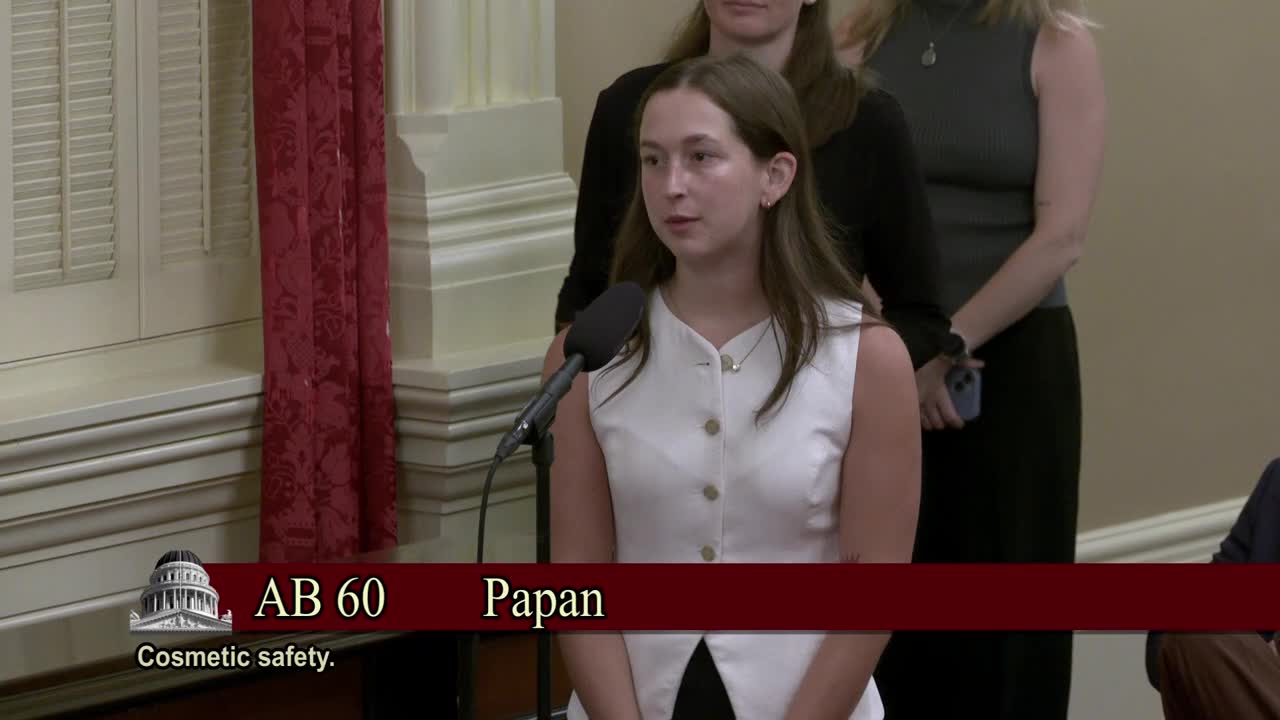 7MIN
Senate Standing Committee on Environmental Quality
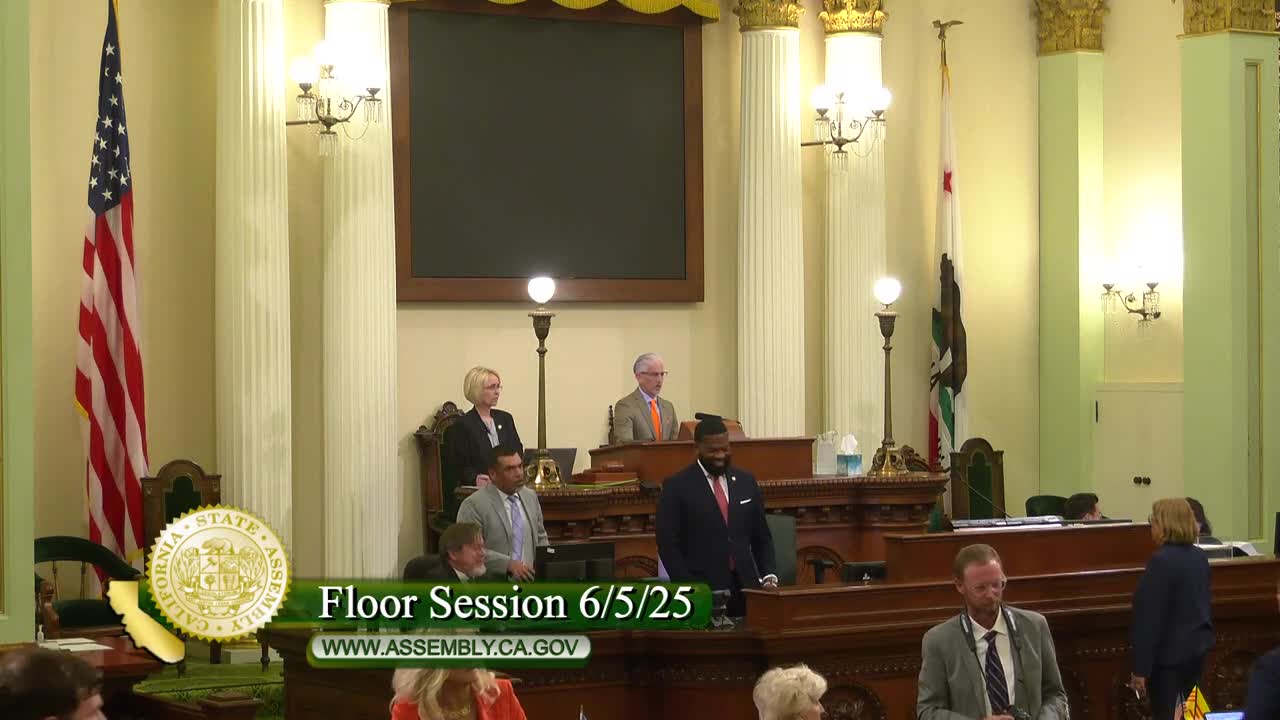 1MIN
Assembly Floor
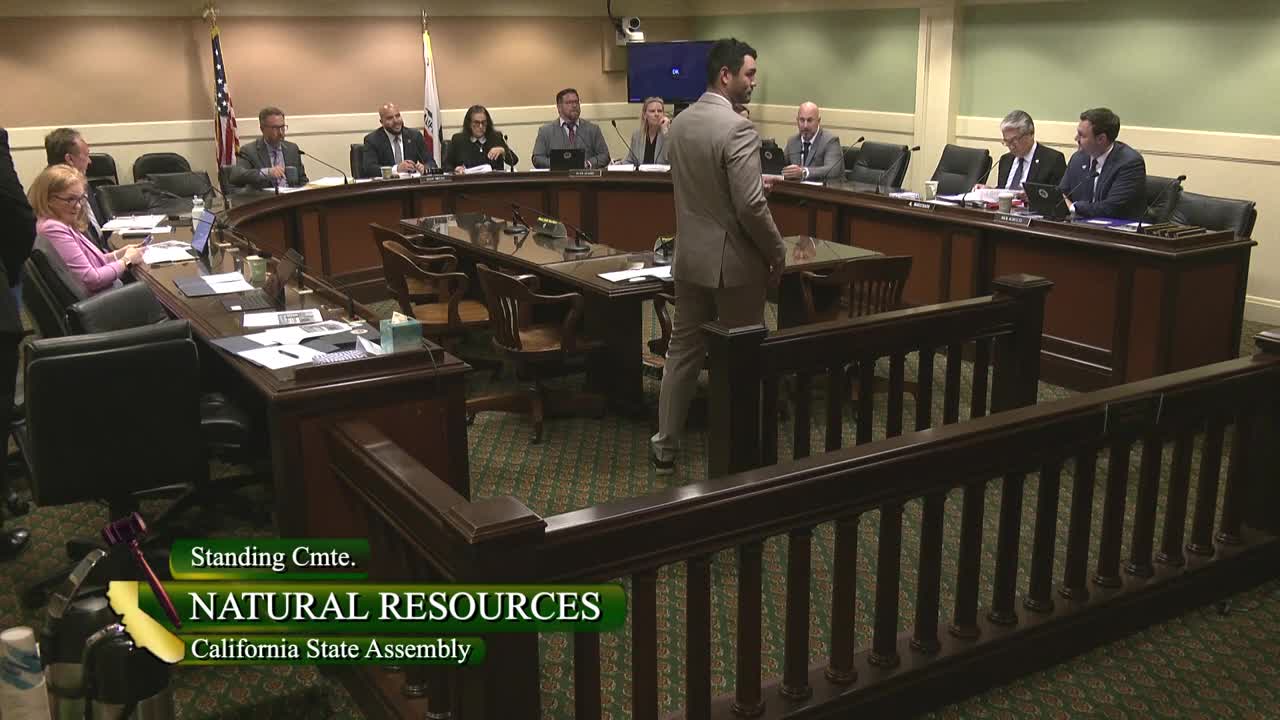 16MIN
Assembly Standing Committee on Natural Resources
Bill Author

Bill Co-Author(s):