AB 667: Professions and vocations: license examinations: interpreters.
- Session Year: 2025-2026
- House: Assembly
- Latest Version Date: 2025-09-05
Current Status:
In Progress
(2025-09-11: Ordered to inactive file at the request of Senator Durazo.)
Introduced
In Committee
Awaiting First Chamber Vote
Passed First Chamber
In Committee
Awaiting Second Chamber Vote
Passed Second Chamber
Enacted
Existing law establishes the Department of Consumer Affairs, which is composed of various boards that license and regulate various professions.
This bill would require various boards under the jurisdiction of the Department of Consumer Affairs, by July 1, 2026, January 1, 2027, to include an additional section in a license application for an applicant to identify their preferred written, spoken, and signed languages. The bill would require each board, beginning on July 1, 2027, to conduct an annual review of applicants language preferences, and, on by July 1, 2027, to also determine whether there is a substantial number of non-English-speaking applicants, as defined, who require the services of an interpreter. The bill would require each board to report the determinations to the Legislature by January 1, 2028, and, beginning January 1, 2029, to annually report to specified legislative committees on the language preference data collected from license applications.
Existing law establishes the Department of Consumer Affairs, which is composed of various boards that license and regulate various professions.
This bill would, beginning January 1, 2027, require certain boards under the jurisdiction of the Department of Consumer Affairs to permit an applicant who cannot read, speak, or write in English to use an interpreter to interpret the English written and oral portions of the license examination if specified requirements are satisfied. This bill would require an interpreter to satisfy specified requirements, including not having the license for which the applicant is taking the examination, and would prohibit the assistance of an interpreter under certain circumstances, including when English language proficiency is required for the license. The bill would also require those boards to post on their internet websites that an applicant may use an interpreter if they cannot read, speak, or write in English, the examination is not offered in their preferred language, and they meet all other requirements for licensure.This bill would require various boards under the jurisdiction of the Department of Consumer Affairs, by July 1, 2026, to include an additional section in a license application to identify their preferred written, spoken, and signed languages. The bill would require each board, beginning on July 1, 2027, to conduct an annual review of applicants language preferences, and, on July 1, 2027, to also determine whether there is a substantial number of non-English-speaking applicants, as defined, who require the services of an interpreter. The bill would require each board to report the determinations to the Legislature by January 1, 2028, and, beginning January 1, 2029, to annually report to specified legislative committees on the language preference data collected from license applications.
Existing law establishes the Department of Consumer Affairs, which is composed of various boards that license and regulate various professions.
This bill would, beginning July 1, 2026, January 1, 2027, require certain boards under the jurisdiction of the Department of Consumer Affairs to permit an applicant who cannot read, speak, or write in English to use an interpreter to interpret the English written and oral portions of the license examination if specified requirements are satisfied.
This bill would require an interpreter to satisfy specified requirements, including not having the license for which the applicant is taking the examination, and would prohibit the assistance of an interpreter under certain circumstances, including when English language proficiency is required for the license. The bill would also require those boards to post on their internet websites that an applicant may use an interpreter if they cannot read, speak, or write in English, the examination is not offered in their preferred language, and they meet all other requirements for licensure.
Existing law establishes the Department of Consumer Affairs, which is composed of various boards that license and regulate various professions.
This bill would, beginning July 1, 2026, require certain boards under the jurisdiction of the Department of Consumer Affairs to permit an applicant who cannot read, speak, or write in English to use an interpreter to interpret the English written and oral portions of the license examination if the applicant meets all other requirements for licensure, as specified. specified requirements are satisfied.
This bill would require an interpreter to satisfy specified requirements, including not having the license for which the applicant is taking the examination, and would prohibit the assistance of an interpreter under certain circumstances, including when English language proficiency is required for the license. The bill would also require those boards to post on their internet websites that an applicant may use an interpreter if they cannot read, speak, or write in English, the examination is not offered in their preferred language, and they meet all other requirements for licensure.
Existing law establishes the Department of Consumer Affairs, which is composed of various boards that license and regulate various professions. Existing law provides for the certification and regulation of certified nurse assistants and home health aides by the State Department of Public Health.
This bill would, beginning July 1, 2026, require the State Department of Public Health and certain boards under the jurisdiction of the Department of Consumer Affairs to permit an applicant who cannot read, speak, or write in English to use an interpreter to interpret the English written and oral portions of the license or certification examination, as applicable, examination if the applicant meets all other requirements for licensure, as specified.
This bill would require an interpreter to satisfy specified requirements, including not having the license for which the applicant is taking the examination. examination, and would prohibit the assistance of an interpreter under certain circumstances, including when English language proficiency is required for the license. The bill would also require those boards and the State Department of Public Health to post on their internet websites that an applicant may use an interpreter if they cannot read, speak, or write in English, the examination is not offered in their preferred language, and they meet all other requirements for licensure or certification. licensure.
This bill would require those boards and the State Department of Public Health to include in their licensure or certification applications a section that asks the applicant to identify their preferred language and, beginning July 1, 2027, to conduct an annual review of the language preferences of applicants. The bill would require the State Department of Public Health and those boards, beginning July 1, 2029, and until January 1, 2033, to annually report to specified committees of the Legislature on language preference data.Existing law establishes the Department of Consumer Affairs, which is composed of various boards that license and regulate various professions. Existing law provides for the certification and regulation of certified nurse assistants and home health aids aides by the State Department of Public Health.
This bill would, beginning July 1, 2026, require the State Department of Public Health and boards under the jurisdiction of the Department of Consumer Affairs to permit an applicant who cannot read, speak, or write in English to use an interpreter, at no cost to the applicant, interpreter to interpret the English verbal written and oral portions of the license or certification examination, as applicable, if the applicant meets all other requirements for licensure. licensure, as specified.
This bill would require an interpreter to satisfy specified requirements, including not having the license for which the applicant is taking the examination. The bill would also require those boards and the State Department of Public Health to post on their internet websites that an applicant may use an interpreter if they cannot read, speak, or write in English and if English, the examination is not offered in their preferred language, and they meet all other requirements for licensure or certification.
This bill would require those boards and the State Department of Public Health to include in their licensure or certification applications a section that asks the applicant to identify their preferred language and, beginning July 1, 2027, to conduct an annual review of the language preferences of applicants. The bill would require the State Department of Public Health and those boards, beginning July 1, 2029 2029, and until January 1, 2033, to annually report to specified committees of the Legislature on language preference data.
Existing law establishes the Department of Consumer Affairs, which is composed of various boards that license and regulate various professions. Existing law provides for the certification and regulation of nurse assistants and home health aids by the State Department of Public Health.
This bill would, beginning July 1, 2026, require the State Department of Public Health and boards under the jurisdiction of the Department of Consumer Affairs to permit an applicant who cannot read, speak, or write in English to use an interpreter, at no cost to the applicant, to interpret the English verbal and oral portions of the license or certification examination, as applicable, if the applicant meets all other requirements for licensure.
This bill would require an interpreter to satisfy specified requirements, including not having the license for which the applicant is taking the examination. The bill would also require those boards and the State Department of Public Health to post on their internet websites that an applicant may use an interpreter if they cannot read, speak, or write in English and if they meet all other requirements for licensure or certification.
This bill would require those boards and the State Department of Public Health to include in their licensure or certification applications a section that asks the applicant to identify their preferred language and, beginning July 1, 2027, to conduct an annual review of the language preferences of applicants. The bill would require the State Department of Public Health and those boards, beginning July 1, 2029 and until January 1, 2033, to annually report to specified committees of the Legislature on language preference data.
(a)For purposes of this section:
(1)Board means any board under the jurisdiction of the Department of Consumer Affairs, as specified in Section 101, with the exception of boards within Division 2 (commencing with Section 500).
(2)Interpreter means a person who is fluent in English and in the necessary second language and who can accurately speak, read, and readily interpret the necessary second language, or a person who can accurately sign and read sign language.
(3)Substantial number of non-English-speaking applicants means applicants who either do not speak English or who are unable to effectively communicate in English because it is not their native language, and who comprise 5 percent or more of the total number of applicants.
(b)By July 1, 2026, January 1, 2027, each board shall include an additional section in a license application that asks an applicant to identify their preferred written, spoken, and signed languages.
(c)Beginning July 1, 2027, each board shall conduct an annual review of applicants language preferences that are collected from license applications.
(d)(1)By July 1, 2027, each board shall determine whether there is a substantial number of non-English-speaking applicants who require the services of an interpreter. Each board shall report the determinations to the Legislature by January 1, 2028.
(2)The report shall be submitted in compliance with Section 9795 of the Government Code.
(3)Pursuant to Section 10231.5 of the Government Code, this subdivision shall become inoperative on January 1, 2030.
(e)(1)Beginning January 1, 2029, each board shall annually report to the Senate Business, Professions, and Economic Development and the Assembly Business and Professions Committees on language preference data collected from license applications.
(2)The report shall be submitted in compliance with Section 9795 of the Government Code.
(3)Pursuant to Section 10231.5 of the Government Code, this subdivision shall become inoperative on January 1, 2033.
(a)For purposes of this section:
(1)Board means any board under the jurisdiction of the Department of Consumer Affairs, as specified in Section 101, with the exception of boards within Division 2 (commencing with Section 500).
(2)Interpreter means an individual who satisfies all of the following conditions: a person who is fluent in English and in the necessary second language and who can accurately speak, read, and readily interpret the necessary second language, or a person who can accurately sign and read sign language.
(A)Is fluent in English and in the applicants preferred language.(B)Has not acted as an interpreter for the examination within the year preceding the examination date.(C)Is not licensed and has not been issued the license for which the applicant is taking the examination.(D)Is not a current or former student in an educational program for the license for which the applicant is taking the examination.(E)Is not a current or former student in an apprenticeship or training program for the license for which the applicant is taking the examination.(F)Is not a current or former owner or employee of a school for the license for which the applicant is taking the examination.(b)Notwithstanding any other law, beginning January 1, 2027, each board shall do all of the following:(1)Permit an applicant to use an interpreter, if the applicant cannot read, speak, or write in English, to interpret the English written and oral portions of a state-administered or contracted license examination to their preferred language, provided the applicant meets all other requirements for licensure and the use of an interpreter is permitted by the terms of the contract for administration of the examination.(A)An interpreter shall not assist the applicant with any examination for a license for which English language proficiency is required by law or regulation.(B)An interpreter shall not assist the applicant if an examination is offered in the applicants preferred language.(C)The board shall not charge an applicant a fee, penalty, or surcharge for the applicants use of an interpreter.(2)Post on the boards internet website that an applicant may use an interpreter to interpret a license examination if the applicant cannot read, speak, or write in English and the examination is not offered in their preferred language, provided the applicant meets all other competency requirements for licensure. This notice shall be posted in English, Spanish, Farsi, Hindi, Chinese, Cantonese, Mandarin, Korean, Vietnamese, Tagalog, and Arabic.(3)Include an additional section in a license application that asks an applicant to identify their preferred written, spoken, and signed languages.(3)Substantial number of non-English-speaking applicants means applicants who either do not speak English or who are unable to effectively communicate in English because it is not their native language, and who comprise 5 percent or more of the total number of applicants.
(b)By July 1, 2026, each board shall include an additional section in a license application that asks an applicant to identify their preferred written, spoken, and signed languages.
(c)Beginning July 1, 2027, each board shall conduct an annual review of applicants language preferences that are collected from license applications.
(d)(1)By July 1, 2027, each board shall determine whether there is a substantial number of non-English-speaking applicants who require the services of an interpreter. Each board shall report the determinations to the Legislature by January 1, 2028.
(2)The report shall be submitted in compliance with Section 9795 of the Government Code.
(3)Pursuant to Section 10231.5 of the Government Code, this subdivision shall become inoperative on January 1, 2030.
(d)(e)(1)Beginning January 1, 2029, each board shall annually report to the Senate Business, Professions, and Economic Development and the Assembly Business and Professions Committees on language preference data collected from license applications.
(2)The report shall be submitted in compliance with Section 9795 of the Government Code.
(3)Pursuant to Section 10231.5 of the Government Code, this subdivision shall become inoperative on January 1, 2033.
(a)For purposes of this section:
(1)Board means any board under the jurisdiction of the Department of Consumer Affairs, as specified in Section 101, with the exception of boards within Division 2 (commencing with Section 500).
(2)Interpreter means an individual who satisfies all of the following conditions:
(A)Is fluent in English and in the applicants preferred language.
(B)Has not acted as an interpreter for the examination within the year preceding the examination date.
(C)Is not licensed and has not been issued the license for which the applicant is taking the examination.
(D)Is not a current or former student in an educational program for the license for which the applicant is taking the examination.
(E)Is not a current or former student in an apprenticeship or training program for the license for which the applicant is taking the examination.
(F)Is not a current or former owner or employee of a school for the license for which the applicant is taking the examination.
(b)Notwithstanding any other law, beginning July 1, 2026, January 1, 2027, each board shall do all of the following:
(1)Permit an applicant to use an interpreter, if the applicant cannot read, speak, or write in English, to interpret the English written and oral portions of a state-administered or contracted license examination to their preferred language, provided the applicant meets all other requirements for licensure and the use of an interpreter is permitted by the terms of the contract for administration of the examination.
(A)An interpreter shall not assist the applicant with any examination for a license for which English language proficiency is required by law or regulation.
(B)An interpreter shall not assist the applicant if an examination is offered in the applicants preferred language.
(C)The board shall not charge an applicant a fee, penalty, or surcharge for the applicants use of an interpreter.
(2)Post on the boards internet website that an applicant may use an interpreter to interpret a license examination if the applicant cannot read, speak, or write in English and the examination is not offered in their preferred language, provided the applicant meets all other competency requirements for licensure. This notice shall be posted in English, Spanish, Farsi, Hindi, Chinese, Cantonese, Mandarin, Korean, Vietnamese, Tagalog, and Arabic.
(3)Include an additional section in a license application that asks an applicant to identify their preferred written, spoken, and signed languages.
(c)Beginning July 1, 2027, each board shall conduct an annual review of applicants language preferences that are collected from license applications.
(d)(1)Beginning January 1, 2029, each board shall annually report to the Senate Business, Professions, and Economic Development and the Assembly Business and Professions Committees on language preference data collected from license applications.
(2)The report shall be submitted in compliance with Section 9795 of the Government Code.
(3)Pursuant to Section 10231.5 of the Government Code, this subdivision shall become inoperative on January 1, 2033.
(a)For purposes of this section:
(1)Board means any board under the jurisdiction of the Department of Consumer Affairs, as specified in Section 101, with the exception of boards within Division 2 (commencing with Section 500).
(2)Interpreter means an individual who satisfies all of the following conditions:
(A)Is fluent in English and in the applicants preferred language.
(B)Has not acted as an interpreter for the examination within the year preceding the examination date.
(C)Is not licensed and has not been issued the license for which the applicant is taking the examination.
(D)Is not a current or former student in an educational program for the license for which the applicant is taking the examination.
(E)Is not a current or former student in an apprenticeship or training program for the license for which the applicant is taking the examination.
(F)Is not a current or former owner or employee of a school for the license for which the applicant is taking the examination.
(b)Notwithstanding any other law, beginning July 1, 2026, each board shall do all of the following:
(1)Permit an applicant to use an interpreter, if the applicant cannot read, speak, or write in English, to interpret the English written and oral portions of a state-administered or contracted license examination to their preferred language, provided the applicant meets all other requirements for licensure. licensure and the use of an interpreter is permitted by the terms of the contract for administration of the examination.
(A)An interpreter shall not assist the applicant with any examination for a license for which English language proficiency is required by law or regulation.
(B)An interpreter shall not assist the applicant if an examination is offered in the applicants preferred language.
(C)The board shall not charge an applicant a fee, penalty, or surcharge for the applicants use of an interpreter.
(2)Post on the boards internet website that an applicant may use an interpreter to interpret a license examination if the applicant cannot read, speak, or write in English and the examination is not offered in their preferred language, provided the applicant meets all other competency requirements for licensure. This notice shall be posted in English, Spanish, Farsi, Hindi, Chinese, Cantonese, Mandarin, Korean, Vietnamese, Tagalog, and Arabic.
(3)Include an additional section in a license application that asks an applicant to identify their preferred written, spoken, and signed languages.
(c)Beginning July 1, 2027, each board shall conduct an annual review of applicants language preferences that are collected from license applications.
(d)(1)Beginning January 1, 2029, each board shall annually report to the Senate Business, Professions, and Economic Development and the Assembly Business and Professions Committees on language preference data collected from license applications.
(2)The report shall be submitted in compliance with Section 9795 of the Government Code.
(3)Pursuant to Section 10231.5 of the Government Code, this subdivision shall become inoperative on January 1, 2033.
(a)For purposes of this section:
(1)Board means any board under the jurisdiction of the Department of Consumer Affairs, as specified in Section 101. 101, with the exception of boards within Division 2 (commencing with Section 500).
(2)Interpreter means an individual who satisfies all of the following conditions:
(A)Is fluent in English and in the applicants preferred language.
(B)Has not acted as an interpreter for the examination within the year preceding the examination date.
(C)Is not licensed and has not been issued the license for which the applicant is taking the examination.
(D)Is not a current or former student in an educational program for the license for which the applicant is taking the examination.
(E)Is not a current or former student in an apprenticeship or training program for the license for which the applicant is taking the examination.
(F)Is not a current or former owner or employee of a school for the license for which the applicant is taking the examination.
(b)Notwithstanding any other law, beginning July 1, 2026, each board shall do all of the following:
(1)Permit an applicant to use an interpreter, if the applicant cannot read, speak, or write in English, to interpret the English written and oral portions of a state-administered or contracted license examination to their preferred language, provided the applicant meets all other requirements for licensure.
(A)An interpreter shall not assist the applicant with any section of an examination that is explicitly intended to test an applicants English language skills. examination for a license for which English language proficiency is required by law or regulation.
(B)An interpreter shall not assist the applicant if an examination is offered in the applicants preferred language.
(C)The board shall not charge an applicant a fee, penalty, or surcharge for the applicants use of an interpreter.
(2)Post on the boards internet website that an applicant may use an interpreter to interpret a license examination if the applicant cannot read, speak, or write in English and the examination is not offered in their preferred language, provided the applicant meets all other competency requirements for licensure. This notice shall be posted in English, Spanish, Farsi, Hindi, Chinese, Cantonese, Mandarin, Korean, Vietnamese, Tagalog, and Arabic.
(3)Include an additional section in a license application that asks an applicant to identify their preferred written, spoken, and signed languages.
(c)Beginning July 1, 2027, each board shall conduct an annual review of applicants language preferences that are collected from license applications.
(d)(1)Beginning January 1, 2029, each board shall annually report to the Senate Business, Professions, and Economic Development and the Assembly Business and Professions Committees on language preference data collected from license applications.
(2)The report shall be submitted in compliance with Section 9795 of the Government Code.
(3)Pursuant to Section 10231.5 of the Government Code, this subdivision shall become inoperative on January 1, 2033.
SEC. 2.Section 1337.25 is added to the Health and Safety Code, immediately following Section 1337.2, to read:1337.25.(a)For purposes of this section, interpreter means an individual who satisfies all of the following conditions:(1)Is fluent in English and in the applicants preferred language.(2)Has not acted as an interpreter for an examination for certification as a certified nurse assistant within the year preceding the examination date.(3)Is not a certified nurse assistant and has not held a state certified nurse assistant certificate.(4)Is not a current or former student in an educational program for certification as a certified nurse assistant.(5)Is not a current or former student in a certified nurse assistant apprenticeship or training program.(6)Is not a current or former owner or employee of a school for certification as a certified nurse assistant.(b)Notwithstanding any other law, beginning July 1, 2026, the department shall do all of the following:(1)Permit an applicant to use an interpreter, if the applicant cannot read, speak, or write in English, to interpret the English written and oral portions of a state-administered or contracted certified nurse assistant examination to their preferred language, provided the applicant meets all other requirements for certification.(A)An interpreter shall not assist the applicant with any section of an examination that is explicitly intended to test an applicants English language skills.(B)An interpreter shall not assist the applicant if an examination is offered in the applicants preferred language.(C)The board shall not charge an applicant a fee, penalty, or surcharge for the applicants use of an interpreter.(2)Post on the departments internet website that an applicant may use an interpreter to interpret the certified nurse assistant examination if the applicant cannot read, speak, or write in English and the examination is not offered in their preferred language, provided the applicant meets all other competency requirements for certification. This notice shall be posted in English, Spanish, Farsi, Hindi, Chinese, Cantonese, Mandarin, Korean, Vietnamese, Tagalog, and Arabic.(3)Include an additional section in the certified nurse assistant application that asks an applicant to identify their preferred written, spoken, and signed languages.(c)Beginning July 1, 2027, the department shall conduct an annual review of applicants language preferences collected from applications.(d)(1)Beginning January 1, 2029, the department shall annually report to the Senate and Assembly Health Committees on language preference data collected from certified nurse assistant certification applications.(2)The report shall be submitted in compliance with Section 9795 of the Government Code.(3)Pursuant to Section 10231.5 of the Government Code, this subdivision shall become inoperative on January 1, 2033.SEC. 3.Section 1736.3 is added to the Health and Safety Code, to read:1736.3.(a)For purposes of this section, interpreter means an individual who satisfies all of the following conditions:(1)Is fluent in English and in the applicants preferred language.(2)Has not acted as an interpreter for an examination for certification as a home health aid within the year preceding the examination date.(3)Is not a certified home health aid and has not held a certificate as a certified home health aide in the state.(4)Is not a current or former student in an educational program for certification as a certified home health aide.(5)Is not a current or former student in a certified home health aide apprenticeship program.(6)Is not a current or former owner or employee of a school for certification as a certified home health aide.(b)Notwithstanding any other law, beginning July 1, 2026, the department shall do all of the following:(1)Permit an applicant to use an interpreter if the applicant cannot read, speak, or write in English, to interpret the English written and oral portions of the certified home health aide examination to their preferred language, provided the applicant meets all other requirements for certification.(A)An interpreter shall not assist the applicant with any section of an examination that is explicitly intended to test an applicants English language skills.(B)An interpreter shall not assist the applicant if an examination is offered in the applicants preferred language.(C)The board shall not charge an applicant a fee, penalty, or surcharge for the applicants use of an interpreter.(2)Post on the departments internet website that an applicant may use an interpreter to interpret the certified home health aid examination if the applicant cannot read, speak, or write in English and the examination is not offered in their preferred language, provided the applicant meets all other competency requirements for certification. This notice shall be posted in English, Spanish, Farsi, Hindi, Chinese, Cantonese, Mandarin, Korean, Vietnamese, Tagalog, and Arabic.(3)Include an additional section in the certified home health aid application that asks an applicant to identify their preferred written, spoken, and signed languages.(c)Beginning July 1, 2027, the department shall conduct an annual review of applicants language preferences collected from applications.(d)(1)Beginning on January 1, 2029, the department shall annually report to the Senate and Assembly Health Committees on language preference data collected from certified home health aide certification applications.(2)The report shall be submitted in compliance with Section 9795 of the Government Code.(3)Pursuant to Section 10231.5 of the Government Code, this subdivision shall become inoperative on January 1, 2033.(a)For purposes of this section:
(1)Board means any board under the jurisdiction of the Department of Consumer Affairs, as specified in Section 101.
(2)Interpreter means an individual who satisfies all of the following conditions:
(A)Is fluent in English and in the preferred language of the applicant. applicants preferred language.
(B)Has not acted as an interpreter for the examination within the year preceding the date of the examination. examination date.
(C)Is not licensed and has not been issued the license for which the applicant is taking the examination.
(D)Is not a current or former student in an educational program for the license for which the applicant is taking the examination.
(E)Is not a current or former student in an apprenticeship or training program for the license for which the applicant is taking the examination.
(F)Is not a current or former owner or employee of a school for the license for which the applicant is taking the examination.
(b)Notwithstanding any other law, beginning July 1, 2026, each board shall do all of the following:
(1)Permit an applicant who to use an interpreter, if the applicant cannot read, speak, or write in English to use an interpreter, at no cost to the applicant, English, to interpret the English verbal written and oral portions of a state-administered or contracted license examination to their preferred language, provided the applicant meets all other requirements for licensure.
(A)An interpreter shall not assist the applicant with any section of an examination that is explicitly intended to test an applicants English language skills.
(B)An interpreter shall not assist the applicant if an examination is offered in the applicants preferred language.
(C)The board shall not charge an applicant a fee, penalty, or surcharge for the applicants use of an interpreter.
(2)Post on the boards internet website that an applicant may use an interpreter to interpret a license examination if the applicant cannot read, speak, or write in English, English and the examination is not offered in their preferred language, provided the applicant meets all other competency requirements for licensure. This notice shall be posted in English, Spanish, Farsi, Hindi, Chinese, Cantonese, Mandarin, Korean, Vietnamese, Tagalog, and Arabic.
(3)Include an additional section in a license application that asks an applicant to identify their preferred written, spoken, and signed languages.
(c)Beginning July 1, 2027, each board shall conduct an annual review of the language preferences of applicants for licensure that is applicants language preferences that are collected from license applications.
(d)(1)Beginning January 1, 2029, each board shall annually report to the Senate Business, Professions, and Economic Development and the Assembly Business and Professions Committees on language preference data collected from license applications.
(2)The report shall be submitted in compliance with Section 9795 of the Government Code.
(3)Pursuant to Section 10231.5 of the Government Code, this subdivision shall become inoperative on January 1, 2033.
SEC. 2.Section 1337.25 is added to the Health and Safety Code, immediately following Section 1337.2, to read:1337.25.(a)For purposes of this section, interpreter means an individual who satisfies all of the following conditions:
(1)Is fluent in English and in the preferred language of the applicant. applicants preferred language.
(2)Has not acted as an interpreter for an examination for certification as a certified nurse assistant within the year preceding the date of the examination. examination date.
(3)Is not a certified nurse assistant and has not held a certificate as a nurse assistant in the state. state certified nurse assistant certificate.
(4)Is not a current or former student in an educational program for certification as a certified nurse assistant.
(5)Is not a current or former student in a certified nurse assistant apprenticeship or training program.
(6)Is not a current or former owner or employee of a school for certification as a certified nurse assistant.
(b)Notwithstanding any other law, beginning July 1, 2026, the department shall do all of the following:
(1)Permit an applicant who to use an interpreter, if the applicant cannot read, speak, or write in English to use an interpreter, at no cost to the applicant, English, to interpret the English verbal written and oral portions of a state-administered or contracted certified nurse assistant examination to their preferred language, provided the applicant meets all other requirements for certification.
(A)An interpreter shall not assist the applicant with any section of an examination that is explicitly intended to test an applicants English language skills.
(B)An interpreter shall not assist the applicant if an examination is offered in the applicants preferred language.
(C)The board shall not charge an applicant a fee, penalty, or surcharge for the applicants use of an interpreter.
(2)Post on the departments internet website that an applicant may use an interpreter to interpret the certified nurse assistant examination if the applicant cannot read, speak, or write in English, English and the examination is not offered in their preferred language, provided the applicant meets all other competency requirements for certification. This notice shall be posted in English, Spanish, Farsi, Hindi, Chinese, Cantonese, Mandarin, Korean, Vietnamese, Tagalog, and Arabic.
(3)Include an additional section in the certified nurse assistant application that asks an applicant to identify their preferred written, spoken, and signed languages.
(c)Beginning July 1, 2027, the department shall conduct an annual review of the language preferences of applicants for nurse assistant certification that is applicants language preferences collected from applications.
(d)(1)Beginning January 1, 2029, the department shall annually report to the Senate and Assembly Health Committees on language preference data collected from certified nurse assistant certification applications.
(2)The report shall be submitted in compliance with Section 9795 of the Government Code.
(3)Pursuant to Section 10231.5 of the Government Code, this subdivision shall become inoperative on January 1, 2033.
SEC. 3.Section 1736.3 is added to the Health and Safety Code, to read:1736.3.(a)For purposes of this section, interpreter means an individual who satisfies all of the following conditions:
(1)Is fluent in English and in the preferred language of the applicant. applicants preferred language.
(2)Has not acted as an interpreter for an examination for certification as a home health aid within the year preceding the date of the examination. examination date.
(3)Is not a certified home health aid and has not held a certificate as a certified home health aid aide in the state.
(4)Is not a current or former student in an educational program for certification as a nurse assistant. certified home health aide.
(5)Is not a current or former student in a certified home health aid aide apprenticeship program.
(6)Is not a current or former owner or employee of a school for certification as a nurse assistant. certified home health aide.
(b)Notwithstanding any other law, beginning July 1, 2026, the department shall do all of the following:
(1)Permit an applicant who to use an interpreter if the applicant cannot read, speak, or write in English to use an interpreter, at no cost to the applicant, English, to interpret the English verbal written and oral portions of the certified home health aid aide examination to their preferred language, provided the applicant meets all other requirements for certification.
(A)An interpreter shall not assist the applicant with any section of an examination that is explicitly intended to test an applicants English language skills.
(B)An interpreter shall not assist the applicant if an examination is offered in the applicants preferred language.
(C)The board shall not charge an applicant a fee, penalty, or surcharge for the applicants use of an interpreter.
(2)Post on the departments internet website that an applicant may use an interpreter to interpret the certified home health aid examination if the applicant cannot read, speak, or write in English, English and the examination is not offered in their preferred language, provided the applicant meets all other competency requirements for certification. This notice shall be posted in English, Spanish, Farsi, Hindi, Chinese, Cantonese, Mandarin, Korean, Vietnamese, Tagalog, and Arabic.
(3)Include an additional section in the certified home health aid application that asks an applicant to identify their preferred written, spoken, and signed languages.
(c)Beginning July 1, 2027, the department shall conduct an annual review of the language preferences of applicants for home health aid certification that is applicants language preferences collected from applications.
(d)(1)Beginning on January 1, 2029, the department shall annually report to the Senate and Assembly Health Committees on language preference data collected from certified home health aid aide certification applications.
(2)The report shall be submitted in compliance with Section 9795 of the Government Code.
(3)Pursuant to Section 10231.5 of the Government Code, this subdivision shall become inoperative on January 1, 2033.
(a)For purposes of this section:
(1)Board means any board under the jurisdiction of the Department of Consumer Affairs, as specified in Section 101.
(2)Interpreter means an individual who satisfies all of the following conditions:
(A)Is fluent in English and in the preferred language of the applicant.
(B)Has not acted as an interpreter for the examination within the year preceding the date of the examination.
(C)Is not licensed and has not been issued the license for which the applicant is taking the examination.
(D)Is not a current or former student in an educational program for the license for which the applicant is taking the examination.
(E)Is not a current or former student in an apprenticeship or training program for the license for which the applicant is taking the examination.
(F)Is not a current or former owner or employee of a school for the license for which the applicant is taking the examination.
(b)Notwithstanding any other law, beginning July 1, 2026, each board shall do all of the following:
(1)Permit an applicant who cannot read, speak, or write in English to use an interpreter, at no cost to the applicant, to interpret the English verbal and oral portions of a state-administered or contracted license examination to their preferred language, provided the applicant meets all other requirements for licensure.
(2)Post on the boards internet website that an applicant may use an interpreter to interpret a license examination if the applicant cannot read, speak, or write in English, provided the applicant meets all other competency requirements for licensure. This notice shall be posted in English, Spanish, Farsi, Hindi, Chinese, Cantonese, Mandarin, Korean, Vietnamese, Tagalog, and Arabic.
(3)Include an additional section in a license application that asks an applicant to identify their preferred written, spoken, and signed languages.
(c)Beginning July 1, 2027, each board shall conduct an annual review of the language preferences of applicants for licensure that is collected from license applications.
(d)(1)Beginning January 1, 2029, each board shall annually report to the Senate Business, Professions, and Economic Development and the Assembly Business and Professions Committees on language preference data collected from license applications.
(2)The report shall be submitted in compliance with Section 9795 of the Government Code.
(3)Pursuant to Section 10231.5 of the Government Code, this subdivision shall become inoperative on January 1, 2033.
SEC. 2.Section 1337.25 is added to the Health and Safety Code, immediately following Section 1337.2, to read:1337.25.(a)For purposes of this section, interpreter means an individual who satisfies all of the following conditions:
(1)Is fluent in English and in the preferred language of the applicant.
(2)Has not acted as an interpreter for an examination for certification as a nurse assistant within the year preceding the date of the examination.
(3)Is not a certified nurse assistant and has not held a certificate as a nurse assistant in the state.
(4)Is not a current or former student in an educational program for certification as a nurse assistant.
(5)Is not a current or former student in a certified nurse assistant apprenticeship or training program.
(6)Is not a current or former owner or employee of a school for certification as a nurse assistant.
(b)Notwithstanding any other law, beginning July 1, 2026, the department shall do all of the following:
(1)Permit an applicant who cannot read, speak, or write in English to use an interpreter, at no cost to the applicant, to interpret the English verbal and oral portions of a state-administered or contracted certified nurse assistant examination to their preferred language, provided the applicant meets all other requirements for certification.
(2)Post on the departments internet website that an applicant may use an interpreter to interpret the certified nurse assistant examination if the applicant cannot read, speak, or write in English, provided the applicant meets all other competency requirements for certification. This notice shall be posted in English, Spanish, Farsi, Hindi, Chinese, Cantonese, Mandarin, Korean, Vietnamese, Tagalog, and Arabic.
(3)Include an additional section in the certified nurse assistant application that asks an applicant to identify their preferred written, spoken, and signed languages.
(c)Beginning July 1, 2027, the department shall conduct an annual review of the language preferences of applicants for nurse assistant certification that is collected from applications.
(d)(1)Beginning January 1, 2029, the department shall annually report to the Senate and Assembly Health Committees on language preference data collected from nurse assistant certification applications.
(2)The report shall be submitted in compliance with Section 9795 of the Government Code.
(3)Pursuant to Section 10231.5 of the Government Code, this subdivision shall become inoperative on January 1, 2033.
SEC. 3.Section 1736.3 is added to the Health and Safety Code, to read:1736.3.(a)For purposes of this section, interpreter means an individual who satisfies all of the following conditions:
(1)Is fluent in English and in the preferred language of the applicant.
(2)Has not acted as an interpreter for an examination for certification as a home health aid within the year preceding the date of the examination.
(3)Is not a certified home health aid and has not held a certificate as a home health aid in the state.
(4)Is not a current or former student in an educational program for certification as a nurse assistant.
(5)Is not a current or former student in a certified home health aid apprenticeship program.
(6)Is not a current or former owner or employee of a school for certification as a nurse assistant.
(b)Notwithstanding any other law, beginning July 1, 2026, the department shall do all of the following:
(1)Permit an applicant who cannot read, speak, or write in English to use an interpreter, at no cost to the applicant, to interpret the English verbal and oral portions of the certified home health aid examination to their preferred language, provided the applicant meets all other requirements for certification.
(2)Post on the departments internet website that an applicant may use an interpreter to interpret the certified home health aid examination if the applicant cannot read, speak, or write in English, provided the applicant meets all other competency requirements for certification. This notice shall be posted in English, Spanish, Farsi, Hindi, Chinese, Cantonese, Mandarin, Korean, Vietnamese, Tagalog, and Arabic.
(3)Include an additional section in the certified home health aid application that asks an applicant to identify their preferred written, spoken, and signed languages.
(c)Beginning July 1, 2027, the department shall conduct an annual review of the language preferences of applicants for home health aid certification that is collected from applications.
(d)(1)Beginning on January 1, 2029, the department shall annually report to the Senate and Assembly Health Committees on language preference data collected from home health aid certification applications.
(2)The report shall be submitted in compliance with Section 9795 of the Government Code.
(3)Pursuant to Section 10231.5 of the Government Code, this subdivision shall become inoperative on January 1, 2033.
|
Date
|
Status
|
|---|---|
| Sep 11, 2025 | Ordered to inactive file at the request of Senator Durazo. |
| Sep 8, 2025 | Read second time. Ordered to third reading. |
| Sep 5, 2025 | Read third time and amended. Ordered to second reading. |
| Sep 2, 2025 | Read second time. Ordered to third reading. |
| Aug 29, 2025 | Read second time and amended. Ordered returned to second reading. |
| Aug 29, 2025 | From committee: Amend, and do pass as amended. (Ayes 5. Noes 2.) (August 29). |
| Aug 25, 2025 | In committee: Referred to suspense file. |
| Aug 18, 2025 | (Ayes 27. Noes 0. Page 2168.) |
| Aug 18, 2025 | From committee chair, with author's amendments: Amend, and re-refer to committee. Read second time, amended, and re-referred to Com. on APPR. |
| Aug 7, 2025 | In committee: Hearing postponed by committee. |
| Jul 14, 2025 | From committee: Do pass and re-refer to Com. on APPR. (Ayes 8. Noes 1.) (July 14). Re-referred to Com. on APPR. |
| Jul 8, 2025 | From committee chair, with author's amendments: Amend, and re-refer to committee. Read second time, amended, and re-referred to Com. on B. P. & E.D. |
| Jun 25, 2025 | In committee: Set, first hearing. Hearing canceled at the request of author. |
| Jun 18, 2025 | Referred to Com. on B. P. & E.D. |
| Jun 4, 2025 | In Senate. Read first time. To Com. on RLS. for assignment. |
| Jun 3, 2025 | Read third time. Passed. Ordered to the Senate. (Ayes 71. Noes 1. Page 1976.) |
| May 27, 2025 | Read second time. Ordered to third reading. |
| May 23, 2025 | From committee: Do pass. (Ayes 13. Noes 1.) (May 23). |
| May 7, 2025 | In committee: Set, first hearing. Referred to APPR. suspense file. |
| Apr 21, 2025 | Re-referred to Com. on APPR. pursuant to Assembly Rule 96. |
| Apr 10, 2025 | Re-referred to Com. on HEALTH. |
| Apr 9, 2025 | Read second time and amended. |
| Apr 8, 2025 | From committee: Amend, and do pass as amended and re-refer to Com. on HEALTH. (Ayes 15. Noes 0.) (April 8). |
| Apr 2, 2025 | Re-referred to Com. on B. & P. |
| Apr 1, 2025 | From committee chair, with author's amendments: Amend, and re-refer to Com. on B. & P. Read second time and amended. |
| Mar 3, 2025 | Referred to Coms. on B. & P. and HEALTH. |
| Feb 15, 2025 | From printer. May be heard in committee March 17. |
| Feb 14, 2025 | Read first time. To print. |
|
Date
|
Description
|
Location
|
Votes
|
|
|---|---|---|---|---|
| Aug 29, 2025 | Do pass as amended | Senate Standing Committee on Appropriations |
Passed |
|
| Aug 25, 2025 | Placed on suspense file | Senate Standing Committee on Appropriations |
Passed |
|
| Jul 14, 2025 | Do pass, but first be re-referred to the Committee on [Appropriations] | Senate Standing Committee on Business, Professions and Economic Development |
Passed |
|
| Jun 3, 2025 | AB 667 Solache Assembly Third Reading | Assembly Floor |
Passed |
|
| May 23, 2025 | Do pass. | Assembly Standing Committee on Appropriations |
Passed |
|
| Apr 8, 2025 | Do pass as amended and be re-referred to the Committee on [Health] | Assembly Standing Committee on Business and Professions |
Passed |
This list shows positions taken on this bill by organizations on the date displayed, which is linked to the original source.
Positions by individuals are not included.
|
Organization
|
Position
|
Date
|
|---|---|---|
| AdvancED Consulting, LLC | ** Support | |
| Alliance for A Better Community | ** Support | |
| AltaMed Health Services | ** Support | |
| Amigos de Guadalupe Center for Justice and Empowerment | ** Support | |
| APRIL Parker Foundation | ** Support | |
| Asian Pacific Islander Small Business Coalition | ** Support | |
| Asian Pacific Islander Small Business Collaborative | ** Support | |
| Bay Area Medical Academy | ** Support | |
| Ben Tzedek Legal Services | ** Support | |
| Bet Tzedek Legal Services | ** Support | |
| Binational of Central California | ** Support | |
| Board For Professional Engineers, Land Surveyors And Geologists | ** Against | |
| Buen Vecino | ** Support | |
| Building Skills Partnership | ** Support | |
| CA Healthy Nail Salon Collaborative | ** Support | |
| California Community Foundation | ** Support | |
| California Healthy Nail Salon Collaborative | ** Support | |
| California Immigrant Policy Center | ** Support | |
| California Primary Care Association | ** Support | |
| Canal Alliance | ** Support | |
| Central Valley Immigrant Integration Collaborative | ** Support | |
| Central Valley Workers Center | ** Support | |
| Centro Community Hispanic Association | ** Support | |
| Centro Community Hispanic Association (centro Cha Inc.) | ** Support | |
| Centro De Trabajadores Unidos | ** Support | |
| CHILDREN'S INSTITUTE | ** Support | |
| Chinese for Affirmative Action | ** Support | |
| City Heights Community Development Corporation | ** Support | |
| CLEAN Carwash Worker Center | ** Support | |
| Democracy at Work Institute | ** Support | |
| Diversity in Health Training Institute | ** Support | |
| East Bay Sanctuary Covenant | ** Support | |
| Economic Mobility for All Coalition | ** Support | |
| Education and Leadership Foundation | ** Support | |
| First Gen Empower | ** Support | |
| First Graduate | ** Support | |
| Foundation For California Community Colleges | ** Support | |
| Hmong Innovating Politics | ** Support | |
| Immigrants Rising | ** Support | |
| Inclusive Action for the City | ** Support | |
| Initiating Change in Our Neighborhoods | ** Support | |
| Initiating Change In Our Neighborhoods Community Development Corporation | ** Support | |
| Initiating Change in Our Neighborhoods Community Development Corporation Icon CDC | ** Support | |
| Inland Coalition for Immigrant Justice | ** Support | |
| Inland Empire Immigrant Youth Collective | ** Support | |
| Interfaith Refugee & Immigration Service | ** Support | |
| International Rescue Committee | ** Support | |
| La Cocina | ** Support | |
| Language Access | ** Support | |
| Latino Community Foundation | ** Support | |
| Lisc San Diego | ** Support | |
| Los Angeles Economic Equity Accelerator and Fellowship | ** Support | |
| Loyola Law School Sunita Jain Anti-Trafficking Initiative | ** Support | |
| Moreno Seeds Foundation | ** Support | |
| Multicultural Institute | ** Support | |
| National Immigration Law Center | ** Support | |
| New Mexico Immigrant Law Center | ** Support | |
| Nile Sisters Development Initiative | ** Support | |
| O Community Doulas | ** Support | |
| On The Move | ** Support | |
| Orale: Organizing Rooted in Abolition, Liberation, and Empowerment | ** Support | |
| Pars Equality Center | ** Support | |
| Pre-Health Dreamers | ** Support | |
| REDF | ** Support | |
| Robinson HR & Benefits | ** Support | |
| San Diego Refugee Community Coalition | ** Support | |
| Second Harvest of Silicon Valley | ** Support | |
| Slavic Refugee and Immigrant Services Organization | ** Support | |
| Small Business Majority | ** Support | |
| Somali Family Service of San Diego | ** Support | |
| South Asian Network | ** Support | |
| Southern California College Attainment Network | ** Support | |
| Survivors of Torture, International | ** Support | |
| TODEC Legal Center | ** Support | |
| Trabajadores Unidos Workers United | ** Support | |
| United Taxi Workers of San Diego | ** Support | |
| Unite-LA | ** Support | |
| Upvalley Family Centers of Napa County | ** Support | |
| Upwardly Global | ** Support | |
| Veggielution | ** Support | |
| Vision y Compromiso | ** Support |
SENATE RULES COMMITTEE Office of Senate Floor Analyses (916) 651-1520 Fax: (916) 327-4478 | AB 667 |
THIRD READING
Bill No: AB 667
Author: Solache (D)
Amended: 9/5/25 in Senate
Vote: 21
SENATE BUS., PROF. & ECON. DEV. COMMITTEE: 8-1, 7/14/25
AYES: Ashby, Choi, Archuleta, Arreguín, Grayson, Menjivar, Smallwood-Cuevas, Umberg
NOES: Strickland
NO VOTE RECORDED: Niello, Weber Pierson
SENATE APPROPRIATIONS COMMITTEE: 5-2, 8/29/25
AYES: Caballero, Cabaldon, Grayson, Richardson, Wahab
NOES: Seyarto, Dahle
ASSEMBLY FLOOR: 71-1, 6/3/25 - See last page for vote
SUBJECT: Professions and vocations: license examinations: interpreters
SOURCE: Author
DIGEST:
This bill requires all non-healing arts programs within the Department of Consumer Affairs (DCA) to add a question to their applications for the applicant to identify their preferred written, spoken, and signed languages, effective January 1, 2027. This bill requires each impacted program to determine whether there is a substantial number of non-English-speaking applicants who require the services of an interpreter and report their determinations to the Legislature by January 1, 2027.
Senate Floor Amendments of 9/5/25 delay implementation.
ANALYSIS:
Existing law:
- Establishes the Department of Consumer Affairs (DCA) with various regulatory boards, bureaus, committees, and commissions within the DCA umbrella. (Business and Professions Code (BPC) §§ 100, 101)
- Identifies 36 regulatory boards, bureaus, committees, committees, and commissions that comprise the DCA. (BPC § 101)
- Specifies that “board” as used in the BPC refers to the board in which the administration of the provision is vested, and unless otherwise expressly provided, includes “bureau,” “commission,” “committee,” “department,” “division,” “examining committee,” “program,” and “agency.” (BPC § 22)
- Provides that all boards within the DCA are established for the purpose of ensuring that those private businesses and professions deemed to engage in activities which have potential impact upon the public health, safety, and requires all boards to establish minimum qualifications and levels of competency and license persons desiring to engage in the occupations they regulate upon determining that such persons possess the requisite skills and qualifications necessary to provide safe and effective services to the public. (BPC § 101.6)
- Establishes the Dymally-Alatorre Bilingual Services Act that defines “substantial number of non-English-speaking people” as members of a group who do not speak English or who are unable to effectively communicate in English because it is not their native language, and who comprise 5 percent or more of the people served by a state agency. (Government (GOV) §§ 7290 et seq.)
- Requires each state agency to conduct a language survey and develop and update an implementation plan that complies with the requirements of the Dymally-Alatorre Bilingual Services Act. Requires the survey to determine and provide information, as specified, including: the number and percentage of non-English-speaking people served by each statewide office broken down by native language; a list of materials that have been translated and languages into which they have been translated; and a detailed description of the agency’s procedures for identifying written materials that are required to be translated. (GOV § 7299.4(b))
- Requires the language survey results and any additional information requested to be reported no later than October 1 or every even-numbered year in the form required by the Department of Human Resources (CalHR). (GOV § 7299.4(c))
This bill:
- Requires every non-healing arts DCA board, by January 1, 2027, to include an additional section in a license application that asks an applicant to identify their preferred written, spoken, and signed languages.
- Beginning July 1, 2027, requires each impacted board to conduct an annual review of applicants’ language preferences that are collected from license applications and determine whether there is a substantial number of non-English-speaking applicants who require the services of an interpreter. Defines interpreter as a person who is fluent in English and in the necessary second language and who can accurately speak, read, and readily interpret the necessary second language, or a person who can accurately sign and read sign language. Defines substantial number of non-English-speaking applicants as applicants who either do not speak English or who are unable to effectively communicate in English because it is not their native language, and who comprise 5 percent or more of the total number of applicants. Requires each impacted board to report their determinations to the Legislature by January 1, 2028.
- Beginning January 1, 2029, and annually thereafter, requires all impacted DCA boards to report language preference data collected from the license applications to the Senate Committee on Business, Professions and Economic Development and Assembly Committee on Business and Professions.
- Sunsets the provisions of this bill on January 1, 2033.
Background
The DCA consists of 36 boards, bureaus, and other entities responsible for licensing, certifying, or otherwise regulating professionals in California. As of March 2023, there are over 3.4 million licensees overseen by programs under the DCA (including health professionals regulated by healing arts boards). Each licensing program has its own unique requirements, with the governing acts for each profession providing for various prerequisites within the application process, typically including specified education, training, and examination requirements.
The DCA includes 16 boards that license occupations that are not within the healing arts. A number of reports in recent years have called for reforms to California’s licensure scheme, criticizing the state’s regulation of occupations and professions as burdensome and complex. Barriers to entry have been subject to scrutiny to ensure they are appropriate to provide adequate consumer protection on a DCA-wide level and for individual boards and license types. These efforts have been made to increase access to these professions, particularly among underrepresented communities, such as immigrants and minorities and those who provide services in underserved communities. Specifically, steps have been taken by several boards to increase access to a state licensing boards for non-English speakers, including translating examinations into languages other than English and allowing interpreters to be present during the examination.
This bill would require all non-healing arts boards within DCA to collect data regarding their applicants’ preferred written, spoken and signed language and report that data to the Legislature on an annual basis through January 1, 2033.
FISCAL EFFECT: Appropriation: No Fiscal Com.: Yes Local: No
According to the Senate Committee on Appropriations, the bill will result in unknown fiscal impact to all non-healing arts boards under DCA to determine and report on whether there is a substantial number of non-English-speaking applicants who require the services of an interpreter. Actual costs to each board may depend on, among other things, the extent this workload may be absorbed within existing administrative activities. The Office of Information Services within the DCA reports costs of approximately $358,000 to update application questions and develop a new report, which is not anticipated to be absorbable within existing resources.
SUPPORT: (Verified 9/4/25)
Advanced Consulting, LLC
Alliance for a Better Community
Amigos De Guadalupe Center for Justice and Empowerment
APRIL Parker Foundation
Asian Pacific Islander Small Business Coalition
Asian Pacific Islander Small Business Collaborative
Bay Area Medical Academy
Ben Tzedek Legal Services
Bet Tzedek Legal Services
Binational of Central California
Buen Vecino
Building Skills Partnership
CA Healthy Nail Salon Collaborative
California Community Foundation
California Healthy Nail Salon Collaborative
California Immigrant Policy Center
California Immigrant Policy Center
Canal Alliance
Central Valley Immigrant Integration Collaborative
Central Valley Workers Center
Centro Community Hispanic Association (centro Cha Inc.)
Centro De Trabajadores Unidos
Children's Institute
Chinese for Affirmative Action
City Heights Community Development Corporation
Clean Carwash Worker Center
Democracy At Work Institute
East Bay Sanctuary Covenant
Education and Leadership Foundation
First Gen Empower
First Graduate
Foundation for California Community Colleges
Immigrants Rising
Inclusive Action for the City
Initiating Change in Our Neighborhoods
Initiating Change in Our Neighborhoods Community Development Corporation Icon CDC
Inland Coalition for Immigrant Justice
Inland Empire Immigrant Youth Collective
Interfaith Refugee & Immigration Service
International Rescue Committee
International Rescue Committee
LA Cocina
Language Access
Latino Community Foundtion
Lisc San Diego
Los Angeles Economic Equity Accelerator and Fellowship
Moreno Seeds Foundation
Multicultural Institute
National Immigration Law Center
New Mexico Immigrant Law Center
O Community Doulas
On the Move
Orale: Organizing Rooted in Abolition Liberation and Empowerment
Orale: Organizing Rooted in Abolition, Liberation, and Empowerment
Pars Equality Center
Pre-health Dreamers
Redf
Robinson HR & Benefits
San Diego Refugee Community Coalition
Second Harvest of Silicon Valley
Slavic Refugee and Immigrant Services Organization
Small Business Majority
Somali Family Service of San Diego
South Asian Network
Southern California College Attainment Network
Survivors of Torture, International
Todec Legal Center
Trabajadores Unidos Workers United
Unite-la
United Taxi Workers of San Diego
Up Valley Family Centers of Napa County
Upvalley Family Centers of Napa County
Upwardly Global
Veggielution
Vision Y Compromiso
OPPOSITION: (Verified 9/4/25)
None received
ARGUMENTS IN SUPPORT: Supporters note generally that immigrants are integral to the economic success and growth of California’s economy and language barriers should not need to be one of the barriers that prevents someone from seeking gainful employment. Supporters state AB 667 acknowledges the diverse linguistic landscape of our state and that the bill would promote inclusivity.
ASSEMBLY FLOOR: 71-1, 6/3/25
AYES: Addis, Aguiar-Curry, Ahrens, Alanis, Alvarez, Arambula, Ávila Farías, Bains, Bauer-Kahan, Bennett, Berman, Boerner, Bonta, Bryan, Calderon, Caloza, Carrillo, Castillo, Connolly, Davies, Elhawary, Flora, Fong, Gabriel, Garcia, Gipson, Jeff Gonzalez, Mark González, Haney, Harabedian, Hart, Hoover, Jackson, Kalra, Krell, Lackey, Lee, Lowenthal, Macedo, McKinnor, Muratsuchi, Nguyen, Ortega, Pacheco, Papan, Patel, Patterson, Pellerin, Petrie-Norris, Quirk-Silva, Ramos, Ransom, Celeste Rodriguez, Michelle Rodriguez, Rogers, Blanca Rubio, Schiavo, Schultz, Sharp-Collins, Solache, Soria, Stefani, Ta, Tangipa, Valencia, Wallis, Ward, Wicks, Wilson, Zbur, Rivas
NOES: DeMaio
NO VOTE RECORDED: Chen, Dixon, Ellis, Gallagher, Hadwick, Irwin, Sanchez
Prepared by: Yeaphana La Marr / B., P. & E.D. /
9/8/25 21:18:47
**** END ****
SENATE RULES COMMITTEE Office of Senate Floor Analyses (916) 651-1520 Fax: (916) 327-4478 | AB 667 |
THIRD READING
Bill No: AB 667
Author: Solache (D)
Amended: 8/29/25 in Senate
Vote: 21
SENATE BUS., PROF. & ECON. DEV. COMMITTEE: 8-1, 7/14/25
AYES: Ashby, Choi, Archuleta, Arreguín, Grayson, Menjivar, Smallwood-Cuevas, Umberg
NOES: Strickland
NO VOTE RECORDED: Niello, Weber Pierson
SENATE APPROPRIATIONS COMMITTEE: 5-2, 8/29/25
AYES: Caballero, Cabaldon, Grayson, Richardson, Wahab
NOES: Seyarto, Dahle
ASSEMBLY FLOOR: 71-1, 6/3/25 - See last page for vote
SUBJECT: Professions and vocations: license examinations: interpreters
SOURCE: Author
DIGEST:
This bill requires all non-healing arts programs within the Department of Consumer Affairs (DCA) to add a question to their applications for the applicant to identify their preferred written, spoken, and signed languages, effective July 1, 2026. This bill requires each impacted program to determine whether there is a substantial number of non-English-speaking applicants who require the services of an interpreter and report their determinations to the Legislature by January 1, 2027.
ANALYSIS:
Existing law:
- Establishes the DCA with various regulatory boards, bureaus, committees, and commissions within the DCA umbrella. (Business and Professions Code (BPC) §§ 100, 101)
- Identifies 36 regulatory boards, bureaus, committees, committees, and commissions that comprise the DCA. (BPC § 101)
- Specifies that “board” as used in the BPC refers to the board in which the administration of the provision is vested, and unless otherwise expressly provided, includes “bureau,” “commission,” “committee,” “department,” “division,” “examining committee,” “program,” and “agency.” (BPC § 22)
- Provides that all boards within the DCA are established for the purpose of ensuring that those private businesses and professions deemed to engage in activities which have potential impact upon the public health, safety, and requires all boards to establish minimum qualifications and levels of competency and license persons desiring to engage in the occupations they regulate upon determining that such persons possess the requisite skills and qualifications necessary to provide safe and effective services to the public. (BPC § 101.6)
- Establishes the Dymally-Alatorre Bilingual Services Act that defines “substantial number of non-English-speaking people” as members of a group who do not speak English or who are unable to effectively communicate in English because it is not their native language, and who comprise 5 percent or more of the people served by a state agency. (GOV §§ 7290 et seq.)
- Requires each state agency to conduct a language survey and develop and update an implementation plan that complies with the requirements of the Dymally-Alatorre Bilingual Services Act. Requires the survey to determine and provide information, as specified, including: the number and percentage of non-English-speaking people served by each statewide office broken down by native language; a list of materials that have been translated and languages into which they have been translated; and a detailed description of the agency’s procedures for identifying written materials that are required to be translated. (GOV § 7299.4(b))
- Requires the language survey results and any additional information requested to be reported no later than October 1 or every even-numbered year in the form required by the Department of Human Resources (CalHR). (GOV § 7299.4(c))
This bill:
- Requires every non-healing arts DCA board, by July 1, 2026, to include an additional section in a license application that asks an applicant to identify their preferred written, spoken, and signed languages.
- Requires, beginning July 1, 2027, each impacted board to conduct an annual review of applicants’ language preferences that are collected from license applications and determine whether there is a substantial number of non-English-speaking applicants who require the services of an interpreter. Defines interpreter as a person who is fluent in English and in the necessary second language and who can accurately speak, read, and readily interpret the necessary second language, or a person who can accurately sign and read sign language. Defines substantial number of non-English-speaking applicants as applicants who either do not speak English or who are unable to effectively communicate in English because it is not their native language, and who comprise 5 percent or more of the total number of applicants. Requires each impacted board to report their determinations to the Legislature by January 1, 2028.
- Requires, beginning January 1, 2029 and annually thereafter, all impacted DCA boards to report language preference data collected from the license applications to the Senate Committee on Business, Professions and Economic Development and Assembly Committee on Business and Professions.
- Sunsets the provisions of this bill on January 1, 2033.
Background
The DCA consists of 36 boards, bureaus, and other entities responsible for licensing, certifying, or otherwise regulating professionals in California. As of March 2023, there are over 3.4 million licensees overseen by programs under the DCA (including health professionals regulated by healing arts boards). Each licensing program has its own unique requirements, with the governing acts for each profession providing for various prerequisites within the application process, typically including specified education, training, and examination requirements.
The DCA includes 16 boards that license occupations that are not within the healing arts. A number of reports in recent years have called for reforms to California’s licensure scheme, criticizing the state’s regulation of occupations and professions as burdensome and complex. Barriers to entry have been subject to scrutiny to ensure they are appropriate to provide adequate consumer protection on a DCA-wide level and for individual boards and license types. These efforts have been made to increase access to these professions, particularly among underrepresented communities, such as immigrants and minorities and those who provide services in underserved communities. Specifically, steps have been taken by several boards to increase access to a state licensing boards for non-English speakers, including translating examinations into languages other than English and allowing interpreters to be present during the examination.
This bill would require all non-healing arts boards within DCA to collect data regarding their applicants’ preferred written, spoken and signed language and report that data to the Legislature on an annual basis through January 1, 2033.
FISCAL EFFECT: Appropriation: No Fiscal Com.: Yes Local: No
According to the Senate Committee on Appropriations, the bill will result in unknown fiscal impact to all non-healing arts boards under DCA to determine and report on whether there is a substantial number of non-English-speaking applicants who require the services of an interpreter. Actual costs to each board may depend on, among other things, the extent this workload may be absorbed within existing administrative activities. The Office of Information Services within the DCA reports costs of approximately $358,000 to update application questions and develop a new report, which is not anticipated to be absorbable within existing resources.
SUPPORT: (Verified 8/29/25)
Advanced Consulting, LLC
Alliance for a Better Community
Amigos De Guadalupe Center for Justice and Empowerment
APRIL Parker Foundation
Asian Pacific Islander Small Business Coalition
Asian Pacific Islander Small Business Collaborative
Bay Area Medical Academy
Ben Tzedek Legal Services
Bet Tzedek Legal Services
Binational of Central California
Buen Vecino
Building Skills Partnership
CA Healthy Nail Salon Collaborative
California Community Foundation
California Healthy Nail Salon Collaborative
California Immigrant Policy Center
California Immigrant Policy Center
Canal Alliance
Central Valley Immigrant Integration Collaborative
Central Valley Workers Center
Centro Community Hispanic Association (centro Cha Inc.)
Centro De Trabajadores Unidos
Children's Institute
Chinese for Affirmative Action
City Heights Community Development Corporation
Clean Carwash Worker Center
Democracy At Work Institute
East Bay Sanctuary Covenant
Education and Leadership Foundation
First Gen Empower
First Graduate
Foundation for California Community Colleges
Immigrants Rising
Inclusive Action for the City
Initiating Change in Our Neighborhoods
Initiating Change in Our Neighborhoods Community Development Corporation Icon CDC
Inland Coalition for Immigrant Justice
Inland Empire Immigrant Youth Collective
Interfaith Refugee & Immigration Service
International Rescue Committee
International Rescue Committee
LA Cocina
Language Access
Latino Community Foundtion
Lisc San Diego
Los Angeles Economic Equity Accelerator and Fellowship
Moreno Seeds Foundation
Multicultural Institute
National Immigration Law Center
New Mexico Immigrant Law Center
O Community Doulas
On the Move
Orale: Organizing Rooted in Abolition Liberation and Empowerment
Orale: Organizing Rooted in Abolition, Liberation, and Empowerment
Pars Equality Center
Pre-health Dreamers
Redf
Robinson HR & Benefits
San Diego Refugee Community Coalition
Second Harvest of Silicon Valley
Slavic Refugee and Immigrant Services Organization
Small Business Majority
Somali Family Service of San Diego
South Asian Network
Southern California College Attainment Network
Survivors of Torture, International
Todec Legal Center
Trabajadores Unidos Workers United
Unite-la
United Taxi Workers of San Diego
Up Valley Family Centers of Napa County
Upvalley Family Centers of Napa County
Upwardly Global
Veggielution
Vision Y Compromiso
OPPOSITION: (Verified 8/29/25)
None received
ARGUMENTS IN SUPPORT: Supporters note generally that immigrants are integral to the economic success and growth of California’s economy and language barriers should not need to be one of the barriers that prevents someone from seeking gainful employment. Supporters state AB 667 acknowledges the diverse linguistic landscape of our state and that the bill would promote inclusivity.
ASSEMBLY FLOOR: 71-1, 6/3/25
AYES: Addis, Aguiar-Curry, Ahrens, Alanis, Alvarez, Arambula, Ávila Farías, Bains, Bauer-Kahan, Bennett, Berman, Boerner, Bonta, Bryan, Calderon, Caloza, Carrillo, Castillo, Connolly, Davies, Elhawary, Flora, Fong, Gabriel, Garcia, Gipson, Jeff Gonzalez, Mark González, Haney, Harabedian, Hart, Hoover, Jackson, Kalra, Krell, Lackey, Lee, Lowenthal, Macedo, McKinnor, Muratsuchi, Nguyen, Ortega, Pacheco, Papan, Patel, Patterson, Pellerin, Petrie-Norris, Quirk-Silva, Ramos, Ransom, Celeste Rodriguez, Michelle Rodriguez, Rogers, Blanca Rubio, Schiavo, Schultz, Sharp-Collins, Solache, Soria, Stefani, Ta, Tangipa, Valencia, Wallis, Ward, Wicks, Wilson, Zbur, Rivas
NOES: DeMaio
NO VOTE RECORDED: Chen, Dixon, Ellis, Gallagher, Hadwick, Irwin, Sanchez
Prepared by: Yeaphana La Marr / B., P. & E.D. /
9/2/25 18:04:41
SENATE COMMITTEE ON
Senator Anna Caballero, Chair
2025 - 2026 Regular Session
AB 667 (Solache) - Professions and vocations: license examinations: interpreters
Version: | Policy Vote: |
Urgency: | Mandate: |
Hearing Date: | Consultant: |
Bill Summary:
AB 667 requires, beginning January 1, 2027, the non-healing arts boards under the Department of Consumer Affairs (DCA) to allow an applicant to use an interpreter when taking the written and oral portions of a license examination if the applicant cannot read, speak, or write in English. AB 667 also requires, beginning, January 1, 2029, each board to annually report on language preference data it collects, as specified.
*********** ANALYSIS ADDENDUM – SUSPENSE FILE ***********
The following information is revised to reflect amendments
adopted by the committee on August 29, 2025
Fiscal Impact:
- Unknown fiscal impact to all non-healing arts boards under DCA to determine and report on whether there is a substantial number of non-English-speaking applicants who require the services of an interpreter. Actual costs to each board may depend on, among other things, the extent this workload may be absorbed within existing administrative activities.
- The Office of Information Services within the DCA reports costs of approximately $358,000 to update application questions and develop a new report, which is not anticipated to be absorbable within existing resources.
Committee Amendments:
- Replace the definition of “interpreter” for purposes of the bill to mean a person who is fluent in English and in the necessary second language and who can accurately speak, read, and readily interpret the necessary second language, or a person who can accurately sign and read sign language.
- Define “substantial number of non-English-speaking applicants” to mean applicants who either do not speak English or who are unable to effectively communicate in English because it is not their native language, and who comprise 5 percent or more of the total number of applicants.
- Strike requirements for boards to permit an applicant to use an interpreter.
- Require, by July 1, 2027, each board to determine whether there is a substantial number of non-English-speaking applicants who require the services of an interpreter, and report the determinations to the Legislature by January 1, 2028.
- Make other technical and conforming changes.
-- END --
SENATE COMMITTEE ON APPROPRIATIONS
Senator Anna Caballero, Chair
2025 - 2026 Regular Session
AB 667 (Solache) - Professions and vocations: license examinations: interpreters
Version: August 18, 2025 | Policy Vote: B., P. & E.D. 8 - 1 |
Urgency: No | Mandate: No |
Hearing Date: August 25, 2025 | Consultant: Janelle Miyashiro |
Bill Summary:
AB 667 requires, beginning January 1, 2027, the non-healing arts boards under the Department of Consumer Affairs (DCA) to allow an applicant to use an interpreter when taking the written and oral portions of a license examination if the applicant cannot read, speak, or write in English. AB 667 also requires, beginning, January 1, 2029, each board to annually report on language preference data it collects, as specified.
Fiscal Impact:
- Unknown potentially significant fiscal impact across all non-healing arts programs under the DCA for likely increased examination costs (various special funds). DCA notes that a majority of its programs utilize third-party vendors to administer their various licensing exams. These vendors’ costs may increase if additional private rooms to facilitate exams, third-party proctor(s) to monitor candidates, or interpreters in any private rooms would be required to ensure exam integrity. Vendors may pass on these costs to boards through increased contracting costs or to examinees through increased exam fees, or choose to no longer offer examinations.
The bill prohibits a board from charging an applicant a fee, penalty, or surcharge for the applicant’s use of an interpreter. To the extent that any increase in vendor or contracting costs cannot be absorbed within current resources, there will likely be ongoing cost pressures to boards, which may necessitate overall increases in license or other fees. Actual costs to each board may depend on the number of applicant requests to use an interpreter received each year and the extent a program currently accommodates the use of interpreters during exams as required by this bill.
- The Office of Information Services within the DCA reports costs of approximately $358,000 to update application questions and develop a new report, which is not anticipated to be absorbable within existing resources.
Background:
The DCA consists of 36 boards, bureaus, and other entities responsible for licensing, certifying, or otherwise regulating professionals in California. Of these entities, 16 include boards that license occupations that are not within the healing arts. As of March 2023, there are over 3.4 million licensees overseen by programs under the DCA (including health professionals regulated by healing arts boards). Each licensing program has its own unique requirements, with the governing acts for each profession providing for various prerequisites within the application process, typically including specified education, training, and examination requirements.
Proposed Law:
- Beginning January 1, 2027, requires the non-healing arts boards under the DCA to:
- Permit an applicant to use an interpreter, if the applicant cannot read, speak, or write in English, to interpret the English written and oral portions of a state-administered or contracted license exam to their preferred language, proivded the applicant meets all other requirements for licensure and the use of an interpreter is permitted by the terms of the contract for administration of the exam.
- Prohibits an interpreter from assisting an applicant with any licensure exam for which English language proficiency is required by law or regulation, or from assisting an applicant if an exam is offered in the applicant’s preferred language.
- Prohibits a board from charging an applicant a fee, penalty, or surcharge for the applicant’s use of an interpreter.
- Post on the board’s website that an applicant may use an interpreter for exams. Requires the notice to be posted in English, Spanish, Farsi, Hindi, Chinese, Cantonese, Mandarin, Korean, Vietnamese, Tagalog, and Arabic.
- Include an additional section in a license application that asks an applicant to identify their preferred written, spoken, and signed languages.
- Permit an applicant to use an interpreter, if the applicant cannot read, speak, or write in English, to interpret the English written and oral portions of a state-administered or contracted license exam to their preferred language, proivded the applicant meets all other requirements for licensure and the use of an interpreter is permitted by the terms of the contract for administration of the exam.
- Beginning January 1, 2027, requires each non-healing arts board to conduct an annual review of applicants’ language preferences that are collected from license applications and annually report on language preference data collected to the Senate Business, Professions, and Economic Development and the Assembly Business and Professions Committees beginning January 1, 2029.
- Defines an “interpreter” to mean an individual who satisfies all of the following:
- Is fluent in English and in the applicant’s preferred language.
- Has not acted as an interpreter for the examination within the year preceding the examination date.
- Is not licensed and has not been issued the license for which the applicant is taking the examination.
- Is not a current or former student in an educational program for the license for which the applicant is taking the examination.
- Is not a current or former student in an apprenticeship or training program for the license for which the applicant is taking the examination.
- Is not a current or former owner or employee of a school for the license for which the applicant is taking the examination.
-- END --
SENATE COMMITTEE ON
BUSINESS, PROFESSIONS AND ECONOMIC DEVELOPMENT
Senator Angelique Ashby, Chair
2025 - 2026 Regular
Bill No: Hearing Date: July 14, 2025
Author: | |||
Version: |
| ||
Urgency: | Fiscal: | ||
Consultant: | |||
Subject:
SUMMARY:
Requires each board within the Department of Consumer Affairs (DCA), other than boards that license health care professionals, to allow an applicant to use an interpreter when taking the written and oral portions of a licenser examination if the applicant cannot read, speak, or write in English. Requires each board to notify applicants that they may use an interpreter on its website in English, Spanish, Farsi, Hindi, Chinese, Cantonese, Mandarin, Korean, Vietnamese, Tagalog, and Arabic. Requires annual review and reporting of the language preference of each board’s applicant’s language preferences.
Existing law:
- Establishes the Department of Consumer Affairs (DCA) within the Business, Consumer Services, and Housing Agency with various regulatory boards, bureaus, committees, and commissions within the DCA umbrella. (Business and Professions Code (BPC) §§ 100, 101)
- Identifies 36 regulatory boards, bureaus, committees, committees, and commissions that comprise the DCA. (BPC § 101)
- Specifies that “board” as used in the BPC refers to the board in which the administration of the provision is vested, and unless otherwise expressly provided, includes “bureau,” “commission,” “committee,” “department,” “division,” “examining committee,” “program,” and “agency.” (BPC § 22)
- Provides that all boards within the DCA are established for the purpose of ensuring that those private businesses and professions deemed to engage in activities which have potential impact upon the public health, safety, and requires all boards to establish minimum qualifications and levels of competency and license persons desiring to engage in the occupations they regulate upon determining that such persons possess the requisite skills and qualifications necessary to provide safe and effective services to the public. (BPC § 101.6)
- Authorizes the Governor to remove from office a member of a board or other licensing entity in the department if it is shown that member has knowledge of specific questions to be asked on the licensing entity’s next examination and directly or indirectly discloses any question or questions in advance of or during the examination to any applicant for that examination. Requires the proceedings for removal to be conducted in accordance with laws governing administrative adjudication procedures (Government Code (GC § 11500 et seq.) and the Governor has all powers granted therein. (BPC § 106.5)
- Authorizes the DCA director to initiate an investigation of any allegations of misconduct in the preparation, administration, or scoring of an examination which is administered by a board, or in the review of qualifications which are a part of the licensing process of any board. A request for investigation shall be made by the director to the Division of Investigation through the chief of the division or to any law enforcement agency in the jurisdiction where the alleged misconduct occurred. (BPC § 109)
- Prohibits DCA from having the possession and control of examination questions prior to submission to applicants at scheduled examinations, except as authorized by a board. (BPC § 110)
- Makes it a misdemeanor for any person to engage in any conduct which subverts or attempts to subvert any licensing examination or the administration of an examination, as defined. (BPC § 123)
- Provides that in addition to any other penalties, a person found guilty of violating BPC 123 is liable for the actual damages sustained by the agency administering the examination not to exceed ten thousand dollars ($10,000) and the costs of litigation. (BPC § 123)
- Authorizes the DCA Director to investigate the work of the boards in the department and obtain a copy of all records and full and complete data in all official matters in possession of the boards and their members, officers, or employees, other than examination questions prior to submission to applicants at scheduled examinations. (BPC § 153)
- Authorizes a board to deny, suspend, revoke, or otherwise restrict a license on the ground that an applicant or licensee has violated Section 123 pertaining to subversion of licensing examinations. (BPC § 496)
- Allows up to 180 days to conduct an appeal hearing for applicants charged with examination or licensing fraud. (BPC § 487)
- Establishes the Dymally-Alatorre Bilingual Services Act that defines “substantial number of non-English-speaking people” as members of a group who do not speak English or who are unable to effectively communicate in English because it is not their native language, and who comprise 5 percent or more of the people served by a state agency. (GOV §§ 7290 et seq.)
- Requires each state agency to conduct a language survey and develop and update an implementation plan that complies with the requirements of the Dymally-Alatorre Bilingual Services Act. Requires the survey to determine and provide information, as specified, including: the number and percentage of non-English-speaking people served by each statewide office broken down by native language; a list of materials that have been translated and languages into which they have been translated; and a detailed description of the agency’s procedures for identifying written materials that are required to be translated. (GOV § 7299.4(b))
- Requires the language survey results and any additional information requested to be reported no later than October 1 or every even-numbered year in the form required by the Department of Human Resources (CalHR). (GOV § 7299.4(c))
This bill:
- Beginning July 1, 2026, requires every DCA board, other than boards that license health care professionals, to allow an applicant for licensure to use an interpreter, if the applicant cannot read, speak, or write in English, to interpret the English written and oral portions of a state-administered or contracted license examination to their preferred language, if the applicant meets all other requirements for licensure and the use of an interpreter is permitted by the terms of the contract for administration of the examination.
- Specifies that an interpreter must be fluent in English and in the applicant’s preferred language; must not have acted as an interpreter for the examination within the year preceding the examination date; is not licensed and has not been issued the license for which the applicant is taking the examination; is not a current or former student in an educational program for the license for which the applicant is taking the examination; is not a current or former student in an apprenticeship or training program for the license for which the applicant is taking the examination and; is not a current or former owner or employee of a school for the license for which the applicant is taking the examination.
- Prohibits an interpreter from assisting the applicant with any examination for a license for which English language proficiency is required by law or regulation. Specifies that an interpreter shall not assist the applicant if an examination is offered in the applicant’s preferred language.
- Prohibits boards from charging an applicant a fee, penalty, or surcharge for the applicant’s use of an interpreter.
- Requires boards to post a notice on its website in English, Spanish, Farsi, Hindi, Chinese, Cantonese, Mandarin, Korean, Vietnamese, Tagalog, and Arabic that an applicant may use an interpreter to interpret a license examination if the applicant cannot read, speak, or write in English and the examination is not offered in their preferred language, provided the applicant meets all other competency requirements for licensure.
- Requires boards to include an additional section in a license application that asks an applicant to identify their preferred written, spoken, and signed languages. Beginning July 1, 2027, requires boards to conduct an annual review of applicants’ language preferences that are collected from license applications. Beginning January 1, 2029, requires each board to annually report to the Senate Business, Professions, and Economic Development and the Assembly Business and Professions Committees on language preference data collected from license applications.
FISCAL EFFECT:
This bill is keyed fiscal by Legislative Counsel. According to the Assembly Committee on Appropriations, the Office of Information Services (OIS), within DCA, estimates a one-time General Fund IT cost of $358,000 to update application questions and accommodate a new report.
COMMENTS:
- Purpose. The California Immigrant Policy Center is the sponsor of this bill. The Author states, “For too long, thousands of Californians have had to compromise on their careers and professional goals due to language barriers. Obtaining a professional license is an important entry point for people to work across a wide spectrum of occupations, from health care providers to accountants and engineers to contractors. Professional licenses not only open the door to further professional development and career growth but also create greater access to higher earning potential and wages, helping individuals achieve economic stability. Efforts to expand access to professional licenses for individuals with limited English proficiency, who disproportionately experience difficult economic conditions, currently exist only in very limited and uneven circumstances.”
- Background.
Department of Consumer Affairs. The DCA consists of 36 boards, bureaus, and other entities responsible for licensing, certifying, or otherwise regulating professionals in California. As of March 2023, there are over 3.4 million licensees overseen by programs under the DCA (including health professionals regulated by healing arts boards). Each licensing program has its own unique requirements, with the governing acts for each profession providing for various prerequisites within the application process, typically including specified education, training, and examination requirements.
This bill would require all non-healing arts boards within DCA to permit an applicant to use an interpreter at no cost to the applicant if the applicant cannot read, speak, or write in English, to interpret the English written and oral portions of a state-administered or contracted license examination to their preferred language when specified requirements are met.
Access to Occupational Licensure for Non English Speakers. The DCA includes 16 boards that license occupations that are not within the healing arts. A number of reports in recent years have called for reforms to California’s licensure scheme, criticizing the state’s regulation of occupations and professions as burdensome and complex. The Little Hoover Commission’s Jobs for Californians: Strategies to Ease Occupational Licensing Barriers advocated for the state to “review its licensing requirements and determine whether those requirements are overly broad or burdensome to labor market entry or labor mobility.” Barriers to entry, such as licensing fees, education requirements, examinations, conviction disqualifications, and other prerequisites have been subject to scrutiny to ensure they are appropriate to provide adequate consumer protection on a DCA-wide level and for individual boards and license types. These efforts have been made to increase access to these professions, particularly among underrepresented communities, such as immigrants and minorities and those who provide services in underserved communities.
License Examination and Language Access. Efforts have been specifically made to increase access to a state licensing boards for non-English speakers by boards that have established demand for the services their licensees provide. The Board of Barbering and Cosmetology (BBC) complies with the Dymally-Alatorre Bilingual Services Act, which requires state agencies to provide information in languages utilized by the public who accesses information from that particular agency. The BBC translates all its informational materials into Korean, Spanish, and Vietnamese, and the BBC advised during its last sunset review that language access continues to be one of its top priorities. The BBC’s licensing unit sends examination admission letters in the applicant’s preferred language (English, Korean, Spanish, or Vietnamese). Written examinations are offered in English, Spanish, Vietnamese, and Korean.
The Contractors State License Board (CSLB) has offered applicants the ability to use translation services at no charge for some time. Due to the technical nature of the examinations, the ability of the test taker to pass largely depends on the skill of the translator they use. CSLB noticed examination failures belonging to candidates who requested translation services outpaced failures of applicants who did not request translation services in any given year.
To address this inequity, CSLB undertook translating its examinations as demand required. Eighty percent of the requests for translation services were for Spanish and not surprisingly, pass rates for the specialties with the highest number of translation requests were lower than the overall pass rate in any given year. The top ten examinations for which CSLB received requests to use Spanish translators were translated and released into production between August 1 and December 1, 2023. The examinations translated are Law and Business, B-(General Building, C-8 (Concrete), C-9 (Drywall), C-15 (Flooring and Floor Covering), C-27 (Landscaping), C-33 (Painting and Decorating), C-36 (Plumbing), C-39 (Roofing), and C-54 (Ceramic and Mosaic Tile). Additionally, CSLB translated all study guides into Spanish, even for examinations that are not yet translated.
This bill would seek to further expand access to licensure to non-English-speaking applicants by requiring boards under the DCA to allow applicants who cannot read, speak, or write in English to utilize an interpreter when taking required examinations free of charge. The interpreter would be required to be fluent in English and the applicant’s preferred language. The translator would not be allowed to: 1) have acted as an interpreter for the examination within the preceding year, 2) be a present or former licensee; 3) be a current or former student in an educational program for the respective license; be a current or former participant in an apprenticeship program for the respective license; or be a current or former owner or employee of a school that prepares applicants to take the exam. In addition, this bill would require all boards to collect data on each applicant’s preferred language, which would then be reported to the appropriate policy committees of the Legislature.
- Arguments in Support. The California Immigrant Policy Center (sponsor) and the Economic Mobility for All Coalition write, “California is home to the largest and most diverse immigrant population in the country. Immigrants make up one in three workers in California, paying $61.8 billion in state and local taxes annually, employing thousands as entrepreneurs, and driving economic growth across industries. However, despite their contributions, many immigrants and individuals with LEP face significant barriers to obtaining professional licenses—an essential step in securing employment in regulated fields such as barbering and cosmetology, accounting, contracting, and more. Currently, California has nearly 200 unique professional license examinations, one of the most important steps in obtaining a professional license. However, only about 20 of them are offered in non-English languages…California has made strides in expanding language access, but there is still much work to be done. As the state continues to welcome a diverse immigrant and refugee population, including many whose primary language is neither English nor Spanish, it is crucial that we create equitable pathways for career success. Expanding language access in professional licensing examinations is a necessary and overdue step in fostering economic inclusion, strengthening our workforce, and meeting the needs of our communities.”
The California Community Foundation writes, “By permitting applicants who are not proficient in English to utilize interpreters during state administered or contracted license examinations, AB 667 acknowledges the diverse linguistic landscape of our state. This initiative not only promotes inclusivity but is an important step toward addressing California’s significant shortage of professionals, particularly in health care, where individuals must sometimes drive for hours to find services or care, especially ones that are linguistic and culturally appropriate.”
The Roberts Enterprise Development Fund (Redf) writes in support, “People experience systematic barriers to employment often have untapped skills they have acquired from their background or life experience. Language barriers do not need to be one of the barriers that prevents someone from seeking gainful employment. Providing licensing exams in languages other than English is an obvious step to help fill needed roles in our job market and serve the roughly 44%1 of California’s population that does not primarily speak English at home.” - Arguments in Opposition. The Board for Professional Engineers, Land Surveyors and Geologists write in opposition unless the bill is amended, “While the Board understands there may be certain occupations which may benefit from the inclusion of an interpreter during a certification or licensing process, it is the Board’s experience that the technical nature of the activities and terminology associated with the regulated practice typically being performed by our licensees lends itself to an English-based professional environment, whether that be inside of California, the nation, or much of the world… The Board contacted the providers of our national examinations, which is responsible for developing and administering approximately two-thirds of the Board’s required examinations, for information and impact this might have on their ability to conform to this proposal. The Board was essentially told that requests of this nature rarely, if ever, arise and if these requirements were to pass for our Board, the administrating company does not currently have resources to accommodate use of interpreters, and the provider could not accommodate those services for California since this would not be a federally mandated requirement… Based on the historical lack of need due to the technical nature of its regulated practices; the Board’s inability to secure these services for the majority of its applicants as it relates to the national examinations; and an inability to accurately estimate the costs associated with providing an interpreter for its state administered examinations, the Board is respectively requesting to be exempted from the language in AB 667.”
- Policy Questions and Comments.
This bill does not recognize many of the differences among DCA programs. Each program within DCA has different license requirements, ranging from simply submitting a form and fee to requiring the applicant to complete an apprenticeship, furnish a bond, proof of insurance, and person responsible for all activities under the license, undergo a criminal background check. Some license only individuals, like the Professional Fiduciary Bureau (PFB) while other programs license only businesses (CSLB) and others license both (BBC). There are programs with large staff and budget resources that allow them to meet demands of implementing DCA-wide legislation, such as the Bureau of Automotive Repair, which according to its most recent sunset report, has 610 staff and annual revenue greater than $200,000,000. Others have fewer resources to implement legislation. For example, the PFB has an authorized staff count of three and $635,000 in annual revenue. Regardless of whether a board submits a fiscal, this bill will have a workload impact on each board and depending on the program, may require regulations.
Even discounting the different license types and individual boards’ resources, this bill does not allow for differences in the examinations. As stated above, CSLB data show those who requested a translator failed at higher rates than the overall rate, which is attributed to the examinations being so technical in nature. Even after examinations were translated, the pass rates did not improve. This point is echoed by the Board for Professional Engineers, Land Surveyors and Geologists – the technical nature of their examination lends itself to English, even in many countries around the world.
Other programs, such as the Bureau of Household Goods and Services (BHGS) offer an open book exam, which tests the household mover applicant’s knowledge of the BHGS Maximum Rates and Rules for the Transportation of Used Property (Tariff), which sets the maximum rates that may be charged to consumers. The information in the Tariff includes rules and regulations, tables of rates by mile, charges that may be assessed by hour, and contract requirements, among other information. This exam is given as an open book to ensure the applicant knows where to find the information when preparing an estimate. It is difficult to imagine how a translator would be helpful in this situation or how they could be helpful without cheating. In this instance, translation may be a better solution; however, other than Spanish, the languages required by this bill do not include a large demographic of BHGS licensees.
Some boards require a national examination, such as the Bureau of Real Estate Appraisers (BREA), some require a California-specific examination (BHGS), and others require both (BPELSG). National examinations are not administered by the board and whether translation services are provided would be up to federal law. Boards whose applicants are required to take a national examination would likely not be able to comply with this bill for factors outside their control. In fact, BPELSG specifically asked for an exemption from this bill for this reason.
Additionally, while the languages for this bill were based on demographics of BBC, the demographics of any given industry could be vastly different from board to board. For example, the BHGS regulated industries include a large Russian-speaking population, but that language is not required by this bill. Also, as stated by BPELSG, there may not even be demand for translators and consequently, its test administrator may not be able to provide the service or the service could come at a high cost. Consideration should be given to the cost-benefit of requiring this bill to be implemented by all non-healing art boards without taking into account the size of the program (staff and revenue), its applicant demographics, the examination types (national or California-specific), examination jurisdiction, and how the examinations are offered and/or developed. Perhaps permissive authority to allow translators and/or translate an exam when the examination is developed by the board, if the board’s analysis of the licensee population demonstrates a need, would result in more meaningful, evidence-based solutions to this issue.
This bill does not allow an applicant to use an interpreter to take the English examination if they identify a preferred language other than English. This bill states, “An interpreter shall not assist the applicant if an examination is offered in the applicant’s preferred language.” (BPC § 41(b)(1)(B).This provision limits the options available to the applicant, which is contrary to the intent of this bill. For example, if a CSLB applicant identifies Spanish as their preferred language, they would not be able to take the English test with an interpreter, which is an option currently available to them. If the applicant learned the industry in English, it may be beneficial to them to take the English examination with an interpreter so technical terms are in English. Early statistics show that when a CSLB applicant takes and fails a Spanish examination, they frequently retake the English version and pass. The Committee understands the intent of not having an interpreter in an exam that is in the applicant’s preferred language, but the author should consider clarifying this bill to allow the applicant to take the exam in their preferred language or in English with an interpreter.
Data reporting provisions of this bill are simultaneously premature and redundant, while posting requirements may not adequately serve each board’s populations. The provisions requiring the boards to allow translators are effective January 1, 2026. This bill also requires each board to conduct an annual review of applicants’ language preferences that are collected from license applications, effective January 1, 2027, and requires each board to annually report to the Senate Business, Professions, and Economic Development and the Assembly Business and Professions Committees on language preference data collected from license applications, beginning January 1, 2029. While data is critical to guiding the Legislature in creating policy, this bill sets the policy then requires the data.
This bill also requires boards to post on the board’s internet website that an applicant may use an interpreter to interpret a license examination if the applicant cannot read, speak, or write in English and the examination is not offered in their preferred language, in English, Spanish, Farsi, Hindi, Chinese, Cantonese, Mandarin, Korean, Vietnamese, Tagalog, and Arabic.
The Dymally-Alatorre Bilingual Services Act already requires each state agency to conduct a language survey and develop and update an implementation plan to address language needs of the people it services. The survey is required every two years to determine and report information, such as: the number and percentage of non-English-speaking people served by each statewide office broken down by native language; a list of materials that have been translated and languages into which they have been translated; a detailed description of the agency’s procedures for identifying written materials that are required to be translated; the percentage of non-English-speaking people served by each statewide and local office; among other data. During this survey, the board learns which languages are necessary to best meet the needs of its licensees and stakeholders. Rather than requiring each program to meet the needs of one model program, consideration should be given to the actual languages spoken by the stakeholders of each board by allowing the boards to post information in the languages identified by its survey and in compliance with the Dymally-Alatorre Bilingual Services Act.
This bill may jeopardize examination integrity. Examinations are very costly to develop and are an important step in assessing whether an applicant has the knowledge, skills, and competency to be authorized to perform the work of a licensee. Consequently, the DCA takes examination integrity very seriously, as demonstrated by the laws allowing the Director to investigate and enforce exam subversion, the Governor’s ability to remove board members if they know examination questions prior to an examination being offered, and the punishment for examination subversion.
However, this bill would require all non-healing arts board to allow a translator to be present during an examination. Although this bill would “require” the translator to not have specific experience to ensure examination integrity, nothing in this bill requires or authorizes a board to determine whether the translator meets these criteria. Interpreters are not required to submit a form, sign under penalty of perjury, show an identification, or any other method of verifying who they are (or more importantly, are not). While well intentioned, this bill could cause examinations to be subverted, which would result in significant costs to the programs for redeveloping an examination. For consumers, this could mean licensees who do not have the required knowledge to operate as a licensee are in the license population. Protection of the public is the highest priority of each and every board and this bill may have the unintended consequence of reducing programs’ ability to meet that mandate.
SUPPORT AND OPPOSITION:
Support:
California Immigrant Policy Center (sponsor)
Advanced Consulting, LLC
Alliance for a Better Community
Amigos De Guadalupe Center for Justice and Empowerment
APRIL Parker Foundation
Asian Pacific Islander Small Business Coalition
Asian Pacific Islander Small Business Collaborative
Bay Area Medical Academy
Ben Tzedek Legal Services
Bet Tzedek Legal Services
Binational of Central California
Buen Vecino
Building Skills Partnership
CA Healthy Nail Salon Collaborative
California Community Foundation
California Healthy Nail Salon Collaborative
Canal Alliance
Central Valley Immigrant Integration Collaborative
Central Valley Workers Center
Centro Community Hispanic Association (centro Cha Inc.)
Centro De Trabajadores Unidos
Children's Institute
Chinese for Affirmative Action
City Heights Community Development Corporation
Clean Carwash Worker Center
Democracy At Work Institute
East Bay Sanctuary Covenant
Education and Leadership Foundation
First Gen Empower
First Graduate
Foundation for California Community Colleges
Immigrants Rising
Inclusive Action for the City
Initiating Change in Our Neighborhoods
Initiating Change in Our Neighborhoods Community Development Corporation Icon CDC
Inland Coalition for Immigrant Justice
Inland Empire Immigrant Youth Collective
Interfaith Refugee & Immigration Service (IRIS)
International Rescue Committee
LA Cocina
Language Access
Lisc San Diego
Los Angeles Economic Equity Accelerator and Fellowship (LEEAF)
Moreno Seeds Foundation
Multicultural Institute
National Immigration Law Center
New Mexico Immigrant Law Center
O Community Doulas
On the Move
Orale: Organizing Rooted in Abolition Liberation and Empowerment
Orale: Organizing Rooted in Abolition, Liberation, and Empowerment
Pars Equality Center
Pre-health Dreamers
Redf
Robinson HR & Benefits
Second Harvest of Silicon Valley
Slavic Refugee and Immigrant Services Organization
Small Business Majority
Somali Family Service of San Diego
South Asian Network
Southern California College Attainment Network
Survivors of Torture, International
Todec Legal Center
Trabajadores Unidos Workers United
Unite-la
United Taxi Workers of San Diego
Up Valley Family Centers of Napa County
Upvalley Family Centers of Napa County
Upwardly Global
Veggielution
Vision Y Compromiso
Opposition:
Board for Professional Engineers, Land Surveyors and Geologists
-- END --
ASSEMBLY THIRD READING
ATR Bill Id:AB 667
Author:(Solache)
As Amended Ver:April 9, 2025
Majority vote
SUMMARY
Requires certain licensing boards within the Department of Consumer Affairs (DCA) to allow applicants who cannot read, speak, or write in English to use an interpreter when taking state-administered examinations required for licensure or certification.
Major Provisions
- Defines "board" as inclusive of any board under the jurisdiction of the DCA, with the exception of healing arts boards.
- Defines "interpreter" as an individual who satisfies all of the following conditions:
- Has not acted as an interpreter for the examination within the year preceding the examination date.
- Is not licensed and has not been issued the license for which the applicant is taking the examination.
- Is not a current or former student in an educational program for the license for which the applicant is taking the examination.
- Is not a current or former student in an apprenticeship or training program for the license for which the applicant is taking the examination.
- Is not a current or former owner or employee of a school for the license for which the applicant is taking the examination.
- Beginning July 1, 2026, requires each board to permit applicants for licensure to use an interpreter, if the applicant cannot read, speak, or write in English, to interpret the English written and oral portions of a state-administered examination to their preferred language, provided the applicant meets all other requirements for licensure.
- Prohibits an interpreter from assisting an applicant with any examination for a license for which English language proficiency is required by law or regulation.
- Prohibits an interpreter from assisting an applicant if an examination is offered in the applicant's preferred language.
- Prohibits boards from charging an applicant any fee, penalty, or surcharge for the applicant's use of an interpreter.
- Requires boards to publish information on their websites about the ability of applicants to use an interpreter if the applicant cannot read, speak, or write in English, to interpret the English written and oral portions of a state-administered or contracted license examination to their preferred language, provided the applicant meets all other requirements for licensure.
- Requires the above information to be posted in English, Spanish, Farsi, Hindi, Chinese, Cantonese, Mandarin, Korean, Vietnamese, Tagalog, and Arabic.
- Requires boards to include an additional section in a license application that asks an applicant to identify their preferred written, spoken, and signed languages.
- Requires each board to conduct an annual review of applicants' language preferences that are collected from license applications.
- Requires boards to annually report on that data to the Assembly Business and Professions Committee and the Senate Committee on Business, Professions, and Economic Development.
COMMENTS
Department of Consumer Affairs. The DCA consists of 36 boards, bureaus, and other entities responsible for licensing, certifying, or otherwise regulating professionals in California. As of March 2023, there are over 3.4 million licensees overseen by programs under the DCA, including health professionals regulated by healing arts boards under Division 2 of the Business and Professions Code. Each licensing program has its own unique requirements, with the governing acts for each profession providing for various prerequisites within the application process, typically including specified education, training, and examination requirements.
Access to Occupational Licensure for Non-English Speakers. The DCA includes a number of boards that license various professions and occupations. A number of reports in recent years have called for reforms to California's licensure scheme, criticizing the state's regulation of occupations and professions as burdensome and complex. The Little Hoover Commission's Jobs for Californians: Strategies to Ease Occupational Licensing Barriers advocated for the state to "review its licensing requirements and determine whether those requirements are overly broad or burdensome to labor market entry or labor mobility." Efforts have been made to increase access to these professions, particularly among representatives of underrepresented communities such as immigrants and minorities.
Efforts have been specifically made to increase access to a state licensing boards for non-English speakers. The State Board of Barbering and Cosmetology (BBC) complies with the Dymally-Alatorre Bilingual Services Act, which requires state agencies to provide information in languages utilized by the public who accesses information from that particular agency. The BBC translates all its informational materials into Korean, Spanish, and Vietnamese, and the BBC advised during its last sunset review that language access continues to be one of its top priorities. The BBC's licensing unit sends examination admission letters in the applicant's preferred language (English, Korean, Spanish, or Vietnamese). Written examinations are offered in English, Spanish, Vietnamese, and Korean.
Similarly, the Contractors State License Board offers several of its license examinations in Spanish. These include the Law and Business exam, which tests knowledge of regulations and business management, and the B – General Building exam, assessing oversight of construction projects. Trade-specific exams available in Spanish include C-8 – Concrete, C-9 – Drywall, C-15 – Flooring and Floor Covering, C-27 – Landscaping, C-33 – Painting and Decorating, C-54 – Ceramic and Mosaic Tile, C-36 – Plumbing, and C-39 – Roofing.
Not all licensing entities are housed within the DCA. In 2023, the Legislature enacted Assembly Bill 451 (Calderon), which requires the California Department of Insurance to offer the examination for licensure as a life agent, accident and health or sickness agent, property broker-agent, and casualty broker-agent to be provided in English, Spanish, Simplified Chinese, Vietnamese, Korean, and Tagalog. Similarly, the Department of Real Estate offers its examinations for real estate salespersons and brokers in Spanish.
This bill would seek to further expand access to licensure by non-English-speaking applicants by requiring certain boards under the DCA to allow for applicants who cannot read, speak, or write in English to utilize an interpreter when taking required examinations. The interpreter would not be allowed to be a student or licensee of the applicable board, and an interpreter would not be allowed to assist applicants on examinations for a license for which English language proficiency is required by law or regulation. In addition, this bill would require all boards to collect data on each applicant's preferred language, which would then be reported to the appropriate policy committees of the Legislature.
According to the Author
"For too long, thousands of Californians have had to compromise on their careers and professional goals due to language barriers. Obtaining a professional license is an important entry point for people to work across a wide spectrum of occupations, from health care providers to accountants and engineers to contractors. Professional licenses not only open the door to further professional development and career growth but also create greater access to higher earning potential and wages, helping individuals achieve economic stability. Efforts to expand access to professional licenses for individuals with limited English proficiency, who disproportionately experience difficult economic conditions, currently exist only in very limited and uneven circumstances."
Arguments in Support
A letter signed by 64 members of the Economic Mobility for All Coalition, including the sponsors of this bill, states in support: "California is home to the largest and most diverse immigrant population in the country. Immigrants make up one in three workers in California, paying $61.8 billion in state and local taxes annually, employing thousands as entrepreneurs, and driving economic growth across industries. However, despite their contributions, many immigrants and individuals with LEP face significant barriers to obtaining professional licenses—an essential step in securing employment in regulated fields such as healthcare, accounting, contracting, and more." The coalition further argues that "California has made strides in expanding language access, but there is still much work to be done. As the state continues to welcome a diverse immigrant and refugee population, including many whose primary language is neither English nor Spanish, it is crucial that we create equitable pathways for career success. Expanding language access in professional licensing examinations is a necessary and overdue step in fostering economic inclusion, strengthening our workforce, and meeting the needs of our communities."
Arguments in Opposition
There is no opposition on file.
FISCAL COMMENTS
According to the Assembly Committee on Appropriations, the Office of Information Services (OIS), within the DCA, estimates a one-time General Fund IT cost of $358,000, to update application questions and accommodate a new report; OIS requests a six-month delayed implementation to accomplish these tasks.
VOTES
ASM BUSINESS AND PROFESSIONS: 15-0-3
YES: Berman, Flora, Ahrens, Alanis, Bains, Caloza, Chen, Elhawary, Haney, Jackson, Krell, Lowenthal, Macedo, Nguyen, Pellerin
ABS, ABST OR NV: Bauer-Kahan, Hadwick, Irwin
ASM APPROPRIATIONS: 13-1-1
YES: Wicks, Arambula, Calderon, Caloza, Elhawary, Fong, Mark González, Hart, Pacheco, Pellerin, Solache, Ta, Tangipa
NO: Dixon
ABS, ABST OR NV: Sanchez
UPDATED
VERSION: April 9, 2025
CONSULTANT: Robert Sumner / B. & P. / (916) 319-3301 FN: 0000555
Date of Hearing: May 7, 2025
ASSEMBLY COMMITTEE ON APPROPRIATIONS
Buffy Wicks, Chair
ABPCA Bill Id:AB 667
Author:(Solache) – As Amended Ver:April 9, 2025
Policy Committee: | Business and Professions | Vote: | 15 - 0 |
|
| ||
|
|
Urgency: No State Mandated Local Program: No Reimbursable: No
SUMMARY:
This bill, beginning July 1, 2026, requires each licensing board within the Department of Consumer Affairs (DCA) that is not a healing arts board, to allow an applicant who cannot read, speak, or write in English to use an interpreter when taking a license examination.
Specifically, this bill:
- Beginning July 1, 2026, requires each board, except a healing arts board under Division 2 of the Business and Professions Cod, to permit an applicant for licensure who cannot read, speak, or write in English to use an interpreter to interpret the English written and oral portions of a state-administered or contracted license examination to their preferred language, provided the applicant meets all other requirements for licensure.
- Prohibits an interpreter from assisting an applicant with any section of an examination for a license for which English language proficiency is required by law or regulation.
- Prohibits an interpreter from assisting an applicant if an examination is offered in the applicant’s preferred language.
- Prohibits boards from charging an applicant any fee, penalty, or surcharge for the applicant’s use of an interpreter.
- Requires boards to publish information on their websites about the ability of applicants who cannot read, speak, or write in English to use an interpreter, as specified in item 1, above.
- Requires the above information to be posted in English, Spanish, Farsi, Hindi, Chinese, Cantonese, Mandarin, Korean, Vietnamese, Tagalog, and Arabic.
- Requires boards to include an additional section in a license application that asks an applicant to identify their preferred written, spoken, and signed languages.
- Beginning January 1, 2027, requires each board to conduct an annual review of applicants’ language preferences that are collected from license applications.
- Beginning January 1, 2029, requires each board to annually report on that data to the Assembly Business and Professions Committee and the Senate Committee on Business, Professions, and Economic Development.
FISCAL EFFECT:
The Office of Information Services (OIS), within DCA, estimates a one-time General Fund IT cost of $358,000, to update application questions and accommodate a new report. OIS requests a six-month delayed implementation to accomplish these tasks.
COMMENTS:
- Purpose. This bill is co-sponsored by the California Immigrant Policy Center, Immigrants Rising, and the Economic Mobility for All Coalition. According to the author:
For too long, thousands of Californians have had to compromise on their careers and professional goals due to language barriers. Obtaining a professional license is an important entry point for people to work across a wide spectrum of occupations, from health care providers to accountants and engineers to contractors. Professional licenses not only open the door to further professional development and career growth but also create greater access to higher earning potential and wages, helping individuals achieve economic stability. Efforts to expand access to professional licenses for individuals with limited English proficiency, who disproportionately experience difficult economic conditions, currently exist only in very limited and uneven circumstances.
- Background. The DCA consists of 36 boards, bureaus, and other entities responsible for licensing, certifying, or otherwise regulating professionals in California. As of March 2023, there were over 3.4 million licensees overseen by programs under the DCA. Each licensing program has its own unique requirements, with the governing acts for each profession providing for various prerequisites within the application process, typically including specified education, training, and examination requirements.
A number of reports in recent years have called for reforms to California’s licensure scheme, criticizing the state’s regulation of occupations and professions as burdensome and complex. As a result, DCA has made efforts to reform its licensing processes increase access to these professions, particularly for non-English speakers. For example, the State Board of Barbering and Cosmetology (BBC) translates all its informational materials into Korean, Spanish, and Vietnamese, per the Dymally-Alatorre Bilingual Services Act, which requires state agencies to provide information in languages utilized by the public who accesses information from that particular agency. Similarly, the Contractors State License Board offers several of its license examinations in Spanish. However, many exams are not offered in non-English languages.
This bill seeks to further expand access to licensure by non-English-speaking applicants for professions, other than health professionals regulated by healing arts boards, by requiring boards under the DCA to allow applicants who cannot read, speak, or write in English to use an interpreter when taking required examinations. The interpreter must not be a student or licensee of the applicable board and may not assist an applicant on any exam for a license for which English language proficiency is required by law or regulation or is offered in the applicant’s preferred language. In addition, this bill requires every board to collect data on each applicant’s preferred language, which would then be reported to the appropriate policy committees of the Legislature.
Analysis Prepared by: Jennifer Swenson / APPR. / (916) 319-2081
Date of Hearing: April 8, 2025
ASSEMBLY COMMITTEE ON BUSINESS AND PROFESSIONS
Marc Berman, Chair
ABPCA Bill Id:AB 667
Author:(Solache) – As Amended Ver:April 1, 2025
NOTE: This bill is double referred and if passed by this Committee will be re-referred to the Assembly Committee on Health.
SUBJECT: Professions and vocations: license examinations: interpreters.
SUMMARY: Requires licensing boards within the Department of Consumer Affairs (DCA) and specified certification programs within the Department of Public Health (CDPH) to allow applicants who cannot read, speak, or write in English to use an interpreter when taking examinations required for licensure or certification.
EXISTING LAW:
- Specifies that whenever any notice, report, statement, or record is required by the Business and Professions Code, it shall be made in writing in the English language unless it is otherwise expressly provided. (Business and Professions Code (BPC) § 11)
- Provides that the term “board” includes “bureau,” “commission,” “committee,” “department,” “division,” “examining committee,” “program,” and “agency.” (BPC § 22)
- Provides that unless otherwise expressly provided, the term “license” means license, certificate, registration, or other means to engage in a business or profession regulated by the Business and Professions Code. (BPC § 23.7)
- Establishes the DCA within the state Business, Consumer Services, and Housing Agency. (BPC § 100)
- Enumerates various regulatory boards, bureaus, committees, and commissions under the DCA’s jurisdiction, including healing arts boards under Division 2. (BPC § 101)
- States that boards, bureaus, and commissions within the DCA must establish minimum qualifications and levels of competency and license persons desiring to engage in the occupations they regulate, upon determining that such persons possess the requisite skills and qualifications necessary to provide safe and effective services to the public. (BPC § 101.6)
- Requires boards within the DCA to expedite, and authorizes boards to assist, the initial licensure process for applicants who have been admitted to the United States as a refugee, have been granted asylum by the Secretary of Homeland Security or the Attorney General of the United States, or have a special immigrant visa. (BPC § 135.4)
- Specifies workforce data that must be collected or requested by healing arts boards within the DCA from applicants for license renewal, including data on languages spoken by applicants. (BPC § 502)
- Requires both the questions and answers for the examination of applicants for a license to practice dentistry in California to be written in the English language. (BPC § 1630)
- Requires the Dental Board of California, the Dental Hygiene Board of California, the Medical Board of California, and the Osteopathic Medical Board of California to collect specified information from their respective applicants and licensees, including information regarding each applicant’s or licensee’s cultural background and foreign language proficiency, if reported by the licensee. (BPC § 1715.5; § 1902.2; § 2425.3; § 2455.2)
- Requires foreign-trained dentists participating in the Licensed Dentists from Mexico Pilot Program to possess a specified English language comprehension and conversational level and requires employers of dentists in the pilot program to ensure that participants are enrolled in local English-language instruction programs and that the participants attain English-language fluency at a level that would allow the participants to serve the English-speaking patient population when necessary and have the literacy level to communicate with appropriate hospital staff when necessary. (BPC § 1645.4)
- Prohibits students from being denied admission to a medical degree program or a healing arts residency program based on the student’s citizenship or immigration status. (BPC § 2064.3; § 2064.4)
- Requires foreign-trained physicians participating in the Licensed Physicians from Mexico Program to successfully complete the Test of English as a Foreign Language (TOEFL). (BPC § 2125)
- Requires all continuing medical education courses for physicians and surgeons to contain curriculum that includes cultural and linguistic competency in the practice of medicine. (BPC § 2190.1)
- Defines “cultural and linguistic competency” as cultural and linguistic abilities that can be incorporated into therapeutic and medical evaluation and treatment, including direct communication in the patient-client primary language, understanding and applying the roles of culture in health care, and awareness of how health care providers and patients attitudes, values, and beliefs influence and impact professional and patient relations. (BPC § 2198.1)
- Requires an applicant for licensure as a physical therapist who graduated from an education program outside the United States to successfully complete the TOEFL. (BPC § 2653)
- Requires all examinations designed to ascertain applicants’ fitness to practice the profession of optometry to be conducted in the English language. (BPC § 3053)
- Requires applicants for licensure under the international medical graduate physician assistant training program to successfully complete the TOEFL. (BPC § 3537.20)
- Requires the State Board of Barbering and Cosmetology to offer and make available all written materials provided to licensees and applicants in English, Korean, Spanish, and Vietnamese. (BPC § 7312)
- Requires the Cemetery and Funeral Bureau to examine applicants for a cemetery broker’s license on their appropriate knowledge of the English language, including reading, writing, and spelling, and of elementary arithmetic. (BPC § 7651.7)
- Provides that the first part of the licensing examination for shorthand reporters consists of a section on English. (BPC § 8020.5)
- Authorizes the Court Reporters Board to examine an applicant for licensure as a shorthand reporter on their knowledge of the English language if the applicant is from a country where the principal language spoken is one other than English. (BPC § 8023.5)
- Requires the Structural Pest Control Board to examine applicants for licensure on their use and understanding of the English language, including reading and writing. (BPC § 8565)
- Requires licensed general acute care hospitals to review their policies regarding interpreters for patients with limited-English proficiency and adopt policies for providing language assistance services to patients with language or communication barriers, including procedures for providing the use of an interpreter whenever a language or communication barrier exists. (Health and Safety Code (HSC) § 1259)
- Requires the CDPH to develop and adopt regulations establishing standards and requirements to provide health care service plan enrollees with appropriate access to language assistance in obtaining health care services, including through translation and interpretation for medical services. (HSC § 1367.04)
- Requires health care service plans to publish provider directories with information on contracting providers that deliver health care services to the plan’s enrollees, including disclosures informing enrollees that they are entitled to language interpreter services, at no cost to the enrollee, and how to obtain interpretation services. (HSC § 1367.27)
- Provides for the certification of nurse assistants by the CDPH. (HSC §§ 1337 et seq.)
- Provides for the certification of home health aides by the CDPH. (HSC §§ 1725 et seq.)
- Requires the Department of Health Care Access and Information (HCAI) to work with the Employment Development Department, state licensing boards, and state higher education entities to collect specified data, including the diversity of the health care workforce, by specialty, including data on race, ethnicity, and languages spoken. (HSC § 128051)
- Enacts the Dymally-Alatorre Bilingual Services Act, which generally requires state agencies that provide information or services to a substantial number of members of the public who do not speak English to employ bilingual persons to ensure provision of information and services to the public in the language of non-English-speaking members of the public. (Government Code §§ 7290 et seq.)
THIS BILL:
- Defines “board” as inclusive of any board under the jurisdiction of the DCA.
- Defines “interpreter” as an individual who satisfies all of the following conditions:
- Has not acted as an interpreter for the examination within the year preceding the examination date.
- Is not licensed and has not been issued the license for which the applicant is taking the examination.
- Is not a current or former student in an educational program for the license for which the applicant is taking the examination.
- Is not a current or former student in an apprenticeship or training program for the license for which the applicant is taking the examination.
- Is not a current or former owner or employee of a school for the license for which the applicant is taking the examination.
- Beginning July 1, 2026, requires each board to permit applicants for licensure to use an interpreter, if the applicant cannot read, speak, or write in English, to interpret the English written and oral portions of a state-administered or contracted license examination to their preferred language, provided the applicant meets all other requirements for licensure.
- Prohibits an interpreter from assisting an applicant with any section of an examination that is explicitly intended to test an applicant’s English language skills.
- Prohibits an interpreter from assisting an applicant if an examination is offered in the applicant’s preferred language.
- Prohibits boards from charging an applicant any fee, penalty, or surcharge for the applicant’s use of an interpreter.
- Requires boards to publish information on their websites about the ability of applicants to use an interpreter if the applicant cannot read, speak, or write in English, to interpret the English written and oral portions of a state-administered or contracted license examination to their preferred language, provided the applicant meets all other requirements for licensure.
- Requires the above information to be posted in English, Spanish, Farsi, Hindi, Chinese, Cantonese, Mandarin, Korean, Vietnamese, Tagalog, and Arabic.
- Requires boards to include an additional section in a license application that asks an applicant to identify their preferred written, spoken, and signed languages.
- Requires each board to conduct an annual review of applicants’ language preferences that are collected from license applications.
- Requires boards to annually report on that data to the Assembly Business and Professions Committee and the Senate Committee on Business, Professions, and Economic Development.
- Establishes similar requirements for certification programs under the CDPH for nurse assistants and home health aides.
FISCAL EFFECT: Unknown; this bill is keyed fiscal by the Legislative Counsel.
COMMENTS:
Purpose. This bill is co-sponsored by the California Immigrant Policy Center, Immigrants Rising, and the Economic Mobility for All Coalition. According to the author:
For too long, thousands of Californians have had to compromise on their careers and professional goals due to language barriers. Obtaining a professional license is an important entry point for people to work across a wide spectrum of occupations, from health care providers to accountants and engineers to contractors. Professional licenses not only open the door to further professional development and career growth but also create greater access to higher earning potential and wages, helping individuals achieve economic stability. Efforts to expand access to professional licenses for individuals with limited English proficiency, who disproportionately experience difficult economic conditions, currently exist only in very limited and uneven circumstances.
Background.
Department of Consumer Affairs. The DCA consists of 36 boards, bureaus, and other entities responsible for licensing, certifying, or otherwise regulating professionals in California. As of March 2023, there are over 3.4 million licensees overseen by programs under the DCA, including health professionals regulated by healing arts boards under Division 2 of the Business and Professions Code. Each licensing program has its own unique requirements, with the governing acts for each profession providing for various prerequisites within the application process, typically including specified education, training, and examination requirements.
Health Care Workforce Inequities. There has long been an acknowledged decline in the number of accessible health care providers, which has disproportionately impacted communities with concentrated populations of immigrant families and people of color. For example, a recent study found that between 2010 and 2019, the number of primary care physicians in proportion to population remained largely unchanged nationally, but counties with a high proportion of minorities saw a decline during that period.[1] Additionally, practitioners who are accessible to immigrant communities often do not possess sufficient cultural or linguistic competence to appropriately treat all patients.
Research cited by the California Health Care Foundation (CHCF) in its 2021 report “Health Workforce Strategies for California: A Review of the Evidence” found that while roughly 40 percent of Californians identified as Latino/x in 2019, only 14 percent of medical school matriculants and 6 percent of active patient care physicians in California were Latino/x.[2] In February 2024, the Assembly Committee on Health held an informational hearing on diversity in California’s health care workforce. The background paper for the hearing concluded that “it is well-documented that physicians from minority backgrounds are more likely to practice in Health Profession Shortage Areas and to care for minority, Medicaid, and uninsured people than their counterparts.”[3]
A 2018 study published by the Latino Policy & Politics Initiative at the University of California, Los Angeles (UCLA) found that while nearly 44 percent of the California population speaks a language other than English at home, many of the state’s most commonly spoken languages are underrepresented within the health care provider workforce. The UCLA report specifically identified Spanish, Filipino, Thai/Lao, and Vietnamese as underrepresented languages. The report recommended placing an emphasis on language ability in medical school admissions. Since 2006, all continuing medical education courses approved by accrediting associations have been required to contain curriculum that includes cultural and linguistic competency in the practice of medicine.[4]
A similar access gap has been associated with the underrepresentation of culturally and linguistically competent dentists. While 40 percent of California’s population is Latino/x, research has found that only 8 percent of the state’s dentists are identified as Latino/x or Black.[5] The lack of Spanish-speaking dental professionals contributes to persistent access failures for vulnerable communities in California such as farmworkers. The Farmworker Health Survey conducted by researchers at the University of California, Merced found that only 35 percent of farmworkers had visited the dentist in the past year.[6]
Compounding these issues of access is a significant lack of diversity among health care practitioners, with several minority groups remaining persistently underrepresented within the healing arts. A recent study of data from the American Community Survey and the Integrated Postsecondary Education Data System found that Black, Hispanic, and Native American people are nationally represented across 10 different health care professions.[7] As a result, minorities seeking to enter these professions face significant systemic obstacles, and patients who are representative of minority groups or immigrant communities often do not have access to practitioners who possess the cultural or linguistic competence to provide appropriate care.
Access to Occupational Licensure for Non-English Speakers. The DCA includes a number of boards that license occupations other than those within the healing arts. A number of reports in recent years have called for reforms to California’s licensure scheme, criticizing the state’s regulation of occupations and professions as burdensome and complex. The Little Hoover Commission’s Jobs for Californians: Strategies to Ease Occupational Licensing Barriers advocated for the state to “review its licensing requirements and determine whether those requirements are overly broad or burdensome to labor market entry or labor mobility.”[8] Barriers to entry such as licensing fees, education requirements, examinations, conviction disqualifications, and other prerequisites have all been subjected to scrutiny to ensure they are appropriately tailored to what is needed for consumer protection. As a result, efforts have been made to increase access to these professions, particularly among representatives of underrepresented communities such as immigrants and minorities.
License Examination and Language Access. Efforts have been specifically made to increase access to a state licensing boards for non-English speakers. The State Board of Barbering and Cosmetology (BBC) complies with the Dymally-Alatorre Bilingual Services Act, which requires state agencies to provide information in languages utilized by the public who accesses information from that particular agency. The BBC translates all its informational materials into Korean, Spanish, and Vietnamese, and the BBC advised during its last sunset review that language access continues to be one of its top priorities. The BBC’s licensing unit sends examination admission letters in the applicant’s preferred language (English, Korean, Spanish, or Vietnamese). Written examinations are offered in English, Spanish, Vietnamese, and Korean.
Similarly, the Contractors State License Board offers several of its license examinations in Spanish. These include the Law and Business exam, which tests knowledge of regulations and business management, and the B – General Building exam, assessing oversight of construction projects. Trade-specific exams available in Spanish include C-8 – Concrete, C-9 – Drywall, C-15 – Flooring and Floor Covering, C-27 – Landscaping, C-33 – Painting and Decorating, C-54 – Ceramic and Mosaic Tile, C-36 – Plumbing, and C-39 – Roofing.
Not all licensing entities are housed within the DCA. In 2023, the Legislature enacted Assembly Bill 451 (Calderon), which requires the California Department of Insurance to offer the examination for licensure as a life agent, accident and health or sickness agent, property broker-agent, and casualty broker-agent to be provided in English, Spanish, Simplified Chinese, Vietnamese, Korean, and Tagalog. Similarly, the Department of Real Estate offers its examinations for real estate salespersons and brokers in Spanish.
This bill would seek to further expand access to licensure by non-English-speaking applicants by requiring boards under the DCA and specified certification programs under the CDPH to allow for applicants who cannot read, speak, or write in English to utilize an interpreter when taking required examinations. The interpreter would not be allowed to be a student or licensee of the applicable board, and an interpreter would not be allowed to assist applicants on examinations intended to test the applicant’s English language skills or examinations offered in the applicant’s preferred language. In addition, this bill would require all boards to collect data on each applicant’s preferred language, which would then be reported to the appropriate policy committees of the Legislature.
Current Related Legislation. AB 1307 (Ávila Farías) would revise the requirements of the Licensed Dentists from Mexico Pilot Program, including by replacing existing English proficiency requirements with a requirement that applicants successfully complete the TOEFL.
Prior Related Legislation. AB 451 (Calderon), Chapter 136, Statutes of 2023 required the examination for the license for a life agent, accident and health or sickness agent, property broker-agent, and casualty broker-agent to be provided in English, Spanish, Simplified Chinese, Vietnamese, Korean, and Tagalog.
AB 470 (Valencia), Chapter 330, Statutes of 2023 updated continuing medical education standards to further promote cultural and linguistic competency and enhance the quality of physician-patient communication.
AB 2113 (Low), Chapter 186, Statutes of 2020 requires entities under the DCA to expedite applications from refugees, asylees, and special immigrant visa holders.
ARGUMENTS IN SUPPORT:
A letter signed by 64 members of the Economic Mobility for All Coalition, including the sponsors of this bill, includes the following arguments in support: “California is home to the largest and most diverse immigrant population in the country. Immigrants make up one in three workers in California, paying $61.8 billion in state and local taxes annually, employing thousands as entrepreneurs, and driving economic growth across industries. However, despite their contributions, many immigrants and individuals with LEP face significant barriers to obtaining professional licenses—an essential step in securing employment in regulated fields such as healthcare, accounting, contracting, and more.” The coalition further argues that “California has made strides in expanding language access, but there is still much work to be done. As the state continues to welcome a diverse immigrant and refugee population, including many whose primary language is neither English nor Spanish, it is crucial that we create equitable pathways for career success. Expanding language access in professional licensing examinations is a necessary and overdue step in fostering economic inclusion, strengthening our workforce, and meeting the needs of our communities.”
ARGUMENTS IN OPPOSITION:
There is no opposition on file.
POLICY ISSUE(S) FOR CONSIDERATION:
Potential for Examination Subversion. Recent cheating scandals raise legitimate concerns about the risk of interpreters being used to undermine the integrity of license examinations. For example, in July 2019, the California State Board of Pharmacy received credible information that there had been significant public exposure of questions on the California Practice Standards and Jurisprudence Examination for Pharmacists. The test results were invalidated and students were forced to retake the examination. While this bill seeks to address these concerns by prohibiting interpreters from being trained in the profession for which an examination is offered, the author should remain mindful of the need to ensure that there is no risk of applicants subverting license examinations through the use of interpreters.
Interprofessional Communication. As discussed in this analysis, there is an urgent need to increase cultural and linguistic diversity and competence in the health care professions. However, there is the potential for issues to arise if licensed professionals working within the health care system are unable to effectively communicate with one another due to language barriers. Imprecise or unclear communication regarding patient symptoms, medical histories, or treatment plans can lead to misdiagnoses, inappropriate treatments, or even medication errors.
For instance, if, due to language barriers, a nurse misinterprets a physician’s prescription instructions, or a pharmacist misunderstands a patient’s reported allergy, this could result in administering the wrong medication or dosage, potentially causing harm. Similarly, language barriers could hinder the ability of health care practitioners to effectively communicate with other individuals and entities involved in the delivery of care to patients, such as insurers, regulators, and emergency medical technicians or other first responders. While applicants for healing arts licensure who do not speak English would likely be of significant value to patients who share the same preferred language, a lack of a common language within the health care workforce has the potential to jeopardize patient safety and quality of care. The author should consider narrowing the bill to exclude license examinations for health care professionals.
Conflict with Existing Language Requirements. This bill would allow interpreters to be used only by applicants for licensure who cannot read, speak, or write in English. However, there are notable examples of practice acts that require English-language proficiency to practice. For example, certain professionals licensed by the Court Reporters Board, the Cemetery and Funeral Bureau, and the Physical Therapy Board are all required to demonstrate a level of comprehension of English if that is not their native language. Similarly, a number of laws allowing for the licensure of foreign-trained professionals require those applicants to pass an examination demonstrating English-language proficiency before allowing them to practice.
This bill would specifically prohibit interpreters from being used on an examination explicitly intended to test an applicant’s English language skills. However, this raises questions as to how an applicant who cannot read, speak, or write in English would be pass such an examination but be deemed unable to comprehend English for purposes of other examinations, or how they could comply with existing laws requiring proficiency in English. The author may wish to clarify that the requirements of the bill do not apply to any examination for a license for which English language proficiency is required pursuant to law or regulation.
IMPLEMENTATION ISSUES:
Contracted Examinations. This bill would specifically apply to both state-administered and contracted license examinations. Many licensing examinations are not specific to California, but are administered nationally and are typically required for licensure across the country, which facilitates license portability between states. California does not have control over the content or administration of these examinations.
For example, to become licensed as an optometrist in California, applicants must pass both the California Laws and Regulations Exam and a national examination developed by the National Board of Examiners in Optometry (NBEO). Currently, all 50 states, the District of Columbia, and Puerto Rico all use the NBEO Exam for licensure. Because the NBEO is a private organization, it chooses where to offer its examinations, and Part III of the NBEO has historically been administered exclusively at a testing site located in North Carolina. Under this bill, California applicants who cannot read, speak, or write in English would have the right to use an interpreter on the NBEO Exam, but it is unlikely that California would be able to compel the NBEO to comply with this requirement. This bill should likely clarify that it does not apply to national examinations.
In instances where a license examination is specific to California, it may still be the case that a third party is engaged in administering the examination. For example, one prominent testing organization is PSI Services LLC. PSI administers examinations for several boards under the DCA, including trade exams for the California Contractors State License Board and the California Supplemental Examination for the California Architects Board. Applicants for licensure schedule their examinations directly through PSI’s website and the examination is taken at a PSI testing location. Another frequently used vendor is Pearson VUE, which administers examinations such as the California Law and Ethics Examination for licensees under the Board of Behavioral Sciences. While these examinations are specifically developed for purposes of licensure in California, they are administered by a third party who may not be able to accommodate interpreters or may not agree to adjust the terms of their contract with the state. The author may further wish to provide that this bill does not apply to examinations administered by third parties pursuant to a contract with boards under the DCA.
AMENDMENTS:
- To narrow the requirements of the bill to exempt licensed professionals working within the health care system, amend the definition of “board” in Section 1 of the bill to exclude healing arts boards within Division 2 of the Business and Professions Code and strike Sections 2 and 3 from the bill to remove references to certification programs under the CDPH.
- To resolve potential implementation challenges for examinations administered by third parties, strike the words “or contracted” from subdivision (b) in Section 1 of the bill.
- To avoid conflicts with existing requirements that specified licensees possess a demonstrated level of comprehension of English, further amend subdivision (b) in Section 1 of the bill as follows:
(1)(A) An interpreter shall not assist the applicant with any section of an examination that is explicitly intended to test an applicant’s English language skills for a license for which English language proficiency is required pursuant to law or regulation.
REGISTERED SUPPORT:
California Immigrant Policy Center (Co-Sponsor)
Economic Mobility for All Coalition (Co-Sponsor)
Immigrants Rising (Co-Sponsor)
AdvancED Consulting, LLC
Alliance for a Better Community
AltaMed Health Services
Amigos De Guadalupe Center for Justice and Empowerment
APRIL Parker Foundation
Asian Pacific Islander Small Business Collaborative
Bay Area Medical Academy
Bet Tzedek Legal Services
Binational of Central California
Buen Vecino
Building Skills Partnership
California Healthy Nail Salon Collaborative
California Primary Care Association
Canal Alliance
Central Valley Immigration Integration Collaborative
Central Valley Workers Center
Centro Community Hispanic Association
Children’s Institute
Chinese for Affirmative Action
City Heights Community Development Corporation
CLEAN Carwash Worker Center
Democracy at Work Institute
Diversity in Health Training Institute
East Bay Sanctuary Covenant
Education and Leadership Foundation
First Gen Empower
First Graduate
Foundation for California Community Colleges
Hmong Innovating Politics
Inclusive Action for the City
Initiating Change in Our Neighborhoods Community Development Corporation
Inland Coalition for Immigrant Justice
Inland Empire Immigrant Youth Collective
Interfaith Refugee & Immigration Service
International Rescue Committee
LA Cocina
Language Access
LISC San Diego
Los Angeles Economic Equity Accelerator and Fellowship
Loyola Law School Sunita Jain Anti-Trafficking Initiative
Moreno Seeds Foundation
Multicultural Institute
National Immigration Law Center
New Mexico Immigrant Law Center
Nile Sisters Development Initiative
O Community Doulas
On the Move
ORALE: Organizing Rooted in Abolition Liberation and Empowerment
Pars Equality Center
Pre-health Dreamers
Robinson HR & Benefits
Second Harvest of Silicon Valley
Slavic Refugee and Immigrant Services Organization
Small Business Majority
Somali Family Service of San Diego
South Asian Network
Southern California College Attainment Network
Survivors of Torture, International
TODEC Legal Center
Trabajadores Unidos Workers United
UNITE-LA
Upvalley Family Centers of Napa County
Upwardly Global
Veggielution
Vision y Compromiso
REGISTERED OPPOSITION:
None on file
Analysis Prepared by: Robert Sumner / B. & P. / (916) 319-3301
Liu M, Wadhera RK. Primary Care Physician Supply by County-Level Characteristics, 2010-2019. ↑
https://www.chcf.org/publication/health-workforce-strategies-california ↑
https://ahea.assembly.ca.gov/media/1665 ↑
https://latino.ucla.edu/wp-content/uploads/2019/08/The_Patient_Perspective-UCLA-LPPI-Final.pdf ↑
UCLA Center for Health Policy Research. Barriers to Accessing Dental Care for Low-Income Californians. https://healthpolicy.ucla.edu/newsroom/blog/report-identifies-barriers-accessing-dental-care-low-income-californians ↑
UC Merced, Farmworker Health Study: Assessing the Health and Well-Being of California’s Farmworkers. February 2023. https://clc.ucmerced.edu/sites/clc.ucmerced.edu/files/page/documents/fwhs_report_2.2.2383.pdf ↑
Salsberg, Edward et al. “Estimation and Comparison of Current and Future Racial/Ethnic Representation in the US Health Care Workforce.” JAMA network open vol. 4,3 e213789. 1 March 2021. ↑
Little Hoover Commission. (2023). Jobs for Californians: Strategies to ease occupational licensing barriers. https://lhc.ca.gov/report/jobs-californians-strategies-ease-occupational-licensing-barriers/ ↑
Discussed in Hearing
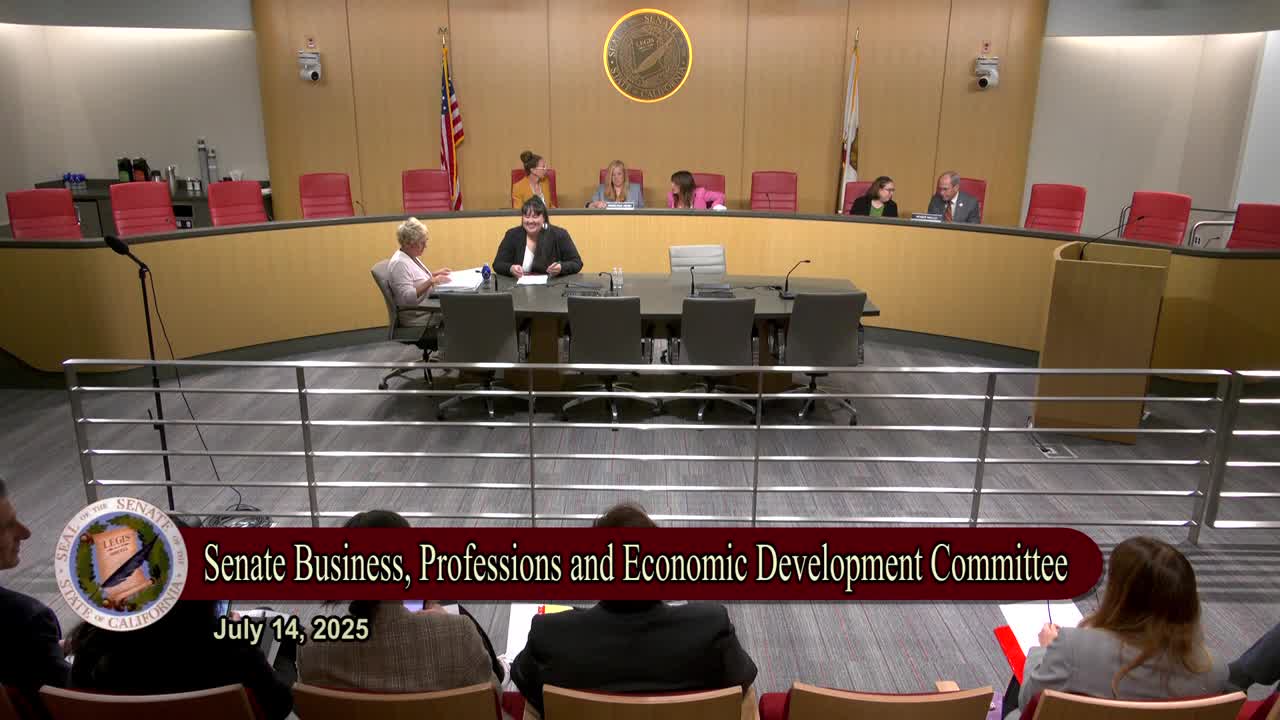 7MIN
Senate Standing Committee on Business, Professions and Economic Development
 59SEC
Assembly Floor
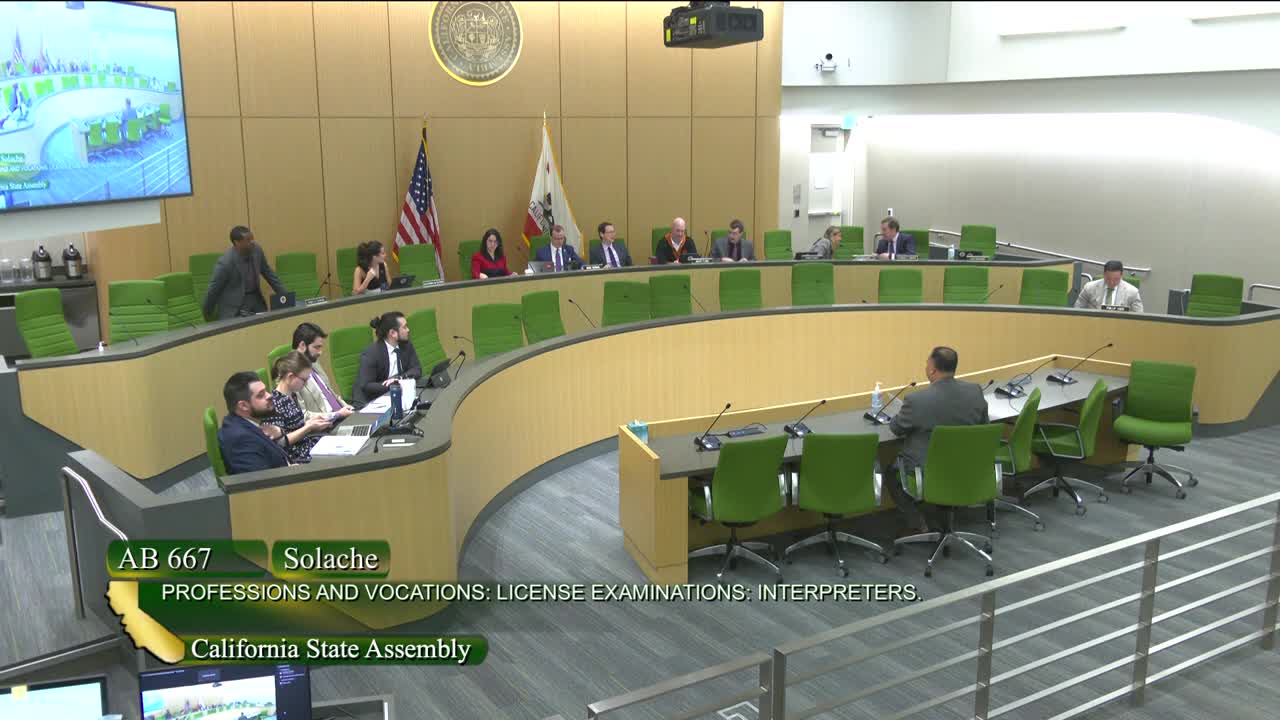 14MIN
Assembly Standing Committee on Business and Professions
Bill Author
Bill Co-Author(s):