AB 673: Unaccompanied homeless pupils: Unaccompanied Youth Support Grant Program.
- Session Year: 2025-2026
- House: Assembly
- Latest Version Date: 2026-06-18
Current Status:
In Progress
(2026-08-13: In committee: Held under submission.)
Introduced
In Committee
Awaiting First Chamber Vote
Passed First Chamber
In Committee
Awaiting Second Chamber Vote
Passed Second Chamber
Enacted
Existing law states the intent of the Legislature to ensure that all pupils in foster care and those who are homeless, as defined, have a meaningful opportunity to meet the challenging state pupil academic achievement standards to which all pupils are held. Existing law requires educators, county placing agencies, care providers, advocates, and the juvenile courts to work together to maintain stable school placements and to ensure that each pupil is placed in the least restrictive educational programs and has access to the academic resources, services, and extracurricular and enrichment activities that are available to all pupils, as provided.
This bill would require the State Department of Education to administer formula grants as part of a pilot program, to be known as the Unaccompanied Youth Support Grant Program, for school districts, county offices of education, and charter schools to provide supports necessary to improve school attendance, pupil engagement, pupil graduation rates, and pupil wellbeing for unaccompanied youth, as defined, who are 16 and or 17 years of age, including connecting youth with resources to find stable housing. The bill would require, subject to an appropriation and subject to specified allocation metrics, 5-year grants that commence with the 202829 fiscal year, to be awarded by the Superintendent of Public Instruction to local educational agencies, or consortia of local educational agencies, to support unaccompanied youth, and would require grant funds to be used for, among other things, referrals to existing social services support systems, and providing basic needs and educational support services, as specified. The bill would require, to be eligible to apply for a grant under the program, a local educational agency to have identified at least one unaccompanied youth enrolled during the prior fiscal year, as specified. The bill would require local educational agencies applying for grant funds under the program to submit an application that includes, among other things, a description of how grant funds will be used to identify eligible pupils, the types of supports to be provided based on the eligible uses of grant funds, and the performance measures the local educational agency will use to measure progress towards program goals. The bill would require local educational agencies awarded grant funds under the program to submit annual reports to the department that include, among other things, a description of the expenditure of funds and the number and characteristics of unaccompanied youth served.
Existing law states the intent of the Legislature to ensure that all pupils in foster care and those who are homeless, as defined, have a meaningful opportunity to meet the challenging state pupil academic achievement standards to which all pupils are held. Existing law requires educators, county placing agencies, care providers, advocates, and the juvenile courts to work together to maintain stable school placements and to ensure that each pupil is placed in the least restrictive educational programs, programs and has access to the academic resources, services, and extracurricular and enrichment activities that are available to all pupils, as provided.
This bill would require the State Department of Education, in consultation with the State Department of Social Services, Education to administer competitive formula grants as part of a pilot program, to be known as the Unaccompanied Youth Support Grant Program, for school districts, county offices of education, and charter schools to provide supports necessary to improve school attendance, pupil engagement, pupil graduation rates, and pupil wellbeing for unaccompanied youth, as defined, who are 16 and 17 years of age, including connecting youth with resources to find stable housing. The bill would require require, subject to an appropriation and subject to specified allocation metrics, 5-year grants that commence with the 202829 fiscal year, to be awarded by the Superintendent of Public Instruction to local educational agencies agencies, or consortia of local educational agencies, to support unaccompanied youth, and would require grant funds to be used for, among other things, referrals to existing social services support systems, and providing basic needs supports and educational support services, as specified. The bill would require funding preference under the program to be given to local educational agencies that have significant experience working with unaccompanied youth and existing partnerships with certain entities, as specified. require, to be eligible to apply for a grant under the program, a local educational agency to have identified at least one unaccompanied youth enrolled during the prior fiscal year, as specified. The bill would require local educational agencies applying for grant funds under the program to submit an application that includes, among other things, a detailed plan describing description of how grant funds will be used to identify eligible pupils, the types of supports to be provided based on the eligible uses of grant funds, and the methods and metrics performance measures the local educational agency will use to measure progress towards program goals. The bill would require local educational agencies awarded grant funds under the program to submit annual reports to the department that include, among other things, a description of the expenditure of funds and the number and characteristics of unaccompanied youth served.
Existing law states the intent of the Legislature to ensure that all pupils in foster care and those who are homeless, as defined, have a meaningful opportunity to meet the challenging state pupil academic achievement standards to which all pupils are held. Existing law requires educators, county placing agencies, care providers, advocates, and the juvenile courts to work together to maintain stable school placements and to ensure that each pupil is placed in the least restrictive educational programs, and has access to the academic resources, services, and extracurricular and enrichment activities that are available to all pupils, as provided.
This bill would require the State Department of Education, in consultation with the State Department of Social Services and county offices of education, Services, to administer competitive grants as part of a pilot program, to be known as the Unaccompanied Youth Support Grant Program, for school districts, county offices of education, and charter schools to provide temporary housing to reduce absenteeism, improve graduation rates, and provide pupils with a stable learning environment. The bill would require 5-year grants to be awarded to local educational agencies to fund transitional housing projects for unaccompanied homeless youth who are 16 and 17 years of age and who are not in foster care. The bill would supports necessary to improve school attendance, pupil engagement, pupil graduation rates, and pupil wellbeing for unaccompanied youth, as defined, who are 16 and 17 years of age, including connecting youth with resources to find stable housing. The bill would require 5-year grants to be awarded to local educational agencies to support unaccompanied youth, and would require grant funds to be used for, among other things, referrals to existing social services support systems, provision of and providing basic needs supports, financial support, supports and educational support services, as specified. The bill would also require funding preference under the program to be given to local educational agencies that partner with nonprofit organizations that demonstrate certain characteristics, as provided. have significant experience working with unaccompanied youth and existing partnerships with certain entities, as specified. The bill would require local educational agencies applying for grant funds under the program to submit an application that includes, among other things, a detailed plan describing how grant funds will be used to identify eligible pupils, the types of supports to be provided based on the eligible uses of grant funds, and the methods and metrics the local educational agency will use to measure progress towards program goals. The bill would require local educational agencies awarded grant funds under the program to submit annual reports to the department that include, among other things, a description of the expenditure of funds and the number and characteristics of unaccompanied homeless youth served.
Existing law states the intent of the Legislature to ensure that all pupils in foster care and those who are homeless, as defined, have a meaningful opportunity to meet the challenging state pupil academic achievement standards to which all pupils are held. Existing law requires educators, county placing agencies, care providers, advocates, and the juvenile courts to work together to maintain stable school placements and to ensure that each pupil is placed in the least restrictive educational programs, and has access to the academic resources, services, and extracurricular and enrichment activities that are available to all pupils, as provided.
This bill would require the State Department of Education, in consultation with the State Department of Social Services and county offices of education, to administer competitive grants as part of a pilot program, to be known as the Unaccompanied Youth Transitional Housing Support Grant Program, for purposes of enabling for school districts, county offices of education, and charter schools to partner with local nonprofits, as defined, and to offer 5-year grants to provide temporary housing to reduce absenteeism, improve graduation rates, and provide pupils with a stable learning environment. The bill would require 5-year grants to be awarded to local educational agencies to fund transitional housing projects for unaccompanied homeless youth who are 16 and 17 years of age, and age and who are not in foster care. The bill would require grant funds to be used for, among other things, referrals to residential facilities with single-occupant units, provision of clothes, nutritious meals, and stipends for public transportation, existing social services support systems, provision of basic needs supports, financial support, and educational support services, as specified. The bill would also require funding preference under the program to be given to local educational agencies that partner with nonprofits nonprofit organizations that demonstrate certain characteristics, as provided. The bill would require local educational agencies awarded grant funds under the program to submit annual reports to the department that include, among other things, a description of the expenditure of funds and the number and characteristics of unaccompanied homeless youth served.
Existing law states the intent of the Legislature to ensure that all pupils in foster care and those who are homeless, as defined, have a meaningful opportunity to meet the challenging state pupil academic achievement standards to which all pupils are held. Existing law requires educators, county placing agencies, care providers, advocates, and the juvenile courts to work together to maintain stable school placements and to ensure that each pupil is placed in the least restrictive educational programs, and has access to the academic resources, services, and extracurricular and enrichment activities that are available to all pupils, as provided.
This bill would require the State Department of Education, in consultation with the State Department of Social Services and county offices of education, to administer a competitive grant grants as part of a pilot program, to be known as the Unaccompanied Youth Transitional Housing Program, for purposes of providing enabling school districts, county offices of education, and charter schools to partner with local nonprofits, as defined, and to offer 5-year grants to fund transitional housing projects for unaccompanied homeless youth, as defined, in the San Joaquin Central Valley, the northern region of California, and in the southern region of California, youth who are 16 and 17 years of age, and would require grant funds to be used for, among other things, referrals to residential facilities with single-occupant units, provision of clothes, nutritious meals, and stipends for public transportation, and educational support services, as specified. The bill would also require funding preference under the program to be given to local educational agencies that partner with nonprofits that demonstrate certain characteristics, as provided.
Existing law states the intent of the Legislature to ensure that all pupils in foster care and those who are homeless, as defined, have a meaningful opportunity to meet the challenging state pupil academic achievement standards to which all pupils are held. Existing law requires educators, county placing agencies, care providers, advocates, and the juvenile courts to work together to maintain stable school placements and to ensure that each pupil is placed in the least restrictive educational programs, and has access to the academic resources, services, and extracurricular and enrichment activities that are available to all pupils, as provided.
This bill would require the State Department of Education, in consultation with the State Department of Social Services and county offices of education, to administer a competitive grant program, to be known as the Unaccompanied Youth Transitional Housing Program, for purposes of providing 5-year grants to fund transitional housing projects for unaccompanied homeless youth, as defined, in the San Joaquin Central Valley, the northern region of California, and in the southern region of California, as provided.
Existing law authorizes the governing board of a school district to initiate and carry on any program, activity, or to act in any manner that is not in conflict with or inconsistent with, or preempted by, any law and that is not in conflict with the purposes for which school districts are established.This bill would make nonsubstantive changes to that provision.Existing law authorizes the governing board of a school district to initiate and carry on any program, activity, or to act in any manner that is not in conflict with or inconsistent with, or preempted by, any law and that is not in conflict with the purposes for which school districts are established.
This bill would make nonsubstantive changes to that provision.
The Legislature finds and declares all of the following:
(a)Youth who are experiencing homelessness include those who are runaways or unaccompanied minors, those who have left home for one or more nights or have been told to leave home, and those who have been abandoned or deserted. They survive without a trusted guardian or caretaker.
(b)In a 2023 national survey, California reported the largest number of unaccompanied youth, 10,173 people, accounting for more than one-third of all unaccompanied youth nationally.
(c)Local educational agencies, including charter schools, reported 286,853 enrolled homeless pupils for the 202324 school year as part of the annual End of Year 3 data submission in the California Longitudinal Pupil Achievement Data System. Out of this total, 8,831 pupils were unaccompanied youth experiencing homelessness. Approximately 74 percent were pupils enrolled in grades 9 to 12, inclusive, and 60 percent identified as Hispanic or Latino, 17 percent identified as White, 10 percent identified as African American, 5 percent identified as two or more races, 3 percent identified as Asian, and 2 percent identified as American Indian or Alaska Native.
(d)Children experiencing homelessness face extensive barriers to academic success. In comparison to their peers, homeless pupils are more likely to be suspended and chronically absent and are less likely to graduate from high school or attend college.
SEC. 2.Article 11 (commencing with Section 54810) is added to Chapter 9 of Part 29 of Division 4 of Title 2 of the Education Code, to read:11.Unaccompanied Youth Support Grant Program54810.(a)(1)The department shall administer formula grants as part of a pilot program, to be known as the Unaccompanied Youth Support Grant Program, to local educational agencies for the purpose of providing supports necessary to improve school attendance, pupil engagement, pupil graduation rates, and pupil wellbeing for unaccompanied youth who are 16 and or 17 years of age, including connecting youth with resources to find stable housing.
(2)Grant funds shall be awarded to a local educational agency or a consortium of local educational agencies pursuant to subdivision (d) and shall be available for expenditure for five years from the date of receipt.
(3)Eligible uses of grant funds include all of the following:
(A)Supporting connections and establishing referrals to existing community-based organizations, licensed youth shelter programs, county welfare departments, and local continuums of care to enable eligible pupils to access housing navigation services, social services, child welfare services, and family stabilization services administered by those entities.
(B)Providing basic needs, including items such as clothing, food, and stipends for transportation.
(C)Providing educational support services and tutoring provided directly by the local educational agency or through a partner nonprofit or service provider.
(D)Providing employment readiness and skills development, including skills related to independent living.
(E)Supporting connections and establishing referrals to health, behavioral health, and other supportive services.
(b)To be eligible to apply for a grant under the program, a local educational agency shall have identified at least one unaccompanied youth enrolled during the prior fiscal year as reported in the California Longitudinal Pupil Achievement Data System.
(c)(1)A local educational agency applying to receive a grant under the program shall submit an application to the department in the form and manner prescribed by the department.
(2)The application shall include all of the following information:
(A)A description of the local educational agency.
(B)A description of existing partnerships between the local educational agency and other agencies or organizations to support unaccompanied youth, as applicable.
(C)A description of how grant funds will be used to identify eligible pupils, the types of supports to be provided based on the eligible uses of grant funds, and the performance measures the local educational agency will use to measure progress towards program goals.
(D)The number of homeless children and youths, and unaccompanied youth, as those terms are defined under the federal McKinney-Vento Homeless Assistance Act (42 U.S.C. Sec. 11434a), enrolled within the local educational agency during the prior fiscal year, as reported in the California Longitudinal Pupil Achievement Data System.
(3)The department may establish additional application requirements or criteria necessary to ensure effective program administration, accountability, and equitable geographic distribution of grant awards consistent with the purpose and the eligible grant uses pursuant to this section.
(d)(1)Commencing with the 202829 fiscal year, and subject to an appropriation in the annual Budget Act for these purposes, the Superintendent shall allocate funding to local educational agencies, or consortia of local educational agencies, that have submitted applications and been determined eligible to receive a grant pursuant to this section.
(2)The Superintendent shall reserve 30 percent of the total funds appropriated for the program in any given fiscal year to be distributed to all participating local educational agencies or consortia of local educational agencies as base grants.
(3)After the reservation and allocation of base grants pursuant to paragraph (2), the Superintendent shall allocate the remaining funding based on a weighted formula using the following metrics:
(A)Seventy percent of the allocation shall be based on the proportionate number of unaccompanied youth identified within the local educational agency or the consortium of local educational agencies in the prior fiscal year.
(B)Twenty percent of the allocation shall be based on indicators of concentrated need within the territory served by the local educational agency or the consortium of local educational agencies, as determined by the Superintendent based on both of the following metrics:
(i)The rate of chronic absenteeism among homeless pupils.
(ii)The percentage of identified homeless children and youths, as defined under the federal McKinney-Vento Homeless Assistance Act (42 U.S.C. Sec. 11434a), enrolled within the local educational agency or the consortium of local educational agencies that exceeds the statewide average percentage of homeless pupil enrollment.
(C)Ten percent of the allocation shall be based on the structural scale and geographic barriers of the applicant, including the number of school districts within the county and the documented capacity of the local educational agency to coordinate regional housing and supportive services.
(e)On or before October 31 of each fiscal year, the Superintendent shall submit a report detailing the final funding allocations made pursuant to subdivision (d) to the Department of Finance, the state board, and the appropriate policy and fiscal committees of the Legislature for oversight and review.
(f)(1)A local educational agency awarded grant funds under the program shall submit an annual report to the department, in the form and manner prescribed by the department, describing the expenditure of funds, the number and characteristics of unaccompanied youth served, the services and housing provided, and measurable outcomes related to housing stability, school attendance, and educational attainment.
(2)Upon completion of the five-year grant cycle, the department shall submit a report to the appropriate policy and fiscal committees of the Legislature, in compliance with Section 9795 of the Government Code, evaluating program outcomes and recommending whether the program should be expanded or made permanent.
(g)Notwithstanding the rulemaking provisions of the Administrative Procedure Act (Chapter 3.5 (commencing with Section 11340) of Part 1 of Division 3 of Title 2 of the Government Code) and Section 33308.5, the department may implement this section through management bulletins or similar letters of instruction.
(h)For purposes of this section, the following definitions apply:
(1)Local educational agency means a school district, county office of education, or charter school.
(2)Nonprofit means a nonprofit public benefit corporation.
(3)Program means the Unaccompanied Youth Support Grant Program created pursuant to this section.
(4)Unaccompanied youth means a homeless child or youth not in the physical custody of a parent or guardian as defined in Section 11434a(6) of the federal McKinney-Vento Homeless Assistance Act (42 U.S.C. Sec. 11301 et seq.).
The Legislature finds and declares all of the following:
(a)Youth who are experiencing homelessness include those who are runaways or unaccompanied minors, those who have left home for one or more nights or have been told to leave home, and those who have been abandoned or deserted. They survive without a trusted guardian or caretaker.
(b)In a 2023 national survey, California reported the largest number of unaccompanied youth, 10,173 people, accounting for more than one-third of all unaccompanied youth nationally.
(c)Local educational agencies, including charter schools, reported 286,853 enrolled homeless pupils for the 202324 school year as part of the annual End of Year 3 data submission in the California Longitudinal Pupil Achievement Data System. Out of this total, 8,831 pupils were unaccompanied youth experiencing homelessness. Approximately 74 percent were pupils enrolled in grades 9 to 12, inclusive, and 60 percent identified as Hispanic or Latino, 17 percent identified as White, 10 percent identified as African American, 5 percent identified as two or more races, 3 percent identified as Asian, and 2 percent identified as American Indian or Alaska Native.
(d)Children experiencing homelessness face extensive barriers to academic success. In comparison to their peers, homeless pupils are more likely to be suspended and chronically absent and are less likely to graduate from high school or attend college.
SEC. 2.Article 11 (commencing with Section 54810) is added to Chapter 9 of Part 29 of Division 4 of Title 2 of the Education Code, to read:11.Unaccompanied Youth Support Grant Program54810.(a)(1)The department, in consultation with the State Department of Social Services, department shall administer competitive formula grants as part of a pilot program, to be known as the Unaccompanied Youth Support Grant Program, to local educational agencies for the purpose of providing supports necessary to improve school attendance, pupil engagement, pupil graduation rates, and pupil wellbeing for unaccompanied youth who are 16 and 17 years of age, including connecting youth with resources to find stable housing.
(2)Grant funds shall be awarded to a local educational agency or a consortium of local educational agencies pursuant to subdivision (d) and shall be available for expenditure for five years from the date of receipt.
(3)Eligible uses of grant funds include all of the following:
(A)Authorizing school staff to support Supporting connections and establish establishing referrals to existing structures, including county welfare departments, foster care placement options, Youth Homelessness Prevention Centers administered by Community Care Licensing and the State Department of Social Services, local continuums of care, county office of education Foster Youth Services Coordinating Programs, homeless education liaisons, and other related services, with an emphasis on finding stable housing options for the pupils served by this grant. community-based organizations, licensed youth shelter programs, county welfare departments, and local continuums of care to enable eligible pupils to access housing navigation services, social services, child welfare services, and family stabilization services administered by those entities.
(B)Providing basic needs supports, needs, including items such as clothing, food, and stipends for transportation.(C)Providing educational support services and tutoring provided directly by the local educational agency or through a partner nonprofit or service provider.(D)Providing employment readiness and skills development, including skills related to independent living.(E)Supporting connections and establishing referrals to health, behavioral health, and other supportive services.(b)When awarding grants to local educational agencies, the department shall prioritize grants for applications that demonstrate both of the following:(1)Significant experience working with unaccompanied youth.(2)Existing partnerships with county welfare departments, continuums of care, or nonprofits working on youth homelessness and other related services.(b)To be eligible to apply for a grant under the program, a local educational agency shall have identified at least one unaccompanied youth enrolled during the prior fiscal year as reported in the California Longitudinal Pupil Achievement Data System.
(c)(1)A local educational agency applying for to receive a grant under the program shall submit an application to the department in the form and manner prescribed by the department.
(2)The application shall include all of the following information:
(A)A description of the local educational agency.
(B)A description of existing partnerships between the local educational agency and other agencies or organizations to support unaccompanied youth, as applicable.
(C)A detailed plan describing description of how grant funds will be used to identify eligible pupils, the types of supports to be provided based on the eligible uses of grant funds, and the methods and metrics performance measures the local educational agency will use to measure progress towards program goals.
(D)The number of homeless children and youths, and unaccompanied youth, as those terms are defined under the federal McKinney-Vento Homeless Assistance Act (42 U.S.C. Sec. 11434a), enrolled within the local educational agency during the prior fiscal year, as reported in the California Longitudinal Pupil Achievement Data System.
(3)The department may establish additional application requirements or criteria necessary to ensure effective program administration, accountability, and equitable geographic distribution of grant awards consistent with the purpose and the eligible grant uses pursuant to this section.
(d)(1)Commencing with the 202829 fiscal year, and subject to an appropriation in the annual Budget Act for these purposes, the Superintendent shall allocate funding to local educational agencies, or consortia of local educational agencies, that have submitted applications and been determined eligible to receive a grant pursuant to this section.
(2)The Superintendent shall reserve 30 percent of the total funds appropriated for the program in any given fiscal year to be distributed to all participating local educational agencies or consortia of local educational agencies as base grants.
(3)After the reservation and allocation of base grants pursuant to paragraph (2), the Superintendent shall allocate the remaining funding based on a weighted formula using the following metrics:
(A)Seventy percent of the allocation shall be based on the proportionate number of unaccompanied youth identified within the local educational agency or the consortium of local educational agencies in the prior fiscal year.
(B)Twenty percent of the allocation shall be based on indicators of concentrated need within the territory served by the local educational agency or the consortium of local educational agencies, as determined by the Superintendent based on both of the following metrics:
(i)The rate of chronic absenteeism among homeless pupils.
(ii)The percentage of identified homeless children and youths, as defined under the federal McKinney-Vento Homeless Assistance Act (42 U.S.C. Sec. 11434a), enrolled within the local educational agency or the consortium of local educational agencies that exceeds the statewide average percentage of homeless pupil enrollment.
(C)Ten percent of the allocation shall be based on the structural scale and geographic barriers of the applicant, including the number of school districts within the county and the documented capacity of the local educational agency to coordinate regional housing and supportive services.
(e)On or before October 31 of each fiscal year, the Superintendent shall submit a report detailing the final funding allocations made pursuant to subdivision (d) to the Department of Finance, the state board, and the appropriate policy and fiscal committees of the Legislature for oversight and review.
(d)(f)(1)A local educational agency awarded grant funds under the program shall submit an annual report to the department, in the form and manner prescribed by the department, describing the expenditure of funds, the number and characteristics of unaccompanied youth served, the services and housing provided, and measurable outcomes related to housing stability, school attendance, and educational attainment.
(2)Upon completion of the five-year grant cycle, the department shall submit a report to the appropriate policy and fiscal committees of the Legislature, in compliance with Section 9795 of the Government Code, evaluating program outcomes and recommending whether the program should be expanded or made permanent.
(e)(g)Notwithstanding the rulemaking provisions of the Administrative Procedure Act (Chapter 3.5 (commencing with Section 11340) of Part 1 of Division 3 of Title 2 of the Government Code) and Section 33308.5, the department may implement this section through management bulletins or similar letters of instruction.
(f)(h)For purposes of this section, the following definitions apply:
(1)Local educational agency means a school district, county office of education, or charter school.
(2)Nonprofit means a nonprofit public benefit corporation.
(3)Program means the Unaccompanied Youth Support Grant Program created pursuant to this section.
(4)Unaccompanied youth means a homeless child or youth not in the physical custody of a parent or guardian as defined in Section 11434a(6) of the federal McKinney-Vento Homeless Assistance Act (42 U.S.C. Sec. 11301 et seq.).
The Legislature finds and declares all of the following:
(a)Youth who are experiencing homelessness include those who are runaways or unaccompanied minors, those who have left home for one or more nights or have been told to leave home, and those who have been abandoned or deserted. They survive without a trusted guardian or caretaker.
(b)In a 2023 national survey, California reported the largest number of unaccompanied youth, 10,173 people, accounting for more than one-third of all unaccompanied youth nationally.
(c)Local educational agencies, including charter schools, reported 286,853 enrolled homeless pupils for the 202324 school year as part of the annual End of Year 3 data submission in the California Longitudinal Pupil Achievement Data System. Out of this total, 8,831 pupils were unaccompanied youth experiencing homelessness. Approximately 74 percent were pupils enrolled in grades 9 to 12, inclusive, and 60 percent identified as Hispanic or Latino, 17 percent identified as White, 10 percent identified as African American, 5 percent identified as two or more races, 3 percent identified as Asian, and 2 percent identified as American Indian or Alaska Native.
(d)Children experiencing homelessness face extensive barriers to academic success. In comparison to their peers, homeless pupils are more likely to be suspended and chronically absent and are less likely to graduate from high school or attend college.
SEC. 2.Article 11 (commencing with Section 54810) is added to Chapter 9 of Part 29 of Division 4 of Title 2 of the Education Code, to read:11.Unaccompanied Youth Support Grant Program54810.(a)(1)The department, in consultation with the State Department of Social Services and county offices of education, shall administer competitive grants as part of a pilot program, to be known as the Unaccompanied Youth Support Grant Program, to local educational agencies for the purpose of providing temporary housing to reduce absenteeism, improve graduation rates, and provide pupils with a stable learning environment.(2)Grant funds shall be awarded to a local educational agency to support transitional housing projects serving unaccompanied homeless youth who are 16 and 17 years of age and not in foster care. Grant funds shall be available for expenditure for five years from the date of receipt.(3)As a condition of receiving grant funds, a local educational agency shall partner with one or more local housing authorities, including, but not limited to, local nonprofit organizations, continuums of care, local health and human services departments, or homeless liaisons, for the purposes of implementing and operating transitional housing projects pursuant to this article.(b)Eligible uses of grant funds allocated under the program shall include, but are not limited to, all of the following services for unaccompanied homeless youth who are 16 and 17 years of age and not in foster care:(1)Authorizing school staff to support connections and establish referrals to existing structures, including county welfare departments, foster care placement options, Youth Homelessness Prevention Centers administered by the State Department of Social Services, Runaway and Homeless Youth Programs, local continuum of care, county office of education Foster Youth Services Coordinating Programs, homeless education liaisons, and other related services, with an emphasis on finding stable housing options for the pupils served by this grant.(2)Provision of basic needs supports, including items such as clothing, nutritious meals, and stipends for transportation, to enable the youth to maintain school attendance and engagement.(3)Educational support services and tutoring provided directly by the local educational agency or through a partner nonprofit organization or service provider.(4)Case management, employment readiness and skills development, independent living services, and access to health, behavioral health, and other supportive services, provided by a nonprofit organization or appropriate partner agency.(5)Financial support, including subsidies, rental assistance, or direct payments, made to a nonprofit organization, housing provider, or other eligible agency for the purpose of securing housing for unaccompanied homeless youth, provided that the local educational agency is not the operator of the housing program.(c)Funding preference under the program shall be given to a local educational agency partnering with nonprofit organizations that demonstrate any of the following, as determined by the department:(1)A record of providing effective services to unaccompanied homeless youth.(2)Longstanding and successful partnerships with transitional housing units.(3)Significant experience working with unaccompanied homeless youth.(d)A local educational agency applying for a grant under the program shall submit an application to the department in the form and manner prescribed by the department.(e)The application shall include all of the following information:(1)A description of the local educational agency and its partnering nonprofit organization or organizations.(2)A detailed plan describing how grant funds will be used to provide transitional housing and related services consistent with subdivision (b).(3)A description of the methods and metrics the local educational agency will use to measure progress toward program goals.(f)The department may establish additional application requirements or criteria necessary to ensure effective program administration, accountability, and equitable geographic distribution of grant awards.(g)(1)A local educational agency awarded grant funds under the program shall submit an annual report to the department, in the form and manner prescribed by the department, describing the expenditure of funds, the number and characteristics of unaccompanied homeless youth served, the services and housing provided, and measurable outcomes related to housing stability, school attendance, and educational attainment.(2)Upon completion of the five-year grant cycle, the department shall submit a report to the appropriate policy and fiscal committees of the Legislature, in compliance with Section 9795 of the Government Code, evaluating program outcomes and recommending whether the program should be expanded or made permanent.(h)Notwithstanding the rulemaking provisions of the Administrative Procedure Act (Chapter 3.5 (commencing with Section 11340) of Part 1 of Division 3 of Title 2 of the Government Code) and Section 33308.5, the department may implement this section through management bulletins or similar letters of instruction.(i)For purposes of this section, the following definitions apply:(1)Local educational agency means a school district, county office of education, or charter school.(2)Nonprofit means a nonprofit public benefit corporation.(3)Program means the Unaccompanied Youth Transitional Housing Program created pursuant to this section.(4)Transitional housing means a residential setting that provides time-limited housing and supportive services designed to help unaccompanied homeless youth achieve stable housing and educational success.(5)Unaccompanied homeless youth means a youth that is both homeless and unaccompanied. Unaccompanied homeless youth includes homeless children and youths and unaccompanied youth, as defined in Section 11434a of the federal McKinney-Vento Homeless Assistance Act (42 U.S.C. Sec. 11301 et seq.).SEC. 2.Article 11 (commencing with Section 54810) is added to Chapter 9 of Part 29 of Division 4 of Title 2 of the Education Code, to read:11.Unaccompanied Youth Support Grant Program54810.(a)(1)The department, in consultation with the State Department of Social Services, shall administer competitive grants as part of a pilot program, to be known as the Unaccompanied Youth Support Grant Program, to local educational agencies for the purpose of providing supports necessary to improve school attendance, pupil engagement, pupil graduation rates, and pupil wellbeing for unaccompanied youth who are 16 and 17 years of age, including connecting youth with resources to find stable housing.
(2)Grant funds shall be awarded to a local educational agency and shall be available for expenditure for five years from the date of receipt.
(3)Eligible uses of grant funds include all of the following:
(A)Authorizing school staff to support connections and establish referrals to existing structures, including county welfare departments, foster care placement options, Youth Homelessness Prevention Centers administered by Community Care Licensing and the State Department of Social Services, local continuums of care, county office of education Foster Youth Services Coordinating Programs, homeless education liaisons, and other related services, with an emphasis on finding stable housing options for the pupils served by this grant.
(B)Providing basic needs supports, including items such as clothing, food, and stipends for transportation.
(C)Providing educational support services and tutoring provided directly by the local educational agency or through a partner nonprofit or service provider.
(D)Providing employment readiness and skills development, including skills related to independent living.
(E)Supporting connections and establishing referrals to health, behavioral health, and other supportive services.
(b)When awarding grants to local educational agencies, the department shall prioritize grants for applications that demonstrate both of the following:
(1)Significant experience working with unaccompanied youth.
(2)Existing partnerships with county welfare departments, continuums of care, or nonprofits working on youth homelessness and other related services.
(c)(1)A local educational agency applying for a grant under the program shall submit an application to the department in the form and manner prescribed by the department.
(2)The application shall include all of the following information:
(A)A description of the local educational agency.
(B)A description of existing partnerships between the local educational agency and other agencies or organizations to support unaccompanied youth, as applicable.
(C)A detailed plan describing how grant funds will be used to identify eligible pupils, the types of supports to be provided based on the eligible uses of grant funds, and the methods and metrics the local educational agency will use to measure progress towards program goals.
(3)The department may establish additional application requirements or criteria necessary to ensure effective program administration, accountability, and equitable geographic distribution of grant awards consistent with the purpose and the eligible grant uses pursuant to this section.
(d)(1)A local educational agency awarded grant funds under the program shall submit an annual report to the department, in the form and manner prescribed by the department, describing the expenditure of funds, the number and characteristics of unaccompanied youth served, the services and housing provided, and measurable outcomes related to housing stability, school attendance, and educational attainment.
(2)Upon completion of the five-year grant cycle, the department shall submit a report to the appropriate policy and fiscal committees of the Legislature, in compliance with Section 9795 of the Government Code, evaluating program outcomes and recommending whether the program should be expanded or made permanent.
(e)Notwithstanding the rulemaking provisions of the Administrative Procedure Act (Chapter 3.5 (commencing with Section 11340) of Part 1 of Division 3 of Title 2 of the Government Code) and Section 33308.5, the department may implement this section through management bulletins or similar letters of instruction.
(f)For purposes of this section, the following definitions apply:
(1)Local educational agency means a school district, county office of education, or charter school.
(2)Nonprofit means a nonprofit public benefit corporation.
(3)Program means the Unaccompanied Youth Support Grant Program created pursuant to this section.
(4)Unaccompanied youth means a homeless child or youth not in the physical custody of a parent or guardian as defined in Section 11434a(6) of the federal McKinney-Vento Homeless Assistance Act (42 U.S.C. Sec. 11301 et seq.).
The Legislature finds and declares all of the following:
(a)Youth who are experiencing homelessness include those who are runaways or unaccompanied minors, those who have left home for one or more nights or have been told to leave home, as well as and those who have been abandoned or deserted. They survive without a trusted guardian or caretaker.
(b)In a 2023 national survey, California reported the largest number of unaccompanied youth, 10,173 people, accounting for more than one-third of all unaccompanied youth nationally.
(c)Local educational agencies, including charter schools, reported 286,853 enrolled homeless pupils for the 202324 school year as part of the annual End of Year 3 data submission in the California Longitudinal Pupil Achievement Data System. Out of this total, 8,831 pupils were unaccompanied youth experiencing homelessness. Approximately 74 percent were pupils enrolled in grades 9 to 12, inclusive, and 60 percent identified as Hispanic or Latino, 17 percent identified as White, 10 percent identified as African American, 5 percent identified as two or more races, 3 percent identified as Asian, and 2 percent identified as American Indian or Alaska Native.
(d)Children experiencing homelessness face extensive barriers to academic success. In comparison to their peers, homeless pupils are more likely to be suspended and chronically absent and are less likely to graduate from high school or attend college.
SEC. 2.Article 11 (commencing with Section 54810) is added to Chapter 9 of Part 29 of Division 4 of Title 2 of the Education Code, to read:11.Unaccompanied Youth Transitional Housing Program54810.(a)The department, in consultation with the State Department of Social Services and county offices of education, shall administer competitive grants as part of a pilot program, known as the Unaccompanied Youth Transitional Housing Program, for purposes of enabling local educational agencies to partner with local nonprofits and to offer five-year grants to fund transitional housing projects for unaccompanied homeless youth who are 16 and 17 years of age.(b)Eligible uses of grant funds allocated under the program shall include all of the following:(1)Referrals to a residential facility with single-occupant units that house minors separate from adults.(2)Provision of clothes, nutritious meals three times per day, and stipends for public transportation.(3)Educational support services and tutoring provided through an agreement with a local educational agency.(4)Case management, preemployment and employment training and skill development, independent living, and health support and services.(5)Subsidies or rental payments for residential facilities.(c)Funding preference under the program shall be given to local educational agencies partnering with nonprofits that demonstrate the following:(1)A record of providing effective services to unaccompanied homeless youth.(2)Longstanding and successful partnerships with residential facilities.(3)Significant experience working with unaccompanied homeless youth.(d)For purposes of this section, the following definitions apply:(1)Local educational agency means a school district, county office of education, or charter school.(2)Nonprofit means a nonprofit public benefit corporation.(3)Unaccompanied homeless youth refers to pupils who have been identified as homeless during the academic year and were not in the direct care of their parent or guardian at any time during that academic year at the selected reporting level.SEC. 2.Article 11 (commencing with Section 54810) is added to Chapter 9 of Part 29 of Division 4 of Title 2 of the Education Code, to read:11.Unaccompanied Youth Support Grant Program54810.(a)(1)The department, in consultation with the State Department of Social Services and county offices of education, shall administer competitive grants as part of a pilot program, to be known as the Unaccompanied Youth Support Grant Program, to local educational agencies for the purpose of providing temporary housing to reduce absenteeism, improve graduation rates, and provide pupils with a stable learning environment.
(2)Grant funds shall be awarded to a local educational agency to support transitional housing projects serving unaccompanied homeless youth who are 16 and 17 years of age and not in foster care. Grant funds shall be available for expenditure for five years from the date of receipt.
(3)As a condition of receiving grant funds, a local educational agency shall partner with one or more local housing authorities, including, but not limited to, local nonprofit organizations, continuums of care, local health and human services departments, or homeless liaisons, for the purposes of implementing and operating transitional housing projects pursuant to this article.
(b)Eligible uses of grant funds allocated under the program shall include, but are not limited to, all of the following services for unaccompanied homeless youth who are 16 and 17 years of age and not in foster care:
(1)Authorizing school staff to support connections and establish referrals to existing structures, including county welfare departments, foster care placement options, Youth Homelessness Prevention Centers administered by the State Department of Social Services, Runaway and Homeless Youth Programs, local continuum of care, county office of education Foster Youth Services Coordinating Programs, homeless education liaisons, and other related services, with an emphasis on finding stable housing options for the pupils served by this grant.
(2)Provision of basic needs supports, including items such as clothing, nutritious meals, and stipends for transportation, to enable the youth to maintain school attendance and engagement.
(3)Educational support services and tutoring provided directly by the local educational agency or through a partner nonprofit organization or service provider.
(4)Case management, employment readiness and skills development, independent living services, and access to health, behavioral health, and other supportive services, provided by a nonprofit organization or appropriate partner agency.
(5)Financial support, including subsidies, rental assistance, or direct payments, made to a nonprofit organization, housing provider, or other eligible agency for the purpose of securing housing for unaccompanied homeless youth, provided that the local educational agency is not the operator of the housing program.
(c)Funding preference under the program shall be given to a local educational agency partnering with nonprofit organizations that demonstrate any of the following, as determined by the department:
(1)A record of providing effective services to unaccompanied homeless youth.
(2)Longstanding and successful partnerships with transitional housing units.
(3)Significant experience working with unaccompanied homeless youth.
(d)A local educational agency applying for a grant under the program shall submit an application to the department in the form and manner prescribed by the department.
(e)The application shall include all of the following information:
(1)A description of the local educational agency and its partnering nonprofit organization or organizations.
(2)A detailed plan describing how grant funds will be used to provide transitional housing and related services consistent with subdivision (b).
(3)A description of the methods and metrics the local educational agency will use to measure progress toward program goals.
(f)The department may establish additional application requirements or criteria necessary to ensure effective program administration, accountability, and equitable geographic distribution of grant awards.
(g)(1)A local educational agency awarded grant funds under the program shall submit an annual report to the department, in the form and manner prescribed by the department, describing the expenditure of funds, the number and characteristics of unaccompanied homeless youth served, the services and housing provided, and measurable outcomes related to housing stability, school attendance, and educational attainment.
(2)Upon completion of the five-year grant cycle, the department shall submit a report to the appropriate policy and fiscal committees of the Legislature, in compliance with Section 9795 of the Government Code, evaluating program outcomes and recommending whether the program should be expanded or made permanent.
(h)Notwithstanding the rulemaking provisions of the Administrative Procedure Act (Chapter 3.5 (commencing with Section 11340) of Part 1 of Division 3 of Title 2 of the Government Code) and Section 33308.5, the department may implement this section through management bulletins or similar letters of instruction.
(i)For purposes of this section, the following definitions apply:
(1)Local educational agency means a school district, county office of education, or charter school.
(2)Nonprofit means a nonprofit public benefit corporation.
(3)Program means the Unaccompanied Youth Transitional Housing Program created pursuant to this section.
(4)Transitional housing means a residential setting that provides time-limited housing and supportive services designed to help unaccompanied homeless youth achieve stable housing and educational success.
(5)Unaccompanied homeless youth means a youth that is both homeless and unaccompanied. Unaccompanied homeless youth includes homeless children and youths and unaccompanied youth, as defined in Section 11434a of the federal McKinney-Vento Homeless Assistance Act (42 U.S.C. Sec. 11301 et seq.).
The Legislature finds and declares all of the following:
(a)Youth who are experiencing homelessness include those who are runaways or unaccompanied minors, those who have left home for one or more nights or have been told to leave home, as well as those who have been abandoned or deserted. They survive without a trusted guardian or caretaker.
(b)In a 2023 national survey, California reported the largest number of unaccompanied youth, 10,173 people, accounting for more than one-third of all unaccompanied youth nationally.
(c)Local educational agencies, including charter schools, reported 286,853 enrolled homeless pupils for the 202324 school year as part of the annual End of Year 3 data submission in the California Longitudinal Pupil Achievement Data System. Out of this total, 8,831 pupils were unaccompanied youth experiencing homelessness. Approximately 74 percent were pupils enrolled in grades 9 to 12, inclusive, and 60 percent identified as Hispanic or Latino, 17 percent identified as White, 10 percent identified as African American, 5 percent identified as two or more races, 3 percent identified as Asian, and 2 percent identified as American Indian or Alaska Native.
(d)Children experiencing homelessness face extensive barriers to academic success. In comparison to their peers, homeless pupils are more likely to be suspended and chronically absent and are less likely to graduate from high school or attend college.
SECTION 1.SEC. 2.Article 11 (commencing with Section 54810) is added to Chapter 9 of Part 29 of Division 4 of Title 2 of the Education Code, to read:11.Unaccompanied Youth Transitional Housing Program54810.(a)The department, in consultation with the State Department of Social Services and county offices of education, shall administer a competitive grant grants as part of a pilot program, known as the Unaccompanied Youth Transitional Housing Program, for purposes of providing enabling local educational agencies to partner with local nonprofits and to offer five-year grants to fund transitional housing projects for unaccompanied homeless youth in one or more counties in the San Joaquin Central Valley, in one or more counties in the northern region of California, and in one or more counties in the southern region of California. who are 16 and 17 years of age.
(b)As used in this section, unaccompanied homeless youth means a minor who is not in the physical custody of a parent or guardian and who lacks a fixed, regular, and adequate nighttime residence.(b)Eligible uses of grant funds allocated under the program shall include all of the following:
(1)Referrals to a residential facility with single-occupant units that house minors separate from adults.
(2)Provision of clothes, nutritious meals three times per day, and stipends for public transportation.
(3)Educational support services and tutoring provided through an agreement with a local educational agency.
(4)Case management, preemployment and employment training and skill development, independent living, and health support and services.
(5)Subsidies or rental payments for residential facilities.
(c)Funding preference under the program shall be given to local educational agencies partnering with nonprofits that demonstrate the following:
(1)A record of providing effective services to unaccompanied homeless youth.
(2)Longstanding and successful partnerships with residential facilities.
(3)Significant experience working with unaccompanied homeless youth.
(d)For purposes of this section, the following definitions apply:
(1)Local educational agency means a school district, county office of education, or charter school.
(2)Nonprofit means a nonprofit public benefit corporation.
(3)Unaccompanied homeless youth refers to pupils who have been identified as homeless during the academic year and were not in the direct care of their parent or guardian at any time during that academic year at the selected reporting level.
(a)The department, in consultation with the State Department of Social Services and county offices of education, shall administer a competitive grant program, known as the Unaccompanied Youth Transitional Housing Program, for purposes of providing five-year grants to fund transitional housing projects for unaccompanied homeless youth in one or more counties in the San Joaquin Central Valley, in one or more counties in the northern region of California, and in one or more counties in the southern region of California.
(b)As used in this section, unaccompanied homeless youth means a minor who is not in the physical custody of a parent or guardian and who lacks a fixed, regular, and adequate nighttime residence.
SECTION 1.Section 35160 of the Education Code is amended to read:35160.On and after January 1, 1976, the governing board of a school district may initiate and carry on any program, activity, or may otherwise act in a manner that is not in conflict with or inconsistent with, or preempted by, any law and that is not in conflict with the purposes for which school districts are established.On and after January 1, 1976, the governing board of any a school district may initiate and carry on any program, activity, or may otherwise act in any a manner which that is not in conflict with or inconsistent with, or preempted by, any law and which that is not in conflict with the purposes for which school districts are established.
|
Date
|
Status
|
|---|---|
| Aug 13, 2026 | In committee: Held under submission. |
| Aug 3, 2026 | In committee: Referred to APPR. suspense file. |
| Jun 29, 2026 | From committee: Do pass and re-refer to Com. on APPR. (Ayes 5. Noes 0.) (June 29). Re-referred to Com. on APPR. |
| Jun 18, 2026 | Read second time and amended. Re-referred to Com. on HUMAN S. |
| Jun 17, 2026 | From committee: Amend, and do pass as amended and re-refer to Com. on HUMAN S. (Ayes 4. Noes 2.) (June 17). |
| Jun 8, 2026 | From committee chair, with author's amendments: Amend, and re-refer to committee. Read second time, amended, and re-referred to Com. on ED. |
| May 6, 2026 | Referred to Coms. on ED. and HUMAN S. |
| Jan 27, 2026 | In Senate. Read first time. To Com. on RLS. for assignment. |
| Jan 26, 2026 | Read third time. Passed. Ordered to the Senate. (Ayes 61. Noes 1. Page 3831.) |
| Jan 22, 2026 | Read second time. Ordered to third reading. |
| Jan 22, 2026 | From committee: Do pass. (Ayes 11. Noes 0.) (January 22). |
| Jan 22, 2026 | In committee: Set, first hearing. Referred to suspense file. |
| Jan 22, 2026 | Assembly Rule 63 suspended. (Page 3806.) |
| Jan 13, 2026 | From committee: Do pass and re-refer to Com. on APPR. (Ayes 4. Noes 0.) (January 13). Re-referred to Com. on APPR. |
| Jan 13, 2026 | Re-referred to Com. on HUM. S. |
| Jan 12, 2026 | Read second time and amended. |
| Jan 8, 2026 | (Pending re-refer to Com. on HUM. S.) |
| Jan 8, 2026 | Assembly Rule 56 suspended. (Page 3717.) |
| Jan 8, 2026 | From committee: Amend, and do pass as amended and re-refer to Com. on HUM. S. (Ayes 7. Noes 0.) (January 7). |
| Jan 6, 2026 | Re-referred to Com. on ED. |
| Jan 5, 2026 | From committee chair, with author's amendments: Amend, and re-refer to Com. on ED. Read second time and amended. |
| Apr 9, 2025 | In committee: Set, first hearing. Hearing canceled at the request of author. |
| Apr 2, 2025 | Re-referred to Com. on ED. |
| Apr 1, 2025 | From committee chair, with author's amendments: Amend, and re-refer to Com. on ED. Read second time and amended. |
| Apr 1, 2025 | Re-referred to Com. on ED. |
| Mar 28, 2025 | From committee chair, with author's amendments: Amend, and re-refer to Com. on ED. Read second time and amended. |
| Mar 28, 2025 | Referred to Coms. on ED. and HUM. S. |
| Feb 15, 2025 | From printer. May be heard in committee March 17. |
| Feb 14, 2025 | Read first time. To print. |
|
Date
|
Description
|
Location
|
Votes
|
|
|---|---|---|---|---|
| Aug 3, 2026 | Placed on suspense file | Senate Standing Committee on Appropriations |
Passed |
|
| Jun 29, 2026 | Do pass, but first be re-referred to the Committee on [Appropriations] | Senate Standing Committee on Human Services |
Passed |
|
| Jun 17, 2026 | Do pass as amended, but first amend, and re-refer to the Committee on [Human Services] | Senate Standing Committee on Education |
Passed |
|
| Jan 26, 2026 | AB 673 Jackson Assembly Third Reading | Assembly Floor |
Passed |
|
| Jan 22, 2026 | Do pass. | Assembly Standing Committee on Appropriations |
Passed |
|
| Jan 13, 2026 | Do pass and be re-referred to the Committee on [Appropriations] | Assembly Standing Committee on Human Services |
Passed |
|
| Jan 7, 2026 | Do pass as amended and be re-referred to the Committee on [Human Services] | Assembly Standing Committee on Education |
Passed |
This list shows positions taken on this bill by organizations on the date displayed, which is linked to the original source.
Positions by individuals are not included.
|
Organization
|
Position
|
Date
|
|---|---|---|
| Alameda County Office Of Education | ** Support | |
| Alameda County Office of Education Youth Advisory Board | ** Support | |
| California Alliance Of Child And Family Services | ** Support | |
| California Apartment Association | ** Support | |
| California Behavioral Health Association | ** Support | |
| California Department of Education | ** Support | |
| California Department of Education (Sponsor) | ** Support | |
| California Teachers Association | ** Support | |
| California Youth Empowerment Network | ** Support | |
| End Child Poverty CA Powered by Grace | ** Support | |
| Fresno Unified School District | ** Support | |
| State Superintendent of Public Instruction, Tony Thurmond | ** Support | |
| Superintendent of Public Instruction | ** Support |
SENATE COMMITTEE ON
Senator Sabrina Cervantes, Chair
2025 - 2026 Regular Session
AB 673 (Jackson) - Unaccompanied homeless pupils: Unaccompanied Youth Support Grant Program
Version: | Policy Vote: |
Urgency: | Mandate: |
Hearing Date: | Consultant: |
Bill Summary:
This bill establishes the Unaccompanied Youth Support Grant Program to provide supports necessary to improve school attendance, pupil engagement, pupil graduation rates, and pupil wellbeing for unaccompanied youth who are 16 and 17 years of age.
Fiscal Impact:
The proposed program would be contingent upon an appropriation and could lead to Proposition 98 General Fund cost pressures of $45 million each year to. This estimate is based on the budget request that was submitted to the budget subcommittees on education from the Californian Department of Education (CDE).
Background:
The McKinney-Vento Act defines “homeless children and youths” as individuals who lack a fixed, regular, and adequate nighttime residence, and includes:
- Children who are sharing the housing of others due to economic hardship, are living in motels, hotels, trailer parks, or campgrounds due to the lack of alternative accommodations, are living in emergency or transitional shelters, or are abandoned in hospitals;
- Children who have a primary nighttime residence not designed or ordinarily used for sleeping;
- Children who are living in cars, parks, public spaces, abandoned buildings, substandard housing, bus or train stations, or similar settings; and
- Migratory children who are living in the circumstances described above.
Existing law requires the CDE and the Department of Social Services (CDSS) to identify representatives who have experience in homeless youth issues to develop policies and practices to support homeless children and youth and to ensure that child abuse and neglect reporting requirements do not create barriers to the school enrollment and attendance of homeless children or youth.
Existing law requires an LEA to ensure that each school within the LEA identifies all homeless children and youths and unaccompanied youths enrolled at the school by administering a housing questionnaire.
Existing law requires the CDE to provide training materials to LEA liaisons to assist them with providing professional development and other support to school personnel providing services pursuant to the McKinney-Vento Act.
Existing law requires a school district, charter school, or county office of education (COE) to create a website containing the list of LEA liaisons for pupils in foster care and pupils who are homeless with contact information, and information on homelessness, including educational rights and resources in that school district, charter school, or COE.
Proposed Law:
This bill requires the CDE to administer formula grants as part of a pilot program, to be known as the Unaccompanied Youth Support Grant Program, to LEAs for the purposes of providing supports necessary to improve school attendance, pupil engagement, pupil graduation rates, and pupil wellbeing for unaccompanied youth who are 16 or 17 years of age, including connecting youth with resources to find stable housing. The bill requires that the grants be awarded to LEAs and be available for expenditure for five years from the date of receipt.
This bill specifies the eligible uses of the grant, including supporting connections and establishing referrals to existing community-based organizations, licensed youth shelter programs, county welfare departments, and local continuums of care to enable pupils to access housing navigation services, social services, child welfare services, and family stabilization services administered by those entities; providing basic needs, including items such as clothing, food, and stipends for transportation; and providing educational support services and tutoring provided directly by the LEA or through a partner nonprofit or service provider.
This bill requires an LEA to have identified at least one unaccompanied youth enrolled during the prior fiscal year as reported in the California Longitudinal Pupil Achievement Data System (CALPADS) in order to be eligible to apply for grant funds.
This bill requires an LEA applying to receive a grant to submit an application to the CDE in the form and manner prescribed by the CDE. It requires an application for grant funding to include all of the following information: a description of the LEA and existing partnerships between the LEA and other agencies or organizations to support unaccompanied youth, as applicable; a description of how grant funds will be used to identify eligible pupils, the types of supports to be provided based on eligible uses of grant funds, and the performance measures that the LEA will use to measure progress towards program goals; and the number of homeless children and youths, and unaccompanied youth, as those terms are defined under the federal McKinney-Vento Act, enrolled within the LEA during the prior fiscal year, as reported in CALPADS.
This bill authorizes the CDE to establish additional application requirements or criteria necessary to ensure effective program administration, accountability, and equitable geographic distribution of grant awards consistent with the purpose of the program and the eligible grant uses.
This bill requires the Superintendent of Public Instruction (SPI), commencing with the 2028-29 fiscal year, and subject to an appropriation in the annual Budget Act for these purposes, to allocate funding to LEAs or a consortium of LEAs that have submitted an application and been determined eligible to receive an Unaccompanied Youth Support Grant.
This bill requires the SPI to reserve 30% of the total funds appropriated for the program in any fiscal year to be distributed to all participating LEAs or consortiums of LEAs as a base grant. It also requires the SPI, after reserving and allocating the base grant amounts, to allocate the remaining 70% of the total funds based on a weighted formula using the following metrics:
- 70% of the allocation shall be based on the proportionate number of unaccompanied homeless youth identified within the LEA or consortium of LEAs in the prior fiscal year.
- 20% of the allocation shall be based on indicators of concentrated need within the territory served by a LEA or consortium of LEAs, as determined by the SPI based on all of the following metrics: the rate of chronic absenteeism among homeless pupils and the percentage of identified homeless children and youths, as defined under the McKinney-Vento Act, enrolled within the LEA or consortium of LEAs that exceeds the statewide average of homeless pupil enrollment.
- 10% of the allocation shall be based on the structural scale and geographic barriers of the applicant, including the number of districts within the county and the documented capacity of the LEA to coordinate regional housing and supportive services.
This bill requires the SPI, on or before October 31 of each fiscal year, to submit a report detailing the final funding allocations made to the Department of Finance, the State Board of Education, and the appropriate policy and fiscal committees of the Legislature for oversight and review.
This bill requires an LEA that has been awarded Unaccompanied Youth Support Grant funds to submit an annual report to the CDE, in the form and manner prescribed by the CDE, describing the expenditure of the funds, the number and characteristics of unaccompanied youth served by the grant, the services provided, and measurable outcomes related to housing stability, school attendance, and educational attainment.
This bill requires the CDE, upon completion of the five-year grant cycle, to submit a report to the appropriate policy and fiscal committees of the Legislature, as specified, evaluating program outcomes and recommending whether the program should be expanded or made permanent.
This bill authorizes the CDE to implement the Unaccompanied Youth Support Grant Program through management bulletins or similar letters of instruction.
Related Legislation:
AB 373 (Gipson, Chapter 327, Statutes of 2023) requires an LEA operating an intersession program to grant priority access to homeless and foster children and youth.
AB 408 (Quirk-Silva, Chapter 904, Statutes of 2022) requires LEAs to establish homeless education program policies consistent with federal law, requires homeless education liaisons to offer training to specified school staff, and requires the CDE to develop a risk-based monitoring plan for homeless education requirements.
AB 2375 (Luz Rivas, Chapter 912, Statutes of 2022) requires LEAs and charter schools to identify all homeless children and youth and unaccompanied youth enrolled at the school by administering a housing questionnaire based on specified best practices.
Staff Comments:
This bill establishes a new program to allow LEAs to provide necessary support to improve school attendance, pupil engagement, pupil graduation rates, and pupil wellbeing for unaccompanied youth who are 16 or 17 years of age, including connecting youth with resources to find stable housing. The bill allows funds to be used to support connections with appropriate existing county services, continuums of care, and community-based organizations which are better equipped to facilitate access to housing navigation services, social services, child welfare services, and family stabilization services. It also authorizes the funds to be used to address other critical factors that impact a student’s long-term stability, such as food, clothing, and transportation, educational support services and tutoring, and employment readiness and skills development, including skills related to independent living.
-- END --
SENATE COMMITTEE ON HUMAN SERVICES
Senator Becker, Chair
2025 - 2026 Regular
Bill No: | AB 673 | ||
Author: | Jackson | ||
Version: | June 18, 2026 | Hearing Date: | June 29, 2026 |
Urgency: | No | Fiscal: | Yes |
Consultant: | Naima Ford Antal | ||
Subject: Unaccompanied homeless pupils: Unaccompanied Youth Support Grant Program
SUMMARY
This bill creates the Unaccompanied Youth Support Grant Program to be administered by the California Department of Education (CDE) to fund supportive services for unaccompanied youth who are 16 or 17 years of age to improve school attendance, pupil engagement, pupil graduation rates, and pupil wellbeing, including connecting youth with resources to find stable housing.
ABSTRACT
Existing Law:
- Requires each local educational agency to designate a local liaison for homeless children and youth who, among other duties, is responsible for ensuring that homeless children and youth are identified by school personnel through outreach and coordination activities with other entities and agencies, and ensuring that homeless families and homeless children and youth have access to and receive educational services for which such families, children, and youth are eligible. (42 United States Code [USC] 11432(g))
- Provides a homeless student with specific rights and protections, including the right to immediate enrollment, and the right to continue education at the student’s school of origin for the duration of the student’s homelessness, according to the child’s or youth’s best interest. (42 USC 11432 (g))
- Defines, in the federal McKinney-Vento Act Homeless Assistance Act, “homeless children and youth” as individuals who lack a fixed, regular, and adequate nighttime residence, including children who are sharing the housing of other people, living in motels, hotels, trailer parks, or camp grounds, emergency or transitional shelters, abandoned in hospitals or awaiting foster care placement, or who are living in a place not generally used for sleeping, such as cars, parks, public places, abandoned buildings, substandard housing, bus or train stations, and migratory children living in the circumstances above. (42 USC 11434(a)(2))
- Makes findings and declarations establishing the Homeless Youth Act of 2018 to improve prevention and early intervention services for youth at risk of experiencing homelessness and increase access to services for youth experiencing homelessness. (Welfare and Institutions Code [WIC] 8259)
- Defines “homeless youth” as unaccompanied youth between 12 and 24 years old who are experiencing homelessness as defined in the federal McKinney-Vento Homeless Assistance Act. It also includes youth that are pregnant or parenting. (WIC 8260(d))
- Requires a local education agency to ensure that each school within the local education agency identifies all homeless children and youths and unaccompanied youths enrolled at the school by administering a housing questionnaire. (Education Code 48851)
This Bill:
- Makes findings and declarations about the challenges faced by unaccompanied youth.
- Defines “Local educational agency” to mean a school district, county office of education, or charter school.
- Defines “Nonprofit” to mean a nonprofit public benefit corporation.
- Defines “Program” to mean the Unaccompanied Youth Support Grant Program.
- Defines “Unaccompanied youth” as a homeless child or youth not in the physical custody of a parent or guardian as defined in the federal McKinney-Vento Homeless Assistance Act.
- Establishes the Unaccompanied Youth Support Grant Program to be administered by the Department of Education to local educational agencies for the purpose of providing the supports necessary to improve school attendance, pupil engagement, pupil graduation rates, and pupil wellbeing for unaccompanied youth who are 16 or 17 years of age, including connecting youth with resources to find stable housing.
- Requires grants to be distributed to local educational agency or a consortium of local educational agencies and be available for five years.
- Provides that grant funds can be used for:
- Supporting connections and establishing referrals to existing community-based organizations, licensed youth shelter programs, county welfare departments, and local Continuums of Care to enable eligible pupils to access the housing navigation services, social services, child welfare services, and family stabilization services administered by those entities.
- Providing basic needs, including clothing, food, and stipends for transportation.
- Providing educational support services and tutoring provided directly by the local educational agency or through a partner nonprofit or service provider.
- Providing employment readiness and skills development, including skills related to independent living.
- Supporting connections and establishing referrals to health, behavioral health, and other supportive services.
- Requires a local educational agency to identify at least one unaccompanied youth enrolled during the prior fiscal year as reported in the California Longitudinal Pupil Achievement Data System in order to be eligible for the grant.
- Requires a local educational agency applying to receive a grant to submit an application to the department in the form and manner required by CDE.
- Requires the application to include all of the following information:
- A description of the local educational agency.
- A description of existing partnerships between the local educational agency and other agencies or organizations to support unaccompanied youth, as applicable.
- A description of how grant funds will be used to identify eligible pupils, the types of supports to be provided based on the eligible uses of grant funds, and the performance measures the local educational agency will use to measure progress towards program goals.
- The number of homeless children and youths, and unaccompanied youth, as those terms are defined under the federal McKinney-Vento Homeless Assistance Act enrolled within the local educational agency during the prior fiscal year.
- Allows CDE to establish additional application requirements or criteria necessary to ensure effective program administration, accountability, and equitable geographic distribution of grant awards consistent with the purpose and the eligible grant uses.
- Requires the Superintendent of Public Instruction, commencing in the 2028- 2029 fiscal year, to allocate funding to local educational agencies, or consortia of local educational agencies, that have submitted applications and been determined eligible to receive a grant, upon appropriation in the budget.
- Requires the Superintendent to reserve 30 percent of the total funds appropriated for the program in any given fiscal year to be distributed to all participating local educational agencies or consortia of local educational agencies as base grants.
- Provides that after the distribution of the 30 percent, the Superintendent shall allocate the remaining funding based on a weighted formula using the following metrics:
- Seventy percent of the allocation shall be based on the proportionate number of unaccompanied youth identified within the local educational agency or the consortium of local educational agencies in the prior fiscal year.
- Twenty percent of the allocation shall be based on indicators of concentrated need within the territory served by the local educational agency or the consortium of local educational agencies, as determined by the Superintendent based on both of the following metrics:
- The rate of chronic absenteeism among homeless pupils.
- The percentage of identified homeless children and youths, as defined under the federal McKinney-Vento Homeless Assistance Act, enrolled within the local educational agency or the consortium of local educational agencies that exceeds the statewide average percentage of homeless pupil enrollment.
- Ten percent of the allocation shall be based on the structural scale and geographic barriers of the applicant, including the number of school districts within the county and the documented capacity of the local educational agency to coordinate regional housing and supportive services.
- Requires, on or before October 31 of each fiscal year, the Superintendent to submit a report detailing the final funding allocations made pursuant to this bill to the Department of Finance, the State Board of Education, and the appropriate policy and fiscal committees of the Legislature for oversight and review.
- Requires a local educational agency awarded grant funds under the program to submit an annual report to the department, in the form and manner prescribed by the department, describing the expenditure of funds, the number and characteristics of unaccompanied youth served, the services provided, and measurable outcomes related to housing stability, school attendance, and educational attainment.
- Requires CDE, upon completion of the five-year grant cycle, to the submit a report to the appropriate policy and fiscal committees of the Legislature, in compliance with Section 9795 of the Government Code, evaluating program outcomes and recommending whether the program should be expanded or made permanent.
- Allows CDE to implement this section through management bulletins or similar letters of instruction.
FISCAL IMPACT
According to the Assembly Appropriations Committee:
- According to the CDE, this bill necessitates the creation of a new housing office within the department creating approximately $844,334 in ongoing General Fund costs to support an additional four staff to oversee administration of the grant program. However, it is unclear to the committee whether the new administrative workload imposed by this bill warrants four additional staff.
- One-time Proposition 98 General Fund cost pressures of an unknown but likely significant amount, potentially in the millions to tens of millions of dollars, to fund the first five-year cycle of pilot grants.
BACKGROUND AND DISCUSSION
Purpose of the Bill:
According to the author, “As the author of AB 673, I am committed to addressing the critical issue of homelessness among unaccompanied youth in California. These vulnerable minors often face significant challenges as they navigate life without the support of a parent or guardian, including limited access to safe housing, education, and essential services. This bill aims to provide a tangible solution by establishing the Unaccompanied Youth Support Grant Program which will offer five-year grants to fund referrals to housing supports, provisions of basic needs, educational supports, employment readiness, and supportive services.
“By implementing this program, we can offer unaccompanied youth the opportunity to rebuild their lives, pursue their education, and contribute to their communities. California cannot afford to ignore the plight of these young people, and it is our responsibility to ensure they have the resources and opportunities they need to thrive. I respectfully ask for your support for this critical piece of legislation.”
Homeless Youth
There are many definitions of homeless youth found within federal code and state code related to program eligibility. For example, the Runaway and Homeless Youth Act defines “homeless youth” as individuals who are less than 21 years of age and for whom it is not possible to live in a safe environment with a relative and who have no other safe alternative living arrangement. This definition only includes those youth who are unaccompanied by families or caregivers. Through the McKinney-Vento Homeless Assistance Act, the federal government defines “homeless children and youth” as individuals who lack a fixed, regular, and adequate nighttime residence, including children who are sharing the housing of other people, living in motels, hotels, trailer parks, or camp grounds, emergency or transitional shelters, abandoned in hospitals or awaiting foster care placement, or who are living in a place not generally used for sleeping such as cars, parks, public spaces, abandoned buildings, substandard housing, bus or train stations, and migratory children living in the circumstances above.
Another subsection of homeless youth, as defined by the McKinney-Vento Act is “unaccompanied youth”. These are youth experiencing homelessness, as defined above, and not in the physical custody of a parent or guardian. As such, the McKinney-Vento Act definition of homeless children and youth may include both those youth experiencing homelessness with their family or caregiver and those youth experiencing homelessness alone. Unaccompanied youth are captured as a unique subset of data in the annual United States Department of Housing and Urban Development (HUD) Point in Time Count. This bill creates a grant program to specifically help unaccompanied youth that are 16 to 17 years old.
A 2020 report[1] by University of California, Los Angeles’ Center for the Transformation of Schools found that students experiencing homelessness and housing insecurity tended to be disproportionately Latinx and African American and faced poorer academic outcomes than their housing secure peers. These poor outcomes included: higher chronic absenteeism, lower graduation rates, reduced higher education readiness, and increased suspension rates. They found that “young people seeking services at homeless drop-in centers struggle to identify trusted adults in their lives, and share common challenges around having their basic needs met, including a predictable income, housing, clean clothes, and food.” The study also discussed policy implications for the rise in children experiencing homelessness and provided several suggestions, namely that better outcomes can only occur by both increasing coordination among the different entities that students experiencing homelessness interact with and improving access to targeted resources and services for children and families.
Federal law says children experiencing homelessness have equal access to the same free public education, including a public preschool education, as provided to other children. Schools must implement strategies to remove barriers faced by children experiencing homelessness which include lack of transportation, lack of awareness of support services, stigmas, truancy, and challenges that come with a lack of resources. AB 408 (Quirk- Silva, Chapter 904, Statutes of 2022) required schools to establish homeless education policies to comply with federal law and create a homeless education liaison position. Schools must also ensure that children and youth experiencing homelessness are identified through outreach and coordination activities. Identification activities include, but are not limited to:
- Coordinating with community services agencies, such as shelters, soup kitchens, food banks, street outreach teams, drop-in centers, welfare and housing agencies, public health departments, and faith-based organizations.
- Avoiding using the word "homeless" in initial contacts with school personnel, families, or youth.
- Developing and implement a districtwide identification form and put it in each registration packet.
- Conducting family nights to offer health checks, services, and resources.
- Providing outreach materials and posters where there is a frequent influx of low-income families and youth in high-risk situations, including motels and campgrounds.
This bill would create the Unaccompanied Youth Grant Support Program that can give schools funding to offer basic needs services, build partnerships with relevant organizations and provide other resources to young people experiencing homelessness.
Data on Youth Homelessness in California
Most homelessness data stems from the HUD Point in Time Count. Annually, HUD directs local community Continuums of Care to conduct a Point in Time Count of people experiencing homelessness in January, and includes people experiencing homelessness who are “sheltered” – living in temporary shelters – and those who are “unsheltered,” or living out in the open or in places not designated for, or ordinarily used as, a regular sleeping accommodation for people (i.e. the streets, vehicles, or parks). The Point in Time Count is required by HUD as a condition of receiving federal funding and captures homeless children and youth data in two ways, through reporting numbers on homeless families with children and reporting numbers on unaccompanied homeless youth. According to HUD, counting unaccompanied youth is very challenging because this population is less likely to use residential services, they congregate away from adults experiencing homelessness, and often hide from law enforcement because they are minors. In the 2025 Point in Time Count, California was reported to have 8,086 unaccompanied homeless youth, which is a decrease from 2024 when the Point in Time Count identified 9,052 unaccompanied homeless youth.
California also uses the Homeless Data Integration System (HDIS), to gather data on the needs of people experiencing homelessness and changing demographics. The HDIS is a compilation of data reported by Continuums of Care to their county Homelessness Management Information Systems about the services they have provided to people experiencing homelessness. This means HDIS data is limited only to what is provided by service providers who use the Homelessness Management Information System. Potential gaps include providers to the 110 federally recognized Tribes and domestic violence victims, because they are not required to use the system. Despite the potential gaps in data, California is the only state to create such a data warehouse based on Homelessness Management Information System data. The advantages of using this warehouse of data includes its ability to show “patterns of service usage across geographic regions and support[s] efforts to identify and address racial and other inequalities among people experiencing homelessness.”[2] According to HDIS data, in 2025, 75,696 individuals under the age of 18 years old and 27,088 people age 18- to 24-year-old accessed homeless support services.
According to the California Department of Education, 298,254 students experiencing homelessness were enrolled in the 2024- 2025 school year and 9,723 were unaccompanied youth. This bill relies on unaccompanied youth and homeless youth data reported by schools, among other criteria, to determine the distribution of grant funds. It also requires data to be collected on the number and demographics of the students that use the funds.
Related/Prior Legislation:
AB 373 (Gipson, Chapter 327, Statutes of 2023) requires an LEA operating an intersession program to grant priority access to homeless and foster children and youth.
AB 408 (Quirk-Silva, Chapter 904, Statutes of 2022) requires LEAs to establish homeless education program policies consistent with federal law, requires homeless education liaisons to offer training to specified school staff, and requires the CDE to develop a risk-based monitoring plan for homeless education requirements.
AB 2375 (Luz Rivas, Chapter 912, Statutes of 2022) requires LEAs and charter schools to identify all homeless children, youth and unaccompanied youth enrolled at the school by administering a housing questionnaire based on specified best practices.
SB 918 (Weiner, Chapter 841, Statutes 2018) created Homeless Youth Act of 2018, which adds new responsibilities related to homeless youth to the Homeless Coordinating and Financing and Cal- ICH.
COMMENTS
This bill creates the Unaccompanied Youth Support Grant Program that gives local education agencies funding to enhance their support for 16- and 17-year-old unaccompanied youth. There are many state, county, and private local resources to help families and children experiencing homelessness. School is a resource that homeless children are entitled to by law and is in every community, making it an effective place for children and youth to get support for their basic needs as well as their educational ones. It can also be a place for families to get connected to resources. This bill creates a grant program that prioritizes schools with the most need and also schools with the capacity to coordinate regional housing and supportive services.
PRIOR VOTES
Senate Education Committee: | 4 - 2 |
Assembly Floor: | 61 - 1 |
Assembly Appropriations Committee: | 11 - 0 |
Assembly Education Committee: | 7 - 0 |
POSITIONS
Support:
California Department of Education (Sponsor)
Alameda County Office of Education
California Apartment Association
Oppose:
None received
-- END --
SENATE COMMITTEE ON HUMAN SERVICES
Senator Becker, Chair
2025 - 2026 Regular
Bill No: | AB 673 | ||
Author: | Jackson | ||
Version: | June 18, 2026 | Hearing Date: | June 29, 2026 |
Urgency: | No | Fiscal: | Yes |
Consultant: | Naima Ford Antal | ||
Subject: Unaccompanied homeless pupils: Unaccompanied Youth Support Grant Program
SUMMARY
This bill creates the Unaccompanied Youth Support Grant Program to be administered by the California Department of Education (CDE) to fund supportive services for unaccompanied youth who are 16 or 17 years of age to improve school attendance, pupil engagement, pupil graduation rates, and pupil wellbeing, including connecting youth with resources to find stable housing.
ABSTRACT
Existing Law:
- Requires each local educational agency to designate a local liaison for homeless children and youth who, among other duties, is responsible for ensuring that homeless children and youth are identified by school personnel through outreach and coordination activities with other entities and agencies, and ensuring that homeless families and homeless children and youth have access to and receive educational services for which such families, children, and youth are eligible. (42 United States Code [USC] 11432(g))
- Provides a homeless student with specific rights and protections, including the right to immediate enrollment, and the right to continue education at the student’s school of origin for the duration of the student’s homelessness, according to the child’s or youth’s best interest. (42 USC 11432 (g))
- Defines, in the federal McKinney-Vento Act Homeless Assistance Act, “homeless children and youth” as individuals who lack a fixed, regular, and adequate nighttime residence, including children who are sharing the housing of other people, living in motels, hotels, trailer parks, or camp grounds, emergency or transitional shelters, abandoned in hospitals or awaiting foster care placement, or who are living in a place not generally used for sleeping, such as cars, parks, public places, abandoned buildings, substandard housing, bus or train stations, and migratory children living in the circumstances above. (42 USC 11434(a)(2))
- Makes findings and declarations establishing the Homeless Youth Act of 2018 to improve prevention and early intervention services for youth at risk of experiencing homelessness and increase access to services for youth experiencing homelessness. (Welfare and Institutions Code [WIC] 8259)
- Defines “homeless youth” as unaccompanied youth between 12 and 24 years old who are experiencing homelessness as defined in the federal McKinney-Vento Homeless Assistance Act. It also includes youth that are pregnant or parenting. (WIC 8260(d))
- Requires a local education agency to ensure that each school within the local education agency identifies all homeless children and youths and unaccompanied youths enrolled at the school by administering a housing questionnaire. (Education Code 48851)
This Bill:
- Makes findings and declarations about the challenges faced by unaccompanied youth.
- Defines “Local educational agency” to mean a school district, county office of education, or charter school.
- Defines “Nonprofit” to mean a nonprofit public benefit corporation.
- Defines “Program” to mean the Unaccompanied Youth Support Grant Program.
- Defines “Unaccompanied youth” as a homeless child or youth not in the physical custody of a parent or guardian as defined in the federal McKinney-Vento Homeless Assistance Act.
- Establishes the Unaccompanied Youth Support Grant Program to be administered by the Department of Education to local educational agencies for the purpose of providing the supports necessary to improve school attendance, pupil engagement, pupil graduation rates, and pupil wellbeing for unaccompanied youth who are 16 or 17 years of age, including connecting youth with resources to find stable housing.
- Requires grants to be distributed to local educational agency or a consortium of local educational agencies and be available for five years.
- Provides that grant funds can be used for:
- Supporting connections and establishing referrals to existing community-based organizations, licensed youth shelter programs, county welfare departments, and local Continuums of Care to enable eligible pupils to access the housing navigation services, social services, child welfare services, and family stabilization services administered by those entities.
- Providing basic needs, including clothing, food, and stipends for transportation.
- Providing educational support services and tutoring provided directly by the local educational agency or through a partner nonprofit or service provider.
- Providing employment readiness and skills development, including skills related to independent living.
- Supporting connections and establishing referrals to health, behavioral health, and other supportive services.
- Requires a local educational agency to identify at least one unaccompanied youth enrolled during the prior fiscal year as reported in the California Longitudinal Pupil Achievement Data System in order to be eligible for the grant.
- Requires a local educational agency applying to receive a grant to submit an application to the department in the form and manner required by CDE.
- Requires the application to include all of the following information:
- A description of the local educational agency.
- A description of existing partnerships between the local educational agency and other agencies or organizations to support unaccompanied youth, as applicable.
- A description of how grant funds will be used to identify eligible pupils, the types of supports to be provided based on the eligible uses of grant funds, and the performance measures the local educational agency will use to measure progress towards program goals.
- The number of homeless children and youths, and unaccompanied youth, as those terms are defined under the federal McKinney-Vento Homeless Assistance Act enrolled within the local educational agency during the prior fiscal year.
- Allows CDE to establish additional application requirements or criteria necessary to ensure effective program administration, accountability, and equitable geographic distribution of grant awards consistent with the purpose and the eligible grant uses.
- Requires the Superintendent of Public Instruction, commencing in the 2028- 2029 fiscal year, to allocate funding to local educational agencies, or consortia of local educational agencies, that have submitted applications and been determined eligible to receive a grant, upon appropriation in the budget.
- Requires the Superintendent to reserve 30 percent of the total funds appropriated for the program in any given fiscal year to be distributed to all participating local educational agencies or consortia of local educational agencies as base grants.
- Provides that after the distribution of the 30 percent, the Superintendent shall allocate the remaining funding based on a weighted formula using the following metrics:
- Seventy percent of the allocation shall be based on the proportionate number of unaccompanied youth identified within the local educational agency or the consortium of local educational agencies in the prior fiscal year.
- Twenty percent of the allocation shall be based on indicators of concentrated need within the territory served by the local educational agency or the consortium of local educational agencies, as determined by the Superintendent based on both of the following metrics:
- The rate of chronic absenteeism among homeless pupils.
- The percentage of identified homeless children and youths, as defined under the federal McKinney-Vento Homeless Assistance Act, enrolled within the local educational agency or the consortium of local educational agencies that exceeds the statewide average percentage of homeless pupil enrollment.
- Ten percent of the allocation shall be based on the structural scale and geographic barriers of the applicant, including the number of school districts within the county and the documented capacity of the local educational agency to coordinate regional housing and supportive services.
- Requires, on or before October 31 of each fiscal year, the Superintendent to submit a report detailing the final funding allocations made pursuant to this bill to the Department of Finance, the State Board of Education, and the appropriate policy and fiscal committees of the Legislature for oversight and review.
- Requires a local educational agency awarded grant funds under the program to submit an annual report to the department, in the form and manner prescribed by the department, describing the expenditure of funds, the number and characteristics of unaccompanied youth served, the services provided, and measurable outcomes related to housing stability, school attendance, and educational attainment.
- Requires CDE, upon completion of the five-year grant cycle, to the submit a report to the appropriate policy and fiscal committees of the Legislature, in compliance with Section 9795 of the Government Code, evaluating program outcomes and recommending whether the program should be expanded or made permanent.
- Allows CDE to implement this section through management bulletins or similar letters of instruction.
FISCAL IMPACT
According to the Assembly Appropriations Committee:
- According to the CDE, this bill necessitates the creation of a new housing office within the department creating approximately $844,334 in ongoing General Fund costs to support an additional four staff to oversee administration of the grant program. However, it is unclear to the committee whether the new administrative workload imposed by this bill warrants four additional staff.
- One-time Proposition 98 General Fund cost pressures of an unknown but likely significant amount, potentially in the millions to tens of millions of dollars, to fund the first five-year cycle of pilot grants.
BACKGROUND AND DISCUSSION
Purpose of the Bill:
According to the author, “As the author of AB 673, I am committed to addressing the critical issue of homelessness among unaccompanied youth in California. These vulnerable minors often face significant challenges as they navigate life without the support of a parent or guardian, including limited access to safe housing, education, and essential services. This bill aims to provide a tangible solution by establishing the Unaccompanied Youth Support Grant Program which will offer five-year grants to fund referrals to housing supports, provisions of basic needs, educational supports, employment readiness, and supportive services.
“By implementing this program, we can offer unaccompanied youth the opportunity to rebuild their lives, pursue their education, and contribute to their communities. California cannot afford to ignore the plight of these young people, and it is our responsibility to ensure they have the resources and opportunities they need to thrive. I respectfully ask for your support for this critical piece of legislation.”
Homeless Youth
There are many definitions of homeless youth found within federal code and state code related to program eligibility. For example, the Runaway and Homeless Youth Act defines “homeless youth” as individuals who are less than 21 years of age and for whom it is not possible to live in a safe environment with a relative and who have no other safe alternative living arrangement. This definition only includes those youth who are unaccompanied by families or caregivers. Through the McKinney-Vento Homeless Assistance Act, the federal government defines “homeless children and youth” as individuals who lack a fixed, regular, and adequate nighttime residence, including children who are sharing the housing of other people, living in motels, hotels, trailer parks, or camp grounds, emergency or transitional shelters, abandoned in hospitals or awaiting foster care placement, or who are living in a place not generally used for sleeping such as cars, parks, public spaces, abandoned buildings, substandard housing, bus or train stations, and migratory children living in the circumstances above.
Another subsection of homeless youth, as defined by the McKinney-Vento Act is “unaccompanied youth”. These are youth experiencing homelessness, as defined above, and not in the physical custody of a parent or guardian. As such, the McKinney-Vento Act definition of homeless children and youth may include both those youth experiencing homelessness with their family or caregiver and those youth experiencing homelessness alone. Unaccompanied youth are captured as a unique subset of data in the annual United States Department of Housing and Urban Development (HUD) Point in Time Count. This bill creates a grant program to specifically help unaccompanied youth that are 16 to 17 years old.
A 2020 report[1] by University of California, Los Angeles’ Center for the Transformation of Schools found that students experiencing homelessness and housing insecurity tended to be disproportionately Latinx and African American and faced poorer academic outcomes than their housing secure peers. These poor outcomes included: higher chronic absenteeism, lower graduation rates, reduced higher education readiness, and increased suspension rates. They found that “young people seeking services at homeless drop-in centers struggle to identify trusted adults in their lives, and share common challenges around having their basic needs met, including a predictable income, housing, clean clothes, and food.” The study also discussed policy implications for the rise in children experiencing homelessness and provided several suggestions, namely that better outcomes can only occur by both increasing coordination among the different entities that students experiencing homelessness interact with and improving access to targeted resources and services for children and families.
Federal law says children experiencing homelessness have equal access to the same free public education, including a public preschool education, as provided to other children. Schools must implement strategies to remove barriers faced by children experiencing homelessness which include lack of transportation, lack of awareness of support services, stigmas, truancy, and challenges that come with a lack of resources. AB 408 (Quirk- Silva, Chapter 904, Statutes of 2022) required schools to establish homeless education policies to comply with federal law and create a homeless education liaison position. Schools must also ensure that children and youth experiencing homelessness are identified through outreach and coordination activities. Identification activities include, but are not limited to:
- Coordinating with community services agencies, such as shelters, soup kitchens, food banks, street outreach teams, drop-in centers, welfare and housing agencies, public health departments, and faith-based organizations.
- Avoiding using the word "homeless" in initial contacts with school personnel, families, or youth.
- Developing and implement a districtwide identification form and put it in each registration packet.
- Conducting family nights to offer health checks, services, and resources.
- Providing outreach materials and posters where there is a frequent influx of low-income families and youth in high-risk situations, including motels and campgrounds.
This bill would create the Unaccompanied Youth Grant Support Program that can give schools funding to offer basic needs services, build partnerships with relevant organizations and provide other resources to young people experiencing homelessness.
Data on Youth Homelessness in California
Most homelessness data stems from the HUD Point in Time Count. Annually, HUD directs local community Continuums of Care to conduct a Point in Time Count of people experiencing homelessness in January, and includes people experiencing homelessness who are “sheltered” – living in temporary shelters – and those who are “unsheltered,” or living out in the open or in places not designated for, or ordinarily used as, a regular sleeping accommodation for people (i.e. the streets, vehicles, or parks). The Point in Time Count is required by HUD as a condition of receiving federal funding and captures homeless children and youth data in two ways, through reporting numbers on homeless families with children and reporting numbers on unaccompanied homeless youth. According to HUD, counting unaccompanied youth is very challenging because this population is less likely to use residential services, they congregate away from adults experiencing homelessness, and often hide from law enforcement because they are minors. In the 2025 Point in Time Count, California was reported to have 8,086 unaccompanied homeless youth, which is a decrease from 2024 when the Point in Time Count identified 9,052 unaccompanied homeless youth.
California also uses the Homeless Data Integration System (HDIS), to gather data on the needs of people experiencing homelessness and changing demographics. The HDIS is a compilation of data reported by Continuums of Care to their county Homelessness Management Information Systems about the services they have provided to people experiencing homelessness. This means HDIS data is limited only to what is provided by service providers who use the Homelessness Management Information System. Potential gaps include providers to the 110 federally recognized Tribes and domestic violence victims, because they are not required to use the system. Despite the potential gaps in data, California is the only state to create such a data warehouse based on Homelessness Management Information System data. The advantages of using this warehouse of data includes its ability to show “patterns of service usage across geographic regions and support[s] efforts to identify and address racial and other inequalities among people experiencing homelessness.”[2] According to HDIS data, in 2025, 75,696 individuals under the age of 18 years old and 27,088 people age 18- to 24-year-old accessed homeless support services.
According to the California Department of Education, 298,254 students experiencing homelessness were enrolled in the 2024- 2025 school year and 9,723 were unaccompanied youth. This bill relies on unaccompanied youth and homeless youth data reported by schools, among other criteria, to determine the distribution of grant funds. It also requires data to be collected on the number and demographics of the students that use the funds.
Related/Prior Legislation:
AB 373 (Gipson, Chapter 327, Statutes of 2023) requires an LEA operating an intersession program to grant priority access to homeless and foster children and youth.
AB 408 (Quirk-Silva, Chapter 904, Statutes of 2022) requires LEAs to establish homeless education program policies consistent with federal law, requires homeless education liaisons to offer training to specified school staff, and requires the CDE to develop a risk-based monitoring plan for homeless education requirements.
AB 2375 (Luz Rivas, Chapter 912, Statutes of 2022) requires LEAs and charter schools to identify all homeless children and youth and unaccompanied youth enrolled at the school by administering a housing questionnaire based on specified best practices.
SB 918 (Weiner, Chapter 841, Statutes 2018) created Homeless Youth Act of 2018, which adds new responsibilities related to homeless youth to the Homeless Coordinating and Financing and Cal- ICH.
COMMENTS
This bill creates the Unaccompanied Youth Support Grant Program that gives local education agencies funding to enhance their support for 16- and 17-year-old unaccompanied youth. There are many state, county, and private local resources to help families and children experiencing homelessness. School is a resource that homeless children are entitled to by law and is in every community, making it an effective place for children and youth to get support for their basic needs as well as their educational ones. It can also be a place for families to get connected to resources. This bill creates a competitive grant program that prioritizes schools with the most need and also schools with the capacity to coordinate regional housing and supportive services.
PRIOR VOTES
Senate Education Committee: | 4 - 2 |
Assembly Floor: | 61 - 1 |
Assembly Appropriations Committee: | 11 - 0 |
Assembly Education Committee: | 7 - 0 |
POSITIONS
Support:
California Department of Education (Sponsor)
Alameda County Office of Education
California Apartment Association
Oppose:
None received
-- END --
SENATE COMMITTEE ON EDUCATION
Senator Sasha Renée Pérez, Chair
2025 - 2026 Regular
Bill No: Hearing Date: June 17, 2026
Author: | |||
Version: |
| ||
Urgency: | Fiscal: | ||
Consultant: | |||
Subject: .
Note: This bill has been referred to the Committees on Education and Human Services. A “do pass” motion should include referral to the Committee on Human Services.
SUMMARY
This bill establishes the Unaccompanied Youth Support Grant Program to provide supports necessary to improve school attendance, pupil engagement, pupil graduation rates, and pupil wellbeing for unaccompanied youth who are 16 and 17 years of age.
BACKGROUND
Existing federal law:
- Defines, in the McKinney-Vento Homeless Assistance Act (McKinney-Vento Act), “homeless children and youths” as individuals who lack a fixed, regular, and adequate nighttime residence, and includes:
- Children who are sharing the housing of others due to economic hardship, are living in motels, hotels, trailer parks, or campgrounds due to the lack of alternative accommodations, are living in emergency or transitional shelters, or are abandoned in hospitals;
- Children who have a primary nighttime residence not designed or ordinarily used for sleeping;
- Children who are living in cars, parks, public spaces, abandoned buildings, substandard housing, bus or train stations, or similar settings; and
- Migratory children who are living in the circumstances described above. (United States Code (USC) Title 42 § 11434(a))
- Defines “unaccompanied youth” to include a homeless child or youth not in the physical custody of a parent or guardian. (USC Title 42 § 11434(a))
- Requires each local educational agency (LEA) to designate a local liaison for homeless children and youth who, among other duties, is responsible for ensuring that homeless children and youth are identified by school personnel through outreach and coordination activities with other entities and agencies, and ensuring that homeless families and homeless children and youth have access to and receive educational services for which such families, children, and youth are eligible. (USC Title 42 § 11432(g))
- Provides a homeless student with specific rights and protections, including the right to immediate enrollment, and the right to continue education at the student’s school of origin for the duration of the student’s homelessness, according to the child’s or youth’s best interest. (USC Title 42 § 11432 (g))
Existing state law:
- Requires the California Department of Education (CDE) and the Department of Social Services (CDSS) to identify representatives from the CDE, CDSS, and other state agencies who have experience in homeless youth issues to develop policies and practices to support homeless children and youth and to ensure that child abuse and neglect reporting requirements do not create barriers to the school enrollment and attendance of homeless children or youth. (Education Code (EC) § 48850)
- Requires an LEA to ensure that each school within the LEA identifies all homeless children and youths and unaccompanied youths enrolled at the school by administering a housing questionnaire. (EC § 48851)
- Requires the CDE to provide training materials to LEA liaisons to assist them with providing professional development and other support to school personnel providing services pursuant to the McKinney-Vento Act. (EC § 48852.5)
- Requires a school district, charter school, or county office of education (COE) to create a website containing the list of LEA liaisons for pupils in foster care and pupils who are homeless with contact information, and information on homelessness, including educational rights and resources in that school district, charter school, or COE. (EC § 48852.6)
ANALYSIS
This bill:
- Requires the CDE to administer formula grants as part of a pilot program, to be known as the Unaccompanied Youth Support Grant Program, to LEAs for the purposes of providing supports necessary to improve school attendance, pupil engagement, pupil graduation rates, and pupil wellbeing for unaccompanied youth who are 16 and 17 years of age, including connecting youth with resources to find stable housing.
- Requires that the grant funds be awarded to LEAs and be available for expenditure for five years from the date of receipt.
- Specifies the eligible uses of the grant to include all of the following:
- Supporting connections and establishing referrals to existing community-based organizations, licensed youth shelter programs, county welfare departments, and local continuums of care to enable pupils to access housing navigation services, social services, child welfare services, and family stabilization services administered by those entities.
- Providing basic needs, including items such as clothing, food, and stipends for transportation.
- Providing educational support services and tutoring provided directly by the LEA or through a partner nonprofit or service provider.
- Providing employment readiness and skills development, including skills related to independent living.
- Supporting connections and establishing referrals to health, behavioral health, and other supportive services.
- Requires an LEA to have identified at least one unaccompanied youth enrolled during the prior fiscal year as reported in the California Longitudinal Pupil Achievement Data System (CALPADS) in order to be eligible to apply for grant funds.
- Requires an LEA applying to receive a grant to submit an application to the CDE in the form and manner prescribed by the CDE.
- Requires an application for grant funding to include all of the following information:
- A description of the LEA;
- A description of existing partnerships between the LEA and other agencies or organizations to support unaccompanied youth, as applicable;
- A description of how grant funds will be used to identify eligible pupils, the types of supports to be provided based on eligible uses of grant funds, and the performance measures that the LEA will use to measure progress towards program goals; and
- The number of homeless children and youths, and unaccompanied youth, as those terms are defined under the federal McKinney-Vento Act, enrolled within the LEA during the prior fiscal year, as reported in CALPADS.
- Authorizes the CDE to establish additional application requirements or criteria necessary to ensure effective program administration, accountability, and equitable geographic distribution of grant awards consistent with the purpose of the program and the eligible grant uses.
- Requires the Superintendent of Public Instruction (SPI), commencing with the 2028-29 fiscal year, and subject to an appropriation in the annual Budget Act for these purposes, to allocate funding to LEAs, or a consortium of LEAs that have submitted an application and been determined eligible to receive an Unaccompanied Youth Support Grant.
- Requires the SPI to reserve 30% of the total funds appropriated for the program in any fiscal year to be distributed to all participating LEAs or consortiums of LEAs as a base grant.
- Requires the SPI, after reserving and allocating the base grant amounts, to allocate the remaining 70% of the total funds based on a weighted formula using the following metrics:
- 70% of the allocation shall be based on the proportionate number of unaccompanied homeless youth identified within the LEA or consortium of LEAs in the prior fiscal year.
- 20% of the allocation shall be based on indicators of concentrated need within the territory served by a LEA or consortium of LEAs, as determined by the SPI based on all of the following metrics:
- The rate of chronic absenteeism among homeless pupils.
- The percentage of identified homeless children and youths, as defined under the McKinney-Vento Act, enrolled within the LEA or consortium of LEAs that exceeds the statewide average of homeless pupil enrollment.
- 10% of the allocation shall be based on the structural scale and geographic barriers of the applicant, including the number of districts within the county and the documented capacity of the LEA to coordinate regional housing and supportive services.
- Requires the SPI, on or before October 31 of each fiscal year, to submit a report detailing the final funding allocations made according to the criteria listed in #9 and #10 above to the California Department of Finance (DOF), the State Board of Education (SBE), and the appropriate policy and fiscal committees of the Legislature for oversight and review.
- Requires an LEA that has been awarded Unaccompanied Youth Support Grant funds to submit an annual report to the CDE, in the form and manner prescribed by the CDE, describing the expenditure of the funds, the number and characteristics of unaccompanied youth served by the grant, the services and housing provided, and measurable outcomes related to housing stability, school attendance, and educational attainment.
- Requires the CDE, upon completion of the five-year grant cycle, to submit a report to the appropriate policy and fiscal committees of the Legislature, as specified, evaluating program outcomes and recommending whether the program should be expanded or made permanent.
- Authorizes the CDE to implement the Unaccompanied Youth Support Grant Program through management bulletins or similar letters of instruction.
- Defines the following terms for the purposes of this bill:
- “Local educational agency” means a school district, COE, or charter school.
- “Nonprofit” means a nonprofit public benefit corporation.
- “Program” means the Unaccompanied Youth Support Grant Program.
- “Unaccompanied youth” means a homeless child or youth not in the physical custody of a parent or guardian, as defined in the federal McKinney-Vento Act.
- Makes a series of legislative findings and declarations related to the challenges and barriers that children experiencing homelessness face in their academic success.
STAFF COMMENTS
- Need for the bill. According to the author, “As the author of AB 673, I am committed to addressing the critical issue of homelessness among unaccompanied youth in California. These vulnerable minors often face significant challenges as they navigate life without the support of a parent or guardian, including limited access to safe housing, education, and essential services. This bill aims to provide a tangible solution by establishing the Unaccompanied Youth Support Grant Program which will offer five-year grants to fund referrals to housing supports, provisions of basic needs, educational supports, employment readiness, and supportive services.
“By implementing this program, we can offer unaccompanied youth the opportunity to rebuild their lives, pursue their education, and contribute to their communities. California cannot afford to ignore the plight of these young people, and it is our responsibility to ensure they have the resources and opportunities they need to thrive.”
- Unaccompanied homeless youth. The McKinney-Vento Act defines “homeless children and youths” as individuals who lack a fixed, regular, and adequate nighttime residence, and includes:
- Children who are sharing the housing of others due to economic hardship, are living in motels, hotels, trailer parks, or campgrounds due to the lack of alternative accommodations, are living in emergency or transitional shelters, or are abandoned in hospitals;
- Children who have a primary nighttime residence not designed or ordinarily used for sleeping;
- Children who are living in cars, parks, public spaces, abandoned buildings, substandard housing, bus or train stations, or similar settings; and
- Migratory children who are living in the circumstances described above.
An unaccompanied homeless youth is “a homeless child or youth [meeting the definition above] not in the physical custody of a parent or guardian.” Physical custody refers to where a child or youth is physically living. Therefore, a child or youth who is not in the physical custody of a parent or guardian, is a child or youth who is not living with a parent or guardian.
According to a 2025 brief from the U.S. Department of Education’s National Center for Homeless Education (NCHE), “Each year, as required by the U.S. Department of Education, school districts and states work together to collect and report data on the public school enrollment of CYEH, including unaccompanied youth. During school year 2022–23 school year, U.S. public schools enrolled 123,972 unaccompanied youth, with 86% residing in doubled-up situations where they shared housing with others due to loss of housing, economic hardship, or a similar reason (NCHE, 2024). The number of unaccompanied youth enrolled in U.S. public schools in SY 2022–23 represents a 31% increase from SY 2020–21, which showed an enrollment of 94,363 unaccompanied youth (NCHE, 2024). And yet, these data represent only school-age unaccompanied youth who were enrolled in U.S. public schools and identified by the school as an unaccompanied youth. Actual numbers of unaccompanied youth have varied widely over the years depending on the age criteria, homelessness definition, and methodology used. Research from the 2018 Voices of Youth Count initiative estimates that roughly 700,000 youth between the ages of 13 to 17 and 3.5 million youth between the ages of 18 to 25 may experience homelessness over a 12-month period (Morton et al., 2018).”
According to the CDE, in 2024-25, there were 298,254 California public school students who met the federal definition of homelessness, of which 9,723 are reported as unaccompanied homeless students.
- McKinney-Vento Act LEA liaisons. The federal McKinney-Vento Act requires every LEA, including school districts, COEs, charter schools, and special education local plan areas (SELPA), to designate an appropriate person as a liaison to support children and youth experiencing homelessness. LEA liaisons play a critical role in ensuring compliance with the McKinney-Vento Act, helping families navigate the school system, and furthering the McKinney-Vento Act’s goal of ensuring equal access to a free, appropriate public education. LEA liaisons are responsible for ensuring the following:
- Homeless children and youths are identified by school personnel through outreach and coordination activities with other entities and agencies;
- Homeless children and youths are enrolled in, and have a full and equal opportunity to succeed in, schools of that LEA;
- Homeless families and homeless children and youths have access to and receive educational services for which such families, children, and youths are eligible, including services through Head Start programs (including Early Head Start programs), early intervention services under the Individuals with Disabilities Education Act (USC Title 20 § 1431 et seq.), and other preschool programs administered by the LEA;
- Homeless families and homeless children and youths receive referrals to health care services, dental services, mental health and substance abuse services, housing services, and other appropriate services;
- The parents or guardians of homeless children and youths are informed of the educational and related opportunities available to their children and are provided with meaningful opportunities to participate in the education of their children;
- Public notice of the educational rights of homeless children and youths is disseminated in locations frequented by parents or guardians of such children and youths, and unaccompanied youths, including schools, shelters, public libraries, and soup kitchens, in a manner and form understandable to the parents and guardians of homeless children and youths, and unaccompanied youths;
- Enrollment disputes are mediated in accordance with the McKinney-Vento Act;
- School personnel providing services under this part receive professional development and other support; and
- The parents or guardians of homeless children and youths are informed of the educational and related opportunities available to their children and are provided with meaningful opportunities to participate in the education of their children.
LEA liaisons also have special obligations to support unaccompanied youth specifically. Unaccompanied youth have the right to immediate enrollment without proof of guardianship. LEA liaisons must help unaccompanied youth select a school of attendance, receive transportation to and from the school of origin, and obtain a prompt and fair resolution of any disputes. LEA liaisons must also inform unaccompanied youth of their status as “independent” students for the purpose of applying to the Free Application for Federal Student Aid (FAFSA) and help verify their status.
As noted in CDE’s 2019 guidance document on designating LEA liaisons, “a careful reading of all the duties described in the law reveals the difficulty of a single staff member being able to carry out all of these duties without significant support.” Statute only requires that one liaison be designated for each LEA; however, some LEAs have gone further by following the nationally recognized best practice of designating a staff person at each schoolsite.
- The federal Education for Homeless Children and Youths program. California receives federal funding to serve homeless youth and children through the Education for Homeless Children and Youths (EHCY) Program—a formula grant made to the 50 states, the District of Columbia, and Puerto Rico based on each state’s share of Title I, Part A, funds, which include McKinney-Vento. According to the U.S. Department of Education, the EHCY, among other things, supports an office for coordination of the education of homeless children and youths in each state, which gathers comprehensive information about homeless children and youths and the impediments they must overcome to regularly attend school. These grants also help state educational agencies ensure that homeless children, including preschoolers and youths, have equal access to free and appropriate public education. States must review and revise laws and practices that impede such equal access. States are required to have an approved plan for addressing problems associated with the enrollment, attendance, and success of homeless children in school. States must make competitive subgrants to LEAs to facilitate the enrollment, attendance, and success in school of homeless children and youths. This includes addressing problems due to transportation needs, immunization and residency requirements, lack of birth certificates and school records, and guardianship issues. Using subgrant funds, LEAs may offer such activities as coordination and collaboration with other local agencies to provide comprehensive services to homeless children and youths and their families. LEAs also offer expedited evaluations of the needs of homeless children to help them enroll in school, attend regularly, and achieve success.
In California, these subgrants are awarded on a three-year grant cycle, with the most recent grant term spanning between July 1, 2024, to June 30, 2027. According to the CDE, this most recent cycle resulted in the distribution of nearly $14.5M across 151 LEAs. In receiving the funds, the LEAs are required to do the following:
- Use countywide homeless education data to target professional development activities, build awareness, and address the homeless education needs of LEAs in the county.
- Provide professional development and technical assistance to all homeless liaisons within the county, including charter schools.
- Develop memorandums of understanding (MOUs) with various stakeholders.
- Create and disseminate homeless education materials and resources.
- Providing support to unaccompanied youth. This bill establishes the Unaccompanied Youth Support Grant Program to allow LEAs to provide necessary support to improve school attendance, pupil engagement, pupil graduation rates, and pupil wellbeing for unaccompanied youth who are 16 and 17 years of age, including connecting youth with resources to find stable housing.
This bill, as originally heard in the Assembly Education Committee, would have allowed LEAs to use grant funds to partner with local nonprofits to fund transitional housing projects for unaccompanied homeless youth and provide direct payments to housing providers. The bill was scaled back due to concerns about the appropriateness of an LEA directly or indirectly providing housing to a minor; the lack of guardrails regarding the need for adult supervision in the proposed housing settings; and the potential to duplicate existing programs.
Now, it allows funds to be used to support connections with appropriate existing county services, continuums of care, and community-based organizations which are better equipped to facilitate access to housing navigation services, social services, child welfare services, and family stabilization services.
It also importantly authorizes the use of funds to address other critical factors that impact a student’s long-term stability, such as food, clothing, and transportation, educational support services and tutoring, and employment readiness and skills development, including skills related to independent living.
- Committee amendments. While the bill no longer authorizes LEAs to use Youth Support Grant funding to provide housing outright, it still contains some provisions within the reporting requirements that may cause confusion. As such, the Committee recommends that the bill be amended as follows:
- Strike the requirement for LEAs to report on the housing it provided using the grant program from the annual report to the CDE.
- Prior and related legislation.
AB 373 (Gipson, Chapter 327, Statutes of 2023) requires an LEA operating an intersession program to grant priority access to homeless and foster children and youth.
AB 408 (Quirk-Silva, Chapter 904, Statutes of 2022) requires LEAs to establish homeless education program policies consistent with federal law, requires homeless education liaisons to offer training to specified school staff, and requires the CDE to develop a risk-based monitoring plan for homeless education requirements.
AB 2375 (Luz Rivas, Chapter 912, Statutes of 2022) requires LEAs and charter schools to identify all homeless children and youth and unaccompanied youth enrolled at the school by administering a housing questionnaire based on specified best practices.
SB 532 (Caballero, Chapter 918, Statutes of 2022) expands the rights for foster youth, homeless youth, former juvenile court school students, children of military families, migratory children, and students participating in a newcomer program (highly mobile students) to be exempted from local graduation requirements if certain conditions are met; requires LEAs to provide these students the option to remain in school for a fifth year to complete the statewide coursework requirements if certain conditions are met; specifies the contents of transcripts when transferred to a new LEA; and requires LEAs to annually report to the CDE on the number of students, who in the prior school year, graduated with an exemption from the LEA’s local graduation requirements.
SUPPORT
State Superintendent of Public Instruction, Tony Thurmond (sponsor)
Alameda County Office of Education
Alameda County Office of Education Youth Advisory Board
California Alliance of Child and Family Services
California Apartment Association
California Behavioral Health Association
California Teachers Association
California Youth Empowerment Network
End Child Poverty CA Powered by Grace
Fresno Unified School District
OPPOSITION
None received
-- END --
ASSEMBLY THIRD READING
ATR Bill Id:AB 673
Author:(Jackson)
As Amended Ver:January 12, 2026
Majority vote
SUMMARY
Establishes the Unaccompanied Youth Support Grant Program to provide supports for unaccompanied youth who are 16 and 17 years of age, including connecting youth with resources to find stable housing.
Major Provisions
- Requires the California Department of Education (CDE), in consultation with the California Department of Social Services (CDSS) to administer competitive grants for a period of five years as part of a pilot program, to be known as the Unaccompanied Youth Support Grant Program, to local educational agencies (LEAs) to improve school attendance, student engagement, graduation rates, and wellbeing for unaccompanied youth.
- Specifies that eligible grant funds include:
- Authorizing school staff to support connections and establish referrals to existing structures including, county welfare departments, foster care placement options, Youth Homelessness Prevention Centers administered by CDSS, local continuums of care (CoCs), Foster Youth Services Coordinating Programs, homeless education liaisons, and other related services, with an emphasis on finding stable housing options for the students served by this grant;
- Providing provisions of basic needs supports, including items such as clothing, food, and stipends for transportation;
- Providing educational support services and tutoring provided directly by LEAs or through a partner nonprofit or service provider;
- Providing employment readiness and skills development, including skills related to independent living; and,
- Supporting connections and establishing referrals to health, behavioral health, and other supportive services.
- Requires the CDE, when awarding grants to LEAs, to prioritize grants for applications that demonstrate significant experience working with unaccompanied youth and existing partnerships with county welfare departments, CoCs, nonprofits working on youth homelessness, and other related services.
- Requires LEAs seeking to receive a grant under the Unaccompanied Youth Support Grant Program to submit an application in the form and matter prescribed by the CDE.
- Requires LEAs to submit annual reports to the CDE, in the form and manner as prescribed by the CDE, describing the expenditure of funds, the number and characteristics of unaccompanied youth served, the services and housing provided, and measurable outcomes related to housing stability, school attendance, and educational attainment.
- Requires the CDE, upon completion of the five-year grant cycle, to submit a report to the appropriate policy and fiscal committees of the Legislature, evaluating program outcomes and recommending whether the program should be expanded or made permanent.
- Establishes the following definitions:
- "LEA" means a school district, county office of education, or charter school;
- "Nonprofit" means a nonprofit public benefit corporation; and,
- "Unaccompanied youth" means a homeless child or youth not in the physical custody of a parent or guardian, as defined in the federal McKinney-Vento Homeless Assistance Act.
COMMENTS
How many California students experience homelessness? California schools identify homeless students using the definition of homeless students in the federal McKinney-Vento Act, which defines "homeless children and youths" as:
- Children and youth who are sharing the housing of other persons due to loss of housing, economic hardship, or a similar reason;
- Children and youth who may be living in motels, hotels, trailer parks, or shelters;
- Children and youth who have a primary nighttime residence that is a public or private place not designed for, or ordinarily used as, a regular sleeping accommodation for human beings;
- Children and youth who are living in cars, parks, public spaces, abandoned buildings, substandard housing, bus or train stations, or similar settings; and
- Migratory children who qualify as homeless because they are children who are living in similar circumstances listed above.
According to the CDE, in 2023-24 there were 286,853 California public school students who met the federal definition of homelessness, of which 8,831 are reported as unaccompanied homeless students. All homeless youth represent 4.8% of the total California public school student population. Over 17% of the students experiencing homelessness in the U.S. reside in California (Federal Data Summary, Education for Homeless Children and Youth, 2020). According to a 2020 report by the UCLA Center for Transformation of Schools, State of Crisis: Dismantling Student Homelessness in California, African American and Latino students are disproportionately represented among students experiencing homelessness.
Unaccompanied homeless youth. The U.S. Department of Education notes that the presence of a custody or guardianship issue alone does not make a student eligible for McKinney-Vento services; rather, the student's living arrangement also must be considered homeless. With this federal definition in mind, the term "unaccompanied youth" typically refers to youth who are both unaccompanied and experiencing homelessness.
According to a 2022 brief from the U.S. Department of Education's National Center for Homeless Education (NCHE), "Each year, as required by the U.S. Department of Education, schools collect data on the enrollment of children and youth experiencing homelessness, including unaccompanied youth. During the 2014-2015 school year, U.S. public schools enrolled 95,032 unaccompanied students experiencing homelessness, up 21% from 78,654 during the 2012-2013 school year (NCHE, 2016, p. 17). And yet, these data represent only school-age unaccompanied youth who were identified and enrolled by U.S. public schools. Actual numbers of youth experiencing homelessness on their own vary widely, depending on the definition and methodology used. With this in mind, experts estimate that as many as 1.7 million youth experience homelessness on their own in any given year (Hammer, Finkelhor, Sedlak, 2002)."
Several existing programs to support homeless youth. There are a number of existing programs to support California's homeless youth, and many focus on serving young adults who are no longer minors.
- Homeless Housing, Assistance and Prevention (HHAP) Grant Program: Administered by the California Department of Housing and Community Development, HHAP makes available grant allocations to cities, counties, and continuums of care with flexible funding to prevent and end homelessness in their regions. The grant program requires at least 10% of each HHAP allocation must be spent on services for homeless youth. Eligible uses of grant funds include operating expenses for new or existing non-congregate shelter sites and transitional housing for youth, youth-focused services in transitional housing, and motel or hotel vouchers.
- California Emergency Solutions and Housing (CESH) Program: Administered by the California Department of Housing and Community Development, the CESH Program provides funds for a variety of activities to assist persons experiencing or at risk of homelessness. CESH funds may be used for five primary activities: housing relocation and stabilization services (including rental assistance), operating subsidies for permanent housing, flexible housing subsidy funds, operating support for emergency housing interventions, and systems support for homelessness services and housing delivery systems. In addition, some administrative entities may use CESH funds to develop or update a Coordinated Entry System, Homeless Management Information System, or Homelessness Plan. Eligible applicants are Administrative Entities (AEs) — local governments, non-profit organizations, or unified funding agencies — designated by the Continuum of Care (CoC) to administer CESH funds in their service area.
- Transitional Housing Program for Non-Minor Dependents (THP-NMD): Administered by the CDSS, the THP-NMD is a supervised, supportive housing program for young adults (ages 18-21) who are in California's Extended Foster Care program. This program helps NMDs transition from foster care to independent living by providing safe housing, case management, and life skills development. NMDs have the right to voluntarily remain in (or re-enter) foster care, live in approved housing options, and receive support to develop life skills and self-sufficiency. County government supports the implementation of THP-NMD through licensed THP-NMD providers, subject to Health and Safety Code and Community Care Licensing regulations.
- Transitional Housing Program-Plus (THP-Plus): Administered by the CDSS, the THP-Plus Program provides housing options for young adults who exited foster care (including those supervised by the Juvenile Probation) on or after their 18th birthday, and offers housing and supportive services for 36 cumulative months or until the age of 25, whichever comes first. The goal of THP-Plus is to provide a safe living environment while helping participants develop the life skills needed to live independently. The housing models which may be offered in the THP-Plus program include apartments, single-family dwellings, condominiums, college dormitories, Short-Term Residential Therapeutic Programs (STRTPs) or Group Homes, and host family models.
Youth experiencing homelessness have poor educational outcomes. Research suggests that students experiencing homelessness hold educational aspirations like those of their peers—to graduate from high school and go on to college. What separates students experiencing homelessness from their peers are the challenges of their circumstances, often due to the cumulative effects of poverty and the instability and disruption of social relationships associated with high mobility. (Burns, 2021)
Liaison for students experiencing homelessness. The federal McKinney-Vento Homeless Education Act requires every school district, county office of education, charter school, and special education local plan area to designate an appropriate person as liaison for children and youth experiencing homelessness. LEA liaisons have an obligation to support children and youth experiencing homelessness who are not in the physical custody of a parent or guardian (unaccompanied youth). LEA liaisons must help unaccompanied youth select a school of attendance, receive transportation to and from the school of origin, and obtain a prompt and fair resolution of any disputes. LEA liaisons must also inform unaccompanied youth of their status as "independent" students for the purpose of applying to FAFSA and help verify their status.
According to the Author
"As the author of AB 673, I am committed to addressing the critical issue of homelessness among unaccompanied youth in California. These vulnerable minors often face significant challenges as they navigate life without the support of a parent or guardian, including limited access to safe housing, education, and essential services. This bill aims to provide a tangible solution by establishing the Unaccompanied Youth Support Grant Program which will offer five-year grants to fund referrals to housing supports, provisions of basic needs, educational supports, employment readiness, and supportive services.
By implementing this program, we can offer unaccompanied homeless youth the opportunity to rebuild their lives, pursue their education, and contribute to their communities. California cannot afford to ignore the plight of these young people, and it is our responsibility to ensure they have the resources and opportunities they need to thrive. I respectfully ask for your support for this critical piece of legislation."
Arguments in Support
The Superintendent of Public Instruction writes, "I have prioritized efforts that position schools as trusted access points for support and connection to strengthen partnerships between LEAs and community-based, county, and state systems that serve youth and families. Through initiatives such as the implementation of the McKinney-Vento Act and investments in student support infrastructure, I have worked to reduce barriers to learning by addressing the non-academic challenges that interfere with student success. Ensuring that schools are equipped to identify unaccompanied homeless youth and connecting them to appropriate services is critical to this work.
AB 673 advances this vision by providing LEAs with the resources and flexibility needed to coordinate supports for unaccompanied homeless youth, which include referrals to stable housing options, basic needs assistance, educational supports, and health and behavioral health services. By emphasizing cross-agency collaboration, accountability, and outcome measurement, this bill strengthens existing systems without placing schools in the role of housing providers. AB 673 will help improve attendance, engagement, and educational attainment for unaccompanied homeless youth while generating the data necessary to inform future policy investments.
Arguments in Opposition
None on file
FISCAL COMMENTS
- According to the CDE, this bill necessitates the creation of a new housing office within the department creating approximately $844,334 in ongoing General Fund costs to support an additional four staff to oversee administration of the grant program. However, it is unclear to the committee whether the new administrative workload imposed by this bill warrants four additional staff.
- One-time Proposition 98 General Fund cost pressures of an unknown but likely significant amount, potentially in the millions to tens of millions of dollars, to fund the first five-year cycle of pilot grants.
VOTES
ASM EDUCATION: 7-0-2
YES: Muratsuchi, Wilson, Ortega, Bonta, Garcia, Lowenthal, Patel
ABS, ABST OR NV: Hoover, Castillo
ASM HUMAN SERVICES: 4-0-3
YES: Lee, Calderon, Elhawary, Jackson
ABS, ABST OR NV: Castillo, Celeste Rodriguez, Tangipa
ASM APPROPRIATIONS: 11-0-4
YES: Wicks, Stefani, Calderon, Caloza, Fong, Mark González, Krell, Bauer-Kahan, Pacheco, Pellerin, Solache
ABS, ABST OR NV: Hoover, Dixon, Ta, Tangipa
UPDATED
VERSION: January 12, 2026
CONSULTANT: Marguerite Ries / ED. / (916) 319-2087 FN: 0002242
Date of Hearing: January 22, 2026
ASSEMBLY COMMITTEE ON APPROPRIATIONS
Buffy Wicks, Chair
ABPCA Bill Id:AB 673
Author:(Jackson) – As Amended Ver:January 12, 2026
Policy Committee: | Education | Vote: | 7 - 0 |
Human Services | 4 - 0 | ||
|
|
Urgency: No State Mandated Local Program: No Reimbursable: No
SUMMARY:
This bill requires the California Department of Education (CDE), in consultation with the California Department of Social Services (CDSS), to administer a pilot of the Unaccompanied Youth Support Grant Program for the purpose of providing supports for unaccompanied homeless youth 16 and 17 years of age not in the care of their parent or guardian.
Specifically, this bill requires the program to provide grants to local educational agencies (LEAs), available for expenditure up to five years from receipt. The bill requires grant recipients to use funds towards providing supports such as connecting unaccompanied homeless youth who are 16 and 17 years of age with existing structures, basic needs supports, educational support services and tutoring, or health and behavioral health resources, with a focus on resources to find stable housing. Each LEA grantee must submit an annual report to the CDE. The CDE must submit a report to the Legislature upon completion of the five-year grant cycle.
FISCAL EFFECT:
- According to the CDE, this bill necessitates the creation of a new housing office within the department creating approximately $844,334 in ongoing General Fund costs to support an additional four staff to oversee administration of the grant program. However, it is unclear to the committee whether the new administrative workload imposed by this bill warrants four additional staff.
- One-time Proposition 98 General Fund cost pressures of an unknown but likely significant amount, potentially in the millions to tens of millions of dollars, to fund the first five-year cycle of pilot grants.
COMMENTS:
- Purpose. According to the author’s office, this bill provides tangible resources for homeless and unaccompanied youth by funding grants for “referrals to housing supports, basic needs, educational supports, employment readiness, and supportive services.”
- Background. Under the federal McKinney-Vento Homeless Education Act, every school district, county office of education, charter school, and special education local plan area must designate a liaison for children and youth experiencing homelessness, whether they be accompanied or not. The liaisons help connect these students to resources such as enrollment in school, transportation to and from school, and timely resolution of any disputes. The CDE reports there were 286,854 homeless students in the 2023-24 school year, with 8,831 of those being unaccompanied homeless students, meaning they were not in the physical custody of a parent or guardian.
Several programs exist to help provide temporary and transitional housing to the homeless community and homeless youth, typically administered by a state agency, such as the California Department of Social Services or California Department of Housing and Community Development. For example, the Homeless Housing, Assistance and Prevention Grant Program, administered by the California Department of Housing and Community Development, provides grants to cities, counties, and continuums of care with flexible funding to address homelessness, with a requirement that a grantee spend 10% of its allocation on services for homeless youth.
California receives funding under the federal Education for Homeless Children and Youths program, which provides grants to states to ensure homeless children and youth receive a free and appropriate public education (FAPE). Each state then must provide subgrants, awarded on a competitive basis, to LEAs for facilitation of enrollment, attendance, and success in school for homeless students, which may include addressing transportation, immunization, documentation, or guardianship needs. LEAs collaborate with other local agencies (such as a county social services agency) to ensure homeless students receive these comprehensive supports and services.
- Prior Legislation. AB 408 (Quirk-Silva), Chapter 904, Statutes of 2022, requires LEAs to establish homeless education program policies consistent with federal law, requires homeless education liaisons to offer training to specified school staff, and requires the CDE to develop a risk-based monitoring plan for homeless education requirements.
AB 2375 (Luz Rivas), Chapter 912, Statutes of 2022, requires LEAs and charter schools to identify all homeless children and youth and unaccompanied youth enrolled at the school by administering a housing questionnaire based on specified best practices.
SB 532 (Caballero) Chapter 918, Statutes of 2022, provides expanded flexibility regarding local graduation requirements for foster youth, homeless youth, former juvenile court school students, children of military families, migratory children, and students participating in a newcomer program (highly mobile students).
Analysis Prepared by: Aaron Heredia / APPR. / (916) 319-2081
Date of Hearing: January 13, 2026
ASSEMBLY COMMITTEE ON HUMAN SERVICES
Alex Lee, Chair
ABPCA Bill Id:AB 673 (
Author:Jackson) – As Amended Ver:January 12, 2026
SUBJECT: Unaccompanied homeless pupils: Unaccompanied Youth Transitional Housing Program
SUMMARY: Establishes the Unaccompanied Youth Support Grant Program to provide supports for unaccompanied youth who are 16 and 17 years of age, including connecting youth with resources to find stable housing. Specifically, this bill:
- Requires the California Department of Education (CDE), in consultation with the California Department of Social Services (CDSS) to administer competitive grants for a period of five years as part of a pilot program, to be known as the Unaccompanied Youth Support Grant Program, to local educational agencies (LEAs) to improve school attendance, student engagement, graduation rates, and wellbeing for unaccompanied youth.
- Specifies that eligible grant funds include:
- Authorizing school staff to support connections and establish referrals to existing structures including, county welfare departments, foster care placement options, Youth Homelessness Prevention Centers administered by CDSS, local continuums of care (CoCs), Foster Youth Services Coordinating Programs, homeless education liaisons, and other related services, with an emphasis on finding stable housing options for the students served by this grant;
- Providing provisions of basic needs supports, including items such as clothing, food, and stipends for transportation;
- Providing educational support services and tutoring provided directly by LEAs or through a partner nonprofit or service provider;
- Providing employment readiness and skills development, including skills related to independent living; and,
- Supporting connections and establishing referrals to health, behavioral health, and other supportive services.
- Requires CDE, when awarding grants to LEAs, to prioritize grants for applications that demonstrate significant experience working with unaccompanied youth and existing partnerships with county welfare departments, CoCs, nonprofits working on youth homelessness, and other related services.
- Requires LEAs seeking to receive a grant under the Unaccompanied Youth Support Grant Program to submit an application in the form and matter prescribed by CDE and to include all the following information:
- A description of the LEA;
- A description of existing partnerships between the LEA and other agencies or organizations to support unaccompanied youth, as applicable; and,
- A detailed plan describing how grant funds will be used to identify eligible students, the types of supports to be provided based on the eligible uses of grant funds, and the methods and metrics LEAs will use to measure progress toward program goals.
- Permits CDE to establish additional application requirements or criteria necessary to ensure effective program administration, accountability, and equitable geographic distribution of grant awards consistent with the purpose and the eligible grant uses.
- Requires LEAs to submit annual reports to CDE, in the form and manner as prescribed by CDE, describing the expenditure of funds, the number and characteristics of unaccompanied youth served, the services and housing provided, and measurable outcomes related to housing stability, school attendance, and educational attainment.
- Requires CDE, upon completion of the five-year grant cycle, to submit a report to the appropriate policy and fiscal committees of the Legislature, evaluating program outcomes and recommending whether the program should be expanded or made permanent.
- Permits CDE to implement this program through management bulletins or similar letters of instruction.
- Establishes the following definitions:
- “Local educational agency” means a school district, county office of education, or charter school;
- “Nonprofit” means a nonprofit public benefit corporation; and,
- “Unaccompanied youth” means a homeless child or youth not in the physical custody of a parent or guardian, as defined in the federal McKinney-Vento Homeless Assistance Act.
EXISTING LAW:
State law:
- Establishes the California Interagency Council on Homelessness (Cal ICH) to coordinate existing funding, applications for funding, and to create partnerships among state agencies and departments, local government agencies, federal agencies, the United States Interagency Council on Homelessness, nonprofit entities working to end homelessness, homeless services providers, and the private sector, for the purpose of arriving at specific strategies to end homelessness. (Welfare and Institutions Code [WIC] §§ 8255-8257.3)
- Establishes the Homeless Youth Act of 2018 which requires Cal ICH to set and measure progress toward goals to prevent and end homelessness among youth in California. (WIC §§ 8259-8261)
- Establishes homeless youth prevention centers as a community care facility licensing category under CDSS. Authorizes youth to receive shelter and services from such centers with a maximum allowable stay of up to 90 consecutive days. (Health and Safety Code § 1502.35)
Federal law:
- Defines a “continuum of care” as the group organized to carry out the responsibilities specified by federal law related to coordinating housing and services, funding of homeless individuals and families, and comprises organizations, including nonprofit homeless providers, victim service providers, faith-based organizations, governments, businesses, advocates, public housing agencies, school districts, social services providers, mental health agencies, hospitals, universities, affordable housing developers, law enforcement, organizations that serve homeless and formerly homeless veterans, and homeless and formerly homeless persons, to the extent that these groups are represented within the geographic area and are available to participate. (24 Code of Federal Regulations 578.3)
- Defines “homeless children and youths” under the McKinney-Vento Homeless Assistance Act to mean individuals who lack a fixed, regular, and adequate nighttime residence and includes children and youths who are sharing the housing of other persons due to loss of housing, economic hardship, or a similar reason; are living in motels, hotels, trailer parks, or camping grounds due to the lack of alternative adequate accommodations; are living in emergency or transitional shelters; or are abandoned in hospitals; children and youths who have a primary nighttime residence that is a public or private place not designed for or ordinarily used as a regular sleeping accommodation for human beings; children and youths who are living in cars, parks, public spaces, abandoned buildings, substandard housing, bus or train stations, or similar settings; and migratory children who qualify as homeless, as specified. (42 United States Code [U.S.C.] § 11434a (2)).
- Specifies, under the McKinney-Vento Homeless Assistance Act, “unaccompanied youth” include a homeless child or youth not in the physical custody of a parent or guardian. (42 U.S.C. § 11434a (6)).
FISCAL EFFECT: Unknown, this bill has not been analyzed by a fiscal committee.
COMMENTS: This analysis only discusses policy issues germane to the jurisdiction of the Assembly Committee on Human Services.
Background: Youth Homelessness and Unaccompanied Youth. While California’s overall homeless population has generally increased year over year, according to the national homeless Point-in-Time (PIT) count, youth homelessness in California declined by 24% between 2019 and 2024. The PIT count is a survey mandated by the federal Department of Housing and Urban Development as a condition for CoCs to receive federal funding. The 2024 California PIT count identified a total of 9,902 homeless youth under 24 years of age, of which approximately 544 were unaccompanied minors. The reduction in the youth homeless population has been widely attributed to recent state investments to specifically address this population. Building on that momentum, this bill seeks to address the cohort of homeless youth who are between 16 and 17 years of age and not in the physical custody of a parent or guardian, also known as unaccompanied youth.
While the PIT count is an annual survey conducted on a single night in January, LEAs have their own method for identifying and reporting homeless and unaccompanied students and use the California Longitudinal Pupil Achievement Data System (CALPADS) to track this data. When a student is identified by an LEA as homeless as defined under the McKinney-Vento Homeless Assistance Act and is not under the direct care or supervision of a parent or guardian, CALPADS flags that the student is unaccompanied. Estimates provided by CDE for 2023-24 using a cumulative count of all students identified as homeless at any point during the academic year show 8,831 out of 286,853 homeless students are unaccompanied youth. This bill would require CDE to administer competitive grants to LEAs for the purpose of providing supports to unaccompanied youth who are 16 and 17 years of age.
Data show that former foster youth are more likely to experience homelessness than their non-foster youth peers. To address their specific needs, current and former foster youth have access to dedicated housing programs that include supervised settings for minors. However, homeless minors without child welfare system-involvement (unaccompanied youth), do not have dedicated housing programs available to them, and this is largely by design, because it is widely accepted policy that minors should not live in a home without a parent or guardian. In fact, the federal government requires living arrangements provided by private or public nonprofit grantees to be adult supervised. Typically, homeless youth who are under 18 years of age (unaccompanied youth) are encouraged to pursue one of three options: to reunite with their parent if safe; to enter foster care if they are not safe to reunite with their parent; or to seek emancipation if appropriate.
Thus, the systems in place to address unaccompanied youth do not include options to formally house these minors in unsupervised settings but rather focus on stabilizing these youth and connecting them with existing systems of care. For example, Youth Homelessness Prevention Centers, formerly referred to as Runaway and Homeless Youth Shelters, serve as an option to temporarily house these vulnerable youth while assessments can be made. These centers focus on preventive care and are designed to serve unaccompanied youth between 12-17 years of age for up to 90 nights. The federal Family and Youth Services Bureau provides grants to fund state, tribal and community projects for runaway and homeless youth and adolescent pregnancy prevention programs that generally offer emergency shelter. This bill directs LEAs to use grant funds to assist connecting unaccompanied youth to existing systems and structures such as county welfare departments, Youth Homelessness Prevention Centers, local CoCs, Foster Youth Services Coordinating Programs, and homeless education liaisons, with an emphasis on finding stable housing options for the students.
Existing Efforts to Address Youth Homelessness. The California Homeless Youth Project (CHYP) was created in 2007 as an administrative research and policy initiative within the California Research Bureau which falls under the California State Library. CHYP is primarily supported by private grants and provides non-partisan research and data to the Governor and Legislature to help inform state-level decision-making. CHYP’s October 2021 publication, California State Action Plan to End Youth Homelessness: 2021 Review contained policy recommendations that were synthesized from prior state action plans to prevent and end youth homelessness. Among the recommendations was to ensure that funding for youth was paired and prioritized with legislative and policy efforts and to provide immediate access to a range of low-barrier crisis housing and services to any youth.
The Homeless Youth Act of 2018 required Cal ICH to set and measure progress toward goals to prevent and end homelessness among youth in California by setting specific, measurable goals, defining outcome measures, and gathering data related to the goals. In 2025, Cal ICH launched a three-year statewide action plan to establish state performance targets that integrated goals to prevent and end youth homelessness such as permanent, mandated “set-asides” for youth in state-funded programs, and ensuring CoCs maintain youth-specific Coordinated Entry Systems that use specialized assessment tools designed for youth, along with other data collection and accountability measures specifically tailored to homeless youth.
The Act defines “unaccompanied youth” as youth between 12 and 24 years of age who are experiencing homelessness, as defined in the federal McKinney-Vento Homeless Assistance Act. The Act also requires Cal ICH to coordinate with young people experiencing homelessness, CDSS, other appropriate state and county agencies and departments, and other stakeholders to inform policy, practices, and programs to coordinate a spectrum of funding, policy, and practice efforts related to young people experiencing homelessness.
According to a November 2025 report by the John Burton Advocates for Youth, Investing in Impact: How State Investment Reduced Youth Homelessness in California:
“As of 2018, there were two youth-specific federal funding sources: The first is the Runaway and Homeless Youth Act (RHYA), established in 1974, which grants funds directly to providers nationwide to operate four programs for youth up to age 21: Basic Center Program (youth shelter), Transitional Living Program, Maternity Group Homes for pregnant and parenting youth, and Street Outreach Program. The second is the Youth Homelessness Demonstration Program (YHDP), established in 2016, which is administered to CoCs nationwide to develop and implement a coordinated approach to preventing and ending youth homelessness, serving young people up to age 24.”
To address the lack of state funding for youth homelessness, in Fiscal Year (FY) 2018-19, Governor Brown established a “youth set-aside” policy within the $500 million Homeless Emergency Aid Program (HEAP) which required at least 5% of HEAP allocations to be dedicated to addressing youth homelessness. This policy continued under Governor Newsom in FY 2019-20 with the establishment of the Homeless Housing, Assistance, and Prevention (HHAP) program where the youth set-aside increased in FY 2021-22 to 10%. According to the Homeless Data Integration System, as of July 31, 2025, a total of 50,431 youth have been served through HHAP-funded programs statewide, and of the 23 CoCs that submitted HHAP applications, eight indicated they intend to exceed the required 10% minimum in order to better address youth homelessness.
Effective July 1, 2024, the primary administration of HHAP was transferred from Cal ICH to the Department of Housing and Community Development (HCD). While Cal ICH remains the policy-setting body, HCD now manages the grant awards (beginning with HHAP Round 5), fiscal compliance, and data tracking. In late 2024, Cal ICH developed a grantee assessment tool for jurisdictions to evaluate their own use of youth-specific funds and ensure compliance with state best practices.
This bill seeks to direct targeted funding to youth who are balancing the rigors of high school with the conditions of homelessness as an unaccompanied youth.
The California Housing and Homelessness Agency (CHHA) was established in 2025 to centralize and coordinate the state’s response to the housing and homelessness crisis. CHHA is scheduled to become fully operational on July 1, 2026, at which point the current Business, Consumer Services and Housing Agency (BCSH) will be dissolved and replaced with two newly formed organizations: CHHA and the Business and Consumer Services Agency. CHHA will oversee HCD, Cal ICH, the California Housing Finance Agency, the Civil Rights Department, and the newly formed Housing Development and Finance Committee.
Notably, Cal ICH will transition from being a budget item under BCSH to a distinct department under CHHA which has the potential to elevate youth homelessness as a long-term state priority within a specialized agency. CHHA will continue to oversee the 10% youth set-aside, with the intention of better aligning this funding with housing production.
Author’s Statement: According to the Author, “As the author of [this bill], I am committed to addressing the critical issue of homelessness among unaccompanied youth in California. These vulnerable minors often face significant challenges as they navigate life without the support of a parent or guardian, including limited access to safe housing, education, and essential services. This bill aims to provide a tangible solution by establishing the Unaccompanied Youth Support Grant Program which will offer five-year grants to fund referrals to housing supports, provisions of basic needs, educational supports, employment readiness, and supportive services.
“By implementing this program, we can offer unaccompanied youth the opportunity to rebuild their lives, pursue their education, and contribute to their communities. California cannot afford to ignore the plight of these young people, and it is our responsibility to ensure they have the resources and opportunities they need to thrive. I respectfully ask for your support for this critical piece of legislation.”
Equity Implications: This bill would establish the Unaccompanied Youth Support Grant Program to provide supports for unaccompanied youth who are 16 and 17 years of age, which includes connecting youth with resources to find stable housing. A national study in 2017 conducted by Chapin Hall at the University of Chicago found that that certain subpopulations of young people were at higher risk for homelessness, including those who haven’t graduated high school; unmarried parenting youth; youth with very low income; LGBTQ+ youth; Black youth; and Latino, non-white youth. While youth homelessness has been reduced as a result of targeted investments, more can be done to help unaccompanied youth who are in high school and struggling with basic needs.
Double referral: This bill was previously heard in the Assembly Committee on Education on January 7, 2025, and was approved on a 7-0 vote.
RELATED AND PRIOR LEGISLATION:
AB 1235 (Chu), Chapter 341, Statutes of 2019, changed the name of a community care facility licensing category from "runaway and homeless youth shelter" to "homeless youth prevention center," authorized youth at risk of homelessness and youth exhibiting status offender behavior to receive shelter and services from such centers, and extended the maximum allowable stay at these centers from 21 to 90 consecutive days.
SB 918 (Wiener), Chapter 841, Statutes of 2018, established the Homeless Youth Act of 2018 to better serve the state’s homeless youth population and requires Cal ICH to take on additional related responsibilities that are focused on addressing the needs of youth experiencing homelessness.
SB 1380 (Mitchell), Chapter 847, Statutes of 2016, established the Homeless Coordinating and Financing Council, now known as Cal ICH, to serve as a statewide facilitator, coordinator, and policy development resource on ending homelessness.
REGISTERED SUPPORT / OPPOSITION:
Support
California Department of Education (Sponsor)
California Apartment Association
Opposition
None on file.
Analysis Prepared by: Jessica Langtry / HUM. S. / (916) 319-2089
Date of Hearing: January 7, 2026
ASSEMBLY COMMITTEE ON EDUCATION
Al Muratsuchi, Chair
ABPCA Bill Id:AB 673 (
Author:Jackson) – As Amended Ver:January 5, 2026
[Note: This bill was double referred to the Assembly Human Services Committee and may be heard by that Committee as it relates to issues under its jurisdiction.]
SUBJECT: Unaccompanied homeless pupils: Unaccompanied Youth Support Grant Program
SUMMARY: Requires the California Department of Education (CDE) to administer the Unaccompanied Youth Support Program as a pilot program, offering five-year competitive grants to local educational agencies (LEAs) for the purpose of providing temporary housing and to support transitional housing projects for unaccompanied homeless youth who are 16 and 17 years of age and not in foster care. Specifically, this bill:
- Requires the CDE, in consultation with the California Department of Social Services (CDSS), and county offices of education (COEs), to administer competitive grants as part of a pilot program, known as the Unaccompanied Youth Support Grant Program, for purposes of enabling LEAs to partner with local nonprofits and to offer five-year grants to fund temporary housing for unaccompanied homeless youth who are 16 and 17 years of age who are not in foster care.
- Requires, as a condition of receiving grant funds, an LEA to partner with one or more local housing authorities, including, but not limited to, local nonprofit organizations, continuums of care, local health and human services departments, or homeless liaisons, for the purposes of implementing and operating transitional housing projects.
- Requires eligible uses of grant funds allocated under the program to include all of the following:
- Authorizing school staff to support connections and establish referrals to existing structures, including county welfare departments, foster care placement options, Youth Homelessness Prevention Centers administered by the CDSS, Runaway and Homeless Youth Programs, local continuums of care, COE Foster Youth Services Coordinating Programs, homeless education liaisons, and other related services, with an emphasis on finding stable housing options for the pupils served by this grant;
- Provisioning of basic needs supports, including items such as clothing, nutritious meals, and stipends for transportation, to enable the youth to maintain school attendance and engagement;
- Educational support services and tutoring provided directly by the LEA or through a partner nonprofit organization or service provider;
- Case management, employment readiness and skills development, independent living services, and access to health, behavioral health, and other supportive services, provided by a nonprofit organization or appropriate partner agency; and
- Financial support, including subsidies, rental assistance, or direct payments, made to a nonprofit organization, housing provider, or other eligible agency for the purpose of securing housing for unaccompanied homeless youth, provided that the LEA is not the operator of the housing program.
- Requires funding preference under the program to be given to LEAs partnering with nonprofits that demonstrate the following:
- A record of providing effective services to unaccompanied homeless youth;
- Longstanding and successful partnerships with transitional housing units; and
- Significant experience working with unaccompanied homeless youth.
- Requires the grant application to include all of the following information:
- A description of the LEA and its partnering nonprofit organization or organizations;
- A detailed plan describing how grant funds will be used to provide transitional housing and related services; and
- A description of the methods and metrics the LEA will use to measure progress toward program goals.
- Authorizes the CDE to establish additional application requirements or criteria necessary to ensure effective program administration, accountability, and equitable geographic distribution of grant awards.
- Requires an LEA awarded grant funds under the program to submit an annual report to the CDE, in the form and manner prescribed by the CDE, describing the expenditure of the funds, the number and characteristics of unaccompanied homeless youth served, the services and housing provided, and measurable outcomes related to housing stability, school attendance, and educational attainment.
- Requires the CDE to submit a report to the Legislature upon completion of the five-year grant cycle.
- Authorizes, notwithstanding the rulemaking provisions of the Administrative Procedures Act, the CDE to implement this grant program through management bulletins or similar letters of instruction.
- Defines the following:
- LEA to mean a school district, COE, or charter school;
- “Nonprofit” to mean a nonprofit public benefit corporation;
- “Transitional housing” to mean a residential setting that provides time-limited housing and supportive services designed to help unaccompanied homeless youth achieve stable housing and educational success; and
- “Unaccompanied homeless youth” to mean a youth that is both homeless and unaccompanied. “Unaccompanied homeless youth” includes “homeless children and youths” and “unaccompanied youth,” as defined in Section 11434a of the federal McKinney-Vento Homeless Assistance Act (42 U.S.C. Sec. 11301 et seq.).
EXISTING LAW:
- Defines, in the McKinney-Vento Act, “homeless children and youths” as individuals who lack a fixed, regular, and adequate nighttime residence, and includes:
- Children who are sharing the housing of others due to economic hardship, are living in motels, hotels, trailer parks, or campgrounds due to the lack of alternative accommodations, are living in emergency or transitional shelters, or are abandoned in hospitals;
- Children who have a primary nighttime residence not designed or ordinarily used for sleeping;
- Children who are living in cars, parks, public spaces, abandoned buildings, substandard housing, bus or train stations, or similar settings; and
- Migratory children who are living in the circumstances described above. (USC Title 42 Section 11434(a))
- Provides a homeless student with specific rights and protections, including the right to immediate enrollment, and the right to continue education at the student’s school of origin for the duration of the student’s homelessness, according to the child’s or youth’s best interest. (USC Title 42 Section 11432 (g))
- Requires an LEA to ensure that each school within the LEA identifies all homeless children and youths and unaccompanied youths enrolled at the school. (Education Code (EC) 48851)
- Requires each LEA liaison for homeless children and youths to ensure that homeless children and youths are identified by school personnel through outreach and coordination activities with other entities and agencies. (USC Title 24 Section 11432(g)(6)(A)(i))
- Requires a school district, charter school, or COE to create a website containing the list of LEA liaisons for pupils in foster care and pupils who are homeless with contact information, and information on homelessness,s including educational rights and resources in that school district, charter school, or CDE. (EC 48852.6)
FISCAL EFFECT: Unknown
COMMENTS:
Need for the bill. According to the author, “As the author of AB 673, I am committed to addressing the critical issue of homelessness among unaccompanied youth in California. These vulnerable minors often face significant challenges as they navigate life without the support of a parent or guardian, including limited access to safe housing, education, and essential services. This bill aims to provide a tangible solution by establishing the Unaccompanied Youth Support Grant Program which will offer five-year grants to fund referrals to housing supports, provisions of basic needs, educational supports, employment readiness, and supportive services.
By implementing this program, we can offer unaccompanied homeless youth the opportunity to rebuild their lives, pursue their education, and contribute to their communities. California cannot afford to ignore the plight of these young people, and it is our responsibility to ensure they have the resources and opportunities they need to thrive. I respectfully ask for your support for this critical piece of legislation.”
This bill’s purpose and corresponding grant program lack the clarity and alignment necessary to meet the needs of unaccompanied homeless youth. The bill requires the CDE, in consultation with the CDSS and COEs, to administer competitive grants as part of a pilot program, for purposes of enabling LEAs to partner with local nonprofits and offer five-year grants to support transitional housing projects for unaccompanied homeless youth who are 16 and 17 years of age. Supporting the needs of unaccompanied homeless youth is a laudable goal, however, the Committee may wish to consider that this proposal lacks alignment between the stated purpose and grant program necessary to ensure positive youth outcomes, including:
- The goal of the pilot program and grant is unclear. Is it to provide temporary housing for unaccompanied homeless youth? Is it to provide permanent housing for unaccompanied homeless youth? Is it to connect them with other services so the youth are neither homeless nor unaccompanied by the time they are no longer eligible for the grant at age 18? Is one of the goals to establish relationships between LEAs and local nonprofits? Is it to improve school connectedness and student achievement?
- The CDSS, among other federal, state, and local governments, provide a variety of programs to support this student population. It is unclear how this bill would avoid duplicating existing programs aimed at serving unaccompanied homeless youth, which could potentially create confusion and use public funds inefficiently. Unaccompanied homeless youth may have an existing guardian. They may be emancipated or have yet to be connected to the foster care system.
- The bill states that the purpose of the pilot grant program is to provide temporary housing or temporary housing projects for unaccompanied youth. Other social service agencies and nonprofits, including county services, are more experienced and better equipped to directly meet the needs of unhoused individuals. It is recommended that school staff establish connections with housing-related services beyond the K-12 educational infrastructure on behalf of the students they serve, rather than directly providing these services themselves or providing direct payments to housing providers. Further, the proposal focuses on finding housing for unaccompanied homeless youth who are 16 or 17 years of age and not in foster care. No specificity or requirements are included related to the adults charged with the supervision and care of the unaccompanied youth when financial support is provided directly by the LEA to a housing provider.
- The bill would require that eligible uses of grant funds include case management, preemployment and training and skill development, independent living, and health support and services. The bill does not specify that the case management and other services need to be aligned with existing efforts being made by other public agencies or the LEA.
- The bill creates a new definition for transitional housing that is different from those used in the policy area of publicly subsidized housing, which will likely further contribute to confusion between the K-12 education, human services, and housing policy areas.
In light of these concerns, the Committee may wish to consider whether this proposal may benefit from additional time to develop a more complete proposal and to assess any unintended consequences.
How many California students experience homelessness? California schools identify homeless students using the definition of homeless students in the federal McKinney-Vento Act, which defines “homeless children and youths” as:
- Children and youth who are sharing the housing of other persons due to loss of housing, economic hardship, or a similar reason;
- Children and youth who may be living in motels, hotels, trailer parks, or shelters;
- Children and youth who have a primary nighttime residence that is a public or private place not designed for, or ordinarily used as, a regular sleeping accommodation for human beings;
- Children and youth who are living in cars, parks, public spaces, abandoned buildings, substandard housing, bus or train stations, or similar settings; and
- Migratory children who qualify as homeless because they are children who are living in similar circumstances listed above.
According to the CDE, in 2023-24 there were 286,853 California public school students who met the federal definition of homelessness, of which 8,831 are reported as unaccompanied homeless students. All homeless youth represent 4.8% of the total California public school student population. Over 17% of the students experiencing homelessness in the U.S. reside in California (Federal Data Summary, Education for Homeless Children and Youth, 2020). According to a 2020 report by the UCLA Center for Transformation of Schools titled State of Crisis: Dismantling Student Homelessness in California, African American and Latino students are disproportionately represented among students experiencing homelessness.
2023-24 Homeless Student Enrollment by Dwelling Type, Unaccompanied Youth
Race / Ethnicity | Cumulative | Homeless Student Enrollment | Temporarily | Temporary Shelters | Hotels/Motels | Tempo-rarily |
African American | 303,380 | 952 | 71.3% | 16.2% | 4.8% | 7.7% |
American Indian or Alaska Native | 26,542 | 184 | 78.8% | 9.8% | 5.4% | 6.0% |
Asian | 595,658 | 232 | 71.1% | 18.5% | 4.3% | 6.0% |
Filipino | 132,555 | 67 | 82.1% | 14.9% | 1.5% | 1.5% |
Hispanic or Latino | 3,382,089 | 5,258 | 80.4% | 11.4% | 2.0% | 6.2% |
Pacific Islander | 24,994 | 53 | 84.9% | 11.3% | 1.9% | 1.9% |
White | 1,216,294 | 1,536 | 81.8% | 9.4% | 1.9% | 6.8% |
Two or More Races | 277,099 | 473 | 79.1% | 8.9% | 3.8% | 8.2% |
Not Reported | 65,240 | 76 | 61.8% | 19.7% | 5.3% | 13.2% |
Statewide (Unaccompanied Homeless Youth) | 6,023,851 | 8,831 | 79.2% | 11.7% | 2.6% | 6.6% |
Statewide (All Homeless Youth) | 6,023,851 | 286,853 | 83.3% | 7.0% | 5.9% | 3.9% |
Source: CDE Dataquest
Unaccompanied homeless youth. The U.S. Department of Education notes that the presence of a custody or guardianship issue alone does not make a student eligible for McKinney-Vento services; rather, the student’s living arrangement also must be considered homeless. With this federal definition in mind, the term “unaccompanied youth" typically refers to youth who are both unaccompanied and experiencing homelessness.
According to a 2022 brief from the U.S. Department of Education’s National Center for Homeless Education (NCHE), “Each year, as required by the U.S. Department of Education, schools collect data on the enrollment of children and youth experiencing homelessness, including unaccompanied youth. During the 2014-2015 school year, U.S. public schools enrolled 95,032 unaccompanied students experiencing homelessness, up 21% from 78,654 during the 2012-2013 school year (NCHE, 2016, p. 17). And yet, these data represent only school-age unaccompanied youth who were identified and enrolled by U.S. public schools. Actual numbers of youth experiencing homelessness on their own vary widely, depending on the definition and methodology used. With this in mind, experts estimate that as many as 1.7 million youth experience homelessness on their own in any given year (Hammer, Finkelhor, Sedlak, 2002).”
Several existing programs to support homeless youth. There are a number of existing programs to support California’s homeless youth, and many focus on serving young adults who are no longer minors. The Committee may wish to consider the value of adding another program targeting the same population.
- Homeless Housing, Assistance and Prevention (HHAP) Grant Program: Administered by the California Department of Housing and Community Development, HHAP makes available grant allocations to cities, counties, and continuums of care with flexible funding to prevent and end homelessness in their regions. The grant program requires at least 10% of each HHAP allocation must be spent on services for homeless youth. Eligible uses of grant funds include operating expenses for new or existing non-congregate shelter sites and transitional housing for youth, youth-focused services in transitional housing, and motel or hotel vouchers.
- California Emergency Solutions and Housing (CESH) Program: Administered by the California Department of Housing and Community Development, the CESH Program provides funds for a variety of activities to assist persons experiencing or at risk of homelessness. CESH funds may be used for five primary activities: housing relocation and stabilization services (including rental assistance), operating subsidies for permanent housing, flexible housing subsidy funds, operating support for emergency housing interventions, and systems support for homelessness services and housing delivery systems. In addition, some administrative entities may use CESH funds to develop or update a Coordinated Entry System, Homeless Management Information System, or Homelessness Plan. Eligible applicants are Administrative Entities (AEs) — local governments, non-profit organizations, or unified funding agencies — designated by the Continuum of Care (CoC) to administer CESH funds in their service area.
- Transitional Housing Program for Non-Minor Dependents (THP-NMD): Administered by the CDSS, the THP-NMD is a supervised, supportive housing program for young adults (ages 18-21) who are in California’s Extended Foster Care program. This program helps NMDs transition from foster care to independent living by providing safe housing, case management, and life skills development. NMDs have the right to voluntarily remain in (or re-enter) foster care, live in approved housing options, and receive support to develop life skills and self-sufficiency. County government supports the implementation of THP-NMD through licensed THP-NMD providers, subject to Health and Safety Code and Community Care Licensing regulations.
- Transitional Housing Program-Plus (THP-Plus): Administered by the CDSS, the THP-Plus Program provides housing options for young adults who exited foster care (including those supervised by the Juvenile Probation) on or after their 18th birthday, and offers housing and supportive services for 36 cumulative months or until the age of 25, whichever comes first. The goal of THP-Plus is to provide a safe living environment while helping participants develop the life skills needed to live independently. The housing models which may be offered in the THP-Plus program include apartments, single-family dwellings, condominiums, college dormitories, Short-Term Residential Therapeutic Programs (STRTPs) or Group Homes, and host family models.
Youth experiencing homelessness have poor educational outcomes. Research suggests that students experiencing homelessness hold educational aspirations like those of their peers—to graduate from high school and go on to college. What separates students experiencing homelessness from their peers are the challenges of their circumstances, often due to the cumulative effects of poverty and the instability and disruption of social relationships associated with high mobility. (Burns, 2021)
California students who experience homelessness have a significantly higher risk of poor educational outcomes than other students. The CDE’s 2022 California School Dashboard data shows:
- 45.1% of homeless students were chronically absent versus 30% of all students;
- 5.5% of homeless students were suspended from school one or more times, versus 3.1% of all students;
- Homeless students scored 62.9 points below standard on the Smarter Balanced Assessment in English Language Arts (versus all students at 12.2 below standard);
- Homeless students scored 101.8 points on the Smarter Balanced Assessment in Mathematics (versus 51.7 points below for all students); and
- 74.4% of homeless students graduated from high school versus 87.4% of all students.
Liaison for students experiencing homelessness. The federal McKinney-Vento Homeless Education Act requires every school district, county office of education, charter school, and special education local plan area to designate an appropriate person as liaison for children and youth experiencing homelessness. LEA liaisons have an obligation to support children and youth experiencing homelessness who are not in the physical custody of a parent or guardian (unaccompanied youth). LEA liaisons must help unaccompanied youth select a school of attendance, receive transportation to and from the school of origin, and obtain a prompt and fair resolution of any disputes. LEA liaisons must also inform unaccompanied youth of their status as “independent” students for the purpose of applying to FAFSA and help verify their status.
Federal funding for homeless youth. The federal Education for Homeless Children and Youths Program is a formula grant made to the 50 states, the District of Columbia, and Puerto Rico based on each state’s share of Title I, Part A, funds, which include McKinney-Vento. The program supports an office for coordination of the education of homeless children and youths in each state, which gathers comprehensive information about homeless children and youths and the impediments they must overcome to regularly attend school. These grants also help state educational agencies ensure that homeless children, including preschoolers and youths, have equal access to free and appropriate public education (FAPE). States must review and revise laws and practices that impede such equal access. States are required to have an approved plan for addressing problems associated with the enrollment, attendance, and success of homeless children in school. States must make competitive subgrants to LEAs to facilitate the enrollment, attendance, and success in school of homeless children and youths. This includes addressing problems due to transportation needs, immunization and residency requirements, lack of birth certificates and school records, and guardianship issues. LEAs may receive competitive subgrant funds, and LEAs offer such activities as coordination and collaboration with other local agencies to provide comprehensive services to homeless children and youths and their families. LEAs also offer expedited evaluations of the needs of homeless children to help them enroll in school, attend regularly, and achieve success.
Recommended Committee Amendments. Staff recommends that the bill be amended as follows:
- State the purpose of the grant is to provide the supports necessary to improve school attendance, student engagement, student graduation rates, and student wellbeing for homeless youth who are 16 and 17 years of age, including connecting youth with resources to find stable housing.
- State that eligible uses of grant funds include authorizing school staff to support connections and establish referrals to existing structures, as specified, providing basic needs supports, providing educational support services and tutoring, providing employment readiness skills and development, and supporting connections and establishing referrals to health and behavioral health services.
- Remove language related to transitional housing.
- Use a single term “unaccompanied youth” to mean a homeless child or youth that is not in the physical custody of a parent or guardian as defined in Section 11434a(6) of the federal McKinney Vento Homeless Assistance Act (42 U.S.C. Sec. 11301 et seq.), replacing and streamlining the terms “unaccompanied homeless youth” and “unaccompanied youth” in the current version of the bill.
Related legislation. AB 373 (Gipson), Chapter 327, Statutes of 2023, requires an LEA operating an intersession program to grant priority access to homeless and foster children and youth.
AB 408 (Quirk-Silva), Chapter 904, Statutes of 2022, requires LEAs to establish homeless education program policies consistent with federal law, requires homeless education liaisons to offer training to specified school staff, and requires the CDE to develop a risk-based monitoring plan for homeless education requirements.
AB 2375 (Luz Rivas), Chapter 912, Statutes of 2022, requires LEAs and charter schools to identify all homeless children and youth and unaccompanied youth enrolled at the school by administering a housing questionnaire based on specified best practices.
SB 532 (Caballero) Chapter 918, Statutes of 2022, expands the rights for foster youth, homeless youth, former juvenile court school students, children of military families, migratory children, and students participating in a newcomer program (highly mobile students) to be exempted from local graduation requirements if certain conditions are met; requires LEAs to provide these students the option to remain in school for a fifth year to complete the statewide coursework requirements if certain conditions are met; specifies the contents of transcripts when transferred to a new LEA; and requires LEAs to annually report to the CDE on the number of students, who in the prior school year, graduated with an exemption from the LEA's local graduation requirements.
REGISTERED SUPPORT / OPPOSITION:
Support
California Apartment Association
California Department of Education
Opposition
None on file
Analysis Prepared by: Marguerite Ries / ED. / (916) 319-2087
Date of Hearing: April 9, 2025
ASSEMBLY COMMITTEE ON EDUCATION
Al Muratsuchi, Chair
ABPCA Bill Id:AB 673 (
Author:Jackson) – As Amended Ver:March 28, 2025
[Note: This bill was double referred to the Assembly Human Services Committee and will be heard by that Committee as it relates to issues under its jurisdiction.]
SUBJECT: Unaccompanied homeless pupils: Unaccompanied Youth Transitional Housing Program
SUMMARY: Requires the California Department of Education (CDE) to administer the Unaccompanied Youth Transitional Housing Program as a pilot program, offering five-year competitive grants to local educational agencies (LEAs) to partner with local nonprofits and to fund transitional housing projects for unaccompanied homeless youth who are 16 and 17 years of age. Specifically, this bill:
- Requires the CDE, in consultation with the California Department of Social Services (CDSS), and county offices of education (COEs), to administer competitive grants as part of a pilot program, known as the Unaccompanied Youth Transitional Housing Program, for purposes of enabling LEAs to partner with local nonprofits and to offer five-year grants to fund transitional housing projects for unaccompanied homeless youth who are 16 and 17 years of age.
- Requires eligible uses of grant funds allocated under the program to include all of the following:
- Referrals to a residential facility with single-occupant units that house minors separate from adults;
- Provision of clothes, nutritious meals three times per day, and stipends for public transportation;
- Educational support services and tutoring provided through an agreement with an LEA; and
- Case management, preemployment and employment training and skill development, independent living, and health support and services; and subsidies or rental payments for residential facilities.
- Requires funding preference under the program to be given to LEAs partnering with nonprofits that demonstrate the following:
- A record of providing effective services to unaccompanied homeless youth;
- Longstanding and successful partnerships with residential facilities; and
- Significant experience working with unaccompanied homeless youth.
- Defines the following:
- LEA to mean a school district, COE, or charter school;
- “Nonprofit” to mean a nonprofit public benefit corporation; and
- “Unaccompanied homeless youth” to refer to pupils who have been identified as homeless during the academic year and were not in the direct care of their parent or guardian at any time during the academic year at the selected reporting level.
EXISTING LAW:
- Defines, in the McKinney-Vento Act, “homeless children and youths” as individuals who lack a fixed, regular, and adequate nighttime residence, and includes:
- Children who are sharing the housing of others due to economic hardship, are living in motels, hotels, trailer parks, or campgrounds due to the lack of alternative accommodations, are living in emergency or transitional shelters, or are abandoned in hospitals;
- Children who have a primary nighttime residence not designed or ordinarily used for sleeping;
- Children who are living in cars, parks, public spaces, abandoned buildings, substandard housing, bus or train stations, or similar settings; and
- Migratory children who are living in the circumstances described above. (USC Title 42 Section 11434(a))
- Provides a homeless student with specific rights and protections, including the right to immediate enrollment, and the right to continue education at the student’s school of origin for the duration of the student’s homelessness, according to the child’s or youth’s best interest. (USC Title 42 Section 11432 (g))
- Requires a local educational agency (LEA) to ensure that each school within the LEA identifies all homeless children and youths and unaccompanied youths enrolled at the school. (Education Code (EC) 48851)
- Requires each LEA liaison for homeless children and youths to ensure that homeless children and youths are identified by school personnel through outreach and coordination activities with other entities and agencies. (USC Title 24 Section 11432(g)(6)(A)(i))
- Requires a school district, charter school, or COE to create a website containing the list of LEA liaisons for pupils in foster care and pupils who are homeless with contact information, and information on homelessness including educational rights and resources in that school district, charter school, or CDE. (EC 48852.6)
FISCAL EFFECT: Unknown
COMMENTS:
Need for the bill. According to the author, “As the author of Assembly Bill No. 673, I am committed to addressing the critical issue of homelessness among unaccompanied youth in California. These vulnerable minors often face significant challenges as they navigate life without the support of a parent or guardian, including limited access to safe housing, education, and essential services. This bill aims to provide a tangible solution by establishing the Unaccompanied Youth Transitional Housing Program, which will offer five-year grants to fund transitional housing projects specifically for unaccompanied homeless youth in key regions of the state, including the San Joaquin Central Valley, Northern California, and Southern California.
By implementing this program, we can offer unaccompanied homeless youth the opportunity to rebuild their lives, pursue their education, and contribute to their communities. California cannot afford to ignore the plight of these young people, and it is our responsibility to ensure they have the resources and opportunities they need to thrive. I respectfully ask for your support for this critical piece of legislation.”
This bill lacks sufficient detail to ensure the safety of unaccompanied homeless youth, and the responsible use of public funds. The bill requires the CDE, in consultation with the CDSS, to administer competitive grants as part of a pilot program, for purposes of enabling LEAs to partner with local nonprofits and offer five-year grants to fund transitional housing projects for unaccompanied homeless youth who are 16 and 17 years of age. Supporting the needs of unaccompanied homeless youth is a laudable goal, however, this proposal lacks the information necessary for the CDE to establish a competitive grant program. The Committee may wish to consider that this bill grants a tremendous amount of authority to the CDE to develop the grants to LEAs with little to no guardrails to ensure the safety of unaccompanied homeless youth, and to be good stewards of public funds. The bill lacks clarity and sufficient information on a number of critical details, including:
- It is unclear how grant funds could or should be used to flow from the CDE, to LEA grantees, to partner nonprofits, or to youth themselves. The sponsor expressed a desire for youth to be issued debit cards with limitations on the cards to ensure the purchase of food, housing, transportation, and clothing. However, there is nothing in the bill that establishes those type of processes or guardrails on the funds. It is conceivable that either the youth or the adults charged with guiding the youth could have unlimited access to funds, which could be used for inappropriate purposes.
- The bill lacks a definition of a residential facility. It is unclear if the residential facilities would be licensed through the CDSS and Community Care Licensing, or some other mechanism. As written, and without a definition of a residential facility, grant funds could be used in any number of ways which have the potential to put children in harm’s way, including using a facility that is physically unsafe or staffed with adults that may not have the unaccompanied homeless youth’s best interests in mind. Unaccompanied homeless youth can be a very vulnerable population, and their safety and support should be paramount.
- Further, the bill lacks any specificity or requirements for the adults charged with the supervision and care of the unaccompanied youth. How can the public be assured that these adults supporting this extremely vulnerable population have the appropriate training and experience? How can the public be assured that these adults have taken and cleared necessary background checks to ensure the safety of the youth in their care?
- The CDSS, among other federal, state, and local governments, provide a variety of programs to support this population. Given the lack of detail in this bill, is unclear how this bill would duplicate existing programs aimed at serving unaccompanied homeless youth which could potentially create confusion and use public funds inefficiently.
- The bill would require that eligible uses of grant funds include case management, preemployment and training and skill development, independent living, and health support and services. The bill does not specify that the case management and other services need to be aligned with existing efforts being made by other public agencies, or the LEA.
- As written, the bill states that grants are for LEAs to partner with local nonprofits to fund transitional housing grants for unaccompanied homeless youth who are 16 and 17 years of age. The bill lacks any specificity or standard for the CDE to determine how grantees could connect eligible youth with any services as they age out of eligibility, including services such as connecting youth with existing services of public agencies, or other qualified nonprofits serving eligible youth in order to avoid the unintended consequence of youth turning 18 with no public supports.
- The definition of unaccompanied homeless youth is not aligned to the McKinney-Vento Act, the widely used and understood federal law created to support youth experiencing homelessness. As noted below, the federal definition of homeless is very broad and inclusive, resulting in a variety of youth to be eligible for homeless services. This mismatch between the definition in the bill and the existing federal law will likely cause confusion in the field and cause some eligible youth to become ineligible for grant funds.
- The bill lacks any type of required reporting or accountability for the public funds to be used for the competitive grants. The bill does not make clear how the funds may, or may not, be used by grantees, nonprofit partners, adults implementing the grants, and the unaccompanied homeless youth. The bill does not include any specifics for grant reporting and outcomes to the CDE or to the Legislature and Governor. Without this type of data, as well as an evaluation of the grant, the state will lack sufficient information to inform future grant proposals on this topic, for this population.
- It is unclear what the goal of the pilot program is: is it to provide temporary housing for unaccompanied homeless youth? Is it to provide permanent housing for unaccompanied homeless youth? Is it to connect them with other services so the youth are neither homeless nor unaccompanied by the time they are no longer eligible for the grant at age 18? Is one of the goals to establish relationships between LEAs and local nonprofits?
In light of these concerns, the Committee may wish to consider whether this proposal may benefit from additional time to develop a more complete proposal and consider any unintended consequences.
How many California students experience homelessness? California schools identify homeless students using the definition of homeless students in the federal McKinney-Vento Act, which defines “homeless children and youths” as:
- Children and youth who are sharing the housing of other persons due to loss of housing, economic hardship, or a similar reason;
- Children and youth who may be living in motels, hotels, trailer parks, or shelters;
- Children and youth who have a primary nighttime residence that is a public or private place not designed for, or ordinarily used as, a regular sleeping accommodation for human beings;
- Children and youth who are living in cars, parks, public spaces, abandoned buildings, substandard housing, bus or train stations, or similar settings; and
- Migratory children who qualify as homeless because they are children who are living in similar circumstances listed above.
According to the CDE, in 2023-24 there were 286,853 California public school students who met the federal definition of homelessness, of which 8,831 are reported as unaccompanied homeless students. All homeless youth represent 4.8% of the total California public school student population. Over 17% of the students experiencing homelessness in the U.S. reside in California (Federal Data Summary, Education for Homeless Children and Youth, 2020). According to a 2020 report by the UCLA Center for Transformation of Schools titled State of Crisis: Dismantling Student Homelessness in California, African American and Latino students are disproportionately represented among students experiencing homelessness.
2023-24 Homeless Student Enrollment by Dwelling Type, Unaccompanied Youth
Race / Ethnicity | Cumulative | Homeless Student Enrollment | Temporarily | Temporary Shelters | Hotels/Motels | Temporarily |
African American | 303,380 | 952 | 71.3% | 16.2% | 4.8% | 7.7% |
American Indian or Alaska Native | 26,542 | 184 | 78.8% | 9.8% | 5.4% | 6.0% |
Asian | 595,658 | 232 | 71.1% | 18.5% | 4.3% | 6.0% |
Filipino | 132,555 | 67 | 82.1% | 14.9% | 1.5% | 1.5% |
Hispanic or Latino | 3,382,089 | 5,258 | 80.4% | 11.4% | 2.0% | 6.2% |
Pacific Islander | 24,994 | 53 | 84.9% | 11.3% | 1.9% | 1.9% |
White | 1,216,294 | 1,536 | 81.8% | 9.4% | 1.9% | 6.8% |
Two or More Races | 277,099 | 473 | 79.1% | 8.9% | 3.8% | 8.2% |
Not Reported | 65,240 | 76 | 61.8% | 19.7% | 5.3% | 13.2% |
Statewide (Unaccompanied Homeless Youth) | 6,023,851 | 8,831 | 79.2% | 11.7% | 2.6% | 6.6% |
Statewide (All Homeless Youth) | 6,023,851 | 286,853 | 83.3% | 7.0% | 5.9% | 3.9% |
Source: CDE Dataquest
Unaccompanied homeless youth. The U.S. Department of Education notes that the presence of a custody or guardianship issue alone would not make a student eligible for McKinney-Vento services; rather, the student’s living arrangement also must be considered homeless. With this federal definition in mind, the term “unaccompanied youth," typically refers to youth who are both unaccompanied and experiencing homelessness.
According to a 2022 brief from the U.S. Department of Education’s National Center for Homeless Education, “Each year, as required by the U.S. Department of Education, schools collect data on the enrollment of children and youth experiencing homelessness, including unaccompanied youth. During the 2014-2015 school year, U.S. public schools enrolled 95,032 unaccompanied students experiencing homelessness, up 21% from 78,654 during the 2012-2013 school year (National Center for Homeless Education [NCHE], 2016, p. 17). And yet, these data represent only school-age unaccompanied youth who were identified and enrolled by U.S. public schools. Actual numbers of youth experiencing homelessness on their own vary widely, depending on the definition and methodology used. With this in mind, experts estimate that as many as 1.7 million youth experience homelessness on their own in any given year (Hammer, Finkelhor, & Sedlak, 2002).”
Several existing programs to support homeless youth. There are a number of existing programs to support California’s homeless youth, and many focus on serving young adults who are no longer minors. The Committee may wish to consider the value of adding another program targeting the same population.
- Homeless Housing, Assistance and Prevention (HHAP) Grant Program: Administered by the California Department of Housing and Community Development, HHAP makes available grant allocations to cities, counties, and continuums of care with flexible funding to prevent and end homelessness in their regions. The grant program requires at least 10% of each HHAP allocation must be spent on services for homeless youth. Eligible uses of grant funds include operating expenses for new or existing non-congregate shelter sites and transitional housing for youth, youth-focused services in transitional housing, and motel or hotel vouchers.
- California Emergency Solutions and Housing (CESH) Program: Administered by the California Department of Housing and Community Development, the CESH Program provides funds for a variety of activities to assist persons experiencing or at risk of homelessness. CESH funds may be used for five primary activities: housing relocation and stabilization services (including rental assistance), operating subsidies for permanent housing, flexible housing subsidy funds, operating support for emergency housing interventions, and systems support for homelessness services and housing delivery systems. In addition, some administrative entities may use CESH funds to develop or update a Coordinated Entry System, Homeless Management Information System, or Homelessness Plan. Eligible applicants are Administrative Entities (AEs) — local governments, non-profit organizations, or unified funding agencies — designated by the Continuum of Care (CoC) to administer CESH funds in their service area.
- Transitional Housing Program for Non-Minor Dependents (THP-NMD): Administered by the California Department of Social Services, the THP-NMD is a supervised, supportive housing program for young adults (ages 18-21) who are in California’s Extended Foster Care program. This program helps NMDs transition from foster care to independent living by providing safe housing, case management, and life skills development. NMDs have the right to voluntarily remain in (or re-enter) foster care, live in approved housing options, and receive support to develop life skills and self-sufficiency. County government supports the implementation of THP-NMD through licensed THP-NMD providers, subject to Health and Safety Code and Community Care Licensing regulations.
- Transitional Housing Program-Plus (THP-Plus): Administered by the California Department of Social Services, the THP-Plus Program provides housing options for young adults who exited foster care (including those supervised by the Juvenile Probation) on or after their 18th birthday, and offers housing and supportive services for 36 cumulative months or until the age of 25, whichever comes first. The goal of THP-Plus is to provide a safe living environment while helping participants develop the life skills needed to live independently. The housing models which may be offered in the THP-Plus program include apartments, single-family dwellings, condominiums, college dormitories, Short-Term Residential Therapeutic Programs (STRTPs) or Group Homes, and host family models.
Youth experiencing homelessness have poor educational outcomes. Research suggests that students experiencing homelessness hold educational aspirations like those of their peers—to graduate from high school and go on to college. What separates students experiencing homelessness from their peers are the challenges of their circumstances, often due to the cumulative effects of poverty and the instability and disruption of social relationships associated with high mobility. (Burns, 2021)
California students who experience homelessness have a significantly higher risk of poor educational outcomes than other students. The CDE’s 2022 Dashboard data shows:
- 45.1% of homeless students were chronically absent versus 30% of all students;
- 5.5% of homeless students were suspended from school one or more times, versus 3.1% of all students;
- Homeless students were 62.9 points below standard on the Smarter Balanced Assessment in English Language Arts (versus all students at 12.2 below standard);
- Homeless students were 101.8 points on the Smarter Balanced Assessment in Mathematics (versus 51.7 points below for all students); and
- 74.4% of homeless students graduated from high school versus 87.4% of all students.
Liaison for students experiencing homelessness. The federal McKinney-Vento Homeless Education Act requires every school district, county office of education, charter school, and special education local plan area to designate an appropriate person as liaison for children and youth experiencing homelessness. LEA liaisons have an obligation to support children and youth experiencing homelessness who are not in the physical custody of a parent or guardian (unaccompanied youth). LEA liaisons must help unaccompanied youth select a school of attendance, receive transportation to and from the school of origin, and obtain a prompt and fair resolution of any disputes. LEA liaisons must also inform unaccompanied youth of their status as “independent” students for the purpose of applying to FAFSA and help verify their status.
Related legislation. AB 373 (Gipson), Chapter 327, Statutes of 2023, requires an LEA operating an intersession program to grant priority access to homeless and foster children and youth.
AB 408 (Quirk-Silva), Chapter 904, Statutes of 2022, requires LEAs to establish homeless education program policies consistent with federal law, requires homeless education liaisons to offer training to specified school staff, and requires the CDE to develop a risk-based monitoring plan for homeless education requirements.
AB 2375 (Luz Rivas), Chapter 912, Statutes of 2022, requires LEAs and charter schools to identify all homeless children and youth and unaccompanied youth enrolled at the school by administering a housing questionnaire based on specified best practices.
SB 532 (Caballero) Chapter 918, Statutes of 2022, expands the rights for foster youth, homeless youth, former juvenile court school students, children of military families, migratory children, and students participating in a newcomer program (highly mobile students) to be exempted from local graduation requirements if certain conditions are met; requires LEAs to provide these students the option to remain in school for a fifth year to complete the statewide coursework requirements if certain conditions are met; specifies the contents of transcripts when transferred to a new LEA; and requires LEAs to annually report to the CDE on the number of students, who in the prior school year, graduated with an exemption from the LEA's local graduation requirements.
REGISTERED SUPPORT / OPPOSITION:
Support
None on file
Opposition
None on file
Analysis Prepared by: Marguerite Ries / ED. / (916) 319-2087
Discussed in Hearing
 1MIN
Senate Standing Committee on Appropriations
 24MIN
Senate Standing Committee on Human Services
 16MIN
Senate Standing Committee on Education
 55SEC
Assembly Floor
 7MIN
Assembly Standing Committee on Human Services
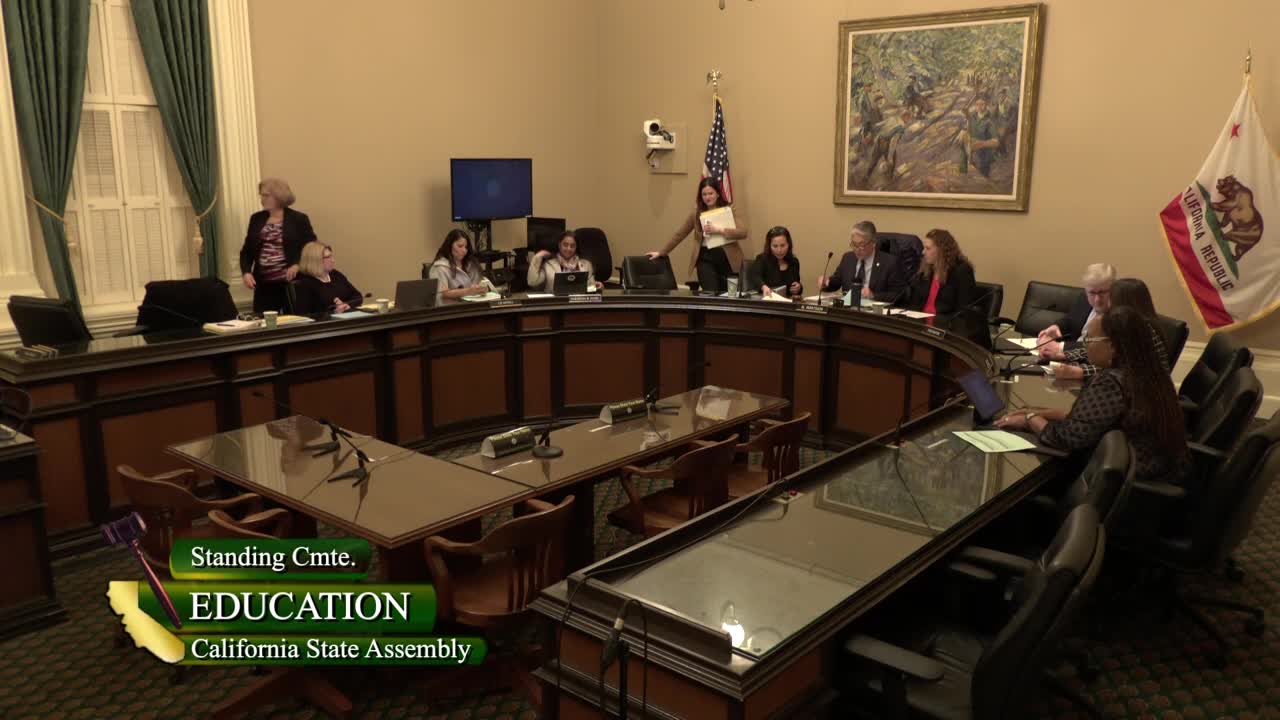 12MIN
Assembly Standing Committee on Education
Bill Author

Bill Co-Author(s):