AB 686: Elections: deceptive audio or visual media.
- Session Year: 2025-2026
- House: Assembly
- Latest Version Date: 2026-09-19
Current Status:
Passed
(2026-09-19: Chaptered by Secretary of State - Chapter 334, Statutes of 2026.)
Introduced
In Committee
Awaiting First Chamber Vote
Passed First Chamber
In Committee
Awaiting Second Chamber Vote
Passed Second Chamber
Enacted
Existing law, until January 1, 2027, prohibits a person, committee, or other entity, within 60 days of an election at which a candidate for elective office will appear on the ballot, from distributing with actual malice materially deceptive audio or visual media of the candidate with the intent to injure the candidates reputation or to deceive a voter into voting for or against the candidate, unless the media includes a disclosure stating that the media has been manipulated, subject to specified exemptions.
Existing law, until January 1, 2027, authorizes a candidate for elective office whose voice or likeness appears in audio or visual media distributed in violation of this section to seek injunctive or other equitable relief prohibiting the distribution of the deceptive audio or visual media; authorizes a candidate whose voice or likeness appears in the deceptive audio or visual media to bring an action for general or special damages against the person, committee, or other entity that distributed the media; and authorizes the court to award a prevailing party reasonable attorneys fees and costs. A court is required to place such proceedings on the calendar in the order of their date of filing and give them precedence.
This bill would extend the repeal date of these provisions to January 1, 2031.
Existing law, the Control, Regulate and Tax Adult Use of Marijuana Act of 2016 (AUMA), an initiative measure approved as Proposition 64 at the November 8, 2016, statewide general election, prohibits the director of the Department of Cannabis Control (department) and any member of the Cannabis Control Appeals Panel from engaging in certain activities, including from receiving any commission or profit whatsoever, directly or indirectly, from any person applying for or receiving any license or permit, as described. Existing law, the Medicinal and Adult-Use Cannabis Regulation and Safety Act (MAUCRSA), among other things, consolidates the licensure and regulation of commercial medicinal and adult-use cannabis activities.This bill would also prohibit individuals appointed by the Governor to specified positions in the department from engaging in those activities.Existing law, the Control, Regulate and Tax Adult Use of Marijuana Act of 2016 (AUMA), an initiative measure approved as Proposition 64 at the November 8, 2016, statewide general election, prohibits the director of the Department of Cannabis Control (department) and any member of the Cannabis Control Appeals Panel from engaging in certain activities, including from receiving any commission or profit whatsoever, directly or indirectly, from any person applying for or receiving any license or permit, as described. Existing law, the Medicinal and Adult-Use Cannabis Regulation and Safety Act (MAUCRSA), among other things, consolidates the licensure and regulation of commercial medicinal and adult-use cannabis activities.
This bill would also prohibit individuals appointed by the Governor to specified positions in the department from engaging in those activities.
(a)Proceedings in cases involving the registration or denial of registration of voters, the certification or denial of certification of candidates, the certification or denial of certification of ballot measures, election contests, actions under Section 20010 or 20012 of the Elections Code, actions under Chapter 7 (commencing with Section 20510) of Division 20 of the Elections Code, and actions under Chapter 2 (commencing with Section 21100) of Division 21 of the Elections Code shall be placed on the calendar in the order of their date of filing and shall be given precedence.
(b)This section shall remain in effect only until January 1, 2031, and as of that date is repealed, unless a later enacted statute, that is enacted before January 1, 2031, deletes or extends that date.
SEC. 2.Section 35 of the Code of Civil Procedure, as amended by Section 2.5 of Chapter 262 of the Statutes of 2024, is amended to read:35.(a)Proceedings in cases involving the registration or denial of registration of voters, the certification or denial of certification of candidates, the certification or denial of certification of ballot measures, election contests, actions under Section 20012 of the Elections Code, actions under Chapter 7 (commencing with Section 20510) of Division 20 of the Elections Code, and actions under Chapter 2 (commencing with Section 21100) of Division 21 of the Elections Code shall be placed on the calendar in the order of their date of filing and shall be given precedence.
(b)This section shall become operative January 1, 2031.
SEC. 3.Section 20010 of the Elections Code, as amended by Section 3 of Chapter 745 of the Statutes of 2022, is amended to read:20010.(a)Except as provided in subdivision (b), a person, committee, as defined in Section 82013 of the Government Code, or other entity shall not, within 60 days of an election at which a candidate for elective office will appear on the ballot, distribute, with actual malice, materially deceptive audio or visual media, as defined in subdivision (e), of the candidate with the intent to injure the candidates reputation or to deceive a voter into voting for or against the candidate.
(b)(1)The prohibition in subdivision (a) does not apply if the audio or visual media includes a disclosure stating: This _____ has been manipulated.
(2)The blank in the disclosure required by paragraph (1) shall be filled with whichever of the following terms most accurately describes the media:
(A)Image.
(B)Video.
(C)Audio.
(3)(A)For visual media, the text of the disclosure shall appear in a size that is easily readable by the average viewer and no smaller than the largest font size of other text appearing in the visual media. If the visual media does not include any other text, the disclosure shall appear in a size that is easily readable by the average viewer. For visual media that is video, the disclosure shall appear for the duration of the video.
(B)If the media consists of audio only, the disclosure shall be read in a clearly spoken manner and in a pitch that can be easily heard by the average listener, at the beginning of the audio, at the end of the audio, and, if the audio is greater than two minutes in length, interspersed within the audio at intervals of not greater than two minutes each.
(c)(1)A candidate for elective office whose voice or likeness appears in a materially deceptive audio or visual media distributed in violation of this section may seek injunctive or other equitable relief prohibiting the distribution of audio or visual media in violation of this section. An action under this paragraph shall be entitled to precedence in accordance with Section 35 of the Code of Civil Procedure.
(2)A candidate for elective office whose voice or likeness appears in a materially deceptive audio or visual media distributed in violation of this section may bring an action for general or special damages against the person, committee, or other entity that distributed the materially deceptive audio or visual media. The court may also award a prevailing party reasonable attorneys fees and costs. This subdivision shall not be construed to limit or preclude a plaintiff from securing or recovering any other available remedy.
(3)In any civil action alleging a violation of this section, the plaintiff shall bear the burden of establishing the violation through clear and convincing evidence.
(d)(1)This section shall not be construed to alter or negate any rights, obligations, or immunities of an interactive service provider under Section 230 of Title 47 of the United States Code.
(2)This section does not apply to a radio or television broadcasting station, including a cable or satellite television operator, programmer, or producer, that broadcasts materially deceptive audio or visual media prohibited by this section as part of a bona fide newscast, news interview, news documentary, or on-the-spot coverage of bona fide news events, if the broadcast clearly acknowledges through content or a disclosure, in a manner that can be easily heard or read by the average listener or viewer, that there are questions about the authenticity of the materially deceptive audio or visual media.
(3)This section does not apply to a radio or television broadcasting station, including a cable or satellite television operator, programmer, or producer, when it is paid to broadcast materially deceptive audio or visual media.
(4)This section does not apply to an internet website, or a regularly published newspaper, magazine, or other periodical of general circulation, including an internet or electronic publication, that routinely carries news and commentary of general interest, and that publishes materially deceptive audio or visual media prohibited by this section, if the publication clearly states that the materially deceptive audio or visual media does not accurately represent the speech or conduct of the candidate.
(5)This section does not apply to materially deceptive audio or visual media that constitutes satire or parody.
(e)As used in this section, materially deceptive audio or visual media means an image or an audio or video recording of a candidates appearance, speech, or conduct that has been intentionally manipulated in a manner such that both of the following conditions are met:
(1)The image or audio or video recording would falsely appear to a reasonable person to be authentic.
(2)The image or audio or video recording would cause a reasonable person to have a fundamentally different understanding or impression of the expressive content of the image or audio or video recording than that person would have if the person were hearing or seeing the unaltered, original version of the image or audio or video recording.
(f)The provisions of this section are severable. If any provision of this section or its application is held invalid, that invalidity shall not affect other provisions or applications that can be given effect without the invalid provision or application.
(g)This section shall remain in effect only until January 1, 2031, and as of that date is repealed, unless a later enacted statute, that is enacted before January 1, 2031, deletes or extends that date.
SEC. 4.Section 20010 of the Elections Code, as amended by Section 4 of Chapter 745 of the Statutes of 2022, is amended to read:20010.(a)Except as provided in subdivision (b), a person, firm, association, corporation, campaign committee, or organization shall not, with actual malice, produce, distribute, publish, or broadcast campaign material that contains (1) a picture or photograph of a person or persons into which the image of a candidate for public office is superimposed or (2) a picture or photograph of a candidate for public office into which the image of another person or persons is superimposed. Campaign material includes, but is not limited to, any printed matter, advertisement in a newspaper or other periodical, television commercial, or computer image. For purposes of this section, actual malice means the knowledge that the image of a person has been superimposed on a picture or photograph to create a false representation, or a reckless disregard of whether or not the image of a person has been superimposed on a picture or photograph to create a false representation.
(b)A person, firm, association, corporation, campaign committee, or organization may produce, distribute, publish, or broadcast campaign material that contains a picture or photograph prohibited by subdivision (a) only if each picture or photograph in the campaign material includes the following statement in the same point size type as the largest point size type used elsewhere in the campaign material: This picture is not an accurate representation of fact. The statement shall be immediately adjacent to each picture or photograph prohibited by subdivision (a).
(c)(1)A registered voter may seek a temporary restraining order and an injunction prohibiting the publication, distribution, or broadcasting of any campaign material in violation of this section. Upon filing a petition under this section, the plaintiff may obtain a temporary restraining order in accordance with Section 527 of the Code of Civil Procedure.
(2)A candidate for public office whose likeness appears in a picture or photograph prohibited by subdivision (a) may bring a civil action against any person, firm, association, corporation, campaign committee, or organization that produced, distributed, published, or broadcast the picture or photograph prohibited by subdivision (a). The court may award damages in an amount equal to the cost of producing, distributing, publishing, or broadcasting the campaign material that violated this section, in addition to reasonable attorneys fees and costs.
(d)(1)This section does not apply to a holder of a license granted pursuant to the federal Communications Act of 1934 (47 U.S.C. Sec. 151 et seq.) in the performance of the functions for which the license is granted.
(2)This section does not apply to the publisher or an employee of a newspaper, magazine, or other periodical that is published on a regular basis for any material published in that newspaper, magazine, or other periodical. For purposes of this subdivision, a newspaper, magazine, or other periodical that is published on a regular basis does not include any newspaper, magazine, or other periodical that has as its primary purpose the publication of campaign advertising or communication, as defined by Section 304.
(e)This section shall become operative on January 1, 2031.
(a)Proceedings in cases involving the registration or denial of registration of voters, the certification or denial of certification of candidates, the certification or denial of certification of ballot measures, election contests, actions under Section 20010 or 20012 of the Elections Code, actions under Chapter 7 (commencing with Section 20510) of Division 20 of the Elections Code, and actions under Chapter 2 (commencing with Section 21100) of Division 21 of the Elections Code shall be placed on the calendar in the order of their date of filing and shall be given precedence.
(b)This section shall remain in effect only until January 1, 2031, and as of that date is repealed, unless a later enacted statute, that is enacted before January 1, 2031, deletes or extends that date.
SEC. 2.Section 35 of the Code of Civil Procedure, as amended by Section 2.5 of Chapter 262 of the Statutes of 2024, is amended to read:35.(a)Proceedings in cases involving the registration or denial of registration of voters, the certification or denial of certification of candidates, the certification or denial of certification of ballot measures, election contests, actions under Section 20012 of the Elections Code, actions under Chapter 7 (commencing with Section 20510) of Division 20 of the Elections Code, and actions under Chapter 2 (commencing with Section 21100) of Division 21 of the Elections Code shall be placed on the calendar in the order of their date of filing and shall be given precedence.
(b)This section shall become operative January 1, 2031.
SEC. 3.Section 20010 of the Elections Code, as amended by Section 3 of Chapter 745 of the Statutes of 2022, is amended to read:20010.(a)Except as provided in subdivision (b), a person, committee, as defined in Section 82013 of the Government Code, or other entity shall not, within 60 days of an election at which a candidate for elective office will appear on the ballot, distribute, with actual malice, materially deceptive audio or visual media, as defined in subdivision (e), of the candidate with the intent to injure the candidates reputation or to deceive a voter into voting for or against the candidate.
(b)(1)The prohibition in subdivision (a) does not apply if the audio or visual media includes a disclosure stating: This _____ has been manipulated.
(2)The blank in the disclosure required by paragraph (1) shall be filled with whichever of the following terms most accurately describes the media:
(A)Image.
(B)Video.
(C)Audio.
(3)(A)For visual media, the text of the disclosure shall appear in a size that is easily readable by the average viewer and no smaller than the largest font size of other text appearing in the visual media. If the visual media does not include any other text, the disclosure shall appear in a size that is easily readable by the average viewer. For visual media that is video, the disclosure shall appear for the duration of the video.
(B)If the media consists of audio only, the disclosure shall be read in a clearly spoken manner and in a pitch that can be easily heard by the average listener, at the beginning of the audio, at the end of the audio, and, if the audio is greater than two minutes in length, interspersed within the audio at intervals of not greater than two minutes each.
(c)(1)A candidate for elective office whose voice or likeness appears in a materially deceptive audio or visual media distributed in violation of this section may seek injunctive or other equitable relief prohibiting the distribution of audio or visual media in violation of this section. An action under this paragraph shall be entitled to precedence in accordance with Section 35 of the Code of Civil Procedure.
(2)A candidate for elective office whose voice or likeness appears in a materially deceptive audio or visual media distributed in violation of this section may bring an action for general or special damages against the person, committee, or other entity that distributed the materially deceptive audio or visual media. The court may also award a prevailing party reasonable attorneys fees and costs. This subdivision shall not be construed to limit or preclude a plaintiff from securing or recovering any other available remedy.
(3)In any civil action alleging a violation of this section, the plaintiff shall bear the burden of establishing the violation through clear and convincing evidence.
(d)(1)This section shall not be construed to alter or negate any rights, obligations, or immunities of an interactive service provider under Section 230 of Title 47 of the United States Code.
(2)This section does not apply to a radio or television broadcasting station, including a cable or satellite television operator, programmer, or producer, that broadcasts materially deceptive audio or visual media prohibited by this section as part of a bona fide newscast, news interview, news documentary, or on-the-spot coverage of bona fide news events, if the broadcast clearly acknowledges through content or a disclosure, in a manner that can be easily heard or read by the average listener or viewer, that there are questions about the authenticity of the materially deceptive audio or visual media.
(3)This section does not apply to a radio or television broadcasting station, including a cable or satellite television operator, programmer, or producer, when it is paid to broadcast materially deceptive audio or visual media.
(4)This section does not apply to an internet website, or a regularly published newspaper, magazine, or other periodical of general circulation, including an internet or electronic publication, that routinely carries news and commentary of general interest, and that publishes materially deceptive audio or visual media prohibited by this section, if the publication clearly states that the materially deceptive audio or visual media does not accurately represent the speech or conduct of the candidate.
(5)This section does not apply to materially deceptive audio or visual media that constitutes satire or parody.
(e)As used in this section, materially deceptive audio or visual media means an image or an audio or video recording of a candidates appearance, speech, or conduct that has been intentionally manipulated in a manner such that both of the following conditions are met:
(1)The image or audio or video recording would falsely appear to a reasonable person to be authentic.
(2)The image or audio or video recording would cause a reasonable person to have a fundamentally different understanding or impression of the expressive content of the image or audio or video recording than that person would have if the person were hearing or seeing the unaltered, original version of the image or audio or video recording.
(f)The provisions of this section are severable. If any provision of this section or its application is held invalid, that invalidity shall not affect other provisions or applications that can be given effect without the invalid provision or application.
(g)This section shall remain in effect only until January 1, 2031, and as of that date is repealed, unless a later enacted statute, that is enacted before January 1, 2031, deletes or extends that date.
SEC. 4.Section 20010 of the Elections Code, as amended by Section 4 of Chapter 745 of the Statutes of 2022, is amended to read:20010.(a)Except as provided in subdivision (b), a person, firm, association, corporation, campaign committee, or organization shall not, with actual malice, produce, distribute, publish, or broadcast campaign material that contains (1) a picture or photograph of a person or persons into which the image of a candidate for public office is superimposed or (2) a picture or photograph of a candidate for public office into which the image of another person or persons is superimposed. Campaign material includes, but is not limited to, any printed matter, advertisement in a newspaper or other periodical, television commercial, or computer image. For purposes of this section, actual malice means the knowledge that the image of a person has been superimposed on a picture or photograph to create a false representation, or a reckless disregard of whether or not the image of a person has been superimposed on a picture or photograph to create a false representation.
(b)A person, firm, association, corporation, campaign committee, or organization may produce, distribute, publish, or broadcast campaign material that contains a picture or photograph prohibited by subdivision (a) only if each picture or photograph in the campaign material includes the following statement in the same point size type as the largest point size type used elsewhere in the campaign material: This picture is not an accurate representation of fact. The statement shall be immediately adjacent to each picture or photograph prohibited by subdivision (a).
(c)(1)Any A registered voter may seek a temporary restraining order and an injunction prohibiting the publication, distribution, or broadcasting of any campaign material in violation of this section. Upon filing a petition under this section, the plaintiff may obtain a temporary restraining order in accordance with Section 527 of the Code of Civil Procedure.
(2)A candidate for public office whose likeness appears in a picture or photograph prohibited by subdivision (a) may bring a civil action against any person, firm, association, corporation, campaign committee, or organization that produced, distributed, published, or broadcast the picture or photograph prohibited by subdivision (a). The court may award damages in an amount equal to the cost of producing, distributing, publishing, or broadcasting the campaign material that violated this section, in addition to reasonable attorneys fees and costs.
(d)(1)This section does not apply to a holder of a license granted pursuant to the federal Communications Act of 1934 (47 U.S.C. Sec. 151 et seq.) in the performance of the functions for which the license is granted.
(2)This section does not apply to the publisher or an employee of a newspaper, magazine, or other periodical that is published on a regular basis for any material published in that newspaper, magazine, or other periodical. For purposes of this subdivision, a newspaper, magazine, or other periodical that is published on a regular basis does not include any newspaper, magazine, or other periodical that has as its primary purpose the publication of campaign advertising or communication, as defined by Section 304.
(e)This section shall become operative on January 1, 2031.
(a)Proceedings in cases involving the registration or denial of registration of voters, the certification or denial of certification of candidates, the certification or denial of certification of ballot measures, election contests, actions under Section 20010 or 20012 of the Elections Code, actions under Chapter 7 (commencing with Section 20510) of Division 20 of the Elections Code, and actions under Chapter 2 (commencing with Section 21100) of Division 21 of the Elections Code shall be placed on the calendar in the order of their date of filing and shall be given precedence.
(b)This section shall remain in effect only until January 1, 2027, 2031, and as of that date is repealed, unless a later enacted statute, that is enacted before January 1, 2027, 2031, deletes or extends that date.
SEC. 2.Section 35 of the Code of Civil Procedure, as amended by Section 2.5 of Chapter 262 of the Statutes of 2024, is amended to read:35.(a)Proceedings in cases involving the registration or denial of registration of voters, the certification or denial of certification of candidates, the certification or denial of certification of ballot measures, election contests, actions under Section 20012 of the Elections Code, actions under Chapter 7 (commencing with Section 20510) of Division 20 of the Elections Code, and actions under Chapter 2 (commencing with Section 21100) of Division 21 of the Elections Code shall be placed on the calendar in the order of their date of filing and shall be given precedence.
(b)This section shall become operative January 1, 2027. 2031.
SEC. 3.Section 20010 of the Elections Code, as amended by Section 3 of Chapter 745 of the Statutes of 2022, is amended to read:20010.(a)Except as provided in subdivision (b), a person, committee, as defined in Section 82013 of the Government Code, or other entity shall not, within 60 days of an election at which a candidate for elective office will appear on the ballot, distribute, with actual malice, materially deceptive audio or visual media, as defined in subdivision (e), of the candidate with the intent to injure the candidates reputation or to deceive a voter into voting for or against the candidate.
(b)(1)The prohibition in subdivision (a) does not apply if the audio or visual media includes a disclosure stating: This _____ has been manipulated.
(2)The blank in the disclosure required by paragraph (1) shall be filled with whichever of the following terms most accurately describes the media:
(A)Image.
(B)Video.
(C)Audio.
(3)(A)For visual media, the text of the disclosure shall appear in a size that is easily readable by the average viewer and no smaller than the largest font size of other text appearing in the visual media. If the visual media does not include any other text, the disclosure shall appear in a size that is easily readable by the average viewer. For visual media that is video, the disclosure shall appear for the duration of the video.
(B)If the media consists of audio only, the disclosure shall be read in a clearly spoken manner and in a pitch that can be easily heard by the average listener, at the beginning of the audio, at the end of the audio, and, if the audio is greater than two minutes in length, interspersed within the audio at intervals of not greater than two minutes each.
(c)(1)A candidate for elective office whose voice or likeness appears in a materially deceptive audio or visual media distributed in violation of this section may seek injunctive or other equitable relief prohibiting the distribution of audio or visual media in violation of this section. An action under this paragraph shall be entitled to precedence in accordance with Section 35 of the Code of Civil Procedure.
(2)A candidate for elective office whose voice or likeness appears in a materially deceptive audio or visual media distributed in violation of this section may bring an action for general or special damages against the person, committee, or other entity that distributed the materially deceptive audio or visual media. The court may also award a prevailing party reasonable attorneys fees and costs. This subdivision shall not be construed to limit or preclude a plaintiff from securing or recovering any other available remedy.
(3)In any civil action alleging a violation of this section, the plaintiff shall bear the burden of establishing the violation through clear and convincing evidence.
(d)(1)This section shall not be construed to alter or negate any rights, obligations, or immunities of an interactive service provider under Section 230 of Title 47 of the United States Code.
(2)This section does not apply to a radio or television broadcasting station, including a cable or satellite television operator, programmer, or producer, that broadcasts materially deceptive audio or visual media prohibited by this section as part of a bona fide newscast, news interview, news documentary, or on-the-spot coverage of bona fide news events, if the broadcast clearly acknowledges through content or a disclosure, in a manner that can be easily heard or read by the average listener or viewer, that there are questions about the authenticity of the materially deceptive audio or visual media.
(3)This section does not apply to a radio or television broadcasting station, including a cable or satellite television operator, programmer, or producer, when it is paid to broadcast materially deceptive audio or visual media.
(4)This section does not apply to an internet website, or a regularly published newspaper, magazine, or other periodical of general circulation, including an internet or electronic publication, that routinely carries news and commentary of general interest, and that publishes materially deceptive audio or visual media prohibited by this section, if the publication clearly states that the materially deceptive audio or visual media does not accurately represent the speech or conduct of the candidate.
(5)This section does not apply to materially deceptive audio or visual media that constitutes satire or parody.
(e)As used in this section, materially deceptive audio or visual media means an image or an audio or video recording of a candidates appearance, speech, or conduct that has been intentionally manipulated in a manner such that both of the following conditions are met:
(1)The image or audio or video recording would falsely appear to a reasonable person to be authentic.
(2)The image or audio or video recording would cause a reasonable person to have a fundamentally different understanding or impression of the expressive content of the image or audio or video recording than that person would have if the person were hearing or seeing the unaltered, original version of the image or audio or video recording.
(f)The provisions of this section are severable. If any provision of this section or its application is held invalid, that invalidity shall not affect other provisions or applications that can be given effect without the invalid provision or application.
(g)This section shall remain in effect only until January 1, 2027, 2031, and as of that date is repealed, unless a later enacted statute, that is enacted before January 1, 2027, 2031, deletes or extends that date.
SEC. 4.Section 20010 of the Elections Code, as amended by Section 4 of Chapter 745 of the Statutes of 2022, is amended to read:20010.(a)Except as provided in subdivision (b), a person, firm, association, corporation, campaign committee, or organization shall not, with actual malice, produce, distribute, publish, or broadcast campaign material that contains (1) a picture or photograph of a person or persons into which the image of a candidate for public office is superimposed or (2) a picture or photograph of a candidate for public office into which the image of another person or persons is superimposed. Campaign material includes, but is not limited to, any printed matter, advertisement in a newspaper or other periodical, television commercial, or computer image. For purposes of this section, actual malice means the knowledge that the image of a person has been superimposed on a picture or photograph to create a false representation, or a reckless disregard of whether or not the image of a person has been superimposed on a picture or photograph to create a false representation.
(b)A person, firm, association, corporation, campaign committee, or organization may produce, distribute, publish, or broadcast campaign material that contains a picture or photograph prohibited by subdivision (a) only if each picture or photograph in the campaign material includes the following statement in the same point size type as the largest point size type used elsewhere in the campaign material: This picture is not an accurate representation of fact. The statement shall be immediately adjacent to each picture or photograph prohibited by subdivision (a).
(c)(1)Any registered voter may seek a temporary restraining order and an injunction prohibiting the publication, distribution, or broadcasting of any campaign material in violation of this section. Upon filing a petition under this section, the plaintiff may obtain a temporary restraining order in accordance with Section 527 of the Code of Civil Procedure.
(2)A candidate for public office whose likeness appears in a picture or photograph prohibited by subdivision (a) may bring a civil action against any person, firm, association, corporation, campaign committee, or organization that produced, distributed, published, or broadcast the picture or photograph prohibited by subdivision (a). The court may award damages in an amount equal to the cost of producing, distributing, publishing, or broadcasting the campaign material that violated this section, in addition to reasonable attorneys fees and costs.
(d)(1)This section does not apply to a holder of a license granted pursuant to the federal Communications Act of 1934 (47 U.S.C. Sec. 151 et seq.) in the performance of the functions for which the license is granted.
(2)This section does not apply to the publisher or an employee of a newspaper, magazine, or other periodical that is published on a regular basis for any material published in that newspaper, magazine, or other periodical. For purposes of this subdivision, a newspaper, magazine, or other periodical that is published on a regular basis does not include any newspaper, magazine, or other periodical that has as its primary purpose the publication of campaign advertising or communication, as defined by Section 304.
(e)This section shall become operative on January 1, 2027. 2031.
SECTION 1.Section 26011 of the Business and Professions Code is amended to read:26011.The director, an individual appointed by the Governor pursuant to paragraph (2) of subdivision (c) of Section 26010.5, and any member of the Cannabis Control Appeals Panel established under Section 26040 shall not do any of the following:(a)Receive any commission or profit whatsoever, directly or indirectly, from any person applying for or receiving any license or permit under this division.(b)Engage or have any interest in the sale or any insurance covering a licensees business or premises.(c)Engage or have any interest in the sale of equipment for use upon the premises of a licensee engaged in commercial cannabis activity.(d)Knowingly solicit any licensee for the purchase of tickets for benefits or contributions for benefits.(e)Knowingly request any licensee to donate or receive money, or any other thing of value, for the benefit of any person whatsoever.Neither the director nor The director, an individual appointed by the Governor pursuant to paragraph (2) of subdivision (c) of Section 26010.5, and any member of the Cannabis Control Appeals Panel established under Section 26040 shall not do any of the following:
(a)Receive any commission or profit whatsoever, directly or indirectly, from any person applying for or receiving any license or permit under this division.
(b)Engage or have any interest in the sale or any insurance covering a licensees business or premises.
(c)Engage or have any interest in the sale of equipment for use upon the premises of a licensee engaged in commercial cannabis activity.
(d)Knowingly solicit any licensee for the purchase of tickets for benefits or contributions for benefits.
(e)Knowingly request any licensee to donate or receive money, or any other thing of value, for the benefit of any person whatsoever.
|
Date
|
Status
|
|---|---|
| Sep 19, 2026 | Chaptered by Secretary of State - Chapter 334, Statutes of 2026. |
| Sep 19, 2026 | Approved by the Governor. |
| Sep 9, 2026 | Enrolled and presented to the Governor at 1 p.m. |
| Aug 30, 2026 | Senate amendments concurred in. To Engrossing and Enrolling. (Ayes 63. Noes 14. Page 6861.). |
| Aug 30, 2026 | Senate amendments concurred in. To Engrossing and Enrolling. (Ayes 63. Noes 14.). |
| Aug 30, 2026 | Senate amendments concurred in. To Engrossing and Enrolling. |
| Aug 28, 2026 | From committee: That the Senate amendments be concurred in. (Ayes 6. Noes 2.) (August 28). |
| Aug 26, 2026 | Joint Rule 62(a), file notice suspended. (Page 6621.) |
| Aug 26, 2026 | Joint Rule 62(a), file notice suspended. |
| Aug 25, 2026 | Re-referred to Com. on ELECTIONS. pursuant to Assembly Rule 77.2. |
| Aug 24, 2026 | In Assembly. Concurrence in Senate amendments pending. |
| Aug 24, 2026 | Read third time. Passed. Ordered to the Assembly. (Ayes 30. Noes 6. Page 5705.). |
| Aug 24, 2026 | Read third time. Passed. Ordered to the Assembly. (Ayes 30. Noes 6.). |
| Aug 17, 2026 | Read second time. Ordered to third reading. |
| Aug 13, 2026 | From committee: Amend, and do pass as amended. (Ayes 5. Noes 1.) (August 13). |
| Aug 13, 2026 | Read second time and amended. Ordered returned to second reading. |
| Aug 3, 2026 | In committee: Referred to APPR. suspense file. |
| Jul 1, 2026 | From committee: Do pass and re-refer to Com. on APPR. (Ayes 11. Noes 0.) (June 30). Re-referred to Com. on APPR. |
| Jun 30, 2026 | From committee: Do pass and re-refer to Com. on JUD. (Ayes 4. Noes 1.) (June 30). Re-referred to Com. on JUD. |
| Jun 15, 2026 | Re-referred to Coms. on E. & C.A., JUD., and APPR. |
| Jun 11, 2026 | Re-referred to Com. on RLS. pursuant to Senate Rule 29.10(c). |
| Jun 10, 2026 | Read second time. Ordered to third reading. |
| Jun 9, 2026 | Read second time and amended. Ordered returned to second reading. |
| Jun 9, 2026 | Ordered to second reading. |
| Jun 9, 2026 | From inactive file. |
| Sep 4, 2025 | Ordered to inactive file at the request of Senator Laird. |
| Aug 20, 2025 | Read second time. Ordered to third reading. |
| Aug 19, 2025 | From committee: Be ordered to second reading pursuant to Senate Rule 28.8. |
| Jun 30, 2025 | From committee: Do pass and re-refer to Com. on APPR. (Ayes 9. Noes 0.) (June 30). Re-referred to Com. on APPR. |
| Jun 4, 2025 | Referred to Com. on B. P. & E.D. |
| May 28, 2025 | In Senate. Read first time. To Com. on RLS. for assignment. |
| May 27, 2025 | Read third time. Passed. Ordered to the Senate. (Ayes 76. Noes 0. Page 1740.) |
| May 22, 2025 | Read second time. Ordered to Consent Calendar. |
| May 21, 2025 | From committee: Do pass. To Consent Calendar. (Ayes 15. Noes 0.) (May 21). |
| Apr 1, 2025 | From committee: Do pass and re-refer to Com. on APPR. with recommendation: To Consent Calendar. (Ayes 17. Noes 0.) (April 1). Re-referred to Com. on APPR. |
| Mar 3, 2025 | Referred to Com. on B. & P. |
| Feb 15, 2025 | From printer. May be heard in committee March 17. |
| Feb 14, 2025 | Read first time. To print. |
|
Date
|
Description
|
Location
|
Votes
|
|
|---|---|---|---|---|
| Aug 30, 2026 | AB 686 Berman Concurrence in Senate Amendments | Assembly Floor |
Passed |
|
| Aug 28, 2026 | With recommendation: That Senate amendments be concurred in. | Assembly Standing Committee on Elections |
Passed |
|
| Aug 24, 2026 | Assembly 3rd Reading AB686 Berman et al. By Allen | Senate Floor |
Passed |
|
| Aug 13, 2026 | Do pass as amended | Senate Standing Committee on Appropriations |
Passed |
|
| Aug 3, 2026 | Placed on suspense file | Senate Standing Committee on Appropriations |
Passed |
|
| Jun 30, 2026 | Do pass, but first be re-referred to the Committee on [Appropriations] | Senate Standing Committee on Judiciary |
Passed |
|
| Jun 30, 2026 | Do pass, but first be re-referred to the Committee on [Judiciary] | Senate Standing Committee on Elections and Constitutional Amendments |
Passed |
|
| Jun 30, 2025 | Do pass, but first be re-referred to the Committee on [Appropriations] | Senate Standing Committee on Business, Professions and Economic Development |
Passed |
|
| May 27, 2025 | AB 686 Berman Consent Calendar Second Day Regular Session | Assembly Floor |
Passed |
|
| May 21, 2025 | Do pass. To Consent Calendar. | Assembly Standing Committee on Appropriations |
Passed |
|
| Apr 1, 2025 | Do pass and be re-referred to the Committee on [Appropriations] with recommendation: To Consent Calendar | Assembly Standing Committee on Business and Professions |
Passed |
This list shows positions taken on this bill by organizations on the date displayed, which is linked to the original source.
Positions by individuals are not included.
|
Organization
|
Position
|
Date
|
|---|---|---|
| California Association of Black Lawyers | ** Support |
CONCURRENCE IN SENATE AMENDMENTS
CSA2 Bill Id:AB 686
Author:(Berman)
As Amended Ver:August 13, 2026
Majority vote
SUMMARY
Original Committee of Reference: B. & P.
Extends the sunset date to January 1, 2031, on a law that prohibits the intentional dissemination of fake or manipulated audio or video of a political candidate to deceive voters or damage the candidate's reputation, unless the media includes a disclosure that it has been manipulated.
Senate Amendments
Current Committee Recommendation: Concur
The Senate amendments delete the Assembly-approved version of the bill and instead extend the sunset date – from January 1, 2027 to January 1, 2031 – on a law that prohibits the distribution of materially deceptive audio or visual media of a candidate's appearance, speech, or conduct with actual malice with the intent to injure a candidate's reputation or to deceive a voter into voting for or against a candidate, unless the media includes a disclosure that it has been manipulated.
COMMENTS
As approved by the Assembly, this bill would have extended existing prohibitions against state cannabis officials having specified financial interests or relationships within the licensed cannabis industry to additional appointed officials within the Department of Cannabis Control. Subsequent to the Assembly's approval, this bill was amended in the Senate to delete the Assembly-approved provisions and to add the current provisions. In light of the substantive Senate amendments, this bill was re-referred to the Assembly Elections Committee for further consideration pursuant to Assembly Rule 77.2. On August 28, 2026, the Assembly Elections Committee recommended, by a 6-2 vote, that the Senate amendments be concurred in.
Deepfake technology refers to software capable of producing a realistic looking video of someone saying or doing something that they did not, in fact, say or do. This technology has advanced rapidly in recent years thanks to the use of artificial intelligence to help train the software. Various tools that enable a user to make deepfake videos are now widely available.
In response to concerns that deepfakes could be used to spread misinformation in campaigns, in 2019, the Legislature approved and Governor Newsom signed AB 730 (Berman), Chapter 493, Statutes of 2019. AB 730 prohibits the distribution of materially deceptive audio or visual media of a candidate's appearance, speech, or conduct with actual malice with the intent to injure a candidate's reputation or to deceive a voter into voting for or against a candidate, unless the materially deceptive audio or visual media includes a disclosure that it has been manipulated. AB 730 does not apply exclusively to deepfakes but rather applies to any intentional manipulation of audio or visual images that results in a version that a reasonable observer would believe to be authentic. Nonetheless, the increasing availability and advancing capability of deepfake technology was the immediate impetus for that bill.
AB 730 was designed as an update to California's ″Truth in Political Advertising Act,″ a law enacted in 1998 (through the passage of AB 1233 (Leach), Chapter 718, Statutes of 1998) that prohibited campaign material that contains a picture of a person into which a candidate's image is superimposed, or contains a picture of a candidate into which another person's image is superimposed, except if a specified disclaimer was included. The Truth in Political Advertising Act was introduced in response to the use of photoshopped pictures in campaign materials, and accordingly was designed to target the manipulation of photographs in campaign materials. In the 20 years following its passage, however, it was never amended to update the law to address more modern techniques of manipulating campaign materials in a manner that can mislead voters. AB 730 replaced the Truth in Political Advertising Act with a law that regulates not only altered photographs in campaign materials, but also audio and video media that have been altered in a materially deceptive manner.
The changes made through the passage of AB 730 of 2019 originally were scheduled to sunset on January 1, 2023. AB 972 (Berman), Chapter 745, Statutes of 2022, extended the sunset date to January 1, 2027. If that sunset date is not repealed or extended, the original Truth in Political Advertising Act as enacted by AB 1233 of 1998 would go back into effect.
In 2024, the Legislature attempted to go further in its fight against election deepfakes by enacting multiple bills targeting deceptive campaign advertisements and elections-related communications. One such bill – AB 2839 (Pellerin), Chapter 262, Statutes of 2024 – prohibits the distribution of campaign advertisements and other election communications that contain media that has been digitally altered in a deceptive way. While much of the content targeted by AB 730 (as extended by AB 972) likely would be prohibited under AB 2839, that bill has been challenged in court, and a federal district court permanently enjoined its enforcement as to the plaintiffs in that case. That decision has been appealed to the Ninth Circuit Court of Appeals, where the case remains pending. Extending the operation of AB 730 for another five years will ensure that this longstanding law against election deepfakes remains in effect while legal challenges over AB 2839 work their way through the court system.
According to the Author
"The world has changed a lot since I first authored my original legislation to regulate election deepfakes in 2019. Not only is it easier than ever to create deepfakes due to the advancements of artificial intelligence, but we are seeing deepfakes used increasingly to blur the line between truth and fiction, misleading voters. That's why this law continues to be essential in protecting voters from being tricked and influenced by manipulated videos, audio recordings, or images. AB 686 would extend the sunset date of the law from January 1, 2027, to January 1, 2031, thereby ensuring that California law continues to dissuade the creation and distribution of nefarious election-related deepfakes and other manipulated content."
Arguments in Support
In support of this bill, the California Association of Black Lawyers writes, ″To ensure that the democratic process continues with integrity, voters must be properly and truthfully informed regarding candidates. Ads and other manipulative tactics to intentionally harm candidates serve no purpose but to embarrass, harass and destroy the reputation of candidates, when in fact, these candidates may be the individuals that can best serve in the applicable public office. Voters deserve to evaluate candidates based on truthful information, free from intentionally false or misleading materials. It is important that the community continue to have confidence in the integrity of the election process."
Arguments in Opposition
None received.
FISCAL COMMENTS
This bill is keyed non-fiscal by the Legislative Counsel. Notwithstanding that fact, this bill was referred to the Senate Appropriations Committee. According to that Committee, by authorizing a claim by specified individuals and entities to enjoin distribution of a prohibited communication and seek damages, this bill may result in an increased number of civil actions that also receive precedence when filed in court. Consequently, the bill could result in potentially significant cost pressures to the courts; the magnitude is unknown (Trial Court Trust Fund (TCTF)). The specific number of new actions that could be filed under the bill also is unknown; however, it generally costs about $10,500 per day to operate a courtroom. Courts are not funded on the basis of workload, and increased pressure on TCTF may create a need for increased funding for courts from the General Fund. The enacted 2026-27 budget includes $70 million in ongoing support from the General Fund to continue to backfill TCTF for revenue declines.
VOTES
ASM BUSINESS AND PROFESSIONS: Vote not relevant
YES:
ABS, ABST OR NV:
ASM APPROPRIATIONS: Vote not relevant
YES:
ASSEMBLY FLOOR: Vote not relevant
YES:
ABS, ABST OR NV:
SENATE FLOOR: Vote not relevant
YES:
NO:
ABS, ABST OR NV:
ASM ELECTIONS: 6-2-0
YES: Pellerin, Bennett, Berman, Elhawary, Solache, Stefani
NO: Johnson, Ellis
UPDATED
VERSION: August 13, 2026
CONSULTANT: Ethan Jones / ELECTIONS / (916) 319-2094 FN: 0004445
Date of Hearing: August 28, 2026
ASSEMBLY COMMITTEE ON ELECTIONS
Gail Pellerin, Chair
ABPCA Bill Id:AB 686 (
Author:Berman) – As Amended Ver:August 13, 2026
CONCURRENCE IN SENATE AMENDMENTS
SUBJECT: Elections: deceptive audio or visual media.
SUMMARY: Extends the sunset date to January 1, 2031, on a law that prohibits the intentional dissemination of fake or manipulated audio or video of a political candidate to deceive voters or damage the candidate’s reputation, unless the media includes a disclosure that it has been manipulated.
The Senate amendments delete the Assembly-approved version of the bill, and instead extend the sunset date – from January 1, 2027 to January 1, 2031 – on a law that prohibits the distribution of materially deceptive audio or visual media of a candidate’s appearance, speech, or conduct with actual malice with the intent to injure a candidate's reputation or to deceive a voter into voting for or against a candidate, unless the media includes a disclosure that it has been manipulated.
EXISTING LAW:
- Prohibits a person, committee, or other entity, until January 1, 2027, from distributing with actual malice, within 60 days of an election at which a candidate for elective office will appear on the ballot, materially deceptive audio or visual media of a candidate with the intent to injure the candidate’s reputation or to deceive a voter into voting for or against the candidate. (Elections Code §20010, as amended by Section 3 of Chapter 745 of the Statutes of 2022)
- Prohibits a person, firm, association, corporation, campaign committee, or organization, beginning January 1, 2027, with actual malice, from producing, distributing, publishing, or broadcasting campaign material, as defined, that contains either of the following types of pictures or photographs, as specified, unless the campaign material includes a disclosure that the picture is not an accurate representation of fact:
- A picture or photograph of a person or persons into which the image of a candidate for public office is superimposed.
- A picture or photograph of a candidate for public office into which the image of another person or persons is superimposed. (Elections Code §20010, as amended by Section 4 of Chapter 745 of the Statutes of 2022)
- Prohibits a person, committee, or other entity from knowingly distributing an advertisement or communication related to an election, with malice, that contains materially deceptive content, as specified. (Elections Code §20012)
FISCAL EFFECT: This bill is keyed non-fiscal by the Legislative Counsel. Notwithstanding that fact, this bill was referred to the Senate Appropriations Committee. According to that Committee, by authorizing a claim by specified individuals and entities to enjoin distribution of a prohibited communication and seek damages, this bill may result in an increased number of civil actions that also receive precedence when filed in court. Consequently, the bill could result in potentially significant cost pressures to the courts; the magnitude is unknown (Trial Court Trust Fund (TCTF)). The specific number of new actions that could be filed under the bill also is unknown; however, it generally costs about $10,500 per day to operate a courtroom. Courts are not funded on the basis of workload, and increased pressure on TCTF may create a need for increased funding for courts from the General Fund (GF). The enacted 2026-27 budget includes $70 million in ongoing support from the GF to continue to backfill TCTF for revenue declines.
COMMENTS:
- Prior Assembly Consideration of This Bill: As approved by the Assembly last year, this bill would have extended existing prohibitions against state cannabis officials having specified financial interests or relationships within the licensed cannabis industry to additional appointed officials within the Department of Cannabis Control. Subsequent to the Assembly's approval, this bill was amended in the Senate to delete the Assembly-approved provisions and to add the current provisions, which were approved by the Senate by a vote of 30-6 on August 24, 2026. Accordingly, this bill has been re-referred to this committee for further consideration pursuant to Assembly Rule 77.2.
- Purpose of the Bill: According to the author:
The world has changed a lot since I first authored my original legislation to regulate election deepfakes in 2019. Not only is it easier than ever to create deepfakes due to the advancements of artificial intelligence, but we are seeing deepfakes used increasingly to blur the line between truth and fiction, misleading voters. That’s why this law continues to be essential in protecting voters from being tricked and influenced by manipulated videos, audio recordings, or images. AB 686 would extend the sunset date of the law from January 1, 2027, to January 1, 2031, thereby ensuring that California law continues to dissuade the creation and distribution of nefarious election-related deepfakes and other manipulated content.
- Deepfakes Background and Previous Legislation: Deepfake technology refers to software capable of producing a realistic looking video of someone saying or doing something that they did not, in fact, say or do. This technology has advanced rapidly in recent years thanks to the use of artificial intelligence to help train the software. Software applications that enable a user to make deepfake videos are now available for easy download.
In response to concerns that deepfakes could be used to spread misinformation in campaigns, in 2019, the Legislature approved and Governor Newsom signed AB 730 (Berman), Chapter 493, Statutes of 2019. AB 730 prohibits the distribution of materially deceptive audio or visual media with actual malice with the intent to injure a candidate’s reputation or to deceive a voter into voting for or against a candidate, unless the materially deceptive audio or visual media includes a disclosure that it has been manipulated. AB 730 does not apply exclusively to deepfakes, but rather applies to any intentional manipulation of audio or visual images that results in a version that a reasonable observer would believe to be authentic. Nonetheless, the increasing availability and advancing capability of deepfake technology was the immediate impetus for that bill.
AB 730 was designed as an update to California’s “Truth in Political Advertising Act,” a law enacted in 1998 (through the passage of AB 1233 (Leach), Chapter 718, Statutes of 1998) that prohibited campaign material that contains a picture of a person into which a candidate's image is superimposed, or contains a picture of a candidate into which another person's image is superimposed, except if a specified disclaimer was included. The Truth in Political Advertising Act was introduced in response to the use of photoshopped pictures in campaign materials, and accordingly was designed to target the manipulation of photographs in campaign materials. In the 20 years following its passage, however, it was never amended to update the law to address more modern techniques of manipulating campaign materials in a manner that can mislead voters.
AB 730 replaced the Truth in Political Advertising Act with a law that regulates not only altered photographs in campaign materials, but also audio and video media that have been altered in a materially deceptive manner. The changes made through the passage of AB 730 originally were scheduled to sunset on January 1, 2023. AB 972 (Berman), Chapter 745, Statutes of 2022, extended the sunset to January 1, 2027. If that sunset date is not repealed or extended, the original Truth in Political Advertising Act as enacted by AB 1233 of 1998 would go back into effect.
In 2024, the Legislature attempted to go further in its fight against election deepfakes by enacting multiple bills targeting deceptive campaign advertisements and elections-related communications. One such bill – AB 2839 (Pellerin), Chapter 262, Statutes of 2024 – prohibits the distribution of campaign advertisements and other election communications that contain media that has been digitally altered in a deceptive way. While much of the content targeted by AB 730 (as extended by AB 972) likely would be prohibited under AB 2839, that bill has been challenged in court, and a federal district court permanently enjoined its enforcement as to the plaintiffs in that case. That decision has been appealed to the Ninth Circuit Court of Appeals, where the case remains pending. Extending the operation of AB 730 for another five years will ensure that this longstanding law against election deepfakes remains in effect while legal challenges over AB 2839 work their way through the court system. - Arguments in Support: In support of this bill, the California Association of Black Lawyers writes, “To ensure that the democratic process continues with integrity, voters must be properly and truthfully informed regarding candidates. Ads and other manipulative tactics to intentionally harm candidates serve no purpose but to embarrass, harass and destroy the reputation of candidates, when in fact, these candidates may be the individuals that can best serve in the applicable public office. Voters deserve to evaluate candidates based on truthful information, free from intentionally false or misleading materials. It is important that the community continue to have confidence in the integrity of the election process.”
- Related Legislation: AB 502 (Pellerin), which is also being heard in this committee today, makes various modifications to an existing law that prohibits the distribution of certain campaign advertisements and other election communications that contain media that has been digitally altered in a deceptive way.
REGISTERED SUPPORT / OPPOSITION:
Support
California Association of Black Lawyers
Opposition
None on file.
Analysis Prepared by: Ethan Jones / ELECTIONS / (916) 319-2094
CONCURRENCE IN SENATE AMENDMENTS
CSA1 Bill Id:AB 686
Author:(Berman)
As Amended Ver:August 13, 2026
Majority vote
SUMMARY
Extends the sunset date to January 1, 2031, on a law that prohibits the intentional dissemination of fake or manipulated audio or video of a political candidate to deceive voters or damage the candidate’s reputation, unless the media includes a disclosure that it has been manipulated.
Senate Amendments
Delete the Assembly-approved version of the bill and instead extend the sunset date – from January 1, 2027 to January 1, 2031 – on a law that prohibits the distribution of materially deceptive audio or visual media of a candidate’s appearance, speech, or conduct with actual malice with the intent to injure a candidate's reputation or to deceive a voter into voting for or against a candidate, unless the media includes a disclosure that it has been manipulated
COMMENTS
As approved by the Assembly, this bill would have extended existing prohibitions against state cannabis officials having specified financial interests or relationships within the licensed cannabis industry to additional appointed officials within the Department of Cannabis Control. Subsequent to the Assembly's approval, this bill was amended in the Senate to delete the Assembly-approved provisions and to add the current provisions. The provisions added in the Senate have not been heard in a policy committee in the Assembly during this legislative session
Deepfake technology refers to software capable of producing a realistic looking video of someone saying or doing something that they did not, in fact, say or do. This technology has advanced rapidly in recent years thanks to the use of artificial intelligence to help train the software. Various tools that enable a user to make deepfake videos are now widely available.
In response to concerns that deepfakes could be used to spread misinformation in campaigns, in 2019, the Legislature approved and Governor Newsom signed AB 730 (Berman), Chapter 493, Statutes of 2019. AB 730 prohibits the distribution of materially deceptive audio or visual media of a candidate’s appearance, speech, or conduct with actual malice with the intent to injure a candidate's reputation or to deceive a voter into voting for or against a candidate, unless the materially deceptive audio or visual media includes a disclosure that it has been manipulated. AB 730 does not apply exclusively to deepfakes but rather applies to any intentional manipulation of audio or visual images that results in a version that a reasonable observer would believe to be authentic. Nonetheless, the increasing availability and advancing capability of deepfake technology was the immediate impetus for that bill.
AB 730 was designed as an update to California's ″Truth in Political Advertising Act,″ a law enacted in 1998 (through the passage of AB 1233 (Leach), Chapter 718, Statutes of 1998) that prohibited campaign material that contains a picture of a person into which a candidate's image is superimposed, or contains a picture of a candidate into which another person's image is superimposed, except if a specified disclaimer was included. The Truth in Political Advertising Act was introduced in response to the use of photoshopped pictures in campaign materials, and accordingly was designed to target the manipulation of photographs in campaign materials. In the 20 years following its passage, however, it was never amended to update the law to address more modern techniques of manipulating campaign materials in a manner that can mislead voters. AB 730 replaced the Truth in Political Advertising Act with a law that regulates not only altered photographs in campaign materials, but also audio and video media that have been altered in a materially deceptive manner.
The changes made through the passage of AB 730 of 2019 originally were scheduled to sunset on January 1, 2023. AB 972 (Berman), Chapter 745, Statutes of 2022, extended the sunset date to January 1, 2027. If that sunset date is not repealed or extended, the original Truth in Political Advertising Act as enacted by AB 1233 of 1998 would go back into effect.
According to the Author
″The world has changed a lot since I first authored my original legislation to regulate election deepfakes in 2019. Not only is it easier than ever to create deepfakes due to the advancements of artificial intelligence, but we are seeing deepfakes used increasingly to blur the line between truth and fiction, misleading voters. That’s why this law continues to be essential in protecting voters from being tricked and influenced by manipulated videos, audio recordings, or images. AB 686 would extend the sunset date of the law from January 1, 2027, to January 1, 2031, thereby ensuring that California law continues to dissuade the creation and distribution of nefarious election-related deepfakes and other manipulated content.″
Arguments in Support
In support of this bill, the California Association of Black Lawyers writes, ″To ensure that the democratic process continues with integrity, voters must be properly and truthfully informed regarding candidates. Ads and other manipulative tactics to intentionally harm candidates serve no purpose but to embarrass, harass and destroy the reputation of candidates, when in fact, these candidates may be the individuals that can best serve in the applicable public office. Voters deserve to evaluate candidates based on truthful information, free from intentionally false or misleading materials. It is important that the community continue to have confidence in the integrity of the election process.″
Arguments in Opposition
None received.
FISCAL COMMENTS
This bill is keyed non-fiscal by the Legislative Counsel. Notwithstanding that fact, this bill was referred to the Senate Appropriations Committee. According to that Committee, by authorizing a claim by specified individuals and entities to enjoin distribution of a prohibited communication and seek damages, this bill may result in an increased number of civil actions that also receive precedence when filed in court. Consequently, the bill could result in potentially significant cost pressures to the courts; the magnitude is unknown (Trial Court Trust Fund (TCTF)). The specific number of new actions that could be filed under the bill also is unknown; however, it generally costs about $10,500 per day to operate a courtroom. Courts are not funded on the basis of workload, and increased pressure on TCTF may create a need for increased funding for courts from the General Fund. The enacted 2026-27 budget includes $70 million in ongoing support from the General Fund to continue to backfill TCTF for revenue declines.
VOTES:
ASM BUSINESS AND PROFESSIONS: Vote Not Relevant
YES:
ABS, ABST OR NV:
ASM APPROPRIATIONS: Vote Not Relevant
YES:
ASSEMBLY FLOOR: Vote Not Relevant
YES:
ABS, ABST OR NV:
SENATE FLOOR: 30-6-4
YES: Allen, Archuleta, Arreguín, Ashby, Becker, Blakespear, Cabaldon, Caballero, Cervantes, Cortese, Durazo, Gonzalez, Grayson, Hurtado, Laird, Limón, McGuire, McNerney, Menjivar, Padilla, Pérez, Reyes, Richardson, Rubio, Smallwood-Cuevas, Stern, Umberg, Wahab, Weber Pierson, Wiener
NO: Alvarado-Gil, Choi, Jones, Ochoa Bogh, Seyarto, Strickland
ABS, ABST OR NV: Dahle, Grove, Niello, Valladares
UPDATED
VERSION: June 9, 2026
CONSULTANT: Ethan Jones / ELECTIONS / (916) 319-2094 FN: 0003688
CONCURRENCE IN SENATE AMENDMENTS
CSA1 Bill Id:AB 686
Author:(Berman)
As Amended Ver:August 13, 2026
Majority vote
SUMMARY
Extends the sunset date to January 1, 2031, on a law that prohibits the intentional dissemination of fake or manipulated audio or video of a political candidate to deceive voters or damage the candidate’s reputation, unless the media includes a disclosure that it has been manipulated.
Senate Amendments
Delete the Assembly-approved version of the bill and instead extend the sunset date – from January 1, 2027 to January 1, 2031 – on a law that prohibits the distribution of materially deceptive audio or visual media of a candidate’s appearance, speech, or conduct with actual malice with the intent to injure a candidate's reputation or to deceive a voter into voting for or against a candidate, unless the media includes a disclosure that it has been manipulated
COMMENTS
As approved by the Assembly, this bill would have extended existing prohibitions against state cannabis officials having specified financial interests or relationships within the licensed cannabis industry to additional appointed officials within the Department of Cannabis Control. Subsequent to the Assembly's approval, this bill was amended in the Senate to delete the Assembly-approved provisions and to add the current provisions. The provisions added in the Senate have not been heard in a policy committee in the Assembly during this legislative session
Deepfake technology refers to software capable of producing a realistic looking video of someone saying or doing something that they did not, in fact, say or do. This technology has advanced rapidly in recent years thanks to the use of artificial intelligence to help train the software. Various tools that enable a user to make deepfake videos are now widely available.
In response to concerns that deepfakes could be used to spread misinformation in campaigns, in 2019, the Legislature approved and Governor Newsom signed AB 730 (Berman), Chapter 493, Statutes of 2019. AB 730 prohibits the distribution of materially deceptive audio or visual media of a candidate’s appearance, speech, or conduct with actual malice with the intent to injure a candidate's reputation or to deceive a voter into voting for or against a candidate, unless the materially deceptive audio or visual media includes a disclosure that it has been manipulated. AB 730 does not apply exclusively to deepfakes but rather applies to any intentional manipulation of audio or visual images that results in a version that a reasonable observer would believe to be authentic. Nonetheless, the increasing availability and advancing capability of deepfake technology was the immediate impetus for that bill.
AB 730 was designed as an update to California's ″Truth in Political Advertising Act,″ a law enacted in 1998 (through the passage of AB 1233 (Leach), Chapter 718, Statutes of 1998) that prohibited campaign material that contains a picture of a person into which a candidate's image is superimposed, or contains a picture of a candidate into which another person's image is superimposed, except if a specified disclaimer was included. The Truth in Political Advertising Act was introduced in response to the use of photoshopped pictures in campaign materials, and accordingly was designed to target the manipulation of photographs in campaign materials. In the 20 years following its passage, however, it was never amended to update the law to address more modern techniques of manipulating campaign materials in a manner that can mislead voters. AB 730 replaced the Truth in Political Advertising Act with a law that regulates not only altered photographs in campaign materials, but also audio and video media that have been altered in a materially deceptive manner.
The changes made through the passage of AB 730 of 2019 originally were scheduled to sunset on January 1, 2023. AB 972 (Berman), Chapter 745, Statutes of 2022, extended the sunset date to January 1, 2027. If that sunset date is not repealed or extended, the original Truth in Political Advertising Act as enacted by AB 1233 of 1998 would go back into effect.
According to the Author
″The world has changed a lot since I first authored my original legislation to regulate election deepfakes in 2019. Not only is it easier than ever to create deepfakes due to the advancements of artificial intelligence, but we are seeing deepfakes used increasingly to blur the line between truth and fiction, misleading voters. That’s why this law continues to be essential in protecting voters from being tricked and influenced by manipulated videos, audio recordings, or images. AB 686 would extend the sunset date of the law from January 1, 2027, to January 1, 2031, thereby ensuring that California law continues to dissuade the creation and distribution of nefarious election-related deepfakes and other manipulated content.″
Arguments in Support
In support of this bill, the California Association of Black Lawyers writes, ″To ensure that the democratic process continues with integrity, voters must be properly and truthfully informed regarding candidates. Ads and other manipulative tactics to intentionally harm candidates serve no purpose but to embarrass, harass and destroy the reputation of candidates, when in fact, these candidates may be the individuals that can best serve in the applicable public office. Voters deserve to evaluate candidates based on truthful information, free from intentionally false or misleading materials. It is important that the community continue to have confidence in the integrity of the election process.″
Arguments in Opposition
None received.
FISCAL COMMENTS
This bill is keyed non-fiscal by the Legislative Counsel. Notwithstanding that fact, this bill was referred to the Senate Appropriations Committee. According to that Committee, by authorizing a claim by specified individuals and entities to enjoin distribution of a prohibited communication and seek damages, this bill may result in an increased number of civil actions that also receive precedence when filed in court. Consequently, the bill could result in potentially significant cost pressures to the courts; the magnitude is unknown (Trial Court Trust Fund (TCTF)). The specific number of new actions that could be filed under the bill also is unknown; however, it generally costs about $10,500 per day to operate a courtroom. Courts are not funded on the basis of workload, and increased pressure on TCTF may create a need for increased funding for courts from the General Fund. The enacted 2026-27 budget includes $70 million in ongoing support from the General Fund to continue to backfill TCTF for revenue declines.
VOTES:
ASM BUSINESS AND PROFESSIONS: 17-0-1
YES: Berman, Flora, Ahrens, Alanis, Bains, Caloza, Chen, Elhawary, Hadwick, Haney, Irwin, Jackson, Krell, Lowenthal, Macedo, Nguyen, Pellerin
ABS, ABST OR NV: Bauer-Kahan
ASM APPROPRIATIONS: 15-0-0
YES: Wicks, Sanchez, Arambula, Calderon, Caloza, Dixon, Elhawary, Fong, Mark González, Hart, Pacheco, Pellerin, Solache, Ta, Tangipa
ASSEMBLY FLOOR: 76-0-3
YES: Addis, Aguiar-Curry, Ahrens, Alanis, Alvarez, Arambula, Ávila Farías, Bains, Bauer-Kahan, Berman, Boerner, Bonta, Bryan, Calderon, Caloza, Carrillo, Castillo, Chen, Connolly, Davies, DeMaio, Dixon, Elhawary, Ellis, Flora, Fong, Gabriel, Gallagher, Garcia, Gipson, Mark González, Hadwick, Haney, Harabedian, Hart, Hoover, Irwin, Jackson, Kalra, Krell, Lackey, Lee, Lowenthal, Macedo, McKinnor, Muratsuchi, Ortega, Pacheco, Papan, Patel, Patterson, Pellerin, Petrie-Norris, Quirk-Silva, Ramos, Ransom, Celeste Rodriguez, Michelle Rodriguez, Rogers, Blanca Rubio, Sanchez, Schiavo, Schultz, Sharp-Collins, Solache, Soria, Stefani, Ta, Tangipa, Valencia, Wallis, Ward, Wicks, Wilson, Zbur, Rivas
ABS, ABST OR NV: Bennett, Jeff Gonzalez, Nguyen
UPDATED
VERSION: June 9, 2026
CONSULTANT: Ethan Jones / ELECTIONS / (916) 319-2094 FN: 0003688
SENATE RULES COMMITTEE Office of Senate Floor Analyses (916) 651-4171 | AB 686 |
THIRD READING
Bill No: AB 686
Author: Berman (D), et al.
Amended: 8/13/26 in Senate
Vote: 21
SENATE ELECTIONS & C.A. COMMITTEE: 4-1, 6/30/26
AYES: Wiener, Allen, Cervantes, Umberg
NOES: Choi
SENATE JUDICIARY COMMITTEE: 11-0, 6/30/26
AYES: Umberg, Allen, Ashby, Caballero, Durazo, Laird, Reyes, Stern, Wahab, Weber Pierson, Wiener
NO VOTE RECORDED: Niello, Valladares
SENATE APPROPRIATIONS COMMITTEE: 5-1, 8/13/26
AYES: Cervantes, Cabaldon, Grayson, Richardson, Wahab
NOES: Seyarto
NO VOTE RECORDED: Dahle
ASSEMBLY FLOOR: 76-0, 5/27/25 (Consent) - See last page for vote
SUBJECT: Elections: deceptive audio or visual media
SOURCE: Author
DIGEST:
This bill extends the sunset date, from January 1, 2027, to January 1, 2031, on the prohibition on distributing materially deceptive audio or visual media with actual malice with the intent to injure a candidate’s reputation or to deceive a voter into voting for or against a candidate, unless the media includes a disclosure that it has been manipulated.
ANALYSIS:
Existing federal law:
- Provides, pursuant to Section 230 of the federal Communications Decency Act, that no provider or user of an interactive computer service shall be treated as the publisher or speaker of any information provided by another information content provider.
- Provides, pursuant to the federal Communications Act of 1934, for the federal regulation of telephone, telegraph, television, and radio communications.
Existing state law:
- Prohibits a person, committee, or other entity, until January 1, 2027, from distributing with actual malice, within 60 days of an election at which a candidate for elective office will appear on the ballot, materially deceptive audio or visual media of a candidate with the intent to injure the candidate’s reputation or to deceive a voter into voting for or against the candidate. For the purposes of this prohibition:
- Defines “materially deceptive audio or visual media” as an image or an audio or visual recording of a candidate’s appearance, speech, or conduct that has been intentionally manipulated if both of the following about the media are true:
- It would falsely appear to a reasonable person to be authentic.
- It would cause a reasonable person to have a fundamentally different understanding or impression of the expressive content of the image, audio, or video recording than the person would have if the person were hearing or seeing the unaltered, original version of the image, audio, or video recording.
- Provides this prohibition does not apply if the audio or visual media includes a disclosure stating “This (image/video/audio) has been manipulated,” and the disclosure complies with specified requirements.
- Permits a candidate whose voice or likeness appears in a deceptive audio or visual media and was distributed in violation of existing law to seek the following relief:
- Injunctive or other equitable relief prohibiting the distribution of the materially deceptive audio or visual media. This action is entitled to precedence in court.
- General or special damages against the person, committee, or other entity that distributed that audio or visual media. A court may award reasonable attorney’s fees and costs to a prevailing party in such an action. This provision is not to be construed to limit or preclude a plaintiff from securing or recovering any other available remedy.
- Provides that in any civil action brought pursuant to these provisions, the plaintiff bears the burden of establishing the violation through clear and convincing evidence.
- Provides that this prohibition must not be construed to alter or negate any rights, obligations, or immunities of an interactive service provider under Section 230 of the federal Communications Decency Act.
- Provides that this prohibition does not apply to any of the following:
- A radio or television broadcasting station in either of the following circumstances:
- When it broadcasts materially deceptive audio or visual media as part of a bona fide newscast, news interview, news documentary, or on-the-spot coverage of bona fide news events, if the broadcast clearly acknowledges through content or disclosure that there are questions about the authenticity of the audio or visual media, as specified.
- When it is paid to broadcast materially deceptive audio or visual media.
- A website, or a regularly published newspaper, magazine, or other periodical of general circulation, including an internet or electronic publication, that routinely carries news and commentary of general interest, and that publishes materially deceptive audio or visual media prohibited by this prohibition, if the publication clearly states that the media does not accurately represent the speech or conduct of the candidate.
- Materially deceptive audio or visual media that constitute satire or parody.
- A radio or television broadcasting station in either of the following circumstances:
- Defines “materially deceptive audio or visual media” as an image or an audio or visual recording of a candidate’s appearance, speech, or conduct that has been intentionally manipulated if both of the following about the media are true:
- Prohibits a person, firm, association, corporation, campaign committee, or organization, beginning January 1, 2027, with actual malice, from producing, distributing, publishing, or broadcasting campaign material, as defined, that contains either of the following types of pictures or photographs, unless the campaign material includes a disclosure that the picture is not an accurate representation of fact:
- A picture or photograph of a person or persons into which the image of a candidate for public office is superimposed.
- A picture or photograph of a candidate for public office into which the image of another person or persons is superimposed.
This bill extends the sunset date from January 1, 2027, to January 1, 2031, in 1) of existing state law. This bill also makes corresponding changes to the operative date in 2) of existing state law.
Background
Deepfake technology refers to software capable of producing a realistic looking video of someone saying or doing something that they did not say or do. In response to concerns that deepfakes could be used to spread misinformation in campaigns, AB 730 (Berman, Chapter 493, Statutes of 2019) prohibited the distribution of materially deceptive audio or visual media with actual malice with the intent to injure a candidate’s reputation or to deceive a voter into voting for or against a candidate, unless the materially deceptive audio or visual media includes a disclosure that it has been manipulated. AB 730 does not apply exclusively to deepfakes. It also applies to any intentional manipulation of audio or visual images that results in a version that a reasonable observer would believe to be authentic.
AB 730 updated California’s “Truth in Political Advertising Act,” a law enacted through the passage of AB 1233 (Leach, Chapter 718, Statutes of 1998). AB 1233 prohibited campaign material that contains a picture of a person into which a candidate’s image is superimposed or contains a picture of a candidate into which another person’s image is superimposed, except if a specified disclaimer was included. The Truth in Political Advertising Act was introduced in response to the use and manipulation of photoshopped pictures in campaign materials and was designed to target the manipulation of photographs in campaign materials.
AB 730 replaced the Truth in Political Advertising Act and now regulates not only altered photographs in campaign materials, but also audio and video media that has been altered in a materially deceptive manner. The changes made through the passage of AB 730 were scheduled to sunset on January 1, 2023. The sunset date was further extended to January 1, 2027, pursuant to AB 972 (Berman, Chapter 745, Statutes of 2022).
Comments
Author’s Statement. “The world has changed a lot since I first authored my original legislation to regulate election deepfakes in 2019. Not only is it easier than ever to create deepfakes due to the advancements of artificial intelligence, but we are seeing deepfakes used increasingly to blur the line between truth and fiction, misleading voters. That is why this law continues to be essential in protecting voters from being tricked and influenced by manipulated videos, audio recordings, or images. This bill extends the sunset date of the law from January 1, 2027, to January 1, 2031, thereby ensuring that California law continues to dissuade the creation and distribution of nefarious election-related deepfakes and other manipulated content.”
Related/Prior Legislation
AB 2839 (Pellerin, Chapter 262, Statutes of 2024) prohibited the distribution of digitally altered, materially deceptive campaign advertisements and other election communications close to an election unless certain conditions are met. AB 502 (Pellerin) of 2026 proposes changes to AB 2839 pertaining to, among other provisions, the types of media, the timeframe for when the media is subject to the prohibition, and who can seek judicial relief.
AB 972 (Berman, Chapter 745, Statutes of 2022) extended the sunset and operative dates prescribed by AB 730 from January 1, 2023, to January 1, 2027.
AB 730 (Berman, Chapter 493, Statutes of 2019) prohibited the distribution of materially deceptive audio or visual media with actual malice with the intent to injure a candidate’s reputation or to deceive a voter into voting for or against a candidate, unless the materially deceptive audio or visual media includes a disclosure that it has been manipulated.
AB 3075 (Berman, Chapter 241, Statutes of 2018) created the Office of Elections Cybersecurity and requires the office, among other provisions, to assess false or misleading information regarding the electoral process, mitigate the false or misleading information, and educate voters with valid information from election officials or the Secretary of State, as specified.
AB 1233 (Leach, Chapter 718, Statutes of 1998) prohibited campaign material that contains a picture of a person into which a candidate’s image is superimposed, or contains a picture of a candidate into which another person’s image is superimposed, except if a specified disclaimer was included.
FISCAL EFFECT: Appropriation: No Fiscal Com.: No Local: No
According to the Senate Committee on Appropriations:
By authorizing a claim by specified individuals and entities to enjoin distribution of a prohibited communication and seek damages, this bill may result in an increased number of civil actions that also receive precedence when filed in court. Consequently, the bill could result in potentially significant cost pressures to the courts; the magnitude is unknown (Trial Court Trust Fund (TCTF)). The specific number of new actions that could be filed under the bill also is unknown; however, it generally costs about $10,500 per day to operate a courtroom. Courts are not funded on the basis of workload, and increased pressure on TCTF may create a need for increased funding for courts from the General Fund. The enacted 2026-27 budget includes $70 million in ongoing support from the General Fund to continue to backfill TCTF for revenue declines.
SUPPORT: (Verified 8/14/26)
California Association of Black Lawyers
OPPOSITION: (Verified 8/14/26)
ASSEMBLY FLOOR: 76-0 5/27/26
AYES: Addis, Aguiar-Curry, Ahrens, Alanis, Alvarez, Arambula, Ávila Farías, Bains, Bauer-Kahan, Berman, Boerner, Bonta, Bryan, Calderon, Caloza, Carrillo, Castillo, Chen, Connolly, Davies, DeMaio, Dixon, Elhawary, Ellis, Flora, Fong, Gabriel, Gallagher, Garcia, Gipson, Mark González, Hadwick, Haney, Harabedian, Hart, Hoover, Irwin, Jackson, Kalra, Krell, Lackey, Lee, Lowenthal, Macedo, McKinnor, Muratsuchi, Ortega, Pacheco, Papan, Patel, Patterson, Pellerin, Petrie-Norris, Quirk-Silva, Ramos, Ransom, Celeste Rodriguez, Michelle Rodriguez, Rogers, Blanca Rubio, Sanchez, Schiavo, Schultz, Sharp-Collins, Solache, Soria, Stefani, Ta, Tangipa, Valencia, Wallis, Ward, Wicks, Wilson, Zbur, Rivas
NO VOTE RECORDED: Bennett, Jeff Gonzalez, Nguyen
Prepared by: Scott Matsumoto / E. & C.A. / (916) 651-4106
8/17/26 10:34:19
**** END ****
SENATE COMMITTEE ON
Senator Sabrina Cervantes, Chair
2025 - 2026 Regular Session
AB 686 (Berman) - Elections: deceptive audio or visual media
Version: | Policy Vote: |
Urgency: | Mandate: |
Hearing Date: | Consultant: |
Bill Summary:
AB 686 would extend the sunset date, from January 1, 2027 to January 1, 2031, for the law prohibiting a person, committee, or other entity from distributing materially deceptive audio or visual deepfakes of a candidate for election with actual malice and the intent to injure the candidate’s reputation or to deceive a voter into voting for or against the candidate within 60 days of an election at which a candidate for elective office will appear on the ballot, as specified, and unless certain conditions are met.
*********** ANALYSIS ADDENDUM – SUSPENSE FILE ***********
The following information is revised to reflect amendments
adopted by the committee on August 13, 2026
Fiscal Impact:
By authorizing a claim by specified individuals and entities to enjoin distribution of a prohibited communication and seek damages, this bill may result in an increased number of civil actions that also receive precedence when filed in court. Consequently, the bill could result in potentially significant cost pressures to the courts; the magnitude is unknown (Trial Court Trust Fund (TCTF)). The specific number of new actions that could be filed under the bill also is unknown; however, it generally costs about $10,500 per day to operate a courtroom. Courts are not funded on the basis of workload, and increased pressure on TCTF may create a need for increased funding for courts from the General Fund. The enacted 2026-27 budget includes $70 million in ongoing support from the General Fund to continue to backfill TCTF for revenue declines.
Committee Amendments:
Add Senator Cervantes as a coauthor.
-- END --
SENATE COMMITTEE ON
Senator Sabrina Cervantes, Chair
2025 - 2026 Regular Session
AB 686 (Berman) - Elections: deceptive audio or visual media
Version: | Policy Vote: |
Urgency: | Mandate: |
Hearing Date: | Consultant: |
Bill Summary:
AB 686 would extend the sunset date, from January 1, 2027 to January 1, 2031, for the law prohibiting a person, committee, or other entity from distributing materially deceptive audio or visual deepfakes of a candidate for election with actual malice and the intent to injure the candidate’s reputation or to deceive a voter into voting for or against the candidate within 60 days of an election at which a candidate for elective office will appear on the ballot, as specified, and unless certain conditions are met.
Fiscal Impact:
By authorizing a claim by specified individuals and entities to enjoin distribution of a prohibited communication and seek damages, this bill may result in an increased number of civil actions that also receive precedence when filed in court. Consequently, the bill could result in potentially significant cost pressures to the courts; the magnitude is unknown (Trial Court Trust Fund (TCTF)). The specific number of new actions that could be filed under the bill also is unknown; however, it generally costs about $10,500 per day to operate a courtroom. Courts are not funded on the basis of workload, and increased pressure on TCTF may create a need for increased funding for courts from the General Fund. The enacted 2026-27 budget includes $70 million in ongoing support from the General Fund to continue to backfill TCTF for revenue declines.
Background:
Deepfake technology refers to artificial intelligence-based tools capable of creating highly realistic audio, video, or visual content that falsely depicts an individual saying or doing something that did not occur. In response to concerns regarding the potential use of manipulated media to mislead voters and influence election outcomes, AB 730 (Berman, 2019) established restrictions on the distribution of materially deceptive audio or visual media in political campaigns. Specifically, the measure prohibits the distribution of manipulated media with actual malice and the intent to harm a candidate’s reputation or deceive voters into supporting or opposing a candidate, unless the content contains a disclosure indicating that it has been altered.
The provisions of AB 730 apply broadly to intentionally manipulated audio and visual content, not solely to deepfake technology. The law covers any altered media that a reasonable person would believe to be authentic and that materially misrepresents a candidate’s speech, actions, or conduct.
AB 730 amended and expanded California’s existing “Truth in Political Advertising Act,” originally enacted through AB 1233 (Leach, 1998). The original law addressed the use of digitally altered photographs in campaign materials by prohibiting deceptive images that superimposed a candidate’s likeness onto another person or another person’s likeness onto a candidate, unless accompanied by a specified disclaimer.
AB 730 replaced the photograph-focused framework of the Truth in Political Advertising Act with a broader standard addressing emerging forms of manipulated media, including altered photographs, audio recordings, and video content. The measure’s provisions were initially scheduled to sunset on January 1, 2023, but were extended until January 1, 2027, pursuant to AB 972 (Berman, 2022).
Proposed Law:
This bill would extend the sunset date—from January 1, 2027 to January 1, 2031—for the law prohibiting a person, committee, or other entity from distributing materially deceptive audio or visual deepfakes of a candidate for election with actual malice and the intent to injure the candidate’s reputation or to deceive a voter into voting for or against the candidate within 60 days of an election at which a candidate for elective office will appear on the ballot, as specified, and unless certain conditions are met.
Related Legislation:
- AB 2839 (Pellerin, Chapter 262, Statutes of 2024), prohibited the distribution of digitally altered, materially deceptive campaign advertisements and other election communications close to an election unless certain conditions are met.
- AB 972 (Berman, Chapter 745, Statutes of 2022) extended the sunset and operative dates prescribed by AB 730 from January 1, 2023, to January 1, 2027.
- AB 730 (Berman, Chapter 493, Statutes of 2019), prohibited the distribution of materially deceptive audio or visual media with actual malice with the intent to injure a candidate’s reputation or to deceive a voter into voting for or against a candidate, unless the materially deceptive audio or visual media includes a disclosure that it has been manipulated.
- AB 3075 (Berman, Chapter 241, Statutes of 2018) created the Office of Elections Cybersecurity and requires the office, among other provisions, to assess false or misleading information regarding the electoral process, mitigate the false or misleading information, and educate voters with valid information from election officials or the Secretary of State, as specified.
- AB 1233 (Leach, Chapter 718, Statutes of 1998) prohibited campaign material that contains a picture of a person into which a candidate’s image is superimposed, or contains a picture of a candidate into which another person’s image is superimposed, except if a specified disclaimer was included.
Staff Comments:
The Office of the Legislative Counsel has keyed this bill “non-fiscal.” However, the purview of this Committee, pursuant to Joint Rule 10.5, is to review and analyze bills that would, among other things, result in a substantial expenditure of state money. Thus, even though the bill was keyed “non-fiscal,” the Committee requested the bill to examine the extent to which it might potentially increase costs to the State. As noted above, this bill would result in increased cost pressures to the courts.
-- END --
Senator Thomas Umberg, Chair
2025-2026 Regular Session
Bill No: AB 686 (Author:Berman)
Version: June 9, 2026
Hearing Date: June 30, 2026
Fiscal: No
Urgency: No
Consultant: AWM
SUBJECT
Elections: deceptive audio or visual media
DIGEST
This bill extends the sunset date—from January 1, 2027 to January 1, 2031—for the law prohibiting a person, committee, or other entity from distributing materially deceptive audio or visual deepfakes of a candidate for election with actual malice and the intent to injure the candidate’s reputation or to deceive a voter into voting for or against the candidate within 60 days of an election at which a candidate for elective office will appear on the ballot, as specified, and unless certain conditions are met.
EXECUTIVE SUMMARY
Certain forms of media—audio recordings, video recordings, and still images—can be powerful evidence of what truly took place. While such media have always been susceptible to some degree of manipulation, until recently, fakes were relatively easy to detect. Generative AI now makes it cheap and easy to create deepfake video and images that are so realistic that they are virtually impossible to distinguish from the real thing. In the context of election campaigns, such deepfakes can be weaponized to deceive voters into thinking that a candidate said or did something which the candidate did not.
In an attempt to prevent deepfakes from altering the outcome of an election in this way, California enacted laws in 2019 that (1) restrict the use of deepfakes within 60 days of an election unless the image includes a disclaimer that the image was manipulated, and (2) provide impacted candidates with a legal mechanism for trying to prevent deepfakes from circulating during that time period. Those laws are currently set to expire on January 1, 2027. This bill extends the sunset date for these laws to January 1, 2031.
This bill is sponsored by the author. The Committee has not received timely opposition to this bill. The Senate Elections and Constitutional Amendments Committee is set to hear this bill on the morning of this Committee’s hearing.
PROPOSED CHANGES TO THE LAW
Existing law:
- Defines “materially deceptive audio or visual media” as an image or an audio or video recording of a candidate’s appearance, speech, or conduct that has been intentionally manipulated in a manner such that both of the following conditions are met:
- The image or audio or video recording would falsely appear to a reasonable person to be authentic.
- The image or audio or video recording would cause a reasonable person to have a fundamentally different understanding or impression of the expressive content of the image or audio or video recording than that person would have if the person were hearing or seeing the unaltered, original version of the image or audio or video recording. (Elec. Code, § 20010(e) (Section 20010).)
- Prohibits a person, committee, or other entity from distributing with actual malice materially deceptive audio or visual media of a candidate with the intent to injure the candidate’s reputation or to deceive a voter into voting for or against the candidate within 60 days of an election at which a candidate for elective office will appear on the ballot, as specified and unless specified conditions are met. (Elec. Code, § 20010(a).)
- Exempts from the prohibition in 2) audio or visual media that includes a disclosure stating “This _____ has been manipulated,” with the blank in the disclosure to be filled with a term that most accurately describes the media, as specified, and subject to the following:
- For visual-only media, the text of the disclosure shall appear in a size that is easily readable by the average viewer and no smaller than the largest font size of other text appearing in the visual media; if the visual media does not include any other text, then the disclosure shall appear in a size that is easily readable by the average viewer; and if the visual media is video, the disclosure must be displayed throughout the duration of the video.
- For audio-only media, the disclosure must be read in a clearly spoken manner and in a pitch that can be easily heard by the average listener, at the beginning of the audio, at the end of the audio, and, if the audio is greater than two minutes in length, interspersed within the audio at intervals of not greater than two minutes each. (Elec. Code, § 20010(b).)
- Permits a candidate for elective office whose voice or likeness appears in a materially deceptive audio or visual media distributed in violation of the provisions of 2) and 3), above, to seek injunctive or other equitable relief prohibiting the distribution of audio or visual media in violation of the provisions of this bill. (Elec. Code, § 20010(c)(1).)
- Requires the courts to give precedence to an action under 4), above. (Code Civ. Proc., § 35; Elec. Code, § 21101(c)(1).)
- Permits a candidate for elective office whose voice or likeness appears in materially deceptive audio or visual media distributed in violation of the provisions of this bill to bring an action for general or special damages against the person, committee, or other entity that distributed the materially deceptive audio or visual media, as specified; the plaintiff bears the burden of establishing the violation through clear and convincing evidence in any civil action alleging a violation of the provisions of this bill, as specified. (Elec. Code, § 21101(c)(2).)
- Provides that 2) through 6), above, do not apply to a radio or television broadcasting station, including a cable or satellite television operator, programmer, or producer, that broadcasts materially deceptive audio or visual media prohibited by this bill as part of a bona fide newscast, news interview, news documentary, or on-the-spot coverage of bona fide news events, if the broadcast clearly acknowledges through content or a disclosure, in a manner that can be easily heard or read by the average listener or viewer, that there are questions about the authenticity of the materially deceptive audio or visual media. (Elec. Code, § 20010(d)(2).)
- Provides that the requirements relating to materially deceptive audio or visual media do not apply to a radio or television broadcasting station, including a cable or satellite television operator, programmer, or producer, when it is paid to broadcast materially deceptive audio or visual media. (Elec. Code, § 20010(d)(3).)
- Exempts a website, or a regularly published newspaper, magazine, or other periodical of general circulation, including an internet or electronic publication, that routinely carries news and commentary of general interest, and that publishes materially deceptive audio or visual media prohibited by the provisions of this bill, from the disclosure requirements if the broadcast or publication clearly states that the materially deceptive audio or visual media does not accurately represent the speech or conduct of the candidate. (Elec. Code, § 20010(d)(4).)
- Provides that 2)-9) shall not be construed to alter or negate any rights, obligations, or immunities of an interactive service provider under the federal Communications Decency Act. (Elec. Code, § 20010(d)(1).)
- Provides that the provisions of 2)-9) do not apply to materially deceptive audio or visual media that constitutes satire or parody. (Elec. Code, § 20010(d)(5).)
- Provides that 1)-11) are repealed as of January 1, 2027. (Code Civ. Proc., § 35; Elec. Code, §20010.)
This bill extends the sunset date on the above provisions to January 1, 2031.
COMMENTS
- Author’s comment
According to the author:
The world has changed a lot since I first authored my original legislation to regulate election deepfakes in 2019. Not only is it easier than ever to create deepfakes due to the advancements of artificial intelligence, but we are seeing deepfakes used increasingly to blur the line between truth and fiction, misleading voters. That’s why this law continues to be essential in protecting voters from being tricked and influenced by manipulated videos, audio recordings, or images. AB 686 would extend the sunset date of the law from January 1, 2027, to January 1, 2031, thereby ensuring that California law continues to dissuade the creation and distribution of nefarious election-related deepfakes and other manipulated content.
2. This bill extends the sunset on California’s law requiring maliciously distributed digitally manipulated campaign materials to be labeled as such
This Committee is well familiar with the problem posed by deepfakes. The issue was already pressing in 2019, when the Legislature enacted Section 20010, which requires materially deceptive campaign images, video, and audio, distributed with the intent to injure the candidate or deceive a voter, be accompanied by a warning to that effect when published within 60 days of the election.[1] The issue was even more pressing in 2022, when the Legislature extended the sunset on those requirements to January 1, 2027.[2] And the issue is even more pressing today.
This bill extends the sunset on the existing provisions requiring materially deceptive audio or visual media, distributed with actual malice and with the intent to injure the candidate’s reputation or to deceive voters, until January 1, 2031. The legal landscape with respect to Section 20010 and the First Amendment to the United States Constitution has not changed since the last time this Committee considered a sunset extension, so that analysis and the issues discussed therein are incorporated herein by reference.
The only additional matter that bears mentioning is that the Legislature, in 2024, attempted to go further in its fight against election deepfakes. That year, the Legislature enacted AB 2839 (Pellerin, Ch. 262, Stats. 2024), which imposed additional, and more specific, restrictions and labeling requirements on advertisements and other elections communications containing materially deceptive depictions of a candidate.[3] AB 2839 is now the subject of an ongoing legal challenge, and in 2025, the United States District Court for the Eastern District of California found, on the basis of the plaintiffs’ as-applied challenge, that the law did not satisfy a strict scrutiny analysis under the First Amendment.[4] The court did not invalidate the law as to all parties, however, but rather enjoined enforcement of the law only as to the named plaintiffs.[5] The case is now pending on appeal in the United States Court of Appeals for the Ninth Circuit.
While the court’s ruling on AB 2893 could cause concerns with respect to legislation going beyond the bounds of Elections Code Section 20010, there does not appear to be any reason to believe that Section 20010 itself is also at risk.
SUPPORT
None received
OPPOSITION
None received
RELATED LEGISLATION
Pending legislation: AB 502 (Pellerin, 2025) modifies provisions of the disclosure requirement established in AB 2839 (Pellerin, Ch. 262, Stats. 2024). AB 502 is on the Senate Inactive File.
Prior legislation:
AB 2839 (Pellerin, Ch. 262, Stats. 2024) is discussed in Comment 2 of this analysis.
AB 972 (Berman, Ch. 745, Stats. 2022) extended the sunset on the provisions in this bill from January 1, 2024, to January 1, 2027.
AB 730 (Berman, Ch. 493, Stats. 2019) enacted the manipulated campaign image requirements and prohibitions at issue in this bill, with a January 1, 2023, sunset date.
PRIOR VOTES
This bill was substantially gutted and amended on June 9, 2026, and therefore all prior votes are irrelevant.
**************
SENATE COMMITTEE ON
ELECTIONS AND CONSTITUTIONAL AMENDMENTS
Senator Scott Wiener, Chair
2025 - 2026 Regular
Bill No: Hearing Date: 6/30/26
Author: | |||
Version: |
| ||
Urgency: | Fiscal: | ||
Consultant: | |||
Subject:
DIGEST
This bill extends the sunset date, from January 1, 2027, to January 1, 2031, on the prohibition on distributing materially deceptive audio or visual media with actual malice with the intent to injure a candidate’s reputation or to deceive a voter into voting for or against a candidate, unless the media includes a disclosure that it has been manipulated.
ANALYSIS
Existing federal law:
- Provides, pursuant to Section 230 of the federal Communications Decency Act, that no provider or user of an interactive computer service shall be treated as the publisher or speaker of any information provided by another information content provider.
- Provides, pursuant to the federal Communications Act of 1934, for the federal regulation of telephone, telegraph, television, and radio communications.
Existing state law:
- Prohibits a person, committee, or other entity, until January 1, 2027, from distributing with actual malice, within 60 days of an election at which a candidate for elective office will appear on the ballot, materially deceptive audio or visual media of a candidate with the intent to injure the candidate’s reputation or to deceive a voter into voting for or against the candidate. For the purposes of this prohibition:
- Defines “materially deceptive audio or visual media” as an image or an audio or visual recording of a candidate’s appearance, speech, or conduct that has been intentionally manipulated if both of the following about the media are true:
- It would falsely appear to a reasonable person to be authentic.
- It would cause a reasonable person to have a fundamentally different understanding or impression of the expressive content of the image, audio, or video recording than the person would have if the person were hearing or seeing the unaltered, original version of the image, audio, or video recording.
- Provides this prohibition does not apply if the audio or visual media includes a disclosure stating “This (image/video/audio) has been manipulated,” and the disclosure complies with specified requirements.
- Permits a candidate whose voice or likeness appears in a deceptive audio or visual media and was distributed in violation of existing law to seek the following relief:
- Injunctive or other equitable relief prohibiting the distribution of the materially deceptive audio or visual media. This action is entitled to precedence in court.
- Defines “materially deceptive audio or visual media” as an image or an audio or visual recording of a candidate’s appearance, speech, or conduct that has been intentionally manipulated if both of the following about the media are true:
- General or special damages against the person, committee, or other entity that distributed that audio or visual media. A court may award reasonable attorney’s fees and costs to a prevailing party in such an action. This provision is not to be construed to limit or preclude a plaintiff from securing or recovering any other available remedy.
- Provides that in any civil action brought pursuant to these provisions, the plaintiff bears the burden of establishing the violation through clear and convincing evidence.
- Provides that this prohibition must not be construed to alter or negate any rights, obligations, or immunities of an interactive service provider under Section 230 of the federal Communications Decency Act.
- Provides that this prohibition does not apply to any of the following:
- A radio or television broadcasting station in either of the following circumstances:
- When it broadcasts materially deceptive audio or visual media as part of a bona fide newscast, news interview, news documentary, or on-the-spot coverage of bona fide news events, if the broadcast clearly acknowledges through content or disclosure that there are questions about the authenticity of the audio or visual media, as specified.
- When it is paid to broadcast materially deceptive audio or visual media.
- A website, or a regularly published newspaper, magazine, or other periodical of general circulation, including an internet or electronic publication, that routinely carries news and commentary of general interest, and that publishes materially deceptive audio or visual media prohibited by this prohibition, if the publication clearly states that the media does not accurately represent the speech or conduct of the candidate.
- Materially deceptive audio or visual media that constitute satire or parody.
- A radio or television broadcasting station in either of the following circumstances:
- Prohibits a person, firm, association, corporation, campaign committee, or organization, beginning January 1, 2027, with actual malice, from producing, distributing, publishing, or broadcasting campaign material, as defined, that contains either of the following types of pictures or photographs, unless the campaign material includes a disclosure that the picture is not an accurate representation of fact:
- A picture or photograph of a person or persons into which the image of a candidate for public office is superimposed.
- A picture or photograph of a candidate for public office into which the image of another person or persons is superimposed.
This bill extends the sunset date from January 1, 2027, to January 1, 2031, in 1) of existing law. This bill also makes corresponding changes to the operative date in 2) of existing law.
BACKGROUND
Deepfake technology refers to software capable of producing a realistic looking video of someone saying or doing something that they did not say or do. In response to concerns that deepfakes could be used to spread misinformation in campaigns, AB 730 (Berman), Chapter 493, Statutes of 2019 prohibited the distribution of materially deceptive audio or visual media with actual malice with the intent to injure a candidate’s reputation or to deceive a voter into voting for or against a candidate, unless the materially deceptive audio or visual media includes a disclosure that it has been manipulated. AB 730 does not apply exclusively to deepfakes. It also applies to any intentional manipulation of audio or visual images that results in a version that a reasonable observer would believe to be authentic.
AB 730 updated California’s “Truth in Political Advertising Act,” a law enacted through the passage of AB 1233 (Leach), Chapter 718, Statutes of 1998. AB 1233 prohibited campaign material that contains a picture of a person into which a candidate’s image is superimposed or contains a picture of a candidate into which another person’s image is superimposed, except if a specified disclaimer was included. The Truth in Political Advertising Act was introduced in response to the use and manipulation of photoshopped pictures in campaign materials and was designed to target the manipulation of photographs in campaign materials.
AB 730 replaced the Truth in Political Advertising Act and now regulates not only altered photographs in campaign materials, but also audio and video media that has been altered in a materially deceptive manner. The changes made through the passage of AB 730 were scheduled to sunset on January 1, 2023. The sunset date was further extended to January 1, 2027, pursuant to AB 972 (Berman), Chapter 745, Statutes of 2022.
COMMENTS
- Author’s Statement. The world has changed a lot since I first authored my original legislation to regulate election deepfakes in 2019. Not only is it easier than ever to create deepfakes due to the advancements of artificial intelligence, but we are seeing deepfakes used increasingly to blur the line between truth and fiction, misleading voters. That is why this law continues to be essential in protecting voters from being tricked and influenced by manipulated videos, audio recordings, or images. This bill extends the sunset date of the law from January 1, 2027, to January 1, 2031, thereby ensuring that California law continues to dissuade the creation and distribution of nefarious election-related deepfakes and other manipulated content.
- Double Referral. If approved by this committee, this bill will be referred to the Committee on Judiciary for further consideration.
RELATED/PRIOR LEGISLATION
AB 2839 (Pellerin), Chapter 262, Statutes of 2024, prohibited the distribution of digitally altered, materially deceptive campaign advertisements and other election communications close to an election unless certain conditions are met. AB 502 (Pellerin) of 2026 proposes changes to AB 2839 pertaining to, among other provisions, the types of media, the timeframe for when the media is subject to the prohibition, and who can seek judicial relief.
AB 972 (Berman), Chapter 745, Statutes of 2022, extended the sunset and operative dates prescribed by AB 730 from January 1, 2023, to January 1, 2027.
AB 730 (Berman), Chapter 493, Statutes of 2019, prohibited the distribution of materially deceptive audio or visual media with actual malice with the intent to injure a candidate’s reputation or to deceive a voter into voting for or against a candidate, unless the materially deceptive audio or visual media includes a disclosure that it has been manipulated.
AB 3075 (Berman), Chapter 241, Statutes of 2018, created the Office of Elections Cybersecurity and requires the office, among other provisions, to assess false or misleading information regarding the electoral process, mitigate the false or misleading information, and educate voters with valid information from election officials or the Secretary of State, as specified.
AB 1233 (Leach), Chapter 718, Statutes of 1998, prohibited campaign material that contains a picture of a person into which a candidate’s image is superimposed, or contains a picture of a candidate into which another person’s image is superimposed, except if a specified disclaimer was included.
PRIOR ACTION
Prior votes are not relevant.
POSITIONS
Sponsor: Author
Support: None received
Oppose: None received
-- END --
SENATE RULES COMMITTEE Office of Senate Floor Analyses (916) 651-1520 Fax: (916) 327-4478 | AB 686 |
THIRD READING
Bill No: AB 686
Author: Berman (D)
Introduced: 2/14/25
Vote: 21
SENATE BUS., PROF. & ECON. DEV. COMMITTEE: 9-0, 6/30/25
AYES: Ashby, Choi, Archuleta, Arreguín, Menjivar, Smallwood-Cuevas, Strickland, Umberg, Weber Pierson
NO VOTE RECORDED: Grayson, Niello
ASSEMBLY FLOOR: 76-0, 5/27/25 (Consent) - See last page for vote
SUBJECT: Cannabis: appointees: prohibited activities
SOURCE: Author
DIGEST:
- This bill prohibits other Governor-appointed officials within the Department of Cannabis Control (DCC), in addition to the members of the Cannabis Control Appeals Panel (CCAP) and the Director of the DCC, from having specified financial interests or relationships within the licensed cannabis industry.
ANALYSIS:
Existing law:
- Establishes the Medicinal and Adult-Use Cannabis Regulation and Safety Act (MAUCRSA) to regulate the cultivation, distribution, transport, storage, manufacturing, processing, and sale of both medicinal cannabis and adult-use cannabis. (Business and Professions Code (BPC) § 26000)
- Requires the Governor to appoint the director of the DCC, subject to confirmation by the Senate, who is to serve under the direction and supervision of the Secretary of the Business, Consumer Services, and Housing Agency and at the pleasure of the Governor. (BPC § 20610.5)
- Permits the Governor to additionally appoint a chief deputy director, a deputy director of equity and inclusion, and either a deputy director of legal affairs or a chief counsel to the DCC, as specified. (BPC § 20610.5(c)(2))
- Establishes the CCAP consisting of one member appointed by the Senate Committee on Rules, one member appointed by the Speaker of the Assembly, and three members appointed by the Governor and subject to confirmation by a majority vote of all of the members elected to the Senate. (BPC § 26040)
- Authorizes the Governor to appoint a chief deputy director, a deputy director of equity and inclusion, and either a deputy director of legal affairs or a chief counsel to the DCC. Requires these positions to serve under the direction and supervision of the director and hold office at the pleasure of the Governor. (BPC § 26010.5(c)(2))
- Prohibits either the director of the DCC or any member of CCAP from any of the following:
- Receiving any commission or profit whatsoever, directly or indirectly, from any person applying for or receiving any license or permit under MAUCRSA.
- Engaging or having any interest in the sale or any insurance covering a licensee’s business or premises.
- Engaging or having any interest in the sale of equipment for use upon the premises of a licensee engaged in commercial cannabis activity.
- Knowingly soliciting any licensee for the purchase of tickets for benefits or contributions for benefits.
- Knowingly requesting any licensee to donate or receive money, or any other thing of value, for the benefit of any person whatsoever. (BPC § 26011)
Background
Department of Cannabis Control (DCC). In 2021, the DCC was formally operational with licensing, regulatory and enforcement authority of cannabis regulation. Today, the DCC issues licenses to applicants, renews licenses and has enforcement authority for violations of cannabis laws and regulations.
Cannabis Control Appeals Panel (CCAP). Pursuant to Prop 64, the CCAP is designated in BPC § 260640, et seq. and is charged with reviewing licensing decisions issued by the DCC. The CCAP currently consists of five members: three appointed by the Governor, one by the Senate Committee on Rules, and one by the Speaker of the Assembly. Each member appointed by the Governor is required to be a resident of a different county from the other two at the time of their initial appointment. Members of the CCAP may not from engage in activities in the cannabis space to ensure that they are not financially motivated in the execution of their responsibilities as overseers of the state’s licensed cannabis industry. Specifically, BPC § 26011 provides that neither the director of DCC nor a CCAP member may do any of the following:
- Receive any commission or profit whatsoever, directly or indirectly, from any person applying for or receiving any license or permit under MAUCRSA.
- Engage or have any interest in the sale or any insurance covering a licensee’s business or premises.
- Engage or have any interest in the sale of equipment for use upon the premises of a licensee engaged in commercial cannabis activity.
- Knowingly solicit any licensee for the purchase of tickets for benefits or contributions for benefits.
- Knowingly request any licensee to donate or receive money, or any other thing of value, for the benefit of any person whatsoever.
Per BPC § 26010.5 the director of the DCC is authorized to employ and appoint employees and to delegate their powers and duties to a deputy director, assistant director, or chief. MAUCRSA then expressly authorizes the Governor to appoint a chief deputy director, a deputy director of equity and inclusion, and either a deputy director of legal affairs or a chief counsel to the DCC. These additional appointed officials arguably exercise significant influence over the DCC’s activities and are similarly trusted to oversee the cannabis industry. This bill intends to recognize this influence by extending the same conflict of interest provisions that apply to the director of DCC and members of CCAP to these additional appointees.
FISCAL EFFECT: Appropriation: No Fiscal Com.: Yes Local: No
Senate Rule 28.8
SUPPORT: (Verified 8/18/25)
None received
OPPOSITION: (Verified 8/18/25)
None received
ASSEMBLY FLOOR: 76-0, 5/27/25
AYES: Addis, Aguiar-Curry, Ahrens, Alanis, Alvarez, Arambula, Ávila Farías, Bains, Bauer-Kahan, Berman, Boerner, Bonta, Bryan, Calderon, Caloza, Carrillo, Castillo, Chen, Connolly, Davies, DeMaio, Dixon, Elhawary, Ellis, Flora, Fong, Gabriel, Gallagher, Garcia, Gipson, Mark González, Hadwick, Haney, Harabedian, Hart, Hoover, Irwin, Jackson, Kalra, Krell, Lackey, Lee, Lowenthal, Macedo, McKinnor, Muratsuchi, Ortega, Pacheco, Papan, Patel, Patterson, Pellerin, Petrie-Norris, Quirk-Silva, Ramos, Ransom, Celeste Rodriguez, Michelle Rodriguez, Rogers, Blanca Rubio, Sanchez, Schiavo, Schultz, Sharp-Collins, Solache, Soria, Stefani, Ta, Tangipa, Valencia, Wallis, Ward, Wicks, Wilson, Zbur, Rivas
NO VOTE RECORDED: Bennett, Jeff Gonzalez, Nguyen
Prepared by: Elissa Silva / B., P. & E.D. / 916-651-4104
8/20/25 23:15:52
**** END ****
SENATE COMMITTEE ON
BUSINESS, PROFESSIONS AND ECONOMIC DEVELOPMENT
Senator Angelique Ashby, Chair
2025 - 2026 Regular
Bill No: AB 686 Hearing Date: June 30, 2025
Author: | Berman | ||
Version: |
| ||
Urgency: | Fiscal: | ||
Consultant: | |||
Subject: Cannabis: appointees: prohibited activities
SUMMARY:
- Extends current prohibitions against members of the Cannabis
Control Appeals Panel (CCAP) and the Director of the Department of Cannabis Control (DCC) from having specified financial interests or relationships within the licensed cannabis industry to apply to other Governor-appointed officials within the DCC.
Existing law:
- Establishes the Medicinal and Adult-Use Cannabis Regulation and Safety Act (MAUCRSA) to regulate the cultivation, distribution, transport, storage, manufacturing, processing, and sale of both medicinal cannabis and adult-use cannabis. (Business and Professions Code (BPC) § 26000)
- Establishes the DCC, under the jurisdiction, of the Business, Consumer Services, and Housing Agency, to administer and regulate provisions of MAUCRSA. (BPC § 26010)
- Requires the Governor to appoint the director of the DCC, subject to confirmation by the Senate, who is to serve under the direction and supervision of the Secretary of the Business, Consumer Services, and Housing Agency and at the pleasure of the Governor. (BPC § 20610.5)
- Permits the Governor to additionally appoint a chief deputy director, a deputy director of equity and inclusion, and either a deputy director of legal affairs or a chief counsel to the DCC, as specified. (BPC § 20610.5(c)(2))
- States that protection of the public shall be the highest priority for the DCC in exercising licensing, regulatory, and disciplinary functions. Whenever the protection of the public is inconsistent with other interests sought to be promoted, the protection of the public shall be paramount. (BPC § 26011.5)
- Establishes the CCAP which shall consist of the following members:
- One member appointed by the Senate Committee on Rules.
- One member appointed by the Speaker of the Assembly.
- Three members appointed by the Governor and subject to confirmation by a majority vote of all of the members elected to the Senate. (BPC § 26040)
- Authorizes members of the CCAP to be removed from office by their appointing authority. (BPC § 26040(b))
- Authorizes the Governor to appoint a chief deputy director, a deputy director of equity and inclusion, and either a deputy director of legal affairs or a chief counsel to the DCC. Requires these positions to serve under the direction and supervision of the director and hold office at the pleasure of the Governor. (BPC § 26010.5(c)(2))
- Prohibits either the director of the DCC or any member of CCAP from any of the following:
- Receiving any commission or profit whatsoever, directly or indirectly, from any person applying for or receiving any license or permit under MAUCRSA.
- Engaging or having any interest in the sale or any insurance covering a licensee’s business or premises.
- Engaging or having any interest in the sale of equipment for use upon the premises of a licensee engaged in commercial cannabis activity.
- Knowingly soliciting any licensee for the purchase of tickets for benefits or contributions for benefits.
- Knowingly requesting any licensee to donate or receive money, or any other thing of value, for the benefit of any person whatsoever. (BPC § 26011)
This bill extends existing prohibitions against the director of the DCC or a member of CCAP from having any of the specified financial interests or relationships with the licensed cannabis industry to also apply to other DCC executives appointed by the director of the DCC.
FISCAL EFFECT:
According to the Assembly Committee on Appropriations, this bill will not result in state costs.
COMMENTS:
- Purpose. The Author is the sponsor of this bill. According to the Author, “Californians rely on state cannabis officials to fairly and unbiasedly administer and enforce our cannabis laws. This is why existing law prohibits the Director of the Department of Cannabis Control, or any member of the Cannabis Control Appeals Panel, from financially benefiting from the cannabis industry or from accepting gifts from licensees. AB 3054 will strengthen this law by extending those same prohibitions to other influential officials within the Department of Cannabis Control.”
- Background.
Department of Cannabis Control (DCC). In 2021, the DCC was formally operational with licensing, regulatory and enforcement authority of cannabis regulation. Today, the DCC issues licenses to applicants, renews licenses and has enforcement authority for violations of cannabis laws and regulations.
Cannabis Control Appeals Panel (CCAP). Pursuant to Prop 64, the CCAP is designated in BPC § 260640, et seq. and is charged with reviewing licensing decisions issued by the DCC. The CCAP currently consists of five members: three appointed by the Governor, one by the Senate Committee on Rules, and one by the Speaker of the Assembly. Each member appointed by the Governor is required to be a resident of a different county from the other two at the time of their initial appointment. Members of CCAP may be removed by their appointing authority. Members of the CCAP are prohibited from engaging in activities in the cannabis space to ensure that they are not financially motivated in the execution of their responsibilities as overseers of the state’s licensed cannabis industry. Specifically, BPC § 26011 provides that neither the director of DCC not a CCAP member may do any of the following:
- Receive any commission or profit whatsoever, directly or indirectly, from any person applying for or receiving any license or permit under MAUCRSA.
- Engage or have any interest in the sale or any insurance covering a licensee’s business or premises.
- Engage or have any interest in the sale of equipment for use upon the premises of a licensee engaged in commercial cannabis activity.
- Knowingly solicit any licensee for the purchase of tickets for benefits or contributions for benefits.
- Knowingly request any licensee to donate or receive money, or any other thing of value, for the benefit of any person whatsoever.
Per BPC § 26010.5 the director of the DCC is authorized to employ and appoint employees and to delegate their powers and duties to a deputy director, assistant director, or chief. MAUCRSA then expressly authorizes the Governor to appoint a chief deputy director, a deputy director of equity and inclusion, and either a deputy director of legal affairs or a chief counsel to the DCC. These additional appointed officials arguably exercise significant influence over the DCC’s activities and are similarly trusted to oversee the cannabis industry. This bill intends to recognize this influence by extending the same conflict of interest provisions that apply to the director of DCC and members of CCAP to these additional appointees.
- Related Legislation. AB 3054 (Berman of 2024) would have extended the current prohibitions against members of the CCAP having specified financial interests or relationships within the licensed cannabis industry to additionally apply to the director, or other appointed officials within the DCC.
SUPPORT AND OPPOSITION:
Support:
None received
Opposition:
None received
-- END --
Date of Hearing: May 21, 2025
ASSEMBLY COMMITTEE ON APPROPRIATIONS
Buffy Wicks, Chair
ABPCA Bill Id:AB 686
Author:(Berman) – As Introduced Ver:February 14, 2025
Policy Committee: | Business and Professions | Vote: | 17 - 0 |
|
| ||
|
|
Urgency: No State Mandated Local Program: No Reimbursable: No
SUMMARY:
This bill extends prohibitions against state cannabis officials having specified financial interests or relationships within the licensed cannabis industry to additional appointed officials within the Department of Cannabis Control (DCC) having such financial interests or relationships.
The additional officials are: chief deputy director, deputy director of equity and inclusion, and either a deputy director of legal affairs or a chief counsel to the department.
FISCAL EFFECT:
No state costs.
COMMENTS:
- Purpose. According to the author:
Californians rely on state cannabis officials to fairly and unbiasedly administer and enforce our cannabis laws. This is why existing law prohibits the Director of the [DCC], or any member of the Cannabis Control Appeals Panel, from financially benefiting from the cannabis industry or from accepting gifts from licensees. AB 3054 will strengthen this law by extending those same prohibitions to other influential officials within the [DCC].
- Background. The Governor appoints the director of DCC, subject to confirmation by the Senate. Both the director of DCC and the appointed members of the Cannabis Control Appeals Panel (CCAP) are prohibited by law from engaging in specified activities to ensure that they are not financially motivated in the execution of their responsibilities as overseers of the state’s licensed cannabis industry. Specifically, the Medicinal and Adult-Use Cannabis Regulation and Safety Act (MAUCRSA) provides that neither the director nor a CCAP member may do any of the following:
- Receive any commission or profit whatsoever, directly or indirectly, from any person applying for or receiving any license or permit under MAUCRSA.
- Engage or have any interest in the sale or any insurance covering a licensee’s business or premises.
- Engage or have any interest in the sale of equipment for use upon the premises of a licensee engaged in commercial cannabis activity.
- Knowingly solicit any licensee for the purchase of tickets for benefits or contributions for benefits.
- Knowingly request any licensee to donate or receive money, or any other thing of value, for the benefit of any person whatsoever.
Analysis Prepared by: Allegra Kim / APPR. / (916) 319-2081
Date of Hearing: April 1, 2025
ASSEMBLY COMMITTEE ON BUSINESS AND PROFESSIONS
Marc Berman, Chair
ABPCA Bill Id:AB 686
Author:(Berman) – As Introduced Ver:February 14, 2025
SUBJECT: Cannabis: appointees: prohibited activities.
SUMMARY: Extends current prohibitions against state cannabis officials having specified financial interests or relationships within the licensed cannabis industry to additional appointed officials within the Department of Cannabis Control (DCC).
EXISTING LAW:
- Enacts the Medicinal and Adult-Use Cannabis Regulation and Safety Act (MAUCRSA) to provide for a comprehensive regulatory framework for the cultivation, distribution, transport, storage, manufacturing, processing, and sale of medicinal and adult-use cannabis. (Business and Professions Code (BPC) §§ 26000 et seq.)
- Establishes the DCC within the Business, Consumer Services, and Housing Agency (BCSH) (previously established as the Bureau of Cannabis Control, the Bureau of Marijuana Control, the Bureau of Medical Cannabis Regulation, and the Bureau of Medical Marijuana Regulation), for purposes of administering and enforcing MAUCRSA. (BPC § 26010)
- Provides the DCC with authority for issuing various types of cannabis licenses including subtypes for cultivation, manufacturing, testing, retail, distribution, and microbusiness; requires each licensee except for testing laboratories to clearly designate whether their license is for adult-use or medicinal cannabis. (BPC § 26050)
- Requires the Governor to appoint the director of the DCC, subject to confirmation by the Senate and under the direction and supervision of the BCSH Secretary. (BPC § 26010.5(a))
- Allows for every power granted to or duty imposed upon the director of the DCC to be exercised or performed in the name of the director by a deputy or assistant director or chief, subject to conditions and limitations that the director may prescribe. (BPC § 26010.5(b))
- Expressly authorizes the Governor to appoint a chief deputy director, a deputy director of equity and inclusion, and either a deputy director of legal affairs or a chief counsel to the DCC. (BPC § 26010.5(c))
- Establishes the Cannabis Control Appeals Panel (CCAP) within BCSH, which consists of one member appointed by the Senate Committee on Rules, one member appointed by the Speaker of the Assembly, and three members appointed by the Governor; requires the Governor’s appointees to each reside in a different county; and specifies that each member of the panel may be removed by their appointing authority. (BPC § 26040)
- Prohibits either the director of the DCC or any member of CCAP from any of the following:
- Receiving any commission or profit whatsoever, directly or indirectly, from any person applying for or receiving any license or permit under MAUCRSA.
- Engaging or having any interest in the sale or any insurance covering a licensee’s business or premises.
- Engaging or having any interest in the sale of equipment for use upon the premises of a licensee engaged in commercial cannabis activity.
- Knowingly soliciting any licensee for the purchase of tickets for benefits or contributions for benefits.
- Knowingly requesting any licensee to donate or receive money, or any other thing of value, for the benefit of any person whatsoever.
- (BPC § 26011)
THIS BILL:
- Extends the existing prohibitions against the director of the DCC or a member of CCAP profiting from having any of the specified financial interests or relationships with the licensed cannabis industry to also apply to other DCC executives appointed by the director under MAUCRSA.
FISCAL EFFECT: Unknown; this bill is keyed fiscal by the Legislative Counsel.
COMMENTS:
Purpose. This bill is sponsored by the author, who is Chair of the Assembly Committee on Business and Professions. According to the author:
Californians rely on state cannabis officials to fairly and unbiasedly administer and enforce our cannabis laws. This is why existing law prohibits the Director of the Department of Cannabis Control, or any member of the Cannabis Control Appeals Panel, from financially benefiting from the cannabis industry or from accepting gifts from licensees. AB 3054 will strengthen this law by extending those same prohibitions to other influential officials within the Department of Cannabis Control.
Background.
Brief History of Cannabis Regulation in California. Consumption of cannabis was first made lawful in California in 1996 when voters approved Proposition 215, or the Compassionate Use Act. Proposition 215 protected qualified patients and caregivers from prosecution relating to the possession and cultivation of cannabis for medicinal purposes, if recommended by a physician. This regulatory scheme was further refined by SB 420 (Vasconcellos) in 2003, which established the state’s Medical Marijuana Program. After several years of lawful cannabis cultivation and consumption under state law, a lack of a uniform regulatory framework led to persistent problems across the state. Cannabis’s continued illegality under the federal Controlled Substances Act, which classifies cannabis as a Schedule I drug ineligible for prescription, generated periodic enforcement activities by the United States Department of Justice. Threat of action by the federal government created persistent apprehension within California’s cannabis community.
After several prior attempts to improve the state’s regulation of cannabis, the Legislature passed the Medical Marijuana Regulation and Safety Act—subsequently retitled the Medical Cannabis Regulation and Safety Act (MCRSA)—in 2015. MCRSA established, for the first time, a comprehensive statewide licensing and regulatory framework for the cultivation, manufacture, transportation, testing, distribution, and sale of medicinal cannabis. While entrusting state agencies to promulgate extensive regulations governing the implementation of the state’s cannabis laws, MCRSA fully preserved local control. Under MCRSA, local governments may establish their own ordinances to regulate medicinal cannabis activity. Local jurisdictions could also choose to ban cannabis establishments altogether.
Not long after the Legislature enacted MCRSA, California voters passed Proposition 64, the Adult Use of Marijuana Act (AUMA). The passage of the AUMA legalized cannabis for non-medicinal adult use in a private home or licensed business; allowed adults 21 and over to possess and give away up to approximately one ounce of cannabis and up to eight grams of concentrate; and permitted the personal cultivation of up to six plants. The proponents of the AUMA sought to make use of much of the regulatory framework and authorities set out by MCRSA while making a few notable changes to the structure still being implemented.
In the spring of 2017, SB 94 (Committee on Budget and Fiscal Review) was passed to reconcile the distinct systems for the regulation, licensing, and enforcement of legal cannabis that had been established under the respective authorities of MCRSA and the AUMA. The single consolidated system established by the bill—known as the Medicinal and Adult-Use Cannabis Regulation and Safety Act (MAUCRSA)—created a unified series of cannabis laws. On January 16, 2019, the state’s three cannabis licensing authorities—the Bureau of Cannabis Control, the California Department of Food and Agriculture, and the California Department of Public Health—officially announced that the Office of Administrative Law had approved final cannabis regulations promulgated by the three agencies respectively.
In early 2021, the Department of Finance released trailer bill language to create a new Department with centralized authority for cannabis licensing and enforcement activities. This new department was created through a consolidation of the three prior licensing authorities’ cannabis programs. As of July 1, 2021, the Department has been the single entity responsible for administering and enforcing the majority of MAUCRSA. New regulations went into effect on January 1, 2023 to effectuate the organizational consolidation and make other changes to cannabis regulation.
Cannabis Control Appeals Panel. CCAP is a quasi-judicial entity charged with reviewing licensing decisions issued by the DCC. CCAP currently consists of five members: three appointed by the Governor, one by the Senate Committee on Rules, and one by the Speaker of the Assembly. Each member appointed by the Governor is required to be a resident of a different county from the other two at the time of their initial appointment. Each member of CCAP may be removed by their appointing authority.
Ensuring Disinterested Cannabis Authorities. Per MAUCRSA, the DCC is overseen by a director appointed by the Governor, subject to confirmation by the Senate. Both the director of the DCC and any of the appointed members of CCAP are prohibited by law from engaging in specified activities to ensure that they are not financially motivated in the execution of their responsibilities as overseers of the state’s licensed cannabis industry. Specifically, MAUCRSA provides that neither the director not a CCAP member may do any of the following:
- Receive any commission or profit whatsoever, directly or indirectly, from any person applying for or receiving any license or permit under MAUCRSA.
- Engage or have any interest in the sale or any insurance covering a licensee’s business or premises.
- Engage or have any interest in the sale of equipment for use upon the premises of a licensee engaged in commercial cannabis activity.
- Knowingly solicit any licensee for the purchase of tickets for benefits or contributions for benefits.
- Knowingly request any licensee to donate or receive money, or any other thing of value, for the benefit of any person whatsoever.
The director of the DCC is authorized to employ and appoint employees and to delegate their powers and duties to a deputy director, assistant director, or chief. MAUCRSA then expressly authorizes the Governor to appoint a chief deputy director, a deputy director of equity and inclusion, and either a deputy director of legal affairs or a chief counsel to the DCC. These additional appointed officials arguably exercise significant influence over the DCC’s activities and are similarly trusted to oversee the cannabis industry. This bill intends to recognize this influence by extending the same conflict of interest provisions that apply to the director of DCC and members of CCAP to these additional appointees.
Prior Related Legislation. AB 3054 (Berman) of 2024 was substantially similar to this bill. This bill died on the Senate inactive file.
SB 94 (Committee on Budget and Fiscal Review), Chapter 27, Statutes of 2017 combined AUMA and MCRSA into a unified system for the regulation of cannabis, MAUCRSA.
REGISTERED SUPPORT:
None on file.
REGISTERED OPPOSITION:
None on file.
Analysis Prepared by: Robert Sumner / B. & P. / (916) 319-3301
Discussed in Hearing
 7MIN
Assembly Floor
 3MIN
Assembly Standing Committee on Elections
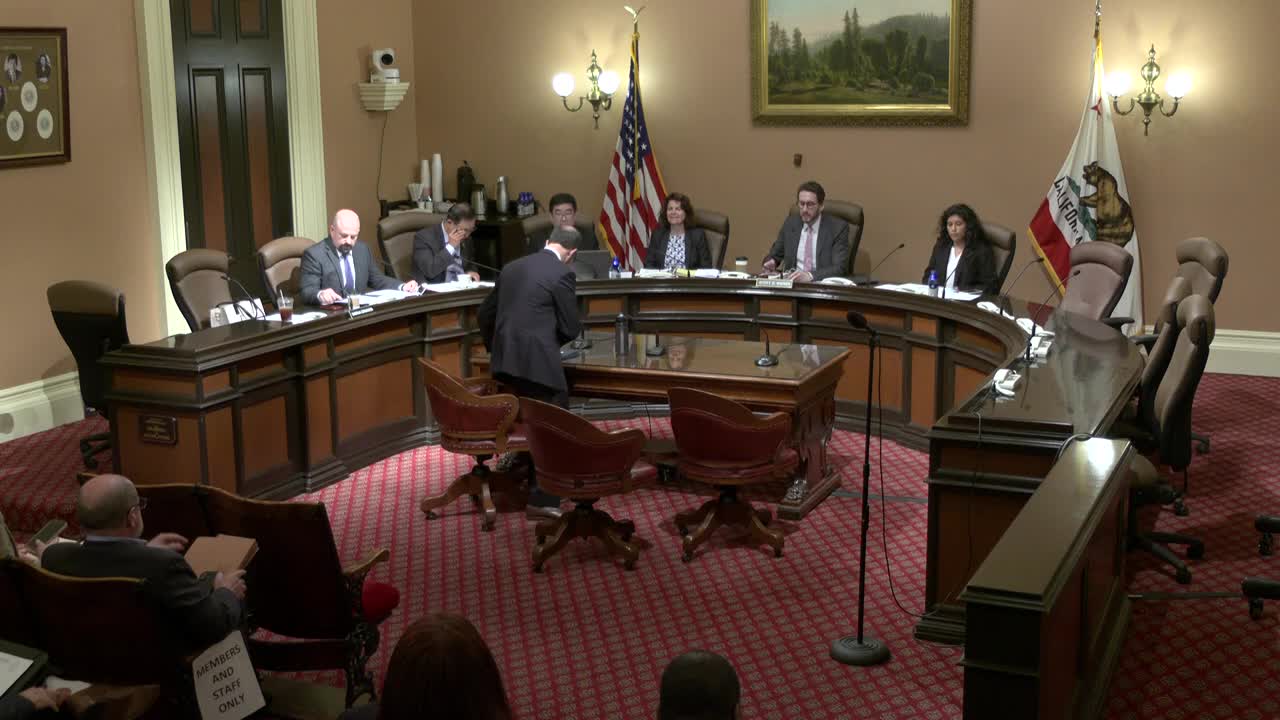 2MIN
Senate Standing Committee on Elections and Constitutional Amendments
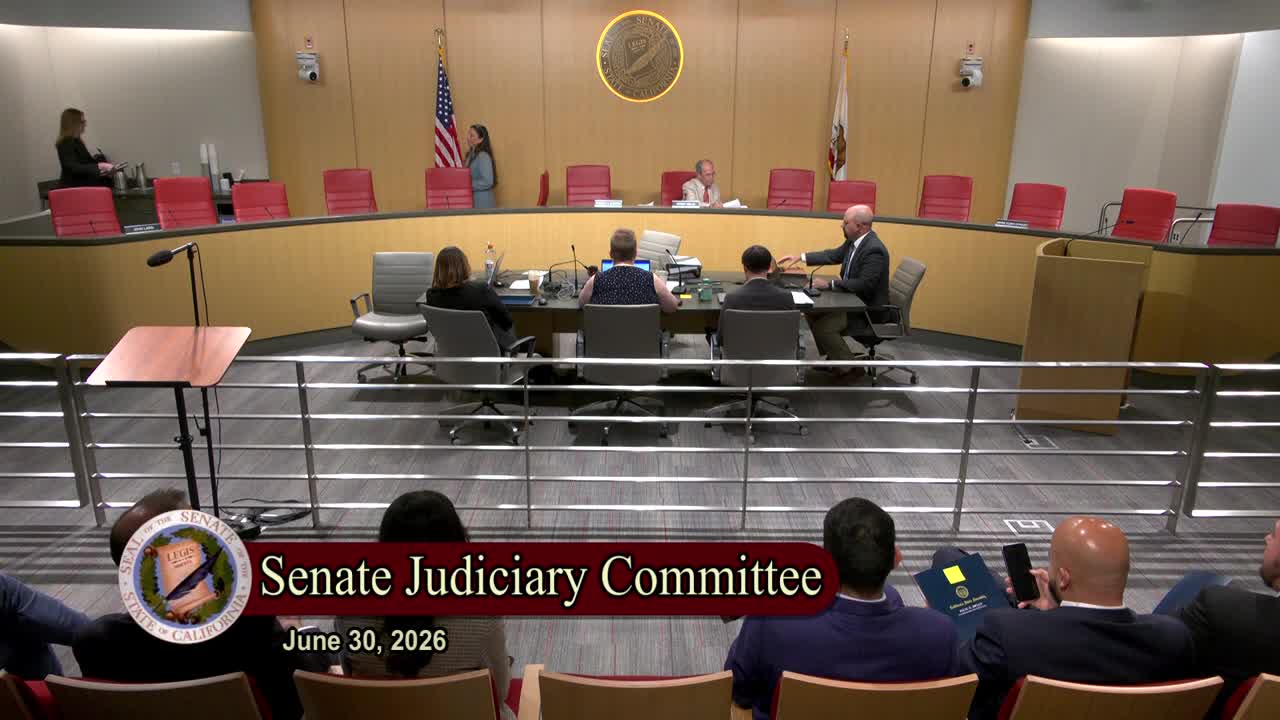 3MIN
Senate Standing Committee on Judiciary
 1MIN
Senate Standing Committee on Business, Professions and Economic Development
Bill Author

Bill Co-Author(s):