AB 687: Health care coverage: colorectal cancer screening.
- Session Year: 2025-2026
- House: Assembly
- Latest Version Date: 2026-06-15
Current Status:
In Progress
(2026-06-25: In committee: Hearing postponed by committee.)
Introduced
In Committee
Awaiting First Chamber Vote
Passed First Chamber
In Committee
Awaiting Second Chamber Vote
Passed Second Chamber
Enacted
Existing law, the Knox-Keene Health Care Service Plan Act of 1975, provides for the licensure and regulation of health care service plans by the Department of Managed Health Care, and makes a willful violation of the act a crime. Existing law provides for the regulation of health insurers by the Department of Insurance. Existing law generally requires a health care service plan contract or a health insurance policy issued, amended, or renewed on or after January 1, 2022, to provide coverage without cost sharing for a colorectal cancer screening test assigned either a grade of A or a grade of B by the United States Preventive Services Task Force and for a required colonoscopy for a positive result on a test with those grades.
This bill would additionally require that coverage if the screening test is approved by the United States Food and Drug Administration and either meets requirements for coverage established by the federal Centers for Medicare and Medicaid Services, as specified, or is included in the most recently published guidelines from the American Cancer Society. Because a violation of the bill by a health care service plan would be a crime, the bill would impose a state-mandated local program.
The California Constitution requires the state to reimburse local agencies and school districts for certain costs mandated by the state. Statutory provisions establish procedures for making that reimbursement.
This bill would provide that no reimbursement is required by this act for a specified reason.
The Zberg-Nejedly Forest Practice Act of 1973 prohibits a person from conducting timber operations unless a timber harvesting plan prepared by a registered professional forester has been submitted to, and approved by, the Department of Forestry and Fire Protection. The act provides that any person who willfully violates any provision of the act or rule or regulation of the State Board of Forestry and Fire Protection is guilty of a misdemeanor.The California Environmental Quality Act (CEQA) requires a lead agency, as defined, to prepare, or cause to be prepared, and certify the completion of an environmental impact report on a project that it proposes to carry out or approve that may have a significant effect on the environment or to adopt a negative declaration if it finds that the project will not have that effect. CEQA also requires a lead agency to prepare a mitigated negative declaration for a project that may have a significant effect on the environment if revisions in the project would avoid or mitigate that effect and there is no substantial evidence that the project, as revised, would have a significant effect on the environment.This bill would authorize up to 35 projects per year that are exclusively for noncommercial wildfire fuels reduction in timberland, less than 1,500 acres in size, and paid for in part or in whole with public funds, to prepare a timber harvesting plan to comply with CEQA. By expanding the scope of a crime, the bill would create a state-mandated local program. The bill would repeal these provisions on January 1, 2031.The California Constitution requires the state to reimburse local agencies and school districts for certain costs mandated by the state. Statutory provisions establish procedures for making that reimbursement.This bill would provide that no reimbursement is required by this act for a specified reason.The Zberg-Nejedly Forest Practice Act of 1973 prohibits a person from conducting timber operations unless a timber harvesting plan prepared by a registered professional forester has been submitted to, and approved by, the Department of Forestry and Fire Protection. The act provides that any person who willfully violates any provision of the act or rule or regulation of the State Board of Forestry and Fire Protection is guilty of a misdemeanor.
The California Environmental Quality Act (CEQA) requires a lead agency, as defined, to prepare, or cause to be prepared, and certify the completion of an environmental impact report on a project that it proposes to carry out or approve that may have a significant effect on the environment or to adopt a negative declaration if it finds that the project will not have that effect. CEQA also requires a lead agency to prepare a mitigated negative declaration for a project that may have a significant effect on the environment if revisions in the project would avoid or mitigate that effect and there is no substantial evidence that the project, as revised, would have a significant effect on the environment.
This bill would authorize up to 35 projects per year that are exclusively for noncommercial wildfire fuels reduction in timberland, less than 1,000 1,500 acres in size, and paid for in part or in whole with public funds, to prepare a timber harvesting plan to comply with CEQA. By expanding the scope of a crime, the bill would create a state-mandated local program. The bill would repeal these provisions on January 1, 2031.
The California Constitution requires the state to reimburse local agencies and school districts for certain costs mandated by the state. Statutory provisions establish procedures for making that reimbursement.
This bill would provide that no reimbursement is required by this act for a specified reason.
The Zberg-Nejedly Forest Practice Act of 1973 prohibits a person from conducting timber operations unless a timber harvesting plan prepared by a registered professional forester has been submitted to, and approved by, the Department of Forestry and Fire Protection. The act provides that any person who willfully violates any provision of the act or rule or regulation of the State Board of Forestry and Fire Protection is guilty of a misdemeanor.
The California Environmental Quality Act (CEQA) requires a lead agency, as defined, to prepare, or cause to be prepared, and certify the completion of an environmental impact report on a project that it proposes to carry out or approve that may have a significant effect on the environment or to adopt a negative declaration if it finds that the project will not have that effect. CEQA also requires a lead agency to prepare a mitigated negative declaration for a project that may have a significant effect on the environment if revisions in the project would avoid or mitigate that effect and there is no substantial evidence that the project, as revised, would have a significant effect on the environment.
This bill would authorize up to 35 projects per year that are exclusively for noncommercial wildfire fuels reduction in timberland, less than 1,000 acres in size, and paid for in part or in whole with public funds, to prepare a timber harvesting plan as an alternative to complying with CEQA, and would require these projects to be regulated as timber operations, as provided. to comply with CEQA. By expanding the scope of a crime, the bill would create a state-mandated local program.
The California Constitution requires the state to reimburse local agencies and school districts for certain costs mandated by the state. Statutory provisions establish procedures for making that reimbursement.
This bill would provide that no reimbursement is required by this act for a specified reason.
The Zberg-Nejedly Forest Practice Act of 1973 prohibits a person from conducting timber operations unless a timber harvesting plan prepared by a registered professional forester has been submitted to, and approved by, the Department of Forestry and Fire Protection. The act provides that any person who willfully violates any provision of the act or rule or regulation of the State Board of Forestry and Fire Protection is guilty of a misdemeanor.
The California Environmental Quality Act (CEQA) requires a lead agency, as defined, to prepare, or cause to be prepared, and certify the completion of an environmental impact report on a project that it proposes to carry out or approve that may have a significant effect on the environment or to adopt a negative declaration if it finds that the project will not have that effect. CEQA also requires a lead agency to prepare a mitigated negative declaration for a project that may have a significant effect on the environment if revisions in the project would avoid or mitigate that effect and there is no substantial evidence that the project, as revised, would have a significant effect on the environment.
This bill would authorize projects exclusively for noncommercial wildfire fuels reduction in timberland, paid for in part or in whole with public funds, to prepare a timber harvesting plan as an alternative to complying with CEQA, and would require these projects to be regulated as timber operations, as provided. By expanding the scope of a crime, the bill would create a state-mandated local program.
The California Constitution requires the state to reimburse local agencies and school districts for certain costs mandated by the state. Statutory provisions establish procedures for making that reimbursement.
This bill would provide that no reimbursement is required by this act for a specified reason.
(a)Every health care service plan contract, except a specialized health care service plan contract, that is issued, amended, or renewed on or after January 1, 2022, shall provide coverage without cost sharing for a colorectal cancer screening test assigned either a grade of A or a grade of B by the United States Preventive Services Task Force. The that meets any of the following conditions:
(1)Approved by the United States Food and Drug Administration (FDA) and meets the requirements for coverage established by the federal Centers for Medicare and Medicaid Services National Coverage Determination 210.3.
(2)Approved by the FDA and included in the most recently published guidelines from the American Cancer Society.
(3)Assigned either a grade of A or a grade of B by the United States Preventive Services Task Force.
(b)The required colonoscopy for a positive result on a test or procedure, other than a colonoscopy, that is a colorectal cancer screening examination or laboratory test identified assigned either a grade of A or a grade of B by the United States Preventive Services Task Force that meets any of the conditions described in paragraphs (1) to (3), inclusive, of subdivision (a) shall also be provided without cost sharing.
(b)(c)This section does not preclude a health care service plan that has coverage for out-of-network benefits from imposing cost-sharing requirements for the items or services described in this section that are delivered by an out-of-network provider.
SEC. 2.Section 10123.207 of the Insurance Code is amended to read:10123.207.(a)Every health insurance policy, except a specialized health insurance policy, that is issued, amended, or renewed on or after January 1, 2022, shall provide coverage without cost sharing for a colorectal cancer screening test assigned either a grade of A or a grade of B by the United States Preventive Services Task Force. The that meets any of the following conditions:
(1)Approved by the United States Food and Drug Administration (FDA) and meets the requirements for coverage established by the federal Centers for Medicare and Medicaid Services National Coverage Determination 210.3.
(2)Approved by the FDA and included in the most recently published guidelines from the American Cancer Society.
(3)Assigned either a grade of A or a grade of B by the United States Preventive Services Task Force.
(b)The required colonoscopy for a positive result on a test or procedure, other than a colonoscopy, that is a colorectal cancer screening examination or laboratory test identified assigned either a grade of A or a grade of B by the United States Preventive Services Task Force that meets any of the conditions described in paragraphs (1) to (3), inclusive, of subdivision (a) shall also be provided without cost sharing.
(b)(c)This section does not preclude a health insurer that has a network of providers from imposing cost-sharing requirements for the items or services described in this section that are delivered by an out-of-network provider.
SEC. 3.No reimbursement is required by this act pursuant to Section 6 of Article XIIIB of the California Constitution because the only costs that may be incurred by a local agency or school district will be incurred because this act creates a new crime or infraction, eliminates a crime or infraction, or changes the penalty for a crime or infraction, within the meaning of Section 17556 of the Government Code, or changes the definition of a crime within the meaning of Section 6 of Article XIIIB of the California Constitution.
SECTION 1.Section 4581.5 is added to the Public Resources Code, to read:4581.5.(a)Notwithstanding Section 4527, up to 35 projects per year, that are each exclusively for noncommercial wildfire fuels reduction in timberland, are less than 1,500 acres in size, and are paid for in part or in whole with public funds, may prepare a timber harvesting plan pursuant to this article to comply with Division 13 (commencing with Section 21000).(b)This section shall remain in effect only until January 1, 2031, and as of that date is repealed.SEC. 2.No reimbursement is required by this act pursuant to Section 6 of Article XIIIB of the California Constitution because the only costs that may be incurred by a local agency or school district will be incurred because this act creates a new crime or infraction, eliminates a crime or infraction, or changes the penalty for a crime or infraction, within the meaning of Section 17556 of the Government Code, or changes the definition of a crime within the meaning of Section 6 of Article XIIIB of the California Constitution.(a)Notwithstanding Section 4527, up to 35 projects per year, that are each exclusively for noncommercial wildfire fuels reduction in timberland, are less than 1,000 1,500 acres in size, and are paid for in part or in whole with public funds, may prepare a timber harvesting plan pursuant to this article to comply with Division 13 (commencing with Section 21000).
(b)This section shall remain in effect only until January 1, 2031, and as of that date is repealed.
SEC. 2.No reimbursement is required by this act pursuant to Section 6 of Article XIIIB of the California Constitution because the only costs that may be incurred by a local agency or school district will be incurred because this act creates a new crime or infraction, eliminates a crime or infraction, or changes the penalty for a crime or infraction, within the meaning of Section 17556 of the Government Code, or changes the definition of a crime within the meaning of Section 6 of Article XIIIB of the California Constitution.
(a)Projects Notwithstanding Section 4527, up to 35 projects per year, that are each exclusively for noncommercial wildfire fuels reduction in timberland, are less than 1,000 acres in size, and are paid for in part or in whole with public funds, may prepare a timber harvesting plan pursuant to this article as an alternative to complying to comply with Division 13 (commencing with Section 21000).
(b)Projects that prepare a timber harvesting plan in lieu of complying with Division 13 (commencing with Section 21000) pursuant to subdivision (a) shall not be considered timber operations, but shall be regulated as timber operations.SEC. 2.No reimbursement is required by this act pursuant to Section 6 of Article XIIIB of the California Constitution because the only costs that may be incurred by a local agency or school district will be incurred because this act creates a new crime or infraction, eliminates a crime or infraction, or changes the penalty for a crime or infraction, within the meaning of Section 17556 of the Government Code, or changes the definition of a crime within the meaning of Section 6 of Article XIIIB of the California Constitution.
(a)Projects exclusively for noncommercial wildfire fuels reduction in timberland, paid for in part or in whole with public funds, may prepare a timber harvesting plan pursuant to this article as an alternative to complying with Division 13 (commencing with Section 21000).
(b)Projects that prepare a timber harvesting plan in lieu of complying with Division 13 (commencing with Section 21000) pursuant to subdivision (a) shall not be considered timber operations, but shall be regulated as timber operations.
SEC. 2.No reimbursement is required by this act pursuant to Section 6 of Article XIIIB of the California Constitution because the only costs that may be incurred by a local agency or school district will be incurred because this act creates a new crime or infraction, eliminates a crime or infraction, or changes the penalty for a crime or infraction, within the meaning of Section 17556 of the Government Code, or changes the definition of a crime within the meaning of Section 6 of Article XIIIB of the California Constitution.
|
Date
|
Status
|
|---|---|
| Jun 25, 2026 | In committee: Hearing postponed by committee. |
| Jun 22, 2026 | Re-referred to Com. on HEALTH. |
| Jun 15, 2026 | Re-referred to Com. on RLS. |
| Jun 15, 2026 | Withdrawn from committee. |
| Jun 15, 2026 | From committee chair, with author's amendments: Amend, and re-refer to committee. Read second time, amended, and re-referred to Com. on N.R. & W. |
| Jul 2, 2025 | In committee: Set, first hearing. Hearing canceled at the request of author. |
| Jun 18, 2025 | Referred to Coms. on N.R. & W. and E.Q. |
| Jun 9, 2025 | In Senate. Read first time. To Com. on RLS. for assignment. |
| Jun 5, 2025 | Read third time. Passed. Ordered to the Senate. (Ayes 56. Noes 3. Page 2112.) |
| May 27, 2025 | Read second time. Ordered to third reading. |
| May 23, 2025 | Read second time and amended. Ordered returned to second reading. |
| May 23, 2025 | From committee: Amend, and do pass as amended. (Ayes 11. Noes 0.) (May 23). |
| May 23, 2025 | Assembly Rule 63 suspended. (Ayes 51. Noes 16. Page 1644.) |
| Apr 23, 2025 | In committee: Set, first hearing. Referred to suspense file. |
| Apr 10, 2025 | Re-referred to Com. on APPR. |
| Apr 9, 2025 | Read second time and amended. |
| Apr 8, 2025 | From committee: Amend, and do pass as amended and re-refer to Com. on APPR. (Ayes 10. Noes 2.) (April 7). |
| Mar 3, 2025 | Referred to Com. on NAT. RES. |
| Feb 15, 2025 | From printer. May be heard in committee March 17. |
| Feb 14, 2025 | Read first time. To print. |
|
Date
|
Description
|
Location
|
Votes
|
|
|---|---|---|---|---|
| Jun 5, 2025 | AB 687 Patterson Assembly Third Reading | Assembly Floor |
Passed |
|
| May 23, 2025 | Do pass as amended. | Assembly Standing Committee on Appropriations |
Passed |
|
| Apr 7, 2025 | Do pass as amended and be re-referred to the Committee on [Appropriations] | Assembly Standing Committee on Natural Resources |
Passed |
This list shows positions taken on this bill by organizations on the date displayed, which is linked to the original source.
Positions by individuals are not included.
|
Organization
|
Position
|
Date
|
|---|---|---|
| 350 Humboldt | ** Against | |
| California Environmental Voters | ** Against | |
| cleanearth4kids.org | ** Against | |
| Defenders Of Wildlife | ** Against | |
| Independent Insurance Agents & Brokers of California, Inc. | ** Support | |
| Pacific Forest Trust | ** Against | |
| Placer County Water Agency | ** Support | |
| Sierra Club | ** Against | |
| Sierra Forest Legacy | ** Against | |
| Sierra Nevada Alliance | ** Against | |
| The Fire Restoration Group | ** Against |
ASSEMBLY THIRD READING
ATR Bill Id:AB 687
Author:(Patterson)
As Amended Ver:May 23, 2025
Majority vote
SUMMARY
Authorizes, notwithstanding Public Resources Code section 4527, up to 35 projects per year that are each exclusively for noncommercial wildfire fuels reduction in timberland, are less than 1,500 acres in size, and are paid for in part or in whole with public funds, to prepare a timber harvesting plan (THP).
Major Provisions
- Sunsets the bill on January 1, 2031.
COMMENTS
The state's Forest Practice Act requires preparation of a THP for any timber subject to commercial harvesting in the state's 16 million acres of non-reserved forested lands, regeneration of forest resources, old growth timber protection, fire control protocols, logging stipulations, and more. THPs are both CEQA functional equivalent environmental documents and operational plans that detail how timber operations (e.g. felling and harvest of trees, related road construction and maintenance, and preparing ground for planting of seedlings) are to occur. CAL FIRE enforces the Forest Practice Rules for timber landowners on non-federal, state, and private lands through a variety of THPs and ministerial notices submitted by Registered Professional Foresters (RPF), timberland owners, and Licensed Timber Operators (LTO). THPs go through rigorous review by various state agencies and can take, on average, around 100 days to review and approve.
Timber operations include the cutting or removal, or both, of timber or other solid wood forest products, including Christmas trees, from timberlands for commercial purposes together with all the incidental work, such as construction and maintenance of roads, fuel breaks, firebreaks, stream crossings, landings, skid trails, and beds for the falling of trees, fire hazard abatement, and site preparation.
"Commercial purposes" means the cutting or removal of trees that are processed into logs, lumber, or other wood products and offered for sale, barter, exchange, or trade; or, the cutting or removal of trees or other forest products during the conversion of timberlands to land uses other than the growing of timber including, but not limited to, residential or commercial developments, production of other agricultural crops, recreational developments, ski developments, water development projects, and transportation projects.
This bill establishes a cap on the number and size of projects that are eligible to conduct a THP for non-commercial harvesting activities.
According to the Author
Wildfires continue to pose significant challenges to the state of California. Over the past decade, we've seen the scale of mega-fires increase exponentially. This January, the state experienced one of the deadliest fires in its history. Early estimates indicate that the total damage and economic losses from these wildfires could range from $60 billion, according to Wells Fargo, to as much as $130 billion — a staggering amount far surpassing the previous record of $16 billion. To effectively combat this crisis, we must prioritize prevention, which includes streamlining processes to enable public agencies to responsibly manage their assets. In my district, a local irrigation district was required to submit a 500-page mitigated negative declaration after an 18-month study just to manage approximately 500 acres. Assembly Bill 687 retains CEQA compliance while offering a more efficient alternative for agencies to better manage their land.
Arguments in Support
The Nature Conservancy writes that many fuel reduction projects already use THPs as a functional equivalent to CEQA, which is allowed if some of the material is used for commercial purposes. However, sometimes none of the material removed can find a willing buyer at a rate that is at least cost neutral. Insufficient wood utilization capacity and markets are problems that the state has attempted to address with various programs and working groups. TNC supports allowing 35 projects annually to use this permitting pathway but hopes for long term investments in wood utilization that will make the provisions of this bill no longer necessary.
Arguments in Opposition
None on file for the current version of the bill
FISCAL COMMENTS
According to the Assembly Appropriations Committee, this bill, by allowing certain noncommercial projects to prepare THPs to comply with CEQA, expands the number and scope of projects that would be considered allowable under the Forest Practice Rules, thereby increasing CAL FIRE's workload by an unknown but significant amount, likely in the hundreds of thousands to low millions of dollars annually (General Fund) until 2031. CAL FIRE would likely require, among other things, additional foresters (and vehicles to facilitate their travel) who would oversee fuel reduction projects to ensure compliance with the Forest Practice Rules. Tasks would likely include inspecting sites, issuing violations, and following up with enforcement actions.
Potential costs, until 2031, to other state agencies that are typically involved in reviewing THPs. When a THP is submitted to CAL FIRE, the THP receives an initial review by a multi-agency team that may include the California Department of Fish and Wildlife, regional water boards, the California Geological Survey, and other agencies as needed.
VOTES
ASM NATURAL RESOURCES: 10-2-2
YES: Bryan, Alanis, Ellis, Flora, Garcia, Haney, Hoover, Pellerin, Schultz, Wicks
NO: Kalra, Zbur
ABS, ABST OR NV: Connolly, Muratsuchi
ASM APPROPRIATIONS: 11-0-4
YES: Wicks, Arambula, Calderon, Caloza, Elhawary, Fong, Mark González, Hart, Pacheco, Pellerin, Solache
ABS, ABST OR NV: Sanchez, Dixon, Ta, Tangipa
UPDATED
VERSION: May 23, 2025
CONSULTANT: Paige Brokaw / NAT. RES. / (916) 319-2092 FN: 0000671
Date of Hearing: April 23, 2025
ASSEMBLY COMMITTEE ON APPROPRIATIONS
Buffy Wicks, Chair
ABPCA Bill Id:AB 687
Author:(Patterson) – As Amended Ver:April 9, 2025
Policy Committee: | Natural Resources | Vote: | 10 - 2 |
|
| ||
|
|
Urgency: No State Mandated Local Program: Yes Reimbursable: No
SUMMARY:
This bill authorizes up to 35 projects per year that are exclusively for noncommercial wildfire fuels reduction in timberland, are less than 1,000 acres in size, and are paid for in part or in whole with public funds, to prepare a timber harvesting plan (THP) to comply with the California Environmental Quality Act (CEQA).
FISCAL EFFECT:
1) This bill, by allowing certain noncommercial projects to prepare THPs to comply with CEQA, expands the number and scope of projects that would be considered allowable under the Forest Practice Rules, thereby increasing CAL FIRE’s workload by an unknown but significant amount, likely in the hundreds of thousands to low millions of dollars annually (General Fund). CAL FIRE would likely require, among other things, additional foresters (and vehicles to facilitate their travel) who would oversee fuel reduction projects to ensure compliance with the Forest Practice Rules. Tasks would likely include inspecting sites, issuing violations, and following up with enforcement actions.
2) Potential costs to other state agencies that are typically involved in reviewing THPs. When a THP is submitted to CAL FIRE, the THP receives an initial review by a multi-agency team that may include the California Department of Fish and Wildlife, regional water boards, the California Geological Survey, and other agencies as needed.
COMMENTS:
1) Purpose. According to the author:
To effectively combat [the wildfire] crisis, we must prioritize prevention, which includes streamlining processes to enable public agencies to responsibly manage their assets. In my district, a local irrigation district was required to submit a 500-page mitigated negative declaration after an 18-month study just to manage approximately 500 acres. Assembly Bill 687 retains CEQA compliance while offering a more efficient alternative for agencies to better manage their land.
2) Background.
Forest Practice Rules. CAL FIRE enforces the Forest Practice Rules for timber landowners on non-federal, state, and private lands through a variety of THPs and ministerial notices submitted by registered professional foresters, timberland owners, and licensed timber operators. THPs are both CEQA functional equivalent environmental documents and operational plans that detail how timber operations are to occur. Approval is dependent on conformance with the Forest Practice Rules. THP approval also includes an extensive multi-agency and public review process and can take, on average, around 100 days to review and approve. CAL FIRE inspects timber harvesting operations and may take enforcement action if Forest Practice Rule violations are alleged to have occurred.
CEQA. CEQA compliance is required for any project for which a public agency has a discretionary action, unless the project activity is exempted by statute. In approving a project, a public agency typically relies on the project-specific analyses and mitigation measures found in the environmental document for each project. However, when a public agency is considering the approval of numerous, similar projects, the project-by-project analysis and mitigation measure development can become repetitive and inefficient. The state’s CEQA guidelines provide the opportunity for a public agency to prepare programmatic environmental impact reports (EIRs) that analyze programmatically the potential impacts of a series of actions that can be characterized as one large, ongoing project. Programmatic EIRs are frequently prepared for development projects with multiple phases, ongoing programs (such as CAL FIRE’s vegetation management program), or implementation of long-term management plans (such as state forest management plans).
Author’s Intent. This bill authorizes noncommercial wildfire fuels reduction projects, paid for in part or in whole with public funds, to prepare THPs as an alternative to complying with CEQA. Under the Forest Practice Rules, THPs are for commercial timber harvesting, not public projects, hence the structure of this bill. The author and supporters argue this approach maintains robust environmental protections through the Forest Practice Rules, which are recognized as functionally equivalent to CEQA, while significantly reducing project timelines from years to months.
Support and Opposition. This bill is sponsored by the Placer County Water Agency (PCWA), which has “led the way in establishing the formula for landscape scale ecological forest management” with its 30,000-acre French Meadows Restoration Project. PCWA notes it is developing its second landscape-scale project in Long Canyon and that its goal with this bill is to provide “a more expeditious path for fuels reduction / forest health projects, while still providing necessary environmental assurances.”
A coalition of environmental organizations, writing in opposition to an earlier version of this bill, argued, among other things, that CAL FIRE’s regulatory and enforcement authority under the Forest Practice Rules is tied to timber operations: “Outside of timber operations the Department does not have clear authority to enforce the Forest Practice Rules.”
3) Prior Legislation. AB 2639 (Patterson), of the 2023-24 Legislative Session, authorized a timber operation for the maintenance of timberland, paid for in part or in whole with public funds, to comply with CEQA in lieu of preparing a THP. AB 2639 was held in this committee.
Analysis Prepared by: Nikita Koraddi / APPR. / (916) 319-2081
Date of Hearing: April 7, 2025
ASSEMBLY COMMITTEE ON NATURAL RESOURCES
Isaac G. Bryan, Chair
ABPCA Bill Id:AB 687 (
Author:Patterson) – As Introduced Ver:February 14, 2025
SUBJECT: Forestry: timber operations: maintenance of timberlands for fuels reduction
SUMMARY: Authorizes projects exclusively for noncommercial wildfire fuels reduction in timberland, paid for in part or in whole with public funds, to prepare a timber harvesting plan (THP) as an alternative to complying with the California Environmental Quality Act (CEQA), and would require these projects to be regulated as timber operations.
EXISTING LAW:
Pursuant to CEQA (Public Resources Code (PRC) 21000-21189.70.10):
- Requires a lead agency, as defined, to prepare, or cause to be prepared, and certify the completion of an environmental impact report (EIR) on a project that it proposes to carry out or approve that may have a significant effect on the environment or to adopt a negative declaration if it finds that the project will not have that effect.
- Requires a lead agency to prepare a mitigated negative declaration for a project that may have a significant effect on the environment if revisions in the project would avoid or mitigate that effect and there is no substantial evidence that the project, as revised, would have a significant effect on the environment.
- Defines “project” as an activity that may cause either a direct physical change in the environment, or a reasonably foreseeable indirect physical change in the environment, and that is any of the following:
- An activity directly undertaken by any public agency;
- An activity undertaken by a person that is supported, in whole or in part, through contracts, grants, subsidies, loans, or other forms of assistance from one or more public agencies; and,
- An activity that involves the issuance to a person of a lease, permit, license, certificate, or other entitlement for use by one or more public agencies.
Pursuant to the Z'berg-Nejedly Forest Practices Act (PRC 4511-4630):
- Prohibits a person from conducting timber operations unless a THP prepared by a registered professional forester has been submitted to the Department of Forestry and Fire Protection (CAL FIRE).
- Authorizes a THP prepared by a registered professional forester to rely upon a Program Timberland Environmental Impact Report (PTEIR) for CEQA compliance. Requires the THP to be within the scope of the PTEIR, the rules of the Board of Forestry, and other applicable state laws.
FISCAL EFFECT: Unknown
COMMENTS:
- Author’s statement:
Wildfires continue to pose significant challenges to the state of California. Over the past decade, we've seen the scale of mega-fires increase exponentially. This January, the state experienced one of the deadliest fires in its history. Early estimates indicate that the total damage and economic losses from these wildfires could range from $60 billion, according to Wells Fargo, to as much as $130 billion — a staggering amount far surpassing the previous record of $16 billion. To effectively combat this crisis, we must prioritize prevention, which includes streamlining processes to enable public agencies to responsibly manage their assets. In my district, a local irrigation district was required to submit a 500-page mitigated negative declaration after an 18-month study just to manage approximately 500 acres. Assembly Bill 687 retains CEQA compliance while offering a more efficient alternative for agencies to better manage their land.
- THPs. The state’s Forest Practice Act requires preparation of a THP for any timber subject to commercial harvesting in the state’s 16 million acres of non-reserved forested lands, regeneration of forest resources, old growth timber protection, fire control protocols, logging stipulations, and more. THPs are both CEQA functional equivalent environmental documents and operational plans that detail how timber operations (e.g. felling and harvest of trees, related road construction and maintenance, and preparing ground for planting of seedlings) are to occur. CAL FIRE enforces the Forest Practice Rules for timber landowners on non-federal, state, and private lands through a variety of THPs and ministerial notices submitted by Registered Professional Foresters (RPF), timberland owners, and Licensed Timber Operators (LTO). THPs go through rigorous review by various state agencies and can take, on average, around 100 days to review and approve.
- CEQA. CEQA compliance is required for all projects for which a public agency has a discretionary action (e.g. provides funding), unless the project activity is exempted by statute. In approving projects, public agencies typically rely on the project specific analyses and mitigation measures found in the environmental document for each individual project. However, when a public agency is considering the approval of numerous, similar projects, the project-by-project analysis and mitigation measure development can become repetitive and inefficient. The state’s CEQA Guidelines provide the opportunity for public agencies to prepare program EIRs that analyze programmatically the potential impacts of a series of actions that can be characterized as one large, ongoing project. Program EIRs are frequently prepared for development projects with multiple phases, ongoing programs (i.e., CAL FIRE’s Vegetation Management Program) or implementing long-term management plans (i.e., State Forest Management Plans).
- This bill. AB 687 authorizes noncommercial wildfire fuels reduction projects, paid for in part or in whole with public funds, to prepare a THP as an alternative to complying with the CEQA, and would require these projects to be regulated as timber operations. The author’s intent is to allow fuel reduction projects that are not intended for commercial purposes that will be funded by local agencies, like the Placer County Water Agency ((PCWA), sponsor of the bill) using public money to advance those projects with a THP in lieu of CEQA. Under the Forest Practice Rules, THPs are for commercial timber harvesting, not public projects, hence the structure of this bill.
- Timber operations. Timber operations include the cutting or removal, or both, of timber or other solid wood forest products, including Christmas trees, from timberlands for commercial purposes together with all the incidental work, such as construction and maintenance of roads, fuel breaks, firebreaks, stream crossings, landings, skid trails, and beds for the falling of trees, fire hazard abatement, and site preparation.
“Commercial purposes” means the cutting or removal of trees that are processed into logs, lumber, or other wood products and offered for sale, barter, exchange, or trade; or, the cutting or removal of trees or other forest products during the conversion of timberlands to land uses other than the growing of timber including, but not limited to, residential or commercial developments, production of other agricultural crops, recreational developments, ski developments, water development projects, and transportation projects.
This bill would require the covered projects to be regulated as timber operations. “Timber operations” are referenced across the Forest Practice Act and Forest Practice Rules 850 times, and the projects under this bill will need to comply with all requisite regulations. Also, THPs must be prepared by an RPF and the timber operations have to be conducted by an LTO, which may make it more difficult for an entity to comply with this bill.
Lastly, the bill provides that the covered projects “shall not be considered timber operations, but shall be regulated as timber operations,” which is confusing.
Last October, CAL FIRE released a memo regarding to THPs and states:
Timber harvest documents are intended to disclose to the Department, and the public, where Timber Operations are proposed to occur, and disclose measures and any mitigations necessary to minimize the potential for environmental impacts from a proposed project. If a project does not propose Timber Operations on Timberland, i.e. buying, selling or trading forest products, or converting Timberland to another use, then it does not fall under the authority of the Certified Regulatory Program for regulation of timber harvesting. In such instances, the use of a timber harvest document is not appropriate.
- Emergency proclamation. On January 7, multiple major wildfires erupted concurrently in Los Angeles burning an area nearly the size of Washington, D.C., killing 28 people and damaging or destroying nearly 16,000 structures. In response, Governor Newsom issued Executive Order (EO) N-4-25 exempting rebuilding efforts from CEQA and the Coastal Act to accelerate redevelopment, and issued EO N-18-25 to provide local agencies moderate and high fire hazard maps and compel the development of “zone 0” regulations for defensible space for ember resistance around homes. Further, on March 1 the Governor issued an emergency proclamation ordering a suspension of all laws, regulations, rules, and requirements that fall within the jurisdiction of boards, departments, and offices within the California Environmental Protection Agency and the California Natural Resources Agency to be suspended for expediting critical fuels reduction projects initiated this calendar year.
Fuels reduction projects include:
- Removal of hazardous, dead, and/or dying trees;
- Removal of vegetation for the creation of strategic fuel breaks as identified by approved fire prevention plans, including without limitation CAL FIRE Unit Fire Plans or Community Wildfire Preparedness Plans;
- Removal of vegetation for community defensible space;
- Removal of vegetation along roadways, highways, and freeways for the creation of safer ingress and egress routes for the public and responders and to reduce roadside ignitions;
- Removal of vegetation using cultural traditional ecological knowledge for cultural burning and/or prescribed fire treatments for fuels reduction; or,
- Maintenance of previously-established fuel breaks or fuels modification projects.
- Committee amendments. To address the increased workload of reviewing THPs, the committee may wish to consider amending the bill to establish a cap on the number and size of projects that are eligible for this authorization, and strike (b) to eliminate confusing verbiage.
- Related legislation. AB 2639 (Patterson) 2024 authorized timber operations for the maintenance of timberland, paid in part or in whole with public funds, to comply with CEQA in lieu of preparing a THP. This bill was held on the Assembly Appropriations Committee suspense file.
REGISTERED SUPPORT / OPPOSITION:
Support
Independent Insurance Agents & Brokers of California, INC.
Placer County Water Agency
Opposition
350 Humboldt
California Environmental Voters
Cleanearth4kids.org
Defenders of Wildlife
Pacific Forest Trust
Sierra Club
Sierra Forest Legacy
Sierra Nevada Alliance
The Fire Restoration Group
Analysis Prepared by: Paige Brokaw / NAT. RES. /
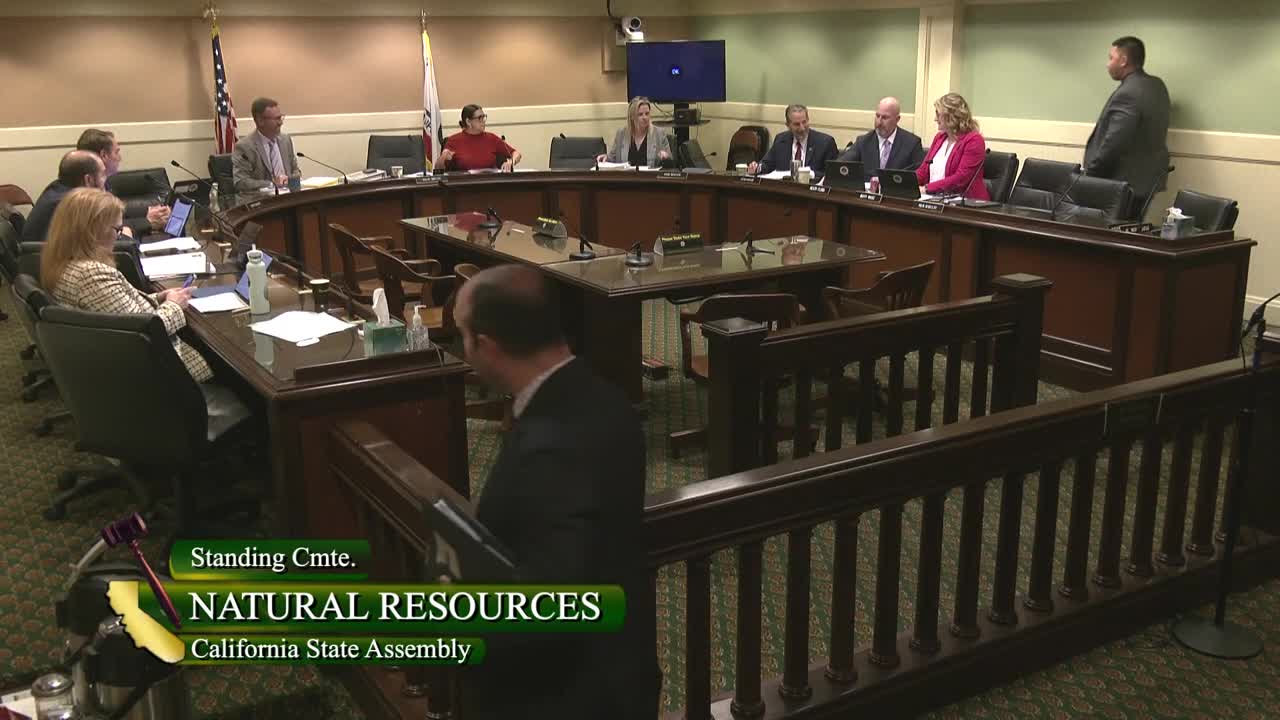
Discussed in Hearing
View Older Hearings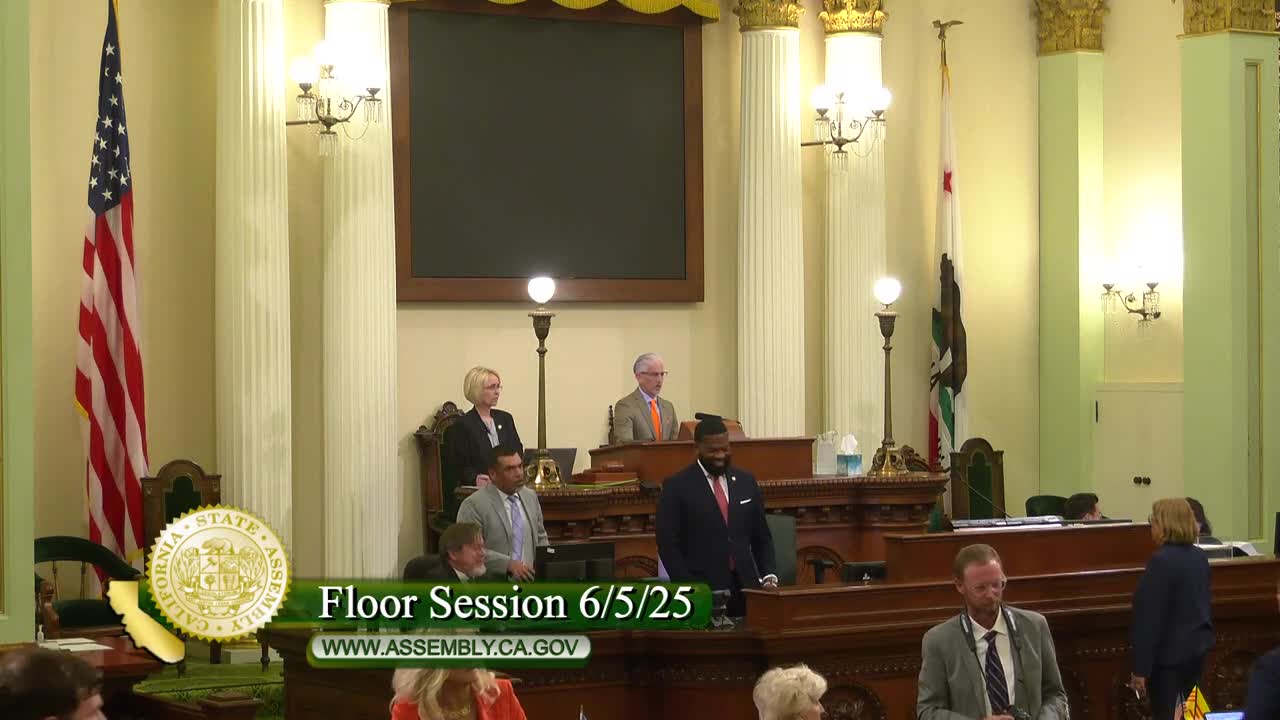
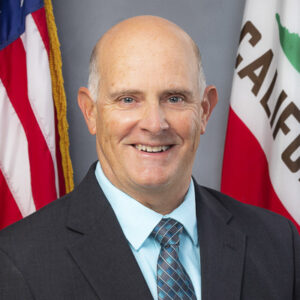
Bill Author