AB 695: California Community Colleges Access and Continuity for Deported Students Act.
- Session Year: 2025-2026
- House: Assembly
- Latest Version Date: 2025-09-16
Current Status:
Failed
(2026-01-22: Consideration of Governor's veto stricken from file.)
Introduced
In Committee
Awaiting First Chamber Vote
Passed First Chamber
In Committee
Awaiting Second Chamber Vote
Passed Second Chamber
Enacted
Existing law establishes the California Community Colleges, under the administration of the Board of Governors of the California Community Colleges as one of the 3 segments of public postsecondary education in the state. Existing law establishes uniform residency requirements for purposes of ascertaining the amount of tuition and fees to be paid by students of public postsecondary educational institutions. Existing law requires a student classified as a nonresident to pay nonresident tuition, in addition to other fees required by the institution, except as provided.
This bill, the California Community Colleges Access and Continuity for Deported Students Act, would, until January 1, 2030, exempt a community college student from paying nonresident tuition if the student departs the United States on or after January 1, 2025, for specified reasons, was not paying nonresident tuition at the time of departure, provides an attestation of specified information related to the departure, and reenrolls in a community college online education program no later than 3 years from the date the student departed the United States. The bill, until January 1, 2030, would require a deported student, as defined, who resumes in-person education at a community college to be eligible to retain residency status for the purpose of determining tuition and fees, provided the student was previously classified as a resident and eligible for the nonresident tuition exemption at the time of departure, and would require the student to be eligible to apply for financial aid upon reenrollment. To the extent that the bill would impose new duties on community college districts, the bill would impose a state-mandated local program.
The California Constitution requires the state to reimburse local agencies and school districts for certain costs mandated by the state. Statutory provisions establish procedures for making that reimbursement.
This bill would provide that, if the Commission on State Mandates determines that the bill contains costs mandated by the state, reimbursement for those costs shall be made pursuant to the statutory provisions noted above.
This bill would declare that it is to take effect immediately as an urgency statute.
Existing law establishes the California Community Colleges, under the administration of the Board of Governors of the California Community Colleges as one of the 3 segments of public postsecondary education in the state. Existing law establishes uniform residency requirements for purposes of ascertaining the amount of tuition and fees to be paid by students of public postsecondary educational institutions. Existing law requires a student classified as a nonresident to pay nonresident tuition, in addition to other fees required by the institution, except as provided.
This bill, the California Community Colleges Access and Continuity for Deported Students Act, would would, until January 1, 2030, exempt a community college student from paying nonresident tuition if the student departs the United States on or after January 1, 2025, for specified reasons, was not paying nonresident tuition at the time of departure, provides an attestation of specified information related to the departure, and reenrolls in a community college online education program no later than 3 years from the date the student departed the United States. The bill bill, until January 1, 2030, would require a deported student, as defined, who resumes in-person education at a community college to be eligible to retain residency status for the purpose of determining tuition and fees, provided the student was previously classified as a resident and eligible for the nonresident tuition exemption at the time of departure, and would require the student to be eligible to apply for financial aid upon reenrollment. To the extent that the bill would impose new duties on community college districts, the bill would impose a state-mandated local program.
The California Constitution requires the state to reimburse local agencies and school districts for certain costs mandated by the state. Statutory provisions establish procedures for making that reimbursement.
This bill would provide that, if the Commission on State Mandates determines that the bill contains costs mandated by the state, reimbursement for those costs shall be made pursuant to the statutory provisions noted above.
This bill would declare that it is to take effect immediately as an urgency statute.
Existing law establishes the California Community Colleges, under the administration of the Board of Governors of the California Community Colleges as one of the 3 segments of public postsecondary education in the state. Existing law establishes uniform residency requirements for purposes of ascertaining the amount of tuition and fees to be paid by students of public postsecondary educational institutions. Existing law requires a student classified as a nonresident to pay nonresident tuition, in addition to other fees required by the institution, except as provided.
This bill, the California Community Colleges Access and Continuity for Deported Students Act, would exempt a community college student from paying nonresident tuition if the student departs the United States on or after January 1, 2025, for specified reasons, was not paying nonresident tuition at the time of departure, provides an attestation of specified information related to the departure, and reenrolls in a community college online education program no later than 3 years from the date the student departed the United States. The bill would require a deported student, as defined, who legally reenters the United States and resumes in-person education at a community college to be eligible for nonresident tuition, to retain residency status for the purpose of determining tuition and fees, provided the student was previously classified as a resident and eligible for the nonresident tuition exemption at the time of departure, and would require the student to be eligible to apply for financial aid upon reenrollment. To the extent that the bill would impose new duties on community college districts, the bill would impose a state-mandated local program.
The California Constitution requires the state to reimburse local agencies and school districts for certain costs mandated by the state. Statutory provisions establish procedures for making that reimbursement.
This bill would provide that, if the Commission on State Mandates determines that the bill contains costs mandated by the state, reimbursement for those costs shall be made pursuant to the statutory provisions noted above.
This bill would declare that it is to take effect immediately as an urgency statute.
Existing law establishes the California Community Colleges, under the administration of the Board of Governors of the California Community Colleges as one of the 3 segments of public postsecondary education in the state. Existing law establishes uniform residency requirements for purposes of ascertaining the amount of tuition and fees to be paid by students of public postsecondary educational institutions. Existing law requires a student classified as a nonresident to pay nonresident tuition, in addition to other fees required by the institution, except as provided.
This bill, the California Community Colleges Access and Continuity for Deported Students Act, would exempt a community college student from paying nonresident tuition if the student has been involuntarily removed from departs the United States due to immigration enforcement actions, on or after January 1, 2025, for specified reasons, was not paying nonresident tuition at the time of deportation, departure, provides proof of deportation status, an attestation of specified information related to the departure, and reenrolls in a community college online education program. program no later than 3 years from the date the student departed the United States. The bill would require a deported student student, as defined, who legally reenters the United States and resumes in-person education at a community college to be eligible for nonresident tuition, provided the student was previously classified as a resident and eligible for the nonresident tuition exemption at the time of deportation, departure, and would require the student to be eligible for financial aid upon reenrollment. The bill would require the board of governors to adopt specified regulations related to the bill, including regulations that establish procedures for verifying deportation status and eligibility. To the extent that the bill would impose new duties on community college districts, the bill would impose a state-mandated local program.
The California Constitution requires the state to reimburse local agencies and school districts for certain costs mandated by the state. Statutory provisions establish procedures for making that reimbursement.
This bill would provide that, if the Commission on State Mandates determines that the bill contains costs mandated by the state, reimbursement for those costs shall be made pursuant to the statutory provisions noted above.
This bill would declare that it is to take effect immediately as an urgency statute.
Existing law establishes the California Community Colleges, under the administration of the Board of Governors of the California Community Colleges as one of the 3 segments of public postsecondary education in the state. Existing law establishes uniform residency requirements for purposes of ascertaining the amount of tuition and fees to be paid by students of public postsecondary educational institutions. Existing law requires a student classified as a nonresident to pay nonresident tuition, in addition to other fees required by the institution, except as provided.
This bill, the California Community Colleges Access and Continuity for Deported Students Act, would exempt a community college student from paying nonresident tuition if the student has been involuntarily removed from the United States due to immigration enforcement actions, was not paying nonresident tuition at the time of deportation, provides proof of deportation status, and reenrolls in a community college online education program. The bill would require a deported student who legally reenters the United States and resumes in-person education at a community college to be eligible for nonresident tuition, provided the student was previously classified as a resident and eligible for the nonresident tuition exemption at the time of deportation, and would require the student to be eligible for financial aid upon reenrollment. The bill would require the board of governors to adopt specified regulations related to the bill, including regulations that establish procedures for verifying deportation status and eligibility. To the extent that the bill would impose new duties on community college districts, the bill would impose a state-mandated local program.
The California Constitution requires the state to reimburse local agencies and school districts for certain costs mandated by the state. Statutory provisions establish procedures for making that reimbursement.
This bill would provide that, if the Commission on State Mandates determines that the bill contains costs mandated by the state, reimbursement for those costs shall be made pursuant to the statutory provisions noted above.
The Legislature finds and declares all of the following:
(a)Many California community college students face potential deportation, disrupting their educational goals and delaying their ability to contribute to the community and economy.
(b)Online education offers a flexible, viable solution for students to continue their education in their country of origin.
(c)Supporting continuity of education aligns with the states commitment to accessibility, equity, and economic mobility.
(d)Educating former California deported students online in their country of origin offers several benefits for the state, balancing access to education with broader societal and economic advantages. Furthermore, this approach aligns with Californias commitment to education equity, innovation, and global leadership.
(e)Some students may later return to the United States with legal immigration status, bringing valuable expertise and education to Californias workforce.
(f)Educated alumni who remain connected to California institutions can foster international collaborations in business, research, and culture.
(g)Helping these students succeed can contribute to global development, reducing economic disparities and migration pressures.
SEC. 2.Article 10 (commencing with Section 76150) is added to Chapter 1 of Part 47 of Division 7 of Title 3 of the Education Code, to read:10.California Community Colleges Access and Continuity for Deported Students Act76150.This article shall be known, and may be cited, as the California Community Colleges Access and Continuity for Deported Students Act.
76151.For purposes of this article, the following definitions shall apply:
(a)Deported student means a student who departed the United States on or after January 1, 2025, was enrolled in a California community college at the time of departure or detention, and the departure occurred for any of the following reasons:
(1)Due to immigration enforcement actions by the United States Department of Homeland Security.
(2)Voluntarily due to the threat of immigration enforcement by the United States Department of Homeland Security.
(3)Due to being denied reentry to the United States after voluntarily departing with the intention of making a brief trip abroad.
(b)Online education program means a distance education program offered by a California community college, including, but not limited to, career development and college preparation courses offered pursuant to Section 84760.5, that allows students to complete coursework remotely.
76152.(a)Notwithstanding any other law, a deported student shall be exempt from paying nonresident tuition under this article if the student meets all of the following requirements:
(1)The student was enrolled in a California community college and not paying nonresident tuition at the time of departure. The California community college at which the student seeks to enroll shall verify that the student has met the requirements of this paragraph.
(2)The student provides an attestation to all of the following:
(A)The student no longer resides in the United States.
(B)The date the student departed the United States.
(C)The reason the student departed the United States, consistent with subdivision (a) of Section 76151.
(D)The name of the California community college at which the student was enrolled before the student departed the United States.
(3)The student reenrolls in an online education program offered by a California community college no later than three years from the date the student departed the United States.
(b)A deported student that meets the requirements of subdivision (a) shall be exempt from nonresident tuition for the duration of the students enrollment in an online education program.
(c)A deported student shall remain exempt from paying nonresident tuition until completion of any of the following:
(1)An associate degree for transfer.
(2)An associate of arts degree.
(3)A certificate of completion.
(4)A certificate of achievement.
(5)A certificate of competency in a recognized career field by articulating with college-level coursework.
(6)Courses required for transfer to a four-year degree program.
(d)If and when a deported student resumes in-person education at a California community college, the student shall be eligible for all of the following:
(1)Retaining residency status for the purpose of determining tuition and fees, provided the student was previously classified as a resident and met the requirements under subdivision (a) at the time of departure.
(2)Being exempt from nonresident tuition, provided the student previously qualified for an exemption from nonresident tuition and met the requirements under subdivision (a) at the time of departure.
(3)Applying for financial aid upon reenrollment.
76153.This article shall remain in effect only until January 1, 2030, and as of that date is repealed.
SEC. 3.If the Commission on State Mandates determines that this act contains costs mandated by the state, reimbursement to local agencies and school districts for those costs shall be made pursuant to Part 7 (commencing with Section 17500) of Division 4 of Title 2 of the Government Code.
SEC. 4.This act is an urgency statute necessary for the immediate preservation of the public peace, health, or safety within the meaning of Article IV of the California Constitution and shall go into immediate effect. The facts constituting the necessity are:
In order to ensure that California community college students who are deported, leave the state due to fear of deportation, or were denied reentry to the state are able to continue their education, it is necessary that this act take effect immediately.
The Legislature finds and declares all of the following:
(a)Many California community college students face potential deportation, disrupting their educational goals and delaying their ability to contribute to the community and economy.
(b)Online education offers a flexible, viable solution for students to continue their education in their country of origin.
(c)Supporting continuity of education aligns with the states commitment to accessibility, equity, and economic mobility.
(d)Educating former California deported students online in their country of origin offers several benefits for the state, balancing access to education with broader societal and economic advantages. Furthermore, this approach aligns with Californias commitment to education equity, innovation, and global leadership.
(e)Some students may later return to the United States with legal immigration status, bringing valuable expertise and education to Californias workforce.
(f)Educated alumni who remain connected to California institutions can foster international collaborations in business, research, and culture.
(g)Helping these students succeed can contribute to global development, reducing economic disparities and migration pressures.
SEC. 2.Article 10 (commencing with Section 76150) is added to Chapter 1 of Part 47 of Division 7 of Title 3 of the Education Code, to read:10.California Community Colleges Access and Continuity for Deported Students Act76150.This article shall be known, and may be cited, as the California Community Colleges Access and Continuity for Deported Students Act.
76151.For purposes of this article, the following definitions shall apply:
(a)Deported student means a student who departed the United States on or after January 1, 2025, was enrolled in a California community college at the time of departure or detention, and the departure occurred for any of the following reasons:
(1)Due to immigration enforcement actions by the United States Department of Homeland Security.
(2)Voluntarily due to the threat of immigration enforcement by the United States Department of Homeland Security.
(3)Due to being denied reentry to the United States after voluntarily departing with the intention of making a brief trip abroad.
(b)Online education program means a distance learning education program offered by a California community college, including, but not limited to, career development and college preparation courses offered pursuant to Section 84760.5, that allows students to complete coursework remotely.
76152.(a)Notwithstanding any other law, a deported student shall be exempt from paying nonresident tuition under this article if the student meets all of the following requirements:
(1)The student was enrolled in a California community college and not paying nonresident tuition at the time of departure. The California community college at which the student seeks to enroll shall verify that the student has met the requirements of this paragraph.
(2)The student provides an attestation to all of the following:
(A)The student no longer resides in the United States.
(B)The date the student departed the United States.
(C)The reason the student departed the United States, consistent with subdivision (a) of Section 76151.
(D)The name of the California community college at which the student was enrolled before the student departed the United States.
(3)The student reenrolls in an online education program offered by a California community college no later than three years from the date the student departed the United States.
(b)A deported student that meets the requirements of subdivision (a) shall be exempt from nonresident tuition for the duration of the students enrollment in an online education program.
(c)A deported student shall remain exempt from paying nonresident tuition until completion of any of the following:
(1)An associate degree for transfer.
(2)An associate of arts degree.
(3)A certificate of completion.
(4)A certificate of achievement.
(5)A certificate of competency in a recognized career field by articulating with college-level coursework.
(6)Courses required for transfer to a four-year degree program.
(d)A deported student who legally reenters the United States and If and when a deported student resumes in-person education at a California community college college, the student shall be eligible for both all of the following:
(1)Retaining residency status for nonresident tuition and fee purposes, the purpose of determining tuition and fees, provided the student was previously classified as a resident and met the requirements under subdivision (a) at the time of departure.
(2)Being exempt from nonresident tuition and eligible tuition, provided the student previously qualified for an exemption from nonresident tuition and met the requirements under subdivision (a) at the time of departure.
(3)Applying for financial aid upon reenrollment.
SEC. 3.If the Commission on State Mandates determines that this act contains costs mandated by the state, reimbursement to local agencies and school districts for those costs shall be made pursuant to Part 7 (commencing with Section 17500) of Division 4 of Title 2 of the Government Code.
SEC. 4.This act is an urgency statute necessary for the immediate preservation of the public peace, health, or safety within the meaning of Article IV of the California Constitution and shall go into immediate effect. The facts constituting the necessity are:
In order to ensure that California community college students who are deported, leave the state due to fear of deportation, or were denied reentry to the state are able to continue to their education, it is necessary that this act take effect immediately.
The Legislature finds and declares all of the following:
(a)Many California community college students face potential deportation, disrupting their educational goals and delaying their ability to contribute to the community and economy.
(b)Online education offers a flexible, viable solution for students to continue their education in their country of origin.
(c)Supporting continuity of education aligns with the states commitment to accessibility, equity, and economic mobility.
(d)Educating former California undocumented deported students online in their country of origin offers several benefits for the state, balancing access to education with broader societal and economic advantages. Furthermore, this approach aligns with Californias commitment to education equity, innovation, and global leadership.
(e)Some students may later return to the United States with legal immigration status, bringing valuable expertise and education to Californias workforce.
(f)Educated alumni who remain connected to California institutions can foster international collaborations in business, research, and culture.
(g)Helping these students succeed can contribute to global development, reducing economic disparities and migration pressures.
SEC. 2.Article 10 (commencing with Section 76150) is added to Chapter 1 of Part 47 of Division 7 of Title 3 of the Education Code, to read:10.California Community Colleges Access and Continuity for Deported Students Act76150.This article shall be known, and may be cited, as the California Community Colleges Access and Continuity for Deported Students Act.
76151.For purposes of this article, the following definitions shall apply:
(a)Deported student means a student who has been involuntarily removed from departed the United States due to immigration enforcement actions commencing in 2025 but on or after January 1, 2025, was enrolled in a California community college at the time of deportation. departure or detention, and the departure occurred for any of the following reasons:
(1)Due to immigration enforcement actions by the United States Department of Homeland Security.
(2)Voluntarily due to the threat of immigration enforcement by the United States Department of Homeland Security.
(3)Due to being denied reentry to the United States after voluntarily departing with the intention of making a brief trip abroad.
(b)Online education program means a distance learning program offered by a California community college college, including, but not limited to, career development and college preparation courses offered pursuant to Section 84760.5, that allows students to complete coursework remotely.
76152.(a)Notwithstanding any other law, a deported student shall be exempt from paying nonresident tuition under this article if the student meets all of the following requirements:
(1)The student was enrolled in a California community college and not paying nonresident tuition at the time of deportation. departure.
(2)The student provides proof of deportation status. an attestation to all of the following:
(A)The student no longer resides in the United States.
(B)The date the student departed the United States.
(C)The reason the student departed the United States, consistent with subdivision (a) of Section 76151.
(3)The student reenrolls in an online education program offered by a California community college. college no later than three years from the date the student departed the United States.
(b)A deported student that meets the requirements of subdivision (a) shall be exempt from nonresident tuition for the duration of the students enrollment in an online education program.
(c)A deported student shall remain exempt from paying nonresident tuition until completion of an any of the following:
(1)An associate degree for transfer, associate transfer.
(2)An associate of arts degree, or an equivalent certification. degree.
(3)A certificate of completion.
(4)A certificate of achievement.
(5)A certificate of competency in a recognized career field by articulating with college-level coursework.
(6)Courses required for transfer to a four-year degree program.
(d)A deported student who legally reenters the United States and resumes in-person education at a California community college shall be eligible for both of the following:
(1)Retaining residency status for nonresident tuition and fee purposes, provided the student was previously classified as a resident and met the requirements under subdivision (a) at the time of deportation. departure.
(2)Being exempt from nonresident tuition and eligible for financial aid upon reenrollment.
76153.On or before July 1, 2026, the Board of Governors of the California Community Colleges shall adopt regulations that do all of the following:(a)Establish procedures for verifying deportation status and eligibility.(b)Maintain confidentiality and privacy of immigration-related information.(c)Develop guidelines on how a California community college determines the course grade of a deported student if the student is deported after the beginning of a semester and after the final date to drop a course.(d)Establish a timeframe for deported students to apply to resume attendance.SEC. 3.If the Commission on State Mandates determines that this act contains costs mandated by the state, reimbursement to local agencies and school districts for those costs shall be made pursuant to Part 7 (commencing with Section 17500) of Division 4 of Title 2 of the Government Code.
SEC. 4.This act is an urgency statute necessary for the immediate preservation of the public peace, health, or safety within the meaning of Article IV of the California Constitution and shall go into immediate effect. The facts constituting the necessity are:
In order to ensure that California community college students who are deported, leave the state due to fear of deportation, or were denied reentry to the state are able to continue to their education, it is necessary that this act take effect immediately.
The Legislature finds and declares all of the following:
(a)Many California community college students face potential deportation, disrupting their educational goals and delaying their ability to contribute to the community and economy.
(b)Online education offers a flexible, viable solution for students to continue their education in their country of origin.
(c)Supporting continuity of education aligns with the states commitment to accessibility, equity, and economic mobility.
(d)Educating former California undocumented students online in their country of origin offers several benefits for the state, balancing access to education with broader societal and economic advantages. Furthermore, this approach aligns with Californias commitment to education equity, innovation, and global leadership.
(e)Some students may later return to the United States with legal immigration status, bringing valuable expertise and education to Californias workforce.
(f)Educated alumni who remain connected to California institutions can foster international collaborations in business, research, and culture.
(g)Helping these students succeed can contribute to global development, reducing economic disparities and migration pressures.
SEC. 2.Article 10 (commencing with Section 76150) is added to Chapter 1 of Part 47 of Division 7 of Title 3 of the Education Code, to read:10.California Community Colleges Access and Continuity for Deported Students Act76150.This article shall be known, and may be cited, as the California Community Colleges Access and Continuity for Deported Students Act.
76151.For purposes of this article, the following definitions shall apply:
(a)Deported student means a student who has been involuntarily removed from the United States due to immigration enforcement actions commencing in 2025 but was enrolled in a California community college at the time of deportation.
(b)Online education program means a distance learning program offered by a California community college that allows students to complete coursework remotely.
76152.(a)Notwithstanding any other law, a deported student shall be exempt from paying nonresident tuition under this article if the student meets all of the following requirements:
(1)The student was enrolled in a California community college and not paying nonresident tuition at the time of deportation.
(2)The student provides proof of deportation status.
(3)The student reenrolls in an online education program offered by a California community college.
(b)A deported student that meets the requirements of subdivision (a) shall be exempt from nonresident tuition for the duration of the students enrollment in an online education program.
(c)A deported student shall remain exempt from paying nonresident tuition until completion of an associate degree for transfer, associate of arts degree, or an equivalent certification.
(d)A deported student who legally reenters the United States and resumes in-person education at a California community college shall be eligible for both of the following:
(1)Retaining residency status for nonresident tuition and fee purposes, provided the student was previously classified as a resident and met the requirements under subdivision (a) at the time of deportation.
(2)Being exempt from nonresident tuition and eligible for financial aid upon reenrollment.
76153.On or before July 1, 2026, the Board of Governors of the California Community Colleges shall adopt regulations that do all of the following:
(a)Establish procedures for verifying deportation status and eligibility.
(b)Maintain confidentiality and privacy of immigration-related information.
(c)Develop guidelines on how a California community college determines the course grade of a deported student if the student is deported after the beginning of a semester and after the final date to drop a course.
(d)Establish a timeframe for deported students to apply to resume attendance.
SEC. 3.If the Commission on State Mandates determines that this act contains costs mandated by the state, reimbursement to local agencies and school districts for those costs shall be made pursuant to Part 7 (commencing with Section 17500) of Division 4 of Title 2 of the Government Code.
|
Date
|
Status
|
|---|---|
| Jan 22, 2026 | Consideration of Governor's veto stricken from file. |
| Oct 3, 2025 | Consideration of Governor's veto pending. |
| Oct 3, 2025 | Vetoed by Governor. |
| Sep 24, 2025 | Enrolled and presented to the Governor at 3 p.m. |
| Sep 13, 2025 | Urgency clause adopted. Senate amendments concurred in. To Engrossing and Enrolling. (Ayes 60. Noes 16. Page 3470.). |
| Sep 13, 2025 | Joint Rules 61(a)(14) and 51(a)(4) suspended. (Ayes 59. Noes 20. Page 3413.) |
| Sep 12, 2025 | In Assembly. Concurrence in Senate amendments pending. |
| Sep 12, 2025 | Read third time. Urgency clause adopted. Passed. Ordered to the Assembly. (Ayes 30. Noes 8. Page 2962.). |
| Sep 2, 2025 | Read second time. Ordered to third reading. |
| Aug 29, 2025 | From committee: Amend, and do pass as amended. (Ayes 5. Noes 2.) (August 29). |
| Aug 29, 2025 | Read second time and amended. Ordered returned to second reading. |
| Aug 25, 2025 | In committee: Referred to suspense file. |
| Aug 13, 2025 | In committee: Hearing postponed by committee. |
| Jul 17, 2025 | Read second time and amended. Re-referred to Com. on APPR. |
| Jul 17, 2025 | From committee: Amend, and do pass as amended and re-refer to Com. on APPR. (Ayes 6. Noes 1.) (July 16). |
| Jul 3, 2025 | From committee chair, with author's amendments: Amend, and re-refer to committee. Read second time, amended, and re-referred to Com. on ED. |
| Jun 18, 2025 | Referred to Com. on ED. |
| Jun 4, 2025 | In Senate. Read first time. To Com. on RLS. for assignment. |
| Jun 3, 2025 | Read third time. Passed. Ordered to the Senate. (Ayes 60. Noes 16. Page 1978.) |
| May 27, 2025 | Read second time. Ordered to third reading. |
| May 23, 2025 | From committee: Do pass. (Ayes 11. Noes 3.) (May 23). |
| May 7, 2025 | In committee: Set, first hearing. Referred to APPR. suspense file. |
| Apr 23, 2025 | From committee: Do pass and re-refer to Com. on APPR. (Ayes 7. Noes 3.) (April 22). Re-referred to Com. on APPR. |
| Mar 3, 2025 | Referred to Com. on HIGHER ED. |
| Feb 15, 2025 | From printer. May be heard in committee March 17. |
| Feb 14, 2025 | Read first time. To print. |
|
Date
|
Description
|
Location
|
Votes
|
|
|---|---|---|---|---|
| Sep 13, 2025 | AB 695 Fong Concurrence - Urgency Added | Assembly Floor |
Passed |
|
| Sep 12, 2025 | Assembly 3rd Reading AB695 Fong et al. By Rubio Urgency Clause | Senate Floor |
Passed |
|
| Aug 29, 2025 | Do pass as amended | Senate Standing Committee on Appropriations |
Passed |
|
| Aug 25, 2025 | Placed on suspense file | Senate Standing Committee on Appropriations |
Passed |
|
| Jul 16, 2025 | Do pass as amended, but first amend, and re-refer to the Committee on [Appropriations] | Senate Standing Committee on Education |
Passed |
|
| Jun 3, 2025 | AB 695 Fong Assembly Third Reading | Assembly Floor |
Passed |
|
| May 23, 2025 | Do pass. | Assembly Standing Committee on Appropriations |
Passed |
|
| Apr 22, 2025 | Do pass and be re-referred to the Committee on [Appropriations] | Assembly Standing Committee on Higher Education |
Passed |
This list shows positions taken on this bill by organizations on the date displayed, which is linked to the original source.
Positions by individuals are not included.
|
Organization
|
Position
|
Date
|
|---|---|---|
| California Association For Bilingual Education | ** Support | |
| California Community College Independents | ** Support | |
| California Community Colleges Chancellor's Office | ** Support | |
| California Community Foundation | ** Support | |
| California Faculty Association | ** Support | |
| California Federation of Teachers, AFT, AFL-CIO | ** Support | |
| California Lulac State Organization | ** Support | |
| California School Employees Association | ** Support | |
| California Teachers Association | ** Support | |
| California Undocumented Higher Education Coalition | ** Support | |
| Central American Resource Center of California | ** Support | |
| Cerritos College | ** Support | |
| Citrus College | ** Support | |
| City Of Los Angeles | ** Support | |
| Coalition for Humane Immigrant Rights | ** Support | |
| Coast Community College District | ** Support | |
| Compton Community College District | ** Support | |
| Contra Costa Community College District | ** Support | |
| County of Los Angeles Board of Supervisors | ** Support | |
| EdTrust-West | ** Support | |
| Faculty Association Of California Community Colleges | ** Support | |
| Foothill-De Anza Community College District | ** Support | |
| Hispanas Organized for Political Equality | ** Support | |
| Immigrants Rising | ** Support | |
| Kern Community College District | ** Support | |
| Long Beach Community College District | ** Support | |
| Los Angeles City College | ** Support | |
| Los Angeles Community College District | ** Support | |
| Los Angeles Community College District Academic Senate | ** Support | |
| Los Angeles Pierce College | ** Support | |
| Los Angeles Unified School District | ** Support | |
| Loyola Marymount University - The Center for Equity for English Learners | ** Support | |
| Mexican-American Legal Defense and Ed Fund | ** Support | |
| Mt. San Antonio College | ** Support | |
| North Orange County Community College District | ** Support | |
| Orange County Board of Supervisors - Supervisor Vicente Sarmiento | ** Support | |
| Riverside Community College District | ** Support | |
| San Bernardino Community College District | ** Support | |
| San Diego Community College District | ** Support | |
| San Jose-Evergreen Community College District | ** Support | |
| Santa Monica Community College District | ** Support | |
| Santiago Canyon College, Orange, CA | ** Support | |
| Southwestern Community College District | ** Support | |
| State Center Community College District | ** Support | |
| The Education Trust - West | ** Support | |
| United Domestic Workers/AFSCME, Local 3930 | ** Support | |
| University of California | ** Support | |
| Victor Valley Community College District | ** Support |
GOVERNOR'S VETO
GV Bill Id:AB 695
Author:(Fong)
As Enrolled Ver:September 16, 2025
2/3 vote
SUMMARY
Provides an exemption until January 1, 2030, from nonresident tuition for community college students who were deported on or after January 1, 2025, and later reenroll in either an online or in-person community college program if the student was previously enrolled and was not paying nonresident tuition at the time of their departure. Additionally, this bill, an urgency measure, requires the student to provide an attestation with information on the conditions of their departure.
If using ATR, include Major Provisions; If using CSA, include Senate Amendments; If using ACC, include Conference Committee Amendments (note: remove these lines).
Senate Amendments
- Add an urgency clause.
- Add a sunset clause.
- Require the student to provide an attestation to all of the following:
- The student no longer resides in the United States;
- The date the student departed the United States;
- The reason the student departed the United States; and,
- The name of the California community college at which the student was enrolled before the student departed the United States.
- Stipulate that a deported student shall remain exempt from paying nonresident tuition until completion of any of the following:
- An associate degree for transfer;
- An associate of arts degree;
- A certificate of completion;
- A certificate of achievement;
- A certificate of competency in a recognized career field by articulating with college-level coursework; and,
- Courses required for transfer to a four-year degree program.
- Stipulate that if and when a deported student resumes in-person education at a California community college, the student will be eligible for all of the following:
- Retaining residency status for the purpose of determining tuition and fees, provided the student was previously classified as a resident and met requirements as specified, at the time of departure;
- Being exempt from nonresident tuition, provided the student previously qualified for an exemption from nonresident tuition and met the requirements under subdivision (a) at the time of departure; and,
- Applying for financial aid upon reenrollment.
Make technical and clarifying changes.
Governor's Veto Message
This bill provides an exemption until January 1, 2030, from nonresident tuition for community college students who were deported on or after the specified date and later reenroll in either an online or in-person community college program, if the student was previously enrolled and was not paying nonresident tuition at the time of their departure.
I thank the author for his commitment to providing hope to students harmed by the Trump Administration's indiscriminate attack on our immigrant communities. I am proud of the actions and laws that we have adopted in this state to protect, educate, and recognize the value that our immigrant students and their families bring to California. Unfortunately, as drafted, this proposal only benefits immigrant students who voluntarily or involuntarily depart the U.S and thus the state, and not also residents of other states, raising significant constitutional concerns.
COMMENTS
This measure, in part, establishes the California Community Colleges (CCC) Access and Continuity for Deported Students Act, creating a process to enable deported CCC students to continue their education online after leaving the United States.
Background. According to the Institute on Taxation and Economic Policy (ITEP), July 30, 2024, report, entitled, Tax Payments by Undocumented Immigrants, immigration has always been an important part of the story of the United States. ITEP cites that debates over immigration policy raise a huge array of issues that are fundamental to life in the U.S. To shed light on just one of those issues, the report undertakes an examination to date of the federal, state, and local tax payments made by undocumented immigrants. ITEP's report arrives at nationwide estimates of the overall tax contributions of the estimated 10.9 million undocumented immigrants living in the U.S. as of 2022, as well as state-by-state estimates for those immigrants' payments of state and local taxes. The report also forecasts the growth in tax contributions that would occur under a scenario in which these taxpayers were granted work authorization.
The report found that six states raised more than $1 billion each in tax revenue from undocumented immigrants living within their borders. Those states are California ($8.5 billion), Texas ($4.9 billion), New York ($3.1 billion), Florida ($1.8 billion), Illinois ($1.5 billion), and New Jersey ($1.3 billion).
This measure seeks to provide a mechanism whereby CCC students who have been deported will have access and continuity of their education.
Eligibility? This measure extends the exemption from paying nonresident tuition upon reenrolling to a CCC student who departed the country on or after January 1, 2025, due to immigration enforcement activity. To qualify for the exemption, the student must have been paying resident tuition at the time of their departure from the country. This measure applies to students who reenroll within three years of their departure in online distance learning programs and to students who reenroll in-person (the three-year window does not apply to in-person reenrollment).
The exemption is valid until completion of their program. A student must self-attest to confirm their deportation status with the college. The measure appears to align with existing Legislative efforts that support students in continuing their education with minimal disruption after being impacted by immigration enforcement activity.
Parallel reenrollment policies for deported students. Current law already mandates that the CCC, the California State University (CSU), and the University of California (UC), assist students facing detention, deportation, or inability to fulfill academic requirements as a result of immigration actions. The CCC, CSU, and UC, must make reasonable efforts to help these students retain their benefits, including an exemption from paying nonresident tuition, and allow them to reenroll when they return. This measure focuses on preserving residency status for tuition purposes. The difference between this measure and the parallel reenrollment policies is the inclusion of distance education programs; thus allowing students to complete their program without having to be physically present in California.
Nonresident v. resident tuition. Persons deemed nonresidents of California for purposes of paying tuition at a CCC are charged significantly higher tuition rates than the amount charged for resident tuition. In 2024, at CCCs, California residents pay $46 per unit, while nonresidents pay on average $346 per unit. In-state tuition classification represents a significant postsecondary education benefit. The nonresident tuition exemption provided to CCC students by this measure is one eligible students were already receiving before leaving the country. The exemption allows the student to retain that benefit to enable them to finish their program—remotely or in-person.
According to the Author
According to the author, "across the country, students are facing potential immigration enforcement actions that may force them to leave the United States involuntarily and abruptly. Deportation not only impacts these individuals, it impacts the economic and social progress of the state. By enabling students to continue their education through a CA Community College online program, students will be able to maintain academic progress and be able to contribute to the state's economy if they are able to return to the United States with legal status."
Arguments in Support
According to the Los Angeles Community College District (LACCD), sponsors of this measure, "this act is of significant importance as it creates a process to enable deported California Community Colleges ("CCC") students to continue their education online after leaving the United States, demonstrating our commitment to their education and well-being."
The LACCD contends that, "in California, undocumented immigrants play a vital role in our economy, contributing substantially to key industries such as agriculture, construction, hospitality, and healthcare. Despite their lack of legal status, they contribute billions to state and local taxes each year. In 2022, a study by the Institute on Taxation and Economic Policy (ITEP) estimated that undocumented immigrants paid approximately $8.5 billion in state and local taxes, including sales, property, and income taxes. Their labor not only supports economic growth and sustains essential industries but also helps fill workforce shortages, making them an integral and essential part of the state's economic engine."
Further, LACCD states that, "AB 695 is a testament to our unwavering commitment to the well-being of CCC students who are involuntarily removed from the United States. It establishes a supportive process that ensures they can continue their education, no matter where they are."
Arguments in Opposition
None on file.
FISCAL COMMENTS
According to the Senate Committee on Appropriations:
- The Chancellor's Office estimates one-time Proposition 98 General Fund costs of between $13,000 and $22,000 per district, or $936,000 to $1.6 million statewide for all 72 community college districts, to update policies and practices regarding eligibility for nonresident tuition exemptions.
- The districts would also need to adopt procedures for verifying student attestations, however they are already required to implement practices to ensure students retain eligibility for nonresident tuition exemptions in the event of detainment, deportation, or inability to attend. Therefore, these policy updates are likely to be minor and absorbable within existing workload.
VOTES
ASM HIGHER EDUCATION: 7-3-0
YES: Fong, Boerner, Jackson, Muratsuchi, Patel, Celeste Rodriguez, Sharp-Collins
NO: DeMaio, Jeff Gonzalez, Tangipa
ASM APPROPRIATIONS: 11-3-1
YES: Wicks, Arambula, Calderon, Caloza, Elhawary, Fong, Mark González, Hart, Pacheco, Pellerin, Solache
NO: Dixon, Ta, Tangipa
ABS, ABST OR NV: Sanchez
ASSEMBLY FLOOR: 60-16-3
YES: Addis, Aguiar-Curry, Ahrens, Alvarez, Arambula, Ávila Farías, Bains, Bauer-Kahan, Bennett, Berman, Boerner, Bonta, Bryan, Calderon, Caloza, Carrillo, Connolly, Elhawary, Fong, Gabriel, Garcia, Gipson, Mark González, Haney, Harabedian, Hart, Irwin, Jackson, Kalra, Krell, Lee, Lowenthal, McKinnor, Muratsuchi, Nguyen, Ortega, Pacheco, Papan, Patel, Pellerin, Petrie-Norris, Quirk-Silva, Ramos, Ransom, Celeste Rodriguez, Michelle Rodriguez, Rogers, Blanca Rubio, Schiavo, Schultz, Sharp-Collins, Solache, Soria, Stefani, Valencia, Ward, Wicks, Wilson, Zbur, Rivas
NO: Castillo, Chen, Davies, DeMaio, Dixon, Ellis, Flora, Gallagher, Jeff Gonzalez, Hadwick, Lackey, Macedo, Patterson, Sanchez, Ta, Tangipa
ABS, ABST OR NV: Alanis, Hoover, Wallis
SENATE FLOOR: 30-8-2
YES: Allen, Archuleta, Arreguín, Ashby, Becker, Blakespear, Cabaldon, Caballero, Cervantes, Cortese, Durazo, Grayson, Hurtado, Laird, Limón, McGuire, McNerney, Menjivar, Ochoa Bogh, Padilla, Pérez, Reyes, Richardson, Rubio, Smallwood-Cuevas, Stern, Umberg, Wahab, Weber Pierson, Wiener
NO: Alvarado-Gil, Dahle, Grove, Jones, Niello, Seyarto, Strickland, Valladares
ABS, ABST OR NV: Choi, Gonzalez
ASSEMBLY FLOOR: 60-16-4
YES: Addis, Aguiar-Curry, Ahrens, Alvarez, Arambula, Ávila Farías, Bains, Bauer-Kahan, Bennett, Berman, Boerner, Bonta, Bryan, Calderon, Caloza, Carrillo, Connolly, Elhawary, Fong, Gabriel, Garcia, Gipson, Mark González, Haney, Harabedian, Hart, Irwin, Jackson, Kalra, Krell, Lee, Lowenthal, McKinnor, Muratsuchi, Nguyen, Ortega, Pacheco, Papan, Patel, Pellerin, Petrie-Norris, Quirk-Silva, Ramos, Ransom, Celeste Rodriguez, Michelle Rodriguez, Rogers, Blanca Rubio, Schiavo, Schultz, Sharp-Collins, Solache, Soria, Stefani, Valencia, Ward, Wicks, Wilson, Zbur, Rivas
NO: Castillo, Chen, Davies, DeMaio, Dixon, Ellis, Flora, Gallagher, Jeff Gonzalez, Hadwick, Johnson, Macedo, Patterson, Sanchez, Ta, Tangipa
ABS, ABST OR NV: Alanis, Hoover, Lackey, Wallis
UPDATED
VERSION: September 16, 2025
CONSULTANT: Jeanice Warden / HIGHER ED. / (916) 319-3960 FN: 0002167
CONCURRENCE IN SENATE AMENDMENTS
CSA1 Bill Id:AB 695
Author:(Fong)
As Amended Ver:August 29, 2025
2/3 vote. Urgency
SUMMARY
Provides an exemption until January 1, 2030, from nonresident tuition for community college students who were deported on or after January 1, 2025, and later reenroll in either an online or in-person community college program if the student was previously enrolled and was not paying nonresident tuition at the time of their departure. Additionally, this bill, an urgency measure, requires the student to provide an attestation with information on the conditions of their departure.
Senate Amendments
- Add an urgency clause.
- Add a sunset clause.
- Require the student to provide an attestation to all of the following:
- The student no longer resides in the United States;
- The date the student departed the United States;
- The reason the student departed the United States; and,
- The name of the California community college at which the student was enrolled before the student departed the United States.
- Stipulate that a deported student shall remain exempt from paying nonresident tuition until completion of any of the following:
- An associate degree for transfer;
- An associate of arts degree;
- A certificate of completion;
- A certificate of achievement;
- A certificate of competency in a recognized career field by articulating with college-level coursework; and,
- Courses required for transfer to a four-year degree program.
- Stipulate that if and when a deported student resumes in-person education at a California community college, the student will be eligible for all of the following:
- Retaining residency status for the purpose of determining tuition and fees, provided the student was previously classified as a resident and met requirements as specified, at the time of departure;
- Being exempt from nonresident tuition, provided the student previously qualified for an exemption from nonresident tuition and met the requirements under subdivision (a) at the time of departure; and,
- Applying for financial aid upon reenrollment.
- Make technical and clarifying changes.
COMMENTS
This measure, in part, establishes the California Community Colleges (CCC) Access and Continuity for Deported Students Act, creating a process to enable deported CCC students to continue their education online after leaving the United States.
Background. According to the Institute on Taxation and Economic Policy (ITEP), July 30, 2024, report, entitled, Tax Payments by Undocumented Immigrants, immigration has always been an important part of the story of the United States. ITEP cites that debates over immigration policy raise a huge array of issues that are fundamental to life in the U.S. To shed light on just one of those issues, the report undertakes an examination to date of the federal, state, and local tax payments made by undocumented immigrants. ITEP′s report arrives at nationwide estimates of the overall tax contributions of the estimated 10.9 million undocumented immigrants living in the U.S. as of 2022, as well as state-by-state estimates for those immigrants′ payments of state and local taxes. The report also forecasts the growth in tax contributions that would occur under a scenario in which these taxpayers were granted work authorization.
The report found that six states raised more than $1 billion each in tax revenue from undocumented immigrants living within their borders. Those states are California ($8.5 billion), Texas ($4.9 billion), New York ($3.1 billion), Florida ($1.8 billion), Illinois ($1.5 billion), and New Jersey ($1.3 billion).
This measure seeks to provide a mechanism whereby CCC students who have been deported will have access and continuity of their education.
Eligibility? This measure extends the exemption from paying nonresident tuition upon reenrolling to a CCC student who departed the country on or after January 1, 2025, due to immigration enforcement activity. To qualify for the exemption, the student must have been paying resident tuition at the time of their departure from the country. This measure applies to students who reenroll within three years of their departure in online distance learning programs and to students who reenroll in-person (the three-year window does not apply to in-person reenrollment).
The exemption is valid until completion of their program. A student must self-attest to confirm their deportation status with the college. The measure appears to align with existing Legislative efforts that support students in continuing their education with minimal disruption after being impacted by immigration enforcement activity.
Parallel reenrollment policies for deported students. Current law already mandates that the CCC, the California State University (CSU), and the University of California (UC), assist students facing detention, deportation, or inability to fulfill academic requirements as a result of immigration actions. The CCC, CSU, and UC, must make reasonable efforts to help these students retain their benefits, including an exemption from paying nonresident tuition, and allow them to reenroll when they return. This measure focuses on preserving residency status for tuition purposes. The difference between this measure and the parallel reenrollment policies is the inclusion of distance education programs; thus allowing students to complete their program without having to be physically present in California.
Nonresident v. resident tuition. Persons deemed nonresidents of California for purposes of paying tuition at a CCC are charged significantly higher tuition rates than the amount charged for resident tuition. In 2024, at CCCs, California residents pay $46 per unit, while nonresidents pay on average $346 per unit. In-state tuition classification represents a significant postsecondary education benefit. The nonresident tuition exemption provided to CCC students by this measure is one eligible students were already receiving before leaving the country. The exemption allows the student to retain that benefit to enable them to finish their program—remotely or in-person.
According to the Author
According to the author, ″across the country, students are facing potential immigration enforcement actions that may force them to leave the United States involuntarily and abruptly. Deportation not only impacts these individuals, it impacts the economic and social progress of the state. By enabling students to continue their education through a CA Community College online program, students will be able to maintain academic progress and be able to contribute to the state′s economy if they are able to return to the United States with legal status.″
Arguments in Support
According to the Los Angeles Community College District (LACCD), sponsors of this measure, ″this act is of significant importance as it creates a process to enable deported California Community Colleges (″CCC″) students to continue their education online after leaving the United States, demonstrating our commitment to their education and well-being.″
The LACCD contends that, ″in California, undocumented immigrants play a vital role in our economy, contributing substantially to key industries such as agriculture, construction, hospitality, and healthcare. Despite their lack of legal status, they contribute billions to state and local taxes each year. In 2022, a study by the Institute on Taxation and Economic Policy (ITEP) estimated that undocumented immigrants paid approximately $8.5 billion in state and local taxes, including sales, property, and income taxes. Their labor not only supports economic growth and sustains essential industries but also helps fill workforce shortages, making them an integral and essential part of the state′s economic engine.″
Further, LACCD states that, ″AB 695 is a testament to our unwavering commitment to the well-being of CCC students who are involuntarily removed from the United States. It establishes a supportive process that ensures they can continue their education, no matter where they are.″
Arguments in Opposition
None on file.
FISCAL COMMENTS
According to the Senate Committee on Appropriations:
- The Chancellor′s Office estimates one-time Proposition 98 General Fund costs of between $13,000 and $22,000 per district, or $936,000 to $1.6 million statewide for all 72 community college districts, to update policies and practices regarding eligibility for nonresident tuition exemptions.
- The districts would also need to adopt procedures for verifying student attestations, however they are already required to implement practices to ensure students retain eligibility for nonresident tuition exemptions in the event of detainment, deportation, or inability to attend. Therefore, these policy updates are likely to be minor and absorbable within existing workload.
VOTES:
ASM HIGHER EDUCATION: 7-3-0
YES: Fong, Boerner, Jackson, Muratsuchi, Patel, Celeste Rodriguez, Sharp-Collins
NO: DeMaio, Jeff Gonzalez, Tangipa
ASM APPROPRIATIONS: 11-3-1
YES: Wicks, Arambula, Calderon, Caloza, Elhawary, Fong, Mark González, Hart, Pacheco, Pellerin, Solache
NO: Dixon, Ta, Tangipa
ABS, ABST OR NV: Sanchez
ASSEMBLY FLOOR: 60-16-3
YES: Addis, Aguiar-Curry, Ahrens, Alvarez, Arambula, Ávila Farías, Bains, Bauer-Kahan, Bennett, Berman, Boerner, Bonta, Bryan, Calderon, Caloza, Carrillo, Connolly, Elhawary, Fong, Gabriel, Garcia, Gipson, Mark González, Haney, Harabedian, Hart, Irwin, Jackson, Kalra, Krell, Lee, Lowenthal, McKinnor, Muratsuchi, Nguyen, Ortega, Pacheco, Papan, Patel, Pellerin, Petrie-Norris, Quirk-Silva, Ramos, Ransom, Celeste Rodriguez, Michelle Rodriguez, Rogers, Blanca Rubio, Schiavo, Schultz, Sharp-Collins, Solache, Soria, Stefani, Valencia, Ward, Wicks, Wilson, Zbur, Rivas
NO: Castillo, Chen, Davies, DeMaio, Dixon, Ellis, Flora, Gallagher, Jeff Gonzalez, Hadwick, Lackey, Macedo, Patterson, Sanchez, Ta, Tangipa
ABS, ABST OR NV: Alanis, Hoover, Wallis
UPDATED
VERSION: August 29, 2025
CONSULTANT: Jeanice Warden / HIGHER ED. / (916) 319-3960 FN: 0002090
SENATE RULES COMMITTEE Office of Senate Floor Analyses (916) 651-1520 Fax: (916) 327-4478 | AB 695 |
THIRD READING
Bill No: AB 695
Author: Fong (D), et al.
Amended: 8/29/25 in Senate
Vote: 27 - Urgency
SENATE EDUCATION COMMITTEE: 6-1, 7/16/25
AYES: Pérez, Ochoa Bogh, Cabaldon, Cortese, Gonzalez, Laird
NOES: Choi
SENATE APPROPRIATIONS COMMITTEE: 5-2, 8/29/25
AYES: Caballero, Cabaldon, Grayson, Richardson, Wahab
NOES: Seyarto, Dahle
ASSEMBLY FLOOR: 60-16, 6/3/25 - See last page for vote
SUBJECT: California Community Colleges Access and Continuity for Deported Students Act
SOURCE: Los Angeles Community College District
DIGEST:
This bill, an urgency measure, provides an exemption until January 1 2030, from nonresident tuition for community college students who were deported on or after the specified date and later reenroll in either an online or in-person community college program if the student was previously enrolled and was not paying nonresident tuition at the time of their departure. Additionally, the bill requires the student to provide an attestation with information on the conditions of their departure.
ANALYSIS:
Existing law:
- Establishes the California Community College (CCC), a postsecondary education system in this state, under the administration of the Board of Governors (BOG); and, specifies that the CCC consists of community college districts (CCDs). (Education Code (EC) § 70900)
- Requires the CCC BOG to provide leadership and direction in the continuing
- development of the CCC as an integral and effective element in the structure of public higher education in the state. The work of the BOG must at all times be directed to maintaining and continuing, to the maximum degree permissible, local authority and control in the administration of the CCC. (EC § 70901)
- Establishes that CCDs are under the control of a board of trustees, known as the local governing board, who has the authority to establish, maintain, operate, and govern one or more community colleges, within its district as specified. Permits districts to establish policies for and the approval of courses of instruction and educational programs. (EC § 70902)
- Exempts specified California nonresidents from paying nonresident tuition at the University of California (UC), the California State University (CSU), and the CCC, also known as the AB 540 nonresident tuition waiver, if they meet all of the following:
- Attended or attained credits at a California high school, an adult school, a CCC campus, or a combination of these entities, for the equivalent of three or more years; or completed three or more years of full-time high school coursework, and a total of three or more years of attendance in California elementary schools, California secondary schools, or a combination of such elementary and secondary schools;
- Graduated from a California high school or attained an equivalent degree; attained a CCC associate degree; or fulfilled the minimum transfer requirements from a CCC campus to a UC or CSU campus;
- Registered or attended an accredited California higher education institution beginning after fall of the 2001-02 academic year; and,
- If a person without lawful immigration status has filed an affidavit stating that the student has filed an application to legalize his or her immigration status or will file such an application as soon as he or she is eligible to do so. (EC § 68130.5)
- Requires the CSU Trustees and the CCC BOG, and requests the UC Regents, to establish procedures and forms that enable AB 540 students to apply for, and participate in, all student aid programs administered by these segments to the full extent permitted by federal law. (EC § 66021.6)
- Establishes the California DREAM Act to provide state financial aid, including the Cal Grant Program and the CCC California College Promise Grant (formerly known as the BOG Fee Waiver), and institutional financial aid to students who qualify for the aforementioned exemption, as enumerated in (4)(a-d) inclusive, from non-resident tuition. (EC § 69508.5)
- Authorizes California community college districts to admit nonresident students and generally requires them to pay a nonresident tuition fee with certain exceptions. Current law allows districts to grant full or partial exemptions from this fee for certain categories of students. Specifically, districts may exempt nonresidents who enroll in six or fewer units, provided the exemption is applied broadly and not individually. They may also exempt individual nonresidents who are both citizens and residents of foreign countries and demonstrate financial need, though no more than 10 percent of foreign nonresident students in a district may receive this exemption. Certain other categories of students must be fully exempted from the fee, as specified. (EC § 76140 (a)(1)(2))
This bill:
- Exempts, until January 1, 2030, a deported student from paying nonresident tuition if the student meets all of the following requirements:
- The student was enrolled in a CC and not paying nonresident tuition at
- the time of departure.
- The student provides an attestation to all of the following:
- The student no longer resides in the United States.
- The date the student departed the United States.
- The reason the student departed the United States.
- The student reenrolls in an online education program offered by a
- California community college no later than three years from the date the student departed the United States.
- The student was enrolled in a CC and not paying nonresident tuition at
- Exempts a deported student who meets the requirements in the bill from nonresident tuition for the duration of the student’s enrollment in an online education program.
- Exempts a student from paying nonresident tuition until completion of any of the following:
- An associate degree for transfer.
- An associate arts degree.
- A certificate of completion.
- A certificate of achievement.
- A certificate of competency in a recognized career field by
- articulating with college-level coursework.
- Courses required for transfer to a four-year degree program.
- A deported student who legally reenters the United States and resumes in-person education at a CCC shall be eligible for both of the following:
- Retaining residency status for nonresident tuition and fee purposes,
- provided the student was previously classified as a resident and met the definition of deported student at the time of departure.
- Being exempt from nonresident tuition and eligible for financial aid
- upon reenrollment.
- Retaining residency status for nonresident tuition and fee purposes,
- Defines, for the purposes of this bill, all of the following terms:
- “Deported student” means a student who departed the United States
- on or after January 1, 2025, was enrolled in a California community college at the time of departure or detention, and the departure occurred for any of the following reasons:
- Due to immigration enforcement actions by the United States
- “Deported student” means a student who departed the United States
Department of Homeland Security.
- Voluntarily due to the threat of immigration enforcement by the
United States Department of Homeland Security.
- Due to being denied reentry to the United States after
voluntarily departing with the intention of making a brief trip abroad.
- “Online education program” means a distance learning program offered by a CCC, including, but not limited to, career development and college preparation courses offered pursuant to Section 84760.5, that allows students to complete coursework remotely.
- Makes numerous legislative findings and declarations about the impact deportation has on CCC students and the need to support the continuity of their education.
- Includes an urgency clause, based on the need to ensure that CCC students who are deported, leave the state due to fear of deportation, or were denied reentry to the state are able to continue their education.
- Sunsets this bill’s provisions on January 1, 2030.
Comments
- Need for the bill. According to the author, “Across the country, students are facing immigration enforcement actions that may force them to leave the United States involuntarily and abruptly. Deportation not only impacts these individuals, it impacts the economic and social progress of the state. By enabling students to continue their education through a CA Community College online program, students will be able to maintain academic progress and be able to contribute to the state’s economy if they are able to return to the United States.”
- Who is eligible? This bill extends the exemption from paying nonresident tuition upon reenrolling to a CCC student who departed the country on or after January 1, 2025, due to immigration enforcement activity. To qualify for the exemption, the student must have been paying resident tuition at the time of their departure from the country. The bill applies to students who reenroll within three years of their departure in online distance learning programs and to students who reenroll in-person (the three-year window does not apply to in-person reenrollment). The exemption is valid until completion of their program. A student must self-attest to confirm their deportation status with the college. This bill seems to align with existing efforts that support students in continuing their education with minimal disruption after being impacted by immigration enforcement activity.
- Nonresident vs. resident tuition. Persons deemed nonresidents of California for purposes of paying tuition at a CCC are charged significantly higher tuition rates than the amount charged for resident tuition. In 2024, at CCCs, California residents pay $46 per unit, while nonresidents pay on average $346 per unit. In-state tuition classification represents a significant postsecondary education benefit. The nonresident tuition exemption provided to CCC students in this bill is one they were already receiving before leaving the country. It allows the student to retain that benefit to enable them to finish their program—remotely or in-person.
- International education offerings. Community colleges do offer online program to students outside of the country including through international education opportunities programs. Presumably, these students pay the nonresident rate.
- Parallel reenrollment policies for deported students. Current law already mandates CCC, CSU, and UC to assist students facing detention, deportation, or inability to fulfill academic requirements as a result of immigration actions. Institutions must make reasonable efforts to help these students retain their benefits, including an exemption from paying nonresident tuition, and allow them to reenroll when they return. Additionally, existing law deems a K-12 student that meets residency requirements for school attendance in a school district if they are a student whose parents were deported against their will. This bill narrowly focuses on preserving residency status for tuition purposes. One key difference between this bill and the parallel reenrollment policies is the inclusion of online education programs thereby allowing students to complete their program without having to be physically present in this state.
FISCAL EFFECT: Appropriation: No Fiscal Com.: Yes Local: Yes
According to the Senate Appropriations Committee analysis, this bill would have the following fiscal impact:
- The Chancellor’s office estimates one-time Proposition 98 General Fund costs of between $13,000 and $22,000 per district, or $936,000 to $1.6 million statewide for all 72 community college districts, to update policies and practices regarding eligibility for nonresident tuition exemptions. The districts would also need to adopt procedures for verifying student attestations, however they are already required to implement practices to ensure students retain eligibility for nonresident tuition exemptions in the event of detainment, deportation, or inability to attend. Therefore, these policy updates are likely to be minor and absorbable within existing workload.
SUPPORT: (Verified 8/29/25)
Los Angeles Community College District (Source)
California Association for Bilingual Education
California Community College Independents
California Community Colleges Chancellor's Office
California Community Foundation
California Faculty Association
California Lulac State Organization
California School Employees Association
California Teachers Association
California Undocumented Higher Education Coalition
Central American Resource Center of California
Citrus College
City of Los Angeles
Coalition for Humane Immigrant Rights
Coast Community College District
Contra Costa Community College District
County of Los Angeles Board of Supervisors
EdTrust-West
Faculty Association of California Community Colleges
Foothill-De Anza Community College District
Hispanas Organized for Political Equality
Immigrants Rising
Kern Community College District
Long Beach Community College District
Los Angeles Community College District Academic Senate
Los Angeles Unified School District
Loyola Marymount University - the Center for Equity for English Learners
Mexican-American Legal Defense and Ed Fund
Mt. San Antonio College
North Orange County Community College District
Orange County Board of Supervisors - Supervisor Vicente Sarmiento
San Bernardino Community College District
San Diego Community College District
San Jose-Evergreen Community College District
Southwestern Community College District
State Center Community College District
The Education Trust - West
United Domestic Workers/AFSCME Local 3930
University of California
Victor Valley Community College District
OPPOSITION: (Verified 8/29/25)
None received
ASSEMBLY FLOOR: 60-16, 6/3/25
AYES: Addis, Aguiar-Curry, Ahrens, Alvarez, Arambula, Ávila Farías, Bains, Bauer-Kahan, Bennett, Berman, Boerner, Bonta, Bryan, Calderon, Caloza, Carrillo, Connolly, Elhawary, Fong, Gabriel, Garcia, Gipson, Mark González, Haney, Harabedian, Hart, Irwin, Jackson, Kalra, Krell, Lee, Lowenthal, McKinnor, Muratsuchi, Nguyen, Ortega, Pacheco, Papan, Patel, Pellerin, Petrie-Norris, Quirk-Silva, Ramos, Ransom, Celeste Rodriguez, Michelle Rodriguez, Rogers, Blanca Rubio, Schiavo, Schultz, Sharp-Collins, Solache, Soria, Stefani, Valencia, Ward, Wicks, Wilson, Zbur, Rivas
NOES: Castillo, Chen, Davies, DeMaio, Dixon, Ellis, Flora, Gallagher, Jeff Gonzalez, Hadwick, Lackey, Macedo, Patterson, Sanchez, Ta, Tangipa
NO VOTE RECORDED: Alanis, Hoover, Wallis
Prepared by: Olgalilia Ramirez / ED. / (916) 651-4105
9/2/25 18:04:44
**** END ****
SENATE COMMITTEE ON APPROPRIATIONS
Senator Anna Caballero, Chair
2025 - 2026 Regular Session
AB 695 (Fong) - California Community Colleges Access and Continuity for Deported Students Act
Version: July 17, 2025 | Policy Vote: ED. 6 - 1 |
Urgency: Yes | Mandate: Yes |
Hearing Date: August 29, 2025 | Consultant: Lenin Del Castillo |
Bill Summary:
This bill, an urgency measure, exempts community college students who were deported and later reenroll in either an online or in-person community college program from nonresident tuition if the student was previously enrolled and was not paying nonresident tuition at the time of their departure.
*********** ANALYSIS ADDENDUM – SUSPENSE FILE ***********
The following information is revised to reflect amendments
adopted by the committee on August 29, 2025
Fiscal Impact:
The Chancellor’s office estimates one-time Proposition 98 General Fund costs of between $13,000 and $22,000 per district, or $936,000 to $1.6 million statewide for all 72 community college districts, to update policies and practices regarding eligibility for nonresident tuition exemptions. The districts would also need to adopt procedures for verifying student attestations, however they are already required to implement practices to ensure students retain eligibility for nonresident tuition exemptions in the event of detainment, deportation, or inability to attend. Therefore, these policy updates are likely to be minor and absorbable within existing workload.
Author Amendments:
Establish a sunset date of January 1, 2030.
-- END --
SENATE COMMITTEE ON APPROPRIATIONS
Senator Anna Caballero, Chair
2025 - 2026 Regular Session
AB 695 (Fong) - California Community Colleges Access and Continuity for Deported Students Act
Version: July 17, 2025 | Policy Vote: ED. 6 - 1 |
Urgency: Yes | Mandate: Yes |
Hearing Date: August 25, 2025 | Consultant: Lenin Del Castillo |
Bill Summary:
This bill, an urgency measure, exempts community college students who were deported and later reenroll in either an online or in-person community college program from nonresident tuition if the student was previously enrolled and was not paying nonresident tuition at the time of their departure.
Fiscal Impact:
The Chancellor’s office estimates one-time Proposition 98 General Fund costs of between $13,000 and $22,000 per district, or $936,000 to $1.6 million statewide for all 72 community college districts, to update policies and practices regarding eligibility for nonresident tuition exemptions. The districts would also need to adopt procedures for verifying student attestations, however they are already required to implement practices to ensure students retain eligibility for nonresident tuition exemptions in the event of detainment, deportation, or inability to attend. Therefore, these policy updates are likely to be minor and absorbable within existing workload.
Background:
Existing law exempts specified California nonresidents from paying nonresident tuition at the University of California (UC), the California State University (CSU), and the California Community Colleges (CCCs), also known as the AB 540 nonresident tuition waiver, if they meet all of the following:
- Attended or attained credits at a California high school, an adult school, a CCC campus, or a combination of these entities, for the equivalent of three or more years; or completed three or more years of full-time high school coursework, and a total of three or more years of attendance in California elementary schools, California secondary schools, or a combination of such elementary and secondary schools;
- Graduated from a California high school or attained an equivalent degree; attained a CCC associate degree; or fulfilled the minimum transfer requirements from a CCC campus to a UC or CSU campus;
- Registered or attended an accredited California higher education institution beginning after fall of the 2001-02 academic year; and,
- If a person without lawful immigration status has filed an affidavit stating that the student has filed an application to legalize his or her immigration status or will file such an application as soon as he or she is eligible to do so.
Existing law establishes the California DREAM Act to provide state financial aid, including the Cal Grant Program and the CCC California College Promise Grant (formerly known as the BOG Fee Waiver), and institutional financial aid to students who qualify for the aforementioned exemption.
Existing law authorizes California community college districts to admit nonresident students and generally requires them to pay a nonresident tuition fee with certain exceptions. Current law allows districts to grant full or partial exemptions from this fee for certain categories of students. Specifically, districts may exempt nonresidents who enroll in six or fewer units, provided the exemption is applied broadly and not individually. They may also exempt individual nonresidents who are both citizens and residents of foreign countries and demonstrate financial need, though no more than 10 percent of foreign nonresident students in a district may receive this exemption. Certain other categories of students must be fully exempted from the fee, as specified.
Proposed Law:
This bill exempts a deported student from paying nonresident tuition if the student meets all of the following requirements:
- The student was enrolled in a community college and not paying nonresident tuition at the time of departure. The community college at which the student seeks to enroll shall verify these requirements are met.
- The student provides an attestation to all of the following: the student no longer resides in the United States, the date the student departed the United States, the reason the student departed the United States, and the name of the college at which the student was enrolled before departing the United States.
- The student reenrolls in an online education program offered by a California community college no later than three years from the date the student departed the United States.
This bill exempts a deported student who meets the requirements in the bill from nonresident tuition for the duration of the student’s enrollment in an online education program. Further, it exempts a student from paying nonresident tuition until completion of any of the following: an associate degree for transfer, an associate arts degree, a certificate of completion, a certificate of achievement, a certificate of competency in a recognized career field by articulating with college-level coursework, and courses required for transfer to a four-year degree program.
This bill provides if and when a deported student resumes in-person education at a community college, the student shall be eligible for the following: retaining residency status for the purpose of determining tuition and fees, provided the student was previously classified as a resident and met the definition of deported student at the time of departure; being exempt from nonresident tuition, provided the student was previously eligible for an exemption; and applying for financial aid upon reenrollment.
This bill defines a “deported student” as a student who departed the United States on or after January 1, 2025, was enrolled in a California community college at the time of departure or detention, and the departure occurred for any of the following reasons:
- Due to immigration enforcement actions by the United States Department of Homeland Security.
- Voluntarily due to the threat of immigration enforcement by the United States Department of Homeland Security.
- Due to being denied reentry to the United States after voluntarily departing with the intention of making a brief trip abroad.
Staff Comments:
Nonresident students at a community college are charged significantly higher tuition rates than the amount charged for residents of the state. For the 2024-25 school year, California residents paid $46 per unit at a community college, while nonresidents paid on average $346 per unit. However, existing law exempts specified California nonresidents from paying the higher tuition if certain conditions are met. This bill extends the exemption from paying nonresident tuition upon reenrolling to a community college student who departed the country on or after January 1, 2025, due to immigration enforcement activity. To qualify for the exemption, the student must have been paying resident tuition at the time of their departure and who reenroll within three years of their departure in online distance learning programs and to students who reenroll in-person (the three-year window does not apply to in-person reenrollment). The exemption is valid until completion of their program. According to the author, “Across the country, students are facing immigration enforcement actions that may force them to leave the United States involuntarily and abruptly. Deportation not only impacts these individuals, it impacts the economic and social progress of the state. By enabling students to continue their education through a CA Community College online program, students will be able to maintain academic progress and be able to contribute to the state’s economy if they are able to return to the United States.”
-- END --
SENATE COMMITTEE ON EDUCATION
Senator Sasha Renée Pérez, Chair
2025 - 2026 Regular
Bill No: Hearing Date: July 16, 2025
Author: | Fong | ||
Version: |
| ||
Urgency: | Fiscal: | ||
Consultant: | |||
Subject: .
SUMMARY
This bill, an urgency measure, provides an exemption from nonresident tuition for community college students who were deported on or after January 1, 2025, and later reenroll in either an online or in-person community college program if the student was previously enrolled and was not paying nonresident tuition at the time of their departure. Additionally, the bill requires the student to provide an attestation with information on the conditions of their departure.
BACKGROUND
1) Establishes the California Community College (CCC), a postsecondary education
system in this state, under the administration of the Board of Governors (BOG); and, specifies that the CCC consists of community college districts (CCDs). (Education Code (EC) § 70900)
2) Requires the CCC BOG to provide leadership and direction in the continuing
development of the CCC as an integral and effective element in the structure of public higher education in the state. The work of the BOG must at all times be directed to maintaining and continuing, to the maximum degree permissible, local authority and control in the administration of the CCC. (EC § 70901)
3) Establishes that CCDs are under the control of a board of trustees, known as the
local governing board, who has the authority to establish, maintain, operate, and govern one or more community colleges, within its district as specified. Permits districts to establish policies for and the approval of courses of instruction and educational programs. (EC § 70902)
4) Exempts specified California nonresidents from paying nonresident tuition at the
University of California (UC), the California State University (CSU), and the CCC, also known as the AB 540 nonresident tuition waiver, if they meet all of the following:
a) Attended or attained credits at a California high school, an adult school, a CCC campus, or a combination of these entities, for the equivalent of three or more years; or completed three or more years of full-time high school coursework, and a total of three or more years of attendance in California elementary schools, California secondary schools, or a combination of such elementary and secondary schools;
b) Graduated from a California high school or attained an equivalent degree; attained a CCC associate degree; or fulfilled the minimum transfer requirements from a CCC campus to a UC or CSU campus;
c) Registered or attended an accredited California higher education institution beginning after fall of the 2001-02 academic year; and,
d) If a person without lawful immigration status has filed an affidavit stating that the student has filed an application to legalize his or her immigration status or will file such an application as soon as he or she is eligible to do so. (EC § 68130.5)
5) Requires the CSU Trustees and the CCC BOG, and requests the UC Regents, to establish procedures and forms that enable AB 540 students to apply for, and participate in, all student aid programs administered by these segments to the full extent permitted by federal law. (EC § 66021.6)
6) Establishes the California DREAM Act to provide state financial aid, including the Cal Grant Program and the CCC California College Promise Grant (formerly known as the BOG Fee Waiver), and institutional financial aid to students who qualify for the aforementioned exemption, as enumerated in (4)(a-d) inclusive, from non-resident tuition. (EC § 69508.5)
7) Authorizes California community college districts to admit nonresident students and generally requires them to pay a nonresident tuition fee with certain exceptions. Current law allows districts to grant full or partial exemptions from this fee for certain categories of students. Specifically, districts may exempt nonresidents who enroll in six or fewer units, provided the exemption is applied broadly and not individually. They may also exempt individual nonresidents who are both citizens and residents of foreign countries and demonstrate financial need, though no more than 10 percent of foreign nonresident students in a district may receive this exemption. Certain other categories of students must be fully exempted from the fee, as specified. (EC § 76140 (a)(1)(2))
ANALYSIS
This bill:
- Exempts a deported student from paying nonresident tuition if the student meets all of the following requirements:
- The student was enrolled in a CC and not paying nonresident tuition at the
time of departure.
- The student provides an attestation to all of the following:
- The student no longer resides in the United States.
- The date the student departed the United States.
- The student provides an attestation to all of the following:
- The reason the student departed the United States.
- The student reenrolls in an online education program offered by a
California community college no later than three years from the date the student departed the United States.
- Exempts a deported student who meets the requirements in the bill from nonresident tuition for the duration of the student’s enrollment in an online education program.
- Exempts a student from paying nonresident tuition until completion of any of the following:
- An associate degree for transfer.
- An associate arts degree.
- A certificate of completion.
- A certificate of achievement.
- A certificate of competency in a recognized career field by articulating with
college-level coursework.
- Courses required for transfer to a four-year degree program.
- A deported student who legally reenters the United States and resumes in-person education at a CCC shall be eligible for both of the following:
- Retaining residency status for nonresident tuition and fee purposes,
provided the student was previously classified as a resident and met the definition of deported student at the time of departure.
- Being exempt from nonresident tuition and eligible for financial aid upon
reenrollment.
- Defines, for the purposes of this bill, all of the following terms:
- “Deported student” means a student who departed the United States on or
after January 1, 2025, was enrolled in a California community college at the time of departure or detention, and the departure occurred for any of the following reasons:
- Due to immigration enforcement actions by the United States
Department of Homeland Security.
- Voluntarily due to the threat of immigration enforcement by the
United States Department of Homeland Security.
- Due to being denied reentry to the United States after voluntarily
departing with the intention of making a brief trip abroad.
- “Online education program” means a distance learning program offered by a CCC, including, but not limited to, career development and college preparation courses offered pursuant to Section 84760.5, that allows students to complete coursework remotely.
- Makes numerous legislative findings and declarations about the impact deportation has on CCC students and the need to support the continuity of their education.
- Includes an urgency clause, based on the need to ensure that CCC students who are deported, leave the state due to fear of deportation, or were denied reentry to the state are able to continue their education.
STAFF COMMENTS
- Need for the bill. According to the author, “Across the country, students are facing immigration enforcement actions that may force them to leave the United States involuntarily and abruptly. Deportation not only impacts these individuals, it impacts the economic and social progress of the state. By enabling students to continue their education through a CA Community College online program, students will be able to maintain academic progress and be able to contribute to the state’s economy if they are able to return to the United States.”
- Who is eligible? This bill extends the exemption from paying nonresident tuition upon reenrolling to a CCC student who departed the country on or after January 1, 2025, due to immigration enforcement activity. To qualify for the exemption, the student must have been paying resident tuition at the time of their departure from the country. The bill applies to students who reenroll within three years of their departure in online distance learning programs and to students who reenroll in-person (the three-year window does not apply to in-person reenrollment). The exemption is valid until completion of their program. A student must self-attest to confirm their deportation status with the college. This bill seems to align with existing efforts that support students in continuing their education with minimal disruption after being impacted by immigration enforcement activity.
- Nonresident vs. resident tuition. Persons deemed nonresidents of California for purposes of paying tuition at a CCC are charged significantly higher tuition rates than the amount charged for resident tuition. In 2024, at CCCs, California residents pay $46 per unit, while nonresidents pay on average $346 per unit. In-state tuition classification represents a significant postsecondary education benefit. The nonresident tuition exemption provided to CCC students in this bill is one they were already receiving before leaving the country. It allows the student to retain that benefit to enable them to finish their program—remotely or in-person.
- International education offerings. Committee staff understands that community colleges do offer online program to students outside of the country including through international education opportunities programs. Presumably, these students pay the nonresident rate.
- Parallel reenrollment policies for deported students. Current law already mandates CCC, CSU, and UC to assist students facing detention, deportation, or inability to fulfill academic requirements as a result of immigration actions. Institutions must make reasonable efforts to help these students retain their benefits, including an exemption from paying nonresident tuition, and allow them to reenroll when they return. Additionally, existing law deems a K-12 student that meets residency requirements for school attendance in a school district if they are a student whose parents were deported against their will. This bill narrowly focuses on preserving residency status for tuition purposes. One key difference between this bill and the parallel reenrollment policies is the inclusion of online education programs.
- Amendments.
- This bill establishes eligibility criteria based on a student’s prior enrollment in community college and their nonresident tuition exemption status. However, it does not explicitly require the verification of that status. As such, committee staff recommends that the bill be amended to:
- Require that the California community college at which the student is seeking to reenroll to verify the student’s prior enrollment and exemption from nonresident tuition.
- Require that the student provide, within the required attestation, the name of the California community college at which the student was enrolled prior to the student departing the United States.
- Committee staff further recommends that the bill be amended to clarify the provisions related to resuming in-person education and to ensure that colleges are not placed in a position to determine what constitutes legal reentry, a responsibility for which they may not have to necessary qualifications. As follows:
- EC § 76151. (d) If and when a deported student is able to reenroll and resume in-person education at a California community college, the student shall be eligible for all of the following:
A deported student who legally reenters the United States and resumes in-person education at a California community college shall be eligible for both of the following: - (1) Retaining residency status for the purposes of determining tuition and fees
for nonresident tuition and fee purposes, provided the student was previously classified as a resident and met the requirements under subdivision (a) at the time of departure. - (2) Being exempt from nonresident tuition provided the student previously qualified for an exemption from nonresident tuition and met the requirements under subdivision (a) at the time of departure.
and eligible for financial aid upon reenrollment. - (3) Applying for financial aid upon reenrollment.
- The author wishes that the bill be amended to clarify the definition of online education program.”
- “Online education program” means a distance education
learning
SUPPORT
California Association for Bilingual Education
California Community College Independents
California Community Colleges Chancellor’s Office
California Faculty Association
California School Employees Association
California Teachers Association
California Undocumented Higher Education Coalition
Citrus College
Contra Costa Community College District
County of Los Angeles Board of Supervisors
EdTrust-West
Faculty Association of California’s Community Colleges
Foothill-De Anza Community College District
Hispanas Organized for Political Equality
Kern Community College District
Long Beach Community College District
Los Angeles Community College District Academic Senate
Los Angeles Unified School District
Loyola Marymount University - the Center for Equity for English Learners
Mt. San Antonio College
North Orange County Community College District
Orange County Board of Supervisors - Supervisor Vicente Sarmiento
San Bernardino Community College District
San Diego Community College District
San Jose-Evergreen Community College District
Southwestern Community College District
State Center Community College District
University of California
Victor Valley Community College District
OPPOSITION
None received
-- END --
ASSEMBLY THIRD READING
ATR Bill Id:AB 695
Author:(Fong)
As Introduced Ver:February 14, 2025
Majority vote
SUMMARY
Establishes the California Community Colleges (CCC) Access and Continuity for Deported Students Act.
Major Provisions
- States and declares all of the following legislative findings:
- Many California community college students face potential deportation, disrupting their educational goals and delaying their ability to contribute to the community and economy;
- Online education offers a flexible, viable solution for students to continue their education in their country of origin;
- Supporting continuity of education aligns with the state's commitment to accessibility, equity, and economic mobility;
- Educating former California undocumented students online in their country of origin offers several benefits for the state, balancing access to education with broader societal and economic advantages. Furthermore, this approach aligns with California's commitment to education equity, innovation, and global leadership;
- Some students may later return to the United States with legal immigration status, bringing valuable expertise and education to California's workforce;
- Educated alumni who remain connected to California institutions can foster international collaborations in business, research, and culture; and,
- Helping these students succeed can contribute to global development, reducing economic disparities, and migration pressures.
- Creates the CCC Access and Continuity for Deported Students Act; stipulating that notwithstanding any other law, a deported student must be exempt from paying nonresident tuition under this measure if the student meets all of the following requirements:
- The student was enrolled in a CCC and not paying nonresident tuition at the time of deportation;
- The student provides proof of deportation status; and,
- The student reenrolls in an online education program offered by a CCC.
- Stipulates that a deported student that meets specified requirements pursuant to (2)(a-c) inclusive above, must be exempt from nonresident tuition for the duration of the student's enrollment in an online education program.
- Requires that a deported student must remain exempt from paying nonresident tuition until completion of an associate degree for transfer, associate of arts degree, or an equivalent certification.
- Stipulates that a deported student who legally reenters the United States and resumes in-person education at a CCC shall be eligible for both of the following:
- Retaining residency status for nonresident tuition and fee purposes, provided the student was previously classified as a resident and met the requirements, as specified pursuant to (2)(a-c) inclusive above, at the time of deportation; and,
- Being exempt from nonresident tuition and eligible for financial aid upon reenrollment.
- Requires the CCC Board of Governors (BOG), on or before July 1, 2026, to adopt regulations that do all of the following:
- Establish procedures for verifying deportation status and eligibility;
- Maintain confidentiality and privacy of immigration-related information;
- Develop guidelines on how a CCC determines the course grade of a deported student if the student is deported after the beginning of a semester and after the final date to drop a course; and,
- Establish a timeframe for deported students to apply to resume attendance.
- Establishes, for purposes of the CCC Access and Continuity for Deported Students Act, the following definitions:
- "Deported student" means a student who has been involuntarily removed from the United States due to immigration enforcement actions commencing in 2025 but was enrolled in a CCC at the time of deportation; and,
- "Online education program" means a distance learning program offered by a CCC that allows students to complete coursework remotely.
COMMENTS
This measure, in part, establishes the California Community Colleges Access and Continuity for Deported Students Act, creating a process to enable deported CCC students to continue their education online after leaving the United States. Further, the measure requires the CCC Board of Governors to adopt regulations to establish procedures for verifying deportation status, guidelines on how a CCC determines the course grade of a deported student if the student was deported after the final date to drop a course, and the timeframe for a deported student to resume enrollment.
Background. According to the Institute on Taxation and Economic Policy (ITEP), July 30, 2024, report, entitled, Tax Payments by Undocumented Immigrants, immigration has always been an important part of the story of the United States. ITEP cites that debates over immigration policy raise a huge array of issues that are fundamental to life in the U.S. To shed light on just one of those issues, the report undertakes an examination to date of the federal, state, and local tax payments made by undocumented immigrants. ITEP's report arrives at nationwide estimates of the overall tax contributions of the estimated 10.9 million undocumented immigrants living in the U.S. as of 2022, as well as state-by-state estimates for those immigrants' payments of state and local taxes. The report also forecasts the growth in tax contributions that would occur under a scenario in which these taxpayers were granted work authorization.
The report found that six states raised more than $1 billion each in tax revenue from undocumented immigrants living within their borders. Those states are California ($8.5 billion), Texas ($4.9 billion), New York ($3.1 billion), Florida ($1.8 billion), Illinois ($1.5 billion), and New Jersey ($1.3 billion).
This measure seeks to provide a mechanism whereby CCC students who have been deported will have access and continuity of their education.
According to the Author
According to the author, "across the country, students are facing potential immigration enforcement actions that may force them to leave the United States involuntarily and abruptly. Deportation not only impacts these individuals, it impacts the economic and social progress of the state. By enabling students to continue their education through a CA Community College online program, students will be able to maintain academic progress and be able to contribute to the state's economy if they are able to return to the United States with legal status."
Arguments in Support
According to the Los Angeles Community College District (LACCD), sponsors of this measure, "this act is of significant importance as it creates a process to enable deported California Community Colleges ("CCC") students to continue their education online after leaving the United States, demonstrating our commitment to their education and well-being."
The LACCD contends that, "in California, undocumented immigrants play a vital role in our economy, contributing substantially to key industries such as agriculture, construction, hospitality, and healthcare. Despite their lack of legal status, they contribute billions to state and local taxes each year. In 2022, a study by the Institute on Taxation and Economic Policy (ITEP) estimated that undocumented immigrants paid approximately $8.5 billion in state and local taxes, including sales, property, and income taxes. Their labor not only supports economic growth and sustains essential industries but also helps fill workforce shortages, making them an integral and essential part of the state's economic engine."
Further, LACCD states that, "AB 695 is a testament to our unwavering commitment to the well-being of CCC students who are involuntarily removed from the United States. It establishes a supportive process that ensures they can continue their education, no matter where they are."
Arguments in Opposition
None on file.
FISCAL COMMENTS
According to the Assembly Committee on Appropriations:
- One-time Proposition 98 General Fund costs of approximately $936,000 to $1.6 million for the Community College Districts (CCDs), collectively statewide, to update policies and practices regarding eligibility for nonresident tuition exemptions. Districts would also need to adopt the districtwide procedures set forth by the Board of Governors to verify student deportation status, maintain student confidentiality, and determine course grades in the event of a deportation, which each CCC within the district would implement.
- One-time General Fund costs of $25,000 to $65,000 for the California Community Colleges Chancellor's Office to draft and present Title 5 regulations to the Board of Governors that establish procedures for verifying deportation status, maintaining student confidentiality, and creating a timeframe for deported students to resume attendance. The Chancellor's Office would also need to evaluate international distance education regulations and tax requirements (which vary across counties) to ensure compliance with existing state and federal laws.
VOTES
ASM HIGHER EDUCATION: 7-3-0
YES: Fong, Boerner, Jackson, Muratsuchi, Patel, Celeste Rodriguez, Sharp-Collins
NO: DeMaio, Jeff Gonzalez, Tangipa
ASM APPROPRIATIONS: 11-3-1
YES: Wicks, Arambula, Calderon, Caloza, Elhawary, Fong, Mark González, Hart, Pacheco, Pellerin, Solache
NO: Dixon, Ta, Tangipa
ABS, ABST OR NV: Sanchez
UPDATED
VERSION: February 14, 2025
CONSULTANT: Jeanice Warden / HIGHER ED. / (916) 319-3960 FN: 0000764
Date of Hearing: May 7, 2025
ASSEMBLY COMMITTEE ON APPROPRIATIONS
Buffy Wicks, Chair
ABPCA Bill Id:AB 695
Author:(Fong) – As Introduced Ver:February 14, 2025
Policy Committee: | Higher Education | Vote: | 7 - 3 |
|
| ||
|
|
Urgency: No State Mandated Local Program: Yes Reimbursable: Yes
SUMMARY:
This bill exempts a deported student at a California Community College (CCC) from paying nonresident tuition if the student reenrolls in an online education program offered by the CCC.
Specifically, this bill requires the Board of Governors of the CCCs, by July 1, 2026, to adopt regulations to establish procedures for verifying deportation status and eligibility, maintain confidentiality and privacy of immigration-related information, and develop guidelines for how a CCC determines the course grade of a student deported during a semester after the final course drop date.
FISCAL EFFECT:
One-time Proposition 98 General Fund costs of approximately $936,000 to $1.6 million for the Community College Districts (CCDs), collectively statewide, to update policies and practices regarding eligibility for nonresident tuition exemptions. Districts would also need to adopt the districtwide procedures set forth by the Board of Governors to verify student deportation status, maintain student confidentiality, and determine course grades in the event of a deportation, which each CCC within the district would implement.
One-time General Fund costs of $25,000 to $65,000 for the California Community Colleges Chancellor’s Office to draft and present Title 5 regulations to the Board of Governors that establish procedures for verifying deportation status, maintaining student confidentiality, and creating a timeframe for deported students to resume attendance. The Chancellor’s Office would also need to evaluate international distance education regulations and tax requirements (which vary across counties) to ensure compliance with existing state and federal laws.
COMMENTS:
- Purpose. According to the author:
Across the country, students are facing potential immigration enforcement actions that may force them to leave the United States involuntarily and abruptly. Deportation not only impacts these individuals, it impacts the economic and social progress of the state. By enabling students to continue their education through a CA Community College online program, students will be able to maintain academic progress and be able to contribute to the state’s economy if they are able to return to the United States with legal status.
- Background. While the committee is unaware of the exact number of students at the CCCs who may be undocumented, there are reports of deported students at the CCCs, University of California, California State University or students who have had visas revoked in 2025. Undocumented immigrants play a critical role in supporting California’s economy and the larger economy of the United States. According to the Institute on Taxation and Economic Policy, in 2022, undocumented immigrants in California generated $8.5 billion in tax revenue for the state and federal government. Ensuring all Californians, including undocumented immigrants, have access to postsecondary education and opportunities to increase earning potential is critical to the economic health of California.
Analysis Prepared by: Aaron Heredia / APPR. / (916) 319-2081
Date of Hearing: April 22, 2025
ASSEMBLY COMMITTEE ON HIGHER EDUCATION
Mike Fong, Chair
ABPCA Bill Id:AB 695 (
Author:Fong) – As Introduced Ver:February 14, 2025
SUBJECT: California Community Colleges Access and Continuity for Deported Students Act.
SUMMARY: Establishes the California Community Colleges (CCC) Access and Continuity for Deported Students Act. Specifically, this bill:
- States and declares all of the following legislative findings:
- Many California community college students face potential deportation, disrupting their educational goals and delaying their ability to contribute to the community and economy;
- Online education offers a flexible, viable solution for students to continue their education in their country of origin;
- Supporting continuity of education aligns with the state’s commitment to accessibility, equity, and economic mobility;
- Educating former California undocumented students online in their country of origin offers several benefits for the state, balancing access to education with broader societal and economic advantages. Furthermore, this approach aligns with California’s commitment to education equity, innovation, and global leadership;
- Some students may later return to the United States with legal immigration status, bringing valuable expertise and education to California’s workforce;
- Educated alumni who remain connected to California institutions can foster international collaborations in business, research, and culture; and,
- Helping these students succeed can contribute to global development, reducing economic disparities, and migration pressures.
- Creates the CCC Access and Continuity for Deported Students Act; stipulating that notwithstanding any other law, a deported student must be exempt from paying nonresident tuition under this measure if the student meets all of the following requirements:
- The student was enrolled in a CCC and not paying nonresident tuition at the time of deportation;
- The student provides proof of deportation status; and,
- The student reenrolls in an online education program offered by a CCC.
- Stipulates that a deported student that meets specified requirements pursuant to (2)(a-c) inclusive above, must be exempt from nonresident tuition for the duration of the student’s enrollment in an online education program.
- Requires that a deported student must remain exempt from paying nonresident tuition until completion of an associate degree for transfer, associate of arts degree, or an equivalent certification.
- Stipulates that a deported student who legally reenters the United States and resumes in-person education at a CCC shall be eligible for both of the following:
- Retaining residency status for nonresident tuition and fee purposes, provided the student was previously classified as a resident and met the requirements, as specified pursuant to (2)(a-c) inclusive above, at the time of deportation; and,
- Being exempt from nonresident tuition and eligible for financial aid upon reenrollment.
- Requires the CCC Board of Governors (BOG), on or before July 1, 2026, to adopt regulations that do all of the following:
- Establish procedures for verifying deportation status and eligibility;
- Maintain confidentiality and privacy of immigration-related information;
- Develop guidelines on how a CCC determines the course grade of a deported student if the student is deported after the beginning of a semester and after the final date to drop a course; and,
- Establish a timeframe for deported students to apply to resume attendance.
- Establishes, for purposes of the CCC Access and Continuity for Deported Students Act, the following definitions:
- “Deported student” means a student who has been involuntarily removed from the United States due to immigration enforcement actions commencing in 2025 but was enrolled in a CCC at the time of deportation; and,
- “Online education program” means a distance learning program offered by a CCC that allows students to complete coursework remotely.
EXISTING LAW:
- Establishes the CCC, a postsecondary education system in this state, under the administration of the BOG; and, specifies that the CCC consist of community college districts (CCDs) (Education Code (EC) Section 70900).
- Requires the CCC BOG to provide leadership and direction in the continuing development of the CCC as an integral and effective element in the structure of public higher education in the state. The work of the BOG must at all times be directed to maintaining and continuing, to the maximum degree permissible, local authority and control in the administration of the CCC (EC Section 70901).
- Establishes that CCDs are under the control of a board of trustees, known as the local governing board, who has the authority to establish, maintain, operate, and govern one or more community colleges, within its district as specified. Permits districts to establish policies for and the approval of courses of instruction and educational programs (EC Section 70902).
- Exempts specified California nonresidents from paying nonresident tuition at the University of California (UC), the California State University (CSU), and the CCC, also known as the AB 540 nonresident tuition waiver, if they meet all of the following:
- Attended or attained credits at a California high school, an adult school, a CCC campus, or a combination of these entities, for the equivalent of three or more years; or completed three or more years of full-time high school coursework, and a total of three or more years of attendance in California elementary schools, California secondary schools, or a combination of such elementary and secondary schools;
- Graduated from a California high school or attained an equivalent degree; attained a CCC associate degree; or fulfilled the minimum transfer requirements from a CCC campus to a UC or CSU campus;
- Registered or attended an accredited California higher education institution beginning after fall of the 2001-02 academic year; and,
- If a person without lawful immigration status has filed an affidavit stating that the student has filed an application to legalize his or her immigration status or will file such an application as soon as he or she is eligible to so do (EC Section 68130.5).
- Requires the CSU Trustees and the CCC BOG, and requests the UC Regents, to establish procedures and forms that enable AB 540 students to apply for, and participate in, all student aid programs administered by these segments to the full extent permitted by federal law (EC Section 66021.6).
- Establishes the California DREAM Act to provide state financial aid, including the Cal Grant Program and the CCC California College Promise Grant (formerly known as the BOG Fee Waiver), and institutional financial aid to students who qualify for the aforementioned exemption, as enumerated in (4)(a-d) inclusive, from non-resident tuition (EC Section 69508.5).
FISCAL EFFECT: Unknown
COMMENTS: Need for the measure. According to the author, “across the country, students are facing potential immigration enforcement actions that may force them to leave the United States involuntarily and abruptly. Deportation not only impacts these individuals, it impacts the economic and social progress of the state. By enabling students to continue their education through a CA Community College online program, students will be able to maintain academic progress and be able to contribute to the state’s economy if they are able to return to the United States with legal status.”
This measure, in part, establishes the California Community Colleges Access and Continuity for Deported Students Act, creating a process to enable deported CCC students to continue their education online after leaving the United States. Further, the measure requires the CCC Board of Governors to adopt regulations to establish procedures for verifying deportation status, guidelines on how a CCC determines the course grade of a deported student if the student was deported after the final date to drop a course, and the timeframe for a deported student to resume enrollment.
Background. According to the Institute on Taxation and Economic Policy (ITEP), July 30, 2024, report, entitled, Tax Payments by Undocumented Immigrants, immigration has always been an important part of the story of the United States. ITEP cites that debates over immigration policy raise a huge array of issues that are fundamental to life in the U.S. To shed light on just one of those issues, the report undertakes an examination to date of the federal, state, and local tax payments made by undocumented immigrants. ITEP’s report arrives at nationwide estimates of the overall tax contributions of the estimated 10.9 million undocumented immigrants living in the U.S. as of 2022, as well as state-by-state estimates for those immigrants’ payments of state and local taxes. The report also forecasts the growth in tax contributions that would occur under a scenario in which these taxpayers were granted work authorization.
The report found that six states raised more than $1 billion each in tax revenue from undocumented immigrants living within their borders. Those states are California ($8.5 billion), Texas ($4.9 billion), New York ($3.1 billion), Florida ($1.8 billion), Illinois ($1.5 billion), and New Jersey ($1.3 billion).
Figure one below shows the tax contributions by undocumented immigrants in 2022.

Committee comments. This measure seeks to provide a mechanism whereby CCC students who have been deported will have access and continuity of their education. Committee Staff understands that as of the time of the publication of this analysis, many students at the CCC, CSU, and UC have had their visas revoked.
Moving forward, the author may wish to examine if it is prudent to include students of the CSU and UC into the provisions of this measure.
As currently drafted this measure tasks the CCC BOG, on or before July 1, 2026, to adopt regulations that ensure consistent implementation of this measure. However, it is presently unclear if the BOG is the most appropriate entity to establish the procedures and guidelines as delineated.
Moving forward the author may wish to determine what entity will be best suited to implement the aforementioned provision of this measure.
Arguments in support. According to the Los Angeles Community College District (LACCD), sponsors of this measure, “this act is of significant importance as it creates a process to enable deported California Community Colleges ("CCC") students to continue their education online after leaving the United States, demonstrating our commitment to their education and well-being.”
The LACCD contends that, “in California, undocumented immigrants play a vital role in our economy, contributing substantially to key industries such as agriculture, construction, hospitality, and healthcare. Despite their lack of legal status, they contribute billions to state and local taxes each year. In 2022, a study by the Institute on Taxation and Economic Policy (ITEP) estimated that undocumented immigrants paid approximately $8.5 billion in state and local taxes, including sales, property, and income taxes. Their labor not only supports economic growth and sustains essential industries but also helps fill workforce shortages, making them an integral and essential part of the state's economic engine.”
Further, LACCD states that, “AB 695 is a testament to our unwavering commitment to the well-being of CCC students who are involuntarily removed from the United States. It establishes a supportive process that ensures they can continue their education, no matter where they are.”
Related legislation. SB 307 (Cervantes), which is pending a hearing in the Senate Committee on Education, in part, requires the Trustees of the California State University (CSU), and requests the Regents of the University of California (UC), to implement additional precautionary measures if an undocumented student is subject to a federal immigration order, including, among others, requiring adoption of systemwide policy addressing course grades, administrative withdrawal, and reenrollment for undocumented students who are detained, deported, or unable to attend courses due to the actions of immigration authorities in relation to a federal immigration order, as specified.
REGISTERED SUPPORT / OPPOSITION:
Support
California Association for Bilingual Education (CABE)
California Faculty Association
California Federation of Teachers (CFT) , AFT, AFL-CIO
California School Employees Association
California Teachers Association
California Undocumented Higher Education Coalition
Cerritos College
Citrus College
Coast Community College District
Compton Community College District
Contra Costa Community College District
Faculty Association of California Community Colleges
Immigrants Rising
Kern Community College District
Los Angeles City College (LACC)
Los Angeles Community College District (Sponsor)
Los Angeles Pierce College
Mt. San Antonio College
North Orange County Community College District
Riverside Community College District
San Diego Community College District
San Jose-Evergreen Community College District
Santa Monica Community College District
Santiago Canyon College, Orange, CA
Southwestern Community College District
State Center Community College District
The Education Trust - West
University of California
Victor Valley Community College District
Opposition
None on file.
Analysis Prepared by: Jeanice Warden / HIGHER ED. / (916) 319-3960
Discussed in Hearing
 1MIN
Assembly Floor
 3MIN
Senate Floor
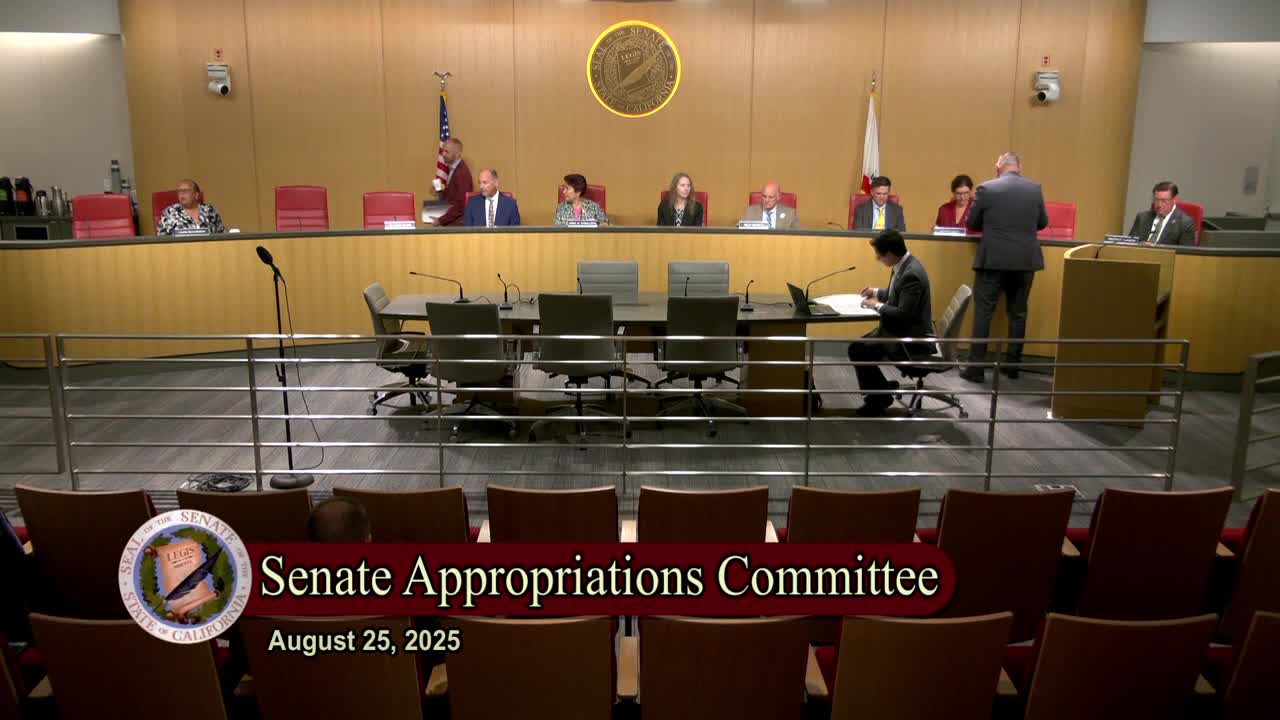 1MIN
Senate Standing Committee on Appropriations
 12MIN
Senate Standing Committee on Education
 1MIN
Assembly Floor
 15MIN
Assembly Standing Committee on Higher Education
Bill Author