AB 699: Elections: local tax measures.
- Session Year: 2025-2026
- House: Assembly
- Latest Version Date: 2025-09-16
Current Status:
Failed
(2026-01-22: Consideration of Governor's veto stricken from file.)
Introduced
In Committee
Awaiting First Chamber Vote
Passed First Chamber
In Committee
Awaiting Second Chamber Vote
Passed Second Chamber
Enacted
Under existing law, if a proposed local measure imposes a tax or raises the rate of a tax, the ballot must include the amount of money to be raised annually by the tax and the rate and duration of the tax.
If the measure imposes or increases a tax with more than one rate or authorizes the issuance of bonds, this bill would allow the local government submitting the measure to the voters to direct the elections official to include on the ballot a statement directing the voters to the county voter information guide for information about the tax rate or about how the bond debt would be repaid, in lieu of providing the information on the ballot as described above. If the local government directs voters to the county voter information guide for tax rate information, the bill would require local elections officials to provide a measure information statement with the sample ballot for the election. The bill would require the measure information statement to include, among other things, a description of the purpose of the tax and how the revenue will be spent, a list of all tax rates expected to apply, and the duration of the tax. By requiring local elections officials to provide additional information to voters, this bill would impose a state-mandated local program.
Existing law requires local governments, when submitting a measure for voter approval for the issuance of bonds that will be secured by ad valorem property taxes, to mail voters a statement that includes estimates of the tax rates required to fund the bond debt.
Existing law authorizes county and city elections officials to establish procedures to permit a voter to opt out of receiving a county voter information guide, state voter information guide, notice of polling place, and other associated materials by mail, and instead obtain them electronically by email or accessing the countys or citys internet website, if certain conditions are met.
This bill would authorize local governments to use those same procedures to electronically transmit the measure information statement and the statement including estimates of the tax rates required to fund bond debt.
The California Constitution requires the state to reimburse local agencies and school districts for certain costs mandated by the state. Statutory provisions establish procedures for making that reimbursement.
This bill would provide that, if the Commission on State Mandates determines that the bill contains costs mandated by the state, reimbursement for those costs shall be made pursuant to the statutory provisions noted above.
Under existing law, if a proposed local measure imposes a tax or raises the rate of a tax, the ballot must include the amount of money to be raised annually by the tax and the rate and duration of the tax.
If the measure imposes or increases a tax with more than one rate or authorizes the issuance of bonds, this bill would allow the local government or initiative proponents submitting the measure to the voters to direct the elections official to include on the ballot a statement directing the voters to the county voter information guide for information about the tax rate information, or about how the bond debt would be repaid, in lieu of providing the information on the ballot as described above. If the local government or initiative proponents choose to direct directs voters to the county voter information guide, guide for tax rate information, the bill would require local elections officials to mail provide a measure information statement with the sample ballot for the election. The bill would require the measure information statement to include, among other things, a description of the purpose of the tax and how the revenue will be spent, a list of all tax rates expected to apply, and the duration of the tax. By requiring local elections officials to mail provide additional information to voters, this bill would impose a state-mandated local program.
Existing law requires local governments, when submitting a measure for voter approval for the issuance of bonds that will be secured by ad valorem property taxes, to mail voters a statement that includes estimates of the tax rates required to fund the bond debt.
Existing law authorizes county and city elections officials to establish procedures to permit a voter to opt out of receiving a county voter information guide, state voter information guide, notice of polling place, and other associated materials by mail, and instead obtain them electronically by email or accessing the countys or citys internet website, if certain conditions are met. Existing law requires local governments, when submitting a measure for voter approval for the issuance of bonds that will be secured by ad valorem property taxes, to mail voters a statement that includes estimates of the tax rates required to fund the bonds.
This bill would authorize local governments to transmit the tax rate statement electronically under the procedures described above. use those same procedures to electronically transmit the measure information statement and the statement including estimates of the tax rates required to fund bond debt.
The California Constitution requires the state to reimburse local agencies and school districts for certain costs mandated by the state. Statutory provisions establish procedures for making that reimbursement.
This bill would provide that, if the Commission on State Mandates determines that the bill contains costs mandated by the state, reimbursement for those costs shall be made pursuant to the statutory provisions noted above.
Under existing law, if a proposed local measure imposes a tax or raises the rate of a tax, the ballot must include the amount of money to be raised annually by the tax and the rate and duration of the tax.
If the measure imposes or increases a tax with more than one rate or authorizes the issuance of bonds, this bill would allow the local government or initiative proponents submitting the measure to the voters to direct the elections official to include on the ballot a statement directing the voters to the county voter information guide for tax rate information, in lieu of providing the information described above. If the local government or initiative proponents choose to direct voters to the county voter information guide, the bill would require local elections officials to mail a measure information statement with the sample ballot for the election. The bill would require the measure information statement to include, among other things, a description of the purpose of the tax and how the revenue will be spent, a list of all tax rates expected to apply, and the duration of the tax. By requiring local elections officials to mail additional information to voters, this bill would impose a state-mandated local program.
Existing law authorizes county and city elections officials to establish procedures to permit a voter to opt out of receiving a county voter information guide, state voter information guide, notice of polling place, and other associated materials by mail, and instead obtain them electronically by email or accessing the countys or citys internet website, if certain conditions are met. Existing law requires local governments, when submitting a measure for voter approval for the issuance of bonds that will be secured by ad valorem property taxes, to mail voters a statement that includes estimates of the tax rates required to fund the bonds.
This bill would authorize local governments to transmit the tax rate statement electronically under the procedures described above.
The California Constitution requires the state to reimburse local agencies and school districts for certain costs mandated by the state. Statutory provisions establish procedures for making that reimbursement.
This bill would provide that, if the Commission on State Mandates determines that the bill contains costs mandated by the state, reimbursement for those costs shall be made pursuant to the statutory provisions noted above.
Under existing law, if a proposed local measure imposes a tax or raises the rate of a tax, the ballot must include the amount of money to be raised annually by the tax and the rate and duration of the tax.
If the measure imposes or increases a tax with more than one rate or authorizes the issuance of bonds, this bill would allow the local government or initiative proponents submitting the measure to the voters to direct the elections official to include on the ballot a statement directing the voters to the voter county voter information guide for tax rate information, in lieu of providing the information described above. If the local government or initiative proponents choose to direct voters to the voter county voter information guide, the bill would require local elections officials to mail a measure information statement with the sample ballot for the election. The bill would require the measure information statement to include, among other things, a description of the purpose of the tax and how the revenue will be spent, a list of all tax rates expected to apply, and the duration of the tax. By requiring local elections officials to mail additional information to voters, this bill would impose a state-mandated local program.
Existing law authorizes county and city elections officials to establish procedures to permit a voter to opt out of receiving a county voter information guide, state voter information guide, notice of polling place, and other associated materials by mail, and instead obtain them electronically by email or accessing the countys or citys internet website, if certain conditions are met. Existing law requires local governments, when submitting a measure for voter approval for the issuance of bonds that will be secured by ad valorem property taxes, to mail voters a statement that includes estimates of the tax rates required to fund the bonds.
This bill would authorize local governments to transmit the tax rate statement electronically under the procedures described above.
The California Constitution requires the state to reimburse local agencies and school districts for certain costs mandated by the state. Statutory provisions establish procedures for making that reimbursement.
This bill would provide that, if the Commission on State Mandates determines that the bill contains costs mandated by the state, reimbursement for those costs shall be made pursuant to the statutory provisions noted above.
Under existing law, if a proposed local measure imposes a tax or raises the rate of a tax, the ballot must include the amount of money to be raised annually by the tax and the rate and duration of the tax.
If the measure imposes or increases a tax with more than one rate or authorizes the issuance of bonds, this bill would allow the local government or initiative proponents submitting the measure to the voters to direct the elections official to include on the ballot a statement directing the voters to the voter guide for tax rate information, in lieu of providing the information described above. If the local government or initiative proponents choose to direct voters to the voter guide, the bill would require local elections officials to mail a measure information statement with the sample ballot for the election. The bill would require the measure information statement to include, among other things, a description of the purpose of the tax and how the revenue will be spent, a list of all tax rates expected to apply, and the duration of the tax. By requiring local elections officials to mail additional information to voters, this bill would impose a state-mandated local program.
Existing law authorizes county and city elections officials to establish procedures to permit a voter to opt out of receiving a county voter information guide, state voter information guide, notice of polling place, and other associated materials by mail, and instead obtain them electronically by email or accessing the countys or citys internet website, if certain conditions are met. Existing law requires local governments, when submitting a measure for voter approval for the issuance of bonds that will be secured by ad valorem property taxes, to mail voters a statement that includes estimates of the tax rates required to fund the bonds.
This bill would authorize local governments to transmit the tax rate statement electronically under the procedures described above.
The California Constitution requires the state to reimburse local agencies and school districts for certain costs mandated by the state. Statutory provisions establish procedures for making that reimbursement.
This bill would provide that, if the Commission on State Mandates determines that the bill contains costs mandated by the state, reimbursement for those costs shall be made pursuant to the statutory provisions noted above.
Existing law authorizes county and city elections officials to establish procedures to permit a voter to opt out of receiving a county voter information guide, state voter information guide, notice of polling place, and other associated materials by mail, and instead obtain them electronically by email or accessing the countys or citys internet website, if certain conditions are met. Existing law requires local governments, when submitting a measure for voter approval for the issuance of bonds that will be secured by ad valorem property taxes, to mail voters a statement that includes estimates of the tax rates required to fund the bonds.
This bill would authorize local governments to transmit the tax rate statement electronically under the procedures described above.
(a)For each tax measure for which ballots include one of the phrases described in subparagraph (B) of paragraph (2) of subdivision (b) of Section 13119, a measure information statement shall be mailed to the voters, or electronically submitted to the voters pursuant to Section 13300.7, with the sample ballot for the election to authorize the tax. The measure information statement required by this section shall be filed with the elections official conducting the election not later than the 88th day before the election, and it shall include all of the following:
(1)A concise description of the purpose of the tax proposed, including how the tax revenue and bond proceeds, if any, will be spent to benefit the community.
(2)If the measure imposes a tax expected to have more than one tax rate, a list of all the tax rates that are expected to apply and a description of how the tax will be imposed.
(3)A plain language description of any mechanism that would cause the tax rate or rates to vary over time.
(4)An explanation of the duration of the tax stating whether the tax expires on a specific date, expires upon final payment of indebtedness, does not expire until further action by the voters or the local governing body, or expires as the result of some other action or occurrence.
(5)Except if the information specified in paragraph (6) of this subdivision is included, the best estimate from official sources of the average annual dollar amount of taxes that would be collected during the ten-year period following the initial levy.
(6)If the tax measure would authorize the issuance of bonds, the security for which constitutes a lien on the property for ad valorem taxes within the jurisdiction, all the disclosures required by Section 9401.
(b)(1)For purposes of an election to approve a tax under the Mello-Roos Community Facilities Act of 1982 (Chapter 2.5 (commencing with Section 53311) of Part 1 of Division 2 of Title 5 of the Government Code), the statement required by subdivision (a) may consist entirely of a complete copy of the report and resolution of formation described in Sections 53321.5 and 53325.1 of the Government Code.
(2)For purposes of an election to approve a tax proposed pursuant to a charter citys authority under Section 5 of Article XI of the California Constitution, the statement required by subdivision (a) may consist entirely of the proposed charter provision or ordinance.
SEC. 4.Section 9401 of the Elections Code is amended to read:9401.(a)In connection with each bond issue proposed by a local government, the security for which constitutes a lien on the property for ad valorem taxes within the jurisdiction and the proposal for which is required to be submitted to the voters for approval, a measure information statement, combined with any measure information statement required by Section 9400, shall be mailed to the voters, or electronically transmitted to the voters pursuant to Section 13300.7, with the sample ballot for the bond election. The measure information statement required by this section shall be filed with the elections official conducting the election not later than the 88th day before the election, and shall include all of the following:
(1)The best estimate from official sources of the average annual tax rate that would be required to be levied to fund that bond issue over the entire duration of the bond debt service, based on assessed valuations available at the time of the election or a projection based on experience within the same jurisdiction or other demonstrable factors. The estimate shall also identify the final fiscal year in which the tax is anticipated to be collected.
(2)The best estimate from official sources of the highest tax rate that would be required to be levied to fund that bond issue, and an estimate of the year in which that rate will apply, based on assessed valuations available at the time of the election or a projection based on experience within the same jurisdiction or other demonstrable factors.
(3)The best estimate from official sources of the total debt service, including the principal and interest, that would be required to be repaid if all the bonds are issued and sold. The estimate may include information about the assumptions used to determine the estimate.
(b)In addition, the statement may contain a declaration of policy of the legislative or governing body of the applicable jurisdiction, proposing to use revenues other than ad valorem taxes to fund the bond issue, and the best estimate from official sources of these revenues and the reduction in the tax rate levied to fund the bond issue resulting from the substitution of revenue.
(c)For purposes of this chapter, tax rate means tax rate per one hundred thousand dollars ($100,000) of assessed valuation on all property to be taxed to fund a bond issue described in this section.
SEC. 5.Section 9403 of the Elections Code is amended to read:9403.Failure to comply with this chapter does not affect the validity of either of the following:
(a)A bond issue following the sale and delivery of the bonds.
(b)A tax following its initial imposition.
SEC. 6.Section 9405 of the Elections Code is amended to read:9405.(a)If the elections official is required to mail a measure information statement, as provided in Section 9400 or Section 9401, only one copy of the statement shall be mailed to a postal address where two or more registered voters have the same surname and the same postal address, or the measure information statement may be transmitted electronically pursuant to Section 13300.7.
(b)This section applies only if the legislative body adopts this section and the elections official conducting the election approves of the procedure.
SEC. 7.Section 9406 is added to the Elections Code, to read:9406.An estimate or projection made in the measure information statement required pursuant to Section 9400 or Section 9401 does not restrict or limit the tax imposed in accordance with the measure.
SEC. 8.Section 13119 of the Elections Code is amended to read:13119.(a)The ballots used when voting upon a measure proposed by a local governing body or submitted to the voters as an initiative or referendum measure pursuant to Division 9 (commencing with Section 9000) shall have printed on them the words Shall the measure (stating the nature thereof) be adopted? To the right or below the statement of the measure to be voted on, the words Yes and No shall be printed on separate lines, with voting targets. If a voter marks the voting target next to the printed word Yes, the voters vote shall be counted in favor of the adoption of the measure. If a voter marks the voting target next to the printed word No, the voters vote shall be counted against its adoption.
(b)(1)Except for a measure described in paragraph (2), if the proposed measure imposes a tax or raises the rate of a tax, the ballot shall include in the statement of the measure to be voted on an estimate of the amount of money to be raised annually and the rate and duration of the tax to be levied.
(2)If the proposed measure imposes or increases a tax with more than one rate, or authorizes the issuance of bonds, the jurisdiction submitting the measure to the voters shall, not later than 88 days before the election, inform the elections official conducting the election which of the following shall be included in or immediately following, as applicable, the statement of the measure:
(A)The estimate, rate, and duration information described in paragraph (1).
(B)One of the following phrases, as applicable:
(i)For a measure that authorizes the issuance of bonds to be repaid from ad valorem property taxes: See county voter guide for how property taxes repay bonds.
(ii)For a measure that authorizes the issuance of bonds to be repaid from a source other than ad valorem property taxes: See county voter guide for how the bonds are repaid.
(iii)For a measure that imposes or increases a tax with more than one rate and does not authorize the issuance of bonds: See county voter guide for detailed tax rate information.
(3)If the statement of the measure is to include one of the phrases provided for in subparagraph (B) of paragraph (2), the election order for the measure shall include a statement of the reasons for selecting the inclusion of the phrase provided for in subparagraph (B) of paragraph (2).
(4)If the elections official is informed that the statement of the measure shall include one of the phrases provided for in subparagraph (B) of paragraph (2), the requirements of Sections 9400 and 9401 apply to the measure, and the number of words in the phrase shall count toward any word limit that applies to the statement of the measure.
(c)The statement of the measure shall be a true and impartial synopsis of the purpose of the proposed measure, and shall be in language that is neither argumentative nor likely to create prejudice for or against the measure.
(d)Any estimate or projection included in the statement of the measure pursuant to this section, or included in the statements required pursuant to Section 9400 or Section 9401, does not restrict or limit the tax imposed in accordance with the measure.
(e)For purposes of this section, the following terms have the following meanings:
(1)Local governing body means the governing body of a city, county, city and county, including a charter city or charter county, or district, including a school district.
(2)Target means an object designated as the aim for a voter to make a vote selection.
SEC. 9.If the Commission on State Mandates determines that this act contains costs mandated by the state, reimbursement to local agencies and school districts for those costs shall be made pursuant to Part 7 (commencing with Section 17500) of Division 4 of Title 2 of the Government Code.
(a)For each tax measure for which ballots include the phrase one of the phrases described in subparagraph (B) of paragraph (2) of subdivision (b) of Section 13119, a measure information statement shall be mailed to the voters, or electronically submitted to the voters pursuant to Section 13300.7, with the sample ballot for the election to authorize the tax. The measure information statement required by this section shall be filed with the elections official conducting the election not later than the 88th day before the election, and it shall include all of the following:
(1)A concise description of the purpose of the tax proposed, including how the tax revenue and bond proceeds, if any, will be spent to benefit the community.
(2)If the measure imposes a tax expected to have more than one tax rate, a list of all the tax rates that are expected to apply and a description of how the tax will be imposed.
(3)A plain language description of any mechanism that would cause the tax rate or rates to vary over time.
(4)An explanation of the duration of the tax stating whether the tax expires on a specific date, expires upon final payment of indebtedness, does not expire until further action by the voters or the local governing body, or expires as the result of some other action or occurrence.
(5)Except if the information specified in paragraph (6) of this subdivision is included, the best estimate from official sources of the average annual dollar amount of taxes that would be collected during the ten-year period following the initial levy.
(6)If the tax measure would authorize the issuance of bonds, the security for which constitutes a lien on the property for ad valorem taxes within the jurisdiction, all the disclosures required by Section 9401.
(b)(1)For purposes of an election to approve a tax under the Mello-Roos Community Facilities Act of 1982 (Chapter 2.5 (commencing with Section 53311) of Part 1 of Division 2 of Title 5 of the Government Code), the statement required by subdivision (a) may consist entirely of a complete copy of the report and resolution of formation described in Sections 53321.5 and 53325.1 of the Government Code.
(2)For purposes of an election to approve a tax proposed pursuant to a charter citys authority under Section 5 of Article XI of the California Constitution, the statement required by subdivision (a) may consist entirely of the proposed charter provision or ordinance.
SEC. 4.Section 9401 of the Elections Code is amended to read:9401.(a)In connection with each bond issue proposed by a local government, the security for which constitutes a lien on the property for ad valorem taxes within the jurisdiction and the proposal for which is required to be submitted to the voters for approval, a measure information statement, combined with any measure information statement required by Section 9400, shall be mailed to the voters, or electronically transmitted to the voters pursuant to Section 13300.7, with the sample ballot for the bond election. The measure information statement required by this section shall be filed with the elections official conducting the election not later than the 88th day before the election, and shall include all of the following:
(1)The best estimate from official sources of the average annual tax rate that would be required to be levied to fund that bond issue over the entire duration of the bond debt service, based on assessed valuations available at the time of the election or a projection based on experience within the same jurisdiction or other demonstrable factors. The estimate shall also identify the final fiscal year in which the tax is anticipated to be collected.
(2)The best estimate from official sources of the highest tax rate that would be required to be levied to fund that bond issue, and an estimate of the year in which that rate will apply, based on assessed valuations available at the time of the election or a projection based on experience within the same jurisdiction or other demonstrable factors.
(3)The best estimate from official sources of the total debt service, including the principal and interest, that would be required to be repaid if all the bonds are issued and sold. The estimate may include information about the assumptions used to determine the estimate.
(b)In addition, the statement may contain a declaration of policy of the legislative or governing body of the applicable jurisdiction, proposing to use revenues other than ad valorem taxes to fund the bond issue, and the best estimate from official sources of these revenues and the reduction in the tax rate levied to fund the bond issue resulting from the substitution of revenue.
(c)For purposes of this chapter, tax rate means tax rate per one hundred thousand dollars ($100,000) of assessed valuation on all property to be taxed to fund a bond issue described in this section.
SEC. 5.Section 9403 of the Elections Code is amended to read:9403.Failure to comply with this chapter does not affect the validity of either of the following:
(a)A bond issue following the sale and delivery of the bonds.
(b)A tax following its initial imposition.
SEC. 6.Section 9405 of the Elections Code is amended to read:9405.(a)If the elections official is required to mail a measure information statement, as provided in Section 9400 or Section 9401, only one copy of the statement shall be mailed to a postal address where two or more registered voters have the same surname and the same postal address, or the measure information statement may be transmitted electronically pursuant to Section 13300.7.
(b)This section applies only if the legislative body adopts this section and the elections official conducting the election approves of the procedure.
SEC. 7.Section 9406 is added to the Elections Code, to read:9406.An estimate or projection made in the measure information statement required pursuant to Section 9400 or Section 9401 does not restrict or limit the tax imposed in accordance with the measure.
SEC. 8.Section 13119 of the Elections Code is amended to read:13119.(a)The ballots used when voting upon a measure proposed by a local governing body or submitted to the voters as an initiative or referendum measure pursuant to Division 9 (commencing with Section 9000) shall have printed on them the words Shall the measure (stating the nature thereof) be adopted? To the right or below the statement of the measure to be voted on, the words Yes and No shall be printed on separate lines, with voting targets. If a voter marks the voting target next to the printed word Yes, the voters vote shall be counted in favor of the adoption of the measure. If a voter marks the voting target next to the printed word No, the voters vote shall be counted against its adoption.
(b)(1)Except for a measure described in paragraph (2), if the proposed measure imposes a tax or raises the rate of a tax, the ballot shall include in the statement of the measure to be voted on an estimate of the amount of money to be raised annually and the rate and duration of the tax to be levied.
(2)If the proposed measure imposes or increases a tax with more than one rate, or authorizes the issuance of bonds, the jurisdiction submitting the measure to the voters, or, in the case of an initiative measure, the proponents, voters shall, not later than 88 days before the election, inform the elections official conducting the election which of the following shall be included in or immediately following, as applicable, the statement of the measure:
(A)The estimate, rate, and duration information described in paragraph (1).
(B)The phrase See county voter guide for detailed tax rate information.(B)One of the following phrases, as applicable:
(i)For a measure that authorizes the issuance of bonds to be repaid from ad valorem property taxes: See county voter guide for how property taxes repay bonds.
(ii)For a measure that authorizes the issuance of bonds to be repaid from a source other than ad valorem property taxes: See county voter guide for how the bonds are repaid.
(iii)For a measure that imposes or increases a tax with more than one rate and does not authorize the issuance of bonds: See county voter guide for detailed tax rate information.
(3)If the statement of the measure is to include the phrase one of the phrases provided for in subparagraph (B) of paragraph (2), the election order for the measure, or, in the case of an initiative measure, the full text of the measure itself, measure shall include a statement of the reasons for selecting the inclusion of the phrase provided for in subparagraph (B) of paragraph (2).
(4)If the elections official is informed that the statement of the measure shall include the phrase one of the phrases provided for in subparagraph (B) of paragraph (2), the requirements of Section 9400 Sections 9400 and 9401 apply to the measure, and the nine words of number of words in the phrase shall count toward any word limit that applies to the statement of the measure.
(c)The statement of the measure shall be a true and impartial synopsis of the purpose of the proposed measure, and shall be in language that is neither argumentative nor likely to create prejudice for or against the measure.
(d)Any estimate or projection included in the statement of the measure pursuant to this section, or included in the statements required pursuant to Section 9400 or Section 9401, does not restrict or limit the tax imposed in accordance with the measure.
(e)For purposes of this section, the following terms have the following meanings:
(1)Local governing body means the governing body of a city, county, city and county, including a charter city or charter county, or district, including a school district.
(2)Target means an object designated as the aim for a voter to make a vote selection.
SEC. 9.If the Commission on State Mandates determines that this act contains costs mandated by the state, reimbursement to local agencies and school districts for those costs shall be made pursuant to Part 7 (commencing with Section 17500) of Division 4 of Title 2 of the Government Code.
(a)For each tax measure for which ballots include the phrase described in subparagraph (B) of paragraph (2) of subdivision (b) of Section 13119, a measure information statement shall be mailed to the voters, or electronically submitted to the voters pursuant to Section 13300.7, with the sample ballot for the election to authorize the tax. The measure information statement required by this section shall be filed with the elections official conducting the election not later than the 88th day before the election, and it shall include all of the following:
(1)A concise description of the purpose of the tax proposed, including how the tax revenue and bond proceeds, if any, will be spent to benefit the community.
(2)If the measure imposes a tax expected to have more than one tax rate, a list of all the tax rates that are expected to apply and a description of how the tax will be imposed.
(3)A plain language description of any mechanism that would cause the tax rate or rates to vary over time.
(4)An explanation of the duration of the tax stating whether the tax expires on a specific date, expires upon final payment of indebtedness, does not expire until further action by the voters or the local governing body, or expires as the result of some other action or occurrence.
(5)Except if the information specified in paragraph (6) of this subdivision is included, the best estimate from official sources of the average annual dollar amount of taxes that would be collected during the ten-year period following the initial levy.
(6)If the tax measure would authorize the issuance of bonds, the security for which constitutes a lien on the property for ad valorem taxes within the jurisdiction, all the disclosures required by Section 9401.
(b)(1)For purposes of an election to approve a tax under the Mello-Roos Community Facilities Act of 1982 (Chapter 2.5 (commencing with Section 53311) of Part 1 of Division 2 of Title 5 of the Government Code), the statement required by subdivision (a) may consist entirely of a complete copy of the report and resolution of formation described in Sections 53321.5 and 53325.1 of the Government Code.
(2)For purposes of an election to approve a tax proposed pursuant to a charter citys authority under Section 5 of Article XI of the California Constitution, the statement required by subdivision (a) may consist entirely of the proposed charter provision or ordinance.
SEC. 4.Section 9401 of the Elections Code is amended to read:9401.(a)In connection with each bond issue proposed by a local government, the security for which constitutes a lien on the property for ad valorem taxes within the jurisdiction and the proposal for which is required to be submitted to the voters for approval, a measure information statement, combined with any measure information statement required by Section 9400, shall be mailed to the voters, or electronically transmitted to the voters pursuant to Section 13300.7, with the sample ballot for the bond election. The measure information statement required by this section shall be filed with the elections official conducting the election not later than the 88th day before the election, and shall include all of the following:
(1)The best estimate from official sources of the average annual tax rate that would be required to be levied to fund that bond issue over the entire duration of the bond debt service, based on assessed valuations available at the time of the election or a projection based on experience within the same jurisdiction or other demonstrable factors. The estimate shall also identify the final fiscal year in which the tax is anticipated to be collected.
(2)The best estimate from official sources of the highest tax rate that would be required to be levied to fund that bond issue, and an estimate of the year in which that rate will apply, based on assessed valuations available at the time of the election or a projection based on experience within the same jurisdiction or other demonstrable factors.
(3)The best estimate from official sources of the total debt service, including the principal and interest, that would be required to be repaid if all the bonds are issued and sold. The estimate may include information about the assumptions used to determine the estimate.
(b)In addition, the statement may contain a declaration of policy of the legislative or governing body of the applicable jurisdiction, proposing to use revenues other than ad valorem taxes to fund the bond issue, and the best estimate from official sources of these revenues and the reduction in the tax rate levied to fund the bond issue resulting from the substitution of revenue.
(c)For purposes of this chapter, tax rate means tax rate per one hundred thousand dollars ($100,000) of assessed valuation on all property to be taxed to fund a bond issue described in this section.
SEC. 5.Section 9403 of the Elections Code is amended to read:9403.Failure to comply with this chapter does not affect the validity of either of the following:
(a)A bond issue following the sale and delivery of the bonds.
(b)A tax following its initial imposition.
SEC. 6.Section 9405 of the Elections Code is amended to read:9405.(a)If the elections official is required to mail a measure information statement, as provided in Section 9400 or Section 9401, only one copy of the statement shall be mailed to a postal address where two or more registered voters have the same surname and the same postal address, or the measure information statement may be transmitted electronically pursuant to Section 13300.7.
(b)This section applies only if the legislative body adopts this section and the elections official conducting the election approves of the procedure.
SEC. 7.Section 9406 is added to the Elections Code, to read:9406.An estimate or projection made in the measure information statement required pursuant to Section 9400 or Section 9401 does not restrict or limit the tax imposed in accordance with the measure.
SEC. 8.Section 13119 of the Elections Code is amended to read:13119.(a)The ballots used when voting upon a measure proposed by a local governing body or submitted to the voters as an initiative or referendum measure pursuant to Division 9 (commencing with Section 9000) shall have printed on them the words Shall the measure (stating the nature thereof) be adopted? To the right or below the statement of the measure to be voted on, the words Yes and No shall be printed on separate lines, with voting targets. If a voter marks the voting target next to the printed word Yes, the voters vote shall be counted in favor of the adoption of the measure. If a voter marks the voting target next to the printed word No, the voters vote shall be counted against its adoption.
(b)(1)Except for a measure described in paragraph (2), if the proposed measure imposes a tax or raises the rate of a tax, the ballot shall include in the statement of the measure to be voted on an estimate of the amount of money to be raised annually and the rate and duration of the tax to be levied.
(2)If the proposed measure imposes or increases a tax with more than one rate, or authorizes the issuance of bonds, the jurisdiction submitting the measure to the voters, or, in the case of an initiative measure, the proponents, shall, not later than 88 days before the election, inform the elections official conducting the election which of the following shall be included in or immediately following, as applicable, the statement of the measure:
(A)The estimate, rate, and duration information described in paragraph (1).
(B)The phrase See county voter guide for detailed tax rate information.
(3)If the statement of the measure is to include the phrase provided for in subparagraph (B) of paragraph (2), the election order for the measure, or, in the case of an initiative measure, the full text of the measure itself, shall include a statement of the reasons for selecting the inclusion of the phrase provided for in subparagraph (B) of paragraph (2).
(4)If the elections official is informed that the statement of the measure shall include the phrase provided for in subparagraph (B) of paragraph (2), the requirements of Section 9400 apply to the measure, and the seven nine words of the phrase shall count toward any word limit that applies to the statement of the measure.
(c)The statement of the measure shall be a true and impartial synopsis of the purpose of the proposed measure, and shall be in language that is neither argumentative nor likely to create prejudice for or against the measure.
(d)Any estimate or projection included in the statement of the measure pursuant to this section, or included in the statements required pursuant to Section 9400 or Section 9401, does not restrict or limit the tax imposed in accordance with the measure.
(e)For purposes of this section, the following terms have the following meanings:
(1)Local governing body means the governing body of a city, county, city and county, including a charter city or charter county, or district, including a school district.
(2)Target means an object designated as the aim for a voter to make a vote selection.
SEC. 9.If the Commission on State Mandates determines that this act contains costs mandated by the state, reimbursement to local agencies and school districts for those costs shall be made pursuant to Part 7 (commencing with Section 17500) of Division 4 of Title 2 of the Government Code.
(a)For each tax measure for which ballots include the phrase described in subparagraph (B) of paragraph (2) of subdivision (b) of Section 13119, a measure information statement shall be mailed to the voters, or electronically submitted to the voters pursuant to Section 13300.7, with the sample ballot for the election to authorize the tax. The measure information statement required by this section shall be filed with the elections official conducting the election not later than the 88th day before the election, and it shall include all of the following:
(1)A concise description of the purpose of the tax proposed, including how the tax revenue and bond proceeds, if any, will be spent to benefit the community.
(2)If the measure imposes a tax expected to have more than one tax rate, a list of all the tax rates that are expected to apply and a description of how the tax will be imposed.
(3)A plain language description of any mechanism that would cause the tax rate or rates to vary over time.
(4)An explanation of the duration of the tax stating whether the tax expires on a specific date, expires upon final payment of indebtedness, does not expire until further action by the voters or the local governing body, or expires as the result of some other action or occurrence.
(5)Except if the information specified in paragraph (6) of this subdivision is included, the best estimate from official sources of the average annual dollar amount of taxes that would be collected during the ten-year period following the initial levy.
(6)If the tax measure would authorize the issuance of bonds, the security for which constitutes a lien on the property for ad valorem taxes within the jurisdiction, all the disclosures required by Section 9401.
(b)(1)For purposes of an election to approve a tax under the Mello-Roos Community Facilities Act of 1982 (Chapter 2.5 (commencing with Section 53311) of Part 1 of Division 2 of Title 5 of the Government Code), the statement required by subdivision (a) may consist entirely of a complete copy of the report and resolution of formation described in Sections 53321.5 and 53325.1 of the Government Code.
(2)For purposes of an election to approve a tax proposed pursuant to a charter citys authority under Section 5 of Article XI of the California Constitution, the statement required by subdivision (a) may consist entirely of the proposed charter provision or ordinance.
SEC. 4.Section 9401 of the Elections Code is amended to read:9401.(a)In connection with each bond issue proposed by a local government, the security for which constitutes a lien on the property for ad valorem taxes within the jurisdiction and the proposal for which is required to be submitted to the voters for approval, a measure information statement, combined with any measure information statement required by Section 9400, shall be mailed to the voters, or electronically transmitted to the voters pursuant to Section 13300.7, with the sample ballot for the bond election. The measure information statement required by this section shall be filed with the elections official conducting the election not later than the 88th day before the election, and shall include all of the following:
(1)The best estimate from official sources of the average annual tax rate that would be required to be levied to fund that bond issue over the entire duration of the bond debt service, based on assessed valuations available at the time of the election or a projection based on experience within the same jurisdiction or other demonstrable factors. The estimate shall also identify the final fiscal year in which the tax is anticipated to be collected.
(2)The best estimate from official sources of the highest tax rate that would be required to be levied to fund that bond issue, and an estimate of the year in which that rate will apply, based on assessed valuations available at the time of the election or a projection based on experience within the same jurisdiction or other demonstrable factors.
(3)The best estimate from official sources of the total debt service, including the principal and interest, that would be required to be repaid if all the bonds are issued and sold. The estimate may include information about the assumptions used to determine the estimate.
(b)In addition, the statement may contain a declaration of policy of the legislative or governing body of the applicable jurisdiction, proposing to use revenues other than ad valorem taxes to fund the bond issue, and the best estimate from official sources of these revenues and the reduction in the tax rate levied to fund the bond issue resulting from the substitution of revenue.
(c)For purposes of this chapter, tax rate means tax rate per one hundred thousand dollars ($100,000) of assessed valuation on all property to be taxed to fund a bond issue described in this section.
SEC. 5.Section 9403 of the Elections Code is amended to read:9403.Failure to comply with this chapter does not affect the validity of either of the following:
(a)A bond issue following the sale and delivery of the bonds.
(b)A tax following its initial imposition.
SEC. 6.Section 9405 of the Elections Code is amended to read:9405.(a)If the elections official is required to mail a measure information statement, as provided in Section 9400 or Section 9401, only one copy of the statement shall be mailed to a postal address where two or more registered voters have the same surname and the same postal address, or the measure information statement may be transmitted electronically pursuant to Section 13300.7.
(b)This section applies only if the legislative body adopts this section and the election elections official conducting the election approves of the procedure.
SEC. 7.Section 9406 is added to the Elections Code, to read:9406.An estimate or projection made in the measure information statement required pursuant to Section 9400 or Section 9401 does not restrict or limit the tax imposed in accordance with the measure.
SEC. 8.Section 13119 of the Elections Code is amended to read:13119.(a)The ballots used when voting upon a measure proposed by a local governing body or submitted to the voters as an initiative or referendum measure pursuant to Division 9 (commencing with Section 9000), 9000) shall have printed on them the words Shall the measure (stating the nature thereof) be adopted? To the right or below the statement of the measure to be voted on, the words Yes and No shall be printed on separate lines, with voting targets. If a voter marks the voting target next to the printed word Yes, the voters vote shall be counted in favor of the adoption of the measure. If a voter marks the voting target next to the printed word No, the voters vote shall be counted against its adoption.
(b)(1)Except for a measure described in paragraph (2), if the proposed measure imposes a tax or raises the rate of a tax, the ballot shall include in the statement of the measure to be voted on an estimate of the amount of money to be raised annually and the rate and duration of the tax to be levied.
(2)If the proposed measure imposes or increases a tax with more than one rate, or authorizes the issuance of bonds, the jurisdiction submitting the measure to the voters, or, in the case of an initiative measure, the proponents, shall, not later than 88 days before the election, inform the elections official conducting the election which of the following shall be included in or immediately following, as applicable, the statement of the measure:
(A)The estimate, rate, and duration information described in paragraph (1).
(B)The phrase See voter guide for measure information statement.(B)The phrase See county voter guide for detailed tax rate information.
(3)If the statement of the measure is to include the phrase provided for in subparagraph (B) of paragraph (2), the election order for the measure, or, in the case of an initiative measure, the full text of the measure itself, shall include a statement of the reasons for selecting the inclusion of the phrase provided for in subparagraph (B) of paragraph (2).
(4)If the elections official is informed that the statement of the measure shall include the phrase provided for in subparagraph (B) of paragraph (2), the requirements of Section 9400 apply to the measure, and the seven words of the phrase shall count toward any word limit that applies to the statement of the measure.
(c)The statement of the measure shall be a true and impartial synopsis of the purpose of the proposed measure, and shall be in language that is neither argumentative nor likely to create prejudice for or against the measure.
(d)Any estimate or projection included in the statement of the measure pursuant to this section, or included in the statements required pursuant to Section 9400 or Section 9401, does not restrict or limit the tax imposed in accordance with the measure.
(e)For purposes of this section, the following terms have the following meanings:
(1)Local governing body means the governing body of a city, county, city and county, including a charter city or charter county, or district, including a school district.
(2)Target means an object designated as the aim for a voter to make a vote selection.
SEC. 9.If the Commission on State Mandates determines that this act contains costs mandated by the state, reimbursement to local agencies and school districts for those costs shall be made pursuant to Part 7 (commencing with Section 17500) of Division 4 of Title 2 of the Government Code.
(a)For each tax measure for which ballots include the phrase described in subparagraph (B) of paragraph (2) of subdivision (b) of Section 13119, a measure information statement shall be mailed to the voters, or electronically submitted to the voters pursuant to Section 13300.7, with the sample ballot for the election to authorize the tax. The measure information statement required by this section shall be filed with the elections official conducting the election not later than the 88th day before the election, and it shall include all of the following:
(1)A concise description of the purpose of the tax proposed, including how the tax revenue and bond proceeds, if any, will be spent to benefit the community.
(2)If the measure imposes a tax expected to have more than one tax rate, a list of all the tax rates that are expected to apply and a description of how the tax will be imposed.
(3)A plain language description of any mechanism that would cause the tax rate or rates to vary over time.
(4)An explanation of the duration of the tax stating whether the tax expires on a specific date, expires upon final payment of indebtedness, does not expire until further action by the voters or the local governing body, or expires as the result of some other action or occurrence.
(5)Except if the information specified in paragraph (6) of this subdivision is included, the best estimate from official sources of the average annual dollar amount of taxes that would be collected during the ten-year period following the initial levy.
(6)If the tax measure would authorize the issuance of bonds, the security for which constitutes a lien on the property for ad valorem taxes within the jurisdiction, all the disclosures required by Section 9401.
(b)(1)For purposes of an election to approve a tax under the Mello-Roos Community Facilities Act of 1982 (Chapter 2.5 (commencing with Section 53311) of Part 1 of Division 2 of Title 5 of the Government Code), the statement required by subdivision (a) may consist entirely of a complete copy of the report and resolution of formation described in Sections 53321.5 and 53325.1 of the Government Code.
(2)For purposes of an election to approve a tax proposed pursuant to a charter citys authority under Section 5 of Article XI of the California Constitution, the statement required by subdivision (a) may consist entirely of the proposed charter provision or ordinance.
SECTION 1.SEC. 4.Section 9401 of the Elections Code is amended to read:9401.(a)In connection with each bond issue specified in proposed by a local government, the security for which constitutes a lien on the property for ad valorem taxes within the jurisdiction and the proposal for which is required to be submitted to the voters for approval, a measure information statement, combined with any measure information statement required by Section 9400, a statement shall be mailed to the voters, or electronically transmitted to the voters pursuant to Section 13300.7, with the sample ballot for the bond election. The measure information statement required by this section shall be filed with the elections official conducting the election not later than the 88th day before the election, and shall include all of the following:
(1)The best estimate from official sources of the average annual tax rate that would be required to be levied to fund that bond issue over the entire duration of the bond debt service, based on assessed valuations available at the time of the election or a projection based on experience within the same jurisdiction or other demonstrable factors. The estimate shall also identify the final fiscal year in which the tax is anticipated to be collected.
(2)The best estimate from official sources of the highest tax rate that would be required to be levied to fund that bond issue, and an estimate of the year in which that rate will apply, based on assessed valuations available at the time of the election or a projection based on experience within the same jurisdiction or other demonstrable factors.
(3)The best estimate from official sources of the total debt service, including the principal and interest, that would be required to be repaid if all the bonds are issued and sold. The estimate may include information about the assumptions used to determine the estimate.
(b)In addition, the statement may contain a declaration of policy of the legislative or governing body of the applicable jurisdiction, proposing to use revenues other than ad valorem taxes to fund the bond issue, and the best estimate from official sources of these revenues and the reduction in the tax rate levied to fund the bond issue resulting from the substitution of revenue.
(c)For purposes of this chapter, tax rate means tax rate per one hundred thousand dollars ($100,000) of assessed valuation on all property to be taxed to fund a bond issue described in Section 9400. this section.
SEC. 5.Section 9403 of the Elections Code is amended to read:9403.Failure to comply with this chapter shall does not affect the validity of any bond issue following the sale and delivery of the bonds. either of the following:
(a)A bond issue following the sale and delivery of the bonds.
(b)A tax following its initial imposition.
SEC. 6.Section 9405 of the Elections Code is amended to read:9405.Whenever (a)If the elections official is required to mail a measure information statement, as provided in Section 9400 or Section 9401, only one copy of the statement shall be mailed to a postal address where two or more registered voters have the same surname and the same postal address. address, or the measure information statement may be transmitted electronically pursuant to Section 13300.7.
This section shall only apply(b)This section applies only if the legislative body adopts this section and the election official conducting the election approves of the procedure.
SEC. 7.Section 9406 is added to the Elections Code, to read:9406.An estimate or projection made in the measure information statement required pursuant to Section 9400 or Section 9401 does not restrict or limit the tax imposed in accordance with the measure.
SEC. 8.Section 13119 of the Elections Code is amended to read:13119.(a)The ballots used when voting upon a measure proposed by a local governing body or submitted to the voters as an initiative or referendum measure pursuant to Division 9 (commencing with Section 9000), including a measure authorizing the issuance of bonds or the incurrence of debt, 9000), shall have printed on them the words Shall the measure (stating the nature thereof) be adopted? To the right or below the statement of the measure to be voted on, the words Yes and No shall be printed on separate lines, with voting targets. If a voter marks the voting target next to the printed word Yes, the voters vote shall be counted in favor of the adoption of the measure. If the a voter marks the voting target next to the printed word No, the voters vote shall be counted against its adoption.
(b)If (1)Except for a measure described in paragraph (2), if the proposed measure imposes a tax or raises the rate of a tax, the ballot shall include in the statement of the measure to be voted on an estimate of the amount of money to be raised annually and the rate and duration of the tax to be levied.
(2)If the proposed measure imposes or increases a tax with more than one rate, or authorizes the issuance of bonds, the jurisdiction submitting the measure to the voters, or, in the case of an initiative measure, the proponents, shall, not later than 88 days before the election, inform the elections official conducting the election which of the following shall be included in or immediately following, as applicable, the statement of the measure:
(A)The estimate, rate, and duration information described in paragraph (1).
(B)The phrase See voter guide for measure information statement.
(3)If the statement of the measure is to include the phrase provided for in subparagraph (B) of paragraph (2), the election order for the measure, or, in the case of an initiative measure, the full text of the measure itself, shall include a statement of the reasons for selecting the inclusion of the phrase provided for in subparagraph (B) of paragraph (2).
(4)If the elections official is informed that the statement of the measure shall include the phrase provided for in subparagraph (B) of paragraph (2), the requirements of Section 9400 apply to the measure, and the seven words of the phrase shall count toward any word limit that applies to the statement of the measure.
(c)The statement of the measure shall be a true and impartial synopsis of the purpose of the proposed measure, and shall be in language that is neither argumentative nor likely to create prejudice for or against the measure.
(d)Any estimate or projection included in the statement of the measure pursuant to this section, or included in the statements required pursuant to Section 9400 or Section 9401, does not restrict or limit the tax imposed in accordance with the measure.
(d)(e)For purposes of this section, the following terms have the following meanings:
(1)Local governing body means the governing body of a city, county, city and county, including a charter city or charter county, or district, including a school district.
(2)Target means an object designated as the aim for a voter to make a vote selection.
SEC. 9.If the Commission on State Mandates determines that this act contains costs mandated by the state, reimbursement to local agencies and school districts for those costs shall be made pursuant to Part 7 (commencing with Section 17500) of Division 4 of Title 2 of the Government Code.
(a)In connection with each bond issue specified in Section 9400, a statement shall be mailed to the voters voters, or electronically transmitted to the voters pursuant to Section 13300.7, with the sample ballot for the bond election. The statement required by this section shall be filed with the elections official conducting the election not later than the 88th day before the election, and shall include all of the following:
(1)The best estimate from official sources of the average annual tax rate that would be required to be levied to fund that bond issue over the entire duration of the bond debt service, based on assessed valuations available at the time of the election or a projection based on experience within the same jurisdiction or other demonstrable factors. The estimate shall also identify the final fiscal year in which the tax is anticipated to be collected.
(2)The best estimate from official sources of the highest tax rate that would be required to be levied to fund that bond issue, and an estimate of the year in which that rate will apply, based on assessed valuations available at the time of the election or a projection based on experience within the same jurisdiction or other demonstrable factors.
(3)The best estimate from official sources of the total debt service, including the principal and interest, that would be required to be repaid if all the bonds are issued and sold. The estimate may include information about the assumptions used to determine the estimate.
(b)In addition, the statement may contain a declaration of policy of the legislative or governing body of the applicable jurisdiction, proposing to use revenues other than ad valorem taxes to fund the bond issue, and the best estimate from official sources of these revenues and the reduction in the tax rate levied to fund the bond issue resulting from the substitution of revenue.
(c)For purposes of this chapter, tax rate means tax rate per one hundred thousand dollars ($100,000) of assessed valuation on all property to be taxed to fund a bond issue described in Section 9400.
|
Date
|
Status
|
|---|---|
| Jan 22, 2026 | Consideration of Governor's veto stricken from file. |
| Oct 1, 2025 | Consideration of Governor's veto pending. |
| Oct 1, 2025 | Vetoed by Governor. |
| Sep 24, 2025 | Enrolled and presented to the Governor at 3 p.m. |
| Sep 13, 2025 | Senate amendments concurred in. To Engrossing and Enrolling. (Ayes 55. Noes 21. Page 3453.). |
| Sep 13, 2025 | Joint Rules 61(a)(14) and 51(a)(4) suspended. (Ayes 59. Noes 20. Page 3413.) |
| Sep 12, 2025 | In Assembly. Concurrence in Senate amendments pending. |
| Sep 11, 2025 | Read third time. Passed. Ordered to the Assembly. (Ayes 24. Noes 13. Page 2896.). |
| Sep 8, 2025 | Read second time. Ordered to third reading. |
| Sep 5, 2025 | Read third time and amended. Ordered to second reading. |
| Aug 29, 2025 | Read second time. Ordered to third reading. |
| Aug 29, 2025 | From committee: Do pass. (Ayes 5. Noes 2.) (August 29). |
| Aug 18, 2025 | In committee: Referred to suspense file. |
| Jul 15, 2025 | From committee: Do pass and re-refer to Com. on APPR. (Ayes 4. Noes 1.) (July 15). Re-referred to Com. on APPR. |
| Jul 3, 2025 | Read second time and amended. Re-referred to Com. on E. & C.A. |
| Jul 2, 2025 | From committee: Amend, and do pass as amended and re-refer to Com. on E. & C.A. (Ayes 5. Noes 2.) (July 2). |
| Jun 18, 2025 | Referred to Coms. on L. GOV. and E. & C.A. |
| Jun 9, 2025 | In Senate. Read first time. To Com. on RLS. for assignment. |
| Jun 5, 2025 | Read third time. Passed. Ordered to the Senate. (Ayes 54. Noes 20. Page 2107.) |
| May 27, 2025 | Read second time. Ordered to third reading. |
| May 23, 2025 | From committee: Do pass. (Ayes 11. Noes 3.) (May 23). |
| May 14, 2025 | In committee: Set, first hearing. Referred to suspense file. |
| May 6, 2025 | Re-referred to Com. on APPR. |
| May 5, 2025 | Read second time and amended. |
| May 1, 2025 | From committee: Amend, and do pass as amended and re-refer to Com. on APPR. (Ayes 4. Noes 2.) (April 30). |
| Apr 7, 2025 | In committee: Set, first hearing. Hearing canceled at the request of author. |
| Apr 2, 2025 | Re-referred to Com. on ELECTIONS. |
| Apr 1, 2025 | From committee chair, with author's amendments: Amend, and re-refer to Com. on ELECTIONS. Read second time and amended. |
| Mar 3, 2025 | Referred to Com. on ELECTIONS. |
| Feb 15, 2025 | From printer. May be heard in committee March 17. |
| Feb 14, 2025 | Read first time. To print. |
|
Date
|
Description
|
Location
|
Votes
|
|
|---|---|---|---|---|
| Sep 13, 2025 | AB 699 Stefani Concurrence in Senate Amendments | Assembly Floor |
Passed |
|
| Sep 11, 2025 | Assembly 3rd Reading AB699 Stefani By Wiener | Senate Floor |
Passed |
|
| Aug 29, 2025 | Do pass | Senate Standing Committee on Appropriations |
Passed |
|
| Aug 18, 2025 | Placed on suspense file | Senate Standing Committee on Appropriations |
Passed |
|
| Jul 15, 2025 | Do pass, but first be re-referred to the Committee on [Appropriations] | Senate Standing Committee on Elections and Constitutional Amendments |
Passed |
|
| Jul 2, 2025 | Do pass as amended, but first amend, and re-refer to the Committee on [Elections and Constitutional Amendments] | Senate Standing Committee on Local Government |
Passed |
|
| Jun 5, 2025 | AB 699 Stefani Assembly Third Reading | Assembly Floor |
Passed |
|
| May 23, 2025 | Do pass. | Assembly Standing Committee on Appropriations |
Passed |
|
| Apr 30, 2025 | Do pass as amended and be re-referred to the Committee on [Appropriations] | Assembly Standing Committee on Elections |
Passed |
This list shows positions taken on this bill by organizations on the date displayed, which is linked to the original source.
Positions by individuals are not included.
|
Organization
|
Position
|
Date
|
|---|---|---|
| Alameda County Taxpayers Association, Inc. | ** Against | |
| All Home | ** Support | |
| ALL HOME, A PROJECT OF TIDES CENTER | ** Support | |
| Association Of California School Administrators | ** Support | |
| California Association Of Clerks & Election Officials | ** Support | |
| California Association Of Realtors | ** Against | |
| California Association Of School Business Officials | ** Support | |
| California Business Roundtable | ** Against | |
| California Housing Partnership | ** Support | |
| California Professional Firefighters | ** Support | |
| California's Coalition for Adequate School Housing | ** Support | |
| California Special Districts Association | ** Support | |
| California State Association Of Counties | ** Support | |
| California Taxpayers Association | ** Against | |
| City Of Oakland | ** Support | |
| Community College Facility Coalition | ** Support | |
| East Bay Housing Organizations | ** Support | |
| ENTERPRISE COMMUNITY PARTNERS, INC. | ** Support | |
| Filoli | ** Support | |
| Howard Jarvis Taxpayers Association | ** Against | |
| Monterey Bay Economic Partnership | ** Support | |
| Nonprofit Housing Association of Northern California | ** Support | |
| Non-Profit Housing Association of Northern California | ** Support | |
| Office of the Riverside County Superintendent of Schools | ** Support | |
| San Diego Housing Federation | ** Support | |
| San Diego Unified School District | ** Support | |
| San Francisco Bay Area Planning Urban Research Association Spur | ** Support | |
| SEIU California | ** Support | |
| Shift-bayarea | ** Against | |
| Shift-Bay Area | ** Against | |
| Silicon Valley Taxpayers Association | ** Against | |
| State Building and Construction Trades Council | ** Support | |
| Urban Counties of California | ** Support |
GOVERNOR'S VETO
GV Bill Id:AB 699
Author:(Stefani)
As Enrolled Ver:September 16, 2025
2/3 vote
SUMMARY
Requires, upon request, a local elections official to include on the ballot label, for certain local tax or bond measures, a statement directing voters to the county voter information guide for required tax rate information, in lieu of providing the information directly on the ballot label.
Senate Amendments:
- Revise the text of the statement that may appear on the ballot label directing voters to the county voter information guide, in lieu of providing the tax rate information directly on the ballot label, so that the phrase will be one of the following:
- For a measure that authorizes the issuance of bonds to be repaid from ad valorem property taxes: "See county voter guide for how property taxes repay bonds."
- For a measure that authorizes the issuance of bonds to be repaid from a source other than ad valorem property taxes: "See county voter guide for how the bonds are repaid."
- For a measure that imposes or increases a tax with more than one rate and does not authorize the issuance of bonds: "See county voter guide for detailed tax rate information."
- Make conforming changes.
Governor's Veto Message
"This bill would allow a local elections official to include on the ballot label, for certain local tax or bond measures, a statement directing voters to the county voter information guide for required tax rate information in lieu of providing the information directly on the ballot label.
"While I appreciate the author's intent to provide local agencies with the flexibility to select an alternative tax rate disclosure option, I am concerned that this bill, as drafted, will reduce transparency for local tax and bond measures."
COMMENTS
In 2015, the Legislature passed and the Governor signed AB 809 (Obernolte), Chapter 337, Statutes of 2015, which required the ballot, if a proposed local initiative imposed a tax or raised the rate of a tax, to include in the statement of the ordinance on the ballot the amount of money to be raised annually and the rate and duration of the tax to be levied. AB 809 took effect in January 2016. Subsequently AB 195 (Obernolte), Chapter 105, Statutes of 2017 clarified that the ballot label requirements of AB 809 applied to all local tax measures placed on the ballot, not only initiative tax measures.
This bill alters the information voters see on the ballot label for local measures that impose or increase a tax for more than one rate, or authorize the issuance of bonds, and changes the information included in the measure information statement. Specifically, this bill permits the jurisdiction submitting the measure, or the proponents in the case of a voter-submitted initiative, to choose whether to include the current tax rate information required by AB 809 and AB 195 in the ballot label, or to instead include a phrase that directs the voter to the county voter information guide for information about the tax rate, or for information about how the bond debt will be repaid, in lieu of providing the information directly on the ballot label. If a local agency or the proponents elect to tell voters to see the voter guide, this bill requires the election order for the measure, or the full text of the measure in the case of a voter-submitted initiative, to include a statement of the reasons for selecting the inclusion of the phrase. Additionally, this bill creates new tax rate statement disclosure requirements if ballot measure proponents or a local agency choose to include the phrase on the ballot label, as specified.
Please see the policy committee analysis for a full discussion of this bill.
According to the Author
"Reducing tax and bond measures to be summarized in 75-words has led to lower passage rates and jurisdictions deciding not to go to the ballot at all. AB 699 addresses a serious problem in current law that inhibits local tax mechanisms that cannot be accurately explained in the 75-word ballot label. This bill is smart, good government policy that enhances transparency while ensuring local jurisdictions can continue to work in partnership with their local communities in support of vital infrastructure."
Arguments in Support
In support of a prior version of this bill, the Community College Facility Coalition wrote: "Recent changes to Elections Code Section 13119 require a local measure that imposes or increases a tax, including local school bond measures, to include on the 75-word ballot label the rate and duration of a tax, and the amount of money to be raised annually. While these provisions were enacted with the intention of increasing transparency by showing voters the costs of proposed ballot measures, they actually result in less transparency because of voter confusion…AB 699 will improve transparency and create new financial disclosures, so that voters better understand the impact a bond measure may have. It allows local agencies proposing bonds to select an alternative financial disclosure option. Instead of providing the rate, duration, and annual revenue figures on the ballot label, a local agency could include a statement on the ballot label directing voters to the voter guide for 'detailed tax rate information.'"
Arguments in Opposition
In opposition to a prior version of this bill, SHIFT-Bay Area, wrote: "For many, the ballot label is the only thing a voter reads before making their decision; having easy access to this critical information is imperative. We believe that when faced with a tax that could last decades, voters should have access to as much information as possible. Relegating this information to the separately mailed voter guide, or to a rarely viewed web page, constitutes a willful, knowing reduction in transparency for local tax and bond measures."
FISCAL COMMENTS
According to the Senate Appropriations Committee, unknown, potentially significant state-mandated local costs for elections officials to prepare and send measure information statements to voters. Actual costs would depend upon how many proponents of local multi-tiered tax and bond measures opt to include financial impact information in the voter information guide, and would vary among the state's 58 counties. These costs are likely to be state-reimbursable, subject to a determination by the Commission on State Mandates.
VOTES
ASM ELECTIONS: 4-2-1
YES: Pellerin, Berman, Solache, Stefani
NO: Macedo, Lackey
ABS, ABST OR NV: Bennett
ASM APPROPRIATIONS: 11-3-1
YES: Wicks, Arambula, Calderon, Caloza, Elhawary, Fong, Mark González, Hart, Pacheco, Pellerin, Solache
NO: Dixon, Ta, Tangipa
ABS, ABST OR NV: Sanchez
ASSEMBLY FLOOR: 54-20-5
YES: Addis, Aguiar-Curry, Ahrens, Alvarez, Arambula, Ávila Farías, Bauer-Kahan, Bennett, Berman, Boerner, Bonta, Bryan, Calderon, Caloza, Carrillo, Connolly, Elhawary, Fong, Gabriel, Garcia, Gipson, Mark González, Haney, Harabedian, Hart, Irwin, Jackson, Kalra, Krell, Lee, Lowenthal, McKinnor, Muratsuchi, Nguyen, Pacheco, Papan, Pellerin, Quirk-Silva, Ransom, Celeste Rodriguez, Michelle Rodriguez, Rogers, Blanca Rubio, Schultz, Sharp-Collins, Solache, Soria, Stefani, Valencia, Ward, Wicks, Wilson, Zbur, Rivas
NO: Alanis, Bains, Castillo, Chen, Davies, DeMaio, Dixon, Ellis, Gallagher, Jeff Gonzalez, Hadwick, Hoover, Lackey, Macedo, Patterson, Petrie-Norris, Sanchez, Ta, Tangipa, Wallis
ABS, ABST OR NV: Flora, Ortega, Patel, Ramos, Schiavo
SENATE FLOOR: 24-13-3
YES: Archuleta, Arreguín, Ashby, Blakespear, Cabaldon, Caballero, Cervantes, Cortese, Durazo, Gonzalez, Laird, Limón, McGuire, McNerney, Menjivar, Padilla, Pérez, Reyes, Richardson, Rubio, Smallwood-Cuevas, Wahab, Weber Pierson, Wiener
NO: Allen, Alvarado-Gil, Choi, Dahle, Grove, Jones, Niello, Ochoa Bogh, Seyarto, Stern, Strickland, Umberg, Valladares
ABS, ABST OR NV: Becker, Grayson, Hurtado
ASSEMBLY FLOOR: 55-21-4
YES: ddis, Aguiar-Curry, Ahrens, Alvarez, Arambula, Ávila Farías, Bauer-Kahan, Bennett, Berman, Boerner, Bonta, Bryan, Calderon, Caloza, Carrillo, Connolly, Elhawary, Fong, Gabriel, Garcia, Gipson, Mark González, Haney, Harabedian, Hart, Irwin, Jackson, Kalra, Krell, Lee, Lowenthal, McKinnor, Muratsuchi, Nguyen, Ortega, Pacheco, Papan, Pellerin, Petrie-Norris, Quirk-Silva, Ransom, Celeste Rodriguez, Michelle Rodriguez, Rogers, Blanca Rubio, Schultz, Sharp-Collins, Solache, Soria, Stefani, Ward, Wicks, Wilson, Zbur, Rivas
NO: Alanis, Bains, Castillo, Chen, Davies, DeMaio, Dixon, Ellis, Flora, Gallagher, Jeff Gonzalez, Hadwick, Hoover, Johnson, Lackey, Macedo, Patterson, Sanchez, Ta, Tangipa, Wallis
ABS, ABST OR NV: Patel, Ramos, Schiavo, Valencia
UPDATED
VERSION: September 16, 2025
CONSULTANT: Nichole Becker / ELECTIONS / (916) 319-2094 FN: 0002162
CONCURRENCE IN SENATE AMENDMENTS
CSA1 Bill Id:AB 699
Author:(Stefani)
As Amended Ver:September 5, 2025
Majority vote
SUMMARY
Requires, upon request, a local elections official to include on the ballot label, for certain local tax or bond measures, a statement directing voters to the county voter information guide for required tax rate information, in lieu of providing the information directly on the ballot label.
Senate Amendments
- Revise the text of the statement that may appear on the ballot label directing voters to the county voter information guide, in lieu of providing the tax rate information directly on the ballot label, so that the phrase will be one of the following:
- For a measure that authorizes the issuance of bonds to be repaid from ad valorem property taxes: "See county voter guide for how property taxes repay bonds."
- For a measure that authorizes the issuance of bonds to be repaid from a source other than ad valorem property taxes: "See county voter guide for how the bonds are repaid."
- For a measure that imposes or increases a tax with more than one rate and does not authorize the issuance of bonds: "See county voter guide for detailed tax rate information."
- Make conforming changes.
COMMENTS
In 2015, the Legislature passed and the Governor signed AB 809 (Obernolte), Chapter 337, Statutes of 2015, which required the ballot, if a proposed local initiative imposed a tax or raised the rate of a tax, to include in the statement of the ordinance on the ballot the amount of money to be raised annually and the rate and duration of the tax to be levied. AB 809 took effect in January 2016. Subsequently AB 195 (Obernolte), Chapter 105, Statutes of 2017 clarified that the ballot label requirements of AB 809 applied to all local tax measures placed on the ballot, not only initiative tax measures.
This bill alters the information voters see on the ballot label for local measures that impose or increase a tax for more than one rate, or authorize the issuance of bonds, and changes the information included in the measure information statement. Specifically, this bill permits the jurisdiction submitting the measure, or the proponents in the case of a voter-submitted initiative, to choose whether to include the current tax rate information required by AB 809 and AB 195 in the ballot label, or to instead include a phrase that directs the voter to the county voter information guide for information about the tax rate, or for information about how the bond debt will be repaid, in lieu of providing the information directly on the ballot label. If a local agency or the proponents elect to tell voters to see the voter guide, this bill requires the election order for the measure, or the full text of the measure in the case of a voter-submitted initiative, to include a statement of the reasons for selecting the inclusion of the phrase. Additionally, this bill creates new tax rate statement disclosure requirements if ballot measure proponents or a local agency choose to include the phrase on the ballot label, as specified.
The Senate amendments modify the text of the statement directing voters to the county voter information guide for information about the tax rate, or for information about how the bond debt will be repaid, that would appear in the ballot label in lieu of providing the information directly on the ballot label. This bill, as amended in the Senate, is consistent with prior Assembly actions.
Please see the policy committee analysis for a full discussion of this bill.
According to the Author
"Reducing tax and bond measures to be summarized in 75-words has led to lower passage rates and jurisdictions deciding not to go to the ballot at all. AB 699 addresses a serious problem in current law that inhibits local tax mechanisms that cannot be accurately explained in the 75-word ballot label. This bill is smart, good government policy that enhances transparency while ensuring local jurisdictions can continue to work in partnership with their local communities in support of vital infrastructure."
Arguments in Support
In support of a prior version of this bill, the Community College Facility Coalition wrote: "Recent changes to Elections Code Section 13119 require a local measure that imposes or increases a tax, including local school bond measures, to include on the 75-word ballot label the rate and duration of a tax, and the amount of money to be raised annually. While these provisions were enacted with the intention of increasing transparency by showing voters the costs of proposed ballot measures, they actually result in less transparency because of voter confusion…AB 699 will improve transparency and create new financial disclosures, so that voters better understand the impact a bond measure may have. It allows local agencies proposing bonds to select an alternative financial disclosure option. Instead of providing the rate, duration, and annual revenue figures on the ballot label, a local agency could include a statement on the ballot label directing voters to the voter guide for 'detailed tax rate information.'"
Arguments in Opposition
In opposition to a prior version of this bill, SHIFT-Bay Area, wrote: "For many, the ballot label is the only thing a voter reads before making their decision; having easy access to this critical information is imperative. We believe that when faced with a tax that could last decades, voters should have access to as much information as possible. Relegating this information to the separately mailed voter guide, or to a rarely viewed web page, constitutes a willful, knowing reduction in transparency for local tax and bond measures."
FISCAL COMMENTS
According to the Senate Appropriations Committee, unknown, potentially significant state-mandated local costs for elections officials to prepare and send measure information statements to voters. Actual costs would depend upon how many proponents of local multi-tiered tax and bond measures opt to include financial impact information in the voter information guide, and would vary among the state's 58 counties. These costs are likely to be state-reimbursable, subject to a determination by the Commission on State Mandates.
VOTES:
ASM ELECTIONS: 4-2-1
YES: Pellerin, Berman, Solache, Stefani
NO: Macedo, Lackey
ABS, ABST OR NV: Bennett
ASM APPROPRIATIONS: 11-3-1
YES: Wicks, Arambula, Calderon, Caloza, Elhawary, Fong, Mark González, Hart, Pacheco, Pellerin, Solache
NO: Dixon, Ta, Tangipa
ABS, ABST OR NV: Sanchez
ASSEMBLY FLOOR: 54-20-5
YES: Addis, Aguiar-Curry, Ahrens, Alvarez, Arambula, Ávila Farías, Bauer-Kahan, Bennett, Berman, Boerner, Bonta, Bryan, Calderon, Caloza, Carrillo, Connolly, Elhawary, Fong, Gabriel, Garcia, Gipson, Mark González, Haney, Harabedian, Hart, Irwin, Jackson, Kalra, Krell, Lee, Lowenthal, McKinnor, Muratsuchi, Nguyen, Pacheco, Papan, Pellerin, Quirk-Silva, Ransom, Celeste Rodriguez, Michelle Rodriguez, Rogers, Blanca Rubio, Schultz, Sharp-Collins, Solache, Soria, Stefani, Valencia, Ward, Wicks, Wilson, Zbur, Rivas
NO: Alanis, Bains, Castillo, Chen, Davies, DeMaio, Dixon, Ellis, Gallagher, Jeff Gonzalez, Hadwick, Hoover, Lackey, Macedo, Patterson, Petrie-Norris, Sanchez, Ta, Tangipa, Wallis
ABS, ABST OR NV: Flora, Ortega, Patel, Ramos, Schiavo
UPDATED
VERSION: September 5, 2025
CONSULTANT: Nichole Becker / ELECTIONS / (916) 319-2094 FN: 0001965
SENATE RULES COMMITTEE Office of Senate Floor Analyses (916) 651-1520 Fax: (916) 327-4478 | AB 699 |
THIRD READING
Bill No: AB 699
Author: Stefani (D)
Amended: 9/5/25 in Senate
Vote: 21
SENATE LOCAL GOVERNMENT COMMITTEE: 5-2, 7/2/25
AYES: Durazo, Arreguín, Cabaldon, Laird, Wiener
NOES: Choi, Seyarto
SENATE ELECTIONS & C.A. COMMITTEE: 4-1, 7/15/25
AYES: Cervantes, Allen, Limón, Umberg
NOES: Choi
SENATE APPROPRIATIONS COMMITTEE: 5-2, 8/29/25
AYES: Caballero, Cabaldon, Grayson, Richardson, Wahab
NOES: Seyarto, Dahle
ASSEMBLY FLOOR: 54-20, 6/5/25 - See last page for vote
SUBJECT: Elections: local tax measures
SOURCE: Nonprofit Housing Association of Northern California
DIGEST:
This bill allows permits a local jurisdiction submitting a local ballot measure, to choose how specific information will appear on the ballot label for specified tax or bond measures.
Senate Floor Amendments of 9/5/25 address clarity concerns from opposition.
ANALYSIS:
Existing law:
- Provides that any local government bond issue that creates a lien on a property for ad valorem (according to value) property taxes must be submitted to the voters for approval. Approval requires a two-thirds vote of the electorate, except for certain bonds to improve school facilities, which may pass with a 55% vote in favor.
- Requires, pursuant to the California Constitution, that local measures imposing taxes be submitted to the voters and must receive a two-thirds vote of the electorate to pass.
- Requires, for each local bond issue, the local government to mail its voters information that includes the best estimate of the tax increase and years of collection of that increase needed to repay the bond, as well as the best estimate of the debt service required for the bond.
- Requires a county elections official to mail a county voter information guide to each voter in the jurisdiction prior to each election that contains information about candidates and measures on the ballot, among other matters. In specified circumstances, a voter may opt out of receiving a voter information guide by mail and instead receive the information electronically.
- Requires for each measure submitted to the voters that the ballot contain a ballot statement of no more than 75 words that is a condensed version of the title and summary, including the financial impact summary.
- Requires the ballot statement for all local ballot measures that impose a tax or raise the rate of a tax, including measures authorizing the issuance of bonds or the incurrence of debt, to include the amount of money to be raised annually and the rate and duration of the tax to be levied.
This bill:
- Requires, for a local measure that imposes or increases a tax with more than one rate or that authorizes the issuance of bonds, the jurisdiction submitting the measure to the voters to inform the elections official conducting the election which of these statements to include on the ballot:
- The estimate of the money it will raise annually, the resulting tax rate, and duration of the tax; or
- One of the following phrases, as applicable:
- For a measure that authorizes the issuance of bonds to be repaid from ad valorem property taxes: “See county voter guide for how property taxes repay bonds.”
- For a measure that authorizes the issuance of bonds to be repaid from a source other than ad valorem property taxes: “See county voter guide for how the bonds are repaid.”
- For a measure that imposes or increases a tax with more than one rate and does not authorize the issuance of bonds: “See county voter guide for detailed tax rate information.”
- Requires an information statement to be mailed or, when a voter requests, to be electronically delivered, to voters for each measure that has one of the phrases. The local jurisdiction shall provide information to the elections official to include in the county voter information guide, as follows:
- A concise description of the purpose of the tax and how its proceeds will be spent.
- A list of all the rates that are expected and how they will be imposed.
- A plain language description of what would cause the tax rates to vary over time.
- An explanation of the duration of the tax and how its expiration occurs.
- If the measure includes issuing bonds, whether they create property tax liens, the best estimate of the tax increase and years of collection of that increase needed to repay the bond, and the best estimate of the debt service required for the bond.
- Specifies that Mello-Roos community facilities districts and charter cities may submit specified documents to be included in the voter information guide to comply with 2) above.
Background
Prior to 1978, local agencies could enact taxes by ordinance. Proposition 13 (1978) amended the Constitution to require a 2/3 vote of the electorate to enact a local special tax. Proposition 62 (1986) prohibited local agencies from imposing general taxes without majority approval of local voters, and clarified the 2/3 vote necessary to impose special taxes. Proposition 218 (1996) extended those vote thresholds to charter cities and required local agencies’ to obtain voter approval to levy new assessments, fees, and taxes, which was subsequently limited by Proposition 26 (2010).
Proposition 13 also added Article XIII of the California Constitution, which provides that all property is taxable at the same percentage of fair market value unless explicitly exempted by the Constitution or federal law. The Constitution limits the maximum amount of any ad valorem tax on real property at 1% of full cash value, and directs assessors to only reappraise property when newly constructed, or ownership changes. Proposition 13 additionally limited any inflationary growth of the full cash value base to 2% per year.
Local agencies can place bonds measures on the ballot secured by increased property taxes, which can be in excess of the Proposition 13 limitations. When public agencies issue bonds, they essentially borrow money from investors, who provide cash in exchange for the agencies’ commitment to repay the principal amount of the bond plus interest in the future. Article XIIIA, Section 1 of the California Constitution requires counties, cities, and school districts to get voter approval for long-term debt. Counties, cities, school districts, community college districts, and some special districts can issue general obligation (GO) bonds, secured by ad valorem, or according to value, property tax revenues with 2/3-voter approval (Proposition 46, 1986). Proposition 39 (2000) allows school districts and school facility improvement districts to issue GO bonds to build, rehabilitate, or replace schools with 55% voter approval subject to certain conditions, including tax limits.
Local ballot requirements. State law requires certain information to be included for local measures. Each measure submitted to voters must include a statement for the ballot label that includes no more than more than 75 words and is the condensed version of the ballot title and summary including the financial impact summary prepared pursuant to existing law. The ballot statement must be a true and impartial synopsis of the purpose of the proposed measure, and presented in language that is neither argumentative nor likely to create prejudice for or against the measure.
Local tax measures. AB 809 (Obernolte, 2015) added further ballot requirements for local initiatives that imposed or raised a tax. For these measures, the ballot must include in the statement of the measure:
- The amount of money the tax will raise annually;
- The duration of the tax; and
- The tax rate.
A 2017 Los Angeles County Superior Court ruling regarding the ballot label for a local tax measure placed on the ballot by a local agency found that AB 809 only applied to voter initiatives, not measures local agencies introduce. AB 195 (Obernolte, 2017) extended AB 809’s requirements to tax measures local agencies submit to the electorate.
Local bond measures. When a local agency qualifies a bond measure for the ballot, it has to mail a measure information statement to voters with the sample ballot no later than the 88th day before the election. This statement must include the best available estimates of the:
- Average annual tax rate to be levied to fund that bond issue over the entire duration of the bond debt service, based on assessed property values within the jurisdiction;
- Highest tax rate to be levied to fund that bond issue, and an estimate of when that rate would apply; and
- Total debt service, including principal and interest, required to be repaid if all the bonds are issued and sold.
The local agency submitting the measure to voters can also declare its intent to use revenues other than ad valorem property taxes to fund the bond issue, and include its best estimate of this replacement revenue and the reduction in the tax rate resulting from the substitution of revenues.
Current law defines the term “tax rate” to mean the tax rate per $100,000 of assessed property value. When local agencies prepare official election materials in addition to the sample ballot, including voter information guides, state law requires them to express the tax rate in this specific way. The local agency must include this tax rate information on all official materials directed at or including a bond issue proposal.
Since local bond measures impose a tax or raise the rate of a tax, the ballot must also include:
- The amount of money the tax will raise annually;
- The duration of the tax; and
- The tax rate.
Comments
Purpose of this bill. According to the author, “AB 699 expands transparency for local tax and bond measures by providing the option to include key financial measures in the voter information guide, while amending ballot label requirements that have proven problematic or even impossible for tiered tax rates and bond issuances. The improved financial disclosures created by this bill will help voters better understand the potential financial impacts of a proposed bond or tax measure.
“Requiring that financial measures be explained to a voter in a 75-word ballot label can be too restrictive and can lead to confusion and at times can be misleading to voters. For example, tax rate for bonds issued in multiple series under one voter approval may fluctuate significantly over time. Attempting to comply with the law, local agencies are forced to insert rates into their ballot label language that are averages, projections, or statutory maximums that may not be charged in any given year.
“Reducing tax and bond measures to be summarized in 75-words has led to lower passage rates and jurisdictions deciding not to go to the ballot at all. AB 699 addresses a serious problem in current law that inhibits local tax mechanisms that cannot be accurately explained in the 75-word ballot label. This bill is smart, good government policy that enhances transparency while ensuring local jurisdictions can continue to work in partnership with their local communities in support of vital infrastructure.”
FISCAL EFFECT: Appropriation: No Fiscal Com.: Yes Local: Yes
According to the Senate Appropriations Committee, unknown, potentially significant state-mandated local costs for elections officials to prepare and send measure information statements to voters. Actual costs would depend upon how many proponents of local multi-tiered tax and bond measures opt to include financial impact information in the voter information guide, and would vary among the state’s 58 counties. These costs are likely to be state-reimbursable, subject to a determination by the Commission on State Mandates.
SUPPORT: (Verified 9/8/25)
Nonprofit Housing Association of Northern California (Source)
All Home, a Project of Tides Center (Co-Source)
Association of California School Administrators
California Association of Clerks & Election Officials
California Association of School Business Officials
California Housing Partnership
California Professional Firefighters
California Special Districts Association
California State Association of Counties
California's Coalition for Adequate School Housing
Community College Facility Coalition
East Bay Housing Organizations
Enterprise Community Partners, INC.
Filoli
Office of the Riverside County Superintendent of Schools
San Diego Housing Federation
San Diego Unified School District
Seiu California
State Building and Construction Trades Council
Urban Counties of California
OPPOSITION: (Verified 9/8/25)
Alameda County Taxpayers' Association, INC.
California Association of REALTORS
California Taxpayers Association
Howard Jarvis Taxpayers Association
Shift-Bayarea
Silicon Valley Taxpayers Association
ASSEMBLY FLOOR: 54-20, 6/5/25
AYES: Addis, Aguiar-Curry, Ahrens, Alvarez, Arambula, Ávila Farías, Bauer-Kahan, Bennett, Berman, Boerner, Bonta, Bryan, Calderon, Caloza, Carrillo, Connolly, Elhawary, Fong, Gabriel, Garcia, Gipson, Mark González, Haney, Harabedian, Hart, Irwin, Jackson, Kalra, Krell, Lee, Lowenthal, McKinnor, Muratsuchi, Nguyen, Pacheco, Papan, Pellerin, Quirk-Silva, Ransom, Celeste Rodriguez, Michelle Rodriguez, Rogers, Blanca Rubio, Schultz, Sharp-Collins, Solache, Soria, Stefani, Valencia, Ward, Wicks, Wilson, Zbur, Rivas
NOES: Alanis, Bains, Castillo, Chen, Davies, DeMaio, Dixon, Ellis, Gallagher, Jeff Gonzalez, Hadwick, Hoover, Lackey, Macedo, Patterson, Petrie-Norris, Sanchez, Ta, Tangipa, Wallis
NO VOTE RECORDED: Flora, Ortega, Patel, Ramos, Schiavo
Prepared by: Itzel Vargas / L. GOV. / (916) 651-4119
9/8/25 21:18:52
SENATE RULES COMMITTEE Office of Senate Floor Analyses (916) 651-1520 Fax: (916) 327-4478 | AB 699 |
THIRD READING
Bill No: AB 699
Author: Stefani (D)
Amended: 7/3/25 in Senate
Vote: 21
SENATE LOCAL GOVERNMENT COMMITTEE: 5-2, 7/2/25
AYES: Durazo, Arreguín, Cabaldon, Laird, Wiener
NOES: Choi, Seyarto
SENATE ELECTIONS & C.A. COMMITTEE: 4-1, 7/15/25
AYES: Cervantes, Allen, Limón, Umberg
NOES: Choi
SENATE APPROPRIATIONS COMMITTEE: 5-2, 8/29/25
AYES: Caballero, Cabaldon, Grayson, Richardson, Wahab
NOES: Seyarto, Dahle
ASSEMBLY FLOOR: 54-20, 6/5/25 - See last page for vote
SUBJECT: Elections: local tax measures
SOURCE: Nonprofit Housing Association of Northern California and All Home, a Project of Tides Center
DIGEST:
This bill allows permits the proponents of a local initiative measure, or a local jurisdiction submitting a local ballot measure, to choose how specific information will appear on the ballot label for specified tax or bond measures.
ANALYSIS:
Existing law:
- Provides that any local government bond issue that creates a lien on a property for ad valorem (according to value) property taxes must be submitted to the voters for approval. Approval requires a two-thirds vote of the electorate, except for certain bonds to improve school facilities, which may pass with a 55% vote in favor.
- Requires, pursuant to the California Constitution, that local measures imposing taxes be submitted to the voters and must receive a two-thirds vote of the electorate to pass.
- Requires, for each local bond issue, the local government to mail its voters information that includes the best estimate of the tax increase and years of collection of that increase needed to repay the bond, as well as the best estimate of the debt service required for the bond.
- Requires a county elections official to mail a county voter information guide to each voter in the jurisdiction prior to each election that contains information about candidates and measures on the ballot, among other matters. In specified circumstances, a voter may opt out of receiving a voter information guide by mail and instead receive the information electronically.
- Requires for each measure submitted to the voters that the ballot contain a ballot statement of no more than 75 words that is a condensed version of the title and summary, including the financial impact summary.
- Requires the ballot statement for all local ballot measures that impose a tax or raise the rate of a tax, including measures authorizing the issuance of bonds or the incurrence of debt, to include the amount of money to be raised annually and the rate and duration of the tax to be levied.
This bill:
- Requires, for a local measure that imposes or increases a tax with more than one rate or that authorizes the issuance of bonds, the jurisdiction submitting the measure to the voters or the proponents, if it is an initiative measure, to inform the elections official conducting the election which of these statements to include on the ballot:
- The estimate of the money it will raise annually, the resulting tax rate, and duration of the tax; or
- The phrase “See county voter guide for detailed tax rate information.”
- Requires an information statement to be mailed or, when a voter requests, to be electronically delivered, to voters for each measure that receives the ballot statement “See county voter guide for detailed tax rate information.” The local jurisdiction or the proponents shall provide information to the elections official to include in the county voter information guide, as follows:
- A concise description of the purpose of the tax and how its proceeds will be spent.
- A list of all the rates that are expected and how they will be imposed.
- A plain language description of what would cause the tax rates to vary over time.
- An explanation of the duration of the tax and how its expiration occurs.
- If the measure includes issuing bonds, whether they create property tax liens, the best estimate of the tax increase and years of collection of that increase needed to repay the bond, and the best estimate of the debt service required for the bond.
- Specifies that Mello-Roos community facilities districts and charter cities may submit specified documents to be included in the voter information guide to comply with 2) above.
Background
Prior to 1978, local agencies could enact taxes by ordinance. Proposition 13 (1978) amended the Constitution to require a 2/3 vote of the electorate to enact a local special tax. Proposition 62 (1986) prohibited local agencies from imposing general taxes without majority approval of local voters, and clarified the 2/3 vote necessary to impose special taxes. Proposition 218 (1996) extended those vote thresholds to charter cities and required local agencies’ to obtain voter approval to levy new assessments, fees, and taxes, which was subsequently limited by Proposition 26 (2010).
Proposition 13 also added Article XIII of the California Constitution, which provides that all property is taxable at the same percentage of fair market value unless explicitly exempted by the Constitution or federal law. The Constitution limits the maximum amount of any ad valorem tax on real property at 1% of full cash value, and directs assessors to only reappraise property when newly constructed, or ownership changes. Proposition 13 additionally limited any inflationary growth of the full cash value base to 2% per year.
Local agencies can place bonds measures on the ballot secured by increased property taxes, which can be in excess of the Proposition 13 limitations. When public agencies issue bonds, they essentially borrow money from investors, who provide cash in exchange for the agencies’ commitment to repay the principal amount of the bond plus interest in the future. Article XIIIA, Section 1 of the California Constitution requires counties, cities, and school districts to get voter approval for long-term debt. Counties, cities, school districts, community college districts, and some special districts can issue general obligation (GO) bonds, secured by ad valorem, or according to value, property tax revenues with 2/3-voter approval (Proposition 46, 1986). Proposition 39 (2000) allows school districts and school facility improvement districts to issue GO bonds to build, rehabilitate, or replace schools with 55% voter approval subject to certain conditions, including tax limits.
Local ballot requirements. State law requires certain information to be included for local measures. Each measure submitted to voters must include a statement for the ballot label that includes no more than more than 75 words and is the condensed version of the ballot title and summary including the financial impact summary prepared pursuant to existing law. The ballot statement must be a true and impartial synopsis of the purpose of the proposed measure, and presented in language that is neither argumentative nor likely to create prejudice for or against the measure.
Local tax measures. AB 809 (Obernolte, 2015) added further ballot requirements for local initiatives that imposed or raised a tax. For these measures, the ballot must include in the statement of the measure:
- The amount of money the tax will raise annually;
- The duration of the tax; and
- The tax rate.
A 2017 Los Angeles County Superior Court ruling regarding the ballot label for a local tax measure placed on the ballot by a local agency found that AB 809 only applied to voter initiatives, not measures local agencies introduce. AB 195 (Obernolte, 2017) extended AB 809’s requirements to tax measures local agencies submit to the electorate.
Local bond measures. When a local agency qualifies a bond measure for the ballot, it has to mail a measure information statement to voters with the sample ballot no later than the 88th day before the election. This statement must include the best available estimates of the:
- Average annual tax rate to be levied to fund that bond issue over the entire duration of the bond debt service, based on assessed property values within the jurisdiction;
- Highest tax rate to be levied to fund that bond issue, and an estimate of when that rate would apply; and
- Total debt service, including principal and interest, required to be repaid if all the bonds are issued and sold.
The local agency submitting the measure to voters can also declare its intent to use revenues other than ad valorem property taxes to fund the bond issue, and include its best estimate of this replacement revenue and the reduction in the tax rate resulting from the substitution of revenues.
Current law defines the term “tax rate” to mean the tax rate per $100,000 of assessed property value. When local agencies prepare official election materials in addition to the sample ballot, including voter information guides, state law requires them to express the tax rate in this specific way. The local agency must include this tax rate information on all official materials directed at or including a bond issue proposal.
Since local bond measures impose a tax or raise the rate of a tax, the ballot must also include:
- The amount of money the tax will raise annually;
- The duration of the tax; and
- The tax rate.
Comments
Purpose of this bill. According to the author, “AB 699 expands transparency for local tax and bond measures by providing the option to include key financial measures in the voter information guide, while amending ballot label requirements that have proven problematic or even impossible for tiered tax rates and bond issuances. The improved financial disclosures created by this bill will help voters better understand the potential financial impacts of a proposed bond or tax measure.
“Requiring that financial measures be explained to a voter in a 75-word ballot label can be too restrictive and can lead to confusion and at times can be misleading to voters. For example, tax rate for bonds issued in multiple series under one voter approval may fluctuate significantly over time. Attempting to comply with the law, local agencies are forced to insert rates into their ballot label language that are averages, projections, or statutory maximums that may not be charged in any given year.
“Reducing tax and bond measures to be summarized in 75-words has led to lower passage rates and jurisdictions deciding not to go to the ballot at all. AB 699 addresses a serious problem in current law that inhibits local tax mechanisms that cannot be accurately explained in the 75-word ballot label. This bill is smart, good government policy that enhances transparency while ensuring local jurisdictions can continue to work in partnership with their local communities in support of vital infrastructure.”
FISCAL EFFECT: Appropriation: No Fiscal Com.: Yes Local: Yes
According to the Senate Appropriations Committee, unknown, potentially significant state-mandated local costs for elections officials to prepare and send measure information statements to voters. Actual costs would depend upon how many proponents of local multi-tiered tax and bond measures opt to include financial impact information in the voter information guide, and would vary among the state’s 58 counties. These costs are likely to be state-reimbursable, subject to a determination by the Commission on State Mandates.
SUPPORT: (Verified 8/29/25)
Nonprofit Housing Association of Northern California (Source)
All Home, a Project of Tides Center (Co-Source)
Association of California School Administrators
California Association of Clerks & Election Officials
California Association of School Business Officials
California Housing Partnership
California Special Districts Association
California's Coalition for Adequate School Housing
Community College Facility Coalition
East Bay Housing Organizations
Enterprise Community Partners, INC.
San Diego Housing Federation
Seiu California
OPPOSITION: (Verified 8/29/25)
California Association of REALTORS
California Taxpayers Association
Howard Jarvis Taxpayers Association
Shift-bayarea
ASSEMBLY FLOOR: 54-20, 6/5/25
AYES: Addis, Aguiar-Curry, Ahrens, Alvarez, Arambula, Ávila Farías, Bauer-Kahan, Bennett, Berman, Boerner, Bonta, Bryan, Calderon, Caloza, Carrillo, Connolly, Elhawary, Fong, Gabriel, Garcia, Gipson, Mark González, Haney, Harabedian, Hart, Irwin, Jackson, Kalra, Krell, Lee, Lowenthal, McKinnor, Muratsuchi, Nguyen, Pacheco, Papan, Pellerin, Quirk-Silva, Ransom, Celeste Rodriguez, Michelle Rodriguez, Rogers, Blanca Rubio, Schultz, Sharp-Collins, Solache, Soria, Stefani, Valencia, Ward, Wicks, Wilson, Zbur, Rivas
NOES: Alanis, Bains, Castillo, Chen, Davies, DeMaio, Dixon, Ellis, Gallagher, Jeff Gonzalez, Hadwick, Hoover, Lackey, Macedo, Patterson, Petrie-Norris, Sanchez, Ta, Tangipa, Wallis
NO VOTE RECORDED: Flora, Ortega, Patel, Ramos, Schiavo
Prepared by: Jonathan Peterson / L. GOV. / (916) 651-4119
8/29/25 20:52:56
**** END ****
SENATE COMMITTEE ON
Senator Anna Caballero, Chair
2025 - 2026 Regular Session
AB 699 (Stefani) - Elections: local tax measures
Version: | Policy Vote: |
Urgency: | Mandate: |
Hearing Date: | Consultant: |
Bill Summary:
AB 699 would authorize the proponents of a local initiative measure, or a local jurisdiction submitting a local ballot measure, that imposes or increases a tax with more than one rate, or authorizes the issuance of bonds, to choose whether financial impact information will appear on the ballot label or in the voter information guide, as specified. The bill would require local elections officials to send a measure information statement to voters with the sample ballot that includes specified financial details if that information will not appear on the ballot label.
Fiscal Impact:
- Unknown, potentially significant state-mandated local costs for elections officials to prepare and send measure information statements to voters. Actual costs would depend upon how many proponents of local multi-tiered tax and bond measures opt to include financial impact information in the voter information guide, and would vary among the state’s 58 counties. These costs are likely to be state-reimbursable, subject to a determination by the Commission on State Mandates. See Staff Comments. (General Fund)
Background:
Existing law requires a county elections official to mail a county voter information guide to each voter in the jurisdiction prior to each election that contains specified information about candidates and measures on the ballot, among other matters. For each measure submitted to the voters, existing law requires the ballot to contain an abbreviated statement in a ballot label that contains no more than 75 words, and includes a condensed version of the measure’s title and summary and a financial impact summary. Existing law further requires the ballot label, for all local ballot measures that impose a tax or raise the rate of a tax, including local bond issues, to include the amount of money to be raised annually by the tax and the rate and duration of the tax. For local bond measures, local governments must mail information to their voters that includes the best estimate of the tax increase and years of collection of that increased tax that would be needed to repay the bonds, as well as the best estimate of the total debt service if all authorized bonds are issued and sold.
Proposed Law:
AB 699 would require the proponents of a local initiative measure, or a local jurisdiction submitting a local ballot measure, that imposes a tax with more than one rate or authorizes the issuance of bonds, to inform the elections official conducting the election which of the following statements to include on the ballot label:
- The estimate of the amount of money to be raised annually by the local measure, the resulting tax rate, and duration of the tax to be levied.
- The phrase “See county voter guide for detailed tax rate information.” This nine-word phrase would count towards the 75-word limit for the ballot label.
If the local jurisdiction or initiative proponent chooses to direct voters to the voter guide for financial impact information, the bill would require local elections official to send a measure information statement to voters by mail with the sample ballot for the election, or deliver the statement electronically upon request, as specified. The local jurisdiction or proponent must provide the following information to the elections official to include in the voter information guide:
- A concise description of the purpose of the proposed tax, including how the tax or bond proceeds will be spent to benefit the community.
- A list of all the tax rates that are expected to apply, for measures with more than one tax rate, and a description of how the tax will be imposed.
- A plain language description of any mechanism that would cause the tax rates to vary over time.
- An explanation of the duration of the tax stating whether it expires on a specific date, upon final payment of indebtedness, upon future voter action, or some other occurrence.
- The best estimate of the average annual dollar amount of taxes that would be collected over the ten-year period following the initial levy, as specified.
- If the measure authorizes the issuance of bonds secured by property tax liens, the best estimate of the average annual tax rate and the highest tax rate required to fund the bond issuance, as well as the total debt service required to pay the principal and interest if all bonds are issued and sold.
The bill authorizes Mello-Roos community service districts and charter cities to submit specified documents to include in the voter information guide in lieu of providing the financial impact information noted above to local elections officials.
Related Legislation:
SB 532 (Wiener), as approved by this Committee in 2023, would have exempted fiscal disclosure requirements for local tiered-tax and bond measures from the 75-word cap on local ballot labels, as specified. That bill was amended in the Assembly to address an unrelated topic.
SB 268 (Wiener), which was vetoed by Governor Newsom in 2019, would have permitted the proponents of a local initiative measure, or a local jurisdiction submitting a local ballot measure, that imposes or increases a tax with more than one rate, or authorizes the issuance of bonds, to choose whether specific information will appear on the ballot label or in the voter information guide, as specified. The Governor’s veto message stated the following:
This bill makes modifications to ballot label requirements and notification requirements to voters for a local measure that imposes or increases a tax with more than one rate or authorizes the issuance of bonds. I am concerned that this bill as crafted will reduce transparency for local tax and bond measures.
AB 195 (Obernolte, Chapter 105, Statutes of 2017) required the ballot statement for all local ballot measures that impose a tax or raise the rate of a tax to include specified information about the tax, instead of making such a requirement applicable only to local initiative measures.
AB 809 (Obernolte, Chapter 337, Statutes of 2015) required the ballot, if a proposed local initiative imposed a tax or raised the rate of a tax, to include in the statement of the ordinance the amount of money to be raised annually and the rate and duration of the tax to be levied.
Staff Comments:
This bill would impose a state-mandated local program by requiring local elections officials to mail, or send electronically in certain cases, a measure information statement to each voter with the sample ballot that includes specified financial impact information, if a local jurisdiction or measure proponent opts to have that information included in the voter information guide rather than on the ballot label. As noted above, the actual costs incurred by local elections officials would depend upon the number of qualifying local measures that are proposed, and the number of jurisdictions and proponents that opt to include financial information in the voter guide in a particular year. In addition, costs would likely vary significantly among the state’s 58 counties, with larger counties potentially incurring costs in the hundreds of thousands of dollars for a given election, while smaller counties may only incur relatively minor costs. These costs could be reimbursable from the state General Fund, should a local agency file a successful claim with the Commission on State Mandates.
-- END --
SENATE COMMITTEE ON
ELECTIONS AND CONSTITUTIONAL AMENDMENTS
Senator Sabrina Cervantes, Chair
2025 - 2026 Regular
Bill No: 699 Hearing Date: 7/15/25
Author: | Stefani | ||
Version: |
| ||
Urgency: | Fiscal: | ||
Consultant: | |||
Subject:
DIGEST
This bill allows, at the choice of the proponents, a statement about the tax rate, duration of the tax, and amount of revenue raised to appear either on the ballot or in the voter information guide for local measures that impose a tax of varying rates or authorize the sale of bonds.
ANALYSIS
Existing law:
- Provides that any local government bond issue that creates a lien on a property for ad valorem (according to value) property taxes must be submitted to the voters for approval. Approval requires a two-thirds vote of the electorate, except for certain bonds to improve school facilities, which may pass with a 55% vote in favor.
- Requires, pursuant to the California Constitution, that local measures imposing taxes be submitted to the voters and must receive a two-thirds vote of the electorate to pass.
- Requires, for each local bond issue, the local government to mail its voters information that includes the best estimate of the tax increase and years of collection of that increase needed to repay the bond, as well as the best estimate of the debt service required for the bond.
- Requires a county elections official to mail a county voter information guide to each voter in the jurisdiction prior to each election that contains information about candidates and measures on the ballot, among other matters. In specified circumstances, a voter may opt out of receiving a voter information guide by mail and instead receive the information electronically.
- Requires for each measure submitted to the voters that the ballot contain a ballot statement of no more than 75 words that is a condensed version of the title and summary, including the financial impact summary.
- Requires the ballot statement for all local ballot measures that impose a tax or raise the rate of a tax, including measures authorizing the issuance of bonds or the incurrence of debt, to include the amount of money to be raised annually and the rate and duration of the tax to be levied.
This bill:
- Requires, for a local measure that imposes or increases a tax with more than one rate or that authorizes the issuance of bonds, the jurisdiction submitting the measure to the voters or the proponents, if it is an initiative measure, to inform the elections official conducting the election which of these statements to include on the ballot:
- The estimate of the money it will raise annually, the resulting tax rate, and duration of the tax; or
- The phrase “See county voter guide for detailed tax rate information.”
- Requires an information statement to be mailed or, when a voter requests, to be electronically delivered, to voters for each measure that receives the ballot statement “See county voter guide for detailed tax rate information.” The local jurisdiction or the proponents shall provide information to the elections official to include in the county voter information guide, as follows:
- A concise description of the purpose of the tax and how its proceeds will be spent.
- A list of all the rates that are expected and how they will be imposed.
- A plain language description of what would cause the tax rates to vary over time.
- An explanation of the duration of the tax and how its expiration occurs.
- If the measure includes issuing bonds, whether they create property tax liens, the best estimate of the tax increase and years of collection of that increase needed to repay the bond, and the best estimate of the debt service required for the bond.
- Specifies that Mello-Roos community facilities districts and charter cities may submit specified documents to be included in the voter information guide to comply with 2) above.
BACKGROUND
AB 809 (Obernolte). AB 809 (Obernolte), Chapter 337, Statutes of 2015, required the ballot, if a proposed local measure imposed a tax or raised the rate of a tax, to include a statement of the amount of money to be raised annually and the rate and duration of the tax to be levied. AB 809 added this language to a provision of law that applied only to local initiative measures. AB 809 took effect in January 2016 and was intended to provide greater transparency to voters about local tax measures on which they were voting.
City of Carson v. Logan. In 2016, the City of Carson, joined by six other cities in Los Angeles County, filed a lawsuit in the Los Angeles County Superior Court arguing that the ballot for a local tax measure on the November 2016 General Election Ballot, Measure M, violated ballot label requirements of AB 809. They argued that that the ballot did not state the amount of the money to be raised annually, the rate of the tax, or duration of the tax. In opposition, the respondents argued that the language of AB 809 applied only to initiative measures that qualify for the ballot through a petition signed by voters of the local jurisdiction. The Los Angeles County Metropolitan Transportation Authority's Board of Directors, using its authority under Public Utilities Code, placed Measure M on the ballot, so it was not an initiative measure. The court ruled in favor of the respondents.
In response, AB 195 (Obernolte), Chapter 105, Statutes of 2017, applied the provisions of AB 809 to all local ballot measures that impose a tax or raise the rate of a tax, including local bonds.
COMMENTS
- Author’s Statement. This bill expands transparency for local tax and bond measures by providing the option to include key financial measures in the voter information guide, while amending ballot label requirements that have proven problematic or even impossible for tiered tax rates and bond issuances. The improved financial disclosures created by this bill will help voters better understand the potential financial impacts of a proposed bond or tax measure.
Requiring that financial measures be explained to a voter in a 75-word ballot label can be too restrictive and can lead to confusion and at times can be misleading to voters. For example, tax rates for bonds issued in multiple series under one voter approval may fluctuate significantly over time. Attempting to comply with the law, local agencies are forced to insert rates into their ballot label language that are averages, projections, or statutory maximums that may not be charged in any given year.
Reducing tax and bond measures to be summarized in 75-words has led to lower passage rates and jurisdictions deciding not to go to the ballot at all. This bill addresses a serious problem in current law that inhibits local tax mechanisms that cannot be accurately explained in the 75-word ballot label. This bill is smart, good government policy that enhances transparency while ensuring local jurisdictions can continue to work in partnership with their local communities in support of vital infrastructure.
- Ballots Are Long and Full. Existing law dictates the content of ballots, including containing the title of each office, the names and ballot designations of candidates, titles and summaries of measures submitted to voters, and instructions to voters. Existing law also requires a ballot to be printed in a certain form. These requirements leave limited space to accommodate further requirements. For this reason, existing law also requires a county elections official to mail a county voter information guide to each voter in the jurisdiction prior to each election. This bill attempts for local tax measures to address the balance between information on the ballot, where space is limited but seen by every voter, and in the voter information guide, where it is not limited but not every voter looks.
- Arguments in Support. The California Association of Clerks and Election Officials (CACEO), writing in support, notes that under existing law, if a proposed local measure imposes a tax or raises the rate of a tax, the ballot must include the amount of money to be raised annually by the tax and the rate and duration of the tax. For measures that would impose or increase a tax with more than one rate or authorize the issuance of bonds, this bill allows the tax rate information to be provided in the county voter information guide instead of on the ballot. CACEO greatly appreciates standardizing and simplifying language that is required to appear on the ballot and believes this will help voters navigate their ballot.
- Arguments in Opposition. Opponents write that this bill seeks to undo the positive change made by AB 809 of 2015 and AB 195 of 2017, because it exempts some measures that impose or increase taxes from including the amount of money to be raised annually and the rate and duration of the tax to be levied on the ballot. Opponents write:
For many, the ballot label is the only thing a voter reads before making their decision and having easy access to this critical information is imperative. We believe, when faced with a tax that could last decades, that voters should have access to as much information as possible. Relegating this information to the separately mailed voter guide will reduce transparency for local tax and bond measures.
RELATED/PRIOR LEGISLATION
AB 195 (Obernolte), Chapter 105, Statutes of 2017, requires the ballot to include a statement for all local ballot measures that impose a tax or raise the rate of a tax to include specified information about the tax, instead of making such a requirement applicable only to local initiative measures.
AB 809 (Obernolte), Chapter 337, Statutes of 2015, requires the ballot, if a proposed local initiative imposed a tax or raised the rate of a tax, to include in the statement of the ordinance the amount of money to be raised annually and the rate and duration of the tax to be levied.
PRIOR ACTION
Senate Local Government Committee: | 5 - 2 |
Assembly Floor: | 54 - 20 |
Assembly Appropriations Committee: | 11 - 3 |
Assembly Committee: | 4 - 2 |
POSITIONS
Sponsors: All Home
Non-Profit Housing Association of Northern California
Enterprise Community Partners
Support: Association of California School Administrators
California Association of Clerks & Election Officials
California Association of School Business Officials
California Housing Partnership
California Special Districts Association
California's Coalition for Adequate School Housing
City of Oakland
Community College Facility Coalition
East Bay Housing Organizations
Monterey Bay Economic Partnership
Riverside County Superintendent of Schools
San Diego Housing Federation
San Diego Unified School District
San Francisco Bay Area Planning and Urban Research Association SPUR
SEIU California
State Building and Construction Trades Council of California
Oppose: California Association of Realtors
California Business Roundtable
California Taxpayers Association
Howard Jarvis Taxpayers Association
-- END --
SENATE COMMITTEE ON LOCAL GOVERNMENT
Senator María Elena Durazo, Chair
2025 - 2026 Regular
Bill No: | AB 699 | Hearing Date: | 7/2/25 |
Author: | Stefani | Fiscal: | Yes |
Version: | 5/5/25 | Consultant: | Peterson |
Elections: local tax measures
Permits the proponents of a local initiative measure, or a local jurisdiction submitting a local ballot measure, to choose how specific information will appear on the ballot label for specified tax or bond measures.
Background
Prior to 1978, local agencies could enact taxes by ordinance. Proposition 13 (1978) amended the Constitution to require a 2/3 vote of the electorate to enact a local special tax. Proposition 62 (1986) prohibited local agencies from imposing general taxes without majority approval of local voters, and clarified the 2/3 vote necessary to impose special taxes. Proposition 218 (1996) extended those vote thresholds to charter cities and required local agencies’ to obtain voter approval to levy new assessments, fees, and taxes, which was subsequently limited by Proposition 26 (2010).
Proposition 13 also added Article XIII of the California Constitution, which provides that all property is taxable at the same percentage of fair market value unless explicitly exempted by the Constitution or federal law. The Constitution limits the maximum amount of any ad valorem tax on real property at 1% of full cash value, and directs assessors to only reappraise property when newly constructed, or ownership changes. Proposition 13 additionally limited any inflationary growth of the full cash value base to 2% per year.
Local agencies can place bonds measures on the ballot secured by increased property taxes, which can be in excess of the Proposition 13 limitations. When public agencies issue bonds, they essentially borrow money from investors, who provide cash in exchange for the agencies’ commitment to repay the principal amount of the bond plus interest in the future. Article XIIIA, Section 1 of the California Constitution requires counties, cities, and school districts to get voter approval for long-term debt. Counties, cities, school districts, community college districts, and some special districts can issue general obligation (GO) bonds, secured by ad valorem, or according to value, property tax revenues with 2/3-voter approval (Proposition 46, 1986). Proposition 39 (2000) allows school districts and school facility improvement districts to issue GO bonds to build, rehabilitate, or replace schools with 55% voter approval subject to certain conditions, including tax limits.
Local ballot requirements. State law requires certain information to be included for local measures. Each measure submitted to voters must include a statement for the ballot label that includes no more than more than 75 words and is the condensed version of the ballot title and summary including the financial impact summary prepared pursuant to existing law. The ballot statement must be a true and impartial synopsis of the purpose of the proposed measure, and presented in language that is neither argumentative nor likely to create prejudice for or against the measure.
Local tax measures. AB 809 (Obernolte, 2015) added further ballot requirements for local initiatives that imposed or raised a tax. For these measures, the ballot must include in the statement of the measure:
- The amount of money the tax will raise annually;
- The duration of the tax; and
- The tax rate.
A 2017 Los Angeles County Superior Court ruling regarding the ballot label for a local tax measure placed on the ballot by a local agency found that AB 809 only applied to voter initiatives, not measures local agencies introduce. AB 195 (Obernolte, 2017) extended AB 809’s requirements to tax measures local agencies submit to the electorate.
Local bond measures. When a local agency qualifies a bond measure for the ballot, it has to mail a measure information statement to voters with the sample ballot no later than the 88th day before the election. This statement must include the best available estimates of the:
- Average annual tax rate to be levied to fund that bond issue over the entire duration of the bond debt service, based on assessed property values within the jurisdiction;
- Highest tax rate to be levied to fund that bond issue, and an estimate of when that rate would apply; and
- Total debt service, including principal and interest, required to be repaid if all the bonds are issued and sold.
The local agency submitting the measure to voters can also declare its intent to use revenues other than ad valorem property taxes to fund the bond issue, and include its best estimate of this replacement revenue and the reduction in the tax rate resulting from the substitution of revenues.
Current law defines the term “tax rate” to mean the tax rate per $100,000 of assessed property value. When local agencies prepare official election materials in addition to the sample ballot, including voter information guides, state law requires them to express the tax rate in this specific way. The local agency must include this tax rate information on all official materials directed at or including a bond issue proposal.
Since local bond measures impose a tax or raise the rate of a tax, the ballot must also include:
- The amount of money the tax will raise annually;
- The duration of the tax; and
- The tax rate.
Concerned that the information AB 809 and AB 195 requires may confuse voters and lead them to vote against tax and bond measures, the housing, education, and labor organizations want the Legislature to move certain tax information to the voter information guide.
Proposed Law
Assembly Bill 699 alters the information voters see on the ballot for local measures that increase taxes, and changes the information included in measure information statements, among other changes.
Ballot information changes. If the proposed measure imposes or increases a tax with more than one rate, or authorizes the issuance of bonds, the jurisdiction submitting the measure, or the proponents in the case of a voter-submitted initiative, must inform the elections official which of the following must be included in, or immediately following, the statement of the measure:
- The estimate, rate, and duration of the tax;
- The phrase “See county voter guide for detailed tax rate information.”
If the local agency or proponents elect to tell voters to see the voter guide, the specifications of the election order for the measure, or the full text of the measure in the case of a voter-submitted initiative, must include a statement of the reasons for selecting the inclusion of the phrase. AB 699 provides that the phrase counts toward the word limit that applies to the statement of the measure, and that measures must comply with AB 699’s requirements to prepare measure information statements.
Instead of including the amount of money that a tax will raise annually, AB 699 requires an estimate of that amount. It also provides that any estimate or projection included in the ballot statement or measure information statements does not restrict or limit the tax the measure imposes.
Measure information statements. The measure makes various changes to the information that local agencies must include in the measure information statement that comes with the sample ballot for the election to authorize the tax and/or bonds.
For all local tax measures, AB 699 requires the local agency that submitted the measure to add the following information to the measure information statement required under existing law:
- A concise description of the tax’s purpose, including how the agency imposing the tax will spend bond proceeds or tax revenue to benefit the community;
- If the measure imposes a tax expected to have more than one tax rate, a list of all the tax rates expected to apply, including a description of how the tax will be imposed;
- A plain language description of any mechanism that would cause the tax rate to vary over time;
- An explanation of the duration of the tax, including whether the tax expires on a specific date upon final payment of indebtedness, does not expire until further action by voters or the local governing body, or expires as a result of some other action or occurrence;
- If the tax measure authorizes the issuance of bonds, the security for which constitutes a lien on the property for ad valorem taxes in the jurisdiction, and the currently required information for local bond measures; and
- Unless the information is included in the bond information described above, the best estimate from official sources of the average amount of taxes that would be collected during the ten-year period following the initial levy.
For elections to approve a tax under the Mello-Roos Community Facilities Act of 1982, the measure information statement may consist entirely of a complete copy of the report and resolution of a Community Facilities District’s formation. For elections to approve a tax under a charter city’s authority under Section 5 of Article XI of the California Constitution, the measure information statement may consist entirely of the applicable charter or ordinance provision.
AB 699 also requires local agencies to submit the currently required information for local bond measures along with the measure information statement the measure adds for all local tax measures.
Other changes. AB 699 also makes various changes to conform the requirements for local tax and bond measures, including providing:
- The ability for the local agency to submit the measure impact statement to voters electronically, if the voter requests it; and
- That failure to comply with the requirements for local tax and bond measures does not invalidate the local tax or bond measure.
The measure also makes various technical changes.
Comments
1. Purpose of the bill. According to the author, “AB 699 expands transparency for local tax and bond measures by providing the option to include key financial measures in the voter information guide, while amending ballot label requirements that have proven problematic or even impossible for tiered tax rates and bond issuances. The improved financial disclosures created by this bill will help voters better understand the potential financial impacts of a proposed bond or tax measure.
“Requiring that financial measures be explained to a voter in a 75-word ballot label can be too restrictive and can lead to confusion and at times can be misleading to voters. For example, tax rate for bonds issued in multiple series under one voter approval may fluctuate significantly over time. Attempting to comply with the law, local agencies are forced to insert rates into their ballot label language that are averages, projections, or statutory maximums that may not be charged in any given year.
“Reducing tax and bond measures to be summarized in 75-words has led to lower passage rates and jurisdictions deciding not to go to the ballot at all. AB 699 addresses a serious problem in current law that inhibits local tax mechanisms that cannot be accurately explained in the 75-word ballot label. This bill is smart, good government policy that enhances transparency while ensuring local jurisdictions can continue to work in partnership with their local communities in support of vital infrastructure.”
2. Third time’s a charm? AB 699 mirrors past efforts to change the information included in the ballot for local taxes and bonds. In the most recent attempt, SB 532 (Wiener, 2023), the author amended the bill to a different subject. While supporters of AB 699 claim that its provisions help address voter confusion, opponents claim it reduces transparency. Supporters, including many local agencies, schools, and housing groups, point to the fact that 75 words on the ballot does not provide sufficient space to explain how the tax rate may vary depending on various factors, including when the local agency sells the bonds, or if the measure includes different tiers. They also point to polling that shows measures lose 5%-15% support when they include information that complies with existing law, making the difference in whether the voters approve the measure or it is even placed on the ballot. Supporters add that providing a more thorough explanation in the voter guide would help local agencies explain these issues to voters, and make these measures more likely to pass, providing crucial revenue for local agencies to provide needed services to their residents.
On the other hand, opponents, like the Howard Jarvis Taxpayers’ Association, raise concerns that moving tax information to the voter guide instead of the ballot reduces transparency, and point to Governor Newsom’s veto message of SB 268 (Wiener, 2019), which included many similar provisions to AB 699:
I am returning Senate Bill 268 without my signature. This bill makes modifications to ballot label requirements and notification requirements to voters for a local measure that imposes or increases a tax with more than one rate or authorizes the issuance of bonds. I am concerned that this bill as crafted will reduce transparency for local tax and bond measures.
Unlike SB 268, AB 699 requires local agencies that elect to put information in the voter guide, instead of on the ballot, to specify the reasons for doing so in the resolution calling the election. Jurisdictions using this option would be required to include information that is difficult to display concisely on the ballot label in the measure information statement. However, not all voters may review the information presented in the voter information guide to fully digest how the proposed measure might affect their taxes. Voters who do review the information will get a more detailed explanation of the tax rates they can expect. Voters who do not have the time to review the information could end up not fully aware of how the measure may affect them. Does AB 699 tip the scales too far in the favor of local governments and initiative proponents seeking to pass new taxes and bonds?
3. Let’s get technical. AB 699 allows measures to replace tax rate information with the phrase “See county voter guide for detailed tax rate information.” The measure then provides that this seven-word phrase counts towards any word limit that applies. However, the phrase is actually nine words. The Committee may wish to consider amending the bill to reference the “nine-word phrase.”
4. Mandate. The California Constitution requires the state to reimburse local governments for the costs of new or expanded state mandated local programs. Because AB 699 adds to the duties of local officials, Legislative Counsel says that the bill imposes a new state mandate. The measure states that if the Commission on State Mandates determines that the bill imposes a reimbursable mandate, then reimbursement must be made pursuant to existing statutory provisions.
5. Coming and going. The Senate Rules Committee ordered a double referral of AB 699: first, to the Committee on Local Government to consider its local government implications, and second to the Committee on Elections and Constitutional Amendments.
Assembly Actions
Assembly Elections Committee: 4-2
Assembly Appropriations Committee: 11-3
Assembly Floor: 54-20
Support and Opposition
(6/27/25)
Support: Nonprofit Housing Association of Northern California (Sponsor)
Association of California School Administrators
California Association of Clerks & Election Officials
California Association of School Business Officials (CASBO)
California Housing Partnership
California Special Districts Association
California's Coalition for Adequate School Housing (CASH)
Community College Facility Coalition
East Bay Housing Organizations
Seiu California
Opposition: California Association of REALTORS
California Taxpayers Association
Howard Jarvis Taxpayers Association (HJTA)
-- END --
ASSEMBLY THIRD READING
ATR Bill Id:AB 699
Author:(Stefani)
As Amended Ver:May 5, 2025
Majority vote
SUMMARY
Requires, upon request, a local elections official to include on the ballot label, for certain local tax or bond measures, a statement directing voters to the county voter information guide for required tax rate information, in lieu of providing the information directly on the ballot label.
Major Provisions
- Permits proponents of a local initiative measure, or a local agency submitting a local ballot measure, that imposes or increases a tax with more than one rate, or authorizes the issuance of bonds, to require the local elections official to include the statement "See county voter guide for detailed tax rate information" on the ballot label, in lieu of providing the tax rate information directly on the ballot label, as specified. Requires a proponent to disclose the reasons for selecting the inclusion of the phrase in the election order for the measure (for a local government) or the full text of the measure (for an initiative).
- Requires the proponents of a measure or the jurisdiction submitting a proposed measure that chooses to include "See county voter guide for detailed tax rate information" in the ballot label to include specified tax information related to the measure in the county voter information guide, including how the tax revenue or bond proceeds, if any, will be spent to benefit the community.
COMMENTS
In 2015, the Legislature passed and the Governor signed AB 809 (Obernolte), Chapter 337, Statutes of 2015, which required the ballot, if a proposed local initiative imposed a tax or raised the rate of a tax, to include in the statement of the ordinance on the ballot the amount of money to be raised annually and the rate and duration of the tax to be levied. AB 809 took effect in January 2016.
Subsequently AB 195 (Obernolte), Chapter 105, Statutes of 2017 clarified that the ballot label requirements of AB 809 applied to all local tax measures placed on the ballot, not only initiative tax measures.
This bill alters the information voters see on the ballot label for local measures that impose or increase a tax for more than one rate, or authorize the issuance of bonds, and changes the information included in the measure information statement. Specifically, this bill permits the jurisdiction submitting the measure, or the proponents in the case of a voter-submitted initiative, to choose whether to include the current tax rate information required by AB 809 and AB 195 in the ballot label, or to instead to include the phrase "See county voter guide for detailed tax rate information." If a local agency or the proponents elect to tell voters to see the voter guide, this bill requires the election order for the measure, or the full text of the measure in the case of a voter-submitted initiative, to include a statement of the reasons for selecting the inclusion of the phrase. Additionally, this bill creates new tax rate statement disclosure requirements if ballot measure proponents or a local agency choose to include the phrase on the ballot label, as specified.
Please see the policy committee analysis for a full discussion of this bill.
According to the Author
"Reducing tax and bond measures to be summarized in 75-words has led to lower passage rates and jurisdictions deciding not to go to the ballot at all. AB 699 addresses a serious problem in current law that inhibits local tax mechanisms that cannot be accurately explained in the 75-word ballot label. This bill is smart, good government policy that enhances transparency while ensuring local jurisdictions can continue to work in partnership with their local communities in support of vital infrastructure."
Arguments in Support
In support of this bill, the Community College Facility Coalition writes: "Recent changes to Elections Code Section 13119 require a local measure that imposes or increases a tax, including local school bond measures, to include on the 75-word ballot label the rate and duration of a tax, and the amount of money to be raised annually. While these provisions were enacted with the intention of increasing transparency by showing voters the costs of proposed ballot measures, they actually result in less transparency because of voter confusion… AB 699 will improve transparency and create new financial disclosures, so that voters better understand the impact a bond measure may have. It allows local agencies proposing bonds to select an alternative financial disclosure option. Instead of providing the rate, duration, and annual revenue figures on the ballot label, a local agency could include a statement on the ballot label directing voters to the voter guide for more information. AB 699 enhances the financial disclosure requirements in the voter guide, providing voters with more information about the anticipated costs of local bonds and other tax measures."
Arguments in Opposition
In opposition to this bill, the Howard Jarvis Taxpayers Association, California Taxpayers Association, California Association of Realtors, and the California Business Roundtable, write: "For many, the ballot label is the only thing a voter reads before making their decision and having easy access to this critical information is imperative…AB 809 and AB 195 were simple measures that added one sentence to the ballot label, specifically that the rate of a tax increase, its duration, and the amount of revenue to be raised, be included. Voters need to be fully aware of the taxes that they will potentially pay. AB 699 diminishes this transparency.
"The governor, when vetoing a similar measure in 2019, said he was 'concerned that this bill as crafted will reduce transparency for local tax and bond measures.' The governor was right then and it's still true today."
FISCAL COMMENTS
According to the Assembly Appropriations Committee, costs of an unknown, but potentially significant amount, in excess of $150,000, across 58 counties to require local elections officials to prepare and mail a measure information statement along with the sample ballot. The magnitude of costs depends on the number of local tax and bond measures whose proponents request this option. Local elections officials note that most costs related to the measure information statement would eventually be charged to the measure's proponent and not borne by the county. However, if the Commission on State Mandates determines this bill's requirements to be a reimbursable state mandate, the state would need to reimburse these costs to counties (General Fund).
VOTES
ASM ELECTIONS: 4-2-1
YES: Pellerin, Berman, Solache, Stefani
NO: Macedo, Lackey
ABS, ABST OR NV: Bennett
ASM APPROPRIATIONS: 11-3-1
YES: Wicks, Arambula, Calderon, Caloza, Elhawary, Fong, Mark González, Hart, Pacheco, Pellerin, Solache
NO: Dixon, Ta, Tangipa
ABS, ABST OR NV: Sanchez
UPDATED
VERSION: May 5, 2025
CONSULTANT: Nichole Becker / ELECTIONS / (916) 319-2094 FN: 0000576
Date of Hearing: May 14, 2025
ASSEMBLY COMMITTEE ON APPROPRIATIONS
Buffy Wicks, Chair
ABPCA Bill Id:AB 699
Author:(Stefani) – As Amended Ver:May 5, 2025
Policy Committee: | Elections | Vote: | 4 - 2 |
|
| ||
|
|
Urgency: No State Mandated Local Program: Yes Reimbursable: Yes
SUMMARY:
This bill requires, upon request, a local elections official to include on the ballot label, for certain local tax or bond measures, a statement directing voters to the county voter information guide for required tax rate information, in lieu of providing the information directly on the ballot label.
Specifically, this bill:
- Allows a local government or local initiative proponent submitting to voters (a) a tax measure with more than one rate, or (b) a bond measure, to require the local elections official to include, on the ballot label, a statement directing voters to the county voter information guide for required tax rate information, in lieu of providing the information directly on the ballot label. The proponent must disclose the reasons for selecting the inclusion of the phrase in the election order for the measure (for a local government) or the full text of the measure (for an initiative).
- Requires, if the above-described direction is made, the local elections official to mail a measure information statement with the sample ballot that includes specified tax information related to the measure, including how the tax revenue or bond proceeds, if any, will be spent to benefit the community. The elections official may provide the statement electronically to voters who opt out of receiving mailed notices.
FISCAL EFFECT:
Costs of an unknown, but potentially significant amount, in excess of $150,000, across 58 counties to require local elections officials to prepare and mail a measure information statement along with the sample ballot. The magnitude of costs depends on the number of local tax and bond measures whose proponents request this option. Local elections officials note that most costs related to the measure information statement would eventually be charged to the measure’s proponent and not borne by the county. However, if the Commission on State Mandates determines this bill’s requirements to be a reimbursable state mandate, the state would need to reimburse these costs to counties (General Fund).
COMMENTS:
- Purpose. According to the author:
Reducing tax and bond measures to be summarized in 75-words has led to lower passage rates and jurisdictions deciding not to go to the ballot at all. AB 699 addresses a serious problem in current law that inhibits local tax mechanisms that cannot be accurately explained in the 75-word ballot label. This bill is smart, good government policy that enhances transparency while ensuring local jurisdictions can continue to work in partnership with their local communities in support of vital infrastructure.
- Local Ballot Measure Statements. Existing law requires a measure submitted to the voters appear in an abbreviated statement on the ballot in a “ballot label,” prohibits a ballot label from containing more than 75 words, and requires the ballot label to include the ballot title and summary and financial impact summary. Existing law further requires a measure that will impose a tax or raise the rate of a tax to include on the ballot label the rate of the proposed tax increase, the duration of the increase, and an estimate of the amount of revenue to be raised. This bill modifies the information a voter will see on the ballot label for certain local tax or bond measures by allowing each measure’s proponent to choose whether the required tax rate information continues to be presented on the ballot label, or is instead replaced by the phrase, “See county voter guide for detailed tax rate information.” If the proponent chooses the latter option, the local elections official must provide a new tax rate statement disclosure along with the voter’s sample ballot that includes specified information about the measure, including how the tax revenue or bond proceeds, if any, will be spent to benefit the community.
- Support and Opposition. This bill is co-sponsored by All Home and the Non-Profit Housing Association of Northern California, with the latter organization arguing this bill “will protect the ability of local agencies and communities to support housing, schools, roads, hospitals, flood protection, fire protection, and other vital public services, while ensuring accurate, clear cost information is provided to voters.” This bill is also supported by other affordable housing groups, education groups, and the California Association of Clerks and Election Officials.
This bill is opposed by a coalition of taxpayer groups, led by the Howard Jarvis Taxpayers Association, which argues, “For many, the ballot label is the only thing a voter reads before making their decision and having easy access to this critical information is imperative… Relegating this information to the separately mailed voter guide will reduce transparency.”
- Related Legislation. AB 905 (Pacheco) requires a bond act for a state general obligation bond measure to include certain information about the objectives of the bond expenditure and related performance data. AB 905 is pending hearing by this committee.
- Prior Legislation. SB 532 (Wiener), of the 2023-24 Legislative Session, would have exempted certain local tax or bond measures’ fiscal disclosure requirements from the 75-word cap on local ballot measure label. SB 532 was amended in the Assembly to address an unrelated topic.
SB 268 (Wiener), of the 2019-2020 Legislative Session, was similar to this bill. SB 268 was vetoed by Governor Newsom, who stated, “I am concerned that this bill as crafted will reduce transparency for local tax and bond measures.”
Analysis Prepared by: Irene Ho / APPR. / (916) 319-2081
Date of Hearing: April 30, 2025
ASSEMBLY COMMITTEE ON ELECTIONS
Gail Pellerin, Chair
ABPCA Bill Id:AB 699 (
Author:Stefani) – As Amended Ver:April 1, 2025
SUBJECT: Elections: local tax measures.
SUMMARY: Permits the proponents of a local initiative measure, or a local jurisdiction submitting a local ballot measure, that imposes or increases a tax with more than one rate, or authorizes the issuance of bonds, to choose whether specified information about the tax implications of the measure will appear on the ballot label or in the voter information guide. Specifically, this bill:
- Permits proponents of a local initiative measure, or a local jurisdiction submitting a local ballot measure, that imposes or increases a tax with more than one rate, or authorizes the issuance of bonds, not later than 88 days before the election, to inform the elections official conducting the election which of the following shall be included in or immediately following, as applicable, the statement of the measure that appears on the ballot:
- An estimate of the amount of money to be raised annually and the rate and duration of the tax to be levied; or,
- The phrase “See voter guide for measure information statement.”
- An estimate of the amount of money to be raised annually and the rate and duration of the tax to be levied; or,
- Provides that if the proponents or local jurisdiction choose to tell voters to see the voter guide for information, the election order for the measure, or the full text of the measure in the case of a voter-submitted initiative, must include a statement of the reasons for selecting the inclusion of the phrase. Requires the phrase “See voter guide for measure information statement” to count toward any word limit that applies to the statement of the measure.
- Requires a ballot label for a local initiative measure, if the proposed measure imposes a tax or raises the rate of a tax, to include in the statement of the measure to be voted on an estimate of the amount of money to be raised annually and the rate and duration of the tax to be levied, instead of the amount of money to be raised annually and the rate and duration of the tax to be levied. Provides that any estimate does not restrict or limit the tax the measure imposes.
- Requires the proponents of a measure or the jurisdiction submitting a proposed measure that imposes or increases a tax with more than one rate, or authorizes the issuance of bonds, that chooses to include “See voter guide for measure information statement” in the ballot label to include the following in the measure information statement required to be sent to voters with the county voter information guide pursuant to existing law:
- A concise description of the purpose of the tax proposed, including how the tax revenue and bond proceeds, if any, will be spent to benefit the community.
- If the measure imposes a tax expected to have more than one tax rate, a list of all the tax rates that are expected to apply and a description of how the tax will be imposed.
- A plain language description of any mechanism that would cause the tax rate or rates to vary over time.
- An explanation of the duration of the tax stating whether the tax expires on a specific date, expires upon final payment of indebtedness, does not expire until further action by the voters or the local governing body, or expires as the result of some other action or occurrence.
- The best estimate from official sources of the average annual dollar amount of taxes that would be collected during the ten-year period following the initial levy.
- If the tax measure would authorize the issuance of bonds, the security for which constitutes a lien on the property for ad valorem taxes within the jurisdiction, all the disclosures required by existing law.
- A concise description of the purpose of the tax proposed, including how the tax revenue and bond proceeds, if any, will be spent to benefit the community.
- Provides that for purposes of an election to approve a tax under the Mello-Roos Community Facilities Act of 1982, or a charter city’s authority under Section 5 of Article XI of the California Constitution, the measure information statement mailed with the county information guide may consist entirely of a complete copy of the report and resolution of formation pursuant to existing law, or, in the case of a charter city, the applicable charter or ordinance provision.
- Makes corresponding technical changes.
EXISTING LAW:
- Requires the ballot statement for a local ballot measure to be a true impartial synopsis of the purpose of the proposed measure and be in language that is neither argumentative nor likely to create prejudice for or against the measure. (Elections Code §13119(c))
- Requires the ballot statement for a local ballot measure that imposes a tax or raises the rate of a tax, including measures authorizing the issuance of bonds or the incurrence of debt, to include in the statement of the measure to be voted on the amount of money to be raised annually and the rate and duration of the tax to be levied. (Elections Code §13119(b))
- Requires a local government agency, when submitting bond measures that will be secured by an ad valorem tax for voter approval, to mail a statement to voters with the sample ballot for the bond election. Requires the statement to be filed with the elections official conducting the election not later than the 88th day before the election, and to include all of the following:
- The best estimate from official sources of the average annual tax rate that would be required to be levied to fund that bond issue over the entire duration of the bond debt service, based on assessed valuations available at the time of the election or a projection based on experience within the same jurisdiction or other demonstrable factors. Requires the estimate to also identify the final fiscal year in which the tax is anticipated to be collected.
- The best estimate from official sources of the highest tax rate that would be required to be levied to fund that bond issue, and an estimate of the year in which that rate will apply, based on assessed valuations available at the time of the election or a projection based on experience within the same jurisdiction or other demonstrable factors.
- The best estimate from official sources of the total debt service, including the principal and interest that would be required to be repaid if all the bonds are issued and sold. Permits the estimate to include information about the assumptions used to determine the estimate. (Elections Code §9401)
- Allows the tax rate statement that is required to be sent to voters in connection with a local bond measure, in addition, to contain a declaration of policy of the legislative or governing body of the applicable jurisdiction, proposing to use revenues other than ad valorem taxes to fund the bond issue, and the best estimate from official sources of these revenues and the reduction in the tax rate levied to fund the bond issue resulting from the substitution of revenue. (Elections Code §9401(b))
- Defines the term “tax rate” to mean tax rate per $100,000 of assessed valuation on all property to be taxed to fund a bond. (Elections Code §9401(c))
- Provides that failure to comply with existing law related to the tax rate statement that is required to be sent to voters in connection with a local bond measure does not affect the validity of any bond issue following the sale and delivery of the bonds. (Elections Code §9403)
- Provides that the Legislature declares that the essence of compliance with existing law related to the tax rate statement that is required to be sent to voters in connection with a local bond measure is good faith in presenting to voters the most accurate available information for their use in effecting comparisons and exercising judgement in casting their ballots. (Elections Code §9404)
- Requires the statement of all measures submitted to the voters to be abbreviated on the ballot in a ballot label. Prohibits the ballot label from containing more than 75 words and requires it to be the condensed version of the ballot title and summary including the financial impact summary prepared pursuant to existing law. (Elections Code §§9051, 13247)
FISCAL EFFECT: Unknown. State-mandated local program; contains reimbursement direction.
COMMENTS:
- Purpose of the Bill: According to the author:
AB 699 expands transparency for local tax and bond measures by providing the option to include key financial measures in the voter information guide, while amending ballot label requirements that have proven problematic or even impossible for tiered tax rates and bond issuances. The improved financial disclosures created by this bill will help voters better understand the potential financial impacts of a proposed bond or tax measure.
Requiring that financial measures be explained to a voter in a 75-word ballot label can be too restrictive and can lead to confusion and at times can be misleading to voters. For example, tax rate for bonds issued in multiple series under one voter approval may fluctuate significantly over time. Attempting to comply with the law, local agencies are forced to insert rates into their ballot label language that are averages, projections, or statutory maximums that may not be charged in any given year.
Reducing tax and bond measures to be summarized in 75-words has led to lower passage rates and jurisdictions deciding not to go to the ballot at all. AB 699 addresses a serious problem in current law that inhibits local tax mechanisms that cannot be accurately explained in the 75-word ballot label. This bill is smart, good government policy that enhances transparency while ensuring local jurisdictions can continue to work in partnership with their local communities in support of vital infrastructure
- Local Ballot Measure Ballot Statements and Previous Legislation: In 2015, the Legislature passed and the Governor signed AB 809 (Obernolte), Chapter 337, Statutes of 2015, which required the ballot, if a proposed local initiative imposed a tax or raised the rate of a tax, to include in the statement of the ordinance the amount of money to be raised annually and the rate and duration of the tax to be levied. AB 809 took effect in January 2016.
A 2017 Los Angeles County Superior Court ruling regarding the ballot label for a local tax measure placed on the ballot by a government agency subsequently prompted the introduction of AB 195 (Obernolte), Chapter 105, Statutes of 2017. According to previous analyses, the superior court ruled that Elections Code Section 13119 (b) applied only to initiative measures that qualify for the ballot through a petition signed by voters of the local jurisdiction and did not apply to a ballot measure placed on the ballot by a local government agency. Moreover, the intent of AB 195 was to clarify current law to better reflect the intent of AB 809 and to ensure the ballot label for all local tax measures placed on the ballot, not only initiative tax measures, are required to include the rate of the proposed tax increase, its duration, and an estimate of the amount of revenue to be raised. AB 195 was signed into law by Governor Brown.
This bill alters the information voters see on the ballot label for local measures that impose or increase a tax for more than one rate, or authorizes the issuance of bonds, and changes the information included in the measure information statement. Specifically, this bill permits the jurisdiction submitting the measure, or the proponents in the case of a voter-submitted initiative, to choose whether to include the current tax rate information required by AB 809 and AB 195, or to instead include the phrase “See voter guide for measure information statement.” If a local agency or the proponents elect to tell voters to see the voter guide, this bill requires the election order for the measure, or the full text of the measure in the case of a voter-submitted initiative, to include a statement of the reasons for selecting the inclusion of the phrase.
- Ballot Form: Current law requires a ballot to comply with a variety of laws that dictate its content. For example, a ballot must contain the title of each office, the names of all qualified candidates, as specified, ballot designations, as specified, titles and summaries of measures submitted to voters, and instructions to voters, among other things. Moreover, current law requires a ballot to be printed in a certain form, as specified. Once all of these requirements are met, there is limited space left on the ballot to accommodate further requirements. Consequently, it is common practice to include other important election information in the voter information guide that is sent to all registered voters.
- 75 Word Ballot Label Restriction: Current law requires the statement of all measures submitted to the voters to be abbreviated on the ballot in a ballot label. Additionally existing law prohibits the ballot label from containing more than 75 words and requires it to be the condensed version of the ballot title and summary including the financial impact summary prepared pursuant to existing law. Because this bill requires certain information to be included on the ballot label, that information will count toward the 75 word limit in current law.
- Tax Rate Statement: In 1968, the Legislature passed and the Governor signed SB 838 (Petris), Chapter 813, Statutes of 1968, which required the elections official to mail to voters with the sample ballot a tax rate statement for local bond measures. The purpose of the tax rate statement is to provide tax rate information and educate voters on what they will be voting on. Until 2014, aside from a few technical changes, the information required to be included in this statement had mostly been unchanged since the requirement was enacted in 1968.
In 2014, the Legislature passed and Governor Brown signed AB 2551 (Wilk), Chapter 908, Statutes of 2014, which added a new requirement to the tax rate statement. Specifically, AB 2551 required the statement to include the best estimate from official sources of the total debt service, including the principal and interest that would be required to be repaid if all the bonds are issued and sold. According to previous analyses, the author of the bill argued that the tax rate statement needed to be updated to ensure voters understood how the estimate of the tax rate was reached and what the costs would be throughout the 30-40 year period of the bond. Additionally, the author argued that the Legislative Analyst's Office already includes the "fiscal effect" of any costs related to the approval of a statewide General Obligation Bond in the statewide ballot pamphlet sent to voters and that this bill adds similar language into the "tax rate" statement required to be sent with the sample ballot for all local bond measures.
In 2017, AB 1194 (Dababneh), Chapter 795, Statutes of 2017, was signed into law and required the tax statement that is required to be included in the sample ballot for local bond measures to include the best estimate from official sources of the average annual tax rate that would be required to be levied to fund the bond issue over the entire duration of the bond debt service, as specified, and required the estimate to identify the final fiscal year in which the tax is anticipated to be collected.
This bill creates new tax rate statement disclosure requirements for a local measure that imposes or increases a tax with more than one rate, or authorizes the issuance of bonds that ballot measure proponents must include if they choose to include “See voter guide for measure information statement” on the ballot label. According to the author and sponsors, the new disclosures for tiered tax rates in the voter information guide will help voters better understand the potential financial impacts of a proposed tax measure and enable local jurisdictions to provide enhanced information in the voter information guide rather than the 75-word ballot label, which does not provide enough space for appropriate context and explanation, ultimately causing confusion among voters.
If the local agency or proponents elect not to include the phrase “See voter guide for measure information statement” in the ballot label they would be required to follow the current tax rate statement requirements. Additionally other measures would also be required to follow the current tax rate statement requirements.
- Suggested Amendment: Committee staff recommends the following clarifying amendment to ensure it is clear to a voter where to find the expanded tax rate information. Committee staff recommends the following amendment:
On page 6, in line 20, strike out “See voter guide for measure information statement” and insert, “See county voter guide for detailed tax rate information.”
- Arguments in Support: In support of this bill, San Diego Unified School District, writes:
Recent changes to Elections Code Section 13119 require a local measure that imposes or increases a tax, including local school bond measures, to include on the 75-word ballot label the rate and duration of a tax, and the amount of money to be raised annually. While these provisions were enacted with the intention of increasing transparency by showing voters the costs of proposed ballot measures, they actually make bond measures more difficult for voters to understand. Unlike flat rate sales and parcel taxes, bond financing is complex. Tax rates and revenues fluctuate from year to year based on factors such as property values, interest rates, and project timelines. In many cases, bonds are tax-neutral and extend existing rates without raising taxes. Attempting to condense these nuances into a 75-word ballot label leads to oversimplified and sometimes misleading information — ultimately confusing voters and jeopardizing essential infrastructure funding…
AB 699 offers a practical solution. It allows local agencies to opt for an alternative disclosure format. Instead of oversimplifying the bond information into a 75-word label, agencies could include a statement on the ballot label directing voters to the voter guide for more information. The voter guide is the best place to explain the complexities of bond financing and to ensure that voters have accurate information to make an informed decision. For any local jurisdiction choosing this alternate path, the governing board would need to include a statement of reasons for this choice in the resolution calling the election – making the governing board accountable to its community for that decision.
- Arguments in Opposition: In opposition to this bill, the Howard Jarvis Taxpayers Association, California Taxpayers Association, California Association of Realtors, and the California Business Roundtable, write:
For many, the ballot label is the only thing a voter reads before making their decision and having easy access to this critical information is imperative. We believe, when faced with a tax that could last decades, that voters should have access to as much information as possible. Relegating this information to the separately mailed voter guide will reduce transparency for local tax and bond measures.
AB 809 and AB 195 were simple measures that added one sentence to the ballot label, specifically that the rate of a tax increase, its duration, and the amount of revenue to be raised, be included. Voters need to be fully aware of the taxes that they will potentially pay. AB 699 diminishes this transparency.
The governor, when vetoing a similar measure in 2019, said he was “concerned that this bill as crafted will reduce transparency for local tax and bond measures.” The governor was right then and it’s still true today.
- Previous Legislation: SB 532 (Wiener) of 2023 would have exempted the fiscal disclosure requirements for local tiered-tax and bond measures from the 75-word cap on local ballot labels in order to explain what projects and benefits would result from proposed measures. SB 532 was subsequently amended to address a different issue.
SB 268 (Wiener) of 2019 would have permitted the proponents of a local initiative measure, or a local jurisdiction submitting a local ballot measure, that imposes or increases a tax with more than one rate, or authorizes the issuance of bonds, to choose to include in the ballot label either the estimate of the amount of money to be raised annually and the rate and duration of the tax levied in accordance with existing law or the phrase "See voter guide for tax rate information," as specified. Governor Newsom vetoed SB 268 stating, in part, “I am concerned that this bill as crafted will reduce transparency for local tax and bond measures.”
REGISTERED SUPPORT / OPPOSITION:
Support
All Home (co-sponsor)
Non-Profit Housing Association of Northern California (co-sponsor)
Association of California School Administrators
California Association of Clerks & Election Officials
California Association of School Business Officials
California Housing Partnership Corporation
California Special Districts Association
California's Coalition for Adequate School Housing
City of Oakland
Community College Facility Coalition
East Bay Housing Organizations
Enterprise Community Partners
Monterey Bay Economic Partnership
San Diego Unified School District
San Francisco Bay Area Planning and Urban Research Association (SPUR)
Opposition
California Association of Realtors
California Business Roundtable
California Taxpayers Association
Howard Jarvis Taxpayers Association
Analysis Prepared by: Nichole Becker / ELECTIONS / (916) 319-2094
Discussed in Hearing
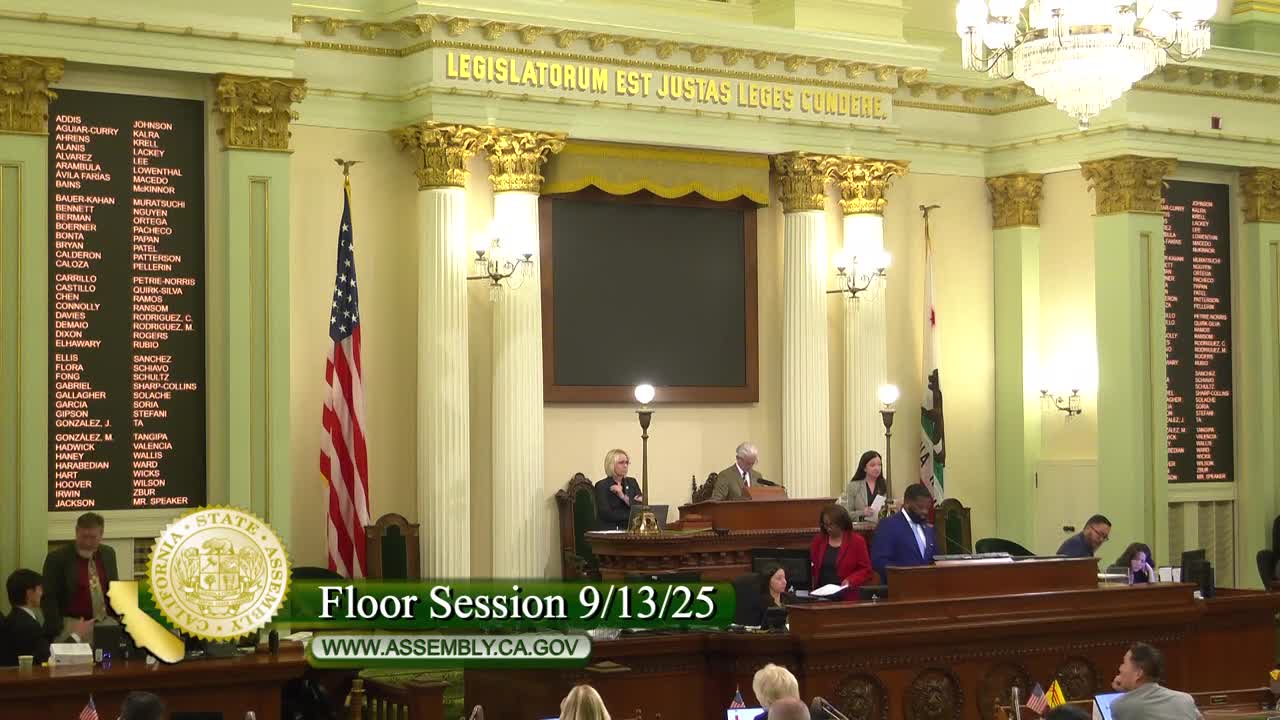 46SEC
Assembly Floor
 5MIN
Senate Floor
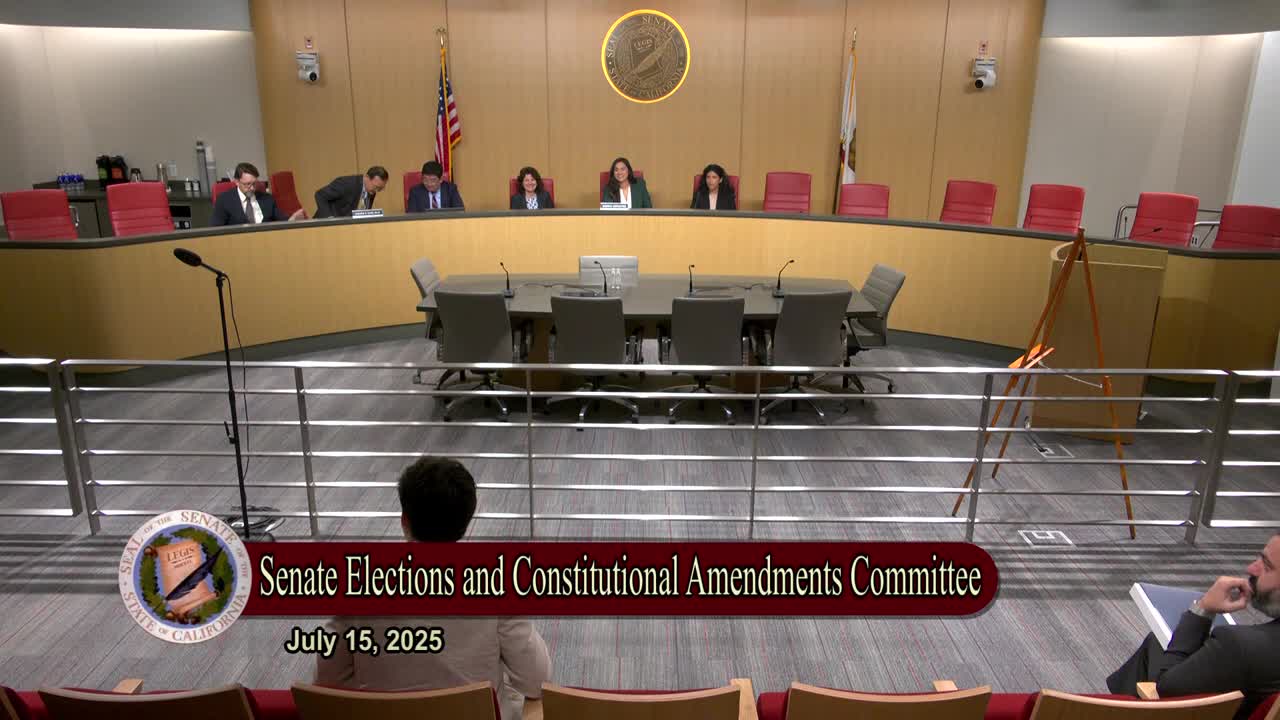 15MIN
Senate Standing Committee on Elections and Constitutional Amendments
 20MIN
Senate Standing Committee on Local Government
 6MIN
Assembly Floor
 9MIN
Assembly Standing Committee on Elections
Bill Author

Bill Co-Author(s):