AB 706: Forest Organic Residue, Energy, and Safety Transformation (FOREST) and Wildfire Prevention Fund Act.
- Session Year: 2025-2026
- House: Assembly
- Latest Version Date: 2026-09-30
Current Status:
Passed
(2026-09-30: Chaptered by Secretary of State - Chapter 869, Statutes of 2026.)
Introduced
In Committee
Awaiting First Chamber Vote
Passed First Chamber
In Committee
Awaiting Second Chamber Vote
Passed Second Chamber
Enacted
Existing law establishes in the Natural Resources Agency the Department of Forestry and Fire Protection (CAL-FIRE) and makes CAL-FIRE responsible for, among other things, fire protection and prevention, as provided. Existing law establishes the State Board of Forestry and Fire Protection in CAL-FIRE to represent the states interest in the acquisition and management of state forests and requires the board to maintain an adequate forest policy. Former Governor Edmund G. Brown, Jr., issued a proclamation of a state of emergency on October 30, 2015, that required CAL-FIRE, the Natural Resources Agency, the Department of Transportation, and the State Energy Resources Conservation and Development Commission (Energy Commission), among other things, to identify areas of the state that represent high hazard zones for wildfire and falling trees, known as Tier 1 and Tier 2 high hazard zones.
Existing law creates the Timber Regulation and Forest Restoration Fund (Timber Fund) in the State Treasury and imposes an assessment on the purchase of a lumber product or an engineered wood product for storage, use, or other consumption in this state, at the rate of 1% of the sales price, for deposit into the Timber Fund. Existing law requires that moneys deposited in the Timber Fund, upon appropriation by the Legislature, only be expended for specified purposes, including, among other things, as a loan to the Department of Fish and Wildlife for activities to address environmental damage occurring on forest lands resulting from marijuana cultivation. Existing law specifies the funding priorities of the Timber Fund.
Under existing law, the Public Utilities Commission (PUC) has regulatory authority over public utilities, including electrical corporations. The California Renewables Portfolio Standard Program requires every electrical corporation to file with the PUC a standard tariff for electricity generated by an electric generation facility, as defined, that qualifies for the tariff, is owned and operated by a retail customer of the electrical corporation, and is located within the service territory of, and developed to sell electricity to, the electrical corporation.
This bill would, upon appropriation by the Legislature, make moneys from the Timber Fund or from the Greenhouse Gas Reduction Fund available to the state board to establish and implement the Forest Organic Residue Energy and Safety Transformation (FOREST) program in order to maintain and expand biomass power generation in the state, to revitalize idle facilities for biomass power generation, and to support biomass power generation facilities by creating additional capacity for power generation or feedstock utilization in strategically located regions of the state. The bill would make a facilitys electrical generation eligible for reimbursement at an incentive rate determined by the state board if, among other things, the facility uses forest biomass waste, as defined, to generate electricity and the electricity is sold to specified retail sellers. The bill would require, among other things, that no less than 60% of the feedstock used by a facility originate from Tier 1 and Tier 2 high hazard zones, as defined, and would require the facility to be located in specified counties or meet specified emission limits. The bill would create an application process for an operator of a facility to seek this reimbursement that also requires the operator to demonstrate the facility is certified by the Energy Commission as an eligible renewable energy resource for purposes of the California Renewable Portfolio Standards Program, as provided, and would require the state board to adopt regulations to implement the FOREST program, as provided.
This bill would establish the FOREST and Wildfire Prevention Fund (FOREST Fund) in the State Treasury, and would make moneys in the FOREST Fund available, upon appropriation, to the Natural Resources Agency for the FOREST program, as specified. The bill would repeal the authorization to loan moneys in the Timber Fund for addressing marijuana cultivation damage, as described above, and would instead, in the same funding priority, authorize the Timber Fund to be expended to support the FOREST Fund and FOREST program, as specified. The bill would also specify certain procedures regarding the funding priorities of the Timber Fund so that each purpose identified in a higher priority is funded before a lower priority, as specified.
This bill would incorporate additional changes to Sections 4629.6 and 4629.8 of the Public Resources Code proposed by AB 2494 to be operative only if this bill and AB 2494 are enacted and this bill is enacted last.
Existing law establishes in the Natural Resources Agency the Department of Forestry and Fire Protection (CAL-FIRE) and makes CAL-FIRE responsible for, among other things, fire protection and prevention, as provided. Existing law establishes the State Board of Forestry and Fire Protection in CAL-FIRE to represent the states interest in the acquisition and management of state forests and requires the board to maintain an adequate forest policy. Former Governor Edmund G. Brown, Jr., issued a proclamation of a state of emergency on October 30, 2015, that required CAL-FIRE, the Natural Resources Agency, the Department of Transportation, and the State Energy Resources Conservation and Development Commission (Energy Commission), among other things, to identify areas of the state that represent high hazard zones for wildfire and falling trees, known as Tier 1 and Tier 2 high hazard zones.
Existing law creates the Timber Regulation and Forest Restoration Fund (Timber Fund) in the State Treasury and imposes an assessment on the purchase of a lumber product or an engineered wood product for storage, use, or other consumption in this state, at the rate of 1% of the sales price, for deposit into the Timber Fund. Existing law requires that moneys deposited in the Timber Fund, upon appropriation by the Legislature, only be expended for specified purposes, including, among other things, as a loan to the Department of Fish and Wildlife for activities to address environmental damage occurring on forest lands resulting from marijuana cultivation. Existing law specifies the funding priorities of the Timber Fund.
Under existing law, the Public Utilities Commission (PUC) has regulatory authority over public utilities, including electrical corporations. The California Renewables Portfolio Standard Program requires every electrical corporation to file with the PUC a standard tariff for electricity generated by an electric generation facility, as defined, that qualifies for the tariff, is owned and operated by a retail customer of the electrical corporation, and is located within the service territory of, and developed to sell electricity to, the electrical corporation.
This bill would, upon appropriation by the Legislature, make moneys from the Timber Regulation and Forest Restoration Fund or from the Greenhouse Gas Reduction Fund available to the state board to establish and implement the Forest Organic Residue Energy and Safety Transformation (FOREST) program in order to maintain and expand biomass power generation in the state, to revitalize idle facilities for biomass power generation, and to support biomass power generation facilities by creating additional capacity for power generation or feedstock utilization in strategically located regions of the state. The bill would make a facilitys solid fuel biomass electrical generation eligible for reimbursement at an incentive rate determined by the state board if, among other things, the facility uses solid fuel biomass or forest biomass waste, as defined, to generate electricity and the electricity is sold to specified retail sellers. The bill would require, among other things, that no less than 60% of the feedstock used by a facility originate from Tier 1 and Tier 2 high hazard zones, as defined. defined, and would require the facility to be located in specified counties or meet specified emission limits. The bill would create an application process for an operator of a facility to seek this reimbursement that also requires the operator to demonstrate the facility is certified by the Energy Commission as an eligible renewable energy resource for purposes of the California Renewable Portfolio Standards Program, as provided, and would require the state board to adopt regulations to implement the FOREST program, as provided.
This bill would establish the FOREST and Wildfire Prevention Fund (FOREST Fund) in the State Treasury, and would make moneys in the fund FOREST Fund available, upon appropriation, to the Natural Resources Agency for the FOREST program, as specified. The bill would repeal the authorization to loan moneys in the Timber Fund for addressing marijuana cultivation damage, as described above, and would instead, in the same funding priority, authorize the Timber Fund to be expended to support the FOREST Fund and FOREST program, as specified. The bill would also specify certain procedures regarding the funding priorities of the Timber Fund so that each purpose identified in a higher priority is funded before a lower priority, as specified.
Existing law establishes in the Natural Resources Agency the Department of Forestry and Fire Protection (CAL FIRE), (CAL-FIRE) and makes CAL FIRE CAL-FIRE responsible for, among other things, fire protection and prevention, as provided. Existing law establishes the State Board of Forestry and Fire Protection in CAL FIRE CAL-FIRE to represent the states interest in the acquisition and management of state forests and requires the board to maintain an adequate forest policy. Former Governor Edmund G. Brown, Jr., issued Executive Order No. B-52-18 that, among other things, established a Forest Management Task Force, now known as the Wildfire and Forest Resilience Task Force, involving specified state agencies to create the action plan for wildfire and forest resilience. The executive order also established a Joint Institute for Wood Products Innovation, to be located within the state board. a proclamation of a state of emergency on October 30, 2015, that required CAL-FIRE, the Natural Resources Agency, the Department of Transportation, and the State Energy Resources Conservation and Development Commission (Energy Commission), among other things, to identify areas of the state that represent high hazard zones for wildfire and falling trees, known as Tier 1 and Tier 2 high hazard zones.
Under existing law, the Public Utilities Commission (PUC) has regulatory authority over public utilities, including electrical corporations. The California Renewables Portfolio Standard Program requires every electrical corporation to file with the PUC a standard tariff for electricity generated by an electric generation facility, as defined, that qualifies for the tariff, is owned and operated by a retail customer of the electrical corporation, and is located within the service territory of, and developed to sell electricity to, the electrical corporation. The PUC refers to this requirement as the renewable feed-in tariff. The renewable feed-in tariff law, in part, requires the PUC to direct the electrical corporations, collectively, to procure at least 250 megawatts of cumulative rated generating capacity from developers of bioenergy projects that commence operation on or after June 1, 2013. Pursuant to this requirement, the PUC has established and revised the Bioenergy Market Adjusting Tariff (BioMAT) program. On March 18, 2016, the PUC issued Resolution E-4770 to order investor-owned utilities to each hold a solicitation for contract with facilities that can use biofuel from high hazard zones to address an Emergency Proclamation using the Bioenergy Renewable Auction Mechanism (BioRAM) program.
This bill would, upon appropriation by the Legislature, make moneys from the Timber Regulation and Forest Restoration Fund or from the Greenhouse Gas Reduction Fund available to the state board to establish the Forest Organic Residue Energy and Safety Transformation (FOREST) program in order to maintain and expand biomass power generation in the state, to revitalize idle facilities for biomass power generation, and to support biomass power generation facilities by creating additional capacity for power generation or feedstock utilization in strategically located regions of the state. The bill would make a facilitys solid fuel biomass electrical generation eligible for reimbursement at an incentive rate determined by the state board if, among other things, the facility uses solid fuel biomass or forest biomass waste, as defined, to generate electricity. electricity and the electricity is sold to specified retail sellers. The bill would require, among other things, that no less than 60% of the feedstock used by a facility originate from Tier 1 and Tier 2 high hazard zones, as defined. The bill would create an application process for an operator of a facility to seek this reimbursement that also requires the operator to demonstrate the facility is certified by the Energy Commission as an eligible renewable energy resource for purposes of the California Renewable Portfolio Standards Program, as provided, and would require the state board to adopt regulations to implement the FOREST program, as provided.
This bill would also establish the fire fuel reduction program to support sufficient procurement, transport, and beneficial use of forest biomass waste to reduce fuel for wildfires by up to 15,000,000 bone-dry tons of forest biomass waste per year. The bill would establish the FOREST and Wildfire Prevention Fund in the State Treasury, and would make moneys in the fund available, upon appropriation, to the Natural Resources Agency for this the FOREST program, as specified.
Existing law establishes in the Natural Resources Agency the Department of Forestry and Fire Protection (CAL FIRE), and makes CAL FIRE responsible for, among other things, fire protection and prevention, as provided. Existing law establishes the State Board of Forestry and Fire Protection in CAL FIRE to represent the states interest in the acquisition and management of state forests and requires the board to maintain an adequate forest policy. The former Governor, Former Governor Edmund G. Brown, Jr., issued Executive Order No. B-52-18 that, among other things, established a Forest Management Task Force, now known as the Wildfire and Forest Resilience Task Force, involving specified state agencies to create the action plan for wildfire and forest resilience. The executive order also established a Joint Institute for Wood Products Innovation, to be located within the state board.
Under existing law, the Public Utilities Commission (PUC) has regulatory authority over public utilities, including electrical corporations. The California Renewables Portfolio Standard Program requires every electrical corporation to file with the PUC a standard tariff for electricity generated by an electric generation facility, as defined, that qualifies for the tariff, is owned and operated by a retail customer of the electrical corporation, and is located within the service territory of, and developed to sell electricity to, the electrical corporation. The PUC refers to this requirement as the renewable feed-in tariff. The renewable feed-in tariff law, in part, requires the PUC to direct the electrical corporations, collectively, to procure at least 250 megawatts of cumulative rated generating capacity from developers of bioenergy projects that commence operation on or after June 1, 2013. Pursuant to this requirement, the PUC has established and revised the Bioenergy Market Adjusting Tariff (BioMAT) program. On March 18, 2016, the PUC issued Resolution E-4770 to order investor-owned utilities to each hold a solicitation for contract with facilities that can use biofuel from high hazard zones to address an Emergency Proclamation using the Bioenergy Renewable Auction Mechanism (BioRAM) program.
This bill would, upon appropriation by the Legislature, make moneys from the Timber Regulation and Forest Restoration Fund or from the Greenhouse Gas Reduction Fund available to the state board to establish the Forest Organic Residue Energy and Safety Transformation (FOREST) program in order to maintain and expand biomass power generation in the state, to revitalize idle facilities for biomass power generation, and to support biomass power generation facilities by creating additional capacity for power generation or feedstock utilization in strategically located regions of the state. The bill would make a facilitys solid fuel biomass electrical generation eligible for reimbursement at an incentive rate determined by the state board if, among other things, the facility uses solid fuel biomass or forest biomass waste, as defined, to generate electricity. The bill would create an application process for this reimbursement and would require the state board to adopt regulations to implement the FOREST program, as provided.
This bill would also establish the fire fuel reduction program to support sufficient procurement, transport, and beneficial use of forest biomass waste to reduce fuel for wildfires by up to 15,000,000 bone-dry tons of forest biomass waste per year. The bill would establish the FOREST and Wildfire Prevention Fund in the State Treasury, and would continuously appropriate the fund make moneys in the fund available, upon appropriation, to the Natural Resources Agency for this program, as specified. By continuously appropriating moneys in the fund to the agency, the bill would make an appropriation. The bill would require the fire fuel reduction program to grant funding priority to BioRAM and BioMAT fleets in operation on or before January 1, 2031.
Existing law establishes in the Natural Resources Agency the Department of Forestry and Fire Protection (CAL FIRE), and requires makes CAL FIRE to be responsible for, among other things, fire protection and prevention, as provided. Existing law establishes the State Board of Forestry and Fire Protection in CAL FIRE to represent the states interest in the acquisition and management of state forests and requires the board to maintain an adequate forest policy. The former Governor, Edmund G. Brown, Jr., issued Executive Order No. B-52-18 that, among other things, established a Forest Management Task Force, now known as the Wildfire and Forest Resilience Task Force, involving specified state agencies to create the action plan for wildfire and forest resilience. The executive order also established a Joint Institute for Wood Products Innovation, to be located within the state board.
Under existing law, the Public Utilities Commission (PUC) has regulatory authority over public utilities, including electrical corporations. The California Renewables Portfolio Standard Program requires every electrical corporation to file with the PUC a standard tariff for electricity generated by an electric generation facility, as defined, that qualifies for the tariff, is owned and operated by a retail customer of the electrical corporation, and is located within the service territory of, and developed to sell electricity to, the electrical corporation. The PUC refers to this requirement as the renewable feed-in tariff. The renewable feed-in tariff law, in part, requires the PUC to direct the electrical corporations, collectively, to procure at least 250 megawatts of cumulative rated generating capacity from developers of bioenergy projects that commence operation on or after June 1, 2013. Pursuant to this requirement, the PUC has established and revised the Bioenergy Market Adjusting Tariff (BioMAT) program. On March 18, 2016, the PUC issued Resolution E-4770 to order investor-owned utilities to each hold a solicitation for contract with facilities that can use biofuel from high hazard zones to address an Emergency Proclamation using the Bioenergy Renewable Auction Mechanism (BioRAM) program.
This bill would establish the fire fuel reduction program to support sufficient procurement, transport, and beneficial use of forest biomass waste to reduce fuel for wildfires by up to 15,000,000 bone-dry tons of forest biomass waste per year. The bill would establish the FOREST and Wildfire Prevention Fund in the State Treasury, and would continuously appropriate the fund to the Natural Resources Agency to reduce organic fuel sources that increase fire risk by providing funding for the fire fuel reduction procurement program, which the bill would also establish, to support sufficient procurement, transport, and beneficial use of forest biomass waste that reduces fuel for wildfires, as specified. for this program, as specified. By continuously appropriating moneys in the fund to the agency, the bill would make an appropriation. The bill would require the fire fuel reduction program to grant funding priority to BioRAM, as defined, and BioMAT, as defined, fleets, BioRAM and BioMAT fleets in operation on or before January 1, 2031.
Existing law establishes in the Natural Resources Agency the Department of Forestry and Fire Protection (CAL FIRE), and requires CAL FIRE to be responsible for, among other things, fire protection and prevention, as provided. Existing law establishes the State Board of Forestry and Fire Protection in CAL FIRE to represent the states interest in the acquisition and management of state forests and requires the board to maintain an adequate forest policy. The former Governor, Edmund G. Brown, Jr., issued Executive Order No. B-52-18 that, among other things, established a Forest Management Task Force, now known as the Wildfire and Forest Resilience Task Force, involving specified state agencies to create the action plan for wildfire and forest resilience. The executive order also established a Joint Institute for Wood Products Innovation, to be located within the state board.
Under existing law, the Public Utilities Commission (PUC) has regulatory authority over public utilities, including electrical corporations. The California Renewables Portfolio Standard Program requires every electrical corporation to file with the PUC a standard tariff for electricity generated by an electric generation facility, as defined, that qualifies for the tariff, is owned and operated by a retail customer of the electrical corporation, and is located within the service territory of, and developed to sell electricity to, the electrical corporation. The PUC refers to this requirement as the renewable feed-in tariff. The renewable feed-in tariff law, in part, requires the PUC to direct the electrical corporations, collectively, to procure at least 250 megawatts of cumulative rated generating capacity from developers of bioenergy projects that commence operation on or after June 1, 2013. Pursuant to this requirement, the PUC has established and revised the Bioenergy Market Adjusting Tariff (BioMAT) program. On March 18, 2016, the PUC issued Resolution E-4770 to order investor-owned utilities to each hold a solicitation for contract with facilities that can use biofuel from high hazard zones to address an Emergency Proclamation using the Bioenergy Renewable Auction Mechanism (BioRAM) program.
This bill would establish the FOREST and Wildfire Prevention Fund in the State Treasury, and would continuously appropriate the fund to the Natural Resources Agency to reduce organic fuel sources that increase fire risk by providing funding for the fire fuel reduction procurement program, which the bill would also establish, to support sufficient biomass procurement, transport, and beneficial use procurement, transport, and beneficial use of forest biomass waste that reduces fuel for wildfires, as specified. By continuously appropriating moneys in the fund to the agency, the bill would make an appropriation. The bill would require the fire fuel reduction program to grant funding priority to BioRAM, as defined, and BioMAT, as defined, fleets, in operation on or before January 1, 2031.
Existing law establishes in the Natural Resources Agency the Department of Forestry and Fire Protection (CAL FIRE), and requires CAL FIRE to be responsible for, among other things, fire protection and prevention, as provided. Existing law establishes the State Board of Forestry and Fire Protection in CAL FIRE to represent the states interest in the acquisition and management of state forests and requires the board to maintain an adequate forest policy. The former Governor, Edmund G. Brown, Jr., issued Executive Order No. B-52-18 that, among other things, established a Forest Management Task Force, now known as the Wildfire and Forest Resilience Task Force, involving specified state agencies to create the action plan for wildfire and forest resilience. The executive order also established a Joint Institute for Wood Products Innovation, to be located within the state board.
Under existing law, the Public Utilities Commission (PUC) has regulatory authority over public utilities, including electrical corporations. The California Renewables Portfolio Standard Program requires every electrical corporation to file with the PUC a standard tariff for electricity generated by an electric generation facility, as defined, that qualifies for the tariff, is owned and operated by a retail customer of the electrical corporation, and is located within the service territory of, and developed to sell electricity to, the electrical corporation. The PUC refers to this requirement as the renewable feed-in tariff. The renewable feed-in tariff law, in part, requires the PUC to direct the electrical corporations, collectively, to procure at least 250 megawatts of cumulative rated generating capacity from developers of bioenergy projects that commence operation on or after June 1, 2013. Pursuant to this requirement, the PUC has established and revised the Bioenergy Market Adjusting Tariff (BioMAT) program. On March 18, 2016, the PUC issued Resolution E-4770 to order investor-owned utilities to each hold a solicitation for contract with facilities that can use biofuel from high hazard zones to address an Emergency Proclamation using the Bioenergy Renewable Auction Mechanism (BioRAM) program.
This bill would establish the FOREST and Wildfire Prevention Fund in the State Treasury, and would continuously appropriate the fund to the Natural Resources Agency to reduce organic fuel sources that increase fire risk by providing funding for the fire fuel reduction procurement program, which the bill would also establish, to support sufficient biomass procurement procurement, transport, and beneficial use that reduces fuel for wildfires, as specified. By continuously appropriating moneys in the fund to the agency, the bill would make an appropriation. The bill would require the fire fuel reduction program to grant procurement funding priority to BioRAM, as defined, and BioMAT, as defined, fleets, in existence operation on or before January 1, 2026. 2031.
Existing law establishes in the Natural Resources Agency the Department of Forestry and Fire Protection (CAL FIRE), and requires CAL FIRE to be responsible for, among other things, fire protection and prevention, as provided. Existing law establishes the State Board of Forestry and Fire Protection in CAL FIRE to represent the states interest in the acquisition and management of state forests and requires the board to maintain an adequate forest policy. The former Governor, Edmund G. Brown, Jr., issued Executive Order No. B-52-18 that, among other things, established a Forest Management Task Force, now known as the Wildfire and Forest Resilience Task Force, involving specified state agencies to create the action plan for wildfire and forest resilience. The executive order also established a Joint Institute for Wood Products Innovation, to be located within the state board.
Under existing law, the Public Utilities Commission (PUC) has regulatory authority over public utilities, including electrical corporations. The California Renewables Portfolio Standard Program requires every electrical corporation to file with the PUC a standard tariff for electricity generated by an electric generation facility, as defined, that qualifies for the tariff, is owned and operated by a retail customer of the electrical corporation, and is located within the service territory of, and developed to sell electricity to, the electrical corporation. The PUC refers to this requirement as the renewable feed-in tariff. The renewable feed-in tariff law, in part, requires the PUC to direct the electrical corporations, collectively, to procure at least 250 megawatts of cumulative rated generating capacity from developers of bioenergy projects that commence operation on or after June 1, 2013. Pursuant to this requirement, the PUC has established and revised the Bioenergy Market Adjusting Tariff (BioMAT) program. On March 18, 2016, the PUC issued Resolution E-4770 to order investor-owned utilities to each hold a solicitation for contract with facilities that can use biofuel from high hazard zones to address an Emergency Proclamation using the Bioenergy Renewable Auction Mechanism (BioRAM) program.
This bill would establish the FOREST and Wildfire Prevention Fund in the State Treasury, and would continuously appropriate the fund to the Natural Resources Agency to reduce organic fuel sources that increase fire risk by providing funding for the fire fuel reduction procurement program, which the bill would also establish, to support sufficient biomass procurement that reduces fuel for wildfires, as specified. By continuously appropriating moneys in the fund to the agency, the bill would make an appropriation. The bill would require the fire fuel reduction program to grant procurement priority to BioRAM, as defined, and BioMAT, as defined, fleets, in existence on or before January 1, 2026.
Existing law requires an airport that is not open to the general public to be marked, as required by the Department of Transportation, with letters or symbols selected by the department to designate that the airport is not open to the general public.This bill would make a nonsubstantive change to the provision defining airport for that purpose.Existing law requires an airport that is not open to the general public to be marked, as required by the Department of Transportation, with letters or symbols selected by the department to designate that the airport is not open to the general public.
This bill would make a nonsubstantive change to the provision defining airport for that purpose.
The Legislature finds and declares all of the following:
(a)Forest waste has accumulated dramatically across California over the last many years. The State Energy Resources Conservation and Development Commission estimates California has 47,000,000 bone-dry tons of biomass resource potential.
(b)Since Governor Edmund G. Brown, Jr., issued Executive Order No. B-52-18 on May 10, 2018, all partners, including federal, state, tribal entities, and nongovernmental organizations, have worked diligently to attempt to treat 1,000,000 acres annually to ameliorate the wildfire crisis.
(c)The Wildfire and Forest Resilience Task Force reports that as of at least 2023, the state has not yet met that goal, indicating that 727,269 acres are treated across the state.
(d)Wildfire impacts of the last several years require California to make forest recovery efforts for millions of acres of forest.
(e)According to the research of the State Air Resources Board and the United States Forest Service, wildfires release vast amounts of carbon dioxide, methane, and black carbon into the atmosphere that negate the benefits of renewable energy adoption and emissions regulations.
(f)The destruction of millions of acres of forest lands depletes natural carbon sinks, reducing the states ability to sequester future emissions.
(g)Without proactive forest management strategies, including fuel reduction and biomass utilization, wildfires will continue to erode Californias climate gains.
(h)The Joint Institute for Wood Products Innovation, an advisory committee to the State Board of Forestry and Fire Protection, reports that meeting the 1,000,000-acre treatment goal will require removal and subsequent disposal of an estimated 5,000,000 to 15,000,000 bone-dry tons of dead forest biomass waste annually from a range of vegetation management projects for forest restoration and identifies a conservative estimate that since 2018, at least 1,000,000 tons of material is stored on the landscape, with a significant amount of that accumulation accessible for removal and disposal.
(i)A report published by Bain and Company in collaboration with The Nature Conservancy, entitled Accelerating Forest Restoration: Stimulating a Forest-Restoration Economy and Rebuilding Resilience in Californias Fire-Adapted Forests concluded that the expanded use of existing technologies, including bioenergy and sawmills, offers the most promising means of accelerating forest restoration, in addition to forest waste materials that need to be disposed of from wildfire scars to support resiliency.
(j)The current Bioenergy Renewable Auction Mechanism (BioRAM) procurement, as stated by the Public Utilities Commission, is currently allocated to all customers given that there are broad social benefits that are realized from supporting wildfire mitigation and the limited energy procurement standards of the program have been or are nearly fully subscribed.
(k)Senate Bill 1122 of the 201112 Regular Session of the Legislature (Chapter 612 of the Statutes of 2012), mandates the development of 250 megawatts (MW) of small-scale bioenergy projects using organic waste, including at least 50 MW from forest waste removed for wildfire mitigation or restoration. Very few of these required megawatts are currently in operation. Despite this shortfall, the Public Utilities Commission ended the Bioenergy Market Adjusting Tariff (BioMAT) program that was established to meet the requirements of Senate Bill 1122 of the 201112 Regular Session of the Legislature (Chapter 612 of the Statutes of 2012) on December 31, 2025, stalling the development of new projects.
(l)To meet the 1,000,000-acre-per-year goal would require California to remove 5,000,000 to 15,000,000 bone-dry tons of forest biomass waste annually, enough for the procurement of between 625 MW to 1,875 MW of bioenergy annually.
(m)Given that only 135 MW of BioRAM and BioMAT plants are operational, California must procure an additional 1,740 MW of bioenergy to get to the point of 15,000,000 bone-dry tons of forest waste removal annually.
(n)Biomass is primarily managed through open pile burning that produces significantly more emissions than biomass energy facilities. Processing biomass in a cogeneration facility reduces particulate matter emissions by as much as 98 percent, nitrous oxide (NOx) emissions by as much as 54 percent, and carbon monoxide (CO) emissions by as much as 97 percent.
(o)A study entitled Up in smoke: Californias greenhouse gas reductions could be wiped out by 2020 wildfires found that wildfires in 2020 negated 18 years of greenhouse gas emissions reductions.
(p)Oversight of biomass plant emissions in California is conducted by local air pollution control districts and the United States Environmental Protection Agency, which reserve issuing authority for plant operating permits known as Title V Operating Permits as part of the 1990 amendments to the federal Clean Air Act (42 U.S.C. Sec. 7661 et seq.), which requires continuous emissions monitoring for ozone, CO, and NOx.
(q)Continuously monitoring these critical parameters ensures consistent and efficient combustion in the boilers and safe air quality levels.
(r)A recent report by the Clean Air Task Force found that bioenergy creates more jobs than other renewable resources and a higher proportion of those jobs are permanent and high-paying jobs.
SEC. 2.Section 4629.6 of the Public Resources Code is amended to read:4629.6.Moneys deposited in the fund shall, upon appropriation by the Legislature, only be expended for the following purposes:
(a)To reimburse the State Board of Equalization for its administrative costs associated with the administration, collection, audit, and issuance of refunds related to the lumber products and engineered wood assessment established pursuant to Section 4629.5.
(b)To pay refunds issued pursuant to Part 30 (commencing with Section 55001) of Division 2 of the Revenue and Taxation Code.
(c)To support the activities and costs of the department, the Department of Conservation, the Department of Fish and Wildlife, the State Water Resources Control Board, and regional water quality control boards associated with the review of projects or permits necessary to conduct timber operations. On or after July 1, 2013, except for fees applicable for fire prevention or protection within state responsibility area classified lands or timber yield assessments, no currently authorized or required fees shall be charged by the agencies listed in this subdivision for activities or costs associated with the review of a project, inspection and oversight of projects, and permits necessary to conduct timber operations of those departments and boards.
(d)For transfer to the departments Forest Improvement Program for forest resources improvement grants and projects administered by the department pursuant to Chapter 1 (commencing with Section 4790) and Chapter 2 (commencing with Section 4799.06) of Part 2.5.
(e)To fund existing restoration grant programs, with priority given to the Fisheries Restoration Grant Program administered by the Department of Fish and Wildlife and grant programs administered by state conservancies.
(f)To fund costs directly associated with only the administration, staffing, and creation of the FOREST Fund and FOREST Program as defined in Section 4773.1, not to exceed the fee revenue allocated for these purposes.
(g)To the department for fuel treatment grants and projects pursuant to authorities under the Wildland Fire Protection and Resources Management Act of 1978 (Article 1 (commencing with Section 4461) of Chapter 7).
(h)To the department to provide grants to local agencies responsible for fire protection, qualified nonprofits, recognized tribes, local and state governments, and resources conservation districts, undertaken on a state responsibility area (SRA) or on wildlands not in an SRA that pose a threat to the SRA, to reduce the costs of wildland fire suppression, reduce greenhouse gas emissions, promote adaptation of forested landscapes to changing climate, improve forest health, and protect homes and communities.
(i)To the Natural Resources Agency to provide a reasonable per diem for attendance at a meeting of the advisory body for the states forest practice program by a member of the body who is not an employee of a government agency.
SEC. 2.5.Section 4629.6 of the Public Resources Code is amended to read:4629.6.Moneys deposited in the fund shall, upon appropriation by the Legislature, only be expended for the following purposes:
(a)To reimburse the State Board of Equalization for its administrative costs associated with the administration, collection, audit, and issuance of refunds related to the lumber products and engineered wood assessment established pursuant to Section 4629.5.
(b)To pay refunds issued pursuant to Part 30 (commencing with Section 55001) of Division 2 of the Revenue and Taxation Code.
(c)To support the activities and costs of the department, the Department of Conservation, the Department of Fish and Wildlife, the State Water Resources Control Board, and regional water quality control boards associated with the review of projects or permits necessary to conduct timber operations. On or after July 1, 2013, except for fees applicable for fire prevention or protection within state responsibility area classified lands or timber yield assessments, no currently authorized or required fees shall be charged by the agencies listed in this subdivision for activities or costs associated with the review of a project, inspection and oversight of projects, and permits necessary to conduct timber operations of those departments and boards.
(d)For transfer to the departments Forest Improvement Program for forest resources improvement grants and projects administered by the department pursuant to Chapter 1 (commencing with Section 4790) and Chapter 2 (commencing with Section 4799.06) of Part 2.5.
(e)To fund existing restoration grant programs, with priority given to the Fisheries Restoration Grant Program administered by the Department of Fish and Wildlife and grant programs administered by state conservancies.
(f)To fund costs directly associated with only the administration, staffing, and creation of the FOREST Fund and FOREST Program as defined in Section 4773.1, not to exceed the fee revenue allocated for these purposes.
(g)To support demonstration state forests, as a supplemental source, if necessary, to the moneys provided by the Forest Resources Improvement Fund, as established pursuant to Section 4799.13, as needed.
(h)To the department for fuel treatment grants and projects pursuant to authorities under the Wildland Fire Protection and Resources Management Act of 1978 (Article 1 (commencing with Section 4461) of Chapter 7).
(i)To the department to provide grants to local agencies responsible for fire protection, qualified nonprofits, recognized tribes, local and state governments, and resources conservation districts, undertaken on a state responsibility area (SRA) or on wildlands not in an SRA that pose a threat to the SRA, to reduce the costs of wildland fire suppression, reduce greenhouse gas emissions, promote adaptation of forested landscapes to changing climate, improve forest health, and protect homes and communities.
(j)To the Natural Resources Agency to provide a reasonable per diem for attendance at a meeting of the advisory body for the states forest practice program by a member of the body who is not an employee of a government agency.
SEC. 3.Section 4629.8 of the Public Resources Code is amended to read:4629.8.(a)Funds deposited in the fund shall be appropriated in accordance with the following priorities:
(1)First priority shall be for funding associated with the administration and delivery of responsibilities identified in subdivisions (a) to (c), inclusive, of Section 4629.6.
(2)Only after paragraph (1) is funded, the second priority shall be, if deposits are sufficient in future years to maintain the fund, by 2016, at a minimum reserve of four million dollars ($4,000,000), for use and appropriation by the Legislature in years during which revenues to the account are projected to fall short of the ongoing budget allocations for support of the activities identified in paragraph (1).
(3)Only after paragraphs (1) and (2) are funded, the third priority shall be in support of activities designated in subdivisions (d) to (f), inclusive, of Section 4629.6.
(4)Only after paragraphs (1) to (3), inclusive, are funded, the fourth priority shall be to support the activities designated in subdivisions (g) to (i), inclusive, of Section 4629.6.
(b)A purpose identified in a lower priority paragraph of subdivision (a) shall not receive an appropriation, allocation, transfer, encumbrance, or expenditure from the fund in a fiscal year unless each purpose identified in the higher priority paragraphs of subdivision (a) has first been funded for that fiscal year.
(c)Funds shall not be used to pay for or reimburse any requirements, including mitigation of a project proponent or applicant, as a condition of any permit.
SEC. 3.5.Section 4629.8 of the Public Resources Code is amended to read:4629.8.(a)Funds deposited in the fund shall be appropriated in accordance with the following priorities:
(1)First priority shall be for funding associated with the administration and delivery of responsibilities identified in subdivisions (a) to (c), inclusive, of Section 4629.6.
(2)Only after paragraph (1) is funded, the second priority shall be, if deposits are sufficient in future years to maintain the fund, by 2016, at a minimum reserve of four million dollars ($4,000,000), for use and appropriation by the Legislature in years during which revenues to the account are projected to fall short of the ongoing budget allocations for support of the activities identified in paragraph (1).
(3)Only after paragraphs (1) and (2) are funded, the third priority shall be in support of activities designated in subdivisions (d) to (f), inclusive, of Section 4629.6.
(4)Only after paragraphs (1) to (3), inclusive, are funded, the fourth priority shall be to support the activities designated in subdivisions (g) to (j), inclusive, of Section 4629.6.
(b)A purpose identified in a lower priority paragraph of subdivision (a) shall not receive an appropriation, allocation, transfer, encumbrance, or expenditure from the fund in a fiscal year unless each purpose identified in the higher priority paragraphs of subdivision (a) has first been funded for that fiscal year.
(c)Funds shall not be used to pay for or reimburse any requirements, including mitigation of a project proponent or applicant, as a condition of any permit.
SEC. 4.Article 12 (commencing with Section 4773) is added to Chapter 10 of Part 2 of Division 4 of the Public Resources Code, to read:12.Forest Organic Residue, Energy, and Safety Transformation (FOREST) and Wildfire Prevention Fund Act4773.(a)This article shall be known, and may be cited, as the Forest Organic Residue, Energy, and Safety Transformation and Wildfire Prevention Fund Act, or the FOREST and Wildfire Prevention Fund Act.
(b)The Legislature finds and declares that bioenergy is a renewable energy resource that provides baseload energy that enhances grid reliability while meeting the clean firm energy requirement of Public Utilities Commission Decision 21-06-035 (June 30, 2021), and that supporting new and existing biomass power generation resources in the state and revitalizing idle facilities by creating additional capacity for power generation and feedstock utilization in strategically located regions of the state will help the state to meet its goals to reduce greenhouse gas emissions, provide clean power, improve electrical grid resiliency, protect jobs, reduce the risk of wildfire, support forest recovery efforts, improve forest resiliency, and provide waste disposal benefits.
4773.1.For purposes of this article, the following definitions apply:
(a)Biomass means the materials described in subdivision (a) of Section 40106.
(b)Forest biomass waste means the byproducts of forest management for wildfire mitigation, wildfire prevention, forest resiliency, forest restoration, or the protection of public safety or infrastructure. Forest biomass waste does not include purpose-grown crops.
(c)FOREST fund means the FOREST and Wildfire Prevention Fund established in Section 4773.3.
(d)FOREST program means the Forest Organic Residue Energy and Safety Transformation program implemented by the board.
4773.2.(a)Upon appropriation by the Legislature, moneys from the Timber Regulation and Forest Restoration Fund, created by Section 4629.3, or from the Greenhouse Gas Reduction Fund, created by Section 16428.8 of the Government Code, shall be made available to the board to establish and implement the Forest Organic Residue Energy and Safety Transformation program in order to maintain and expand biomass power generation in the state, to revitalize idle facilities for biomass power generation, and to support biomass power generation facilities by creating additional capacity for power generation or feedstock utilization in strategically located regions of the state.
(b)A facilitys electrical generation is eligible for reimbursement under the FOREST program at the incentive rate determined pursuant to subdivision (c) if it satisfies all of the following requirements:
(1)(A)The facility uses feedstock that is forest biomass waste to generate electricity, pursuant to the requirements in subparagraphs (B) and (C).
(B)The facility shall use forest biomass waste that is a byproduct of sustainable forestry management, including, but not limited to, removal of dead and dying trees from Tier 1 and Tier 2 high hazard zones, as those terms are defined in Section 399.20.3 of the Public Utilities Code, and shall not use forest biomass waste from lands that are subject to the clearcut silvicultural prescription, as defined by the board.
(C)No less than 60 percent of the feedstock used by a facility shall originate from Tier 1 and Tier 2 high hazard zones, as those terms are defined in Section 399.20.3 of the Public Utilities Code.
(2)The electricity is generated on or after January 1, 2027.
(3)The electricity is generated within the state and sold to a retail seller, including a community choice aggregator, local publicly owned electric utility, electrical corporation, or electrical rural cooperative.
(4)The facility is located within the County of Alpine, Amador, Butte, Calaveras, Del Norte, El Dorado, Humboldt, Lake, Lassen, Mendocino, Modoc, Nevada, Placer, Plumas, Shasta, Sierra, Siskiyou, Sutter, Tehama, Trinity, Tuolumne, Yolo, or Yuba, or the facility meets emission limits equivalent to, or more stringent than, the applicable best available retrofit control technology, as determined by the local air pollution control district or air quality management district.
(c)(1)An operator of a facility may seek reimbursement by submitting an application to the board that demonstrates that the facility processes forest biomass waste to generate electricity and by submitting supporting documentation that demonstrates the facility is certified by the State Energy Resources Conservation and Development Commission as an eligible renewable energy resource for purposes of satisfying the renewable portfolio standard pursuant to Chapter 8.6 (commencing with Section 25740) of Division 15.
(2)An application shall include monthly invoices that document eligible electricity generation. The board shall review the submitted invoices and make monthly incentive payments to each applicant for the electricity generation that is eligible for reimbursement at the incentive rate. The board shall determine, maintain, and make publicly available the incentive rate for eligible electricity generation.
(3)(A)In prioritizing reimbursement for eligible applications pursuant to this section, the board shall maximize the disposition of forest biomass waste.
(B)The board, in consultation with the Department of Forestry and Fire Protection, shall ensure that an applicant receiving reimbursement pursuant to this section operates a facility that achieves a net reduction in short-lived climate pollutants.
(d)(1)Upon establishment of the FOREST program pursuant to subdivision (a), the board shall adopt regulations, as necessary, to implement the FOREST program.
(2)(A)The board may readopt any emergency regulation adopted pursuant to this section, as necessary, that is the same as or is substantially equivalent to an emergency regulation previously adopted pursuant to this section.
(B)Notwithstanding Chapter 3.5 (commencing with Section 11340) of Part 1 of Division 3 of Title 2 of the Government Code, any emergency regulation adopted or readopted pursuant to this section shall remain in effect until revised by the board.
(3)The adoption or readoption of a regulation pursuant to this section does not constitute a project for purposes of Division 13 (commencing with Section 21000).
4773.3.(a)The FOREST and Wildfire Prevention Fund is established in the State Treasury, and moneys in the fund shall be available, upon appropriation by the Legislature, to the Natural Resources Agency for the purpose identified in subdivision (b).
(b)The purpose of the FOREST fund is to reduce organic fuel sources that increase fire risk by providing funding for the FOREST program established pursuant to Section 4773.2.
4773.4.Ratepayer funds shall not be used to fund the FOREST fund.
SEC. 5.(a)Section 2.5 of this bill incorporates amendments to Section 4629.6 of the Public Resources Code proposed by both this bill and Assembly Bill 2494. That section of this bill shall only become operative if (1) both bills are enacted and become effective on or before January 1, 2027, (2) each bill amends Section 4629.6 of the Public Resources Code, and (3) this bill is enacted after Assembly Bill 2494, in which case Section 2 of this bill shall not become operative.
(b)Section 3.5 of this bill incorporates amendments to Section 4629.8 of the Public Resources Code proposed by both this bill and Assembly Bill 2494. That section of this bill shall only become operative if (1) both bills are enacted and become effective on or before January 1, 2027, (2) each bill amends Section 4629.8 of the Public Resources Code, and (3) this bill is enacted after Assembly Bill 2494, in which case Section 3 of this bill shall not become operative.
The Legislature finds and declares all of the following:
(a)Forest waste has accumulated dramatically across California over the last many years. The State Energy Resources Conservation and Development Commission estimates California has 47,000,000 bone-dry tons of biomass resource potential.
(b)Since Governor Edmund G. Brown, Jr., issued Executive Order No. B-52-18 on May 10, 2018, all partners, including federal, state, tribal entities, and nongovernmental organizations, have worked diligently to attempt to treat 1,000,000 acres annually to ameliorate the wildfire crisis.
(c)The Wildfire and Forest Resilience Task Force reports that as of at least 2023, the state has not yet met that goal, indicating that 727,269 acres are treated across the state.
(d)Wildfire impacts of the last several years require California to make forest recovery efforts for millions of acres of forest.
(e)According to the research of the State Air Resources Board and the United States Forest Service, wildfires release vast amounts of carbon dioxide, methane, and black carbon into the atmosphere that negate the benefits of renewable energy adoption and emissions regulations.
(f)The destruction of millions of acres of forest lands depletes natural carbon sinks, reducing the states ability to sequester future emissions.
(g)Without proactive forest management strategies, including fuel reduction and biomass utilization, wildfires will continue to erode Californias climate gains.
(h)The Joint Institute for Wood Products Innovation, an advisory committee to the State Board of Forestry and Fire Protection, reports that meeting the 1,000,000-acre treatment goal will require removal and subsequent disposal of an estimated 5,000,000 to 15,000,000 bone-dry tons of dead forest biomass waste annually from a range of vegetation management projects for forest restoration and identifies a conservative estimate that since 2018, at least 1,000,000 tons of material is stored on the landscape, with a significant amount of that accumulation accessible for removal and disposal.
(i)A report published by Bain and Company in collaboration with The Nature Conservancy, entitled Accelerating Forest Restoration: Stimulating a Forest-Restoration Economy and Rebuilding Resilience in Californias Fire-Adapted Forests concluded that the expanded use of existing technologies, including bioenergy and sawmills, offers the most promising means of accelerating forest restoration, in addition to forest waste materials that need to be disposed of from wildfire scars to support resiliency.
(j)The current Bioenergy Renewable Auction Mechanism (BioRAM) procurement, as stated by the Public Utilities Commission, is currently allocated to all customers given that there are broad social benefits that are realized from supporting wildfire mitigation and the limited energy procurement standards of the program have been or are nearly fully subscribed.
(k)Senate Bill 1122 of the 201112 Regular Session of the Legislature (Chapter 612 of the Statutes of 2012), mandates the development of 250 megawatts (MW) of small-scale bioenergy projects using organic waste, including at least 50 MW from forest waste removed for wildfire mitigation or restoration. Very few of these required megawatts are currently in operation. Despite this shortfall, the Public Utilities Commission ended the Bioenergy Market Adjusting Tariff (BioMAT) program that was established to meet the requirements of Senate Bill 1122 of the 201112 Regular Session of the Legislature (Chapter 612 of the Statutes of 2012) on December 31, 2025, stalling the development of new projects.
(l)To meet the 1,000,000-acre-per-year goal would require California to remove 5,000,000 to 15,000,000 bone-dry tons of forest biomass waste annually, enough for the procurement of between 625 MW to 1,875 MW of bioenergy annually.
(m)Given that only 135 MW of BioRAM and BioMAT plants are operational, California must procure an additional 1,740 MW of bioenergy to get to the point of 15,000,000 bone-dry tons of forest waste removal annually.
(n)Biomass is primarily managed through open pile burning that produces significantly more emissions than biomass energy facilities. Processing biomass in a cogeneration facility reduces particulate matter emissions by as much as 98 percent, nitrous oxide (NOx) emissions by as much as 54 percent, and carbon monoxide (CO) emissions by as much as 97 percent.
(o)A study entitled Up in smoke: Californias greenhouse gas reductions could be wiped out by 2020 wildfires found that wildfires in 2020 negated 18 years of greenhouse gas emissions reductions.
(p)Oversight of biomass plant emissions in California is conducted by local air pollution control districts and the United States Environmental Protection Agency, which reserve issuing authority for plant operating permits known as Title V Operating Permits as part of the 1990 amendments to the federal Clean Air Act (42 U.S.C. Sec. 7661 et seq.), which requires continuous emissions monitoring for ozone, CO, and NOx.
(q)Continuously monitoring these critical parameters ensures consistent and efficient combustion in the boilers and safe air quality levels.
(r)A recent report by the Clean Air Task Force found that bioenergy creates more jobs than other renewable resources and a higher proportion of those jobs are permanent and high-paying jobs.
SEC. 2.Section 4629.6 of the Public Resources Code is amended to read:4629.6.Moneys deposited in the fund shall, upon appropriation by the Legislature, only be expended for the following purposes:
(a)To reimburse the State Board of Equalization for its administrative costs associated with the administration, collection, audit, and issuance of refunds related to the lumber products and engineered wood assessment established pursuant to Section 4629.5.
(b)To pay refunds issued pursuant to Part 30 (commencing with Section 55001) of Division 2 of the Revenue and Taxation Code.
(c)To support the activities and costs of the department, the Department of Conservation, the Department of Fish and Wildlife, the State Water Resources Control Board, and regional water quality control boards associated with the review of projects or permits necessary to conduct timber operations. On or after July 1, 2013, except for fees applicable for fire prevention or protection within state responsibility area classified lands or timber yield assessments, no currently authorized or required fees shall be charged by the agencies listed in this subdivision for activities or costs associated with the review of a project, inspection and oversight of projects, and permits necessary to conduct timber operations of those departments and boards.
(d)For transfer to the departments Forest Improvement Program for forest resources improvement grants and projects administered by the department pursuant to Chapter 1 (commencing with Section 4790) and Chapter 2 (commencing with Section 4799.06) of Part 2.5.
(e)To fund existing restoration grant programs, with priority given to the Fisheries Restoration Grant Program administered by the Department of Fish and Wildlife and grant programs administered by state conservancies.
(f)To fund costs directly associated with only the administration, staffing, and creation of the FOREST Fund and FOREST Program as defined in Section 4773.1, not to exceed the fee revenue allocated for these purposes.
(g)To the department for fuel treatment grants and projects pursuant to authorities under the Wildland Fire Protection and Resources Management Act of 1978 (Article 1 (commencing with Section 4461) of Chapter 7).
(h)To the department to provide grants to local agencies responsible for fire protection, qualified nonprofits, recognized tribes, local and state governments, and resources conservation districts, undertaken on a state responsibility area (SRA) or on wildlands not in an SRA that pose a threat to the SRA, to reduce the costs of wildland fire suppression, reduce greenhouse gas emissions, promote adaptation of forested landscapes to changing climate, improve forest health, and protect homes and communities.
(i)To the Natural Resources Agency to provide a reasonable per diem for attendance at a meeting of the advisory body for the states forest practice program by a member of the body who is not an employee of a government agency.
SEC. 2.5.Section 4629.6 of the Public Resources Code is amended to read:4629.6.Moneys deposited in the fund shall, upon appropriation by the Legislature, only be expended for the following purposes:
(a)To reimburse the State Board of Equalization for its administrative costs associated with the administration, collection, audit, and issuance of refunds related to the lumber products and engineered wood assessment established pursuant to Section 4629.5.
(b)To pay refunds issued pursuant to Part 30 (commencing with Section 55001) of Division 2 of the Revenue and Taxation Code.
(c)To support the activities and costs of the department, the Department of Conservation, the Department of Fish and Wildlife, the State Water Resources Control Board, and regional water quality control boards associated with the review of projects or permits necessary to conduct timber operations. On or after July 1, 2013, except for fees applicable for fire prevention or protection within state responsibility area classified lands or timber yield assessments, no currently authorized or required fees shall be charged by the agencies listed in this subdivision for activities or costs associated with the review of a project, inspection and oversight of projects, and permits necessary to conduct timber operations of those departments and boards.
(d)For transfer to the departments Forest Improvement Program for forest resources improvement grants and projects administered by the department pursuant to Chapter 1 (commencing with Section 4790) and Chapter 2 (commencing with Section 4799.06) of Part 2.5.
(e)To fund existing restoration grant programs, with priority given to the Fisheries Restoration Grant Program administered by the Department of Fish and Wildlife and grant programs administered by state conservancies.
(f)(1)As a loan to the Department of Fish and Wildlife for activities to address environmental damage occurring on forest lands resulting from marijuana cultivation. Not more than five hundred thousand dollars ($500,000) may be loaned from the fund in a fiscal year pursuant to this paragraph. This paragraph shall become inoperative on July 1, 2017.(2)Any funds deposited into the fund pursuant to subdivision (d) or (f) of Section 12025 or subdivision (b), (c), (e), or (f) of Section 12025.1 of the Fish and Game Code shall be credited toward loan repayment.(3)Moneys from the General Fund shall not be used to repay a loan authorized pursuant to this subdivision.(f)To fund costs directly associated with only the administration, staffing, and creation of the FOREST Fund and FOREST Program as defined in Section 4773.1, not to exceed the fee revenue allocated for these purposes.
(g)To support demonstration state forests, as a supplemental source, if necessary, to the moneys provided by the Forest Resources Improvement Fund, as established pursuant to Section 4799.13, as needed.
(g)(h)To the department for fuel treatment grants and projects pursuant to authorities under the Wildland Fire Protection and Resources Management Act of 1978 (Article 1 (commencing with Section 4461) of Chapter 7).
(h)(i)To the department to provide grants to local agencies responsible for fire protection, qualified nonprofits, recognized tribes, local and state governments, and resources conservation districts, undertaken on a state responsibility area (SRA) or on wildlands not in an SRA that pose a threat to the SRA, to reduce the costs of wildland fire suppression, reduce greenhouse gas emissions, promote adaptation of forested landscapes to changing climate, improve forest health, and protect homes and communities.
(i)(j)To the Natural Resources Agency to provide a reasonable per diem for attendance at a meeting of the advisory body for the states forest practice program by a member of the body who is not an employee of a government agency.
SEC. 3.Section 4629.8 of the Public Resources Code is amended to read:4629.8.(a)Funds deposited in the fund shall be appropriated in accordance with the following priorities:
(1)First priority shall be for funding associated with the administration and delivery of responsibilities identified in subdivisions (a) to (c), inclusive, of Section 4629.6.
(2)Only after paragraph (1) is funded, the second priority shall be, if deposits are sufficient in future years to maintain the fund, by 2016, at a minimum reserve of four million dollars ($4,000,000), for use and appropriation by the Legislature in years during which revenues to the account are projected to fall short of the ongoing budget allocations for support of the activities identified in paragraph (1).
(3)Only after paragraphs (1) and (2) are funded, the third priority shall be in support of activities designated in subdivisions (d) to (f), inclusive, of Section 4629.6.
(4)Only after paragraphs (1) to (3), inclusive, are funded, the fourth priority shall be to support the activities designated in subdivisions (g) to (i), inclusive, of Section 4629.6.
(b)A purpose identified in a lower priority paragraph of subdivision (a) shall not receive an appropriation, allocation, transfer, encumbrance, or expenditure from the fund in a fiscal year unless each purpose identified in the higher priority paragraphs of subdivision (a) has first been funded for that fiscal year.
(c)Funds shall not be used to pay for or reimburse any requirements, including mitigation of a project proponent or applicant, as a condition of any permit.
SEC. 3.5.Section 4629.8 of the Public Resources Code is amended to read:4629.8.(a)Funds deposited in the fund shall be appropriated in accordance with the following priorities:
(1)First priority shall be for funding associated with the administration and delivery of responsibilities identified in subdivisions (a) to (c), inclusive, of Section 4629.6.
(2)Only after paragraph (1) is funded, the second priority shall be, if deposits are sufficient in future years to maintain the fund, by 2016, at a minimum reserve of four million dollars ($4,000,000), for use and appropriation by the Legislature in years during which revenues to the account are projected to fall short of the ongoing budget allocations for support of the activities identified in paragraph (1).
(3)Only after paragraphs (1) and (2) are funded, the third priority shall be in support of activities designated in subdivisions (d) to (f), inclusive, of Section 4629.6.
(4)Only after paragraphs (1) to (3), inclusive, are funded, the fourth priority shall be to support the activities designated in subdivisions (g) to (i), (j), inclusive, of Section 4629.6.
(b)A purpose identified in a lower priority paragraph of subdivision (a) shall not receive an appropriation, allocation, transfer, encumbrance, or expenditure from the fund in a fiscal year unless each purpose identified in the higher priority paragraphs of subdivision (a) has first been funded for that fiscal year.
(b)(c)Funds shall not be used to pay for or reimburse any requirements, including mitigation of a project proponent or applicant, as a condition of any permit.
SEC. 4.Article 12 (commencing with Section 4773) is added to Chapter 10 of Part 2 of Division 4 of the Public Resources Code, to read:12.Forest Organic Residue, Energy, and Safety Transformation (FOREST) and Wildfire Prevention Fund Act4773.(a)This article shall be known, and may be cited, as the Forest Organic Residue, Energy, and Safety Transformation and Wildfire Prevention Fund Act, or the FOREST and Wildfire Prevention Fund Act.
(b)The Legislature finds and declares that bioenergy is a renewable energy resource that provides baseload energy that enhances grid reliability while meeting the clean firm energy requirement of Public Utilities Commission Decision 21-06-035 (June 30, 2021), and that supporting new and existing biomass power generation resources in the state and revitalizing idle facilities by creating additional capacity for power generation and feedstock utilization in strategically located regions of the state will help the state to meet its goals to reduce greenhouse gas emissions, provide clean power, improve electrical grid resiliency, protect jobs, reduce the risk of wildfire, support forest recovery efforts, improve forest resiliency, and provide waste disposal benefits.
4773.1.For purposes of this article, the following definitions apply:
(a)Biomass means the materials described in subdivision (a) of Section 40106.
(b)Forest biomass waste means the byproducts of forest management for wildfire mitigation, wildfire prevention, forest resiliency, forest restoration, or the protection of public safety or infrastructure. Forest biomass waste does not include purpose-grown crops.
(c)FOREST fund means the FOREST and Wildfire Prevention Fund established in Section 4773.3.
(d)FOREST program means the Forest Organic Residue Energy and Safety Transformation program implemented by the board.
4773.2.(a)Upon appropriation by the Legislature, moneys from the Timber Regulation and Forest Restoration Fund, created by Section 4629.3, or from the Greenhouse Gas Reduction Fund, created by Section 16428.8 of the Government Code, shall be made available to the board to establish and implement the Forest Organic Residue Energy and Safety Transformation program in order to maintain and expand biomass power generation in the state, to revitalize idle facilities for biomass power generation, and to support biomass power generation facilities by creating additional capacity for power generation or feedstock utilization in strategically located regions of the state.
(b)A facilitys electrical generation is eligible for reimbursement under the FOREST program at the incentive rate determined pursuant to subdivision (c) if it satisfies all of the following requirements:
(1)(A)The facility uses feedstock that is forest biomass waste to generate electricity, pursuant to the requirements in subparagraphs (B) and (C).
(B)The facility shall use forest biomass waste that is a byproduct of sustainable forestry management, including, but not limited to, removal of dead and dying trees from Tier 1 and Tier 2 high hazard zones, as those terms are defined in Section 399.20.3 of the Public Utilities Code, and shall not use forest biomass waste from lands that are subject to the clearcut silvicultural prescription, as defined by the board.
(C)No less than 60 percent of the feedstock used by a facility shall originate from Tier 1 and Tier 2 high hazard zones, as those terms are defined in Section 399.20.3 of the Public Utilities Code.
(2)The electricity is generated on or after January 1, 2027.
(3)The electricity is generated within the state and sold to a retail seller, including a community choice aggregator, local publicly owned electric utility, electrical corporation, or electrical rural cooperative.
(4)The facility is located within the County of Alpine, Amador, Butte, Calaveras, Del Norte, El Dorado, Humboldt, Lake, Lassen, Mendocino, Modoc, Nevada, Placer, Plumas, Shasta, Sierra, Siskiyou, Sutter, Tehama, Trinity, Tuolumne, Yolo, or Yuba, or the facility meets emission limits equivalent to, or more stringent than, the applicable best available retrofit control technology, as determined by the local air pollution control district or air quality management district.
(c)(1)An operator of a facility may seek reimbursement by submitting an application to the board that demonstrates that the facility processes forest biomass waste to generate electricity and by submitting supporting documentation that demonstrates the facility is certified by the State Energy Resources Conservation and Development Commission as an eligible renewable energy resource for purposes of satisfying the renewable portfolio standard pursuant to Chapter 8.6 (commencing with Section 25740) of Division 15.
(2)An application shall include monthly invoices that document eligible electricity generation. The board shall review the submitted invoices and make monthly incentive payments to each applicant for the electricity generation that is eligible for reimbursement at the incentive rate. The board shall determine, maintain, and make publicly available the incentive rate for eligible electricity generation.
(3)(A)In prioritizing reimbursement for eligible applications pursuant to this section, the board shall maximize the disposition of forest biomass waste.
(B)The board, in consultation with the Department of Forestry and Fire Protection, shall ensure that an applicant receiving reimbursement pursuant to this section operates a facility that achieves a net reduction in short-lived climate pollutants.
(d)(1)Upon establishment of the FOREST program pursuant to subdivision (a), the board shall adopt regulations, as necessary, to implement the FOREST program.
(2)(A)The board may readopt any emergency regulation adopted pursuant to this section, as necessary, that is the same as or is substantially equivalent to an emergency regulation previously adopted pursuant to this section.
(B)Notwithstanding Chapter 3.5 (commencing with Section 11340) of Part 1 of Division 3 of Title 2 of the Government Code, any emergency regulation adopted or readopted pursuant to this section shall remain in effect until revised by the board.
(3)The adoption or readoption of a regulation pursuant to this section does not constitute a project for purposes of Division 13 (commencing with Section 21000).
4773.3.(a)The FOREST and Wildfire Prevention Fund is established in the State Treasury, and moneys in the fund shall be available, upon appropriation by the Legislature, to the Natural Resources Agency for the purpose identified in subdivision (b).
(b)The purpose of the FOREST fund is to reduce organic fuel sources that increase fire risk by providing funding for the FOREST program established pursuant to Section 4773.2.
4773.4.Ratepayer funds shall not be used to fund the FOREST fund.
SEC. 5.(a)Section 2.5 of this bill incorporates amendments to Section 4629.6 of the Public Resources Code proposed by both this bill and Assembly Bill 2494. That section of this bill shall only become operative if (1) both bills are enacted and become effective on or before January 1, 2027, (2) each bill amends Section 4629.6 of the Public Resources Code, and (3) this bill is enacted after Assembly Bill 2494, in which case Section 2 of this bill shall not become operative.
(b)Section 3.5 of this bill incorporates amendments to Section 4629.8 of the Public Resources Code proposed by both this bill and Assembly Bill 2494. That section of this bill shall only become operative if (1) both bills are enacted and become effective on or before January 1, 2027, (2) each bill amends Section 4629.8 of the Public Resources Code, and (3) this bill is enacted after Assembly Bill 2494, in which case Section 3 of this bill shall not become operative.
The Legislature finds and declares all of the following:
(a)Forest waste has accumulated dramatically across California over the last many years. The State Energy Resources Conservation and Development Commission estimates California has 47,000,000 bone-dry tons of biomass resource potential.
(b)Since Governor Edmund G. Brown, Jr., issued Executive Order No. B-52-18 on May 10, 2018, all partners, including federal, state, tribal entities, and nongovernmental organizations, have worked diligently to attempt to treat 1,000,000 acres annually to ameliorate the wildfire crisis.
(c)The Wildfire and Forest Resilience Task Force reports that as of at least 2023, the state has not yet met that goal, indicating that 727,269 acres are treated across the state.
(d)Wildfire impacts of the last several years require California to make forest recovery efforts for millions of acres of forest.
(e)According to the research of the State Air Resources Board and the United States Forest Service, wildfires release vast amounts of carbon dioxide, methane, and black carbon into the atmosphere that negate the benefits of renewable energy adoption and emissions regulations.
(f)The destruction of millions of acres of forest lands depletes natural carbon sinks, reducing the states ability to sequester future emissions.
(g)Without proactive forest management strategies, including fuel reduction and biomass utilization, wildfires will continue to erode Californias climate gains.
(h)The Joint Institute for Wood Products Innovation, an advisory committee to the State Board of Forestry and Fire Protection, reports that meeting the 1,000,000-acre treatment goal will require removal and subsequent disposal of an estimated 5,000,000 to 15,000,000 bone-dry tons of dead forest biomass waste annually from a range of vegetation management projects for forest restoration and identifies a conservative estimate that since 2018, at least 1,000,000 tons of material is stored on the landscape, with a significant amount of that accumulation accessible for removal and disposal.
(i)A report published by Bain and Company in collaboration with The Nature Conservancy, entitled Accelerating Forest Restoration: Stimulating a Forest-Restoration Economy and Rebuilding Resilience in Californias Fire-Adapted Forests concluded that the expanded use of existing technologies, including bioenergy and sawmills, offers the most promising means of accelerating forest restoration, in addition to forest waste materials that need to be disposed of from wildfire scars to support resiliency.
(j)The current Bioenergy Renewable Auction Mechanism (BioRAM) procurement, as stated by the Public Utilities Commission, is currently allocated to all customers given that there are broad social benefits that are realized from supporting wildfire mitigation and the limited energy procurement standards of the program have been or are nearly fully subscribed.
(k)Senate Bill 1122 of the 201112 Regular Session of the Legislature (Chapter 612 of the Statutes of 2012), mandates the development of 250 megawatts (MW) of small-scale bioenergy projects using organic waste, including at least 50 MW from forest waste removed for wildfire mitigation or restoration. Very few of these required megawatts are currently in operation. Despite this shortfall, the Public Utilities Commission ended the Bioenergy Market Adjusting Tariff (BioMAT) program that was established to meet the requirements of Senate Bill 1122 of the 201112 Regular Session of the Legislature (Chapter 612 of the Statutes of 2012) on December 31, 2025, stalling the development of new projects.
(l)To meet the 1,000,000-acre-per-year goal would require California to remove 5,000,000 to 15,000,000 bone-dry tons of forest biomass waste annually, enough for the procurement of between 625 MW to 1,875 MW of bioenergy annually.
(m)Given that only 135 MW of BioRAM and BioMAT plants are operational, California must procure an additional 1,740 MW of bioenergy to get to the point of 15,000,000 bone-dry tons of forest waste removal annually.
(n)Biomass is primarily managed through open pile burning that produces significantly more emissions than biomass energy facilities. Processing biomass in a cogeneration facility reduces particulate matter emissions by as much as 98 percent, nitrous oxide (NOx) emissions by as much as 54 percent, and carbon monoxide (CO) emissions by as much as 97 percent.
(o)A study entitled Up in smoke: Californias greenhouse gas reductions could be wiped out by 2020 wildfires found that wildfires in 2020 negated 18 years of greenhouse gas emissions reductions.
(p)Oversight of biomass plant emissions in California is conducted by local air pollution control districts and the United States Environmental Protection Agency, which reserve issuing authority for plant operating permits known as Title V Operating Permits as part of the 1990 amendments to the federal Clean Air Act (42 U.S.C. Sec. 7661 et seq.), which requires continuous emissions monitoring for ozone, CO, and NOx.
(q)Continuously monitoring these critical parameters ensures consistent and efficient combustion in the boilers and safe air quality levels.
(r)A recent report by the Clean Air Task Force found that bioenergy creates more jobs than other renewable resources and a higher proportion of those jobs are permanent and high-paying jobs.
SEC. 2.Section 4629.6 of the Public Resources Code is amended to read:4629.6.Moneys deposited in the fund shall, upon appropriation by the Legislature, only be expended for the following purposes:
(a)To reimburse the State Board of Equalization for its administrative costs associated with the administration, collection, audit, and issuance of refunds related to the lumber products and engineered wood assessment established pursuant to Section 4629.5.
(b)To pay refunds issued pursuant to Part 30 (commencing with Section 55001) of Division 2 of the Revenue and Taxation Code.
(c)To support the activities and costs of the department, the Department of Conservation, the Department of Fish and Wildlife, the State Water Resources Control Board, and regional water quality control boards associated with the review of projects or permits necessary to conduct timber operations. On or after July 1, 2013, except for fees applicable for fire prevention or protection within state responsibility area classified lands or timber yield assessments, no currently authorized or required fees shall be charged by the agencies listed in this subdivision for activities or costs associated with the review of a project, inspection and oversight of projects, and permits necessary to conduct timber operations of those departments and boards.
(d)For transfer to the departments Forest Improvement Program for forest resources improvement grants and projects administered by the department pursuant to Chapter 1 (commencing with Section 4790) and Chapter 2 (commencing with Section 4799.06) of Part 2.5.
(e)To fund existing restoration grant programs, with priority given to the Fisheries Restoration Grant Program administered by the Department of Fish and Wildlife and grant programs administered by state conservancies.
(f)(1)As a loan to the Department of Fish and Wildlife for activities to address environmental damage occurring on forest lands resulting from marijuana cultivation. Not more than five hundred thousand dollars ($500,000) may be loaned from the fund in a fiscal year pursuant to this paragraph. This paragraph shall become inoperative on July 1, 2017.(2)Any funds deposited into the fund pursuant to subdivision (d) or (f) of Section 12025 or subdivision (b), (c), (e), or (f) of Section 12025.1 of the Fish and Game Code shall be credited toward loan repayment.(3)Moneys from the General Fund shall not be used to repay a loan authorized pursuant to this subdivision.(f)To fund costs directly associated with only the administration, staffing, and creation of the FOREST Fund and FOREST Program as defined in Section 4773.1, not to exceed the fee revenue allocated for these purposes.
(g)To the department for fuel treatment grants and projects pursuant to authorities under the Wildland Fire Protection and Resources Management Act of 1978 (Article 1 (commencing with Section 4461) of Chapter 7).
(h)To the department to provide grants to local agencies responsible for fire protection, qualified nonprofits, recognized tribes, local and state governments, and resources conservation districts, undertaken on a state responsibility area (SRA) or on wildlands not in an SRA that pose a threat to the SRA, to reduce the costs of wildland fire suppression, reduce greenhouse gas emissions, promote adaptation of forested landscapes to changing climate, improve forest health, and protect homes and communities.
(i)To the Natural Resources Agency to provide a reasonable per diem for attendance at a meeting of the advisory body for the states forest practice program by a member of the body who is not an employee of a government agency.
SEC. 3.Section 4629.8 of the Public Resources Code is amended to read:4629.8.(a)Funds deposited in the fund shall be appropriated in accordance with the following priorities:
(1)First priority shall be for funding associated with the administration and delivery of responsibilities identified in subdivisions (a) to (c), inclusive, of Section 4629.6.
(2)Only after paragraph (1) is funded, the second priority shall be, if deposits are sufficient in future years to maintain the fund, by 2016, at a minimum reserve of four million dollars ($4,000,000), for use and appropriation by the Legislature in years during which revenues to the account are projected to fall short of the ongoing budget allocations for support of the activities identified in paragraph (1).
(3)Only after paragraphs (1) and (2) are funded, the third priority shall be in support of activities designated in subdivisions (d) to (f), inclusive, of Section 4629.6.
(4)Only after paragraphs (1) to (3), inclusive, are funded, the fourth priority shall be to support the activities designated in subdivisions (g) to (i), inclusive, of Section 4629.6.
(b)A purpose identified in a lower priority paragraph of subdivision (a) shall not receive an appropriation, allocation, transfer, encumbrance, or expenditure from the fund in a fiscal year unless each purpose identified in the higher priority paragraphs of subdivision (a) has first been funded for that fiscal year.
(b)(c)Funds shall not be used to pay for or reimburse any requirements, including mitigation of a project proponent or applicant, as a condition of any permit.
SEC. 2.SEC. 4.Article 12 (commencing with Section 4773) is added to Chapter 10 of Part 2 of Division 4 of the Public Resources Code, to read:12.Forest Organic Residue, Energy, and Safety Transformation (FOREST) and Wildfire Prevention Fund Act4773.(a)This article shall be known, and may be cited, as the Forest Organic Residue, Energy, and Safety Transformation and Wildfire Prevention Fund Act, or the FOREST and Wildfire Prevention Fund Act.
(b)The Legislature finds and declares that bioenergy is a renewable energy resource that provides baseload energy that enhances grid reliability while meeting the clean firm energy requirement of Public Utilities Commission Decision 21-06-035 (June 30, 2021), and that supporting new and existing biomass power generation resources in the state and revitalizing idle facilities by creating additional capacity for power generation and feedstock utilization in strategically located regions of the state will help the state to meet its goals to reduce greenhouse gas emissions, provide clean power, improve electrical grid resiliency, protect jobs, reduce the risk of wildfire, support forest recovery efforts, improve forest resiliency, and provide waste disposal benefits.
4773.1.For purposes of this article, the following definitions apply:
(a)Biomass means the materials described in subdivision (a) of Section 40106.
(b)Forest biomass waste means the byproducts of forest management for wildfire mitigation, wildfire prevention, forest resiliency, forest restoration, or the protection of public safety or infrastructure. Forest biomass waste does not include purpose-grown crops.
(c)FOREST fund means the FOREST and Wildfire Prevention Fund established in Section 4773.3.
(d)FOREST program means the Forest Organic Residue Energy and Safety Transformation program. program implemented by the board.
4773.2.(a)Upon appropriation by the Legislature, moneys from the Timber Regulation and Forest Restoration Fund, created by Section 4629.3, or from the Greenhouse Gas Reduction Fund, created by Section 16428.8 of the Government Code, shall be made available to the board to establish and implement the Forest Organic Residue Energy and Safety Transformation program in order to maintain and expand biomass power generation in the state, to revitalize idle facilities for biomass power generation, and to support biomass power generation facilities by creating additional capacity for power generation or feedstock utilization in strategically located regions of the state.
(b)A facilitys solid fuel biomass electrical generation is eligible for reimbursement under the FOREST program at the incentive rate determined pursuant to subdivision (c) if it satisfies all of the following requirements:
(1)(A)The facility uses feedstock that is solid fuel biomass or forest biomass waste to generate electricity, pursuant to the requirements in subparagraphs (B) and (C).
(B)The facility shall use forest biomass waste that is a byproduct of sustainable forestry management, including, but not limited to, removal of dead and dying trees from Tier 1 and Tier 2 high hazard zones, as those terms are defined in Section 399.20.3 of the Public Utilities Code, and shall not use forest biomass waste from lands that have been clear cut. are subject to the clearcut silvicultural prescription, as defined by the board.
(C)No less than 60 percent of the feedstock used by a facility shall originate from Tier 1 and Tier 2 high hazard zones, as those terms are defined in Section 399.20.3 of the Public Utilities Code.
(2)The electricity is generated on or after January 1, 2027.
(3)The electricity is generated within the state and sold to a retail seller, including a community choice aggregator, local publicly owned electric utility, electrical corporation, or electrical rural cooperative.
(4)The facility is located within the County of Alpine, Amador, Butte, Calaveras, Del Norte, El Dorado, Humboldt, Lake, Lassen, Mendocino, Modoc, Nevada, Placer, Plumas, Shasta, Sierra, Siskiyou, Sutter, Tehama, Trinity, Tuolumne, Yolo, or Yuba, or the facility meets emission limits equivalent to, or more stringent than, the applicable best available retrofit control technology, as determined by the local air pollution control district or air quality management district.
(c)(1)An operator of a facility may seek reimbursement by submitting an application to the board that demonstrates that the facility processes solid fuel biomass forest biomass waste to generate electricity and by submitting supporting documentation that demonstrates the facility is certified by the State Energy Resources Conservation and Development Commission as an eligible renewable energy resource for purposes of satisfying the renewable portfolio standard pursuant to Chapter 8.6 (commencing with Section 25740) of Division 15.
(2)An application shall include monthly invoices that document eligible electricity generation. The board shall review the submitted invoices and make monthly incentive payments to each applicant for the electricity generation that is eligible for reimbursement at the incentive rate. The board shall determine, maintain, and make publicly available the incentive rate for eligible electricity generation.
(3)(A)In prioritizing reimbursement for eligible applications pursuant to this section, the board shall maximize the disposition of forest biomass waste.
(B)The board, in consultation with the Department of Forestry and Fire Protection, shall ensure that an applicant receiving reimbursement pursuant to this section operates a solid fuel biomass facility that achieves a net reduction in short-lived climate pollutants.
(d)(1)Upon establishment of the FOREST program pursuant to subdivision (a), the board shall adopt regulations, as necessary, to implement the FOREST program.
(2)(A)The board may readopt any emergency regulation adopted pursuant to this section, as necessary, that is the same as or is substantially equivalent to an emergency regulation previously adopted pursuant to this section.
(B)Notwithstanding Chapter 3.5 (commencing with Section 11340) of Part 1 of Division 3 of Title 2 of the Government Code, any emergency regulation adopted or readopted pursuant to this section shall remain in effect until revised by the board.
(3)The adoption or readoption of a regulation pursuant to this section does not constitute a project for purposes of Division 13 (commencing with Section 21000).
4773.3.(a)The FOREST and Wildfire Prevention Fund is established in the State Treasury, and moneys in the fund shall be available, upon appropriation by the Legislature, to the Natural Resources Agency for the purpose identified in subdivision (b).
(b)The purpose of the FOREST fund is to reduce organic fuel sources that increase fire risk by providing funding for the FOREST program established pursuant to Section 4773.2.
4773.4.Ratepayer funds shall not be used to fund the FOREST fund.
The Legislature finds and declares all of the following:
(a)Forest waste has accumulated dramatically across California over the last many years. The State Energy Resources Conservation and Development Commission estimates California has 47,000,000 bone-dry tons of biomass resource potential.
(b)Since Governor Edmund G. Brown, Jr., issued Executive Order No. B-52-18 on May 10, 2018, all partners, including federal, state, tribal entities, and nongovernmental organizations, have worked diligently to attempt to treat 1,000,000 acres annually to ameliorate the wildfire crisis.
(c)The Wildfire and Forest Resilience Task Force reports that as of at least 2023, the state has not yet met that goal, indicating that 727,269 acres are treated across the state.
(d)Wildfire impacts of the last several years require California to make forest recovery efforts for millions of acres of forest.
(e)According to the research of the State Air Resources Board and the United States Forest Service, wildfires release vast amounts of carbon dioxide, methane, and black carbon into the atmosphere that negate the benefits of renewable energy adoption and emissions regulations.
(f)The destruction of millions of acres of forest lands depletes natural carbon sinks, reducing the states ability to sequester future emissions.
(g)Without proactive forest management strategies, including fuel reduction and biomass utilization, wildfires will continue to erode Californias climate gains.
(h)The Joint Institute for Wood Products Innovation, an advisory committee to the State Board of Forestry and Fire Protection, reports that meeting the 1,000,000-acre treatment goal will require removal and subsequent disposal of an estimated 5,000,000 to 15,000,000 bone-dry tons of dead forest biomass waste annually from a range of vegetation management projects for forest restoration and identifies a conservative estimate that since 2018, at least 1,000,000 tons of material is stored on the landscape, with a significant amount of that accumulation accessible for removal and disposal.
(i)A report published by Bain and Company in collaboration with The Nature Conservancy, entitled Accelerating Forest Restoration: Stimulating a Forest-Restoration Economy and Rebuilding Resilience in Californias Fire-Adapted Forests concluded that the expanded use of existing technologies, including bioenergy and sawmills, offers the most promising means of accelerating forest restoration, in addition to forest waste materials that need to be disposed of from wildfire scars to support resiliency.
(j)The current Bioenergy Renewable Auction Mechanism (BioRAM) procurement, as stated by the Public Utilities Commission, is currently allocated to all customers given that there are broad social benefits that are realized from supporting wildfire mitigation and the limited energy procurement standards of the program have been or are nearly fully subscribed.
(k)Senate Bill 1122 of the 201112 Regular Session of the Legislature (Chapter 612 of the Statutes of 2012), mandates the development of 250 megawatts (MW) of small-scale bioenergy projects using organic waste, including at least 50 MW from forest waste removed for wildfire mitigation or restoration. Very few of these required megawatts are currently in operation. Despite this shortfall, the Public Utilities Commission ended the Bioenergy Market Adjusting Tariff (BioMAT) program that was established to meet the requirements of Senate Bill 1122 of the 201112 Regular Session of the Legislature (Chapter 612 of the Statutes of 2012) on December 31, 2025, stalling the development of new projects.
(l)To meet the 1,000,000-acre-per-year goal would require California to remove 5,000,000 to 15,000,000 bone-dry tons of forest biomass waste annually, enough for the procurement of between 625 MW to 1,875 MW of bioenergy annually.
(m)Given that only 135 MW of BioRAM and BioMAT plants are operational, California must procure an additional 1,740 MW of bioenergy to get to the point of 15,000,000 bone-dry tons of forest waste removal annually.
(n)Biomass is primarily managed through open pile burning that produces significantly more emissions than biomass energy facilities. Processing biomass in a cogeneration facility reduces particulate matter emissions by as much as 98 percent, nitrous oxide (NOx) emissions by as much as 54 percent, and carbon monoxide (CO) emissions by as much as 97 percent.
(o)A study entitled Up in smoke: Californias greenhouse gas reductions could be wiped out by 2020 wildfires found that wildfires in 2020 negated 18 years of greenhouse gas emissions reductions.
(p)Oversight of biomass plant emissions in California is conducted by local air pollution control districts and the United States Environmental Protection Agency, which reserve issuing authority for plant operating permits known as Title V Operating Permits as part of the 1990 amendments to the federal Clean Air Act (42 U.S.C. Sec. 7661 et seq.), which requires continuous emissions monitoring for ozone, CO, and NOx.
(q)Continuously monitoring these critical parameters ensures consistent and efficient combustion in the boilers and safe air quality levels.
(r)A recent report by the Clean Air Task Force found that bioenergy creates more jobs than other renewable resources and a higher proportion of those jobs are permanent and high-paying jobs.
SEC. 2.Article 12 (commencing with Section 4773) is added to Chapter 10 of Part 2 of Division 4 of the Public Resources Code, to read:12.Forest Organic Residue, Energy, and Safety Transformation (FOREST) and Wildfire Prevention Fund Act4773.(a)This article shall be known, and may be cited, as the Forest Organic Residue, Energy, and Safety Transformation and Wildfire Prevention Fund Act, or the FOREST and Wildfire Prevention Fund Act.
(b)The Legislature finds and declares that supporting new and existing biomass power generation resources in the state and revitalizing idle facilities by creating additional capacity for power generation and feedstock utilization in strategically located regions of the state will help the state to meet its goals to reduce greenhouse gas emissions, provide clean power, improve electrical grid resiliency, protect jobs, reduce the risk of wildfire, support forest recovery efforts, improve forest resiliency, and provide waste disposal benefits.
4773.1.For purposes of this article, the following definitions apply:
(a)Biomass means the materials described in subdivision (a) of Section 40106.
(b)BioMAT means the Bioenergy Market Adjusting Tariff or Bioenergy Feed-In Tariff Program created pursuant to Section 399.20 of the Public Utilities Code.(c)BioRAM means the Bioenergy Renewable Auction Mechanism program established in Public Utilities Commission Resolution E-4770 (March 18, 2016), Commission Motion Authorizing Procurement from Forest Fuelstock Bioenergy Facilities supplied from High Hazard Zones for wildfires and falling trees pursuant to the Governors Emergency Proclamation.(d)(b)Forest biomass waste means the byproducts of forest management for wildfire mitigation, wildfire prevention, forest resiliency, forest restoration, or the protection of public safety or infrastructure. Forest biomass waste does not include purpose-grown crops.
(e)(c)FOREST fund means the FOREST and Wildfire Prevention Fund established in Section 4773.3.
(f)(d)FOREST program means the Forest Organic Residue Energy and Safety Transformation program.
4773.2.(a)Upon appropriation by the Legislature, moneys from the Timber Regulation and Forest Restoration Fund, created by Section 4629.3, or from the Greenhouse Gas Reduction Fund, created by Section 16428.8 of the Government Code, shall be made available to the board to establish the Forest Organic Residue Energy and Safety Transformation program in order to maintain and expand biomass power generation in the state, to revitalize idle facilities for biomass power generation, and to support biomass power generation facilities by creating additional capacity for power generation or feedstock utilization in strategically located regions of the state.
(b)A facilitys solid fuel biomass electrical generation is eligible for reimbursement under the FOREST program at the incentive rate determined pursuant to subdivision (c) if it satisfies all of the following requirements:
(1)(A)The facility uses feedstock that is solid fuel biomass or forest biomass waste to generate electricity. electricity, pursuant to the requirements in subparagraphs (B) and (C).
(B)The facility shall use forest biomass waste that is a byproduct of sustainable forestry management, including, but not limited to, removal of dead and dying trees from Tier 1 and Tier 2 high hazard zones, as those terms are defined in Section 399.20.3 of the Public Utilities Code, and shall not use forest biomass waste from lands that have been clear cut.
(C)No less than 60 percent of the feedstock used by a facility shall originate from Tier 1 and Tier 2 high hazard zones, as those terms are defined in Section 399.20.3 of the Public Utilities Code.
(2)The electricity is generated on or after January 1, 2027.
(3)The electricity is generated within the state and sold to a load-serving entity or industrial customer within the state, including, but not limited to, retail seller, including a community choice aggregator. aggregator, local publicly owned electric utility, electrical corporation, or electrical rural cooperative.
(c)(1)An operator of a facility may seek reimbursement by submitting an application to the board that demonstrates that the facility processes solid fuel biomass to generate electricity and by submitting supporting documentation that demonstrates the facility is a renewable-portfolio-standard-compliant retail seller certified by the State Energy Resources Conservation and Development Commission as an eligible renewable energy resource for purposes of satisfying the renewable portfolio standard pursuant to Chapter 8.6 (commencing with Section 25740) of Division 15.
(2)An application shall include monthly invoices that document eligible electricity generation. The board shall review the submitted invoices and make monthly incentive payments to each applicant for the electricity generation that is eligible for reimbursement at the incentive rate. The board shall determine, maintain, and make publicly available the incentive rate for eligible electricity generation.
(3)(A)In prioritizing reimbursement for eligible applications pursuant to this section, the board shall maximize the disposition of forest biomass waste.
(B)The board, in consultation with the Department of Forestry and Fire Protection, shall ensure that an applicant receiving reimbursement pursuant to this section operates a solid fuel biomass facility that achieves a net reduction in short-lived climate pollutants.
(d)(1)Upon establishment of the FOREST program pursuant to subdivision (a), the board shall adopt regulations, as necessary, to implement the FOREST program.
(2)(A)The board may readopt any emergency regulation adopted pursuant to this section, as necessary, that is the same as or is substantially equivalent to an emergency regulation previously adopted pursuant to this section.
(B)Notwithstanding Chapter 3.5 (commencing with Section 11340) of Part 1 of Division 3 of Title 2 of the Government Code, any emergency regulation adopted or readopted pursuant to this section shall remain in effect until revised by the board.
(3)The adoption or readoption of a regulation pursuant to this section does not constitute a project for purposes of Division 13 (commencing with Section 21000).
4773.3.(a)The FOREST and Wildfire Prevention Fund is established in the State Treasury, and moneys in the fund shall be available, upon appropriation by the Legislature, to the Natural Resources Agency for the purpose identified in subdivision (b).
(b)The purpose of the FOREST fund is to reduce organic fuel sources that increase fire risk by providing funding for the fire fuel reduction procurement FOREST program established pursuant to Section 4773.4. 4773.2.
4773.4.The fire fuel reduction procurement program is established to support sufficient procurement, transport, and beneficial use of forest biomass waste that reduces fuel for wildfires by up to 15,000,000 bone-dry tons of forest biomass waste per year.4773.5.4773.4.Ratepayer funds shall not be used to fund the FOREST fund.
The Legislature finds and declares all of the following:
(a)Forest waste has accumulated dramatically across California over the last many years. The State Energy Resources Conservation and Development Commission estimates California has 47,000,000 bone-dry tons of biomass resource potential.
(b)Since Governor Edmund G. Brown, Jr., issued Executive Order No. B-52-18 on May 10, 2018, all partners, including federal, state, tribal entities, and nongovernmental organizations, have worked diligently to attempt to treat 1,000,000 acres annually to ameliorate the wildfire crisis.
(c)The Wildfire and Forest Resilience Task Force reports that as of at least 2023, the state has not yet met that goal, indicating that 727,269 acres are treated across the state.
(d)Wildfire impacts of the last several years require California to make forest recovery efforts for millions of acres of forest.
(e)According to the research of the State Air Resources Board and the United States Forest Service, wildfires release vast amounts of carbon dioxide, methane, and black carbon into the atmosphere that negate the benefits of renewable energy adoption and emissions regulations.
(f)The destruction of millions of acres of forest lands depletes natural carbon sinks, reducing the states ability to sequester future emissions.
(g)Without proactive forest management strategies, including fuel reduction and biomass utilization, wildfires will continue to erode Californias climate gains.
(h)The Joint Institute for Wood Products Innovation, an advisory committee to the State Board of Forestry and Fire Protection, reports that meeting the 1,000,000-acre treatment goal will require removal and subsequent disposal of an estimated 5,000,000 to 15,000,000 bone-dry tons of dead forest biomass waste annually from a range of vegetation management projects for forest restoration and identifies a conservative estimate that since 2018, at least 1,000,000 tons of material is stored on the landscape, with a significant amount of that accumulation accessible for removal and disposal.
(i)A report published by Bain and Company in collaboration with The Nature Conservancy, entitled Accelerating Forest Restoration: Stimulating a Forest-Restoration Economy and Rebuilding Resilience in Californias Fire-Adapted Forests concluded that the expanded use of existing technologies, including bioenergy and sawmills, offers the most promising means of accelerating forest restoration, in addition to forest waste materials that need to be disposed of from wildfire scars to support resiliency.
(j)The current Bioenergy Renewable Auction Mechanism (BioRAM) procurement, as stated by the Public Utilities Commission, is currently allocated to all customers given that there are broad social benefits that are realized from supporting wildfire mitigation and the limited energy procurement standards of the program have been or are nearly fully subscribed.
(k)The Bioenergy Market Adjusting Tariff (BioMAT) program, created by Senate Bill 1122 of the 201112 Regular Session of the Legislature (Chapter 612 of the Statutes of 2012), mandates the development of 250 megawatts (MW) of small-scale bioenergy projects using organic waste, including at least 50 MW from forest waste removed for wildfire mitigation or restoration. Of these targets, only 50 MW have been procured, with just 15 MW Very few of these required megawatts are currently in operation. Despite this shortfall, the Public Utilities Commission has set a program end date of ended the Bioenergy Market Adjusting Tariff (BioMAT) program that was established to meet the requirements of Senate Bill 1122 of the 201112 Regular Session of the Legislature (Chapter 612 of the Statutes of 2012) on December 31, 2025, stalling the development of new projects.
(l)To meet the 1,000,000-acre-per-year goal would require California to remove 5,000,000 to 15,000,000 bone-dry tons of forest biomass waste annually, enough for the procurement of between 625 MW to 1,875 MW of bioenergy annually.
(m)Given that only 135 MW of BioRAM and BioMAT plants are operational, California must procure an additional 1,740 MW of bioenergy to get to the point of 15,000,000 bone-dry tons of forest waste removal annually.
(n)Biomass is primarily managed through open pile burning that produces significantly more emissions than biomass energy facilities. Processing biomass in a cogeneration facility reduces particulate matter emissions by as much as 98 percent, nitrous oxide (NOx) emissions by as much as 54 percent, and carbon monoxide (CO) emissions by as much as 97 percent.
(o)A study entitled Up in smoke: Californias greenhouse gas reductions could be wiped out by 2020 wildfires found that wildfires in 2020 negated 18 years of greenhouse gas emissions reductions.
(p)Oversight of biomass plant emissions in California is conducted by local air pollution control districts and the United States Environmental Protection Agency, which reserve issuing authority for plant operating permits known as Title V Operating Permits as part of the 1990 amendments to the federal Clean Air Act (42 U.S.C. Sec. 7661 et seq.), which requires continuous emissions monitoring for ozone, CO, and NOx.
(q)Continuously monitoring these critical parameters ensures consistent and efficient combustion in the boilers and safe air quality levels.
(r)A recent report by the Clean Air Task Force found that bioenergy creates more jobs than other renewable resources and a higher proportion of those jobs are permanent and high-paying jobs.
(s)The Governors California Jobs First plan calls for more bioenergy development and highlights BioMAT projects that received $30,000,000 in federal funding that would be lost if the BioMAT program is not extended. Two additional BioMAT projects have been awarded California Jobs First funding that will be wasted if BioMAT is not extended.SEC. 2.Article 12 (commencing with Section 4773) is added to Chapter 10 of Part 2 of Division 4 of the Public Resources Code, to read:12.Forest Organic Residue, Energy, and Safety Transformation (FOREST) and Wildfire Prevention Fund Act4773.(a)This article shall be known, and may be cited, as the Forest Organic Residue, Energy, and Safety Transformation and Wildfire Prevention Fund Act, or the FOREST and Wildfire Prevention Fund Act.
(b)The Legislature finds and declares that supporting new and existing biomass power generation resources in the state and revitalizing idle facilities by creating additional capacity for power generation and feedstock utilization in strategically located regions of the state will help the state to meet its goals to reduce greenhouse gas emissions, provide clean power, improve electrical grid resiliency, protect jobs, reduce the risk of wildfire, support forest recovery efforts, improve forest resiliency, and provide waste disposal benefits.
4773.1.For purposes of this article, the following definitions apply:
(a)Biomass means the materials described in subdivision (a) of Section 40106.
(b)BioMAT means the Bioenergy Market Adjusting Tariff or Bioenergy Feed-In Tariff Program created pursuant to Section 399.20 of the Public Utilities Code.
(c)BioRAM means the Bioenergy Renewable Auction Mechanism program established in Public Utilities Commission Resolution E-4770 (March 18, 2016), Commission Motion Authorizing Procurement from Forest Fuelstock Bioenergy Facilities supplied from High Hazard Zones for wildfires and falling trees pursuant to the Governors Emergency Proclamation.
(d) Forest biomass waste means the byproducts of forest management for wildfire mitigation, wildfire prevention, forest resiliency, forest restoration, or the protection of public safety or infrastructure. Forest biomass waste does not include purpose-grown crops.
(e)FOREST fund means the FOREST and Wildfire Prevention Fund established in Section 4773.3.
(f)FOREST program means the Forest Organic Residue Energy and Safety Transformation program.
4773.2.(a)Upon appropriation by the Legislature, moneys from the Timber Regulation and Forest Restoration Fund, created by Section 4629.3, or from the Greenhouse Gas Reduction Fund, created by Section 16428.8 of the Government Code, shall be made available to the board to establish the Forest Organic Residue Energy and Safety Transformation program in order to maintain and expand biomass power generation in the state, to revitalize idle facilities for biomass power generation, and to support biomass power generation facilities by creating additional capacity for power generation or feedstock utilization in strategically located regions of the state.
(b)A facilitys solid fuel biomass electrical generation is eligible for reimbursement under the FOREST program at the incentive rate determined pursuant to subdivision (c) if it satisfies all of the following requirements:
(1)The facility uses solid fuel biomass or forest biomass waste to generate electricity.
(2)The electricity is generated on or after January 1, 2027.
(3)The electricity is generated within the state and sold to a load-serving entity or industrial customer within the state, including, but not limited to, a community choice aggregator.
(c)(1)An operator of a facility may seek reimbursement by submitting an application to the board that demonstrates that the facility processes solid fuel biomass to generate electricity and by submitting supporting documentation that demonstrates the facility is a renewable-portfolio-standard-compliant retail seller pursuant to Chapter 8.6 (commencing with Section 25740) of Division 15.
(2)An application shall include monthly invoices that document eligible electricity generation. The board shall review the submitted invoices and make monthly incentive payments to each applicant for the electricity generation that is eligible for reimbursement at the incentive rate. The board shall determine, maintain, and make publicly available the incentive rate for eligible electricity generation.
(3)(A)In prioritizing reimbursement for eligible applications pursuant to this section, the board shall maximize the disposition of forest biomass waste.
(B)The board, in consultation with the Department of Forestry and Fire Protection, shall ensure that an applicant receiving reimbursement pursuant to this section operates a solid fuel biomass facility that achieves a net reduction in short-lived climate pollutants.
(d)(1)Upon establishment of the FOREST program pursuant to subdivision (a), the board shall adopt regulations, as necessary, to implement the FOREST program.
(2)(A)The board may readopt any emergency regulation adopted pursuant to this section, as necessary, that is the same as or is substantially equivalent to an emergency regulation previously adopted pursuant to this section.
(B)Notwithstanding Chapter 3.5 (commencing with Section 11340) of Part 1 of Division 3 of Title 2 of the Government Code, any emergency regulation adopted or readopted pursuant to this section shall remain in effect until revised by the board.
(3)The adoption or readoption of a regulation pursuant to this section does not constitute a project for purposes of Division 13 (commencing with Section 21000).
4773.2.4773.3.(a)The FOREST and Wildfire Prevention Fund is established in the State Treasury, and notwithstanding Section 13340 of the Government Code, is continuously appropriated moneys in the fund shall be available, upon appropriation by the Legislature, to the Natural Resources Agency for the purpose identified in subdivision (b).
(b)The purpose of the FOREST and Wildfire Prevention Fund fund is to reduce organic fuel sources that increase fire risk by providing funding for the fire fuel reduction procurement program established pursuant to Section 4773.3. 4773.4.
4773.3.(a)4773.4.The fire fuel reduction procurement program is established to support sufficient procurement, transport, and beneficial use of forest biomass waste that reduces fuel for wildfires by up to 15,000,000 bone-dry tons of forest biomass waste per year.
(b)Funding priority shall be granted to BioRAM and BioMAT fleets in operation on or before January 1, 2031.4773.4.4773.5.Ratepayer funds shall not be used to fund the FOREST and Wildfire Prevention Fund. fund.
The Legislature finds and declares all of the following:
(a)Forest waste has accumulated dramatically across California over the last many years. The State Energy Resources Conservation and Development Commission estimates California has 47,000,000 bone-dry tons of biomass resource potential.
(b)Since Governor Edmund G. Brown, Jr., issued Executive Order No. B-52-18 on May 10, 2018, all partners, including federal, state, tribal entities, and nongovernmental organizations, have worked diligently to attempt to treat 1,000,000 acres annually to ameliorate the wildfire crisis.
(c)The Wildfire and Forest Resilience Task Force reports that as of at least 2023, the state has not yet met that goal, indicating that 727,269 acres are treated across the state.
(d)Wildfire impacts of the last several years require California to make forest recovery efforts for millions of acres of forest.
(e)According to the research of the State Air Resources Board and the United States Forest Service, wildfires release vast amounts of carbon dioxide, methane, and black carbon into the atmosphere that negate the benefits of renewable energy adoption and emissions regulations.
(f)The destruction of millions of acres of forest lands depletes natural carbon sinks, reducing the states ability to sequester future emissions.
(g)Without proactive forest management strategies, including fuel reduction and biomass utilization, wildfires will continue to erode Californias climate gains.
(h)The Joint Institute for Wood Products Innovation, an advisory committee to the State Board of Forestry and Fire Protection, reports that meeting the 1,000,000-acre treatment goal will require removal and subsequent disposal of an estimated 5,000,000 to 15,000,000 bone-dry tons of dead forest biomass waste annually from a range of vegetation management projects for forest restoration and identifies a conservative estimate that since 2018, at least 1,000,000 tons of material is stored on the landscape, with a significant amount of that accumulation accessible for removal and disposal.
(i)A report published by Bain and Company in collaboration with The Nature Conservancy, entitled Accelerating Forest Restoration: Stimulating a Forest-Restoration Economy and Rebuilding Resilience in Californias Fire-Adapted Forests concluded that the expanded use of existing technologies, including bioenergy and sawmills, offers the most promising means of accelerating forest restoration, in addition to forest waste materials that need to be disposed of from wildfire scars to support resiliency.
(j)The current Bioenergy Renewable Auction Mechanism (BioRAM) procurement, as stated by the Public Utilities Commission, is currently allocated to all customers given that there are broad social benefits that are realized from supporting wildfire mitigation and the limited energy procurement standards of the program have been or are nearly fully subscribed.
(k)The Bioenergy Market Adjusting Tariff (BioMAT) program, created by Senate Bill 1122 of the 201112 Regular Session of the Legislature (Chapter 612 of the Statutes of 2012), mandates the development of 250 megawatts (MW) of small-scale bioenergy projects using organic waste, including 50 MW from forest waste removed for wildfire mitigation or restoration. Of these targets, only 50 MW have been procured, with just 15 MW currently in operation. Despite this shortfall, the Public Utilities Commission has set a program end date of December 31, 2025, stalling the development of new projects.
(l)To meet the 1,000,000-acre-per-year goal would require California to remove 5,000,000 to 15,000,000 bone-dry tons of forest biomass waste annually, enough for the procurement of between 625 MW to 1875 1,875 MW of bioenergy annually.
(m)Given that only 135 MW of BioRAM and BioMAT plants are operational, California must procure an additional 1,740 MW of bioenergy to get to the point of 15,000,000 bone-dry tons of forest waste removal annually.
(n)Biomass is primarily managed through open pile burning that produces significantly more emissions than biomass energy facilities. Processing biomass in a cogeneration facility reduces particulate matter emissions by as much as 98 percent, nitrous oxide (NOx) emissions by as much as 54 percent, and carbon monoxide (CO) emissions by as much as 97 percent.
(o)A study entitled Up in smoke: Californias greenhouse gas reductions could be wiped out by 2020 wildfires found that wildfires in 2020 negated 18 years of greenhouse gas emissions reductions.
(p)Oversight of biomass plant emissions in California is conducted by local air pollution control districts and the United States Environmental Protection Agency, which reserve issuing authority for plant operating permits known as Title V Operating Permits as part of the 1990 amendments to the federal Clean Air Act (42 U.S.C. Sec. 7661 et seq.), which requires continuous emissions monitoring for ozone, CO, and NOx.
(q)Continuously monitoring these critical parameters ensures consistent and efficient combustion in the boilers and safe air quality levels.
(r)A recent report by the Clean Air Task Force found that bioenergy creates more jobs than other renewable resources and a higher proportion of those jobs are permanent and high-paying jobs.
(s)The Governors California Jobs First plan calls for more bioenergy development and highlights BioMAT projects that received $30,000,000 in federal funding that would be lost if the BioMAT program is not extended. Two additional BioMAT projects have been awarded California Jobs First funding that will be wasted if BioMAT is not extended.
SEC. 2.Article 12 (commencing with Section 4773) is added to Chapter 10 of Part 2 of Division 4 of the Public Resources Code, to read:12.Forest Organic Residue, Energy, and Safety Transformation and Wildfire Prevention Fund Act4773.This article shall be known, and may be cited, as the Forest Organic Residue, Energy, and Safety Transformation and Wildfire Prevention Fund Act, or the FOREST and Wildfire Prevention Fund Act.
4773.1.For purposes of this article, the following definitions apply:
(a)Biomass means the materials described in subdivision (a) of Section 40106.
(b)BioMAT means the Bioenergy Market Adjusting Tariff or Bioenergy Feed-In Tariff Program created pursuant to Section 399.20 of the Public Utilities Code.
(c)BioRAM means the Bioenergy Renewable Auction Mechanism program established in Public Utilities Commission Resolution E-4770 (March 18, 2016), Commission Motion Authorizing Procurement from Forest Fuelstock Bioenergy Facilities supplied from High Hazard Zones for wildfires and falling trees pursuant to the Governors Emergency Proclamation.
(d)Forest biomass waste means the byproducts of forest management for wildfire mitigation, wildfire prevention, forest resiliency, forest restoration, or the protection of public safety or infrastructure. Forest biomass waste does not include purpose-grown crops.
4773.2.(a)The FOREST and Wildfire Prevention Fund is established in the State Treasury, and notwithstanding Section 13340 of the Government Code, is continuously appropriated to the Natural Resources Agency for the purpose identified in subdivision (b).
(b)The purpose of the FOREST and Wildfire Prevention Fund is to reduce organic fuel sources that increase fire risk by providing funding for the fire fuel reduction procurement program established pursuant to Section 4773.3.
4773.3.(a)The fire fuel reduction procurement program is established to support sufficient procurement, transport, and beneficial use of forest biomass waste that reduces fuel for wildfires by up to 15,000,000 bone-dry tons of forest biomass waste per year.
(b)Funding priority shall be granted to BioRAM and BioMAT fleets in operation on or before January 1, 2031.
4773.4.Ratepayer funds shall not be used to fund the FOREST and Wildfire Prevention Fund.
The Legislature finds and declares all of the following:
(a)Forest waste has accumulated dramatically across California over the last many years. The State Energy Resources Conservation and Development Commission estimates California has 47,000,000 bone-dry tons of biomass resource potential.
(b)Since Governor Edmund G. Brown, Jr., issued Executive Order No. B-52-18 on May 10, 2018, all partners, including federal, state, tribal entities, and nongovernmental organizations, have worked diligently to attempt to treat 1,000,000 acres annually to ameliorate the wildfire crisis.
(c)The Wildfire and Forest Resilience Task Force reports that as of at least 2023, the state has not yet met that goal, indicating that 727,269 acres are treated across the state.
(d)Wildfire impacts of the last several years require California to make forest recovery efforts for millions of acres of forest.
(e)According to the research of the State Air Resources Board and the United States Forest Service, wildfires release vast amounts of carbon dioxide, methane, and black carbon into the atmosphere that negate the benefits of renewable energy adoption and emissions regulations.
(f)The destruction of millions of acres of forest lands depletes natural carbon sinks, reducing the states ability to sequester future emissions.
(g)Without proactive forest management strategies, including fuel reduction and biomass utilization, wildfires will continue to erode Californias climate gains.
(h)The Joint Institute for Wood Products Innovation, an advisory committee to the State Board of Forestry and Fire Protection, reports that meeting the 1,000,000-acre treatment goal will require removal and subsequent disposal of an estimated 5,000,000 to 15,000,000 bone-dry tons of dead forest biomass waste annually from a range of vegetation management projects for forest restoration and identifies a conservative estimate that since 2018, at least 1,000,000 tons of material is stored on the landscape, with a significant amount of that accumulation accessible for removal and disposal.
(i)A report published by Bain and Company in collaboration with The Nature Conservancy, entitled Accelerating Forest Restoration: Stimulating a Forest-Restoration Economy and Rebuilding Resilience in Californias Fire-Adapted Forests concluded that the expanded use of existing technologies, including bioenergy and sawmills, offers the most promising means of accelerating forest restoration, in addition to forest waste materials that need to be disposed of from wildfire scars to support resiliency.
(j)The current Bioenergy Renewable Auction Mechanism (BioRAM) procurement, as stated by the Public Utilities Commission, is currently allocated to all customers given that there are broad social benefits that are realized from supporting wildfire mitigation and the limited energy procurement standards of the program have been or are nearly fully subscribed.
(k)The Bioenergy Market Adjusting Tariff (BioMAT) program, created by Senate Bill 1122 of the 201112 Regular Session of the Legislature (Chapter 612 of the Statutes of 2012), mandates the development of 250 megawatts (MW) of small-scale bioenergy projects using organic waste, including 50 MW from forest waste removed for wildfire mitigation or restoration. Of these targets, only 50 MW have been procured, with just 15 MW currently in operation. Despite this shortfall, the Public Utilities Commission has set a program end date of December 31, 2025, stalling the development of new projects.
(l)To meet the 1,000,000-acre-per-year goal would require California to remove 5,000,000 to 15,000,000 bone-dry tons of forest biomass waste annually, enough for the procurement of between 625 MW to 1875 MW of bioenergy annually.
(m)Given that only 135 MW of BioRAM and BioMAT plants are operational, California must procure an additional 1,740 MW of bioenergy to get to the point of 15,000,000 bone-dry tons of forest waste removal annually.
(n)Biomass is primarily managed through open pile burning that produces significantly more emissions than biomass energy facilities. Processing biomass in a cogeneration facility reduces particulate matter emissions by as much as 98 percent, nitrous oxide (NOx) emissions by as much as 54 percent, and carbon monoxide (CO) emissions by as much as 97 percent.
(o)A study entitled Up in smoke: Californias greenhouse gas reductions could be wiped out by 2020 wildfires found that wildfires in 2020 negated 18 years of greenhouse gas emissions reductions.
(p)Oversight of biomass plant emissions in California is conducted by local air pollution control districts and the United States Environmental Protection Agency, which reserve issuing authority for plant operating permits known as Title V Operating Permits as part of the 1990 amendments to the federal Clean Air Act (42 U.S.C. Sec. 7661 et seq.), which requires continuous emissions monitoring for ozone, CO, and NOx.
(q)Continuously monitoring these critical parameters ensures consistent and efficient combustion in the boilers and safe air quality levels.
(r)A recent report by the Clean Air Task Force found that bioenergy creates more jobs than other renewable resources and a higher proportion of those jobs are permanent and high-paying jobs.
(s)The Governors California Jobs First plan calls for more bioenergy development and highlights BioMAT projects that received $30,000,000 in federal funding that would be lost if the BioMAT program is not extended. Two additional BioMAT projects have been awarded California Jobs First funding that will be wasted if BioMAT is not extended.
SEC. 2.Article 12 (commencing with Section 4773) is added to Chapter 10 of Part 2 of Division 4 of the Public Resources Code, to read:12.Forest Organic Residue, Energy, and Safety Transformation and Wildfire Prevention Fund Act4773.This article shall be known, and may be cited, as the Forest Organic Residue, Energy, and Safety Transformation and Wildfire Prevention Fund Act, or the FOREST and Wildfire Prevention Fund Act.
4773.1.For purposes of this article, the following definitions apply:
(a)Biomass means the materials described in subdivision (a) of Section 40106.
(b)BioMAT means the Bioenergy Market Adjusting Tariff or Bioenergy Feed-In Tariff Program created pursuant to Section 399.20 of the Public Utilities Code.
(c)BioRAM means the Bioenergy Renewable Auction Mechanism program established in Public Utilities Commission Resolution E-4770 (March 18, 2016), Commission Motion Authorizing Procurement from Forest Fuelstock Bioenergy Facilities supplied from High Hazard Zones for wildfires and falling trees pursuant to the Governors Emergency Proclamation.
(d)Forest biomass waste means the byproducts of forest biomass that is removed management for wildfire mitigation, wildfire prevention, forest resiliency, forest restoration, or the protection of public safety or infrastructure. Forest biomass waste does not include purpose-grown crops.
(e)Organic waste has the same meaning as in Section 42649.8.4773.2.(a)The FOREST and Wildfire Prevention Fund is established in the State Treasury, and notwithstanding Section 13340 of the Government Code, is continuously appropriated to the Natural Resources Agency for the purpose identified in subdivision (b).
(b)The purpose of the FOREST and Wildfire Prevention Fund is to reduce organic fuel sources that increase fire risk by providing funding for the fire fuel reduction procurement program established pursuant to Section 4773.3.
4773.3.(a)The fire fuel reduction procurement program is established to support sufficient biomass procurement, transport, and beneficial use procurement, transport, and beneficial use of forest biomass waste that reduces fuel for wildfires by up to 15,000,000 bone-dry tons of forest biomass waste per year.
(b)Funding priority shall be granted to BioRAM and BioMAT fleets in operation on or before January 1, 2031.
(c)Projects shall use only nonliving organic waste. CORRECTIONS: HeadingLine 2.The Legislature finds and declares all of the following:
(a)Forest waste has accumulated dramatically across California over the last many years. The State Energy Resources Conservation and Development Commission estimates California has 47,000,000 bone dry bone-dry tons of biomass resource potential.
(b)Since Governor Edmund G. Brown, Jr., issued Executive Order No. B-52-18 on May 10, 2018, all partners, including federal, state, tribal entities, and nongovernmental organizations, have worked diligently to attempt to treat 1,000,000 acres annually to ameliorate the wildfire crisis.
(c)The Wildfire and Forest Resilience Task Force reports that as of at least 2023, the state has not yet met that goal, indicating that 727,269 acres are treated across the state.
(d)Wildfire impacts of the last several years require California to make forest recovery efforts for millions of acres of forest.
(e)According to the research of the State Air Resources Board and the United States Forest Service, wildfires release vast amounts of carbon dioxide, methane, and black carbon into the atmosphere that negate the benefits of renewable energy adoption and emissions regulations.
(f)The destruction of millions of acres of forest lands depletes natural carbon sinks, reducing the states ability to sequester future emissions.
(g)Without proactive forest management strategies, including fuel reduction and biomass utilization, wildfires will continue to erode Californias climate gains.
(h)The Joint Institute for Wood Products Innovation, an advisory committee to the State Board of Forestry and Fire Protection, reports that meeting the 1,000,000-acre treatment goal will require removal and subsequent disposal of an estimated 5,000,000 to 15,000,000 dry bone-dry tons of dead forest biomass waste annually from a range of vegetation management projects for forest restoration and identifies a conservative estimate that since 2018, at least 1,000,000 tons of material is stored on the landscape, with a significant amount of that accumulation accessible for removal and disposal.
(i)A report published by Bain and Company in collaboration with The Nature Conservancy, entitled Accelerating Forest Restoration: Stimulating a Forest-Restoration Economy and Rebuilding Resilience in Californias Fire-Adapted Forests concluded that the expanded use of existing technologies, including bioenergy and sawmills, offers the most promising means of accelerating forest restoration, in addition to forest waste materials that need to be disposed of from wildfire scars to support resiliency.
(j)The current Bioenergy Renewable Auction Mechanism (BioRAM) procurement, as stated by the Public Utilities Commission, is currently allocated to all customers given that there are broad social benefits that are realized from supporting wildfire mitigation and the limited energy procurement standards of the program have been or are nearly fully subscribed.
(k)The Bioenergy Market Adjusting Tariff (BioMAT) program program, created by Senate Bill 1122 of the 201112 Regular Session of the Legislature (Chapter 612 of the Statutes of 2012), mandates the development of 250 megawatts (MW) of small-scale bioenergy projects using organic waste, with allocations of 110 MW from diverted organic waste, 90 MW from agricultural and dairy waste, and including 50 MW from forest waste removed for wildfire mitigation or restoration. Of these targets, only 50 MW have been procured, with just 15 MW currently in operation. Despite this shortfall, the Public Utilities Commission has set a program end date of December 31, 2025, stalling the development of new projects.
(l)To meet the 1,000,000-acre-per-year goal would require California to remove 5,000,000 to 15,000,000 bone dry bone-dry tons of forest biomass waste annually, enough for the procurement of between 625 MW to 1875 MW of bioenergy annually.
(m)Given that only 135 MW of BioRAM and BioMAT plants are operational, California must procure an additional 1,740 MW of bioenergy to get to the point of 15,000,000 bone dry bone-dry tons of forest waste removal annually.
(n)Biomass is primarily managed through open pile burning that produces significantly more emissions than biomass energy facilities. Processing biomass in a cogeneration facility reduces particulate matter emissions by as much as 98 percent, nitrous oxide (NOx) emissions by as much as 54 percent, and carbon monoxide (CO) emissions by as much as 97 percent.
(o)A study entitled Up in smoke: Californias greenhouse gas reductions could be wiped out by 2020 wildfires found that wildfires in 2020 negated 18 years of greenhouse gas emissions reductions.
(p)Oversight of biomass plant emissions in California is conducted by local air pollution control districts and the United States Environmental Protection Agency, which reserve issuing authority for plant operating permits known as Title V Operating Permits as part of the 1990 amendments to the federal Clean Air Act (42 U.S.C. Sec. 7661 et seq.), which requires continuous emissions monitoring for ozone, CO, and NOx.
(q)Continuously monitoring these critical parameters ensures for consistent and efficient combustion in the boilers and safe air quality levels.
(r)A recent report by the Clean Air Task Force found that bioenergy creates more jobs than other renewable resources and a higher proportion of those jobs are permanent and high-paying jobs.
(s)The Governors California Jobs First plan calls for more bioenergy development and highlights BioMAT projects that received $30,000,000 in federal funding that would be lost if the BioMAT program is not extended. Two additional BioMAT projects have been awarded California Jobs First funding that will be wasted if BioMAT is not extended.
SEC. 2.Article 12 (commencing with Section 4773) is added to Chapter 10 of Part 2 of Division 4 of the Public Resources Code, to read:12.Forest Organic Residue, Energy, and Safety Transformation and Wildfire Prevention Fund Act4773.This article shall be known, and may be cited, as the Forest Organic Residue, Energy, and Safety Transformation and Wildfire Prevention Fund Act, or the FOREST and Wildfire Prevention Fund Act.
4773.1.For purposes of this article, the following definitions apply:
(a)Biomass means the materials described in subdivision (a) of Section 40106.
(b)BioMAT means the Bioenergy Market Adjusting Tariff or Bioenergy Feed-In Tariff Program created pursuant to Section 399.20 of the Public Utilities Code.
(c)BioRAM means the Bioenergy Renewable Auction Mechanism program established in Public Utilities Commission Resolution E-4770 (March 18, 2016), Commission Motion Authorizing Procurement from Forest Fuelstock Bioenergy Facilities supplied from High Hazard Zones for wildfires and falling trees pursuant to the Governors Emergency Proclamation.
(d)Forest biomass waste means forest biomass that is removed for wildfire mitigation, wildfire prevention, forest restoration, or the protection of public safety or infrastructure.
(d)(e)Organic waste has the same meaning as in Section 42649.8.
4773.2.(a)The FOREST and Wildfire Prevention Fund is established in the State Treasury, and notwithstanding Section 13340 of the Government Code, is continuously appropriated to the Natural Resources Agency for the purpose identified in subdivision (b).
(b)The purpose of the FOREST and Wildfire Prevention Fund is to reduce organic fuel sources that increase fire risk by providing funding for the fire fuel reduction procurement program established pursuant to Section 4773.3.
4773.3.(a)The fire fuel reduction procurement program is established to support sufficient biomass procurement procurement, transport, and beneficial use that reduces fuel for wildfires by up to 15,000,000 bone dry bone-dry tons of forest biomass organic waste per year.
(b)Procurement Funding priority shall be granted to BioRAM and BioMAT fleets, in existence fleets in operation on or before January 1, 2026. 2031.
(c)Projects shall use only nonliving organic waste.
REVISIONS: HeadingLine 2.The Legislature finds and declares all of the following:
(a)Forest waste has accumulated dramatically across California over the last many years. The State Energy Resources Conservation and Development Commission estimates California has 47,000,000 bone dry tons of biomass resource potential.
(b)Since Governor Edmund G. Brown, Jr., issued Executive Order No. B-52-18 on May 10, 2018, all partners, including federal, state, tribal entities, and nongovernmental organizations, have worked diligently to attempt to treat 1,000,000 acres annually to ameliorate the wildfire crisis.
(c)The Wildfire and Forest Resilience Task Force reports that as of at least 2023, the state has not yet met that goal, indicating that 727,269 acres are treated across the state.
(d)Wildfire impacts of the last several years require California to make forest recovery efforts for millions of acres of forest.
(e)According to the research of the State Air Resources Board and the United States Forest Service, wildfires release vast amounts of carbon dioxide, methane, and black carbon into the atmosphere that negate the benefits of renewable energy adoption and emissions regulations.
(f)The destruction of millions of acres of forest lands depletes natural carbon sinks, reducing the states ability to sequester future emissions.
(g)Without proactive forest management strategies, including fuel reduction and biomass utilization, wildfires will continue to erode Californias climate gains.
(h)The Joint Institute for Wood Products Innovation, an advisory committee to the State Board of Forestry and Fire Protection, reports that meeting the 1,000,000-acre treatment goal will require removal and subsequent disposal of an estimated 5,000,000 to 15,000,000 dry tons of dead forest biomass waste annually from a range of vegetation management projects for forest restoration and identifies a conservative estimate that since 2018, at least 1,000,000 tons of material is stored on the landscape, with a significant amount of that accumulation accessible for removal and disposal.
(i)A report published by Bain and Company in collaboration with The Nature Conservancy, entitled Accelerating Forest Restoration: Stimulating a Forest-Restoration Economy and Rebuilding Resilience in Californias Fire-Adapted Forests concluded that the expanded use of existing technologies, including bioenergy and sawmills, offers the most promising means of accelerating forest restoration, in addition to forest waste materials that need to be disposed of from wildfire scars to support resiliency.
(j)The current Bioenergy Renewable Auction Mechanism (BioRAM) procurement, as stated by the Public Utilities Commission, is currently allocated to all customers given that there are broad social benefits that are realized from supporting wildfire mitigation and the limited energy procurement standards of the program have been or are nearly fully subscribed.
(k)The Bioenergy Market Adjusting Tariff (BioMAT) program mandates the development of 250 megawatts (MW) of small-scale bioenergy projects using organic waste, with allocations of 110 MW from diverted organic waste, 90 MW from agricultural and dairy waste, and 50 MW from forest waste removed for wildfire mitigation or restoration. Of these targets, only 50 MW have been procured, with just 15 MW currently in operation. Despite this shortfall, the Public Utilities Commission has set a program end date of December 31, 2025, stalling the development of new projects.
(l)To meet the 1,000,000-acre-per-year goal would require California to remove 5,000,000 to 15,000,000 bone dry tons of forest biomass waste annually, enough for the procurement of between 625 MW to 1875 MW of bioenergy annually.
(m)Given that only 135 MW of BioRAM and BioMAT plants are operational, California must procure an additional 1,740 MW of bioenergy to get to the point of 15,000,000 bone dry tons of forest waste removal annually.
(n)Biomass is primarily managed through open pile burning that produces significantly more emissions than biomass energy facilities. Processing biomass in a cogeneration facility reduces particulate matter emissions by as much as 98 percent, nitrous oxide (NOx) emissions by as much as 54 percent, and carbon monoxide (CO) emissions by as much as 97 percent.
(o)A study entitled Up in smoke: Californias greenhouse gas reductions could be wiped out by 2020 wildfires found that wildfires in 2020 negated 18 years of greenhouse gas emissions reductions.
(p)Oversight of biomass plant emissions in California is conducted by local air pollution control districts and the United States Environmental Protection Agency, which reserve issuing authority for plant operating permits known as Title V Operating Permits as part of the 1990 amendments to the federal Clean Air Act (42 U.S.C. Sec. 7661 et seq.), which requires continuous emissions monitoring for ozone, CO, and NOx.
(q)Continuously monitoring these critical parameters ensures for consistent and efficient combustion in the boilers and safe air quality levels.
SEC. 2.Article 12 (commencing with Section 4773) is added to Chapter 10 of Part 2 of Division 4 of the Public Resources Code, to read:12.Forest Organic Residue, Energy, and Safety Transformation and Wildfire Prevention Fund Act4773.This article shall be known, and may be cited, as the Forest Organic Residue, Energy, and Safety Transformation and Wildfire Prevention Fund Act, or the FOREST and Wildfire Prevention Fund Act.
4773.1.For purposes of this article, the following definitions apply:
(a)Biomass means the materials described in subdivision (a) of Section 40106.
(b)BioMAT means the Bioenergy Market Adjusting Tariff or Bioenergy Feed-In Tariff Program created pursuant to Section 399.20 of the Public Utilities Code.
(c)BioRAM means the Bioenergy Renewable Auction Mechanism program established in Public Utilities Commission Resolution E-4770 (March 18, 2016), Commission Motion Authorizing Procurement from Forest Fuelstock Bioenergy Facilities supplied from High Hazard Zones for wildfires and falling trees pursuant to the Governors Emergency Proclamation.
(d)Organic waste has the same meaning as Section 42649.8.
4773.2.(a)The FOREST and Wildfire Prevention Fund is established in the State Treasury, and notwithstanding Section 13340 of the Government Code, is continuously appropriated to the Natural Resources Agency for the purpose identified in subdivision (b).
(b)The purpose of the FOREST and Wildfire Prevention Fund is to reduce organic fuel sources that increase fire risk by providing funding for the fire fuel reduction procurement program established pursuant to Section 4773.3.
4773.3.(a)The fire fuel reduction procurement program is established to support sufficient biomass procurement that reduces fuel for wildfires by up to 15,000,000 bone dry tons of forest biomass organic waste per year.
(b)Procurement priority shall be granted to BioRAM and BioMAT fleets, in existence on or before January 1, 2026.
(c)Projects shall use only nonliving organic waste.
SECTION 1.Section 21650 of the Public Utilities Code is amended to read:21650.Airport for the purposes of this article means an airport that is not open to the general public.Airport for the purposes of this article means an airport that is not open to the general public.
|
Date
|
Status
|
|---|---|
| Sep 30, 2026 | Chaptered by Secretary of State - Chapter 869, Statutes of 2026. |
| Sep 30, 2026 | Approved by the Governor. |
| Sep 4, 2026 | Enrolled and presented to the Governor at 4 p.m. |
| Aug 27, 2026 | Senate amendments concurred in. To Engrossing and Enrolling. (Ayes 75. Noes 0. Page 6684.). |
| Aug 27, 2026 | Senate amendments concurred in. To Engrossing and Enrolling. (Ayes 75. Noes 0.). |
| Aug 27, 2026 | In Assembly. Concurrence in Senate amendments pending. |
| Aug 26, 2026 | Read third time. Passed. Ordered to the Assembly. (Ayes 40. Noes 0. Page 5904.). |
| Aug 26, 2026 | Read third time. Passed. Ordered to the Assembly. (Ayes 39. Noes 0.). |
| Aug 24, 2026 | Read second time. Ordered to third reading. |
| Aug 21, 2026 | Read third time and amended. Ordered to second reading. |
| Aug 17, 2026 | Read second time. Ordered to third reading. |
| Aug 13, 2026 | Read second time and amended. Ordered returned to second reading. |
| Aug 13, 2026 | From committee: Amend, and do pass as amended. (Ayes 7. Noes 0.) (August 13). |
| Aug 3, 2026 | In committee: Referred to APPR. suspense file. |
| Jul 2, 2026 | Read second time and amended. Re-referred to Com. on APPR. |
| Jul 2, 2026 | From committee: Amend, and do pass as amended and re-refer to Com. on APPR. (Ayes 17. Noes 0.) (June 30). |
| Jun 24, 2026 | From committee: Do pass and re-refer to Com. on E., U & C. (Ayes 7. Noes 0.) (June 23). Re-referred to Com. on E., U & C. |
| Jun 18, 2026 | From committee chair, with author's amendments: Amend, and re-refer to committee. Read second time, amended, and re-referred to Com. on N.R. & W. |
| Jun 18, 2026 | In committee: Set, first hearing. Hearing canceled at the request of author. |
| Jun 11, 2025 | Referred to Coms. on N.R. & W. and E., U & C. |
| Jun 3, 2025 | In Senate. Read first time. To Com. on RLS. for assignment. |
| Jun 2, 2025 | Read third time. Passed. Ordered to the Senate. (Ayes 75. Noes 0. Page 1906.) |
| May 27, 2025 | Read second time. Ordered to third reading. |
| May 23, 2025 | Assembly Rule 63 suspended. (Ayes 51. Noes 16. Page 1644.) |
| May 23, 2025 | Read second time and amended. Ordered returned to second reading. |
| May 23, 2025 | From committee: Amend, and do pass as amended. (Ayes 11. Noes 0.) (May 23). |
| May 14, 2025 | In committee: Set, first hearing. Referred to suspense file. |
| May 1, 2025 | From committee: Do pass and re-refer to Com. on APPR. (Ayes 18. Noes 0.) (April 30). Re-referred to Com. on APPR. |
| Apr 28, 2025 | Measure version as amended on April 23 corrected. |
| Apr 24, 2025 | Re-referred to Com. on U. & E. |
| Apr 23, 2025 | Read second time and amended. |
| Apr 22, 2025 | From committee: Amend, and do pass as amended and re-refer to Com. on U. & E. (Ayes 13. Noes 0.) (April 21). |
| Apr 22, 2025 | Coauthors revised. |
| Apr 21, 2025 | Re-referred to Com. on NAT. RES. |
| Apr 10, 2025 | From committee chair, with author's amendments: Amend, and re-refer to Com. on NAT. RES. Read second time and amended. |
| Apr 1, 2025 | Re-referred to Com. on NAT. RES. |
| Mar 28, 2025 | From committee chair, with author's amendments: Amend, and re-refer to Com. on NAT. RES. Read second time and amended. |
| Mar 28, 2025 | Referred to Coms. on NAT. RES. and U. & E. |
| Feb 15, 2025 | From printer. May be heard in committee March 17. |
| Feb 14, 2025 | Read first time. To print. |
|
Date
|
Description
|
Location
|
Votes
|
|
|---|---|---|---|---|
| Aug 27, 2026 | AB 706 Aguiar-Curry Concurrence in Senate Amendments | Assembly Floor |
Passed |
|
| Aug 26, 2026 | Assembly 3rd Reading AB706 Aguiar-Curry et al. By Grayson | Senate Floor |
Passed |
|
| Aug 13, 2026 | Do pass as amended | Senate Standing Committee on Appropriations |
Passed |
|
| Aug 3, 2026 | Placed on suspense file | Senate Standing Committee on Appropriations |
Passed |
|
| Jun 30, 2026 | Do pass as amended, but first amend, and re-refer to the Committee on [Appropriations] | Senate Standing Committee on Energy, Utilities and Communications |
Passed |
|
| Jun 23, 2026 | Do pass, but first be re-referred to the Committee on [Energy, Utilities and Communications] | Senate Standing Committee on Natural Resources and Water |
Passed |
|
| Jun 2, 2025 | AB 706 Aguiar-Curry Assembly Third Reading | Assembly Floor |
Passed |
|
| May 23, 2025 | Do pass as amended. | Assembly Standing Committee on Appropriations |
Passed |
|
| Apr 30, 2025 | Do pass and be re-referred to the Committee on [Appropriations] | Assembly Standing Committee on Utilities and Energy |
Passed |
|
| Apr 21, 2025 | Do pass as amended and be re-referred to the Committee on [Utilities and Energy] | Assembly Standing Committee on Natural Resources |
Passed |
This list shows positions taken on this bill by organizations on the date displayed, which is linked to the original source.
Positions by individuals are not included.
|
Organization
|
Position
|
Date
|
|---|---|---|
| 3point.xyz | ** Support | |
| American Forest Resource Council | ** Support | |
| Anchor Pointe, LLC | ** Support | |
| Associated California Loggers | ** Support | |
| Association Of California Water Agencies | ** Support | |
| BBWA & Associates | ** Support | |
| BBW and Associates, Inc. | ** Support | |
| Bhyo | ** Support | |
| Bioenergy Association of California | ** Support | |
| Biofuelwatch | ** Against | |
| Blue Mountain Electric Company | ** Support | |
| Boos & Associates | ** Support | |
| Boos & Associates, a Professional Corporation | ** Support | |
| Brad Thompson Company | ** Support | |
| BurnBot, Inc. | ** Support | |
| Burney Forest Power | ** Support | |
| Calaveras County Water District | ** Support | |
| Cal Fire Local 2881 | ** Support | |
| California Association Of Resource Conservation Districts | ** Support | |
| California Biomass Energy Alliance | ** Support | |
| California Building Industry Association | ** Support | |
| California Community Choice Association | ** Support | |
| California Farm Bureau | ** Support | |
| California Forestry Association | ** Support | |
| California Licensed Foresters Association | ** Support | |
| California Rangeland Trust | ** Support | |
| California State Association Of Counties | ** Support | |
| Camptonville Camptonville Community Partnership, INC | ** Support | |
| Caribou Biofuels | ** Support | |
| Cascade Resource Consultants, LLC | ** Support | |
| Center For Biological Diversity | ** Against | |
| Coalition of California Utility Employees | ** Support | |
| Country Squire Investments, Inc. | ** Support | |
| Country Squire Investments INC | ** Support | |
| County of Fresno | ** Support | |
| Darling H2O Consulting | ** Support | |
| Earth Foundries, INC. | ** Support | |
| EcoEngineers | ** Support | |
| El Dorado County Biomass Ad Hoc Committee | ** Support | |
| Epic - Environmental Protection Information Center | ** Against | |
| Fall River Resource Conservation District | ** Support | |
| Feather River RCD | ** Support | |
| Feather River Resource Conservation District | ** Support | |
| Fire Aside | ** Support | |
| Forest Landowners Association | ** Support | |
| Forest Landowners Of California | ** Support | |
| Forest Products industry National Labor Management Committee | ** Support | |
| Forests Forever | ** Against | |
| Green America | ** Against | |
| Humboldt Redwood Company LLC | ** Support | |
| Independent Energy Producers Association | ** Support | |
| Jamestown Energy | ** Support | |
| Jefferson Resource Company | ** Support | |
| Jefferson Resource Company, INC. | ** Support | |
| Kodama Systems, Inc. | ** Support | |
| Little Manila Rising | ** Against | |
| Loamist | ** Support | |
| Marin Sanitary Services | ** Support | |
| Momentum | ** Support | |
| Mooretown Rancheria of Maidu Indians of California | ** Support | |
| Mountain Counties Water Resources Association | ** Support | |
| Mount Shasta Bioregional Ecology Center | ** Against | |
| National Alliance of Forest Owners | ** Support | |
| National Association of Mutual Insurance Companies | ** Support | |
| Natural Resources Defense Council | ** Support | |
| New California Coalition | ** Support | |
| Northcoast Environmental Center | ** Against | |
| NRDC | ** Against | |
| Omni Bioenergy | ** Support | |
| Partnership for Policy Integrity | ** Against | |
| Personal Insurance Federation Of California | ** Support | |
| Phoenix Energy | ** Support | |
| Pioneer Community Energy | ** Support | |
| Pit Resource Conservation District | ** Support | |
| Placer County Air Pollution Control District | ** Support | |
| Placer County Water Agency | ** Support | |
| Rain Industries | ** Support | |
| Round Valley Indian Tribes | ** Support | |
| Rural County Representatives of California | ** Support | |
| Rural Voices for Conservation Coalition | ** Support | |
| Safe Alternatives For Our Forest Environment | ** Against | |
| San Joaquin Valley Manufacturing Alliance | ** Support | |
| Scotts Valley Band of Pomo Indians | ** Support | |
| sequoia forestkeeper | ** Against | |
| Sierra Business Council | ** Support | |
| Sierra Club California | ** Against | |
| Sierra Energy | ** Support | |
| Sierra Institute for Community and Environment | ** Support | |
| Siskiyou Economic Development | ** Support | |
| Sonoma County Climate Activist Network | ** Against | |
| Sonoma County Climate Activist Network (SOCOCAN!) | ** Against | |
| Stellar J | ** Support | |
| Sugar Pine Consulting LLC | ** Support | |
| Syntech Bioenergy | ** Support | |
| Tahoe Fund | ** Support | |
| Tahoe Fund; The | ** Support | |
| The Buckeye Conservancy | ** Support | |
| The Environmental Protection Information Center | ** Against | |
| The Environmental Protection Information Center (EPIC) | ** Against | |
| The Forestry and Fire Recruitment Program | ** Support | |
| The Forestry & Fire Recruitment Program | ** Support | |
| The Nature Conservancy | ** Support | |
| The Round Valley Indian Reservation Tribal Timber Enterprise | ** Support | |
| The Tahoe Fund | ** Support | |
| The Watershed Center | ** Support | |
| The Watershed Research and Training Center | ** Support | |
| TSS Consultants | ** Support | |
| USA Water and Power | ** Support | |
| Valley Improvement Projects | ** Against | |
| Vespene Energy | ** Support | |
| Viridian Ecosystems LLC | ** Support | |
| Watershed Center | ** Support | |
| We Advocate Thorough Environmental Review | ** Against | |
| Yosemite Clean Energy, LLC | ** Support | |
| Yuba Water Agency | ** Support |
CONCURRENCE IN SENATE AMENDMENTS
CSA1 Bill Id:AB 706
Author:(Aguiar-Curry)
As Amended Ver:August 21, 2026
Majority vote
SUMMARY
Authorizes, upon appropriation, the establishment of the Forest Organic Residue Energy and Safety Transformation (FOREST) program to maintain and expand biomass power generation in the state.
Senate Amendments
- Require, upon appropriation by the Legislature, moneys from the Timber Regulation and Forest Restoration Fund (TRFR) or from the Greenhouse Gas Reduction Fund (GGRF), to be made available to the Board of Forestry (Board) to establish the FOREST program in order to maintain and expand biomass power generation in the state, to revitalize idle facilities for biomass power generation, and to support biomass power generation facilities by creating additional capacity for power generation or feedstock utilization in strategically located regions of the state.
- Provide that a facility's electrical generation is eligible for reimbursement under the FOREST program at a determined incentive rate if it meets specified requirements.
- Authorize an operator of a facility to seek reimbursement by submitting an application to the Board that demonstrates that the facility processes solid fuel biomass to generate electricity and by submitting supporting documentation that demonstrates the facility is certified by the California Energy Commission (CEC) as an eligible renewable energy resource for purposes of satisfying the renewable portfolio standard.
- Require the Board to adopt regulations, as necessary, to implement the FOREST program.
- Revise the findings and declarations.
- Strike funding priority for the Bioenergy Renewable Auction Mechanism and Bioenergy Market Adjusting Tariff fleets.
- Double-joint the bill with AB 2494 (Rogers) to avoid chaptering out amendments to Public Resources Code 4629.6 and 4629.8.
COMMENTS
California covers about 100 million acres and approximately 40% of the state is forest. Forest operations such as logging, thinning, fuels reduction programs, and ecosystem restoration create a huge amount of woody biomass. Some of this is brought out of the forest for use, but as much as half of the biomass is left in the forest. When residues from mastication and slash from timber harvests are left scattered throughout the forest, they act as additional dry surface fuel and serve to increase intensity and severity if a wildfire burns through the area. Often woody biomass materials are piled and burned creating air pollution, such as black carbon, or left to decay, creating methane.
According to the CEC, there are currently approximately 47 million bone dry tons (BDT) of biomass resource potential in California. According to the Board, state requirements to remove forest fuels on a combined one million acres per year will lead to 10 to 15 million BDT of forest waste biomass annually.
SB 901 (Dodd), Chapter 626, Statutes of 2018, requires California to double forest fuel removal to reduce the risks of catastrophic wildfires. More recently, California entered an agreement with the USFS to reduce forest fuels on one million acres per year. While some of that will be accomplished with prescribed fire, much of it will require mechanical thinning that will generate millions of tons of forest waste per year.
AB 706 authorizes, upon appropriation, the establishment of the FOREST program to maintain and expand biomass power generation in the state.
According to the Author
California's forests, covering nearly one-third of the state, provide critical environmental, economic, and climate benefits but are increasingly threatened by wildfires, drought, and invasive species. To mitigate these risks, the state has committed to removing forest biomass waste from one million acres annually, generating millions of tons of waste each year. However, without sufficient infrastructure to process this material, much of it is either openly burned or left to decay. Both of these options produce harmful emissions, including methane, a potent greenhouse gas. AB 706 addresses this challenge by establishing the FOREST and Wildfire Prevention Fund, which will promote the sustainable utilization of biomass waste for bioenergy. This initiative will reduce wildfire risks, cut climate and air pollution, and enhance economic opportunities in some of California's most vulnerable regions—all without increasing costs for energy ratepayers.
Arguments in Support
A coalition of local water agencies, resource conservation districts, firefighters, and utilities, among others, write that California's wildfire crisis demands a more comprehensive strategy to reduce hazardous fuels, restore forest resilience, and support post-fire recovery across millions of acres of forested land. While the state has set ambitious goals for landscape-scale treatment, these efforts also create millions of tons of low-value forest biomass, including dead trees, damaged timber, and other debris left behind after severe wildfires. In many burned areas, this material must be removed to make reforestation, erosion control, road and infrastructure access, and other recovery activities possible, yet it often has little or no market value and can be costly to transport or dispose of. Without sufficient processing and utilization options, post-fire biomass is commonly piled, openly burned, left to decay, or abandoned on the landscape, which can delay restoration, increase future fuel loads, and release harmful emissions and short-lived climate pollutants. Expanding bioenergy capacity is therefore an important part of post-fire recovery because it creates a reliable outlet for otherwise low-value material, helps reduce the cost of cleanup and restoration work supports more timely replanting and watershed recovery, and converts excess biomass into clean, dependable energy.
Arguments in Opposition
A coalition of environmental organizations writes, "AB 706 will not save the state money on community wildfire protection costs. Home hardening and defensible space work immediately around homes is the most effective way to keep homes safe during wildfire—not thinning/logging forests. California studies show that vegetation removal beyond 100 feet from homes provides no additional benefit for preventing them from burning. Forest thinning can even make fires burn hotter and faster by creating open, hotter, drier, more wind-prone conditions—increasing risks to communities."
FISCAL COMMENTS
According to the Senate Appropriations Committee, this bill will result in:
- Ongoing cost pressure of an unknown but potentially significant amount, possibly in the low millions to tens of millions of dollars annually, to provide funding for the FOREST and Wildfire Prevention Fund to support increased procurement, transport, and beneficial use of forest biomass waste (TRFRF or GGRF).
- CAL FIRE estimates ongoing costs of approximately $209,000 in the first year and $372,000 annually thereafter (General Fund) for the Board to implement the provisions of this bill.
VOTES:
ASM NATURAL RESOURCES: 13-0-1
YES: Bryan, Alanis, Connolly, Ellis, Flora, Garcia, Haney, Hoover, Kalra, Pellerin, Schultz, Wicks, Zbur
ABS, ABST OR NV: Muratsuchi
ASM UTILITIES AND ENERGY: 18-0-0
YES: Petrie-Norris, Patterson, Boerner, Calderon, Chen, Davies, Fong, Mark González, Harabedian, Hart, Irwin, Papan, Rogers, Schiavo, Solache, Ta, Wallis, Zbur
ASM APPROPRIATIONS: 11-0-4
YES: Wicks, Arambula, Calderon, Caloza, Elhawary, Fong, Mark González, Hart, Pacheco, Pellerin, Solache
ABS, ABST OR NV: Sanchez, Dixon, Ta, Tangipa
ASSEMBLY FLOOR: 75-0-4
YES: Addis, Aguiar-Curry, Ahrens, Alanis, Alvarez, Arambula, Ávila Farías, Bains, Bauer-Kahan, Bennett, Berman, Boerner, Bonta, Bryan, Calderon, Caloza, Carrillo, Castillo, Chen, Connolly, Davies, DeMaio, Dixon, Elhawary, Ellis, Flora, Fong, Gabriel, Gallagher, Garcia, Gipson, Jeff Gonzalez, Mark González, Hadwick, Haney, Harabedian, Hart, Hoover, Irwin, Jackson, Kalra, Krell, Lackey, Lowenthal, Macedo, McKinnor, Nguyen, Ortega, Pacheco, Papan, Patel, Patterson, Pellerin, Petrie-Norris, Quirk-Silva, Ramos, Ransom, Michelle Rodriguez, Rogers, Blanca Rubio, Sanchez, Schiavo, Schultz, Sharp-Collins, Solache, Soria, Stefani, Ta, Tangipa, Valencia, Wallis, Ward, Wicks, Wilson, Rivas
ABS, ABST OR NV: Lee, Muratsuchi, Celeste Rodriguez, Zbur
UPDATED
VERSION: August 21, 2026
CONSULTANT: Paige Brokaw / NAT. RES. /(916)319-2092 FN: 0004318
SENATE RULES COMMITTEE Office of Senate Floor Analyses (916) 651-4171 | AB 706 |
THIRD READING
Bill No: AB 706
Author: Aguiar-Curry (D), et al.
Amended: 8/21/26 in Senate
Vote: 21
SENATE NATURAL RES. & WATER COMMITTEE: 7-0, 6/23/26
AYES: Becker, Seyarto, Allen, Cabaldon, Grove, Laird, Stern
SENATE ENERGY, U. & C. COMMITTEE: 17-0, 6/30/26
AYES: Allen, Ochoa Bogh, Archuleta, Arreguín, Ashby, Becker, Caballero, Dahle, Gonzalez, Grove, Hurtado, McNerney, Reyes, Richardson, Stern, Strickland, Wahab
SENATE APPROPRIATIONS COMMITTEE: 7-0, 8/13/26
AYES: Cervantes, Seyarto, Cabaldon, Dahle, Grayson, Richardson, Wahab
ASSEMBLY FLOOR: 75-0, 6/2/25 - See last page for vote
SUBJECT: Forest Organic Residue, Energy, and Safety Transformation and Wildfire Prevention Fund Act
SOURCE: Author
DIGEST:
This bill authorizes, upon appropriation, the establishment of the Forest Organic Residue Energy and Safety Transformation (FOREST) program to maintain and expand biomass power generation in the state.
Senate Floor Amendments of 8/21/26 prevent conflicts in code if AB 2494 (Rogers) and this bill are both signed by the Governor.
ANALYSIS:
Existing law:
- Under the California Global Warming Solutions Act of 2006 (Health and Safety Code (HSC) §38500 et seq.):
- Establishes the California Air Resources Board (CARB) as the state agency responsible for monitoring and regulating sources emitting greenhouse gases (GHGs).
- Requires CARB to approve a statewide GHG emissions limit equivalent to the statewide GHG emissions level in 1990 to be achieved by 2020 (AB 32, Chapter 488, Statutes of 2006) and to ensure that statewide GHG emissions are reduced to at least 40% below the 1990 level by 2030.
- Prepare and approve a scoping plan to achieve the maximum technologically feasible and cost-effective reductions in GHG emissions and to update the scoping plan at least once every 5 years.
- States it is the policy of the state that the protection and management of natural and working lands (NWL) is an important strategy in meeting the state’s GHG emissions reduction goals, and the protection and management of those lands can result in the removal of carbon from the atmosphere and the sequestration of carbon in, above, and below the ground. (Public Resources Code (PRC) §§9001 et seq.)
- Requires the California Public Utilities Commission (CPUC) to establish a renewable portfolio standard (RPS) requiring all retail sellers, as defined, to procure a minimum quantity of electricity products from eligible renewable energy resources, as defined, so that the total kilowatt hours of those products sold to their retail end-use customers achieves 44% of retail sales by December 31, 2024, 52% by December 31, 2027, and 60% by December 31, 2030. (PUC §399.11)
- Requires at least 80% of the feedstock of an eligible facility, on an annual basis, to be a byproduct of sustainable forestry management, which includes removal of dead and dying trees from Tier 1 and Tier 2 high hazard zones (HHZ) and is not that from lands that have been clear cut. At least 60% of this feedstock shall be from Tier 1 and Tier 2 HHZs. (PUC §399.20.3 (b)(1))
- States it is the policy of the state to encourage electrical generation from eligible renewable energy sources. (Public Utilities Code (PUC) §399.20)
- Establishes a feed-in tariff program and market adjusting tariff program for small bioenergy renewable generators less than 5 megawatts (MW) in size (BioMAT; Article 16, Chapter 2.3, Part 1, Division 1 of the PUC).
- Establishes the Renewable Auction Mechanism (BioRAM) procurement process for facilities that can use biofuel from vegetation management projects in areas designated as high hazard zones by the Tree Mortality Task Force (now known as the Wildfire and Forest Resilience Task Force) (Public Utilities Commission Resolution E-4770 (March 18, 2016)).
This bill:
- Names these provisions the Forest Organic Residue, Energy, and Safety Transformation and Wildfire Prevention Fund Act, or the FOREST and Wildfire Prevention Fund Act.
- Makes a statutory finding regarding the relevance of existing biomass power generation resources and revitalizing idle facilities to meeting the state’s goals to reduce greenhouse gas emissions, provide clean power, improve electrical grid resiliency, protect jobs, reduce the risk of wildfire, support forest recovery efforts, improve forest resiliency, and provide waste disposal benefits.
- Defines the term “biomass” to include the materials described in PRC §40106(a): agricultural crop residues; bark, lawn, yard, and garden clippings; leaves, silvicultural residue, and tree and brush pruning; wood, wood chips, and wood waste; and nonrecyclable pulp or nonrecyclable paper materials.
- Defines the term “forest biomass waste” as the byproducts of forest management for wildfire mitigation, wildfire prevention, forest resiliency, forest restoration, or the protection of public safety or infrastructure. Exclude purpose-grown crops.
- Defines the terms “FOREST fund” and “FOREST program” as the FOREST and Wildfire Prevention Fund and Forest Organic Residue Energy and Safety Transformation program, respectively.
- Authorizes the Legislature to appropriate funding from the Timber Regulation and Forest Restoration Fund (TRFRF) or the Greenhouse Gas Reduction Fund (GGRF) to the Board to fund the administration, staffing, and creation of the FOREST fund and program.
- Repeals a provision in the TRFRF funding statutes related to a loan to the Department of Fish and Wildlife that sunset in 2017.
- Establishes a hierarchy of funding from TRFRF to the programs identified as eligible for TRFRF funding.
- Establishes the purpose of the FOREST program to:
- maintain and expand biomass power generation in the state,
- revitalize idle facilities for biomass power generation, and
- support biomass power generation facilities by creating additional capacity for power generation.
- Establishes that a facility’s solid fuel biomass electrical generation is eligible for reimbursement under the FOREST program at an incentive rate determined by the Board if:
- The facility uses feedstock that is solid fuel biomass or forest biomass waste to generate electricity.
- The forest biomass waste is a byproduct of sustainable forestry management and is not from lands that are subject to the clearcut silvicultural prescription.
- No less than 60% of the feedstock shall originate from Tier 1 and Tier 2 high hazard zones.
- The electricity is generated on or after January 1, 2027.
- The electricity is generated within the state and sold to a retail seller within the state, including community choice aggregators, local publicly owned electric utilities, electrical corporations, or electrical rural cooperatives.
- The facility is located in the County of Alpine, Amador, Butte, Calaveras, Del Norte, El Dorado, Humboldt, Lake, Lassen, Mendocino, Modoc, Nevada, Placer, Plumas, Shasta, Sierra, Siskiyou, Sutter, Tehama, Trinity, Tuolumne, Yolo, or Yuba; or, the facility meets emission limits equivalent to, or more stringent than, the applicable best available retrofit control technology, as determined by the local air pollution control district or air quality management district.
- The facility uses feedstock that is solid fuel biomass or forest biomass waste to generate electricity.
- Authorizes an operator of a biomass facility to seek reimbursement by submitting an application to the Board.
- The application must demonstrate that the facility processes solid fuel biomass to generate electricity.
- The application must include supporting documentation that demonstrates the facility is certified by the California Energy Commission as an eligible renewable energy resource.
- Requires an application to include monthly invoices that document eligible electricity generation.
- Requires the Board to review the submitted invoices and make monthly incentive payments to each applicant that is eligible for reimbursement at the incentive rate.
- Requires the Board determine, maintain, and make publicly available the incentive rate for eligible electricity generation.
- Requires the Board, when prioritizing reimbursement for eligible applications, maximize the disposition of forest biomass waste.
- Requires the Board, in consultation with the Department, ensure that an applicant receiving reimbursement operates a solid fuel biomass facility that achieves a net reduction in short-lived climate pollutants.
- Authorizes the Board to adopt emergency regulations to implement the FOREST program.
- Establishes the FOREST and Wildfire Prevention Fund in the State Treasury and continuously appropriate the money to the California Natural Resources Agency.
- Establishes the purpose of the FOREST fund is to reduce organic fuel sources that increase fire risk by providing funding for the fire fuel reduction procurement program.
- Requires that ratepayer funds not be used to fund the FOREST fund.
- Includes chaptering out amendments to avoid conflict between this bill and AB 2494 (Rogers).
Background
Incentivizing public safety projects and reducing reliance on fossil fuels. This bill would incentivize the removal of forest resources for wildfire mitigation, wildfire prevention, forest resiliency, forest restoration, or the protection of public safety or infrastructure by providing funding to procure, transport, and beneficially use the biomass waste generated from those projects. Timber and other forest materials removed for wildfire mitigation, forest health, and the protection of public safety and infrastructure can generate electricity through the pyrolysis of this material. This electricity can help reduce the state’s reliance on fossil fuels for energy.
Mixed reviews on biomass. A coalition of organizations writing in opposition to the Assembly Natural Resources Committee notes, “While biomass energy is categorized on paper as a renewable energy source, the reality is that biomass power plants in California are much more climate-polluting than other electricity sources in California. The average greenhouse gas emission rate for CA’s current electricity portfolio is about 485 pounds carbon dioxide equivalent per megawatt hour and in 2018, biomass power plants emitted more than 7x that amount.[1] California’s treatment of forest feedstocks as carbon neutral is contrary to scientific opinion at the Intergovernmental Panel on Climate Change (IPCC), Environmental Protection Agency, and elsewhere who have been clear that the simplistic carbon neutrality categorization is flawed.[2]”
FISCAL EFFECT: Appropriation: No Fiscal Com.: Yes Local: No
- Ongoing cost pressure of an unknown but potentially significant amount, possibly in the low millions to tens of millions of dollars annually, to provide funding for the FOREST and Wildfire Prevention Fund to support increased procurement, transport, and beneficial use of forest biomass waste (Timber Regulation and Forest Restoration Fund [TRFRF] or the Greenhouse Gas Reduction Fund [GGRF]).
- The Department of Forestry and Fire Protection estimates ongoing costs of approximately $209,000 in the first year and $372,000 annually thereafter (General Fund) for the Board of Forestry and Fire Protection to implement the provisions of this bill.
SUPPORT: (Verified 8/21/26)
California Association of Resource Conservation Districts
California Biomass Energy Alliance
California Community Choice Association
California Forestry Association
California State Association of Counties
Coalition of California Utility Employees
County of Fresno
Forest Products Industry National Labor Management Committee; the
National Association of Mutual Insurance Companies
Natural Resources Defense Council
New California Coalition
Personal Insurance Federation of California
Pioneer Community Energy
Rural County Representatives of California
The Nature Conservancy
The Tahoe Fund
OPPOSITION: (Verified 8/21/26)
Biofuelwatch
Center for Biological Diversity
Forests Forever
Green America
Little Manila Rising
Mount Shasta Bioregional Ecology Center
Northcoast Environmental Center
NRDC
Partnership for Policy Integrity
Safe Alternatives for Our Forest Environment
Sequoia Forestkeeper
Sierra Club California
Sonoma County Climate Activist Network
The Environmental Protection Information Center
Valley Improvement Projects
We Advocate Thorough Environmental Review
ARGUMENTS IN SUPPORT: According to the author’s office, “California’s forests, covering nearly one-third of the state, provide critical environmental, economic, and climate benefits but are increasingly threatened by wildfires, drought, and invasive species. To mitigate these risks, the state has committed to removing forest biomass waste from one million acres annually, generating millions of tons of waste each year. However, without sufficient infrastructure to process this material, much of it is either openly burned or left to decay. Both of these options produce harmful emissions, including methane, a potent greenhouse gas. AB 706 addresses this challenge by establishing the FOREST and Wildfire Prevention Fund, which will promote the sustainable utilization of biomass waste for bioenergy. This initiative will reduce wildfire risks, cut climate and air pollution, and enhance economic opportunities in some of California’s most vulnerable regions—all without increasing costs for energy ratepayers.”
ARGUMENTS IN OPPOSITION: A coalition of environmental organizations writes, “AB 706 will not save the state money on community wildfire protection costs. Home hardening and defensible space work immediately around homes is the most effective way to keep homes safe during wildfire—not thinning/logging forests. California studies show that vegetation removal beyond 100 feet from homes provides no additional benefit for preventing them from burning. Forest thinning can even make fires burn hotter and faster by creating open, hotter, drier, more wind-prone conditions—increasing risks to communities.”
ASSEMBLY FLOOR: 75-0, 6/2/25
AYES: Addis, Aguiar-Curry, Ahrens, Alanis, Alvarez, Arambula, Ávila Farías, Bains, Bauer-Kahan, Bennett, Berman, Boerner, Bonta, Bryan, Calderon, Caloza, Carrillo, Castillo, Chen, Connolly, Davies, DeMaio, Dixon, Elhawary, Ellis, Flora, Fong, Gabriel, Gallagher, Garcia, Gipson, Jeff Gonzalez, Mark González, Hadwick, Haney, Harabedian, Hart, Hoover, Irwin, Jackson, Kalra, Krell, Lackey, Lowenthal, Macedo, McKinnor, Nguyen, Ortega, Pacheco, Papan, Patel, Patterson, Pellerin, Petrie-Norris, Quirk-Silva, Ramos, Ransom, Michelle Rodriguez, Rogers, Blanca Rubio, Sanchez, Schiavo, Schultz, Sharp-Collins, Solache, Soria, Stefani, Ta, Tangipa, Valencia, Wallis, Ward, Wicks, Wilson, Rivas
NO VOTE RECORDED: Lee, Muratsuchi, Celeste Rodriguez, Zbur
Prepared by: Edith Hannigan / N.R. & W. / (916) 651-4116
8/24/26 11:18:47
**** END ****
https://www.biologicaldiversity.org/campaigns/debunking_the_biomass_myth/pdfs/Forest-Bioenergy-Briefing-Book-March-2021.pdf ↑
IPCC Task Force on National Greenhouse Gas Inventories, Frequently Asked Questions, available at https://www.ipcc-nggip.iges.or.jp/faq/faq.html, at Q2-10 (IPCC Guidelines do not automatically consider biomass used for energy as ‘carbon neutral,’ even if the biomass is thought to be produced sustainably); EPA Science Advisory Board, SAB Review of Framework for Assessing Biogenic CO2 Emissions from Stationary Sources (2019), at 2 (not all biogenic emissions are carbon neutral nor net additional to the atmosphere, and assuming so is inconsistent with the underlying science); Booth, Mary S, Not carbon neutral: Assessing the net emissions impact of residues burned for bioenergy, 13 Env’t Rsch. Letters 035001 (2018), https://doi.org/10.1088/1748- 9326/aaac88; Sterman, John et al., Does wood bioenergy help or harm the climate?, 78 Bulletin of the Atomic Scientists 128 (2022), https://doi.org/10.1080/00963402.2022.2062933. ↑
SENATE RULES COMMITTEE Office of Senate Floor Analyses (916) 651-4171 | AB 706 |
THIRD READING
Bill No: AB 706
Author: Aguiar-Curry (D), et al.
Amended: 8/13/26 in Senate
Vote: 21
SENATE NATURAL RES. & WATER COMMITTEE: 7-0, 6/23/26
AYES: Becker, Seyarto, Allen, Cabaldon, Grove, Laird, Stern
SENATE ENERGY, U. & C. COMMITTEE: 17-0, 6/30/26
AYES: Allen, Ochoa Bogh, Archuleta, Arreguín, Ashby, Becker, Caballero, Dahle, Gonzalez, Grove, Hurtado, McNerney, Reyes, Richardson, Stern, Strickland, Wahab
SENATE APPROPRIATIONS COMMITTEE: 7-0, 8/13/26
AYES: Cervantes, Seyarto, Cabaldon, Dahle, Grayson, Richardson, Wahab
ASSEMBLY FLOOR: 75-0, 6/2/25 - See last page for vote
SUBJECT: Forest Organic Residue, Energy, and Safety Transformation (FOREST) and Wildfire Prevention Fund Act
SOURCE: Author
DIGEST:
This bill authorizes, upon appropriation, the establishment of the Forest Organic Residue Energy and Safety Transformation (FOREST) program to maintain and expand biomass power generation in the state.
ANALYSIS:
Existing law:
- Under the California Global Warming Solutions Act of 2006 (Health and Safety Code (HSC) §38500 et seq.):
- Establishes the California Air Resources Board (CARB) as the state agency responsible for monitoring and regulating sources emitting greenhouse gases (GHGs).
- Requires CARB to approve a statewide GHG emissions limit equivalent to the statewide GHG emissions level in 1990 to be achieved by 2020 (AB 32, Chapter 488, Statutes of 2006) and to ensure that statewide GHG emissions are reduced to at least 40% below the 1990 level by 2030.
- Prepare and approve a scoping plan to achieve the maximum technologically feasible and cost-effective reductions in GHG emissions and to update the scoping plan at least once every 5 years.
- States it is the policy of the state that the protection and management of natural and working lands (NWL) is an important strategy in meeting the state’s GHG emissions reduction goals, and the protection and management of those lands can result in the removal of carbon from the atmosphere and the sequestration of carbon in, above, and below the ground. (Public Resources Code [PRC] §§9001 et seq.)
- Requires the California Public Utilities Commission (CPUC) to establish a renewable portfolio standard (RPS) requiring all retail sellers, as defined, to procure a minimum quantity of electricity products from eligible renewable energy resources, as defined, so that the total kilowatt hours of those products sold to their retail end-use customers achieves 44% of retail sales by December 31, 2024, 52% by December 31, 2027, and 60% by December 31, 2030. (Public Utilities Code (PUC) §399.11)
- Requires at least 80% of the feedstock of an eligible facility, on an annual basis, to be a byproduct of sustainable forestry management, which includes removal of dead and dying trees from Tier 1 and Tier 2 high hazard zones (HHZ) and is not that from lands that have been clear cut. At least 60% of this feedstock shall be from Tier 1 and Tier 2 HHZs. (PUC §399.20.3 (b)(1))
- States it is the policy of the state to encourage electrical generation from eligible renewable energy sources. (Public Utilities Code (PUC) §399.20)
- Establishes a feed-in tariff program and market adjusting tariff program for small bioenergy renewable generators less than 5 megawatts (MW) in size (BioMAT; Article 16, Chapter 2.3, Part 1, Division 1 of the PUC).
- Establishes the Renewable Auction Mechanism (BioRAM) procurement process for facilities that can use biofuel from vegetation management projects in areas designated as high hazard zones by the Tree Mortality Task Force (now known as the Wildfire and Forest Resilience Task Force) (Public Utilities Commission Resolution E-4770 (March 18, 2016)).
This bill:
- Names these provisions the Forest Organic Residue, Energy, and Safety Transformation and Wildfire Prevention Fund Act, or the FOREST and Wildfire Prevention Fund Act.
- Makes a statutory finding regarding the relevance of existing biomass power generation resources and revitalizing idle facilities to meeting the state’s goals to reduce greenhouse gas emissions, provide clean power, improve electrical grid resiliency, protect jobs, reduce the risk of wildfire, support forest recovery efforts, improve forest resiliency, and provide waste disposal benefits.
- Defines the term “biomass” to include the materials described in PRC §40106(a): agricultural crop residues; bark, lawn, yard, and garden clippings; leaves, silvicultural residue, and tree and brush pruning; wood, wood chips, and wood waste; and nonrecyclable pulp or nonrecyclable paper materials.
- Defines the term “forest biomass waste” as the byproducts of forest management for wildfire mitigation, wildfire prevention, forest resiliency, forest restoration, or the protection of public safety or infrastructure. Exclude purpose-grown crops.
- Defines the terms “FOREST fund” and “FOREST program” as the FOREST and Wildfire Prevention Fund and Forest Organic Residue Energy and Safety Transformation program, respectively.
- Authorizes the Legislature to appropriate funding from the Timber Regulation and Forest Restoration Fund (TRFRF) or the Greenhouse Gas Reduction Fund (GGRF) to the Board to fund the administration, staffing, and creation of the FOREST fund and program.
- Repeals a provision in the TRFRF funding statutes related to a loan to the Department of Fish and Wildlife that sunset in 2017.
- Establishes a hierarchy of funding from TRFRF to the programs identified as eligible for TRFRF funding.
- Establishes the purpose of the FOREST program to:
- maintain and expand biomass power generation in the state,
- revitalize idle facilities for biomass power generation, and
- support biomass power generation facilities by creating additional capacity for power generation.
- Establish that a facility’s solid fuel biomass electrical generation is eligible for reimbursement under the FOREST program at an incentive rate determined by the Board if:
- The facility uses feedstock that is solid fuel biomass or forest biomass waste to generate electricity.
- The forest biomass waste is a byproduct of sustainable forestry management and is not from lands that are subject to the clearcut silvicultural prescription.
- No less than 60% of the feedstock shall originate from Tier 1 and Tier 2 high hazard zones.
- The electricity is generated on or after January 1, 2027.
- The electricity is generated within the state and sold to a retail seller within the state, including community choice aggregators, local publicly owned electric utilities, electrical corporations, or electrical rural cooperatives.
- The facility is located in the County of Alpine, Amador, Butte, Calaveras, Del Norte, El Dorado, Humboldt, Lake, Lassen, Mendocino, Modoc, Nevada, Placer, Plumas, Shasta, Sierra, Siskiyou, Sutter, Tehama, Trinity, Tuolumne, Yolo, or Yuba; or, the facility meets emission limits equivalent to, or more stringent than, the applicable best available retrofit control technology, as determined by the local air pollution control district or air quality management district.
- The facility uses feedstock that is solid fuel biomass or forest biomass waste to generate electricity.
- Authorize an operator of a biomass facility to seek reimbursement by submitting an application to the Board.
- The application must demonstrate that the facility processes solid fuel biomass to generate electricity.
- The application must include supporting documentation that demonstrates the facility is certified by the California Energy Commission as an eligible renewable energy resource.
- Requires an application to include monthly invoices that document eligible electricity generation.
- Requires the Board to review the submitted invoices and make monthly incentive payments to each applicant that is eligible for reimbursement at the incentive rate.
- Requires the Board determine, maintain, and make publicly available the incentive rate for eligible electricity generation.
- Require the Board, when prioritizing reimbursement for eligible applications, maximize the disposition of forest biomass waste.
- Requires the Board, in consultation with the Department, ensure that an applicant receiving reimbursement operates a solid fuel biomass facility that achieves a net reduction in short-lived climate pollutants.
- Authorizes the Board to adopt emergency regulations to implement the FOREST program.
- Establishes the FOREST and Wildfire Prevention Fund in the State Treasury and continuously appropriate the money to the California Natural Resources Agency.
- Establishes the purpose of the FOREST fund is to reduce organic fuel sources that increase fire risk by providing funding for the fire fuel reduction procurement program.
- Requires that ratepayer funds not be used to fund the FOREST fund.
Comments
Incentivizing public safety projects and reducing reliance on fossil fuels. This bill incentivizes the removal of forest resources for wildfire mitigation, wildfire prevention, forest resiliency, forest restoration, or the protection of public safety or infrastructure by providing funding to procure, transport, and beneficially use the biomass waste generated from those projects. Timber and other forest materials removed for wildfire mitigation, forest health, and the protection of public safety and infrastructure can generate electricity through the pyrolysis of this material. This electricity can help reduce the state’s reliance on fossil fuels for energy.
Mixed reviews on biomass. A coalition of organizations writing in opposition to the Assembly Natural Resources Committee notes, “While biomass energy is categorized on paper as a renewable energy source, the reality is that biomass power plants in California are much more climate-polluting than other electricity sources in California. The average greenhouse gas emission rate for CA’s current electricity portfolio is about 485 pounds carbon dioxide equivalent per megawatt hour and in 2018, biomass power plants emitted more than 7x that amount.[1] California’s treatment of forest feedstocks as carbon neutral is contrary to scientific opinion at the Intergovernmental Panel on Climate Change (IPCC), Environmental Protection Agency, and elsewhere who have been clear that the simplistic carbon neutrality categorization is flawed.[2]”
FISCAL EFFECT: Appropriation: No Fiscal Com.: Yes Local: No
According to the Senate Appropriations Committee:
- Ongoing cost pressure of an unknown but potentially significant amount, possibly in the low millions to tens of millions of dollars annually, to provide funding for the FOREST and Wildfire Prevention Fund to support increased procurement, transport, and beneficial use of forest biomass waste (Timber Regulation and Forest Restoration Fund [TRFRF] or the Greenhouse Gas Reduction Fund [GGRF]).
- The Department of Forestry and Fire Protection estimates ongoing costs of approximately $209,000 in the first year and $372,000 annually thereafter (General Fund) for the Board of Forestry and Fire Protection to implement the provisions of this bill.
SUPPORT: (Verified 8/19/26)
California Association of Resource Conservation Districts
California Biomass Energy Alliance
California Community Choice Association
California Forestry Association
California State Association of Counties
Coalition of California Utility Employees
County of Fresno
Forest Products Industry National Labor Management Committee; the
National Association of Mutual Insurance Companies
New California Coalition
Personal Insurance Federation of California
Pioneer Community Energy
Rural County Representatives of California
The Nature Conservancy
The Tahoe Fund
OPPOSITION: (Verified 8/19/26)
Biofuelwatch
Center for Biological Diversity
Forests Forever
Green America
Little Manila Rising
Mount Shasta Bioregional Ecology Center
Northcoast Environmental Center
Natural Resources Defense Council
Partnership for Policy Integrity
Safe Alternatives for Our Forest Environment
Sequoia Forestkeeper
Sierra Club California
Sonoma County Climate Activist Network
The Environmental Protection Information Center
Valley Improvement Projects
We Advocate Thorough Environmental Review
ARGUMENTS IN SUPPORT: According to the author’s office, “California’s forests, covering nearly one-third of the state, provide critical environmental, economic, and climate benefits but are increasingly threatened by wildfires, drought, and invasive species. To mitigate these risks, the state has committed to removing forest biomass waste from one million acres annually, generating millions of tons of waste each year. However, without sufficient infrastructure to process this material, much of it is either openly burned or left to decay. Both of these options produce harmful emissions, including methane, a potent greenhouse gas. AB 706 addresses this challenge by establishing the FOREST and Wildfire Prevention Fund, which will promote the sustainable utilization of biomass waste for bioenergy. This initiative will reduce wildfire risks, cut climate and air pollution, and enhance economic opportunities in some of California’s most vulnerable regions—all without increasing costs for energy ratepayers.”
ARGUMENTS IN OPPOSITION: A coalition of environmental organizations writes, “AB 706 will not save the state money on community wildfire protection costs. Home hardening and defensible space work immediately around homes is the most effective way to keep homes safe during wildfire—not thinning/logging forests. California studies show that vegetation removal beyond 100 feet from homes provides no additional benefit for preventing them from burning. Forest thinning can even make fires burn hotter and faster by creating open, hotter, drier, more wind-prone conditions—increasing risks to communities.”
ASSEMBLY FLOOR: 75-0, 6/2/25
AYES: Addis, Aguiar-Curry, Ahrens, Alanis, Alvarez, Arambula, Ávila Farías, Bains, Bauer-Kahan, Bennett, Berman, Boerner, Bonta, Bryan, Calderon, Caloza, Carrillo, Castillo, Chen, Connolly, Davies, DeMaio, Dixon, Elhawary, Ellis, Flora, Fong, Gabriel, Gallagher, Garcia, Gipson, Jeff Gonzalez, Mark González, Hadwick, Haney, Harabedian, Hart, Hoover, Irwin, Jackson, Kalra, Krell, Lackey, Lowenthal, Macedo, McKinnor, Nguyen, Ortega, Pacheco, Papan, Patel, Patterson, Pellerin, Petrie-Norris, Quirk-Silva, Ramos, Ransom, Michelle Rodriguez, Rogers, Blanca Rubio, Sanchez, Schiavo, Schultz, Sharp-Collins, Solache, Soria, Stefani, Ta, Tangipa, Valencia, Wallis, Ward, Wicks, Wilson, Rivas
NO VOTE RECORDED: Lee, Muratsuchi, Celeste Rodriguez, Zbur
Prepared by: Edith Hannigan / N.R. & W. / (916) 651-4116
8/19/26 12:12:18
**** END ****
https://www.biologicaldiversity.org/campaigns/debunking_the_biomass_myth/pdfs/Forest-Bioenergy-Briefing-Book-March-2021.pdf ↑
IPCC Task Force on National Greenhouse Gas Inventories, Frequently Asked Questions, available at https://www.ipcc-nggip.iges.or.jp/faq/faq.html, at Q2-10 (IPCC Guidelines do not automatically consider biomass used for energy as ‘carbon neutral,’ even if the biomass is thought to be produced sustainably); EPA Science Advisory Board, SAB Review of Framework for Assessing Biogenic CO2 Emissions from Stationary Sources (2019), at 2 (not all biogenic emissions are carbon neutral nor net additional to the atmosphere, and assuming so is inconsistent with the underlying science); Booth, Mary S, Not carbon neutral: Assessing the net emissions impact of residues burned for bioenergy, 13 Env’t Rsch. Letters 035001 (2018), https://doi.org/10.1088/1748- 9326/aaac88; Sterman, John et al., Does wood bioenergy help or harm the climate?, 78 Bulletin of the Atomic Scientists 128 (2022), https://doi.org/10.1080/00963402.2022.2062933. ↑
SENATE RULES COMMITTEE Office of Senate Floor Analyses (916) 651-4171 | AB 706 |
THIRD READING
Bill No: AB 706
Author: Aguiar-Curry (D), et al.
Amended: 8/13/26 in Senate
Vote: 21
SENATE NATURAL RES. & WATER COMMITTEE: 7-0, 6/23/26
AYES: Becker, Seyarto, Allen, Cabaldon, Grove, Laird, Stern
SENATE ENERGY, U. & C. COMMITTEE: 17-0, 6/30/26
AYES: Allen, Ochoa Bogh, Archuleta, Arreguín, Ashby, Becker, Caballero, Dahle, Gonzalez, Grove, Hurtado, McNerney, Reyes, Richardson, Stern, Strickland, Wahab
SENATE APPROPRIATIONS COMMITTEE: 7-0, 8/13/26
AYES: Cervantes, Seyarto, Cabaldon, Dahle, Grayson, Richardson, Wahab
ASSEMBLY FLOOR: 75-0, 6/2/25 - See last page for vote
SUBJECT: Forest Organic Residue, Energy, and Safety Transformation (FOREST) and Wildfire Prevention Fund Act
SOURCE: Author
DIGEST:
This bill, upon appropriation, authorizes the establishment of the Forest Organic Residue Energy and Safety Transformation (FOREST) program to maintain and expand biomass power generation in the state.
ANALYSIS:
Existing law:
- Under the California Global Warming Solutions Act of 2006 (Health and Safety Code (HSC) §38500 et seq.):
- Establishes the California Air Resources Board (CARB) as the state agency responsible for monitoring and regulating sources emitting greenhouse gases (GHGs).
- Requires CARB to approve a statewide GHG emissions limit equivalent to the statewide GHG emissions level in 1990 to be achieved by 2020 (AB 32, Chapter 488, Statutes of 2006) and to ensure that statewide GHG emissions are reduced to at least 40% below the 1990 level by 2030.
- Prepare and approve a scoping plan to achieve the maximum technologically feasible and cost-effective reductions in GHG emissions and to update the scoping plan at least once every 5 years.
- States it is the policy of the state that the protection and management of natural and working lands (NWL) is an important strategy in meeting the state’s GHG emissions reduction goals, and the protection and management of those lands can result in the removal of carbon from the atmosphere and the sequestration of carbon in, above, and below the ground. (Public Resources Code [PRC] §§9001 et seq.)
- Requires the California Public Utilities Commission (CPUC) to establish a renewable portfolio standard (RPS) requiring all retail sellers, as defined, to procure a minimum quantity of electricity products from eligible renewable energy resources, as defined, so that the total kilowatt hours of those products sold to their retail end-use customers achieves 44% of retail sales by December 31, 2024, 52% by December 31, 2027, and 60% by December 31, 2030. (Public Utilities Code (PUC) §399.11)
- Requires at least 80% of the feedstock of an eligible facility, on an annual basis, to be a byproduct of sustainable forestry management, which includes removal of dead and dying trees from Tier 1 and Tier 2 high hazard zones (HHZ) and is not that from lands that have been clear cut. At least 60% of this feedstock shall be from Tier 1 and Tier 2 HHZs. (PUC §399.20.3 (b)(1))
- States it is the policy of the state to encourage electrical generation from eligible renewable energy sources. (Public Utilities Code (PUC) §399.20)
- Establishes a feed-in tariff program and market adjusting tariff program for small bioenergy renewable generators less than 5 megawatts (MW) in size (BioMAT; Article 16, Chapter 2.3, Part 1, Division 1 of the PUC).
- Establishes the Renewable Auction Mechanism (BioRAM) procurement process for facilities that can use biofuel from vegetation management projects in areas designated as high hazard zones by the Tree Mortality Task Force (now known as the Wildfire and Forest Resilience Task Force) (Public Utilities Commission Resolution E-4770 (March 18, 2016)).
This bill:
- Names these provisions the Forest Organic Residue, Energy, and Safety Transformation and Wildfire Prevention Fund Act, or the FOREST and Wildfire Prevention Fund Act.
- Makes a statutory finding regarding the relevance of existing biomass power generation resources and revitalizing idle facilities to meeting the state’s goals to reduce greenhouse gas emissions, provide clean power, improve electrical grid resiliency, protect jobs, reduce the risk of wildfire, support forest recovery efforts, improve forest resiliency, and provide waste disposal benefits.
- Defines the term “biomass” to include the materials described in PRC §40106(a): agricultural crop residues; bark, lawn, yard, and garden clippings; leaves, silvicultural residue, and tree and brush pruning; wood, wood chips, and wood waste; and nonrecyclable pulp or nonrecyclable paper materials.
- Defines the term “forest biomass waste” as the byproducts of forest management for wildfire mitigation, wildfire prevention, forest resiliency, forest restoration, or the protection of public safety or infrastructure. Exclude purpose-grown crops.
- Defines the terms “FOREST fund” and “FOREST program” as the FOREST and Wildfire Prevention Fund and Forest Organic Residue Energy and Safety Transformation program, respectively.
- Authorizes the Legislature to appropriate funding from the Timber Regulation and Forest Restoration Fund (TRFRF) or the Greenhouse Gas Reduction Fund (GGRF) to the Board to fund the administration, staffing, and creation of the FOREST fund and program.
- Repeals a provision in the TRFRF funding statutes related to a loan to the Department of Fish and Wildlife that sunset in 2017.
- Establishes a hierarchy of funding from TRFRF to the programs identified as eligible for TRFRF funding.
- Establishes the purpose of the FOREST program to:
- maintain and expand biomass power generation in the state,
- revitalize idle facilities for biomass power generation, and
- support biomass power generation facilities by creating additional capacity for power generation.
- Establish that a facility’s solid fuel biomass electrical generation is eligible for reimbursement under the FOREST program at an incentive rate determined by the Board if:
- The facility uses feedstock that is solid fuel biomass or forest biomass waste to generate electricity.
- The forest biomass waste is a byproduct of sustainable forestry management and is not from lands that are subject to the clearcut silvicultural prescription.
- No less than 60% of the feedstock shall originate from Tier 1 and Tier 2 high hazard zones.
- The electricity is generated on or after January 1, 2027.
- The electricity is generated within the state and sold to a retail seller within the state, including community choice aggregators, local publicly owned electric utilities, electrical corporations, or electrical rural cooperatives.
- The facility is located in the County of Alpine, Amador, Butte, Calaveras, Del Norte, El Dorado, Humboldt, Lake, Lassen, Mendocino, Modoc, Nevada, Placer, Plumas, Shasta, Sierra, Siskiyou, Sutter, Tehama, Trinity, Tuolumne, Yolo, or Yuba; or, the facility meets emission limits equivalent to, or more stringent than, the applicable best available retrofit control technology, as determined by the local air pollution control district or air quality management district.
- The facility uses feedstock that is solid fuel biomass or forest biomass waste to generate electricity.
- Authorize an operator of a biomass facility to seek reimbursement by submitting an application to the Board.
- The application must demonstrate that the facility processes solid fuel biomass to generate electricity.
- The application must include supporting documentation that demonstrates the facility is certified by the California Energy Commission as an eligible renewable energy resource.
- Requires an application to include monthly invoices that document eligible electricity generation.
- Requires the Board to review the submitted invoices and make monthly incentive payments to each applicant that is eligible for reimbursement at the incentive rate.
- Requires the Board determine, maintain, and make publicly available the incentive rate for eligible electricity generation.
- Require the Board, when prioritizing reimbursement for eligible applications, maximize the disposition of forest biomass waste.
- Requires the Board, in consultation with the Department, ensure that an applicant receiving reimbursement operates a solid fuel biomass facility that achieves a net reduction in short-lived climate pollutants.
- Authorizes the Board to adopt emergency regulations to implement the FOREST program.
- Establishes the FOREST and Wildfire Prevention Fund in the State Treasury and continuously appropriate the money to the California Natural Resources Agency.
- Establishes the purpose of the FOREST fund is to reduce organic fuel sources that increase fire risk by providing funding for the fire fuel reduction procurement program.
- Requires that ratepayer funds not be used to fund the FOREST fund.
Incentivizing public safety projects and reducing reliance on fossil fuels. This bill incentivizes the removal of forest resources for wildfire mitigation, wildfire prevention, forest resiliency, forest restoration, or the protection of public safety or infrastructure by providing funding to procure, transport, and beneficially use the biomass waste generated from those projects. Timber and other forest materials removed for wildfire mitigation, forest health, and the protection of public safety and infrastructure can generate electricity through the pyrolysis of this material. This electricity can help reduce the state’s reliance on fossil fuels for energy.
Mixed reviews on biomass. A coalition of organizations writing in opposition to the Assembly Natural Resources Committee notes, “While biomass energy is categorized on paper as a renewable energy source, the reality is that biomass power plants in California are much more climate-polluting than other electricity sources in California. The average greenhouse gas emission rate for CA’s current electricity portfolio is about 485 pounds carbon dioxide equivalent per megawatt hour and in 2018, biomass power plants emitted more than 7x that amount.[1] California’s treatment of forest feedstocks as carbon neutral is contrary to scientific opinion at the Intergovernmental Panel on Climate Change (IPCC), Environmental Protection Agency, and elsewhere who have been clear that the simplistic carbon neutrality categorization is flawed.[2]”
FISCAL EFFECT: Appropriation: No Fiscal Com.: Yes Local: No
- Ongoing cost pressure of an unknown but potentially significant amount, possibly in the low millions to tens of millions of dollars annually, to provide funding for the FOREST and Wildfire Prevention Fund to support increased procurement, transport, and beneficial use of forest biomass waste (Timber Regulation and Forest Restoration Fund [TRFRF] or the Greenhouse Gas Reduction Fund [GGRF]).
- The Department of Forestry and Fire Protection estimates ongoing costs of approximately $209,000 in the first year and $372,000 annually thereafter (General Fund) for the Board of Forestry and Fire Protection to implement the provisions of this bill.
SUPPORT: (Verified 8/14/26)
California Association of Resource Conservation Districts
California Biomass Energy Alliance
California Community Choice Association
California Forestry Association
California State Association of Counties (CSAC)
Coalition of California Utility Employees
County of Fresno
Forest Products Industry National Labor Management Committee; the
National Association of Mutual Insurance Companies
Natural Resources Defense Council (NRDC)
New California Coalition
Personal Insurance Federation of California
Pioneer Community Energy
Rural County Representatives of California (RCRC)
The Nature Conservancy
The Tahoe Fund
OPPOSITION: (Verified 8/14/26)
Biofuelwatch
Center for Biological Diversity
Forests Forever
Green America
Little Manila Rising
Mount Shasta Bioregional Ecology Center
Northcoast Environmental Center
NRDC
Partnership for Policy Integrity
Safe Alternatives for Our Forest Environment
Sequoia Forestkeeper
Sierra Club California
Sonoma County Climate Activist Network (SOCOCAN!)
The Environmental Protection Information Center (EPIC)
Valley Improvement Projects (VIP)
We Advocate Thorough Environmental Review
ARGUMENTS IN SUPPORT: According to the author’s office, “California’s forests, covering nearly one-third of the state, provide critical environmental, economic, and climate benefits but are increasingly threatened by wildfires, drought, and invasive species. To mitigate these risks, the state has committed to removing forest biomass waste from one million acres annually, generating millions of tons of waste each year. However, without sufficient infrastructure to process this material, much of it is either openly burned or left to decay. Both of these options produce harmful emissions, including methane, a potent greenhouse gas. AB 706 addresses this challenge by establishing the FOREST and Wildfire Prevention Fund, which will promote the sustainable utilization of biomass waste for bioenergy. This initiative will reduce wildfire risks, cut climate and air pollution, and enhance economic opportunities in some of California’s most vulnerable regions—all without increasing costs for energy ratepayers.”
ARGUMENTS IN OPPOSITION: A coalition of environmental organizations writes, “AB 706 will not save the state money on community wildfire protection costs. Home hardening and defensible space work immediately around homes is the most effective way to keep homes safe during wildfire—not thinning/logging forests. California studies show that vegetation removal beyond 100 feet from homes provides no additional benefit for preventing them from burning. Forest thinning can even make fires burn hotter and faster by creating open, hotter, drier, more wind-prone conditions—increasing risks to communities.”
ASSEMBLY FLOOR: 75-0, 6/2/25
AYES: Addis, Aguiar-Curry, Ahrens, Alanis, Alvarez, Arambula, Ávila Farías, Bains, Bauer-Kahan, Bennett, Berman, Boerner, Bonta, Bryan, Calderon, Caloza, Carrillo, Castillo, Chen, Connolly, Davies, DeMaio, Dixon, Elhawary, Ellis, Flora, Fong, Gabriel, Gallagher, Garcia, Gipson, Jeff Gonzalez, Mark González, Hadwick, Haney, Harabedian, Hart, Hoover, Irwin, Jackson, Kalra, Krell, Lackey, Lowenthal, Macedo, McKinnor, Nguyen, Ortega, Pacheco, Papan, Patel, Patterson, Pellerin, Petrie-Norris, Quirk-Silva, Ramos, Ransom, Michelle Rodriguez, Rogers, Blanca Rubio, Sanchez, Schiavo, Schultz, Sharp-Collins, Solache, Soria, Stefani, Ta, Tangipa, Valencia, Wallis, Ward, Wicks, Wilson, Rivas
NO VOTE RECORDED: Lee, Muratsuchi, Celeste Rodriguez, Zbur
Prepared by: Edith Hannigan / N.R. & W. / (916) 651-4116
8/15/26 16:14:21
**** END ****
https://www.biologicaldiversity.org/campaigns/debunking_the_biomass_myth/pdfs/Forest-Bioenergy-Briefing-Book-March-2021.pdf ↑
IPCC Task Force on National Greenhouse Gas Inventories, Frequently Asked Questions, available at https://www.ipcc-nggip.iges.or.jp/faq/faq.html, at Q2-10 (IPCC Guidelines do not automatically consider biomass used for energy as ‘carbon neutral,’ even if the biomass is thought to be produced sustainably); EPA Science Advisory Board, SAB Review of Framework for Assessing Biogenic CO2 Emissions from Stationary Sources (2019), at 2 (not all biogenic emissions are carbon neutral nor net additional to the atmosphere, and assuming so is inconsistent with the underlying science); Booth, Mary S, Not carbon neutral: Assessing the net emissions impact of residues burned for bioenergy, 13 Env’t Rsch. Letters 035001 (2018), https://doi.org/10.1088/1748- 9326/aaac88; Sterman, John et al., Does wood bioenergy help or harm the climate?, 78 Bulletin of the Atomic Scientists 128 (2022), https://doi.org/10.1080/00963402.2022.2062933. ↑
SENATE COMMITTEE ON
Senator Sabrina Cervantes, Chair
2025 - 2026 Regular Session
AB 706 (Aguiar-Curry) - Forest Organic Residue, Energy, and Safety Transformation (FOREST) and Wildfire Prevention Fund Act
Version: | Policy Vote: |
Urgency: | Mandate: |
Hearing Date: | Consultant: |
Bill Summary:
This bill would, upon appropriation, authorize establishment of the Forest Organic Residue Energy and Safety Transformation (FOREST) program to maintain and expand biomass power generation in the state.
*********** ANALYSIS ADDENDUM – SUSPENSE FILE ***********
The following information is revised to reflect amendments
adopted by the committee on August 13, 2026
Fiscal Impact:
- Ongoing cost pressure of an unknown but potentially significant amount, possibly in the low millions to tens of millions of dollars annually, to provide funding for the FOREST and Wildfire Prevention Fund to support increased procurement, transport, and beneficial use of forest biomass waste (Timber Regulation and Forest Restoration Fund [TRFRF] or the Greenhouse Gas Reduction Fund [GGRF]).
- Ongoing costs in the hundreds of thousands of dollars annually (TRFRF) for the State Board of Forestry and Fire Protection to implement the provisions of this bill.
- Potential costs of an unknown but likely minor amount for the California Air Resources Board (CARB) to track any GGRF expenditures should GGRF be allocated for these purposes, as well as for local air districts to determine whether a facility's emission limits are equivalent to, or more stringent than, the applicable best available retrofit control technology, for facilities outside the listed counties seeking eligibility under the FOREST program.
Author Amendments:
Author amendments would repeal TRFRF’s inoperative marijuana-cultivation loan authorization and instead authorize TRFRF monies, in that same funding priority, to be expended for the administration, staffing, and creation of the FOREST Fund and FOREST program, “not to exceed the fee revenue allocated for those purposes.”.
Author amendments would also:
- Add a facility eligibility condition that the facility either:
- Be located within the County of Alpine, Amador, Butte, Calaveras, Del Norte, El Dorado, Humboldt, Lake, Lassen, Mendocino, Modoc, Nevada, Placer, Plumas, Shasta, Sierra, Siskiyou, Sutter, Tehama, Trinity, Tuolumne, Yolo, or Yuba, or
- Meet emission limits equivalent to, or more stringent than, the applicable best available retrofit control technology, as determined by the local air pollution control district or air quality management district.
- Codify strict priority ordering in PRC 4629.8(b) for TRFRF monies, providing that a purpose identified in a lower priority paragraph shall not receive an appropriation, allocation, transfer, encumbrance, or expenditure from TRFRF unless each purpose listed as a higher priority has first been funded for that same fiscal year.
- Add a legislative finding that bioenergy is a renewable energy resource that provides baseload energy that enhances grid reliability while meeting the clean firm energy requirement of Public Utilities Commission Decision 21-06-035 (June 30, 2021).
- Define "FOREST program" as the Forest Organic Residue Energy and Safety Transformation program implemented by the board, and require the board to establish and implement the program.
- Strike "solid fuel biomass" from the program's eligibility, application, and operating provisions, so that reimbursement eligibility keys to a facility's electrical generation using forest biomass waste, the operator's application demonstrates the facility processes forest biomass waste, and the short-lived climate pollutant condition applies to the facility without the solid-fuel-biomass qualifier.
- Replace the prohibition on using forest biomass waste from lands that "have been clear cut" with a prohibition on forest biomass waste from lands that are subject to the clearcut silvicultural prescription, as defined by the board.
-- END --
SENATE COMMITTEE ON
Senator Sabrina Cervantes, Chair
2025 - 2026 Regular Session
AB 706 (Aguiar-Curry) - Forest Organic Residue, Energy, and Safety Transformation (FOREST) and Wildfire Prevention Fund Act
Version: | Policy Vote: |
Urgency: | Mandate: |
Hearing Date: | Consultant: |
Bill Summary:
This bill would, upon appropriation, authorize establishment of the Forest Organic Residue Energy and Safety Transformation (FOREST) program to maintain and expand biomass power generation in the state.
Fiscal Impact:
- Ongoing cost pressure of an unknown but potentially significant amount, possibly in the low millions to tens of millions of dollars annually, to provide funding for the FOREST and Wildfire Prevention Fund to support increased procurement, transport, and beneficial use of forest biomass waste (Timber Regulation and Forest Restoration Fund [TRFRF] or the Greenhouse Gas Reduction Fund [GGRF]).
- The Department of Forestry and Fire Protection (CalFire) estimates ongoing costs of approximately $209,000 in the first year and $372,000 annually thereafter (General Fund) for the Board of Forestry and Fire Protection to implement the provisions of this bill.
Background:
California's biomass power sector — plants that burn organic material such as wood waste — generated 4,754 GWh in 2024, about two percent of in-state electricity, from just over 30 direct combustion facilities with roughly 640 MW of installed capacity, less than half the 66 plants operating at the industry's peak; because biomass is costlier than other renewables despite qualifying under the Renewable Portfolio Standard, state procurement mandates and subsidies have been used to keep facilities running. That support framework grew out of Governor Brown's 2015 emergency proclamation on tree mortality (over 100 million trees killed by drought and insects), which designated high hazard zones (HHZ) for tree removal and directed the CPUC to extend bioenergy contracts using HHZ feedstock.
The CPUC's Resolution E-4770 (March 2016) created BioRAM 1, requiring investor-owned utilities to contract for at least 50 MW collectively from facilities using HHZ material rising from 40% of feedstock in 2016 to 80% by 2018, under five-year contracts extendable annually up to ten years. SB 859 (2016) then required IOUs and publicly owned utilities to procure 125 MW (96 MW assigned to IOUs) from existing facilities using feedstock that is at least 80% a byproduct of sustainable forest management and at least 60% from HHZs, with costs recovered on a nonbypassable basis; Resolution E-4805 (October 2016) implemented this by allowing IOUs to combine BioRAM 1, a new BioRAM 2 auction, and bilateral procurement, with BioRAM 2 contracts limited to five years and to projects operating before June 1, 2013. SB 901 (2018) loosened several requirements — revising HHZ fuel definitions, adding a monthly compliance option, and revising default terms — while barring BioRAM facilities from areas with severe or extreme federal air quality designations, changes the CPUC implemented in Resolution E-4977 (January 2019), which noted a 146 MW program requirement against 153 MW then under contract (119 MW BioRAM 1, 34 MW BioRAM 2).
More recently, the 2022 state budget allocated $10 million for a biomass transportation subsidy aimed at post-fire cleanup and new processing capacity, and SB 1109 (2022) extended IOU and community choice aggregator procurement obligations and existing contracts by five years; per the CPUC, six facilities are currently under BioRAM contract totaling 154 MW at an average price of 12¢/kWh.
Proposed Law:
This bill would:
- Upon appropriation by the Legislature, make moneys from TRFRF or GGRF available to the State Board of Forestry and Fire Protection in order to establish the FOREST program in order to maintain and expand biomass power generation in the state, to revitalize idle facilities for biomass power generation, and to support biomass power generation facilities by creating additional capacity for power generation or feedstock utilization in strategically located regions of the state.
- Make a facility’s solid fuel biomass electrical generation eligible for reimbursement at an incentive rate determined by the board if, among other things, the facility uses solid fuel biomass or forest biomass waste, as defined, to generate electricity and the electricity is sold to specified retail sellers.
- Require, among other things, that no less than 60% of the feedstock used by a facility originate from Tier 1 and Tier 2 high hazard zones, as defined.
- Create an application process for an operator of a facility to seek this reimbursement that also requires the operator to demonstrate the facility is certified by the Energy Commission as an eligible renewable energy resource for purposes of the California Renewable Portfolio Standards Program, as provided.
- Require the board to adopt regulations to implement the FOREST program, as provided.
- Establish the FOREST and Wildfire Prevention Fund in the State Treasury, and would make moneys in the fund available, upon appropriation, to the Natural Resources Agency for the FOREST program, as specified.
Related Legislation:
SB 1062 (Dahle, 2024) contained two related proposals that would have: (1) required the Department of Conservation to develop the Biomass Technology Transition Program to support the conversion of energy generation facilities using biomass and traditional combustion technologies to newer advanced bioenergy technology facilities and proposes related requirements and additional future grant program; and (2) required electrical corporations with 100,000 or more connections and local POUs with 100,000 or more connections to collectively procure, through financial commitments of 15 years, 125 MW of cumulative rated generation capacity from those facilities. The bill died in the Assembly Appropriations Committee.
AB 843 (Aguiar-Curry, Chapter 234, Statutes of 2022) would have authorized CCAs to submit eligible bioenergy projects for cost recovery from electric utility ratepayers, pursuant to the BioMAT program, if open capacity exists within the 250 MW program limit, as specified. The bill died in the Assembly Appropriations Committee.
SB 1109 (Caballero, Chapter 364, Statutes of 2022) extended requirements on electric IOUs and CCAs to procure energy from biomass generating electric facilities by five years and required extension of existing contracts by five years.
SB 515 (Caballero, 2019) would have expanded the fuels and feedstocks that are eligible to satisfy requirements related to specified contracts for mandated electricity generation from biomass facilities. The bill was further amended to require a report on available fuel feedstocks. The bill died in the Assembly Committee on Appropriations.
SB 901 (Dodd, Chapter 626, Statutes of 2018) addressed numerous issues concerning wildfire prevention, response and recovery, including provisions related to biomass operations and electricity procurement.
SB 840 (Committee on Budget and Fiscal Review, Chapter 341, Statutes of 2016) expedited transmission interconnections for specified bioenergy or biomass projects in order to give them first priority to commence operations over other renewable energy resources.
SB 859 (Senate Budget and Fiscal Review, Chapter 368, Statutes of 2016) required retail sellers of electricity to purchase a total of 125 MW of power from biomass facilities that generate electricity from forest materials removed from specific high fire hazard zones, as designated by CAL FIRE in the Governor's Proclamation of a State of Emergency issued October 30, 2015.
SB 1122 (Rubio, Chapter 612, Statutes of 2012) required the development of 250 MW of small-scale bioenergy projects using organic waste, including at least 50 MW from forest waste removed for wildfire mitigation or restoration, creating the BioMAT program.
-- END --
SENATE COMMITTEE ON ENERGY, UTILITIES AND COMMUNICATIONS
Senator Benjamin Allen, Chair
2025 - 2026 Regular
Bill No: Hearing Date: 6/30/26
Author: | |||
Version: | Amended | ||
Urgency: | Fiscal: | ||
Consultant: | |||
SUBJECT:
DIGEST: This bill requires, upon appropriation by the Legislature, moneys from the Timber Regulation and Forest Restoration Fund or from the Greenhouse Gas Reduction Fund (GGRF) to establish the Forest Organic Residue Energy and Safety Transformation (FOREST) program in order to maintain and expand biomass power generation in the state, to revitalize idle facilities for biomass power generation, and to support biomass power generation facilities by creating additional capacity for power generation or feedstock utilization in strategically located regions of the state.
ANALYSIS:
Existing law:
- Establishes and vests the California Public Utilities Commission (CPUC) with regulatory authority over public utilities, including electrical corporations. Authorizes the CPUC to fix the rates and charges for every public utility and requires that those rates and charges be just and reasonable. (Article XII of the California Constitution and Public Utilities Code §451)
- Establishes in the Natural Resources Agency the Department of Forestry and Fire Protection (CAL FIRE), and makes CAL FIRE responsible for, among other things, fire protection and prevention, as provided. Establishes the State Board of Forestry and Fire Protection (State Board) in CAL FIRE to represent the state’s interest in the acquisition and management of state forests and requires the State Board to maintain an adequate forest policy. (Public Resources Code §§701 and 730)
- Establishes the California Global Warming Solutions Act of 2006 which establishes the California Air Resources Board (CARB) as the state agency responsible for monitoring and regulating sources emitting greenhouse gases (GHGs). Requires CARB to approve a statewide GHG emissions limit equivalent to the statewide GHG emissions level in 1990 to be achieved by 2020 and to ensure that statewide GHG emissions are reduced to at least 40% below the 1990 level by 2030. Requires CARB to prepare and approve a scoping plan to achieve the maximum technologically feasible and cost-effective reductions in GHG emissions and to update the scoping plan at least once every five years. (Health and Safety Code §38500 et seq.)
- Establishes the California Renewables Portfolio Standard Program (RPS) which requires every electrical corporation to file with the CPUC a standard tariff for electricity generated by an electric generation facility, as defined, that qualifies for the tariff, is owned and operated by a retail customer of the electrical corporation, and is located within the service territory of, and developed to sell electricity to, the electrical corporation. Requires the CPUC to direct the electrical corporations collectively, to procure at least 250 megawatts (MW) of cumulative rated generating capacity from developers of bioenergy projects that commence operation on or after June 1, 2013. This is known as the Bioenergy Market Adjusting Tariff (BioMAT). (Public Utilities Code §399.20)
- Requires electrical corporations, by July 1, 2025, to collectively procure, through financial commitments of five years, their proportionate share of 125 MW of cumulative rated generating capacity from bioenergy projects commencing operation before June 1, 2013. Requires local electric publicly owned utility (POU) serving more than 100,000 customers to procure their proportionate shares of 125 MW of cumulative rated generating capacity from those kinds of bioenergy projects subject to terms of at least five years. Exempts local electric POUs from their proportionate share if on June 1, 2022, the facility operator was in bankruptcy, or the contract does not deliver energy to the utility. This is known as the Bioenergy Renewable Auction Mechanism (BioRAM) program. (Public Utilities Code §399.20.3)
- Requires an electrical corporation, local electric POU, or community choice aggregator (CCA) with a contract to procure electricity generated from biomass that is operative and expires or expired on or before December 31, 2028, to seek to amend the contract to include, or seek approval for a new contract that includes, an expiration date five years later than the expiration date in the contract that was operative in 2018, so long as the contract extension follows the feedstock requirement described above. Prohibits this requirement from applying to facilities located in federal severe or extreme nonattainment areas for particulate matter or ozone. (Public Utilities Code §8388)
- Establishes the Timber Regulation and Forest Restoration Fund imposes an assessment on purchases a lumber product or an engineered wood product for storage, use, or other consumption in this state, at the rate of 1 percent of the sales price. (Public Resources Code §4629.3)
- Establishes the Greenhouse Gas Reduction Fund as a special fund in the State Treasury requires all moneys collected by CARB from the auction or sale of allowances, pursuant to a market-based compliance mechanism to be deposited and available upon appropriation by the Legislature. (Government Code §16428.8)
This bill:
- Makes several findings and declarations regarding forest waste, wildfire impacts, existing biomass procurement requirements, the gaps to meet the then-Governor Brown’s 2018 Executive Order of treating one million acres per year, and the GHGs from wildfires.
- Requires, upon appropriation by the Legislature, moneys from the Timber Regulation and Forest Restoration Fund or from the Greenhouse Gas Reduction Fund available to the State Board to establish the FOREST program in order to maintain and expand biomass power generation in the state, to revitalize idle facilities for biomass power generation, and to support biomass power generation facilities by creating additional capacity for power generation or feedstock utilization in strategically located regions of the state.
- Makes a facility’s solid fuel biomass electrical generation eligible for reimbursement at an incentive rate determined by the State Board if, among other things, the facility uses solid fuel biomass or forest biomass waste to generate electricity. Creates an application process for this reimbursement and requires the State Board to adopt regulations to implement the FOREST program, as provided.
- Establishes the fire fuel reduction program to support sufficient procurement, transport, and beneficial use of forest biomass waste to reduce fuel for wildfires by up to 15,000,000 bone-dry tons of forest biomass waste per year.
- Establishes the FOREST and Wildfire Prevention Fund in the State Treasury, and would make moneys in the fund available, upon appropriation, to the Natural Resources Agency for this program. Prohibits ratepayer funds to be used to fund the FOREST Fund.
Background
Biomass energy. Biomass powerplant is the general term for waste-to-energy power plants that burn organic material, including wood waste. According to the California Energy Commission (CEC) website, in 2024, biomass electric facilities produced 4,754 gigawatt-hour (GWh) or roughly two percent of the state’s in-state electricity generation portfolio. The CEC website also notes there are just over 30 direct combustion biomass power plants in California, with installed capacity of about 640 MW. This is less than half of the facilities in operation (66) during the industries' peak[1] as biomass energy, even though it is a renewable energy resource for purposes of the Renewable Portfolio Standard (RPS) program, can be more expensive compared to other generating resources. As such, procurement requirements and/or subsidies have helped retain and sustain in-state biomass energy powerplants.
2015 Executive Order. Over 100 million trees have died and more continue to die due to many years of drought that have weakened the trees and left millions of acres of forestland highly susceptible to insect attacks. In 2015, then-Governor Brown issued an Emergency Proclamation to protect public safety and property from falling dead and dying trees and wildfire. The proclamation directed the CAL FIRE, the Natural Resources Agency, the Department of Transportation, and the CEC to identify the state’s high hazard zone (HHZ) as a high priority for tree removal to prevent wildfire and falling trees. The proclamation also directed the CPUC to use its authority to extend contracts for bioenergy facilities receiving feedstock from HHZs.
BioRAM 1 Contracts. On March 17, 2016, the CPUC issued Resolution E-4770 requiring each of the electric investor-owned utilities (IOUs) to enter into contracts to purchase their share of at least 50 MW of collective generating capacity from biomass generation facilities that use progressively higher annual minimum prescribed levels of HHZ material as feedstock. Specifically, the biomass facilities were required to use a minimum of 40% feedstock from the HHZ in 2016 and grow to 80% in 2018 and all subsequent years. The electric IOUs were required to provide five-year contracts to facilities, with the right to extend the five-year contract term for one year at a time, up to a cumulative total of 10 years so long as HHZ fuel is available at the minimum fuel requirement (80%). The CPUC utilized a renewable auction mechanism (RAM) as a streamlined procurement process.
SB 859 (Committee on Budget, Chapter 368, Statutes of 2016). SB 859 included a new requirement for electric IOUs and POUs to procure their respective share of 125 MW from existing biomass facilities using prescribed amounts of dead and dying trees located in HHZs as feedstock, with the IOU assigned portion at 96 MW. Specifically, the legislation required that at least 80% of the feedstock of an eligible biomass facility, on an annual basis, must be a byproduct of sustainable forestry management. SB 859 required that at least 60% of the feedstock must come from HHZs. SB 859 required that the procurement costs would be recovered from all customers on a nonbypassable basis.
CPUC Resolution E-4805. In October 2016, the CPUC issued Resolution E-4805 to implement the electric IOU procurement requirements of SB 859. Resolution E-4805 provided that the IOUs could meet their proportionate shares of the 125 MW goal using any combination of: (a) the BioRAM ordered by Resolution E-4770; (b) a subsequent RAM (BioRAM 2) authorized in the Resolution; and (c) bilateral procurement. However, in order to allow procurement under option (b), Resolution E-4805 required the IOUs to create an updated BioRAM 2 standard contract rider. Specifically, BioRAM2 contracts must contain the feedstock requirements established in SB 859, specify that the contract length is five years, required that the contracted facility is an existing bioenergy project that commenced operation prior to June 1, 2013, and update administrative details such as dates, deadlines, and process requirements.
SB 901 (Dodd, Chapter 626, Statutes of 2018). SB 901 required a number of actions to reduce and prevent the risk of wildfires and to address issues associated with electric IOU cost recovery of wildfire damages. SB 901 also included specific provisions related to biomass facilities, including provisions to loosen the requirements on the facilities, such as: revising the HHZ fuel definitions, require BioRAM contracts to include a monthly compliance option with updated reporting and payment. SB 901 also prohibits biomass facilities for the BioRAM to operate in areas of the state with severe or extreme federal air quality designations, and revise default terms.
CPUC Resolution E-4977. In its efforts to implement the changes noted in SB 901, the CPUC adopted resolution E-4977 in January 2019. The resolution notes, collectively, the BioRAM program requires the IOUs to procure 146 MW of qualifying biomass electricity and that 153 MW is currently under contract – 119 MW under BioRAM 1 contracts and 34 MW under BioRAM2.
State Budget allocated $10 million for Biomass Transportation Subsidy. Transporting fuel and feedstocks to biomass electric generating facilities is one of the main cost drivers that contributes to biomass much higher costs as compared to other generating resources. To help address transportation fuel costs, the state budget in 2022 allocated $10 million for a Biomass Transportation Subsidy targeted at post-fire cleanup and new processing capacity.
SB 1109 (Caballero, Chapter 364, Statutes of 2022) extended requirements on electric IOUs and CCAs to procure energy from biomass generating electric facilities by five years and requires extension of existing contracts by five years.
BioRAM Contracts. Pursuant to the Governor’s Emergency Order Addressing Tree Mortality, SB 859 and SB 901, the BioRAM program required the large IOUs to procure 146 MW of bioenergy from HHZs to aid in mitigating the threat of wildfires. Since 2016, the IOUs have executed contracts with seven biomass facilities to meet their BioRAM procurement requirements. According to the CPUC website, there are currently six biomass facilities on contracts for a combined total capacity of 154 MW and an average contract price of 12¢/kWh, according to the CPUC’s June 2026 Costs and Savings for the RPS Program report.
Comments
Need for this bill. According to the author:
California’s forests, covering nearly one-third of the state, provide critical environmental, economic, and climate benefits but are increasingly threatened by wildfires, drought, and invasive species. To mitigate these risks, the state has committed to removing forest biomass waste from one million acres annually, generating millions of tons of waste each year. However, without sufficient infrastructure to process this material, much of it is either openly burned or left to decay. Both of these options produce harmful emissions, including methane, a potent greenhouse gas. AB 706 addresses this challenge by establishing the FOREST and Wildfire Prevention Fund, which will promote the sustainable utilization of biomass waste for bioenergy. This initiative will reduce wildfire risks, cut climate and air pollution, and enhance economic opportunities in some of California’s most vulnerable regions – all without increasing costs for energy ratepayers.
Biomass energy can play a role in addressing low-value wood waste. The proponents of this bill share that biomass energy plays a key role in addressing the state’s wildfire risk. They note that much of the low-value wood waste is likely to burn in pile burns that can increase emissions. They state that numerous wildfire experts and leaders have stated that biomass energy is one of the most important uses for this low-value wood waste. They also point to the recently released California Wildfire, Forest & Resilience Taskforce’s June 2026 Draft Wildfire and Landscape Resilience Action Plan which includes various recommendations to address wildfire risks. Among the strategies, the report recommends expanding wood waste utilization, including supporting continued operations of biomass facilities in order to address forest health and reduce the risks of wildfires.
Costs are a challenge for biomass energy procurement. As noted above, biomass energy struggles to compete against other renewable energy resources given their costs often run higher. According to the CPUC’s 2026 Padilla Report, Costs and Cost Savings for the RPS Program, the average price of RPS contracts executed in 2025 was 6.1¢/kilowatt-hour (kWh) compared to 8.4¢/kWh in 2024. This compares to average contract price of existing BioRAM contracts of about 12.0¢/kWh. BioMAT contracts for forest waste feedstock average 19¢/kWh. In previous RPS reports, the CPUC has noted a number of challenges with accessing fuel for biomass facilities, including insufficient supply chain capacity, long hauling distances, and high transportation costs, as well as the need for retrofits of existing facilities. The CPUC has stated: “Overcoming these barriers would require further, possibly substantial, investment and subsidies.” The Southern California Public Power Authority reported challenges procuring their member electric POUs’ proportionate share of the BioRAM procurement requirements including contracts priced 20-30% more than other renewable baseload energy contracts for geothermal and landfill gas.
Using non-ratepayer funds. Unlike existing and previous biomass procurement requirements whose costs are shouldered by electric utility ratepayers, this bill seeks non-ratepayer funds to support biomass energy operations. The bill would, upon appropriation by the Legislature, utilize funding from the TIMBER program or GGRF would be used to reimburse biomass energy facilities that sell electricity beginning January 1, 2027. This approach would be aligned with the Legislature’s efforts to address utility bill affordability by not requiring electric utility ratepayers to shoulder the costs. The intent is to help reduce costs for facilities that could make them cost-competitive against other energy resources. However, some caution is warranted as the lack of certainty on the funding could limit the ability for biomass facilities to reduce their price within a contract for their generation. Additionally, eligible facilities include biomass powerplants already operating, as the funding may result in reimbursing for existing operations, including those used to satisfy existing BioRAM procurement. The proponents of this bill intend to support existing and new biomass facilities.
Need for amendments. In order to address concerns about the need to ensure the reimbursement is targeted to reduce wildfire risks and makes clarifying changes, the author and committee may wish to amend this bill:
- Add criteria to support utilizing feedstock from Tier 1 and Tier 2 HHZ.
- Make explicit the forest waste is not from lands that have been clear cut.
- Require at least 60% of the forest waste to be from the Tier 1 and Tier 2 HHZ.
- Delete definitions of “BioMAT” and “BioRAM” as they are not mentioned in the operative language.
- Clarify Public Resources Code §4773.2(b)(3) to require biomass facilities are RPS certified by the California Energy Commission (not retail sellers) and sell electricity to load-serving entities, publicly owned utilities, or rural cooperatives.
- Delete language that authorizes electricity sold to an industrial customer within the state.
- Delete Public Resources Code §4773.4 as the language is not necessary and replace its reference in Section 4773.3 with §4773.2.
Dual referral. This bill passed out of the Senate Natural Resources and Water Committee on June 23, 2026, with a vote of 7-0.
Prior/Related Legislation
SB 1062 (Dahle, 2024) contained two related proposals that would have: (1) required the Department of Conservation to develop the Biomass Technology Transition Program to support the conversion of energy generation facilities using biomass and traditional combustion technologies to newer advanced bioenergy technology facilities and proposes related requirements and additional future grant program; and (2) required electrical corporations with 100,000 or more connections and local POUs with 100,000 or more connections to collectively procure, through financial commitments of 15 years, 125 MW of cumulative rated generation capacity from those facilities.
AB 843 (Aguiar-Curry, Chapter 234, Statutes of 2022) authorized CCAs to submit eligible bioenergy projects for cost recovery from electric utility ratepayers, pursuant to the BioMAT program, if open capacity exists within the 250 MW program limit, as specified. The bill was held by the Assembly Appropriations Committee.
SB 1109 (Caballero, Chapter 364, Statutes of 2022) extended requirements on electric IOUs and CCAs to procure energy from biomass generating electric facilities by five years and required extension of existing contracts by five years.
SB 515 (Caballero, 2019) would have expanded the fuels and feedstocks that are eligible to satisfy requirements related to specified contracts for mandated electricity generation from biomass facilities. The bill was further amended to require a report on available fuel feedstocks. The bill died in the Assembly Committee on Appropriations.
SB 901 (Dodd, Chapter 626, Statutes of 2018) addressed numerous issues concerning wildfire prevention, response and recovery, including provisions related to biomass operations and electricity procurement.
SB 840 (Committee on Budget and Fiscal Review, Chapter 341, Statutes of 2016) expedited transmission interconnections for specified bioenergy or biomass projects in order to give them first priority to commence operations over other renewable energy resources.
SB 859 (Senate Budget and Fiscal Review, Chapter 368, Statutes of 2016) required retail sellers of electricity to purchase a total of 125 MW of power from biomass facilities that generate electricity from forest materials removed from specific high fire hazard zones, as designated by CAL FIRE in the Governor's Proclamation of a State of Emergency issued October 30, 2015.
SB 1122 (Rubio, Chapter 612, Statutes of 2012) required the development of 250 MW of small-scale bioenergy projects using organic waste, including at least 50 MW from forest waste removed for wildfire mitigation or restoration, creating the BioMAT program.
FISCAL EFFECT: Appropriation: Fiscal Com.: Local:
SUPPORT:
3point.xyz
American Forest Resource Council
Anchor Pointe, LLC
Associated California Loggers
Association of California Water Agencies
BBW and Associates, Inc.
Blue Mountain Electric Company
Boos & Associates
BurnBot, Inc.
Cal Fire Local 2881
California Association of Resource Conservation Districts
California Biomass Energy Alliance
California Building Industry Association
California Community Choice Association
California Farm Bureau
California Forestry Association
California Licensed Foresters Association
California State Association of Counties
Coalition of California Utility Employees
Country Squire Investments INC
County of Fresno
Feather River Resource Conservation District
Forest Landowners of California
Forest Products Industry National Labor Management Committee
Independent Energy Producers Association
Jefferson Resource Company
Kodama Systems, Inc.
Mooretown Rancheria of Maidu Indians of California
Mountain Counties Water Resources Association
National Alliance of Forest Owners
National Association of Mutual Insurance Companies
New California Coalition
Personal Insurance Federation of California
Pioneer Community Energy
Placer County Water Agency
Resource Conservation District of Tehama County
Round Valley Indian Tribes
Rural County Representatives of California
Rural Voices for Conservation Coalition
San Joaquin Valley Manufacturing Alliance
Sierra Business Council
Sierra Institute for Community and Environment
Siskiyou Economic Development
Sugar Pine Consulting LLC
Tahoe Fund
The Forestry and Fire Recruitment Program
The Nature Conservancy
TSS Consultants
Watershed Center
Yuba Water Agency
OPPOSITION:
Center for Biological Diversity
Natural Resources Defense Council
Sierra Club California
ARGUMENTS IN SUPPORT: The coalition of organizations in support of this bill state:
California’s wildfire crisis demands a more comprehensive strategy to reduce hazardous fuels, restore forest resilience, and support post-fire recovery across millions of acres of forested land. While the state has set ambitious goals for landscape-scale treatment, these efforts also create millions of tons of low-value forest biomass, including dead trees, damaged timber, and other debris left behind after severe wildfires. …Without sufficient processing and utilization options, post-fire biomass is commonly piled, openly burned, left to decay, or abandoned on the landscape, which can delay reforestation, increase future fuel loads, and release harmful emissions and short-lived climate pollutants. Expanding bioenergy capacity is therefore an important part of post-fire recovery because it creates a reliable outlet for otherwise low-value material…and converts excess biomass into clean, dependable energy.
ARGUMENTS IN OPPOSITION: The Center for Biological Diversity and Sierra Club state:
AB 706 would establish a state fund for a program to “support” the procurement and transport of 15 million tons per year of forest biomass to BioMAT and BioRAM power plants. This program is likely to be expensive for taxpayers because forest biomass procurement and transport is costly. It involves cutting down, extracting, and chipping trees and other forest vegetation, and trucking it—often long distances—to biomass power plants where it’s burned to make electricity. BioMAT and BioRAM electricity is expensive for Californians, who will shoulder the costs. Burning trees is an inefficient, expensive, and dirty way to make electricity. The BioMAT and BioRAM programs require utilities to buy biomass electricity at high prices that are passed down to California customers in higher electricity bills.
-- END --
SENATE COMMITTEE ON NATURAL RESOURCES AND WATER
Senator Josh Becker, Chair
2025 - 2026 Regular
Bill No: AB Hearing Date: June 23, 2026
Author: | |||
Version: | Amended | ||
Urgency: | Fiscal: | ||
Consultant: | |||
Subject: Forest Organic Residue, Energy, and Safety Transformation and Wildfire Prevention Fund Act
SUMMARY
This bill would, upon appropriation, authorize the Board of Forestry and Fire Protection to establish the Forest Organic Residue Energy and Safety Transformation program to maintain and expand biomass power generation in the state.
BACKGROUND AND EXISTING LAW
State Board of Forestry and Fire Protection (Board). In 1885, the Governor of California approved an act that authorized the appointment of a three-man State Board of Forestry, the first such body in the nation. That original Board or Commission of Forestry was abolished in 1893. In 1905, an “Act of March 18, 1905”, became law, creating a new Board of Forestry and the first State Forester. In 1927, the Division of Forestry was organized.
In 1947, the original Forest Practice Act was passed by the State Legislature. Throughout the period of the 1950s and 1960s, the Board of Forestry functioned under the mandate of the 1947 Act by formulating forest policy for the state.
At the time of passage of the Z'berg-Nejedly Forestry Practice Act of 1973, the Legislature reorganized the Board and concomitantly expanded its powers and responsibilities (Public Resources Code (PRC) § 730 et seq.). For example, the 1973 statute changed the Board's function in relation to forest practice rules from a ratification role to an adoptive role. In addition, the present membership ratio of general public five (5), forest products industry three (3), and range-livestock industry one (1) was enacted to increase the public input into Board matters.
What is biomass? Biomass is renewable organic material that comes from plants and animals. Biomass can be burned directly for heat and energy or converted to liquid and gaseous fuels through different processes. In 2023, biomass accounted for about 5% of US energy consumption. Biomass sources include wood and wood processing waste, and agricultural crops and waste materials.
Relevance to forest health. Removing small diameter woody biomass from forests through prescribed fire or mechanical or manual means can mimic natural fire regimes to restore a healthier balance of material in the forests, improving forest health and especially resiliency to wildfires. This small diameter biomass, however, does not have a high economic value, as its uses are limited for wood products. After being removed mechanically or by hand, the biomass is often pile burned. This pile burning releases carbon emissions that may be avoided by incentivizing the conversion of this biomass into energy via pyrolysis (the heating of organic material in the absence of oxygen) or other means. Incentivizing biomass conversion may also help forest health projects “pencil out,” by providing economic incentives to remove non-merchantable biomass from forests.
Existing law:
- Under the California Global Warming Solutions Act of 2006 (Health and Safety Code (HSC) §38500 et seq.):
- Establishes the California Air Resources Board (CARB) as the state agency responsible for monitoring and regulating sources emitting greenhouse gases (GHGs).
- Requires CARB to approve a statewide GHG emissions limit equivalent to the statewide GHG emissions level in 1990 to be achieved by 2020 (AB 32, Chapter 488, Statutes of 2006) and to ensure that statewide GHG emissions are reduced to at least 40% below the 1990 level by 2030.
- Prepare and approve a scoping plan to achieve the maximum technologically feasible and cost-effective reductions in GHG emissions and to update the scoping plan at least once every 5 years.
- States it is the policy of the state that the protection and management of natural and working lands (NWL) is an important strategy in meeting the state’s GHG emissions reduction goals, and the protection and management of those lands can result in the removal of carbon from the atmosphere and the sequestration of carbon in, above, and below the ground. (PRC §§9001 et seq.)
- Requires the California Public Utilities Commission (CPUC) to establish a renewable portfolio standard (RPS) requiring all retail sellers, as defined, to procure a minimum quantity of electricity products from eligible renewable energy resources, as defined, so that the total kilowatt hours of those products sold to their retail end-use customers achieves 44% of retail sales by December 31, 2024, 52% by December 31, 2027, and 60% by December 31, 2030. (Public Utilities Code (PUC) §399.11)
- Requires at least 80% of the feedstock of an eligible facility, on an annual basis, to be a byproduct of sustainable forestry management, which includes removal of dead and dying trees from Tier 1 and Tier 2 high hazard zones (HHZ) and is not that from lands that have been clear cut. At least 60% of this feedstock shall be from Tier 1 and Tier 2 HHZs. (PUC §399.20.3 (b)(1))
- States it is the policy of the state to encourage electrical generation from eligible renewable energy sources. (Public Utilities Code (PUC) §399.20)
- Establishes a feed-in tariff program and market adjusting tariff program for small bioenergy renewable generators less than 5 megawatts (MW) in size (BioMAT; Article 16, Chapter 2.3, Part 1, Division 1 of the PUC).
- Establishes the Renewable Auction Mechanism (BioRAM) procurement process for facilities that can use biofuel from vegetation management projects in areas designated as high hazard zones by the Tree Mortality Task Force (now known as the Wildfire and Forest Resilience Task Force) (Public Utilities Commission Resolution E-4770 (March 18, 2016)).
PROPOSED LAW
This bill would:
- Name these provisions the Forest Organic Residue, Energy, and Safety Transformation and Wildfire Prevention Fund Act, or the FOREST and Wildfire Prevention Fund Act.
- Make a statutory finding regarding the relevance of existing biomass power generation resources and revitalizing idle facilities to meeting the state’s goals to reduce greenhouse gas emissions, provide clean power, improve electrical grid resiliency, protect jobs, reduce the risk of wildfire, support forest recovery efforts, improve forest resiliency, and provide waste disposal benefits.
- Define the term “biomass” to include the materials described in PRC §40106(a): agricultural crop residues; bark, lawn, yard, and garden clippings; leaves, silvicultural residue, and tree and brush pruning; wood, wood chips, and wood waste; and nonrecyclable pulp or nonrecyclable paper materials.
- Define the terms “BioMAT” and “BioRAM” as the respective existing programs in statute (PUC §399.20 and Public Utilities Commission Resolution E-4770 (March 18, 2016, respectively).
- Define the term “forest biomass waste” as the byproducts of forest management for wildfire mitigation, wildfire prevention, forest resiliency, forest restoration, or the protection of public safety or infrastructure. Exclude purpose-grown crops.
- Define the terms “FOREST fund” and “FOREST program” as the FOREST and Wildfire Prevention Fund and Forest Organic Residue Energy and Safety Transformation program, respectively.
- Authorize the Legislature to appropriate funding from the Timber Regulation and Forest Restoration Fund or the Greenhouse Gas Reduction Fund to the Board to establish the Forest Organic Residue Energy and Safety Transformation program.
- Establish the purpose of the FOREST program to:
- maintain and expand biomass power generation in the state,
- revitalize idle facilities for biomass power generation, and
- support biomass power generation facilities by creating additional capacity for power generation.
- Establish that a facility’s solid fuel biomass electrical generation is eligible for reimbursement under the FOREST program at an incentive rate determined by the Board if:
- The facility uses solid fuel biomass or forest biomass waste to generate electricity.
- The electricity is generated on or after January 1, 2027.
- The electricity is generated within the state and sold to a load-serving entity or industrial customer within the state, including but not limited to community choice aggregators.
- Authorize an operator of a biomass facility to seek reimbursement by submitting an application to the Board.
- The application must demonstrate that the facility processes solid fuel biomass to generate electricity.
- The application must include supporting documentation that demonstrates the facility is a renewable-portfolio-standard-compliant retail seller.
- Require an application to include monthly invoices that document eligible electricity generation.
- Require the Board to review the submitted invoices and make monthly incentive payments to each applicant that is eligible for reimbursement at the incentive rate.
- Require the Board determine, maintain, and make publicly available the incentive rate for eligible electricity generation.
- Require the Board, when prioritizing reimbursement for eligible applications, maximize the disposition of forest biomass waste.
- Require the Board, in consultation with the Department, ensure that an applicant receiving reimbursement operates a solid fuel biomass facility that achieves a net reduction in short-lived climate pollutants.
- Authorize the Board to adopt emergency regulations to implement the FOREST program.
- Establish the FOREST and Wildfire Prevention Fund in the State Treasury and continuously appropriate the money to the California Natural Resources Agency.
- Establish the purpose of the FOREST fund is to reduce organic fuel sources that increase fire risk by providing funding for the fire fuel reduction procurement program.
- Establish a fire fuel reduction program to provide sufficient procurement, transport, and beneficial use of forest biomass waste that reduces fuel for wildfires by up to 15,000,000 bone-dry tons of forest biomass waste per year
- Require funding priority be granted to BioRAM and BioMAT fleets in operation on or before January 1, 2013.
- Require that ratepayer funds not be used to fund the FOREST fund.
ARGUMENTS IN SUPPORT
According to the author’s office, “California’s forests, covering nearly one-third of the state, provide critical environmental, economic, and climate benefits but are increasingly threatened by wildfires, drought, and invasive species. To mitigate these risks, the state has committed to removing forest biomass waste from one million acres annually, generating millions of tons of waste each year. However, without sufficient infrastructure to process this material, much of it is either openly burned or left to decay. Both of these options produce harmful emissions, including methane, a potent greenhouse gas. AB 706 addresses this challenge by establishing the FOREST and Wildfire Prevention Fund, which will promote the sustainable utilization of biomass waste for bioenergy. This initiative will reduce wildfire risks, cut climate and air pollution, and enhance economic opportunities in some of California’s most vulnerable regions—all without increasing costs for energy ratepayers.”
ARGUMENTS IN OPPOSITION
A coalition of environmental organizations writes, “AB 706 will not save the state money on community wildfire protection costs. Home hardening and defensible space work immediately around homes is the most effective way to keep homes safe during wildfire—not thinning/logging forests. California studies show that vegetation removal beyond 100 feet from homes provides no additional benefit for preventing them from burning. Forest thinning can even make fires burn hotter and faster by creating open, hotter, drier, more wind-prone conditions—increasing risks to communities.
[…]
The BioMAT and BioRAM programs produce expensive, dirty electricity that harms the climate, public health, environmental justice communities, and forest ecosystems, and increases utility cost burdens for Californians. Taxpayer dollars should be responsibly directed to real climate and wildfire safety solutions; the state should not be subsidizing costly biomass industry scams. Rather, California should invest in scaling up truly clean, affordable solar and wind energy, and home hardening and defensible space work to keep communities safe during wildfire.”
COMMENTS
This bill is double referred. This bill is double referred to the Senate Energy, Utilities, and Communications Committee, with this committee being the committee of first referral. Elements of this bill under the jurisdiction of the Senate Energy, Utilities, and Communications Committee are included here for context and completeness only.
Incentivizing public safety projects and reducing reliance on fossil fuels. This bill would incentivize the removal of forest resources for wildfire mitigation, wildfire prevention, forest resiliency, forest restoration, or the protection of public safety or infrastructure by providing funding to procure, transport, and beneficially use the biomass waste generated from those projects. Timber and other forest materials removed for wildfire mitigation, forest health, and the protection of public safety and infrastructure can generate electricity through the pyrolysis of this material. This electricity can help reduce the state’s reliance on fossil fuels for energy.
Mixed reviews on biomass. A coalition of organizations writing in opposition to the Assembly Natural Resources Committee notes, “While biomass energy is categorized on paper as a renewable energy source, the reality is that biomass power plants in California are much more climate-polluting than other electricity sources in California. The average greenhouse gas emission rate for CA’s current electricity portfolio is about 485 pounds carbon dioxide equivalent per megawatt hour and in 2018, biomass power plants emitted more than 7x that amount.[1] California’s treatment of forest feedstocks as carbon neutral is contrary to scientific opinion at the Intergovernmental Panel on Climate Change (IPCC), Environmental Protection Agency, and elsewhere who have been clear that the simplistic carbon neutrality categorization is flawed.[2]”
SUGGESTED AMENDMENTS: none
SUPPORT
3point.xyz
American Forest Resource Council
Anchor Pointe, LLC
Associated California Loggers
Blue Mountain Electric Company
Boos & Associates, a Professional Corporation
BurnBot, Inc.
CAL FIRE Local 2881
California Association of Resource Conservation Districts
California Biomass Energy Alliance
California Building Industry Association
California Community Choice Association
California Farm Bureau
California Forestry Association
California Licensed Foresters Association
California State Association of Counties
Coalition of California Utility Employees
Country Squire Investments, Inc.
Feather River RCD
Forest Landowners Association
Forest Products Industry National Labor Management Committee
Fresno County
Independent Energy Producers Association
Jefferson Resource Company, Inc.
Kodama Systems, Inc.
National Alliance of Forest Owners
National Association of Mutual Insurance Companies
New California Coalition
Personal Insurance Federation of California
Pioneer Community Energy
Placer County Water Agency
Resource Conservation District of Tehama County
Rural County Representatives of California
Rural Voices for Conservation Coalition
San Joaquin Valley Manufacturing Alliance
Siskiyou Economic Development
Sugar Pine Consulting LLC
Tahoe Fund
The Forestry & Fire Recruitment Program
The Watershed Center
TSS Consultants
OPPOSITION
Biofuelwatch
Center for Biological Diversity
Forests Forever
Green America
Little Manila Rising
Mount Shasta Bioregional Ecology Center
Natural Resources Defense Council
Northcoast Environmental Center
Natural Resources Defense Council
Partnership for Policy Integrity
Safe Alternatives for Our Forest Environment
Sierra Club California
Sonoma County Climate Activist Network (SOCOCAN!)
The Environmental Protection Information Center (EPIC)
Valley Improvement Projects (VIP)
We Advocate Thorough Environmental Review
-- END --
https://www.biologicaldiversity.org/campaigns/debunking_the_biomass_myth/pdfs/Forest-Bioenergy-Briefing-Book-March-2021.pdf ↑
IPCC Task Force on National Greenhouse Gas Inventories, Frequently Asked Questions, available at https://www.ipcc-nggip.iges.or.jp/faq/faq.html, at Q2-10 (IPCC Guidelines do not automatically consider biomass used for energy as ‘carbon neutral,’ even if the biomass is thought to be produced sustainably); EPA Science Advisory Board, SAB Review of Framework for Assessing Biogenic CO2 Emissions from Stationary Sources (2019), at 2 (not all biogenic emissions are carbon neutral nor net additional to the atmosphere, and assuming so is inconsistent with the underlying science); Booth, Mary S, Not carbon neutral: Assessing the net emissions impact of residues burned for bioenergy, 13 Env’t Rsch. Letters 035001 (2018), https://doi.org/10.1088/1748- 9326/aaac88; Sterman, John et al., Does wood bioenergy help or harm the climate?, 78 Bulletin of the Atomic Scientists 128 (2022), https://doi.org/10.1080/00963402.2022.2062933. ↑
ASSEMBLY THIRD READING
ATR Bill Id:AB 706
Author:(Aguiar-Curry)
As Amended Ver:May 23, 2025
2/3 vote
SUMMARY
Establishes the Organic Residue, Energy, and Safety Transformation and Wildfire Prevention Fund Act, or the FOREST and Wildfire Prevention Fund Act.
Major Provisions
- Defines "forest biomass waste" as the byproducts of forest management for wildfire mitigation, wildfire prevention, forest resiliency, forest restoration, or the protection of public safety or infrastructure. Forest biomass waste does not include purpose-grown crops.
- Establishes the FOREST and Wildfire Prevention Fund in the State Treasury to be continuously appropriated to the Natural Resources Agency (NRA).
- Provides the purpose of the FOREST and Wildfire Prevention Fund is to reduce organic fuel sources that increase fire risk by providing funding for the fire fuel reduction procurement program.
- Establishes fire fuel reduction procurement program is established to support sufficient procurement, transport, and beneficial use of forest biomass waste that reduces fuel for wildfires by up to 15,000,000 bone-dry tons (BDT) of forest biomass waste per year.
- Provides that funding priority shall be granted to the Bioenergy Renewable Auction Mechanism (BioRAM) and the Bioenergy Market Adjusting Tariff (BioMAT) fleets in operation on or before January 1, 2031.
- Prohibits ratepayer funds from being used fund the FOREST and Wildfire Prevention Fund.
COMMENTS
California covers about 100 million acres and approximately 40% of the state is forest. Forest operations such as logging, thinning, fuels reduction programs, and ecosystem restoration create a huge amount of woody biomass. Some of this is brought out of the forest for use, but as much as half of the biomass is left in the forest. When residues from mastication and slash from timber harvests are left scattered throughout the forest, they act as additional dry surface fuel and serve to increase intensity and severity if a wildfire burns through the area. Often woody biomass materials are piled and burned creating air pollution, such as black carbon, or left to decay, creating methane.
According to the California Energy Commission (CEC), there are currently approximately 47 million BDT of biomass resource potential in California. According to the Board of Forestry, state requirements to remove forest fuels on a combined one million acres per year will lead to 10 to 15 million BDT of forest waste biomass annually.
SB 901 (Dodd), Chapter 626, Statutes of 2018, requires California to double forest fuel removal to reduce the risks of catastrophic wildfires. More recently, California entered an agreement with the USFS to reduce forest fuels on one million acres per year. While some of that will be accomplished with prescribed fire, much of it will require mechanical thinning that will generate millions of tons of forest waste per year.
California's Feed-in Tariff (FIT) program is a policy mechanism designed to accelerate investment in small, distributed renewable energy technologies. The BioMAT is a FIT program that ordered 250 megawatts (MW) of procurement for electricity from bioenergy projects. Electricity generated as part of the BioMAT program must count towards the utilities' renewable portfolio standard (RPS) targets. During the first two years of the program's inception, participation was low, undermining the competition needed for offer prices to adjust. At that time, California Public Utilities Commission (CPUC) staff noted it could take approximately 20 years to reach the BioMAT program procurement goal of 250 MW. As of 2024, the program has contracts for 85.12 MW have been contracted, or 34% of the 250 MW procurement goal.
In 2016, the CPUC implemented Governor Brown's October 2015 Emergency Order Addressing Tree Mortality by establishing the BioRAM program. BioRAM uses the RPS standardized renewable auction mechanism (RAM) contract to streamline the procurement process. Subsequently, SB 859 (Committee on Budget and Fiscal Review), Chapter 368, Statues of 2016, requires at least 80% of the feedstock of an eligible facility, on an annual basis, to be a byproduct of sustainable forestry management, which includes removal of trees from high hazard zones (HHZs) and is not that from lands that have been clear cut, and that at least 60% of the feedstock must come from HHZs. SB 901 amended the BioRAM program to add program flexibility and extend certain biomass contracts by five years. SB 1109 (Caballero), Chapter 364, Statues of 2022, further extended certain eligible biomass contracts by a minimum of five years but not to exceed 15 years. The current collective IOU's BioRAM contracts are for 154 MW. AB 2750 (Gallagher), Chapter 575, Statues of 2024, amends and extends the BioRAM program until July 1, 2025.
According to the Author
California's forests, covering nearly one-third of the state, provide critical environmental, economic, and climate benefits but are increasingly threatened by wildfires, drought, and invasive species. To mitigate these risks, the state has committed to removing forest biomass waste from one million acres annually, generating millions of tons of waste each year. However, without sufficient infrastructure to process this material, much of it is either openly burned—releasing harmful emissions—or left to decay, producing methane, a potent greenhouse gas. AB 706 addresses this challenge by establishing the FOREST and Wildfire Prevention Fund, which will promote the sustainable utilization of biomass waste for bioenergy. This initiative will reduce wildfire risks, cut climate and air pollution, and enhance economic opportunities in some of California's most vulnerable regions—all without increasing costs for energy ratepayers.
Arguments in Support
The California Forestry Association supports AB 706 because it aims to address California's wildfire crisis by establishing the Forest Organic Residue Energy and Safety Transformation (FOREST) and Wildfire Prevention Fund Act. This act will fund the beneficial use of low-value wood waste generated through essential fuel reduction, forest health, and post-fire recovery projects.
Arguments in Opposition
A coalition of environmental groups write that, as written, AB 706 will incentivize the continued operation of biomass energy facilities that will increase carbon emissions, create a program that will intensify logging, and expose environmental justice communities to additional sources of air and noise pollution.
FISCAL COMMENTS
According to the Assembly Appropriations Committee, this bill will result in:
- Ongoing cost pressure of an unknown but potentially significant amount, potentially in the low millions to tens of millions of dollars annually, to provide funding for the FOREST and Wildfire Prevention Fund to support increased procurement, transport, and beneficial use of forest biomass waste (General Fund or special fund such as the Greenhouse Gas Reduction Fund (GGRF)). The bill does not specify a source of or level of funding but specifies that ratepayer funds cannot be used to fund the FOREST and Wildfire Prevention Fund. See background for more information.
- Costs of an unknown amount for NRA to administer the FOREST and Wildfire Prevention Fund. NRA notes its implementation costs will ultimately depend on the level of funding allocated to the program, but preliminarily, the agency estimates ongoing annual costs of approximately $140,000 (General Fund or special fund such as GGRF) to support the staff time of 0.25 of an environmental scientist (for project oversight) and 0.25 of an associate governmental program analyst (for administration and procurement).
- The CPUC reports minor and absorbable costs.
VOTES
ASM NATURAL RESOURCES: 13-0-1
YES: Bryan, Alanis, Connolly, Ellis, Flora, Garcia, Haney, Hoover, Kalra, Pellerin, Schultz, Wicks, Zbur
ABS, ABST OR NV: Muratsuchi
ASM UTILITIES AND ENERGY: 18-0-0
YES: Petrie-Norris, Patterson, Boerner, Calderon, Chen, Davies, Fong, Mark González, Harabedian, Hart, Irwin, Papan, Rogers, Schiavo, Solache, Ta, Wallis, Zbur
ASM APPROPRIATIONS: 11-0-4
YES: Wicks, Arambula, Calderon, Caloza, Elhawary, Fong, Mark González, Hart, Pacheco, Pellerin, Solache
ABS, ABST OR NV: Sanchez, Dixon, Ta, Tangipa
UPDATED
VERSION: May 23, 2025
CONSULTANT: Paige Brokaw / NAT. RES. / (916) 319-2092 FN: 0000674
Date of Hearing: May 14, 2025
ASSEMBLY COMMITTEE ON APPROPRIATIONS
Buffy Wicks, Chair
ABPCA Bill Id:AB 706
Author:(Aguiar-Curry) – As Amended Ver:April 23, 2025
Policy Committee: | Natural Resources | Vote: | 13 - 0 |
Utilities and Energy | 18 - 0 | ||
|
|
Urgency: No State Mandated Local Program: No Reimbursable: No
SUMMARY:
This bill creates the Forest Organic Residue, Energy, and Safety Transformation (FOREST) and Wildfire Prevention Fund to provide funding for the fire fuel reduction procurement program, which this bill also establishes.
Specifically, this bill, among other things:
- Establishes the FOREST and Wildfire Prevention Fund in the State Treasury, and provides that the fund is continuously appropriated to the California Natural Resources Agency (CNRA) for the purpose identified in item 2, below.
- Provides that the purpose of the FOREST and Wildfire Prevention Fund is to reduce organic fuel sources that increase fire risk by providing funding for the fire fuel reduction procurement program, established pursuant to item 3, below.
- Establishes the fire fuel reduction procurement program to support sufficient procurement, transport, and beneficial use of forest biomass waste that reduces fuel for wildfires by up to 15 million bone-dry tons (BDT) of forest biomass waste per year. Prioritizes funding “BioRAM” and “BioMAT” fleets in operation on or before January 1, 2031, as defined and specified.
FISCAL EFFECT:
1) Ongoing cost pressure of an unknown but potentially significant amount, potentially in the low millions to tens of millions of dollars annually, to provide funding for the FOREST and Wildfire Prevention Fund to support increased procurement, transport, and beneficial use of forest biomass waste (General Fund or special fund such as the Greenhouse Gas Reduction Fund (GGRF)). The bill does not specify a source of or level of funding. See background for more information.
2) Costs of an unknown amount for CNRA to administer the FOREST and Wildfire Prevention Fund. CNRA notes its implementation costs will ultimately depend on the level of funding allocated to the program, but preliminarily, the agency estimates ongoing annual costs of approximately $140,000 (General Fund or special fund such as GGRF) to support the staff time of 0.25 of an environmental scientist (for project oversight) and 0.25 of an associate governmental program analyst (for administration and procurement).
3) The California Public Utilities Commission (CPUC) reports minor and absorbable costs.
COMMENTS:
1) Purpose. According to the author, to mitigate the risks of wildfires:
The state has committed to removing forest biomass waste from one million acres annually, generating millions of tons of waste each year. However, without sufficient infrastructure to process this material, much of it is either openly burned—releasing harmful emissions—or left to decay, producing methane, a potent greenhouse gas. AB 706 addresses this challenge by establishing the FOREST and Wildfire Prevention Fund, which will promote the sustainable utilization of biomass waste for bioenergy.
2) Background. Biomass. California covers about 100 million acres and approximately 40% of the state is forest. Forest operations such as logging, thinning, fuels reduction programs, and ecosystem restoration create a huge amount of woody biomass. Some of this is brought out of the forest for use, but as much as half of the biomass is left in the forest. When residues from mastication and slash from timber harvests are left scattered throughout the forest, they act as additional dry surface fuel and serve to increase intensity and severity if a wildfire burns through the area. Often woody biomass materials are piled and burned creating air pollution, such as black carbon, or left to decay, creating methane.
According to the California Energy Commission, there are currently approximately 47 million BDT of biomass resource potential in California. According to the Board of Forestry, state requirements to remove forest fuels on a combined one million acres per year will lead to 10 million to 15 million BDT of forest waste biomass annually.
Making Energy from Biomass. Biomass is organic material that can include wood and wood processing wastes, yard and food waste, agricultural crops, animal manure, and human sewage (municipal solid waste). Biomass is converted to energy through four main processes: direct combustion, and thermochemical, chemical, and biological conversion. Today, there are about 23 biomass power plants in California producing around 532 megawatts of energy. Electricity generated from biomass meets the state’s renewable portfolio standard (RPS) requirements. The removal of accumulated biomass has been central to wildfire mitigation approaches in the state of California since Governor Jerry Brown’s 2015 State of Emergency Proclamation on Tree Mortality, leading to the creating to the BioMAT and BioRAM programs.
BioMAT and BioRAM. The BioMAT (Bioenergy Market Adjusting Tariff) program is a feed-in tariff established by the CPUC, which requires investor-owned utilities to collectively procure up to 250 megawatts of electricity from small-scale bioenergy facilities (3 megawatts or less) using organic waste from urban, agricultural, and forestry sources. The BioRAM (Biomass Renewable Auction Mechanism) program was created to facilitate procurement of electricity from larger biomass power plants that use forest-derived fuel sourced from high fire-hazard zones, with a focus on material removed for wildfire risk reduction, under short- and medium-term contracts.
The author’s office contends that according to a rough calculation by stakeholders, if the state were to meet its goal of treating one million acres of forest annually (a shared goal between state, federal, tribal, and local entities), it would generate roughly 15 million BDT of forest biomass waste every year. The author’s office contends it would take roughly $870 million to fully build out the capacity to perform the necessary mitigation work and dispose of woody waste, but that the state is nowhere close to meeting its treatment target and that appropriate waste disposal would be incremental. The author’s office argues that even a fraction of this funding would begin to build out the solutions to disposing forest biomass waste that provide an alternative to open burning or letting the waste decay in place.
A coalition of organizations in support writes:
Numerous laws and policies in California require increased forest fuel removal to mitigate wildfires and restore healthy, resilient forests. State law also requires that some of the forest fuel be converted to electricity through the BioMAT (distributed generation) and BioRAM (utility scale generation) programs. In particular, SB 1122 (Rubio, 2012) requires 50 megawatts from new, small-scale bioenergy projects that convert the “byproducts of sustainable forestry” to renewable electricity. The Forest and Wildfire Prevention Fund created by AB 706 will help to ensure that the requirements of SB 1122 are met.
Writing in opposition, a coalition of environmental and environmental justice organizations argues this bill incentivizes “the continued operation of biomass energy facilities that will increase carbon emissions, create a program that will intensify logging, and expose environmental justice communities to additional sources of air and noise pollution.” The coalition argues that BioMAT and BioRAM is a “failed, expensive, forced procurement program that is set to end on December 31, 2025, a move supported by PG&E and SoCal Edison.” The organizations note there is a proceeding before the CPUC to decide whether or not to extend the BioMAT, and that “ordering procurement here beyond the current BioMAT end date shortcuts the CPUC’s ongoing process and could result in contradictory mandates.”
Analysis Prepared by: Nikita Koraddi / APPR. / (916) 319-2081
Date of Hearing: April 30, 2025
ASSEMBLY COMMITTEE ON UTILITIES AND ENERGY
Cottie Petrie-Norris, Chair
ABPCA Bill Id:AB 706 (
Author:Aguiar-Curry) – As Amended Ver:April 23, 2025
SUBJECT: Forest Organic Residue, Energy, and Safety Transformation and Wildfire Prevention Fund Act
SUMMARY: Establishes the Forest Organic Residue, Energy, and Safety Transformation (FOREST) and Wildfire Prevention Fund
Specifically, this bill:
- Establishes the FOREST and Wildfire Prevention Fund in the State Treasury is continuously appropriated to the Natural Resources Agency
- Establishes the purpose of the FOREST and Wildfire Prevention Fund is to reduce organic fuel sources that increase fire risk by providing funding for the fire fuel reduction procurement program.
- Establishes the fire fuel reduction procurement program to support sufficient procurement, transport, and beneficial use of forest biomass waste that reduces fuel for wildfires by up to 15,000,000 bone-dry tons of forest biomass waste per year.
- Prioritizes funding BioRAM and BioMAT fleets in operation on or before January 1, 2031.
EXISTING LAW:
- Establishes the Wildfire and Forest Resilience Task Force, involving specified state agencies to create the action plan for wildfire and forest resilience. The executive order also established a Joint Institute for Wood Products Innovation. (Executive Order No. B-52-18).
- Designates, under the California Global Warming Solutions Act of 2006, CARB as the state agency charged with monitoring and regulating sources of emissions of GHGs. Requires CARB to adopt a statewide greenhouse gas (GHG) emissions limit and to adopt rules and regulations in an open public process to achieve the maximum technologically feasible and cost-effective GHG reductions. (Health and Safety Code §§ 38500-38510)
- Requires CARB, in consultation with the Department of Forestry and Fire Protection (CalFire), to develop a report on or before December 31, 2020, and every 5 years thereafter that assesses GHGs associated with wildfire and forest management activities. (Health and Safety Code § 38535 and § 39607.4)
- Establishes the BioMAT program that requires investor-owned utilities (IOUs) to procure at least 250 megawatts (MW) from bioenergy projects, and the CPUC to allocate amongst the electric IOUs shares of the 250 MW from bioenergy derived from organic waste diversion, dairy and agricultural sources, and byproducts of forest management. (Public Utilities Code § 399.20)
- Requires retail sellers and publicly owned utilities to increase purchases of renewable energy such that at least 60% of retail sales are procured from eligible renewable energy resources by December 31, 2030. This is known as the Renewables Portfolio Standard (RPS). Electricity generated from biomass is considered a renewable energy resource under this policy. (Public Utilities Code §§ 399.11-399.33)
- Requires that all electricity be RPS-eligible and zero-carbon resources by December 31, 2045. Requires the CPUC, in consultation with the CEC, CARB, and all California balancing authorities, to issue a joint report to the Legislature by January 1, 2021, reviewing and evaluating the 100% clean energy policy. (Public Utilities Code § 454.53)
- Establishes the Bioenergy Renewable Auction Mechanism (BioRAM) program in Public Utilities Commission Resolution E-4770 (March 18, 2016), Commission Motion Authorizing Procurement from Forest Fuelstock Bioenergy Facilities supplied from High Hazard Zones for wildfires and falling trees pursuant to the Governor’s Emergency Proclamation.
- Establishes within the RPS a requirement that electrical corporations by December 1, 2023 to collectively procure 125 MWs of cumulative rated generating capacity from bioenergy projects commencing operation prior to June 1, 2013. Each project must produce its generation using specified minimum percentages of certain types of forest feedstock, including from Tier 1 and Tier 2 high hazard zones. (Public Utilities Code § 399.20.3)
- Requires an electrical corporation, local electric publicly owned utility, or community choice aggregator with a contract to procure electricity generated from biomass that is operative at any time in 2022, and expires or expired on or before December 31, 2028, to extend the contracts 5 years. (Public Utilities Code § 8388)
- Requires the CEC to adopt the IEPR every two years, which must contain an overview of major energy trends in the state, including supply, demand, pricing, reliability, efficiency, and impacts on public health and safety, the economy, resources, and the environment. (Public Resources Code §§ 25300-25327)
- Requires the CEC to incorporate firm zero-carbon resources into the IPER in a timely fashion. (Public Resources Code § 25305.5)
FISCAL EFFECT: Unknown. This bill is keyed fiscal and will be referred to the Assembly Committee on Appropriations for its review.
CONSUMER COST IMPACTS: Unknown.
BACKGROUND:
Biomass in California – California covers about 100 million acres and approximately 40% of the state is forest. National Forest System lands, managed by the US Forest Service (USFS), cover in excess of 18 million acres (approximately 58% of California forestland). Forest operations such as logging, thinning, fuels reduction programs, and ecosystem restoration create a huge amount of woody biomass. Some of this is brought out of the forest for use, but as much as half of the biomass is left in the forest. According to the CEC, there are currently approximately 47 million bone dry tons (BDT) of biomass in California.[1]
SB 901 (Dodd, Chapter 626, Statutes of 2018) required California to double forest fuel removal to reduce the risks of catastrophic wildfires. In 2020 California entered an agreement with the USFS to reduce forest fuels on one million acres per year through prescribed fire and mechanical thinning.
Making Energy from Biomass – Biomass is organic material that can include wood and wood processing wastes, yard and food waste, agricultural crops, animal manure, and human sewage (municipal solid waste). Biomass is converted to energy through four main processes: direct combustion, and thermochemical, chemical, and biological conversion. Direct combustion, or burning wood, is the most common method for converting biomass to useful energy. Thermochemical conversion—such as pyrolysis and gasification—breaks down the biomass material with heat, usually with little to no oxygen. Chemical conversion breaks down the biomass material through chemical reactions; whereas biological conversion—including fermentation and bacterial decay—breaks down the biomass material through the use of enzymes, bacteria, or other microbes. Today, there are about 23 biomass power plants in California producing around 532 MW of energy.[2] Electricity generated from biomass meets the state’s RPS requirements.
BioMAT Program – A feed-in tariff (FIT) is a contracting mechanism for small renewable generators to sell power to a utility at predefined terms and conditions, without contract negotiations. For the IOUs, the FIT operates as a "must-take" contract in its portfolio. If the participant generates the power, the IOU must take it and pay for it according to the pre-defined terms of the FIT. The BioMAT program is for small bioenergy renewable generators less than 5 MW in size. The BioMAT program offers up to 250 MW to eligible projects through a fixed-price standard contract to export electricity to IOUs. Electricity generated as part of the BioMAT program counts towards the utilities’ RPS and resource adequacy targets. Small-scale bioenergy projects can be procured in three categories:
- Category 1: Biogas from wastewater treatment, municipal organic waste diversion, food processing, and co-digestion - 110 MW
- Category 2: Dairy and other agricultural bioenergy - 90 MW
- Category 3: Bioenergy using byproducts of sustainable forest management, including fuels from high hazard zones effective February 1, 2017 - 50 MW
The BioMAT program underwent a formal program review in 2018, where CPUC staff recommended programmatic and procedural improvements to the program. The goal of the program review was to simplify the BioMAT procurement process, enable expanded program participation, address program barriers, reduce ratepayer expenditures, and promote statewide goals. In August 2020 a decision was issued directing changes to the BioMAT program rules, contract terms, clarifications in the procurement process, and an extension of the BioMAT program until December 2025 (from the previously set end date of February 2021).
In October 2022, the CPUC opened a rulemaking to implement AB 843 (Aguiar-Curry, Chapter 234, 2021), which authorized Community Choice Aggregators (CCAs) to participate in the BioMAT program. In this proceeding, the CPUC is considering how to most effectively integrate CCAs into the BioMAT program alongside IOUs, as well as the potential effect of the incorporation of CCAs on the BioMAT program. In their evaluation of potential effects of CCA addition, the CPUC identified specific issues as being within the scope of the proceeding, including the possibility of an additional 5-year extension of the BioMAT program (extending the end date to December 2030). The CPUC is currently considering a petition to extend the BioMAT program timeline.[3]
BioRAM. In 2016, the CPUC implemented Governor Brown’s October 2015 Emergency Order Addressing Tree Mortality by establishing the BioRAM program. BioRAM uses the RPS standardized renewable auction mechanism (RAM) contract to streamline the procurement process. Subsequently, SB 859 (Committee on Budget and Fiscal Review), Chapter 368, Statues of 2016, directed additional BioRAM procurement from the investor-owned utilities (IOUs), resulting in the procurement order of 146 MWs of bioenergy from HHZs fuel to aid in mitigating the threat of wildfires. SB 859 also required at least 80% of the feedstock of an eligible facility, on an annual basis, to be a byproduct of sustainable forestry management, which includes removal of trees from HHZs and is not that from lands that have been clear cut, and that at least 60% of the feedstock must come from HHZs. SB 901 amended the BioRAM program to add program flexibility and extend certain biomass contracts by five years. SB 1109 (Caballero), Chapter 364, Statues of 2022, further extended certain eligible biomass contracts by a minimum of five years but not to exceed fifteen years. The current collective IOU’s BioRAM contracts are for 154 MW.
COMMENTS:
- Author’s Statement. According to the author: “California’s forests, covering nearly one-third of the state, provide critical environmental, economic, and climate benefits but are increasingly threatened by wildfires, drought, and invasive species. To mitigate these risks, the state has committed to removing forest biomass waste from one million acres annually, generating millions of tons of waste each year. However, without sufficient infrastructure to process this material, much of it is either openly burned—releasing harmful emissions—or left to decay, producing methane, a potent greenhouse gas. AB 706 addresses this challenge by establishing the FOREST and Wildfire Prevention Fund, which will promote the sustainable utilization of biomass waste for bioenergy. This initiative will reduce wildfire risks, cut climate and air pollution, and enhance economic opportunities in some of California’s most vulnerable regions—all without increasing costs for energy ratepayers.”
- The Purpose of this Bill. In the current age of rampant wildfires, forest management practices are under scrutiny. The removal of accumulated biomass has been central to wildfire mitigation approaches in the state of California since Governor Jerry Brown’s State of Emergency Proclamation on Tree Mortality,[4] leading to the creating to the BioMAT and BioRAM programs. One criticism of these programs from the investor-owned utilities (IOUs) is that the energy generated in biomass power plants is expensive. IOUs are mandated to purchase this energy and the excess cost is being passed on to ratepayers. The current bill establishes the FOREST and Wildfire Prevention Fund in the treasury to be continuously appropriated to the Natural Resources Agency. The goal of this funding is to support biomass procurement, transport, and use that reduces fuel for wildfires by up to 15,000,000 BDT of forest biomass waste per year. Generating a fund to support these biomass removal projects would alleviate heightened costs to ratepayers due to biomass energy procurement mandates.
Proponents of the bill argue that this is an economically viable method to support healthy forest management and protect against wildfire. Opponents of the bill argue that there is little evidence that biomass fuels reduction across California forests alters wildfire trends, and therefore this is a waste of taxpayer funds.
- Related Legislation.
AB 70 (Aguiar-Curry) defines pyrolysis in the Public Resources Code and requires the Department of Resources Recycling and Recovery (CalRecycle), by January 1, 2027, to amend its organic waste procurement regulations to include pipeline biomethane converted exclusively from organic waste as eligible for procurement credit by local jurisdictions. This bill is on the Assembly Appropriations suspense file. Status: Held in suspense in the Assembly Committee on Appropriations
- Prior Legislation.
AB 2514 (Aguiar-Curry, 2024) defines pyrolysis, requires CalRecycle to include pipeline biomethane converted from organic waste as eligible for procurement credit by local jurisdictions, and makes biosolids handing projects by the Town of Windsor and the Windsor Water District eligible for an existing CalRecycle grant program to promote organic waste diversion among other actions. Status: Held on the Senate Inactive file
AB 998 (Connolly, 2023) would require the CEC to issue a report on the utility-scale biomass combustion facilities still in operation and recommendations for strategies to upgrade biomass combustion facilities, and an evaluation of the feasibility of upgrading utility-scale biomass combustion facilities that have recently ceased operation. Status: Held in suspense in the Assembly Committee on Appropriations
AB 625 (Aguiar-Curry, 2023) establishes the Forest Biomass Waste Utilization Program to increase the use of forest biomass waste, including requiring the CEC to report to the Legislature on innovative bioenergy technologies, and to indefinitely extend the date of the Bioenergy Market Adjusting Tariff at the CPUC. Status: Held in suspense in the Assembly Committee on Appropriations
AB 2878 (Aguiar-Curry, 2022) would establish the Forest Waste Biomass Utilization Program to develop an implementation plan to meet the goals and recommendations of specified statewide forest management plans, require the CEC to report on bioenergy technologies that utilize forest biomass waste and to include an assessment of the potential for forest biomass waste energy to provide firm renewable power in the 2023 edition of the integrated policy report. Required CARB to report on a methodology to quantify the greenhouse gas and short-lived climate pollutant emissions from forest management activities as well as consider the results of that report in the next update of its scoping plan. Status: Held in suspense in the Assembly Committee on Appropriations
SB 1109 (Caballero) extended the electrical corporations’ obligation to collectively procure their proportionate share of 125 megawatts of cumulative rated generating capacity from existing bioenergy projects, require those entities with a contract to procure electricity generated from biomass that expires before December 31, 2028, to seek 5 year extensions on those contracts, and require any new contracts for incremental procurement of electricity from bioenergy resources to be from a resource that meets emission limits equivalent to the best available retrofit control technology. Status: Chapter 364, Statutes of 2022
AB 843 (Aguiar-Curry) authorized a CCA to execute contracts for eligible bioenergy projects and submit those contracts for cost recovery pursuant to the BioMAT program, if open capacity exists within the 250-megawatt BioMAT program limit. Status: Chapter 234, Statutes of 2021
AB 322 (Salas) required the CEC to consider, in the investment planning process for electric ratepayer-funded Electric Program Investment Charge program, funding for eligible biomass conversion to energy projects. Status: Chapter 229, Statutes of 2021
AB 3163 (Salas) expanded the definition of “biomethane” to include methane that is produced from the non-combustion thermal conversion of eligible biomass feedstock, for CPUC’s biomethane procurement targets. Status: Chapter 358, Statutes of 2020
AB 257 (Mathis, 2019) proposed a pilot program for rural counties to offer collection days for the removal of localized excess woody biomass material for use in a biomass plant. Status: Held in suspense in the Assembly Committee on Appropriations
AB 343 (Patterson, 2019) required the Natural Resources Agency to develop a fuel transportation program to offset the costs of transporting fuel to biomass energy facilities. Status: Held in suspense in the Assembly Committee on Appropriations
SB 515 (Caballero) expanded the eligible fuels for biomass plants to include feedstock diverted from very high fire threat zones designated on the most recent version of the Department of Forestry and Fire Protection’s (CAL FIRE) Fire Hazard Severity Zone Map, and biomass diverted from Tier 3 High Fire-Threat District, as identified by the California Public Utilities Commission (CPUC), all of which shall count toward the mandatory fuel requirement. Status: Held in suspense in the Assembly Committee on Appropriations
SB 901 (Dodd), among its many provisions, required an extension by 5 years of the existing biomass procurement contracts authorized under an executive order from Governor J. Brown. Status: Chapter 626, Statutes of 2018
SB 859 (Committee on Budget and Fiscal Review), among its many provisions, directed 125 MW of bioenergy procurement. Status: Chapter 368, Statutes of 2016
SB 1122 (Rubio) established a statewide procurement of up to 250 MW of renewable energy from small biomass or biogas technologies that utilize low emission technologies, and requires 50 MW be from small-scale bioenergy from the byproducts of sustainable forestry. This established the BioMAT program. Status: Chapter 612, Statutes of 2012
REGISTERED SUPPORT / OPPOSITION:
Support
Associated California Loggers
Bbw & Associates (BBWA)
Bhyo
Bioenergy Association of California
Brad Thompson Company
Burney Forest Power
Calaveras County Water District
California Biomass Energy Alliance
California Farm Bureau Federation
California Forestry Association
California Licensed Foresters Association
California Rangeland Trust
California State Association of Counties
Camptonville Camptonville Community Partnership, INC
Caribou Biofuels
Cascade Resource Consultants, LLC
Coalition of California Utility Employees
Darling H2o Consulting
Earth Foundries, INC.
Ecoengineers
El Dorado County Biomass Ad Hoc Committee
Fall River Resource Conservation District
Fire Aside
Forest Landowners of California
Forest Products Industry National Labor Management Committee; the
Humboldt Redwood Company LLC
Jamestown Energy
Jefferson Resource Company, INC.
Loamist
Marin Sanitary Services
Momentum
Mountain Counties Water Resources Association
New California Coalition
Omni Bioenergy
Phoenix Energy
Pioneer Community Energy
Pit Resource Conservation District
Placer County Air Pollution Control District
Rain Industries
Resource Conservation District of Tehama County
Rural County Representatives of California (RCRC)
Scotts Valley Band of Pomo Indians
Sierra Business Council
Sierra Energy
Stellar J
Syntech Bioenergy
Tahoe Fund; the
The Buckeye Conservancy
The Round Valley Indian Reservation Tribal Timber Enterprise
The Watershed Research and Training Center
Tss Consultants
USA Water and Power
Vespene Energy
Viridian Ecosystems LLC
Yosemite Clean Energy, LLC
Yuba Water Agency
Opposition
Biofuelwatch
Center for Biological Diversity
Epic - Environmental Protection Information Center
Forests Forever
Green America
Little Manila Rising
Mount Shasta Bioregional Ecology Center
Northcoast Environmental Center
Nrdc
Partnership for Policy Integrity
Safe Alternatives for Our Forest Environment
Sierra Club California
Sonoma County Climate Activist Network (SOCOCAN!)
Analysis Prepared by: Kristen Koenig / U. & E. / (916) 319-2083
https://www.energy.ca.gov/data-reports/california-power-generation-and-power-sources/bioenergy/biomass-energy-california, Accessed April 28, 2025 ↑
California Biomass Energy Alliance, Biomass Essentials, https://www.calbiomass.org/general-statement/, accessed April 28, 2025. ↑
CPUC, R18-07-003 ↑
Tree Mortality, October 30 , 2015 ↑
Date of Hearing: April 21, 2025
ASSEMBLY COMMITTEE ON NATURAL RESOURCES
Isaac G. Bryan, Chair
ABPCA Bill Id:AB 706 (
Author:Aguiar-Curry) – As Amended Ver:April 10, 2025
SUBJECT: Forest Organic Residue, Energy, and Safety Transformation and Wildfire Prevention Fund Act
EXISTING LAW:
- Requires the California Public Utilities Commission (CPUC) to establish a renewable portfolio standard (RPS) requiring all retail sellers, as defined, to procure a minimum quantity of electricity products from eligible renewable energy resources, as defined, so that the total kilowatt hours of those products sold to their retail end-use customers achieves 44% of retail sales by December 31, 2024, 52% by December 31, 2027, and 60% by December 31, 2030. (Public Utilities Code (PUC) 399.11)
- Requires the CPUC to direct electrical corporations, collectively, to procure at least 250 megawatts (MW) of cumulative rated generating capacity from developers of bioenergy projects that commence operation on or after June 1, 2013. Pursuant to this requirement, the CPUC has established and revised the Bioenergy Market Adjusting Tariff (BioMAT) program. Requires at least 50 MW for bioenergy using byproducts of sustainable forest management. (PUC 399.20)
- Establishes the Bioenergy Renewable Auction Mechanism (BioRAM) program in Public Utilities Commission Resolution E-4770 (March 18, 2016), Commission Motion Authorizing Procurement from Forest Fuelstock Bioenergy Facilities supplied from High Hazard Zones for wildfires and falling trees pursuant to the Governor’s Emergency Proclamation.
- Requires at least 80% of the feedstock of an eligible facility, on an annual basis, to be a byproduct of sustainable forestry management, which includes removal of dead and dying trees from Tier 1 and Tier 2 high hazard zones (HHZ) and is not that from lands that have been clear cut. At least 60% of this feedstock shall be from Tier 1 and Tier 2 HHZs. (PUC 399.20.3 (b)(1))
- Defines “organic waste” as food waste, green waste, landscape and pruning waste, nonhazardous wood waste, and food-soiled paper waste that is mixed in with food waste. (PRC 42649.8)
THIS BILL:
- Establishes the Organic Residue, Energy, and Safety Transformation and Wildfire Prevention Fund Act, or the FOREST and Wildfire Prevention Fund Act.
- Defines “forest biomass waste” as forest biomass that is removed for wildfire mitigation, wildfire prevention, forest restoration, or the protection of public safety or infrastructure.
- Establishes the FOREST and Wildfire Prevention Fund in the State Treasury to be continuously appropriated to the Natural Resources Agency.
- Provides the purpose of the FOREST and Wildfire Prevention Fund is to reduce organic fuel sources that increase fire risk by providing funding for the fire fuel reduction procurement program.
- Establishes the fire fuel reduction procurement program to support sufficient biomass procurement, transport, and beneficial use that reduces fuel for wildfires by up to 15,000,000 bone-dry tons (BDT) of forest biomass waste per year.
- Provides that funding priority shall be granted to BioRAM and BioMAT fleets in operation on or before January 1, 2031.
- Provides that projects shall use only nonliving organic waste.
FISCAL EFFECT: Unknown
COMMENTS:
- Biomass. California covers about 100 million acres and approximately 40% of the state is forest. National Forest System lands, managed by the US Forest Service (USFS), cover in excess of 18 million acres (approximately 58% of California forestland). Forest operations such as logging, thinning, fuels reduction programs, and ecosystem restoration create a huge amount of woody biomass. Some of this is brought out of the forest for use, but as much as half of the biomass is left in the forest. When residues from mastication and slash from timber harvests are left scattered throughout the forest, they act as additional dry surface fuel and serve to increase intensity and severity if a wildfire burns through the area. Often woody biomass materials are piled and burned creating air pollution, such as black carbon, or left to decay, creating methane.
According to the California Energy Commission (CEC), there are currently approximately 47 million BDT of biomass resource potential in California. According to the Board of Forestry, state requirements to remove forest fuels on a combined one million acres per year will lead to 10 to 15 million BDT of forest waste biomass annually.
SB 901 (Dodd), Chapter 626, Statutes of 2018, requires California to double forest fuel removal to reduce the risks of catastrophic wildfires. More recently, California entered an agreement with the USFS to reduce forest fuels on one million acres per year. While some of that will be accomplished with prescribed fire, much of it will require mechanical thinning that will generate millions of tons of forest waste per year.
The issue of forest health and its impact on wildfire mitigation intersects with the RPS programs of BioMAT and BioRAM.
- BioMAT. California’s Feed-in Tariff (FIT) program is a policy mechanism designed to accelerate investment in small, distributed renewable energy technologies. The goal of the FIT program is to offer long-term contracts and price certainty for financing renewable energy investments to aid in transforming these markets. The BioMAT is a FIT program that ordered 250 MW of procurement for electricity from bioenergy projects. Electricity generated as part of the BioMAT program must count towards the utilities’ RPS targets. The intent of BioMAT is to create a program that differentiated small renewable biomass and biogas projects from other renewable distributed generation technologies to ensure that there are contracting opportunities for these facilities that capture existing methane emissions or use materials from agricultural and sustainable forestry activities. The procurement is allocated among three distinct bioenergy technology categories:
Category 1: Biogas from wastewater treatment, municipal organic waste diversion, food processing, and co-digestion - 110 MW
Category 2: Dairy and other agricultural bioenergy - 90 MW
Category 3: Bioenergy using byproducts of sustainable forest management (including fuels from high hazard zones) - 50 MW
According to the October 2018 CPUC BioMAT Program Review and Staff Proposal, during the first two years of the program’s inception, participation was low, undermining the competition needed for offer prices to adjust. At that time, CPUC staff noted it could take approximately 20 years to reach the BioMAT program procurement goal of 250 MW. As of 2024, the program has contracts for 85.12 MW have been contracted, or 34% of the 250 MW procurement goal. In September 2020, the PUC adopted Rulemaking 18-07-003 to extend BioMAT until December 31, 2025. In October 2022, the CPUC issued Rulemaking 22-10-010 to implement AB 843 (Aguiar-Curry), Chapter 843, Statutes of 2021, to authorize Community Choice Aggregators to participate in the BioMAT program.
- BioRAM. In 2016, the CPUC implemented Governor Brown’s October 2015 Emergency Order Addressing Tree Mortality by establishing the BioRAM program. BioRAM uses the RPS standardized renewable auction mechanism (RAM) contract to streamline the procurement process. Subsequently, SB 859 (Committee on Budget and Fiscal Review), Chapter 368, Statues of 2016, directed additional BioRAM procurement from the investor owned utilities (IOUs), resulting in the procurement order of 146 MWs of bioenergy from HHZs fuel to aid in mitigating the threat of wildfires. SB 859 also required at least 80% of the feedstock of an eligible facility, on an annual basis, to be a byproduct of sustainable forestry management, which includes removal of trees from HHZs and is not that from lands that have been clear cut, and that at least 60% of the feedstock must come from HHZs. SB 901 amended the BioRAM program to add program flexibility and extend certain biomass contracts by five years. SB 1109 (Caballero), Chapter 364, Statues of 2022, further extended certain eligible biomass contracts by a minimum of five years but not to exceed fifteen years. The current collective IOU’s BioRAM contracts are for 154 MW. AB 2750 (Gallagher), Chapter 575, Statues of 2024, amends and extends the BioRAM program until July 1, 2025.
- This bill. AB 706 establishes the purpose of the FOREST and Wildfire Prevention Fund to reduce organic fuel sources that increase fire risk by providing funding to support sufficient biomass procurement, transport, and beneficial use that reduces fuel for wildfires by up to 15,000,000 BDT of forest biomass waste per year. The bill prioritizes funding to BioRAM and BioMAT fleets in operation until 2031.
- Organic waste. The bill defines “organic waste” as food waste, green waste, landscape and pruning waste, nonhazardous wood waste, and food-soiled paper waste that is mixed in with food waste, but the bill only refers to “nonliving organic waste.” The author’s intent is to emphasize using waste products, not biomass harvested for these purposes.
BioMAT mandates the development of 250 MW of small-scale bioenergy projects using organic waste, including 50 MW from forest waste removed for wildfire mitigation or restoration, but it’s unclear how that is germane to this bill, which is focused on forest biomass waste.
- Double referral. This bill is also referred to the Assembly Utilities and Energy Committee.
- Committee amendments. The committee may wish to consider amending the bill to clarify that eligible forest biomass waste is the byproduct of forest management.
- Related legislation:
AB 70 (Aguiar-Curry) defines pyrolysis in the Public Resources Code and requires the Department of Resources Recycling and Recovery (CalRecycle), by January 1, 2027, to amend its organic waste procurement regulations to include pipeline biomethane converted exclusively from organic waste as eligible for procurement credit by local jurisdictions. This bill is on the Assembly Appropriations suspense file.
AB 2514 (Aguiar-Curry, 2024) defines pyrolysis, requires CalRecycle to include pipeline biomethane converted from organic waste as eligible for procurement credit by local jurisdictions, and makes biosolids handing projects by the Town of Windsor and the Windsor Water District eligible for an existing CalRecycle grant program to promote organic waste diversion among other actions. This bill was held on the Senate Inactive file.
AB 625 (Aguiar-Curry, 2023) establishes the Forest Waste Biomass Utilization Program to develop an implementation plan to meet the goals and recommendations of the state’s wood utilization policies and priorities and focused market strategy of specified statewide forest management plans, and to develop a workforce training program to complement the workforce needs associated with the implementation plan. This bill was held in the Assembly Appropriations Committee.
AB 998 (Connolly, 2023) requires the CEC to report on the utility-scale biomass combustion facilities still in operation as of January 1, 2024 and specifies information the report must contain. This bill was held in the Senate Appropriations Committee.
AB 2878 (Aguiar-Curry, 2022) would have established the Forest Biomass Waste Utilization Program to develop an implementation plan to meet the goals and recommendations of the Biomass Waste Utilization Plan and to develop a workforce training program to complement the workforce needs associated with implementation of this program. This bill was held in the Senate Appropriations Committee.
AB 2587 (E. Garcia, 2022) among its provisions, expands the type of firm resources to be considered in an upcoming CEC assessment to include bioenergy and biomass. This bill was held in the Senate Appropriations Committee.
SB 1109 (Caballero), Chapter 364, Statutes of 2022, extends requirements on electric utilities and CCAs to procure energy from biomass generating electric facilities by five years and requires extension of existing contracts by five years.
REGISTERED SUPPORT / OPPOSITION:
Support
Associated California Loggers
BBWA & Associates
Calaveras County Water District
California Biomass Energy Alliance
California Farm Bureau Federation
California Forestry Association
California Licensed Foresters Association
California State Association of Counties
Coalition of California Utility Employees
Ecoengineers
Fire Aside
Forest Landowners of California
Forest Products Industry National Labor Management Committee; the
Humboldt Redwood Company LLC
Jamestown Energy
Jefferson Resource Company, INC.
Loamist
Mountain Counties Water Resources Association
New California Coalition
Phoenix Energy
Pioneer Community Energy
Placer County Air Pollution Control District
Rain Industries
Resource Conservation District of Tehama County
Rural County Representatives of California
Sierra Business Council
Tahoe Fund; the
The Buckeye Conservancy
The Round Valley Indian Reservation Tribal Timber Enterprise
The Watershed Research and Training Center
TSS Consultants
Viridian Ecosystems LLC
Yuba Water Agency
Opposition
Biofuelwatch
Center for Biological Diversity
Epic - Environmental Protection Information Center
Forests Forever
Green America
Little Manila Rising
Mount Shasta Bioregional Ecology Center
Northcoast Environmental Center
NRDC
Partnership for Policy Integrity
Safe Alternatives for Our Forest Environment
Sierra Club California
Sonoma County Climate Activist Network
Analysis Prepared by: Paige Brokaw / NAT. RES. /
Discussed in Hearing
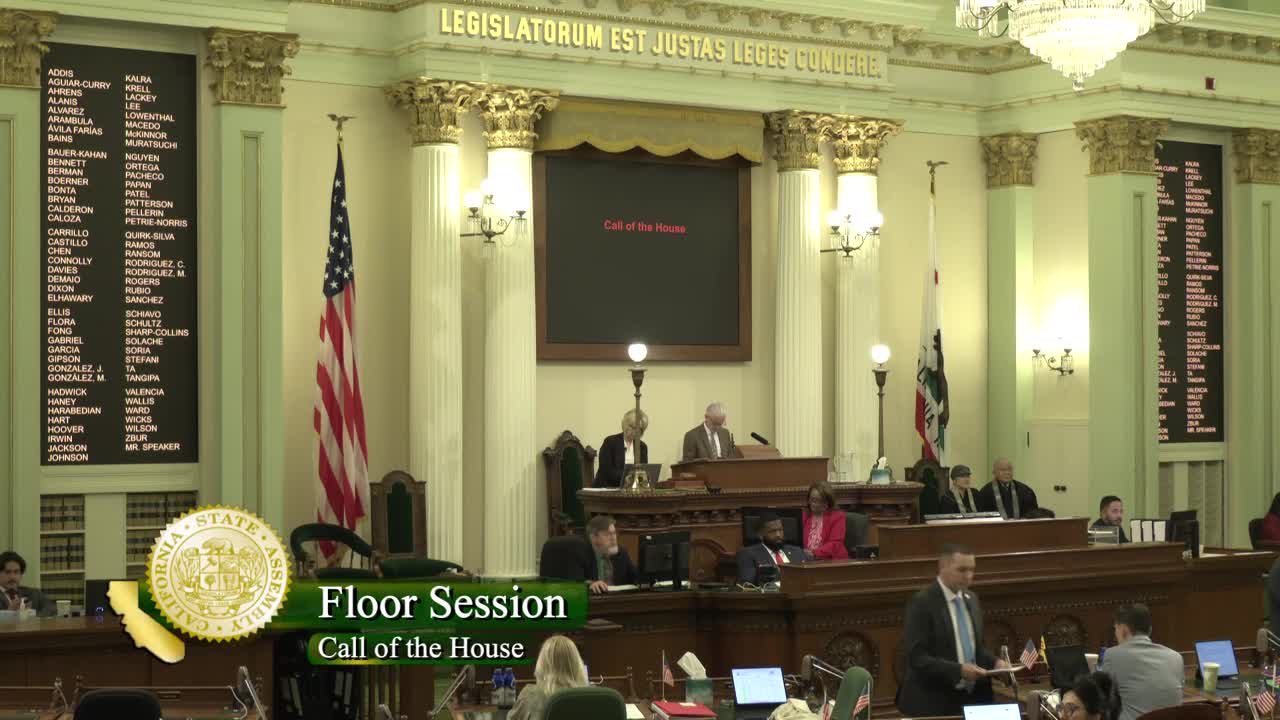 59SEC
Assembly Floor
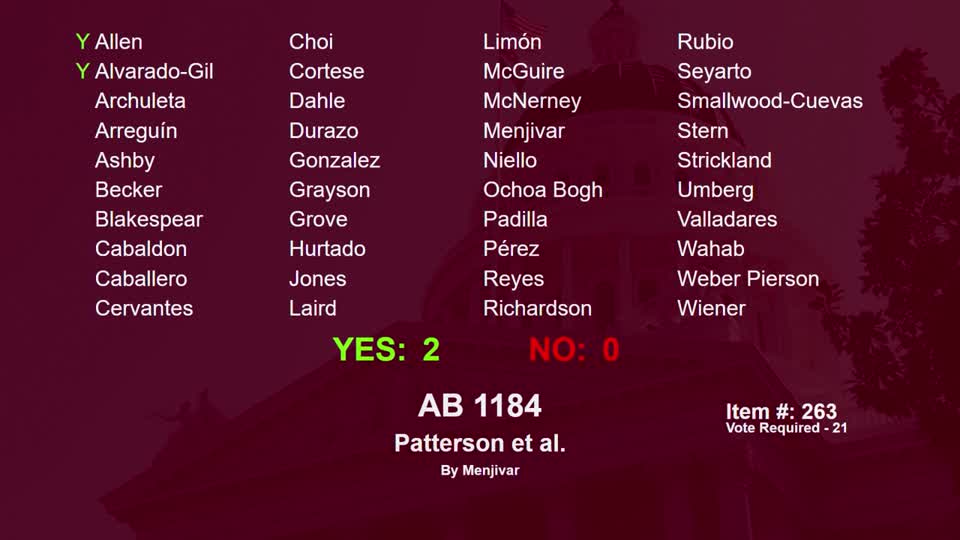 2MIN
Senate Floor
 41SEC
Senate Standing Committee on Appropriations
 9MIN
Senate Standing Committee on Energy, Utilities and Communications
 12MIN
Senate Standing Committee on Natural Resources and Water
 52SEC
Assembly Floor
 8MIN
Assembly Standing Committee on Utilities and Energy
 16MIN
Assembly Standing Committee on Natural Resources
Bill Author