ACR 77: California Early Intervention Services Act.
- Session Year: 2015-2016
- House: Assembly
- Latest Version Date: 2015-09-03
This measure would recognize that every child who needs comprehensive health and early intervention services and supports in order to achieve his or her developmental potential should have those services easily accessible, sufficient, responsive, timely, and of high quality. The measure would further urge the Legislature to leverage existing efforts and statutes to ensure an accountable, results-oriented, and coordinated network of resources in order to provide multidisciplinary early identification and intervention services and supports to California infants and toddlers.
This measure would recognize that every child who needs comprehensive health and early intervention services and supports in order to achieve his or her developmental potential should have those services easily accessible, sufficient, responsive, timely, and of high quality. The measure would further urge the Legislature to leverage existing efforts and statutes to ensure an accountable, results-oriented, and coordinated network of resources in order to provide multidisciplinary early identification and intervention services and supports to California infants and toddlers.
This measure would recognize that every child who needs comprehensive health and early intervention services and supports in order to achieve his or her developmental potential should have those services easily accessible, sufficient, responsive, timely, and of high quality. The measure would further urge the Legislature to leverage existing efforts and statutes to ensure an accountable, results-oriented, and coordinated network of resources in order to provide multidisciplinary early identification and intervention services and supports to California infants and toddlers.
This measure would recognize that every child who needs comprehensive health and early intervention services and supports in order to achieve his or her developmental potential should have those services easily accessible, sufficient, responsive, timely, and of high quality. The measure would further urge the Legislature to leverage existing efforts and statutes to ensure an accountable, results-oriented, and coordinated network of resources in order to provide multidisciplinary early identification and intervention services and supports to California infants and toddlers.
This measure would recognize that every child who needs comprehensive health and early intervention services and supports in order to achieve his or her developmental potential have those services easily accessible, sufficient, responsive, timely, and of high quality. The measure would further urge the Legislature to leverage existing efforts and statutes to ensure an accountable, results-oriented, and coordinated network of resources in order to provide multidisciplinary early identification and intervention services and supports to California infants and toddlers.
WHEREAS, The period between a childs birth and third birthday is a time of intense and ongoing development across the cognitive, motor, language, and social-emotional domains; and
WHEREAS, Positive health and learning outcomes depend upon children continually building new skills and abilities along a developmental trajectory of incremental milestones that begins at birth; and
WHEREAS, The Legislature passed Assembly Concurrent Resolution 155 in 2014 in recognition that [r]esearch over the last two decades in the evolving fields of neuroscience, molecular biology, public health, genomics, and epigenetics reveals that experiences in the first few years of life build changes into the biology of the human body that, in turn, influence the persons physical and mental health over his or her lifetime; and
WHEREAS, Adversity during the early years can impair development, and has a cumulative impact, with children exposed to maltreatment and additional risk factors facing increased likelihood of having one or more delays in their cognitive, language, or emotional development; and
WHEREAS, Unaddressed developmental delays and disabilities result in persistently impaired learning and health outcomes for children; and
WHEREAS, It is estimated that one in four California children have moderate or higher risk for a developmental delay, such as speech or language impairment, and that nationally one in every 68 children were affected by autism spectrum disorder in 2014; and
WHEREAS, Latino and African American children are more likely to experience barriers in accessing early identification and intervention services; and
WHEREAS, The Legislature has previously established through the California Early Intervention Services Act, in Section 95001 of the Government Code, that [t]here is a need to provide appropriate early intervention services individually designed for infants and toddlers ... who have disabilities or are at risk of having disabilities, to enhance their development and to minimize the potential for developmental delays; and
WHEREAS, The California Early Intervention Services Act additionally established that [e]arly intervention services for infants and toddlers with disabilities or who are at risk of having disabilities represent an investment of resources, in that these services reduce the ultimate costs to our society, by minimizing the need for special education and related services in later school years and . . . [that] maximize the potential of the individuals to be effective in the context of daily life and activities; and
WHEREAS, Early intervention services include targeted health and education supports for infants and toddlers who have delays or are at risk of having delays, in order to enhance their development, improve school readiness, and minimize the potential for later challenges; and
WHEREAS, The California Early Intervention Services Act previously established that the earlier intervention is started, the greater is the ultimate cost-effectiveness and the higher is the educational attainment and quality of life achieved by children with disabilities; and
WHEREAS, Experts like the American Academy of Pediatrics recommend routine, regular, and formalized developmental and behavioral screening for all infants and toddlers as the most effective way of identifying children in need of supports and services; and
WHEREAS, Fewer than one-third of California infants and toddlers received the recommended developmental and behavioral screenings according to 20112012 parent reported data; and
WHEREAS, Forty-one percent of parents report having one or more concerns about their childrens physical, behavioral, or social development; and
WHEREAS, Nearly three out of four California children with special health care needs under three years of age do not receive early intervention services they could benefit from, and the 2012 annual report for Californias Early Start program shows that it serves fewer infants and toddlers with early intervention services than the national average; and
WHEREAS, A system of universal developmental and behavioral screenings should work hand in hand with a robust early intervention system, and should be linked by facilitated family-focused referral, care coordination, child-centered health homes, and information-sharing mechanisms to guide and support families while maintaining accountability; and
WHEREAS, The California Early Intervention Services Act previously established that the State Department of Developmental Services, the State Department of Education, the State Department of Health Care Services, and the State Department of Social Services coordinate services to infants and toddlers with disabilities and their families; and
WHEREAS, The California Early Intervention Services Act additionally established that families be well informed, supported, and respected as capable and collaborative decisionmakers regarding services for their child; now, therefore, be it
Resolved by the Assembly of the State of California, the Senate thereof concurring, That every California child deserves periodic formal assessment of his or her development for the purposes of introducing supports and services if needed; and be it further
Resolved, That every child who needs supports in order to achieve his or her developmental potential deserves that those services be easily accessible, sufficient, responsive, timely, and of high quality; and be it further
Resolved, That every parent or caregiver shall be fully engaged and supported throughout early identification and intervention processes; and be it further
Resolved, That the Legislature leverage existing efforts and statutes to ensure an accountable, results-oriented, and coordinated statewide network of resources, services, systems, and strong local infrastructures, in order to provide family-centered, comprehensive, and multidisciplinary early identification and intervention services and supports to California infants and toddlers; and be it further
Resolved, That the Legislature shall support and promote community-driven efforts to coordinate referrals and linkages between, and guide families through the complexities of, the early identification and intervention systems, through programs and models such as Help Me Grow California; and be it further
Resolved, That the Legislature invest sufficiently in comprehensive health and early intervention services and supports in order to ensure that they meet the health and learning needs of Californias diverse child population, and wisely harness governmental and other resources toward these common goals; and be it further
Resolved, That these services and supports build upon existing efforts, and be embedded and accessible from the places and people that families know and trust, including pediatric practices and other health settings, community-based organizations, regional centers, Early Head Start programs, First 5s, and other local early childhood programs; and be it further
Resolved, That the Chief Clerk of the Assembly transmit copies of this resolution to the author for appropriate distribution.
WHEREAS, The period between a childs birth and third birthday is a time of intense and ongoing development across the cognitive, motor, language, and social-emotional domains; and
WHEREAS, Positive health and learning outcomes depend upon children continually building new skills and abilities along a developmental trajectory of incremental milestones that begins at birth; and
WHEREAS, The Legislature passed Assembly Concurrent Resolution 155 in 2014 in recognition that research [r]esearch over the last two decades in the evolving fields of neuroscience, molecular biology, public health, genomics, and epigenetics reveals that experiences in the first few years of life build changes into the biology of the human body that, in turn, influence the persons physical and mental health over his or her lifetime; and
WHEREAS, Adversity during the early years can impair development, and has a cumulative impact, with children exposed to maltreatment and additional risk factors facing increased likelihood of having one or more delays in their cognitive, language, or emotional development; and
WHEREAS, Unaddressed developmental delays and disabilities result in persistently impaired learning and health outcomes for children; and
WHEREAS, It is estimated that one in four California children have moderate or higher risk for a developmental delay, such as speech or language impairment, and that nationally one in every 68 children were affected by autism spectrum disorder in 2014; and
WHEREAS, Latino and African American children are more likely to experience barriers in accessing early identification and intervention services; and
WHEREAS, The Legislature has previously established through the California Early Intervention Services Act, in Section 95001 of the Government Code, that there [t]here is a need to provide appropriate early intervention services individually designed for infants and toddlers ... who have disabilities or are at risk of having disabilities, to enhance their development and to minimize the potential for developmental delays; and
WHEREAS, The California Early Intervention Services Act additionally established that early [e]arly intervention services for infants and toddlers with disabilities or who are at risk of having disabilities represent an investment of resources, in that these services reduce the ultimate costs to our society, by minimizing the need for special education and related services in later school years... [and that] years and . . . [that] maximize the potential of the individuals to be effective in the context of daily life and activities; activities; and
WHEREAS, Early intervention services include targeted health and education supports for infants and toddlers who have delays or are at risk of having delays, in order to enhance their development, improve school readiness, and minimize the potential for later challenges; and
WHEREAS, The California Early Intervention Services Act previously established that the earlier intervention is started, the greater is the ultimate cost-effectiveness and the higher is the educational attainment and quality of life achieved by children with disabilities; and
WHEREAS, Experts like the American Academy of Pediatrics recommend routine, regular, and formalized developmental and behavioral screening for all infants and toddlers as the most effective way of identifying children in need of supports and services; and
WHEREAS, Fewer than one-third of California infants and toddlers received the recommended developmental and behavioral screenings according to 20112012 parent reported data; and
WHEREAS, forty-one Forty-one percent of parents report having one or more concerns about their childrens physical, behavioral behavioral, or social development; and
WHEREAS, Nearly three out of four California children with special health care needs under three years of age do not receive early intervention services they could benefit from, and the 2012 annual report for Californias Early Start program shows that it serves fewer infants and toddlers with early intervention services than the national average; and
WHEREAS, A system of universal developmental and behavioral screenings should work hand in hand with a robust early intervention system, and should be linked by facilitated family-focused referral, care coordination, child-centered health homes, and information-sharing mechanisms to guide and support families while maintaining accountability; and
WHEREAS, The California Early Intervention Services Act previously established that the State Department of Developmental Services, the State Department of Education, the State Department of Health Care Services, and the State Department of Social Services coordinate services to infants and toddlers with disabilities and their families; and
WHEREAS, The California Early Intervention Services Act additionally established that families be well informed, supported, and respected as capable and collaborative decisionmakers regarding services for their child; now, therefore, be it
Resolved by the Assembly of the State of California, the Senate thereof concurring, That every California child deserves periodic formal assessment of his or her development for the purposes of introducing supports and services if needed; and be it further
Resolved, That every child who needs supports in order to achieve his or her developmental potential deserves that those services be easily accessible, sufficient, responsive, timely, and of high quality; and be it further
Resolved, That every parent or caregiver shall be fully engaged and supported throughout early identification and intervention processes; and be it further
Resolved, That the Legislature leverage existing efforts and statutes to ensure an accountable, results-orientated, results-oriented, and coordinated statewide network of resources, services, systems, and strong local infrastructures, in order to provide family-centered, comprehensive, and multidisciplinary early identification and intervention services and supports to California infants and toddlers; and be it further
Resolved, That the Legislative Legislature shall support and promote community-driven efforts to coordinate referrals and linkages between, and guide families through the complexities of, the early identification and intervention systems, through programs and models such as Help Me Grow California; and be it further
Resolved, That the Legislative Legislature invest sufficiently in comprehensive health and early intervention services and supports in order to ensure that they meet the health and learning needs of Californias diverse child population, and wisely harness governmental and other resources toward these common goals; and be it further
Resolved, That these services and supports build upon existing efforts, and be embedded and accessible from the places and people that families know and trust, including pediatric practices and other health settings, community-based organizations, regional centers, Early Head Start programs, First 5s, and other local early childhood programs; and be it further
Resolved, That the Chief Clerk of the Assembly transmit copies of this resolution to the author for appropriate distribution.
WHEREAS, The period between a childs birth and third birthday is a time of intense and ongoing development across the cognitive, motor, language, and social-emotional domains; and
WHEREAS, Positive health and learning outcomes depend upon children continually building new skills and abilities along a developmental trajectory of incremental milestones that begins at birth; and
WHEREAS, The Legislature passed Assembly Concurrent Resolution 155 in 2014 in recognition that research over the last two decades in the evolving fields of neuroscience, molecular biology, public health, genomics, and epigenetics reveals that experiences in the first few years of life build changes into the biology of the human body that, in turn, influence the persons physical and mental health over his or her lifetime; and
WHEREAS, Adversity during the early years can impair development, and has a cumulative impact, with children exposed to maltreatment and additional risk factors facing increased likelihood of having one or more delays in their cognitive, language, or emotional development; and
WHEREAS, Unaddressed developmental delays and disabilities result in persistently impaired learning and health outcomes for children; and
WHEREAS, It is estimated that one in four California children have moderate or higher risk for a developmental delay, such as speech or language impairment, and that nationally one in every 68 children were affected by autism spectrum disorder in 2014; and
WHEREAS, Latino and African American children are more likely to experience barriers in accessing early identification and intervention services; and
WHEREAS, The Legislature has previously established through the California Early Intervention Services Act, in Section 95001 of the Government Code, that there is a need to provide appropriate early intervention services individually designed for infants and toddlers ... who have disabilities or are at risk of having disabilities, to enhance their development and to minimize the potential for developmental delays; and
WHEREAS, The California Early Intervention Services Act additionally established that early intervention services for infants and toddlers with disabilities or who are at risk of having disabilities represent an investment of resources, in that these services reduce the ultimate costs to our society, by minimizing the need for special education and related services in later school years... [and that] maximize the potential of the individuals to be effective in the context of daily life and activities; and
WHEREAS, Early intervention services include targeted health and education supports for infants and toddlers who have delays or are at risk of having delays, in order to enhance their development, improve school readiness, and minimize the potential for later challenges; and
WHEREAS, The California Early Intervention Services Act previously established that the earlier intervention is started, the greater is the ultimate cost-effectiveness and the higher is the educational attainment and quality of life achieved by children with disabilities; and
WHEREAS, Experts like the American Academy of Pediatrics recommend routine, regular, formalized developmental and behavioral screening for all infants and toddlers as the most effective way of identifying children in need of supports and services; and
WHEREAS, Fewer than one-third of California infants and toddlers received the recommended developmental and behavioral screenings according to 20112012 parent reported data; and
WHEREAS, forty-one percent of parents report having one or more concerns about their childrens physical, behavioral or social development; and
WHEREAS, Nearly three out of four California children with special health care needs under three years of age do not receive early intervention services they could benefit from, and the 2012 annual report for Californias Early Start program shows that it serves fewer infants and toddlers with early intervention services than the national average; and
WHEREAS, A system of universal developmental and behavioral screenings should work hand in hand with a robust early intervention system, and should be linked by facilitated family-focused referral, care coordination, child-centered health homes, and information-sharing mechanisms to guide and support families while maintaining accountability; and
WHEREAS, The California Early Intervention Services Act previously established that the State Department of Developmental Services, the State Department of Education, the State Department of Health Care Services, and the State Department of Social Services coordinate services to infants and toddlers with disabilities and their families; and
WHEREAS, The California Early Intervention Services Act additionally established that families be well informed, supported, and respected as capable and collaborative decisionmakers regarding services for their child; now, therefore, be it
Resolved by the Assembly of the State of California, the Senate thereof concurring, That every California child deserves periodic formal assessment of his or her development for the purposes of introducing supports and services if needed; and be it further
Resolved, That every child who needs supports in order to achieve his or her developmental potential deserves that those services be easily accessible, sufficient, responsive, timely, and of high quality; and be it further
Resolved, That every parent or caregiver shall be fully engaged and supported throughout early identification and intervention processes; and be it further
Resolved, That the Legislature leverage existing efforts and statutes to ensure an accountable, results-orientated, and coordinated statewide network of resources, services, systems, and strong local infrastructures, in order to provide family-centered, comprehensive, multidisciplinary early identification and intervention services and supports to California infants and toddlers; and be it further
Resolved, That the Legislative shall support and promote community-driven efforts to coordinate referrals and linkages between, and guide families through the complexities of, the early identification and intervention systems, through programs and models such as Help Me Grow California; and be it further
Resolved, That the Legislative invest sufficiently in comprehensive health and early intervention services and supports in order to ensure that they meet the health and learning needs of Californias diverse child population, and wisely harness governmental and other resources toward these common goals; and be it further
Resolved, That these services and supports build upon existing efforts, and be embedded and accessible from the places and people that families know and trust, including pediatric practices and other health settings, community-based organizations, regional centers, Early Head Start programs, First 5s, and other local early childhood programs; and be it further
Resolved, That the Chief Clerk of the Assembly transmit copies of this resolution to the author for appropriate distribution.
|
Date
|
Status
|
|---|---|
| Sep 3, 2015 | Chaptered by Secretary of State - Res. Chapter 154, Statutes of 2015. |
| Sep 3, 2015 | Enrolled and filed with the Secretary of State at 3 p.m. |
| Aug 25, 2015 | In Assembly. Ordered to Engrossing and Enrolling. |
| Aug 24, 2015 | Adopted and to Assembly. (Ayes 40. Noes 0. Page 2152.) |
| Aug 24, 2015 | Adopted and to Assembly. |
| Jul 16, 2015 | From committee: Ordered to third reading. |
| Jul 13, 2015 | In Senate. To Com. on RLS. |
| Jul 9, 2015 | Amended, adopted, and to Senate. (Page 2320.) |
| Jul 9, 2015 | Amended, adopted, and to Senate. |
| Jul 6, 2015 | Ordered to third reading. |
| Jul 6, 2015 | From Consent Calendar. |
| Jul 1, 2015 | From committee: Be adopted. To Consent Calendar. (Ayes 7. Noes 0.) (June 30). |
| Jun 25, 2015 | Re-referred to Com. on HUM. S. |
| Jun 24, 2015 | From committee chair, with author's amendments: Amend, and re-refer to Com. on HUM. S. Amended. |
| Jun 11, 2015 | Referred to Com. on HUM. S. |
| May 21, 2015 | From printer. |
| May 20, 2015 | Introduced. To print. |
|
Date
|
Description
|
Location
|
Votes
|
|
|---|---|---|---|---|
| Aug 24, 2015 | Assembly 3rd Reading ACR77 Mark Stone By Beall | Senate Floor |
Passed |
|
| Jun 30, 2015 | Be adopted. To Consent Calendar. | Assembly Standing Committee on Human Services |
Passed |
This list shows positions taken on this bill by organizations on the date displayed, which is linked to the original source.
Positions by individuals are not included.
ACR 77
Page 3
|
Office of Senate Floor Analyses (916) 651-1520 Fax: (916) 327-4478 |
THIRD READING
Bill No: ACR 77
Author: Mark Stone (D), et al.
Amended: 7/9/15 in Assembly
ASSEMBLY FLOOR: Read and adopted, 7/9/15
SUBJECT: California Early Intervention Services Act
First 5 Association of California
DIGEST: This resolution makes legislative findings and declaration related to children’s development and urges the Legislature to leverage existing efforts and statutes to ensure an accountable, results-oriented, and coordinated network of resources in order to provide multidisciplinary early identification and intervention services and supports to California infants and toddlers.
ANALYSIS: This resolution makes the following legislative findings:
The period between a child’s birth and third birthday is a time of intense and ongoing development across the cognitive, motor, language, and social-emotional domains.
Adversity during the early years can impair development, and has a cumulative impact, with children exposed to maltreatment and additional risk factors facing increased likelihood of having one or more delays in their cognitive, language, or emotional development.
Unaddressed developmental delays and disabilities result in persistently impaired learning and health outcomes for children.
One in four California children have moderate or higher risk for a developmental delay, such as speech or language impairment, and that nationally one in every 68 children were affected by autism spectrum disorder in 2014.
The American Academy of Pediatrics recommend routine, regular, and formalized developmental and behavioral screening for all infants and toddlers as the most effective way of identifying children in need of supports and services. Fewer than one-third of California infants and toddlers received the recommended developmental and behavioral screenings according to 2011-12 parent reported data.
Nearly three out of four California children with special health care needs under three years of age do not receive early intervention services they could benefit from, and the 2012 annual report for California’s Early Start program shows that it serves fewer infants and toddlers with early intervention services than the national average.
A system of universal developmental and behavioral screenings should work hand in hand with a robust early intervention system, and should be linked by facilitated family-focused referral, care coordination, child-centered health homes, and information-sharing mechanisms to guide and support families while maintaining accountability.
This resolution recognizes that every child who needs comprehensive health and early intervention services and supports in order to achieve his or her developmental potential should have those services easily accessible, sufficient, responsive, timely, and of high quality. This resolution urges the Legislature to leverage existing efforts and statutes to ensure an accountable, results-oriented, and coordinated network of resources in order to provide multidisciplinary early identification and intervention services and supports to California infants and toddlers.
Comments
According to the author, "Children need access to developmental screening tools to ensure they can access appropriate resources and care. While most experts in the health field agree early screening is important for the future development of children, many children are not being properly screened. Seventy-two percent or 1.7 million Californian children are not being screened with recommended tools, putting them at risk for late or no identification of developmental or behavioral delays. The problem is especially pronounced for children of color; for instance, Latino children are diagnosed with autism an average of 2.5 years later than white children. When children are not diagnosed with developmental delays or other problems, they may not receive the care they need and may fall further behind. When delays are not early identified during children's first years of life, they must wait to get the help they need when they enroll in school. Since development is often sequential, a developmental or behavioral delay can often cause more problems if it is not identified and if the child does not access the appropriate care. Without proper intervention treatment, developmentally delayed children may experience academic and social hardships. … It has been shown that the earlier the identification and intervention, the more beneficial to children and families because it strengthens families' ability to support their child’s growth and development while maintaining the greatest cost effectiveness."
FISCAL EFFECT: Appropriation: No Fiscal Com.: No Local: No
Children Now (co-source)
First 5 Association of California (co-source)
Association of Regional Center Agencies
Autism Speaks
Center for Autism and Related Disorders
Family Resource Centers Network of California
Fight Crime Invest in Kids California
First 5 Fresno County
First 5 Monterey County
First 5 San Luis Obispo
First 5 Santa Clara County
First 5 Santa Cruz County
Lucille Packard Stanford Children’s Health
ZERO TO THREE Western Office
OPPOSITION: (Verified 7/31/15)
None received
Prepared by: Melissa Ward / SFA / (916) 651-1520
8/13/15 13:13:45
**** END ****
ACR 77
Page 4
ASSEMBLY THIRD READING
ACR 77
(Mark Stone)
As Amended June 24, 2015
Majority vote
Committee |
Votes |
Ayes |
Noes |
Human Services |
7-0 |
Chu, Mayes, Calderon, Lopez, Maienschein, Mark Stone, Thurmond |
|
SUMMARY: Specifically, this bill:
Makes a number of findings and declarations related to children's development, including the following:
The period between a child's birth and third birthday is a time of intense and ongoing development;
Adversity during a child's early years can impair development, and children exposed to maltreatment and additional risk factors face an increased likelihood of one or more delays in their cognitive, language, or emotional development;
Unaddressed developmental delays and disabilities result in persistently impaired learning and health outcomes for children;
Nationally, one in every 68 children was affected by autism spectrum disorder (ASD) in 2014, and one in four children in California has a moderate or higher risk for a developmental delay;
Latino and African American children are more likely to experience barriers in accessing early identification and intervention services;
The American Academy of Pediatrics and other experts recommend routine, regular, and formalized developmental and behavioral screening for all infants and toddlers in order to identify children in need of supports and services;
Nearly 75% of children in California with special health care needs under three years of age do not receive early intervention services they could benefit from; and
A system of universal development and behavioral screenings should work hand in hand with a robust early intervention system.
Resolves that every child in California deserves periodic formal assessment of his or her development for the purposes of introducing supports and services if needed, and that those supports and services should be easily accessible and responsive to a child’s needs.
Resolves that the Legislature leverage existing efforts and statutes to ensure an accountable, results-oriented, and coordinated statewide network of resources, services, systems, and strong local infrastructures, and that the Legislature invest sufficiently in comprehensive health and early intervention services and supports, built upon existing efforts, in order to ensure that they meet the health and learning needs of California's diverse child population.
EXISTING LAW:
Enacts, through federal law, Part C of the Individuals with Disabilities Education Act (IDEA), to provide funding to and encourage states to expand opportunities and provide intervention services to children under three years of age with developmental delays. (20 United States Code Section 1431 et seq.)
Establishes the Early Intervention Services Act (Early Start Program), under which the Department of Developmental Services (DDS) and regional centers, in collaboration with the Department of Education and local education agencies, provide services for infants and toddlers who have disabilities or who are at risk of having disabilities, including ASD, in order to enhance their development and to minimize the potential for developmental delays. (Government Code Section 95000 et seq.)
Establishes that an infant or toddler under age three who is eligible for early intervention services shall have an individualized family service plan (IFSP) to direct services, as specified, and defines the types of services, supports and staffing that should be considered when creating the plan. (Government Code Section 95020)
Establishes an entitlement to services for individuals with developmental disabilities under the Lanterman Developmental Disabilities Services Act (Lanterman Act). (Welfare and Institutions Code (WIC) Section 4500 et seq.)
Establishes a system of 21 nonprofit regional centers throughout the state to identify needs and coordinate services for eligible individuals with developmental disabilities and requires DDS to contract with regional centers to provide case management services and arrange for or purchase services that meet the needs of individuals with developmental disabilities, as defined. (WIC Section 4620 et seq.)
Requires a regional center to provide initial intake and assessment services to any person believed to have a developmental disability and any person believed to have a high risk of parenting an infant with a developmental disability, as specified, and identifies guidelines and timelines for the intake and assessment process. (WIC Section 4642 et seq.)
Creates the First 5 Commission through the voter-approved California Children and Families First Act of 1998 (Proposition 10) and authorizes the creation of First 5 county commissions to promote and develop early childhood development programs funded by revenues from a tax on tobacco products. (Health and Safety Code Section 130100 et seq.)
FISCAL EFFECT: Unknown. This resolution is keyed non-fiscal by the Legislative Counsel.
COMMENTS:
Child development: There are a number of factors that can contribute to health risks and developmental delays for children. These factors often include:
Prematurity or low birth weight;
Difficulties seeing or hearing;
Prenatal exposure or other types of exposure to drugs, alcohol, or tobacco;
Poor nutrition or difficulties eating (a lack of nutritious foods, proteins, vitamins, or iron in a child's diet);
Exposure to lead-based paint (through eating, licking, or sucking on lead-base painted doors, floors, furniture, toys, or other objects); and
Abuse or neglect.
Services: The Lanterman Act guides the provision of services and supports for Californians with developmental disabilities. The term "developmental disability" means a disability that originates before an individual attains 18 years of age, is expected to continue indefinitely, and constitutes a substantial disability for that individual. It includes intellectual disability, cerebral palsy, epilepsy, and ASD. Other developmental disabilities are those disabling conditions similar to an intellectual disability that require treatment (i.e., care and management) similar to that required by individuals with intellectual disability.
Regional centers are responsible for conducting intake and assessment, individualized program plan development, case management, and securing services through generic agencies or purchasing services provided by vendors. Regional centers also share primary responsibility with local education agencies (LEAs) for the provision of early intervention services through Early Start. In this shared role, LEAs provide services for children with low-incidence disabilities (e.g.: blindness, deafness, hard of hearing, orthopedic impairments), and regional centers are required to provide or purchase appropriate early intervention services that are required under the federal IDEA but are beyond the mandated scope of responsibilities of LEAs.
While some delays that present themselves during infancy are indicative of a developmental disability and trigger eligibility for lifelong regional center services under the Lanterman Act, other developmental delays that do not fit within the definition of developmental disability can still lead to services and supports for children and their families under the California Early Intervention Services Act. Children from birth to three years of age are eligible for early intervention services provided they have been screened and meet at least one of the following criteria:
They have a developmental delay of at least 33% in one or more areas of either physical and motor, adaptive, communication, social or emotional, or cognitive development (including vision and hearing);
They have an established risk condition of known etiology, with a high probability of resulting in a developmental delay; or
They can be considered to be at high risk of having a substantial developmental disability due to a combination of diagnosed biomedical risk factors.
Regional centers serve roughly 280,000 individuals, which includes over 34,000 children in Early Start according to May 2015 DDS caseload data. Another 4,943 children are receiving diagnostic and evaluation services, and 1,151 children are considered active consumers and receive services outside of Early Start.
The early intervention services a child receives through Early Start are based on the developmental needs identified in his or her individualized family service plan (IFSP). Early Start services include: case management; family training, counseling, and home visits; social work services; assistive technology; audiology; health services; medical services (related to evaluation and diagnosis); nursing services; nutrition services; occupational therapy; physical therapy; psychological services; special instruction; speech and language services; transportation and related costs; and vision services.
Need for this bill: This concurrent resolution calls for a comprehensive approach that builds on existing programs and processes to ensure all children have access to the early developmental interventions they need. By emphasizing the need for timely developmental screenings, this concurrent resolution seeks to help families address any developmental delays their children might have as early as possible in order to avoid the compounding effects of unaddressed needs later in their lives.
According to the author, "Children need access to developmental screening tools to ensure they can access appropriate resources and care. While most experts in the health field agree early screening is important for the future development of children, many children are not being properly screened. Seventy-two percent or 1.7 million Californian children are not being screened with recommended tools, putting them at risk for late or no identification of developmental or behavioral delays1. The problem is especially pronounced for children of color; for instance, Latino children are diagnosed with autism an average of 2.5 years later than white children1…. When children are not diagnosed with developmental delays or other problems, they may not receive the care they need and may fall further behind. When delays are not early identified during children's first years of life, they must wait to get the help they need when they enroll in school. Since development is often sequential, a developmental or behavioral delay can often cause more problems if it is not identified and if the child does not access the appropriate care. Without proper intervention treatment, developmentally delayed children may experience academic and social hardships… It has been shown that the earlier the identification and intervention, the more beneficial to children and families because it strengthens families' ability to support their child’s growth and development while maintaining the greatest cost effectiveness."
Analysis Prepared by: Myesha Jackson / HUM. S. / (916) 319-2089 FN: 0001149
1 "Building an Early Identification System in CA: The Need for Action" First 5 Association of California; www.first5association.org
ACR 77
Page 5
Date of Hearing: June 30, 2015
ASSEMBLY COMMITTEE ON HUMAN SERVICES
Kansen Chu, Chair
ACR 77 (
Mark Stone) – As Amended June 24, 2015
SUBJECT: California Early Intervention Services Act.
SUMMARY:
Specifically, this bill:
Makes a number of findings and declarations related to children’s development, including the following:
The period between a child’s birth and third birthday is a time of intense and ongoing development;
Adversity during a child’s early years can impair development, and children exposed to maltreatment and additional risk factors face an increased likelihood of one or more delays in their cognitive, language, or emotional development;
Unaddressed developmental delays and disabilities result in persistently impaired learning and health outcomes for children;
Nationally, one in every 68 children was affected by autism spectrum disorder (ASD) in 2014, and one in four children in California has a moderate or higher risk for a developmental delay;
Latino and African American children are more likely to experience barriers in accessing early identification and intervention services;
The American Academy of Pediatrics and other experts recommend routine, regular, and formalized developmental and behavioral screening for all infants and toddlers in order to identify children in need of supports and services;
Nearly 75% of children in California with special health care needs under three years of age do not receive early intervention services they could benefit from; and
A system of universal development and behavioral screenings should work hand in hand with a robust early intervention system.
Resolves that every child in California deserves periodic formal assessment of his or her development for the purposes of introducing supports and services if needed, and that those supports and services should be easily accessible and responsive to a child’s needs.
Resolves that the Legislature leverage existing efforts and statutes to ensure an accountable, results-oriented, and coordinated statewide network of resources, services, systems, and strong local infrastructures, and that the Legislature invest sufficiently in comprehensive health and early intervention services and supports, built upon existing efforts, in order to ensure that they meet the health and learning needs of California’s diverse child population.
EXISTING LAW:
Enacts, through federal law, Part C of the Individuals with Disabilities Education Act (IDEA), to provide funding to and encourage states to expand opportunities and provide intervention services to children under three years of age with developmental delays. (20 U.S.C. § 1431 et seq.)
Establishes the Early Intervention Services Act (Early Start Program), under which the Department of Developmental Services (DDS) and regional centers, in collaboration with the Department of Education and local education agencies, provide services for infants and toddlers who have disabilities or who are at risk of having disabilities, including ASD, in order to enhance their development and to minimize the potential for developmental delays. (GOV 95000 et seq.)
Establishes that an infant or toddler under age 3 who is eligible for early intervention services shall have an individualized family service plan (IFSP) to direct services, as specified, and defines the types of services, supports and staffing that should be considered when creating the plan. (GOV 95020)
Establishes an entitlement to services for individuals with developmental disabilities under the Lanterman Developmental Disabilities Services Act (Lanterman Act). (WIC 4500 et seq.)
Establishes a system of 21 nonprofit regional centers throughout the state to identify needs and coordinate services for eligible individuals with developmental disabilities and requires DDS to contract with regional centers to provide case management services and arrange for or purchase services that meet the needs of individuals with developmental disabilities, as defined. (WIC 4620 et seq.)
Requires a regional center to provide initial intake and assessment services to any person believed to have a developmental disability and any person believed to have a high risk of parenting an infant with a developmental disability, as specified, and identifies guidelines and timelines for the intake and assessment process. (WIC 4642 et seq.)
Creates the First 5 Commission through the voter-approved California Children and Families First Act of 1998 (Proposition 10) and authorizes the creation of First 5 county commissions to promote and develop early childhood development programs funded by revenues from a tax on tobacco products. (HSC 130100 et seq.)
FISCAL EFFECT: Unknown.
COMMENTS:
Child development: There are a number of factors that can contribute to health risks and developmental delays for children. These factors often include:
Prematurity or low birth weight;
Difficulties seeing or hearing;
Prenatal exposure or other types of exposure to drugs, alcohol, or tobacco;
Poor nutrition or difficulties eating (a lack of nutritious foods, proteins, vitamins, or iron in a child’s diet);
Exposure to lead-based paint (through eating, licking, or sucking on lead-base painted doors, floors, furniture, toys, or other objects); and
Abuse or neglect.
Services: The Lanterman Act guides the provision of services and supports for Californians with developmental disabilities. The term “developmental disability” means a disability that originates before an individual attains 18 years of age, is expected to continue indefinitely, and constitutes a substantial disability for that individual. It includes intellectual disability, cerebral palsy, epilepsy, and autism spectrum disorders (ASD). Other developmental disabilities are those disabling conditions similar to an intellectual disability that require treatment (i.e., care and management) similar to that required by individuals with intellectual disability.
Regional centers are responsible for conducting intake and assessment, individualized program plan development, case management, and securing services through generic agencies or purchasing services provided by vendors. Regional centers also share primary responsibility with local education agencies (LEAs) for the provision of early intervention services through Early Start. In this shared role, LEAs provide services for children with low-incidence disabilities (e.g.: blindness, deafness, hard of hearing, orthopedic impairments), and regional centers are required to provide or purchase appropriate early intervention services that are required under the federal IDEA but are beyond the mandated scope of responsibilities of LEAs.
While some delays that present themselves during infancy are indicative of a developmental disability and trigger eligibility for lifelong regional center services under the Lanterman Act, other developmental delays that do not fit within the definition of developmental disability can still lead to services and supports for children and their families under the California Early Intervention Services Act. Children from birth to three years of age are eligible for early intervention services provided they have been screened and meet at least one of the following criteria:
They have a developmental delay of at least 33% in one or more areas of either physical and motor, adaptive, communication, social or emotional, or cognitive development (including vision and hearing);
They have an established risk condition of known etiology, with a high probability of resulting in a developmental delay; or
They can be considered to be at high risk of having a substantial developmental disability due to a combination of diagnosed biomedical risk factors.
Regional centers serve roughly 280,000 individuals, which includes over 34,000 children in Early Start according to May 2015 DDS caseload data. Another 4,943 children are receiving diagnostic and evaluation services, and 1,151 children are considered active consumers and receive services outside of Early Start.
The early intervention services a child receives through Early Start are based on the developmental needs identified in his or her individualized family service plan (IFSP). Early Start services include: case management; family training, counseling, and home visits; social work services; assistive technology; audiology; health services; medical services (related to evaluation and diagnosis); nursing services; nutrition services; occupational therapy; physical therapy; psychological services; special instruction; speech and language services; transportation and related costs; and vision services.
Need for this bill: This concurrent resolution calls for a comprehensive approach that builds on existing programs and processes to ensure all children have access to the early developmental interventions they need. By emphasizing the need for timely developmental screenings, this concurrent resolution seeks to help families address any developmental delays their children might have as early as possible in order to avoid the compounding effects of unaddressed needs later in their lives.
In support of this bill, Children Now states, “Despite the fact that developmental delays are very common, affecting as many as 1 in 6 children nationally, less than one-third (28.5%) of California’s infants and toddlers received a developmental screening at their regular well-child health visits in 2011-12. In fact, fewer than half of California children requiring special education in elementary school were identified prior to Kindergarten entry.”
According to the author, “Children need access to developmental screening tools to ensure they can access appropriate resources and care. While most experts in the health field agree early screening is important for the future development of children, many children are not being properly screened. Seventy-two percent or 1.7 million Californian children are not being screened with recommended tools, putting them at risk for late or no identification of developmental or behavioral delays1. The problem is especially pronounced for children of color; for instance, Latino children are diagnosed with autism an average of 2.5 years later than white children1….When children are not diagnosed with developmental delays or other problems, they may not receive the care they need and may fall further behind. When delays are not early identified during children’s first years of life, they must wait to get the help they need when they enroll in school. Since development is often sequential, a developmental or behavioral delay can often cause more problems if it is not identified and if the child does not access the appropriate care. Without proper intervention treatment, developmentally delayed children may experience academic and social hardships…It has been shown that the earlier the identification and intervention, the more beneficial to children and families because it strengthens families’ ability to support their child’s growth and development while maintaining the greatest cost effectiveness.”
PRIOR LEGISLATION:
ACR 155 (Bocanegra), Chapter 144, Statutes of 2014, urged the Governor to identify evidence-based solutions to reduce children’s exposure to adverse childhood experiences, address the impacts of those experiences, and invest in preventive health care and mental health and wellness interventions.
SB 527 (Steinberg) 2007, would have required DDS to partner with at least one regional center to implement an ASD early screening, intervention and treatment pilot program to establish best practices for early screening, diagnosis, referral and treatment for children with ASD. As introduced, it would have required pediatricians to routinely evaluate children ages zero to five for behaviors resembling those identified as ASD and to provide parents and guardians information about cognitive impairments and information about regional centers and other organizations that provide resources and services for children with ASD. It was vetoed by the Governor.
REGISTERED SUPPORT / OPPOSITION:
Support
Association of Regional Center Agencies (ARCA)
Autism Speaks
Center for Autism and Related Disorders (CARD)
Children Now
Family Resource Centers Network of CA
Fight Crime: Invest in Kids California
First 5 Association of CA
First 5 Fresno County
First 5 Monterey County
First 5 San Luis Obispo County
First 5 Santa Clara County
First 5 Santa Cruz County
Lucile Packard Children’s Hospital Stanford
ZERO TO THREE Western Office
Opposition
None on file.
Analysis Prepared by: Myesha Jackson / HUM. S. / (916) 319-2089
1 “Building an Early Identification System in CA: The Need for Action” First 5 Association of California; www.first5association.org
Discussed in Hearing
View Older Hearings
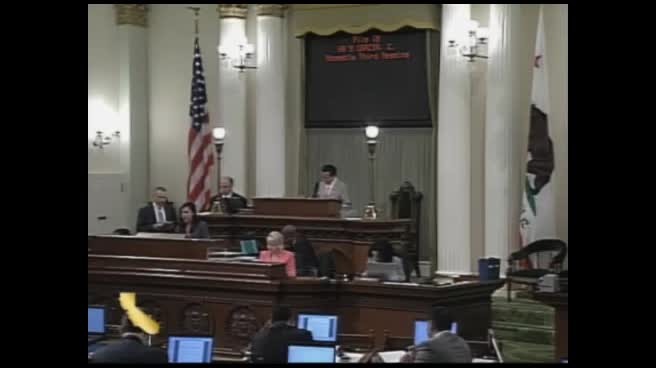
Bill Author

Bill Co-Author(s):