AB 716: Fire safety standards: hydrogen facilities.
- Session Year: 2025-2026
- House: Assembly
- Latest Version Date: 2025-07-14
Current Status:
In Progress
(2025-08-29: In committee: Held under submission.)
Introduced
In Committee
Awaiting First Chamber Vote
Passed First Chamber
In Committee
Awaiting Second Chamber Vote
Passed Second Chamber
Enacted
Existing law creates the Office of the State Fire Marshal in the Department of Forestry and Fire Protection to foster, promote, and develop ways and means of protecting life and property against fire and panic.
This bill would require the State Fire Marshal to adopt the National Fire Protection Association Hydrogen Technologies Code (NFPA 2) as the statewide fire safety standards and guidelines for hydrogen production, storage, and distribution facilities. The bill would authorize local governments, in consultation with the State Fire Marshal, to adopt more stringent fire safety standards than the statewide fire safety standards, based on unique local hazards and risks. The bill would require the State Fire Marshal to appoint a hydrogen fire expert, with specified duties. to appoint a hydrogen fire expert to answer questions and provide clarification on the implementation of hydrogen production, storage, and distribution facilities, ensuring that hydrogen facilities comply with the most up-to-date fire safety standards. The bill would require the State Fire Marshal to provide ongoing training to local fire departments and building inspectors, as specified. inspectors to ensure that hydrogen-related safety protocols are understood and enforced statewide.
Existing law creates the Office of the State Fire Marshal in the Department of Forestry and Fire Protection to foster, promote, and develop ways and means of protecting life and property against fire and panic.
This bill would require the State Fire Marshal to adopt the National Fire Protection Association Hydrogen Technologies Code (NFPA 2) as the statewide fire safety standards and guidelines for hydrogen production, storage, and distribution facilities. The bill would prohibit authorize local governments from adopting governments, in consultation with the State Fire Marshal, to adopt more stringent fire safety standards than the statewide fire safety standards. standards, based on unique local hazards and risks. The bill would require the State Fire Marshal to appoint a hydrogen fire expert, with specified duties. The bill would require the State Fire Marshal to provide ongoing training to local fire departments and building inspectors, as specified.
Existing law creates the Office of the State Fire Marshal in the Department of Forestry and Fire Protection to foster, promote, and develop ways and means of protecting life and property against fire and panic.
This bill would require the State Fire Marshal to adopt the National Fire Protection Association Hydrogen Technologies Code (NFPA 2) as the statewide fire safety standards and guidelines for hydrogen production, storage, and distribution facilities. The bill would prohibit local governments from adopting more stringent fire safety standards than the statewide fire safety standards. The bill would require the State Fire Marshal to appoint a hydrogen fire expert, with specified duties. The bill would require the State Fire Marshal to provide ongoing training to local fire departments and building inspectors, as specified.
Existing law requires the State Energy Resources Conservation and Development Commission to establish and administer the Hydrogen Program to provide financial incentives to eligible instate hydrogen projects for the demonstration or scale-up of the production, processing, delivery, storage, or end use of hydrogen.This bill would make nonsubstantive changes to that requirement.Existing law requires the State Energy Resources Conservation and Development Commission to establish and administer the Hydrogen Program to provide financial incentives to eligible instate hydrogen projects for the demonstration or scale-up of the production, processing, delivery, storage, or end use of hydrogen.
This bill would make nonsubstantive changes to that requirement.
(a)The State Fire Marshal shall appoint a hydrogen fire expert to answer questions and provide clarification on the implementation of NFPA 2, hydrogen production, storage, and distribution facilities, ensuring that hydrogen facilities comply with the most up-to-date fire safety standards.
(d)(b)The State Fire Marshal shall provide ongoing training to local fire departments and building inspectors to ensure that hydrogen-related safety protocols are understood and enforced statewide.
(a)The State Fire Marshal shall adopt the National Fire Protection Association Hydrogen Technologies Code (NFPA 2) as the statewide fire safety standards and guidelines for hydrogen production, storage, and distribution facilities.
(b)A local government shall not require government, in consultation with the State Fire Marshal, may adopt fire safety standards more stringent than the statewide fire safety standards adopted by the State Fire Marshal. Marshal, based on unique local hazards and risks.
(c)The State Fire Marshal shall appoint a hydrogen fire expert to answer questions and provide clarification on the implementation of NFPA 2, ensuring that hydrogen facilities comply with the most up-to-date fire safety standards.
(d)The State Fire Marshal shall provide ongoing training to local fire departments and building inspectors to ensure that hydrogen-related safety protocols are understood and enforced statewide.
(a)The State Fire Marshal shall adopt the National Fire Protection Association Hydrogen Technologies Code (NFPA 2) as the statewide fire safety standards and guidelines for hydrogen production, storage, and distribution facilities.
(b)A local government shall not require fire safety standards more stringent than the statewide fire safety standards adopted by the State Fire Marshal.
(c)The State Fire Marshal shall appoint a hydrogen fire expert to answer questions and provide clarification on the implementation of NFPA 2, ensuring that hydrogen facilities comply with the most up-to-date fire safety standards.
(d)The State Fire Marshal shall provide ongoing training to local fire departments and building inspectors to ensure that hydrogen-related safety protocols are understood and enforced statewide.
SECTION 1.Section 25664.1 of the Public Resources Code is amended to read:25664.1.(a)The commission shall establish and administer the Hydrogen Program pursuant to this article to provide financial incentives to eligible instate hydrogen projects for the demonstration or scale-up of the production, processing, delivery, storage, or end use of hydrogen.(b)Financial incentives provided pursuant to this article may be used as matching funds by selected entities that have received a grant pursuant to Section 16161 of Title 42 of the United States Code.(c)The commission may establish project eligibility and other guidelines for purposes of this article.(d)The commission shall include in the guidelines or project requirements that the financial incentives received pursuant to this article do not supplant or result in duplicative offset credits, renewable energy credits, or other forms of compliance credits.(e)The commission shall only provide financial incentives to eligible projects that help reduce sector-wide emissions, as determined by the commission.(f)The commission shall prioritize eligible projects that benefit geographically diverse areas of the state.(g)The commission shall prioritize eligible projects that maximize air quality, equity, health, and workforce benefits.(a)The commission shall establish and administer the Hydrogen Program pursuant to this article to provide financial incentives to eligible in-state instate hydrogen projects for the demonstration or scale-up of the production, processing, delivery, storage, or end use of hydrogen consistent with Section 25664.1. hydrogen.
(b)Financial incentives provided pursuant to this article may be used as matching funds by selected entities that have received a grant pursuant to Section 16161 of Title 42 of the United States Code.
(c)The commission may establish project eligibility and other guidelines for purposes of this article.
(d)The commission shall include in the guidelines or project requirements that the financial incentives received pursuant to this article do not supplant or result in duplicative offset credits, renewable energy credits, or other forms of compliance credits.
(e)The commission shall only provide financial incentives to eligible projects that help reduce sector-wide emissions, as determined by the commission.
(f)The commission shall prioritize eligible projects that benefit geographically diverse areas of the state.
(g)The commission shall prioritize eligible projects that maximize air quality, equity, health, and workforce benefits.
|
Date
|
Status
|
|---|---|
| Aug 29, 2025 | In committee: Held under submission. |
| Aug 18, 2025 | In committee: Referred to suspense file. |
| Jul 14, 2025 | Read second time and amended. Re-referred to Com. on APPR. |
| Jul 10, 2025 | From committee: Amend, and do pass as amended and re-refer to Com. on APPR. (Ayes 12. Noes 0.) (July 8). |
| Jun 11, 2025 | Referred to Com. on G.O. |
| Jun 3, 2025 | In Senate. Read first time. To Com. on RLS. for assignment. |
| Jun 2, 2025 | Read third time. Passed. Ordered to the Senate. (Ayes 79. Noes 0. Page 1847.) |
| May 27, 2025 | Read second time. Ordered to third reading. |
| May 23, 2025 | From committee: Do pass. (Ayes 14. Noes 0.) (May 23). |
| May 14, 2025 | In committee: Set, first hearing. Referred to suspense file. |
| May 1, 2025 | From committee: Do pass and re-refer to Com. on APPR. with recommendation: To Consent Calendar. (Ayes 18. Noes 0.) (April 30). Re-referred to Com. on APPR. |
| Apr 29, 2025 | From committee: Do pass and re-refer to Com. on U. & E. (Ayes 7. Noes 0.) (April 28). Re-referred to Com. on U. & E. |
| Apr 24, 2025 | Assembly Rule 56 suspended. (Page 1265.) |
| Apr 24, 2025 | (Pending re-refer to Com. on U. & E.) |
| Apr 22, 2025 | Re-referred to Com. on E.M. |
| Apr 21, 2025 | From committee chair, with author's amendments: Amend, and re-refer to Com. on E.M. Read second time and amended. |
| Apr 7, 2025 | In committee: Set, first hearing. Hearing canceled at the request of author. |
| Mar 25, 2025 | Re-referred to Com. on E.M. |
| Mar 24, 2025 | From committee chair, with author's amendments: Amend, and re-refer to Com. on E.M. Read second time and amended. |
| Mar 24, 2025 | Referred to Coms. on E.M and U. & E. |
| Feb 15, 2025 | From printer. May be heard in committee March 17. |
| Feb 14, 2025 | Read first time. To print. |
|
Date
|
Description
|
Location
|
Votes
|
|
|---|---|---|---|---|
| Aug 18, 2025 | Placed on suspense file | Senate Standing Committee on Appropriations |
Passed |
|
| Jul 8, 2025 | Do pass as amended, but first amend, and re-refer to the Committee on [Appropriations] | Senate Standing Committee on Governmental Organization |
Passed |
|
| Jun 2, 2025 | AB 716 Carrillo Assembly Third Reading | Assembly Floor |
Passed |
|
| May 23, 2025 | Do pass. | Assembly Standing Committee on Appropriations |
Passed |
|
| Apr 30, 2025 | Do pass and be re-referred to the Committee on [Appropriations] with recommendation: To Consent Calendar | Assembly Standing Committee on Utilities and Energy |
Passed |
|
| Apr 28, 2025 | Do pass and be re-referred to the Committee on [Utilities and Energy] | Assembly Standing Committee on Emergency Management |
Passed |
This list shows positions taken on this bill by organizations on the date displayed, which is linked to the original source.
Positions by individuals are not included.
|
Organization
|
Position
|
Date
|
|---|---|---|
| California Hydrogen Coalition | ** Against | |
| California Professional Firefighters | ** Support | |
| International Code Council | ** Against | |
| Orange County Business Council | ** Support |
SENATE COMMITTEE ON
Senator Anna Caballero, Chair
2025 - 2026 Regular Session
AB 716 (Carrillo) - Fire safety standards: hydrogen facilities
Version: | Policy Vote: |
Urgency: | Mandate: |
Hearing Date: | Consultant: |
Bill Summary:
AB 716 requires the State Fire Marshal (SFM) to appoint a hydrogen fire expert to answer questions and provide clarification on the implementation of hydrogen production, storage, and distribution facilities, and additionally requires the SFM to provide ongoing training to local fire departments and building inspectors to ensure that hydrogen-related safety protocols are understood and enforced statewide.
Fiscal Impact:
The Department of Forestry and Fire Protection (CAL FIRE) reports costs of approximately $324,000 in year one, $342,000 in year two, and $321,000 annually ongoing for an additional staff to serve as the State’s hydrogen fire expert (General Fund). Other costs include travel expenses and equipment, as well as administrative support for the appointed hydrogen fire expert.
Background:
The SFM supports the mission of CAL FIRE by focusing on fire prevention. The SFM provides support through a wide variety of fire safety responsibilities including:
- Regulating buildings in which people live, congregate, or are confined.
- Controlling substances and products which may, in and of themselves, or by their misuse, cause injuries, death, and destruction by fire.
- Providing statewide direction for fire prevention within wildland areas.
- Regulating hazardous liquid pipelines.
- Developing and reviewing regulations and building standards.
- Providing training and education in fire protection methods and responsibilities.
These achievements are accomplished through several major program elements including engineering, education, enforcement, and support from the State Board of Fire Services.
Proposed Law:
- Requires the SFM to appoint a hydrogen fire expert to answer questions and provide clarification on the implementation of hydrogen production, storage, and distribution facilities to ensure that hydrogen facilities comply with the most up-to-date fire safety standards.
- Requires the SFM to provide ongoing training to local fire departments and building inspectors to ensure that hydrogen-related safety protocols are understood and enforced statewide.
Related Legislation:
AB 881 (Petrie-Norris, 2025) requires the SFM to adopt regulations to regulate the transportation of carbon dioxide in a pipeline, including certain specified safety standards that, at a minimum, meet those proposed by the federal Pipeline and Hazardous Material Safety Administration.
-- END --
SENATE COMMITTEE ON GOVERNMENTAL ORGANIZATION
Senator Steve Padilla
Chair
2025 - 2026 Regular
Bill No: AB Hearing Date: 7/8/2025
Author: | Carrillo | ||
Version: | Amended | ||
Urgency: | Fiscal: | ||
Consultant: | |||
SUBJECT:
DIGEST: This bill requires the State Fire Marshal (SFM) to adopt the National Fire Protection Association Hydrogen Technologies Code (NFPA 2) as the statewide fire safety standards and guidelines for hydrogen production, storage, and distribution facilities, as specified, authorizes local governments to adopt more stringent fire safety standards, as specified, and requires the SFM to appoint a hydrogen fire expert, as specified.
ANALYSIS:
Existing law:
- Creates the Office of the SFM, within the Department of Forestry and Fire Protection (CAL FIRE), to foster, promote, and develop ways and means of protecting life and property against fire and panic.
- Requires the SFM to encourage the adoption of fire prevention measures by means of education, engineering, and enforcement and to prepare or cause to be prepared for dissemination information relating to the subject of fire prevention and extinguishment.
- Requires a city, county, or city and county, to, until January 1, 2030, administratively approve an application to install hydrogen-fueling stations through the issuance of a building permit or similar nondiscretionary permit, as specified.
- Prohibits a city, county, or city and county from, until January 1, 2030, denying an application for a use permit to install a hydrogen-fueling station unless it makes written findings based upon substantial evidence in the record that the proposed installation would have a specific, adverse impact upon the public health, or safety, and there is no feasible method to satisfactorily mitigate or avoid the specific, adverse impact.
- Requires a hydrogen-furling station to meet applicable health and safety standards and requirements imposed by state and local permitting authorities.
This bill:
- Requires the SFM to adopt the NFPA 2 as the statewide fire safety standards and guidelines for hydrogen production, storage, and distribution facilities.
- Authorizes a local government, in consultation with the SFM, to adopt fire safety standards more stringent than the statewide fire safety standards adopted by the SFM, based on unique local hazards and risks.
- Requires the SFM to appoint a hydrogen fire expert to answer questions and provide clarification on the implementation of NFPA 2, ensuring that hydrogen facilities comply with the most up-to-date fire safety standards.
- Requires the SFM to provide ongoing training to local fire departments and building inspectors to ensure that hydrogen-related safety protocols are understood and enforced statewide.
Background
Author Statement. According to the author’s office, “as California continues to lead the fight against climate change and towards a green economy, hydrogen infrastructure will likely play a key role in hard to decarbonize sectors. Some of hydrogen’s unique properties require additional engineering and safety considerations to ensure and enable its safe use. Local jurisdictions across California are required to enforce fire safety standards across all development and AB 716 will provide much needed resources, and guidance as the hydrogen economy continues to grow.”
Office of the State Fire Marshal. The SFM supports the mission of CAL FIRE by focusing on fire prevention. The SFM provides support through a wide variety of fire safety responsibilities including: regulating buildings in which people live, congregate, or are confined; by controlling substances and products which may, in and of themselves, or by their misuse, cause injuries, death, and destruction by fire; by providing statewide direction for fire prevention within wildland areas; by regulating hazardous liquid pipelines; by developing and reviewing regulations and building standards; and by providing training and education in fire protection methods and responsibilities. These achievements are accomplished through several major program elements including engineering, education, enforcement, and support from the State Board of Fire Services.
Hydrogen: The First Element. Hydrogen was the first element formed in the universe following the Big Bang, as the universe expanded and cooled. Today, hydrogen is the most abundant element in the universe and, under normal conditions, exists as a colorless, odorless gas. In the energy world, hydrogen isn’t a fuel in the traditional sense, it’s an energy carrier, meaning it stores and delivers energy produced from other sources. When used, hydrogen generates energy through combustion or, more efficiently, in fuel cells, producing electricity, heat, and only water vapor as a byproduct. This makes hydrogen particularly attractive as a clean alternative in the effort to decarbonize energy systems.
Hydrogen can be produced in several ways. Today, the most common method is steam methane reforming (SMR), which extracts hydrogen from natural gas but emits carbon dioxide unless paired with carbon capture technology. This is known as “grey hydrogen.” A cleaner alternative is electrolysis, where electricity splits water into hydrogen and oxygen. When powered by renewable sources like wind or solar, this process yields “green hydrogen,” a carbon-free fuel with enormous climate potential. Other pathways include biomass gasification and nuclear-powered electrolysis, each with different costs and emissions profiles.
Storage and transport of hydrogen present unique challenges because it’s a light, low-density gas. It has unique physical and chemical properties, such as its small molecular size, low ignition energy, wide flammability range, and tendency to cause material embrittlement, particularly in metals. These characteristics necessitate specialized engineering controls, materials, and safety standards to prevent leaks, detect incidents early, and ensure safe storage, transport, and use. Agencies like the Pipeline and Hazardous Materials Safety Administration (PHMSA) and the National Renewable Energy Laboratory (NREL) are actively researching and developing regulations to address these challenges. The Hindenburg dirigible disaster of 1937 remains the most infamous reminder of hydrogen’s volatility in the public imagination, even though modern hydrogen systems are far more advanced, engineered, and regulated for safety.
Hydrogen’s versatility makes it applicable across a wide range of industries. In the transportation, powers fuel cell electric vehicles (FCEVs) from passenger cars and trucks to buses, trains, and marine vessels. It also offers promise as a long-duration energy storage medium, helping balance electricity grids with high levels of intermittent renewable power. Beyond its energy applications, hydrogen holds a unique place in science history. Understanding the colors of light absorbed and emitted by hydrogen atoms played a crucial part in developing quantum mechanics. It has helped physicists to unlock the inner structure of atoms and paved the way for a century of technological and scientific breakthroughs.
As an alternative to gasoline-based vehicles, California has more FCEVs—and the hydrogen-fueling stations necessary to fuel them—than any other state in the nation. In January 2018, Governor Brown signed Executive Order B-48-18, setting targets of 200 hydrogen fueling stations and 250,000 electric vehicle (EV) chargers to support 1.5 million zero-emission vehicles (ZEVs) on California roads by 2025, on the path to five million ZEVs by 2030 and 100% of in-state sales of new passenger cars and trucks as ZEVs by 2035. Although the vast majority of those vehicles are projected to be battery EVs supported by EV chargers, as of the end of 2024, California has approximately 13,000 light-duty FCEVs on the roads. Additionally, California currently has 49 open light-duty retail hydrogen refueling stations; eight temporarily closed or non-operational; 35 planned light-duty; and six mixed-duty hydrogen refueling stations according to the California Energy Commission’s (CEC’s) Zero Emission Vehicle and Infrastructure Statistics dashboard.
National Fire Protection Association Hydrogen Technologies Code. The NFPA 2: Hydrogen Technologies Code is the National Fire Protection’s foundational standard for ensuring the safe production, storage, transfer, and use of hydrogen. This comprehensive code sets forth fire protection and life safety requirements across a wide range of hydrogen applications, including fueling stations, industrial processes, laboratories, and fuel cell systems. It applies to both gaseous and liquefied hydrogen and covers everything from system installation and site layout to emergency procedures and hazard mitigation. NFPA 2 provides specific requirements for ventilation, leak detection, separation distances, and signage, and offers both prescriptive and performance-based options to accommodate emerging technologies and facility designs.
As hydrogen plays an increasingly important role in decarbonizing transportation and industrial sectors, NFPA 2 offers a framework for balancing innovation with safety. The latest edition of the code integrates updated risk-based setback distances, helping reduce the physical footprint of hydrogen infrastructure without compromising public or worker safety. It is widely referenced by building and fire officials and is designed to complement other standards. Whether used in fueling networks, power generation, or research environments, NFPA 2 helps ensure that hydrogen technologies are deployed safely, responsibly, and in harmony with broader fire protection codes.
Hydrogen properties require additional engineering controls and proper training to enable their safe use. Specifically, hydrogen has a wide range of flammable concentrations in air and lower ignition energy than gasoline or natural gas, which means it can ignite more easily. In addition, some metals can become brittle when exposed to hydrogen, so selecting appropriate materials is important to the design of safe hydrogen systems. This bill requires the SFM to adopt the NFPA 2 as the statewide fire safety standards and guidelines for all aspects of the hydrogen supply chain. The NFPA 2 is a comprehensive standard that provides safety requirements for the production, storage, transfer, and use of hydrogen in both gaseous and liquid forms. It applies to various applications, including stationary, portable, and vehicular hydrogen systems, and is widely adopted by jurisdictions, fire officials, and industry stakeholders to ensure safe hydrogen infrastructure development.
This bill authorizes local governments, in coordination with the SFM, to adopt fire safety standards more stringent than the statewide fire safety standards adopted by the SFM, based on unique local hazards and risks. Additionally, this bill requires the SFM to appoint a hydrogen fire expert to answer questions and provide clarification on the implementation of NFPA 2, ensuring that hydrogen facilities comply with the most up-to-date fire safety standards and requires the SFM to provide ongoing training to local fire departments and building inspectors to ensure that hydrogen-related safety protocols are understood and enforced statewide.
Hydrogen Fueling Station Permit Streamlining Under SB 1291 (Archuleta, 2022). Seeking to extend some of the streamlining benefits applicable to EV chargers to hydrogen fueling stations, the Legislature enacted SB 1291 (Archuleta, Chapter 373, Statutes of 2022). SB 1291 requires cities and counties to administratively permit hydrogen fueling stations located on a parcel that is either zoned for industrial and commercial development or was previously developed as a gas station. Similar to the law governing EV charging station permitting, local governments can only consider health and safety requirements for hydrogen fueling stations, and they can only deny a permit if they document a specific, adverse impact to the public health or safety. SB 1291 sunsets on January 1, 2030.
Policy Considerations. The International Code Council (ICC) opposes the bill unless amended, expressing concern that requiring the SFM to adopt NFPA 2 as the sole statewide standard could unintentionally overlook important hydrogen safety provisions already embedded in the International Fire Code and the International Building Code, which California has historically adopted and which, in some cases, are more restrictive than NFPA 2.
Suggested Amendment. To continue the discussion on this topic, while narrowing the bill, the author has agreed to amend the bill as follows:
13105.4. (a) The State Fire Marshal shall adopt the National Fire Protection Association Hydrogen Technologies Code (NFPA 2) as the statewide fire safety standards and guidelines for hydrogen production, storage, and distribution facilities.
(b) A local government, in consultation with the State Fire Marshal, may adopt fire safety standards more stringent than the statewide fire safety standards adopted by the State Fire Marshal, based on unique local hazards and risks.
(c) (a) The State Fire Marshal shall appoint a hydrogen fire expert to answer questions and provide clarification on the implementation of NFPA 2, of hydrogen production, storage, and distribution facilities ensuring that hydrogen facilities comply with the most up-to-date fire safety standards.
(d) (b) The State Fire Marshal shall provide ongoing training to local fire departments and building inspectors to ensure that hydrogen-related safety protocols are understood and enforced statewide.
Prior/Related Legislation
SB 419 (Caballero, 2025) enacts a state General Fund-only (3.9375%) sales and use tax exemption for purchases of hydrogen fuel made on or after July 1, 2026, as specified. (Pending in the Assembly Revenue & Taxation Committee)
SB 614 (Stern, 2025) requires the SFM to adopt regulations to regulate the transportation of carbon dioxide (CO2) in a pipeline, including certain specified safety standards that, at a minimum, meet those proposed by the PHMSA. (Pending in the Assembly Utilities & Energy Committee)
SB 804 (Archuleta, 2025) requires the SFM to adopt dedicated hydrogen pipeline safety standards by January 1, 2028, as specified. (Pending in the Assembly Emergency Management Committee)
SR 50 (Archuleta, 2025) designates October 8, 2025, as “California Hydrogen and Fuel Cell Day,” to recognize the importance of hydrogen and fuel cell technologies in building a cleaner, more resilient, and sustainable future for all Californians, as specified. (Pending on the Senate Floor)
AB 35 (Alvarez, 2025) among other things, provides for limited California Environmental Quality Act (CEQA) review of an application for a discretionary permit or authorization for a clean hydrogen transportation project, as defined, by requiring the application to be reviewed through a clean hydrogen environmental assessment, as specified. (Pending in the Assembly Natural Resources Committee)
AB 443 (Bennett, 2025) requires the CEC to assess, as specified, the potential for using curtailed solar and wind generation to produce hydrogen, as specified. (Pending in the Senate Energy, Utilities & Communications Committee)
AB 881 (Petrie-Norris, 2025) requires the SFM to adopt regulations to regulate the transportation of CO2 in a pipeline, including certain specified safety standards that, at a minimum, meet those proposed by the federal PHMSA. (Pending in the Senate Environmental Quality Committee)
SB 1418 (Archuleta, Chapter 607, Statutes of 2024) requires every city and county to adopt an ordinance to create an expedited, streamlined permitting process for hydrogen-fueling stations, as specified.
SB 1420 (Caballero, Chapter 608, Statutes of 2024) provides for expedited CEQA and CEC review for hydrogen production facilities that have received state or federal funding, as specified.
SB 1291 (Archuleta, Chapter 373, Statutes of 2022) requires, until January 1, 2030, cities and counties to administratively review applications for hydrogen-fueling stations and allows for denials based only on health or safety impacts.
FISCAL EFFECT: Appropriation: No Fiscal Com.: Yes Local: No
SUPPORT:
California Professional Firefighters
Orange County Business Council
OPPOSITION:
California Hydrogen Coalition
International Code Council
ARGUMENTS IN SUPPORT: In support of the bill, the California Professional Firefighters write that, “[t]he development of hydrogen production, storage, and transmission facilities is a component of California’s to diversify our state’s infrastructure, but the unique nature of this power source requires additional attention to safety protocols. Specifically, hydrogen is particularly flammable and can ignite more easily than gasoline and natural gas, and hydrogen exposure can cause certain metals to become brittle and breakable. These are concerns that can be addressed, but they require close attention and adherence to specialized safety protocols in order to ensure that a disaster does not occur.”
Further, “AB 716 requires that hydrogen facilities are constructed to the specifications of NFPA Hydrogen Technologies Code, ensuring that there is a consistent minimum standard applied statewide for all facilities. Additionally, this bill requires the Office of the State Fire Marshal to appoint a hydrogen safety expert to coordinate with local jurisdictions and emergency response agencies, as well as working with local governments that wish to implement more stringent standards. This measure will ensure that fire departments are equipped to deal with the response to this emerging power sector, and that facilities meet the highest level of safety requirements from the beginning.”
ARGUMENTS IN OPPOSITION: In opposition to the bill, the California Hydrogen Coalition (CHC) writes that, “[t]he mission of CHC is to enable California’s transition to zero emission vehicles by expanding the availability of reliable, convenient and affordable hydrogen fueling to support the state’s emission reduction goals. We were proud to support legislation signed by the Governor in 2022 (SB 1291, Archuleta) and 2024 (SB 1418, Archuleta) related to the permitting of hydrogen fueling stations which would arguably fall under the scope of this bill. During negotiations on SB 1291, there was extensive discussion about preserving a local government’s ability to deny a project based on public health or safety notwithstanding the standards adopted by a local, state or federal government. By allowing local governments to set more stringent standards in the fire code, we open the door to more, not fewer roadblocks. AB 716 would undo the recent permitting policy wins intended to support California’s decarbonization goals.”
Further, “[a]s it relates to the amendments under consideration for how the State Fire Marshal adopts standards and whether other industry recognized codes and standards ought to be considered, matters this complex should not be rushed. We understand there are concerns about whether fire and building officials are adequately represented and to our knowledge, they are a stakeholder as much as hydrogen developers are. There is a public process for the submission of issues of importance and representatives from this community do participate in the advisory committee, so it is unclear to us how input is limited. Whether we should consider the industry recognized codes and standards from other sources, our response is perhaps. There may be alignment on these provisions but making that determination takes more time than AB 716 allows.”
Additionally, the International Code Council writes that they are opposed unless amended: “[t]he International Fire Code and the International Building Code (collectively known as I-Codes), which are adopted by the state of California, include many critical provisions regarding hydrogen, including occupancy classifications, construction types, occupancy separations requirements, separation wall construction requirements, hydrogen fuel gas room requirements, and maximum allowable quantity storage. In some cases, what is in the I-Codes is more restrictive than NFPA 2. While NFPA 2 is currently the only standalone standard for hydrogen, ICC Guideline 8, Professional Qualifications Guideline for Hydrogen Systems in the Built Environment, will be published this year, and the ANSI/ICC/CHS Standard 1700, Professional Qualifications Standard for Hydrogen Systems in the Built Environment, will be published in 2026. Our amendments would ensure that those future codes are incorporated in this bill.”
Further, “[i]n contrast to the I-Codes, the development of the NFPA 2 standard did not have representation from building or fire officials, nor were any in attendance at the committee meetings for the upcoming 2026 edition of the standard. This contrasts with the level of participation ICC is grateful to have from fire and building officials in the development of the I-Codes. As a result, the NFPA 2 standard may not reflect the same consensus-driven process that the International Codes benefit from.”
ASSEMBLY THIRD READING
ATR Bill Id:AB 716
Author:(Carrillo)
As Amended Ver:April 21, 2025
Majority vote
SUMMARY
Requires the State Fire Marshal to adopt the National Fire Protection Association Hydrogen Technologies Code as the statewide fire safety standards and guidelines for hydrogen production, storage, and distribution facilities, as specified.
Major Provisions
1) Requires the State Fire Marshal to adopt the National Fire Protection Association Hydrogen Technologies Code (NFPA 2) as the statewide fire safety standards and guidelines for hydrogen production, storage, and distribution facilities.
2) Allows local governments, in consultation with the State Fire Marshal, to adopt fire safety standards more stringent than the statewide fire safety standards.
3) Requires the State Fire Marshal to appoint a hydrogen fire expert to answer questions and provide clarification on the implementation of NFPA 2 to ensure that hydrogen facilities comply with the most up-to-date fire safety standards.
4) Requires the State Fire Marshal to provide ongoing training to local fire departments and building inspectors to ensure that hydrogen-related safety protocols are understood and enforced statewide.
COMMENTS
Hydrogen: Hydrogen is the most abundant element in the universe but occurs naturally on Earth, mostly in compound form with other elements. Pure molecular hydrogen (H2) can be extracted by decomposing or by chemically reacting hydrogen feedstocks—sources of hydrogen such as fossil fuels, biomass, and water. Once hydrogen molecules are extracted, they can be used for functional purposes.
For decades, technologies such as steam methane reforming (SMR) and coal gasification have used fossil fuels as hydrogen feedstocks for the manufacture of ammonia, fertilizers, and petroleum products and for other industrial processes. Emerging and potential future applications for hydrogen include storing energy, heating, and replacing natural gas in certain functions. Almost all current hydrogen production in the United States uses fossil fuels as feedstocks and directly emits carbon dioxide (CO2).
Safe use of Hydrogen: According to the U.S. Department of Energy, some of hydrogen's properties require additional engineering controls to enable its safe use. Specifically, hydrogen has a wide range of flammable concentrations in air and lower ignition energy than gasoline or natural gas, which means it can ignite more easily. In addition, some metals can become brittle when exposed to hydrogen, so selecting appropriate materials is important to the design of safe hydrogen systems.
Hydrogen is stored under high pressure and, due to its relative weight compared to the surrounding air ventilation, leak detection and emergency response plans are crucial. In addition to designing safety features into hydrogen systems, training in safe hydrogen handling practices is a key element for ensuring the safe use of hydrogen. In addition, testing of hydrogen systems—tank leak tests, garage leak simulations, and hydrogen tank drop tests—shows that hydrogen can be produced, stored, and dispensed safely.
National Fire Protection Association's (NFPA) Hydrogen Technologies Code: The NFPA 2 is a critical element of the framework for deploying hydrogen technologies in the United States. With the increased interest in hydrogen being used as a vehicle fuel source, the NFPA was petitioned to develop an all-encompassing document that would establish the necessary requirements for hydrogen technologies. The NFPA's technical committee was formed in 2006, and the NFPA 2 is continuously updated. The focus of the NFPA 2 standard is all aspects of hydrogen storage, use and production and draws from existing codes and standards. The standards are developed for code users and enforcers, such as the State Fire Marshal.
Hydrogen Production: Hydrogen is currently produced both intentionally (on-purpose hydrogen) and as a byproduct of other processes. On-purpose hydrogen produced and sold to a consumer is known as merchant hydrogen, while on-purpose hydrogen produced by a consumer for internal use is called captive hydrogen. On-purpose hydrogen differs from byproduct hydrogen, which is the result of processes that are not for the express purpose of producing hydrogen. Examples include processes for producing chlorine and sodium hydroxide.
Estimates of hydrogen production may cover on-purpose hydrogen, or they may cover both on-purpose and byproduct hydrogen combined. A U.S. Department of Energy (DOE) Hydrogen and Fuel Cells Program Record published in 2019 estimates that about 10 million metric tons (MMT) of on-purpose hydrogen is produced in the United States annually. Production in the United States accounts for approximately 14% of total hydrogen produced worldwide, which is around 70 MMT. Most of the hydrogen produced globally and almost all of the hydrogen produced in the United States comes from natural gas.
Zero-Emission Vehicles and Hydrogen Fueling in California: As zero-emission vehicles (ZEVs), hydrogen-powered fuel cell electric vehicles (FCEVs) play a significant role in reducing California's greenhouse gas and smog emissions. Significant growth in ZEV deployment over the coming decades is necessary to meet the state's climate and air quality goals. Deployment of sufficient fueling infrastructure for the coming ZEV fleet is a necessary first step, as recognized by the passage of Assembly Bill 8 in 2013.
In January 2018, Governor Brown signed Executive Order B-48-18, setting targets of 200 hydrogen-fueling stations and 250,000 EV chargers to support 1.5 million zero-emission vehicles (ZEVs) on California roads by 2025. The 2025 target is an interim goal on the state's path to 5 million ZEVs by 2030 and 100 percent of in-state sales of new passenger cars and trucks as ZEVs by 2035. Although the vast majority of those vehicles are projected to be battery EVs supported by EV chargers, the state currently has approximately 8,000 FCEVs on the roads and 65 hydrogen-fueling stations, according to the CEC's Zero Emission Vehicle and Infrastructure Statistics dashboard.
According to the Author
"As California continues to lead the fight against climate change and towards a green economy, hydrogen infrastructure will likely play a key role in hard to decarbonize sectors. Some of hydrogen's unique properties require additional engineering and safety considerations to ensure and enable its safe use. Local jurisdictions across California are required to enforce fire safety standards across all development and AB 716 will provide much needed resources, and guidance as the hydrogen economy continues to grow."
Arguments in Support
The California Hydrogen Coalition writes, ""We write in support of AB 716 (Carrillo) which would ensure the State Fire Marshall adopts the National Fire Protection Association Hydrogen Technologies Code (NFPA 2) for production storage and distribution as well as require the State Fire Marshall to appoint an expert on the issue along with providing ongoing training to local fire departments and building inspectors. The mission of CHC is to enable California's transition to zero emission vehicles by expanding the availability of reliable, convenient and affordable hydrogen fueling to support the state's emission reduction goals."
Arguments in Opposition
None on file.
FISCAL COMMENTS
According to the Assembly Committee on Appropriations, "One-time costs of an unknown amount to the SFM to adopt the Code as the statewide standard. Additionally, annual costs of an unknown amount to the SFM for the hydrogen fire expert staff position, to provide ongoing training to local officials, and to consult with local jurisdictions on more stringent fire safety standards. These combined one-time and ongoing costs are likely in excess of $150,000 (General Fund)."
VOTES
ASM EMERGENCY MANAGEMENT: 7-0-0
YES: Ransom, Hadwick, Arambula, Bains, Bennett, Calderon, DeMaio
ASM UTILITIES AND ENERGY: 18-0-0
YES: Petrie-Norris, Patterson, Boerner, Calderon, Chen, Davies, Fong, Mark González, Harabedian, Hart, Irwin, Papan, Rogers, Schiavo, Solache, Ta, Wallis, Zbur
ASM APPROPRIATIONS: 14-0-1
YES: Wicks, Arambula, Calderon, Caloza, Dixon, Elhawary, Fong, Mark González, Hart, Pacheco, Pellerin, Solache, Ta, Tangipa
ABS, ABST OR NV: Sanchez
UPDATED
VERSION: April 21, 2025
CONSULTANT: Mike Dayton / E.M. / (916) 319-3802 FN: 0000623
Date of Hearing: May 14, 2025
ASSEMBLY COMMITTEE ON APPROPRIATIONS
Buffy Wicks, Chair
ABPCA Bill Id:AB 716
Author:(Carrillo) – As Amended Ver:April 21, 2025
Policy Committee: | Emergency Management | Vote: | 7 - 0 |
Utilities and Energy | 18 - 0 | ||
|
|
Urgency: No State Mandated Local Program: No Reimbursable: No
SUMMARY:
This bill requires the State Fire Marshal (SFM) to adopt the National Fire Protection Association Hydrogen Technologies Code (Code) as the statewide fire safety standards and guidelines for hydrogen production, storage, and distribution facilities.
This bill also requires the SFM to appoint a hydrogen fire expert to answer questions regarding Code implementation to ensure hydrogen facilities comply with the most up-to-date fire safety standards. The SFM must also provide ongoing training to local fire departments and building inspectors to ensure consistent application and enforcement of hydrogen-related safety protocols. This bill authorizes local governments, in consultation with the SFM, to adopt more stringent fire safety standards than the Code, based on unique local hazards and risks
FISCAL EFFECT:
One-time costs of an unknown amount to the SFM to adopt the Code as the statewide standard. Additionally, annual costs of an unknown amount to the SFM for the hydrogen fire expert staff position, to provide ongoing training to local officials, and to consult with local jurisdictions on more stringent fire safety standards. These combined one-time and ongoing costs are likely in excess of $150,000 (General Fund).
COMMENTS:
- Purpose. The author contends that “hydrogen infrastructure will likely play a key role in hard to decarbonize sectors,” but “[s]ome of hydrogen’s unique properties require additional engineering and safety considerations to ensure and enable its safe use.” According to the author, this bill will provide local jurisdictions “much needed resources, and guidance as the hydrogen economy continues to grow.” This bill is supported by the California Hydrogen Coalition.
- Hydrogen Infrastructure. Hydrogen infrastructure requires additional engineering controls and proper training to enable safe use of the technology. Hydrogen has a wide range of flammable concentrations in air and lower ignition energy than gasoline or natural gas, which means it can ignite more easily. In addition, some metals can become brittle when exposed to hydrogen, so selecting appropriate materials is important to the design of safe hydrogen systems. The Code is a comprehensive standard that provides safety requirements for the production, storage, transfer, and use of hydrogen in both gaseous and liquid forms, and is widely adopted by jurisdictions, fire officials, and industry stakeholders to ensure safe hydrogen infrastructure development. This bill requires the SFM to adopt the Code as the statewide fire safety standards and guidelines for all aspects of the hydrogen supply chain.
Analysis Prepared by: Irene Ho / APPR. / (916) 319-2081
Date of Hearing: April 30, 2025
ASSEMBLY COMMITTEE ON UTILITIES AND ENERGY
Cottie Petrie-Norris, Chair
ABPCA Bill Id:AB 716 (
Author:Carrillo) – As Amended Ver:April 21, 2025
SUBJECT: Fire safety standards: hydrogen facilities
SUMMARY: Requires the Office of the State Fire Marshal (OSFM) to adopt the National Fire Protection Association Hydrogen Technologies Code as the statewide fire safety standards and guidelines for hydrogen production, storage, and distribution facilities, as specified. Specifically, this bill:
- Requires OSFM to adopt the National Fire Protection Association Hydrogen Technologies Code (NFPA 2) as the statewide fire safety standards and guidelines for hydrogen production, storage, and distribution facilities.
- Allows local governments, in consultation with OSFM, to adopt fire safety standards more stringent than the statewide fire safety standards.
- Requires OSFM to appoint a hydrogen fire expert to answer questions and provide clarification on the implementation of NFPA 2 to ensure that hydrogen facilities comply with the most up-to-date fire safety standards.
- Requires OSFM to provide ongoing training to local fire departments and building inspectors to ensure that hydrogen-related safety protocols are understood and enforced statewide.
EXISTING LAW:
- Establishes OSFM, within the Department of Forestry and Fire Protection (Cal FIRE), to foster, promote and develop ways and means of protecting life and property against fire and panic. (Health and Safety Code §§ 13100-13100.1)
- Requires OSFM to adopt hazardous liquid pipeline safety regulations that comply with federal law regarding hazardous liquid pipeline safety. Establishes certain recordkeeping and reporting requirements for hazardous liquid pipeline operators. (Government Code §§ 51010, et. seq.)
- Defines “green electrolytic hydrogen” as hydrogen gas produced through electrolysis and does not include hydrogen gas manufactured using steam reforming or any other conversion technology that produces hydrogen from a fossil fuel feedstock. (Public Utilities Code § 400.2)
- Requires CARB to evaluate by June 1, 2024, market barriers to accelerate the use of green hydrogen, potential beneficial uses of hydrogen, and an estimate of GHG emissions reductions that can be achieved through deploying green hydrogen in various settings. Existing law requires CARB’s evaluation to include an analysis of life-cycle GHG emissions from various forms of hydrogen, including green hydrogen. (Health and Safety Code § 38561.8)
- Requires the CEC to administer a program to provide financial incentives to hydrogen projects that produce, process, deliver, store, or use hydrogen. Existing law specifies that hydrogen projects are only eligible for these incentives if the hydrogen is derived from water using RPS-eligible energy resources, or hydrogen derived from RPS-eligible energy resources. Existing law specifies that the CEC may only provide these financial incentives to projects that help reduce sector-wide emissions, as determined by the CEC. (Public Resources Code §§ 25664–25664.1)
- Authorizes the Governor’s Office of Business and Economic Development (GO-Biz) to take steps necessary to apply for federal regional clean hydrogen hubs funding. Existing law defines “clean hydrogen” for the purposes of the clean hydrogen hub funding as hydrogen produced from RPS-eligible energy resources and otherwise consistent with federal law for the clean hydrogen hub program. (Government Code §§ 12100.161–12100.162)
- Pursuant to federal law:
- Grants the United States Secretary of Transportation the regulatory and enforcement authority over gas and hazardous liquid pipelines, including H2 pipelines. (49 United States Code § 60102)
- Prohibits the Secretary of Transportation from prescribing or enforcing safety standards and practices for an intrastate pipeline or intrastate pipeline facility to the extent that the safety standards and practices are regulated by a state authority, except as provided. (49 United States Code § 60105)
FISCAL EFFECT: Unknown. This bill is keyed fiscal, and will be referred to the Assembly Committee on Appropriations for its review.
CONSUMER COST IMPACTS: Unknown, likely negligible.
BACKGROUND:
California’s Hydrogen Future – As in most matters of long-term, deep decarbonization, there is a range of plausible futures for the use of hydrogen in California. CARB’s 2022 Scoping Plan Update envisioned a mix of technologies providing California’s burgeoning hydrogen supply.[1] Although it is not explicitly clear exactly which end-uses are expected to be powered by hydrogen, some sectors appear to be entirely reliant on hydrogen to decarbonize. Iron and steel production, ammonia synthesis, and some functions in oil refining will almost certainly require hydrogen, and supplying that hydrogen in a sustainable manner will require major scale-up of the paltry clean hydrogen production that exists today.
What is not as clear is where that clean hydrogen will come from. One of the scenarios in the draft scoping plan update considered using only electrolysis to meet the projected demand for hydrogen.[2] It found that doing so would require 40 gigawatts (GW) of renewable electricity dedicated to electrolysis: an amount roughly equivalent to today’s statewide summer peak grid demand. Instead, the final update prescribed a mix of steam methane reforming of biomethane, gasification of biomass with carbon capture, and electrolysis from (21 GW of) off-grid solar resources to produce the statewide hydrogen supply needed in 2045.[3]
Hydrogen Incentives – In recent years, the concept of using hydrogen to decarbonize certain hard-to-abate sectors has gained greater attention. However, effectively using hydrogen as a decarbonization strategy depends upon the ability to produce large quantities of hydrogen without relying on fossil fuels or increasing emissions through the hydrogen production process. Currently, over 90% of the hydrogen used in the United States is produced from fossil fuels –mostly using steam methane reforming.[4]
Both California and the federal government have taken steps to encourage the development of clean hydrogen. In 2021, the Infrastructure Investment and Jobs Act (IIJA) was signed; that Act included $8 billion to the federal Department of Energy (DOE) to establish regional clean hydrogen hubs across the nation. In 2022, the Legislature passed AB 157 (Committee on Budget, Chapter 570, Statutes of 2022), which authorized GO-Biz to take steps to prepare and submit an application to receive funding from the regional clean hydrogen hubs program. This legislation led to the establishment of California’s clean hydrogen hub administrator, known as the Alliance for Renewable Clean Hydrogen Energy Systems (ARCHES). In July 2024, DOE announced a $1.2 billion award for ARCHES, with $30 million for the first round of funding.[5] However, in April 2025, under a new federal administration, the funding for ARCHES was rumored to be targeted for cuts.[6]
In addition to funding provided under the IIJA, the Inflation Reduction Act (IRA) provides a number of production tax credits for certain types of clean energy and manufacturing acceleration projects. The IRA tasked the federal Treasury Department with developing a federal tax credit to incentivize the production of clean hydrogen, otherwise known as the 45V production tax credit. The 45V tax credit is structured to provide up to a $3 tax credit per kg of hydrogen produced, with higher credits granted to lower-carbon intensity (CI) hydrogen. In December 2023, the Treasury Department released its draft proposal, which included a version of the “three pillars,” which are principles intended to ensure that hydrogen production supports decarbonization and does not result in an increase in emissions.[7] Final regulations were released on January 3, 2025, and specified states with clean energy policies and emissions caps – like California – were considered meeting the requirements of one pillar (incrementality).[8] The future of these tax credits is also uncertain under the new administration.
H2 General Safety – Hydrogen has unique physical and chemical properties, such as its small molecular size, low ignition energy, wide flammability range (4% to 75% in air), and tendency to cause material embrittlement, especially in metals.[9] These characteristics necessitate specialized engineering controls, materials, and safety standards to prevent leaks, detect incidents early, and ensure safe storage, transport, and use. Agencies like the Pipeline and Hazardous Materials Safety Administration (PHMSA) and the National Renewable Energy Laboratory (NREL) are actively researching and developing regulations to address these challenges, particularly as hydrogen use expands under initiatives like the Hydrogen Energy Earthshot.[10], [11] Ongoing efforts include updating codes and standards related to pipeline materials, advanced leak detection technologies, and emergency response protocols to ensure hydrogen can be safely integrated into the broader energy system. In addition to designing safety features into hydrogen systems, training in safe hydrogen handling practices and testing is a key element for ensuring the safe use of hydrogen.
H2 Pipeline Safety – In 2018, the Legislature passed SB 1369 (Skinner, Chapter 567, Statutes of 2018), which defined green electrolytic hydrogen and required the CPUC, CEC and CARB to consider potential uses of green electrolytic hydrogen. As part of its duties to implement SB 1369, the CPUC commissioned a study with researchers from the University of California at Riverside on the operational and safety concerns associated with injecting hydrogen into the existing natural gas pipeline system at various percentages of hydrogen blended with natural gas. The CPUC published this study in July 2022. Among its findings, the study concluded the following:
- Blending up to 5% hydrogen into the natural gas stream is generally safe.
- Blending above 5% hydrogen into natural gas pipelines results in a greater chance of pipeline leaks and embrittlement of steel pipes.
- Hydrogen blends above 5% could require modifications of appliances such as stoves and water heaters to avoid leaks and equipment malfunction.
- Hydrogen blends of more than 20% increases the likelihood that blends will permeate plastic pipes, increasing the risk of gas explosions outside the pipeline.
- Due to the lower energy content of hydrogen gas, more hydrogen-blended natural gas will be needed to deliver the same amount of energy to users compared to pure natural gas.
The study also indicated that additional research, including real-world demonstrations in utility infrastructure, is needed to ensure that hydrogen pipeline injection is safe for the conditions specific to California.
Overlapping Oversight – PHMSA, under the Department of Transportation, has exclusive federal authority over interstate pipeline facilities.[12] An interstate pipeline is one used in the transportation of hazardous liquid or gas in interstate or foreign commerce. Typically, these lines cross state borders or begin in federal waters. As of 2015, there were 1,188 miles of interstate pipeline in California.[13] State agencies may regulate portions of interstate pipelines located within the state, if there is an agreement between PHMSA and the agency. For hazardous liquid pipelines, that agreement is with OSFM; for gas pipelines, it is the CPUC. These agencies are only allowed to enter into an agreement with PHMSA if given all regulatory and enforcement authority of the pipelines subject to the agreement. PHMSA maintains these agreements as certifications through the Office of Pipeline Safety, which are updated annually.[14]
OSFM and the CPUC share the regulation over intrastate pipeline facilities. OSFM regulates intrastate hazardous liquid pipelines pursuant to the Elder California Pipeline Safety Act of 1981.[15] Whereas the CPUC regulates intrastate gas pipelines (both natural gas and liquid petroleum gas). An intrastate pipeline is defined as a pipeline that is located entirely within state borders, including offshore state waters. As of 2015, there were 4,500 miles of intrastate pipeline in California, although that number was predicted to grow.[16] The vast majority of pipelines in California carry petroleum based hazardous liquids.[17]
The federal definition of “gas” for purposes of the Pipeline Safety Act includes “natural gas, flammable gas, or toxic or corrosive gas.”[18] As such, hydrogen pipelines are included in PHMSA jurisdiction. The pipelines are regulated under the general gas pipeline safety regulations, similarly to natural gas pipelines,[19] due to PHMSA not yet having a hydrogen-specific rule. In 2023, PHMSA started developing new regulations specific to hydrogen pipelines in response to the Biden Administration’s Hydrogen Energy Earthshot Initiative and the scaling up of “clean hydrogen” industries.[20] While PHMSA issued a final rule on gas pipeline leak detection and repair in January 2025, which enhances safety measures for gas pipelines in general, specific regulations tailored exclusively for hydrogen pipelines are still under development.[21]
COMMENTS:
- Author’s Statement. According to the author, “As California continues to lead the fight against climate change and towards a green economy, hydrogen infrastructure will likely play a key role in hard to decarbonize sectors. Some of hydrogen’s unique properties require additional engineering and safety considerations to ensure and enable its safe use. Local jurisdictions across California are required to enforce fire safety standards across all development and AB 716 will provide much needed resources, and guidance as the hydrogen economy continues to grow.”
- NFPA 2. As noted above, hydrogen properties require additional engineering controls and proper training to enable its safe use. Specifically, hydrogen has a wide range of flammable concentrations in air and lower ignition energy than gasoline or natural gas, which means it can ignite more easily. In addition, some metals can become brittle when exposed to hydrogen, so selecting appropriate materials is important to the design of safe hydrogen systems. This bill requires OSFM to adopt the National Fire Protection Association Hydrogen Technologies Code (NFPA 2)[22] as the statewide fire safety standards and guidelines for all aspects of the hydrogen supply chain. The NFPA 2 is a comprehensive standard that provides safety requirements for the production, storage, transfer, and use of hydrogen in both gaseous and liquid forms. It applies to various applications, including stationary, portable, and vehicular hydrogen systems, and is widely adopted by jurisdictions, fire officials, and industry stakeholders to ensure safe hydrogen infrastructure development.
- Who’s the Boss? The bill’s focus seems to be on fire safety, yet the NFPA 2 code required by this bill outlines broad aspects of hydrogen safety, including design and construction standards for hydrogen storage and pipeline systems; ventilation and leak detection requirements to prevent accumulation of hydrogen gas; separation distances to minimize risks from potential releases or fires; and pressure relief and overpressure protection measures. In this way, it is a comprehensive document covering all aspects of the hydrogen supply chain. This bill requires OSFM to adopt NFPA 2, appoint a hydrogen fire expert to help implement NFPA2, and train local fire departments and building inspectors on NFPA2 protocols. The bill captures everything from hydrogen fueling stations to hydrogen electrolyzer facilities that produce hydrogen. However, both this bill and the NFPA 2 standards also involve hydrogen pipelines. As noted above, PHMSA has exclusive jurisdiction over hydrogen pipelines, while the CPUC regulates intrastate gas pipelines and OSFM regulates intrastate liquid pipelines. Currently, the state regulator for hydrogen pipelines is unclear or unspecified. While hydrogen pipelines are not explicitly mentioned as an existing authority, the CPUC’s jurisdiction over gas utilities positions it as a potential regulator for hydrogen infrastructure as the industry evolves. Certainly, in circumstances where existing utility pipelines would be used, such as hydrogen blending in a natural gas pipeline, the CPUC would regulate. This bill, in requiring OSFM to adopt standards for hydrogen facilities (including pipelines), grants OSFM regulatory authority over hydrogen pipelines. How OSFM’s regulations would complement or integrate with activity at the CPUC is unclear.
Moreover, the NFPA 2 are proprietary safety codes. As noted above PHMSA standards for pipeline safety are not specific to hydrogen and do not consider hydrogen’s unique nature. As a result, PHMSA has been developing new regulations specific to hydrogen pipelines since 2023. The integration between NFPA (or any standard) and PHMSA standards is often achieved through the incorporation of consensus-based codes into federal regulations. PHMSA often references standards developed by organizations like NFPA to enhance their safety framework. This collaborative approach ensures adherence to consistent safety principles. It is unclear how this collaborative approach may materialize between OSFM – who will adopt these codes pursuant to this bill – and the CPUC – who has yet to develop gas pipeline requirements for hydrogen.
- Related Legislation.
AB 388 (Rogers, 2025) provides two exemptions – one from state and one from federal law regulating utilities – for entities that sell electricity from solar and wind generation if those entities provide electric generation exclusively for electrolytic hydrogen production and electrifying industrial heat processes. Status: Set for hearing on April 30, 2025, in this committee.
SB 804 (Archuleta, 2025) requires the California Public Utilities Commission (CPUC) to adopt hydrogen pipeline safety standards by January 1, 2028, and requires the CPUC to adopt requirements that meet or exceed specified requirements. This bill also requires the California Energy Commission (CEC) to enforce hydrogen pipeline safety standards for private hydrogen pipelines in the state. Status: Set for hearing on April 29, 2025 in the Senate Committee on Energy, Utilities, and Communications.
- Prior Legislation.
AB 2204 (Bennett, 2024) establishes a goal, by an unspecified date, for all in-state hydrogen production, and specifically excludes any fossil fuel use as either a feedstock or energy source in the production process. Also requires the hydrogen to show the use of new and incremental renewable generation, temporal matching, and geographic deliverability. Status: Died in the Assembly Committee on Utilities and Energy.
SB 1418 (Archuleta) requires every city and county to adopt an ordinance to create an expedited, streamlined permitting process for hydrogen-fueling stations. Status: Chapter 607, Statutes of 2024.
SB 1420 (Caballero) provides for expedited California Environmental Quality Act (CEQA) and California Energy Commission (CEC) review for hydrogen production facilities that have received state or federal funding. Status: Chapter 608, Statutes of 2024.
AB 1550 (Bennett, 2023) required, on and after January 1, 2045, all hydrogen produced and used in California for either the generation of electricity or the fueling of vehicles be “renewable hydrogen of biological origin” or “renewable hydrogen of nonbiological origin.” Status: Died on the Assembly Floor.
SB 414 (Allen, 2023) required CARB, upon appropriation, to complete an assessment of the use of hydrogen in specified applications. Status: Died in the Assembly Committee on Appropriations.
SB 1075 (Skinner) directs CARB, in consultation with the CPUC and CEC, to develop an evaluation by June 1, 2024 which includes, among other topics, policy recommendations regarding the use of green hydrogen in the state, an estimate of reduced GHG emissions achievable through the use of green hydrogen. Status: Chapter 363, Statutes of 2022.
AB 157 (Committee on Budget) authorized GO-Biz to take steps to prepare and submit an application to receive funding from the regional clean hydrogen hubs program or to otherwise participate in the regional clean hydrogen hubs program. The bill also established a definition of clean hydrogen. Status: Chapter 570, Statutes of 2022.
SB 1369 (Skinner) requires the CPUC, CARB, and CEC to consider green electrolytic hydrogen an eligible form of energy storage, and to consider other potential uses of green electrolytic hydrogen. Status: Chapter 567, Statutes of 2018.
- Double Referral. This bill is double referred. It will be heard in the Assembly Committee on Emergency Management on Monday, April 28, 2025. Upon passage in that committee, it will be referred to this committee for its review.
REGISTERED SUPPORT / OPPOSITION:
Support
California Hydrogen Coalition
Other
Rural County Representatives of California (RCRC)
Analysis Prepared by: Laura Shybut / U. & E. / (916) 319-2083
CARB, 2022 Scoping Plan for Achieving Carbon Neutrality; December 2022; https://ww2.arb.ca.gov/sites/default/files/2023-04/2022-sp.pdf ↑
See footnote 151, pg. 88, CARB 2022 Scoping Plan; Ibid. ↑
CARB, 2022 Scoping Plan Appendix H, AB 32 GHG Inventory Sector Modeling; https://ww2.arb.ca.gov/sites/default/files/2024-01/nc-2022-sp-appendix-h-ab-32-ghg-inventory-sector-modeling.pdf.pdf ↑
Pg. 5, DOE, “Hydrogen Strategy: Enabling A Low-Carbon Economy;” July 2020; https://www.energy.gov/sites/prod/files/2020/07/f76/USDOE_FE_Hydrogen_Strategy_July2020.pdf ↑
DOE Office of Clean Energy Demonstration, “Regional Clean Hydrogen Hubs Program, California Hydrogen Hub (ARCHES) Awardee Fact Sheet;” 2024; https://www.energy.gov/sites/default/files/2024-07/H2Hubs%20ARCHES_Award%20Fact%20Sheet.pdf ↑
Hayley Smith, “Trump’s Department of Energy targets California and other blue states for budget cuts, according to internal documents,” Los Angeles Times; April 1, 2025; https://www.latimes.com/environment/story/2025-04-01/trumps-doe-cuts-target-california-blue-states-internal-documents-show ↑
These pillars include the following: 1) Additionality/Incrementality: the hydrogen must be produced from new units of renewable electric generation to prevent hydrogen from diverting clean energy resources away from the grid. 2) Deliverability: the hydrogen must be regionally deliverable to ensure that the hydrogen is not being produced from dirty resources that cannot be verified or are so far away as to never being delivered to the facility. 3) Hourly Matching: the hydrogen’s production must match a clean power supply on an hourly basis to ensure that hydrogen production does not increase demand for fossil fuel generation. ↑
Department of the Treasury; “U.S. Department of Treasury Releases Final Rules for Clean Hydrogen Production Tax Credit;” Press Release; January 3, 2025; https://home.treasury.gov/news/press-releases/jy2768 ↑
U.S. Department of Energy Hydrogen Program; https://www.energy.gov/eere/fuelcells/safety-codes-and-standards ↑
https://www.phmsa.dot.gov/research-and-development/hydrogen-safety-research ↑
https://www.nrel.gov/hydrogen/hydrogen-safety.html ↑
49 USC § 60101, et seq. ↑
Cal FIRE-OSFM Pipeline Safety Division “Information Sheet”; October 21, 2015; https://antr.assembly.ca.gov/sites/antr.assembly.ca.gov/files/Pipeline%20Hearing%20%2810%2021%2015%29_CALFIRE%20FactSheet%20.pdf ↑
U.S. Department of Transportation, PHMSA website; “Regulatory Fact Sheet: California;” https://primis.phmsa.dot.gov/comm/FactSheets/States/CA_State_PL_Safety_Regulatory_Fact_Sheet.htm?nocache=1716; accessed April 16, 2025. ↑
Gov. Code, § 51010, et seq. ↑
Cal FIRE-OSFM Pipeline Safety Division “Information Sheet”; October 21, 2015; https://antr.assembly.ca.gov/sites/antr.assembly.ca.gov/files/Pipeline%20Hearing%20%2810%2021%2015%29_CALFIRE%20FactSheet%20.pdf ↑
According to a 2015 background paper prepared by the Assembly Committee on Natural Resources for “Joint Informational Hearing: Oil Pipeline Safety: Testing Methods and Frequency;” Santa Barbara, CA; October 21, 2015. ↑
49 United States Code § 60101(a)(2) ↑
49 United States Code § 192 ↑
Vincent Holohan, PHMSA presentation, “2024 DOE HFTO Workshop: Hydrogen Infrastructure Strategies to Enable Deployment in High-Impact Sectors;” January 18, 2024; https://www.energy.gov/sites/default/files/2024-02/h2-infrastructure-strategies-workshop-holohan.pdf ↑
PHMSA Final rule; 4910-60-W; “Pipeline Safety: Gas Pipeline Leak Detection and Repair;” RIN 2137-AF51; https://www.phmsa.dot.gov/sites/phmsa.dot.gov/files/2025-01/PHMSA%20Final%20Rule%20-%20Gas%20Pipeline%20Leak%20Detection%20and%20Repair%20-%20As%20submitted.pdf ↑
https://www.nfpa.org/codes-and-standards/nfpa-2-standard-development/2 ↑
Date of Hearing: April 28, 2025
ASSEMBLY COMMITTEE ON EMERGENCY MANAGEMENT
Rhodesia Ransom, Chair
ABPCA Bill Id:AB 716 (
Author:Carrillo) – As Amended Ver:April 21, 2025
SUBJECT: Fire safety standards: hydrogen facilities
SUMMARY: Requires the State Fire Marshal to adopt the National Fire Protection Association Hydrogen Technologies Code as the statewide fire safety standards and guidelines for hydrogen production, storage, and distribution facilities, as specified. Specifically, this bill:
- Requires the State Fire Marshal to adopt the National Fire Protection Association Hydrogen Technologies Code (NFPA 2) as the statewide fire safety standards and guidelines for hydrogen production, storage, and distribution facilities.
- Allows local governments, in consultation with the State Fire Marshal, to adopt fire safety standards more stringent than the statewide fire safety standards.
- Requires the State Fire Marshal to appoint a hydrogen fire expert to answer questions and provide clarification on the implementation of NFPA 2 to ensure that hydrogen facilities comply with the most up-to-date fire safety standards.
- Requires the State Fire Marshal to provide ongoing training to local fire departments and building inspectors to ensure that hydrogen-related safety protocols are understood and enforced statewide.
EXISTING LAW:
- Establishes the State Fire Marshal (SFM), within the Department of Forestry and Fire Protection (Cal FIRE), to foster, promote and develop ways and means of protecting life and property against fire and panic. (Health and Safety Code Sections 13100-13100.1)
- Under the Global Warming Solutions Act of 2006 and updates thereof, requires the California Air Resources Board (CARB) to ensure that statewide greenhouse gas (GHG) emissions are reduced to at least 40% below the 1990 level by 2030 (Health and Safety Code Section 38500)
- Under the California Climate Crisis Act, states that it is the policy of the state to achieve net zero GHG emissions no later than 2045, and to ensure that by 2045 statewide anthropogenic GHG emissions are reduced to at least 85% below the 1990 level. (Health and Safety Code Section 38562.2)
- Provides a variety of energy, transportation, water, and semiconductor projects eligible for expedited judicial review under the California Environmental Quality Act (CEQA). (Public Resources Code Section 21189.81)
- Provides the CEC's siting jurisdiction to include solar, wind and energy storage facilities that meet certain criteria. (Public Resource Code Section 25545)
- Establishes a Renewables Portfolio Standard Program requiring certain percentages of electricity retail sales to be served by renewable resources. (Public Utilities Code Section 399.11)
- States that is the goal of the state to procure 100% of electricity from eligible renewable energy resources and zero-carbon resources by December 31, 2045. (Public Utilities Code Section 454.53)
- Establishes a Renewable Energy Resources Program administered by the Energy Commission and defines a “renewable electrical generation facility” as a facility that uses biomass, solar thermal, photovoltaic, wind, geothermal, fuel cells using renewable fuels, small hydroelectric generation of 30 megawatts or less, digester gas, municipal solid waste conversion, landfill gas, ocean wave, ocean thermal, or tidal current and sets certain requirements for these facilities. (Public Resource Code Section 25741)
FISCAL EFFECT: Unknown. This bill has not been analyzed by a fiscal committee.
COMMENTS:
Purpose of the bill: According to the author, “As California continues to lead the fight against climate change and towards a green economy, hydrogen infrastructure will likely play a key role in hard to decarbonize sectors. Some of hydrogen’s unique properties require additional engineering and safety considerations to ensure and enable its safe use. Local jurisdictions across California are required to enforce fire safety standards across all development and AB 716 will provide much needed resources, and guidance as the hydrogen economy continues to grow.”
Equity impact: According to the author’s office, “Expanding the hydrogen economy can create high-quality jobs in production, transaction and maintenance. To the extent these jobs can help provide a landing place for the tradesman that are being impacted by the move away from fossil fuels, the hydrogen economy could prove to be a valuable asset for these traditionally working class people. Additionally, if hydrogen facilities are able to replace legacy natural gas power plants it could have a significant impact on air quality in disadvantaged communities.”
Hydrogen: Hydrogen is the most abundant element in the universe but occurs naturally on Earth, mostly in compound form with other elements. Pure molecular hydrogen (H2) can be extracted by decomposing or by chemically reacting hydrogen feedstocks—sources of hydrogen such as fossil fuels, biomass, and water. Once hydrogen molecules are extracted, they can be used for functional purposes.
For decades, technologies such as steam methane reforming (SMR) and coal gasification have used fossil fuels as hydrogen feedstocks for the manufacture of ammonia, fertilizers, and petroleum products and for other industrial processes. Emerging and potential future applications for hydrogen include storing energy, heating, and replacing natural gas in certain functions. Almost all current hydrogen production in the United States uses fossil fuels as feedstocks and directly emits carbon dioxide (CO2).
Safe use of Hydrogen: According to the U.S. Department of Energy, some of hydrogen's properties require additional engineering controls to enable its safe use. Specifically, hydrogen has a wide range of flammable concentrations in air and lower ignition energy than gasoline or natural gas, which means it can ignite more easily. In addition, some metals can become brittle when exposed to hydrogen, so selecting appropriate materials is important to the design of safe hydrogen systems.
Hydrogen is stored under high pressure and, due to its relative weight compared to the surrounding air ventilation, leak detection and emergency response plans are crucial. In addition to designing safety features into hydrogen systems, training in safe hydrogen handling practices is a key element for ensuring the safe use of hydrogen. In addition, testing of hydrogen systems—tank leak tests, garage leak simulations, and hydrogen tank drop tests—shows that hydrogen can be produced, stored, and dispensed safely.
National Fire Protection Association’s (NFPA) Hydrogen Technologies Code: The NFPA 2 is a critical element of the framework for deploying hydrogen technologies in the United States. With the increased interest in hydrogen being used as a vehicle fuel source, the NFPA was petitioned to develop an all-encompassing document that would establish the necessary requirements for hydrogen technologies. The NFPA’s technical committee was formed in 2006, and the NFPA 2 is continuously updated. The focus of the NFPA 2 standard is all aspects of hydrogen storage, use and production and draws from existing codes and standards. The standards are developed for code users and enforcers, such as the State Fire Marshal.
Hydrogen Production: Hydrogen is currently produced both intentionally (on-purpose hydrogen) and as a byproduct of other processes. On-purpose hydrogen produced and sold to a consumer is known as merchant hydrogen, while on-purpose hydrogen produced by a consumer for internal use is called captive hydrogen. On-purpose hydrogen differs from byproduct hydrogen, which is the result of processes that are not for the express purpose of producing hydrogen. Examples include processes for producing chlorine and sodium hydroxide.
Estimates of hydrogen production may cover on-purpose hydrogen, or they may cover both on-purpose and byproduct hydrogen combined. A U.S. Department of Energy (DOE) Hydrogen and Fuel Cells Program Record published in 2019 estimates that about 10 million metric tons (MMT) of on-purpose hydrogen is produced in the United States annually. Production in the United States accounts for approximately 14% of total hydrogen produced worldwide, which is around 70 MMT. Most of the hydrogen produced globally and almost all of the hydrogen produced in the United States comes from natural gas.
Zero-Emission Vehicles and Hydrogen Fueling in California: As zero-emission vehicles (ZEVs), hydrogen-powered fuel cell electric vehicles (FCEVs) play a significant role in reducing California's greenhouse gas and smog emissions. Significant growth in ZEV deployment over the coming decades is necessary to meet the state’s climate and air quality goals. Deployment of sufficient fueling infrastructure for the coming ZEV fleet is a necessary first step, as recognized by the passage of Assembly Bill 8 in 2013.
In January 2018, Governor Brown signed Executive Order B-48-18, setting targets of 200 hydrogen-fueling stations and 250,000 EV chargers to support 1.5 million zero-emission vehicles (ZEVs) on California roads by 2025. The 2025 target is an interim goal on the state’s path to 5 million ZEVs by 2030 and 100 percent of in-state sales of new passenger cars and trucks as ZEVs by 2035. Although the vast majority of those vehicles are projected to be battery EVs supported by EV chargers, the state currently has approximately 8,000 FCEVs on the roads and 65 hydrogen-fueling stations, according to the CEC’s Zero Emission Vehicle and Infrastructure Statistics dashboard.
Arguments in support: The California Hydrogen Coalition writes, “We write in support of AB 716 (Carrillo) which would ensure the State Fire Marshall adopts the National Fire Protection Association Hydrogen Technologies Code (NFPA 2) for production storage and distribution as well as require the State Fire Marshall to appoint an expert on the issue along with providing ongoing training to local fire departments and building inspectors. The mission of CHC is to enable California’s transition to zero emission vehicles by expanding the availability of reliable, convenient and affordable hydrogen fueling to support the state’s emission reduction goals.”
Prior legislation: SB 414 (Allen) of the 2023-24 Session. Would have required the Air Resources Board (ARB), upon appropriation, to complete an assessment of the use of hydrogen in specified applications. (Died in the Assembly Committee on Appropriations)
AB 1550 (Bennett) of the 2023-24 Session. Would have required, on and after January 1, 2045, all hydrogen produced and used in California for either the generation of electricity or the fueling of vehicles be “renewable hydrogen of biological origin” or “renewable hydrogen of nonbiological origin.” (Died on the Assembly Floor)
SB 1418 (Archuleta, Chapter 607, Statutes of 2024) requires every city and county to adopt an ordinance to create an expedited, streamlined permitting process for hydrogen-fueling stations.
SB 1075 (Skinner, Chapter 363, Statutes of 2022) directs CARB, in consultation with the CPUC and CEC, to develop an evaluation by June 1, 2024 which includes, among other topics, policy recommendations regarding the use of green hydrogen in the state, an estimate of reduced GHG emissions achievable through the use of green hydrogen.
SB 1369 (Skinner, Chapter 567, Statutes of 2018) requires the CPUC, CARB, and CEC to consider green electrolytic hydrogen an eligible form of energy storage, and to consider other potential uses of green electrolytic hydrogen.
Double referral: This bill is double-referred. Should the Assembly Committee on Emergency Management approve the bill it will be referred to the Assembly Committee on Utilities and Energy.
REGISTERED SUPPORT / OPPOSITION:
Support
The California Hydrogen Coalition
Opposition
None on file.
Analysis Prepared by: Mike Dayton / E.M. / (916) 319-3802
Discussed in Hearing
 1MIN
Senate Standing Committee on Appropriations
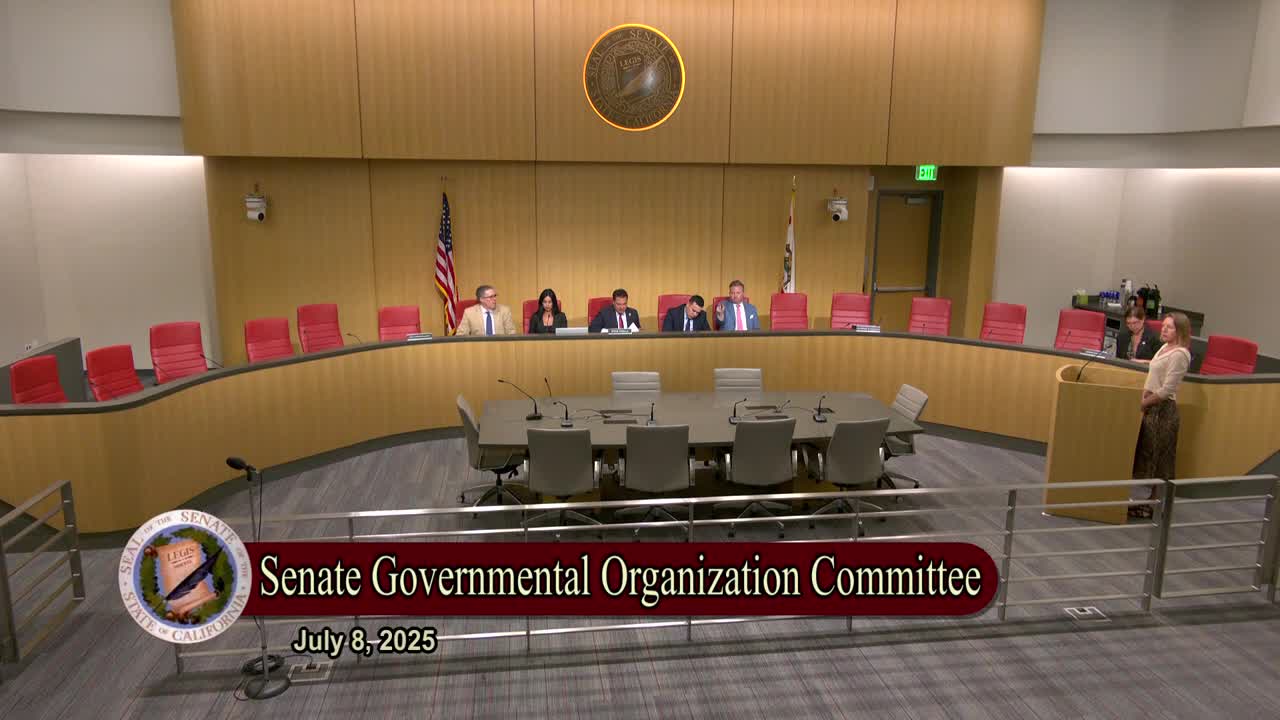 5MIN
Senate Standing Committee on Governmental Organization
 1MIN
Assembly Floor
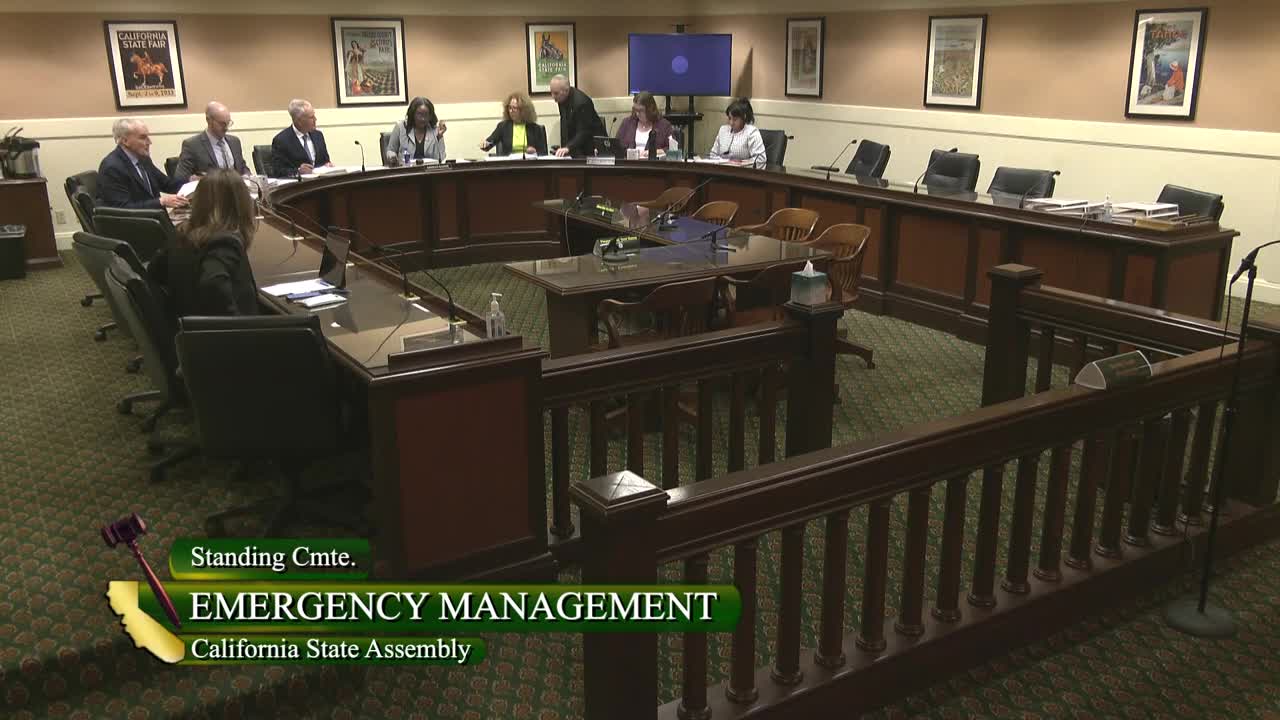 4MIN
Assembly Standing Committee on Emergency Management
Bill Author

Bill Co-Author(s):