AB 723: Real estate: digitally altered images: disclosure.
- Session Year: 2025-2026
- House: Assembly
- Latest Version Date: 2025-10-10
Current Status:
Passed
(2025-10-10: Chaptered by Secretary of State - Chapter 497, Statutes of 2025.)
Introduced
In Committee
Awaiting First Chamber Vote
Passed First Chamber
In Committee
Awaiting Second Chamber Vote
Passed Second Chamber
Enacted
Existing law, the Real Estate Law, provides for the licensure and regulation of real estate brokers and salespersons by the Real Estate Commissioner, the chief officer of the Department of Real Estate within the Business, Consumer Services, and Housing Agency. Existing law provides various duties and obligations owed to a prospective purchaser of real property. A willful violation of the Real Estate Law is a crime.
This bill would require a real estate broker or salesperson, or person acting on their behalf, who includes a digitally altered image, as defined, in an advertisement or other promotional material for the sale of real property to include a disclosure, as specified. If the advertisement or promotional material is posted on an internet website, the bill would require the same image without digital alteration to be included, as specified. By imposing new requirements on real estate licensees, the violation of which is a crime, this bill would impose a state-mandated local program.
The California Constitution requires the state to reimburse local agencies and school districts for certain costs mandated by the state. Statutory provisions establish procedures for making that reimbursement.
This bill would provide that no reimbursement is required by this act for a specified reason.
Existing law, the Real Estate Law, provides for the licensure and regulation of real estate brokers and salespersons by the Real Estate Commissioner, the chief officer of the Department of Real Estate within the Business, Consumer Services, and Housing Agency. Existing law provides various duties and obligations owed to a prospective purchaser of real property. A willful violation of the Real Estate Law is a crime.
This bill would require a real estate broker or salesperson salesperson, or person acting on their behalf, who includes a digitally altered image, as defined, in an advertisement or other promotional material for the sale of real property to include a disclosure, as specified. If the advertisement or promotional material is posted on an internet website, the bill would require the real estate broker or salesperson to additionally include the same image without digital alteration. alteration to be included, as specified. By imposing new requirements on real estate licensees, the violation of which is a crime, this bill would impose a state-mandated local program.
The California Constitution requires the state to reimburse local agencies and school districts for certain costs mandated by the state. Statutory provisions establish procedures for making that reimbursement.
This bill would provide that no reimbursement is required by this act for a specified reason.
Existing law, the Real Estate Law, provides for the licensure and regulation of real estate brokers and salespersons by the Real Estate Commissioner, the chief officer of the Department of Real Estate within the Business, Consumer Services, and Housing Agency. Existing law provides various duties and obligations owed to a prospective purchaser of real property. A willful violation of the Real Estate Law is a crime.
This bill would require a real estate broker or salesperson who includes a digitally altered image, as defined, in an advertisement or other promotional material for the sale of real property to include a disclosure, as specified. If the advertisement or promotional material is posted on an internet website, the bill would require the real estate broker or salesperson to additionally include the same image without digital alteration. By imposing new requirements on real estate licensees, the violation of which is a crime, this bill would impose a state-mandated local program.
The California Constitution requires the state to reimburse local agencies and school districts for certain costs mandated by the state. Statutory provisions establish procedures for making that reimbursement.
This bill would provide that no reimbursement is required by this act for a specified reason.
(a)(1)A real estate broker or salesperson, or person acting on their behalf, who includes a digitally altered image in an advertisement or other promotional material for the sale of real property shall include in the advertisement or promotional material a statement disclosing that the image has been altered and a link to a publicly accessible internet website, URL, or QR code that includes, and clearly identifies, the original, unaltered image. The statement shall be reasonably conspicuous and located on or adjacent to the image and shall include language indicating that the unaltered images can be accessed on the linked internet website, URL, or QR code.
(2)If an advertisement or promotional material described in paragraph (1) is posted on an internet website over which the real estate broker or salesperson, or person acting on their behalf, has control, they shall include the unaltered version of the images from which the digitally altered images were created in the posting. A person subject to this paragraph may comply with this requirement by including a link to a publicly accessible internet website that includes, and clearly identifies, the original, unaltered image. If the real estate broker or salesperson, or person acting on their behalf, complies with this requirement by including a link to the unaltered images, the statement required by paragraph (1) shall include language indicating the unaltered images can be accessed on the linked internet website, URL, or QR code.(b)(1)For purposes of this section, digitally altered image means an image, created by or at the direction of the real estate broker or salesperson, or person acting on their behalf, that has been altered through the use of photo editing software or artificial intelligence to add, remove, or change elements in the image, including, but not limited to, fixtures, furniture, appliances, flooring, walls, paint color, hardscape, landscape, facade, floor plans, and elements outside of, or visible from, the property, including, but not limited to, streetlights, utility poles, views through windows, and neighboring properties.
(2)Digitally altered image does not include an image where only lighting, sharpening, white balance, color correction, angle, straightening, cropping, exposure, or other common photo editing adjustments are made that do not change the representation of the real property.
SEC. 2.No reimbursement is required by this act pursuant to Section 6 of Article XIIIB of the California Constitution because the only costs that may be incurred by a local agency or school district will be incurred because this act creates a new crime or infraction, eliminates a crime or infraction, or changes the penalty for a crime or infraction, within the meaning of Section 17556 of the Government Code, or changes the definition of a crime within the meaning of Section 6 of Article XIIIB of the California Constitution.
(a)(1)A real estate broker or salesperson, or person acting on their behalf, who includes a digitally altered image in an advertisement or other promotional material for the sale of real property shall include in the advertisement or promotional material a statement disclosing that the image has been altered. altered and a link to a publicly accessible internet website, URL, or QR code that includes, and clearly identifies, the original, unaltered image. The statement shall be reasonably conspicuous and located on or adjacent to the image. image and shall include language indicating that the unaltered images can be accessed on the linked internet website, URL, or QR code.
(2)If an advertisement or promotional material described in paragraph (1) is posted on an internet website over which the real estate broker or salesperson, or person acting on their behalf, has control, they shall include the unaltered version of the images for which a from which the digitally altered image is included images were created in the posting. A person subject to this paragraph may comply with this requirement by including a link to the original a publicly accessible internet website that includes, and clearly identifies, the original, unaltered image. If the real estate broker or salesperson, or person acting on their behalf, complies with this requirement by including a link to the unaltered images, the statement required by paragraph (1) shall include language indicating the unaltered images can be accessed on the linked internet website, URL, or QR code.(b)(1)For purposes of this section, digitally altered image means a still-photo an image, created by or at the behest direction of the real estate broker or salesperson, or person acting on their behalf, that has been altered through the use of photo editing software or artificial intelligence to add, remove, or change elements of the real property in the image, including, but not limited to, fixtures, furniture, appliances, flooring, and walls. walls, paint color, hardscape, landscape, facade, floor plans, and elements outside of, or visible from, the property, including, but not limited to, streetlights, utility poles, views through windows, and neighboring properties.
(2)Digitally altered image does not include the use of photo editing software to adjust an image where only lighting, sharpening, white balance, color correction, angle, straightening, cropping, exposure, or other common photo editing adjustments are made that do not change the condition representation of the real property.
SEC. 2.No reimbursement is required by this act pursuant to Section 6 of Article XIIIB of the California Constitution because the only costs that may be incurred by a local agency or school district will be incurred because this act creates a new crime or infraction, eliminates a crime or infraction, or changes the penalty for a crime or infraction, within the meaning of Section 17556 of the Government Code, or changes the definition of a crime within the meaning of Section 6 of Article XIIIB of the California Constitution.
(a)(1)A real estate broker or salesperson salesperson, or person acting on their behalf, who includes a digitally altered image in an advertisement or other promotional material for the sale of real property shall include in the advertisement or promotional material a statement disclosing that the image has been altered. The statement shall be reasonably conspicuous and located on or adjacent to the image.
(2)If the an advertisement or promotional material described in paragraph (1) is posted on an internet website, the real estate broker or salesperson website over which the real estate broker or salesperson, or person acting on their behalf, has control, they shall include the unaltered version of the images for which a digitally altered image is included in the posting. A real estate broker or salesperson person subject to this paragraph may comply with this requirement by including a link to the original image.
(b)(1)For purposes of this section, digitally altered image means a still-photo image, created by or at the behest of the real estate broker or salesperson, or person acting on their behalf, that has been altered through the use of photo editing software or artificial intelligence to add, remove, or change elements of the real property in the image, including, but not limited to, furniture, appliances, flooring, and walls.
(2)Digitally altered image does not include the use of photo editing software to adjust lighting, sharpening, white balance, color correction, angle, straightening, cropping, exposure, or other common photo editing adjustments that do not change the condition of the real property.
SEC. 2.No reimbursement is required by this act pursuant to Section 6 of Article XIIIB of the California Constitution because the only costs that may be incurred by a local agency or school district will be incurred because this act creates a new crime or infraction, eliminates a crime or infraction, or changes the penalty for a crime or infraction, within the meaning of Section 17556 of the Government Code, or changes the definition of a crime within the meaning of Section 6 of Article XIIIB of the California Constitution.
(a)(1)A real estate broker or salesperson who includes a digitally altered image in an advertisement or other promotional material for the sale of real property shall include in the advertisement or promotional material a statement disclosing that the image has been altered. If The statement shall be reasonably conspicuous and located on or adjacent to the image.
(2)If the advertisement or promotional material is posted on an internet website, the real estate broker or salesperson shall include the unaltered version of the images for which a digitally altered image is included in the posting. A real estate broker or salesperson may comply with this requirement by including a link to the original image.
(b)(1)For purposes of this section, digitally altered image means an image a still-photo image, created by or at the behest of the real estate broker or salesperson, that has been altered through the use of photo editing software or artificial intelligence to add, remove, or change elements of the real property in the image, including, but not limited to, furniture, appliances, flooring, and walls.
(2)Digitally altered image does not include the use of photo editing software to adjust lighting. lighting, sharpening, white balance, color correction, angle, straightening, cropping, exposure, or other common photo editing adjustments that do not change the condition of the real property.
SEC. 2.No reimbursement is required by this act pursuant to Section 6 of Article XIIIB of the California Constitution because the only costs that may be incurred by a local agency or school district will be incurred because this act creates a new crime or infraction, eliminates a crime or infraction, or changes the penalty for a crime or infraction, within the meaning of Section 17556 of the Government Code, or changes the definition of a crime within the meaning of Section 6 of Article XIIIB of the California Constitution.
(a)A real estate broker or salesperson who includes a digitally altered image in an advertisement or other promotional material for the sale of real property shall include in the advertisement or promotional material a statement disclosing that the image has been altered. If the advertisement or promotional material is posted on an internet website, the real estate broker or salesperson shall include the unaltered version of the images for which a digitally altered image is included in the posting.
(b)(1)For purposes of this section, digitally altered image means an image that has been altered through the use of photo editing software or artificial intelligence to add, remove, or change elements in the image, including, but not limited to, furniture, appliances, and walls.
(2)Digitally altered image does not include the use of photo editing software to adjust lighting.
SEC. 2.No reimbursement is required by this act pursuant to Section 6 of Article XIIIB of the California Constitution because the only costs that may be incurred by a local agency or school district will be incurred because this act creates a new crime or infraction, eliminates a crime or infraction, or changes the penalty for a crime or infraction, within the meaning of Section 17556 of the Government Code, or changes the definition of a crime within the meaning of Section 6 of Article XIIIB of the California Constitution.
|
Date
|
Status
|
|---|---|
| Oct 10, 2025 | Chaptered by Secretary of State - Chapter 497, Statutes of 2025. |
| Oct 10, 2025 | Approved by the Governor. |
| Sep 22, 2025 | Enrolled and presented to the Governor at 3 p.m. |
| Sep 10, 2025 | Senate amendments concurred in. To Engrossing and Enrolling. (Ayes 64. Noes 2. Page 3226.). |
| Sep 9, 2025 | In Assembly. Concurrence in Senate amendments pending. |
| Sep 9, 2025 | Read third time. Passed. Ordered to the Assembly. (Ayes 29. Noes 10. Page 2674.). |
| Sep 8, 2025 | Read second time. Ordered to third reading. |
| Sep 5, 2025 | Read third time and amended. Ordered to second reading. |
| Aug 29, 2025 | Read second time. Ordered to third reading. |
| Aug 29, 2025 | From committee: Do pass. (Ayes 5. Noes 2.) (August 29). |
| Aug 18, 2025 | In committee: Referred to suspense file. |
| Jul 16, 2025 | From committee: Do pass and re-refer to Com. on APPR. (Ayes 11. Noes 2.) (July 15). Re-referred to Com. on APPR. |
| Jul 7, 2025 | From committee: Do pass and re-refer to Com. on JUD. (Ayes 8. Noes 3.) (July 7). Re-referred to Com. on JUD. |
| Jul 2, 2025 | From committee chair, with author's amendments: Amend, and re-refer to committee. Read second time, amended, and re-referred to Com. on B. P. & E.D. |
| Jun 18, 2025 | Referred to Coms. on B. P. & E.D. and JUD. |
| Jun 4, 2025 | In Senate. Read first time. To Com. on RLS. for assignment. |
| Jun 3, 2025 | Read third time. Passed. Ordered to the Senate. (Ayes 66. Noes 2. Page 1978.) |
| May 27, 2025 | Read second time. Ordered to third reading. |
| May 23, 2025 | From committee: Do pass. (Ayes 13. Noes 0.) (May 23). |
| Apr 30, 2025 | In committee: Set, first hearing. Referred to suspense file. |
| Apr 7, 2025 | Re-referred to Com. on APPR. |
| Apr 3, 2025 | Read second time and amended. |
| Apr 2, 2025 | From committee: Amend, and do pass as amended and re-refer to Com. on APPR. (Ayes 14. Noes 0.) (April 1). |
| Mar 3, 2025 | Referred to Com. on P. & C.P. |
| Feb 15, 2025 | From printer. May be heard in committee March 17. |
| Feb 14, 2025 | Read first time. To print. |
|
Date
|
Description
|
Location
|
Votes
|
|
|---|---|---|---|---|
| Sep 10, 2025 | AB 723 Pellerin Concurrence in Senate Amendments | Assembly Floor |
Passed |
|
| Sep 9, 2025 | Assembly 3rd Reading AB723 Pellerin By Wahab | Senate Floor |
Passed |
|
| Aug 29, 2025 | Do pass | Senate Standing Committee on Appropriations |
Passed |
|
| Aug 18, 2025 | Placed on suspense file | Senate Standing Committee on Appropriations |
Passed |
|
| Jul 15, 2025 | Do pass, but first be re-referred to the Committee on [Appropriations] | Senate Standing Committee on Judiciary |
Passed |
|
| Jul 7, 2025 | Do pass, but first be re-referred to the Committee on [Judiciary] | Senate Standing Committee on Business, Professions and Economic Development |
Passed |
|
| Jun 3, 2025 | AB 723 Pellerin Assembly Third Reading | Assembly Floor |
Passed |
|
| May 23, 2025 | Do pass. | Assembly Standing Committee on Appropriations |
Passed |
|
| Apr 1, 2025 | Do pass as amended and be re-referred to the Committee on [Appropriations] | Assembly Standing Committee on Privacy and Consumer Protection |
Passed |
This list shows positions taken on this bill by organizations on the date displayed, which is linked to the original source.
Positions by individuals are not included.
|
Organization
|
Position
|
Date
|
|---|---|---|
| California Building Industry Association | ** Against | |
| California Realtors Association | ** Against | |
| Consumer Federation Of California | ** Support |
CONCURRENCE IN SENATE AMENDMENTS
CSA1 Bill Id:AB 723
Author:(Pellerin)
As Amended Ver:September 5, 2025
Majority vote
SUMMARY
This bill would require that a digitally-altered image used in an advertisement or other promotional material for the sale of real estate include a reasonably conspicuous statement located on or near the image stating that the image has been digitally altered and language indicating that the unaltered images can be accessed on a linked internet website, URL, or QR code. Images adjusted with common photo-editing software adjusting lighting, sharpening, white balance, color correction, angle, straightening, cropping, exposure, or other common photo-editing adjustments that do not change the representation of the real property are not included in this requirement.
Senate Amendments
- Requires, the real estate broker or salesperson, or a person acting on their behalf to include a link to an internet website, URL, or QR code that clearly identifies the original, unaltered images without digital alteration.
- Adds to "digitally altered image" fixtures, paint color, hardscape, landscape, façade, floor plans and elements outside of, or visible from, the property, including, street lights, utility poles, views through windows, and neighboring properties.
- Makes various clarifying changes.
COMMENTS
Real estate salespeople and property owners have been staging sale properties for decades. On trend furniture and décor are temporarily moved into an empty property and arranged in visually pleasing ways to give buyers an idea of the home's potential. If the sellers are still living in the property, a home staging service can suggest ways for the owner to declutter and depersonalize the space in preparation for photos and open houses.
Digital staging is a useful and economical way to portray a real estate listing in its best light. Digital staging can insert or change elements of a property including furniture, décor, landscaping, and bathroom or kitchen elements to highlight the home's possibilities. It can also remove elements from images including out-of-date furniture and décor, as well as personal belongings. Virtual staging can become misleading when it is used to substantially alter the condition of the property, including by improving unappealing views from windows that cannot be changed, changing paint colors, removing unsightly features, adding landscape plantings, repairing damage, and upgrading fixtures. Realtors in California have a duty to avoid deceptive advertising, as outlined in California Association of Realtors guides and National Association of Realtors Codes of Ethics.[1] [2]
The end goal of including a disclosure and an unaltered version of, or link to, an image is to alert consumers to look at the image with a dose of skepticism. This bill would help protect California's consumers shopping for real estate by enabling them to know whether or not what they see in advertisements is indeed real, or if they need to investigate the actual condition of the property further.
The most recent amendments adopted in the Senate are intended to address some of the oppositions concerns.
According to the Author
Increasingly, real estate listings are using AI-manipulated images of the unit, or "digitally staged" photos, to show significantly enhanced versions of the unit to prospective consumers. Without disclosures or photos of the actual state of the listing, consumers are misled into investing time and money into real estate listings that are not in fact like the photos they may see online.
AB 723 will require that unaltered photos of real estate listings be included alongside with the altered photos in online listings. This will ensure that consumers can identify where and which elements have been altered in the listing photos. Furthermore, AB 723 will require a disclosure on the digitally altered images to indicate that they have had elements added, removed, and, or, changed.
Arguments in Support
In support of AB 723, Consumer Federation of California writes:
Tricks to make properties look bigger and better than they really are have existed in the real estate industry since it first existed. Today, with the advancement of technology these tricks are easier than ever. But consumers are far too often misled by such images, only to waste their valuable time and effort when they actually see the property in person. To many consumers this feels like a bait and switch tactic, and we would argue that in some cases this is an unfair business practice. AB 723 takes modest steps to make the digital manipulation of images better known to the consumer.
Arguments in Opposition
In opposition of AB 723, California Realtors Association argues:
AB 723 is an overly burdensome measure that is duplicative of existing law, imposes impractical requirements on licensees, and risks unintended consequences without delivering meaningful additional consumer protections.
Poorly drafted proposed amendments to the bill would further serve to confuse both licensees and consumers by complicating the language of the required disclosure as well as creating confusion as to when the disclosure is required.
California law already prohibits false or misleading advertising in real estate under Business and Professions Code Sections 10140 and 10177. Brokers and salespeople who misrepresent a property's condition are also currently subject to disciplinary action by the Department of Real Estate. Thus, the provisions of AB 723 add duplicative regulations rather than enhancing the enforcement of existing applicable statutes.
FISCAL COMMENTS
- Possible costs (General Fund, special funds) to the Department of Justice (DOJ) of an unknown amount. Actual costs will depend on whether the Attorney General pursues enforcement actions, and, if so, the level of additional staffing needed by DOJ to handle the related workload. If DOJ hires staff to handle enforcement actions authorized by this bill, the department would incur significant workload costs, likely in the low hundreds of thousands of dollars annually at a minimum. If DOJ does not pursue enforcement as authorized by this bill, the department would likely not incur any costs.
- Cost pressures (Trial Court Trust Fund, General Fund) of an unknown amount to the courts to adjudicate enforcement actions. Actual costs will depend on the number of cases filed and the amount of court time needed to resolve each case. It generally costs approximately $1,000 to operate a courtroom for one hour. Although courts are not funded on the basis of workload, increased pressure on the Trial Court Trust Fund may create a demand for increased funding for courts from the General Fund. The fiscal year 2024-25 state budget provides $37.3 million ongoing General Fund to backfill declining revenue to the Trial Court Trust Fund.
VOTES:
ASM PRIVACY AND CONSUMER PROTECTION: 14-0-1
YES: Dixon, Berman, Bryan, DeMaio, Irwin, Lowenthal, Macedo, McKinnor, Ortega, Patterson, Pellerin, Petrie-Norris, Ward, Wilson
ABS, ABST OR NV: Bauer-Kahan
ASM APPROPRIATIONS: 13-0-2
YES: Wicks, Arambula, Calderon, Caloza, Dixon, Elhawary, Fong, Mark González, Hart, Pacheco, Pellerin, Solache, Tangipa
ABS, ABST OR NV: Sanchez, Ta
ASSEMBLY FLOOR: 66-2-11
YES: Addis, Aguiar-Curry, Ahrens, Alanis, Alvarez, Arambula, Ávila Farías, Bauer-Kahan, Bennett, Berman, Boerner, Bonta, Bryan, Calderon, Caloza, Carrillo, Connolly, Davies, DeMaio, Dixon, Elhawary, Fong, Gabriel, Garcia, Gipson, Mark González, Haney, Harabedian, Hart, Irwin, Jackson, Kalra, Krell, Lee, Lowenthal, Macedo, McKinnor, Muratsuchi, Nguyen, Ortega, Pacheco, Papan, Patel, Patterson, Pellerin, Petrie-Norris, Quirk-Silva, Ransom, Celeste Rodriguez, Michelle Rodriguez, Rogers, Blanca Rubio, Sanchez, Schiavo, Schultz, Sharp-Collins, Solache, Soria, Stefani, Tangipa, Valencia, Wallis, Ward, Wicks, Wilson, Rivas
NO: Ellis, Hoover
ABS, ABST OR NV: Bains, Castillo, Chen, Flora, Gallagher, Jeff Gonzalez, Hadwick, Lackey, Ramos, Ta, Zbur
UPDATED
VERSION: September 5, 2025
CONSULTANT: Mimi Holtkamp / P. & C.P. / (916) 319-2200 FN: 0001960
California Association of Realtors, “Staging Properties Quick Guide,” www.car.org/-/media/CAR/Documents/Transaction-Center/PDF/QUICK-GUIDES/Quick-Guide---Staging-Properties.pdf. ↑
National Association of Realtors, “2025 Code of Ethics & Standards of Practice," www.nar.realtor/about-nar/governing-documents/code-of-ethics/2025-code-of-ethics-standards-of-practice. ↑
SENATE RULES COMMITTEE Office of Senate Floor Analyses (916) 651-1520 Fax: (916) 327-4478 | AB 723 |
THIRD READING
Bill No: AB 723
Author: Pellerin (D)
Amended: 9/5/25 in Senate
Vote: 21
SENATE BUS., PROF. & ECON. DEV. COMMITTEE: 8-3, 7/7/25
AYES: Ashby, Archuleta, Arreguín, Grayson, Menjivar, Smallwood-Cuevas, Umberg, Weber Pierson
NOES: Choi, Niello, Strickland
SENATE JUDICIARY COMMITTEE: 11-2, 7/15/25
AYES: Umberg, Allen, Arreguín, Ashby, Caballero, Durazo, Laird, Stern, Wahab, Weber Pierson, Wiener
NOES: Niello, Valladares
SENATE APPROPRIATIONS COMMITTEE: 5-2, 8/29/25
AYES: Caballero, Cabaldon, Grayson, Richardson, Wahab
NOES: Seyarto, Dahle
ASSEMBLY FLOOR: 66-2, 6/3/25 - See last page for vote
SUBJECT: Real estate: digitally altered images: disclosure
SOURCE: Author
DIGEST:
This bill requires a licensed real estate broker or salesperson, or person acting on their behalf, who digitally alters an image used to promote the sale of real property to include a conspicuously located disclosure that the image has been altered and requires the posting to include an unaltered version of the image or a link to a publicly available website, URL, or QR code to the original image.
Senate Floor Amendments of 9/5/25 attempt to address opposition concerns and incorporate technical assistance from Department of Real Estate.
ANALYSIS:
Existing law:
- Establishes the Department of Real Estate (DRE) to administer the Real Estate Law. (Business and Professions Code (BPC) § 10000 et seq.)
- Defines “real estate broker” as a person licensed pursuant to BPC section 10130 et seq. (BPC § 10015)
- Defines “real estate salesperson” as a natural person licensed as a salesperson and who, for compensation or in expectation of compensation, is retained by a real estate broker to conduct licensed real estate activities. (BPC § 10016)
- Defines “responsible broker” as the real estate broker responsible for exercise of control and supervision of real estate salespersons, as specified. (BPC § 10015.1)
- Provides that for any real property offered for sale or lease, any advertisement concerning any land or subdivision containing a written statement that is false or fraudulent, is a public offense punishable by a fine not exceeding $1,000, or by imprisonment in a county jail not exceeding one year. (BPC § 10140)
- Authorizes the Real Estate Commissioner to investigate the actions of any person engaged in the business or acting in the capacity of a real estate licensee and suspend or revoke a license at any time for specified acts that include:
a) Making any substantial misrepresentation.
b) Making any false promises of a character likely to influence, persuade, or induce.
c) Continued and flagrant course of misrepresentation or making of false promises through licensees.
d) Any other conduct, whether of the same or of a different character than specified in this section, which constitutes fraud or dishonest dealing.
e) Violating any section, division, or article of law which provides that a violation of that section, division, or article of law by a licensed person is a violation of that person’s licensing law, if it occurs within the scope of that person’s duties as a licensee. (BPC § 10176(a), (b), (c), (i), and (m))
- Defines “artificial intelligence” as an engineered or machine-based system that varies in its level of autonomy and that can, for explicit or implicit objectives, infer from the input it receives how to generate outputs that can influence physical or virtual environments. (Government Code § 11547.64(a))
This bill:
- Requires a real estate broker or salesperson, or a person acting on their behalf, who includes a digitally altered image in an advertisement to include a reasonably conspicuous disclosure that the image has been altered.
- Requires the real estate broker or salesperson, or a person acting on their behalf, when posting to a website over which they have control, to include an unaltered version of the picture or a link to a publicly available website, URL, or QR code that includes and clearly identifies the unaltered image.
- Defines “digitally altered image” as a still-photo image, created by or at the behest of the real estate broker or salesperson, or person acting on their behalf, that has been altered through the use of photo editing software or artificial intelligence to add, remove, or change elements of the real property in the image, including, but not limited to, furniture, appliances, flooring, walls, paint color, hardscape, landscape, facade, floor plans, and elements outside of, or visible from, the property, including, but not limited to, streetlights, utility poles, views through windows, and neighboring properties.
- Specifies that techniques such as adjusting lighting, sharpening, white balance, color correction, angle, straightening, cropping, exposure, or other common photo editing adjustments that do not change the representation of the real property are excluded from alterations that require compliance with this bill.
Background
The Real Estate Law establishes as causes for discipline when any person acting as a real estate broker or salesperson makes false or misleading statements in advertising. For example, it is a violation to knowingly authorize, direct or aid in the publication, advertisement, distribution or circularization of any false statement or representation concerning any land or subdivision (BPC § 10140). There are many other specific instances where false or misleading advertising is prohibited by the Real Estate Law, however, none specifically address the content of images used in an advertisement for the sale of real property.
Real estate salespeople and property owners have been staging sale properties for decades. Furniture and décor are temporarily moved into an empty property and arranged in visually pleasing ways to give buyers an idea of the home’s potential. If the sellers are still living in the property, a home staging service can suggest ways for the owner to declutter and depersonalize the space in preparation for photos and open houses or even swap out some of the owner’s belongings with more current décor and furniture. According to Redfin.com, traditional staging can average $500 to $600 per room, depending on several factors, which are typically included in the listing package, but property owners often pay for home staging.
Alternatively, digital staging is a useful and economical way to portray a real estate listing in its best light. Digital staging can insert or change elements of a real property including furniture, décor, wall color, and bathroom or kitchen elements to highlight the home’s possibilities. It can also remove elements from images including out-of-date furniture and décor, as well as personal belongings. Virtual staging can become misleading when it is used to substantially alter the condition of the property by improving unappealing views from windows that cannot be changed, removing unsightly features, repairing damage, updating floors and cabinetry, adding non-existent landscaping, and other alterations to the image.
As editing tools and artificial intelligence improve and become more user friendly and widely used, the difference between an altered image can be difficult, if not impossible, to distinguish from an unedited image. Best Practices as Described by Industry. Article 12 of the National Association of Realtors’ (Association) Code of Ethics and Standard of Practice, Effective June 5, 2025, states, “REALTORS® shall be honest and truthful in their real estate communications and shall present a true picture in their advertising, marketing, and other representations. REALTORS® shall ensure that their status as real estate professionals is readily apparent in their advertising, marketing, and other representations…”
To accomplish honest and truthful communications, Association members’ duties to the public are described in Standards of Practice. Standard of Practice 12-8 states, “The obligation to present a true picture in representations to the public includes information presented, provided, or displayed on REALTORS®’ websites.” Further, Standard of Practice 12-10 states, “REALTORS®’ obligation to present a true picture in their advertising and representations to the public includes Internet content, images, and the URLs and domain names they use, and prohibits REALTORS® from…misleading consumers, including use of misleading images.”
Similarly, the California Association of Realtors (CAR) reminds their members in a CAR Legal Tool presentation posted to their website, “Staging,” that an advantage to virtual staging is that a buyer cannot ask for items in the picture to be part of the sale. Additionally, the document offers virtual staging cautions, stating, “The property itself should never be altered in a way that could mislead the buyer. If there is an alteration, a clear and explicit warning must be included. Ex: “Here is what the yard could look like with all brush and debris removed.”
FISCAL EFFECT: Appropriation: No Fiscal Com.: Yes Local: Yes
According to the Senate Committee on Appropriations, DRE notes one-time costs to promulgate regulations, update training materials, and provide guidance to its licensees on what constitutes a digitally altered image, and ongoing increased administrative and enforcement costs to address complaints. DRE estimates costs to address this additional workload to be $297,000 in the first year, $285,000 in the second year, and $247,000 ongoing (Real Estate Fund).
SUPPORT: (Verified 9/4/25)
None received
OPPOSITION: (Verified 9/4/25)
California Association of Realtors
ARGUMENTS IN OPPOSITION: The California Association of Realtors opposed this bill unless amended, writing, “The bill’s mandate that licensees display original, unedited images alongside altered ones is particularly problematic. Even routine, good-faith edits—such as decluttering, adding minimal décor or correcting lens distortion—would trigger disclosure, creating unnecessary risk of discipline for standard industry practices that do not mislead consumers.”
ASSEMBLY FLOOR: 66-2, 6/3/25
AYES: Addis, Aguiar-Curry, Ahrens, Alanis, Alvarez, Arambula, Ávila Farías, Bauer-Kahan, Bennett, Berman, Boerner, Bonta, Bryan, Calderon, Caloza, Carrillo, Connolly, Davies, DeMaio, Dixon, Elhawary, Fong, Gabriel, Garcia, Gipson, Mark González, Haney, Harabedian, Hart, Irwin, Jackson, Kalra, Krell, Lee, Lowenthal, Macedo, McKinnor, Muratsuchi, Nguyen, Ortega, Pacheco, Papan, Patel, Patterson, Pellerin, Petrie-Norris, Quirk-Silva, Ransom, Celeste Rodriguez, Michelle Rodriguez, Rogers, Blanca Rubio, Sanchez, Schiavo, Schultz, Sharp-Collins, Solache, Soria, Stefani, Tangipa, Valencia, Wallis, Ward, Wicks, Wilson, Rivas
NOES: Ellis, Hoover
NO VOTE RECORDED: Bains, Castillo, Chen, Flora, Gallagher, Jeff Gonzalez, Hadwick, Lackey, Ramos, Ta, Zbur
Prepared by: Yeaphana La Marr / B., P. & E.D. /
9/8/25 21:21:14
SENATE RULES COMMITTEE Office of Senate Floor Analyses (916) 651-1520 Fax: (916) 327-4478 | AB 723 |
THIRD READING
Bill No: AB 723
Author: Pellerin (D)
Amended: 7/2/25 in Senate
Vote: 21
SENATE BUS., PROF. & ECON. DEV. COMMITTEE: 8-3, 7/7/25
AYES: Ashby, Archuleta, Arreguín, Grayson, Menjivar, Smallwood-Cuevas, Umberg, Weber Pierson
NOES: Choi, Niello, Strickland
SENATE JUDICIARY COMMITTEE: 11-2, 7/15/25
AYES: Umberg, Allen, Arreguín, Ashby, Caballero, Durazo, Laird, Stern, Wahab, Weber Pierson, Wiener
NOES: Niello, Valladares
SENATE APPROPRIATIONS COMMITTEE: 5-2, 8/29/25
AYES: Caballero, Cabaldon, Grayson, Richardson, Wahab
NOES: Seyarto, Dahle
ASSEMBLY FLOOR: 66-2, 6/3/25 - See last page for vote
SUBJECT: Real estate: digitally altered images: disclosure
SOURCE: Author
DIGEST:
This bill requires a licensed real estate broker or salesperson, or person acting on their behalf, who digitally alters an image used in promotion for the sale of real property to include a conspicuously located disclosure that the image has been altered. This bill also requires an unaltered version of the image or a link to the original image to be included in the posting.
ANALYSIS:
Existing law:
- Establishes the Department of Real Estate (DRE) to administer the Real Estate Law. (Business and Professions Code (BPC) § 10000 et seq.)
- Defines “real estate broker” as a person licensed pursuant to BPC section 10130 et seq. (BPC § 10015)
- Defines “real estate salesperson” as a natural person licensed as a salesperson and who, for compensation or in expectation of compensation, is retained by a real estate broker to conduct licensed real estate activities. (BPC § 10016)
- Defines “responsible broker” as the real estate broker responsible for exercise of control and supervision of real estate salespersons, as specified. (BPC § 10015.1)
- Provides that for any real property offered for sale or lease, any advertisement concerning any land or subdivision containing a written statement that is false or fraudulent, is a public offense punishable by a fine not exceeding $1,000, or by imprisonment in a county jail not exceeding one year. (BPC § 10140)
- Authorizes the Real Estate Commissioner to investigate the actions of any person engaged in the business or acting in the capacity of a real estate licensee and suspend or revoke a license at any time for specified acts that include:
a) Making any substantial misrepresentation.
b) Making any false promises of a character likely to influence, persuade, or induce.
c) Continued and flagrant course of misrepresentation or making of false promises through licensees.
d) Any other conduct, whether of the same or of a different character than specified in this section, which constitutes fraud or dishonest dealing.
e) Violating any section, division, or article of law which provides that a violation of that section, division, or article of law by a licensed person is a violation of that person’s licensing law, if it occurs within the scope of that person’s duties as a licensee. (BPC § 10176(a), (b), (c), (i), and (m))
- Defines “artificial intelligence” as an engineered or machine-based system that varies in its level of autonomy and that can, for explicit or implicit objectives, infer from the input it receives how to generate outputs that can influence physical or virtual environments. (Government Code § 11547.64(a))
This bill:
- Requires a real estate broker or salesperson, or a person acting on their behalf, who includes a digitally altered image in an advertisement to include a reasonably conspicuous disclosure that the image has been altered.
- Requires the real estate broker or salesperson, or a person acting on their behalf, when posting to a website over which they have control, to include an unaltered version of the picture or a link to the original image.
- Defines “digitally altered image” as a still-photo image, created by or at the behest of the real estate broker or salesperson, or person acting on their behalf, that has been altered through the use of photo editing software or artificial intelligence to add, remove, or change elements of the real property in the image, including, but not limited to, furniture, appliances, flooring, and walls.
- Specifies that editing techniques such as adjusting lighting, sharpening, white balance, color correction, angle, straightening, cropping, exposure, or other common photo editing adjustments that do not change the condition of the real property are excluded from the alterations that require compliance with the provisions of this bill.
Background
The Real Estate Law establishes as causes for discipline when any person acting as a real estate broker or salesperson makes false or misleading statements in advertising. For example, it is a violation to knowingly authorize, direct or aid in the publication, advertisement, distribution or circularization of any false statement or representation concerning any land or subdivision (BPC § 10140). There are many other specific instances where false or misleading advertising is prohibited by the Real Estate Law, however, none specifically address the content of images used in an advertisement for the sale of real property.
Real estate salespeople and property owners have been staging sale properties for decades. Furniture and décor are temporarily moved into an empty property and arranged in visually pleasing ways to give buyers an idea of the home’s potential. If the sellers are still living in the property, a home staging service can suggest ways for the owner to declutter and depersonalize the space in preparation for photos and open houses or even swap out some of the owner’s belongings with more current décor and furniture. According to Redfin.com, traditional staging can average $500 to $600 per room, depending on several factors, which are typically included in the listing package, but property owners often pay for home staging.
Alternatively, digital staging is a useful and economical way to portray a real estate listing in its best light. Digital staging can insert or change elements of a real property including furniture, décor, wall color, and bathroom or kitchen elements to highlight the home’s possibilities. It can also remove elements from images including out-of-date furniture and décor, as well as personal belongings. Virtual staging can become misleading when it is used to substantially alter the condition of the property by improving unappealing views from windows that cannot be changed, removing unsightly features, repairing damage, updating floors and cabinetry, adding non-existent landscaping, and other alterations to the image.
As editing tools and artificial intelligence improve and become more user friendly and widely used, the difference between an altered image can be difficult, if not impossible, to distinguish from an unedited image. Best Practices as Described by Industry. Article 12 of the National Association of Realtors’ (Association) Code of Ethics and Standard of Practice, Effective June 5, 2025, states, “REALTORS® shall be honest and truthful in their real estate communications and shall present a true picture in their advertising, marketing, and other representations. REALTORS® shall ensure that their status as real estate professionals is readily apparent in their advertising, marketing, and other representations…”
To accomplish honest and truthful communications, Association members’ duties to the public are described in Standards of Practice. Standard of Practice 12-8 states, “The obligation to present a true picture in representations to the public includes information presented, provided, or displayed on REALTORS®’ websites.” Further, Standard of Practice 12-10 states, “REALTORS®’ obligation to present a true picture in their advertising and representations to the public includes Internet content, images, and the URLs and domain names they use, and prohibits REALTORS® from…misleading consumers, including use of misleading images.”
Similarly, the California Association of Realtors (CAR) reminds their members in a CAR Legal Tool presentation posted to their website, “Staging,” that an advantage to virtual staging is that a buyer cannot ask for items in the picture to be part of the sale. Additionally, the document offers virtual staging cautions, stating, “The property itself should never be altered in a way that could mislead the buyer. If there is an alteration, a clear and explicit warning must be included. Ex: “Here is what the yard could look like with all brush and debris removed.”
FISCAL EFFECT: Appropriation: No Fiscal Com.: Yes Local: Yes
According to the Senate Appropriations Committee, DRE notes one-time costs to promulgate regulations, update training materials, and provide guidance to its licensees on what constitutes a digitally altered image, and ongoing increased administrative and enforcement costs to address complaints. DRE estimates costs to address this additional workload to be $297,000 in the first year, $285,000 in the second year, and $247,000 ongoing (Real Estate Fund).
SUPPORT: (Verified 8/29/25)
None received
OPPOSITION: (Verified 8/29/25)
California Association of Realtors
ARGUMENTS IN OPPOSITION: The California Association of Realtors opposed this bill unless amended, writing, “The bill’s mandate that licensees display original, unedited images alongside altered ones is particularly problematic. Even routine, good-faith edits—such as decluttering, adding minimal décor or correcting lens distortion—would trigger disclosure, creating unnecessary risk of discipline for standard industry practices that do not mislead consumers.”
ASSEMBLY FLOOR: 66-2, 6/3/25
AYES: Addis, Aguiar-Curry, Ahrens, Alanis, Alvarez, Arambula, Ávila Farías, Bauer-Kahan, Bennett, Berman, Boerner, Bonta, Bryan, Calderon, Caloza, Carrillo, Connolly, Davies, DeMaio, Dixon, Elhawary, Fong, Gabriel, Garcia, Gipson, Mark González, Haney, Harabedian, Hart, Irwin, Jackson, Kalra, Krell, Lee, Lowenthal, Macedo, McKinnor, Muratsuchi, Nguyen, Ortega, Pacheco, Papan, Patel, Patterson, Pellerin, Petrie-Norris, Quirk-Silva, Ransom, Celeste Rodriguez, Michelle Rodriguez, Rogers, Blanca Rubio, Sanchez, Schiavo, Schultz, Sharp-Collins, Solache, Soria, Stefani, Tangipa, Valencia, Wallis, Ward, Wicks, Wilson, Rivas
NOES: Ellis, Hoover
NO VOTE RECORDED: Bains, Castillo, Chen, Flora, Gallagher, Jeff Gonzalez, Hadwick, Lackey, Ramos, Ta, Zbur
Prepared by: Yeaphana La Marr / B., P. & E.D. /
8/29/25 20:52:56
SENATE COMMITTEE ON
Senator Anna Caballero, Chair
2025 - 2026 Regular Session
AB 723 (Pellerin) - Real estate: digitally altered images: disclosure
Version: | Policy Vote: |
Urgency: | Mandate: |
Hearing Date: | Consultant: |
Bill Summary:
AB 723 requires a real estate broker or salesperson, or person acting on their behalf, to include a reasonably conspicuous disclosure on or adjacent to a digitally altered image used in an advertisement or other promotional material for the sale of real property, as specified.
Fiscal Impact:
The Department of Real Estate (DRE) notes one-time costs to promulgate regulations, update training materials, and provide guidance to its licensees on what constitutes a digitally altered image, and ongoing increased administrative and enforcement costs to address complaints. DRE estimates costs to address this additional workload to be $297,000 in the first year, $285,000 in the second year, and $247,000 ongoing (Real Estate Fund).
Background:
The Real Estate Law currently provides many causes for discipline when any person acting as a real estate broker or salesperson makes false or misleading statements in advertising. For example, it is a violation to:
1) Knowingly authorize, direct or aid in the publication, advertisement, distribution or circularization of any false statement or representation concerning any land or subdivision (Business and Professions Code (BPC) § 10140).
2) Make, or cause to be made, any false, misleading, or deceptive advertisements or representations concerning the services that the licensee will provide to prospective tenants of a rental listing (BPC § 10167.11(a)).
3) Refer a rental property to a prospective tenant knowing, or having reason to know, that the property has been described or advertised by or on behalf of the licensee in a false, misleading, or deceptive manner (BPC § 10167.11(b)(2)).
4) Knowingly advertise or cause or permit to be advertised, any statement or representation with regard to the rates, terms, or conditions for making, purchasing or negotiating loans or real property sales contracts which is false, misleading or deceptive (BPC § 10235).
There are many other specific instances where false or misleading advertising is prohibited by the Real Estate Law, however, none specifically address the content of images used in an advertisement for the sale of real property.
Proposed Law:
- Requires a real estate broker or salesperson, or person acting on their behalf, to include a reasonably conspicuous disclosure on or adjacent to a digitally altered image used in an advertisement or other promotional material for the sale of real property.
- Requires an unaltered version of, or a link to, the original image be included in a posting if the digitally altered image is posted on an internet website over which the real estate broker or salesperson, or person acting on their behalf, as control of.
- Defines “digitally altered image” to mean a still-photo image, created by or at the behest of the real estate broker or salesperson, or person acting on their behalf, that has been altered through the use of photo editing software or artificial intelligence to add, remove, or change elements of the real property in the image, including, but not limited to, furniture, appliances, flooring, and walls.
- Specifies a “digitally altered image” does not include the use of photo editing software to adjust lighting, sharpening, white balance, color correction, angle, straightening, cropping, exposure, or other common photo editing adjustments that do not change the condition of the real property.
-- END --
Senator Thomas Umberg, Chair
2025-2026 Regular Session
Bill No: AB 723 (Author:Pellerin)
Version: July 2, 2025
Hearing Date: July 15, 2025
Fiscal: Yes
Urgency: No
AMConsultant:
SUBJECT
Real estate: digitally altered images: disclosure
DIGEST
This bill requires a real estate broker or salesperson licensed by the Department of Real Estate (DRE), or a person acting on their behalf, who digitally alters an image used in promotion for the sale of real property to include a conspicuously located disclosure that the image has been altered. The bill requires an unaltered version of the image, or a link to the original image, to be included in the posting.
EXECUTIVE SUMMARY
The staging of home listings has long been a part of the real estate industry, but the increasing popularity and accessibility of photo editing software has given rise to the digital insertion of elements into images of homes, in a practice known as ‘digital’ or ‘virtual’ staging. The author argues that with the advent of better and cheaper photo technology and the proliferation of AI-generated and edited images, there is a potential for consumers to be harmed by misrepresentations in virtually staged or digitally altered photos associated with the sale of real property. This bill seeks to address the issue by providing that a real estate broker or salesperson must conspicuously disclose any altered images used in the promotion for the sale or real estate and provide a version of the unaltered image in the posting. The bill is author sponsored. The Committee received no timely support for the bill. The bill is opposed by the California Association of Realtors. The bill passed the Senate Business, Professions and Economic Development Committee on a vote of 8 to 3.
PROPOSED CHANGES TO THE LAW
Existing law:
- Licenses and regulates real estate brokers and real estate salespersons in this state by the Department of Real Estate (DRE) pursuant to the Real Estate Law. (Bus. & Prof. Code §§ 10000 et seq.)
- Establishes the Real Estate Commissioner (Commissioner) as the chief officer of the DRE who is required to enforce the Real Estate Law in a manner that achieves the maximum protection for the buyers of real property and those persons dealing with real estate licensees. Bus. & Prof. Code § 10050.)
- Defines “real estate broker” as a person licensed pursuant to Business and Professions Code Sections 10130 et seq. (Bus. & Prof. Code § 10015.)
- Defines “real estate salesperson” to mean a natural person licensed as a salesperson and who, for compensation or in expectation of compensation, is retained by a real estate broker to conduct licensed real estate activities. (Bus. & Prof. Code § 10016.)
- Prohibits, for any real property offered for sale or lease, any advertisement, pamphlet, prospectus or letter concerning any said land or subdivision, to contain any written statement that is false or fraudulent. Makes a violation of this provision a public offense to be punished by a fine not exceeding $1,000, or by imprisonment in a county jail not exceeding one year. (Bus. & Prof. Code § 10140.)
- Authorizes the Real Estate Commissioner to investigate the actions of any person engaged in the business or acting in the capacity of a real estate licensee, and authorizes them to temporarily suspend or permanently revoke a real estate license at any time where a real estate licensee, in performing or attempting to perform any of the acts within the scope of the Real Estate Law, has been found guilty of specified, including:
- Making any substantial misrepresentation.
- Making any false promises of a character likely to influence, persuade, or induce.
- Continued and flagrant course of misrepresentation or making of false promises through licensees.
- Any other conduct, whether of the same or of a different character than specified in this section, which constitutes fraud or dishonest dealing.
- Violating any section, division, or article of law which provides that a violation of that section, division, or article of law by a licensed person is a violation of that person’s licensing law, if it occurs within the scope of that person’s duties as a licensee. (Bus. & Prof. Code § 10176( a), (b), (c), (i), & (m).)
- Defines “artificial intelligence” as an engineered or machine-based system that varies in its level of autonomy and that can, for explicit or implicit objectives, infer from the input it receives how to generate outputs that can influence physical or virtual environments. (Gov. Code § 11547.64(a).)
This bill:
- Requires a real estate broker or salesperson, or a person acting on their behalf, who includes a digitally altered image in an advertisement to disclose that the image has been altered. The statement must be reasonably conspicuous and located on or adjacent to the image.
- Requires the real estate broker or salesperson, or a person acting on their behalf, when posting a digitally altered image to a website over which they have control, to include an unaltered version of the picture or a link to the original image.
- Defines “digitally altered image” as a still-photo image, created by or at the behest of the real estate broker or salesperson, or person acting on their behalf, that has been altered through the use of photo editing software or artificial intelligence to add, remove, or change elements of the real property in the image, including, but not limited to, furniture, appliances, flooring, and walls.
- Provides that “digitally altered image” does not include the use of photo editing software to adjust lighting, sharpening, white balance, color correction, angle, straightening, cropping, exposure, or other common photo editing adjustments that do not change the condition of the real property.
COMMENTS
- Stated need for the bill
The author writes:
Increasingly, real estate listings are using AI-manipulated images of the unit, or “digitally staged” photos, to show significantly enhanced versions of the unit to prospective consumers. Without disclosures or photos of the actual state of the listing, consumers are misled into investing time and money into real estate listings that are not in fact like the photos they may see online.
AB 723 simply requires that digitally staged or digitally altered images include a disclosure to the fact that the image has been digitally altered. If the advertisement or promotional material is hosted on a website, the real estate broker or their agent must also include a link to the original image or the unaltered version of the images.
- This bill seeks to address digital or virtual staging in regards to real estate
Staging a property when it is for sale has been a common practice for real estate salespeople. This can involve ways to depersonalize a space or limit clutter to completely removing an owner’s personal property and staging the home with different furniture and decorations. Redfin.com reports that this type of staging can cost anywhere from $500 to $600, on average.[1] With the advent of photo editing software and now AI-generated and edited images, real estate salespersons have begun using virtual or digital staging in photos posted on online advertising homes or other properties for sale. Often a note on the photo may be included to indicate virtual or digital staging has occurred, but this is not always the case. This bill seeks to address this issue by offering consumer protections through transparency and disclosures.
The Real Estate Law prohibits a real estate broker or salesperson from making false or misleading statements in advertisements. Some specific prohibitions are:
- Knowingly authorizing, directing or aiding in the publication, advertisement, distribution or circularization of any false statement or representation concerning any land or subdivision. (Bus. & Prof. Code § 10140.)
- Making, or causing to be made, any false, misleading, or deceptive advertisements or representations concerning the services that the licensee will provide to prospective tenants of a rental listing (Bus. & Prof. Code § 10167.11(a).)
- Referring a rental property to a prospective tenant knowing, or having reason to know, that the property has been described or advertised by or on behalf of the licensee in a false, misleading, or deceptive manner. (Bus. & Prof. Code § 1167.11(b)(2).)
As the Senate Business, Professions and Economic Development Committee analysis of this bill notes that:
Article 12 of the National Association of Realtors’ (Association) Code of Ethics and Standard of Practice, Effective June 5, 2025, states, REALTORS® shall be honest and truthful in their real estate communications and shall present a true picture in their advertising, marketing, and other representations. REALTORS® shall ensure that their status as real estate professionals is readily apparent in their advertising, marketing, and other representations…”
To accomplish honest and truthful communications, Association members’ duties to the public are described in Standards of Practice. Standard of Practice 12-8 states, “The obligation to present a true picture in representations to the public includes information presented, provided, or displayed on REALTORS®’ websites.” Further, Standard of Practice 12-10 states, “REALTORS®’ obligation to present a true picture in their advertising and representations to the public includes Internet content, images, and the URLs and domain names they use, and prohibits REALTORS® from…misleading consumers, including use of misleading images.”
Similarly, the California Association of Realtors (CAR) reminds their members in a CAR Legal Tool presentation posted to their website, “Staging,” that an advantage to virtual staging is that a buyer cannot ask for items in the picture to be part of the sale. Additionally, the document offers virtual staging cautions, stating, “The property itself should never be altered in a way that could mislead the buyer. If there is an alteration, a clear and explicit warning must be included. Ex: “Here is what the yard could look like with all brush and debris removed.”[2]
This bill’s provisions align with the code of ethics provisions of the National Association of Realtors’ described above.
- Statements in opposition
The California Association of Realtors (CAR) writes in opposition unless amended, stating:
[…] Licensees should not be liable for images that appear on third-party websites they do not control or have not contracted with. Once a listing appears on a website or it is often syndicated or sold to other companies with which the licensee has no direct relationship with and cannot monitor or control. Also, other websites and social media scrape and repost data on listings, and again the licensee has no control over what manipulations may occur or what information may be displayed.
Requiring that the changes to the image be material helps ensure that trivial edits made to present the property in its best light do not unintentionally trigger possible liability. All consumers, including buyers of real property, understand that listing agents and sellers will try to present the property in the best light. Liability should not attach to minor visual alterations that do not affect the real property’s actual condition or functionality.
Importantly, California law already protects buyers and consumers by prohibiting false or misleading advertising in real estate under Business and Professions Code Sections 10140 and 10177. Furthermore, brokers and salespeople who misrepresent a property’s condition are also currently subject to disciplinary action by the Department of Real Estate (DRE). Consumers who are misled by undisclosed virtual staging can pursue existing remedies that have consequences ranging from civil damages, fines, and DRE discipline for the licensee that could include the loss of the real estate license in egregious situations. […]
SUPPORT
None received
OPPOSITION
California Association of Realtors
RELATED LEGISLATION
Pending Legislation: None known.
Prior Legislation: None known.
PRIOR VOTES
Senate Business, Professions and Economic Development Committee (Ayes 8, Noes 3)
Assembly Floor (Ayes 66, Noes 2)
Assembly Appropriations Committee (Ayes 13, Noes 0)
Assembly Privacy and Consumer Protection Committee (Ayes 14, Noes 0)
**************
Redfin Blog, Virtual Staging: An Innovative Way to Impress Buyers, www.redfin.com/blog/impress-buyers-with-virtual-staging/. ↑
Sen. Bus. Prof.& Econ. Dev. Comm. analysis of AB 723 (2025-26 reg. sess) as amended Jul. 2, 2025 at p. 4. ↑
ASSEMBLY THIRD READING
ATR Bill Id:AB 723
Author:(Pellerin)
As Amended Ver:April 3, 2025
Majority vote
SUMMARY
This bill would require that a digitally-altered image used in an advertisement or other promotional material for the sale of real estate include a reasonably conspicuous statement located on or near the image stating that the image has been digitally altered. If the advertisement or promotional material is hosted on an internet website, the real estate broker or salesperson must also include a link to the original image or the unaltered version of the image. Images adjusted with common photo-editing software are not included in this requirement.
Major Provisions
- Requires a real estate broker or salesperson who includes a digitally-altered image in an advertisement or other promotional material for the sale of real property to include a reasonably conspicuous statement disclosing that the image has been altered.
- Requires, if the advertisement or promotional material is posted on an internet website, the real estate broker or salesperson to include the same images without digital alteration or a link to the image.
- Defines "digitally altered image" as an image that has been altered through the use of photo editing software or artificial intelligence to add, remove, or change elements in the image, including, but not limited to, furniture, appliances, and walls. Excludes from this definition the use of photo editing software to adjust lighting, sharpening, white balance, color correction, angle, straightening, cropping, exposure, or other common photo-editing adjustments that do not change the condition of the real property.
COMMENTS
Real estate salespeople and property owners have been staging sale properties for decades. On trend furniture and décor are temporarily moved into an empty property and arranged in visually pleasing ways to give buyers an idea of the home's potential. If the sellers are still living in the property, a home staging service can suggest ways for the owner to declutter and depersonalize the space in preparation for photos and open houses.
Digital staging is a useful and economical way to portray a real estate listing in its best light. Digital staging can insert or change elements of a property including furniture, décor, landscaping, wall color, and bathroom or kitchen elements to highlight the home's possibilities. It can also remove elements from images including out-of-date furniture and décor, as well as personal belongings. Virtual staging can become misleading when it is used to substantially alter the condition of the property, including by improving unappealing views from windows that cannot be changed, removing unsightly features, repairing damage, and upgrading fixtures. Realtors in California have a duty to avoid deceptive advertising, as outlined in California Association of Realtors guides and National Association of Realtors Codes of Ethics.[1] [2]
The end goal of including a disclosure and an unaltered version of, or link to, an image is to alert consumers to look at the image with a dose of skepticism. This bill would help protect California's consumers shopping for real estate by enabling them to know whether or not what they see in advertisements is indeed real, or if they need to investigate the actual condition of the property further.
According to the Author
Increasingly, real estate listings are using AI-manipulated images of the unit, or "digitally staged" photos, to show significantly enhanced versions of the unit to prospective consumers. Without disclosures or photos of the actual state of the listing, consumers are misled into investing time and money into real estate listings that are not in fact like the photos they may see online.
AB 723 will require that unaltered photos of real estate listings be included alongside with the altered photos in online listings. This will ensure that consumers can identify where and which elements have been altered in the listing photos. Furthermore, AB 723 will require a disclosure on the digitally altered images to indicate that they have had elements added, removed, and, or, changed.
Arguments in Support
In support of AB 723, Consumer Federation of California writes:
Tricks to make properties look bigger and better than they really are have existed in the real estate industry since it first existed. Today, with the advancement of technology these tricks are easier than ever. But consumers are far too often misled by such images, only to waste their valuable time and effort when they actually see the property in person. To many consumers this feels like a bait and switch tactic, and we would argue that in some cases this is an unfair business practice. AB 723 takes modest steps to make the digital manipulation of images better known to the consumer.
Arguments in Opposition
The California Building Industry Association opposes the bill. The substantive content of their letter, in its entirety, is as follows:
The California Building Industry Association (CBIA) opposes AB 723 (Pellerin), which
imposes onerous and costly requirements that will further exacerbate the state's housing
crisis.
California Association of Realtors, writing about the prior version of the bill (which did not exempt most minor alterations of images), states:
California law already prohibits false or misleading advertising in real estate under Business and Professions Code Sections 10140 and 10177. Brokers and salespeople who misrepresent a property's condition are also currently subject to disciplinary action by the Department of Real Estate. Thus, the provisions of AB 723 add duplicative regulations rather than enhancing the enforcement of existing applicable statutes.
The requirement in AB 723 to post original, unedited versions of images alongside any altered image is especially onerous and burdensome. Under this language, even minor cosmetic adjustments, like decluttering or adjusting lighting would be subject to the additional image disclosure. This is logistically impractical especially when images appear on third party applications over which a licensee may have no control. This approach creates the risk of discipline for a licensee for common advertising practices with no clear consumer benefit.
FISCAL COMMENTS
- Possible costs (General Fund, special funds) to the Department of Justice (DOJ) of an unknown amount. Actual costs will depend on whether the Attorney General pursues enforcement actions, and, if so, the level of additional staffing needed by DOJ to handle the related workload. If DOJ hires staff to handle enforcement actions authorized by this bill, the department would incur significant workload costs, likely in the low hundreds of thousands of dollars annually at a minimum. If DOJ does not pursue enforcement as authorized by this bill, the department would likely not incur any costs.
- Cost pressures (Trial Court Trust Fund, General Fund) of an unknown amount to the courts to adjudicate enforcement actions. Actual costs will depend on the number of cases filed and the amount of court time needed to resolve each case. It generally costs approximately $1,000 to operate a courtroom for one hour. Although courts are not funded on the basis of workload, increased pressure on the Trial Court Trust Fund may create a demand for increased funding for courts from the General Fund. The fiscal year 2024-25 state budget provides $37.3 million ongoing General Fund to backfill declining revenue to the Trial Court Trust Fund.
VOTES
ASM PRIVACY AND CONSUMER PROTECTION: 14-0-1
YES: Dixon, Berman, Bryan, DeMaio, Irwin, Lowenthal, Macedo, McKinnor, Ortega, Patterson, Pellerin, Petrie-Norris, Ward, Wilson
ABS, ABST OR NV: Bauer-Kahan
ASM APPROPRIATIONS: 13-0-2
YES: Wicks, Arambula, Calderon, Caloza, Dixon, Elhawary, Fong, Mark González, Hart, Pacheco, Pellerin, Solache, Tangipa
ABS, ABST OR NV: Sanchez, Ta
UPDATED
VERSION: April 3, 2025
CONSULTANT: Mimi Holtkamp / P. & C.P. / (916) 319-2200 FN: 0000829
California Association of Realtors, “Staging Properties Quick Guide,” www.car.org/-/media/CAR/Documents/Transaction-Center/PDF/QUICK-GUIDES/Quick-Guide---Staging-Properties.pdf. ↑
National Association of Realtors, “2025 Code of Ethics & Standards of Practice," www.nar.realtor/about-nar/governing-documents/code-of-ethics/2025-code-of-ethics-standards-of-practice. ↑
Date of Hearing: April 30, 2025
ASSEMBLY COMMITTEE ON APPROPRIATIONS
Buffy Wicks, Chair
ABPCA Bill Id:AB 723
Author:(Pellerin) – As Amended Ver:April 3, 2025
Policy Committee: | Privacy and Consumer Protection | Vote: | 14 - 0 |
|
| ||
|
|
Urgency: No State Mandated Local Program: Yes Reimbursable: No
SUMMARY:
This bill requires a real estate broker or salesperson to disclose digital alteration of images used to advertise real property for sale, and, if digitally altered images are posted online, to also post the unaltered images.
FISCAL EFFECT:
- Costs (special funds) to the Real Estate Department for additional staffing for education and enforcement, likely in the low hundreds of thousands of dollars annually. The Real Estate Department estimates costs of $151,000 in the first year of implementation, $143,000 in the second year of implementation, and $106,000 annually thereafter for staffing to conduct licensee and consumer education and staff training, to review and investigate alleged violations by real estate licensees, and to issue fines and citations for violations. The department reports additional attorney and staff time for implementation, including vetting external communications, updating web systems, and making programing changes to the department’s enforcement data system to track complaints and potential enforcement actions.
- To the extent violations are charged as misdemeanors, cost pressures (Trial Court Trust Fund, General Fund) to the courts to adjudicate the charges and costs to the counties (local funds, General Fund) for incarceration in county jail upon conviction. Actual court and county incarceration costs will depend on the number of misdemeanor charges filed, the amount of court time needed to adjudicate each case, and whether convictions result in jail time.
Although courts are not funded on the basis of workload, increased pressure on the Trial Court Trust Fund may create a demand for increased funding for courts from the General Fund. The fiscal year 2024-25 state budget provides $37.3 million ongoing General Fund to backfill declining revenue to the Trial Court Trust Fund. County incarceration costs are generally not considered reimbursable state mandates pursuant to Proposition 30 (2012), but overcrowding in county jails creates cost pressure on the General Fund because the state has historically granted new funding to counties to offset overcrowding resulting from 2011 public safety realignment.
COMMENTS:
- Purpose. According to the author:
Increasingly, real estate listings are using AI-manipulated images of the unit, or “digitally staged” photos, to show significantly enhanced versions of the unit to prospective consumers. Without disclosures or photos of the actual state of the listing, consumers are misled into investing time and money into real estate listings that are not in fact like the photos they may see online.
- Background. Advertisements for sale of real property are regulated under California’s Real Estate Law. The law prohibits advertisements that includes false or fraudulent statements, and professional realtors associations and the Department of Real Estate have issued guidelines discouraging misleading advertising. However, images are not specifically covered in the existing Real Estate Law provisions, and digital photo editing and generative artificial intelligence products have made it increasingly easy to alter pictures of real property offered for sale. In many circumstances, these alterations are minor. However, consumers have reported instances where images purporting to show a property for sale were so altered that they seriously misrepresented the property. For example, as seen in the analysis of this bill by the Assembly Committee on Privacy and Consumer Protection, one advertisement included images showing kitchen renovations that had not actually been made to the property.
This bill requires disclosure if images in an advertisement for real property have been significantly digitally altered. The disclosure requirement does not apply to common photo editing techniques like cropping, color correction, or sharpening. Any violation of the Real Estate Law, including this bill’s provisions, is subject to criminal and professional liability. Under existing law, it is a misdemeanor for any person to willfully violate or knowingly participate in a violation of the Real Estate Law, punishable by a fine up to $10,000, up to six months of incarceration in county jail, or both a fine and incarceration. A violation of the Real Estate Law by a licensed real estate broker or salesperson may also be subject to disciplinary action by the Department of Real Estate.
Analysis Prepared by: Annika Carlson / APPR. / (916) 319-2081
Date of Hearing: April 1, 2025
Fiscal: Yes
ASSEMBLY COMMITTEE ON PRIVACY AND CONSUMER PROTECTION
Rebecca Bauer-Kahan, Chair
ABPCA Bill Id:AB 723 (
Author:Pellerin) – As Introduced Ver:February 14, 2025
PROPOSED AMENDMENTS
SUBJECT: Real estate: digitally altered images: disclosure
SYNOPSIS
Since the advent of the internet, one can search real estate listings almost anywhere in the world, at any time of day. Going to open houses and scheduling viewings of properties takes time and resources. If real property for sale is not accurately represented online, and in other marketing materials, making the effort to see a property in person can be a disappointment and a shock if the advertising images for the property have been digitally altered and are not close representations of the actual property – a practice made easy through consumer-facing photo-editing tools.
This author-sponsored bill sheds light on this practice and aims to curb abuses that can mislead home buyers when searching for real estate listings online. The bill would require real estate brokers and salespersons to disclose in advertisements for the sale of real property any images of the property that have been digitally altered, enabling consumers to make more informed decisions during the home search.
Amendments described in Comment #7 narrow the scope of the bill to, among other things, exclude minimal photo-editing techniques that do not pose a risk of misleading consumers. California Building Industry Association opposes the bill, asserting without explanation that it raises costs and exacerbates the housing crisis.
THIS BILL:
- Requires a real estate broker or salesperson who includes a digitally altered image in an advertisement or other promotional material for the sale of real property, to include a statement disclosing that the image has been altered.
- Requires, if the advertisement or promotional material is posted on an internet website, the real estate broker or salesperson to include the same images without digital alteration.
- Defines “digitally altered image” as an image that has been altered through the use of photo editing software or artificial intelligence to add, remove, or change elements in the image, including, but not limited to, furniture, appliances, and walls. Excludes from this definition the use of photo editing software to adjust lighting.
EXISTING LAW:
- Prohibits, for any real property offered for sale or lease, any advertisement, pamphlet, prospectus or letter concerning any said land or subdivision, containing any written statement that is false or fraudulent, is a public offense, and shall be punished by a fine not exceeding $1,000, or by imprisonment in a county jail not exceeding one year. (Bus. & Prof. Code § 10140.)
- Defines “real estate broker” as a person licensed pursuant to Business and Professions Code section 10130 et seq. (Bus. & Prof. Code § 10015.)
- Defines “real estate salesperson” to mean a natural person licensed as a salesperson and who, for compensation or in expectation of compensation, is retained by a real estate broker to conduct licensed real estate activities. (Bus. & Prof. Code § 10016.)
- Defines “responsible broker” to mean the real estate broker responsible for the exercise of control and supervision of real estate salespersons, as specified. (Bus. & Prof. Code § 10015.1.)
- Defines “artificial intelligence” as an engineered or machine-based system that varies in its level of autonomy and that can, for explicit or implicit objectives, infer from the input it receives how to generate outputs that can influence physical or virtual environments. (Gov. Code § 11547.64(a).)
COMMENTS:
1) Author’s statement. The author writes:
Increasingly, real estate listings are using AI-manipulated images of the unit, or “digitally staged” photos, to show significantly enhanced versions of the unit to prospective consumers. Without disclosures or photos of the actual state of the listing, consumers are misled into investing time and money into real estate listings that are not in fact like the photos they may see online.
AB 723 will require that unaltered photos of real estate listings be included alongside with the altered photos in online listings. This will ensure that consumers can identify where and which elements have been altered in the listing photos. Furthermore, AB 723 will require a disclosure on the digitally altered images to indicate that they have had elements added, removed, and, or, changed.
2) Real estate staging. Real estate salespeople and property owners have been staging sale properties for decades. Furniture and décor are temporarily moved into an empty property and arranged in visually pleasing ways to give buyers an idea of the home’s potential. If the sellers are still living in the property, a home staging service can suggest ways for the owner to declutter and depersonalize the space in preparation for photos and open houses or even swap out some of the owner’s belongings with more current décor and furniture. Usually only a few rooms are staged, as the expense adds up quickly. According to Redfin.com, traditional staging can, on average, cost anywhere from $500 to $600 per room, depending on several factors.[1] Some salespeople and brokers offer home staging as a provided service included in their listing package, but often the property owners pay for home staging.
3) Enter digital staging. Digital staging is a useful and economical way to portray a real estate listing in its best light. Digital staging can insert or change elements of a real property including furniture, décor, landscaping, wall color, and bathroom or kitchen elements to highlight the home’s possibilities. It can also remove elements from images including out-of-date furniture and décor, as well as personal belongings. Virtual staging can become misleading when it is used to substantially alter the condition of the property, including by improving unappealing views from windows that cannot be changed, removing unsightly features, repairing damage, and upgrading fixtures.
In the example below, where a door is blocked by the presence of a desk, the watermarked “Virtual Staging” disclosure indicates to the consumer that they should carefully consider the implied dimensions of the room with skepticism.

Another real estate listing, below, provided by the author’s office, includes a depiction of a fully furnished kitchen with cabinetry and countertops, as well as a kitchen island with a breakfast bar. In reality, these fixtures were not in the home. After driving hours to the property, the potential buyers discovered that the kitchen was lacking cabinetry, countertops, and an island. Kitchen remodels are one of the most expensive remodeling projects in a home, due to complex designs, expensive finishes, appliances, and electrical, plumbing, and venting requirements that buyers may not be able to afford along with the initial property purchase.
 Virtually altered image of the kitchen with fixtures, cabinetry, and furniture.

Actual kitchen from another angle.
4) Realtors’ duty to avoid deceptive advertising. Regarding “Virtual Staging and Risk of False Advertising,” the California Association of Realtors (CAR) states in its “Staging Properties Quick Guide”:
Realtors need to use caution and not engage in false or misleading advertising when using virtual staging in their marketing. Digitally changing furniture or fixtures is one thing, but the property itself, inside or outside, or the view, should not be digitally altered in any way that could mislead a potential buyer – without a clear, explicit, warning or notice about the alteration. For example, “Here is what the yard could look like with all brush and debris removed.” Remember, Article 12 of the NAR Code of Ethics states that “REALTORS® shall be honest and truthful in their real estate communications and shall present a true picture in their advertising, marketing, and other representations.”[2]
The National Association of Realtors (NAR) and CAR already urge their members to disclose when they virtually stage a property they have listed for sale in order to avoid misleading advertising. As a member association of NAR, CAR is required to follow NAR’s Code of Ethics. The first paragraph of NAR’s Code of Ethics Article 12 reads:
REALTORS® shall be honest and truthful in their real estate communications and shall present a true picture in their advertising, marketing, and other representations.
REALTORS® shall ensure that their status as real estate professionals is readily apparent in their advertising, marketing, and other representations, and that the recipients of all real estate communications are, or have been, notified that those communications are from a real estate professional.[3]
The Code of Ethics Standard of Practice 12-10 goes on to state:
REALTORS®’ obligation to present a true picture in their advertising and representations to the public includes Internet content, images, and the URLs and domain names they use, and prohibits REALTORS® from:
1) engaging in deceptive or unauthorized framing of real estate brokerage websites;
2) manipulating (e.g., presenting content developed by others) listing and other content in any way that produces a deceptive or misleading result;
3) deceptively using metatags, keywords or other devices/methods to direct, drive, or divert Internet traffic; or
4) presenting content developed by others without either attribution or without permission; or
5) otherwise misleading consumers, including use of misleading images.[4]
And the California Department of Real Estate’s publication “Real Estate Advertising Guidelines” states:
Real estate licensees may not publish, advertise, distribute, or circulate any material or information that is false, deceptive, or misleading. While deliberate efforts to mislead or deceive are clear violations of the law, making false or misleading statements that one should have known are untrue may also lead to disciplinary action. Claiming ignorance when one should have known the truth is not a defense, nor is carelessness or negligence.
Putting advertising together that is false, misleading, or deceptive may subject a licensee to disciplinary action. Licensees have a clear responsibility for ensuring their advertising is not misleading or deceptive.[5]
5) What this bill would do. This bill would require that a digitally altered image used in an advertisement or other promotional material for the sale of real estate include a disclosure stating that the image has been digitally altered. If the advertisement or promotional material is hosted on an internet website, the real estate broker or salesperson must also include the unaltered version of the image, in addition to the statement disclosing the image was digitally altered. The end goal of including a disclosure and unaltered version of an image is to alert consumers to look at the image with a dose of skepticism. This bill would help protect Californians shopping for real estate by enabling them to know whether or not what they see in advertisements is indeed real, or if they need to investigate the actual condition of the property further.
6) Opposition. In opposition, the California Building Industry Association asserts, without substantiating, that the bill “imposes onerous and costly requirements that will further exacerbate the state’s housing crisis.” But if a broker or salesperson has the tech savvy to digitally alter images, it is difficult to see why the additional steps of disclosing the alteration and uploading the original is “onerous” or “costly” – let alone significant enough to “exacerbate the state’s housing shortage.”
7) Amendments. The author has agreed to amend the bill to narrow the scope of the bill and exclude from the disclosure requirement additional common photo-editing techniques that pose little risk of misleading consumers. The amendments also require the disclosure to be reasonably conspicuous and allow for the original image to be provided by a link rather than posting the image. The amendments are as follows:
10140.8. (a) (1) A real estate broker or salesperson who includes a digitally altered image in an advertisement or other promotional material for the sale of real property shall include in the advertisement or promotional material a statement disclosing that the image has been altered. The statement shall be reasonably conspicuous and located on or adjacent to the image.
(2) If the advertisement or promotional material is posted on an internet website, the real estate broker or salesperson shall include the unaltered version of the images for which a digitally altered image is included in the posting.
(3) A real estate broker or salesperson may comply with the requirement in paragraph (2) by including a link to the original image.
(b) (1) For purposes of this section, “digitally altered image” means an still-photo image, created by or at the behest of the real estate broker or salesperson, that has been altered through the use of photo editing software or artificial intelligence to add, remove, or change elements of the real property in the image, including, but not limited to, furniture, appliances, flooring and walls.
(2) “Digitally altered image” does not include the use of photo editing software to adjust lighting, sharpening, white balance, color correction, angle, straightening, cropping, exposure, or other common photo editing adjustments that do not change the condition of the real property.
ARGUMENTS IN OPPOSITION: The California Building Industry Association opposes the bill. The substantive content of their letter, in its entirety, is as follows:
The California Building Industry Association (CBIA) opposes AB 723 (Pellerin), which
imposes onerous and costly requirements that will further exacerbate the state’s housing
crisis.
For these and other reasons, CBIA respectfully requests a “NO” vote on AB 723.
REGISTERED SUPPORT / OPPOSITION:
Support
None on file.
Opposition
California Building Industry Association (CBIA)
Analysis Prepared by: Mimi Holtkamp / P. & C.P. / (916) 319-2200
Redfin׀Blog, “Virtual Staging: An Innovative Way to Impress Buyers,” www.redfin.com/blog/impress-buyers-with-virtual-staging/. ↑
California Association of Realtors, “Staging Properties Quick Guide,” www.car.org/-/media/CAR/Documents/Transaction-Center/PDF/QUICK-GUIDES/Quick-Guide---Staging-Properties.pdf. ↑
National Association of Realtors, “2025 Code of Ethics & Standards of Practice," www.nar.realtor/about-nar/governing-documents/code-of-ethics/2025-code-of-ethics-standards-of-practice. ↑
Ibid. ↑
California Department of Real Estate, “Real Estate Advertising Guidelines,” www.dre.ca.gov/files/pdf/re27.pdf. ↑
Discussed in Hearing
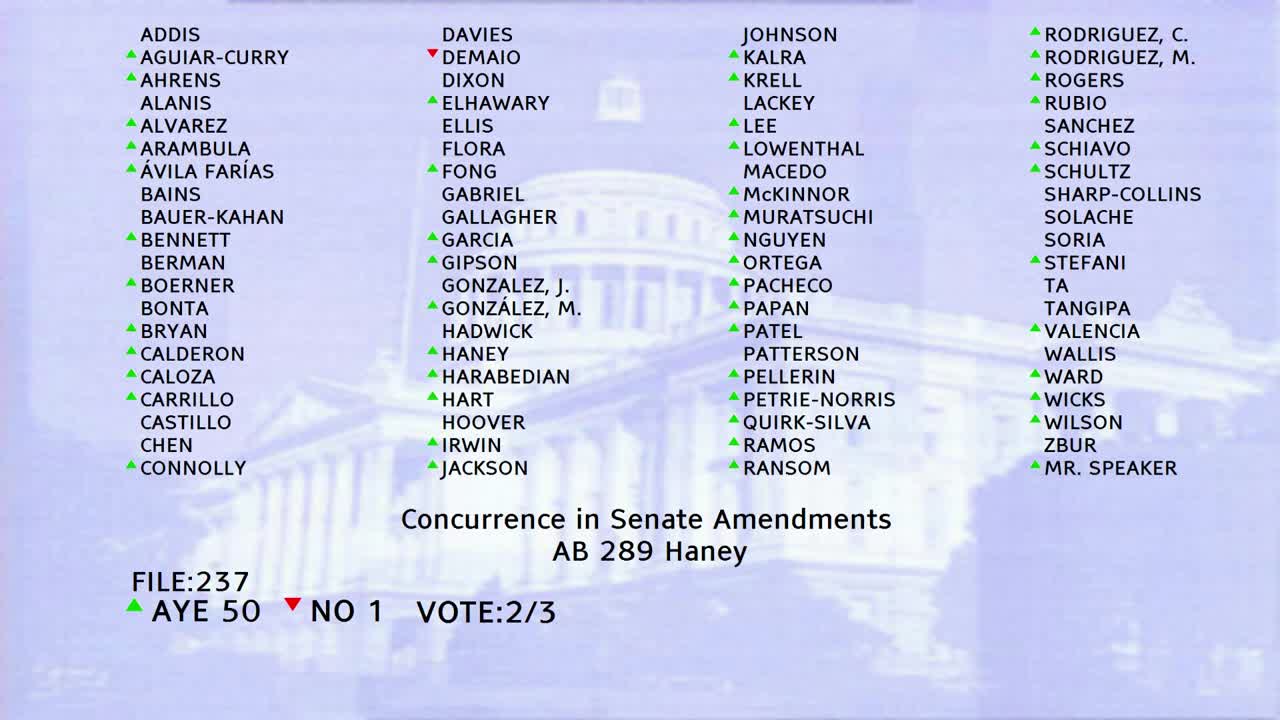 47SEC
Assembly Floor
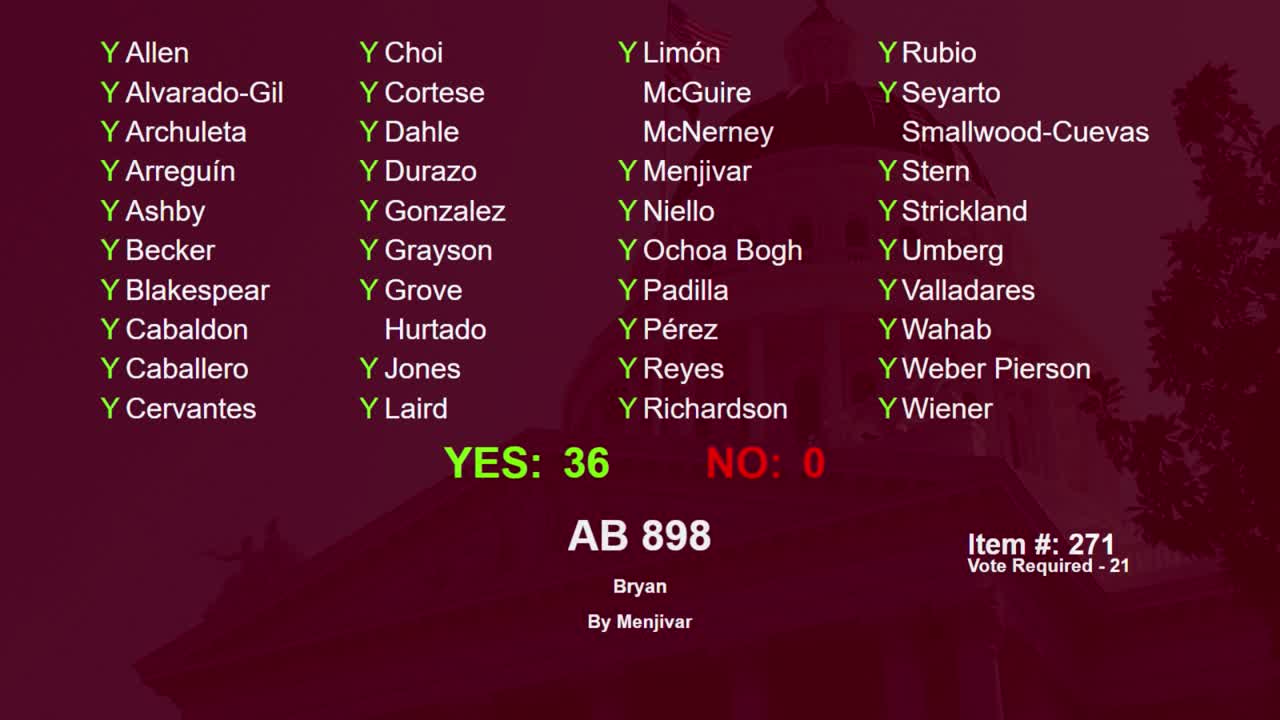 3MIN
Senate Floor
 8MIN
Senate Standing Committee on Judiciary
 13MIN
Senate Standing Committee on Business, Professions and Economic Development
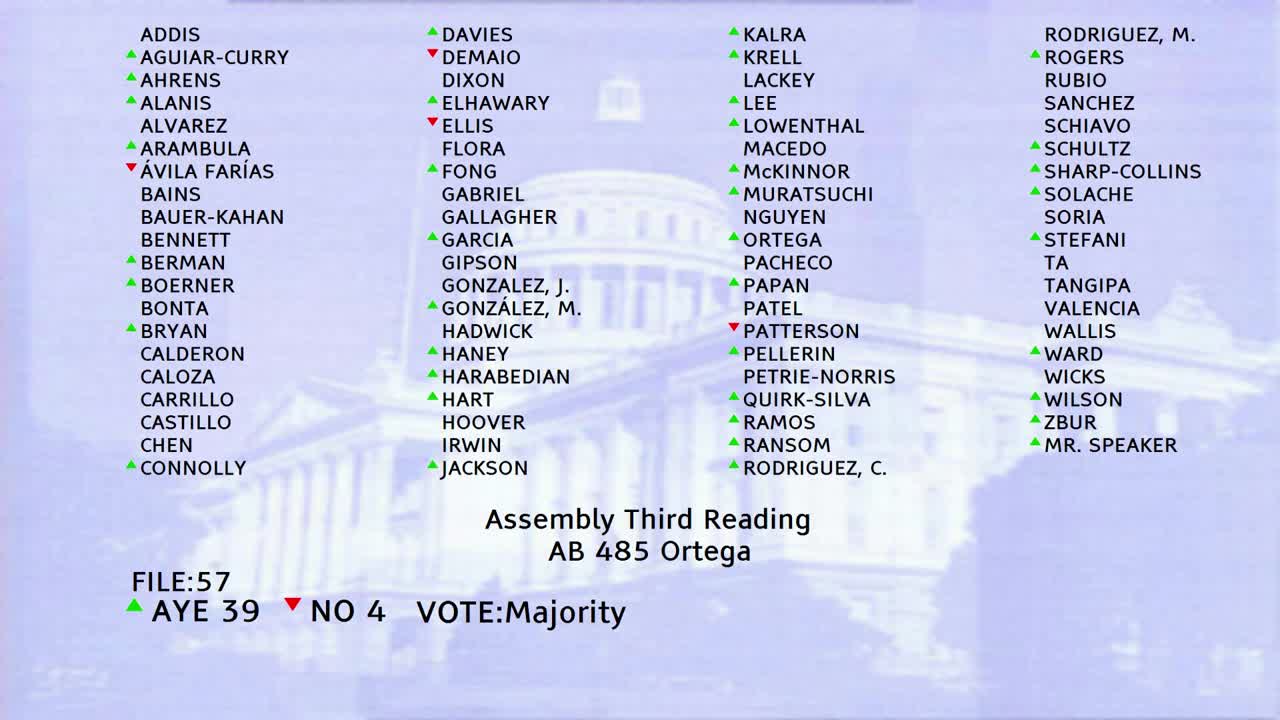 3MIN
Assembly Floor
 9MIN
Assembly Standing Committee on Privacy and Consumer Protection
Bill Author

Bill Co-Author(s):