AB 727: Pupil and student safety: identification cards.
- Session Year: 2025-2026
- House: Assembly
- Latest Version Date: 2025-10-10
Current Status:
Passed
(2025-10-10: Chaptered by Secretary of State - Chapter 483, Statutes of 2025.)
Introduced
In Committee
Awaiting First Chamber Vote
Passed First Chamber
In Committee
Awaiting Second Chamber Vote
Passed Second Chamber
Enacted
Existing law, commencing July 1, 2025, requires a public or private school that serves pupils in any of grades 7 to 12, inclusive, and that issues pupil identification cards to have printed on the identification cards the number for the 988 Suicide and Crisis Lifeline. Existing law requires a public or private institution of higher education that issues student identification cards to have printed on either side of the student identification cards the telephone number for the National Suicide Prevention Lifeline.
This bill, commencing July 1, 2026, would require public schools that serve pupils in any of grades 7 to 12, inclusive, and public institutions of higher education that issue pupil identification cards to additionally have printed on the identification cards the telephone number and text line for a specified LGBTQ+ suicide hotline, as provided.
Existing law, commencing July 1, 2025, requires a public or private school that serves pupils in any of grades 7 to 12, inclusive, and that issues pupil identification cards to have printed on the identification cards the number for the 988 Suicide and Crisis Lifeline. Existing law requires a public or private institution of higher education that issues student identification cards to have printed on either side of the student identification cards the telephone number for the National Suicide Prevention Lifeline.
This bill, commencing July 1, 2026, would require public schools that serve pupils in any of grades 7 to 12, inclusive, and public or private institutions of higher education that issue pupil identification cards to additionally have printed on the identification cards the telephone number and text line for a specified LGBTQ+ suicide hotline that is available 24 hours per day, 7 days per week, hotline, as provided.
Existing law, commencing July 1, 2025, requires a public or private school that serves pupils in any of grades 7 to 12, inclusive, and that issues pupil identification cards to have printed on the identification cards the number for the 988 Suicide and Crisis Lifeline. Existing law requires a public or private institution of higher education that issues student identification cards to have printed on either side of the student identification cards the telephone number for the National Suicide Prevention Lifeline.
This bill, commencing July 1, 2026, would require the above-referenced schools and institutions public schools that serve pupils in any of grades 7 to 12, inclusive, and public or private institutions of higher education that issue pupil identification cards to additionally have printed on the identification cards the telephone number and text line for a specified suicide hotline that is available 24 hours per day, 7 days per week, as provided.
Existing law, the Safe Place to Learn Act, requires the Superintendent of Public Instruction to post, and annually update, on the State Department of Educations internet website, and notify school districts, county offices of education, and charter schools of the availability of, a list of statewide resources that provide support to youth, and their families, who have been subjected to school-based discrimination, harassment, intimidation, or bullying, including school-based discrimination, harassment, intimidation, or bullying on the basis of neurodiversity, religious affiliation, nationality, race, or ethnicity, or perceived neurodiversity, religious affiliation, nationality, race, or ethnicity, as provided.This bill would additionally require that list to include resources that provide support to youth, and their families, who have been subjected to school-based discrimination, harassment, intimidation, or bullying on the basis of sexual orientation, gender identity, or gender expression, or perceived sexual orientation, gender identity, or gender expression.Existing law, commencing July 1, 2025, requires a public or private school that serves pupils in any of grades 7 to 12, inclusive, and that issues pupil identification cards to have printed on the identification cards the number for the 988 Suicide and Crisis Lifeline. Existing law requires a public or private institution of higher education that issues student identification cards to have printed on either side of the student identification cards the telephone number for the National Suicide Prevention Lifeline.
This bill, commencing July 1, 2026, would require the above-referenced schools and institutions to additionally have printed on the identification cards the telephone number and text line for a specified suicide hotline that is available 24 hours per day, 7 days per week, as provided.
Existing law, the Safe Place to Learn Act, requires the Superintendent of Public Instruction to post, and annually update, on the State Department of Educations internet website, and notify school districts, county offices of education, and charter schools of the availability of, a list of statewide resources that provide support to youth, and their families, who have been subjected to school-based discrimination, harassment, intimidation, or bullying, including school-based discrimination, harassment, intimidation, or bullying on the basis of neurodiversity, religious affiliation, nationality, race, or ethnicity, or perceived neurodiversity, religious affiliation, nationality, race, or ethnicity, as provided.
This bill would additionally require that list to include resources that provide support to youth, and their families, who have been subjected to school-based discrimination, harassment, intimidation, or bullying on the basis of sexual orientation, gender identity, or gender expression, or perceived sexual orientation, gender identity, or gender expression.
(a)The Legislature finds and declares all of the following:
(1)All pupils need and deserve safe and supportive school environments to learn.
(2)Pupils who identify as LGBTQ+ often face verbal, physical, or online harassment, which have significant effects on those pupils academic achievement and mental health.
(3)Recent reports indicate that almost one-half of LGBTQ+ pupils reported that they have experienced bullying in person and over one-third have experienced cyberbullying due to their sexual orientation, gender identity, or gender expression.
(4)Recent studies also show that 23 percent of LGBTQ+ young people report they have been physically threatened due to sexual orientation or gender identity and 28 percent of transgender and nonbinary young people have been physically threatened or harmed due to their gender identity.
(5)The rate of LGBTQ+ pupils who experience discrimination may be underreported due to many of these pupils fearing verbal, physical, or online harassment of their sexual orientation, gender identity, or gender expression.
(6)The Federal Bureau of Investigation (FBI) reported that schools are the third most commonly known location for hate crimes against LGBTQ+ youth and community members and that hate crimes more than doubled at elementary and secondary schools and universities from 2018 to 2022, inclusive. The FBI also noted that participation in the collection of the aforementioned data regarding hate crime reports in schools is voluntary for most agencies and mandatory for only some federal agencies, therefore making the reports likely incomplete and underreported.
(7)Multiple studies demonstrate that pupils who are bullied suffer academically. Bullying is also linked to negative outcomes, including impacts on mental health, substance use, and suicide.
(8)Research by The Trevor Project shows that in a study of 18,000 LGBTQ+ young people 13 to 24 years of age, inclusive, from across the United States, 12 percent attempted suicide and 39 percent seriously considered attempting suicide in the past year. Of those pupils who attempted suicide, 25 percent experienced physical threats or harm due to their sexual orientation or gender identity in the past year.
(9)Research shows that 50 percent of LGBTQ+ pupils who sought mental health resources were not able to access them.
(10)Research shows that LGBTQ+ pupils who reported their school to be LGBTQ-affirming had lower rates of being bullied compared to LGBTQ+ pupils who reported their school to not be LGBTQ-affirming.
(11)Research shows that by fostering an inclusive environment in schools for mentors and students to connect, including, but not limited to, being providing resources to the aforementioned, LGBTQ+ pupils were three times more likely to graduate. This research shows that creating safe and supportive learning environments improves pupil performance and well-being.
(12)The United States Department of Education provides numerous resources for schools and districts to support pupils who are facing bullying due to sexual orientation, gender identity, or gender expression. These resources were highlighted in the U.S. Department of Education Toolkit for Creating Inclusive and Nondiscriminatory School Environments for LGBTQI+ Students dated June 21, 2023, as well as additional resources on the United States Department of Educations Office for Civil Rights internet website, Resources for LGBTQI+ Students.
(b)The Legislature encourages school districts, county offices of education, and charter schools to provide information on existing schoolsite and community resources to educate teachers, administrators, and other school staff on how to support LGBTQ+ and other pupils who may face anti-LGBTQ+ bias and bullying, as required by subdivision (d) of Section 234.1 of the Education Code.
SEC. 2.Section 215.5 of the Education Code, as added by Section 2 of Chapter 642 of the Statutes of 2024, is amended to read:215.5.(a)(1)Commencing July 1, 2025, a public school, including a charter school, or a private school that serves pupils in any of grades 7 to 12, inclusive, and that issues pupil identification cards shall have printed on either side of the pupil identification cards the number for the 988 Suicide and Crisis Lifeline.
(2)Commencing October 1, 2020, a public school, including a charter school, or a private school that serves pupils in any of grades 7 to 12, inclusive, and that issues pupil identification cards shall have printed on either side of the pupil identification cards the telephone number for the National Domestic Violence Hotline: 1-800-799-7233.
(3)Commencing July 1, 2025, a public school, including a charter school, or a private school that serves pupils in any of grades 7 to 12, inclusive, and that issues pupil identification cards may have printed on either side of the pupil identification card a quick response (QR) code that links to the mental health resources internet website of the county in which the public or private school is located.
(4)Commencing July 1, 2026, a public school, including a charter school, that serves pupils in any of grades 7 to 12, inclusive, and that issues pupil identification cards shall have printed on either side of the pupil identification cards The Trevor Projects LGBTQ+ suicide hotline that is available through both of the following options:
(A)Telephone number: 1-866-488-7386.
(B)Text line, which can be accessed by texting START to 678-678.
(b)(1)Commencing July 1, 2019, a public or private institution of higher education that issues student identification cards shall have printed on either side of the student identification cards the telephone number described in subparagraph (A) and may have printed on either side of the student identification cards the text line described in subparagraph (B) and the telephone numbers described in subparagraphs (C) and (D):
(A)The telephone number for the National Suicide Prevention Lifeline: 1-800-273-8255.
(B)The Crisis Text Line, which can be accessed by texting HOME to 741741.
(C)The campus police or security telephone number or, if the campus does not have a campus police or security telephone number, the local nonemergency telephone number.
(D)A local suicide prevention hotline telephone number.
(2)Commencing October 1, 2020, a public or private institution of higher education that issues student identification cards shall have printed on either side of the student identification cards the telephone number for either of the following:
(A)The National Domestic Violence Hotline: 1-800-799-7233.
(B)A local domestic violence hotline that provides confidential support services for students that have experienced domestic violence or stalking and is available by telephone 24 hours a day.
(3)Commencing July 1, 2026, a public institution of higher education that issues student identification cards shall have printed on either side of the student identification cards The Trevor Projects LGBTQ+ suicide hotline that is available through both of the following options:
(A)Telephone number: 1-866-488-7386.
(B)Text line, which can be accessed by texting START to 678-678.
(c)(1)Notwithstanding subdivisions (a) and (b), if, as of January 1, 2020, a school subject to the requirements of subdivision (a), or a public or private institution of higher education subject to the requirements of subdivision (b), has a supply of unissued pupil or student identification cards that do not comply with the requirements of subdivision (a) or (b), as applicable, the school or the public or private institution of higher education shall issue those pupil or student identification cards until that supply is depleted.
(2)Notwithstanding paragraph (1) of subdivision (a), if, as of July 1, 2025, a school subject to the requirement of paragraph (1) of subdivision (a) has a supply of unissued pupil identification cards that do not comply with the requirements of paragraph (1) of subdivision (a), the school shall issue those pupil identification cards until that supply is depleted.
(d)Subdivisions (a) and (b) apply for a pupil or student identification card issued for the first time to a pupil or student, and to a pupil or student identification card issued to replace a damaged or lost pupil or student identification card.
(e)This section shall become operative on July 1, 2025.
(a)The Legislature finds and declares all of the following:
(1)All pupils need and deserve safe and supportive school environments to learn.
(2)Pupils who identify as LGBTQ+ often face verbal, physical, or online harassment, which have significant effects on those pupils academic achievement and mental health.
(3)Recent reports indicate that almost one-half of LGBTQ+ pupils reported that they have experienced bullying in person and over one-third have experienced cyberbullying due to their sexual orientation, gender identity, or gender expression.
(4)Recent studies also show that 23 percent of LGBTQ+ young people report they have been physically threatened due to sexual orientation or gender identity and 28 percent of transgender and nonbinary young people have been physically threatened or harmed due to their gender identity.
(5)The rate of LGBTQ+ pupils who experience discrimination may be underreported due to many of these pupils fearing verbal, physical, or online harassment of their sexual orientation, gender identity, or gender expression.
(6)The Federal Bureau of Investigation (FBI) reported that schools are the third most commonly known location for hate crimes against LGBTQ+ youth and community members and that hate crimes more than doubled at elementary and secondary schools and universities from 2018 to 2022, inclusive. The FBI also noted that participation in the collection of the aforementioned data regarding hate crime reports in schools is voluntary for most agencies and mandatory for only some federal agencies, therefore making the reports likely incomplete and underreported.
(7)Multiple studies demonstrate that pupils who are bullied suffer academically. Bullying is also linked to negative outcomes, including impacts on mental health, substance use, and suicide.
(8)Research by The Trevor Project shows that in a study of 18,000 LGBTQ+ young people 13 to 24 years of age, inclusive, from across the United States, 12 percent attempted suicide and 39 percent seriously considered attempting suicide in the past year. Of those pupils who attempted suicide, 25 percent experienced physical threats or harm due to their sexual orientation or gender identity in the past year.
(9)Research shows that 50 percent of LGBTQ+ pupils who sought mental health resources were not able to access them.
(10)Research shows that LGBTQ+ pupils who reported their school to be LGBTQ-affirming had lower rates of being bullied compared to LGBTQ+ pupils who reported their school to not be LGBTQ-affirming.
(11)Research shows that by fostering an inclusive environment in schools for mentors and students to connect, including, but not limited to, being providing resources to the aforementioned, LGBTQ+ pupils were three times more likely to graduate. This research shows that creating safe and supportive learning environments improves pupil performance and well-being.
(12)The United States Department of Education provides numerous resources for schools and districts to support pupils who are facing bullying due to sexual orientation, gender identity, or gender expression. These resources were highlighted in the U.S. Department of Education Toolkit for Creating Inclusive and Nondiscriminatory School Environments for LGBTQI+ Students dated June 21, 2023, as well as additional resources on the United States Department of Educations Office for Civil Rights internet website, Resources for LGBTQI+ Students.
(b)The Legislature encourages school districts, county offices of education, and charter schools to provide information on existing schoolsite and community resources to educate teachers, administrators, and other school staff on how to support LGBTQ+ and other pupils who may face anti-LGBTQ+ bias and bullying, as required by subdivision (d) of Section 234.1 of the Education Code.
SEC. 2.Section 215.5 of the Education Code, as added by Section 2 of Chapter 642 of the Statutes of 2024, is amended to read:215.5.(a)(1)Commencing July 1, 2025, a public school, including a charter school, or a private school that serves pupils in any of grades 7 to 12, inclusive, and that issues pupil identification cards shall have printed on either side of the pupil identification cards the number for the 988 Suicide and Crisis Lifeline.
(2)Commencing October 1, 2020, a public school, including a charter school, or a private school that serves pupils in any of grades 7 to 12, inclusive, and that issues pupil identification cards shall have printed on either side of the pupil identification cards the telephone number for the National Domestic Violence Hotline: 1-800-799-7233.
(3)Commencing July 1, 2025, a public school, including a charter school, or a private school that serves pupils in any of grades 7 to 12, inclusive, and that issues pupil identification cards may have printed on either side of the pupil identification card a quick response (QR) code that links to the mental health resources internet website of the county in which the public or private school is located.
(4)Commencing July 1, 2026, a public school, including a charter school, that serves pupils in any of grades 7 to 12, inclusive, and that issues pupil identification cards shall have printed on either side of the pupil identification cards The Trevor Projects 24 hours per day, 7 days per week LGBTQ+ suicide hotline that is available through both of the following options:
(A)Telephone number: 1-866-488-7386.
(B)Text line, which can be accessed by texting START to 678-678.
(b)(1)Commencing July 1, 2019, a public or private institution of higher education that issues student identification cards shall have printed on either side of the student identification cards the telephone number described in subparagraph (A) and may have printed on either side of the student identification cards the text line described in subparagraph (B) and the telephone numbers described in subparagraphs (C) and (D):
(A)The telephone number for the National Suicide Prevention Lifeline: 1-800-273-8255.
(B)The Crisis Text Line, which can be accessed by texting HOME to 741741.
(C)The campus police or security telephone number or, if the campus does not have a campus police or security telephone number, the local nonemergency telephone number.
(D)A local suicide prevention hotline telephone number.
(2)Commencing October 1, 2020, a public or private institution of higher education that issues student identification cards shall have printed on either side of the student identification cards the telephone number for either of the following:
(A)The National Domestic Violence Hotline: 1-800-799-7233.
(B)A local domestic violence hotline that provides confidential support services for students that have experienced domestic violence or stalking and is available by telephone 24 hours a day.
(3)Commencing July 1, 2026, a public or private institution of higher education that issues student identification cards shall have printed on either side of the student identification cards The Trevor Projects 24 hours per day, 7 days per week LGBTQ+ suicide hotline that is available through both of the following options:
(A)Telephone number: 1-866-488-7386.
(B)Text line, which can be accessed by texting START to 678-678.
(c)(1)Notwithstanding subdivisions (a) and (b), if, as of January 1, 2020, a school subject to the requirements of subdivision (a), or a public or private institution of higher education subject to the requirements of subdivision (b), has a supply of unissued pupil or student identification cards that do not comply with the requirements of subdivision (a) or (b), as applicable, the school or the public or private institution of higher education shall issue those pupil or student identification cards until that supply is depleted.
(2)Notwithstanding paragraph (1) of subdivision (a), if, as of July 1, 2025, a school subject to the requirement of paragraph (1) of subdivision (a) has a supply of unissued pupil identification cards that do not comply with the requirements of paragraph (1) of subdivision (a), the school shall issue those pupil identification cards until that supply is depleted.
(d)Subdivisions (a) and (b) apply for a pupil or student identification card issued for the first time to a pupil or student, and to a pupil or student identification card issued to replace a damaged or lost pupil or student identification card.
(e)This section shall become operative on July 1, 2025.
(a)The Legislature finds and declares all of the following:
(1)All pupils need and deserve safe and supportive school environments to learn.
(2)Pupils who identify as LGBTQ+ often face verbal, physical, or online harassment, which have significant effects on those pupils academic achievement and mental health.
(3)Recent reports indicate that almost one-half of LGBTQ+ pupils reported that they have experienced bullying in person and over one-third have experienced cyberbullying due to their sexual orientation, gender identity, or gender expression.
(4)Recent studies also show that 23 percent of LGBTQ+ young people report they have been physically threatened due to sexual orientation or gender identity and 28 percent of transgender and nonbinary young people have been physically threatened or harmed due to their gender identity.
(5)The rate of LGBTQ+ pupils who experience discrimination may be underreported due to many of these pupils fearing verbal, physical, or online harassment of their sexual orientation, gender identity, or gender expression.
(6)The Federal Bureau of Investigation (FBI) reported that schools are the third most commonly known location for hate crimes against LGBTQ+ youth and community members and that hate crimes more than doubled at elementary and secondary schools and universities from 2018 to 2022, inclusive. The FBI also noted that participation in the collection of the aforementioned data regarding hate crime reports in schools is voluntary for most agencies and mandatory for only some federal agencies, therefore making the reports likely incomplete and underreported.
(7)Multiple studies demonstrate that pupils who are bullied suffer academically. Bullying is also linked to negative outcomes, including impacts on mental health, substance use, and suicide.
(8)Research by The Trevor Project shows that in a study of 18,000 LGBTQ+ young people 13 to 24 years of age, inclusive, from across the United States, 12 percent attempted suicide and 39 percent seriously considered attempting suicide in the past year. Of those pupils who attempted suicide, 25 percent experienced physical threats or harm due to their sexual orientation or gender identity in the past year.
(9)Research shows that 50 percent of LGBTQ+ pupils who sought mental health resources were not able to access them.
(10)Research shows that LGBTQ+ pupils who reported their school to be LGBTQ-affirming had lower rates of being bullied compared to LGBTQ+ pupils who reported their school to not be LGBTQ-affirming.
(11)Research shows that by fostering an inclusive environment in schools for mentors and students to connect, including, but not limited to, being providing resources to the aforementioned, LGBTQ+ pupils were three times more likely to graduate. This research shows that creating safe and supportive learning environments improves pupil performance and well-being.
(12)The United States Department of Education provides numerous resources for schools and districts to support pupils who are facing bullying due to sexual orientation, gender identity, or gender expression. These resources were highlighted in the U.S. Department of Education Toolkit for Creating Inclusive and Nondiscriminatory School Environments for LGBTQI+ Students dated June 21, 2023, as well as additional resources on the United States Department of Educations Office for Civil Rights internet website, Resources for LGBTQI+ Students.
(b)The Legislature encourages school districts, county offices of education, and charter schools to provide information on existing schoolsite and community resources to educate teachers, administrators, and other school staff on how to support LGBTQ+ and other pupils who may face anti-LGBTQ+ bias and bullying, as required by subdivision (d) of Section 234.1 of the Education Code.
SEC. 2.Section 215.5 of the Education Code, as added by Section 2 of Chapter 642 of the Statutes of 2024, is amended to read:215.5.(a)(1)Commencing July 1, 2025, a public school, including a charter school, or a private school, school that serves pupils in any of grades 7 to 12, inclusive, and that issues pupil identification cards shall have printed on either side of the pupil identification cards the number for the 988 Suicide and Crisis Lifeline.
(2)Commencing October 1, 2020, a public school, including a charter school, or a private school, school that serves pupils in any of grades 7 to 12, inclusive, and that issues pupil identification cards shall have printed on either side of the pupil identification cards the telephone number for the National Domestic Violence Hotline: 1-800-799-7233.
(3)Commencing July 1, 2025, a public school, including a charter school, or a private school, school that serves pupils in any of grades 7 to 12, inclusive, and that issues pupil identification cards may have printed on either side of the pupil identification card a quick response (QR) code that links to the mental health resources internet website of the county in which the public or private school is located.
(4)Commencing July 1, 2026, a public school, including a charter school, or a private school that serves pupils in any of grades 7 to 12, inclusive, and that issues pupil identification cards shall have printed on either side of the pupil identification cards The Trevor Projects 24 hours per day, 7 days per week suicide hotline that is available through both of the following options:
(A)Telephone number: 1-866-488-7386.
(B)Text line, which can be accessed by texting START to 678-678.
(b)(1)Commencing July 1, 2019, a public or private institution of higher education that issues student identification cards shall have printed on either side of the student identification cards the telephone number described in subparagraph (A) and may have printed on either side of the student identification cards the text line described in subparagraph (B) and the telephone numbers described in subparagraphs (C) and (D):
(A)The telephone number for the National Suicide Prevention Lifeline: 1-800-273-8255.
(B)The Crisis Text Line, which can be accessed by texting HOME to 741741.
(C)The campus police or security telephone number or, if the campus does not have a campus police or security telephone number, the local nonemergency telephone number.
(D)A local suicide prevention hotline telephone number.
(2)Commencing October 1, 2020, a public or private institution of higher education that issues student identification cards shall have printed on either side of the student identification cards the telephone number for either of the following:
(A)The National Domestic Violence Hotline: 1-800-799-7233.
(B)A local domestic violence hotline that provides confidential support services for students that have experienced domestic violence or stalking and is available by telephone 24 hours a day.
(3)Commencing July 1, 2026, a public or private institution of higher education that issues student identification cards shall have printed on either side of the student identification cards The Trevor Projects 24 hours per day, 7 days per week suicide hotline that is available through both of the following options:
(A)Telephone number: 1-866-488-7386.
(B)Text line, which can be accessed by texting START to 678-678.
(c)(1)Notwithstanding subdivisions (a) and (b), if, as of January 1, 2020, a school subject to the requirements of subdivision (a), or a public or private institution of higher education subject to the requirements of subdivision (b), has a supply of unissued pupil or student identification cards that do not comply with the requirements of subdivision (a) or (b), as applicable, the school or the public or private institution of higher education shall issue those pupil or student identification cards until that supply is depleted.
(2)Notwithstanding paragraph (1) of subdivision (a), if, as of July 1, 2025, a school subject to the requirement of paragraph (1) of subdivision (a) has a supply of unissued pupil identification cards that do not comply with the requirements of paragraph (1) of subdivision (a), the school shall issue those pupil identification cards until that supply is depleted.
(d)Subdivisions (a) and (b) apply for a pupil or student identification card issued for the first time to a pupil or student, and to a pupil or student identification card issued to replace a damaged or lost pupil or student identification card.
(e)This section shall become operative on July 1, 2025.
SEC. 3.Section 234.5 of the Education Code is amended to read:234.5.(a)(1)The Superintendent shall post, and annually update, on the departments internet website and notify local educational agencies of the availability of a list of statewide resources, including community-based organizations, that provide support to youth, and their families, who have been subjected to school-based discrimination, harassment, intimidation, or bullying, including school-based discrimination, harassment, intimidation, or bullying on the basis of neurodiversity, religious affiliation, nationality, race, ethnicity, sexual orientation, gender identity, or gender expression, or perceived neurodiversity, religious affiliation, nationality, race, ethnicity, sexual orientation, gender identity, or gender expression.(2)The resources included pursuant to paragraph (1) that provide support for youth, and their families, who have been subjected to school-based discrimination, harassment, intimidation, or bullying on the basis of neurodiversity shall include those developed by the University of California and California State University Collaborative for Neurodiversity and Learning.(b)The departments internet website shall also include a list of statewide resources for youth who have been affected by gangs, gun violence, and psychological trauma caused by violence at home, at school, and in the community.(a)The Legislature finds and declares all of the following:
(1)All pupils need and deserve safe and supportive school environments to learn.
(2)Pupils who identify as LGBTQ+ often face verbal, physical, or online harassment, which have significant effects on those pupils academic achievement and mental health.
(3)Recent reports indicate that almost one-half of LGBTQ+ pupils reported that they have experienced bullying in person and over one-third have experienced cyberbullying due to their sexual orientation, gender identity, or gender expression.
(4)Recent studies also show that 23 percent of LGBTQ+ young people report they have been physically threatened due to sexual orientation or gender identity and 28 percent of transgender and nonbinary young people have been physically threatened or harmed due to their gender identity.
(5)The rate of LGBTQ+ pupils who experience discrimination may be underreported due to many of these pupils fearing verbal, physical, or online harassment of their sexual orientation, gender identity, or gender expression.
(6)The Federal Bureau of Investigation (FBI) reported that schools are the third most commonly known location for hate crimes against LGBTQ+ youth and community members and that hate crimes more than doubled at elementary and secondary schools and universities from 2018 to 2022, inclusive. The FBI also noted that participation in the collection of the aforementioned data regarding hate crime reports in schools is voluntary for most agencies and mandatory for only some federal agencies, therefore making the reports likely incomplete and underreported.
(7)Multiple studies demonstrate that pupils who are bullied suffer academically. Bullying is also linked to negative outcomes, including impacts on mental health, substance use, and suicide.
(8)Research by The Trevor Project shows that in a study of 18,000 LGBTQ+ young people 13 to 24 years of age, inclusive, from across the United States, 12 percent attempted suicide and 39 percent seriously considered attempting suicide in the past year. Of those pupils who attempted suicide, 25 percent experienced physical threats or harm due to their sexual orientation or gender identity in the past year.
(9)Research shows that 50 percent of LGBTQ+ pupils who sought mental health resources were not able to access them.
(10)Research shows that LGBTQ+ pupils who reported their school to be LGBTQ-affirming had lower rates of being bullied compared to LGBTQ+ pupils who reported their school to not be LGBTQ-affirming.
(11)Research shows that by fostering an inclusive environment in schools for mentors and students to connect, including, but not limited to, being providing resources to the aforementioned, LGBTQ+ pupils were three times more likely to graduate. This research shows that creating safe and supportive learning environments improves pupil performance and well-being.
(12)The United States Department of Education provides numerous resources for schools and districts to support pupils who are facing bullying due to sexual orientation, gender identity, or gender expression. These resources were highlighted in the U.S. Department of Education Toolkit for Creating Inclusive and Nondiscriminatory School Environments for LGBTQI+ Students dated June 21, 2023, as well as additional resources on the United States Department of Educations Office for Civil Rights internet website, Resources for LGBTQI+ Students.
(b)The Legislature encourages school districts, county offices of education, and charter schools to provide information on existing schoolsite and community resources to educate teachers, administrators, and other school staff on how to support LGBTQ+ and other pupils who may face anti-LGBTQ+ bias and bullying, as required by subdivision (d) of Section 234.1 of the Education Code.
SEC. 2.Section 215.5 of the Education Code, as added by Section 2 of Chapter 642 of the Statutes of 2024, is amended to read:215.5.(a)(1)Commencing July 1, 2025, a public school, including a charter school, or a private school, that serves pupils in any of grades 7 to 12, inclusive, and that issues pupil identification cards shall have printed on either side of the pupil identification cards the number for the 988 Suicide and Crisis Lifeline.
(2)Commencing October 1, 2020, a public school, including a charter school, or a private school, that serves pupils in any of grades 7 to 12, inclusive, and that issues pupil identification cards shall have printed on either side of the pupil identification cards the telephone number for the National Domestic Violence Hotline: 1-800-799-7233.
(3)Commencing July 1, 2025, a public school, including a charter school, or a private school, that serves pupils in any of grades 7 to 12, inclusive, and that issues pupil identification cards may have printed on either side of the pupil identification card a quick response (QR) code that links to the mental health resources internet website of the county in which the public or private school is located.
(4)Commencing July 1, 2026, a public school, including a charter school, or a private school that serves pupils in any of grades 7 to 12, inclusive, and that issues pupil identification cards shall have printed on either side of the pupil identification cards The Trevor Projects 24 hours per day, 7 days per week suicide hotline that is available through both of the following options:
(A)Telephone number: 1-866-488-7386.
(B)Text line, which can be accessed by texting START to 678-678.
(b)(1)Commencing July 1, 2019, a public or private institution of higher education that issues student identification cards shall have printed on either side of the student identification cards the telephone number described in subparagraph (A) and may have printed on either side of the student identification cards the text line described in subparagraph (B) and the telephone numbers described in subparagraphs (C) and (D):
(A)The telephone number for the National Suicide Prevention Lifeline: 1-800-273-8255.
(B)The Crisis Text Line, which can be accessed by texting HOME to 741741.
(C)The campus police or security telephone number or, if the campus does not have a campus police or security telephone number, the local nonemergency telephone number.
(D)A local suicide prevention hotline telephone number.
(2)Commencing October 1, 2020, a public or private institution of higher education that issues student identification cards shall have printed on either side of the student identification cards the telephone number for either of the following:
(A)The National Domestic Violence Hotline: 1-800-799-7233.
(B)A local domestic violence hotline that provides confidential support services for students that have experienced domestic violence or stalking and is available by telephone 24 hours a day.
(3)Commencing July 1, 2026, a public or private institution of higher education that issues student identification cards shall have printed on either side of the student identification cards The Trevor Projects 24 hours per day, 7 days per week suicide hotline that is available through both of the following options:
(A)Telephone number: 1-866-488-7386.
(B)Text line, which can be accessed by texting START to 678-678.
(c)(1)Notwithstanding subdivisions (a) and (b), if, as of January 1, 2020, a school subject to the requirements of subdivision (a), or a public or private institution of higher education subject to the requirements of subdivision (b), has a supply of unissued pupil or student identification cards that do not comply with the requirements of subdivision (a) or (b), as applicable, the school or the public or private institution of higher education shall issue those pupil or student identification cards until that supply is depleted.
(2)Notwithstanding paragraph (1) of subdivision (a), if, as of July 1, 2025, a school subject to the requirement of paragraph (1) of subdivision (a) has a supply of unissued pupil identification cards that do not comply with the requirements of paragraph (1) of subdivision (a), the school shall issue those pupil identification cards until that supply is depleted.
(d)Subdivisions (a) and (b) apply for a pupil or student identification card issued for the first time to a pupil or student, and to a pupil or student identification card issued to replace a damaged or lost pupil or student identification card.
(e)This section shall become operative on July 1, 2025.
SEC. 3.Section 234.5 of the Education Code is amended to read:234.5.(a)(1)The Superintendent shall post, and annually update, on the departments internet website and notify local educational agencies of the availability of a list of statewide resources, including community-based organizations, that provide support to youth, and their families, who have been subjected to school-based discrimination, harassment, intimidation, or bullying, including school-based discrimination, harassment, intimidation, or bullying on the basis of neurodiversity, religious affiliation, nationality, race, or ethnicity, sexual orientation, gender identity, or gender expression, or perceived neurodiversity, religious affiliation, nationality, race, or ethnicity. ethnicity, sexual orientation, gender identity, or gender expression.
(2)The resources included pursuant to paragraph (1) that provide support for youth, and their families, who have been subjected to school-based discrimination, harassment, intimidation, or bullying on the basis of neurodiversity shall include those developed by the University of California and California State University Collaborative for Neurodiversity and Learning.
(b)The departments internet website shall also include a list of statewide resources for youth who have been affected by gangs, gun violence, and psychological trauma caused by violence at home, at school, and in the community.
|
Date
|
Status
|
|---|---|
| Oct 10, 2025 | Chaptered by Secretary of State - Chapter 483, Statutes of 2025. |
| Oct 10, 2025 | Approved by the Governor. |
| Sep 22, 2025 | Enrolled and presented to the Governor at 3 p.m. |
| Sep 10, 2025 | Senate amendments concurred in. To Engrossing and Enrolling. (Ayes 58. Noes 15. Page 3226.). |
| Sep 9, 2025 | In Assembly. Concurrence in Senate amendments pending. |
| Sep 9, 2025 | Read third time. Passed. Ordered to the Assembly. (Ayes 30. Noes 10. Page 2658.). |
| Aug 29, 2025 | Read second time. Ordered to third reading. |
| Aug 29, 2025 | From committee: Do pass. (Ayes 5. Noes 2.) (August 29). |
| Aug 18, 2025 | In committee: Referred to suspense file. |
| Jul 9, 2025 | From committee: Do pass and re-refer to Com. on APPR. (Ayes 5. Noes 2.) (July 9). Re-referred to Com. on APPR. |
| Jun 27, 2025 | In committee: Set, first hearing. Hearing canceled at the request of author. |
| Jun 19, 2025 | From committee chair, with author's amendments: Amend, and re-refer to committee. Read second time, amended, and re-referred to Com. on ED. |
| Jun 18, 2025 | Referred to Com. on ED. |
| Jun 4, 2025 | In Senate. Read first time. To Com. on RLS. for assignment. |
| Jun 3, 2025 | Read third time. Passed. Ordered to the Senate. (Ayes 59. Noes 13. Page 1979.) |
| May 27, 2025 | Read second time. Ordered to third reading. |
| May 23, 2025 | From committee: Do pass. (Ayes 11. Noes 3.) (May 23). |
| Apr 30, 2025 | In committee: Set, first hearing. Referred to suspense file. |
| Apr 22, 2025 | Re-referred to Com. on APPR. |
| Apr 21, 2025 | Read second time and amended. |
| Apr 10, 2025 | From committee: Amend, and do pass as amended and re-refer to Com. on APPR. (Ayes 7. Noes 2.) (April 9). |
| Mar 3, 2025 | Referred to Com. on ED. |
| Feb 19, 2025 | From printer. May be heard in committee March 21. |
| Feb 18, 2025 | Read first time. To print. |
|
Date
|
Description
|
Location
|
Votes
|
|
|---|---|---|---|---|
| Sep 10, 2025 | AB 727 Mark González Concurrence in Senate Amendments | Assembly Floor |
Passed |
|
| Sep 9, 2025 | Assembly 3rd Reading AB727 Mark González et al. By Pérez | Senate Floor |
Passed |
|
| Aug 29, 2025 | Do pass | Senate Standing Committee on Appropriations |
Passed |
|
| Aug 18, 2025 | Placed on suspense file | Senate Standing Committee on Appropriations |
Passed |
|
| Jul 9, 2025 | Do pass, but first be re-referred to the Committee on [Appropriations] | Senate Standing Committee on Education |
Passed |
|
| Jun 3, 2025 | AB 727 Mark González Assembly Third Reading | Assembly Floor |
Passed |
|
| May 23, 2025 | Do pass. | Assembly Standing Committee on Appropriations |
Passed |
|
| Apr 9, 2025 | Do pass as amended and be re-referred to the Committee on [Appropriations] | Assembly Standing Committee on Education |
Passed |
This list shows positions taken on this bill by organizations on the date displayed, which is linked to the original source.
Positions by individuals are not included.
|
Organization
|
Position
|
Date
|
|---|---|---|
| 8 Individuals | ** Against | |
| Alameda County Office Of Education | ** Support | |
| Alliance for Transyouth Liberation | ** Support | |
| Alliance to Protect Children | ** Against | |
| American Academy Of Pediatrics, California | ** Support | |
| APLA Health | ** Support | |
| Bridge Network | ** Against | |
| California Academy of Child and Adolescent Psychiatry | ** Support | |
| California Alliance Of Child And Family Services | ** Support | |
| California Baptist for Biblical Values | ** Against | |
| California Charter Schools Association | ** Support | |
| California Family Council | ** Against | |
| California Legislative LGBTQ Caucus | ** Support | |
| California LGBTQ Health and Human Services Network | ** Support | |
| Californians United for Sex-Based Evidence in Policy and Law | ** Against | |
| California School-Based Health Alliance | ** Support | |
| California Youth Empowerment Network | ** Support | |
| Calvary Christian School | ** Against | |
| CFT- a Union of Educators & Classified Professionals, Aft, Afl-cio | ** Support | |
| Concerned Women for America | ** Against | |
| Courage California | ** Support | |
| Equality California | ** Support | |
| GenUp (co-source) | ** Support | |
| Golden State Association of Christian Schools | ** Against | |
| Informed Parents of California | ** Against | |
| Interfaithstatewide Coalition | ** Against | |
| LGBTQ+ Inclusivity, Visibility, and Empowerment | ** Support | |
| Lieutenant Governor Eleni Kounalakis (co-source) | ** Support | |
| Lighthouse Baptist Church | ** Against | |
| Lives Worth Saving | ** Against | |
| Los Angeles County Office Of Education | ** Support | |
| Los Angeles LGBT Center | ** Support | |
| National Association of Pediatric Nurse Practitioners | ** Support | |
| Our Duty | ** Against | |
| pacific justice institute - center for public policy | ** Against | |
| Real Impact. | ** Against | |
| Riverside County Sheriff's Office | ** Against | |
| Sacramento LGBT Community Center | ** Support | |
| San Diegans For Gun Violence Prevention | ** Support | |
| Stand Up Sacramento County | ** Against | |
| The Intersection of Faith and Culture | ** Against | |
| The National Center for Law & Policy | ** Against | |
| Transfamily Support Services | ** Support | |
| United Administrators of Southern California | ** Support | |
| University Of California Student Association | ** Support | |
| Viet Rainbow of Orange County | ** Support | |
| Women Are Real | ** Against | |
| Youth Forward | ** Support |
CONCURRENCE IN SENATE AMENDMENTS
CSA1 Bill Id:AB 727
Author:(Mark González)
As Amended Ver:June 19, 2025
Majority vote
SUMMARY
Requires public schools serving students in grades seven to 12, inclusive, as well as public institutions of higher education (IHEs) that issue student identification (ID) cards which include printed contact information for the Trevor Project’s LGBTQ+ suicide hotline.
Senate Amendments
- Removed references to a 24-hour per day, seven day per week suicide hotline and replaced with an LGBTQ+ suicide hotline.
- Removed the requirement that private institutions of higher education comply with the requirement to add the LGBTQ+ suicide hotline to student ID cards.
COMMENTS
Trevor Project Crisis Line. According to their website, Trevor Project crisis counselors are trained to answer calls, chats, or texts from LGBTQ+ young people who reach out on the free, confidential, and secure 24/7 service when they are struggling with issues such as coming out, LGBTQ+ identity, depression, and suicide. Data provided by the Trevor Project identifies that:
- Suicide is the second leading cause of death among young people aged 10 to 14 and the third leading cause of death among 15-24 year olds (Centers for Disease Control and Prevention, 2022);
- LGBTQ+ young people are more than four times as likely to attempt suicide than their peers (Johns et al., 2019; Johns et al., 2020);
- More than 1.8 million LGBTQ+ young people (ages 13-24) seriously consider suicide each year in the U.S. — and at least one attempts suicide every 45 seconds; and
- The Trevor Project's 2023 U.S. National Survey on the Mental Health of LGBTQ+ Young People found that 41% of LGBTQ+ young people seriously considered attempting suicide in the past year, including roughly half of transgender and nonbinary youth.
According to the Author
"In today's political climate, LGBTQ+ students face significant levels of bullying, harassment, and discrimination—negatively impacting their mental health and academic success. AB 727 will provide critical resources to support LGBTQ+ youth in crisis and those who have experienced harassment.
FBI data shows that reported hate crimes against LGBTQ+ youth in schools more than doubled between 2018 and 2022. However, due to voluntary reporting policies, the true numbers are likely even higher. A study by The Trevor Project found that among LGBTQ+ young people (ages 13-24), 39% seriously considered suicide in the past year, and 12% attempted it. Additionally, 25% of those who attempted suicide reported experiencing physical threats or harm based on their sexual orientation or gender identity.
By requiring student ID cards for students in grades seven to 12 and higher education to include The Trevor Project's 24/7 crisis hotline and text line and mandating annual updates to the CDE’s website with LGBTQ+ support resources, AB 727 is a necessary step in ensuring that LGBTQ+ students receive the resources and support they need to thrive."
Arguments in Support
The Sacramento LGBT Community Center writes, "Research by The Trevor Project has shown that in a study of 18,000 LGBTQ+ young people ages 13-24 from across the U.S., 39% seriously considered attempting suicide in the past year, and 12% attempted. Of those pupils who attempted suicide, 25% experienced physical threats or harm due to their sexual orientation or gender identity.
California remains at the forefront of LGBTQ+ protections and resources for students, but many LGBTQ+ youth do not know how to access them. By increasing the visibility of these services, we hope to increase access while also fostering an inclusive learning environment, which research demonstrates contributes to better educational outcomes."
Arguments in Opposition
The California Family Council writes, "While suicide prevention is an important and serious concern, this mandate poses a significant threat to religious liberty, parental rights, and the ability of private institutions to operate in accordance with their deeply held beliefs. AB 727 disregards the religious convictions of private, faith-based schools by forcing them to promote an LGBTQ advocacy organization that contradicts their values.
AB 727 places California's religious schools in an impossible position—forced to compromise their convictions by promoting an organization that contradicts their values. Additionally, parents deserve the right to guide their children’s moral and spiritual development without the state undermining that role."
FISCAL COMMENTS
According to the Senate Appropriations Committee:
- The bill's requirement for K-12 school and community college districts could result in a reimbursable state mandate. The Chancellor's Office estimates one-time Proposition 98 General Fund costs in the tens of thousands of dollars to reformat student ID cards at community college campuses. School districts serving students in grades seven through 12 are likely to incur similar one-time Proposition 98 General Fund costs to reformat student ID cards at their schoolsites.
- The University of California (UC) and the California State University (CSU) indicate that any costs resulting from this measure would be minor and absorbable within existing resources.
VOTES:
ASM EDUCATION: 7-2-0
YES: Muratsuchi, Addis, Alvarez, Bonta, Garcia, Lowenthal, Patel
NO: Hoover, Castillo
ASM APPROPRIATIONS: 11-3-1
YES: Wicks, Arambula, Calderon, Caloza, Elhawary, Fong, Mark González, Hart, Pacheco, Pellerin, Solache
NO: Dixon, Ta, Tangipa
ABS, ABST OR NV: Sanchez
ASSEMBLY FLOOR: 59-13-7
YES: Addis, Aguiar-Curry, Ahrens, Alvarez, Arambula, Ávila Farías, Bains, Bauer-Kahan, Bennett, Berman, Boerner, Bonta, Bryan, Calderon, Caloza, Carrillo, Connolly, Elhawary, Fong, Gabriel, Garcia, Gipson, Mark González, Haney, Harabedian, Hart, Irwin, Jackson, Kalra, Krell, Lee, Lowenthal, McKinnor, Muratsuchi, Nguyen, Ortega, Pacheco, Papan, Patel, Pellerin, Petrie‑Norris, Quirk-Silva, Ransom, Celeste Rodriguez, Michelle Rodriguez, Rogers, Blanca Rubio, Schiavo, Schultz, Sharp-Collins, Solache, Soria, Stefani, Valencia, Ward, Wicks, Wilson, Zbur, Rivas
NO: Castillo, DeMaio, Dixon, Ellis, Flora, Gallagher, Jeff Gonzalez, Hadwick, Hoover, Patterson, Sanchez, Ta, Tangipa
ABS, ABST OR NV: Alanis, Chen, Davies, Lackey, Macedo, Ramos, Wallis
UPDATED
VERSION: June 19, 2025
CONSULTANT: Debbie Look / ED. / (916) 319-2087 FN: 0001953
SENATE RULES COMMITTEE Office of Senate Floor Analyses (916) 651-1520 Fax: (916) 327-4478 | AB 727 |
THIRD READING
Bill No: AB 727
Author: Mark González (D), et al.
Amended: 6/19/25 in Senate
Vote: 21
SENATE EDUCATION COMMITTEE: 5-2, 7/9/25
AYES: Pérez, Cabaldon, Cortese, Gonzalez, Laird
NOES: Ochoa Bogh, Choi
SENATE APPROPRIATIONS COMMITTEE: 5-2, 8/29/25
AYES: Caballero, Cabaldon, Grayson, Richardson, Wahab
NOES: Seyarto, Dahle
ASSEMBLY FLOOR: 59-13, 6/3/25 - See last page for vote
SUBJECT: Pupil and student safety: identification cards
SOURCE: Lieutenant Governor Eleni Kounalakis
Los Angeles LGBT Center
GenUp
Sacramento LGBT Community Center
DIGEST:
This bill requires public schools serving students in grades 7 to 12, inclusive, as well as public institutions of higher education (IHEs) that issue student identification (ID) cards to include printed contact information for the Trevor Project’s LGBTQ+ suicide hotline.
ANALYSIS:
Existing law:
- Requires a public school, including a charter school, or a private school that serves students in grades 7 to 12 and issues student ID cards to print the following information on either side of the card:
- The telephone number for the 988 Suicide and Crisis Lifeline.
- The telephone number for the National Domestic Violence Hotline. (Education Code (EC) § 215.5)
- Authorizes a public school, including a charter school, or a private school that serves students in grades 7 to 12, and issues student ID cards to print the following information on either side of the card:
- A quick response (QR) code that links to the mental health resources internet website of the county in which the public or private school is located. (EC § 215.5)
- Requires a public or private IHE that issues student ID cards to print the following information on either side of the card:
- The telephone number for the National Suicide Prevention Lifeline: 1-800-273-8255.
- The National Domestic Violence Hotline: 1-800-799-7233 or a local domestic violence hotline that provides confidential support services for students that have experienced domestic violence or stalking and is available by telephone 24 hours a day. (EC § 215.5)
- Authorizes a public or private IHE that issues student ID cards to print the following information on either side of the card:
- The Crisis Text Line, which can be accessed by texting ‘HOME’ to 741741.
- The campus police or security telephone number or, if the campus does not have a campus police or security telephone number, the local nonemergency telephone number.
- A local suicide prevention hotline telephone number. (EC § 215.5)
- Specifies that if a school or a public or private IHE subject to these requirements has a supply of unissued pupil or student ID cards that do not comply with these requirements, the school or the public or private IHE is authorized to issue those pupil or student ID cards until that supply is depleted. (EC § 215.5)
- Requires the California Department of Education (CDE) to complete the development of an online training curriculum and online delivery platform by July 1, 2025, and requires local educational agencies (LEAs) to provide and require at least one hour of training annually to all certificated staff, beginning with the 2025-26 school year through the 2029-30 school year, on cultural competency in supporting LGBTQ+ students.
This bill:
- Requires, beginning July 1, 2026, public schools, including charter schools, serving students in grades 7 to 12, inclusive that issue student ID cards to include printed contact information for the Trevor Project’s LGBTQ+ suicide hotline.
- Requires, beginning July 1, 2026, public IHEs that issue student ID cards to include printed contact information for the Trevor Project’s LGBTQ+ suicide hotline.
- Makes findings and declarations on the prevalence of LGBTQ+ youth targeted bullying.
- States that the Legislature encourages school districts, county offices of education (COEs), and charter schools to provide information on existing schoolsite and community resources to educate teachers, administrators, and other school staff on how to support LGBTQ+ and other pupils who may face anti-LGBTQ+ bias and bullying.
Comments
- Need for this bill. According to the author, “In today’s political climate, LGBTQ+ students face significant levels of bullying, harassment, and discrimination—negatively impacting their mental health and academic success. AB 727 will provide critical resources to support LGBTQ+ youth in crisis and those who have experienced harassment.
“FBI data shows that reported hate crimes against LGBTQ+ youth in schools more than doubled between 2018 and 2022. However, due to voluntary reporting policies, the true numbers are likely even higher. A study by The Trevor Project found that among LGBTQ+ young people (ages 13-24), 39% seriously considered suicide in the past year, and 12% attempted it. Additionally, 25% of those who attempted suicide reported experiencing physical threats or harm based on their sexual orientation or gender identity.
“By requiring student ID cards for students in grades 7-12 and higher education to include The Trevor Project’s 24/7 crisis hotline and text line and mandating annual updates to the CDE’s website with LGBTQ+ support resources, AB 727 is a necessary step in ensuring that LGBTQ+ students receive the resources and support they need to thrive.”
- The Trevor Project Suicide and Crisis Line. The Trevor Project is a national suicide prevention and crisis intervention non-profit that specializes in providing support for LGBTQ+ young people. In 2022, The Trevor Project began providing LGBTQ+ youth specialized support through the 988 Suicide and Crisis Lifeline. According to The Trevor Project, it serves nearly 50% of the LGBTQ+ youth specialized services’ contact volume. In 2024 alone, it directly served more than 231,000 crisis contacts, and trained and supported nearly 250 crisis counselors and operational support staff to support the 988 Lifeline.
To access The Trevor Project’s specialized support through the 988 Lifeline, individuals can dial 988 via phone, text, or chat. They are given the option to “press 3” or “reply PRIDE” to be connected with counselors trained specifically to assist LGBTQ+ contacts up to age 25. According to their website, The Trevor Project initially served as the sole provider for the pilot phase of 988 LGBTQ+ youth specialized services, before transitioning to serve as one of seven centers that currently comprise the LGBTQ+ Youth Subnetwork.
On June 18, 2025, the federal government’s Substance Abuse and Mental Health Services Administration, or SAMHSA, announced that it would be ending the 988 Suicide and Crisis Lifeline’s specialized suicide prevention services for LGBTQ+ youth, effective July 17, 2025. Previously, the LGBTQ+ Youth Subnetwork received up to $50 million in restricted federal funds to provide these life-saving services. While efforts are underway to reverse the decision to end the specialized services, the Trevor Project’s independent helpline remains available to LGBTQ+ youth 24/7, 365 days a year.
Beginning July 1, 2025, public and private schools serving students in grades 7 through 12, inclusive, will be required to print the 988 Suicide and Crisis Lifeline number on either sides of their issued student ID cards. This bill, separately, would require public schools, including charter schools, as well as public IHEs, to print on either side of its issued student ID cards, the Trevor Project’s LGBTQ+ suicide hotline:
- Telephone number: 1-866-488-7386.
- Text line, which can be accessed by texting START to 678-678.
- Limited space on Student ID cards. Current law requires public and private IHEs to include the telephone number of the National Suicide Prevention Lifeline, with the option to provide the Crisis Text Line and a local suicide prevention line. Statute also requires public and private schools and IHEs, as specified, to include the telephone number of the National Domestic Violence Hotline or a local domestic violence hotline, as specified. As previously mentioned, beginning July 1, 2025, schools will also be required to include the number for the 988 Suicide and Crisis Lifeline, will be authorized to print a QR code or uniform resource locator (URL) directing students to the local county mental health agency’s website.
This information is in addition to a student’s name, identification number, photo, barcode, school logo, or any other information that a public school or public IHE has deemed necessary to include. A student ID card is roughly the same size as a State Driver’s license. Thus, only a finite amount of information can be affixed to a student ID card while still being legible and usable to the student.
FISCAL EFFECT: Appropriation: No Fiscal Com.: Yes Local: No
According to the Senate Appropriations Committee:
- The bill’s requirement for K-12 school and community college districts could result in a reimbursable state mandate. The Chancellor’s Office estimates one-time Proposition 98 General Fund costs in the tens of thousands of dollars to reformat student ID cards at community college campuses. School districts serving students in grades seven through 12 are likely to incur similar one-time Proposition 98 General Fund costs to reformat student ID cards at their schoolsites.
- The University of California (UC) and the California State University (CSU) indicate that any costs resulting from this measure would be minor and absorbable within existing resources.
SUPPORT: (Verified 8/29/25)
Lieutenant Governor Eleni Kounalakis (co-source)
Los Angeles LGBT Center (co-source)
GenUp (co-source)
Sacramento LGBT Community Center (co-source)
Alameda County Office of Education
Alliance for TransYouth Liberation
American Academy of Pediatrics, California
California Alliance of Child and Family Services
California Charter Schools Association
California Legislative LGBTQ Caucus
California School-Based Health Alliance
California Youth Empowerment Network
CFT - A Union of Educators & Classified Professionals, AFT, AFL-CIO
Courage California
Equality California
LGBTQ+ Inclusivity, Visibility, and Empowerment
Los Angeles County Office of Education
San Diegans for Gun Violence Prevention
TransFamily Support Services
United Administrators of Southern California
University of California Student Association
Viet Rainbow of Orange County
Youth Forward
OPPOSITION: (Verified 8/29/25)
Alliance to Protect Children
Bridge Network
California Baptist for Biblical Values
California Family Council
Californians United for Sex-Based Evidence in Policy and Law
Informed Parents of California
Lighthouse Baptist Church
Lives Worth Saving
Our Duty
Pacific Justice Institute - Center for Public Policy
Real Impact.
Riverside County Sheriff's Office
Stand Up Sacramento County
The Intersection of Faith and Culture
The National Center for Law & Policy
Women are Real
8 Individuals
ASSEMBLY FLOOR: 59-13, 6/3/25
AYES: Addis, Aguiar-Curry, Ahrens, Alvarez, Arambula, Ávila Farías, Bains, Bauer-Kahan, Bennett, Berman, Boerner, Bonta, Bryan, Calderon, Caloza, Carrillo, Connolly, Elhawary, Fong, Gabriel, Garcia, Gipson, Mark González, Haney, Harabedian, Hart, Irwin, Jackson, Kalra, Krell, Lee, Lowenthal, McKinnor, Muratsuchi, Nguyen, Ortega, Pacheco, Papan, Patel, Pellerin, Petrie-Norris, Quirk-Silva, Ransom, Celeste Rodriguez, Michelle Rodriguez, Rogers, Blanca Rubio, Schiavo, Schultz, Sharp-Collins, Solache, Soria, Stefani, Valencia, Ward, Wicks, Wilson, Zbur, Rivas
NOES: Castillo, DeMaio, Dixon, Ellis, Flora, Gallagher, Jeff Gonzalez, Hadwick, Hoover, Patterson, Sanchez, Ta, Tangipa
NO VOTE RECORDED: Alanis, Chen, Davies, Lackey, Macedo, Ramos, Wallis
Prepared by: Therresa Austin / ED. / (916) 651-4105
8/29/25 20:52:57
**** END ****
SENATE COMMITTEE ON
Senator Anna Caballero, Chair
2025 - 2026 Regular Session
AB 727 (Mark González) - Pupil and student safety: identification cards
Version: | Policy Vote: |
Urgency: | Mandate: |
Hearing Date: | Consultant: |
Bill Summary:
This bill requires schools serving students in grades 7 to 12, inclusive, and public institutions of higher education that issue student identification (ID) cards to include printed contact information for the Trevor Project’s LGBTQ+ suicide hotline.
Fiscal Impact:
- The bill’s requirement for K-12 school and community college districts could result in a reimbursable state mandate. The Chancellor’s Office estimates one-time Proposition 98 General Fund costs in the tens of thousands of dollars to reformat student ID cards at community college campuses. School districts serving students in grades seven through 12 are likely to incur similar one-time Proposition 98 General Fund costs to reformat student ID cards at their schoolsites.
- The University of California (UC) and the California State University (CSU) indicate that any costs resulting from this measure would be minor and absorbable within existing resources.
Background:
Existing law requires a public school, including a charter school, or a private school that serves students in grades 7 to 12 and issues student ID cards, to print the following information on either side of the card: the telephone number for the 988 Suicide and Crisis Lifeline, and the telephone number for the National Domestic Violence Hotline.
Existing law authorizes a public school, including a charter school, or a private school that serves students in grades 7 to 12, and issues student ID cards to print the following information on either side of the card: a quick response (QR) code that links to the mental health resources internet website of the county in which the public or private school is located.
Existing law requires a public or private institution of higher education that issues student ID cards to print the following information on either side of the card:
- The telephone number for the National Suicide Prevention Lifeline: 1-800-273-8255.
- The National Domestic Violence Hotline: 1-800-799-7233 or a local domestic violence hotline that provides confidential support services for students that have experienced domestic violence or stalking and is available by telephone 24 hours a day.
Existing law authorizes a public or private institution of higher education that issues student ID cards to print the following information on either side of the card:
- The Crisis Text Line, which can be accessed by texting ‘HOME’ to 741741.
- The campus police or security telephone number or, if the campus does not have a campus police or security telephone number, the local nonemergency telephone number.
- A local suicide prevention hotline telephone number.
Proposed Law:
This bill requires, beginning July 1, 2026, public schools serving students in grades 7 to 12 and public institutions of higher education that issue student ID cards to include printed contact information for the Trevor Project’s LGBTQ+ suicide hotline.
This bill makes findings and declarations on the prevalence of LGBTQ+ youth targeted bullying and states that the Legislature encourages school districts, county offices of education, and charter schools to provide information on existing schoolsite and community resources to educate teachers, administrators, and other school staff on how to support LGBTQ+ and other pupils who may face anti-LGBTQ+ bias and bullying.
Related Legislation:
SB 1063 (Grove, Chapter 642, Statutes of 2024) requires public and private schools serving students in grades 7 to 12 to print on the student ID card the URL for the local county mental health agency’s website or a QR code beginning July 1, 2025.
SB 1378 (Min, 2024) would have required public and private schools that serve students in grades 7 to 12 and institutions of higher education that issue student ID cards to include the telephone number for the United States Department of Education Office for Civil Rights for assistance related to Title IX. SB 1378 was held on the Suspense File in this Committee.
Staff Comments:
Current law requires public and private institutions of higher education to include the telephone number of the National Suicide Prevention Lifeline, with the option to provide the Crisis Text Line and a local suicide prevention line. It also requires public and private schools and institutions of higher education to include the telephone number of the National Domestic Violence Hotline or a local domestic violence hotline, as specified. Beginning July 1, 2025, schools will also be required to include the number for the 988 Suicide and Crisis Lifeline, and may print a QR code or uniform resource locator (URL) directing students to the local county mental health agency’s website. This information is in addition to a student’s name, identification number, photo, barcode, school logo, or any other information that a school has deemed necessary to include. A student identification card is roughly the same size as a State Driver’s license.
This bill would require student ID cards to also include printed information displaying the Trevor Project’s suicide hotline and text line. The Trevor Project is a national suicide prevention and crisis intervention non-profit that specializes in providing support for LGBTQ+ young people.
-- END --
SENATE COMMITTEE ON EDUCATION
Senator Sasha Renée Pérez, Chair
2025 - 2026 Regular
Bill No: AB 727 Hearing Date: July 9, 2025
Author: | |||
Version: | June 19, 2025 | ||
Urgency: | No | Fiscal: | Yes |
Consultant: | Therresa Austin | ||
Subject: Pupil and student safety: identification cards.
SUMMARY
This bill requires public schools serving students in grades 7 to 12, inclusive, as well as public institutions of higher education (IHEs) that issue student identification (ID) cards to include printed contact information for the Trevor Project’s LGBTQ+ suicide hotline.
BACKGROUND
Existing law:
- Requires a public school, including a charter school, or a private school that serves students in grades 7 to 12 and issues student ID cards to print the following information on either side of the card:
- The telephone number for the 988 Suicide and Crisis Lifeline.
- The telephone number for the National Domestic Violence Hotline. (Education Code (EC) § 215.5)
- Authorizes a public school, including a charter school, or a private school that serves students in grades 7 to 12, and issues student ID cards to print the following information on either side of the card:
- A quick response (QR) code that links to the mental health resources internet website of the county in which the public or private school is located. (EC § 215.5)
- Requires a public or private IHE that issues student ID cards to print the following information on either side of the card:
- The telephone number for the National Suicide Prevention Lifeline: 1-800-273-8255.
- The National Domestic Violence Hotline: 1-800-799-7233 or a local domestic violence hotline that provides confidential support services for students that have experienced domestic violence or stalking and is available by telephone 24 hours a day. (EC § 215.5)
- Authorizes a public or private IHE that issues student ID cards to print the following information on either side of the card:
- The Crisis Text Line, which can be accessed by texting ‘HOME’ to 741741.
- The campus police or security telephone number or, if the campus does not have a campus police or security telephone number, the local nonemergency telephone number.
- A local suicide prevention hotline telephone number. (EC § 215.5)
- Specifies that if a school or a public or private IHE subject to these requirements has a supply of unissued pupil or student ID cards that do not comply with these requirements, the school or the public or private IHE is authorized to issue those pupil or student ID cards until that supply is depleted. (EC § 215.5)
- Requires the California Department of Education (CDE) to complete the development of an online training curriculum and online delivery platform by July 1, 2025, and requires local educational agencies (LEAs) to provide and require at least one hour of training annually to all certificated staff, beginning with the 2025-26 school year through the 2029-30 school year, on cultural competency in supporting LGBTQ+ students.
ANALYSIS
This bill:
- Requires, beginning July 1, 2026, public schools, including charter schools, serving students in grades 7 to 12, inclusive that issue student ID cards to include printed contact information for the Trevor Project’s LGBTQ+ suicide hotline.
- Requires, beginning July 1, 2026, public IHEs that issue student ID cards to include printed contact information for the Trevor Project’s LGBTQ+ suicide hotline.
- Makes findings and declarations on the prevalence of LGBTQ+ youth targeted bullying.
- States that the Legislature encourages school districts, county offices of education (COEs), and charter schools to provide information on existing schoolsite and community resources to educate teachers, administrators, and other school staff on how to support LGBTQ+ and other pupils who may face anti-LGBTQ+ bias and bullying.
STAFF COMMENTS
- Need for the bill. According to the author, “In today’s political climate, LGBTQ+ students face significant levels of bullying, harassment, and discrimination—negatively impacting their mental health and academic success. AB 727 will provide critical resources to support LGBTQ+ youth in crisis and those who have experienced harassment.
“FBI data shows that reported hate crimes against LGBTQ+ youth in schools more than doubled between 2018 and 2022. However, due to voluntary reporting policies, the true numbers are likely even higher. A study by The Trevor Project found that among LGBTQ+ young people (ages 13-24), 39% seriously considered suicide in the past year, and 12% attempted it. Additionally, 25% of those who attempted suicide reported experiencing physical threats or harm based on their sexual orientation or gender identity.
“By requiring student ID cards for students in grades 7-12 and higher education to include The Trevor Project’s 24/7 crisis hotline and text line and mandating annual updates to the CDE’s website with LGBTQ+ support resources, AB 727 is a necessary step in ensuring that LGBTQ+ students receive the resources and support they need to thrive.”
- The Trevor Project Suicide and Crisis Line. The Trevor Project is a national suicide prevention and crisis intervention non-profit that specializes in providing support for LGBTQ+ young people. In 2022, The Trevor Project began providing LGBTQ+ youth specialized support through the 988 Suicide and Crisis Lifeline. According to The Trevor Project, it serves nearly 50% of the LGBTQ+ youth specialized services’ contact volume. In 2024 alone, it directly served more than 231,000 crisis contacts, and trained and supported nearly 250 crisis counselors and operational support staff to support the 988 Lifeline.
To access The Trevor Project’s specialized support through the 988 Lifeline, individuals can dial 988 via phone, text, or chat. They are given the option to “press 3” or “reply PRIDE” to be connected with counselors trained specifically to assist LGBTQ+ contacts up to age 25. According to their website, The Trevor Project initially served as the sole provider for the pilot phase of 988 LGBTQ+ youth specialized services, before transitioning to serve as one of seven centers that currently comprise the LGBTQ+ Youth Subnetwork.
On June 18, 2025, the federal government’s Substance Abuse and Mental Health Services Administration, or SAMHSA, announced that it would be ending the 988 Suicide and Crisis Lifeline’s specialized suicide prevention services for LGBTQ+ youth, effective July 17, 2025. Previously, the LGBTQ+ Youth Subnetwork received up to $50 million in restricted federal funds to provide these life-saving services. While efforts are underway to reverse the decision to end the specialized services, the Trevor Project’s independent helpline remains available to LGBTQ+ youth 24/7, 365 days a year.
Beginning July 1, 2025, public and private schools serving students in grades 7 through 12, inclusive, will be required to print the 988 Suicide and Crisis Lifeline number on either sides of their issued student ID cards. This bill, separately, would require public schools, including charter schools, as well as public IHEs, to print on either side of its issued student ID cards, the Trevor Project’s LGBTQ+ suicide hotline:
- Telephone number: 1-866-488-7386.
- Text line, which can be accessed by texting START to 678-678.
- LGBTQ+ youth mental health. School climate has a measurable impact on the mental health of LGBTQ+ students, as well as their academic achievement. According to the Gay Lesbian Straight Education Network’s (GLSEN) 2021 National School Climate Survey, LGBTQ+ students who experienced LGBTQ+-related discrimination at school were:
- Nearly three times as likely to have missed school in the past month as those who had not (43.3% vs. 16.4%);
- Had lower grade point averages (GPAs) than their peers who experienced no anti-LGBTQ+ discrimination (2.92 vs. 3.20);
- Were more likely to have been disciplined at school (51.2% vs. 26.2%); and
- Had lower self-esteem and school belonging and higher levels of depression.
Notably, of the LGBTQ+ students who indicated that they were considering dropping out of school, a sizable percentage (31.4%) indicated that they were doing so because of the hostile climate created by gendered school policies and practices.
These survey findings are underscored by survey data collected by the Center for Disease Control (CDC), which found that LGBTQ+ youth experience a greater risk for mental health conditions and suicidality. LGBTQ+ youth are more than twice as likely to report experiencing persistent feelings of sadness or hopelessness than their heterosexual peers and are more than four times as likely to have attempted suicide. Transgender youth face further disparities as they are twice as likely to experience depressive symptoms, seriously consider suicide, and attempt suicide compared to cisgender lesbian, gay, bisexual, queer and questioning youth.
- Limited space on Student ID cards. Current law requires public and private IHEs to include the telephone number of the National Suicide Prevention Lifeline, with the option to provide the Crisis Text Line and a local suicide prevention line. Statute also requires public and private schools and IHEs, as specified, to include the telephone number of the National Domestic Violence Hotline or a local domestic violence hotline, as specified. As previously mentioned, beginning July 1, 2025, schools will also be required to include the number for the 988 Suicide and Crisis Lifeline, will be authorized to print a QR code or uniform resource locator (URL) directing students to the local county mental health agency’s website.
This information is in addition to a student’s name, identification number, photo, barcode, school logo, or any other information that a public school or public IHE has deemed necessary to include. A student ID card is roughly the same size as a State Driver’s license. Thus, only a finite amount of information can be affixed to a student ID card while still being legible and usable to the student.
According to information found on the 988 Lifeline’s website, in 2022, the 988 Lifeline transitioned from the National Suicide Prevention Line, reached through a 10-digit number, to the three-digit 988 Lifeline. While the 10-digit phone number is still available to people in need, in the interest of saving space on the limited surface area of an ID card, the committee may wish to consider reevaluating the existing statute that requires the 10-digit National Suicide Prevention Line number to be printed. The committee may also wish to consider whether a QR code linking to these resources may allow for more robust and up to date resources.
- Related legislation.
SB 1063 (Grove, Chapter 642, Statutes of 2024) requires public and private schools serving students in grades 7 to 12 to print on the student ID card the URL for the local county mental health agency’s website or a QR code beginning July 1, 2025.
AB 1955 (Ward, Chapter 95, Statutes of 2024) requires the CDE to develop resources and strategies to support LGBTQ+ students and their families; prohibits a public school employee, contractor, or board member, from retaliating or taking adverse action against any employee for supporting a student in the exercise of their rights; performing their work activities consistent with state law or employer obligations; or providing instruction to students consistent with the current content standards, curriculum frameworks, and instructional materials adopted by the State Board of Education (SBE); prohibits an employee or contractor from being required to disclose any information related to a student’s sexual orientation, gender identity, or gender expression to any other person without the student’s consent; prohibits public schools from enacting or enforcing any policy requiring an employee or contractor to disclose any information related to a student’s sexual orientation, gender identity, or gender expression, without the student’s consent; and requires that any such policy be invalid.
SB 1318 (Wahab, Chapter 645, Statutes of 2024) requires the CDE, by July 1, 2026, to update the model suicide prevention policy to address crisis intervention protocols and requires LEAs to update their suicide prevention policies to include crisis intervention protocols on or after July 1, 2026
AB 5 (Zbur, Chapter 220, Statutes of 2023) requires the CDE to complete the development of an online training curriculum and online delivery platform by July 1, 2025, and requires LEAs to provide and require at least one hour of training annually to all certificated staff, beginning with the 2025-26 school year through the 2029-30 school year, on cultural competency in supporting LGBTQ+ students. Requires the LEA to maintain documentation on the completion of the training by each employee.
SB 857 (Laird, 2023) would require the State Superintendent of Public Instruction (SPI), on or before July 1, 2024, to convene an advisory task force to identify the statewide needs of LGBTQ+ students and report its findings to the Legislature, the SPI, and the Governor by January 1, 2026.
SB 1378 (Min, 2024) would have required public and private schools that serve students in grades 7 to 12 and IHEs that issue student ID cards, beginning July 1, 2025, to include the telephone number for the United States Department of Education Office for Civil Rights for assistance related to Title IX. This bill was held in the Senate Appropriations Committee.
AB 2122 (Choi, Chapter 183, Statutes of 2022) requires each campus of a California State University (CSU) and the California Community Colleges (CCC), and request each campus of the University of California (UC) with a campus mental health hotline to have printed on either side of student ID cards the telephone number of their mental health hotline or the city’s or county’s mental health hotline, for which the campus is located, if the campus does not have a campus mental health hotline.
SB 316 (Rubio, Chapter 270, Statutes of 2019) requires commencing October 1, 2020, public schools, including charter schools, that serve students in grades 9 to 12, and public or private IHEs that issue student ID cards, to print the telephone number for the National Domestic Violence Hotline on the back of those ID cards, or a local domestic violence hotline that provides confidential support services for students that have experienced domestic violence or stalking and is available by telephone 24 hours a day on the back of those ID cards.
SUPPORT
Lieutenant Governor Eleni Kounalakis (co-sponsor)
Los Angeles LGBT Center (co-sponsor)
Sacramento LGBT Community Center (co-sponsor)
Alameda County Office of Education
Alliance for TransYouth Liberation
American Academy of Pediatrics, California
California Alliance of Child and Family Services
California Charter Schools Association
California Legislative LGBTQ Caucus
California School-Based Health Alliance
California Youth Empowerment Network
CFT - A Union of Educators & Classified Professionals, AFT, AFL-CIO
Courage California
Equality California
LGBTQ+ Inclusivity, Visibility, and Empowerment
Los Angeles County Office of Education
San Diegans for Gun Violence Prevention
TransFamily Support Services
United Administrators of Southern California
University of California Student Association
Viet Rainbow of Orange County
Youth Forward
OPPOSITION
Alliance to Protect Children
Bridge Network
California Baptist for Biblical Values
California Family Council
Californians United for Sex-Based Evidence in Policy and Law
Informed Parents of California
Lighthouse Baptist Church
Lives Worth Saving
Our Duty
Pacific Justice Institute - Center for Public Policy
Real Impact.
Riverside County Sheriff’s Office
The Intersection of Faith and Culture
The National Center for Law & Policy
Women are Real
One individual
-- END --
ASSEMBLY THIRD READING
ATR Bill Id:AB 727
Author:(Mark González)
As Amended Ver:April 21, 2025
Majority vote
SUMMARY
Requires public schools serving students in grades seven to 12 and public and private higher education institutions to print on student identification (ID) cards the telephone number and text lines for the Trevor Project suicide hotline.
Major Provisions
- Requires, as of July 1, 2026, a public school, including a charter school, serving students in grades seven to 12 that issues student ID cards to have printed on the card the Trevor Project's suicide hotline available through a telephone number or text line.
- Requires as of July 1, 2026, a public or private institution of higher education that issues student ID cards to have printed the Trevor Project's suicide hotline available through a telephone number or text line.
COMMENTS
Current requirements for student identification cards. Current law requires public and private schools serving students in grades seven to 12 to include the telephone number of the 988 Suicide and Crisis Lifeline as well as the National Domestic Violence Hotline, and authorizes schools to include the QR code for the county mental health department website.
This information must fit in the space not required for a student's name, identification number, photo, barcode, school logo, or any other information that the school has deemed necessary to include. A student identification card is roughly the same size as a state driver's license. Thus, only a finite amount of information can be affixed to a student identification card.
Trevor Project Suicide and Crisis Line. According to their website, Trevor Project crisis counselors are trained to answer calls, chats, or texts from LGBTQ+ young people who reach out on the free, confidential, and secure 24/7 service when they are struggling with issues such as coming out, LGBTQ+ identity, depression, and suicide. Data provided by the Trevor Project identifies that:
- Suicide is the second leading cause of death among young people aged 10 to 14 and the third leading cause of death among 15-24 year olds (Centers for Disease Control and Prevention, 2022);
- LGBTQ+ young people are more than four times as likely to attempt suicide than their peers (Johns et al., 2019; Johns et al., 2020);
- More than 1.8 million LGBTQ+ young people (ages 13-24) seriously consider suicide each year in the U.S. — and at least one attempts suicide every 45 seconds; and
- The Trevor Project's 2023 U.S. National Survey on the Mental Health of LGBTQ+ Young People found that 41% of LGBTQ+ young people seriously considered attempting suicide in the past year, including roughly half of transgender and nonbinary youth.
LGBTQ+ students' experiences at school. Many studies have indicated that LGBTQ youth experience numerous socioemotional, educational, and health risks at school due to LGBTQ-specific prejudice and victimization. This includes isolation from peers, low social support, low
school engagement, low academic success, school dropout, stress, anxiety, depressive symptoms, and suicidal ideation and attempts. (Leung, 2022)
Youth suicide. According to the Lucile Packard Foundation for Children's Health:
Youth suicide and self-inflicted injury are serious social and public health concerns. Approximately 157,000 youth ages 10-24 are treated for self-inflicted injuries in emergency rooms every year. Self-inflicted injuries are not necessarily the result of suicide attempts; in fact, self-harm without the intent to die is more prevalent than self-harm with such intent.
Some groups are at a higher risk for suicide than others. Males are more likely than females to commit suicide, but females are more likely to report attempting suicide. Among racial/ethnic groups with data, American Indian/Alaska Native youth have the highest suicide rates. Research also shows that lesbian, gay, and bisexual youth are more likely to engage in suicidal behavior than their heterosexual peers. Several other factors put teens at risk for suicide, including a family history of suicide, past suicide attempts, mental illness, substance abuse, stressful life events, low levels of communication with parents, access to lethal means, exposure to suicidal behavior of others, and incarceration.
National data from the Centers for Disease Control (CDC) found that 5% of straight high school students attempted suicide in a prior year compared with 23% of gay, lesbian, and bisexual students and 14% of students who were unsure of their sexual identity. This disproportionate rate was confirmed by a survey conducted by the Substance Abuse and Mental Health Services Administration (SAMHSA), which found that 1.3% of straight young adults aged 18-25 years attempted suicide in the past year, compared with 6% of lesbian and gay young adults and 5% of bisexual young adults. Another large study found among youth aged 11-19 years, transgender males reported the highest rates of attempted suicide, followed by youth who identified as neither exclusively male nor female. The increased risk for poor mental health outcomes among LGBTQ+ youth has been linked to chronic stress due to the marginalized social status faced by minority individuals. (Price-Feeney, 2020)
Current status of student identification cards at postsecondary institutions. According to the Assembly Higher Education (AHED) Committee:
There is no segment systemwide student identification card; each campus of the UC, CSU, CCC, and independent institutions issues unique identification cards.
To note, student identification cards are not issued every quarter or semester. Typically, currently-enrolled students receive a sticker with the semester or quarter listed that they adhere to their existing identification card. Additionally, student identification cards are not very large in size; most are approximately the same size of the California Driver's License.
This measure requires the campuses, by July 1, 2026, to print on the identification cards the telephone number and text line for a specified suicide hotline that is available 24 hours per day, seven days per week. However, existing law already requires each campus of the CSU and the CCC, with a campus mental health hotline, and requests each campus of the UC, with a campus mental health hotline to have printed on either side of campus-issued student identification cards, on or after January 1, 2023, the telephone number of the campus mental health hotline. Committee Staff understands that the campuses mental health lines are accessible to students 24 hours per day, seven days per week.
While it is critical to ensure students are equipped with necessary contact information should they experience trauma or a situation that creates a mental health trigger for them, other critical prevention and assistance helpline numbers are already required to be placed on student identification cards; all critical telephone numbers will not fit on said identification cards. Throughout the last few years, several legislative measures have been introduced that sought to ensure students were equipped with necessary contact information for a variety of critical prevention and assistance helpline numbers on their campus-issued student identification cards.
Moving forward, the AHED Committee recommends the author delete postsecondary institutions.
According to the Author
"In today's political climate, LGBTQ+ students face significant levels of bullying, harassment, and discrimination—negatively impacting their mental health and academic success. AB 727 will provide critical resources to support LGBTQ+ youth in crisis and those who have experienced harassment.
FBI data shows that reported hate crimes against LGBTQ+ youth in schools more than doubled between 2018 and 2022. However, due to voluntary reporting policies, the true numbers are likely even higher. A study by The Trevor Project found that among LGBTQ+ young people (ages 13-24), 39% seriously considered suicide in the past year, and 12% attempted it. Additionally, 25% of those who attempted suicide reported experiencing physical threats or harm based on their sexual orientation or gender identity.
By requiring student ID cards for students in grades 7-12 and higher education to include The Trevor Project's 24/7 crisis hotline and text line and mandating annual updates to the CDE's website with LGBTQ+ support resources, AB 727 is a necessary step in ensuring that LGBTQ+ students receive the resources and support they need to thrive."
Arguments in Support
The Sacramento LGBT Community Center writes, "Research by The Trevor Project has shown that in a study of 18,000 LGBTQ+ young people ages 13-24 from across the U.S., 39% seriously considered attempting suicide in the past year, and 12% attempted. Of those pupils who attempted suicide, 25% experienced physical threats or harm due to their sexual orientation or gender identity.
California remains at the forefront of LGBTQ+ protections and resources for students, but many LGBTQ+ youth do not know how to access them. By increasing the visibility of these services, we hope to increase access while also fostering an inclusive learning environment, which research demonstrates contributes to better educational outcomes."
Arguments in Opposition
The California Family Council writes, "While suicide prevention is an important and serious concern, this mandate poses a significant threat to religious liberty, parental rights, and the ability of private institutions to operate in accordance with their deeply held beliefs. AB 727 disregards the religious convictions of private, faith-based schools by forcing them to promote an LGBTQ advocacy organization that contradicts their values.
AB 727 places California's religious schools in an impossible position—forced to compromise their convictions by promoting an organization that contradicts their values. Additionally, parents deserve the right to guide their children's moral and spiritual development without the state undermining that role."
FISCAL COMMENTS
According to the Assembly Appropriations Committee:
- Minor one-time Proposition 98 GF costs in the tens of thousands of dollars to reformat student identification cards for public schools serving students in grades seven through 12.
- Minor one-time Proposition 98 General fund costs in the tens of thousands of dollars to the California Community Colleges (CCC) to reformat student ID cards at CCC campuses.
- Minor one-time General Fund costs in the tens of thousands of dollars to the University of California (UC) and California State University (CSU) campuses.
VOTES
ASM EDUCATION: 7-2-0
YES: Muratsuchi, Addis, Alvarez, Bonta, Garcia, Lowenthal, Patel
NO: Hoover, Castillo
ASM APPROPRIATIONS: 11-3-1
YES: Wicks, Arambula, Calderon, Caloza, Elhawary, Fong, Mark González, Hart, Pacheco, Pellerin, Solache
NO: Dixon, Ta, Tangipa
ABS, ABST OR NV: Sanchez
UPDATED
VERSION: April 21, 2025
CONSULTANT: Debbie Look / ED. / (916) 319-2087 FN: 0000648
Date of Hearing: April 30, 2025
ASSEMBLY COMMITTEE ON APPROPRIATIONS
Buffy Wicks, Chair
ABPCA Bill Id:AB 727
Author:(Mark González) – As Amended Ver:April 21, 2025
Policy Committee: | Education | Vote: | 7 - 2 |
|
| ||
|
|
Urgency: No State Mandated Local Program: No Reimbursable: No
SUMMARY:
This bill requires, commencing July 1, 2026, every public school serving students in grades seven through 12 and every public or private institution of higher education (IHE), if the school or institution issues student identification (ID) cards, to print The Trevor Project’s suicide hotline phone number and text line on student ID cards.
FISCAL EFFECT:
Minor one-time Proposition 98 GF costs in the tens of thousands of dollars to reformat student identification cards for public schools serving students in grades seven through 12.
Minor one-time Proposition 98 General fund costs in the tens of thousands of dollars to the California Community Colleges (CCC) to reformat student ID cards at CCC campuses.
Minor one-time General Fund costs in the tens of thousands of dollars to the University of California (UC) and California State University (CSU) campuses.
COMMENTS:
- Purpose. According to the author:
In today’s political climate, LGBTQ+ students face significant levels of bullying, harassment, and discrimination—negatively impacting their mental health and academic success. AB 727 will provide critical resources to support LGBTQ+ youth in crisis and those who have experienced harassment. By requiring student ID cards for students in grades 7-12 and higher education to include The Trevor Project’s 24/7 crisis hotline and text line and mandating annual updates to the CDE’s website with LGBTQ+ support resources, AB 727 is a necessary step in ensuring that LGBTQ+ students receive the resources and support they need to thrive.
- Background.
ID Card Information Requirements. Current law requires public and private schools serving students in grades seven through 12 and IHEs to include the telephone number of the 988 Suicide and Crisis Lifeline as well as the National Domestic Violence Hotline, and authorizes schools to include the QR code for the county mental health department website.
This information must fit in the space not required for a student’s name, identification number, photo, barcode, school logo, or any other information that the school deems necessary to include. A student identification card is roughly the same size as a state driver’s license and contains only a finite amount of room for additional information.
Given the multiple additions in recent years to printed information required on ID cards issued at public schools serving grades seven through 12 and IHEs, accommodating this additional information will require significant reformatting. Similar bills requiring schools to print information on ID cards allow schools serving grades seven through 12 and IHEs to delay reformatting until depletion of the existing supply of unissued ID cards. This bill requires any student ID card issued after June 30, 2026, to also include printed information displaying the Trevor Project’s suicide hotline and text line.
Trevor Project Suicide Hotline. According to the Trevor Project’s website, Trevor Project crisis counselors are trained to answer calls, chats, or texts from LGBTQ+ young people who reach out to The Trevor Project’s suicide hotline when they are struggling with issues such as coming out, LGBTQ+ identity, depression, and suicide. The hotline is free, confidential, and secure, and is available 24 hours a day, seven days a week.
Analysis Prepared by: Aaron Heredia / APPR. / (916) 319-2081
Date of Hearing: April 9, 2025
ASSEMBLY COMMITTEE ON EDUCATION
Al Muratsuchi, Chair
ABPCA Bill Id:AB 727 (
Author:Mark González) – As Introduced Ver:February 18, 2025
SUBJECT: Pupil and student safety: statewide resources: identification cards
SUMMARY: Requires public and private schools serving students in grades 7 to 12 and public and private high education institutions to print on student identification (ID) cards the telephone number and text lines for the Trevor Project suicide hotline. Also requires the posting and dissemination of statewide resources to support students who have been subjected to school-based discrimination, harassment, intimidation, or bullying on the basis of sexual orientation, gender identity, or gender expression. Specifically, this bill:
- Requires, as of July 1, 2026, a public school, including a charter school, or a private school serving students in grades 7 to 12 that issues student ID cards to have printed on the card the Trevor Project’s suicide hotline available through a telephone number or text line.
- Requires as of July 1, 2026, a public or private institution of higher education that issues student ID cards to have printed the Trevor Project’s suicide hotline available through a telephone number or text line.
- Adds to the current requirement that the Superintendent of Public Instruction (SPI) post on its website and notify local educational agencies (LEAs) of statewide resources to support students who have been subjected to school-based discrimination, harassment, intimidation, or bullying on the basis of specified characteristics, to include resources to support students who have been subject to these acts on the basis of sexual orientation, gender identity, or gender expression.
EXISTING LAW:
- Requires, beginning July 1, 2025, a public school, including a charter school, or private school that serves students in any of grades 7 to 12 and that issues student ID cards to have printed on the cards the number for the 988 Suicide and Crisis Lifeline and the telephone number for the National Domestic Violence Hotline (Education Code (EC) 215.5)
- Authorizes, beginning July 1, 2025, a public school, including a charter school, or private school that serves students in any of grades 7 to 12 and that issues student ID cards to have printed a quick response (QR) code that links to the mental health resources website of the county in which the school is located (EC 215.5)
- Requires a public or private institution of higher education that issues student ID cards to print the telephone number for the national suicide prevention line, the crisis text line, the campus police telephone number, a local suicide prevention hotline telephone number, the national domestic violence hotline, and a local domestic violence hotline. (EC 215.5)
- Specifies that if a school or a public or private institution of higher education subject to these requirements has a supply of unissued pupil or student identification cards that do not comply with these requirements, the school or the public or private institution of higher education is authorized to issue those pupil or student identification cards until that supply is depleted.
- Requires the governing boards of school districts, county offices of education (COEs), the state special schools, and charter schools that serve students in grades 7 to 12 to adopt, before the beginning of the 2017–18 school year, a policy on student suicide prevention for students in those grades. (EC 215)
- Requires the governing boards of school districts, COEs, the state special schools, and charter schools that serve students in kindergarten and grades 1 to 6 to adopt, before the beginning of the 2020-21 school year, a policy on student suicide prevention for students in those grades. (EC 215)
- Requires LEAs to review their policy on student suicide prevention every five years and, if necessary, update the policy and incorporate best practices identified by the California Department of Education (CDE) by January 1, 2025 and include crisis intervention protocols identified by the CDE by July 1, 2026. (EC 215)
- Prohibits discrimination on the basis of disability, gender, gender identity, gender expression, nationality, race or ethnicity, religion, sexual orientation, or any other characteristic that is contained in the definition of hate crimes in Section 422.55 of the Penal Code, including immigration status, in any program or activity conducted by an educational institution that receives, or benefits from, state financial assistance, or enrolls students who receive state student financial aid. (EC 220)
- Requires the CDE to monitor, through its federal program monitoring process, whether LEAs have:
- Adopted a policy that prohibits discrimination, harassment, intimidation, and bullying based on the actual or perceived characteristics defined as hate crimes, immigration status, disability, gender, gender identity, gender expression, nationality, race or ethnicity, religion, sexual orientation, or association with a person or group with one or more of these actual or perceived characteristics. The policy must include a statement that the policy applies to all acts related to school activity or school attendance occurring within a school under the jurisdiction of the superintendent of the school district;
- Adopted a process for receiving and investigating complaints relating to discrimination, harassment, intimidation, and bullying;
- Publicized antidiscrimination, anti-harassment, anti-intimidation, and anti-bullying policies, including information about the manner in which to file a complaint to students, parents, employees, agents of the governing board, and the general public;
- Provided certificated school employees in schools serving students in grades 7 to 12, information on existing schoolsite and community resources related to the support of LGBTQ+ students, or related to the support of students who may face bias or bullying on the basis of religious affiliation, or perceived religious affiliation;
- Posted the policy in all schools and offices, including staff lounges and student government meeting rooms;
- Maintained documentation of complaints and their resolution for a minimum of one review cycle;
- Ensured that complainants are protected from retaliation and that their identity remains confidential, as appropriate; and
- Identified a responsible LEA officer for ensuring compliance. (EC 234.1)
- Requires the CDE, by July 1, 2021, to develop resources or, as appropriate, update existing resources for in-service training on schoolsite and community resources for the support of lesbian, gay, bisexual, transgender, queer or questioning (LGBTQ+) students, and strategies to increase support for LGBTQ+ students and improve overall school climate. Requires the resources to be designed for use in schools operated by school districts, COEs, and charter schools serving students in grades 7 to 12. Encourages schools serving students in grades 7 to 12 to use these resources to provide training at least once every two years to teachers and other certificated employees. (EC 218)
- Defines schoolsite resources to support LGBTQ+ students as including:
- Peer support or affinity clubs and organizations;
- Safe spaces for LGBTQ+ pupils;
- Anti-bullying and harassment policies and related complaint procedures;
- Counseling services;
- School staff who have received anti-bias or training aimed at supporting LGBTQ+ youth;
- Health and curriculum materials that are inclusive of, and relevant to, LGBTQ+ youth;
- Suicide prevention policies and related procedures;
- Policies relating to use of school facilities, including bathrooms and locker rooms; and
- Policies and procedures to protect the privacy of LGBTQ+ pupils. (EC 218)
- Defines community resources for the support of LGBTQ+ students as:
- Local community-based organizations that provide support to LGBTQ+ youth; and
- Local physical and mental health providers with experience in treating and supporting LGBTQ+ youth. (EC 218)
- Requires the CDE, by July 1, 2025, to finalize the development of an online training delivery platform and online training curriculum to support LGBTQ+ cultural competency training for teachers and other certificated employees. Requires that LEAs provide and require at least one hour of training annually to all teachers and certificated employees serving students in grades 7 to 12 for five years beginning in the 2025-26 school year. (EC 218.3)
- Requires the CDE to display current information, and periodically update information, on curricula and other resources that specifically address bias-related discrimination, harassment, intimidation, cybersexual bullying, and bullying on its website. (EC 234.2)
- Requires the CDE to develop and post on its website, a model handout describing the policies addressing bias-related discrimination, harassment, intimidation, and bullying in schools. (EC 234.3)
- Requires the SPI to post and annually update, on the CDE’s website, a list of statewide resources, including community-based organizations, that provide support to youth and their families who have been subjected to school-based discrimination, harassment, intimidation, or bullying, including school-based discrimination, harassment, intimidation, or bullying on the basis of neurodiversity, religious affiliation, nationality, race, or ethnicity, or perceived neurodiversity, religious affiliation, nationality, race, or ethnicity. (EC 234.5)
- Requires a charter school to include in its petition to establish the charter school the procedures that the charter school will follow to ensure the safety of students and staff (EC 47605).
FISCAL EFFECT: Unknown
COMMENTS:
Need for the bill. According to the author, “In today’s political climate, LGBTQ+ students face significant levels of bullying, harassment, and discrimination—negatively impacting their mental health and academic success. AB 727 will provide critical resources to support LGBTQ+ youth in crisis and those who have experienced harassment.
FBI data shows that reported hate crimes against LGBTQ+ youth in schools more than doubled between 2018 and 2022. However, due to voluntary reporting policies, the true numbers are likely even higher. A study by The Trevor Project found that among LGBTQ+ young people (ages 13-24), 39% seriously considered suicide in the past year, and 12% attempted it. Additionally, 25% of those who attempted suicide reported experiencing physical threats or harm based on their sexual orientation or gender identity.
By requiring student ID cards for students in grades 7-12 and higher education to include The Trevor Project’s 24/7 crisis hotline and text line and mandating annual updates to the CDE’s website with LGBTQ+ support resources, AB 727 is a necessary step in ensuring that LGBTQ+ students receive the resources and support they need to thrive.”
Current requirements for student identification cards. Current law requires public and private schools serving students in grades 7 to 12 to include the telephone number of the 988 Suicide and Crisis Lifeline as well as the National Domestic Violence Hotline, and authorizes schools to include the QR code for the county mental health department website.
This information must fit in the space not required for a student’s name, identification number, photo, barcode, school logo, or any other information that the school has deemed necessary to include. A student identification card is roughly the same size as a state driver’s license. Thus, only a finite amount of information can be affixed to a student identification card. The Committee may wish to consider, when reviewing this or any future proposals to require content to be printed on student ID cards, whether student ID cards can fit any text beyond the requirements of current law.
Trevor Project Crisis Line. According to their website, Trevor Project crisis counselors are trained to answer calls, chats, or texts from LGBTQ+ young people who reach out on the free, confidential, and secure 24/7 service when they are struggling with issues such as coming out, LGBTQ+ identity, depression, and suicide. Data provided by the Trevor Project identifies that:
- Suicide is the second leading cause of death among young people aged 10 to 14 and the third leading cause of death among 15-24 year olds (Centers for Disease Control and Prevention, 2022);
- LGBTQ+ young people are more than four times as likely to attempt suicide than their peers (Johns et al., 2019; Johns et al., 2020);
- More than 1.8 million LGBTQ+ young people (ages 13-24) seriously consider suicide each year in the U.S. — and at least one attempts suicide every 45 seconds; and
- The Trevor Project’s 2023 U.S. National Survey on the Mental Health of LGBTQ+ Young People found that 41% of LGBTQ+ young people seriously considered attempting suicide in the past year, including roughly half of transgender and nonbinary youth.
LGBTQ+ students’ experiences at school. Many studies have indicated that LGBTQ youth experience numerous socioemotional, educational, and health risks at school due to LGBTQ-specific prejudice and victimization. This includes isolation from peers, low social support, low
school engagement, low academic success, school dropout, stress, anxiety, depressive symptoms, and suicidal ideation and attempts. (Leung, 2022)
The Gay Lesbian Straight Education Network’s (GLSEN) 2021 National School Climate Survey of over 22,000 LGBTQ+ youth between the ages of 13 and 21 included the following findings:
- 82% of LGBTQ+ students reported feeling unsafe in school because of at least one of their actual or perceived personal characteristics;
- LGBTQ+ students most commonly avoided school bathrooms, locker rooms, and physical education or gym classes, with approximately 4 in 10 students avoiding each of these spaces because they felt unsafe or uncomfortable;
- 58% of students reported hearing homophobic remarks from their teachers or other school staff, and 72% of students reported hearing negative remarks about gender expression from teachers or other school staff;
- 97% of LGBTQ+ students heard “gay” used in a negative way (e.g., “that’s so gay”) at school; 68% heard these remarks frequently or often, and 94% reported that they felt distressed because of this language;
- 83% of LGBTQ+ students who attended school in-person at some point during the 2021-2022 academic year experienced in-person harassment or assault based on personal characteristics, including sexual orientation, gender expression, gender, religion, actual or perceived race or ethnicity, and actual or perceived disability;
- 31% were physically harassed (e.g., pushed or shoved) in the past year based on their sexual orientation, gender expression, or gender, 22% of LGBTQ+ students were physically harassed at school based on their sexual orientation, 21% based on gender expression, and 20% based on gender;
- 59% of LGBTQ+ students had experienced LGBTQ+-related discriminatory policies or practices at school. Some of the most common discriminatory policies and practices experienced by LGBTQ+ students were those that targeted students’ gender, potentially limiting their ability to make gender-affirming choices and negatively impacting their school experience;
- Of the LGBTQ+ students who indicated that they were considering dropping out of school, 31% indicated that they were doing so because of the hostile climate created by gendered school policies and practices; and
- LGBTQ+ students who experienced higher levels of in-person victimization because of their sexual orientation:
- Were nearly three times as likely to have missed school in the past month than those who experienced lower levels (61% vs. 23%);
- Felt lower levels of belonging to their school community, performed poorer academically (2.83 vs. 3.15 average GPA), and were nearly twice as likely to report that they did not plan to pursue any post-secondary education than those who experienced lower levels (17% vs. 9%);
- Were nearly twice as likely to have been disciplined at school than those who experienced lower levels of victimization (61% vs. 34%); and
- Had lower self-esteem and higher levels of depression than those who experienced lower levels of victimization.
The GSLEN report notes that “Students who feel safe and supported at school have better educational outcomes. LGBTQ+ students who have LGBTQ+-related school resources report better school experiences and academic success. Unfortunately, all too many schools fail to provide these critical resources.”
Schoolsite supports can improve outcomes for LGBTQ+ students. Several supportive factors at school appear to improve academic outcomes and improve safety for LGBTQ+ students.
Research shows that LGBTQ+ students with many supportive educators feel safer at school, skip fewer classes, earn higher grades, and have fewer school-related problems than those without supportive educators (Russell, 2010). Students in schools with Gay Straight Alliance (GSA) clubs report less harassment and assault, are more likely to report these incidents when they occur, and are less likely to miss school because of safety concerns.
Creating safe and affirming learning environments for LGBTQ+ students. The 2021 GSLEN survey recommendations include the following ways that school-based supports can positively affect LGBTQ+ students’ school experiences:
- Increasing student access to appropriate and accurate information regarding LGBTQ+ people, history, and events through inclusive curricula and library and internet resources;
- Supporting student clubs, such as GSAs, that provide support for LGBTQ+ students;
- Providing professional development for school staff to improve rates of intervention and increase the number of supportive teachers and other staff available to students;
- Ensuring that school policies and practices, such as those related to dress codes and school dances, do not discriminate against LGBTQ+ students;
- Enacting school policies that provide transgender and gender nonconforming students equal access to school facilities and activities; and
- Adopting and implementing comprehensive bullying/harassment policies that specifically enumerate sexual orientation, gender identity, and gender expression in individual schools and districts, with clear and effective systems for reporting and addressing incidents that students experience.
Youth suicide. According to the Lucile Packard Foundation for Children’s Health:
Youth suicide and self-inflicted injury are serious social and public health concerns. Approximately 157,000 youth ages 10-24 are treated for self-inflicted injuries in emergency rooms every year. Self-inflicted injuries are not necessarily the result of suicide attempts; in fact, self-harm without the intent to die is more prevalent than self-harm with such intent.
Some groups are at a higher risk for suicide than others. Males are more likely than females to commit suicide, but females are more likely to report attempting suicide. Among racial/ethnic groups with data, American Indian/Alaska Native youth have the highest suicide rates. Research also shows that lesbian, gay, and bisexual youth are more likely to engage in suicidal behavior than their heterosexual peers. Several other factors put teens at risk for suicide, including a family history of suicide, past suicide attempts, mental illness, substance abuse, stressful life events, low levels of communication with parents, access to lethal means, exposure to suicidal behavior of others, and incarceration.
National data from the Centers for Disease Control (CDC) found that 5% of straight high school students attempted suicide in a prior year compared with 23% of gay, lesbian, and bisexual students and 14% of students who were unsure of their sexual identity. This disproportionate rate was confirmed by a survey conducted by the Substance Abuse and Mental Health Services Administration (SAMHSA), which found that 1.3% of straight young adults aged 18-25 years attempted suicide in the past year, compared with 6% of lesbian and gay young adults and 5% of bisexual young adults. Another large study found among youth aged 11-19 years, transgender males reported the highest rates of attempted suicide, followed by youth who identified as neither exclusively male nor female. The increased risk for poor mental health outcomes among LGBTQ+ youth has been linked to chronic stress due to the marginalized social status faced by minority individuals. (Price-Feeney, 2020)
Current status of student identification cards at postsecondary institutions. According to the Assembly Higher Education (AHED) Committee:
There is no segment systemwide student identification card; each campus of the UC, CSU, CCC, and independent institutions issues unique identification cards.
To note, student identification cards are not issued every quarter or semester. Typically, currently-enrolled students receive a sticker with the semester or quarter listed that they adhere to their existing identification card. Additionally, student identification cards are not very large in size; most are approximately the same size of the California Driver's License.
This measure requires the campuses, by July 1, 2026, to print on the identification cards the telephone number and text line for a specified suicide hotline that is available 24 hours per day, 7 days per week. However, existing law already requires each campus of the CSU and the CCC, with a campus mental health hotline, and requests each campus of the UC, with a campus mental health hotline to have printed on either side of campus-issued student identification cards, on or after January 1, 2023, the telephone number of the campus mental health hotline. Committee Staff understands that the campuses mental health lines are accessible to students 24 hours per day, 7 days per week.
While it is critical to ensure students are equipped with necessary contact information should they experience trauma or a situation that creates a mental health trigger for them, other critical prevention and assistance helpline numbers are already required to be placed on student identification cards; all critical telephone numbers will not fit on said identification cards.
Throughout the last few years, several legislative measures have been introduced that sought to ensure students were equipped with necessary contact information for a variety of critical prevention and assistance helpline numbers on their campus-issued student identification cards.
Moving forward, the AHED Committee recommends the author delete postsecondary institutions.
Arguments in support. The Sacramento LGBT Community Center writes, “Research by The Trevor Project has shown that in a study of 18,000 LGBTQ+ young people ages 13-24 from across the U.S., 39% seriously considered attempting suicide in the past year, and 12% attempted. Of those pupils who attempted suicide, 25% experienced physical threats or harm due to their sexual orientation or gender identity.
California remains at the forefront of LGBTQ+ protections and resources for students, but many LGBTQ+ youth do not know how to access them. By increasing the visibility of these services, we hope to increase access while also fostering an inclusive learning environment, which research demonstrates contributes to better educational outcomes.”
Arguments in opposition. The California Family Council writes, “While suicide prevention is an important and serious concern, this mandate poses a significant threat to religious liberty, parental rights, and the ability of private institutions to operate in accordance with their deeply held beliefs. AB 727 disregards the religious convictions of private, faith-based schools by forcing them to promote an LGBTQ advocacy organization that contradicts their values.
AB 727 places California’s religious schools in an impossible position—forced to compromise their convictions by promoting an organization that contradicts their values. Additionally, parents deserve the right to guide their children’s moral and spiritual development without the state undermining that role.”
Recommended Committee Amendments. Staff recommends that the bill be amended as follows:
- Remove the requirement for private school serving students in grades 7 to 12 to include the Trevor Project’s suicide hotline telephone number or text line on student ID cards.
- Remove the amendments to Section 234.5 requiring the SPI to post resources on school-based discrimination on the basis of sexual orientation, gender identity, or gender expression, as this is duplicative of Sections 217 and 218 of current law, which require the CDE to post schoolsite and community resources for the support of LGBTQ+ students.
Related legislation. SB 1063 (Grove) Chapter 642, Statutes of 2024, requires public and private schools serving students in grades 7 to 12 to print on the student ID card the uniform resource locator (URL) for the local county mental health agency’s website or a quick response (QR) code beginning July 1, 2025.
AB 1955 (Zbur) Chapter 95, Statutes of 2024, requires the CDE to develop resources and strategies to support LGBTQ+ students and their families; prohibits a public school employee, contractor, or board member, from retaliating or taking adverse action against any employee for supporting a student in the exercise of their rights; performing their work activities consistent with state law or employer obligations; or providing instruction to students consistent with the current content standards, curriculum frameworks, and instructional materials adopted by the State Board of Education (SBE); prohibits an employee or contractor from being required to disclose any information related to a student's sexual orientation, gender identity, or gender expression to any other person without the student's consent; prohibits public schools from enacting or enforcing any policy requiring an employee or contractor to disclose any information related to a student's sexual orientation, gender identity, or gender expression, without the student's consent; and requires that any such policy be invalid.
SB 1318 (Wahab) Chapter 645, Statutes of 2024, requires the CDE, by July 1, 2026, to update the model suicide prevention policy to address crisis intervention protocols and requires LEAs to update their suicide prevention policies to include crisis intervention protocols on or after July 1, 2026
AB 5 (Zbur) Chapter 220, Statutes of 2023, requires the CDE to complete the development of an online training curriculum and online delivery platform by July 1, 2025, and requires LEAs to provide and require at least one hour of training annually to all certificated staff, beginning with the 2025-26 school year through the 2029-30 school year, on cultural competency in supporting LGBTQ+ students. Requires the LEA to maintain documentation on the completion of the training by each employee.
SB 857 (Laird) of the 2023-24 Session would require the SPI, on or before July 1, 2024, to convene an advisory task force to identify the statewide needs of LGBTQ+ students and report its findings to the Legislature, the SPI, and the Governor by January 1, 2026.
SB 1378 (Min) of the 2023-24 Session would have required public and private schools that serve students in grades 7 to 12 and Institutions of Higher Education that issue student identification cards, beginning July 1, 2025, to include the telephone number for the United States Department of Education Office for Civil Rights for assistance related to Title IX. This bill was held in the Senate Appropriations Committee.
AB 2122 (Choi), Chapter 183, Statutes of 2022, requires each campus of a California State University (CSU) and the California Community Colleges (CCC) and request each campus of the University of California (UC) with a campus mental health hotline to have printed on either side of student identification cards the telephone number of their mental health hotline or the city’s or county’s mental health hotline, for which the campus is located, if the campus does not have a campus mental health hotline.
AB 493 (Gloria) Chapter 775, Statutes of 2019, requires that, no later than July 1, 2021, the CDE develop resources or update existing resources for in-service training on schoolsite and community resources for the support of LGBTQ students for use in LEAs, including charter schools serving students in grades 7-12. Requires the CDE to periodically provide online trainings on this topic that can be accessed on a statewide basis.
SB 316 (Rubio), Chapter 270, Statutes of 2019, requires commencing October 1, 2020, public schools, including charter schools, that serve students in grades 9 to 12, and public or private institutions of higher education that issue student identification cards, to print the telephone number for the National Domestic Violence Hotline on the back of those identification cards, or a local domestic violence hotline that provides confidential support services for students that have experienced domestic violence or stalking and is available by telephone 24 hours a day on the back of those identification cards.
AB 624 (Gabriel) of the 2019-20 Session would have required, commencing July 1, 2020, every public school and private school serving students in grades 7 through 12, including charter schools, and every public postsecondary educational institution and nonsectarian private postsecondary educational institution, to print on student identification cards the telephone numbers for the National Sexual Assault Hotline and a local resource that provides sexual and reproductive health care information. This bill was vetoed by the Governor with the following message:
I signed Senate Bill 316 (Chapter 270, Statutes of 2019), which requires schools to list the National Domestic Violence Hotline on student identification cards because I support giving teens and young adults access to resources not readily available in school.
I do not support, however, burdening schools with the job of investigating local reproductive health agencies as the bill would require. There are many agencies across this state that refuse to give women information about all of their reproductive health care options, and I am not persuaded that schools have the appropriate expertise to decide which of these organizations they should direct their students to. Furthermore, I believe the time and money that would be spent on this activity would be better used improving teaching and learning as well as meeting the existing requirements of the California Healthy Youth Act.
AB 1767 (Ramos), Chapter 694, Statutes of 2019, requires local educational agencies serving students in grades K-6 to adopt and periodically update a policy on student suicide prevention that is appropriate for that age group.
SB 316 (Rubio) Chapter 270, Statutes of 2019, required, in part, commencing on October 1, 2020, public or private institutions of higher education that issue student identification cards to print the telephone number for the National Domestic Violence Hotline or a local domestic violence hotline that provides confidential support services for students that have experienced domestic violence or stalking and is available by telephone 24 hours a day on the back of those identification cards.
SB 972 (Portantino), Chapter 460, Statutes of 2018, requires schools that serve students in any of grades 7-12, and institutions of higher education, that issue student identification cards to have printed on either side of the identification card the number for a suicide hotline.
AB 2391 (Harper) of the 2017-18 Session would have required, commencing July 1, 2019, a campus of the CCC or the CSU that issues student ID cards and request a campus of the UC that issues student ID cards to include on the back of the student ID cards the telephone numbers for the National Suicide Prevention Lifeline and Crisis Text Line.
AB 2639 (Berman) Chapter 437, Statutes of 2018, requires the CDE to identify and make available an online training program in suicide prevention that an LEA can use to train school staff and pupils, consistent with the LEA’s policy on suicide prevention.
AB 2246 (O’Donnell), Chapter 642, Statutes of 2016, requires LEAs to adopt policies for the prevention of student suicides and requires the CDE to develop and maintain a model suicide prevention policy.
AB 827 (O’Donnell), Chapter 562, Statues of 2015, requires the CDE, as part of its compliance monitoring, to assess whether LEAs have provided information to certificated staff serving grades 7-12 on schoolsite and community resources for LGBTQ students.
REGISTERED SUPPORT / OPPOSITION:
Support
Alameda County Office of Education
American Academy of Pediatrics, California
Apla Health
California Academy of Child and Adolescent Psychiatry
California Legislative LGBTQ Caucus
California LGTBQ Health and Human Services Network
California Youth Empowerment Network
CFT- a Union of Educators & Classified Professionals
Equality California
Generation Up
LGBTQ+ Inclusivity, Visibility, and Empowerment
Los Angeles County Office of Education
Los Angeles LGBT Center
National Association of Pediatric Nurse Practitioners
Sacramento LGBT Community Center
Opposition
California Baptist for Biblical Values
California Family Council
Calvary Christian School
Concerned Women for America
Golden State Association of Christian Schools
Informed Parents of California
Interfaith Statewide Coalition
Lighthouse Baptist Church
Real Impact.
The Intersection of Faith and Culture
The National Center for Law & Policy
Analysis Prepared by: Debbie Look / ED. / (916) 319-2087
Discussed in Hearing
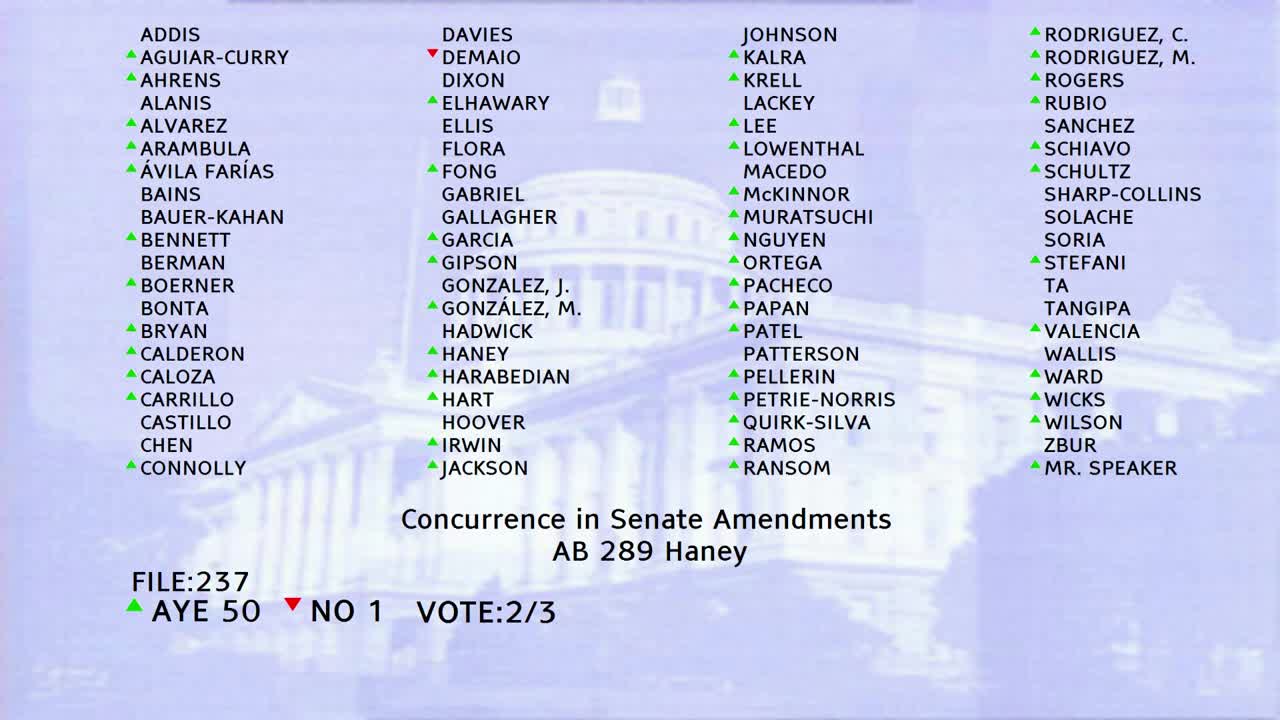 38SEC
Assembly Floor
 3MIN
Senate Floor
 12MIN
Senate Standing Committee on Appropriations
 39MIN
Senate Standing Committee on Education
 8MIN
Assembly Floor
 40MIN
Assembly Standing Committee on Education
Bill Author