AB 732: Agriculture: neglected or abandoned crops: public nuisances: pests.
- Session Year: 2025-2026
- House: Assembly
- Latest Version Date: 2025-10-07
Current Status:
Passed
(2025-10-07: Chaptered by Secretary of State - Chapter 440, Statutes of 2025.)
Introduced
In Committee
Awaiting First Chamber Vote
Passed First Chamber
In Committee
Awaiting Second Chamber Vote
Passed Second Chamber
Enacted
Under existing law, a neglected or abandoned plant or crop is a public nuisance if it is a menace to the agriculture of the county, district, or vicinity because of the existence of any pest, in or on it, or other condition, or if it is a host plant of, or provides a favorable or likely harbor for, any pest. Existing law defines pest for these purposes as an infectious, transmissible, or contagious disease of a plant, disorder of a plant that manifests symptoms or behavior characteristic of an infectious, transmissible, or contagious disease, form of animal life, or form of vegetable life, that is, or is liable to be, dangerous or detrimental to the agricultural industry of the state. Existing law prohibits a person from maintaining a neglected or abandoned plant or crop that is a public nuisance. Existing law requires a county agricultural commissioner, in writing, to notify the owner of record or person in charge of a property that has a neglected or abandoned plant or crop that the commissioner has found to be a public nuisance, of the need to remove or destroy the neglected or abandoned plant or crop, as specified. If the removal or destruction of the neglected or abandoned plant or crop is undertaken by a commissioner, existing law requires the commissioner to cause a notice of lien that describes the land on which the public nuisance exists to be recorded and subjects the land to a lien for any expense that is incurred by the county subsequent to the recording of the notice in the abatement of the nuisance.
This bill would authorize a county agricultural commissioner, in lieu of imposing a lien, as described above, to levy a civil penalty against a person who maintains a pest-related public nuisance in violation of the above-described prohibition, and would exclude from the definition of pest a beneficial organism that is used as a biological control agent or a conservation practice standard or on-farm management practice, as specified. The bill would require the civil penalty to be levied in accordance with specified procedures, including a requirement that the person charged with the violation receive notice of the nature of the violation and be given an opportunity to be heard. If the person takes a good faith action, as defined, to rectify the violation within 30 days of receiving notice, the bill would provide that the person is not liable for that civil penalty. The bill would require that civil penalty to be in an amount of up to $500 for each acre of property found to be in violation and would authorize that amount to be increased to up to $1,000 per acre if the person does not take a good faith action to rectify the public nuisance within 45 days of issuance of the original civil penalty. The bill would repeal these provisions on January 1, 2035.
Under existing law, a neglected or abandoned plant or crop is a public nuisance if it is a menace to the agriculture of the county, district, or vicinity because of the existence of any pest, in or on it, or other condition, or if it is a host plant of, or provides a favorable or likely harbor for, any pest. Existing law defines pest for these purposes as an infectious, transmissible, or contagious disease of a plant, disorder of a plant that manifests symptoms or behavior characteristic of an infectious, transmissible, or contagious disease, form of animal life, or form of vegetable life, that is, or is liable to be, dangerous or detrimental to the agricultural industry of the state. Existing law prohibits a person from maintaining a neglected or abandoned plant or crop that is a public nuisance. Existing law requires a county agricultural commissioner, in writing, to notify the owner of record or person in charge of the a property having that has a neglected or abandoned plant or crop that the commissioner has found to be a public nuisance, of the need to remove or destroy the neglected or abandoned plant or crop, as specified. If the removal or destruction of the neglected or abandoned plant or crop is undertaken by the a commissioner, existing law requires a the commissioner to cause a notice of lien that describes the land on which it the public nuisance exists to be recorded. Existing law defines pest for these purposes as an infectious, transmissible, or contagious disease of any plant, or any disorder of any plant that manifests symptoms or behavior characteristic of an infectious, transmissible, or contagious disease, a form of animal life, or a form of vegetable life, that is, or is liable to be, dangerous or detrimental to the agricultural industry of the state. recorded and subjects the land to a lien for any expense that is incurred by the county subsequent to the recording of the notice in the abatement of the nuisance.
This bill would instead define pest for those purposes as an infectious, transmissible, or contagious disease of a plant, or a disorder of a plant that manifests symptoms or behaviors characteristic of an infectious, transmissible, or contagious disease that is, or is liable to be, dangerous or detrimental to the agricultural industry of the state.This bill would authorize a county agricultural commissioner, in lieu of imposing a lien, as described above, to levy a civil penalty against a person who maintains a pest-related public nuisance in violation of the above-described prohibition, and would exclude from the definition of pest a beneficial organism that is used as a biological control agent or a conservation practice standard or on-farm management practice, as specified. The bill would require the civil penalty to be levied in accordance with specified procedures, including a requirement that the person charged with the violation receive notice of the nature of the violation and be given an opportunity to be heard. If the person takes a good faith action action, as defined, to rectify the violation within 15 30 days of receiving notice, the bill would provide that the person is not liable for that civil penalty. The bill would require that civil penalty to be in an amount of up to $500 for each acre of property found to be in violation and would authorize that amount to be increased to up to $1,000 per acre if the person does not take a good faith action to rectify the public nuisance within 30 45 days of issuance of the original civil penalty. The bill would repeal these provisions on January 1, 2035.
Under existing law, a neglected or abandoned plant or crop is a public nuisance if it is a menace to the agriculture of the county, district, or vicinity because of the existence of any pest, in or on it, or other condition, or if it is a host plant of, or provides a favorable or likely harbor for, any pest. Existing law prohibits a person from maintaining a neglected or abandoned plant or crop that is a public nuisance. Existing law requires a county agricultural commissioner, in writing, to notify the owner of record or person in charge of the property having a neglected or abandoned plant or crop that the commissioner has found to be a public nuisance, of the need to remove or destroy the neglected or abandoned plant or crop, as specified. If the removal or destruction of the neglected or abandoned plant or crop is undertaken by the commissioner, existing law requires a commissioner to cause a notice of lien that describes the land on which it exists to be recorded. Existing law defines pest for these purposes as an infectious, transmissible, or contagious disease of any plant, or any disorder of any plant that manifests symptoms or behavior characteristic of an infectious, transmissible, or contagious disease, a form of animal life, or a form of vegetable life, that is, or is liable to be, dangerous or detrimental to the agricultural industry of the state.
This bill would instead define pest for those purposes as an infectious, transmissible, or contagious disease of a plant, or a disorder of a plant that manifests symptoms or behaviors characteristic of an infectious, transmissible, or contagious disease that is, or is liable to be, dangerous or detrimental to the agricultural industry of the state.
This bill would authorize a county agricultural commissioner, in lieu of imposing a lien, as described above, to levy a civil penalty against a person who maintains a public nuisance in violation of the above-described prohibition, as specified. The bill would require the civil penalty to be levied in accordance with specified procedures, including a requirement that the person charged with the violation receive notice of the nature of the violation and be given an opportunity to be heard. If the person takes a good faith action to rectify the violation within 15 days of receiving notice, the bill would provide that the person is not liable for that civil penalty. The bill would require that civil penalty to be in an amount of up to $500 for each acre of property found to be in violation and would authorize that amount to be increased to up to $1,000 per acre if the person does not take a good faith action to rectify the public nuisance within 30 days of issuance of the original civil penalty. The bill would repeal these provisions on January 1, 2035.
Existing law establishes the Department of Food and Agriculture, which is under the control of the Secretary of Food and Agriculture, and, among other things, requires the department to protect the agricultural industries of this state from pests. Existing law defines pest for purposes of these provisions.This bill would make nonsubstantive changes to the definition of pest.Existing law establishes the Department of Food and Agriculture, which is under the control of the Secretary of Food and Agriculture, and, among other things, requires the department to protect the agricultural industries of this state from pests. Existing law defines pest for purposes of these provisions.
This bill would make nonsubstantive changes to the definition of pest.
For purposes of this article, all of the following definitions apply:
(a)Good faith action means a diligent and honest effort to abate the nuisance identified in a notice provided by the agricultural commissioner, as determined by a reasonable person.
(b)(1)Pest has the same meaning as defined in Section 5006.
(2)Pest does not include a beneficial organism that is used as a biological control agent or a conservation practice standard or an on-farm management practice, including a standard or practice identified by the Natural Resources Conservation Service of the United States Department of Agricultures Field Office Technical Guide or through the Healthy Soils Program, established pursuant to Section 569.
5647.(a)In lieu of imposing a lien pursuant to Article 4 (commencing with Section 5631), a commissioner may levy a civil penalty against a person who violates Section 5553 if the violation constitutes a pest-related nuisance to an adjoining or nearby property and the violation results in economic or ecological damage or would result in economic or ecological damage if the pest-related nuisance is not abated. The civil penalty shall be in an amount of up to five hundred dollars ($500), based on the severity of the nuisance and the persons ability to pay, for each acre of property found to be in violation of Section 5553, as described in this subdivision.
(b)(1)A minimum of 30 days before a civil penalty is levied pursuant to subdivision (a), the person charged with a violation shall receive notice of the nature of the violation and shall be given an opportunity to be heard. This shall include the right to review the evidence and the right to present evidence on their own behalf.
(2)The notice shall include the internet website of the University of California Statewide Integrated Pest Management Program.
(3)Upon service of the notice, the commissioner shall refer the person charged with the violation to the nearest University of California Cooperative Extension service office.
(4)If the person charged with the violation cannot, after a reasonable search, be found within the county, the notice shall be served by posting copies of it in three conspicuous places upon the property or premises or by mailing a copy of the notice to the owner of the property or premises at their last known address.
(5)(A)The notice shall include, either within the notice or in a separate document that accompanies the notice, a statement that reads: This is a notice of a violation of Section 5553 of the California Food and Agricultural Code, relating to maintaining a public nuisance. This notice of a violation has been issued by your countys agricultural commissioner. A party may appeal this notice of a violation pursuant to Section 5311 of the California Food and Agricultural Code. For more information or assistance, please contact their office. Do not ignore this notice.
(B)The statement described in subparagraph (A) shall be in both English and in any other language that over 10 percent of the persons residing within the county solely speak.
(c)If the person charged with the violation takes a good faith action to rectify the violation within 30 days of receiving notice pursuant to subdivision (b), the person shall not be liable for a civil penalty pursuant to subdivision (a).
(d)If the person charged with the violation does not take a good faith action to rectify the violation within 45 days from the issuance of a civil penalty pursuant to subdivision (a), the commissioner may increase the previously issued civil penalty of up to one thousand dollars ($1,000), based on the severity of the nuisance and the persons ability to pay, for each acre of property found to be in violation of Section 5553, as described in subdivision (a).
(e)For purposes of this article, none of the following constitute sole evidence of a violation of Section 5553:
(1)The use or presence of a biological control or beneficial organism.
(2)(A)The use of a conservation practice standard, identified by the Natural Resources Conservation Service of the United States Department of Agricultures Field Office Technical Guide, or an on-farm management practice, identified through the Healthy Soils Program, established pursuant to Section 569.
(B)Subparagraph (A) does not limit a commissioners authority to abate a pest that is harbored by a neglected or abandoned plant or crop.
(f)Subdivision (d) of Section 5311 shall apply to any civil penalty levied pursuant to this article.
(g)Any moneys recovered by the commissioner pursuant to this article shall be deposited into the county general fund in the county in which the action is brought and shall be allocated to the commissioner to cover costs related to the enforcement of this division.
5648.This article shall remain in effect only until January 1, 2035, and as of that date is repealed.
For purposes of this article, all of the following definitions apply:
(a)Good faith action means a diligent and honest effort to abate the nuisance identified in a notice provided by the agricultural commissioner, as determined by a reasonable person.
(b)(1)Pest has the same meaning as defined in Section 5006.
(2)Pest does not include a beneficial organism that is used as a biological control agent or a conservation practice standard or an on-farm management practice, including a standard or practice identified by the Natural Resources Conservation Service of the United States Department of Agricultures Field Office Technical Guide or through the Healthy Soils Program, established pursuant to Section 569.
5646.5647.(a)In lieu of imposing a lien pursuant to Article 4 (commencing with Section 5631), a commissioner may levy a civil penalty against a person who violates Section 5553 if the violation constitutes a pest-related nuisance to an adjoining or nearby property and the violation results in economic or ecological damage or would result in economic or ecological damage if the pest-related nuisance is not abated. The civil penalty shall be in an amount of up to five hundred dollars ($500), based on the severity of the nuisance and the persons ability to pay, for each acre of property found to be in violation of Section 5553, as described in this subdivision.
(b)(1)A minimum of 15 30 days before a civil penalty is levied pursuant to subdivision (a), the person charged with a violation shall receive notice of the nature of the violation and shall be given an opportunity to be heard. This shall include the right to review the evidence and the right to present evidence on their own behalf.
(2)The notice shall include the internet website of the University of California Statewide Integrated Pest Management Program.
(3)Upon service of the notice, the commissioner shall refer the person charged with the violation to the nearest University of California Cooperative Extension service office.
(4)If the person charged with the violation cannot, after a reasonable search, be found within the county, the notice shall be served by posting copies of it in three conspicuous places upon the property or premises or by mailing a copy of the notice to the owner of the property or premises at their last known address.
(5)(A)The notice shall include, either within the notice or in a separate document that accompanies the notice, a statement that reads: This is a notice of a violation of Section 5553 of the California Food and Agricultural Code, relating to maintaining a public nuisance. This notice of a violation has been issued by your countys agricultural commissioner. For more information or assistance, please contact their office. Do not ignore this notice.
(B)The statement described in subparagraph (A) shall be in both English and in any other language that over 10 percent of the persons residing within the county solely speak.
(c)If the person charged with the violation takes a good faith action to rectify the violation within 15 30 days of receiving notice pursuant to subdivision (b), the person shall not be liable for a civil penalty pursuant to subdivision (a).
(d)If the person charged with the violation does not take a good faith action to rectify the violation within 30 45 days from the issuance of a civil penalty pursuant to subdivision (a), the commissioner may increase the previously issued civil penalty of up to one thousand dollars ($1,000), based on the severity of the nuisance and the persons ability to pay, for each acre of property found to be in violation of Section 5553, as described in subdivision (a).
(e)For purposes of this article, none of the following constitute sole evidence of a violation of Section 5553:
(1)The use or presence of a biological control or beneficial organism.
(2)(A)The use of a conservation practice standard, identified by the Natural Resources Conservation Service of the United States Department of Agricultures Field Office Technical Guide, or an on-farm management practice, identified through the Healthy Soils Program, established pursuant to Section 569.
(B)Subparagraph (A) does not limit a commissioners authority to abate a pest that is harbored by a neglected or abandoned plant or crop.
(e)(f)Subdivision (d) of Section 5311 shall apply to any civil penalty levied pursuant to this chapter. article.
(f)(g)Any moneys recovered by the commissioner pursuant to this section article shall be deposited into the county general fund in the county in which the action is brought and shall be allocated to the commissioner to cover costs related to the enforcement of this division.
5647.5648.This article shall remain in effect only until January 1, 2035, and as of that date is repealed.
(a)Notwithstanding Section 5006, for the purposes of this chapter, pest means either of the following things that is, or is liable to be, dangerous or detrimental to the agricultural industry of the state:
(1)Any infectious, transmissible, or contagious disease of a plant.
(2)Any disorder of a plant that manifests symptoms or behaviors that the director, after investigation and hearing, finds and determines is characteristic of an infectious, transmissible, or contagious disease.
(b)Pest does not include either of the following:
(1)Biological control or beneficial organisms, as specified in Section 3162 of Title 3 of the California Code of Regulations.
(2)A conservation practice standard identified by the Natural Resources Conservation Service of the United States Department of Agricultures Field Office Technical Guide or an on-farm management practice identified by the Healthy Soils Program established pursuant to Section 569.
(c)The exclusions in paragraph (2) of subdivision (b) do not supersede a commissioners authority to abate a pest that is harbored by a practice standard included in subdivision (a).
SEC. 2.Article 5 (commencing with Section 5646) is added to Chapter 7 of Part 1 of Division 4 of the Food and Agricultural Code, to read:5.Civil Penalties5646.(a)In lieu of imposing a lien pursuant to Article 4 (commencing with Section 5631), a commissioner may levy a civil penalty against a person who violates Section 5553 if the violation constitutes a pest-related nuisance to an adjoining or nearby property and the violation results in economic or ecological damage or would result in economic or ecological damage if the pest-related nuisance is not abated. The civil penalty shall be in an amount of up to five hundred dollars ($500), based on the severity of the nuisance and the persons ability to pay, for each acre of property found to be in violation of Section 5553, as described in this subdivision.
(b)(1)A minimum of 15 days before a civil penalty is levied pursuant to subdivision (a), the person charged with a violation shall receive notice of the nature of the violation and shall be given an opportunity to be heard. This shall include the right to review the evidence and the right to present evidence on their own behalf.
(2)The notice shall include the internet website of the University of California Statewide Integrated Pest Management Program.
(3)Upon service of the notice, the commissioner shall refer the person charged with the violation to the nearest University of California Cooperative Extension service office.
(4)If the person charged with the violation cannot, after a reasonable search, be found within the county, the notice shall be served by posting copies of it in three conspicuous places upon the property or premises or by mailing a copy of the notice to the owner of the property or premises at their last known address.
(5)(A)The notice shall include, either within the notice or in a separate document that accompanies the notice, a statement that reads: This is a notice of a violation of Section 5553 of the California Food and Agricultural Code, relating to maintaining a public nuisance. This notice of a violation has been issued by your countys agricultural commissioner. For more information or assistance, please contact their office. Do not ignore this notice.
(B)The statement described in subparagraph (A) shall be in both English and in any other language that over 10 percent of the persons residing within the county solely speak.
(c)If the person charged with the violation takes a good faith action to rectify the violation within 15 days of receiving notice pursuant to subdivision (b), the person shall not be liable for a civil penalty pursuant to subdivision (a).
(d)If the person charged with the violation does not take a good faith action to rectify the violation within 30 days from the issuance of a civil penalty pursuant to subdivision (a), the commissioner may increase the previously issued civil penalty of up to one thousand dollars ($1,000), based on the severity of the nuisance and the persons ability to pay, for each acre of property found to be in violation of Section 5553, as described in subdivision (a).
(e)Subdivision (d) of Section 5311 shall apply to any civil penalty levied pursuant to this chapter.
(f)Any moneys recovered by the commissioner pursuant to this section shall be deposited into the county general fund in the county in which the action is brought and shall be allocated to the commissioner to cover costs related to the enforcement of this division.
5647.This article shall remain in effect only until January 1, 2035, and as of that date is repealed.
SECTION 1.Section 5006 of the Food and Agricultural Code is amended to read:5006.Pest means any of the following things that is, or is liable to be, dangerous or detrimental to the agricultural industry of the state:(a)An infectious, transmissible, or contagious disease of a plant, or a disorder of a plant that manifests symptoms or behavior that the secretary, after investigation and hearing, finds and determines is characteristic of an infectious, transmissible, or contagious disease.(b)A form of animal life.(c)A form of vegetable life.Pest means any of the following things that is, or is liable to be, dangerous or detrimental to the agricultural industry of the state:
(a)Any An infectious, transmissible, or contagious disease of any a plant, or any a disorder of any a plant which that manifests symptoms or behavior which that the director, secretary, after investigation and hearing, finds and determines is characteristic of an infectious, transmissible, or contagious disease.
(b)Any A form of animal life.
(c)Any A form of vegetable life.
|
Date
|
Status
|
|---|---|
| Oct 7, 2025 | Chaptered by Secretary of State - Chapter 440, Statutes of 2025. |
| Oct 7, 2025 | Approved by the Governor. |
| Sep 24, 2025 | Enrolled and presented to the Governor at 3 p.m. |
| Sep 13, 2025 | Joint Rules 61(a)(14) and 51(a)(4) suspended. (Ayes 59. Noes 20. Page 3413.) |
| Sep 13, 2025 | In Assembly. Concurrence in Senate amendments pending. |
| Sep 13, 2025 | Senate amendments concurred in. To Engrossing and Enrolling. (Ayes 72. Noes 0. Page 3510.). |
| Sep 13, 2025 | Assembly Rule 63 suspended. (Page 3477.) |
| Sep 12, 2025 | Read third time. Passed. Ordered to the Assembly. (Ayes 37. Noes 0. Page 3005.). |
| Sep 4, 2025 | Read second time. Ordered to third reading. |
| Sep 3, 2025 | Read third time and amended. Ordered to second reading. |
| Aug 20, 2025 | Read second time. Ordered to third reading. |
| Aug 19, 2025 | From committee: Be ordered to second reading pursuant to Senate Rule 28.8. |
| Jul 16, 2025 | From committee: Do pass and re-refer to Com. on APPR. (Ayes 13. Noes 0.) (July 15). Re-referred to Com. on APPR. |
| Jul 1, 2025 | From committee: Do pass and re-refer to Com. on JUD. (Ayes 5. Noes 0.) (July 1). Re-referred to Com. on JUD. |
| Jun 17, 2025 | From committee chair, with author's amendments: Amend, and re-refer to committee. Read second time, amended, and re-referred to Com. on AGRI. |
| Jun 12, 2025 | In committee: Set, first hearing. Hearing canceled at the request of author. |
| May 21, 2025 | Referred to Coms. on AGRI. and JUD. |
| May 8, 2025 | In Senate. Read first time. To Com. on RLS. for assignment. |
| May 8, 2025 | Read third time. Passed. Ordered to the Senate. (Ayes 69. Noes 0. Page 1486.) |
| May 1, 2025 | Read second time. Ordered to Consent Calendar. |
| Apr 30, 2025 | From committee: Do pass. To Consent Calendar. (Ayes 14. Noes 0.) (April 30). |
| Apr 22, 2025 | From committee: Do pass and re-refer to Com. on APPR. with recommendation: To Consent Calendar. (Ayes 12. Noes 0.) (April 22). Re-referred to Com. on APPR. |
| Apr 9, 2025 | From committee: Do pass and re-refer to Com. on JUD. (Ayes 8. Noes 0.) (April 9). Re-referred to Com. on JUD. |
| Mar 25, 2025 | Re-referred to Com. on AGRI. |
| Mar 24, 2025 | From committee chair, with author's amendments: Amend, and re-refer to Com. on AGRI. Read second time and amended. |
| Mar 24, 2025 | Referred to Coms. on AGRI. and JUD. |
| Feb 19, 2025 | From printer. May be heard in committee March 21. |
| Feb 18, 2025 | Read first time. To print. |
|
Date
|
Description
|
Location
|
Votes
|
|
|---|---|---|---|---|
| Sep 13, 2025 | AB 732 MACEDO Concurrence in Senate Amendments | Assembly Floor |
Passed |
|
| Sep 12, 2025 | Assembly 3rd Reading AB732 Macedo By McNerney | Senate Floor |
Passed |
|
| Jul 15, 2025 | Do pass, but first be re-referred to the Committee on [Appropriations] | Senate Standing Committee on Judiciary |
Passed |
|
| Jul 1, 2025 | Do pass, but first be re-referred to the Committee on [Judiciary] | Senate Standing Committee on Agriculture |
Passed |
|
| May 8, 2025 | AB 732 Macedo Consent Calendar Second Day Regular Session | Assembly Floor |
Passed |
|
| Apr 30, 2025 | Do pass. To Consent Calendar. | Assembly Standing Committee on Appropriations |
Passed |
|
| Apr 22, 2025 | Do pass and be re-referred to the Committee on [Appropriations] with recommendation: To Consent Calendar | Assembly Standing Committee on Judiciary |
Passed |
|
| Apr 9, 2025 | Do pass and be re-referred to the Committee on [Judiciary] | Assembly Standing Committee on Agriculture |
Passed |
This list shows positions taken on this bill by organizations on the date displayed, which is linked to the original source.
Positions by individuals are not included.
|
Organization
|
Position
|
Date
|
|---|---|---|
| Agricultural Council Of California | ** Support | |
| Almond Alliance | ** Support | |
| American Pistachio Growers | ** Support | |
| California Agricultural Commissioners & Sealers Association | ** Support | |
| California Association Of Pest Control Advisers | ** Support | |
| California Association Of Resource Conservation Districts | ** Support | |
| California Association Of Wheat Growers | ** Support | |
| California Chamber Of Commerce | ** Support | |
| California Cotton Ginners and Growers Association | ** Support | |
| California Farm Bureau Federation | ** Support | |
| California Fresh Fruit Association | ** Support | |
| California Grain and Feed Association | ** Support | |
| Californians for Pesticide Reform | ** Against | |
| California Pear Growers Association | ** Support | |
| California Seed Association | ** Support | |
| Central California Environmental Justice Network | ** Against | |
| Community Alliance With Family Farmers | ** Against | |
| County of Fresno | ** Support | |
| County of Tulare | ** Support | |
| Farm-to-Consumer Legal Defense Fund | ** Against | |
| Grower-Shipper Association of Central California | ** Support | |
| Nisei Farmers League | ** Support | |
| Pacific Egg and Poultry Association | ** Support | |
| Pesticide Action & Agroecology Network | ** Against | |
| Resilient Foodsheds | ** Against | |
| Western Plant Health Association | ** Support | |
| Western Tree Nut Association | ** Support |
CONCURRENCE IN SENATE AMENDMENTS
CSA1 Bill Id:AB 732
Author:(Macedo)
As Amended Ver:September 3, 2025
Majority vote
SUMMARY
This bill would define pest as an infectious, transmissible, or contagious disease of a plant, or a disorder of a plant that manifests symptoms or behaviors characteristic of an infectious, transmissible, or contagious disease that is, or is liable to be, dangerous or detrimental to the agricultural industry of the state and would authorize a county agricultural commissioner (CAC) to levy a civil penalty against a person who maintains a public nuisance.
Senate Amendments
- Deletes the bill definition of a 'pest' to mean either of the following things that is, or is liable to be, dangerous or detrimental to the agricultural industry of the state:
- Any infectious, transmissible, or contagious disease of a plant.
- Any disorder of a plant that manifests symptoms or behaviors that the director, after investigation and hearing, finds and determines is characteristic of an infectious, transmissible, or contagious disease.
- Defines "pest" to have the meaning as in Section 5006 of the Food and Agriculture Code. "Pest" does not include a beneficial organism that is used as a biological control agent or a conservation practice standard or an on-farm management practice, including a standard or practice identified by the Natural Resources Conservation Service of the United States Department of Agriculture's Field Office Technical Guide or through the Healthy Soils Program, established as specified.
- Defines "good faith action" to mean a diligent and honest effort to abate the nuisance identified in a notice provided by the agricultural commissioner, as determined by a reasonable person.
- Allows the party to appeal the notice of a violation, as specified.
COMMENTS
California's agriculture and ecosystem is threatened by invasive pests and diseases. Invasive pests and diseases can disrupt delicate ecosystems, endanger plants, outcompete native species, alter soil chemistry, and affect water systems. California's farmers, ranchers and land managers, including land trusts, non-profits and other Non-Governmental Organizations (NGOs) work hard to manage their properties in a way that addresses pests and diseases appropriately and pursuant to the standards of Integrated Pest Management (IPM). Through IPM, farmers combine biological, cultural, mechanical, and chemical control methods, based on the specific context of the issue and the goal may not be to eradicate the pest completely, but rather to keep their numbers at a level where they do not cause significant damage to crops, structures, or the environment. For pests that are truly damaging, exotic (triggering a quarantine action), etc., eradication may not just be the goal, but a requirement.
CACs and the California Department of Food and Agriculture (CDFA) deploy a network of resources and work together to protect the State against disease and pest introduction and address pest pressures that could otherwise devastate the State's agricultural communities. In 2024, the state spent over $40 million to treat for fruit flies, which resulted in growers being under quarantines for prolonged periods, severely limiting their movement and their ability to sell commodities.
Under the current law, CDFA has one tool to manage most nuisance based pest issues on abandoned properties. They must go through a lengthy process to issue a lien on the property owner, pay for the cost to abate the nuisance using the County's limited resources, and then wait to be reimbursed from that lien process. If the County does not have the financial resources to cover these initial abatement costs, neighboring property owners must overly respond on their properties for dereliction. If the County does pursue the process and is compensated, the time is protracted, removing resources that could be otherwise spent on trapping and surveying for potential pest outbreaks, responding to public needs, or covering other essential services. As this issue becomes more acute, this seeks to provide another tool in the toolbox for commissioners. Ultimately, if after a civil penalty is issued in this bill and abatement is not undertaken by the property owner, the County can pursue the lien process already authorized.
According to the Author
As severe weather, changing land use, and low commodity prices push farmers to abandon their lands, neglected properties are becoming breeding grounds for pests and diseases that threaten neighboring farms. Current law provides only a slow and costly lien process, leaving counties without effective enforcement tools to help keep pests and diseases under control on abandoned land. This bill empowers CACs to issue civil penalties against negligent property owners who fail to manage their land, hence, reducing reliance on the slow and costly lien process. With invasive species costing growers millions and disrupting ecosystems, this bill ensures timely intervention when property owners ignore notices to address infestations. This bill will strengthen local efforts to protect agriculture, prevent disease outbreaks, and reduce the burden on taxpayers while maintaining fairness for landowners.
Arguments in Support
This bill provides an additional tool for CACs to ensure vacant landholders are responsible stewards of their environment and neighbors. The bill strikes a balance by addressing the needs of small farmers who may be struggling with pest issues due to cost or are making good faith efforts to comply, while still allowing for action against landowners who are negligent. At the same time, it preserves the authority of the State and CACs to address high-priority invasive species when necessary. This bill will empower CACs to take timely action, helping to mitigate the spread of pests and diseases that may threaten the broader agricultural landscape. By providing CACs with civil penalty authority, the bill ensures accountability for landowners who neglect their responsibilities, ultimately protecting California's agriculture, environment, and economy.
Arguments in Opposition
The Community Alliance with Family Farmers writes stating they "oppose unless amended." The letter states:
"While CAFF supports the goal of protecting California's agricultural integrity, this bill raises serious concerns about fairness, implementation, and due process:
1. Expanded Enforcement Authority without Adequate Safeguards: Granting county agricultural commissioner's unilateral authority to levy fines of up to $1,000 per acre based on a subjective determination of a nuisance opens the door to inconsistent enforcement and potential abuse.
2. Punitive Financial Penalties on Small Landowners: The scale of the penalties is disproportionately burdensome, especially for small, resource-constrained farmers and property owners who may already face environmental or financial challenges. An acre-based penalty system may unfairly penalize individuals regardless of intent or ability to act.
3. Ambiguous and Overly Broad Definition of "Pest": The proposed redefinition of "pest" introduces uncertainty by relying on symptoms or behaviors "characteristic" of disease, allowing enforcement to hinge on interpretation rather than clear, scientifically validated criteria.
4. Premature Enforcement Deadlines: Although the bill allows for a 15-day window for corrective action, in many cases, this may be insufficient to investigate, access technical support, or take remedial steps – especially if the 15-day window occurs during crucial harvest times. Small family farms would be placed in the no-win situation of having to choose between violation remediation or harvesting their crops that sustain their existence.
5. Insufficient Consideration for Regenerative Practices: While the bill attempts to exempt USDA conservation standards and Healthy Soils Program practices, it still enables commissioners to override these protections, creating confusion for landowners participating in state-sanctioned sustainability efforts.
The opponents foresee scenarios of negative unintended consequences to individual farms due to the broad parameters allowed by this bill. More collaborative, education-first approaches—such as expanding cooperative extension support and incentivizing integrated pest management—are far more appropriate than escalating punitive measures.
FISCAL COMMENTS
1) CDFA reports minor and absorbable costs as a result of this bill. CDFA collaborates with and provides support to CACs on pest detection and mitigation actions. It is possible there may be appeals to the secretary of CDFA related to civil penalties levied under this bill; however, the department anticipates any costs related to such appeals are likely absorbable (Department of Food and Agriculture Fund).
2) Possible minor cost pressures to the courts to the extent a person appealing a decision by the secretary of CDFA seeks a writ of mandate in superior court (Trial Court Trust Fund, General Fund).
VOTES:
ASM AGRICULTURE: 8-0-0
YES: Soria, Alanis, Aguiar-Curry, Connolly, Jeff Gonzalez, Hadwick, Irwin, Ransom
ASM JUDICIARY: 12-0-0
YES: Kalra, Dixon, Bauer-Kahan, Bryan, Connolly, Harabedian, Macedo, Pacheco, Lee, Sanchez, Stefani, Zbur
ASM APPROPRIATIONS: 14-0-1
YES: Wicks, Sanchez, Arambula, Calderon, Caloza, Dixon, Elhawary, Fong, Mark González, Hart, Pacheco, Solache, Ta, Alanis
ABS, ABST OR NV: Pellerin
ASSEMBLY FLOOR: 69-0-10
YES: Addis, Aguiar-Curry, Ahrens, Alanis, Alvarez, Ávila Farías, Bains, Bauer-Kahan, Bennett, Berman, Bonta, Bryan, Calderon, Caloza, Castillo, Chen, Connolly, Davies, DeMaio, Dixon, Elhawary, Ellis, Fong, Gabriel, Garcia, Gipson, Mark González, Hadwick, Haney, Harabedian, Hart, Hoover, Jackson, Kalra, Krell, Lackey, Lee, Lowenthal, Macedo, McKinnor, Muratsuchi, Nguyen, Ortega, Pacheco, Papan, Patel, Patterson, Pellerin, Petrie-Norris, Quirk-Silva, Ramos, Ransom, Michelle Rodriguez, Rogers, Blanca Rubio, Schiavo, Schultz, Sharp-Collins, Solache, Soria, Stefani, Ta, Tangipa, Valencia, Ward, Wicks, Wilson, Zbur, Rivas
ABS, ABST OR NV: Arambula, Boerner, Carrillo, Flora, Gallagher, Jeff Gonzalez, Irwin, Celeste Rodriguez, Sanchez, Wallis
UPDATED
VERSION: September 3, 2025
CONSULTANT: Victor Francovich / AGRI. / (916) 319-2084 FN: 0001911
SENATE RULES COMMITTEE Office of Senate Floor Analyses (916) 651-1520 Fax: (916) 327-4478 | AB 732 |
THIRD READING
Bill No: AB 732
Author: Macedo (R)
Amended: 9/3/25 in Senate
Vote: 21
SENATE AGRICULTURE COMMITTEE: 5-0, 7/1/25
AYES: Hurtado, Alvarado-Gil, Cortese, McNerney, Padilla
SENATE JUDICIARY COMMITTEE: 13-0, 7/15/25
AYES: Umberg, Niello, Allen, Arreguín, Ashby, Caballero, Durazo, Laird, Stern, Valladares, Wahab, Weber Pierson, Wiener
SENATE APPROPRIATIONS COMMITTEE: Senate Rule 28.8
ASSEMBLY FLOOR: 69-0, 5/8/25 (Consent) - See last page for vote
SUBJECT: Agriculture: neglected or abandoned crops: public nuisances: pests
SOURCE: Author
DIGEST:
This bill authorizes county agricultural commissioners (CAC), in lieu of imposing a lien on a property that has been determined to be neglected or abandoned, to levy a civil penalty against a person who maintains a pest-related public nuisance in violation of current law. This bill excludes from the definition of a pest a beneficial organism that is used as a biological control agent or a conservation practice standard or on-farm management practice, as specified. This bill authorizes county agricultural commissioners to impose civil penalties—up to $500 per acre, or $1,000 if no good faith effort to remedy the issue is made within 30 days of the original notice by the owner of the property. These provisions sunset on January 1, 2035.
Senate floor amendments of 9/3/25 require that any notice of violation issued to the property owner of record, or the individual responsible for a neglected or abandoned property, must include language informing the recipient of their right to appeal the violation determination.
ANALYSIS:
Existing law:
- Establishes a neglected or abandoned plant or crop is a public nuisance if it is a menace to the agriculture of the county, district, or vicinity because of the existence of any pest, in or on it, or other condition, or if it is a host plant of, or provides a favorable or likely harbor for, any pest.
- Prohibits a person from maintaining a neglected or abandoned plant or crop that is a public nuisance.
- Defines “pest” to mean:
- Any infectious, transmissible, or contagious disease of any plant, or any disorder of any plant which manifests symptoms or behavior which the director, after investigation and hearing, finds and determines is characteristic of an infectious, transmissible, or contagious disease.
- Any form of animal life.
- Any form of vegetable life.
- Requires a CAC, in writing, to notify the owner of record or person in charge of the property having a neglected or abandoned plant or crop that the commissioner has found to be a public nuisance, of the need to remove or destroy the neglected or abandoned plant or crop, as specified. If the removal or destruction of the neglected or abandoned plant or crop is undertaken by the CAC, existing law requires a CAC to cause a notice of lien that describes the land on which it exists to be recorded.
This bill:
- Defines “Good faith action” to mean a diligent and honest effort to abate the nuisance identified in a notice provided by the agricultural commissioner, as determined by a reasonable person.
- Defines “Pest” to have the same meaning as defined in Food and Agricultural Code (FAC) Section 5006.
- FAC 5006: “Pest” means any of the following things that is, or is liable to be, dangerous or detrimental to the agricultural industry of the state:
- Any infectious, transmissible, or contagious disease of any plant, or any disorder of any plant which manifests symptoms or behavior which the director, after investigation and hearing, finds and determines is characteristic of an infectious, transmissible, or contagious disease.
- Any form of animal life.
- Any form of vegetable life.
- FAC 5006: “Pest” means any of the following things that is, or is liable to be, dangerous or detrimental to the agricultural industry of the state:
- Requires a CAC, in writing, to notify the owner of record or person in charge of the property having a neglected or abandoned plant or crop that the commissioner has found to be a public nuisance, of the need to remove or destroy the neglected or abandoned plant or crop, as specified. The notification shall clearly state the owner of record or person in charge of the property has the right to appeal this decision.
- Extends the minimum days before a civil penalty is levied from 15 days to 30 days.
- Extends the minimum days a person charged with the violation has to take a good faith action to rectify the violation from 30 days to 45 days.
- Clarifies for purposes of this article, none of the following constitute sole evidence of a violation of Section 5553:
- The use or presences of a biological control or beneficial organism.
- The use of a conservation practice standard, identified by the Natural Resources Conservation Service of the United States Department of Agriculture’s Field Office Technical Guide, or an on-farm management practice, identified through the Healthy Soils Program, established pursuant to Section 569.
- States any moneys recovered by the commissioner pursuant to this article shall be deposited into the county general fund in which the action is brought and shall be allocated to the commissioner to cover costs associated with enforcement of this division.
- Subparagraph (6) does not limit the commissioner’s authority to abate a pest that is harbored by a neglected or abandoned plant or crop.
- Sunsets this article on January 1, 2035.
FISCAL EFFECT: Appropriation: No Fiscal Com.: Yes Local: No
SUPPORT: (Verified 9/3/25)
Agricultural Council of California
Almond Alliance
American Pistachio Growers
California Agricultural Commissioners & Sealers Association
California Association of Pest Control Advisers
California Association of Resource Conservation Districts
California Association of Wheat Growers
California Chamber of Commerce
California Cotton Ginners and Growers Association
California Farm Bureau Federation
California Fresh Fruit Association
California Grain and Feed Association
California Pear Growers Association
California Seed Association
County of Fresno
Grower-shipper Association of Central California
Nisei Farmers League
Pacific Egg and Poultry Association
Tulare; County of
Western Plant Health Association
Western Tree Nut Association
OPPOSITION: (Verified 9/3/25)
Community Alliance with Family Farmers
ARGUMENTS IN SUPPORT: According to the author:
“As severe weather, changing land use, and low commodity prices push farmers to abandon their lands, neglected properties are becoming breeding grounds for pests and diseases that threaten neighboring farms. Current law provides only a slow and costly lien process, leaving counties without effective enforcement tools to help keep pests and diseases under control on abandoned land. AB 732 empowers County Agricultural Commissioners to issue civil penalties against negligent property owners who fail to manage their land, hence, reducing reliance on the slow and costly lien process. With invasive species costing growers millions and disrupting ecosystems, this bill ensures timely intervention when property owners ignore notices to address infestations. AB 732 will strengthen local efforts to protect agriculture, prevent disease outbreaks, and reduce the burden on taxpayers while maintaining fairness for landowners.”
ARGUMENTS IN OPPOSITION: The Community Alliance with Family Farmers writes stating they “oppose unless amended.” The letter states:
“While CAFF supports the goal of protecting California’s agricultural integrity, this bill raises serious concerns about fairness, implementation, and due process:
1. Expanded Enforcement Authority without Adequate Safeguards: Granting county agricultural commissioner’s unilateral authority to levy fines of up to $1,000 per acre based on a subjective determination of a nuisance opens the door to inconsistent enforcement and potential abuse.
2. Punitive Financial Penalties on Small Landowners: The scale of the penalties is disproportionately burdensome, especially for small, resource-constrained farmers and property owners who may already face environmental or financial challenges. An acre-based penalty system may unfairly penalize individuals regardless of intent or ability to act.
3. Ambiguous and Overly Broad Definition of “Pest”: The proposed redefinition of "pest" introduces uncertainty by relying on symptoms or behaviors “characteristic” of disease, allowing enforcement to hinge on interpretation rather than clear, scientifically validated criteria.
4. Premature Enforcement Deadlines: Although the bill allows for a 15-day window for corrective action, in many cases, this may be insufficient to investigate, access technical support, or take remedial steps – especially if the 15-day window occurs during crucial harvest times. Small family farms would be placed in the no-win situation of having to choose between violation remediation or harvesting their crops that sustain their existence.
5. Insufficient Consideration for Regenerative Practices: While the bill attempts to exempt USDA conservation standards and Healthy Soils Program practices, it still enables commissioners to override these protections, creating confusion for landowners participating in state-sanctioned sustainability efforts.
“We can foresee scenarios of negative unintended consequences to individual farms due to the broad parameters allowed by AB 732. More collaborative, education-first approaches—such as expanding cooperative extension support and incentivizing integrated pest management—are far more appropriate than escalating punitive measures.”
ASSEMBLY FLOOR: 69-0, 5/8/25
AYES: Addis, Aguiar-Curry, Ahrens, Alanis, Alvarez, Ávila Farías, Bains, Bauer-Kahan, Bennett, Berman, Bonta, Bryan, Calderon, Caloza, Castillo, Chen, Connolly, Davies, DeMaio, Dixon, Elhawary, Ellis, Fong, Gabriel, Garcia, Gipson, Mark González, Hadwick, Haney, Harabedian, Hart, Hoover, Jackson, Kalra, Krell, Lackey, Lee, Lowenthal, Macedo, McKinnor, Muratsuchi, Nguyen, Ortega, Pacheco, Papan, Patel, Patterson, Pellerin, Petrie-Norris, Quirk-Silva, Ramos, Ransom, Michelle Rodriguez, Rogers, Blanca Rubio, Schiavo, Schultz, Sharp-Collins, Solache, Soria, Stefani, Ta, Tangipa, Valencia, Ward, Wicks, Wilson, Zbur, Rivas
NO VOTE RECORDED: Arambula, Boerner, Carrillo, Flora, Gallagher, Jeff Gonzalez, Irwin, Celeste Rodriguez, Sanchez, Wallis
Prepared by: Reichel Everhart / AGRI. / (916) 651-1508
9/6/25 10:30:10
**** END ****
SENATE RULES COMMITTEE Office of Senate Floor Analyses (916) 651-1520 Fax: (916) 327-4478 | AB 732 |
THIRD READING
Bill No: AB 732
Author: Macedo (R)
Amended: 6/17/25 in Senate
Vote: 21
SENATE AGRICULTURE COMMITTEE: 5-0, 7/1/25
AYES: Hurtado, Alvarado-Gil, Cortese, McNerney, Padilla
SENATE JUDICIARY COMMITTEE: 13-0, 7/15/25
AYES: Umberg, Niello, Allen, Arreguín, Ashby, Caballero, Durazo, Laird, Stern, Valladares, Wahab, Weber Pierson, Wiener
ASSEMBLY FLOOR: 69-0, 5/8/25 (Consent) - See last page for vote
SUBJECT: Agriculture: neglected or abandoned crops: public nuisances: pests
SOURCE: Author
DIGEST:
This bill authorizes county agricultural commissioners (CAC), in lieu of imposing a lien on a property that has been determined to be neglected or abandoned, to levy a civil penalty against a person who maintains a pest-related public nuisance in violation of current law. This bill excludes from the definition of a pest a beneficial organism that is used as a biological control agent or a conservation practice standard or on-farm management practice, as specified. This bill authorizes county agricultural commissioners to impose civil penalties—up to $500 per acre, or $1,000 if no good faith effort to remedy the issue is made within 30 days of the original notice by the owner of the property. These provisions sunset on January 1, 2035.
ANALYSIS:
Existing law:
- Establishes a neglected or abandoned plant or crop is a public nuisance if it is a menace to the agriculture of the county, district, or vicinity because of the existence of any pest, in or on it, or other condition, or if it is a host plant of, or provides a favorable or likely harbor for, any pest.
- Prohibits a person from maintaining a neglected or abandoned plant or crop that is a public nuisance.
- Defines “pest” to mean:
- Any infectious, transmissible, or contagious disease of any plant, or any disorder of any plant which manifests symptoms or behavior which the director, after investigation and hearing, finds and determines is characteristic of an infectious, transmissible, or contagious disease.
- Any form of animal life.
- Any form of vegetable life.
- Requires a CAC, in writing, to notify the owner of record or person in charge of the property having a neglected or abandoned plant or crop that the commissioner has found to be a public nuisance, of the need to remove or destroy the neglected or abandoned plant or crop, as specified. If the removal or destruction of the neglected or abandoned plant or crop is undertaken by the CAC, existing law requires a CAC to cause a notice of lien that describes the land on which it exists to be recorded.
This bill:
- Defines “Good faith action” to mean a diligent and honest effort to abate the nuisance identified in a notice provided by the agricultural commissioner, as determined by a reasonable person.
- Defines “Pest” to have the same meaning as defined in Food and Agricultural Code Section 5006.
- FAC 5006: “Pest” means any of the following things that is, or is liable to be, dangerous or detrimental to the agricultural industry of the state:
- Any infectious, transmissible, or contagious disease of any plant, or any disorder of any plant which manifests symptoms or behavior which the director, after investigation and hearing, finds and determines is characteristic of an infectious, transmissible, or contagious disease.
- Any form of animal life.
- Any form of vegetable life.
- FAC 5006: “Pest” means any of the following things that is, or is liable to be, dangerous or detrimental to the agricultural industry of the state:
- Extends the minimum days before a civil penalty is levied from 15 days to 30 days.
- Extends the minimum days a person charged with the violation has to take a good faith action to rectify the violation from 30 days to 45 days.
- Clarifies for purposes of this article, none of the following constitute sole evidence of a violation of Section 5553:
- The use or presences of a biological control or beneficial organism.
- The use of a conservation practice standard, identified by the Natural Resources Conservation Service of the United States Department of Agriculture’s Field Office Technical Guide, or an on-farm management practice, identified through the Healthy Soils Program, established pursuant to Section 569.
- States any moneys recovered by the commissioner pursuant to this article shall be deposited into the county general fund in which the action is brought and shall be allocated to the commissioner to cover costs associated with enforcement of this division.
- Subparagraph (6) does not limit the commissioner’s authority to abate a pest that is harbored by a neglected or abandoned plant or crop.
- Sunsets this article on January 1, 2035.
FISCAL EFFECT: Appropriation: No Fiscal Com.: Yes Local: No
Senate Rule 28.8
SUPPORT: (Verified 8/19/25)
Agricultural Council of California
Almond Alliance
American Pistachio Growers
California Agricultural Commissioners & Sealers Association
California Association of Pest Control Advisers
California Association of Resource Conservation Districts
California Association of Wheat Growers
California Chamber of Commerce
California Cotton Ginners and Growers Association
California Farm Bureau Federation
California Fresh Fruit Association
California Grain and Feed Association
California Pear Growers Association
California Seed Association
County of Fresno
Grower-shipper Association of Central California
Nisei Farmers League
Pacific Egg and Poultry Association
Tulare; County of
Western Plant Health Association
Western Tree Nut Association
OPPOSITION: (Verified 8/19/25)
Community Alliance with Family Farmers
ARGUMENTS IN SUPPORT: According to the author:
“As severe weather, changing land use, and low commodity prices push farmers to abandon their lands, neglected properties are becoming breeding grounds for pests and diseases that threaten neighboring farms. Current law provides only a slow and costly lien process, leaving counties without effective enforcement tools to help keep pests and diseases under control on abandoned land. AB 732 empowers County Agricultural Commissioners to issue civil penalties against negligent property owners who fail to manage their land, hence, reducing reliance on the slow and costly lien process. With invasive species costing growers millions and disrupting ecosystems, this bill ensures timely intervention when property owners ignore notices to address infestations. AB 732 will strengthen local efforts to protect agriculture, prevent disease outbreaks, and reduce the burden on taxpayers while maintaining fairness for landowners.”
ARGUMENTS IN OPPOSITION: The Community Alliance with Family Farmers writes stating they “oppose unless amended.” The letter states:
“While CAFF supports the goal of protecting California’s agricultural integrity, this bill raises serious concerns about fairness, implementation, and due process:
1. Expanded Enforcement Authority without Adequate Safeguards: Granting county agricultural commissioner’s unilateral authority to levy fines of up to $1,000 per acre based on a subjective determination of a nuisance opens the door to inconsistent enforcement and potential abuse.
2. Punitive Financial Penalties on Small Landowners: The scale of the penalties is disproportionately burdensome, especially for small, resource-constrained farmers and property owners who may already face environmental or financial challenges. An acre-based penalty system may unfairly penalize individuals regardless of intent or ability to act.
3. Ambiguous and Overly Broad Definition of “Pest”: The proposed redefinition of "pest" introduces uncertainty by relying on symptoms or behaviors “characteristic” of disease, allowing enforcement to hinge on interpretation rather than clear, scientifically validated criteria.
4. Premature Enforcement Deadlines: Although the bill allows for a 15-day window for corrective action, in many cases, this may be insufficient to investigate, access technical support, or take remedial steps – especially if the 15-day window occurs during crucial harvest times. Small family farms would be placed in the no-win situation of having to choose between violation remediation or harvesting their crops that sustain their existence.
5. Insufficient Consideration for Regenerative Practices: While the bill attempts to exempt USDA conservation standards and Healthy Soils Program practices, it still enables commissioners to override these protections, creating confusion for landowners participating in state-sanctioned sustainability efforts.
“We can foresee scenarios of negative unintended consequences to individual farms due to the broad parameters allowed by AB 732. More collaborative, education-first approaches—such as expanding cooperative extension support and incentivizing integrated pest management—are far more appropriate than escalating punitive measures.”
ASSEMBLY FLOOR: 69-0, 5/8/25
AYES: Addis, Aguiar-Curry, Ahrens, Alanis, Alvarez, Ávila Farías, Bains, Bauer-Kahan, Bennett, Berman, Bonta, Bryan, Calderon, Caloza, Castillo, Chen, Connolly, Davies, DeMaio, Dixon, Elhawary, Ellis, Fong, Gabriel, Garcia, Gipson, Mark González, Hadwick, Haney, Harabedian, Hart, Hoover, Jackson, Kalra, Krell, Lackey, Lee, Lowenthal, Macedo, McKinnor, Muratsuchi, Nguyen, Ortega, Pacheco, Papan, Patel, Patterson, Pellerin, Petrie-Norris, Quirk-Silva, Ramos, Ransom, Michelle Rodriguez, Rogers, Blanca Rubio, Schiavo, Schultz, Sharp-Collins, Solache, Soria, Stefani, Ta, Tangipa, Valencia, Ward, Wicks, Wilson, Zbur, Rivas
NO VOTE RECORDED: Arambula, Boerner, Carrillo, Flora, Gallagher, Jeff Gonzalez, Irwin, Celeste Rodriguez, Sanchez, Wallis
Prepared by: Reichel Everhart / AGRI. / (916) 651-1508
8/20/25 23:15:56
**** END ****
Senator Thomas Umberg, Chair
2025-2026 Regular Session
Bill No: AB 732 (Author:Macedo)
Version: June 17, 2025
Hearing Date: July 15, 2025
Fiscal: Yes
Urgency: No
Consultant: AM
SUBJECT
Agriculture: neglected or abandoned crops: public nuisances: pests
DIGEST
This bill authorizes the imposition of a civil penalty, in lieu of a lien, upon a property owner found to have violated the law related to remediating pest-related nuisances, as provided.
EXECUTIVE SUMMARY
California is the national leader in agricultural production. According to the California Department of Food and Agriculture, in 2023, California’s farms and ranches generated $59.4 billion in economic output.[1] As such, California’s Integrated Pest Management system is imperative to protecting this industry. Existing law requires landowners to remediate neglected croplands that can become a breeding ground for harmful pests. Property owners are legally required to remediate pests; however, if the county agricultural commissioner is required to step in, the commissioner is authorized to recover the cost to the taxpayers by filing a lien on the impacted property. The author argues that liens do not always result in timely cost recovery. In light of this, the bill authorizes the imposition of civil penalties in place of a lien. The bill provides notice requirements, an opportunity to remediate before a penalty is assessed, and provides procedures for an appeal. The bill is similar to AB 2745 (Mathis, 2024), which was vetoed by the Governor. (See (See Comment 2, below, for veto message.) The bill is author sponsored and supported by various counties and agricultural and business organizations. The bill is by various organizations advocating for small farmers and the environment. The bill passed the Senate Agricultural Committee on a vote of 5 to 0.
PROPOSED CHANGES TO THE LAW
Existing law:
- Authorizes a county agricultural commissioner to, whenever necessary, enter and make an inspection of any premises, plant, conveyance, or thing in their jurisdiction. (Food and Ag. Code § 5023.)
- Provides that any person who negligently or intentionally violates any state or federal law or regulation, including any quarantine regulation, by importing any plant, or other article, that, by virtue of being pest or disease infested, causes an infestation of a plant, pest, or disease, or causes an existing infestation to spread beyond any quarantine boundaries, is liable civilly in a sum not to exceed twenty-five thousand dollars ($25,000) for each act that constitutes a violation of the law or regulation. (Food and Ag. Code § 5028(c).)
- Authorizes the Attorney General to seek civil penalties, not to exceed ten thousand dollars ($10,000) per violation, against any person who violates the division of the Food and Agricultural Code regarding agricultural quarantines and inspections. (Food and Ag. Code § 5310.)
- Provides that in lieu of the penalties provided for in 3), a county agricultural commissioner may seek administrative penalties not to exceed two thousand five hundred dollars ($2,500) per violation of the division of the Food and Agricultural Code regarding agricultural quarantines and inspections. (Food and Ag. Code § 5311.)
- Authorizes the Director of the Department of Food and Agriculture or a county agricultural commissioner, if any pest exists on a premises, to hold any plant or other host or possible carrier which is, or may be, capable of disseminating or carrying the pest, as well as any plants, other hosts, or other possible carriers on any premises within five miles of the premises on which the pest was found to exist. (Food and Ag. Code § 5701.)
- Requires that if the agricultural commissioner of any county determines by inspection that there is a condition which constitutes a nuisance, as defined, on any property or premises within the jurisdiction, the commissioner make a report of the inspection to the district attorney or to the county counsel if the board of supervisors has authorized the county counsel to file a nuisance petition. (Food and Ag. Code § 5571.)
- Requires that upon the filing of a nuisance petition in accordance with 6), the court to issue a citation which requires that the owner or person that is in charge or in possession of the property appear at a time and place which is specified to show cause why the neglected or abandoned plant or crop should not be removed or destroyed. (Food and Ag. Code § 5574.)
- Provides that any neglected or abandoned plant or crop is a public nuisance in any of the following circumstances:
- It is a menace to the agriculture of the county, district, or vicinity because of the existence of any pest, in or on it;
- It is a menace to the agriculture of the county, district, or vicinity because of the existence of any other condition than the condition described in a); or
- It is a host plant of, or provides a favorable or likely harbor for, any pest. (Food and Ag. Code § 5551.)
- Provides that it is unlawful for any person to maintain any neglected or abandoned plant or crop which is a public nuisance. (Food and Ag. Code § 5553.)
- Requires that, if the removal or destruction of any neglected or abandoned plant or crop that is a public nuisance as specified in 8), above, is undertaken by the county agricultural commission, the commissioner may record a notice of lien which describes the land on which it exists to be recorded. (Food and Ag. Code § 5631.)
- Defines “pest” to mean any of the following things that are, or are liable to be, dangerous or detrimental to the agricultural industry of this state:
- any infectious, transmissible, or contagious disease of a plant which manifests symptoms or behavior which the director, after investigation and hearing, finds and determines is characteristic of an infectious, transmissible, or contagious disease;
- any form of animal life;
- any form of vegetable life. (Food and Ag. Code § 5006.)
- Provides that where a writ of mandate is issued for the purpose of inquiring into the validity of any final administrative order or decision made as the result of a proceeding in which by law a hearing is required to be given, evidence is required to be taken, and discretion in the determination of facts is vested in the inferior tribunal, corporation, board, or officer, the case is to be heard by the court sitting without a jury, and that all or part of the record of the proceedings before the inferior tribunal, corporation, board, or officer may be filed with the petition, may be filed with respondent’s points and authorities, or may be ordered to be filed by the court. (Code Civ. Proc. § 1094.5.)
This bill:
- Provides that in lieu of imposing a lien, a county agricultural commissioner may levy a civil penalty against a person who fails to abate a pest-related nuisance to an adjoining or nearby property and the violation results in economic or ecological damage or would result in economic or ecological damage if the pest-related nuisance is not abated.
- Provides that the civil penalty provided in 1), above, is not to exceed $500 per acre of property determined to be a nuisance, as specified.
- Requires that, at least 30 days prior to the imposition of a civil penalty pursuant to 1) above, the person charged with a violation is to receive notice of the nature of the violation and be given an opportunity to be heard, including the right to review the evidence and the right to present evidence on their own behalf.
- Requires the notice transmitted pursuant to 3), above, to include a link to the internet website of the University of California’s Statewide Integrated Pest Management Program.
- Requires, upon serving a person the notice specified in 3), above, the county agricultural commissioner to refer the person charged with the violation to the nearest University of California Cooperative Extension service office.
- Provides that, if the person charged with the violation cannot, after a reasonable search, be found within the county, the notice specified in 3), above, must be served by posting copies of it in three conspicuous places upon the property or premises or by mailing a copy of the notice to the owner of the property or premises at their last known address.
- Requires the notice transmitted pursuant to 3), above, to include the following language: “This is a notice of a violation of Section 5553 of the California Food and Agricultural Code, relating to maintaining a public nuisance. This notice of a violation has been issued by your county’s agricultural commissioner. For more information or assistance, please contact their office. Do not ignore this notice.” as specified.
- Prohibits the imposition of civil penalties pursuant to 1) if the person charged with the violation takes a good faith action to rectify the violation within 30 days of receiving notice pursuant to 3).
- Provides that, if the person charged with the violation does not take a good faith action to rectify the violation within 45 days from the issuance of a civil penalty pursuant to 1), above, the county agricultural commission may increase the penalty to $1,000 per acre of property determined to be a nuisance.
- Provides that a review of the decision of the county agricultural commissioner to impose a penalty may be sought by the person against whom the penalty was levied within 30 days of the date of the decision by seeking a writ of mandate.
- Requires that any civil penalties collected by a county agricultural commissioner be deposited into the county general fund of the county in which the action is brought and is to be allocated to the commissioner to cover costs related to the enforcement of the provisions of this bill.
- Provides that none of the following constitute sole evidence of a violation of these provisions:
- the use or presence of a biological control or beneficial organism; or
- the use of a conservation practice standard, identified by the Natural Resources Conservation Service of the United States Department of Agriculture’s Field Office Technical Guide, or an on-farm management practice, identified through the Healthy Soils Program, established as specified. This provision does not limit the Commissioner’s authority to abate a pest that is harbored by a neglected or abandoned plant or crop.
- Defines “pest” to have the meaning as in Section 5006 of the Food and Agriculture Code. “Pest” does not include a beneficial organism that is used as a biological control agent or a conservation practice standard or an on-farm management practice, including a standard or practice identified by the Natural Resources Conservation Service of the United States Department of Agriculture’s Field Office Technical Guide or through the Healthy Soils Program, established as specified.
- Defines “good faith action” to mean a diligent and honest effort to abate the nuisance identified in a notice provided by the agricultural commissioner, as determined by a reasonable person.
- Authorizes a person against whom a civil penalty is levied by a commissioner to appeal to the Secretary of CDFA within 10 days of the date of receiving notification of the penalty, and provides that review of the decision of the Secretary may brought in court as a writ.
- Repels these provisions on January 1, 2035.
COMMENTS
- Stated need for the bill
The author writes:
As severe weather, changing land use, and low commodity prices push farmers to abandon their lands, neglected properties are becoming breeding grounds for pests and diseases that threaten neighboring farms. Current law provides only a slow and costly lien process, leaving counties without effective enforcement tools to help keep pests and diseases under control on abandoned land. AB 732 empowers County Agricultural Commissioners to issue civil penalties against negligent property owners who fail to manage their land, hence, reducing reliance on the slow and costly lien process. With invasive species costing growers millions and disrupting ecosystems, this bill ensures timely intervention when property owners ignore notices to address infestations. AB 732 will strengthen local efforts to protect agriculture, prevent disease outbreaks, and reduce the burden on taxpayers while maintaining fairness for landowners.
- Pest abatement though civil penalty enforcement
Existing law requires a county agricultural commissioner who is aware of a pest nuisance to investigate the issue and provide notice to the land owner that remedial action must be taken immediately. This notice requires the county agricultural commissioner to provide the landowner with information regarding sources of assistance in remedying the nuisance, including the ability to seek help from the University of California’s various agricultural extensions. However, because of the severe threat these pests can pose, if the nuisance is not remedied in a timely manner, the county can step in and take remedial action to eliminate the nuisance pest. When this occurs, existing law authorizes the county agricultural commissioner to file a lien against the nuisance property in order to recover the cost to taxpayers of fixing a nuisance on private property.
Liens can be an appropriate remedy to recover costs associated with remedial actions on real property; however, liens may not need to be paid until a property is sold. If a property owner does not proactively pay off any debts owed to have the lien removed, the county may have to wait until the property is sold to recover costs expended. In the interim, taxpayers are on the hook for funds expended.
This bill seeks to address this issue by authorizing a county agricultural commissioner who has to remediate a nuisance pest on private property to seek civil penalties against the landowner instead of filing a lien. The bill authorizes the recovery of up to $500 per acre of treated land. The bill requires the county agricultural commissioner to provide notice to the landowner before seeking civil penalties and offers the landowner the opportunity to be heard on the matter. The bill also provides the ability to seek enhanced penalties of $1,000 per acre if the landowner fails to make a good faith effort to address any ongoing nuisances or fails to pay the penalty in a timely manner.
The bill provides several provisions to ensure due process is protected. First, recent amendments to the bill extended all the notice timelines in the bill by an additional 15 days. Additionally, a landowner is offered resources to help address the issue. Under the bill, if the landowner makes a good faith effort to remedy the issues within 30 days of receiving notice, they will not be penalized. The bill tiers the penalties by imposing a $500 per acre penalty at first and only increases the penalty to $1,000 per acre if the landowner continues to ignore pests on their property. Furthermore, the bill explicitly allows landowners to offer evidence to seek a lower penalty. Lastly, the bill specifies that a landowner wishing to contest all penalties is entitled to seek a writ of mandate in superior court.
AB 2745 (Mathis, 2024) was similar to this bill and would have authorized the Secretary of CDFA or a county agricultural commissioner to levy a civil penalty against a person violating specified provisions relating to plant quarantine and pest control. AB 2745 was vetoed by Governor Newsom stating:
While I support the author's goal of giving county agricultural commissioners an enforcement tool to combat negligent properties that harbor harmful pests, the broad definitions in this bill may unintentionally lead to penalties being assessed against growers who utilize insects in their practices that are not harmful to adjacent areas.
I encourage the Legislature to work with relevant stakeholders on legislation that provides enforcement tools to combat negligent properties while providing sufficient protections for growers utilizing beneficial insects.
To address the concerns raised in the Governor’s veto message, this bill provides that a “pest” does not include a beneficial organism that is used as a biological control agent or a conservation practice standard or an on-farm management practice. This includes a standard or practice identified by the Natural Resources Conservation Service of the United States Department of Agriculture’s Field Office Technical Guide or through the Healthy Soils Program, established as specified.
- Statements in support
The California Association of Resource Conservation Districts writes in support stating:
California is home to 95 Resource Conservation Districts (RCDs) that serve rural, urban, and suburban populations throughout the state. CARCD represents the network of RCDs comprised of conservation professionals and local experts committed to work hand-in-hand with landowners, farmers, ranchers, and communities to implement sustainable land management practices.
RCDs are deeply engaged in promoting and implementing Integrated Pest Management (IPM) practices that align with the state’s environmental goals. We have seen first-hand the devastating effect that invasive pests have on our agricultural lands as well as our natural resources. The policy proposed by AB 732 will provide additional tools to the state’s County Agriculture Commissioners to remediate nuisance pests.
Importantly, the language of the bill exempts conservation or on-farm management practices from the definition of a “pest.” Many of these practices—such as planting hedgerows, cover cropping, rotational grazing, and water-efficient irrigation systems—intentionally foster beneficial organisms, improve ecological function, and build resilience on working lands. In some instances, these practices could be interpreted as a nuisance and subject the implementing landowner to the civil penalties provisions of the bill. We appreciate the clarity AB 732 provides regarding these important conservations and on-farm management practices.
- Statements in opposition
Community Alliance With Family Farmers writes in opposition unless amended, stating concerns with the following:
1. Unilateral Authority Without Due Process: AB 732 grants unelected county agricultural commissioners (CACs) the authority to impose civil fines of up to $1,000 per acre based solely on their determination that a pest-related public nuisance exists. This enforcement power can be exercised without judicial oversight, a formal hearing, or third-party review—depriving property owners of fundamental due process rights before penalties are levied.
2. Subjective and Ambiguous Standards: The bill allows penalties to be assessed based on a vague and overly broad definition of a “pest,” including “symptoms or behaviors characteristic” of disease. This ambiguity creates the risk of arbitrary or inconsistent enforcement, especially when paired with the CAC’s wide discretion in interpreting what constitutes a violation.
3. 4. Accelerated Penalty Escalation Without Clear Criteria: If a farmer cannot demonstrate a vaguely defined “good faith effort” within 30 days of notice, the fine may double. The absence of clear criteria for what qualifies as a good faith effort increases the likelihood of arbitrary application, particularly for those without access to immediate legal or technical support.
5. Expanded Enforcement Authority without Adequate Safeguards: Granting county agricultural commissioners unilateral authority to levy fines of up to $1,000 per acre based on a subjective determination of a nuisance opens the door to inconsistent enforcement and potential abuse. The procedural “safeguards” cited by the bill’s proponents merely codify the CAC’s internal process for collecting penalties. They do not protect landowners from improper enforcement or guarantee impartial review. The CAC acts as investigator, prosecutor, judge, and beneficiary, which is fundamentally unjust.
6. Punitive Financial Penalties on Small Landowners: The scale of the penalties is disproportionately burdensome, especially for small, resource-constrained farmers and property owners who may already face environmental or financial challenges. An acre-based penalty system may unfairly penalize individuals regardless of intent or ability to act.
7. Insufficient Consideration for Regenerative Practices: While the bill attempts to exempt USDA conservation standards and Healthy Soils Program practices, it still enables commissioners to override these protections, creating confusion for landowners participating in state-sanctioned sustainability efforts.
The Community Alliance With Family Farmers has concerns with the appeal process in the bill and would like to see a more local appeals process such as is provided in Section 829-1 of Chapter I of DivisionB29 of the Ordinance Code of the County of Santa Clara that provides for appeals to a local grievance committee of nuisances on agricultural lands.
SUPPORT
Agricultural Council of California
Almond Alliance of California
American Pistachio Growers
California Association of Pest Control Advisers
California Association of Resource Conservation Districts
California Association of Wheat Growers
California Chamber of Commerce
California Cotton Ginners and Growers Association
California Farm Bureau
California Fresh Fruit Association
California Grain and Feed Association
California Pear Growers Association
California Seed Association
County of Fresno
County of Tulare
Grower-Shipper Association of Central California
Nisei Farmers League
Pacific Egg & Poultry Association
Western Plant Health Association
Western Tree Nut Association
OPPOSITION
Californians for Pesticide Reform
Central California Environmental Justice Network
Community Alliance With Family Farmers
Farm-to-Consumer Legal Defense Fund
Pesticide Action & Agroecology Network
Resilient Foodsheds
RELATED LEGISLATION
Pending Legislation: None known.
Prior Legislation:
AB 2745 (Mathis, 2024) would have authorized the Secretary of CDFA or a county agricultural commissioner, in lieu of specified civil actions, and except as specified, to levy a civil penalty against a person violating specified provisions relating to plant quarantine and pest control. AB 2745 was vetoed by Governor Newsom. (See Comment 2 for veto message.)
PRIOR VOTES
Senate Agriculture Committee (Ayes 5, Noes 0)
Assembly Floor (Ayes 69, Noes 0)
Assembly Appropriations Committee (Ayes 14, Noes 0)
Assembly Judiciary Committee (Ayes 12, Noes 0)
Assembly Agriculture Committee (Ayes 8, Noes 0)
**************
Cal. Dept. of Food and Ag., California Agricultural Production Statistics, available at https://www.cdfa.ca.gov/Statistics/. ↑
SENATE COMMITTEE ON AGRICULTURE
Senator Melissa Hurtado, Chair
2025 - 2026 Regular
Bill No: AB 732 Hearing Date: 7/1/25
Author: | Macedo | ||
Version: | 3/24/25 | ||
Urgency: | No | Fiscal: | Yes |
Consultant: | Reichel Everhart | ||
Subject: Agriculture: neglected or abandoned crops: pests
SUMMARY
:
This bill authorizes county agricultural commissioner (CAC), in lieu of imposing a lien on a property that has been determined to be neglected or abandoned, to levy a civil penalty against a person who maintains a pest-related public nuisance in violation of current law. This bill would exclude from the definition of a pest a beneficial organism that is used as a biological control agent or a conservation practice standard or on-farm management practice, as specified.
The bill authorizes county agricultural commissioners to impose civil penalties—up to $500 per acre, or $1,000 if no good faith effort to remedy the issue is made within 30 days of the original notice by the owner of the property. These provisions sunset on January 1, 2035.
BACKGROUND AND EXISTING LAW
:
- Establishes a neglected or abandoned plant or crop is a public nuisance if it is a menace to the agriculture of the county, district, or vicinity because of the existence of any pest, in or on it, or other condition, or if it is a host plant of, or provides a favorable or likely harbor for, any pest.[1]
- Prohibits a person from maintaining a neglected or abandoned plant or crop that is a public nuisance.[2]
- Defines “pest” to mean:[3]
- Any infectious, transmissible, or contagious disease of any plant, or any disorder of any plant which manifests symptoms or behavior which the director, after investigation and hearing, finds and determines is characteristic of an infectious, transmissible, or contagious disease.
- Any form of animal life.
- Any form of vegetable life.
- Requires a CAC, in writing, to notify the owner of record or person in charge of the property having a neglected or abandoned plant or crop that the commissioner has found to be a public nuisance, of the need to remove or destroy the neglected or abandoned plant or crop, as specified. If the removal or destruction of the neglected or abandoned plant or crop is undertaken by the CAC, existing law requires a CAC to cause a notice of lien that describes the land on which it exists to be recorded.[4]
PROPOSED LAW
:
This bill:
- Defines “Good faith action” to mean a diligent and honest effort to abate the nuisance identified in a notice provided by the agricultural commissioner, as determined by a reasonable person.
- Defines “Pest” to have the same meaning as defined in Food and Agricultural Code Section 5006.
- FAC 5006: “Pest” means any of the following things that is, or is liable to be, dangerous or detrimental to the agricultural industry of the state:
- Any infectious, transmissible, or contagious disease of any plant, or any disorder of any plant which manifests symptoms or behavior which the director, after investigation and hearing, finds and determines is characteristic of an infectious, transmissible, or contagious disease.
- Any form of animal life.
- Any form of vegetable life.
- FAC 5006: “Pest” means any of the following things that is, or is liable to be, dangerous or detrimental to the agricultural industry of the state:
- Extends the minimum days before a civil penalty is levied from 15 days to 30 days.
- Extends the minimum days a person charged with the violation has to take a good faith action to rectify the violation from 30 days to 45 days.
- Clarifies for purposes of this article, none of the following constitute sole evidence of a violation of Section 5553:
- The use or presences of a biological control or beneficial organism.
- The use of a conservation practice standard, identified by the Natural Resources Conservation Service of the United States Department of Agriculture’s Field Office Technical Guide, or an on-farm management practice, identified through the Healthy Soils Program, established pursuant to Section 569.
- a. States any moneys recovered by the commissioner pursuant to this article shall be deposited into the county general fund in which the action is brought and shall be allocated to the commissioner to cover costs associated with enforcement of this division.
b. Subparagraph (a) does not limit the commissioner’s authority to abate a pest that is harbored by a neglected or abandoned plant or crop.
- Sunsets this article on January 1, 2035.
ARGUMENTS IN SUPPORT: According to the author:
“As severe weather, changing land use, and low commodity prices push farmers to abandon their lands, neglected properties are becoming breeding grounds for pests and diseases that threaten neighboring farms. Current law provides only a slow and costly lien process, leaving counties without effective enforcement tools to help keep pests and diseases under control on abandoned land. AB 732 empowers County Agricultural Commissioners to issue civil penalties against negligent property owners who fail to manage their land, hence, reducing reliance on the slow and costly lien process. With invasive species costing growers millions and disrupting ecosystems, this bill ensures timely intervention when property owners ignore notices to address infestations. AB 732 will strengthen local efforts to protect agriculture, prevent disease outbreaks, and reduce the burden on taxpayers while maintaining fairness for landowners.”
ARGUMENTS IN OPPOSITION: The Community Alliance with Family Farmers wrote a letter stating they “oppose unless amended.” The letter states:
“While CAFF supports the goal of protecting California’s agricultural integrity, this bill raises serious concerns about fairness, implementation, and due process:
1. Expanded Enforcement Authority without Adequate Safeguards: Granting county agricultural commissioner’s unilateral authority to levy fines of up to $1,000 per acre based on a subjective determination of a nuisance opens the door to inconsistent enforcement and potential abuse.
2. Punitive Financial Penalties on Small Landowners: The scale of the penalties is disproportionately burdensome, especially for small, resource-constrained farmers and property owners who may already face environmental or financial challenges. An acre-based penalty system may unfairly penalize individuals regardless of intent or ability to act.
3. Ambiguous and Overly Broad Definition of “Pest”: The proposed redefinition of "pest" introduces uncertainty by relying on symptoms or behaviors “characteristic” of disease, allowing enforcement to hinge on interpretation rather than clear, scientifically validated criteria.
4. Premature Enforcement Deadlines: Although the bill allows for a 15-day window for corrective action, in many cases, this may be insufficient to investigate, access technical support, or take remedial steps – especially if the 15-day window occurs during crucial harvest times. Small family farms would be placed in the no-win situation of having to choose between violation remediation or harvesting their crops that sustain their existence.
5. Insufficient Consideration for Regenerative Practices: While the bill attempts to exempt USDA conservation standards and Healthy Soils Program practices, it still enables commissioners to override these protections, creating confusion for landowners participating in state-sanctioned sustainability efforts.
“We can foresee scenarios of negative unintended consequences to individual farms due to the broad parameters allowed by AB 732.
“More collaborative, education-first approaches—such as expanding cooperative extension support and incentivizing integrated pest management—are far more appropriate than escalating punitive measures.”
The Senate Rules Committee has double referred this bill to the Senate Judiciary Committee as the second committee of referral. Therefore, if this measure is approved by this committee, the motion should include an action to re-refer the bill to the Senate Committee on Judiciary.
PRIOR ACTIONS
:
Assembly Floor: | 69 - 0 |
Assembly Appropriations Committee: | 14 - 0 |
Assembly Agriculture Committee: | 8 - 0 |
SUPPORT
:
Agricultural Council of California
Almond Alliance
American Pistachio Growers
California Association of Pest Control Advisers
California Association of Wheat Growers
California Chamber of Commerce
California Cotton Ginners and Growers Association
California Farm Bureau Federation
California Fresh Fruit Association
California Grain and Feed Association
California Pear Growers Association
California Seed Association
County of Fresno
Grower-shipper Association of Central California
Nisei Farmers League
Pacific Egg and Poultry Association
Tulare; County of
Western Plant Health Association
Western Tree Nut Association
OPPOSITION
:
Community Alliance With Family Farmers
-- END --
Date of Hearing: April 30, 2025
ASSEMBLY COMMITTEE ON APPROPRIATIONS
Buffy Wicks, Chair
ABPCA Bill Id:AB 732
Author:(Macedo) – As Amended Ver:March 24, 2025
Policy Committee: | Agriculture | Vote: | 8 - 0 |
Judiciary | 12 - 0 | ||
|
|
Urgency: No State Mandated Local Program: No Reimbursable: No
SUMMARY:
This bill authorizes, until January 1, 2035, a county agricultural commissioner (CAC) to levy a civil penalty, in lieu of a lien, upon a property owner who fails to abate a pest-related nuisance.
Specifically, this bill, among other things:
- Provides that in lieu of imposing a lien, a CAC may levy a civil penalty against a person who fails to abate a pest-related nuisance to an adjoining or nearby property and the violation results in economic or ecological damage or would result in economic or ecological damage if the pest-related nuisance is not abated.
- Provides that the civil penalty is not to exceed $500 per acre of property found to be in violation, as specified.
- Requires that at least 15 days prior to the imposition of a civil penalty, the person charged with a violation is to receive notice of the nature of the violation and be given an opportunity to be heard, as specified.
- Requires, upon serving a person the notice specified in (3), above, the CAC to refer the person charged with the violation to the nearest University of California Cooperative Extension service office.
- Provides that if the person charged with the violation cannot, after a reasonable search, be found within the county, the notice must be served in a manner and include a statement as specified in the bill.
- Prohibits the imposition of a civil penalty if the person charged with the violation takes a good faith action to rectify the violation within 15 days of receiving notice. Provides that if the person does not take a good faith action to rectify the violation within 30 days from the issuance of a civil penalty, the CAC may increase the penalty to $1,000 per acre of property found to be in violation, as specified.
- Provides that a person against whom a civil penalty is levied by a CAC may appeal to the secretary of the California Department of Food and Agriculture (CDFA) within 10 days of the date of receiving notification of the penalty, as specified. Provides that an appellant may seek review of the decision of the secretary by seeking a writ of mandate.
- Requires that any civil penalties collected by a CAC be deposited into the county general fund of the county in which the action is brought and allocated to the CAC to cover costs related to the enforcement of the provisions of this bill.
FISCAL EFFECT:
1) CDFA reports minor and absorbable costs as a result of this bill. CDFA collaborates with and provides support to CACs on pest detection and mitigation actions. It is possible there may be appeals to the secretary of CDFA related to civil penalties levied under this bill; however, the department anticipates any costs related to such appeals are likely absorbable (Department of Food and Agriculture Fund).
2) Possible minor cost pressures to the courts to the extent a person appealing a decision by the secretary of CDFA seeks a writ of mandate in superior court (Trial Court Trust Fund, General Fund).
COMMENTS:
1) Purpose. According to the author:
As severe weather, changing land use, and low commodity prices push farmers to abandon their lands, neglected properties are becoming breeding grounds for pests and diseases that threaten neighboring farms. Current law provides only a slow and costly lien process, leaving counties without effective enforcement tools to help keep pests and diseases under control on abandoned land. AB 732 empowers County Agricultural Commissioners to issue civil penalties against negligent property owners who fail to manage their land, hence, reducing reliance on the slow and costly lien process.
2) Background. Invasive pests and other biological hazards are a constant threat to the viability and sustainability of California’s multibillion dollar agricultural economy. While current law requires a landowner to remediate neglected croplands that can become a breeding ground for harmful pests, the law requires a CAC who is aware of a nuisance to investigate the issue and provide notice to the landowner that remedial action must be taken immediately. However, because of the severe nature of these threats, if the nuisance is not remedied in a timely manner, a CAC may step in and take remedial action to eliminate the nuisance pest and recover the cost to the taxpayers by filing a lien on the impacted property.
The Assembly Judiciary Committee notes that although liens are an appropriate remedy for recovering costs associated with remedying deficiencies on physical land, liens are not the most effective or efficient means of obtaining cost recovery. In theory, although many landowners want to clean their title of any liens in a timely manner and therefore may pay the costs to the county, a lien may not need to be paid until a property is sold. Recognizing that liens do not always produce expeditious cost recovery, this bill authorizes the imposition of civil penalties in place of a lien. The bill includes several notice and appeal processes to protect due process.
Analysis Prepared by: Nikita Koraddi / APPR. / (916) 319-2081
Date of Hearing: April 22, 2025
ASSEMBLY COMMITTEE ON JUDICIARY
Ash Kalra, Chair
ABPCA Bill Id:AB 732
Author:(Macedo) – As Amended Ver:March 24, 2025
PROPOSED CONSENT
SUBJECT: Agriculture: neglected or abandoned crops: pests
KEY ISSUE: should a county agricultural commissioner be authorized to seek civil penalties, in lieu of filing a lien, against a property owner found to have violated the laws regarding pest-related nuisances?
SYNOPSIS
According to the state Department of Food and Agriculture, California’s agricultural industry generates almost $60 billion in revenue annually. This vital industry employs tens of thousands of Californians. However, invasive pests and other biological threats can pose significant risk to the ongoing vitality of this industry. Climate change is only further driving the risk that pests pose to California’s agricultural industry, as insects and other pests that previously could not survive in California can now flourish in warmer winters and drier summers. Indeed, in just one example of the cost of managing these pests, last year the state spent over $40 million trying to control a fruit fly outbreak. Given the urgent need to control nuisance pests, existing law authorizes county agricultural commissioners to remediate pests when landowners fail to do so and seek cost recovery by imposing a lien on a landowner’s property. However, given their somewhat passive nature, liens do not always result in expedient repayment to the taxpayers.
This bill would authorize a county agricultural commissioner that remediates a nuisance pest on private property to seek civil penalties ranging from $500 per acre to $1,000 per acre against a landowner that fails to remedy a nuisance on their property in a timely manner. The bill provides for ample notices to landowners, opportunities for landowners to plead their case to the agricultural commissioner, and landowners the ability to contest any penalty in court.
This measure is supported by a coalition of agricultural trade organizations and several local governments with significant agricultural interests. The proponents of the bill note that the measure provides county agricultural commissioners with a critical new tool to safeguard California agriculture and protect the food supply from invasive pests. This measure has no known opposition and was previously heard and unanimously approved by the Committee on Agriculture.
SUMMARY: Authorizes the imposition of a civil penalty, in lieu of a lien, upon a property owner found to have violated the law related to remediating pest-related nuisances. Specifically, this bill:
- Provides that in lieu of imposing a lien, a county agricultural commissioner may levy a civil penalty against a person who fails to abate a pest-related nuisance to an adjoining or nearby property and the violation results in economic or ecological damage or would result in economic or ecological damage if the pest-related nuisance is not abated.
- Provides that the civil penalty provided in 1) is not to exceed five hundred dollars ($500) per acre of property determined to be a nuisance, as specified.
- Requires that at least 15 days prior to the imposition of a civil penalty pursuant to 1), the person charged with a violation is to receive notice of the nature of the violation and be given an opportunity to be heard, including the right to review the evidence and the right to present evidence on their own behalf.
- Requires the notice transmitted pursuant to 3) to include a link to the internet website of the University of California’s Statewide Integrated Pest Management Program.
- Requires, upon serving a person the notice specified in 3), the county agricultural commissioner to refer the person charged with the violation to the nearest University of California Cooperative Extension service office.
- Provides that if the person charged with the violation cannot, after a reasonable search, be found within the county, the notice specified in 3) must be served by posting copies of it in three conspicuous places upon the property or premises or by mailing a copy of the notice to the owner of the property or premises at their last known address.
- Requires the notice transmitted pursuant to 3) to include the following admonition: “This is a notice of a violation of Section 5553 of the California Food and Agricultural Code, relating to maintaining a public nuisance. This notice of a violation has been issued by your county’s agricultural commissioner. For more information or assistance, please contact their office. Do not ignore this notice,” as specified.
- Prohibits the imposition of civil penalties pursuant to 1) if the person charged with the violation takes a good faith action to rectify the violation within 15 days of receiving notice pursuant to 3).
- Provides that if the person charged with the violation does not take a good faith action to rectify the violation within 30 days from the issuance of a civil penalty pursuant to 1), the county agricultural commission may increase the penalty to one thousand dollars ($1,000) per acre of property determined to be a nuisance.
- Provides that a review of the decision of the county agricultural commissioner to impose a penalty may be sought by the person against whom the penalty was levied within 30 days of the date of the decision by seeking a writ of mandate.
- Requires that any civil penalties collected by a county agricultural commissioner be deposited into the county general fund of the county in which the action is brought and is to be allocated to the commissioner to cover costs related to the enforcement of the provisions of this bill.
- Defines, for the purpose of this bill “pest” to mean either of the following that is dangerous or detrimental to the agricultural industry of this state:
- Any infectious, transmissible, or contagious disease of a plant; or
- Any disorder of a plant that manifests symptoms or behaviors that the director, after investigation and hearing, finds and determines is characteristic of an infectious, transmissible, or contagious disease.
- Clarifies for the purpose of 12) that a pest does not include either of the following:
- A biological control or beneficial organisms, as specified by Department of Food and Agriculture regulations; or
- A conservation practice standard identified by the Natural Resources Conservation Service of the United States Department of Agriculture’s Field Office Technical Guide or an on-farm management practice identified by the Healthy Soils Program.
EXISTING LAW:
- Authorizes a county agricultural commissioner to, whenever necessary, enter and make an inspection of any premises, plant, conveyance, or thing in their jurisdiction. (Food and Agricultural Code Section 5023.)
- Provides that any person who negligently or intentionally violates any state or federal law or regulation, including any quarantine regulation, by importing any plant, or other article, that, by virtue of being pest or disease infested, causes an infestation of a plant, pest, or disease, or causes an existing infestation to spread beyond any quarantine boundaries, is liable civilly in a sum not to exceed twenty-five thousand dollars ($25,000) for each act that constitutes a violation of the law or regulation. (Food and Agricultural Code section 5028 (c).)
- Authorizes the Attorney General to seek civil penalties, not to exceed ten thousand dollars ($10,000) per violation, against any person who violates the division of the Food and Agricultural Code regarding agricultural quarantines and inspections. (Food and Agricultural Code Section 5310.)
- Provides that in lieu of the penalties provided for in 3), a county agricultural commissioner may seek administrative penalties not to exceed two thousand five hundred dollars ($2,500) per violation of the division of the Food and Agricultural Code regarding agricultural quarantines and inspections. (Food and Agricultural Code Section 5311.)
- Authorizes the Director of the Department of Food and Agriculture or a county agricultural commissioner, if any pest exists on a premises, to hold any plant or other host or possible carrier which is, or may be, capable of disseminating or carrying the pest, as well as any plants, other hosts, or other possible carriers on any premises within five miles of the premises on which the pest was found to exist. (Food and Agricultural Code Section 5701.)
- Requires that if the agricultural commissioner of any county determines by inspection that there is a condition which constitutes a nuisance, as defined, on any property or premises within the jurisdiction, the commissioner make a report of the inspection to the district attorney or to the county counsel if the board of supervisors has authorized the county counsel to file a nuisance petition. (Food and Agricultural Code Section 5571.)
- Requires that upon the filing of a nuisance petition in accordance with 6), the court to issue a citation which requires that the owner or person that is in charge or in possession of the property appear at a time and place which is specified to show cause why the neglected or abandoned plant or crop should not be removed or destroyed. (Food and Agricultural Code Section 5574.)
- Provides that any neglected or abandoned plant or crop is a public nuisance in any of the following circumstances:
- It is a menace to the agriculture of the county, district, or vicinity because of the existence of any pest, in or on it;
- It is a menace to the agriculture of the county, district, or vicinity because of the existence of any other condition than the condition described in a); or
- It is a host plant of, or provides a favorable or likely harbor for, any pest. (Food and Agricultural Code Section 5551.)
- Provides that it is unlawful for any person to maintain any neglected or abandoned plant or crop which is a public nuisance. (Food and Agricultural Code Section 5553.)
- Requires that if the removal or destruction of any neglected or abandoned plant or crop which is a public nuisance as specified in 8), is undertaken by the county agricultural commission, the commissioner to record a notice of lien which describes the land on which it exists to be recorded. (Food and Agricultural Code Section 5631.)
- Defines “pest” as an infectious, transmissible, or contagious disease of any plant, or any disorder of any plant that manifests symptoms or behavior characteristic of an infectious, transmissible, or contagious disease, a form of animal life, or a form of vegetable life, that is, or is liable to be, dangerous or detrimental to the agricultural industry of the state. (Food and Agricultural Code Section 5006.)
- Provides that where a writ of mandate is issued for the purpose of inquiring into the validity of any final administrative order or decision made as the result of a proceeding in which by law a hearing is required to be given, evidence is required to be taken, and discretion in the determination of facts is vested in the inferior tribunal, corporation, board, or officer, the case is to be heard by the court sitting without a jury, and that all or part of the record of the proceedings before the inferior tribunal, corporation, board, or officer may be filed with the petition, may be filed with respondent’s points and authorities, or may be ordered to be filed by the court. (Code of Civil Procedure Section 1094.5.)
FISCAL EFFECT: As currently in print this bill is keyed fiscal.
COMMENTS: According to the California Department of Food and Agriculture, in 2023, California’s farms and ranches generated $59.4 billion in economic output. (https://www.cdfa.ca.gov/Statistics/.) This figure makes California the national leader in agricultural production. Critical to protecting this vital industry is California’s Integrated Pest Management system. This state and local regulatory partnership ensure that invasive species and other problematic pests do not spread in California. A critical aspect of the existing law requires landowners to remediate neglected croplands that can become a breeding ground for harmful pests. While the law requires the property owner to remediate these threats, if the county agricultural commissioner is required to step in, the commissioner is authorized to recover the cost to the taxpayers by filing a lien on the impacted property. Recognizing that liens do not always produce expeditious cost recovery, this bill authorizes the imposition of civil penalties in place of a lien. In support of this bill, the author states:
As severe weather, changing land use, and low commodity prices push farmers to abandon their lands, neglected properties are becoming breeding grounds for pests and diseases that threaten neighboring farms. Current law provides only a slow and costly lien process, leaving counties without effective enforcement tools to help keep pests and diseases under control on abandoned land. AB 732 empowers County Agricultural Commissioners to issue civil penalties against negligent property owners who fail to manage their land, hence, reducing reliance on the slow and costly lien process. With invasive species costing growers millions and disrupting ecosystems, this bill ensures timely intervention when property owners ignore notices to address infestations. AB 732 will strengthen local efforts to protect agriculture, prevent disease outbreaks, and reduce the burden on taxpayers while maintaining fairness for landowners.
In order to maintain protections against invasive and harmful pests California law seeks prompt removal of nuisances that threaten agricultural lands. Invasive pests and other biological hazards are a constant threat to the viability and sustainability of California’s multibillion-dollar agricultural economy. Invasive pests and diseases can disrupt delicate ecosystems, endanger plants, outcompete native species, alter soil chemistry, and affect water systems. Most agriculture business, from large farmers to small family run ranches, use integrated pest management techniques to protect their land and businesses. However, as the risk of a global trade war grows daily, climate-driven weather events stress working lands, and market conditions suppress commodity prices, some farmers are finding it difficult to maintain all of their land in working condition. When agricultural interests fallow land and do not take steps necessary to maintain the property, weeds, pests, and other invasive species can take hold and threaten neighboring farmland.
Existing law recognizes that these threats must be dealt with in a timely manner in order to prevent widespread infestation of agricultural pests. To that end, the law requires a county agricultural commissioner who is aware of a nuisance to investigate the issue and provide notice to the land owner that remedial action must be taken immediately. The notice requires the county agricultural commissioner to provide the landowner with information regarding sources of assistance in remedying the nuisance, including the ability to seek help from the University of California’s various agricultural extensions. However, because of the severe nature of these threats, if the nuisance is not remedied in a timely manner, the county can step in and take remedial action to eliminate the nuisance pest. In such an instance, existing law authorizes the county agricultural commissioner to file a lien against the nuisance property in order to recover the cost to taxpayers of fixing a nuisance on private property.
This bill provides new tools to county agricultural commissions to seek cost recovery when the government is forced to remediate a nuisance. Although liens are a perfectly appropriate remedy for recovering costs associated with remedying deficiencies on physical land, liens are not the most effective or efficient means of obtaining cost recovery. In theory, although many landowners want to clean their title of any liens in a timely manner and therefore may pay the costs to the county, a lien may not need to be paid until a property is sold. Waiting months, if not years, for an agricultural commissioner to recover costs is not helpful to the taxpayers.
Accordingly, this bill authorizes a county agricultural commissioner who is forced to remediate a nuisance pest on private property to seek civil penalties against a landowner in lieu of filing a lien. The bill authorizes the recovery of up to $500 per acre of treated land. The bill requires the county agricultural commissioner to provide notice to the landowner before seeking civil penalties and offers the landowner the opportunity to be heard on the matter. The bill also provides the ability to seek enhanced penalties of $1,000 per acre if the landowner fails to make a good faith effort to address any ongoing nuisances or fails to pay the penalty in a timely manner.
This bill adopts sufficient notice and appeal processes as to protect due process. The civil penalties envisioned by this measure, like existing lien authority, are largely administrative remedies in that they do not require a court to approve of the penalty before it is issued. However, to ensure that landowners due process is protected, the bill includes several important procedural safeguards. First, as mentioned above, the landowner is provided notice that a nuisance exists on the property and offered resources to help address the issue. The bill provides that if the landowner makes a good faith effort to remedy the issues within 15 days of receiving notice, they will not be penalized. Further seeking to promote compliance, the bill tiers the penalties by imposing a $500 per acre penalty at first and only increasing the penalty to $1,000 per acre if the landowner continues to ignore issues on their property. Additionally, the bill clearly offers landowners the ability to offer evidence to seek a lower penalty, and most importantly, the bill specifies that a landowner wishing to contest all penalties is entitled to seek a writ of mandate in superior court. In totality, this bill strikes an appropriate balance between protecting a landowner’s right to contest government-imposed penalties; and the government’s interest in quickly abating nuisance pests that may threaten California’s vital agricultural industry.
ARGUMENTS IN SUPPORT: This bill is supported by a coalition of agricultural interests, business advocates, and several local governments from some of the state’s most productive agricultural regions. In support of the bill, a coalition led by the California Farm Bureau writes:
California agriculture is renowned for its innovation and productivity, consistently providing a diverse array of high-quality crops that feed not only the nation but also the world. However, it is highly sensitive to pests and diseases due to the state's varied microclimates, topography, extensive production, and diverse crops. The wide range of growing conditions, from coastal regions to arid deserts, makes California an ideal environment for a variety of crops but also susceptible to species that can rapidly spread across different ecosystems. Invasive pests such as the Mediterranean fruit fly, Pierce's disease in grapevines, and the Asian citrus psyllid have posed significant threats, leading to devastating crop losses and costly control measures.1 Beyond invasive pests, other pests and plant diseases can propagate quickly, resulting in crop loss, damage to critical infrastructure like water conveyance systems, irrigation, electrical equipment, and harvesters, as well as presenting broader risks. These issues naturally occur but are exacerbated on properties that are not properly managed or have been abandoned altogether.
California’s farmers, ranchers, and land managers continuously combat these pressures to protect agriculture and the environment. They work closely with the Department of Food and Agriculture and Commissioners to prevent the introduction of new pests and manage existing ones.
However, California's once productive Central Valley continues to face significant challenges with water availability and land use changes. According to the Public Policy Institute of California, even in the best-case scenario, up to 500,000 acres of farmland in the San Joaquin Valley may need to be fallowed. 3 This, combined with significant changes in ownership of previously productive farmland, has already led to and will continue to contribute to abandoned or severely neglected properties that become hosts for pests and diseases. These properties present a nuisance for neighboring farmers. Under the current standard, Commissioners have limited options to address such nuisances, and pest issues often grow unchecked in the interim. AB 732 provides an additional tool for Commissioners to ensure vacant landholders are responsible stewards of their environment and neighbors. The bill strikes a balance by addressing the needs of small farmers who may be struggling with pest issues due to cost or are making good faith efforts to comply, while still allowing for action against landowners who are negligent. At the same time, it preserves the authority of the State and Commissioners to address high-priority invasive species when necessary.
AB 732 will empower Commissioners to take timely action, helping to mitigate the spread of pests and diseases that may threaten the broader agricultural landscape. By providing Commissioners with civil penalty authority, the bill ensures accountability for landowners who neglect their responsibilities, ultimately protecting California's agriculture, environment, and economy.
REGISTERED SUPPORT / OPPOSITION:
Support
Agricultural Council of California
Almond Alliance
American Pistachio Growers
California Association of Pest Control Advisers
California Association of Wheat Growers
California Chamber of Commerce
California Cotton Ginners and Growers Association
California Farm Bureau
California Fresh Fruit Association
California Grain and Feed Association
California Pear Growers Association
California Seed Association
County of Fresno
Grower-shipper Association of Central California
Nisei Farmers League
Pacific Egg and Poultry Association
Western Plant Health Association
Western Tree Nut Association
Opposition
None on file
Analysis Prepared by: Nicholas Liedtke / JUD. / (916) 319-2334
Date of Hearing: April 9, 2025
ASSEMBLY COMMITTEE ON AGRICULTURE
Esmeralda Soria, Chair
ABPCA Bill Id:AB 732
Author:(Macedo) – As Amended Ver:March 24, 2025
SUBJECT: Agriculture: neglected or abandoned crops: pests
SUMMARY: This bill would define pest as an infectious, transmissible, or contagious disease of a plant, or a disorder of a plant that manifests symptoms or behaviors characteristic of an infectious, transmissible, or contagious disease that is, or is liable to be, dangerous or detrimental to the agricultural industry of the state and would authorize a county agricultural commissioner (CAC) to levy a civil penalty against a person who maintains a public nuisance. Specifically, this bill:
- Defines “pest” to mean either of the following things that is, or is liable to be, dangerous or detrimental to the agricultural industry of the state:
- Any infectious, transmissible, or contagious disease of a plant.
- Any disorder of a plant that manifests symptoms or behaviors that the director, after investigation and hearing, finds and determines is characteristic of an infectious, transmissible, or contagious disease.
- States that pest does not mean either of the following:
- Biological control or beneficial organisms, as specified.
- A conservation practice standard identified by the Natural Resources Conservation Service of the United States Department of Agriculture’s Field Office Technical Guide or an on-farm management practice identified by the Healthy Soils Program established as specified.
- States that this does not supersede a CAC’s authority to abate a pest that is harbored by a practice standard.
- Allows a CAC, in lieu of imposing a lien, to levy a civil penalty against a person who maintains a public nuisance.
- Requires the civil penalty of up to $500 based on the severity of the nuisance and the person’s ability to pay, for each acre of property found to be in violation of being a public nuisance.
- Requires the civil penalty of up to $500 based on the severity of the nuisance and the person’s ability to pay, for each acre of property found to be in violation of being a public nuisance.
- Requires a minimum of a 15-day notice for the person charged with a violation, before a civil penalty is imposed.
- Requires the notice to include the internet website of the University of California Statewide Integrated Pest Management Program.
- Requires the CAC to refer the person charged with the violation to the nearest University of California Cooperative Extension service office.
- Requires the notice to be served by posting copies of it in three conspicuous places upon the property or premises or by mailing a copy of the notice to the owner of the property or premises at their last known address, if the person charged with the violation cannot be found within the county.
- Requires the notice to a clear statement, as specified, of the violation and rules about posting in other languages, as specified.
- Requires, if the person charged with the violation takes a good faith action to rectify the violation within 15 days of receiving notice, the person will not be liable for a civil penalty.
- Allows a CAC, if the person charged with the violation does not take a good faith action to rectify the violation within 30 days from the issuance of a civil penalty, to increase the previously issued civil penalty of up to $1,000.
- Requires any moneys recovered by the CAC to be deposited into the county general fund in the county in which the action is brought and be allocated to the CAC to cover costs related to the enforcement of this division.
- Repeals this section on January 1, 2035.
EXISTING LAW:
- Declares a neglected or abandoned plant or crop is a public nuisance if it is a menace to the agriculture of the county, district, or vicinity because of the existence of any pest, in or on it, or other condition, or if it is a host plant of, or provides a favorable or likely harbor for, any pest. Food and Ag Code (FAC) 5401
- Prohibits a person from maintaining a neglected or abandoned plant or crop that is a public nuisance. FAC 5402
- Requires a CAC, in writing, to notify the owner of record or person in charge of the property having a neglected or abandoned plant or crop that the commissioner has found to be a public nuisance, of the need to remove or destroy the neglected or abandoned plant or crop, as specified. If the removal or destruction of the neglected or abandoned plant or crop is undertaken by the CAC, existing law requires a CAC to cause a notice of lien that describes the land on which it exists to be recorded. FAC 5404
- Defines “pest” for these purposes as an infectious, transmissible, or contagious disease of any plant, or any disorder of any plant that manifests symptoms or behavior characteristic of an infectious, transmissible, or contagious disease, a form of animal life, or a form of vegetable life, that is, or is liable to be, dangerous or detrimental to the agricultural industry of the state. FAC 5006
FISCAL EFFECT: Unknown
COMMENTS: California’s agriculture and ecosystem is threatened by invasive pests and diseases. Invasive pests and diseases can disrupt delicate ecosystems, endanger plants, outcompete native species, alter soil chemistry, and affect water systems. California’s farmers, ranchers and land managers, including land trusts, non-profits and other Non-Governmental Organizations (NGOs) work hard to manage their properties in a way that addresses pests and diseases appropriately and pursuant to the standards of Integrated Pest Management (IPM). Through IPM, farmers combine biological, cultural, mechanical, and chemical control methods, based on the specific context of the issue and the goal may not be to eradicate the pest completely, but rather to keep their numbers at a level where they do not cause significant damage to crops, structures, or the environment. For pests that are truly damaging, exotic (triggering a quarantine action), etc., eradication may not just be the goal, but a requirement.
CACs and the California Department of Food and Agriculture (CDFA) deploy a network of resources and work together to protect the State against disease and pest introduction and address pest pressures that could otherwise devastate the State’s agricultural communities. In 2024, the state spent over $40 million to treat for fruit flies, which resulted in growers being under quarantines for prolonged periods, severely limiting their movement and their ability to sell commodities.
With more severe weather patterns, such as drought and flooding, changing land use patterns, low commodity prices, and the advent of the Sustainable Groundwater Management Act (SGMA), the Central Valley is expected to lose nearly 500,000 acres of once productive agricultural land. These actions, along with significant private investment in once productive land, have already and will continue to lead to abandoned or severely neglected orchards, vineyards and properties. These have inevitably become hosts for pests and diseases, like plant viruses that damage crops, pests that vector disease, invasive weeds that spread, rodents that damage irrigation infrastructure, etc., all creating nuisances for neighboring farmers.
CDFA has developed a pest rating system that identifies pests of statewide importance that serves as the basis for determining what pest prevention activities are appropriate, at what level, and when and where those activities should be conducted (A, Q, B, C, D). Generally, the CDFA manages A rated pests and the lower ratings are in the discretion of the CACs.
Under the current law, CDFA has one tool to manage most nuisance based pest issues on abandoned properties. They must go through a lengthy process to issue a lien on the property owner, pay for the cost to abate the nuisance using the County’s limited resources, and then wait to be reimbursed from that lien process. If the County does not have the financial resources to cover these initial abatement costs, neighboring property owners must overly respond on their properties for dereliction. If the County does pursue the process and is compensated, the time is protracted, removing resources that could be otherwise spent on trapping and surveying for potential pest outbreaks, responding to public needs, or covering other essential services. As this issue becomes more acute, this seeks to provide another tool in the toolbox for commissioners. Ultimately, if after a civil penalty is issued in this bill and abatement is not undertaken by the property owner, the County can pursue the lien process already authorized.
This bill considers the issues raised in AB 2745 (Mathis) of 2024, regarding potential instances that on-farm management practices could be misinterpreted by CACs as nuisances. The bill specifies that pests for the purposes of this section does not include the use of biological control or beneficial organisms, and other references in the state regulation. As the regulation changes, the law would adopt those changes by reference. This bill also specifies that on-farm management practices, such as those that are recognized by USDA-Natural Resources Conservation Service and the State’s Healthy Soils Program (conservation cover, compost application, hedgerows, windbreaks, etc.) do not constitute a nuisance. Nevertheless, language is included to clarify that these exceptions are not intended to inhibit the State’s ultimate authority to act on priority pests and diseases, as is authorized elsewhere in code. This is intended to provide greater clarity to CACs and the regulated community that this authority is to be used judiciously and appropriately to compel compliance.
According to the author, as severe weather, changing land use, and low commodity prices push farmers to abandon their lands, neglected properties are becoming breeding grounds for pests and diseases that threaten neighboring farms. Current law provides only a slow and costly lien process, leaving counties without effective enforcement tools to help keep pests and diseases under control on abandoned land. This bill empowers CACs to issue civil penalties against negligent property owners who fail to manage their land, hence, reducing reliance on the slow and costly lien process. With invasive species costing growers millions and disrupting ecosystems, this bill ensures timely intervention when property owners ignore notices to address infestations. This bill will strengthen local efforts to protect agriculture, prevent disease outbreaks, and reduce the burden on taxpayers while maintaining fairness for landowners.
Supporters state this bill provides an additional tool for CACs to ensure vacant landholders are responsible stewards of their environment and neighbors. The bill strikes a balance by addressing the needs of small farmers who may be struggling with pest issues due to cost or are making good faith efforts to comply, while still allowing for action against landowners who are negligent. At the same time, it preserves the authority of the State and CACs to address high-priority invasive species when necessary. This bill will empower CACs to take timely action, helping to mitigate the spread of pests and diseases that may threaten the broader agricultural landscape. By providing CACs with civil penalty authority, the bill ensures accountability for landowners who neglect their responsibilities, ultimately protecting California's agriculture, environment, and economy.
REGISTERED SUPPORT / OPPOSITION:
Support
Agricultural Council of California
Almond Alliance
American Pistachio Growers
California Association of Pest Control Advisers
California Association of Wheat Growers
California Chamber of Commerce
California Cotton Ginners and Growers Association
California Fresh Fruit Association
California Grain and Feed Association
California Pear Growers Association
California Seed Association
Grower-shipper Association of Central California
Nisei Farmers League
Pacific Egg and Poultry Association
Western Plant Health Association
Western Tree Nut Association
Opposition
None on file
Analysis Prepared by: Victor Francovich / AGRI. / (916) 319-2084
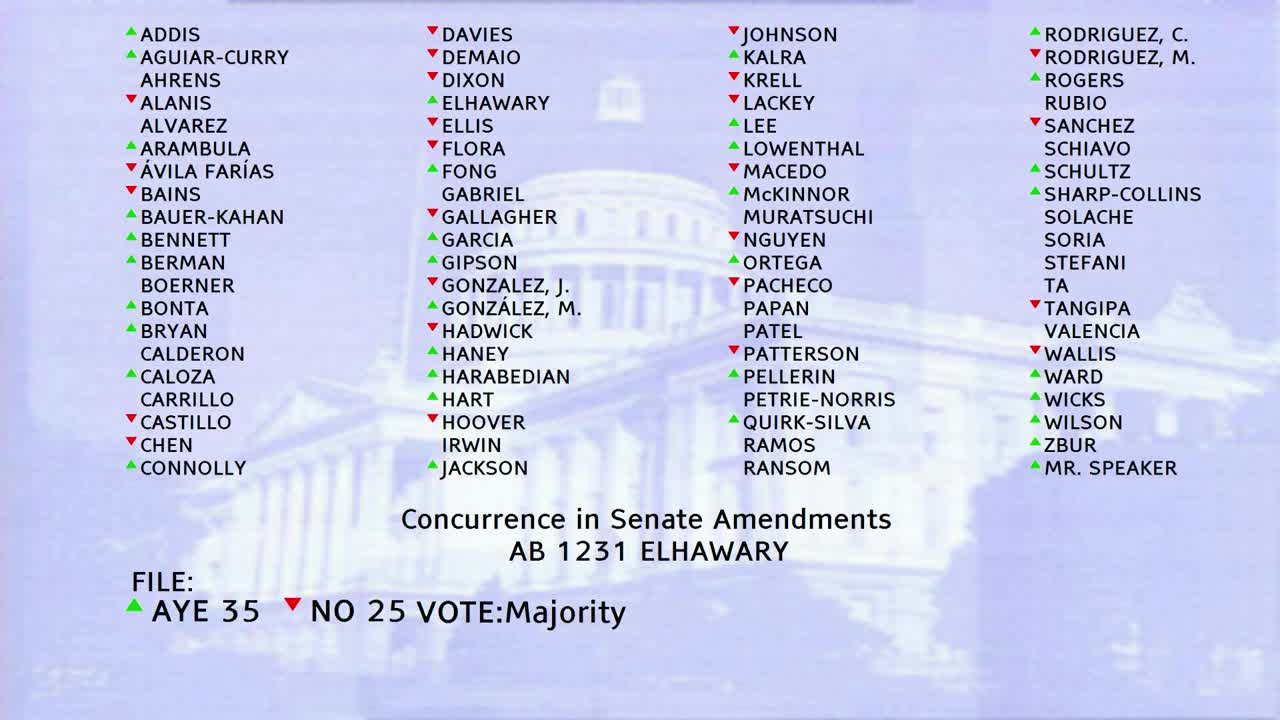
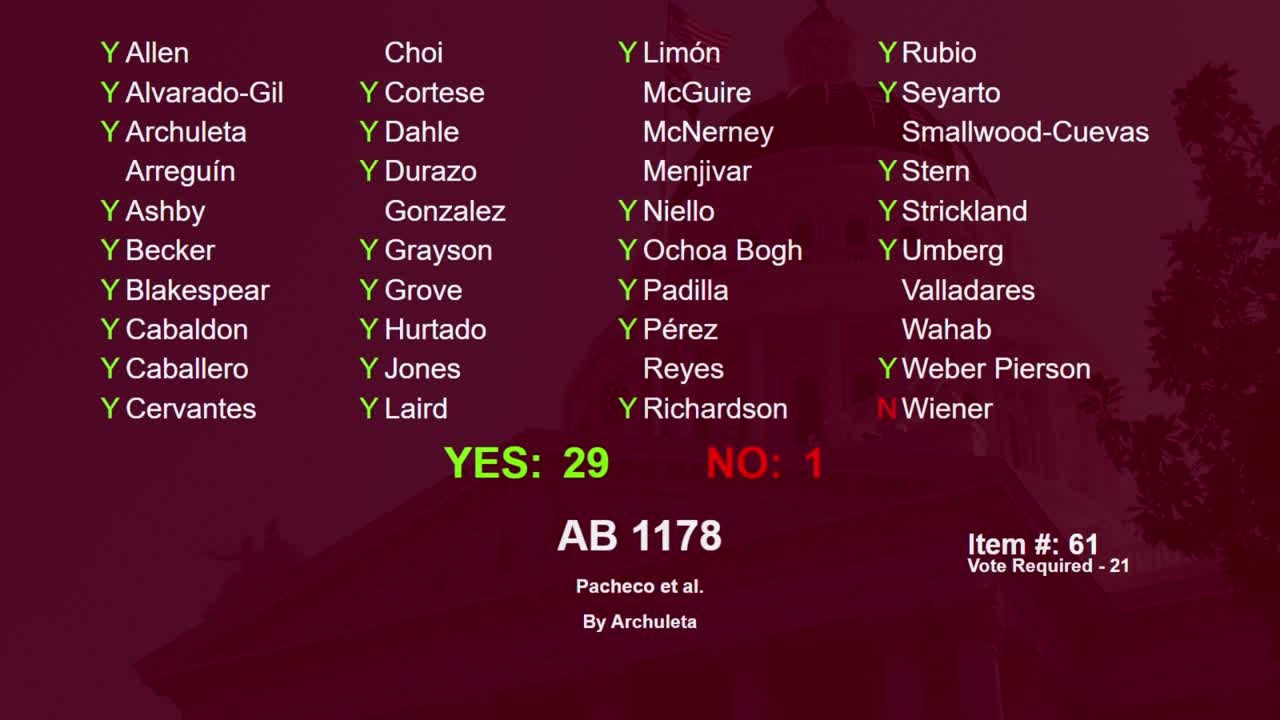
Bill Author

Bill Co-Author(s):