AB 734: Environmental protection: biological resources data: State Energy Resources Conservation and Development Commission: powerplants: power lines: applications.
- Session Year: 2025-2026
- House: Assembly
- Latest Version Date: 2025-09-05
Current Status:
Failed
(2026-01-22: Consideration of Governor's veto stricken from file.)
Introduced
In Committee
Awaiting First Chamber Vote
Passed First Chamber
In Committee
Awaiting Second Chamber Vote
Passed Second Chamber
Enacted
Existing law vests the State Energy Resources Conservation and Development Commission with the power to certify locations on which an electrical transmission line or thermal powerplant is constructed, or is proposed to be constructed, except as provided. Existing law authorizes the commission to exempt from certification a thermal powerplant with a generating capacity of up to 100 megawatts, and modifications to existing generating facilities that do not add capacity in excess of 100 megawatts if the commission finds that no substantial adverse impact on the environment or energy resources will result from the construction or operation of the proposed facility or from the modifications.
This bill would require any biological resources data submitted to the commission in an application for certification or small powerplant exemption pursuant to the above-described provisions to be made publicly available on the commissions docket as part of the certification proceeding unless the Department of Fish and Wildlife makes a written determination that the data to be made public includes specified location data, the disclosure of which would pose a significant risk to individuals of the species. The bill would require the department, if it makes that determination, to include in the written determination an assessment of the maximum amount of the specified data that can be released without posing a risk to the species. The bill would require the department to provide its written determination to the commission and would require the commission to make the data, in accordance with the determination, available to the public on the commissions docket.
Existing law, until June 30, 2029, authorizes a person proposing an eligible facility, including a solar photovoltaic or terrestrial wind electrical generating powerplant with a generating capacity of 50 megawatts or more, to submit an application with the commission for certification of the site and related facility.
This bill would apply the same public availability requirements described above to biological resources data submitted to the commission as part of an application for certification of an eligible facility.
Existing law vests the State Energy Resources Conservation and Development Commission with the power to certify locations on which an electrical transmission line or thermal powerplant is constructed, or is proposed to be constructed, except as provided. Existing law authorizes the commission to exempt from certification a thermal powerplant with a generating capacity of up to 100 megawatts, and modifications to existing generating facilities that do not add capacity in excess of 100 megawatts, if the commission finds that no substantial adverse impact on the environment or energy resources will result from the construction or operation of the proposed facility or from the modifications.
This bill would require any biological resources data submitted to the commission in an application for certification or small powerplant exemption pursuant to the above-described provisions to be made publicly available on the commissions docket as part of the certification proceeding unless the Department of Fish and Wildlife makes a written determination that the data to be made public includes specified location data, the disclosure of which would pose a significant risk to individuals of the species. The bill would require the department, if it makes that determination, to include in the written determination an assessment of the maximum amount of the specified data that can be released without posing a risk to the species. The bill would require the department to provide its written determination to the commission and would require the commission to make the data, in accordance with the determination, available to the public on the commissions docket.
Existing law, until June 30, 2029, authorizes a person proposing an eligible facility, including a solar photovoltaic or terrestrial wind electrical generating powerplant with a generating capacity of 50 megawatts or more, to submit an application with the commission for certification of the site and related facility.
This bill would apply the same public availability requirements described above to biological resources data submitted to the commission as part of an application for certification of an eligible facility.
Existing law, the California Public Records Act, requires state and local agencies to make their records available for public inspection, unless an exemption from disclosure applies. Existing law requires the Secretary of the Natural Resources Agency to establish a standardized electronic format and protocol for the exchange of electronic data for the purposes of meeting environmental data reporting or other usage requirements, as provided.This bill would require any biological resources data, as defined, submitted to a regional, local, or state public agency to be posted on that public agencys internet website and made publicly available within 2 weeks of submission to the public agency, as provided.To the extent that this bill imposes additional duties on local public agencies, the bill would impose a state-mandated local program.The California Constitution requires the state to reimburse local agencies and school districts for certain costs mandated by the state. Statutory provisions establish procedures for making that reimbursement.This bill would provide that, if the Commission on State Mandates determines that the bill contains costs mandated by the state, reimbursement for those costs shall be made pursuant to the statutory provisions noted above.Existing law, the California Public Records Act, requires state and local agencies to make their records available for public inspection, unless an exemption from disclosure applies. Existing law requires the Secretary of the Natural Resources Agency to establish a standardized electronic format and protocol for the exchange of electronic data for the purposes of meeting environmental data reporting or other usage requirements, as provided.
This bill would require any biological resources data, as defined, submitted to a regional, local, or state public agency to be posted on that public agencys internet website and made publicly available within 2 weeks of submission to the public agency, as provided.
To the extent that this bill imposes additional duties on local public agencies, the bill would impose a state-mandated local program.
The California Constitution requires the state to reimburse local agencies and school districts for certain costs mandated by the state. Statutory provisions establish procedures for making that reimbursement.
This bill would provide that, if the Commission on State Mandates determines that the bill contains costs mandated by the state, reimbursement for those costs shall be made pursuant to the statutory provisions noted above.
(a)For the purposes of this section, biological resources data means information pertaining to species and their habitats, including, but not limited to, observations, surveys, scientific studies, species needs, and habitat conditions, and including maps on a scale of one inch equals 500 feet.
(b)Notwithstanding any other law, any biological resources data submitted to the commission as part of an application for certification pursuant to this chapter, or exemption from this chapter pursuant to Section 25541, shall be made available to the public on the commissions docket as part of a certification proceeding unless the Department of Fish and Wildlife makes a written determination that the data to be made public includes location data derived from the California Natural Diversity Database, the disclosure of which would pose a significant risk to individuals of the species. If the Department of Fish and Wildlife makes that determination, it shall include in the written determination an assessment of the maximum amount of data from the California Natural Diversity Database that can be released without posing a significant risk to the species. The Department of Fish and Wildlife shall provide its written determination to the commission, and the commission shall make the data available to the public on its docket in accordance with the determination.
SEC. 2.Section 25545.17 is added to the Public Resources Code, to read:25545.17.(a)For the purposes of this section, biological resources data means information pertaining to species and their habitats, including, but not limited to, observations, surveys, scientific studies, species needs, and habitat conditions, and including maps on a scale of one inch equals 500 feet.
(b)Notwithstanding any other law, any biological resources data submitted to the commission as part of an application for certification pursuant to this chapter shall be made available to the public on the commissions docket as part of a certification proceeding unless the Department of Fish and Wildlife makes a written determination that the data to be made public includes location data derived from the California Natural Diversity Database, the disclosure of which would pose a significant risk to individuals of the species. If the Department of Fish and Wildlife makes that determination, it shall include in the written determination an assessment of the maximum amount of data from the California Natural Diversity Database that can be released without posing a significant risk to the species. The Department of Fish and Wildlife shall provide its written determination to the commission, and the commission shall make the data available to the public on its docket in accordance with the determination.
(a)For the purposes of this section, biological resources data means information pertaining to species and their habitats, including, but not limited to, observations, surveys, scientific studies, species needs, and habitat conditions, and including maps on a scale of one inch equals 500 feet.
(b)Notwithstanding any other law, any biological resources data submitted to a regional, local, or state public agency shall be posted on that public agencys internet website and the commission as part of an application for certification pursuant to this chapter, or exemption from this chapter pursuant to Section 25541, shall be made available to the public within two weeks of submission to the public agency. on the commissions docket as part of a certification proceeding unless the Department of Fish and Wildlife makes a written determination that the data to be made public includes location data derived from the California Natural Diversity Database, the disclosure of which would pose a significant risk to individuals of the species. If the Department of Fish and Wildlife makes that determination, it shall include in the written determination an assessment of the maximum amount of data from the California Natural Diversity Database that can be released without posing a significant risk to the species. The Department of Fish and Wildlife shall provide its written determination to the commission, and the commission shall make the data available to the public on its docket in accordance with the determination.
SEC. 2.If the Commission on State Mandates determines that this act contains costs mandated by the state, reimbursement to local agencies and school districts for those costs shall be made pursuant to Part 7 (commencing with Section 17500) of Division 4 of Title 2 of the Government Code.SEC. 2.Section 25545.17 is added to the Public Resources Code, to read:25545.17.(a)For the purposes of this section, biological resources data means information pertaining to species and their habitats, including, but not limited to, observations, surveys, scientific studies, species needs, and habitat conditions, and including maps on a scale of one inch equals 500 feet.
(b)Notwithstanding any other law, any biological resources data submitted to the commission as part of an application for certification pursuant to this chapter shall be made available to the public on the commissions docket as part of a certification proceeding unless the Department of Fish and Wildlife makes a written determination that the data to be made public includes location data derived from the California Natural Diversity Database, the disclosure of which would pose a significant risk to individuals of the species. If the Department of Fish and Wildlife makes that determination, it shall include in the written determination an assessment of the maximum amount of data from the California Natural Diversity Database that can be released without posing a significant risk to the species. The Department of Fish and Wildlife shall provide its written determination to the commission, and the commission shall make the data available to the public on its docket in accordance with the determination.
REVISIONS: HeadingLine 2.(a)For the purposes of this section, biological resources data means information pertaining to species and their habitats, including, but not limited to, observations, surveys, scientific studies, species needs, and habitat conditions, and including maps on a scale of one inch equals 500 feet.
(b)Notwithstanding any other law, any biological resources data submitted to a regional, local, or state public agency shall be posted on that public agencys internet website and shall be made available to the public within two weeks of submission to the public agency.
SEC. 2.If the Commission on State Mandates determines that this act contains costs mandated by the state, reimbursement to local agencies and school districts for those costs shall be made pursuant to Part 7 (commencing with Section 17500) of Division 4 of Title 2 of the Government Code.
|
Date
|
Status
|
|---|---|
| Jan 22, 2026 | Consideration of Governor's veto stricken from file. |
| Oct 1, 2025 | Consideration of Governor's veto pending. |
| Oct 1, 2025 | Vetoed by Governor. |
| Sep 9, 2025 | Enrolled and presented to the Governor at 3 p.m. |
| Sep 3, 2025 | In Assembly. Ordered to Engrossing and Enrolling. |
| Sep 3, 2025 | Read third time. Passed. Ordered to the Assembly. (Ayes 31. Noes 9. Page 2449.). |
| Aug 29, 2025 | Read second time. Ordered to third reading. |
| Aug 29, 2025 | From committee: Do pass. (Ayes 5. Noes 2.) (August 29). |
| Aug 18, 2025 | In committee: Referred to suspense file. |
| Jul 9, 2025 | From committee: Do pass and re-refer to Com. on APPR. (Ayes 5. Noes 1.) (July 8). Re-referred to Com. on APPR. |
| Jul 1, 2025 | From committee: Do pass and re-refer to Com. on N.R. & W. (Ayes 14. Noes 2.) (July 1). Re-referred to Com. on N.R. & W. |
| Jun 11, 2025 | Referred to Coms. on E., U & C. and N.R. & W. |
| Jun 3, 2025 | In Senate. Read first time. To Com. on RLS. for assignment. |
| Jun 2, 2025 | Read third time. Passed. Ordered to the Senate. (Ayes 61. Noes 15. Page 1849.) |
| May 27, 2025 | Read second time. Ordered to third reading. |
| May 23, 2025 | From committee: Do pass. (Ayes 11. Noes 3.) (May 23). |
| May 14, 2025 | In committee: Set, first hearing. Referred to suspense file. |
| Apr 30, 2025 | From committee: Do pass and re-refer to Com. on APPR. (Ayes 8. Noes 3.) (April 29). Re-referred to Com. on APPR. |
| Apr 30, 2025 | Coauthors revised. |
| Apr 22, 2025 | Re-referred to Com. on W. P., & W. |
| Apr 21, 2025 | From committee chair, with author's amendments: Amend, and re-refer to Com. on W. P., & W. Read second time and amended. |
| Mar 28, 2025 | Referred to Com. on W. P., & W. |
| Feb 19, 2025 | From printer. May be heard in committee March 21. |
| Feb 18, 2025 | Read first time. To print. |
|
Date
|
Description
|
Location
|
Votes
|
|
|---|---|---|---|---|
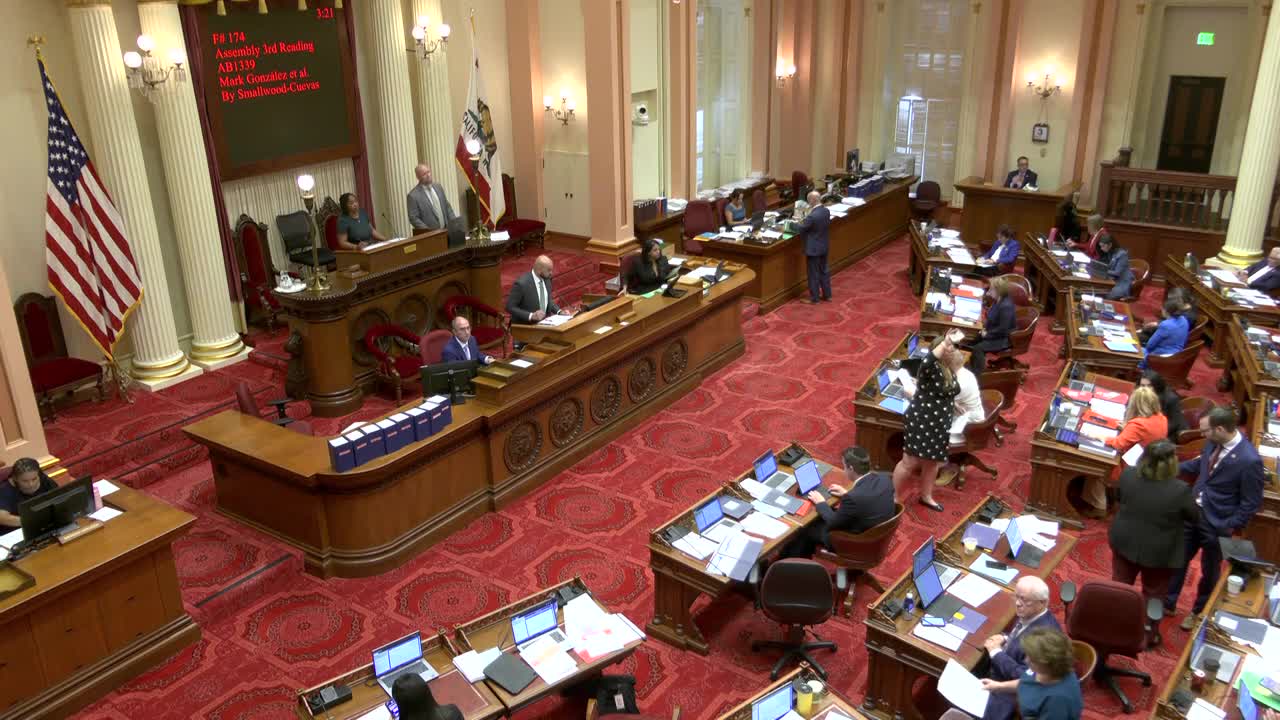
| Sep 3, 2025 | Assembly 3rd Reading AB734 Schultz et al. By Allen | Senate Floor |
Passed |
|
| Aug 29, 2025 | Do pass | Senate Standing Committee on Appropriations |
Passed |
|
| Aug 18, 2025 | Placed on suspense file | Senate Standing Committee on Appropriations |
Passed |
|
| Jul 8, 2025 | Do pass, but first be re-referred to the Committee on [Appropriations] | Senate Standing Committee on Natural Resources and Water |
Passed |
|
| Jul 1, 2025 | Do pass, but first be re-referred to the Committee on [Natural Resources and Water] | Senate Standing Committee on Energy, Utilities and Communications |
Passed |
|
| Jun 2, 2025 | AB 734 Schultz Assembly Third Reading | Assembly Floor |
Passed |
|
| May 23, 2025 | Do pass. | Assembly Standing Committee on Appropriations |
Passed |
|
| Apr 29, 2025 | Do pass and be re-referred to the Committee on [Appropriations] | Assembly Standing Committee on Water, Parks, and Wildlife |
Passed |
This list shows positions taken on this bill by organizations on the date displayed, which is linked to the original source.
Positions by individuals are not included.
|
Organization
|
Position
|
Date
|
|---|---|---|
| Audubon California | ** Support | |
| California Native Plant Society | ** Support | |
| Center For Biological Diversity | ** Support | |
| County of Fresno | ** Support | |
| Defenders Of Wildlife | ** Support |
GOVERNOR'S VETO
GV Bill Id:AB 734
Author:(Schultz)
As Enrolled Ver:September 5, 2025
2/3 vote
SUMMARY
Requires the State Energy Resources Conservation and Development Commission (Energy Commission) to make biological resources data it receives during the permitting processes for energy and renewable energy projects available to the public unless disclosure of the data would put species at risk.
- Requires the Energy Commission to make biological resources data it receives during the permitting process for a thermal power plant or an electric transmission line available to the public.
- Requires the Energy Commission to make biological resources data it receives during the permitting process for specified renewable energy projects available to the public.
- If the biological resources data disclosed under this bill would include location data derived from the California Natural Diversity Database (CNDDB), the Department of Fish and Wildlife (DFW) may submit a written determination to the Energy Commission to prohibit the data's disclosure if DFW deems that doing so would pose a risk to individuals of a species.
- Defines "biological data" as information pertaining to species and their habitats, including observations, surveys, scientific studies, species needs, and habitat conditions, and including maps on a scale of one inch equals 500 feet for purposes of this bill.
Governor's Veto Message
"This bill would require the [Energy Commission] to publicly release granular biological resources data used in the completion of Environmental Impact Reports, unless [DFW] determines that releasing such data would pose a significant risk of harm to individuals of a species.
Currently, the [Energy Commission] receives both detailed biological resource maps generated by a project applicant and similar maps that the applicant obtains from [DFW], as part of the environmental impact assessment for proposed energy projects moving through the [Energy Commission's] site certification permitting programs. The resolution of these maps is governed by data-use guidelines publicly developed by [DFW] to protect the precise locations of sensitive species and biological resources, as higher resolution maps risk increasing poaching, collection and habitat disturbance in these locations.
Though this bill is well-intended, the risks associated with this divulgence of information and the added procedural requirements of a [DFW] determination on whether to divulge such information, if found harmful, are unnecessary, add additional process complexity, and likely won't yield additional mitigations or safeguards for species impacted by proposed energy projects."
COMMENTS
In 2023, the Energy Commission amended its regulations associated with the permitting of small power plants and updated Appendix B in Title 20 of the California Code of Regulations, which dictates the requirements of scale for public maps that contain information on biological resources. The change restricted public release of maps that contain biological resources at a scale greater than 1:350,000. Under the regulations, maps submitted at a scale of 1:6,100 must be submitted "under confidential cover."
Much of the biological resources data addressed by this bill comes from biological surveys done by the proponents of energy projects; however, some of the data may come from CNDDB. CNDDB is an inventory of the status and locations of rare plants and animals in California and is maintained by DFW. DFW staff work with partners to maintain current lists of rare species, as well as an ever-growing database of GIS-mapped locations for these species. CNDDB is a "natural heritage program" and part of a network of similar programs in North America. CNDDB data comes in the form of text information and spatial information and is used to help inform conservation decisions, aid in environmental review of projects and land use changes, and provide baseline data helpful in recovering endangered species and for research projects. CNDDB data is available to the public at a coarse scale and to subscribers at a finer scale. This is to protect against "the very real possibility that some people will use the detailed information to do harm to species or its habitat" (CNDDB Data Use Guidelines v4.2, 2011).
According to the Author
Changes the Energy Commission made to its regulations associated with permitting energy projects in 2023 have restricted the public release of maps that contain biological resources data "to a scale so general as to make it impossible for the public to participate in the permitting process effectively." This is a significant change in how state agencies have previously handled biological data and limits the public's ability to determine whether energy projects are developed in a manner that avoids and minimizes adverse impacts to sensitive species and their habitat.
"[This bill] remedies the [Energy Commission's] change in permitting practice by requiring that it make important biological information available to the public in a timely manner and at a reasonable scale to allow the public to participate effectively in the review and comment process associated with permitting. This bill is consistent with California's efforts to build a cleaner, more affordable, and equitable future while protecting our public trust resources and providing for meaningful public review and comment in our permitting processes."
Arguments in Support
The Defenders of Wildlife are the sponsor of this bill and argue that it "would provide the public with the necessary biological resource information to participate effectively and efficiently in the public review and comment processes associated with project permitting at the [Energy Commission]." Defenders of Wildlife notes that the Energy Commission amended its regulations pertaining to the handling of biological data in 2023 and cites dozens of requests for data associated with 10 energy projects that have been denied since this change. Defenders of Wildlife assert "the suppression of data and information renders the public review and comment process meaningless."
Arguments in Opposition
None on file.
FISCAL COMMENTS
According to the Assembly Appropriations Committee:
- The Energy Commission estimates ongoing annual costs of approximately $178,000 (Energy Resources Programs Account) to hire one research data specialist to manage project data and create or modify biological data survey maps to ensure they are detailed enough and reflect the required scale and resolution.
- It is possible DFW may incur some costs as a result of this bill; however, DFW already has a statutory obligation to participate in Energy Commission proceedings. Though not required to do so by law, DFW already reviews maps and surveys for projects seeking certification through the Energy Commission process and provides the Energy Commission with an opinion as to the risks of disclosing this information publicly. It is not entirely clear if this bill requires DFW to do anything new, aside from providing a written determination, which is likely absorbable within existing resources.
VOTES
ASM WATER, PARKS, AND WILDLIFE: 8-3-2
YES: Papan, Ávila Farías, Bennett, Boerner, Caloza, Hart, Celeste Rodriguez, Rogers
NO: Jeff Gonzalez, Macedo, Tangipa
ABS, ABST OR NV: Alvarez, Bains
ASM APPROPRIATIONS: 11-3-1
YES: Wicks, Arambula, Calderon, Caloza, Elhawary, Fong, Mark González, Hart, Pacheco, Pellerin, Solache
NO: Dixon, Ta, Tangipa
ABS, ABST OR NV: Sanchez
ASSEMBLY FLOOR: 61-15-3
YES: Addis, Aguiar-Curry, Ahrens, Alanis, Alvarez, Arambula, Ávila Farías, Bains, Bauer- Kahan, Bennett, Berman, Boerner, Bonta, Bryan, Calderon, Caloza, Carrillo, Connolly, Elhawary, Fong, Gabriel, Garcia, Gipson, Mark González, Haney, Harabedian, Hart, Irwin, Jackson, Kalra, Krell, Lee, Lowenthal, McKinnor, Muratsuchi, Nguyen, Ortega, Pacheco, Papan, Patel, Pellerin, Petrie-Norris, Quirk-Silva, Ramos, Ransom, Celeste Rodriguez, Michelle Rodriguez, Rogers, Schiavo, Schultz, Sharp-Collins, Solache, Soria, Stefani, Valencia, Wallis, Ward, Wicks, Wilson, Zbur, Rivas
NO: Castillo, Davies, DeMaio, Dixon, Ellis, Gallagher, Jeff Gonzalez, Hadwick, Hoover, Lackey, Macedo, Patterson, Sanchez, Ta, Tangipa
ABS, ABST OR NV: Chen, Flora, Blanca Rubio
SENATE FLOOR: 31-9-0
YES: Allen, Archuleta, Arreguín, Ashby, Becker, Blakespear, Cabaldon, Caballero, Cervantes, Cortese, Durazo, Gonzalez, Grayson, Hurtado, Laird, Limón, McGuire, McNerney, Menjivar, Ochoa Bogh, Padilla, Pérez, Reyes, Richardson, Rubio, Smallwood-Cuevas, Stern, Umberg, Wahab, Weber Pierson, Wiener
NO: Alvarado-Gil, Choi, Dahle, Grove, Jones, Niello, Seyarto, Strickland, Valladares
UPDATED
VERSION: September 5, 2025
CONSULTANT: Pablo Garza / W., P., & W. / (916) 319-2096 FN: 0002150
SENATE RULES COMMITTEE Office of Senate Floor Analyses (916) 651-1520 Fax: (916) 327-4478 | AB 734 |
THIRD READING
Bill No: AB 734
Author: Schultz (D), et al.
Amended: 4/21/25 in Assembly
Vote: 21
SENATE ENERGY, U. & C. COMMITTEE: 14-2, 7/1/25
AYES: Becker, Ochoa Bogh, Allen, Archuleta, Arreguín, Ashby, Caballero, Gonzalez, Hurtado, Limón, McNerney, Rubio, Stern, Wahab
NOES: Dahle, Strickland
NO VOTE RECORDED: Grove
SENATE NATURAL RES. & WATER COMMITTEE: 5-1, 7/8/25
AYES: Limón, Allen, Hurtado, Laird, Stern
NOES: Seyarto
NO VOTE RECORDED: Grove
SENATE APPROPRIATIONS COMMITTEE: 5-2, 8/29/25
AYES: Caballero, Cabaldon, Grayson, Richardson, Wahab
NOES: Seyarto, Dahle
ASSEMBLY FLOOR: 61-15, 6/2/25 - See last page for vote
SUBJECT: Environmental protection: biological resources data: State Energy Resources Conservation and Development Commission: powerplants: power lines: applications
SOURCE: Defenders of Wildlife
DIGEST:
This bill attempts to change a regulation adopted by the California Energy Commission (CEC) by requiring any biological resources data submitted to the CEC in an application for certification and small power plan exemption to be made publicly available on the agency’s docket as part of the certification proceeding unless the California Department of Fish and Wildlife (CDFW) makes a written determination to protect certain sensitive data.
ANALYSIS:
Existing law:
- Establishes and vests in the State Energy Resources Conservation and Development Commission (known as the CEC) various responsibilities with respect to developing and implementing the state’s energy policies. (Public Resources Code §25000 et seq.)
- Vests the CEC with the power to certify locations on which an electrical transmission line or thermal powerplant is constructed, or is proposed to be constructed, except as provided. (Public Resources Code §25500 et seq.)
- Authorizes the CEC to exempt from certification a thermal powerplant with a generating capacity of up to 100 megawatts (MW), and modifications to existing generating facilities that do not add capacity in excess of 100 MW, if the CEC finds that no substantial adverse impact on the environment or energy resources will result from the construction or operation of the proposed facility or from the modifications. (Public Resources Code §25541)
- Authorizes, until June 30, 2029, a person proposing an eligible facility, including a solar photovoltaic or terrestrial wind electrical generating powerplant with a generating capacity of 50 MW or more, to submit an application with the CEC for certification of the site and related facility. (Public Resources Code §25545 et seq.)
- Establishes the Significant Natural Areas Program within the CDFW and charges CDFW with maintaining and expanding a data management system to assist in carrying out the program. (Fish and Game Code §1932).
- Authorizes CDFW to undertake botanical research and field investigations and to collect and diffuse such statistics and information as shall pertain to the conservation, protection, and perpetuation of native plants. (Fish and Game Code §1905)
This bill:
- Requires any biological resources data submitted to the CEC in an application for certification or small powerplant exemption to be made publicly available on the CEC’s docket as part of the certification proceeding unless the CDFW makes a written determination that the data to be made public includes specified location data, the disclosure of which would pose a significant risk to individuals of the species.
- Requires the CDFW, if it makes that determination, to include in the written determination an assessment of the maximum amount of the specified data that can be released without posing a risk to the species. Requires the CDFW to provide its written determination to the CEC and requires the CEC to make the data, in accordance with the determination, available to the public on the CEC’s docket.
- Applies the same public availability requirements described above to biological resources data submitted to the CEC as part of an application for certification of an eligible facility for the AB 205 “Opt-in” program.
Background
CEC certifies many powerplants in the state. The CEC serves as a certifying agency for many powerplants, including the exclusive authority to license thermal powerplants of 50 MWs or greater; exempt certain small thermal power plants from its jurisdiction; certify eligible renewable energy and energy storage resources through an optional certification process; and certify energy facilities operated by the Department of Water Resources. As part of the licensing process, powerplant applicants must provide specified materials to the CEC, including information about biological resources on-site of the proposed powerplant.
The CEC certification process involves other state agencies, in particular as it relates to biological resources, the CEC coordinates with CDFW who serves as the state trustee agency for the state’s fish and wildlife, and plant species. As part of the powerplant certification process, CDFW would screen information concerning biological resources data prior to its public release to ensure that location data for rare species was sufficiently vague to avoid risk to the species. CDFW develops and maintains multiple resources containing information about the presence of native and non-native species, including the California Natural Diversity Database (CNDDB). The CNDDB is an inventory of the status and locations of rare plants and animals in California. CNDDB staff work with partners to maintain current lists of rare species, as well as to maintain an ever-growing database of GIS-mapped locations for these species. CNDDB location data are readily available to the public at a scale of 1:350,000 to reduce the risk of disclosing the precise locations of rare species.
CEC 2023 changes to regulations for CEC certification of powerplants. In 2023, the CEC made changes to regulations (Docket 21-OIR-04, Rulemaking to Amend Regulations for Small Powerplant Exemptions) concerning data and maps for powerplant applications for certification regarding biological resources. The CEC updated a myriad of areas to its existing processes and procedures, including changes to the requirements concerning the scale of public maps that contain information on biological resources (under Appendix B in Title 20 of the California Code of Regulations). The CEC commissioners adopted a resolution which stated the amendments to the regulations were needed to reflect changes to implement requirements from the CDFW “which require restricted public release of maps of scale showing greater detail than 1:350,000 if the maps contain sensitive biological resources.” The CEC further states: “language requiring that maps of a certain scale be submitted to the CEC as confidential is necessary to ensure maps are not made public that would allow one to locate sensitive biological resources such as endangered plants, animals, or nests.”
The CEC stated the changes were consistent with the CDFW’s CNDDB contract and CNDDB’s stated position to the CEC biological resources staff. Under the CNDDB license posted on the CDFW’s website (dated June 2018), agreement number 4 states:
When creating static or interactive maps or products for public viewing in print or over the internet, care must be taken not to violate our “no redistribution or repackage” clause. …The information within these databases may not be displayed over the internet except with DFW’s [CDFW’s] express permission. DFW understands there are situations where an organization may need to display CNDDB and Spotted Owl data on its website for business purposes. In those cases, the user must contact the CNDDB program for guidance and written permission on how to properly display CNDDB data on the website. As a general rule, data from the CNDDB and Spotted Owl Database may only be displayed at such a scale (no larger than a scale of 1:350,000), or in such a way that the viewers/users cannot determine exact location information of the elements mapped in the system. The CNNDB and Spotted Owl data include location information for the state’s most imperiled species, and these are sensitive resources.
Comments
Need for this bill. The proponents of this bill take issue with the CEC’s 2023 updates to the regulations to restrict public release of maps that contain biological resources at a finer scale. They contend the change renders it impossible for the public to meaningfully evaluate potential project impacts and provide informed analysis of appropriate measures to avoid, minimize, and potentially mitigate project impacts. Under the regulations, maps submitted at a scale of 1:6,000 must be submitted “under confidential cover.” They suggest that this change in the regulations represents a significant departure regarding the scale of biological resource maps associated with the review and permitting of projects under a multitude of laws, including the California Endangered Species Act and the California Environmental Quality Act. They note that a review of past permitting decisions, including permitting by the CEC, has revealed no evidence that the biological survey maps must be at a scale greater than 1:350,000. They suggest that the norm is that maps are released at 1:6,000, and sometimes at an even finer scale.
Need to balance public access and species protection. As noted above, the CEC change to the public availability of maps of a certain scale submitted to the agency was determined to be necessary to ensure maps are not made public that would allow someone to locate sensitive biological resources such as endangered plants, animals, or nests. As stated on CNDDB’s Data Use Guidelines (v.4.2 2011 available on the CDFW’s website), “the concern is that, while it is important that the CNDDB information is available to those whose job it is to conserve species, there is the very real possibility that some people will use the detailed location information to do harm to a species or its habitat. Because of the sensitivity of the data, we try to limit the level of location detail that is made readily available to the public.” However, proponents of this bill, including Defenders of Wildlife, oppose the CEC’s updated regulations contending they limit their ability to better protect biological resources. They contend the approach of this bill is necessary to ensure better protection of biological resources in relation to the myriad of energy projects being built in the state. They support requiring public release of the data, unless CDFW makes a written determination to protect certain sensitive data.
It’s unclear if the proposed changes in this bill are also being addressed more broadly by CDFW for all siting processes, not solely powerplant certification and siting at the CEC. Supporters of this bill contend the CEC is the only permitting agency applying the restrictions on the scale of maps of biological resources for public release and that is the reason why this bill is specific to the CEC. This dispute seems to be best resolved by the CEC and CDFW, neither of which has taken a public position on this bill.
FISCAL EFFECT: Appropriation: No Fiscal Com.: Yes Local: No
According to the Senate Appropriations Committee:
- The CEC estimates ongoing annual costs of approximately $178,000 (Energy Resources Programs Account) to hire one research data specialist to manage project data and create or modify biological data survey maps to ensure they are detailed enough and reflect the required scale and resolution.
- CDFW anticipates any costs would be minor and absorbable.
SUPPORT: (Verified 8/28/25)
Defenders of Wildlife (Source)
Audubon California
California Native Plant Society
Center for Biological Diversity
County of Fresno
OPPOSITION: (Verified 8/28/25)
None received
ARGUMENTS IN SUPPORT: The Defenders of Wildlife are the sponsor of this bill and argue that this bill “would provide the public with the necessary biological resource information to participate effectively and efficiently in the public review and comment processes associated with project permitting at the [CEC].” Defenders of Wildlife notes that the CEC amended its regulations pertaining to the handling of biological data in 2023. Defenders of Wildlife assert “the suppression of data and information renders the public review and comment process meaningless.”
ASSEMBLY FLOOR: 61-15, 6/2/25
AYES: Addis, Aguiar-Curry, Ahrens, Alanis, Alvarez, Arambula, Ávila Farías, Bains, Bauer-Kahan, Bennett, Berman, Boerner, Bonta, Bryan, Calderon, Caloza, Carrillo, Connolly, Elhawary, Fong, Gabriel, Garcia, Gipson, Mark González, Haney, Harabedian, Hart, Irwin, Jackson, Kalra, Krell, Lee, Lowenthal, McKinnor, Muratsuchi, Nguyen, Ortega, Pacheco, Papan, Patel, Pellerin, Petrie-Norris, Quirk-Silva, Ramos, Ransom, Celeste Rodriguez, Michelle Rodriguez, Rogers, Schiavo, Schultz, Sharp-Collins, Solache, Soria, Stefani, Valencia, Wallis, Ward, Wicks, Wilson, Zbur, Rivas
NOES: Castillo, Davies, DeMaio, Dixon, Ellis, Gallagher, Jeff Gonzalez, Hadwick, Hoover, Lackey, Macedo, Patterson, Sanchez, Ta, Tangipa
NO VOTE RECORDED: Chen, Flora, Blanca Rubio
Prepared by: Nidia Bautista / E., U. & C. / (916) 651-4107
8/29/25 20:52:58
**** END ****
SENATE COMMITTEE ON
Senator Anna Caballero, Chair
2025 - 2026 Regular Session
AB 734 (Schultz) - Environmental protection: biological resources data: State Energy Resources Conservation and Development Commission: powerplants: power lines: applications
Version: | Policy Vote: |
Urgency: | Mandate: |
Hearing Date: | Consultant: |
Bill Summary:
This bill would require any biological resources data submitted to the California Energy Commission (CEC) in an application for certification and small power plant exemption to be made publicly available on the CEC’s docket as part of the certification proceeding unless the California Department of Fish and Wildlife (CDFW) makes a written determination to protect certain sensitive data, as provided.
Fiscal Impact:
- The CEC estimates ongoing annual costs of approximately $178,000 (Energy Resources Programs Account) to hire one research data specialist to manage project data and create or modify biological data survey maps to ensure they are detailed enough and reflect the required scale and resolution.
- CDFW anticipates any costs would be minor and absorbable.
Background:
The California Department of Fish and Wildlife (CDFW). CDFW is the state trustee agency for the state’s fish, wildlife, and plant species; CDFW’s mission statement is “to manage California’s diverse fish, wildlife, and plant resources, and the habitats upon which they depend, for their ecological values and for their use and enjoyment by the public.”
CDFW develops and maintains multiple resources containing information about the presence of native and non-native species, such as the Areas of Conservation Emphasis, and the California Natural Diversity Database (CNDDB). The CNDDB is an inventory of the status and locations of rare plants and animals in California. CNDDB staff work with partners to maintain current lists of rare species, as well as to maintain an ever-growing database of GIS-mapped locations for these species. CNDDB location data are readily available to the public at a scale of 1:350,000 to reduce the risk to a rare species of its precise location being known. According to the sponsor, CDFW has released finer scale information about rare species after review.
CEC certification of powerplants. The certifying agency for many powerplants in the CEC. During the certification process, the applicant provides certain materials – including information about biological resources present on-site – to the CEC. Prior to 2023, then-existing CEC regulations required certain biological resources data be submitted to the CEC by the applicant. This information was subsequently screened for release to the public by CDFW to ensure that location data for rare species was sufficiently vague to avoid risk to the species. As part of the re-adoption of the small powerplant exemption regulations in 2023, the CEC revised its regulations to require the submittal of a 1:6,000 scale map (kept confidential), and a 1:350,000 scale map for public release using the formal CNDDB standard for public location disclosures for all species – rare or abundant (see Title 20, California Code of Regulations, Appendix B, (g)(13)).
Existing law:
- Establishes the Significant Natural Areas Program within CDFW and charges CDFW with maintaining and expanding a data management system to assist in carrying out the program. (Fish and Game Code (FGC) §1932)
- Authorizes CDFW to undertake botanical research and field investigations and to collect and diffuse such statistics and information as shall pertain to the conservation, protection, and perpetuation of native plants. (FGC §1905)
- Establishes and vests in the State Energy Resources Conservation and Development Commission (known as the California Energy Commission (CEC)) various responsibilities with respect to developing and implementing the state’s energy policies. (Public Resources Code (PRC) §§25000 et seq.)
- Vests the CEC with the power to certify locations on which an electrical transmission line or thermal powerplant is constructed, or is proposed to be constructed, except as provided. (PRC §§25500 et seq.)
- Authorizes the CEC to exempt from certification a thermal powerplant with a generating capacity of up to 100 megawatts (MW), and modifications to existing generating facilities that do not add capacity in excess of 100 MW, if the CEC finds that no substantial adverse impact on the environment or energy resources will result from the construction or operation of the proposed facility or from the modifications. (PRC §25541)
- Authorizes, until June 30, 2029, a person proposing an eligible facility, including a solar photovoltaic or terrestrial wind electrical generating powerplant with a generating capacity of 50 MW or more, to submit an application with the CEC for certification of the site and related facility. (PRC §§25545 et seq.)
Proposed Law:
This bill would require any biological resources data submitted to the CEC in an application for certification and small power plant exemption to be made publicly available on the CEC’s docket as part of the certification proceeding unless CDFW makes a written determination to protect certain sensitive data, as provided.
Specifically, this bill would:
- Require any biological resources data submitted to the CEC in an application for certification or small powerplant exemption to be made publicly available on the CEC’s docket as part of the certification proceeding unless CDFW makes a written determination that the data to be made public includes specified location data, the disclosure of which would pose a significant risk to individuals of the species.
- Require CDFW, if it makes the written determination describe above, to include in the written determination an assessment of the maximum amount of the specified data that can be released without posing a risk to the species. Require CDFW to provide its written determination to the CEC, and require CEC to make the data, in accordance with the written determination, available to the public on the CEC’s docket.
- Apply the same public availability requirements described above to biological resources data submitted to the CEC as part of an application for certification of an eligible facility for the AB 205 “Opt-in” program.
- Define “biological resources data” to mean information pertaining to species and their habitats, including, but not limited to, observations, surveys, scientific studies, species needs, and habitat conditions, and including maps on a scale of one inch equals 500 feet.
Related Legislation:
AB 205 (Committee on Budget), Chapter 61, Statutes of 2022, among other provisions, enacts CEC authority to permit the following renewable energy projects through June 30, 2029 if the project meets specified labor standards and employs a skilled and trained workforce (PRC § 25545 et seq.).
-- END --
SENATE COMMITTEE ON ENERGY, UTILITIES AND COMMUNICATIONS
Senator Josh Becker, Chair
2025 - 2026 Regular
Bill No: AB 734 Hearing Date: 7/1/2025
Author: | Schultz | ||
Version: | 4/21/2025 Amended | ||
Urgency: | No | Fiscal: | Yes |
Consultant: | Nidia Bautista | ||
SUBJECT: Environmental protection: biological resources data: State Energy Resources Conservation and Development Commission: powerplants: power lines: applications
DIGEST: This bill requires any biological resources data submitted to the California Energy Commission (CEC) in an application for certification and small power plan exemption to be made publicly available on the CEC’s docket as part of the certification proceeding unless the Department of Fish and Wildlife (DFW) makes a written determination with specified requirements. This bill attempts to change a regulation adopted by the CEC in 2023.
ANALYSIS:
Existing law:
- Establishes and vests in the State Energy Resources Conservation and Development Commission (known as the California Energy Commission (CEC)) various responsibilities with respect to developing and implementing the state’s energy policies. (Public Resources Code §25000 et seq.)
- Vests the CEC with the power to certify locations on which an electrical transmission line or thermal powerplant is constructed, or is proposed to be constructed, except as provided. (Public Resources Code §25500 et seq.)
- Authorizes the CEC to exempt from certification a thermal powerplant with a generating capacity of up to 100 megawatts (MW), and modifications to existing generating facilities that do not add capacity in excess of 100 MW, if the CEC finds that no substantial adverse impact on the environment or energy resources will result from the construction or operation of the proposed facility or from the modifications. (Public Resources Code §25541)
- Authorizes, until June 30, 2029, a person proposing an eligible facility, including a solar photovoltaic or terrestrial wind electrical generating powerplant with a generating capacity of 50 MW or more, to submit an application with the CEC for certification of the site and related facility. (Public Resources Code §25545 et seq.)
- Establishes the Significant Natural Areas Program within California Department of Fish and Wildlife (CDFW) and charges CDFW with maintaining and expanding a data management system to assist in carrying out the program (Fish and Game Code §1932).
This bill:
- Requires any biological resources data submitted to the CEC in an application for certification or small powerplant exemption to be made publicly available on the CEC’s docket as part of the certification proceeding unless the CDFW makes a written determination that the data to be made public includes specified location data, the disclosure of which would pose a significant risk to individuals of the species.
- Requires the CDFW, if it makes that determination, to include in the written determination an assessment of the maximum amount of the specified data that can be released without posing a risk to the species. Requires the CDFW to provide its written determination to the CEC and requires the CEC to make the data, in accordance with the determination, available to the public on the CEC’s docket.
- Applies the same public availability requirements described above to biological resources data submitted to the CEC as part of an application for certification of an eligible facility for the AB 205 “Opt-in” program.
Background
CEC 2023 changes to regulations for CEC certification of powerplants. In 2023, the CEC made changes to regulations (Docket 21-OIR-04, Rulemaking to Amend Regulations for Small Powerplant Exemptions) concerning data and maps for powerplant applications for certification regarding biological resources. The CEC updated a myriad of areas amending its existing processes and procedures for the small powerplant exemption proceedings. Among the many changes was a change to the requirements of scale for public maps that contain information on biological resources under Appendix B in Title 20 of the California Code of Regulations. The CEC resolution adopting the changes stated the amendments to the regulations were needed to reflect changes to implement requirements from the CDFW “which require restricted public release of maps of scale showing greater detail than 1:350,000 if the maps contain sensitive biological resources.” The CEC further states: “language requiring that maps of a certain scale be submitted to the CEC as confidential is necessary to ensure maps are not made public that would allow one to locate sensitive biological resources such as endangered plants, animals, or nests.”
The CEC stated the changes were consistent with the CDFW’s California Natural Diversity Database (CNDDB) licensing contract and CNDDB’s stated position to the CEC biological resources staff. The CNDDB is an inventory of the status and locations of rare plants and animals in California. CNDDB staff work with partners to maintain current lists of rare species, as well as to maintain an ever-growing database of GIS-mapped locations for these species. Under the CNDDB license posted on the CDFW’s website (dated June 2018), agreement number 4 states:
When creating static or interactive maps or products for public viewing in print or over the internet, care must be taken not to violate our “no redistribution or repackage” clause (see 1.a. above). The information within these databases may not be displayed over the internet except with DFW’s [CDFW’s] express permission. DFW understands there are situations where an organization may need to display CNDDB and Spotted Owl data on its website for business purposes. In those cases, the user must contact the CNDDB program for guidance and written permission on how to properly display CNDDB data on the website. As a general rule, data from the CNDDB and Spotted Owl Database may only be displayed at such a scale (no larger than a scale of 1:350,000), or in such a way that the viewers/users cannot determine exact location information of the elements mapped in the system. The CNNDB and Spotted Owl data include location information for the state’s most imperiled species, and these are sensitive resources.
Comments
Need for this bill. The proponents of this bill contend the CEC’s amendments to the regulations restricted public release of maps that contain biological resources at a scale greater than 1:350,000. Under the regulations, maps submitted at a scale of 1:6,100 must be submitted “under confidential cover.” They suggest that this change in the regulations represented a significant departure regarding the scale of biological resource maps associated with the review and permitting of projects under a multitude of laws, including the California Endangered Species Act and the California Environmental Quality Act (CEQA). They note that a review of past permitting decisions, including permitting by the CEC under the Warren Alquist Act, has revealed no evidence that the biological survey maps must be at a scale greater than 1:350,000. They suggest that the norm is that maps are released at 1:6,000, and sometimes at an even finer scale.
Public access balanced with species protection. As noted above, the CEC required change to the public availability of maps of a certain scale submitted to the CEC is necessary to ensure maps are not made public that would allow one to locate sensitive biological resources such as endangered plants, animals, or nests. As stated on CNDDB’s Data Use Guidelines (v.4.2 2011 available on the CDFW’s website), “the concern is that, while it is important that the CNDDB information is available to those whose job it is to conserve species, there is the very real possibility that some people will use the detailed location information to do harm to a species or its habitat. Because of the sensitivity of the data, we try to limit the level of location detail that is made readily available to the public.” Additionally, per this bill, the CDFW is only able to determine the need to protect data from the CNDDB and not any provided by the applicants of the projects, even if those might also disclose sensitive species and merit the same protections. It’s unclear if the proposed changes in this bill are also being addressed more broadly with CDFW for all applications, not solely powerplant certification and siting, as it is in this bill. If not, this seems to be an effort to single out the CEC’s permitting process among many other agencies and jurisdictions with similar authorities.
Dual Referral. Should this bill be approved by this committee, it will be re-referred to the Senate Natural Resources and Water Committee.
FISCAL EFFECT: Appropriation: No Fiscal Com.: Yes Local: No
SUPPORT:
Defenders of Wildlife (Sponsor)
Audubon California
California Native Plant Society
Center for Biological Diversity
County of Fresno
ARGUMENTS IN SUPPORT: The Defenders of Wildlife are the sponsor of this bill and argue that it “would provide the public with the necessary biological resource information to participate effectively and efficiently in the public review and comment processes associated with project permitting at the [CEC].” Defenders of Wildlife notes that the CEC amended its regulations pertaining to the handling of biological data in 2023. Defenders of Wildlife assert “the suppression of data and information renders the public review and comment process meaningless.”
-- END --
ASSEMBLY THIRD READING
ATR Bill Id:AB 734
Author:(Schultz)
As Amended Ver:April 21, 2025
Majority vote
SUMMARY
Requires the State Energy Resources Conservation and Development Commission (Energy Commission) to make biological resources data it receives during the permitting processes for energy and renewable energy projects available to the public unless disclosure of the data would put species at risk.
Major Provisions
- Requires the Energy Commission to make biological resources data it receives during the permitting process for a thermal power plant or an electric transmission line available to the public.
- Requires the Energy Commission to make biological resources data it receives during the permitting process for specified renewable energy projects available to the public.
- If the biological resources data disclosed under this bill would include location data derived from the California Natural Diversity Database (CNDDB), the Department of Fish and Wildlife (DFW) may submit a written determination to the Energy Commission to prohibit the data's disclosure if DFW deems that doing so would pose a risk to individuals of a species.
- Defines "biological data" as information pertaining to species and their habitats, including observations, surveys, scientific studies, species needs, and habitat conditions, and including maps on a scale of one inch equals 500 feet for purposes of this bill.
COMMENTS
In 2023, the Energy Commission amended its regulations associated with the permitting of small power plants and updated Appendix B in Title 20 of the California Code of Regulations, which dictates the requirements of scale for public maps that contain information on biological resources. The change restricted public release of maps that contain biological resources at a scale greater than 1:350,000. Under the regulations, maps submitted at a scale of 1:6,100 must be submitted "under confidential cover."
Much of the biological resources data addressed by this bill comes from biological surveys done by the proponents of energy projects; however, some of the data may come from CNDDB. CNDDB is an inventory of the status and locations of rare plants and animals in California and is maintained by DFW. DFW staff work with partners to maintain current lists of rare species, as well as an ever-growing database of GIS-mapped locations for these species. CNDDB is a "natural heritage program" and part of a network of similar programs in North America. CNDDB data comes in the form of text information and spatial information and is used to help inform conservation decisions, aid in environmental review of projects and land use changes, and provide baseline data helpful in recovering endangered species and for research projects. CNDDB data is available to the public at a coarse scale and to subscribers at a finer scale. This is to protect against "the very real possibility that some people will use the detailed information to do harm to species or its habitat" (CNDDB Data Use Guidelines v4.2, 2011).
According to the Author
Changes the Energy Commission made to its regulations associated with permitting energy projects in 2023 have restricted the public release of maps that contain biological resources data "to a scale so general as to make it impossible for the public to participate in the permitting process effectively." This is a significant change in how state agencies have previously handled biological data and limits the public's ability to determine whether energy projects are developed in a manner that avoids and minimizes adverse impacts to sensitive species and their habitat.
"[This bill] remedies the [Energy Commission's] change in permitting practice by requiring that it make important biological information available to the public in a timely manner and at a reasonable scale to allow the public to participate effectively in the review and comment process associated with permitting. This bill is consistent with California's efforts to build a cleaner, more affordable, and equitable future while protecting our public trust resources and providing for meaningful public review and comment in our permitting processes."
Arguments in Support
The Defenders of Wildlife are the sponsor of this bill and argue that it "would provide the public with the necessary biological resource information to participate effectively and efficiently in the public review and comment processes associated with project permitting at the [Energy Commission]." Defenders of Wildlife notes that the Energy Commission amended its regulations pertaining to the handling of biological data in 2023 and cites dozens of requests for data associated with 10 energy projects that have been denied since this change. Defenders of Wildlife assert "the suppression of data and information renders the public review and comment process meaningless."
Arguments in Opposition
None on file.
FISCAL COMMENTS
According to the Assembly Appropriations Committee:
- The Energy Commission estimates ongoing annual costs of approximately $178,000 (Energy Resources Programs Account) to hire one research data specialist to manage project data and create or modify biological data survey maps to ensure they are detailed enough and reflect the required scale and resolution.
2) It is possible DFW may incur some costs as a result of this bill; however, DFW already has a statutory obligation to participate in Energy Commission proceedings. Though not required to do so by law, DFW already reviews maps and surveys for projects seeking certification through the Energy Commission process and provides the Energy Commission with an opinion as to the risks of disclosing this information publicly. It is not entirely clear if this bill requires DFW to do anything new, aside from providing a written determination, which is likely absorbable within existing resources.
VOTES
ASM WATER, PARKS, AND WILDLIFE: 8-3-2
YES: Papan, Ávila Farías, Bennett, Boerner, Caloza, Hart, Celeste Rodriguez, Rogers
NO: Jeff Gonzalez, Macedo, Tangipa
ABS, ABST OR NV: Alvarez, Bains
ASM APPROPRIATIONS: 11-3-1
YES: Wicks, Arambula, Calderon, Caloza, Elhawary, Fong, Mark González, Hart, Pacheco, Pellerin, Solache
NO: Dixon, Ta, Tangipa
ABS, ABST OR NV: Sanchez
UPDATED
VERSION: April 21, 2025
CONSULTANT: Pablo Garza / W., P., & W. / (916) 319-2096 FN: 0000665
Date of Hearing: May 14, 2025
ASSEMBLY COMMITTEE ON APPROPRIATIONS
Buffy Wicks, Chair
ABPCA Bill Id:AB 734
Author:(Schultz) – As Amended Ver:April 21, 2025
Policy Committee: | Water, Parks and Wildlife | Vote: | 8 - 3 |
|
| ||
|
|
Urgency: No State Mandated Local Program: No Reimbursable: No
SUMMARY:
This bill requires the California Energy Commission (CEC) to make biological resources data it receives during the permitting process for certain energy projects available to the public unless disclosure of the data would put species at risk.
Specifically, this bill, among other things:
- Requires CEC to make any biological resources data it receives as part of an application for certification of a thermal power plant, electrical transmission line, or specified renewable energy project available to the public on CEC’s docket as part of a certification proceeding, unless the Department of Fish and Wildlife (DFW) makes a written determination that the data to be made public includes location data derived from the California Natural Diversity Database (CNDD), the disclosure of which would pose a significant risk to individuals of the species.
- Requires DFW, if it makes the above determination, to include in the written determination an assessment of the maximum amount of data from the CNDD that can be released without posing a significant risk to the species. Requires DFW to provide its written determination to CEC, and requires CEC to make the data available to the public on its docket in accordance with the determination.
- Defines “biological data” as information pertaining to species and their habitats, including observations, surveys, scientific studies, species needs, and habitat conditions, and including maps on a scale of “one inch equals 500 feet.”
FISCAL EFFECT:
1) CEC estimates ongoing annual costs of approximately $178,000 (Energy Resources Programs Account) to hire one research data specialist to manage project data and create or modify biological data survey maps to ensure they are detailed enough and reflect the required scale and resolution.
2) DFW did not have a fiscal estimate available for this bill at the time this analysis was prepared. It is possible DFW may incur some costs as a result of this bill; however, the department already has a statutory obligation to participate in CEC proceedings. Though not required to do so by law, DFW already reviews maps and surveys for projects seeking certification through the CEC process and provides CEC with an opinion as to the risks of disclosing this information publicly. It is not entirely clear if this bill requires DFW to do anything new, aside from providing a written determination, which is likely absorbable within existing resources.
COMMENTS:
1) Purpose. According to the author:
[This bill] remedies the [CEC’s] change in permitting practice by requiring that it make important biological information available to the public in a timely manner and at a reasonable scale to allow the public to participate effectively in the review and comment process associated with permitting.
2) Background. Supporters of the bill note that in 2023, CEC amended its regulations associated with the permitting of energy projects and restricted the public release of maps that contain biological resources to a scale that is so general that the public can know only that biological resources are somewhere on or near the project site, but with no specifics. Supporters further contend that a review of past permitting decisions by the CEC under the Warren-Alquist Act “has revealed no evidence that the biological survey maps must be at such a gross scale. Indeed, all the previous permitting decisions included maps that showed where species were located on project sites.”
Much of the data this bill addresses comes from biological surveys done by the proponents of energy projects; however, some of the data may come from CNDD – an inventory of the status and locations of rare plants and animals in California, maintained by DFW. DFW staff work with partners to maintain current lists of rare species, as well as an ever-growing database of GIS-mapped locations for these species. CNDD data comes in the form of text information and spatial information and helps inform conservation decisions, aids in environmental review of projects and land use changes, and provides baseline data helpful in recovering endangered species and for research projects. CNDD data is available to the public at a coarse scale and to subscribers at a finer scale. This is to protect against “the very real possibility that some people will use the detailed information to do harm to species or its habitat” (CNDDB Data Use Guidelines v4.2 2011).
The support coalition argues that as the state accelerates its infrastructure buildout, it “must plan, site, develop, and operate projects to avoid, minimize, and mitigate adverse impacts on biodiversity and land with known high-resource value,” and that the public’s ability to participate effectively in permitting processes relies on understanding the location of specific species on project sites and in relation to project infrastructure.
Analysis Prepared by: Nikita Koraddi / APPR. / (916) 319-2081
Date of Hearing: April 29, 2025
ASSEMBLY COMMITTEE ON WATER, PARKS, AND WILDLIFE
Diane Papan, Chair
ABPCA Bill Id:AB 734 (
Author:Schultz) – As Amended Ver:April 21, 2025
SUBJECT: Environmental protection: biological resources data: reporting
SUMMARY: Requires the State Energy Resources Conservation and Development Commission (Energy Commission) to make biological resources data it receives during the permitting processes for energy and renewable energy projects available to the public unless disclosure of the data would put species at risk. Specifically, this bill:
- Requires the Energy Commission to make biological resources data it receives during the permitting process for a thermal power plant or an electric transmission line available to the public.
- Requires the Energy Commission to make biological resources data it receives during the permitting process for specified renewable energy projects available to the public.
- If the biological resources data disclosed under #1 or #2, above, would include location data derived from the California Natural Diversity Database (CNDDB), the Department of Fish and Wildlife (DFW) may submit a written determination to the Energy Commission to prohibit the data’s disclosure if DFW deems that doing so would pose a risk to individuals of a species.
- Provides that DFW shall include in the written determination specified in #3, above, an assessment of the maximum amount of data from CNDDB that can be released without posing a risk to the species. DFW’s determination, if made, shall be provided to the Energy Commission in writing and the Energy Commission shall make it available to the public on its docket.
- Defines “biological data” as information pertaining to species and their habitats, including observations, surveys, scientific studies, species needs, and habitat conditions, and including maps on a scale of one inch equals 500 feet for purposes of this bill.
EXISTING LAW:
- Provides that the Energy Commission has the exclusive power to permit all sites for electric transmission lines and/or thermal power plants in the state. The issuance of a permit from the Energy Commission shall be in lieu of any permit, certificate, or similar document required by any state, local, or regional agency [Public Resources Code (PRC) § 25500].
- Provides that the Energy Commission has the authority to permit the following renewable energy projects through June 30, 2029 if the project meets specified labor standards and employs a skilled and trained workforce (PRC § 25545 et seq.):
- A solar photovoltaic or terrestrial wind energy project that generates 50 megawatts (MW) or more;
- An energy storage system with a capacity of 200 MW hours or more;
- A stationary renewable electrical power plant that generates 50 MW or more;
- Facilities that manufacture components for renewable energy projects or energy storage projects that make a capital investment of at least $250 million over a five-year period;
- An electrical transmission line that interconnects projects described in (a), (b), and (c) to an electrical transmission system in the state; and
- A hydrogen production facility and associated on-site storage that does derive hydrogen from a fossil fuel feedstock and that has received funding from specified public sources.
- Provides the Energy Commission may exempt thermal power plants with a generating capacity of up to 100 MW from its certification authority if the Energy Commission finds that no substantial adverse impact on the environment or electrical resources will result from the construction or operation of the proposed thermal power plant (PRC § 25541).
- Establishes the Significant Natural Areas Program (Program) within DFW and charges DFW with maintaining and expanding a data management system, designated CNDDB, to assist in carrying out the Program (Fish and Game Code § 1932).
FISCAL EFFECT: Unknown. This bill is keyed fiscal.
COMMENTS:
- Purpose of this bill. The author states that changes the Energy Commission made to its regulations associated with permitting energy projects in 2023 have restricted the public release of maps that contain biological resources data “to a scale so general as to make it impossible for the public to participate in the permitting process effectively.” The author notes that this is a significant change in how state agencies have previously handled biological data and limits the public’s ability to determine whether energy projects are developed in a manner that avoids and minimizes adverse impacts to sensitive species and their habitat.
The author argues, “[This bill] remedies the [Energy Commission’s] change in permitting practice by requiring that it make important biological information available to the public in a timely manner and at a reasonable scale to allow the public to participate effectively in the review and comment process associated with permitting. This bill is consistent with California’s efforts to build a cleaner, more affordable, and equitable future while protecting our public trust resources and providing for meaningful public review and comment in our permitting processes.” - Background. In 2023, the Energy Commission amended its regulations associated with the permitting of small power plants and updated Appendix B in Title 20 of the California Code of Regulations, which dictates the requirements of scale for public maps that contain information on biological resources. The change restricted public release of maps that contain biological resources at a scale greater than 1:350,000. Under the regulations, maps submitted at a scale of 1:6,100 must be submitted “under confidential cover.”
Much of the biological resources data addressed by this bill comes from biological surveys done by the proponents of energy projects; however, some of the data may come from CNDDB. CNDDB is an inventory of the status and locations of rare plants and animals in California and is maintained by DFW. DFW staff work with partners to maintain current lists of rare species, as well as an ever-growing database of GIS-mapped locations for these species. CNDDB is a “natural heritage program” and part of a network of similar programs in North America. CNDDB data comes in the form of text information and spatial information and is used to help inform conservation decisions, aid in environmental review of projects and land use changes, and provide baseline data helpful in recovering endangered species and for research projects. CNDDB data is available to the public at a coarse scale and to subscribers at a finer scale. This is to protect against “the very real possibility that some people will use the detailed information to do harm to species or its habitat” (CNDDB Data Use Guidelines v4.2 2011). - Arguments in support. The Defenders of Wildlife are the sponsor of this bill and argue that it “would provide the public with the necessary biological resource information to participate effectively and efficiently in the public review and comment processes associated with project permitting at the [Energy Commission].” Defenders of Wildlife notes that the Energy Commission amended its regulations pertaining to the handling of biological data in 2023 and cites dozens of requests for data associated with 10 energy projects that have been denied since this change. Defenders of Wildlife assert “the suppression of data and information renders the public review and comment process meaningless.”
- Related legislation. AB 205 (Committee on Budget), Chapter 61, Statutes of 2022, among other provisions, enacts provisions of law described under “Existing Law” #2, above.
REGISTERED SUPPORT / OPPOSITION:
Support
Defenders of Wildlife (sponsor)
Audubon California
California Native Plant Society
Center for Biological Diversity
Opposition
None on file
Analysis Prepared by: Pablo Garza / W., P., & W. / (916) 319-2096
Discussed in Hearing
 2MIN
Senate Floor
 50SEC
Senate Standing Committee on Appropriations
 6MIN
Senate Standing Committee on Natural Resources and Water
 14MIN
Senate Standing Committee on Energy, Utilities and Communications
 1MIN
Assembly Floor
Bill Author

Bill Co-Author(s):