AB 747: Service of Process Accountability, Reform and Equity (SPARE) Act.
- Session Year: 2025-2026
- House: Assembly
- Latest Version Date: 2025-10-10
Current Status:
Passed
(2025-10-10: Chaptered by Secretary of State - Chapter 563, Statutes of 2025.)
Introduced
In Committee
Awaiting First Chamber Vote
Passed First Chamber
In Committee
Awaiting Second Chamber Vote
Passed Second Chamber
Enacted
(1)Existing law requires a natural person who, for specific compensation, makes more than 10 services of process within the state in one calendar year, or a corporation or partnership that derives compensation from service of process within the state, to file and maintain a verified certificate of registration as a process server with the county clerk of the county in which the person, corporation, or partnership resides or has its principal place of business, except as specified. Existing law requires each county clerk to maintain a register of process servers and assign a number and issue an identification card to each process server.
This bill would, beginning January 1, 2027, require that the register of process servers maintained by a county clerk be publicly available. By imposing a new duty on county clerks, the bill would create a state-mandated local program.
(2)Existing law provides that a service of a summons in a civil action that complies with specified procedures is not invalid or ineffective solely because it was made by a person in violation of the requirements pertaining to registered process servers. Existing law provides that if a copy of the summons and complaint cannot with reasonable diligence be personally delivered to the person to be served, the summons may be served by leaving a copy at the persons dwelling house, usual place of abode, usual place of business, or usual mailing address, in the presence of a person who is at least 18 years of age, and by thereafter mailing a copy of the summons and complaint as specified. Existing law also authorizes a summons in an action for unlawful detainer to be served by posting if the court is satisfied that the party to be served cannot with reasonable diligence be served in any authorized manner other than publication, and that other specified conditions are met. Existing law requires the proof of service of a summons to contain specified information and documentation.
This bill would define reasonable diligence, for purposes of service of process in specified civil cases, to mean attempting personal delivery of the summons and complaint, in good faith, on at least three occasions on three different days at three different times. The bill would require the proof of service of a summons and complaint, if served personally, by substituted service, or by posting, if the summons is for an action for unlawful detainer of real property, to include at least one photograph, if such can be obtained without compromising the safety of the process server, of the site of the effectuated or attempted service and contain a readable stamp and global positioning system (GPS) coordinates indicating the date, time, and location of service. The bill would require the process server to provide a detailed statement on the proof of service, as specified, if there is no GPS or cellular signal available at the time and place of the effected or attempted service. The bill would make these requirements operative on January 1, 2027.
(3)Existing law authorizes a court, on motion of a party and after notice to the other party, to set aside any void judgment or order.
This bill would authorize a party that did not receive proper service of the summons and complaint to bring a motion to set aside or vacate a default or default judgment or for leave to defend the action or to move for dismissal. The bill would require a party that files a motion to set aside or vacate a default or default judgment to proffer evidence that service of the summons and complaint was not effected. The bill would provide that the party seeking the default or default judgment has the burden of proving, by a preponderance of the evidence, that service was lawful. The bill would require the court to take evidence and would require the court to conduct a hearing and receive oral testimony if requested by either party. The bill would specify that the above provisions would not limit any other available remedies under the law. The bill would make these provisions operative on January 1, 2027.
(4)Existing law prescribes requirements for civil actions for unlawful detainer filed by landlords to remove tenants from their properties. Existing law requires that certain information be included in the complaint for unlawful detainer, including the method used to serve the defendant with the notice of termination of tenancy.
This bill would additionally require the complaint to include information describing the date, time, and location of effected service of the termination notice. The bill would make this requirement operative on January 1, 2027.
(5)The California Constitution requires the state to reimburse local agencies and school districts for certain costs mandated by the state. Statutory provisions establish procedures for making that reimbursement.
This bill would provide that, if the Commission on State Mandates determines that the bill contains costs mandated by the state, reimbursement for those costs shall be made pursuant to the statutory provisions noted above.
(1)Existing law requires a natural person who, for specific compensation, makes more than 10 services of process within the state in one calendar year, or a corporation or partnership that derives compensation from service of process within the state, to file and maintain a verified certificate of registration as a process server with the county clerk of the county in which the person, corporation, or partnership resides or has its principal place of business, except as specified. Existing law requires each county clerk to maintain a register of process servers and assign a number and issue an identification card to each process server.
This bill would require that the register of process servers maintained by a county clerk be publicly available. By imposing a new duty on county clerks, the bill would create a state-mandated local program.
(2)Existing law provides that a service of a summons in a civil action that complies with specified procedures is not invalid or ineffective solely because it was made by a person in violation of the requirements pertaining to registered process servers. Existing law provides that if a copy of the summons and complaint cannot with reasonable diligence be personally delivered to the person to be served, the summons may be served by leaving a copy at the persons dwelling house, usual place of abode, usual place of business, or usual mailing address, in the presence of a person who is at least 18 years of age, and by thereafter mailing a copy of the summons and complaint as specified. Existing law also authorizes a summons in an action for unlawful detainer to be served by posting if the court is satisfied that the party to be served cannot with reasonable diligence be served in any authorized manner other than publication, and that other specified conditions are met. Existing law requires the proof of service of a summons to contain specified information and documentation.
This bill would define reasonable diligence, for purposes of service of process, process in specified civil cases, to mean attempting personal delivery of the summons and complaint, in good faith, on at least three occasions on three different days at three different times, with at least one such attempt being made at the dwelling house or usual place of abode of the person to be served, if such can be determined with reasonable effort. The bill would specify that if the dwelling house or usual place of abode of the person to be served cannot be determined with reasonable effort, the proof of service shall contain information as specified, including the efforts taken to locate the home address of the person to be served. times. The bill would require the proof of service of a summons and complaint, if served personally, by substituted service, or by mail, posting, if the summons is for an action for unlawful detainer of real property, to include at least one photograph, if such can be obtained without compromising the safety of the process server, of the site of the effectuated or attempted service and contain a readable stamp and global positioning system (GPS) coordinates indicating the date, time, and location of service. The bill would require the process server to provide a detailed statement on the proof of service, as specified, if there is no GPS or cellular signal available at the time and place of the effected or attempted service.
(3)Existing law authorizes a court, on motion of a party and after notice to the other party, to set aside any void judgment or order.
This bill would authorize a party, upon a showing that service of the summons and complaint was not effected, to bring a motion to quash service or to set aside or vacate a default judgment that is void for lack of proper service at any time after entry of the judgment. The bill would also specify that if a party files a motion to quash service or to set aside or vacate a default or default judgment, the plaintiff has the burden of producing evidence and establishing by a preponderance of the evidence that the court has jurisdiction over the defendant and that party that did not receive proper service of the summons and complaint to bring a motion to set aside or vacate a default or default judgment or for leave to defend the action or to move for dismissal. The bill would require a party that files a motion to set aside or vacate a default or default judgment to proffer evidence that service of the summons and complaint was not effected. The bill would provide that the party seeking the default or default judgment has the burden of proving, by a preponderance of the evidence, that service was lawful. The bill would require the court to take evidence and would authorize require the court to conduct a hearing and receive oral testimony if requested by either party. The bill would specify that the above provisions would not limit any other available remedies under the law.
(4)Existing law prescribes requirements for civil actions for unlawful detainer filed by landlords to remove tenants from their properties. Existing law requires that certain information be included in the complaint for unlawful detainer, including the method used to serve the defendant with the notice of termination of tenancy.
This bill would additionally require the complaint to include information describing the date, time, and location of effected service of the termination notice.
(5)The California Constitution requires the state to reimburse local agencies and school districts for certain costs mandated by the state. Statutory provisions establish procedures for making that reimbursement.
This bill would provide that, if the Commission on State Mandates determines that the bill contains costs mandated by the state, reimbursement for those costs shall be made pursuant to the statutory provisions noted above.
(1)Existing law requires a natural person who, for specific compensation, makes more than 10 services of process within the state in one calendar year, or a corporation or partnership that derives compensation from service of process within the state, to file and maintain a verified certificate of registration as a process server with the county clerk of the county in which the person, corporation, or partnership resides or has its principal place of business, except as specified. Existing law requires each county clerk to maintain a register of process servers and assign a number and issue an identification card to each process server.
This bill would require that the register of process servers maintained by a county clerk be publicly available. By imposing a new duty on county clerks, the bill would create a state-mandated local program.
(2)Existing law provides that a service of a summons in a civil action that complies with specified procedures is not invalid or ineffective solely because it was made by a person in violation of the requirements pertaining to registered process servers. Existing law provides that if a copy of the summons and complaint cannot with reasonable diligence be personally delivered to the person to be served, the summons may be served by leaving a copy at the persons dwelling house, usual place of abode, usual place of business, or usual mailing address, in the presence of a person who is at least 18 years of age, and by thereafter mailing a copy of the summons and complaint as specified. Existing law also authorizes a summons in an action for unlawful detainer to be served by posting if the court is satisfied that the party to be served cannot with reasonable diligence be served in any authorized manner other than publication, and that other specified conditions are met. Existing law requires the proof of service of a summons to contain specified information and documentation.
This bill would eliminate the provision specifying that a service of summons that complies with specified procedural requirements is not invalid or ineffective solely because it was made by a person in violation of the requirements pertaining to registered process servers. The bill would define reasonable diligence, for purposes of service of process, to mean attempting personal delivery of the summons, summons and complaint, in good faith, on at least three occasions on three different days at three different times, with at least one such attempt being made at the dwelling house or usual place of abode of the person to be served. served, if such can be determined with reasonable effort. The bill would specify that if the dwelling house or usual place of abode of the person to be served cannot be determined with reasonable effort, the proof of service shall contain information as specified, including the efforts taken to locate the home address of the person to be served. The bill would require the proof of service of a summons, summons and complaint, if served personally, by substituted service, or by mail, to include at least one photograph photograph, if such can be obtained without compromising the safety of the process server, of the site of the effectuated or attempted service and contain a readable time stamp and global positioning system (GPS) coordinates indicating the date, time, and location of service. The bill would require the process server to provide a detailed statement on the proof of service, as specified, if there is no GPS or cellular signal available at the time and place of the effected or attempted service.
(3)Existing law authorizes a court, on motion of a party and after notice to the other party, to set aside any void judgment or order. Existing law authorizes a party, if service of a summons has not resulted in actual notice to the party in time to defend the action and a default or default judgment has been entered against the party, to serve and file a notice of motion to set aside the default or default judgment and for leave to defend the action.
This bill would authorize a party party, upon a showing that service of the summons and complaint was not effected, to bring a motion to quash service or to set aside or vacate a default judgment that is void for lack of proper service at any time after entry of the judgment. The bill would also specify that if a party files a motion to quash service or to set aside or vacate a default or default judgment, the plaintiff has the burden to establish of producing evidence and establishing by a preponderance of the evidence that service of the summons and complaint was lawful. the court has jurisdiction over the defendant and that service of the summons and complaint was effected. The bill would require the court to take evidence as to the lawfulness of the service of process, and would authorize the court to conduct a hearing and receive oral testimony if requested by either party. The bill would specify that the above provisions would not limit any other available remedies under the law.
(4)Existing law prescribes requirements for civil actions for unlawful detainer filed by landlords to remove tenants from their properties. Existing law requires that certain information be included in the complaint for unlawful detainer, including the method used to serve the defendant with the notice of termination of tenancy.
This bill would additionally require the complaint to include information describing the date, time, and location of effected service of the termination notice.
(5)The California Constitution requires the state to reimburse local agencies and school districts for certain costs mandated by the state. Statutory provisions establish procedures for making that reimbursement.
This bill would provide that, if the Commission on State Mandates determines that the bill contains costs mandated by the state, reimbursement for those costs shall be made pursuant to the statutory provisions noted above.
(1)Existing law requires a natural person who, for specific compensation, makes more than 10 services of process within the state in one calendar year, or a corporation or partnership that derives compensation from service of process within the state, to file and maintain a verified certificate of registration as a process server with the county clerk of the county in which the person, corporation, or partnership resides or has its principal place of business, except as specified. Existing law requires each county clerk to maintain a register of process servers and assign a number and issue an identification card to each process server.
This bill would instead require a natural person who, for specific compensation, effectuates service of process in more than 10 actions within the state in one calendar year to file and maintain a verified certificate of registration as a process server. The bill would mandate every person, corporation, or partnership that is required to file and maintain a verified certificate of registration, as described above, to additionally file that certificate with the county clerk of every county in which the person, corporation, or partnership effectuates service of process. The bill would authorize a registered process server to effectuate service of process only in the county or counties in which they are registered. The bill would require each county clerk to make its register of process servers publicly available. By imposing a new duty on county clerks, the bill would create a state-mandated local program.This bill would require that the register of process servers maintained by a county clerk be publicly available. By imposing a new duty on county clerks, the bill would create a state-mandated local program.
(2)Existing law provides that a service of a summons in a civil action that complies with specified procedures is not invalid or ineffective solely because it was made by a person in violation of the requirements pertaining to registered process servers. Existing law provides that if a copy of the summons and complaint cannot with reasonable diligence be personally delivered to the person to be served, the summons may be served by leaving a copy at the persons dwelling house, usual place of abode, usual place of business, or usual mailing address, in the presence of a person who is at least 18 years of age, and by thereafter mailing a copy of the summons and complaint as specified. Existing law also authorizes a summons in an action for unlawful detainer to be served by posting if the court is satisfied that the party to be served cannot with reasonable diligence be served in any authorized manner other than publication, and that other specified conditions are met. Existing law requires the proof of service of a summons to contain specified information and documentation.
This bill would eliminate the provision specifying that a service of summons that complies with specified procedural requirements is not invalid or ineffective solely because it was made by a person in violation of the requirements pertaining to registered process servers. The bill would define reasonable diligence, for purposes of service of process, to mean attempting personal delivery of the summons, in good faith, on at least three occasions on three different days at three different times, with at least one such attempt being made at the dwelling house or usual place of abode of the person to be served. The bill would require the proof of service of a summons, if served personally, by substituted service, or by mail, to include at least one photograph of the site of the effectuated service and contain a readable time stamp and global positioning system (GPS) coordinates indicating the date, time, and location of service, and if the process server is required to be registered, the process servers identification card. service.
(3)Existing law authorizes a court, on motion of a party and after notice to the other party, to set aside any void judgment or order. Existing law authorizes a party, if service of a summons has not resulted in actual notice to the party in time to defend the action and a default or default judgment has been entered against the party, to serve and file a notice of motion to set aside the default or default judgment and for leave to defend the action.
This bill would authorize a party to bring a motion to vacate a default judgment that is void for lack of proper service at any time after entry of the judgment. The bill would also specify that if a party files a motion to set aside a default or default judgment, the plaintiff has the burden to establish by a preponderance of the evidence that service of the summons and complaint was lawful. The bill would require the court to take evidence as to the lawfulness of the service of process, and authorize the court to conduct a hearing and receive oral testimony if requested by either party.
The California Constitution requires the state to reimburse local agencies and school districts for certain costs mandated by the state. Statutory provisions establish procedures for making that reimbursement.
This bill would provide that, if the Commission on State Mandates determines that the bill contains costs mandated by the state, reimbursement for those costs shall be made pursuant to the statutory provisions noted above.
(1)Existing law requires a natural person who, for specific compensation, makes more than 10 services of process within the state in one calendar year, or a corporation or partnership that derives compensation from service of process within the state, to file and maintain a verified certificate of registration as a process server with the county clerk of the county in which the person, corporation, or partnership resides or has its principal place of business, except as specified. Existing law requires each county clerk to maintain a register of process servers and assign a number and issue an identification card to each process server.
This bill would instead require a natural person who, for specific compensation, effectuates service of process in more than 10 actions within the state in one calendar year to file and maintain a verified certificate of registration as a process server. The bill would mandate every person, corporation, or partnership that is required to file and maintain a verified certificate of registration, as described above, to additionally file that certificate with the county clerk of every county in which the person, corporation, or partnership effectuates service of process. The bill would authorize a registered process server to effectuate service of process only in the county or counties in which they are registered. The bill would require each county clerk to make its register of process servers publicly available. By imposing a new duty on county clerks, the bill would create a state-mandated local program.
(2)Existing law provides that a service of a summons in a civil action that complies with specified procedures is not invalid or ineffective solely because it was made by a person in violation of the requirements pertaining to registered process servers. Existing law provides that if a copy of the summons and complaint cannot with reasonable diligence be personally delivered to the person to be served, the summons may be served by leaving a copy at the persons dwelling house, usual place of abode, usual place of business, or usual mailing address, in the presence of a person who is at least 18 years of age, and by thereafter mailing a copy of the summons and complaint as specified. Existing law also authorizes a summons in an action for unlawful detainer to be served by posting if the court is satisfied that the party to be served cannot with reasonable diligence be served in any authorized manner other than publication, and that other specified conditions are met. Existing law requires the proof of service of a summons to contain specified information and documentation.
This bill would eliminate the provision specifying that a service of summons that complies with specified procedural requirements is not invalid or ineffective solely because it was made by a person in violation of the requirements pertaining to registered process servers. The bill would define reasonable diligence, for purposes of service of process, to mean attempting personal delivery of the summons, in good faith, on at least three occasions on three different days at three different times, with at least one such attempt being made at the dwelling house or usual place of abode of the person to be served. The bill would require the proof of service of a summons, if served personally, by substituted service, or by mail, to include at least one photograph of the site of the effectuated service and contain a readable time stamp and global positioning system (GPS) coordinates indicating the date, time, and location of service, and if the process server is required to be registered, the process servers identification card.
(3)Existing law authorizes a court, on motion of a party and after notice to the other party, to set aside any void judgment or order. Existing law authorizes a party, if service of a summons has not resulted in actual notice to the party in time to defend the action and a default or default judgment has been entered against the party, to serve and file a notice of motion to set aside the default or default judgment and for leave to defend the action.
This bill would authorize a party to bring a motion to vacate a default judgment that is void for lack of proper service at any time after entry of the judgment. The bill would also specify that if a party files a motion to set aside a default or default judgment, the plaintiff has the burden to establish by a preponderance of the evidence that service of the summons and complaint was lawful. The bill would require the court to take evidence as to the lawfulness of the service of process, and authorize the court to conduct a hearing and receive oral testimony if requested by either party.
The California Constitution requires the state to reimburse local agencies and school districts for certain costs mandated by the state. Statutory provisions establish procedures for making that reimbursement.
This bill would provide that, if the Commission on State Mandates determines that the bill contains costs mandated by the state, reimbursement for those costs shall be made pursuant to the statutory provisions noted above.
Existing law requires, except as specified, a natural person who makes more than 10 services of process within the state during one calendar year, for specific compensation or in expectation of specific compensation if that compensation is directly attributable to the service of process, to file and maintain a verified certificate of registration as a process server with the county clerk of the county in which that person resides or has a principal place of business.This bill would make nonsubstantive changes to that provision.Existing law requires, except as specified, a natural person who makes more than 10 services of process within the state during one calendar year, for specific compensation or in expectation of specific compensation if that compensation is directly attributable to the service of process, to file and maintain a verified certificate of registration as a process server with the county clerk of the county in which that person resides or has a principal place of business.
This bill would make nonsubstantive changes to that provision.
The Legislature finds and declares all of the following:
(a)A fundamental requirement of due process is proper service of the summons and complaint so that defendants in lawsuits have notice of the claims against them. Invalid service, nonservice, or fraudulent service of process violates defendants constitutional rights and blocks their access to the civil justice system. Improper service of process represents a fundamental miscarriage of justice that effectively strips defendants of their right to be notified of legal proceedings that have been filed against them, denying them the opportunity to prepare a defense and resulting in judgments that may proceed without their knowledge, participation, or consent. The California Supreme Court has directly acknowledged the problem of inadequate and even fraudulent service or sewer serviceso denominated because the server throws the documents down the sewer and then falsifies its affidavit of service. (Cal. Capital Insurance Co. v. Hoehn (2024) 17 Cal.5th 207.)
(b)The Legislature finds that defective or fraudulent service of process denies Californians one of the most fundamental promises of our democratic systemaccess to justice for all. Accordingly, the Legislature enacts this bill to address the problem and advance accountability and transparency in service of process.
SEC. 2.Section 22355 of the Business and Professions Code is amended to read:22355.(a)The county clerk shall maintain a register of process servers and assign a number and issue an identification card to each process server. The county clerk shall issue a temporary identification card, for no additional fee, to applicants who are required to submit Request for Live Scan forms for background checks to the Federal Bureau of Investigation and the Department of Justice. This card shall be valid for 120 days. If clearance is received from the Federal Bureau of Investigation and the Department of Justice within 120 days, the county clerk shall immediately issue a permanent identification card to the applicant. Upon request of the applicant, the permanent identification card shall be mailed to the applicant at the applicants address of record. Upon renewal of a certificate of registration, the same number shall be assigned, provided that the applicant is renewing registration in the same county in which the applicant was previously registered and there is no lapse of three or more years in the period of registration.
(b)The temporary and permanent identification cards shall be not less than 31/4 inches by 2 inches and shall contain at the top the title, Registered Process Server, followed by the registrants name, address, registration number, date of expiration, and county of registration. In the case of a natural person, it shall also contain a photograph of the registrant in the lower left corner. The identification card for a partnership or corporation registration shall be issued in the name of the partnership or corporation, and shall not contain a photograph.
(c)This section shall remain in effect only until January 1, 2027, and as of that date is repealed.
SEC. 3.Section 22355 is added to the Business and Professions Code, to read:22355.(a)The county clerk shall maintain a publicly available register of process servers and assign a number and issue an identification card to each process server. The county clerk shall issue a temporary identification card, for no additional fee, to applicants who are required to submit Request for Live Scan forms for background checks to the Federal Bureau of Investigation and the Department of Justice. This card shall be valid for 120 days. If clearance is received from the Federal Bureau of Investigation and the Department of Justice within 120 days, the county clerk shall immediately issue a permanent identification card to the applicant. Upon request of the applicant, the permanent identification card shall be mailed to the applicant at the applicants address of record. Upon renewal of a certificate of registration, the same number shall be assigned, provided that the applicant is renewing registration in the same county in which the applicant was previously registered and there is no lapse of three or more years in the period of registration.
(b)The temporary and permanent identification cards shall be not less than 31/4 inches by 2 inches and shall contain at the top the title, Registered Process Server, followed by the registrants name, address, registration number, date of expiration, and county of registration. In the case of a natural person, it shall also contain a photograph of the registrant in the lower left corner. The identification card for a partnership or corporation registration shall be issued in the name of the partnership or corporation, and shall not contain a photograph.
(c)This section shall become operative on January 1, 2027.
SEC. 4.Section 415.20 of the Code of Civil Procedure is amended to read:415.20.(a)In lieu of personal delivery of a copy of the summons and complaint to the person to be served as specified in Section 416.10, 416.20, 416.30, 416.40, or 416.50, a summons may be served by leaving a copy of the summons and complaint during usual office hours in the persons office or, if no physical address is known, at the persons usual mailing address, other than a United States Postal Service post office box, with the person who is apparently in charge thereof, and by thereafter mailing a copy of the summons and complaint by first-class mail, postage prepaid to the person to be served at the place where a copy of the summons and complaint were left. When service is effected by leaving a copy of the summons and complaint at a mailing address, it shall be left with a person at least 18 years of age, who shall be informed of the contents thereof. Service of a summons in this manner is deemed complete on the 10th day after the mailing.
(b)If a copy of the summons and complaint cannot with reasonable diligence be personally delivered to the person to be served, as specified in Section 416.60, 416.70, 416.80, or 416.90, a summons may be served by leaving a copy of the summons and complaint at the persons dwelling house, usual place of abode, usual place of business, or usual mailing address other than a United States Postal Service post office box, in the presence of a competent member of the household or a person apparently in charge of their office, place of business, or usual mailing address other than a United States Postal Service post office box, at least 18 years of age, who shall be informed of the contents thereof, and by thereafter mailing a copy of the summons and of the complaint by first-class mail, postage prepaid to the person to be served at the place where a copy of the summons and complaint were left. Service of a summons in this manner is deemed complete on the 10th day after the mailing.
(c)Notwithstanding subdivision (b), if the only address reasonably known for the person to be served is a private mailbox obtained through a commercial mail receiving agency, service of process may be effected on the first delivery attempt by leaving a copy of the summons and complaint with the commercial mail receiving agency in the manner described in subdivision (d) of Section 17538.5 of the Business and Professions Code.
(d)This section shall remain in effect only until January 1, 2027, and as of that date is repealed.
SEC. 5.Section 415.20 is added to the Code of Civil Procedure, to read:415.20.(a)In lieu of personal delivery of a copy of the summons and complaint to the person to be served as specified in Section 416.10, 416.20, 416.30, 416.40, or 416.50, a summons may be served by leaving a copy of the summons and complaint during usual office hours in the persons office or, if no physical address is known, at the persons usual mailing address, other than a United States Postal Service post office box, with the person who is apparently in charge thereof, and by thereafter mailing a copy of the summons and complaint by United States Postal Service first-class mail, Priority Mail with tracking, or Certified Mail with return receipt requested, with postage prepaid, to the person to be served at the place where a copy of the summons and complaint were left. When service is effected by leaving a copy of the summons and complaint at a mailing address, it shall be left with a person at least 18 years of age, who shall be informed of the contents thereof. Service of a summons in this manner is deemed complete on the 10th day after the mailing.
(b)(1)If a copy of the summons and complaint cannot with reasonable diligence be personally delivered to the person to be served, as specified in Section 416.60, 416.70, 416.80, or 416.90, a summons may be served by leaving a copy of the summons and complaint at the persons dwelling house, usual place of abode, usual place of business, or usual mailing address other than a United States Postal Service post office box, in the presence of a competent member of the household or a person apparently in charge of their office, place of business, or usual mailing address other than a United States Postal Service post office box, at least 18 years of age, who shall be informed of the contents thereof, and by thereafter mailing a copy of the summons and of the complaint by United States Postal Service first-class mail, Priority Mail with tracking, or Certified Mail with return receipt requested, with postage prepaid, to the person to be served at the place where a copy of the summons and complaint were left. Service of a summons in this manner is deemed complete on the 10th day after the mailing.
(2)For purposes of this subdivision, a party shows reasonable diligence by attempting personal delivery of the summons and complaint, in good faith, on at least three occasions on three different days at three different times.
(3)In an action to collect consumer debt, as defined in Section 1788.2 of the Civil Code, at least one of the service attempts shall be made at the dwelling place or usual place of abode of the person to be served, provided that the dwelling place or usual place of abode is known or could be determined with reasonable effort.
(c)Notwithstanding subdivision (b), if the only address reasonably known for the person to be served is a private mailbox obtained through a commercial mail receiving agency, service of process may be effected on the first delivery attempt by leaving a copy of the summons and complaint with the commercial mail receiving agency in the manner described in subdivision (d) of Section 17538.5 of the Business and Professions Code.
(d)This section does not affect the provisions of Section 6206 of the Government Code.
(e)This section shall become operative on January 1, 2027.
SEC. 6.Section 415.45 of the Code of Civil Procedure is amended to read:415.45.(a)A summons in an action for unlawful detainer of real property may be served by posting if upon affidavit it appears to the satisfaction of the court in which the action is pending that the party to be served cannot with reasonable diligence be served in any manner specified in this article other than publication and that:
(1)A cause of action exists against the party upon whom service is to be made or they are a necessary or proper party to the action; or
(2)The party to be served has or claims an interest in real property in this state that is subject to the jurisdiction of the court or the relief demanded in the action consists wholly or in part in excluding such party from any interest in such property.
(b)The court shall order the summons to be posted on the premises in a manner most likely to give actual notice to the party to be served and direct that a copy of the summons and of the complaint be forthwith mailed by certified mail to such party at the partys last known address.
(c)Service of summons in this manner is deemed complete on the 10th day after posting and mailing.
(d)Notwithstanding an order for posting of the summons, a summons may be served in any other manner authorized by this article, except publication, in which event such service shall supersede any posted summons.
(e)This section shall remain in effect only until January 1, 2027, and as of that date is repealed.
SEC. 7.Section 415.45 is added to the Code of Civil Procedure, to read:415.45.(a)A summons in an action for unlawful detainer of real property may be served by posting if upon affidavit it appears to the satisfaction of the court in which the action is pending that the party to be served cannot with reasonable diligence be served in any manner specified in this article other than publication and if either of the following conditions exists:
(1)A cause of action exists against the party upon whom service is to be made or they are a necessary or proper party to the action.
(2)The party to be served has or claims an interest in real property in this state that is subject to the jurisdiction of the court or the relief demanded in the action consists wholly or in part in excluding such party from any interest in such property.
(b)The court shall order the summons to be posted on the premises in a manner most likely to give actual notice to the party to be served and direct that a copy of the summons and of the complaint be forthwith mailed by certified mail to such party at the partys last known address.
(c)Service of summons in this manner is deemed complete on the 10th day after posting and mailing.
(d)(1)For purposes of this section, a party shows reasonable diligence by attempting personal delivery of the summons and complaint, in good faith, on at least three occasions on three different days at three different times.
(2)Except with respect to actions for unlawful detainer of commercial real property, as defined under subdivision (d) of Section 1161.1 or program participants, as defined under paragraph (9) of subdivision (a) of Section 6205.5 of the Government Code, at least one of the attempts shall be made at the dwelling place or usual place of abode of the person to be served, provided that the dwelling place or usual place of abode is known or could be determined with reasonable effort.
(e)Notwithstanding an order for posting of the summons, a summons may be served in any other manner authorized by this article, except publication, in which event such service shall supersede any posted summons.
(f)This section shall become operative on January 1, 2027.
SEC. 8.Section 417.10 of the Code of Civil Procedure is amended to read:417.10.Proof that a summons was served on a person within this state shall be made:
(a)If served under Section 415.10, 415.20, or 415.30, by the affidavit of the person making the service showing the time, place, and manner of service and facts showing that the service was made in accordance with this chapter. The affidavit shall recite or in other manner show the name of the person to whom a copy of the summons and of the complaint were delivered, and, if appropriate, the persons title or the capacity in which the person is served, and that the notice required by Section 412.30 appeared on the copy of the summons served, if in fact it did appear.
If service is made by mail pursuant to Section 415.30, proof of service shall include the acknowledgment of receipt of summons in the form provided by that section or other written acknowledgment of receipt of summons satisfactory to the court.
(b)If served by publication pursuant to Section 415.50, by the affidavit of the publisher or printer, or the publishers or the printers foreperson or principal clerk, showing the time and place of publication, and an affidavit showing the time and place a copy of the summons and of the complaint were mailed to the party to be served, if in fact mailed.
(c)If served pursuant to another law of this state, in the manner prescribed by that law or, if no manner is prescribed, in the manner prescribed by this section for proof of a similar manner of service.
(d)By the written admission of the party.
(e)If served by posting pursuant to Section 415.45, by the affidavit of the person who posted the premises, showing the time and place of posting, and an affidavit showing the time and place copies of the summons and of the complaint were mailed to the party to be served, if in fact mailed.
(f)All proof of personal service shall be made on a form adopted by the Judicial Council.
(g)This section shall remain in effect only until January 1, 2027, and as of that date is repealed.
SEC. 9.Section 417.10 is added to the Code of Civil Procedure, to read:417.10.Proof that a summons was served on a person within this state shall be made:
(a)If served under Section 415.10, 415.20, 415.30, or 415.45, by the affidavit of the person making the service showing the time, place, and manner of service and facts showing that the service was made in accordance with this chapter. The affidavit shall recite or in other manner show the name of any person to whom a copy of the summons and complaint were delivered, and, if appropriate, the persons title or the capacity in which the person is served, and that the notice required by Section 412.30 appeared on the copy of the summons served, if in fact it did appear.
(1)If served under Section 415.10, 415.20, or 415.45, the proof of service shall include one or more photographs of the site of each effected or attempted service of the summons and complaint.
(A)Each photograph shall contain a readable stamp that establishes and automatically records the date, time, and global positioning system (GPS) or equivalent coordinates of the effected or attempted service.
(B)If no GPS, cellular, or equivalent signal is available at the time and place of an effected or attempted service, the process server shall provide a detailed statement on or with the proof of service explaining the reason for the lack of a readable GPS or equivalent stamp on the photograph.
(2)(A)If the site of the effected or attempted service is a dwelling place or abode, for each effected or attempted service of the summons and complaint, at least one of the photographs required by paragraph (1) shall show the door, or, if the door is not reasonably accessible, the entrance of the house, apartment, or other dwelling place of the person to be served.
(B)If the site of the effected or attempted service is a place of business, for each effected or attempted service of the summons and complaint, at least one of the photographs required by paragraph (1) shall show the door, or, if the door is not reasonably accessible, the entrance of the specific office or other place of business of the person being served.
(C)For purposes of subparagraphs (A) and (B), if the door is not reasonably accessible and the process server takes a photograph of the entrance instead, the process server shall explain with specificity on or with the proof of service why the door was not accessible.
(3)If service is made by mail pursuant to Section 415.30, proof of service shall include the acknowledgment of receipt of summons in the form provided by that section or other written acknowledgment of receipt of summons satisfactory to the court.
(4)Notwithstanding paragraph (1), a photograph is not required if, in the reasonable judgment of the process server, taking a photograph would compromise the process servers safety. In such circumstances, the process server shall document the effected or attempted service on the proof of service and provide a detailed statement explaining why taking a photograph would have compromised their safety.
(5)The photograph required by paragraph (1) shall be taken by the process server as closely as practicable to the time of effecting or attempting service.
(b)If served by publication pursuant to Section 415.50, by the affidavit of the publisher or printer, or the publishers or printers foreperson or principal clerk, showing the time and place of publication, and an affidavit showing the time and place a copy of the summons and of the complaint were mailed to the party to be served, if in fact mailed.
(c)If served pursuant to another law of this state, in the manner prescribed by that law or, if no manner is prescribed, in the manner prescribed by this section for proof of a similar manner of service.
(d)By the written admission of the party.
(e)If served by posting pursuant to Section 415.45, by the affidavit of the person who posted the premises, showing the time and place of posting, and an affidavit showing the time and place copies of the summons and of the complaint were mailed to the party to be served, if in fact mailed.
(f)All proof of personal service shall be made on a form adopted by the Judicial Council.
(g)This section shall become operative on January 1, 2027.
SEC. 10.Section 417.40 of the Code of Civil Procedure is amended to read:417.40.(a)Any proof of service which is signed by a person registered under Chapter 16 (commencing with Section 22350) of Division 8 of the Business and Professions Code or the persons employee or independent contractor shall indicate the county in which the person is registered and the number assigned to the person pursuant to Section 22355 of the Business and Professions Code.
(b)This section shall remain in effect only until January 1, 2027, and as of that date is repealed.
SEC. 11.Section 417.40 is added to the Code of Civil Procedure, to read:417.40.(a)A proof of service that is signed by a person who is required to be registered under Chapter 16 (commencing with Section 22350) of Division 8 of the Business and Professions Code or the persons employee or independent contractor shall indicate the number assigned to the person by the county clerk pursuant to Section 22355 of the Business and Professions Code.
(b)This section shall become operative on January 1, 2027.
SEC. 12.Section 473 of the Code of Civil Procedure is amended to read:473.(a)(1)The court may, in furtherance of justice, and on any terms as may be proper, allow a party to amend any pleading or proceeding by adding or striking out the name of any party, or by correcting a mistake in the name of a party, or a mistake in any other respect; and may, upon like terms, enlarge the time for answer or demurrer. The court may likewise, in its discretion, after notice to the adverse party, allow, upon any terms as may be just, an amendment to any pleading or proceeding in other particulars; and may upon like terms allow an answer to be made after the time limited by this code.
(2)When it appears to the satisfaction of the court that the amendment renders it necessary, the court may postpone the trial, and may, when the postponement will by the amendment be rendered necessary, require, as a condition to the amendment, the payment to the adverse party of any costs as may be just.
(b)The court may, upon any terms as may be just, relieve a party or the partys legal representative from a judgment, dismissal, order, or other proceeding taken against the party through the partys mistake, inadvertence, surprise, or excusable neglect. Application for this relief shall be accompanied by a copy of the answer or other pleading proposed to be filed therein, otherwise the application shall not be granted, and shall be made within a reasonable time, in no case exceeding six months, after the judgment, dismissal, order, or proceeding was taken. However, in the case of a judgment, dismissal, order, or other proceeding determining the ownership or right to possession of real or personal property, without extending the six-month period, when a notice in writing is personally served within the State of California both upon the party against whom the judgment, dismissal, order, or other proceeding has been taken, and upon the partys attorney of record, if any, notifying that party and the partys attorney of record, if any, that the order, judgment, dismissal, or other proceeding was taken against the party and that any rights the party has to apply for relief under the provisions of Section 473 of the Code of Civil Procedure shall expire 90 days after service of the notice, then the application shall be made within 90 days after service of the notice upon the defaulting party or the partys attorney of record, if any, whichever service shall be later. No affidavit or declaration of merits shall be required of the moving party. Notwithstanding any other requirements of this section, the court shall, whenever an application for relief is made no more than six months after entry of judgment, is in proper form, and is accompanied by an attorneys sworn affidavit attesting to the attorneys mistake, inadvertence, surprise, or neglect, vacate any (1) resulting default entered by the clerk against the attorneys client, and which will result in entry of a default judgment, or (2) resulting default judgment or dismissal entered against the attorneys client, unless the court finds that the default or dismissal was not in fact caused by the attorneys mistake, inadvertence, surprise, or neglect. The court shall, whenever relief is granted based on an attorneys affidavit of fault, direct the attorney to pay reasonable compensatory legal fees and costs to opposing counsel or parties. However, this section shall not lengthen the time within which an action shall be brought to trial pursuant to Section 583.310.
(c)(1)Whenever the court grants relief from a default, default judgment, or dismissal based on any of the provisions of this section, the court may do any of the following:
(A)Impose a penalty of no greater than one thousand dollars ($1,000) upon an offending attorney or party.
(B)Direct that an offending attorney pay an amount no greater than one thousand dollars ($1,000) to the State Bar Client Security Fund.
(C)Grant other relief as is appropriate.
(2)However, where the court grants relief from a default or default judgment pursuant to this section based upon the affidavit of the defaulting partys attorney attesting to the attorneys mistake, inadvertence, surprise, or neglect, the relief shall not be made conditional upon the attorneys payment of compensatory legal fees or costs or monetary penalties imposed by the court or upon compliance with other sanctions ordered by the court.
(d)The court may, upon motion of the injured party, or its own motion, correct clerical mistakes in its judgment or orders as entered, so as to conform to the judgment or order directed, and may, on motion of either party after notice to the other party, set aside any void judgment or order.
(e)This section shall remain in effect only until January 1, 2027, and as of that date is repealed.
SEC. 13.Section 473 is added to the Code of Civil Procedure, to read:473.(a)(1)The court may, in furtherance of justice, and on any terms as may be proper, allow a party to amend any pleading or proceeding by adding or striking out the name of any party, or by correcting a mistake in the name of a party, or a mistake in any other respect; and may, upon like terms, enlarge the time for answer or demurrer. The court may likewise, in its discretion, after notice to the adverse party, allow, upon any terms as may be just, an amendment to any pleading or proceeding in other particulars; and may upon like terms allow an answer to be made after the time limited by this code.
(2)When it appears to the satisfaction of the court that the amendment renders it necessary, the court may postpone the trial, and may, when the postponement will by the amendment be rendered necessary, require, as a condition to the amendment, the payment to the adverse party of any costs as may be just.
(b)The court may, upon any terms as may be just, relieve a party or the partys legal representative from a judgment, dismissal, order, or other proceeding taken against the party through the partys mistake, inadvertence, surprise, or excusable neglect. Application for this relief shall be accompanied by a copy of the answer or other pleading proposed to be filed therein, otherwise the application shall not be granted, and shall be made within a reasonable time, in no case exceeding six months, after the judgment, dismissal, order, or proceeding was taken. However, in the case of a judgment, dismissal, order, or other proceeding determining the ownership or right to possession of real or personal property, without extending the six-month period, when a notice in writing is personally served within the State of California both upon the party against whom the judgment, dismissal, order, or other proceeding has been taken, and upon the partys attorney of record, if any, notifying that party and the partys attorney of record, if any, that the order, judgment, dismissal, or other proceeding was taken against the party and that any rights the party has to apply for relief under the provisions of Section 473 of the Code of Civil Procedure shall expire 90 days after service of the notice, then the application shall be made within 90 days after service of the notice upon the defaulting party or the partys attorney of record, if any, whichever service shall be later. No affidavit or declaration of merits shall be required of the moving party. Notwithstanding any other requirements of this section, the court shall, whenever an application for relief is made no more than six months after entry of judgment, is in proper form, and is accompanied by an attorneys sworn affidavit attesting to the attorneys mistake, inadvertence, surprise, or neglect, vacate any (1) resulting default entered by the clerk against the attorneys client, and which will result in entry of a default judgment, or (2) resulting default judgment or dismissal entered against the attorneys client, unless the court finds that the default or dismissal was not in fact caused by the attorneys mistake, inadvertence, surprise, or neglect. The court shall, whenever relief is granted based on an attorneys affidavit of fault, direct the attorney to pay reasonable compensatory legal fees and costs to opposing counsel or parties. However, this section shall not lengthen the time within which an action shall be brought to trial pursuant to Section 583.310.
(c)(1)Whenever the court grants relief from a default, default judgment, or dismissal based on any of the provisions of this section, the court may do any of the following:
(A)Impose a penalty of no greater than one thousand dollars ($1,000) upon an offending attorney or party.
(B)Direct that an offending attorney pay an amount no greater than one thousand dollars ($1,000) to the State Bar Client Security Fund.
(C)Grant other relief as is appropriate.
(2)However, where the court grants relief from a default or default judgment pursuant to this section based upon the affidavit of the defaulting partys attorney attesting to the attorneys mistake, inadvertence, surprise, or neglect, the relief shall not be made conditional upon the attorneys payment of compensatory legal fees or costs or monetary penalties imposed by the court or upon compliance with other sanctions ordered by the court.
(d)The court may, upon motion of the injured party, or its own motion, correct clerical mistakes in its judgment or orders as entered, so as to conform to the judgment or order directed, and may, on motion of either party after notice to the other party, set aside any void judgment or order.
(e)Notwithstanding any other requirements of this section, a party to an action may bring a motion to vacate a default judgment that is void for lack of proper service at any time after entry of the judgment.
(f)This section shall become operative on January 1, 2027.
SEC. 14.Section 473.2 is added to the Code of Civil Procedure, to read:473.2.(a)A party that was not served with a summons and complaint in accordance with this chapter may file and serve a motion to set aside or vacate the default or default judgment and for leave to defend the action or to move for dismissal.
(b)(1)A party moving to set aside or vacate a default or a default judgment pursuant to subdivision (a) shall proffer evidence, through a sworn affidavit or otherwise, that service was not lawfully effected. Proffering evidence that service was not lawfully effected rebuts a presumption of the facts stated in the process servers return.
(2)If a process server files their return before the operative date of this section, the absence of the photograph required by Section 417.10 shall not by itself render the proof of service unlawful or insufficient.
(c)In responding to a motion that is filed pursuant to this section and that complies with subdivision (b), the party seeking a default or default judgment has the burden of proving by a preponderance of the evidence that service of the summons and complaint was lawful.
(d)In deciding a motion filed pursuant to subdivision (a), the court shall take evidence as to the lawfulness of the service of process and shall not deny a reasonable request by either party to conduct a hearing and permit oral testimony.
(e)This section does not limit any other remedies available under law.
(f)This section shall become operative on January 1, 2027.
SEC. 15.Section 473.5 of the Code of Civil Procedure is amended to read:473.5.(a)When service of a summons has not resulted in actual notice to a party in time to defend the action and a default or default judgment has been entered against the party in the action, the party may serve and file a notice of motion to set aside the default or default judgment and for leave to defend the action. The notice of motion shall be served and filed within a reasonable time, but in no event exceeding the earlier of: (i)two years after entry of a default judgment against the party; or (ii)180 days after service on the party of a written notice that the default or default judgment has been entered.
(b)A notice of motion to set aside a default or default judgment and for leave to defend the action shall designate as the time for making the motion a date prescribed by subdivision (b) of Section 1005, and it shall be accompanied by an affidavit showing under oath that the partys lack of actual notice in time to defend the action was not caused by the partys avoidance of service or inexcusable neglect. The party shall serve and file with the notice a copy of the answer, motion, or other pleading proposed to be filed in the action.
(c)Upon a finding by the court that the motion was made within the period permitted by subdivision (a) and that the partys lack of actual notice in time to defend the action was not caused by the partys avoidance of service or inexcusable neglect, it may set aside the default or default judgment on whatever terms as may be just and allow the party to defend the action.
(d)This section shall remain in effect only until January 1, 2027, and as of that date is repealed.
SEC. 16.Section 473.5 is added to the Code of Civil Procedure, to read:473.5.(a)When service of a summons was lawfully effected but has not resulted in actual notice to a party in time to defend the action and a default or default judgment has been entered against the party in the action, the party may serve and file a notice of motion to set aside the default or default judgment and for leave to defend the action. The notice of motion shall be served and filed within a reasonable time, but in no event exceeding the earlier of: (i)two years after entry of a default judgment against the party; or (ii)180 days after service on the party of a written notice that the default or default judgment has been entered.
(b)A notice of motion to set aside a default or default judgment and for leave to defend the action shall designate as the time for making the motion a date prescribed by subdivision (b) of Section 1005, and it shall be accompanied by an affidavit showing under oath that the partys lack of actual notice in time to defend the action was not caused by the partys avoidance of service or inexcusable neglect. The party shall serve and file with the notice a copy of the answer, motion, or other pleading proposed to be filed in the action.
(c)Upon a finding by the court that the motion was made within the period permitted by subdivision (a) and that the partys lack of actual notice in time to defend the action was not caused by the partys avoidance of service or inexcusable neglect, it may set aside the default or default judgment on whatever terms as may be just and allow the party to defend the action.
(d)This section shall become operative on January 1, 2027.
SEC. 17.Section 585 of the Code of Civil Procedure is amended to read:585.Judgment may be had, if the defendant fails to answer the complaint, as follows:
(a)In an action arising upon contract or judgment for the recovery of money or damages only, if the defendant has, or if more than one defendant, if any of the defendants have, been served, other than by publication, and no answer, demurrer, notice of motion to strike of the character specified in subdivision (f), notice of motion to transfer pursuant to Section 396b, notice of motion to dismiss pursuant to Article 2 (commencing with Section 583.210) of Chapter 1.5 of Title 8, notice of motion to quash service of summons or to stay or dismiss the action pursuant to Section 418.10, or notice of the filing of a petition for writ of mandate as provided in Section 418.10 has been filed with the clerk of the court within the time specified in the summons, or within further time as may be allowed, the clerk, upon written application of the plaintiff, and proof of the service of summons, shall enter the default of the defendant or defendants, so served, and immediately thereafter enter judgment for the principal amount demanded in the complaint, in the statement required by Section 425.11, or in the statement provided for in Section 425.115, or a lesser amount if credit has been acknowledged, together with interest allowed by law or in accordance with the terms of the contract, and the costs against the defendant, or defendants, or against one or more of the defendants. If, by rule of court, a schedule of attorneys fees to be allowed has been adopted, the clerk may include in the judgment attorneys fees in accordance with the schedule (1) if the contract provides that attorneys fees shall be allowed in the event of an action thereon, or (2) if the action is one in which the plaintiff is entitled by statute to recover attorneys fees in addition to money or damages. The plaintiff shall file a written request at the time of application for entry of the default of the defendant or defendants, to have attorneys fees fixed by the court, whereupon, after the entry of the default, the court shall hear the application for determination of the attorneys fees and shall render judgment for the attorneys fees and for the other relief demanded in the complaint, in the statement required by Section 425.11, or in the statement provided for in Section 425.115, or a lesser amount if credit has been acknowledged, and the costs against the defendant, or defendants, or against one or more of the defendants.
(b)In other actions, if the defendant has been served, other than by publication, and no answer, demurrer, notice of motion to strike of the character specified in subdivision (f), notice of motion to transfer pursuant to Section 396b, notice of motion to dismiss pursuant to Article 2 (commencing with Section 583.210) of Chapter 1.5 of Title 8, notice of motion to quash service of summons or to stay or dismiss the action pursuant to Section 418.10 or notice of the filing of a petition for writ of mandate as provided in Section 418.10 has been filed with the clerk of the court within the time specified in the summons, or within further time as may be allowed, the clerk, upon written application of the plaintiff, shall enter the default of the defendant. The plaintiff thereafter may apply to the court for the relief demanded in the complaint. The court shall hear the evidence offered by the plaintiff, and shall render judgment in the plaintiffs favor for that relief, not exceeding the amount stated in the complaint, in the statement required by Section 425.11, or in the statement provided for by Section 425.115, as appears by the evidence to be just. If the taking of an account, or the proof of any fact, is necessary to enable the court to give judgment or to carry the judgment into effect, the court may take the account or hear the proof, or may, in its discretion, order a reference for that purpose. If the action is for the recovery of damages, in whole or in part, the court may order the damages to be assessed by a jury; or if, to determine the amount of damages, the examination of a long account is involved, by a reference as above provided.
(c)In all actions where the service of the summons was by publication, upon the expiration of the time for answering, and upon proof of the publication and that no answer, demurrer, notice of motion to strike of the character specified in subdivision (f), notice of motion to transfer pursuant to Section 396b, notice of motion to dismiss pursuant to Article 2 (commencing with Section 583.210) of Chapter 1.5 of Title 8, notice of motion to quash service of summons or to stay or dismiss the action pursuant to Section 418.10, or notice of the filing of a petition for writ of mandate as provided in Section 418.10 has been filed, the clerk, upon written application of the plaintiff, shall enter the default of the defendant. The plaintiff thereafter may apply to the court for the relief demanded in the complaint; and the court shall hear the evidence offered by the plaintiff, and shall render judgment in the plaintiffs favor for that relief, not exceeding the amount stated in the complaint, in the statement required by Section 425.11, or in the statement provided for in Section 425.115, as appears by the evidence to be just. If the defendant is not a resident of the state, the court shall require the plaintiff, or the plaintiffs agent, to be examined, on oath, respecting any payments that have been made to the plaintiff, or to anyone for the plaintiffs use, on account of any demand mentioned in the complaint, in the statement required by Section 425.11, or in the statement provided for in Section 425.115, and may render judgment for the amount that the plaintiff is entitled to recover. In all cases affecting the title to or possession of real property, where the service of the summons was by publication and the defendant has failed to answer, no judgment shall be rendered upon proof of mere occupancy, unless the occupancy has continued for the time and has been of the character necessary to confer title by prescription. In all cases where the plaintiff bases a claim upon a paper title, the court shall require evidence establishing the plaintiffs equitable right to judgment before rendering judgment. In actions involving only the possession of real property where the complaint is verified and shows by proper allegations that no party to the action claims title to the real property involved, either by prescription, accession, transfer, will, or succession, but only the possession thereof, the court may render judgment upon proof of occupancy by plaintiff and ouster by defendant.
(d)In the cases referred to in subdivisions (b) and (c), or upon an application to have attorneys fees fixed by the court pursuant to subdivision (a), the court in its discretion may permit the use of affidavits, in lieu of personal testimony, as to all or any part of the evidence or proof required or permitted to be offered, received, or heard in those cases. The facts stated in the affidavit or affidavits shall be within the personal knowledge of the affiant and shall be set forth with particularity, and each affidavit shall show affirmatively that the affiant, if sworn as a witness, can testify competently thereto.
(e)If a defendant files a cross-complaint against another defendant or the plaintiff, a default may be entered against that party on that cross-complaint if the plaintiff or that cross-defendant has been served with that cross-complaint and has failed to file an answer, demurrer, notice of motion to strike of the character specified in subdivision (f), notice of motion to transfer pursuant to Section 396b, notice of motion to dismiss pursuant to Article 2 (commencing with Section 583.210) of Chapter 1.5 of Title 8, notice of motion to quash service of summons or to stay or dismiss the action pursuant to Section 418.10, or notice of the filing of a petition for a writ of mandate as provided in Section 418.10 within the time specified in the summons, or within another time period as may be allowed. However, no judgment may separately be entered on that cross-complaint unless a separate judgment may, in fact, be properly awarded on that cross-complaint and the court finds that a separate judgment on that cross-complaint would not substantially delay the final disposition of the action between the parties.
(f)A notice of motion to strike within the meaning of this section is a notice of motion to strike the whole or any part of a pleading filed within the time which the moving party is required otherwise to plead to that pleading. The notice of motion to strike shall specify a hearing date set in accordance with Section 1005. The filing of a notice of motion does not extend the time within which to demur.
(g)This section shall remain in effect only until January 1, 2027, and as of that date is repealed.
SEC. 18.Section 585 is added to the Code of Civil Procedure, to read:585.Judgment may be had, if the defendant fails to answer the complaint, as follows:
(a)In an action arising upon contract or judgment for the recovery of money or damages only, if the defendant has, or if more than one defendant, if any of the defendants have, been served, other than by publication, and no answer, demurrer, notice of motion to strike of the character specified in subdivision (f), notice of motion to transfer pursuant to Section 396b, notice of motion to dismiss pursuant to Article 2 (commencing with Section 583.210) of Chapter 1.5 of Title 8, notice of motion to quash service of summons or to stay or dismiss the action pursuant to Section 418.10, or notice of the filing of a petition for writ of mandate as provided in Section 418.10 has been filed with the clerk of the court within the time specified in the summons, or within further time as may be allowed, the clerk, upon written application of the plaintiff, and proof of service of the summons, shall enter the default of the defendant or defendants, so served, and immediately thereafter enter judgment for the principal amount demanded in the complaint, in the statement required by Section 425.11, or in the statement provided for in Section 425.115, or a lesser amount if credit has been acknowledged, together with interest allowed by law or in accordance with the terms of the contract, and the costs against the defendant, or defendants, or against one or more of the defendants. If, by rule of court, a schedule of attorneys fees to be allowed has been adopted, the clerk may include in the judgment attorneys fees in accordance with the schedule (1) if the contract provides that attorneys fees shall be allowed in the event of an action thereon, or (2) if the action is one in which the plaintiff is entitled by statute to recover attorneys fees in addition to money or damages. The plaintiff shall file a written request at the time of application for entry of the default of the defendant or defendants, to have attorneys fees fixed by the court, whereupon, after the entry of the default, the court shall hear the application for determination of the attorneys fees and shall render judgment for the attorneys fees and for the other relief demanded in the complaint, in the statement required by Section 425.11, or in the statement provided for in Section 425.115, or a lesser amount if credit has been acknowledged, and the costs against the defendant, or defendants, or against one or more of the defendants.
(b)In other actions, if the defendant has been served, other than by publication, and no answer, demurrer, notice of motion to strike of the character specified in subdivision (f), notice of motion to transfer pursuant to Section 396b, notice of motion to dismiss pursuant to Article 2 (commencing with Section 583.210) of Chapter 1.5 of Title 8, notice of motion to quash service of summons or to stay or dismiss the action pursuant to Section 418.10 or notice of the filing of a petition for writ of mandate as provided in Section 418.10 has been filed with the clerk of the court within the time specified in the summons, or within further time as may be allowed, the clerk, upon written application of the plaintiff, and proof of service of the summons, shall enter the default of the defendant. The plaintiff thereafter may apply to the court for the relief demanded in the complaint. The court shall hear the evidence offered by the plaintiff, and shall render judgment in the plaintiffs favor for that relief, not exceeding the amount stated in the complaint, in the statement required by Section 425.11, or in the statement provided for by Section 425.115, as appears by the evidence to be just. If the taking of an account, or the proof of any fact, is necessary to enable the court to give judgment or to carry the judgment into effect, the court may take the account or hear the proof, or may, in its discretion, order a reference for that purpose. If the action is for the recovery of damages, in whole or in part, the court may order the damages to be assessed by a jury; or if, to determine the amount of damages, the examination of a long account is involved, by a reference as above provided.
(c)In all actions where the service of the summons was by publication, upon the expiration of the time for answering, and upon proof of the publication and that no answer, demurrer, notice of motion to strike of the character specified in subdivision (f), notice of motion to transfer pursuant to Section 396b, notice of motion to dismiss pursuant to Article 2 (commencing with Section 583.210) of Chapter 1.5 of Title 8, notice of motion to quash service of summons or to stay or dismiss the action pursuant to Section 418.10, or notice of the filing of a petition for writ of mandate as provided in Section 418.10 has been filed, the clerk, upon written application of the plaintiff, shall enter the default of the defendant. The plaintiff thereafter may apply to the court for the relief demanded in the complaint; and the court shall hear the evidence offered by the plaintiff, and shall render judgment in the plaintiffs favor for that relief, not exceeding the amount stated in the complaint, in the statement required by Section 425.11, or in the statement provided for in Section 425.115, as appears by the evidence to be just. If the defendant is not a resident of the state, the court shall require the plaintiff, or the plaintiffs agent, to be examined, on oath, respecting any payments that have been made to the plaintiff, or to anyone for the plaintiffs use, on account of any demand mentioned in the complaint, in the statement required by Section 425.11, or in the statement provided for in Section 425.115, and may render judgment for the amount that the plaintiff is entitled to recover. In all cases affecting the title to or possession of real property, where the service of the summons was by publication and the defendant has failed to answer, no judgment shall be rendered upon proof of mere occupancy, unless the occupancy has continued for the time and has been of the character necessary to confer title by prescription. In all cases where the plaintiff bases a claim upon a paper title, the court shall require evidence establishing the plaintiffs equitable right to judgment before rendering judgment. In actions involving only the possession of real property where the complaint is verified and shows by proper allegations that no party to the action claims title to the real property involved, either by prescription, accession, transfer, will, or succession, but only the possession thereof, the court may render judgment upon proof of occupancy by plaintiff and ouster by defendant.
(d)In the cases referred to in subdivisions (b) and (c), or upon an application to have attorneys fees fixed by the court pursuant to subdivision (a), the court in its discretion may permit the use of affidavits, in lieu of personal testimony, as to all or any part of the evidence or proof required or permitted to be offered, received, or heard in those cases. The facts stated in the affidavit or affidavits shall be within the personal knowledge of the affiant and shall be set forth with particularity, and each affidavit shall show affirmatively that the affiant, if sworn as a witness, can testify competently thereto.
(e)If a defendant files a cross-complaint against another defendant or the plaintiff, a default may be entered against that party on that cross-complaint if the plaintiff or that cross-defendant has been served with that cross-complaint and has failed to file an answer, demurrer, notice of motion to strike of the character specified in subdivision (f), notice of motion to transfer pursuant to Section 396b, notice of motion to dismiss pursuant to Article 2 (commencing with Section 583.210) of Chapter 1.5 of Title 8, notice of motion to quash service of summons or to stay or dismiss the action pursuant to Section 418.10, or notice of the filing of a petition for a writ of mandate as provided in Section 418.10 within the time specified in the summons, or within another time period as may be allowed. However, no judgment may separately be entered on that cross-complaint unless a separate judgment may, in fact, be properly awarded on that cross-complaint and the court finds that a separate judgment on that cross-complaint would not substantially delay the final disposition of the action between the parties.
(f)A notice of motion to strike within the meaning of this section is a notice of motion to strike the whole or any part of a pleading filed within the time which the moving party is required otherwise to plead to that pleading. The notice of motion to strike shall specify a hearing date set in accordance with Section 1005. The filing of a notice of motion does not extend the time within which to demur.
(g)This section shall become operative on January 1, 2027.
SEC. 19.Section 1166 of the Code of Civil Procedure is amended to read:1166.(a)The complaint shall:
(1)Be verified and include the typed or printed name of the person verifying the complaint.
(2)Set forth the facts on which the plaintiff seeks to recover.
(3)Describe the premises with reasonable certainty.
(4)If the action is based on paragraph (2) of Section 1161, state the amount of rent in default.
(5)State specifically the method used to serve the defendant with the notice or notices of termination upon which the complaint is based. This requirement may be satisfied by using and completing all items relating to service of the notice or notices in an appropriate Judicial Council form complaint, or by attaching a proof of service of the notice or notices of termination served on the defendant.
(b)The complaint may set forth any circumstances of fraud, force, or violence that may have accompanied the alleged forcible entry or forcible or unlawful detainer, and claim damages therefor.
(c)In an action regarding residential real property based on Section 1161a, the plaintiff shall state in the caption of the complaint Action based on Code of Civil Procedure Section 1161a.
(d)(1)In an action regarding residential property, the plaintiff shall attach to the complaint the following:
(A)A copy of the notice or notices of termination served on the defendant upon which the complaint is based.
(B)A copy of any written lease or rental agreement regarding the premises. Any addenda or attachments to the lease or written agreement that form the basis of the complaint shall also be attached. The documents required by this subparagraph are not required to be attached if the complaint alleges any of the following:
(i)The lease or rental agreement is oral.
(ii)A written lease or rental agreement regarding the premises is not in the possession of the landlord or any agent or employee of the landlord.
(iii)An action based solely on subdivision (2) of Section 1161.
(2)If the plaintiff fails to attach the documents required by this subdivision, the court shall grant leave to amend the complaint for a five-day period in order to include the required attachments.
(e)Upon filing the complaint, a summons shall be issued thereon.
(f)This section shall remain in effect only until January 1, 2027, and as of that date is repealed.
SEC. 20.Section 1166 is added to the Code of Civil Procedure, to read:1166.(a)The complaint shall:
(1)Be verified and include the typed or printed name of the person verifying the complaint.
(2)Set forth the facts on which the plaintiff seeks to recover.
(3)Describe the premises with reasonable certainty.
(4)If the action is based on paragraph (2) of Section 1161, state the amount of rent in default.
(5)State specifically the method used to serve the defendant with the notice or notices of termination upon which the complaint is based, and the date, time, and location of effected service of the termination notice. This requirement may be satisfied by using and completing all items relating to service of the notice or notices in an appropriate Judicial Council form complaint, or by attaching a proof of service of the notice or notices of termination served on the defendant.
(b)The complaint may set forth any circumstances of fraud, force, or violence that may have accompanied the alleged forcible entry or forcible or unlawful detainer, and claim damages therefor.
(c)In an action regarding residential real property based on Section 1161a, the plaintiff shall state in the caption of the complaint Action based on Code of Civil Procedure Section 1161a.
(d)(1)In an action regarding residential property, the plaintiff shall attach to the complaint the following:
(A)A copy of the notice or notices of termination served on the defendant upon which the complaint is based.
(B)A copy of any written lease or rental agreement regarding the premises. Any addenda or attachments to the lease or written agreement that form the basis of the complaint shall also be attached. The documents required by this subparagraph are not required to be attached if the complaint alleges any of the following:
(i)The lease or rental agreement is oral.
(ii)A written lease or rental agreement regarding the premises is not in the possession of the landlord or any agent or employee of the landlord.
(iii)An action based solely on subdivision (2) of Section 1161.
(2)If the plaintiff fails to attach the documents required by this subdivision, the court shall grant leave to amend the complaint for a five-day period in order to include the required attachments.
(e)Upon filing the complaint, a summons shall be issued thereon.
(f)This section shall become operative on January 1, 2027.
SEC. 21.If the Commission on State Mandates determines that this act contains costs mandated by the state, reimbursement to local agencies and school districts for those costs shall be made pursuant to Part 7 (commencing with Section 17500) of Division 4 of Title 2 of the Government Code.
The Legislature finds and declares all of the following:
(a)A fundamental requirement of due process is proper service of the summons and complaint so that defendants in lawsuits have notice of the claims against them.Invalid them. Invalid service, nonservice, or fraudulent service of process violates defendants constitutional rights and blocks their access to the civil justice system. Improper service of process represents a fundamental miscarriage of justice that effectively strips defendants of their right to be notified of legal proceedings that have been filed against them, denying them the opportunity to prepare a defense and resulting in judgments that may proceed without their knowledge, participation, or consent. The California Supreme Court has directly acknowledged the problem of inadequate and even fraudulent service or sewer serviceso denominated because the server throws the documents down the sewer and then falsifies its affidavit of service. (Cal. Capital Insurance Co. v. Hoehn (2024) 17 Cal.5th 207.)
(b)The Legislature finds that defective or fraudulent service of process denies Californians one of the most fundamental promises of our democratic systemaccess to justice for all. Accordingly, the Legislature enacts this bill to address the problem and advance accountability and transparency in service of process.
SEC. 2.Section 22355 of the Business and Professions Code is amended to read:22355.(a)The county clerk shall maintain a publicly available register of process servers and assign a number and issue an identification card to each process server. The county clerk shall issue a temporary identification card, for no additional fee, to applicants who are required to submit Request for Live Scan forms for background checks to the Federal Bureau of Investigation and the Department of Justice. This card shall be valid for 120 days. If clearance is received from the Federal Bureau of Investigation and the Department of Justice within 120 days, the county clerk shall immediately issue a permanent identification card to the applicant. Upon request of the applicant, the permanent identification card shall be mailed to the applicant at the applicants address of record. Upon renewal of a certificate of registration, the same number shall be assigned, provided that the applicant is renewing registration in the same county in which the applicant was previously registered and there is no lapse of three or more years in the period of registration.(b)The temporary and permanent identification cards shall be not less than 31/4 inches by 2 inches and shall contain at the top the title, Registered Process Server, followed by the registrants name, address, registration number, date of expiration, and county of registration. In the case of a natural person, it shall also contain a photograph of the registrant in the lower left corner. The identification card for a partnership or corporation registration shall be issued in the name of the partnership or corporation, and shall not contain a photograph.SEC. 2.Section 22355 of the Business and Professions Code is amended to read:22355.(a)The county clerk shall maintain a register of process servers and assign a number and issue an identification card to each process server. The county clerk shall issue a temporary identification card, for no additional fee, to applicants who are required to submit Request for Live Scan forms for background checks to the Federal Bureau of Investigation and the Department of Justice. This card shall be valid for 120 days. If clearance is received from the Federal Bureau of Investigation and the Department of Justice within 120 days, the county clerk shall immediately issue a permanent identification card to the applicant. Upon request of the applicant, the permanent identification card shall be mailed to the applicant at his or her the applicants address of record. Upon renewal of a certificate of registration, the same number shall be assigned, provided that the applicant is renewing registration in the same county in which he or she the applicant was previously registered and there is no lapse of three or more years in the period of registration.
(b)The temporary and permanent identification cards shall be not less than 31/4 inches by 2 inches and shall contain at the top the title, Registered Process Server, followed by the registrants name, address, registration number, date of expiration, and county of registration. In the case of a natural person, it shall also contain a photograph of the registrant in the lower left corner. The identification card for a partnership or corporation registration shall be issued in the name of the partnership or corporation, and shall not contain a photograph.
(c)This section shall remain in effect only until January 1, 2027, and as of that date is repealed.
SEC. 3.Section 22355 is added to the Business and Professions Code, to read:22355.(a)The county clerk shall maintain a publicly available register of process servers and assign a number and issue an identification card to each process server. The county clerk shall issue a temporary identification card, for no additional fee, to applicants who are required to submit Request for Live Scan forms for background checks to the Federal Bureau of Investigation and the Department of Justice. This card shall be valid for 120 days. If clearance is received from the Federal Bureau of Investigation and the Department of Justice within 120 days, the county clerk shall immediately issue a permanent identification card to the applicant. Upon request of the applicant, the permanent identification card shall be mailed to the applicant at the applicants address of record. Upon renewal of a certificate of registration, the same number shall be assigned, provided that the applicant is renewing registration in the same county in which the applicant was previously registered and there is no lapse of three or more years in the period of registration.
(b)The temporary and permanent identification cards shall be not less than 31/4 inches by 2 inches and shall contain at the top the title, Registered Process Server, followed by the registrants name, address, registration number, date of expiration, and county of registration. In the case of a natural person, it shall also contain a photograph of the registrant in the lower left corner. The identification card for a partnership or corporation registration shall be issued in the name of the partnership or corporation, and shall not contain a photograph.
(c)This section shall become operative on January 1, 2027.
SEC. 3.Section 415.20 of the Code of Civil Procedure is amended to read:415.20.(a)In lieu of personal delivery of a copy of the summons and complaint to the person to be served as specified in Section 416.10, 416.20, 416.30, 416.40, or 416.50, a summons may be served by leaving a copy of the summons and complaint during usual office hours in the persons office or, if no physical address is known, at the persons usual mailing address, other than a United States Postal Service post office box, with the person who is apparently in charge thereof, and by thereafter mailing a copy of the summons and complaint by United States Postal Service first-class mail, Priority Mail with tracking, or Certified Mail with return receipt requested, with postage prepaid, to the person to be served at the place where a copy of the summons and complaint were left. When service is effected by leaving a copy of the summons and complaint at a mailing address, it shall be left with a person at least 18 years of age, who shall be informed of the contents thereof. Service of a summons in this manner is deemed complete on the 10th day after the mailing.(b)(1)If a copy of the summons and complaint cannot with reasonable diligence be personally delivered to the person to be served, as specified in Section 416.60, 416.70, 416.80, or 416.90, a summons may be served by leaving a copy of the summons and complaint at the persons dwelling house, usual place of abode, usual place of business, or usual mailing address other than a United States Postal Service post office box, in the presence of a competent member of the household or a person apparently in charge of their office, place of business, or usual mailing address other than a United States Postal Service post office box, at least 18 years of age, who shall be informed of the contents thereof, and by thereafter mailing a copy of the summons and of the complaint by United States Postal Service first-class mail, Priority Mail with tracking, or Certified Mail with return receipt requested, with postage prepaid, to the person to be served at the place where a copy of the summons and complaint were left. Service of a summons in this manner is deemed complete on the 10th day after the mailing.(2)For purposes of this subdivision, a party shows reasonable diligence by attempting personal delivery of the summons and complaint, in good faith, on at least three occasions on three different days at three different times. At least one of the attempts shall be made at the dwelling house or usual place of abode of the person to be served.(c)Notwithstanding subdivision (b), if the only address reasonably known for the person to be served is a private mailbox obtained through a commercial mail receiving agency, service of process may be effected on the first delivery attempt by leaving a copy of the summons and complaint with the commercial mail receiving agency in the manner described in subdivision (d) of Section 17538.5 of the Business and Professions Code.SEC. 4.Section 415.20 of the Code of Civil Procedure is amended to read:415.20.(a)In lieu of personal delivery of a copy of the summons and complaint to the person to be served as specified in Section 416.10, 416.20, 416.30, 416.40, or 416.50, a summons may be served by leaving a copy of the summons and complaint during usual office hours in his or her the persons office or, if no physical address is known, at his or her the persons usual mailing address, other than a United States Postal Service post office box, with the person who is apparently in charge thereof, and by thereafter mailing a copy of the summons and complaint by first-class mail, postage prepaid to the person to be served at the place where a copy of the summons and complaint were left. When service is effected by leaving a copy of the summons and complaint at a mailing address, it shall be left with a person at least 18 years of age, who shall be informed of the contents thereof. Service of a summons in this manner is deemed complete on the 10th day after the mailing.
(b)If a copy of the summons and complaint cannot with reasonable diligence be personally delivered to the person to be served, as specified in Section 416.60, 416.70, 416.80, or 416.90, a summons may be served by leaving a copy of the summons and complaint at the persons dwelling house, usual place of abode, usual place of business, or usual mailing address other than a United States Postal Service post office box, in the presence of a competent member of the household or a person apparently in charge of his or her their office, place of business, or usual mailing address other than a United States Postal Service post office box, at least 18 years of age, who shall be informed of the contents thereof, and by thereafter mailing a copy of the summons and of the complaint by first-class mail, postage prepaid to the person to be served at the place where a copy of the summons and complaint were left. Service of a summons in this manner is deemed complete on the 10th day after the mailing.
(c)Notwithstanding subdivision (b), if the only address reasonably known for the person to be served is a private mailbox obtained through a commercial mail receiving agency, service of process may be effected on the first delivery attempt by leaving a copy of the summons and complaint with the commercial mail receiving agency in the manner described in subdivision (d) of Section 17538.5 of the Business and Professions Code.
(d)This section shall remain in effect only until January 1, 2027, and as of that date is repealed.
SEC. 5.Section 415.20 is added to the Code of Civil Procedure, to read:415.20.(a)In lieu of personal delivery of a copy of the summons and complaint to the person to be served as specified in Section 416.10, 416.20, 416.30, 416.40, or 416.50, a summons may be served by leaving a copy of the summons and complaint during usual office hours in the persons office or, if no physical address is known, at the persons usual mailing address, other than a United States Postal Service post office box, with the person who is apparently in charge thereof, and by thereafter mailing a copy of the summons and complaint by United States Postal Service first-class mail, Priority Mail with tracking, or Certified Mail with return receipt requested, with postage prepaid, to the person to be served at the place where a copy of the summons and complaint were left. When service is effected by leaving a copy of the summons and complaint at a mailing address, it shall be left with a person at least 18 years of age, who shall be informed of the contents thereof. Service of a summons in this manner is deemed complete on the 10th day after the mailing.
(b)(1)If a copy of the summons and complaint cannot with reasonable diligence be personally delivered to the person to be served, as specified in Section 416.60, 416.70, 416.80, or 416.90, a summons may be served by leaving a copy of the summons and complaint at the persons dwelling house, usual place of abode, usual place of business, or usual mailing address other than a United States Postal Service post office box, in the presence of a competent member of the household or a person apparently in charge of their office, place of business, or usual mailing address other than a United States Postal Service post office box, at least 18 years of age, who shall be informed of the contents thereof, and by thereafter mailing a copy of the summons and of the complaint by United States Postal Service first-class mail, Priority Mail with tracking, or Certified Mail with return receipt requested, with postage prepaid, to the person to be served at the place where a copy of the summons and complaint were left. Service of a summons in this manner is deemed complete on the 10th day after the mailing.
(2)For purposes of this subdivision, a party shows reasonable diligence by attempting personal delivery of the summons and complaint, in good faith, on at least three occasions on three different days at three different times.
(3)In an action to collect consumer debt, as defined in Section 1788.2 of the Civil Code, at least one of the service attempts shall be made at the dwelling place or usual place of abode of the person to be served, provided that the dwelling place or usual place of abode is known or could be determined with reasonable effort.
(c)Notwithstanding subdivision (b), if the only address reasonably known for the person to be served is a private mailbox obtained through a commercial mail receiving agency, service of process may be effected on the first delivery attempt by leaving a copy of the summons and complaint with the commercial mail receiving agency in the manner described in subdivision (d) of Section 17538.5 of the Business and Professions Code.
(d)This section does not affect the provisions of Section 6206 of the Government Code.
(e)This section shall become operative on January 1, 2027.
SEC. 4.Section 415.45 of the Code of Civil Procedure is amended to read:415.45.(a)A summons in an action for unlawful detainer of real property may be served by posting if upon affidavit it appears to the satisfaction of the court in which the action is pending that the party to be served cannot with reasonable diligence be served in any manner specified in this article other than publication and if either of the following conditions exists:(1)A cause of action exists against the party upon whom service is to be made or they are a necessary or proper party to the action.(2)The party to be served has or claims an interest in real property in this state that is subject to the jurisdiction of the court or the relief demanded in the action consists wholly or in part in excluding such party from any interest in such property.(b)The court shall order the summons to be posted on the premises in a manner most likely to give actual notice to the party to be served and direct that a copy of the summons and of the complaint be forthwith mailed by certified mail to such party at the partys last known address.(c)Service of summons in this manner is deemed complete on the 10th day after posting and mailing.(d)For purposes of this section, a party shows reasonable diligence by attempting personal delivery of the summons and complaint, in good faith, on at least three occasions on three different days at three different times. Except with respect to actions for unlawful detainer of commercial real property, as defined under subdivision (d) of Section 1161.1, at least one of the attempts shall be made at the dwelling house or usual place of abode of the person to be served.(e)Notwithstanding an order for posting of the summons, a summons may be served in any other manner authorized by this article, except publication, in which event such service shall supersede any posted summons.SEC. 6.Section 415.45 of the Code of Civil Procedure is amended to read:415.45.(a)A summons in an action for unlawful detainer of real property may be served by posting if upon affidavit it appears to the satisfaction of the court in which the action is pending that the party to be served cannot with reasonable diligence be served in any manner specified in this article other than publication and that:
(1)A cause of action exists against the party upon whom service is to be made or he is they are a necessary or proper party to the action; or
(2)The party to be served has or claims an interest in real property in this state that is subject to the jurisdiction of the court or the relief demanded in the action consists wholly or in part in excluding such party from any interest in such property.
(b)The court shall order the summons to be posted on the premises in a manner most likely to give actual notice to the party to be served and direct that a copy of the summons and of the complaint be forthwith mailed by certified mail to such party at his the partys last known address.
(c)Service of summons in this manner is deemed complete on the 10th day after posting and mailing.
(d)Notwithstanding an order for posting of the summons, a summons may be served in any other manner authorized by this article, except publication, in which event such service shall supersede any posted summons.
(e)This section shall remain in effect only until January 1, 2027, and as of that date is repealed.
SEC. 7.Section 415.45 is added to the Code of Civil Procedure, to read:415.45.(a)A summons in an action for unlawful detainer of real property may be served by posting if upon affidavit it appears to the satisfaction of the court in which the action is pending that the party to be served cannot with reasonable diligence be served in any manner specified in this article other than publication and if either of the following conditions exists:
(1)A cause of action exists against the party upon whom service is to be made or they are a necessary or proper party to the action.
(2)The party to be served has or claims an interest in real property in this state that is subject to the jurisdiction of the court or the relief demanded in the action consists wholly or in part in excluding such party from any interest in such property.
(b)The court shall order the summons to be posted on the premises in a manner most likely to give actual notice to the party to be served and direct that a copy of the summons and of the complaint be forthwith mailed by certified mail to such party at the partys last known address.
(c)Service of summons in this manner is deemed complete on the 10th day after posting and mailing.
(d)(1)For purposes of this section, a party shows reasonable diligence by attempting personal delivery of the summons and complaint, in good faith, on at least three occasions on three different days at three different times.
(2)Except with respect to actions for unlawful detainer of commercial real property, as defined under subdivision (d) of Section 1161.1 or program participants, as defined under paragraph (9) of subdivision (a) of Section 6205.5 of the Government Code, at least one of the attempts shall be made at the dwelling place or usual place of abode of the person to be served, provided that the dwelling place or usual place of abode is known or could be determined with reasonable effort.
(e)Notwithstanding an order for posting of the summons, a summons may be served in any other manner authorized by this article, except publication, in which event such service shall supersede any posted summons.
(f)This section shall become operative on January 1, 2027.
SEC. 5.Section 417.10 of the Code of Civil Procedure is amended to read:417.10.Proof that a summons was served on a person within this state shall be made:(a)If served under Section 415.10, 415.20, 415.30, or 415.45, by the affidavit of the person making the service showing the time, place, and manner of service and facts showing that the service was made in accordance with this chapter. The affidavit shall recite or in other manner show the name of any person to whom a copy of the summons and complaint were delivered, and, if appropriate, the persons title or the capacity in which the person is served, and that the notice required by Section 412.30 appeared on the copy of the summons served, if in fact it did appear.(1)The proof of service shall include one or more photographs of the site of each effected or attempted service of the summons and complaint.(i)Each photograph shall contain a readable stamp that establishes and automatically records the date, time, and global positioning system (GPS) or equivalent coordinates of the effectuated or attempted service.(ii)If no GPS, cellular, or equivalent signal is available at the time and place of an effected or attempted service, the process server shall provide a detailed statement on the proof of service explaining the reason for the lack of a readable GPS or equivalent stamp on the photograph.(2)(A)If the site of the effected service is a dwelling place or abode, a photograph required by paragraph (1) shall show the door, or, if the door is not reasonably accessible, the entrance of the house, apartment, or other dwelling place of the person to be served.(B)If the site of the effected or attempted service is a place of business, a photograph required by paragraph (1) shall show the door, or, if the door is not reasonably accessible, the entrance of the specific office or other place of business of the person being served.(C)For purposes of subparagraphs (A) and (B), if the door is not reasonably accessible and the process server takes a photograph of the entrance instead, the process server shall explain with specificity on the proof of service why the door was not accessible.(3)If service is made by mail pursuant to Section 415.30, proof of service shall include the acknowledgment of receipt of summons in the form provided by that section or other written acknowledgment of receipt of summons satisfactory to the court.(4)Notwithstanding paragraph (1), a photograph is not required if, in the reasonable judgment of the process server, taking a photograph would compromise the process servers safety. In such circumstances, the process server shall document the effected or attempted service on the proof of service and provide a detailed statement explaining why taking a photograph would have compromised their safety.(5)The photograph required by paragraph (1) shall be taken by the process server as contemporaneously as practicable to the time of effecting or attempting service.(b)If served by publication pursuant to Section 415.50, by the affidavit of the publisher or printer, or the publishers or printers foreperson or principal clerk, showing the time and place of publication, and an affidavit showing the time and place a copy of the summons and of the complaint were mailed to the party to be served, if in fact mailed.(c)If served pursuant to another law of this state, in the manner prescribed by that law or, if no manner is prescribed, in the manner prescribed by this section for proof of a similar manner of service.(d)By the written admission of the party.(e)If served by posting pursuant to Section 415.45, by the affidavit of the person who posted the premises, showing the time and place of posting, and an affidavit showing the time and place copies of the summons and of the complaint were mailed to the party to be served, if in fact mailed.(f)All proof of personal service shall be made on a form adopted by the Judicial Council.SEC. 8.Section 417.10 of the Code of Civil Procedure is amended to read:417.10.Proof that a summons was served on a person within this state shall be made:
(a)If served under Section 415.10, 415.20, or 415.30, by the affidavit of the person making the service showing the time, place, and manner of service and facts showing that the service was made in accordance with this chapter. The affidavit shall recite or in other manner show the name of the person to whom a copy of the summons and of the complaint were delivered, and, if appropriate, his or her the persons title or the capacity in which he or she the person is served, and that the notice required by Section 412.30 appeared on the copy of the summons served, if in fact it did appear.
If service is made by mail pursuant to Section 415.30, proof of service shall include the acknowledgment of receipt of summons in the form provided by that section or other written acknowledgment of receipt of summons satisfactory to the court.
(b)If served by publication pursuant to Section 415.50, by the affidavit of the publisher or printer, or his or her the publishers or the printers foreperson or principal clerk, showing the time and place of publication, and an affidavit showing the time and place a copy of the summons and of the complaint were mailed to the party to be served, if in fact mailed.
(c)If served pursuant to another law of this state, in the manner prescribed by that law or, if no manner is prescribed, in the manner prescribed by this section for proof of a similar manner of service.
(d)By the written admission of the party.
(e)If served by posting pursuant to Section 415.45, by the affidavit of the person who posted the premises, showing the time and place of posting, and an affidavit showing the time and place copies of the summons and of the complaint were mailed to the party to be served, if in fact mailed.
(f)All proof of personal service shall be made on a form adopted by the Judicial Council.
(g)This section shall remain in effect only until January 1, 2027, and as of that date is repealed.
SEC. 9.Section 417.10 is added to the Code of Civil Procedure, to read:417.10.Proof that a summons was served on a person within this state shall be made:
(a)If served under Section 415.10, 415.20, 415.30, or 415.45, by the affidavit of the person making the service showing the time, place, and manner of service and facts showing that the service was made in accordance with this chapter. The affidavit shall recite or in other manner show the name of any person to whom a copy of the summons and complaint were delivered, and, if appropriate, the persons title or the capacity in which the person is served, and that the notice required by Section 412.30 appeared on the copy of the summons served, if in fact it did appear.
(1)If served under Section 415.10, 415.20, or 415.45, the proof of service shall include one or more photographs of the site of each effected or attempted service of the summons and complaint.
(A)Each photograph shall contain a readable stamp that establishes and automatically records the date, time, and global positioning system (GPS) or equivalent coordinates of the effected or attempted service.
(B)If no GPS, cellular, or equivalent signal is available at the time and place of an effected or attempted service, the process server shall provide a detailed statement on or with the proof of service explaining the reason for the lack of a readable GPS or equivalent stamp on the photograph.
(2)(A)If the site of the effected or attempted service is a dwelling place or abode, for each effected or attempted service of the summons and complaint, at least one of the photographs required by paragraph (1) shall show the door, or, if the door is not reasonably accessible, the entrance of the house, apartment, or other dwelling place of the person to be served.
(B)If the site of the effected or attempted service is a place of business, for each effected or attempted service of the summons and complaint, at least one of the photographs required by paragraph (1) shall show the door, or, if the door is not reasonably accessible, the entrance of the specific office or other place of business of the person being served.
(C)For purposes of subparagraphs (A) and (B), if the door is not reasonably accessible and the process server takes a photograph of the entrance instead, the process server shall explain with specificity on or with the proof of service why the door was not accessible.
(3)If service is made by mail pursuant to Section 415.30, proof of service shall include the acknowledgment of receipt of summons in the form provided by that section or other written acknowledgment of receipt of summons satisfactory to the court.
(4)Notwithstanding paragraph (1), a photograph is not required if, in the reasonable judgment of the process server, taking a photograph would compromise the process servers safety. In such circumstances, the process server shall document the effected or attempted service on the proof of service and provide a detailed statement explaining why taking a photograph would have compromised their safety.
(5)The photograph required by paragraph (1) shall be taken by the process server as closely as practicable to the time of effecting or attempting service.
(b)If served by publication pursuant to Section 415.50, by the affidavit of the publisher or printer, or the publishers or printers foreperson or principal clerk, showing the time and place of publication, and an affidavit showing the time and place a copy of the summons and of the complaint were mailed to the party to be served, if in fact mailed.
(c)If served pursuant to another law of this state, in the manner prescribed by that law or, if no manner is prescribed, in the manner prescribed by this section for proof of a similar manner of service.
(d)By the written admission of the party.
(e)If served by posting pursuant to Section 415.45, by the affidavit of the person who posted the premises, showing the time and place of posting, and an affidavit showing the time and place copies of the summons and of the complaint were mailed to the party to be served, if in fact mailed.
(f)All proof of personal service shall be made on a form adopted by the Judicial Council.
(g)This section shall become operative on January 1, 2027.
SEC. 6.Section 417.40 of the Code of Civil Procedure is amended to read:417.40.A proof of service that is signed by a person who is required to be registered under Chapter 16 (commencing with Section 22350) of Division 8 of the Business and Professions Code or the persons employee or independent contractor shall indicate the number assigned to the person by the county clerk pursuant to Section 22355 of the Business and Professions Code.SEC. 10.Section 417.40 of the Code of Civil Procedure is amended to read:417.40.(a)Any proof of service which is signed by a person registered under Chapter 16 (commencing with Section 22350) of Division 8 of the Business and Professions Code or his the persons employee or independent contractor shall indicate the county in which he the person is registered and the number assigned to him the person pursuant to Section 22355 of the Business and Professions Code.
(b)This section shall remain in effect only until January 1, 2027, and as of that date is repealed.
SEC. 11.Section 417.40 is added to the Code of Civil Procedure, to read:417.40.(a)A proof of service that is signed by a person who is required to be registered under Chapter 16 (commencing with Section 22350) of Division 8 of the Business and Professions Code or the persons employee or independent contractor shall indicate the number assigned to the person by the county clerk pursuant to Section 22355 of the Business and Professions Code.
(b)This section shall become operative on January 1, 2027.
SEC. 7.Section 473 of the Code of Civil Procedure is amended to read:473.(a)(1)The court may, in furtherance of justice, and on any terms as may be proper, allow a party to amend any pleading or proceeding by adding or striking out the name of any party, or by correcting a mistake in the name of a party, or a mistake in any other respect; and may, upon like terms, enlarge the time for answer or demurrer. The court may likewise, in its discretion, after notice to the adverse party, allow, upon any terms as may be just, an amendment to any pleading or proceeding in other particulars; and may upon like terms allow an answer to be made after the time limited by this code.(2)When it appears to the satisfaction of the court that the amendment renders it necessary, the court may postpone the trial, and may, when the postponement will by the amendment be rendered necessary, require, as a condition to the amendment, the payment to the adverse party of any costs as may be just.(b)The court may, upon any terms as may be just, relieve a party or the partys legal representative from a judgment, dismissal, order, or other proceeding taken against the party through the partys mistake, inadvertence, surprise, or excusable neglect. Application for this relief shall be accompanied by a copy of the answer or other pleading proposed to be filed therein, otherwise the application shall not be granted, and shall be made within a reasonable time, in no case exceeding six months, after the judgment, dismissal, order, or proceeding was taken. However, in the case of a judgment, dismissal, order, or other proceeding determining the ownership or right to possession of real or personal property, without extending the six-month period, when a notice in writing is personally served within the State of California both upon the party against whom the judgment, dismissal, order, or other proceeding has been taken, and upon the partys attorney of record, if any, notifying that party and the partys attorney of record, if any, that the order, judgment, dismissal, or other proceeding was taken against the party and that any rights the party has to apply for relief under the provisions of Section 473 of the Code of Civil Procedure shall expire 90 days after service of the notice, then the application shall be made within 90 days after service of the notice upon the defaulting party or the partys attorney of record, if any, whichever service shall be later. No affidavit or declaration of merits shall be required of the moving party. Notwithstanding any other requirements of this section, the court shall, whenever an application for relief is made no more than six months after entry of judgment, is in proper form, and is accompanied by an attorneys sworn affidavit attesting to the attorneys mistake, inadvertence, surprise, or neglect, vacate any (1) resulting default entered by the clerk against the attorneys client, and which will result in entry of a default judgment, or (2) resulting default judgment or dismissal entered against the attorneys client, unless the court finds that the default or dismissal was not in fact caused by the attorneys mistake, inadvertence, surprise, or neglect. The court shall, whenever relief is granted based on an attorneys affidavit of fault, direct the attorney to pay reasonable compensatory legal fees and costs to opposing counsel or parties. However, this section shall not lengthen the time within which an action shall be brought to trial pursuant to Section 583.310.(c)(1)Whenever the court grants relief from a default, default judgment, or dismissal based on any of the provisions of this section, the court may do any of the following:(A)Impose a penalty of no greater than one thousand dollars ($1,000) upon an offending attorney or party.(B)Direct that an offending attorney pay an amount no greater than one thousand dollars ($1,000) to the State Bar Client Security Fund.(C)Grant other relief as is appropriate.(2)However, where the court grants relief from a default or default judgment pursuant to this section based upon the affidavit of the defaulting partys attorney attesting to the attorneys mistake, inadvertence, surprise, or neglect, the relief shall not be made conditional upon the attorneys payment of compensatory legal fees or costs or monetary penalties imposed by the court or upon compliance with other sanctions ordered by the court.(d)The court may, upon motion of the injured party, or its own motion, correct clerical mistakes in its judgment or orders as entered, so as to conform to the judgment or order directed, and may, on motion of either party after notice to the other party, set aside any void judgment or order.(e)Notwithstanding any other requirements of this section, a party to an action may bring a motion to vacate a default judgment that is void for lack of proper service at any time after entry of the judgment.SEC. 12.Section 473 of the Code of Civil Procedure is amended to read:473.(a)(1)The court may, in furtherance of justice, and on any terms as may be proper, allow a party to amend any pleading or proceeding by adding or striking out the name of any party, or by correcting a mistake in the name of a party, or a mistake in any other respect; and may, upon like terms, enlarge the time for answer or demurrer. The court may likewise, in its discretion, after notice to the adverse party, allow, upon any terms as may be just, an amendment to any pleading or proceeding in other particulars; and may upon like terms allow an answer to be made after the time limited by this code.
(2)When it appears to the satisfaction of the court that the amendment renders it necessary, the court may postpone the trial, and may, when the postponement will by the amendment be rendered necessary, require, as a condition to the amendment, the payment to the adverse party of any costs as may be just.
(b)The court may, upon any terms as may be just, relieve a party or his or her the partys legal representative from a judgment, dismissal, order, or other proceeding taken against him or her the party through his or her the partys mistake, inadvertence, surprise, or excusable neglect. Application for this relief shall be accompanied by a copy of the answer or other pleading proposed to be filed therein, otherwise the application shall not be granted, and shall be made within a reasonable time, in no case exceeding six months, after the judgment, dismissal, order, or proceeding was taken. However, in the case of a judgment, dismissal, order, or other proceeding determining the ownership or right to possession of real or personal property, without extending the six-month period, when a notice in writing is personally served within the State of California both upon the party against whom the judgment, dismissal, order, or other proceeding has been taken, and upon his or her the partys attorney of record, if any, notifying that party and his or her the partys attorney of record, if any, that the order, judgment, dismissal, or other proceeding was taken against him or her the party and that any rights the party has to apply for relief under the provisions of Section 473 of the Code of Civil Procedure shall expire 90 days after service of the notice, then the application shall be made within 90 days after service of the notice upon the defaulting party or his or her the partys attorney of record, if any, whichever service shall be later. No affidavit or declaration of merits shall be required of the moving party. Notwithstanding any other requirements of this section, the court shall, whenever an application for relief is made no more than six months after entry of judgment, is in proper form, and is accompanied by an attorneys sworn affidavit attesting to his or her the attorneys mistake, inadvertence, surprise, or neglect, vacate any (1) resulting default entered by the clerk against his or her the attorneys client, and which will result in entry of a default judgment, or (2) resulting default judgment or dismissal entered against his or her the attorneys client, unless the court finds that the default or dismissal was not in fact caused by the attorneys mistake, inadvertence, surprise, or neglect. The court shall, whenever relief is granted based on an attorneys affidavit of fault, direct the attorney to pay reasonable compensatory legal fees and costs to opposing counsel or parties. However, this section shall not lengthen the time within which an action shall be brought to trial pursuant to Section 583.310.
(c)(1)Whenever the court grants relief from a default, default judgment, or dismissal based on any of the provisions of this section, the court may do any of the following:
(A)Impose a penalty of no greater than one thousand dollars ($1,000) upon an offending attorney or party.
(B)Direct that an offending attorney pay an amount no greater than one thousand dollars ($1,000) to the State Bar Client Security Fund.
(C)Grant other relief as is appropriate.
(2)However, where the court grants relief from a default or default judgment pursuant to this section based upon the affidavit of the defaulting partys attorney attesting to the attorneys mistake, inadvertence, surprise, or neglect, the relief shall not be made conditional upon the attorneys payment of compensatory legal fees or costs or monetary penalties imposed by the court or upon compliance with other sanctions ordered by the court.
(d)The court may, upon motion of the injured party, or its own motion, correct clerical mistakes in its judgment or orders as entered, so as to conform to the judgment or order directed, and may, on motion of either party after notice to the other party, set aside any void judgment or order.
(e)This section shall remain in effect only until January 1, 2027, and as of that date is repealed.
SEC. 13.Section 473 is added to the Code of Civil Procedure, to read:473.(a)(1)The court may, in furtherance of justice, and on any terms as may be proper, allow a party to amend any pleading or proceeding by adding or striking out the name of any party, or by correcting a mistake in the name of a party, or a mistake in any other respect; and may, upon like terms, enlarge the time for answer or demurrer. The court may likewise, in its discretion, after notice to the adverse party, allow, upon any terms as may be just, an amendment to any pleading or proceeding in other particulars; and may upon like terms allow an answer to be made after the time limited by this code.
(2)When it appears to the satisfaction of the court that the amendment renders it necessary, the court may postpone the trial, and may, when the postponement will by the amendment be rendered necessary, require, as a condition to the amendment, the payment to the adverse party of any costs as may be just.
(b)The court may, upon any terms as may be just, relieve a party or the partys legal representative from a judgment, dismissal, order, or other proceeding taken against the party through the partys mistake, inadvertence, surprise, or excusable neglect. Application for this relief shall be accompanied by a copy of the answer or other pleading proposed to be filed therein, otherwise the application shall not be granted, and shall be made within a reasonable time, in no case exceeding six months, after the judgment, dismissal, order, or proceeding was taken. However, in the case of a judgment, dismissal, order, or other proceeding determining the ownership or right to possession of real or personal property, without extending the six-month period, when a notice in writing is personally served within the State of California both upon the party against whom the judgment, dismissal, order, or other proceeding has been taken, and upon the partys attorney of record, if any, notifying that party and the partys attorney of record, if any, that the order, judgment, dismissal, or other proceeding was taken against the party and that any rights the party has to apply for relief under the provisions of Section 473 of the Code of Civil Procedure shall expire 90 days after service of the notice, then the application shall be made within 90 days after service of the notice upon the defaulting party or the partys attorney of record, if any, whichever service shall be later. No affidavit or declaration of merits shall be required of the moving party. Notwithstanding any other requirements of this section, the court shall, whenever an application for relief is made no more than six months after entry of judgment, is in proper form, and is accompanied by an attorneys sworn affidavit attesting to the attorneys mistake, inadvertence, surprise, or neglect, vacate any (1) resulting default entered by the clerk against the attorneys client, and which will result in entry of a default judgment, or (2) resulting default judgment or dismissal entered against the attorneys client, unless the court finds that the default or dismissal was not in fact caused by the attorneys mistake, inadvertence, surprise, or neglect. The court shall, whenever relief is granted based on an attorneys affidavit of fault, direct the attorney to pay reasonable compensatory legal fees and costs to opposing counsel or parties. However, this section shall not lengthen the time within which an action shall be brought to trial pursuant to Section 583.310.
(c)(1)Whenever the court grants relief from a default, default judgment, or dismissal based on any of the provisions of this section, the court may do any of the following:
(A)Impose a penalty of no greater than one thousand dollars ($1,000) upon an offending attorney or party.
(B)Direct that an offending attorney pay an amount no greater than one thousand dollars ($1,000) to the State Bar Client Security Fund.
(C)Grant other relief as is appropriate.
(2)However, where the court grants relief from a default or default judgment pursuant to this section based upon the affidavit of the defaulting partys attorney attesting to the attorneys mistake, inadvertence, surprise, or neglect, the relief shall not be made conditional upon the attorneys payment of compensatory legal fees or costs or monetary penalties imposed by the court or upon compliance with other sanctions ordered by the court.
(d)The court may, upon motion of the injured party, or its own motion, correct clerical mistakes in its judgment or orders as entered, so as to conform to the judgment or order directed, and may, on motion of either party after notice to the other party, set aside any void judgment or order.
(e)Notwithstanding any other requirements of this section, a party to an action may bring a motion to vacate a default judgment that is void for lack of proper service at any time after entry of the judgment.
(f)This section shall become operative on January 1, 2027.
SEC. 8.SEC. 14.Section 473.2 is added to the Code of Civil Procedure, to read:473.2.(a)A party who that was not served with a summons and complaint in accordance with this chapter may file and serve a motion to set aside or vacate the default or default judgment and for leave to defend the action. action or to move for dismissal.
(b)In opposing a motion filed pursuant to subdivision (a), the plaintiff shall have the burden to establish by a preponderance of the evidence that service of the summons and complaint was lawful. The presumption of validity of the service of the summons and complaint, as provided in Section 647 of the Evidence Code, is rebutted when the party alleging nonservice proffers evidence that they were not lawfully served, or that the proof of service was void.(c)In deciding a motion filed pursuant to subdivision (a), the court shall take evidence as to the lawfulness of the service of process and may conduct a hearing and permit oral testimony if requested by either party.(b)(1)A party moving to set aside or vacate a default or a default judgment pursuant to subdivision (a) shall proffer evidence, through a sworn affidavit or otherwise, that service was not lawfully effected. Proffering evidence that service was not lawfully effected rebuts a presumption of the facts stated in the process servers return.
(2)If a process server files their return before the operative date of this section, the absence of the photograph required by Section 417.10 shall not by itself render the proof of service unlawful or insufficient.
(c)In responding to a motion that is filed pursuant to this section and that complies with subdivision (b), the party seeking a default or default judgment has the burden of proving by a preponderance of the evidence that service of the summons and complaint was lawful.
(d)In deciding a motion filed pursuant to subdivision (a), the court shall take evidence as to the lawfulness of the service of process and shall not deny a reasonable request by either party to conduct a hearing and permit oral testimony.
(d)(e)This section does not limit any other remedies available under law.
(f)This section shall become operative on January 1, 2027.
SEC. 9.Section 473.5 of the Code of Civil Procedure is amended to read:473.5.(a)When service of a summons was lawfully effected but has not resulted in actual notice to a party in time to defend the action and a default or default judgment has been entered against the party in the action, the party may serve and file a notice of motion to set aside the default or default judgment and for leave to defend the action. The notice of motion shall be served and filed within a reasonable time, but in no event exceeding the earlier of: (i)two years after entry of a default judgment against the party; or (ii)180 days after service on the party of a written notice that the default or default judgment has been entered.(b)A notice of motion to set aside a default or default judgment and for leave to defend the action shall designate as the time for making the motion a date prescribed by subdivision (b) of Section 1005, and it shall be accompanied by an affidavit showing under oath that the partys lack of actual notice in time to defend the action was not caused by the partys avoidance of service or inexcusable neglect. The party shall serve and file with the notice a copy of the answer, motion, or other pleading proposed to be filed in the action.(c)Upon a finding by the court that the motion was made within the period permitted by subdivision (a) and that the partys lack of actual notice in time to defend the action was not caused by the partys avoidance of service or inexcusable neglect, it may set aside the default or default judgment on whatever terms as may be just and allow the party to defend the action.SEC. 15.Section 473.5 of the Code of Civil Procedure is amended to read:473.5.(a)When service of a summons has not resulted in actual notice to a party in time to defend the action and a default or default judgment has been entered against him or her the party in the action, he or she the party may serve and file a notice of motion to set aside the default or default judgment and for leave to defend the action. The notice of motion shall be served and filed within a reasonable time, but in no event exceeding the earlier of: (i)two years after entry of a default judgment against him or her; the party; or (ii)180 days after service on him or her the party of a written notice that the default or default judgment has been entered.
(b)A notice of motion to set aside a default or default judgment and for leave to defend the action shall designate as the time for making the motion a date prescribed by subdivision (b) of Section 1005, and it shall be accompanied by an affidavit showing under oath that the partys lack of actual notice in time to defend the action was not caused by his or her the partys avoidance of service or inexcusable neglect. The party shall serve and file with the notice a copy of the answer, motion, or other pleading proposed to be filed in the action.
(c)Upon a finding by the court that the motion was made within the period permitted by subdivision (a) and that his or her the partys lack of actual notice in time to defend the action was not caused by his or her the partys avoidance of service or inexcusable neglect, it may set aside the default or default judgment on whatever terms as may be just and allow the party to defend the action.
(d)This section shall remain in effect only until January 1, 2027, and as of that date is repealed.
SEC. 16.Section 473.5 is added to the Code of Civil Procedure, to read:473.5.(a)When service of a summons was lawfully effected but has not resulted in actual notice to a party in time to defend the action and a default or default judgment has been entered against the party in the action, the party may serve and file a notice of motion to set aside the default or default judgment and for leave to defend the action. The notice of motion shall be served and filed within a reasonable time, but in no event exceeding the earlier of: (i)two years after entry of a default judgment against the party; or (ii)180 days after service on the party of a written notice that the default or default judgment has been entered.
(b)A notice of motion to set aside a default or default judgment and for leave to defend the action shall designate as the time for making the motion a date prescribed by subdivision (b) of Section 1005, and it shall be accompanied by an affidavit showing under oath that the partys lack of actual notice in time to defend the action was not caused by the partys avoidance of service or inexcusable neglect. The party shall serve and file with the notice a copy of the answer, motion, or other pleading proposed to be filed in the action.
(c)Upon a finding by the court that the motion was made within the period permitted by subdivision (a) and that the partys lack of actual notice in time to defend the action was not caused by the partys avoidance of service or inexcusable neglect, it may set aside the default or default judgment on whatever terms as may be just and allow the party to defend the action.
(d)This section shall become operative on January 1, 2027.
SEC. 10.Section 585 of the Code of Civil Procedure is amended to read:585.Judgment may be had, if the defendant fails to answer the complaint, as follows:(a)In an action arising upon contract or judgment for the recovery of money or damages only, if the defendant has, or if more than one defendant, if any of the defendants have, been served, other than by publication, and no answer, demurrer, notice of motion to strike of the character specified in subdivision (f), notice of motion to transfer pursuant to Section 396b, notice of motion to dismiss pursuant to Article 2 (commencing with Section 583.210) of Chapter 1.5 of Title 8, notice of motion to quash service of summons or to stay or dismiss the action pursuant to Section 418.10, or notice of the filing of a petition for writ of mandate as provided in Section 418.10 has been filed with the clerk of the court within the time specified in the summons, or within further time as may be allowed, the clerk, upon written application of the plaintiff, and proof of service of the summons, shall enter the default of the defendant or defendants, so served, and immediately thereafter enter judgment for the principal amount demanded in the complaint, in the statement required by Section 425.11, or in the statement provided for in Section 425.115, or a lesser amount if credit has been acknowledged, together with interest allowed by law or in accordance with the terms of the contract, and the costs against the defendant, or defendants, or against one or more of the defendants. If, by rule of court, a schedule of attorneys fees to be allowed has been adopted, the clerk may include in the judgment attorneys fees in accordance with the schedule (1) if the contract provides that attorneys fees shall be allowed in the event of an action thereon, or (2) if the action is one in which the plaintiff is entitled by statute to recover attorneys fees in addition to money or damages. The plaintiff shall file a written request at the time of application for entry of the default of the defendant or defendants, to have attorneys fees fixed by the court, whereupon, after the entry of the default, the court shall hear the application for determination of the attorneys fees and shall render judgment for the attorneys fees and for the other relief demanded in the complaint, in the statement required by Section 425.11, or in the statement provided for in Section 425.115, or a lesser amount if credit has been acknowledged, and the costs against the defendant, or defendants, or against one or more of the defendants.(b)In other actions, if the defendant has been served, other than by publication, and no answer, demurrer, notice of motion to strike of the character specified in subdivision (f), notice of motion to transfer pursuant to Section 396b, notice of motion to dismiss pursuant to Article 2 (commencing with Section 583.210) of Chapter 1.5 of Title 8, notice of motion to quash service of summons or to stay or dismiss the action pursuant to Section 418.10 or notice of the filing of a petition for writ of mandate as provided in Section 418.10 has been filed with the clerk of the court within the time specified in the summons, or within further time as may be allowed, the clerk, upon written application of the plaintiff, and proof of service of the summons, shall enter the default of the defendant. The plaintiff thereafter may apply to the court for the relief demanded in the complaint. The court shall hear the evidence offered by the plaintiff, and shall render judgment in the plaintiffs favor for that relief, not exceeding the amount stated in the complaint, in the statement required by Section 425.11, or in the statement provided for by Section 425.115, as appears by the evidence to be just. If the taking of an account, or the proof of any fact, is necessary to enable the court to give judgment or to carry the judgment into effect, the court may take the account or hear the proof, or may, in its discretion, order a reference for that purpose. If the action is for the recovery of damages, in whole or in part, the court may order the damages to be assessed by a jury; or if, to determine the amount of damages, the examination of a long account is involved, by a reference as above provided.(c)In all actions where the service of the summons was by publication, upon the expiration of the time for answering, and upon proof of the publication and that no answer, demurrer, notice of motion to strike of the character specified in subdivision (f), notice of motion to transfer pursuant to Section 396b, notice of motion to dismiss pursuant to Article 2 (commencing with Section 583.210) of Chapter 1.5 of Title 8, notice of motion to quash service of summons or to stay or dismiss the action pursuant to Section 418.10, or notice of the filing of a petition for writ of mandate as provided in Section 418.10 has been filed, the clerk, upon written application of the plaintiff, shall enter the default of the defendant. The plaintiff thereafter may apply to the court for the relief demanded in the complaint; and the court shall hear the evidence offered by the plaintiff, and shall render judgment in the plaintiffs favor for that relief, not exceeding the amount stated in the complaint, in the statement required by Section 425.11, or in the statement provided for in Section 425.115, as appears by the evidence to be just. If the defendant is not a resident of the state, the court shall require the plaintiff, or the plaintiffs agent, to be examined, on oath, respecting any payments that have been made to the plaintiff, or to anyone for the plaintiffs use, on account of any demand mentioned in the complaint, in the statement required by Section 425.11, or in the statement provided for in Section 425.115, and may render judgment for the amount that the plaintiff is entitled to recover. In all cases affecting the title to or possession of real property, where the service of the summons was by publication and the defendant has failed to answer, no judgment shall be rendered upon proof of mere occupancy, unless the occupancy has continued for the time and has been of the character necessary to confer title by prescription. In all cases where the plaintiff bases a claim upon a paper title, the court shall require evidence establishing the plaintiffs equitable right to judgment before rendering judgment. In actions involving only the possession of real property where the complaint is verified and shows by proper allegations that no party to the action claims title to the real property involved, either by prescription, accession, transfer, will, or succession, but only the possession thereof, the court may render judgment upon proof of occupancy by plaintiff and ouster by defendant.(d)In the cases referred to in subdivisions (b) and (c), or upon an application to have attorneys fees fixed by the court pursuant to subdivision (a), the court in its discretion may permit the use of affidavits, in lieu of personal testimony, as to all or any part of the evidence or proof required or permitted to be offered, received, or heard in those cases. The facts stated in the affidavit or affidavits shall be within the personal knowledge of the affiant and shall be set forth with particularity, and each affidavit shall show affirmatively that the affiant, if sworn as a witness, can testify competently thereto.(e)If a defendant files a cross-complaint against another defendant or the plaintiff, a default may be entered against that party on that cross-complaint if the plaintiff or that cross-defendant has been served with that cross-complaint and has failed to file an answer, demurrer, notice of motion to strike of the character specified in subdivision (f), notice of motion to transfer pursuant to Section 396b, notice of motion to dismiss pursuant to Article 2 (commencing with Section 583.210) of Chapter 1.5 of Title 8, notice of motion to quash service of summons or to stay or dismiss the action pursuant to Section 418.10, or notice of the filing of a petition for a writ of mandate as provided in Section 418.10 within the time specified in the summons, or within another time period as may be allowed. However, no judgment may separately be entered on that cross-complaint unless a separate judgment may, in fact, be properly awarded on that cross-complaint and the court finds that a separate judgment on that cross-complaint would not substantially delay the final disposition of the action between the parties.(f)A notice of motion to strike within the meaning of this section is a notice of motion to strike the whole or any part of a pleading filed within the time which the moving party is required otherwise to plead to that pleading. The notice of motion to strike shall specify a hearing date set in accordance with Section 1005. The filing of a notice of motion does not extend the time within which to demur.SEC. 17.Section 585 of the Code of Civil Procedure is amended to read:585.Judgment may be had, if the defendant fails to answer the complaint, as follows:
(a)In an action arising upon contract or judgment for the recovery of money or damages only, if the defendant has, or if more than one defendant, if any of the defendants have, been served, other than by publication, and no answer, demurrer, notice of motion to strike of the character specified in subdivision (f), notice of motion to transfer pursuant to Section 396b, notice of motion to dismiss pursuant to Article 2 (commencing with Section 583.210) of Chapter 1.5 of Title 8, notice of motion to quash service of summons or to stay or dismiss the action pursuant to Section 418.10, or notice of the filing of a petition for writ of mandate as provided in Section 418.10 has been filed with the clerk of the court within the time specified in the summons, or within further time as may be allowed, the clerk, upon written application of the plaintiff, and proof of the service of summons, shall enter the default of the defendant or defendants, so served, and immediately thereafter enter judgment for the principal amount demanded in the complaint, in the statement required by Section 425.11, or in the statement provided for in Section 425.115, or a lesser amount if credit has been acknowledged, together with interest allowed by law or in accordance with the terms of the contract, and the costs against the defendant, or defendants, or against one or more of the defendants. If, by rule of court, a schedule of attorneys fees to be allowed has been adopted, the clerk may include in the judgment attorneys fees in accordance with the schedule (1) if the contract provides that attorneys fees shall be allowed in the event of an action thereon, or (2) if the action is one in which the plaintiff is entitled by statute to recover attorneys fees in addition to money or damages. The plaintiff shall file a written request at the time of application for entry of the default of the defendant or defendants, to have attorneys fees fixed by the court, whereupon, after the entry of the default, the court shall hear the application for determination of the attorneys fees and shall render judgment for the attorneys fees and for the other relief demanded in the complaint, in the statement required by Section 425.11, or in the statement provided for in Section 425.115, or a lesser amount if credit has been acknowledged, and the costs against the defendant, or defendants, or against one or more of the defendants.
(b)In other actions, if the defendant has been served, other than by publication, and no answer, demurrer, notice of motion to strike of the character specified in subdivision (f), notice of motion to transfer pursuant to Section 396b, notice of motion to dismiss pursuant to Article 2 (commencing with Section 583.210) of Chapter 1.5 of Title 8, notice of motion to quash service of summons or to stay or dismiss the action pursuant to Section 418.10 or notice of the filing of a petition for writ of mandate as provided in Section 418.10 has been filed with the clerk of the court within the time specified in the summons, or within further time as may be allowed, the clerk, upon written application of the plaintiff, shall enter the default of the defendant. The plaintiff thereafter may apply to the court for the relief demanded in the complaint. The court shall hear the evidence offered by the plaintiff, and shall render judgment in the plaintiffs favor for that relief, not exceeding the amount stated in the complaint, in the statement required by Section 425.11, or in the statement provided for by Section 425.115, as appears by the evidence to be just. If the taking of an account, or the proof of any fact, is necessary to enable the court to give judgment or to carry the judgment into effect, the court may take the account or hear the proof, or may, in its discretion, order a reference for that purpose. If the action is for the recovery of damages, in whole or in part, the court may order the damages to be assessed by a jury; or if, to determine the amount of damages, the examination of a long account is involved, by a reference as above provided.
(c)In all actions where the service of the summons was by publication, upon the expiration of the time for answering, and upon proof of the publication and that no answer, demurrer, notice of motion to strike of the character specified in subdivision (f), notice of motion to transfer pursuant to Section 396b, notice of motion to dismiss pursuant to Article 2 (commencing with Section 583.210) of Chapter 1.5 of Title 8, notice of motion to quash service of summons or to stay or dismiss the action pursuant to Section 418.10, or notice of the filing of a petition for writ of mandate as provided in Section 418.10 has been filed, the clerk, upon written application of the plaintiff, shall enter the default of the defendant. The plaintiff thereafter may apply to the court for the relief demanded in the complaint; and the court shall hear the evidence offered by the plaintiff, and shall render judgment in the plaintiffs favor for that relief, not exceeding the amount stated in the complaint, in the statement required by Section 425.11, or in the statement provided for in Section 425.115, as appears by the evidence to be just. If the defendant is not a resident of the state, the court shall require the plaintiff, or the plaintiffs agent, to be examined, on oath, respecting any payments that have been made to the plaintiff, or to anyone for the plaintiffs use, on account of any demand mentioned in the complaint, in the statement required by Section 425.11, or in the statement provided for in Section 425.115, and may render judgment for the amount that the plaintiff is entitled to recover. In all cases affecting the title to or possession of real property, where the service of the summons was by publication and the defendant has failed to answer, no judgment shall be rendered upon proof of mere occupancy, unless the occupancy has continued for the time and has been of the character necessary to confer title by prescription. In all cases where the plaintiff bases a claim upon a paper title, the court shall require evidence establishing the plaintiffs equitable right to judgment before rendering judgment. In actions involving only the possession of real property where the complaint is verified and shows by proper allegations that no party to the action claims title to the real property involved, either by prescription, accession, transfer, will, or succession, but only the possession thereof, the court may render judgment upon proof of occupancy by plaintiff and ouster by defendant.
(d)In the cases referred to in subdivisions (b) and (c), or upon an application to have attorneys fees fixed by the court pursuant to subdivision (a), the court in its discretion may permit the use of affidavits, in lieu of personal testimony, as to all or any part of the evidence or proof required or permitted to be offered, received, or heard in those cases. The facts stated in the affidavit or affidavits shall be within the personal knowledge of the affiant and shall be set forth with particularity, and each affidavit shall show affirmatively that the affiant, if sworn as a witness, can testify competently thereto.
(e)If a defendant files a cross-complaint against another defendant or the plaintiff, a default may be entered against that party on that cross-complaint if the plaintiff or that cross-defendant has been served with that cross-complaint and has failed to file an answer, demurrer, notice of motion to strike of the character specified in subdivision (f), notice of motion to transfer pursuant to Section 396b, notice of motion to dismiss pursuant to Article 2 (commencing with Section 583.210) of Chapter 1.5 of Title 8, notice of motion to quash service of summons or to stay or dismiss the action pursuant to Section 418.10, or notice of the filing of a petition for a writ of mandate as provided in Section 418.10 within the time specified in the summons, or within another time period as may be allowed. However, no judgment may separately be entered on that cross-complaint unless a separate judgment may, in fact, be properly awarded on that cross-complaint and the court finds that a separate judgment on that cross-complaint would not substantially delay the final disposition of the action between the parties.
(f)A notice of motion to strike within the meaning of this section is a notice of motion to strike the whole or any part of a pleading filed within the time which the moving party is required otherwise to plead to that pleading. The notice of motion to strike shall specify a hearing date set in accordance with Section 1005. The filing of a notice of motion does not extend the time within which to demur.
(g)This section shall remain in effect only until January 1, 2027, and as of that date is repealed.
SEC. 18.Section 585 is added to the Code of Civil Procedure, to read:585.Judgment may be had, if the defendant fails to answer the complaint, as follows:
(a)In an action arising upon contract or judgment for the recovery of money or damages only, if the defendant has, or if more than one defendant, if any of the defendants have, been served, other than by publication, and no answer, demurrer, notice of motion to strike of the character specified in subdivision (f), notice of motion to transfer pursuant to Section 396b, notice of motion to dismiss pursuant to Article 2 (commencing with Section 583.210) of Chapter 1.5 of Title 8, notice of motion to quash service of summons or to stay or dismiss the action pursuant to Section 418.10, or notice of the filing of a petition for writ of mandate as provided in Section 418.10 has been filed with the clerk of the court within the time specified in the summons, or within further time as may be allowed, the clerk, upon written application of the plaintiff, and proof of service of the summons, shall enter the default of the defendant or defendants, so served, and immediately thereafter enter judgment for the principal amount demanded in the complaint, in the statement required by Section 425.11, or in the statement provided for in Section 425.115, or a lesser amount if credit has been acknowledged, together with interest allowed by law or in accordance with the terms of the contract, and the costs against the defendant, or defendants, or against one or more of the defendants. If, by rule of court, a schedule of attorneys fees to be allowed has been adopted, the clerk may include in the judgment attorneys fees in accordance with the schedule (1) if the contract provides that attorneys fees shall be allowed in the event of an action thereon, or (2) if the action is one in which the plaintiff is entitled by statute to recover attorneys fees in addition to money or damages. The plaintiff shall file a written request at the time of application for entry of the default of the defendant or defendants, to have attorneys fees fixed by the court, whereupon, after the entry of the default, the court shall hear the application for determination of the attorneys fees and shall render judgment for the attorneys fees and for the other relief demanded in the complaint, in the statement required by Section 425.11, or in the statement provided for in Section 425.115, or a lesser amount if credit has been acknowledged, and the costs against the defendant, or defendants, or against one or more of the defendants.
(b)In other actions, if the defendant has been served, other than by publication, and no answer, demurrer, notice of motion to strike of the character specified in subdivision (f), notice of motion to transfer pursuant to Section 396b, notice of motion to dismiss pursuant to Article 2 (commencing with Section 583.210) of Chapter 1.5 of Title 8, notice of motion to quash service of summons or to stay or dismiss the action pursuant to Section 418.10 or notice of the filing of a petition for writ of mandate as provided in Section 418.10 has been filed with the clerk of the court within the time specified in the summons, or within further time as may be allowed, the clerk, upon written application of the plaintiff, and proof of service of the summons, shall enter the default of the defendant. The plaintiff thereafter may apply to the court for the relief demanded in the complaint. The court shall hear the evidence offered by the plaintiff, and shall render judgment in the plaintiffs favor for that relief, not exceeding the amount stated in the complaint, in the statement required by Section 425.11, or in the statement provided for by Section 425.115, as appears by the evidence to be just. If the taking of an account, or the proof of any fact, is necessary to enable the court to give judgment or to carry the judgment into effect, the court may take the account or hear the proof, or may, in its discretion, order a reference for that purpose. If the action is for the recovery of damages, in whole or in part, the court may order the damages to be assessed by a jury; or if, to determine the amount of damages, the examination of a long account is involved, by a reference as above provided.
(c)In all actions where the service of the summons was by publication, upon the expiration of the time for answering, and upon proof of the publication and that no answer, demurrer, notice of motion to strike of the character specified in subdivision (f), notice of motion to transfer pursuant to Section 396b, notice of motion to dismiss pursuant to Article 2 (commencing with Section 583.210) of Chapter 1.5 of Title 8, notice of motion to quash service of summons or to stay or dismiss the action pursuant to Section 418.10, or notice of the filing of a petition for writ of mandate as provided in Section 418.10 has been filed, the clerk, upon written application of the plaintiff, shall enter the default of the defendant. The plaintiff thereafter may apply to the court for the relief demanded in the complaint; and the court shall hear the evidence offered by the plaintiff, and shall render judgment in the plaintiffs favor for that relief, not exceeding the amount stated in the complaint, in the statement required by Section 425.11, or in the statement provided for in Section 425.115, as appears by the evidence to be just. If the defendant is not a resident of the state, the court shall require the plaintiff, or the plaintiffs agent, to be examined, on oath, respecting any payments that have been made to the plaintiff, or to anyone for the plaintiffs use, on account of any demand mentioned in the complaint, in the statement required by Section 425.11, or in the statement provided for in Section 425.115, and may render judgment for the amount that the plaintiff is entitled to recover. In all cases affecting the title to or possession of real property, where the service of the summons was by publication and the defendant has failed to answer, no judgment shall be rendered upon proof of mere occupancy, unless the occupancy has continued for the time and has been of the character necessary to confer title by prescription. In all cases where the plaintiff bases a claim upon a paper title, the court shall require evidence establishing the plaintiffs equitable right to judgment before rendering judgment. In actions involving only the possession of real property where the complaint is verified and shows by proper allegations that no party to the action claims title to the real property involved, either by prescription, accession, transfer, will, or succession, but only the possession thereof, the court may render judgment upon proof of occupancy by plaintiff and ouster by defendant.
(d)In the cases referred to in subdivisions (b) and (c), or upon an application to have attorneys fees fixed by the court pursuant to subdivision (a), the court in its discretion may permit the use of affidavits, in lieu of personal testimony, as to all or any part of the evidence or proof required or permitted to be offered, received, or heard in those cases. The facts stated in the affidavit or affidavits shall be within the personal knowledge of the affiant and shall be set forth with particularity, and each affidavit shall show affirmatively that the affiant, if sworn as a witness, can testify competently thereto.
(e)If a defendant files a cross-complaint against another defendant or the plaintiff, a default may be entered against that party on that cross-complaint if the plaintiff or that cross-defendant has been served with that cross-complaint and has failed to file an answer, demurrer, notice of motion to strike of the character specified in subdivision (f), notice of motion to transfer pursuant to Section 396b, notice of motion to dismiss pursuant to Article 2 (commencing with Section 583.210) of Chapter 1.5 of Title 8, notice of motion to quash service of summons or to stay or dismiss the action pursuant to Section 418.10, or notice of the filing of a petition for a writ of mandate as provided in Section 418.10 within the time specified in the summons, or within another time period as may be allowed. However, no judgment may separately be entered on that cross-complaint unless a separate judgment may, in fact, be properly awarded on that cross-complaint and the court finds that a separate judgment on that cross-complaint would not substantially delay the final disposition of the action between the parties.
(f)A notice of motion to strike within the meaning of this section is a notice of motion to strike the whole or any part of a pleading filed within the time which the moving party is required otherwise to plead to that pleading. The notice of motion to strike shall specify a hearing date set in accordance with Section 1005. The filing of a notice of motion does not extend the time within which to demur.
(g)This section shall become operative on January 1, 2027.
SEC. 11.Section 1162 of the Code of Civil Procedure is amended to read:1162.(a)Except as provided in subdivision (b), the notices required by Sections 1161 and 1161a may be served by any of the following methods:(1)By delivering a copy to the tenant personally.(2)If the tenant is absent from their usual place of business, by leaving a copy with some person of suitable age and discretion at the tenants place of residence or usual place of business, and sending a copy through the mail addressed to the tenant at their place of residence.(3)If the tenants place of residence and business cannot be ascertained or a person of suitable age or discretion cannot be found, then by affixing a copy in a conspicuous place on the property, and also delivering a copy to a person there residing, if such person can be found; and also sending a copy through the mail addressed to the tenant at the place where the property is situated. Service upon a subtenant may be made in the same manner.(b)The notices required by Section 1161 may be served upon a commercial tenant by any of the following methods:(1)By delivering a copy to the tenant personally.(2)If the tenant is absent from the commercial rental property, by leaving a copy with some person of suitable age and discretion at the property, and sending a copy through the mail addressed to the tenant at the address where the property is situated.(3)If, at the time of attempted service, a person of suitable age or discretion is not found at the rental property through the exercise of reasonable diligence, then by affixing a copy in a conspicuous place on the property, and also sending a copy through the mail addressed to the tenant at the address where the property is situated. Service upon a subtenant may be made in the same manner.(c)For purposes of subdivision (b), commercial tenant means a person or entity that hires any real property in this state that is not a dwelling unit, as defined in subdivision (c) of Section 1940 of the Civil Code, or a mobilehome, as defined in Section 798.3 of the Civil Code.SEC. 12.Section 1166 of the Code of Civil Procedure is amended to read:1166.(a)The complaint shall:(1)Be verified and include the typed or printed name of the person verifying the complaint.(2)Set forth the facts on which the plaintiff seeks to recover.(3)Describe the premises with reasonable certainty.(4)If the action is based on paragraph (2) of Section 1161, state the amount of rent in default.(5)State specifically the method used to serve the defendant with the notice or notices of termination upon which the complaint is based, and the date, time, and location of effected service of the termination notice. This requirement may be satisfied by using and completing all items relating to service of the notice or notices in an appropriate Judicial Council form complaint, or by attaching a proof of service of the notice or notices of termination served on the defendant.(b)The complaint may set forth any circumstances of fraud, force, or violence that may have accompanied the alleged forcible entry or forcible or unlawful detainer, and claim damages therefor.(c)In an action regarding residential real property based on Section 1161a, the plaintiff shall state in the caption of the complaint Action based on Code of Civil Procedure Section 1161a.(d)(1)In an action regarding residential property, the plaintiff shall attach to the complaint the following:(A)A copy of the notice or notices of termination served on the defendant upon which the complaint is based.(B)A copy of any written lease or rental agreement regarding the premises. Any addenda or attachments to the lease or written agreement that form the basis of the complaint shall also be attached. The documents required by this subparagraph are not required to be attached if the complaint alleges any of the following:(i)The lease or rental agreement is oral.(ii)A written lease or rental agreement regarding the premises is not in the possession of the landlord or any agent or employee of the landlord.(iii)An action based solely on subdivision (2) of Section 1161.(2)If the plaintiff fails to attach the documents required by this subdivision, the court shall grant leave to amend the complaint for a five-day period in order to include the required attachments.(e)Upon filing the complaint, a summons shall be issued thereon.SEC. 19.Section 1166 of the Code of Civil Procedure is amended to read:1166.(a)The complaint shall:
(1)Be verified and include the typed or printed name of the person verifying the complaint.
(2)Set forth the facts on which the plaintiff seeks to recover.
(3)Describe the premises with reasonable certainty.
(4)If the action is based on paragraph (2) of Section 1161, state the amount of rent in default.
(5)State specifically the method used to serve the defendant with the notice or notices of termination upon which the complaint is based. This requirement may be satisfied by using and completing all items relating to service of the notice or notices in an appropriate Judicial Council form complaint, or by attaching a proof of service of the notice or notices of termination served on the defendant.
(b)The complaint may set forth any circumstances of fraud, force, or violence that may have accompanied the alleged forcible entry or forcible or unlawful detainer, and claim damages therefor.
(c)In an action regarding residential real property based on Section 1161a, the plaintiff shall state in the caption of the complaint Action based on Code of Civil Procedure Section 1161a.
(d)(1)In an action regarding residential property, the plaintiff shall attach to the complaint the following:
(A)A copy of the notice or notices of termination served on the defendant upon which the complaint is based.
(B)A copy of any written lease or rental agreement regarding the premises. Any addenda or attachments to the lease or written agreement that form the basis of the complaint shall also be attached. The documents required by this subparagraph are not required to be attached if the complaint alleges any of the following:
(i)The lease or rental agreement is oral.
(ii)A written lease or rental agreement regarding the premises is not in the possession of the landlord or any agent or employee of the landlord.
(iii)An action based solely on subdivision (2) of Section 1161.
(2)If the plaintiff fails to attach the documents required by this subdivision, the court shall grant leave to amend the complaint for a five-day period in order to include the required attachments.
(e)Upon filing the complaint, a summons shall be issued thereon.
(f)This section shall remain in effect only until January 1, 2027, and as of that date is repealed.
SEC. 20.Section 1166 is added to the Code of Civil Procedure, to read:1166.(a)The complaint shall:
(1)Be verified and include the typed or printed name of the person verifying the complaint.
(2)Set forth the facts on which the plaintiff seeks to recover.
(3)Describe the premises with reasonable certainty.
(4)If the action is based on paragraph (2) of Section 1161, state the amount of rent in default.
(5)State specifically the method used to serve the defendant with the notice or notices of termination upon which the complaint is based, and the date, time, and location of effected service of the termination notice. This requirement may be satisfied by using and completing all items relating to service of the notice or notices in an appropriate Judicial Council form complaint, or by attaching a proof of service of the notice or notices of termination served on the defendant.
(b)The complaint may set forth any circumstances of fraud, force, or violence that may have accompanied the alleged forcible entry or forcible or unlawful detainer, and claim damages therefor.
(c)In an action regarding residential real property based on Section 1161a, the plaintiff shall state in the caption of the complaint Action based on Code of Civil Procedure Section 1161a.
(d)(1)In an action regarding residential property, the plaintiff shall attach to the complaint the following:
(A)A copy of the notice or notices of termination served on the defendant upon which the complaint is based.
(B)A copy of any written lease or rental agreement regarding the premises. Any addenda or attachments to the lease or written agreement that form the basis of the complaint shall also be attached. The documents required by this subparagraph are not required to be attached if the complaint alleges any of the following:
(i)The lease or rental agreement is oral.
(ii)A written lease or rental agreement regarding the premises is not in the possession of the landlord or any agent or employee of the landlord.
(iii)An action based solely on subdivision (2) of Section 1161.
(2)If the plaintiff fails to attach the documents required by this subdivision, the court shall grant leave to amend the complaint for a five-day period in order to include the required attachments.
(e)Upon filing the complaint, a summons shall be issued thereon.
(f)This section shall become operative on January 1, 2027.
SEC. 13.SEC. 21.If the Commission on State Mandates determines that this act contains costs mandated by the state, reimbursement to local agencies and school districts for those costs shall be made pursuant to Part 7 (commencing with Section 17500) of Division 4 of Title 2 of the Government Code.
The Legislature finds and declares all of the following:
(a)A fundamental requirement of due process is proper service of the summons and complaint so that defendants in lawsuits have notice of the claims against them.Invalid service, nonservice, or fraudulent service of process violates defendants constitutional rights and blocks their access to the civil justice system. Improper service of process represents a fundamental miscarriage of justice that effectively strips defendants of their right to be notified of legal proceedings that have been filed against them, denying them the opportunity to prepare a defense and resulting in judgments that may proceed without their knowledge, participation, or consent. The California Supreme Court has directly acknowledged the problem of inadequate and even fraudulent service or sewer serviceso denominated because the server throws the documents down the sewer and then falsifies its affidavit of service. (Cal. Capital Insurance Co. v. Hoehn (2024) 17 Cal.5th 207.)
(b)The Legislature finds that defective or fraudulent service of process denies Californians one of the most fundamental promises of our democratic systemaccess to justice for all. Accordingly, the Legislature enacts this bill to address the problem and advance accountability and transparency in service of process.
SEC. 2.Section 22355 of the Business and Professions Code is amended to read:22355.(a)The county clerk shall maintain a publicly available register of process servers and assign a number and issue an identification card to each process server. The county clerk shall issue a temporary identification card, for no additional fee, to applicants who are required to submit Request for Live Scan forms for background checks to the Federal Bureau of Investigation and the Department of Justice. This card shall be valid for 120 days. If clearance is received from the Federal Bureau of Investigation and the Department of Justice within 120 days, the county clerk shall immediately issue a permanent identification card to the applicant. Upon request of the applicant, the permanent identification card shall be mailed to the applicant at the applicants address of record. Upon renewal of a certificate of registration, the same number shall be assigned, provided that the applicant is renewing registration in the same county in which the applicant was previously registered and there is no lapse of three or more years in the period of registration.
(b)The temporary and permanent identification cards shall be not less than 31/4 inches by 2 inches and shall contain at the top the title, Registered Process Server, followed by the registrants name, address, registration number, date of expiration, and county of registration. In the case of a natural person, it shall also contain a photograph of the registrant in the lower left corner. The identification card for a partnership or corporation registration shall be issued in the name of the partnership or corporation, and shall not contain a photograph.
SEC. 3.Section 413.40 of the Code of Civil Procedure is repealed.SEC. 4.SEC. 3.Section 415.20 of the Code of Civil Procedure is amended to read:415.20.(a)In lieu of personal delivery of a copy of the summons and complaint to the person to be served as specified in Section 416.10, 416.20, 416.30, 416.40, or 416.50, a summons may be served by leaving a copy of the summons and complaint during usual office hours in the persons office or, if no physical address is known, at the persons usual mailing address, other than a United States Postal Service post office box, with the person who is apparently in charge thereof, and by thereafter mailing a copy of the summons and complaint by first-class mail, postage prepaid United States Postal Service first-class mail, Priority Mail with tracking, or Certified Mail with return receipt requested, with postage prepaid, to the person to be served at the place where a copy of the summons and complaint were left. When service is effected by leaving a copy of the summons and complaint at a mailing address, it shall be left with a person at least 18 years of age, who shall be informed of the contents thereof. Service of a summons in this manner is deemed complete on the 10th day after the mailing.
(b)(1)If a copy of the summons and complaint cannot with reasonable diligence be personally delivered to the person to be served, as specified in Section 416.60, 416.70, 416.80, or 416.90, a summons may be served by leaving a copy of the summons and complaint at the persons dwelling house, usual place of abode, usual place of business, or usual mailing address other than a United States Postal Service post office box, in the presence of a competent member of the household or a person apparently in charge of their office, place of business, or usual mailing address other than a United States Postal Service post office box, at least 18 years of age, who shall be informed of the contents thereof, and by thereafter mailing a copy of the summons and of the complaint by first-class mail, postage prepaid United States Postal Service first-class mail, Priority Mail with tracking, or Certified Mail with return receipt requested, with postage prepaid, to the person to be served at the place where a copy of the summons and complaint were left. Service of a summons in this manner is deemed complete on the 10th day after the mailing.
(2)For purposes of this subdivision, a party shows reasonable diligence by attempting personal delivery of the summons and complaint, in good faith, on at least three occasions on three different days at three different times. At least one of the attempts shall be made at the dwelling house or usual place of abode of the person to be served.
(c)Notwithstanding subdivision (b), if the only address reasonably known for the person to be served is a private mailbox obtained through a commercial mail receiving agency, service of process may be effected on the first delivery attempt by leaving a copy of the summons and complaint with the commercial mail receiving agency in the manner described in subdivision (d) of Section 17538.5 of the Business and Professions Code.
SEC. 5.SEC. 4.Section 415.45 of the Code of Civil Procedure is amended to read:415.45.(a)A summons in an action for unlawful detainer of real property may be served by posting if upon affidavit it appears to the satisfaction of the court in which the action is pending that the party to be served cannot with reasonable diligence be served in any manner specified in this article other than publication and if either of the following conditions exists:
(1)A cause of action exists against the party upon whom service is to be made or they are a necessary or proper party to the action.
(2)The party to be served has or claims an interest in real property in this state that is subject to the jurisdiction of the court or the relief demanded in the action consists wholly or in part in excluding such party from any interest in such property.
(b)The court shall order the summons to be posted on the premises in a manner most likely to give actual notice to the party to be served and direct that a copy of the summons and of the complaint be forthwith mailed by certified mail to such party at the partys last known address.
(c)Service of summons in this manner is deemed complete on the 10th day after posting and mailing.
(d)For purposes of this section, a party shows reasonable diligence by attempting personal delivery of the summons, summons and complaint, in good faith, on at least three occasions on three different days at three different times. At Except with respect to actions for unlawful detainer of commercial real property, as defined under subdivision (d) of Section 1161.1, at least one of the attempts shall be made at the dwelling house or usual place of abode of the person to be served.
(e)Notwithstanding an order for posting of the summons, a summons may be served in any other manner authorized by this article, except publication, in which event such service shall supersede any posted summons.
SEC. 6.SEC. 5.Section 417.10 of the Code of Civil Procedure is amended to read:417.10.Proof that a summons was served on a person within this state shall be made:
(a)If served under Section 415.10, 415.20, or 415.30, or 415.45, by the affidavit of the person making the service showing the time, place, and manner of service and facts showing that the service was made in accordance with this chapter. The affidavit shall recite or in other manner show the name of the any person to whom a copy of the summons and of the complaint were delivered, and, if appropriate, the persons title or the capacity in which the person is served, and that the notice required by Section 412.30 appeared on the copy of the summons served, if in fact it did appear.
(1)The proof of service shall include one or more photographs of the site of the effectuated service and contain all of the following: each effected or attempted service of the summons and complaint.
(i)A readable time stamp indicating the date and time of service.(ii)A readable set of global positioning system (GPS) coordinates indicating the location of service.(i)Each photograph shall contain a readable stamp that establishes and automatically records the date, time, and global positioning system (GPS) or equivalent coordinates of the effectuated or attempted service.
(ii)If no GPS, cellular, or equivalent signal is available at the time and place of an effected or attempted service, the process server shall provide a detailed statement on the proof of service explaining the reason for the lack of a readable GPS or equivalent stamp on the photograph.
(2)(A)If the site of the effectuated effected service is a dwelling place or abode, at least one photograph a photograph required by paragraph (1) shall show the door door, or, if the door is not reasonably accessible, the entrance of the house, apartment, or other dwelling place of the person to be served. If
(B)If the site of the effectuated effected or attempted service is a place of business, at least one photograph a photograph required by paragraph (1) shall show the door door, or, if the door is not reasonably accessible, the entrance of the specific office or other place of business of the person being served. For purposes of this paragraph, a photograph of the entrance to an apartment building, office building, gated community, common area, or anything other than the entrance to the house, apartment, other dwelling place, or specific office or other place of business of the person to be served does not suffice.
(C)For purposes of subparagraphs (A) and (B), if the door is not reasonably accessible and the process server takes a photograph of the entrance instead, the process server shall explain with specificity on the proof of service why the door was not accessible.
(3)If service is made by mail pursuant to Section 415.30, proof of service shall include the acknowledgment of receipt of summons in the form provided by that section or other written acknowledgment of receipt of summons satisfactory to the court.
(4)Notwithstanding paragraph (1), a photograph is not required if, in the reasonable judgment of the process server, taking a photograph would compromise the process servers safety. In such circumstances, the process server shall document the effected or attempted service on the proof of service and provide a detailed statement explaining why taking a photograph would have compromised their safety.
(5)The photograph required by paragraph (1) shall be taken by the process server as contemporaneously as practicable to the time of effecting or attempting service.
(b)If served by publication pursuant to Section 415.50, by the affidavit of the publisher or printer, or the publishers or printers foreperson or principal clerk, showing the time and place of publication, and an affidavit showing the time and place a copy of the summons and of the complaint were mailed to the party to be served, if in fact mailed.
(c)If served pursuant to another law of this state, in the manner prescribed by that law or, if no manner is prescribed, in the manner prescribed by this section for proof of a similar manner of service.
(d)By the written admission of the party.
(e)If served by posting pursuant to Section 415.45, by the affidavit of the person who posted the premises, showing the time and place of posting, and an affidavit showing the time and place copies of the summons and of the complaint were mailed to the party to be served, if in fact mailed.
(f)All proof of personal service shall be made on a form adopted by the Judicial Council.
SEC. 7.SEC. 6.Section 417.40 of the Code of Civil Procedure is amended to read:417.40.A proof of service that is signed by a person who is required to be registered under Chapter 16 (commencing with Section 22350) of Division 8 of the Business and Professions Code or the persons employee or independent contractor shall indicate the number assigned to the person by the county clerk pursuant to Section 22355 of the Business and Professions Code.
SEC. 8.SEC. 7.Section 473 of the Code of Civil Procedure is amended to read:473.(a)(1)The court may, in furtherance of justice, and on any terms as may be proper, allow a party to amend any pleading or proceeding by adding or striking out the name of any party, or by correcting a mistake in the name of a party, or a mistake in any other respect; and may, upon like terms, enlarge the time for answer or demurrer. The court may likewise, in its discretion, after notice to the adverse party, allow, upon any terms as may be just, an amendment to any pleading or proceeding in other particulars; and may upon like terms allow an answer to be made after the time limited by this code.
(2)When it appears to the satisfaction of the court that the amendment renders it necessary, the court may postpone the trial, and may, when the postponement will by the amendment be rendered necessary, require, as a condition to the amendment, the payment to the adverse party of any costs as may be just.
(b)The court may, upon any terms as may be just, relieve a party or the partys legal representative from a judgment, dismissal, order, or other proceeding taken against the party through the partys mistake, inadvertence, surprise, or excusable neglect. Application for this relief shall be accompanied by a copy of the answer or other pleading proposed to be filed therein, otherwise the application shall not be granted, and shall be made within a reasonable time, in no case exceeding six months, after the judgment, dismissal, order, or proceeding was taken. However, in the case of a judgment, dismissal, order, or other proceeding determining the ownership or right to possession of real or personal property, without extending the six-month period, when a notice in writing is personally served within the State of California both upon the party against whom the judgment, dismissal, order, or other proceeding has been taken, and upon the partys attorney of record, if any, notifying that party and the partys attorney of record, if any, that the order, judgment, dismissal, or other proceeding was taken against the party and that any rights the party has to apply for relief under the provisions of Section 473 of the Code of Civil Procedure shall expire 90 days after service of the notice, then the application shall be made within 90 days after service of the notice upon the defaulting party or the partys attorney of record, if any, whichever service shall be later. No affidavit or declaration of merits shall be required of the moving party. Notwithstanding any other requirements of this section, the court shall, whenever an application for relief is made no more than six months after entry of judgment, is in proper form, and is accompanied by an attorneys sworn affidavit attesting to the attorneys mistake, inadvertence, surprise, or neglect, vacate any (1) resulting default entered by the clerk against the attorneys client, and which will result in entry of a default judgment, or (2) resulting default judgment or dismissal entered against the attorneys client, unless the court finds that the default or dismissal was not in fact caused by the attorneys mistake, inadvertence, surprise, or neglect. The court shall, whenever relief is granted based on an attorneys affidavit of fault, direct the attorney to pay reasonable compensatory legal fees and costs to opposing counsel or parties. However, this section shall not lengthen the time within which an action shall be brought to trial pursuant to Section 583.310.
(c)(1)Whenever the court grants relief from a default, default judgment, or dismissal based on any of the provisions of this section, the court may do any of the following:
(A)Impose a penalty of no greater than one thousand dollars ($1,000) upon an offending attorney or party.
(B)Direct that an offending attorney pay an amount no greater than one thousand dollars ($1,000) to the State Bar Client Security Fund.
(C)Grant other relief as is appropriate.
(2)However, where the court grants relief from a default or default judgment pursuant to this section based upon the affidavit of the defaulting partys attorney attesting to the attorneys mistake, inadvertence, surprise, or neglect, the relief shall not be made conditional upon the attorneys payment of compensatory legal fees or costs or monetary penalties imposed by the court or upon compliance with other sanctions ordered by the court.
(d)The court may, upon motion of the injured party, or its own motion, correct clerical mistakes in its judgment or orders as entered, so as to conform to the judgment or order directed, and may, on motion of either party after notice to the other party, set aside any void judgment or order.
(e)Notwithstanding any other requirements of this section, a party to an action may bring a motion to vacate a default judgment that is void for lack of proper service at any time after entry of the judgment.
SEC. 8.Section 473.2 is added to the Code of Civil Procedure, to read:473.2.(a)A party who was not served with a summons and complaint may file and serve a motion to set aside the default or default judgment and for leave to defend the action.
(b)In opposing a motion filed pursuant to subdivision (a), the plaintiff shall have the burden to establish by a preponderance of the evidence that service of the summons and complaint was lawful. The presumption of validity of the service of the summons and complaint, as provided in Section 647 of the Evidence Code, is rebutted when the party alleging nonservice proffers evidence that they were not lawfully served, or that the proof of service was void.
(c)In deciding a motion filed pursuant to subdivision (a), the court shall take evidence as to the lawfulness of the service of process and may conduct a hearing and permit oral testimony if requested by either party.
(d)This section does not limit any other remedies available under law.
SEC. 9.Section 473.5 of the Code of Civil Procedure is amended to read:473.5.(a)When service of a summons was lawfully effected but has not resulted in actual notice to a party in time to defend the action and a default or default judgment has been entered against the party in the action, the party may serve and file a notice of motion to set aside the default or default judgment and for leave to defend the action. The notice of motion shall be served and filed within a reasonable time, but in no event exceeding the earlier of: (i)two years after entry of a default judgment against the party; or (ii)180 days after service on the party of a written notice that the default or default judgment has been entered.(b)A notice of motion to set aside a default or default judgment and for leave to defend the action shall designate as the time for making the motion a date prescribed by subdivision (b) of Section 1005, and it shall be accompanied by an affidavit showing under oath that the partys lack of actual notice in time to defend the action was not caused by the partys avoidance of service or inexcusable neglect. The party shall serve and file with the notice a copy of the answer, motion, or other pleading proposed to be filed in the action.(c)Upon a finding by the court that the motion was made within the period permitted by subdivision (a) and that the partys lack of actual notice in time to defend the action was not caused by the partys avoidance of service or inexcusable neglect, it may set aside the default or default judgment on whatever terms as may be just and allow the party to defend the action.(d)A party that was never served in accordance with this section may serve and file a motion to set aside the default or default judgment and for leave to defend the action. The plaintiff shall have the burden to establish by a preponderance of the evidence that service of the summons and complaint was lawful. The presumption of validity of the service of the complaint and summons, as provided in Section 647 of the Evidence Code, is rebutted when the party alleging nonservice proffers evidence that they were not lawfully served, or that a proof of service is void. The court shall take evidence as to the lawfulness of the service of process and may conduct a hearing and permit oral testimony if requested by either party. SEC. 10.Section 585 of the Code of Civil Procedure is amended to read:585.Judgment may be had, if the defendant fails to answer the complaint, as follows:
(a)In an action arising upon contract or judgment for the recovery of money or damages only, if the defendant has, or if more than one defendant, if any of the defendants have, been served, other than by publication, and no answer, demurrer, notice of motion to strike of the character specified in subdivision (f), notice of motion to transfer pursuant to Section 396b, notice of motion to dismiss pursuant to Article 2 (commencing with Section 583.210) of Chapter 1.5 of Title 8, notice of motion to quash service of summons or to stay or dismiss the action pursuant to Section 418.10, or notice of the filing of a petition for writ of mandate as provided in Section 418.10 has been filed with the clerk of the court within the time specified in the summons, or within further time as may be allowed, the clerk, upon written application of the plaintiff, and proof of the service of the summons, shall enter the default of the defendant or defendants, so served, and immediately thereafter enter judgment for the principal amount demanded in the complaint, in the statement required by Section 425.11, or in the statement provided for in Section 425.115, or a lesser amount if credit has been acknowledged, together with interest allowed by law or in accordance with the terms of the contract, and the costs against the defendant, or defendants, or against one or more of the defendants. If, by rule of court, a schedule of attorneys fees to be allowed has been adopted, the clerk may include in the judgment attorneys fees in accordance with the schedule (1) if the contract provides that attorneys fees shall be allowed in the event of an action thereon, or (2) if the action is one in which the plaintiff is entitled by statute to recover attorneys fees in addition to money or damages. The plaintiff shall file a written request at the time of application for entry of the default of the defendant or defendants, to have attorneys fees fixed by the court, whereupon, after the entry of the default, the court shall hear the application for determination of the attorneys fees and shall render judgment for the attorneys fees and for the other relief demanded in the complaint, in the statement required by Section 425.11, or in the statement provided for in Section 425.115, or a lesser amount if credit has been acknowledged, and the costs against the defendant, or defendants, or against one or more of the defendants.
(b)In other actions, if the defendant has been served, other than by publication, and no answer, demurrer, notice of motion to strike of the character specified in subdivision (f), notice of motion to transfer pursuant to Section 396b, notice of motion to dismiss pursuant to Article 2 (commencing with Section 583.210) of Chapter 1.5 of Title 8, notice of motion to quash service of summons or to stay or dismiss the action pursuant to Section 418.10 or notice of the filing of a petition for writ of mandate as provided in Section 418.10 has been filed with the clerk of the court within the time specified in the summons, or within further time as may be allowed, the clerk, upon written application of the plaintiff, and proof of the service of the summons, shall enter the default of the defendant. The plaintiff thereafter may apply to the court for the relief demanded in the complaint. The court shall hear the evidence offered by the plaintiff, and shall render judgment in the plaintiffs favor for that relief, not exceeding the amount stated in the complaint, in the statement required by Section 425.11, or in the statement provided for by Section 425.115, as appears by the evidence to be just. If the taking of an account, or the proof of any fact, is necessary to enable the court to give judgment or to carry the judgment into effect, the court may take the account or hear the proof, or may, in its discretion, order a reference for that purpose. If the action is for the recovery of damages, in whole or in part, the court may order the damages to be assessed by a jury; or if, to determine the amount of damages, the examination of a long account is involved, by a reference as above provided.
(c)In all actions where the service of the summons was by publication, upon the expiration of the time for answering, and upon proof of the publication and that no answer, demurrer, notice of motion to strike of the character specified in subdivision (f), notice of motion to transfer pursuant to Section 396b, notice of motion to dismiss pursuant to Article 2 (commencing with Section 583.210) of Chapter 1.5 of Title 8, notice of motion to quash service of summons or to stay or dismiss the action pursuant to Section 418.10, or notice of the filing of a petition for writ of mandate as provided in Section 418.10 has been filed, the clerk, upon written application of the plaintiff, shall enter the default of the defendant. The plaintiff thereafter may apply to the court for the relief demanded in the complaint; and the court shall hear the evidence offered by the plaintiff, and shall render judgment in the plaintiffs favor for that relief, not exceeding the amount stated in the complaint, in the statement required by Section 425.11, or in the statement provided for in Section 425.115, as appears by the evidence to be just. If the defendant is not a resident of the state, the court shall require the plaintiff, or the plaintiffs agent, to be examined, on oath, respecting any payments that have been made to the plaintiff, or to anyone for the plaintiffs use, on account of any demand mentioned in the complaint, in the statement required by Section 425.11, or in the statement provided for in Section 425.115, and may render judgment for the amount that the plaintiff is entitled to recover. In all cases affecting the title to or possession of real property, where the service of the summons was by publication and the defendant has failed to answer, no judgment shall be rendered upon proof of mere occupancy, unless the occupancy has continued for the time and has been of the character necessary to confer title by prescription. In all cases where the plaintiff bases a claim upon a paper title, the court shall require evidence establishing the plaintiffs equitable right to judgment before rendering judgment. In actions involving only the possession of real property where the complaint is verified and shows by proper allegations that no party to the action claims title to the real property involved, either by prescription, accession, transfer, will, or succession, but only the possession thereof, the court may render judgment upon proof of occupancy by plaintiff and ouster by defendant.
(d)In the cases referred to in subdivisions (b) and (c), or upon an application to have attorneys fees fixed by the court pursuant to subdivision (a), the court in its discretion may permit the use of affidavits, in lieu of personal testimony, as to all or any part of the evidence or proof required or permitted to be offered, received, or heard in those cases. The facts stated in the affidavit or affidavits shall be within the personal knowledge of the affiant and shall be set forth with particularity, and each affidavit shall show affirmatively that the affiant, if sworn as a witness, can testify competently thereto.
(e)If a defendant files a cross-complaint against another defendant or the plaintiff, a default may be entered against that party on that cross-complaint if the plaintiff or that cross-defendant has been served with that cross-complaint and has failed to file an answer, demurrer, notice of motion to strike of the character specified in subdivision (f), notice of motion to transfer pursuant to Section 396b, notice of motion to dismiss pursuant to Article 2 (commencing with Section 583.210) of Chapter 1.5 of Title 8, notice of motion to quash service of summons or to stay or dismiss the action pursuant to Section 418.10, or notice of the filing of a petition for a writ of mandate as provided in Section 418.10 within the time specified in the summons, or within another time period as may be allowed. However, no judgment may separately be entered on that cross-complaint unless a separate judgment may, in fact, be properly awarded on that cross-complaint and the court finds that a separate judgment on that cross-complaint would not substantially delay the final disposition of the action between the parties.
(f)A notice of motion to strike within the meaning of this section is a notice of motion to strike the whole or any part of a pleading filed within the time which the moving party is required otherwise to plead to that pleading. The notice of motion to strike shall specify a hearing date set in accordance with Section 1005. The filing of a notice of motion does not extend the time within which to demur.
SEC. 11.Section 585.5 of the Code of Civil Procedure is amended to read:585.5.(a)(1)Every application to enter default under subdivision (a) of Section 585 shall include, or be accompanied by, an affidavit stating facts showing that the action is or is not subject to Section 1812.10 or 2984.4 of the Civil Code or subdivision (b) of Section 395.(2)Every application to enter default under Section 585 shall include a proof of service of summons that contains the materials and information required by Section 417.10. The court shall not enter default unless this requirement is met.(b)When a default or default judgment has been entered without full compliance with Section 1812.10 or 2984.4 of the Civil Code, or subdivision (b) of Section 395, the defendant may serve and file a notice of motion to set aside the default or default judgment and for leave to defend the action in the proper court. The notice of motion shall be served and filed within 60 days after the defendant first receives notice of levy under a writ of execution, or notice of any other procedure for enforcing, the default judgment.(c)A notice of motion to set aside a default or default judgment and for leave to defend the action in the proper court shall designate as the time for making the motion a date prescribed by subdivision (b) of Section 1005, and it shall be accompanied by an affidavit showing under oath that the action was not commenced in the proper court according to Section 1812.10 or 2984.4 of the Civil Code or subdivision (b) of Section 395. The party shall serve and file with the notice a copy of the answer, motion, or other pleading proposed to be filed in the action.(d)Upon a finding by the court that the motion was made within the period permitted by subdivision (b) and that the action was not commenced in the proper court, it shall set aside the default or default judgment on such terms as may be just and shall allow such a party to defend the action in the proper court.(e)Unless the plaintiff can show that the plaintiff used reasonable diligence to avoid filing the action in the improper court, upon a finding that the action was commenced in the improper court the court shall award the defendant actual damages and costs, including reasonable attorneys fees.SEC. 12.SEC. 11.Section 1162 of the Code of Civil Procedure is amended to read:1162.(a)Except as provided in subdivision (b), the notices required by Sections 1161 and 1161a may be served by any of the following methods:
(1)By delivering a copy to the tenant personally.
(2)If, after making separate attempts on at least three occasions on three different days at three different times, including at least one attempt at the tenants place of residence, the notices cannot be delivered to the tenant personally, If the tenant is absent from their usual place of business, by leaving a copy with some person of suitable age and discretion at the tenants place of residence or usual place of business, and sending a copy through the mail addressed to the tenant at their place of residence.
(3)If the tenants place of residence and business cannot be ascertained with reasonable diligence, as described in subdivision (d) of Section 415.45, or a person of suitable age or discretion there cannot be found, then by affixing a copy in a conspicuous place on the property, and also delivering a copy to a person there residing, if such person can be found; and also sending a copy through the mail addressed to the tenant at the place where the property is situated. Service upon a subtenant may be made in the same manner.
(b)The notices required by Section 1161 may be served upon a commercial tenant by any of the following methods:
(1)By delivering a copy to the tenant personally.
(2)If the tenant is absent from the commercial rental property, by leaving a copy with some person of suitable age and discretion at the property, and sending a copy through the mail addressed to the tenant at the address where the property is situated.
(3)If, at the time of attempted service, a person of suitable age or discretion is not found at the rental property through the exercise of reasonable diligence, then by affixing a copy in a conspicuous place on the property, and also sending a copy through the mail addressed to the tenant at the address where the property is situated. Service upon a subtenant may be made in the same manner.
(c)For purposes of subdivision (b), commercial tenant means a person or entity that hires any real property in this state that is not a dwelling unit, as defined in subdivision (c) of Section 1940 of the Civil Code, or a mobilehome, as defined in Section 798.3 of the Civil Code.
SEC. 12.Section 1166 of the Code of Civil Procedure is amended to read:1166.(a)The complaint shall:
(1)Be verified and include the typed or printed name of the person verifying the complaint.
(2)Set forth the facts on which the plaintiff seeks to recover.
(3)Describe the premises with reasonable certainty.
(4)If the action is based on paragraph (2) of Section 1161, state the amount of rent in default.
(5)State specifically the method used to serve the defendant with the notice or notices of termination upon which the complaint is based. based, and the date, time, and location of effected service of the termination notice. This requirement may be satisfied by using and completing all items relating to service of the notice or notices in an appropriate Judicial Council form complaint, or by attaching a proof of service of the notice or notices of termination served on the defendant.
(b)The complaint may set forth any circumstances of fraud, force, or violence that may have accompanied the alleged forcible entry or forcible or unlawful detainer, and claim damages therefor.
(c)In an action regarding residential real property based on Section 1161a, the plaintiff shall state in the caption of the complaint Action based on Code of Civil Procedure Section 1161a.
(d)(1)In an action regarding residential property, the plaintiff shall attach to the complaint the following:
(A)A copy of the notice or notices of termination served on the defendant upon which the complaint is based.
(B)A copy of any written lease or rental agreement regarding the premises. Any addenda or attachments to the lease or written agreement that form the basis of the complaint shall also be attached. The documents required by this subparagraph are not required to be attached if the complaint alleges any of the following:
(i)The lease or rental agreement is oral.
(ii)A written lease or rental agreement regarding the premises is not in the possession of the landlord or any agent or employee of the landlord.
(iii)An action based solely on subdivision (2) of Section 1161.
(2)If the plaintiff fails to attach the documents required by this subdivision, the court shall grant leave to amend the complaint for a five-day period in order to include the required attachments.
(e)Upon filing the complaint, a summons shall be issued thereon.
SEC. 13.If the Commission on State Mandates determines that this act contains costs mandated by the state, reimbursement to local agencies and school districts for those costs shall be made pursuant to Part 7 (commencing with Section 17500) of Division 4 of Title 2 of the Government Code.
The Legislature finds and declares all of the following:
(a)A fundamental requirement of due process is proper service of the summons and complaint so that defendants in lawsuits have notice of the claims against them. (Peralta v. Heights Medical Center, Inc. (1988) 485 U.S. 80; Cal. Capital Insurance Co. v. Hoehn (2024) 17 Cal.5th 207.)
(b)Invalid service, non-service, nonservice, or fraudulent service of process violates defendants constitutional rights and blocks their access to the civil justice system. Improper service of process represents a fundamental miscarriage of justice that effectively strips defendants of their right to be notified of legal proceedings that have been filed against them, denying them the opportunity to prepare a defense and resulting in judgments that often may proceed without their knowledge, participation, or consent. The California Supreme Court has directly acknowledged the problem of inadequate and even fraudulent service or sewer serviceso denominated because the server throws the documents down the sewer and then falsifies its affidavit of service. (Cal. Capital Insurance Co. v. Hoehn (2024) 17 Cal.5th 207.)
(b)The Legislature finds that defective or fraudulent service of process denies Californians one of the most fundamental promises of our democratic systemaccess to justice for all. Accordingly, the Legislature enacts this bill to address the problem and advance accountability and transparency in service of process.
(c)Fraudulent service of process has particularly plagued consumer debt collection and unlawful detainer actions, which together compose approximately half of the entire civil docket in Californias courts. (Claire Johnson Raba, One-Sided Litigation: Lessons from Civil Docket Data in California Debt Collection Lawsuits (July 23, 2023); Manuela Tobias, California Evictions Are Back to Pre-Pandemic Levels, CalMatters (Nov. 27, 2023), https://calmatters.org/housing/homelessness/2023/11/california-evictions-post-pandemic/.) Fraudulent service is particularly pernicious for the most vulnerable parties, including low-income people and communities of color, who are disproportionately subject to debt collection litigation and eviction. That high default rate, as the California Supreme Court recently observed, is likely attributable in part to inadequate and even fraudulent service. The filing of false affidavits to conceal a lack of lawful service has reportedly become a common practice among debt collectors and has been given its own namesewer serviceso denominated because the server throws the documents down the sewer and then falsifies its affidavit of service. (Cal. Capital Insurance Co. v. Hoehn, supra, 17 Cal.5th at p. 207.) The same trend holds true in unlawful detainer actions, when too often a tenant is evicted without being made aware of the proceedings against them as a result of fraudulent or improper service.(d)When defendants are improperly or fraudulently served, they may never learn about the lawsuit against them. This omission has contributed to a troubling trend in California debt collection cases: 70 percent of cases end in default judgment when defendants fail to appear in court. (Pew Charitable Trusts, How Debt Collectors Are Transforming the Business of State Courts (May 2020) p.8, https://www.pewtrusts.org/-/media/assets/2020/06/debt-collectors-to-consumers.pdf.) The high rate of default judgment benefits plaintiffs, who can collect on a debt or evict without having to prove a case on its merits. For defendants, the consequences of default judgments can be devastating: garnished wages, levied bank accounts, or sheriffs notices of imminent eviction. With consequences so dire and defendants so vulnerable, it is alarming that improper or fraudulent service is so rampantparticularly in disadvantaged communities. Despite enforcement actions by state and federal agencies against these deceptive practices, and legislative changes directed at reducing default judgments, the exploitation of vulnerable defendants through improper service has continued unabated and one of the most fundamental promises of our democratic systemaccess to justice for allhas been denied.SEC. 2.Section 22350 of the Business and Professions Code is amended to read:22350.(a)A natural person who effectuates service of process in more than 10 actions within this state during one calendar year, for specific compensation or in expectation of specific compensation, where that compensation is directly attributable to the service of process, shall file and maintain a verified certificate of registration as a process server with the county clerk of the county in which the person resides or has their principal place of business. A corporation or partnership that derives or expects to derive compensation from service of process within this state shall also file and maintain a verified certificate of registration as a process server with the county clerk of the county in which the corporation or partnership has its principal place of business.(b)(1)A natural person who is required to file and maintain a verified certificate of registration under subdivision (a) shall also file that certificate of registration with the county clerk of every county in which the person effectuates service of process.(2)A corporation or partnership that is required to file and maintain a verified certificate of registration under subdivision (a) shall also file that certificate of registration with the county clerk of every county in which the corporation or partnership effectuates service of process.(c)This chapter does not apply to any of the following:(1)A sheriff, marshal, or government employee who is acting within the course and scope of their employment.(2)An attorney or the attorneys employees, when serving process related to cases for which the attorney is providing legal services.(3)A person who is specially appointed by a court to serve its process.(4)A licensed private investigator or the investigators employees.(5)A professional photocopier registered under Section 22450, or an employee thereof, whose only service of process relates to subpoenas for the production of records, which subpoenas specify that the records be copied by that registered professional photocopier.SEC. 3.SEC. 2.Section 22355 of the Business and Professions Code is amended to read:22355.(a)The county clerk shall maintain a publicly available register of process servers and assign a number and issue an identification card to each process server. The county clerk shall issue a temporary identification card, for no additional fee, to applicants who are required to submit Request for Live Scan forms for background checks to the Federal Bureau of Investigation and the Department of Justice. This card shall be valid for 120 days. If clearance is received from the Federal Bureau of Investigation and the Department of Justice within 120 days, the county clerk shall immediately issue a permanent identification card to the applicant. Upon request of the applicant, the permanent identification card shall be mailed to the applicant at the applicants address of record. Upon renewal of a certificate of registration, the same number shall be assigned, provided that the applicant is renewing registration in the same county in which the applicant was previously registered and there is no lapse of three or more years in the period of registration.
(b)The temporary and permanent identification cards shall be not less than 31/4 inches by 2 inches and shall contain at the top the title, Registered Process Server, followed by the registrants name, address, registration number, date of expiration, and county of registration. In the case of a natural person, it shall also contain a photograph of the registrant in the lower left corner. The identification card for a partnership or corporation registration shall be issued in the name of the partnership or corporation, and shall not contain a photograph.
SEC. 4.Section 22360 of the Business and Professions Code is amended to read:22360.(a)A proof of service of any process that is signed by a registrant under this chapter shall indicate the number assigned to the registrant by the county clerk pursuant to Section 22355.(b)A registrant under this chapter may effectuate service of process only in the county or counties in which they are registered.SEC. 5.SEC. 3.Section 413.40 of the Code of Civil Procedure is repealed.SEC. 6.SEC. 4.Section 415.20 of the Code of Civil Procedure is amended to read:415.20.(a)In lieu of personal delivery of a copy of the summons and complaint to the person to be served as specified in Section 416.10, 416.20, 416.30, 416.40, or 416.50, a summons may be served by leaving a copy of the summons and complaint during usual office hours in the persons office or, if no physical address is known, at the persons usual mailing address, other than a United States Postal Service post office box, with the person who is apparently in charge thereof, and by thereafter mailing a copy of the summons and complaint by first-class mail, postage prepaid to the person to be served at the place where a copy of the summons and complaint were left. When service is effected by leaving a copy of the summons and complaint at a mailing address, it shall be left with a person at least 18 years of age, who shall be informed of the contents thereof. Service of a summons in this manner is deemed complete on the 10th day after the mailing.
(b)(1)If a copy of the summons and complaint cannot with reasonable diligence be personally delivered to the person to be served, as specified in Section 416.60, 416.70, 416.80, or 416.90, a summons may be served by leaving a copy of the summons and complaint at the persons dwelling house, usual place of abode, usual place of business, or usual mailing address other than a United States Postal Service post office box, in the presence of a competent member of the household or a person apparently in charge of their office, place of business, or usual mailing address other than a United States Postal Service post office box, at least 18 years of age, who shall be informed of the contents thereof, and by thereafter mailing a copy of the summons and of the complaint by first-class mail, postage prepaid to the person to be served at the place where a copy of the summons and complaint were left. Service of a summons in this manner is deemed complete on the 10th day after the mailing.
(2)For purposes of this subdivision, a party shows reasonable diligence by attempting personal delivery of the summons and complaint, in good faith, on at least three occasions on three different days at three different times. At least one of the attempts shall be made at the dwelling house or usual place of abode of the person to be served.
(c)Notwithstanding subdivision (b), if the only address reasonably known for the person to be served is a private mailbox obtained through a commercial mail receiving agency, service of process may be effected on the first delivery attempt by leaving a copy of the summons and complaint with the commercial mail receiving agency in the manner described in subdivision (d) of Section 17538.5 of the Business and Professions Code.
SEC. 7.SEC. 5.Section 415.45 of the Code of Civil Procedure is amended to read:415.45.(a)A summons in an action for unlawful detainer of real property may be served by posting if upon affidavit it appears to the satisfaction of the court in which the action is pending that the party to be served cannot with reasonable diligence be served in any manner specified in this article other than publication and if either of the following conditions exists:
(1)A cause of action exists against the party upon whom service is to be made or they are a necessary or proper party to the action.
(2)The party to be served has or claims an interest in real property in this state that is subject to the jurisdiction of the court or the relief demanded in the action consists wholly or in part in excluding such party from any interest in such property.
(b)The court shall order the summons to be posted on the premises in a manner most likely to give actual notice to the party to be served and direct that a copy of the summons and of the complaint be forthwith mailed by certified mail to such party at the partys last known address.
(c)Service of summons in this manner is deemed complete on the 10th day after posting and mailing.
(d)For purposes of this section, a party shows reasonable diligence by attempting personal delivery of the summons, in good faith, on at least three occasions on three different days at three different times. At least one of the attempts shall be made at the dwelling house or usual place of abode of the person to be served.
(e)Notwithstanding an order for posting of the summons, a summons may be served in any other manner authorized by this article, except publication, in which event such service shall supersede any posted summons.
SEC. 8.SEC. 6.Section 417.10 of the Code of Civil Procedure is amended to read:417.10.Proof that a summons was served on a person within this state shall be made:
(a)If served under Section 415.10, 415.20, or 415.30, by the affidavit of the person making the service showing the time, place, and manner of service and facts showing that the service was made in accordance with this chapter. The affidavit shall recite or in other manner show the name of the person to whom a copy of the summons and of the complaint were delivered, and, if appropriate, the persons title or the capacity in which the person is served, and that the notice required by Section 412.30 appeared on the copy of the summons served, if in fact it did appear.
(1)The proof of service shall include one or more photographs of the site of the effectuated service and contain all of the following:
(i)A readable time stamp indicating the date and time of service.
(ii)A readable set of global positioning system (GPS) coordinates indicating the location of service.
(iii)If the process server is required to be registered pursuant to Chapter 16 (commencing with Section 22350) of Division 8 of the Business and Professions Code, the process servers identification card showing the process servers name, registration number in the relevant county, and registration number and county of the corporation or partnership, if any.(2)If the site of the effectuated service is a dwelling place or abode, at least one photograph required by paragraph (1) shall show the door of the house, apartment, or other dwelling place of the person to be served. If the site of the effectuated service is a place of business, at least one photograph required by paragraph (1) shall show the door of the specific office or other place of business of the person being served. For purposes of this paragraph, a photograph of the entrance to an apartment building, office building, gated community, common area, or anything other than the entrance to the house, apartment, other dwelling place, or specific office or other place of business of the person to be served does not suffice.
(3)If service is made by mail pursuant to Section 415.30, proof of service shall include the acknowledgment of receipt of summons in the form provided by that section or other written acknowledgment of receipt of summons satisfactory to the court.
(b)If served by publication pursuant to Section 415.50, by the affidavit of the publisher or printer, or the publishers or printers foreperson or principal clerk, showing the time and place of publication, and an affidavit showing the time and place a copy of the summons and of the complaint were mailed to the party to be served, if in fact mailed.
(c)If served pursuant to another law of this state, in the manner prescribed by that law or, if no manner is prescribed, in the manner prescribed by this section for proof of a similar manner of service.
(d)By the written admission of the party.
(e)If served by posting pursuant to Section 415.45, by the affidavit of the person who posted the premises, showing the time and place of posting, and an affidavit showing the time and place copies of the summons and of the complaint were mailed to the party to be served, if in fact mailed.
(f)All proof of personal service shall be made on a form adopted by the Judicial Council.
SEC. 9.SEC. 7.Section 417.40 of the Code of Civil Procedure is amended to read:417.40.A proof of service that is signed by a person who is required to be registered under Chapter 16 (commencing with Section 22350) of Division 8 of the Business and Professions Code or the persons employee or independent contractor shall indicate the number assigned to the person by the county clerk pursuant to Section 22355 of the Business and Professions Code.
SEC. 10.SEC. 8.Section 473 of the Code of Civil Procedure is amended to read:473.(a)(1)The court may, in furtherance of justice, and on any terms as may be proper, allow a party to amend any pleading or proceeding by adding or striking out the name of any party, or by correcting a mistake in the name of a party, or a mistake in any other respect; and may, upon like terms, enlarge the time for answer or demurrer. The court may likewise, in its discretion, after notice to the adverse party, allow, upon any terms as may be just, an amendment to any pleading or proceeding in other particulars; and may upon like terms allow an answer to be made after the time limited by this code.
(2)When it appears to the satisfaction of the court that the amendment renders it necessary, the court may postpone the trial, and may, when the postponement will by the amendment be rendered necessary, require, as a condition to the amendment, the payment to the adverse party of any costs as may be just.
(b)The court may, upon any terms as may be just, relieve a party or the partys legal representative from a judgment, dismissal, order, or other proceeding taken against the party through the partys mistake, inadvertence, surprise, or excusable neglect. Application for this relief shall be accompanied by a copy of the answer or other pleading proposed to be filed therein, otherwise the application shall not be granted, and shall be made within a reasonable time, in no case exceeding six months, after the judgment, dismissal, order, or proceeding was taken. However, in the case of a judgment, dismissal, order, or other proceeding determining the ownership or right to possession of real or personal property, without extending the six-month period, when a notice in writing is personally served within the State of California both upon the party against whom the judgment, dismissal, order, or other proceeding has been taken, and upon the partys attorney of record, if any, notifying that party and the partys attorney of record, if any, that the order, judgment, dismissal, or other proceeding was taken against the party and that any rights the party has to apply for relief under the provisions of Section 473 of the Code of Civil Procedure shall expire 90 days after service of the notice, then the application shall be made within 90 days after service of the notice upon the defaulting party or the partys attorney of record, if any, whichever service shall be later. No affidavit or declaration of merits shall be required of the moving party. Notwithstanding any other requirements of this section, the court shall, whenever an application for relief is made no more than six months after entry of judgment, is in proper form, and is accompanied by an attorneys sworn affidavit attesting to the attorneys mistake, inadvertence, surprise, or neglect, vacate any (1) resulting default entered by the clerk against the attorneys client, and which will result in entry of a default judgment, or (2) resulting default judgment or dismissal entered against the attorneys client, unless the court finds that the default or dismissal was not in fact caused by the attorneys mistake, inadvertence, surprise, or neglect. The court shall, whenever relief is granted based on an attorneys affidavit of fault, direct the attorney to pay reasonable compensatory legal fees and costs to opposing counsel or parties. However, this section shall not lengthen the time within which an action shall be brought to trial pursuant to Section 583.310.
(c)(1)Whenever the court grants relief from a default, default judgment, or dismissal based on any of the provisions of this section, the court may do any of the following:
(A)Impose a penalty of no greater than one thousand dollars ($1,000) upon an offending attorney or party.
(B)Direct that an offending attorney pay an amount no greater than one thousand dollars ($1,000) to the State Bar Client Security Fund.
(C)Grant other relief as is appropriate.
(2)However, where the court grants relief from a default or default judgment pursuant to this section based upon the affidavit of the defaulting partys attorney attesting to the attorneys mistake, inadvertence, surprise, or neglect, the relief shall not be made conditional upon the attorneys payment of compensatory legal fees or costs or monetary penalties imposed by the court or upon compliance with other sanctions ordered by the court.
(d)The court may, upon motion of the injured party, or its own motion, correct clerical mistakes in its judgment or orders as entered, so as to conform to the judgment or order directed, and may, on motion of either party after notice to the other party, set aside any void judgment or order.
(e)Notwithstanding any other requirements of this section, a party to an action may bring a motion to vacate a default judgment that is void for lack of proper service at any time after entry of the judgment.
SEC. 11.SEC. 9.Section 473.5 of the Code of Civil Procedure is amended to read:473.5.(a)When service of a summons has not resulted in actual notice to a party in time to defend the action and a default or default judgment has been entered against the party in the action, the party may serve and file a notice of motion to set aside the default or default judgment and for leave to defend the action. The notice of motion shall be served and filed within a reasonable time, but in no event exceeding the earlier of: (i)two years after entry of a default judgment against the party; or (ii)180 days after service on the party of a written notice that the default or default judgment has been entered.
(b)A notice of motion to set aside a default or default judgment and for leave to defend the action shall designate as the time for making the motion a date prescribed by subdivision (b) of Section 1005, and it shall be accompanied by an affidavit showing under oath that the partys lack of actual notice in time to defend the action was not caused by the partys avoidance of service or inexcusable neglect. The party shall serve and file with the notice a copy of the answer, motion, or other pleading proposed to be filed in the action.
(c)Upon a finding by the court that the motion was made within the period permitted by subdivision (a) and that the partys lack of actual notice in time to defend the action was not caused by the partys avoidance of service or inexcusable neglect, it may set aside the default or default judgment on whatever terms as may be just and allow the party to defend the action.
(d)A party that was never served in accordance with this section may serve and file a motion to set aside the default or default judgment and for leave to defend the action. The plaintiff shall have the burden to establish by a preponderance of the evidence that service of the summons and complaint was lawful. The presumption of validity of the service of the complaint and summons, as provided in Section 647 of the Evidence Code, is rebutted when the party alleging non-service nonservice proffers evidence that they were not lawfully served, or that a proof of service is void. The court shall take evidence as to the lawfulness of the service of process and may conduct a hearing and permit oral testimony if requested by either party.
SEC. 12.SEC. 10.Section 585 of the Code of Civil Procedure is amended to read:585.Judgment may be had, if the defendant fails to answer the complaint, as follows:
(a)In an action arising upon contract or judgment for the recovery of money or damages only, if the defendant has, or if more than one defendant, if any of the defendants have, been served, other than by publication, and no answer, demurrer, notice of motion to strike of the character specified in subdivision (f), notice of motion to transfer pursuant to Section 396b, notice of motion to dismiss pursuant to Article 2 (commencing with Section 583.210) of Chapter 1.5 of Title 8, notice of motion to quash service of summons or to stay or dismiss the action pursuant to Section 418.10, or notice of the filing of a petition for writ of mandate as provided in Section 418.10 has been filed with the clerk of the court within the time specified in the summons, or within further time as may be allowed, the clerk, upon written application of the plaintiff, and proof of the service of summons, shall enter the default of the defendant or defendants, so served, and immediately thereafter enter judgment for the principal amount demanded in the complaint, in the statement required by Section 425.11, or in the statement provided for in Section 425.115, or a lesser amount if credit has been acknowledged, together with interest allowed by law or in accordance with the terms of the contract, and the costs against the defendant, or defendants, or against one or more of the defendants. If, by rule of court, a schedule of attorneys attorneys fees to be allowed has been adopted, the clerk may include in the judgment attorneys attorneys fees in accordance with the schedule (1) if the contract provides that attorneys attorneys fees shall be allowed in the event of an action thereon, or (2) if the action is one in which the plaintiff is entitled by statute to recover attorneys attorneys fees in addition to money or damages. The plaintiff shall file a written request at the time of application for entry of the default of the defendant or defendants, to have attorneys attorneys fees fixed by the court, whereupon, after the entry of the default, the court shall hear the application for determination of the attorneys attorneys fees and shall render judgment for the attorneys attorneys fees and for the other relief demanded in the complaint, in the statement required by Section 425.11, or in the statement provided for in Section 425.115, or a lesser amount if credit has been acknowledged, and the costs against the defendant, or defendants, or against one or more of the defendants.
(b)In other actions, if the defendant has been served, other than by publication, and no answer, demurrer, notice of motion to strike of the character specified in subdivision (f), notice of motion to transfer pursuant to Section 396b, notice of motion to dismiss pursuant to Article 2 (commencing with Section 583.210) of Chapter 1.5 of Title 8, notice of motion to quash service of summons or to stay or dismiss the action pursuant to Section 418.10 or notice of the filing of a petition for writ of mandate as provided in Section 418.10 has been filed with the clerk of the court within the time specified in the summons, or within further time as may be allowed, the clerk, upon written application of the plaintiff, and proof of the service of summons, shall enter the default of the defendant. The plaintiff thereafter may apply to the court for the relief demanded in the complaint. The court shall hear the evidence offered by the plaintiff, and shall render judgment in the plaintiffs favor for that relief, not exceeding the amount stated in the complaint, in the statement required by Section 425.11, or in the statement provided for by Section 425.115, as appears by the evidence to be just. If the taking of an account, or the proof of any fact, is necessary to enable the court to give judgment or to carry the judgment into effect, the court may take the account or hear the proof, or may, in its discretion, order a reference for that purpose. If the action is for the recovery of damages, in whole or in part, the court may order the damages to be assessed by a jury; or if, to determine the amount of damages, the examination of a long account is involved, by a reference as above provided.
(c)In all actions where the service of the summons was by publication, upon the expiration of the time for answering, and upon proof of the publication and that no answer, demurrer, notice of motion to strike of the character specified in subdivision (f), notice of motion to transfer pursuant to Section 396b, notice of motion to dismiss pursuant to Article 2 (commencing with Section 583.210) of Chapter 1.5 of Title 8, notice of motion to quash service of summons or to stay or dismiss the action pursuant to Section 418.10, or notice of the filing of a petition for writ of mandate as provided in Section 418.10 has been filed, the clerk, upon written application of the plaintiff, shall enter the default of the defendant. The plaintiff thereafter may apply to the court for the relief demanded in the complaint; and the court shall hear the evidence offered by the plaintiff, and shall render judgment in the plaintiffs favor for that relief, not exceeding the amount stated in the complaint, in the statement required by Section 425.11, or in the statement provided for in Section 425.115, as appears by the evidence to be just. If the defendant is not a resident of the state, the court shall require the plaintiff, or the plaintiffs agent, to be examined, on oath, respecting any payments that have been made to the plaintiff, or to anyone for the plaintiffs use, on account of any demand mentioned in the complaint, in the statement required by Section 425.11, or in the statement provided for in Section 425.115, and may render judgment for the amount that the plaintiff is entitled to recover. In all cases affecting the title to or possession of real property, where the service of the summons was by publication and the defendant has failed to answer, no judgment shall be rendered upon proof of mere occupancy, unless the occupancy has continued for the time and has been of the character necessary to confer title by prescription. In all cases where the plaintiff bases a claim upon a paper title, the court shall require evidence establishing the plaintiffs equitable right to judgment before rendering judgment. In actions involving only the possession of real property where the complaint is verified and shows by proper allegations that no party to the action claims title to the real property involved, either by prescription, accession, transfer, will, or succession, but only the possession thereof, the court may render judgment upon proof of occupancy by plaintiff and ouster by defendant.
(d)In the cases referred to in subdivisions (b) and (c), or upon an application to have attorneys attorneys fees fixed by the court pursuant to subdivision (a), the court in its discretion may permit the use of affidavits, in lieu of personal testimony, as to all or any part of the evidence or proof required or permitted to be offered, received, or heard in those cases. The facts stated in the affidavit or affidavits shall be within the personal knowledge of the affiant and shall be set forth with particularity, and each affidavit shall show affirmatively that the affiant, if sworn as a witness, can testify competently thereto.
(e)If a defendant files a cross-complaint against another defendant or the plaintiff, a default may be entered against that party on that cross-complaint if the plaintiff or that cross-defendant has been served with that cross-complaint and has failed to file an answer, demurrer, notice of motion to strike of the character specified in subdivision (f), notice of motion to transfer pursuant to Section 396b, notice of motion to dismiss pursuant to Article 2 (commencing with Section 583.210) of Chapter 1.5 of Title 8, notice of motion to quash service of summons or to stay or dismiss the action pursuant to Section 418.10, or notice of the filing of a petition for a writ of mandate as provided in Section 418.10 within the time specified in the summons, or within another time period as may be allowed. However, no judgment may separately be entered on that cross-complaint unless a separate judgment may, in fact, be properly awarded on that cross-complaint and the court finds that a separate judgment on that cross-complaint would not substantially delay the final disposition of the action between the parties.
(f)A notice of motion to strike within the meaning of this section is a notice of motion to strike the whole or any part of a pleading filed within the time which the moving party is required otherwise to plead to that pleading. The notice of motion to strike shall specify a hearing date set in accordance with Section 1005. The filing of a notice of motion does not extend the time within which to demur.
SEC. 13.SEC. 11.Section 585.5 of the Code of Civil Procedure is amended to read:585.5.(a)(1)Every application to enter default under subdivision (a) of Section 585 shall include, or be accompanied by, an affidavit stating facts showing that the action is or is not subject to Section 1812.10 or 2984.4 of the Civil Code or subdivision (b) of Section 395.
(2)Every application to enter default under Section 585 shall include a proof of service of summons that contains the materials and information required by Section 417.10. The court shall not enter default unless this requirement is met.
(b)When a default or default judgment has been entered without full compliance with Section 1812.10 or 2984.4 of the Civil Code, or subdivision (b) of Section 395, the defendant may serve and file a notice of motion to set aside the default or default judgment and for leave to defend the action in the proper court. The notice of motion shall be served and filed within 60 days after the defendant first receives notice of levy under a writ of execution, or notice of any other procedure for enforcing, the default judgment.
(c)A notice of motion to set aside a default or default judgment and for leave to defend the action in the proper court shall designate as the time for making the motion a date prescribed by subdivision (b) of Section 1005, and it shall be accompanied by an affidavit showing under oath that the action was not commenced in the proper court according to Section 1812.10 or 2984.4 of the Civil Code or subdivision (b) of Section 395. The party shall serve and file with the notice a copy of the answer, motion, or other pleading proposed to be filed in the action.
(d)Upon a finding by the court that the motion was made within the period permitted by subdivision (b) and that the action was not commenced in the proper court, it shall set aside the default or default judgment on such terms as may be just and shall allow such a party to defend the action in the proper court.
(e)Unless the plaintiff can show that the plaintiff used reasonable diligence to avoid filing the action in the improper court, upon a finding that the action was commenced in the improper court the court shall award the defendant actual damages and costs, including reasonable attorneys fees.
SEC. 14.SEC. 12.Section 1162 of the Code of Civil Procedure is amended to read:1162.(a)Except as provided in subdivision (b), the notices required by Sections 1161 and 1161a may be served by any of the following methods:
(1)By delivering a copy to the tenant personally.
(2)If, after making separate attempts on at least three occasions on three different days at three different times, including at least one attempt at the tenants place of residence, the notices cannot be delivered to the tenant personally, by leaving a copy with some person of suitable age and discretion at the tenants place of residence or usual place of business, and sending a copy through the mail addressed to the tenant at their place of residence.
(3)If the tenants place of residence and business cannot be ascertained with reasonable diligence, as described in subdivision (d) of Section 415.45, or a person of suitable age or discretion there can not cannot be found, then by affixing a copy in a conspicuous place on the property, and also delivering a copy to a person there residing, if such person can be found; and also sending a copy through the mail addressed to the tenant at the place where the property is situated. Service upon a subtenant may be made in the same manner.
(b)The notices required by Section 1161 may be served upon a commercial tenant by any of the following methods:
(1)By delivering a copy to the tenant personally.
(2)If the tenant is absent from the commercial rental property, by leaving a copy with some person of suitable age and discretion at the property, and sending a copy through the mail addressed to the tenant at the address where the property is situated.
(3)If, at the time of attempted service, a person of suitable age or discretion is not found at the rental property through the exercise of reasonable diligence, then by affixing a copy in a conspicuous place on the property, and also sending a copy through the mail addressed to the tenant at the address where the property is situated. Service upon a subtenant may be made in the same manner.
(c)For purposes of subdivision (b), commercial tenant means a person or entity that hires any real property in this state that is not a dwelling unit, as defined in subdivision (c) of Section 1940 of the Civil Code, or a mobilehome, as defined in Section 798.3 of the Civil Code.
SEC. 15.SEC. 13.If the Commission on State Mandates determines that this act contains costs mandated by the state, reimbursement to local agencies and school districts for those costs shall be made pursuant to Part 7 (commencing with Section 17500) of Division 4 of Title 2 of the Government Code.
(a)A fundamental requirement of due process is proper service of the summons and complaint so that defendants in lawsuits have notice of the claims against them. (Peralta v. Heights Medical Center, Inc. (1988) 485 U.S. 80; Cal. Capital Insurance Co. v. Hoehn (2024) 17 Cal.5th 207.)
(b)Invalid service, non-service, or fraudulent service of process violates defendants constitutional rights and blocks their access to the civil justice system. Improper service of process represents a fundamental miscarriage of justice that effectively strips defendants of their right to be notified of legal proceedings that have been filed against them, denying them the opportunity to prepare a defense and resulting in judgments that often proceed without their knowledge, participation, or consent.
(c)Fraudulent service of process has particularly plagued consumer debt collection and unlawful detainer actions, which together compose approximately half of the entire civil docket in Californias courts. (Claire Johnson Raba, One-Sided Litigation: Lessons from Civil Docket Data in California Debt Collection Lawsuits (July 23, 2023); Manuela Tobias, California Evictions Are Back to Pre-Pandemic Levels, CalMatters (Nov. 27, 2023), https://calmatters.org/housing/homelessness/2023/11/california-evictions-post-pandemic/.) Fraudulent service is particularly pernicious for the most vulnerable parties, including low-income people and communities of color, who are disproportionately subject to debt collection litigation and eviction. That high default rate, as the California Supreme Court recently observed, is likely attributable in part to inadequate and even fraudulent service. The filing of false affidavits to conceal a lack of lawful service has reportedly become a common practice among debt collectors and has been given its own namesewer serviceso denominated because the server throws the documents down the sewer and then falsifies its affidavit of service. (Cal. Capital Insurance Co. v. Hoehn, supra, 17 Cal.5th at p. 207.) The same trend holds true in unlawful detainer actions, when too often a tenant is evicted without being made aware of the proceedings against them as a result of fraudulent or improper service.
(d)When defendants are improperly or fraudulently served, they may never learn about the lawsuit against them. This omission has contributed to a troubling trend in California debt collection cases: 70 percent of cases end in default judgment when defendants fail to appear in court. (Pew Charitable Trusts, How Debt Collectors Are Transforming the Business of State Courts (May 2020) p.8, https://www.pewtrusts.org/-/media/assets/2020/06/debt-collectors-to-consumers.pdf.) The high rate of default judgment benefits plaintiffs, who can collect on a debt or evict without having to prove a case on its merits. For defendants, the consequences of default judgments can be devastating: garnished wages, levied bank accounts, or sheriffs notices of imminent eviction. With consequences so dire and defendants so vulnerable, it is alarming that improper or fraudulent service is so rampantparticularly in disadvantaged communities. Despite enforcement actions by state and federal agencies against these deceptive practices, and legislative changes directed at reducing default judgments, the exploitation of vulnerable defendants through improper service has continued unabated and one of the most fundamental promises of our democratic systemaccess to justice for allhas been denied.
SEC. 2.Section 22350 of the Business and Professions Code is amended to read:22350.(a)Any A natural person who makes more than 10 services of process effectuates service of process in more than 10 actions within this state during one calendar year, for specific compensation or in expectation of specific compensation, where that compensation is directly attributable to the service of process, shall file and maintain a verified certificate of registration as a process server with the county clerk of the county in which he or she the person resides or has his or her their principal place of business. Any A corporation or partnership that derives or expects to derive compensation from service of process within this state shall also file and maintain a verified certificate of registration as a process server with the county clerk of the county in which the corporation or partnership has its principal place of business.
(b)(1)A natural person who is required to file and maintain a verified certificate of registration under subdivision (a) shall also file that certificate of registration with the county clerk of every county in which the person effectuates service of process.
(2)A corporation or partnership that is required to file and maintain a verified certificate of registration under subdivision (a) shall also file that certificate of registration with the county clerk of every county in which the corporation or partnership effectuates service of process.
(b)(c)This chapter shall does not apply to any of the following:
(1)Any A sheriff, marshal, or government employee who is acting within the course and scope of his or her their employment.
(2)An attorney or his or her the attorneys employees, when serving process related to cases for which the attorney is providing legal services.
(3)Any A person who is specially appointed by a court to serve its process.
(4)A licensed private investigator or his or her the investigators employees.
(5)A professional photocopier registered under Section 22450, or an employee thereof, whose only service of process relates to subpoenas for the production of records, which subpoenas specify that the records be copied by that registered professional photocopier.
SEC. 3.Section 22355 of the Business and Professions Code is amended to read:22355.(a)The county clerk shall maintain a publicly available register of process servers and assign a number and issue an identification card to each process server. The county clerk shall issue a temporary identification card, for no additional fee, to applicants who are required to submit Request for Live Scan forms for background checks to the Federal Bureau of Investigation and the Department of Justice. This card shall be valid for 120 days. If clearance is received from the Federal Bureau of Investigation and the Department of Justice within 120 days, the county clerk shall immediately issue a permanent identification card to the applicant. Upon request of the applicant, the permanent identification card shall be mailed to the applicant at his or her the applicants address of record. Upon renewal of a certificate of registration, the same number shall be assigned, provided that the applicant is renewing registration in the same county in which he or she the applicant was previously registered and there is no lapse of three or more years in the period of registration.
(b)The temporary and permanent identification cards shall be not less than 31/4 inches by 2 inches and shall contain at the top the title, Registered Process Server, followed by the registrants name, address, registration number, date of expiration, and county of registration. In the case of a natural person, it shall also contain a photograph of the registrant in the lower left corner. The identification card for a partnership or corporation registration shall be issued in the name of the partnership or corporation, and shall not contain a photograph.
SEC. 4.Section 22360 of the Business and Professions Code is amended to read:22360.Any (a)A proof of service of any process which that is signed by a registrant under this chapter shall indicate the county in which he or she is registered and the number assigned to him or her the registrant by the county clerk pursuant to Section 22355.
(b)A registrant under this chapter may effectuate service of process only in the county or counties in which they are registered.
SEC. 5.Section 413.40 of the Code of Civil Procedure is repealed.413.40.Any service of summons which complies with the provisions of this chapter shall not be rendered invalid or ineffective because it was made by a person in violation of Chapter 16 (commencing with Section 22350) of Division 8 of the Business and Professions Code.SEC. 6.Section 415.20 of the Code of Civil Procedure is amended to read:415.20.(a)In lieu of personal delivery of a copy of the summons and complaint to the person to be served as specified in Section 416.10, 416.20, 416.30, 416.40, or 416.50, a summons may be served by leaving a copy of the summons and complaint during usual office hours in his or her the persons office or, if no physical address is known, at his or her the persons usual mailing address, other than a United States Postal Service post office box, with the person who is apparently in charge thereof, and by thereafter mailing a copy of the summons and complaint by first-class mail, postage prepaid to the person to be served at the place where a copy of the summons and complaint were left. When service is effected by leaving a copy of the summons and complaint at a mailing address, it shall be left with a person at least 18 years of age, who shall be informed of the contents thereof. Service of a summons in this manner is deemed complete on the 10th day after the mailing.
(b)(1)If a copy of the summons and complaint cannot with reasonable diligence be personally delivered to the person to be served, as specified in Section 416.60, 416.70, 416.80, or 416.90, a summons may be served by leaving a copy of the summons and complaint at the persons dwelling house, usual place of abode, usual place of business, or usual mailing address other than a United States Postal Service post office box, in the presence of a competent member of the household or a person apparently in charge of his or her their office, place of business, or usual mailing address other than a United States Postal Service post office box, at least 18 years of age, who shall be informed of the contents thereof, and by thereafter mailing a copy of the summons and of the complaint by first-class mail, postage prepaid to the person to be served at the place where a copy of the summons and complaint were left. Service of a summons in this manner is deemed complete on the 10th day after the mailing.
(2)For purposes of this subdivision, a party shows reasonable diligence by attempting personal delivery of the summons and complaint, in good faith, on at least three occasions on three different days at three different times. At least one of the attempts shall be made at the dwelling house or usual place of abode of the person to be served.
(c)Notwithstanding subdivision (b), if the only address reasonably known for the person to be served is a private mailbox obtained through a commercial mail receiving agency, service of process may be effected on the first delivery attempt by leaving a copy of the summons and complaint with the commercial mail receiving agency in the manner described in subdivision (d) of Section 17538.5 of the Business and Professions Code.
SEC. 7.Section 415.45 of the Code of Civil Procedure is amended to read:415.45.(a)A summons in an action for unlawful detainer of real property may be served by posting if upon affidavit it appears to the satisfaction of the court in which the action is pending that the party to be served cannot with reasonable diligence be served in any manner specified in this article other than publication and that: if either of the following conditions exists:
(1)A cause of action exists against the party upon whom service is to be made or he is they are a necessary or proper party to the action; or action.
(2)The party to be served has or claims an interest in real property in this state that is subject to the jurisdiction of the court or the relief demanded in the action consists wholly or in part in excluding such party from any interest in such property.
(b)The court shall order the summons to be posted on the premises in a manner most likely to give actual notice to the party to be served and direct that a copy of the summons and of the complaint be forthwith mailed by certified mail to such party at his the partys last known address.
(c)Service of summons in this manner is deemed complete on the 10th day after posting and mailing.
(d)(d)For purposes of this section, a party shows reasonable diligence by attempting personal delivery of the summons, in good faith, on at least three occasions on three different days at three different times. At least one of the attempts shall be made at the dwelling house or usual place of abode of the person to be served.
(e)Notwithstanding an order for posting of the summons, a summons may be served in any other manner authorized by this article, except publication, in which event such service shall supersede any posted summons.
SEC. 8.Section 417.10 of the Code of Civil Procedure is amended to read:417.10.Proof that a summons was served on a person within this state shall be made:
(a)If served under Section 415.10, 415.20, or 415.30, by the affidavit of the person making the service showing the time, place, and manner of service and facts showing that the service was made in accordance with this chapter. The affidavit shall recite or in other manner show the name of the person to whom a copy of the summons and of the complaint were delivered, and, if appropriate, his or her the persons title or the capacity in which he or she the person is served, and that the notice required by Section 412.30 appeared on the copy of the summons served, if in fact it did appear.
(1)The proof of service shall include one or more photographs of the site of the effectuated service and contain all of the following:
(i)A readable time stamp indicating the date and time of service.
(ii)A readable set of global positioning system (GPS) coordinates indicating the location of service.
(iii)If the process server is required to be registered pursuant to Chapter 16 (commencing with Section 22350) of Division 8 of the Business and Professions Code, the process servers identification card showing the process servers name, registration number in the relevant county, and registration number and county of the corporation or partnership, if any.
(2)If the site of the effectuated service is a dwelling place or abode, at least one photograph required by paragraph (1) shall show the door of the house, apartment, or other dwelling place of the person to be served. If the site of the effectuated service is a place of business, at least one photograph required by paragraph (1) shall show the door of the specific office or other place of business of the person being served. For purposes of this paragraph, a photograph of the entrance to an apartment building, office building, gated community, common area, or anything other than the entrance to the house, apartment, other dwelling place, or specific office or other place of business of the person to be served does not suffice.
(3)If service is made by mail pursuant to Section 415.30, proof of service shall include the acknowledgment of receipt of summons in the form provided by that section or other written acknowledgment of receipt of summons satisfactory to the court.
(b)If served by publication pursuant to Section 415.50, by the affidavit of the publisher or printer, or his or her the publishers or printers foreperson or principal clerk, showing the time and place of publication, and an affidavit showing the time and place a copy of the summons and of the complaint were mailed to the party to be served, if in fact mailed.
(c)If served pursuant to another law of this state, in the manner prescribed by that law or, if no manner is prescribed, in the manner prescribed by this section for proof of a similar manner of service.
(d)By the written admission of the party.
(e)If served by posting pursuant to Section 415.45, by the affidavit of the person who posted the premises, showing the time and place of posting, and an affidavit showing the time and place copies of the summons and of the complaint were mailed to the party to be served, if in fact mailed.
(f)All proof of personal service shall be made on a form adopted by the Judicial Council.
SEC. 9.Section 417.40 of the Code of Civil Procedure is amended to read:417.40.Any A proof of service which that is signed by a person who is required to be registered under Chapter 16 (commencing with Section 22350) of Division 8 of the Business and Professions Code or his the persons employee or independent contractor shall indicate the county in which he is registered and the number assigned to him the person by the county clerk pursuant to Section 22355 of the Business and Professions Code.
SEC. 10.Section 473 of the Code of Civil Procedure is amended to read:473.(a)(1)The court may, in furtherance of justice, and on any terms as may be proper, allow a party to amend any pleading or proceeding by adding or striking out the name of any party, or by correcting a mistake in the name of a party, or a mistake in any other respect; and may, upon like terms, enlarge the time for answer or demurrer. The court may likewise, in its discretion, after notice to the adverse party, allow, upon any terms as may be just, an amendment to any pleading or proceeding in other particulars; and may upon like terms allow an answer to be made after the time limited by this code.
(2)When it appears to the satisfaction of the court that the amendment renders it necessary, the court may postpone the trial, and may, when the postponement will by the amendment be rendered necessary, require, as a condition to the amendment, the payment to the adverse party of any costs as may be just.
(b)The court may, upon any terms as may be just, relieve a party or his or her the partys legal representative from a judgment, dismissal, order, or other proceeding taken against him or her through his or her the party through the partys mistake, inadvertence, surprise, or excusable neglect. Application for this relief shall be accompanied by a copy of the answer or other pleading proposed to be filed therein, otherwise the application shall not be granted, and shall be made within a reasonable time, in no case exceeding six months, after the judgment, dismissal, order, or proceeding was taken. However, in the case of a judgment, dismissal, order, or other proceeding determining the ownership or right to possession of real or personal property, without extending the six-month period, when a notice in writing is personally served within the State of California both upon the party against whom the judgment, dismissal, order, or other proceeding has been taken, and upon his or her the partys attorney of record, if any, notifying that party and his or her the partys attorney of record, if any, that the order, judgment, dismissal, or other proceeding was taken against him or her the party and that any rights the party has to apply for relief under the provisions of Section 473 of the Code of Civil Procedure shall expire 90 days after service of the notice, then the application shall be made within 90 days after service of the notice upon the defaulting party or his or her the partys attorney of record, if any, whichever service shall be later. No affidavit or declaration of merits shall be required of the moving party. Notwithstanding any other requirements of this section, the court shall, whenever an application for relief is made no more than six months after entry of judgment, is in proper form, and is accompanied by an attorneys sworn affidavit attesting to his or her the attorneys mistake, inadvertence, surprise, or neglect, vacate any (1) resulting default entered by the clerk against his or her the attorneys client, and which will result in entry of a default judgment, or (2) resulting default judgment or dismissal entered against his or her the attorneys client, unless the court finds that the default or dismissal was not in fact caused by the attorneys mistake, inadvertence, surprise, or neglect. The court shall, whenever relief is granted based on an attorneys affidavit of fault, direct the attorney to pay reasonable compensatory legal fees and costs to opposing counsel or parties. However, this section shall not lengthen the time within which an action shall be brought to trial pursuant to Section 583.310.
(c)(1)Whenever the court grants relief from a default, default judgment, or dismissal based on any of the provisions of this section, the court may do any of the following:
(A)Impose a penalty of no greater than one thousand dollars ($1,000) upon an offending attorney or party.
(B)Direct that an offending attorney pay an amount no greater than one thousand dollars ($1,000) to the State Bar Client Security Fund.
(C)Grant other relief as is appropriate.
(2)However, where the court grants relief from a default or default judgment pursuant to this section based upon the affidavit of the defaulting partys attorney attesting to the attorneys mistake, inadvertence, surprise, or neglect, the relief shall not be made conditional upon the attorneys payment of compensatory legal fees or costs or monetary penalties imposed by the court or upon compliance with other sanctions ordered by the court.
(d)The court may, upon motion of the injured party, or its own motion, correct clerical mistakes in its judgment or orders as entered, so as to conform to the judgment or order directed, and may, on motion of either party after notice to the other party, set aside any void judgment or order.
(e)Notwithstanding any other requirements of this section, a party to an action may bring a motion to vacate a default judgment that is void for lack of proper service at any time after entry of the judgment.
SEC. 11.Section 473.5 of the Code of Civil Procedure is amended to read:473.5.(a)When service of a summons has not resulted in actual notice to a party in time to defend the action and a default or default judgment has been entered against him or her the party in the action, he or she the party may serve and file a notice of motion to set aside the default or default judgment and for leave to defend the action. The notice of motion shall be served and filed within a reasonable time, but in no event exceeding the earlier of: (i)two years after entry of a default judgment against him or her; the party; or (ii)180 days after service on him or her the party of a written notice that the default or default judgment has been entered.
(b)A notice of motion to set aside a default or default judgment and for leave to defend the action shall designate as the time for making the motion a date prescribed by subdivision (b) of Section 1005, and it shall be accompanied by an affidavit showing under oath that the partys lack of actual notice in time to defend the action was not caused by his or her the partys avoidance of service or inexcusable neglect. The party shall serve and file with the notice a copy of the answer, motion, or other pleading proposed to be filed in the action.
(c)Upon a finding by the court that the motion was made within the period permitted by subdivision (a) and that his or her the partys lack of actual notice in time to defend the action was not caused by his or her the partys avoidance of service or inexcusable neglect, it may set aside the default or default judgment on whatever terms as may be just and allow the party to defend the action.
(d)A party that was never served in accordance with this section may serve and file a motion to set aside the default or default judgment and for leave to defend the action. The plaintiff shall have the burden to establish by a preponderance of the evidence that service of the summons and complaint was lawful. The presumption of validity of the service of the complaint and summons, as provided in Section 647 of the Evidence Code, is rebutted when the party alleging non-service proffers evidence that they were not lawfully served, or that a proof of service is void. The court shall take evidence as to the lawfulness of the service of process and may conduct a hearing and permit oral testimony if requested by either party.
SEC. 12.Section 585 of the Code of Civil Procedure is amended to read:585.Judgment may be had, if the defendant fails to answer the complaint, as follows:
(a)In an action arising upon contract or judgment for the recovery of money or damages only, if the defendant has, or if more than one defendant, if any of the defendants have, been served, other than by publication, and no answer, demurrer, notice of motion to strike of the character specified in subdivision (f), notice of motion to transfer pursuant to Section 396b, notice of motion to dismiss pursuant to Article 2 (commencing with Section 583.210) of Chapter 1.5 of Title 8, notice of motion to quash service of summons or to stay or dismiss the action pursuant to Section 418.10, or notice of the filing of a petition for writ of mandate as provided in Section 418.10 has been filed with the clerk of the court within the time specified in the summons, or within further time as may be allowed, the clerk, upon written application of the plaintiff, and proof of the service of summons, shall enter the default of the defendant or defendants, so served, and immediately thereafter enter judgment for the principal amount demanded in the complaint, in the statement required by Section 425.11, or in the statement provided for in Section 425.115, or a lesser amount if credit has been acknowledged, together with interest allowed by law or in accordance with the terms of the contract, and the costs against the defendant, or defendants, or against one or more of the defendants. If, by rule of court, a schedule of attorneys fees to be allowed has been adopted, the clerk may include in the judgment attorneys fees in accordance with the schedule (1) if the contract provides that attorneys fees shall be allowed in the event of an action thereon, or (2) if the action is one in which the plaintiff is entitled by statute to recover attorneys fees in addition to money or damages. The plaintiff shall file a written request at the time of application for entry of the default of the defendant or defendants, to have attorneys fees fixed by the court, whereupon, after the entry of the default, the court shall hear the application for determination of the attorneys fees and shall render judgment for the attorneys fees and for the other relief demanded in the complaint, in the statement required by Section 425.11, or in the statement provided for in Section 425.115, or a lesser amount if credit has been acknowledged, and the costs against the defendant, or defendants, or against one or more of the defendants.
(b)In other actions, if the defendant has been served, other than by publication, and no answer, demurrer, notice of motion to strike of the character specified in subdivision (f), notice of motion to transfer pursuant to Section 396b, notice of motion to dismiss pursuant to Article 2 (commencing with Section 583.210) of Chapter 1.5 of Title 8, notice of motion to quash service of summons or to stay or dismiss the action pursuant to Section 418.10 or notice of the filing of a petition for writ of mandate as provided in Section 418.10 has been filed with the clerk of the court within the time specified in the summons, or within further time as may be allowed, the clerk, upon written application of the plaintiff, and proof of the service of summons, shall enter the default of the defendant. The plaintiff thereafter may apply to the court for the relief demanded in the complaint. The court shall hear the evidence offered by the plaintiff, and shall render judgment in the plaintiffs favor for that relief, not exceeding the amount stated in the complaint, in the statement required by Section 425.11, or in the statement provided for by Section 425.115, as appears by the evidence to be just. If the taking of an account, or the proof of any fact, is necessary to enable the court to give judgment or to carry the judgment into effect, the court may take the account or hear the proof, or may, in its discretion, order a reference for that purpose. If the action is for the recovery of damages, in whole or in part, the court may order the damages to be assessed by a jury; or if, to determine the amount of damages, the examination of a long account is involved, by a reference as above provided.
(c)In all actions where the service of the summons was by publication, upon the expiration of the time for answering, and upon proof of the publication and that no answer, demurrer, notice of motion to strike of the character specified in subdivision (f), notice of motion to transfer pursuant to Section 396b, notice of motion to dismiss pursuant to Article 2 (commencing with Section 583.210) of Chapter 1.5 of Title 8, notice of motion to quash service of summons or to stay or dismiss the action pursuant to Section 418.10, or notice of the filing of a petition for writ of mandate as provided in Section 418.10 has been filed, the clerk, upon written application of the plaintiff, shall enter the default of the defendant. The plaintiff thereafter may apply to the court for the relief demanded in the complaint; and the court shall hear the evidence offered by the plaintiff, and shall render judgment in the plaintiffs favor for that relief, not exceeding the amount stated in the complaint, in the statement required by Section 425.11, or in the statement provided for in Section 425.115, as appears by the evidence to be just. If the defendant is not a resident of the state, the court shall require the plaintiff, or the plaintiffs agent, to be examined, on oath, respecting any payments that have been made to the plaintiff, or to anyone for the plaintiffs use, on account of any demand mentioned in the complaint, in the statement required by Section 425.11, or in the statement provided for in Section 425.115, and may render judgment for the amount that the plaintiff is entitled to recover. In all cases affecting the title to or possession of real property, where the service of the summons was by publication and the defendant has failed to answer, no judgment shall be rendered upon proof of mere occupancy, unless the occupancy has continued for the time and has been of the character necessary to confer title by prescription. In all cases where the plaintiff bases a claim upon a paper title, the court shall require evidence establishing the plaintiffs equitable right to judgment before rendering judgment. In actions involving only the possession of real property where the complaint is verified and shows by proper allegations that no party to the action claims title to the real property involved, either by prescription, accession, transfer, will, or succession, but only the possession thereof, the court may render judgment upon proof of occupancy by plaintiff and ouster by defendant.
(d)In the cases referred to in subdivisions (b) and (c), or upon an application to have attorneys fees fixed by the court pursuant to subdivision (a), the court in its discretion may permit the use of affidavits, in lieu of personal testimony, as to all or any part of the evidence or proof required or permitted to be offered, received, or heard in those cases. The facts stated in the affidavit or affidavits shall be within the personal knowledge of the affiant and shall be set forth with particularity, and each affidavit shall show affirmatively that the affiant, if sworn as a witness, can testify competently thereto.
(e)If a defendant files a cross-complaint against another defendant or the plaintiff, a default may be entered against that party on that cross-complaint if the plaintiff or that cross-defendant has been served with that cross-complaint and has failed to file an answer, demurrer, notice of motion to strike of the character specified in subdivision (f), notice of motion to transfer pursuant to Section 396b, notice of motion to dismiss pursuant to Article 2 (commencing with Section 583.210) of Chapter 1.5 of Title 8, notice of motion to quash service of summons or to stay or dismiss the action pursuant to Section 418.10, or notice of the filing of a petition for a writ of mandate as provided in Section 418.10 within the time specified in the summons, or within another time period as may be allowed. However, no judgment may separately be entered on that cross-complaint unless a separate judgment may, in fact, be properly awarded on that cross-complaint and the court finds that a separate judgment on that cross-complaint would not substantially delay the final disposition of the action between the parties.
(f)A notice of motion to strike within the meaning of this section is a notice of motion to strike the whole or any part of a pleading filed within the time which the moving party is required otherwise to plead to that pleading. The notice of motion to strike shall specify a hearing date set in accordance with Section 1005. The filing of a notice of motion does not extend the time within which to demur.
SEC. 13.Section 585.5 of the Code of Civil Procedure is amended to read:585.5.(a)(1)Every application to enter default under subdivision (a) of Section 585 shall include, or be accompanied by, an affidavit stating facts showing that the action is or is not subject to Section 1812.10 or 2984.4 of the Civil Code or subdivision (b) of Section 395.
(2)Every application to enter default under Section 585 shall include a proof of service of summons that contains the materials and information required by Section 417.10. The court shall not enter default unless this requirement is met.
(b)When a default or default judgment has been entered without full compliance with Section 1812.10 or 2984.4 of the Civil Code, or subdivision (b) of Section 395, the defendant may serve and file a notice of motion to set aside the default or default judgment and for leave to defend the action in the proper court. The notice of motion shall be served and filed within 60 days after the defendant first receives notice of levy under a writ of execution, or notice of any other procedure for enforcing, the default judgment.
(c)A notice of motion to set aside a default or default judgment and for leave to defend the action in the proper court shall designate as the time for making the motion a date prescribed by subdivision (b) of Section 1005, and it shall be accompanied by an affidavit showing under oath that the action was not commenced in the proper court according to Section 1812.10 or 2984.4 of the Civil Code or subdivision (b) of Section 395. The party shall serve and file with the notice a copy of the answer, motion, or other pleading proposed to be filed in the action.
(d)Upon a finding by the court that the motion was made within the period permitted by subdivision (b) and that the action was not commenced in the proper court, it shall set aside the default or default judgment on such terms as may be just and shall allow such a party to defend the action in the proper court.
(e)Unless the plaintiff can show that the plaintiff used reasonable diligence to avoid filing the action in the improper court, upon a finding that the action was commenced in the improper court the court shall award the defendant actual damages and costs, including reasonable attorneys fees.
SEC. 14.Section 1162 of the Code of Civil Procedure is amended to read:1162.(a)Except as provided in subdivision (b), the notices required by Sections 1161 and 1161a may be served by any of the following methods:
(1)By delivering a copy to the tenant personally.
(2)If he or she is absent from his or her place of residence, and from his or her usual place of business, If, after making separate attempts on at least three occasions on three different days at three different times, including at least one attempt at the tenants place of residence, the notices cannot be delivered to the tenant personally, by leaving a copy with some person of suitable age and discretion at either place, the tenants place of residence or usual place of business, and sending a copy through the mail addressed to the tenant at his or her their place of residence.
(3)If such the tenants place of residence and business cannot be ascertained, ascertained with reasonable diligence, as described in subdivision (d) of Section 415.45, or a person of suitable age or discretion there can not be found, then by affixing a copy in a conspicuous place on the property, and also delivering a copy to a person there residing, if such person can be found; and also sending a copy through the mail addressed to the tenant at the place where the property is situated. Service upon a subtenant may be made in the same manner.
(b)The notices required by Section 1161 may be served upon a commercial tenant by any of the following methods:
(1)By delivering a copy to the tenant personally.
(2)If he or she the tenant is absent from the commercial rental property, by leaving a copy with some person of suitable age and discretion at the property, and sending a copy through the mail addressed to the tenant at the address where the property is situated.
(3)If, at the time of attempted service, a person of suitable age or discretion is not found at the rental property through the exercise of reasonable diligence, then by affixing a copy in a conspicuous place on the property, and also sending a copy through the mail addressed to the tenant at the address where the property is situated. Service upon a subtenant may be made in the same manner.
(c)For purposes of subdivision (b), commercial tenant means a person or entity that hires any real property in this state that is not a dwelling unit, as defined in subdivision (c) of Section 1940 of the Civil Code, or a mobilehome, as defined in Section 798.3 of the Civil Code.
SEC. 15.If the Commission on State Mandates determines that this act contains costs mandated by the state, reimbursement to local agencies and school districts for those costs shall be made pursuant to Part 7 (commencing with Section 17500) of Division 4 of Title 2 of the Government Code.
SECTION 1.The Legislature finds and declares that a fundamental requirement of due process is proper service of the summons and complaint so that defendants in lawsuits have notice of the claims against them and that invalid service, nonservice, or fraudulent service of process violates defendants constitutional rights and blocks their access to the civil justice system.SEC. 2.Section 22350 of the Business and Professions Code is amended to read:22350.(a)A natural person who makes more than 10 services of process within this state during one calendar year, for specific compensation or in expectation of specific compensation if that compensation is directly attributable to the service of process, shall file and maintain a verified certificate of registration as a process server with the county clerk of the county in which the person resides or has a principal place of business. A corporation or partnership that derives or expects to derive compensation from service of process within this state shall also file and maintain a verified certificate of registration as a process server with the county clerk of the county in which the corporation or partnership has its principal place of business.(b)This chapter shall not apply to any of the following:(1)Any sheriff, marshal, or government employee who is acting within the course and scope of that persons employment.(2)An attorney or the attorneys employees, when serving process related to cases for which the attorney is providing legal services.(3)A person who is specially appointed by a court to serve its process.(4)A licensed private investigator or the private investigators employees.(5)A professional photocopier registered under Section 22450, or an employee thereof, whose only service of process relates to subpoenas for the production of records, which subpoenas specify that the records be copied by that registered professional photocopier.The Legislature finds and declares that a fundamental requirement of due process is proper service of the summons and complaint so that defendants in lawsuits have notice of the claims against them and that invalid service, nonservice, or fraudulent service of process violates defendants constitutional rights and blocks their access to the civil justice system.
SEC. 2.Section 22350 of the Business and Professions Code is amended to read:22350.(a)Any A natural person who makes more than 10 services of process within this state during one calendar year, for specific compensation or in expectation of specific compensation, where compensation if that compensation is directly attributable to the service of process, shall file and maintain a verified certificate of registration as a process server with the county clerk of the county in which he or she the person resides or has his or her a principal place of business. Any A corporation or partnership that derives or expects to derive compensation from service of process within this state shall also file and maintain a verified certificate of registration as a process server with the county clerk of the county in which the corporation or partnership has its principal place of business.
(b)This chapter shall not apply to any of the following:
(1)Any sheriff, marshal, or government employee who is acting within the course and scope of his or her that persons employment.
(2)An attorney or his or her the attorneys employees, when serving process related to cases for which the attorney is providing legal services.
(3)Any A person who is specially appointed by a court to serve its process.
(4)A licensed private investigator or his or her the private investigators employees.
(5)A professional photocopier registered under Section 22450, or an employee thereof, whose only service of process relates to subpoenas for the production of records, which subpoenas specify that the records be copied by that registered professional photocopier.
|
Date
|
Status
|
|---|---|
| Oct 10, 2025 | Chaptered by Secretary of State - Chapter 563, Statutes of 2025. |
| Oct 10, 2025 | Approved by the Governor. |
| Sep 23, 2025 | Enrolled and presented to the Governor at 4 p.m. |
| Sep 11, 2025 | Senate amendments concurred in. To Engrossing and Enrolling. (Ayes 55. Noes 20. Page 3282.). |
| Sep 9, 2025 | In Assembly. Concurrence in Senate amendments pending. |
| Sep 9, 2025 | Read third time. Passed. Ordered to the Assembly. (Ayes 30. Noes 10. Page 2729.). |
| Sep 8, 2025 | Read second time. Ordered to third reading. |
| Sep 5, 2025 | Read third time and amended. Ordered to second reading. |
| Aug 29, 2025 | Read second time. Ordered to third reading. |
| Aug 29, 2025 | From committee: Do pass. (Ayes 5. Noes 2.) (August 29). |
| Aug 25, 2025 | In committee: Referred to suspense file. |
| Aug 18, 2025 | (Ayes 27. Noes 0. Page 2173.) |
| Aug 18, 2025 | From committee chair, with author's amendments: Amend, and re-refer to committee. Read second time, amended, and re-referred to Com. on APPR. |
| Aug 7, 2025 | In committee: Hearing postponed by committee. |
| Jul 16, 2025 | From committee: Do pass and re-refer to Com. on APPR. (Ayes 11. Noes 1.) (July 15). Re-referred to Com. on APPR. |
| Jun 18, 2025 | Referred to Com. on JUD. |
| Jun 5, 2025 | In Senate. Read first time. To Com. on RLS. for assignment. |
| Jun 4, 2025 | Read third time. Passed. Ordered to the Senate. (Ayes 59. Noes 13. Page 2080.) |
| May 27, 2025 | Read second time. Ordered to third reading. |
| May 23, 2025 | Read second time and amended. Ordered returned to second reading. |
| May 23, 2025 | From committee: Amend, and do pass as amended. (Ayes 11. Noes 1.) (May 23). |
| May 23, 2025 | Assembly Rule 63 suspended. (Ayes 51. Noes 16. Page 1644.) |
| Apr 23, 2025 | In committee: Set, first hearing. Referred to suspense file. |
| Apr 8, 2025 | From committee: Do pass and re-refer to Com. on APPR. (Ayes 9. Noes 0.) (April 8). Re-referred to Com. on APPR. |
| Mar 25, 2025 | Re-referred to Com. on JUD. |
| Mar 24, 2025 | From committee chair, with author's amendments: Amend, and re-refer to Com. on JUD. Read second time and amended. |
| Mar 24, 2025 | Referred to Com. on JUD. |
| Feb 19, 2025 | From printer. May be heard in committee March 21. |
| Feb 18, 2025 | Read first time. To print. |
|
Date
|
Description
|
Location
|
Votes
|
|
|---|---|---|---|---|
| Sep 11, 2025 | AB 747 Kalra Concurrence in Senate Amendments | Assembly Floor |
Passed |
|
| Sep 9, 2025 | Assembly 3rd Reading AB747 Kalra By Umberg | Senate Floor |
Passed |
|
| Aug 29, 2025 | Do pass | Senate Standing Committee on Appropriations |
Passed |
|
| Aug 25, 2025 | Placed on suspense file | Senate Standing Committee on Appropriations |
Passed |
|
| Jul 15, 2025 | Do pass, but first be re-referred to the Committee on [Appropriations] | Senate Standing Committee on Judiciary |
Passed |
|
| Jun 4, 2025 | AB 747 Kalra Assembly Third Reading | Assembly Floor |
Passed |
|
| May 23, 2025 | Do pass as amended. | Assembly Standing Committee on Appropriations |
Passed |
|
| Apr 8, 2025 | Do pass and be re-referred to the Committee on [Appropriations] | Assembly Standing Committee on Judiciary |
Passed |
This list shows positions taken on this bill by organizations on the date displayed, which is linked to the original source.
Positions by individuals are not included.
|
Organization
|
Position
|
Date
|
|---|---|---|
| Bet Tzedek Legal Services | ** Support | |
| California Association Of Collectors | ** Against | |
| California Association Of Legal Support Professionals | ** Against | |
| California Bankers Association | ** Against | |
| California Creditors Bar Association | ** Against | |
| California Low-Income Consumer Coalition | ** Support | |
| California Rural Legal Assistance Foundation | ** Support | |
| CAMEO Network | ** Support | |
| Centro Legal de la Raza | ** Support | |
| Community Legal Services in East Palo Alto | ** Support | |
| Contra Costa Senior Legal Services | ** Support | |
| East Bay Community Law Center | ** Support | |
| Elder Law & Advocacy | ** Support | |
| Legal Aid of Marin | ** Support | |
| Legal Aid Society of San Bernardino | ** Support | |
| Legal Assistance for Seniors | ** Support | |
| Legal Assistance for the Elderly | ** Support | |
| National Consumer Law Center, INC. | ** Support | |
| OneJustice | ** Support | |
| Open Door Legal | ** Support | |
| Public Counsel | ** Support | |
| Public Law Center | ** Support | |
| Receivables Management Association International | ** Against | |
| Responsible Business Lending Coalition | ** Support | |
| Riverside County Sheriff's Office | ** Against | |
| Riverside Legal Aid | ** Support | |
| Santa Clara Law | ** Support | |
| Santa Clara University School of Law | ** Support | |
| Watsonville Law Center | ** Support | |
| You've been Served | ** Against | |
| You’ve Been Served | ** Against |
CONCURRENCE IN SENATE AMENDMENTS
CSA1 Bill Id:AB 747
Author:(Kalra)
As Amended Ver:September 5, 2025
Majority vote
SUMMARY
Strengthens procedural protections for defendants by increasing accountability for process servers, clarifying the standard for substituted service, requiring photographic documentation of service, and enhancing access to post-judgment relief when service was unlawful.
Major Provisions
- Declares that a fundamental requirement of due process is proper service of the summons and complaint so that defendants in lawsuits have notice of the claims against them and makes related legislative findings.
- Clarifies that the county clerk must maintain a publicly available register of process servers, along with their county-assigned numbers.
- Provides that, for purposes of effecting substitute service, a party shows reasonable diligence by attempting personal delivery of the summons and complaint, in good faith, on at least three occasions on three different days at three different times and that at least one of the attempts must be made at the dwelling house or usual place of abode of the person to be served.
- Establishes that in an action to collect consumer debt, at least one of the service attempts must be made at the dwelling place or usual place of abode of the person to be served, provided that the dwelling place or usual place of abode is known or could be determined with reasonable effort.
- Requires that proof of service of summons, except service by mail, must include one or more photographs of each effected or attempted service of the summons and complaint containing a readable stamp that establishes and automatically records the date, time, and global positioning system (GPS) coordinates indicating the location of effected or attempted service. The photograph must be taken as closely, as practicable, to the time of effecting or attempting service.
- Provides that if no GPS, cellular, or equivalent signal is available at the time and place of an effected or attempted service, the process server must provide a detailed statement on or with the proof of service explaining the reason for the lack of a readable GPS or equivalent stamp on the photograph.
- Provides that if the site of the effected or attempted service is a dwelling place or abode, at least one of the photographs required in 5) must show the door of the house, apartment or other dwelling place where service was effected; and clarifies that the photograph of the door cannot be an entrance to a common area or anything other than the specific abode or place of the person to be served.
- Provides that if the site of the effected or attempted service is a place of business, at least one of the photographs required in 5) must show the door of the specific office or other place of business where service was effected.
- Clarifies that for purposes of complying with 7) or 8), if the door is not reasonably accessible and the process server takes a photograph of the entrance instead, the process server must explain with specificity on the proof of service why the door was not accessible, but that a photograph is not required if it would have compromised their safety, as detailed in a statement.
- Clarifies a process server′s return filed before the effective date of this bill, the absence of the photograph does by itself render the proof of service unlawful or insufficient.
- Establishes that a party to an action may bring a motion to vacate a default judgment that is void for lack of proper service at any time after entry of the judgment.
- Further provides that a party that was never served in accordance with the above requirements may serve and file a motion to set aside or vacate the default or default judgment and for leave to defend the action or to move for dismissal.
- Establishes that a party moving to set aside or vacate a default must proffer evidence that service was not lawfully effected, which rebuts a presumption of the facts stated in the process server′s return.
- Provides that, in responding to a motion to set aside or vacate a default for unlawful service, the party seeking the default has the burden of proving by a preponderance of the evidence that service of the summons and complaint was lawful.
- Makes technical and conforming changes.
- Delays implementation until January 1, 2027.
Senate Amendments
Clarify requirements for service of process, clarify the process for vacating a default based on unlawful service of process, and delays implementation of the bill.
COMMENTS
This bill addresses a longstanding and pervasive problem in California′s civil justice system: improper or fraudulent service of process, often referred to as ″sewer service.″ This practice undermines a defendant′s constitutional right to notice and an opportunity to be heard, resulting in default judgments entered without the defendant′s knowledge or participation. The consequences—wage garnishments, bank levies, and evictions—are especially harsh in high-volume areas like debt collection and unlawful detainer cases, where vulnerable Californians are disproportionately affected. This bill combats that threat through major reforms:
- Public Registry of Process Servers. Clarifies that county clerks must maintain a publicly available register of process servers, along with their county-assigned numbers.
- Requires GPS-Stamped Photographic Evidence of Service. To modernize evidentiary standards and deter falsified service declarations, the bill requires all servers to attach photographic proof to their proofs of service, except service by mail. This includes: one or more photographs of each effected or attempted service with a readable stamp automatically recording the date, time, and GPS coordinates. At least one photograph must show the specific door of the dwelling or business served; if the door is not reasonably accessible, the server must explain why in the proof of service. These standards align legal service practices with common delivery verification methods used by commercial couriers (think: Amazon or DoorDash).
- Codifies Minimum ″Reasonable Diligence″ Requirements. Before a plaintiff may rely on substituted service (e.g., leaving papers with a household member or co-worker), existing law requires ″reasonable diligence″ in attempting personal service. This bill codifies that standard: at least three attempts on different days, at different times, including at least one attempt at the defendant′s residence. This creates a predictable evidentiary benchmark and prevents premature or bad-faith substituted service.
- Strengthens Procedures for Challenging Default Judgments. This bill aligns statutory law with the California Supreme Court′s ruling in California Capital Ins. Co. v. Hoehn (2024), which held that there is no time limit to challenge a void judgment based on lack of service. The bill codifies that defendants may file a motion to vacate a default judgment ″at any time″ if it was entered without lawful service. Once the defendant presents evidence of non-service, the presumption of validity in the process server′s return is rebutted, and the burden shifts to the plaintiff to prove lawful service by a preponderance of the evidence. Courts must hold evidentiary hearings upon reasonable request by either party.
According to the Author
Proper service of summons and complaints are a fundamental requirement of due process and ensure defendants are notified of a claim against them so they can properly prepare a defense. Unfortunately, fraudulent and improper service of process has particularly plagued debt collection and unlawful detainer cases, which compose about half of the civil docket in California′s courts. This can result in default judgements that can devastate defendants who may have their wages garnished or face notices of imminent eviction over a lawsuit they were never notified of and proceeded without their participation or consent.
AB 747, the Service of Process Accountability, Reform, and Equity (SPARE) Act, will protect against fraudulent or improper process servers by standardizing the service of process. Specifically, the bill requires evidence of personal and substitute service, specifies what constitutes reasonable diligence in attempting personal service, and clarifies the timing and method of challenging defective service.
Arguments in Support
The bill′s sponsor, the California Low-Income Consumer Coalition, explains the need for this measure:
Californians face hundreds of thousands of debt collection lawsuits every year. In 90% of cases, consumers don′t appear in court to defend themselves. The extraordinarily high rate of default is in substantial part the result of fraudulent or improper service of process – as the California Supreme Court just confirmed in California Capital Insurance Co. v. Hoehn (Nov. 2024). The result: every year vast numbers of Californians have their bank accounts and wages seized – even though they were never informed about the debt collection suit in the first place. Because Californians sued over debt are disproportionately people of color and low-income, the epidemic of fraudulent service of process poses a significant barrier to equal access to justice. AB 747 will help to fix the epidemic of falsified service of process…AB 747 will prevent tens of thousands of California families from having their wages and bank accounts levied as a result of lawsuits they have never heard of. This measure is long overdue.
Arguments in Opposition
The California Association of Collectors opposes this measure:
AB 747 seeks to define how a process server must diligently attempt to personally serve the named individual before substitute and posting service is allowed. The bill defines ″reasonable diligence″ as an attempt at least three times, on three different days, at three different times, and one of those
attempts must be at a residence. We have been told this is based upon local rules in San Francisco, but this language is too narrow and fails to account for the unique circumstances involved in many service attempts. Additionally, in our experience, judges and various courts′ local rules differ in their interpretation of how a server obtains ″diligence.″ These differences are meant to address the varying circumstances encountered by process servers. As currently written, the definition of ″reasonable diligence″ in the bill is too narrow and leaves no discretion to the judges or court commissioners presiding over the cases.
The Riverside County Sherriff′s Office also opposes this bill:
Overbroad Scope
- Bill is not limited to Registered Process Servers.
- Sheriffs′ Offices and even private individuals would be forced to comply.
Unrealistic Service Requirements
- Requires three separate service attempts on different days/times.
- Mandates at least one attempt at a ″home address,″ even when the petitioner has not provided one.
- Sheriffs′ Offices serve only at the address provided. We cannot verify or determine whether it is a ″home address.″
Costly & Inefficient
- Requires GPS-stamped photos attached to every proof of service.
- Would demand new cameras, printers, storage, and staff time.
- Proofs of service already carry a sworn deputy′s signature under penalty of perjury.
- Deputies′ body-worn cameras already provide geo-tagging and accountability.
- Publicly funded agencies cannot recoup these costs; added expenses impact public funds.
Diverts Deputies from Public Safety
- Deputies may be subpoenaed more frequently to defend proofs of service.
- Pulls sworn personnel away from patrol and core law enforcement duties.
FISCAL COMMENTS
According to the Senate Appropriations Committee:
- Possible costs (local funds, General Fund) of an unknown but potentially significant amount to each county clerk′s office that must make publicly available its register of process servers. County clerks may incur workload costs that are not covered by the existing fee structure and may seek state reimbursement. General Fund costs will depend on whether the duties imposed on county clerks by this bill constitute a reimbursable state mandate, as determined by the Commission on State Mandates.
- Unknown, potentially significant costs to the state funded trial court system (Trial Court Trust Fund, General Fund) to adjudicate motion to quash service or to set aside or vacate a default or default judgment. This bill may lead to additional filings that otherwise would not have been commenced, with attendant workload and resource costs to the court. The fiscal impact of this bill to the courts will depend on many unknowns, including the number of motions filed and the factors unique to each case. An eight-hour court day costs approximately $10,500 in staff in workload. If court days exceed 10, costs to the trial courts could reach hundreds of thousands of dollars. While the courts are not funded on a workload basis, an increase in workload could result in delayed court services and would put pressure on the General Fund to fund additional staff and resources and to increase the amount appropriated to backfill for trial court operations.
VOTES:
ASM JUDICIARY: 9-0-3
YES: Kalra, Wicks, Bryan, Connolly, Harabedian, Pacheco, Papan, Stefani, Zbur
ABS, ABST OR NV: Dixon, Sanchez, Tangipa
ASM APPROPRIATIONS: 11-1-3
YES: Wicks, Arambula, Calderon, Caloza, Elhawary, Fong, Mark González, Hart, Pacheco, Pellerin, Solache
NO: Tangipa
ABS, ABST OR NV: Sanchez, Dixon, Ta
ASSEMBLY FLOOR: 59-13-7
YES: Addis, Aguiar-Curry, Ahrens, Alvarez, Arambula, Ávila Farías, Bauer-Kahan, Bennett, Berman, Boerner, Bonta, Bryan, Calderon, Caloza, Carrillo, Connolly, Elhawary, Fong, Gabriel, Garcia, Gipson, Mark González, Haney, Harabedian, Hart, Irwin, Jackson, Kalra, Krell, Lee, Lowenthal, McKinnor, Muratsuchi, Nguyen, Ortega, Pacheco, Papan, Patel, Pellerin, Petrie-Norris, Quirk-Silva, Ramos, Ransom, Celeste Rodriguez, Michelle Rodriguez, Rogers, Blanca Rubio, Schiavo, Schultz, Sharp-Collins, Solache, Soria, Stefani, Valencia, Ward, Wicks, Wilson, Zbur, Rivas
NO: Alanis, Castillo, Davies, DeMaio, Ellis, Gallagher, Hadwick, Hoover, Macedo, Patterson, Sanchez, Tangipa, Wallis
ABS, ABST OR NV: Bains, Chen, Dixon, Flora, Jeff Gonzalez, Lackey, Ta
UPDATED
VERSION: September 5, 2025
CONSULTANT: Shiran Zohar / JUD. / (916) 319-2334 FN: 0001840
SENATE RULES COMMITTEE Office of Senate Floor Analyses (916) 651-1520 Fax: (916) 327-4478 | AB 747 |
THIRD READING
Bill No: AB 747
Author: Kalra (D)
Amended: 9/5/25 in Senate
Vote: 21
SENATE JUDICIARY COMMITTEE: 11-1, 7/15/25
AYES: Umberg, Allen, Arreguín, Ashby, Caballero, Durazo, Laird, Stern, Wahab, Weber Pierson, Wiener
NOES: Niello
NO VOTE RECORDED: Valladares
SENATE APPROPRIATIONS COMMITTEE: 5-2, 8/29/25
AYES: Caballero, Cabaldon, Grayson, Richardson, Wahab
NOES: Seyarto, Dahle
ASSEMBLY FLOOR: 59-13, 6/4/25 - See last page for vote
SUBJECT: Service of Process Accountability, Reform and Equity (SPARE) Act
SOURCE: California Low Income Consumer Coalition
DIGEST:
This bill strengthens procedural protections for defendants by increasing accountability for process servers, clarifying the standard for substituted service, and enhancing access to post-judgment relief when service was unlawful.
Senate Floor amendments of 9/5/25 delay implementation, remove changes to Code of Civil Procedure section 1162, and make a series of clarifying changes.
ANALYSIS:
Existing law:
- Requires any individual who serves more than 10 legal documents for compensation in a calendar year, as well as any business entity engaged in service of process for compensation, to register as a process server with the county clerk in the county where they reside or maintain their principal place of business. (Business and Professions (Bus. & Prof.) Code § 22350(a).)
- Requires the county clerk to maintain a register of process servers, assign registration numbers, and issue identification cards, including a temporary 120-day card pending background check clearance; upon timely renewal in the same county without a three-year lapse, the original registration number is retained. (Bus. & Prof. Code § 22355(a).)
- Requires that any proof of service signed by a registered process server must include the county of registration and the registration number assigned, as provided. (Bus. & Prof. Code § 22360.)
- Permits substitute service of a summons and complaint, when personal delivery cannot be made with reasonable diligence, by leaving the documents at the person’s residence, business, or usual mailing address with a competent adult and subsequently mailing them to the same address, with service deemed complete on the 10th day after mailing. (Code of Civil Procedure (Code Civ. Proc.) § 415.20(b).)
- Provides that a court may authorize service of a summons by posting in an unlawful detainer action if an affidavit shows that personal service cannot be accomplished with reasonable diligence by any method other than publication, and that either a cause of action exists or the defendant has or claims an interest in the property. (Code Civ. Proc. § 415.45(a).)
- Provides that when service of a summons is made, as required, proof of service must be made by affidavit of the server stating the time, place, and manner of service, facts showing service was properly made, the name and title or capacity of the person served, and whether the required notice appeared on the summons. (Code Civ. Proc. § 417.10(a).)
- Requires that any proof of service signed by a registered process server, or by the server’s employee or independent contractor, must state the county of registration and the registration number assigned it under law. (Code Civ. Proc. § 417.40.)
- Permits the court to relieve a party from a judgment, dismissal, order, or other proceeding taken against them due to mistake, inadvertence, surprise, or excusable neglect, provided the motion is filed within a reasonable time not exceeding six months, or within 90 days if notice of entry is properly served; and requires the court to vacate defaults and default judgments based on an attorney’s affidavit of fault unless the court finds the attorney was not at fault. (Code Civ. Proc. § 473(b).)
- Permits a party against whom a default or default judgment has been entered, and who did not receive actual notice in time to defend, to file a motion to set aside the default and seek leave to defend, so long as the motion is made within a reasonable time not exceeding the earlier of two years after entry of judgment or 180 days after service of written notice of the default or judgment. If the court finds the motion timely and the lack of notice was not caused by avoidance of service or inexcusable neglect, it may set aside the default or judgment on just terms and permit the party to defend the action. (Code Civ. Proc. § 473.5.)
- Provides that in all actions other than those arising from contract or judgment for recovery of money or damages only, where the defendant has been served (other than by publication) and has failed to respond within the time allowed, the clerk must enter the default upon application by the plaintiff, and the plaintiff may then apply to the court for judgment. (Code Civ. Proc. § 585(b).)
- Requires that every application to enter default include, or be accompanied by, an affidavit stating whether the action is subject to certain provisions of the Civil Code, as provided. (Code Civ. Proc. § 585.5(a).)
- Provides that if a default or default judgment is entered without compliance, as provided, the defendant may move to set it aside and seek leave to defend in the proper court, provided the motion is filed within 60 days of receiving notice of enforcement efforts. (Code Civ. Proc. § 585.5(b).)
- Provides that, except as specified for commercial tenants, the notices required for unlawful detainer actions may be served by personal delivery to the tenant, by substituted service at the tenant’s residence or business with mailing, or by posting and mailing if those addresses or suitable persons cannot be found. (Code Civ. Proc. § 1162 (a).)
This bill:
- Requires the county clerk register of process servers to be publicly available.
- Provides that, for purposes of effectuating substitute service in specified civil cases, a party shows reasonable diligence by attempting personal delivery of the summons and complaint, in good faith, on at least three occasions on three different days at three different times, as provided.
- Updates the requirements for proof of service of summons.
- Establishes that a party to an action may bring a motion to vacate a default judgment that is void for lack of proper service at any time after entry of the judgment. Further provides that a party that was never served in accordance with the above requirements may serve and file a motion to set aside the default or default judgment and for leave to defend the action or to move for dismissal. A party moving to set aside or vacate a default or a default judgment shall proffer evidence, through a sworn affidavit or otherwise, that service was not lawfully effected. Proffering evidence that service was not lawfully effected rebuts a presumption of the facts stated in the process server’s return. If a process server files their return before the operative date of this section, the absence of the photograph required by Section 417.10 shall not by itself render the proof of service unlawful or insufficient. In responding to a motion that is filed pursuant to the above and that complies with the applicable requirements, the party seeking a default or default judgment has the burden of proving by a preponderance of the evidence that service of the summons and complaint was lawful. In deciding such a motion, the court shall take evidence as to the lawfulness of the service of process and shall not deny a reasonable request by either party to conduct a hearing and permit oral testimony.
- Makes technical and conforming changes.
- Delays the effective date of these changes until January 1, 2027, as provided.
Background
Ensuring defendants are provided actual notice of proceedings before their rights are impaired is a foundational core of due process protections. However, there is growing concern that a growing number of civil cases, especially in the consumer debt collection and unlawful detainer arenas, are being decided by default judgment after faulty or fraudulent service.
This bill bolsters the applicable laws to provide more protections for these Californians. This bill requires the registry of process servers to be publicly available. In addition, this bill sets a clear standard for what qualifies as “reasonable diligence” for several service statutes. This includes attempting personal delivery of the summons, in good faith, on at least three occasions on three different days at three different times. This bill further requires specific corroborating evidence that service was in fact effectuated in the manner required. Finally, following a recent California Supreme Court decision, this bill authorizes a party to an action to bring a motion to vacate a default judgment that is void for lack of proper service at any time after entry of the judgment. This bill is sponsored by the California Low Income Consumer Coalition. It is supported by a number of legal services organizations. The bill is opposed by various industry associations, including the California Association of Legal Support Professionals, and the Riverside County Sheriff’s Office.
Comments
According to the author:
Proper service of summons and complaints are a fundamental requirement of due process and ensure defendants are notified of a claim against them so they can properly prepare a defense. Unfortunately, fraudulent and improper service of process has particularly plagued debt collection and unlawful detainer cases, which compose about half of the civil docket in California’s courts. This can result in default judgements that can devastate defendants who may have their wages garnished or face notices of imminent eviction over a lawsuit they were never notified of and proceeded without their participation or consent.
AB 747, the Service of Process Accountability, Reform, and Equity (SPARE) Act, will protect against fraudulent or improper process servers by standardizing the service of process. Specifically, the bill requires evidence of personal and substitute service, specifies what constitutes reasonable diligence in attempting personal service, and clarifies the timing and method of challenging defective service.
FISCAL EFFECT: Appropriation: No Fiscal Com.: Yes Local: Yes
According to the Senate Appropriations Committee:
- Possible costs (local funds, General Fund) of an unknown but potentially significant amount to each county clerk’s office that must make publicly available its register of process servers. County clerks may incur workload costs that are not covered by the existing fee structure and may seek state reimbursement. General Fund costs will depend on whether the duties imposed on county clerks by this bill constitute a reimbursable state mandate, as determined by the Commission on State Mandates.
- Unknown, potentially significant costs to the state funded trial court system (Trial Court Trust Fund, General Fund) to adjudicate motion to quash service or to set aside or vacate a default or default judgment. This bill may lead to additional filings that otherwise would not have been commenced, with attendant workload and resource costs to the court. The fiscal impact of this bill to the courts will depend on many unknowns, including the number of motions filed and the factors unique to each case. An eight-hour court day costs approximately $10,500 in staff in workload. If court days exceed 10, costs to the trial courts could reach hundreds of thousands of dollars. While the courts are not funded on a workload basis, an increase in workload could result in delayed court services and would put pressure on the General Fund to fund additional staff and resources and to increase the amount appropriated to backfill for trial court operations.
SUPPORT: (Verified 9/8/25)
California Low-Income Consumer Coalition (source)
Bet Tzedek Legal Services
California Rural Legal Assistance Foundation
Cameo Network
Centro Legal De LA Raza
Community Legal Services in East Palo Alto
Contra Costa Senior Legal Services
East Bay Community Law Center
Elder Law & Advocacy
Legal Aid of Marin
Legal Aid Society of San Bernardino
Legal Assistance for the Elderly
National Consumer Law Center, INC.
Onejustice
Open Door Legal
Public Counsel
Public Law Center
Responsible Business Lending Coalition
Riverside Legal Aid
Santa Clara Law
Watsonville Law Center
OPPOSITION: (Verified 9/8/25)
California Association of Collectors, Inc.
California Association of Legal Support Professionals
California Bankers Association
California Creditors Bar Association
Receivables Management Association International
Riverside County Sheriff's Office
You've Been Served
ARGUMENTS IN SUPPORT:
The California Low Income Consumer Coalition, and its constituent organizations, including Bet Tzedek Legal Services, write:
Californians face hundreds of thousands of debt collection lawsuits every year. In 90% of cases, consumers don’t appear in court to defend themselves. The extraordinarily high rate of default is in substantial part the result of fraudulent or improper service of process – as the California Supreme Court just confirmed in California Capital Insurance Co. v. Hoehn (Nov. 2024). The result: every year vast numbers of Californians have their bank accounts and wages seized – even though they were never informed about the debt collection suit in the first place. Because Californians sued over debt are disproportionately people of color and low-income, the epidemic of fraudulent service of process poses a significant barrier to equal access to justice. AB 747 will help to fix the epidemic of falsified service of process.
ARGUMENTS IN OPPOSITION:
The California Association of Legal Support Professionals writes:
California law and constitutional guarantees of due process require that in order for a party to be brought within the jurisdiction of the court, the party receive formal notice that the legal process has begun. (Mullane v. Central Hanover Bank & Trust Co. (1950) 339 U.S. 306, 314.) Registered process servers, comprising professional attorney service companies and individuals, have been regulated since the 1970s and collectively serve tens of thousands of documents every day. AB 747, as currently written, fundamentally alters the process of serving legal documents, defines diligence in ways that do not make sense in general unlimited civil actions, and undermines a longstanding principle that documents provided to the court by registered process servers are presumed to be accurate unless shown otherwise.
ASSEMBLY FLOOR: 59-13, 6/4/25
AYES: Addis, Aguiar-Curry, Ahrens, Alvarez, Arambula, Ávila Farías, Bauer-Kahan, Bennett, Berman, Boerner, Bonta, Bryan, Calderon, Caloza, Carrillo, Connolly, Elhawary, Fong, Gabriel, Garcia, Gipson, Mark González, Haney, Harabedian, Hart, Irwin, Jackson, Kalra, Krell, Lee, Lowenthal, McKinnor, Muratsuchi, Nguyen, Ortega, Pacheco, Papan, Patel, Pellerin, Petrie-Norris, Quirk-Silva, Ramos, Ransom, Celeste Rodriguez, Michelle Rodriguez, Rogers, Blanca Rubio, Schiavo, Schultz, Sharp-Collins, Solache, Soria, Stefani, Valencia, Ward, Wicks, Wilson, Zbur, Rivas
NOES: Alanis, Castillo, Davies, DeMaio, Ellis, Gallagher, Hadwick, Hoover, Macedo, Patterson, Sanchez, Tangipa, Wallis
NO VOTE RECORDED: Bains, Chen, Dixon, Flora, Jeff Gonzalez, Lackey, Ta
Prepared by: Christian Kurpiewski / JUD. / (916) 651-4113
9/8/25 21:21:17
**** END ****
SENATE RULES COMMITTEE Office of Senate Floor Analyses (916) 651-1520 Fax: (916) 327-4478 | AB 747 |
THIRD READING
Bill No: AB 747
Author: Kalra (D)
Amended: 8/18/25 in Senate
Vote: 21
SENATE JUDICIARY COMMITTEE: 11-1, 7/15/25
AYES: Umberg, Allen, Arreguín, Ashby, Caballero, Durazo, Laird, Stern, Wahab, Weber Pierson, Wiener
NOES: Niello
NO VOTE RECORDED: Valladares
SENATE APPROPRIATIONS COMMITTEE: 5-2, 8/29/25
AYES: Caballero, Cabaldon, Grayson, Richardson, Wahab
NOES: Seyarto, Dahle
ASSEMBLY FLOOR: 59-13, 6/4/25 - See last page for vote
SUBJECT: Service of Process Accountability, Reform and Equity (SPARE) Act
SOURCE: California Low Income Consumer Coalition
DIGEST:
This bill strengthens procedural protections for defendants by increasing accountability for process servers, clarifying the standard for substituted service, requiring photographic documentation of service, and enhancing access to post-judgment relief when service was unlawful.
ANALYSIS:
Existing law:
- Requires any individual who serves more than 10 legal documents for compensation in a calendar year, as well as any business entity engaged in service of process for compensation, to register as a process server with the county clerk in the county where they reside or maintain their principal place of business. (Business and Professions (Bus. & Prof.) Code § 22350(a).)
- Requires the county clerk to maintain a register of process servers, assign registration numbers, and issue identification cards, including a temporary 120-day card pending background check clearance; upon timely renewal in the same county without a three-year lapse, the original registration number is retained. (Bus. & Prof. Code § 22355(a).)
- Requires that any proof of service signed by a registered process server must include the county of registration and the registration number assigned, as provided. (Bus. & Prof. Code § 22360.)
- Permits substitute service of a summons and complaint, when personal delivery cannot be made with reasonable diligence, by leaving the documents at the person’s residence, business, or usual mailing address with a competent adult and subsequently mailing them to the same address, with service deemed complete on the 10th day after mailing. (Code of Civil Procedure (Code Civ. Proc.) § 415.20(b).)
- Provides that a court may authorize service of a summons by posting in an unlawful detainer action if an affidavit shows that personal service cannot be accomplished with reasonable diligence by any method other than publication, and that either a cause of action exists or the defendant has or claims an interest in the property. (Code Civ. Proc. § 415.45(a).)
- Provides that when service of a summons is made, as required, proof of service must be made by affidavit of the server stating the time, place, and manner of service, facts showing service was properly made, the name and title or capacity of the person served, and whether the required notice appeared on the summons. (Code Civ. Proc. § 417.10(a).)
- Requires that any proof of service signed by a registered process server, or by the server’s employee or independent contractor, must state the county of registration and the registration number assigned it under law. (Code Civ. Proc. § 417.40.)
- Permits the court to relieve a party from a judgment, dismissal, order, or other proceeding taken against them due to mistake, inadvertence, surprise, or excusable neglect, provided the motion is filed within a reasonable time not exceeding six months, or within 90 days if notice of entry is properly served; and requires the court to vacate defaults and default judgments based on an attorney’s affidavit of fault unless the court finds the attorney was not at fault. (Code Civ. Proc. § 473(b).)
- Permits a party against whom a default or default judgment has been entered, and who did not receive actual notice in time to defend, to file a motion to set aside the default and seek leave to defend, so long as the motion is made within a reasonable time not exceeding the earlier of two years after entry of judgment or 180 days after service of written notice of the default or judgment. If the court finds the motion timely and the lack of notice was not caused by avoidance of service or inexcusable neglect, it may set aside the default or judgment on just terms and permit the party to defend the action. (Code Civ. Proc. § 473.5.)
- Provides that in all actions other than those arising from contract or judgment for recovery of money or damages only, where the defendant has been served (other than by publication) and has failed to respond within the time allowed, the clerk must enter the default upon application by the plaintiff, and the plaintiff may then apply to the court for judgment. (Code Civ. Proc. § 585(b).)
- Requires that every application to enter default include, or be accompanied by, an affidavit stating whether the action is subject to certain provisions of the Civil Code, as provided. (Code Civ. Proc. § 585.5(a).)
- Provides that if a default or default judgment is entered without compliance, as provided, the defendant may move to set it aside and seek leave to defend in the proper court, provided the motion is filed within 60 days of receiving notice of enforcement efforts. (Code Civ. Proc. § 585.5(b).)
- Provides that, except as specified for commercial tenants, the notices required for unlawful detainer actions may be served by personal delivery to the tenant, by substituted service at the tenant’s residence or business with mailing, or by posting and mailing if those addresses or suitable persons cannot be found. (Code Civ. Proc. § 1162 (a).)
This bill:
- Requires the county clerk register of process servers to be publicly available.
- Provides that, for purposes of effectuating substitute service, a party shows reasonable diligence by attempting personal delivery of the summons and complaint, in good faith, on at least three occasions on three different days at three different times and that at least one of the attempts must be made at the dwelling house or usual place of abode of the person to be served, except in actions for unlawful detainer of commercial real property. It also expands the acceptable means of mailing the relevant materials.
- Requires that proof of service of summons must include one or more photographs of the site of each effected or attempted service. Each photograph shall contain a readable stamp indicating the date, time, and global positioning system (GPS) coordinates of the service or attempted service, except as provided. If the site of the effected service is a dwelling place or abode, a photograph must show the door or entrance of the house, apartment or other dwelling place where service was effectuated. If the site of the effectuated service is a place of business, at least one of the photographs must show the door or entrance of the specific office or other place of business where service was effectuated. It includes an exception where taking a photograph would compromise the process server’s safety.
- Establishes that a party to an action may bring a motion to vacate a default judgment that is void for lack of proper service at any time after entry of the judgment. Further provides that a party that was never served in accordance with the above requirements may serve and file a motion to set aside the default or default judgment and for leave to defend the action. The plaintiff shall have the burden to establish by a preponderance of the evidence that service of the summons and complaint was lawful. The presumption of validity of the service of the complaint and summons is rebutted when the party alleging nonservice proffers evidence that they were not lawfully served, or that a proof of service is void. The court is required to take evidence as to the lawfulness of the service of process and allows the court to conduct a hearing and permit oral testimony if requested by either party.
- Establishes that in an unlawful detainer action, if a tenant is absent from their usual place of business, they can be served by leaving it with some person of suitable age at their home or usual place of business, or by sending a copy in the mail to the tenant at their place of business.
- Makes technical and conforming changes.
Background
Ensuring defendants are provided actual notice of proceedings before their rights are impaired is a foundational core of due process protections. However, there is growing concern that a growing number of civil cases, especially in the consumer debt collection and unlawful detainer arenas, are being decided by default judgment after faulty or fraudulent service.
This bill bolsters the applicable laws to provide more protections for these Californians. This bill requires the registry of process servers to be publicly available. In addition, this bill sets a clear standard for what qualifies as “reasonable diligence” for several service statutes. This includes attempting personal delivery of the summons, in good faith, on at least three occasions on three different days at three different times with at least one of the attempts at the home of the person to be served. This bill further requires specific corroborating evidence that service was in fact effectuated in the manner required. Finally, following a recent California Supreme Court decision, this bill authorizes a party to an action to bring a motion to vacate a default judgment that is void for lack of proper service at any time after entry of the judgment. This bill is sponsored by the California Low Income Consumer Coalition. It is supported by a number of legal services organizations. The California Association of Legal Support Professionals is in opposition.
Comments
According to the author:
Proper service of summons and complaints are a fundamental requirement of due process and ensure defendants are notified of a claim against them so they can properly prepare a defense. Unfortunately, fraudulent and improper service of process has particularly plagued debt collection and unlawful detainer cases, which compose about half of the civil docket in California’s courts. This can result in default judgements that can devastate defendants who may have their wages garnished or face notices of imminent eviction over a lawsuit they were never notified of and proceeded without their participation or consent.
AB 747, the Service of Process Accountability, Reform, and Equity (SPARE) Act, will protect against fraudulent or improper process servers by standardizing the service of process. Specifically, the bill requires evidence of personal and substitute service, specifies what constitutes reasonable diligence in attempting personal service, and clarifies the timing and method of challenging defective service.
FISCAL EFFECT: Appropriation: No Fiscal Com.: Yes Local: Yes
According to the Senate Appropriations Committee:
- Possible costs (local funds, General Fund) of an unknown but potentially significant amount to each county clerk’s office that must make publicly available its register of process servers. County clerks may incur workload costs that are not covered by the existing fee structure and may seek state reimbursement. General Fund costs will depend on whether the duties imposed on county clerks by this bill constitute a reimbursable state mandate, as determined by the Commission on State Mandates.
- Unknown, potentially significant costs to the state funded trial court system (Trial Court Trust Fund, General Fund) to adjudicate motion to quash service or to set aside or vacate a default or default judgment. This bill may lead to additional filings that otherwise would not have been commenced, with attendant workload and resource costs to the court. The fiscal impact of this bill to the courts will depend on many unknowns, including the number of motions filed and the factors unique to each case. An eight-hour court day costs approximately $10,500 in staff in workload. If court days exceed 10, costs to the trial courts could reach hundreds of thousands of dollars. While the courts are not funded on a workload basis, an increase in workload could result in delayed court services and would put pressure on the General Fund to fund additional staff and resources and to increase the amount appropriated to backfill for trial court operations.
SUPPORT: (Verified 8/29/25)
California Low-Income Consumer Coalition (source)
Bet Tzedek Legal Services
California Rural Legal Assistance Foundation
Cameo Network
Centro Legal De LA Raza
Community Legal Services in East Palo Alto
Contra Costa Senior Legal Services
East Bay Community Law Center
Elder Law & Advocacy
Legal Aid of Marin
Legal Aid Society of San Bernardino
Legal Assistance for the Elderly
National Consumer Law Center, INC.
Onejustice
Open Door Legal
Public Counsel
Public Law Center
Responsible Business Lending Coalition
Riverside Legal Aid
Santa Clara Law
Watsonville Law Center
OPPOSITION: (Verified 8/29/25)
California Association of Collectors
California Association of Legal Support Professionals
You’ve Been Served
ARGUMENTS IN SUPPORT:
The California Low Income Consumer Coalition, and its constituent organizations, including Bet Tzedek Legal Services, write:
Californians face hundreds of thousands of debt collection lawsuits every year. In 90% of cases, consumers don’t appear in court to defend themselves. The extraordinarily high rate of default is in substantial part the result of fraudulent or improper service of process – as the California Supreme Court just confirmed in California Capital Insurance Co. v. Hoehn (Nov. 2024). The result: every year vast numbers of Californians have their bank accounts and wages seized – even though they were never informed about the debt collection suit in the first place. Because Californians sued over debt are disproportionately people of color and low-income, the epidemic of fraudulent service of process poses a significant barrier to equal access to justice. AB 747 will help to fix the epidemic of falsified service of process.
ARGUMENTS IN OPPOSITION:
The California Association of Legal Support Professionals writes:
California law and constitutional guarantees of due process require that in order for a party to be brought within the jurisdiction of the court, the party receive formal notice that the legal process has begun. (Mullane v. Central Hanover Bank & Trust Co. (1950) 339 U.S. 306, 314.) Registered process servers, comprising professional attorney service companies and individuals, have been regulated since the 1970s and collectively serve tens of thousands of documents every day. AB 747, as currently written, fundamentally alters the process of serving legal documents, defines diligence in ways that do not make sense in general unlimited civil actions, and undermines a longstanding principle that documents provided to the court by registered process servers are presumed to be accurate unless shown otherwise.
ASSEMBLY FLOOR: 59-13, 6/4/25
AYES: Addis, Aguiar-Curry, Ahrens, Alvarez, Arambula, Ávila Farías, Bauer-Kahan, Bennett, Berman, Boerner, Bonta, Bryan, Calderon, Caloza, Carrillo, Connolly, Elhawary, Fong, Gabriel, Garcia, Gipson, Mark González, Haney, Harabedian, Hart, Irwin, Jackson, Kalra, Krell, Lee, Lowenthal, McKinnor, Muratsuchi, Nguyen, Ortega, Pacheco, Papan, Patel, Pellerin, Petrie-Norris, Quirk-Silva, Ramos, Ransom, Celeste Rodriguez, Michelle Rodriguez, Rogers, Blanca Rubio, Schiavo, Schultz, Sharp-Collins, Solache, Soria, Stefani, Valencia, Ward, Wicks, Wilson, Zbur, Rivas
NOES: Alanis, Castillo, Davies, DeMaio, Ellis, Gallagher, Hadwick, Hoover, Macedo, Patterson, Sanchez, Tangipa, Wallis
NO VOTE RECORDED: Bains, Chen, Dixon, Flora, Jeff Gonzalez, Lackey, Ta
Prepared by: Christian Kurpiewski / JUD. / (916) 651-4113
8/29/25 20:53:00
**** END ****
SENATE COMMITTEE ON
Senator Anna Caballero, Chair
2025 - 2026 Regular Session
AB 747 (Kalra) - Service of Process Accountability, Reform and Equity (SPARE) Act
Version: | Policy Vote: |
Urgency: | Mandate: |
Hearing Date: | Consultant: |
Bill Summary:
AB 747 makes various changes to laws related to service of process.
Fiscal Impact:
- Possible costs (local funds, General Fund) of an unknown but potentially significant amount to each county clerk’s office that must make publicly available its register of process servers. County clerks may incur workload costs that are not covered by the existing fee structure and may seek state reimbursement. General Fund costs will depend on whether the duties imposed on county clerks by this bill constitute a reimbursable state mandate, as determined by the Commission on State Mandates.
- Unknown, potentially significant costs to the state funded trial court system (Trial Court Trust Fund, General Fund) to adjudicate motion to quash service or to set aside or vacate a default or default judgment. This bill may lead to additional filings that otherwise would not have been commenced, with attendant workload and resource costs to the court. The fiscal impact of this bill to the courts will depend on many unknowns, including the number of motions filed and the factors unique to each case. An eight-hour court day costs approximately $10,500 in staff in workload. If court days exceed 10, costs to the trial courts could reach hundreds of thousands of dollars. While the courts are not funded on a workload basis, an increase in workload could result in delayed court services and would put pressure on the General Fund to fund additional staff and resources and to increase the amount appropriated to backfill for trial court operations.
Background:
Service of process is the legal procedure by which a party must give another party appropriate notice of the proceedings. Courts cannot exercise jurisdiction over a defendant unless the defendant has proper notice of the proceedings. Thus, plaintiffs are required to serve defendants with summons and complaint (collectively, process). Notice must be reasonably calculated to apprise interested parties of the pendency of the action and afford them an opportunity to present their objections. A service method is “reasonable” of it is reasonably certain to inform defendants of the lawsuit. Specific rules governing service vary by jurisdiction.
In California, service of a summons is governed by a five-article chapter in California’s Code of Civil Procedure. Service of process generally takes place through several common methods. This includes service by mail with acknowledgment of receipt, personal delivery to the defendant or their authorized representative, delivery to someone at the defendant’s usual residence or place of business, and service by publication.
“Sewer service” refers to the unethical and illegal practice of a plaintiff (or their representative, like a debt collector) falsely claiming to have properly served legal documents on a defendant. This deceptive act often involves fabricating evidence of service or intentionally misdirecting documents to avoid actually notifying the defendant about a lawsuit. This often results in default judgments against individuals when they might have never been notified about the proceedings. The last few decades have seen a significant increase in the amount of consumer debt-related actions in state courts. With that rise has come increased concerns about whether there are adequate protections for consumer debtors, who are often unrepresented and usually subject to default judgments as a result of improper or “sewer service.”
Proposed Law:
- Requires that the register of process servers maintained by a county clerk be publicly available.
- Defines “reasonable diligence: for the purpose of service of process to mean attempting personal delivery of the summons and complaint, in good faith, on at least three occasions, three different days, at three different times, with at least one such attempt being made at the dwelling house of the person to be served, if it can be determined with reasonable effort.
- Specifies that if the dwelling house of the person cannot be determined with reasonable effort, the proof of service shall contain specified information, including the efforts taken to locate the home address of the person to be served.
- Requires the proof of services of a summons and complaint to include at least one photograph, if such can be obtained without compromising the safety of the process server, at the site of the effectuated or attempted service, and contain a readable time stamp and GPS coordinates indicating the date, time, and location of service.
- Requires process server to provide a detailed statement of the proof of service if there is no GPS or cellular signal available at the time and place of the effected or attempted service.
- Allows a party, upon a showing that service of the summons and complaint was not effected, to bring a motion to quash service or to set aside or vacate a default judgement at any time after entry of the judgement.
- Specifies that if a party files a motion to quash service or to set aside or vacate a default or default judgment, the plaintiff has the burden of producing evidence and establishing by a preponderance of the evidence that the court has jurisdiction over the defendant and that t the service of summons and complaint was effected.
- Requires the court to take evidence and to conduct a hearing if requested by either party.
- Requires a residential unlawful detainer complaint to include information describing the date, time, and location of effected service of the termination notice.
-- END --
Senator Thomas Umberg, Chair
2025-2026 Regular Session
Bill No: AB 747 (Author:Kalra)
Version: May 23, 2025
Hearing Date: July 15, 2025
Fiscal: Yes
Urgency: No
Consultant: CK
SUBJECT
Service of Process Accountability, Reform and Equity (SPARE) Act
DIGEST
This bill strengthens procedural protections for defendants by increasing accountability for process servers, clarifying the standard for substituted service, requiring photographic documentation of service, and enhancing access to post-judgment relief when service was unlawful.
EXECUTIVE SUMMARY
Ensuring defendants are provided actual notice of proceedings before their rights are impaired is a foundational core of due process protections. However, there is growing concern that a growing number of civil cases, especially in the consumer debt collection and unlawful detainer arenas, are being decided by default judgment after faulty or fraudulent service.
This bill bolsters the applicable laws to provide more protections for these Californians. The bill requires the registry of process servers to be publicly available. Process is not valid unless the registration requirements are met. In addition, the bill sets a clear standard for what qualifies as “reasonable diligence” for several service statutes. This includes attempting personal delivery of the summons, in good faith, on at least three occasions on three different days at three different times with at least one of the attempts at the home of the person to be served. The bill further requires specific corroborating evidence that service was in fact effectuated in the manner required. This includes time stamps and GPS coordinates. Finally, following a recent California Supreme Court decision, the bill authorizes a party to an action to bring a motion to vacate a default judgment that is void for lack of proper service at any time after entry of the judgment. This bill is sponsored by the California Low Income Consumer Coalition. It is supported by a number of legal services organizations. The California Association of Legal Support Professionals is in opposition.
PROPOSED CHANGES TO THE LAW
Existing law:
- Requires any individual who serves more than 10 legal documents for compensation in a calendar year, as well as any business entity engaged in service of process for compensation, to register as a process server with the county clerk in the county where they reside or maintain their principal place of business. (Bus. & Prof. Code § 22350(a).)
- Requires the county clerk to maintain a register of process servers, assign registration numbers, and issue identification cards, including a temporary 120-day card pending background check clearance; upon timely renewal in the same county without a three-year lapse, the original registration number is retained. (Bus. & Prof. Code § 22355(a).)
- Requires that any proof of service signed by a registered process server must include the county of registration and the registration number assigned, as provided. (Bus. & Prof. Code § 22360.)
- Permits substitute service of a summons and complaint, when personal delivery cannot be made with reasonable diligence, by leaving the documents at the person’s residence, business, or usual mailing address with a competent adult and subsequently mailing them to the same address, with service deemed complete on the 10th day after mailing. (Code Civ. Proc. § 415.20(b).)
- Provides that a court may authorize service of a summons by posting in an unlawful detainer action if an affidavit shows that personal service cannot be accomplished with reasonable diligence by any method other than publication, and that either a cause of action exists or the defendant has or claims an interest in the property. (Code Civ. Proc. § 415.45(a).)
- Provides that when service of a summons is made, as required, proof of service must be made by affidavit of the server stating the time, place, and manner of service, facts showing service was properly made, the name and title or capacity of the person served, and whether the required notice appeared on the summons. (Code Civ. Proc. § 417.10(a).)
- Requires that any proof of service signed by a registered process server, or by the server’s employee or independent contractor, must state the county of registration and the registration number assigned it under law. (Code Civ. Proc. § 417.40.)
- Permits the court to relieve a party from a judgment, dismissal, order, or other proceeding taken against them due to mistake, inadvertence, surprise, or excusable neglect, provided the motion is filed within a reasonable time not exceeding six months, or within 90 days if notice of entry is properly served; and requires the court to vacate defaults and default judgments based on an attorney’s affidavit of fault unless the court finds the attorney was not at fault. (Code Civ. Proc. § 473(b).)
- Permits a party against whom a default or default judgment has been entered, and who did not receive actual notice in time to defend, to file a motion to set aside the default and seek leave to defend, so long as the motion is made within a reasonable time not exceeding the earlier of two years after entry of judgment or 180 days after service of written notice of the default or judgment. If the court finds the motion timely and the lack of notice was not caused by avoidance of service or inexcusable neglect, it may set aside the default or judgment on just terms and permit the party to defend the action. (Code Civ. Proc. § 473.5.)
- Provides that in all actions other than those arising from contract or judgment for recovery of money or damages only, where the defendant has been served (other than by publication) and has failed to respond within the time allowed, the clerk must enter the default upon application by the plaintiff, and the plaintiff may then apply to the court for judgment. (Code Civ. Proc. § 585(b).)
- Requires that every application to enter default include, or be accompanied by, an affidavit stating whether the action is subject to certain provisions of the Civil Code, as provided. (Code Civ. Proc. § 585.5(a).)
- Provides that if a default or default judgment is entered without compliance, as provided, the defendant may move to set it aside and seek leave to defend in the proper court, provided the motion is filed within 60 days of receiving notice of enforcement efforts. (Code Civ. Proc. § 585.5(b).)
- Provides that, except as specified for commercial tenants, the notices required for unlawful detainer actions may be served by personal delivery to the tenant, by substituted service at the tenant’s residence or business with mailing, or by posting and mailing if those addresses or suitable persons cannot be found. (Code Civ. Proc. § 1162 (a).)
This bill:
- Requires the county clerk register of process servers to be publicly available.
- Repeals the provision of law that provides that noncompliance with the registration requirements does not render service of summons invalid.
- Provides that, for purposes of effectuating substitute service, a party shows reasonable diligence by attempting personal delivery of the summons and complaint, in good faith, on at least three occasions on three different days at three different times and that at least one of the attempts must be made at the dwelling house or usual place of abode of the person to be served.
- Requires that proof of service of summons must include one or more photographs of the site of the effectuated service containing both a readable time stamp indicating the date and time of service, and a readable set of global positioning system (GPS) coordinates indicating the location of service. If the site of the effectuated service is a dwelling place or abode, at least one of the photographs must show the door of the house, apartment or other dwelling place where service was effectuated; and clarifies that the photograph of the door cannot be an entrance to a common area or anything other than the specific abode or place of the person to be served. If the site of the effectuated service is a place of business, at least one of the photographs must show the door of the specific office or other place of business where service was effectuated.
- Establishes that a party to an action may bring a motion to vacate a default judgment that is void for lack of proper service at any time after entry of the judgment. Further provides that a party that was never served in accordance with the above requirements may serve and file a motion to set aside the default or default judgment and for leave to defend the action. The plaintiff shall have the burden to establish by a preponderance of the evidence that service of the summons and complaint was lawful. The presumption of validity of the service of the complaint and summons is rebutted when the party alleging nonservice proffers evidence that they were not lawfully served, or that a proof of service is void. The court is required to take evidence as to the lawfulness of the service of process and allows the court to conduct a hearing and permit oral testimony if requested by either party.
- Requires every application to enter default to include a proof of service of summons that contains the materials and information discussed above, as well as other materials and information required by existing law. The court shall not enter default unless this requirement is met.
- Establishes that in an unlawful detainer action, if a party cannot be served personally with the notice of unlawful detainer after attempting service on at least three separate occasions on three different days at three different times, including at least one attempt at the tenant's place of residence, then notice can be served by leaving it with some person of suitable age at their home or usual place of business, or by sending a copy in the mail to the tenant at their place of business.
- Clarifies that in order to serve notice of unlawful detainer by substitute service, the tenant's place of residence and business cannot have been ascertained by reasonable diligence.
- Makes technical and conforming changes.
COMMENTS
- Service and due process
“The constitutional right to be heard is a basic aspect of the duty of government to follow a fair process of decisionmaking when it acts to deprive a person of his possessions.”[1] California courts have outlined the importance of the laws governing service of process in ensuring due process:
Service of process on a defendant is an important step in obtaining access to the remedies available through the court system. The “formal service of process performs two important functions.” First, from the court’s perspective, service of process asserts jurisdiction over the person. Obtaining personal jurisdiction is important because a trial court can enter a valid judgment only if it has both jurisdiction of the person and jurisdiction of the subject matter. Second, from a defendant’s perspective, service of process provides notice of the pending action and gives the defendant an opportunity to present a defense. Thus, service of process protects a defendant’s due process right to defend against an action by providing constitutionally adequate notice of the court proceeding.
“‘Process’ signifies a writ or summons issued in the course of a judicial proceeding.” Service of a summons is governed by a five-article chapter in California’s Code of Civil Procedure. “[C]ompliance with the statutory procedures for service of process is essential to establish personal jurisdiction.”[2]
Service of process generally takes place through several common methods. This includes service by mail with acknowledgment of receipt, personal delivery to the defendant or their authorized representative, delivery to someone at the defendant’s usual residence or place of business, and service by publication.[3]
- The toll of sewer service
“Sewer service” refers to the unethical and illegal practice of a plaintiff (or their representative, like a debt collector) falsely claiming to have properly served legal documents on a defendant. This deceptive act often involves fabricating evidence of service or intentionally misdirecting documents to avoid actually notifying the defendant about a lawsuit. This often results in default judgments against individuals when they might have never been notified about the proceedings.
The last few decades have seen a significant increase in the amount of consumer debt-related actions in state courts. With that rise has come increased concerns about whether there are adequate protections for consumer debtors, who are often unrepresented and usually subject to default judgments as a result of improper or “sewer service.” A report by Pew stated the stark numbers:
- Debt lawsuits frequently end in default judgment, indicating that many people do not respond when sued for a debt. Over the past decade in the jurisdictions for which data are available, courts have resolved more than 70 percent of debt collection lawsuits with default judgments for the plaintiff. Unlike most court rulings, these judgments are issued, as the name indicates, by default and without consideration of the facts of the complaint—and instead are issued in cases where the defendant does not show up to court or respond to the suit. The prevalence of these judgments indicates that millions of consumers do not participate in debt claims against them.
- Default judgments exact heavy tolls on consumers. Courts routinely order consumers to pay accrued interest as well as court fees, which together can exceed the original amount owed. Other harmful consequences can include garnishment of wages or bank accounts, seizure of personal property, and even incarceration.[4]
These practices are even more harmful when done in the context of unlawful detainer actions, where a tenant may lose their home without adequate notice of the relevant proceedings.
- Responding to these issues with bolstered protections
This bill responds by bolstering the applicable laws around process servers and the relevant procedures.
Current law requires any individual who serves more than 10 legal documents for compensation in a calendar year, as well as any business entity engaged in service of process for compensation, to register as a process server. County clerks maintain a register of these process servers. For the sake of greater transparency, this bill requires that registry to be publicly available. Furthermore, existing law provides that any service of summons which complies with the relevant Code of Civil Procedure provisions is not rendered invalid or ineffective because it was made by a person in violation of the preceding requirements, as specified. This bill repeals this provision to ensure meaningful compliance with the law.
Next, existing law permits substitute service of a summons and complaint, when personal delivery cannot be made with reasonable diligence, by leaving the documents at the person’s residence, business, or usual mailing address with a competent adult and subsequently mailing them to the same address, with service deemed complete on the 10th day after mailing. In addition, a court may authorize service of a summons by posting in an unlawful detainer action if an affidavit shows that personal service cannot be accomplished with reasonable diligence by any method other than publication, and that either a cause of action exists or the defendant has or claims an interest in the property.
To ensure meaningful diligence in these situations, the bill provides that “reasonable diligence” for these purposes is shown by attempting personal delivery, in good faith, on at least three occasions on three different days at three different times. At least one of the attempts shall be made at the dwelling house or usual place of abode of the person to be served.
Currently proof that a summons was served on a person via specified means, including personal delivery, must be made by the affidavit of the person making the service, showing the time, place, and manner of service and facts showing that the service was made in accordance with the law. The affidavit must show the name of the person to whom a copy of the summons and of the complaint were delivered, and, if appropriate, the person’s title or the capacity in which the person is served, and that the notice required appeared on the copy of the summons served. This bill additionally requires the proof of service to include one or more photographs of the site of the effectuated service; a readable time stamp indicating the date and time of service; and a readable set of GPS coordinates indicating the location of service. If the site of the effectuated service is a dwelling place or abode, at least one of the photographs must show the door of the house, apartment, or other dwelling place. If it is a place of business, at least one photograph must show the door of the specific office or other place of business. The bill specifies that a photograph of the entrance to an apartment building, office building, gated community, common area, or anything other than the entrance to the house, apartment, other dwelling place, or specific office or other place of business of the person to be served does not suffice.
The bill further provides that every application to enter default judgment, as specified, must include a proof of service of summons that contains the materials and information required above. The bill restricts a court from entering default judgment unless this requirement is met.
Next, the bill authorizes a party to an action to bring a motion to vacate a default judgment, pursuant to Section 473 of the Code of Civil Procedure, that is void for lack of proper service at any time after entry of the judgment. Currently, Section 473 permits the court to relieve a party from a judgment, dismissal, order, or other proceeding taken against them due to mistake, inadvertence, surprise, or excusable neglect, but the motion must be filed within a reasonable time not exceeding six months, or within 90 days if notice of entry is properly served. However, recently the California Supreme Court, in California Capital Ins. Co. v. Hoehn (2024) 17 Cal. 5th 207, found issue with barriers to effectuating a party’s due process rights where service is not properly provided:
The right of civil defendants to proper service is essential to their basic due process right to notice and to their ability to defend against liability claims that may lead to unwarranted financial hardship. If, as Hoehn asserts in his declaration, he first learned of this lawsuit when his wages were garnished almost nine years after a default judgment had been entered, this case well illustrates the fundamental injustice that results from the lack of notice. Moreover, as noted, requiring the filing of an independent equitable action in order to vacate a default judgment for lack of proper service has the potential for adding additional costs and burdens on defendants. Procedural hurdles that are unnecessary to the fair adjudication of default judgments should not stand in the way of the vindication of a defendant's due process rights.[5]
Additionally, existing law permits a party against whom a default or default judgment has been entered, and who did not receive actual notice in time to defend, to file a motion to set aside the default and seek leave to defend, so long as the motion is made within a reasonable time not exceeding the earlier of two years after entry of judgment or 180 days after service of written notice of the default or judgment. If the court finds the motion timely and the lack of notice was not caused by avoidance of service or inexcusable neglect, it may set aside the default or judgment on just terms and permit the party to defend the action. This bill implements further protections. It provides that a party that was never properly served may serve and file a motion to set aside the default or default judgment and for leave to defend the action. The plaintiff has the burden to establish by a preponderance of the evidence that service of the summons and complaint was lawful. The presumption of validity of the service of the complaint and summons is rebutted when the party alleging nonservice proffers evidence that they were not lawfully served, or that a proof of service is void. The bill provides that the court shall take evidence as to the lawfulness of the service of process and may conduct a hearing and permit oral testimony if requested by either party.
Finally, current law provides that, except as specified for commercial tenants, the notices required for unlawful detainer actions may be served by personal delivery to the tenant, by substituted service at the tenant’s residence or business with mailing, or by posting and mailing if those addresses or suitable persons cannot be found. This bill requires three separate attempts on different days at different times, including at least one attempt at the tenant’s home before allowing for substitute service. The bill also requires that the tenant’s place of residence and business not be ascertainable with reasonable diligence, as defined above, before the relevant notices can be simply affixed to the property.
According to the author:
Proper service of summons and complaints are a fundamental requirement of due process and ensure defendants are notified of a claim against them so they can properly prepare a defense. Unfortunately, fraudulent and improper service of process has particularly plagued debt collection and unlawful detainer cases, which compose about half of the civil docket in California’s courts. This can result in default judgements that can devastate defendants who may have their wages garnished or face notices of imminent eviction over a lawsuit they were never notified of and proceeded without their participation or consent.
AB 747, the Service of Process Accountability, Reform, and Equity (SPARE) Act, will protect against fraudulent or improper process servers by standardizing the service of process. Specifically, the bill requires evidence of personal and substitute service, specifies what constitutes reasonable diligence in attempting personal service, and clarifies the timing and method of challenging defective service.
- Stakeholder positions
The sponsor of the bill, the California Low Income Consumer Coalition, and its constituent organizations, including Bet Tzedek Legal Services, write in support:
Californians face hundreds of thousands of debt collection lawsuits every year. In 90% of cases, consumers don’t appear in court to defend themselves. The extraordinarily high rate of default is in substantial part the result of fraudulent or improper service of process – as the California Supreme Court just confirmed in California Capital Insurance Co. v. Hoehn (Nov. 2024). The result: every year vast numbers of Californians have their bank accounts and wages seized – even though they were never informed about the debt collection suit in the first place. Because Californians sued over debt are disproportionately people of color and low-income, the epidemic of fraudulent service of process poses a significant barrier to equal access to justice. AB 747 will help to fix the epidemic of falsified service of process.
The California Association of Legal Support Professionals writes in opposition:
California law and constitutional guarantees of due process require that in order for a party to be brought within the jurisdiction of the court, the party receive formal notice that the legal process has begun. (Mullane v. Central Hanover Bank & Trust Co. (1950) 339 U.S. 306, 314.) Registered process servers, comprising professional attorney service companies and individuals, have been regulated since the 1970s and collectively serve tens of thousands of documents every day. AB 747, as currently written, fundamentally alters the process of serving legal documents, defines diligence in ways that do not make sense in general unlimited civil actions, and undermines a longstanding principle that documents provided to the court by registered process servers are presumed to be accurate unless shown otherwise.
SUPPORT
California Low-Income Consumer Coalition (sponsor)
Bet Tzedek Legal Services
California Rural Legal Assistance Foundation
Cameo Network
Centro Legal De LA Raza
Community Legal Services in East Palo Alto
Contra Costa Senior Legal Services
East Bay Community Law Center
Elder Law & Advocacy
Legal Aid of Marin
Legal Aid Society of San Bernardino
Legal Assistance for the Elderly
National Consumer Law Center, INC.
Onejustice
Open Door Legal
Public Counsel
Public Law Center
Responsible Business Lending Coalition
Riverside Legal Aid
Santa Clara Law
Watsonville Law Center
OPPOSITION
California Association of Legal Support Professionals
You’ve Been Served
RELATED LEGISLATION
Pending Legislation: SB 85 (Umberg, 2025) allows for alternative service of a summons in a civil case where the plaintiff is unable to effect service despite reasonable diligence using prescribed methods, including by email or other electronic technology, except in an action against a governmental entity or an agent or employee thereof. A plaintiff seeking to establish reasonable diligence must set forth facts detailing all attempts to serve the defendant by each of the methods prescribed by statute, including facts demonstrating why each method was unsuccessful at every address or location where the defendant is likely to be found. SB 85 is currently on the Senate Floor.
Prior Legislation:
SB 1040 (Ochoa Bogh, 2024) would have permitted substitute service of process upon an inmate in a state prison or county jail through specified processes, if an attempt at personal service as described was not successful. SB 1040 died in the Senate Appropriations Committee.
AB 622 (Chen, Ch. 12, Stats. 2019) required guards or other security personnel, if any, to grant access to a covered multifamily dwelling, as defined, for the sole purpose of performing service of process or serving a subpoena.
PRIOR VOTES:
Assembly Floor (Ayes 59, Noes 13)
Assembly Appropriations Committee (Ayes 11, Noes 1)
Assembly Judiciary Committee (Ayes 9, Noes 0)
**************
Fuentes v. Shevin (1972) 407 U.S. 67, 80. ↑
Crane v. Dolihite (2021) 70 Cal. App. 5th 772, 784 (citations omitted). ↑
Ibid. ↑
How Debt Collectors Are Transforming the Business of State Courts (May 6, 2020) Pew Charitable Trusts, https://www.pewtrusts.org/en/research-and-analysis/reports/2020/05/how-debt-collectors-are-transforming-the-business-of-state-courts. Emphasis in original. All internet citations are current as of July 8, 2025. ↑
California Capital Ins. Co. v. Hoehn (2024) 17 Cal. 5th 207, 226 (citations omitted). ↑
ASSEMBLY THIRD READING
ATR Bill Id:AB 747
Author:(Kalra)
As Amended Ver:May 23, 2025
Majority vote
SUMMARY
Strengthens procedural protections for defendants by increasing accountability for process servers, clarifying the standard for substituted service, requiring photographic documentation of service, and enhancing access to post-judgment relief when service was unlawful.
Major Provisions
- Declares that a fundamental requirement of due process is proper service of the summons and complaint so that defendants in lawsuits have notice of the claims against them and makes related legislative findings.
- Clarifies that the county clerk must maintain a publicly available register of process servers, along with their county-assigned numbers.
- Provides that a natural person, or a corporation or partnership that is a process server and required under existing law to file and maintain a verified certificate of registration with a county clerk may only effectuate service of process only in the county or counties where they have filed and maintained the certificate of registration.
- Provides that, for purposes of effectuating substitute service, a party shows reasonable diligence by attempting personal delivery of the summons and complaint, in good faith, on at least three occasions on three different days at three different times and that at least one of the attempts must be made at the dwelling house or usual place of abode of the person to be served.
- Requires that proof of service of summons must include one or more photographs of the site of the effectuated service containing both 1) a readable time stamp indicating the date and time of service, and 2) a readable set of global positioning system (GPS) coordinates indicating the location of service.
- Provides that if the site of the effectuated service is a dwelling place or abode, at least one of the photographs required in 5) must show the door of the house, apartment or other dwelling place where service was effectuated; and clarifies that the photograph of the door cannot be an entrance to a common area or anything other than the specific abode or place of the person to be served.
- Provides that if the site of the effectuated service is a place of business, at least one of the photographs required in 5) must show the door of the specific office or other place of business where service was effectuated.
- Requires that a proof of service that is signed by a person who is required to be registered as a process server with a county clerk shall also indicate the number assigned to the person by the county clerk.
- Establishes that a party to an action may bring a motion to vacate a default judgment that is void for lack of proper service at any time after entry of the judgment.
- Further provides that a party that was never served in accordance with the above requirements may serve and file a motion to set aside the default or default judgment and for leave to defend the action.
- Clarifies that the plaintiff shall have the burden to establish by a preponderance of the evidence that service of the summons and complaint was lawful. The presumption of validity of the service of the complaint and summons is rebutted when the party alleging nonservice proffers evidence that they were not lawfully served, or that a proof of service is void.
- Requires the court to take evidence as to the lawfulness of the service of process and allows the court to conduct a hearing and permit oral testimony if requested by either party.
- Requires every application to enter default shall include a proof of service of summons that contains the materials and information required by 5), as well as other materials and information required by existing law. The court shall not enter default unless this requirement is met.
- Establishes that in an unlawful detainer action, if a party was not served personal service of the notice of unlawful detainer is not achieved after attempting service on at least three separate occasions on three different days at three different times, including at least one attempt at the tenant's place of residence, then notice can be served by leaving it with some person of suitable age at their home or usual place of business, or by sending a copy in the mail to the tenant at their place of business.
- Clarifies that in order to serve notice of unlawful detainer by substitute service, the tenant's place of residence and business could not have been ascertained by reasonable diligence.
- Makes technical and conforming changes.
COMMENTS
This bill addresses a longstanding and pervasive problem in California's civil justice system: improper or fraudulent service of process, often referred to as "sewer service." This practice undermines a defendant's constitutional right to notice and an opportunity to be heard, resulting in default judgments entered without the defendant's knowledge or participation. The consequences—wage garnishments, bank levies, and evictions—are especially harsh in high-volume areas like debt collection and unlawful detainer cases, where vulnerable Californians are disproportionately affected. This bill combats that threat through four major reforms:
- Expands Registration Requirements and Local Accountability. Under current law, process servers must register only in their county of residence or business. This bill requires them to register in every county where they conduct service, and restricts service to counties where they are registered. County clerks must also maintain a public registry of registered process servers and their credentials.
- Requires GPS-Stamped Photographic Evidence of Service. To modernize evidentiary standards and deter falsified service declarations, the bill requires all servers to attach photographic proof to their proofs of service. This includes: (1) A time-stamped photo of the service location; and (2) GPS coordinates of where service occurred. Photos must show the specific residence, business, or unit door where service was performed—not general entryways. These standards align legal service practices with common delivery verification methods used by commercial couriers (think: Amazon or DoorDash).
- Codifies Minimum "Reasonable Diligence" Requirements. Before a plaintiff may rely on substituted service (e.g., leaving papers with a household member or co-worker), existing law requires "reasonable diligence" in attempting personal service. This bill codifies that standard: at least three attempts on different days, at different times, including at least one attempt at the defendant's residence. This creates a predictable evidentiary benchmark and prevents premature or bad-faith substituted service, especially in eviction and debt cases where personal service is routinely bypassed.
- Strengthens Procedures for Challenging Default Judgments. This bill aligns statutory law with the California Supreme Court's ruling in California Capital Ins. Co. v. Hoehn (2024), which held that there is no time limit to challenge a void judgment based on lack of service. The bill codifies that defendants may file a motion to vacate a default judgment "at any time" if it was entered without lawful service. It also modifies the burden of proof: once a defendant presents competent evidence of non-service, the presumption of valid service is rebutted, and the burden shifts to the plaintiff to prove lawful service by a preponderance of the evidence. Courts must hold evidentiary hearings upon request, ensuring that contested service claims receive meaningful judicial review.
According to the Author
Proper service of summons and complaints are a fundamental requirement of due process and ensure defendants are notified of a claim against them so they can properly prepare a defense. Unfortunately, fraudulent and improper service of process has particularly plagued debt collection and unlawful detainer cases, which compose about half of the civil docket in California's courts. This can result in default judgements that can devastate defendants who may have their wages garnished or face notices of imminent eviction over a lawsuit they were never notified of and proceeded without their participation or consent.
AB 747, the Service of Process Accountability, Reform, and Equity (SPARE) Act, will protect against fraudulent or improper process servers by standardizing the service of process. Specifically, the bill requires evidence of personal and substitute service, specifies what constitutes reasonable diligence in attempting personal service, and clarifies the timing and method of challenging defective service.
Arguments in Support
The bill's sponsor, the California Low-Income Consumer Coalition, explains the need for this measure:
Californians face hundreds of thousands of debt collection lawsuits every year. In 90% of cases, consumers don't appear in court to defend themselves. The extraordinarily high rate of default is in substantial part the result of fraudulent or improper service of process – as the California Supreme Court just confirmed in California Capital Insurance Co. v. Hoehn (Nov. 2024). The result: every year vast numbers of Californians have their bank accounts and wages seized – even though they were never informed about the debt collection suit in the first place. Because Californians sued over debt are disproportionately people of color and low-income, the epidemic of fraudulent service of process poses a significant barrier to equal access to justice. AB 747 will help to fix the epidemic of falsified service of process…AB 747 will prevent tens of thousands of California families from having their wages and bank accounts levied as a result of lawsuits they have never heard of. This measure is long overdue.
Arguments in Opposition
The California Association of Legal Support Professional note the positive conversations with the author's office and sponsors, but nevertheless identify their continued concerns with many of the bill's provisions:
- County-by-County Registration Requirement: … AB 747's requirement is unnecessary and only dramatically increases the cost for registered process servers who will now pay registration fees, bonds, and business licenses in all 58 counties. While improvements can be made to the registration act and public posting of registered servers and agencies makes sense, we believe now, with rising cost of living and economic uncertainty, now is not the time to require potentially tens of thousands of dollars in increased costs for these small businesses.
- New Photographic Proof of Service Requirements: … What happens in rural locations where cell service and GPS are down? Why must a photograph include the front door or be considered invalid? Why must the server include a photocopy of their ID card which includes their home addresses?...
- Burden Shift in Default Judgement Challenges: AB 747['s]…significant shift undermines the decades old presumption of valid service if the registered process server signs the proof of service, unless there is clear evidence of fraudulent or improper service. We are very concerned that this type of shift could lead to frivolous challenges seeks to delay proceedings and likely leads to a significant increase in court hearings.
- Inflexible "Reasonable Diligence" Definition: … While we applaud your desire to standardize the definition, we believe as currently written the definition is too narrow and leaves no discretion to the judge or court commissioner presiding over the case.
- Evidence of Sewer Service in California: AB 747 makes findings and declarations in Section 1 related to an allegation of "sewer service" which is plaguing California… These are serious allegations against California's registered process serving industry. We believe many default judgments in debt collection cases are because debtors know they owe the debts and don't have the ability to take time off work, hire an attorney, and drive to the court only to acknowledge that they owe the debt. Isn't it easier to just not appear? …
FISCAL COMMENTS
According to the Assembly Appropriations Committee, possible costs (local funds, General Fund) of an unknown amount to each county clerk's office that must make publicly available its register of process servers. General Fund costs will depend on whether the duties imposed on county clerks by this bill constitute a reimbursable state mandate, as determined by the Commission on State Mandates.
VOTES
ASM JUDICIARY: 9-0-3
YES: Kalra, Wicks, Bryan, Connolly, Harabedian, Pacheco, Papan, Stefani, Zbur
ABS, ABST OR NV: Dixon, Sanchez, Tangipa
ASM APPROPRIATIONS: 11-1-3
YES: Wicks, Arambula, Calderon, Caloza, Elhawary, Fong, Mark González, Hart, Pacheco, Pellerin, Solache
NO: Tangipa
ABS, ABST OR NV: Sanchez, Dixon, Ta
UPDATED
VERSION: May 23, 2025
CONSULTANT: Shiran Zohar / JUD. / (916) 319-2334 FN: 0000655
Date of Hearing: April 23, 2025
ASSEMBLY COMMITTEE ON APPROPRIATIONS
Buffy Wicks, Chair
ABPCA Bill Id:AB 747
Author:(Kalra) – As Amended Ver:March 24, 2025
Policy Committee: | Judiciary | Vote: | 9 - 0 |
|
| ||
|
|
Urgency: No State Mandated Local Program: Yes Reimbursable: Yes
SUMMARY:
This bill requires additional registration and documentation by a person working as a process server and permits a defendant to file a motion to set aside a default judgment based on improper service.
Specifically, among other provisions, this bill:
- Requires a registered process server to file their registration with the county clerk in every county in which the process server operates, and permits a process server to operate only in a county in which the process server is registered.
- Requires each county clerk to make publicly available its register of process servers.
- Requires a process server to include, in each proof of service, at least one photograph of the site of the effectuated served, including a readable time stamp, GPS coordinates indicating the location of service, and the process server’s registration information, if applicable.
- Permits a party that was never served or was improperly served to file a motion to set aside the default or default judgment, requiring the plaintiff to establish that service of the summons and complaint was lawful.
FISCAL EFFECT:
Possible costs (local funds, General Fund) of an unknown but potentially significant amount to each county clerk’s office that must make publicly available its register of process servers and file additional process server certificates of registration. It is not clear if the bill requires a process server who operates in multiple counties to register in each county, or if a process server must file a copy of their initial certificate of registration in each county in which they operate.
County clerks are permitted to charge, at the time a process server files their initial certificate of registration, fees of $100 plus the actual costs for processing and issuing specified documentation. If the bill requires a process server to register and pay registration fees in each county in which they operate, county clerk costs resulting from this bill will likely be mostly or completely offset by fees. If not, county clerks will incur workload costs that are not covered by the existing fee structure and may seek state reimbursement. General Fund costs will depend on whether the duties imposed on county clerks by this bill constitute a reimbursable state mandate, as determined by the Commission on State Mandates.
COMMENTS:
- Purpose. According to the author:
Proper service of summons and complaints are a fundamental requirement of due process and ensure defendants are notified of a claim against them so they can properly prepare a defense. Unfortunately, fraudulent and improper service of process has particularly plagued debt collection and unlawful detainer cases, which compose about half of the civil docket in California’s courts. This can result in default judgements that can devastate defendants who may have their wages garnished or face notices of imminent eviction over a lawsuit they were never notified of and proceeded without their participation or consent. AB 747…will protect against fraudulent or improper process servers by standardizing the service of process.
- Background. When a person (“plaintiff”) files a complaint against another person (“defendant”) in civil court, the plaintiff is required to inform the defendant so the defendant is aware of the complaint against them and has an opportunity to respond. Typically, a plaintiff will hire a process server to provide the defendant with a copy of the complaint. The process server obtains proof of service to show that defendant received the complaint and is aware of the lawsuit. The plaintiff must file a copy of the proof of service. The Code of Civil Procedure specifies how, when, where, and by whom service of process must be effectuated to be considered valid. Registration of process servers is conducted by county clerks and governed by the Business and Professions Code.
As described in detail in the analysis of this bill by the Assembly Committee on Judiciary, improper service undermines a defendant’s ability to defend themselves in court. A person who has not actually been informed of a complaint against them cannot meaningfully argue against the complaint. This bill makes the current regulation of service of process more rigorous by increasing registration requirements for process servers, requiring proof of service to include a photograph demonstrating that service has been effectuated, and allowing a defendant to alert the court at any time to improper service issues.
Analysis Prepared by: Annika Carlson / APPR. / (916) 319-2081
Date of Hearing: April 8, 2025
ASSEMBLY COMMITTEE ON JUDICIARY
Ash Kalra, Chair
ABPCA Bill Id:AB 747
Author:(Kalra) – As Amended Ver:March 24, 2025
SUBJECT: Service of Process Accountability, Reform and Equity (SPARE) Act
KEY ISSUE: should the Legislature ADOPT COMPREHENSIVE REFORMS TO CALIFORNIA’S SERVICE OF PROCESS LAWS TO ADDRESS FRAUDULENT AND IMPROPER SERVICE, by strengthening registration requirements for process servers, mandating photographic documentation of service, clarifying standards for substituted service, and ALLOWIING defendants to set aside default judgments BASED ON UNLAWFUL SERVICE?
SYNOPSIS
Improper or fraudulent service of process undermines one of the most basic principles of due process: the right of a defendant to receive service and be subsequently respond to allegations in a lawsuit. When service is invalid, defendants are effectively stripped of their rights, unable to defend themselves or their property in court, leading to judgments without their knowledge, participation, or consent. Improper and fraudulent service of process—commonly known as “sewer service”—has undermined the integrity of California’s civil justice system, especially in high-volume areas like debt collection and eviction, where default judgments are frequently obtained without defendants’ actual knowledge of the lawsuit. AB 747, the Service of Process Accountability, Reform, and Equity (SPARE) Act, responds to this systemic problem through a series of interlocking reforms. First, it expands process server registration requirements to every county in which service is effectuated, mandates that county clerks maintain a public registry of process servers, and limits service to the counties where a server is registered. Second, it modernizes evidentiary standards by requiring that proofs of service include GPS-stamped photographs of the service location, along with the server’s identification. Third, it codifies a uniform standard for “reasonable diligence” before substituted service may be used. Fourth, it strengthens due process protections by allowing defendants to file motions to set aside default judgments at any time when based on improper service, and by shifting the burden to plaintiffs to affirmatively prove that service was lawful once credible evidence of non-service is introduced. By amending both procedural and evidentiary aspects of service of process, the bill seeks to restore fairness, accuracy, and trust in California’s civil litigation process. This measure is sponsored by the California Low Income Consumer Coalition, and is supported by a broad coalition of legal service and legal aid organizations, including Bet Tzedek Legal Services, Public Counsel, Elder Law & Advocacy and Riverside Legal Aid. This measure is opposed by the California Association of Legal Support Professionals.
SUMMARY: Strengthens procedural protections for defendants by increasing accountability for process servers, clarifying the standard for substituted service, requiring photographic documentation of service, and enhancing access to post-judgment relief when service was unlawful. Specifically, this bill:
- Declares the importance of proper service of summons and complaint in protecting due process.
- Mandates that a natural person, or a corporation or partnership, that is required to file and maintain a verified certificate of registration, as provided, to also file that certificate of registration with the county clerk of every county in which the person effectuates service.
- Clarifies that the county clerk must maintain a publicly available register of process servers, along with their county-assigned numbers.
- Establishes that a process server registrant, as provided in 2), may only effectuate service of process in the county or counties where they are registered.
- Provides that, for purposes of effectuating substitute service, a party shows reasonable diligence by attempting personal delivery of the summons and complaint, in good faith, on at least three occasions on three different days at three different times.
- Provides that at least one of the attempts required pursuant to 5) must be made at the dwelling house or usual place of abode of the person to be served.
- Requires that proof of service of summons must include one or more photographs of the site of the effectuated service containing both 1) a readable time stamp indicating the date and time of service, and 2) a readable set of global positioning system (GPS) coordinates indicating the location of service
- Establishes that if the process server is required to be registered, as provided, the photographs required to be attached to the proof of service, as provided in 7), must include the process server’s identification card showing their name, registration number in the relevant county, and the registration number and county of the corporation or partnership, if any.
- Provides that if the site of the effectuated service is a dwelling place or abode, at least one of the photographs required in 7) must show the door of the house, apartment or other dwelling place where service was effectuated.
- Provides that if the site of the effectuated service is a place of business, at least one of the photographs required in 7) must show the door of the specific office or other place of business where service was effectuated.
- Clarifies that in order to comply with 9-10) the photograph of the door cannot be an entrance to a common area or anything other than the specific abode or place of the person to be served.
- Establishes that in an unlawful detainer action, if personal service of the notice of unlawful detainer is not achieved after attempting service on at least three separate occasions on three different days at three different times, including at least one attempt at the tenant’s place of residence, then notice can be served by leaving it with some person of suitable age at their home or usual place of business, or by sending a copy in the mail to the tenant at their place of business.
- Clarifies that in order to serve notice of unlawful detainer by substitute service, the tenant’s place of residence and business could not have been ascertained by reasonable diligence, as provided pursuant to 5).
- Provides that a party to an action may bring a motion to vacate a default judgment that is void for lack of proper service at any time after entry of the judgment.
- Establishes that a party that never received actual notice, as provided, may serve and file a motion to set aside the default or default judgment and for leave to defend the action.
- Establishes that a party defending against the motion to set aside the default has the burden to establish by a preponderance of the evidence that service of the summons and complaint was lawful.
- Establishes that the presumption of validity of the service of summons and complaint, as provided, is rebutted when the party alleging non-service proffers evidence that they were not lawfully served, or that a proof of service is void.
- Requires the court to take evidence as to the lawfulness of the service of process as part of a set-aside hearing.
- Permits the court to conduct a hearing and permit oral testimony pursuant to a motion to set aside a default, upon request by either party.
- Establishes, that in order to get a default judgment, where the defendant was served with summons and complaint by any method other than publication and no responsive pleading or motion was filed within the time allowed, a proof of service of the summons must also be on file with the court.
- Makes technical and conforming changes.
EXISTING LAW:
- Requires any individual who serves more than 10 legal documents for compensation in a calendar year, as well as any business entity engaged in service of process for compensation, to register as a process server with the county clerk in the county where they reside or maintain their principal place of business. (Business and Professions Code Section 22350 (a).)
- Exempts certain individuals from process server registration requirements, including government employees acting within the scope of their duties, attorneys and their staff serving process in their own cases, court-appointed process servers, licensed private investigators and their employees, and registered professional photocopiers serving subpoenas for records to be copied. (Business and Professions Code Section 22350 (b).)
- Requires the county clerk to maintain a register of process servers, assign registration numbers, and issue identification cards, including a temporary 120-day card pending background check clearance; upon timely renewal in the same county without a three-year lapse, the original registration number is retained. (Business and Professions Code Section 22355 (a).)
- Requires that any proof of service signed by a registered process server must include the county of registration and the registration number assigned, as provided. (Business and Professions Code Section 22360.)
- Permits substitute service of a summons and complaint, when personal delivery cannot be made with reasonable diligence, by leaving the documents at the person’s residence, business, or usual mailing address (excluding a P.O. box) with a competent adult and subsequently mailing them to the same address, with service deemed complete on the 10th day after mailing. (Code of Civil Procedure Section 415.20 (b).)
- Provides that a court may authorize service of a summons by posting in an unlawful detainer action if an affidavit shows that personal service cannot be accomplished with reasonable diligence by any method other than publication, and that either a cause of action exists or the defendant has or claims an interest in the property. (Code of Civil Procedure Section 415.45 (a).)
- Requires that when service by posting is authorized in an unlawful detainer action, the court must order the summons to be posted on the property in a manner most likely to give actual notice and that a copy of the summons and complaint be mailed by certified mail to the defendant’s last known address. (Code of Civil Procedure Section 415.45 (b).)
- Deems service on notice of unlawful detainer complete by posting and mailing complete on the 10th day after posting and mailing. (Code of Civil Procedure Section 415.45 (c).)
- Establishes that in an unlawful detainer action, summons may be served in any manner, as provided, except publication, and any such service supersedes any posted summons. (Code of Civil Procedure Section 415.45 (d).)
- Provides that when service of a summons is made, as required, proof of service must be made by affidavit of the server stating the time, place, and manner of service, the name and title or capacity of the person served, and whether the required notice appeared on the summons. (Code of Civil Procedure Section 417.10 (a).)
- Requires that if service is made by mail, proof of service must include a signed acknowledgment of receipt of summons in the form provided by statute or other written acknowledgment acceptable to the court. (Id.)
- Provides that a proof of service by a registered process server constitutes prima facie evidence of the facts stated therein, creating a rebuttable presumption of valid service. (Evidence Code Section 647.)
- Requires that any proof of service signed by a registered process server, or by the server’s employee or independent contractor, must state the county of registration and the registration number assigned it under law. (Code of Civil Procedure Section 417.40.)
- Permits the court to relieve a party from a judgment, dismissal, order, or other proceeding taken against them due to mistake, inadvertence, surprise, or excusable neglect, provided the motion is filed within a reasonable time not exceeding six months, or within 90 days if notice of entry is properly served; and requires the court to vacate defaults and default judgments based on an attorney’s affidavit of fault unless the court finds the attorney was not at fault. (Code of Civil Procedure Section 473 (b).)
- Permits the court, when granting relief from default, default judgment or dismissal, to impose monetary penalties up to $1,000 on an offending attorney or party, order payment to the State Bar Client Security Fund, or grant other appropriate relief, but prohibits making attorney fault-based relief conditional on such penalties or sanctions. (Code of Civil Procedure Section 473 (c).)
- Permits the court to correct clerical errors in judgments or orders to reflect what was actually directed, and to set aside void judgments or orders upon noticed motion. (Code of Civil Procedure Section 473 (d).)
- Permits a party against whom a default or default judgment has been entered, and who did not receive actual notice in time to defend, to file a motion to set aside the default and seek leave to defend, so long as the motion is made within a reasonable time not exceeding the earlier of two years after entry of judgment or 180 days after service of written notice of the default or judgment. (Code of Civil Procedure Section 473.5 (a).)
- Requires that a motion to set aside a default or default judgment be scheduled, as provided, be accompanied by an affidavit showing that the lack of notice was not due to avoidance of service or inexcusable neglect, and include the proposed responsive pleading. (Code of Civil Procedure Section 473.5 (b).)
- Provides that if the court finds the motion timely and the lack of notice was not caused by avoidance of service or inexcusable neglect, it may set aside the default or judgment on just terms and permit the party to defend the action. (Code of Civil Procedure Section 473.5 (c).)
- Provides that in all actions other than those arising from contract or judgment for recovery of money or damages only, where the defendant has been served (other than by publication) and has failed to respond within the time allowed, the clerk must enter the default upon application by the plaintiff, and the plaintiff may then apply to the court for judgment. (Code of Civil Procedure Section 585 (b).)
- Requires the court to hear evidence and render judgment for the relief demanded, and may take an accounting, hear proof, or refer matters to assess damages or examine complex accounts. (Ibid.)
- Requires that every application to enter default include, or be accompanied by, an affidavit stating whether the action is subject to certain provision of the Civil Code, as provided. (Code of Civil Procedure Section 585.5 (a).)
- Provides that if a default or default judgment is entered without compliance, as provided, the defendant may move to set it aside and seek leave to defend in the proper court, provided the motion is filed within 60 days of receiving notice of enforcement efforts. (Code of Civil Procedure Section 585.5 (b).)
- Requires that a motion to set aside a default or default judgment be scheduled, as provided, and be supported by an affidavit showing the action was not filed in the proper court, and include the proposed responsive pleading. (Code of Civil Procedure Section 585.5 (c).)
- Mandates that if the court finds the motion timely and that the action was filed in the wrong venue, it must set aside the default or judgment on just terms and permit the defendant to defend in the proper court. (Code of Civil Procedure Section 585.5 (d).)
- Provides that if the court finds the action was filed in the wrong venue and the plaintiff did not exercise reasonable diligence to file it correctly, the court must award the defendant actual damages, costs, and reasonable attorney’s fees. (Code of Civil Procedure Section 585.5 (e).)
- Provides that, except as specified for commercial tenants, the notices required for unlawful detainer actions may be served by personal delivery to the tenant, by substituted service at the tenant’s residence or business with mailing, or by posting and mailing if those addresses or suitable persons cannot be found. (Code of Civil Procedure Section 1162 (a).)
FISCAL EFFECT: As currently in print this bill is keyed fiscal.
COMMENTS: Improper or fraudulent service of process undermines one of the most basic principles of due process: the right of a defendant to receive service and be heard. When service is invalid, defendants are effectively stripped of their rights, unable to defend themselves or their property in court, leading to judgments without their knowledge, participation, or consent. This is not just a procedural problem—it is a constitutional one. The United States Supreme Court has recognized that due process is violated by default judgments based on improper service—regardless of whether a party proved a meritorious defense. (Peralta v. Heights Medical Center, Inc. (1988) 485 U.S. 80.) The California Supreme Court has recognized the systemic nature of this injustice, particularly in debt collection and unlawful detainer actions, where improper service is so widespread it has earned the name “sewer service” – so denominated because the “server throws the documents ‘down the sewer’ and then falsifies its affidavit of service.” (California Capital Ins. Co. v. Hoehn (2024) 17 Cal.5th 207, 217, quoting Fed. Trade Com., Repairing a Broken System: Protecting Consumers in Debt Collection Litigation and Arbitration (July 2010) p. 8, fn. 22, https://www.ftc.gov/sites/default/files/documents/reports/federal-trade-commission-bureau-consumer-protection-staff-report-repairing-broken-system-protecting/debtcollectionreport.pdf.) These practices violate defendants’ rights and distort the functioning of the civil justice system by allowing unmerited judgments to be entered against individuals who never had the chance to respond.
The scale and impact of fraudulent service are deeply troubling, especially given its concentration in cases involving low-income litigants and communities of color. In consumer debt collection actions, improper service plays a central role in the staggering 70 percent default judgment rate. (Pew, How Debt Collectors Are Transforming the Business of State Courts, May 6, 2020, available at https://www.pewtrusts.org/en/research-and-analysis/reports/2020/05/how-debt-collectors-are-transforming-the-business-of-state-courts.) A similar dynamic plays out in unlawful detainer cases, where tenants lose their homes without ever knowing that an eviction proceeding was filed. These practices are not only widespread but particularly entrenched in California’s limited civil docket, where debt and eviction cases make up a significant proportion of filings. (Claire Johnson Raba, One-Sided Litigation: Causes and Consequences of Default Judgment in Debt Collection Cases (July 23, 2023).) While California has implemented consumer protections through legislative reforms and regulatory oversight, those reforms have been insufficient to stem the tide of improper service, which remains a leading cause of unchallenged civil judgments and, ultimately, wage garnishments, bank levies, and evictions against unsuspecting defendants. The author brings this measure against that disturbing background:
Proper service of summons and complaints are a fundamental requirement of due process and ensure defendants are notified of a claim against them so they can properly prepare a defense. Unfortunately, fraudulent and improper service of process has particularly plagued debt collection and unlawful detainer cases, which compose about half of the civil docket in California’s courts. This can result in default judgements that can devastate defendants who may have their wages garnished or face notices of imminent eviction over a lawsuit they were never notified of and proceeded without their participation or consent.
AB 747, the Service of Process Accountability, Reform, and Equity (SPARE) Act, will protect against fraudulent or improper process servers by standardizing the service of process. Specifically, the bill requires evidence of personal and substitute service, specifies what constitutes reasonable diligence in attempting personal service, and clarifies the timing and method of challenging defective service.
This bill addressing this “sewer service” problem in four key ways. First, it expands process server registration requirements to every county in which service is effectuated, mandates that county clerks maintain a public registry of process servers, and limits service to the counties where a server is registered. Second, it modernizes evidentiary standards by requiring that proofs of service include GPS-stamped photographs of the service location, along with the server’s identification. Third, it codifies a uniform standard for “reasonable diligence” before substituted service may be used. Fourth, it strengthens due process protections by allowing defendants to file motions to set aside default judgments at any time when based on improper service, and by shifting the burden to plaintiffs to affirmatively prove that service was lawful once credible evidence of non-service is introduced.
Process server registration. The Business and Professions Code establishes registration framework for process servers. (Business and Professions Code Section 22350 et seq.) Under existing law, any natural person who serves more than 10 legal documents for compensation in a calendar year and any corporation or partnership engaged in the business of process serving for compensation, must register in the county in which the individual resides or has their primary place of business. This bill strengthens the framework by requiring that individuals or entities who must register as process servers also do so in each county in which they perform service of process. This provision responds to concerns that process servers may currently operate across counties without local accountability or oversight, facilitating fraudulent service practices.
Additionally, the bill requires county clerks to maintain a public register of all registered process servers and their corresponding county-issued registration numbers. This promotes transparency and verifiability, and allows courts and litigants to confirm the legitimacy and credentials of the process server who executed service in a particular case. The bill also limits the geographic scope of where a process server may lawfully effectuate service to only in those counties where they are registered. This restriction directly targets the “sewer service” phenomenon by ensuring that process servers operate under local supervision and do not exploit jurisdictional gaps to avoid scrutiny.
Photographic evidence. In a significant expansion of the evidentiary standards for valid service, the bill requires photographic documentation of service to be attached to the proof of service. The required photographs must contain:
- A readable time stamp showing the date and time of service;
- A readable set of GPS coordinates identifying the precise location where service was made;
- For registered process servers, the photographs must also show:
- The process server’s identification card displaying their name, county-specific registration number, and—if applicable—the registration number and county of the corporation or partnership that employs them.
The bill spells out the requirements for photographic evidence, ensuring that service is made at the specific location where they are located, without compromising a person’s privacy. The bill specifies that if service is made at a dwelling, at least one photo must depict the door of the actual residence or abode where service occurred. If service is made at a place of business, the same requirement applies: the photo must show the specific door of the office or unit where service was effectuated. The bill explicitly prohibits photographs of common areas or general entryways from satisfying this requirement, thereby targeting prior abuses where process servers would photograph a generic apartment complex or office building and falsely claim service.
These provisions aim to create a verifiable, timestamped trail of evidence to deter and detect falsified service and to strengthen judicial confidence in default proceedings initiated upon substituted service. The photographic evidence requirement in AB 747 makes intuitive and policy sense because it brings the service of legal process—one of the most consequential acts in the justice system—into alignment with basic consumer expectations for verification in routine commercial transactions. In daily life, consumers now expect—and receive—photographic proof of delivery from services like Amazon to DoorDash. If we demand photo verification when someone drops off socks or sushi, it is only logical to demand even greater rigor when delivering a summons and complaint, which may trigger a loss of money, housing, or legal rights if unanswered. The opposition incorrectly states that this requirement falls only on process servers. They are mistaken—the bill imposes the obligations on all persons serving process; only registered process servers must also provide a photograph of their registered process server identification card.
As the bill progresses, the author, the courts and other stakeholders are continuing to discuss the most technologically feasible approach for complying with the bill’s mandates on the filing of photographic evidence.
Shifting of the burden in defaults. This bill significantly modifies existing law by codifying a defendant’s right to challenge a default or default judgment where service of process under Code of Civil Procedure Section 415.20 was never lawfully effected, and by altering the operation of the statutory presumption of valid service under Evidence Code Section 647. Existing law provides that a signed proof of service by a registered process server is prima facie evidence of valid service, meaning courts generally presume the truth of the service declaration without further inquiry unless rebutted. As a practical matter, this presumption can be difficult for a defendant to overcome, even where service was fraudulent or defective. This bill changes that framework by specifying that the presumption under Section 647 is rebutted when a defendant submits competent evidence that they were not lawfully served or that the proof of service is void—thereby shifting the burden to the plaintiff to affirmatively prove, by a preponderance of the evidence, that service complied with statutory requirements. The bill also requires courts to take evidence and, upon request, hold an evidentiary hearing with oral testimony to determine the validity of service. These changes enhance procedural fairness, particularly in high-volume areas like debt collection and unlawful detainer cases, where “sewer service”—the practice of falsely attesting to service that never occurred—is widespread and disproportionately harms low-income and vulnerable populations. By softening the evidentiary weight traditionally accorded to registered process servers, this measure ensures that facially valid but substantively fraudulent proofs of service are not insulated from scrutiny.
Opponents argue that this change will increase post-judgment litigation and place additional burden on court resources; but the cost savings that result from denying defendants constitutionally required notice cannot justify a system built on procedural shortcuts. The benefits of reinforcing due process and restoring integrity to the civil justice system—especially in actions that frequently result in default—clearly outweigh any administrative drawbacks.
“Reasonable diligence” in substitute service. When a person is sued, the complaint and summons must be served upon that person using what’s known as “personal service.” (Code of Civil Procedure Section 415.10.) If the complaint and summons were personally delivered to, i.e., handed to, defendant then they could be said to have been “personally served.” A defendant may also be “personally” served by delivering a copy of the summons and complaint to an agent authorized to accept service on behalf of that defendant. (Section 416.90.) An authorized agent might include, for example, an attorney who has been expressly authorized to accept service, or a sheriff or jailer having custody of a prisoner. (Weil & Brown, Civil Procedure Before Trial, supra, ¶ 4:128, p. 4-19, ¶¶ 4:130.2, 4:132, pp. 4-20 to 4-21.) Another alternative available for serving individual defendants is what is commonly known as “substituted service.” Substituted service on an individual is accomplished by:
[L]eaving a copy of the summons and complaint at the person’s dwelling house, usual place of abode, usual place of business, or usual mailing address other than a United States Postal Service post office box, in the presence of a competent member of the household or a person apparently in charge of his or her office, place of business, or usual mailing address … , at least 18 years of age, who shall be informed of the contents thereof, and by thereafter mailing a copy of the summons and of the complaint by first-class mail, postage prepaid to the person to be served at the place where a copy of the summons and complaint were left. (Section 415.20 (b).)
Existing law allows substituted service only where personal service cannot be effectuated with “reasonable diligence” (Code of Civil Procedure Section 415.20). Statutory law is silent as to what constitutes “reasonable diligence,” but the standard has been shaped by case law, where courts consider number of attempts, variation in time of day, variation in days, whether attempts were made at home or work, and whether other reasonable methods to locate the defendant were used. This bill codifies what constitutes reasonable diligence by requiring a minimum of:
- Three separate attempts at personal service,
- Made on three different days,
- At three different times,
- With at least one attempt at the defendant’s dwelling place or usual place of abode.
This clear statutory standard is intended to reduce judicial inconsistency and create a predictable evidentiary benchmark for what efforts must be undertaken before resorting to substituted service. It also serves to limit abuse by ensuring that substitute service is not prematurely employed.
In the unlawful detainer context, the bill similarly updates the standards for posting and mailing by requiring that personal service be attempted on three separate occasions, as above, and that such service include an attempt at the tenant’s residence. Only after those efforts fail, and where the tenant’s residence and business cannot be determined with reasonable diligence, may substituted service be authorized.
Motion to vacate a default. Under existing statutory law, a party may move to vacate a judgment on the ground of improper service of process. (Code of Civil Procedure Section 473 (d).) A line of decisions has held that such motions must be made within a “reasonable time” if the challenged judgment is not void on its face and its invalidity must be established by extrinsic evidence. Courts have interpreted “reasonable time” to mean two years, based on the limitation imposed by Section 473.5, which applies where proper constructive service was given (i.e., the serving party fulfilled all legal obligations under the applicable service provisions), but the defendant nevertheless did not receive actual notice. A recent California Supreme Court decision— California Capital Ins. Co v. Hoehn—overruled this line of decisions, clarifying the fundamental difference between constructive service that did not result in actual notice (and where a two-year statute of limitation to set aside applies) and void judgment, such as when the defendant has not been properly served. The Hoehn court concluded that a motion under Code of Civil Procedure section 473(d) to set aside a void judgment for lack of personal service is not subject to a two-year time limit, rejecting the rule first articulated in Rogers v. Silverman (1989) 216 Cal.App.3d 1114. The Court traced the origin of the Rogers rule to early procedural practices that no longer exist, such as term-of-court restrictions, and to judicial efforts to analogize void judgment motions to other statutory relief provisions that were time-limited—first to one year under former section 473a, and later to two years under section 473.5. However, the Court emphasized that this analogy was flawed: section 473.5 applies to valid judgments rendered without actual notice due to constructive service, whereas section 473(d) addresses void judgments entered without proper service and thus without jurisdiction. Because judgments entered without jurisdiction violate due process and are void ab initio, the Court concluded that they should not be subject to the same limitations imposed on defendants who were properly but imperfectly served.
The Court also rejected the argument that legislative silence implied acquiescence in the Rogers rule. Although courts had long treated the power to vacate void judgments as inherent—and later codified it in section 473(d)—the Legislature never imposed a time limit in that subdivision, despite explicitly doing so in other parts of the same statute (e.g., six months in section 473(b) and two years in section 473.5). The Court found this textual omission significant, especially given the constitutional gravity of depriving a defendant of notice. Finally, the Court dispelled the notion that evidentiary complexity justifies forcing defendants to file independent equitable actions after two years: many service challenges can be resolved on affidavits, and trial courts retain discretion to conduct hearings when needed. As a result, the Court overruled Rogers and held that there is no judicially imposed time limit on bringing a motion under section 473(d) to set aside a judgment that is void for lack of proper service.
This bill now speaks where the Legislature has heretofore been silent: consistent with the recent Hoehn decision, a party to an action may bring a motion to vacate a default judgment that is void for lack of proper service at any time after entry of the judgment.
ARGUMENTS IN SUPPORT: The bill’s sponsor, the California Low-Income Consumer Coalition, explains the need for this measure:
Californians face hundreds of thousands of debt collection lawsuits every year. In 90% of cases, consumers don’t appear in court to defend themselves. The extraordinarily high rate of default is in substantial part the result of fraudulent or improper service of process – as the California Supreme Court just confirmed in California Capital Insurance Co. v. Hoehn (Nov. 2024). The result: every year vast numbers of Californians have their bank accounts and wages seized – even though they were never informed about the debt collection suit in the first place. Because Californians sued over debt are disproportionately people of color and low-income, the epidemic of fraudulent service of process poses a significant barrier to equal access to justice. AB 747 will help to fix the epidemic of falsified service of process…AB 747 will prevent tens of thousands of California families from having their wages and bank accounts levied as a result of lawsuits they have never heard of. This measure is long overdue.
ARGUMENTS IN OPPOSITION: The California Association of Legal Support Professional note the positive conversations with the author’s office and sponsors, but nevertheless identify their continued concerns with many of the bill’s provisions:
- County-by-County Registration Requirement: … AB 747’s requirement is unnecessary and only dramatically increases the cost for registered process servers who will now pay registration fees, bonds, and business licenses in all 58 counties. While improvements can be made to the registration act and public posting of registered servers and agencies makes sense, we believe now, with rising cost of living and economic uncertainty, now is not the time to require potentially tens of thousands of dollars in increased costs for these small businesses.
- New Photographic Proof of Service Requirements: … While the association generally supports improvements, this bill’s requirements are overly restrictive, create concerns about privacy, and needs further refinement. What happens in rural locations where cell service and GPS are down? Why must a photograph include the front door or be considered invalid? Why must the server include a photocopy of their ID card which includes their home addresses?...
- Burden Shift in Default Judgement Challenges: AB 747 provides that if a defendant challenges the service of the legal documents, the burden then shifts entirely to the plaintiff, and thus the registered process server, to prove service was valid. This significant shift undermines the decades old presumption of valid service if the registered process server signs the proof of service, unless there is clear evidence of fraudulent or improper service. We are very concerned that this type of shift could lead to frivolous challenges seeks to delay proceedings and likely leads to a significant increase in court hearings. We respectfully believe this language must be removed.
- Inflexible “Reasonable Diligence” Definition: … While we applaud your desire to standardize the definition, we believe as currently written the definition is too narrow and leaves no discretion to the judge or court commissioner presiding over the case.
- Evidence of Sewer Service in California: AB 747 makes findings and declarations in Section 1 related to an allegation of “sewer service” which is plaguing California… These are serious allegations against California’s registered process serving industry. While mistakes are made and bad actors are run out of business, existing law already provides remedies for these aggrieved parties….While citing statistics that default judgments have increased is an important statistic, it is not an accurate barometer for ineffective service. We believe many default judgments in debt collection cases are because debtors know they owe the debts and don’t have the ability to take time off work, hire an attorney, and drive to the court only to acknowledge that they owe the debt. Isn’t it easier to just not appear? …
REGISTERED SUPPORT / OPPOSITION:
Support
California Low-Income Consumer Coalition (sponsor)
Bet Tzedek Legal Services
Centro Legal De LA Raza
Community Legal Services of East Palo Alto
Contra Costa Senior Legal Services
Elder Law & Advocacy
Legal Aid of Marin
Legal Aid Society of San Bernardino
Legal Assistance for Seniors
Legal Assistance for The Elderly
Open Door Legal
Public Counsel
Public Law Center
Riverside Legal Aid
Santa Clara University School of Law
Watsonville Law Center
Opposition
California Association of Legal Support Professionals
Analysis Prepared by: Shiran Zohar / JUD. / (916) 319-2334
Discussed in Hearing
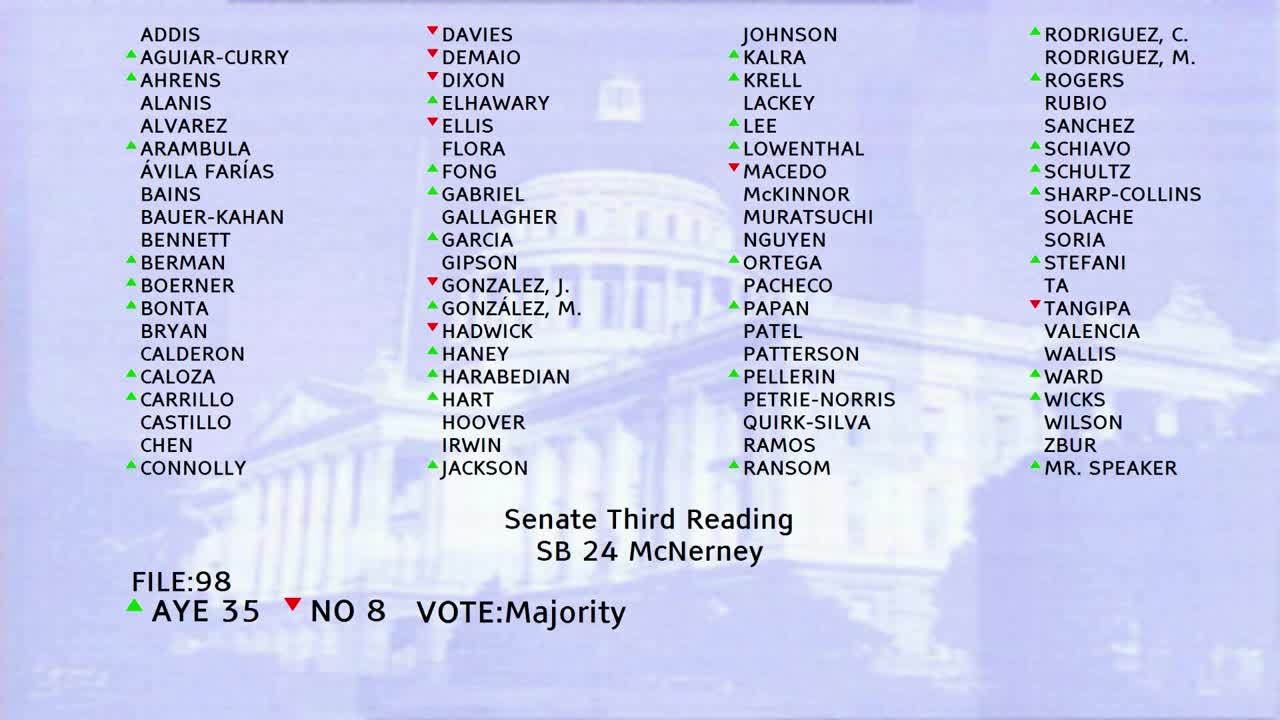 6MIN
Assembly Floor
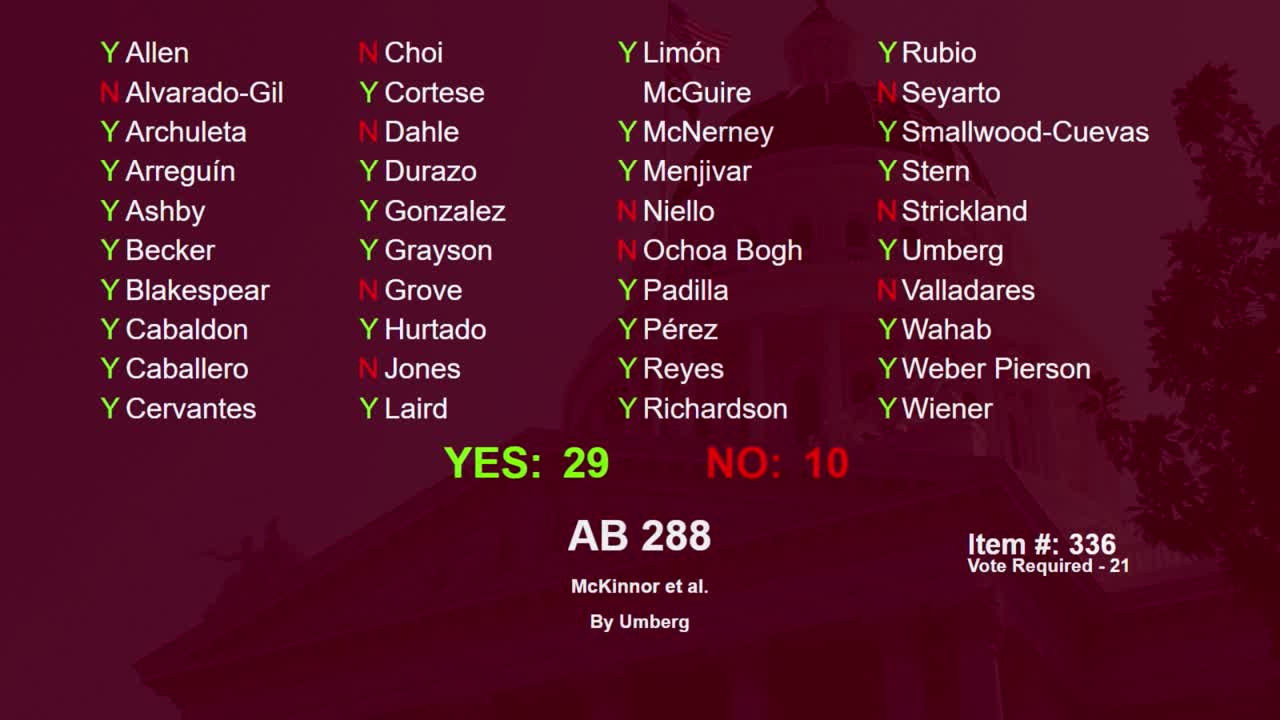 2MIN
Senate Floor
 17SEC
Senate Standing Committee on Appropriations
 10MIN
Senate Standing Committee on Judiciary
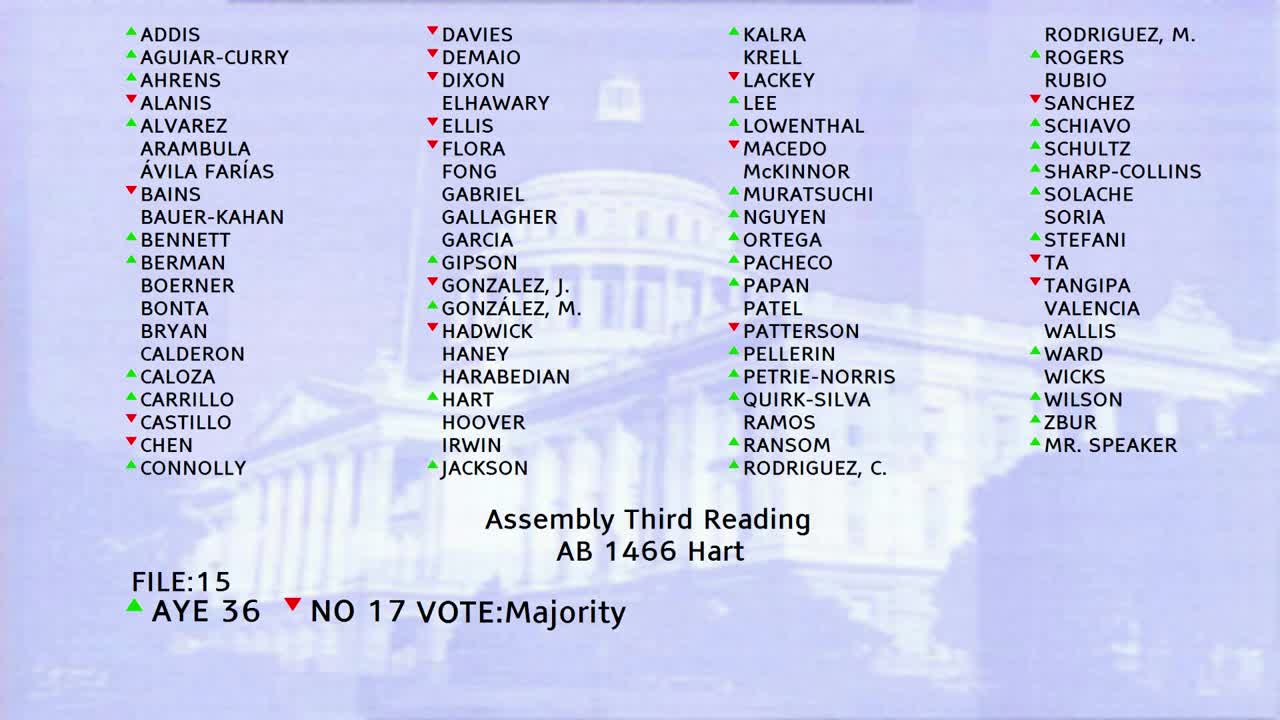 2MIN
Assembly Floor
 16MIN
Assembly Standing Committee on Judiciary
Bill Author

Bill Co-Author(s):