AB 748: Single-family and multifamily housing units: preapproved plans.
- Session Year: 2025-2026
- House: Assembly
- Latest Version Date: 2026-01-05
Current Status:
In Progress
(2026-08-13: In committee: Held under submission.)
Introduced
In Committee
Awaiting First Chamber Vote
Passed First Chamber
In Committee
Awaiting Second Chamber Vote
Passed Second Chamber
Enacted
Existing law, the Planning and Zoning Law, provides for the adoption and administration of zoning laws, ordinances, rules and regulations by counties and cities and the implementation of those general plans as may be in effect in those counties or cities. In that regard, existing law requires each local agency, by January 1, 2025, to develop a program for the preapproval of accessory dwelling unit plans.
This bill would require each local agency, as defined, to develop a program for the preapproval of single-family and multifamily residential housing plans, whereby the local agency accepts single-family and multifamily plan submissions for preapproval and approves or denies the preapproval applications, as specified. The bill would require a large jurisdiction, as defined, to develop this program by July 1, 2027, and a small jurisdiction, as defined, to develop a program by January 1, 2029. The bill would require the local agency to post preapproved single-family or multifamily residential housing plans and the contact information of the applicant on the local agencys internet website.
This bill would require a local agency to either approve or deny ministerially an application for a single-family or multifamily residential housing unit within 30 days if the lot meets certain conditions and the application utilizes specified plans that have been preapproved by the local agency or that are identical to a plan used in an application approved by the local agency. The bill would prohibit the preapproval program from applying to single-family or multifamily residential housing plans intended for use in certain communities and developments, as specified.
Existing law requires each county and each city to adopt a comprehensive, long-term general plan for the physical development of the county or city, and specified land outside its boundaries, that includes, among other specified mandatory elements, a housing element. That law requires the planning agency of a city or county to provide by April 1 of each year an annual report to, among other entities, the Office of Land Use and Climate Innovation. Existing law requires the annual report to include, among other things, the citys or countys progress in meeting its share of regional housing needs, as specified.
Existing law, the California Environmental Quality Act (CEQA), requires a lead agency, as defined, to prepare, or cause to be prepared, and certify the completion of, an environmental impact report on a project that it proposes to carry out or approve that may have a significant effect on the environment. CEQA does not apply to the approval of ministerial projects.
To the extent that the ministerial review process established by the bill would apply to final, discretionary approval of an application for a single-family or multifamily housing unit, the bill would exempt those projects from CEQA.
This bill, beginning on April 1, 2028, for large jurisdictions and beginning on April 1, 2030, for small jurisdictions, would require the local agency to include in its annual report the number of units of residential housing that are approved using a preapproved housing plan pursuant to this act.
By imposing new duties on local agencies with regard to developing a preapproval program and its annual report, the bill would create a state-mandated local program.
The bill would include findings that changes proposed by this bill address a matter of statewide concern rather than a municipal affair and, therefore, apply to all cities, including charter cities.
The California Constitution requires the state to reimburse local agencies and school districts for certain costs mandated by the state. Statutory provisions establish procedures for making that reimbursement.
This bill would provide that no reimbursement is required by this act for a specified reason.
The California Consumer Financial Protection Law requires the Commissioner of Financial Protection and Innovation to prepare and publish on the Department of Financial Protection and Innovations internet website an annual report detailing actions taken during the prior year under the law and requires the report to include information on specified actions, as provided.This bill would make a nonsubstantive change to these provisions.The California Consumer Financial Protection Law requires the Commissioner of Financial Protection and Innovation to prepare and publish on the Department of Financial Protection and Innovations internet website an annual report detailing actions taken during the prior year under the law and requires the report to include information on specified actions, as provided.
This bill would make a nonsubstantive change to these provisions.
(a)Each local agency shall, by July 1, 2027, develop a program for the preapproval of single-family and multifamily residential housing plans. The program shall comply with all of the following:
(1)The local agency shall accept single-family and multifamily residential housing plan submissions for preapproval.
(2)(A)The local agency shall approve or deny the application for preapproval pursuant to the standards established in applicable state and local housing regulations.
(B)The local agency may charge the applicant the same permitting fees that the local agency would charge an applicant seeking approval for the same-sized single-family or multifamily residential housing unit in reviewing and approving a preapproved housing plan submission.
(C)An application for preapproval under this section shall include a statement by the applicant that the applicant has sufficient authority, license, or ownership interest in the plan to submit the plan for preapproval and, if approved, posted pursuant to clause (i) of subparagraph (A) of paragraph (3).
(3)(A)(i)Single-family and multifamily residential housing plans that are preapproved pursuant to this subdivision shall be posted on the local agencys internet website.
(ii)The posting of a preapproved housing plan pursuant to clause (i) shall not be considered an endorsement of the applicant or approval of the applicants application for a single-family or multifamily residential housing unit by the local agency.
(B)(i)The local agency shall also post the contact information of the applicant of a preapproved housing plan, as provided by the applicant.
(ii)The local agency shall not be responsible for the accuracy of the contact information posted pursuant to clause (i).
(C)A local agency shall remove a preapproved housing plan from their internet website within 30 days of receiving a request for removal from the applicant.
(4)(A)A local agency may also admit plans that have been developed and preapproved by the local agency for single-family and multifamily residential housing plans into the program.
(B)This section shall not require a local agency to post a preapproved single-family or multifamily residential housing plan that is not submitted by an applicant.
(5)This section shall not prevent a local agency from voluntarily accepting or admitting additional plans at higher densities in additional zoning districts into the preapproved housing plan program, at the local agencys discretion.
(b)The preapproval program established pursuant to this section shall not apply to single-family or multifamily residential housing plans intended for use in a master-planned community, a planned unit development, or a similar large-scale development that includes the subdivision of land for the construction of multiple new housing units.
(c)A local agency shall approve or deny an application for a single-family or multifamily residential housing unit that uses a preapproved housing plan ministerially without discretionary review. The local agency shall either approve or deny the application within 30 days from the date the local agency receives a completed application, if the lot for which the application is proposed meets the soil conditions, topography, flood zone, zoning regulations, and design review standards for which the preapproved housing plan was designed and the application utilizes either of the following:
(1)A plan for a single-family or multifamily residential housing unit that has been preapproved by the local agency within the current triennial California Building Standards Code rulemaking cycle.
(2)A plan that is identical to a plan used in an application for a single- or multifamily residential housing unit approved by the local agency within the current triennial California Building Standards Code rulemaking cycle.
(d)(1)Beginning on April 1, 2028, large jurisdictions shall include in their annual report required pursuant to Section 65400 the number of units of residential housing that are approved using a preapproved housing plan pursuant to this section.
(2)Beginning on April 1, 2030, small jurisdictions shall include in their annual report required pursuant to Section 65400 the number of units of residential housing that are approved using a preapproved housing plan pursuant to this section.
(e)This section shall not apply to a small jurisdiction until January 1, 2029.
(f)For purposes of this section:
(1)Large jurisdiction means a county that is not a small jurisdiction or any city with a population with 25,000 or more as of January 1, 2019, within that county.
(2)Local agency means a city, county, or city and county.
(3)Multifamily residential housing means a building containing 2 to 10 residential units.
(4)Single-family residential housing has the same meaning as defined in applicable housing regulations.
(5)Small jurisdiction means a county with a population of less than 250,000 as of January 1, 2019, any city within that county, or a city with a population of less than 25,000 as of January 1, 2019.
(g)The Legislature finds and declares that the lack of housing is a matter of statewide concern and is not a municipal affair as that term is used in Section 5 of Article XI of the California Constitution. Therefore, this section applies to all cities, including charter cities.
SEC. 2.No reimbursement is required by this act pursuant to Section 6 of Article XIIIB of the California Constitution because a local agency or school district has the authority to levy service charges, fees, or assessments sufficient to pay for the program or level of service mandated by this act, within the meaning of Section 17556 of the Government Code.
SECTION 1.Section 90018 of the Financial Code is amended to read:90018.(a)The commissioner shall prepare and publish on the departments internet website an annual report detailing the actions taken during the prior year under this law.(b)The report described in subdivision (a) shall include, but not be limited to, information on actions taken with respect to all of the following:(1)Rulemaking, enforcement, oversight, consumer complaints and resolutions, education, and research.(2)The activities of the Financial Technology Innovation Office.(c)The report may include recommendations, including those intended to result in improved oversight, greater transparency, or increased availability of beneficial financial products and services in the marketplace. REVISIONS: HeadingLine 2.(a)The commissioner shall prepare and publish on the departments internet website an annual report detailing the actions taken during the prior year under this law.
(b)The report described in subdivision (a) shall include, but not be limited to, information on actions taken with respect to all of the following:
(1)Rulemaking, enforcement, oversight, consumer complaints and resolutions, education, and research.
(2)The activities of the Financial Technology Innovation Office.
(c)The report may include recommendations, including those intended to result in improved oversight, greater transparency, or increased availability of beneficial financial products and services in the marketplace.
|
Date
|
Status
|
|---|---|
| Aug 13, 2026 | In committee: Held under submission. |
| Aug 3, 2026 | In committee: Referred to APPR. suspense file. |
| Jul 1, 2026 | From committee: Do pass and re-refer to Com. on APPR. (Ayes 8. Noes 1.) (June 30). Re-referred to Com. on APPR. |
| Jun 17, 2026 | From committee: Do pass and re-refer to Com. on HOUSING. (Ayes 4. Noes 2.) (June 17). Re-referred to Com. on HOUSING. |
| Jun 10, 2026 | Referred to Coms. on L. GOV. and HOUSING. |
| Jan 27, 2026 | In Senate. Read first time. To Com. on RLS. for assignment. |
| Jan 26, 2026 | Read third time. Passed. Ordered to the Senate. (Ayes 75. Noes 0. Page 3832.) |
| Jan 22, 2026 | Read second time. Ordered to third reading. |
| Jan 22, 2026 | From committee: Do pass. (Ayes 15. Noes 0.) (January 22). |
| Jan 22, 2026 | Coauthors revised. |
| Jan 22, 2026 | Assembly Rule 63 suspended. (Page 3806.) |
| Jan 14, 2026 | From committee: Do pass and re-refer to Com. on APPR. (Ayes 8. Noes 0.) (January 14). Re-referred to Com. on APPR. |
| Jan 14, 2026 | From committee: Do pass and re-refer to Com. on L. GOV. (Ayes 11. Noes 0.) (January 14). Re-referred to Com. on L. GOV. |
| Jan 8, 2026 | (Pending re-refer to Com. on L. GOV.) |
| Jan 8, 2026 | Assembly Rule 56 suspended. (Page 3717.) |
| Jan 6, 2026 | Re-referred to Com. on H. & C.D. |
| Jan 5, 2026 | From committee chair, with author's amendments: Amend, and re-refer to Com. on H. & C.D. Read second time and amended. |
| Jan 5, 2026 | Referred to Coms. on H. & C.D. and L. GOV. |
| Feb 19, 2025 | From printer. May be heard in committee March 21. |
| Feb 18, 2025 | Read first time. To print. |
|
Date
|
Description
|
Location
|
Votes
|
|
|---|---|---|---|---|
| Aug 3, 2026 | Placed on suspense file | Senate Standing Committee on Appropriations |
Passed |
|
| Jun 30, 2026 | Do pass, but first be re-referred to the Committee on [Appropriations] | Senate Standing Committee on Housing |
Passed |
|
| Jun 17, 2026 | Do pass, but first be re-referred to the Committee on [Housing] | Senate Standing Committee on Local Government |
Passed |
|
| Jan 26, 2026 | AB 748 Harabedian Assembly Third Reading | Assembly Floor |
Passed |
|
| Jan 22, 2026 | Do pass. | Assembly Standing Committee on Appropriations |
Passed |
|
| Jan 14, 2026 | Do pass and be re-referred to the Committee on [Appropriations] | Assembly Standing Committee on Local Government |
Passed |
|
| Jan 14, 2026 | Do pass and be re-referred to the Committee on [Local Government] | Assembly Standing Committee on Housing and Community Development |
Passed |
This list shows positions taken on this bill by organizations on the date displayed, which is linked to the original source.
Positions by individuals are not included.
|
Organization
|
Position
|
Date
|
|---|---|---|
| Abundant Housing Los Angeles | ** Support | |
| Apartment Association of Greater Los Angeles | ** Support | |
| Bay Area Council | ** Support | |
| California Council For Affordable Housing | ** Support | |
| California Home Building Alliance | ** Support | |
| California YIMBY | ** Support | |
| Calrha | ** Support | |
| Casita Coalition | ** Support | |
| city of carlsbad | ** Against | |
| City of Pico Rivera | ** Against | |
| City of San Marcos | ** Against | |
| City of Santa Clarita | ** Against | |
| City of Thousand Oaks | ** Against | |
| Eastside Housing for All | ** Support | |
| Faith and Housing Coalition | ** Support | |
| Fieldstead And Company, Inc. | ** Support | |
| Habitat For Humanity California | ** Support | |
| Inner City Law Center | ** Support | |
| SPUR | ** Support | |
| Student Homes Coalition | ** Support | |
| The Two Hundred for Homeownership | ** Support | |
| Zillow Group | ** Support |
SENATE COMMITTEE ON
Senator Sabrina Cervantes, Chair
2025 - 2026 Regular Session
AB 748 (Harabedian) - Single-family and multifamily housing units: preapproved plans
Version: | Policy Vote: |
Urgency: | Mandate: |
Hearing Date: | Consultant: |
Bill Summary:
AB 748 would require local agencies to develop a program for the preapproval of single-family and multifamily residential housing plans, as specified, and include information on their annual progress reports (APRs) regarding the number of residential housing units that are approved using a preapproved housing plan.
Fiscal Impact:
- The Department of Housing and Community Development (HCD) indicates that this bill would impose ongoing workload to collect, validate, and store reported APR data on the number of residential housing units that are approved using a preapproved housing plan, and provide technical assistance to local agencies, as well as one-time costs to update the housing element APR form and to update IT systems. HCD notes that there are multiple pending bills that would impact APR requirements, and that if several such bills are enacted, total costs would be in the hundreds of thousands of dollars. Staff estimates that workload directly attributable to this bill would likely exceed $50,000, and could be as high as $150,000 if no other APR bills are enacted and HCD would still be responsible for one-time fixed costs to update forms and IT systems, and to provide ongoing data collection and technical assistance services. See Staff Comments. (General Fund)
- Local agencies would incur state-mandated costs to establish a program to preapprove single-family and multifamily residential housing plans, to provide for a streamlined, ministerial approval process for approval of projects using preapproved plans, and include information on their APRs regarding the number of residential units approved using preapproved plans. Any local costs would not be state-reimbursable because local agencies have general authority to charge and adjust planning and permitting fees to cover their administrative costs associated with new planning mandates. (local funds)
Background:
In an attempt to increase standardization and predictability in housing approvals, there has been increased interest at the state and local level in preapproved plans for housing development. Existing law, as enacted by AB 1332 (J. Carrillo, Chap. 759/2023), requires all cities and counties to develop a program to preapprove accessory dwelling unit (ADU) plans by January 1, 2025. Local agencies must review the plans for applicants for preapproval just as they would for an ADU proposed for a specific site, and may charge the same permitting fees to review a preapproval plan proposal as they would a site-specific ADU plan. Once a plan is preapproved, the local agency must post the plan on its website, along with the contact information provided by the applicant. Existing law requires a local agency to ministerially approve or deny an application for a detached ADU, pursuant to existing law, but must take action within 30 days for an ADU using a preapproved plan, rather than the current 60 day deadline for other ADU applications.
Existing law requires each city and county to submit an APR to HCD and the Governor’s Office of Land Use and Climate Innovation (LCI) by April 1 of each year that includes specified information relating to the status and progress of implementing the general plan, including steps taken to meet the jurisdiction’s share of regional housing needs pursuant to its housing element. Among this information, cities and counties must report zoning and rezoning information, specified information regarding density bonuses granted, the number of housing development applications received in the prior year and the number of proposed units included in those developments, the number of units approved and disapproved in the prior year, the number of housing units that were demolished in the prior year, and the net number of new housing units issued a completed entitlement, building permit, or certificate of occupancy in the housing element cycle, and the income category of each unit.
Proposed Law:
AB 748 would require each city and county to develop a program for the preapproval of single-family and multifamily residential housing plans by July 1, 2027, and specify that the bill’s provisions would not apply to small jurisdictions until January 1, 2029. Specifically, this program would:
- Require the local agency to accept single-family and multifamily residential housing plans for 2-10 units for preapproval from any applicant without restriction.
- Require the local agency to approve or deny the application for preapproval pursuant to applicable state and local housing regulations.
- Authorize the local agency to charge the applicant the same fees it would charge an applicant for review and approval of a comparable residential development.
- Require an application for preapproval to include a statement that the applicant has sufficient authority, license, or ownership interest in the plan, as specified.
- Require the local agency to post the preapproved plans on the agency's website, with the contact information of the party that submitted the plans included, as specified.
- Require the local agency to remove a preapproved housing plan from its website within 30 days of receiving a request from the applicant.
- Authorizes a local agency to admit plans developed and approved by the local agency independently of this program into the preapproved program.
- Specify that a local agency is not required to post a plan that is not submitted by an applicant, and authorize a local agency to voluntarily accept plans at higher densities in additional zoning districts at the local agency’s discretion.
- Specify that the preapproval program would not apply to residential housing plans intended for use in a master-planned community, a planned unit development, or a similar large-scale subdivision development, as specified.
- Require a local agency to approve or deny an application for a single-family or multifamily housing development ministerially and without discretionary review within 30 days if the lot for which the application is proposed meets the soil conditions, topography, flood zone, zoning regulations, and design review standards for which the preapproved plan was designed and the applicant uses either of the following:
- Plans preapproved pursuant to the program, as long as they were approved by the local agency within the current triennial California Building Standards Code (CBSC) rulemaking cycle.
- Plans that are identical to a plan that was preapproved pursuant to the bill, as long as they were approved by the local agency within the current CBSC rulemaking cycle.
- Require a large jurisdiction to include information in its APR on the number of units of residential housing that are approved using a preapproved housing plan, beginning on April 1, 2028. A small jurisdiction, defined as a county with a population of less than 250,000 or a city with a population of less than 25,000 as of January 1, 2019, would be required to include that information in its APR beginning on April 1, 2030.
Related Legislation:
AB 1206 (Harabedian), which was held on this Committee’s Suspense File last year, was nearly identical to this bill.
AB 1332 (J. Carrillo), Chap. 759/2023, required local agencies to develop a program for the preapproval of accessory dwelling unit plans by January 1, 2025, as specified.
Staff Comments:
HCD notes that there are multiple bills pending in the Legislature that would revise the information that local agencies must include in their APRs, including this bill, as well as SB 1116 (Caballero), AB 1567 (Ta), and others, all of which would create ongoing staff workload for HCD’s Data and Innovation Unit for new data collection and coordination with local agencies, as well as one-time costs to make changes to the APR form and IT systems (the HCD Connect database). HCD estimates that, if several APR-related bills are enacted, additional resources would be required to implement them, with total costs in the hundreds of thousands of dollars, including both one-time and ongoing costs. Staff notes that costs directly attributable to this bill would likely only represent a portion of the one-time and ongoing costs reported by HCD. If this bill is the only bill enacted that impacts HCD’s workload, however, staff notes that HCD would likely incur General Fund costs in the range of $100,000 to $150,000.
By imposing new duties on cities and counties to establish a program for the preapproval of single-family and multifamily residential housing plans, this bill imposes a state-mandated local program. Staff notes, however, that any local costs mandated by this bill would not be subject to state reimbursement because local agencies have the authority to charge and adjust planning and permitting fees as necessary to cover administrative costs. Existing law authorizes planning and zoning fees to “include the costs reasonably necessary to prepare and revise the plans and policies that a local agency is required to adopt before it can make any necessary findings and determinations.” Case law and previous decisions by the Commission on State Mandates support the position that local governments’ planning costs are not reimbursable when the state imposes new planning mandates.
Recommended Amendments:
Staff notes that both this bill and AB 1751 (Quirk-Silva), the Missing Middle Townhome Ownership Act, propose to add a new Section 65852.29 to the Government Code. The author may wish to consider amending the bill to avoid the potential chaptering conflict.
-- END --
SENATE COMMITTEE ON HOUSING
Senator Jesse Arreguín, Chair
2025 - 2026 Regular
Bill No: AB 748 Hearing Date: 6/30/2026
Author: | Harabedian | ||
Version: | 1/5/2026 Amended | ||
Urgency: | No | Fiscal: | Yes |
Consultant: | Hank Brady | ||
SUBJECT: Single-family and multifamily housing units: preapproved plans
DIGEST: This bill requires local agencies to develop a program for the preapproval of single-family and multifamily residential housing plans for public use.
ANALYSIS:
Existing law:
- Requires each local agency to develop a program for the preapproval of Accessory Dwelling Units (ADUs) by January 1, 2025, as follows:
- Establishes that the local agency must:
- Accept ADU plans for preapproval from any applicant without restriction; and,
- Approve or deny the application for preapproval pursuant to applicable state and local housing regulations.
- Allows the local agency to charge the applicant permitting fees for the review of the plans submitted for preapproval, as long as the fees are the same as those that would be charged to review the plans if a standard ADU application were filed;
- Requires the local agency to post the preapproved ADU plans on the agency’s website, with the contact information of the party that submitted the plans included. The posting of the plans shall not be considered an endorsement of the applicant, or an approval of the applicant’s application. The local agency is required to remove preapproved plans within 30 days, at the applicant’s request; and,
- Allows the local agency to admit ADU plans developed and approved by the local agency independently of this program, into the preapproved ADU program.
- Establishes that the local agency must:
- Requires a local agency to approve or deny an application for an ADU ministerially and without discretionary review within 30 days, if the applicant uses either of the following:
- ADU plans preapproved pursuant to the program established in 1), as long as they were approved by the local agency within the current triennial California Building Standards Commission (CBSC) rulemaking cycle.
- ADU plans that are identical to a plan that was preapproved pursuant to 1), as long as they were approved by the local agency within the current CBSC rulemaking cycle.
This bill:
- Requires each local agency to develop a program for the preapproval of single-family and multifamily residential housing plans by July 1, 2027, as follows:
- Establishes that the local agency must;
- Accept single-family and multifamily residential housing plans for 2-10 units for preapproval from any applicant without restriction; and
- Approve or deny the application for preapproval pursuant to applicable state and local housing regulations.
- Allows the local agency to charge the applicant permitting fees for the review of the plans submitted for preapproval, as long as the fees are the same as those that would be charged to review the plans if a standard permit application were filed;
- Requires that an application for preapproval includes a statement by the applicant indicating that the applicant has sufficient authority, license or ownership in the plan to submit the plan for preapproval, as specified.
- Requires the local agency to post the preapproved plans on the agency's website, with the contact information of the party that submitted the plans included, as specified.
- Allows the local agency to admit plans developed and approved by the local agency independently of this program into the preapproved program.
- Provides that a local agency is not required to post a plan that is not submitted by an applicant.
- Establishes that the local agency must;
- Requires a local agency to approve or deny an application for a single-family or multifamily housing development ministerially and without discretionary review within 30 days if the lot for which the application is proposed meets the soil conditions, topography, flood zone, zoning regulations, and design review standards for which the preapproved plan was designed and the applicant uses either of the following:
- Plans preapproved pursuant to the program established in 1), as long as they were approved by the local agency within the current triennial CBSC rulemaking cycle; or
- Plans that are identical to a plan that was preapproved pursuant to 1), as long as they were approved by the local agency within the current CBSC rulemaking cycle.
- Provides that the preapproval program shall not apply to single-family or multifamily residential housing plans intended for use in master-planned communities or large-scale developments, as specified.
Background
The California Building Standards Code. Title 24 of the California Code of Regulations contains building standards and regulations as adopted by the CBSC. These standards include, among other requirements, structural standards for building safety (the Building Code), fire safety standards (the Fire Code), energy efficiency standards (the Energy Code), and standards for green buildings (CalGreen). The BSC updates the Building Standards Code on a three-year cycle—the current standards went into effect on January 1, 2023. Once adopted at the state level, cities and counties in California then each enact an ordinance to adopt the codes. New construction and improvements to existing buildings must comply with the current building codes, and improvements to an existing building may trigger additional code upgrades for other parts of a building.
Comments
- Author’s Statement. “AB 748 streamlines the approval process for both single-family and multifamily housing by requiring local agencies to establish pre-approved housing plan programs. Under the bill, large jurisdictions would be required to develop these programs by July 1, 2027, while small jurisdictions would have until January 1, 2029. By providing homeowners and developers with a standardized set of housing models to choose from, the bill not only accelerates post-disaster rebuilding but also facilitates the construction of new housing statewide. This standardized and predictable approval pathway cuts through bureaucratic red tape, reduces costs, and removes delays that often prevent housing from being built. By making it easier to rebuild and create new homes, AB 748 increases overall housing supply, supports faster community recovery, and helps ensure more families can access stable, affordable places to live.”
- California’s housing crisis. According to the Department of Housing and Community Development (HCD), California’s housing crisis is a half-century in the making.[1] After decades of underproduction, supply is far behind need and housing, and rental costs are soaring. As a result, millions of Californians must make hard decisions about paying for housing at the expense of food, health care, child care, and transportation, directly impacting the quality of life in the state. One in three households in the state doesn’t earn enough money to meet their basic needs. In 2024, over 187,000 Californians experienced homelessness on a given night.[2]
To meet this housing need, HCD determined that California must plan for more than 2.5 million new homes, and no less than one million of those homes must be affordable to lower-income households, in the 6th Regional Housing Needs Allocation (RHNA) Cycle. By contrast, housing production in the past decade has been under 100,000 units per year – including less than 10,000 units of affordable housing per year.[3]
- Preapproved Plans. In an attempt to increase standardization and predictability in housing approvals, there has been increased interest at the state and local level in preapproved plans for housing development.
Building on the success of prior ADU laws, AB 1332 (Juan Carrillo, Chapter 759, Statutes of 2023), established a preapproved plan program for ADUs from which this bill draws heavily. Under AB 1332, local governments were required to develop a program for the preapproval of ADU plans by January 1, 2025. Under this program, anyone can submit plans for preapproval, and the local government must review them based on existing state ADU and building code standards. The local agency is allowed to charge the same permitting fees as they would for a regular ADU application to review submittals for ADUs requesting preapproval. Once approved, these plans must be posted on the local government’s website, along with the applicant’s contact information (though the agency isn’t responsible for its accuracy). Applicants can also request their ADU plans be removed if they no longer wish to participate in the program. Local governments are also allowed to include their own preapproved ADU plans or ones approved by other local governments in California in the preapproved plan program, since the same ADU standards apply statewide. If a local government receives an application for a detached ADU using a preapproved or previously approved plan from the current building code cycle, the local government must approve or deny the permit application within 30 days, without discretionary review. It is still too early to tell how successful or impactful this program will be in terms of increasing ADU production. - Experiments in preapproval. More recently, the City of Los Angeles (LA) launched a local “Small Lots, Big Impact” initiative to encourage for-sale housing on small lots.[4] Through this initiative, LA is hosting a design competition for designers to develop plans for multiple small-scale housing units on individual lots, with the winning designs eventually serving as pre-approved plans for all developers to use.[5] The LA housing department anticipates that these pre-approved designs will be for one- to three-story developments ranging from fourplexes to 20 unit proposals.[6] LA anticipates that this program may help the Pacific Palisades neighborhood rebuild more quickly after thousands of homes were damaged or destroyed in January’s Palisades fire.
This bill would build off the precedent set by AB 1332 (Juan Carrillo) and would be similar to LA’s preapproved plan initiative. It takes the language from AB 1332 establishing a local program for the preapproval of housing, and applies it to single-family and multi-family homes, rather than just ADUs. Under this bill, local governments would be required to set up a program for the preapproval of single-family and multi-family homes, and then expedite the approvals process for applicants who later want to use those preapproved designs, by requiring local governments to review them within 30 days. As is the case in AB 1332, local governments would be allowed to charge the same permitting fees as they would for the standard approval of similar housing units to review these plans submitted for preapproval. Project applicants may then use these preapproved plans, or plans identical to them, when applying for housing developments of their own. This preapproved program may help to standardize and simplify the approvals process for homeowners and developers by increasing approvals certainty so long as they stick to the preapproved plans, and by expediting the approvals process.
- Large and small. This bill requires each local agency in the state to develop a program for preapproval of single-family and small multifamily dwellings. The resources available to LA along with the housing demand in LA are not comparable to the resources and demand in Modoc County. Establishing uniform requirements could place tremendous burdens on rural agencies that see relatively few housing applications annually. To address this imbalance the bill provides small jurisdictions until 2029 to implement the bill’s requirements.
- Monitoring progress. This bill requires each local agency to develop a program for the preapproval of single-family and small multifamily (2-10 residential units) dwellings. This bill requires local agencies to accept applications for preapproval and authorizes local agencies to charge permitting fees that would be applicable to the project if it were a regular development application. While the bill establishes broad parameters for preapproval, it does not strictly define the contours of what a preapproval program must look like. This provides local agencies some latitude to design a program that will be effective and appropriate in their area. To monitor implementation, this bill requires jurisdictions to identify the number of units approved using a preapproved housing plan in their APR.
- Opposition. Several local agencies are opposed to the bill. They argue that this bill imposes onerous requirements on cities by forcing the acceptance of one-size-fits-all preapproved plans.
- Double Referral. This bill was also referred to the Local Government Committee, where it was approved on a 4-2 vote on June 17, 2026.
Related/Prior Legislation
AB 1206 (Harabedian, 2025) — contained provisions that are substantially similar to the provisions in this bill. AB 1206 was held under submission in the Appropriations Committee.
AB 1332 (Juan Carrillo, Chapter 759, Statutes of 2023) — established a similar preapproved plan program for ADUs.
FISCAL EFFECT: Appropriation: Fiscal Com.: Local:
POSITIONS: (Communicated to the committee before noon on Wednesday, June 24th, 2026.)
SUPPORT:
Abundant Housing Los Angeles
Apartment Association of Greater Los Angeles
Bay Area Council
California Council for Affordable Housing
California Council for Affordable Housing
California Yimby
Calrha
Casita Coalition
Eastside Housing for All
Faith and Housing Coalition
Fieldstead and Company, INC.
Habitat for Humanity California
Inner City Law Center
Spur
Student Homes Coalition
The Two Hundred for Homeownership
OPPOSITION:
City of Carlsbad
City of Santa Clarita
City of Santa Clarita
City of Thousand Oaks
-- END --
California Department of Housing and Community Development, A Home for Every Californian: 2022 Statewide Housing Plan. March 2022, https://storymaps.arcgis.com/stories/94729ab1648d43b1811c1698a748c136 ↑
U.S. Department of Housing and Urban Development, Point in Time Counts. https://www.huduser.gov/portal/datasets/ahar/2023-ahar-part-1-pit-estimates-of-homelessness-in-the-us.html ↑
https://www.hcd.ca.gov/policy-research/housing-challenges.shtml ↑
https://www.latimes.com/california/story/2025-03-05/los-angeles-launches-effort-to-encourage-starter-homes-on-city-owned-vacant-lots ↑
IBID. ↑
IBID. ↑
SENATE COMMITTEE ON LOCAL GOVERNMENT
Senator María Elena Durazo, Chair
2025 - 2026 Regular
Bill No: | AB 748 | Hearing Date: | 6/17/26 |
Author: | Harabedian | Fiscal: | Yes |
Version: | 1/5/26 | Consultant: | Favorini-Csorba |
Single-family and multifamily housing units: preapproved plans
Requires each city and county to establish a program for the preapproval of single-family and multifamily residential housing plans by July 1, 2027.
Background
The California Constitution allows cities and counties to “make and enforce within its limits, all local, police, sanitary and other ordinances and regulations not in conflict with general laws.” It is from this fundamental power (commonly called the police power) that cities and counties derive their authority to regulate behavior to preserve the health, safety, and welfare of the public—including land use authority.
Cities and counties use their police power to enact zoning ordinances that shape development, such as setting maximum heights and densities for housing units, minimum numbers of required parking spaces, setbacks to preserve privacy, lot coverage ratios to increase open space, and others. These ordinances can also include conditions on development to address aesthetics, community impacts, or other particular site-specific considerations. Zoning ordinances and other development decisions must be consistent with the city or county’s general plan.
Local governments have broad authority to define the specific approval processes needed to satisfy these considerations. Some housing projects can be permitted by city or county planning staff “ministerially” or without further approval from elected officials, but most large housing projects require “discretionary” approvals from local governments, such as a conditional use permit or a change in zoning laws. This process requires hearings by the local planning commission and public notice and may require additional approvals, such as design review.
Preapproved plans. In an attempt to increase standardization and predictability in housing approvals, there has been increased interest at the local and state level in “preapproved” plans for housing development, particularly in the context of accessory dwelling units (ADUs). Several local governments, including the City of Encinitas and the City of San Jose, have voluntarily established programs where they make available plans for ADUs that homeowners can use to build an ADU without commissioning an architect and with less review at the local level.
Building on existing ADU laws, AB 1332 (Juan Carrillo, 2023) required cities and counties to develop a program for the preapproval of ADU plans by January 1, 2025. Under this program, anyone can submit plans for preapproval, and the city or county must review them based on existing state ADU and building code standards. The city or county may charge the same permitting fees as they would for a regular ADU application to review submittals for ADUs requesting preapproval. Once approved, the city or county must post these plans on its website, along with the applicant’s contact information (though the agency isn’t responsible for its accuracy). Applicants can also request removal of their ADU plans if they no longer wish to participate in the program. Cities or counties are also allowed to include their own preapproved ADU plans or ones approved by other local governments in California in the preapproved plan program, since the same ADU standards apply statewide. If a city or county receives an application for a detached ADU using a preapproved or previously approved plan from the current building code cycle, the local government must approve or deny the permit application within 30 days, without discretionary review.
Pew study of preapproved plans. In May 2026, the Pew Charitable Trusts released a report on preapproved plans.[1] The report reviewed preapproved plan programs adopted by municipalities across the United States and interviewed local officials and builders on their experiences with preapproved plans. The report found that while fewer than 50 cities and counties outside of California (which mandates preapproved ADU programs) had published anything related to preapproved plans, in jurisdictions that had adopted them:
“Homebuilders benefit from meaningfully reduced approval times and fewer delays, especially in cities with streamlined permitting, and direct cost savings on architecture and engineering services… Preapproved plans reduce builders’ overall development costs by about 1%-2%... Cities benefit through improved land utilization, with more homes on less land, and more infill projects—homes in already developed areas that can use existing infrastructure… The process of implementing a preapproved plan program also offers cities an opportunity to coordinate and refine their entire permitting process, which often spreads across multiple isolated departments.”
The researchers found that use of preapproved plans by builders varies. At the high end, the City of South Bend, Indiana, which has published preapproved plans since 2023, has seen 223 units permitted. Hawaii County, Hawaii, and Seattle, Washington, have seen similar numbers of units built through their preapproved plan programs. Portland, Oregon, on the other hand, has seen only one preapproved ADU built since 2024. The report indicates that low uptake in some jurisdictions might be due to a desire for residents to use their own bespoke plans or a lack of time savings for a developer if reviews other than by the planning or building department are still required.
The author wants to expand the ADU preapproval program to other types of housing.
Proposed Law
Assembly Bill 748 requires each city and county to establish a program for the preapproval of single-family and multifamily residential housing plans by July 1, 2027, for buildings containing up to 10 units.
Under this program, cities and counties must accept submissions of plans for preapproval. Cities and counties must approve or deny these applications for preapproval based on established state and local housing regulations. They may also charge applicants the same permitting fees they would for standard housing unit approvals when reviewing and approving a preapproved plan.
An application for preapproval must include a statement by the applicant that the applicant has sufficient authority, license, or ownership interest in the plan to submit the plan for preapproval and have it posted by the city or county.
Once approved, local agencies must post preapproved single-family and multifamily residential housing plans on their websites. AB 748 provides that this posting does not constitute an endorsement of the applicant or approval of their specific housing unit application. Agencies must also post the applicant's contact information, as provided by the applicant. A local agency must remove a preapproved housing plan from its website within 30 days if the applicant requests its removal.
AB 748 also allows cities and counties to develop and preapprove their own plans for inclusion in the program, and to voluntarily accept or admit additional plans at higher densities in other zoning districts into the preapproved housing plan program, using their discretion. A local agency does not have to post a preapproved single-family or multifamily residential housing plan that is not submitted by an applicant.
The bill excludes from the preapproval program single-family or multifamily residential housing plans for intended for use in master-planned communities, planned unit developments, or similar large-scale developments that involve subdividing land for multiple new housing units.
A city or county must ministerially approve or deny an application for a single-family or multifamily residential housing unit that uses a preapproved housing plan within 30 days of receiving a completed application, if the lot meets the soil conditions, topography, flood zone, zoning regulations, and design review standards for which the preapproved plan was originally designed.
The bill also requires cities and counties to include in their annual progress report to the Department of Housing and Community development the number of units approved using a preapproved plan by April 1, 2030, for the following cities and counties:
- Counties with a population of fewer than 250,000;
- Cities within those counties; and
- Cities with a population of fewer than 25,000.
All other cities and counties must begin reporting two years earlier—by April 1, 2028.
AB 748 includes findings and declarations to support its purposes.
Comments
1. Purpose of the bill. According to the author, “AB 748 streamlines the approval process for both single-family and multifamily housing by requiring local agencies to establish pre-approved housing plan programs. Under the bill, large jurisdictions would be required to develop these programs by July 1, 2027, while small jurisdictions would have until January 1, 2029. By providing homeowners and developers with a standardized set of housing models to choose from, the bill not only accelerates post-disaster rebuilding but also facilitates the construction of new housing statewide. This standardized and predictable approval pathway cuts through bureaucratic red tape, reduces costs, and removes delays that often prevent housing from being built. By making it easier to rebuild and create new homes, AB 748 increases overall housing supply, supports faster community recovery, and helps ensure more families can access stable, affordable places to live.”
2. Volunteers, not hostages. In 2023, the Legislature directed cities and counties to adopt preapproved plans for ADUs. That requirement became effective on January 1, 2025. Accordingly, it is unclear how successful this effort has been, and what pitfalls have arisen in jurisdictions that didn’t adopt the program voluntarily. Following that effort, AB 748 requires all cities and counties to develop a program to preapprove standardized designs for certain types of development, regardless of whether there is demand for such a program within their jurisdiction. In examining preapproved plan programs, the Pew Charitable Trust identified significant variation in the success of this program. For example, officials in Cupertino, CA, reported very few applications for preapproved ADUs, which they attributed to the desire for homeowners to design their own bespoke projects. Others have seen a few hundred units built to date. As a rule, the jurisdictions in the study that saw success from preapproved plans adopted these programs voluntarily. Those cities and counties may be friendlier to development than those that didn’t. It is unclear whether mandating that cities and counties adopt preapproved plan programs will lead to significant new building of preapproved homes.
3. Little boxes all the same? California’s communities are diverse, not just across jurisdictions, but within jurisdictions, each often with unique community characteristics. Currently, housing projects are generally considered individually on a site-by-site basis, allowing for specific design and impact considerations. Cities or counties must approve or deny an application for these projects ministerially—meaning without discretionary review—within 30 days if the application includes a preapproved plan. Some cities are concerned AB 748’s short timeframes for review and limitations on the ability of local governments to review projects individually could affect the safety of structures built using these plans. However, AB 748 allows cities and counties to specify the soil conditions, topography, flood zone, zoning regulations, and design review standards for the preapproved plan. The ability to specify these conditions gives cities and counties significant latitude over where preapproved plans may be used and how they fit into their communities.
4. Step one. AB 748 requires all cities and counties to develop a program for preapproved single and multifamily dwellings. The program must accept submissions for preapproved plans. The bill also allows, but does not require, cities and counties to develop their own preapproved plans. However, not all local governments may receive submissions of plans for preapproval, such as cities or counties with smaller populations or that see little development. AB 748 does not specify what the program requires if no submissions are received by the date they must have a program. But the bill does provide that local agencies are not required to post preapproved plans that are not submitted by an applicant, so they won’t have to pay to develop their own preapproved plans if none are submitted. Absent further direction, it is unclear what a local government must do to comply if no one submits a plan.
5. Charter city. The California Constitution allows cities that adopt charters to control their own “municipal affairs.” In all other matters, charter cities must follow the general, statewide laws. Because the Constitution does not define municipal affairs, the courts determine whether a topic is a municipal affair or whether it is an issue of statewide concern. AB 748 says that its statutory provisions apply to charter cities because the lack of housing is a matter of statewide concern.
6. Mandate. The California Constitution requires the state to reimburse local governments for the costs of new or expanded state mandated local programs. Because AB 748 adds to the duties of local officials, Legislative Counsel says the bill imposes a new state mandate. AB 748 disclaims the state’s responsibility for providing reimbursement by citing local governments’ authority to charge for the costs of implementing the bill’s provisions.
7. Related legislation. AB 748 is virtually identical to AB 1206 (Harabedian, 2025), which the Committee approved on a 5-2 vote. AB 1206 was held in the Senate Appropriations Committee. Additionally, AB 748 is modeled after AB 1332’s preapproved ADU program. It borrows the provisions from that law and applies them to buildings containing 1 to 10 residential units with the following differences:
- AB 748 prohibits the preapproval program from applying to plans intended for use in projects that require subdivision, while AB 1332 did not;
- AB 748 gives cities and counties six months to develop the program, while AB 1332 gave them one year; and
- AB 748 includes protections for architects to ensure that their designs are not used without permission, while AB 1332 did not; and
- AB 748 does not prohibit local governments from requiring qualifications for submission of ADU plans, while AB 1332 included this prohibition.
8. Coming and going. The Senate Rules Committee has ordered a double referral of AB 748: first to the Committee on Local Government to hear issues related to local approval processes, and second to the Committee on Housing.
Assembly Actions
Assembly Housing and Community Development Committee: 11-0
Assembly Local Government Committee: 8-0
Assembly Appropriations Committee: 15-0
Assembly Floor: 75-0
Support and Opposition
(6/12/2026)
Support: Abundant Housing Los Angeles
Apartment Association of Greater Los Angeles
Bay Area Council
California Council for Affordable Housing
California Council for Affordable Housing (CCAH)
California Yimby
Calrha
Casita Coalition
Eastside Housing for All
Faith and Housing Coalition
Fieldstead and Company, INC.
Habitat for Humanity California
Spur
Student Homes Coalition
The Two Hundred for Homeownership
Zillow Group
Opposition: City of Carlsbad
City of Pico Rivera
City of San Marcos
City of Santa Clarita
City of Thousand Oaks
-- END --
Pew Charitable Trusts, “Preapproved Building Plans Help Cities Improve Housing Affordability.” 13 May 2026. ↑
ASSEMBLY THIRD READING
ATR Bill Id:AB 748
Author:(Harabedian)
As Amended Ver:January 5, 2026
Majority vote
SUMMARY
Requires each local agency to develop a program for the preapproval of single-family and multifamily residential housing plans for public use.
Major Provisions
- Requires each local agency to develop a program for the preapproval of single-family and multifamily residential housing plans with up to 10 units, as follows:
- Establishes that the local agency must;
- Accept single-family and multifamily residential housing plans for preapproval from any applicant without restriction; and
- Approve or deny the application for preapproval pursuant to applicable state and local housing regulations.
- Allows the local agency to charge the applicant the same permitting fees that the local agency would charge an applicant seeking approval for the same-sized single-family or multifamily residential housing unit in reviewing and approving a preapproved housing plan submission;
- Provides that an application for the preapproval of plans shall include a statement by the applicant certifying that they have sufficient authority, license, or ownership interest in the plan to submit the plan for preapproval;
- Requires the local agency to post the preapproved plans on the agency's website, with the contact information of the party that submitted the plans included. The posting of the plans shall not be considered an endorsement of the applicant, or an approval of the applicant's application. The local agency is required to remove preapproved plans within 30 days, at the applicant's request; and
- Allows, but does not require, the local agency to admit plans developed and approved by the local agency independently of this program, or plans at higher densities in additional zoning districts, into the preapproved program.
- Establishes that the local agency must;
- Specifies that the preapproved plans shall not be used in a master-planned community, a planned unit development, or a similar large-scale development that includes the subdivision of land for the construction of multiple housing units.
- Requires a local agency to approve or deny an application for a single-family or multifamily housing development ministerially and without discretionary review within 30 days, if the lot for which the application is proposed meets the soil conditions, topography, flood zone, zoning regulations, and design review standards for which the preapproved housing plan was designed, and the applicant uses either of the following:
- Plans preapproved pursuant to the program established in 1), as long as they were approved by the local agency within the current triennial California Building Standards Code (CBSC) rulemaking cycle; or
- Plans that are identical to a plan that was preapproved pursuant to 1), as long as they were approved by the local agency within the current CBSC rulemaking cycle.
- Applies the provisions in 1) to large jurisdictions by July 1, 2027, and to small jurisdictions by January 1, 2029.
- Defines "large jurisdiction" as a county that is not a small jurisdiction or any city with a population of 25,000 or more as of January 1, 2019, within that county.
- Defines "small jurisdiction" as a county with a population of less than 250,000 as of January 1, 2019, any city within that county, or a city with a population of less than 25,000 as of January 1, 2019.
- Includes annual progress reporting requirements.
- Applies these provisions to all cities, including charter cities.
COMMENTS
Local Housing Approval Process: Planning for, and approving, new housing developments is primarily a local responsibility. Under the California Constitution, cities and counties have broad authority, known as the police power, to regulate land use in the interest of public health, safety, and welfare. Local governments enforce this authority through an entitlement process, which includes both discretionary and ministerial approvals. Gaining "entitlement" is essentially a local government's confirmation that a housing project conforms with all applicable local zoning regulations and design standards. Once a project receives entitlement, or approval, from the local planning department, it must obtain postentitlement permits, such as building, demolition, and grading permits. Postentitlement permits are related to the physical construction of the development proposal before construction can begin.
Navigating through the various stages of housing approval requires developers to invest time and resources early in the development process, and can serve as a governmental constraint to housing development. Obtaining approval to build housing can be even more difficult for less-experienced homeowners seeking to add gentle density to their properties. To address this, the Legislature has enacted various laws to streamline, expedite, and standardize housing approvals, particularly for projects meeting objective standards. Despite the efforts to expedite local approvals for housing development proposals both at the entitlement and permitting stages, it still can take takes far too long to approve housing in California.
This bill would address a key governmental constraint to housing production by expediting and standardizing the housing approvals process for homeowners using plans that the local government already approved. Speeding up housing approvals as proposed in this bill reduces costs by minimizing delays that can increase financing, labor, and material expenses. Faster and more predictable approvals also create more certainty for homeowners and developers, encouraging investment and increasing housing supply, which can help to stabilize prices. Increasing the supply and availability of housing at all income levels ultimately lowers housing costs and helps to promote a more affordable California.
Benefits of Standardization and Predictability: In recent years, there has been a legislative trend towards standardization, consistency, and expediency in housing approvals. Research from urban planning, public policy, and economic disciplines consistently highlights the advantages of clear and consistent regulatory frameworks in housing development. Unpredictable and lengthy approval timelines can increase financial risk, discourage investment, and drive up costs for developers, which ultimately translates into higher housing prices for consumers.
On the other hand, standardized approval processes can help mitigate these risks by providing clear guidelines, reducing ambiguity, and fostering confidence for the applicant. One such example of increasing standardization, speed, and predictability in housing reviews comes from accessory dwelling units, or ADUs. The Legislature passed laws to permit ADUs by right on all residentially-zoned parcels in the state, facilitating the construction of missing middle housing in exclusionary single-family neighborhoods.[1] Since then, various pieces of legislation have been passed to establish statewide standards for ADUs, regardless of the underlying zoning district. ADUs are now required to be reviewed within 60 days by local governments in a streamlined and ministerial fashion. This means that there are clear rules that apply to every residential parcel in the state, and if those rules are followed, an ADU proposal will be quickly approved.
Taken as a whole, ADU laws have established a fast, predictable, uniform, and enforceable process for the approval of ADUs statewide. These laws have transformed these units from being less than 1% of new construction before 2017 to now being approximately 20%, with over 20,000 new ADUs legally completed in 2024.[2] With thousands of ADUs being added every year, ADUs have already become an important part of the state's stock of new housing, with a growth potential that is not subject to the state's funding allocations. This bill seeks to build off the successes of standardization and predictability by applying them to standard housing units, not just ADUs, through a preapproved program.
Preapproved Plans: In an attempt to increase standardization and predictability in housing approvals, there has been increased interest at the state and local level in preapproved plans for housing development. Building on the success of prior ADU laws, AB 1332 (Juan Carrillo), Chapter 759, Statutes of 2023, established a preapproved plan program for ADUs, which this bill draws heavily from. Under AB 1332, local governments were required to develop a program for the preapproval of ADU plans by January 1, 2025, with functionally the same provisions as this bill. Because this preapproved ADU program went into effect on January 1, 2025, it is still too early to tell how successful or impactful it will be in terms of increasing ADU production.
More recently, the City of Los Angeles (LA) launched a local "Small Lots, Big Impact" initiative to encourage for-sale housing on small lots.[3] Through this initiative, LA is hosting a design competition for designers to develop plans for multiple small-scale housing units on individual lots, with the winning designs eventually serving as pre-approved plans for all developers to use.[4] The LA housing department anticipates that these pre-approved designs will be for one to three-story developments ranging from fourplexes to 20-unit proposals.[5] LA anticipates that this program may help the Pacific Palisades neighborhood rebuild more quickly after thousands of homes were damaged or destroyed in last year's Palisades fire.
This bill would build on the precedent set by AB 1332 (Juan Carrillo) and would be similar to LA's preapproved plan initiative. Under this bill, local governments would be required to establish a program for the preapproval of single-family and multi-family homes ranging from 1-10 units, and then expedite the approval process for applicants who later want to use those preapproved designs by reviewing them within 30 days.
Large jurisdictions, as defined, would need to set up this program for preapproval by July 1, 2027, while small jurisdictions will have until January 1, 2029. There is no requirement that a local government must have a certain number of preapproved plans, and nothing prescribes how many units must be contained in the multiunit preapproved plans (though the maximum unit cap is 10). Local governments may, but are not required to, voluntarily admit or accept additional plans at higher densities and in additional zoning districts into the preapproved plan program. Local governments would be allowed to charge the same permitting fees as they would for the standard approval of similar housing units to review these plans submitted for preapproval. Jurisdictions are not required to post a preapproved plan that is not submitted by an applicant, meaning they do not have to develop any on their own should no applicants submit plans for preapproval. If a local government receives plans submitted for preapproval, they must be approved or denied pursuant to state and local housing laws. All approved plans must be posted on the jurisdiction's website, along with the contact information of the applicant. A local agency must remove a preapproved plan from their website within 30 days of request of the applicant.
In order to use the preapproved plans, the lot for which the housing development application is proposed must meet the same soil conditions, topograpy, flood zones, zoning regulations, and design review standards for which the preapproved plan was designed, and the plans must comply with the current triennial California Building Standards code. The preapproval program established by this bill cannot be used in a master-planned community, planned unit development, or a similar large-scale development that includes the subdivision of land for the construction of multiple new housing units. The review of these development proposals using preapproved plans would be ministerial, without discretionary review, and as such would not be subject to review under the California Environmental Quality Act (CEQA). In order to track program efficacy, local governments are required to report to HCD in their annual progress reports (APRs) how many residential units are approved using preapproved housing plans through this bill. This preapproved program may help standardize and simplify the approvals process for homeowners and developers by increasing approval certainty, so long as they stick to the preapproved plans, and by expediting the approval process.
According to the Author
"AB 748 streamlines the approval process for both single-family and multifamily housing by requiring local agencies to establish pre-approved housing plan programs. Under the bill, large jurisdictions would be required to develop these programs by July 1, 2027, while small jurisdictions would have until January 1, 2029. By providing homeowners and developers with a standardized set of housing models to choose from, the bill not only accelerates post-disaster rebuilding but also facilitates the construction of new housing statewide. This standardized and predictable approval pathway cuts through bureaucratic red tape, reduces costs, and removes delays that often prevent housing from being built. By making it easier to rebuild and create new homes, AB 748 increases overall housing supply, supports faster community recovery, and helps ensure more families can access stable, affordable places to live."
Arguments in Support
The California Home Building Alliance (HBA) writes in support: “AB 748 expands pre-approved housing plans beyond ADUs to include single-family and multifamily housing. By requiring local agencies to adopt these programs by January 1, 2027, the bill ensures faster, standardized approvals, enabling communities to rebuild efficiently and increasing the overall housing supply.
Additionally, the bill will:
- Require agencies to post pre-approved plans and applicant contact information online.
- Require fast-tracked approval (within 30 days) for housing applications using a preapproved plan.
- Ensure the process is non-discretionary, eliminating subjective review.
- Apply statewide to create uniformity across jurisdictions. AB 748 will reduce permitting delays, standardize approvals, and support California’s long-term housing needs while providing immediate relief to communities recovering from disaster.
For these reasons the HBA supports AB 748 (Harabedian).”
Arguments in Opposition
None on file.
FISCAL COMMENTS
According to the Assembly Committee on Appropriations:
- Estimated General Fund costs to HCD of an unknown amount, likely minor and absorbable, including one-time costs to update the housing element APR form and to update IT systems, and ongoing costs to collect, validate, and store reported data on the number of residential housing units approved using a preapproved housing plan and to provide technical assistance to local agencies.
- Local costs of an unknown amount to cities and counties to establish and administer the preapproval program, to provide for a ministerial process for approval of projects using preapproved plans, and to include information in their APRs on the number of residential units approved using preapproved plans. These local costs are not reimbursable by the state because local agencies have general authority to charge and adjust planning and permitting fees to cover their administrative expenses associated with new planning mandates.
VOTES
ASM LOCAL GOVERNMENT: 8-0-2
YES: Carrillo, Ta, Hoover, Pacheco, Ransom, Blanca Rubio, Stefani, Ward
ABS, ABST OR NV: Ramos, Wilson
ASM HOUSING AND COMMUNITY DEVELOPMENT: 11-0-1
YES: Haney, Patterson, Ávila Farías, Caloza, Garcia, Kalra, Lee, Quirk-Silva, Ta, Tangipa, Wicks
ABS, ABST OR NV: Wilson
ASM APPROPRIATIONS: 15-0-0
YES: Wicks, Hoover, Stefani, Calderon, Caloza, Dixon, Fong, Mark González, Krell, Bauer-Kahan, Pacheco, Pellerin, Solache, Ta, Tangipa
UPDATED
VERSION: January 5, 2026
CONSULTANT: Dori Ganetsos / H. & C.D. / (916) 319-2085 FN: 0002240
https://www.hcd.ca.gov/sites/default/files/docs/policy-and-research/adu-handbook-update.pdf ↑
Per HCDs "APR Dashboard" https://www.hcd.ca.gov/planning-and-community-development/housing-open-data-tools/housing-element-implementation-and-apr-dashboard. Complete data for 2023 will be made available by June 30, 2024. This statistic relies on data pulled on January 9, 2026. ↑
https://www.latimes.com/california/story/2025-03-05/los-angeles-launches-effort-to-encourage-starter-homes-on-city-owned-vacant-lots ↑
IBID. ↑
IBID. ↑
Date of Hearing: January 22, 2026
ASSEMBLY COMMITTEE ON APPROPRIATIONS
Buffy Wicks, Chair
ABPCA Bill Id:AB 748
Author:(Harabedian) – As Amended Ver:January 5, 2026
Policy Committee: | Housing and Community Development | Vote: | 11 - 0 |
| Local Government | 8 - 0 | |
|
|
Urgency: No State Mandated Local Program: Yes Reimbursable: No
SUMMARY:
This bill requires each city and county to develop a program for the preapproval of single-family and multifamily residential housing plans for public use and to include information in its annual progress report (APR) regarding the number of residential housing units approved using a preapproved housing plan.
Specifically, this bill:
- Requires each local agency to develop a program for the preapproval of single-family and multifamily housing plans for two to 10 units, as specified, and to post the preapproved single-family and multifamily residential housing plans on the local agency’s website.
- Requires a large jurisdiction to develop the above program by July 1, 2027, and a small jurisdiction, defined as a county with a population of less than 250,000 as of January 1, 2019, any city within that county, or a city with a population of less than 25,000 as of January 1, 2019, to develop the program by January 1, 2029.
- Specifies the preapproved plans may not be used in a master-planned community, a planned unit development, or a similar large-scale development that includes the subdivision of land for the construction of multiple housing units.
- Requires a local agency to approve or deny an application for a single-family or multifamily residential housing unit within 30 days if the lot meets the soil conditions, topography, flood zone, zoning regulations, and design review standards for which the preapproved plan was designed and the application uses a preapproved plan, as specified.
- Requires a local agency, beginning April 1, 2028, for large jurisdictions and beginning April 1, 2030, for small jurisdictions, to include in its APR to the Department of Housing and Community Development (HCD) and others the number of residential housing units approved using a preapproved housing plan pursuant to this bill.
FISCAL EFFECT:
- Estimated General Fund costs to HCD of an unknown amount, likely minor and absorbable, including one-time costs to update the housing element APR form and to update IT systems, and ongoing costs to collect, validate, and store reported data on the number of residential housing units approved using a preapproved housing plan and to provide technical assistance to local agencies.
- Local costs of an unknown amount to cities and counties to establish and administer the preapproval program, to provide for a ministerial process for approval of projects using preapproved plans, and to include information in their APRs on the number of residential units approved using preapproved plans. These local costs are not reimbursable by the state because local agencies have general authority to charge and adjust planning and permitting fees to cover their administrative expenses associated with new planning mandates.
COMMENTS:
- Purpose. According to the author:
By providing homeowners and developers with a standardized set of housing models to choose from, the bill not only accelerates post-disaster rebuilding but also facilitates the construction of new housing statewide. This standardized and predictable approval pathway cuts through bureaucratic red tape, reduces costs, and removes delays that often prevent housing from being built.
- Background. Preapproved plans. HCD identifies lengthy permit processing timelines and procedures as a governmental constraint to housing development. To address this, the Legislature has enacted various laws to streamline, expedite, and standardize housing approvals, particularly for projects meeting objective standards. This approach has been particularly successful with accessory dwelling units (ADUs). More recently there has been an increased interest at the both the state and local levels in preapproved housing plans.
AB 1332 (Juan Carrillo), Chapter 759, Statutes of 2023, required each city and county to develop a program for the preapproval of ADU plans by January 1, 2025. The goal of such a program is to expedite the housing approval process for homeowners using plans the local government has already approved. This bill requires each city and county to create a similar preapproval program for single family and small multi-family residential housing plans, modeled after the criteria in AB 1332.
APRs. Existing law requires each city and county to submit an APR to HCD and the Governor’s Office of Land Use and Climate Innovation (LCI) by April 1 of each year that includes specified information relating to the status and progress of implementing the general plan, including steps taken to meet the jurisdiction’s share of regional housing needs pursuant to its housing element. Among this information, cities and counties must report the number of housing development applications received in the prior year and the number of proposed units included in those developments, the number of units approved and disapproved in the prior year, the number of housing units demolished in the prior year, and other information.
This bill requires each city and county to also include in its APR the number of residential housing units approved using a preapproved housing plan.
- Related Legislation. This bill is a reintroduction of last year’s AB 1206 (Harabedian), which was held on the Senate Appropriations Committee’s suspense file.
Analysis Prepared by: Jennifer Swenson / APPR. / (916) 319-2081
Date of Hearing: January 14, 2026
ASSEMBLY COMMITTEE ON LOCAL GOVERNMENT
Juan Carrillo, Chair
ABPCA Bill Id:AB 748 (
Author:Harabedian) – As Amended Ver:January 5, 2026
SUBJECT: Single-family and multifamily housing units: preapproved plans
SUMMARY: Requires local agencies to develop a program for the preapproval of single-family and multifamily residential housing plans and include information in their annual progress reports (APRs) regarding the number of residential housing units that are approved using a preapproved housing plan. Specifically, this bill:
- Requires each local agency to develop a program for the preapproval of single-family and multifamily residential housing plans by July 1, 2027. The program shall comply with all of the following:
- Requires a local agency to accept single-family and multifamily residential housing plan submissions for preapproval.
- Requires a local agency to approve or deny the application for preapproval pursuant to standards established in applicable state and local housing regulations.
- Allows a local agency to charge the applicant the same permitting fees that the local agency would charge an applicant seeking approval for the same-sized single-family or multifamily residential housing unit in reviewing and approving a preapproved housing plan submission.
- Requires an application for preapproval to include a statement by the applicant that the applicant has sufficient authority, license, or ownership interest in the plan to submit the plan for preapproval and, if approved, posted on the local agency’s website, as required by the bill.
- Requires a local agency to, as part of the program specified in 1) above, post single-family and multifamily residential housing plans that are preapproved on the local agency’s website.
- Provides that the posting of a preapproved plan, pursuant to 2) above, shall not be considered an endorsement of the applicant or approval of the applicant’s application for a single-family or multifamily residential housing unit by the local agency.
- Requires a local agency to post the contact information of the applicant of a preapproved housing plan, as provided by the applicant. Provides that the local agency is not responsible for the accuracy of the contact information provided by the applicant.
- Requires a local agency to remove a preapproved housing plan from their internet website within 30 days of receiving a request for removal from the applicant.
- Allows a local agency to admit plans that have been developed and preapproved by the local agency for single-family and multifamily residential housing plans into the program.
- Specifies that a local agency is not required to post a preapproved single-family or multifamily residential housing plan that is not submitted by an applicant.
- Provides that a local agency is not prevented from voluntarily accepting or admitting additional plans at higher densities in additional zoning district into the preapproved housing plan program, at the local agency’s discretion.
- Prohibits the preapproval program from applying to single-family or multifamily residential housing plans intended for use in a master-planned community, a planned unit development, or a similar large-scale development that includes the subdivision of land for the construction of multiple new housing units.
- Requires a local agency to approve or deny an application for a single-family or multifamily residential housing unit that uses a preapproved housing plan ministerially without discretionary review. The bill also requires the local agency to either approve or deny the application within 30 days from the date the local agency receives a completed application, if the lot for which the application is proposed meets the soil conditions, topography, flood zone, zoning regulations, and design review standards for which the preapproved plan was designed and the application utilizes either of the following:
- A plan for a single-family or multifamily residential housing unit that has been preapproved by the local agency within the current triennial California Building Standards Code rulemaking cycle.
- A plan that is identical to a plan used in an application for a single- or multifamily residential housing unit approved by the local agency within the current triennial California Building Standards Code (CBSC) rulemaking cycle.
- Requires large jurisdictions, as defined, and small jurisdiction, as defined, to include the number of units of residential housing that are approved using a preapproved housing plan in their APR beginning on April 1, 2028, and April 1, 2030, respectively.
- Prohibits the bill from applying to a small jurisdiction, as defined, until January 1, 2029.
- Defines the following terms:
- “Large jurisdiction” means a county that is not a small jurisdiction or any city with a population with 25,000 or more as of January 1, 2019, within that county.
- “Local agency” means a city, county, or city and county.
- “Multifamily residential housing” means a building containing 2-10 residential units.
- “Single-family residential housing” has the same meaning as defined in applicable housing regulations.
- “Small jurisdictions” means a county with a population of less than 250,000 as of January 1, 2019, any city within that county, or a city with a population of less than 25,000 as of January 1, 2019.
- Finds and declares that the lack of housing is a matter of statewide concern and is not a municipal affair as that term is used in Section 5 of Article XI of the California Constitution. Therefore, this bill applies to all cities, including charter cities.
- Provides that no reimbursement is required by this bill because a local agency or school district has the authority to levy service charges, fees, or assessments sufficient to pay for the program or level of service mandated by this bill.
EXISTING LAW:
- Requires each local agency to develop a program for the preapproval of Accessory Dwelling Units (ADUs) by January 1, 2025, as follows:
- Establishes that the local agency must:
- Accept ADU plans for preapproval from any applicant without restriction.
- Approve or deny the application for preapproval pursuant to applicable state and local housing regulations.
- Allows the local agency to charge the applicant permitting fees for the review of the plans submitted for preapproval, as long as the fees are the same as those that would be charged to review the plans if a standard ADU application were filed.
- Requires the local agency to post the preapproved ADU plans on the agency’s website, with the contact information of the party that submitted the plans included. The posting of the plans shall not be considered an endorsement of the applicant, or an approval of the applicant’s application. The local agency is required to remove preapproved plans within 30 days, at the applicant’s request.
- Allows the local agency to admit ADU plans developed and approved by the local agency independently of this program into the preapproved ADU program. [Government Code (GOV) § 65852.27]
- Establishes that the local agency must:
- Requires a local agency to approve or deny an application for an ADU ministerially and without discretionary review within 30 days, if the applicant uses either of the following:
- ADU plans preapproved pursuant to the program established in 1), as long as they were approved by the local agency within the current triennial CBSC rulemaking cycle.
- ADU plans that are identical to a plan that was preapproved pursuant to 1), as long as they were approved by the local agency within the current CBSC rulemaking cycle. (GOV § 65852.27)
- Finds and declares that the lack of housing is matter of statewide concerns and is not a municipal affair. Therefore, the program described in 1) and 2) above applies to all cities, including charter cities. (GOV § 65852.27)
FISCAL EFFECT: This bill is keyed fiscal and contains a state-mandated local program.
COMMENTS:
- Bill Summary. This bill requires small jurisdictions and large jurisdictions to develop a program for the preapproval of single-family and multifamily residential housing plans by January 1, 2029, and by July 1, 2027, respectively. The bill defines small jurisdictions as a county with a population of less than 250,000 as of January 1, 2019, any city within that county, or a city with a population of less than 25,000 as of January 1, 2019. Conversely, the bill defines a large jurisdiction as a county that is not a small jurisdiction or any city with a population with 25,000 or more as of January 1, 2019, within that county.
Under this bill, if a single-family or multifamily residential housing plan is preapproved, the bill requires the local agency to post the preapproved plan and the applicant’s contact information on the local agency’s website. The bill specifies that posting a preapproved plan is not an endorsement of the applicant or approval of the applicant’s application for a single-family or multifamily residential housing unit by the local agency. The bill also specifies that the local agency is not responsible for the accuracy of the applicant’s contact information. If a local agency receives a request to remove a preapproved housing plan from their website by the applicant, the bill requires that the local agency remove the preapproved housing plan within 30 days of the request.
If a local agency receives an application for a single-family or multifamily residential housing unit that uses a preapproved plan, the bill requires the local agency to approve or deny the application ministerially without discretionary review. The bill further requires a local agency to approve or deny the application with 30 days from the date of the local agency receiving a completed application, if:
- The lot for which the application is proposed meets soil the conditions, topography, flood zone, zoning regulations and design review standards for which the preapprove housing plan was designed; and,
- The application utilizes either of the following:
- A plan for a single-family or multifamily residential housing unit that has been preapproved by the local agency within the current triennial building code cycle.
- A plan that is identical to a plan used in an application for a single- or multifamily residential housing unit by the local agency withing the current triennial building code cycle.
Lastly, this bill requires local agencies to include information on the number of residential housing units that are approved using a preapproved housing plan on their APRs to Department of Housing and Community Development. Small jurisdictions are required to report this information on their APR beginning April 1, 2030, and large jurisdictions are required to report this information beginning April 1, 2028.
This bill is sponsored by the author.
- Author’s Statement. According to the author, “AB 748 streamlines the approval process for both single-family and multifamily housing by requiring local agencies to establish pre-approved housing plan programs. Under the bill, large jurisdictions would be required to develop these programs by July 1, 2027, while small jurisdictions would have until January 1, 2029. By providing homeowners and developers with a standardized set of housing models to choose from, the bill not only accelerates post-disaster rebuilding but also facilitates the construction of new housing statewide. This standardized and predictable approval pathway cuts through bureaucratic red tape, reduces costs, and removes delays that often prevent housing from being built. By making it easier to rebuild and create new homes, AB 748 increases overall housing supply, supports faster community recovery, and helps ensure more families can access stable, affordable places to live.”
- Permitting Power. Planning for and approving new development is mainly a local responsibility. The California Constitution allows cities and counties to “make and enforce within its limits, all local, police, sanitary and other ordinances and regulations not in conflict with general laws.” It is from this fundamental power, commonly called the police power, that cities and counties derive their authority to regulate behavior to preserve the health, safety, and welfare of the public – including land use authority. Cities and counties enforce this land use authority through zoning regulations, as well as through an “entitlement process” for obtaining discretionary as well as ministerial approvals.
The scale of the proposed development, as well as the existing environmental setting determine the degree of local review that occurs. For larger developments, the local entitlement process commonly requires multiple discretionary decisions regarding the subdivision of land, environmental review pursuant to California Environmental Quality Act (CEQA), and project review by the local agency’s legislative body (city council or county board) or by a planning commission delegated by the legislative body.
- Building Codes. The California Building Standards Code (CBSC) contains building standards and regulations as adopted by the CBSC. These standards include, among other requirements, structural standards for building safety (the Building Code), fire safety standards (the Fire Code), energy efficiency standards (the Energy Code), and standards for green buildings (CalGreen).
The CBSC updates the Building Standards Code on a three-year cycle. Once adopted at the state level, cities and counties in California then enact an ordinance to adopt the codes. New construction and improvements to existing buildings must comply with the current building codes, and improvements to an existing building may trigger additional code upgrades for other parts of the building.
Existing law requires the building department of every city or county to enforce the provisions of the State Housing Law, the California Building Standards Code (CBSC), and the other specified rules and regulations promulgated pursuant to the State Housing Law.
- The Permit Streamlining Act. The Permit Streamlining Act (PSA) requires public agencies to act fairly and promptly on applications for development proposals. Under the PSA, public agencies have 30 days to determine whether applications for development projects are complete and request additional information; failure to act results in an application being “deemed complete.” The PSA applies to the discretionary approval phase of a development review process; this is the phase where the agency, in its discretion, decides whether it approves of the concept outlined in the development proposal.
- Preapproved Plans. In an effort to increase standardization and predictability in housing approvals, there has been increased interest at the state and local level in preapproved plans for housing development.
Building on the success of prior ADU laws, AB 1332 (Juan Carrillo), Chapter 759, Statutes of 2023, established a preapproved plan program for ADUs which this bill draws heavily from. Under AB 1332, local governments were required to develop a program for the preapproval of ADU plans by January 1, 2025. Under this program, anyone can submit plans for preapproval, and the local government must review them based on existing state ADU and building code standards. The local agency is allowed to charge the same permitting fees as they would for a regular ADU application to review submittals for ADUs requesting preapproval. Once approved, these plans must be posted on the local government’s website, along with the applicant’s contact information (though the agency isn’t responsible for its accuracy). Applicants can also request their ADU plans be removed if they no longer wish to participate in the program. Local governments are also allowed to include their own preapproved ADU plans or ones approved by other local governments in California in the preapproved plan program, since the same ADU standards apply statewide. If a local government receives an application for a detached ADU using a preapproved or previously approved plan from the current building code cycle, the local government must approve or deny the permit application within 30 days, without discretionary review. Because this program just went into effect on January 1, 2025, it is still too early to tell how successful or impactful it will be in terms of increasing ADU production. - Related Legislation. AB 1206 (Harabedian) of 2025 is a substantially similar bill which was held in Senate Appropriations Committee.
- Previous Legislation. AB 1332 (Juan Carrillo) Chapter 759, Statutes of 2023, required local governments to create a program for the pre-approval of ADUs.
- Arguments in Support. None on file.
- Arguments in Opposition. None on file.
- Double-Referral. This bill is double-referred to the Assembly Housing and Community Development Committee, where it will be heard on January 14, 2026.
REGISTERED SUPPORT / OPPOSITION:
Support
None
Opposition
None
Analysis Prepared by: Linda Rios / L. GOV. / (916) 319-3958
Date of Hearing: January 14, 2026
ASSEMBLY COMMITTEE ON HOUSING AND COMMUNITY DEVELOPMENT
Matt Haney, Chair
ABPCA Bill Id:AB 748 (
Author:Harabedian) – As Amended Ver:January 5, 2026
SUBJECT: Single-family and multifamily housing units: preapproved plans
SUMMARY: Requires each local agency to develop a program for the preapproval of single-family and multifamily residential housing plans for public use. Specifically, this bill:
- Requires each local agency to develop a program for the preapproval of single-family and multifamily residential housing plans with up to 10 units, as follows:
- Establishes that the local agency must;
- Accept single-family and multifamily residential housing plans for preapproval from any applicant without restriction; and
- Approve or deny the application for preapproval pursuant to applicable state and local housing regulations.
- Allows the local agency to charge the applicant the same permitting fees that the local agency would charge an applicant seeking approval for the same-sized single-family or multifamily residential housing unit in reviewing and approving a preapproved housing plan submission;
- Provides that an application for the preapproval of plans shall include a statement by the applicant certifying that they have sufficient authority, license, or ownership interest in the plan to submit the plan for preapproval;
- Requires the local agency to post the preapproved plans on the agency’s website, with the contact information of the party that submitted the plans included. The posting of the plans shall not be considered an endorsement of the applicant, or an approval of the applicant’s application. The local agency is required to remove preapproved plans within 30 days, at the applicant’s request; and
- Allows, but does not require, the local agency to admit plans developed and approved by the local agency independently of this program, or plans at higher densities in additional zoning districts, into the preapproved program.
- Establishes that the local agency must;
- Specifies that the preapproved plans shall not be used in a master-planned community, a planned unit development, or a similar large-scale development that includes the subdivision of land for the construction of multiple housing units.
- Requires a local agency to approve or deny an application for a single-family or multifamily housing development ministerially and without discretionary review within 30 days, if the lot for which the application is proposed meets the soil conditions, topography, flood zone, zoning regulations, and design review standards for which the preapproved housing plan was designed, and the applicant uses either of the following:
- Plans preapproved pursuant to the program established in 1), as long as they were approved by the local agency within the current triennial California Building Standards Code (CBSC) rulemaking cycle; or
- Plans that are identical to a plan that was preapproved pursuant to 1), as long as they were approved by the local agency within the current CBSC rulemaking cycle.
- Applies the provisions in (1) to large jurisdictions by July 1, 2027, and to small jurisdictions by January 1, 2029.
- Defines “large jurisdiction” as a county that is not a small jurisdiction or any city with a population with 25,000 or more as of January 1, 2019, within that county.
- Defines “small jurisdiction” as a county with a population of less than 250,000 as of January 1, 2019, any city within that county, or a city with a population of less than 25,000 as of January 1, 2019.
- Includes annual progress reporting requirements.
- Applies these provisions to all cities, including charter cities.
EXISTING LAW:
- Requires each local agency to develop a program for the preapproval of Accessory Dwelling Units (ADUs) by January 1, 2025, as follows:
- Establishes that the local agency must;
- Accept ADU plans for preapproval from any applicant without restriction; and
- Approve or deny the application for preapproval pursuant to applicable state and local housing regulations.
- Allows the local agency to charge the applicant permitting fees for the review of the plans submitted for preapproval, as long as the fees are the same as those that would be charged to review the plans if a standard ADU application were filed;
- Requires the local agency to post the preapproved ADU plans on the agency’s website, with the contact information of the party that submitted the plans included. The posting of the plans shall not be considered an endorsement of the applicant, or an approval of the applicant’s application. The local agency is required to remove preapproved plans within 30 days, at the applicant’s request; and
- Allows the local agency to admit ADU plans developed and approved by the local agency independently of this program into the preapproved ADU program. (Government Code (GOV) 65852.27)
- Establishes that the local agency must;
- Requires a local agency to approve or deny an application for an ADU ministerially and without discretionary review within 30 days, if the applicant uses either of the following:
- ADU plans preapproved pursuant to the program established in 1), as long as they were approved by the local agency within the current triennial California Building Standards Code (CBSC) rulemaking cycle; or
- ADU plans that are identical to a plan that was preapproved pursuant to 1), as long as they were approved by the local agency within the current CBSC rulemaking cycle. (GOV 65852.27)
- Applies 1) and 2) to all cities, including charter cities. (GOV 65852.27)
FISCAL EFFECT: Unknown.
COMMENTS:
Author’s Statement: According to the author, “AB 748 streamlines the approval process for both single-family and multifamily housing by requiring local agencies to establish pre-approved housing plan programs. Under the bill, large jurisdictions would be required to develop these programs by July 1, 2027, while small jurisdictions would have until January 1, 2029. By providing homeowners and developers with a standardized set of housing models to choose from, the bill not only accelerates post-disaster rebuilding but also facilitates the construction of new housing statewide. This standardized and predictable approval pathway cuts through bureaucratic red tape, reduces costs, and removes delays that often prevent housing from being built. By making it easier to rebuild and create new homes, AB 748 increases overall housing supply, supports faster community recovery, and helps ensure more families can access stable, affordable places to live.”
Local Housing Approval Process: Planning for, and approving, new housing developments is primarily a local responsibility. Under the California Constitution, cities and counties have broad authority, known as the police power, to regulate land use in the interest of public health, safety, and welfare. Local governments enforce this authority through an entitlement process, which includes both discretionary and ministerial approvals. Gaining “entitlement” is essentially a local government’s confirmation that a housing project conforms with all applicable local zoning regulations and design standards. Once a project receives entitlement, or approval, from the local planning department, it must obtain postentitlement permits, such as building, demolition, and grading permits. Postentitlement permits are related to the physical construction of the development proposal before construction can begin.
Navigating through the various stages of housing approval requires developers to invest time and resources early in the development process. Obtaining approval to build housing can be even more difficult for less-experienced homeowners seeking to add gentle density to their properties. To address this, the Legislature has enacted various laws to streamline, expedite, and standardize housing approvals, particularly for projects meeting objective standards. Despite the efforts to expedite local approvals for housing development proposals both at the entitlement and permitting stages, it still can take takes far too long to approve housing in California.
HCD identifies lengthy permit processing timelines and procedures as a governmental constraint to housing development. In HCD’s San Francisco Housing Policy and Practice Review, the department found that procedural complexities associated with housing entitlement and permitting are “not only a barrier to entry to new development professionals pursuing [housing] projects,” but they may also cause developers to exit housing markets with complex permitting ecosystems and pursue developments in neighboring jurisdictions with less complex procedural requirements instead.[1] For homeowners seeking to add gentle density to their property, bureaucratic hurdles and delays can result in project abandonment, further tightening the housing production pipeline.
This bill would address a key governmental constraint to housing production by expediting and standardizing the housing approvals process for homeowners using plans that the local government already approved. Speeding up housing approvals as proposed in this bill reduces costs by minimizing delays that can increase financing, labor, and material expenses. Faster and more predictable approvals also create more certainty for homeowners and developers, encouraging investment and increasing housing supply, which can help to stabilize prices. Increasing the supply and availability of housing at all income levels ultimately lowers housing costs and helps to promote a more affordable California.
Benefits of Standardization and Predictability: In recent years, there has been a legislative trend towards standardization, consistency, and expediency in housing approvals. Research from urban planning, public policy, and economic disciplines consistently highlights the advantages of clear and consistent regulatory frameworks in housing development. Unpredictable and lengthy approval timelines can increase financial risk, discourage investment, and drive up costs for developers, which ultimately translates into higher housing prices for consumers.
On the other hand, standardized approval processes can help mitigate these risks by providing clear guidelines, reducing ambiguity, and fostering confidence for the applicant. One such example of increasing standardization, speed, and predictability in housing reviews comes from accessory dwelling units, or ADUs. The Legislature passed laws to permit ADUs by right on all residentially-zoned parcels in the state, facilitating the construction of missing middle housing in exclusionary single-family neighborhoods.[2] Since then, various pieces of legislation have been passed to establish statewide standards for ADUs, regardless of the underlying zoning district. ADUs are now required to be reviewed within 60 days by local governments in a streamlined and ministerial fashion. This means that there are clear rules that apply to every residential parcel in the state, and if those rules are followed, an ADU proposal will be quickly approved.
Taken as a whole, ADU laws have established a fast, predictable, uniform, and enforceable process for the approval of ADUs statewide. These laws have transformed these units from being less than 1% of new construction before 2017 to now being approximately 20%, with over 20,000 new ADUs legally completed in 2024.[3] With thousands of ADUs being added every year, ADUs have already become an important part of the state’s stock of new housing, with a growth potential that is not subject to the state’s funding allocations. This bill seeks to build off the successes of standardization and predictability by applying them to standard housing units, not just ADUs, through a preapproved program.
Preapproved Plans: In an attempt to increase standardization and predictability in housing approvals, there has been increased interest at the state and local level in preapproved plans for housing development. Building on the success of prior ADU laws, AB 1332 (Juan Carrillo), Chapter 759, Statutes of 2023, established a preapproved plan program for ADUs, which this bill draws heavily from. Under AB 1332, local governments were required to develop a program for the preapproval of ADU plans by January 1, 2025, with functionally the same provisions as this bill. Because this preapproved ADU program went into effect on January 1, 2025, it is still too early to tell how successful or impactful it will be in terms of increasing ADU production.
More recently, the City of Los Angeles (LA) launched a local “Small Lots, Big Impact” initiative to encourage for-sale housing on small lots.[4] Through this initiative, LA is hosting a design competition for designers to develop plans for multiple small-scale housing units on individual lots, with the winning designs eventually serving as pre-approved plans for all developers to use.[5] The LA housing department anticipates that these pre-approved designs will be for one to three-story developments ranging from fourplexes to 20-unit proposals.[6] LA anticipates that this program may help the Pacific Palisades neighborhood rebuild more quickly after thousands of homes were damaged or destroyed in last year’s Palisades fire.
This bill would build on the precedent set by AB 1332 (Juan Carrillo) and would be similar to LA’s preapproved plan initiative. Under this bill, local governments would be required to establish a program for the preapproval of single-family and multi-family homes ranging from 1-10 units, and then expedite the approval process for applicants who later want to use those preapproved designs by reviewing them within 30 days.
Large jurisdictions, as defined, would need to set up this program for preapproval by July 1, 2027, while small jurisdictions will have until January 1, 2029. There is no requirement that a local government must have a certain number of preapproved plans, and nothing prescribes how many units must be contained in the multiunit preapproved plans (though the maximum unit cap is 10). Local governments may, but are not required to, voluntarily admit or accept additional plans at higher densities and in additional zoning districts into the preapproved plan program, at their discretion. Local governments would be allowed to charge the same permitting fees as they would for the standard approval of similar housing units to review these plans submitted for preapproval. Jurisdictions are not required to post a preapproved plan that is not submitted by an applicant, meaning they do not have to develop any on their own should no applicants submit plans for preapproval. If a local government does receive plans submitted for preapproval, they must be approved or denied pursuant to state and local housing requirements. All approved plans must be posted on the jurisdiction’s website, along with the contact information of the applicant. A local agency must remove a preapproved plan from their website within 30 days of request of the applicant.
In order to use the preapproved plans, the lot for which the housing development application is proposed must meet the same soil conditions, topograpy, flood zones, zoning regulations, and design review standards for which the preapproved plan was designed, and the plans must comply with the current triennial California Building Standards code. The preapproval program established by this bill cannot be used in a master-planned community, planned unit development, or a similar large-scale development that includes the subdivision of land for the construction of multiple new housing units. The review of these development proposals using preapproved plans would be ministerial, without discretionary review, and as such would not be subject to review under the California Environmental Quality Act (CEQA). In order to track program efficacy, local governments are required to report to HCD in their annual progress reports (APRs) how many residential units are approved using preapproved housing plans through this bill. This preapproved program may help standardize and simplify the approvals process for homeowners and developers by increasing approval certainty, so long as they stick to the preapproved plans, and by expediting the approval process.
Related Legislation:
AB 1206 (Harabedian) of 2025 was substantially similar to this bill. AB 1206 was held in the Senate Appropriations Committee.
AB 1332 (Juan Carrillo), Chapter 759, Statutes of 2023, established a similar preapproved plan program for ADUs.
Double-referred: This bill was also referred to the Assembly Committee on Local Government, where it will be heard should it pass out of this committee.
REGISTERED SUPPORT / OPPOSITION:
Support
None on file.
Opposition
None on file.
Analysis Prepared by: Dori Ganetsos / H. & C.D. / (916) 319-2085
HCD San Francisco Policy & Practice Review, Page 13. Published October 2023. Accessed from: https://www.hcd.ca.gov/policy-and-research/plans-and-reports ↑
https://www.hcd.ca.gov/sites/default/files/docs/policy-and-research/adu-handbook-update.pdf ↑
Per HCDs “APR Dashboard” https://www.hcd.ca.gov/planning-and-community-development/housing-open-data-tools/housing-element-implementation-and-apr-dashboard. Complete data for 2023 will be made available by June 30, 2024. This statistic relies on data pulled on January 9, 2026. ↑
https://www.latimes.com/california/story/2025-03-05/los-angeles-launches-effort-to-encourage-starter-homes-on-city-owned-vacant-lots ↑
IBID. ↑
IBID. ↑
Discussed in Hearing
 9MIN
Senate Standing Committee on Housing
 4MIN
Senate Standing Committee on Local Government
 1MIN
Assembly Floor
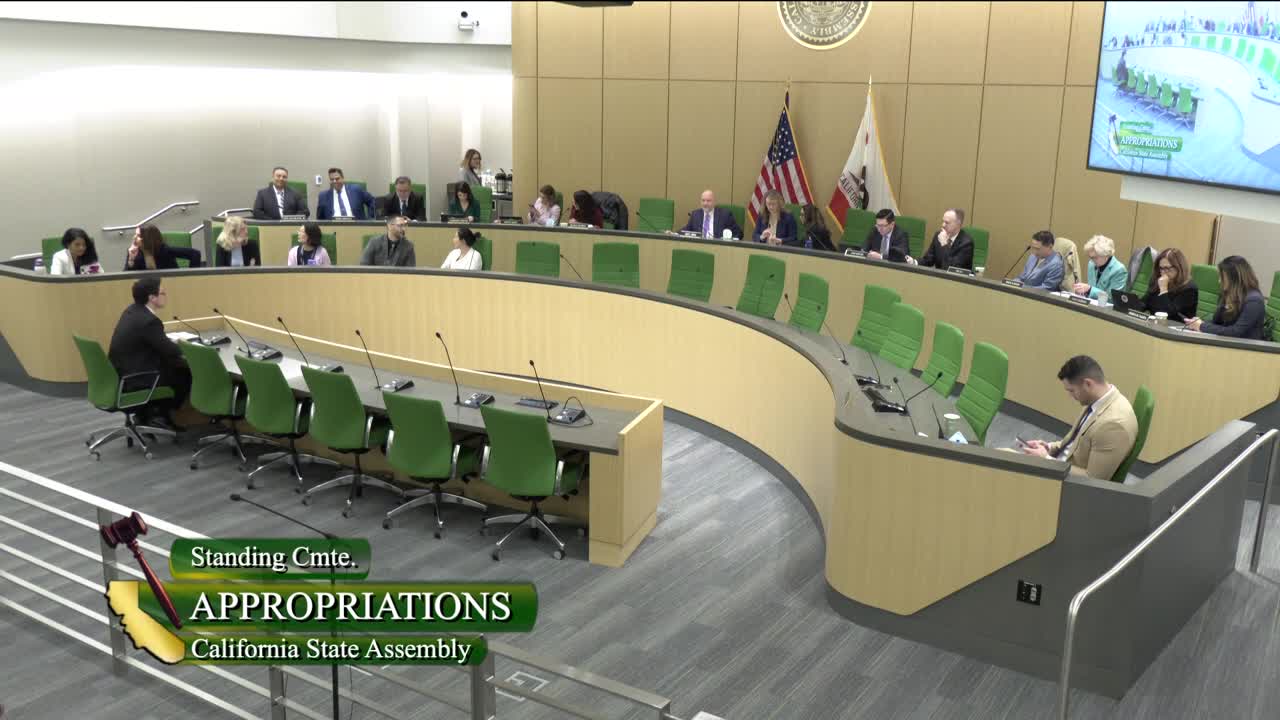 59SEC
Assembly Standing Committee on Appropriations
 18MIN
Assembly Standing Committee on Housing and Community Development
 8MIN
Assembly Standing Committee on Local Government
Bill Author