AB 766: State agencies and departments: strategic plans: diversity, equity, and inclusion.
- Session Year: 2025-2026
- House: Assembly
- Latest Version Date: 2025-09-15
Current Status:
Failed
(2026-01-22: Consideration of Governor's veto stricken from file.)
Introduced
In Committee
Awaiting First Chamber Vote
Passed First Chamber
In Committee
Awaiting Second Chamber Vote
Passed Second Chamber
Enacted
The State Government Strategic Planning and Performance and Review Act requires each agency, department, office, or commission for which strategic planning efforts are recommended, as specified, to develop a strategic plan and to report to the Governor and the Joint Legislative Budget Committee by April 1 each year on the steps being taken to develop and adopt a strategic plan. The act requires the report to include a description of the elements to be included in the strategic plan, the process for developing and adopting the strategic plan, and the timetable for the plans completion.
This bill would instead require each agency, department, office, or commission subject to the Governors authority to develop and report on the above-described strategic plan. The bill would also require each agency, department, office, or commission subject to the Governors authority to, for any strategic plans applicable and if feasible, develop or update the strategic plan to reflect the use of data analysis and inclusive practices to more effectively advance racial equity and to respond to identified disparities with changes to the organizations policies, programs, and operations, among other things.
The State Government Strategic Planning and Performance and Review Act requires each agency, department, office, or commission for which strategic planning efforts are recommended, as specified, to develop a strategic plan and to report to the Governor and the Joint Legislative Budget Committee by April 1 each year on the steps being taken to develop and adopt a strategic plan. The act requires the report to include a description of the elements to be included in the strategic plan, the process for developing and adopting the strategic plan, and the timetable for the plans completion.
This bill would instead require each agency, department, office, or commission subject to the Governors authority to develop and report on the above-described strategic plan. The bill would also require each agency, department, office, or commission subject to the Governors authority to, for any strategic plans applicable, applicable and if feasible, develop or update the strategic plan to reflect the use of data analysis and inclusive practices to more effectively advance racial equity and to respond to identified disparities with changes to the organizations policies, programs, and operations. The bill would also require, as part of the development or updating of strategic plans, each of these entities to engage and gather input from California communities that have been historically disadvantaged and underserved within the scope of policies or programs administered or implemented by the entity and make the plans publicly available.
The State Government Strategic Planning and Performance and Review Act requires each agency, department, office, or commission for which strategic planning efforts are recommended, as specified, to develop a strategic plan and to report to the Governor and the Joint Legislative Budget Committee by April 1 each year on the steps being taken to develop and adopt a strategic plan. The act requires the report to include a description of the elements to be included in the strategic plan, the process for developing and adopting the strategic plan, and the timetable for the plans completion.
This bill would instead require each agency, department, office, or commission subject to the Governors authority to develop and report on the above-described strategic plan. The bill would also require each agency, department, office, or commission subject to the Governors authority to, for any strategic plans applicable, develop or update the strategic plan to reflect the use of data analysis and inclusive practices to more effectively advance racial equity and to respond to identified disparities with changes to the organizations policies, programs, and operations. The bill would also require, as part of the development or updating of strategic plans, each of these entities to engage and gather input from California communities that have been historically disadvantaged and underserved within the scope of policies or programs administered or implemented by the entity and make the plans publicly available.
The State Government Strategic Planning and Performance and Review Act requires each agency, department, office, or commission for which strategic planning efforts are recommended, as specified, to develop a strategic plan and to report to the Governor and the Joint Legislative Budget Committee by April 1 each year on the steps being taken to develop and adopt a strategic plan. The act requires the report to include a description of the elements to be included in the strategic plan, the process for developing and adopting the strategic plan, and the timetable for the plans completion.
This bill would instead require each agency, department, office, or commission subject to the Governors authority to develop and report on the above-described strategic plan. The bill would also require all agencies and departments each agency, department, office, or commission subject to the Governors authority to, for any strategic plans applicable, develop or update the strategic plan to reflect the use of data analysis and inclusive practices to more effectively advance racial equity and to respond to identified disparities with changes to the organizations policies, programs, and operations. The bill would also require, as part of the development or updating of strategic plans, each of these agencies and departments entities to engage and gather input from California communities that have been historically disadvantaged and underserved within the scope of policies or programs administered or implemented by the agency or department entity and make the plans publicly available.
The State Government Strategic Planning and Performance and Review Act requires each agency, department, office, or commission for which strategic planning efforts are recommended, as specified, to develop a strategic plan and to report to the Governor and the Joint Legislative Budget Committee by April 1 each year on the steps being taken to develop and adopt a strategic plan. The act requires the report to include a description of the elements to be included in the strategic plan, the process for developing and adopting the strategic plan, and the timetable for the plans completion.
This bill would require all agencies and departments subject to the Governors authority to, for any strategic plans applicable, develop or update the strategic plan to reflect the use of data analysis and inclusive practices to more effectively advance racial equity and to respond to identified disparities with changes to the organizations policies, programs, and operations, among other things. The bill would require all agencies and departments subject to the Governors authority to undertake a racial equity analysis before implementing any budget or before any regulation takes effect. The bill would require the racial equity analysis to be undertaken by the appointed diversity, equity, and inclusion officer or as specified by the bill. operations. The bill would also require, as part of the development or updating of strategic plans, each of these agencies and departments to engage and gather input from California communities that have been historically disadvantaged and underserved within the scope of policies or programs administered or implemented by the agency or department and make the plans publicly available.
The State Government Strategic Planning and Performance and Review Act requires each agency, department, office, or commission for which strategic planning efforts are recommended, as specified, to develop a strategic plan and to report to the Governor and the Joint Legislative Budget Committee by April 1 each year on the steps being taken to develop and adopt a strategic plan. The act requires the report to include a description of the elements to be included in the strategic plan, the process for developing and adopting the strategic plan, and the timetable for the plans completion.
This bill would require all agencies and departments subject to the Governors authority to, for any strategic plans applicable, develop or update the strategic plan to reflect the use of data analysis and inclusive practices to more effectively advance racial equity and to respond to identified disparities with changes to the organizations policies, programs, and operations, among other things. The bill would require all agencies and departments subject to the Governors authority to undertake a racial equity analysis before implementing any budget or before any regulation takes effect. The bill would require the racial equity analysis to be undertaken by the appointed diversity, equity, and inclusion officer or as specified by the bill.
(a)Each agency, department, office, or commission subject to the Governors authority shall develop a strategic plan and shall report to the Governor and to the Joint Legislative Budget Committee by April 1, 2026, and by each April 1 thereafter on the steps being taken to develop and adopt a strategic plan.
(b)The report required by subdivision (a) shall include a description of the elements to be included in the strategic plan, the process for developing and adopting the strategic plan, a timetable for the plans completion, and an identification of the steps being taken to develop performance measures that could be used for a performance budgeting system or a performance review.
(c)In developing its strategic plan, each agency, department, office, or commission shall consult with, at minimum, employee organizations, the Legislature, client groups served, suppliers, and contractors.
SEC. 2.Section 11818 is added to the Government Code, to read:11818.Every agency, department, office, or commission subject to the Governors authority shall, for any strategic plans applicable and if feasible, develop or update, as applicable, the strategic plan to reflect the use of data analysis and inclusive practices to more effectively advance racial equity and to respond to identified disparities with changes to the organizations mission, vision, goals, data tools, policies, programs, operations, community engagement, tribal consultation policies and practices, and any other actions as necessary to serve all Californians.
(a)Each agency, department, office, or commission subject to the Governors authority shall develop a strategic plan and shall report to the Governor and to the Joint Legislative Budget Committee by April 1, 2026, and by each April 1 thereafter on the steps being taken to develop and adopt a strategic plan.
(b)The report required by subdivision (a) shall include a description of the elements to be included in the strategic plan, the process for developing and adopting the strategic plan, a timetable for the plans completion, and an identification of the steps being taken to develop performance measures that could be used for a performance budgeting system or a performance review.
(c)In developing its strategic plan, each agency, department, office, or commission shall consult with, at minimum, employee organizations, the Legislature, client groups served, suppliers, and contractors.
SEC. 2.Section 11818 is added to the Government Code, to read:11818.Every agency, department, office, or commission subject to the Governors authority shall, for any strategic plans applicable, do both of the following upon the development or update, as applicable, of its strategic plan: applicable and if feasible, develop or update, as applicable, the strategic plan to reflect the use of data analysis and inclusive practices to more effectively advance racial equity and to respond to identified disparities with changes to the organizations mission, vision, goals, data tools, policies, programs, operations, community engagement, tribal consultation policies and practices, and any other actions as necessary to serve all Californians.
(a)Develop or update, as applicable, the strategic plan to reflect the use of data analysis and inclusive practices to more effectively advance racial equity and to respond to identified disparities with changes to the organizations mission, vision, goals, data tools, policies, programs, operations, community engagement, tribal consultation policies and practices, and any other actions as necessary to serve all Californians.(b)As part of the development or updating, as applicable, of strategic plans, engage and gather input from California communities that have been historically disadvantaged and underserved within the scope of policies or programs administered or implemented by the agency, department, office, or commission and make the plans publicly available.(a)Each agency, department, office, or commission subject to the Governors authority shall develop a strategic plan and shall report to the Governor and to the Joint Legislative Budget Committee by April 1, 2026, and by each April 1 thereafter on the steps being taken to develop and adopt a strategic plan.
(b)The report required by subdivision (a) shall include a description of the elements to be included in the strategic plan, the process for developing and adopting the strategic plan, a timetable for the plans completion, and an identification of the steps being taken to develop performance measures that could be used for a performance budgeting system or a performance review.
(c)In developing its strategic plan, each agency, department, office, or commission shall consult with, at minimum, employee organizations, the Legislature, client groups served, suppliers, and contractors.
SEC. 2.Section 11818 is added to the Government Code, to read:11818.Every agency, department, office, or commission subject to the Governors authority shall, for any strategic plans applicable, do both of the following: following upon the development or update, as applicable, of its strategic plan:
(a)Develop or update update, as applicable, the strategic plan to reflect the use of data analysis and inclusive practices to more effectively advance racial equity and to respond to identified disparities with changes to the organizations mission, vision, goals, data tools, policies, programs, operations, community engagement, tribal consultation policies and practices, and any other actions as necessary to serve all Californians.
(b)As part of the development or updating updating, as applicable, of strategic plans, engage and gather input from California communities that have been historically disadvantaged and underserved within the scope of policies or programs administered or implemented by the agency, department, office, or commission and make the plans publicly available.
(a)Each agency, department, office, or commission for which strategic planning efforts are recommended pursuant to Section 11815 subject to the Governors authority shall develop a strategic plan and shall report to the Governor and to the Joint Legislative Budget Committee by April 1, 1995, 2026, and by each April 1 thereafter on the steps being taken to develop and adopt a strategic plan. This
(b)The report required by subdivision (a) shall include a description of the elements to be included in the strategic plan, the process for developing and adopting the strategic plan, and a timetable for the plans completion. In completion, and an identification of the steps being taken to develop performance measures that could be used for a performance budgeting system or a performance review.
(c)In developing its strategic plan plan, each agency, department, office, or commission shall consult with at least the following affected parties: with, at minimum, employee organizations, the Legislature, client groups served, suppliers, and contractors. The report shall also identify the steps being taken to develop performance measures that could be used for a performance budgeting system or a performance review.
SECTION 1.SEC. 2.Section 11818 is added to the Government Code, to read:11818.Every agency or department agency, department, office, or commission subject to the Governors authority shall, for any strategic plans applicable, do both of the following:
(a)Develop or update the strategic plan to reflect the use of data analysis and inclusive practices to more effectively advance racial equity and to respond to identified disparities with changes to the organizations mission, vision, goals, data tools, policies, programs, operations, community engagement, tribal consultation policies and practices, and any other actions as necessary to serve all Californians.
(b)As part of the development or updating of strategic plans, engage and gather input from California communities that have been historically disadvantaged and underserved within the scope of policies or programs administered or implemented by the agency or department agency, department, office, or commission and make the plans publicly available.
(a)Every agency or department subject to the Governors authority shall, for any strategic plans applicable, do both of the following:
(1)(a)Develop or update the strategic plan to reflect the use of data analysis and inclusive practices to more effectively advance racial equity and to respond to identified disparities with changes to the organizations mission, vision, goals, data tools, policies, programs, operations, community engagement, tribal consultation policies and practices, and any other actions as necessary to serve all Californians.
(2)(b)As part of the development or updating of strategic plans, engage and gather input from California communities that have been historically disadvantaged and underserved within the scope of policies or programs administered or implemented by the agency or department and make the plans publicly available.
(b)Every agency or department subject to the Governors authority shall undertake a racial equity analysis prior to implementation of any budget or before any regulation takes effect, which shall be undertaken by the appointed diversity, equity, and inclusion officer or comparable position. If that position does not exist, the racial equity analysis shall be performed by an individual who has demonstrated expertise and has demonstrated criteria in at least one of the following areas: (1)Analyzing, implementing, or developing public policies that impact racial equity. (2)Providing technical assistance in developing and implementing strategies for racial equity, including, but not limited to, guidance on employee training and support, development of racial equity programming, and assistance to organizations and departments on changing policies and practices to improve racial equity outcomes.(3)Being a member of or representing a racial equity-focused organization that works with an impacted community.(a)Every agency or department subject to the Governors authority shall, for any strategic plans applicable, do both of the following:
(1)Develop or update the strategic plan to reflect the use of data analysis and inclusive practices to more effectively advance racial equity and to respond to identified disparities with changes to the organizations mission, vision, goals, data tools, policies, programs, operations, community engagement, tribal consultation policies and practices, and any other actions as necessary to serve all Californians.
(2)As part of the development or updating of strategic plans, engage and gather input from California communities that have been historically disadvantaged and underserved within the scope of policies or programs administered or implemented by the agency or department and make the plans publicly available.
(b)Every agency or department subject to the Governors authority shall undertake a racial equity analysis prior to implementation of any budget or before any regulation takes effect, which shall be undertaken by the appointed diversity, equity, and inclusion officer or comparable position. If that position does not exist, the racial equity analysis shall be performed by an individual who has demonstrated expertise and has demonstrated criteria in at least one of the following areas:
(1)Analyzing, implementing, or developing public policies that impact racial equity.
(2)Providing technical assistance in developing and implementing strategies for racial equity, including, but not limited to, guidance on employee training and support, development of racial equity programming, and assistance to organizations and departments on changing policies and practices to improve racial equity outcomes.
(3)Being a member of or representing a racial equity-focused organization that works with an impacted community.
|
Date
|
Status
|
|---|---|
| Jan 22, 2026 | Consideration of Governor's veto stricken from file. |
| Oct 13, 2025 | Consideration of Governor's veto pending. |
| Oct 13, 2025 | Vetoed by Governor. |
| Sep 23, 2025 | Enrolled and presented to the Governor at 4 p.m. |
| Sep 11, 2025 | Senate amendments concurred in. To Engrossing and Enrolling. (Ayes 60. Noes 18. Page 3300.). |
| Sep 10, 2025 | In Assembly. Concurrence in Senate amendments pending. |
| Sep 10, 2025 | Read third time. Passed. Ordered to the Assembly. (Ayes 30. Noes 9. Page 2800.). |
| Sep 8, 2025 | Read second time. Ordered to third reading. |
| Sep 5, 2025 | Read third time and amended. Ordered to second reading. |
| Sep 2, 2025 | Read second time. Ordered to third reading. |
| Aug 29, 2025 | From committee: Amend, and do pass as amended. (Ayes 5. Noes 2.) (August 29). |
| Aug 29, 2025 | Read second time and amended. Ordered returned to second reading. |
| Aug 18, 2025 | In committee: Referred to suspense file. |
| Jul 9, 2025 | Read second time and amended. Re-referred to Com. on APPR. |
| Jul 8, 2025 | From committee: Amend, and do pass as amended and re-refer to Com. on APPR. (Ayes 11. Noes 1.) (July 8). |
| Jun 18, 2025 | Referred to Com. on G.O. |
| Jun 4, 2025 | In Senate. Read first time. To Com. on RLS. for assignment. |
| Jun 3, 2025 | Read third time. Passed. Ordered to the Senate. (Ayes 60. Noes 17. Page 2008.) |
| May 27, 2025 | Read second time. Ordered to third reading. |
| May 23, 2025 | Assembly Rule 63 suspended. (Ayes 51. Noes 16. Page 1644.) |
| May 23, 2025 | Read second time and amended. Ordered returned to second reading. |
| May 23, 2025 | From committee: Amend, and do pass as amended. (Ayes 11. Noes 3.) (May 23). |
| May 14, 2025 | In committee: Set, first hearing. Referred to APPR. suspense file. |
| Apr 30, 2025 | From committee: Do pass and re-refer to Com. on APPR. (Ayes 15. Noes 5.) (April 30). Re-referred to Com. on APPR. |
| Mar 28, 2025 | Referred to Com. on G.O. |
| Feb 19, 2025 | From printer. May be heard in committee March 21. |
| Feb 18, 2025 | Read first time. To print. |
|
Date
|
Description
|
Location
|
Votes
|
|
|---|---|---|---|---|
| Sep 11, 2025 | AB 766 Sharp-Collins Concurrence in Senate Amendments | Assembly Floor |
Passed |
|
| Sep 10, 2025 | Assembly 3rd Reading AB766 Sharp-Collins et al. By Weber Pierson | Senate Floor |
Passed |
|
| Aug 29, 2025 | Do pass as amended | Senate Standing Committee on Appropriations |
Passed |
|
| Aug 18, 2025 | Placed on suspense file | Senate Standing Committee on Appropriations |
Passed |
|
| Jul 8, 2025 | Do pass as amended, but first amend, and re-refer to the Committee on [Appropriations] | Senate Standing Committee on Governmental Organization |
Passed |
|
| Jun 3, 2025 | AB 766 Sharp-Collins Assembly Third Reading | Assembly Floor |
Passed |
|
| May 23, 2025 | Do pass as amended. | Assembly Standing Committee on Appropriations |
Passed |
|
| Apr 30, 2025 | Do pass and be re-referred to the Committee on [Appropriations] | Assembly Standing Committee on Governmental Organization |
Passed |
This list shows positions taken on this bill by organizations on the date displayed, which is linked to the original source.
Positions by individuals are not included.
|
Organization
|
Position
|
Date
|
|---|---|---|
| Alliance San Diego | ** Support | |
| Author's Office | ** Support | |
| California Attorney General Rob Bonta | ** Support | |
| California Behavioral Health Association | ** Support | |
| California Consortium for Urban Indian Health | ** Support | |
| City and County of San Francisco | ** Support | |
| County of Santa Clara | ** Support | |
| NAACP California Hawaii State Conference | ** Support | |
| National Association Of Social Workers, California Chapter | ** Support | |
| San Diego Unified School District | ** Support |
GOVERNOR'S VETO
GV Bill Id:AB 766
Author:(Sharp-Collins)
As Enrolled Ver:September 15, 2025
2/3 vote
SUMMARY
The bill would require strategic plans that are required to be developed by each agency, department, office, or commission subject to the Governor's authority, to develop or update the strategic plan to reflect the use of data analysis and inclusive practices to more effectively advance racial equity and to respond to identified disparities with changes to the organization's policies, programs, and operations, as specified.
- Clarify, each agency, department, office, or commission subject to the Governor's authority shall develop a strategic plan and shall report to the Governor and to the Joint Legislative Budget Committee by April 1, 2026, and by each April 1 thereafter on the steps being taken to develop and adopt a strategic plan.
- Provide the report shall include a description of the elements to be included in the strategic plan, the process for developing and adopting the strategic plan, a timetable for the plan's completion, and an identification of the steps being taken to develop performance measures that could be used for a performance budgeting system or a performance review.
- Require every agency, department, office, or commission subject to the Governor's authority shall, for any strategic plans applicable and if feasible, develop or update, as applicable, the strategic plan to reflect the use of data analysis and inclusive practices to more effectively advance racial equity and to respond to identified disparities with changes to the organization's mission, vision, goals, data tools, policies, programs, operations, community engagement, tribal consultation policies and practices, and any other actions as necessary to serve all Californians.
- Provide, in developing its strategic plan, each agency, department, office, or commission shall consult with, at minimum, employee organizations, the Legislature, client groups served, suppliers, and contractors.
- Delete the requirement that state agencies engage and gather input from California communities that have been historically disadvantaged and underserved as part of the development of the strategic plans required by this bill.
- Make technical and clarifying changes.
Governor's Veto Message
This bill would require agencies, departments, offices, or commissions under the Governor's authority to develop or update their strategic plans to more effectively advance racial equity and respond to identified disparities with changes to the organization's policies, programs, and operations. This bill would also require each entity to report to the Legislature and Governor, by April 1, 2026, and annually thereafter, on the steps taken to develop and adopt a strategic plan.
I share the author's goal to ensure equity is embedded within my Administration's actions and plans. In 2022, I signed EO N-16-22, which provided a framework towards helping make the California Dream a reality for every one of us. That EO also created the 11-member Racial Equity Commission to recommend tools, methodologies, and opportunities to address inequities facing historically underserved and marginalized communities across the state.
Unfortunately, the bill's timelines for reporting on strategic plans, along with the additional information entities must include in their plan and uncertainty around which entities are required to comply, are unworkable. Lastly, expanding the reporting requirements to all entities under my purview with these accelerated timelines will lead to significant costs not accounted for in this year's final budget agreement.
In partnership with the Legislature this year, my Administration has enacted a balanced budget that recognizes the challenging fiscal landscape our state faces while maintaining our commitment to working families and our most vulnerable communities. With significant fiscal pressures and the federal government's hostile economic policies, it is vital that we remain disciplined when considering bills with significant fiscal implications that are not included in the budget, such as this measure.
COMMENTS
Background.
On September 13, 2022, Governor Newsom signed Executive Order N-16-22, directing state agencies and departments to enhance their efforts to embed equity analysis and considerations into their missions, policies, and practices. This initiative aims to expand opportunities for all by addressing disparities faced by historically underserved and marginalized communities. The Executive Order also established a Racial Equity Commission within the Governor's Office of Planning & Research. Additionally, it highlighted equity across various areas, including state plans, policies, programs, public engagement, language access, data, workforce, procurement, infrastructure, as well as civil rights and anti-hate protections.
Specifically, in relation to this bill, the EO required "all agencies and departments subject to the Governor's authority shall, for any strategic plans applicable during the 2023-24, 2024-25, and/or 2025-26 fiscal years: a) develop or update the strategic plan to reflect the use of data analysis and inclusive practices to more effectively advance equity and to respond to identified disparities with changes to the organization's mission, vision, goals, data tools, policies, programs, operations, community engagement, tribal consultation policies and practices, and other actions as necessary to serve all Californians; and, b) as part of the development or updating of the strategic plans, engage and gather input from California communities that have been historically disadvantaged and underserved within the scope of policies or programs administered or implemented by the agency or department, and make the plans publicly available."
Additionally, the EO stated that The Civil Rights Department shall among various directives: "By February 1, 2023, review existing regulations implementing nondiscrimination protections in state programs and activities and initiate rulemaking as appropriate based on that review."
Racial Equity Commission. The Commission recommends best practices and opportunities to address racial equity and address inequities facing historically underserved and marginalized communities. The 11-member Commission also provides technical assistance to state and local governments to advance racial equity statewide. The EO additionally required the Commission to prepare an annual report, beginning on December 1, 2025, that summarizes feedback from public engagement with communities of color, provides data on racial inequities and disparities in the State, and recommends best practices on tools, methodologies, and opportunities to advance racial equity.
State Chief Equity Officer. In 2022, Governor Newsom appointed California's first State Chief Equity Officer at the Government Operations Agency for leadership as it relates to state operations, procurement, information technology and human resources. The Governor took action to embed equity within the state budget process led by the Department of Finance. Departments and agencies are now required to analyze equity considerations when making requests for new resources, including assessments of how proposed changes address inequities.
Increased focus by California state agencies. California state agencies and departments have increasingly prioritized diversity, equity, and inclusion in their strategic planning efforts. These initiatives aim to address systemic inequities, enhance community engagement, and foster inclusive work environments.
In June 2022, the California Department of Water Resources guided by the Capitol Collaborative on Race and Equity program crafted a comprehensive and sustainable Racial Equity Action Plan aimed at advancing an honest and critical assessment of its work and identify racial inequities that exist within its programs, policies, and institutional culture. The plan outlines three desired outcomes that include: Workforce is Reflective of the People of California, Improve Community Engagement with Communities Most Impacted by Structural Racism, and Embed Racial Equity into Our Projects and Programs. The plan, "serves as the foundation for the work to be achieved, sets the intentional and continual practice of changing policies, practices, systems, and structures that create meaningful change in the lives of all Californians." [1]
The California Department of General Services emphasizes inclusive procurement, promoting diversity in state contracting and procurement processes. The department implements training programs to enhance DEI awareness among staff and ensures that state services are accessible and equitable for all Californians.
The California Department of Human Resources (CalHR) established the DEI Statewide Committee to provide leadership and education regarding all dimensions of diversity, equity, and inclusion within California state service. The committee promotes collaboration between various professions and organizations in state service, delivers continuous information on best practices, tools, and resources to help improve DEI, and fosters a workforce that reflects the state's diversity.
The California Department of Parks and Recreation has unveiled "Path Forward," a five-year strategic plan that aligns with the Governor's Equity Executive Order as well as the 30X30 and Outdoor Access for All initiatives. This plan prioritizes access, inclusivity, and equity, aiming to enhance public service, foster partnerships, and empower the department's workforce.
According to the Author
According to the author's office, "recent federal executive orders have disproportionately impacted minority communities by eliminating programs that support diversity, equity, inclusion, and access. The instability of these programs have created uncertainty, affecting economic opportunities and access to resources. AB 766 protects Diversity, Equity, Inclusion, and Accessibility programs at the state level insuring that all Californians have access to opportunity and government resources are deployed."
Arguments in Support
According to the San Diego Unified School District, "many communities have been harmed historically and presently by hate and discrimination based on race, ethnicity, color, gender identity, and sexual orientation, religious beliefs and customs, immigration status, ability status, and many other personal characteristics. This bill builds on California's existing efforts to increase equity and expand opportunity for all by addressing disparities in historically undeserved and marginalized communities, addressing unequal circumstances helps drive equal outcomes so that all Californians have the chance to reach their full potential and lead healthy and rewarding lives."
Arguments in Opposition
None on file
FISCAL COMMENTS
According to the Senate Committee on Appropriations analysis, "unknown significant costs, ranging in the millions of dollars, for state agencies to update their strategic plans as specified in this bill (General Fund and various special funds. Actual costs to each impacted agency or department will depend on, among other things, the extent they may absorb this workload or other IT expenses within existing resources."
VOTES
ASM GOVERNMENTAL ORGANIZATION: 15-5-2
YES: Blanca Rubio, Alvarez, Berman, Lowenthal, Carrillo, Fong, Gipson, McKinnor, Nguyen, Pacheco, Ramos, Michelle Rodriguez, Solache, Soria, Valencia
NO: Davies, Dixon, Macedo, Sanchez, Wallis
ABS, ABST OR NV: Gabriel, Ta
ASM APPROPRIATIONS: 11-3-1
YES: Wicks, Arambula, Calderon, Caloza, Elhawary, Fong, Mark González, Hart, Pacheco, Pellerin, Solache
NO: Dixon, Ta, Tangipa
ABS, ABST OR NV: Sanchez
ASSEMBLY FLOOR: 60-17-2
YES: Addis, Aguiar-Curry, Ahrens, Alvarez, Arambula, Ávila Farías, Bains, Bauer-Kahan, Bennett, Berman, Boerner, Bonta, Bryan, Calderon, Caloza, Carrillo, Connolly, Elhawary, Fong, Gabriel, Garcia, Gipson, Mark González, Haney, Harabedian, Hart, Irwin, Jackson, Kalra, Krell, Lee, Lowenthal, McKinnor, Muratsuchi, Nguyen, Ortega, Pacheco, Papan, Patel, Pellerin, Petrie-Norris, Quirk-Silva, Ramos, Ransom, Celeste Rodriguez, Michelle Rodriguez, Rogers, Blanca Rubio, Schiavo, Schultz, Sharp-Collins, Solache, Soria, Stefani, Valencia, Ward, Wicks, Wilson, Zbur, Rivas
NO: Alanis, Castillo, Davies, DeMaio, Dixon, Ellis, Flora, Gallagher, Jeff Gonzalez, Hadwick, Hoover, Macedo, Patterson, Sanchez, Ta, Tangipa, Wallis
ABS, ABST OR NV: Chen, Lackey
SENATE FLOOR: 30-9-1
YES: Allen, Archuleta, Arreguín, Ashby, Becker, Blakespear, Cabaldon, Caballero, Cervantes, Cortese, Durazo, Gonzalez, Grayson, Hurtado, Laird, Limón, McGuire, McNerney, Menjivar, Padilla, Pérez, Reyes, Richardson, Rubio, Smallwood-Cuevas, Stern, Umberg, Wahab, Weber Pierson, Wiener
NO: Alvarado-Gil, Choi, Dahle, Grove, Jones, Niello, Ochoa Bogh, Seyarto, Strickland
ABS, ABST OR NV: Valladares
ASSEMBLY FLOOR: 60-18-2
YES: Addis, Aguiar-Curry, Ahrens, Alvarez, Arambula, Ávila Farías, Bains, Bauer-Kahan, Bennett, Berman, Boerner, Bonta, Bryan, Calderon, Caloza, Carrillo, Connolly, Elhawary, Fong, Gabriel, Garcia, Gipson, Mark González, Haney, Harabedian, Hart, Irwin, Jackson, Kalra, Krell, Lee, Lowenthal, McKinnor, Muratsuchi, Nguyen, Ortega, Pacheco, Papan, Patel, Pellerin, Petrie-Norris, Quirk-Silva, Ramos, Ransom, Celeste Rodriguez, Michelle Rodriguez, Rogers, Blanca Rubio, Schiavo, Schultz, Sharp-Collins, Solache, Soria, Stefani, Valencia, Ward, Wicks, Wilson, Zbur, Rivas
NO: Alanis, Castillo, Davies, DeMaio, Dixon, Ellis, Flora, Gallagher, Jeff Gonzalez, Hadwick, Hoover, Johnson, Macedo, Patterson, Sanchez, Ta, Tangipa, Wallis
ABS, ABST OR NV: Chen, Lackey
UPDATED
VERSION: September 15, 2025
CONSULTANT: Eric Johnson / G.O. / (916) 319-2531 FN: 0002183
https://resources.ca.gov/Home/News/Blog/2022/June-22/DWR-Recognizes-the-Need-for-a-Diverse-and-Equitable-Workplace? ↑
CONCURRENCE IN SENATE AMENDMENTS
CSA1 Bill Id:AB 766
Author:(Sharp-Collins)
As Amended Ver:September 5, 2025
Majority vote
SUMMARY
The bill would require strategic plans that are required to be developed by each agency, department, office, or commission subject to the Governor’s authority, to develop or update the strategic plan to reflect the use of data analysis and inclusive practices to more effectively advance racial equity and to respond to identified disparities with changes to the organization’s policies, programs, and operations, as specified.
Senate Amendments
1) Clarify, each agency, department, office, or commission subject to the Governor’s authority shall develop a strategic plan and shall report to the Governor and to the Joint Legislative Budget Committee by April 1, 2026, and by each April 1 thereafter on the steps being taken to develop and adopt a strategic plan.
2) Provide the report shall include a description of the elements to be included in the strategic plan, the process for developing and adopting the strategic plan, a timetable for the plan’s completion, and an identification of the steps being taken to develop performance measures that could be used for a performance budgeting system or a performance review.
3) Require every agency, department, office, or commission subject to the Governor’s authority shall, for any strategic plans applicable and if feasible, develop or update, as applicable, the strategic plan to reflect the use of data analysis and inclusive practices to more effectively advance racial equity and to respond to identified disparities with changes to the organization’s mission, vision, goals, data tools, policies, programs, operations, community engagement, tribal consultation policies and practices, and any other actions as necessary to serve all Californians.
4) Provide, in developing its strategic plan, each agency, department, office, or commission shall consult with, at minimum, employee organizations, the Legislature, client groups served, suppliers, and contractors.
5) Delete the requirement that state agencies engage and gather input from California communities that have been historically disadvantaged and underserved as part of the development of the strategic plans required by this bill.
6) Make technical and clarifying changes.
COMMENTS
Background.
On September 13, 2022, Governor Newsom signed Executive Order N-16-22, directing state agencies and departments to enhance their efforts to embed equity analysis and considerations into their missions, policies, and practices. This initiative aims to expand opportunities for all by addressing disparities faced by historically underserved and marginalized communities. The Executive Order also established a Racial Equity Commission within the Governor's Office of Planning & Research. Additionally, it highlighted equity across various areas, including state plans, policies, programs, public engagement, language access, data, workforce, procurement, infrastructure, as well as civil rights and anti-hate protections.
Specifically, in relation to this bill, the EO required "all agencies and departments subject to the Governor's authority shall, for any strategic plans applicable during the 2023-24, 2024-25, and/or 2025-26 fiscal years: a) develop or update the strategic plan to reflect the use of data analysis and inclusive practices to more effectively advance equity and to respond to identified disparities with changes to the organization's mission, vision, goals, data tools, policies, programs, operations, community engagement, tribal consultation policies and practices, and other actions as necessary to serve all Californians; and, b) as part of the development or updating of the strategic plans, engage and gather input from California communities that have been historically disadvantaged and underserved within the scope of policies or programs administered or implemented by the agency or department, and make the plans publicly available."
Additionally, the EO stated that The Civil Rights Department shall among various directives: "By February 1, 2023, review existing regulations implementing nondiscrimination protections in state programs and activities and initiate rulemaking as appropriate based on that review."
Racial Equity Commission. The Commission recommends best practices and opportunities to address racial equity and address inequities facing historically underserved and marginalized communities. The 11-member Commission also provides technical assistance to state and local governments to advance racial equity statewide. The EO additionally required the Commission to prepare an annual report, beginning on December 1, 2025, that summarizes feedback from public engagement with communities of color, provides data on racial inequities and disparities in the State, and recommends best practices on tools, methodologies, and opportunities to advance racial equity.
State Chief Equity Officer. In 2022, Governor Newsom appointed California's first State Chief Equity Officer at the Government Operations Agency for leadership as it relates to state operations, procurement, information technology and human resources. The Governor took action to embed equity within the state budget process led by the Department of Finance. Departments and agencies are now required to analyze equity considerations when making requests for new resources, including assessments of how proposed changes address inequities.
Increased focus by California state agencies. California state agencies and departments have increasingly prioritized diversity, equity, and inclusion in their strategic planning efforts. These initiatives aim to address systemic inequities, enhance community engagement, and foster inclusive work environments.
In June 2022, the California Department of Water Resources guided by the Capitol Collaborative on Race and Equity program crafted a comprehensive and sustainable Racial Equity Action Plan aimed at advancing an honest and critical assessment of its work and identify racial inequities that exist within its programs, policies, and institutional culture. The plan outlines three desired outcomes that include: Workforce is Reflective of the People of California, Improve Community Engagement with Communities Most Impacted by Structural Racism, and Embed Racial Equity into Our Projects and Programs. The plan, "serves as the foundation for the work to be achieved, sets the intentional and continual practice of changing policies, practices, systems, and structures that create meaningful change in the lives of all Californians." [1]
The California Department of General Services emphasizes inclusive procurement, promoting diversity in state contracting and procurement processes. The department implements training programs to enhance DEI awareness among staff and ensures that state services are accessible and equitable for all Californians.
The California Department of Human Resources (CalHR) established the DEI Statewide Committee to provide leadership and education regarding all dimensions of diversity, equity, and inclusion within California state service. The committee promotes collaboration between various professions and organizations in state service, delivers continuous information on best practices, tools, and resources to help improve DEI, and fosters a workforce that reflects the state's diversity.
The California Department of Parks and Recreation has unveiled "Path Forward," a five-year strategic plan that aligns with the Governor's Equity Executive Order as well as the 30X30 and Outdoor Access for All initiatives. This plan prioritizes access, inclusivity, and equity, aiming to enhance public service, foster partnerships, and empower the department's workforce.
According to the Author
According to the author’s office, “recent federal executive orders have disproportionately impacted minority communities by eliminating programs that support diversity, equity, inclusion, and access. The instability of these programs have created uncertainty, affecting economic opportunities and access to resources. AB 766 protects Diversity, Equity, Inclusion, and Accessibility programs at the state level insuring that all Californians have access to opportunity and government resources are deployed.”
Arguments in Support
According to the San Diego Unified School District, “many communities have been harmed historically and presently by hate and discrimination based on race, ethnicity, color, gender identity, and sexual orientation, religious beliefs and customs, immigration status, ability status, and many other personal characteristics. This bill builds on California’s existing efforts to increase equity and expand opportunity for all by addressing disparities in historically undeserved and marginalized communities, Addressing unequal circumstances helps drive equal outcomes so that all Californians have the chance to reach their full potential and lead healthy and rewarding lives.”
Arguments in Opposition
None on file
FISCAL COMMENTS
According to the Senate Committee on Appropriations analysis, “unknown significant costs, ranging in the millions of dollars, for state agencies to update their strategic plans as specified in this bill (General Fund and various special funds. Actual costs to each impacted agency or department will depend on, among other things, the extent they may absorb this workload or other IT expenses within existing resources.”
VOTES:
ASM GOVERNMENTAL ORGANIZATION: 15-5-2
YES: Blanca Rubio, Alvarez, Berman, Lowenthal, Carrillo, Fong, Gipson, McKinnor, Nguyen, Pacheco, Ramos, Michelle Rodriguez, Solache, Soria, Valencia
NO: Davies, Dixon, Macedo, Sanchez, Wallis
ABS, ABST OR NV: Gabriel, Ta
ASM APPROPRIATIONS: 11-3-1
YES: Wicks, Arambula, Calderon, Caloza, Elhawary, Fong, Mark González, Hart, Pacheco, Pellerin, Solache
NO: Dixon, Ta, Tangipa
ABS, ABST OR NV: Sanchez
ASSEMBLY FLOOR: 60-17-2
YES: Addis, Aguiar-Curry, Ahrens, Alvarez, Arambula, Ávila Farías, Bains, Bauer-Kahan, Bennett, Berman, Boerner, Bonta, Bryan, Calderon, Caloza, Carrillo, Connolly, Elhawary, Fong, Gabriel, Garcia, Gipson, Mark González, Haney, Harabedian, Hart, Irwin, Jackson, Kalra, Krell, Lee, Lowenthal, McKinnor, Muratsuchi, Nguyen, Ortega, Pacheco, Papan, Patel, Pellerin, Petrie-Norris, Quirk-Silva, Ramos, Ransom, Celeste Rodriguez, Michelle Rodriguez, Rogers, Blanca Rubio, Schiavo, Schultz, Sharp-Collins, Solache, Soria, Stefani, Valencia, Ward, Wicks, Wilson, Zbur, Rivas
NO: Alanis, Castillo, Davies, DeMaio, Dixon, Ellis, Flora, Gallagher, Jeff Gonzalez, Hadwick, Hoover, Macedo, Patterson, Sanchez, Ta, Tangipa, Wallis
ABS, ABST OR NV: Chen, Lackey
SENATE FLOOR: 30-9-1
YES: Allen, Archuleta, Arreguín, Ashby, Becker, Blakespear, Cabaldon, Caballero, Cervantes, Cortese, Durazo, Gonzalez, Grayson, Hurtado, Laird, Limón, McGuire, McNerney, Menjivar, Padilla, Pérez, Reyes, Richardson, Rubio, Smallwood-Cuevas, Stern, Umberg, Wahab, Weber Pierson, Wiener
NO: Alvarado-Gil, Choi, Dahle, Grove, Jones, Niello, Ochoa Bogh, Seyarto, Strickland
ABS, ABST OR NV: Valladares
UPDATED
VERSION: September 5, 2025
CONSULTANT: Eric Johnson / G.O. / (916) 319-2531 FN: 0002051
https://resources.ca.gov/Home/News/Blog/2022/June-22/DWR-Recognizes-the-Need-for-a-Diverse-and-Equitable-Workplace? ↑
CONCURRENCE IN SENATE AMENDMENTS
CSA1 Bill Id:AB 766
Author:(Sharp-Collins)
As Amended Ver:September 5, 2025
Majority vote
SUMMARY
This bill requires strategic plans currently required to be developed by each agency, department, office, or commission under the Governor's authority, to develop or update their strategic plan to reflect the use of data analysis and inclusive practices to more effectively advance racial equity and to respond to identified disparities. This bill would also require, as part of the development or updating of strategic plans, each of these entities to engage and gather input from California communities that have been historically disadvantaged and underserved within the scope of policies or programs administered or implemented by the entity and make the plans publicly available.
Senate Amendments
- Provides, each agency, department, office, or commission subject to the Governor's authority shall develop a strategic plan and shall report to the Governor and to the Joint Legislative Budget Committee by April 1, 2026, and by each April 1 thereafter on the steps being taken to develop and adopt a strategic plan.
- Provides, the report shall include a description of the elements to be included in the strategic plan, the process for developing and adopting the strategic plan, a timetable for the plan's completion, and an identification of the steps being taken to develop performance measures that could be used for a performance budgeting system or a performance review.
- Provides, in developing its strategic plan, each agency, department, office, or commission shall consult with, at minimum, employee organizations, the Legislature, client groups served, suppliers, and contractors.
- Specify impacted state agencies incorporate the required data analysis and inclusive practices upon the development or update, as applicable, of its strategic plan.
- Make technical and clarifying changes.
COMMENTS
Background.
On September 13, 2022, Governor Newsom signed Executive Order N-16-22, directing state agencies and departments to enhance their efforts to embed equity analysis and considerations into their missions, policies, and practices. This initiative aims to expand opportunities for all by addressing disparities faced by historically underserved and marginalized communities. The Executive Order also established a Racial Equity Commission within the Governor's Office of Planning & Research. Additionally, it highlighted equity across various areas, including state plans, policies, programs, public engagement, language access, data, workforce, procurement, infrastructure, as well as civil rights and anti-hate protections.
Specifically, in relation to this bill, the EO required "all agencies and departments subject to the Governor's authority shall, for any strategic plans applicable during the 2023-24, 2024-25, and/or 2025-26 fiscal years: a) develop or update the strategic plan to reflect the use of data analysis and inclusive practices to more effectively advance equity and to respond to identified disparities with changes to the organization's mission, vision, goals, data tools, policies, programs, operations, community engagement, tribal consultation policies and practices, and other actions as necessary to serve all Californians; and, b) as part of the development or updating of the strategic plans, engage and gather input from California communities that have been historically disadvantaged and underserved within the scope of policies or programs administered or implemented by the agency or department, and make the plans publicly available."
Additionally, the EO stated that The Civil Rights Department shall among various directives: "By February 1, 2023, review existing regulations implementing nondiscrimination protections in state programs and activities and initiate rulemaking as appropriate based on that review."
Racial Equity Commission. The Commission recommends best practices and opportunities to address racial equity and address inequities facing historically underserved and marginalized communities. The 11-member Commission also provides technical assistance to state and local governments to advance racial equity statewide. The EO additionally required the Commission to prepare an annual report, beginning on December 1, 2025, that summarizes feedback from public engagement with communities of color, provides data on racial inequities and disparities in the State, and recommends best practices on tools, methodologies, and opportunities to advance racial equity.
State Chief Equity Officer. In 2022, Governor Newsom appointed California's first State Chief Equity Officer at the Government Operations Agency for leadership as it relates to state operations, procurement, information technology and human resources. The Governor took action to embed equity within the state budget process led by the Department of Finance. Departments and agencies are now required to analyze equity considerations when making requests for new resources, including assessments of how proposed changes address inequities.
Increased focus by California state agencies. California state agencies and departments have increasingly prioritized diversity, equity, and inclusion in their strategic planning efforts. These initiatives aim to address systemic inequities, enhance community engagement, and foster inclusive work environments.
In June 2022, the California Department of Water Resources guided by the Capitol Collaborative on Race and Equity program crafted a comprehensive and sustainable Racial Equity Action Plan aimed at advancing an honest and critical assessment of its work and identify racial inequities that exist within its programs, policies, and institutional culture. The plan outlines three desired outcomes that include: Workforce is Reflective of the People of California, Improve Community Engagement with Communities Most Impacted by Structural Racism, and Embed Racial Equity into Our Projects and Programs. The plan, "serves as the foundation for the work to be achieved, sets the intentional and continual practice of changing policies, practices, systems, and structures that create meaningful change in the lives of all Californians." [1]
The California Department of General Services emphasizes inclusive procurement, promoting diversity in state contracting and procurement processes. The department implements training programs to enhance DEI awareness among staff and ensures that state services are accessible and equitable for all Californians.
The California Department of Human Resources (CalHR) established the DEI Statewide Committee to provide leadership and education regarding all dimensions of diversity, equity, and inclusion within California state service. The committee promotes collaboration between various professions and organizations in state service, delivers continuous information on best practices, tools, and resources to help improve DEI, and fosters a workforce that reflects the state's diversity.
The California Department of Parks and Recreation has unveiled "Path Forward," a five-year strategic plan that aligns with the Governor's Equity Executive Order as well as the 30X30 and Outdoor Access for All initiatives. This plan prioritizes access, inclusivity, and equity, aiming to enhance public service, foster partnerships, and empower the department's workforce.
According to the Author
According to the author's office, "recent federal executive orders have disproportionately impacted minority communities by eliminating programs that support diversity, equity, inclusion, and access. The instability of these programs have created uncertainty, affecting economic opportunities and access to resources. AB 766 protects Diversity, Equity, Inclusion, and Accessibility programs at the state level insuring that all Californians have access to opportunity and government resources are deployed."
Arguments in Support
According to the San Diego Unified School District, "many communities have been harmed historically and presently by hate and discrimination based on race, ethnicity, color, gender identity, and sexual orientation, religious beliefs and customs, immigration status, ability status, and many other personal characteristics. This bill builds on California's existing efforts to increase equity and expand opportunity for all by addressing disparities in historically undeserved and marginalized communities, addressing unequal circumstances helps drive equal outcomes so that all Californians have the chance to reach their full potential and lead healthy and rewarding lives."
Arguments in Opposition
None on file
FISCAL COMMENTS
According to the Senate Committee on Appropriations analysis, "unknown significant costs, ranging in the millions of dollars, for state agencies to update their strategic plans as specified in this bill (General Fund and various special funds. Actual costs to each impacted agency or department will depend on, among other things, the extent they may absorb this workload or other IT expenses within existing resources."
VOTES:
ASM GOVERNMENTAL ORGANIZATION: 15-5-2
YES: Blanca Rubio, Alvarez, Berman, Lowenthal, Carrillo, Fong, Gipson, McKinnor, Nguyen, Pacheco, Ramos, Michelle Rodriguez, Solache, Soria, Valencia
NO: Davies, Dixon, Macedo, Sanchez, Wallis
ABS, ABST OR NV: Gabriel, Ta
ASM APPROPRIATIONS: 11-3-1
YES: Wicks, Arambula, Calderon, Caloza, Elhawary, Fong, Mark González, Hart, Pacheco, Pellerin, Solache
NO: Dixon, Ta, Tangipa
ABS, ABST OR NV: Sanchez
ASSEMBLY FLOOR: 60-17-2
YES: Addis, Aguiar-Curry, Ahrens, Alvarez, Arambula, Ávila Farías, Bains, Bauer-Kahan, Bennett, Berman, Boerner, Bonta, Bryan, Calderon, Caloza, Carrillo, Connolly, Elhawary, Fong, Gabriel, Garcia, Gipson, Mark González, Haney, Harabedian, Hart, Irwin, Jackson, Kalra, Krell, Lee, Lowenthal, McKinnor, Muratsuchi, Nguyen, Ortega, Pacheco, Papan, Patel, Pellerin, Petrie‑Norris, Quirk-Silva, Ramos, Ransom, Celeste Rodriguez, Michelle Rodriguez, Rogers, Blanca Rubio, Schiavo, Schultz, Sharp-Collins, Solache, Soria, Stefani, Valencia, Ward, Wicks, Wilson, Zbur, Rivas
NO: Alanis, Castillo, Davies, DeMaio, Dixon, Ellis, Flora, Gallagher, Jeff Gonzalez, Hadwick, Hoover, Macedo, Patterson, Sanchez, Ta, Tangipa, Wallis
ABS, ABST OR NV: Chen, Lackey
UPDATED
VERSION: September 5, 2025
CONSULTANT: Eric Johnson / G.O. / (916) 319-2531 FN: 0001719
https://resources.ca.gov/Home/News/Blog/2022/June-22/DWR-Recognizes-the-Need-for-a-Diverse-and-Equitable-Workplace? ↑
SENATE RULES COMMITTEE Office of Senate Floor Analyses (916) 651-1520 Fax: (916) 327-4478 | AB 766 |
THIRD READING
Bill No: AB 766
Author: Sharp-Collins (D), et al.
Amended: 9/5/25 in Senate
Vote: 21
SENATE GOVERNMENTAL ORG. COMMITTEE: 11-1, 7/8/25
AYES: Padilla, Archuleta, Ashby, Blakespear, Cervantes, Hurtado, Richardson, Rubio, Smallwood-Cuevas, Wahab, Weber Pierson
NOES: Ochoa Bogh
NO VOTE RECORDED: Valladares, Dahle, Jones
SENATE APPROPRIATIONS COMMITTEE: 5-2, 8/29/25
AYES: Caballero, Cabaldon, Grayson, Richardson, Wahab
NOES: Seyarto, Dahle
ASSEMBLY FLOOR: 60-17, 6/3/25 - See last page for vote
SUBJECT: State agencies and departments: strategic plans: diversity, equity, and inclusion
SOURCE: Author
DIGEST: This bill requires strategic plans currently required to be developed by every agency or department under the Governor’s authority, to develop or update the strategic plan to reflect the use of inclusive practices to more effectively advance racial equity, as specified.
Senate Floor Amendments of 9/5/25 delete the requirement that state agencies engage and gather input from California communities that have been historically disadvantaged and underserved as part of the development of the strategic plans required by this bill.
ANALYSIS:
Existing law:
- Requires, under the State Government Strategic Planning and Performance Act (Act), each agency, department, office, or commission for which strategic planning efforts are recommended, as specified, to develop a strategic plan and to report to the Governor and the Joint Legislative Budget committee by April 1 each year on the steps being taken to develop and adopt a strategic plan.
- Requires the report to include a description of the elements to be included in the strategic plan, the process for developing and adopting the strategic plan, and the timetable for the plan’s completion.
- Establishes, until January 1, 2030, the Racial Equity Commission within the Office of Planning and Research and requires the commission to develop resources, best practices, and tools for advancing racial equity by, among other things, developing a statewide Racial Equity Framework that includes methodologies and tools that can be employed to advance racial equity and address structural racism in California.
- Establishes an Office of Health Equity, in the State Department of Public Health, for purposes of aligning state resources, decision-making, and programs to accomplish certain goals related to health equity and protecting vulnerable communities. (California Health and Safety Code § 13101)
- Provides that each agency, department, office, or commission for which strategic planning efforts are recommended pursuant to Government Code Section 11815 shall develop a strategic plan and shall report to the Governor and to the Joint Legislative Budget Committee by April 1, 1995, and by each April 1 thereafter on the steps being taken to develop and adopt a strategic plan. This report shall include a description of the elements to be included in the strategic plan, the process for developing and adopting the strategic plan, and a timetable for the plan’s completion. The report shall also identify the steps being taken to develop performance measures that could be used for a performance budgeting system or a performance review.
- Provides for several programs designed to boost the participation of underrepresented business in state government contracting, including small businesses and those owned by women, minorities and disabled veterans.
This bill requires all agencies and departments subject to the Governor’s authority to, as applicable and if feasible, develop the strategic plan to reflect the use of data analysis and inclusive practices to more effectively advance racial equity and to respond to identified disparities with changes to the organization’s mission, vision, goals, data tools, polies, and practices, and any other actions as necessary to serve all Californians.
Background
Author Statement. According to the author’s office, “recent federal executive orders have disproportionately impacted minority communities by eliminating programs that support diversity, equity, inclusion, and access. The instability of these programs have created uncertainty, affecting economic opportunities and access to resources. AB 766 protects Diversity, Equity, Inclusion, and Accessibility programs at the state level insuring that all Californians have access to opportunity and government resources are deployed.”
Strategic Planning and Performance Review Act. Enacted by AB 2711 (Brown, Chapter 779, Statutes of 1994), the Act requires specified state agencies, departments, offices, and commissions to develop long-term strategic plans and submit annual progress reports to the Governor and to the Joint Legislative Budget Committee (JLBC). The Act aims to reduce government inefficiency by promoting clear goals, measurable outcomes, and stakeholder engagement.
Agencies are required to report annually by April 1, its strategic planning efforts, stakeholder consultations, and the development of performance measures. The Act is intended to lay the groundwork for performance-based budgeting and systematic reviews, encouraging California state agencies to operate more efficiently and effectively by aligning operations with results-driven strategies.
This bill requires state agencies under the Governor’s authority to integrate racial equity into their strategic plans. Specifically, each agency is required to update or develop its strategic plan using data-driven, inclusive practices to identify and address racial disparities across policies, programs, operations, and community engagement, including tribal consultation, and make these plans publicly available.
California State Agencies and Diversity. California state agencies and departments have increasingly prioritized diversity, equity, and inclusion (DEI) in their strategic planning efforts. These initiatives aim to address systemic inequities, enhance community engagement, and foster inclusive work environments.
In June 2022, the California Department of Water Resources, guided by the Capitol Collaborative on Race and Equity program, crafted a comprehensive and sustainable Racial Equity Action Plan aimed at advancing an honest and critical assessment of its work and identify racial inequities that exist within its programs, policies, and institutional culture. The plan outlines three desired outcomes that include: Workforce is Reflective of the People of California, Improve Community Engagement with Communities Most Impacted by Structural Racism, and Embed Racial Equity into Our Projects and Programs. The plan, “serves as the foundation for the work to be achieved, sets the intentional and continual practice of changing policies, practices, systems, and structures that create meaningful change in the lives of all Californians.”
The California Department of General Services emphasizes inclusive procurement, promoting diversity in state contracting and procurement processes. The department implements training programs to enhance DEI awareness among staff and ensures that state services are accessible and equitable for all Californians.
The California Department of Human Resources (CalHR) established the DEI Statewide Committee to provide leadership and education regarding all dimensions of diversity, equity, and inclusion within California state service. The committee promotes collaboration between various professions and organizations in state service, delivers continuous information on best practices, tools, and resources to help improve DEI, and fosters a workforce that reflects the state's diversity.
The California Department of Parks and Recreation has unveiled "Path Forward," a five-year strategic plan that aligns with the Governor's Equity Executive Order as well as the 30X30 and Outdoor Access for All initiatives. This plan prioritizes access, inclusivity, and equity, aiming to enhance public service, foster partnerships, and empower the department’s workforce.
Federal Actions. In January 2025, President Donald J. Trump signed two executive orders aimed at dismantling federal DEI programs. Executive Order 14151, titled “Ending Radical and Wasteful Government DEI Programs and Preferencing,” directed all federal agencies to eliminate their DEI-related offices, personnel, programs, contracts, and grants by March 20, 2025. The order described DEI efforts as discriminatory and mandated that agencies report their DEI expenditures and staff to the Office of Management and Budget. It tasked the Attorney General, Office of Management and Budget, and the Office of Personnel Management with enforcing full compliance.
The following day, Trump signed Executive Order 14173, titled “Ending Illegal Discrimination and Restoring Merit-Based Opportunity.” This order eliminated race and gender-based preferences in federal employment and contracting, revoked several longstanding executive orders that supported affirmative action, environmental justice, and LGBTQ+ protections, and required agencies to dismantle any policy deemed discriminatory. The order prohibited federal contractors and grantees from operating DEI programs that conflict with federal civil rights laws and required the Justice Department to develop an enforcement plan targeting such practices in the private sector.
Executive Order N-16-22 (EO). On September 13, 2022, Governor Newsom signed Executive Order N-16-22, instructing state agencies and departments to do more to incorporate equity into their missions, policies, and practices. The goal of the EO was to create more opportunities for everyone, especially for communities that have been historically underserved or marginalized. As part of this effort, the order also created a Racial Equity Commission within the Governor’s Office of Planning and Research. Additionally, it emphasized the importance of equity in many areas, including state policies and plans, public engagement, language access, data use, hiring, purchasing, infrastructure, and protections related to civil rights and anti-hate efforts.
In relation to this bill, the EO requires that all agencies and departments under the Governor’s control to, for their strategic plans covering the 2023–24, 2024–25, and/or 2025–26 budget years to do the following:
- Develop or update their strategic plans using data analysis and inclusive practices to more effectively advance equity and to respond to identified disparities with changes to the organization’s mission, vision, goals, data tools, policies, programs, operations, community engagement, tribal consultation policies and practices, and other actions as necessary to serval all Californians.
- Requires, as part of the development or updating of the strategic plans, to engage and gather input from California communities that have been historically disadvantaged and underserve within the scope of policies or programs administered or implemented by the agency or department and make the plans publicly available.
The Executive Order also requires the Civil Rights Department to review the state’s current rules on nondiscrimination in programs and services, and by February 1, 2023, start updating those rules if needed.
Related/Prior Legislation
AB 1511 (Santiago, Chapter 352, Statutes of 2024) required state agencies that expend funds on marketing, advertising, or outreach to develop a plan for increasing expenditures directed to ethnic media outlets and community media outlets, as specified.
AB 437 (Jackson, 2023) would have required, to the extent allowed by law, every state agency, in carrying out its duties under law, to consider the use of more inclusive practices to advance equity in the agency’s or department’s mission, vision, goals, data tools, policies, programs, operations, community engagement, tribal consultation policies and practices, and other actions as necessary to better serve all Californians. (Held on the Senate Inactive File)
AB 316 (Cooper, Chapter 312, Statutes of 2022) required the CalHR to prepare and submit a report to appropriate committees of the Legislature, as provided, on gender and ethnicity pay equity in each classification under the Personnel Classification Plan where there is an underrepresentation of women and minorities, among other provisions.
AB 2448 (Ting, Chapter 315, Statutes of 2022) directed the Department of Fair Employment and Housing to establish a pilot program that recognizes businesses for creating safe and welcoming environments free from discrimination and harassment of customers, and to establish criteria that a business must meet in order to qualify for recognition under the program.
FISCAL EFFECT: Appropriation: No Fiscal Com.: Yes Local: No
According to the Senate Appropriations Committee, unknown significant costs, ranging in the millions of dollars, for state agencies to update their strategic plans as specified in this bill (General Fund and various special funds. Actual costs to each impacted agency or department will depend on, among other things, the extent they may absorb this workload or other IT expenses within existing resources.
SUPPORT: (Verified 9/5/25)
California Attorney General Rob Bonta
Alliance San Diego
California Behavioral Health Association
California Consortium for Urban Indian Health
City and County of San Francisco
County of Santa Clara
NAACP California Hawaii State Conference
National Association of Social Workers, California Chapter
San Diego United School District
OPPOSITION: (Verified 9/5/25)
None received
ARGUMENTS IN SUPPORT: According to the San Diego Unified School District, “many communities have been harmed historically and presently by hate and discrimination based on race, ethnicity, color, gender identity, and sexual orientation, religious beliefs and customs, immigration status, ability status, and many other personal characteristics. This bill builds on California’s existing efforts to increase equity and expand opportunity for all by addressing disparities in historically undeserved and marginalized communities, Addressing unequal circumstances helps drive equal outcomes so that all Californians have the chance to reach their full potential and lead healthy and rewarding lives.”
ASSEMBLY FLOOR: 60-17, 6/3/25
AYES: Addis, Aguiar-Curry, Ahrens, Alvarez, Arambula, Ávila Farías, Bains, Bauer-Kahan, Bennett, Berman, Boerner, Bonta, Bryan, Calderon, Caloza, Carrillo, Connolly, Elhawary, Fong, Gabriel, Garcia, Gipson, Mark González, Haney, Harabedian, Hart, Irwin, Jackson, Kalra, Krell, Lee, Lowenthal, McKinnor, Muratsuchi, Nguyen, Ortega, Pacheco, Papan, Patel, Pellerin, Petrie-Norris, Quirk-Silva, Ramos, Ransom, Celeste Rodriguez, Michelle Rodriguez, Rogers, Blanca Rubio, Schiavo, Schultz, Sharp-Collins, Solache, Soria, Stefani, Valencia, Ward, Wicks, Wilson, Zbur, Rivas
NOES: Alanis, Castillo, Davies, DeMaio, Dixon, Ellis, Flora, Gallagher, Jeff Gonzalez, Hadwick, Hoover, Macedo, Patterson, Sanchez, Ta, Tangipa, Wallis
NO VOTE RECORDED: Chen, Lackey
Prepared by: Felipe Lopez / G.O. / (916) 651-1530
9/8/25 21:21:18
**** END ****
SENATE RULES COMMITTEE Office of Senate Floor Analyses (916) 651-1520 Fax: (916) 327-4478 | AB 766 |
THIRD READING
Bill No: AB 766
Author: Sharp-Collins (D), et al.
Amended: 8/29/25 in Senate
Vote: 21
SENATE GOVERNMENTAL ORG. COMMITTEE: 11-1, 7/8/25
AYES: Padilla, Archuleta, Ashby, Blakespear, Cervantes, Hurtado, Richardson, Rubio, Smallwood-Cuevas, Wahab, Weber Pierson
NOES: Ochoa Bogh
NO VOTE RECORDED: Valladares, Dahle, Jones
SENATE APPROPRIATIONS COMMITTEE: 5-2, 8/29/25
AYES: Caballero, Cabaldon, Grayson, Richardson, Wahab
NOES: Seyarto, Dahle
ASSEMBLY FLOOR: 60-17, 6/3/25 - See last page for vote
SUBJECT: State agencies and departments: strategic plans: diversity, equity, and inclusion
SOURCE: Author
DIGEST: This bill requires strategic plans currently required to be developed by every agency or department under the Governor’s authority, to develop or update the strategic plan to reflect the use of inclusive practices to more effectively advance racial equity, as specified. Additionally, this bill requires, as part of the development or updating of strategic plans, state agencies to engage and gather input from California communities that have been historically disadvantaged, as specified.
ANALYSIS:
Existing law:
- Requires, under the State Government Strategic Planning and Performance Act (Act), each agency, department, office, or commission for which strategic planning efforts are recommended, as specified, to develop a strategic plan and to report to the Governor and the Joint Legislative Budget committee by April 1 each year on the steps being taken to develop and adopt a strategic plan.
- Requires the report to include a description of the elements to be included in the strategic plan, the process for developing and adopting the strategic plan, and the timetable for the plan’s completion.
- Establishes, until January 1, 2030, the Racial Equity Commission within the Office of Planning and Research and requires the commission to develop resources, best practices, and tools for advancing racial equity by, among other things, developing a statewide Racial Equity Framework that includes methodologies and tools that can be employed to advance racial equity and address structural racism in California.
- Establishes an Office of Health Equity, in the State Department of Public Health, for purposes of aligning state resources, decision-making, and programs to accomplish certain goals related to health equity and protecting vulnerable communities. (California Health and Safety Code § 13101)
- Provides that each agency, department, office, or commission for which strategic planning efforts are recommended pursuant to Government Code Section 11815 shall develop a strategic plan and shall report to the Governor and to the Joint Legislative Budget Committee by April 1, 1995, and by each April 1 thereafter on the steps being taken to develop and adopt a strategic plan. This report shall include a description of the elements to be included in the strategic plan, the process for developing and adopting the strategic plan, and a timetable for the plan’s completion. The report shall also identify the steps being taken to develop performance measures that could be used for a performance budgeting system or a performance review.
- Provides for several programs designed to boost the participation of underrepresented business in state government contracting, including small businesses and those owned by women, minorities and disabled veterans.
This bill:
- Requires all agencies and departments subject to the Governor’s authority to develop or update, as applicable, the strategic plan to reflect the use of data analysis and inclusive practices to more effectively advance racial equity and to respond to identified disparities with changes to the organization’s policies, programs, and operations.
- Requires, as part of the development or updating, as applicable, of strategic plans, each of these agencies and departments to engage and gather input from California communities that have been historically disadvantaged and underserved within the scope of policies or programs administered or implemented by the agency or department and make the plans publicly available.
Background
Author Statement. According to the author’s office, “recent federal executive orders have disproportionately impacted minority communities by eliminating programs that support diversity, equity, inclusion, and access. The instability of these programs have created uncertainty, affecting economic opportunities and access to resources. AB 766 protects Diversity, Equity, Inclusion, and Accessibility programs at the state level insuring that all Californians have access to opportunity and government resources are deployed.”
Strategic Planning and Performance Review Act. Enacted by AB 2711 (Brown, Chapter 779, Statutes of 1994), the Act requires specified state agencies, departments, offices, and commissions to develop long-term strategic plans and submit annual progress reports to the Governor and to the Joint Legislative Budget Committee (JLBC). The Act aims to reduce government inefficiency by promoting clear goals, measurable outcomes, and stakeholder engagement.
Agencies are required to report annually by April 1, its strategic planning efforts, stakeholder consultations, and the development of performance measures. The Act is intended to lay the groundwork for performance-based budgeting and systematic reviews, encouraging California state agencies to operate more efficiently and effectively by aligning operations with results-driven strategies.
This bill requires state agencies under the Governor’s authority to integrate racial equity into their strategic plans. Specifically, each agency is required to update or develop its strategic plan using data-driven, inclusive practices to identify and address racial disparities across policies, programs, operations, and community engagement, including tribal consultation, and make these plans publicly available. State agencies would be required to engage and gather input from California communities that have been historically disadvantaged and underserved within the scope of policies or programs by that agency.
California State Agencies and Diversity. California state agencies and departments have increasingly prioritized diversity, equity, and inclusion (DEI) in their strategic planning efforts. These initiatives aim to address systemic inequities, enhance community engagement, and foster inclusive work environments.
In June 2022, the California Department of Water Resources, guided by the Capitol Collaborative on Race and Equity program, crafted a comprehensive and sustainable Racial Equity Action Plan aimed at advancing an honest and critical assessment of its work and identify racial inequities that exist within its programs, policies, and institutional culture. The plan outlines three desired outcomes that include: Workforce is Reflective of the People of California, Improve Community Engagement with Communities Most Impacted by Structural Racism, and Embed Racial Equity into Our Projects and Programs. The plan, “serves as the foundation for the work to be achieved, sets the intentional and continual practice of changing policies, practices, systems, and structures that create meaningful change in the lives of all Californians.”
The California Department of General Services emphasizes inclusive procurement, promoting diversity in state contracting and procurement processes. The department implements training programs to enhance DEI awareness among staff and ensures that state services are accessible and equitable for all Californians.
The California Department of Human Resources (CalHR) established the DEI Statewide Committee to provide leadership and education regarding all dimensions of diversity, equity, and inclusion within California state service. The committee promotes collaboration between various professions and organizations in state service, delivers continuous information on best practices, tools, and resources to help improve DEI, and fosters a workforce that reflects the state's diversity.
The California Department of Parks and Recreation has unveiled "Path Forward," a five-year strategic plan that aligns with the Governor's Equity Executive Order as well as the 30X30 and Outdoor Access for All initiatives. This plan prioritizes access, inclusivity, and equity, aiming to enhance public service, foster partnerships, and empower the department’s workforce.
Federal Actions. In January 2025, President Donald J. Trump signed two executive orders aimed at dismantling federal DEI programs. Executive Order 14151, titled “Ending Radical and Wasteful Government DEI Programs and Preferencing,” directed all federal agencies to eliminate their DEI-related offices, personnel, programs, contracts, and grants by March 20, 2025. The order described DEI efforts as discriminatory and mandated that agencies report their DEI expenditures and staff to the Office of Management and Budget. It tasked the Attorney General, Office of Management and Budget, and the Office of Personnel Management with enforcing full compliance.
The following day, Trump signed Executive Order 14173, titled “Ending Illegal Discrimination and Restoring Merit-Based Opportunity.” This order eliminated race and gender-based preferences in federal employment and contracting, revoked several longstanding executive orders that supported affirmative action, environmental justice, and LGBTQ+ protections, and required agencies to dismantle any policy deemed discriminatory. The order prohibited federal contractors and grantees from operating DEI programs that conflict with federal civil rights laws and required the Justice Department to develop an enforcement plan targeting such practices in the private sector.
Executive Order N-16-22 (EO). On September 13, 2022, Governor Newsom signed Executive Order N-16-22, instructing state agencies and departments to do more to incorporate equity into their missions, policies, and practices. The goal of the EO was to create more opportunities for everyone, especially for communities that have been historically underserved or marginalized. As part of this effort, the order also created a Racial Equity Commission within the Governor’s Office of Planning and Research. Additionally, it emphasized the importance of equity in many areas, including state policies and plans, public engagement, language access, data use, hiring, purchasing, infrastructure, and protections related to civil rights and anti-hate efforts.
In relation to this bill, the EO requires that all agencies and departments under the Governor’s control to, for their strategic plans covering the 2023–24, 2024–25, and/or 2025–26 budget years to do the following:
- Develop or update their strategic plans using data analysis and inclusive practices to more effectively advance equity and to respond to identified disparities with changes to the organization’s mission, vision, goals, data tools, policies, programs, operations, community engagement, tribal consultation policies and practices, and other actions as necessary to serval all Californians.
- Requires, as part of the development or updating of the strategic plans, to engage and gather input from California communities that have been historically disadvantaged and underserve within the scope of policies or programs administered or implemented by the agency or department and make the plans publicly available.
The Executive Order also requires the Civil Rights Department to review the state’s current rules on nondiscrimination in programs and services, and by February 1, 2023, start updating those rules if needed.
Related/Prior Legislation
AB 1511 (Santiago, Chapter 352, Statutes of 2024) requires state agencies that expend funds on marketing, advertising, or outreach to develop a plan for increasing expenditures directed to ethnic media outlets and community media outlets, as specified.
AB 437 (Jackson, 2023) would have required, to the extent allowed by law, every state agency, in carrying out its duties under law, to consider the use of more inclusive practices to advance equity in the agency’s or department’s mission, vision, goals, data tools, policies, programs, operations, community engagement, tribal consultation policies and practices, and other actions as necessary to better serve all Californians. (Held on the Senate Inactive File)
AB 316 (Cooper, Chapter 312, Statutes of 2022) requires the CalHR to prepare and submit a report to appropriate committees of the Legislature, as provided, on gender and ethnicity pay equity in each classification under the Personnel Classification Plan where there is an underrepresentation of women and minorities, among other provisions.
AB 2448 (Ting, Chapter 315, Statutes of 2022) directs the Department of Fair Employment and Housing to establish a pilot program that recognizes businesses for creating safe and welcoming environments free from discrimination and harassment of customers, and to establish criteria that a business must meet in order to qualify for recognition under the program.
FISCAL EFFECT: Appropriation: No Fiscal Com.: Yes Local: No
According to the Senate Appropriations Committee, unknown significant costs, ranging in the millions of dollars, for state agencies to update their strategic plans as specified in this bill (General Fund and various special funds. Actual costs to each impacted agency or department will depend on, among other things, the extent they may absorb this workload or other IT expenses within existing resources.
SUPPORT: (Verified 8/28/25)
California Attorney General Rob Bonta
Alliance San Diego
California Behavioral Health Association
California Consortium for Urban Indian Health
City and County of San Francisco
County of Santa Clara
NAACP California Hawaii State Conference
National Association of Social Workers, California Chapter
San Diego United School District
OPPOSITION: (Verified 8/28/25)
None received
ARGUMENTS IN SUPPORT: According to the San Diego Unified School District, “many communities have been harmed historically and presently by hate and discrimination based on race, ethnicity, color, gender identity, and sexual orientation, religious beliefs and customs, immigration status, ability status, and many other personal characteristics. This bill builds on California’s existing efforts to increase equity and expand opportunity for all by addressing disparities in historically undeserved and marginalized communities, Addressing unequal circumstances helps drive equal outcomes so that all Californians have the chance to reach their full potential and lead healthy and rewarding lives.”
ASSEMBLY FLOOR: 60-17, 6/3/25
AYES: Addis, Aguiar-Curry, Ahrens, Alvarez, Arambula, Ávila Farías, Bains, Bauer-Kahan, Bennett, Berman, Boerner, Bonta, Bryan, Calderon, Caloza, Carrillo, Connolly, Elhawary, Fong, Gabriel, Garcia, Gipson, Mark González, Haney, Harabedian, Hart, Irwin, Jackson, Kalra, Krell, Lee, Lowenthal, McKinnor, Muratsuchi, Nguyen, Ortega, Pacheco, Papan, Patel, Pellerin, Petrie-Norris, Quirk-Silva, Ramos, Ransom, Celeste Rodriguez, Michelle Rodriguez, Rogers, Blanca Rubio, Schiavo, Schultz, Sharp-Collins, Solache, Soria, Stefani, Valencia, Ward, Wicks, Wilson, Zbur, Rivas
NOES: Alanis, Castillo, Davies, DeMaio, Dixon, Ellis, Flora, Gallagher, Jeff Gonzalez, Hadwick, Hoover, Macedo, Patterson, Sanchez, Ta, Tangipa, Wallis
NO VOTE RECORDED: Chen, Lackey
Prepared by: Felipe Lopez / G.O. / (916) 651-1530
9/2/25 18:04:46
SENATE COMMITTEE ON
Senator Anna Caballero, Chair
2025 - 2026 Regular Session
AB 766 (Sharp-Collins) - State agencies and departments: strategic plans: diversity, equity, and inclusion
Version: | Policy Vote: |
Urgency: | Mandate: |
Hearing Date: | Consultant: |
Bill Summary:
AB 766 requires strategic plans currently required to be developed by every agency, department, office, and commission under the Governor’s authority, to develop or update their strategic plan to reflect the use of data analysis and inclusive practices to more effectively advance racial equity and respond to identified disparities, as specified.
*********** ANALYSIS ADDENDUM – SUSPENSE FILE ***********
The following information is revised to reflect amendments
adopted by the committee on August 29, 2025
Fiscal Impact:
Unknown significant costs, ranging in the millions of dollars, for state agencies to update their strategic plans as specified in this bill (General Fund and various special funds). Actual costs to each impacted agency or department will depend on, among other things, the extent they may absorb this workload or other IT expenses within existing resources.
Committee Amendments:
Specify impacted state agencies incorporate the required data analysis and inclusive practices upon the development or update, as applicable, of its strategic plan.
-- END --
SENATE COMMITTEE ON APPROPRIATIONS
Senator Anna Caballero, Chair
2025 - 2026 Regular Session
AB 766 (Sharp-Collins) - State agencies and departments: strategic plans: diversity, equity, and inclusion
Version: July 9, 2025 | Policy Vote: G.O. 11 - 1 |
Urgency: No | Mandate: No |
Hearing Date: August 18, 2025 | Consultant: Janelle Miyashiro |
Bill Summary:
AB 766 requires strategic plans currently required to be developed by every agency, department, office, and commission under the Governor’s authority, to develop or update their strategic plan to reflect the use of data analysis and inclusive practices to more effectively advance racial equity and respond to identified disparities, as specified.
Fiscal Impact:
Unknown significant costs, ranging in the millions of dollars, for state agencies to update their strategic plans as specified in this bill (General Fund and various special funds). ). Actual costs to each impacted agency or department will depend on, among other things, the extent they may absorb this workload or other IT expenses within existing resources. See Staff Comments for additional detail.
Background:
The Strategic Planning and Performance Review Act (Act) requires specified state agencies, departments, offices, and commissions to develop long-term strategic plans and submit annual progress reports to the Governor and to the Joint Legislative Budget Committee (JLBC). The Act aims to reduce government inefficiency by promoting clear goals, measurable outcomes, and stakeholder engagement.
Agencies are required to report annually by April 1, its strategic planning efforts, stakeholder consultations, and the development of performance measures. The Act is intended to lay the groundwork for performance-based budgeting and systematic reviews, encouraging California state agencies to operate more efficiently and effectively by aligning operations with results-driven strategies.
Proposed Law:
- Requires every agency, department, office, and commission subject to the Governor’s authority to do the following in updating their strategic plans:
- Develop or update the strategic plan to reflect the use of data analysis and inclusive practices to more effectively advance racial equity and to respond to identified disparities with changes to the organization’s mission, vision, goals, data tools, policies, programs, operations, community engagement, tribal consultation policies and practices, and any other actions as necessary to serve all Californians.
- As part of the development or update, engage and gather input from California communities that have been historically disadvantaged and underserved within the scope of policies or programs administered or implemented by the agency, department, office, or commission and make the plans publicly available.
- Develop or update the strategic plan to reflect the use of data analysis and inclusive practices to more effectively advance racial equity and to respond to identified disparities with changes to the organization’s mission, vision, goals, data tools, policies, programs, operations, community engagement, tribal consultation policies and practices, and any other actions as necessary to serve all Californians.
- Make other updating, technical, and conforming changes related to the Act and existing reporting requirements for agencies subject to the Governor’s authority.
Staff Comments: While the total fiscal impact of the bill is unknown at this time, it will be significant and will likely total in the millions of dollars. While not all state agencies would require the same level of resources, costs are anticipated to be generally significant for impacted entities. For context, below is a sample of various state entities and their reported fiscal impacts.
- The Government Operations Agency notes that while not explicitly assigned a lead role in this bill, it would likely incur staff time for outreach and compliance monitoring to support statewide implementation. Costs for GovOps to provide guidance and technical assistance would range from $250,000 to $500,000 (General Fund).
- The following departments within the California Health and Human Services Agency noted fiscal impacts for various activities to comply with the mandates of this bill:
- Department of Social Services: costs of approximately $207,000 in the first year and $201,000 annually ongoing.
- Department of State Hospitals: ongoing total costs of approximately $367,000.
- The Governor’s Office of Economic Development reports a one-time cost ranging between $200,000 to $300,000 to update its plan and conduct community stakeholder agreement, and ongoing costs of approximately $1.37 million to implement practices developed from the update of its plan (General Fund).
- The Office of Emergency Services reports initial costs of approximately $1.26 million for data analysis and stakeholder engagement in updating its strategic plan, and ongoing annual costs of approximately $500,000 (General Fund).
- The California Department of Food and Agriculture reports costs of approximately $480,074 in year one and $465,074 annually ongoing to review and update its strategic plans, develop and implement performance measures and trainings, and conduct outreach to and consultation with employee organizations, tribal governments, and other stakeholders (General Fund).
- The Department of Forestry and Fire Protection reports costs of approximately $281,000 in year one, $256,000 in year two, and $246,000 annually ongoing to purchase a data analytics platform and maintain its licensing or subscription, gather and analyze equity data, evaluate programs, conduct outreach, and update its strategic plans (General Fund).
- The Office of Environmental Health Hazard Assessment reports ongoing annual costs of approximately $191,000 for staff resources and $50,000 on a five-year strategic plan cycle for external engagement contracts (General Fund).
- The Department of Real Estate reports costs between $25,000 and $50,000 to contract with a third party to assist the department in developing data analysis tools and respond to identified disparities in subsequent strategic plans (Real Estate Fund).
- The California Department of Technology, the Department of Alcoholic Beverage Control, the Civil Rights Department, the California State Library, the Department of Consumer Affairs, and the Employment Development Department noted any associated costs to be absorbable.
Staff notes that many of the impacted agencies are special funded and generally do not receive General Fund support. This bill will likely create significant new cost pressures that impact these entities’ operating costs and may necessitate or accelerate the need for future regulatory or license fee increases. To the extent impacted special fund agencies cannot absorb costs to comply with the mandates of this bill, there will be General Fund cost pressures.
-- END --
ASSEMBLY THIRD READING
ATR Bill Id:AB 766
Author:(Sharp-Collins)
As Amended Ver:May 23, 2025
Majority vote
SUMMARY
This bill requires each state agency subject to the Governor's authority to develop or update the agency's strategic plan with more inclusive practices that advance racial equity and to respond to identified disparities with changes to the organization's policies, programs, and operations, as specified.
Major Provisions
1) Provides every agency or department subject to the Governor's authority shall, for any strategic plans applicable, do both of the following:
- Develop or update the strategic plan to reflect the use of data analysis and inclusive practices to more effectively advance racial equity and to respond to identified disparities with changes to the organization's mission, vision, goals, data tools, policies, programs, operations, community engagement, tribal consultation policies and practices, and any other actions as necessary to serve all Californians.
- As part of the development or updating of strategic plans, engage and gather input from California communities that have been historically disadvantaged and underserved within the scope of policies or programs administered or implemented by the agency or department and make the plans publicly available
COMMENTS
Background.
On September 13, 2022, Governor Newsom signed Executive Order N-16-22, directing state agencies and departments to enhance their efforts to embed equity analysis and considerations into their missions, policies, and practices. This initiative aims to expand opportunities for all by addressing disparities faced by historically underserved and marginalized communities. The Executive Order also established a Racial Equity Commission within the Governor's Office of Planning & Research. Additionally, it highlighted equity across various areas, including state plans, policies, programs, public engagement, language access, data, workforce, procurement, infrastructure, as well as civil rights and anti-hate protections.
Specifically, in relation to this bill, the EO required "all agencies and departments subject to the Governor's authority shall, for any strategic plans applicable during the 2023-24, 2024-25, and/or 2025-26 fiscal years: a) develop or update the strategic plan to reflect the use of data analysis and inclusive practices to more effectively advance equity and to respond to identified disparities with changes to the organization's mission, vision, goals, data tools, policies, programs, operations, community engagement, tribal consultation policies and practices, and other actions as necessary to serve all Californians; and, b) as part of the development or updating of the strategic plans, engage and gather input from California communities that have been historically disadvantaged and underserved within the scope of policies or programs administered or implemented by the agency or department, and make the plans publicly available."
Additionally, the EO stated that The Civil Rights Department shall among various directives: "By February 1, 2023, review existing regulations implementing nondiscrimination protections in state programs and activities and initiate rulemaking as appropriate based on that review."
Racial Equity Commission. The Commission recommends best practices and opportunities to address racial equity and address inequities facing historically underserved and marginalized communities. The 11-member Commission also provides technical assistance to state and local governments to advance racial equity statewide. The EO additionally required the Commission to prepare an annual report, beginning on December 1, 2025, that summarizes feedback from public engagement with communities of color, provides data on racial inequities and disparities in the State, and recommends best practices on tools, methodologies, and opportunities to advance racial equity.
State Chief Equity Officer. In 2022, Governor Newsom appointed California's first State Chief Equity Officer at the Government Operations Agency for leadership as it relates to state operations, procurement, information technology and human resources. The Governor took action to embed equity within the state budget process led by the Department of Finance. Departments and agencies are now required to analyze equity considerations when making requests for new resources, including assessments of how proposed changes address inequities.
Increased focus by California state agencies. California state agencies and departments have increasingly prioritized diversity, equity, and inclusion in their strategic planning efforts. These initiatives aim to address systemic inequities, enhance community engagement, and foster inclusive work environments.
In June 2022, the California Department of Water Resources guided by the Capitol Collaborative on Race and Equity program crafted a comprehensive and sustainable Racial Equity Action Plan aimed at advancing an honest and critical assessment of its work and identify racial inequities that exist within its programs, policies, and institutional culture. The plan outlines three desired outcomes that include: Workforce is Reflective of the People of California, Improve Community Engagement with Communities Most Impacted by Structural Racism, and Embed Racial Equity into Our Projects and Programs. The plan, "serves as the foundation for the work to be achieved, sets the intentional and continual practice of changing policies, practices, systems, and structures that create meaningful change in the lives of all Californians." [1]
The California Department of General Services emphasizes inclusive procurement, promoting diversity in state contracting and procurement processes. The department implements training programs to enhance DEI awareness among staff and ensures that state services are accessible and equitable for all Californians.
The California Department of Human Resources (CalHR) established the DEI Statewide Committee to provide leadership and education regarding all dimensions of diversity, equity, and inclusion within California state service. The committee promotes collaboration between various professions and organizations in state service, delivers continuous information on best practices, tools, and resources to help improve DEI, and fosters a workforce that reflects the state's diversity.
The California Department of Parks and Recreation has unveiled "Path Forward," a five-year strategic plan that aligns with the Governor's Equity Executive Order as well as the 30X30 and Outdoor Access for All initiatives. This plan prioritizes access, inclusivity, and equity, aiming to enhance public service, foster partnerships, and empower the department's workforce.
According to the Author
Recent federal executive orders have disproportionately impacted minority communities by eliminating programs that support diversity, equity, inclusion and access. The instability of these programs has created uncertainty, affecting economic opportunities and access to resources. This bill protects DEIA programs at the state level insuring that all Californians have access to opportunity and government resources are deployed equitably.
Arguments in Support
This bill is supported by the San Diego Unified School District (SDUSD) and social justice groups. The SDUSD writes, "Many communities have been harmed historically and presently by hate and discrimination based on race, ethnicity, color, gender identity, sexual orientation, religious beliefs and customs, immigration status, ability status, and many other personal characteristics. This bill builds on California's existing efforts to increase equity and expand opportunity for all by addressing disparities in historically underserved and marginalized communities. Addressing unequal circumstances helps drive equal outcomes so that all Californians have the chance to reach their full potential and lead healthy and rewarding lives."
Arguments in Opposition
None on file
FISCAL COMMENTS
According to the Assembly Committee on Appropriations analysis, "Ongoing costs of an unknown amount, across state agencies to update and implement strategic plans with engagement from specified communities (General Fund or special fund). The magnitude of costs depend on the current state of each state agency's strategic plan.
Cost pressures of an unknown, but likely significant amount, to the extent state agencies will need to change their operations based on directives from an agency's updated strategic plan (General Fund or special fund). For example, a plan may result in an agency requesting to hire more bilingual staff or enter into a third-party contract for translation services to meet community needs."
VOTES
ASM GOVERNMENTAL ORGANIZATION: 15-5-2
YES: Blanca Rubio, Alvarez, Berman, Lowenthal, Carrillo, Fong, Gipson, McKinnor, Nguyen, Pacheco, Ramos, Michelle Rodriguez, Solache, Soria, Valencia
NO: Davies, Dixon, Macedo, Sanchez, Wallis
ABS, ABST OR NV: Gabriel, Ta
ASM APPROPRIATIONS: 11-3-1
YES: Wicks, Arambula, Calderon, Caloza, Elhawary, Fong, Mark González, Hart, Pacheco, Pellerin, Solache
NO: Dixon, Ta, Tangipa
ABS, ABST OR NV: Sanchez
UPDATED
VERSION: May 23, 2025
CONSULTANT: Eric Johnson / G.O. / (916) 319-2531 FN: 0000902
https://resources.ca.gov/Home/News/Blog/2022/June-22/DWR-Recognizes-the-Need-for-a-Diverse-and-Equitable-Workplace? ↑
Date of Hearing: May 14, 2025
ASSEMBLY COMMITTEE ON APPROPRIATIONS
Buffy Wicks, Chair
ABPCA Bill Id:AB 766
Author:(Sharp-Collins) – As Introduced Ver:February 18, 2025
Policy Committee: | Governmental Organization | Vote: | 15 - 5 |
|
| ||
|
|
Urgency: No State Mandated Local Program: No Reimbursable: No
SUMMARY:
This bill requires each state agency subject to the Governor’s authority to update the agency’s strategic plan with more inclusive practices that advance racial equity and undertake a racial equity analysis before implementing any budget or before any regulation takes effect.
Specifically, this bill:
- Requires each state agency subject to the Governor’s authority to develop or update the agency’s strategic plan to reflect the use of data analysis and inclusive practices to more effectively advance racial equity and respond to identified disparities, resulting in changes to the organization’s mission, policies, and programs. Each agency must engage and gather input from historically disadvantaged and underserved communities as part of the development or updating of strategic plans, and make the plans publicly available.
- Requires each state agency subject to the Governor’s authority to undertake a racial equity analysis prior to the implementation of any budget or before any regulation takes effect. The analysis must be conducted by the appointed diversity, equity, and inclusion (DEI) officer or a person in a comparable position. If such a position does not exist, the analysis must be conducted by an individual who meets certain criteria, such as being a member of or representing a racial equity-focused organization that works with an impacted community.
FISCAL EFFECT:
- Ongoing costs of an unknown amount, likely in the tens of millions of dollars, across state agencies to update and implement strategic plans with engagement from specified communities and conduct at least one racial equity analysis per year (General Fund or special fund). The magnitude of costs depend on the current state of each state agency’s strategic plan, how many new or updated regulations take effect each year, and whether the agency has a DEI officer prepared to undertake such work.
For example, the Air Resources Board (ARB) anticipates annual costs of approximately $1.8 million for eight additional positions and an external information technology contract to implement these provisions, which will additionally necessitate building staff capacity to advance equity in the ARB’s work and through interactions with colleagues, and updating demographics dashboards and creating additional data visualization tools (Air Pollution Control Fund).
- Cost pressures of an unknown, but likely significant amount, to the extent state agencies will need to change their operations based on directives from an agency’s updated strategic plan or the results of a racial equity analysis (General Fund or special fund). For example, a plan or analysis may result in an agency requesting to hire more bilingual staff or enter into a third-party contract for translation services to meet community needs.
COMMENTS:
- Purpose. According to the author:
Recent federal executive orders have disproportionately impacted minority communities by eliminating programs that support diversity, equity, inclusion and access. The instability of these programs has created uncertainty, affecting economic opportunities and access to resources. This bill protects DEIA programs at the state level insuring that all Californians have access to opportunity and government resources are deployed equitably.
This bill is supported by the San Diego Unified School District and social justice groups.
- Executive Order (EO) N-16-22. On September 13, 2022, Governor Newsom issued EO N-16-22, directing state agencies to take additional actions to embed equity analysis and considerations in their mission, policies, and practices. Amongst other directives, the EO requires every state agency to incorporate more inclusive public engagement and data analysis, tasks specified agencies to develop recommendations to improve language and communications access to state government services and programs, and establishes the state’s first Racial Equity Commission to produce a Racial Equity Framework of resources and tools to promote racial equity and address structural racism. On August 3, 2022, Governor Newsom also appointed the state’s first Chief Equity Officer at the Government Operations Agency to oversee these priorities in relation to state operations, procurement information technology, and human resources. This bill requires certain state agencies to update the agency’s strategic plan with more inclusive practices that advance racial equity and undertake a racial equity analysis before implementing any budget or before any regulation takes effect.
- Prior Legislation. AB 437 (Jackson), of the 2023-24 Legislative Session, would have required each state agency to consider the use of more inclusive practices to advance equity in the agency’s mission, policies, and programs. AB 437 was ordered to the Senate Inactive File.
Analysis Prepared by: Irene Ho / APPR. / (916) 319-2081
Date of Hearing: April 30, 2025
ASSEMBLY COMMITTEE ON GOVERNMENTAL ORGANIZATION
Blanca Rubio, Chair
ABPCA Bill Id:AB 766 (
Author:Sharp-Collins) – As Introduced Ver:February 18, 2025
SUBJECT: State agencies and departments: strategic plans: diversity, equity, and inclusion
SUMMARY: This bill would require all agencies and departments subject to the Governor’s authority to, for any strategic plans applicable, develop or update the strategic plan to reflect the use of data analysis and inclusive practices to more effectively advance racial equity and to respond to identified disparities with changes to the organization’s policies, programs, and operations, among other things.
The bill would also require all agencies and departments subject to the Governor’s authority to undertake a racial equity analysis before implementing any budget or before any regulation takes effect. Requires the racial equity analysis to be undertaken by the appointed diversity, equity, and inclusion officer or, as specified. Specifically, this bill:
1) Provides every agency or department subject to the Governor’s authority shall, for any strategic plans applicable, do both of the following:
- Develop or update the strategic plan to reflect the use of data analysis and inclusive practices to more effectively advance racial equity and to respond to identified disparities with changes to the organization’s mission, vision, goals, data tools, policies, programs, operations, community engagement, tribal consultation policies and practices, and any other actions as necessary to serve all Californians.
- As part of the development or updating of strategic plans, engage and gather input from California communities that have been historically disadvantaged and underserved within the scope of policies or programs administered or implemented by the agency or department and make the plans publicly available.
2) Provides every agency or department subject to the Governor’s authority shall undertake a racial equity analysis prior to implementation of any budget or before any regulation takes effect, which shall be undertaken by the appointed diversity, equity, and inclusion officer or comparable position. If that position does not exist, the racial equity analysis shall be performed by an individual who has demonstrated expertise and has demonstrated criteria in at least one of the following areas:
- Analyzing, implementing, or developing public policies that impact racial equity.
- Providing technical assistance in developing and implementing strategies for racial equity, including, but not limited to, guidance on employee training and support, development of racial equity programming, and assistance to organizations and departments on changing policies and practices to improve racial equity outcomes.
- Being a member of or representing a racial equity-focused organization that works with an impacted community.
EXISTING LAW:
1) The State Government Strategic Planning and Performance and Review Act (Act) requires each agency, department, office, or commission for which strategic planning efforts are recommended, as specified, to develop a strategic plan and to report to the Governor and the Joint Legislative Budget Committee by April 1 each year on the steps being taken to develop and adopt a strategic plan.
2) Requires the report to include a description of the elements to be included in the strategic plan, the process for developing and adopting the strategic plan, and the timetable for the plan’s completion.
3) Establishes, until January 1, 2030, the Racial Equity Commission within the Office of Planning and Research and requires the commission to develop resources, best practices, and tools for advancing racial equity by, among other things, developing a statewide Racial Equity Framework that includes methodologies and tools that can be employed to advance racial equity and address structural racism in California.
4) Establishes an Office of Health Equity, in the State Department of Public Health, for purposes of aligning state resources, decision-making, and programs to accomplish certain goals related to health equity and protecting vulnerable communities. (California Health and Safety Code § 13101)
5) Provides each agency, department, office, or commission for which strategic planning efforts are recommended pursuant to Section 11815 shall develop a strategic plan and shall report to the Governor and to the Joint Legislative Budget Committee by April 1, 1995, and by each April 1 thereafter on the steps being taken to develop and adopt a strategic plan. This report shall include a description of the elements to be included in the strategic plan, the process for developing and adopting the strategic plan, and a timetable for the plan’s completion. The report shall also identify the steps being taken to develop performance measures that could be used for a performance budgeting system or a performance review. (California Government Code § 11816)
6) Provides for several programs designed to boost the participation of underrepresented business in state government contracting, including small businesses and those owned by women, minorities and disabled veterans.
FISCAL EFFECT: This bill is keyed fiscal by Legislative Counsel.
COMMENTS:
Purpose of the bill. According to the author’s office, “Recent federal executive orders have disproportionately impacted minority communities by eliminating programs that support diversity, equity, inclusion and access. The instability of these programs has created uncertainty, affecting economic opportunities and access to resources. This bill protects DEIA programs at the state level insuring that all Californians have access to opportunity and government resources are deployed equitably.”
What problem does this bill solve? According to information provided by the author’s office, AB 766 will require all government departments to conduct a racial impact analysis before implementing any budget or regulation. This analysis will be carried out by the designated Diversity, Equity, Inclusion, and Access (DEIA) officer to assess potential disparities and ensure equitable outcomes.
In January 2025, President Donald J. Trump signed Federal Executive Order 14151, titled “Ending Radical and Wasteful Government DEI Programs and Preferencing,” along with Executive Order 14173, titled “Ending Illegal Discrimination and Restoring Merit-Based Opportunity.” These orders rescinded numerous executive actions from previous administrations, including some that had been in place for decades. The author’s office states that “these orders have also have undone DEI initiatives within the federal government and discouraged their adoption in the private sector, with threats of investigations by the Department of Justice against private employers maintaining DEIA programs. These actions highlight the need for state-level safeguards to ensure policies consider racial equity and do not inadvertently disadvantage underrepresented groups.”
In 2022, Governor Gavin Newsom signed Executive Order N-16-22 (Equity in State Government) which directs state agencies to advance equity, diversity, and inclusion in government policies and programs. All state agencies must also create and implement Equity Action Plans.
The author states that “this measure reinforces the racial equity component of DEIA policies and programs by ensuring their continued presence in California. It seeks to preserve DEIA initiatives and DEIA-specific positions by embedding equity considerations into budgeting and program implementation. This bill establishes a long-term commitment to addressing racial disparities, promoting inclusive representation, and fostering equitable opportunities across all state departments and agencies.”
The author further states that “this bill builds upon goals of Governor Newsom’s EO by requiring all departments and agencies to undertake a racial equity review prior to implementing any regulations or budgetary requests. This bill requires that the racial equity analysis be undertaken by the designated DEIA officer or comparable position.”
A racial equity analysis, often conducted through a Racial Equity Impact Assessment (REIA), is a systematic examination of how different racial and ethnic groups are likely to be affected by proposed actions or decisions. The purpose of a REIA is to minimize unanticipated adverse consequences and ensure that policies, practices, and programs promote equity among all racial groups. This analysis is used in various contexts, including policy-making, institutional practices, and budgetary decisions. [1]
Background.
Governor Newsom Executive Order. On September 13, 2022, Governor Newsom signed Executive Order N-16-22, directing state agencies and departments to enhance their efforts to embed equity analysis and considerations into their missions, policies, and practices. This initiative aims to expand opportunities for all by addressing disparities faced by historically underserved and marginalized communities. The Executive Order also established a Racial Equity Commission within the Governor’s Office of Planning & Research. Additionally, it highlighted equity across various areas, including state plans, policies, programs, public engagement, language access, data, workforce, procurement, infrastructure, as well as civil rights and anti-hate protections.
Specifically, in relation to this bill, the EO required "all agencies and departments subject to the Governor’s authority shall, for any strategic plans applicable during the 2023-24, 2024-25, and/or 2025-26 fiscal years: a) develop or update the strategic plan to reflect the use of data analysis and inclusive practices to more effectively advance equity and to respond to identified disparities with changes to the organization's mission, vision, goals, data tools, policies, programs, operations, community engagement, tribal consultation policies and practices, and other actions as necessary to serve all Californians; and, b) as part of the development or updating of the strategic plans, engage and gather input from California communities that have been historically disadvantaged and underserved within the scope of policies or programs administered or implemented by the agency or department, and make the plans publicly available."
Additionally, the EO stated that The Civil Rights Department shall among various directives: “By February 1, 2023, review existing regulations implementing nondiscrimination protections in state programs and activities and initiate rulemaking as appropriate based on that review."
Racial Equity Commission. The Commission recommends best practices and opportunities to address racial equity and address inequities facing historically underserved and marginalized communities. The 11-member Commission also provides technical assistance to state and local governments to advance racial equity statewide. The EO additionally required the Commission to prepare an annual report, beginning on December 1, 2025, that summarizes feedback from public engagement with communities of color, provides data on racial inequities and disparities in the State, and recommends best practices on tools, methodologies, and opportunities to advance racial equity.
State Chief Equity Officer. In 2022, Governor Newsom appointed California’s first State Chief Equity Officer at the Government Operations Agency for leadership as it relates to state operations, procurement, information technology and human resources. The Governor took action to embed equity within the state budget process led by the Department of Finance. Departments and agencies are now required to analyze equity considerations when making requests for new resources, including assessments of how proposed changes address inequities.
Increased focus by California state agencies. California state agencies and departments have increasingly prioritized diversity, equity, and inclusion in their strategic planning efforts. These initiatives aim to address systemic inequities, enhance community engagement, and foster inclusive work environments.
In June 2022, the California Department of Water Resources guided by the Capitol Collaborative on Race and Equity program crafted a comprehensive and sustainable Racial Equity Action Plan aimed at advancing an honest and critical assessment of its work and identify racial inequities that exist within its programs, policies, and institutional culture. The plan outlines three desired outcomes that include: Workforce is Reflective of the People of California, Improve Community Engagement with Communities Most Impacted by Structural Racism, and Embed Racial Equity into Our Projects and Programs. The plan, “serves as the foundation for the work to be achieved, sets the intentional and continual practice of changing policies, practices, systems, and structures that create meaningful change in the lives of all Californians.” [2]
The California Department of General Services emphasizes inclusive procurement, promoting diversity in state contracting and procurement processes. The department implements training programs to enhance DEI awareness among staff and ensures that state services are accessible and equitable for all Californians.
The California Department of Human Resources (CalHR) established the DEI Statewide Committee to provide leadership and education regarding all dimensions of diversity, equity, and inclusion within California state service. The committee promotes collaboration between various professions and organizations in state service, delivers continuous information on best practices, tools, and resources to help improve DEI, and fosters a workforce that reflects the state's diversity.
The California Department of Parks and Recreation has unveiled "Path Forward," a five-year strategic plan that aligns with the Governor's Equity Executive Order as well as the 30X30 and Outdoor Access for All initiatives. This plan prioritizes access, inclusivity, and equity, aiming to enhance public service, foster partnerships, and empower the department’s workforce.
In support. The San Diego Unified School District writes, “Many communities have been harmed historically and presently by hate and discrimination based on race, ethnicity, color, gender identity, sexual orientation, religious beliefs and customs, immigration status, ability status, and many other personal characteristics. This bill builds on California’s existing efforts to increase equity and expand opportunity for all by addressing disparities in historically underserved and marginalized communities. Addressing unequal circumstances helps drive equal outcomes so that all Californians have the chance to reach their full potential and lead healthy and rewarding lives. While national and global events may challenge our sense of stability, we are committed to creating a welcoming school environment where every student, regardless of how they identify or where they come from, feels safe, supported, and inspired to thrive.”
The California-Hawaii State Conference of the NAACP writes, “Historically, many government decisions—whether in funding, regulations, hiring, or public services—have disproportionately harmed communities of color, particularly Black communities. This bill requires agencies to acknowledge and address those inequities by using data-driven analysis and intentional policy changes to advance racial equity. This bill also creates accountability by requiring agencies to update their strategic plans to reflect inclusive practices. Assigning a DEI officer to oversee these efforts ensures that there is a dedicated voice for equity at the table when critical decisions are made. This bill is a proactive step toward systemic change and long-term progress in closing racial gaps in economic opportunity, public services, and overall well-being.”
Related legislation. SB 247 (Smallwood-Cuevas) of 2025. This bill would require state agencies, in awarding contracts in excess of $35 million using funds from the federal Infrastructure Investment and Jobs Act (IIJA), the Inflation Reduction Act of 2022 (IRA), or the CHIPS and Science Act of 2022, to provide a bid preference up to 10%, depending on the number of total contract labor hours performed by individuals residing in a “distressed area” or “disadvantaged community.” (Senate Committee on Appropriations)
Prior legislation. AB 1511 (Santiago), Chapter 352, Statutes of 2024. Required state agencies that expend funds on marketing, advertising, or outreach to develop a plan for increasing expenditures directed to ethnic media outlets and community media outlets, as specified.
AB 437 (Jackson) of 2023. This bill would have required, to the extent allowed by law, every state agency, in carrying out its duties under law, to consider the use of more inclusive practices to advance equity in the agency’s or department’s mission, vision, goals, data tools, policies, programs, operations, community engagement, tribal consultation policies and practices, and other actions as necessary to better serve all Californians. (Died on Senate inactive file)
AB 316 (Cooper), Chapter 312, Statutes of 2022. Required the CalHR to prepare and submit a report to appropriate committees of the Legislature, as provided, on gender and ethnicity pay equity in each classification under the Personnel Classification Plan where there is an underrepresentation of women and minorities, among other provisions.
AB 1604 (Holden), Chapter 313, Statutes of 2022. Made changes to existing law relating to certain processes or practices of the State Personnel Board and the CalHR that involve proposed changes to regulations; compliance for non-merit related audits; examinations, hiring, recruitment and retention; diversity; and, state departmental upward mobility programs, pertaining to administration of the state civil service.
AB 1957 (Wilson), Chapter 314, Statutes of 2022. Updated the information that the Department of Developmental Services and regional centers are required to compile and report annually regarding the purchase of services for individuals with developmental disabilities.
AB 2448 (Ting), Chapter 315, Statutes of 2022. Directed the Department of Fair Employment and Housing to establish a pilot program that recognizes businesses for creating safe and welcoming environments free from discrimination and harassment of customers, and to establish criteria that a business must meet in order to qualify for recognition under the program.
AB 2873 (Jones-Sawyer), Chapter 316, Statutes of 2022. Required housing sponsors that receive an allocation of Low Income Tax Credits to report on the use of women, minority, disabled veteran, and LGBT business enterprises.
SB 189 (Committee on Budget and Fiscal Review), Chapter 48, Statutes of 2022. Created the Chief Equity Office (CEO) within GovOps to improve equity and inclusion throughout state government operations and engage with state entities for this purpose. The CEO was also authorized to create, update, or publish policies, standards, and procedures regarding equity and inclusion for state entities in specified state manuals.
SB 1058 (Durazo), Chapter 317, Statutes of 2022. Required the Employment Development Department by July 1, 2026, to collect demographic data for individuals who claim benefits under the State Disability Insurance and Paid Family Leave programs, including race and ethnicity data as well as sexual orientation and gender identity data.
AB 3121 (Weber), Chapter 319, Statutes of 2020. Established an eight-member task force to study the issue of reparations for African Americans, propose ways to educate the California public about its findings, make recommendations on the forms that reparations might take, and submit a report of its findings to the Legislature, as specified.
REGISTERED SUPPORT / OPPOSITION:
Support
California Consortium for Urban Indian Health
California-Hawaii State Conference of the NAACP
National Association of Social Workers, California Chapter
San Diego Unified School District
Opposition
None on file
Analysis Prepared by: Eric Johnson / G.O. / (916) 319-2531
Date of Hearing: April 30, 2025
ASSEMBLY COMMITTEE ON GOVERNMENTAL ORGANIZATION
Blanca Rubio, Chair
ABPCA Bill Id:AB 766 (
Author:Sharp-Collins) – As Introduced Ver:February 18, 2025
SUBJECT: State agencies and departments: strategic plans: diversity, equity, and inclusion
SUMMARY: This bill would require all agencies and departments subject to the Governor’s authority to, for any strategic plans applicable, develop or update the strategic plan to reflect the use of data analysis and inclusive practices to more effectively advance racial equity and to respond to identified disparities with changes to the organization’s policies, programs, and operations, among other things.
The bill would also require all agencies and departments subject to the Governor’s authority to undertake a racial equity analysis before implementing any budget or before any regulation takes effect. Requires the racial equity analysis to be undertaken by the appointed diversity, equity, and inclusion officer or, as specified. Specifically, this bill:
1) Provides every agency or department subject to the Governor’s authority shall, for any strategic plans applicable, do both of the following:
- Develop or update the strategic plan to reflect the use of data analysis and inclusive practices to more effectively advance racial equity and to respond to identified disparities with changes to the organization’s mission, vision, goals, data tools, policies, programs, operations, community engagement, tribal consultation policies and practices, and any other actions as necessary to serve all Californians.
- As part of the development or updating of strategic plans, engage and gather input from California communities that have been historically disadvantaged and underserved within the scope of policies or programs administered or implemented by the agency or department and make the plans publicly available.
2) Provides every agency or department subject to the Governor’s authority shall undertake a racial equity analysis prior to implementation of any budget or before any regulation takes effect, which shall be undertaken by the appointed diversity, equity, and inclusion officer or comparable position. If that position does not exist, the racial equity analysis shall be performed by an individual who has demonstrated expertise and has demonstrated criteria in at least one of the following areas:
- Analyzing, implementing, or developing public policies that impact racial equity.
- Providing technical assistance in developing and implementing strategies for racial equity, including, but not limited to, guidance on employee training and support, development of racial equity programming, and assistance to organizations and departments on changing policies and practices to improve racial equity outcomes.
- Being a member of or representing a racial equity-focused organization that works with an impacted community.
EXISTING LAW:
1) The State Government Strategic Planning and Performance and Review Act (Act) requires each agency, department, office, or commission for which strategic planning efforts are recommended, as specified, to develop a strategic plan and to report to the Governor and the Joint Legislative Budget Committee by April 1 each year on the steps being taken to develop and adopt a strategic plan.
2) Requires the report to include a description of the elements to be included in the strategic plan, the process for developing and adopting the strategic plan, and the timetable for the plan’s completion.
3) Establishes, until January 1, 2030, the Racial Equity Commission within the Office of Planning and Research and requires the commission to develop resources, best practices, and tools for advancing racial equity by, among other things, developing a statewide Racial Equity Framework that includes methodologies and tools that can be employed to advance racial equity and address structural racism in California.
4) Establishes an Office of Health Equity, in the State Department of Public Health, for purposes of aligning state resources, decision-making, and programs to accomplish certain goals related to health equity and protecting vulnerable communities. (California Health and Safety Code § 13101)
5) Provides each agency, department, office, or commission for which strategic planning efforts are recommended pursuant to Section 11815 shall develop a strategic plan and shall report to the Governor and to the Joint Legislative Budget Committee by April 1, 1995, and by each April 1 thereafter on the steps being taken to develop and adopt a strategic plan. This report shall include a description of the elements to be included in the strategic plan, the process for developing and adopting the strategic plan, and a timetable for the plan’s completion. The report shall also identify the steps being taken to develop performance measures that could be used for a performance budgeting system or a performance review. (California Government Code § 11816)
6) Provides for several programs designed to boost the participation of underrepresented business in state government contracting, including small businesses and those owned by women, minorities and disabled veterans.
FISCAL EFFECT: This bill is keyed fiscal by Legislative Counsel.
COMMENTS:
Purpose of the bill. According to the author’s office, “Recent federal executive orders have disproportionately impacted minority communities by eliminating programs that support diversity, equity, inclusion and access. The instability of these programs has created uncertainty, affecting economic opportunities and access to resources. This bill protects DEIA programs at the state level insuring that all Californians have access to opportunity and government resources are deployed equitably.”
What problem does this bill solve? According to information provided by the author’s office, AB 766 will require all government departments to conduct a racial impact analysis before implementing any budget or regulation. This analysis will be carried out by the designated Diversity, Equity, Inclusion, and Access (DEIA) officer to assess potential disparities and ensure equitable outcomes.
In January 2025, President Donald J. Trump signed Federal Executive Order 14151, titled “Ending Radical and Wasteful Government DEI Programs and Preferencing,” along with Executive Order 14173, titled “Ending Illegal Discrimination and Restoring Merit-Based Opportunity.” These orders rescinded numerous executive actions from previous administrations, including some that had been in place for decades. The author’s office states that “these orders have also have undone DEI initiatives within the federal government and discouraged their adoption in the private sector, with threats of investigations by the Department of Justice against private employers maintaining DEIA programs. These actions highlight the need for state-level safeguards to ensure policies consider racial equity and do not inadvertently disadvantage underrepresented groups.”
In 2022, Governor Gavin Newsom signed Executive Order N-16-22 (Equity in State Government) which directs state agencies to advance equity, diversity, and inclusion in government policies and programs. All state agencies must also create and implement Equity Action Plans.
The author states that “this measure reinforces the racial equity component of DEIA policies and programs by ensuring their continued presence in California. It seeks to preserve DEIA initiatives and DEIA-specific positions by embedding equity considerations into budgeting and program implementation. This bill establishes a long-term commitment to addressing racial disparities, promoting inclusive representation, and fostering equitable opportunities across all state departments and agencies.”
The author further states that “this bill builds upon goals of Governor Newsom’s EO by requiring all departments and agencies to undertake a racial equity review prior to implementing any regulations or budgetary requests. This bill requires that the racial equity analysis be undertaken by the designated DEIA officer or comparable position.”
A racial equity analysis, often conducted through a Racial Equity Impact Assessment (REIA), is a systematic examination of how different racial and ethnic groups are likely to be affected by proposed actions or decisions. The purpose of a REIA is to minimize unanticipated adverse consequences and ensure that policies, practices, and programs promote equity among all racial groups. This analysis is used in various contexts, including policy-making, institutional practices, and budgetary decisions. [1]
Background.
Governor Newsom Executive Order. On September 13, 2022, Governor Newsom signed Executive Order N-16-22, directing state agencies and departments to enhance their efforts to embed equity analysis and considerations into their missions, policies, and practices. This initiative aims to expand opportunities for all by addressing disparities faced by historically underserved and marginalized communities. The Executive Order also established a Racial Equity Commission within the Governor’s Office of Planning & Research. Additionally, it highlighted equity across various areas, including state plans, policies, programs, public engagement, language access, data, workforce, procurement, infrastructure, as well as civil rights and anti-hate protections.
Specifically, in relation to this bill, the EO required "all agencies and departments subject to the Governor’s authority shall, for any strategic plans applicable during the 2023-24, 2024-25, and/or 2025-26 fiscal years: a) develop or update the strategic plan to reflect the use of data analysis and inclusive practices to more effectively advance equity and to respond to identified disparities with changes to the organization's mission, vision, goals, data tools, policies, programs, operations, community engagement, tribal consultation policies and practices, and other actions as necessary to serve all Californians; and, b) as part of the development or updating of the strategic plans, engage and gather input from California communities that have been historically disadvantaged and underserved within the scope of policies or programs administered or implemented by the agency or department, and make the plans publicly available."
Additionally, the EO stated that The Civil Rights Department shall among various directives: “By February 1, 2023, review existing regulations implementing nondiscrimination protections in state programs and activities and initiate rulemaking as appropriate based on that review."
Racial Equity Commission. The Commission recommends best practices and opportunities to address racial equity and address inequities facing historically underserved and marginalized communities. The 11-member Commission also provides technical assistance to state and local governments to advance racial equity statewide. The EO additionally required the Commission to prepare an annual report, beginning on December 1, 2025, that summarizes feedback from public engagement with communities of color, provides data on racial inequities and disparities in the State, and recommends best practices on tools, methodologies, and opportunities to advance racial equity.
State Chief Equity Officer. In 2022, Governor Newsom appointed California’s first State Chief Equity Officer at the Government Operations Agency for leadership as it relates to state operations, procurement, information technology and human resources. The Governor took action to embed equity within the state budget process led by the Department of Finance. Departments and agencies are now required to analyze equity considerations when making requests for new resources, including assessments of how proposed changes address inequities.
Increased focus by California state agencies. California state agencies and departments have increasingly prioritized diversity, equity, and inclusion in their strategic planning efforts. These initiatives aim to address systemic inequities, enhance community engagement, and foster inclusive work environments.
In June 2022, the California Department of Water Resources guided by the Capitol Collaborative on Race and Equity program crafted a comprehensive and sustainable Racial Equity Action Plan aimed at advancing an honest and critical assessment of its work and identify racial inequities that exist within its programs, policies, and institutional culture. The plan outlines three desired outcomes that include: Workforce is Reflective of the People of California, Improve Community Engagement with Communities Most Impacted by Structural Racism, and Embed Racial Equity into Our Projects and Programs. The plan, “serves as the foundation for the work to be achieved, sets the intentional and continual practice of changing policies, practices, systems, and structures that create meaningful change in the lives of all Californians.” [2]
The California Department of General Services emphasizes inclusive procurement, promoting diversity in state contracting and procurement processes. The department implements training programs to enhance DEI awareness among staff and ensures that state services are accessible and equitable for all Californians.
The California Department of Human Resources (CalHR) established the DEI Statewide Committee to provide leadership and education regarding all dimensions of diversity, equity, and inclusion within California state service. The committee promotes collaboration between various professions and organizations in state service, delivers continuous information on best practices, tools, and resources to help improve DEI, and fosters a workforce that reflects the state's diversity.
The California Department of Parks and Recreation has unveiled "Path Forward," a five-year strategic plan that aligns with the Governor's Equity Executive Order as well as the 30X30 and Outdoor Access for All initiatives. This plan prioritizes access, inclusivity, and equity, aiming to enhance public service, foster partnerships, and empower the department’s workforce.
In support. The San Diego Unified School District writes, “Many communities have been harmed historically and presently by hate and discrimination based on race, ethnicity, color, gender identity, sexual orientation, religious beliefs and customs, immigration status, ability status, and many other personal characteristics. This bill builds on California’s existing efforts to increase equity and expand opportunity for all by addressing disparities in historically underserved and marginalized communities. Addressing unequal circumstances helps drive equal outcomes so that all Californians have the chance to reach their full potential and lead healthy and rewarding lives. While national and global events may challenge our sense of stability, we are committed to creating a welcoming school environment where every student, regardless of how they identify or where they come from, feels safe, supported, and inspired to thrive.”
The California-Hawaii State Conference of the NAACP writes, “Historically, many government decisions—whether in funding, regulations, hiring, or public services—have disproportionately harmed communities of color, particularly Black communities. This bill requires agencies to acknowledge and address those inequities by using data-driven analysis and intentional policy changes to advance racial equity. This bill also creates accountability by requiring agencies to update their strategic plans to reflect inclusive practices. Assigning a DEI officer to oversee these efforts ensures that there is a dedicated voice for equity at the table when critical decisions are made. This bill is a proactive step toward systemic change and long-term progress in closing racial gaps in economic opportunity, public services, and overall well-being.”
Related legislation. SB 247 (Smallwood-Cuevas) of 2025. This bill would require state agencies, in awarding contracts in excess of $35 million using funds from the federal Infrastructure Investment and Jobs Act (IIJA), the Inflation Reduction Act of 2022 (IRA), or the CHIPS and Science Act of 2022, to provide a bid preference up to 10%, depending on the number of total contract labor hours performed by individuals residing in a “distressed area” or “disadvantaged community.” (Senate Committee on Appropriations)
Prior legislation. AB 1511 (Santiago), Chapter 352, Statutes of 2024. Required state agencies that expend funds on marketing, advertising, or outreach to develop a plan for increasing expenditures directed to ethnic media outlets and community media outlets, as specified.
AB 437 (Jackson) of 2023. This bill would have required, to the extent allowed by law, every state agency, in carrying out its duties under law, to consider the use of more inclusive practices to advance equity in the agency’s or department’s mission, vision, goals, data tools, policies, programs, operations, community engagement, tribal consultation policies and practices, and other actions as necessary to better serve all Californians. (Died on Senate inactive file)
AB 316 (Cooper), Chapter 312, Statutes of 2022. Required the CalHR to prepare and submit a report to appropriate committees of the Legislature, as provided, on gender and ethnicity pay equity in each classification under the Personnel Classification Plan where there is an underrepresentation of women and minorities, among other provisions.
AB 1604 (Holden), Chapter 313, Statutes of 2022. Made changes to existing law relating to certain processes or practices of the State Personnel Board and the CalHR that involve proposed changes to regulations; compliance for non-merit related audits; examinations, hiring, recruitment and retention; diversity; and, state departmental upward mobility programs, pertaining to administration of the state civil service.
AB 1957 (Wilson), Chapter 314, Statutes of 2022. Updated the information that the Department of Developmental Services and regional centers are required to compile and report annually regarding the purchase of services for individuals with developmental disabilities.
AB 2448 (Ting), Chapter 315, Statutes of 2022. Directed the Department of Fair Employment and Housing to establish a pilot program that recognizes businesses for creating safe and welcoming environments free from discrimination and harassment of customers, and to establish criteria that a business must meet in order to qualify for recognition under the program.
AB 2873 (Jones-Sawyer), Chapter 316, Statutes of 2022. Required housing sponsors that receive an allocation of Low Income Tax Credits to report on the use of women, minority, disabled veteran, and LGBT business enterprises.
SB 189 (Committee on Budget and Fiscal Review), Chapter 48, Statutes of 2022. Created the Chief Equity Office (CEO) within GovOps to improve equity and inclusion throughout state government operations and engage with state entities for this purpose. The CEO was also authorized to create, update, or publish policies, standards, and procedures regarding equity and inclusion for state entities in specified state manuals.
SB 1058 (Durazo), Chapter 317, Statutes of 2022. Required the Employment Development Department by July 1, 2026, to collect demographic data for individuals who claim benefits under the State Disability Insurance and Paid Family Leave programs, including race and ethnicity data as well as sexual orientation and gender identity data.
AB 3121 (Weber), Chapter 319, Statutes of 2020. Established an eight-member task force to study the issue of reparations for African Americans, propose ways to educate the California public about its findings, make recommendations on the forms that reparations might take, and submit a report of its findings to the Legislature, as specified.
REGISTERED SUPPORT / OPPOSITION:
Support
San Diego Unified School District
Opposition
None on file
Analysis Prepared by: Eric Johnson / G.O. / (916) 319-2531
Discussed in Hearing
 2MIN
Assembly Floor
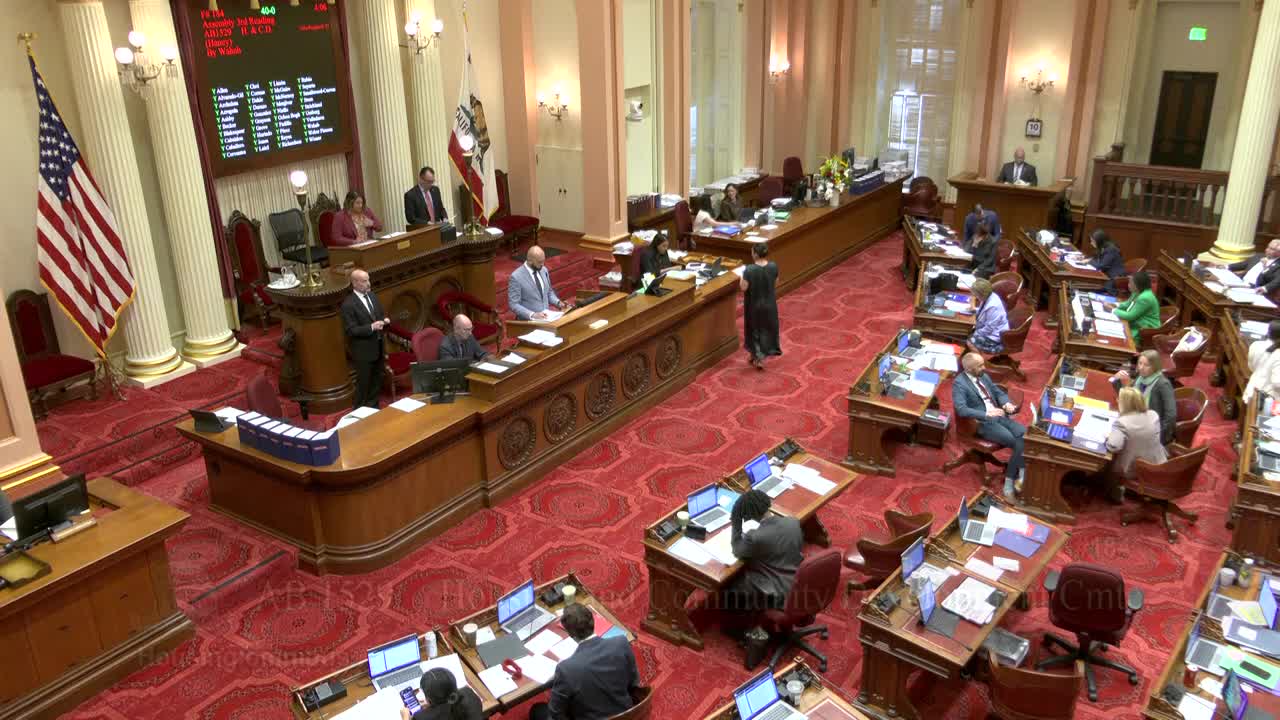 3MIN
Senate Floor
 1MIN
Senate Standing Committee on Appropriations
 10MIN
Senate Standing Committee on Governmental Organization
 1MIN
Assembly Floor
 12MIN