AB 770: Advertising displays: City of Los Angeles: exemption: ordinance.
- Session Year: 2025-2026
- House: Assembly
- Latest Version Date: 2025-10-13
Current Status:
Passed
(2025-10-13: Chaptered by Secretary of State - Chapter 707, Statutes of 2025.)
Introduced
In Committee
Awaiting First Chamber Vote
Passed First Chamber
In Committee
Awaiting Second Chamber Vote
Passed Second Chamber
Enacted
(1)The Outdoor Advertising Act, a violation of which is a crime, provides for the regulation by the Department of Transportation of advertising displays, as defined, within view of public highways. Existing law exempts from certain provisions of the act advertising displays located in specific geographic areas in the City of Los Angeles if those displays meet prescribed conditions and requirements, including the condition that the advertising display is authorized by, or in accordance with, an ordinance adopted by the City of Los Angeles that regulates advertising displays by identifying the specific displays or establishing regulations that include, at a minimum, specified restrictions, as provided.
This bill would authorize the ordinance adopted by the City of Los Angeles to authorize a framework of allowable signage that preserves flexibility in the ultimate placement, sizing, and scope of advertising displays, and define a range or maximum signage capacity, as specified. The bill would also authorize the City of Los Angeles to adopt implementing ordinances that sequence or phase the authorization of advertising displays over time.
(2)This bill would declare that it is to take effect immediately as an urgency statute.
(1)The Outdoor Advertising Act, a violation of which is a crime, provides for the regulation by the Department of Transportation of advertising displays, as defined, within view of public highways. The act exempts from its provisions, except from licensing and certain other specified requirements, an advertising display used exclusively either to advertise products, goods, or services sold by persons on the premises of an arena, as defined, on a regular basis, or to advertise products, goods, or services marketed or promoted on the premises of the arena pursuant to a sponsorship marketing plan, as provided. Existing law exempts from certain provisions of the act advertising displays located in specific geographic areas in the City of Los Angeles if those displays meet prescribed conditions and requirements, including the condition that the advertising display is authorized by, or in accordance with, an ordinance adopted by the City of Los Angeles that regulates advertising displays by identifying the specific displays or establishing regulations that include, at a minimum, specified restrictions, as provided.
This bill would exempt from the act, except from those same requirements applicable to an exempted arena advertising display, any advertising display on the premises of a convention center, as defined, within specified geographical boundaries within the City of Los Angeles if specified conditions are met. If an advertising display exempted by the bill is a message center display, the bill would require the owner of the advertising display to promote public service announcements, as specified. By adding to the duties of owners of these advertising displays under the act, thus expanding the scope of the crime of violating the act, the bill would impose a state-mandated local program. The bill would give the City of Los Angeles primary responsibility for enforcing its ordinance and these provisions, and would require the city to indemnify the department for all costs incurred for failing to ensure that compliance, as specified. To the extent the bill would create new duties on a local agency, the bill would impose a state-mandated local program.This bill would require the owner of an advertising display that is subject to the exemption for a convention center to remove all advertising copy from the advertising display within 60 days of notice from the department that a federal agency has provided notice that the operation of the advertising display will result in the reduction of federal aid highway funds, as specified, unless the city, the owner, and the department have negotiated and determined an appropriate remediation. The bill would impose a $10,000 per day civil fine for failure to remove the advertising copy. The bill would prohibit the department from assuming any liability in connection with the cessation of operation or removal of an advertising display pursuant to these provisions.The act requires the department, when renegotiating an agreement with the Federal Highway Administration relating to advertising signs, displays, and devices in areas adjacent to federally identified highway systems that specifies the states obligations for receipt of unreduced federal aid highway funds under federal law, to include among its priorities support for advertising displays at arenas.This bill would require the department to also include among those priorities support for advertising displays at convention centers.(2)The California Constitution requires the state to reimburse local agencies and school districts for certain costs mandated by the state. Statutory provisions establish procedures for making that reimbursement.This bill would provide that with, regard to certain mandates, no reimbursement is required by this act for a specified reason.With regard to any other mandates, this bill would provide that, if the Commission on State Mandates determines that the bill contains costs so mandated by the state, reimbursement for those costs shall be made pursuant to the statutory provisions noted above.This bill would authorize the ordinance adopted by the City of Los Angeles to authorize a framework of allowable signage that preserves flexibility in the ultimate placement, sizing, and scope of advertising displays, and define a range or maximum signage capacity, as specified. The bill would also authorize the City of Los Angeles to adopt implementing ordinances that sequence or phase the authorization of advertising displays over time.
(3)(2)This bill would declare that it is to take effect immediately as an urgency statute.
(1)The Outdoor Advertising Act, a violation of which is a crime, provides for the regulation by the Department of Transportation of advertising displays, as defined, within view of public highways. The act exempts from its provisions, except from licensing and certain other specified requirements, an advertising display used exclusively either to advertise products, goods, or services sold by persons on the premises of an arena, as defined, on a regular basis, or to advertise products, goods, or services marketed or promoted on the premises of the arena pursuant to a sponsorship marketing plan, as provided.
This bill would exempt from the act, except from those same requirements applicable to an exempted arena advertising display, any advertising display on the premises of a convention center, as defined, within specified geographical boundaries within the City of Los Angeles if specified conditions are met. If an advertising display exempted by the bill is a message center display, the bill would require the owner of the advertising display to promote public service announcements, as specified. By adding to the duties of owners of these advertising displays under the act, thus expanding the scope of the crime of violating the act, the bill would impose a state-mandated local program. The bill would give the City of Los Angeles primary responsibility for enforcing its ordinance and these provisions, and would require the city to indemnify the department for all costs incurred for failing to ensure that compliance, as specified. To the extent the bill would create new duties on a local agency, the bill would impose a state-mandated local program.
This bill would require the owner of an advertising display that is subject to the exemption for a convention center to remove all advertising copy from the advertising display within 60 days of notice from the department that a federal agency has provided notice that the operation of the advertising display will result in the reduction of federal aid highway funds, as specified, unless the city, the owner, and the department have negotiated and determined an appropriate remediation. The bill would impose a $10,000 per day civil fine for failure to remove the advertising copy. The bill would prohibit the department from assuming any liability in connection with the cessation of operation or removal of an advertising display pursuant to these provisions.
The act requires the department, when renegotiating an agreement with the Federal Highway Administration relating to advertising signs, displays, and devices in areas adjacent to federally identified highway systems that specifies the states obligations for receipt of unreduced federal aid highway funds under federal law, to include among its priorities support for advertising displays at arenas.
This bill would require the department to also include among those priorities support for advertising displays at convention centers.
(2)The California Constitution requires the state to reimburse local agencies and school districts for certain costs mandated by the state. Statutory provisions establish procedures for making that reimbursement.
This bill would provide that with, regard to certain mandates, no reimbursement is required by this act for a specified reason.
With regard to any other mandates, this bill would provide that, if the Commission on State Mandates determines that the bill contains costs so mandated by the state, reimbursement for those costs shall be made pursuant to the statutory provisions noted above.
(3)This bill would declare that it is to take effect immediately as an urgency statute.
The Outdoor Advertising Act regulates placement of advertising displays adjacent to and within specified distances of highways that are part of the national system of interstate and defense highways and federal-aid highways. The act prohibits limitations on the customary maintenance of a lawfully erected advertising display within the state by any governmental entity without payment of compensation, as specified.This bill would authorize, as part of customary maintenance, an activity performed for the purpose of maintaining an advertising display with its existing advertising copy area dimensions, including, but not limited to, replacing structural members and using stronger materials, as specified.The Outdoor Advertising Act regulates placement of advertising displays adjacent to and within specified distances of highways that are part of the national system of interstate and defense highways and federal-aid highways. The act prohibits limitations on the customary maintenance of a lawfully erected advertising display within the state by any governmental entity without payment of compensation, as specified.
This bill would authorize, as part of customary maintenance, an activity performed for the purpose of maintaining an advertising display in its existing physical configuration, with its existing advertising copy area dimensions, including, but not limited to, replacing structural members and using stronger materials, as specified.
The Outdoor Advertising Act regulates placement of advertising displays adjacent to and within specified distances of highways that are part of the national system of interstate and defense highways and federal-aid highways. The act prohibits limitations on the customary maintenance of a lawfully erected advertising display within the state by any governmental entity without payment of compensation, as specified.
This bill would authorize, as part of customary maintenance, an activity performed for the purpose of maintaining an advertising display in its existing physical configuration, including, but not limited to, replacing structural members and using stronger materials, as specified.
(a)With the exception of Article 4 (commencing with Section 5300) and Sections 5400 to 5404, inclusive, this chapter does not apply to any advertising display located in the geographic area in the City of Los Angeles bounded by Wilshire Boulevard on the northeast, S. Figueroa Street on the southeast, Interstate 10 on the southwest, and State Route 110 on the northwest, or to any advertising display located in the geographic area in the City of Los Angeles on the westerly side of State Route 110 bounded by West 8th Place, James M. Wood Boulevard, and Golden Avenue and bounded by 7th Street, South Bixel Street, West 8th Street, and Garland Avenue, or to any advertising display located in the geographic area in the City of Los Angeles on the westerly side of State Route 101 bounded by West Sunset Boulevard, North Bronson Avenue, Harold Way, and North Van Ness Avenue, and bounded by State Route 101, Vista Del Mar Avenue, Yucca Street, and Argyle Avenue, if all of the following conditions are met:
(1)(A)The advertising display is authorized by, or in accordance with, an ordinance, including, but not limited to, a specific plan or sign district, adopted by the City of Los Angeles that regulates advertising displays by identifying the specific displays or establishing a set of regulations that include, at a minimum, all of the following:
(i)Number of signs and total signage area allowed.
(ii)Maximum individual signage area.
(iii)Minimum sign separation.
(iv)Illumination restrictions and regulations, including signage refresh rate, scrolling, and brightness.
(v)Illuminated sign hours of operation.
(B)The ordinance adopted by the City of Los Angeles described in this paragraph may authorize a framework of allowable signage that preserves flexibility in the ultimate placement, sizing, and scope of advertising displays, so long as those displays remain within the adopted limits and conditions described in this section.
(C)The ordinance adopted by the City of Los Angeles described in this paragraph may define a range or maximum signage capacity with which the City of Los Angeles and its designated partners may subsequently determine the final placement, size, and configuration of advertising displays.
(2)The owner of the advertising display has submitted to the department a copy of the ordinance adopted by the City of Los Angeles authorizing the advertising display and identification of the provisions of the ordinance required under paragraph (1) and the department has certified that the ordinance meets the minimum requirements contained in paragraph (1).
(3)The advertising display will not advertise products, goods, or services related to tobacco, firearms, or sexually explicit material.
(4)(A)Except as otherwise provided in subparagraph (B), there shall be at least 500 feet between any two advertising displays located on the same side of the freeway unless the advertising displays are separated by buildings or other obstructions in a manner that only one of the advertising displays is visible from any given location on the freeway. For purposes of determining compliance with the spacing requirement, the distance between advertising displays shall be measured along the nearest edge of pavement between points directly opposite the advertising displays along each side of the freeway.
(B)The spacing requirement in subparagraph (A) does not apply to an advertising display that advertises only the business conducted, services rendered, or goods produced and sold upon the property upon which the advertising display is located and that, accordingly, is not subject to the requirements of this chapter.
(C)When counting the number of advertising displays and measuring the distance between them for purposes of subparagraph (A), the advertising displays described in subparagraph (B) shall be excluded from the count, and no measurements shall be made relative to the excluded advertising displays for purposes of subparagraph (A).
(5)This chapter does not limit the City of Los Angeles from adopting ordinances prohibiting or further restricting the size, number, or type of advertising displays permitted by this section. The City of Los Angeles may also adopt implementing ordinances that sequence or phase the authorization of advertising displays over time, provided that the total number, size, and area of those displays do not exceed the maximum limits certified under this section.
(6)If the advertising display is a message center, the owner of the display shall do one of the following:
(A)Make the message center display available on a space-available basis for use by the department or the Department of the California Highway Patrol for public service messages, including Emergency Alert System (Amber Alert) messages disseminated pursuant to Section 8594 of the Government Code, and messages containing, among other things, reports of commute times, drunk driving awareness messages, reports of accidents of a serious nature, and emergency disaster communications.
(B)Make a message center display not subject to this section that is under the control of the owner of the advertising display available on a space-available basis for public service messages in a location acceptable to the department and the Department of the California Highway Patrol.
(C)Provide funding to the department for the installation of a message center display to accommodate those public service messages, which may include funding as part of mitigation in connection with the approval of development of the property on which the message center display is located by the City of Los Angeles.
(b)(1)Before the advertising display authorized pursuant to subdivision (a) may be placed, the department shall determine that the display will not cause a reduction in federal aid funds or otherwise be inconsistent with any federal law, regulation, or agreement between the state and a federal agency or department.
(2)If the department is unable to make the determination required pursuant to paragraph (1), the department shall request the Federal Highway Administration (FHWA) of the United States Department of Transportation to make the determination. Upon receipt of a determination by the FHWA that makes the finding described in paragraph (1), the advertising display may be placed.
(c)The City of Los Angeles shall have primary responsibility for ensuring that a display authorized pursuant to subdivision (a) remains in conformance with all provisions of the ordinance and of this section. If the City of Los Angeles fails to ensure that the display remains in conformance with all provisions of the ordinance and of this section after 30 days of receipt of a written notice from the department, the City of Los Angeles shall hold the department harmless and indemnify the department for all costs incurred by the department to ensure compliance with the ordinance and this section or to defend actions challenging the adoption of the ordinance allowing the displays.
SEC. 2.This act is an urgency statute necessary for the immediate preservation of the public peace, health, or safety within the meaning of Article IV of the California Constitution and shall go into immediate effect. The facts constituting the necessity are:
There is an urgent public health and safety need for economic revitalization in downtown corridors of cities.
(a)With the exception of Article 4 (commencing with Section 5300) and Sections 5400 to 5404, inclusive, this chapter does not apply to any advertising display located in the geographic area in the City of Los Angeles bounded by Wilshire Boulevard on the northeast, S. Figueroa Street on the southeast, Interstate 10 on the southwest, and State Route 110 on the northwest, or to any advertising display located in the geographic area in the City of Los Angeles on the westerly side of State Route 110 bounded by West 8th Place, James M. Wood Boulevard, and Golden Avenue and bounded by 7th Street, South Bixel Street, West 8th Street, and Garland Avenue, or to any advertising display located in the geographic area in the City of Los Angeles on the westerly side of State Route 101 bounded by West Sunset Boulevard, North Bronson Avenue, Harold Way, and North Van Ness Avenue, and bounded by State Route 101, Vista Del Mar Avenue, Yucca Street, and Argyle Avenue, if all of the following conditions are met:
(1)(A)The advertising display is authorized by, or in accordance with, an ordinance, including, but not limited to, a specific plan or sign district, adopted by the City of Los Angeles that regulates advertising displays by identifying the specific displays or establishing a set of regulations that include, at a minimum, all of the following:
(A)(i)Number of signs and total signage area allowed.
(B)(ii)Maximum individual signage area.
(C)(iii)Minimum sign separation.
(D)(iv)Illumination restrictions and regulations, including signage refresh rate, scrolling, and brightness.
(E)(v)Illuminated sign hours of operation.
(B)The ordinance adopted by the City of Los Angeles described in this paragraph may authorize a framework of allowable signage that preserves flexibility in the ultimate placement, sizing, and scope of advertising displays, so long as those displays remain within the adopted limits and conditions described in this section.
(C)The ordinance adopted by the City of Los Angeles described in this paragraph may define a range or maximum signage capacity with which the City of Los Angeles and its designated partners may subsequently determine the final placement, size, and configuration of advertising displays.
(2)The owner of the advertising display has submitted to the department a copy of the ordinance adopted by the City of Los Angeles authorizing the advertising display and identification of the provisions of the ordinance required under paragraph (1) and the department has certified that the ordinance meets the minimum requirements contained in paragraph (1).
(3)The advertising display will not advertise products, goods, or services related to tobacco, firearms, or sexually explicit material.
(4)(A)Except as otherwise provided in subparagraph (B), there shall be at least 500 feet between any two advertising displays located on the same side of the freeway unless the advertising displays are separated by buildings or other obstructions in a manner that only one of the advertising displays is visible from any given location on the freeway. For purposes of determining compliance with the spacing requirement, the distance between advertising displays shall be measured along the nearest edge of pavement between points directly opposite the advertising displays along each side of the freeway.
(B)The spacing requirement in subparagraph (A) does not apply to an advertising display that advertises only the business conducted, services rendered, or goods produced and sold upon the property upon which the advertising display is located and that, accordingly, is not subject to the requirements of this chapter.
(C)When counting the number of advertising displays and measuring the distance between them for purposes of subparagraph (A), the advertising displays described in subparagraph (B) shall be excluded from the count, and no measurements shall be made relative to the excluded advertising displays for purposes of subparagraph (A).
(5)This chapter does not limit the City of Los Angeles from adopting ordinances prohibiting or further restricting the size, number, or type of advertising displays permitted by this section. The City of Los Angeles may also adopt implementing ordinances that sequence or phase the authorization of advertising displays over time, provided that the total number, size, and area of those displays do not exceed the maximum limits certified under this section.
(6)If the advertising display is a message center, the owner of the display shall do one of the following:
(A)Make the message center display available on a space-available basis for use by the department or the Department of the California Highway Patrol for public service messages, including Emergency Alert System (Amber Alert) messages disseminated pursuant to Section 8594 of the Government Code, and messages containing, among other things, reports of commute times, drunk driving awareness messages, reports of accidents of a serious nature, and emergency disaster communications.
(B)Make a message center display not subject to this section that is under the control of the owner of the advertising display available on a space-available basis for public service messages in a location acceptable to the department and the Department of the California Highway Patrol.
(C)Provide funding to the department for the installation of a message center display to accommodate those public service messages, which may include funding as part of mitigation in connection with the approval of development of the property on which the message center display is located by the City of Los Angeles.
(b)(1)Before the advertising display authorized pursuant to subdivision (a) may be placed, the department shall determine that the display will not cause a reduction in federal aid funds or otherwise be inconsistent with any federal law, regulation, or agreement between the state and a federal agency or department.
(2)If the department is unable to make the determination required pursuant to paragraph (1), the department shall request the Federal Highway Administration (FHWA) of the United States Department of Transportation to make the determination. Upon receipt of a determination by the FHWA that makes the finding described in paragraph (1), the advertising display may be placed.
(c)The City of Los Angeles shall have primary responsibility for ensuring that a display authorized pursuant to subdivision (a) remains in conformance with all provisions of the ordinance and of this section. If the City of Los Angeles fails to ensure that the display remains in conformance with all provisions of the ordinance and of this section after 30 days of receipt of a written notice from the department, the City of Los Angeles shall hold the department harmless and indemnify the department for all costs incurred by the department to ensure compliance with the ordinance and this section or to defend actions challenging the adoption of the ordinance allowing the displays.
SEC. 2.This act is an urgency statute necessary for the immediate preservation of the public peace, health, or safety within the meaning of Article IV of the California Constitution and shall go into immediate effect. The facts constituting the necessity are:
There is an urgent public health and safety need for economic revitalization in downtown corridors of cities.
SECTION 1.Section 5272.3 is added to the Business and Professions Code, to read:5272.3.(a)With the exception of Article 4 (commencing with Section 5300) and Sections 5400 to 5404, inclusive, this chapter does not apply to any advertising display on the premises of a convention center that is located in the geographic area in the City of Los Angeles bounded by Wilshire Boulevard on the northeast, South Figueroa Street on the southeast, Interstate 10 on the southwest, and State Route 110 on the northwest, if all of the following conditions are met:(1)The convention center has a capacity of 15,000 or more seats.(2)The total space of the convention center exceeds 700,000 square feet.(3)The advertising display is either located on the premises of the convention center or authorized by, or in accordance with, an ordinance, including, but not limited to, a specific plan or sign district, adopted by the City of Los Angeles that regulates advertising displays by identifying the specific displays or establishing regulations that include, at a minimum, all of the following:(A)Number of signs and total signage area allowed.(B)Maximum individual signage area.(C)Minimum sign separation.(D)Illumination restrictions and regulations, including signage refresh rate, scrolling, and brightness.(E)Illuminated sign hours of operation.(4)The advertising display does not advertise products, goods, or services related to tobacco, firearms, or sexually explicit material.(5)If the advertising display is a message center, the owner of the display complies with one of the following conditions:(A)Makes a message center display within the premises of the convention center available on a space-available basis for use by the department or the Department of the California Highway Patrol for public service messages, including Emergency Alert System (Amber Alert) messages disseminated pursuant to Section 8594 of the Government Code, and messages containing, among other things, reports of commute times, drunk driving awareness messages, reports of accidents of a serious nature, and emergency disaster communications.(B)Makes a message center display not subject to this section that is under the control of the owner of the advertising display available on a space-available basis for public service messages in a location acceptable to the department and the Department of the California Highway Patrol.(C)Provides funding to the department for the installation of a message center display to accommodate those public service messages, which may include funding as part of mitigation in connection with the approval of the convention center by the City of Los Angeles.(b)If an advertising display authorized under subdivision (a) is subject to a notice from the United States Department of Transportation, the Federal Highway Administration, or any other applicable federal agency to the state that the operation of that display will result in the reduction of federal aid highway funds provided in Section 131 of Title 23 of the United States Code, the department shall provide a copy of the notice to the City of Los Angeles and the display owner.(1)In response to the notice, the City of Los Angeles and the display owner may negotiate with the department to determine an appropriate remediation.(2)The authority for the display under subdivision (a) shall cease and the display owner shall remove all advertising copy from the display within 60 days of when the department provided a copy of the notice unless the City of Los Angeles, the display owner, and the department have determined an appropriate remediation.(3)Failure to remove the advertising copy as required by paragraph (2) shall result in a civil fine, imposed by the department, of ten thousand dollars ($10,000) per day until the advertising copy is removed. The department shall not assume any liability in connection with the cessation of operation or removal of an advertising display or advertising copy pursuant to this subdivision.(c)The City of Los Angeles shall have primary responsibility for ensuring that the displays erected pursuant to this section remain in conformance with all provisions of the ordinance, if applicable, and of this section. If the City of Los Angeles fails to ensure that a display remains in conformance with all provisions of the ordinance and of this section, after 30 days of receipt of a written notice from the department, the City of Los Angeles shall hold the department harmless and indemnify the department for all costs incurred by the department to ensure compliance with the ordinance and this section or to defend actions challenging the adoption of the ordinance allowing the display.(d)This chapter does not limit the City of Los Angeles from adopting ordinances prohibiting or further restricting the size, number, or type of advertising displays permitted by this section.(e)For purposes of this section, premises of a convention center means either of the following:(1)A venue for hosting conventions, conferences, exhibitions, trade shows, meetings, indoor or outdoor sports, concerts, and other large-scale gatherings.(2)Any development project or district encompassing the venue, adjacent to it, or separated from it only by public or private rights-of-way, the boundaries of which have been set by the City of Los Angeles. The development project or district must be contiguous and may not extend more than 1,000 feet beyond the convention center structure or any structure physically connected to the convention center structure.SEC. 2.Section 5272.5 of the Business and Professions Code is amended to read:5272.5.The Department shall, when renegotiating an agreement with the Federal Highway Administration on the states obligations pursuant to the Highway Beautification Act of 1965 (23 U.S.C. Sec. 131), include among its priorities support for advertising displays at arenas, as described in Section 5272, and convention centers, as described in Section 5272.3.SEC. 3.No reimbursement is required by this act pursuant to Section 6 of Article XIIIB of the California Constitution for certain costs that may be incurred by a local agency or school district because, in that regard, this act creates a new crime or infraction, eliminates a crime or infraction, or changes the penalty for a crime or infraction, within the meaning of Section 17556 of the Government Code, or changes the definition of a crime within the meaning of Section 6 of Article XIIIB of the California Constitution.However, if the Commission on State Mandates determines that this act contains other costs mandated by the state, reimbursement to local agencies and school districts for those costs shall be made pursuant to Part 7 (commencing with Section 17500) of Division 4 of Title 2 of the Government Code.SEC. 4.This act is an urgency statute necessary for the immediate preservation of the public peace, health, or safety within the meaning of Article IV of the California Constitution and shall go into immediate effect. The facts constituting the necessity are:There is an urgent public health and safety need for economic revitalization in downtown corridors of cities.(a)With the exception of Article 4 (commencing with Section 5300) and Sections 5400 to 5404, inclusive, this chapter does not apply to any advertising display on the premises of a convention center that is located in the geographic area in the City of Los Angeles bounded by Wilshire Boulevard on the northeast, South Figueroa Street on the southeast, Interstate 10 on the southwest, and State Route 110 on the northwest, if all of the following conditions are met:
(1)The convention center has a capacity of 15,000 or more seats.
(2)The total space of the convention center exceeds 700,000 square feet.
(3)The advertising display is either located on the premises of the convention center or authorized by, or in accordance with, an ordinance, including, but not limited to, a specific plan or sign district, adopted by the City of Los Angeles that regulates advertising displays by identifying the specific displays or establishing regulations that include, at a minimum, all of the following:
(A)Number of signs and total signage area allowed.
(B)Maximum individual signage area.
(C)Minimum sign separation.
(D)Illumination restrictions and regulations, including signage refresh rate, scrolling, and brightness.
(E)Illuminated sign hours of operation.
(4)The advertising display does not advertise products, goods, or services related to tobacco, firearms, or sexually explicit material.
(5)If the advertising display is a message center, the owner of the display complies with one of the following conditions:
(A)Makes a message center display within the premises of the convention center available on a space-available basis for use by the department or the Department of the California Highway Patrol for public service messages, including Emergency Alert System (Amber Alert) messages disseminated pursuant to Section 8594 of the Government Code, and messages containing, among other things, reports of commute times, drunk driving awareness messages, reports of accidents of a serious nature, and emergency disaster communications.
(B)Makes a message center display not subject to this section that is under the control of the owner of the advertising display available on a space-available basis for public service messages in a location acceptable to the department and the Department of the California Highway Patrol.
(C)Provides funding to the department for the installation of a message center display to accommodate those public service messages, which may include funding as part of mitigation in connection with the approval of the convention center by the City of Los Angeles.
(b)If an advertising display authorized under subdivision (a) is subject to a notice from the United States Department of Transportation, the Federal Highway Administration, or any other applicable federal agency to the state that the operation of that display will result in the reduction of federal aid highway funds provided in Section 131 of Title 23 of the United States Code, the department shall provide a copy of the notice to the City of Los Angeles and the display owner.
(1)In response to the notice, the City of Los Angeles and the display owner may negotiate with the department to determine an appropriate remediation.
(2)The authority for the display under subdivision (a) shall cease and the display owner shall remove all advertising copy from the display within 60 days of when the department provided a copy of the notice unless the City of Los Angeles, the display owner, and the department have determined an appropriate remediation.
(3)Failure to remove the advertising copy as required by paragraph (2) shall result in a civil fine, imposed by the department, of ten thousand dollars ($10,000) per day until the advertising copy is removed. The department shall not assume any liability in connection with the cessation of operation or removal of an advertising display or advertising copy pursuant to this subdivision.
(c)The City of Los Angeles shall have primary responsibility for ensuring that the displays erected pursuant to this section remain in conformance with all provisions of the ordinance, if applicable, and of this section. If the City of Los Angeles fails to ensure that a display remains in conformance with all provisions of the ordinance and of this section, after 30 days of receipt of a written notice from the department, the City of Los Angeles shall hold the department harmless and indemnify the department for all costs incurred by the department to ensure compliance with the ordinance and this section or to defend actions challenging the adoption of the ordinance allowing the display.
(d)This chapter does not limit the City of Los Angeles from adopting ordinances prohibiting or further restricting the size, number, or type of advertising displays permitted by this section.
(e)For purposes of this section, premises of a convention center means either of the following:
(1)A venue for hosting conventions, conferences, exhibitions, trade shows, meetings, indoor or outdoor sports, concerts, and other large-scale gatherings.
(2)Any development project or district encompassing the venue, adjacent to it, or separated from it only by public or private rights-of-way, the boundaries of which have been set by the City of Los Angeles. The development project or district must be contiguous and may not extend more than 1,000 feet beyond the convention center structure or any structure physically connected to the convention center structure.
SEC. 2.Section 5272.5 of the Business and Professions Code is amended to read:5272.5.The Department shall, when renegotiating an agreement with the Federal Highway Administration on the states obligations pursuant to the Highway Beautification Act of 1965 (23 U.S.C. Sec. 131), include among its priorities support for advertising displays at arenas, as described in Section 5272. 5272, and convention centers, as described in Section 5272.3.
SEC. 3.No reimbursement is required by this act pursuant to Section 6 of Article XIIIB of the California Constitution for certain costs that may be incurred by a local agency or school district because, in that regard, this act creates a new crime or infraction, eliminates a crime or infraction, or changes the penalty for a crime or infraction, within the meaning of Section 17556 of the Government Code, or changes the definition of a crime within the meaning of Section 6 of Article XIIIB of the California Constitution.
However, if the Commission on State Mandates determines that this act contains other costs mandated by the state, reimbursement to local agencies and school districts for those costs shall be made pursuant to Part 7 (commencing with Section 17500) of Division 4 of Title 2 of the Government Code.
SEC. 4.This act is an urgency statute necessary for the immediate preservation of the public peace, health, or safety within the meaning of Article IV of the California Constitution and shall go into immediate effect. The facts constituting the necessity are:
There is an urgent public health and safety need for economic revitalization in downtown corridors of cities.
SECTION 1.Section 5208.3 is added to the Business and Professions Code, to read:5208.3.Customary maintenance means an activity performed on a display for the purpose of maintaining the display with its existing advertising copy area dimensions, including, but not limited to, replacing structural members, such as posts and internal bracing, and using stronger materials, while keeping or reducing the number of posts.Customary maintenance means an activity performed on a display for the purpose of maintaining the display in with its existing physical configuration, advertising copy area dimensions, including, but not limited to, replacing structural members, such as posts and internal bracing, and using stronger materials, without increasing while keeping or reducing the number of posts.
REVISIONS: HeadingLine 2. REVISIONS: HeadingLine 2.Customary maintenance means an activity performed on a display for the purpose of maintaining the display in its existing physical configuration, including, but not limited to, replacing structural members, such as posts and internal bracing, and using stronger materials, without increasing the number of posts.
|
Date
|
Status
|
|---|---|
| Oct 13, 2025 | Chaptered by Secretary of State - Chapter 707, Statutes of 2025. |
| Oct 13, 2025 | Approved by the Governor. |
| Sep 24, 2025 | Enrolled and presented to the Governor at 3 p.m. |
| Sep 12, 2025 | Urgency clause adopted. Senate amendments concurred in. To Engrossing and Enrolling. (Ayes 73. Noes 0. Page 3365.). |
| Sep 11, 2025 | From committee: That the Senate amendments be concurred in. (Ayes 19. Noes 0.) (September 11). |
| Sep 10, 2025 | Joint Rule 62(a), file notice suspended. (Page 3164.) |
| Sep 10, 2025 | Re-referred to Com. on G.O. pursuant to Assembly Rule 77.2. |
| Sep 9, 2025 | In Assembly. Concurrence in Senate amendments pending. |
| Sep 9, 2025 | Read third time. Urgency clause adopted. Passed. Ordered to the Assembly. (Ayes 34. Noes 4. Page 2666.). |
| Sep 8, 2025 | Read second time. Ordered to third reading. |
| Sep 4, 2025 | Read third time and amended. Ordered to second reading. |
| Aug 29, 2025 | Read second time. Ordered to third reading. |
| Aug 29, 2025 | From committee: Do pass. (Ayes 5. Noes 2.) (August 29). |
| Aug 18, 2025 | In committee: Referred to suspense file. |
| Jul 9, 2025 | From committee: Do pass and re-refer to Com. on APPR. (Ayes 11. Noes 1.) (July 8). Re-referred to Com. on APPR. |
| Jul 2, 2025 | Re-referred to Com. on JUD. |
| Jun 25, 2025 | From committee: Do pass and re-refer to Com. on RLS. (Ayes 11. Noes 2.) (June 24). Re-referred to Com. on RLS. |
| Jun 13, 2025 | From committee chair, with author's amendments: Amend, and re-refer to committee. Read second time, amended, and re-referred to Com. on TRANS. |
| Jun 11, 2025 | Referred to Com. on TRANS. |
| Jun 3, 2025 | In Senate. Read first time. To Com. on RLS. for assignment. |
| Jun 2, 2025 | Read third time. Passed. Ordered to the Senate. (Ayes 73. Noes 0. Page 1851.) |
| May 27, 2025 | Read second time. Ordered to third reading. |
| May 23, 2025 | From committee: Do pass. (Ayes 14. Noes 0.) (May 23). |
| May 23, 2025 | Coauthors revised. |
| Apr 23, 2025 | In committee: Set, first hearing. Referred to suspense file. |
| Apr 3, 2025 | From committee: Do pass and re-refer to Com. on APPR. (Ayes 20. Noes 0.) (April 2). Re-referred to Com. on APPR. |
| Apr 3, 2025 | Coauthors revised. |
| Mar 4, 2025 | Re-referred to Com. on G.O. |
| Mar 3, 2025 | From committee chair, with author's amendments: Amend, and re-refer to Com. on G.O. Read second time and amended. |
| Mar 3, 2025 | Referred to Com. on G.O. |
| Feb 19, 2025 | From printer. May be heard in committee March 21. |
| Feb 18, 2025 | Read first time. To print. |
|
Date
|
Description
|
Location
|
Votes
|
|
|---|---|---|---|---|
| Sep 12, 2025 | AB 770 Mark González Concurrence - Urgency Added | Assembly Floor |
Passed |
|
| Sep 11, 2025 | With recommendation: That Senate amendments be concurred in. | Assembly Standing Committee on Governmental Organization |
Passed |
|
| Sep 9, 2025 | Assembly 3rd Reading AB770 Mark González et al. By Durazo Urgency Clause | Senate Floor |
Passed |
|
| Aug 29, 2025 | Do pass | Senate Standing Committee on Appropriations |
Passed |
|
| Aug 18, 2025 | Placed on suspense file | Senate Standing Committee on Appropriations |
Passed |
|
| Jul 8, 2025 | Do pass, but first be re-referred to the Committee on [Appropriations] | Senate Standing Committee on Judiciary |
Passed |
|
| Jun 24, 2025 | Do pass, but first be re-referred to the Committee on [Rules] | Senate Standing Committee on Transportation |
Passed |
|
| Jun 2, 2025 | AB 770 Mark González Assembly Third Reading | Assembly Floor |
Passed |
|
| May 23, 2025 | Do pass. | Assembly Standing Committee on Appropriations |
Passed |
|
| Apr 2, 2025 | Do pass and be re-referred to the Committee on [Appropriations] | Assembly Standing Committee on Governmental Organization |
Passed |
This list shows positions taken on this bill by organizations on the date displayed, which is linked to the original source.
Positions by individuals are not included.
|
Organization
|
Position
|
Date
|
|---|---|---|
| Antonio Villaraigosa (41st Mayor of Los Angeles) | ** Support | |
| California Federation of Labor Unions, Afl-cio | ** Support | |
| California Iatse Council | ** Support | |
| California State Outdoor Advertising Association | ** Against | |
| California Travel Association | ** Support | |
| Central City Association Of Los Angeles | ** Support | |
| City of Los Angeles Councilmember Curren Price | ** Support | |
| City of Los Angeles Councilmember, Tim McOsker | ** Support | |
| Councilmember Eunisses Hernandez, First District, City of Los Angeles | ** Support | |
| Councilwoman Katy Yaroslavsky, City of Los Angeles | ** Support | |
| DTLA Alliance | ** Support | |
| Dtla Residents Association | ** Support | |
| General Outdoor Advertising | ** Against | |
| Heather Hutt, Los Angeles City Council, 10th District | ** Support | |
| hollywood chamber of commerce | ** Support | |
| Hugo Soto-martinez, Los Angeles City Council, 13th District | ** Support | |
| IBEW Local 11 | ** Support | |
| Imelda Padilla, Los Angeles City Council, 6th District | ** Support | |
| International Association of Sheet Metal, Air, Rail, and Transportation Workers | ** Support | |
| International Brotherhood Of Electrical Workers | ** Support | |
| IUPAT District Council 36 | ** Support | |
| Los Angeles Business Council | ** Support | |
| Los Angeles City Council Office of Marqueece Harris Dawson | ** Support | |
| Los Angeles City Councilwoman Traci Park | ** Support | |
| Los Angeles County Business Federation | ** Support | |
| Los Angeles County Federation of Labor, AFL-CIO | ** Support | |
| Los Angeles/Orange Counties Building and Construction Trades Council | ** Support | |
| North America’s Building Trades Unions | ** Support | |
| Office of Los Angeles Mayor Karen Bass | ** Support | |
| SEIU California | ** Support | |
| South Park Business Improvement District | ** Support | |
| South Park Neighborhood Association | ** Support | |
| State Building & Construction Trades Council Of California | ** Support | |
| Teamsters Joint Council 42 | ** Support | |
| The Hollywood Partnership | ** Support | |
| Valley Industry & Commerce Association | ** Support | |
| Veale Outdoor Advertising | ** Against | |
| Ysabel Jurado, Los Angeles City Council, 14th District | ** Support |
CONCURRENCE IN SENATE AMENDMENTS
CSA2 Bill Id:AB 770
Author:(Mark González)
As Amended Ver:September 4, 2025
2/3 vote. Urgency
SUMMARY
Original Committee of Reference: AGO
This bill would authorize an ordinance adopted by the City of Los Angeles pertaining to outdoor advertising displays to provide a framework of allowable signage placement, sizing, and sequencing, as specified that is also consistent with provisions of existing outdoor advertising exemptions for Los Angeles. The bill would also authorize the City to adopt implementing ordinances that sequence or phase the authorization of advertising displays over time, as specified.
Senate Amendments
Current Committee Recommendation: Concur
- Delete the Assembly version of this bill.
- Authorize an ordinance adopted by the City of Los Angeles to authorize a framework of allowable signage that preserves flexibility in the ultimate placement, sizing, and scope of advertising displays, so long as those displays remain within the adopted limits and conditions, as specified.
- Provide the ordinance adopted by the City of Los Angeles, as described, may define a range or maximum signage capacity with which the City of Los Angeles and its designated partners may subsequently determine the final placement, size, and configuration of advertising displays.
- Provide the City of Los Angeles may also adopt implementing ordinances that sequence or phase the authorization of advertising displays over time, provided that the total number, size, and area of those displays do not exceed the maximum limits certified, as specified.
- Make relating technical and clarifying amendments.
- Add an urgency clause.
COMMENTS
Background.
The OAA. A combination of state and federal requirements govern the placement and operation of all outdoor advertising in California. Caltrans regulates the placement of outdoor advertising displays that are visible from California highways. The state's OAA regulates the size, illumination, orientation, and location of advertising displays adjacent to and within specified distances of interstate or primary highways. The OAA, with some exceptions, specifically prohibits the placement of any advertising display on property adjacent to a section of landscaped freeway.
State law generally does not apply to "on premise" advertising displays, including those that advertise the sale, lease, or exchange of property upon which it is placed and those that advertise the business conducted, services rendered, or the goods produced or sold on the property. Apart from certain safety requirements in state law, the regulation of "on-premise" displays is a local matter. Existing law, through a contractual agreement, establishes Caltrans as the administrator of the federal Outdoor Advertising Control program, which includes similar restrictions as the OAA, including maximum sign size, sign spacing, location, illumination, and content. If the state fails to properly administer the federal program, the state is subject to a sanction that would reduce its federal highway funding allocations by 10%. Caltrans performs regular reviews of freeways and highways identified on the National Highway System to enforce outdoor advertising requirements under the Federal Highway Beautification Act and the State's OAA.
Existing law provides exemptions to the OAA for certain signs located in specified jurisdictions, all of which were explicitly authorized by the Legislature. For instance, the Act exempts from its provisions certain advertising displays on the premises of the arena that has been authorized as of January 1, 2021, by, or in accordance with, a local ordinance, as specified. The sports arena must be capable of providing a venue for professional sports on a permanent basis and have a capacity of 15,000 or more seats.
Federal Highway Beautification Act of 1965. The Highway Beautification Act (HBA) was created to protect the public investment, promote the safety and recreational value of public travel, and to preserve the natural beauty of highways in the nation. The HBA specifies that states have the responsibility to enforce provisions regarding the placement and maintenance of outdoor advertising signs, displays and devices along the Interstate and National Highway System. The state of California enforces the provisions of federal law through a compact that was developed between the state and the federal government in 1967. Federal law also includes a penalty for states that violate HBA by reducing all federal highway transportation funds by a designated percentage. If the state fails to properly administer the federal program, the state is subject to a sanction that would reduce its federal highway funding allocations by 10%.
FHWA periodically audits Caltrans. The July 16, 2022, audit of Caltrans by the Federal Highway Administration (FHWA) found that displays in arenas and RDA zones may not be in compliance with federal law, which is more restrictive than state law governing advertising displays. The FHWA recommended that Caltrans pursue compliance with federal law and, in some cases, pursue removal of the signs under threat of the loss of 10% of the state's annual federal-aid funds.
LA Convention Center renovation project. The proposed Los Angeles Convention Center (LACC) renovation project is an estimated $2.2 billion project that will overhaul and expand LACC's footprint to over one million square feet (sf). New construction would include: 190,000 sf of exhibit space, 55,000 sf of meeting rooms, 95,000 sf of multipurpose rooms, and upgrades to Pico Boulevard, which cuts through LACC. The anticipated approval for construction by the LA City Council is late summer of this year in order to complete most of the renovation project by 2028 for the Olympic and Paralympic games.
With respects to financing the project, the City is proposing to increase rental rates and also construct/erect new advertisement signage that aims to generate a substantial amount of revenue. In order to move forward with establishing a sign district to carry out these financing efforts, the City submitted a request to Caltrans to review and certify the City's advertising signage proposal. In a letter dated February 3, 2025, Caltrans responded to the City noting that while a portion of the proposed 56 new outdoor advertising displays throughout the district meet current existing exemption provisions, "several proposed displays as shown in the Sign District Ordinance would facially violate the Highway Beautification Act (23 United States Code (U.S.C) Section 131), its underlining regulations (23 Code of Federal Regulations (C.F.R.) Part 750) and the Federal-State Outdoor Advertising Control Agreement of 1968" and denied the City's certification request. As the result, the author and sponsors of this bill assert legislation is needed to allow the City to move forward with its financing plan for the LACC renovation project.
Previous OAA exemptions for Los Angeles. Over the past 10 years, several pieces of legislation have been enacted to provide the City with OAA exemptions for various purposes. First, AB 1373 (Santiago, Chapter 853, Statutes of 2016), provided an exemption from regulations of the OAA for signs allowed by a City ordinance in relation to the number and location of billboards in certain areas of Los Angeles. Subsequently, AB 1415 (Santiago, Chapter 689, Statutes of 2023), exempted from the OAA, displays erected in specified areas of Los Angeles surrounding LA Live and also segments within Hollywood pursuant to specified conditions, including preapproval by Caltrans. This bill builds off these previous measures.
AB 770 aligns the proposed provisions of this bill with existing outdoor advertising exemptions applicable to the City of Los Angeles. The amendments also grant the City additional flexibility regarding the placement, size, and scope of advertising displays (billboards), subject to an adopted ordinance and review by Caltrans.
According to the Author
According to the author, "AB 770 is a critical tool to support the economic revitalization of Downtown Los Angeles. By authorizing the City of Los Angeles to create a flexible framework for signage at the Los Angeles Convention Center, it will unlock a key revenue stream to help finance the Center's long-planned expansion and modernization. This project is expected to generate more than 8,700 temporary jobs, over 2,200 permanent jobs, attract approximately 500,000 additional visitors annually, and drive over $550 million in long-term economic activity. AB 770 ensures the City can move forward with a transformative investment that will create jobs, boost tourism, and strengthen the economic vitality of the region."
Arguments in Support
According to a coalition of supporters, "AB 770 will allow the Los Angeles Convention Center expansion and modernization project to move forward in fall 2025 and near completion by spring 2028. This $2.2 billion project is expected to create approximately 8,700 temporary jobs and 2,200 permanent jobs, attract an estimated 500,000 additional visitors, and generate over $550 million in economic impact for Los Angeles over the next 30 years. A significant portion of the project cost is expected to be funded through operational revenues, including advertising from digital signage. This project will serve as a catalyst for economic revitalization, a platform for workforce development, and a symbol of Los Angeles' commitment to sustainable growth. Los Angeles is a world-class city with a proud legacy of innovation and global leadership. Yet, our convention center ranks just 21st nationally and continues to fall further behind every year. Despite convention and tradeshow demand rebounding to prepandemic levels, Los Angeles continues to miss valuable opportunities because our Convention Center remains small and outdated. Without modernization, we risk losing our market share entirely."
Arguments in Opposition
General Outdoor Advertising writes, "Billboard advertisements are heavily regulated by federal, state, and local governments. This bill would undermine and, in some cases, violate existing law designed to promote fairness amongst advertisers, protect highway safety, and avoid significant financial penalties for noncompliance with the federal Highway Beautification Act."
FISCAL COMMENTS
Unknown.
VOTES
ASM GOVERNMENTAL ORGANIZATION: Votes not relevant
YES:
ABS, ABST OR NV:
ASM APPROPRIATIONS: Votes not relevant
YES:
ABS, ABST OR NV:
ASSEMBLY FLOOR: Votes not relevant
YES:
ABS, ABST OR NV:
SENATE FLOOR: 34-4-2
YES: Allen, Archuleta, Arreguín, Ashby, Becker, Blakespear, Cabaldon, Caballero, Cervantes, Cortese, Durazo, Gonzalez, Grayson, Grove, Hurtado, Jones, Laird, Limón, McGuire, McNerney, Menjivar, Padilla, Pérez, Reyes, Richardson, Rubio, Smallwood-Cuevas, Stern, Strickland, Umberg, Valladares, Wahab, Weber Pierson, Wiener
NO: Alvarado-Gil, Dahle, Niello, Seyarto
ABS, ABST OR NV: Choi, Ochoa Bogh
ASM GOVERNMENTAL ORGANIZATION: 19-0-3
YES: Blanca Rubio, Davies, Alvarez, Berman, Bryan, Carrillo, Dixon, Fong, Gabriel, Gipson, McKinnor, Nguyen, Pacheco, Michelle Rodriguez, Sanchez, Soria, Ta, Valencia, Wallis
ABS, ABST OR NV: Macedo, Ramos, Solache
UPDATED
VERSION: September 4, 2025
CONSULTANT: Eric Johnson / G.O. / (916) 319-2531 FN: 0002062
CONCURRENCE IN SENATE AMENDMENTS
CSA1 Bill Id:AB 770
Author:(Mark González)
As Amended Ver:September 4, 2025
2/3 vote. Urgency
SUMMARY
Existing law exempts from certain provisions of the Outdoor Advertising Act (OAA), advertising displays located in specific geographic areas in the City of Los Angeles if those displays meet prescribed conditions and requirements, including the condition that the advertising display is authorized by, or in accordance with, an ordinance adopted by the City of Los Angeles that regulates advertising displays by identifying the specific displays or establishing regulations that include, at a minimum, specified restrictions, as specified.
This bill authorizes an ordinance adopted by the City of Los Angeles pertaining to outdoor advertising displays to provide a framework of allowable signage placement, sizing, and sequencing, as specified that is also consistent with provisions of existing outdoor advertising exemptions for Los Angeles. The bill would also authorize the City to adopt implementing ordinances that sequence or phase the authorization of advertising displays over time, as specified.
Senate Amendments
- Delete the Assembly version of this bill.
- Authorize an ordinance adopted by the City of Los Angeles to authorize a framework of allowable signage that preserves flexibility in the ultimate placement, sizing, and scope of advertising displays, so long as those displays remain within the adopted limits and conditions, as specified.
- Provide the ordinance adopted by the City of Los Angeles, as described, may define a range or maximum signage capacity with which the City of Los Angeles and its designated partners may subsequently determine the final placement, size, and configuration of advertising displays.
- Provide the City of Los Angeles may also adopt implementing ordinances that sequence or phase the authorization of advertising displays over time, provided that the total number, size, and area of those displays do not exceed the maximum limits certified, as specified.
- Make relating technical and clarifying amendments.
- Add an urgency clause.
COMMENTS
Background.
The OAA. A combination of state and federal requirements govern the placement and operation of all outdoor advertising in California. Caltrans regulates the placement of outdoor advertising displays that are visible from California highways. The state's OAA regulates the size, illumination, orientation, and location of advertising displays adjacent to and within specified distances of interstate or primary highways. The OAA, with some exceptions, specifically prohibits the placement of any advertising display on property adjacent to a section of landscaped freeway.
State law generally does not apply to "on premise" advertising displays, including those that advertise the sale, lease, or exchange of property upon which it is placed and those that advertise the business conducted, services rendered, or the goods produced or sold on the property. Apart from certain safety requirements in state law, the regulation of “on-premise” displays is a local matter. Existing law, through a contractual agreement, establishes Caltrans as the administrator of the federal Outdoor Advertising Control program, which includes similar restrictions as the OAA, including maximum sign size, sign spacing, location, illumination, and content. If the state fails to properly administer the federal program, the state is subject to a sanction that would reduce its federal highway funding allocations by 10%. Caltrans performs regular reviews of freeways and highways identified on the National Highway System to enforce outdoor advertising requirements under the Federal Highway Beautification Act and the State's OAA.
Existing law provides exemptions to the OAA for certain signs located in specified jurisdictions, all of which were explicitly authorized by the Legislature. For instance, the Act exempts from its provisions certain advertising displays on the premises of the arena that has been authorized as of January 1, 2021, by, or in accordance with, a local ordinance, as specified. The sports arena must be capable of providing a venue for professional sports on a permanent basis and have a capacity of 15,000 or more seats.
Federal Highway Beautification Act of 1965. The Highway Beautification Act (HBA) was created to protect the public investment, promote the safety and recreational value of public travel, and to preserve the natural beauty of highways in the nation. The HBA specifies that states have the responsibility to enforce provisions regarding the placement and maintenance of outdoor advertising signs, displays and devices along the Interstate and National Highway System. The state of California enforces the provisions of federal law through a compact that was developed between the state and the federal government in 1967. Federal law also includes a penalty for states that violate HBA by reducing all federal highway transportation funds by a designated percentage. If the state fails to properly administer the federal program, the state is subject to a sanction that would reduce its federal highway funding allocations by 10%.
FHWA periodically audits Caltrans. The July 16, 2022, audit of Caltrans by the Federal Highway Administration (FHWA) found that displays in arenas and RDA zones may not be in compliance with federal law, which is more restrictive than state law governing advertising displays. The FHWA recommended that Caltrans pursue compliance with federal law and, in some cases, pursue removal of the signs under threat of the loss of 10% of the state’s annual federal-aid funds.
LA Convention Center renovation project. The proposed Los Angeles Convention Center (LACC) renovation project is an estimated $2.2 billion project that will overhaul and expand LACC's footprint to over one million square feet (sf). New construction would include: 190,000 sf of exhibit space, 55,000 sf of meeting rooms, 95,000 sf of multipurpose rooms, and upgrades to Pico Boulevard, which cuts through LACC. The anticipated approval for construction by the LA City Council is late summer of this year in order to complete most of the renovation project by 2028 for the Olympic and Paralympic games.
With respects to financing the project, the City is proposing to increase rental rates and also construct/erect new advertisement signage that aims to generate a substantial amount of revenue. In order to move forward with establishing a sign district to carry out these financing efforts, the City submitted a request to Caltrans to review and certify the City's advertising signage proposal. In a letter dated February 3, 2025, Caltrans responded to the City noting that while a portion of the proposed 56 new outdoor advertising displays throughout the district meet current existing exemption provisions, "several proposed displays as shown in the Sign District Ordinance would facially violate the Highway Beautification Act (23 United States Code (U.S.C) Section 131), its underlining regulations (23 Code of Federal Regulations (C.F.R.) Part 750) and the Federal-State Outdoor Advertising Control Agreement of 1968" and denied the City’s certification request. As the result, the author and sponsors of this bill assert legislation is needed to allow the City to move forward with its financing plan for the LACC renovation project.
Previous OAA exemptions for Los Angeles. Over the past 10 years, several pieces of legislation have been enacted to provide the City with OAA exemptions for various purposes. First, AB 1373 (Santiago, Chapter 853, Statutes of 2016), provided an exemption from regulations of the OAA for signs allowed by a City ordinance in relation to the number and location of billboards in certain areas of Los Angeles. Subsequently, AB 1415 (Santiago, Chapter 689, Statutes of 2023), exempted from the OAA, displays erected in specified areas of Los Angeles surrounding LA Live and also segments within Hollywood pursuant to specified conditions, including preapproval by Caltrans. This bill builds off these previous measures.
AB 770 aligns the proposed provisions of this bill with existing outdoor advertising exemptions applicable to the City of Los Angeles. The amendments also grant the City additional flexibility regarding the placement, size, and scope of advertising displays (billboards), subject to an adopted ordinance and review by Caltrans.
Prior Legislation. AB 1415 (Santiago), Chapter 689, Statutes of 2023. Expanded the locations in the City of Los Angeles that are subject to a specified exemption from the OAA to include areas adjacent to SR 110 and the area authorized under AB 1373 of 2016 and areas adjacent to SR 101 in Hollywood, subject to preapproval by Caltrans.
SB 1309 (Durazo), vetoed by Governor Newsom in 2022. Would have extended the authorization date for advertising displays for designated sports arenas with a capacity of 15,000 or more seats (the “arena exemption”) to January 1, 2028, as specified. The veto message included the following:
While I appreciate that revenues generated by these billboards provide certain local economic benefits, this bill disregards recent correspondence from the Federal Highway Administration (FHWA), which indicates that the state's transportation funding is at risk due to federal regulations restricting the use of this kind of advertisement. Caltrans has been officially notified that the existing arena billboards do not comply with federal law and exemptions in state law do not provide Caltrans with the ability to maintain effective control of outdoor advertising. The potential impact to California of falling out of FHWA compliance could be a reduction of over $400 million of federal transportation funding annually.
SB 1199 (Hall), Chapter 869, Statutes of 2016. Authorized two existing advertising displays along Interstate 405 in the City of Inglewood to be considered on-premise displays, until January 1, 2023, which exempted them from the OAA, so long as the displays do not cause a reduction of federal transportation funds.
AB 1373 (Santiago), Chapter 853, Statutes of 2016. Provided an exemption from the OAA for signs located in the "Avenue of the Angels" geographic area in Los Angeles, subject to specified conditions, including conformity with a local ordinance, and a requirement for Caltrans, prior to erection of a display, to determine that it would not result in a reduction in federal funds, or otherwise be inconsistent with federal law, regulations, or federal/state agreements. If Caltrans is unable to make such a determination, the department must seek explicit approval from the FHWA for the placement of the display.
According to the Author
According to the author, "AB 770 is a critical tool to support the economic revitalization of Downtown Los Angeles. By authorizing the City of Los Angeles to create a flexible framework for signage at the Los Angeles Convention Center, it will unlock a key revenue stream to help finance the Center's long-planned expansion and modernization. This project is expected to generate more than 8,700 temporary jobs, over 2,200 permanent jobs, attract approximately 500,000 additional visitors annually, and drive over $550 million in long-term economic activity. AB 770 ensures the City can move forward with a transformative investment that will create jobs, boost tourism, and strengthen the economic vitality of the region."
Arguments in Support
According to a coalition of supporters, "AB 770 will allow the Los Angeles Convention Center expansion and modernization project to move forward in fall 2025 and near completion by spring 2028. This $2.2 billion project is expected to create approximately 8,700 temporary jobs and 2,200 permanent jobs, attract an estimated 500,000 additional visitors, and generate over $550 million in economic impact for Los Angeles over the next 30 years. A significant portion of the project cost is expected to be funded through operational revenues, including advertising from digital signage. This project will serve as a catalyst for economic revitalization, a platform for workforce development, and a symbol of Los Angeles' commitment to sustainable growth. Los Angeles is a world-class city with a proud legacy of innovation and global leadership. Yet, our convention center ranks just 21st nationally and continues to fall further behind every year. Despite convention and tradeshow demand rebounding to prepandemic levels, Los Angeles continues to miss valuable opportunities because our Convention Center remains small and outdated. Without modernization, we risk losing our market share entirely."
Arguments in Opposition
General Outdoor Advertising writes, "Billboard advertisements are heavily regulated by federal, state, and local governments. This bill would undermine and, in some cases, violate existing law designed to promote fairness amongst advertisers, protect highway safety, and avoid significant financial penalties for noncompliance with the federal Highway Beautification Act."
FISCAL COMMENTS
Unknown
VOTES:
ASM GOVERNMENTAL ORGANIZATION: 20-0-2
YES: Blanca Rubio, Davies, Alvarez, Berman, Bryan, DeMaio, Dixon, Fong, Gabriel, Gipson, McKinnor, Nguyen, Pacheco, Ramos, Michelle Rodriguez, Sanchez, Solache, Ta, Valencia, Wallis
ABS, ABST OR NV: Carrillo, Soria
ASM APPROPRIATIONS: 14-0-1
YES: Wicks, Arambula, Calderon, Caloza, Dixon, Elhawary, Fong, Mark González, Hart, Pacheco, Pellerin, Solache, Ta, Tangipa
ABS, ABST OR NV: Sanchez
ASSEMBLY FLOOR: 73-0-6
YES: Aguiar-Curry, Ahrens, Alanis, Alvarez, Arambula, Ávila Farías, Bains, Bauer-Kahan, Bennett, Berman, Boerner, Bonta, Bryan, Calderon, Caloza, Carrillo, Castillo, Chen, Davies, DeMaio, Dixon, Elhawary, Ellis, Flora, Fong, Gabriel, Gallagher, Garcia, Gipson, Jeff Gonzalez, Mark González, Hadwick, Haney, Harabedian, Hart, Hoover, Irwin, Jackson, Kalra, Krell, Lackey, Lee, Lowenthal, Macedo, McKinnor, Nguyen, Ortega, Pacheco, Papan, Patel, Patterson, Petrie-Norris, Quirk-Silva, Ramos, Ransom, Celeste Rodriguez, Michelle Rodriguez, Blanca Rubio, Sanchez, Schiavo, Schultz, Sharp-Collins, Solache, Soria, Stefani, Ta, Tangipa, Valencia, Wallis, Ward, Wicks, Wilson, Rivas
ABS, ABST OR NV: Addis, Connolly, Muratsuchi, Pellerin, Rogers, Zbur
UPDATED
VERSION: September 4, 2025
CONSULTANT: Eric Johnson / G.O. / (916) 319-2531 FN: 0001939
SENATE RULES COMMITTEE Office of Senate Floor Analyses (916) 651-1520 Fax: (916) 327-4478 | AB 770 |
THIRD READING
Bill No: AB 770
Author: Mark González (D), et al.
Amended: 9/4/25 in Senate
Vote: 27 - Urgency
SENATE TRANSPORTATION COMMITTEE: 11-2, 6/24/25
AYES: Cortese, Strickland, Archuleta, Arreguín, Cervantes, Gonzalez, Grayson, Limón, Menjivar, Richardson, Umberg
NOES: Dahle, Seyarto
NO VOTE RECORDED: Blakespear, Valladares
SENATE JUDICIARY COMMITTEE: 11-1, 7/8/25
AYES: Umberg, Allen, Arreguín, Ashby, Caballero, Durazo, Laird, Stern, Valladares, Wahab, Wiener
NOES: Niello
NO VOTE RECORDED: Weber Pierson
SENATE APPROPRIATIONS COMMITTEE: 5-2, 8/29/25
AYES: Caballero, Cabaldon, Grayson, Richardson, Wahab
NOES: Seyarto, Dahle
ASSEMBLY FLOOR: 73-0, 6/2/25 - See last page for vote
SUBJECT: Advertising displays: City of Los Angeles: exemption: ordinance
SOURCE: Author
DIGEST:
This bill authorizes an ordinance adopted by the City of Los Angeles pertaining to outdoor advertising displays to provide a framework of allowable signage placement, sizing, and sequencing, as specified that is also consistent with provisions of existing outdoor advertising exemptions for Los Angeles.
Senate Floor Amendments of 9/4/25 align the proposed provisions in this bill with existing outdoor advertising exemptions for the City of Los Angeles. The amendments further provide the City of Los Angeles additional flexibility with respects to the placement, sizing, and scope of advertising displays (billboards) through an adopted ordinance and Caltrans review.
ANALYSIS:
Existing law:
- Establishes the Outdoor Advertising Act (OAA), which regulates the placement of advertising displays adjacent to and within specified distances of highways that are part of the national system of interstate, defense highways, and federal-aid highways.
- Prohibits any advertising display from being placed or maintained on property adjacent to a section of a freeway that has been landscaped if the advertising display is designed to be viewed primarily by persons traveling on the main‑traveled way of the landscaped freeway.
- Provides for limited exemptions to the prohibition on advertising along system and landscaped freeways, including exemptions for signs advertising goods or services manufactured or produced on the property itself.
- Generally exempts on-premise advertising displays from the OAA, including signs that advertise the business conducted, services rendered, or goods produced or sold on the property. Local government regulates on premise displays, except for certain safety requirements.
- Provides, by contractual agreement, for the Department of Transportation (Caltrans) to administer the federal Outdoor Advertising Control (OAC) program under the Highway Beautification Act of 1965 (HBA), which has restrictions similar to California’s OAA program, including maximum sign size, sign spacing, location, illumination, and content. If the state fails to properly administer the federal program, the state is subject to lose 10% of its federal highway funding.
- Requires Caltrans to assess penalties for a violation of the OAA, as specified. If an advertising display is placed or maintained in a location that does not conform to the relevant statutes or local ordinances, and is not removed within thirty days of written notice from the department or the city or the county with land use jurisdiction over the property upon which the advertising display is located, a penalty of $10,000 plus $100 for each day the advertising display is placed or maintained after the department sends written notice shall be assessed and the gross revenues received by the violator shall be disgorged. Caltrans may also request recovery of its legal costs.
- For advertising displays located in a specific geographic area within the City of Los Angeles (City), makes the City primarily responsible for ensuring that advertising displays in those specified locations remain in conformance with the local advertising display ordinance and the requirements described above, and further requires the City to indemnify and hold Caltrans harmless if the City fails to comply.
This bill:
- Authorizes an ordinance adopted by the City of Los Angeles related to outdoor advertising displays (also known as “billboards”) within a specific geographic area to allow the ordinance to include flexibility in the ultimate placement, sizing, and scope of advertising displays so long as the adopted ordinance is in accordance with existing law.
- Further allows for the abovementioned adopted ordinance to define a range, maximum signage capacity, and the sequence / phase-in of advertising displays so long as the adopted ordinance is in accordance with existing law.
- Includes an urgency provision.
Comments
- Purpose of this bill. According to the author, “AB 770 is a critical tool to support the economic revitalization of Downtown Los Angeles. By creating a narrowly tailored exemption to the Outdoor Advertising Act, this bill allows the City of Los Angeles to establish a sign district at the Los Angeles Convention Center—unlocking a key revenue stream to help finance the Center’s long-planned expansion and modernization. This project is expected to generate more than 8,700 temporary jobs, over 2,200 permanent jobs, attract approximately 500,000 additional visitors annually, and drive over $550 million in long-term economic activity. AB 770 ensures the City can move forward with a transformative investment that will create jobs, boost tourism, and strengthen the economic vitality of the region.”
- OAA: a history. Since 1933, Caltrans has enforced the OAA which contains comprehensive standards and regulations for outdoor advertising displays. Caltrans regulates the placement of outdoor advertising displays visible from California highways. Outdoor advertising displays require a permit from Caltrans if they are within 660 feet from the edge of the right-of-way and viewed primarily by persons traveling on the main-traveled way of the freeway. In order to enforce the requirements for outdoor advertising under HBA and the State's OAA, Caltrans regularly inspects freeways and highways that are part of the National Highway System.
The OAA regulates the size, illumination, orientation, and location of advertising displays adjacent to and within specified distances of interstate or primary highways, and, with some exceptions, specifically prohibits any advertising display from being placed or maintained on property adjacent to a section of landscaped highway.
The Act generally does not apply to “on premises” advertising displays, which include those advertising the sale of the property upon which it is placed or that advertise the business conducted, services rendered, or goods produced or sold on the property. Local governments regulate on-premises displays, except for certain safety requirements. Lastly, existing law includes a number of exceptions to the OAA and assigns Caltrans the responsibility of reviewing and permitting signs that qualify for these exceptions.
- LA Convention Center renovation project. The proposed Los Angeles Convention Center (LACC) renovation project is an estimated $2.2 billion project that will overhaul and expand LACC’s footprint to over one million square feet (sf). New construction would include: 190,000 sf of exhibit space, 55,000 sf of meeting rooms, 95,000 sf of multipurpose rooms, and upgrades to Pico Boulevard, which cuts through LACC. The anticipated approval for construction by the LA City Council is late summer of this year in order to complete most of the renovation project by 2028 for the Olympic and Paralympic games.
With respects to financing the project, the City is proposing to increase rental rates and also construct / erect new advertisement signage that aims to generate a substantial amount of revenue. In order to move forward with establishing a sign district to carry out these financing efforts, the City submitted a request to Caltrans to review and certify the City’s advertising signage proposal. In a letter dated February 3, 2025, Caltrans responded to the City noting that while a portion of the proposed 56 new outdoor advertising displays throughout the district meet current existing exemption provisions, “several proposed displays as shown in the Sign District Ordinance would facially violate the Highway Beautification Act (23 United States Code (U.S.C) § 131), its underlining regulations (23 Code of Federal Regulations (C.F.R.) Part 750) and the Federal-State Outdoor Advertising Control Agreement of 1968” and denied the City’s certification request. As the result, the author and sponsors of this bill assert legislation is needed to allow the City to move forward with its financing plan for the LACC renovation project.
- Previous OAA exemptions for Los Angeles. Over the past 10 years, several pieces of legislation have been enacted to provide the City with OAA exemptions for various purposes. First, AB 1373 (Santiago, Chapter 853, Statutes of 2016), provided an exemption from regulations of the OAA for signs allowed by a City ordinance in relation to the number and location of billboards in certain areas of Los Angeles. Subsequently, AB 1415 (Santiago, Chapter 689, Statutes of 2023), exempted from the OAA, displays erected in specified areas of Los Angeles surrounding LA Live and also segments within Hollywood pursuant to specified conditions, including preapproval by Caltrans. This bill builds off these previous measures and provides the City the ability to adopt an outdoor advertising ordinance that will allow for the convention center financing plan to move forward.
- HBA. Approximately every four years the FHWA audits Caltrans to ensure that it is fulfilling its duties as administrator of the federal laws and regulations regarding billboards. In its latest report[1] the FHWA was critical of many California advertising displays, including but not limited to, displays erected via exemptions as out of compliance. Ultimately, under HBA, a portion of federal highway funds (up to 10%) could be jeopardized through non-compliance of HBA with FHWA potentially “clawing back” a portion of the state’s federal highway funds.
Related/Prior Legislation
SB 1488 (Durazo, Chapter 897, Statutes of 2024) – Reduced the minimum duration (one year to 120 days) of a sponsorship marketing plan for outdoor advertising displays at stadiums and arenas, and require Caltrans to include among its priorities support for the placement of advertising displays at arenas when renegotiating an agreement with the FHWA, as specified.
AB 1415 (Santiago, Chapter 689, Statutes of 2023) – Exempted from the OAA displays erected in specified areas of Los Angeles pursuant to specified conditions, including preapproval by Caltrans.
AB 1673 (Pacheco, Chapter 590, Statutes of 2023) – Clarified the definition of the terms "relocation," "relocated display," and all related variants of the terms. It also explicitly allows the conversion of an advertising display to a message center (e.g. an advertising display which allows changeable ads rather than a static display).
SB 1309 (Durazo, 2022) – This bill would have extended the authorization date for advertising displays for designated professional sports arenas with a capacity of 15,000 or more seats to January 1, 2028. The exemption would be limited to arenas constructed or under construction before January 1, 2023, and would require that the display be in accordance with a local ordinance or other discretionary approval, as specified. This bill was vetoed by Governor Newsom.
AB 3168 (Rubio, Chapter 926, Statutes of 2018) – Revised the OAA to facilitate the relocation and conversion of advertising displays adjacent to freeways. Specifically, the bill narrowed the definition of landscaped freeway and allow displays to be relocated, increased in height, or converted to a message center, if there is not a net increase in the number of displays statewide or a reduction of federal highway funds.
SB 1199 (Hall, Chapter 869, Statutes of 2016) – Authorized two existing advertising displays along Interstate 405 in the City of Inglewood to be considered on-premise displays, until January 1, 2023, and therefore exempt from the OAA. This authorization is valid as long as it does not cause a reduction of federal transportation funds.
AB 1373 (Santiago, Chapter 853, Statutes of 2016) – Provided an exemption from regulations of the OAA for signs allowed by a City of Los Angeles ordinance in relation to the number and location of billboards in an area bounded by West 8th Street on the northeast, South Figueroa Street on the southeast, Interstate 10 on the southwest, and State Route 110 on the northwest, and a small, adjacent parcel if certain conditions are satisfied.
FISCAL EFFECT: Appropriation: No Fiscal Com.: No Local: No
According to the Senate Appropriations Committee:
- The Department of Transportation (Caltrans) anticipates that its administrative costs associated with this bill would be minor and absorbable. Staff notes, however, that Caltrans would likely incur some staff workload to negotiate with city officials and an advertising display owner if the federal government issues a notice of noncompliance in order to determine appropriate remediation and to engage in enforcement actions as necessary. (State Highway Account)
- Caltrans notes that the bill presents a significant potential risk to federal funding in the amount of approximately $580 million, to the extent that the Federal Highway Administration (FHWA) determines that Caltrans has failed to properly administer the Federal Highway Beautification Act. See staff comments. (federal funds)
SUPPORT: (Verified 8/29/25)
Antonio Villaraigosa (41st Mayor of Los Angeles)
California Federation of Labor Unions, Afl-cio
California Iatse Council
California Travel Association
Central City Association of Los Angeles
City of Los Angeles Councilmember Curren Price
City of Los Angeles Councilmember Tim Mcosker
Councilmember Eunisses Hernandez, First District, City of Los Angeles
Councilwoman Katy Yaroslavsky, City of Los Angeles
Dtla Alliance
Dtla Residents Association
Heather Hutt, Los Angeles City Council, 10th District
Hollywood Chamber of Commerce
Hugo Soto-martinez, Los Angeles City Council, 13th District
IBEW Local 11
Imelda Padilla, Los Angeles City Council, 6th District
International Association of Sheet Metal, Air, Rail and Transportation Workers
International Brotherhood of Electrical Workers
Iupat District Council 36
Los Angeles / Orange Counties Building and Construction Trades Council
Los Angeles Business Council
Los Angeles City Council Office of Marqueece Harris Dawson
Los Angeles City Councilwoman Traci Park
Los Angeles County Business Federation
Los Angeles County Federation of Labor, Afl-cio
Los Angeles/orange Counties Building & Construction Trades Council
North America’s Building Trades Unions
Office of Los Angeles Mayor Karen Bass
Seiu California
South Park Business Improvement District
South Park Neighborhood Association
State Building & Construction Trades Council of California
Teamsters Joint Council 42
The Hollywood Partnership
Valley Industry & Commerce Association
Valley Industry and Commerce Association
Ysabel Jurado, Los Angeles City Council, 14th District
OPPOSITION: (Verified 8/29/25)
California State Outdoor Advertising Association
General Outdoor Advertising
Veale Outdoor Advertising
ASSEMBLY FLOOR: 73-0, 6/2/25
AYES: Aguiar-Curry, Ahrens, Alanis, Alvarez, Arambula, Ávila Farías, Bains, Bauer-Kahan, Bennett, Berman, Boerner, Bonta, Bryan, Calderon, Caloza, Carrillo, Castillo, Chen, Davies, DeMaio, Dixon, Elhawary, Ellis, Flora, Fong, Gabriel, Gallagher, Garcia, Gipson, Jeff Gonzalez, Mark González, Hadwick, Haney, Harabedian, Hart, Hoover, Irwin, Jackson, Kalra, Krell, Lackey, Lee, Lowenthal, Macedo, McKinnor, Nguyen, Ortega, Pacheco, Papan, Patel, Patterson, Petrie-Norris, Quirk-Silva, Ramos, Ransom, Celeste Rodriguez, Michelle Rodriguez, Blanca Rubio, Sanchez, Schiavo, Schultz, Sharp-Collins, Solache, Soria, Stefani, Ta, Tangipa, Valencia, Wallis, Ward, Wicks, Wilson, Rivas
NO VOTE RECORDED: Addis, Connolly, Muratsuchi, Pellerin, Rogers, Zbur
Prepared by: Manny Leon / TRANS. / (916) 651-4121
9/8/25 21:21:19
**** END ****
U.S. Department of Transportation, Federal Highway Administration – Outdoor Advertising Review, Final Report; June 16, 2022. ↑
SENATE RULES COMMITTEE Office of Senate Floor Analyses (916) 651-1520 Fax: (916) 327-4478 | AB 770 |
THIRD READING
Bill No: AB 770
Author: Mark González (D), et al.
Amended: 6/13/25 in Senate
Vote: 27 - Urgency
SENATE TRANSPORTATION COMMITTEE: 11-2, 6/24/25
AYES: Cortese, Strickland, Archuleta, Arreguín, Cervantes, Gonzalez, Grayson, Limón, Menjivar, Richardson, Umberg
NOES: Dahle, Seyarto
NO VOTE RECORDED: Blakespear, Valladares
SENATE JUDICIARY COMMITTEE: 11-1, 7/8/25
AYES: Umberg, Allen, Arreguín, Ashby, Caballero, Durazo, Laird, Stern, Valladares, Wahab, Wiener
NOES: Niello
NO VOTE RECORDED: Weber Pierson
SENATE APPROPRIATIONS COMMITTEE: 5-2, 8/29/25
AYES: Caballero, Cabaldon, Grayson, Richardson, Wahab
NOES: Seyarto, Dahle
ASSEMBLY FLOOR: 73-0, 6/2/25 - See last page for vote
SUBJECT: Advertising displays: convention centers
SOURCE: Author
DIGEST:
This bill creates an exemption from the Outdoor Advertising Act (OAA) for advertising displays erected on the premise of a convention center within the City of Los Angeles, as specified.
ANALYSIS:
Existing law:
- Establishes the OAA, which regulates the placement of advertising displays adjacent to and within specified distances of highways that are part of the national system of interstate, defense highways, and federal-aid highways.
- Prohibits any advertising display from being placed or maintained on property adjacent to a section of a freeway that has been landscaped if the advertising display is designed to be viewed primarily by persons traveling on the main‑traveled way of the landscaped freeway.
- Provides for limited exemptions to the prohibition on advertising along system and landscaped freeways, including exemptions for signs advertising goods or services manufactured or produced on the property itself.
- Generally exempts on-premise advertising displays from the OAA, including signs that advertise the business conducted, services rendered, or goods produced or sold on the property. Local government regulates on premise displays, except for certain safety requirements.
- Provides, by contractual agreement, for the Department of Transportation (Caltrans) to administer the federal Outdoor Advertising Control (OAC) program under the Highway Beautification Act of 1965 (HBA), which has restrictions similar to California’s OAA program, including maximum sign size, sign spacing, location, illumination, and content. If the state fails to properly administer the federal program, the state is subject to lose 10% of its federal highway funding.
- Requires Caltrans to assess penalties for a violation of the OAA, as specified. If an advertising display is placed or maintained in a location that does not conform to the relevant statutes or local ordinances, and is not removed within thirty days of written notice from the department or the city or the county with land use jurisdiction over the property upon which the advertising display is located, a penalty of $10,000 plus $100 for each day the advertising display is placed or maintained after the department sends written notice shall be assessed and the gross revenues received by the violator shall be disgorged. Caltrans may also request recovery of its legal costs.
- For advertising displays located in specified locations within the City of Los Angeles (City), makes the City primarily responsible for ensuring that advertising displays in those specified locations remain in conformance with the local advertising display ordinance and the requirements described above, and further requires the City to indemnify and hold Caltrans harmless if the City fails to comply.
This bill:
- Exempts outdoor advertising displays (also known as “billboards”) erected on the premises of a convention center within the City, as specified, from the OAA, as specified.
- Provides that the convention center subject to the exemption provisions in this this bill must meet the following criteria:
- Hold a capacity of 15,000 or more seats;
- Have a total space that exceeds 700,000 square feet;
- The advertising displays are either located on the premise of the convention center or in accordance with a city ordinance that includes a specific plan or sign district that regulates advertising displays, as specified;
- Prohibits the advertisement of certain products, goods, or services, as specified; and,
- Provides, under certain conditions, Caltrans and the California Highway Patrol the opportunity to display public service announcements, as specified.
- Requires Caltrans to provide the City and advertising display owner a notice (if received) issued by the Federal Highway Administration (FHWA) indicating that the advertising displays exempted by the provisions specified in this bill will result in a reduction of federal aid highway funds for the State, as specified. Further allows the City and advertising display owner to negotiate with Caltrans in determining the appropriate remediation.
- Requires an advertising display to remove all content within 60 days of a FHWA-issued notice being received by the City and display owner if an appropriate remedy is not agreed upon with Caltrans, as specified.
- Imposes a ten thousand dollar per day civil fine for failure to remove advertising content as described above and further clarifies Caltrans is not liable for the failure of the display owner’s failure to remove advertising content per the abovementioned requirements.
- Provides that the City have the primary responsibility for ensuring the advertising displays erected under the provisions specified in this bill are in conformance with the City’s advertising ordinance. Further provides that Caltrans is not liable and will be held harmless if the City fails to ensure the advertising displays are in conformance after 30 days of Caltrans issuing the City a notice of any nonconformity issues associated with the advertising displays, as specified.
- Defines “premises of a convention center” to mean:
- A venue for hosting conventions, conferences, exhibitions, trade shows, meetings, indoor or outdoor sports, concerts, and other large-scale gatherings; or,
- Any development project or district encompassing the venue, adjacent to the venue, or separated from the venue, as specified. Additionally requires the development project or district to be contiguous and may not extend more than one thousand feet beyond the convention center structure, as specified.
- Directs Caltrans, when renegotiating its OAC agreement with FHWA, to include in Caltrans’ priorities, support for advertising displays at convention centers, as specified.
- Includes an urgency provision.
Comments
- Purpose of this bill. According to the author, “AB 770 is a critical tool to support the economic revitalization of Downtown Los Angeles. By creating a narrowly tailored exemption to the Outdoor Advertising Act, this bill allows the City of Los Angeles to establish a sign district at the Los Angeles Convention Center—unlocking a key revenue stream to help finance the Center’s long-planned expansion and modernization. This project is expected to generate more than 8,700 temporary jobs, over 2,200 permanent jobs, attract approximately 500,000 additional visitors annually, and drive over $550 million in long-term economic activity. AB 770 ensures the City can move forward with a transformative investment that will create jobs, boost tourism, and strengthen the economic vitality of the region.”
- OAA: a history. Since 1933, Caltrans has enforced the OAA which contains comprehensive standards and regulations for outdoor advertising displays. Caltrans regulates the placement of outdoor advertising displays visible from California highways. Outdoor advertising displays require a permit from Caltrans if they are within 660 feet from the edge of the right-of-way and viewed primarily by persons traveling on the main-traveled way of the freeway. In order to enforce the requirements for outdoor advertising under HBA and the State's OAA, Caltrans regularly inspects freeways and highways that are part of the National Highway System.
The OAA regulates the size, illumination, orientation, and location of advertising displays adjacent to and within specified distances of interstate or primary highways, and, with some exceptions, specifically prohibits any advertising display from being placed or maintained on property adjacent to a section of landscaped highway.
The Act generally does not apply to “on premises” advertising displays, which include those advertising the sale of the property upon which it is placed or that advertise the business conducted, services rendered, or goods produced or sold on the property. Local governments regulate on-premises displays, except for certain safety requirements. Lastly, existing law includes a number of exceptions to the OAA and assigns Caltrans the responsibility of reviewing and permitting signs that qualify for these exceptions.
- LA Convention Center renovation project. The proposed Los Angeles Convention Center (LACC) renovation project is an estimated $2.2 billion project that will overhaul and expand LACC’s footprint to over one million square feet (sf). New construction would include: 190,000 sf of exhibit space, 55,000 sf of meeting rooms, 95,000 sf of multipurpose rooms, and upgrades to Pico Boulevard, which cuts through LACC. The anticipated approval for construction by the LA City Council is late summer of this year in order to complete most of the renovation project by 2028 for the Olympic and Paralympic games.
With respects to financing the project, the City is proposing to increase rental rates and also construct / erect new advertisement signage that aims to generate a substantial amount of revenue. In order to move forward with establishing a sign district to carry out these financing efforts, the City submitted a request to Caltrans to review and certify the City’s advertising signage proposal. In a letter dated February 3, 2025, Caltrans responded to the City noting that while a portion of the proposed 56 new outdoor advertising displays throughout the district meet current existing exemption provisions, “several proposed displays as shown in the Sign District Ordinance would facially violate the Highway Beautification Act (23 United States Code (U.S.C) § 131), its underlining regulations (23 Code of Federal Regulations (C.F.R.) Part 750) and the Federal-State Outdoor Advertising Control Agreement of 1968” and denied the City’s certification request. As the result, the author and sponsors of this bill assert legislation is needed to allow the City to move forward with its financing plan for the LACC renovation project.
- Previous OAA exemptions for Los Angeles. Over the past 10 years, several pieces of legislation have been enacted to provide the City with OAA exemptions for various purposes. First, AB 1373 (Santiago, Chapter 853, Statutes of 2016), provided an exemption from regulations of the OAA for signs allowed by a City ordinance in relation to the number and location of billboards in certain areas of Los Angeles. Subsequently, AB 1415 (Santiago, Chapter 689, Statutes of 2023), exempted from the OAA, displays erected in specified areas of Los Angeles surrounding LA Live and also segments within Hollywood pursuant to specified conditions, including preapproval by Caltrans. This bill, AB 770, builds off these previous measures. However, while AB 1415 included a review process by Caltrans and distance requirements between advertising displays, this bill does not include any of these similar guardrails for the LACC exemption.
- HBA. Approximately every four years the FHWA audits Caltrans to ensure that it is fulfilling its duties as administrator of the federal laws and regulations regarding billboards. In its latest report[1] the FHWA was critical of many California advertising displays, including but not limited to, displays erected via exemptions as out of compliance. Ultimately, under HBA, a portion of federal highway funds (up to 10%) could be jeopardized through non-compliance of HBA with FHWA potentially “clawing back” a portion of the state’s federal highway funds.
Related/Prior Legislation
SB 1488 (Durazo, Chapter 897, Statutes of 2024) – Reduced the minimum duration (one year to 120 days) of a sponsorship marketing plan for outdoor advertising displays at stadiums and arenas, and require Caltrans to include among its priorities support for the placement of advertising displays at arenas when renegotiating an agreement with the FHWA, as specified.
AB 1415 (Santiago, Chapter 689, Statutes of 2023) – Exempted from the OAA displays erected in specified areas of Los Angeles pursuant to specified conditions, including preapproval by Caltrans.
AB 1673 (Pacheco, Chapter 590, Statutes of 2023) – Clarified the definition of the terms "relocation," "relocated display," and all related variants of the terms. It also explicitly allows the conversion of an advertising display to a message center (e.g. an advertising display which allows changeable ads rather than a static display).
SB 1309 (Durazo, 2022) – This bill would have extended the authorization date for advertising displays for designated professional sports arenas with a capacity of 15,000 or more seats to January 1, 2028. The exemption would be limited to arenas constructed or under construction before January 1, 2023, and would require that the display be in accordance with a local ordinance or other discretionary approval, as specified. This bill was vetoed by Governor Newsom.
AB 3168 (Rubio, Chapter 926, Statutes of 2018) – Revised the OAA to facilitate the relocation and conversion of advertising displays adjacent to freeways. Specifically, the bill narrowed the definition of landscaped freeway and allow displays to be relocated, increased in height, or converted to a message center, if there is not a net increase in the number of displays statewide or a reduction of federal highway funds.
SB 1199 (Hall, Chapter 869, Statutes of 2016) – Authorized two existing advertising displays along Interstate 405 in the City of Inglewood to be considered on-premise displays, until January 1, 2023, and therefore exempt from the OAA. This authorization is valid as long as it does not cause a reduction of federal transportation funds.
AB 1373 (Santiago, Chapter 853, Statutes of 2016) – Provided an exemption from regulations of the OAA for signs allowed by a City of Los Angeles ordinance in relation to the number and location of billboards in an area bounded by West 8th Street on the northeast, South Figueroa Street on the southeast, Interstate 10 on the southwest, and State Route 110 on the northwest, and a small, adjacent parcel if certain conditions are satisfied.
FISCAL EFFECT: Appropriation: No Fiscal Com.: Yes Local: Yes
According to the Senate Appropriations Committee:
- The Department of Transportation (Caltrans) anticipates that its administrative costs associated with this bill would be minor and absorbable. Staff notes, however, that Caltrans would likely incur some staff workload to negotiate with city officials and an advertising display owner if the federal government issues a notice of noncompliance in order to determine appropriate remediation and to engage in enforcement actions as necessary. (State Highway Account)
- Caltrans notes that the bill presents a significant potential risk to federal funding in the amount of approximately $580 million, to the extent that the Federal Highway Administration (FHWA) determines that Caltrans has failed to properly administer the Federal Highway Beautification Act. See staff comments. (federal funds)
SUPPORT: (Verified 8/29/25)
Antonio Villaraigosa (41st Mayor of Los Angeles)
California Federation of Labor Unions, Afl-cio
California Iatse Council
California Travel Association
Central City Association of Los Angeles
City of Los Angeles Councilmember Curren Price
City of Los Angeles Councilmember Tim Mcosker
Councilmember Eunisses Hernandez, First District, City of Los Angeles
Councilwoman Katy Yaroslavsky, City of Los Angeles
Dtla Alliance
Dtla Residents Association
Heather Hutt, Los Angeles City Council, 10th District
Hollywood Chamber of Commerce
Hugo Soto-martinez, Los Angeles City Council, 13th District
IBEW Local 11
Imelda Padilla, Los Angeles City Council, 6th District
International Association of Sheet Metal, Air, Rail and Transportation Workers
International Brotherhood of Electrical Workers
Iupat District Council 36
Los Angeles / Orange Counties Building and Construction Trades Council
Los Angeles Business Council
Los Angeles City Council Office of Marqueece Harris Dawson
Los Angeles City Councilwoman Traci Park
Los Angeles County Business Federation
Los Angeles County Federation of Labor, Afl-cio
Los Angeles/orange Counties Building & Construction Trades Council
North America’s Building Trades Unions
Office of Los Angeles Mayor Karen Bass
Seiu California
South Park Business Improvement District
South Park Neighborhood Association
State Building & Construction Trades Council of California
Teamsters Joint Council 42
The Hollywood Partnership
Valley Industry & Commerce Association
Valley Industry and Commerce Association
Ysabel Jurado, Los Angeles City Council, 14th District
OPPOSITION: (Verified 8/29/25)
California State Outdoor Advertising Association
General Outdoor Advertising
Veale Outdoor Advertising
ASSEMBLY FLOOR: 73-0, 6/2/25
AYES: Aguiar-Curry, Ahrens, Alanis, Alvarez, Arambula, Ávila Farías, Bains, Bauer-Kahan, Bennett, Berman, Boerner, Bonta, Bryan, Calderon, Caloza, Carrillo, Castillo, Chen, Davies, DeMaio, Dixon, Elhawary, Ellis, Flora, Fong, Gabriel, Gallagher, Garcia, Gipson, Jeff Gonzalez, Mark González, Hadwick, Haney, Harabedian, Hart, Hoover, Irwin, Jackson, Kalra, Krell, Lackey, Lee, Lowenthal, Macedo, McKinnor, Nguyen, Ortega, Pacheco, Papan, Patel, Patterson, Petrie-Norris, Quirk-Silva, Ramos, Ransom, Celeste Rodriguez, Michelle Rodriguez, Blanca Rubio, Sanchez, Schiavo, Schultz, Sharp-Collins, Solache, Soria, Stefani, Ta, Tangipa, Valencia, Wallis, Ward, Wicks, Wilson, Rivas
NO VOTE RECORDED: Addis, Connolly, Muratsuchi, Pellerin, Rogers, Zbur
Prepared by: Manny Leon / TRANS. / (916) 651-4121
8/29/25 20:57:07
**** END ****
U.S. Department of Transportation, Federal Highway Administration – Outdoor Advertising Review, Final Report; June 16, 2022. ↑
SENATE COMMITTEE ON APPROPRIATIONS
Senator Anna Caballero, Chair
2025 - 2026 Regular Session
AB 770 (Mark González) - Advertising displays: convention centers
Version: June 13, 2025 | Policy Vote: TRANS. 11 - 2, JUD. 11 - 1 |
Urgency: Yes | Mandate: Yes |
Hearing Date: August 18, 2025 | Consultant: Mark McKenzie |
Bill Summary:
AB 770, an urgency measure, would establish a statutory exemption from the Outdoor Advertising Act (OAA) for advertising displays erected on the premise of a convention center in the City of Los Angeles under specified conditions.
Fiscal Impact:
- The Department of Transportation (Caltrans) anticipates that its administrative costs associated with this bill would be minor and absorbable. Staff notes, however, that Caltrans would likely incur some staff workload to negotiate with city officials and an advertising display owner if the federal government issues a notice of noncompliance in order to determine appropriate remediation and to engage in enforcement actions as necessary. (State Highway Account)
- Caltrans notes that the bill presents a significant potential risk to federal funding in the amount of approximately $580 million, to the extent that the Federal Highway Administration (FHWA) determines that Caltrans has failed to properly administer the Federal Highway Beautification Act. See staff comments. (federal funds)
Background:
The OAA regulates the size, illumination, orientation, and location of advertising displays adjacent to and within specified distances of interstate or primary highways. The OAA, with some exceptions, specifically prohibits the placement of any advertising display on property adjacent to a section of landscaped highway if the display is designed to be viewed primarily by persons traveling on the highway. State law generally does not apply to “on premise” advertising displays, including those that advertise the sale, lease, or exchange of property upon which it is placed and those that advertise the business conducted, services rendered, or the goods produced or sold on the property. Apart from certain safety requirements in state law, the regulation of “on-premise” displays is a local matter. Caltrans also administers the federal Outdoor Advertising Control (OAC) program, which imposes similar restrictions to the OAA on the size, illumination, orientation, spacing, and location of advertising displays adjacent to and within specified distances of interstate or primary highways. If Caltrans fails to properly administer the federal program, the state is subject to sanction that would reduce federal highway funding allocations by 10%. The FHWA periodically audits Caltrans to ensure that it is fulfilling its duties as administrator of federal laws and regulations regarding advertising displays.
Existing law provides for a number of exemptions to the OAA in specified jurisdictions, and for certain advertising displays authorized by a local ordinance that are located on the premises of a sports arena, as specified. One such exemption, enacted by AB 1373 (Santiago), Chap. 853/2016, exempts advertising displays in an eight-block area adjacent to State Route (SR) 110 and Interstate 10 in the City of Los Angeles from the OAA if certain conditions are met, including compliance with an ordinance adopted by the City of Los Angeles regulating advertising displays. This area is known as the “Avenue of the Angels” and encompasses the Los Angeles Convention Center, Staples Center, and Nokia Theatre. The city is responsible for ensuring an exempt display remains compliant with the ordinance and must hold Caltrans harmless and indemnify the department for any costs incurred to ensure compliance with the ordinance or defend actions challenging the ordinance. Before a display can be placed, Caltrans must review the proposal and determine that the display will not cause a reduction in federal highway funds or otherwise be inconsistent with any federal law, regulation or agreement between the state and federal government. If Caltrans is unable to make such a determination, the department must seek explicit approval from the FHWA for the placement of the display.
Proposed Law:
AB 770, an urgency measure, would provide a statutory exemption from the OAA for advertising displays erected on the premise of a convention center in the City of Los Angeles (City) under certain conditions. Specifically, this bill would:
- Exempt from the OAA any advertising display on the premises of a convention center bounded by Wilshire Boulevard, South Figueroa Street, Interstate 10, and SR 110 if the following conditions are met:
- The convention center has a capacity of 15,000 or more seats.
- The total space of the convention center exceeds 700,000 square feet.
- The advertising displays are either located on the premises of the convention center or authorized by a local ordinance that includes a specific plan or sign district that regulates advertising displays, as specified.
- The display must not advertise products, goods, or services related to tobacco, firearms, or sexually explicit material.
- Requires the owner of a message center display to allow Caltrans and the California Highway Patrol to display specified public service messages.
- Require Caltrans to provide to the City and a display owner any notice that it receives from an applicable federal agency indicating that the operation of a display will result in the reduction of federal aid highway funds. The City and display owner would be authorized to negotiate with Caltrans in response to the notice to determine an appropriate remediation.
- Provide that the authority for a display would cease and require the display owner to remove all advertising copy from the display within 60 days of receiving a notice from Caltrans, unless an appropriate remediation has been determined, as specified.
- Require Caltrans to impose a civil fine of $10,000 per day for failure to remove advertising content, as specified, and specifies that Caltrans is not liable for the failure of a display owner to remove advertising content, as required.
- Provide that the City has primary responsibility for ensuring advertising displays conform to the City’s advertising ordinance. Caltrans would not be liable and would be held harmless if the City fails to ensure displays conform to the ordinance after 30 days of Caltrans notifying the City of any issues of nonconformity, as specified.
- Direct Caltrans, when negotiating its OAC agreement with FHWA in the future, to include support for advertising displays at convention centers among Caltrans’ priorities.
Related Legislation:
AB 1415 (Santiago), Chap. 689/2023, expanded the locations in the City of Los Angeles that are subject to a specified exemption from the OAA to include areas adjacent to SR 110 and the area authorized under AB 1373 and areas adjacent to SR 101 in Hollywood, subject to preapproval by Caltrans.
SB 1309 (Durazo), which was vetoed by Governor Newsom in 2022, would have extended the authorization date for advertising displays for designated sports arenas with a capacity of 15,000 or more seats (the “arena exemption”) to January 1, 2028, as specified. The veto message included the following:
While I appreciate that revenues generated by these billboards provide certain local economic benefits, this bill disregards recent correspondence from the Federal Highway Administration (FHWA), which indicates that the state's transportation funding is at risk due to federal regulations restricting the use of this kind of advertisement. Caltrans has been officially notified that the existing arena billboards do not comply with federal law and exemptions in state law do not provide Caltrans with the ability to maintain effective control of outdoor advertising. The potential impact to California of falling out of FHWA compliance could be a reduction of over $400 million of federal transportation funding annually.
AB 1373 (Santiago), Chap. 853/2016, provided an exemption from the OAA for signs located in the “Avenue of the Angels” geographic area in Los Angeles, subject to specified conditions, including conformity with a local ordinance, and a requirement for Caltrans, prior to erection of a display, to determine that it would not result in a reduction in federal funds, or otherwise be inconsistent with federal law, regulations, or federal/state agreements. If Caltrans is unable to make such a determination, the department must seek explicit approval from the FHWA for the placement of the display.
Staff Comments:
This bill is intended to provide an exemption from the requirements of the OAA and allow the City of Los Angeles to establish a sign district that would generate significant advertising revenue to help finance a major renovation of the Los Angeles Convention Center (LACC). Construction on the $2.2 billion project is expected to be completed prior to the beginning of the 2028 Olympic and Paralympic Games.
The City has adopted an ordinance establishing the Convention Center and Arena Sign District, which includes the boundaries of the district, divided into four sign zones, requirements that all signs comply with applicable state and federal laws, and several conceptual sign placement plans. Staff notes that the ordinance also includes provisions that exempt signs from local requirements for freeway exposure, and specify that there will be no required minimum distance between signs, except as required under state and federal law or as specified in the ordinance. The City submitted the sign district ordinance to Caltrans for certification and approval in October of 2024, pursuant to the requirements in existing law. In a letter dated February 3, 2025, Caltrans responded to the City noting that while the sign district meets the minimum requirements for an ordinance specified in current law, “several proposed displays as shown in the Sign District Ordinance would facially violate the Highway Beautification Act (23 U.S.C § 131), its underlining regulations (23 C.F.R. Part 750) and the Federal-State Outdoor Advertising Control Agreement of 1968” and denied the City’s certification request. As the result, proponents of the bill assert legislation is needed to allow the City to move forward with its financing plan for the LACC renovation project.
Staff notes that numerous displays included in the conceptual plans for sign placement in the sign district ordinance are not compliant with federal limits on sizing, which limits displays to 1200 square feet, and spacing, which requires a minimum distance of 500 feet between displays on the same side of a freeway. The most recent FHWA program review indicated that state transportation funding was at risk because several current exemptions in state law, including the arena exemption, allow for billboards that do not comply with the Federal Highway Beautification Act (HBA) or do not provide Caltrans with the ability to maintain effective control of outdoor advertising. As noted above, a state that fails to properly administer the HBA may be subject to sanction that would reduce federal highway funding allocations by ten percent, which is approximately $580 million. Since Caltrans has already noted that certain displays included in the City’s sign district ordinance facially violate federal law, this bill would likely create significant potential risk to the state’s federal transportation funds.
Staff notes that previous bills that provided exemptions to the OAA included certain guardrails to mitigate the risks to federal highway funding, including requirements that Caltrans certify that a display is consistent with federal laws, regulations, and agreements, and that the department pre-approve an advertising display before it is placed. This bill does not include similar requirements, and instead requires Caltrans to negotiate with the City and display owner regarding appropriate remediation if Caltrans receives a notice from a federal entity indicating that the operation of a display will result in the reduction of federal aid. The bill further imposes civil fines for failure to remove advertising content within specified timelines if appropriate remediation has not been determined. The Committee may wish to consider whether the bill should be amended to require Caltrans to certify compliance with federal requirements prior to approving the placement of displays within the sign district to provide effective control of outdoor advertising and avoid risks to federal funding.
-- END --
SENATE COMMITTEE ON TRANSPORTATION
Senator Dave Cortese, Chair
2025 - 2026 Regular
Bill No: AB 770 Hearing Date: 6/24/2025
Author: | Mark González | ||
Version: | 6/13/2025 Amended | ||
Urgency: | Yes | Fiscal: | Yes |
Consultant: | Manny Leon | ||
SUBJECT: Advertising displays: convention centers
DIGEST: This bill creates an exemption from the Outdoor Advertising Act for advertising displays erected on the premise of a convention center within the City of Los Angeles, as specified.
ANALYSIS:
Existing law:
- Establishes the Outdoor Advertising Act (OAA), which regulates the placement of advertising displays adjacent to and within specified distances of highways that are part of the national system of interstate, defense highways, and federal-aid highways.
- Prohibits any advertising display from being placed or maintained on property adjacent to a section of a freeway that has been landscaped if the advertising display is designed to be viewed primarily by persons traveling on the main-traveled way of the landscaped freeway.
- Provides for limited exemptions to the prohibition on advertising along system and landscaped freeways, including exemptions for signs advertising goods or services manufactured or produced on the property itself.
- Generally exempts on-premise advertising displays from the OAA, including signs that advertise the business conducted, services rendered, or goods produced or sold on the property. Local government regulates on premise displays, except for certain safety requirements.
- Provides, by contractual agreement, for the Department of Transportation (Caltrans) to administer the federal Outdoor Advertising Control (OAC) program under the Highway Beautification Act of 1965 (HBA), which has restrictions similar to California’s OAA program, including maximum sign size, sign spacing, location, illumination, and content. If the state fails to properly administer the federal program, the state is subject to lose 10% of its federal highway funding.
- Requires Caltrans to assess penalties for a violation of the OAA, as specified. If an advertising display is placed or maintained in a location that does not conform to the relevant statutes or local ordinances, and is not removed within thirty days of written notice from the department or the city or the county with land use jurisdiction over the property upon which the advertising display is located, a penalty of $10,000 plus $100 for each day the advertising display is placed or maintained after the department sends written notice shall be assessed and the gross revenues received by the violator shall be disgorged. Caltrans may also request recovery of its legal costs.
- For advertising displays located in specified locations within the City Los Angeles (City), makes the City primarily responsible for ensuring that advertising displays in those specified locations remain in conformance with the local advertising display ordinance and the requirements described above, and further requires the City to indemnify and hold Caltrans harmless if the City fails to comply.
This bill:
- Exempts outdoor advertising displays (also known as “billboards”) erected on the premises of a convention center within the City of Los Angeles, as specified, from the OAA, as specified.
- Provides that the convention center subject to the exemption provisions in this this bill must meet the following criteria:
- Hold a capacity of 15,000 or more seats;
- Have a total space that exceeds 700,000 square feet;
- The advertising displays are either located on the premise of the convention center or in accordance with a city ordinance that includes a specific plan or sign district that regulates advertising displays, as specified;
- Prohibits the advertisement of certain products, goods, or services, as specified; and,
- Provides, under certain conditions, Caltrans and the California Highway Patrol the opportunity to display public service announcements, as specified.
- Requires Caltrans to provide the City and advertising display owner a notice (if received) issued by the Federal Highway Administration (FHWA) indicating that the advertising displays exempted by the provisions specified in this bill will result in a reduction of federal aid highway funds for the State, as specified. Further allows the City and advertising display owner to negotiate with Caltrans in determining the appropriate remediation.
- Requires an advertising display to remove all content within 60 days of a FHWA-issued notice being received by the City and display owner if an appropriate remedy is not agreed upon with Caltrans, as specified.
- Imposes a ten thousand dollar per day civil fine for failure to remove advertising content as described above and further clarifies Caltrans is not liable for the failure of the display owner’s failure to remove advertising content per the abovementioned requirements.
- Provides that the City have the primary responsibility for ensuring the advertising displays erected under the provisions specified in this bill are in conformance with the City’s advertising ordinance. Further provides that Caltrans is not liable and will be held harmless if the City fails to ensure the advertising displays are in conformance after 30 days of Caltrans issuing the City a notice of any nonconformity issues associated with the advertising displays, as specified.
- Defines “premises of a convention center” to mean:
- A venue for hosting conventions, conferences, exhibitions, trade shows, meetings, indoor or outdoor sports, concerts, and other large-scale gatherings; or,
- Any development project or district encompassing the venue, adjacent to the venue, or separated from the venue, as specified. Additionally requires the development project or district to be contiguous and may not extend more than one thousand feet beyond the convention center structure, as specified.
- Directs Caltrans, when renegotiating its OAC agreement with FHWA, to include in Caltrans’ priorities, support for advertising displays at convention centers, as specified.
- Includes an urgency provision.
COMMENTS:
- Purpose of the bill. According to the author, “AB 770 is a critical tool to support the economic revitalization of Downtown Los Angeles. By creating a narrowly tailored exemption to the Outdoor Advertising Act, this bill allows the City of Los Angeles to establish a sign district at the Los Angeles Convention Center—unlocking a key revenue stream to help finance the Center’s long-planned expansion and modernization. This project is expected to generate more than 8,700 temporary jobs, over 2,200 permanent jobs, attract approximately 500,000 additional visitors annually, and drive over $550 million in long-term economic activity. AB 770 ensures the City can move forward with a transformative investment that will create jobs, boost tourism, and strengthen the economic vitality of the region.”
- OAA: a history. Since 1933, Caltrans has enforced the OAA which contains comprehensive standards and regulations for outdoor advertising displays. Caltrans regulates the placement of outdoor advertising displays visible from California highways. Outdoor advertising displays require a permit from Caltrans if they are within 660 feet from the edge of the right-of-way and viewed primarily by persons traveling on the main-traveled way of the freeway. In order to enforce the requirements for outdoor advertising under HBA and the State's OAA, Caltrans regularly inspects freeways and highways that are part of the National Highway System.
The OAA regulates the size, illumination, orientation, and location of advertising displays adjacent to and within specified distances of interstate or primary highways, and, with some exceptions, specifically prohibits any advertising display from being placed or maintained on property adjacent to a section of landscaped highway.
The Act generally does not apply to “on premises” advertising displays, which include those advertising the sale of the property upon which it is placed or that advertise the business conducted, services rendered, or goods produced or sold on the property. Local governments regulate on-premises displays, except for certain safety requirements. Lastly, existing law includes a number of exceptions to the OAA and assigns Caltrans the responsibility of reviewing and permitting signs that qualify for these exceptions.
- LA Convention Center renovation project. The proposed Los Angeles Convention Center (LACC) renovation project is an estimated $2.2 billion project that will overhaul and expand LACC’s footprint to over one million square feet (sf). New construction would include: 190,000 sf of exhibit space, 55,000 sf of meeting rooms, 95,000 sf of multipurpose rooms, and upgrades to Pico Boulevard, which cuts through LACC. The anticipated approval for construction by the LA City Council is late summer of this year in order to complete most of the renovation project by 2028 for the Olympic and Paralympic games.
With respects to financing the project, the City is proposing to increase rental rates and also construct / erect new advertisement signage that aims to generate a substantial amount of revenue. In order to move forward with establishing a sign district to carry out these financing efforts, the City submitted a request to Caltrans to review and certify the City’s advertising signage proposal. In a letter dated February 3, 2025, Caltrans responded to the City noting that while a portion of the proposed 56 new outdoor advertising displays throughout the district meet current existing exemption provisions, “several proposed displays as shown in the Sign District Ordinance would facially violate the Highway Beautification Act (23 U.S.C § 131), its underlining regulations (23 C.F.R. Part 750) and the Federal-State Outdoor Advertising Control Agreement of 1968” and denied the City’s certification request. As the result, the author and sponsors of this bill assert legislation is needed to allow the City to move forward with its financing plan for the LACC renovation project.
- Previous OAA exemptions for Los Angeles. Over the past 10 years, several pieces of legislation have been enacted to provide the City with OAA exemptions for various purposes. First, AB 1373 (Santiago, Chapter 853, Statutes of 2016), provided an exemption from regulations of the OAA for signs allowed by a City ordinance in relation to the number and location of billboards in certain areas of Los Angeles. Subsequently, AB 1415 (Santiago, Chapter 689, Statutes of 2023), exempted from the OAA, displays erected in specified areas of Los Angeles surrounding LA Live and also segments within Hollywood pursuant to specified conditions, including preapproval by Caltrans. This bill, AB 770, builds off these previous measures. However, while AB 1415 included a review process by Caltrans and distance requirements between advertising displays, this bill does not include any of these similar guardrails for the LACC exemption.
- HBA. Approximately every four years the FHWA audits Caltrans to ensure that it is fulfilling its duties as administrator of the federal laws and regulations regarding billboards. In its latest report[1] the FHWA was critical of many California advertising displays, including but not limited to, displays erected via exemptions as out of compliance. Ultimately, under HBA, a portion of federal highway funds (up to 10 percent) could be jeopardized through non-compliance of HBA with FHWA potentially “clawing back” a portion of the state’s federal highway funds.
- Committee Policy. The provisions specified in this bill propose an exemption from the OAA. The policy of this committee is to prohibit OAA exemptions. Specifically, the committee policy states: “The committee will not consider any measure which would exempt specific advertising display(s) adjacent to, or stretches of highways along, landscaped freeways in violation of the Outdoor Advertising Act (OAA), and will only consider measures affecting the OAA that reflect legislative changes to statewide policy positions.”
Related/previous Legislation:
SB 1488 (Durazo, Chapter 897, Statutes of 2024) – Reduced the minimum duration (one year to 120 days) of a sponsorship marketing plan for outdoor advertising displays at stadiums and arenas, and require Caltrans to include among its priorities support for the placement of advertising displays at arenas when renegotiating an agreement with the FHWA, as specified.
AB 1415 (Santiago, Chapter 689, Statutes of 2023) – Exempted from the OAA displays erected in specified areas of Los Angeles pursuant to specified conditions, including preapproval by Caltrans.
AB 1673 (Pacheco, Chapter 590, Statutes of 2023) – Clarified the definition of the terms "relocation," "relocated display," and all related variants of the terms. It also explicitly allows the conversion of an advertising display to a message center (e.g. an advertising display which allows changeable ads rather than a static display).
SB 1309 (Durazo of 2022) – This bill would have extended the authorization date for advertising displays for designated professional sports arenas with a capacity of 15,000 or more seats to January 1, 2028. The exemption would be limited to arenas constructed or under construction before January 1, 2023, and would require that the display be in accordance with a local ordinance or other discretionary approval, as specified. This bill was vetoed by Governor Newsom.
AB 3168 (Rubio, Chapter 926, Statutes of 2018) – Revised the OAA to facilitate the relocation and conversion of advertising displays adjacent to freeways. Specifically, the bill narrowed the definition of landscaped freeway and allow displays to be relocated, increased in height, or converted to a message center, if there is not a net increase in the number of displays statewide or a reduction of federal highway funds.
SB 1199 (Hall, Chapter 869, Statutes of 2016) – Authorized two existing advertising displays along Interstate 405 in the City of Inglewood to be considered on-premise displays, until January 1, 2023, and therefore exempt from the OAA. This authorization is valid as long as it does not cause a reduction of federal transportation funds.
AB 1373 (Santiago, Chapter 853, Statutes of 2016) – Provided an exemption from regulations of the OAA for signs allowed by a City of Los Angeles ordinance in relation to the number and location of billboards in an area bounded by West 8th Street on the northeast, South Figueroa Street on the southeast, Interstate 10 on the southwest, and State Route 110 on the northwest, and a small, adjacent parcel if certain conditions are satisfied.
FISCAL EFFECT: Appropriation: Fiscal Com.: Local:
POSITIONS: (Communicated to the committee before noon on Wednesday,
June 18, 2025.)
SUPPORT:
The Honorable Mayor Karen Bass (sponsor)
California Iatse Council
Central City Association of Los Angeles
Dtla Alliance
Dtla Residents Association
Hollywood Chamber of Commerce
IBEW Local 11
Iupat District Council 36
Los Angeles / Orange Counties Building and Construction Trades Council
Los Angeles Business Council
Los Angeles County Business Federation (BIZFED)
Los Angeles County Federation of Labor, Afl-cio
Los Angeles/orange Counties Building & Construction Trades Council
Office of Los Angeles Mayor Karen Bass
South Park Business Improvement District
South Park Neighborhood Association
State Building & Construction Trades Council of California
Teamsters Joint Council 42
The Hollywood Partnership
Valley Industry & Commerce Association
OPPOSITION:
California State Outdoor Advertising Association
ARGUMENTS IN SUPPORT: The honorable Mayor Karen Bass writes, “I write as the proud sponsor of AB 770 (M. Gonzalez), which will authorize the City of Los Angeles to establish a sign district at the Los Angeles Convention Center, enabling the City to generate funding for the renovation of a leading venue. The Los Angeles Convention Center is one of the largest convention centers in the United States, and it is slated to host at least five sporting events during the 2028 Olympic and Paralympic Games.
“The proposed LA Convention Center Expansion and Modernization Project includes 340,000 square feet of additional exhibit hall, meeting room, and multi-purpose space, along with upgraded public amenities and new exterior signage, which will generate about 8,666 temporary and 2,231 permanent jobs, and attract approximately 500,000 more visitors. A portion of the project funding is anticipated to come from operational revenues, including those from digital signage.”
ARGUMENTS IN OPPOSITION: The California State Outdoor Advertising Association writes, “CSOAA is the leading trade association for California’s outdoor advertising industry, representing companies that operate over 90% of the state’s billboards. The siting and operating of billboards are heavily regulated by federal, state, and local governments, and the industry must comply with these regulations. As amended, AB 770 allows oversized and illegal advertising displays at the Los Angeles Convention Center property. Under current law, billboards have a maximum allowable size of 1,200 square feet. According to the Los Angeles City staff report, dated May 2, 2025, outlining the proposed convention center sign district, the proposal would allow for up to 36 signs that exceed size and spacing requirements, with one of them being a super sign at 26,000 square feet with close proximity to Highway 110 and Highway 10. The proposed legislation would authorize violations of the regulations dealing with overall square footage, size, and spacing between displays. Separately, they would violate state law provisions prohibiting displays adjoining landscaped freeways. These violations significantly threaten 10% of California’s federal highway funds and creates an unfair business advantage for its operators to have an exclusivity on outdoor advertising at a location otherwise prohibited by law.”
-- END --
U.S. Department of Transportation, Federal Highway Administration – Outdoor Advertising Review, Final Report; June 16, 2022. ↑
ASSEMBLY THIRD READING
ATR Bill Id:AB 770
Author:(Mark González and Pacheco)
As Amended Ver:March 3, 2025
Majority vote
SUMMARY
The Outdoor Advertising Act (OAA) regulates placement of advertising displays adjacent to and within specified distances of highways that are part of the national system of interstate and defense highways and federal-aid highways. This bill would authorize, as part of "customary maintenance", an activity performed for the purpose of maintaining an advertising display with its existing advertising copy area dimensions, including, but not limited to, replacing structural members and using stronger materials, as specified.
Major Provisions
Defines "Customary maintenance" to mean an activity performed on a display for the purpose of maintaining the display with its existing advertising copy area dimensions, including, but not limited to, replacing structural members, such as posts and internal bracing, and using stronger materials, while keeping or reducing the number of posts.
COMMENTS
Background.
A combination of federal and state law govern the placement and operation of all outdoor advertising in California. The California Department of Transportation (Caltrans) is the administrator of the federal Outdoor Advertising Control program, which imposes similar restrictions as the state OAA on the size, illumination, orientation, and location of advertising displays adjacent to and within specified distances of interstate or primary highways.
State law generally does not apply to "on premise" advertising displays, including those that advertise the sale, lease, or exchange of property upon which it is placed and those that advertise the business conducted, services rendered, or the goods produced or sold on the property. Apart from certain safety requirements in state law, the regulation of "on-premise" displays is a local matter.
All companies or individuals applying for a permit must first acquire an outdoor advertising license. Companies or individuals with six permits or less must pay within a fixed five-year cycle. Companies or individuals with seven permits or more have the option to renew their permits on an annual basis. An outdoor advertising license is similar to a driver's license ID number that is specific to an individual. An outdoor advertising permit would be the vehicle registration and needed for each vehicle(s). Both are subject to renewal and can be sold or transferred to another party but does not affect the driver's license ID.
A property owner's consent is necessary for a display to be permitted, and such permits will only be valid for the duration of having the property owner's consent.
If the state fails to properly administer the federal program, the state is subject to a sanction that would reduce its federal highway funding allocations by 10%.
Customary maintenance. Outdoor advertising display owners must maintain permitted displays in an operable and safe condition. The California Code of Regulations provides that "customary maintenance" refers to any action taken on a permitted display to actively preserve the display, in the display's approved physical configuration and size, for the duration of the display's normal life. Examples of allowable maintenance activities include changing the advertising message and adding a light box to the display. The regulations also prohibit certain activities under "customary maintenance" and instead classify the activities as the placement of a new display, which requires a new permit. Examples of prohibited activities include relocating all or part of the display, changing the direction of a display's face, and increasing the dimensions of a display.
In December 2024, Caltrans disseminated a bulletin to industry stakeholders regarding various OAA laws and regulations, including an overview of what constitutes "customary maintenance." The bulletin stated that activities such as "upgrading materials" and "adding bracing or additional supports that are not part of the originally approved configuration" are not classified as "customary maintenance." Since neither of these activities are explicitly prohibited under OAA regulations, the bulletin created confusion within the display industry. This bill defines "customary maintenance" in statute to generally include activities not classified as customary maintenance under the December 2024 Caltrans guidance.
According to the Author
According to the author, "The term "customary maintenance" has not been previously defined in statute, leaving room for varying interpretations by regulatory agencies and the outdoor advertising industry. A clear definition ensures that maintenance activities – such as replacing structural components, improving materials for durability, and reinforcing existing structures – are permissible without increasing the advertising copy area dimensions. This clarification fosters consistency in enforcement and industry practices."
Arguments in Support
California State Outdoor Advertising Association writes in support, "This bill will provide much-needed clarity for both regulatory agencies and the outdoor advertising industry by formally defining what constitutes acceptable maintenance activities. Currently, the term "customary maintenance" lacks a statutory definition within the OAA, leading to inconsistent interpretations and potential regulatory uncertainty. By establishing a clear definition, the bill ensures that essential maintenance activities—such as the addition of structural bracing and the replacement of critical materials—are explicitly recognized and permitted. These maintenance actions are vital to the longevity and safety of outdoor advertising displays, particularly in protecting structures from environmental hazards such as high winds and other adverse weather conditions. This also will ensure the safety of laborers servicing the signs and posting ads. AB 770 ensures that existing displays can be properly maintained without ambiguity, enhancing both regulatory consistency and public safety. The bill aligns with federal regulations that allow states to define their own customary maintenance criteria."
Arguments in Opposition
Humboldt County Board of Supervisors write, "AB 770 proposes to significantly expand the definition of "customary maintenance" for outdoor advertising structures in a manner that undermines local authority, compromises public safety, and endangers the environmental and cultural resources we work diligently to protect. This bill would circumvent this local planning authority by allowing billboard owners to engage in substantial structural changes—such as replacing support posts, internal bracing, and foundational elements—without triggering local review or permitting processes. Ultimately, this bill prioritizes private commercial interests over public oversight, environmental stewardship, and local governance. It erodes the ability of counties like Humboldt to uphold the planning principles and values that our communities have worked hard to establish."
FISCAL COMMENTS
According to the Assembly Committee on Appropriations analysis, "One-time costs of approximately $100,000 to $150,000 to the Caltrans to update regulations to align with this bill's definition of customary maintenance (State Highway Account). Additionally, Caltrans anticipates that this bill may reduce future OAA revenues, as display owners will have the ability to upgrade display structures without seeking a new permit. However, Caltrans notes that any reduced revenue would coincide with a decrease in related workload, as there would be fewer permit applications to review."
VOTES
ASM GOVERNMENTAL ORGANIZATION: 20-0-2
YES: Blanca Rubio, Davies, Alvarez, Berman, Bryan, DeMaio, Dixon, Fong, Gabriel, Gipson, McKinnor, Nguyen, Pacheco, Ramos, Michelle Rodriguez, Sanchez, Solache, Ta, Valencia, Wallis
ABS, ABST OR NV: Carrillo, Soria
ASM APPROPRIATIONS: 14-0-1
YES: Wicks, Arambula, Calderon, Caloza, Dixon, Elhawary, Fong, Mark González, Hart, Pacheco, Pellerin, Solache, Ta, Tangipa
ABS, ABST OR NV: Sanchez
UPDATED
VERSION: March 3, 2025
CONSULTANT: Eric Johnson / G.O. / (916) 319-2531 FN: 0000664
Date of Hearing: April 23, 2025
ASSEMBLY COMMITTEE ON APPROPRIATIONS
Buffy Wicks, Chair
ABPCA Bill Id:AB 770
Author:(Mark González) – As Amended Ver:March 3, 2025
Policy Committee: | Governmental Organization | Vote: | 20 - 0 |
|
| ||
|
|
Urgency: No State Mandated Local Program: No Reimbursable: No
SUMMARY:
This bill defines “customary maintenance” of an advertising display under the Outdoor Advertising Act (OAA) to mean an activity performed for the purpose of maintaining the display within the display’s existing advertising copy area dimensions.
Specifically, customary maintenance activity includes, but is not limited to, replacing structural posts and internal bracing, and using stronger materials while keeping or reducing the number of posts.
FISCAL EFFECT:
One-time costs of approximately $100,000 to $150,000 to the California Department of Transportation (Caltrans) to update regulations to align with this bill’s definition of customary maintenance (State Highway Account).
Additionally, Caltrans anticipates that this bill may reduce future OAA revenues, as display owners will have the ability to upgrade display structures without seeking a new permit. However, Caltrans notes that any reduced revenue would coincide with a decrease in related workload, as there would be fewer permit applications to review.
COMMENTS:
- Purpose. According to the author:
The term “customary maintenance” has not been previously defined in statute, leaving room for varying interpretations by regulatory agencies and the outdoor advertising industry. A clear definition ensures that maintenance activities – such as replacing structural components, improving materials for durability, and reinforcing existing structures – are permissible without increasing the advertising copy area dimensions. This clarification fosters consistency in enforcement and industry practices.
This bill is sponsored by the California State Outdoor Advertising Association.
- Background.
OAA. A combination of federal and state law govern the placement and operation of all outdoor advertising in California. Caltrans is the administrator of the federal Outdoor Advertising Control program, which imposes similar restrictions as the state OAA on the size, illumination, orientation, and location of advertising displays adjacent to and within specified distances of interstate or primary highways. If the state fails to properly administer the federal program, the state is subject to a sanction reducing federal highway funding allocations by 10%.
Customary Maintenance. Outdoor advertising display owners must maintain permitted displays in an operable and safe condition. The California Code of Regulations provides that “customary maintenance” refers to any action taken on a permitted display to actively preserve the display, in the display’s approved physical configuration and size, for the duration of the display’s normal life. Examples of allowable maintenance activities include changing the advertising message and adding a light box to the display. The regulations also prohibit certain activities under “customary maintenance” and instead classify the activities as the placement of a new display, which requires a new permit. Examples of prohibited activities include relocating all or part of the display, changing the direction of a display’s face, and increasing the dimensions of a display.
In December 2024, Caltrans disseminated a bulletin to industry stakeholders regarding various OAA laws and regulations, including an overview of what constitutes “customary maintenance.” The bulletin stated that activities such as “upgrading materials” and “adding bracing or additional supports that are not part of the originally approved configuration” are not classified as “customary maintenance.” Since neither of these activities are explicitly prohibited under OAA regulations, the bulletin created confusion within the display industry. This bill defines “customary maintenance” in statute to generally include activities not classified as customary maintenance under the December 2024 Caltrans guidance. As noted in the Assembly Governmental Organization Committee’s analysis of this bill, “the billboards affected by this measure are compliant displays seeking routine maintenance. These billboards align with both state and federal laws, ensuring that there is no threat to federal highway funding.”
- Prior Legislation. AB 1673 (Pacheco), Chapter 590, Statutes of 2023, modified the definition of “relocation,” “relocated display,” and related terms under the OAA and explicitly authorized the conversion of a static advertising display to a changeable message center display.
Analysis Prepared by: Irene Ho / APPR. / (916) 319-2081
Date of Hearing: April 2, 2025
ASSEMBLY COMMITTEE ON GOVERNMENTAL ORGANIZATION
Blanca Rubio, Chair
ABPCA Bill Id:AB 770 (
Author:Mark González) – As Amended Ver:March 3, 2025
SUBJECT: Advertising displays: customary maintenance
SUMMARY: The Outdoor Advertising Act (OAA) regulates placement of advertising displays adjacent to and within specified distances of highways that are part of the national system of interstate and defense highways and federal-aid highways. AB 770 would authorize, as part of “customary maintenance”, an activity performed for the purpose of maintaining an advertising display with its existing advertising copy area dimensions, including, but not limited to, replacing structural members and using stronger materials, as specified. Specifically, this bill:
1) Defines “Customary maintenance” to mean an activity performed on a display for the purpose of maintaining the display with its existing advertising copy area dimensions, including, but not limited to, replacing structural members, such as posts and internal bracing, and using stronger materials, while keeping or reducing the number of posts.
EXISTING LAW:
1) Provides, under the OAA, for the regulation by the Department of Transportation (Caltrans) of an advertising display (i.e., billboards), as defined, within view of public highways. The Act regulates the placement of an off-premises advertising display along highways that generally advertises business conducted or services rendered or goods produced or sold at a location other than the property where the display is located.
2) The OAA regulates the placement of advertising displays adjacent to and within specified distances of highways that are part of the national system of interstate and defense highways and federal-aid highways.
3) Prohibits a governmental entity from compelling the removal of a lawfully erected advertising display within the state, or limiting its customary maintenance or use, without payment of compensation, as defined in the Eminent Domain Law, to the owner or owners of the display and the land upon which the display is located. This prohibition does not apply to an advertising display relocated by mutual agreement between the display owner and a local entity. (California Business and Professions Code § 5412)
4) The OAA generally prohibits placing or maintaining advertising displays on Department of Transportation-owned property adjacent to landscaped freeways if the advertising display is designed to be viewed primarily by persons traveling on the landscaped freeway, but exempts (1) a county that designates where advertising displays may be placed or prohibited as part of a county land use or zoning ordinance and (2) a relocated advertising display that is converted to a message center pursuant to a relocation agreement. Requires Caltrans to issue a permit, without any additional consideration, for any display that is being placed pursuant to a relocation agreement with another governmental entity if the relocated display is allowed for under the OAA, as defined.
5) Provides the governing body of any city, county, or city and county may enact ordinances, including, but not limited to, land use or zoning ordinances, imposing restrictions on advertising displays adjacent to any street, road, or highway equal to or greater than those imposed by this chapter, as specified. No city, county, or city and county may allow an advertising display to be placed or maintained in violation of this chapter. (California Business and Professions Code § 5230)
6) States that it is a policy of this state to encourage local entities and display owners to enter into relocation agreements that allow local entities to continue development in a planned manner without expenditure of public funds while allowing continued maintenance of private investment and a medium of public communication.
7) Defines “relocation” for these purposes to include removal of an advertising display and construction of a new display to substitute for the display removed.
8) Gives Caltrans the ability to allow any lawfully erected display to be increased in height at its permitted location, provided the height increase or conversion would not cause a reduction in federal aid highway funds or an increase in the number of displays within the state which does not conform to OAA.
FISCAL EFFECT: This bill is keyed fiscal by Legislative Counsel.
COMMENTS:
Purpose of the bill. According to the author’s office, “the term "customary maintenance" has not been previously defined in statute, leaving room for varying interpretations by regulatory agencies and the outdoor advertising industry. A clear definition ensures that maintenance activities—such as replacing structural components, improving materials for durability, and reinforcing existing structures—are permissible without increasing the advertising copy area dimensions. This clarification fosters consistency in enforcement and industry practices.”
The author’s office further states “AB 770 ensures that structural bracing and the replacement of components are considered part of customary maintenance. This is also essential for public safety, as proper bracing protects against environmental hazards such as high winds. The bill explicitly states that maintenance activities must not increase the advertising copy area dimensions and should keep or reduce the number of structural posts, aligning with existing federal and state regulations.”
Background.
A combination of state and federal requirements govern the placement and operation of all outdoor advertising in California. Caltrans enforces the Outdoor Advertising Act (OAA), within the Business and Professions Code, which regulates commercial advertising displays visible from the National Highway System (NHS) and within 660 feet outside of the highway right-of-way, and issues permits for placing off-premises commercial advertising display. The OAA, with some exceptions, specifically prohibits the placement of any advertising display on property adjacent to a section of landscaped freeway. The federal Outdoor Advertising Control program is governed by the Highway Beautification Act (HBA) of 1965. This act aims to establish an effective control of outdoor advertising signs, devices, and displays located in close proximity to the National Interstate System. The HBA includes similar restrictions as the OAA, including maximum sign size, sign spacing, location, illumination, and content.
State law generally does not apply to “on premise” advertising displays, including those that advertise the sale, lease, or exchange of property upon which it is placed and those that advertise the business conducted, services rendered, or the goods produced or sold on the property. Apart from certain safety requirements in state law, the regulation of “on-premise” displays is a local matter.
If the state fails to properly administer the federal program, the state is subject to a sanction that would reduce its federal highway funding allocations by 10%.
All companies or individuals applying for a permit must first acquire an outdoor advertising license. Companies or individuals with six permits or less must pay within a fixed five-year cycle. Companies or individuals with seven permits or more have the option to renew their permits on an annual basis. An outdoor advertising license is similar to a driver's license ID number that is specific to an individual. An outdoor advertising permit would be the vehicle registration and needed for each vehicle(s). Both are subject to renewal and can be sold or transferred to another party but does not affect the driver's license ID.
A property owner's consent is necessary for a display to be permitted, and such permits will only be valid for the duration of having the property owner’s consent. If a property owner withdraws consent or a consent agreement expires, and the two parties are unable to reach a mutually agreeable extension or new terms, the display owner is obligated to remove the display.
Caltrans will accept either a building permit or an action of a local agency when applying for a permit. If neither can be provided, Caltrans must deny the application.
The OAA sets standards for the advertising structures, including their size, identification and location, and requires compliance with permit application procedures and conditions administered by Caltrans. In order for an outdoor advertising display application to be considered for a permit adjacent to an Interstate or primary highway the following criteria in the OAA and/or regulations adopted by Caltrans must be met:
1) Display Location:
- Must be outside the right of way of any highway.
- Must be outside of any stream or drainage channel.
- There must be an existing business activity within 1000 feet of proposed display location on either side of the highway.
- Location of property where display is to be placed must be zoned industrial or commercial.
- Must have written, current property owner consent to place the display at desired location.
- Must have written permission (building permit) from the local government having jurisdiction where the display is to be located.
- Location may not be adjacent to a landscaped freeway.
- Location may not be adjacent to a scenic highway.
- If adjacent to a bonus segment of an interstate freeway, copy, size, and spacing is more restrictive.
2) Actual Display:
- Display must be 500 feet from any other permitted display on the same side of any highway that is a freeway.
- Display must be 300 feet from any other permitted display on the same side of any primary highway that is not a freeway in an unincorporated area.
- Display must be 100 feet from any other permitted display on the same side of any primary highway that is not a freeway and is within the limits of an incorporated city.
- Display must be 500 feet from an interchange; intersection at grade or safety roadside rest if the highway is a freeway and the location is outside the limits of an incorporated city and outside the limits of an urban area.
- An electronic changeable message center display must meet the above spacing requirements and be 1000 feet from another electronic message center display.
- Maximum height for the advertising display area is 25 feet in height and 60 feet in length, not to exceed an overall maximum of 1200 square feet.
Federal Highway Beautification Act of 1965. Federal Highway Beautification Act of 1965. The Highway Beautification Act (HBA) was created to protect the public investment, promote the safety and recreational value of public travel, and to preserve the natural beauty of highways in the nation. The HBA specifies that states have the responsibility to enforce provisions regarding the placement and maintenance of outdoor advertising signs, displays and devices along the Interstate and National Highway System. The state of California enforces the provisions of federal law through a compact that was developed between the state and the federal government in 1967. Federal law also includes a penalty for states that violate HBA by reducing all federal highway transportation funds by a designated percentage.
As previously mentioned, if the state fails to properly administer the federal program, the state is subject to a sanction that would reduce its federal highway funding allocations by 10%.
Landscaped Freeways. A classified landscaped freeway is a section of freeway with ornamental vegetation planting that meets the criteria established by the California Code of Regulations, Outdoor Advertising Regulations, Title 4, Division 6. This designation is used in the control and regulation of outdoor advertising displays. The FHA generally leaves the classification of landscaped freeways up to the state, meaning declassifying or exempting stretches of landscaped freeway to place advertisements will not result in potential loss of federal highway funds. Caltrans' Outdoor Advertising Regulations (Sec. 2500-2513) set criteria for a freeway to be designated landscaped as follows: a) Landscaping is within State right-of-way; b) Landscaping is continuous (no gaps of more than 200 feet); c) Landscaping is at least 1000 feet long; d) Landscaping is on at least one side of the freeway; e) Landscaping requires reasonable maintenance; and f) Landscaping is ornamental (lawns, trees, shrubs, flowers, or other plantings designed primarily to improve the aesthetic appearance of the highway).
Over the years, local governments and the outdoor advertising industry have expressed concern over the classification process and the regulations that ultimately determine whether a freeway is "landscaped". They argue that the lack of specificity in the criteria makes the method used by Caltrans officials to decide classifications too subjective. Once an area is classified as a landscape area, local governments or sign operators must turn to the legislature for a one-off exemption.
Customary maintenance of billboards. Display owners are required to maintain permitted displays in an operable and safe condition. Customary maintenance, as outlined in California Code of Regulations (CCR) Section 2270 (adopted in 1976), refers to any action taken on a permitted display to actively preserve it, in its approved physical configuration and size dimensions, for the duration of its normal life. Under customary maintenance, a permittee is allowed to change the advertising message, add an extension (related to the advertising copy) to the outside dimension of the display for a period of up to three years, and add a light box as defined in CCR 2242.
Certain activities are prohibited under customary maintenance, as they are considered to be the placement of a new display. Prohibited activities include: 1) Raising the height of the display; 2) Relocating all or part of the display; 3) Adding a backup facing to a single-faced display; 4) Changing the direction of a display facing; 5) Increasing the dimensions of a display facing (except for temporary extensions); 6) Adding illumination or a changeable message (except for light boxes). It should be noted that the above-mentioned changes require a new permit application and are subject to current regulations under the OAA.
In December 2024, Caltrans disseminated a newsletter (bulletin) to industry stakeholders discussing various ODA laws and regulations, including an overview of CCR Section 2270 (Customary Maintenance). The newsletter stated that activities such as “upgrading materials” (e.g., changing wood with metal) and “adding bracing or additional supports that are not part of the originally approved configuration” are not classified as “Customary Maintenance.” However, this guidance has caused confusion within the industry, as neither of these activities are explicitly prohibited under CCR Section 2270 in its current wording.
It is important to highlight that the billboards affected by this measure are compliant displays seeking routine maintenance. These billboards align with both state and federal laws, ensuring that there is no threat to federal highway funding.
In support. California State Outdoor Advertising Association writes in support, “This important legislation will provide much-needed clarity for both regulatory agencies and the outdoor advertising industry by formally defining what constitutes acceptable maintenance activities. Currently, the term "customary maintenance" lacks a statutory definition within the Act, leading to inconsistent interpretations and potential regulatory uncertainty. By establishing a clear definition, the bill ensures that essential maintenance activities—such as the addition of structural bracing and the replacement of critical materials—are explicitly recognized and permitted. These maintenance actions are vital to the longevity and safety of outdoor advertising displays, particularly in protecting structures from environmental hazards such as high winds and other adverse weather conditions. This also will ensure the safety of laborers servicing the signs and posting ads. AB 770 ensures that existing displays can be properly maintained without ambiguity, enhancing both regulatory consistency and public safety. The bill aligns with federal regulations that allow states to define their own customary maintenance criteria.”
Related legislation. AB 840 (Ta) of 2025. This bill would authorize an off-premises advertising display developed as part of and within the boundary limits of a redevelopment agency project, as those boundaries existed on December 29, 2011, to continue to exist and be considered an on-premises display if it meets certain criteria, and authorizes such a display to remain until January 1, 2030. (Pending in the Assembly Committee on Governmental Organization)
SB 783 (S. Rubio) of 2025. This bill would allow an off-premises advertising display developed as part of and within the boundary limits of a redevelopment agency project, as those boundaries existed on December 29, 2011, to continue to exist and be considered an on-premises display if it meets certain criteria, and authorizes such a display to remain until January 1, 2028. (Pending in the Senate Committee on Transportation)
Prior legislation. SB 1488 (Durazo), Chapter 897, Statutes of 2024. Reduced the minimum duration (one year to 120 days) of a sponsorship marketing plan for outdoor advertising displays at stadiums and arenas, and require Caltrans to include among its priorities support for the placement of advertising displays at arenas when renegotiating an agreement with the FHWA, as specified.
AB 476 (Villapudua), Chapter 526, Statutes of 2023. Authorized the County of San Joaquin to construct, on public property owned by the County, digital displays that promote public health and safety.
AB 1175 (Quirk-Silva), Chapter 361 of 2023. Extended until January 1, 2026, the period of time during which an advertising display that was in operation as of December 31, 2022 and located within the boundaries of a former redevelopment agency (RDA) project may continue to be remain, under provisions that permit such signs to be treated as an on-premises display, as specified. Under current law the advertising display could remain only until January 1, 2023.
AB 1415 (Santiago), Chapter 689 of 2023. Exempted from the OAA displays erected in specified areas of Los Angeles pursuant to specified conditions, including preapproval by Caltrans.
AB 1673 (Pacheco), Chapter 590, Statutes of 2023. Clarified the definition of the terms "relocation," "relocated display," and all related variants of the terms. It also explicitly allows the conversion of an advertising display to a message center (e.g. an advertising display which allows changeable ads rather than a static display).
SB 1309 (Durazo) of 2022. This bill would have extended the authorization date for advertising displays for designated professional sports arenas with a capacity of 15,000 or more seats to January 1, 2028. The exemption would be limited to arenas constructed or under construction before January 1, 2023, and would require that the display be in accordance with a local ordinance or other discretionary approval, as specified. (Vetoed by Governor Newsom)
AB 3168 (Rubio), Chapter 926 of 2018. Revised the OAA to facilitate the relocation and conversion of advertising displays adjacent to freeways. Specifically, the bill narrowed the definition of landscaped freeway and allow displays to be relocated, increased in height, or converted to a message center, if there is not a net increase in the number of displays statewide or a reduction of federal highway funds.
AB 700 (Jones-Sawyer), Chapter 337 of 2017. Extended the deadline by an additional two years (January 1, 2019 to January 1, 2021) for a sports arena advertising display to be authorized by local ordinance in order to qualify for an OAA exemption.
SB 1199 (Hall), Chapter 869 of 2016. Authorized two existing advertising displays along Interstate 405 in the City of Inglewood to be considered on-premise displays, until January 1, 2023, and therefore exempt from the OAA. This authorization is valid as long as it does not cause a reduction of federal transportation funds.
AB 1373 (Santiago), Chapter 853 of 2016. Provided an exemption from regulations of the OAA for signs allowed by a City of Los Angeles ordinance in relation to the number and location of billboards in an area bounded by West 8th Street on the northeast, South Figueroa Street on the southeast, Interstate 10 on the southwest, and State Route 110 on the northwest, and a small, adjacent parcel if certain conditions are satisfied.
SB 684 (Hill), Chapter 544, Statutes of 2013. Provided that an advertising display advertising businesses and activities within the boundary limits of, and as a part of, an individual redevelopment agency project, as the project boundaries existed on December 29, 2011, may remain and be considered an on-premises display, until January 1, 2023, if the advertising display meets specified criteria. This bill would authorize, on and after January 1, 2022, the applicable city, county, or city and county to request from Caltrans an extension for good cause, as specified, beyond January 1, 2023, not to exceed the expiration of the redevelopment project area.
SB 694 (Correa), Chapter 545, Statutes of 2013. Exempted, from the OAA, advertising displays at a publicly owned multimodel transit facility (MTF) that is to serve as a station for the high-speed train system, as specified, and requires revenues from the advertising display to be used to support the construction, operation, and maintenance of the MTF.
SB 31 (Padilla), Chapter 542 of 2013. Established the current authorization that allows arenas to display advertising for products, goods, or services sold on premises as well as part of a sponsorship marketing plan if the arena is on public land and has a capacity of 15,000 or more seats. The bill established the 2019 deadline for these arenas to qualify for the OAA exemption by obtaining local authorization.
AB 2756 (Blumenfield), Chapter 615, Statutes of 2010. Defined "mobile billboard advertising display" and allows a local authority to regulate these displays.
SB 2339 (Solorio), Chapter 493 of 2008. Exempted from the OAA displays advertising any products, goods, or services sold by persons on the premise of a publicly-owned sports arena located on public land if the arena had a capacity of 5,000 seats and had an advertising display in existence before January 1, 2009.
AB 762 (Núñez), Chapter 725, Statutes of 2003. Created an exemption to the OAA by allowing the National Latino Arts Council to place an advertisement on the roof of a not-for-profit educational academy.
SB 190 (Perata), Chapter 54, Statutes of 2001. Exempted from the OAA the prohibition against placing advertising displays adjacent to landscaped freeways, up to five advertising structures or signs (billboards) used to support the Oakland-Alameda County Coliseum Complex.
REGISTERED SUPPORT / OPPOSITION:
Support
California State Outdoor Advertising Association
Opposition
None on file
Analysis Prepared by: Eric Johnson / G.O. / (916) 319-2531
Discussed in Hearing
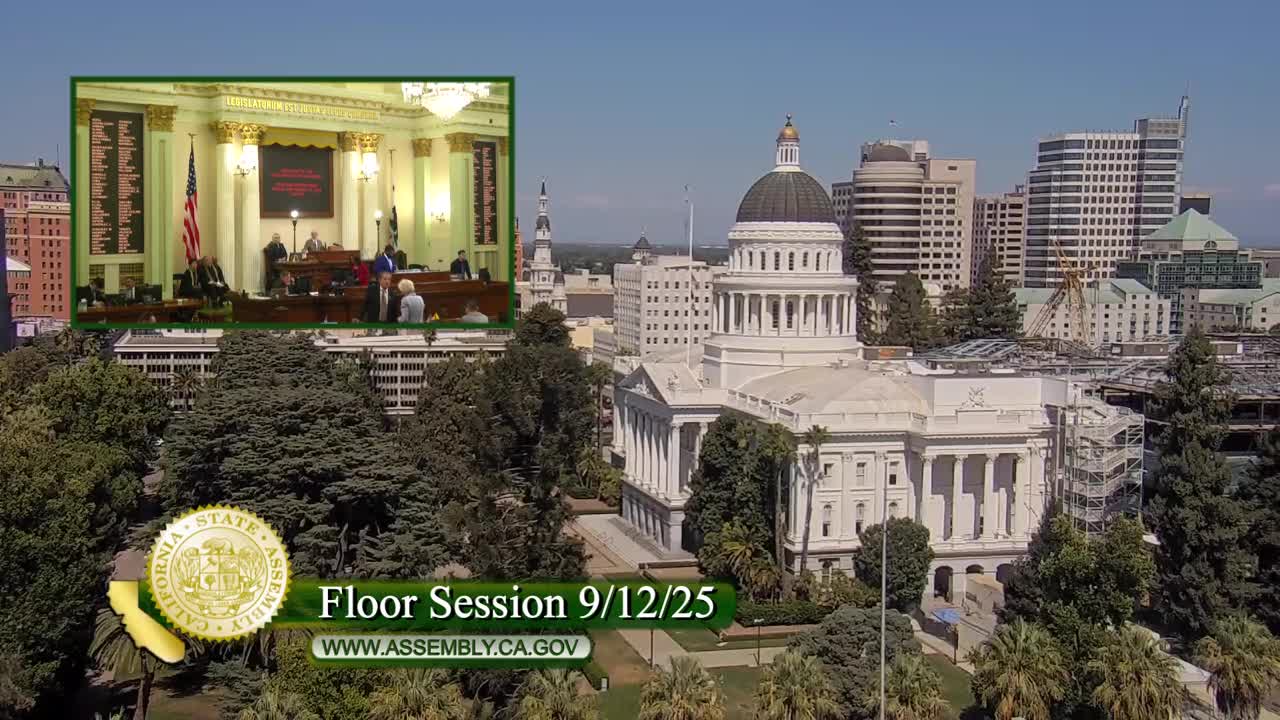 1MIN
Assembly Floor
 5MIN
Assembly Standing Committee on Governmental Organization
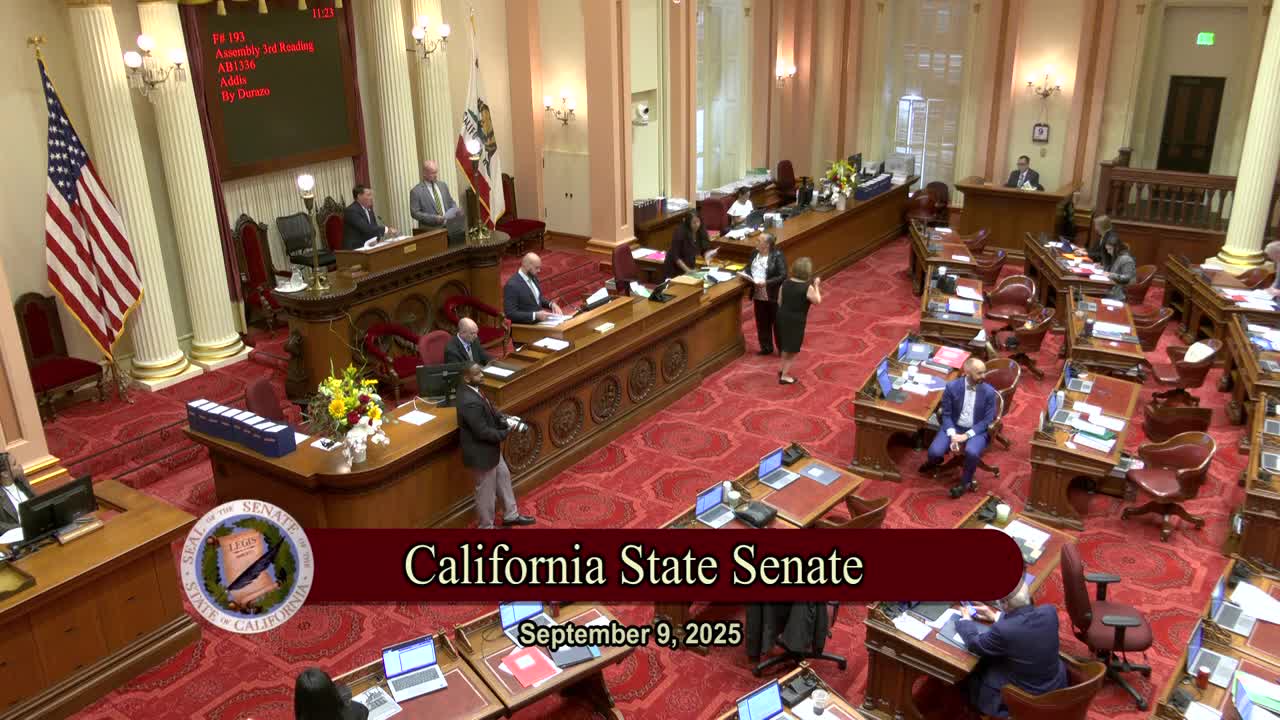 2MIN
Senate Floor
 49SEC
Senate Standing Committee on Appropriations
 13MIN
Senate Standing Committee on Judiciary
 13MIN
Senate Standing Committee on Transportation
 57SEC
Assembly Floor
 6MIN
Assembly Standing Committee on Governmental Organization


Bill Co-Author(s):