AB 774: Civil actions: enforcement of judgments.
- Session Year: 2025-2026
- House: Assembly
- Latest Version Date: 2025-10-13
Current Status:
Passed
(2025-10-13: Chaptered by Secretary of State - Chapter 708, Statutes of 2025.)
Introduced
In Committee
Awaiting First Chamber Vote
Passed First Chamber
In Committee
Awaiting Second Chamber Vote
Passed Second Chamber
Enacted
(1)Existing law specifies procedures and requirements for a levying officer to serve documents, including a writ of execution issued by a court, on a judgment debtor. If the judgment upon which the writ is issued is for personal debt, the judgment creditor must provide the levying officer with a declaration stating that they have verified the judgment debtors address and specifying the method of verification. Existing law requires a judgment creditor to file with the court the declaration within 5 business days after delivering it to the levying officer. Existing law also requires a judgment creditor executing a levy on the earnings of an employee to serve the earnings withholding order on both the judgment debtor employee and their employer.
This bill would specify that transmittal of a legal pleading by first-class mail, certified mail, or other method of transmission through the United States Postal Service providing a return receipt, as specified, is a permissible method of verification. The bill would instead require the judgment creditor to file with the court the declaration described above within 10 business days after delivering it to the levying officer. The bill would also permit the declaration to be signed by an individual with adequate knowledge of the verification process, including a custodian of records or an attorney for the judgment creditor. The bill would delete the requirement that a judgment creditor executing a levy on the earnings of an employee serve the earnings withholding order on the employee.
(2)Existing law authorizes a judgment creditor to levy upon the property of a judgment debtor to satisfy a judgment, and authorizes the judgment debtor to claim that certain property is exempt from the levy by following a specified procedure. Existing law authorizes a claimant to file a claim of exemption with the levying officer either in person or by mail. The period for filing a claim of exemption is 15 days if the judgment debtor is personally served with a notice of levy on the property claimed to be exempt, and 20 days if the claimant is served with notice by mail. Existing law deems the filing by mail complete on the date the claim is postmarked if the mailing is assigned a tracking number. If the mailing is not assigned a tracking number, the filing by mail is deemed complete on the date the claim is received by the levying officer. Existing law authorizes a judgment creditor who opposes a claim of exemption to file a notice of opposition to the claim and a notice of motion for an order determining the claim within 15 days after service of the notice of claim of exemption.
This bill would authorize, for a personal debt as specified by law, a claimant to file a claim of exemption more than 20 days after the date the notice of levy is served on the judgment debtor. The bill would permit a levying officer to release the funds to the judgment creditor at any time after the expiration of the 20-day period.
(3)Existing law specifies various procedures and requirements for a judgment debtor to claim exemptions to property that has been levied upon to satisfy a judgment. Existing law places the burden of proof on the claimant at a hearing to determine the claim of exemption. If the judgment upon which a writ of execution is issued is for personal debt, a court must order the return of any property that was exempt without the need for a claim or that would have been exempt by a claim of exemption, and that was levied upon within specified periods. Existing law specifies procedures and requirements for a money judgment to be satisfied and for the court to enter a satisfaction of judgment.
This bill would clarify that the filing of an ex parte application in lieu of a motion for purposes of the procedures described above does not constitute a general appearance for purposes of a court exercising its jurisdiction over a party.
(4)Existing law, the Wage Garnishment Law, authorizes a levy of execution on an employees earnings by service of an earnings withholding order by the levying officer or the employer and requires the employer to provide the judgment debtor a copy of the earnings withholding order and notice of the earnings withholding order, as specified. Existing law requires the employer to complete an employers return and return it to the levying officer. Under existing law, the employers return and the form for its return are required to set forth specified information, including the name, address, and, if known, the judgment debtors social security number.
This bill would require the employers return to include information setting forth the date on which the employer provided the judgment debtor with the earnings withholding order and the notice of earnings withholding order, the name and title of the person who provided the order and notice, and a short description of the manner in which the order and notice were provided.
(5)Existing law authorizes a judgment creditor to enforce a money judgment by creating a judgment lien on the real or personal property of a judgment debtor. These judgment liens continue in existence for a specified time or until the money judgment is satisfied or the judgment creditor releases the lien. Existing law also authorizes a judgment creditor to enforce a money judgment by a writ of execution, pursuant to which a levying officer takes possession of the judgment debtors property to satisfy the judgment. Existing law authorizes a judgment debtor to exempt certain property, and, if the judgment is for personal debt, as defined, requires a court to order the judgment creditor to return to the judgment debtor any exempt property of the judgment creditor that was levied upon, as specified.
This bill would authorize a judgment creditor to apply to the court for reinstatement of a released lien and its priority at the time of cancellation, as specified. The bill would require a court to enter in the courts records that the judgment is no longer satisfied to the extent of the returned funds or property, and to issue to the judgment creditor a certificate and notice of reinstatement of judgment lien as specified. The bill would require the application for reinstatement of a lien to be filed with a declaration by the judgment creditor that certifies specified information, including, among other things, that the judgment creditor released a lien with the reasonable belief that the money judgment was satisfied and the date and amount of the original judgment and any renewals thereof. The bill would impose a civil penalty of not more than $1,500 for knowingly certifying false information in the judgment creditors declaration. The bill would give the judgment debtor an opportunity to object and, if an objection is filed, require the judgment creditor to proceed with a noticed motion for reinstatement of the lien. These provisions of the bill would become operative on July 1, 2026.
(1)Existing law specifies procedures and requirements for a levying officer to serve documents, including a writ of execution issued by a court, on a judgment debtor. If the judgment upon which the writ is issued is for personal debt, the judgment creditor must provide the levying officer with a declaration stating that they have verified the judgment debtors address and specifying the method of verification. Existing law requires a judgment creditor to file with the court the declaration within 5 business days after delivering it to the levying officer. Existing law also requires a judgment creditor executing a levy on the earnings of an employee to serve the earnings withholding order on both the judgment debtor employee and their employer.
This bill would specify that transmittal of a legal pleading by first-class mail, certified mail, or other method of transmission through the United States Postal Service providing a return receipt, as specified, is a permissible method of verification. The bill would instead require the judgment creditor to file with the court the declaration described above within 10 business days after delivering it to the levying officer. The bill would also permit the declaration to be signed by an individual with adequate knowledge of the verification process, including a custodian of records or an attorney for the judgment creditor. The bill would delete the requirement that a judgment creditor executing a levy on the earnings of an employee serve the earnings withholding order on the employee.
(2)Existing law authorizes a judgment creditor to levy upon the property of a judgment debtor to satisfy a judgment, and authorizes the judgment debtor to claim that certain property is exempt from the levy by following a specified procedure. Existing law authorizes a claimant to file a claim of exemption with the levying officer either in person or by mail. The period for filing a claim of exemption is 15 days if the judgment debtor is personally served with a notice of levy on the property claimed to be exempt, and 20 days if the claimant is served with notice by mail. Existing law deems the filing by mail complete on the date the claim is postmarked if the mailing is assigned a tracking number. If the mailing is not assigned a tracking number, the filing by mail is deemed complete on the date the claim is received by the levying officer. Existing law authorizes a judgment creditor who opposes a claim of exemption to file a notice of opposition to the claim and a notice of motion for an order determining the claim within 15 days after service of the notice of claim of exemption.
This bill would authorize, for a personal debt as specified by law, a claimant to file a claim of exemption more than 20 days after the date the notice of levy is served on the judgment debtor. The bill would permit a levying officer to release the funds to the judgment creditor at any time after the expiration of the 20-day period.
(2)(3)Existing law specifies various procedures and requirements for a judgment debtor to claim exemptions to property that has been levied upon to satisfy a judgment. Existing law places the burden of proof on the claimant at a hearing to determine the claim of exemption. If the judgment upon which a writ of execution is issued is for personal debt, a court must order the return of any property that was exempt without the need for a claim or that would have been exempt by a claim of exemption, and that was levied upon within specified periods. Existing law specifies procedures and requirements for a money judgment to be satisfied and for the court to enter a satisfaction of judgment.
This bill would clarify that the filing of an ex parte application in lieu of a motion for purposes of the procedures described above does not constitute a general appearance for purposes of a court exercising its jurisdiction over a party.
(4)Existing law, the Wage Garnishment Law, authorizes a levy of execution on an employees earnings by service of an earnings withholding order by the levying officer or the employer and requires the employer to provide the judgment debtor a copy of the earnings withholding order and notice of the earnings withholding order, as specified. Existing law requires the employer to complete an employers return and return it to the levying officer. Under existing law, the employers return and the form for its return are required to set forth specified information, including the name, address, and, if known, the judgment debtors social security number.
This bill would require the employers return to include information setting forth the date on which the employer provided the judgment debtor with the earnings withholding order and notice of earnings withholding order, the name and title of the person who provided the order and notice, and a description of the manner in which the order and notice were provided.
(5)Existing law authorizes a judgment creditor to enforce a money judgment by creating a judgment lien on the real or personal property of a judgment debtor. These judgment liens continue in existence for a specified time or until the money judgment is satisfied or the judgment creditor releases the lien. Existing law also authorizes a judgment creditor to enforce a money judgment by a writ of execution, pursuant to which a levying officer takes possession of the judgment debtors property to satisfy the judgment. Existing law authorizes a judgment debtor to exempt certain property, and, if the judgment is for personal debt, as defined, requires a court to order the judgment creditor to return to the judgment debtor any exempt property of the judgment creditor that was levied upon, as specified.
This bill would authorize a judgment creditor to apply to the court for reinstatement of a released lien and its priority at the time of cancellation, as specified. The bill would require a court to enter in the court records that the judgment is no longer satisfied to the extent of the returned funds or property, and to issue to the judgment creditor a certificate and notice of reinstatement of judgment lien as specified. The bill would require the application for reinstatement of a lien to be filed with a declaration by the judgment creditor that certifies specified information, including, among other things, that the judgment creditor released a lien with the reasonable belief that the money judgment was satisfied and the date and amount of the original judgment and any renewals thereof. The bill would impose a civil penalty of not more than $1,500 for knowingly certifying false information in the judgment creditors declaration. The bill would give the judgment debtor an opportunity to object and, if an objection is filed, require the judgment creditor to proceed with a noticed motion for reinstatement of the lien. These provisions of the bill would become operative on July 1, 2026.
(1)Existing law specifies procedures and requirements for a levying officer to serve documents, including a writ of execution issued by a court, on a judgment debtor. If the judgment upon which the writ is issued is for personal debt, the judgment creditor must provide the levying officer with a declaration stating that they have verified the judgment debtors address and specifying the method of verification. Existing law requires a judgment creditor to file with the court the declaration within 5 business days after delivering it to the levying officer. Existing law also requires a judgment creditor executing a levy on the earnings of an employee to serve the earnings withholding order on both the judgment debtor employee and their employer.
This bill would specify that transmittal of a legal pleading by first-class mail, certified mail, or other method of transmission through the United States Postal Service providing a return receipt, as specified, is a permissible method of verification. The bill would instead require the judgment creditor to file with the court the declaration described above within 10 business days after delivering it to the levying officer. The bill would also permit the declaration to be signed by an individual with adequate knowledge of the verification process, including a custodian of records or an attorney for the judgment creditor. The bill would delete the requirement that a judgment creditor executing a levy on the earnings of an employee serve the earnings withholding order on the employee.
(2)Existing law specifies various procedures and requirements for a judgment debtor to claim exemptions to property that has been levied upon to satisfy a judgment. Existing law places the burden of proof on the claimant at a hearing to determine the claim of exemption. If the judgment upon which a writ of execution is issued is for personal debt, a court must order the return of any property that was exempt without the need for a claim or that would have been exempt by a claim of exemption, and that was levied upon within specified periods. Existing law specifies procedures and requirements for a money judgment to be satisfied and for the court to enter a satisfaction of judgment.
This bill would clarify that the filing of an ex parte application in lieu of a motion for purposes of the procedures described above does not constitute a general appearance for purposes of a court exercising its jurisdiction over a party.
Existing law establishes various requirements and limitations on civil actions, civil procedure, the courts, and related matters, as specified.This bill would express the intent of the Legislature to enact legislation relating to civil procedure.Existing law establishes various requirements and limitations on civil actions, civil procedure, the courts, and related matters, as specified.
This bill would express the intent of the Legislature to enact legislation relating to civil procedure.
(a)If the levying officer is required by any provision of this title to serve any writ, order, notice, or other paper on any person, the judgment creditor shall include in the instructions to the levying officer the correct name and address of the person. The judgment creditor shall use reasonable diligence to ascertain the correct name and address of the person.
(b)(1)Where the judgment upon which the writ is issued is for personal debt, as defined in subdivision (d) of Section 683.110, this subdivision shall apply.
(2)The judgment creditor shall also provide the levying officer with a declaration stating that the judgment creditor has verified using reasonable diligence within the past 12 months that the judgment debtors address is correct to the best of the declarants knowledge, and describing the verification dates and the methods used, which may include, but are not limited to, the following methods:
(A)Receipt of correspondence from the judgment debtor, dated no more than 12 months before the execution of the declaration, that includes a return address or other comparable verification of the judgment debtors address.
(B)Transmittal of a letter or legal pleading by certified mail, or other method of transmission through the United States Postal Service providing a return receipt, to the judgment debtors address, with a return receipt dated no more than 12 months before the execution of the declaration that is signed by the judgment debtor.
(C)Verification of the judgment debtors current address by a commercial address verification service, including skip-tracing, or, if reasonably available, a public record database, followed by dispatch of a letter or legal pleading, by first-class mail to the verified address, that was not returned to sender.
(3)The levying officer shall not accept or serve any writ, order, notice, or other paper on any person if the judgment creditor fails to provide a declaration as described in paragraph (2).
(4)Upon notice by the judgment debtor that the requirements of this section have not been met, the court shall stay the notice of levy or earnings withholding order until the requirements of this section have been satisfied.
(5)The judgment creditors cost of verification of the judgment debtors address is not recoverable.
(6)The judgment creditor shall file with the court the signed declaration within 10 business days after delivering the declaration to the levying officer.
(7)The declaration required by this section may be signed by any individual with adequate knowledge of the verification, including, but not limited to, a custodian of records. If the judgment creditor is represented by an attorney, the declaration may be signed by any employee of the attorney or the attorneys law firm with adequate knowledge of the verification, including, but not limited to, a custodian of records.
(c)Unless the levying officer has actual knowledge that the name or address included in the instructions is incorrect, the levying officer shall rely on the instructions in serving the writ, order, notice, or other paper on the person.
SEC. 2.Section 697.420 is added to the Code of Civil Procedure, to read:697.420.(a)A judgment creditor may apply to the court for an order reinstating a judgment lien on real property with the same priority it held immediately before it was released. Subject to subdivisions (b) and (c), the court shall grant the application. Upon entry of the order the clerk shall do the following:
(1)Note in the courts records that the judgment is no longer satisfied to the extent of the returned funds or property.
(2)Issue to the judgment creditor a certificate and notice of reinstatement of judgment lien. The certificate of reinstatement of judgment lien shall identify the judgment and parties, the unsatisfied judgment amount, and the relevant recording or filing information from the original abstract of judgment.
(b)(1)The application for reinstatement of a lien under subdivision (a) shall be filed with a declaration by the judgment creditor that includes and certifies all of the following:
(A)The title of the court, the case name and number, and the date and amount of the original judgment and any renewals thereof.
(B)A statement that the judgment creditor released a lien or liens in the reasonable belief that the money judgment was satisfied. This statement shall include:
(i)Information sufficient to identify the liens that were released, including the county or counties in which an abstract of judgment was recorded, and the recording dates and numbers of those recordings.
(ii)The details of any acknowledgment of full or partial satisfaction of judgment that was filed or entered as a result of the prior application of funds, including the date, county, and recording number of any acknowledgment of full or partial satisfaction of judgment recorded by the judgment creditor.
(C)A statement that after a lien was released, the judgment creditor was ordered pursuant to paragraph (2) or (3) of subdivision (d) of Section 703.580 to return to the judgment debtor property levied or wages garnished in satisfaction of the money judgment. A copy of the order shall be attached as an exhibit to the declaration.
(D)A statement that the judgment creditor returned, and the judgment debtor received, all property and wages ordered returned.
(E)A statement that but for the courts order pursuant to paragraph (2) or (3) of subdivision (d) of Section 703.580, the money judgment would have been fully satisfied or that the property returned to the judgment creditor was identified in a recorded acknowledgment of full or partial satisfaction of judgment.
(F)A statement that the judgment creditor is not appealing the order to return funds pursuant to subdivision (d) of Section 703.580.
(2)Knowingly certifying the accuracy of false information under paragraph (1) shall be subject to a civil penalty of not more than one thousand five hundred dollars ($1,500).
(c)(1)The judgment creditor shall serve upon the judgment debtor by first-class mail to the address verified pursuant to paragraph (2) of subdivision (b) of Section 684.130 a copy of the application for an order reinstating a released lien.
(2)The judgment debtor may, within 15 days of service of the application, file a declaration stating that the funds or property identified by the judgment debtor pursuant to subparagraph (D) of paragraph (1) of subdivision (b) have not been returned.
(3)If a declaration under paragraph (2) is filed, the court shall deny the application and the judgment creditor shall file a noticed motion to be heard by the court in order to reinstate a lien and its priority.
(4)If no objection is filed under this subdivision, the clerks reinstatement of the lien and its priority shall be automatically effective.
(d)An application under this section shall be filed in the action in which the judgment creditor was ordered, pursuant to paragraph (2) or (3) of subdivision (d) of Section 703.580, to return to the judgment debtor property levied or wages garnished in satisfaction of the money judgment.
(e)Attorneys fees are not recoverable under this section.
(f)The judgment creditor may record the certificate in the same manner as an abstract of judgment, and that recordation shall have the effect of restoring the liens priority as if the prior release or satisfaction had not occurred.
(g)This section shall become operative on July 1, 2026.
SEC. 3.Section 697.680 is added to the Code of Civil Procedure, to read:697.680.(a)A judgment creditor may apply to the court for an order reinstating a released lien on personal property and its priority at the time of cancellation. Subject to subdivisions (b) and (c), the court shall order the reinstatement of a lien with the same priority that it held at the time of cancellation. Upon entry of the order the clerk shall do the following:
(1)Note in the courts records that the judgment is no longer satisfied to the extent of the returned funds or property.
(2)Issue to the judgment creditor a certificate and notice of reinstatement of judgment lien. The certificate of reinstatement of judgment lien shall identify the judgment and parties, the unsatisfied judgment amount, and the filing number and date of the original notice of judgment lien filed with the Secretary of State.
(b)(1)The application for reinstatement of a lien under subdivision (a) shall be filed with a declaration by the judgment creditor that includes and certifies all of the following:
(A)The title of the court, the case name and number, and the date and amount of the original judgment and any renewals thereof.
(B)A statement that the judgment creditor released a lien or liens in the reasonable belief that the money judgment was satisfied. This statement shall include:
(i)Information sufficient to identify the liens that were released, including the county or counties in which an abstract of judgment was recorded, the recording dates and numbers of those recordings and, if applicable, the filing date and number of any notice of judgment lien on personal property that was filed with the Secretary of State.
(ii)The details of any acknowledgment of full or partial satisfaction of judgment that was filed or entered as a result of the prior application of funds, including the date, county, and recording number of any acknowledgment of full or partial satisfaction of judgment recorded by the judgment creditor.
(C)A statement that after a lien was released, the judgment creditor was ordered pursuant to paragraph (2) or (3) of subdivision (d) of Section 703.580 to return to the judgment debtor property levied or wages garnished in satisfaction of the money judgment. A copy of the order shall be attached as an exhibit to the declaration.
(D)A statement that the judgment creditor returned, and the judgment debtor received, all property and wages ordered returned.
(E)A statement that but for the courts order pursuant to paragraph (2) or (3) of subdivision (d) of Section 703.580, the money judgment would have been fully satisfied or that the property returned to the judgment creditor was identified in a recorded acknowledgment of full or partial satisfaction of judgment.
(F)A statement that the judgment creditor is not appealing the order to return funds pursuant to subdivision (d) of Section 703.580.
(2)knowingly providing false information shall be subject to a civil penalty in an amount up to $1,500
(c)(1)The judgment creditor shall serve upon the judgment debtor by first-class mail to the address verified pursuant to paragraph (2) of subdivision (b) of Section 684.130 a copy of the application for an order reinstating a released lien.
(2)The judgment debtor may, within 15 days of service of the application, file a declaration stating that the funds or property identified by the judgment debtor pursuant to subparagraph (D) of paragraph (1) of subdivision (b) have not been returned.
(3)If a declaration under paragraph (2) is filed, the court shall deny the application and the judgment creditor shall file a noticed motion to be heard by the court in order to reinstate a lien and its priority.
(4)If no objection is filed, the clerks reinstatement of the lien and its priority shall be automatically effective.
(d)An application under this section shall be filed in the action in which the judgment creditor was ordered, pursuant to paragraph (2) or (3) of subdivision (d) of Section 703.580, to return to the judgment debtor property levied or wages garnished in satisfaction of the money judgment.
(e)Attorneys fees are not recoverable under this section.
(f)The judgment creditor may record the certificate in the same manner as an abstract of judgment, and that recordation shall have the effect of restoring the liens priority as if the prior release or satisfaction had not occurred.
(g)This section shall become operative on July 1, 2026.
SEC. 4.Section 703.520 of the Code of Civil Procedure is amended to read:703.520.(a)The claimant may make a claim of exemption by filing with the levying officer, either in person or by mail, a claim of exemption together with a copy of the claim. If the claimant is personally served, the claim shall be made within 15 days after the date the notice of levy on the property claimed to be exempt is served on the judgment debtor. If the claimant is served by mail, the claim shall be made within 20 days after the date the notice of levy on the property claimed to be exempt is served on the judgment debtor. If the claim is filed by mail and assigned a tracking number by the United States Postal Service or another common carrier, the filing shall be deemed complete on the date the claim is postmarked. If the claim is filed by mail and not assigned a tracking number, the filing shall be deemed complete on the date the claim is received by the levying officer.
(b)The claim of exemption shall be executed under oath and shall include all of the following:
(1)The name of the claimant and the mailing address where service of a notice of opposition to the claim may be made upon the claimant.
(2)The name and last known address of the judgment debtor if the claimant is not the judgment debtor.
(3)A description of the property claimed to be exempt. If an exemption is claimed pursuant to Section 704.010 or 704.060, the claimant shall describe all other property of the same type, including exempt proceeds of the property of the same type, owned by the judgment debtor alone or in combination with others on the date of levy and identify the property, whether or not levied upon, to which the exemption is to be applied. If an exemption is claimed pursuant to subdivision (b) of Section 704.100, the claimant shall state the nature and amount of all other property of the same type owned by the judgment debtor or the spouse of the judgment debtor alone or in combination with others on the date of levy.
(4)A financial statement if required by Section 703.530.
(5)A citation of the provision of this chapter or other statute upon which the claim is based.
(6)A statement of the facts necessary to support the claim.
(c)Notwithstanding subdivision (a), for a personal debt as defined in subdivision (d) of Section 683.110, a claimant may file a claim of exemption more than 20 days after the date the notice of levy is served on the judgment debtor pursuant to Sections 703.580 and 706.105. The levying officer may, nonetheless, release the funds to the judgment creditor at any time after the expiration of the 20-day period.
SEC. 5.Section 703.570 of the Code of Civil Procedure is amended to read:703.570.(a)(1)The hearing on the motion shall be held not later than 30 days from the date the notice of motion was filed with the court unless continued by the court for good cause. Where the judgment upon which the writ is issued is for personal debt, as defined in subdivision (d) of Section 683.110, if the hearing is delayed by the court and cannot be set within 30 days of notice of the motion, a party may seek by ex parte application, and the court shall issue, an order staying any levy or garnishment with respect to the property subject to the claim of exemption until the hearing occurs.
(2)The filing of an ex parte application under this section is not a general appearance and shall not constitute a waiver of the right to bring a motion under Section 418.10.
(b)Not less than 10 days prior to the hearing, the judgment creditor shall serve a notice of the hearing and a copy of the notice of opposition to the claim of exemption on the claimant and on the judgment debtor, if other than the claimant. Service shall be made personally or by mail.
SEC. 6.Section 706.021 of the Code of Civil Procedure is amended to read:706.021.Notwithstanding any other provision of this title, a levy of execution upon the earnings of an employee shall be made by service of an earnings withholding order upon the judgment debtors employer in accordance with this chapter.
SEC. 7.Section 706.022 of the Code of Civil Procedure is amended to read:706.022.(a)A judgment creditor shall not enforce an earnings withholding order beyond the period of enforceability as defined in Section 683.020 or, if renewed, as provided for in subdivision (c) of Section 683.120. As used in this section, withholding period means the period which commences on the 30th day after service of an earnings withholding order upon the judgment debtors employer. If a claim of exemption is filed with the levying officer, and the employer is given actual notice before the close of business on the 29th day after the service of the earnings withholding order on the judgment debtors employer, the withholding period commences on the 45th day after service of the earnings withholding order on the judgment debtors employer. The withholding period shall continue until the earliest of the following dates:
(1)The date the employer has withheld the full amount required to satisfy the order.
(2)The date of termination specified in a court order served on the employer.
(3)The date of termination specified in a notice of termination served on the employer by the levying officer.
(4)The date of termination of a dormant or suspended earnings withholding order as determined pursuant to Section 706.032.
(b)Except as otherwise provided by statute, an employer shall withhold the amounts required by an earnings withholding order from all earnings of the employee payable for any pay period of the employee which ends during the withholding period.
(c)An employer is not liable for any amounts withheld and paid over to the levying officer pursuant to an earnings withholding order prior to service upon the employer pursuant to paragraph (2) or (3) of subdivision (a).
SEC. 8.Section 706.105 of the Code of Civil Procedure is amended to read:706.105.(a)A judgment debtor may claim an exemption under Section 706.051 under either of the following circumstances:
(1)No prior hearing has been held with respect to the earnings withholding order.
(2)There has been a material change in circumstances since the time of the last prior hearing on the earnings withholding order.
(b)A claim of exemption shall be made by filing with the levying officer an original and one copy of (1) the judgment debtors claim of exemption and (2) the judgment debtors financial statement.
(c)Upon filing of the claim of exemption, the levying officer shall promptly send to the judgment creditor, at the address stated in the application for the earnings withholding order, by first-class mail, postage prepaid, all of the following:
(1)A copy of the claim of exemption.
(2)A copy of the financial statement.
(3)A notice of claim of exemption. The notice shall state that the claim of exemption has been filed and that the earnings withholding order will be terminated, or modified to reflect the amount of earnings claimed to be exempt in the claim of exemption, unless a notice of opposition to the claim of exemption is filed with the levying officer by the judgment creditor within 10 days after the date of the mailing of the notice of claim of exemption.
(d)A judgment creditor who desires to contest a claim of exemption shall, within 10 days after the date of the mailing of the notice of claim of exemption, file with the levying officer a notice of opposition to the claim of exemption.
(e)(1)If a notice of opposition to the claim of exemption is filed with the levying officer within the 10-day period, the judgment creditor is entitled to a hearing on the claim of exemption. If the judgment creditor desires a hearing on the claim of exemption, the judgment creditor shall file a notice of motion for an order determining the claim of exemption with the court within 10 days after the date the levying officer mailed the notice of claim of exemption. If the notice of motion is so filed, the hearing on the motion shall be held not later than 30 days from the date the notice of motion was filed unless continued by the court for good cause. Where the judgment upon which the writ is issued is for personal debt, as defined in subdivision (d) of Section 683.110, if the hearing is delayed by the court and cannot be set within 30 days of notice of the motion, a party may seek by ex parte application, and the court shall issue, an order staying any levy or garnishment with respect to the property subject to the claim of exemption until the hearing occurs. At the time prescribed by subdivision (b) of Section 1005, the judgment creditor shall give written notice of the hearing to the levying officer and shall serve a notice of the hearing and a copy of the notice of opposition to the claim of exemption on the judgment debtor and, if the claim of exemption so requested, on the attorney for the judgment debtor. Service is deemed made when the notice of the hearing and a copy of the notice of opposition to the claim of exemption are deposited in the mail, postage prepaid, addressed to the judgment debtor at the address stated in the claim of exemption and, if service on the attorney for the judgment debtor was requested in the claim of exemption, to the attorney at the address stated in the claim of exemption. The judgment creditor shall file proof of the service with the court. After receiving the notice of the hearing and before the date set for the hearing, the levying officer shall file the claim of exemption and the notice of opposition to the claim of exemption with the court.
(2)The filing of an ex parte application under this section is not a general appearance and shall not constitute a waiver of the right to bring a motion under Section 418.10.
(f)If the levying officer does not receive a notice of opposition to the claim of exemption within the 10-day period after the date of mailing of the notice of claim of exemption and a notice of the hearing not later than 10 days after the filing of the notice of opposition to the claim of exemption, the levying officer shall serve on the employer one of the following:
(1)A notice that the earnings withholding order has been terminated if all of the judgment debtors earnings were claimed to be exempt.
(2)A modified earnings withholding order that reflects the amount of earnings claimed to be exempt in the claim of exemption if only a portion of the judgment debtors earnings was claimed to be exempt.
(g)If, after hearing, the court orders that the earnings withholding order be modified or terminated, the clerk shall promptly transmit a certified copy of the order to the levying officer who shall promptly serve on the employer of the judgment debtor (1) a copy of the modified earnings withholding order or (2) a notice that the earnings withholding order has been terminated.
(1)Where the judgment debtors wages are exempt without making a claim, the court shall terminate or modify the earnings withholding order, and shall order the return by a date certain of all of the judgment debtors exempt wages. Where the judgment upon which the writ is issued is for personal debt, as defined in subdivision (d) of Section 683.110, the court shall order the return by a date certain of any wages that were exempt without the need for a claim and that were garnished for up to 12 months preceding the date of the order on the claim of exemption. This paragraph does not limit a judges authority to order, for good cause, the return of any exempt property taken more than 12 months preceding the date of the order on the claim of exemption.
(2)Where the judgment debtors wages are exempt as the result of a claim of exemption, the court shall terminate or modify the earnings withholding order, and shall order the return by a date certain of all of the judgment debtors exempt wages. Where the judgment upon which the writ is issued is for personal debt, as defined in subdivision (d) of Section 683.110, the court shall order the return by a date certain any wages that the debtor has demonstrated would have been exempt by claim of exemption and that were garnished for up to six months preceding the date of the order on the claim of exemption. This paragraph does not limit a judges authority to order, for good cause, the return of any exempt property taken more than six months preceding the date of the order on the claim of exemption.
(3)If the court determines that any amount withheld pursuant to the earnings withholding order should be paid to the judgment debtor, the court shall order the levying officer, judgment creditor, or other person, who is in possession of the property, to return the exempt property to the judgment debtor. A levying officer shall return the exempt property within 20 business days of receipt of notice of the order. A judgment creditor shall return the exempt property within 10 business days of entry of the order.
(h)If the earnings withholding order is terminated by the court, unless the court otherwise orders or unless there is a material change of circumstances since the time of the last prior hearing on the earnings withholding order, the judgment creditor may not apply for another earnings withholding order directed to the same employer with respect to the same judgment debtor for a period of 100 days following the date of service of the earnings withholding order or 60 days after the date of the termination of the order, whichever is later. Where the judgment upon which the writ is issued is for personal debt, as defined in subdivision (d) of Section 683.110, the judgment creditor may not apply for another earnings withholding order directed to the same employer with respect to the same judgment debtor for a period of 100 days following the date of service of the earnings withholding order or 60 days after the date of the termination of the order, whichever is later.
(i)If an employer has withheld and paid over amounts pursuant to an earnings withholding order after the date of termination of the order but prior to the receipt of notice of its termination, the judgment debtor may recover those amounts only from the levying officer if the levying officer still holds those amounts or, if those amounts have been paid over to the judgment creditor, from the judgment creditor. If the employer has withheld amounts pursuant to an earnings withholding order after termination of the order but has not paid over those amounts to the levying officer, the employer shall pay those amounts to the judgment debtor within five business days of the end of the next pay period.
(j)An appeal lies from any court order under this section denying a claim of exemption or modifying or terminating an earnings withholding order. An appeal by the judgment creditor from an order modifying or terminating the earnings withholding order does not stay the order from which the appeal is taken. Notwithstanding the appeal, until the order modifying or terminating the earnings withholding order is set aside or modified, the order allowing the claim of exemption in whole or in part shall be given the same effect as if the appeal had not been taken.
(k)This section does not apply to a withholding order for support or a withholding order for taxes.
SEC. 9.Section 706.126 of the Code of Civil Procedure is amended to read:706.126.(a)The employers return shall be executed under oath. The form for the return provided to the employer shall state all of the following information:
(1)The name and address of the levying officer to whom the form is to be returned.
(2)A direction that the form be mailed to the levying officer by first-class mail, postage prepaid, no later than 15 days after the date of service of the earnings withholding order.
(3)The name, the address, and, if known, the social security number of the judgment debtor.
(b)In addition, the employers return form shall require the employer to supply all of the following information:
(1)The date the earnings withholding order was served on the employer.
(2)Whether the judgment debtor is employed by the employer or whether the employer otherwise owes earnings to the employee.
(3)If the judgment debtor is employed by the employer or the employer otherwise owes earnings to the employee, the amount of the employees earnings for the last pay period and the length of this pay period.
(4)Whether the employer was required on the date of service to comply with an earlier earnings withholding order and, if so, the name of the judgment creditor who secured the earlier order, the levying officer who served such order, the date it was issued, the date it was served, the expiration date of such order, and which of the earnings withholding orders the employer is required to comply with under the applicable statutory rules concerning the priority of such orders.
(5)Whether the employer was required on the date of service to comply with an earnings assignment order for support and, if so, the court which issued such assignment order and the date it was issued and any other information the Judicial Council determines is needed to identify the order.
(6)The name and address of the person to whom notices to the employer are to be sent.
(7)The date on which the employer provided the employee a copy of the earnings withholding order and the notice of earnings withholding order, the name and title of the person who provided the order and notice, and a short description of the manner in which the order and notice were provided.
(a)If the levying officer is required by any provision of this title to serve any writ, order, notice, or other paper on any person, the judgment creditor shall include in the instructions to the levying officer the correct name and address of the person. The judgment creditor shall use reasonable diligence to ascertain the correct name and address of the person.
(b)(1)Where the judgment upon which the writ is issued is for personal debt, as defined in subdivision (d) of Section 683.110, this subdivision shall apply.
(2)The judgment creditor shall also provide the levying officer with a declaration stating that the judgment creditor has verified using reasonable diligence within the past 12 months that the judgment debtors address is correct to the best of the declarants knowledge, and describing the verification dates and the methods used, which may include, but are not limited to, the following methods:
(A)Receipt of correspondence from the judgment debtor, dated no more than 12 months before the execution of the declaration, that includes a return address or other comparable verification of the judgment debtors address.
(B)Transmittal of a letter or legal pleading by certified mail, or other method of transmission through the United States Postal Service providing a return receipt, to the judgment debtors address, with a return receipt dated no more than 12 months before the execution of the declaration that is signed by the judgment debtor.
(C)Verification of the judgment debtors current address by a commercial address verification service, including skip-tracing, or, if reasonably available, a public record database, followed by dispatch of a letter or legal pleading, by first-class mail to the verified address, that was not returned to sender.
(3)The levying officer shall not accept or serve any writ, order, notice, or other paper on any person if the judgment creditor fails to provide a declaration as described in paragraph (2).
(4)Upon notice by the judgment debtor that the requirements of this section have not been met, the court shall stay the notice of levy or earnings withholding order until the requirements of this section have been satisfied.
(5)The judgment creditors cost of verification of the judgment debtors address is not recoverable.
(6)The judgment creditor shall file with the court the signed declaration within 10 business days after delivering the declaration to the levying officer.
(7)The declaration required by this section may be signed by any individual with adequate knowledge of the verification, including, but not limited to, a custodian of records. If the judgment creditor is represented by an attorney, the declaration may be signed by any employee of the attorney or the attorneys law firm with adequate knowledge of the verification, including, but not limited to, a custodian of records.
(c)Unless the levying officer has actual knowledge that the name or address included in the instructions is incorrect, the levying officer shall rely on the instructions in serving the writ, order, notice, or other paper on the person.
SEC. 2.Section 697.420 is added to the Code of Civil Procedure, to read:697.420.(a)A judgment creditor may apply to the court for an order reinstating a judgment lien on real property with the same priority it held immediately before it was released. Subject to subdivisions (b) and (c), the court shall grant the application. Upon entry of the order the clerk shall do the following:
(1)Note in the courts records that the judgment is no longer satisfied to the extent of the returned funds or property.
(2)Issue to the judgment creditor a certificate and notice of reinstatement of judgment lien. The certificate of reinstatement of judgment lien shall identify the judgment and parties, the unsatisfied judgment amount, and the relevant recording or filing information from the original abstract of judgment.
(b)(1)The application for reinstatement of a lien under subdivision (a) shall be filed with a declaration by the judgment creditor that includes and certifies all of the following:
(A)The title of the court, the case name and number, and the date and amount of the original judgment and any renewals thereof.
(B)A statement that the judgment creditor released a lien or liens in the reasonable belief that the money judgment was satisfied. This statement shall include:
(i)Information sufficient to identify the liens that were released, including the county or counties in which an abstract of judgment was recorded, and the recording dates and numbers of those recordings.
(ii)The details of any acknowledgment of full or partial satisfaction of judgment that was filed or entered as a result of the prior application of funds, including the date, county, and recording number of any acknowledgment of full or partial satisfaction of judgment recorded by the judgment creditor.
(C)A statement that after a lien was released, the judgment creditor was ordered pursuant to paragraph (2) or (3) of subdivision (d) of Section 703.580 to return to the judgment debtor property levied or wages garnished in satisfaction of the money judgment. A copy of the order shall be attached as an exhibit to the declaration.
(D)A statement that the judgment creditor returned, and the judgment debtor received, all property and wages ordered returned.
(E)A statement that but for the courts order pursuant to paragraph (2) or (3) of subdivision (d) of Section 703.580, the money judgment would have been fully satisfied or that the property returned to the judgment creditor was identified in a recorded acknowledgment of full or partial satisfaction of judgment.
(F)A statement that the judgment creditor is not appealing the order to return funds pursuant to subdivision (d) of Section 703.580.
(2)Knowingly certifying the accuracy of false information under paragraph (1) shall be subject to a civil penalty of not more than one thousand five hundred dollars ($1,500).
(c)(1)The judgment creditor shall serve upon the judgment debtor by first-class mail to the address verified pursuant to paragraph (2) of subdivision (b) of Section 684.130 a copy of the application for an order reinstating a released lien.
(2)The judgment debtor may, within 15 days of service of the application, file a declaration stating that the funds or property identified by the judgment debtor pursuant to subparagraph (D) of paragraph (1) of subdivision (b) have not been returned.
(3)If a declaration under paragraph (2) is filed, the court shall deny the application and the judgment creditor shall file a noticed motion to be heard by the court in order to reinstate a lien and its priority.
(4)If no objection is filed under this subdivision, the clerks reinstatement of the lien and its priority shall be automatically effective.
(d)An application under this section shall be filed in the action in which the judgment creditor was ordered, pursuant to paragraph (2) or (3) of subdivision (d) of Section 703.580, to return to the judgment debtor property levied or wages garnished in satisfaction of the money judgment.
(e)Attorneys fees are not recoverable under this section.
(f)The judgment creditor may record the certificate in the same manner as an abstract of judgment, and that recordation shall have the effect of restoring the liens priority as if the prior release or satisfaction had not occurred.
(g)This section shall become operative on July 1, 2026.
SEC. 3.Section 697.680 is added to the Code of Civil Procedure, to read:697.680.(a)A judgment creditor may apply to the court for an order reinstating a released lien on personal property and its priority at the time of cancellation. Subject to subdivisions (b) and (c), the court shall order the reinstatement of a lien with the same priority that it held at the time of cancellation. Upon entry of the order the clerk shall do the following:
(1)Note in the courts records that the judgment is no longer satisfied to the extent of the returned funds or property.
(2)Issue to the judgment creditor a certificate and notice of reinstatement of judgment lien. The certificate of reinstatement of judgment lien shall identify the judgment and parties, the unsatisfied judgment amount, and the filing number and date of the original notice of judgment lien filed with the Secretary of State.
(b)(1)The application for reinstatement of a lien under subdivision (a) shall be filed with a declaration by the judgment creditor that includes and certifies all of the following:
(A)The title of the court, the case name and number, and the date and amount of the original judgment and any renewals thereof.
(B)A statement that the judgment creditor released a lien or liens in the reasonable belief that the money judgment was satisfied. This statement shall include:
(i)Information sufficient to identify the liens that were released, including the county or counties in which an abstract of judgment was recorded, the recording dates and numbers of those recordings and, if applicable, the filing date and number of any notice of judgment lien on personal property that was filed with the Secretary of State.
(ii)The details of any acknowledgment of full or partial satisfaction of judgment that was filed or entered as a result of the prior application of funds, including the date, county, and recording number of any acknowledgment of full or partial satisfaction of judgment recorded by the judgment creditor.
(C)A statement that after a lien was released, the judgment creditor was ordered pursuant to paragraph (2) or (3) of subdivision (d) of Section 703.580 to return to the judgment debtor property levied or wages garnished in satisfaction of the money judgment. A copy of the order shall be attached as an exhibit to the declaration.
(D)A statement that the judgment creditor returned, and the judgment debtor received, all property and wages ordered returned.
(E)A statement that but for the courts order pursuant to paragraph (2) or (3) of subdivision (d) of Section 703.580, the money judgment would have been fully satisfied or that the property returned to the judgment creditor was identified in a recorded acknowledgment of full or partial satisfaction of judgment.
(F)A statement that the judgment creditor is not appealing the order to return funds pursuant to subdivision (d) of Section 703.580.
(2)knowingly providing false information shall be subject to a civil penalty in an amount up to $1,500
(c)(1)The judgment creditor shall serve upon the judgment debtor by first-class mail to the address verified pursuant to paragraph (2) of subdivision (b) of Section 684.130 a copy of the application for an order reinstating a released lien.
(2)The judgment debtor may, within 15 days of service of the application, file a declaration stating that the funds or property identified by the judgment debtor pursuant to subparagraph (D) of paragraph (1) of subdivision (b) have not been returned.
(3)If a declaration under paragraph (2) is filed, the court shall deny the application and the judgment creditor shall file a noticed motion to be heard by the court in order to reinstate a lien and its priority.
(4)If no objection is filed, the clerks reinstatement of the lien and its priority shall be automatically effective.
(d)An application under this section shall be filed in the action in which the judgment creditor was ordered, pursuant to paragraph (2) or (3) of subdivision (d) of Section 703.580, to return to the judgment debtor property levied or wages garnished in satisfaction of the money judgment.
(e)Attorneys fees are not recoverable under this section.
(f)The judgment creditor may record the certificate in the same manner as an abstract of judgment, and that recordation shall have the effect of restoring the liens priority as if the prior release or satisfaction had not occurred.
(g)This section shall become operative on July 1, 2026.
SEC. 4.Section 703.520 of the Code of Civil Procedure is amended to read:703.520.(a)The claimant may make a claim of exemption by filing with the levying officer, either in person or by mail, a claim of exemption together with a copy of the claim. If the claimant is personally served, the claim shall be made within 15 days after the date the notice of levy on the property claimed to be exempt is served on the judgment debtor. If the claimant is served by mail, the claim shall be made within 20 days after the date the notice of levy on the property claimed to be exempt is served on the judgment debtor. If the claim is filed by mail and assigned a tracking number by the United States Postal Service or another common carrier, the filing shall be deemed complete on the date the claim is postmarked. If the claim is filed by mail and not assigned a tracking number, the filing shall be deemed complete on the date the claim is received by the levying officer.
(b)The claim of exemption shall be executed under oath and shall include all of the following:
(1)The name of the claimant and the mailing address where service of a notice of opposition to the claim may be made upon the claimant.
(2)The name and last known address of the judgment debtor if the claimant is not the judgment debtor.
(3)A description of the property claimed to be exempt. If an exemption is claimed pursuant to Section 704.010 or 704.060, the claimant shall describe all other property of the same type, including exempt proceeds of the property of the same type, owned by the judgment debtor alone or in combination with others on the date of levy and identify the property, whether or not levied upon, to which the exemption is to be applied. If an exemption is claimed pursuant to subdivision (b) of Section 704.100, the claimant shall state the nature and amount of all other property of the same type owned by the judgment debtor or the spouse of the judgment debtor alone or in combination with others on the date of levy.
(4)A financial statement if required by Section 703.530.
(5)A citation of the provision of this chapter or other statute upon which the claim is based.
(6)A statement of the facts necessary to support the claim.
(c)This section shall become operative on September 1, 2020.(c)Notwithstanding subdivision (a), for a personal debt as defined in subdivision (d) of Section 683.110, a claimant may file a claim of exemption more than 20 days after the date the notice of levy is served on the judgment debtor pursuant to Sections 703.580 and 706.105. The levying officer may, nonetheless, release the funds to the judgment creditor at any time after the expiration of the 20-day period.
SEC. 2.SEC. 5.Section 703.570 of the Code of Civil Procedure is amended to read:703.570.(a)(1)The hearing on the motion shall be held not later than 30 days from the date the notice of motion was filed with the court unless continued by the court for good cause. Where the judgment upon which the writ is issued is for personal debt, as defined in subdivision (d) of Section 683.110, if the hearing is delayed by the court and cannot be set within 30 days of notice of the motion, a party may seek by ex parte application, and the court shall issue, an order staying any levy or garnishment with respect to the property subject to the claim of exemption until the hearing occurs.
(2)The filing of an ex parte application under this section is not a general appearance and shall not constitute a waiver of the right to bring a motion under Section 418.10.
(b)Not less than 10 days prior to the hearing, the judgment creditor shall serve a notice of the hearing and a copy of the notice of opposition to the claim of exemption on the claimant and on the judgment debtor, if other than the claimant. Service shall be made personally or by mail.
SEC. 3.SEC. 6.Section 706.021 of the Code of Civil Procedure is amended to read:706.021.Notwithstanding any other provision of this title, a levy of execution upon the earnings of an employee shall be made by service of an earnings withholding order upon the judgment debtors employer in accordance with this chapter.
SEC. 4.SEC. 7.Section 706.022 of the Code of Civil Procedure is amended to read:706.022.(a)A judgment creditor shall not enforce an earnings withholding order beyond the period of enforceability as defined in Section 683.020 or, if renewed, as provided for in subdivision (c) of Section 683.120. As used in this section, withholding period means the period which commences on the 30th day after service of an earnings withholding order upon the judgment debtors employer. If a claim of exemption is filed with the levying officer, and the employer is given actual notice before the close of business on the 29th day after the service of the earnings withholding order on the judgment debtor, debtors employer, the withholding period commences on the 45th day after service of the earnings withholding order on the judgment debtor. debtors employer. The withholding period shall continue until the earliest of the following dates:
(1)The date the employer has withheld the full amount required to satisfy the order.
(2)The date of termination specified in a court order served on the employer.
(3)The date of termination specified in a notice of termination served on the employer by the levying officer.
(4)The date of termination of a dormant or suspended earnings withholding order as determined pursuant to Section 706.032.
(b)Except as otherwise provided by statute, an employer shall withhold the amounts required by an earnings withholding order from all earnings of the employee payable for any pay period of the employee which ends during the withholding period.
(c)An employer is not liable for any amounts withheld and paid over to the levying officer pursuant to an earnings withholding order prior to service upon the employer pursuant to paragraph (2) or (3) of subdivision (a).
SEC. 5.SEC. 8.Section 706.105 of the Code of Civil Procedure is amended to read:706.105.(a)A judgment debtor may claim an exemption under Section 706.051 under either of the following circumstances:
(1)No prior hearing has been held with respect to the earnings withholding order.
(2)There has been a material change in circumstances since the time of the last prior hearing on the earnings withholding order.
(b)A claim of exemption shall be made by filing with the levying officer an original and one copy of (1) the judgment debtors claim of exemption and (2) the judgment debtors financial statement.
(c)Upon filing of the claim of exemption, the levying officer shall promptly send to the judgment creditor, at the address stated in the application for the earnings withholding order, by first-class mail, postage prepaid, all of the following:
(1)A copy of the claim of exemption.
(2)A copy of the financial statement.
(3)A notice of claim of exemption. The notice shall state that the claim of exemption has been filed and that the earnings withholding order will be terminated, or modified to reflect the amount of earnings claimed to be exempt in the claim of exemption, unless a notice of opposition to the claim of exemption is filed with the levying officer by the judgment creditor within 10 days after the date of the mailing of the notice of claim of exemption.
(d)A judgment creditor who desires to contest a claim of exemption shall, within 10 days after the date of the mailing of the notice of claim of exemption, file with the levying officer a notice of opposition to the claim of exemption.
(e)(1)If a notice of opposition to the claim of exemption is filed with the levying officer within the 10-day period, the judgment creditor is entitled to a hearing on the claim of exemption. If the judgment creditor desires a hearing on the claim of exemption, the judgment creditor shall file a notice of motion for an order determining the claim of exemption with the court within 10 days after the date the levying officer mailed the notice of claim of exemption. If the notice of motion is so filed, the hearing on the motion shall be held not later than 30 days from the date the notice of motion was filed unless continued by the court for good cause. Where the judgment upon which the writ is issued is for personal debt, as defined in subdivision (d) of Section 683.110, if the hearing is delayed by the court and cannot be set within 30 days of notice of the motion, a party may seek by ex parte application, and the court shall issue, an order staying any levy or garnishment with respect to the property subject to the claim of exemption until the hearing occurs. At the time prescribed by subdivision (b) of Section 1005, the judgment creditor shall give written notice of the hearing to the levying officer and shall serve a notice of the hearing and a copy of the notice of opposition to the claim of exemption on the judgment debtor and, if the claim of exemption so requested, on the attorney for the judgment debtor. Service is deemed made when the notice of the hearing and a copy of the notice of opposition to the claim of exemption are deposited in the mail, postage prepaid, addressed to the judgment debtor at the address stated in the claim of exemption and, if service on the attorney for the judgment debtor was requested in the claim of exemption, to the attorney at the address stated in the claim of exemption. The judgment creditor shall file proof of the service with the court. After receiving the notice of the hearing and before the date set for the hearing, the levying officer shall file the claim of exemption and the notice of opposition to the claim of exemption with the court.
(2)The filing of an ex parte application under this section is not a general appearance and shall not constitute a waiver of the right to bring a motion under Section 418.10.
(f)If the levying officer does not receive a notice of opposition to the claim of exemption within the 10-day period after the date of mailing of the notice of claim of exemption and a notice of the hearing not later than 10 days after the filing of the notice of opposition to the claim of exemption, the levying officer shall serve on the employer one of the following:
(1)A notice that the earnings withholding order has been terminated if all of the judgment debtors earnings were claimed to be exempt.
(2)A modified earnings withholding order that reflects the amount of earnings claimed to be exempt in the claim of exemption if only a portion of the judgment debtors earnings was claimed to be exempt.
(g)If, after hearing, the court orders that the earnings withholding order be modified or terminated, the clerk shall promptly transmit a certified copy of the order to the levying officer who shall promptly serve on the employer of the judgment debtor (1) a copy of the modified earnings withholding order or (2) a notice that the earnings withholding order has been terminated.
(1)Where the judgment debtors wages are exempt without making a claim, the court shall terminate or modify the earnings withholding order, and shall order the return by a date certain of all of the judgment debtors exempt wages. Where the judgment upon which the writ is issued is for personal debt, as defined in subdivision (d) of Section 683.110, the court shall order the return by a date certain of any wages that were exempt without the need for a claim and that were garnished for up to 12 months preceding the date of the order on the claim of exemption. This paragraph does not limit a judges authority to order, for good cause, the return of any exempt property taken more than 12 months preceding the date of the order on the claim of exemption.
(2)Where the judgment debtors wages are exempt as the result of a claim of exemption, the court shall terminate or modify the earnings withholding order, and shall order the return by a date certain of all of the judgment debtors exempt wages. Where the judgment upon which the writ is issued is for personal debt, as defined in subdivision (d) of Section 683.110, the court shall order the return by a date certain any wages that the debtor has demonstrated would have been exempt by claim of exemption and that were garnished for up to six months preceding the date of the order on the claim of exemption. This paragraph does not limit a judges authority to order, for good cause, the return of any exempt property taken more than six months preceding the date of the order on the claim of exemption.
(3)If the court determines that any amount withheld pursuant to the earnings withholding order should be paid to the judgment debtor, the court shall order the levying officer, judgment creditor, or other person, who is in possession of the property, to return the exempt property to the judgment debtor. A levying officer shall return the exempt property within 20 business days of receipt of notice of the order. A judgment creditor shall return the exempt property within 10 business days of entry of the order.
(h)If the earnings withholding order is terminated by the court, unless the court otherwise orders or unless there is a material change of circumstances since the time of the last prior hearing on the earnings withholding order, the judgment creditor may not apply for another earnings withholding order directed to the same employer with respect to the same judgment debtor for a period of 100 days following the date of service of the earnings withholding order or 60 days after the date of the termination of the order, whichever is later. Where the judgment upon which the writ is issued is for personal debt, as defined in subdivision (d) of Section 683.110, the judgment creditor may not apply for another earnings withholding order directed to the same employer with respect to the same judgment debtor for a period of 100 days following the date of service of the earnings withholding order or 60 days after the date of the termination of the order, whichever is later.
(i)If an employer has withheld and paid over amounts pursuant to an earnings withholding order after the date of termination of the order but prior to the receipt of notice of its termination, the judgment debtor may recover those amounts only from the levying officer if the levying officer still holds those amounts or, if those amounts have been paid over to the judgment creditor, from the judgment creditor. If the employer has withheld amounts pursuant to an earnings withholding order after termination of the order but has not paid over those amounts to the levying officer, the employer shall pay those amounts to the judgment debtor within five business days of the end of the next pay period.
(j)An appeal lies from any court order under this section denying a claim of exemption or modifying or terminating an earnings withholding order. An appeal by the judgment creditor from an order modifying or terminating the earnings withholding order does not stay the order from which the appeal is taken. Notwithstanding the appeal, until the order modifying or terminating the earnings withholding order is set aside or modified, the order allowing the claim of exemption in whole or in part shall be given the same effect as if the appeal had not been taken.
(k)This section does not apply to a withholding order for support or a withholding order for taxes.
SEC. 9.Section 706.126 of the Code of Civil Procedure is amended to read:706.126.(a)The employers return shall be executed under oath. The form for the return provided to the employer shall state all of the following information:
(1)The name and address of the levying officer to whom the form is to be returned.
(2)A direction that the form be mailed to the levying officer by first-class mail, postage prepaid, no later than 15 days after the date of service of the earnings withholding order.
(3)The name, the address, and, if known, the social security number of the judgment debtor.
(b)In addition, the employers return form shall require the employer to supply all of the following information:
(1)The date the earnings withholding order was served on the employer.
(2)Whether the judgment debtor is employed by the employer or whether the employer otherwise owes earnings to the employee.
(3)If the judgment debtor is employed by the employer or the employer otherwise owes earnings to the employee, the amount of the employees earnings for the last pay period and the length of this pay period.
(4)Whether the employer was required on the date of service to comply with an earlier earnings withholding order and, if so, the name of the judgment creditor who secured the earlier order, the levying officer who served such order, the date it was issued, the date it was served, the expiration date of such order, and which of the earnings withholding orders the employer is required to comply with under the applicable statutory rules concerning the priority of such orders.
(5)Whether the employer was required on the date of service to comply with an earnings assignment order for support and, if so, the court which issued such assignment order and the date it was issued and any other information the Judicial Council determines is needed to identify the order.
(6)The name and address of the person to whom notices to the employer are to be sent.
(7)The date on which the employer provided the employee a copy of the earnings withholding order and the notice of earnings withholding order, the name and title of the person who provided the order and notice, and a short description of the manner in which the order and notice were provided.
(a)If the levying officer is required by any provision of this title to serve any writ, order, notice, or other paper on any person, the judgment creditor shall include in the instructions to the levying officer the correct name and address of the person. The judgment creditor shall use reasonable diligence to ascertain the correct name and address of the person.
(b)(1)Where the judgment upon which the writ is issued is for personal debt, as defined in subdivision (d) of Section 683.110, this subdivision shall apply.
(2)The judgment creditor shall also provide the levying officer with a declaration stating that the judgment creditor has verified using reasonable diligence within the past 12 months that the judgment debtors address is correct to the best of the declarants knowledge, and describing the verification dates and the methods used, which may include, but are not limited to, the following methods:
(A)Receipt of correspondence from the judgment debtor, dated no more than 12 months before the execution of the declaration, that includes a return address or other comparable verification of the judgment debtors address.
(B)Transmittal of a letter or legal pleading by certified mail, or other method of transmission through the United States Postal Service providing a return receipt, to the judgment debtors address, with a return receipt dated no more than 12 months before the execution of the declaration that is signed by the judgment debtor.
(C)Verification of the judgment debtors current address by a commercial address verification service, including skip-tracing, or, if reasonably available, a public record database, followed by dispatch of a letter, letter or legal pleading, by first-class mail to the verified address, that was not returned to sender.
(3)The levying officer shall not accept or serve any writ, order, notice, or other paper on any person if the judgment creditor fails to provide a declaration as described in paragraph (2).
(4)Upon notice by the judgment debtor that the requirements of this section have not been met, the court shall stay the notice of levy or earnings withholding order until the requirements of this section have been satisfied.
(5)The judgment creditors cost of verification of the judgment debtors address is not recoverable.
(6)The judgment creditor shall file with the court the signed declaration within five 10 business days after delivering the declaration to the levying officer.
(7)The declaration required by this section may be signed by any individual with adequate knowledge of the verification, including, but not limited to, a custodian of records. If the judgment creditor is represented by an attorney, the declaration may be signed by any employee of the attorney or the attorneys law firm with adequate knowledge of the verification, including, but not limited to, a custodian of records.
(c)Unless the levying officer has actual knowledge that the name or address included in the instructions is incorrect, the levying officer shall rely on the instructions in serving the writ, order, notice, or other paper on the person.
SEC. 2.Section 703.570 of the Code of Civil Procedure is amended to read:703.570.(a)(1)The hearing on the motion shall be held not later than 30 days from the date the notice of motion was filed with the court unless continued by the court for good cause. Where the judgment upon which the writ is issued is for personal debt, as defined in subdivision (d) of Section 683.110, if the hearing is delayed by the court and cannot be set within 30 days of notice of the motion, a party may seek by ex parte application, and the court shall issue, an order staying any levy or garnishment with respect to the property subject to the claim of exemption until the hearing occurs.
(2)The filing of an ex parte application under this section is not a general appearance and shall not constitute a waiver of the right to bring a motion under Section 418.10.
(b)Not less than 10 days prior to the hearing, the judgment creditor shall serve a notice of the hearing and a copy of the notice of opposition to the claim of exemption on the claimant and on the judgment debtor, if other than the claimant. Service shall be made personally or by mail.
SEC. 3.Section 706.021 of the Code of Civil Procedure is amended to read:706.021.Notwithstanding any other provision of this title, a levy of execution upon the earnings of an employee shall be made by service of an earnings withholding order upon the judgment debtors employer and judgment debtor in accordance with this chapter.
SEC. 4.Section 706.022 of the Code of Civil Procedure is amended to read:706.022.(a)A judgment creditor shall not enforce an earnings withholding order beyond the period of enforceability as defined in Section 683.020 or, if renewed, as provided for in subdivision (c) of Section 683.120. As used in this section, withholding period means the period which commences on the 30th day after service of an earnings withholding order upon the judgment debtor. judgment debtors employer. If a claim of exemption is filed with the levying officer, and the employer is given actual notice before the close of business on the 29th day after the service of the earnings withholding order on the judgment debtor, the withholding period commences on the 45th day after service of the earnings withholding order on the judgment debtor. The withholding period shall continue until the earliest of the following dates:
(1)The date the employer has withheld the full amount required to satisfy the order.
(2)The date of termination specified in a court order served on the employer.
(3)The date of termination specified in a notice of termination served on the employer by the levying officer.
(4)The date of termination of a dormant or suspended earnings withholding order as determined pursuant to Section 706.032.
(b)Except as otherwise provided by statute, an employer shall withhold the amounts required by an earnings withholding order from all earnings of the employee payable for any pay period of the employee which ends during the withholding period.
(c)An employer is not liable for any amounts withheld and paid over to the levying officer pursuant to an earnings withholding order prior to service upon the employer pursuant to paragraph (2) or (3) of subdivision (a).
SEC. 5.Section 706.105 of the Code of Civil Procedure is amended to read:706.105.(a)A judgment debtor may claim an exemption under Section 706.051 under either of the following circumstances:
(1)No prior hearing has been held with respect to the earnings withholding order.
(2)There has been a material change in circumstances since the time of the last prior hearing on the earnings withholding order.
(b)A claim of exemption shall be made by filing with the levying officer an original and one copy of (1) the judgment debtors claim of exemption and (2) the judgment debtors financial statement.
(c)Upon filing of the claim of exemption, the levying officer shall promptly send to the judgment creditor, at the address stated in the application for the earnings withholding order, by first-class mail, postage prepaid, all of the following:
(1)A copy of the claim of exemption.
(2)A copy of the financial statement.
(3)A notice of claim of exemption. The notice shall state that the claim of exemption has been filed and that the earnings withholding order will be terminated, or modified to reflect the amount of earnings claimed to be exempt in the claim of exemption, unless a notice of opposition to the claim of exemption is filed with the levying officer by the judgment creditor within 10 days after the date of the mailing of the notice of claim of exemption.
(d)A judgment creditor who desires to contest a claim of exemption shall, within 10 days after the date of the mailing of the notice of claim of exemption, file with the levying officer a notice of opposition to the claim of exemption.
(e)(1)If a notice of opposition to the claim of exemption is filed with the levying officer within the 10-day period, the judgment creditor is entitled to a hearing on the claim of exemption. If the judgment creditor desires a hearing on the claim of exemption, the judgment creditor shall file a notice of motion for an order determining the claim of exemption with the court within 10 days after the date the levying officer mailed the notice of claim of exemption. If the notice of motion is so filed, the hearing on the motion shall be held not later than 30 days from the date the notice of motion was filed unless continued by the court for good cause. Where the judgment upon which the writ is issued is for personal debt, as defined in subdivision (d) of Section 683.110, if the hearing is delayed by the court and cannot be set within 30 days of notice of the motion, a party may seek by ex parte application, and the court shall issue, an order staying any levy or garnishment with respect to the property subject to the claim of exemption until the hearing occurs. At the time prescribed by subdivision (b) of Section 1005, the judgment creditor shall give written notice of the hearing to the levying officer and shall serve a notice of the hearing and a copy of the notice of opposition to the claim of exemption on the judgment debtor and, if the claim of exemption so requested, on the attorney for the judgment debtor. Service is deemed made when the notice of the hearing and a copy of the notice of opposition to the claim of exemption are deposited in the mail, postage prepaid, addressed to the judgment debtor at the address stated in the claim of exemption and, if service on the attorney for the judgment debtor was requested in the claim of exemption, to the attorney at the address stated in the claim of exemption. The judgment creditor shall file proof of the service with the court. After receiving the notice of the hearing and before the date set for the hearing, the levying officer shall file the claim of exemption and the notice of opposition to the claim of exemption with the court.
(2)The filing of an ex parte application under this section is not a general appearance and shall not constitute a waiver of the right to bring a motion under Section 418.10.
(f)If the levying officer does not receive a notice of opposition to the claim of exemption within the 10-day period after the date of mailing of the notice of claim of exemption and a notice of the hearing not later than 10 days after the filing of the notice of opposition to the claim of exemption, the levying officer shall serve on the employer one of the following:
(1)A notice that the earnings withholding order has been terminated if all of the judgment debtors earnings were claimed to be exempt.
(2)A modified earnings withholding order that reflects the amount of earnings claimed to be exempt in the claim of exemption if only a portion of the judgment debtors earnings was claimed to be exempt.
(g)If, after hearing, the court orders that the earnings withholding order be modified or terminated, the clerk shall promptly transmit a certified copy of the order to the levying officer who shall promptly serve on the employer of the judgment debtor (1) a copy of the modified earnings withholding order or (2) a notice that the earnings withholding order has been terminated.
(1)Where the judgment debtors wages are exempt without making a claim, the court shall terminate or modify the earnings withholding order, and shall order the return by a date certain of all of the judgment debtors exempt wages. Where the judgment upon which the writ is issued is for personal debt, as defined in subdivision (d) of Section 683.110, the court shall order the return by a date certain of any wages that were exempt without the need for a claim and that were garnished for up to 12 months preceding the date of the order on the claim of exemption. This paragraph does not limit a judges authority to order, for good cause, the return of any exempt property taken more than 12 months preceding the date of the order on the claim of exemption.
(2)Where the judgment debtors wages are exempt as the result of a claim of exemption, the court shall terminate or modify the earnings withholding order, and shall order the return by a date certain of all of the judgment debtors exempt wages. Where the judgment upon which the writ is issued is for personal debt, as defined in subdivision (d) of Section 683.110, the court shall order the return by a date certain any wages that the debtor has demonstrated would have been exempt by claim of exemption and that were garnished for up to six months preceding the date of the order on the claim of exemption. This paragraph does not limit a judges authority to order, for good cause, the return of any exempt property taken more than six months preceding the date of the order on the claim of exemption.
(3)If the court determines that any amount withheld pursuant to the earnings withholding order should be paid to the judgment debtor, the court shall order the levying officer, judgment creditor, or other person, who is in possession of the property, to return the exempt property to the judgment debtor. A levying officer shall return the exempt property within 20 business days of receipt of notice of the order. A judgment creditor shall return the exempt property within 10 business days of entry of the order.
(h)If the earnings withholding order is terminated by the court, unless the court otherwise orders or unless there is a material change of circumstances since the time of the last prior hearing on the earnings withholding order, the judgment creditor may not apply for another earnings withholding order directed to the same employer with respect to the same judgment debtor for a period of 100 days following the date of service of the earnings withholding order or 60 days after the date of the termination of the order, whichever is later. Where the judgment upon which the writ is issued is for personal debt, as defined in subdivision (d) of Section 683.110, the judgment creditor may not apply for another earnings withholding order directed to the same employer with respect to the same judgment debtor for a period of 100 days following the date of service of the earnings withholding order or 60 days after the date of the termination of the order, whichever is later.
(i)If an employer has withheld and paid over amounts pursuant to an earnings withholding order after the date of termination of the order but prior to the receipt of notice of its termination, the judgment debtor may recover those amounts only from the levying officer if the levying officer still holds those amounts or, if those amounts have been paid over to the judgment creditor, from the judgment creditor. If the employer has withheld amounts pursuant to an earnings withholding order after termination of the order but has not paid over those amounts to the levying officer, the employer shall pay those amounts to the judgment debtor within five business days of the end of the next pay period.
(j)An appeal lies from any court order under this section denying a claim of exemption or modifying or terminating an earnings withholding order. An appeal by the judgment creditor from an order modifying or terminating the earnings withholding order does not stay the order from which the appeal is taken. Notwithstanding the appeal, until the order modifying or terminating the earnings withholding order is set aside or modified, the order allowing the claim of exemption in whole or in part shall be given the same effect as if the appeal had not been taken.
(k)This section does not apply to a withholding order for support or a withholding order for taxes.
SECTION 1.It is the intent of the Legislature to enact legislation relating to civil procedure.It is the intent of the Legislature to enact legislation relating to civil procedure.
|
Date
|
Status
|
|---|---|
| Oct 13, 2025 | Chaptered by Secretary of State - Chapter 708, Statutes of 2025. |
| Oct 13, 2025 | Approved by the Governor. |
| Sep 15, 2025 | Enrolled and presented to the Governor at 4:30 p.m. |
| Sep 8, 2025 | Senate amendments concurred in. To Engrossing and Enrolling. (Ayes 79. Noes 0. Page 3031.). |
| Sep 4, 2025 | In Assembly. Concurrence in Senate amendments pending. |
| Sep 4, 2025 | Read third time. Passed. Ordered to the Assembly. (Ayes 39. Noes 0. Page 2522.). |
| Sep 2, 2025 | Ordered to special consent calendar. |
| Aug 29, 2025 | Read second time. Ordered to third reading. |
| Aug 29, 2025 | From committee: Do pass. (Ayes 7. Noes 0.) (August 29). |
| Aug 18, 2025 | In committee: Referred to suspense file. |
| Jul 9, 2025 | From committee: Do pass and re-refer to Com. on APPR. with recommendation: To Consent Calendar. (Ayes 13. Noes 0.) (July 8). Re-referred to Com. on APPR. |
| Jun 27, 2025 | From committee chair, with author's amendments: Amend, and re-refer to committee. Read second time, amended, and re-referred to Com. on JUD. |
| May 21, 2025 | Referred to Coms. on JUD. and APPR. |
| May 13, 2025 | In Senate. Read first time. To Com. on RLS. for assignment. |
| May 12, 2025 | Read third time. Passed. Ordered to the Senate. (Ayes 77. Noes 0. Page 1520.) |
| May 7, 2025 | Read second time. Ordered to Consent Calendar. |
| May 6, 2025 | From committee: Do pass. To Consent Calendar. (Ayes 12. Noes 0.) (May 6). |
| Mar 25, 2025 | Re-referred to Com. on JUD. |
| Mar 24, 2025 | From committee chair, with author's amendments: Amend, and re-refer to Com. on JUD. Read second time and amended. |
| Mar 24, 2025 | Referred to Com. on JUD. |
| Feb 19, 2025 | From printer. May be heard in committee March 21. |
| Feb 18, 2025 | Read first time. To print. |
|
Date
|
Description
|
Location
|
Votes
|
|
|---|---|---|---|---|
| Sep 8, 2025 | AB 774 Bauer-Kahan Concurrence in Senate Amendments | Assembly Floor |
Passed |
|
| Sep 4, 2025 | Special Consent AB774 Bauer-Kahan | Senate Floor |
Passed |
|
| Aug 29, 2025 | Do pass | Senate Standing Committee on Appropriations |
Passed |
|
| Aug 18, 2025 | Placed on suspense file | Senate Standing Committee on Appropriations |
Passed |
|
| Jul 8, 2025 | Do pass, but first be re-referred to the Committee on [Appropriations] with the recommendation: To Consent Calendar | Senate Standing Committee on Judiciary |
Passed |
|
| May 12, 2025 | AB 774 Bauer-Kahan Consent Calendar Second Day Regular Session | Assembly Floor |
Passed |
|
| May 6, 2025 | Do pass. To Consent Calendar. | Assembly Standing Committee on Judiciary |
Passed |
This list shows positions taken on this bill by organizations on the date displayed, which is linked to the original source.
Positions by individuals are not included.
|
Organization
|
Position
|
Date
|
|---|---|---|
| California Low-Income Consumer Coalition (CLICC) | ** Support |
CONCURRENCE IN SENATE AMENDMENTS
CSA1 Bill Id:AB 774
Author:(Bauer-Kahan)
As Amended Ver:June 27, 2025
Majority vote
SUMMARY
Clarifies and refines address verification and post-judgment enforcement procedures for debt collection actions.
Major Provisions
- Clarifies that judgment creditors may verify the judgment debtor′s address by transmitting a letter or legal pleading by mail, not limited solely to informal correspondence.
- Extends the deadline for judgment creditors to file the signed address verification declaration with the court from five business days to ten business days after providing it to the levying officer.
- Provides that the required address verification declaration may be signed by any individual with adequate knowledge of the verification process, including custodians of records or employees of the creditor′s attorney or law firm.
- Clarifies that filing an ex parte application to stay a levy or garnishment is not a general appearance and does not waive a judgment debtor′s right to contest jurisdiction by motion under Code of Civil Procedure Section 418.10.
- Clarifies service of process provisions under wage garnishment statutes by specifying that levying officers must serve earnings withholding orders on the judgment debtor′s employer.
- Permits, beginning July 1, 2026, a judgment creditor to apply to the court for an order reinstating a judgment lien on real property with the same priority it held immediately before it was released. Subject to 7)-14), below, the court must grant the application, and upon entry of order, the clerk must do all of the following:
- Note in the court′s records that the judgment is no longer satisfied to the extent of the returned funds or property.
- Issue to the judgment creditor a certificate and notice of reinstatement of a judgment lien; the certificate shall identify the judgment and the parties, the unsatisfied judgment amount, and the relevant recording or filing information from the original abstract of judgment.
- Requires the application for reinstatement of a lien under 6) to be filed with a declaration by the judgment creditor that includes and certifies all of the following:
- The title of the court, the case name and number, and the date and amount of the original judgment and any renewals thereof.
- A statement that the judgment creditor released a lien or liens in the reasonable belief that the money judgment was satisfied. This statement shall include (1) information sufficient to identify the liens that were released, and (2) the details of any acknowledgement of full or partial satisfaction of judgment that was filed or entered as a result of the prior application of funds, including the date, county, and recording number of any acknowledgement of full or partial satisfaction of judgment recorded by the judgment creditor.
- A statement that, after a lien was released, the judgment creditor was ordered to return to the judgment debtor property levied or wages garnished in satisfaction of the money judgment, pursuant to specified statutes. A copy of the order shall be attached as an exhibit to the declaration.
- A statement that the judgment creditor returned, and the judgment debtor received, all property and wages ordered returned.
- A statement that, but for the court′s order in c), the money judgment would have been fully satisfied or that the property returned to the judgment creditor was identified in a recorded acknowledgement of full or partial satisfaction of judgment.
- A statement that the judgment creditor is not appealing the order to return funds under (c).
- Provides that knowingly certifying the accuracy of false information in 7) will be subject to a civil penalty of not more than $1,500.
- Requires the judgment creditor to serve a copy of the application for an order reinstating a released lien, by first-class mail, to the address verified pursuant to specified law.
- The judgment debtor may, within 15 days of service of the application, file a declaration stating that the funds or property identified in 7) have not been returned.
- If a declaration under a) is filed, the court shall deny the application and the judgment creditor shall file a noticed motion to be heard by the court in order to reinstate a lien and its priority.
- If the judgment debtor does not file an objection, the clerk′s reinstatement of the lien is automatically effective.
- Requires an application under 6) to be filed in the action in which the judgment creditor was ordered to return the property levied or wages garnished under 7)c).
- Provides that attorney′s fees are not recoverable in connection with an application to reinstate a lien under 6).
- Provides that the judgment creditor may record the certificate of reinstatement obtained under 6) in the same manner as an abstract of judgment, and that recordation shall have the effect of restoring the lien′s property as if the prior release or satisfaction had not occurred.
- Establishes the same procedure set forth in 6)-14) for the reinstatement of a released lien on personal property and its priority at the time of cancelation, with slight differences to account for lien information filed with the Secretary of State.
- Permits a judgment debtor, when the judgment is for a personal debt, to file a claim of exemption more than 20 days after the date of notice of levy is served upon them; the levying officer may still release the funds to the judgment creditor at the expiration of the 20-day period.
- Makes conforming changes to related statutes to align with the clarified procedures.
Senate Amendments
Establish that beginning July 1, 2026, a judgment creditor may apply to reinstate a released lien on real or personal property with its original priority if the creditor previously returned levied property or garnished wages under court order. The process requires a detailed declaration, notice to the debtor, and certification of returned funds, with penalties for false statements, and the reinstated lien has the same effect as if it had never been released.
COMMENTS
In 2024, the Legislature enacted AB 2837 (Bauer-Kahan, Chap. 514), the California Post-Judgment Fairness Act, to modernize procedures for wage garnishment and bank levy enforcement by requiring address verification and strengthening debtor protections. As enacted, however, AB 2837 left certain procedural questions unresolved, including whether formal pleadings could satisfy verification requirements, who may sign verification declarations, and whether seeking an ex parte stay of enforcement would waive jurisdictional defenses. AB 774 clarifies and refines these procedures by expressly authorizing the use of legal pleadings for address verification, specifying who may sign verification declarations, confirming that ex parte applications do not constitute general appearances, and correcting service requirements for wage garnishment orders, thereby ensuring that the reforms enacted by AB 2837 are implemented fairly and effectively.
These deficiencies in existing law disproportionately harm low-income Californians, who are already at high risk of suffering default judgments without notice and losing access to exempt funds essential to their financial stability. Nearly 70 percent of debt collection cases in California result in default judgments, and procedural missteps in post-judgment enforcement can have devastating consequences for debtors who have little ability to navigate or contest the legal process.
This bill clarifies and refines key procedural requirements enacted under AB 2837 to ensure that the reforms intended to protect judgment debtors are effectively implemented. Specifically, the bill amends Code of Civil Procedure Section 684.130 to expressly authorize judgment creditors to verify a debtor′s address by transmitting either a letter or a legal pleading, rather than limiting verification to informal correspondence. This clarification reflects practical realities in debt collection litigation, where formal pleadings may be the most reliable evidence of a debtor′s address. The bill also extends the deadline for filing the signed address verification declaration with the court from five business days to ten business days after delivery to the levying officer. This modest extension provides judgment creditors with a more reasonable timeframe to ensure compliance, without undermining the debtor′s right to prompt and accurate notice of enforcement actions.
To further promote clarity and workability, AB 774 adds a new provision of law specifying that the required verification declaration may be signed by any individual with adequate knowledge of the address verification, including custodians of records or employees of the judgment creditor′s attorney or law firm. This change recognizes the practical division of labor in legal practice and allows those most familiar with address verification procedures to complete the required declarations. Additionally, AB 774 amends Code of Civil Procedure Sections 703.570 and 706.105 to make clear that filing an ex parte application to stay a levy or garnishment does not constitute a general appearance in the action and does not waive a judgment debtor′s right to contest personal jurisdiction through a motion under Section 418.10. This important clarification removes a procedural trap for unwary debtors and ensures that debtors are not forced to choose between protecting their property and preserving fundamental jurisdictional defenses.
Senate amendments further establish that beginning July 1, 2026, a judgment creditor may apply to reinstate a released lien on real or personal property with its original priority if the creditor previously returned levied property or garnished wages under court order. The process requires a detailed declaration, notice to the debtor, and certification of returned funds, with penalties for false statements, and the reinstated lien has the same effect as if it had never been released.
Finally, AB 774 corrects statutory references in Code of Civil Procedure Sections 706.021 and 706.022 to confirm that service of an earnings withholding order must be made on the judgment debtor′s employer, not on the judgment debtor personally.
According to the Author
California law lacks clarity relating to debt collection as debtors are often unaware of actions being taken against them due to outdated and inefficient procedures. AB 774 refines and clarifies language of previously enacted legislation (AB 2837, 2024) relating to debt collection practices. Specifically, AB 774 clarifies what constitutes acceptable forms of verification, requires creditors to file a declaration stating they have confirmed debtors′ contact information, and clarifies that certain filings do not equate to a general appearance. AB 774 promotes clarity, accountability, and fairness in the enforcement of debt judgments by reforming outdated procedures that cause confusion and disorder. These changes are crucial to providing debtors a fair opportunity to respond to actions being taken against them and to protect their financial stability.
Arguments in Support
The California Low-Income Consumer Coalition (CLICC) explains its support of this measure:
AB 2837 stemmed directly from obstacles faced by the low-income Californians CLICC′s members work to assist every day. AB 774 – this year′s clean-up bill – aims to ensure proper and swift implementation of the Post-Judgment Fairness Act by fine-tuning specific provisions to avoid potential unintended consequences revealed since AB 2837 was enacted.
Arguments in Opposition
None on file
FISCAL COMMENTS
According to the Senate Appropriations Committee, the fiscal impact is as follows:
Unknown, potential costs to the state funded trial court system (Trial Court Trust Fund, General Fund) by authorizing a new civil penalty with statutory damages, which may lead to additional case filings that otherwise would not have been commenced. In addition, this bill may generate administrative workload cost pressures for courts for processing reinstatement applications, declarations and certificates. The fiscal impact of this bill to the courts will depend on many unknowns, including the number of filings. An eight-hour court day costs approximately $10,500 in staff in workload. While the courts are not funded on a workload basis, an increase in workload could result in delayed court services and would put pressure on the General Fund to fund additional staff and resources and to increase the amount appropriated to backfill for trial court operations.
VOTES:
ASM JUDICIARY: 12-0-0
YES: Kalra, Dixon, Bauer-Kahan, Bryan, Connolly, Harabedian, Macedo, Pacheco, Papan, Sanchez, Stefani, Zbur
ASSEMBLY FLOOR: 77-0-2
YES: Addis, Aguiar-Curry, Ahrens, Alanis, Alvarez, Arambula, Ávila Farías, Bains, Bauer-Kahan, Bennett, Berman, Boerner, Bonta, Bryan, Calderon, Caloza, Carrillo, Castillo, Chen, Connolly, Davies, DeMaio, Dixon, Elhawary, Ellis, Flora, Fong, Gabriel, Gallagher, Garcia, Gipson, Jeff Gonzalez, Mark González, Hadwick, Haney, Harabedian, Hart, Hoover, Irwin, Jackson, Kalra, Krell, Lackey, Lee, Lowenthal, Macedo, McKinnor, Muratsuchi, Ortega, Pacheco, Papan, Patel, Patterson, Pellerin, Petrie-Norris, Quirk-Silva, Ramos, Ransom, Celeste Rodriguez, Michelle Rodriguez, Rogers, Blanca Rubio, Sanchez, Schiavo, Schultz, Sharp-Collins, Solache, Soria, Ta, Tangipa, Valencia, Wallis, Ward, Wicks, Wilson, Zbur, Rivas
ABS, ABST OR NV: Nguyen, Stefani
SENATE FLOOR: 39-0-1
YES: Allen, Alvarado-Gil, Archuleta, Arreguín, Ashby, Becker, Blakespear, Cabaldon, Caballero, Cervantes, Choi, Cortese, Dahle, Durazo, Gonzalez, Grayson, Grove, Hurtado, Jones, Laird, Limón, McGuire, McNerney, Menjivar, Niello, Ochoa Bogh, Padilla, Pérez, Richardson, Rubio, Seyarto, Smallwood-Cuevas, Stern, Strickland, Umberg, Valladares, Wahab, Weber Pierson, Wiener
ABS, ABST OR NV: Reyes
UPDATED
VERSION: June 27, 2025
CONSULTANT: Shiran Zohar / JUD. / (916) 319-2334 FN: 0001516
SENATE RULES COMMITTEE Office of Senate Floor Analyses (916) 651-1520 Fax: (916) 327-4478 | AB 774 |
THIRD READING
Bill No: AB 774
Author: Bauer-Kahan (D)
Amended: 6/27/25 in Senate
Vote: 21
SENATE JUDICIARY COMMITTEE: 13-0, 7/8/25
AYES: Umberg, Niello, Allen, Arreguín, Ashby, Caballero, Durazo, Laird, Stern, Valladares, Wahab, Weber Pierson, Wiener
SENATE APPROPRIATIONS COMMITTEE: 7-0, 8/29/25
AYES: Caballero, Seyarto, Cabaldon, Dahle, Grayson, Richardson, Wahab
ASSEMBLY FLOOR: 77-0, 5/12/25 (Consent) - See last page for vote
SUBJECT: Civil actions: enforcement of judgments
SOURCE: Author
DIGEST:
This bill clarifies provisions within the Enforcement of Judgments Law (EJL).
ANALYSIS:
Existing law:
- Establishes the EJL, which sets forth the procedures and requirements for the enforcement of judgments for money, possession of real or personal property, or requiring specific performance. (Code Civil Procedure (Civ. Proc.), pt. 2, tit. 9, §§ 680.010 et seq.)
- Defines the following relevant terms:
- “Judgment” means a judgment, order, or decree entered in a court of this state. (Code Civ. Proc., § 680.230.)
- “Judgment creditor” means a person in whose favor a judgment is entered or, if there is an assignee of record, means the assignee of record; unless otherwise specified, the term also includes a guardian or conservator of the estate, personal representative, or other successor in interest of the judgment creditor or assignee of record. (Code Civ. Proc., § 680.240.)
- “Judgment debtor” means the person against whom a judgment is entered. (Code Civ. Proc., § 680.250.)
- “Levying officer” means the sheriff or marshal. (Code Civ. Proc., § 680.260.)
- “Personal debt” means money due or owing or alleged to be due or owing from a natural person arising out of a transaction in which the money, property, insurance, or services which are the subject of the transaction are primarily for the debtor’s personal, family, or household purposes. (Code Civ. Proc., § 683.110(d)(3).)
- Provides that, if the levying officer is required by any provision of the EJL to serve any writ, order, notice, or other paper on any person in connection with a personal debt, the judgment creditor shall provide the levying officer with a declaration stating that the judgment creditor has verified the judgment debtor’s address, using reasonable diligence within the last 12 months, and that the judgment debtor’s address is correct to the best of the declarant’s knowledge.
- The declaration must state which of the specified methods of verification the judgment creditor used to verify the address, which can include transmittal of a letter by certified mail or other United States Postal Service method that provides a return receipt, or transmittal of a letter with an address obtained through a commercial address verification service, as specified.
- If the court receives notice from the judgment debtor that the address verification requirements were not satisfied, the court must stay the notice of levy or earnings withholding order until they have been satisfied.
- The judgment creditor must file the declaration with the court within five days of providing the declaration to the levying officer. (Code Civ. Proc., § 684.130.)
- Establishes procedures by which a judgment debtor may make a claim of exemption for property to be exempt from collection in satisfaction of the debt, and for a judgment creditor to file a motion to oppose the claim. (Code Civ. Proc., §§ 703.520, 703.550, 706.105.)
- Provides that a hearing on an opposition to a claim of exemption shall be held not later than 30 days after the notice of motion was filed; if the hearing is delayed, the judgment a party may seek, by ex parte application, an order staying any levy or garnishment at issue in the motion until the hearing occurs. (Code Civ. Proc., § 703.570.)
- Provides that, when a judgment creditor challenges a judgment debtor’s claim of exemption on a personal debt, and the court determines that the exemption is valid, the court shall order the return of exempt property paid to the judgment creditor, as follows:
- If the property was exempt without filing a claim of exemption, all exempt property paid to the judgment creditor in the prior 12 months.
- If the property was exempt subject to a claim of exemption, all exempt property paid to the judgment creditor in the prior six months.
- In both cases, the judge may order the return of property paid in a longer timeframe for good cause. (Code Civ. Proc., §§ 703.580, 706.105.)
- Establishes the Wage Garnishment Law, which sets forth procedures for a judgment debtor’s wages to be garnished in satisfaction of a debt; the earnings withholding order becomes effective on the 30th day after service of the order on the judgment debtor, as specified. (Code Civ. Proc., §§ 706.020-706.022.)
- Requires an employer garnishing an employee’s wages subject to a wage garnishment order to execute an “employer’s form,” executed under oath, setting forth specified information relating to the judgment debtor and the order, and supply the form to the levying officer. (Code Civ. Proc., §§ 706.126, 706.128.)
This bill:
- Modifies the judgment creditor’s obligation to verify the judgment debtor’s address prior to requesting that a levying officer serve a document on the judgment debtor, as follows:
- Clarifying that the methods by which a judgment creditor can verify the judgment debtor’s address, prior to requesting service of a document on the judgment debtor, include using an address to which the judgment creditor transmitted a letter or legal pleading to the judgment debtor through specified means.
- Requiring the judgment creditor to file the declaration setting forth their verification efforts within 10 business days after delivering the declaration to the levying officer.
- Providing that the declaration may be signed by any individual with adequate knowledge of the verification, including, but not limited to, a custodian of records or, if the judgment creditor is represented by an attorney, an employee of the attorney or of the attorney’s law firm with adequate knowledge of the verification.
- Permits, beginning July 1, 2026, a judgment creditor to apply to the court for an order reinstating a judgment lien on real property with the same priority it held immediately before it was released. Subject to 3)-8), below, the court shall grant the application, and upon entry of order, the clerk shall do all of the following:
- Note in the court’s records that the judgment is no longer satisfied to the extent of the returned funds or property.
- Issue to the judgment creditor a certificate and notice of reinstatement of a judgment lien; the certificate shall identify the judgment and the parties, the unsatisfied judgment amount, and the relevant recording or filing information from the original abstract of judgment.
- The application for reinstatement of a lien under 2) shall be filed with a declaration by the judgment creditor that includes and certifies all of the following:
- The title of the court, the case name and number, and the date and amount of the original judgment and any renewals thereof.
- A statement that the judgment creditor released a lien or liens in the reasonable belief that the money judgment was satisfied. This statement shall include (1) information sufficient to identify the liens that were released, and (2) the details of any acknowledgement of full or partial satisfaction of judgment that was filed or entered as a result of the prior application of funds, including the date, county, and recording number of any acknowledgement of full or partial satisfaction of judgment recorded by the judgment creditor.
- A statement that, after a lien was released, the judgment creditor was ordered to return to the judgment debtor property levied or wages garnished in satisfaction of the money judgment, pursuant to specified statutes. A copy of the order shall be attached as an exhibit to the declaration.
- A statement that the judgment creditor returned, and the judgment debtor received, all property and wages ordered returned.
- A statement that, but for the court’s order in (c), the money judgment would have been fully satisfied or that the property returned to the judgment creditor was identified in a recorded acknowledgement of full or partial satisfaction of judgment.
- A statement that the judgment creditor is not appealing the order to return funds under (c).
- Provides that knowingly certifying the accuracy of false information in 3) shall be subject to a civil penalty of not more than $1,500.
- Requires the judgment creditor to serve a copy of the application for an order reinstating a released lien, by first-class mail, to the address verified pursuant to specified law.
- The judgment debtor may, within 15 days of service of the application, file a declaration stating that the funds or property identified in 3) have not been returned.
- If a declaration under (a) is filed, the court shall deny the application and the judgment creditor shall file a noticed motion to be heard by the court in order to reinstate a lien and its priority.
- If the judgment debtor does not file an objection, the clerk’s reinstatement of the lien is automatically effective.
- Requires an application under 2) to be filed in the action in which the judgment creditor was ordered to return the property levied or wages garnished under 3)(c).
- Provides that attorney’s fees are not recoverable in connection with an application to reinstate a lien under 2).
- Provides that the judgment creditor may record the certificate of reinstatement obtained under 2) in the same manner as an abstract of judgment, and that recordation shall have the effect of restoring the lien’s property as if the prior release or satisfaction had not occurred.
- Establishes the same procedure set forth in 2)-8) for the reinstatement of a released lien on personal property and its priority at the time of cancelation, with slight differences to account for lien information filed with the Secretary of State.
- Permits a judgment debtor, when the judgment is for a personal debt, to file a claim of exemption more than 20 days after the date of notice of levy is served upon them; the levying officer may still release the funds to the judgment creditor at the expiration of the 20-day period.
- Clarifies that the filing of an ex parte application for an order staying a levy or wage garnishment subject to a pending motion opposing a claim of exemption does not constitute a general appearance and shall not constitute a waiver of rights to bring a motion to dismiss for lack of personal jurisdiction or on the ground of inconvenient forum.
- Provides that a levy of execution upon the earnings of an employee shall be made by serving the earnings withholding order on the judgment debtor’s employer, and not the judgment debtor; and that the withholding period for the earnings withholding order commences on the 30th day after service upon the judgment debtor’s employer, and not the judgment debtor.
- Requires an employer’s return form for a wage garnishment order, which must be returned to the judgment debtor and the levying officer, must set forth the date on which the employer provided the employee a copy of the earnings withholding order and the notice of withholding order, the name and title of the person who provided the order and notice, and a short description of the manner in which the order and notice were provided.
Comments
Current law establishes the EJL, which establishes procedures for the enforcement of judgments and collection of debts, including through levies on a debtors bank accounts and garnishments of a debtor’s wages. Current law also permits debtors to shield themselves from onerous debt collection activity, through property exemptions, and provides debtors with a mechanism to claim property as exempt and seek the return of improperly collected property.
In 2024, the Legislature enacted AB 2387 (Bauer-Kahan, Chapter 514, Statutes 2024), which made significant modifications to the EJL intended to provide added protections for consumers with personal debts. AB 2387, among other things, imposed restrictions on how a judgement creditor can serve documents on a judgment debtor; imposed a look-back period on amounts paid to the judgment creditor when a judgment debtor files a claim of exemption; and provided that an earnings withholding order commences on the 30th day the order s served on the judgment debtor.
This bill is a clean-up measure for AB 2387. This bill clarifies provisions relating to contacting a debtor; specifies that the filing of an ex parte application to stay a levy or garnishment does not constitute a general appearance; and provides that an earnings withholding order commences on the 30th day from service of the order on the debtor’s employer.
FISCAL EFFECT: Appropriation: No Fiscal Com.: Yes Local: No
According to the Senate Appropriations Committee, the fiscal impact is as follows:
Unknown, potential costs to the state funded trial court system (Trial Court Trust Fund, General Fund) by authorizing a new civil penalty with statutory damages, which may lead to additional case filings that otherwise would not have been commenced. In addition, this bill may generate administrative workload cost pressures for courts for processing reinstatement applications, declarations and certificates. The fiscal impact of this bill to the courts will depend on many unknowns, including the number of filings. An eight-hour court day costs approximately $10,500 in staff in workload. While the courts are not funded on a workload basis, an increase in workload could result in delayed court services and would put pressure on the General Fund to fund additional staff and resources and to increase the amount appropriated to backfill for trial court operations.
SUPPORT: (Verified 8/29/25)
California Low-Income Consumer Coalition
OPPOSITION: (Verified 8/25/29)
None received
ARGUMENTS IN SUPPORT: According to the California Low-Income Consumer Coalition:
AB 774 would make clean-up amendments to AB 2837 (Bauer-Kahan) (2024), a bill that CLICC sponsored. AB 2837, the California Post-Judgment Fairness Act, protects low-income consumers who are subject to a debt collection judgment by preserving retirement savings, ensuring due process and accuracy in wage garnishments and bank levies, and providing that amounts wrongfully seized are returned in full.
CLICC is a coalition of fifteen legal aid providers from around the state. We work together to advance legislation that benefits and provides protections for our state’s most vulnerable populations. AB 2837 stemmed directly from obstacles faced by the low-income Californians CLICC’s members work to assist every day. AB 774 – this year’s clean-up bill – aims to ensure proper and swift implementation of the Post-Judgment Fairness Act by fine-tuning specific provisions to avoid potential unintended consequences revealed since AB 2837 was enacted.
ASSEMBLY FLOOR: 77-0, 5/12/25
AYES: Addis, Aguiar-Curry, Ahrens, Alanis, Alvarez, Arambula, Ávila Farías, Bains, Bauer-Kahan, Bennett, Berman, Boerner, Bonta, Bryan, Calderon, Caloza, Carrillo, Castillo, Chen, Connolly, Davies, DeMaio, Dixon, Elhawary, Ellis, Flora, Fong, Gabriel, Gallagher, Garcia, Gipson, Jeff Gonzalez, Mark González, Hadwick, Haney, Harabedian, Hart, Hoover, Irwin, Jackson, Kalra, Krell, Lackey, Lee, Lowenthal, Macedo, McKinnor, Muratsuchi, Ortega, Pacheco, Papan, Patel, Patterson, Pellerin, Petrie-Norris, Quirk-Silva, Ramos, Ransom, Celeste Rodriguez, Michelle Rodriguez, Rogers, Blanca Rubio, Sanchez, Schiavo, Schultz, Sharp-Collins, Solache, Soria, Ta, Tangipa, Valencia, Wallis, Ward, Wicks, Wilson, Zbur, Rivas
NO VOTE RECORDED: Nguyen, Stefani
Prepared by: Allison Whitt Meredith / JUD. / (916) 651-4113
8/29/25 20:57:07
**** END ****
SENATE COMMITTEE ON APPROPRIATIONS
Senator Anna Caballero, Chair
2025 - 2026 Regular Session
AB 774 (Bauer-Kahan) - Civil actions: enforcement of judgments
Version: June 27, 2025 | Policy Vote: JUD. 13 - 0 |
Urgency: No | Mandate: No |
Hearing Date: August 18, 2025 | Consultant: Liah Burnley |
Bill Summary:
AB 774 clarifies provisions of the Enforcement of Judgements Law (EJL).
Fiscal Impact:
Unknown, potential costs to the state funded trial court system (Trial Court Trust Fund, General Fund) by authorizing a new civil penalty with statutory damages, which may lead to additional case filings that otherwise would not have been commenced. In addition, this bill may generate administrative workload cost pressures for courts for processing reinstatement applications, declarations and certificates. The fiscal impact of this bill to the courts will depend on many unknowns, including the number of filings. An eight-hour court day costs approximately $10,500 in staff in workload. While the courts are not funded on a workload basis, an increase in workload could result in delayed court services and would put pressure on the General Fund to fund additional staff and resources and to increase the amount appropriated to backfill for trial court operations.
Background:
Current law establishes the EJL, which establishes procedures for the enforcement of judgments and collection of debts, including through levies on a debtors bank accounts and garnishments of a debtor’s wages. Current law also permits debtors to shield themselves from onerous debt collection activity, through property exemptions, and provides debtors with a mechanism to claim property as exempt and seek the return of improperly collected property.
In 2024, the Legislature enacted AB 2387 (Bauer-Kahan, Ch. 514, Stats. 2024), which made significant modifications to the EJL intended to provide added protections for consumers with personal debts. AB 2387, among other things, imposed restrictions on how a judgement creditor can serve documents on a judgment debtor; imposed a look-back period on amounts paid to the judgment creditor when a judgment debtor files a claim of exemption; and provided that an earnings withholding order commences on the 30th day the order s served on the judgment debtor.
The bill clarifies provisions relating to contacting a debtor; specifies that the filing of an ex parte application to stay a levy or garnishment does not constitute a general appearance; and provides that an earnings withholding order commences on the 30th day from service of the order on the debtor’s employer.
Proposed Law:
- Modifies the judgment creditor’s obligation to verify the judgment debtor’s address prior to requesting that a levying officer serve a document on the judgment debtor, as follows:
- Clarifying that the methods by which a judgment creditor can verify the judgment debtor’s address, prior to requesting service of a document on the judgment debtor, include using an address to which the judgment creditor transmitted a letter or legal pleading to the judgment debtor through specified means.
- Requiring the judgment creditor to file the declaration setting forth their verification efforts within 10 business days after delivering the declaration to the levying officer.
- Providing that the declaration may be signed by any individual with adequate knowledge of the verification, including, but not limited to, a custodian of records or, if the judgment creditor is represented by an attorney, an employee of the attorney or of the attorney’s law firm with adequate knowledge of the verification.
- Permits, beginning July 1, 2026, a judgment creditor to apply to the court for an order reinstating a judgment lien on real property with the same priority it held immediately before it was released. The court shall grant the application, as specified, and upon entry of order, the clerk shall do all of the following:
- Note in the court’s records that the judgment is no longer satisfied to the extent of the returned funds or property.
- Issue to the judgment creditor a certificate and notice of reinstatement of a judgment lien; the certificate shall identify the judgment and the parties, the unsatisfied judgment amount, and the relevant recording or filing information from the original abstract of judgment.
- The application for reinstatement of a lien shall be filed with a declaration by the judgment creditor that includes and certifies all of the following:
- The title of the court, the case name and number, and the date and amount of the original judgment and any renewals thereof.
- A statement that the judgment creditor released a lien or liens in the reasonable belief that the money judgment was satisfied. This statement shall include (1) information sufficient to identify the liens that were released, and (2) the details of any acknowledgement of full or partial satisfaction of judgment that was filed or entered as a result of the prior application of funds, including the date, county, and recording number of any acknowledgement of full or partial satisfaction of judgment recorded by the judgment creditor.
- A statement that, after a lien was released, the judgment creditor was ordered to return to the judgment debtor property levied or wages garnished in satisfaction of the money judgment, pursuant to specified statutes. A copy of the order shall be attached as an exhibit to the declaration.
- A statement that the judgment creditor returned, and the judgment debtor received, all property and wages ordered returned.
- A statement that, but for the court’s order in, the money judgment would have been fully satisfied or that the property returned to the judgment creditor was identified in a recorded acknowledgement of full or partial satisfaction of judgment.
- A statement that the judgment creditor is not appealing the order to return funds.
- Provides that knowingly certifying the accuracy of false information shall be subject to a civil penalty of not more than $1,500.
- Requires the judgment creditor to serve a copy of the application for an order reinstating a released lien, by first-class mail, to the address verified pursuant to specified law. The judgment debtor may, within 15 days of service of the application, file a declaration stating that the funds or property have not been returned.
- If a declaration under is filed, the court shall deny the application and the judgment creditor shall file a noticed motion to be heard by the court in order to reinstate a lien and its priority. If the judgment debtor does not file an objection, the clerk’s reinstatement of the lien is automatically effective.
- Requires an application to be filed in the action in which the judgment creditor was ordered to return the property levied or wages garnished.
- Provides that attorney’s fees are not recoverable in connection with an application to reinstate a lien.
- Provides that the judgment creditor may record the certificate of reinstatement obtained in the same manner as an abstract of judgment, and that recordation shall have the effect of restoring the lien’s property as if the prior release or satisfaction had not occurred.
- Establishes the same procedure for the reinstatement of a released lien on personal property and its priority at the time of cancelation, with slight differences to account for lien information filed with the Secretary of State.
- Permits a judgment debtor, when the judgment is for a personal debt, to file a claim of exemption more than 20 days after the date of notice of levy is served upon them; the levying officer may still release the funds to the judgment creditor at the expiration of the 20-day period.
- Clarifies that the filing of an ex parte application for an order staying a levy or wage garnishment subject to a pending motion opposing a claim of exemption does not constitute a general appearance and shall not constitute a waiver of rights to bring a motion to dismiss for lack of personal jurisdiction or on the ground of inconvenient forum.
- Provides that a levy of execution upon the earnings of an employee shall be made by serving the earnings withholding order on the judgment debtor’s employer, and not the judgment debtor; and that the withholding period for the earnings withholding order commences on the 30th day after service upon the judgment debtor’s employer, and not the judgment debtor.
- Requires an employer’s return form for a wage garnishment order, which must be returned to the judgment debtor and the levying officer, must set forth the date on which the employer provided the employee a copy of the earnings withholding order and the notice of withholding order, the name and title of the person who provided the order and notice, and a short description of the manner in which the order and notice were provided.
-- END --
Date of Hearing: May 6, 2025
ASSEMBLY COMMITTEE ON JUDICIARY
Ash Kalra, Chair
ABPCA Bill Id:AB 774
Author:(Bauer-Kahan) – As Amended Ver:March 24, 2025
SUBJECT: Civil actions: enforcement of judgments
KEY ISSUE: Should the existing judgment debtor law be clarified by refining address verification procedures, signature authority for declarations, and the effect of ex parte applications on jurisdictional defenses?
SYNOPSIS
In 2024, the Legislature enacted AB 2837 (Bauer-Kahan, Chap. 514), the California Post-Judgment Fairness Act, to modernize procedures for wage garnishment and bank levy enforcement by requiring address verification and strengthening debtor protections. As enacted, however, AB 2837 left certain procedural questions unresolved, including whether formal pleadings could satisfy verification requirements, who may sign verification declarations, and whether seeking an ex parte stay of enforcement would waive jurisdictional defenses. AB 774 clarifies and refines these procedures by expressly authorizing the use of legal pleadings for address verification, specifying who may sign verification declarations, confirming that ex parte applications do not constitute general appearances, and correcting service requirements for wage garnishment orders, thereby ensuring that the reforms enacted by AB 2837 are implemented fairly and effectively. This measure is supported by the California Low-Income Consumer Coalition (CLICC), and has no known opposition.
SUMMARY: Clarifies and refines address verification and post-judgment enforcement procedures for debt collection actions. Specifically, this bill:
- Clarifies that judgment creditors may verify the judgment debtor’s address by transmitting a letter or legal pleading by mail, not limited solely to informal correspondence.
- Extends the deadline for judgment creditors to file the signed address verification declaration with the court from five business days to ten business days after providing it to the levying officer.
- Provides that the required address verification declaration may be signed by any individual with adequate knowledge of the verification process, including custodians of records or employees of the creditor’s attorney or law firm.
- Clarifies that filing an ex parte application to stay a levy or garnishment is not a general appearance and does not waive a judgment debtor’s right to contest jurisdiction by motion under Code of Civil Procedure Section 418.10.
- Clarifies service of process provisions under wage garnishment statutes by specifying that levying officers must serve earnings withholding orders on the judgment debtor’s employer.
- Makes conforming changes to related statutes to align with the clarified procedures.
EXISTING LAW:
- Requires a judgment creditor to verify a judgment debtor’s address before initiating a levy or garnishment. (Code of Civil Procedure Section 684.130 (b).)
- Requires the judgment creditor to file the signed address verification declaration with the court within five business days after delivering it to the levying officer. (Id.)
- Permits a party to file an ex parte application to stay a levy or garnishment. (Code of Civil Procedure Sections 703.570 and 706.105.)
- Permits a defendant to file a motion to quash service of summons on the ground that the court lacks personal jurisdiction but provides that making a general appearance waives the right to challenge jurisdiction. (Code of Civil Procedure Section 418.10.)
- In wage garnishment proceedings, references service on the judgment debtor, without consistently specifying that service is properly directed to the judgment debtor’s employer. (Code of Civil Procedure Sections 706.021 and 706.022.)
FISCAL EFFECT: As currently in print this bill is keyed non-fiscal.
COMMENTS: In 2024, the Legislature enacted AB 2837 (Bauer-Kahan, Chap. 514), the California Post-Judgment Fairness Act, to modernize procedures for wage garnishment and bank levy enforcement by requiring address verification and strengthening debtor protections. As enacted, however, AB 2837 left certain procedural questions unresolved, including whether formal pleadings could satisfy verification requirements, who may sign verification declarations, and whether seeking an ex parte stay of enforcement would waive jurisdictional defenses. AB 774 clarifies and refines these procedures by expressly authorizing the use of legal pleadings for address verification, specifying who may sign verification declarations, confirming that ex parte applications do not constitute general appearances, and correcting service requirements for wage garnishment orders, thereby ensuring that the reforms enacted by AB 2837 are implemented fairly and effectively.
According to the author:
California law lacks clarity relating to debt collection as debtors are often unaware of actions being taken against them due to outdated and inefficient procedures. AB 774 refines and clarifies language of previously enacted legislation (AB 2837, 2024) relating to debt collection practices. Specifically, AB 774 clarifies what constitutes acceptable forms of verification, requires creditors to file a declaration stating they have confirmed debtors’ contact information, and clarifies that certain filings do not equate to a general appearance. AB 774 promotes clarity, accountability, and fairness in the enforcement of debt judgments by reforming outdated procedures that cause confusion and disorder. These changes are crucial to providing debtors a fair opportunity to respond to actions being taken against them and to protect their financial stability.
These deficiencies in existing law disproportionately harm low-income Californians, who are already at high risk of suffering default judgments without notice and losing access to exempt funds essential to their financial stability. Nearly 70 percent of debt collection cases in California result in default judgments, and procedural missteps in post-judgment enforcement can have devastating consequences for debtors who have little ability to navigate or contest the legal process.
This bill clarifies and refines key procedural requirements enacted under AB 2837 to ensure that the reforms intended to protect judgment debtors are effectively implemented. Specifically, the bill amends Code of Civil Procedure Section 684.130 to expressly authorize judgment creditors to verify a debtor’s address by transmitting either a letter or a legal pleading, rather than limiting verification to informal correspondence. This clarification reflects practical realities in debt collection litigation, where formal pleadings may be the most reliable evidence of a debtor’s address. The bill also extends the deadline for filing the signed address verification declaration with the court from five business days to ten business days after delivery to the levying officer. This modest extension provides judgment creditors with a more reasonable timeframe to ensure compliance, without undermining the debtor’s right to prompt and accurate notice of enforcement actions.
To further promote clarity and workability, AB 774 adds a new provision of law specifying that the required verification declaration may be signed by any individual with adequate knowledge of the address verification, including custodians of records or employees of the judgment creditor’s attorney or law firm. This change recognizes the practical division of labor in legal practice and allows those most familiar with address verification procedures to complete the required declarations. Additionally, AB 774 amends Code of Civil Procedure Sections 703.570 and 706.105 to make clear that filing an ex parte application to stay a levy or garnishment does not constitute a general appearance in the action and does not waive a judgment debtor’s right to contest personal jurisdiction through a motion under Section 418.10. This important clarification removes a procedural trap for unwary debtors and ensures that debtors are not forced to choose between protecting their property and preserving fundamental jurisdictional defenses.
Finally, AB 774 corrects statutory references in Code of Civil Procedure Sections 706.021 and 706.022 to confirm that service of an earnings withholding order must be made on the judgment debtor’s employer, not on the judgment debtor personally.
ARGUMENTS IN SUPPORT: The California Low-Income Consumer Coalition (CLICC) explains its support of this measure:
AB 2837 stemmed directly from obstacles faced by the low-income Californians CLICC’s members work to assist every day. AB 774 – this year’s clean-up bill – aims to ensure proper and swift implementation of the Post-Judgment Fairness Act by fine-tuning specific provisions to avoid potential unintended consequences revealed since AB 2837 was enacted.
REGISTERED SUPPORT / OPPOSITION:
Support
California Low-Income Consumer Coalition (CLICC)
Opposition
None on file
Analysis Prepared by: Shiran Zohar / JUD. / (916) 319-2334
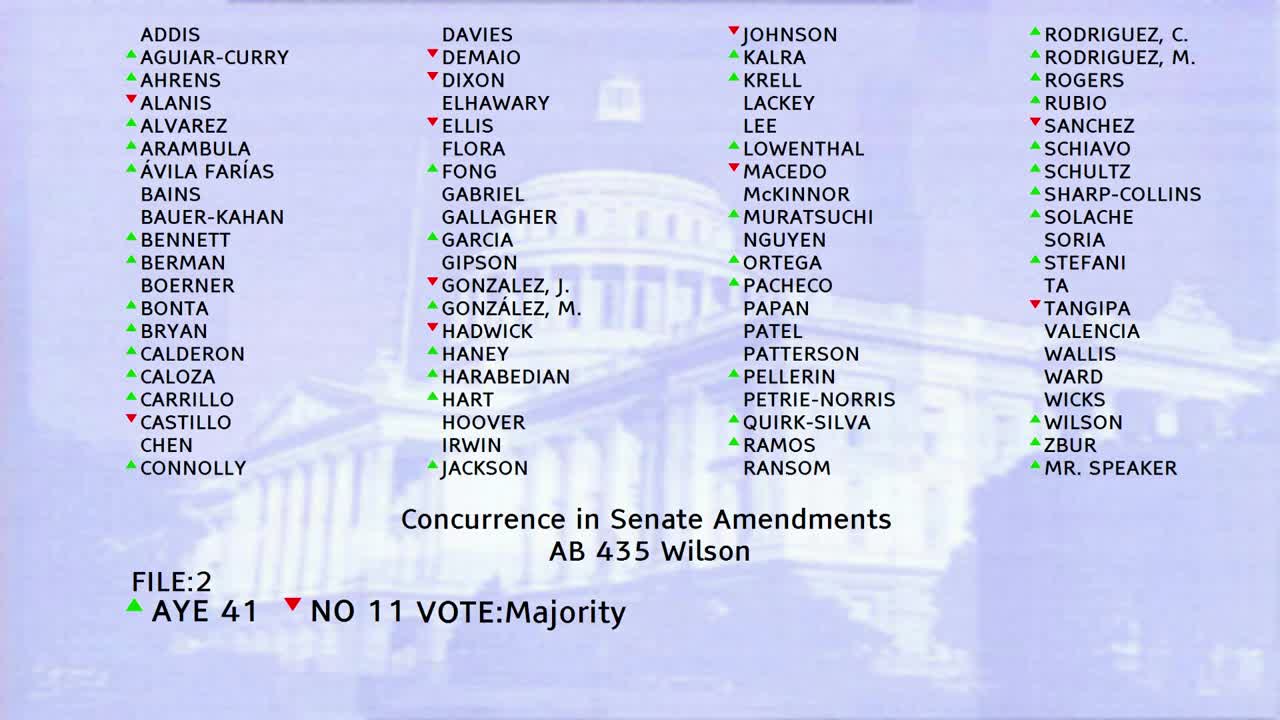
Bill Author

Bill Co-Author(s):