AB 775: Behested payments: reporting.
- Session Year: 2025-2026
- House: Assembly
- Latest Version Date: 2026-09-30
Current Status:
Passed
(2026-09-30: Chaptered by Secretary of State - Chapter 870, Statutes of 2026.)
Introduced
In Committee
Awaiting First Chamber Vote
Passed First Chamber
In Committee
Awaiting Second Chamber Vote
Passed Second Chamber
Enacted
The Political Reform Act of 1974 provides for the comprehensive regulation of campaign financing, including imposing reporting requirements on elected officials and campaign committees. The act defines a behested payment as a payment that is made at the behest of a committee, an elected officer, a member of the Public Utilities Commission, or an agent thereof, under specified circumstances, including a payment that is made principally for personal, charitable, legislative, or governmental purposes. Under the act, elected officials and members of the Public Utilities Commission are required to report behested payments within 30 days of the payment or payments exceeding $5,000 in the aggregate from the same source in the same calendar year in which they are made. All subsequent behested payments for the calendar year made by that source must be disclosed within 30 days after the date the threshold was reached or the payment was made, whichever occurs later. The act exempts a behesting officer or member of the Public Utilities Commission from these reporting obligations if they make a public appeal for payment by television, radio, billboard, public message on an online platform, or a public speech, except as specified.
This bill would instead require elected officials and members of the Public Utilities Commission to report behested payments within 30 days of the end of the calendar quarter, if the payment or payments exceed $5,000 in the aggregate from the same source in the same calendar year in which they are made. After the initial behested payment report has been filed, the bill would require that subsequent behested payments for the calendar year made by that source be reported within 30 days after the end of the calendar quarter each time those payments equal or exceed one thousand dollars ($1,000) in the aggregate.
This bill would additionally require the behested payment report to include (1) if the payee is a nonprofit organization, a brief description of any relationship, as specified, of the nonprofit organization to the behesting officer, or a member of their immediate family, or member of their campaign or officeholder staff and (2) a brief description of any proceeding before the behesting officer at the time of a reported payment or within the 12 months before the reported payment in which the payer is the named party or subject of the decision, as specified.
This bill would authorize a behesting officer to satisfy these reporting obligations by providing a good faith estimate of a behested payment amount, payment date, or both, if certain conditions are met, including that the elected officer or Public Utilities Commission member practiced reasonable efforts to obtain the required information and is unable to ascertain the exact amount or date of the behested payment from the payee before the reporting deadline.
Existing law requires these behested payment reports to be filed by the behesting officer or member of the Public Utilities Commission with the officers or members agency.
This bill would require these reports to be filed using the commissions electronic filing system for behested payment reports, and would require the filing system to issue an electronic confirmation to the filer immediately upon receipt of the report. The bill would permit an elected officer of a local government to file directly with their local filing officer if all behested payment reports filed by elected officers are posted publicly on the internet website of the local government within 10 days of receipt, as specified.
Existing law makes a knowing or willful violation of the Political Reform Act of 1974 a misdemeanor and subjects offenders to criminal penalties. By expanding the information required in a behested payment report, the bill would expand the scope of an existing crime and impose a state-mandated local program.
The California Constitution requires the state to reimburse local agencies and school districts for certain costs mandated by the state. Statutory provisions establish procedures for making that reimbursement.
This bill would provide that no reimbursement is required by this act for a specified reason.
The Political Reform Act of 1974, an initiative measure, provides that the Legislature may amend the act to further the acts purposes upon a 2/3 vote of each house of the Legislature and compliance with specified procedural requirements.
This bill would declare that it furthers the purposes of the act.
The Political Reform Act of 1974 provides for the comprehensive regulation of campaign financing, including imposing reporting requirements on elected officials and campaign committees. The act defines a behested payment as a payment that is made at the behest of a committee, an elected officer, a member of the Public Utilities Commission, or an agent thereof, under specified circumstances, including a payment that is made principally for personal, charitable, legislative, or governmental purposes. Under the act, elected officials and members of the Public Utilities Commission are required to report behested payments within 30 days of the payment or payments exceeding $5,000 in the aggregate from the same source in the same calendar year in which they are made. All subsequent behested payments for the calendar year made by that source must be disclosed within 30 days after the date the threshold was reached or the payment was made, whichever occurs later. The act exempts a behesting officer or member of the Public Utilities Commission from these reporting obligations if they make a public appeal for payment by television, radio, billboard, public message on an online platform, or a public speech, except as specified.
This bill would instead require elected officials and members of the Public Utilities Commission to report behested payments within 30 days of the end of the calendar quarter, if the payment or payments exceed $5,000 in the aggregate from the same source in the same calendar year in which they are made. After the initial behested payment report has been filed, the bill would require that subsequent behested payments for the calendar year made by that source be reported within 30 days after the end of the calendar quarter each time those payments equal or exceed an one thousand dollars ($1,000) in the aggregate.
This bill would additionally require the behested payment report to include (1) if the payee is a nonprofit organization, a brief description of any relationship, as specified, of the nonprofit organization to the behesting officer, or a member of their immediate family, or member of their campaign or officeholder staff and (2) a brief description of any proceeding before the behesting officer at the time of a reported payment or within the 12 months before the reported payment in which the payer is the named party or subject of the decision, as specified.
This bill would authorize a behesting officer to satisfy these reporting obligations by providing a good faith estimate of a behested payment amount, payment date, or both, if certain conditions are met, including that the elected officer or Public Utilities Commission member practiced reasonable efforts to obtain the required information and is unable to ascertain the exact amount or date of the behested payment from the payee before the reporting deadline.
Existing law requires these behested payment reports to be filed by the behesting officer or member of the Public Utilities Commission with the officers or members agency.
This bill would require these reports to be filed using the commissions electronic filing system for behested payment reports, and would require the filing system to issue an electronic confirmation to the filer immediately upon receipt of the report. The bill would permit an elected officer of a local government to file directly with their local filing officer if all behested payment reports filed by elected officers are posted publicly on the internet website of the local government within 10 days of receipt, as specified.
Existing law makes a knowing or willful violation of the Political Reform Act of 1974 a misdemeanor and subjects offenders to criminal penalties. By expanding the information required in a behested payment report, the bill would expand the scope of an existing crime and impose a state-mandated local program.
The California Constitution requires the state to reimburse local agencies and school districts for certain costs mandated by the state. Statutory provisions establish procedures for making that reimbursement.
This bill would provide that no reimbursement is required by this act for a specified reason.
The Political Reform Act of 1974, an initiative measure, provides that the Legislature may amend the act to further the acts purposes upon a 2/3 vote of each house of the Legislature and compliance with specified procedural requirements.
This bill would declare that it furthers the purposes of the act.
The Political Reform Act of 1974 provides for the comprehensive regulation of campaign financing, including imposing reporting requirements on elected officials and campaign committees. The act defines a behested payment as a payment that is made at the behest of a committee, an elected officer, a member of the Public Utilities Commission, or an agent thereof, under specified circumstances, including a payment that is made principally for personal, charitable, legislative, or governmental purposes. Under the act, elected officials and members of the Public Utilities Commission are required to report behested payments within 30 days of the payment or payments exceeding $5,000 in the aggregate from the same source in the same calendar year in which they are made. All subsequent behested payments for the calendar year made by that source must be disclosed within 30 days after the date the threshold was reached or the payment was made, whichever occurs later.
This bill would instead require elected officials and members of the Public Utilities Commission to report behested payments within 30 days of the end of the calendar quarter, if the payment or payments exceed $5,000 in the aggregate from the same source in the same calendar year in which they are made. After the initial behested payment report has been filed, the bill would require that subsequent behested payments for the calendar year made by that source be reported within 30 days after the end of the calendar quarter each time those payments equal or exceed an one thousand dollars ($1,000) in the aggregate.
This bill would additionally require the behested payment report to include (1) if the payee is a nonprofit organization, a brief description of any relationship relationship, as specified, of the nonprofit organization to the behesting officer, or a member of their immediate family, or member of their campaign or officeholder staff and (2) a brief description of any proceeding before the behesting officer at the time of a reported payment or within the 12 months before the reported payment in which the payor payer is the named party or subject of the decision, as specified.
This bill would authorize a behesting officer to satisfy these reporting obligations by providing a good faith estimate of a behested payment amount, payment date, or both, if certain conditions are met, including that the elected officer or Public Utilities Commission member practiced reasonable efforts to obtain the required information and is unable to ascertain the exact amount or date of the behested payment from the payee before the reporting deadline.
Existing law requires these behested payment reports to be filed by the behesting officer or member of the Public Utilities Commission with the officers or members agency.
This bill would require these reports to be filed using the commissions electronic filing system for behested payment reports, except that and would require the filing system to issue an electronic confirmation to the filer immediately upon receipt of the report. The bill would permit an elected officer of a local government may to file directly with their local filing officer if all behested payment reports filed by elected officers are posted publicly on the internet website of the local government, government within 10 days of receipt, as specified.
Existing law makes a knowing or willful violation of the Political Reform Act of 1974 a misdemeanor and subjects offenders to criminal penalties. By expanding the information required in a behested payment report, the bill would expand the scope of an existing crime and impose a state-mandated local program.
The California Constitution requires the state to reimburse local agencies and school districts for certain costs mandated by the state. Statutory provisions establish procedures for making that reimbursement.
This bill would provide that no reimbursement is required by this act for a specified reason.
The Political Reform Act of 1974, an initiative measure, provides that the Legislature may amend the act to further the acts purposes upon a 2/3 vote of each house of the Legislature and compliance with specified procedural requirements.
This bill would declare that it furthers the purposes of the act.
The Political Reform Act of 1974 provides for the comprehensive regulation of campaign financing, including imposing reporting requirements on elected officials and campaign committees. The act defines a behested payment as a payment that is made at the behest of a committee, an elected officer, a member of the Public Utilities Commission, or an agent thereof, under specified circumstances, including a payment that is made principally for personal, charitable, legislative, or governmental purposes. Under the act, elected officials and members of the Public Utilities Commission are required to report behested payments within 30 days of the payment or payments exceeding $5,000 in the aggregate from the same source in the same calendar year in which they are made. All subsequent behested payments for the calendar year made by that source must be disclosed within 30 days after the date the threshold was reached or the payment was made, whichever occurs later.
This bill would instead require elected officials and members of the Public Utilities Commission to report behested payments within 30 days of the end of the calendar quarter, if the payment or payments exceed $5,000 in the aggregate from the same source in the same calendar year in which they are made. After the initial behested payment report has been filed, the bill would require that subsequent behested payments for the calendar year made by that source be reported within 30 days after the end of the calendar quarter each time those payments equal or exceed an one thousand dollars ($1,000) in the aggregate.
This bill would additionally require the behested payment report to include (1) if the payee is a nonprofit organization, a brief description of any relationship of the nonprofit organization to the behesting officer, or a member of their immediate family, or member of their campaign or officeholder staff and (2) a brief description of any proceeding before the behesting officer at the time of a reported payment or within the 12 months before the reported payment in which the payor is the named party or subject of the decision, as specified.
This bill would authorize a behesting officer to satisfy these reporting obligations by providing a good faith estimate of a behested payment amount, payment date, or both, if certain conditions are met, including that the elected officer or Public Utilities Commission member practiced reasonable efforts to obtain the required information and is unable to ascertain the exact amount or date of the behested payment from the payee before the reporting deadline.
Existing law requires these behested payment reports to be filed by the behesting officer or member of the Public Utilities Commission with the officers or members agency.
This bill would require these reports to be filed using the commissions electronic filing system for behested payment reports, except that an elected officer of a local government may file directly with their local filing officer if all behested payment reports filed by elected officers are posted publicly on the internet website of the local government, as specified.
Existing law makes a knowing or willful violation of the Political Reform Act of 1974 a misdemeanor and subjects offenders to criminal penalties. By expanding the information required in a behested payment report, the bill would expand the scope of an existing crime and impose a state-mandated local program.
The California Constitution requires the state to reimburse local agencies and school districts for certain costs mandated by the state. Statutory provisions establish procedures for making that reimbursement.
This bill would provide that no reimbursement is required by this act for a specified reason.
The Political Reform Act of 1974, an initiative measure, provides that the Legislature may amend the act to further the acts purposes upon a 2/3 vote of each house of the Legislature and compliance with specified procedural requirements.
This bill would declare that it furthers the purposes of the act.
(a)A behested payment described in subdivision (f) shall be reported within 30 days following the end of the calendar quarter in which the aggregate amount of all such payments made at the behest of the elected officer or member of the Public Utilities Commission from the same source in that calendar year equals or exceeds five thousand dollars ($5,000).
(b)(1)Except as provided in paragraph (2), the report shall be filed by the behesting officer or member of the Public Utilities Commission using the commissions electronic filing system for behested payments. The filing system for behested payments shall issue to a person who electronically files a report, or an amendment to a report, an electronic confirmation that notifies the filer that the report was received. The confirmation shall be sent immediately upon the commissions receipt of the report and shall include the date and time that the report was received.
(2)As an alternative to the reporting process described in paragraph (1), elected officers of a local government may file behested payment reports directly with their local filing officer if all behested payment reports filed by elected officers of that local government are posted publicly on the internet website of the local government within 10 days after receipt by the agency. A behested payment report may be filed with a local filing officer using an electronic filing system maintained by the local jurisdiction. An electronically filed behested payment report shall be considered an original report.
(c)A report filed pursuant to this section is a public record subject to inspection and copying pursuant to Section 81008.
(d)The report shall contain all of the following information:
(1)Name of payer.
(2)Address of payer.
(3)Amount of the payment or payments.
(4)Date or dates the payment or payments were made.
(5)The name and address of the payee.
(6)A brief description of the goods or services provided or purchased, if any.
(7)A description of the specific purpose or event for which the payment or payments were made.
(8)The information specified in Section 84224.1.
(e)Once the five-thousand-dollar ($5,000) aggregate threshold from a single source has been reached for a calendar year and an initial behested payment report has been filed, subsequent behested payments described in subdivision (f) from the same source in the same calendar year shall be reported in the same manner provided for in subdivision (b) each time those payments equal or exceed one thousand dollars ($1,000) in the aggregate. The report shall be due within 30 days after the end of the calendar quarter.
(f)The reporting requirement imposed by this section applies to a behested payment that satisfies each of the following:
(1)The payment is made at the behest of an elected officer or member of the Public Utilities Commission.
(2)The behesting elected officer or member of the Public Utilities Commission does not provide full and adequate consideration in exchange for the payment.
(3)The payment is made principally for a legislative, governmental, or charitable purpose.
(4)If made principally for a legislative or governmental purpose, the payment is made by a person other than a state, local, or federal governmental agency.
(g)(1)Notwithstanding subdivisions (a) through (f), a report is not required if the payment results from an officer or member of the Public Utilities Commission making a public appeal for payment by any of the following means:
(A)Television.
(B)Radio.
(C)Billboard.
(D)A public message on an online platform.
(E)A public speech, unless the speech is given at an event that the officer or member knows is being held for the purpose of raising funds for the recipient organization and any of the following apply:
(i)The officer or member consents in advance to be a speaker.
(ii)The officer or member consents to be featured in a solicitation.
(iii)The officer or member publicly solicits contributions to the recipient organization.
(2)Paragraph (1) does not apply if either of the following conditions is satisfied:
(A)The payee organization is not a governmental agency and the elected officer or member of the Public Utilities Commission knows that they, or a member of their immediate family, campaign staff, or officeholder staff, holds a position, including any of the following, with that payee organization:
(i)Any position with decisionmaking capacity within the organization, such as a board member or executive officer position.
(ii)Salaried employment at the organization.
(iii)Status as a founding member of the organization.
(iv)A position on an honorary or advisory board of the organization.
(B)The behesting officer or member of the Public Utilities Commission knows, within two years of the payment, that a specific payment was made in response to the officer or members public appeal.
(3)If an officer or member of the Public Utilities Commission does not know at the time that a payment was made in response to their public appeal, the deadline described in subdivision (a) shall commence on the date that the officer or member first learns that the payment was made in response to that public appeal.
SEC. 2.Section 84224 of the Government Code, as amended by Section 1.5 of Chapter 551 of the Statutes of 2025, is amended to read:84224.(a)A behested payment described in subdivision (f) shall be reported within 30 days following the end of the calendar quarter in which the aggregate amount of all such payments made at the behest of the elected officer or member of the Public Utilities Commission from the same source in that calendar year equals or exceeds five thousand dollars ($5,000).
(b)(1)Except as provided in paragraph (2), the report shall be filed by the behesting officer or member of the Public Utilities Commission using the commissions electronic filing system for behested payments. The filing system for behested payments shall issue to a person who electronically files a report, or an amendment to a report, an electronic confirmation that notifies the filer that the report was received. The confirmation shall be sent immediately upon the commissions receipt of the report and shall include the date and time that the report was received.
(2)As an alternative to the reporting process described in paragraph (1), elected officers of a local government may file behested payment reports directly with their local filing officer if all behested payment reports filed by elected officers of that local government are posted publicly on the internet website of the local government within 10 days after receipt by the agency. A behested payment report may be filed with a local filing officer using an electronic filing system maintained by the local jurisdiction. An electronically filed behested payment report shall be considered an original report.
(c)A report filed pursuant to this section is a public record subject to inspection and copying pursuant to Section 81008.
(d)The report shall contain all of the following information:
(1)Name of payer.
(2)Address of payer.
(3)Amount of the payment or payments.
(4)Date or dates the payment or payments were made.
(5)The name and address of the payee.
(6)A brief description of the goods or services provided or purchased, if any.
(7)A description of the specific purpose or event for which the payment or payments were made.
(8)The information specified in Section 84224.1.
(e)Once the five-thousand-dollar ($5,000) aggregate threshold from a single source has been reached for a calendar year and an initial behested payment report has been filed, subsequent behested payments described in subdivision (f) from the same source in the same calendar year shall be reported in the same manner provided for in subdivision (b) each time those payments equal or exceed one thousand dollars ($1,000) in the aggregate. The report shall be due within 30 days after the end of the calendar quarter.
(f)The reporting requirement imposed by this section applies to a behested payment that satisfies each of the following:
(1)The payment is made at the behest of an elected officer or member of the Public Utilities Commission.
(2)The behesting elected officer or member of the Public Utilities Commission does not provide full and adequate consideration in exchange for the payment.
(3)The payment is made principally for a legislative, governmental, or charitable purpose.
(4)If made principally for a legislative or governmental purpose, the payment is made by a person other than a state, local, or federal governmental agency.
(g)(1)Notwithstanding subdivisions (a) through (f), a report is not required if the payment results from an officer or member of the Public Utilities Commission making a public appeal for payment by any of the following means:
(A)Television.
(B)Radio.
(C)Billboard.
(D)A public message on an online platform.
(E)A public speech, unless the speech is given at an event that the officer or member knows is being held for the purpose of raising funds for the recipient organization and any of the following apply:
(i)The officer or member consents in advance to be a speaker.
(ii)The officer or member consents to be featured in a solicitation.
(iii)The officer or member publicly solicits contributions to the recipient organization.
(2)Paragraph (1) does not apply if either of the following conditions is satisfied:
(A)The payee organization is not a governmental agency and the elected officer or member of the Public Utilities Commission knows that they, or a member of their immediate family, campaign staff, or officeholder staff, holds a position, including any of the following, with that payee organization:
(i)Any position with decisionmaking capacity within the organization, such as a board member or executive officer position.
(ii)Salaried employment at the organization.
(iii)Status as a founding member of the organization.
(iv)A position on an honorary or advisory board of the organization.
(B)The behesting officer or member of the Public Utilities Commission knows, within two years of the payment, that a specific payment was made in response to the officer or members public appeal.
(3)If an officer or member of the Public Utilities Commission does not know at the time that a payment was made in response to their public appeal, the deadline described in subdivision (a) shall commence on the date that the officer or member first learns that the payment was made in response to that public appeal.
SEC. 3.Section 84224.1 is added to the Government Code, to read:84224.1.To the extent the information is known to the elected officer or member of the Public Utilities Commission, the behested payment report filed pursuant to Section 84224 shall include the following:
(a)If the payee is a nonprofit organization, a brief description of any of the following relationships or statuses that the elected officer, member of the Public Utilities Commission, or a member of their immediate family, or member of their campaign or officeholder staff has with the nonprofit organization:
(1)Any decision-making capacity within the organization, such as a board member or executive officer position.
(2)Salaried employment at the organization.
(3)Status as a founding member of the organization.
(4)A position on an honorary or advisory board of the organization.
(b)A brief description of any proceeding before the agency of the elected officer or member of the Public Utilities Commission at the time of a reported payment or within the 12 months before the reported payment in which the payer is the named party or subject of the decision.
(1)A proceeding for purposes of this subdivision includes decisions on a contract, license, permit, or other entitlement and matters of nongeneral legislation. A proceeding does not include decisions on general legislation. Nongeneral legislation means the same as defined in Section 87102.6.
(2)A proceeding is considered before the agency of the elected officer or member of the Public Utilities Commission if it has been placed on the agencys formal agenda, or if the official has knowledge that the matter has been submitted to the agency for decision and the official may make, participate in making, or otherwise use official position to influence the agencys decision on the matter.
SEC. 4.Section 84224.2 is added to the Government Code, to read:84224.2.A good faith estimate of a behested payment amount, payment date, or both will meet the reporting requirements under Section 84224 if each of the following are met:
(a)The elected officer or member of the Public Utilities Commission practiced reasonable efforts to obtain the required information and is unable to ascertain the exact amount or date of the behested payment from the payee before the reporting deadline. For purposes of this subdivision, reasonable efforts include sending a written request to the payee for the required information before the 30 day filing deadline.
(b)The elected official or member of the Public Utilities Commission states that the payment information is an estimated amount or estimated date that reflects the best efforts of the elected officer or member of the Public Utilities Commission to ascertain the accurate information and states the reason the official is unable to provide the information.
(c)An amended report with corrected information is filed within 10 days of the elected officer or member of the Public Utilities Commission receiving the payment information from the payee.
SEC. 5.No reimbursement is required by this act pursuant to Section 6 of Article XIIIB of the California Constitution because the only costs that may be incurred by a local agency or school district will be incurred because this act creates a new crime or infraction, eliminates a crime or infraction, or changes the penalty for a crime or infraction, within the meaning of Section 17556 of the Government Code, or changes the definition of a crime within the meaning of Section 6 of Article XIIIB of the California Constitution.
SEC. 6.The Legislature finds and declares that this bill furthers the purposes of the Political Reform Act of 1974 within the meaning of subdivision (a) of Section 81012 of the Government Code.
(a)A behested payment described in subdivision (b) (f) shall be reported within 30 days following the date on which the payment or payments equal or exceed five thousand dollars ($5,000) in the aggregate from the same source in the same calendar year in which they are made. The the end of the calendar quarter in which the aggregate amount of all such payments made at the behest of the elected officer or member of the Public Utilities Commission from the same source in that calendar year equals or exceeds five thousand dollars ($5,000).
(b)(1)Except as provided in paragraph (2), the report shall be filed by the behesting officer or member of the Public Utilities Commission with the officers or members agency and is a public record subject to inspection and copying pursuant to Section 81008. using the commissions electronic filing system for behested payments. The filing system for behested payments shall issue to a person who electronically files a report, or an amendment to a report, an electronic confirmation that notifies the filer that the report was received. The confirmation shall be sent immediately upon the commissions receipt of the report and shall include the date and time that the report was received. The
(2)As an alternative to the reporting process described in paragraph (1), elected officers of a local government may file behested payment reports directly with their local filing officer if all behested payment reports filed by elected officers of that local government are posted publicly on the internet website of the local government within 10 days after receipt by the agency. A behested payment report may be filed with a local filing officer using an electronic filing system maintained by the local jurisdiction. An electronically filed behested payment report shall be considered an original report.
(c)A report filed pursuant to this section is a public record subject to inspection and copying pursuant to Section 81008.
(d)The report shall contain all of the following information: name of payor; address of payor; amount of the payment or payments; date or dates the payment or payments were made; the name and address of the payee; a brief description of the goods or services provided or purchased, if any; and a description of the specific purpose or event for which the payment or payments were made. Once the five-thousand-dollar ($5,000) aggregate threshold from a single source has been reached for a calendar year, all payments for the calendar year made by that source shall be disclosed within 30 days after the date the threshold was reached or the payment was made, whichever occurs later. Within 30 days after receipt of the report, state agencies, including the Public Utilities Commission, shall forward a copy of these reports to the Fair Political Practices Commission, and local agencies shall forward a copy of these reports to the officer with whom elected officers of that agency file their campaign statements.
(1)Name of payer.
(2)Address of payer.
(3)Amount of the payment or payments.
(4)Date or dates the payment or payments were made.
(5)The name and address of the payee.
(6)A brief description of the goods or services provided or purchased, if any.
(7)A description of the specific purpose or event for which the payment or payments were made.
(8)The information specified in Section 84224.1.
(e)Once the five-thousand-dollar ($5,000) aggregate threshold from a single source has been reached for a calendar year and an initial behested payment report has been filed, subsequent behested payments described in subdivision (f) from the same source in the same calendar year shall be reported in the same manner provided for in subdivision (b) each time those payments equal or exceed one thousand dollars ($1,000) in the aggregate. The report shall be due within 30 days after the end of the calendar quarter.
(b)(f)The reporting requirement imposed by this section applies to a behested payment that satisfies each of the following:
(1)The payment is made at the behest of an elected officer or member of the Public Utilities Commission.
(2)The behesting elected officer or member of the Public Utilities Commission does not provide full and adequate consideration in exchange for the payment.
(3)The payment is made principally for a legislative, governmental, or charitable purpose.
(4)If made principally for a legislative or governmental purpose, the payment is made by a person other than a state, local, or federal governmental agency.
(c)(g)(1)Notwithstanding subdivision (a), subdivisions (a) through (f), a report is not required if the payment results from an officer or member of the Public Utilities Commission making a public appeal for payment by any of the following means:
(A)Television.
(B)Radio.
(C)Billboard.
(D)A public message on an online platform.
(E)A public speech, unless the speech is given at an event that the officer or member knows is being held for the purpose of raising funds for the recipient organization and any of the following apply:
(i)The officer or member consents in advance to be a speaker.
(ii)The officer or member consents to be featured in a solicitation.
(iii)The officer or member publicly solicits contributions to the recipient organization.
(2)Paragraph (1) does not apply if either of the following conditions is satisfied:
(A)The payee organization is not a governmental agency and the elected officer or member of the Public Utilities Commission knows that they, or a member of their immediate family, campaign staff, or officeholder staff, holds a position, including any of the following, with that payee organization:
(i)Any position with decisionmaking capacity within the organization, such as a board member or executive officer position.
(ii)Salaried employment at the organization.
(iii)Status as a founding member of the organization.
(iv)A position on an honorary or advisory board of the organization.
(B)The behesting officer or member of the Public Utilities Commission knows, within two years of the payment, that a specific payment was made in response to the officer or members public appeal.
(3)If an officer or member of the Public Utilities Commission does not know at the time that a payment was made in response to their public appeal, the deadline described in subdivision (a) shall commence on the date that the officer or member first learns that the payment was made in response to that public appeal.
SEC. 2.Section 84224 of the Government Code, as amended by Section 1.5 of Chapter 551 of the Statutes of 2025, is amended to read:84224.(a)A behested payment described in subdivision (b) (f) shall be reported within 30 days following the date on which the payment or payments equal or exceed five thousand dollars ($5,000) in the aggregate from the same source in the same calendar year in which they are made. The report the end of the calendar quarter in which the aggregate amount of all such payments made at the behest of the elected officer or member of the Public Utilities Commission from the same source in that calendar year equals or exceeds five thousand dollars ($5,000).
(b)(1)Except as provided in paragraph (2), the report shall be filed by the behesting officer or member of the Public Utilities Commission with the officers or members agency and is a public record subject to inspection and copying pursuant to Section 81008. using the commissions electronic filing system for behested payments. The filing system for behested payments shall issue to a person who electronically files a report, or an amendment to a report, an electronic confirmation that notifies the filer that the report was received. The confirmation shall be sent immediately upon the commissions receipt of the report and shall include the date and time that the report was received. The
(2)As an alternative to the reporting process described in paragraph (1), elected officers of a local government may file behested payment reports directly with their local filing officer if all behested payment reports filed by elected officers of that local government are posted publicly on the internet website of the local government within 10 days after receipt by the agency. A behested payment report may be filed with a local filing officer using an electronic filing system maintained by the local jurisdiction. An electronically filed behested payment report shall be considered an original report.
(c)A report filed pursuant to this section is a public record subject to inspection and copying pursuant to Section 81008.
(d)The report shall contain all of the following information: name of payor; address of payor; amount of the payment or payments; date or dates the payment or payments were made; the name and address of the payee; a brief description of the goods or services provided or purchased, if any; and a description of the specific purpose or event for which the payment or payments were made. Once the five-thousand-dollar ($5,000) aggregate threshold from a single source has been reached for a calendar year, all payments for the calendar year made by that source shall be disclosed within 30 days after the date the threshold was reached or the payment was made, whichever occurs later. Within 30 days after receipt of the report, state agencies, including the Public Utilities Commission, shall forward a copy of these reports to the Fair Political Practices Commission, and local agencies shall forward a copy of these reports to the officer with whom elected officers of that agency file their campaign reports.
(1)Name of payer.
(2)Address of payer.
(3)Amount of the payment or payments.
(4)Date or dates the payment or payments were made.
(5)The name and address of the payee.
(6)A brief description of the goods or services provided or purchased, if any.
(7)A description of the specific purpose or event for which the payment or payments were made.
(8)The information specified in Section 84224.1.
(e)Once the five-thousand-dollar ($5,000) aggregate threshold from a single source has been reached for a calendar year and an initial behested payment report has been filed, subsequent behested payments described in subdivision (f) from the same source in the same calendar year shall be reported in the same manner provided for in subdivision (b) each time those payments equal or exceed one thousand dollars ($1,000) in the aggregate. The report shall be due within 30 days after the end of the calendar quarter.
(b)(f)The reporting requirement imposed by this section applies to a behested payment that satisfies each of the following:
(1)The payment is made at the behest of an elected officer or member of the Public Utilities Commission.
(2)The behesting elected officer or member of the Public Utilities Commission does not provide full and adequate consideration in exchange for the payment.
(3)The payment is made principally for a legislative, governmental, or charitable purpose.
(4)If made principally for a legislative or governmental purpose, the payment is made by a person other than a state, local, or federal governmental agency.
(c)(g)(1)Notwithstanding subdivision (a), subdivisions (a) through (f), a report is not required if the payment results from an officer or member of the Public Utilities Commission making a public appeal for payment by any of the following means:
(A)Television.
(B)Radio.
(C)Billboard.
(D)A public message on an online platform.
(E)A public speech, unless the speech is given at an event that the officer or member knows is being held for the purpose of raising funds for the recipient organization and any of the following apply:
(i)The officer or member consents in advance to be a speaker.
(ii)The officer or member consents to be featured in a solicitation.
(iii)The officer or member publicly solicits contributions to the recipient organization.
(2)Paragraph (1) does not apply if either of the following conditions is satisfied:
(A)The payee organization is not a governmental agency and the elected officer or member of the Public Utilities Commission knows that they, or a member of their immediate family, campaign staff, or officeholder staff, holds a position, including any of the following, with that payee organization:
(i)Any position with decisionmaking capacity within the organization, such as a board member or executive officer position.
(ii)Salaried employment at the organization.
(iii)Status as a founding member of the organization.
(iv)A position on an honorary or advisory board of the organization.
(B)The behesting officer or member of the Public Utilities Commission knows, within two years of the payment, that a specific payment was made in response to the officer or members public appeal.
(3)If an officer or member of the Public Utilities Commission does not know at the time that a payment was made in response to their public appeal, the deadline described in subdivision (a) shall commence on the date that the officer or member first learns that the payment was made in response to that public appeal.
SEC. 2.SEC. 3.Section 84224.1 is added to the Government Code, to read:84224.1.To the extent the information is known to the elected officer or member of the Public Utilities Commission, the behested payment report filed pursuant to Section 84224 shall include the following:
(a)If the payee is a nonprofit organization, a brief description of any of the following relationships or statuses that the elected officer, member of the Public Utilities Commission, or a member of their immediate family, or member of their campaign or officeholder staff has with the nonprofit organization:
(1)Any decision-making capacity within the organization, such as a board member or executive officer position.
(2)Salaried employment at the organization.
(3)Status as a founding member of the organization.
(4)A position on an honorary or advisory board of the organization.
(b)A brief description of any proceeding before the agency of the elected officer or member of the Public Utilities Commission at the time of a reported payment or within the 12 months before the reported payment in which the payer is the named party or subject of the decision.
(1)A proceeding for purposes of this subdivision includes decisions on a contract, license, permit, or other entitlement and matters of nongeneral legislation. A proceeding does not include decisions on general legislation. Nongeneral legislation means the same as defined in Section 87102.6.
(2)A proceeding is considered before the agency of the elected officer or member of the Public Utilities Commission if it has been placed on the agencys formal agenda, or if the official has knowledge that the matter has been submitted to the agency for decision and the official may make, participate in making, or otherwise use official position to influence the agencys decision on the matter.
SEC. 3.SEC. 4.Section 84224.2 is added to the Government Code, to read:84224.2.A good faith estimate of a behested payment amount, payment date, or both will meet the reporting requirements under Section 84224 if each of the following are met:
(a)The elected officer or member of the Public Utilities Commission practiced reasonable efforts to obtain the required information and is unable to ascertain the exact amount or date of the behested payment from the payee before the reporting deadline. For purposes of this subdivision, reasonable efforts include sending a written request to the payee for the required information before the 30 day filing deadline.
(b)The elected official or member of the Public Utilities Commission states that the payment information is an estimated amount or estimated date that reflects the best efforts of the elected officer or member of the Public Utilities Commission to ascertain the accurate information and states the reason the official is unable to provide the information.
(c)An amended report with corrected information is filed within 10 days of the elected officer or member of the Public Utilities Commission receiving the payment information from the payee.
SEC. 4.SEC. 5.No reimbursement is required by this act pursuant to Section 6 of Article XIIIB of the California Constitution because the only costs that may be incurred by a local agency or school district will be incurred because this act creates a new crime or infraction, eliminates a crime or infraction, or changes the penalty for a crime or infraction, within the meaning of Section 17556 of the Government Code, or changes the definition of a crime within the meaning of Section 6 of Article XIIIB of the California Constitution.
SEC. 5.SEC. 6.The Legislature finds and declares that this bill furthers the purposes of the Political Reform Act of 1974 within the meaning of subdivision (a) of Section 81012 of the Government Code.
(a)A behested payment described in subdivision (f) shall be reported within 30 days following the end of the calendar quarter in which the payment was made, if the payment or payments equal or exceed five thousand dollars ($5,000) in the aggregate from the same source in the same calendar year in which they are made. the aggregate amount of all such payments made at the behest of the elected officer or member of the Public Utilities Commission from the same source in that calendar year equals or exceeds five thousand dollars ($5,000).
(b)(1)Except as provided in paragraph (2), the report shall be filed by the behesting officer or member of the Public Utilities Commission using the commissions electronic filing system for behested payments. The filing system for behested payments shall issue to a person who electronically files a report, or an amendment to a report, an electronic confirmation that notifies the filer that the report was received. The confirmation shall be sent immediately upon the commissions receipt of the report and shall include the date and time that the report was received.
(2)As an alternative to the reporting process described in paragraph (1), elected officers of a local government may file behested payment reports directly with their local filing officer if all behested payment reports filed by elected officers of that local government are posted publicly on the internet website of the local government. government within 10 days after receipt by the agency. A behested payment report may be filed with a local filing officer using an electronic filing system maintained by the local jurisdiction. An electronically filed behested payment report shall be considered an original report.
(c)A report filed pursuant to this section is a public record subject to inspection and copying pursuant to Section 81008.
(d)The report shall contain all of the following information:
(1)Name of payor. payer.
(2)Address of payor. payer.
(3)Amount of the payment or payments.
(4)Date or dates the payment or payments were made.
(5)The name and address of the payee.
(6)A brief description of the goods or services provided or purchased, if any.
(7)A description of the specific purpose or event for which the payment or payments were made.
(8)The information specified in Section 84224.1.
(e)Once the five-thousand-dollar ($5,000) aggregate threshold from a single source has been reached for a calendar year and an initial behested payment report has been filed, subsequent behested payments described in subdivision (f) from the same source in the same calendar year shall be reported in the same manner provided for in subdivision (b) each time those payments equal or exceed one thousand dollars ($1,000) in the aggregate. The report shall be due within 30 days after the end of the calendar quarter.
(f)The reporting requirement imposed by this section applies to a behested payment that satisfies each of the following:
(1)The payment is made at the behest of an elected officer or member of the Public Utilities Commission.
(2)The behesting elected officer or member of the Public Utilities Commission does not provide full and adequate consideration in exchange for the payment.
(3)The payment is made principally for a legislative, governmental, or charitable purpose.
(4)If made principally for a legislative or governmental purpose, the payment is made by a person other than a state, local, or federal governmental agency.
SEC. 2.Section 84224.1 is added to the Government Code, to read:84224.1.To the extent the information is known to the elected officer or member of the Public Utilities Commission, the behested payment report filed pursuant to Section 84224 shall include the following:
(a)If the payee is a nonprofit organization, a brief description of any relationship of the nonprofit organization to of the following relationships or statuses that the elected officer, member of the Public Utilities Commission, or a member of their immediate family, or member of their campaign or officeholder staff. The brief description shall include the following information about any individual listed above: staff has with the nonprofit organization:
(1)Any decision-making capacity within the organization, such as a board member or executive officer position.
(2)Salaried employment at the organization.
(3)Status as a founding member of the organization.
(4)A position on an honorary or advisory board of the organization.
(b)A brief description of any proceeding before the agency of the elected officer or member of the Public Utilities Commission at the time of a reported payment or within the 12 months before the reported payment in which the payor payer is the named party or subject of the decision.
(1)A proceeding for purposes of this subdivision includes decisions on a contract, license, permit, or other entitlement and matters of nongeneral legislation. A proceeding does not include decisions on general legislation. Nongeneral legislation means the same as defined in Section 87102.6.
(2)A proceeding is considered before the agency of the elected officer or member of the Public Utilities Commission if it has been placed on the agencys formal agenda, or if the official has knowledge that the matter has been submitted to the agency for decision and the official may make, participate in making, or otherwise use official position to influence the agencys decision on the matter.
SEC. 3.Section 84224.2 is added to the Government Code, to read:84224.2.A good faith estimate of a behested payment amount, payment date, or both will meet the reporting requirements under Section 84224 if each of the following are met:
(a)The elected officer or member of the Public Utilities Commission practiced reasonable efforts to obtain the required information and is unable to ascertain the exact amount or date of the behested payment from the payee before the reporting deadline. For purposes of this subdivision, reasonable efforts include sending a written request to the payee for the required information before the 30 day filing deadline.
(b)The elected official or member of the Public Utilities Commission states that the payment information is an estimated amount or estimated date that reflects the best efforts of the elected officer or member of the Public Utilities Commission to ascertain the accurate information and states the reason the official is unable to provide the information.
(c)An amended report with corrected information is filed within 10 days of the elected officer or member of the Public Utilities Commission receiving the payment information from the payee.
SEC. 4.No reimbursement is required by this act pursuant to Section 6 of Article XIIIB of the California Constitution because the only costs that may be incurred by a local agency or school district will be incurred because this act creates a new crime or infraction, eliminates a crime or infraction, or changes the penalty for a crime or infraction, within the meaning of Section 17556 of the Government Code, or changes the definition of a crime within the meaning of Section 6 of Article XIIIB of the California Constitution.
SEC. 5.The Legislature finds and declares that this bill furthers the purposes of the Political Reform Act of 1974 within the meaning of subdivision (a) of Section 81012 of the Government Code.
(a)A behested payment described in subdivision (b) (f) shall be reported within 30 days following the date on which the end of the calendar quarter in which the payment was made, if the payment or payments equal or exceed five thousand dollars ($5,000) in the aggregate from the same source in the same calendar year in which they are made. The
(b)(1)Except as provided in paragraph (2), the report shall be filed by the behesting officer or member of the Public Utilities Commission with the officers or members agency and is a public using the commissions electronic filing system for behested payments.
(2)As an alternative to the reporting process described in paragraph (1), elected officers of a local government may file behested payment reports directly with their local filing officer if all behested payment reports filed by elected officers of that local government are posted publicly on the internet website of the local government. A behested payment report may be filed with a local filing officer using an electronic filing system maintained by the local jurisdiction. An electronically filed behested payment report shall be considered an original report.
(c)A report filed pursuant to this section is a public record subject to inspection and copying pursuant to Section 81008. The
(d)The report shall contain all of the following information: name
(1)Name of payor; address payor.
(2)Address of payor; amount payor.
(3)Amount of the payment or payments; date payments.
(4)Date or dates the payment or payments were made; the made.
(5)The name and address of the payee; a payee.
(6)A brief description of the goods or services provided or purchased, if any; and a if any.
(7)A description of the specific purpose or event for which the payment or payments were made. Once
(8)The information specified in Section 84224.1.
(e)Once the five-thousand-dollar ($5,000) aggregate threshold from a single source has been reached for a calendar year, all payments for the calendar year made by that source shall be disclosed within 30 days after the date the threshold was reached or the payment was made, whichever occurs later. Within 30 days after receipt of the report, state agencies, including the Public Utilities Commission, shall forward a copy of these reports to the Fair Political Practices Commission, and local agencies shall forward a copy of these reports to the officer with whom elected officers of that agency file their campaign statements. year and an initial behested payment report has been filed, subsequent behested payments described in subdivision (f) from the same source in the same calendar year shall be reported in the same manner provided for in subdivision (b) each time those payments equal or exceed one thousand dollars ($1,000) in the aggregate. The report shall be due within 30 days after the end of the calendar quarter.
(b)(f)The reporting requirement imposed by this section applies to a behested payment that satisfies each of the following:
(1)The payment is made at the behest of an elected officer or member of the Public Utilities Commission.
(2)The behesting elected officer or member of the Public Utilities Commission does not provide full and adequate consideration in exchange for the payment.
(3)The payment is made principally for a legislative, governmental, or charitable purpose.
(4)If made principally for a legislative or governmental purpose, the payment is made by a person other than a state, local, or federal governmental agency.
SEC. 2.Section 84224.1 is added to the Government Code, to read:84224.1.To the extent the information is known to the elected officer or member of the Public Utilities Commission, the behested payment report filed pursuant to Section 84224 shall include the following:
(a)If the payee is a nonprofit organization, a brief description of any relationship of the nonprofit organization to the elected officer, member of the Public Utilities Commission, or a member of their immediate family, or member of their campaign or officeholder staff. The brief description shall include the following information about any individual listed above:
(1)Any decision-making capacity within the organization, such as a board member or executive officer position.
(2)Salaried employment at the organization.
(3)Status as a founding member of the organization.
(4)A position on an honorary or advisory board of the organization.
(b)A brief description of any proceeding before the agency of the elected officer or member of the Public Utilities Commission at the time of a reported payment or within the 12 months before the reported payment in which the payor is the named party or subject of the decision.
(1)A proceeding for purposes of this subdivision includes decisions on a contract, license, permit, or other entitlement and matters of nongeneral legislation. A proceeding does not include decisions on general legislation. Nongeneral legislation means the same as defined in Section 87102.6.
(2)A proceeding is considered before the agency of the elected officer or member of the Public Utilities Commission if it has been placed on the agencys formal agenda, or if the official has knowledge that the matter has been submitted to the agency for decision and the official may make, participate in making, or otherwise use official position to influence the agencys decision on the matter.
SEC. 3.Section 84224.2 is added to the Government Code, to read:84224.2.A good faith estimate of a behested payment amount, payment date, or both will meet the reporting requirements under Section 84224 if each of the following are met:
(a)The elected officer or member of the Public Utilities Commission practiced reasonable efforts to obtain the required information and is unable to ascertain the exact amount or date of the behested payment from the payee before the reporting deadline. For purposes of this subdivision, reasonable efforts include sending a written request to the payee for the required information before the 30 day filing deadline.
(b)The elected official or member of the Public Utilities Commission states that the payment information is an estimated amount or estimated date that reflects the best efforts of the elected officer or member of the Public Utilities Commission to ascertain the accurate information and states the reason the official is unable to provide the information.
(c)An amended report with corrected information is filed within 10 days of the elected officer or member of the Public Utilities Commission receiving the payment information from the payee.
SEC. 4.No reimbursement is required by this act pursuant to Section 6 of Article XIIIB of the California Constitution because the only costs that may be incurred by a local agency or school district will be incurred because this act creates a new crime or infraction, eliminates a crime or infraction, or changes the penalty for a crime or infraction, within the meaning of Section 17556 of the Government Code, or changes the definition of a crime within the meaning of Section 6 of Article XIIIB of the California Constitution.
SEC. 5.The Legislature finds and declares that this bill furthers the purposes of the Political Reform Act of 1974 within the meaning of subdivision (a) of Section 81012 of the Government Code.
|
Date
|
Status
|
|---|---|
| Sep 30, 2026 | Chaptered by Secretary of State - Chapter 870, Statutes of 2026. |
| Sep 30, 2026 | Approved by the Governor. |
| Sep 9, 2026 | Enrolled and presented to the Governor at 1 p.m. |
| Aug 30, 2026 | Senate amendments concurred in. To Engrossing and Enrolling. (Ayes 78. Noes 0. Page 6928.). |
| Aug 30, 2026 | Senate amendments concurred in. To Engrossing and Enrolling. (Ayes 78. Noes 0.). |
| Aug 30, 2026 | Senate amendments concurred in. To Engrossing and Enrolling. |
| Aug 30, 2026 | In Assembly. Concurrence in Senate amendments pending. |
| Aug 30, 2026 | Read third time. Passed. Ordered to the Assembly. (Ayes 40. Noes 0.). |
| Aug 30, 2026 | Ordered to special consent calendar. |
| Aug 24, 2026 | Read second time. Ordered to third reading. |
| Aug 20, 2026 | Read third time and amended. Ordered to second reading. |
| Aug 20, 2026 | Ordered to third reading. |
| Aug 20, 2026 | From special consent calendar. |
| Aug 18, 2026 | Ordered to special consent calendar. |
| Aug 13, 2026 | Read second time. Ordered to third reading. |
| Aug 13, 2026 | From committee: Do pass. (Ayes 7. Noes 0.) (August 13). |
| Aug 29, 2025 | In committee: Held under submission. |
| Jul 14, 2025 | In committee: Referred to APPR. suspense file. |
| Jul 1, 2025 | From committee: Do pass and re-refer to Com. on APPR. (Ayes 5. Noes 0.) (July 1). Re-referred to Com. on APPR. |
| Jun 18, 2025 | Referred to Com. on E. & C.A. |
| Jun 4, 2025 | In Senate. Read first time. To Com. on RLS. for assignment. |
| Jun 3, 2025 | Read third time. Passed. Ordered to the Senate. (Ayes 79. Noes 0. Page 2023.) |
| May 27, 2025 | Read second time. Ordered to third reading. |
| May 23, 2025 | From committee: Do pass. (Ayes 14. Noes 0.) (May 23). |
| Apr 9, 2025 | In committee: Set, first hearing. Referred to APPR. suspense file. |
| Mar 28, 2025 | Re-referred to Com. on APPR. |
| Mar 27, 2025 | Read second time and amended. |
| Mar 26, 2025 | From committee: Amend, and do pass as amended and re-refer to Com. on APPR. (Ayes 7. Noes 0.) (March 26). |
| Mar 10, 2025 | Referred to Com. on ELECTIONS. |
| Feb 19, 2025 | From printer. May be heard in committee March 21. |
| Feb 18, 2025 | Read first time. To print. |
|
Date
|
Description
|
Location
|
Votes
|
|
|---|---|---|---|---|
| Aug 30, 2026 | AB 775 Fong Concurrence in Senate Amendments | Assembly Floor |
Passed |
|
| Aug 30, 2026 | Assembly 3rd Reading AB775 Fong By Cervantes | Senate Floor |
Passed |
|
| Aug 13, 2026 | Do pass | Senate Standing Committee on Appropriations |
Passed |
|
| Jul 14, 2025 | Placed on suspense file | Senate Standing Committee on Appropriations |
Passed |
|
| Jul 1, 2025 | Do pass, but first be re-referred to the Committee on [Appropriations] | Senate Standing Committee on Elections and Constitutional Amendments |
Passed |
|
| Jun 3, 2025 | AB 775 Fong Assembly Third Reading | Assembly Floor |
Passed |
|
| May 23, 2025 | Do pass. | Assembly Standing Committee on Appropriations |
Passed |
|
| Mar 26, 2025 | Do pass as amended and be re-referred to the Committee on [Appropriations] | Assembly Standing Committee on Elections |
Passed |
This list shows positions taken on this bill by organizations on the date displayed, which is linked to the original source.
Positions by individuals are not included.
|
Organization
|
Position
|
Date
|
|---|---|---|
| City and County of San Francisco | ** Support | |
| Fair Political Practices Commission | ** Support | |
| League Of Women Voters Of California | ** Support |
CONCURRENCE IN SENATE AMENDMENTS
CSA1 Bill Id:AB 775
Author:(Fong)
As Amended Ver:August 20, 2026
2/3 vote
SUMMARY
Requires behested payment disclosure reports to be filed using an electronic filing system developed by the Fair Political Practices Commission (FPPC), except as specified, and requires all filed behested payment reports to be posted online. Modifies the deadline for reporting behested payments.
Senate Amendments
Redraft provisions of the bill to incorporate changes to state law that were made by AB 808 (Addis), Chapter 278, Statutes of 2025 and SB 760 (Allen), Chapter 551, Statutes of 2025.
COMMENTS
This bill originally was approved by the Assembly last year. Since that time, the Legislature approved and the Governor signed two bills – AB 808 (Addis) and SB 760 (Allen) – that amended a section of law that this bill proposes to amend. The Senate amendments redraft two sections of this bill to incorporate the changes made by AB 808 and SB 760. Those amendments ensure that this bill does not inadvertently undo the changes made by those bills. This bill, as amended in the Senate, is consistent with prior Assembly actions.
SB 124 (Karnette), Chapter 450, Statutes of 1997, provided that a payment made at the behest of a candidate principally for a legislative, governmental, or charitable purpose is not considered a campaign contribution or a gift, but required those payments to be reported to an elected officer's agency if the payments are made at the behest of a candidate who is also an elected officer, and if the payments total $5,000 or more in a calendar year from a single source. Examples of these types of payments, commonly referred to as "behested payments," include charitable donations made in response to a solicitation sent out by an elected officer or donations of supplies and refreshments made by a third party for a health fair that was sponsored by an elected officer.
Under existing law, an elected official must submit a behested payment report to their agency within 30 days of those payments totaling $5,000 or more by a single source in a calendar year. The agency then forwards a copy of that report within 30 days either to the FPPC or a local filing officer. The FPPC posts behested payment reports online within 10 days of receipt. As a result, under existing law, a timely behested payment report filed by an elected state officer or Public Utilities Commission member generally is posted online within 70 days after the $5,000 reporting threshold is met. Reports filed by local elected officers may or may not be posted online, depending on the policies of the relevant local agencies.
This bill changes the deadline for filing behested payment reports. Reports would be due within 30 days of the end of the calendar quarter in which the reportable payments are made. While this change might initially seem to delay the public availability of these reports, other aspects of this bill will actually speed up their public release in some cases.
Specifically, this bill requires state officials to file behested payment reports directly with the FPPC, rather than with the official's agency. This change eliminates a current 30 day period for state agencies to forward behested payment reports to the FPPC. For local officials, this bill similarly eliminates a 30 day period for local agencies to forward behested payment reports to the local filing officer responsible for making those reports publicly available. Currently, some agencies use that 30 day period to review reports filed by public officials for completeness and accuracy before those reports are made publicly available. With the elimination of that 30 day period, public agencies may need to update internal policies if they want to continue to review reports for completeness and accuracy before public release.
Additionally, by requiring that all state behested payment reports be filed using the FPPC's electronic system, this bill eliminates delays caused by manual data entry of reports by FPPC staff. While the FPPC has up to 10 days to post reports online, FPPC staff indicates that most reports submitted electronically are posted online on the same day or the following business day.
As a result, behested payments that are made in the latter part of a calendar quarter likely will be made publicly available sooner under this bill than under current law. Even in cases where the new filing deadlines may result in reports being posted slightly later, any delays are expected to be minimal. Furthermore, having reports filed on a regular quarterly schedule will make it more predictable for the public and media to know when new reports are available. Finally, by ensuring that all behested payment reports are posted online, this bill will enhance transparency and public access to those reports. This bill additionally codifies two regulations that the FPPC adopted in 2021 that imposed additional disclosure requirements for behested payment reports.
California voters passed an initiative, Proposition 9, in 1974 that created the FPPC and codified significant restrictions and prohibitions on candidates, officeholders, and lobbyists. That initiative is commonly known as the Political Reform Act (PRA). Amendments to the PRA that are not submitted to the voters, such as those contained in this bill, must further the purposes of the initiative and require a two-thirds vote of both houses of the Legislature.
Please see the policy committee analysis for a full discussion of this bill.
According to the Author
Transparency and public access are vital to good governance. However, to ensure all state and local elected officials are acting ethically and to improve transparency, we must provide reasonable timeframes for due diligence and compliance. By updating the process and deadline for filing behested payment reports, AB 775 will provide more flexibility for state and local officials to ensure compliance, while also increasing transparency on both the state and local level."
Arguments in Support
The sponsor of this bill, the FPPC, writes in support, "AB 775 would require behested payment reports to be filed electronically with the FPPC, while also keeping a local filing option so long as the reports are made publicly available online. This will improve transparency by making the reports significantly easier to find and access. The bill would also alter the deadline for filing behested payment reports. Behested payments that meet the threshold would be required to be reported within 30 days following the end of the calendar quarter in which that threshold was met. This change removes uncertain deadlines and creates a set schedule for behested payment reports, similar to the semi-annual and pre-election campaign finance reporting schedules. This will enable watchdogs, the public, the media, and enforcement to proactively review filings on a schedule, ultimately resulting in better tracking and transparency."
Arguments in Opposition
None received.
FISCAL COMMENTS
According to the Senate Appropriations Committee, the FPPC would incur first-year costs of $177,000, and $170,000 annually thereafter, to expand the electronic behested payment filing system to cover local officials (General Fund). Specifically, FPPC anticipates (1) increased annual software costs of $5,000, and (2) personnel costs of $172,000 in the first year and $165,000 ongoing for one additional information technology position.
VOTES:
ASM ELECTIONS: 7-0-0
YES: Pellerin, Macedo, Bennett, Berman, Solache, Stefani, Tangipa
ASM APPROPRIATIONS: 14-0-1
YES: Wicks, Arambula, Calderon, Caloza, Dixon, Elhawary, Fong, Mark González, Hart, Pacheco, Pellerin, Solache, Ta, Tangipa
ABS, ABST OR NV: Sanchez
ASSEMBLY FLOOR: 79-0-0
YES: Addis, Aguiar-Curry, Ahrens, Alanis, Alvarez, Arambula, Ávila Farías, Bains, Bauer-Kahan, Bennett, Berman, Boerner, Bonta, Bryan, Calderon, Caloza, Carrillo, Castillo, Chen, Connolly, Davies, DeMaio, Dixon, Elhawary, Ellis, Flora, Fong, Gabriel, Gallagher, Garcia, Gipson, Jeff Gonzalez, Mark González, Hadwick, Haney, Harabedian, Hart, Hoover, Irwin, Jackson, Kalra, Krell, Lackey, Lee, Lowenthal, Macedo, McKinnor, Muratsuchi, Nguyen, Ortega, Pacheco, Papan, Patel, Patterson, Pellerin, Petrie-Norris, Quirk-Silva, Ramos, Ransom, Celeste Rodriguez, Michelle Rodriguez, Rogers, Blanca Rubio, Sanchez, Schiavo, Schultz, Sharp-Collins, Solache, Soria, Stefani, Ta, Tangipa, Valencia, Wallis, Ward, Wicks, Wilson, Zbur, Rivas
UPDATED
VERSION: August 20, 2026
CONSULTANT: Ethan Jones / ELECTIONS / (916) 319-2094 FN: 0003965
SENATE RULES COMMITTEE Office of Senate Floor Analyses (916) 651-4171 | AB 775 |
THIRD READING
Bill No: AB 775
Author: Fong (D)
Amended: 8/20/26 in Senate
Vote: 27
SENATE ELECTIONS & C.A. COMMITTEE: 5-0, 7/1/25
AYES: Cervantes, Choi, Allen, Limón, Umberg
SENATE APPROPRIATIONS COMMITTEE: 7-0, 8/13/26
AYES: Cervantes, Seyarto, Cabaldon, Dahle, Grayson, Richardson, Wahab
ASSEMBLY FLOOR: 79-0, 6/3/25 - See last page for vote
SUBJECT: Behested payments: reporting
SOURCE: California Fair Political Practices Commission
DIGEST:
This bill requires officials to report behested payments on a quarterly basis directly to the Fair Political Practices Commission (FPPC) using its online system or to a local filing officer, under specified circumstances.
Senate Floor Amendments of 8/20/26 update the language of this bill to ensure that it will not chapter out SB 760 (Allen, Chapter 551, Statutes of 2025).
ANALYSIS:
Existing law:
- Defines a behested payment as a payment made at the behest of an elected officer or member of the Public Utilities Commission (PUC), among others, that is neither a campaign contribution nor a gift; that is principally for a legislative, governmental, or charitable purpose; and for which elected officer or PUC member does not provide full and adequate consideration in exchange.
- Requires an elected officer or member of the PUC to report to their agency behested payments made at the behest of that officer or member within 30 days following the date on which the payment or payments equal or exceed $5,000 in the aggregate from the same source in the same calendar year.
- Requires that a behested payment report include:
- The name and address of the payer;
- The amount of the payment;
- The date or dates that the payment or payments were made;
- The name and address of the payee;
- A brief description of the goods or services provided or purchased, if any; and
- A description of the specific purpose or event for which the payment or payments were made.
- Requires that within 30 days of receiving a behested payment report, the state agency must forward the report to the FPPC and the local agency must forward it to the officer with whom elected officers of that agency file their campaign reports.
This bill:
- Deletes the timelines to report described in 2) of existing law and instead requires that an elected officer or member of the PUC report a payment made at the behest of that officer or member within 30 days following the end of the calendar quarter in which the aggregate amount of payments from the same source in the same calendar year equal or exceed $5,000.
- Deletes the requirement that behested payment reports be made to the official’s agency and instead specifies that elected officers or PUC members making quarterly behested reports file them with:
- The FPPC using its electronic behested payment filing system, which shall provide the filer with immediate confirmation of the date and time the report was received.
- A local filing officer, if an elected official of that local agency makes the report and if the local government posts all behested payment reports filed within 10 days of receipt.
- Expands what is statutorily required in a behested payment report as described in 3) of existing law, when known, to include:
- If the payee is a nonprofit, a brief description of whether the officer, member of the PUC, member of their family, officeholder staff, or political staff is a board member, executive officer, salaried employee, founding member, or on an honorary or advisory board of the nonprofit organization.
- A brief description of any proceeding before the agency of the elected officer or member of the PUC in which the payer of the behest is the named party or subject of a decision and which occurs at the time or in the previous 12 months of the payment.
- Allows in statute an elected officer or PUC member to estimate payment amounts and dates on behested payment reports under specified circumstances, including when despite good faith efforts by the filer the payer has not provided the information.
- Requires that once the $5,000 aggregate threshold from a single source has been reported for a calendar year, then an official must file another report within 30 days of the end of any subsequent quarter in which behested payments from that same source equal or exceed $1,000.
Background
Proposition 9, which appeared on the June 1974 ballot, created the Political Reform Act (PRA) and established California’s campaign finance and disclosure laws for state and local campaigns, candidates, officeholders, and ballot measures. Proposition 9 further created the FPPC to implement, administer, and enforce the PRA.
The PRA seeks to end corruption by eliminating secret or anonymous contributions. The PRA subjects the campaign activities, personal financial affairs, and the solicitation of charitable or governmental contributions of state and local officials to public review and scrutiny.
In 1996, the FPPC amended its regulatory definition of the term “contribution” to include any payment made “at the behest” of a candidate, regardless of whether that payment was for a political purpose. As a result, any payments made by a third party, even for a governmental or charitable purpose, had to be reported as campaign contributions.
The change in the FPPC regulations, along with a number of advice letters issued by the FPPC interpreting the new definition of “contribution,” limited the ability of elected officers to co-sponsor governmental and charitable events. In one advice letter, the FPPC concluded that a member of the Legislature would be deemed to have accepted a campaign contribution if, at his behest, a third party paid for the airfare and lodging for witnesses to testify at a legislative hearing.
In response to the FPPC’s modified definition of “contribution,” the Legislature enacted SB 124 (Karnette, Chapter 450, Statutes of 1997) which provided that a payment made at the behest of a candidate principally for a legislative, governmental, or charitable purpose is not considered a contribution nor a gift. SB 124 also required that such payments made at the behest of a candidate, who is also an elected officer, when aggregating to $5,000 or more in a calendar year from a single source, be reported to the elected officer’s agency. The elected officer must report such a payment within 30 days. Examples of payments made at the behest of an elected officer that have to be reported under this provision of law include charitable donations made in response to a solicitation sent out by an elected officer or donations of supplies and refreshments made by a third party for a health fair that was sponsored by an elected officer.
Comments
- Author’s Statement. Behested payments are those made at the request of a public official regardless of whether the payment was for a political purpose. Transparency of and public access to these types of payments are vital to good governance. To increase compliance with reporting requirements, this bill provides more reasonable timeframes, allows direct electronic reporting, and simplifies rules around subsequent payments from the same source. By updating the process and deadline for filing behested payment reports, this bill will provide more flexibility for state and local officials to ensure compliance, while also increasing transparency on both the state and local level.
- Codificaton of FPPC Regulations. In 2021, the FPPC adopted regulations that imposed additional disclosure requirements for behested payment reports in two circumstances:
- The official at whose behest the payment was made has a specified relationship with a nonprofit organization that is the recipient of the payment; and
- The entity making the behested payment is involved in a proceeding before the official’s agency at the time the behested payment is made or within the past 12 months.
The FPPC at that time also adopted a regulation permitting officials to use a “good faith estimate” on a behested payment report when the official makes reasonable efforts but is unable to obtain the exact payment amounts or dates within the time period for filing the behested payment report. This bill codifies these FPPC regulations.
- Support if Amended. California Common Cause recognizes that the proposed reforms in this bill, including default electronic filing with the FFPC, codification of important relationship disclosures, and a clear quarterly filing schedule, will likely improve filer efficiency and public accessibility. Common Cause supports these changes to help improve compliance and, subsequently, public trust in the integrity of government fundraising and charitable solicitation practices. It, however, cannot support this bill without an amendment to remove or significantly lower the proposed $1,000 incremental reporting threshold that applies after the initial $5,000 threshold is reached.
Common Cause writes that limiting subsequent reporting to only those contributions that exceed $1,000 from sources that have already met the $5,000 threshold weakens transparency and accountability. Behested payments can occur at sensitive times, such as when a matter involving the donor is pending before the behesting official, and the public has a legitimate interest in knowing about any payments, regardless of amount, once a donor has reached the $5,000 threshold.
Related/Prior Legislation
AB 867(Cooley, Chapter 749, Statutes of 2017) recast the behested payments law.
SB 124 (Karnette, Chapter 450, Statutes of 1997) differentiated behested payments from contributions and established the process by which they are reported.
FISCAL EFFECT: Appropriation: No Fiscal Com.: Yes Local: Yes
According to the Senate Committee on Appropriations:
FPPC would incur first-year costs of $177,000, and $170,000 annually thereafter, to expand the electronic behested payment filing system to cover local officials (General Fund). Specifically, FPPC anticipates (1) increased annual software costs of $5,000, and (2) personnel costs of $172,000 in the first year and $165,000 ongoing for one additional information technology position.
SUPPORT: (Verified 8/20/26)
California Fair Political Practices Commission (source)
City and County of San Francisco
League of Women Voters of California
OPPOSITION: (Verified 8/20/26)
None received
ARGUMENTS IN SUPPORT: According to the sponsor, by altering the deadline for filing behested payment reports, this bill will make behested payment reports significantly easier to find, thus improving transparency. The change to quarterly behested payment removes uncertain deadlines and creates a set schedule for behested payment reports, similar to the semi-annual and pre-election campaign finance reporting schedules. This change will enable watchdogs, the public, the media, and enforcement to proactively review
ASSEMBLY FLOOR: 79-0, 6/3/25
AYES: Addis, Aguiar-Curry, Ahrens, Alanis, Alvarez, Arambula, Ávila Farías, Bains, Bauer-Kahan, Bennett, Berman, Boerner, Bonta, Bryan, Calderon, Caloza, Carrillo, Castillo, Chen, Connolly, Davies, DeMaio, Dixon, Elhawary, Ellis, Flora, Fong, Gabriel, Gallagher, Garcia, Gipson, Jeff Gonzalez, Mark González, Hadwick, Haney, Harabedian, Hart, Hoover, Irwin, Jackson, Kalra, Krell, Lackey, Lee, Lowenthal, Macedo, McKinnor, Muratsuchi, Nguyen, Ortega, Pacheco, Papan, Patel, Patterson, Pellerin, Petrie-Norris, Quirk-Silva, Ramos, Ransom, Celeste Rodriguez, Michelle Rodriguez, Rogers, Blanca Rubio, Sanchez, Schiavo, Schultz, Sharp-Collins, Solache, Soria, Stefani, Ta, Tangipa, Valencia, Wallis, Ward, Wicks, Wilson, Zbur, Rivas
Prepared by: Carrie Cornwell / E. & C.A. / (916) 651-4106
8/24/26 13:46:42
SENATE RULES COMMITTEE Office of Senate Floor Analyses (916) 651-1520 Fax: (916) 327-4478 | AB 775 |
THIRD READING
Bill No: AB 775
Author: Fong (D)
Amended: 3/27/25 in Assembly
Vote: 27
SENATE ELECTIONS & C.A. COMMITTEE: 5-0, 7/1/25
AYES: Cervantes, Choi, Allen, Limón, Umberg
SENATE APPROPRIATIONS COMMITTEE: 7-0, 8/13/26
AYES: Cervantes, Seyarto, Cabaldon, Dahle, Grayson, Richardson, Wahab
ASSEMBLY FLOOR: 79-0, 6/3/25 - See last page for vote
SUBJECT: Behested payments: reporting
SOURCE: California Fair Political Practices Commission
DIGEST:
This bill requires officials to report behested payments on a quarterly basis directly to the Fair Political Practices Commission (FPPC) using its online system or to a local filing officer, under specified circumstances.
ANALYSIS:
Existing law:
- Defines a behested payment as a payment made at the behest of an elected officer or member of the Public Utilities Commission (PUC), among others, that is neither a campaign contribution nor a gift; that is principally for a legislative, governmental, or charitable purpose; and for which elected officer or PUC member does not provide full and adequate consideration in exchange.
- Requires an elected officer or member of the PUC to report to their agency behested payments made at the behest of that officer or member within 30 days following the date on which the payment or payments equal or exceed $5,000 in the aggregate from the same source in the same calendar year.
- Requires that a behested payment report include:
- The name and address of the payer;
- The amount of the payment;
- The date or dates that the payment or payments were made;
- The name and address of the payee;
- A brief description of the goods or services provided or purchased, if any; and
- A description of the specific purpose or event for which the payment or payments were made.
- Requires that within 30 days of receiving a behested payment report, the state agency must forward the report to the FPPC and the local agency must forward it to the officer with whom elected officers of that agency file their campaign reports.
This bill:
- Deletes the timelines to report described in 2) of existing law and instead requires that an elected officer or member of the PUC report a payment made at the behest of that officer or member within 30 days following the end of the calendar quarter in which the aggregate amount of payments from the same source in the same calendar year equal or exceed $5,000.
- Deletes the requirement that behested payment reports be made to the official’s agency and instead specifies that elected officers or PUC members making quarterly behested reports file them with:
- The FPPC using its electronic behested payment filing system, which shall provide the filer with immediate confirmation of the date and time the report was received.
- A local filing officer, if an elected official of that local agency makes the report and if the local government posts all behested payment reports filed within 10 days of receipt.
- Expands what is statutorily required in a behested payment report as described in 3) of existing law, when known, to include:
- If the payee is a nonprofit, a brief description of whether the officer, member of the PUC, member of their family, officeholder staff, or political staff is a board member, executive officer, salaried employee, founding member, or on an honorary or advisory board of the nonprofit organization.
- A brief description of any proceeding before the agency of the elected officer or member of the PUC in which the payer of the behest is the named party or subject of a decision and which occurs at the time or in the previous 12 months of the payment.
- Allows in statute an elected officer or PUC member to estimate payment amounts and dates on behested payment reports under specified circumstances, including when despite good faith efforts by the filer the payer has not provided the information.
- Requires that once the $5,000 aggregate threshold from a single source has been reported for a calendar year, then an official must file another report within 30 days of the end of any subsequent quarter in which behested payments from that same source equal or exceed $1,000.
Background
Proposition 9, which appeared on the June 1974 ballot, created the Political Reform Act (PRA) and established California’s campaign finance and disclosure laws for state and local campaigns, candidates, officeholders, and ballot measures. Proposition 9 further created the FPPC to implement, administer, and enforce the PRA.
The PRA seeks to end corruption by eliminating secret or anonymous contributions. The PRA subjects the campaign activities, personal financial affairs, and the solicitation of charitable or governmental contributions of state and local officials to public review and scrutiny.
In 1996, the FPPC amended its regulatory definition of the term “contribution” to include any payment made “at the behest” of a candidate, regardless of whether that payment was for a political purpose. As a result, any payments made by a third party, even for a governmental or charitable purpose, had to be reported as campaign contributions.
The change in the FPPC regulations, along with a number of advice letters issued by the FPPC interpreting the new definition of “contribution,” limited the ability of elected officers to co-sponsor governmental and charitable events. In one advice letter, the FPPC concluded that a member of the Legislature would be deemed to have accepted a campaign contribution if, at his behest, a third party paid for the airfare and lodging for witnesses to testify at a legislative hearing.
In response to the FPPC’s modified definition of “contribution,” the Legislature enacted SB 124 (Karnette, Chapter 450, Statutes of 1997) which provided that a payment made at the behest of a candidate principally for a legislative, governmental, or charitable purpose is not considered a contribution nor a gift. SB 124 also required that such payments made at the behest of a candidate, who is also an elected officer, when aggregating to $5,000 or more in a calendar year from a single source, be reported to the elected officer’s agency. The elected officer must report such a payment within 30 days. Examples of payments made at the behest of an elected officer that have to be reported under this provision of law include charitable donations made in response to a solicitation sent out by an elected officer or donations of supplies and refreshments made by a third party for a health fair that was sponsored by an elected officer.
Comments
- Author’s Statement. Behested payments are those made at the request of a public official regardless of whether the payment was for a political purpose. Transparency of and public access to these types of payments are vital to good governance. To increase compliance with reporting requirements, this bill provides more reasonable timeframes, allows direct electronic reporting, and simplifies rules around subsequent payments from the same source. By updating the process and deadline for filing behested payment reports, this bill will provide more flexibility for state and local officials to ensure compliance, while also increasing transparency on both the state and local level.
- Codificaton of FPPC Regulations. In 2021, the FPPC adopted regulations that imposed additional disclosure requirements for behested payment reports in two circumstances:
- The official at whose behest the payment was made has a specified relationship with a nonprofit organization that is the recipient of the payment; and
- The entity making the behested payment is involved in a proceeding before the official’s agency at the time the behested payment is made or within the past 12 months.
The FPPC at that time also adopted a regulation permitting officials to use a “good faith estimate” on a behested payment report when the official makes reasonable efforts but is unable to obtain the exact payment amounts or dates within the time period for filing the behested payment report. This bill codifies these FPPC regulations.
- Support if Amended. California Common Cause recognizes that the proposed reforms in this bill, including default electronic filing with the FFPC, codification of important relationship disclosures, and a clear quarterly filing schedule, will likely improve filer efficiency and public accessibility. Common Cause supports these changes to help improve compliance and, subsequently, public trust in the integrity of government fundraising and charitable solicitation practices. It, however, cannot support this bill without an amendment to remove or significantly lower the proposed $1,000 incremental reporting threshold that applies after the initial $5,000 threshold is reached.
Common Cause writes that limiting subsequent reporting to only those contributions that exceed $1,000 from sources that have already met the $5,000 threshold weakens transparency and accountability. Behested payments can occur at sensitive times, such as when a matter involving the donor is pending before the behesting official, and the public has a legitimate interest in knowing about any payments, regardless of amount, once a donor has reached the $5,000 threshold.
Related/Prior Legislation
AB 867(Cooley, Chapter 749, Statutes of 2017) recast the behested payments law.
SB 124 (Karnette, Chapter 450, Statutes of 1997) differentiated behested payments from contributions and established the process by which they are reported.
FISCAL EFFECT: Appropriation: No Fiscal Com.: Yes Local: Yes
According to Senate Committee on Appropriations:
FPPC would incur first-year costs of $177,000, and $170,000 annually thereafter, to expand the electronic behested payment filing system to cover local officials (General Fund). Specifically, FPPC anticipates (1) increased annual software costs of $5,000, and (2) personnel costs of $172,000 in the first year and $165,000 ongoing for one additional information technology position.
SUPPORT: (Verified 8/13/26)
California Fair Political Practices Commission (source)
City and County of San Francisco
League of Women Voters of California
OPPOSITION: (Verified 8/13/26)
None received
ARGUMENTS IN SUPPORT: According to the sponsor, by altering the deadline for filing behested payment reports, this bill will make behested payment reports significantly easier to find, thus improving transparency. The change to quarterly behested payment removes uncertain deadlines and creates a set schedule for behested payment reports, similar to the semi-annual and pre-election campaign finance reporting schedules. This change will enable watchdogs, the public, the media, and enforcement to proactively review
ASSEMBLY FLOOR: 79-0, 6/3/25
AYES: Addis, Aguiar-Curry, Ahrens, Alanis, Alvarez, Arambula, Ávila Farías, Bains, Bauer-Kahan, Bennett, Berman, Boerner, Bonta, Bryan, Calderon, Caloza, Carrillo, Castillo, Chen, Connolly, Davies, DeMaio, Dixon, Elhawary, Ellis, Flora, Fong, Gabriel, Gallagher, Garcia, Gipson, Jeff Gonzalez, Mark González, Hadwick, Haney, Harabedian, Hart, Hoover, Irwin, Jackson, Kalra, Krell, Lackey, Lee, Lowenthal, Macedo, McKinnor, Muratsuchi, Nguyen, Ortega, Pacheco, Papan, Patel, Patterson, Pellerin, Petrie-Norris, Quirk-Silva, Ramos, Ransom, Celeste Rodriguez, Michelle Rodriguez, Rogers, Blanca Rubio, Sanchez, Schiavo, Schultz, Sharp-Collins, Solache, Soria, Stefani, Ta, Tangipa, Valencia, Wallis, Ward, Wicks, Wilson, Zbur, Rivas
Prepared by: Carrie Cornwell / E. & C.A. / (916) 651-4106
8/14/26 11:32:22
**** END ****
SENATE COMMITTEE ON APPROPRIATIONS
Senator Anna Caballero, Chair
2025 - 2026 Regular Session
AB 775 (Fong) - Behested payments: reporting
Version: March 27, 2025 | Policy Vote: E. & C.A. 5 - 0 |
Urgency: No | Mandate: Yes |
Hearing Date: July 14, 2025 | Consultant: Robert Ingenito |
Bill Summary:
AB 775 would require officials to report behested payments on a quarterly basis directly to the Fair Political Practices Commission (FPPC) using its online system or to a local filing officer, under specified circumstances.
Fiscal Impact:
FPPC would incur first-year costs of $177,000, and $170,000 annually thereafter, to expand the electronic behested payment filing system to cover local officials (General Fund). Specifically, FPPC anticipates (1) increased annual software costs of $5,000, and (2) personnel costs of $172,000 in the first year and $165,000 ongoing for one additional information technology position.
Background:
In 1996, FPPC amended its regulatory definition of the term “contribution” to include any payment made “at the behest” of a candidate, regardless of whether that payment was for a political purpose. Consequently, any payments made by a third party, even for a governmental or charitable purpose, had to be reported as campaign contributions. This FPPC change, along with a series of advice letters it issued interpreting the new definition of “contribution,” limited the ability of elected officers to co-sponsor governmental and charitable events.
In response to FPPC’s modified definition of “contribution,” the Legislature enacted SB 124 (Karnette, 1997), which provided that a payment made at the behest of a candidate principally for a legislative, governmental, or charitable purpose is not considered a contribution nor a gift. SB 124 also required that such payments made at the behest of a candidate, who is also an elected officer, when aggregating to $5,000 or more in a calendar year from a single source, be reported to the elected officer’s agency. The elected officer must report such a payment within 30 days. Examples of payments made at the behest of an elected officer that have to be reported under this provision of law include charitable donations made in response to a solicitation sent out by an elected officer or donations of supplies and refreshments made by a third party for a health fair that was sponsored by an elected officer.
Thus, current law requires an official to submit behested payment reports to the official’s agency. The official’s agency then has 30 days to file a copy of the report with either FPPC (state agencies) or the local filing officer (local agencies). Pursuant to a 2010 regulation, the FPPC must post behested payment reports online within 10 days of receipt. Thus, a state official’s timely-filed behested payment report generally becomes public within 70 days. There is no similar requirement that a local official’s behested payment report be posted online, as each local agency is governed by its own rules.
In 2021, FPPC adopted regulations that imposed additional disclosure requirements for behested payment reports in two circumstances:
- The official at whose behest the payment was made has a specified relationship with a nonprofit organization that is the recipient of the payment.
- The entity making the behested payment is involved in a proceeding before the official’s agency at the time the behested payment is made or within the past 12 months.
As the same time, FPPC also adopted a regulation permitting officials to use a “good faith estimate” on a behested payment report when the official makes reasonable efforts but is unable to obtain the exact payment amounts or dates within the time period for filing the behested payment report. This bill would codify these FPPC regulations.
Proposed Law:
This bill would do the following:
- Delete specified timelines and instead require that an elected officer or member of the Public Utilities Commission (PUC) report a payment made at the behest of that officer or member within 30 days following the end of the calendar quarter in which the aggregate amount of payments from the same source in the same calendar year equal or exceed $5,000.
- Delete the requirement that behested payment reports be made to the official’s agency and instead specify that elected officers or PUC members making quarterly behested reports file them with:
- FPPC using its electronic behested payment filing system, which shall provide the filer with immediate confirmation of the date and time the report was received.
- A local filing officer, if an elected official of that local agency makes the report and if the local government posts all behested payment reports filed within 10 days of receipt.
- Expand what is statutorily required in specified current-law behested payment report when known, to include:
- If the payee is a nonprofit, a brief description of whether the officer, member of the PUC, member of their family, officeholder staff, or political staff is a board member, executive officer, salaried employee, founding member, or on an honorary or advisory board of the nonprofit organization.
- A brief description of any proceeding before the agency of the elected officer or member of the PUC in which the payer of the behest is the named party of subject of a decision and which occurs at the time or in the previous 12 months of the payment.
- Allow an elected officer or PUC member to estimate payment amounts and dates on behested payment reports under specified circumstances, including when despite good faith efforts by the filer the payer has not provided the information.
- Require that once the $5,000 aggregate threshold from a single source has been reported for a calendar year, then an official must file another report within 30 days of the end of any subsequent quarter in which behested payments from that same source equal or exceed $1,000.
Related Legislation:
- AB 867(Cooley, Chapter 749, Statutes of 2017) recast the behested payments law.
- SB 124 (Karnette, Chapter 450, Statutes of 1997) differentiated behested payments from contributions and established the process to report them.
Staff Comments:
Any local government costs resulting from the mandate in this measure are not state-reimbursable because the mandate only involves the definition of a crime or the penalty for conviction of a crime.
-- END --
SENATE COMMITTEE ON
ELECTIONS AND CONSTITUTIONAL AMENDMENTS
Senator Sabrina Cervantes, Chair
2025 - 2026 Regular
Bill No: 775 Hearing Date: 7/1/25
Author: | Fong | ||
Version: |
| ||
Urgency: | Fiscal: | ||
Consultant: | |||
Subject:
DIGEST
This bill requires officials to report behested payments on a quarterly basis directly to the Fair Political Practices Commission (FPPC) using its online system or to a local filing officer, under specified circumstances.
ANALYSIS
Existing law:
- Defines a behested payment as a payment made at the behest of an elected officer or member of the Public Utilities Commission (PUC), among others, that is neither a campaign contribution nor a gift; that is principally for a legislative, governmental, or charitable purpose; and for which elected officer or PUC member does not provide full and adequate consideration in exchange.
- Requires an elected officer or member of the PUC to report to their agency behested payments made at the behest of that officer or member within 30 days following the date on which the payment or payments equal or exceed $5,000 in the aggregate from the same source in the same calendar year.
- Requires that a behested payment report include:
- The name and address of the payor;
- The amount of the payment;
- The date or dates that the payment or payments were made;
- The name and address of the payee;
- A brief description of the goods or services provided or purchased, if any; and
- A description of the specific purpose or event for which the payment or payments were made.
- Requires that within 30 days of receiving a behested payment report, the state agency must forward the report to the FPPC and the local agency must forward it to the officer with whom elected officers of that agency file their campaign reports.
This bill:
- Deletes the timelines to report described in 2) of existing law and instead requires that an elected officer or member of the PUC report a payment made at the behest of that officer or member within 30 days following the end of the calendar quarter in which the aggregate amount of payments from the same source in the same calendar year equal or exceed $5,000.
- Deletes the requirement that behested payment reports be made to the official’s agency and instead specifies that elected officers or PUC members making quarterly behested reports file them with:
- The FPPC using its electronic behested payment filing system, which shall provide the filer with immediate confirmation of the date and time the report was received.
- A local filing officer, if an elected official of that local agency makes the report and if the local government posts all behested payment reports filed within 10 days of receipt.
- Expands what is statutorily required in a behested payment report as described in 3) of existing law, when known, to include:
- If the payee is a nonprofit, a brief description of whether the officer, member of the PUC, member of their family, officeholder staff, or political staff is a board member, executive officer, salaried employee, founding member, or on an honorary or advisory board of the nonprofit organization.
- A brief description of any proceeding before the agency of the elected officer or member of the PUC in which the payer of the behest is the named party of subject of a decision and which occurs at the time or in the previous 12 months of the payment.
- Allows in statute an elected officer or PUC member to estimate payment amounts and dates on behested payment reports under specified circumstances, including when despite good faith efforts by the filer the payer has not provided the information.
- Requires that once the $5,000 aggregate threshold from a single source has been reported for a calendar year, then an official must file another report within 30 days of the end of any subsequent quarter in which behested payments from that same source equal or exceed $1,000.
BACKGROUND
Proposition 9, which appeared on the June 1974 ballot, created the Political Reform Act (PRA) and established California’s campaign finance and disclosure laws for state and local campaigns, candidates, officeholders, and ballot measures. Proposition 9 further created the FPPC to implement, administer, and enforce the PRA.
The PRA seeks to end corruption by eliminating secret or anonymous contributions. The PRA subjects the campaign activities, personal financial affairs, and the solicitation of charitable or governmental contributions of state and local officials to public review and scrutiny.
In 1996, the FPPC amended its regulatory definition of the term “contribution” to include any payment made “at the behest” of a candidate, regardless of whether that payment was for a political purpose. As a result, any payments made by a third party, even for a governmental or charitable purpose, had to be reported as campaign contributions.
The change in the FPPC regulations, along with a number of advice letters issued by the FPPC interpreting the new definition of “contribution,” limited the ability of elected officers to co-sponsor governmental and charitable events. In one advice letter, the FPPC concluded that a member of the Legislature would be deemed to have accepted a campaign contribution if, at his behest, a third party paid for the airfare and lodging for witnesses to testify at a legislative hearing.
In response to the FPPC’s modified definition of “contribution,” the Legislature enacted SB 124 (Karnette), Chapter 450, Statutes of 1997, which provided that a payment made at the behest of a candidate principally for a legislative, governmental, or charitable purpose is not considered a contribution nor a gift. SB 124 also required that such payments made at the behest of a candidate, who is also an elected officer, when aggregating to $5,000 or more in a calendar year from a single source, be reported to the elected officer’s agency. The elected officer must report such a payment within 30 days. Examples of payments made at the behest of an elected officer that have to be reported under this provision of law include charitable donations made in response to a solicitation sent out by an elected officer or donations of supplies and refreshments made by a third party for a health fair that was sponsored by an elected officer.
COMMENTS
- Author’s Statement. Behested payments are those made at the request of a public official regardless of whether the payment was for a political purpose. Transparency of and public access to these types of payments are vital to good governance. To increase compliance with reporting requirements, this bill provides more reasonable timeframes, allows direct electronic reporting, and simplifies rules around subsequent payments from the same source. By updating the process and deadline for filing behested payment reports, this bill will provide more flexibility for state and local officials to ensure compliance, while also increasing transparency on both the state and local level.
- Codificaton of FPPC Regulations. In 2021, the FPPC adopted regulations that imposed additional disclosure requirements for behested payment reports in two circumstances:
- The official at whose behest the payment was made has a specified relationship with a nonprofit organization that is the recipient of the payment; and
- The entity making the behested payment is involved in a proceeding before the official’s agency at the time the behested payment is made or within the past 12 months.
The FPPC at that time also adopted a regulation permitting officials to use a “good faith estimate” on a behested payment report when the official makes reasonable efforts but is unable to obtain the exact payment amounts or dates within the time period for filing the behested payment report. This bill codifies these FPPC regulations.
- Arguments in Support. According to the sponsor, by altering the deadline for filing behested payment reports, this bill will make behested payment reports significantly easier to find, thus improving transparency. The change to quarterly behested payment removes uncertain deadlines and creates a set schedule for behested payment reports, similar to the semi-annual and pre-election campaign finance reporting schedules. This change will enable watchdogs, the public, the media, and enforcement to proactively review
- Support if Amended. California Common Cause recognizes that the proposed reforms in this bill, including default electronic filing with the FFPC, codification of important relationship disclosures, and a clear quarterly filing schedule, will likely improve filer efficiency and public accessibility. Common Cause supports these changes to help improve compliance and, subsequently, public trust in the integrity of government fundraising and charitable solicitation practices. It, however, cannot support the bill without an amendment to remove or significantly lower the proposed $1,000 incremental reporting threshold that applies after the initial $5,000 threshold is reached.
Common Cause writes that limiting subsequent reporting to only those contributions that exceed $1,000 from sources that have already met the $5,000 threshold weakens transparency and accountability. Behested payments can occur at sensitive times, such as when a matter involving the donor is pending before the behesting official, and the public has a legitimate interest in knowing about any payments, regardless of amount, once a donor has reached the $5,000 threshold.
RELATED/PRIOR LEGISLATION
AB 867(Cooley), Chapter 749, Statutes of 2017, recast the behested payments law.
SB 124 (Karnette), Chapter 450, Statutes of 1997, differentiated behested payments from contributions and established the process by which they are reported.
PRIOR ACTION
Assembly Floor: | 79 - 0 |
Assembly Appropriations Committee: | 14 - 0 |
Assembly Committee: | 7 - 0 |
POSITIONS
Sponsor: California Fair Political Practices Commission
Support: City and County of San Francisco
Oppose: None received
-- END --
ASSEMBLY THIRD READING
ATR Bill Id:AB 775
Author:(Fong)
As Amended Ver:March 27, 2025
2/3 vote
SUMMARY
Requires behested payment disclosure reports to be filed using an electronic filing system developed by the Fair Political Practices Commission (FPPC), except as specified, and requires all filed behested payment reports to be posted online. Modifies the deadline for reporting behested payments.
Major Provisions
- Requires an elected officer or a member of the Public Utilities Commission (PUC) who is required to file a report disclosing a payment made at the behest of that person that is made principally for a legislative, governmental, or charitable purpose, to file that report using the FPPC's electronic filing system for behested payments. Requires the FPPC's electronic filing system to provide a filer with confirmation of filing immediately when a behested payment report is filed. Permits elected local government officers, notwithstanding this provision, to file behested payment reports directly with their local filing officer instead if all behested payment reports filed by that local government's elected officers are posted publicly on the local government's website within 10 days of receipt.
- Changes the deadline for filing behested payment reports such that a report must be filed within 30 days following the end of the calendar quarter in which the aggregate amount of payments made at the behest of the elected officer or member of the PUC from the same source in that calendar year is $5,000 or more, instead of being reported within 30 days following the date on which the aggregate amount of payments was $5,000 or more, as is required under existing law.
- Provides that once an initial behested payment report has been filed by an elected officer or member of the PUC, subsequent behested payments from the same source in the same calendar year are required to be reported only when those subsequent payments add up to $1,000 or more.
- Codifies FPPC regulations that do the following:
- Require a behested payment report to include the following information to the extent that the information is known to the filer:
- If the payee is a nonprofit organization, a brief description of any of a list of specified relationships of the nonprofit organization to the filer, or a member of their immediate family or staff.
- A brief description of any proceeding before the agency of the elected officer or member of the PUC at the time of a reported payment or within the 12 months before the reported payment in which the payer is the named party or subject of the decision.
- Allow a filer to specify estimated payment amounts and dates on behested payment reports, instead of the actual amounts and dates, if certain conditions are met.
- Require a behested payment report to include the following information to the extent that the information is known to the filer:
COMMENTS
SB 124 (Karnette), Chapter 450, Statutes of 1997, provided that a payment made at the behest of a candidate principally for a legislative, governmental, or charitable purpose is not considered a campaign contribution or a gift, but required those payments to be reported to an elected officer's agency if the payments are made at the behest of a candidate who is also an elected officer, and if the payments total $5,000 or more in a calendar year from a single source. Examples of these types of payments, commonly referred to as "behested payments," include charitable donations made in response to a solicitation sent out by an elected officer or donations of supplies and refreshments made by a third party for a health fair that was sponsored by an elected officer.
Under existing law, an elected official must submit a behested payment report to their agency within 30 days of those payments totaling $5,000 or more by a single source in a calendar year. The agency then forwards a copy of that report within 30 days either to the FPPC or a local filing officer. The FPPC posts behested payment reports online within 10 days of receipt. As a result, under existing law, a timely behested payment report filed by an elected state officer or PUC member generally is posted online within 70 days after the $5,000 reporting threshold is met. Reports filed by local elected officers may or may not be posted online, depending on the policies of the relevant local agencies.
This bill changes the deadline for filing behested payment reports. Reports would be due within 30 days of the end of the calendar quarter in which the reportable payments are made. While this change might initially seem to delay the public availability of these reports, other aspects of this bill will actually speed up their public release in some cases.
Specifically, this bill requires state officials to file behested payment reports directly with the FPPC, rather than with the official's agency. This change eliminates a current 30 day period for state agencies to forward behested payment reports to the FPPC. For local officials, this bill similarly eliminates a 30 day period for local agencies to forward behested payment reports to the local filing officer responsible for making those reports publicly available. Currently, some agencies use that 30 day period to review reports filed by public officials for completeness and accuracy before those reports are made publicly available. With the elimination of that 30 day period, public agencies may need to update internal policies if they want to continue to review reports for completeness and accuracy before public release.
Additionally, by requiring that all state behested payment reports be filed using the FPPC's electronic system, this bill eliminates delays caused by manual data entry of reports by FPPC staff. While the FPPC has up to 10 days to post reports online, FPPC staff indicates that most reports submitted electronically are posted online on the same day or the following business day.
As a result, behested payments that are made in the latter part of a calendar quarter likely will be made publicly available sooner under this bill than under current law. Even in cases where the new filing deadlines may result in reports being posted slightly later, any delays are expected to be minimal. Furthermore, having reports filed on a regular quarterly schedule will make it more predictable for the public and media to know when new reports are available. Finally, by ensuring that all behested payment reports are posted online, this bill will enhance transparency and public access to those reports. This bill additionally codifies two regulations that the FPPC adopted in 2021 that imposed additional disclosure requirements for behested payment reports.
California voters passed an initiative, Proposition 9, in 1974 that created the FPPC and codified significant restrictions and prohibitions on candidates, officeholders, and lobbyists. That initiative is commonly known as the Political Reform Act (PRA). Amendments to the PRA that are not submitted to the voters, such as those contained in this bill, must further the purposes of the initiative and require a two-thirds vote of both houses of the Legislature.
Please see the policy committee analysis for a full discussion of this bill.
According to the Author
"Transparency and public access are vital to good governance. However, to ensure all state and local elected officials are acting ethically and to improve transparency, we must provide reasonable timeframes for due diligence and compliance. By updating the process and deadline for filing behested payment reports, AB 775 will provide more flexibility for state and local officials to ensure compliance, while also increasing transparency on both the state and local level."
Arguments in Support
The sponsor of this bill, the FPPC, writes in support, "AB 775 would require behested payment reports to be filed electronically with the FPPC, while also keeping a local filing option so long as the reports are made publicly available online. This will improve transparency by making the reports significantly easier to find and access. The bill would also alter the deadline for filing behested payment reports. Behested payments that meet the threshold would be required to be reported within 30 days following the end of the calendar quarter in which that threshold was met. This change removes uncertain deadlines and creates a set schedule for behested payment reports, similar to the semi-annual and pre-election campaign finance reporting schedules. This will enable watchdogs, the public, the media, and enforcement to proactively review filings on a schedule, ultimately resulting in better tracking and transparency."
Arguments in Opposition
None received.
FISCAL COMMENTS
According to the Assembly Appropriations Committee, costs of approximately $177,000 in the first year and $170,000 ongoing to the FPPC to expand the electronic behested payment filing system to cover local officials (General Fund). The FPPC anticipates increased annual software costs of $5,000 per year, as well as costs of $172,000 in the first year and $165,000 ongoing for one additional information technology position.
VOTES
ASM ELECTIONS: 7-0-0
YES: Pellerin, Macedo, Bennett, Berman, Solache, Stefani, Tangipa
ASM APPROPRIATIONS: 14-0-1
YES: Wicks, Arambula, Calderon, Caloza, Dixon, Elhawary, Fong, Mark González, Hart, Pacheco, Pellerin, Solache, Ta, Tangipa
ABS, ABST OR NV: Sanchez
UPDATED
VERSION: March 27, 2025
CONSULTANT: Ethan Jones / ELECTIONS / (916) 319-2094 FN: 0000594
Date of Hearing: April 9, 2025
ASSEMBLY COMMITTEE ON APPROPRIATIONS
Buffy Wicks, Chair
ABPCA Bill Id:AB 775
Author:(Fong) – As Amended Ver:March 27, 2025
Policy Committee: | Elections | Vote: | 7 - 0 |
|
| ||
|
|
Urgency: No State Mandated Local Program: Yes Reimbursable: No
SUMMARY:
This bill revises the timelines for reporting behested payments and requires electronic filing of such reports with the Fair Political Practices Commission (FPPC).
Specifically, this bill:
- Requires an official to file a behested payment report within 30 days of the end of the calendar quarter in which the payment triggering the report was made, instead of within 30 days of the payment triggering the report.
- Provides that once an initial behested payment report has been filed by an official, subsequent behested payments from the same source be reported only each time those payments total $1,000 or more, instead of each time a subsequent payment of any value is made.
- Requires an official to file a behested payment report using the electronic filing system developed by the FPPC, except that a local official may continue to file reports with their local filing officer if the local agency posts all such reports on the agency’s public website within 10 days of receipt.
- Codifies FPPC regulations (a) requiring an official to report certain information regarding behested payment payors and payees and (b) allowing an official to report estimated, instead of actual, payment amounts and dates if certain conditions are met.
FISCAL EFFECT:
Costs of approximately $177,000 in the first year and $170,000 ongoing to the FPPC to expand the electronic behested payment filing system to cover local officials (General Fund). The FPPC anticipates increased annual software costs of $5,000 per year, as well as costs of $172,000 in the first year and $165,000 ongoing for one additional information technology position.
COMMENTS:
- Purpose. According to the author, “By updating the process and deadline for filing behested payment reports, AB 775 will provide more flexibility for state and local officials to ensure compliance, while also increasing transparency on both the state and local level.” This bill is sponsored by the FPPC.
- Background.
Campaign Contribution vs. Behested Payment. In 1996, the FPPC amended its regulatory definition of “contribution” to include any payment made “at the behest” of a candidate, even if the payment was not for a political purpose. In response, SB 124 (Karnette), Chapter 450, Statutes of 1997, provided that a payment made at the behest of a candidate principally for a legislative, governmental, or charitable purpose is not considered a contribution or gift. However, a candidate who is also an elected official must file a report of such behested payments within 30 days if aggregate payments in a calendar year from a single source total $5,000 or more. Once this threshold has been reached, any subsequent payment made by that source in the calendar year must also be reported within 30 days of the payment.
Behested Payment Reports. Existing law requires an official to submit behested payment reports to the official’s agency. The official’s agency then has 30 days to file a copy of the report with either the FPPC (state agencies) or the local filing officer (local agencies). Pursuant to a 2010 regulation, the FPPC must post behested payment reports online within 10 days of receipt. Thus, a state official’s timely-filed behested payment report generally becomes public within 70 days. There is no similar requirement that a local official’s behested payment report be posted online, as each local agency is governed by its own rules.
This bill revises behested payment reporting timelines and procedures. Instead of requiring a behested payment report be filed within 30 days of the payment triggering the report, this bill extends the deadline to 30 days after the end of the calendar quarter in which the triggering payment was made. This bill also requires subsequent payments from the same source be reported only each time such payments total $1,000 or more. Additionally, this bill requires a state official to electronically file behested payment reports directly with the FPPC, thus eliminating the existing 30-day period the official’s agency has to file a copy of the report with the FPPC. This bill also requires a local official to file an electronic behested payment report directly with the FPPC, unless the local filing officer with whom the local official would otherwise file posts such reports online within 10 days of receipt by the local agency, mirroring the FPPC’s 10-day public disclosure regulation for behested payment reports. Thus, the cumulative effect of this bill will be to make behested payment reports available to the public more quickly, despite granting officials more time to file reports.
Analysis Prepared by: Irene Ho / APPR. / (916) 319-2081
Date of Hearing: March 26, 2025
ASSEMBLY COMMITTEE ON ELECTIONS
Gail Pellerin, Chair
ABPCA Bill Id:AB 775 (
Author:Fong) – As Introduced Ver:February 18, 2025
SUBJECT: Behested payments: reporting.
SUMMARY: Requires behested payment disclosure reports to be filed using an electronic filing system developed by the Fair Political Practices Commission (FPPC), except as specified. Modifies the deadline for reporting behested payments. Specifically, this bill:
- Requires an elected officer or a member of the Public Utilities Commission (PUC) who is required to file a report disclosing a payment made at the behest of that officer or member that is made principally for a legislative, governmental, or charitable purpose, to file that report using the FPPC’s electronic filing system for behested payments. Permits elected local government officers, notwithstanding this provision, to file behested payment reports directly with their local filing officer instead if all behested payment reports filed by that local government’s elected officers are posted publicly on the local government’s website.
- Changes the deadline for filing behested payment reports such that reportable behested payments must be reported within 30 days following the end of the calendar quarter in which the payment was made, instead of being reported within 30 days following the date on which the payment was made as is required under existing law.
- Provides that once an initial behested payment report has been filed by an elected officer or member of the PUC, subsequent behested payments from the same source in the same calendar year are required to be reported only when those subsequent payments add up to $1,000 or more.
- Codifies FPPC regulations that do the following:
- Require an elected officer or PUC member, when filing a behested payment report, to include the following information to the extent that the information is known to the filer of the report:
- If the payee is a nonprofit organization, a brief description of any relationship of the nonprofit organization to the elected officer, member of the PUC, or a member of their immediate family or member of their campaign or officeholder staff, as specified.
- A brief description of any proceeding before the agency of the elected officer or member of the PUC at the time of a reported payment or within the 12 months before the reported payment in which the payor is the named party or subject of the decision, as specified.
- Allow an elected officer or PUC member to specify estimated payment amounts and dates on behested payment reports, instead of the actual amounts and dates, if certain conditions are met.
- Require an elected officer or PUC member, when filing a behested payment report, to include the following information to the extent that the information is known to the filer of the report:
EXISTING LAW:
- Creates the FPPC, and makes it responsible for the impartial, effective administration and implementation of the Political Reform Act (PRA). (Government Code §§83100, 83111)
- Requires an elected officer or PUC member to disclose specified information about a payment made by a third party for a charitable, legislative, or governmental purpose if the payment is made at the behest of the officer or PUC member, as specified. Requires these types of payments, commonly known as “behested payments,” to be reported within 30 days following the date on which payments made by a single source add up to $5,000 or more in a calendar year. Requires this report to be filed with the elected officer's or member's agency. (Government Code §§82004.5, 82041.3, 84224)
- Requires state agencies, including the PUC, to forward a copy of any behested payment report filed with the agency to the FPPC within 30 days after receipt of the report. Requires local agencies to forward a copy of any behested payment report filed with the agency to the officer with whom elected officers of the agency file their campaign statements within 30 days after receipt of the report. (Government Code §84224)
- Requires a behested payment report to include the following information, to the extent that it is known by the elected officer or member of the PUC filing the report:
- If the payee is a nonprofit organization, a brief description of any relationship of the nonprofit to the elected officer, member of the PUC, or a member of their immediate family, or member of their campaign or officeholder staff. Requires the brief description to include the following information about any individual listed:
- Any decision-making capacity within the organization, such as a board member or executive officer position.
- Salaried employment at the organization.
- Status as a founding member of the organization.
- A position on an honorary or advisory board of the organization.
- Any decision-making capacity within the organization, such as a board member or executive officer position.
- A brief description of any proceeding before the agency of the elected officer or PUC member at the time of a reported payment or within the 12 months before the reported payment in which the payor is the named party or subject of the decision.
- Provides that a “proceeding,” for purposes of this provision, includes decisions on a contract, license, permit, or other entitlement and matters of nongeneral legislation, but does not include decisions on general legislation.
- Provides that a proceeding is considered before the agency of the elected officer or PUC member if it has been placed on the agency’s formal agenda, or if the official has knowledge that the matter has been submitted to the agency for decision and the official may make, participate in making, or otherwise use their official position to influence the agency’s decision on the matter. (2 Cal. Code Regs. §18424)
- Provides that a “proceeding,” for purposes of this provision, includes decisions on a contract, license, permit, or other entitlement and matters of nongeneral legislation, but does not include decisions on general legislation.
- If the payee is a nonprofit organization, a brief description of any relationship of the nonprofit to the elected officer, member of the PUC, or a member of their immediate family, or member of their campaign or officeholder staff. Requires the brief description to include the following information about any individual listed:
- Provides that a good faith estimate of a behested payment amount, payment date, or both will satisfy behested payment reporting requirements if each of the following conditions are met:
- The elected officer or PUC member practiced reasonable efforts to obtain the information but was unable to ascertain it prior to the reporting deadline, as specified.
- The behested payment report specifies that the payment information is an estimated amount or date and states the reason why the exact information is not provided.
- An amended report with corrected information is filed within 10 days of the elected officer or PUC member receiving the payment information from the payee. (2 Cal. Code Regs. §18424.1)
- The elected officer or PUC member practiced reasonable efforts to obtain the information but was unable to ascertain it prior to the reporting deadline, as specified.
- Requires the FPPC, not later than 10 days after receipt of a behested payment report, to post that report on the internet. (2 Cal. Code Regs. §18313.5)
FISCAL EFFECT: Unknown. State-mandated local program; contains a crimes and infractions disclaimer.
COMMENTS:
- Purpose of the Bill: According to the author:
Transparency and public access are vital to good governance. However, to ensure all state and local elected officials are acting ethically and to improve transparency, we must provide reasonable timeframes for due diligence and compliance. By updating the process and deadline for filing behested payment reports, AB 775 will provide more flexibility for state and local officials to ensure compliance, while also increasing transparency on both the state and local level.
- Behested Payments Background: In 1996, the FPPC amended its regulatory definition of the term "contribution" to include any payment made "at the behest" of a candidate, regardless of whether that payment was for a political purpose. As a result, payments made by a third party at the request or direction of an elected officer were required to be reported as campaign contributions, even if those payments were made for governmental or charitable purposes.
The change in regulations by the FPPC, along with a number of advice letters issued by the FPPC interpreting the new definition of "contribution," limited the ability of elected officers to co-sponsor governmental and charitable events. In one advice letter, the FPPC concluded that a member of the Legislature would be deemed to have accepted a campaign contribution if, at the member’s behest, a third party paid for the airfare and lodging for witnesses to testify at a legislative hearing.
In response to the FPPC's modified definition of "contribution," the Legislature enacted SB 124 (Karnette), Chapter 450, Statutes of 1997, which provided that a payment made at the behest of a candidate for purposes unrelated to the candidate's candidacy for elective office is not a contribution. SB 124 specifically provided that a payment made at the behest of a candidate principally for a legislative, governmental, or charitable purpose is not considered a contribution or a gift. However, SB 124 also required that such payments made at the behest of a candidate who is also an elected officer, when aggregating $5,000 or more in a calendar year from a single source, be reported to the elected officer's agency. The elected officer must report such a payment within 30 days.
Examples of payments made at the behest of an elected officer that have to be reported under this provision of law include charitable donations made in response to a solicitation sent out by an elected officer or donations of supplies and refreshments made by a third party for a health fair that was sponsored by an elected officer. - Reporting of Behested Payments: As detailed above, current law requires an elected officer or PUC member to file a report disclosing behested payments within 30 days of reaching a $5,000 aggregate amount of payments by a single source in a calendar year. The official submits the report to their agency which then forwards a copy within 30 days either to the FPPC (for state agencies) or to a local filing officer (for local agencies). Pursuant to a regulation adopted in 2010, the FPPC posts behested payment reports online within 10 days of receipt. As a result, under existing law, a timely-filed behested payment report filed by an elected state officer or PUC member generally will be posted online within 70 days after the $5,000 reporting threshold is met. Reports filed by local elected officers may or may not be posted online, depending on the policies of the relevant local agencies.
This bill changes the deadline for filing behested payment reports. Reports would be due within 30 days of the end of the calendar quarter in which the reportable payments are made. While this change might initially seem to delay the public availability of these reports, other aspects of this bill will actually speed up their public release in some cases.
Specifically, this bill requires state officials to file behested payment reports directly with the FPPC, rather than with the official’s agency. This change eliminates the current 30-day period for state agencies to forward behested payment reports to the FPPC. For local officials, this bill similarly eliminates a 30-day period for local agencies to forward behested payment reports to the local filing officer responsible for making those reports publicly available. Currently, some agencies use that 30-day period to review reports filed by public officials for completeness and accuracy before those reports are made publicly available. With the elimination of that 30-day period, public agencies may need to update internal policies if they want to continue to review reports for completeness and accuracy before public release.
Additionally, by requiring that all state behested payment reports be filed using the FPPC’s electronic system, this bill eliminates delays caused by manual data entry of reports by FPPC staff. While the FPPC has up to 10 days to post reports online, FPPC staff indicates that most reports submitted electronically are posted online on the same day or the following business day.
As a result, behested payments that are made in the latter part of a calendar quarter likely will be made publicly available sooner under this bill than under current law. Even in cases where the new filing deadlines may result in reports being posted slightly later, any delays are expected to be minimal. Furthermore, having reports filed on a regular quarterly schedule will make it more predictable for the public and media to know when new reports are available. Finally, by ensuring that all behested payment reports are posted online, this bill will enhance transparency and public access to those reports.
- FPPC Behested Payment Reporting Regulations: In 2021, the FPPC adopted regulations that imposed additional disclosure requirements for behested payment reports in two circumstances: where the official at whose behest the payment was made has a specified relationship with a nonprofit organization that is the recipient of the payment, and where the entity making the behested payment is involved in a proceeding before the official’s agency at the time the behested payment is made or within the past 12 months. According to an FPPC staff memo prepared in connection with those proposed regulations, these reporting requirements were targeted at “relationships that raise concerns about the payment transaction, self-interest of the official and the possibility of undue influence or access for the payee or payor as a result of the payment.” At the same time, the FPPC also adopted a regulation permitting officials to use a “good faith estimate” on a behested payment report when the official makes reasonable efforts but is unable to obtain the exact payment amounts or dates within the time period for filing the behested payment report. This bill would codify both of those FPPC regulations.
- Proposed Amendments: Committee staff recommends the following amendments to this bill:
- Local Posting Deadline: As detailed above, while this bill generally would require behested payment reports to be filed electronically with the FPPC, it would allow behested payment reports from local officers to be filed locally if the local jurisdiction posts those reports online. The existing version of this bill, however, does not impose a deadline for those reports to be posted. To ensure that the purpose of this bill to improve transparency through the online posting of all behested payment reports is not frustrated by a lengthy delay in posting those reports, committee staff recommends that this bill be amended to require local jurisdictions to post behested payment reports within 10 days of receipt. This timeline is consistent with the existing timeline that the FPPC set for itself to post behested payment reports that it receives.
- Filing Confirmation from Electronic Filing System: In light of the fact that this bill will require behested payment reports to be filed with the FPPC’s electronic filing system in many circumstances, committee staff recommends that the system be required to provide a filer with confirmation of filing as soon as a behested payment report is filed, so that filers have the assurance and proof that their report was timely filed.
- Clarifying Amendments: Committee staff additionally recommends the following clarifying amendments to avoid potential ambiguities about the application of the provisions of this bill:
Amend the language on page 3, lines 3-8 of the bill as follows:
84224. (a) A behested payment described in subdivision (f) shall be reported within 30 days following the end of the calendar quarter in which the aggregate amount of all such payments made at the behest of the elected officer or member of the Public Utilities Commission from the same source in that calendar year equals or exceeds five thousand dollars ($5,000).the payment was made, if the payment or payments equal or exceed five thousand dollars ($5,000) in the aggregate from the same source in the same calendar year in which they are made.
Amend the language on page 5, lines 3-8 of the bill as follows:
(a) If the payee is a nonprofit organization, a brief description of anyrelationshipof the following relationships thatof the nonprofit organization tothe elected officer, member of the Public Utilities Commission, or a member of their immediate family, or member of their campaign or officeholderstaff. The brief description shall include the following information about any individual listed above:staff has with the nonprofit organization:
- Arguments in Support: The sponsor of this bill, the FPPC, writes in support:
AB 775 would require behested payment reports to be filed electronically with the FPPC, while also keeping a local filing option so long as the reports are made publicly available online. This will improve transparency by making the reports significantly easier to find and access.
The bill would also alter the deadline for filing behested payment reports. Behested payments that meet the threshold would be required to be reported within 30 days following the end of the calendar quarter in which that threshold was met. This change removes uncertain deadlines and creates a set schedule for behested payment reports, similar to the semi-annual and pre-election campaign finance reporting schedules. This will enable watchdogs, the public, the media, and enforcement to proactively review filings on a schedule, ultimately resulting in better tracking and transparency.
- Political Reform Act of 1974: California voters passed an initiative, Proposition 9, in 1974 that created the FPPC and codified significant restrictions and prohibitions on candidates, officeholders, and lobbyists. That initiative is commonly known as the PRA. Amendments to the PRA that are not submitted to the voters, such as those contained in this bill, must further the purposes of the initiative and require a two-thirds vote of both houses of the Legislature.
REGISTERED SUPPORT / OPPOSITION:
Support
Fair Political Practices Commission (sponsor)
Opposition
None on file.
Analysis Prepared by: Ethan Jones / ELECTIONS / (916) 319-2094
Discussed in Hearing
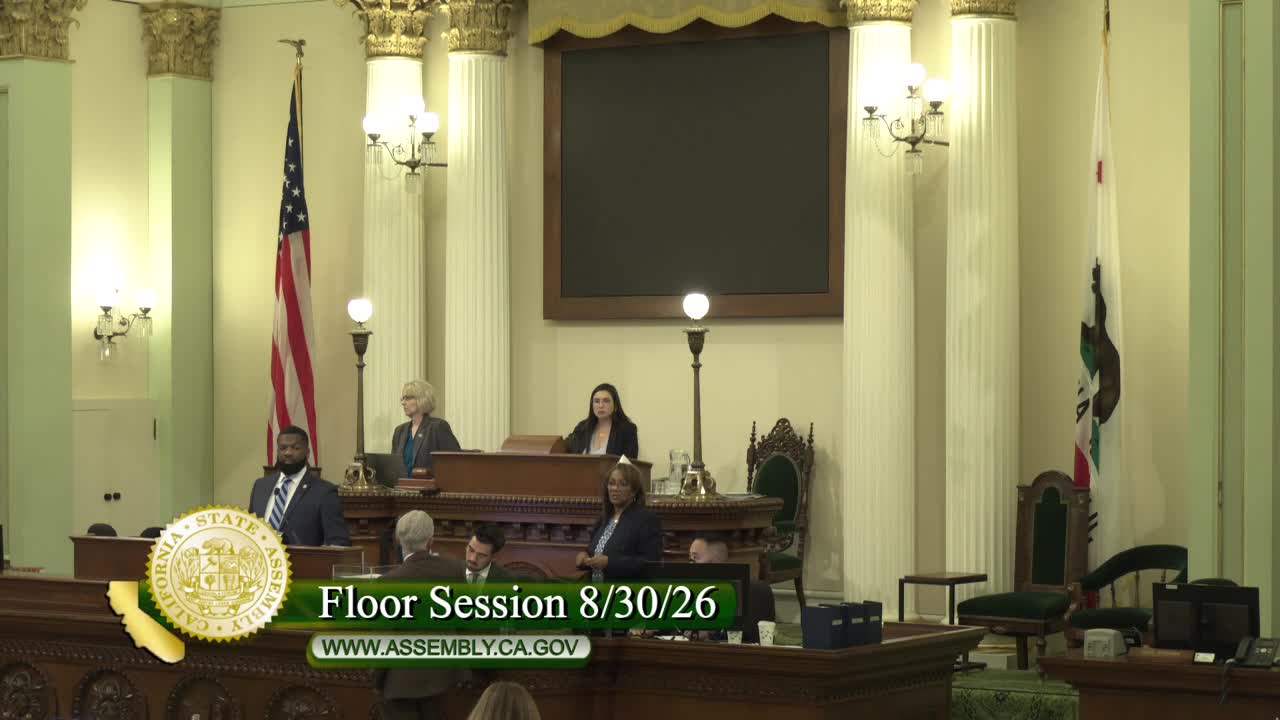 2MIN
Assembly Floor
 37SEC
Senate Standing Committee on Appropriations
 6MIN
Senate Standing Committee on Elections and Constitutional Amendments
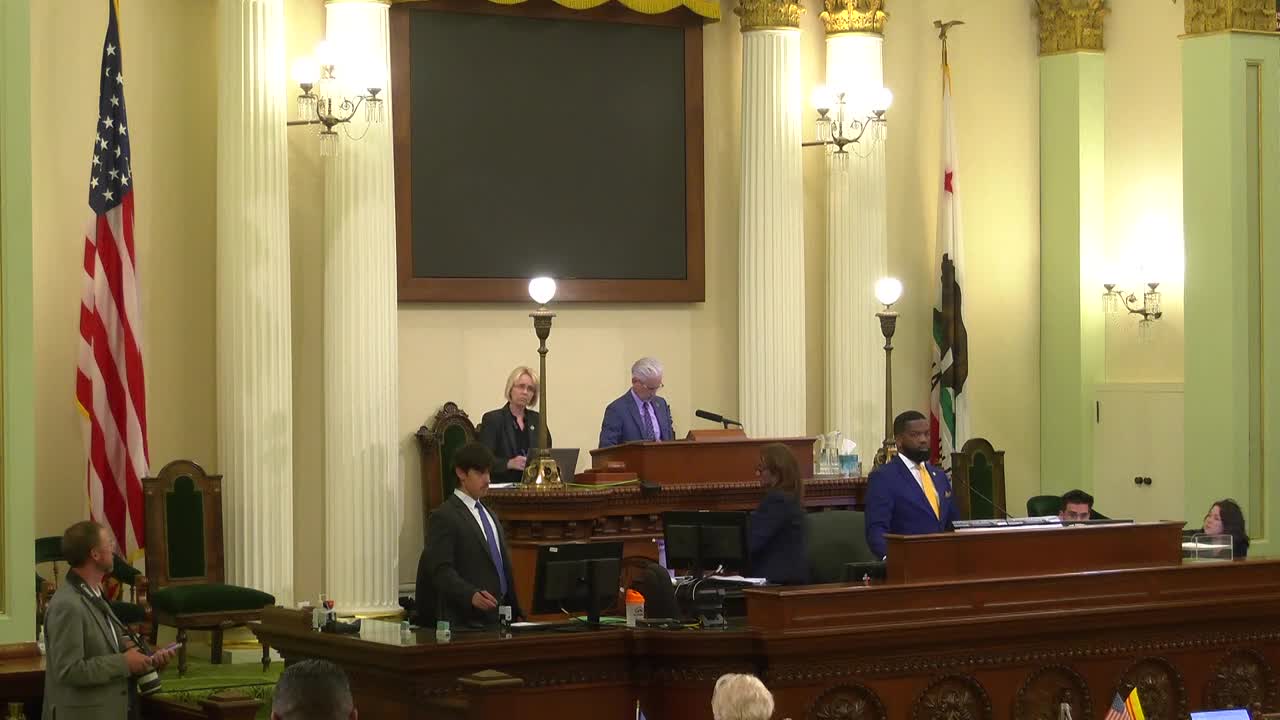 1MIN
Assembly Floor
 8MIN
Assembly Standing Committee on Elections
Bill Author

Bill Co-Author(s):